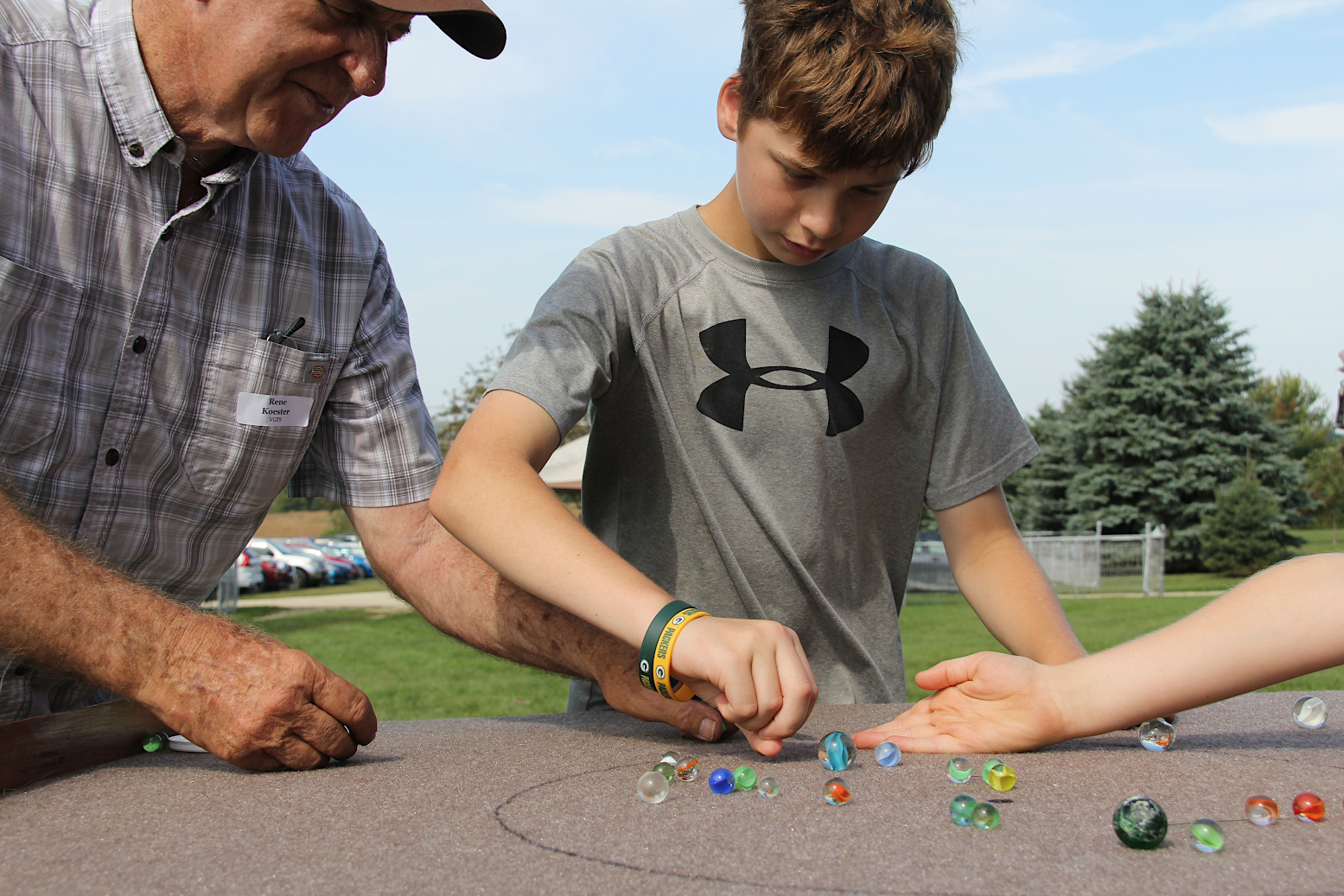
Playing marbles at the Valley Grove Country Social. (Minnesota Prairie Roots copyrighted photo September 2025)
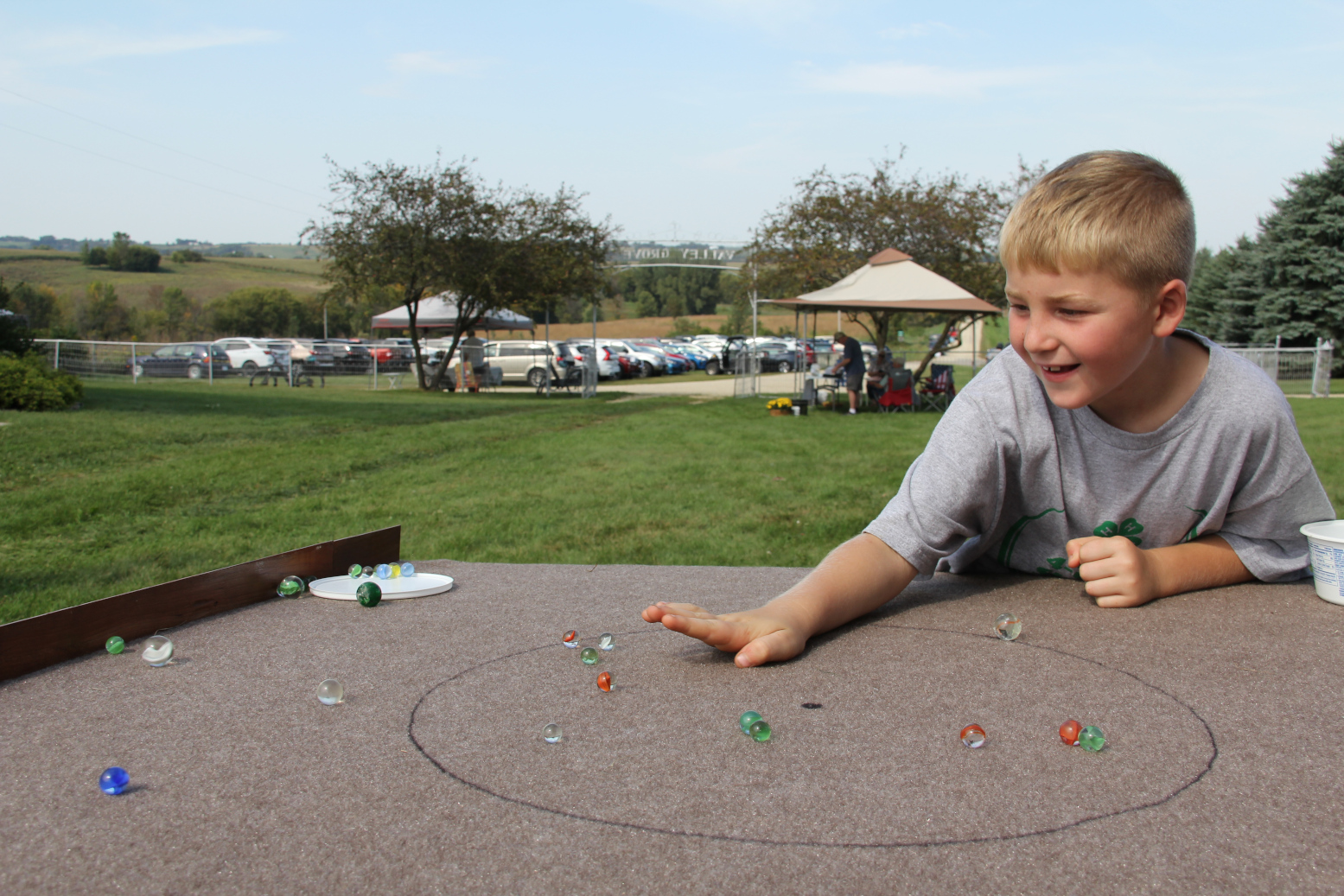
AS I MEANDERED THE GROUNDS of the historic Valley Grove churches during a recent Country Social, I happened upon a grandfather teaching his grandsons the old-fashioned game of marbles. I stood, watched, and photographed while the trio positioned and flicked marbles across a tabletop. Years ago, this game would have been played on the ground, in the dirt.
A look of pure joy after releasing a marble. (Minnesota Prairie Roots copyrighted photo September 2025)
But this seemingly mattered not to the boys playing under the guidance of Rene Koester of the Valley Grove Preservation Society, who admitted he’d forgotten some of the rules. If his students cared, they didn’t express it. They were simply having fun playing a simple game.
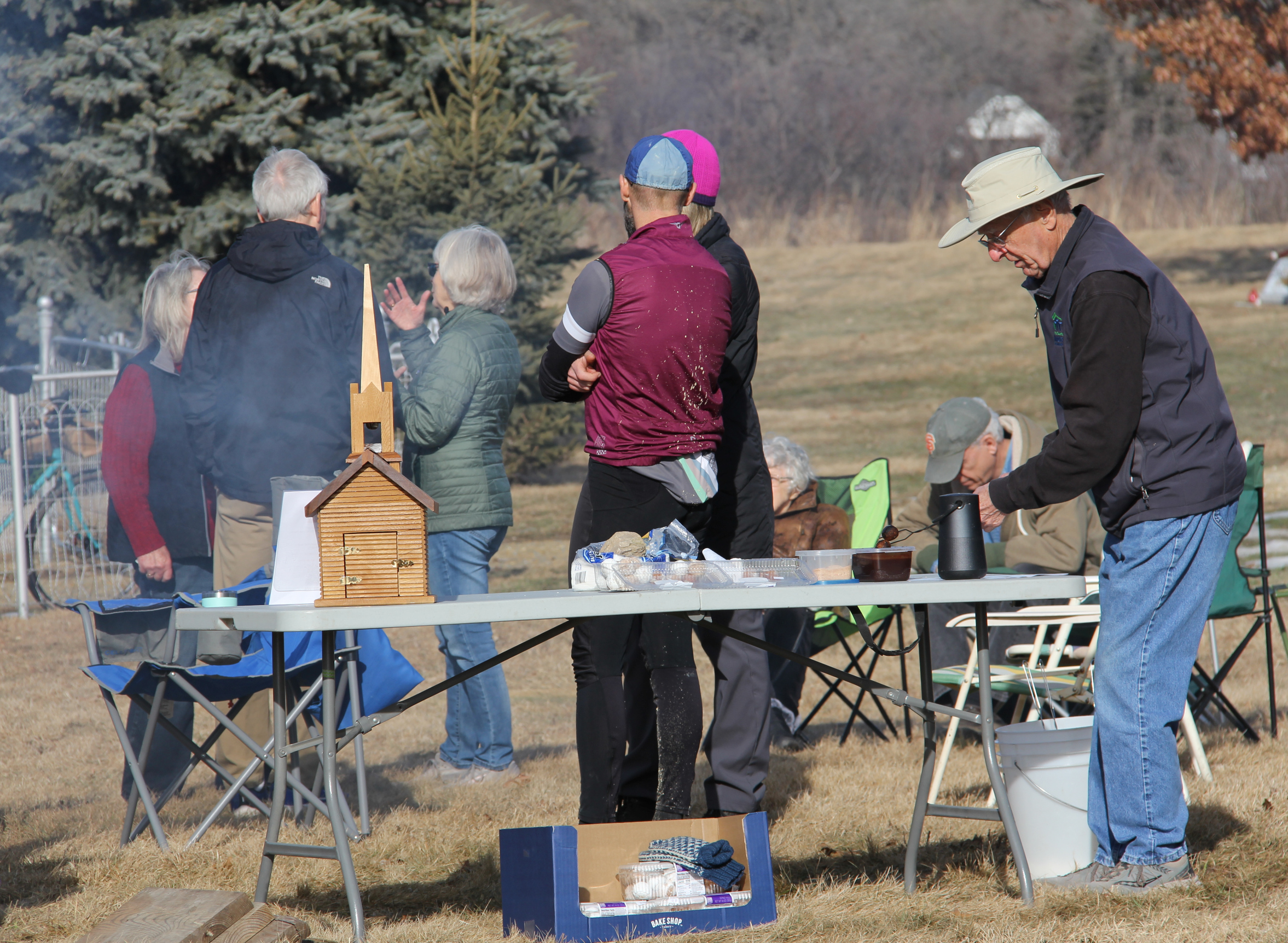
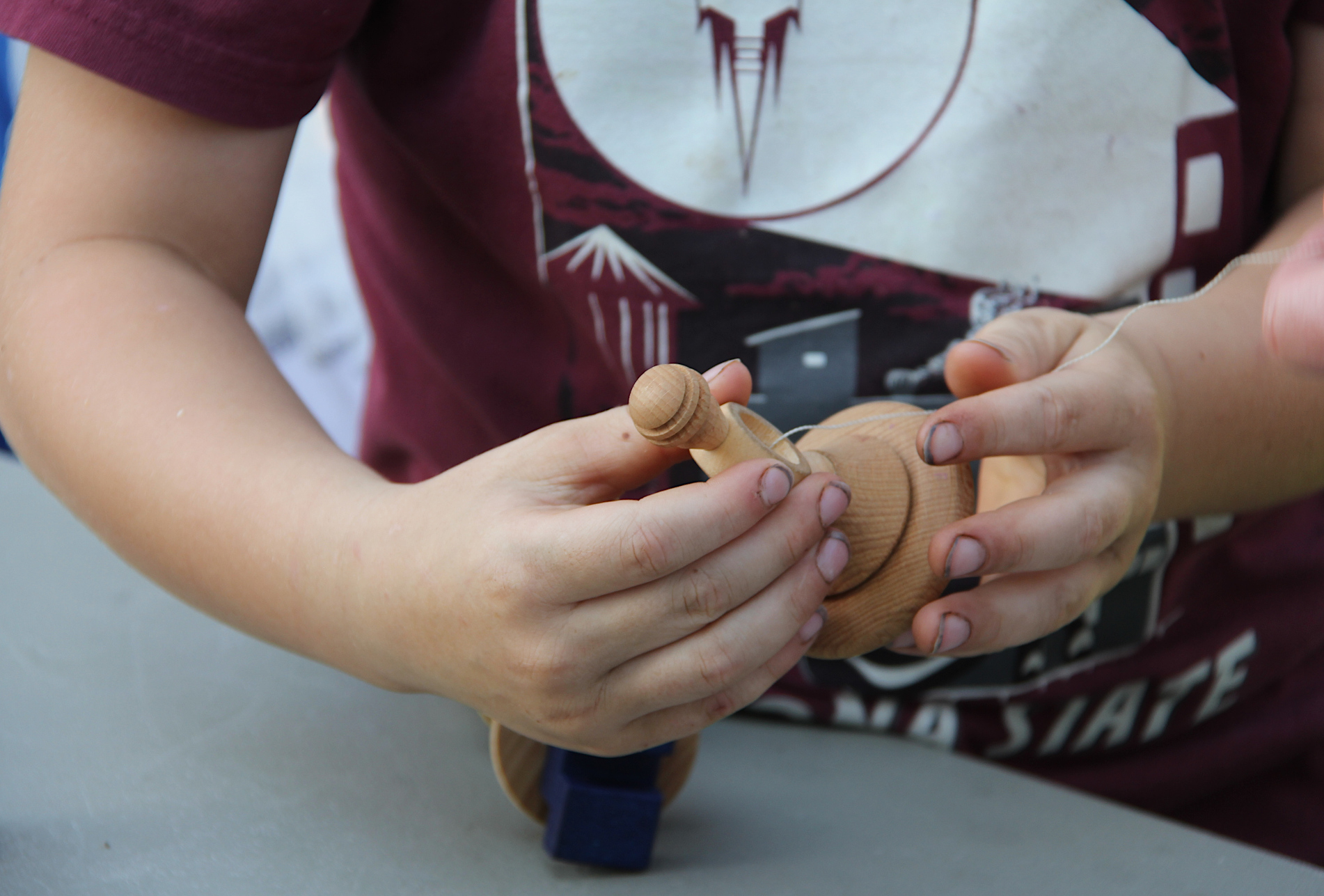
Old-fashioned toys, including this wooden top, were available for play. (Minnesota Prairie Roots copyrighted photo September 2025)
I loved seeing the interaction, the connecting of today’s generation to the past, to a time when kids played mostly outside. A time before video games. A time when life was much different.
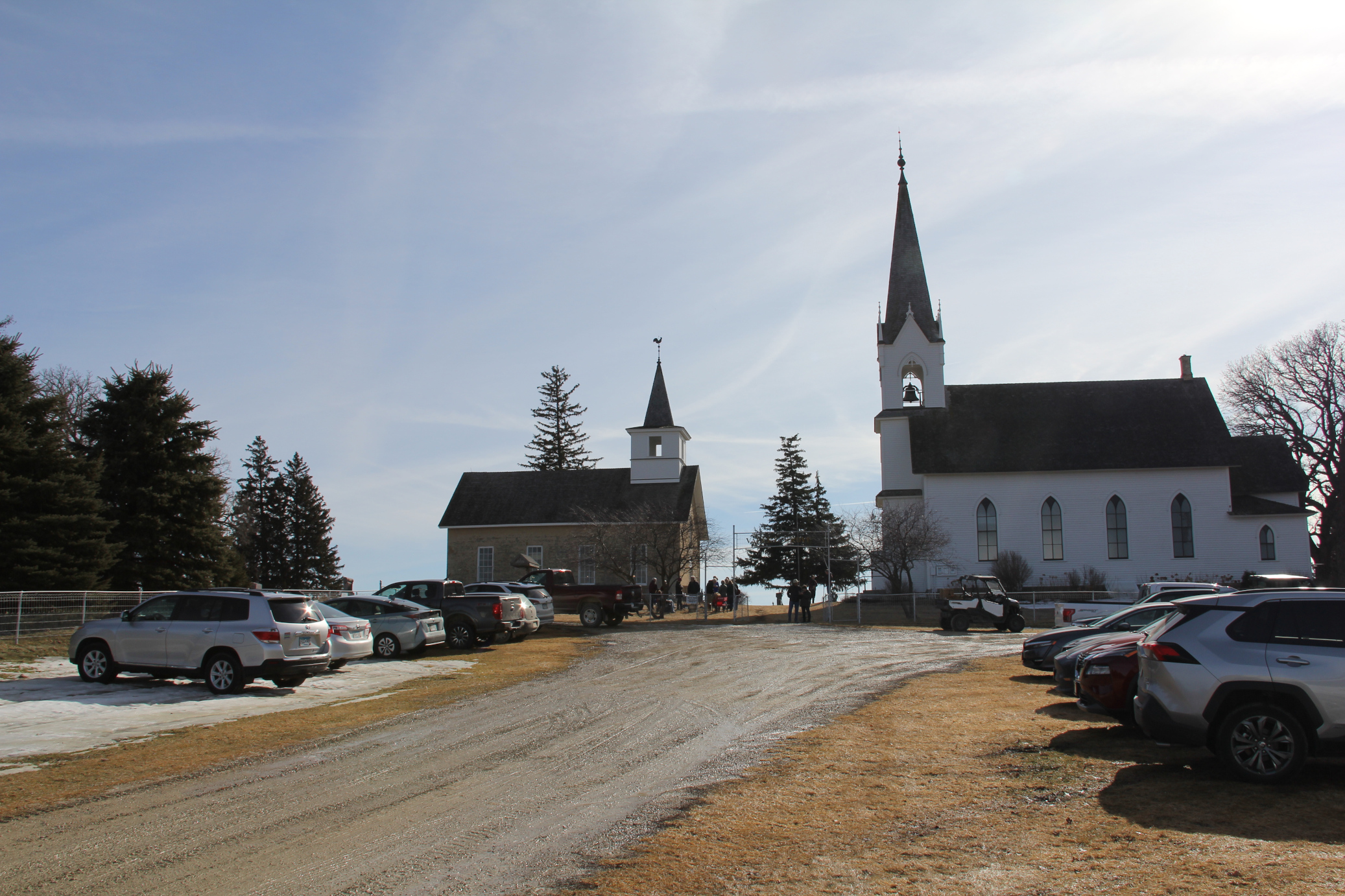
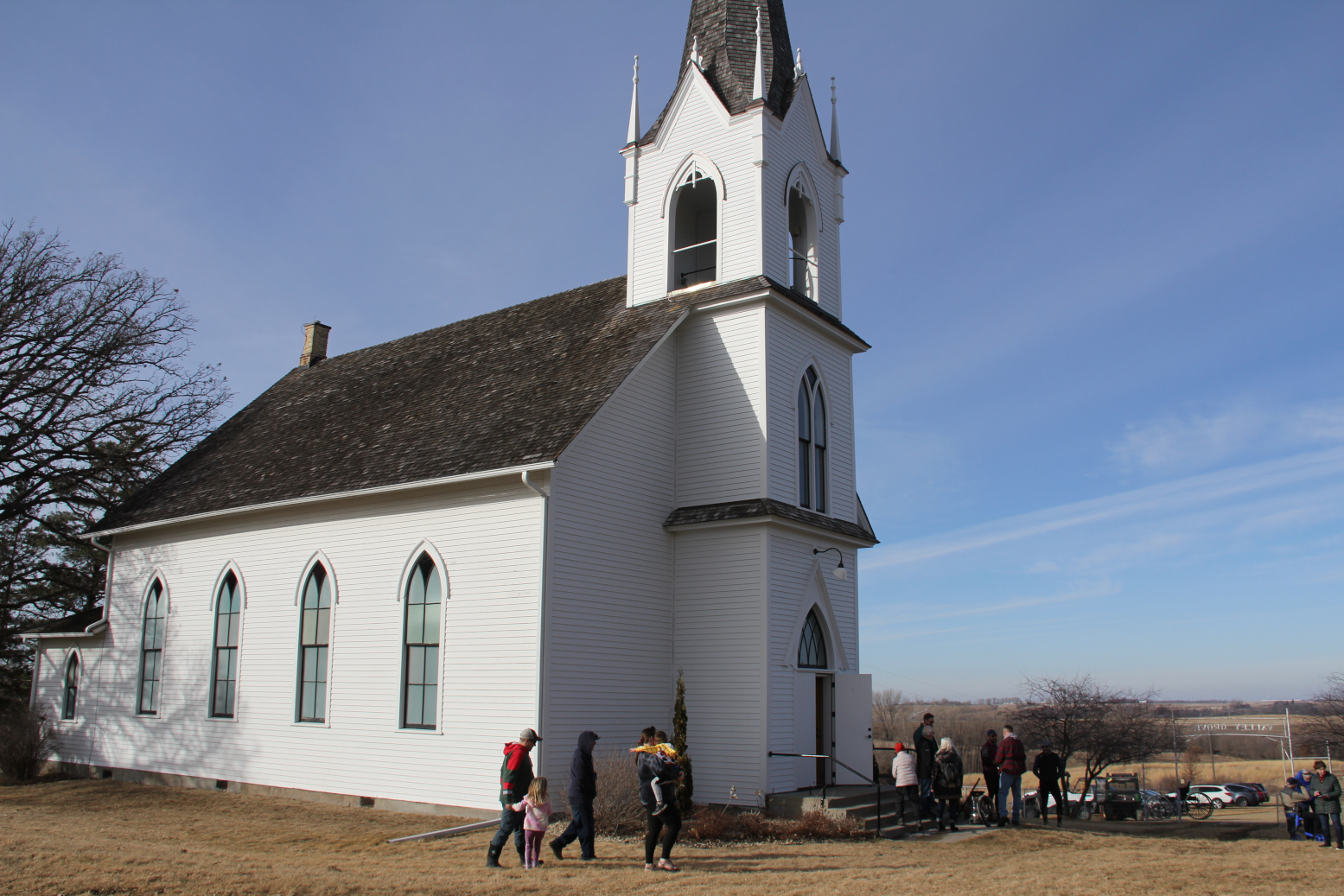
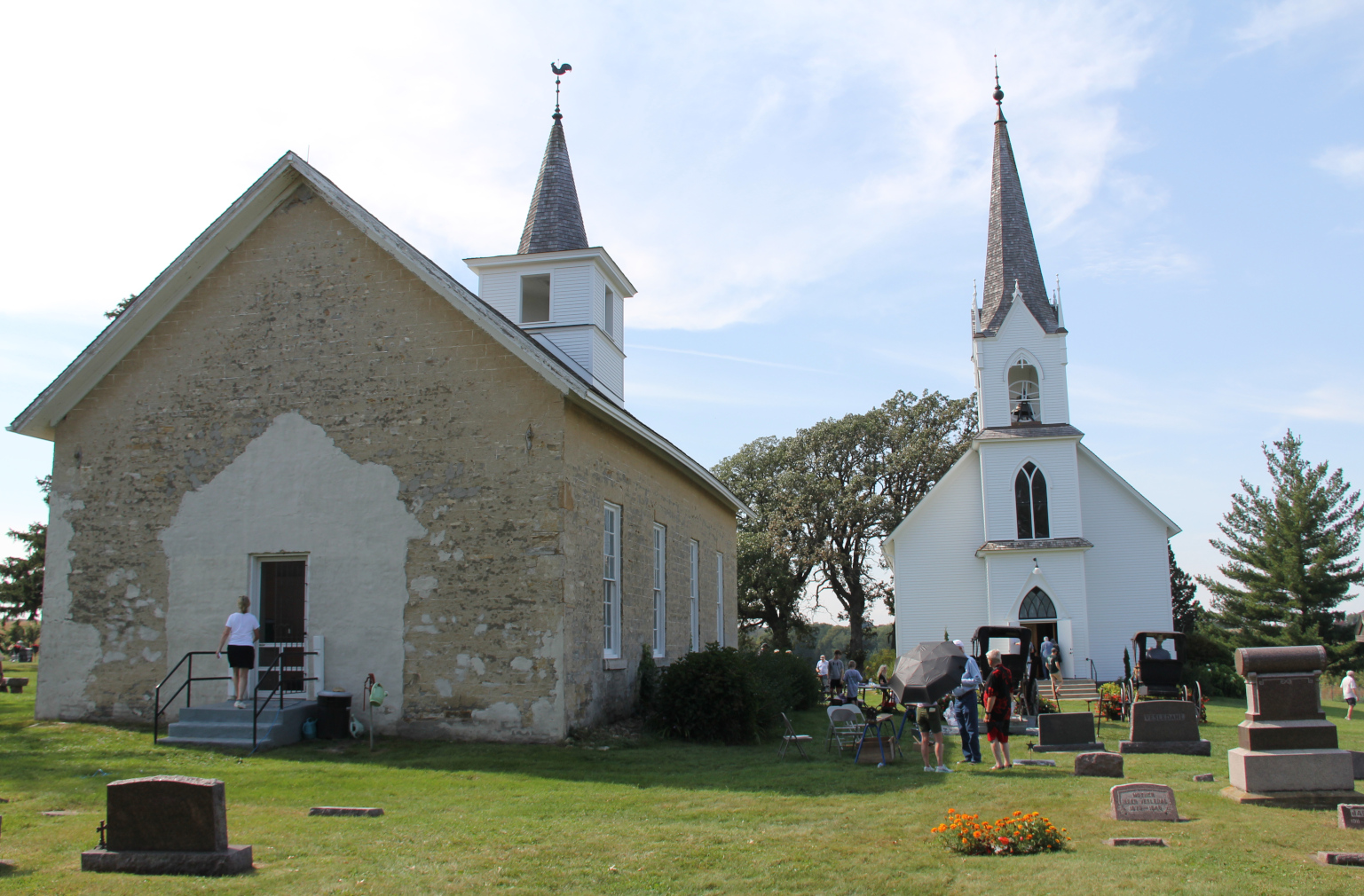
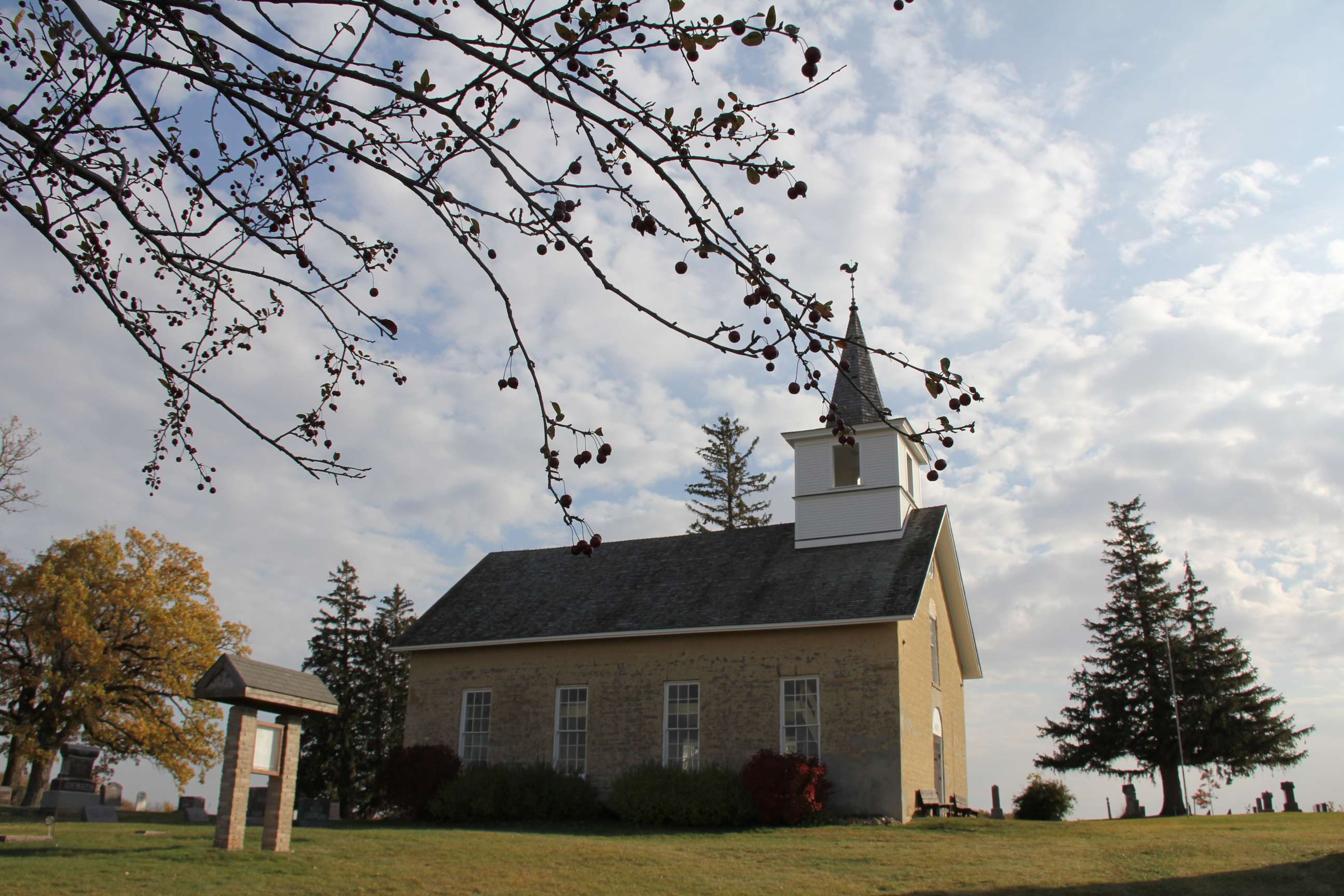
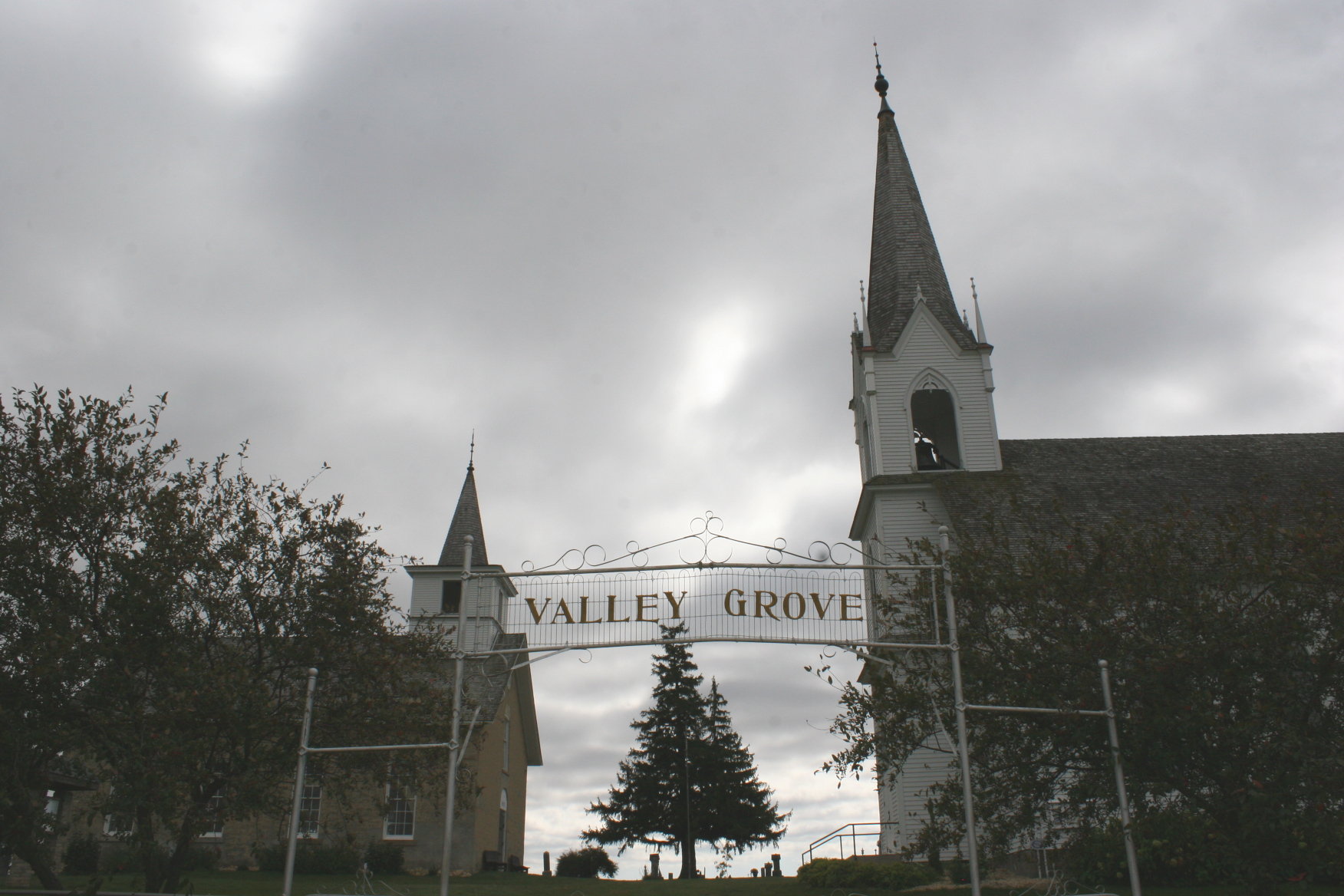
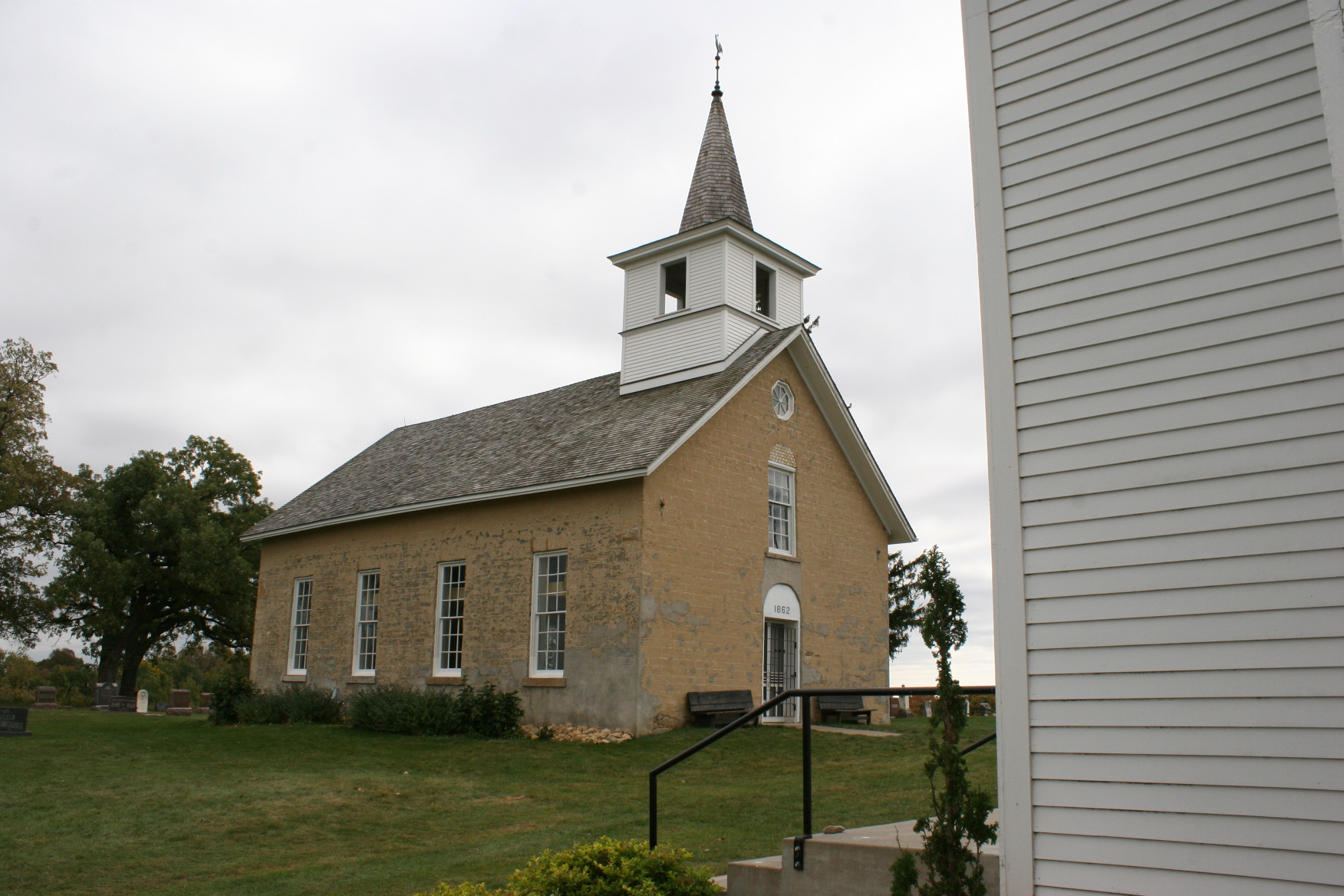
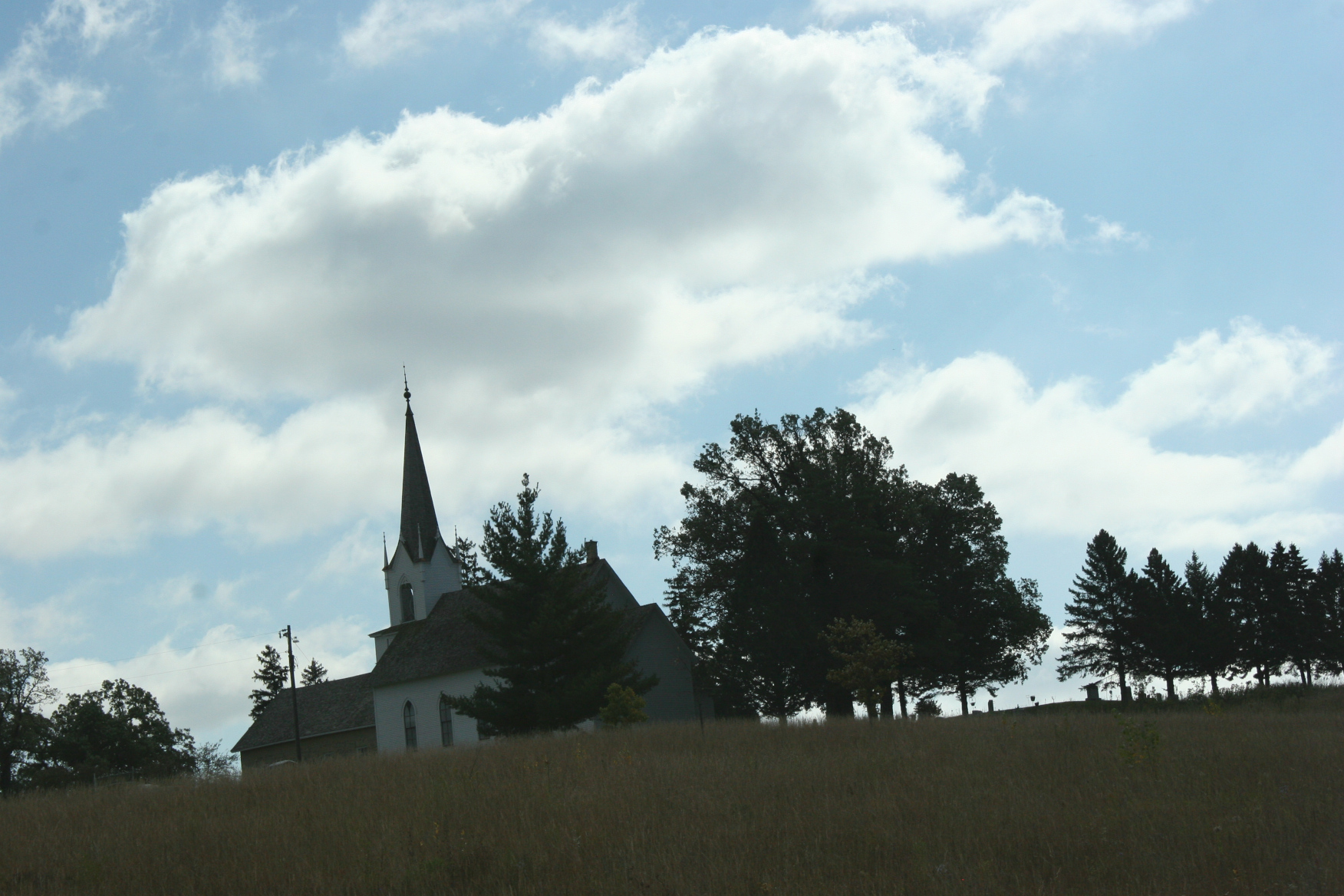
The two Valley Grove churches are on the National Register of Historic Places. (Minnesota Prairie Roots copyrighted photo September 2025)
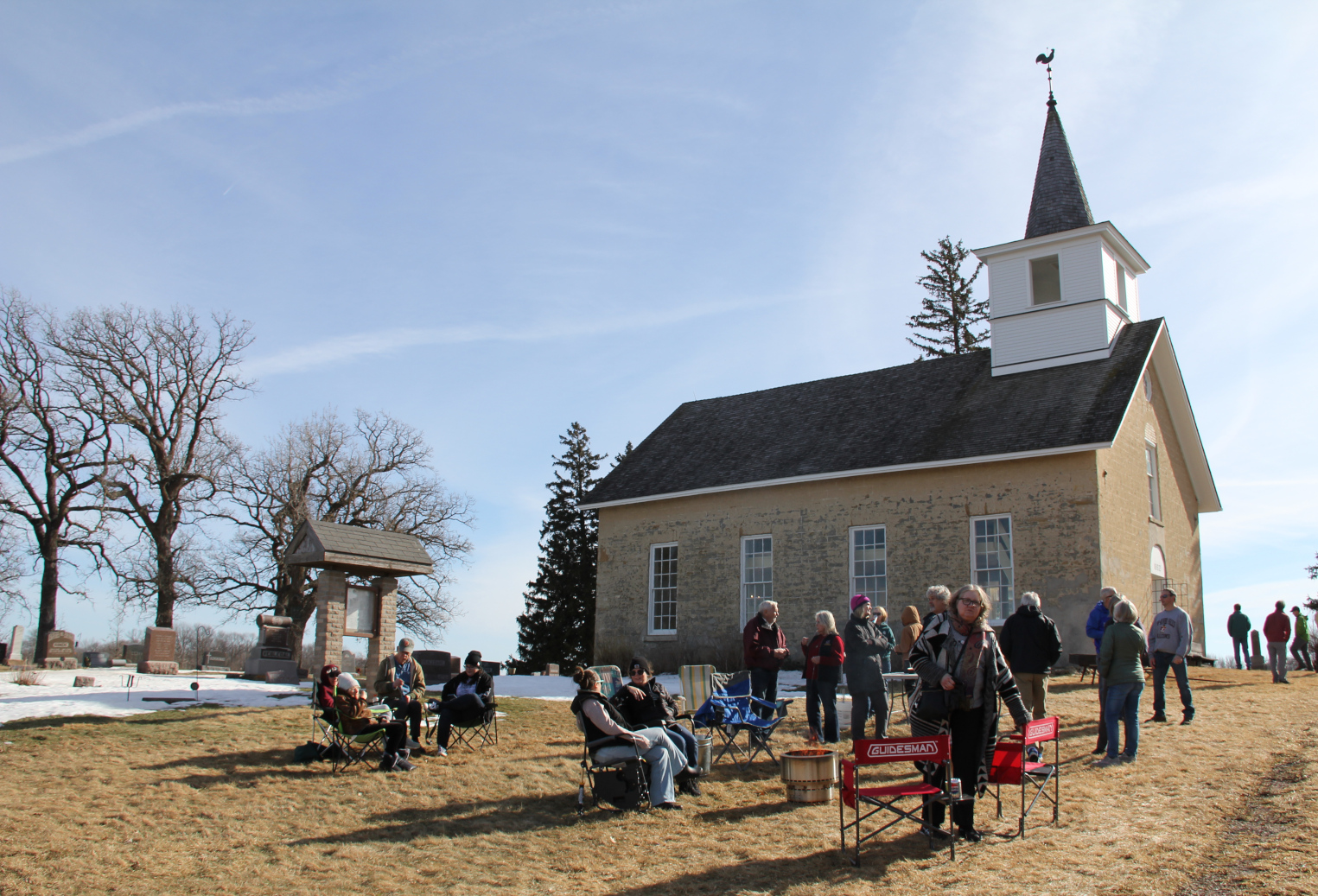
The Valley Grove Country Social proves a wonderful way to connect to the past and to place. On this 50-acre parcel of land in rural Nerstrand, people gather each September to celebrate the two aged Norwegian churches that sit atop a hill overlooking the countryside. They also come here to celebrate the Norwegian immigrants who built the 1862 stone and 1894 clapboard churches. They come, too, to celebrate and honor a rich Norwegian history and heritage.
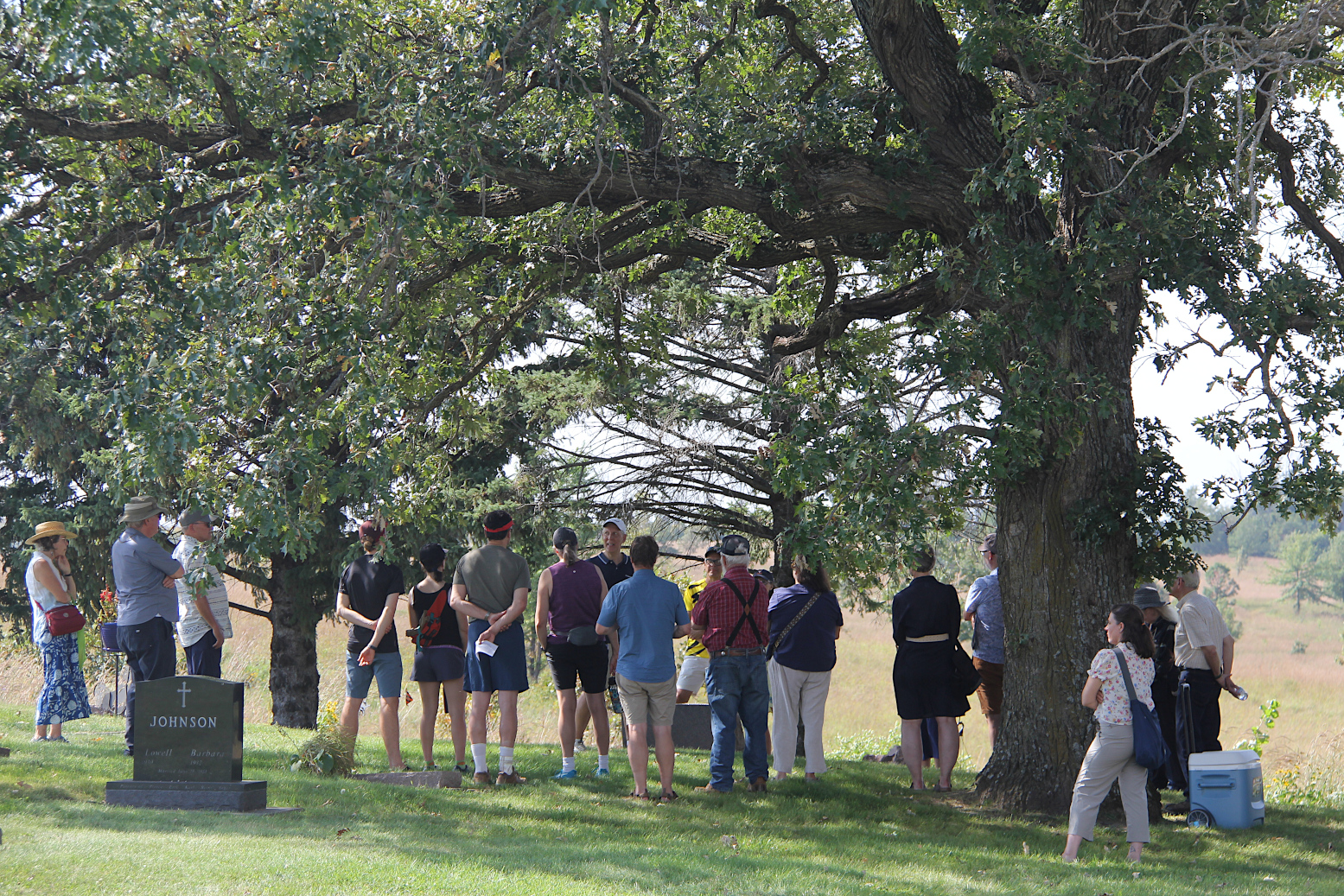
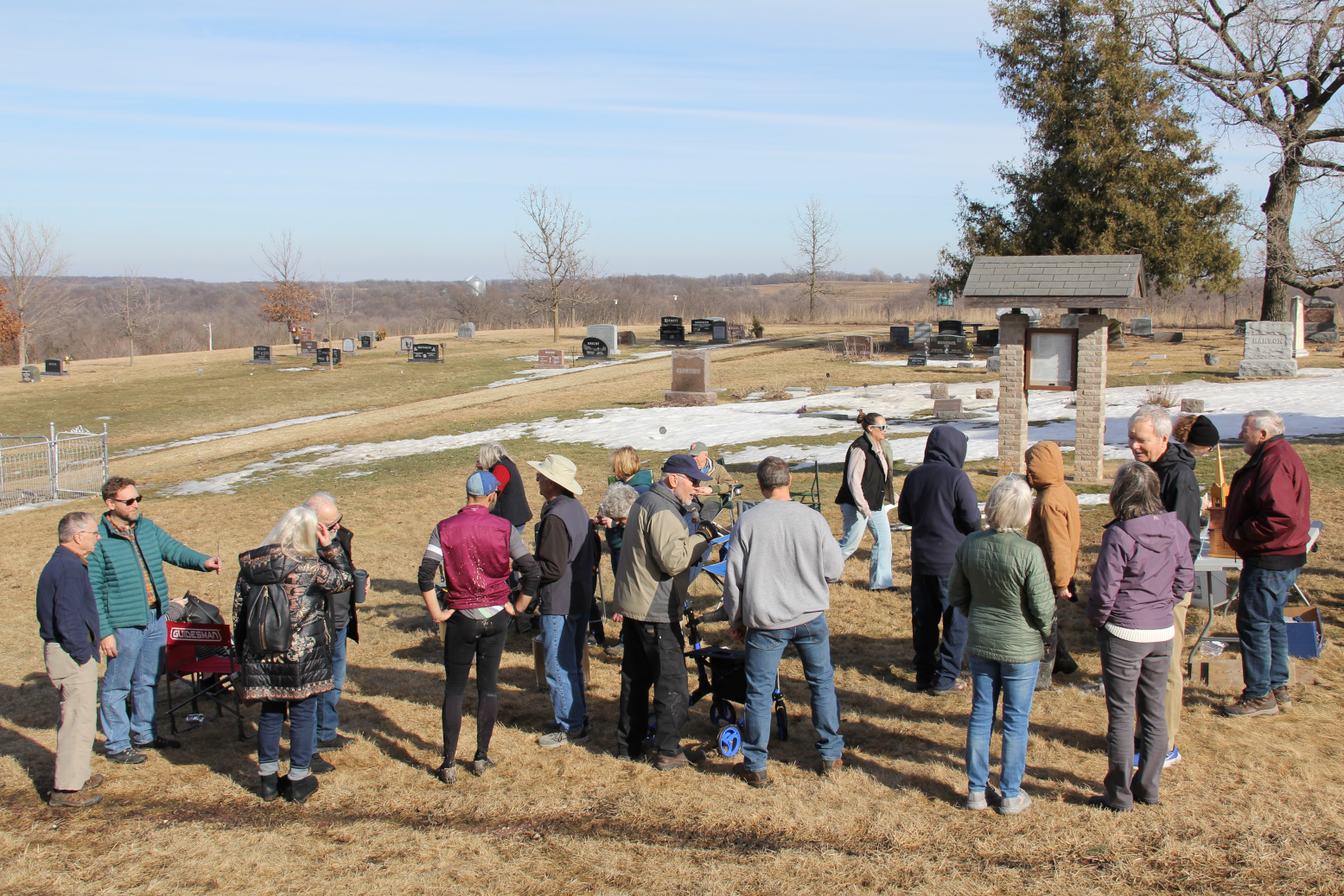
Historian Jeff Sauve leads a cemetery tour, stopping at selected gravesites to share histories of the deceased. (Minnesota Prairie Roots copyrighted photo September 2025)
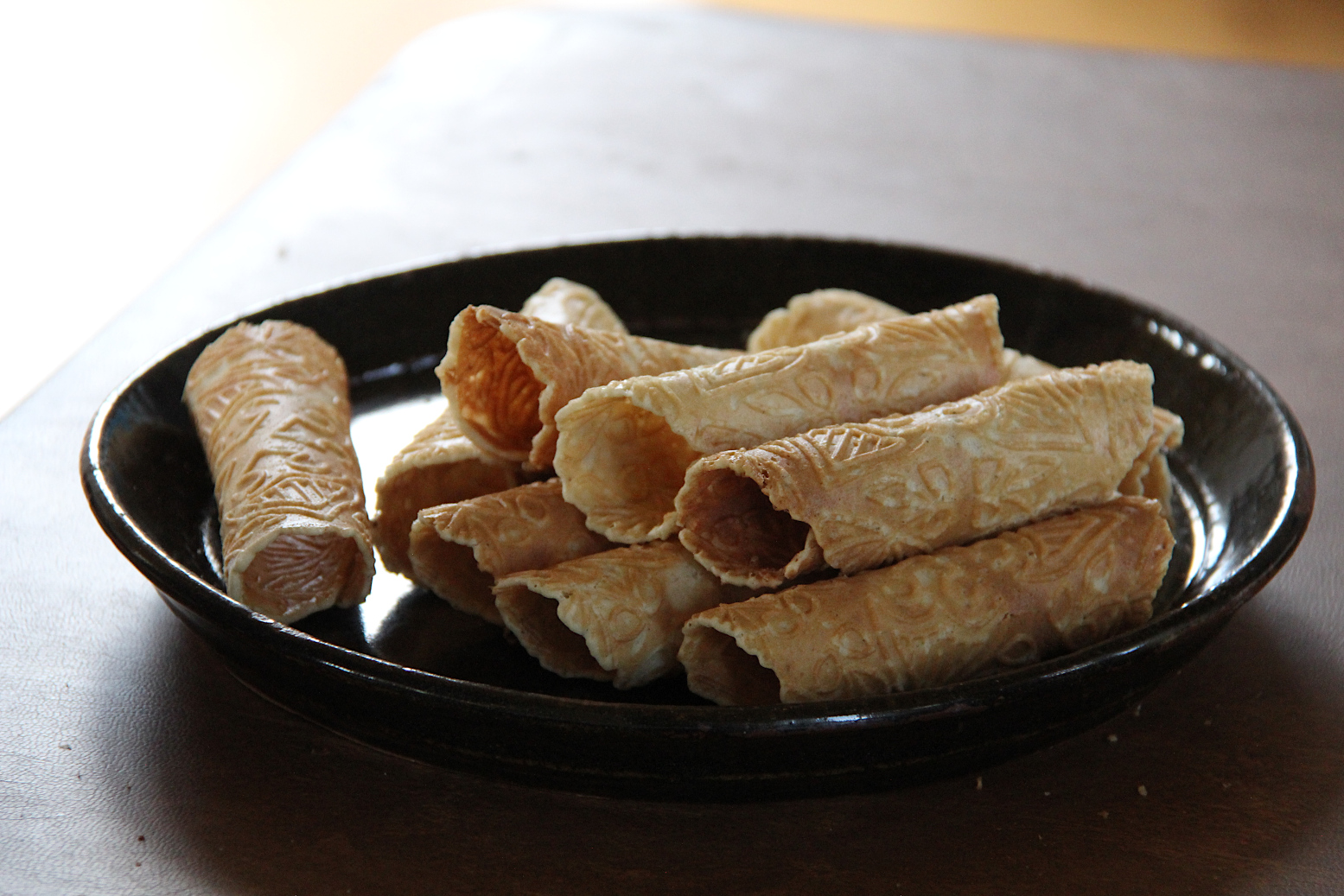
Krumkake made on-site and still warm off the griddle when I ate this Norwegian treat. (Minnesota Prairie Roots copyrighted photo September 2025)
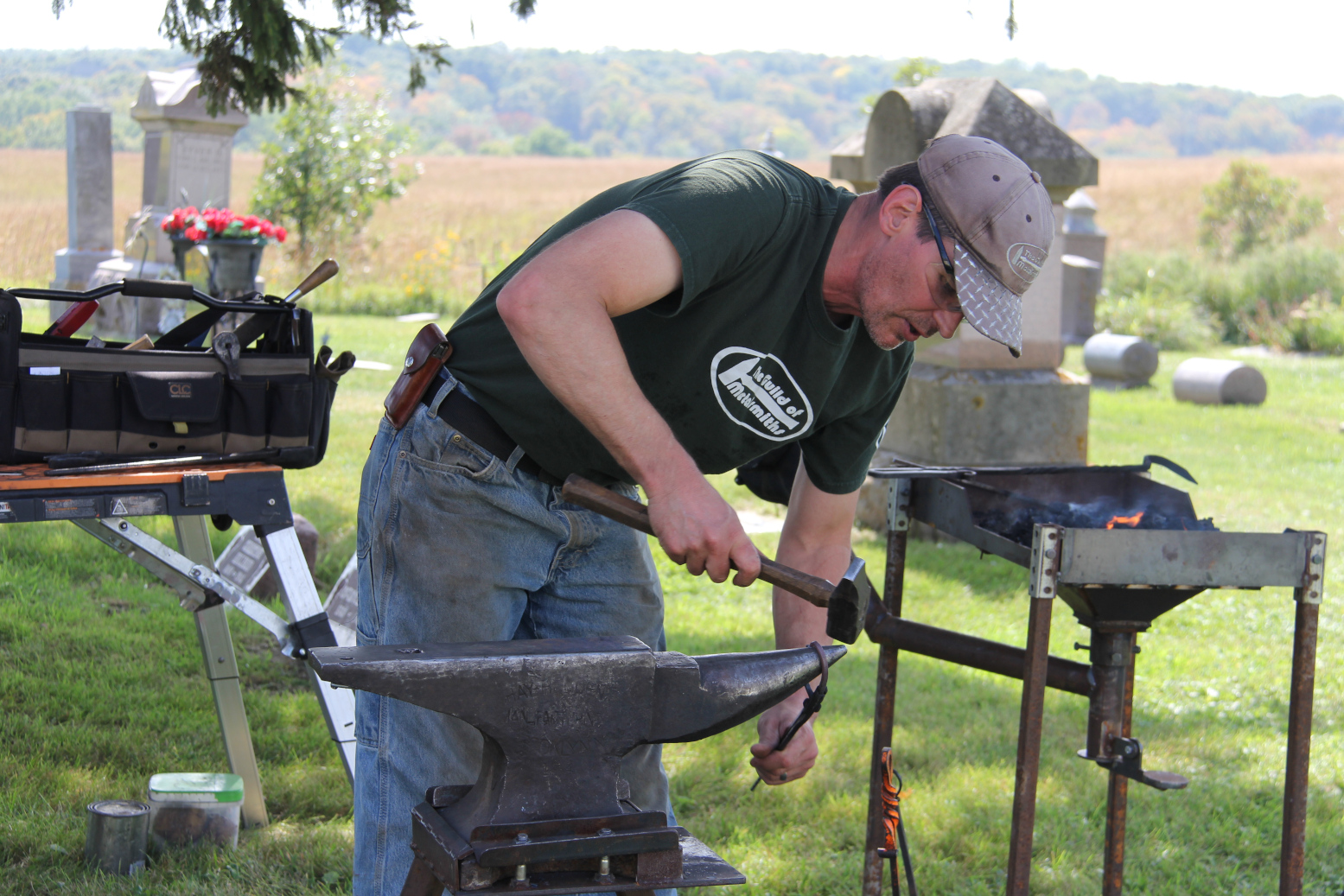
Demonstrating the craft of blacksmithing. (Minnesota Prairie Roots copyrighted photo September 2025)
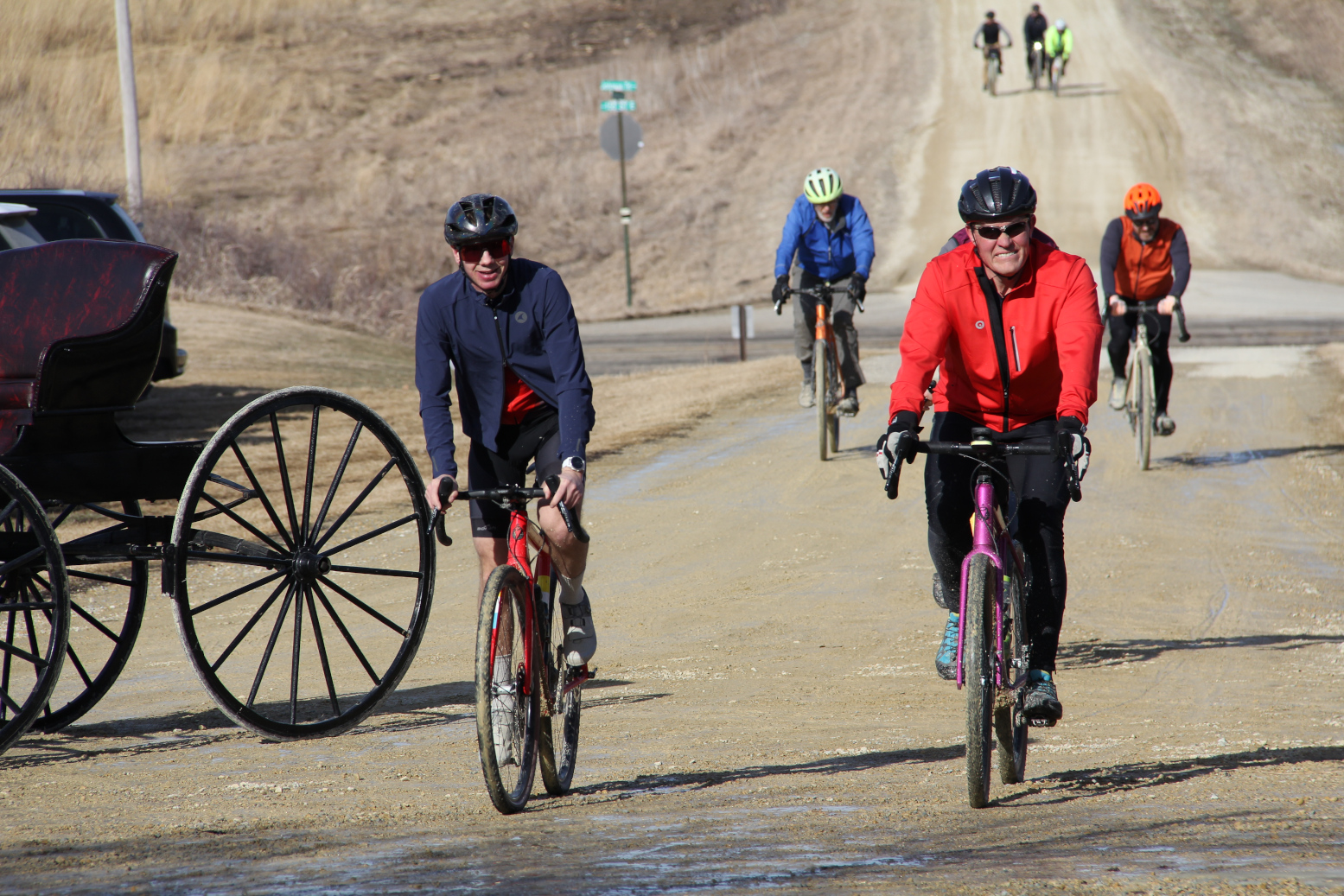
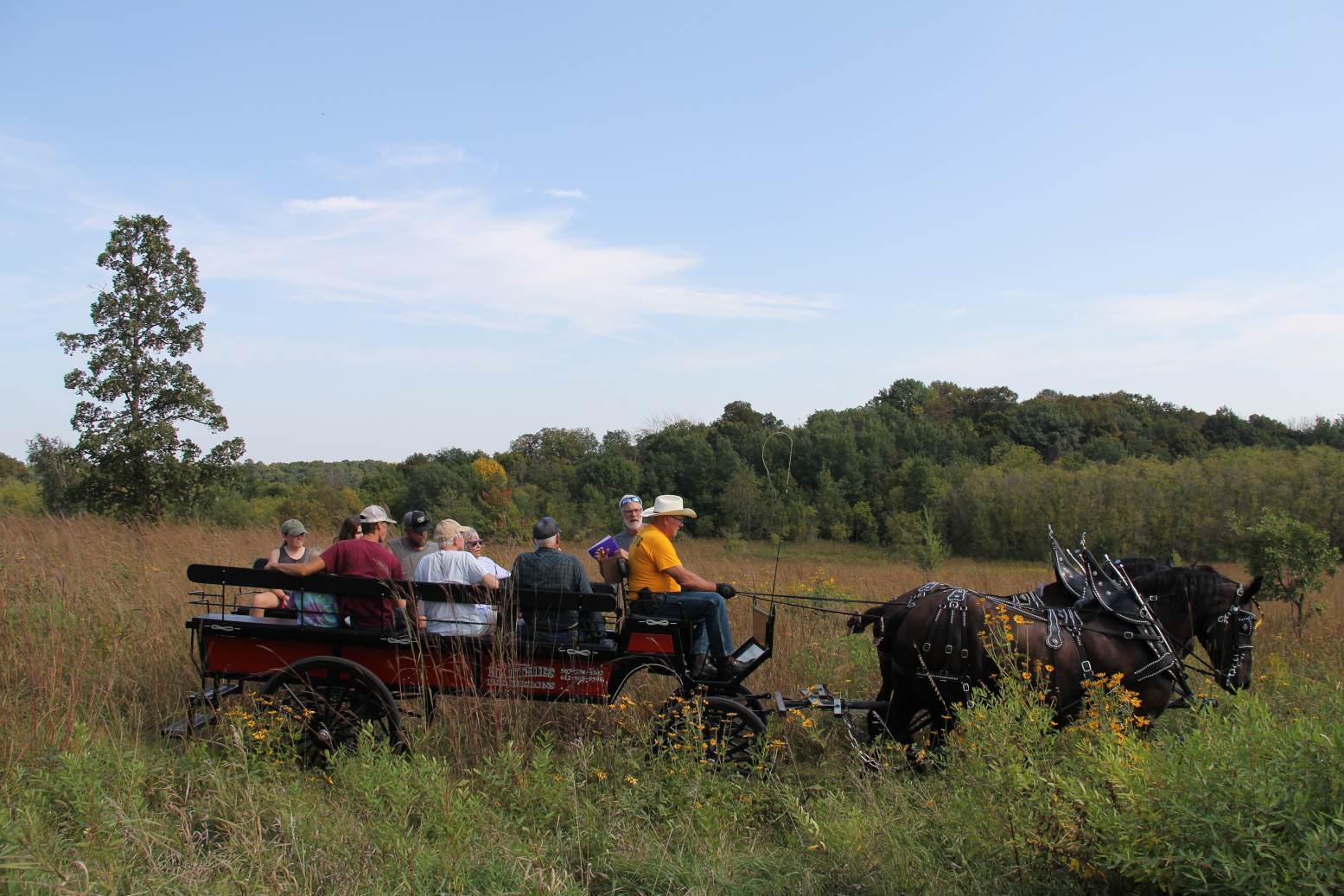
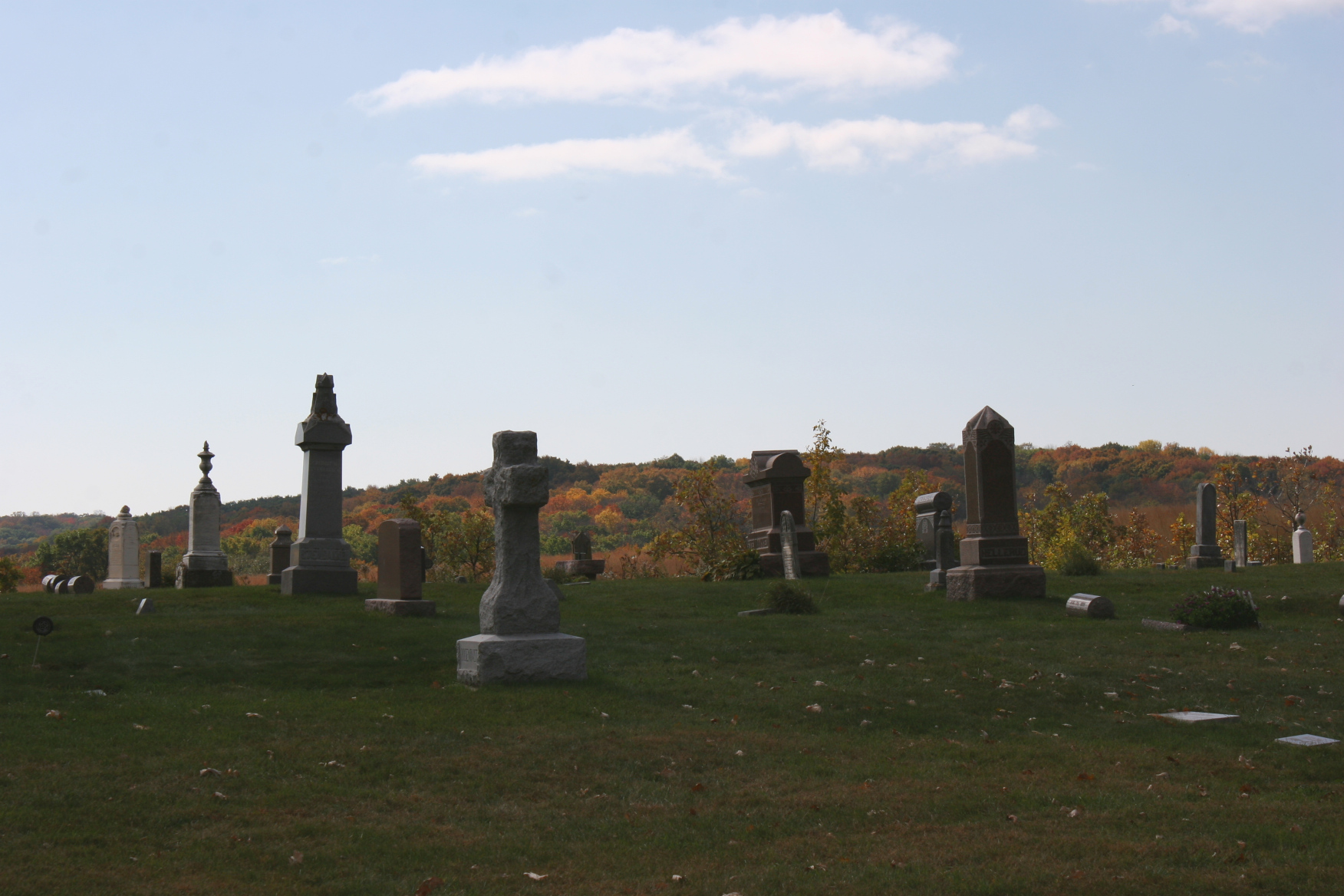
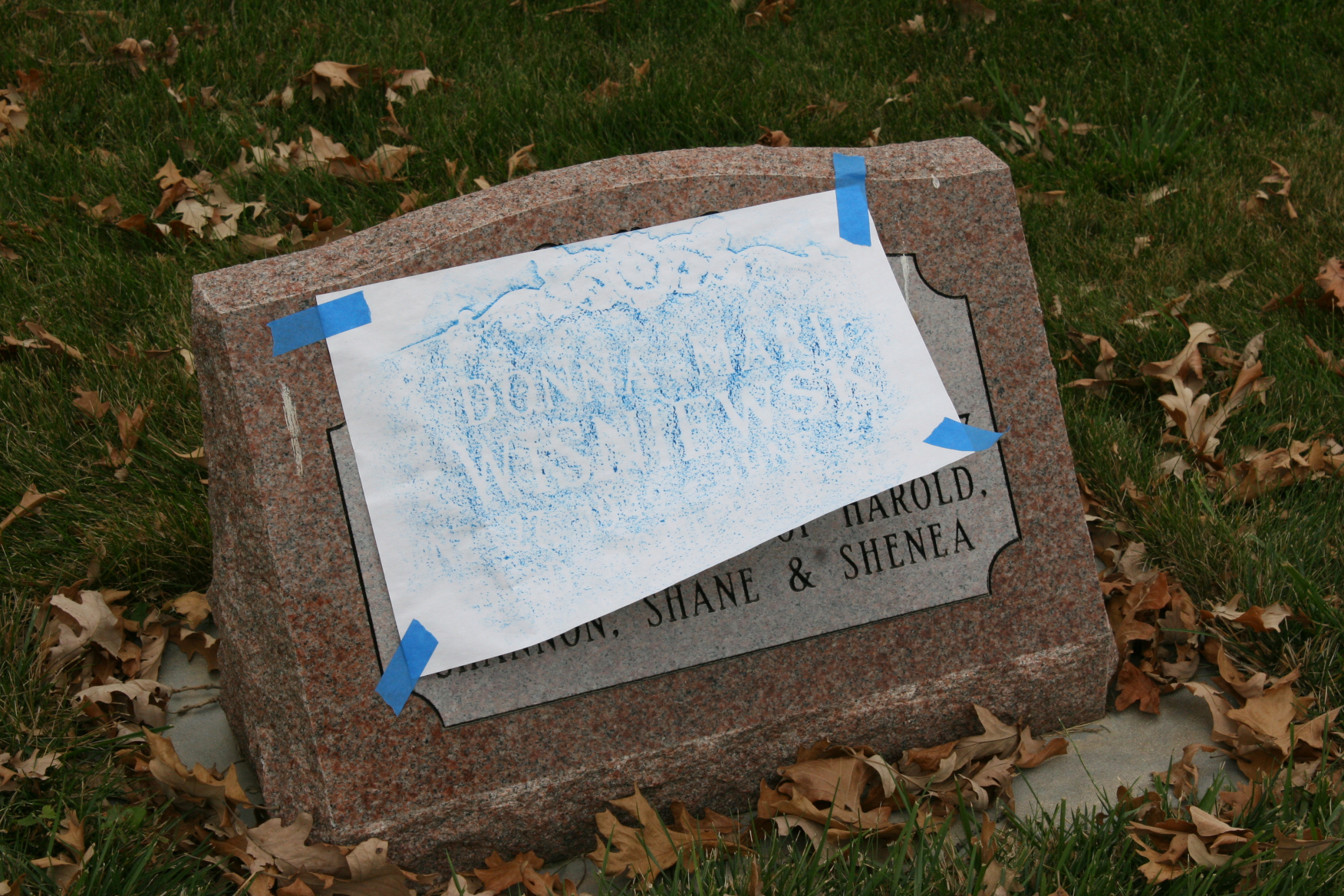
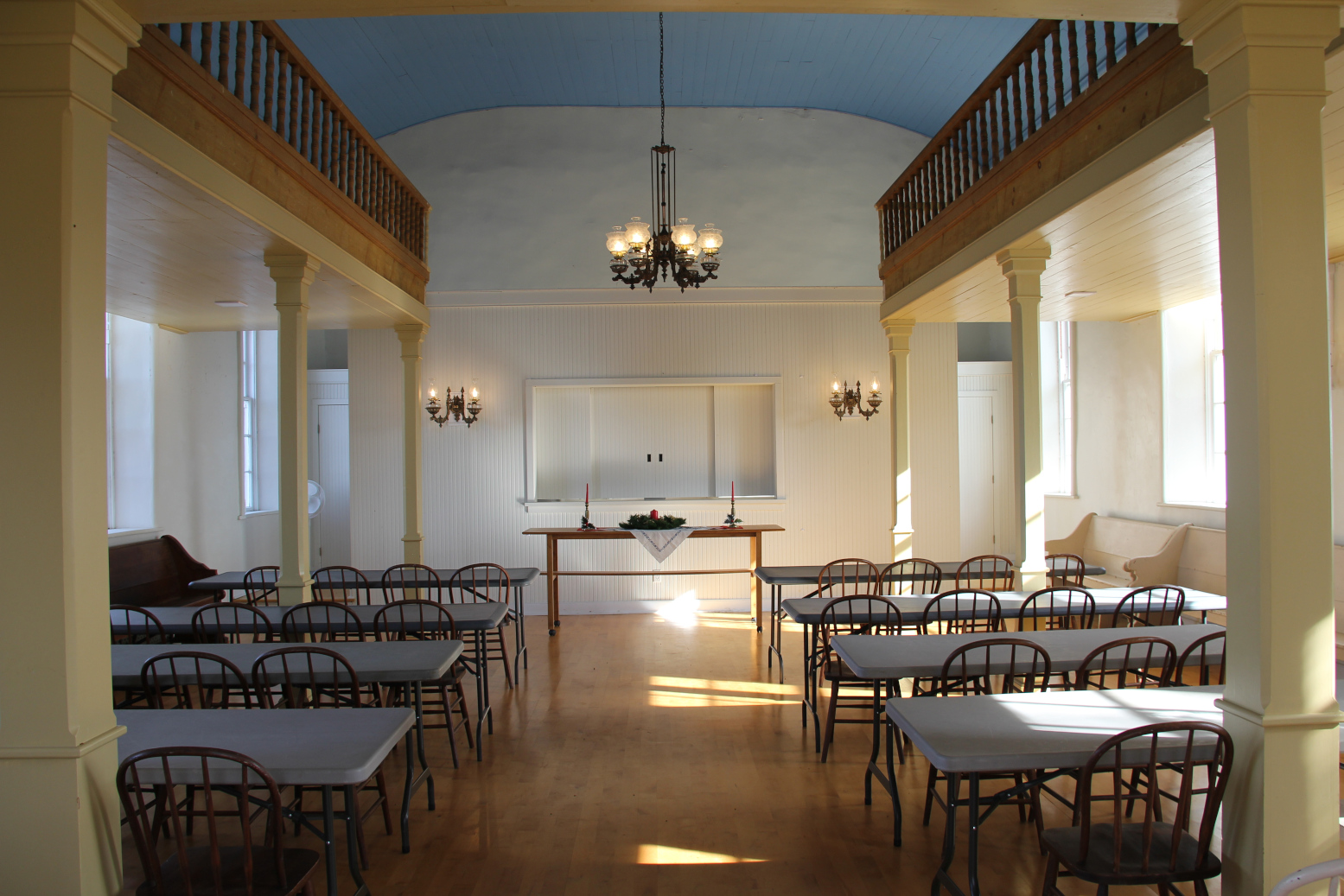
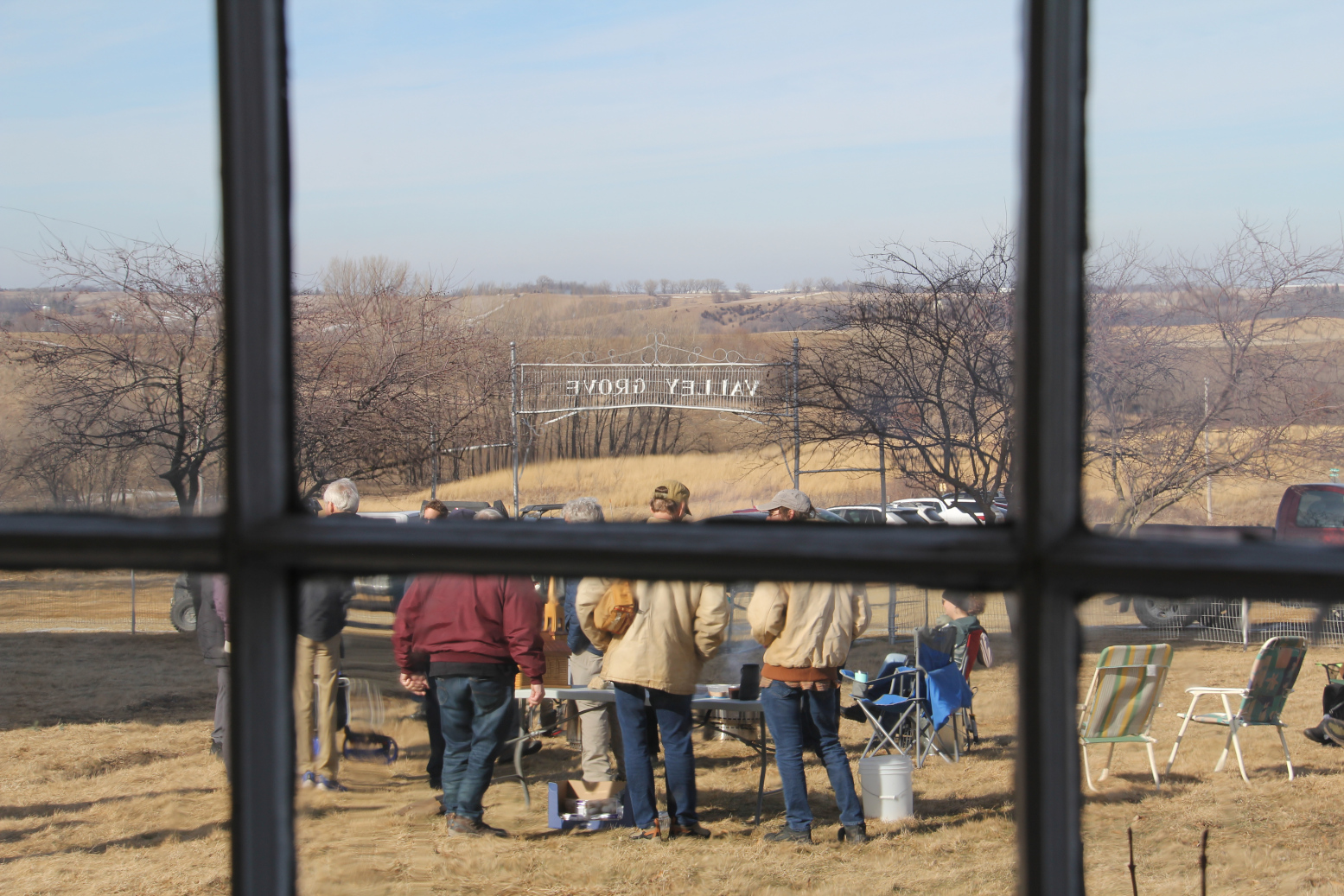
Many times I’ve attended this Country Social, which this year included a cemetery tour, book discussion, music, blacksmithing and rope-making demonstrations, music under the oaks, horse-drawn wagon rides, treats inside the old stone church and old-fashioned games for the kids. Plus lots of wandering and visiting among tombstones in the adjacent cemetery.
Prairie and woods define the landscape here at Valley Grove, which is next to Nerstrand Big Woods State Park. (Minnesota Prairie Roots copyrighted photo September 2025)
In all of Rice County, there is perhaps no place I’ve found more peaceful. I’ve come to Valley Grove in all seasons. Sat upon the wooden church steps and eaten a picnic lunch. Tromped through snow. Walked more times than I remember among the tombstones. I’ve listened to music and speakers and those rooted in this land.
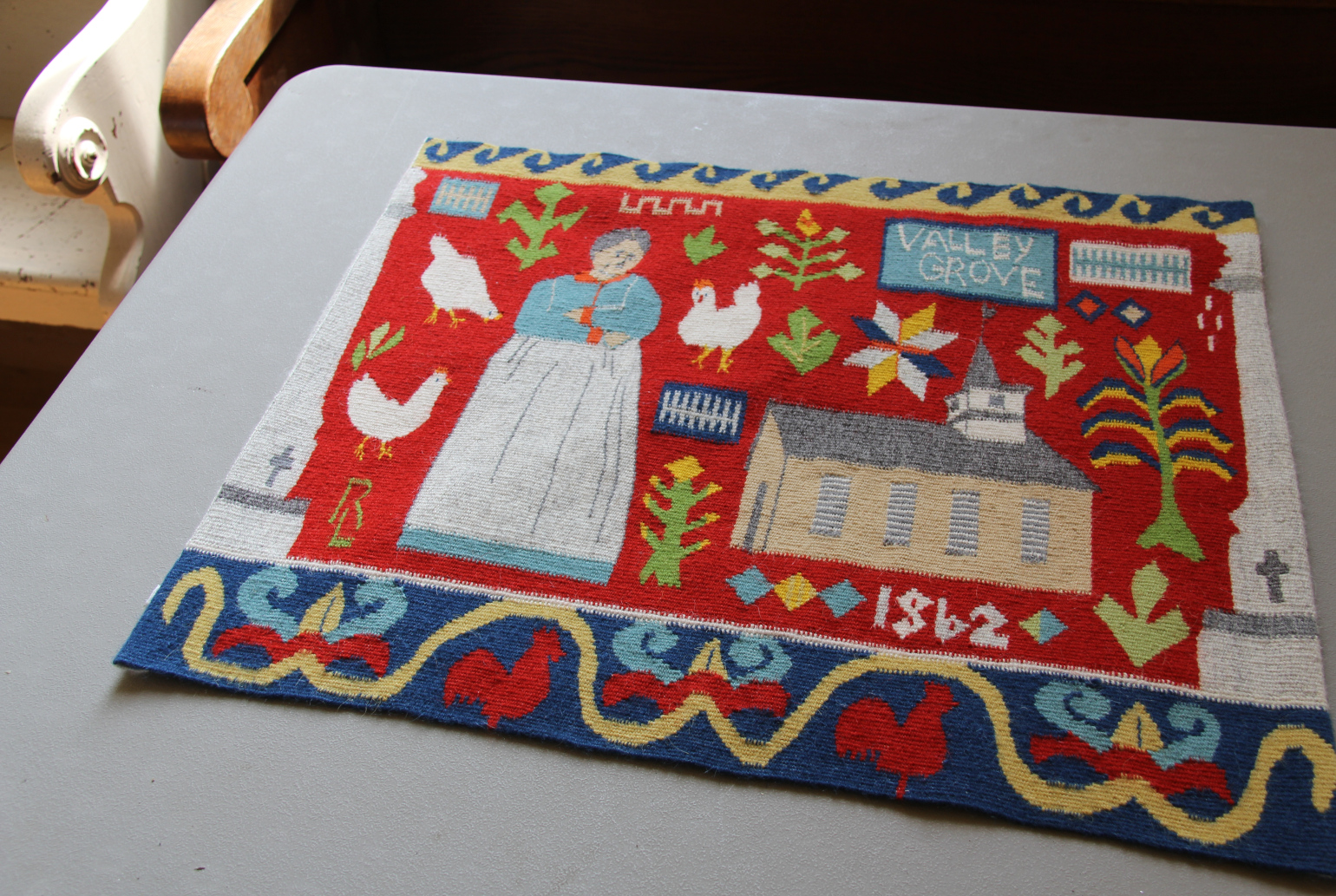
This tapestry woven by Robbie LaFleur features the 1862 stone church. It is one of four tapestries LaFleur created for Valley Grove. (Minnesota Prairie Roots copyrighted photo September 2025)
I have no personal connection to Valley Grove. I’m not even Norwegian. I’m German. But this matters not to the lutefisk, lefse, krumkake-loving Norwegians. Or to me. I’ve found in this place welcoming individuals, who just happen to be of Norwegian heritage.
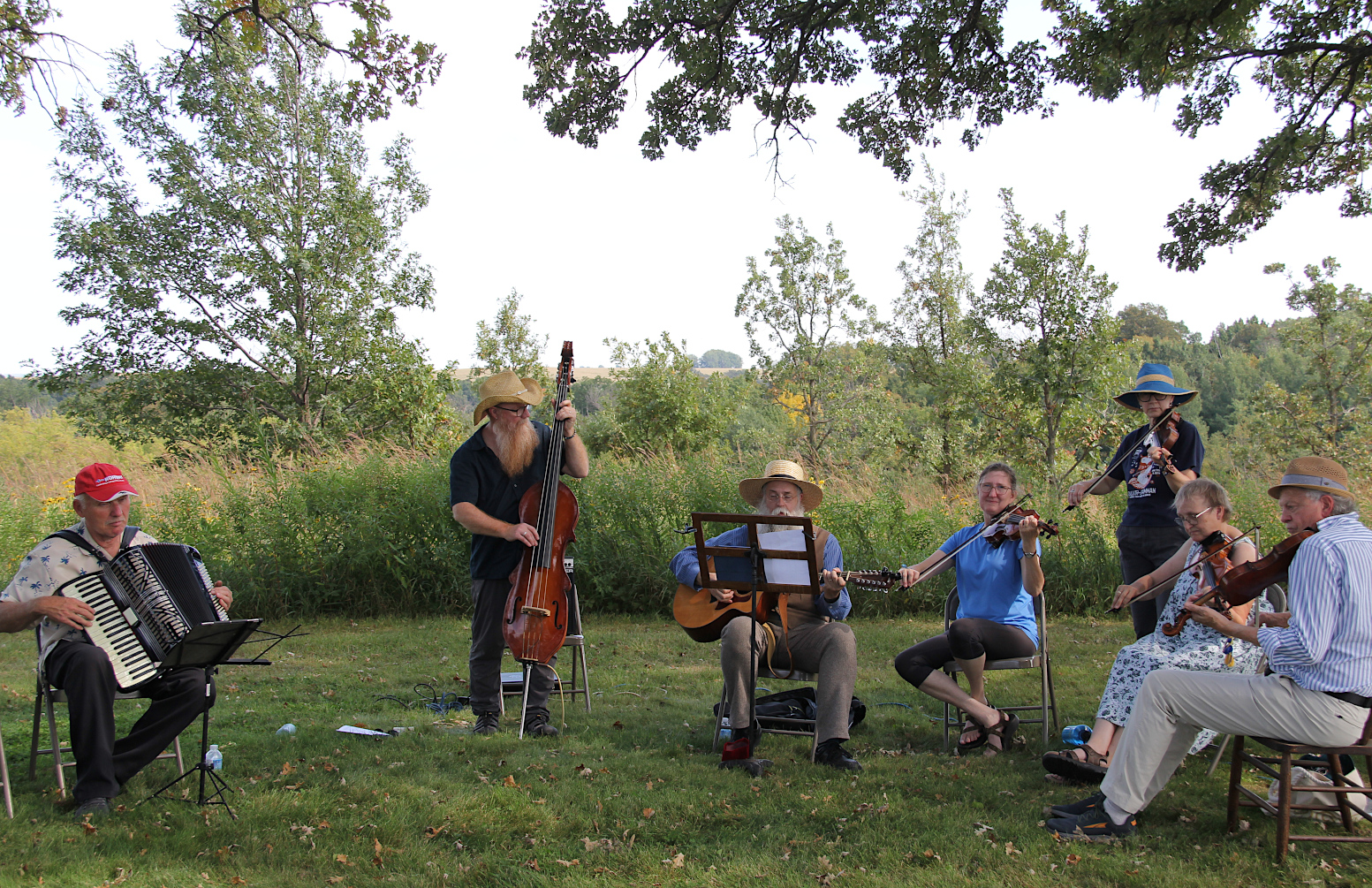
Hutenanny performs under the oaks with a prairie backdrop. (Minnesota Prairie Roots copyrighted photo September 2025)
If the Norwegians and the Germans here in southern Minnesota didn’t always get along—and I expect some didn’t—then no traces of those differences remain. At least not here, not on a Sunday afternoon in September at Valley Grove. This gives me hope. Perhaps the commonalities we share will some day overcome our differences and we will welcome and embrace one another no matter our countries of origin.
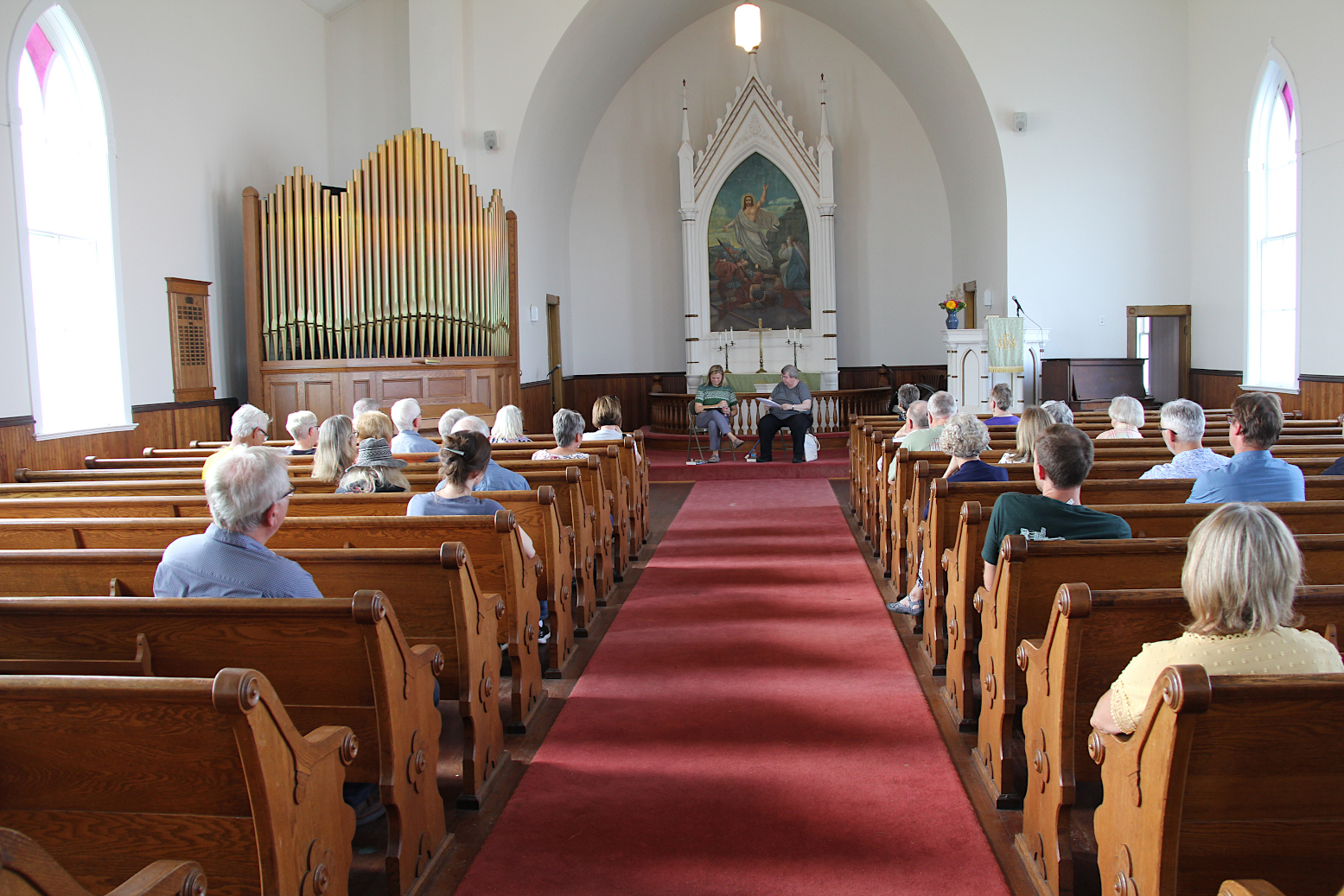
A discussion of the book, “Muus vs Muus, The Scandal That Shook Norwegian America,” inside the wooden church. (Minnesota Prairie Roots copyrighted photo September 2025)
Perhaps we ought to visit a place like Valley Grove. Learn a new-old game. Pick up a clutch of marbles. Feel the smooth or pitted orb of a marble in our hand. Bend low to the earth. And touch the dirt.
I took this photo 10 years ago, when the refurbished Security Bank Building clock was reinstalled in downtown Faribault. (Minnesota Prairie Roots copyrighted file photo 2015)
THIS WEEK MARKED a week of time. Of deadlines and changes. Time to get the fish house off the lake by midnight Monday in the lower two-thirds of Minnesota or risk a fine or house removal. Time to pull out the snowblower, for some the first time this winter. Time to give up sweets, or whatever, in the penitent season of Lent. And now this weekend, time to move time forward an hour.
Looking from the bank clock south on Central Avenue. (Minnesota Prairie Roots copyrighted file photo 2015)
That got me thinking about some of the outdoor public clocks I’ve seen through the years. They are not only useful if you want to know the time. But they are also works of art and part of local history.
A 1950s scene along Faribault’s Central Avenue, with the Security Bank Building clock in the background, is depicted in this mural in our downtown district. (Minnesota Prairie Roots copyrighted file photo)
Take for example, four prominent clocks in Faribault. A refurbished 1915 box style clock graces the Security Bank Building at 302 Central Avenue in the heart of downtown. In 2015, a professional clock “doctor” and a local stained glass artist restored the clock with funding efforts led by the Faribault Rotary Club. The bank clock is truly an historic and artistic jewel in my community. I can only imagine how many people have walked beneath that clock in its 110-year history.
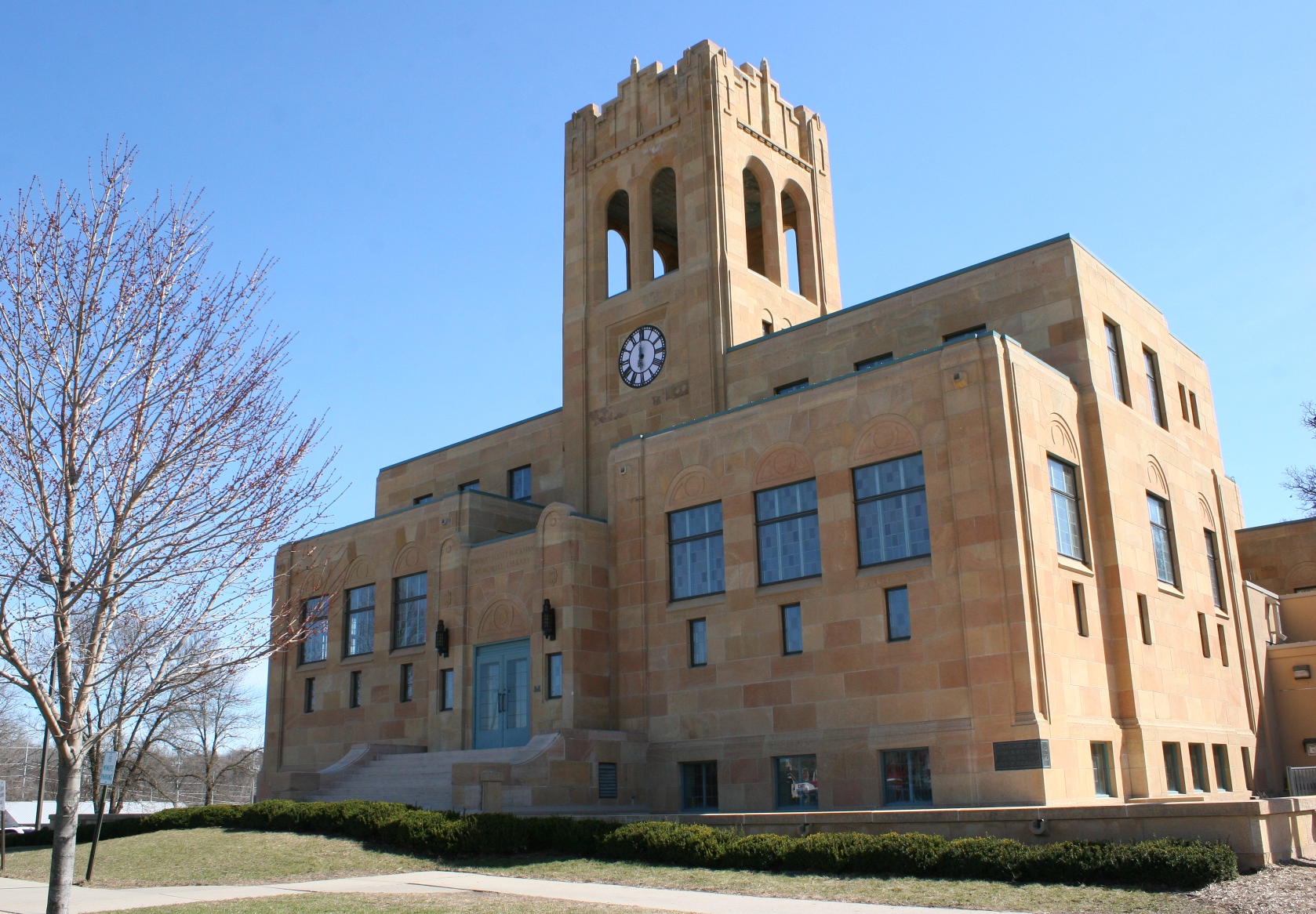
The 1929 section of Buckham Memorial Library with its signature central tower. (Minnesota Prairie Roots copyrighted file photo)
Several blocks to the south, a clock focuses the base of the central tower at Buckham Memorial Library, a lovely Moderne/Art Deco style limestone building constructed in 1929 and on the National Register of Historic Places. The stained glass window below the clock was designed by Charles Connick of Boston. This is a timeless classic building where generations of families have pulled books from the shelves to grow their knowledge and simply for the joy of reading.
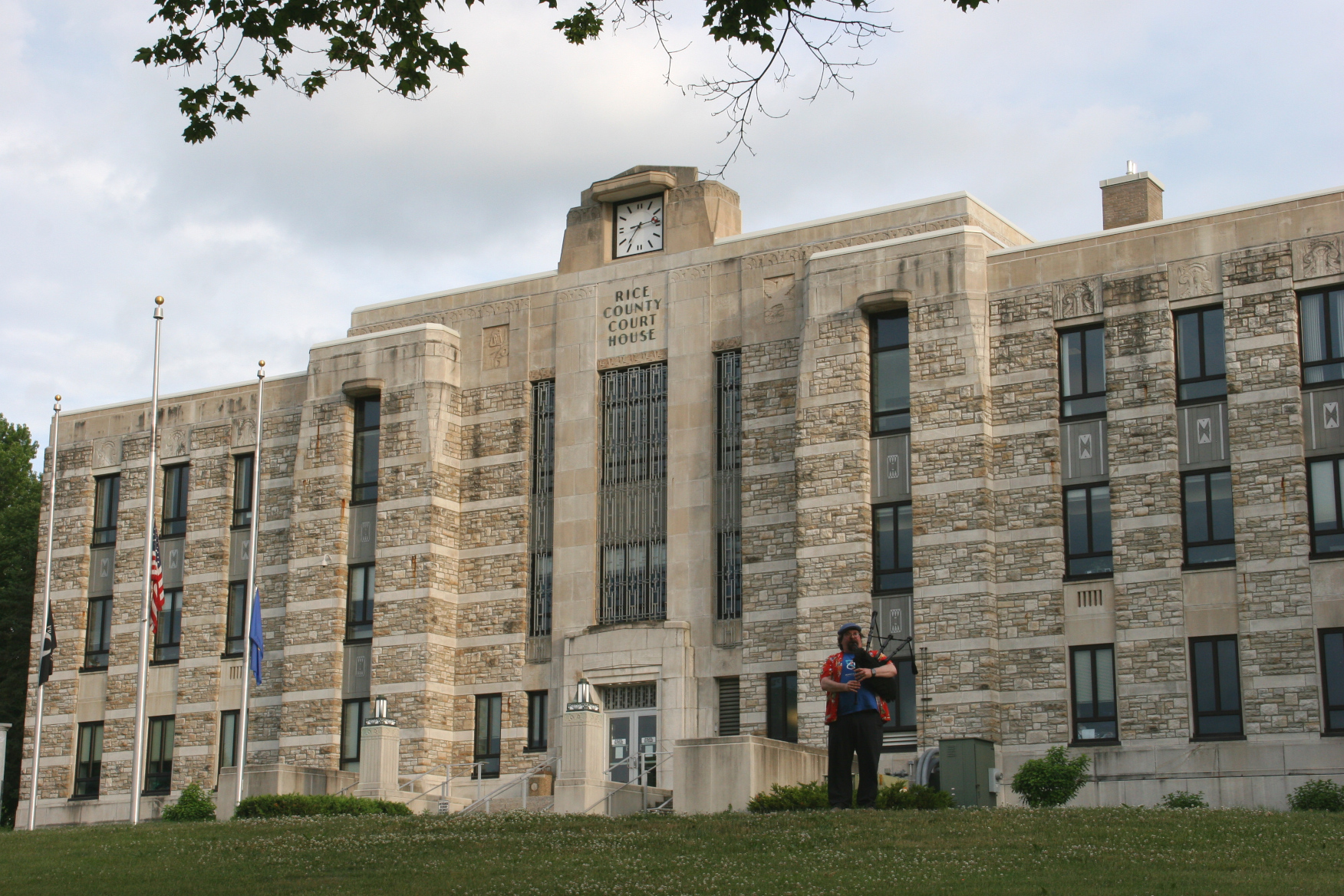
A bagpiper plays outside the Rice County Courthouse topped by a clock. (Minnesota Prairie Roots copyrighted file photo)
Just blocks away, a clock fronts the Fourth Street side of the Rice County Courthouse, built in 1932, also in the Art Deco style. Each year, events honoring veterans happen at the Rice County Veterans Memorial within view of the courthouse clock. For a moment or an hour, time stands still as we remember the sacrifices made for country, for democracy, by our veterans.
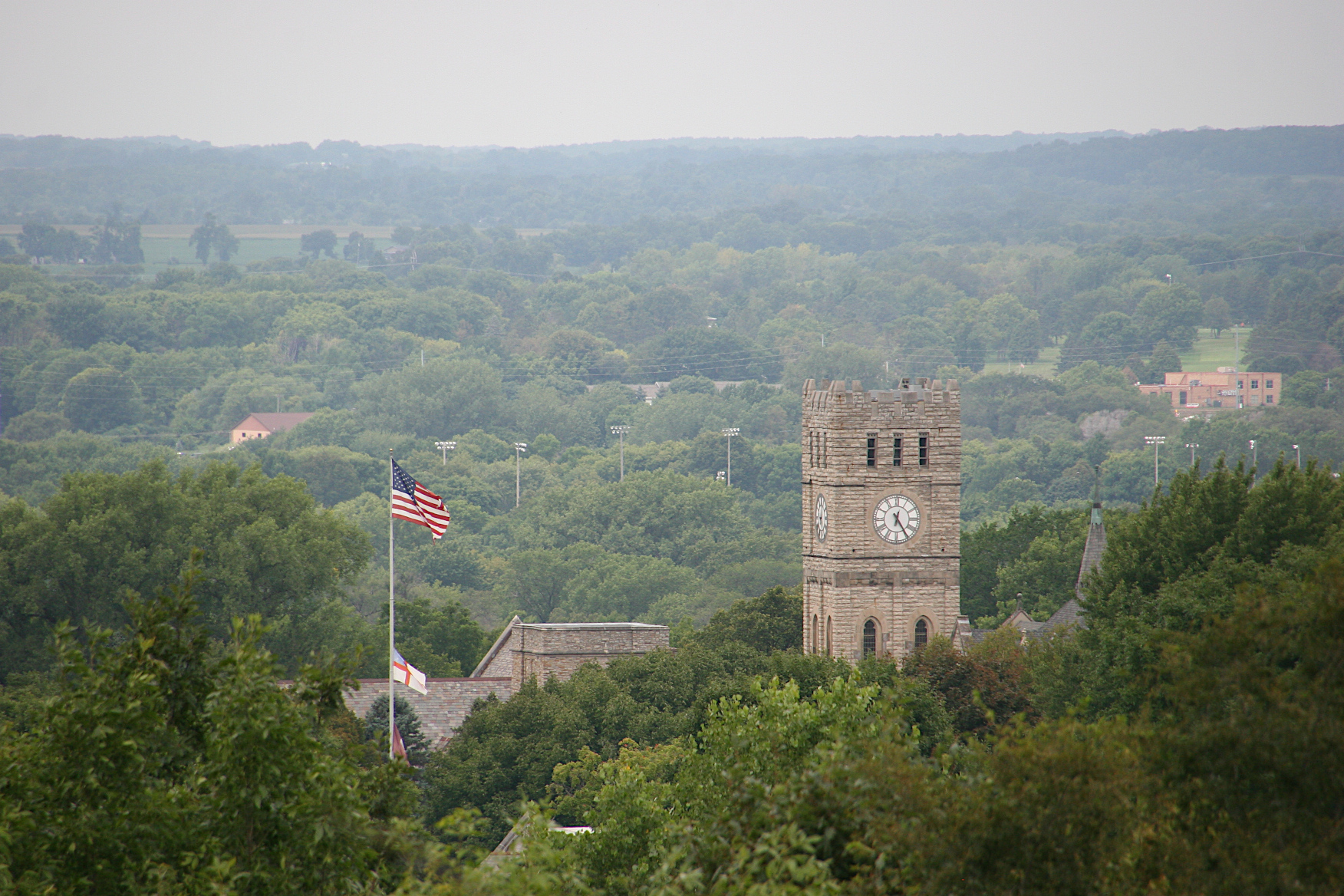
A view of the Shumway Hall tower from City View Park. (Minnesota Prairie Roots copyrighted file photo)
And then across the Straight River on the east side of Faribault, the Shumway Hall clock tower rises on the campus of Shattuck-St. Mary’s School in a complex of buildings that looks more castle than private college prep school. City View Park atop a hill blocks from campus offers a bird’s eye view of the tower, a view that is especially stunning in autumn. Shumway’s tower is assuredly a Faribault landmark, with Shumway Hall built in 1887 and on the National Register of Historic Places. Thousands of students have passed beneath that clock tower as they learned, studied and grew. Time passages.
Each day we mark time. Just as these notable outdoor public clocks do in Faribault. I expect most locals take these historic clocks for granted, pass by them without a thought. Too often we do that in our personal lives also, thinking we have all the time in the world. Until we don’t.
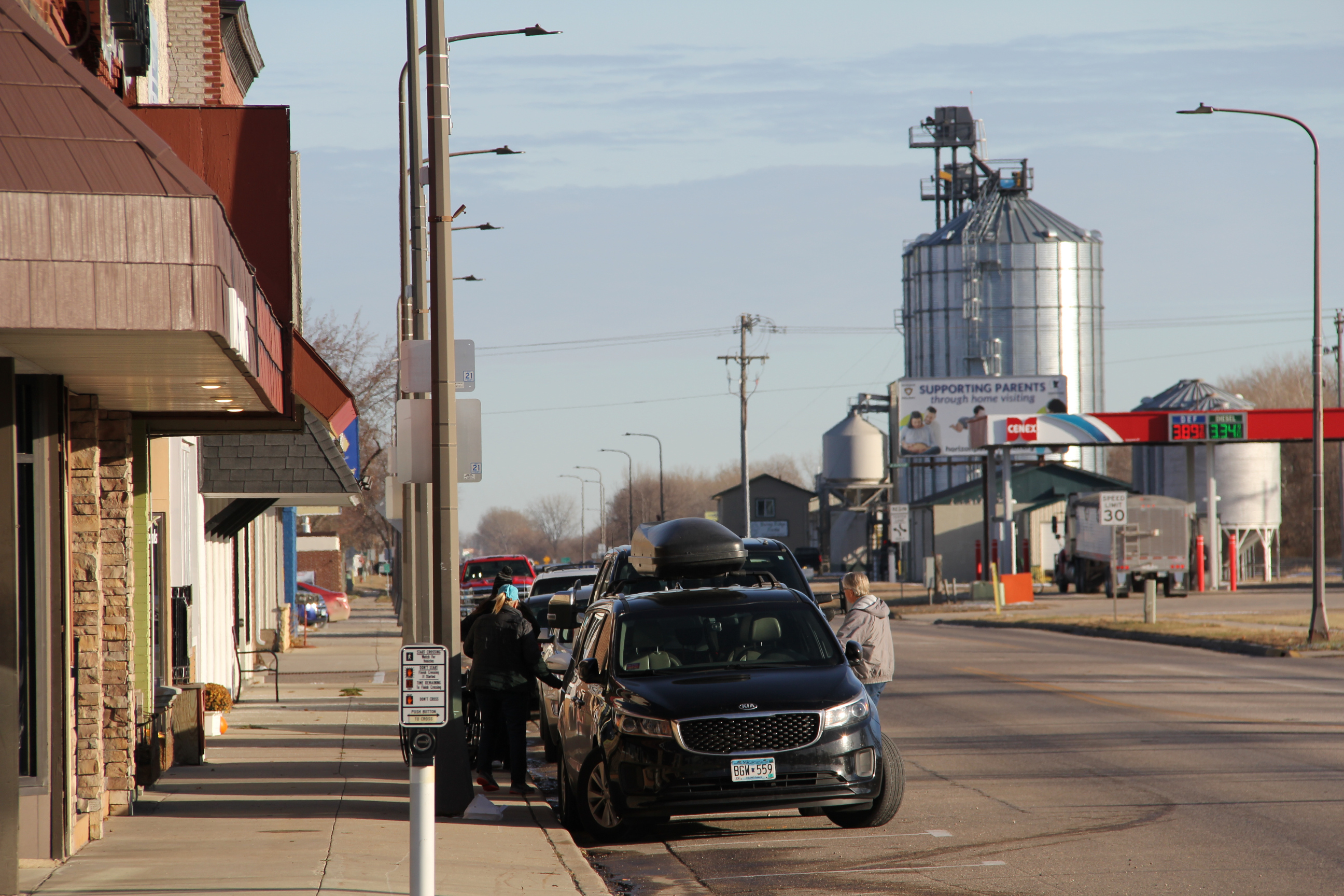
A scene from downtown Benson, Minnesota. (Minnesota Prairie Roots copyrighted file photo November 2024)
SOME 170 MILES separate my community of Faribault from Benson, a small agricultural community in west central Minnesota near the South Dakota border. At first glance, it seems the two share little in common. But they do, a discovery I made following a brief stop in Benson in late November.
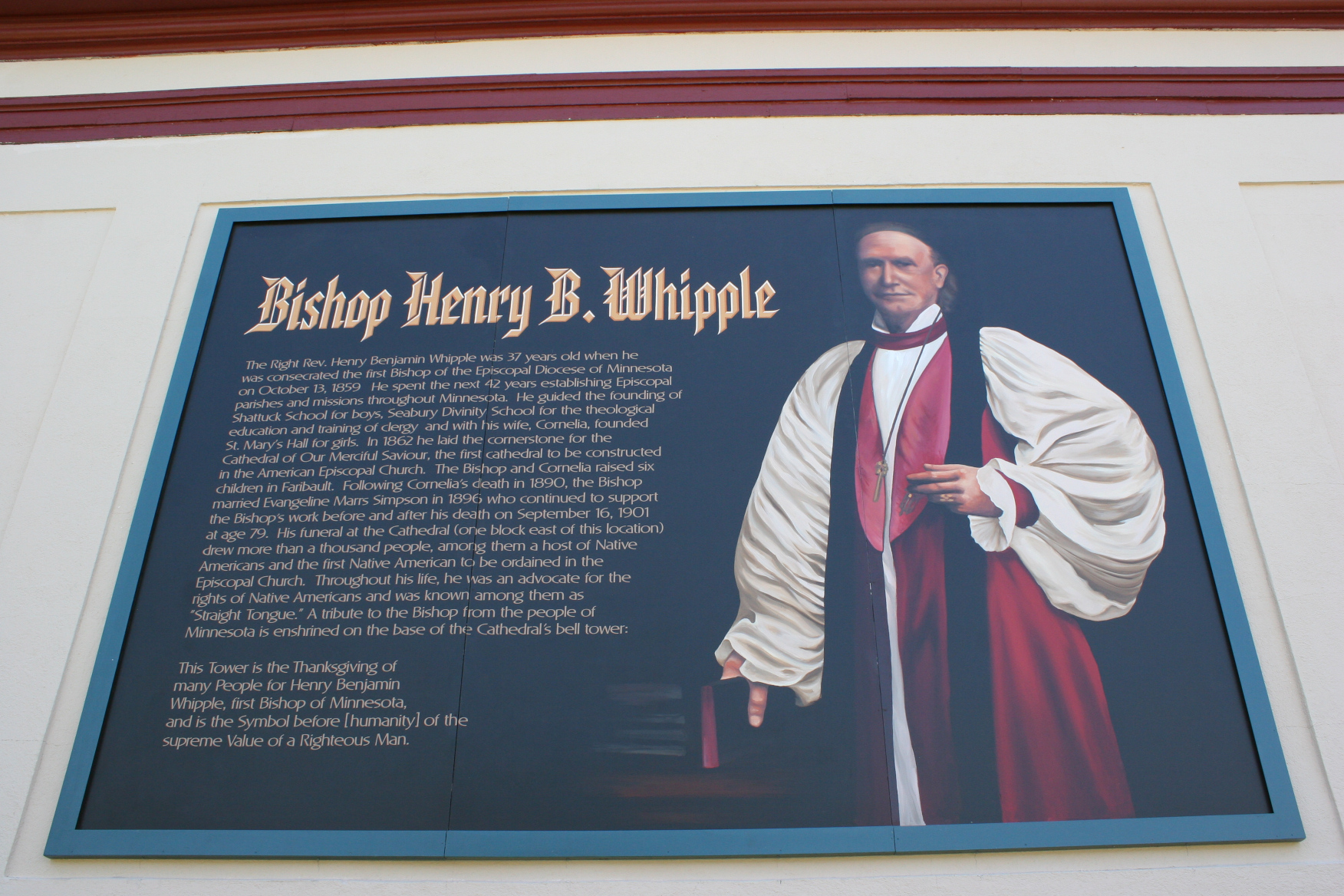
Bishop Henry Whipple, featured in a mural on the bandshell at Faribault’s Central Park, across the street from the Cathedral of Our Merciful Saviour. (Minnesota Prairie Roots copyrighted file photo)
Bishop Henry Whipple, the long ago Episcopal bishop of Minnesota, links Faribault and Benson. Whipple, a missionary based in Faribault, traveled around the Minnesota frontier in the early years of statehood in an effort to spread the Christian faith. That included visits to Benson where, in 1879, Christ Episcopal Church was built for $1,650 by local carpenters. Whipple visited occasionally to lead services and confirm new members.
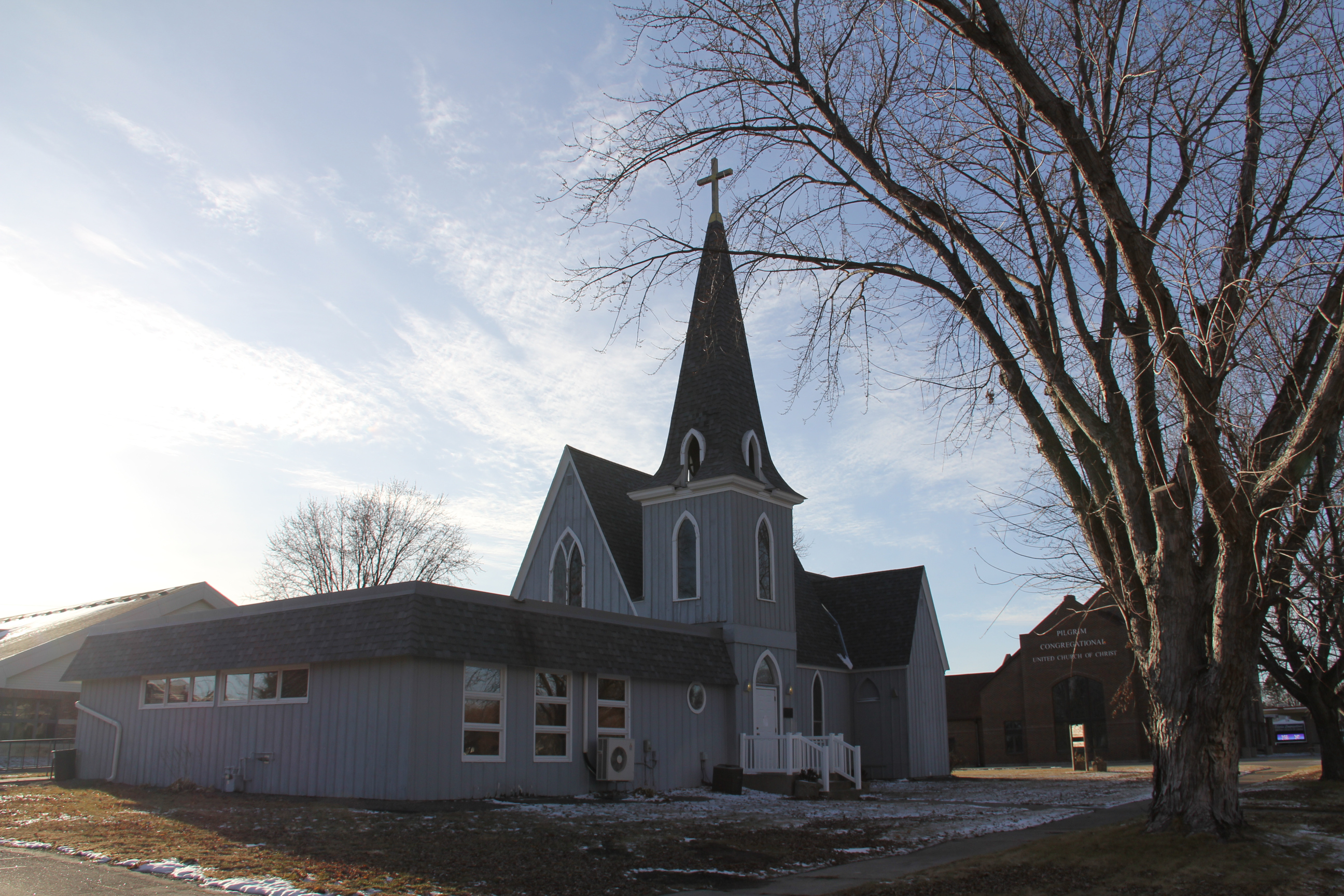
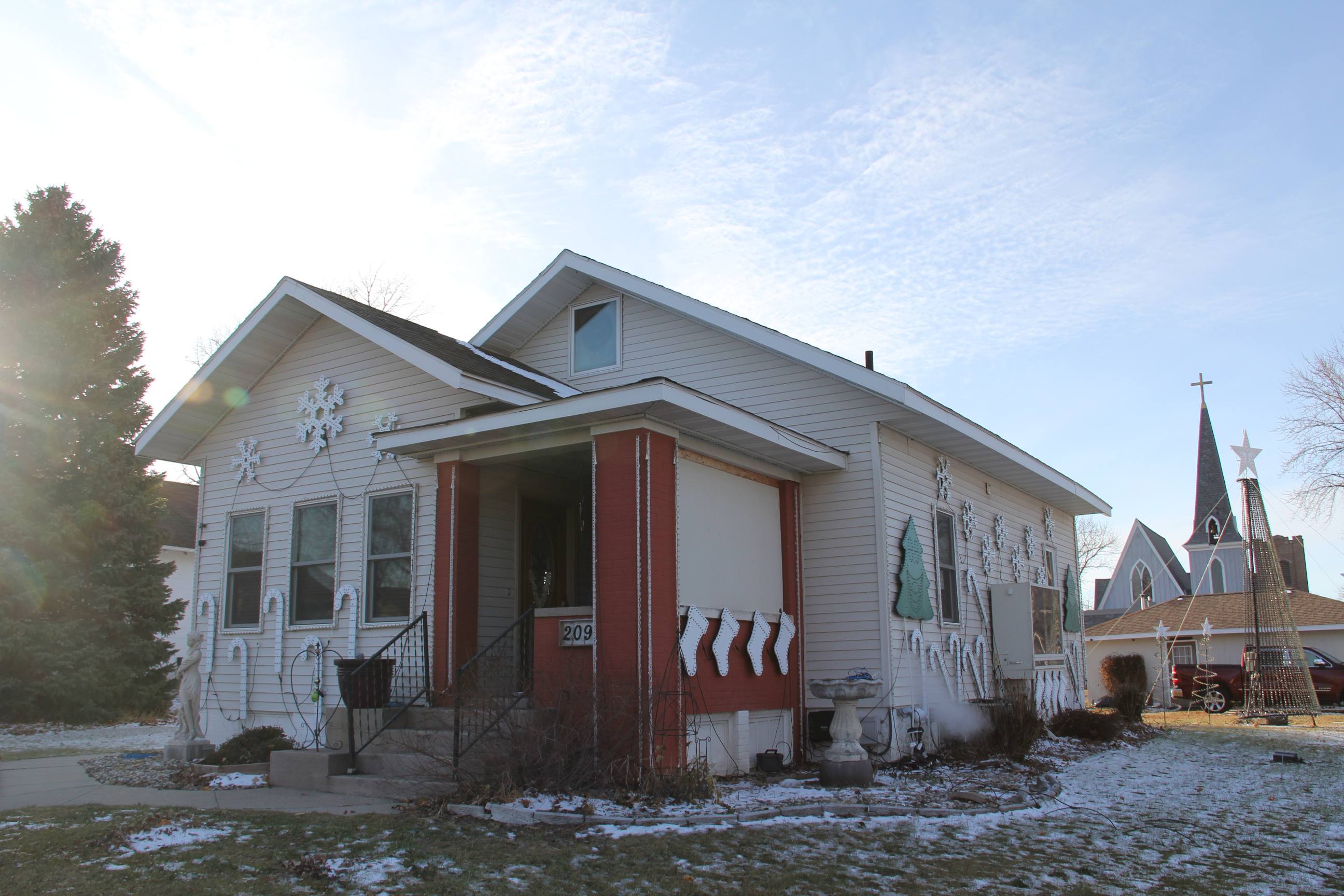
That early Gothic Revival style church with gray board and batten siding caught my eye during a brief drive around Benson’s downtown core. More accurately, the seven-story Parkview Manor apartment across the street from the church initially grabbed my attention. The 55-unit high-rise looks very much out of place in this prairie town. It dwarfs residential houses and the historic church. Typically grain elevators and church steeples mark small town skylines, not a towering 1967 apartment complex.
Parkview Manor, where the church was once located. (Minnesota Prairie Roots copyrighted photo November 2024)
Christ Episcopal Church once sat on the apartment land, but was moved across the street after the Housing and Redevelopment Authority bought the property in 1966. At some point the church, founded by English and Yankees (as New Englanders were once termed), closed due to dwindling membership. Today the building serves as the Swift County Drop In Center, “a safe haven for adults to go to experience life free of stigma.” I think Bishop Whipple would have liked that, knowing the former church serves as a gathering place, a safe spot to just be.


The church sits in a residential neighborhood near downtown. (Minnesota Prairie Roots copyrighted photo November 2024)
Some day I’d like to tour the aged church, which was added to the National Register of Historic Places in 1985. Perhaps I would feel the presence of Benson’s early settlers, hear the words of comfort, peace, hope and unity preached by Bishop Whipple.
While Whipple is primarily viewed as a man who befriended Indigenous Peoples, he was also part of the long ago mindset to assimilate and “civilize” them. That’s a side not often discussed when talking about a man, a missionary who shared his biblical teachings while also compassionately advocating for Native Americans. Whipple is highly-revered in Faribault, where he is buried beneath the Cathedral of Our Merciful Saviour, an historic cathedral worthy of visiting, too.
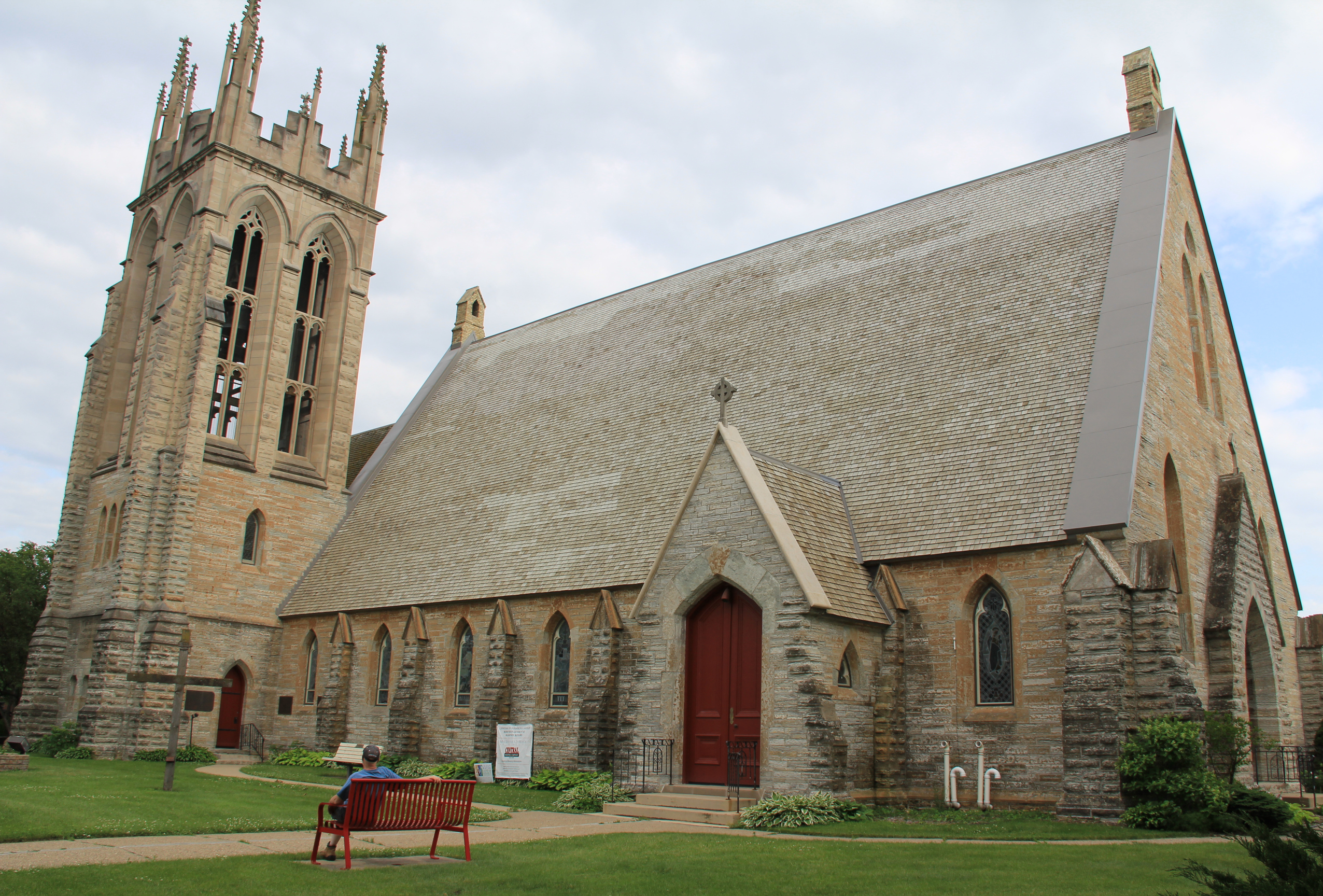
The Cathedral of Our Merciful Saviour, Faribault. (Minnesota Prairie Roots copyrighted file photo July 2024)
The immense Faribault cathedral differs vastly from the unassuming small church in Benson. Yet, history and a missionary link the two. To uncover that connection simply because I noticed an out-of-place apartment high-rise and then the old steepled church across the street reveals just how small this world really is if only we pause to notice, then uncover the connections.
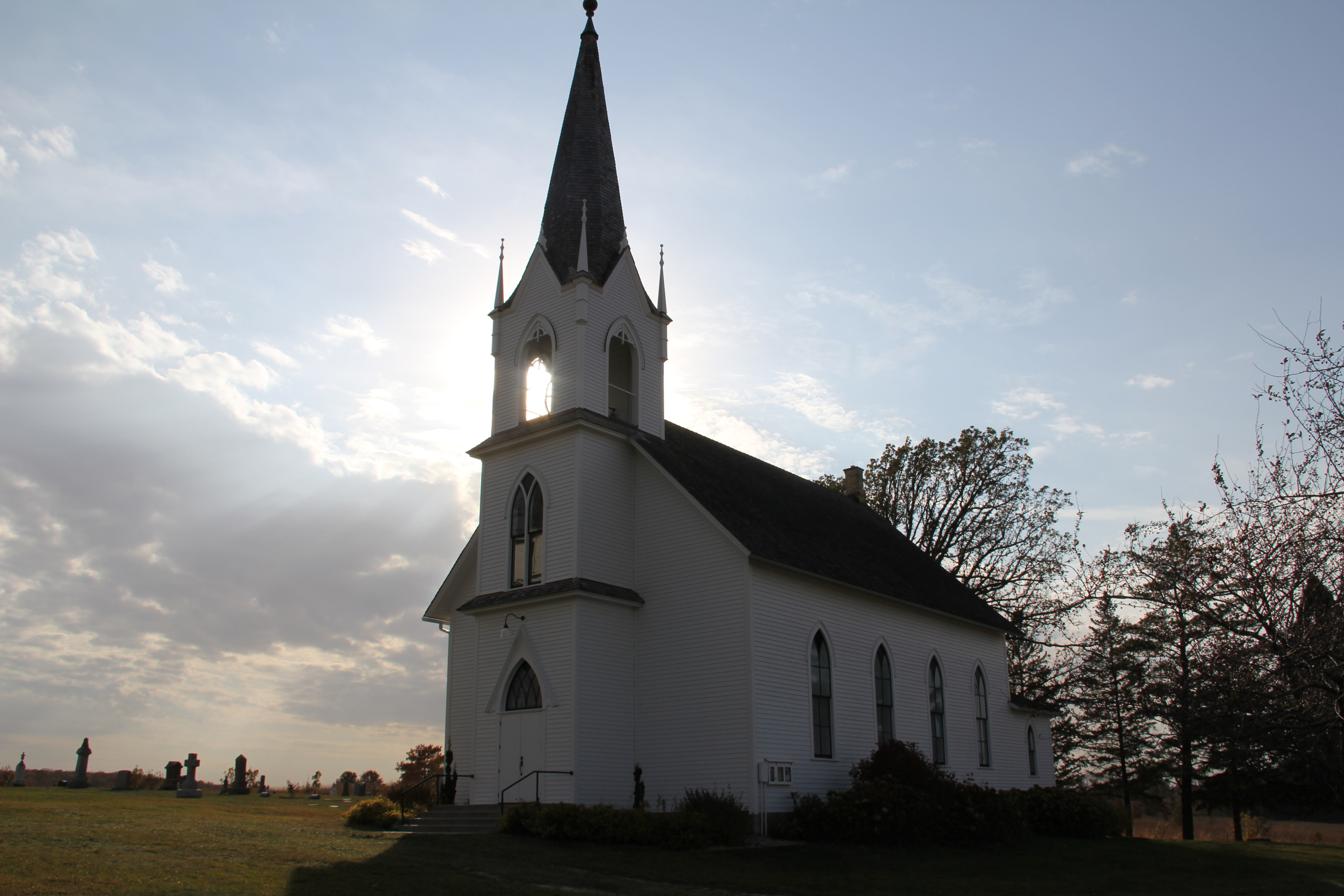
This wooden church was built in 1894 and sits directly across from the stone church. (Minnesota Prairie Roots copyrighted photo October 2024)
WHETHER YOU’RE A PERSON of faith or not doesn’t matter when it comes to appreciating a country church. Or, in the case of Valley Grove, churches. Plural.
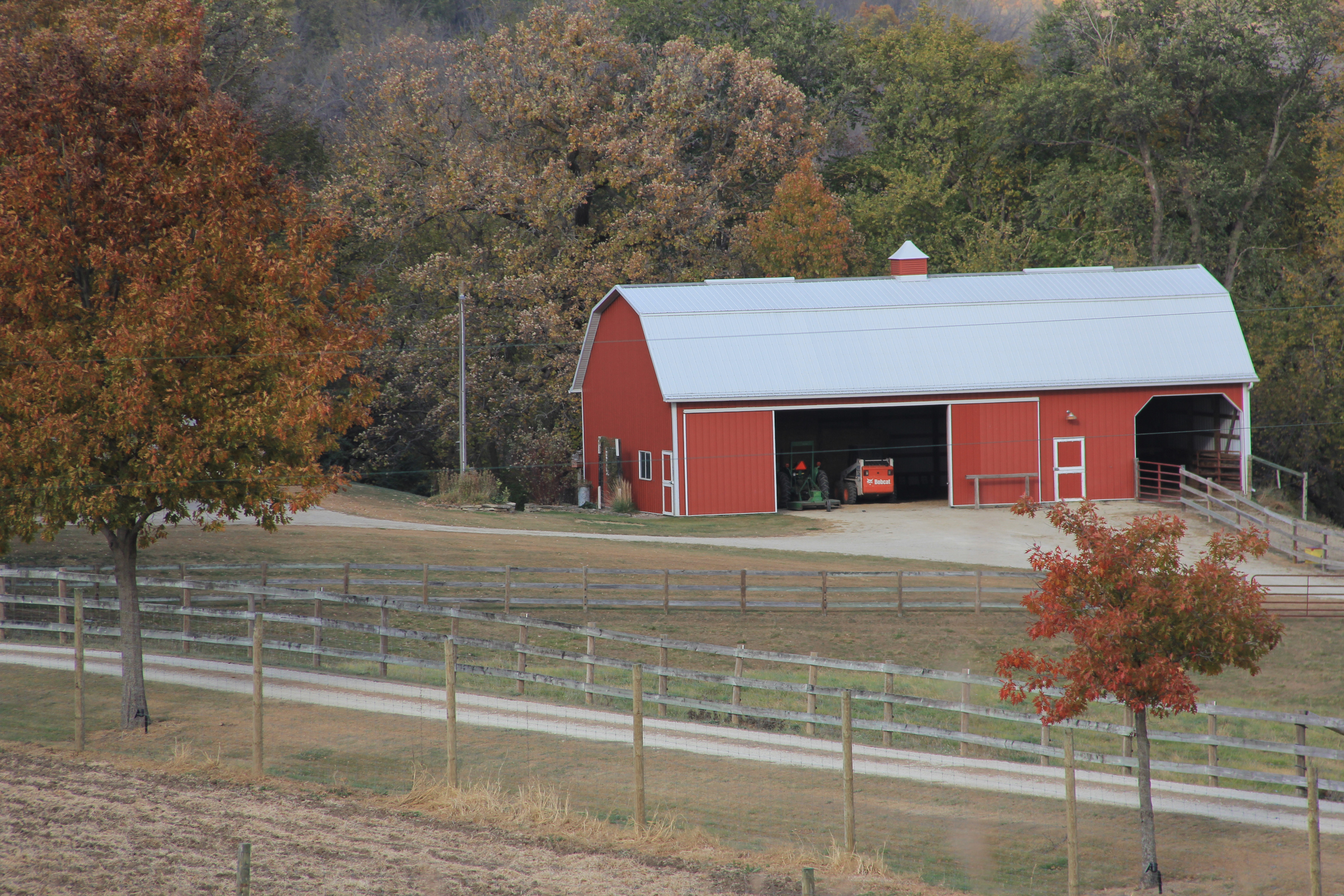
Just down the hill from the cemetery, this shed pops color into the rural landscape. (Minnesota Prairie Roots copyrighted photo October 2024)
Perched atop a hill near Nerstrand Big Woods State Park in eastern Rice County, these two churches, the cemetery, and surrounding prairie and oak savannas are a place that beckons me. I don’t know that I’ve found another rural church—and I’ve visited many in Minnesota—which holds such peaceful appeal.
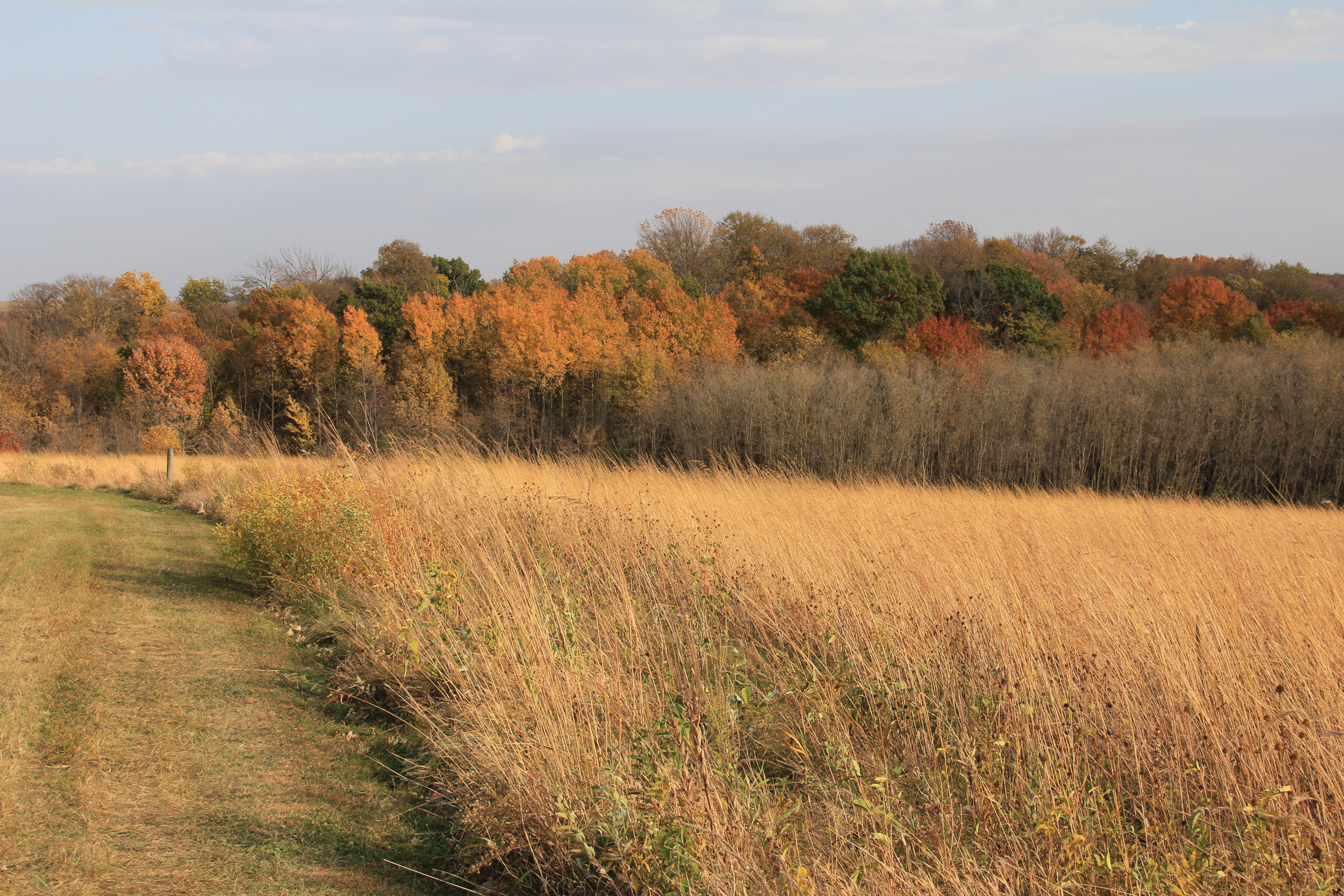
Photographed in October from the cemetery, oak and prairie savannas at Valley Grove. There are pathways through the 50 acres of land that are part of Valley Grove. (Minnesota Prairie Roots copyrighted photo October 2024)
The setting is decidedly bucolic, pastoral, whatever word you use to describe a scene that creates internal serenity. I feel such peace every time I set foot upon this land, look across the landscape of prairie and woods, surrounding fields and farm sites. Perhaps it’s my rural roots that connect me to Valley Grove.
There are lots of Norwegian names on gravestones. (Minnesota Prairie Roots copyrighted photo October 2024)
I have no family connections here. Not even connections of heritage given my ancestors hail from Germany. The settlers who formed Valley Grove Lutheran Church arrived from Norway. Their imprint is here, especially in names upon tombstones in the cemetery.
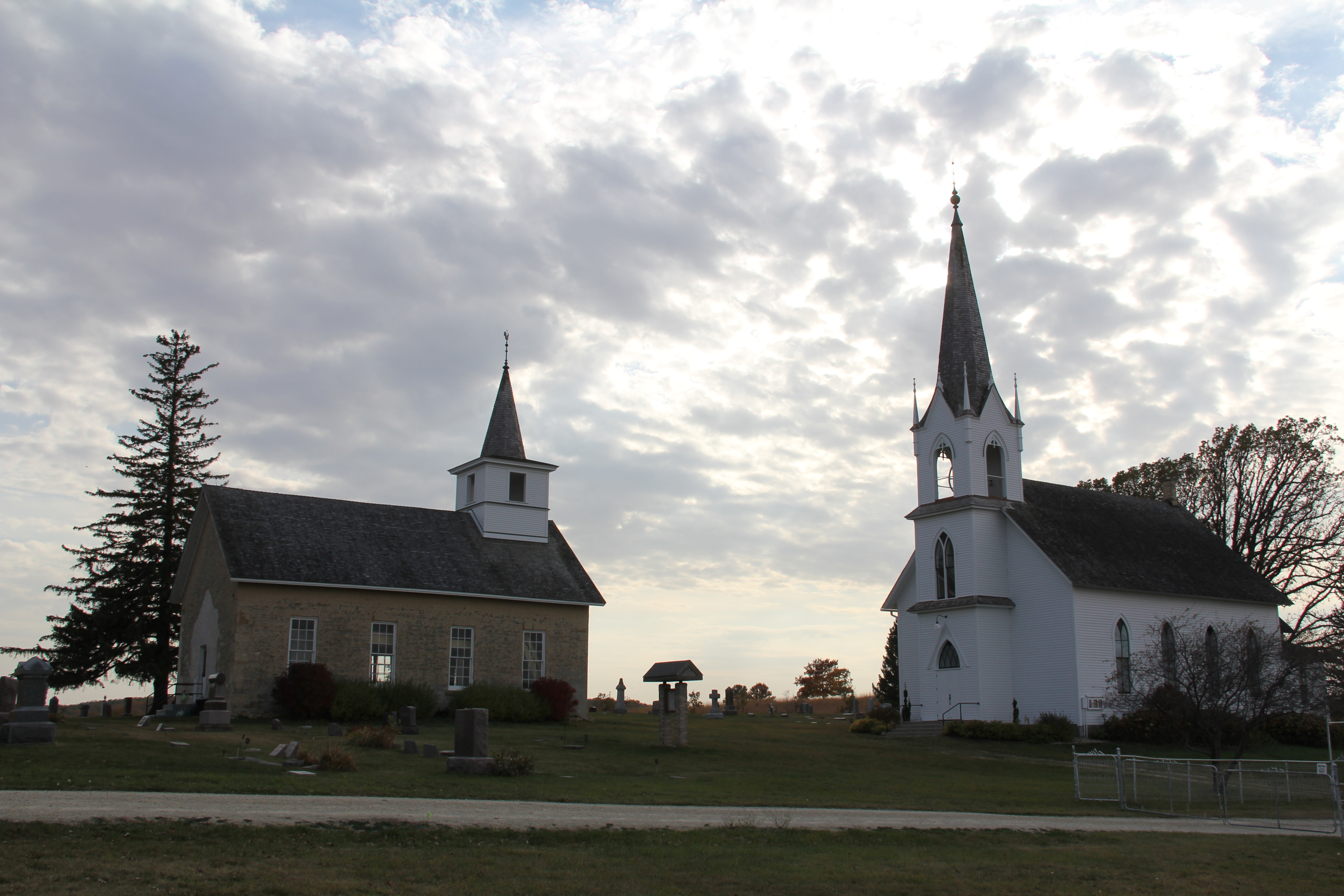
The two beautiful and well-maintained churches of Valley Grove. (Minnesota Prairie Roots copyrighted photo October 2024)
Even though this congregation disbanded in 1973, these churches have not been abandoned. The Valley Grove Preservation Society cares for and maintains the two buildings. On the National Register of Historic Places, the stone church was built in 1862 and the clapboard church in 1894. Recently, a steeple, bell structure and other restorations were completed on the wooden church. The interiors are also well-maintained, as if the congregants remain.
The stone church is used today as a reception and gathering space. (Minnesota Prairie Roots copyrighted photo October 2024)
Valley Grove is the site of weddings, family gatherings, occasional concerts and more, plus an annual fall country social and candlelight Christmas Eve service hosted by the Preservation Society. I’ve attended the social numerous times, but have yet to make the December 24 service. That’s at 10 p.m. with music beginning at 9:45 p.m. Winter weather sometimes forces cancellation of that event. Weeks before, a music-rich vespers service is set for 4 p.m. Sunday, December 8.
Watering cans are available for watering flowers and plants in the cemetery. (Minnesota Prairie Roots copyrighted photo October 2024)
To visit Valley Grove, whether during an event or on a personal outing, is something I would encourage if you live close by or are in the area, especially at nearby Nerstrand Big Woods State Park. Note that church doors are opened only for special occasions so don’t expect otherwise if you come on your own. That’s the case now at all country churches, whether active or disbanded. You’re not going to get inside unless someone with a key just happens to be on-site.
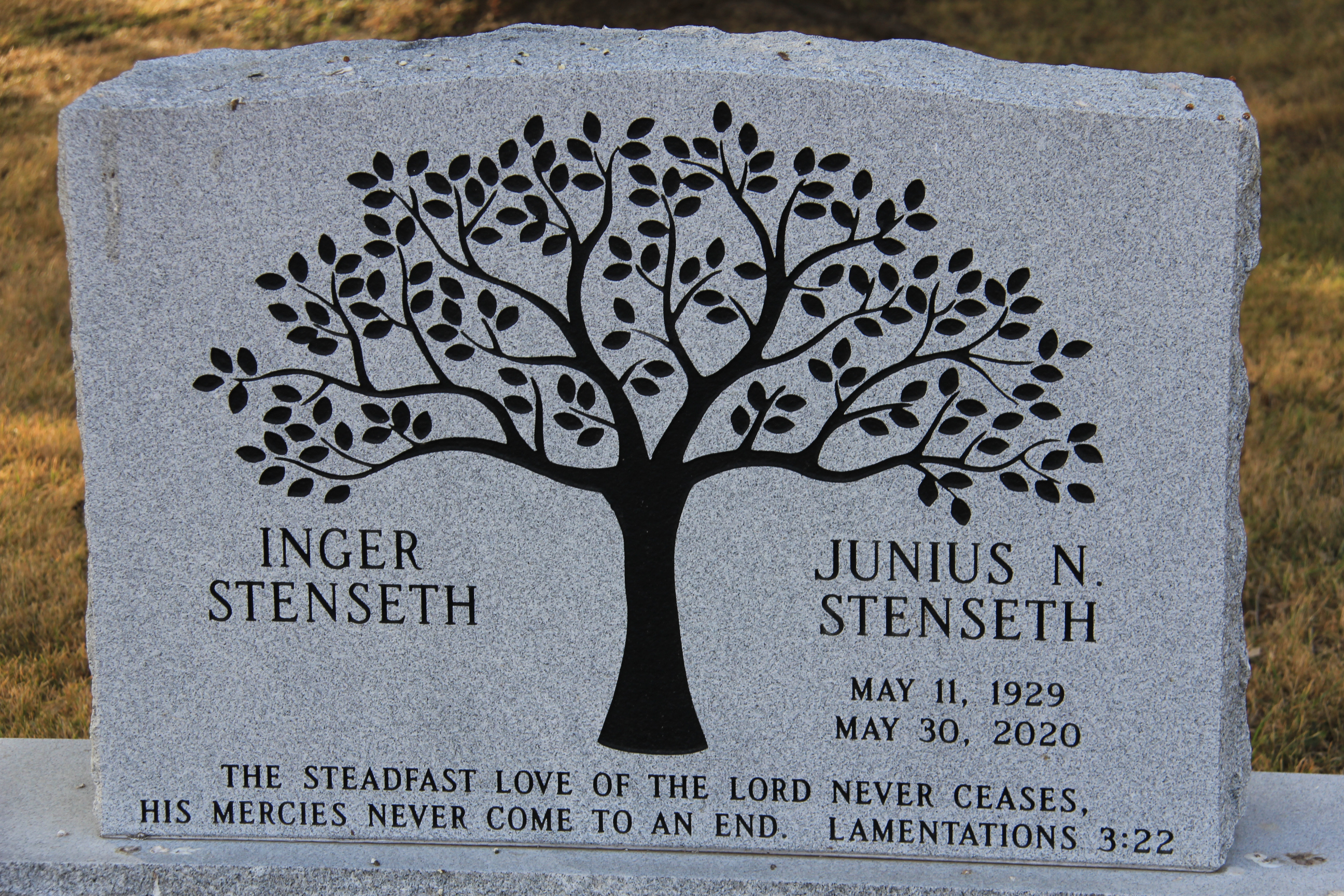
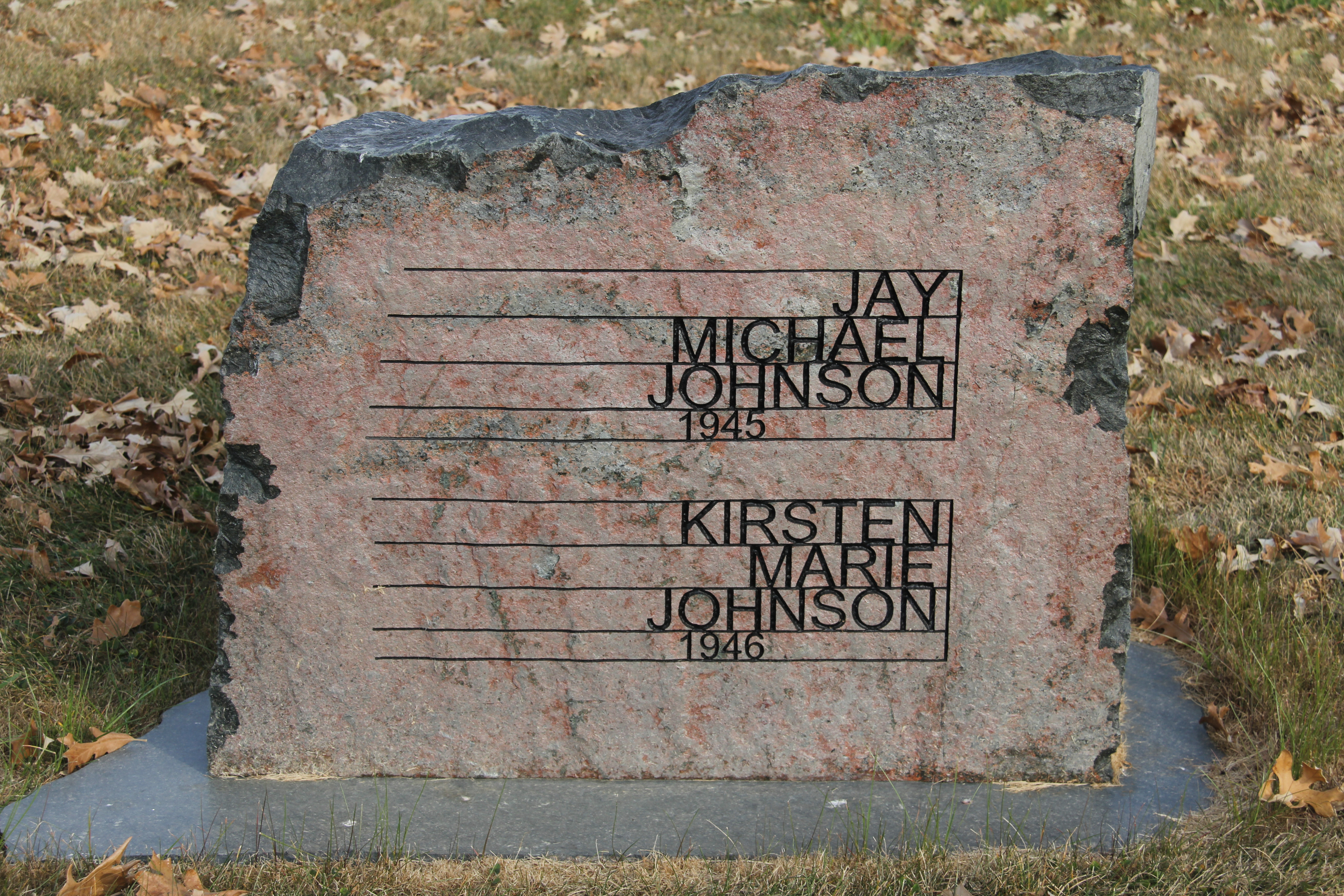
The Johnsons have their tombstone in place. I really like the simplicity, the ruggedness, the font, the shape of this grave marker, unlike any I’ve seen. (Minnesota Prairie Roots copyrighted photo October 2024)
You don’t need church access, though, to experience the essence of Valley Grove, the peace that prevails. It’s the being here, feet upon the ground, eyes taking in the countryside, that touches the soul. A walk through the cemetery, the reading of dates and names and tombstone messages channels a personal connection to those who came before us. The settlers who likely felt comfortably at home here, high atop a hill overlooking the landscape of rural Minnesota while missing the land they left, their beloved Norway.
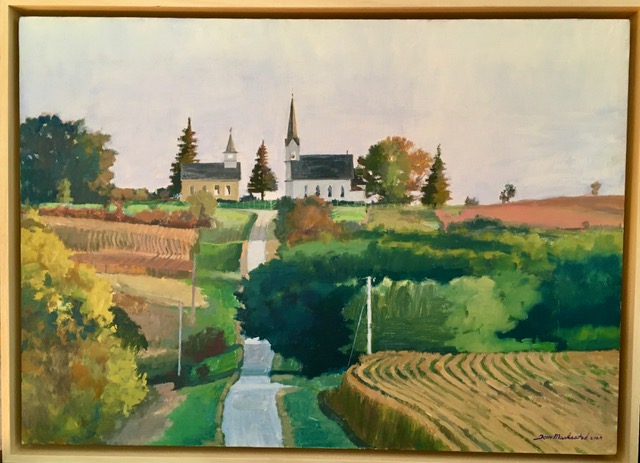
A painting of the Valley Grove churches by Tom Maakestad, to be given to one lucky person. (Image credit: Valley Grove Preservation Society)
FYI: The Valley Grove Preservation Society continues to seek donations for its Steeple Restoration Fund. As an extra incentive, those who donate $1,000 or more by December 31, 2024, will have their names placed in a January drawing for an original Valley Grove painting by Marine on St. Croix artist Tom Maakestad, who grew up near Valley Grove. His parents, Bobbie and John, founded the Preservation Society and saved the wooden church from demolition in 1975. The Valley Grove Board suggests a donation to the Steeple Fund as a Christmas gift for someone who has everything.Click here to reach the Valley Grove Preservation Society website for more information.
Rice County Area United Way is opening a used bookstore in the vacant Dandelet Jewelry building. A bookstore was once located in the corner building. (Minnesota Prairie Roots copyrighted photo January 2023)
ONCE UPON A TIME, Faribault was home to bookstores, the first inside the mall, the second downtown on Central Avenue. Both closed years ago. But soon we’ll have a bookshop back in town, located in the former Dandelet Jewelry store, right next to the corner building that once housed Central Avenue Books.
Elizabeth Child (Photo source: E. Child)
This new as yet unnamed bookstore, though, will be decidedly different. The bookshop, a project of Rice County Area United Way, aims to do more than simply provide the community with a place to purchase gently-used books. It will also become a welcoming community gathering space, according to United Way Executive Director Elizabeth Child. She envisions a colorful children’s area in the back of the store where kids can mingle and read. She envisions adults dropping in, coffee in hand, to browse bookshelves and engage in conversation. She envisions local art displayed and perhaps events featuring artists and writers.
Gordon Liu, board chair of the United Way, created a book-themed display for the Faribault Winterfest holiday window decorating contest. It reflects the bookstore plan for the Dandelet building and Liu’s love of books and reading. He was recently reappointed to the Library Advisory Board. (Minnesota Prairie Roots copyrighted photo January 2023)
A sense of community involvement defines the vision for this used bookshop. Child and her board of directors are open to ideas and possibilities and are actively seeking community input. They want this gathering place to reflect Faribault’s multi-cultural population; to add value to the downtown; to promote literacy via access to books; to inspire people to read; and to increase the United Way’s visibility in Faribault. The United Way currently has an office in Northfield following the merging of the Faribault and Northfield United Ways into a county-wide entity in 2019.
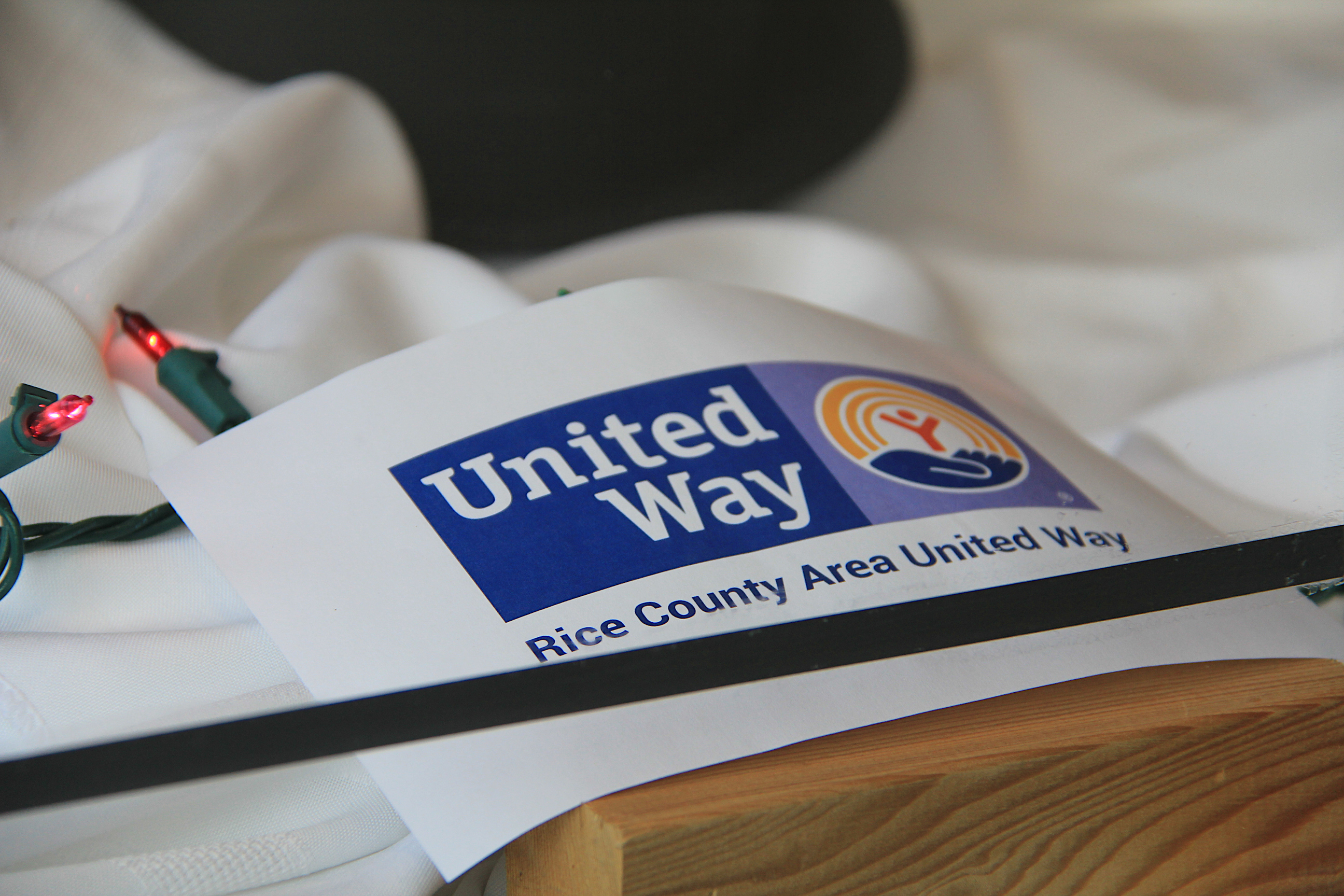
A small United Way signlies atop “snow” in a window display inside the former Dandelet Jewelry building. (Minnesota Prairie Roots copyrighted photo January 2023)
The nonprofit, funded primarily by workplace partner and individual donations, aims “to mobilize caring resources to improve lives,” Child said. That’s further defined on the website: Our focus is on education, health and financial stability—the building blocks for a good quality of life.
Faribault is a diverse community, shown here in Gordon Liu’s “Frosty the Snowman” window display. (Minnesota Prairie Roots copyrighted photo January 2023)
A bookstore fits within that mission with a focus on literacy, bringing people together and providing affordable books. The United Way is already collecting books, with an emphasis on “gently-used” in all genres. No textbooks, encyclopedias, business or outdated books needed.
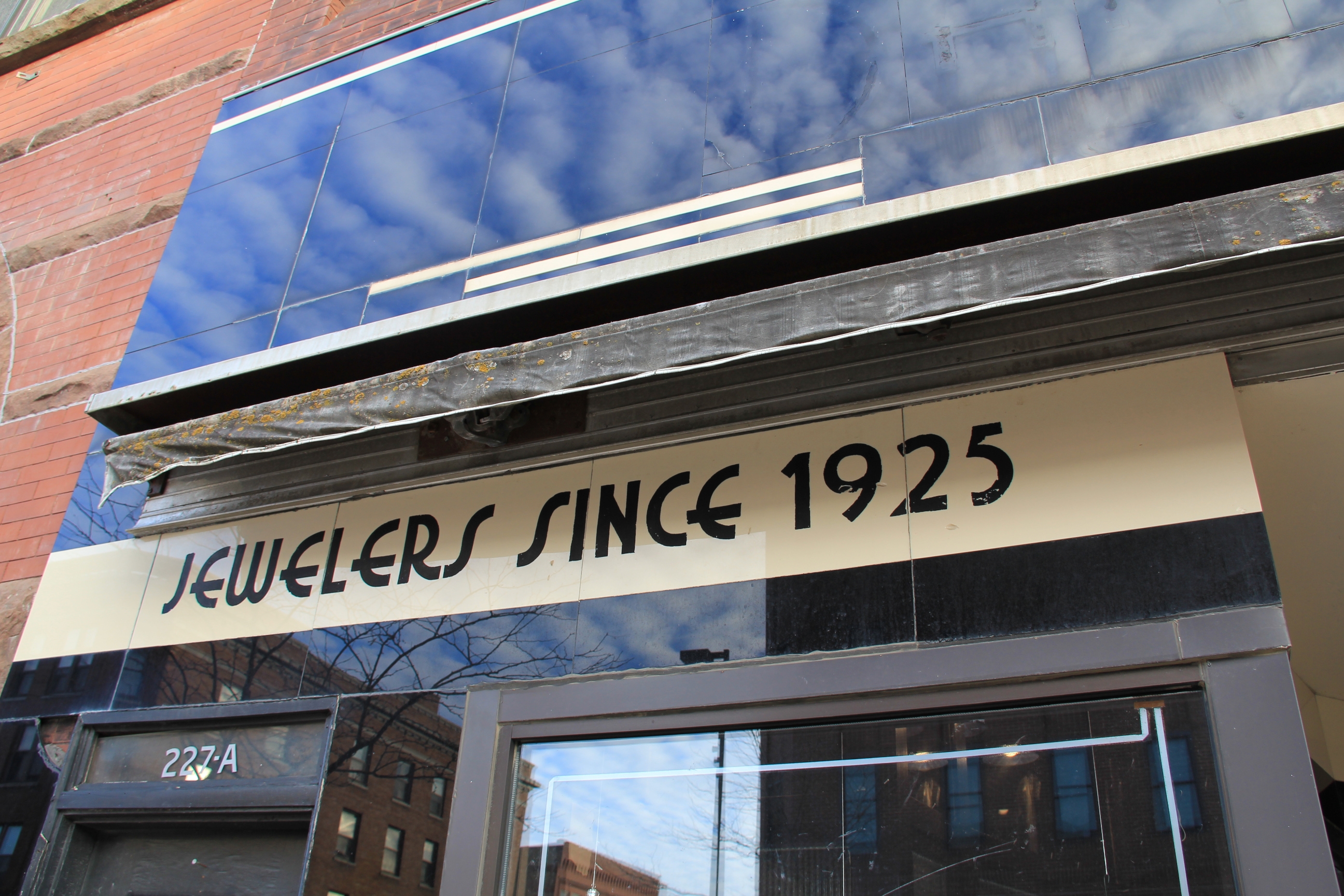
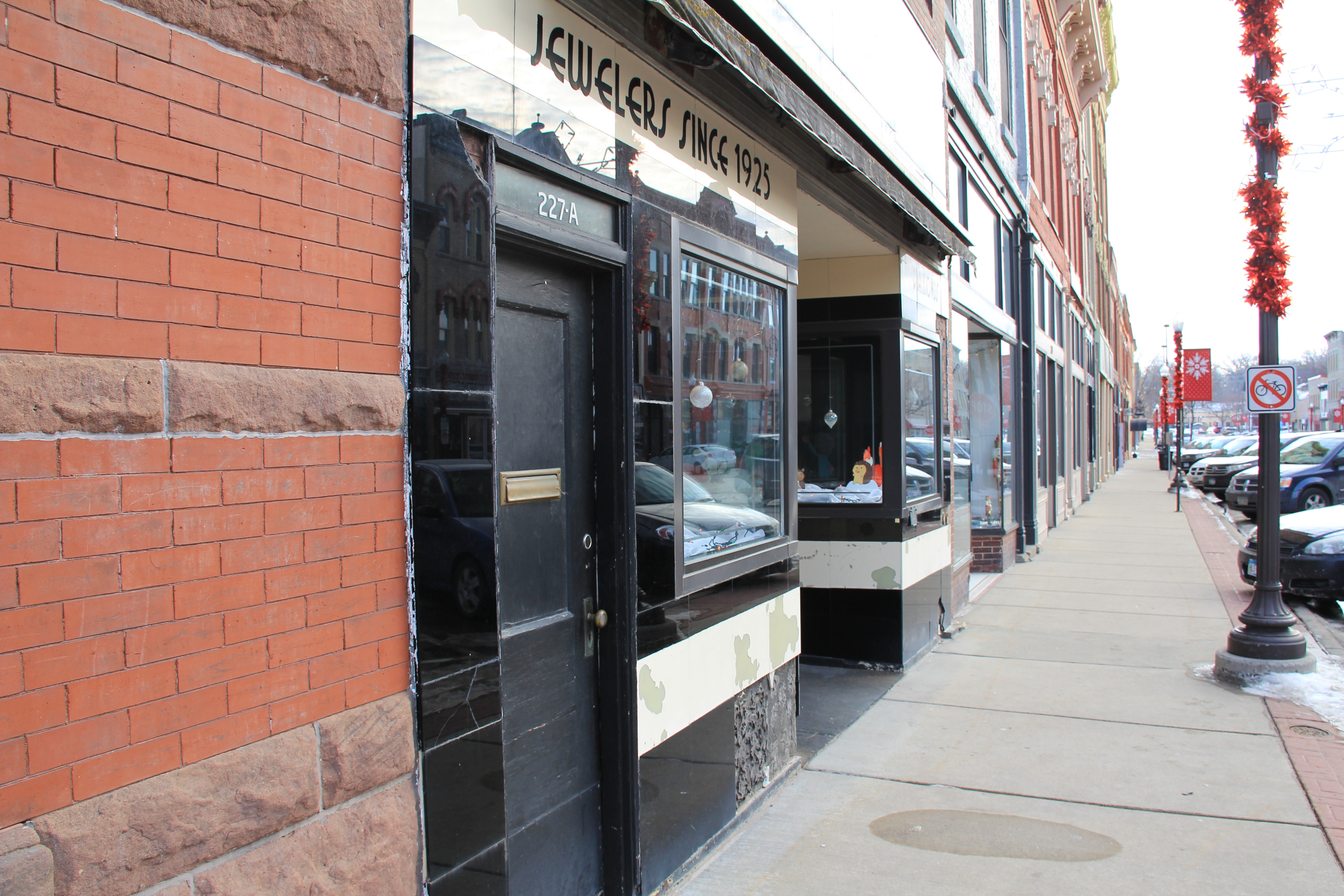
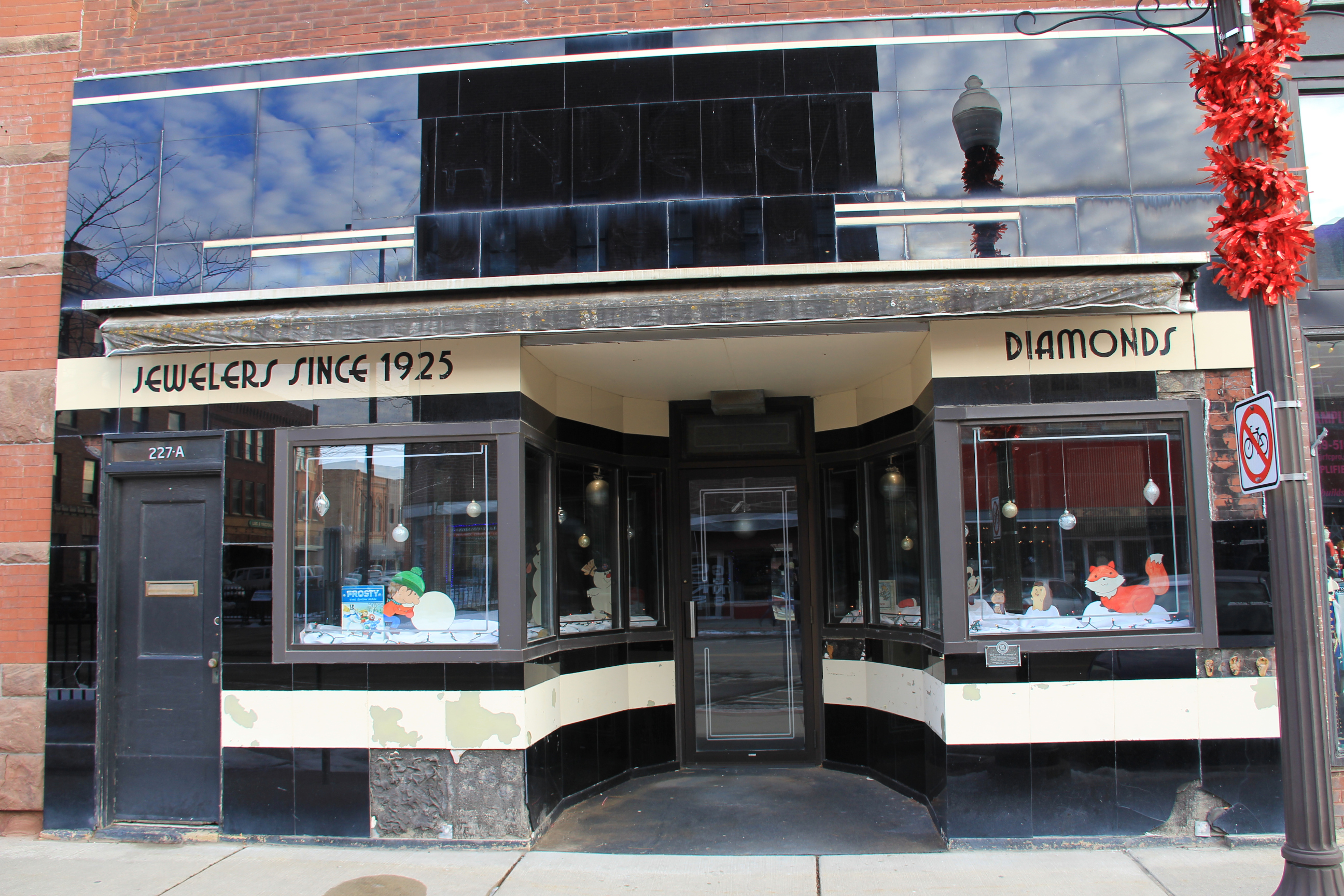
The Art Deco style can be seen in the black and cream colors and the strong lines. (Minnesota Prairie Roots copyrighted photo January 2023)
Planning and work continue on the bookstore with an anticipated spring opening at 227 Central Avenue North, hours to be determined. The 1882 building, which is in Faribault’s Historic Commercial District and on the National Register of Historic Places, is one of 13 purchased by a local investment group in an effort to revitalize downtown. Originally, the structure housed Dandelet Dry Goods. It became a jewelry store and watch repair business in 1925 with the Dandelet family modernizing the original Italianate facade in the Art Deco style during the 1930s. Child noted the vacant building retains Art Deco elements inside, including a chandelier. Built-in shelves, which once displayed jewelry, remain. Those will be repurposed for books as the United Way readies the space with mostly cosmetic changes like painting, adding display tables and more. A first floor bathroom will be installed. Any exterior changes/improvements will be made by the building’s owners.
From jewelry to books, both gems… (Minnesota Prairie Roots copyrighted photo January 2023)
Volunteers will run the bookshop with United Way board member Dave Campbell overseeing the operation. There’s already a sense of excitement within the community about the bookstore, Child said. She expects that interest to grow once the shop opens.
Faribault boasts a downtown brimming with aged, historic buildings. Revitalization and renovation are ongoing. (Minnesota Prairie Roots copyrighted photo January 2023)
Child’s efforts to open a United Way bookstore began seven months ago in a most unexpected way—in a conversation during a three-hour ride from North Carolina to the Atlanta airport. Her friend Florence, whom she first connected with via an online pandemic-inspired poetry group, mentioned how much she enjoyed volunteering in her small town nonprofit bookstore. That proved an enlightening moment for Child, who took the nonprofit bookstore idea and ran with it…to her board. And now, in a few months, Faribault will have a new, welcoming place to gather, a place to buy gently-used books, to engage in conversation, to connect as community.
#
FYI: If you have gently-used books to donate, contact Dave Campbell at 507-210-4066 or email him at Davec1953 at gmail.com
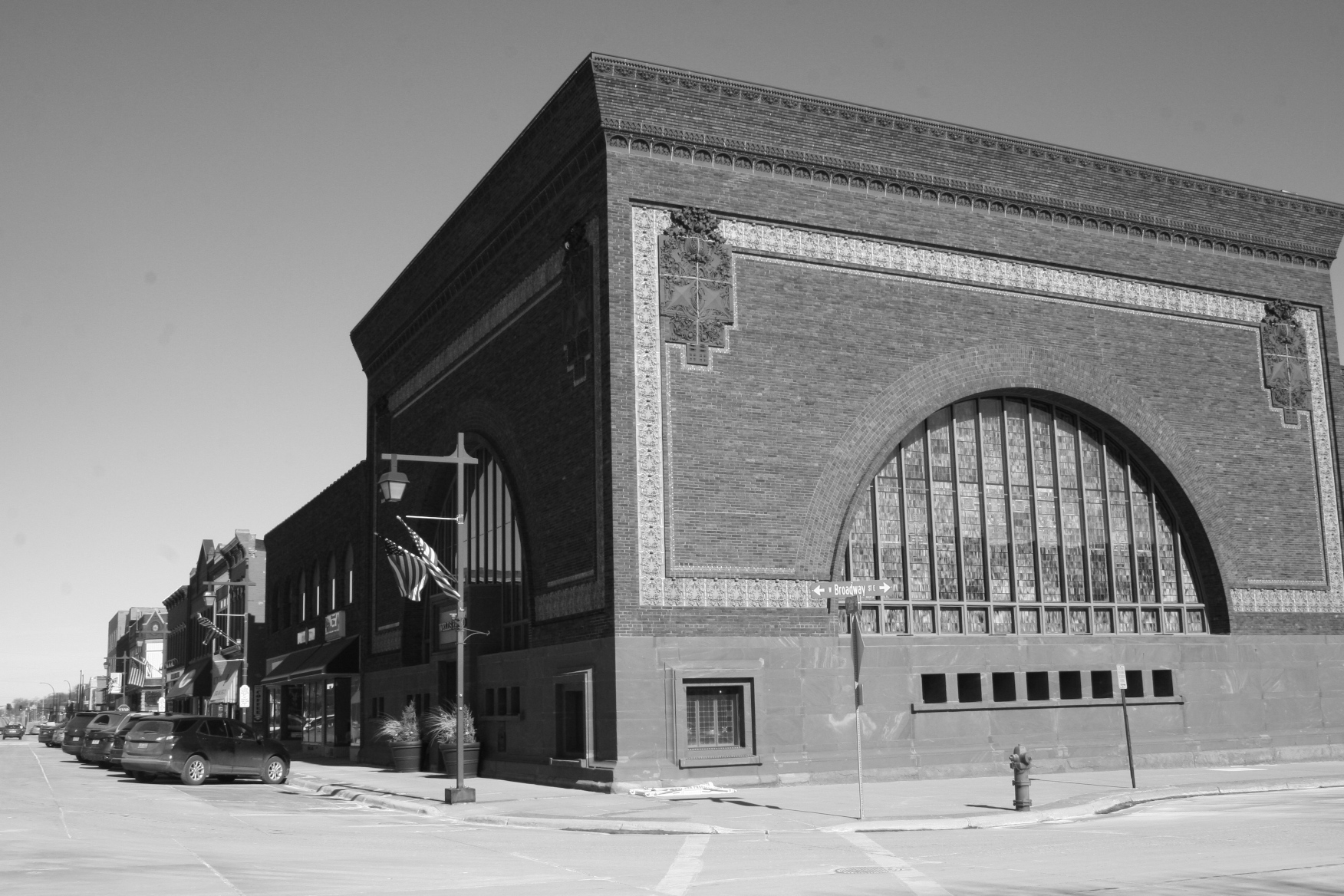
National Farmer’s Bank of Owatonna rates as particularly important architecturally. Designed by Louis Sullivan in the Prairie Architecture School style, it features stained glass windows, gold leaf arches, nouveau baroque art designs and more. This “jewel box of the prairie” was built between 1906-1908. (Minnesota Prairie Roots copyrighted photo February 2022)
STRIPPING IMAGES OF COLOR lends an historic context to several aged buildings I recently photographed near Central Park in downtown Owatonna. It’s easier for me to see the past, to appreciate these long-standing structures through the lens of time when I view them in black-and-white.
Love this corner historic building which houses A Taste of the Big Apple, serving pizza, soup, sandwiches and more, including a Tater Tot Hot Dish special on March 3. (Minnesota Prairie Roots copyrighted photo February 2022)
First, I feel such gratitude that these buildings still stand. A time existed when the thought was that new is better. Out with the old, in with the new. I’m not of that camp and I’m thankful for the shift in attitudes.
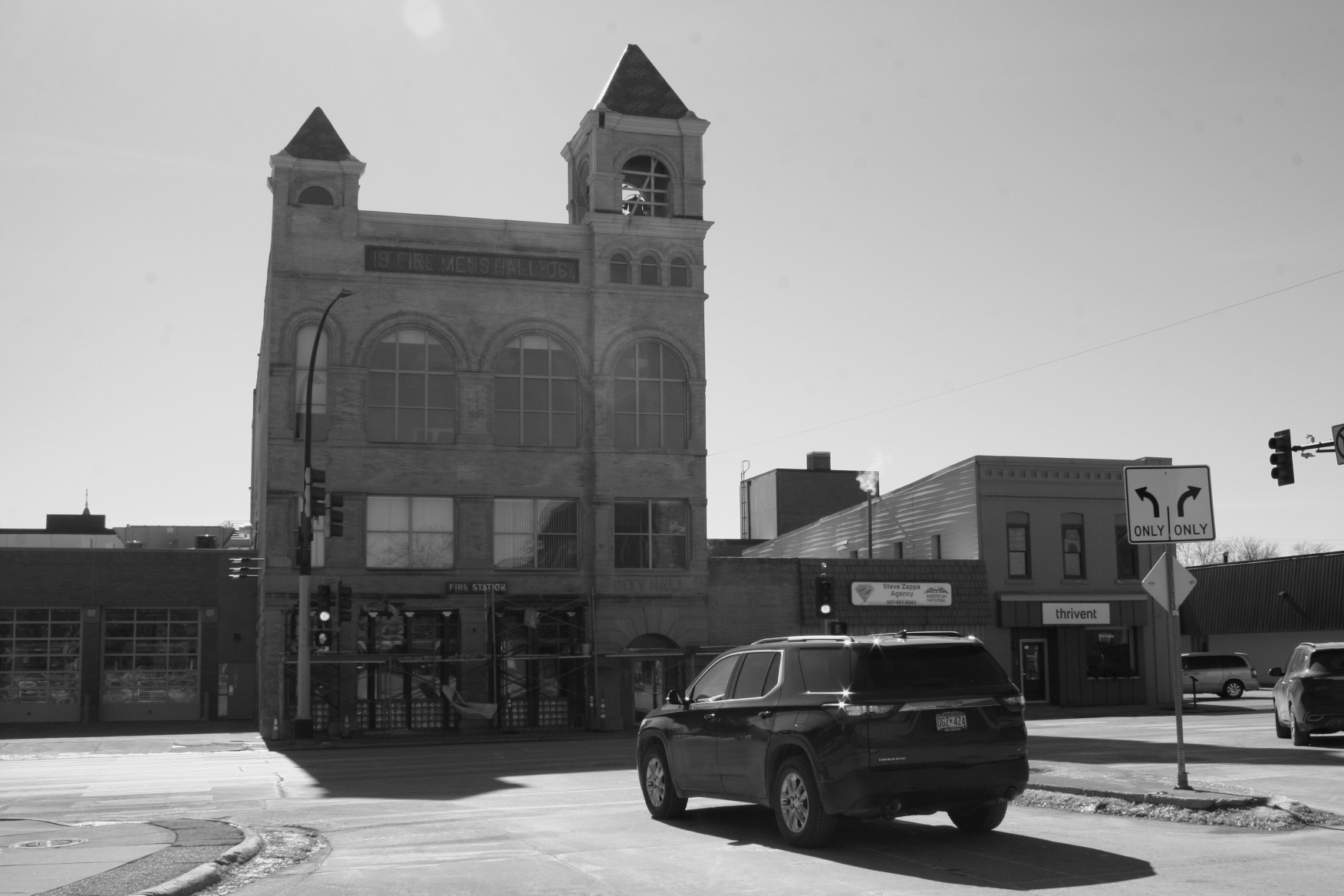
Firemen’s Hall, constructed 1906-1907 for $19,643, sits just across the street from Central Park. (Minnesota Prairie Roots copyrighted photo February 2022)
Twelve city blocks in Owatonna’s downtown define the community’s designation as a National Register Historic District. Three of the 75 “contributing buildings” within that district are on the National Register of Historic Places: the National Farmer’s Bank, the Steele County Courthouse and the Firemen’s Hall.
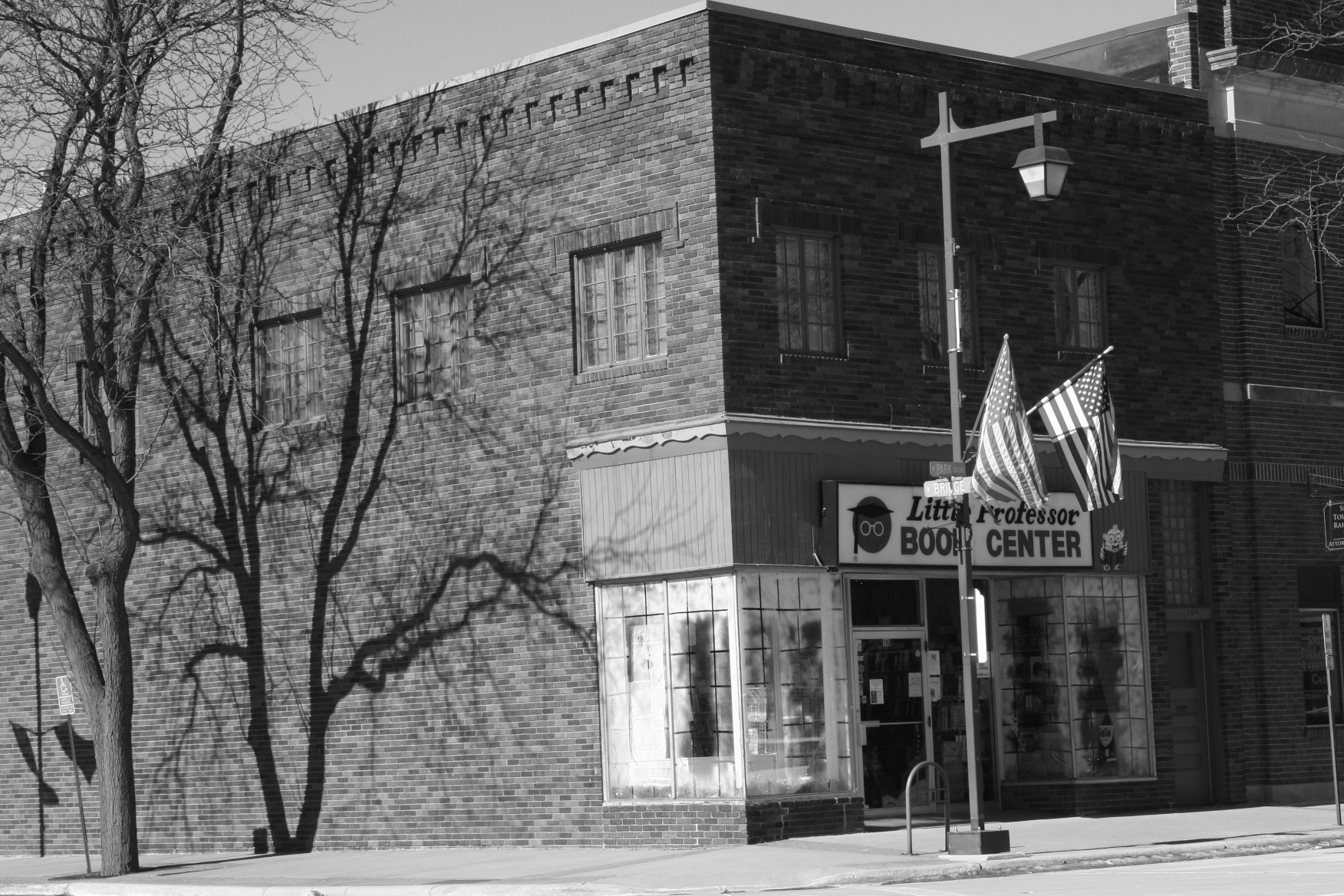
This home-grown bookstore anchors a downtown corner, directly across from Central Park. (Minnesota Prairie Roots copyrighted photo February 2022)
On a recent visit to Owatonna’s Central Park, I pivoted to observe those key historic buildings and others in a downtown of multiple core business streets.
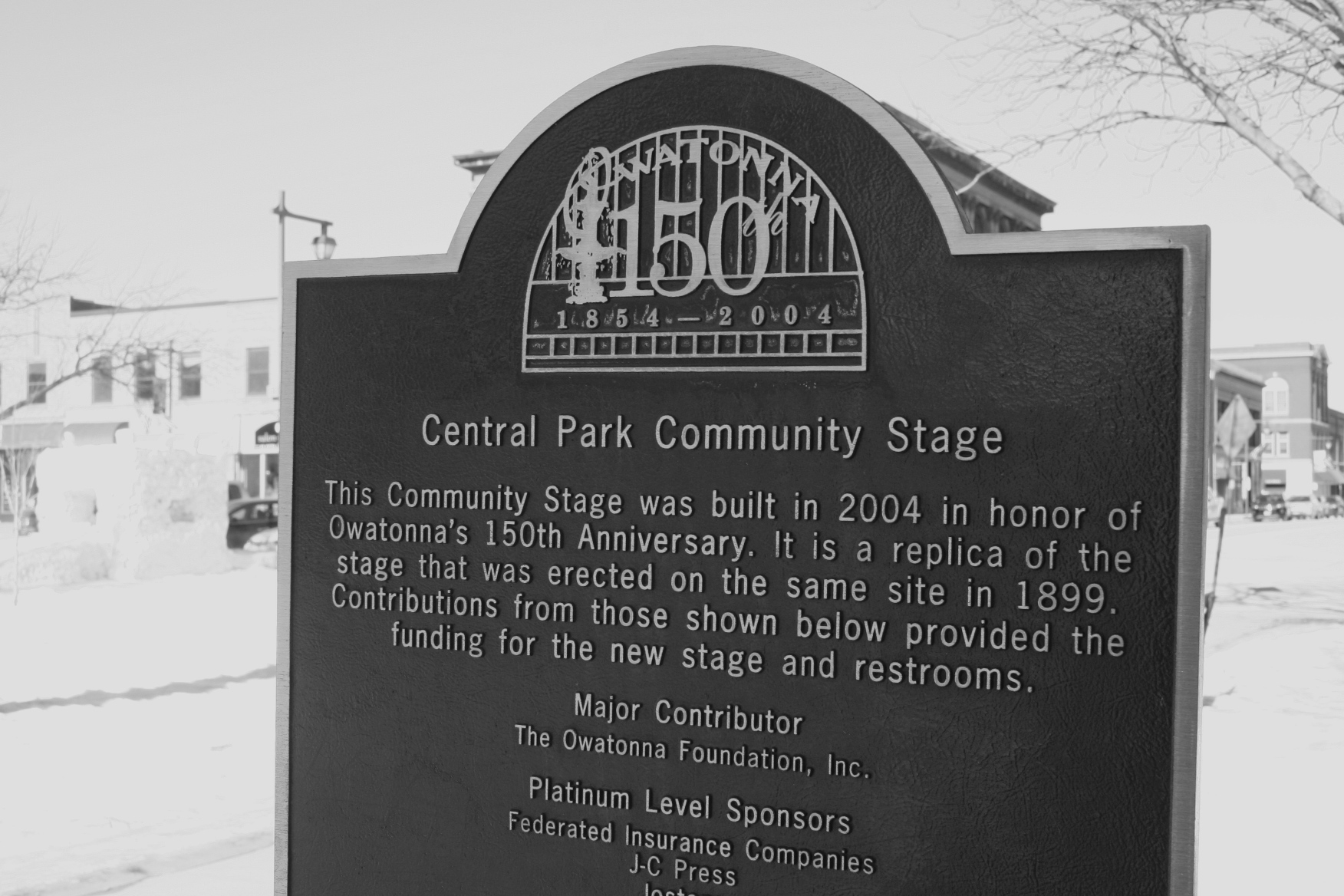
A sign in Central Park provides information about the community stage. (Minnesota Prairie Roots copyrighted photo February 2022)
The park, with a replica of the 1899 community stage, serves as the “town square,” the physically identifiable point of focus and gatherings. Here folks gather for concerts, the farmers’ market and other events. Music and the undeniable human need to socialize connect the past to the present.
The replica community stage/bandshell. (Minnesota Prairie Roots copyrighted photo February 2022)
I feel inspired now, via my recent stop in Central Park, to return to downtown Owatonna and further explore its history and architecture. Sure I’ve been here before, but not in awhile and not with a focused purpose of intentional appreciation for and photographic documentation of this historic district.
Strip away the color and appreciate the stark beauty. (Minnesota Prairie Roots copyrighted photo February 2022)
I encourage each of you, wherever you live, to pause. Strip away the color to black-and-white. See the basics, uncolored by time or attitudes or that which detracts. Observe how the past and present connect. Value the “good” in your community. Appreciate the place you call home.
TELL ME: What do you appreciate about your community?
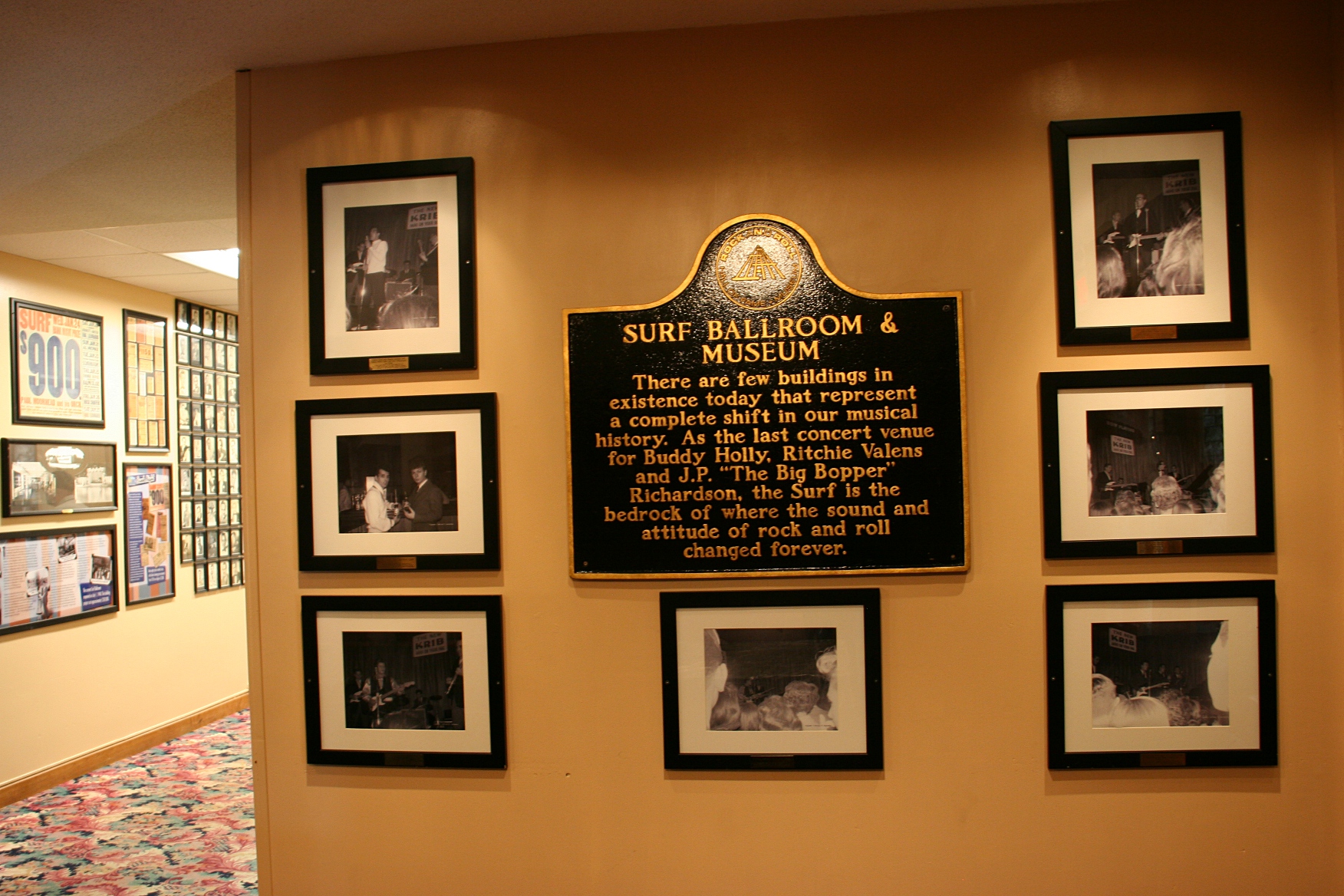
Portraits of the deceased musicians inside the Surf Ballroom. (Minnesota Prairie Roots copyrighted file photo May 2015)
SIXTY-THREE YEARS AGO TODAY, the music died. On February 3, 1959, three musicians—Buddy Holly, Ritchie Valens and J.P. “The Big Bopper” Richardson—and a pilot died in a plane crash near Clear Lake, Iowa. It was, and remains, a monumental moment in American music history.
A broad view of this massive ballroom which seats 2,100. (Minnesota Prairie Roots copyrighted file photo May 2015)
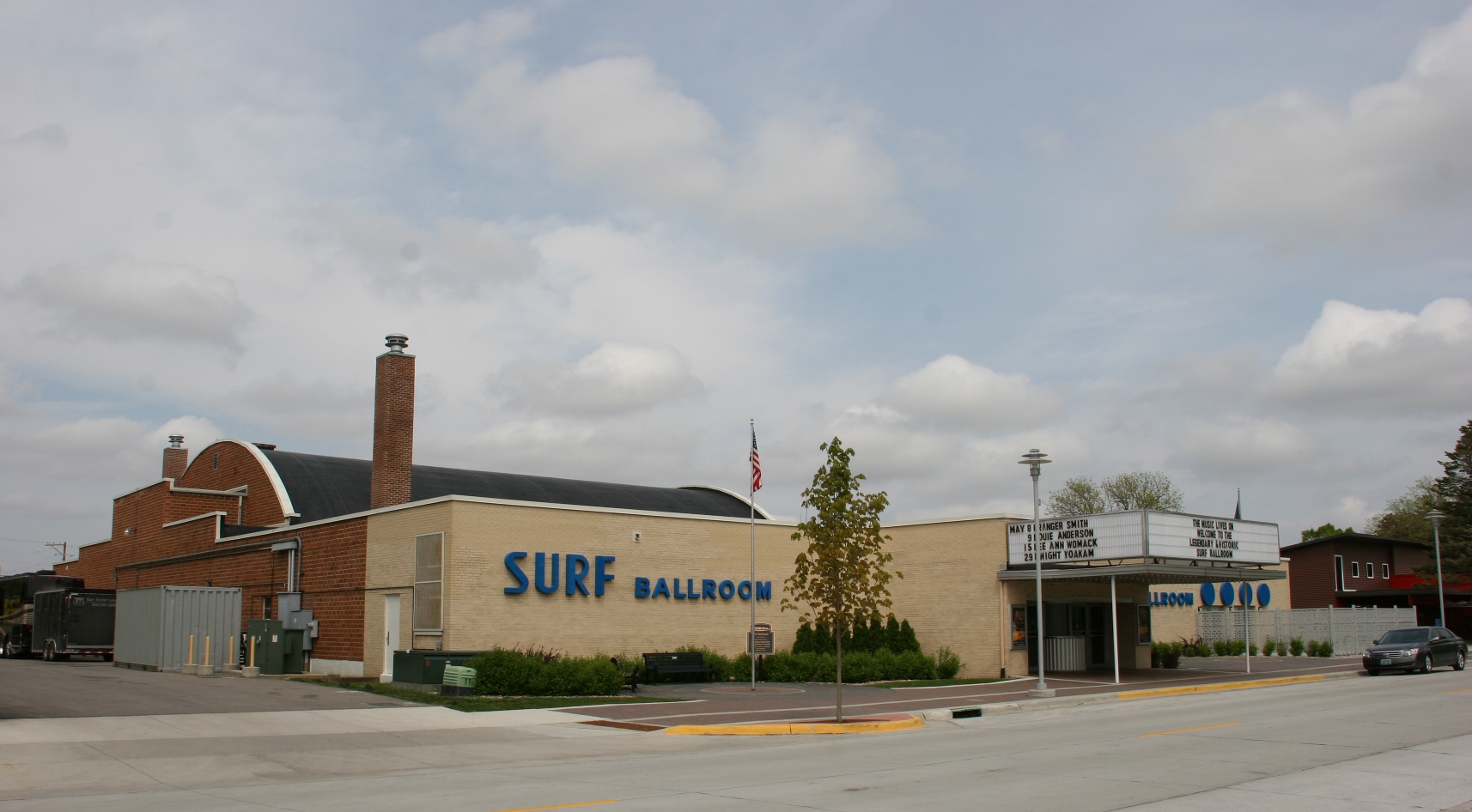
Today the Surf Ballroom in Clear Lake still hosts a Winter Dance Party honoring the musicians who performed their final concert there on February 2, 1959. Early the next morning en route to Moorhead, Minnesota, the charter flight carrying the rock-n-roll musicians crashed in a field near Clear Lake in northern Iowa.
This display references “American Pie.” (Minnesota Prairie Roots copyrighted file photo May 2015)
In 2015, Randy and I traveled an hour and 15 minutes south of Faribault along Interstate 35 to Clear Lake, where we toured the Surf. We were mere preschoolers when Holly and the others died. But the story of this tragedy imprinted upon us as teens, when Don McLean released his hit, “American Pie,” in 1971. How well I remember that tribute, the lyrics, the length of the nearly 8.5-minute song.
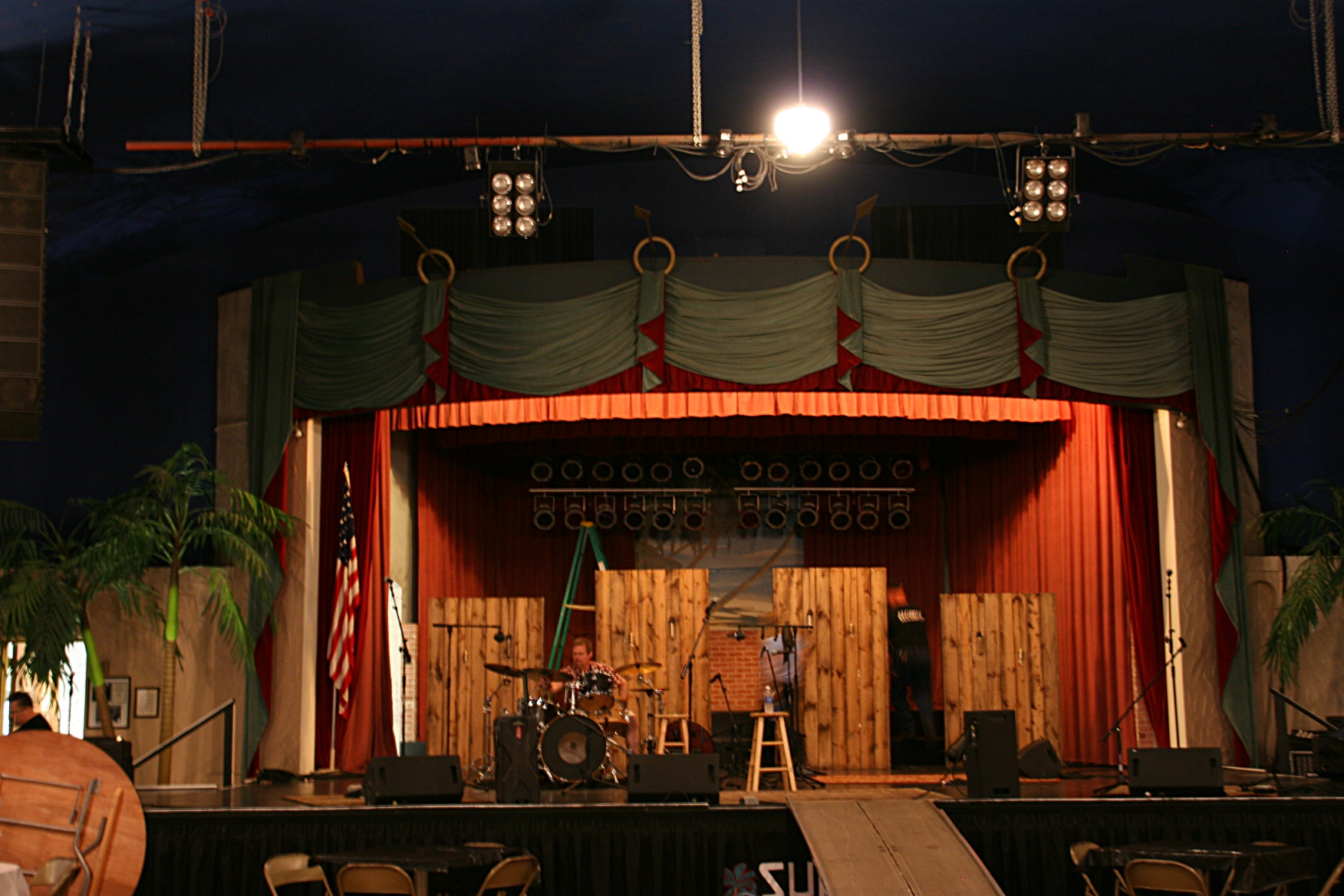
The ballroom stage. (Minnesota Prairie Roots copyrighted file photo May 2015)
While in Clear Lake on that May day seven years ago, we didn’t visit the crash site. Rain kept us away. But we certainly enjoyed our tour of the historic ballroom, site to many concerts from greats such as Duke Ellington, Lawrence Welk, the Beach Boys, the Doobie Brothers… The posters and photos, the aged booths, the stage and dance floor, all pay homage to the past, when ballrooms centered entertainment. The Surf, on the National Register of Historic Places and a designated National Historic Landmark, represents another time, another era, not simply a concert venue.
This sign summarizes the importance of the Surf. (Minnesota Prairie Roots copyrighted file photo May 2015)
Today I celebrate music and those who create it, past and present. Music enriches our lives beyond entertainment. Music, in many ways, writes like poetry into our hearts, souls and memories. And this February day, I honor the memories of Buddy Holly, Ritchie Valens and J.P. Richardson, as I consider “the day the music died.”
#
TELL ME: Have you toured the Surf Ballroom or the crash site? Or do you have music memories of Holly, Valens and Richardson that you’d like to share?
Signage on the building housing Antiques on 4th, a bright, uncluttered shop with artfully-displayed merchandise and friendly shopkeepers. (Minnesota Prairie Roots copyrighted photo October 2021)
YOU CANLEARN much about a small town by simply walking. And looking, really looking.
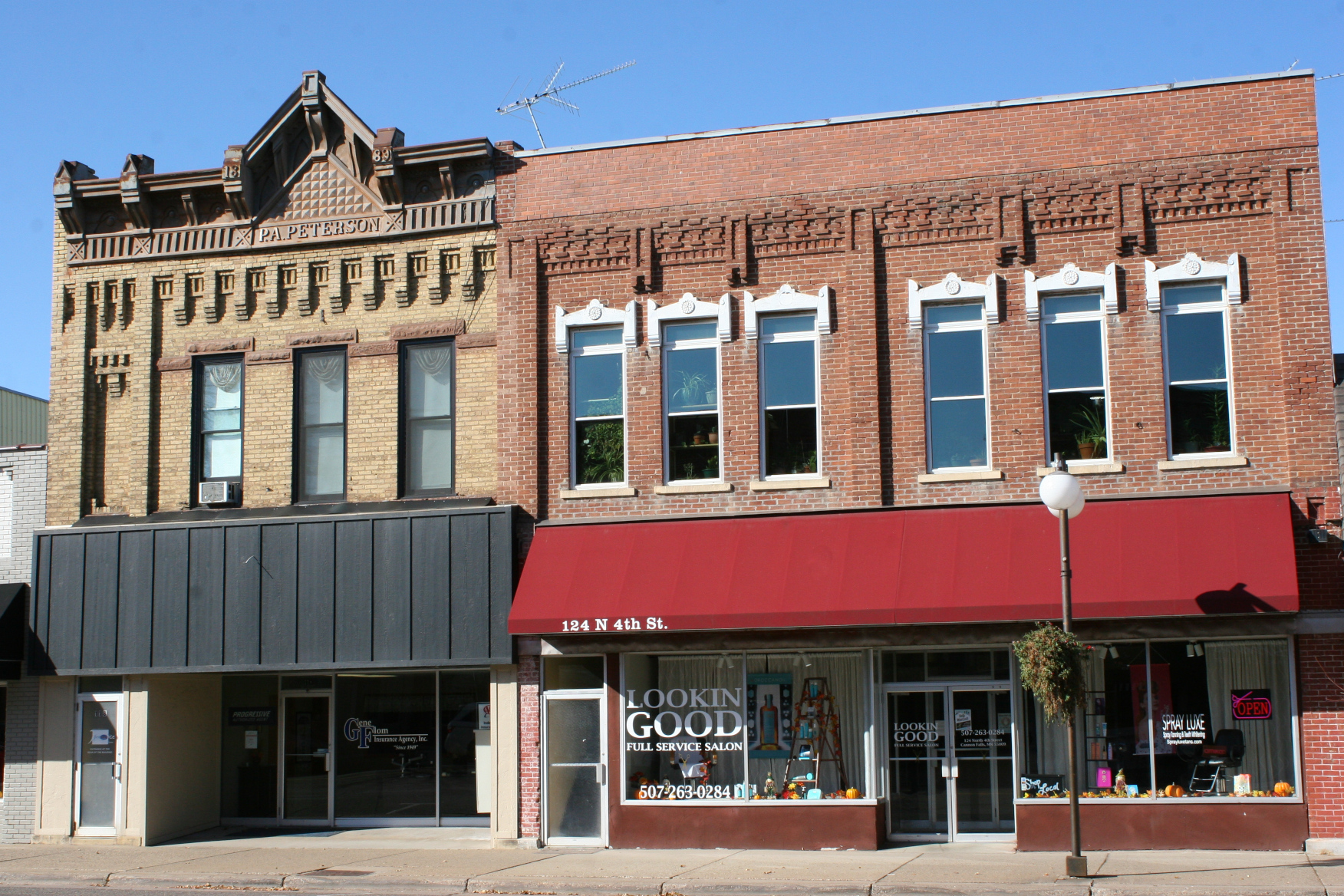
Two historic buildings in downtown Cannon Falls. (Minnesota Prairie Roots copyrighted photo October 2021)
On a recent day trip to Cannon Falls, I explored part of the downtown business district. Now on the National Register of Historic Places, the Cannon Falls Historic District includes 22 historically-significant structures.
Bold art on the side of the building identifies the local hardware store.(Minnesota Prairie Roots copyrighted photo October 2021)
Given my love of historic architecture, and art, this Goodhue County community of 4,220 within a 40-minute drive of Minneapolis and St. Paul rates as a favorite regional destination.
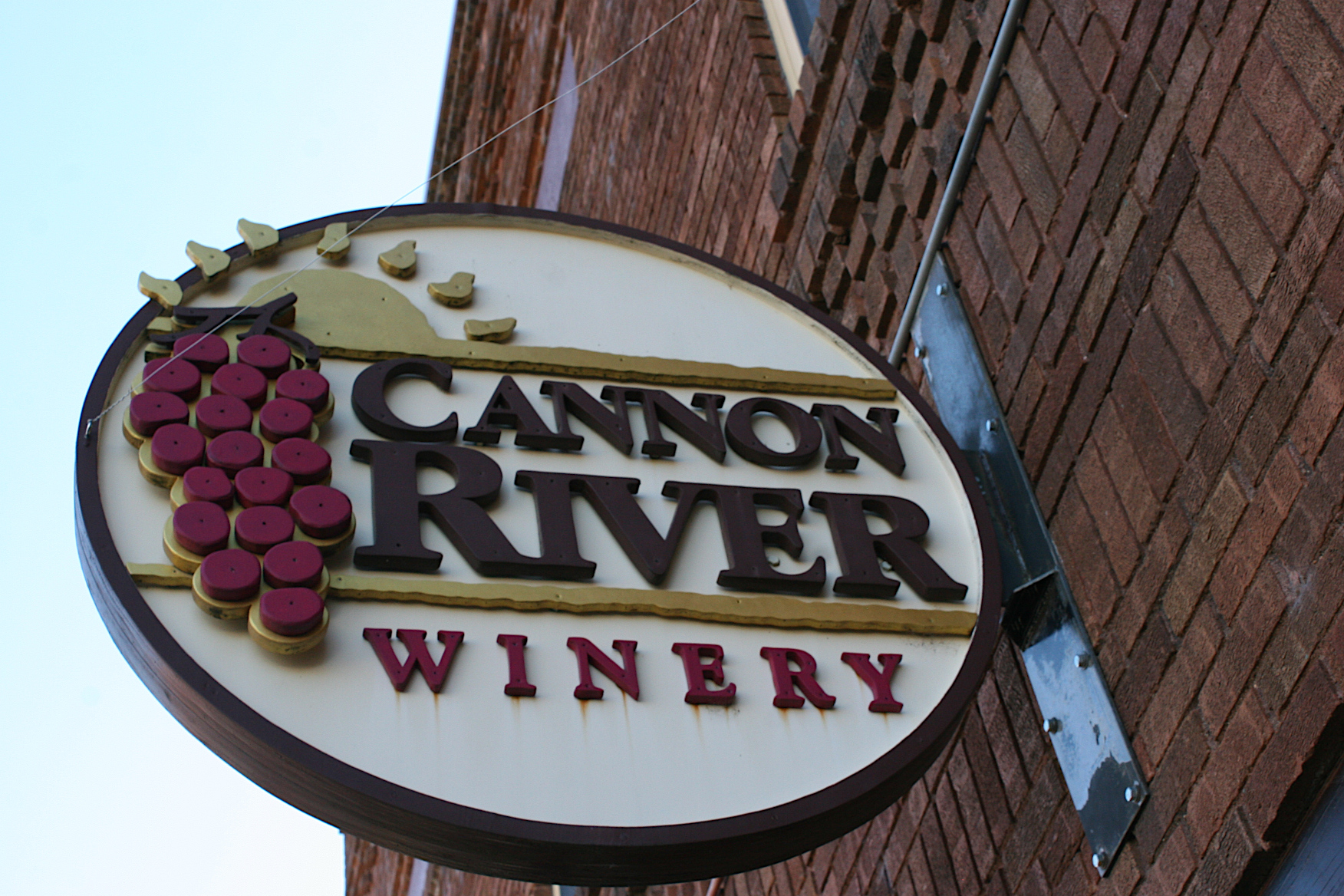
Signage marks the popular winery in Cannon Falls. (Minnesota Prairie Roots copyrighted photo October 2021)
Cannon Falls thrives with a well-known winery and bakery and an assortment of shops from antique to gift to hardware store. Toss in a mix of eateries, bars and a brewery and, well, there’s lots to see and do here. Plus, the town attracts outdoor enthusiasts who canoe the Cannon River and/or bike/hike the Cannon Valley Trail and Mill Towns Trail.
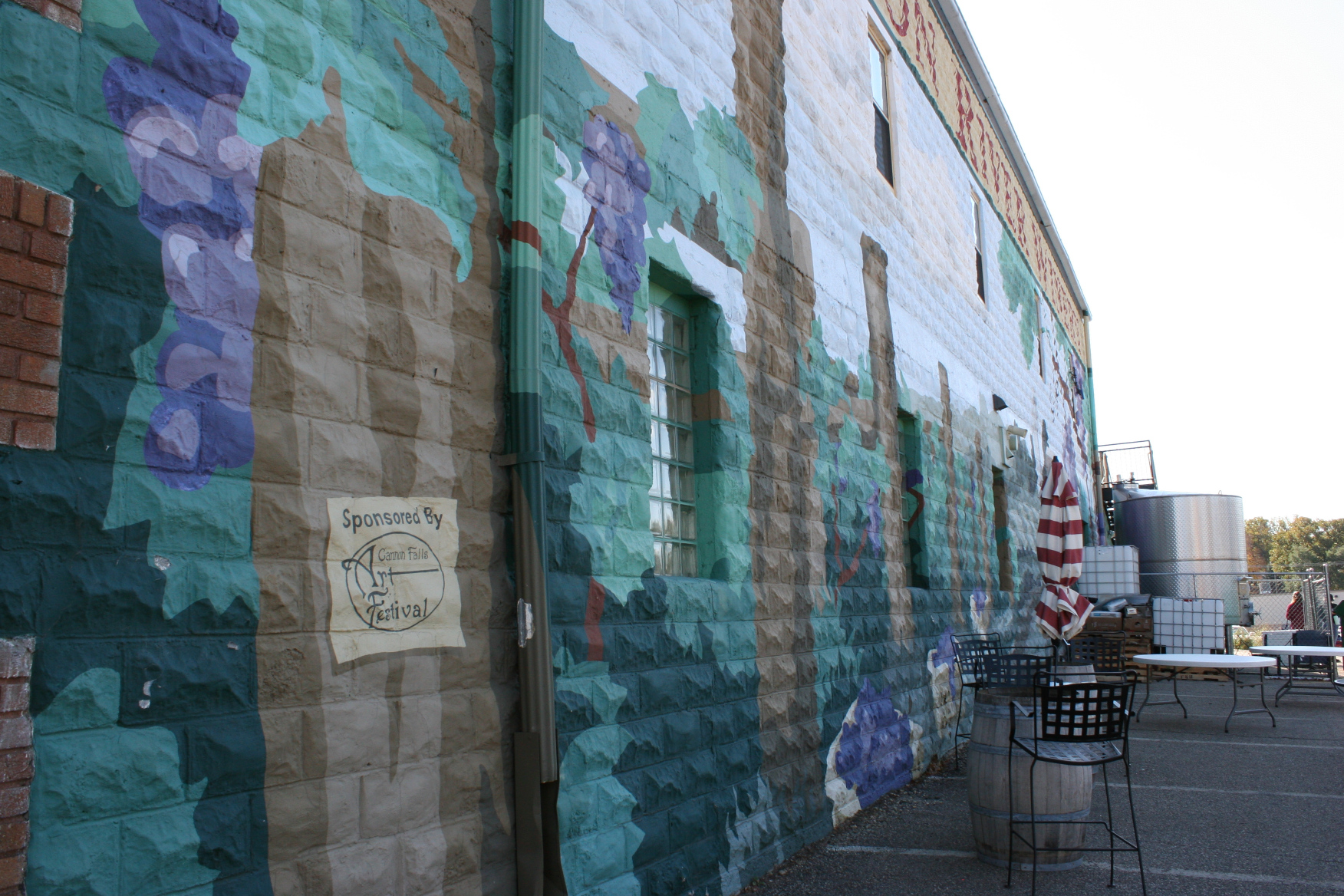
A mural at Cannon River Winery provides a backdrop for an outdoor space. (Minnesota Prairie Roots copyrighted photo October 2021)
During my mid-October visit, I popped into a few shops (including the bakery), discovered the lovely library and admired a new downtown mural. Because of COVID concerns, I skipped dining and imbibing. It was too early in the day and too cool to enjoy either outdoors.
Cannon Falls’ newest mural, a 2021 Youth Mural Arts Community Project, highlights geography, history and local interests. (Minnesota Prairie Roots copyrighted photo October 2021)
Still, I found plenty to take in from the colorful new mural to the art inside the library to ghost signage.
Showing some love for Cannon Falls.(Minnesota Prairie Roots copyrighted photo October 2021)
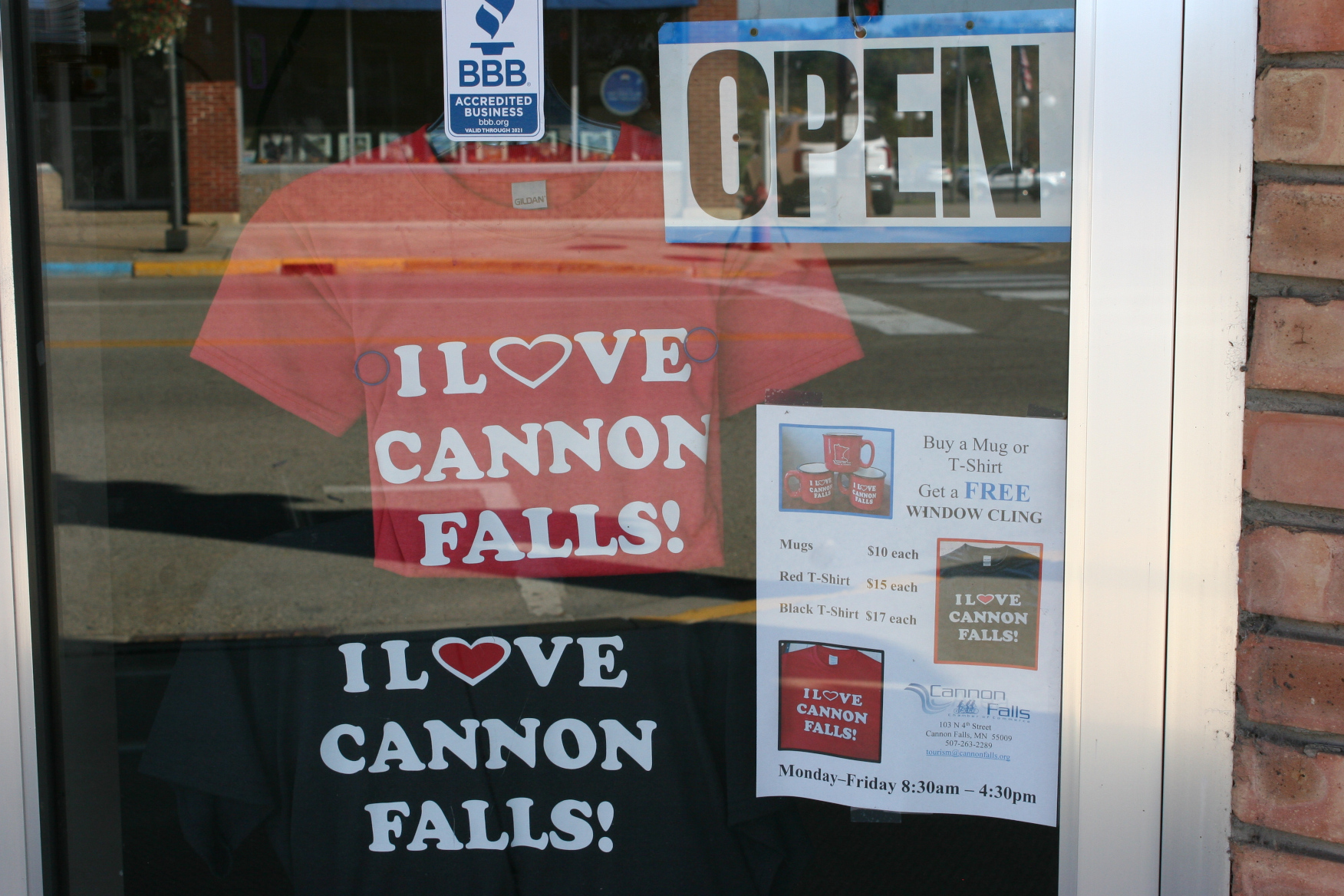
I noticed, too, hometown pride in the I LOVE CANNON FALLS! tees in a storefront window.
I learn so much about communities by reading signs in windows. (Minnesota Prairie Roots copyrighted photo October 2021)
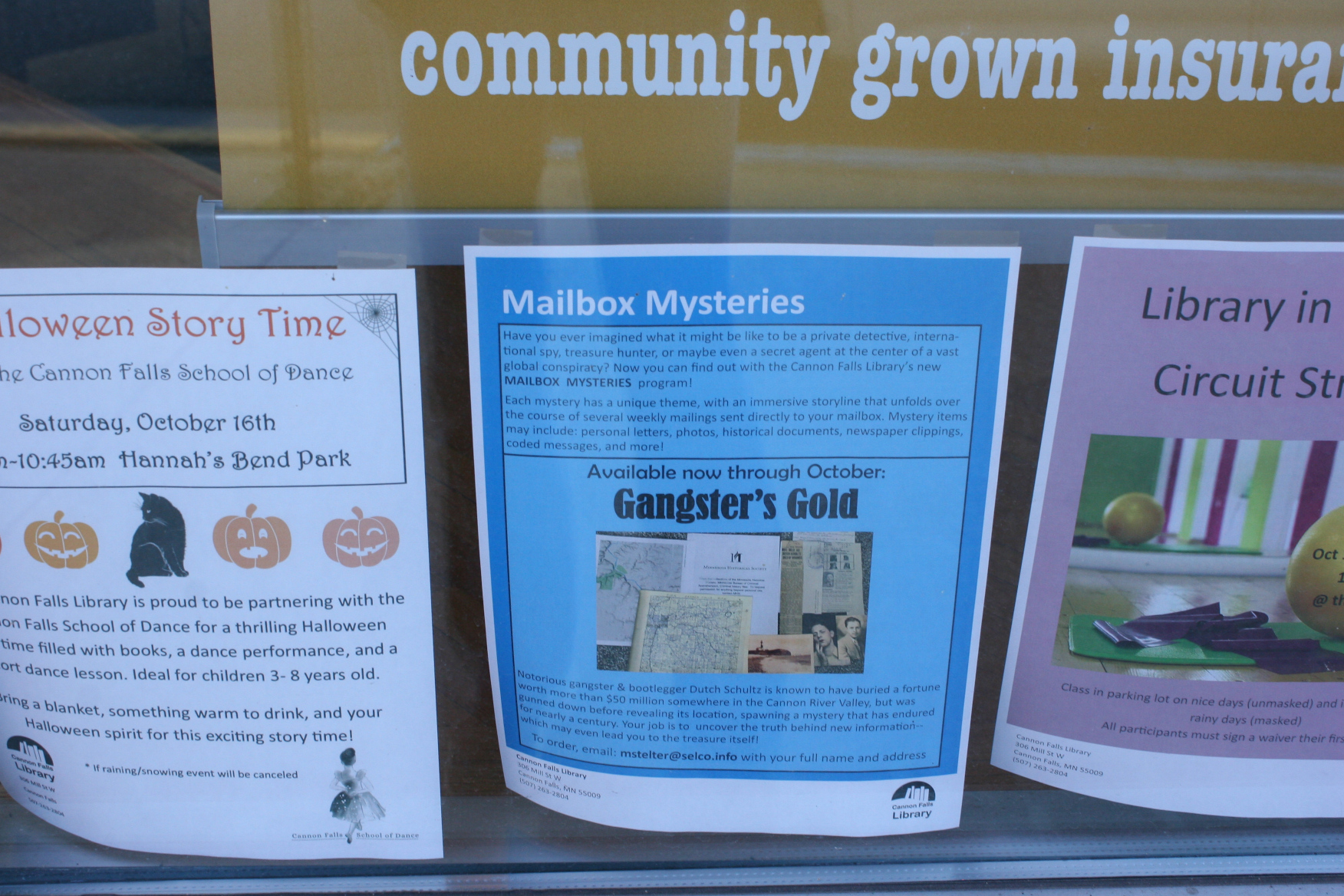
I noticed also notices taped in a display window, one of which alerted me to Mailbox Mysteries, which led me to the library around the corner which led me to sign up for this challenging endeavor. Now I’m trying to solve the “Gangster’s Gold” mystery with weekly clues snail mailed to me by the library.
Inside the library, I found this vivid “Once Upon a Time” mural. (Minnesota Prairie Roots copyrighted photo October 2021)
Had I not done this walk-about through downtown Cannon Falls, I likely would have missed these nuances. The details which help define this community.
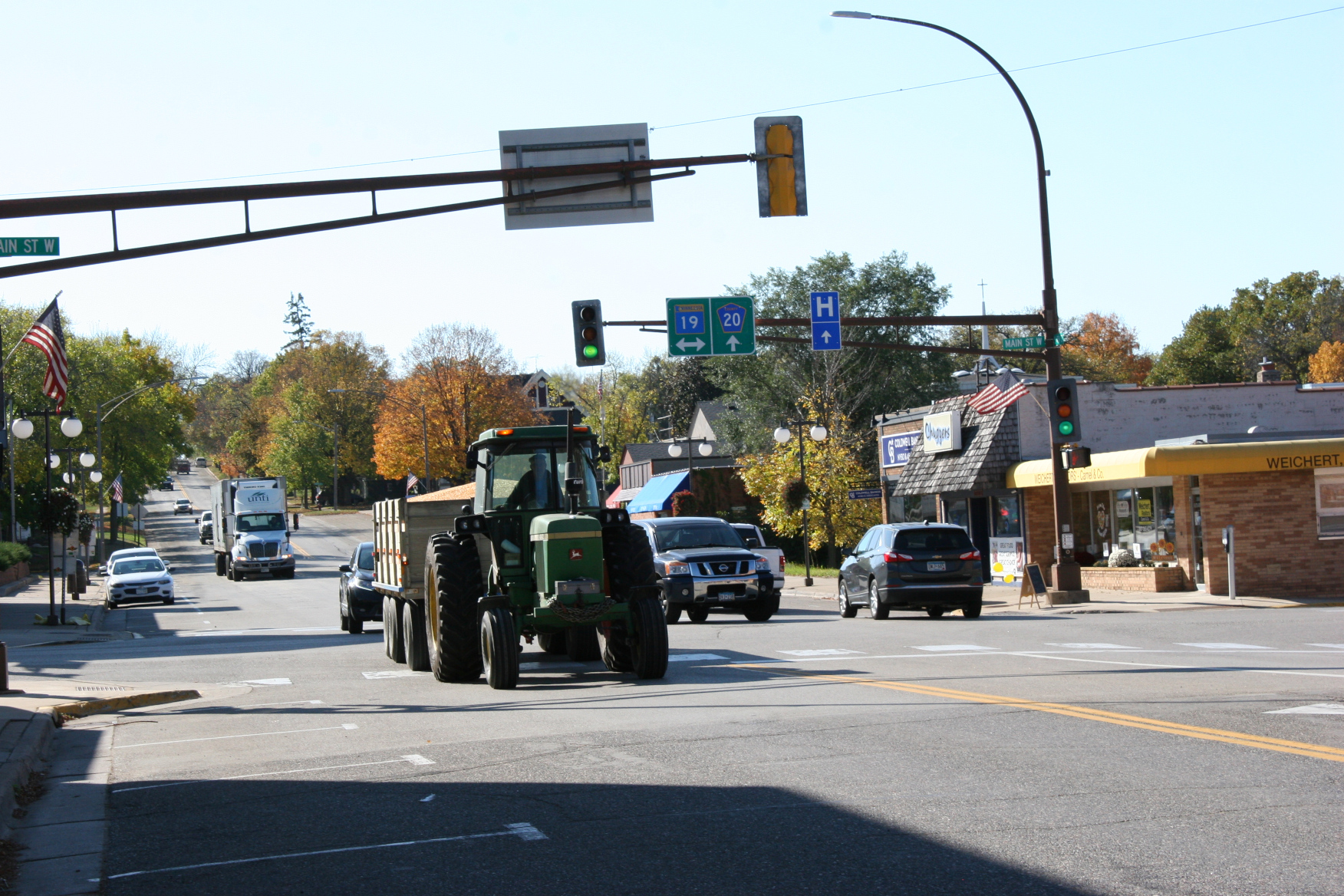
A scene in the center of downtown Cannon Falls reminds me of the town’s rural roots. (Minnesota Prairie Roots copyrighted photo October 2021)
As I meandered, I paused to watch a John Deere tractor roll through downtown pulling a wagon heaped with golden kernels of corn. This is, after all, an agricultural region.
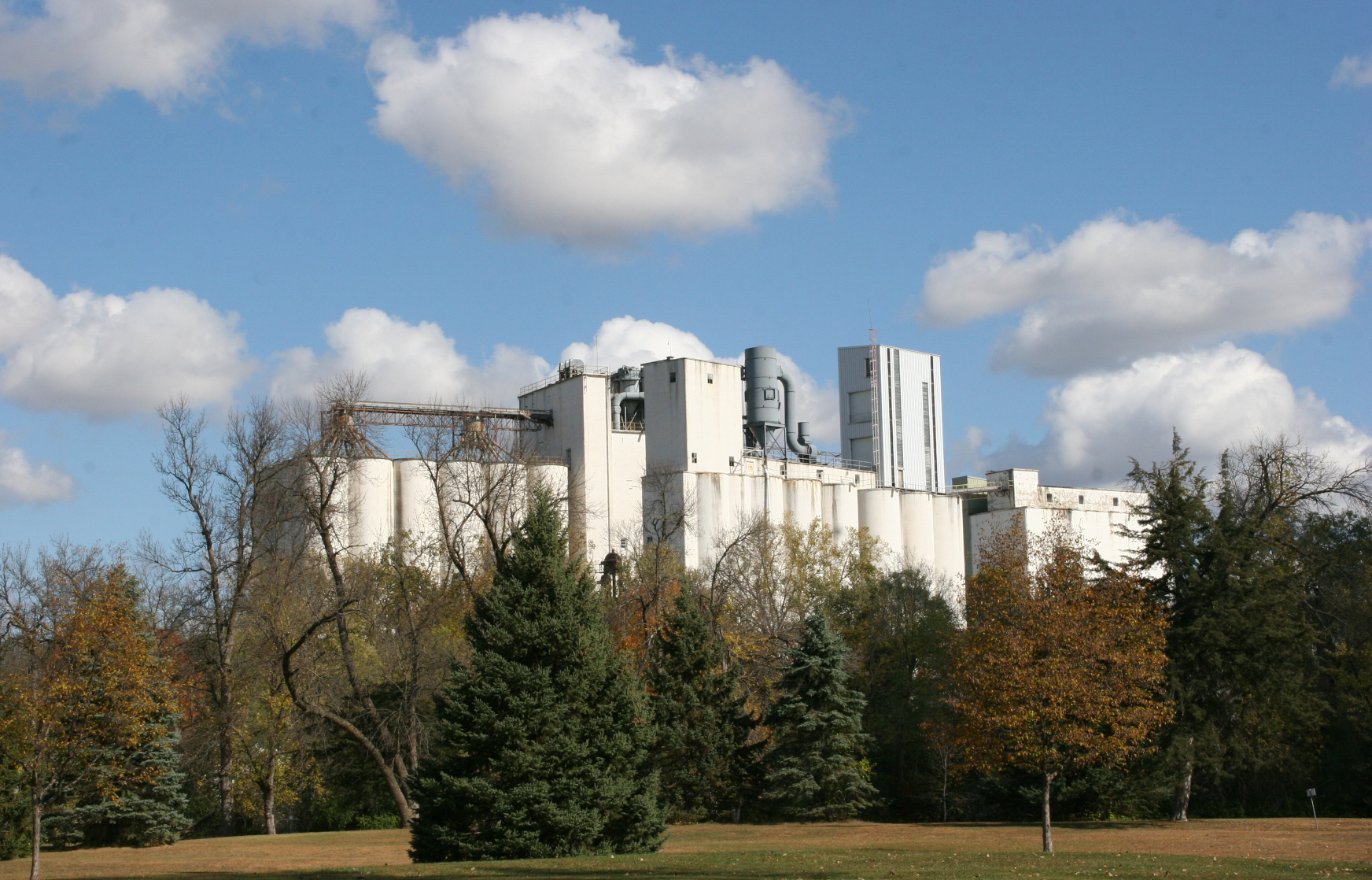
A grain complex in Cannon Falls. (Minnesota Prairie Roots copyrighted photo October 2021)
Later, Randy and I picnicked at Hannah’s Bend Park, the local grain elevator complex defining the nearby skyline. As we finished our lunch, a bald eagle soared overhead, wings spread wide. I expect the Cannon River drew the majestic bird here, to this small southeastern Minnesota town, this Cannon Falls.
The artful gated entrance to Valley Grove. Minnesota Prairie Roots copyrighted photo October 2021.
I EXPERIENCE SOMETHING SACRED in this place. This preserved parcel of land where two aged churches rise atop a hill in rural Nerstrand.
Looking down the driveway from the hilltop church grounds, a beautiful view of the valley below. Minnesota Prairie Roots copyrighted photo October 2021.
The newer of the two Valley Grove churches. Minnesota Prairie Roots copyrighted photo October 2021.
On a recent Sunday afternoon, Randy and I sat on the front steps of the 1894 white clapboard church eating a picnic lunch. Bothersome bees hovered, drawn by the sweetness of Randy’s soda and fruit-laced yogurt and homemade chocolate chip cookies.
Photographed from a side of the clapboard church, the limestone church a short distance away. Minnesota Prairie Roots copyrighted photo October 2021.
A stone’s throw away across the lawn sits the 1862 limestone church, constructed in the year of the U.S.-Dakota Conflict raging many miles away to the west.
The cemetery offers history, art and a place for quiet contemplation against a beautiful natural backdrop. Minnesota Prairie Roots copyrighted photo October 2021.
An in-process gravestone rubbing. Minnesota Prairie Roots copyrighted photo October 2021.
I find gravestone engravings especially interesting and often touching. Minnesota Prairie Roots copyrighted photo October 2021.
Valley Grove holds its own history as a community and spiritual gathering place for the area’s Norwegian immigrants. Walk the grounds of the cemetery next to the churches and you’ll read names of those of Norwegian ancestry. The cemetery remains well-used with new tombstones marking the passage of yet another loved one.
Information about Valley Grove is tucked inside a case on the side of the clapboard church. Minnesota Prairie Roots copyrighted photo October 2021.
I have no personal connection to Valley Grove. But I hold a deep appreciation for the history, honored via the Valley Grove Preservation Society. That organization maintains and manages the church and grounds. And its a lovely, especially in autumn, acreage.
Farm sites and farmland surround Valley Grove. Minnesota Prairie Roots copyrighted photo October 2021.
Once I’d finished my turkey sandwich and other picnic foods, I set out with my camera to document. The views from this hilltop site are spectacular. Farm land and farm sites, the low moo of a cow auditorily reminding me of this region’s agrarian base.
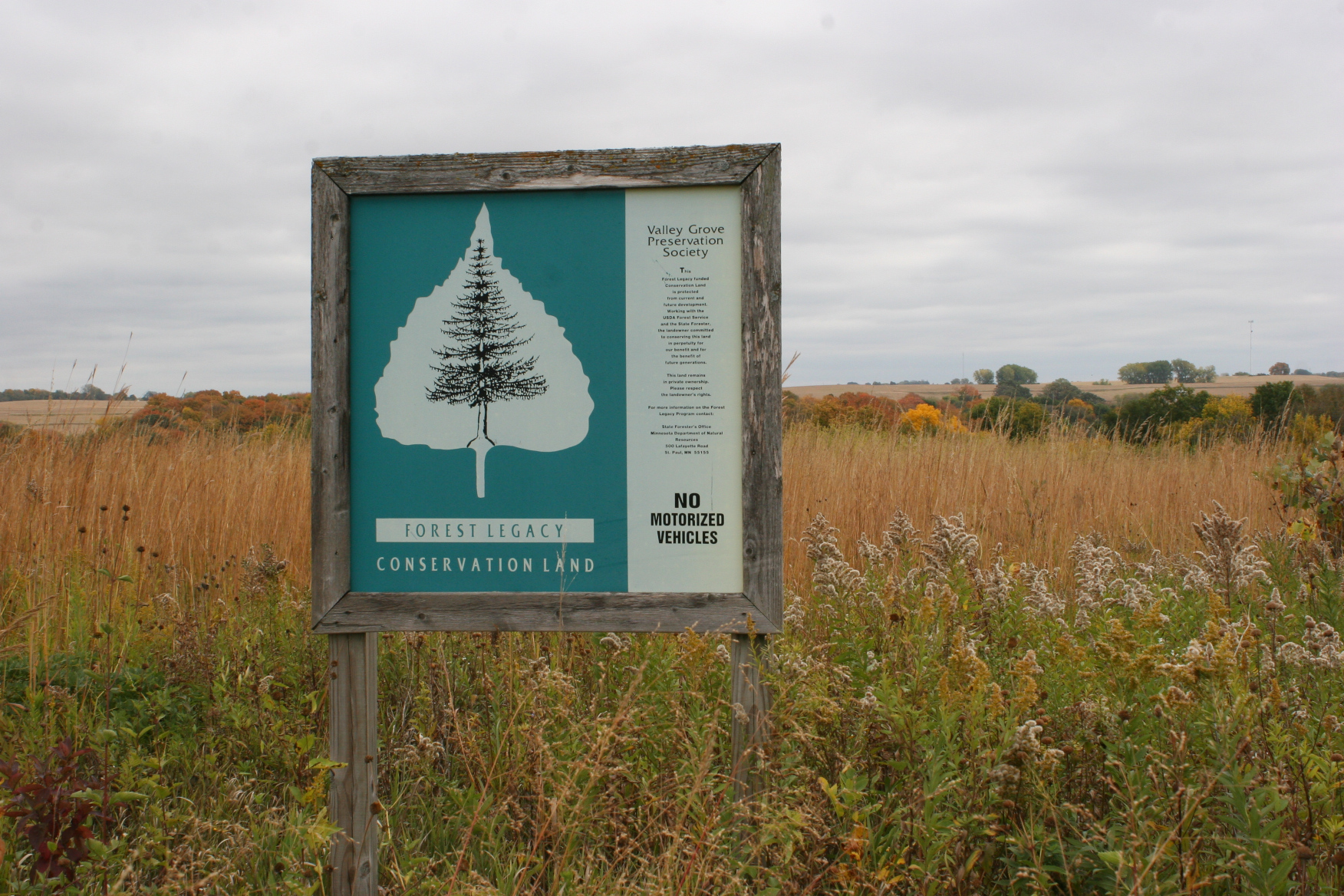
Conservation and legacy are valued at Valley Grove. Minnesota Prairie Roots copyrighted photo October 2021.
Remnants of the Big Woods remain and can be seen from Valley Grove. Minnesota Prairie Roots copyrighted photo October 2021.
Following the prairie path back to the church grounds, just over the hill. Minnesota Prairie Roots copyrighted photo October 2021.
Tall dried prairie grasses frame nearly every view. Those who tend this land value its natural features of prairie and oak savanna. Paths lead visitors along prairie’s edge and onto the prairie to view distant colorful treelines, part of the Big Woods. The hilltop location offers incredible vistas.
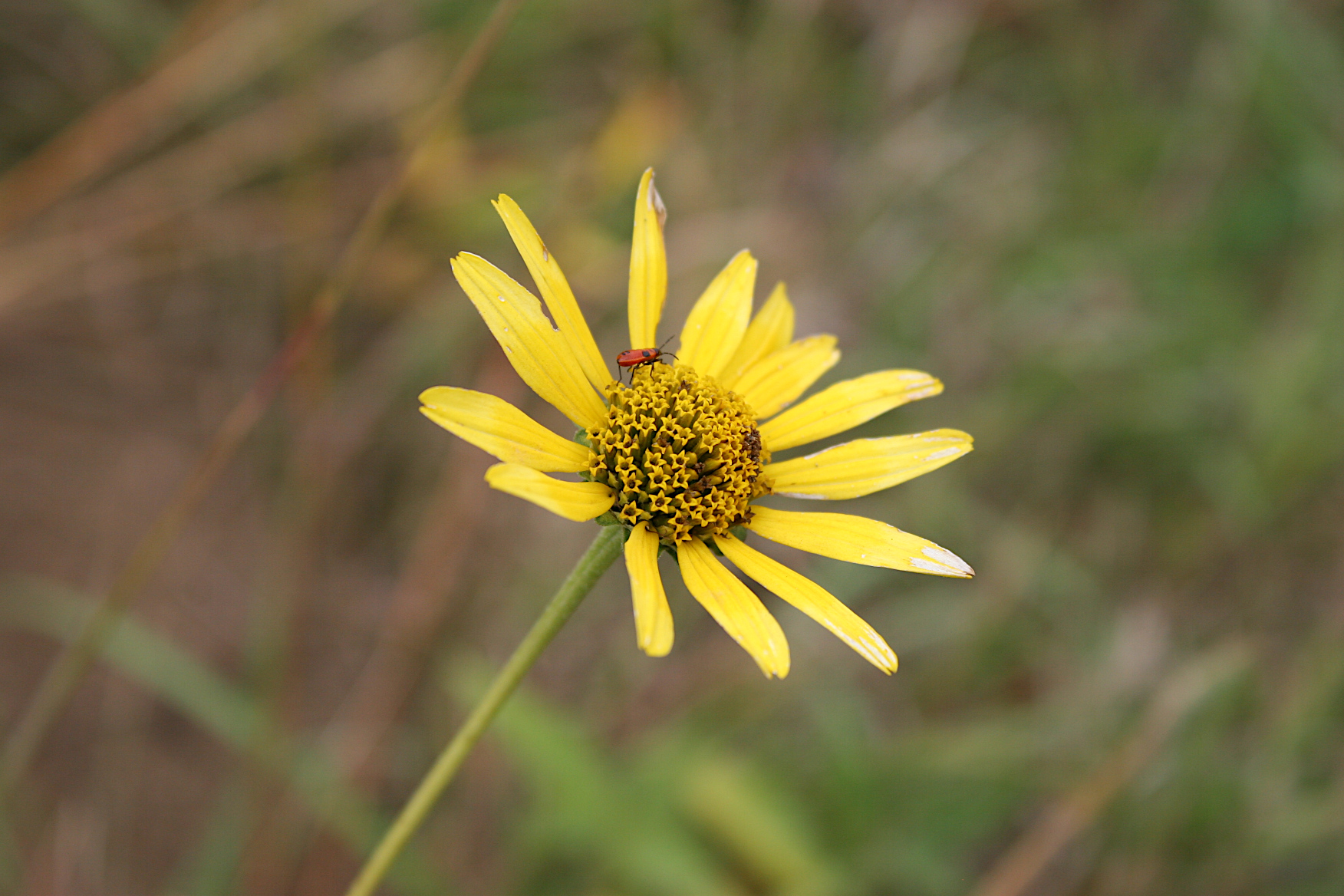
On a mixed October afternoon of sun and clouds, a wildflower jolts color into the landscape. Minnesota Prairie Roots copyrighted photo October 2021.
But up close is worth noting, too, especially the wildflowers.
An unexpected delight in the cemetery was an old-fashioned rosebush in full bloom. Minnesota Prairie Roots copyrighted photo October 2021.
And in the cemetery I found an old-fashioned rosebush abloom in pink roses. Just like a rosebush that graced my childhood farm far away in southwest Minnesota where settlers and Native Peoples once clashed. I dipped my nose into blossom after blossom, breathing in the deep, perfumed, intoxicating scent.
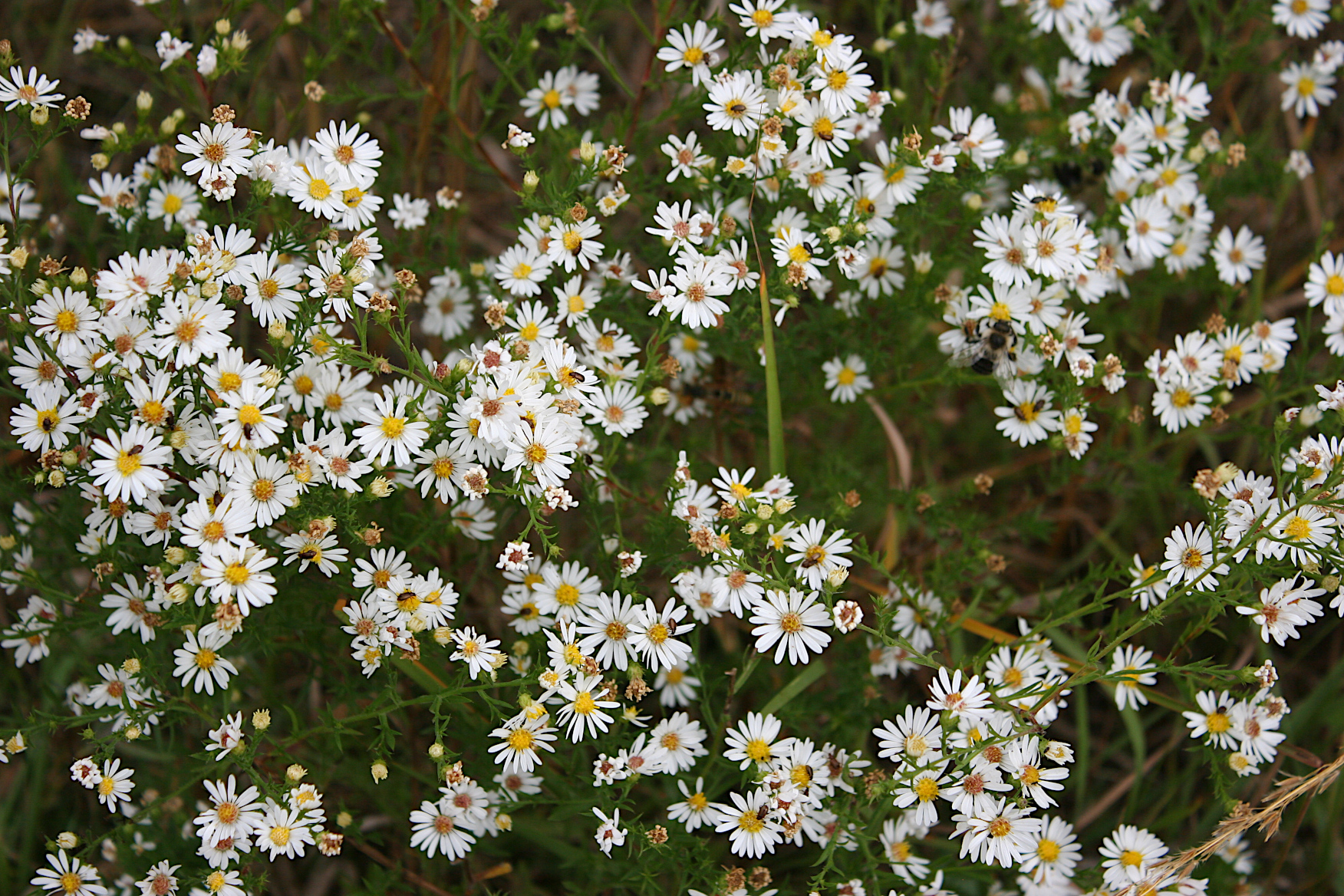
Lots of wildflowers to enjoy. Minnesota Prairie Roots copyrighted photo October 2021.
Spending time at Valley Grove, even when church doors are not open, seems sacred. I feel the peace of this rural location. The quiet. My smallness, too, within the vastness of sky and land and spires rising.
High on the hill…Valley Grove churches. Minnesota Prairie Roots copyrighted photo October 2021.
To walk here, to sit on the front steps of a church on the National Register of Historic Places is to feel a sense of gratitude for those who came before us. For those who today recognize the value of sacredness and continue to preserve Valley Grove. Who understand that the spiritual stretches beyond church doors. To the land. To the memories of loved ones. And to future generations.
Just a short distance from this roundabout by Pequot Lakes, you can see the Paul M. Thiede Fire Tower peeking through the treetops. Minnesota Prairie Roots copyrighted photo September 2021.
Really high! Be careful and don’t climb if you fear heights or experience dizziness.
The warning sign and rules posted at the base of the fire tower. Minnesota Prairie Roots copyrighted photo September 2021.
I heeded the warning and stayed put. Feet on the ground. Camera aimed skyward. Toward the 100-foot high Paul M. Thiede Fire Tower just outside Pequot Lakes in the central Minnesota lakes region. The top of the tower pokes through the trees, barely visible from State Highway 371. Turn off that arterial road onto Crow Wing County Road 11, turn left, and you’ve reached the fire tower park.
A little background on the park. Minnesota Prairie Roots copyrighted photo September 2021.
The Paul M. Thiede Fire Tower Park (named after the county commissioner instrumental in developing this 40-acre park) offers visitors an opportunity to hike to, and then climb, the historic tower built in 1935 by the Civilian Conservation Corps. As one who prefers low to high, I was up for the 0.3 mile hike, but not the climb.
Lots of info packs signs in the outdoor interpretative area. Minnesota Prairie Roots copyrighted photo September 2021.
The iconic Smokey the Bear reminds us that we can prevent forest fires. Minnesota Prairie Roots copyrighted photo September 2021.
Weare to blame for nearly all of Minnesota’s wildfires, according to this park sign. Minnesota Prairie Roots copyrighted photo September 2021.
Before Randy and I headed onto the trail, though, we read the interpretative signage featuring information on the tower (which is on the National Register of Historic Places), Minnesota wildfires and other notable fire facts. This summer marked an especially busy fire season in the northern Minnesota wilderness. Those of us living in the southern part of the state felt the effects also with smoke drifting from the north (including Canada) and from the west (California). That created hazy skies and unhealthy air some days, unlike anything I’ve ever experienced.
Lots to read here, including Paul Bunyan’s fire tower story. Minnesota Prairie Roots copyrighted photo September 2021.
We also read a bit of Paul Bunyan lore, a fun addition to the park located in the Paul Bunyan Scenic Byway area. This region of Minnesota is big on lumberjack stories about Paul and his sidekick, Babe the Blue Ox. The Pequot Lakes water tower is even shaped like Paul’s over-sized fishing bobber.
The pristine picnic shelter. Minnesota Prairie Roots copyrighted photo September 2021.
Signs point the way to the fire tower trail. Minnesota Prairie Roots copyrighted photo September 2021.
On the way to the tower, this large yellow mushroom temporarily distracted me. Minnesota Prairie Roots copyrighted photo September 2021.
Once we’d finished reading, and then admiring the beautiful new picnic shelter, we started off on the pea rock-covered trail through the woods and toward the tower. Up. Up. Up.
When the trail gets especially steep, steps aid in the climb. I took this photo on the descent. Minnesota Prairie Roots copyrighted photo September 2021.
After awhile, I began to tire, to wonder, how much farther? And just as I was about to declare myself done climbing steps, Randy assured me the tower was just around the bend. Yes.
Looking up at the tower, all of which I couldn’t fit in a photo, I determined I was not climbing that high. Minnesota Prairie Roots copyrighted photo September 2021.
Once there, I stood at the base of the tower, reading the rules and warnings. I decided I best admire the ironwork from below. And I did. There’s a lot to be said for the 1930s workmanship of skilled craftsmen.
The underside of the tower shows layers of stairs. Minnesota Prairie Roots copyrighted photo September 2021.
Randy, though, started up the layered steps leading to a seven-foot square enclosed look-out space at the top of the tower. At that height, fire watchers could see for 20 miles.
If you look closely, you can see Randy with only a few more flights to reach the top. At this point, he decided not to go any farther. Minnesota Prairie Roots copyrighted photo September 2021.
As I watched, Randy climbed. Steady at first, but soon slowing, pausing to rest. “You don’t have to go all the way to the top,” I shouted from below. He continued, to just above treetop level, and then stopped. He had reached his comfort height level.
The tower is fenced at the base. Minnesota Prairie Roots copyrighted photo September 2021.
I can only imagine how spectacular the view this time of year, in this season of autumn when the woods fire with color. We visited in mid-September, when color was just beginning to tinge trees.
Randy exits the tower, several flights short of reaching the top. Minnesota Prairie Roots copyrighted photo September 2021.
Eventually, we began our retreat down the trail, much easier than ascending.
An incredibly vibrant mushroom thrives trailside. Minnesota Prairie Roots copyrighted photo September 2021.
Occasionally I stopped to photograph scenery, including species of orange and yellow mushrooms. Simply stunning fungi.
Sadly…a carving on a birch tree along the trail. Minnesota Prairie Roots copyrighted photo September 2021.
We also paused to visit with a retired couple on their way to the tower. They have a generational lake home in the area, like so many who vacation here. While we chatted, a young runner passed us. I admired her stamina and figured she’d face no physical challenges climbing the 100-foot tower.
The story of Sassy the bear is included inthe interpretative area. Minnesota Prairie Roots copyrighted photo September 2021.
Just like a domesticated black bear that once escaped and scampered up the tower. A ranger lured him down with a bag of marshmallows. That is not the stuff of Paul Bunyan lore, but of life in the Minnesota northwoods. This historic fire tower, which once provided a jungle gym for a bear and a place to scout for wildfires, now offers a unique spot to view the surrounding woods and lakes and towns. If you don’t fear heights or experience dizziness.
FYI: The Paul M. Thiede Fire Tower is open from dawn to dusk during the warm season, meaning not during Minnesota winters. Heed the rules. And be advised that getting to the tower is a work-out.
Right now should be a really good time to catch a spectacular view of the fall colors from the fire tower.
Recent Comments