Minnesota Prairie Roots

Writing and photography by Audrey Kletscher Helbling

Cruisin’ into summer during COVID-19, Part I June 23, 2020

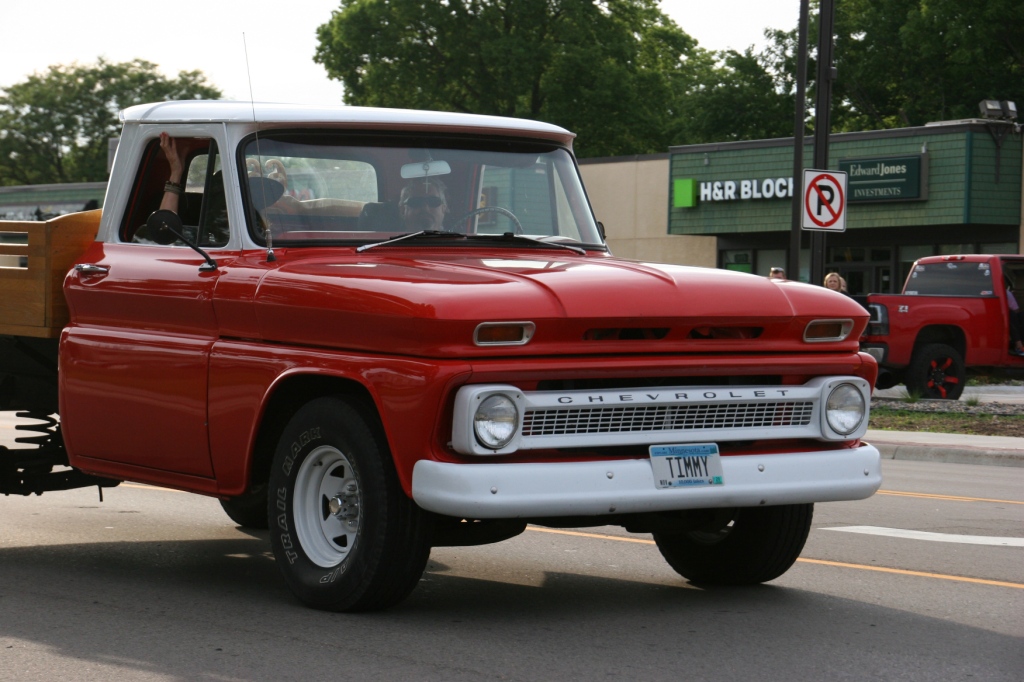
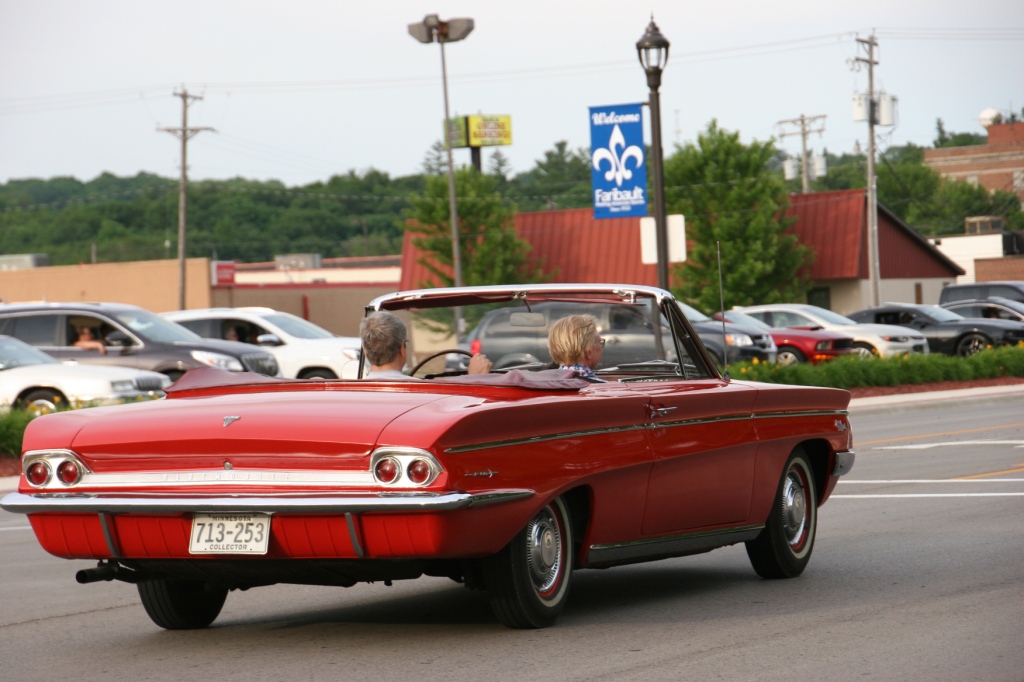
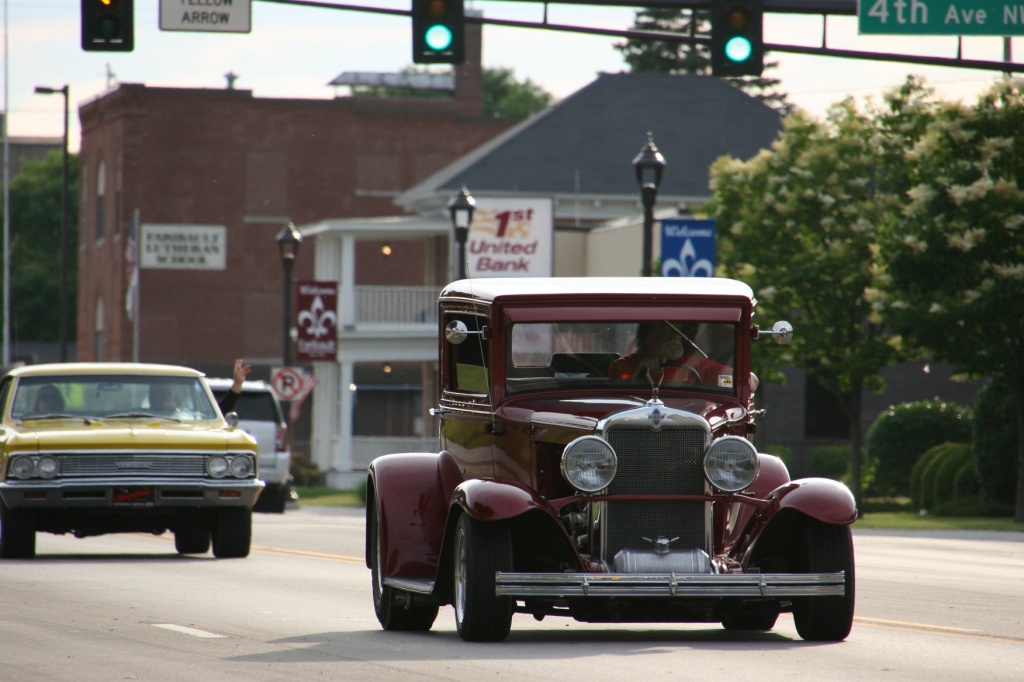
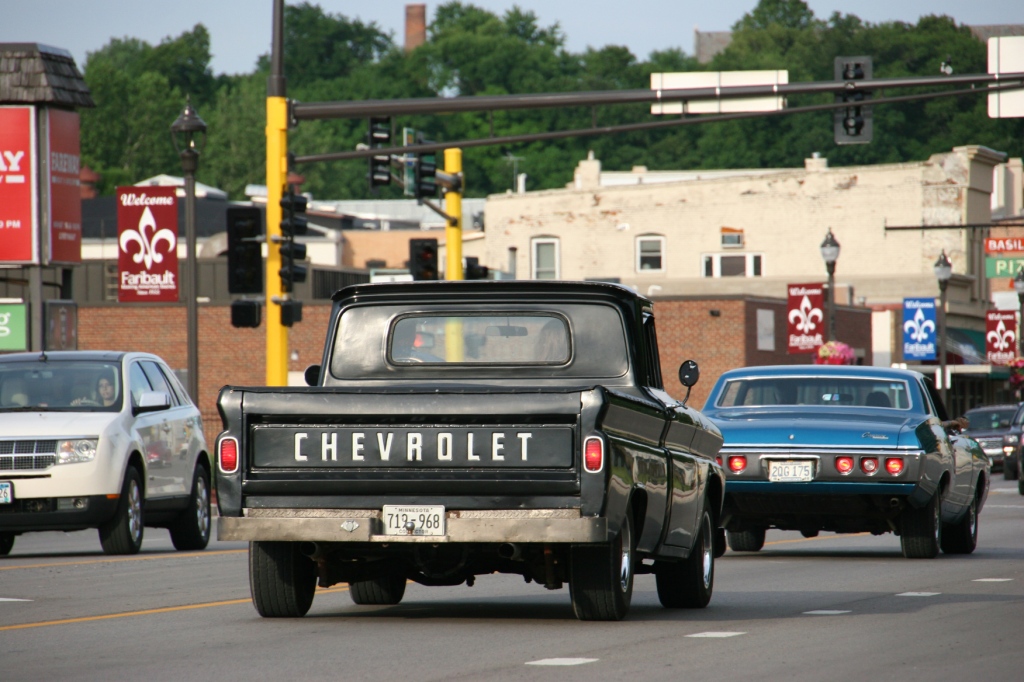
Heading east on Minnesota State Highway 60/Fourth Street past the courthouse and Fareway Foods, Car Cruise Night participants arrive in the downtown Faribault business district Friday evening, June 19.


IN A SUMMER THAT FEELS anything but normal due to COVID-19, I welcome distractions. And a sense of semi-normalcy.


A 1957 Chevrolet.


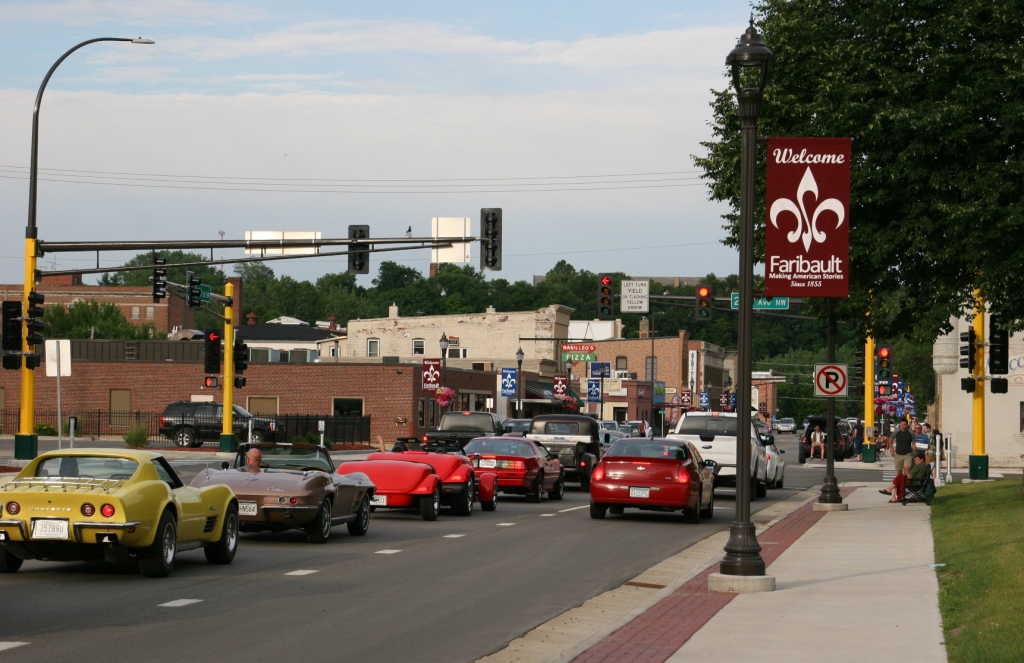
For awhile Friday evening, during Faribault Car Cruise Night, I could pretend that we are not in the midst of a global pandemic. The event has been revamped this summer from vehicles parked along Central Avenue to an actual cruise. The June 19 evening cruise started at the Faribault Middle School, leading drivers out of town and around area lakes before heading back to Faribault and finishing on the south end of Central Avenue.


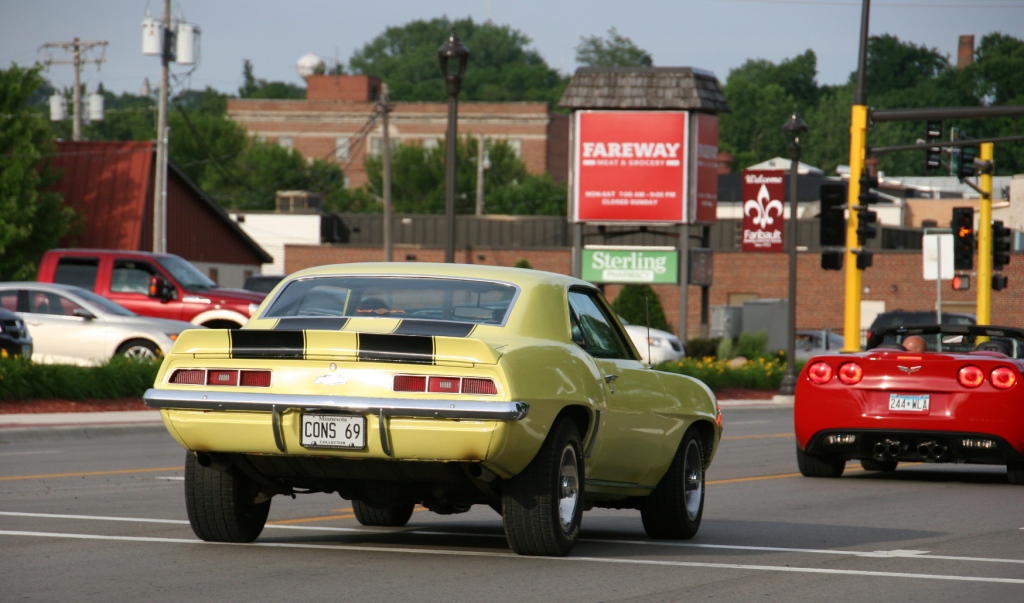
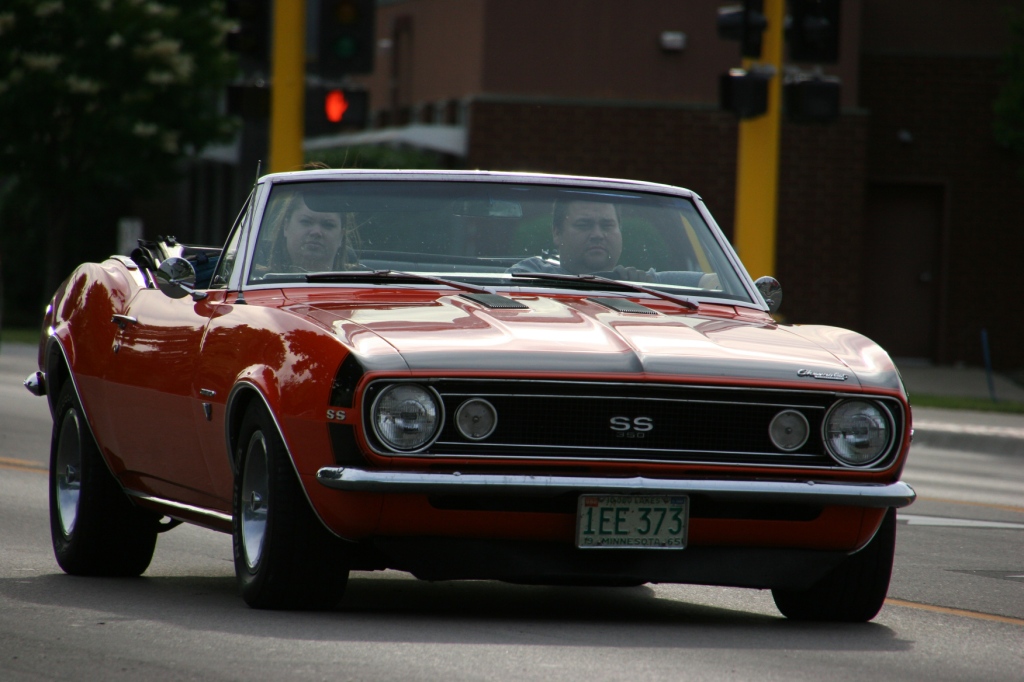
I swung my camera lens east and west to take in the cruise coming and going, including this 1969 Chevrolet Camaro.


Watching the parade from the back of a pick-up truck parked in a business parking lot.


My friends Curt and Leann in their 1959 Ford Galaxie.


In deciding where to sit, Randy and I intentionally looked for a spot that would keep us clear of crowds. And we found that in front of the Rice County Government Center. The uncrowded setting also allowed me to roam onto the courthouse lawn to take photos.


Pre-cruise, I photographed this traffic westbound along busy Fourth Street.


We waited for nearly an hour from the 6 pm start time to see the first car rolling toward us on Minnesota State Highway 60/Fourth Street. But it was a lovely summer evening to sit outdoors, so we didn’t mind the wait. I did worry, though, about shooting into the sun while photographing the parade of vehicles. And that did prove to be somewhat problematic.


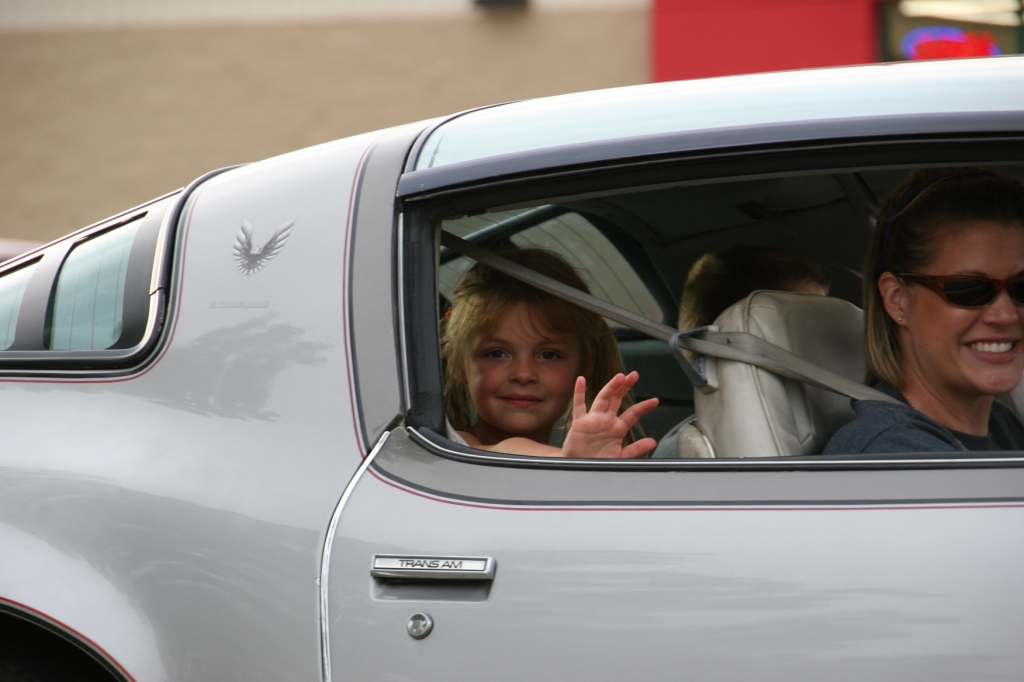
Waving from a Chervrolet Corvette.


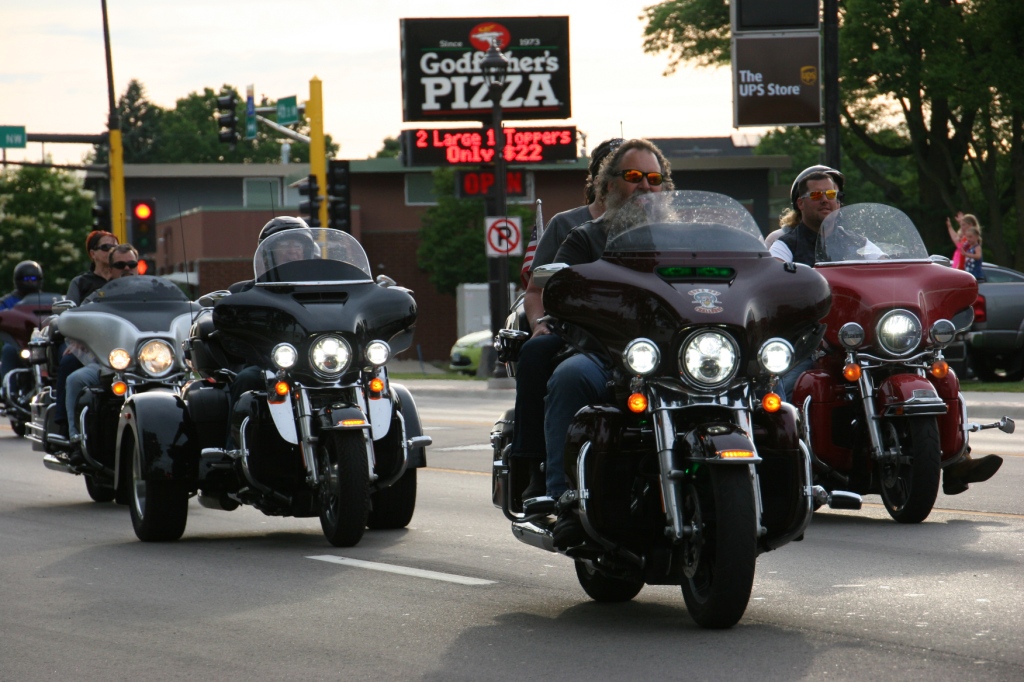
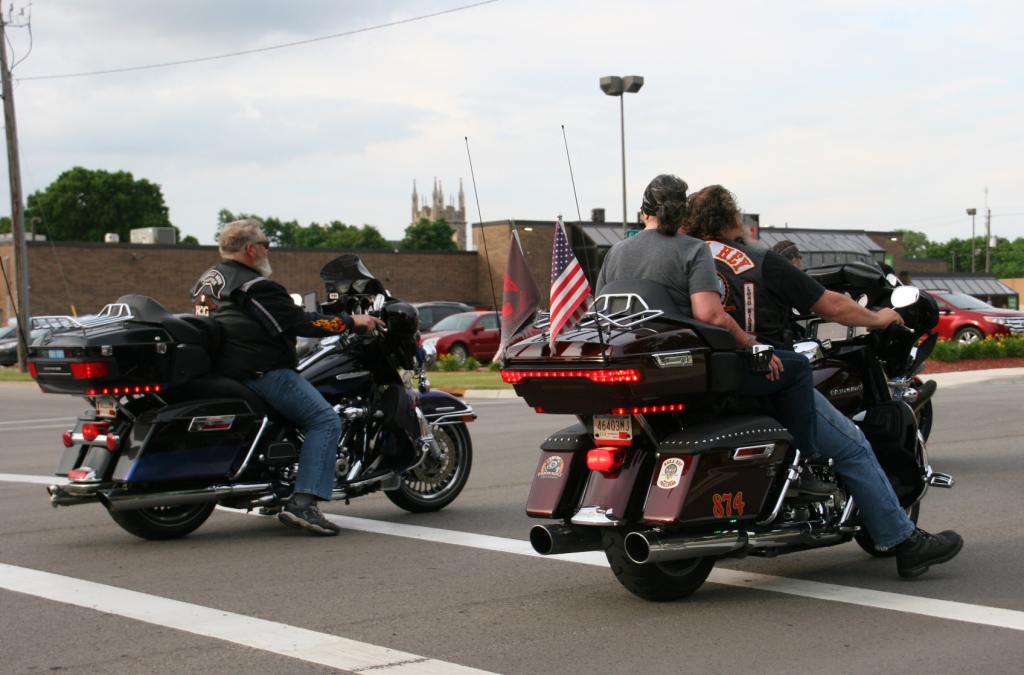
A group of bikers closed out the cruise line.


No matter, I got plenty of photos—images which show a sense of community, of fun, of joy. This cruise felt different. Lots of smiles. Hand waving. Showing off by a few drivers.


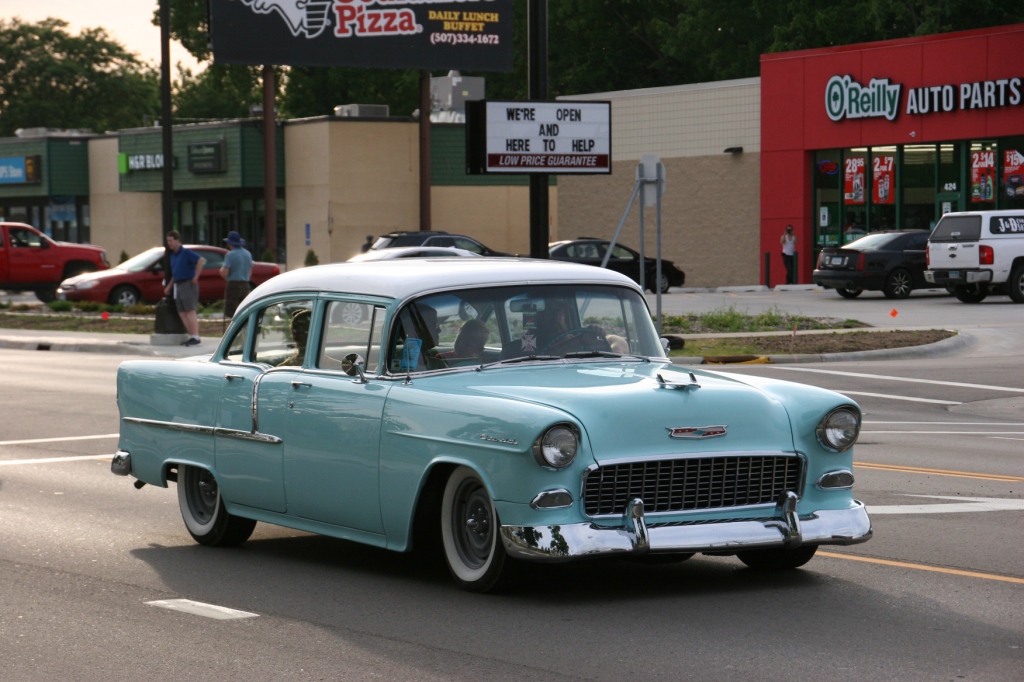
A 1955 Chevrolet.


A Ford Falcon.


Many seemed grateful simply to be out on a beautiful Minnesota summer evening.


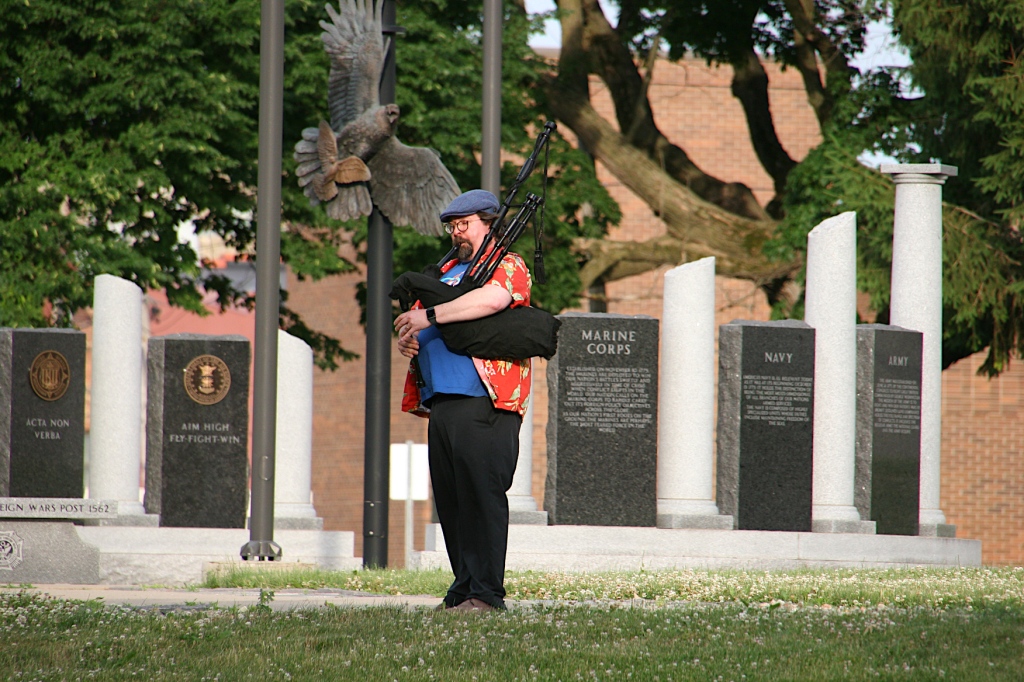
So enjoyed this bagpipe player and his addition to Faribault Car Cruise Night.


He started playing next to the Rice County Veterans’ Memorial.


Then moved nearer the courthouse.


Adding to the festivities was the music of a lone bagpiper stationed on the courthouse lawn. He stood for awhile next to the Rice County Veterans’ Memorial in a show of respect. I noticed many an appreciative driver and passenger looking his way. The live music definitely added a new dimension to the cruise and I hope will continue.


Mostly, I felt an overwhelming sense of being part of something that was more than a parade of collector, vintage and other vehicles. I felt a sense of togetherness while not together. I felt a spirit of community.


In a summer when nearly every event that brings people together has been canceled, we had this, this escape. For a short time on a Friday evening in June in Faribault.


Please check back for two more posts from the June 18 Faribault Car Cruise Night.

© Copyright 2020 Audrey Kletscher Helbling


Portrait in a pandemic June 20, 2020

Filed under: Uncategorized — Audrey Kletscher Helbling @ 5:00 AM
Tags: , , , , , , , , ,


Minnesota Prairie Roots photo, May 15, 2020.


EVERY TIME I AM IN PUBLIC, I am reminded that we are living during a global pandemic. But even before I leave the house, I do a mental check list. Got my mask? Check. Hand sanitizer? Check. Hands washed? Check.

I admit, even after several months of this new way of living, pulling two elastic bands over my ears to hold a cloth face mask in place feels unnatural. Uncomfortable. Odd. But it’s necessary to protect others and to reduce my risk.

And then I need to remember to use hand sanitizer. Upon leaving a store. Before I re-enter my vehicle. Back home, no grocery bags set on counters. Hands washed. I’m learning.

A month ago, while attending the May Faribault Car Cruise Night, I took the above portrait of a man walking along Central Avenue in the heart of our downtown. I appreciate the story this image tells. It represents, to me, the portrait of a pandemic.

In my city of some 24,000, there have been 653 cases of COVID-19 as of Friday, June 19. That’s a fairly high number for our population, in my opinion. County-wide, we’ve had 743 positives, according to information on the Rice County Public Health Services web page. Our state prison accounts for 26 percent of those cases. We have the sixth highest incidence rate of the virus in Minnesota. Four county residents have died.

This virus knows no boundaries. Rural-ness offers no protection. We are all, by the fact that we are human, part of this pandemic. Part of the story. Part of history. Portraits in a pandemic.

© Copyright 2020 Audrey Kletscher Helbling
 

Photographic perspective June 8, 2020

I delight in dried grasses dancing in the wind at sunset at River Bend Nature Center.


A MONTH AGO, as spring broke in Minnesota, Randy and I headed to one of our favorite local outdoor places—River Bend Nature Center in Faribault.


Beauty in a single grass stem.


As usual, I carried my camera. My camera invites me to see the world in a different and more detailed way. I look through the viewfinder with an artist’s eye and with an intent, creative focus.


Randy surveys the prairie below.


Directions to the prairie route.


An overview of the land.


I use photography to create and to document. And in the process, I find joy. If you’re a photographer, you understand that moment when everything—the light, the subject, the composition—comes together. It’s, to be somewhat trite, magical.


Greenery dangles from a tree, looking lovely in the evening light.


People often comment that I must have a “really good camera.” I don’t. It’s second-hand, an EOS 20D Canon, old by today’s standards. It doesn’t perform especially well in low light. But I love this camera; it’s my second 20D.


I love the muted, dreamy tone of this image, the softness in the light of a setting sun as I shot through the field of dried grasses.


Today’s smartphone cameras can technically surpass the quality of my aging DSLR. But there’s one thing technology can’t replace. And that’s the photographer’s skill-set, talent, experience and creativity.


The moon rises while the sun sets.


I understand the basics of photography—of lighting, composition, focus… But even more, I recognize the importance of perspective and storytelling. Of thinking outside the box. Of creating art with my photography.


A red-winged blackbird catches my eye.


When you see my photos, I want you to feel immersed in a sense of place. In that moment when I stand or squat or kneel to frame an image, I want you there. Or when I set my camera on the ground and aim the lens upward without looking through the viewfinder.


A prairie path…


I strive to tell stories, to introduce you to people and take you to places and events you may not otherwise see. To show you my little corner of the world and beyond, through my life lens.

© Copyright 2020 Audrey Kletscher Helbling
 

The poetry of trees at sunset April 14, 2020


SUNSET. I FIND IT profoundly beautiful. Poetically beautiful.


Last week while walking a tree-lined trail in Faribault’s North Alexander Park, I stopped to appreciate the sunset through the trees.


I aimed my camera lens skyward, toward treetops. Branches, like lines drawn in wide chisel and felt tip markers, traced the sky. Sharp against backdrop canvases of blue, pink and orange. Lovely. The literary and visual work of an artist.


Scenes like this are so ordinary, yet extraordinary. Nature, when viewed in pause mode, seems even more stunning these days.


When I lift my camera and look through a viewfinder to frame a photo, I see so much. I notice details. Shapes. Colors. Patterns. Light.


It’s a process similar to writing poetry. I immerse myself in creating something beautiful. Poetry requires sparse, well-chosen words. Photography requires that, too, but in a visual way.


In this unprecedented time of social distancing, isolation and concern about COVID-19, I feel especially grateful for a quiet place to walk, to appreciate the art of nature and then create my own art via photography.


April is National Poetry Month. Celebrate by reading a poem, writing a poem or finding a poem in nature, like I did at North Alexander Park on a cold April evening with strong winds gusting from the northwest, sometimes shaking my camera lens.

© Copyright 2020 Audrey Kletscher Helbling
 

From Wisconsin: Quick, look before the snow melts March 5, 2020

Filed under: Uncategorized — Audrey Kletscher Helbling @ 5:00 AM
Tags: , , , , , , , , ,

An iconic Wisconsin farm site photographed from Interstate 90 on February 15.


OH, WHAT A DIFFERENCE a few weeks make. I’m talking snow cover here. With temps rising into the 40s, even 50s in some places in Minnesota, and sun shining bright in the afternoons, the snow pack is diminishing.


Photographed on February 15 while traveling along Interstate 90 in Wisconsin, this tree stand appears like an island in an ocean of snow.


I can now see patches of grass in my lawn, curbing along streets and indications that we are getting closer to spring. As a life-long Minnesotan, though, I recognize the potential for lots more snowfall, even into May.

But for now, we’re delighting in days that lean toward spring. Sixty degrees is forecast for this weekend. Imagine how that will facilitate snow melt. And lift spirits.


This hillside barn is located near Madison, in an area more urban than rural.


That all said, I’m finally getting around to sharing snowscape photos I took in mid-February while traveling along Interstate 90 in Wisconsin, eastbound toward Madison. Scenes along that route are becoming familiar to me now given the frequency of trips to visit our second daughter, her husband and our son in the capital city.


A pastoral scene along I-90 in southern Wisconsin.


Wisconsin, for all the jokes about beer, brats and cheese, and fan fanaticism for the Packers and Badgers, is a lot like Minnesota. Friendly folks. Diverse landscape. Mostly rural with just enough urban. Interesting. I’ve enjoyed exploring Madison from botanical gardens to art museums to a repurposed mill next to my son’s apartment building.


In the valley east of La Crosse, the length of this barn along I-90 impresses me.


A picturesque farm site sits in the valley.


Another long barn.


With the exception of Rochester, Minnesota, and La Crosse, Wisconsin, the four-hour drive to Madison from Faribault takes us primarily through rural regions. I especially like the area east of La Crosse where high rolling hills border farm fields and farm sites in the valley. Hills and wide sky dwarf the farms, a strong visual that always impresses upon me our smallness in this vast universe.


This scene, especially, emphasizes our smallness.


Such are my thoughts as we travel. I never tire of looking at these rural scenes, often wishing we had time to follow backroads deep into the hills. We did once, years ago while vacationing, and nearly lost our way such are the twisting paths within those hills.


Nearing Madison, a traditional farmhouse and barn define this farm.


I digress. I expect if I was to photograph these sames scenes today, they would appear much different with snow no longer defining the landscape. What a difference only a few weeks make…

© Copyright 2020 Audrey Kletscher Helbling
 

Montgomery revisited, Part I February 26, 2020

Filed under: Uncategorized — Audrey Kletscher Helbling @ 11:15 AM
Tags: , , , , , , ,

A section of downtown Montgomery, Minnesota, with its many historic buildings.


I DOUBT I’VE WRITTEN about any small Minnesota community more than I’ve written about Montgomery. Located within a half hour of my Faribault home, it’s a quick drive away. And Montgomery offers just enough to keep me returning.


Signs always draw my eye, including this one. It’s simple, nostalgic…


Especially interesting is the downtown with eye-catching signage, aged buildings and home-grown shops.


Among the sweet offerings at the long-time, popular Franke’s Bakery.


An old-fashioned bakery.


Outside the entry to the Montgomery Arts & Heritage Center located in Hilltop Hall.


A thriving Arts & Heritage Center.


Beer to go at Montgomery Brewing.


A brewery with outstanding craft beers.


The friendly young man I met while photographing downtown. He paused to let me pet Buddy.


Friendly people.


Everywhere downtown you’ll find signs promoting kolacky.


A deep appreciation for the area’s Czech heritage. Combine those and you have a small town that appeals to me.


Third-generation Franke’s Bakery is known for its kolacky.


I recognize that what interests me may not interest you. But there’s something to be said for small towns with a strong sense of identity and pride in that identity. For Montgomery, it’s the tag, “Kolacky Capital of the World.” The kolacky is a bun-like Czech pastry filled with a fruit or poppyseed filling. Risking the wrath of the Czech, I will tell you that it’s not a favorite of mine. I’d choose a doughnut before a kolacky. But then I am of German descent and was not raised in this area of Minnesota.


Stand in the grocery store parking lot and you can see the grain elevator in one direction, the brewery in another and the main street through downtown, too.


None of that matters really. What matters is that I like Montgomery. Unleash me with a camera in this town and I get excited about the photo ops, all the ways I can capture the essence of this place. If my creative work is anything, it has always been about defining place.


Spotted in the window of a downtown business. These handwritten signs give a place character.


I will always feel most comfortable in a rural town like Montgomery. I appreciate a place where I can view a grain elevator, spot handwritten signs on business doors and windows, chat it up with the locals, stop to pet a passerby’s dog and stand in the middle of Main Street to take a photo without worry of traffic.

Now that my photo essay about Montgomery has published in the March issue of Southern Minn Scene magazine, I am free to share more photos from my January day trip to this Le Sueur County community. Enjoy and watch for additional posts highlighting Montgomery as I, once again, define this place in images and words.

© Copyright 2020 Audrey Kletscher Helbling
 

Montgomery, Through a SoMinn Lens February 24, 2020

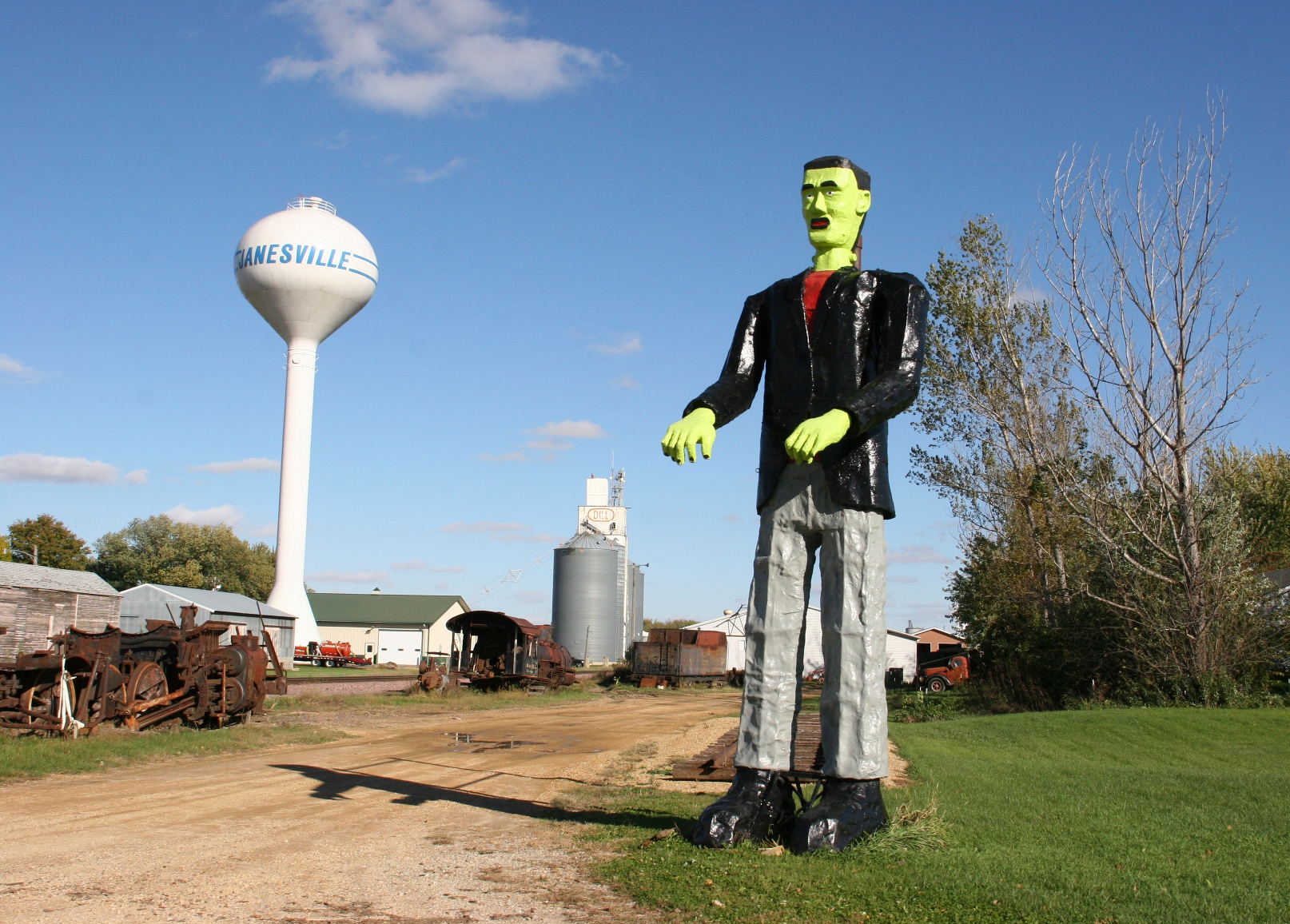
A scene outside Franke’s Bakery in downtown Montgomery, Minnesota, on a recent Saturday morning. Minnesota Prairie Roots file photo January 2020.


SEVERAL WEEKS HAVE PASSED since my last day trip to Montgomery, a small Minnesota town of some 3,000 about a 30-minute drive from my Faribault home.

Randy and I went to Montgomery specifically to view an exhibit of 1900s era photos of Native Americans by noted photographer Edward S. Curtis. The exhibit at the Montgomery Arts & Heritage Center closes this Saturday, February 29. You can learn more about that show by clicking here and reading a previous post.

My reason for writing about Montgomery today is to share my latest Through a SoMinn Lens photo essay column, “Day trip to Montgomery, Kolacky Capital of the World,” which just published in the March issue of Southern Minn Scene. To see the current issue of this free lifestyle, arts and entertainment magazine, click here.

As always, I am delighted to showcase a small Minnesota community well worth your visit. As time allows this week (I’m trying to complete other writing projects with deadlines), I will share more Montgomery photos with you. Enjoy!

And if you have any suggestions of small towns (or attractions) in southern Minnesota that I should visit, please pass along your ideas.

© Copyright 2020 Audrey Kletscher Helbling
 

Welcome to Wisconsin February 18, 2020

Filed under: Uncategorized — Audrey Kletscher Helbling @ 5:00 AM
Tags: , , , , , , , , , ,

An ice fisherman photographed at the La Crosse, Wisconsin, rest stop.


I OFTEN WONDER, what do outsiders think? And, by outsiders, I mean those of you unfamiliar with a Midwest winter, specifically with the sport of ice fishing.

I mean, let’s say you’re from Miami or LA or Dallas and you’ve never seen a village of fish houses atop a frozen lake let alone vehicles driving onto and across the ice. For Minnesotans and Wisconsinites, scenes like this are simply part of our winters.

Or let’s say you pull off the interstate, like we did on Saturday along I-90 in La Crosse, Wisconsin, and you spot two guys loading fishing equipment onto a sled in a rest area parking lot. Randy and I saw exactly that.

The scene seemed so Midwest Norman Rockwell-like. Bucket and fishing gear atop a simple pull-behind sled. Fisherman layered in warm outdoor outerwear topping a red-and-black buffalo plaid flannel shirt. Paul Bunyan fashion at its finest.

As we exited the parking lot, I managed a photo. Iconic. A guy on his way to ice fish in the backwaters of the Mississippi River on a Saturday morning in mid-February. Love it.

TELL ME: Have you ever been ice fishing, or even observed an angler ice fishing? And, yes, I’ve fished through a hole in the ice on a frozen lake. Just not in recent years.

© Copyright 2020 Audrey Kletscher Helbling
 

Documenting rural Minnesota February 6, 2020


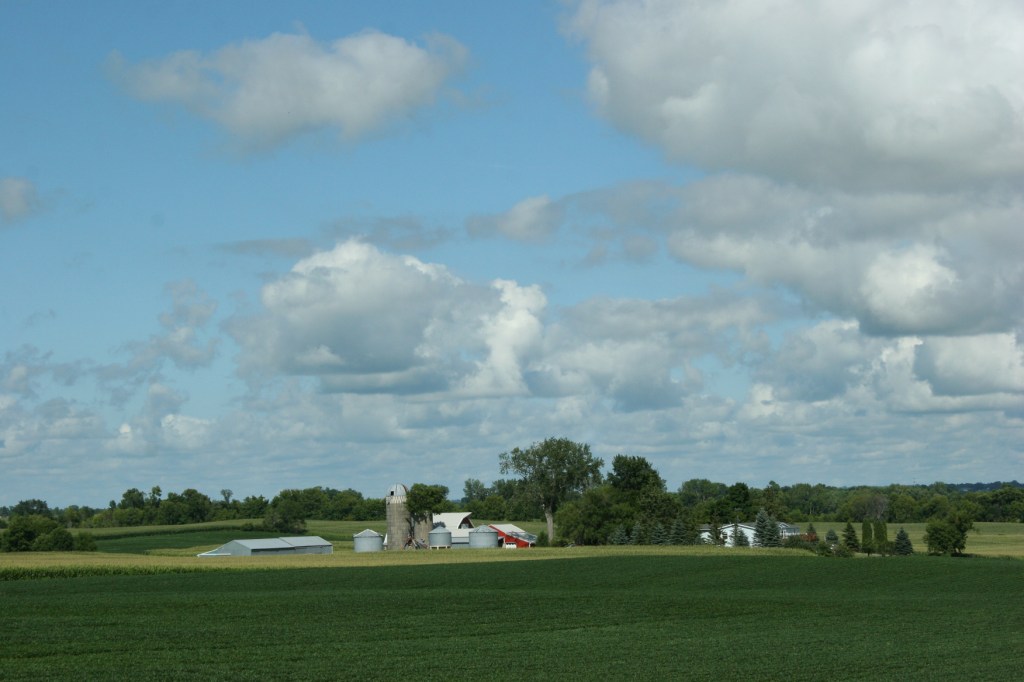
I OFTEN WONDER, as I travel past farm sites in southern Minnesota, how these places will look in 50, even 20, years.


Will once grand barns still stand? Will farmhouses be abandoned? Will corporate ag operations completely replace family farms?


Already the evolution is well underway. Many barns no longer hold livestock, serving instead as storage sheds. Rural houses are not so much farmhouses as dwellings for those working off the farm to supplement their farm income.


Independent farmers either quit, expand or try to hang on for one more year. Some have become innovative—diversifying, organizing, working together to grow and sell local.


The rural landscape is changing, shaped by markets and weather and operating costs and government regulations, issues that have always affected farming. Technology, too, now factors into agriculture.


Some 40-plus years removed from the farm, I’ve witnessed the changes from afar. None of my five siblings stayed on the farm, although two work in ag fields. I no longer have a direct link to the land. And because of that, my children and grandchildren are losing that generational connection to farming, to a way of life. This saddens me. They prefer city over country.


And so I continue to photograph, documenting with my camera lens the places of rural Minnesota. Therein I present a visual history, a memory prompt and an expression of appreciation for the land which shaped me.


FYI: This Saturday, February 8, from 1 – 4 p.m., embrace and celebrate locally-grown and crafted during Family Day at the Faribault Winter Farmers’ Market. In addition to vendors, you’ll find hands-on art activities for kids, games, healthy recipes and more. The market is located inside the Paradise Center for the Arts along Central Avenue in the heart of historic downtown Faribault.

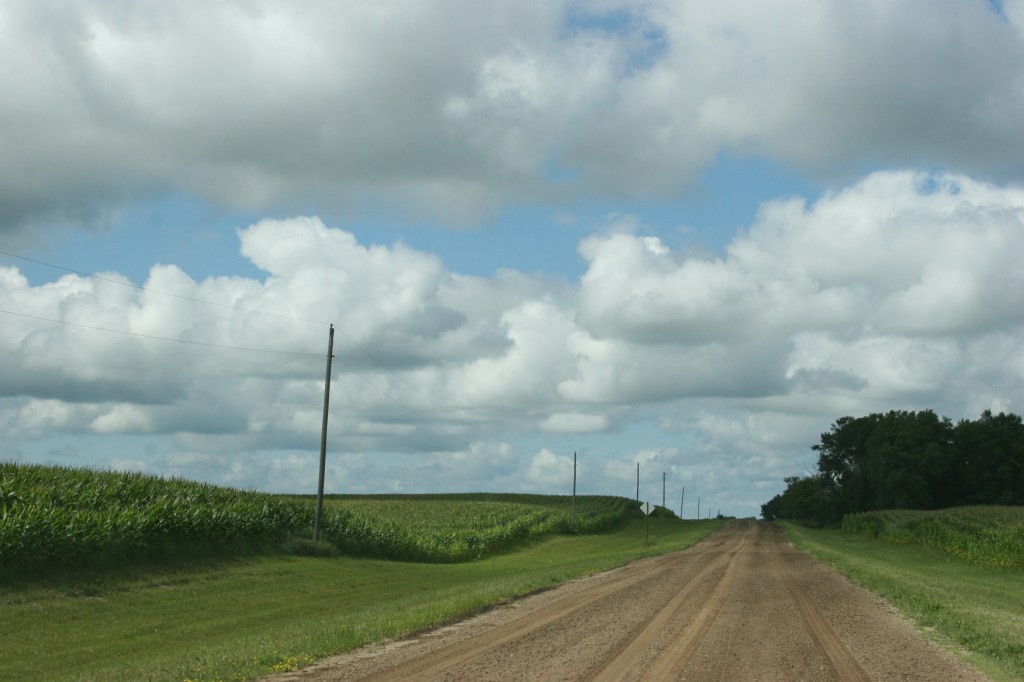
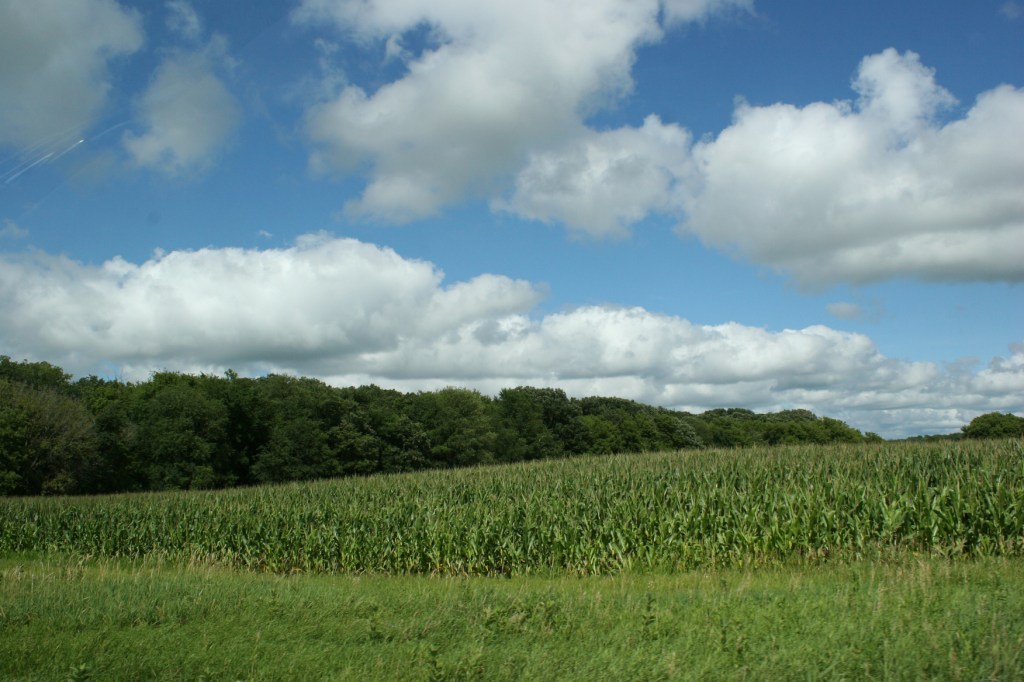
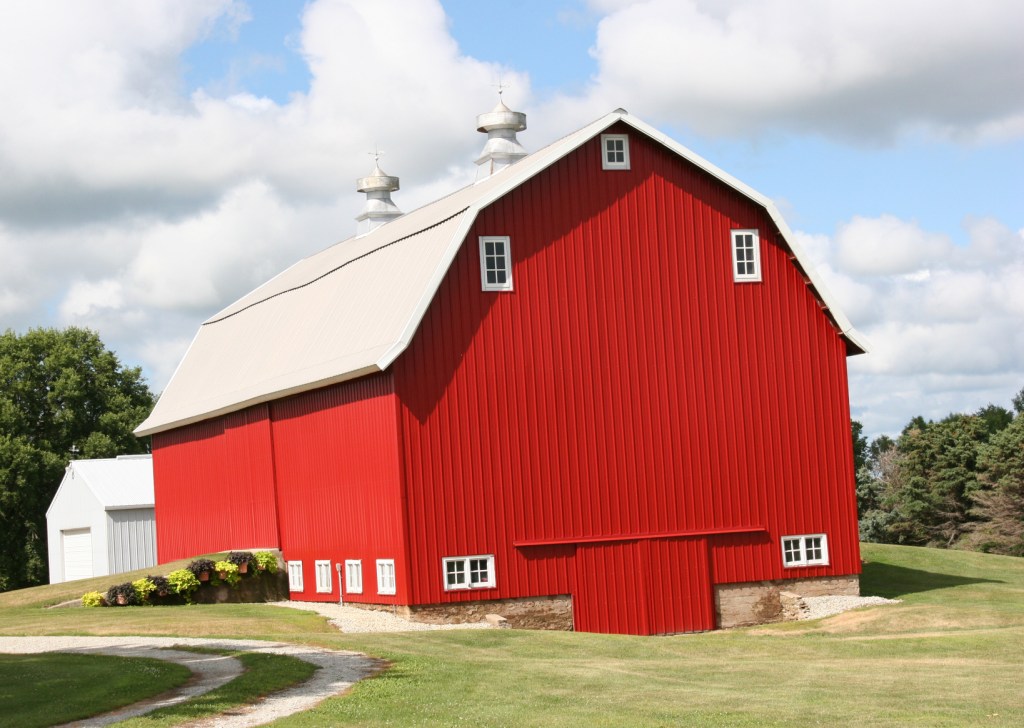
These photos were taken last Saturday along Minnesota State Highway 21 on my way to Montgomery.

© Copyright 2020 Audrey Kletscher Helbling


In Montgomery: Historic photos of Native Americans by Edward Curtis January 31, 2020

Prints of Edward Curtis photos now exhibited at the Montgomery Arts and Heritage Center.


BENEATH PORTRAITS OF KOLACKY DAYS queens, early 1900s era sepia-tone photos stretch along walls and grace tables in the narrow room. Prints of images taken by a man considered one of America’s greatest photographers. Edward S. Curtis.


A permanent exhibit of Kolacky Days queen portraits hangs above the temporary exhibit of Edward Curtis photos of Native Americans.


A photo of Edward Curtis with info about this noted American photographer.


Visitors are welcome to sit and page through Edward Curtis books.


Despite his outstanding photographic reputation, Curtis was previously unknown to me. But no more. Recently I visited an exhibit of around 60 selected photos from his “The North American Indian” collection at the Arts and Heritage Center in Montgomery. His entire body of work encompasses 40,000 photos, many published in 20 volumes.


Historic Hilltop Hall houses the Montgomery Arts and Heritage Center on the right and a floral and gift shop on the left.


To see these photos, termed part of the “most complete visual record of Native Americans west of the Mississippi,” right here in rural Minnesota is such a gift. A $4,000 grant from the Carl and Verna Schmidt Foundation funded the exhibit in Montgomery, a community of some 3,000 just 20 miles northwest of Faribault.


Edward Curtis photographed Native Americans of the west over a 30-year period.


Displaying Curtis’ photos here brings the photographer full circle back to Le Sueur County. At the age of five, he moved here with his parents from his native Wisconsin, eventually settling in Cordova. Here he grew up to appreciate the outdoors as he canoed with his preacher father along the Cannon River. By age 17, Curtis was working at a photography studio in St. Paul. In 1887, he moved to Seattle.
 

A snippet of a 1906 comment about Edward Curtis by President Theodore Roosevelt.


That’s the backstory of a photographer who earned the praise and financial support of President Theodore Roosevelt, who called Curtis a “close observer.” That is evident in the documentary photos of the Native Americans Curtis came to know well and to, clearly, value and love.


“Wishham girl,” 1910


Text accompanies the “Wishham girl” photo.


A portion of the portrait of “Chief Joseph– Nez Perce”, 1903


His portraits of western Native Americans document not only a culture, but also history and personalities. As I studied the photos, I admired faces weathered by wind and sun, steady strength in profiles, joy and sadness in eyes. I admired, too, the artistry of woven baskets, handcrafted pottery, curved canoes, feathered headdresses and detailed beadwork.


An insightful and beautiful quote by Edward Curtis.


I expect if I was to revisit this exhibit, I’d notice details I missed. There’s just so much to see, to take in, to appreciate, to contemplate. A culture. A people. A way of life. A history. A connection to nature.


More photos from the exhibit.


I am grateful to long-ago photographers like Edward Sheriff Curtis for his efforts in connecting personally with his subjects, for caring and for documenting with his camera. His work is truly remarkable.
 

Info about Edward Curtis included in the show.


FYI: “The North American Indian” exhibit at the Montgomery Arts and Heritage Center continues until Saturday, February 29. The arts center is open from 2 – 5 pm Thursdays and Fridays and from 9 am – noon Saturdays and is located at 206 First Street North in downtown Montgomery, Minnesota.

© Copyright 2020 Audrey Kletscher Helbling