Minnesota Prairie Roots

Writing and photography by Audrey Kletscher Helbling

In loving memory of Rhody C. Yule June 16, 2011

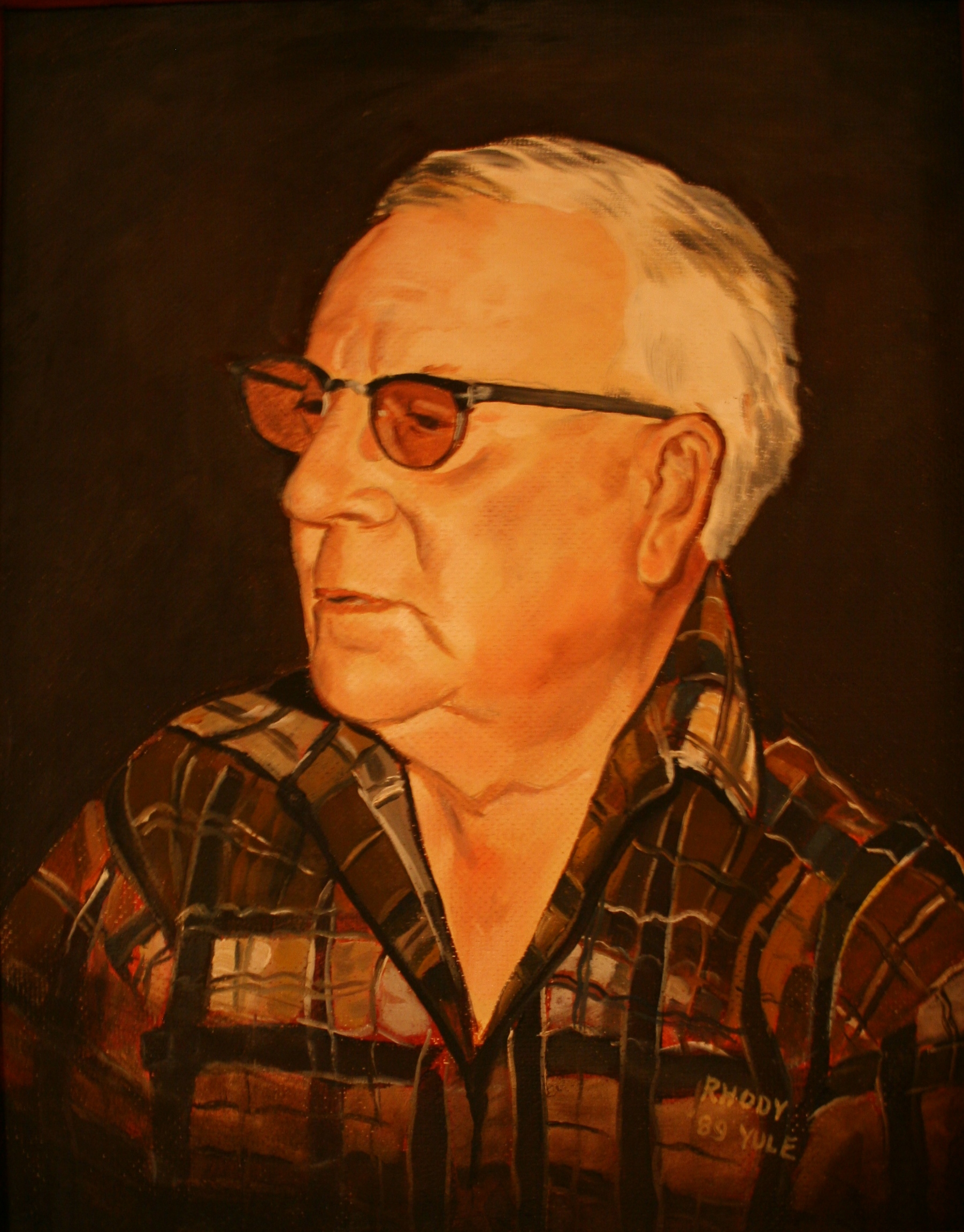
Rhody's self-portrait, 1989

WEDNESDAY AFTERNOON we eulogized and buried my 92-year-old artist friend, Rhody Yule.

I have known Rhody for less than two years, having met him quite by happenstance in the fall of 2009. While driving by his rural Faribault home, I spotted celebrity portraits hanging on his garage, stopped to photograph them and then went to his front door.

There I met this sprite of a man and his yapping dog, Jo-Jo.

With his dog shut in the kitchen because I feared being bitten, Rhody shared the story of his life with me and my husband, Randy, strangers until then. I did not hesitate to ask about the paintings hung in his cozy living room and on his garage. He did not hesitate to share that he had been painting since age 16.

Even on that first visit, I learned so much about a man who would come to mean so much to me. His wife, Shirley, had fallen and was living in Hastings. Oh, how he missed her. His only child, Paul, died in a car accident in 1977 at age 23. Oh, how he missed him.

Rhody told us about his military service, including time in Nagasaki, Japan, cleaning up after the atomic bomb. He showed us photos and paintings on that first visit and grass-woven sandals from Japan snugged inside a wooden box he had crafted.

I thought to ask, thank God, if he had ever publicly exhibited his art. He hadn’t. That became my mission, to get a gallery show for this life-long artist. His first mini-show, of his religious paintings, came in September 2010, when he was invited to Christdala Church near Millersburg. He had, many years prior, done a painting of the church. Randy and I coordinated that exhibit, then loaded the paintings into our van and set them up outside this historic country church. Rhody and I spoke briefly at that event and he assured me that, despite our nervousness, we did well.

At Christdala, I distributed mini fliers for his upcoming gallery show at the Paradise Center for the Arts in Faribault. I had applied for the exhibit on his behalf and, in January, with the assistance of family and friends and volunteers, “A Lifetime of Art: The Rhody Yule Collection” opened to a packed gallery.

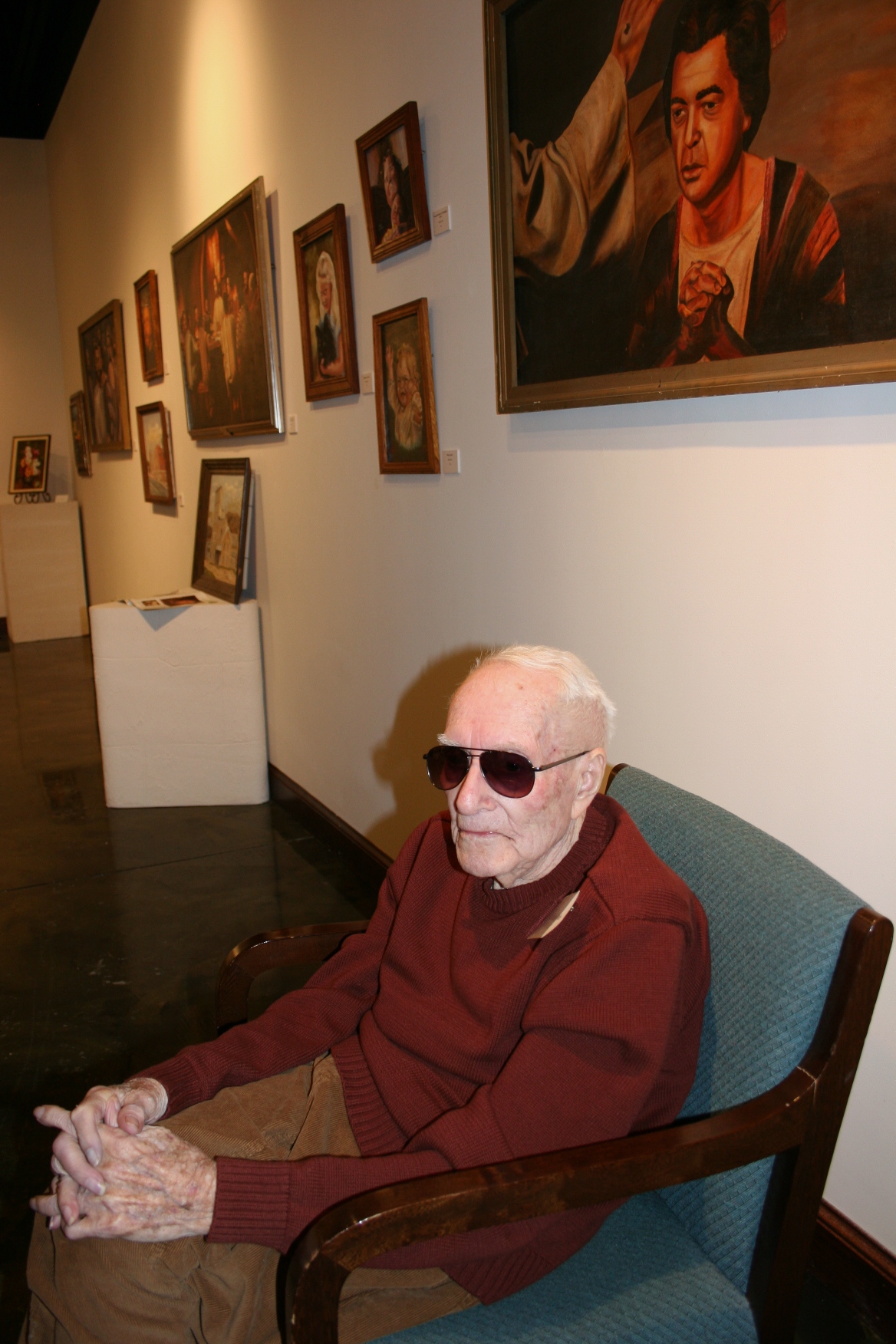
In typical Rhody fashion, this man of gentle spirit and quiet humility took it all in, never once boasting, but enjoying every second of his evening. This marked a shining moment for him in his 92 years of life and I was honored to have helped him achieve this public recognition of his art.

Rhody, minutes before his gallery show opened in January 2011.

RHODY’S FUNERAL SERVICE on Wednesday, while tinged with grief, also caused us to laugh out loud at his humor. We reminded each other of his forgiving attitude, his unshakable faith, his always positive attitude.

Just days before his death,  my husband Randy and I visited one last time with Rhody. Physically his body had deteriorated to a shell of the man he had been, but his mind and spirit remained strong. We saw him on a good night.

In that last hour with our friend, we reminisced about his gallery exhibit as I, one-by-one, held up photos I had taken that evening. He was too weak to grasp the images. And then we paged through several of his photo albums with pictures of a younger Rhody, a freckle-faced Paul, a beautiful Shirley.

I thought to myself, “You will be with them soon, Rhody. Soon.”

Rhody did not fear death. Yet he wished to live, even thought he might recover. I knew better. When I mentioned Millersburg, Rhody was ready for a night out and a beer at his favorite eating establishment there. Family and friends celebrated with him last fall in Millersburg at a patriotic-themed freedom party. His idea. His celebration after overcoming a recent, temporary loss of his personal freedom.

Rhody had more living to do. I learned at his funeral that this WW II veteran wanted to travel on a Washington D.C. Honor Flight to see the war memorials. It breaks my heart that he did not live long enough for that to happen.

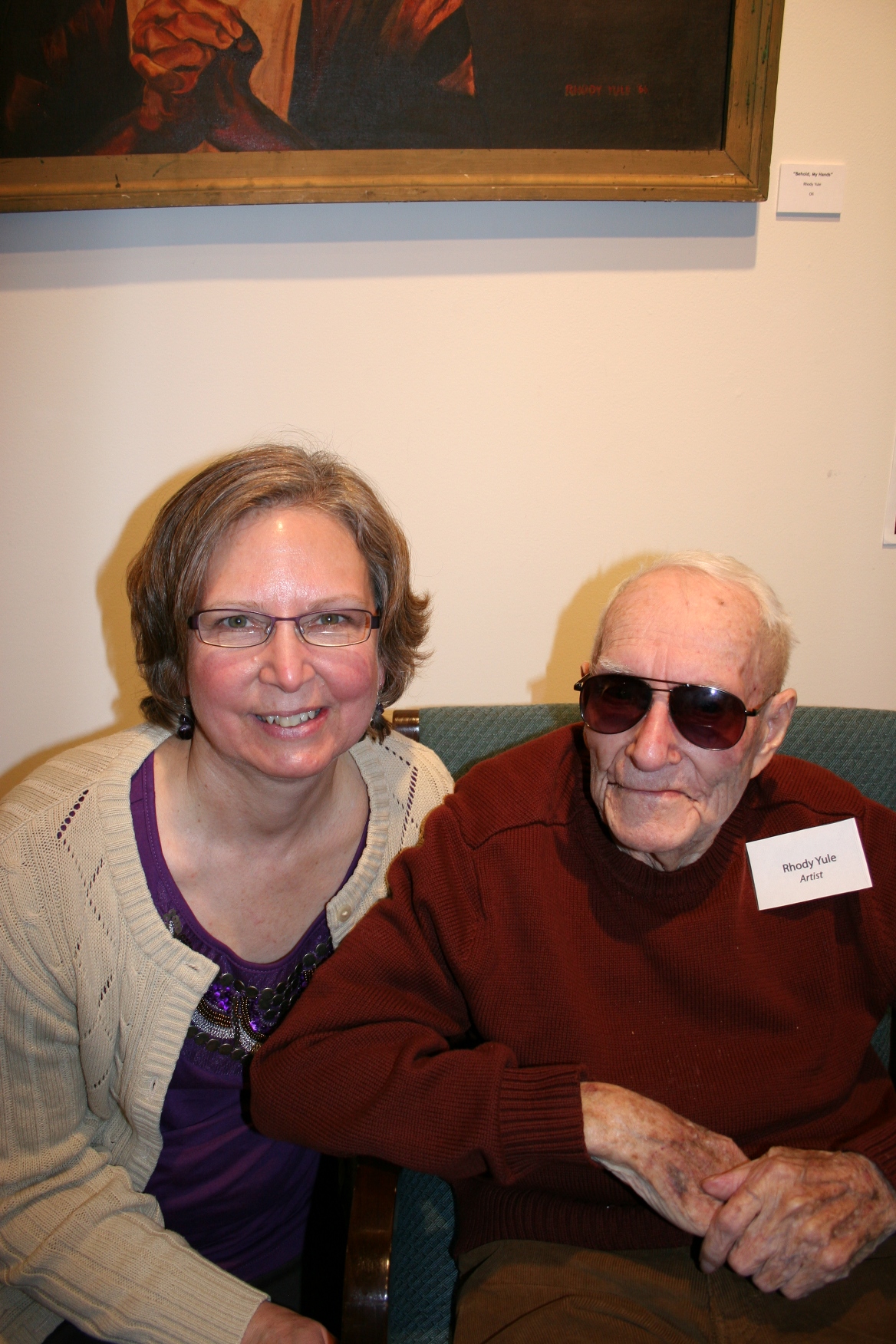
Me and Rhody at his opening night gallery reception.

He prayed every night for the soldiers to come home.

He was smartly dressed for burial in his military uniform, which hung loosely on the gaunt body of a man who once stood strong in service to his country.

Those honoring his memory were directed to donate to the Rice County Veterans Memorial Expansion Project.

A spray of patriotic red and white flowers adorned with a blue ribbon decorated Rhody’s carved wooden casket, a casket so appropriate for a man who crafted wooden boxes and also picture frames (for his art). Had he been physically capable, I expect Rhody may have built and carved his own casket.

But Rhody is gone now and, as the eulogist, the Rev. Ron Mixer, said, Rhody is busy painting sunrises and sunsets in heaven. He suggested we look for a signature “Y” in the clouds.

Rhody has left those of us who knew and loved him with more than his legacy as an artist and the thought that he is still painting. He has gifted each of us with his spirit of forgiveness and kindness, his humor and humility, his desire for fun, a love of life and a faith that endured challenges.

I knew Rhody such a short time. But how blessed that time has been.

We drove through nearly-torrential rain Wednesday afternoon to the rural Cannon City Cemetery to bury Rhody beside Shirley. As we gathered under the tent and next to it, sheltered by umbrellas gripped tight against the whipping wind, members of the Central Veterans Association fired an honorary salute to their brother soldier. Taps mourned. An aging veteran presented a folded American flag to Rhody’s step son in a voice choking with gratitude and emotion.

Soon the rain stopped and the sun wedged through the clouds as if Rhody was there, telling us to wipe away the tears. He would have wanted us to celebrate his life, and we did, but only if we didn’t brag about him.

Rhody's favorite painting, "The Last Supper," which he painted in honor of his beloved son Paul.

© Copyright 2011 Audrey Kletscher Helbling


Thou shalt not photograph the Amish June 14, 2011

TEMPTATION TEMPTED ME on Saturday afternoon, wrapping her slippery fingers around mine, tightening her grip, nudging my index finger toward the shutter button.

But Right resisted, reminding Temptation, “Thou shalt not photograph the Amish.”

The battle waged for a good 15 minutes on a grassy wedge of land along a main route through Osakis, southeast of Alexandria.

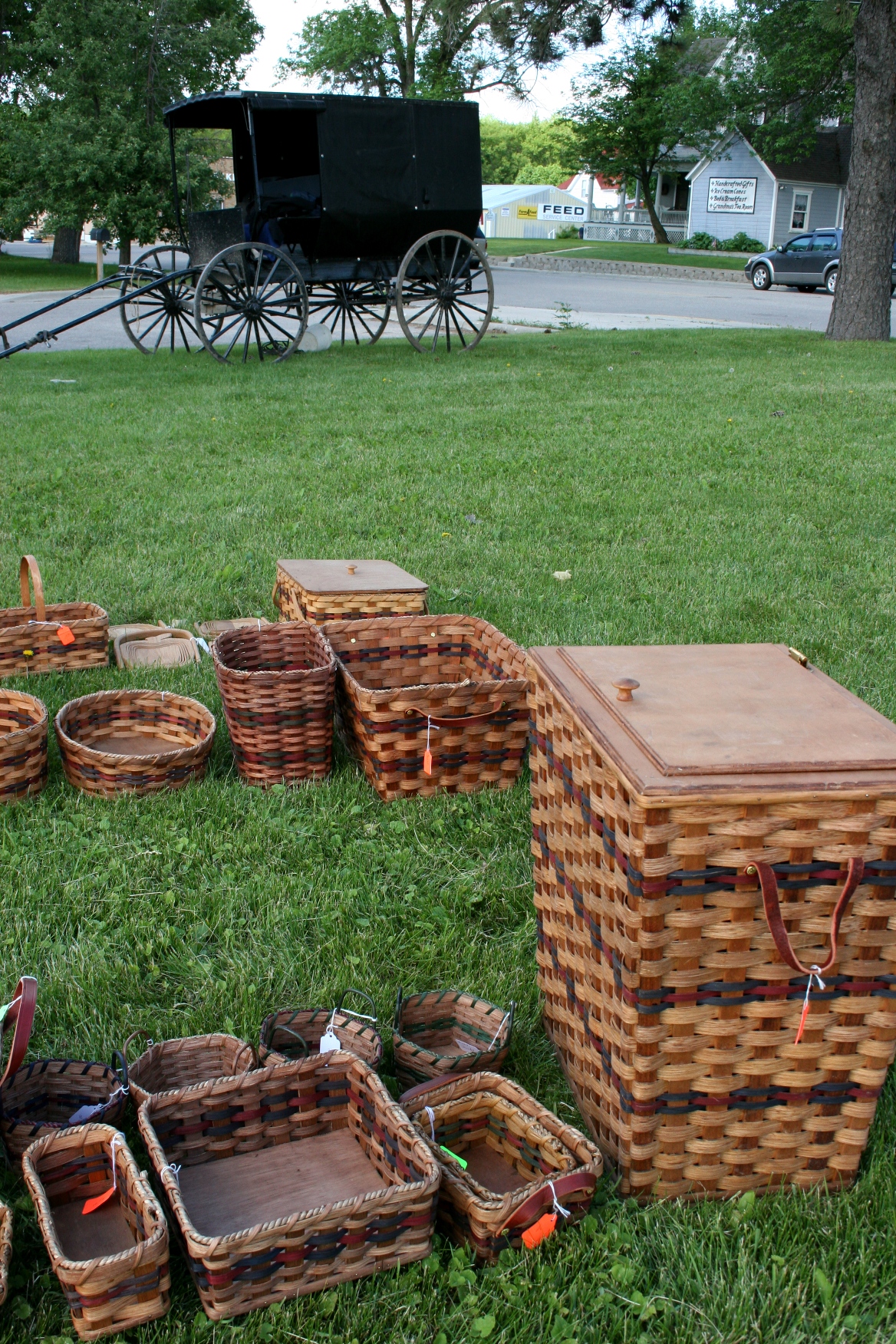
Here quilts, clipped to clothesline strung between a light post and trees, drew my husband and me off the road. When we turned onto the side street and I spotted the black buggy, I couldn’t believe our luck. I’ve wanted, always, to encounter the Amish up close and photograph them.

The Amish buggy parked at a roadside market in Osakis.

But then Right niggled my conscience: “Thou shalt not photograph the Amish.”

At least without asking, I thought, although Temptation urged me to click the shutter button of my camera immediately and then ask. But I didn’t. “Is it OK if I take your picture?” I inquired of the bonneted mother cozied with her two black-bonneted daughters on a blanket spread upon the grass.

“No.”

What did I expect? That she would say “yes” and smile for the camera. So I tried again. “How about if I photograph you from the back?”

“No.”

I tried for the third time. “Can I photograph your quilts and baked goods?”

The Amish mom agreed, as long as I didn’t include her or her two pre-teen daughters in my photos. But I was still tempted, oh, so tempted, to sneak them into the images. Would they notice if I edged the camera lens over the clothesline while photographing the quilts?

Right prevailed and I photographed the hand-stitched blankets, the rows of baskets, the preserves and homemade noodles and that black buggy, minus its passengers and minus the horse that was tethered in the shade of trees behind nearby buildings.

I should also have photographed the fly swatters and woven rugs, but I didn’t want to push my luck, appear too pushy and offend these Amish.

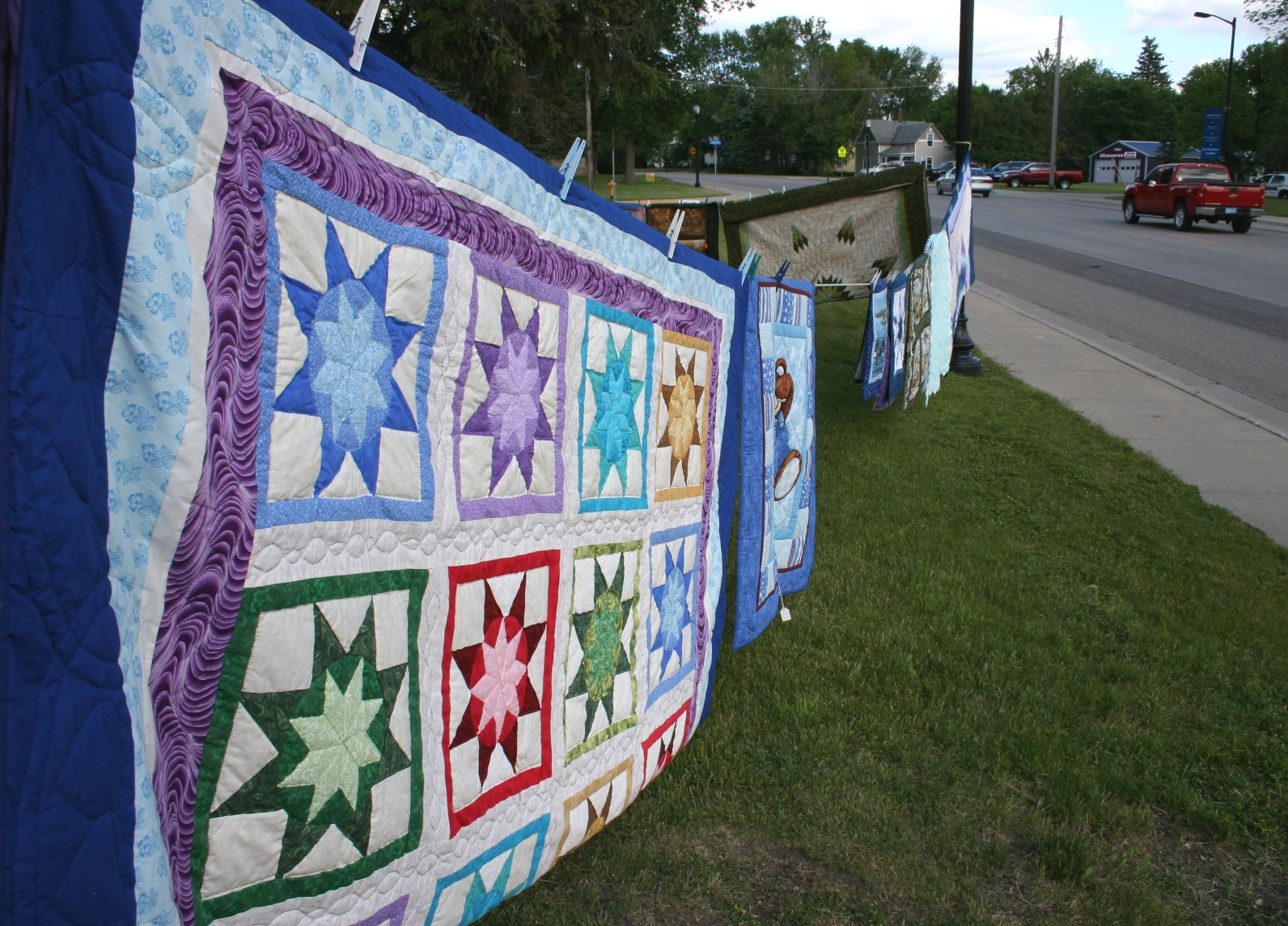
Beautiful, hand-stitched quilts stretched on the clothesline.

Preserves and a few baked goods remained when we arrived at this mini Amish market late Saturday afternoon.

This close-up photo shows the detailed stitching in these hand-stitched Amish quilts.

Hand-woven baskets for sale by the Amish.

All the while the two young girls watched me like a hawk. I could feel their eyes following me, boring into my conscience. I wondered what they were thinking. Were they interested in my fancy schmancy camera, or did they simply wish me gone?

Were they worried that I would photograph them, thereby stealing their souls or creating a graven image, or whatever reason the Amish have for shunning photos of themselves?

I remained so focused on possible covert photo ops that I failed to notice details, except those black bonnets, the blue and plum dresses and the wide, plain copper-colored wedding band on the mother’s ring finger (which I wanted to photograph). I wish I had noticed their shoes.

I also failed to ask many questions of the trio. I learned that they live 10 miles east of Osakis, that the buggy trip takes an hour and that they come to town every Saturday (not in winter, of course) to peddle their goods. All of this the mother shared in a brogue that I couldn’t place, but which reminded me of a far-away homeland, of the thick tongue of an immigrant.

While the mother spoke, her two daughters perched, respectful, still and mute as statues, until I looked directly into the brown eyes of one and asked whether she had made any of the market merchandise.

“Cookies,” she blurted, her face blossoming into an appreciative smile.

I wished in that moment, more than any, that I could have photographed her happiness, shown you the delight blooming upon that young Amish girl’s face when I paused to acknowledge her presence, to include her, to boost her self-confidence.

But I could not. “Thou shalt not photograph the Amish.”

Not on this June Saturday afternoon in Osakis.

The one item we purchased, a superb (except for the burned crust), flavorful $6 pie oozing with tasty red raspberries. FYI, there were no cookies remaining or I would have bought some.

© Copyright 2011 Audrey Kletscher Helbling


A perfect summer day in Minnesota June 6, 2011

Filed under: Uncategorized — Audrey Kletscher Helbling @ 9:23 AM
Tags: , , , , , , , , ,

The sun sets on the prairie at River Bend Nature Center in Faribault on Sunday evening.

SUNDAY BROUGHT as perfect of a day as we have here in Minnesota. Sunshine. High temps without the humidity. No wind. A day to linger outdoors until the sunlight fades into the dark calm of a perfect summer evening.

Honestly, do days get any better than this?

In Minnesota, we gather these days into our memories, filing them away for the brutal months of winter, of bitter cold temps, snow (dare I mention that word?) and too much darkness.

For now we choose to celebrate the days of summer with family and friends, backyard barbecues and icy beer, laughter and conversation.

Here’s to the arrival of summer and the banishment of winter to some hinterland far, far, far away from Minnesota.

A deer I spotted just inside the nature center. (If only I had a telephoto lens.)

I saw this deer atop a hill at the nature center as my husband and I were leaving after a short hike. Same deer?

© Copyright 2011 Audrey Kletscher Helbling


Transitioning through parenthood and letting go June 3, 2011

Filed under: Uncategorized — Audrey Kletscher Helbling @ 7:14 AM
Tags: , , , , , , , , ,

In December we helped move my second daughter into an apartment as she started her first post-college job.

ONCE UPON A TIME, like 15 to 20, maybe even seven, years ago, I dreaded my kids graduating from high school, leaving for college and then eventually landing jobs. It would mean they no longer needed me and I could barely stand the thought of their absence.

But since then, since the two oldest followed the path of degrees, jobs and their own apartments, I’ve changed my attitude.

I rather like the lessening of parental responsibility that comes with their independence. It’s freeing. Not that I don’t worry about them; I still do. But it’s different now when they can basically fend for themselves.

My second oldest daughter graduated from the University of Wisconsin, La Crosse, last spring.

With that frame of mind, I recently visited my second oldest daughter in eastern Wisconsin, where she started work in December as a Spanish medical interpreter. Her first post-college job. Her first apartment of her own. She’d officially grown up.

I would have preferred that she settle closer to her hometown of Faribault instead of 300 miles away. But I’ve reminded myself many times that at least she’s in the U.S., within easy driving distance, and not in Argentina.

Nothing against Argentina. My daughter studied abroad in Buenos Aires and later returned for an internship. But I didn’t want her settling there, 6,000 miles away. I feared she might. Live there. Permanently.

That said, I have only myself to blame for the wanderlust spirits my 23-year-old and 25-year-old daughters possess. Because I grew up on a southwestern Minnesota dairy and crop farm, I seldom traveled as a child—once to Duluth and once to The Black Hills. I wanted my children to travel. I didn’t want them to be like me—someone who prefers, as my dad would have said, “to see the smoke from the chimney.”

And so I let them go, first as young children, to bible camp. Then, in high school, my eldest took her first out-of-state spring break mission trip to Texas. More mission and church and school trips followed as step by step by step they stretched their travel wings.

Then, during my eldest daughter’s freshman year of college, she signed up for a mission trip that took her to Paraguay. Heck, I had to dig out the globe to locate that country which borders Argentina, Brazil and Bolivia. I panicked, regretting for more than a few days my decision to raise children who enjoyed traveling.

Later, when my daughter journeyed to Costa Rica for a brief study sojourn, I barely gave her trip a second thought.

I could handle those short trips.

But then one summer the eldest worked in West Virginia and she was definitely gone for more than 10 days.

That, thankfully, prepared me for her sister’s decision to study abroad and do mission work in Argentina for six months and then return a second time for an internship.

Through the years, I’ve watched that desire to travel, to see the world, become an integral part of my daughters’ lives. The oldest one, who lives and works in the metro, is always plotting her next adventure.

The daughter who lives in Wisconsin will need to chisel away at her college loans and save some money before she can travel again. Right now she earns barely enough to pay the bills. But the time will come when she can resume traveling.

My oldest daughter and my son.

ALL OF THIS BRINGS ME back full circle to the first paragraph in this post, the one about lamenting my children growing up and leaving home. In a year my 17-year-old graduates from high school. He doesn’t know yet where he’ll attend college—whether close or far away. Life could take him anywhere.

Like his sisters, I won’t hold him back, won’t stop him from pursuing his dreams, from traveling to far away places. I’ve already let him go—to Spain on a Spanish class trip. That wasn’t easy, not easy at all, to allow my boy to journey so far at the age of 16.

But his sisters have blazed the way, have shown me that I can handle this part of parenting and handle it with grace. I’ve raised them all to be strong, independent and fearless individuals.

I’m beginning to enjoy this stage of life, with fewer parental responsibilities and new types of relationships forming with my adult children. I’m confident I’ve done my best as a parent, although best certainly isn’t perfect.

Now it’s time, almost, to move on, to continue supporting and encouraging my 17-year-old son as he transitions into adulthood and to always support my daughters, holding all three of them forever close, yet letting them go.

© Copyright 2011 Audrey Kletscher Helbling


Memorial Day at Cannon City May 30, 2011

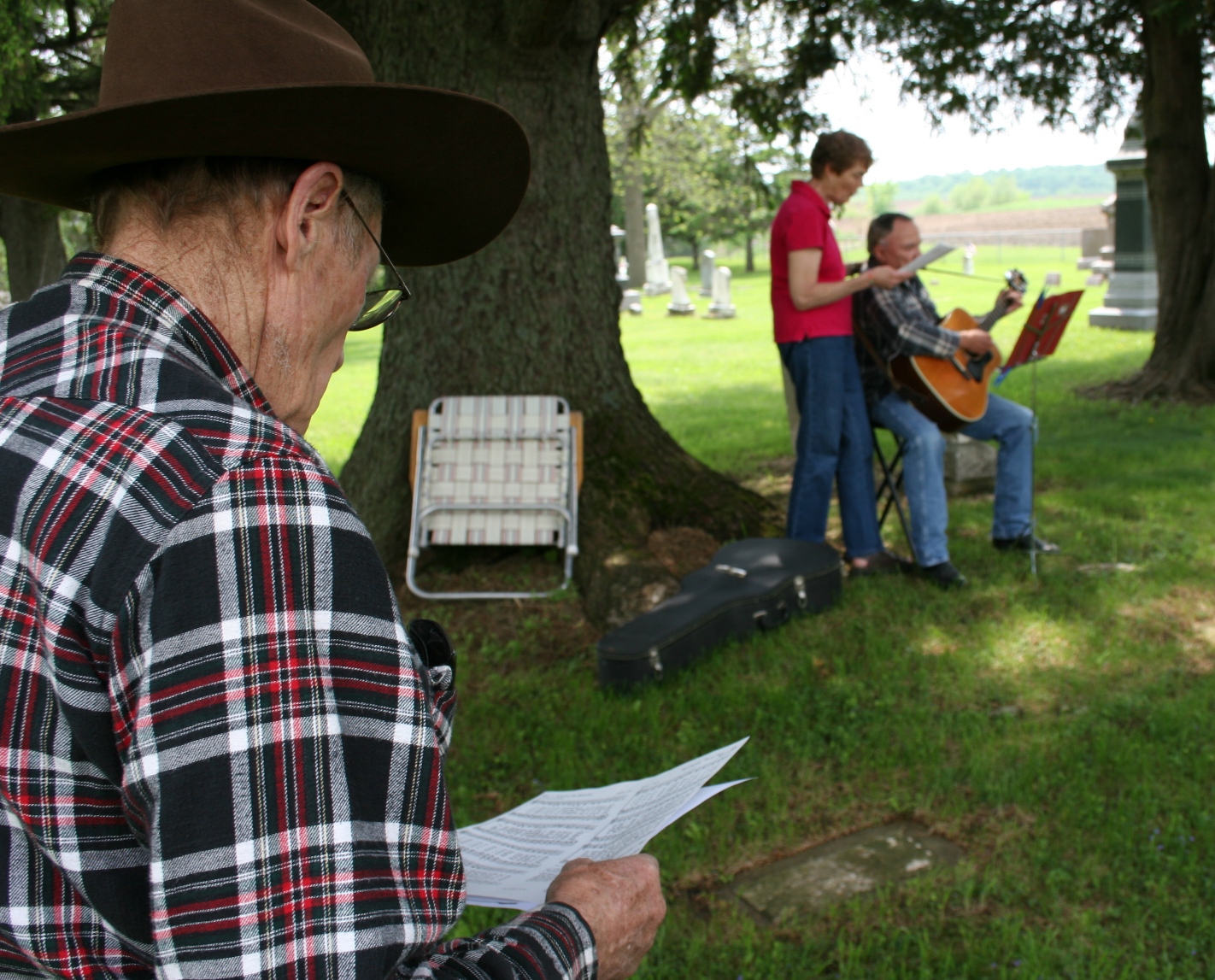
About 30 people gather at the Cannon City Cemetery for an afternoon Memorial Day observance.

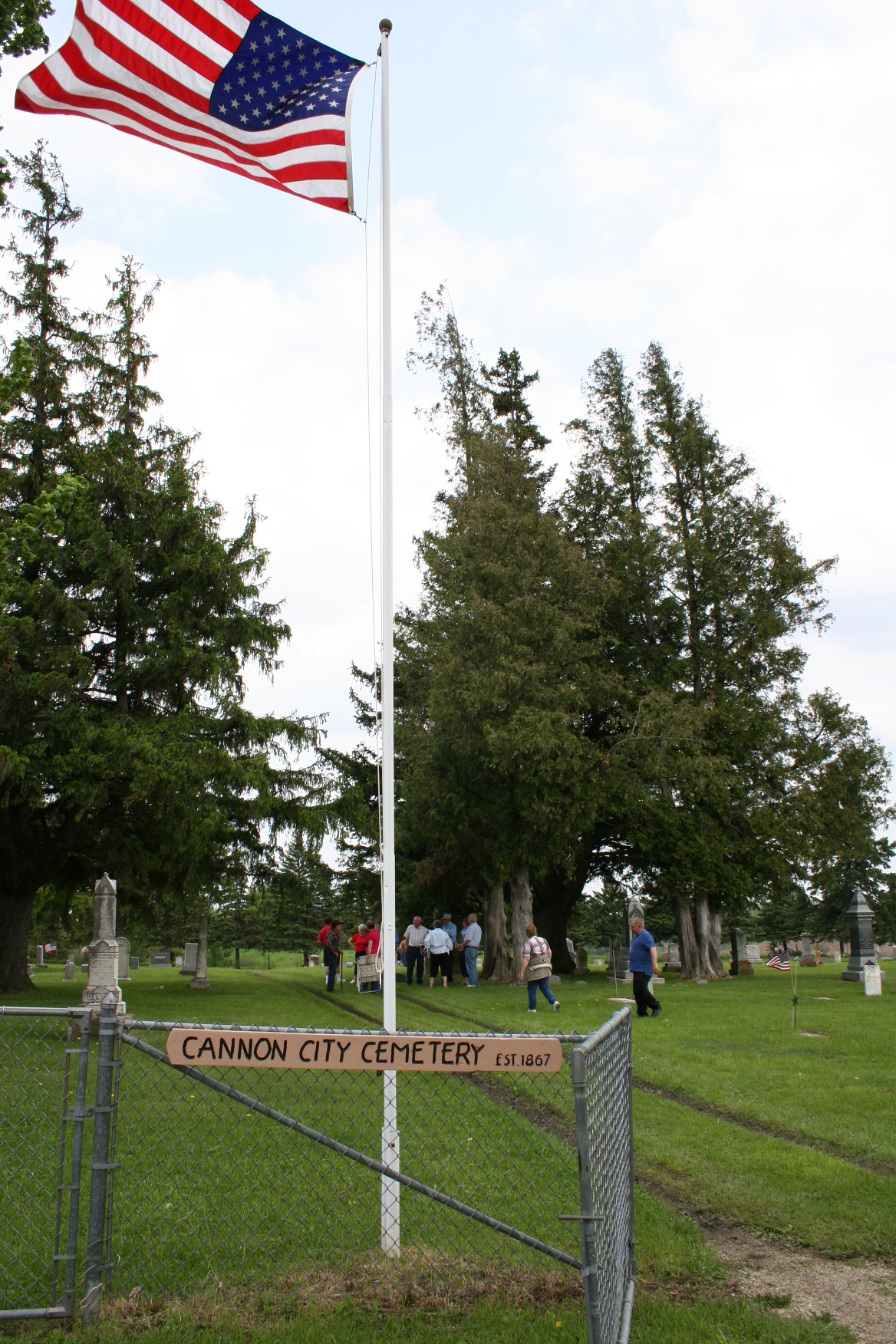
IN THE SHELTER of the spruce, of the pines, we formed a semi circle, clustered together in this small country cemetery to honor the veterans buried here, 22 of them from the Civil War.

Ezekiel and Samuel. Spencer and Charles. Henry and Theodore. Emcee Mel Sanborn read the list of names as the wind whipped his words into sometimes inaudible, unintelligible syllables at the Cannon City Cemetery.

Since the late teens or early 1920s, folks have gathered in this Rice County cemetery every Memorial Day, initially called “Decoration Day,” to honor the war dead. Civil War veteran Elijah Walrod was quoted as saying that his son Luther “would strike up the Death March and lead the procession” from the nearby Cannon City School, along the country road to the cemetery.

School children—some of them in attendance at the 2011 Memorial Day observance—once marched with flags and flower bouquets and lilac wreaths and then, afterward, celebrated at the school picnic.

When the school closed in the 1960s, the Cannon City Cemetery Board took over the annual Memorial Day observance, a tradition that continues today, minus the Death March from the country school. It is an unpretentious, informal program that is touching and moving and heartfelt. Americana through and through.

My husband and I came here on this muggy afternoon to experience a small-town Memorial Day observance. We were the strangers among those who had grown up here and had loved ones buried in this ground butted against the rich black soil of farm fields.

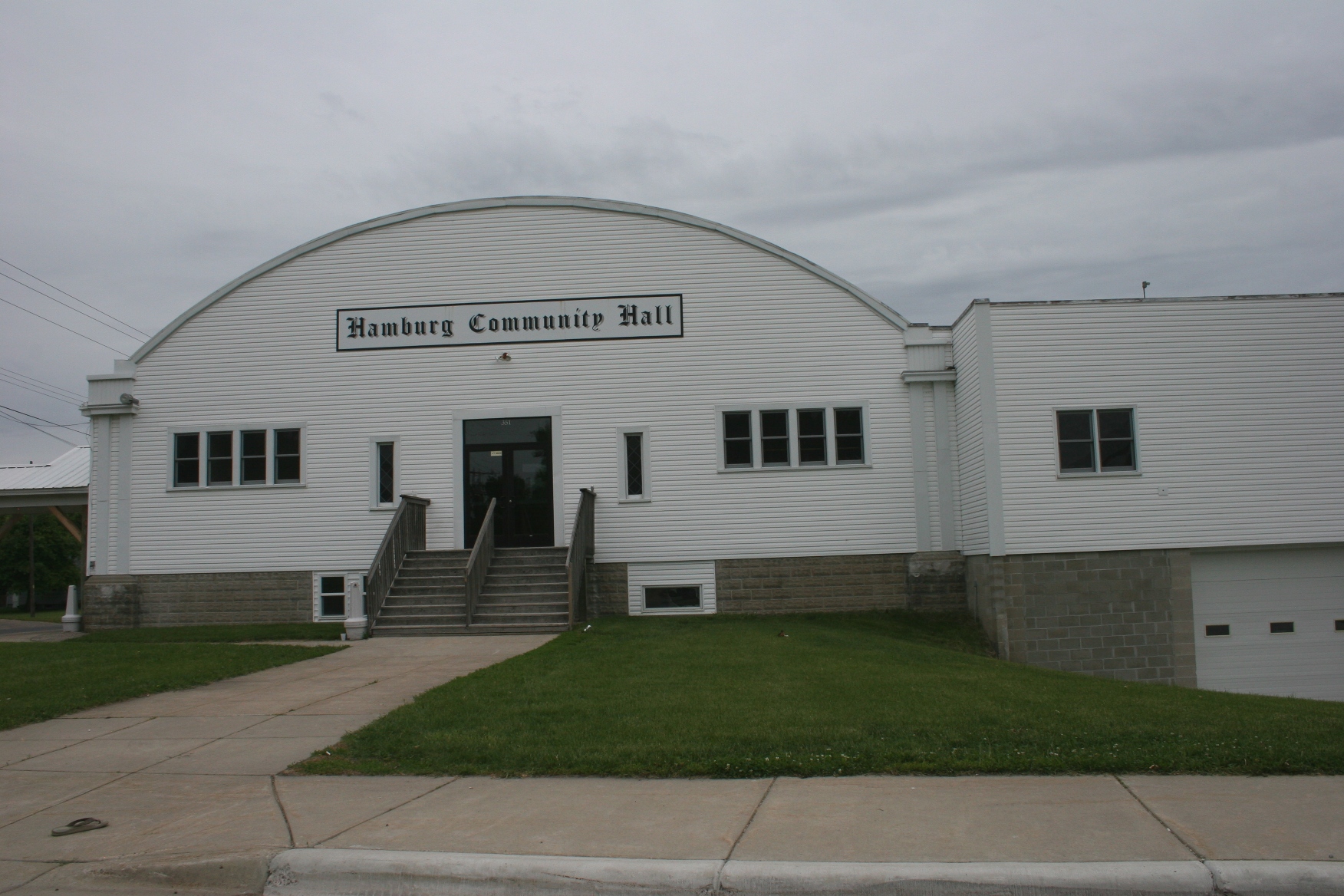
Yet, we were welcomed like family and I felt as if I had stepped back in time to the Memorial Day observances of my youth—the days of patriotic songs and playing of taps and reading of “In Flanders Fields.” I mouthed the words silently: “In Flanders Fields the poppies grow between the crosses row on row…” These poetic lines I knew nearly from heart, having recited them as a young girl on the stage of the Vesta Community Hall some 125 miles from this cemetery.

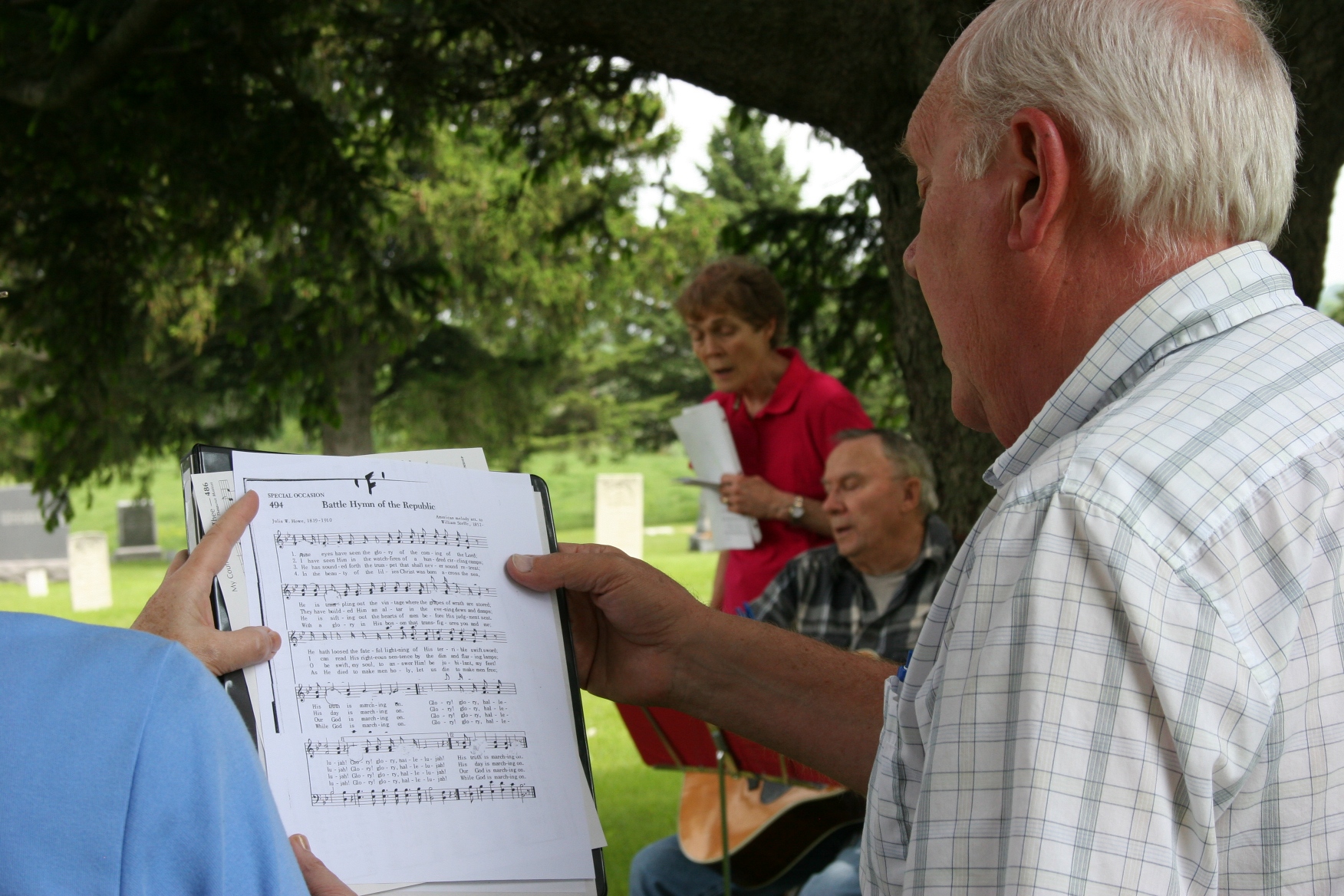
As Don Chester strummed his guitar and clamped his harmonica, we sang “My country, ‘Tis of Thee” “The Battle Hymn of the Republic” and other patriotic songs.

Bob (didn't get his last name) sings as Don and Judy Chester lead the group in song. Bob attended Cannon City School and participated in Memorial Day programs here as a student.

Song sheets were handed out to attendees. Here Mel Sanborn sings "The Battle Hymn of the Republic."

When Steve Bonde blasted “The Star Spangled Banner” on his trumpet, we sang along, turned toward the flag at the cemetery entrance, the brass quelling voices that drifted away with the word-flogging wind.

It mattered not how well or how loudly the 30 or so of us sang. It mattered not that a young girl darted inside the semi circle to pluck a dandelion from the grass. It mattered not that the occasional airplane droned out our voices. We were focused on the songs, “The Gettysburg Address” read by Audrey Sanborn Johnson, and, finally, Bonde’s mournful playing of taps.

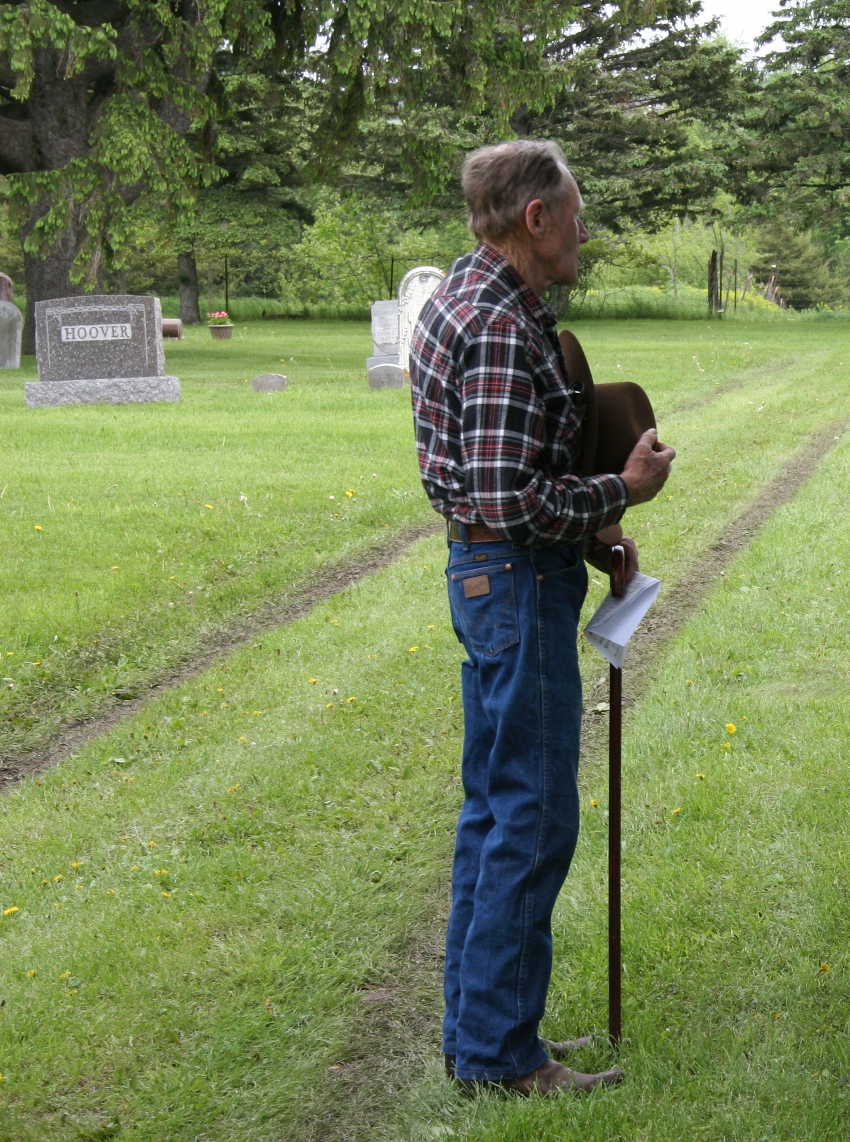
Long-time Cannon City resident Bob respectfully removes his cowboy hat during the playing of taps, a tribute that moves me to tears.

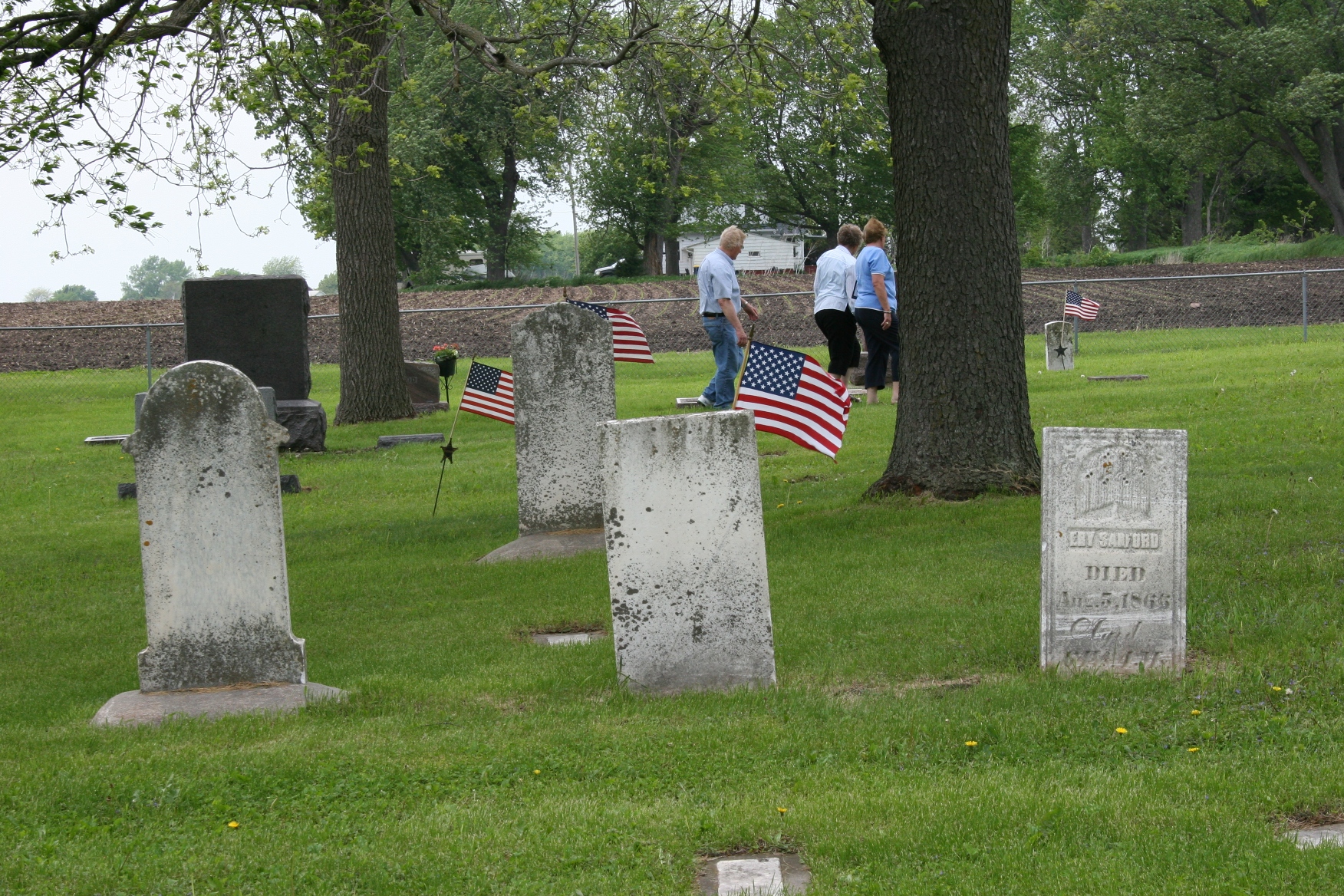
When the final note ended, the small group drifted, scattering across the cemetery to visit the graves of loved ones. I wandered, drawn by American flags to the final resting places of veterans. Names I did not know in an unfamiliar cemetery I was walking for the first time.

After the program, attendees visited gravesites.

Yet, despite the unfamiliarity with this place or these people, I felt connected to them by the reason I was here—to reflect upon the sacrifices made by so many American men and women in defense of our freedom. America. Land of the free and home of the brave.

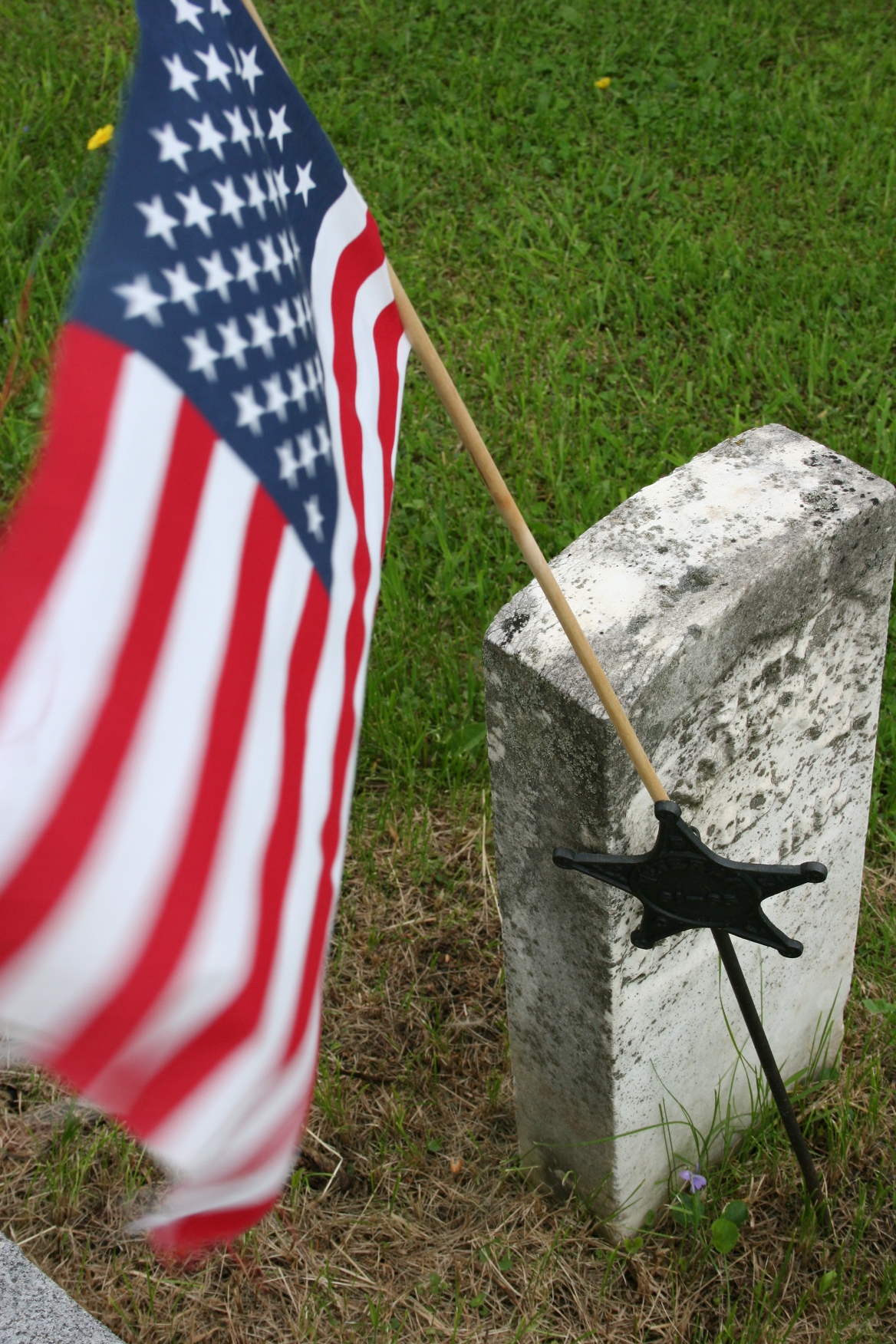
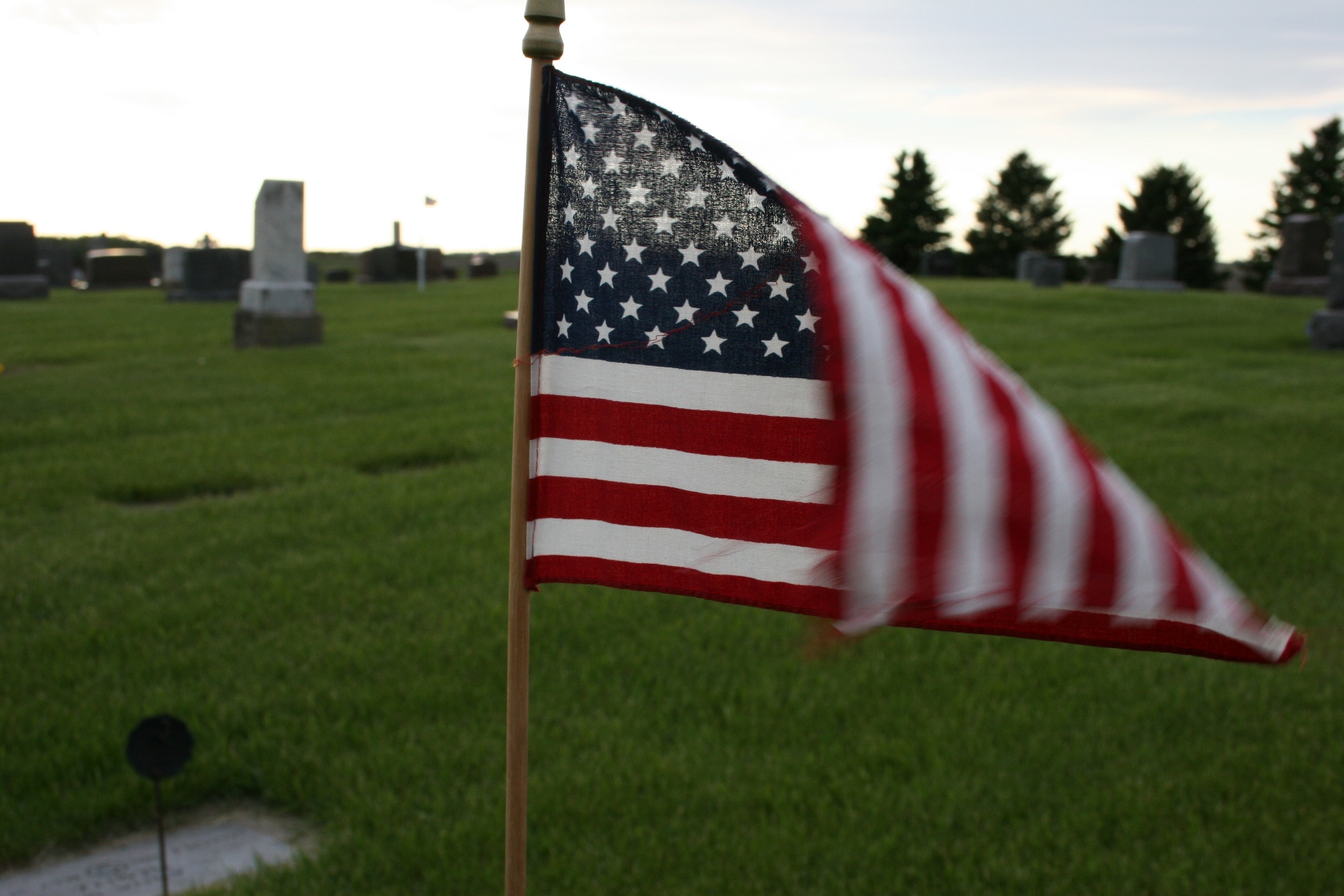
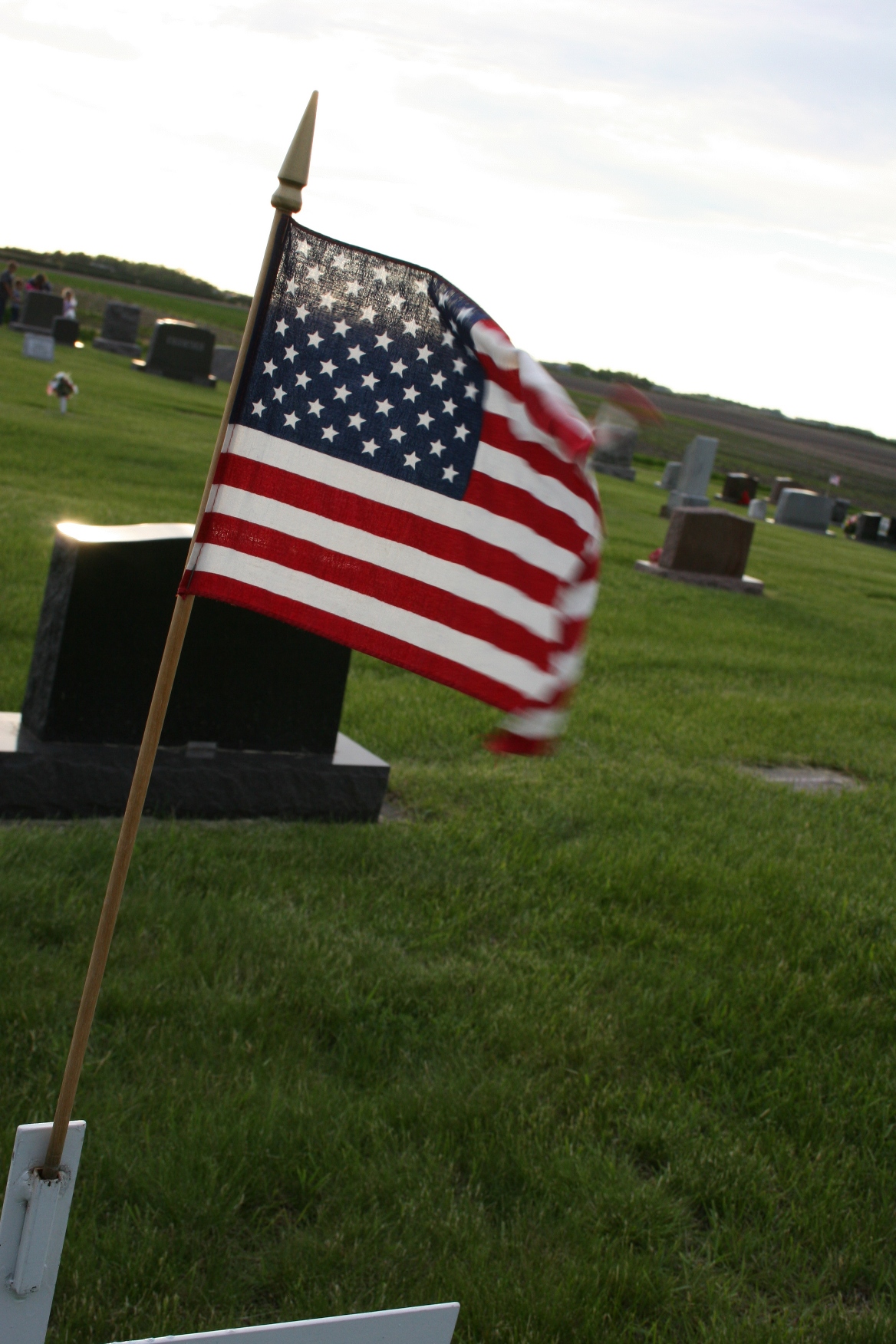
A flag waves in the wind on a soldier's grave.

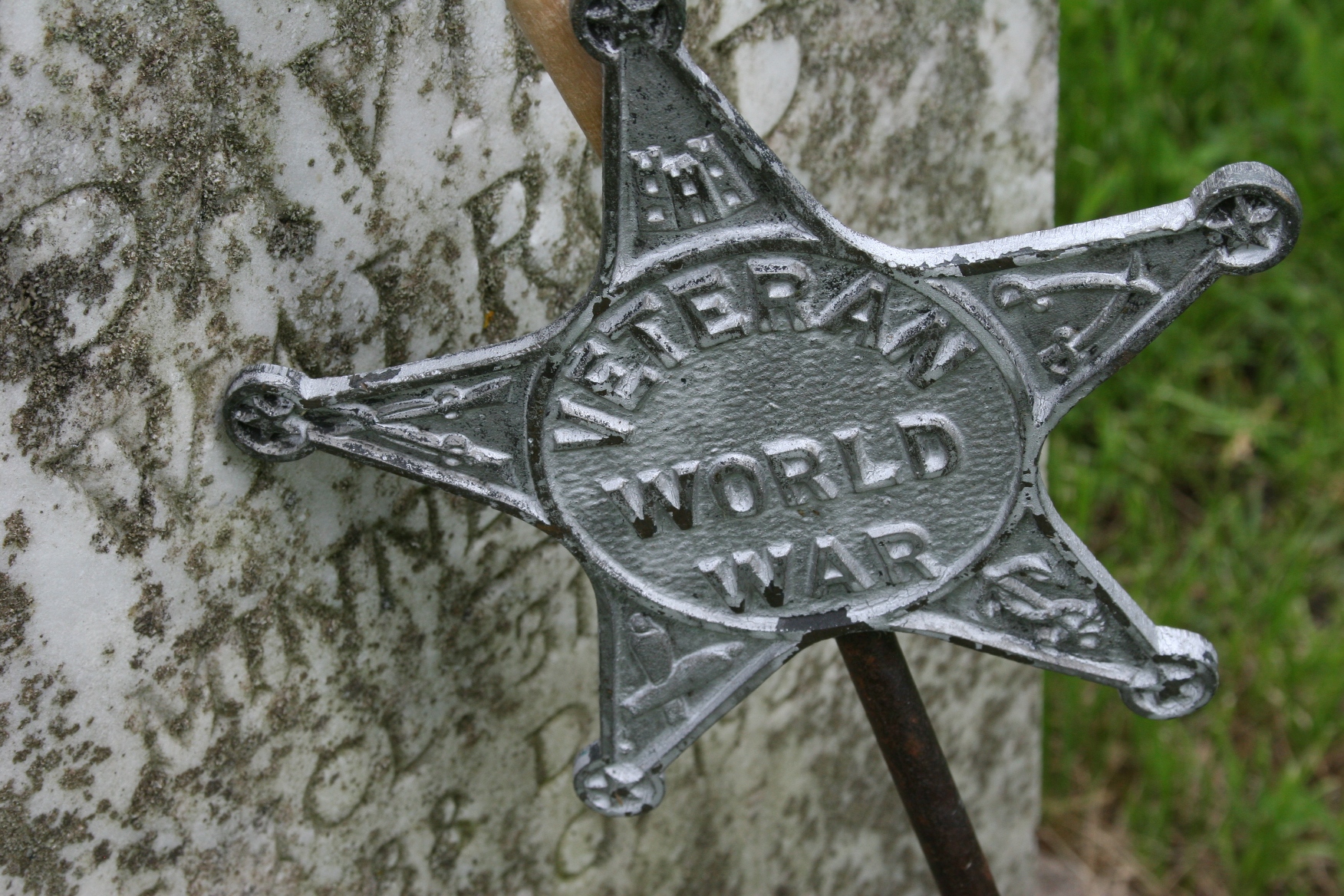
A star marks a veteran's tombstone.

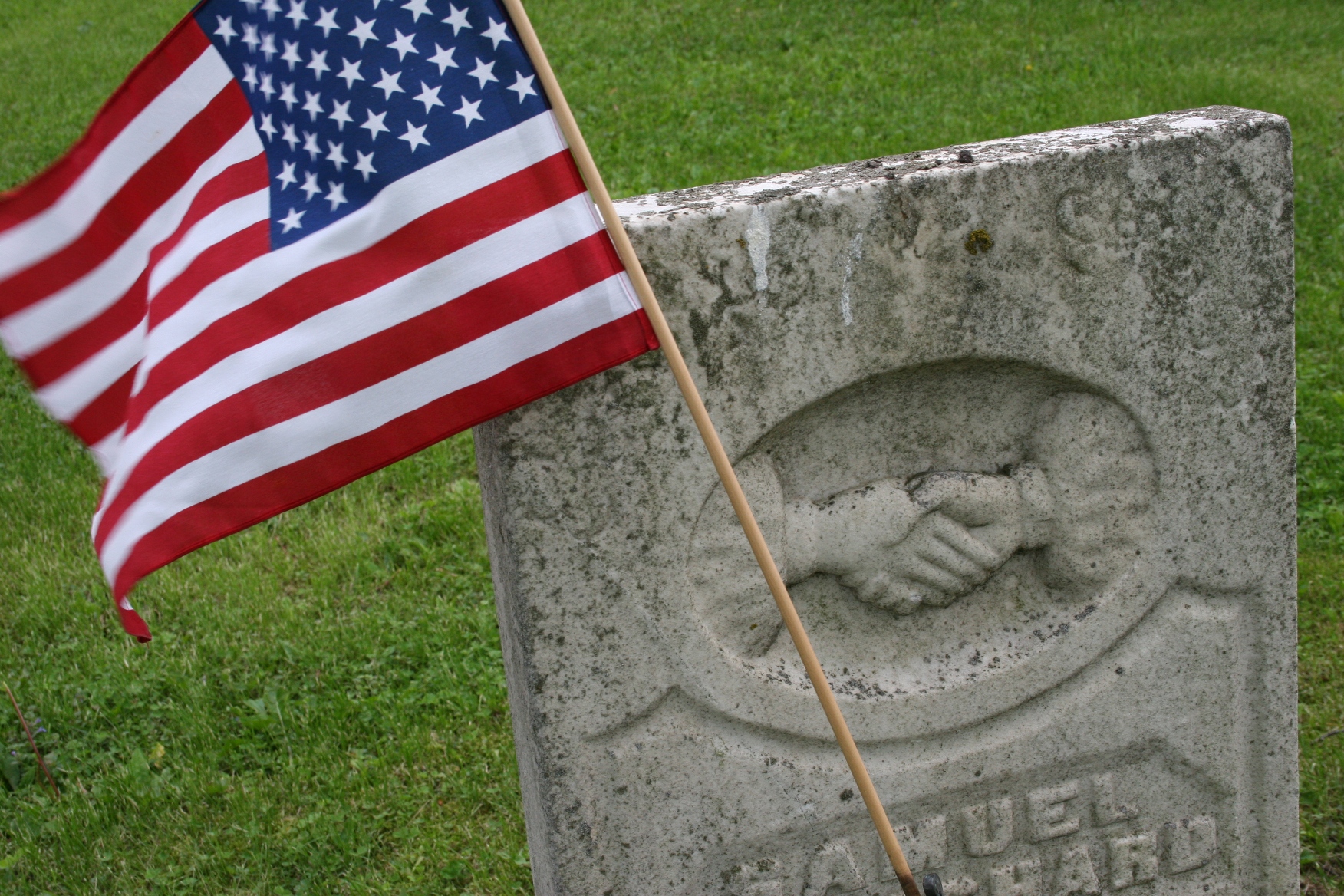
Can anyone explain the symbolism of these clasped hands on a veteran's grave?

A flag marks the entrance to the Cannon City Cemetery.

© Copyright 2011 Audrey Kletscher Helbling


The veterans of Vesta

A flag placed on a veteran's grave at the Vesta Cemetery in southwestern Minnesota.

EARTH MEETS SKY HERE.

On this Memorial Day weekend, I have come to this hilltop cemetery outside of my hometown of Vesta in southwestern Minnesota to remember.

I walk the rows, between the tombstones, lean in close, read the names, memories only a thought away.

My focus is on my father and the other veterans buried here whose names I know, whose stories of war I will never fully know.

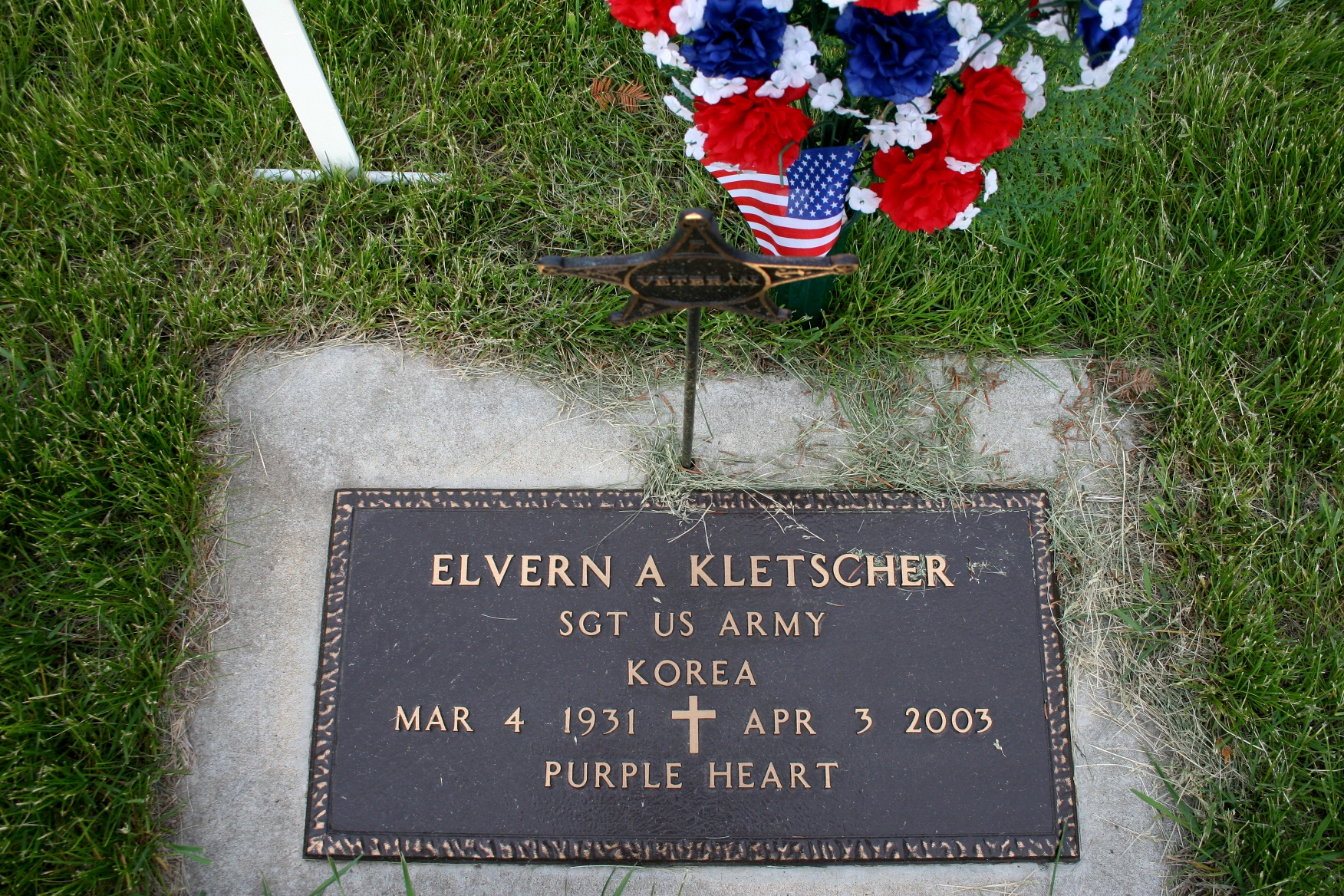
An in-ground marker honors my father, Elvern Kletscher, a Korean War veteran and recipient of the Purple Heart for wounds he suffered at Heartbreak Ridge in Korea.

How did they feel leaving family and farm? Were they scared? Were they honored to serve their country? Did they yearn for home as they shouldered their weapons? Did they leave as boys, come home as men? Were they scarred by war, forever changed?

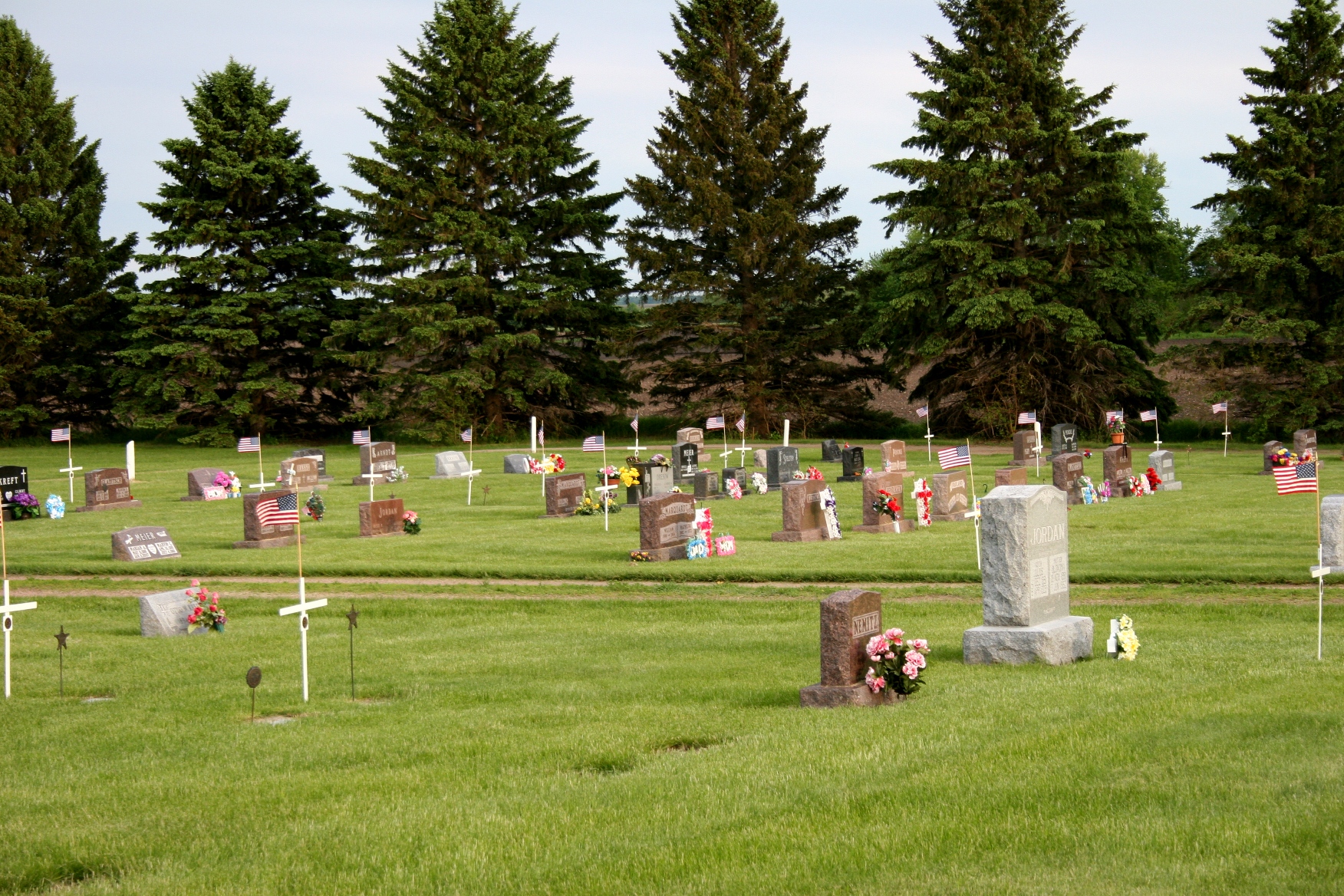
I wondered as strong prairie winds whipped flags attached to white wooden crosses. So many flags. So many graves of men who’ve served.

If only I’d asked them to tell me their stories, these men whom I’d never thought of as soldiers, until I saw their graves marked by crosses and stars and American flags.

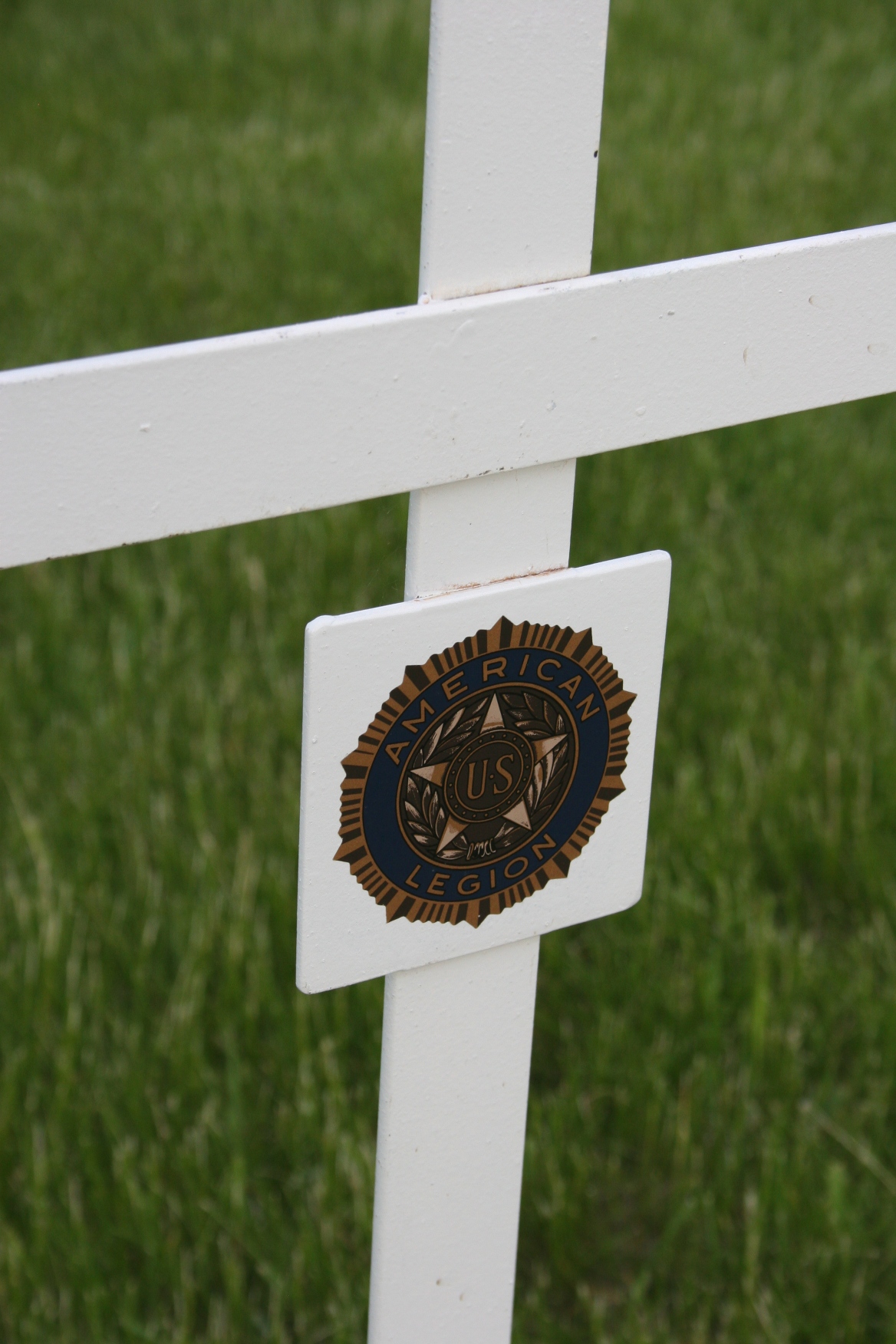
The local American Legion marks veterans' graves with white crosses.

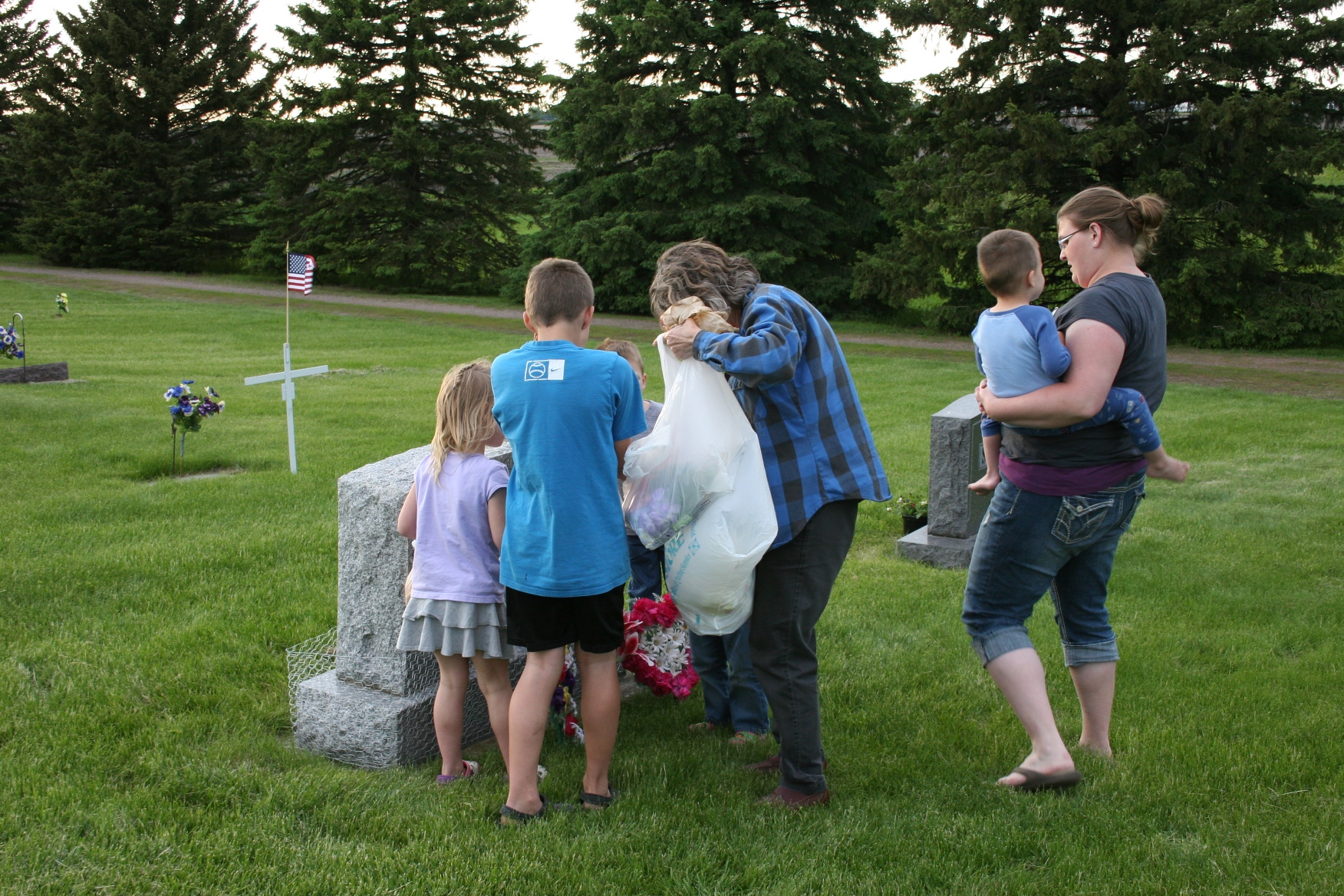
Barb Schmidt teaches her grandchildren about their ancestors as they place flowers on the graves of loved ones Saturday evening at the Vesta Cemetery.

Set atop a hill, the wind catches the flags marking vets' graves.

I was surprised by the number of veterans buried in the Vesta Cemetery, their graves marked by small flags attached to white crosses. This photo shows only one small portion of the graveyard.

© Copyright 2011 Audrey Kletscher Helbling


BibleSticks and battle prayers May 28, 2011

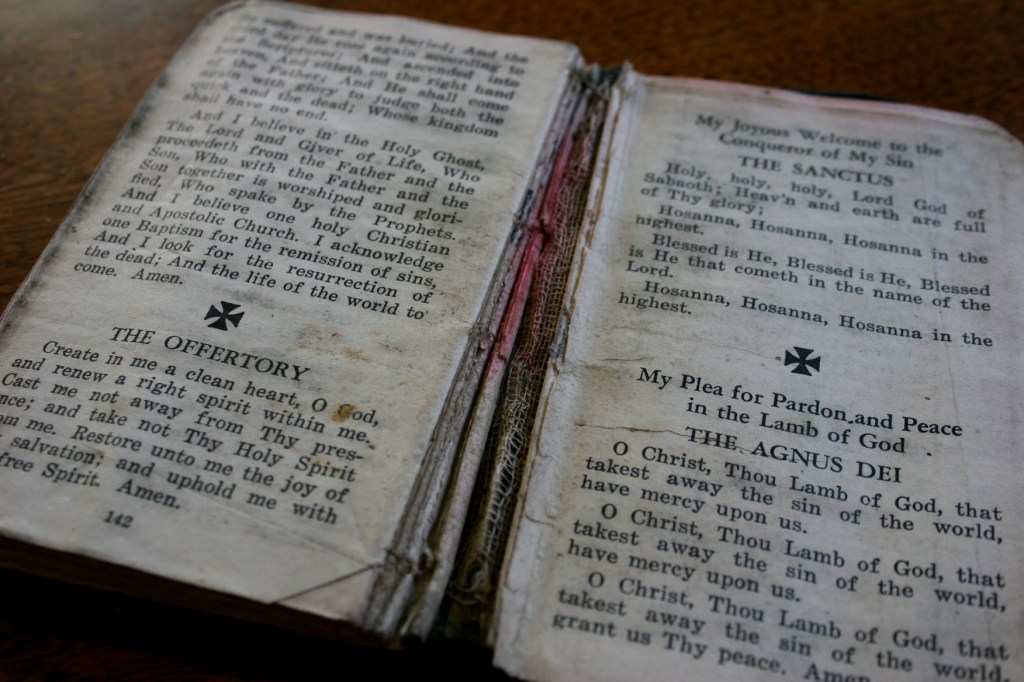
A tattered prayer book carried by my father to Korea, where he fought on the front lines during the Korean Conflict. Touching these pages, I feel the faith of my soldier father.

LAST SUNDAY AFTER SERVICES at my church, Trinity Lutheran in Faribault, we watched a brief video about BibleSticks.

Never heard of them? I hadn’t either, until viewing that clip.

“The Military BibleStick is a digital audio player that is pre-loaded with a dramatized recording of the entire New Testament,” according to the Faith Comes by Hearing website. The organization, dedicated to getting the Word of God into the world, “offers 557 Audio Scripture recordings in 553 languages reaching more than 5 billion people in more than 185 countries.”

Part of that outreach includes the U.S. military. Demand is great for the 3 ½-inch long, less than one inch thick, camouflaged, battery-operated BibleSticks, I learned via the video. For whatever reason, the BibleSticks must be processed through military chaplains.

With a $25 donation, we could give a slip-in-the-pocket, portable New Testament to military men and women.

Although I personally don’t know of anyone who has used a BibleStick, I do understand the importance of access to Scripture, especially for our soldiers.

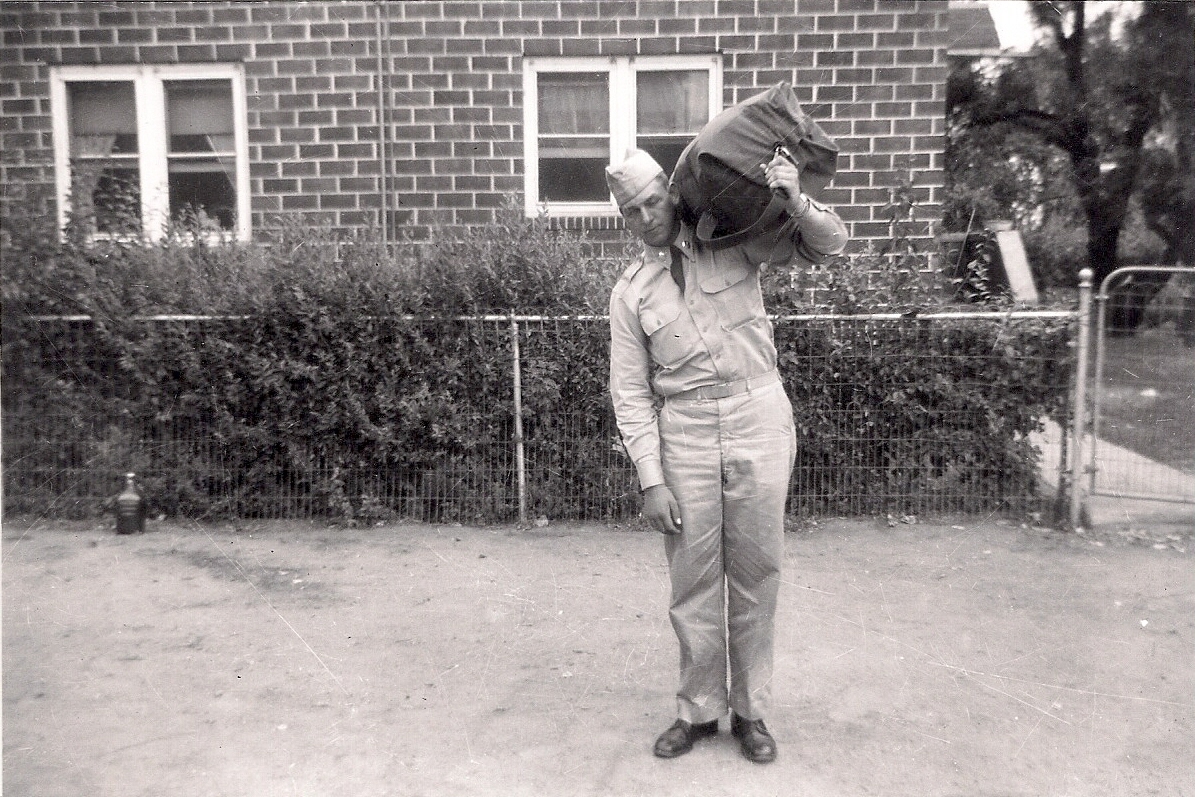
Flashback to February 1952, when my father, Elvern Kletscher of Vesta, was drafted. Less than a year later, he found himself in the mountains of Korea, a U.S. military infantryman fighting on the frontline during the Korean Conflict.
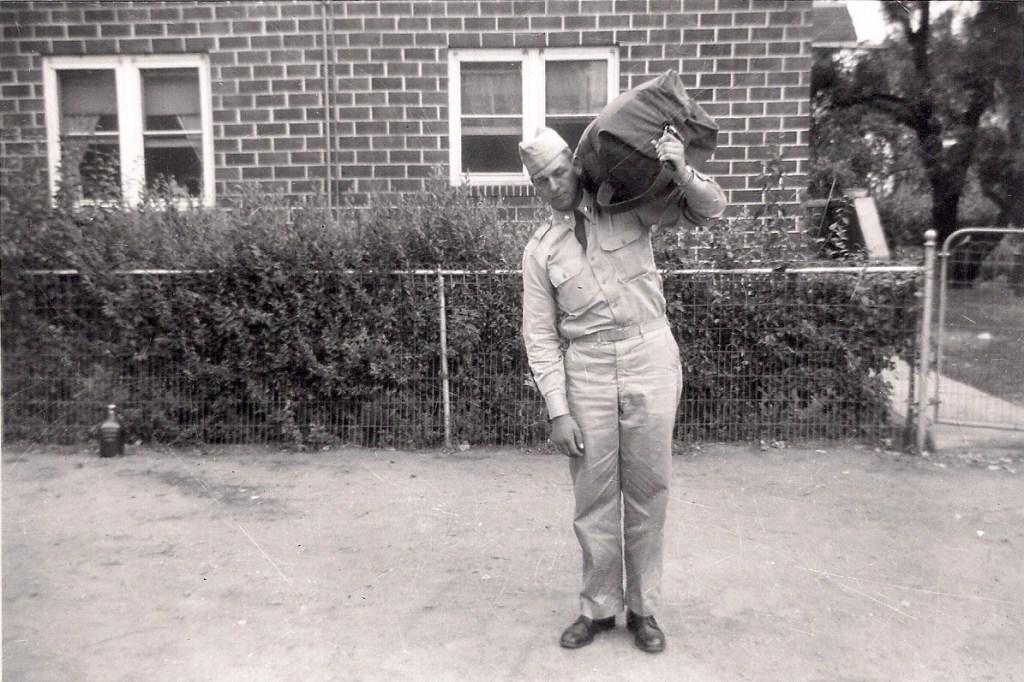
My father, Elvern Kletscher, preparing to leave his Vesta farm home in April 1952, six weeks after he was drafted.

On February 26, 1953, he was struck in the neck by shrapnel at Heartbreak Ridge. Later, he would be awarded the Korean Service Medal with 3 Bronze Service Stars, the National Defense Service Medal, the United Nations Service Medal, the Combat Infantry Badge and the Purple Heart.

During those combat days, when my dad feared for his life, when he was forced to shoot the enemy or die, he relied on his deep faith in God.

My Dad's worn copy of God Our Refuge.

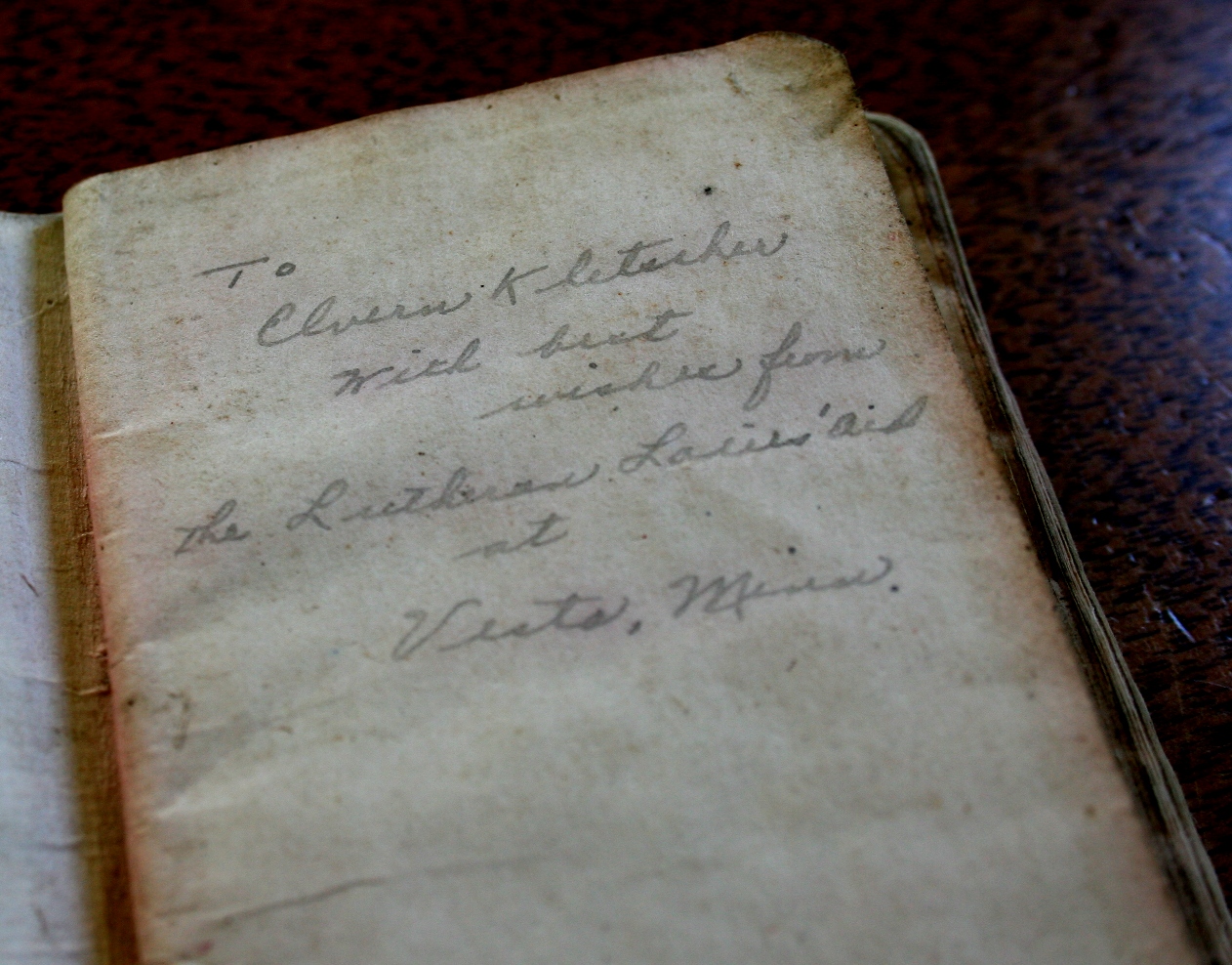
And he carried with him a 3-inch by 4 ½-inch black book, God Our Refuge. A gift from the St. John’s Lutheran Ladies’ Aid of Vesta, the book includes gospel readings, devotions, meditations, prayers, hymns and more.

Within the pages of that volume, my dad found solace, hope and comfort in the face of constant death.

Now eight years after his death, I cradle the tiny book in my palm, brush my fingers against the brittle, black leather covers, open the curled pages that are loosening from the binding. I think of my father, how he carried this book in his pocket, how he flipped and read the 144 pages, how he prayed while trapped inside the cold earth of a foxhole, while engaging in battle, while lying inside his tent at night.
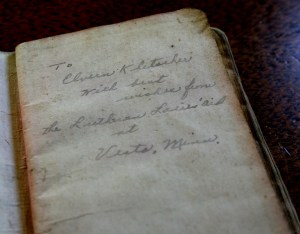
The inscription reads: To Elvern Kletscher with best wishes from the Lutheran Ladies' Aid at Vesta, Minn.

As I turn to page 117 of my dad’s tattered copy of God Our Refuge, I feel forever connected to him, my fingers touching the paper he touched, reading the words he read 58 years ago as a young soldier in battle:

“In Thine arms I rest me;

Foes who would molest me

Cannot reach me here.

Though the earth be shaking,

Every heart be quaking,

Jesus calms my fear.

Lightnings flash and thunders crash;

Yet, though sin and hell assail me,

Jesus will not fail me.”

HAVE YOU OR SOMEONE you know used a BibleStick? If so, I’d like to hear about your experience with this audio version of Scripture and what it meant to you.
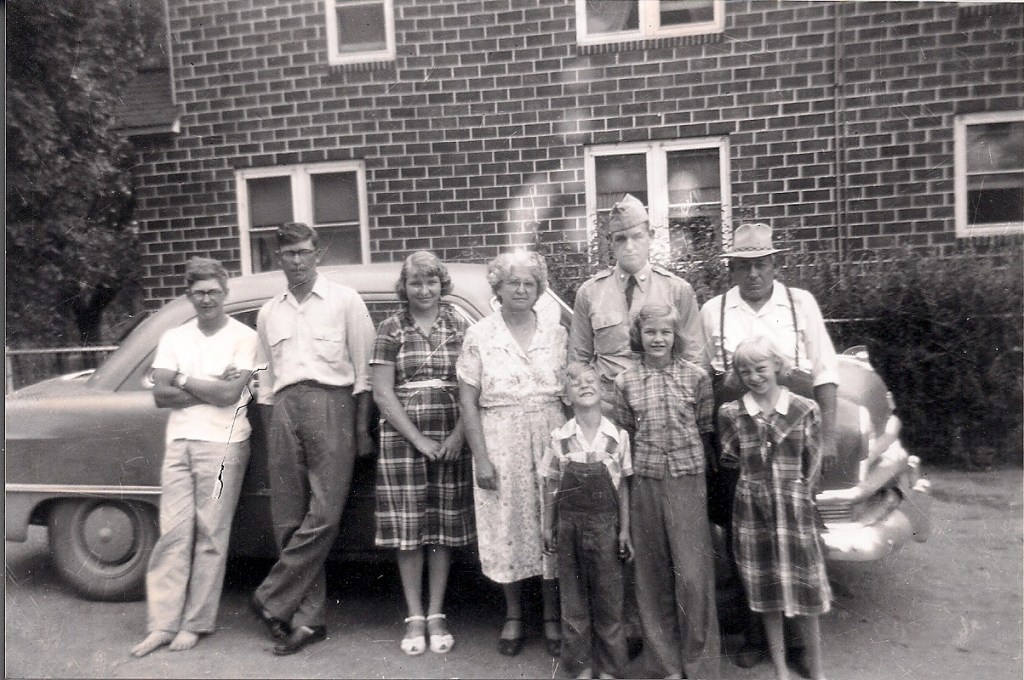
My grandparents, Ida and Henry Kletscher, posing with some of their children, flank my father, Elvern Kletscher, who is about to leave for military service in 1952. My uncle Merlin is the youngest, standing in the front row wearing the bib overalls.

BEHIND EVERY PICTURE, there is a story, including stories about the images of my father and his family, above.

My uncle, Merlin Kletscher, found these two photos in the winter of 2010 while researching for a family reunion. They were tucked inside a worn copy of The Lutheran Hymnal, copyright 1941, published by Concordia Publishing House. That hymnbook belonged to my grandfather, whose name, Henry Kletscher, was inked in gold on the cover. He had taped the edges and binding of the much-used songbook.

The two photos were sandwiched between song 409, “Let Us Ever Walk with Jesus,” and song 410, “Jesus Lead Thou On.”

The latter was one of my Grandpa Henry’s favorite hymns, Uncle Merlin recalls.

“I have not found any other photos or negatives which leads me to think that these pictures were very dear to him,” my uncle says.

Now those photos are also very dear to me. When Merlin handed copies to me last summer, I teared up. Little did my father know then what horrors awaited him on the battlefields of Korea, how his life and death experiences would forever change him.

And my heart ached for my Grandma Ida, standing there beside her soldier son. I wish I had asked her how she felt, how they all felt. Now I have only these photos to show me the close love of a family sending their boy off to war.

© Copyright 2011 Audrey Kletscher Helbling


Looking for work in a (still) challenging economy May 24, 2011

Filed under: Uncategorized — Audrey Kletscher Helbling @ 6:44 AM
Tags: , , , , , , , , , ,

Back in the day, transients rode the rails looking for work.

IS THE ECONOMY IMPROVING? Maybe. Maybe not. That depends on whom you ask and on what day.

Several months ago I would have said, “Yeah, I think the economy is starting to look up.” More “Help wanted” ads were publishing in my local daily newspaper. I sensed an overall mood of optimism in the media and among people in general. It simply seemed to me that our economic situation was improving, if ever so slightly.

But then, boom, we were socked with outrageous prices at the gas pump and in the grocery store and I felt like we’d been punched, like we’d all been knocked to the mat. Again.

Yet, even though higher prices are hitting my family’s pocketbook, we aren’t struggling to make ends meet, to put food on the table, to pay the bills.

Not like some many people.

A knock on my door several days ago showed me the personal side of a dire economy. A man in his late 40s asked if he could mow my lawn. I declined his request, explaining that I planned to mow the yard that afternoon.

“Lookin’ for work?” I inquired before he nodded his head and walked away to the next house with an overgrown lawn.

I now regret that ridiculous question. Clearly he was seeking work or he wouldn’t have asked to mow my lawn. I also regret that I didn’t take the time to step outside, sit down on my front steps and listen to his story. I wonder what he would have told me.

Just like I wonder about the carpenter who lives nearby and has twice asked about working for me. When we met in January, I was shoveling snow and he was walking past my house in shirt sleeves. I told him he should be wearing a jacket. He brushed off my motherly concern and said he was headed to my neighbor’s place just up the hill.

We chatted for awhile and he commented on a pile of demolition debris lining the edge of the driveway. We had recently begun a home improvement project. He wondered whether I had any carpentry needs. I told him about a closet I planned for an upstairs bedroom, but I didn’t hire him.

Recently that same unemployed carpenter approached my husband to inquire again about work and that closet project. I admire his determination. Here is a man who needs a job and he’s not afraid to seek it out. (I sometimes wish I had hired him for another home improvement project which is now dragging into its sixth month.)

These two unemployed men remind me of the stories my Grandma Ida told me of hobos riding the rails, looking for work in the farm fields of southwestern Minnesota back in the day. If I recall correctly, these transients occasionally helped on my grandparents’ farm.

These were men down on their luck, in need of good, honest, hard work.

Although I am way too young to have lived through The Great Depression, I have those stories impressed upon me by a grandma who understood the value of hard work and “making do.”

My own parents also worked hard, lived within their means and set an example of being content with whatever you have. I’ve tried to live that way too and pass along to my children that family, faith, love and happiness are more important than material possessions.

Yet, we all need an income to pay the bills. In the 27 years I’ve lived in my Faribault home, I’ve never had local strangers approach me, looking for work. Until this year.

That’s as strong a statement as any about the challenging state of our current economy.

WHAT ABOUT YOU? How are you/your family handling this current challenging economy? Have you changed your lifestyle, your spending? Have you had unemployed individuals come to your door looking for work?

What’s your take on the current state of the economy?

© Copyright 2011 Audrey Kletscher Helbling
 

My Minnesota childhood memories of Harmon Killebrew May 18, 2011

“BATTER UP!”

His voice cracked like the whack of wood against leather as I stepped up to the plate, bat handle vise-gripped in my hands, feet planted in packed gravel next to the rusted, cast-off disk from the disk harrow.

As my oldest brother lobbed the ball toward me, I swung, and as was typical of me, missed. I was aiming to hit the ball toward the barn and milkhouse at the edge of the farm yard, our ball field.

Almost every evening, as the sun inched lower in the prairie sky toward the greening fields of early spring and then into the hot, humid days of tasseling corn, my siblings and I traded chore gloves for softball gloves. “Let’s play ball,” we’d yell in unison.

And then the arguing would begin. “I’m Harmon Killebrew,” my oldest brother hollered, the name flying off his tongue with the speed of a fast pitch.

No matter how loudly the rest of us protested his call, we struck out. He was the eldest. If he wanted to be Killebrew, then he would be Killebrew.

We assumed the roles of other 1960s Twins greats like Tony Oliva and Rod Carew.

But we all wanted to emulate Killebrew, to swing the bat, to watch the ball powerhouse toward the barn roof, maybe even sail as far as the silo room or the cow yard beyond, well out of reach of our siblings’ outstretched hands.

Such are my memories of the Twins’ home run slugger.

I’ve never been to a Twins game, never met Killebrew, don’t watch or listen to baseball.

Yet, upon learning of Killebrew’s death, a twinge of melancholy swept across me as I thought of those pick-up farm yard softball games, the baseball cards my brothers collected and the static of my eldest brother’s transistor radio broadcasting a Twins game in the 1960s.

For all the sibling bickering over who would pretend to be Killebrew or Carew or Oliva, those post chores games score among the home runs of my rural Minnesota childhood.

Copyright 2011 Audrey Kletscher Helbling


Wash day May 16, 2011

Filed under: Uncategorized — Audrey Kletscher Helbling @ 6:59 AM

Tags: , , , , , ,

I CARE NOT ONE bit that he detests the rough feel of a scratchy towel against his skin, the abrasive texture of cotton encasing his foot or the stiffness of line-dried blue jeans brushing against his legs.

Nothing. Not my teen’s complaints, or pleads or requests will stop me from hanging freshly-laundered clothes outside to dry.

It is one of my joys—to hoist a basket of wet clothes onto my hip, lug the basket upstairs from the dark cave of a basement laundry room and then step onto the back stoop into the bright sunshine of a spring morning.

Methodically I work my way through the pile of wet clothes, clipping them onto the clothesline as the early day sun warms my fingers and the wind whips socks and jeans and underclothing and shirts into a frenzied dance.

The simplicity of this task pleases me, connects me to the land and to the women before me who toiled, hanging their faded calico dresses, their hand-stitched crazy quilts, their worn aprons, and the patched trousers of their men and sons under the prairie sun.

As my fingers touch the wet cloth, bind cloth to line, I am bound, by this simple act of hanging out the wash, to generations of women.

Copyright 2011 Audrey Kletscher Helbling