Downtown Elgin, Minnesota. (Minnesota Prairie Roots copyrighted photo May 2022)
AS A WRITER AND PHOTOGRAPHER, details matter to me. I notice the unusual, the quirky, the odd in places. That includes in Elgin, a small farming town northeast of Rochester.
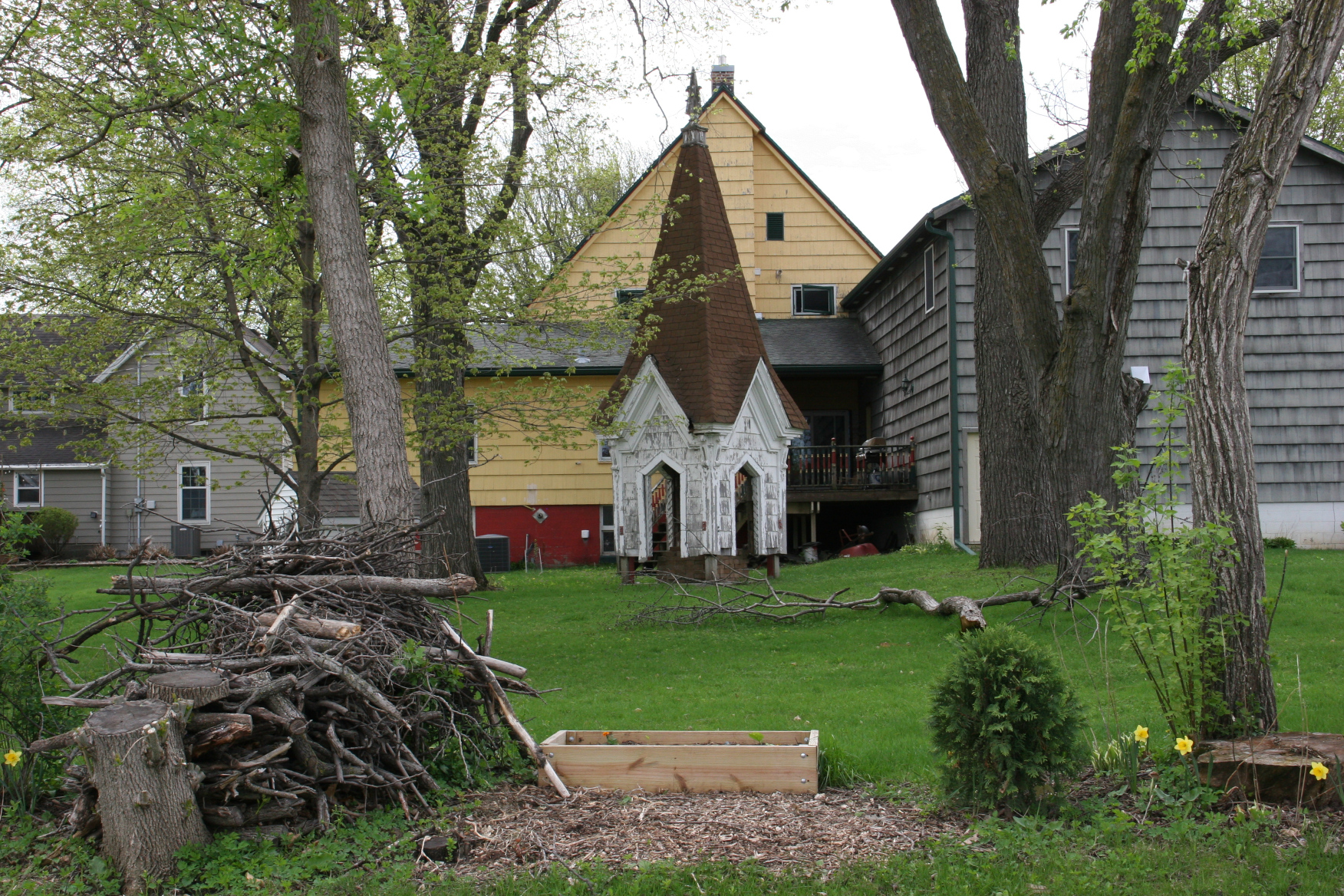
A block off the main street, I saw this steeple in a backyard. (Minnesota Prairie Roots copyrighted photo May 2022)
On a recent walk-about through the downtown area, I came upon a church steeple. Not atop a church, but rather in a residential backyard. I have no idea what the story may be behind its placement there or what the homeowners have planned for the structure. But I found the entire scene interesting.
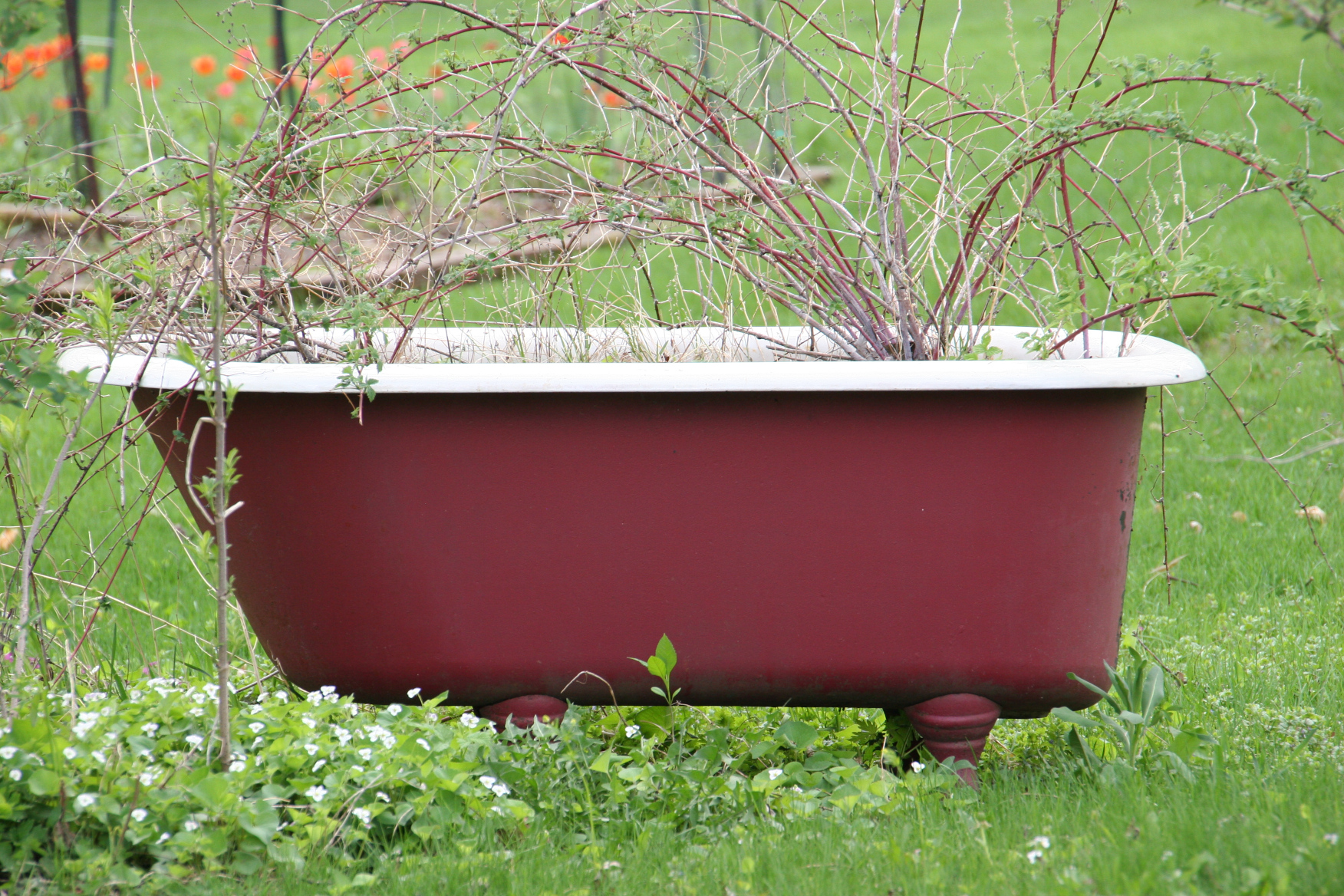
Bathtub turned planter. (Minnesota Prairie Roots copyrighted photo May 2022)
In that same backyard sits a vintage bathtub repurposed into a planter. The growth springing from the tub suggests these are raspberries. I didn’t feel comfortable moving in closer to confirm my guess.
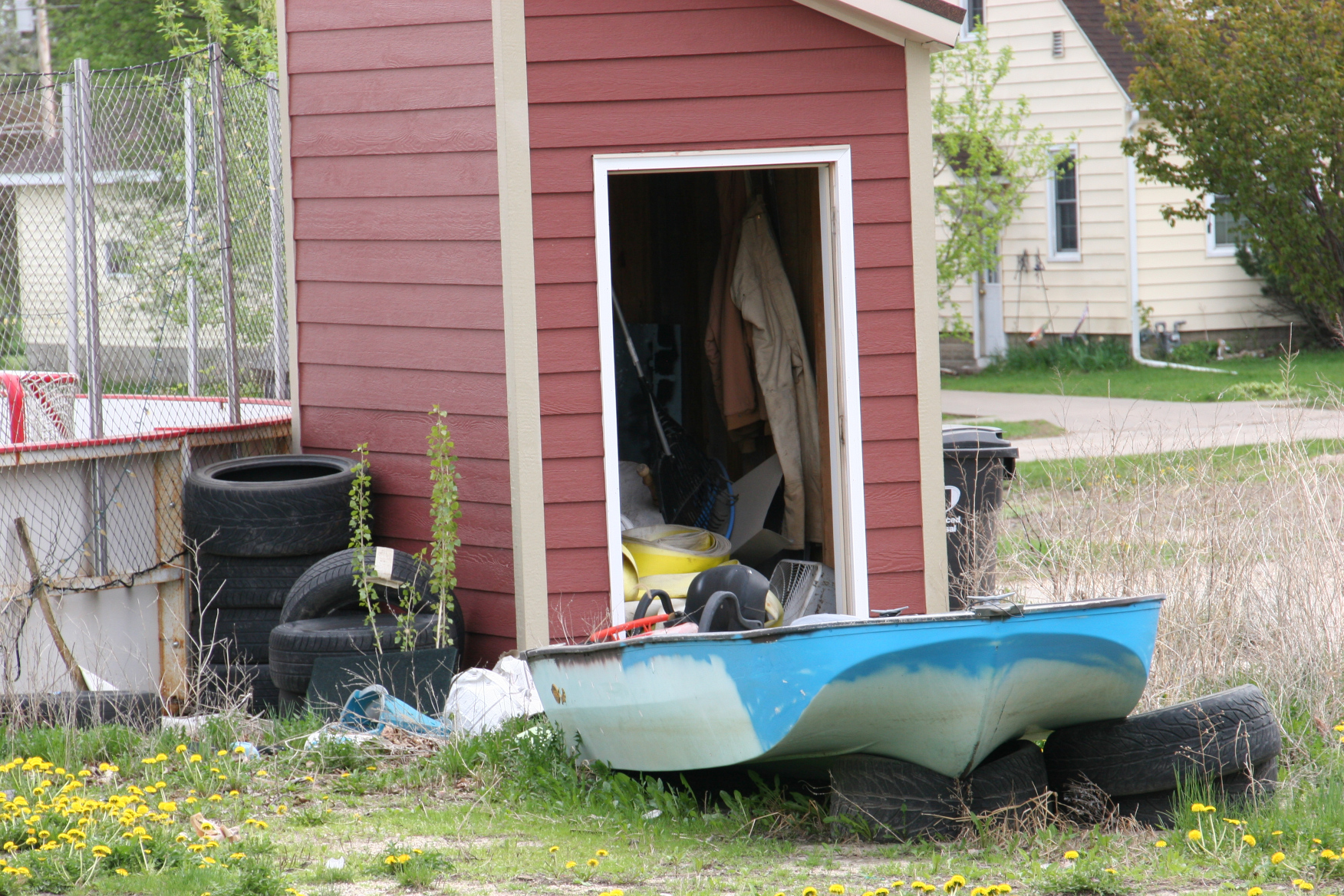
An angler’s shed. (Minnesota Prairie Roots copyrighted photo May 2022)
Just across the way, a boat rests on tires outside a shed. More tires sidle the small building. Again, I didn’t move in to snoop. But I speculated that the owner is an avid angler and could spin a story or ten about the big one that got away.
Doors repurposed into a fence in downtown Elgin. (Minnesota Prairie Roots copyrighted file photo May 2022)
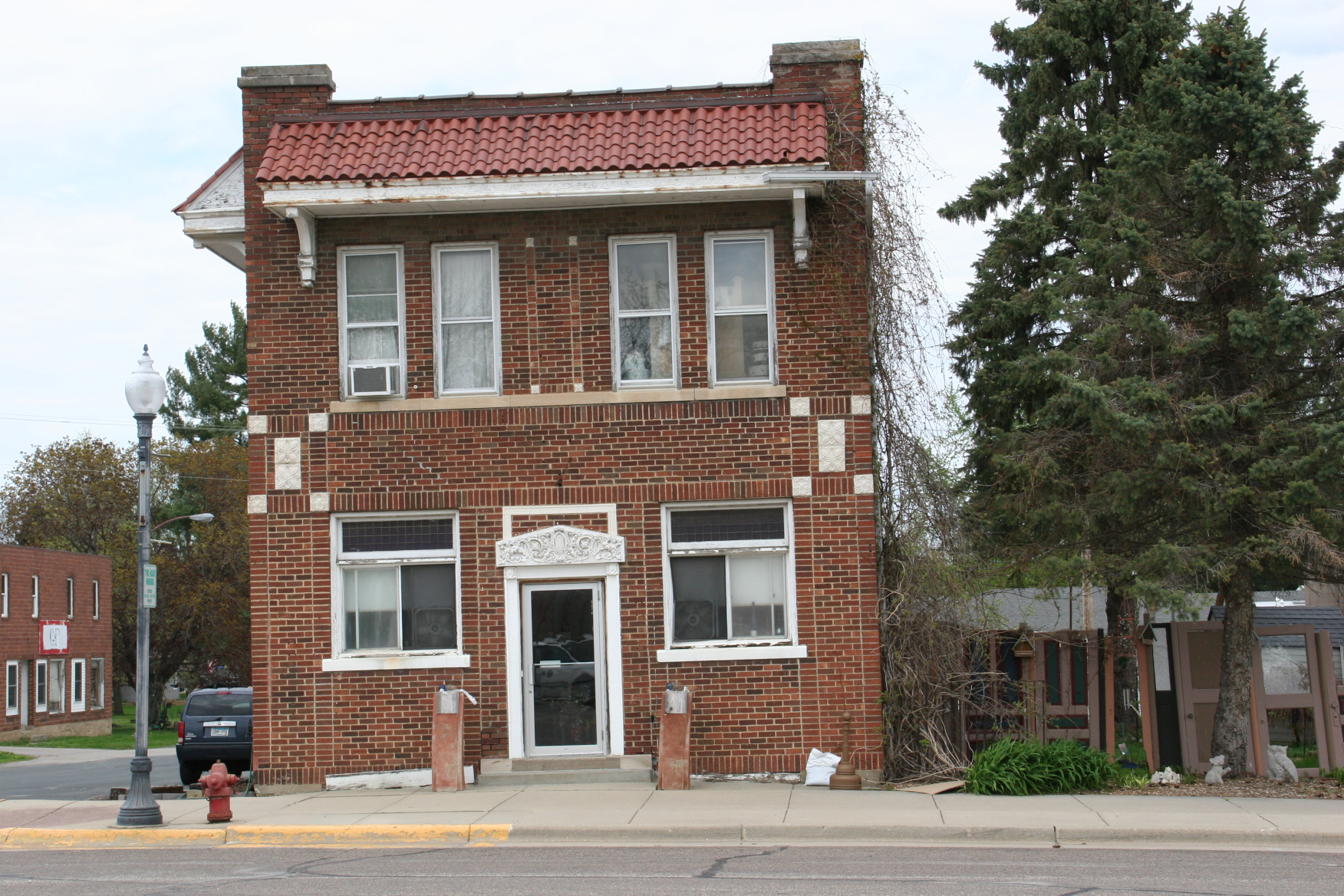
A row of vintage doors, repurposed as a fence next to an architecturally interesting brick corner building, also grabbed my attention. I love when people get creative. There’s a story here in this functional public art and in that historic building.
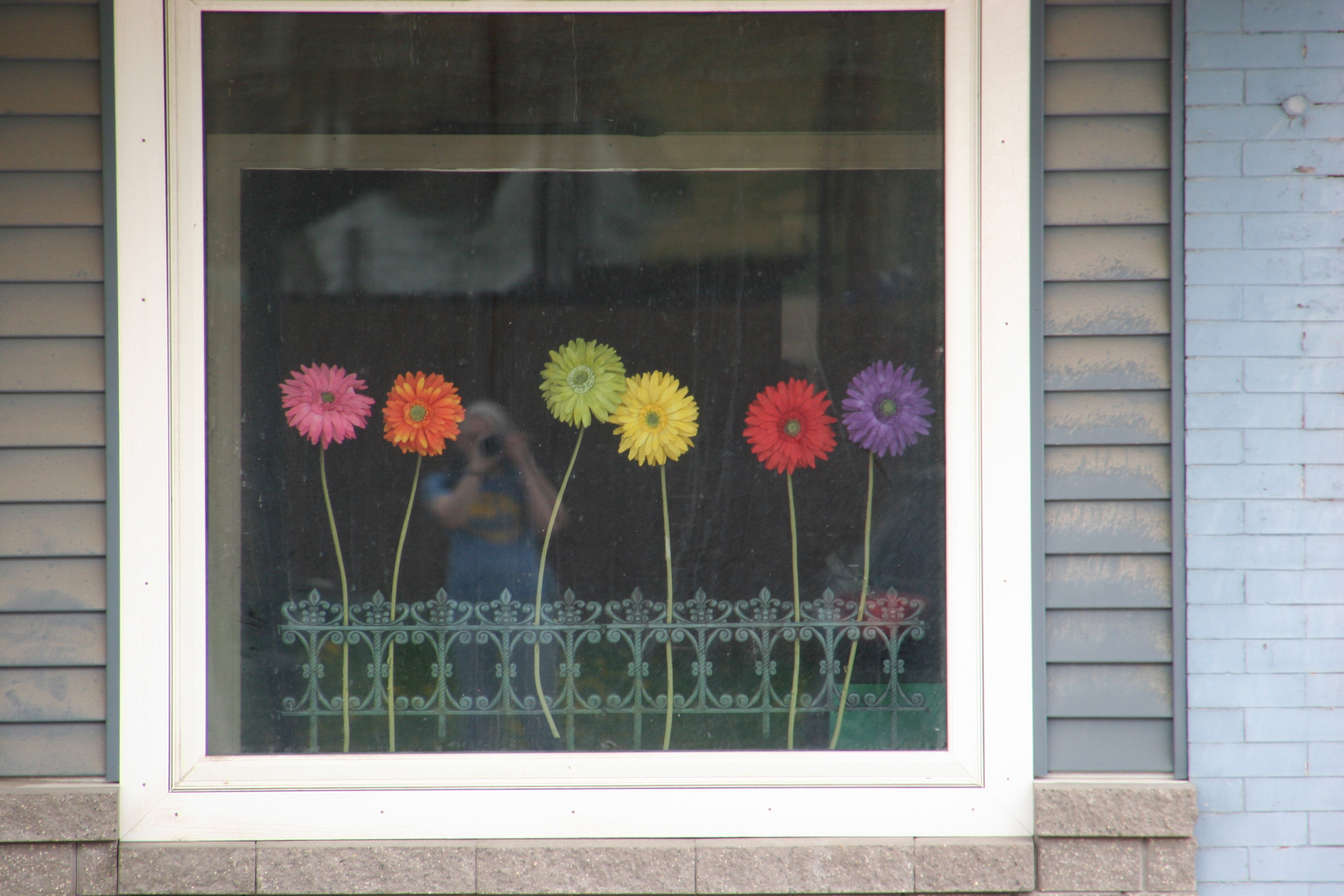
I’m reflected in the window of this downtown “flower garden.” (Minnesota Prairie Roots copyrighted photo May 2022)
As I meandered, I noticed a few other details. Like the colorful fake flowers blooming in a window. That scene simply made me smile.
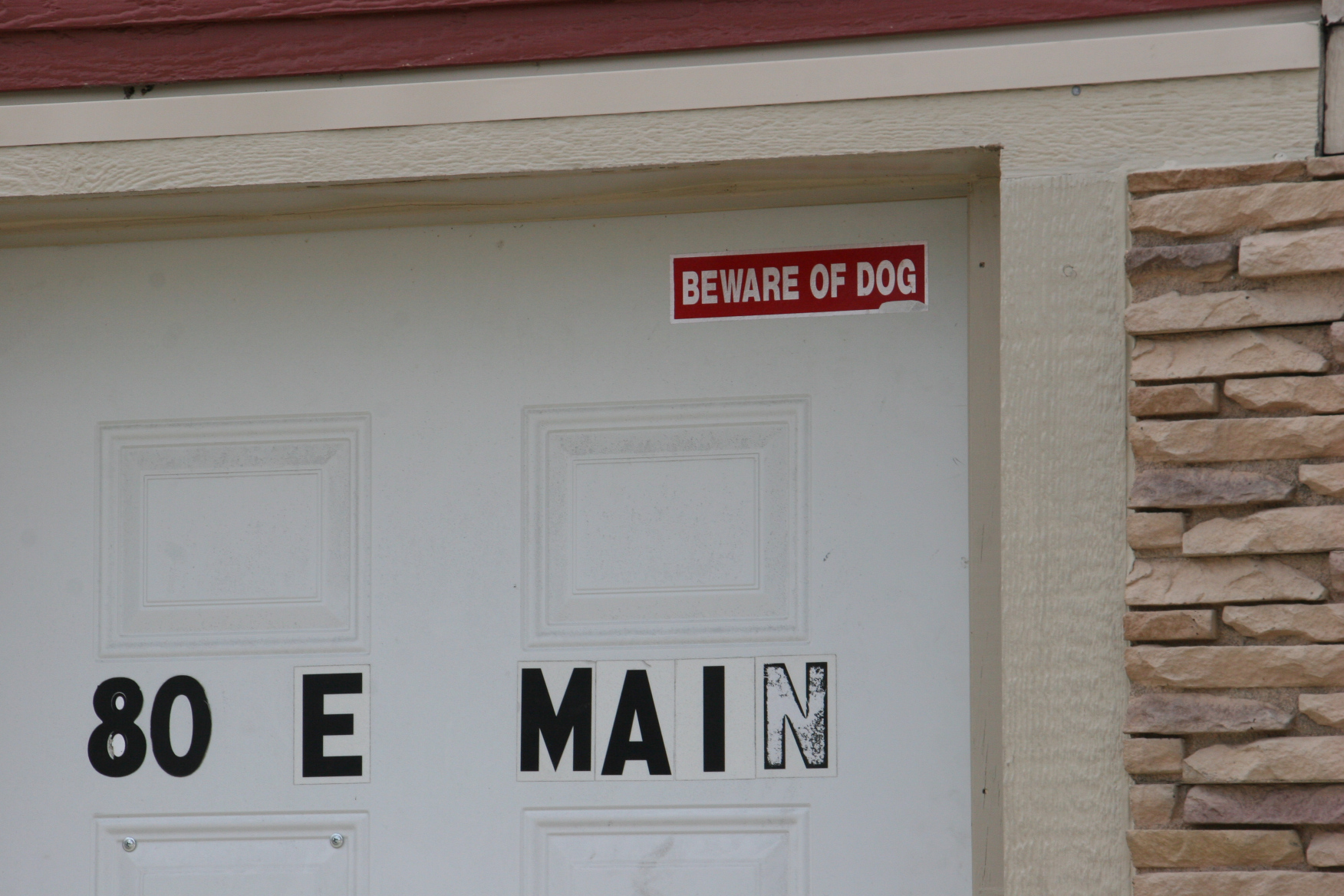
Be on notice… (Minnesota Prairie Roots copyrighted photo May 2022)
But when I spotted a BEWARE OF DOG sign on a garage door, I felt quite the opposite. At least no barking ensued, warning me to keep my distance.
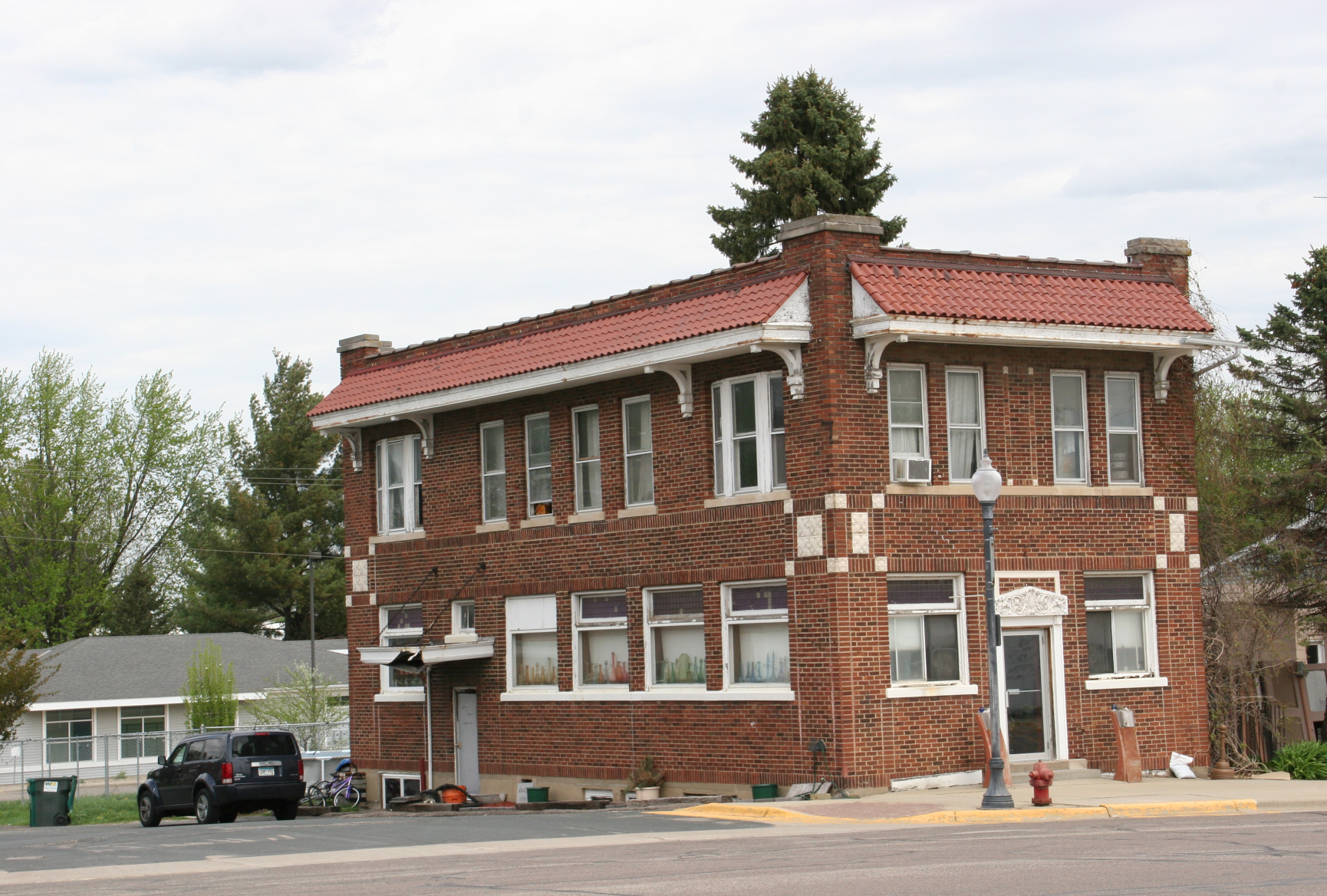
This is the lovely corner building where I spotted the door fence to the far right. (Minnesota Prairie Roots copyrighted photo May 2022)
I wasn’t in Elgin all that long. Yet, I discovered details that imprint upon my memory. I’ll remember the church steeple in the backyard, the doors repurposed into a fence, the nuances that caught my eye. I take joy in finding these small town quirks/oddities/characteristics and I encourage you to look for the same when you’re out and about.
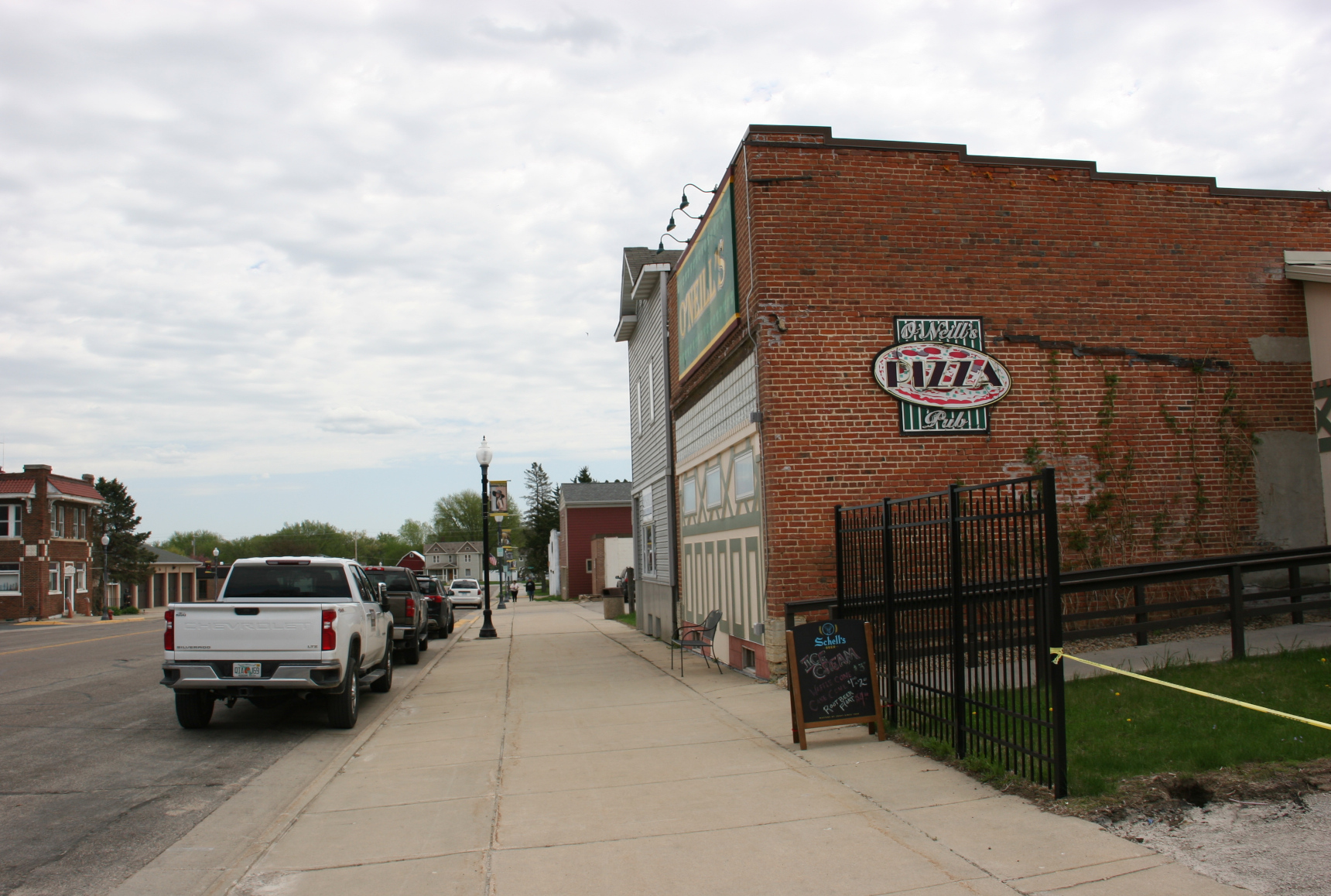
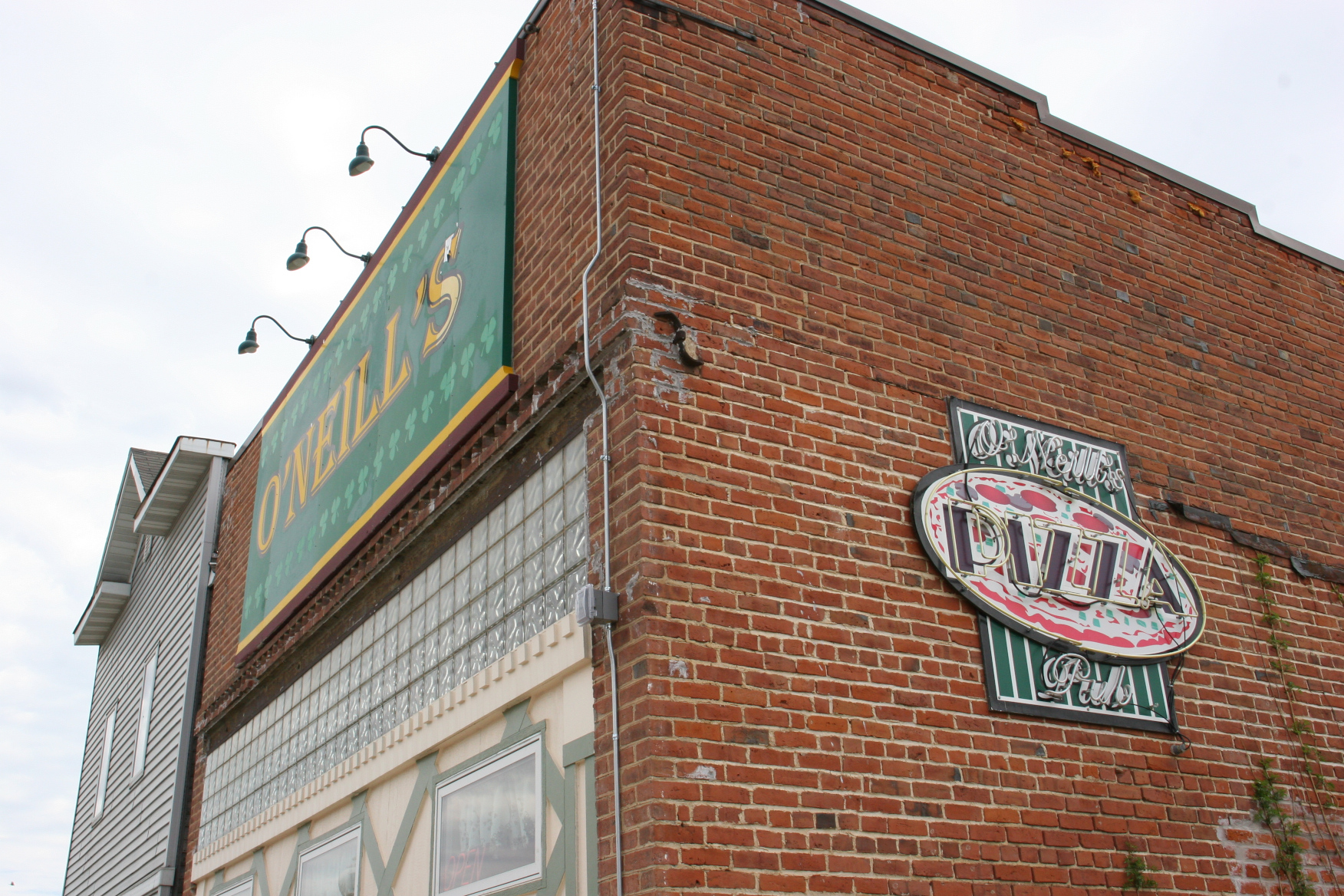
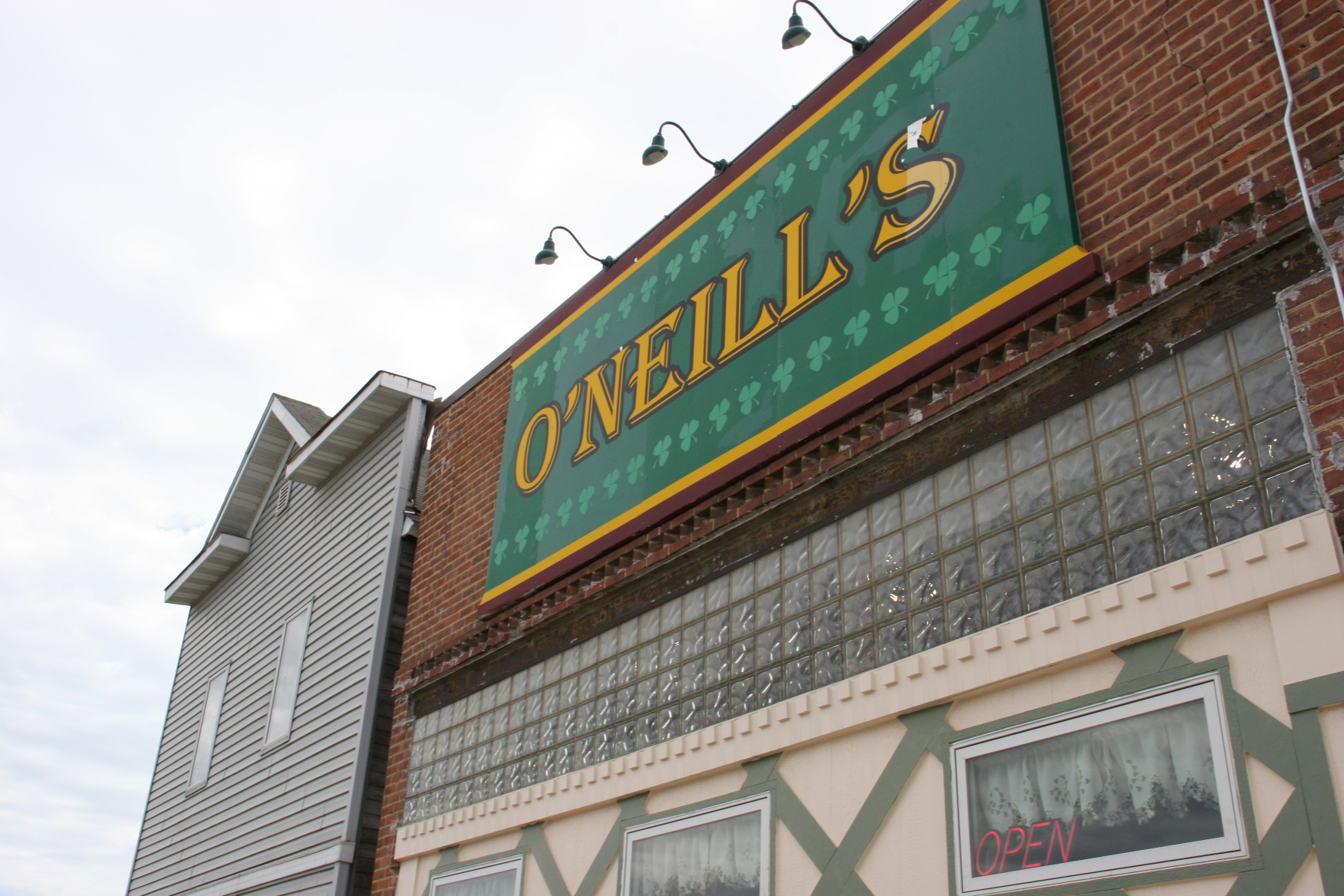
O’Neill’s Pizza Pub, which serves more than pizza. (Minnesota Prairie Roots copyrighted photo May 2022)
This unique, artsy “fence” is the first thing I noticed in downtown Elgin. Absolutely love the creative functionality of these repurposed doors. (Minnesota Prairie Roots copyrighted photo May 2022)
SMALL TOWNS, LIKE PEOPLE, have personalities. I’ve discovered that in my years of exploring rural regions. I can learn a lot about a place by simply walking through the heart of a community, even if I never enter a single business.
The door fence is to the right of this stately corner brick building with the lovely architectural details. (Minnesota Prairie Roots copyrighted photo May 2022)
On a recent day trip into Wabasha County in southeastern Minnesota, Randy and I stopped briefly in Elgin. Three words define my initial impression of the business district in this community of 1,090 just 20 minutes northeast of Rochester: bricks, bins and bars.
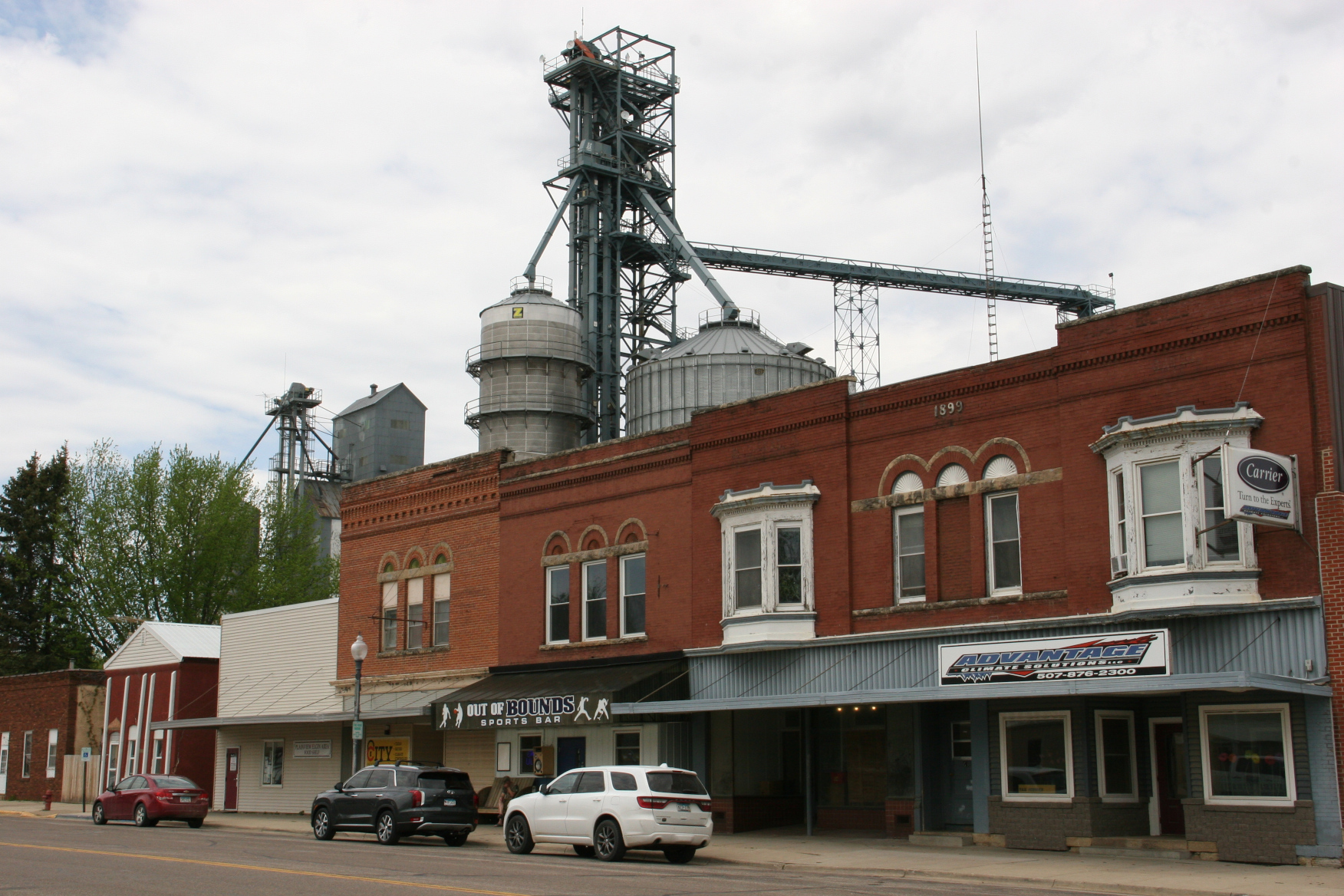
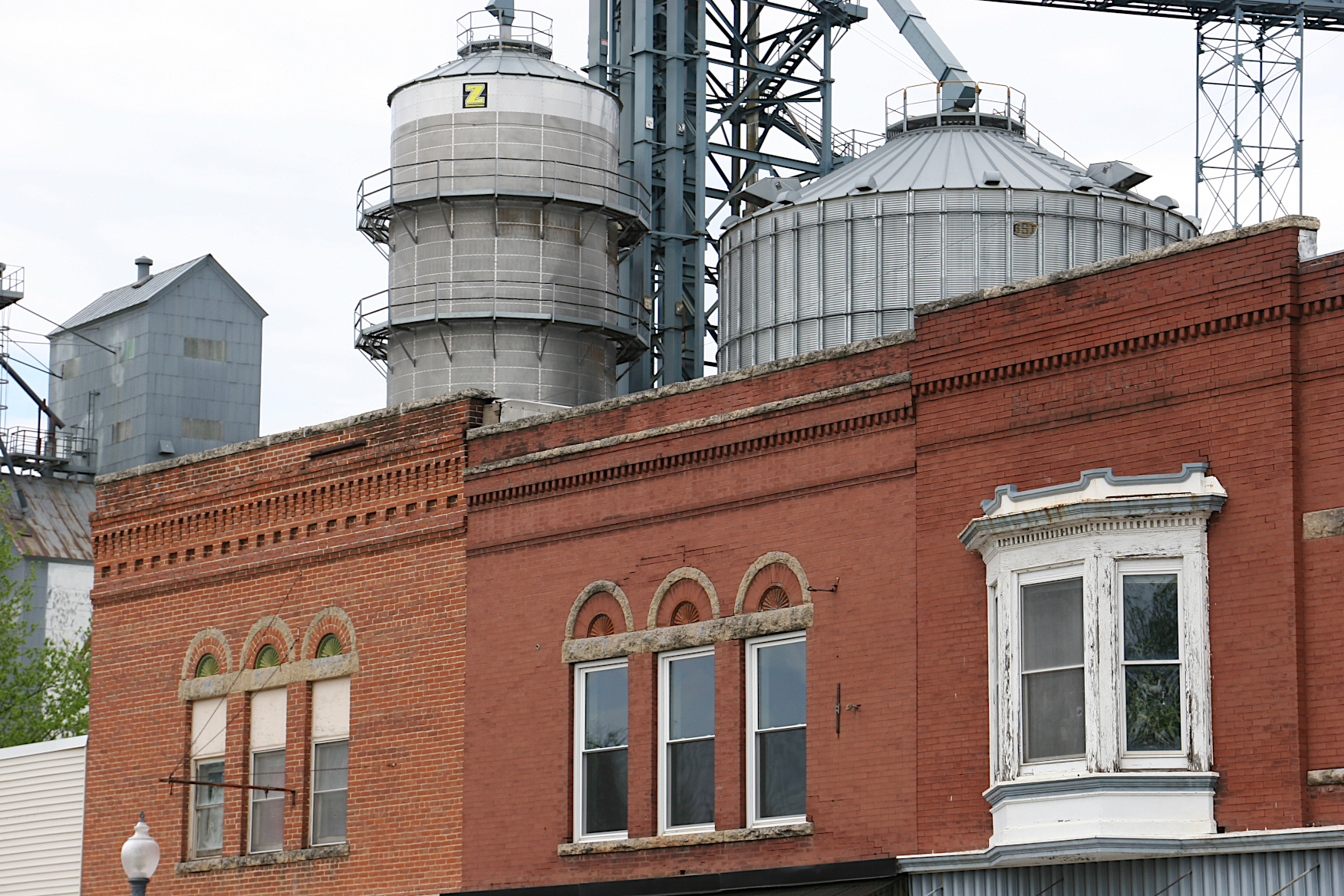
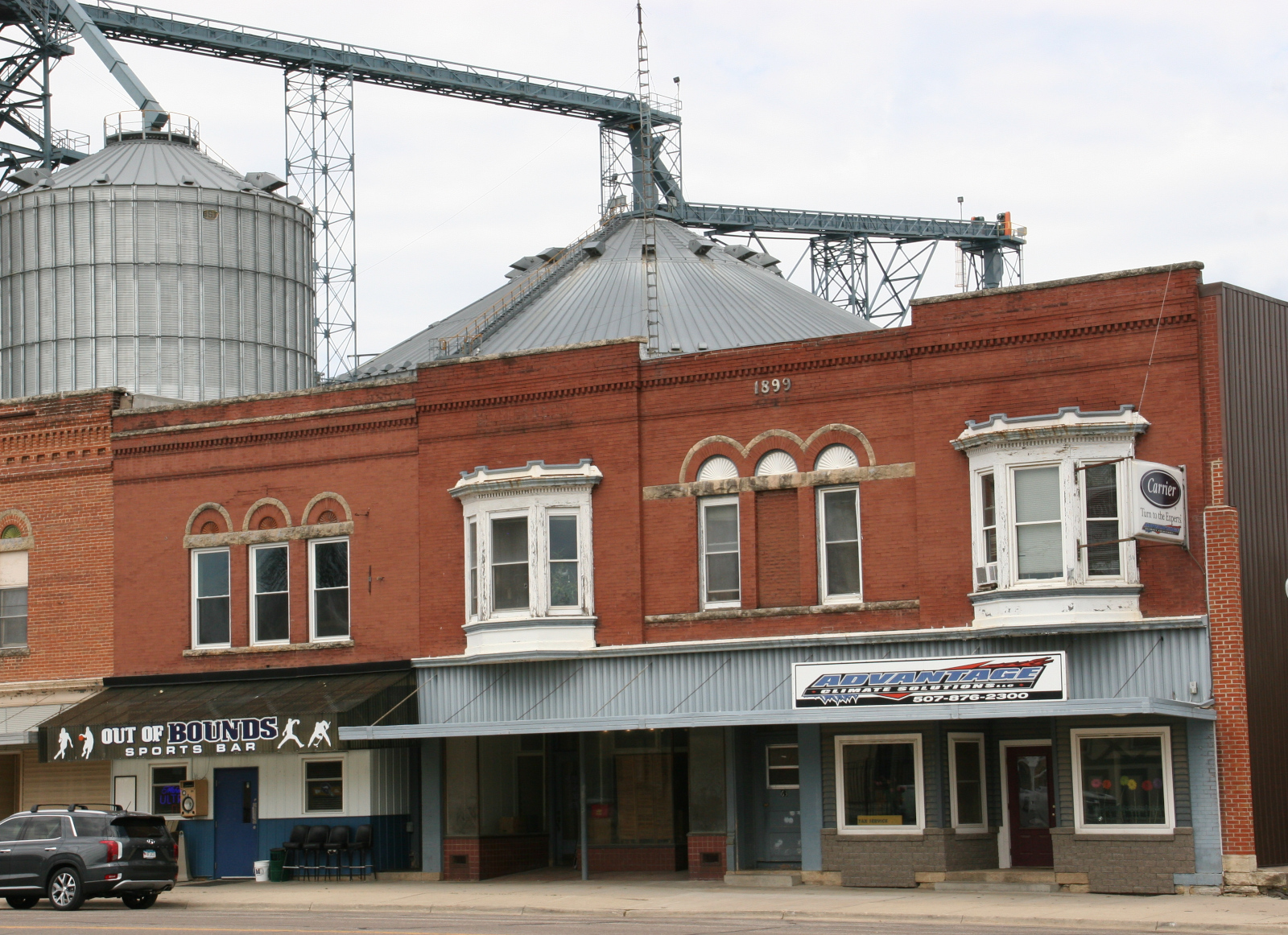
Bricks reference the row of aged brick buildings I spotted along one side of the street. One dates to 1899. I see so much potential in these historic structures if the “updates” on ground level were removed to reveal the original. I recognize, though, that takes money. But, as one who appreciates aged buildings with good, solid bones, I would love to see these buildings restored to their historic selves. What an asset that would be to Elgin.
Behind those brick buildings, bins rise. (Minnesota Prairie Roots copyrighted photo May 2022)
Bins reference the mammoth grain bins back-dropping that row of brick buildings. This is most-assuredly a farming community, home to All-American Co-op. I especially appreciate the faded signage identifying the local ag business.
Identifying signage provides a vintage artsy backdrop. (Minnesota Prairie Roots copyrighted photo May 2022)
At one time, Elgin was also home to a creamery and milk service. The community honors its dairy heritage with Elgin Cheese Days, an annual small town festival slated this year for June 17-19. Events include a parade, carnival, tractor pull, burnouts, vendor and craft show, softball and volleyball tournaments, garage sales, music and the EMS Cheese Chase (walk/run). As these celebrations go, they are really reunions of those who once called this town home or still call this place home.
Bold signage for a place that welcomes everyone like family. (Minnesota Prairie Roots copyrighted photo May 2022)
To the left, Out of Bounds Sports Bar, “where everyone knows your name.” (Minnesota Prairie Roots copyrighted photo May 2022)
O’Neill‘s Pizza Pub serves more than pizza. There’s Irish whiskey, too, and a game room with classic games. (Minnesota Prairie Roots copyrighted photo May 2022)
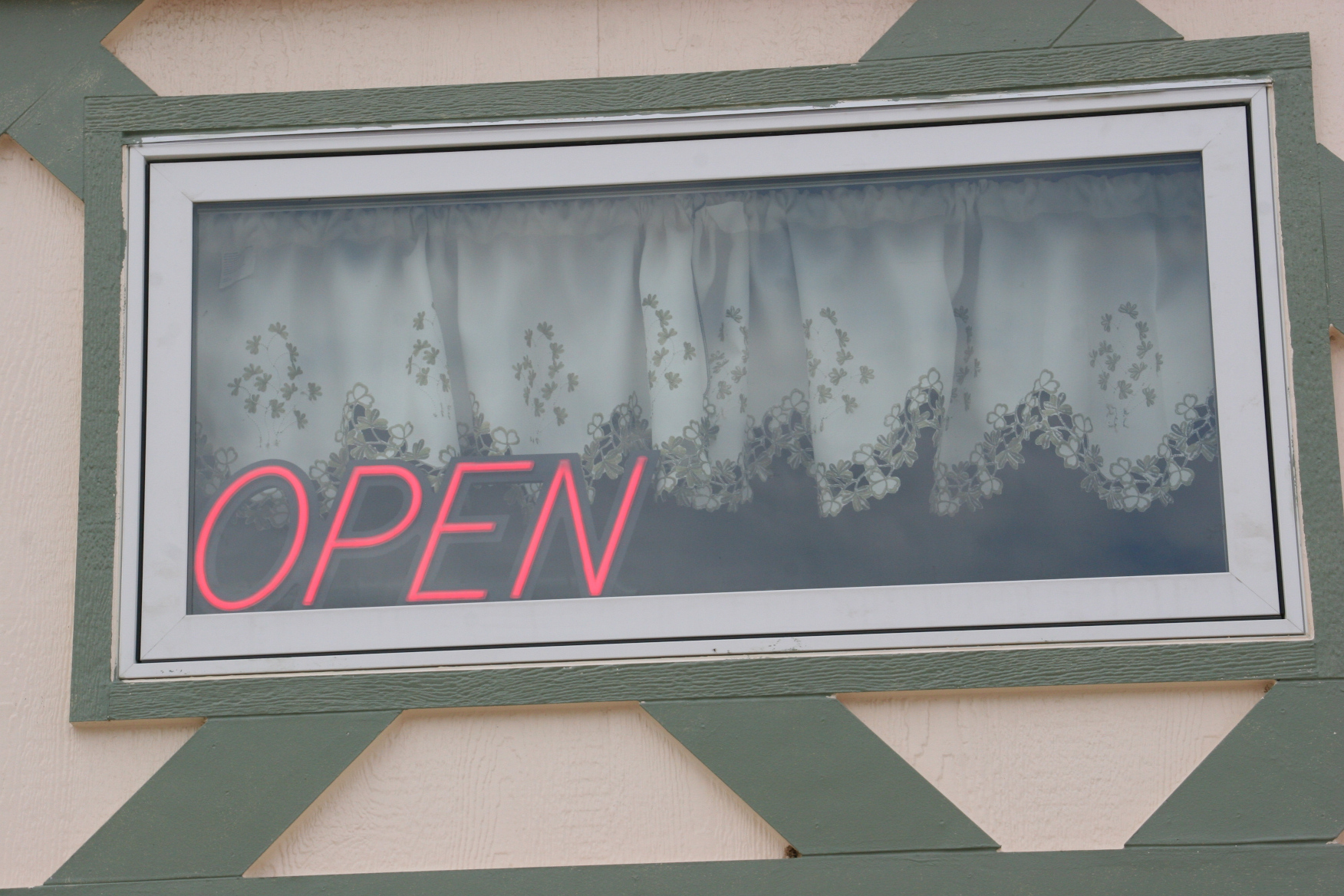
The pub is open. (Minnesota Prairie Roots copyrighted photo May 2022)
Although Randy and I didn’t patronize any of these places, I expect they are worth a stop for food and drink and conversation. As a group of cyclists told us, the bar they lunched at served up a mighty fine sandwich. We had packed a picnic lunch. Next time.
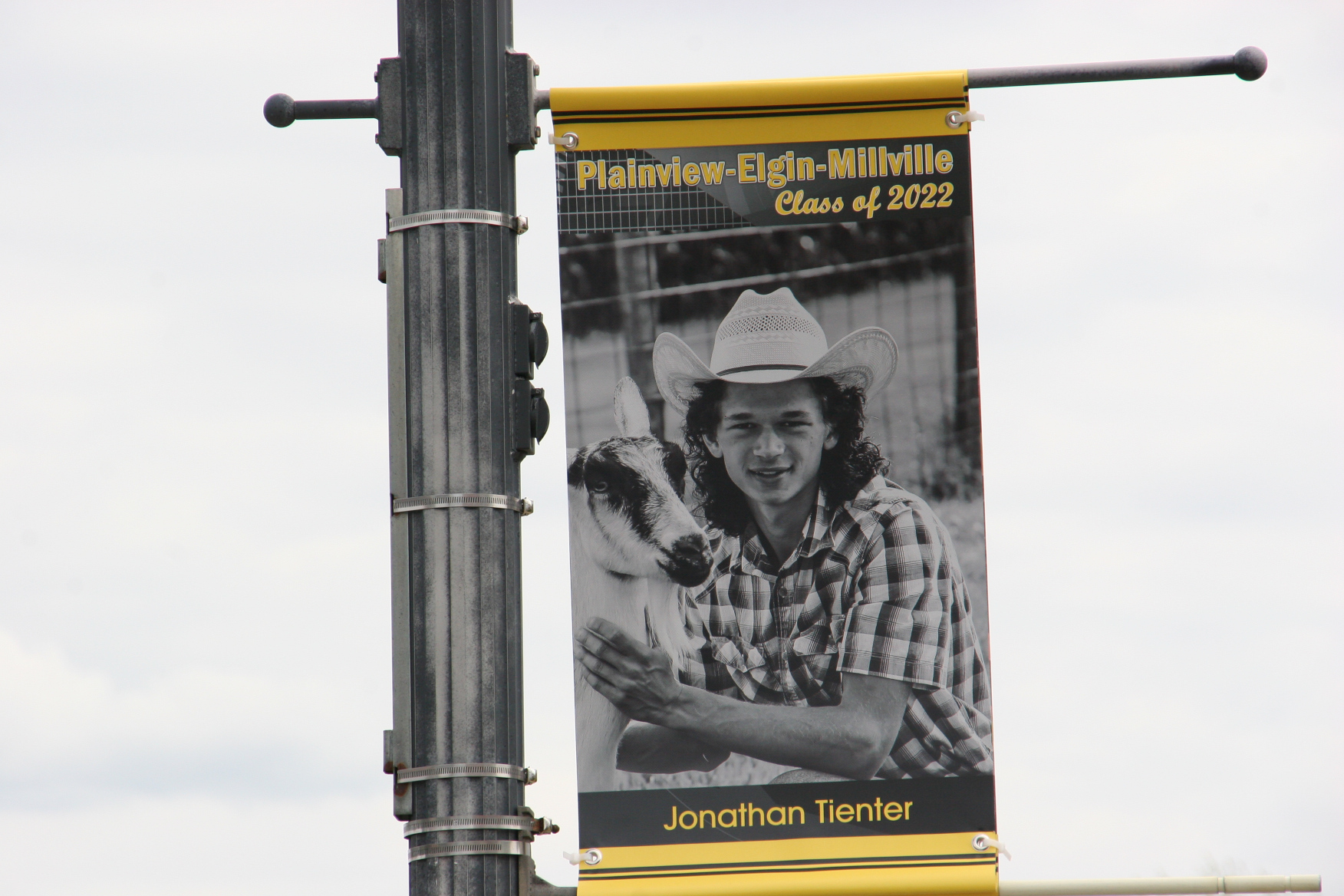
Banners feature students from the graduating class of 2022. (Minnesota Prairie Roots copyrighted photo May 2022)
Yes, we’ll return to Elgin to explore a bit more. Perhaps drive 1.5 miles south of town to pick up some cheese at Prairie Hollow Farm.
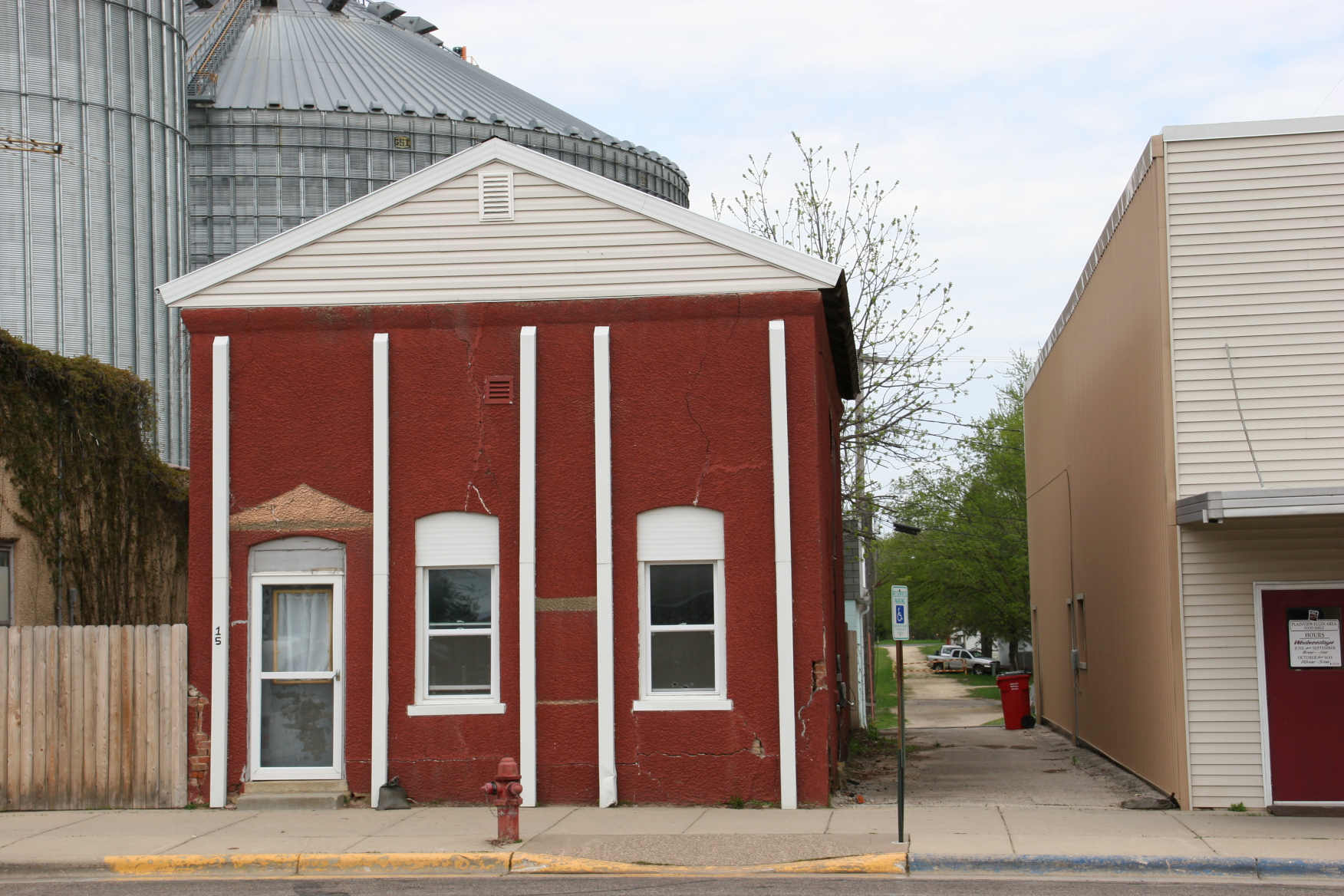
I wonder about the current use and history of this small building by the bins, by the alley. (Minnesota Prairie Roots copyrighted photo May 2022)
I know we missed a lot during our quick stop…
TELL ME: If you’re familiar with Elgin, what should I see/do next time I’m in town? I’m looking for any insider tips, things I might bypass because I’m unaware. Why should someone visit Elgin?
Please check back for another post from this community. And then it’s on to neighboring Plainview.
Promo for the first auction, now closed. The art here is from left to right by Sofia, 15, sold for $1,750; by Polina, 9, sold for $2,250; by Maksim, 5, sold for $2,300; and by Anna, 15, sold for $7,660. (Source: International Owl Center Facebook page)
IN A SMALL TOWN of some 1,000 in the bluff country of southeastern Minnesota, a nonprofit is doing its part to help the children of Ukraine. In a big way.
Winning bids for the 59 pieces of owl art by Ukrainian children and teens, accumulated through the years for the center’s annual International Children’s OWL Art Contest, ranged from $425-$8,005. The highest bid was placed on the snowy owl art of 14-year-old Sofia. Two other works of art drew nearly as much—15-year-old Anna’s realistic owl family ($7,660) and 9-year-old Anna’s yellow and blue owls perched on a branch against a star-studded sky ($7,505). Nine other pieces were purchased for more than $2,000 each.
The International Owl Center, located in downtown Houston, Minnesota. (Minnesota Prairie Roots copyrighted file photo November 2015)
MAKING THE WORLD A BETTER PLACE
Regardless of purchase price, all 59 works of art are valued as “priceless” by the Owl Center, a nonprofit with a mission “to make the world a better place for owls through education and research.”
That mission has temporarily expanded to better the lives of Ukrainian youth in the war-ravaged country of Ukraine via the center’s “Ukrainian Art Auction for Ukrainian Kids.” The initial five-day auction is the first of three. The second art auction opens at 8 am (CST) Wednesday, March 23, and closes at 8 pm (CST) Sunday, March 27. The Owl Center also plans to keep some of the remaining 200-plus pieces of Ukrainian kids’ art in their permanent collection.
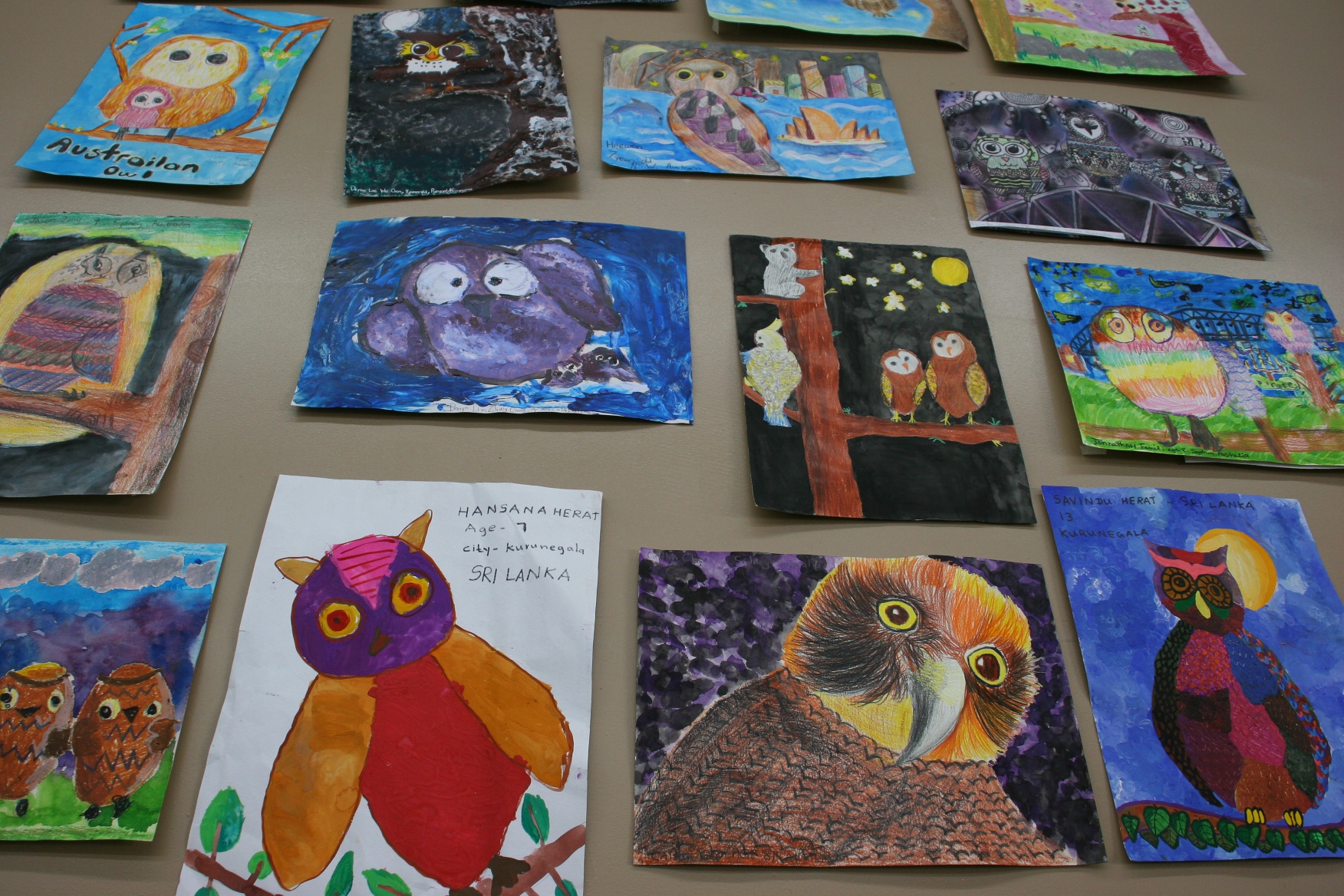
Owl art, by youth from all over the world, decorates the center’s walls. (Minnesota Prairie Roots copyrighted file photo November 2015)
WITH GRATITUDE & CONCERN
Reaction to the first auction has been one of incredible gratitude for the generosity of bidders and those who donated via the donate monies option to reach that $100,052 total. Some $95,000 of that, according to my tally, came from the art sales. Commenters on the Owl Center’s Facebook page praise the artwork and also express their concern for the Ukrainian children. “I hope she (Sofia) is safe. Her owl is beautiful,” writes Dori.
“This is amazing. I hope each artist is safe,” Deb comments.
And Linda summarizes, “Well done! May all these artists be held (in) care and protection.”
Gina also writes: “I think what you are doing to help the children of Ukraine is amazing. Thank you for your every day work with the owls and for this extraordinary act of giving.”
I, too, am impressed by the reaction to this auction in the enthusiasm and the generous bids. In a time when many of us feel helpless, this is one way to help youth like Karelina, Maksim, Polina, Anna, Nastya, Alia, Sofia, Veronika, Olga…
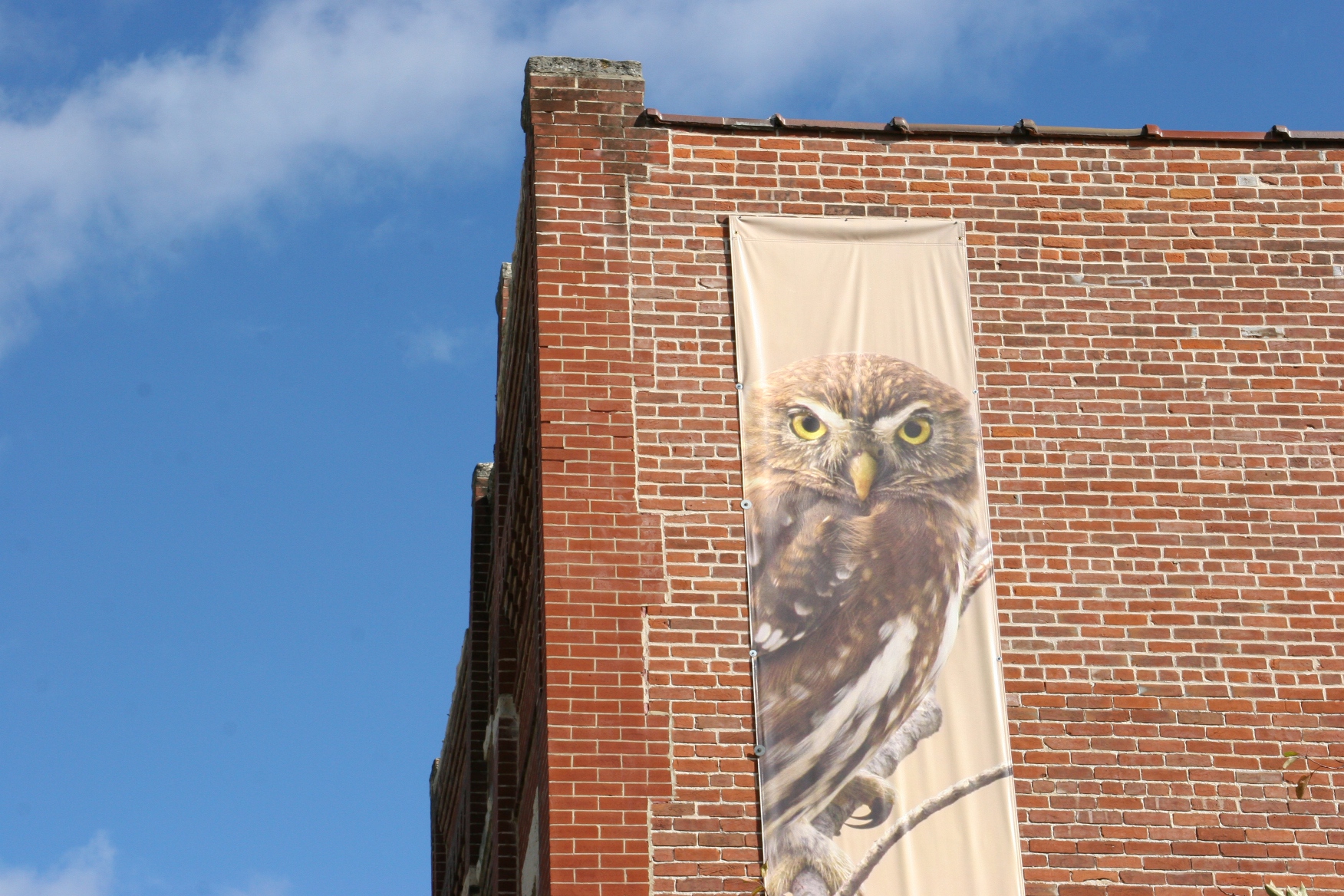
A banner on the side of the International Owl Center in 2015. (Minnesota Prairie Roots copyrighted file photo 2015)
MORE PLANNED
The Owl Center is doing even more. Plans are underway to print a set of 20 blank greeting cards from selected art created by Ukrainian youth. The public is invited to help select the art. Again, proceeds from that will go to UNICEF for the children of Ukraine.
Additionally, Ukrainian kids’ art is featured on three street banners hanging in Houston.
Although I don’t have the financial means to buy any of the art, I can support this project via writing about it. And I expect those owl cards will fit my budget. Mostly, my heart overflows with gratitude to the International Owl Center for organizing this art auction, for reaching beyond the borders of their small Minnesota community to make a difference internationally in the lives of children in Ukraine.
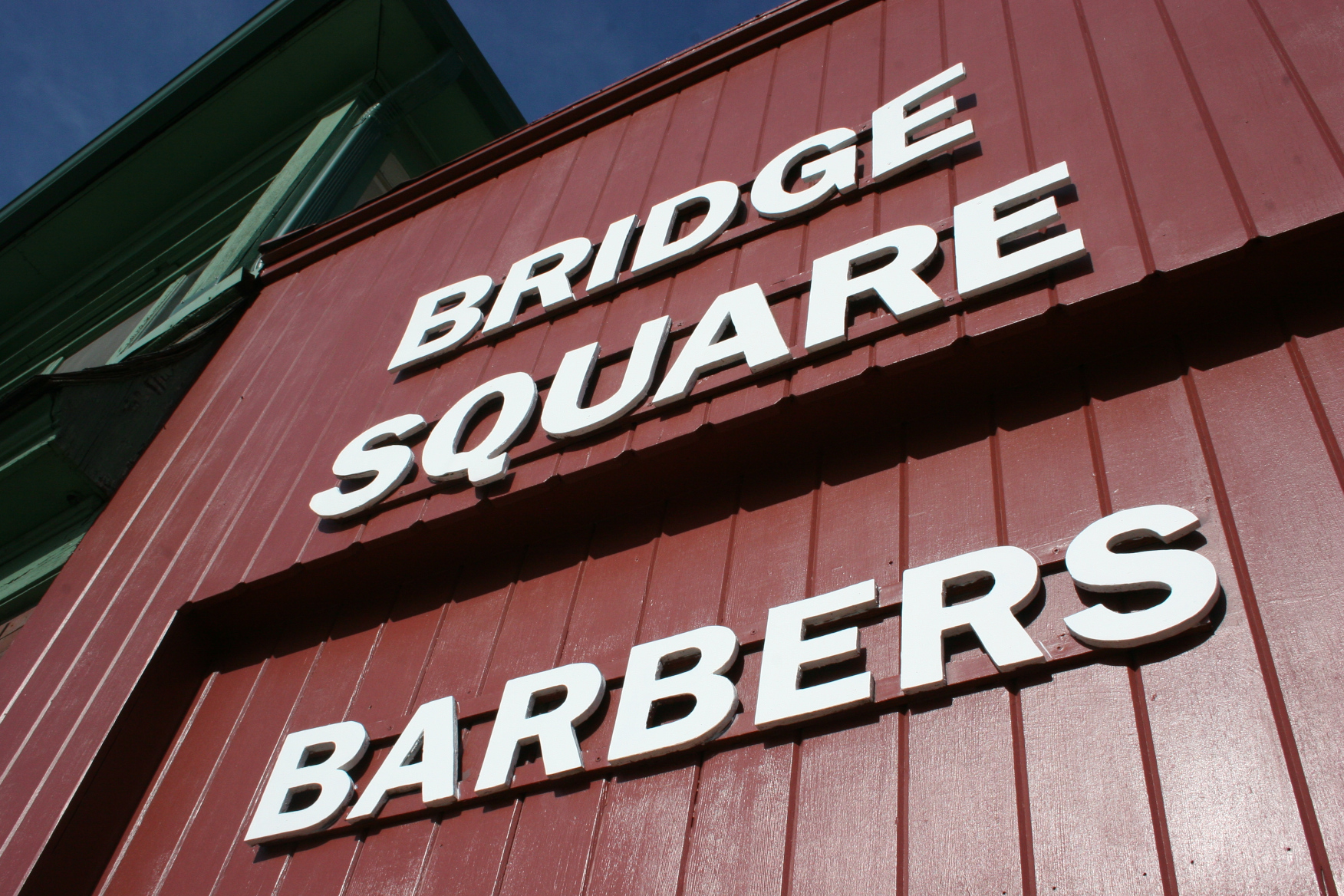
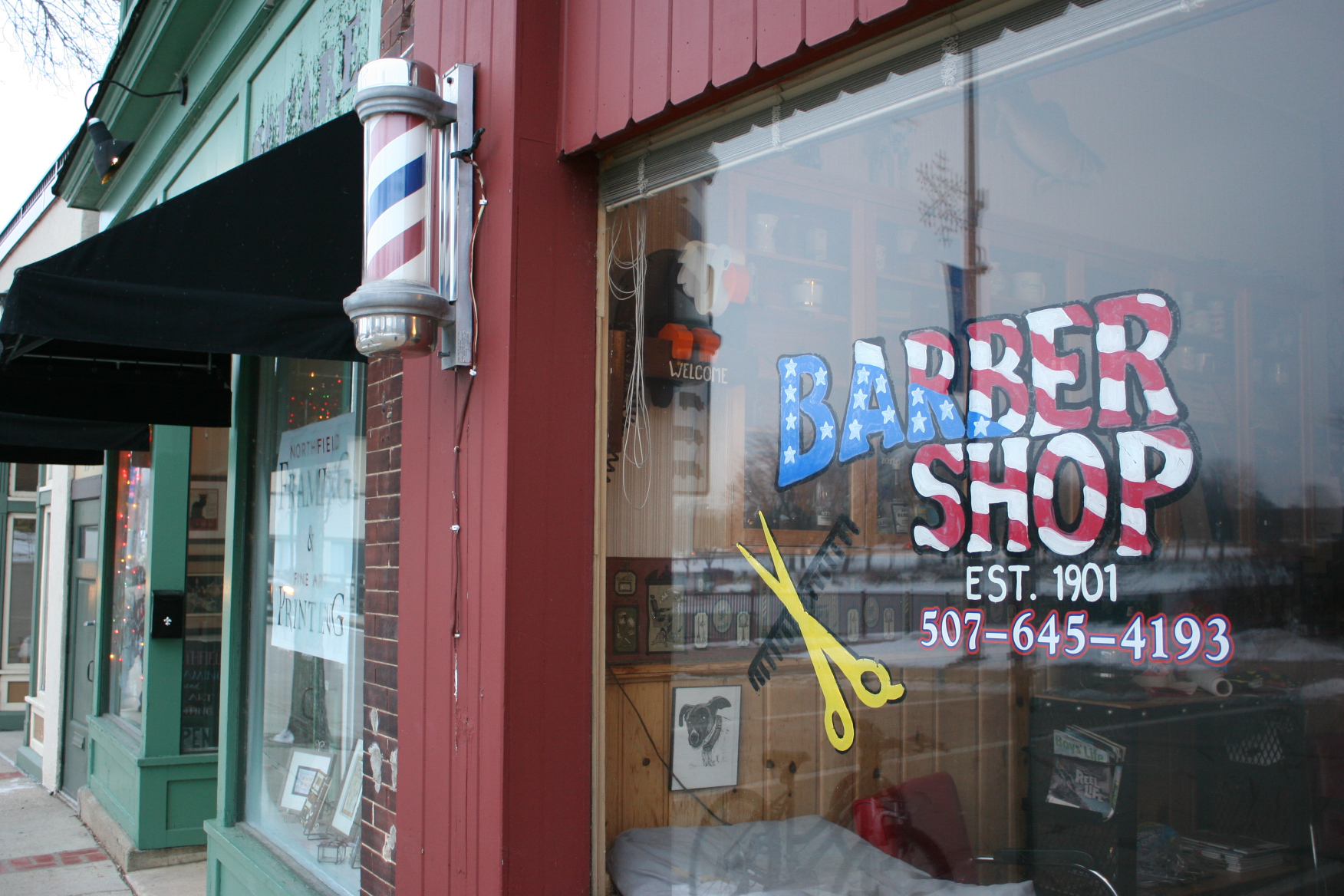
Bridge Square Barbers, appropriately located at 15 Bridge Square across the street from Bridge Square in the heart of downtown Northfield, Minnesota, to the right in this stretch of businesses. (Minnesota Prairie Roots copyrighted photo February 2022)
WHENEVER I’M OUT AND ABOUT with my camera in a downtown business district, I notice details. In storefront windows. On doors. In building signage.
An unassuming sign banners the top of the building. (Minnesota Prairie Roots copyrighted photo February 2022)
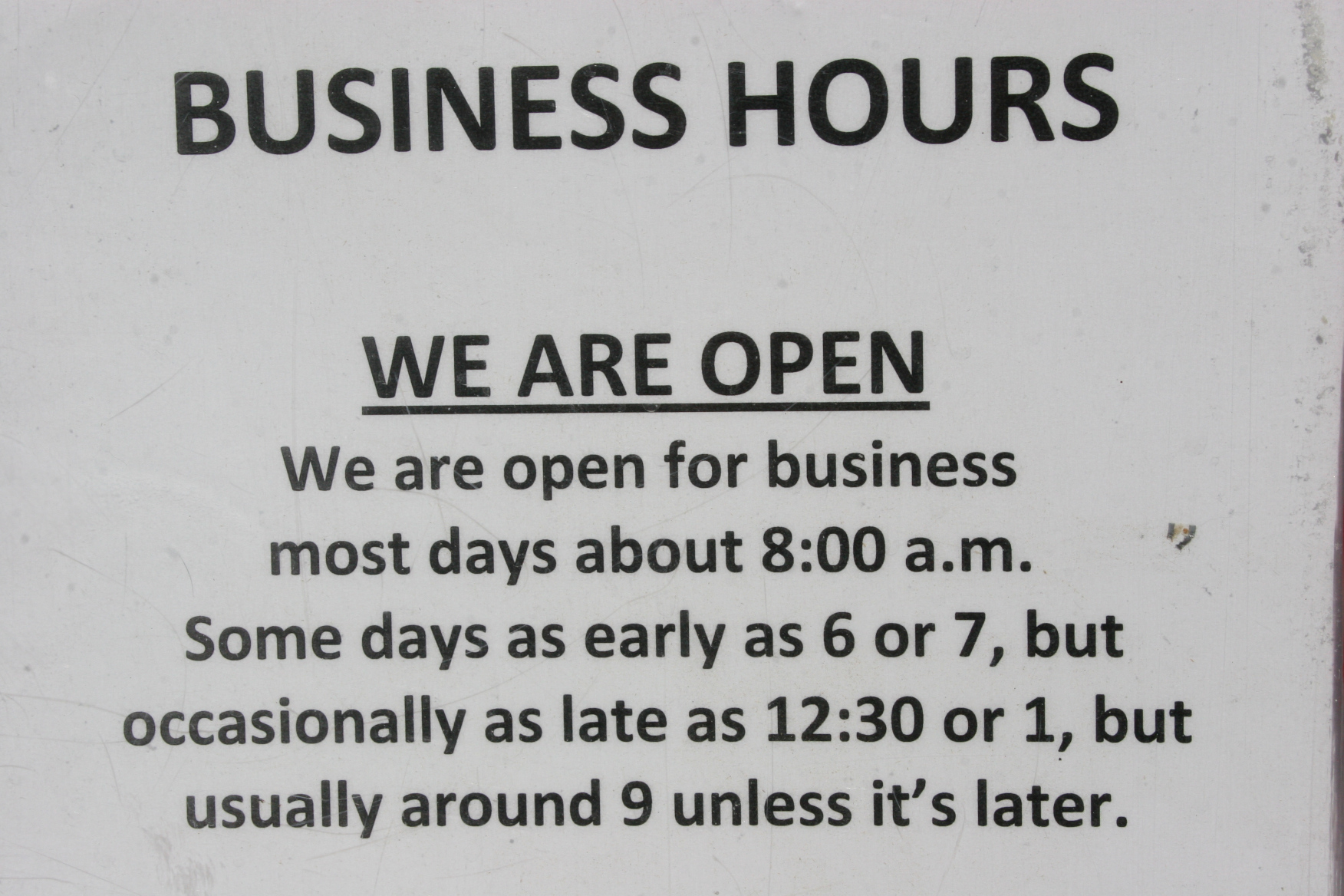
On a recent walk through Northfield, I spotted a typewritten sign at Bridge Square Barbers that caused me to erupt with laughter. And laughter is an expression of happiness that I need more than ever in this unsettled world.
The top part of the sign at Bridge Square Barbers. (Minnesota Prairie Roots copyrighted photo February 2022)
I stood in front of that sign about business hours, read, laughed, then focused my lens.
This is iconic barbershop with a barber pole. (Minnesota Prairie Roots copyrighted file photo January 2021)
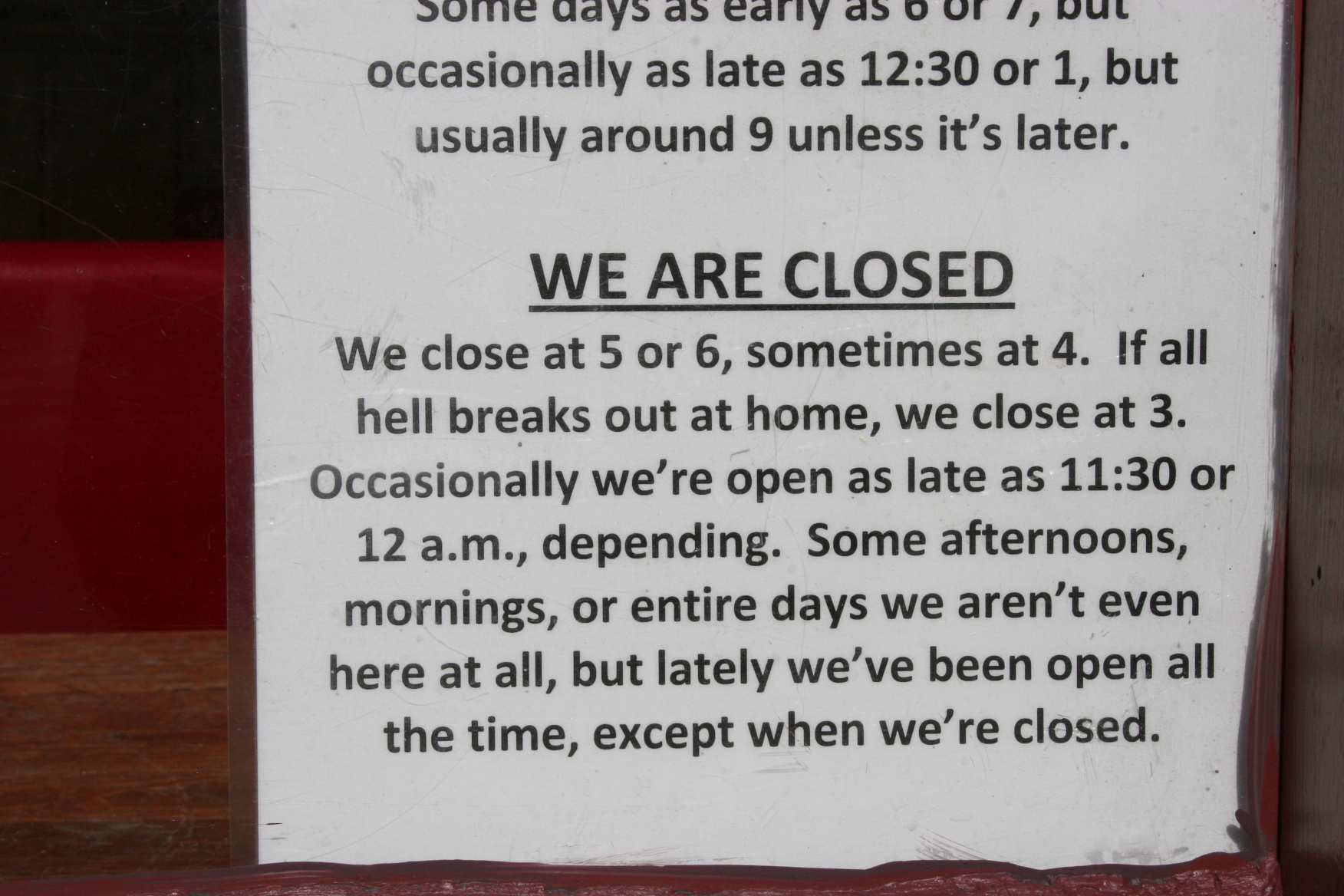
I love, and appreciate, this humorous approach by a barber unknown to me. Rather than post a straightforward notice of hours, this businessman crafted a memorable message to humor customers should they find the door locked. That’s creative. Smart. Excellent customer relations.
The bottom half of the humorous message at Bridge Square Barbers. (Minnesota Prairie Roots copyrighted photo February 2022)
However, I’m left wondering about “if all hell breaks out at home.” As a writer, my brain is drafting multiple stories, none of them probably true, but all prompted by the barber’s words. Does “all hell breaks out” involve children? Pets? Just life in general?
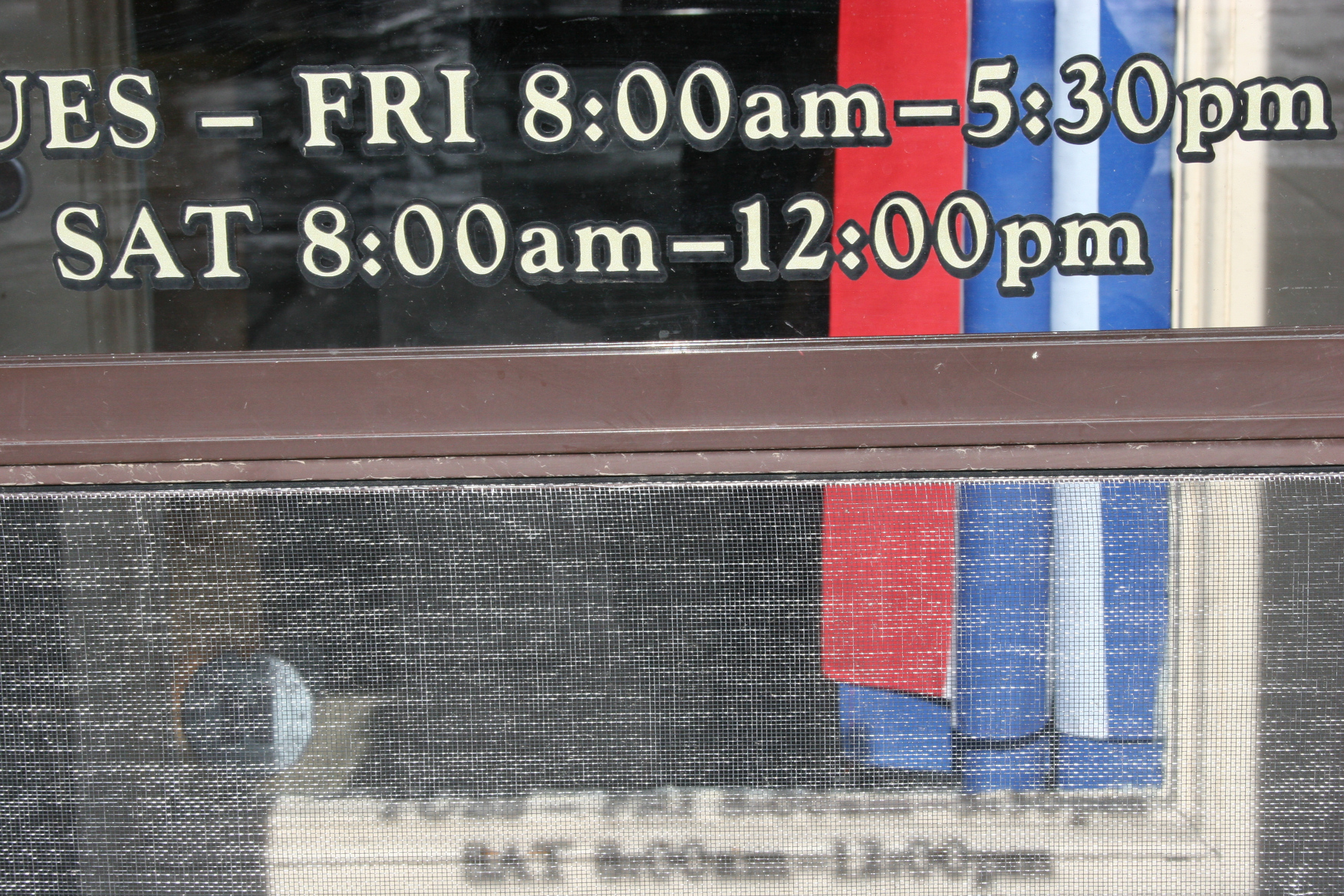
Hours posted on the front barbershop door, photographed through the exterior door. (Minnesota Prairie Roots copyrighted photo February 2022)
Whatever the story, this writer and photographer appreciates when business owners show their personalities in creative messages like these. I notice. And I laugh. Well done, Bridge Square Barbers!
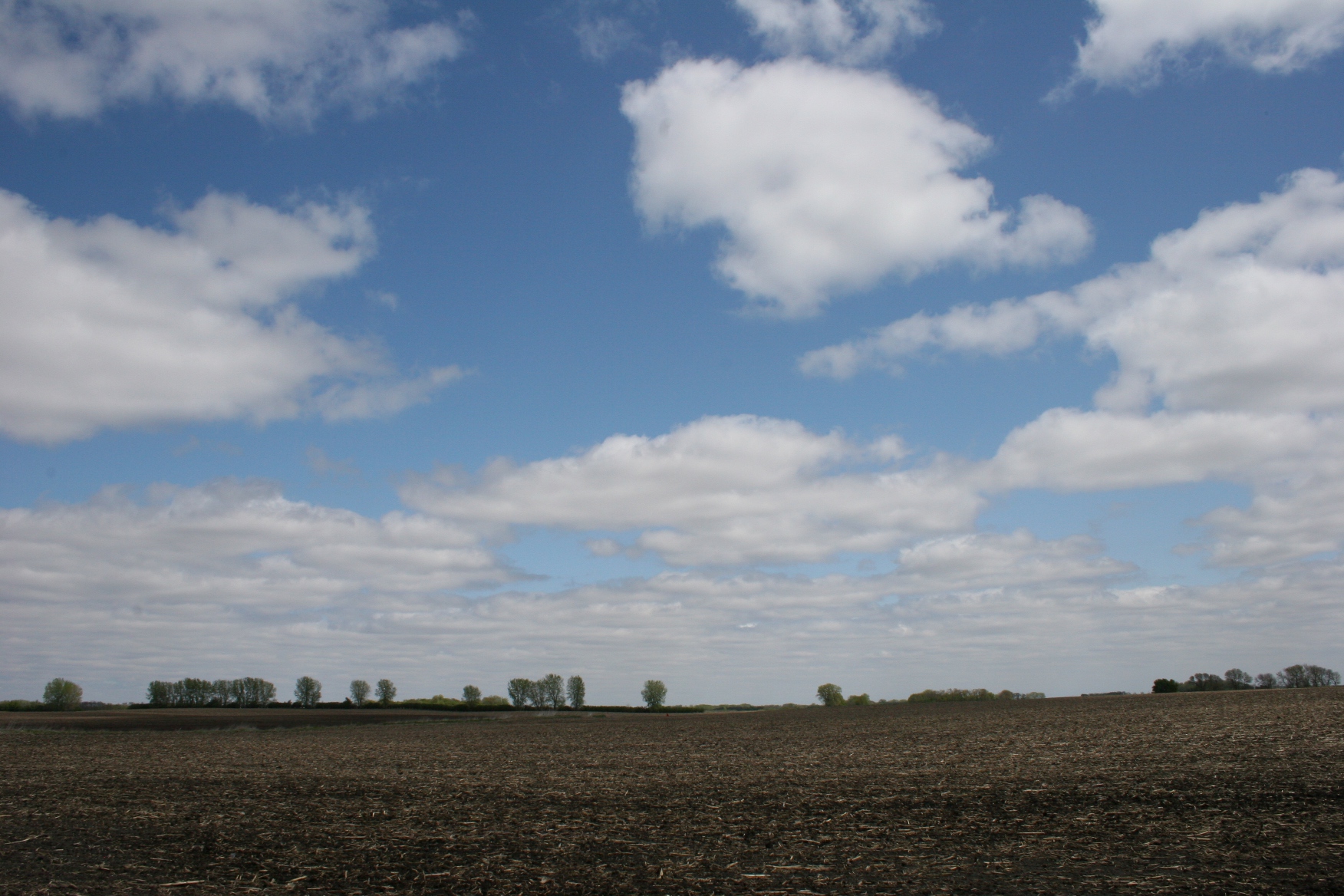
A serene rural scene just north of Lamberton in southern Redwood County, my home county, shows the roots of my creativity in the prairie. (Minnesota Prairie Roots copyrighted file photo October 2013)
I’VE ALWAYS SENSED within the artistic community an unwavering support of one another. A kinship in creativity. A connection sparked by the sheer act of creating, whether by words, by music, by paintbrush or pencil or camera or hands or…
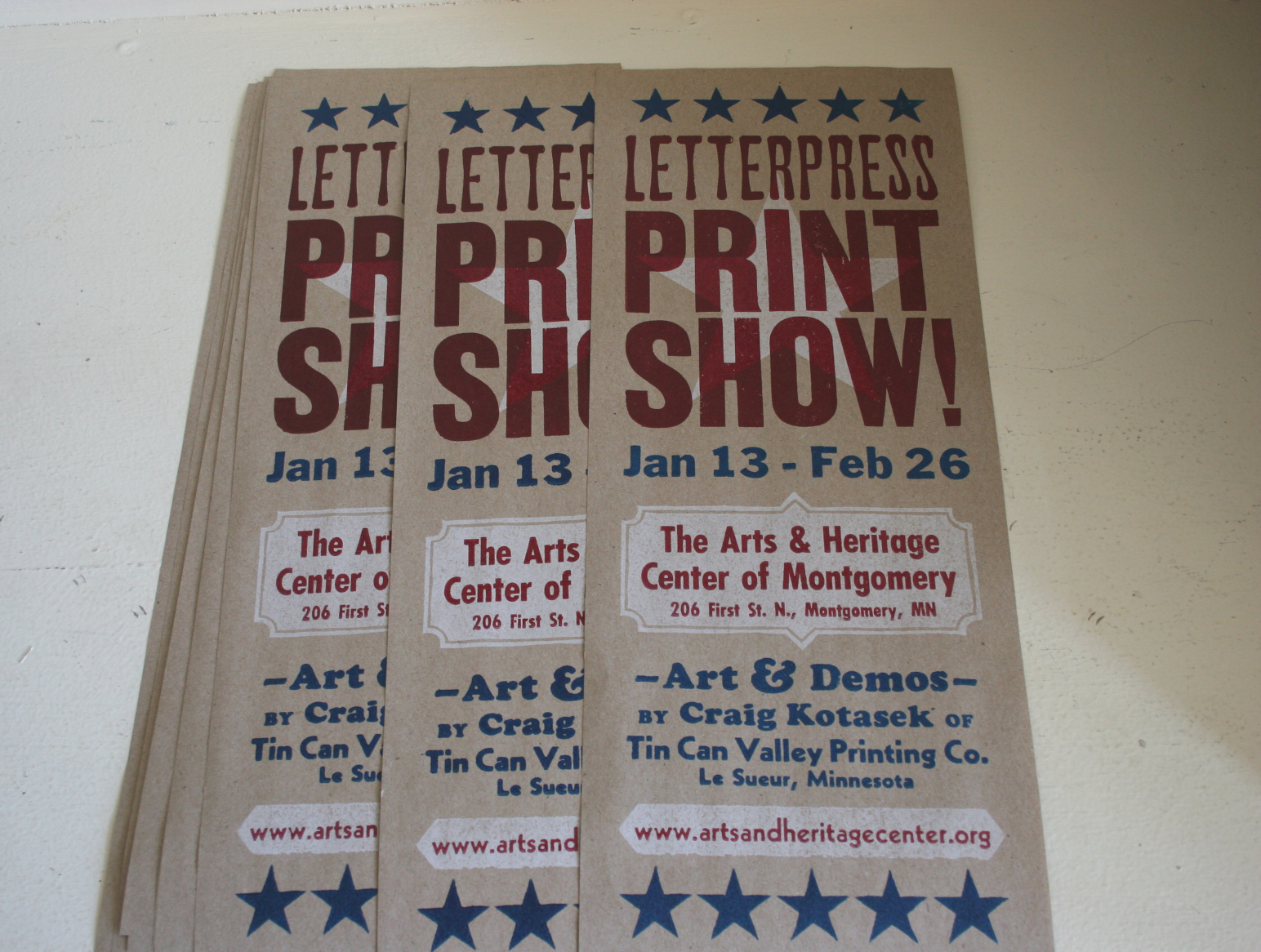
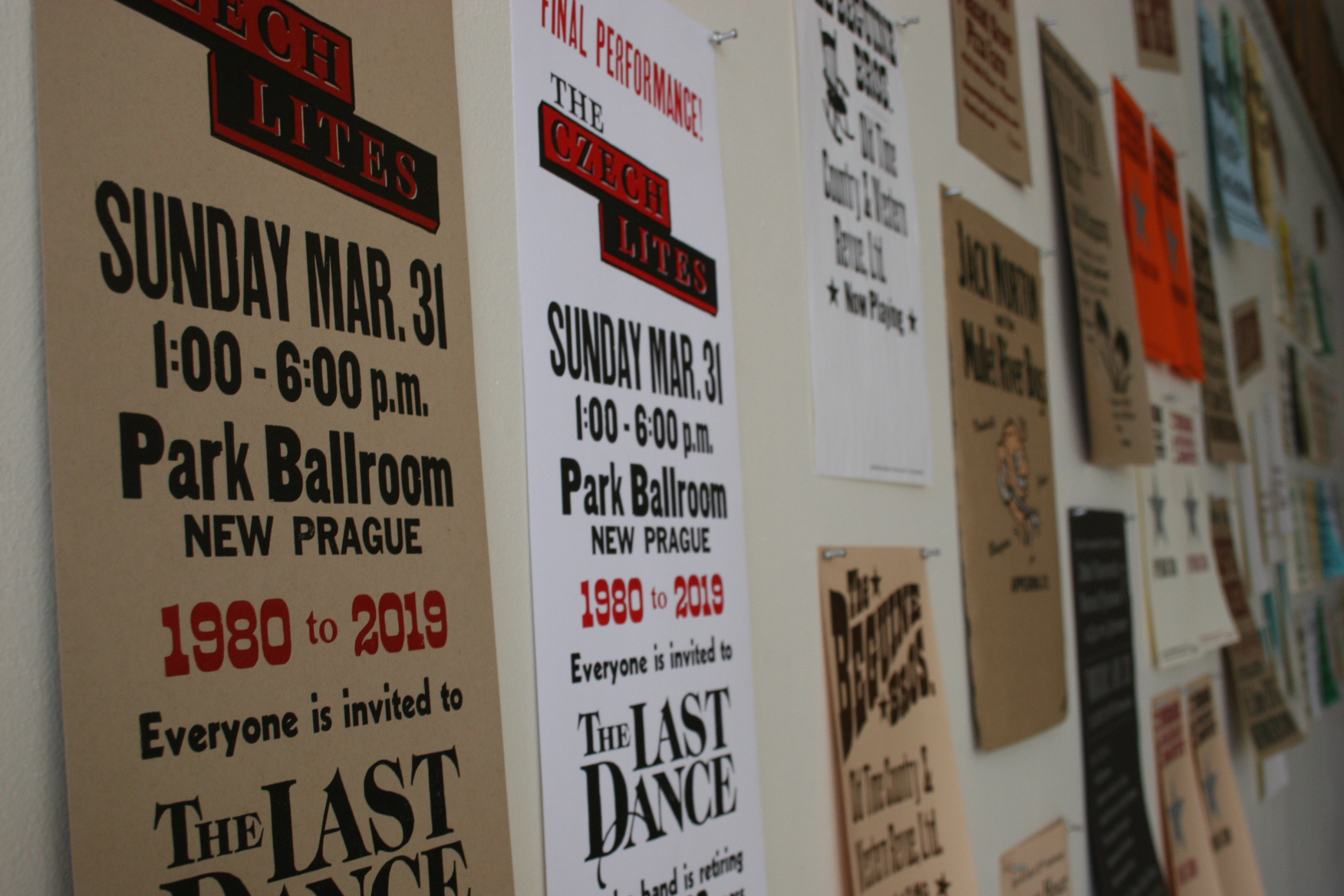
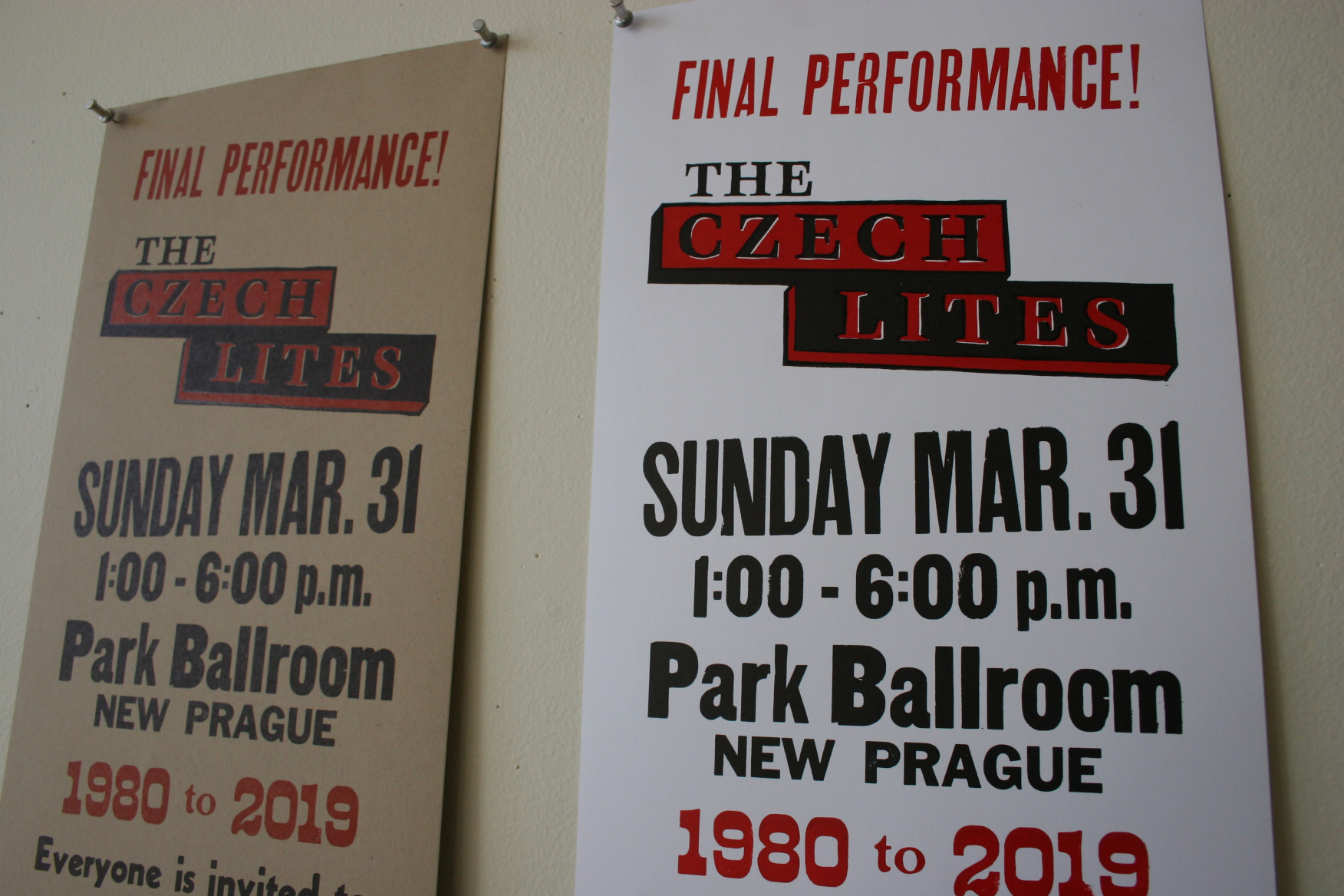
Craig Kotasek crafted these letterpress print promo posters for his current show. (Minnesota Prairie Roots copyrighted photo February 2022)
Well, Craig heard about my post, followed up with an email to me and then posted the kindest/loveliest/nicest review of my work on his website (click here). I am not only humbled by his generous words, but by his detailed gratitude for Minnesota Prairie Roots. He clearly understands me, my artistic and journalistic passions, my love for small towns and rural Minnesota, and my desire to share my discoveries.
Craig is just one example of how generous this community of creatives.
When we create, we share part of ourselves with the world. I cannot imagine not creating. That comes from a southwestern Minnesota farm girl who grew up with minimal exposure to the arts. No music lessons. No art classes. No gallery shows. No community concerts. Nothing outside the basic core of required class courses in middle and high school.
A snippet of the land my father farmed, my middle brother after him, on the rural Vesta farm where I grew up. (Minnesota Prairie Roots copyrighted file photo April 2013)
But what I lacked in the arts I found in the prairie landscape. In the unrelenting wind. In sunsets bold and beautiful. In snowstorms that washed all color from the earth. In wild pink roses pushing through road ditch grass. In the earthy scent of black dirt turned by a plow. I took it all in, every detail in a sparse land.
And I read. Laura Ingalls Wilder, pioneer girl from Walnut Grove only 20 miles distant. Nancy Drew with her inquisitive mind. Whatever books I could find in a town without a library.
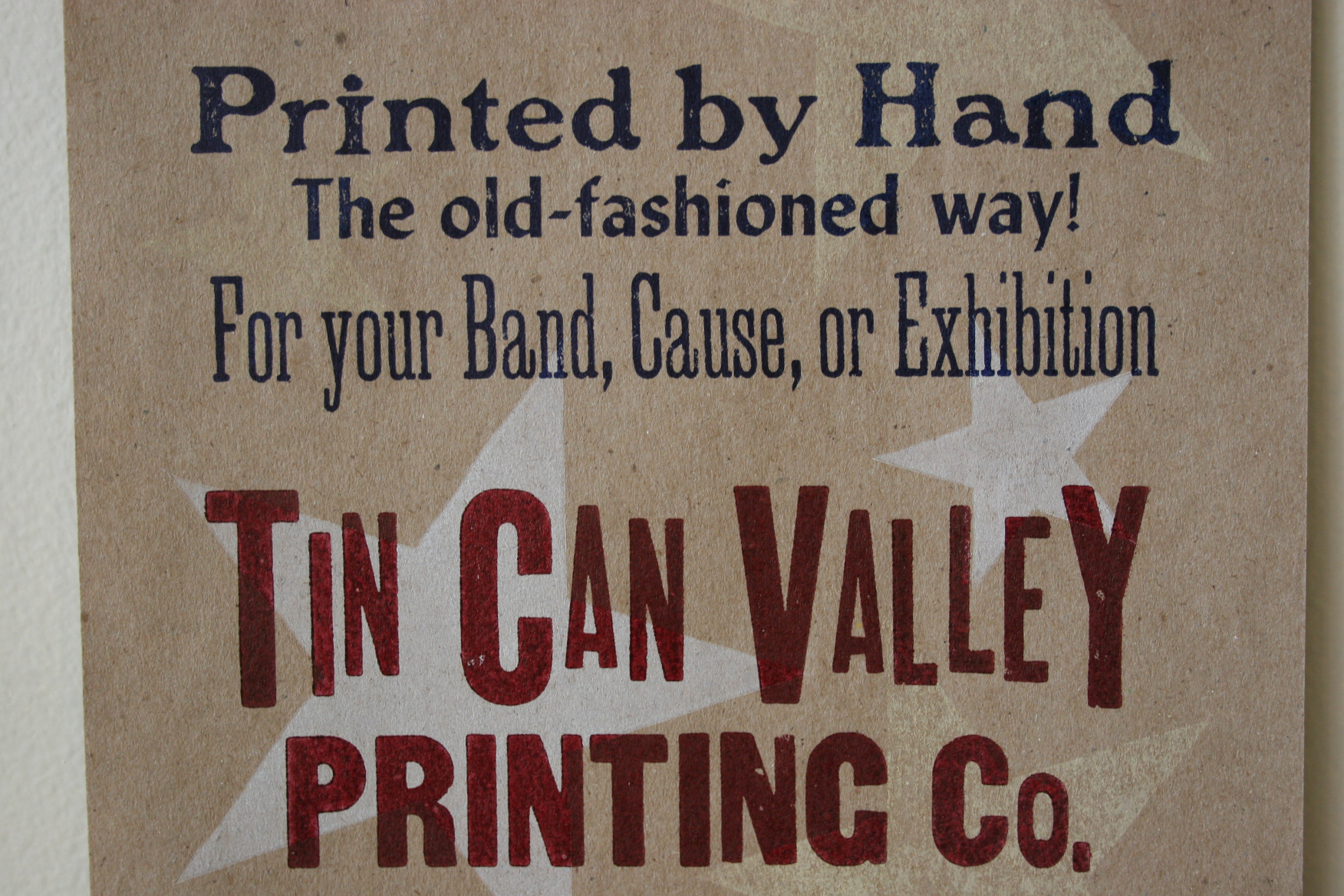
Today I feel grateful to live blocks from a library. I feel grateful to have access to the arts. You will find me often posting about creatives on this blog. Creatives like Craig Kotasek of Tin Can Valley Printing. He’s a gifted craftsman and artist specializing in letterpress printing. What a talented community of artists we have in rural Minnesota. I feel grateful to be part of that creative community.
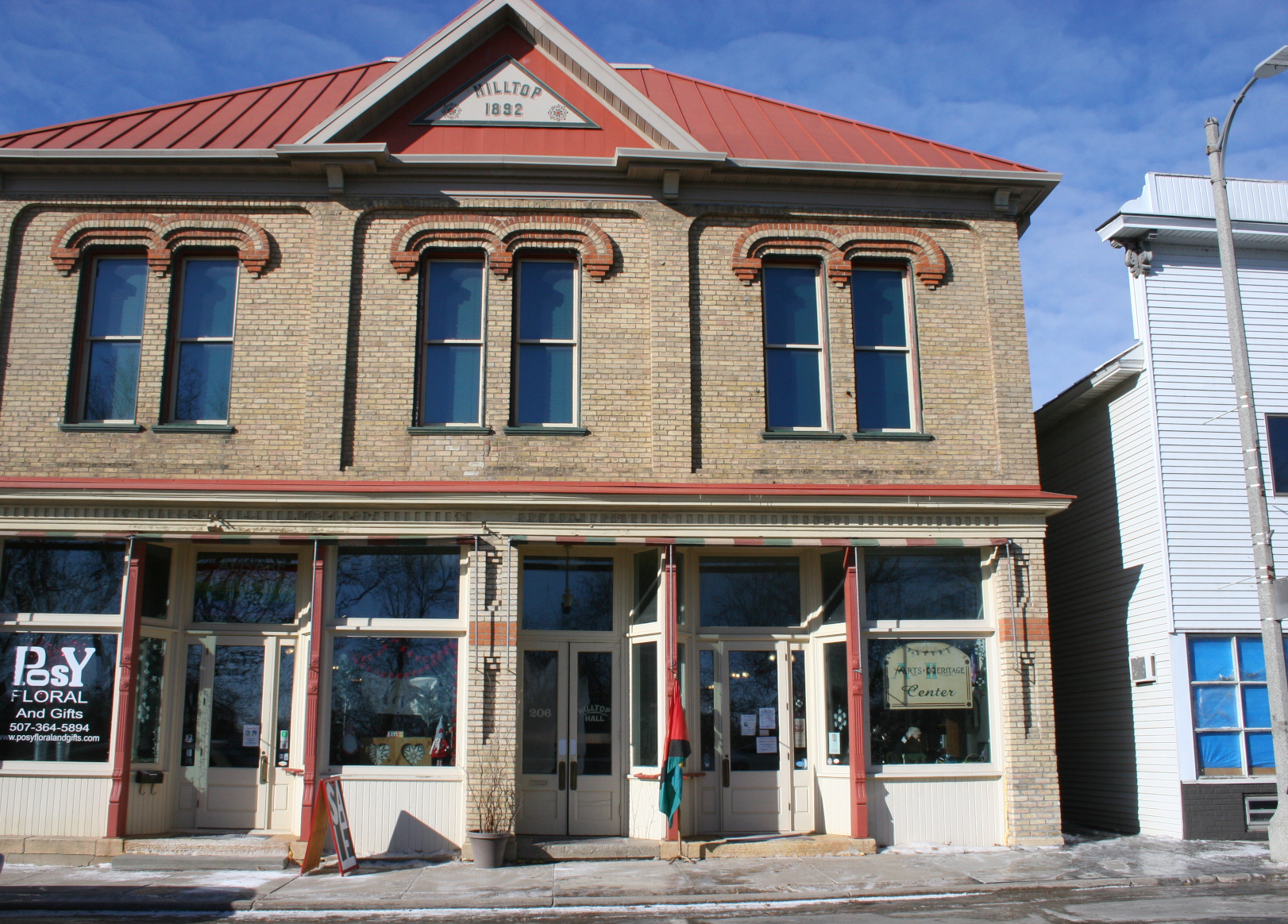
The historic Hilltop Hall houses The Arts & Heritage Center of Montgomery on the right and Posy Floral & Gifts, left. (Minnesota Prairie Roots copyrighted photo February 2022)
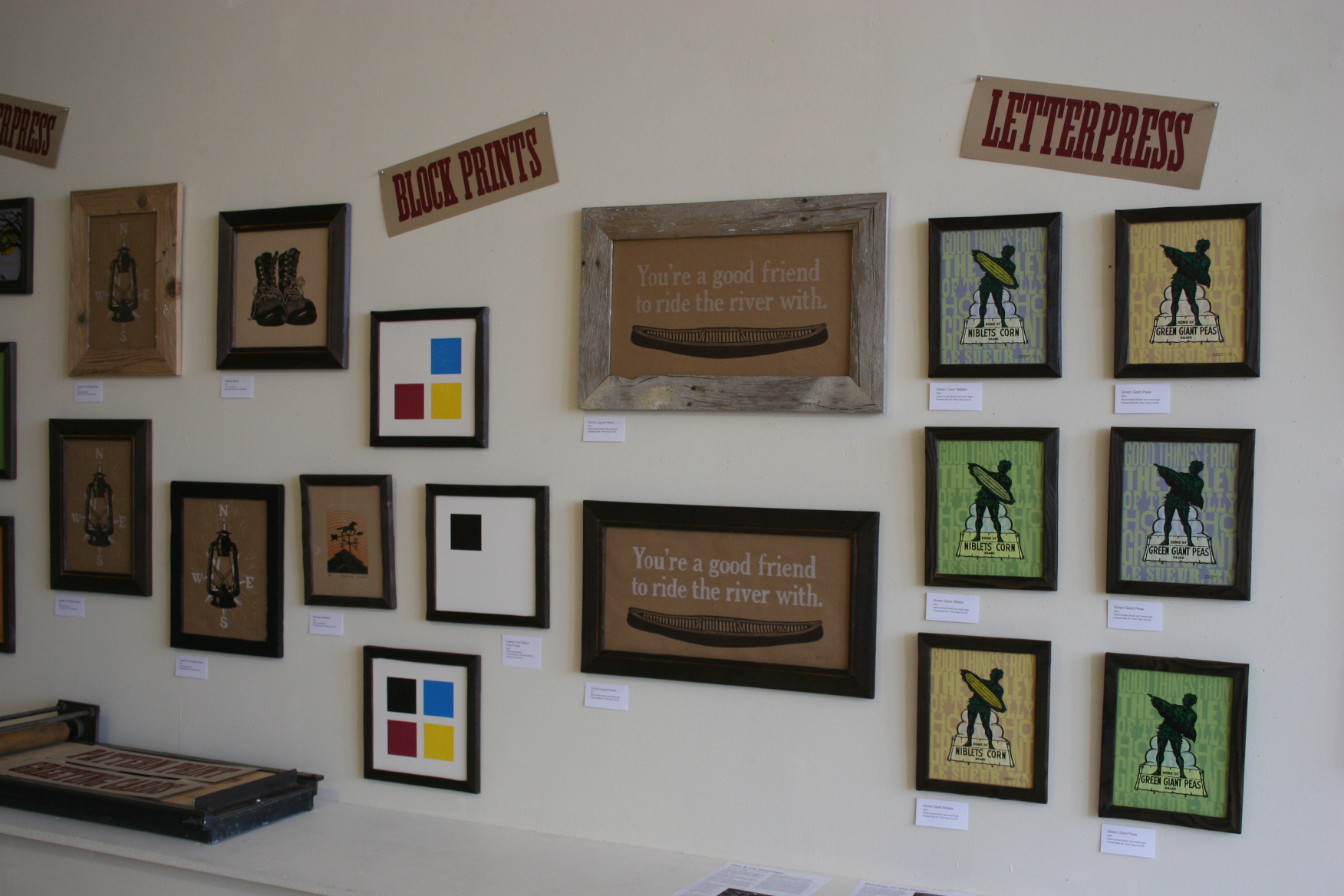
Inside the center, Kotasek’s prints plaster walls. (Minnesota Prairie Roots copyrighted photo February 2022)
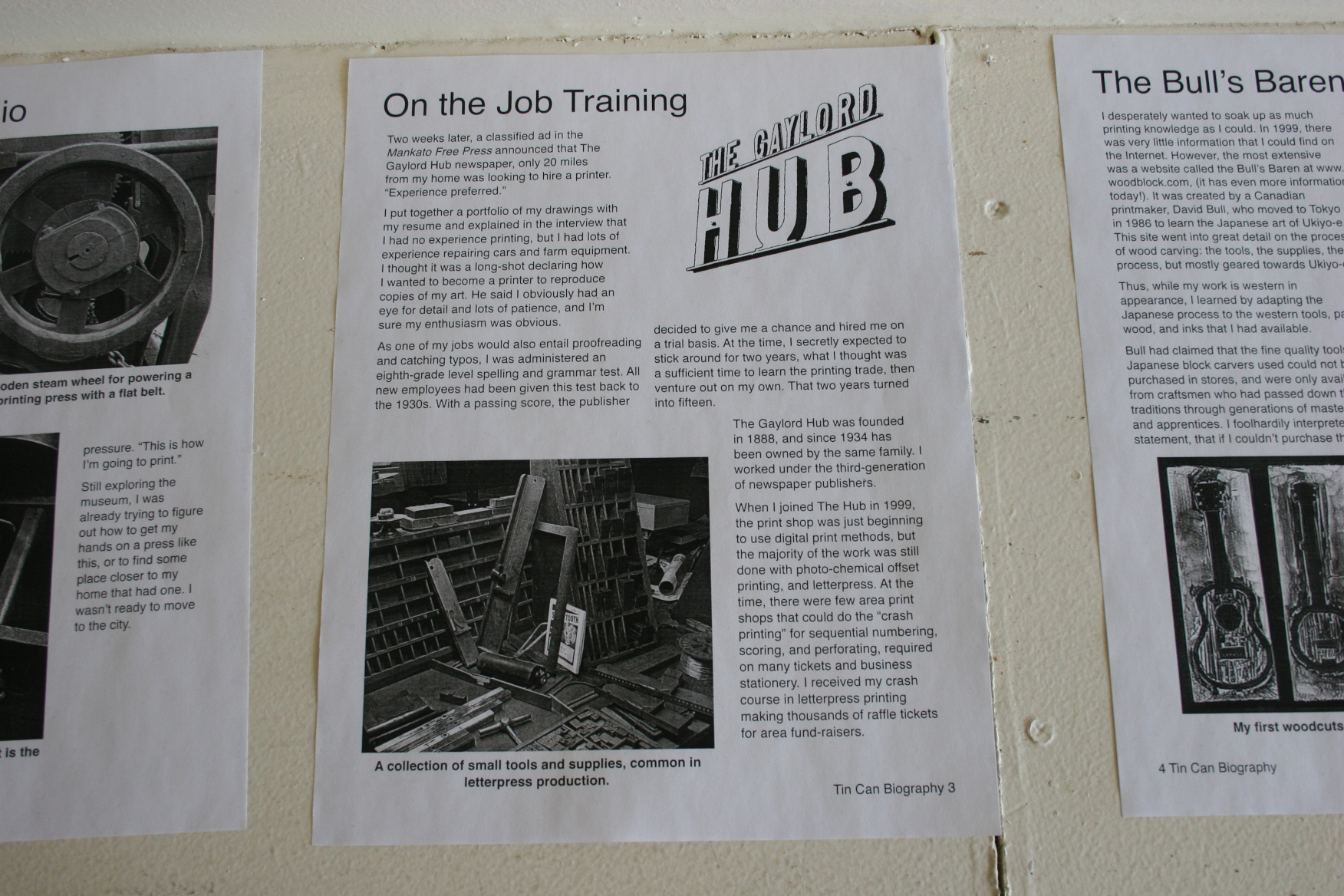
The artist includes some background info about himself, this sheet focused on his time at The Gaylord Hub. (Minnesota Prairie Roots copyrighted photo February 2022)
As a journalist and an art lover especially appreciative of letterpress printing, I delighted in this exhibit of an art now in revival. Not only that, I hold a connection to Kotasek. We both worked at The Gaylord Hub, me as my first newspaper reporting job straight out of college in 1978 and he as an apprentice printer there in 1999. We learned under the mentorship of Jim Deis, then editor and publisher of the generational family-owned newspaper. I’ve never met Kotasek, yet I feel linked via The Hub.
This shows the steps in creating a multi-hued print. (Minnesota Prairie Roots copyrighted photo February 2022)
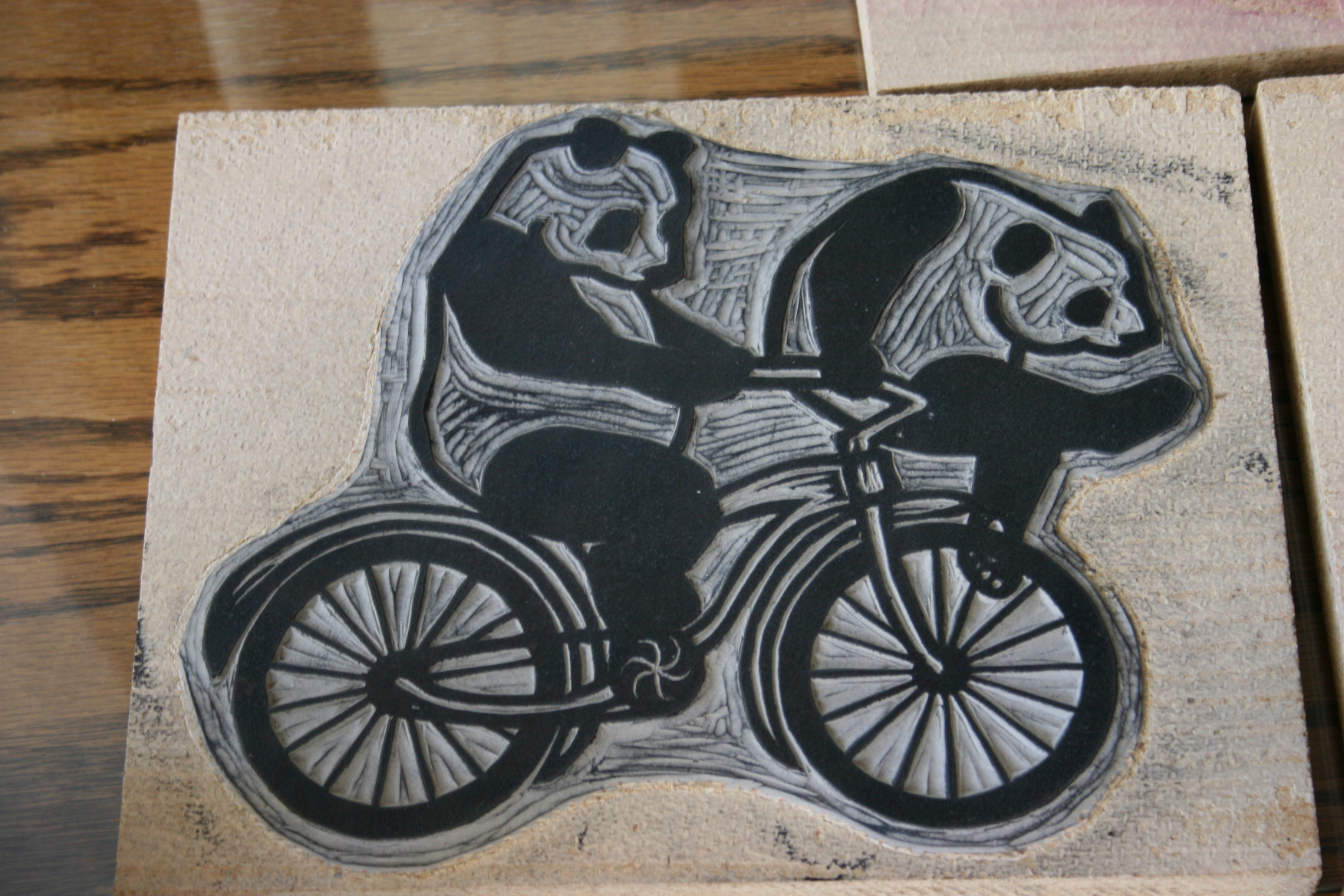
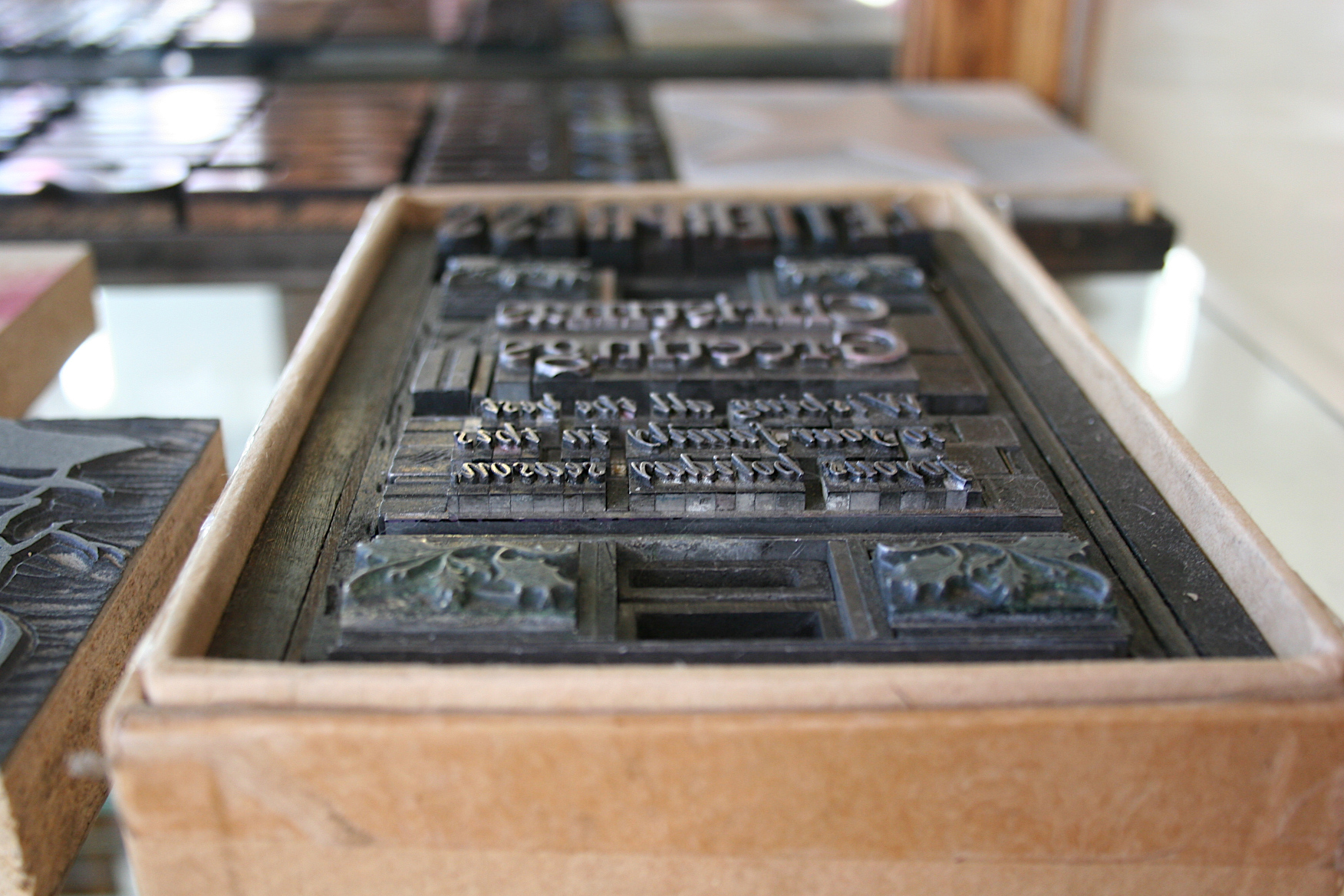
To view his art is to gain an appreciation for a past printing process. In letterpress printing, movable raised wood or lead letters/type are pieced together in a frame, then secured before inking onto paper via a printing press. That’s a simplistic explanation. If multiple ink colors are required, the process is layered, longer, more labor intensive. Likewise, art carved from linoleum or wood blocks goes through a similar process in creating fine art prints, gig posters and more.
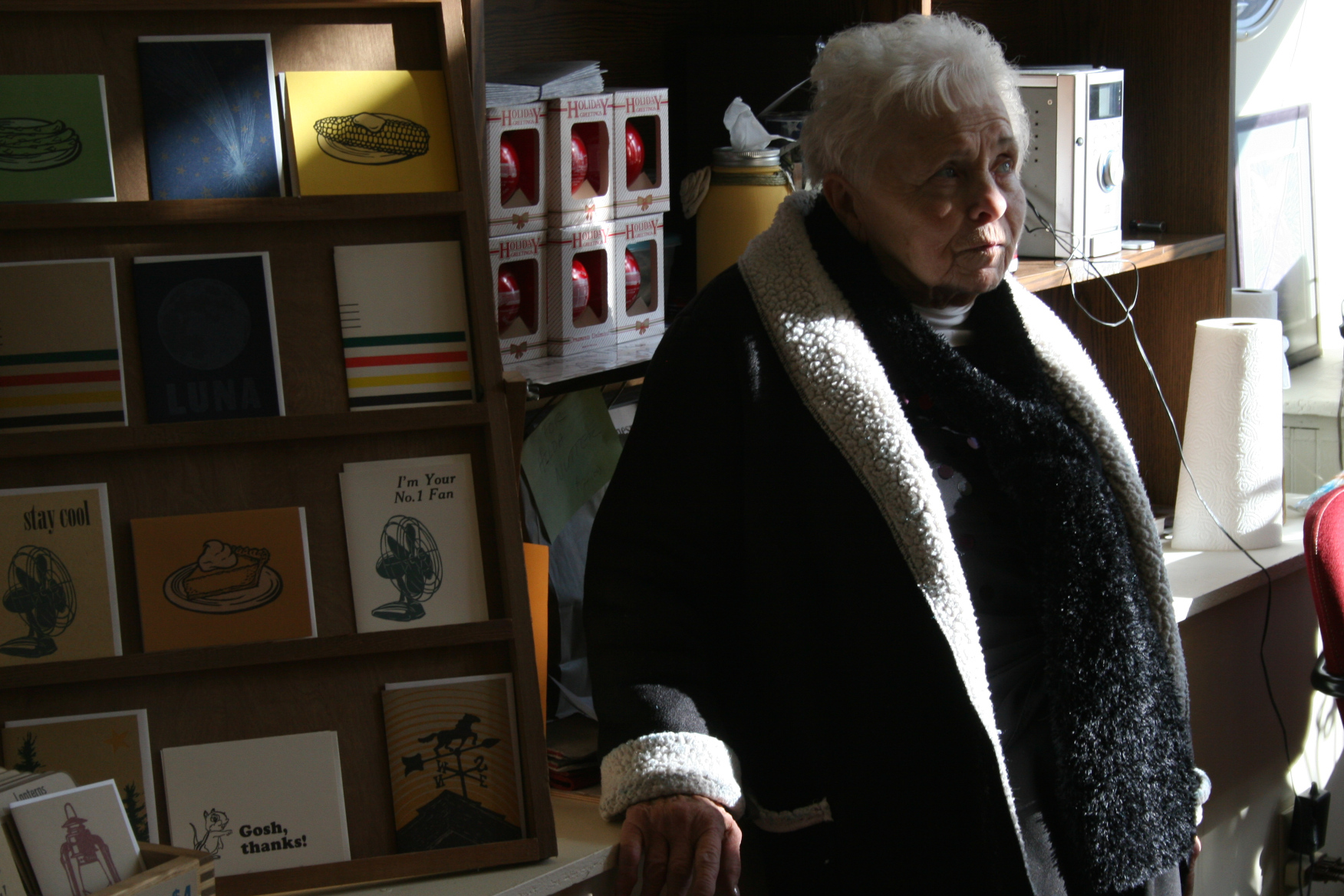
Volunteer JoAnn Petricka with Kotasek’s prints to the left. (Minnesota Prairie Roots copyrighted photo February 2022)
When I entered the narrow room which houses The Arts & Heritage Center in the small southern Minnesota community of Montgomery and saw Kotasek’s letterpress art, memories rushed back. Memories of the strong scent of ink, the clacking of noisy printing presses, scenes of printers Dale and Bucky laboring in stained printers’ aprons, me trying to hear phone conversations with sources. Me pounding out news stories on an aged manual typewriter against the backdrop of all that noise.
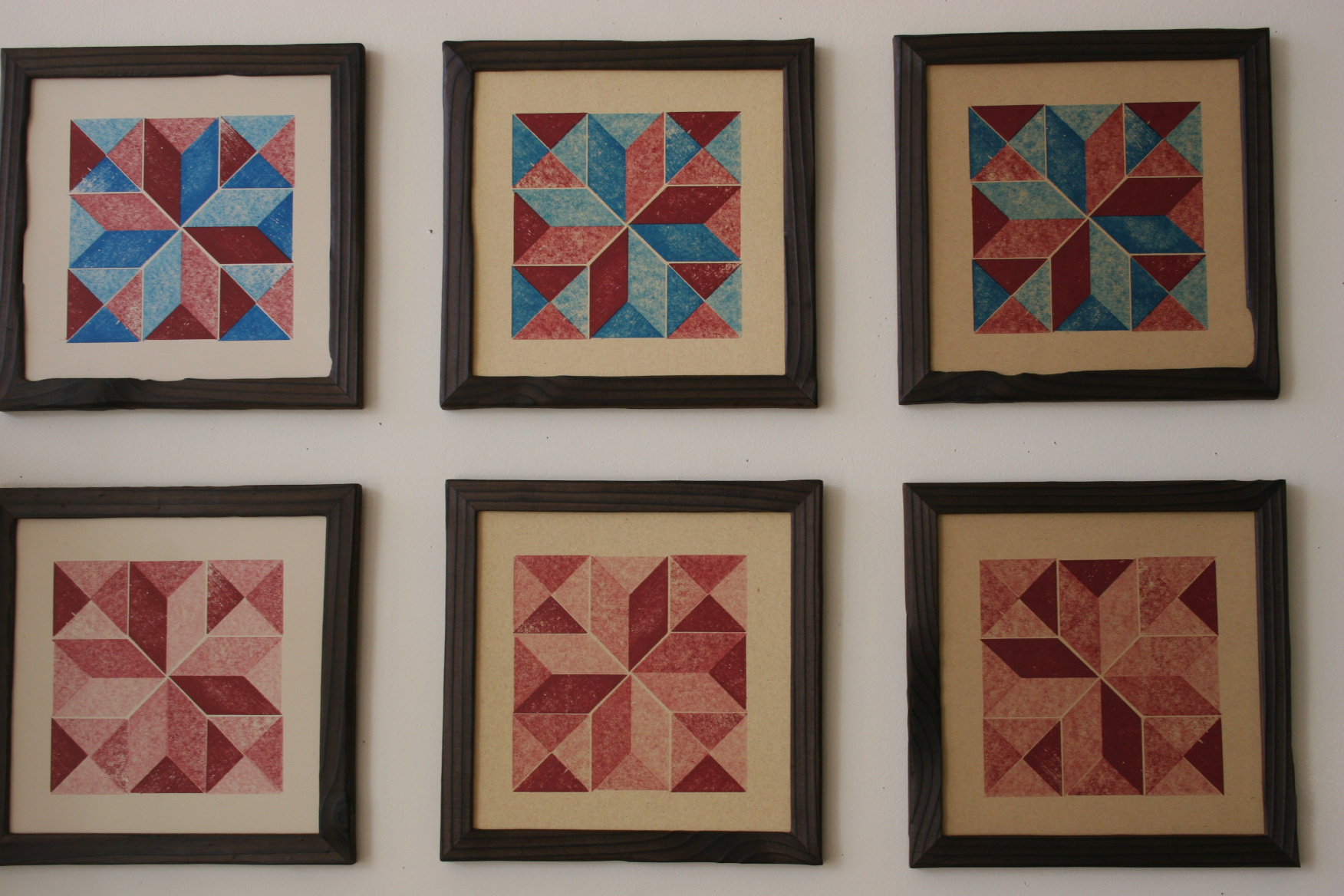
Hand-carved blocks were used to create this art titled “Eight-Pointed Star.” (Minnesota Prairie Roots copyrighted photo February 2022)
But on this February morning, quiet prevailed as I studied the work of this craftsman, this visual artist. Letterpress is both craft and art.
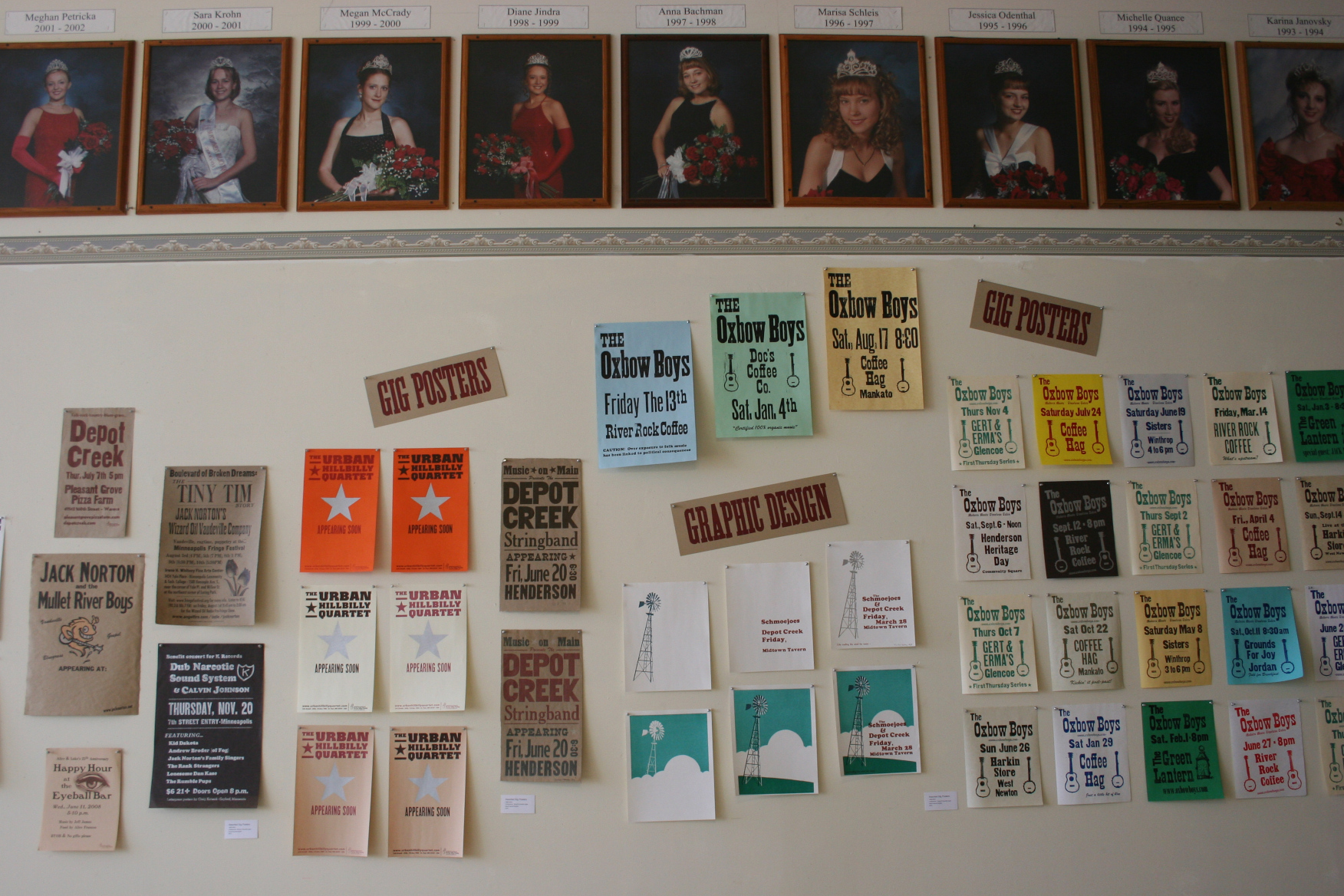
Kolacky Days queens in framed photos over prints from Tin Can Valley Printing. (Minnesota Prairie Roots copyrighted photo February 2022)
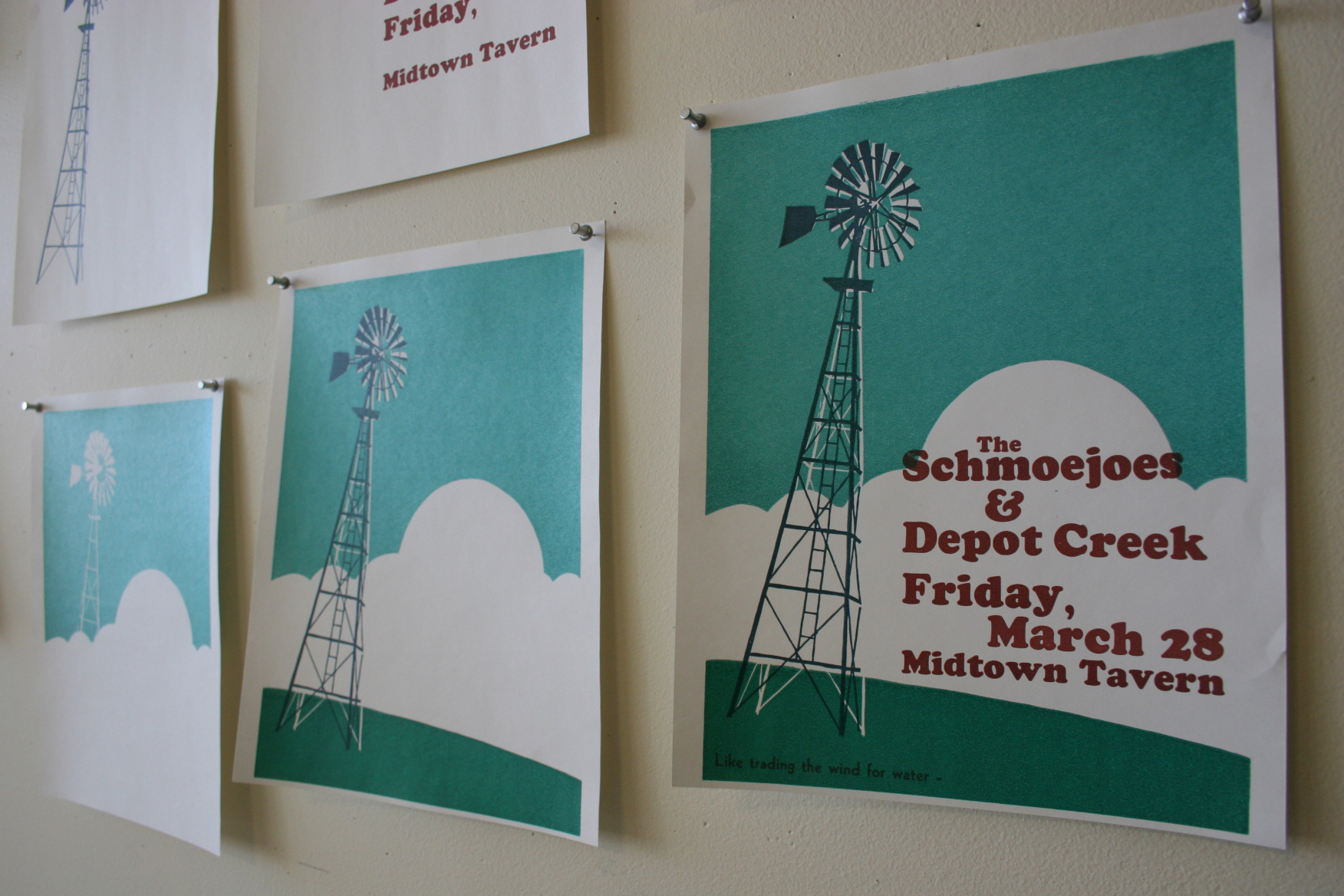
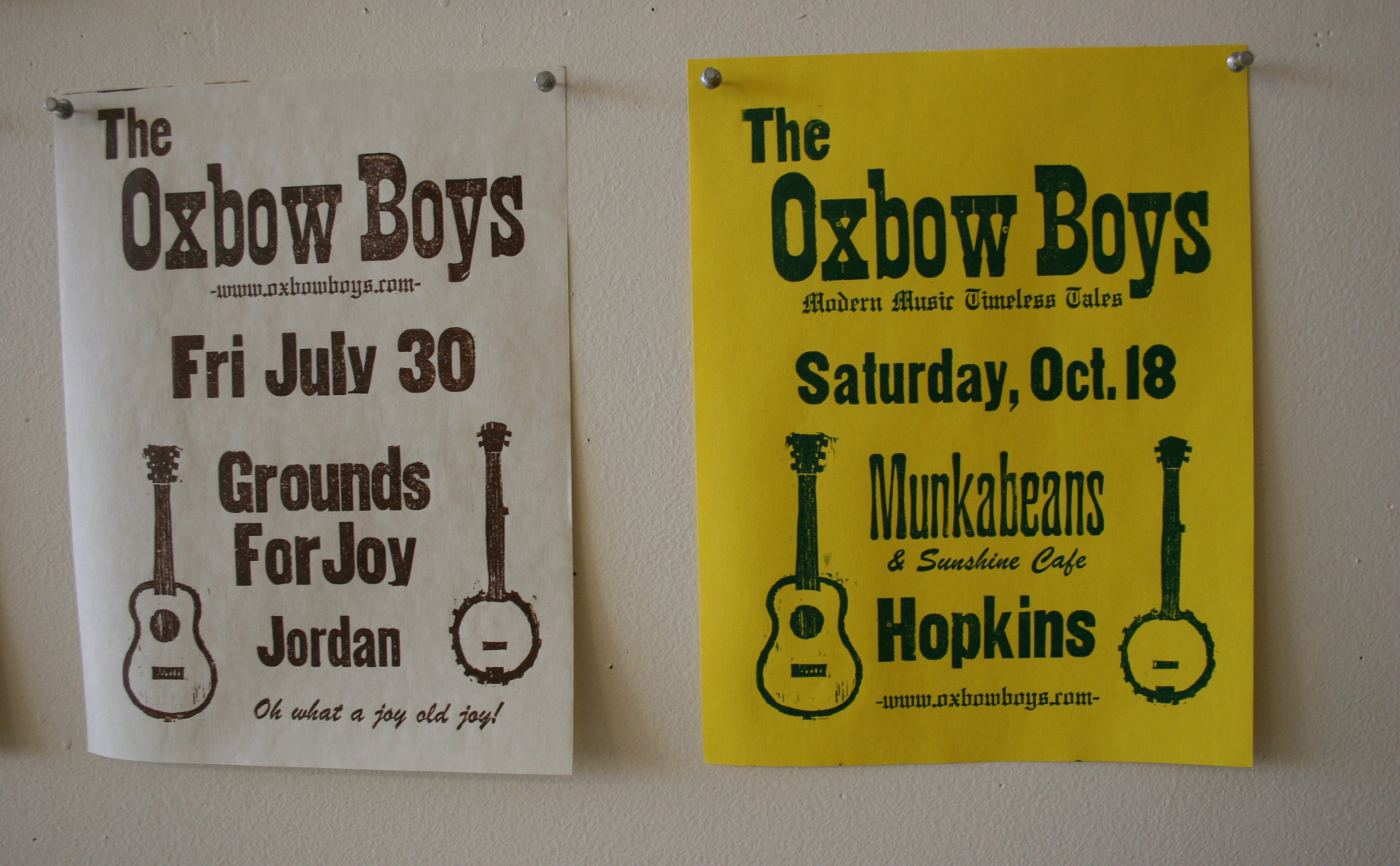
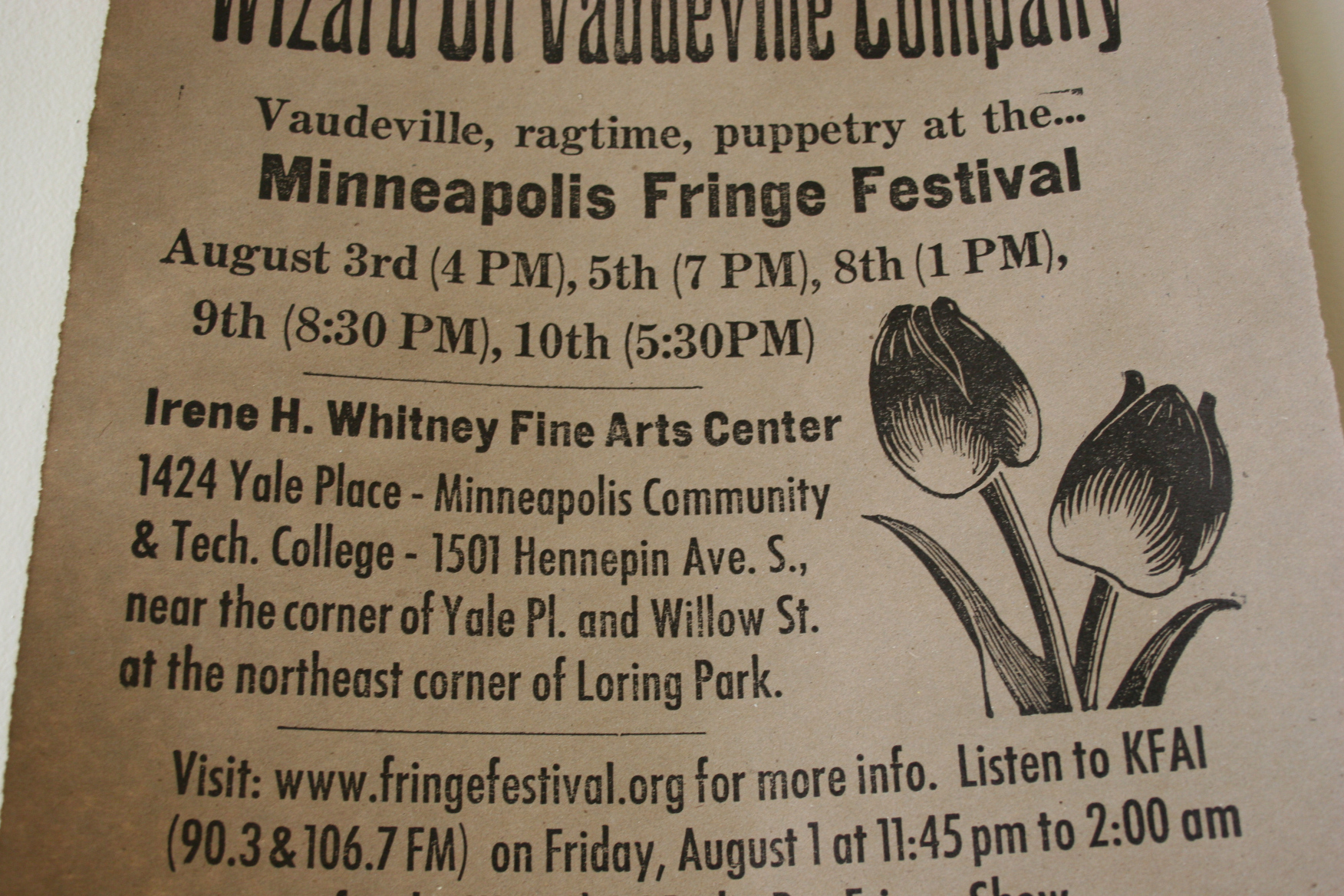
One of his specialties is creating posters for musical gigs. (Minnesota Prairie Roots copyrighted photo February 2022)
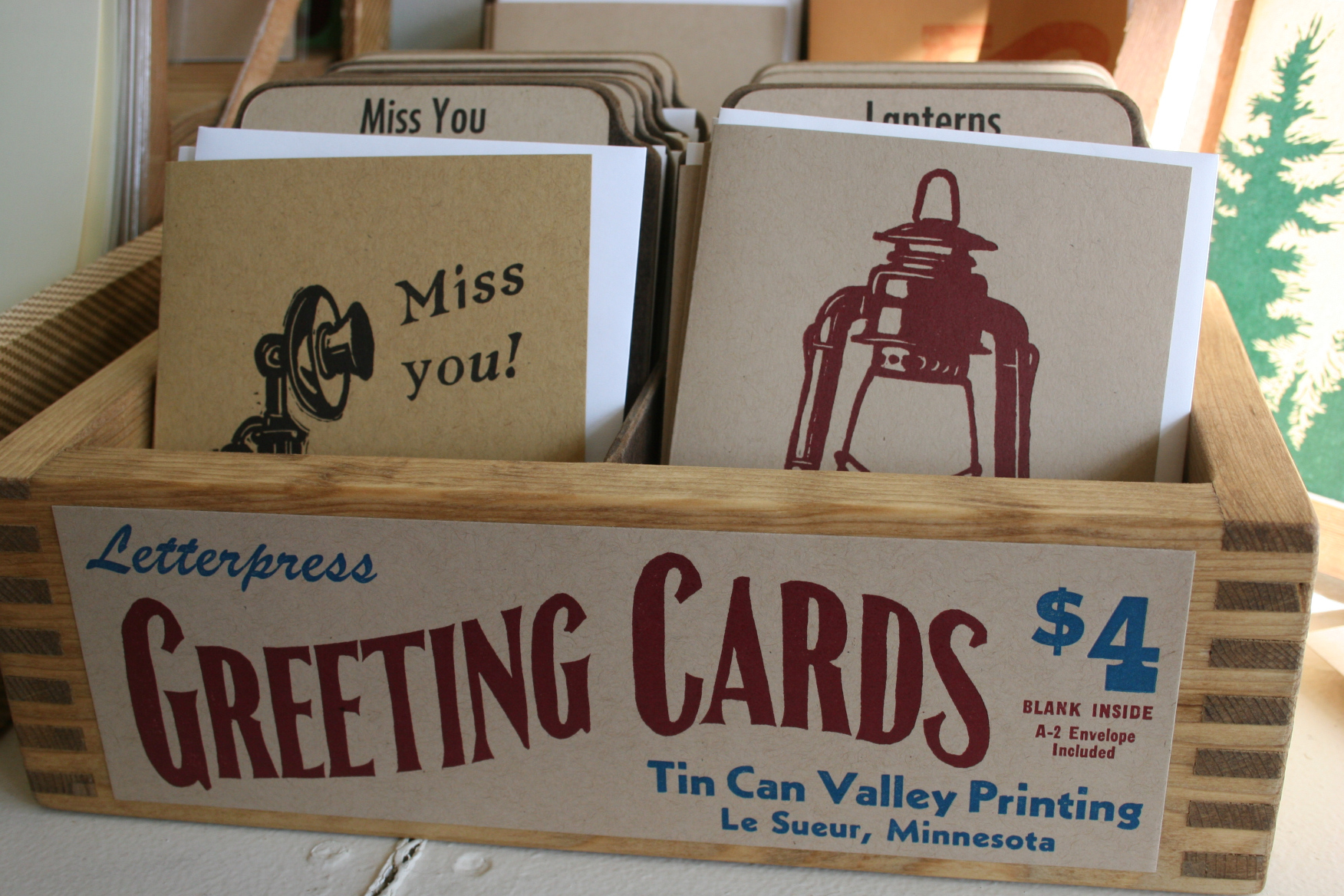
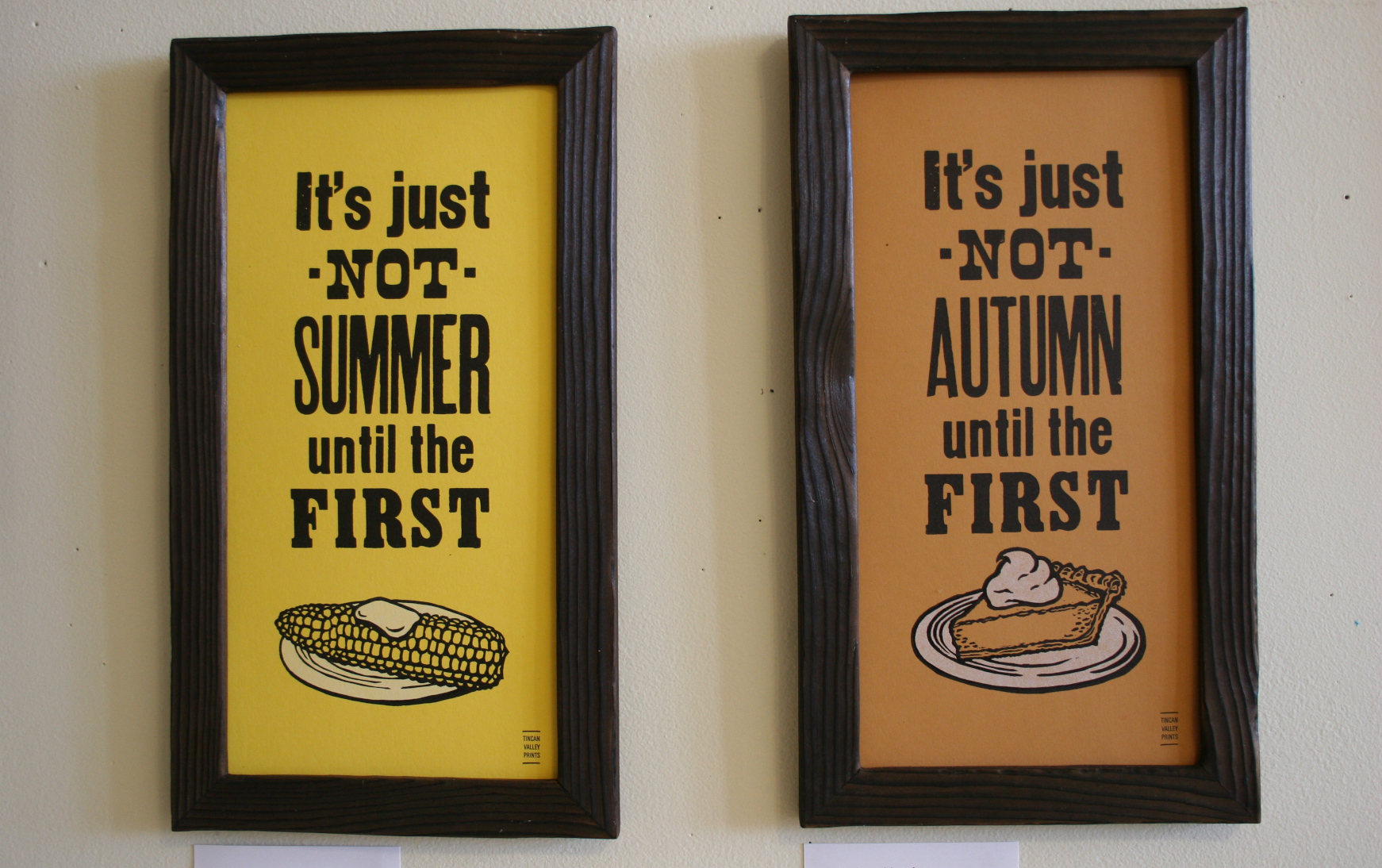
Beneath professional portraits of Kolacky Days queens, which ring this room near the ceiling, hang examples of Kotasek’s assorted creations. Gig posters for musical groups (including his own Oxbow Boys band). Fine art prints created with hard-carved blocks. A mix of letterpress and block. And on a shelf, a box of his popular letterpress greeting cards. Another display holds his $10 numbered prints.
A hand-carved block for printing. (Minnesota Prairie Roots copyrighted photo February 2022)
I feel such an appreciation for Kotasek. His love for the letterpress craft shows in his printing skills, his creativity. To get clear, crisp prints takes patience, practice, time, effort. But before that comes the visualization, the creativity, the ability to bring many elements together in hands-on work.
Type in a tray. (Minnesota Prairie Roots copyrighted photo February 2022)
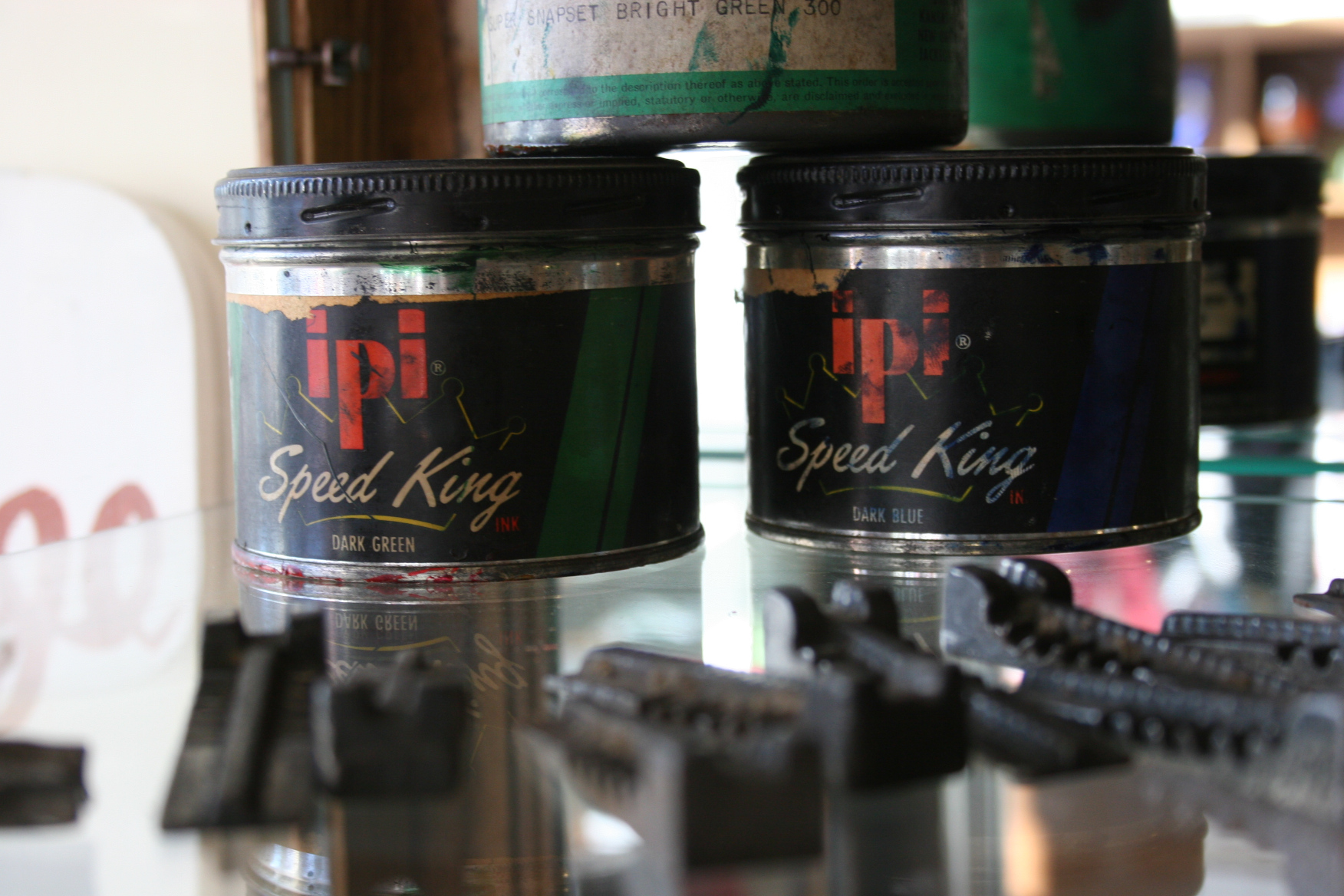
Cans of ink to color his art. (Minnesota Prairie Roots copyrighted photo February 2022)
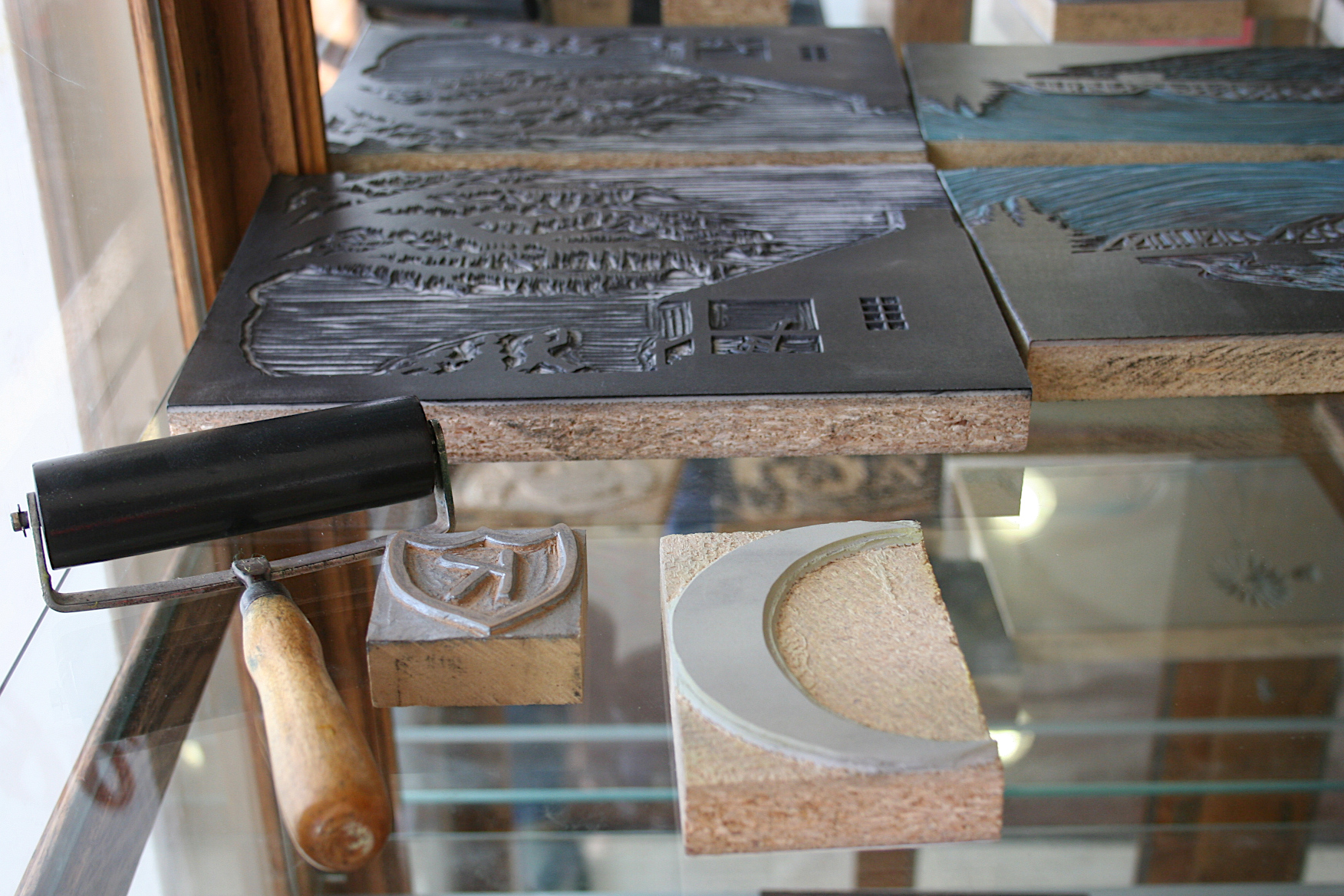
Roller and carved blocks to print. (Minnesota Prairie Roots copyrighted photo February 2022)
A tall enclosed cabinet holds some of Kotasek’s tools of the craft. Letters. Rollers. Ink. Wood-cuts. All offer a glimpse into this artist’s world. He’s gathered abandoned, about-to-be-scrapped printing presses and other printing tools from small town newspapers in Minnesota and set up shop in a renovated granary on the family farm just outside Le Sueur. His studio overlooks the valley, home of the Jolly Green Giant associated with Minnesota Valley Canning Company, later Green Giant.
Kotasek has created numerous Green Giant prints. (Minnesota Prairie Roots copyrighted photo February 2022)
Kotasek pays homage to the vegetable canning company in the name of his printing business, Tin Can Valley Printing. On his website, he offers several explanations, one referencing a farmer who fed discarded canned vegetables to his pigs from damaged cans. As the story goes, the pig farmer tossed those empty tin cans into a ravine. During a massive flood of the Minnesota River Valley in 1965, the cans reportedly floated into town, causing an array of issues. The name Tin Can Valley stuck. I like the historic reference, the memorable moniker.
Featured art includes Jolly Green Giant prints, right. (Minnesota Prairie Roots copyrighted photo February 2022)
More food art prints. (Minnesota Prairie Roots copyrighted photo February 2022)
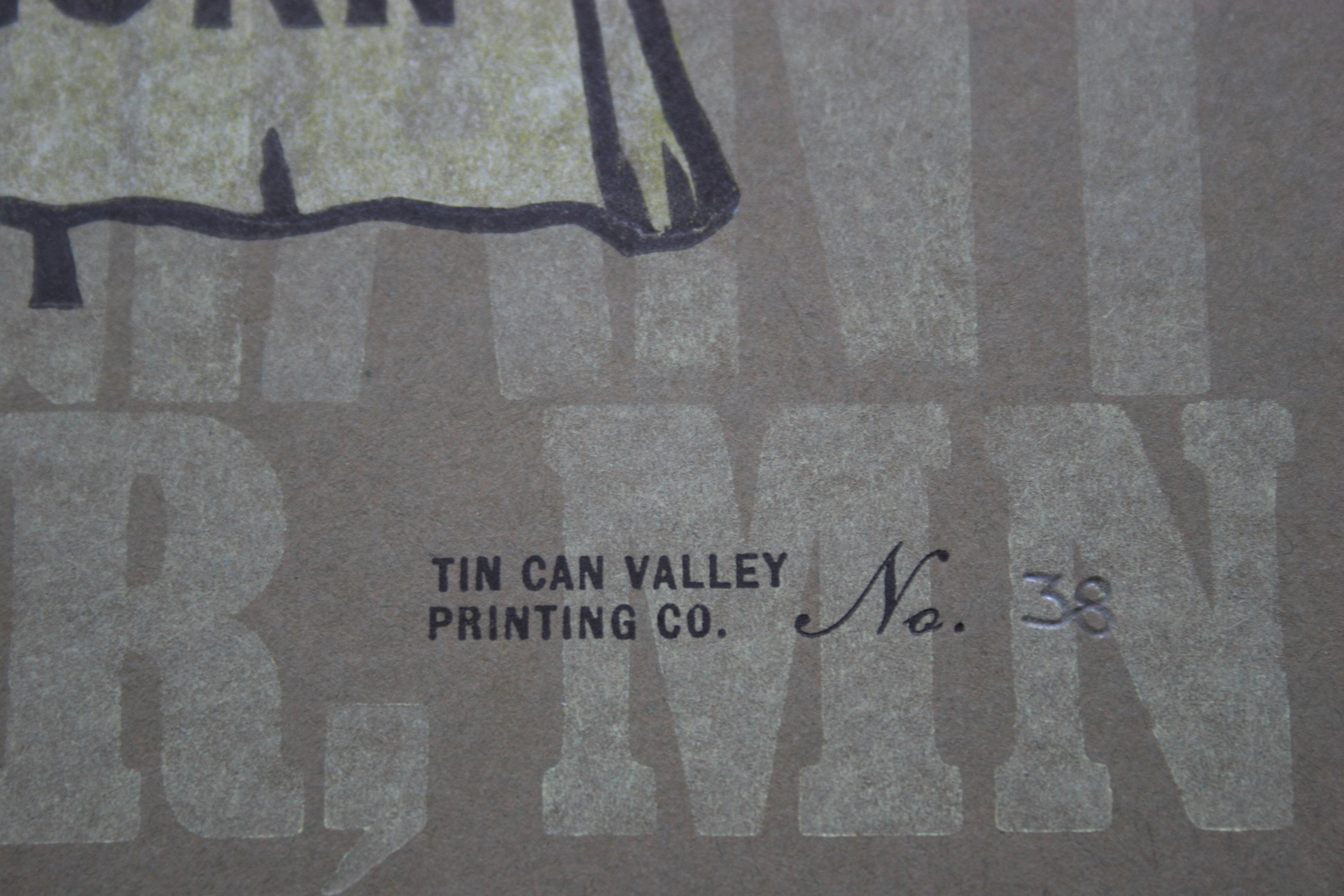
In the corner of my “Niblets of Corn Sign” print. (Minnesota Prairie Roots copyrighted photo February 2022)
I found myself drawn to Kotasek’s Green Giant-themed prints. I purchased No. 38 of his 2019 “Niblets Corn Sign” 8 x 10 card stock print. It’s a reproduction of a metal sign that once marked the Green Giant canning factory in Le Sueur. The four-color print, crafted from wood type and hand-carved wood and linoleum blocks, features the legendary Green Giant hefting a massive ear of sweetcorn. The image is iconic rural Minnesota.
This particular poster has an old style newspaper vibe. (Minnesota Prairie Roots copyrighted photo February 2022)
Kotasek represents in many ways the past of newspapers in Minnesota. Early editors printed their papers with letterpress. They also served their communities as print shops. When I worked at The Gaylord Hub, farm auction bills flew off the aged printing presses. Kotasek remembers the endless fundraiser raffle tickets he printed while learning the printing trade.
A poster fitting for the Czech farming community of Montgomery. (Minnesota Prairie Roots copyrighted photo February 2022)
If you’re interested in meeting Kotasek, visit The Arts & Heritage Center of Montgomery, 206 First Street North, between 9 am – noon on Saturday, February 26, during an artist’s reception. The center is open limited hours: from 2-5 pm Thursdays and Fridays and from 9 am-noon on Saturdays. The show closes February 26.
While in Montgomery, be sure to check out the shops (gift, floral, quilt, thrift, drugstore…) and stop at Franke’s Bakery for a sweet treat. You’ll find kolacky there in this self-proclaimed “Kolacky Capital of the World.” The town is also home to Montgomery Brewing and Pizzeria 201 (a popular local eatery with curbside pick-up only currently). I encourage you to check destination hours in advance of a visit to avoid disappointment. Also notice the historic architecture, the photo tributes to veterans and the town mural (across from the bakery). Montgomery rates as one of my favorite area small towns…because of The Arts & Heritage Center and more.
Signage on the building housing Antiques on 4th, a bright, uncluttered shop with artfully-displayed merchandise and friendly shopkeepers. (Minnesota Prairie Roots copyrighted photo October 2021)
YOU CANLEARN much about a small town by simply walking. And looking, really looking.
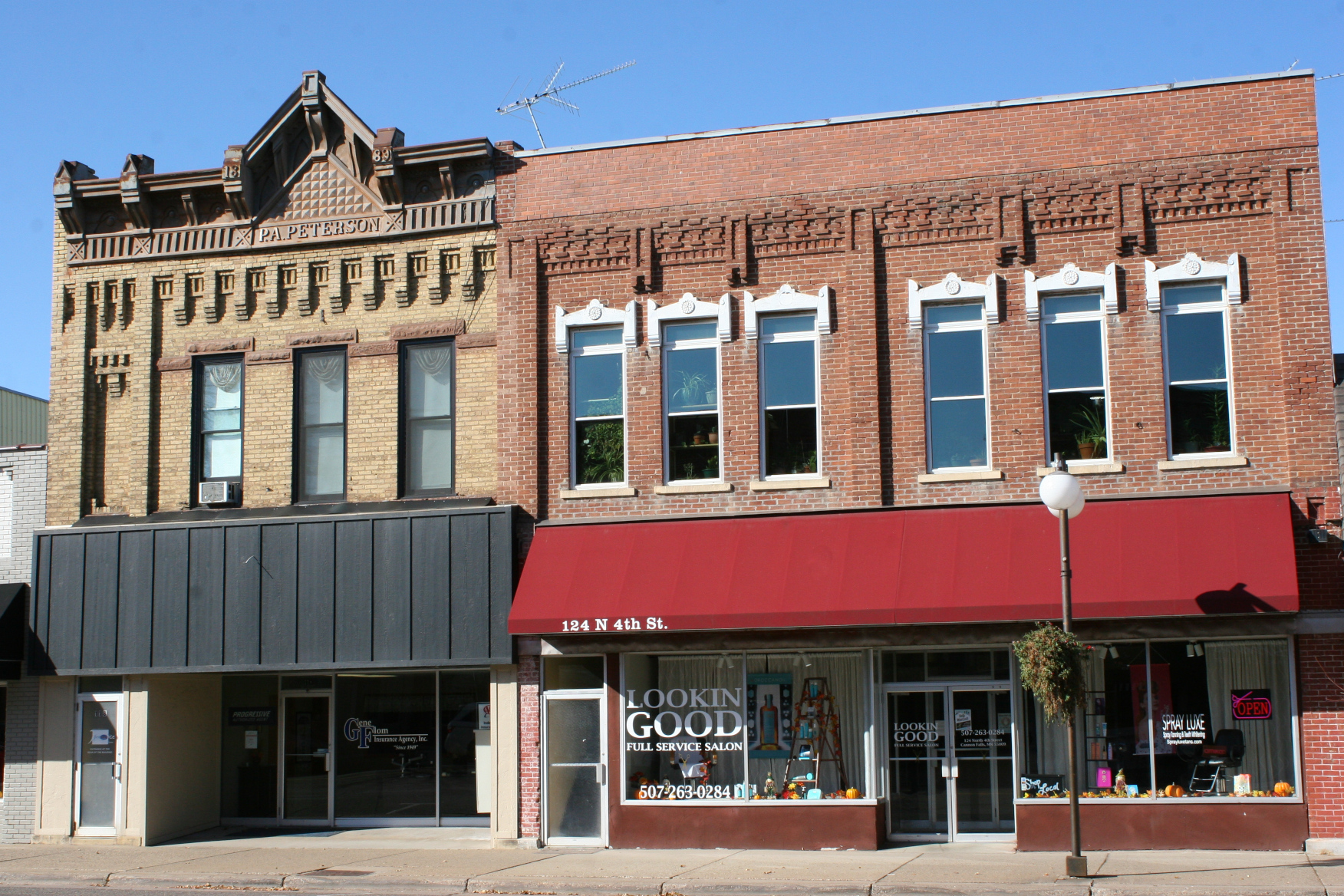
Two historic buildings in downtown Cannon Falls. (Minnesota Prairie Roots copyrighted photo October 2021)
On a recent day trip to Cannon Falls, I explored part of the downtown business district. Now on the National Register of Historic Places, the Cannon Falls Historic District includes 22 historically-significant structures.
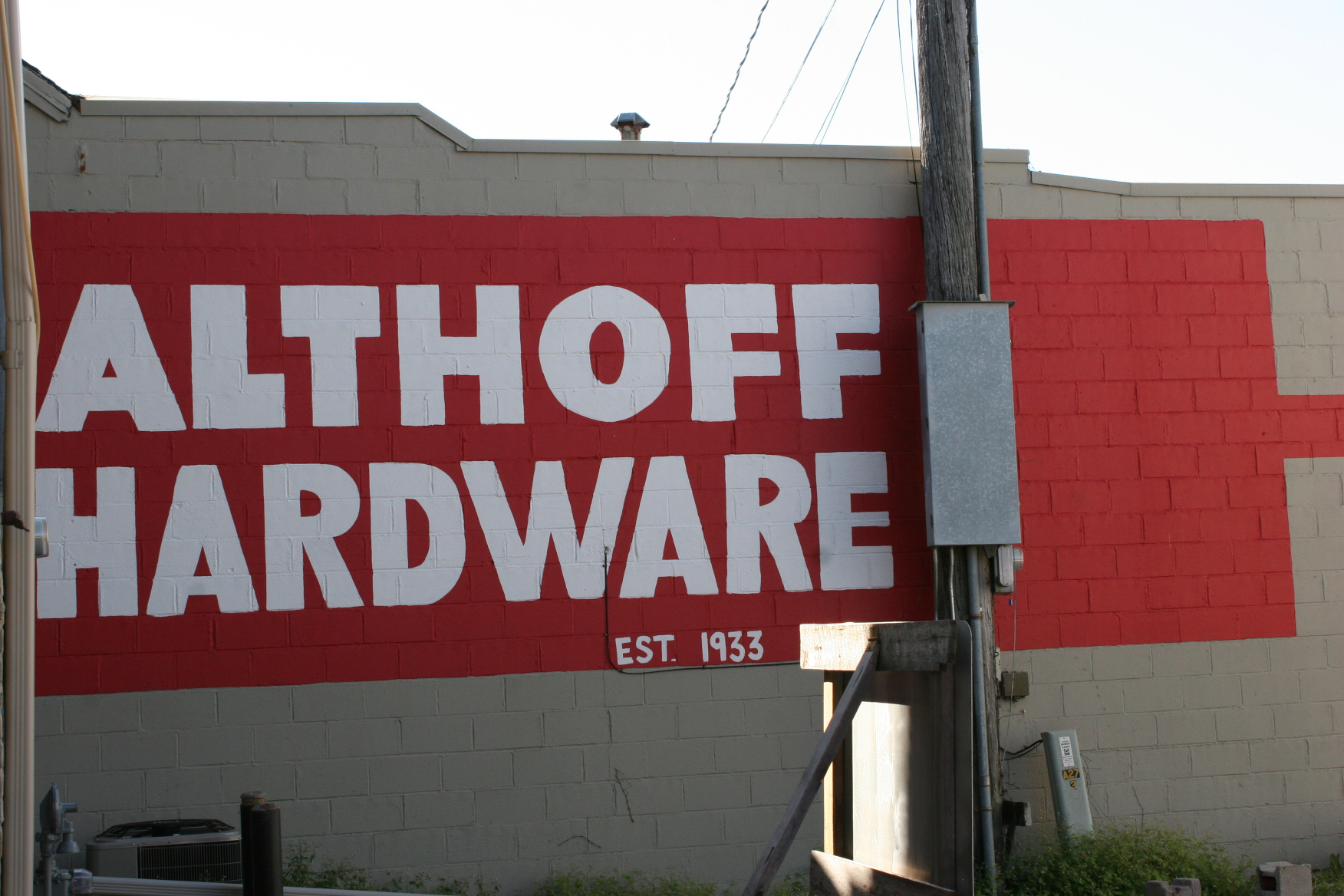
Bold art on the side of the building identifies the local hardware store.(Minnesota Prairie Roots copyrighted photo October 2021)
Given my love of historic architecture, and art, this Goodhue County community of 4,220 within a 40-minute drive of Minneapolis and St. Paul rates as a favorite regional destination.
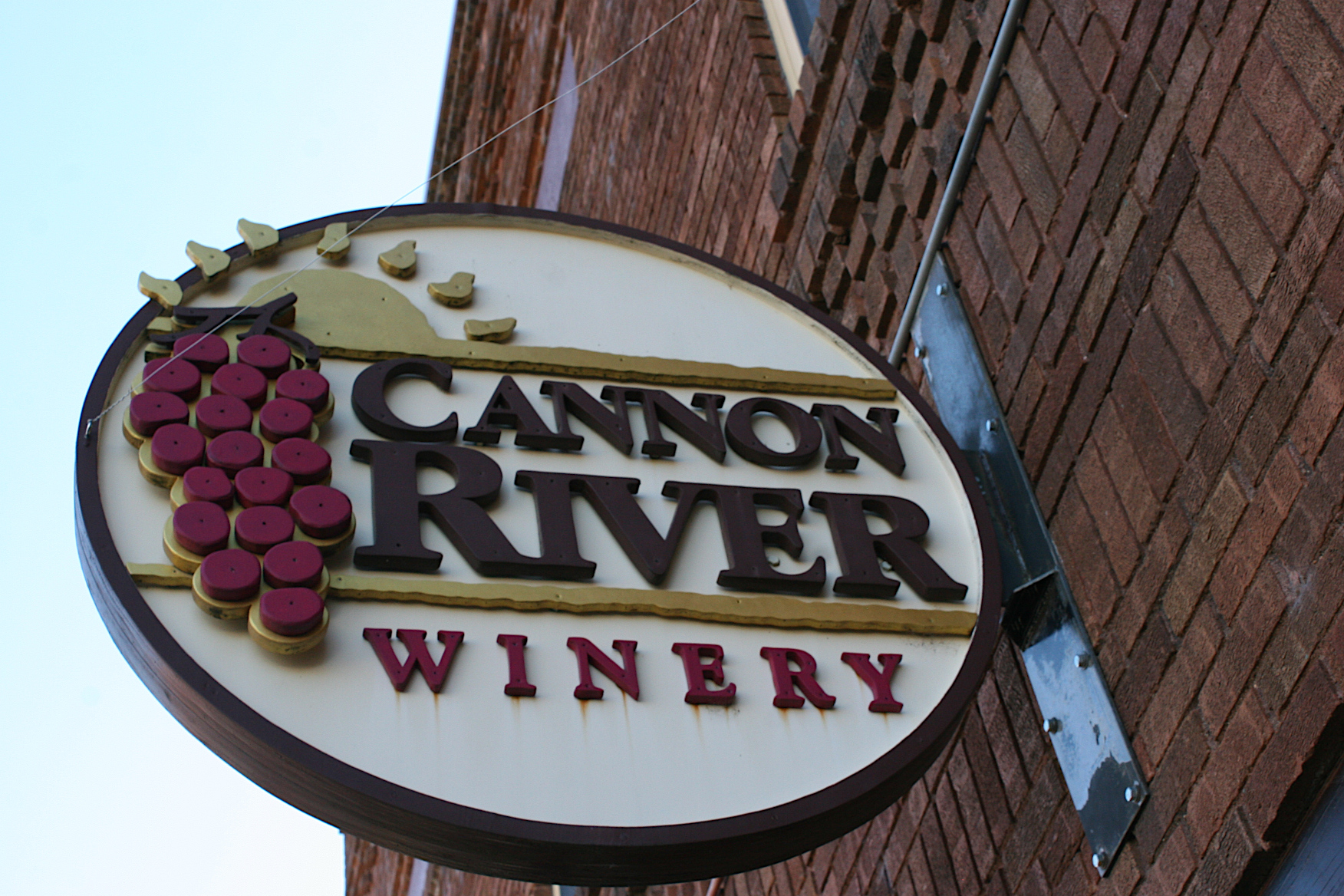
Signage marks the popular winery in Cannon Falls. (Minnesota Prairie Roots copyrighted photo October 2021)
Cannon Falls thrives with a well-known winery and bakery and an assortment of shops from antique to gift to hardware store. Toss in a mix of eateries, bars and a brewery and, well, there’s lots to see and do here. Plus, the town attracts outdoor enthusiasts who canoe the Cannon River and/or bike/hike the Cannon Valley Trail and Mill Towns Trail.
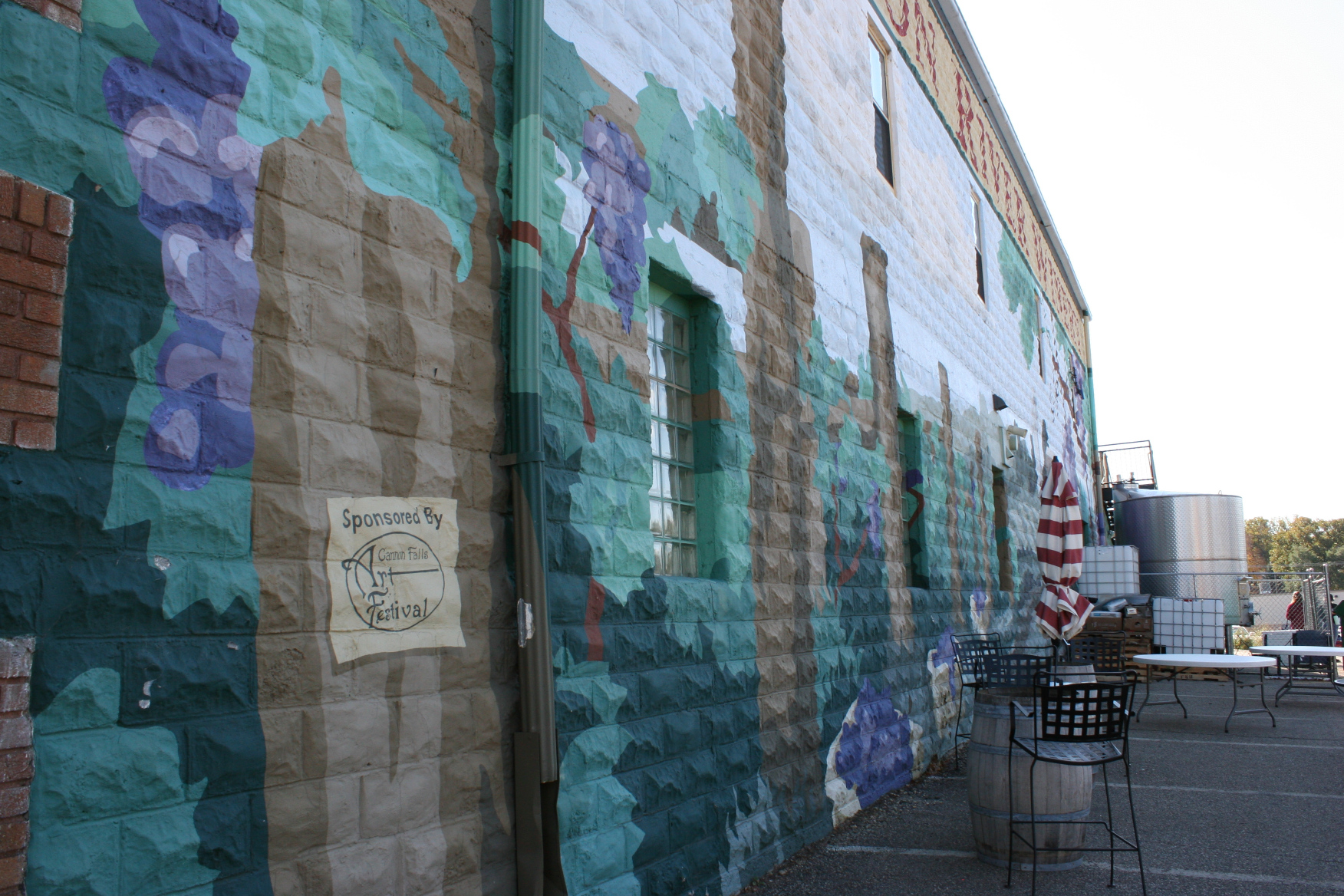
A mural at Cannon River Winery provides a backdrop for an outdoor space. (Minnesota Prairie Roots copyrighted photo October 2021)
During my mid-October visit, I popped into a few shops (including the bakery), discovered the lovely library and admired a new downtown mural. Because of COVID concerns, I skipped dining and imbibing. It was too early in the day and too cool to enjoy either outdoors.
Cannon Falls’ newest mural, a 2021 Youth Mural Arts Community Project, highlights geography, history and local interests. (Minnesota Prairie Roots copyrighted photo October 2021)
Still, I found plenty to take in from the colorful new mural to the art inside the library to ghost signage.
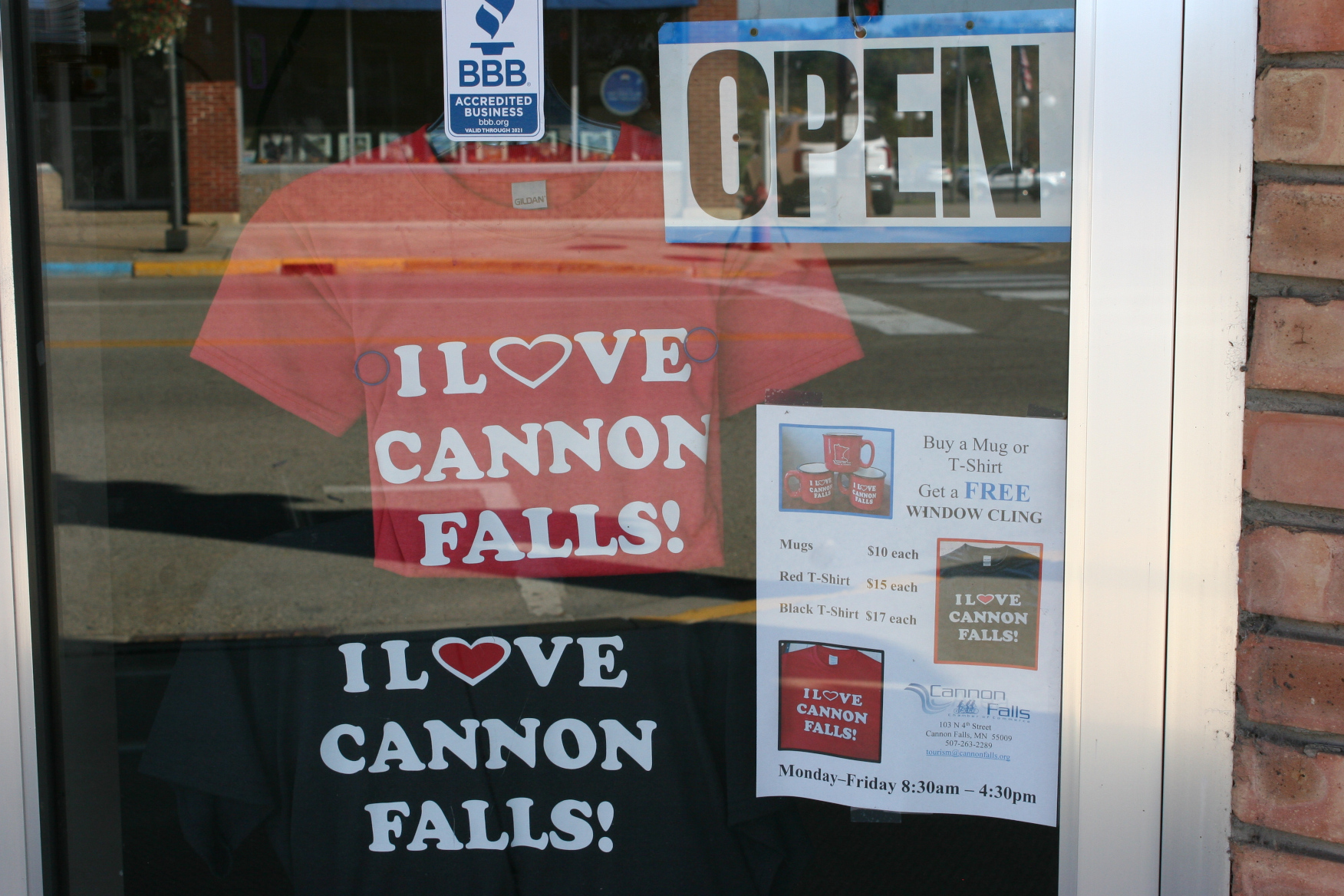
Showing some love for Cannon Falls.(Minnesota Prairie Roots copyrighted photo October 2021)
I noticed, too, hometown pride in the I LOVE CANNON FALLS! tees in a storefront window.
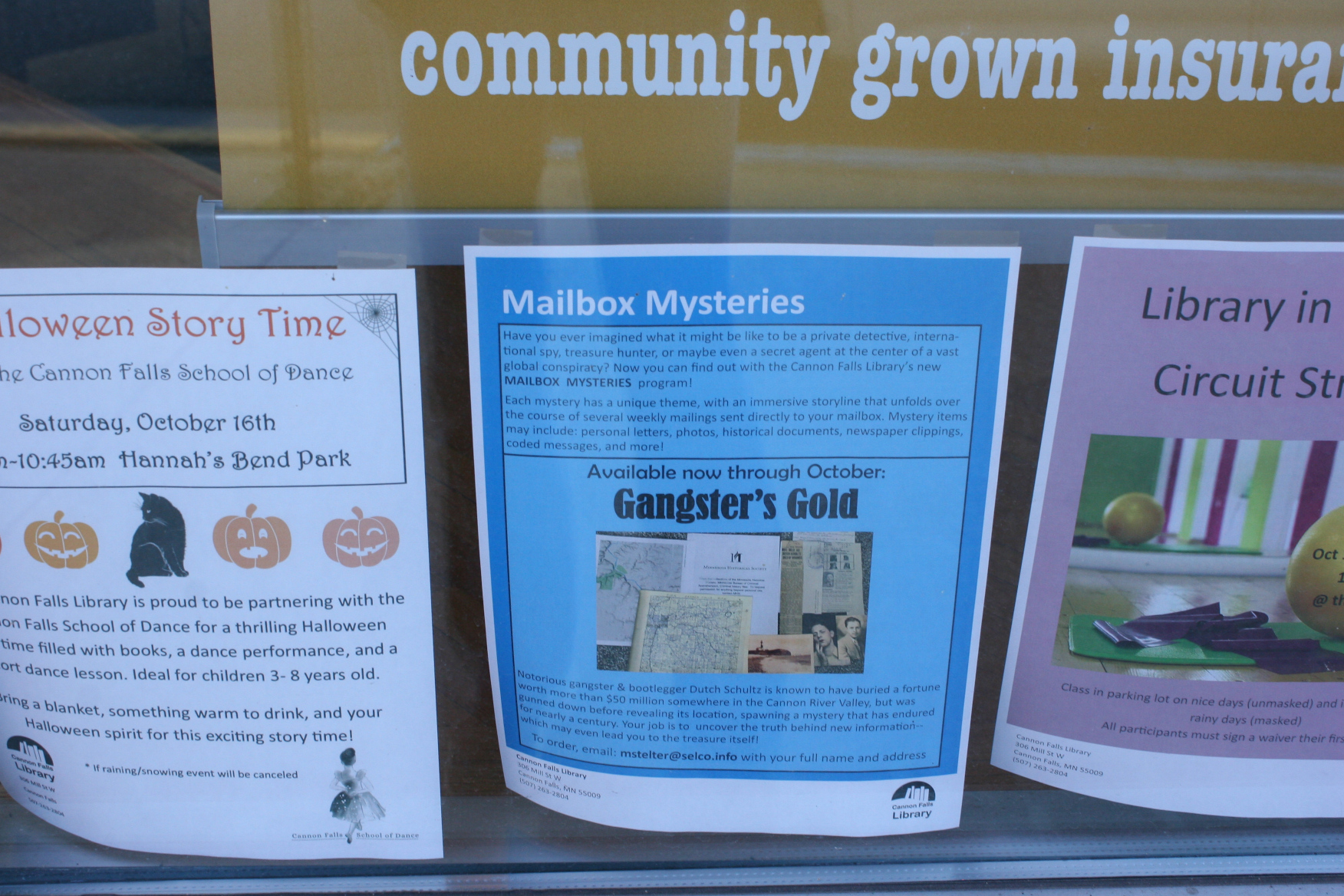
I learn so much about communities by reading signs in windows. (Minnesota Prairie Roots copyrighted photo October 2021)
I noticed also notices taped in a display window, one of which alerted me to Mailbox Mysteries, which led me to the library around the corner which led me to sign up for this challenging endeavor. Now I’m trying to solve the “Gangster’s Gold” mystery with weekly clues snail mailed to me by the library.
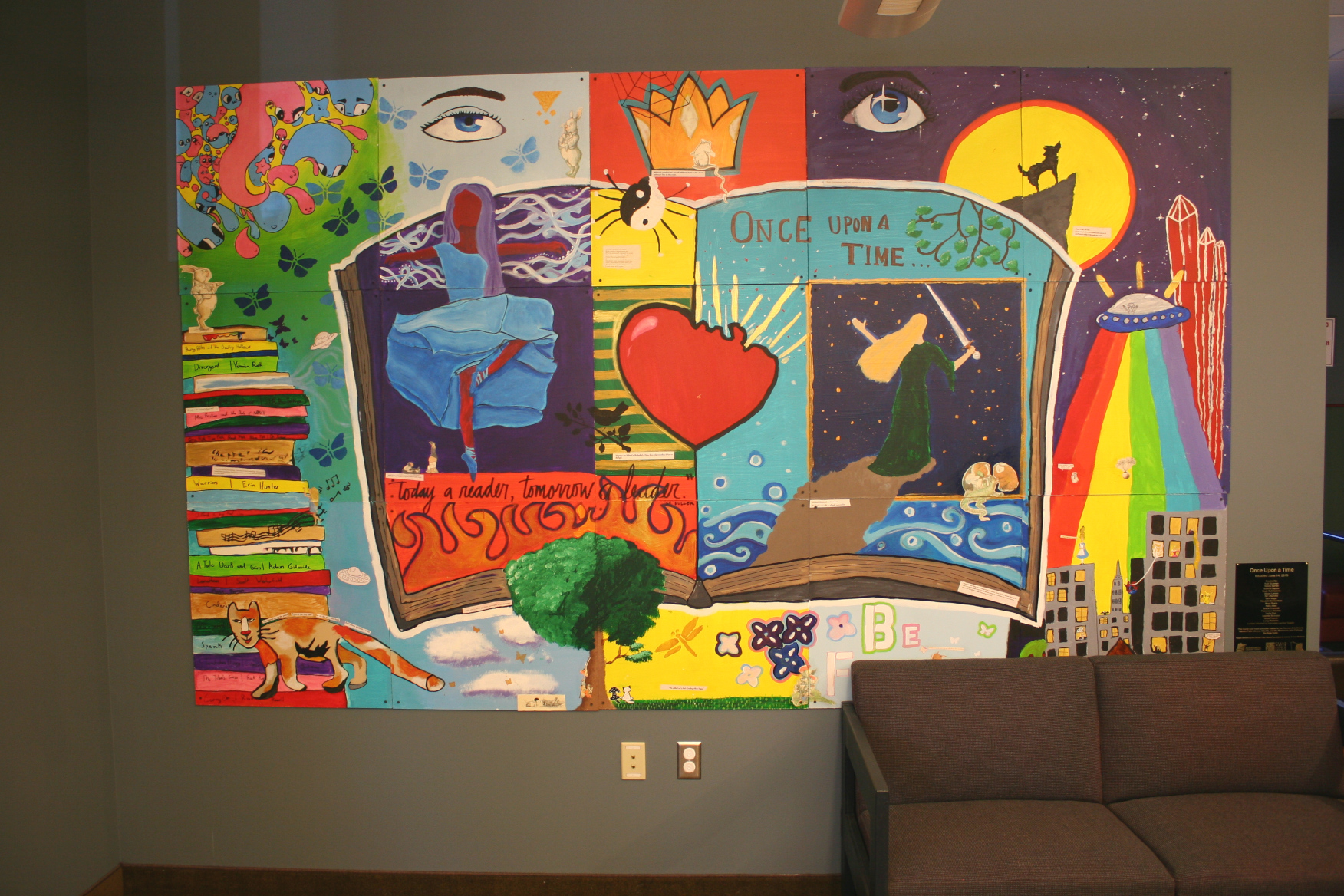
Inside the library, I found this vivid “Once Upon a Time” mural. (Minnesota Prairie Roots copyrighted photo October 2021)
Had I not done this walk-about through downtown Cannon Falls, I likely would have missed these nuances. The details which help define this community.
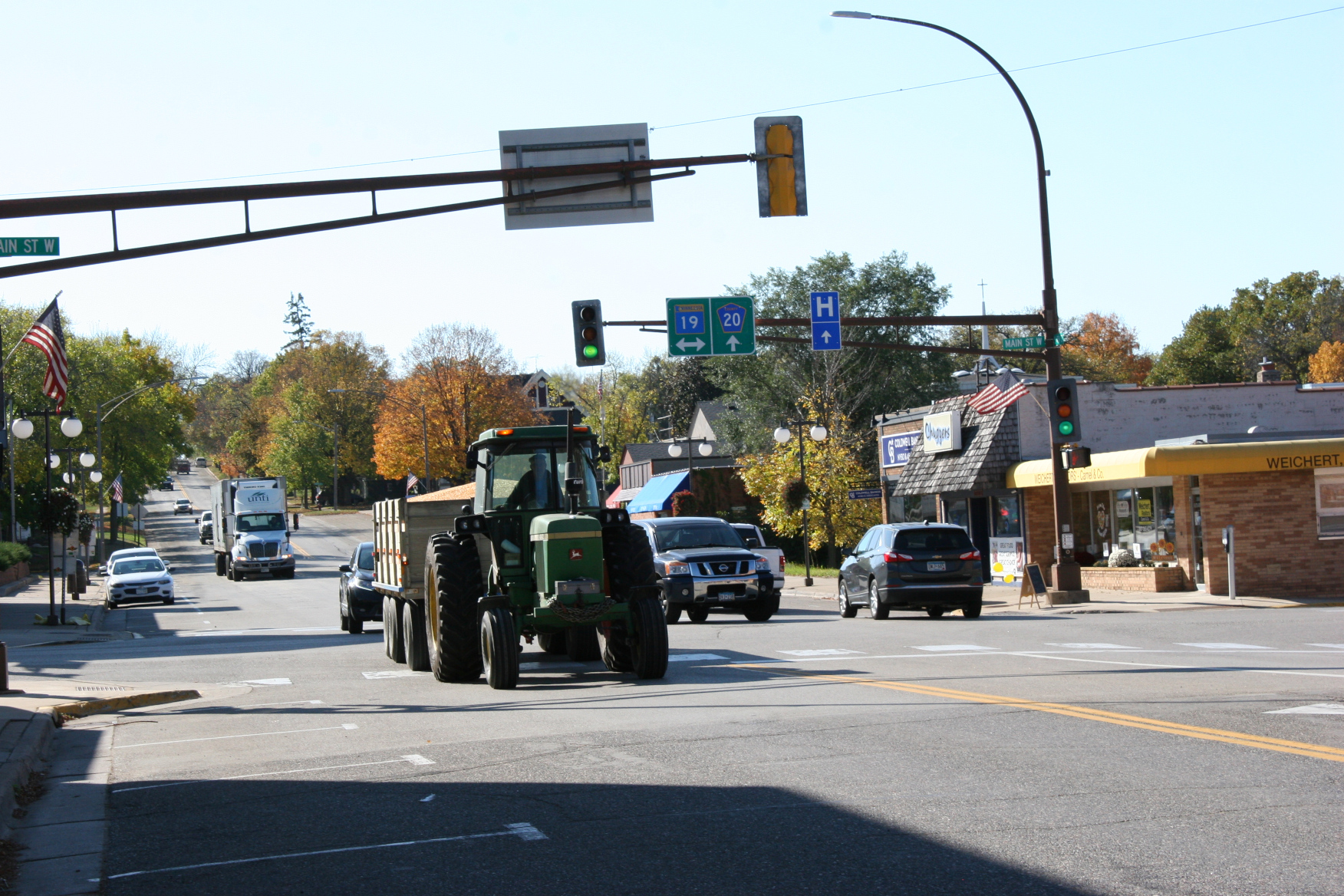
A scene in the center of downtown Cannon Falls reminds me of the town’s rural roots. (Minnesota Prairie Roots copyrighted photo October 2021)
As I meandered, I paused to watch a John Deere tractor roll through downtown pulling a wagon heaped with golden kernels of corn. This is, after all, an agricultural region.
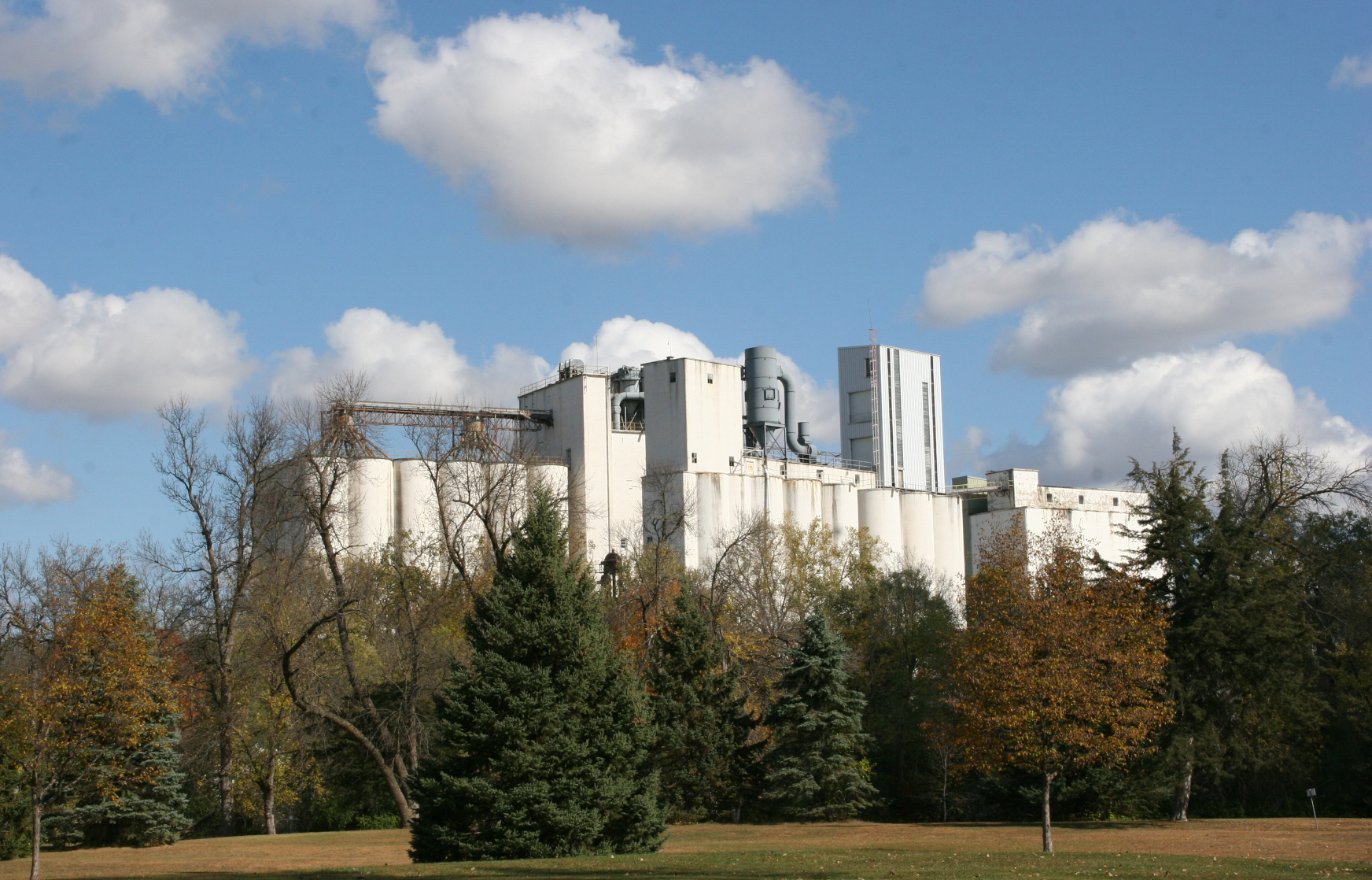
A grain complex in Cannon Falls. (Minnesota Prairie Roots copyrighted photo October 2021)
Later, Randy and I picnicked at Hannah’s Bend Park, the local grain elevator complex defining the nearby skyline. As we finished our lunch, a bald eagle soared overhead, wings spread wide. I expect the Cannon River drew the majestic bird here, to this small southeastern Minnesota town, this Cannon Falls.
On the front window of Hi Quality Bakery, downtown Cannon Falls, Minnesota. (Minnesota Prairie Roots copyrighted photo October 2021)
THE SCENT OF HOMEMADE BREAD fresh from the oven. The taste of my late mother-in-law’s best-ever gooey caramel rolls. The rustic look of a cracked gingersnap cookie. All appeal to me. All bring a flood of memories.
Seasonal-themed flowers and frogs at Hi Quality Bakery. (Minnesota Prairie Roots copyrighted photo October 2021)
I appreciate the love and labor that go into baking and the memories I associate with homemade baked goods.
Daily specials posted on a whiteboard behind the bakery counter. (Minnesota Prairie Roots copyrighted photo October 2021)
Perhaps for those reasons I am drawn to small town bakeries, including a regional favorite, Hi Quality Bakery in Cannon Falls. On a recent day trip to that Goodhue County community, Randy and I made the bakery our second stop. After the local Chamber of Commerce office, where we were tipped off to buy-one-get-one-free Fritter Friday at the bakery a few doors down.
Fritters in the bakery case at HiQuality. (Minnesota Prairie Roots copyrighted photo October 2021)
Soon we found ourselves inside the bakery, admiring the baked goods, but disciplining ourselves to ordering two fritters. Apple and blueberry.
Hi Quality Bakery sports a signature red awning. (Minnesota Prairie Roots copyrighted photo October 2021)
This popular bakery has been a Cannon Falls mainstay since 1947 with original recipes passed through several changes in ownership. The fresh-baked treats and breads remain popular with locals, with visitors like us and with natives returning back home. A bakery clerk referenced a recent returnee from Texas who made Hi Quality her first stop.
I understand the draw. There’s something Norman Rockwell appealing about stepping inside a small town bakery. There’s something appealing about standing before glass cases of pastries and breads and sweet treats contemplating the choices. There’s something anticipatory about accepting a white paper bag with a pastry nestled inside.
Love the lettering identifying this as a bakery. (Minnesota Prairie Roots copyrighted photo October 2021)
Small town bakeries rate as one of life’s simple delights.
Adorable mummy cookies. (Minnesota Prairie Roots copyrighted photo October 2021)
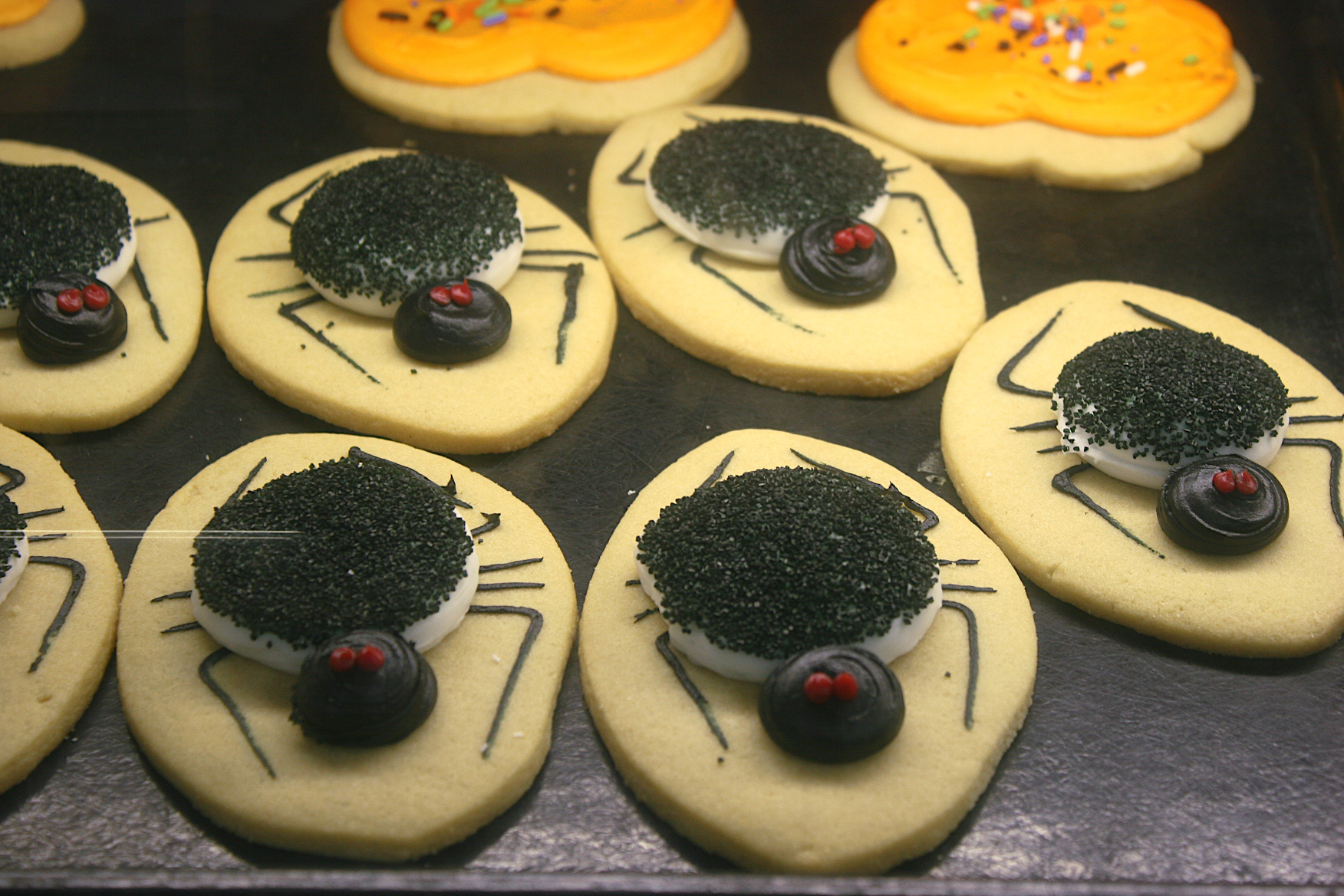
On this Friday morning inside the Cannon Falls bakery, I noticed an array of Halloween-themed cookies filling trays. And I thought of the artist who crafted these—the spiders and mummies and webs… Baking and decorating truly are art forms.
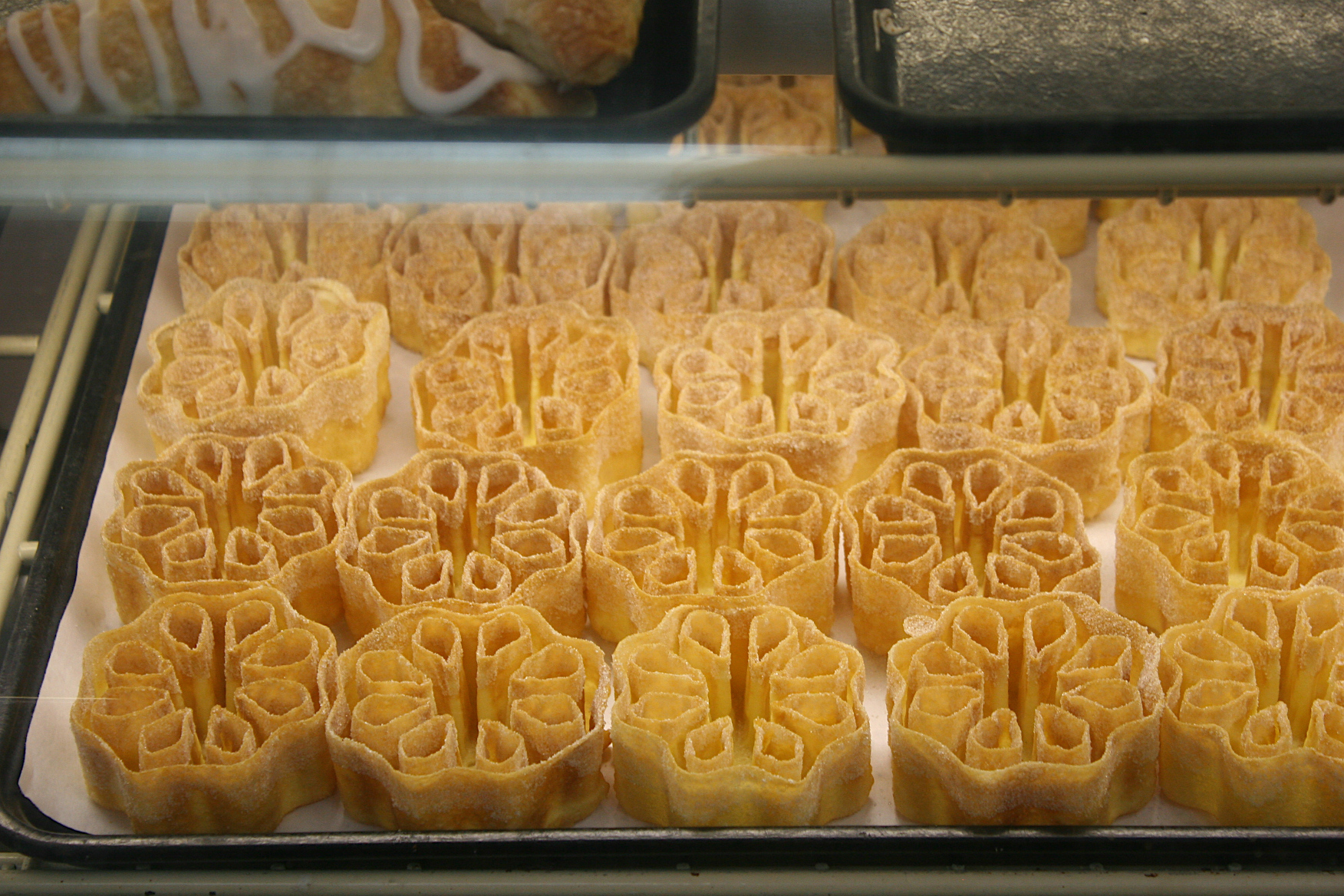
Rosettes at Hi Quality. (Minnesota Prairie Roots copyrighted photo October 2021)
And I noticed, too, rows of rosettes neatly lining a baking sheet. The Norwegian cookie proved a popular buy during a recent local lutefisk dinner, a clerk shared.
In celebration of Halloween, spider cookies. (Minnesota Prairie Roots copyrighted photo October 2021)
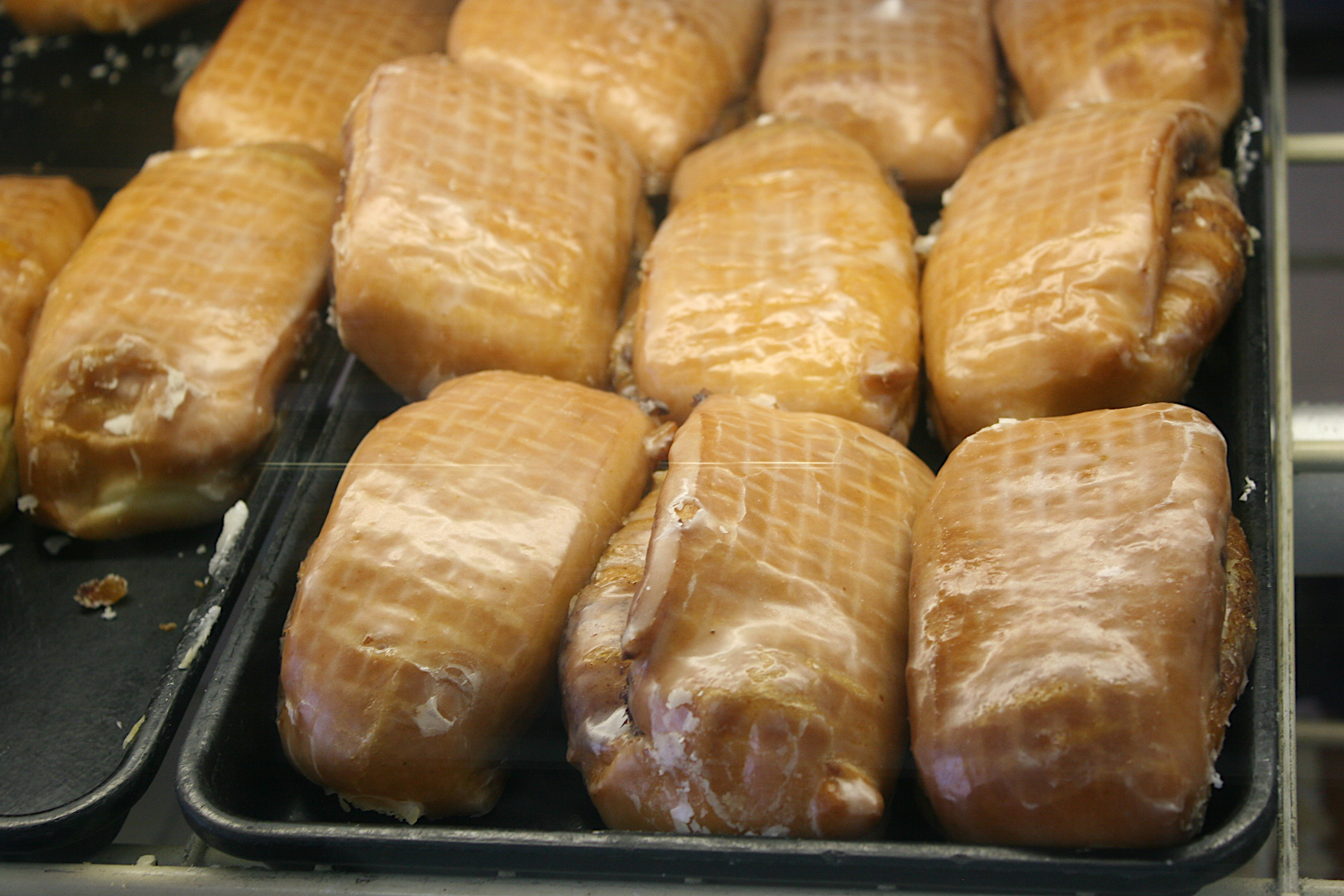
Rosettes. Fritters. Cupcakes. Cookies. Breads. Donuts. And much more. A baker rose early to create these bakery delights. I’m grateful for that dedication to craft, for the baked goods that draw me into small town bakeries like Hi Quality in Cannon Falls.
#
TELL ME: Do you have a favorite local bakery? I’d like to hear. And if you have tips on the bakery’s specialty, I’d like to hear that, too.
Hi Quality Bakery is open from 6 am – 5 pm Tuesday-Friday and from 6 am – 1 pm Saturday. You can order online for pick-up. Click here to visit the bakery’s website.
Please check back next week for more photos from downtown Cannon Falls.
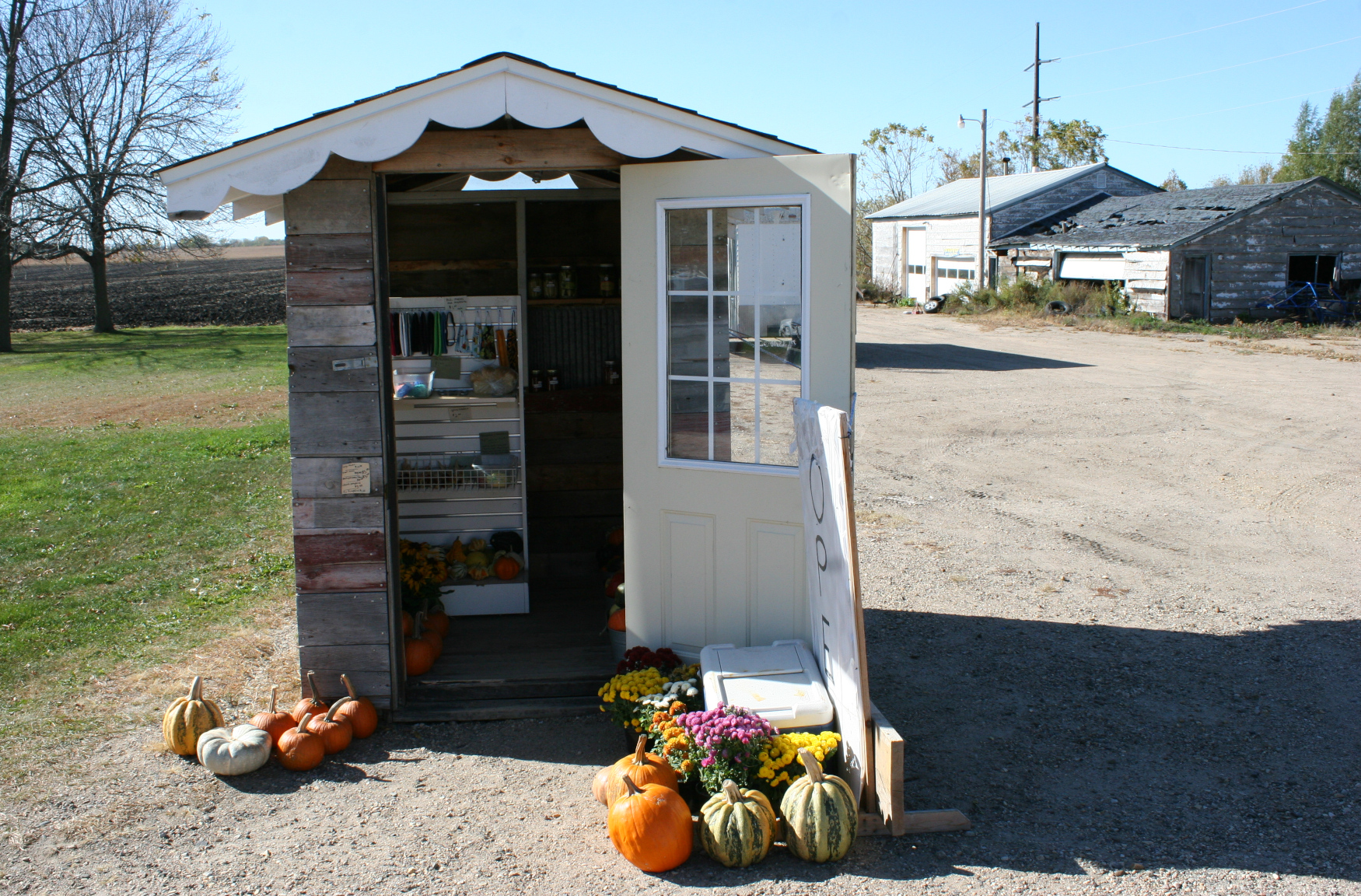
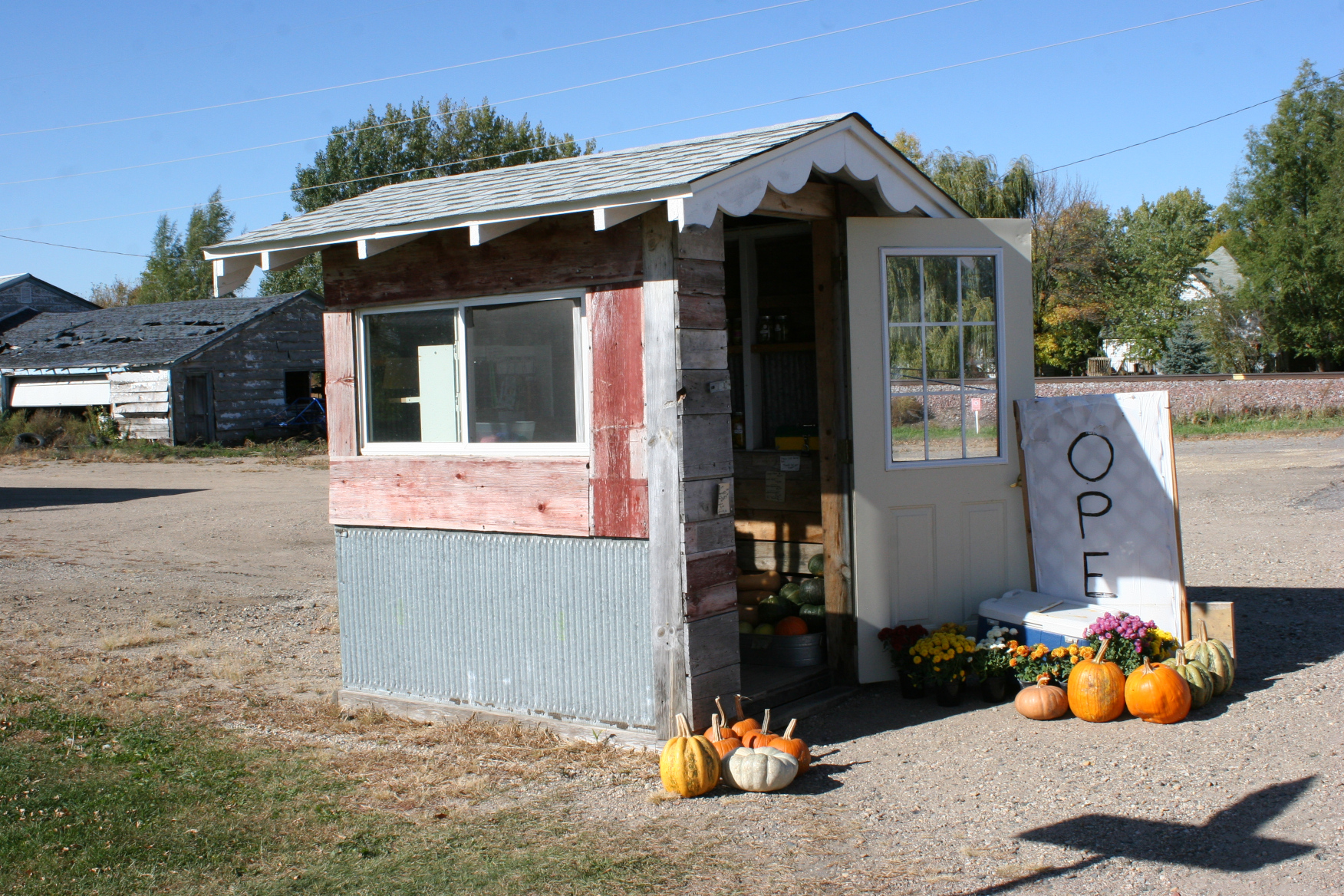
Teb’s Food Stand in Meriden. (Minnesota Prairie Roots copyrighted photo October 2021)
FROM 7 am – 6 pm DAILY, Louise tends a tiny produce stand along a paved road in the unincorporated northwestern Steele County settlement of Meriden.
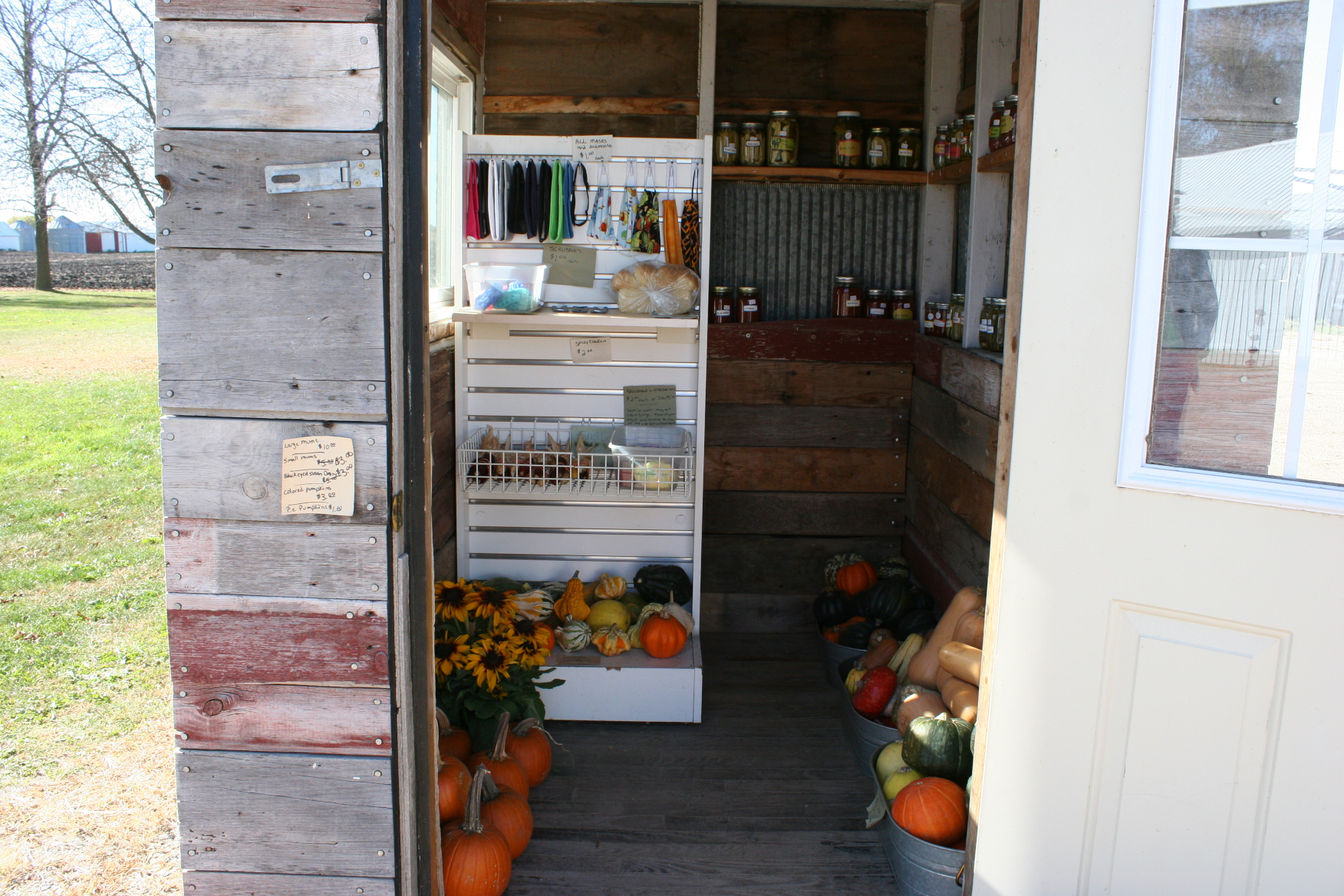
A peek inside Teb’s roadside stand. (Minnesota Prairie Roots copyrighted photo October 2021)
That’s where I met her on a recent mid-October Sunday afternoon—outside a shed the size of an outhouse. Louise lives right next door to Teb’s Food Stand, a seasonal business owned by her friend, Teborah Kath. Teb, she noted, was likely, in that moment, busy canning vegetables at her nearby country home.
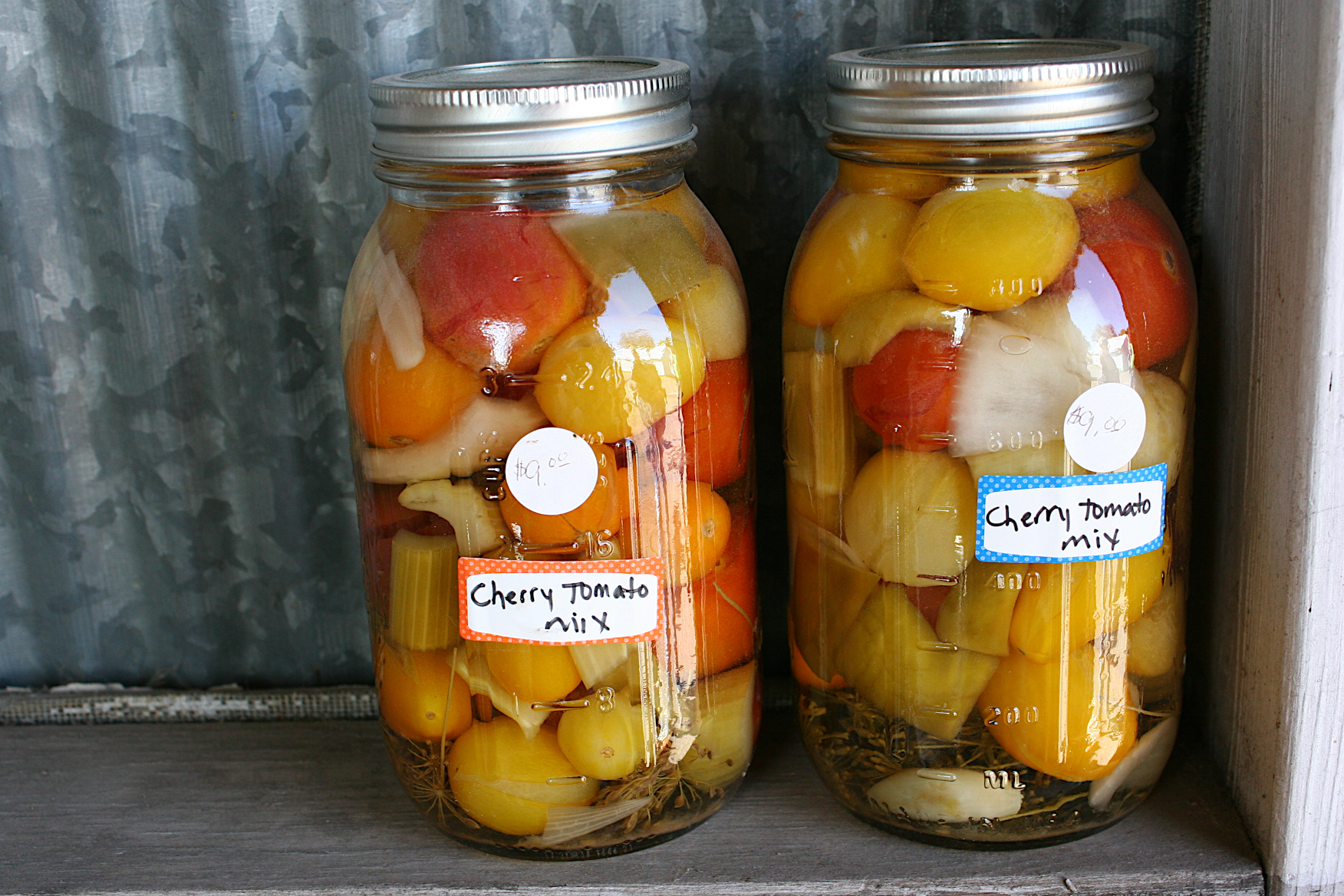
Teb’s canned Cherry Tomato Mix is almost like a work of art. Beautiful. (Minnesota Prairie Roots copyrighted photo October 2021)
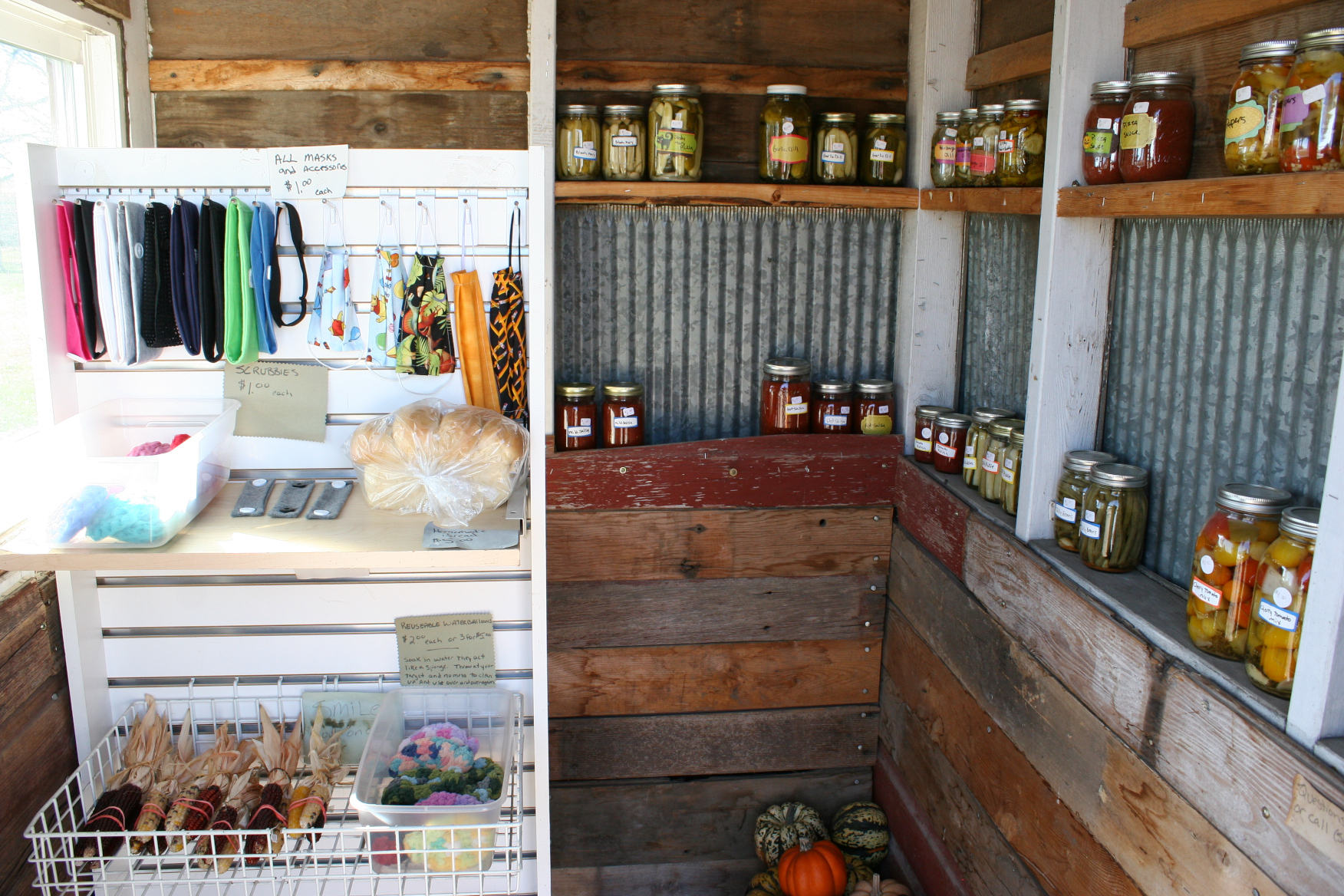
Garden-fresh and canned vegetables define the bulk of inventory tucked inside this hand-built shed constructed of salvaged wood, galvanized metal and a modern front door.
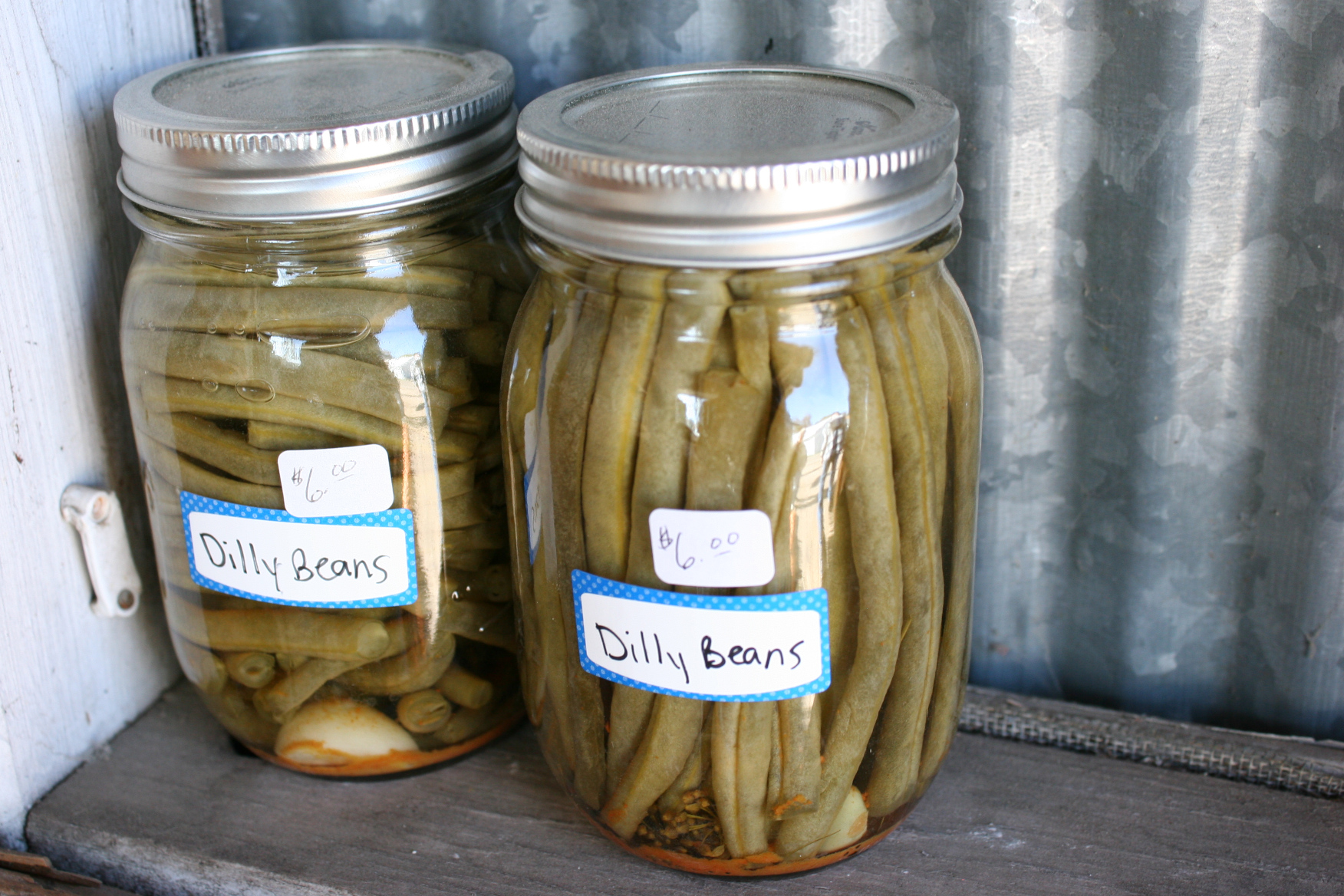
Teb’s Dilly Beans. (Minnesota Prairie Roots copyrighted photo October 2021)
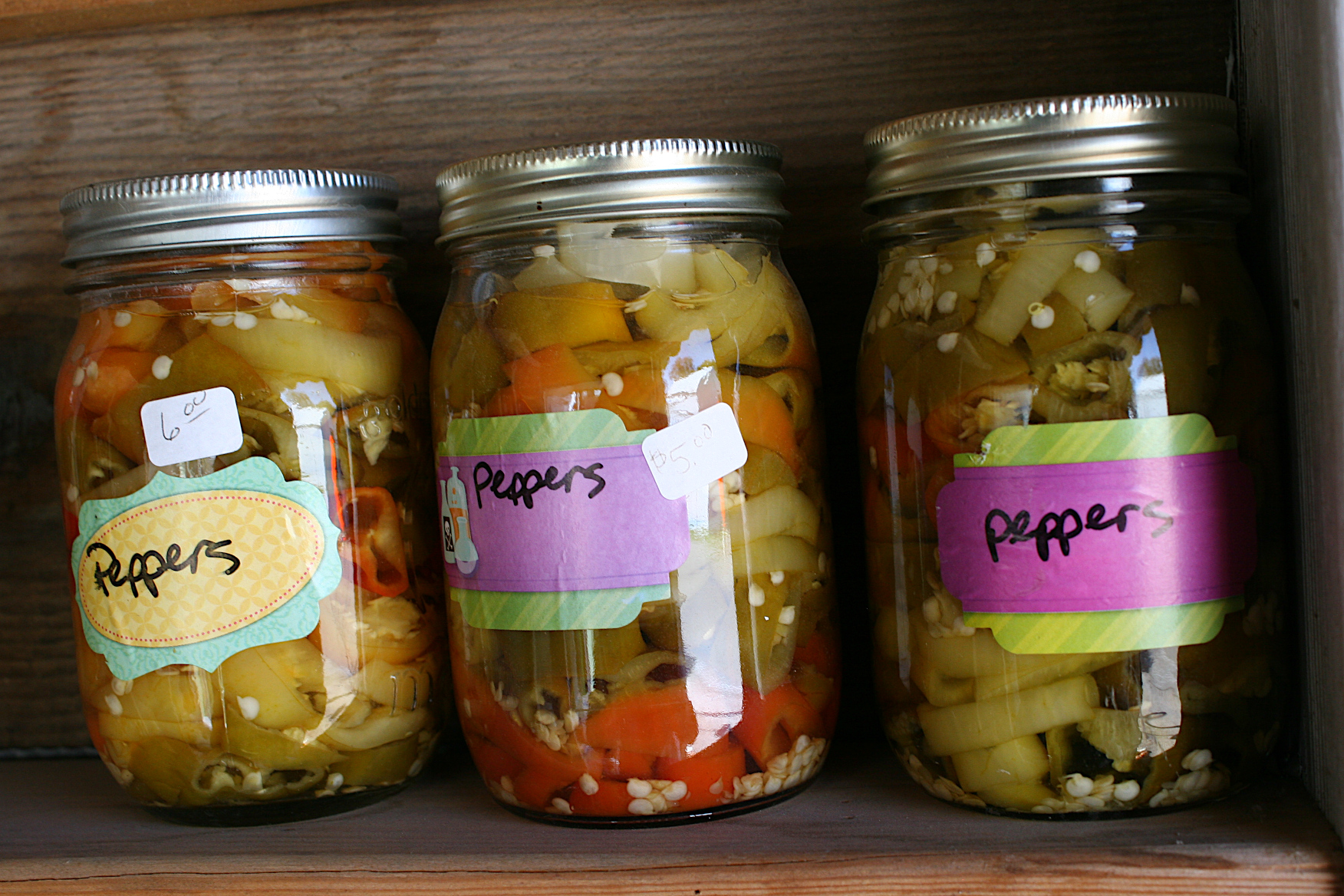
Another jolt of color in canned peppers. (Minnesota Prairie Roots copyrighted photo October 2021)
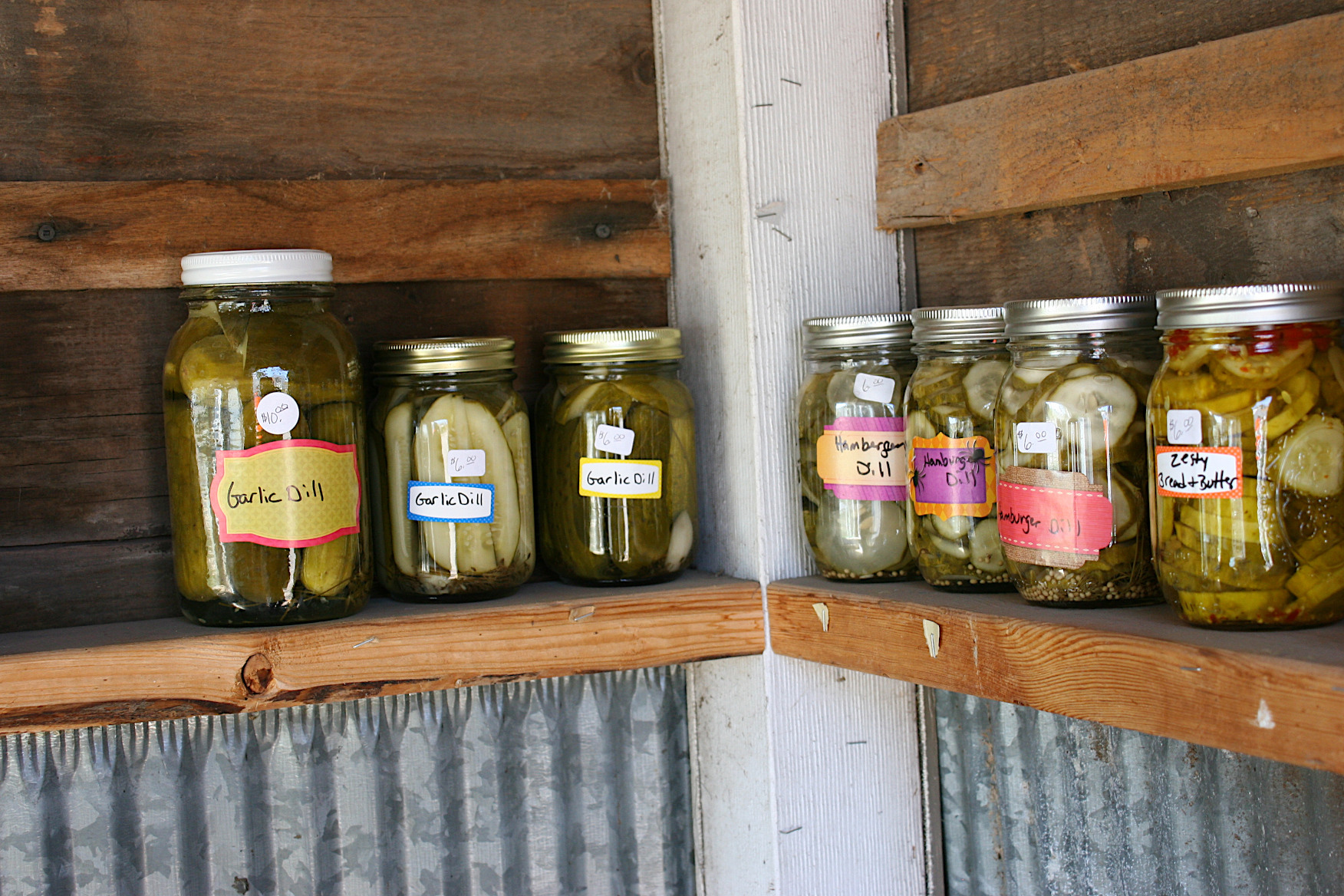
An assortment of Teb’s homemade pickles. (Minnesota Prairie Roots copyrighted photo October 2021)
Here quart and pint jars edge shelves. Green beans pack tightly inside jars labeled Dilly Beans. Rich red tomato sauce colors Teb’s salsa. Oranges and reds and yellows mix inside jars of Cherry Tomato Mix and Peppers, splashing vibrant autumn hues. For pickle lovers, Teb crafts dill and bread & butter pickles.
Teb sells more than canned and fresh produce. (Minnesota Prairie Roots copyrighted photo October 2021)
She also sells baked goods—I spotted a singular package of bread. Next to the face masks, accessories and scrubbies.
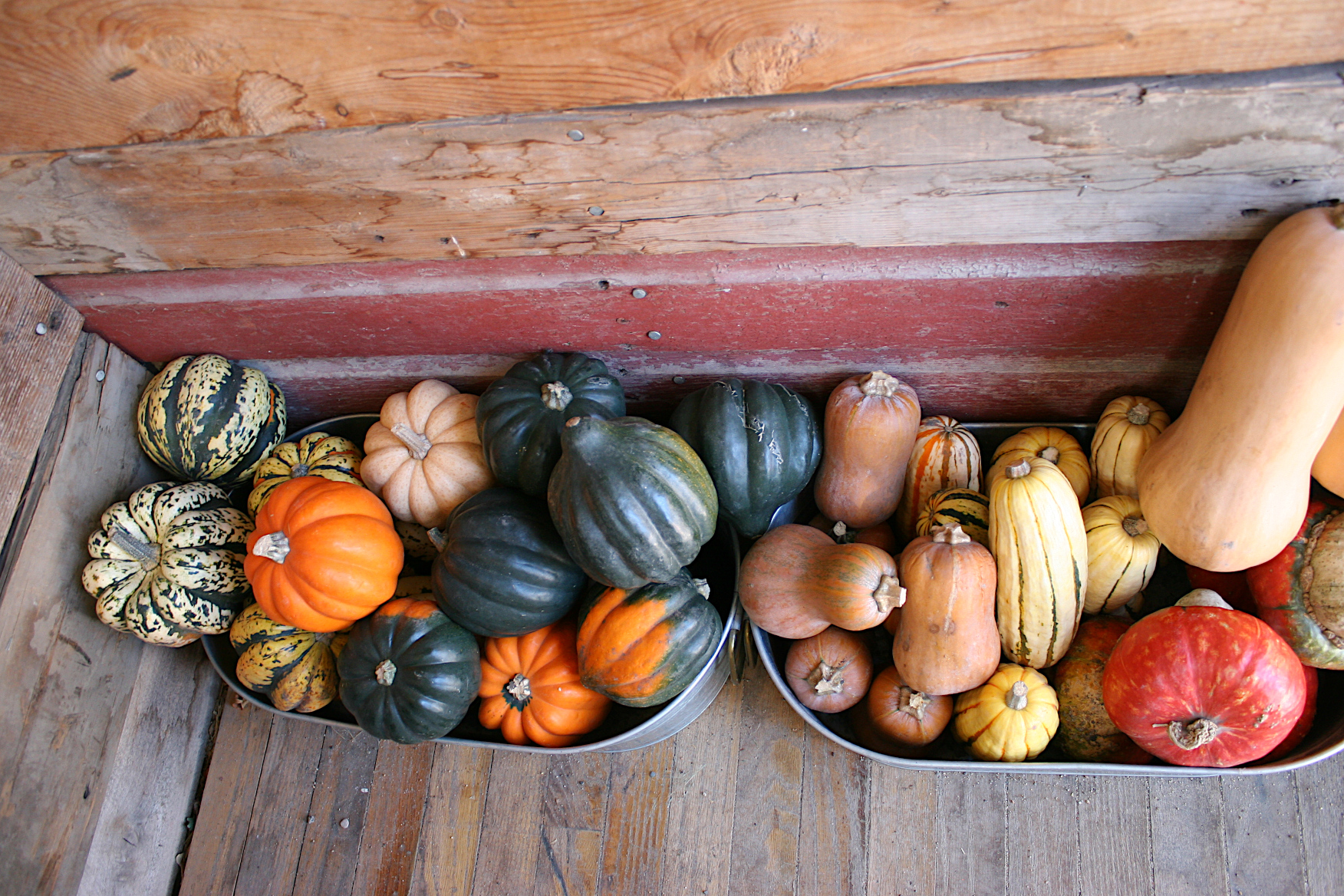
Lots of squash options. (Minnesota Prairie Roots copyrighted photo October 2021)
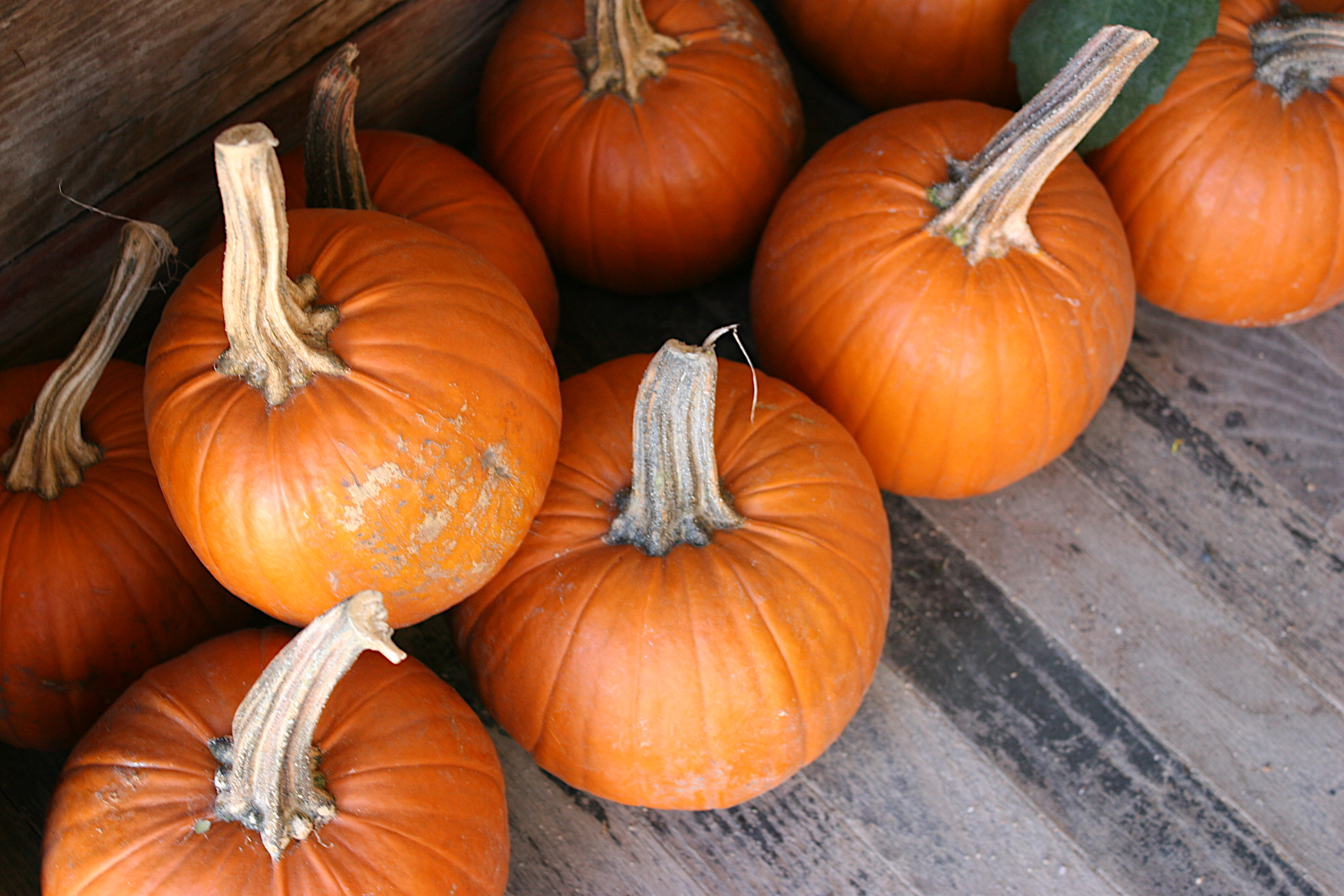
Smallish pumpkins splash color into a corner. (Minnesota Prairie Roots copyrighted photo October 2021)
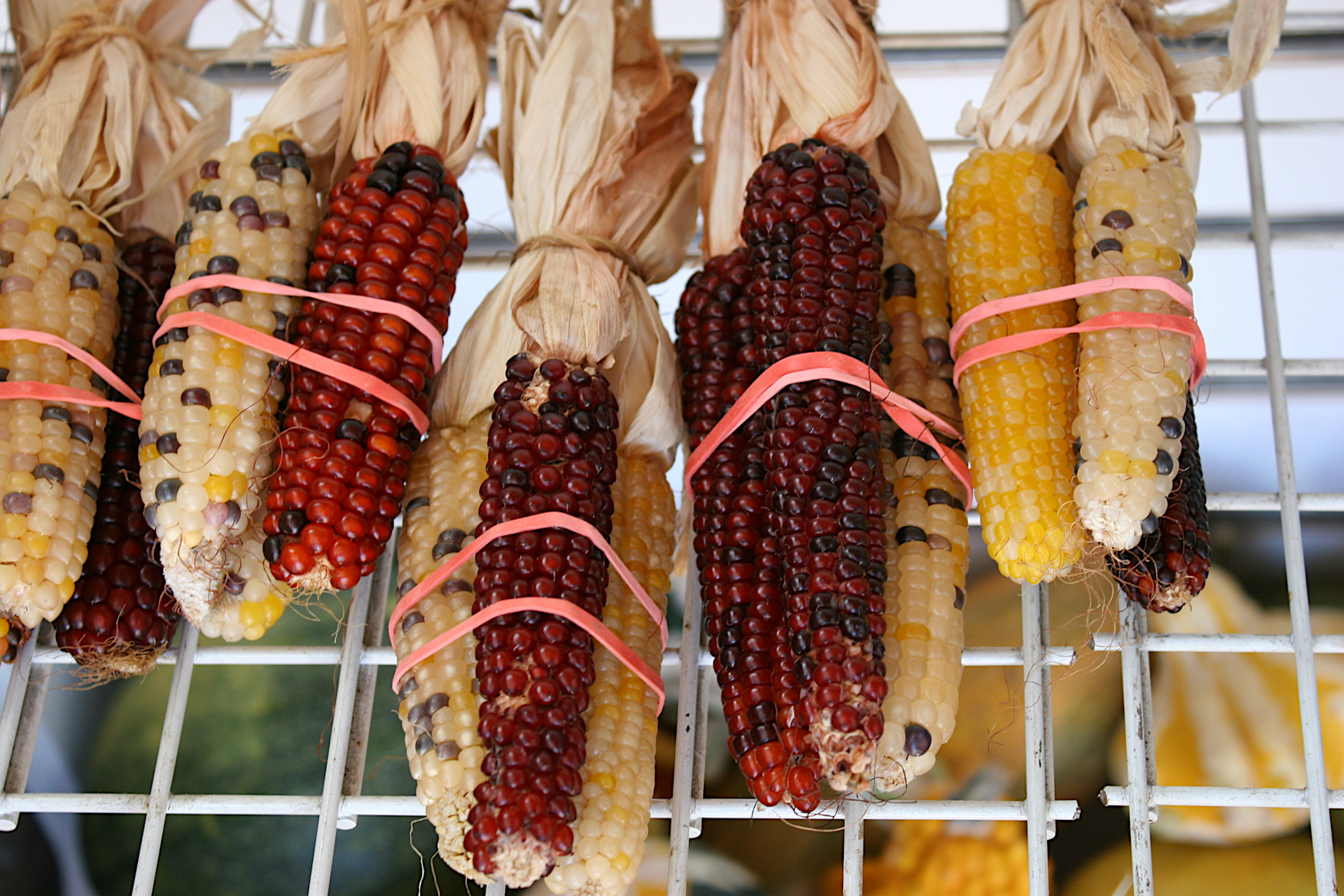
Bundled corn on a shelf. (Minnesota Prairie Roots copyrighted photo October 2021)
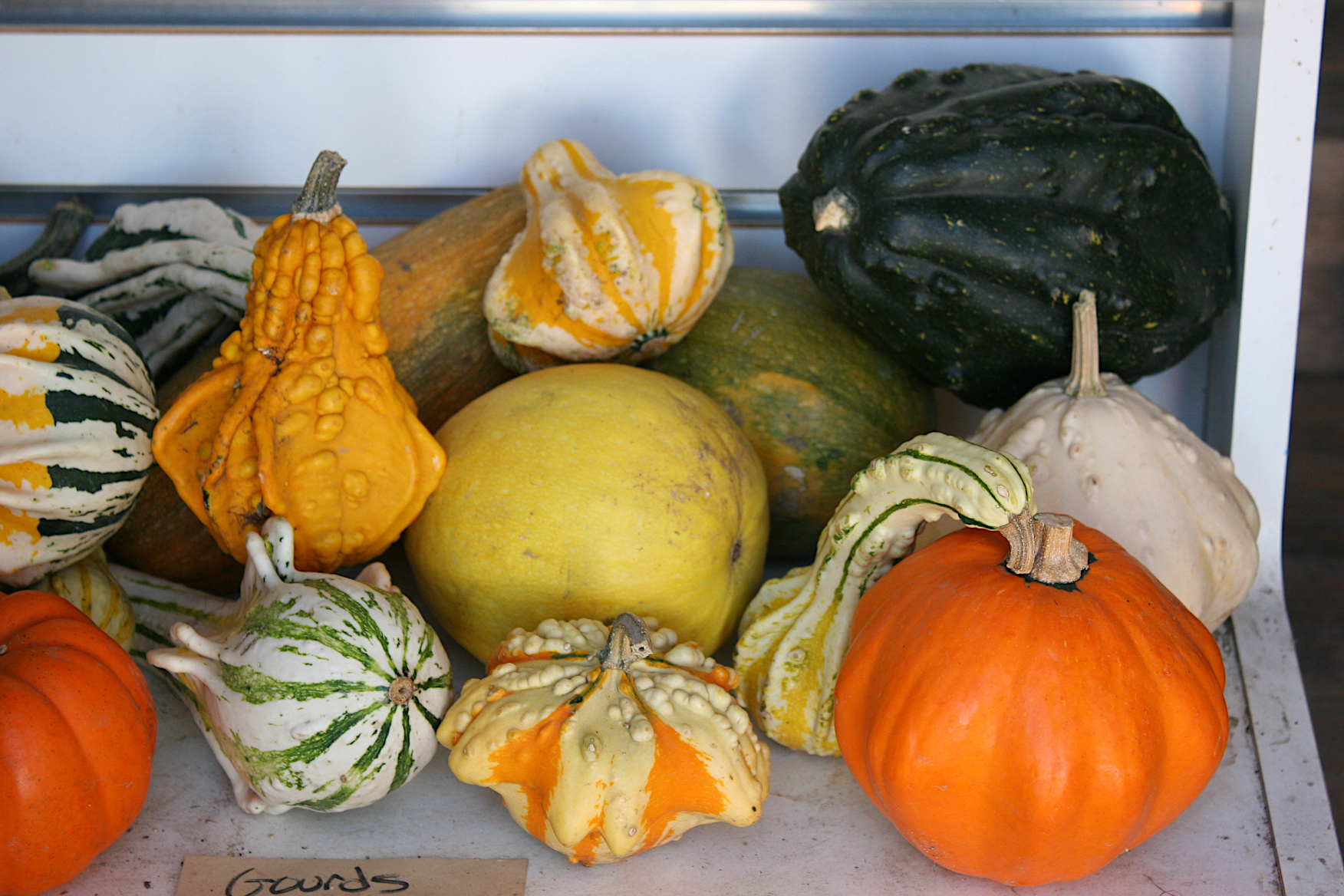
Seasonal fresh produce is sold here, too, and artfully staged. Piles of assorted squash fill metal tubs. Pumpkins hug a corner near the door. Decorative corn and gourds rest on shelves. And outside more pumpkins and a collection of mum plants define this as a seasonal mini marketplace.
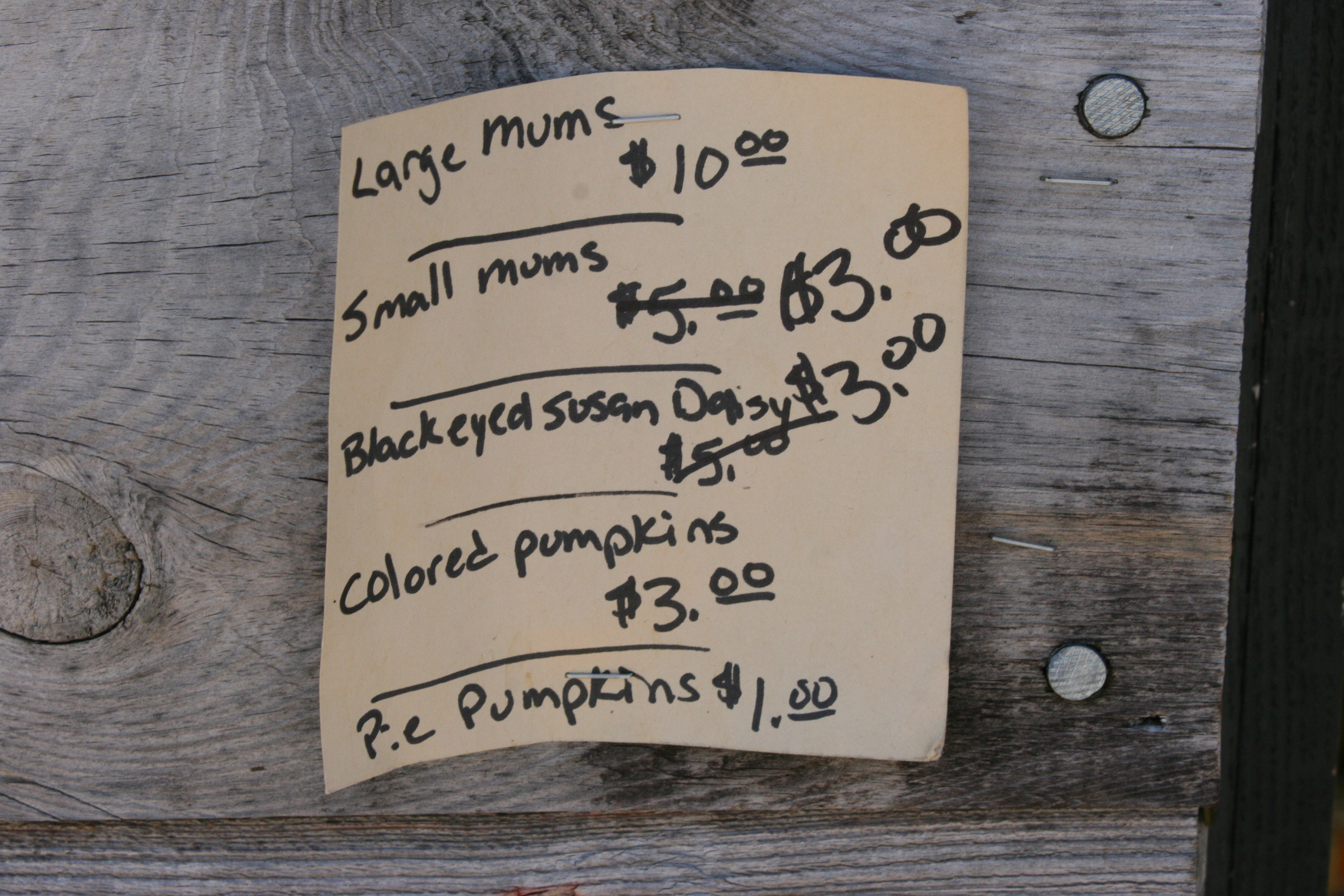
Prices & mark-downs. (Minnesota Prairie Roots copyrighted photo October 2021)
Chatting with Louise, who stepped aside when I started taking photos, proved a delight. Considering her 11-hour days at this less-than-busy location, I asked how she passes the time. Reading? She’s not much of a reader, she said, referencing her farm upbringing and the need to stay physically active. Sometimes she leaves temporarily to do chores at home—like mowing her lawn. Or sometimes she simply has other things going on that take her away from the roadside stand.
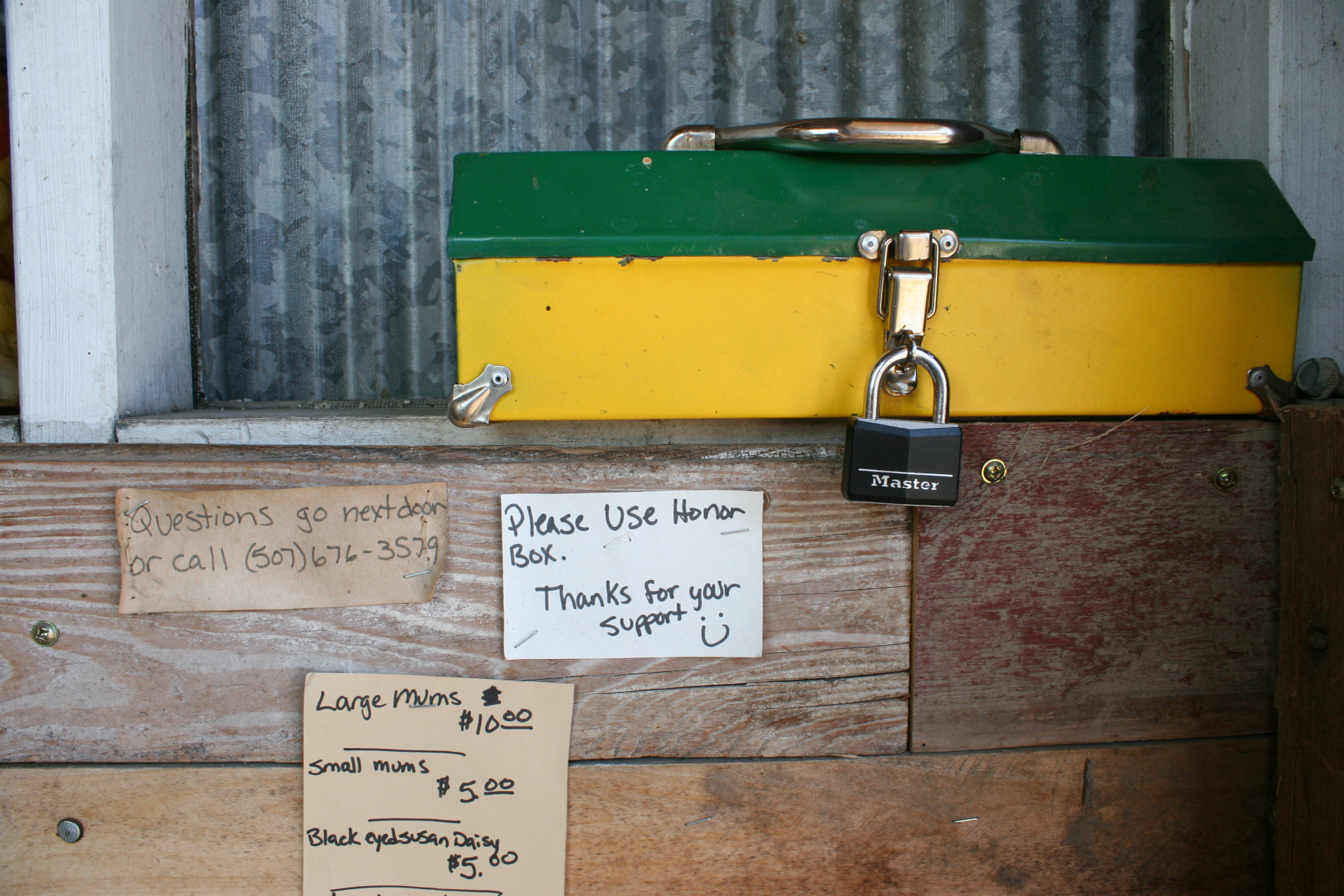
If Louise isn’t there, just leave your payment in the locked box. (Minnesota Prairie Roots copyrighted photo October 2021)
A handwritten sign next to a locked honor system box directs customers to go next door or call Louise with questions. But don’t count on her having change. She doesn’t. I purchased two squash for $4, almost $5.
Gourds for fall decor. (Minnesota Prairie Roots copyrighted photo October 2021)
In addition to this small town produce stand, Teb also sells her garden and craft and baked goods at the Owatonna Farmers’ Market. Sales are good, even at the remote Meriden location, Louise noted.
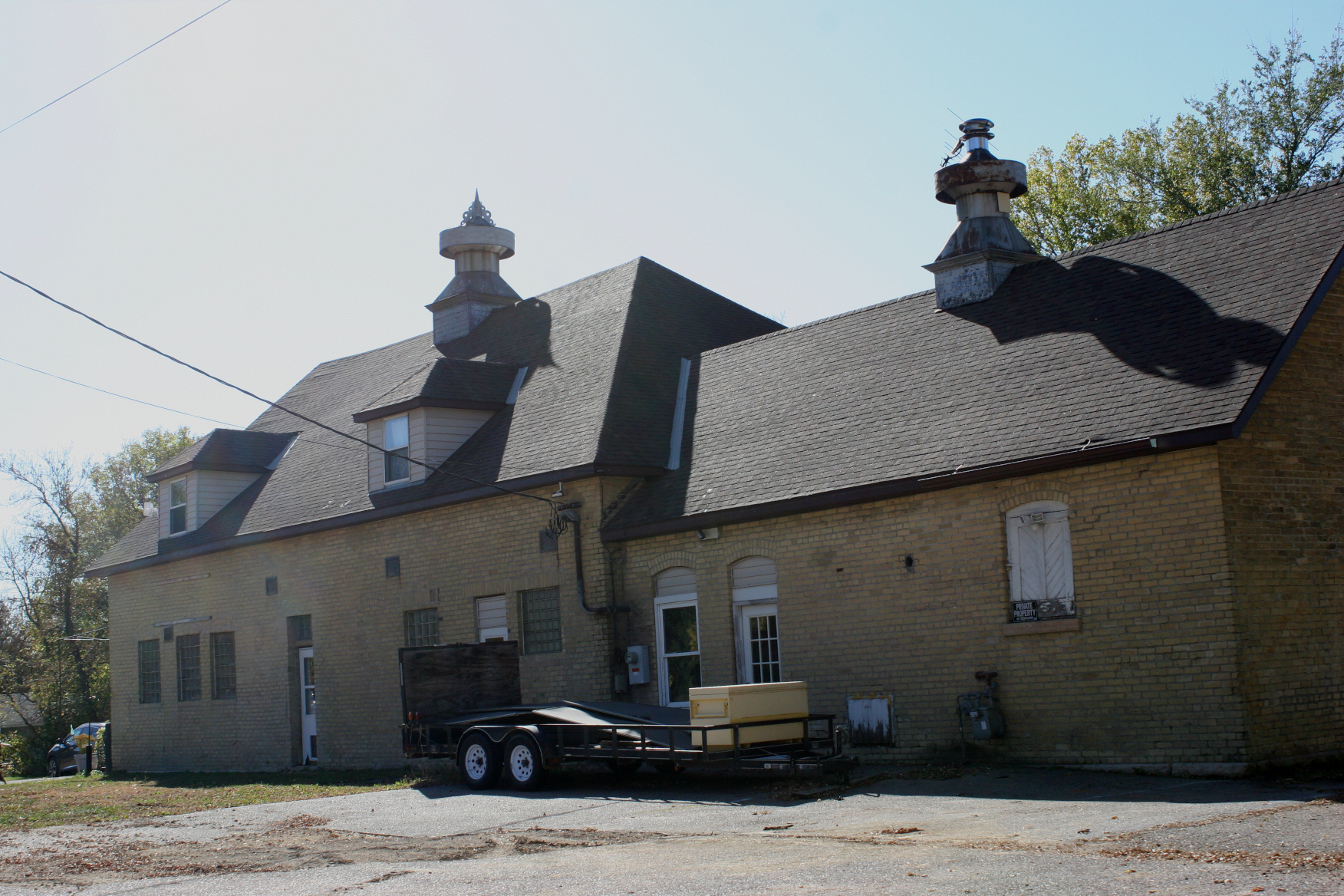
The former creamery in Meriden. (Minnesota Prairie Roots copyrighted photo October 2021)
Meriden is one of those rural places perhaps unknown to many. Driving into town, I noticed a former creamery, the brick building in remarkable condition.
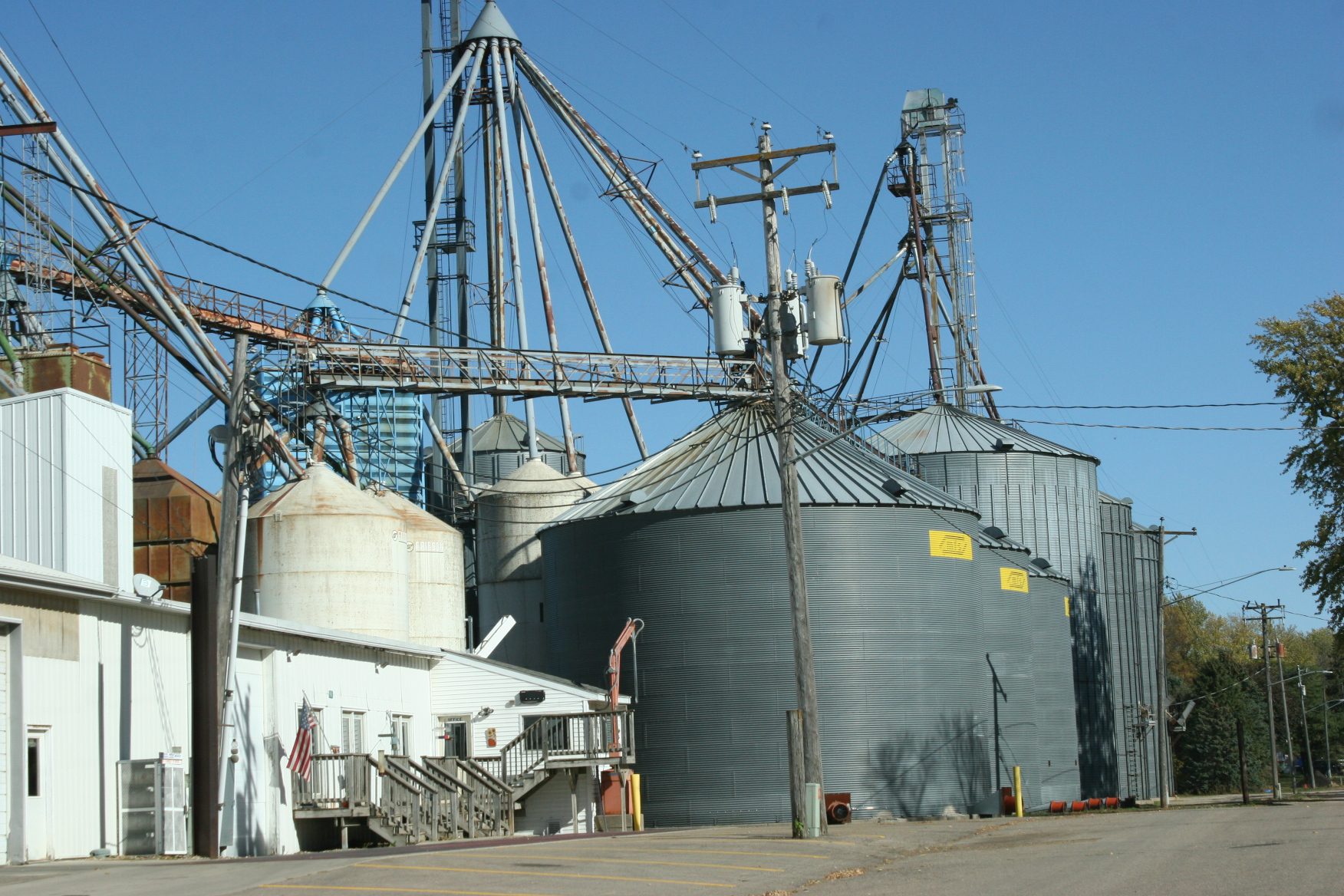
Meriden’s grain complex. (Minnesota Prairie Roots copyrighted photo October 2021)
But it is the cluster of mammoth grain bins which landmark Meriden. Homes line the road past the elevator to a dead end, an unwelcome warning sign marking the end of the street.
A slow-moving train moves through Meriden. (Minnesota Prairie Roots copyrighted photo October 2021)
Back at Teb’s Food Stand, conversation halted when a train car and locomotive rolled into town, horn blaring. Soon it reversed course, crossing the tracks again, horn blaring.
Teb’s Food Stand in Meriden. (Minnesota Prairie Roots copyrighted photo October 2021)
By then I’d gathered enough photos and information to craft a story. To write about Lousie and Teb and this tiny produce stand edging a paved road next to a harvested bean field in Meriden, Minnesota.
NOTE: Teb’s Food Stand will close soon for the season, if it’s not already closed.
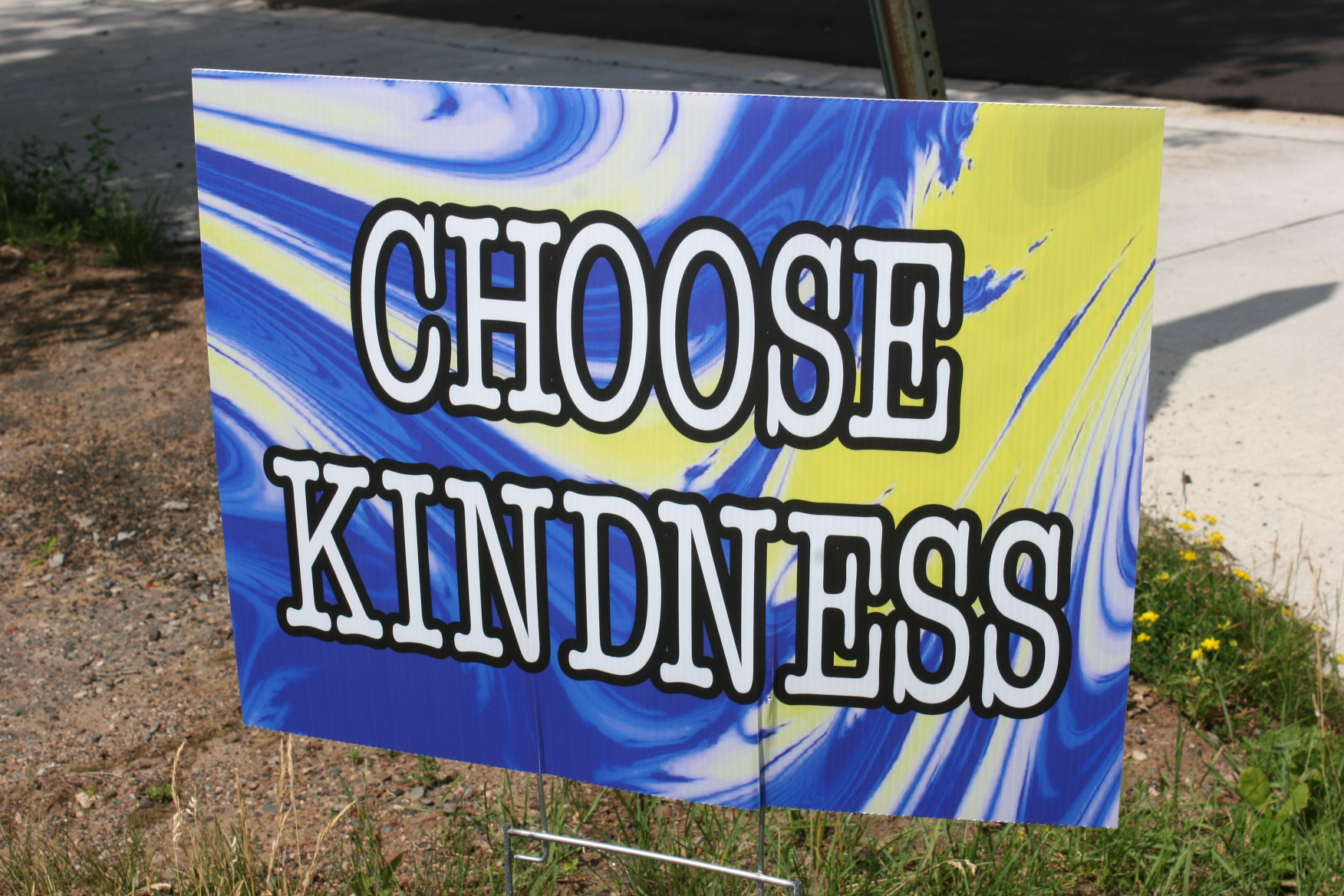
Kindness promoted in Deerwood. Minnesota Prairie Roots copyrighted file photo July 2021.
But I need to include one more discovery. That’s the posting of kindness messages on several street corners. I have no idea who posted them or how long they have been in place. But I appreciate them. They gave me a really good impression of this Crow Wing County community on the Cuyuna Iron Range.
Perhaps more are displayed around town. Even if not, this trio was enough to uplift, encourage and give me pause. Now, more than ever, kindness needs promoting. That seems a bit ridiculous to even write. Kindness should come naturally. Sadly, in today’s ever divisive world, kindness is elusive to many.
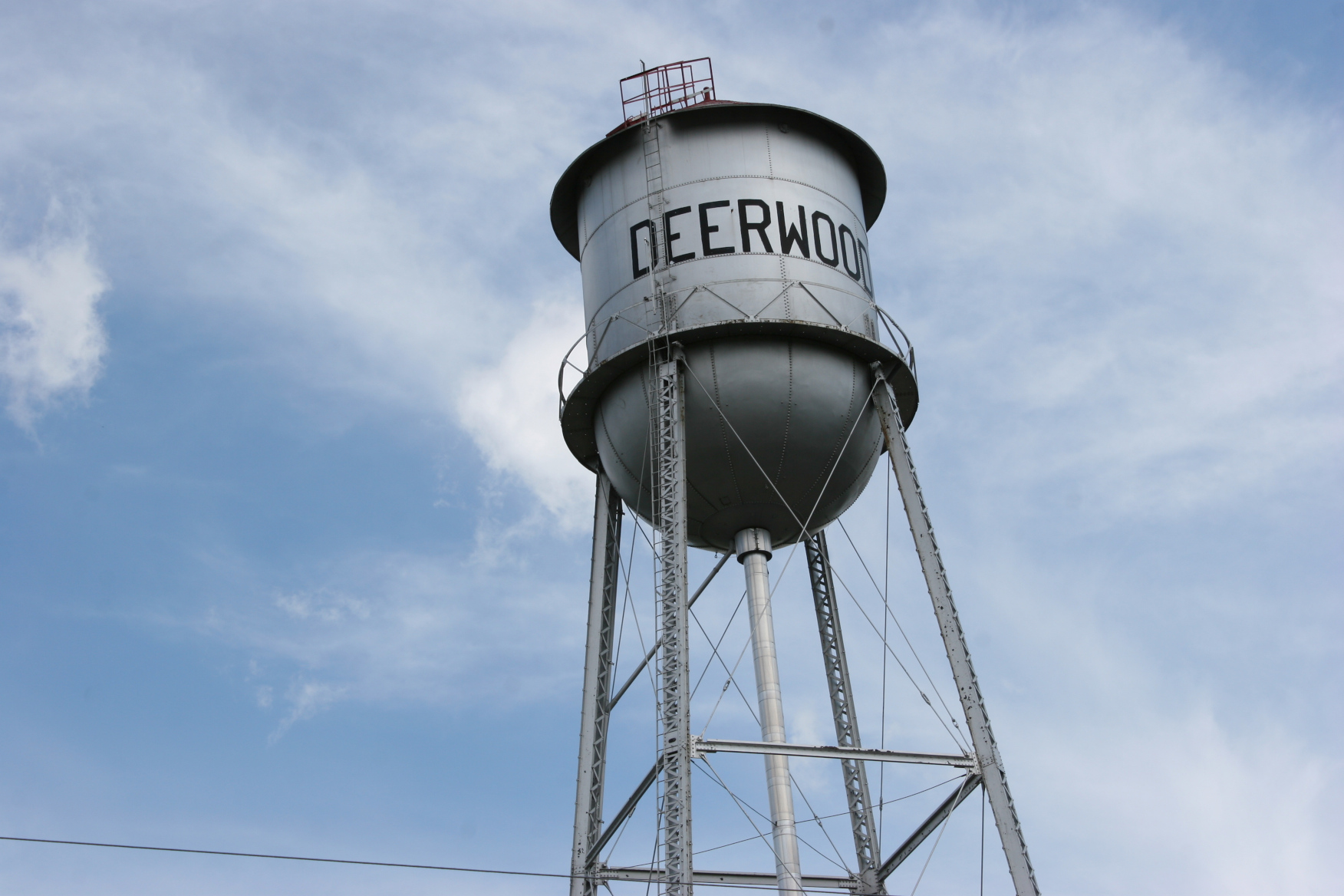
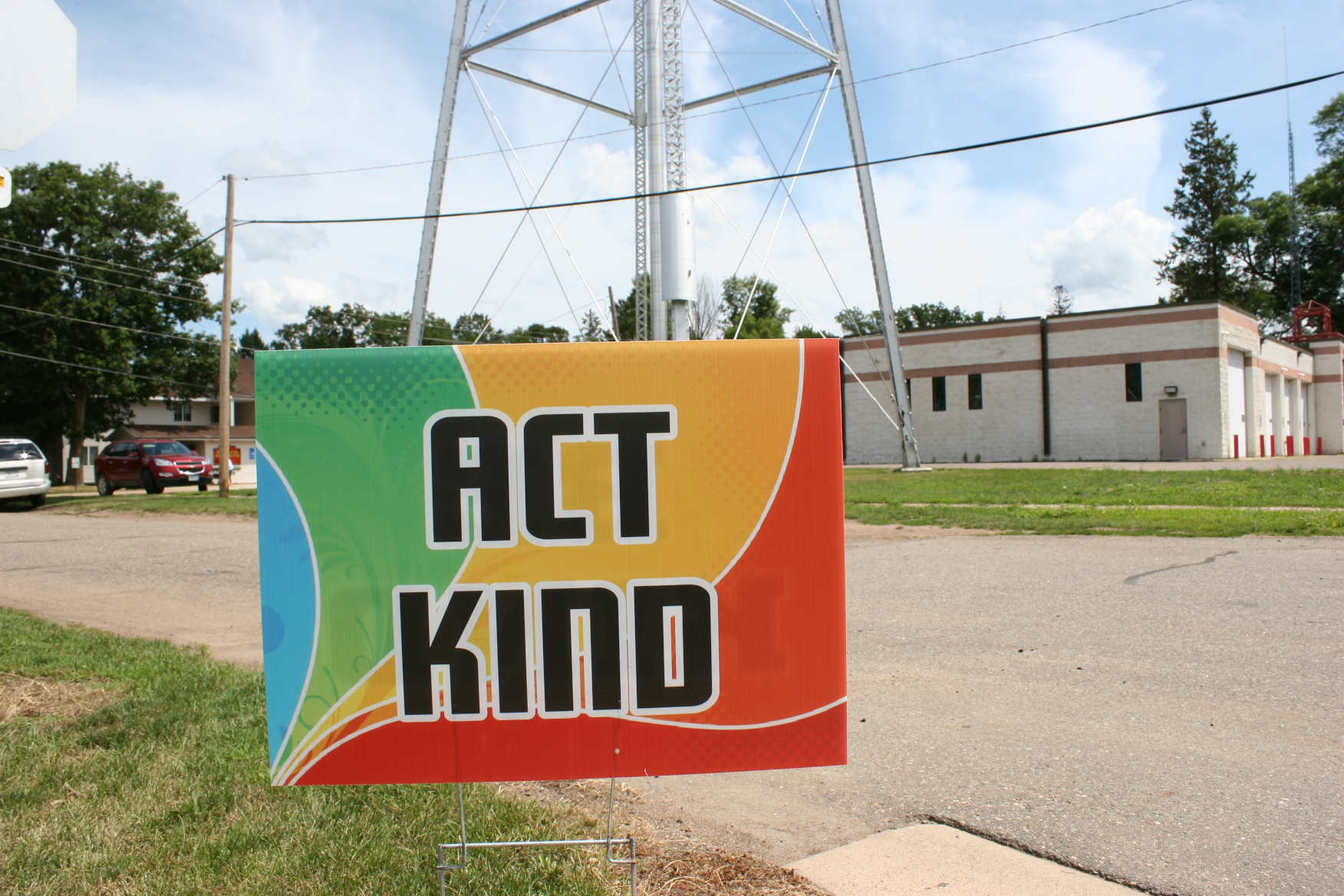
Kindness is also an “act,” not simply words. This was posted near Deerwood’s water tower. Minnesota Prairie Roots copyrighted file photo July 2021.
So what exactly is kindness? It’s being nice. You know. Using nice words. Doing nice things. Smiling. Caring. Listening, especially listening. Putting others before yourself, eliminating the me-centered thinking which pervades too much of society.
Kindness, too, is thinking before you speak or post something mean or untrue or uncaring on social media.
Kindness is empathy and understanding and compassion. It is all that is good and lovely and wonderful.
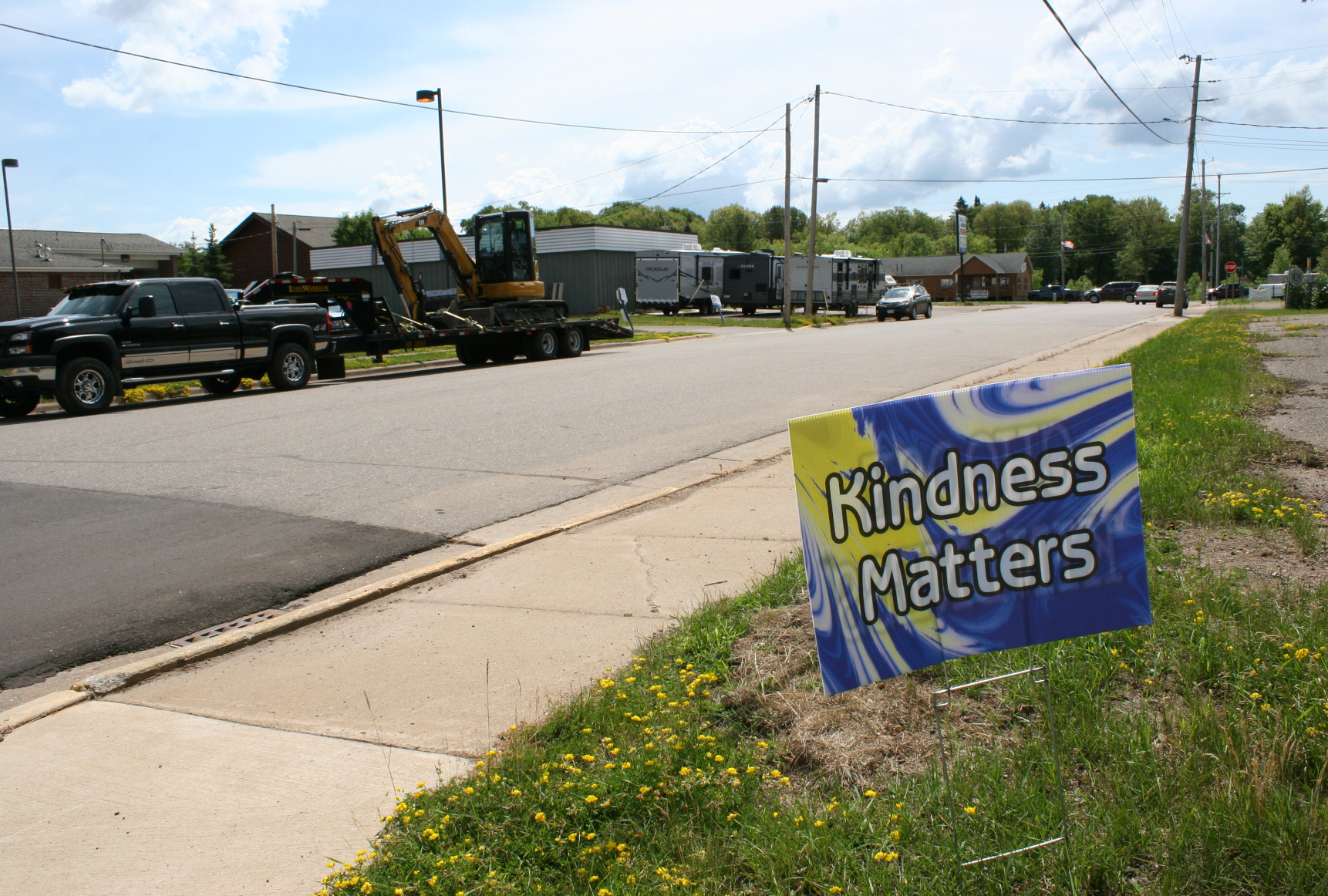
Kindness matters today more than ever. Minnesota Prairie Roots copyrighted file photo July 2021.
To the good people of Deerwood who posted these kindness signs, thank you for the positive messages. I appreciate you and your efforts.
TELL ME: If you’ve seen similar upbeat signage, please share. I’d like to hear what you’ve seen and where. Also feel free to share your definition of kindness.



















 Minnesota Prairie Roots
Recent Comments