Minnesota Prairie Roots

Writing and photography by Audrey Kletscher Helbling

Little General Store on the Prairie March 27, 2013

I LOVE BERNADETTE THOOFT’S infectious laugh and outgoing personality. And I love what this mother of seven is doing for my hometown.

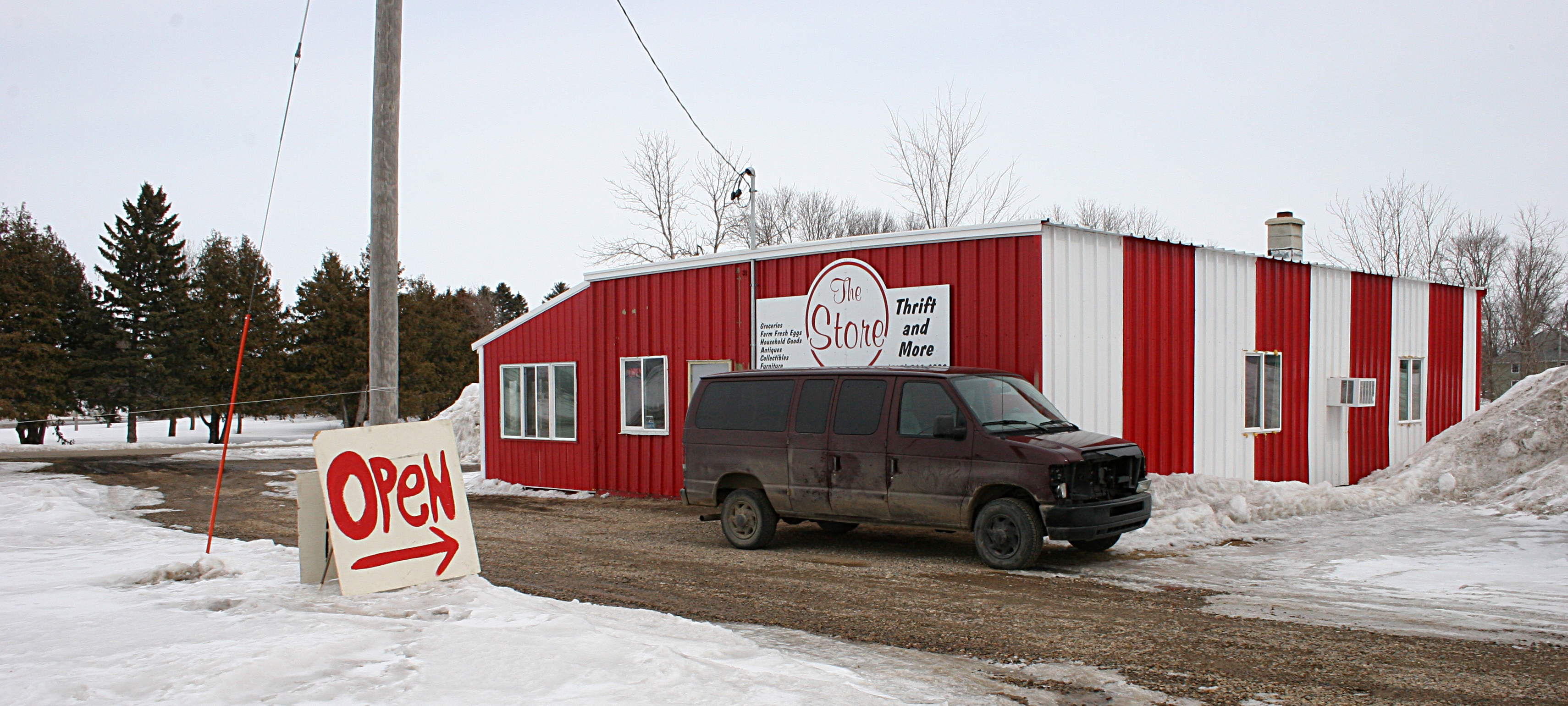
The Store: Thrift and More sits just off Minnesota Highway 19 in Vesta in Redwood County.

The Store: Thrift and More sits just off Minnesota Highway 19 in Vesta in Redwood County.

In February she opened The Store: Thrift and More in Vesta, population 330 and the only town along the 40-mile stretch of Minnesota Highway 19 between Redwood Falls and Marshall.

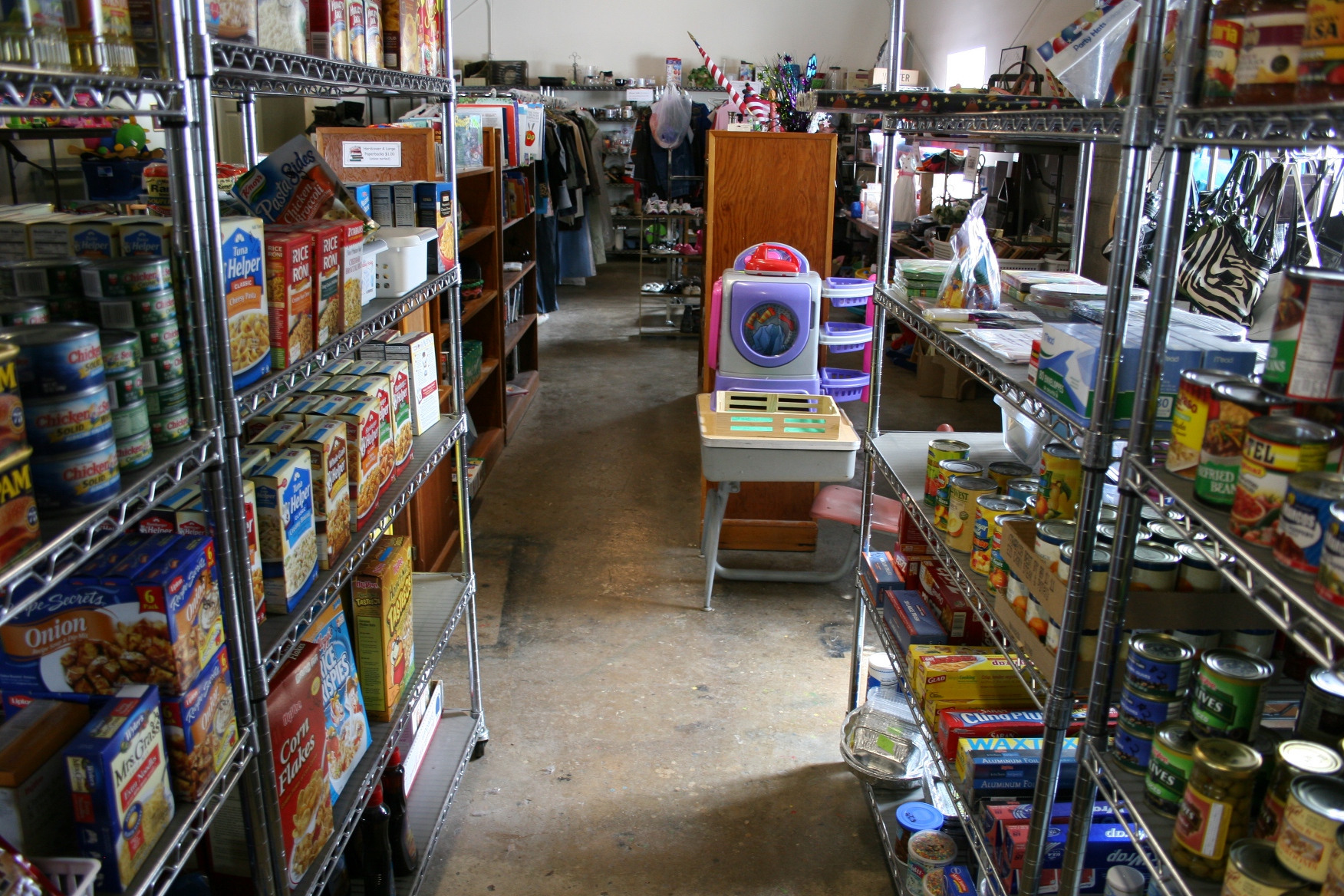
The “more” part of Bernadette’s store includes eight shelving units stocked with foodstuff, personal care items, paper products and more in addition to perishables stashed in nearby coolers.

The grocery section of the store includes basic perishables like dairy products, some fruit, lettuce and more. Canned, boxed and bagged foods, personal care items, and miscellaneous items like greeting cards, tape and such fill eight shelving units.

The grocery section of the store includes basic perishables like dairy products, organic eggs, some fruit, lettuce and more. Canned, boxed and bagged foods; personal care items; and miscellaneous items like greeting cards, tape and such fill eight shelving units.

I don’t know exactly how long my hometown has been without a grocery store. But it’s been awhile. Locals, like my 80-year-old mom, have had to drive 20 miles either east or west to find the nearest grocery store. Now this community’s residents, many of them elderly, need only walk or drive to the west edge of town to buy a loaf of bread, a gallon of milk, organic eggs from Bernadette and Matt Thooft’s farm, fruit and an assortment of processed foods that include SPAM, much to my mom’s delight.

This is huge, to have groceries and basic necessities available in Vesta. Bernadette even offered to have her 11-year-old son deliver right to my mom’s doorstep a block away. Such small-town neighborliness simply warms my heart. Many times the good people of Vesta have assisted my mother. And for that, I am grateful.

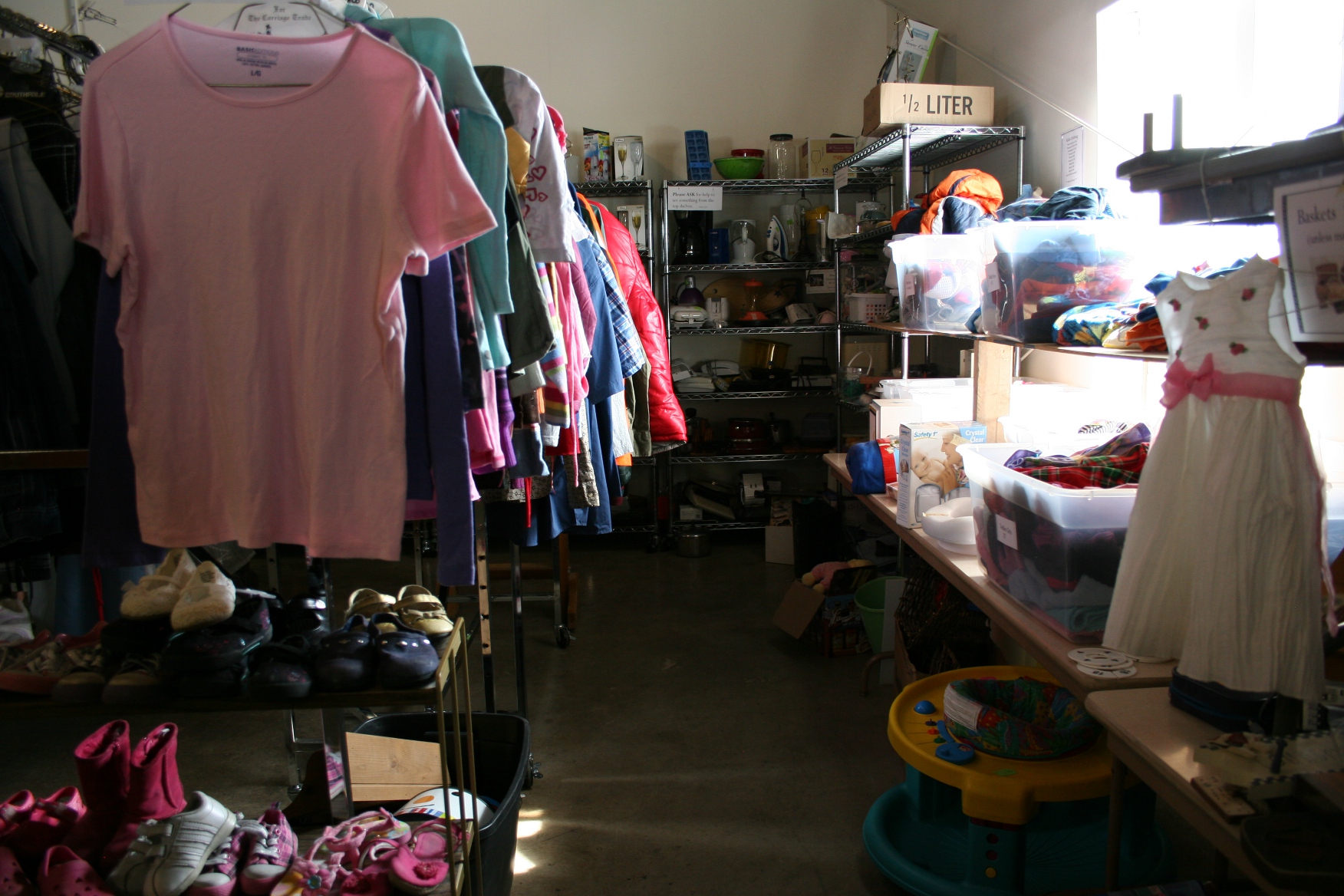
Looking toward the back thrift section of the floor.

Looking from the front grocery section toward the back thrift area of The Store.

Bernadette tells me she originally hadn’t planned on stocking groceries, rather dedicating her floor space to thrift items that range from kitchenware to toys, books to clothing, gift items to home décor and an assortment of other merchandise.

Vintage glasses in the thrift section.

Vintage glasses in the thrift section.

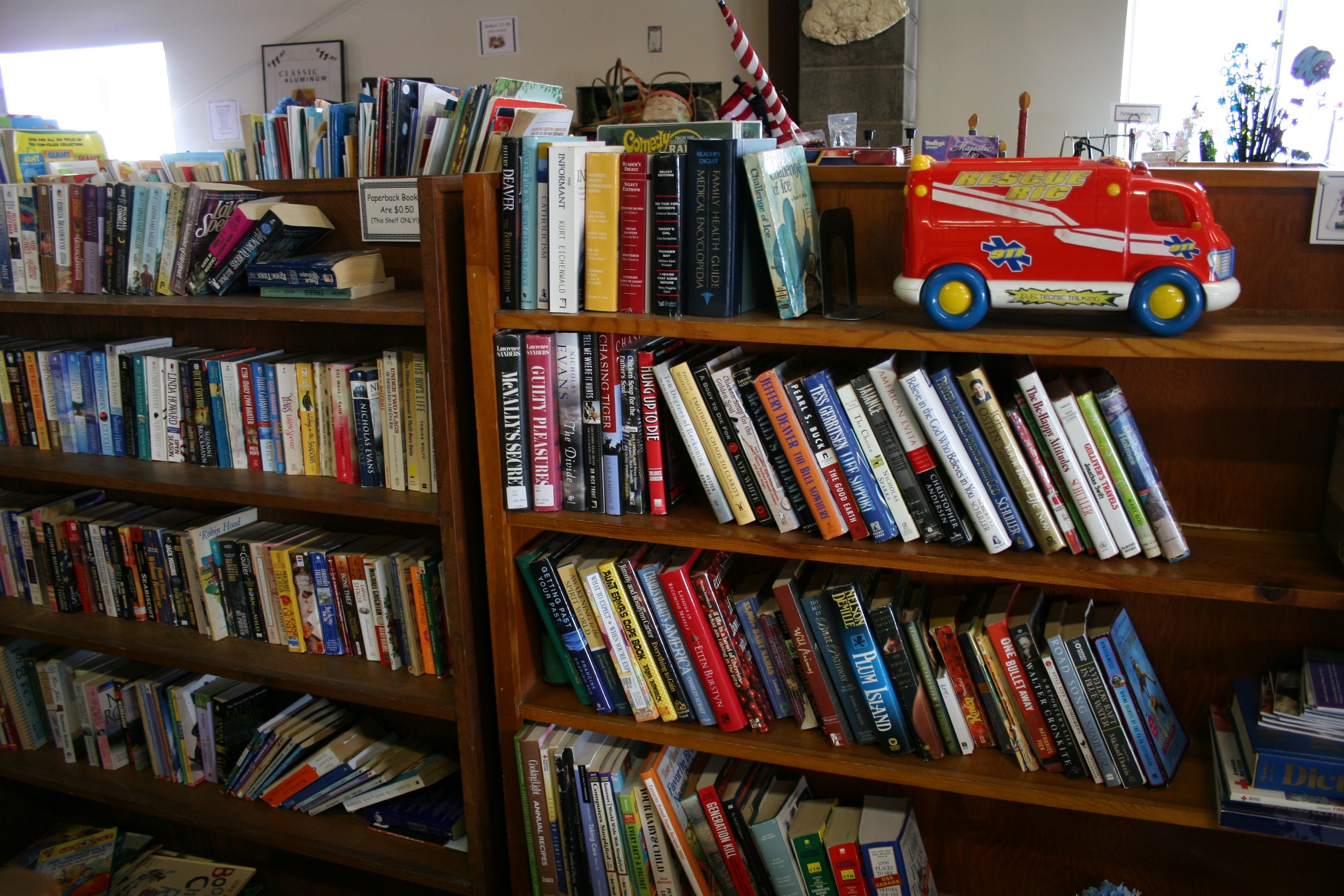
Bernadette offers a great selection of used books for all ages.

Bernadette offers a great selection of used books for all ages.

You'll also find a selection of clothes.

You’ll also find a shoes and clothing.

One of my favorite finds in The Store, an $8 vintage Pyrex casserole, which I nearly purchased.

One of my favorite finds in The Store, an $8 vintage Pyrex casserole, which I nearly purchased.

But then she started getting requests to carry groceries. So Bernadette decided to buy food and products her family can use. That way, if items don’t sell, she doesn’t lose anything. Once a week this entrepreneur mother drives the 20 miles west to Hy-Vee Foods in Marshall, reselling her purchases in Vesta at a slightly marked up price that will help cover gas expenses.

Jason Kramer stops in to buy a few grocery items from Bernadette.

Jason Kramer stops in to buy a few grocery items from Bernadette.

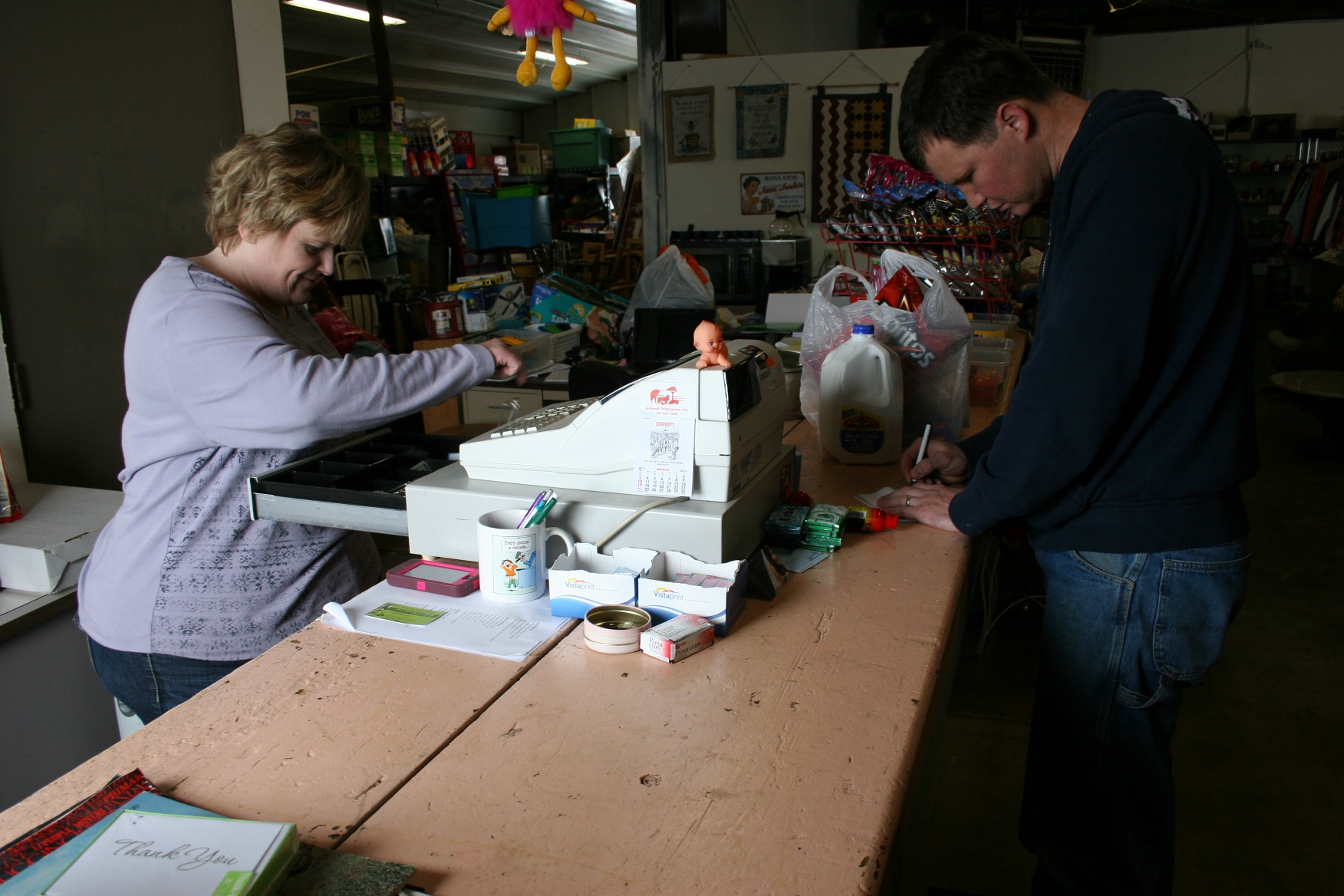
Already several local families come to The Store once a week to purchase their groceries, she says. On the Saturday afternoon I visited, Jason Kramer popped in from his home across the street to pick up Oreos, chips, bread and milk. He calls opening of The Store “flippin’ awesome.”

It is that type of enthusiasm Bernadette hopes for from other Vesta area residents. She needs their support, and business off the highway, to make her venture work in this isolated prairie town.

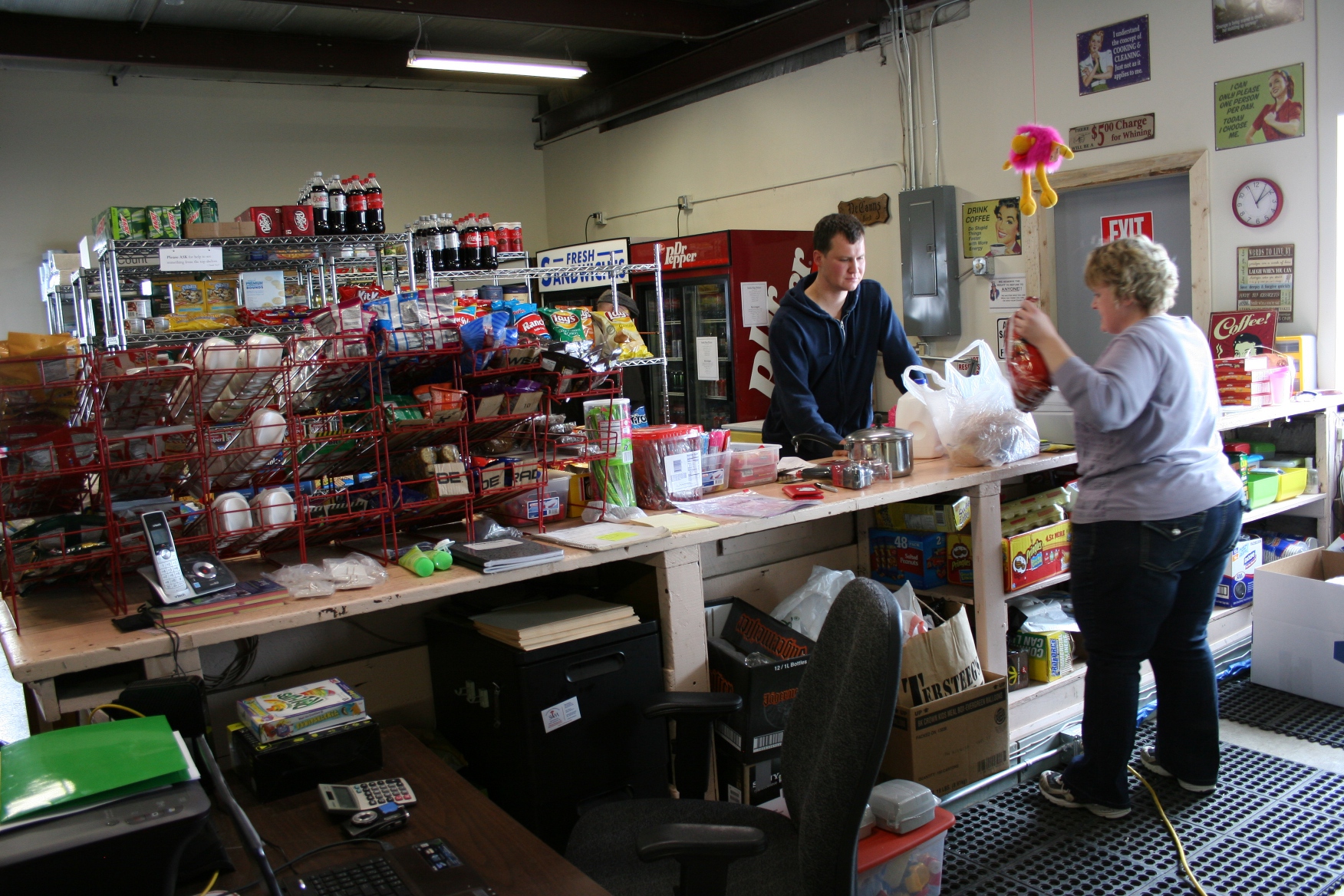
Just another view of the store with Bernadette bagging Jason's purchases.

Just another view of the store and Bernadette’s office with Bernadette bagging Jason’s purchases.

In the short time I perused the store and spoke with Bernadette, several others stopped in—two middle schoolers to eye the toy collection and eventually purchase candy, a middle-aged couple scanning thrift items and then Jason for his groceries. I walked out with a kettle for my college-aged son and my husband grabbed packaging tape and a dispenser.

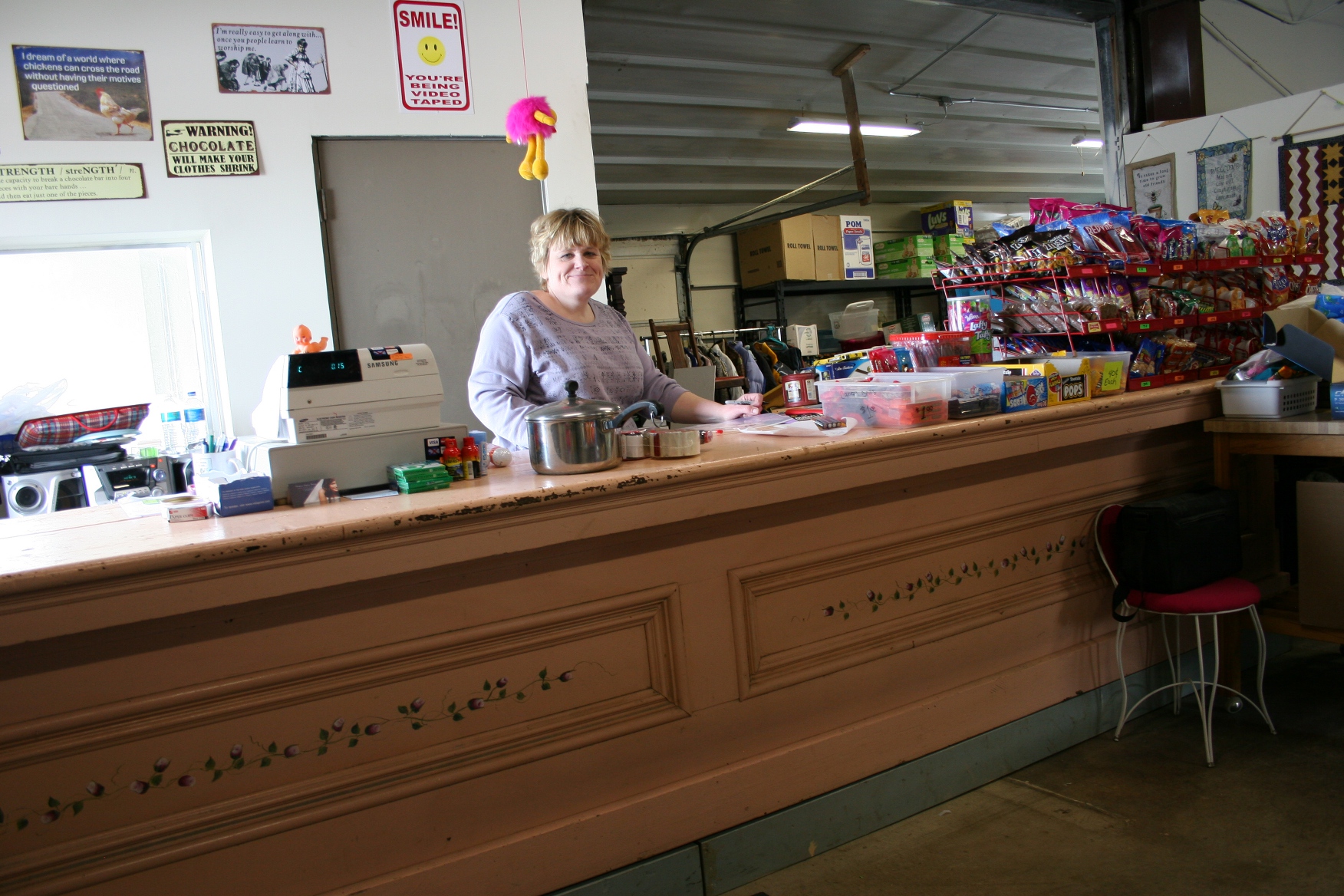
This 1800s general store counter anchors The Store.

This 1800s general store counter anchors The Store. Those are our purchases on the counter, that kettle and tape.

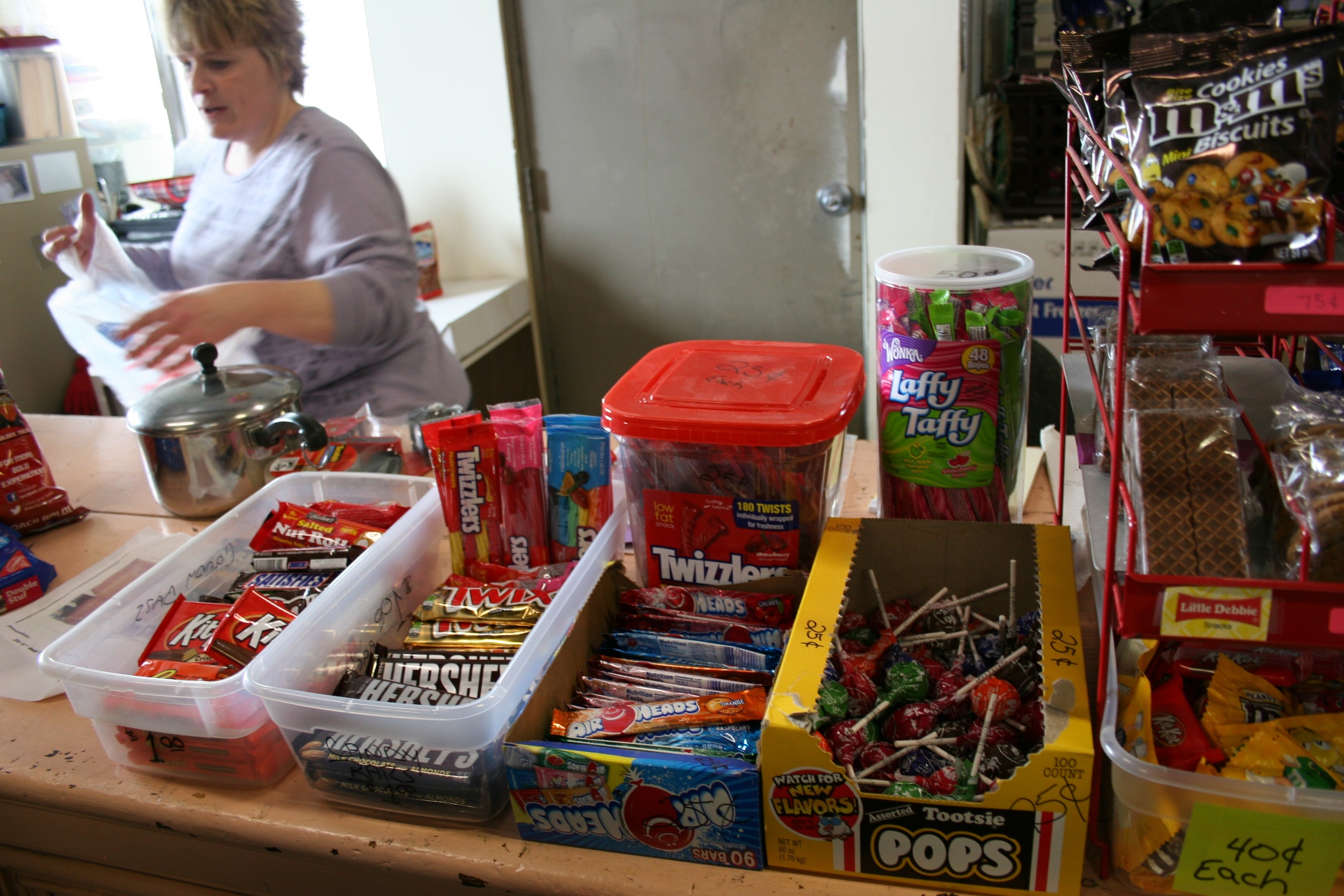
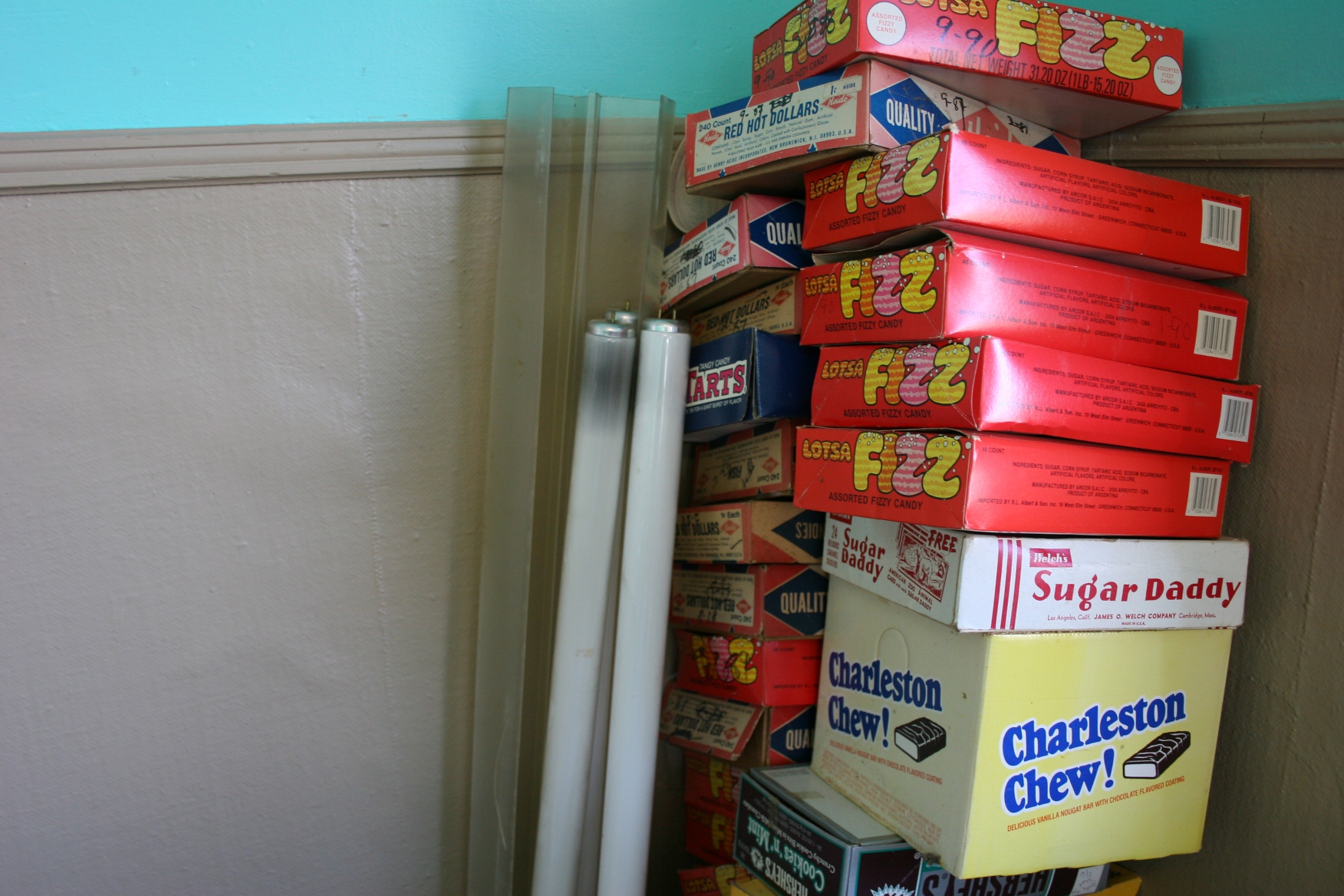
Bernadette says she’s aiming to recreate a Mom and Pop general store with a little bit of everything. I was delighted to find candy lining the 1800s checkout counter, reminding me of the penny candy I bought at Rasmussen’s Grocery while growing up in Vesta. The vintage counter, purchased from a Lake Benton antique store, originated from a general store between Lake Benton and Brookings, South Dakota. It’s the perfect fit for The Store, lending that historic authenticity reminiscent of yesteryear.

Like the old-fashioned general store, Bernadette has set up candy display, including my favorite Tootsie Pops.

Like the old-fashioned general store, Bernadette has set up a candy display, including my favorite Tootsie Pops.

I can remember when Vesta boasted two hardware stores, several restaurants/bars and a grocery store along with other businesses, in its one-block Main Street.

Rarely does a new business open here. But Bernadette, who lives on a farm near Lucan seven miles to the south, was looking to locate along the highway, conveniently next door to her husband’s business, Matt’s Frame Repair.

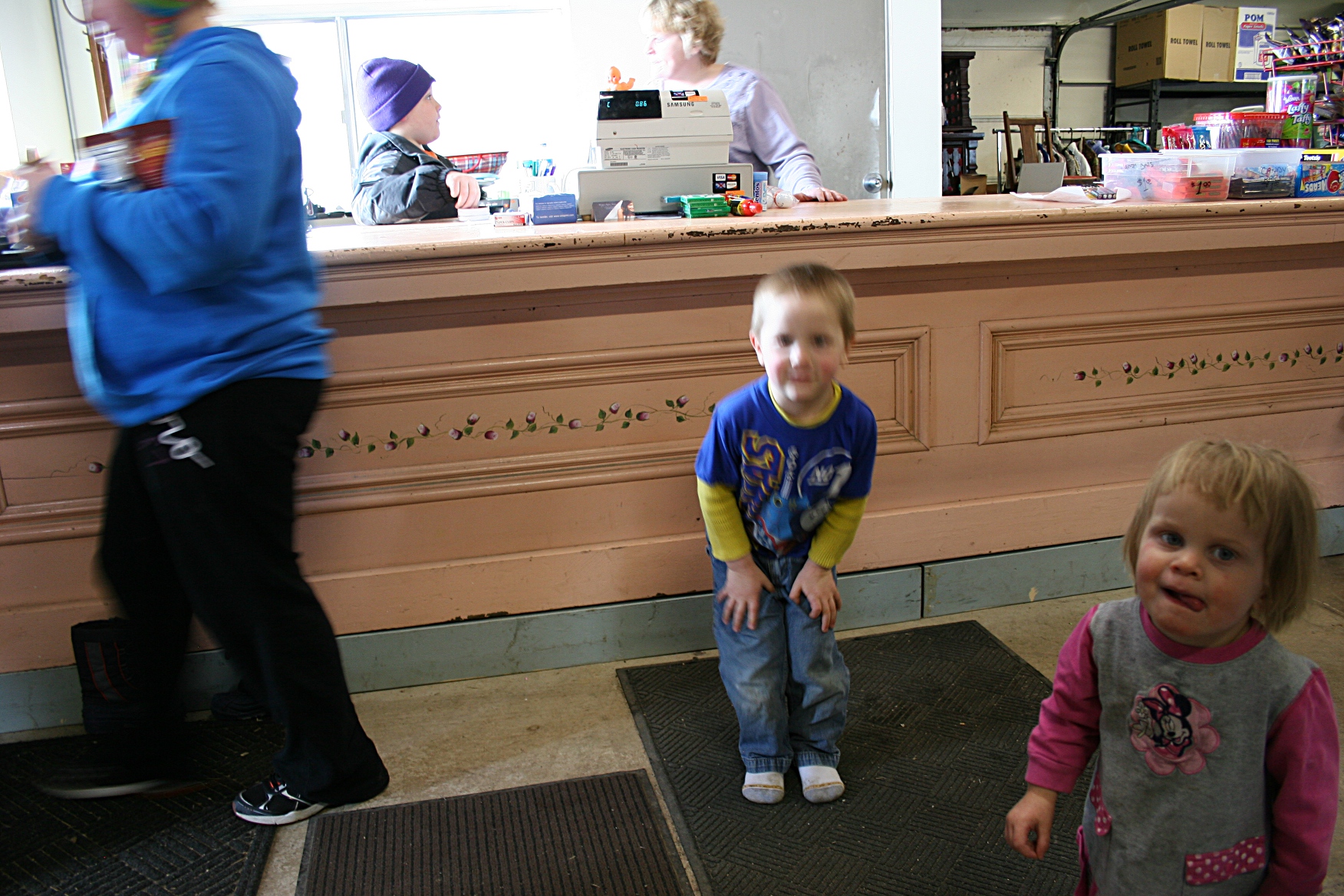
A young customer exits The Store, left, while three of the Thooft kids, including Maxwell, 4, and Beatrice, 21 months, hang out with Mom.

A young customer exits The Store, left, while three of the Thooft kids, including Maxwell, 4, and Beatrice, 21 months, hang out with Mom. The Thooft’s children include an 11-year-old, two 7-year-olds, two 4-year-olds, a 3-year-old and a 21-month-old.

She likes that Matt can walk over for lunch and spend time with her and the kids, ranging in age from 21 months to 11 years. She affectionately calls her seven, five of them birth children, two adopted, “the hoodlums.” The kids hang out in a room built into a corner of the poleshed style building.

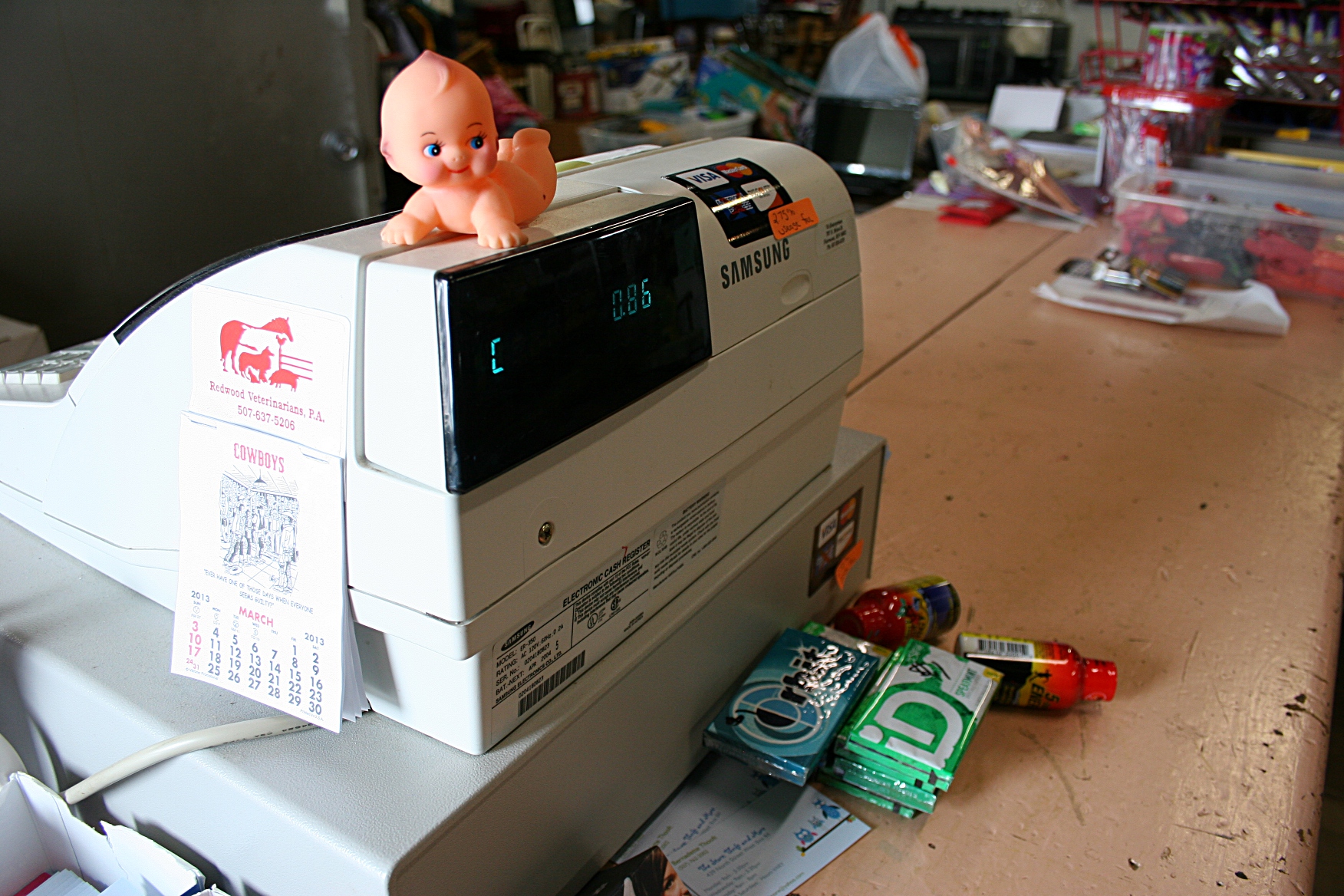
Look around and you'll see Bernadette's sense of humor in signage and props like this doll perched upon the cash register.

Look around and you’ll see Bernadette’s sense of humor in signage and props like this doll perched upon the cash register.

While the kids play and Matt naps in that corner playroom, Bernadette tends to customers on this Saturday afternoon in March. Her laptop sits open on her desk, her reference source for the thrift merchandise purchased primarily from online auctions and also from garage sales.

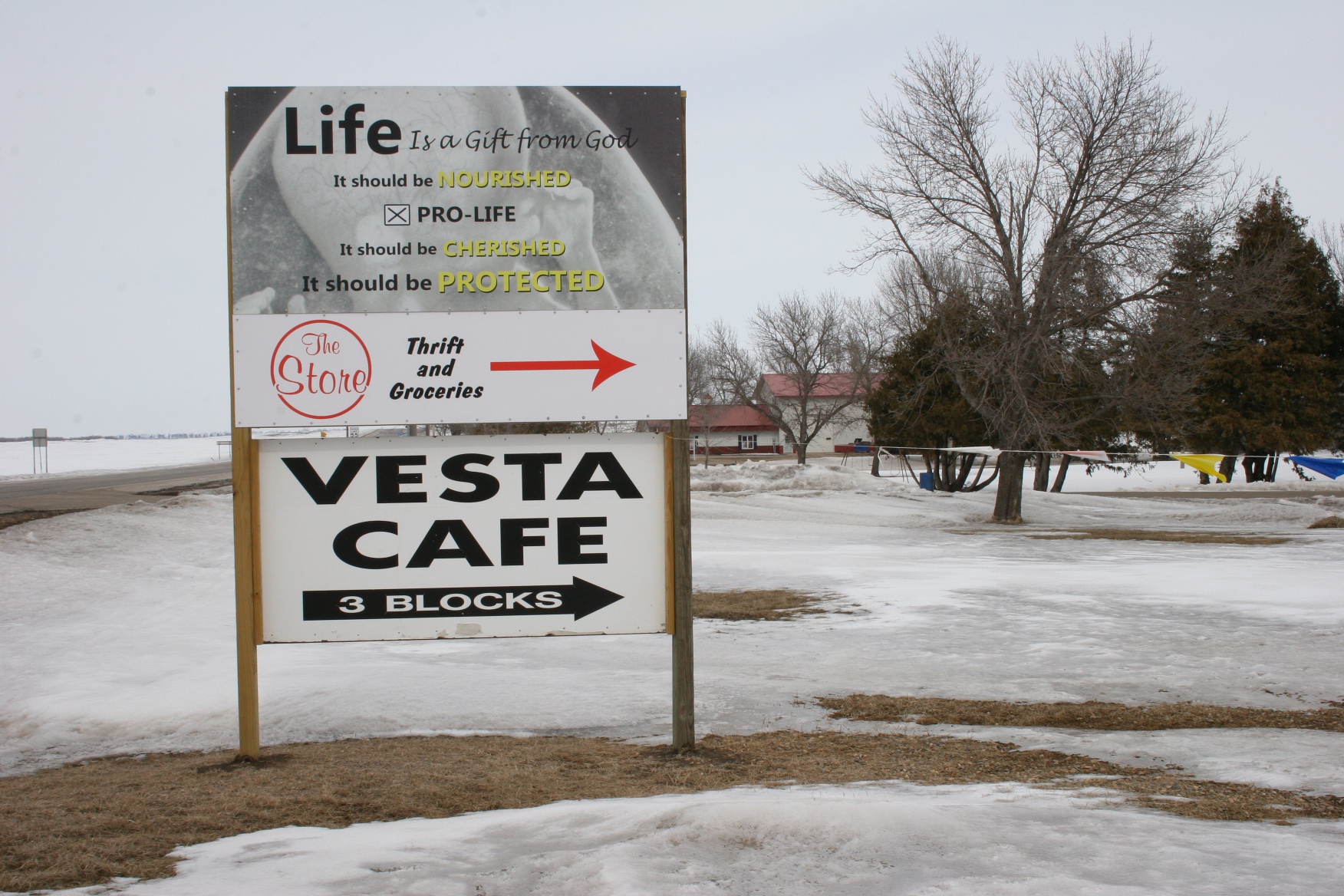
This sign by the thrift store points travelers along Minnesota Highway 19, left, to The Store and the Vesta Cafe.

This sign by the thrift store points travelers along Minnesota Highway 19, left, to The Store and the Vesta Cafe.

Bernadette is donating 10 percent of thrift sale proceeds to local charities like the United Way, a crisis nursery, area schools and the broader Minnesota Citizens Concerned for Life. She’s also created a “Believe in the Backpack” charity whereby she fills backpacks for kids in foster care.

In the short time I’ve spent with Bernadette, it’s clear to me that this Osakis native and former daycare provider loves kids and cares about folks in my hometown enough to open her own little general store on the prairie. And for that I am grateful.

This sign graces the front of The Store: Thrift and More.

This sign graces the front of The Store: Thrift and More.

FYI: The Store: Thrift and More is open from 9 a.m. – 5:30 p.m. Monday and Wednesday; from 9 a.m. – 8 p.m. Thursday; and with varied hours on Friday and Saturday. Closed Sunday and Tuesday.

© Copyright 2013 Audrey Kletscher Helbling


Buried in snow March 26, 2013

Filed under: Uncategorized — Audrey Kletscher Helbling @ 7:55 AM
Tags: , , , , , , , , , ,

I WANTED TO VISIT his grave, touch the cold stone with my gloved hands, allow my eyes to linger on his name, to remember my dad, dead 10 years now on April 3.

A trip back to my hometown to visit my mom had thrown me into a temporary melancholy mood as I lounged on her loveseat, head crooked into a pillow, legs angled up as we talked about aging and death and funerals (too many recently).

When I mentioned that I’d often thought about the safety layers of generations separating me from death, my husband glanced at me like I was crazy. My 80-year-old mom understood, though.

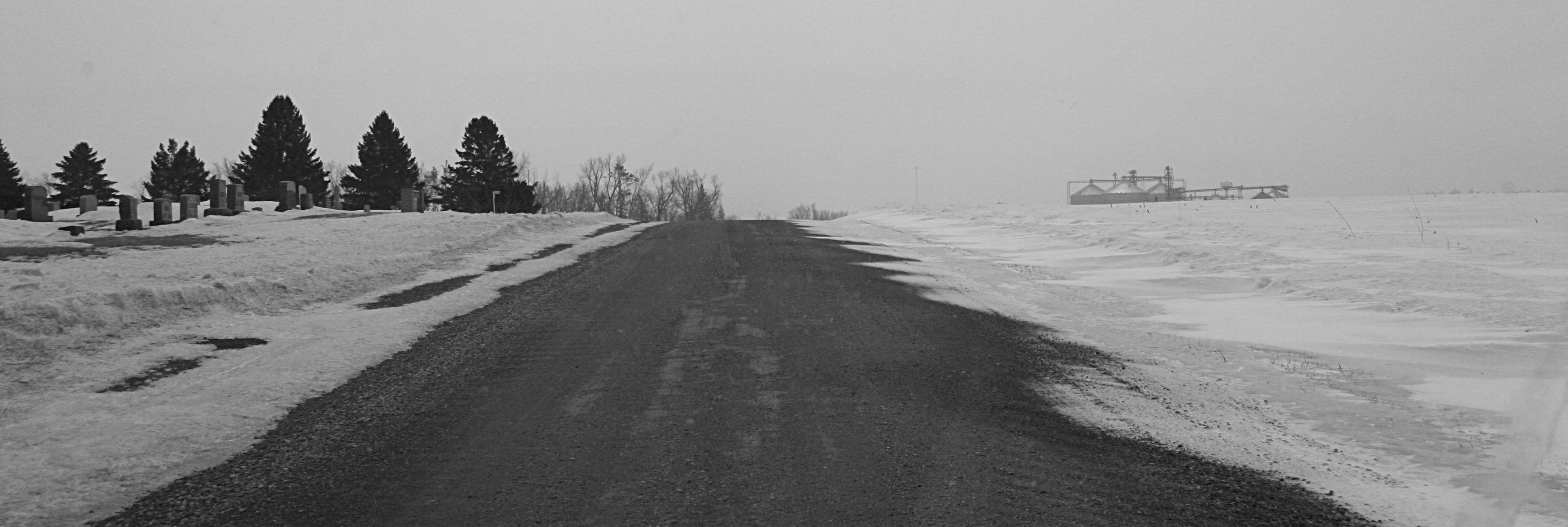
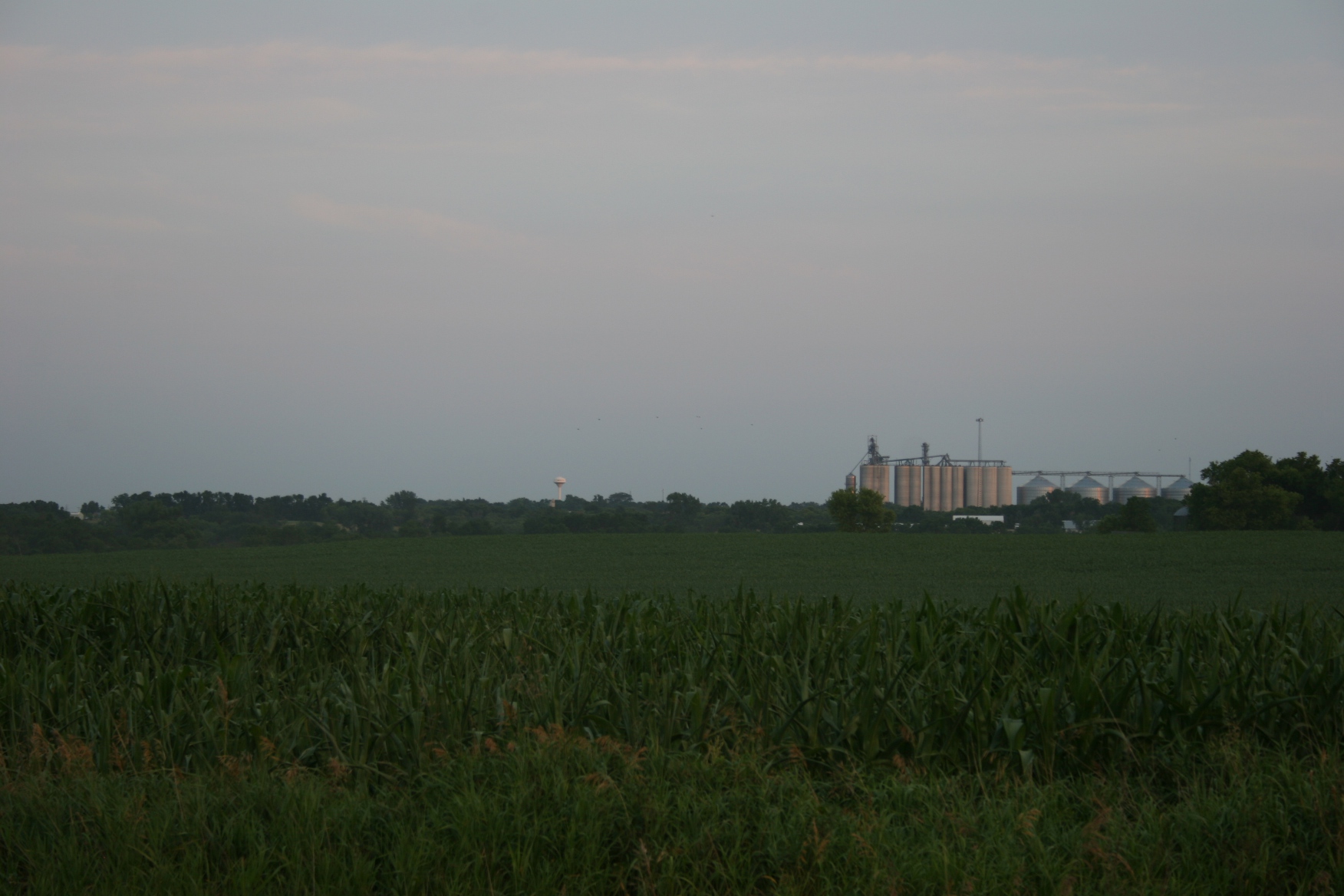
The road past the Vesta Cemetery, which sits just outside of this southwestern Minnesota town of some 330.

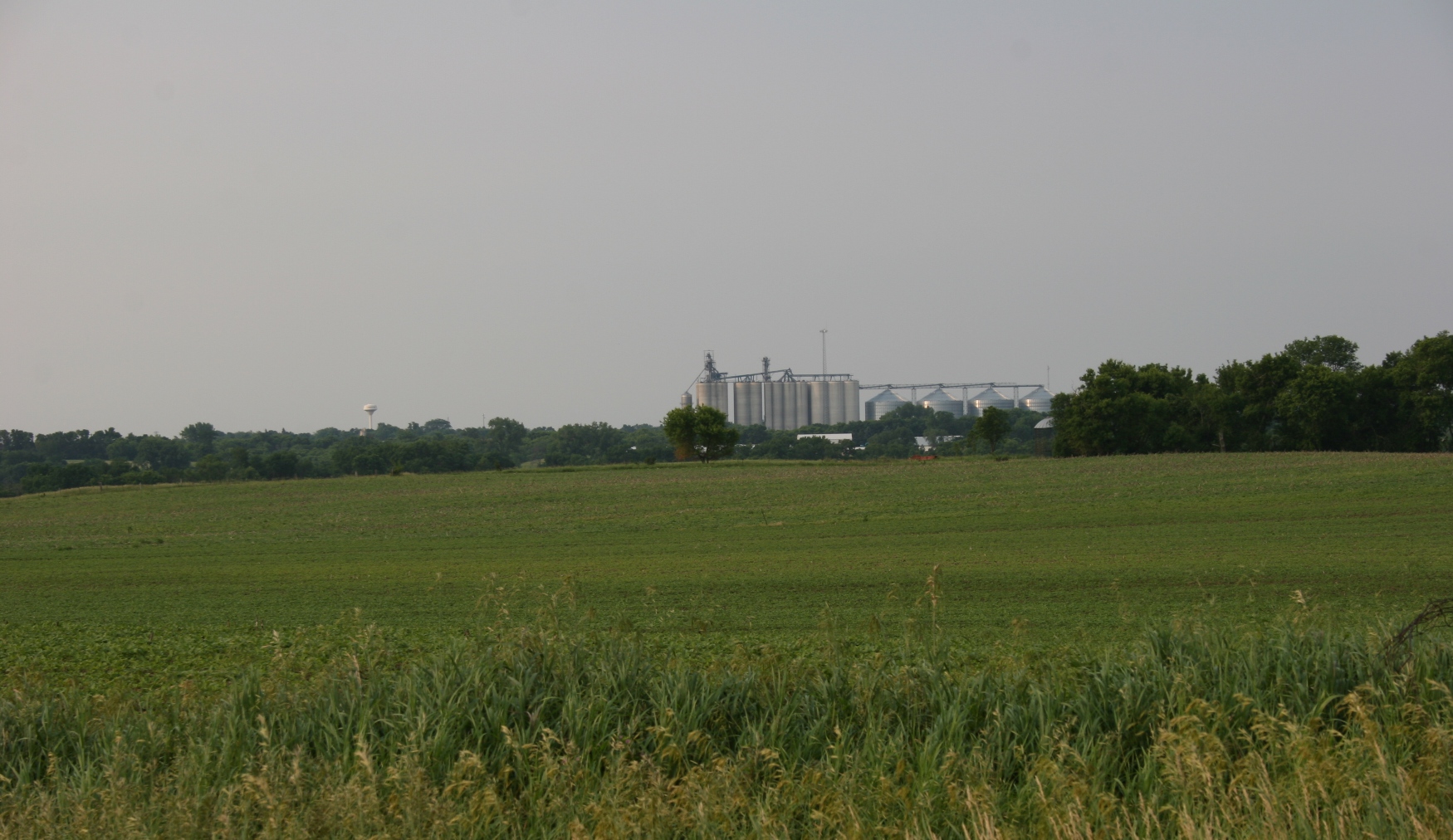
The road past the Vesta Cemetery, left, which sits just outside of this southwestern Minnesota town of some 330. You can see a portion of Vesta’s grain complex to the right.

Later, she stayed back at her house while Randy and I drove out to the cemetery, to honor my dad whose gravesite I do not visit often enough because busyness and blizzards have kept me from the prairie in recent months.

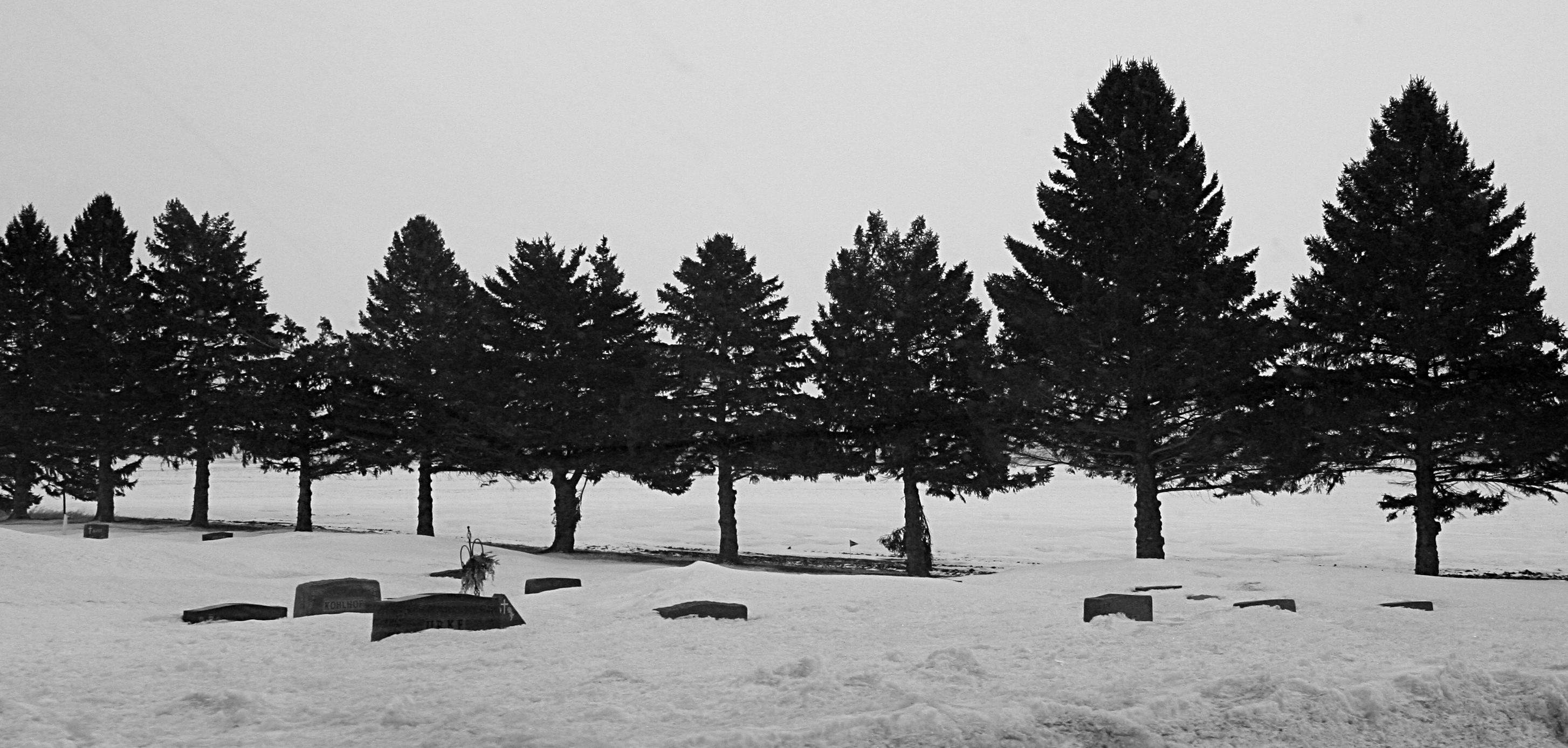
We headed north out of town along Cemetery Road, tires crunching on gravel, toward the cemetery edged by evergreen trees. At my feet, the short black snowboots I’d borrowed from my mom bumped against my legs.

Some of the gravestones are barely peeking out of the snow.

Some of the gravestones are barely peeking out of the snow.

I wondered aloud whether the cemetery roads would be plowed of snow swept in by prairie winds. A few blocks later I spotted waves of snow washing over tombstones and roadways. I could not reach my dad’s grave without snowshoes or a snowmobile.

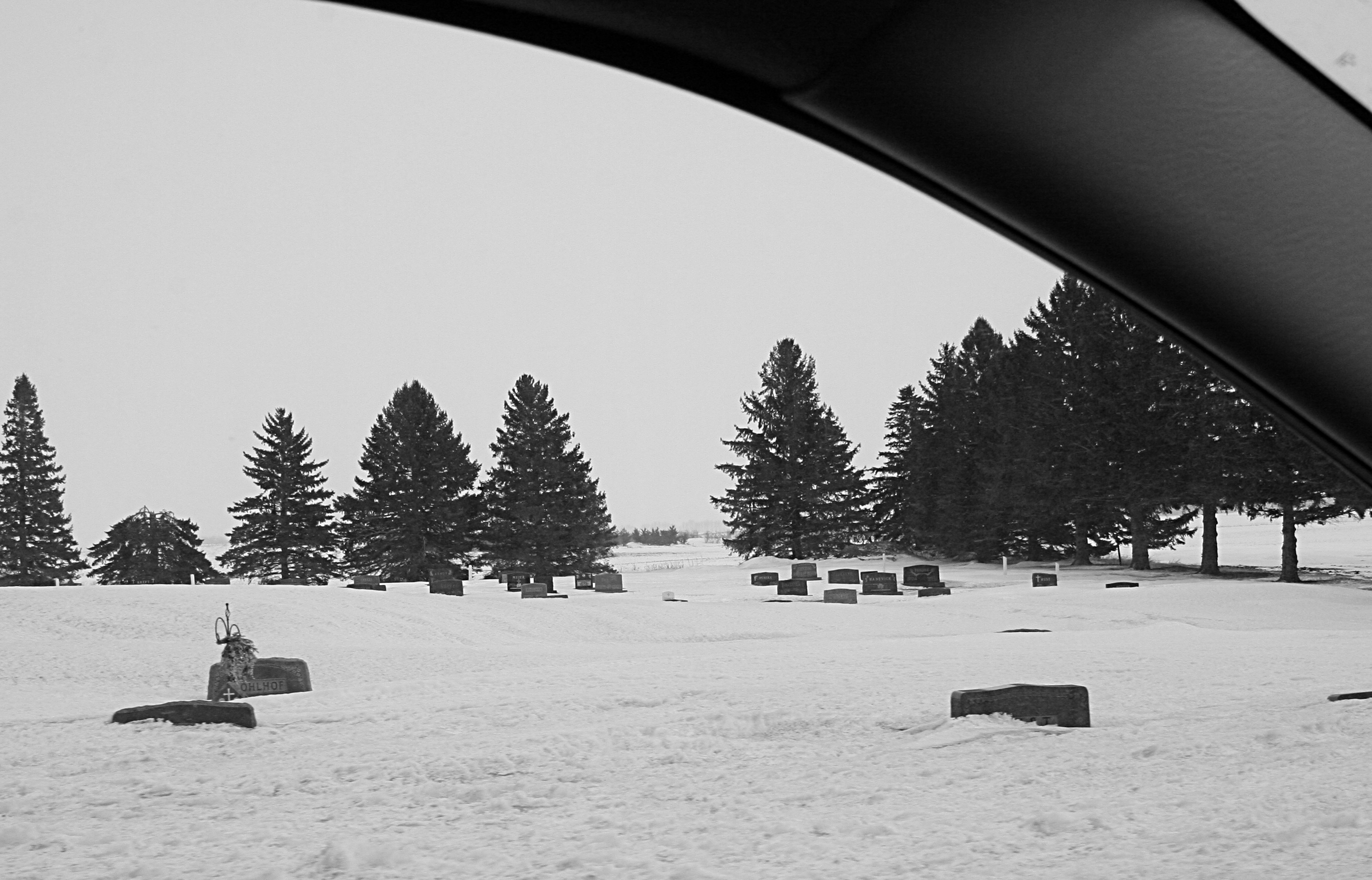
The closest I would get to my dad's grave was viewing the cemetery through t

The closest I would get to my dad’s grave was viewing the cemetery through the van windows.

We eased past the cemetery, drove down to the first farm place to the north, turned around in the driveway and crept past the cemetery again, back into town.

I carried my mom’s boots inside, snugged them into a corner of her kitchen, before reclaiming my place on her loveseat.

I told her about the tombstones buried in snow. Then we talked about dad’s funeral—the bitter cold of that April day, the cutting wind.

And I remembered, although I did not speak this, how I’d perched on a hard folding chair in that hilltop cemetery 10 years ago, leaned toward my mother shivering in cold and in grief, and wrapped my arm around her.

© Copyright 2013 Audrey Kletscher Helbling


Claiming a prairie sunset February 8, 2013

Filed under: Uncategorized — Audrey Kletscher Helbling @ 8:10 AM
Tags: , , , , , , , , ,

MY HEART BELONGS to my native prairie. Always has, always will.

Even after three decades away from southwestern Minnesota, I remain connected to the sky and to the land, to the place that shaped me as a person, a writer, a photographer.

In an environment as stark as the prairie, you notice details.

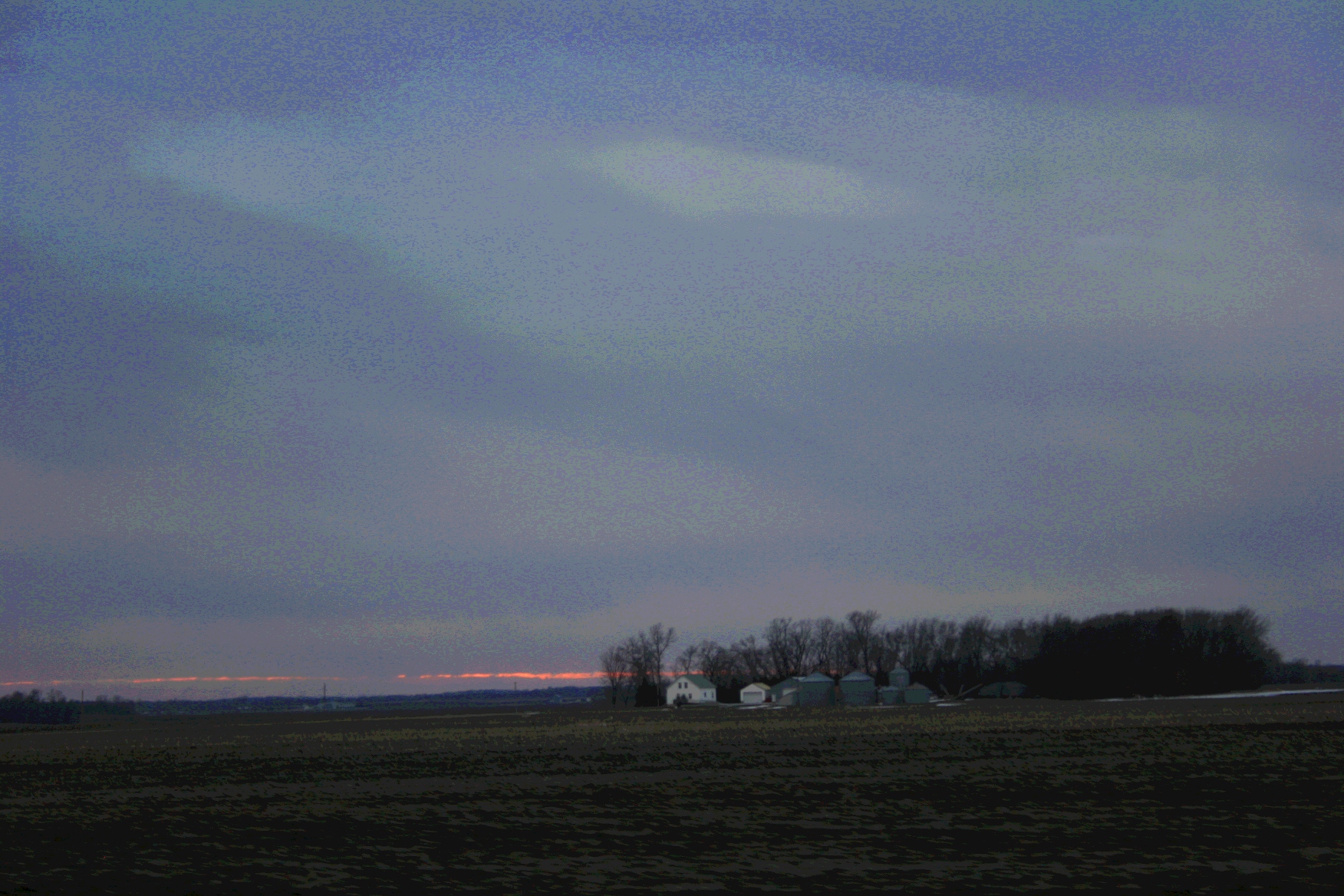
Even in southeastern Minnesota, where I've lived for three decades, expanses of prairie exist like this sunset scene.

Even in southeastern Minnesota, where I’ve lived for three decades, expanses of prairie exist like this sunset scene.

And so, on a recent Saturday, as my husband and I traveled south and east from Cleveland to Kilkenny (that’s in southeastern Minnesota, not Ohio and Ireland), I observed daylight evolve into evening, the sun slipping in a slim band of rosy peach across the horizon.

In that moment my soul yearned for the land I left at age 17, the prairie, the place of my heart.

© Copyright 2013 Audrey Kletscher Helbling


The educating & healing continue 150 years after The U.S.-Dakota War December 28, 2012

STUDYING MINNESOTA HISTORY decades ago, I learned about “The Sioux Uprising of 1862” and even wrote a term paper on the topic bearing that title.

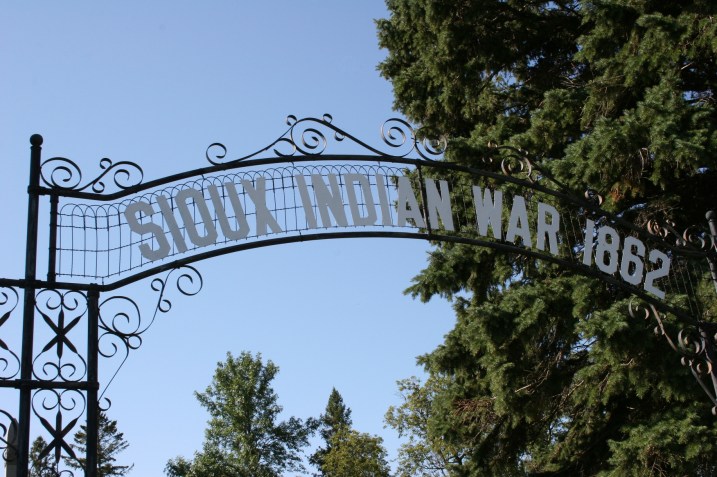
This archway leads to the Wood Lake State Monument, on the site of the battle which ended the U.S.-Dakota Conflict of 1862.

This archway leads to the Wood Lake State Monument, on the site of the battle which ended the U.S.-Dakota Conflict of 1862.

I thought nothing negative of that word, Sioux, which translates to “snake.” The Ojibway, once enemies of the Dakota, gave the tribe that name. I did not know; it was the word I was taught.

That I even studied “The U.S.-Dakota War of 1862,” the proper terminology for the six-week war fought primarily in my native southwestern Minnesota 150 years ago, seems remarkable. So many in Minnesota never knew of this conflict in our state’s history.

I don’t pretend to know every detail of the war between the Dakota and the white settlers and soldiers. But I do remember that I grew up with a fear of “Indians,” reinforced by the television westerns especially popular during my formative years and by the history lessons delivered about The Sioux Uprising of 1862, as it was then called.

Those classroom lessons were decidedly one-sided: The whites were the good guys, the Indians the bad guys. That line of thinking was wrong, oh, so wrong. I realize that now, having reached that conclusion decades ago.

The maltreatment of the Dakota by greedy traders, broken treaty promises, starvation, efforts to convert and transform the Dakota people into Christian farmers, expulsion from their homeland and more contributed to the war.

Yet, even the Dakota disagreed about the need to wage this battle. Some helped settlers escape to safety while others plundered and killed. My own maternal forefathers fled the New Ulm area to St. Peter, making this war a part of my personal family history.

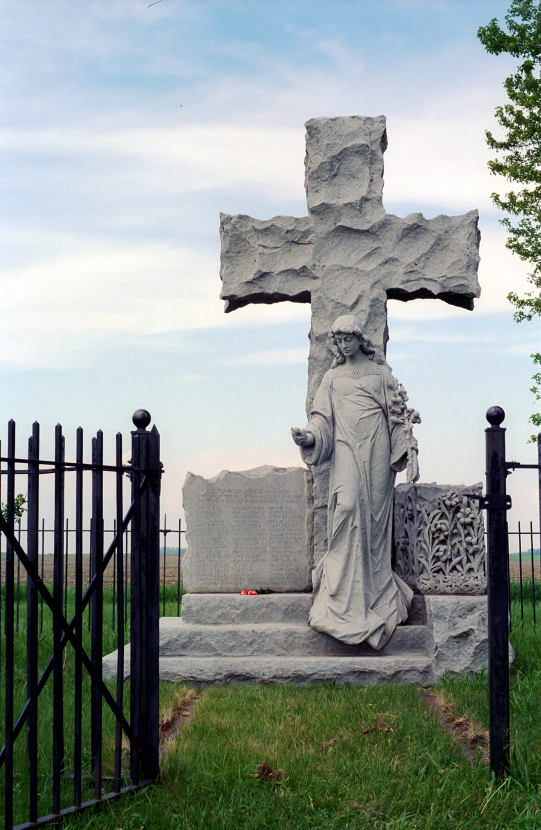
The Milford State Monument along Brown County Road 29 west of New Ulm commemorates the deaths of 52 settlers who were killed in the area. Located along the eastern edge of the Lower Sioux Reservation, Milford had the highest war death rate of any single township.

The Milford State Monument along Brown County Road 29 west of New Ulm commemorates the deaths of 52 settlers who were killed in the area. Located along the eastern edge of the Lower Sioux Reservation, Milford had the highest war death rate of any single township.

While I carry no ill will toward the Dakota, I will tell you, unequivocally, that feelings still run deep in southwestern Minnesota. I am also honest enough to admit that perhaps I would feel differently if my family members had been massacred or if I was of Dakota, instead of German, heritage.

Although time can heal, it doesn’t always. Misconceptions and misguided expectations, even after 150 years, exist on multiple sides of the issue. I won’t delve into that here, but I do think the healing is still ongoing, forgiveness (on both sides) still not attained.

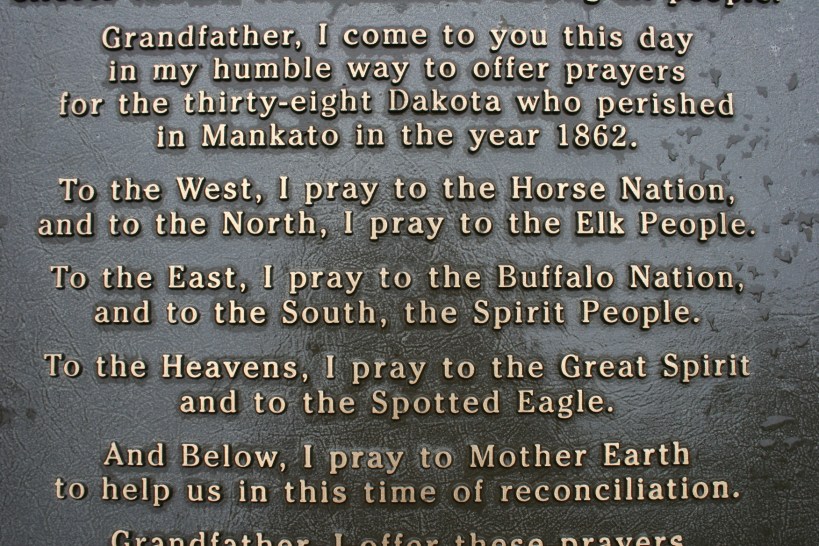
Words on a marker in Reconciliation Park in Mankato where 38 Dakota were hung on Dec. 26, 1862.

Words on a marker in Reconciliation Park in Mankato where 38 Dakota were hung on Dec. 26, 1862. On Wednesday, a new Dakota 38 Memorial was dedicated listing the names of the 38 men who died here. This file photo was taken of an existing plaque in the park.

In a ceremony in Mankato on Wednesday marking the 150th anniversary of the hanging of 38 Dakota, Mayor Eric Anderson proclaimed this the year of “forgiveness and understanding.”

The Dakota also called upon all to “forgive everyone everything.” Those words will be engraved into Kasota stone benches to be installed next summer at the site of the new Dakota 38 Memorial dedicated in Reconciliation Park on Wednesday.

Strides toward understanding and forgiveness, and education, can perhaps finally heal the still festering wounds of this long ago war.

TO VIEW PHOTOS from the event in Mankato on Wednesday, click to link here to Minnesota Public Radio.

TELL ME, ESPECIALLY if you grew up in Minnesota, did you study The U.S.-Dakota War of 1862? Also, are Minnesota students today being taught about this war?

© Copyright 2012 Audrey Kletscher Helbling


Keep Christ in Christmas December 24, 2012

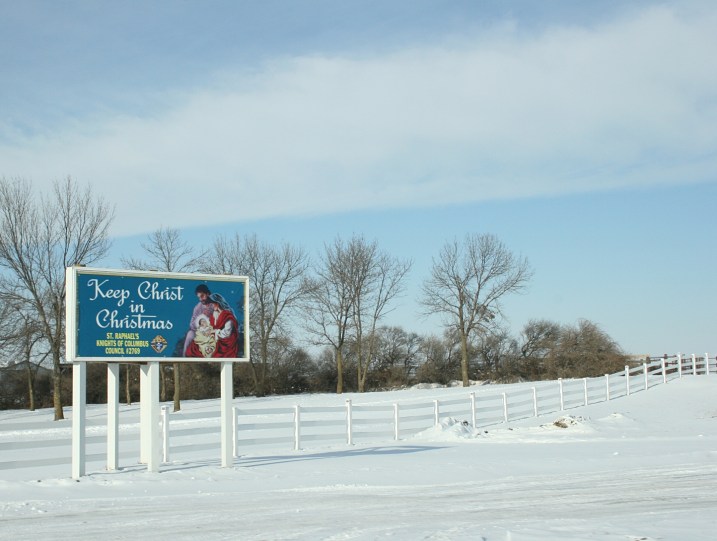
REMINDING MOTORISTS traveling in southwestern Minnesota of the real reason for Christmas is this billboard along U.S. Highway 14 just east of Springfield.

Billboard, Christmas

Thank you, St. Raphael’s Knights of Columbus Council #2769 of Springfield for sponsoring this message.

Well done.

Copyright 2012 Audrey Kletscher Helbling


Prairie prose & photos during the season of harvest October 29, 2012

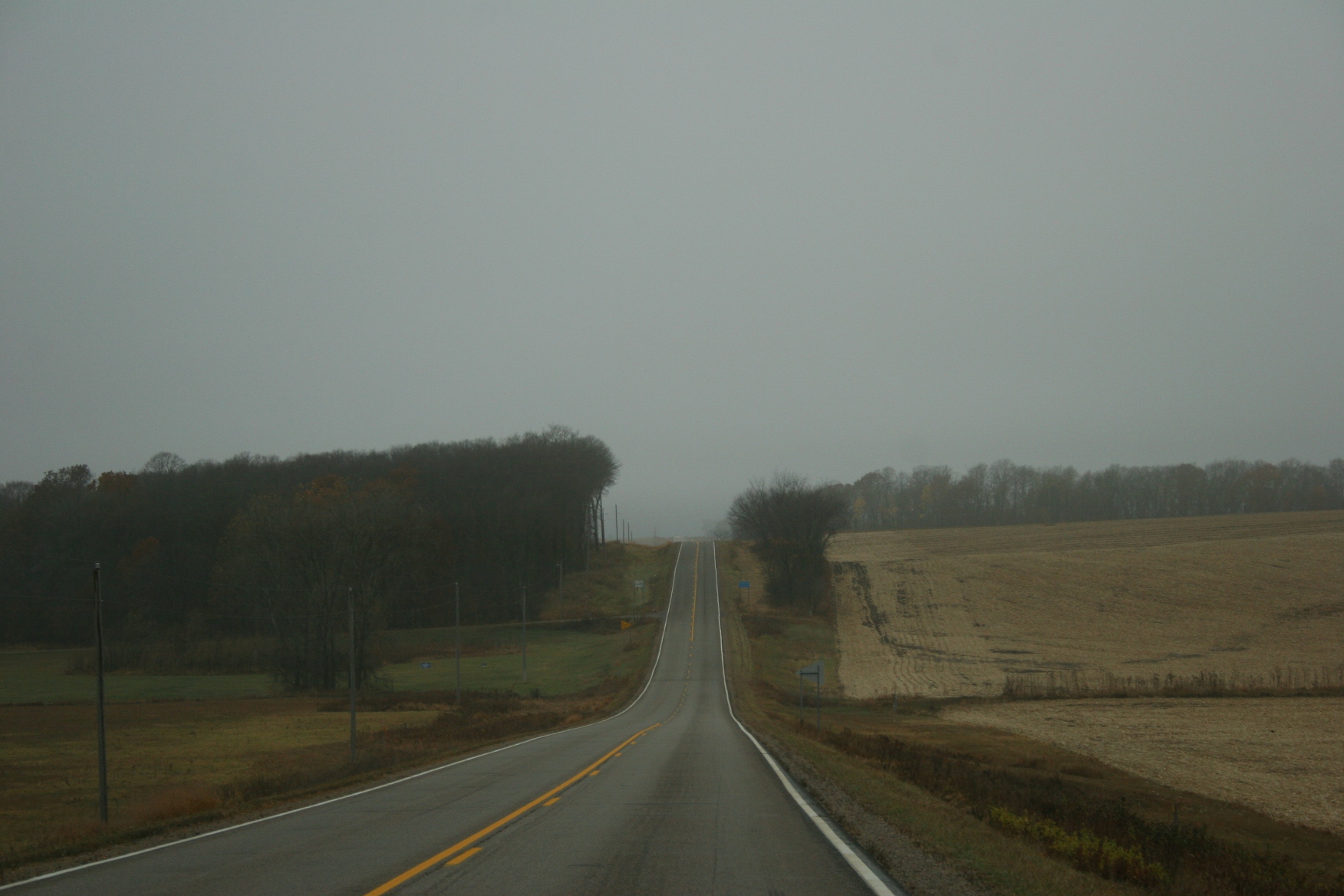
Just west of Shieldsville, not far from our Faribault home in southeastern Minnesota, my husband and I began our 120-mile journey to southwestern Minnesota on a foggy Saturday morning.

I NEVER TIRE of the big sky and infinite land that stretch far before me as I travel back to my native southwestern Minnesota. I wonder sometimes how I ever could have left this place that brings such solace to my soul, such respite to my heart, such peace to my mind.

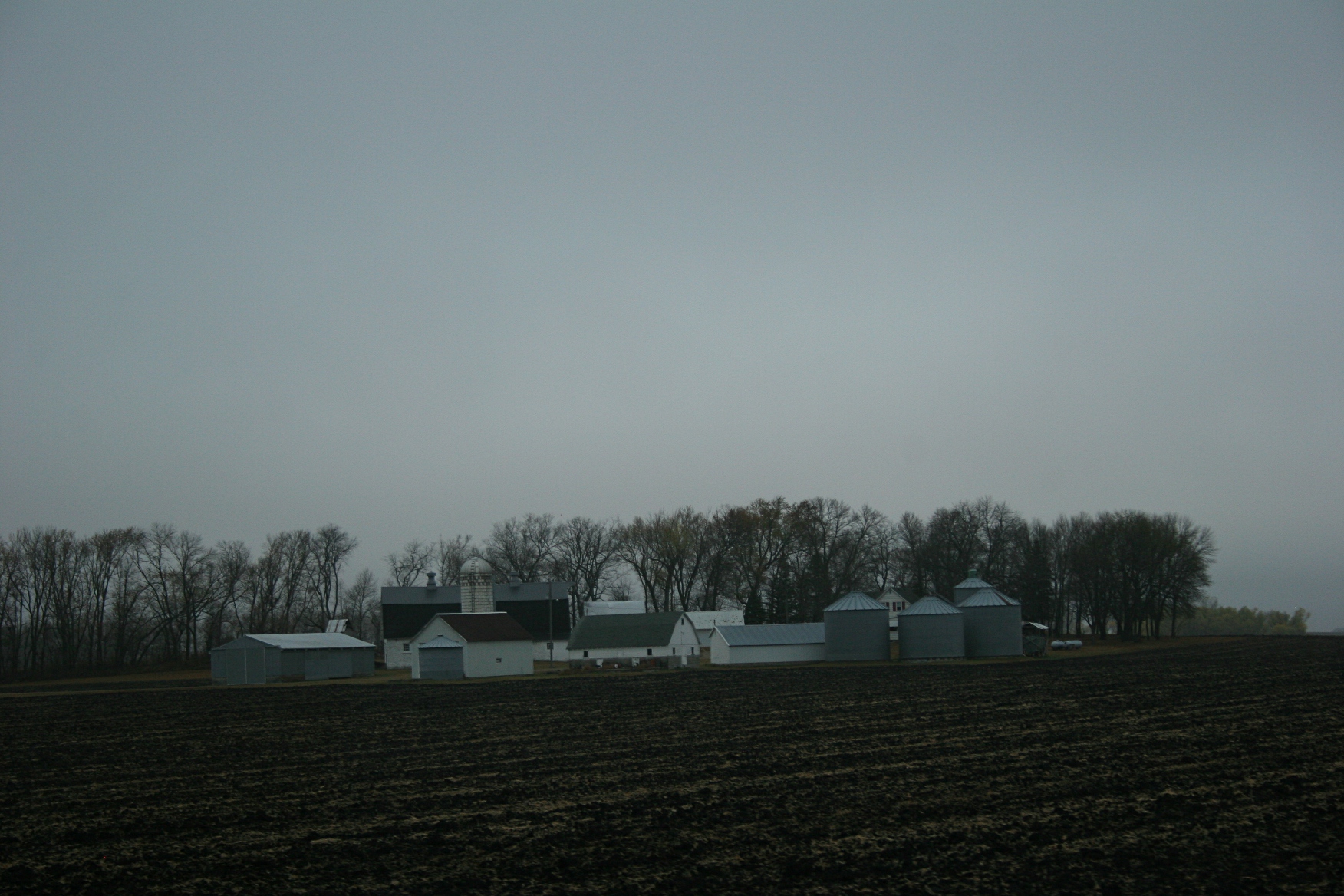
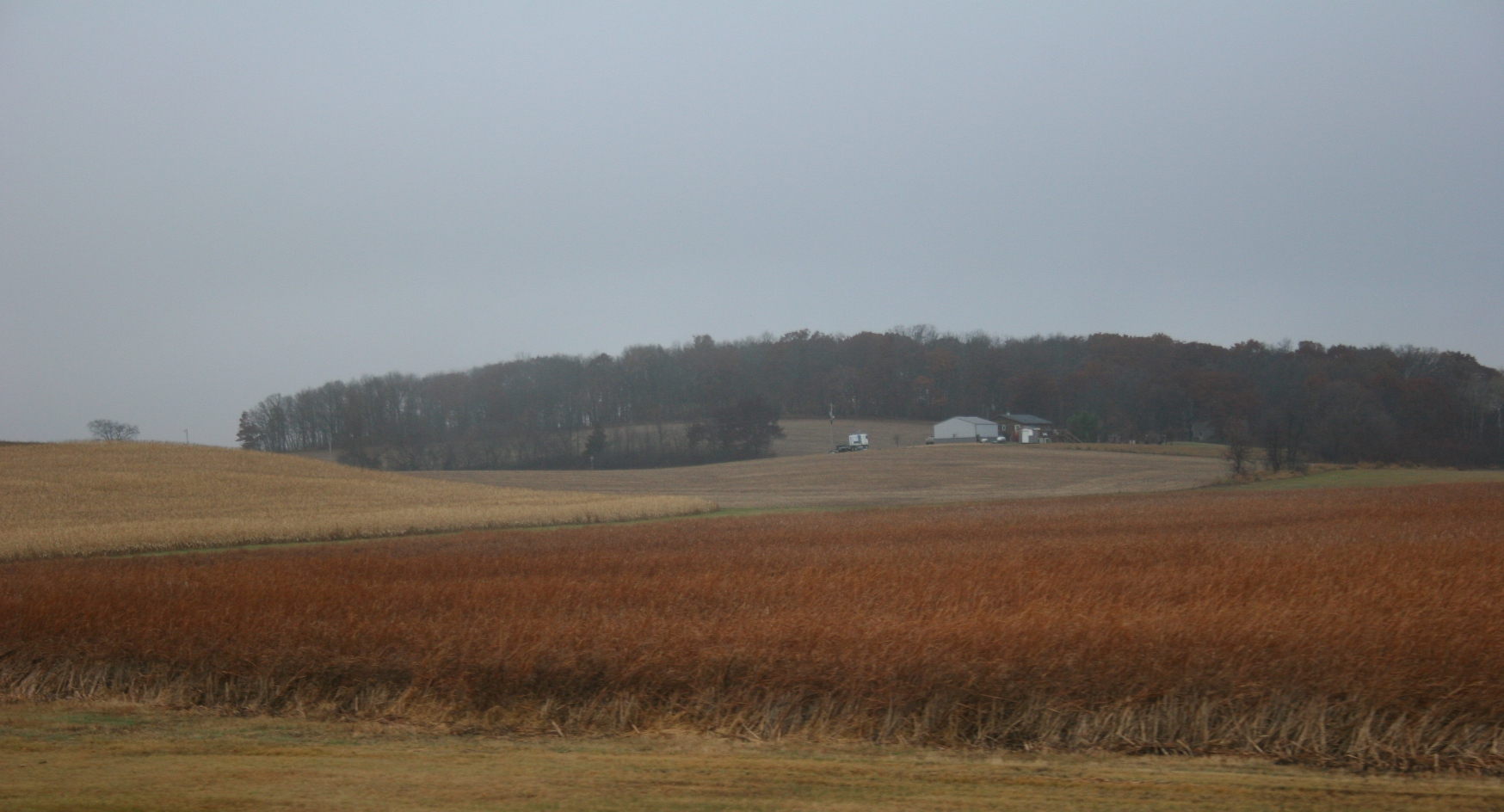
A farm site somewhere along the route which took us through or past Shieldsville, LeCenter, Cleveland, St. Peter, Nicollet, Courtland, New Ulm, Essig, Sleepy Eye, Cobden, Springfield and Sanborn corners, ending in rural Lamberton.

When I see this land, walk this land, the longing to be back here, permanently rooted again, tugs at my very core. I miss the prairie that much and the older I get, the more I appreciate this rural place from whence I came.

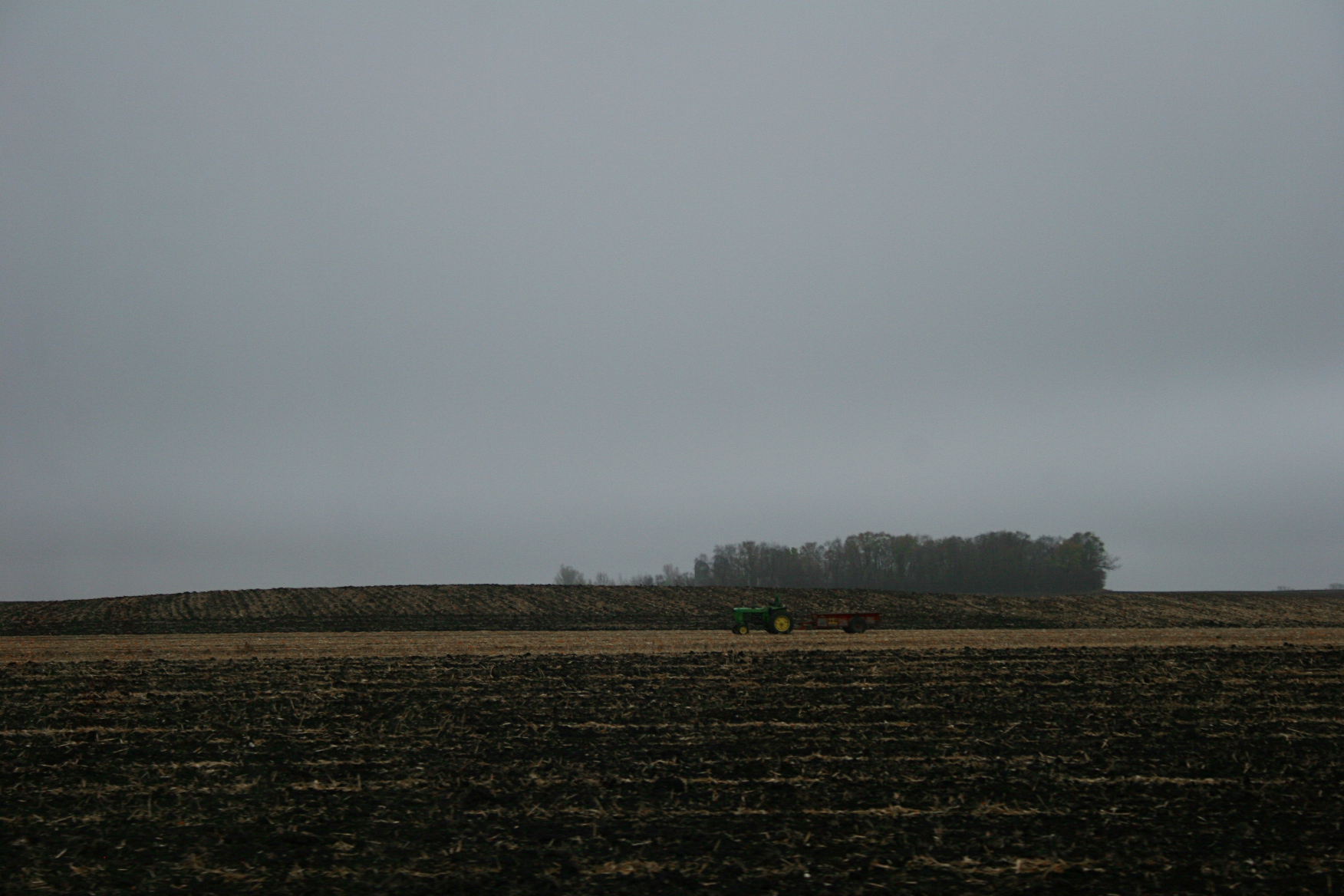
This image, among all those I took, emphasizes the expanse of sky and land which define the prairie.

It is that early-life connection, that growing up as a child of the prairie, that intimate familiarity with the land and the seasons and life cycles, the dirt under fingernails, the rocks lifted from fields, the cockleburs yanked from bean rows, the roar of the combine and the distinct putt-putt of the John Deere tractor, the calf shit clinging to buckle overshoes, the fireball of a sunset, the sights and sounds and smell and feel of this prairie place that shaped who I became as a person, a writer, a photographer.

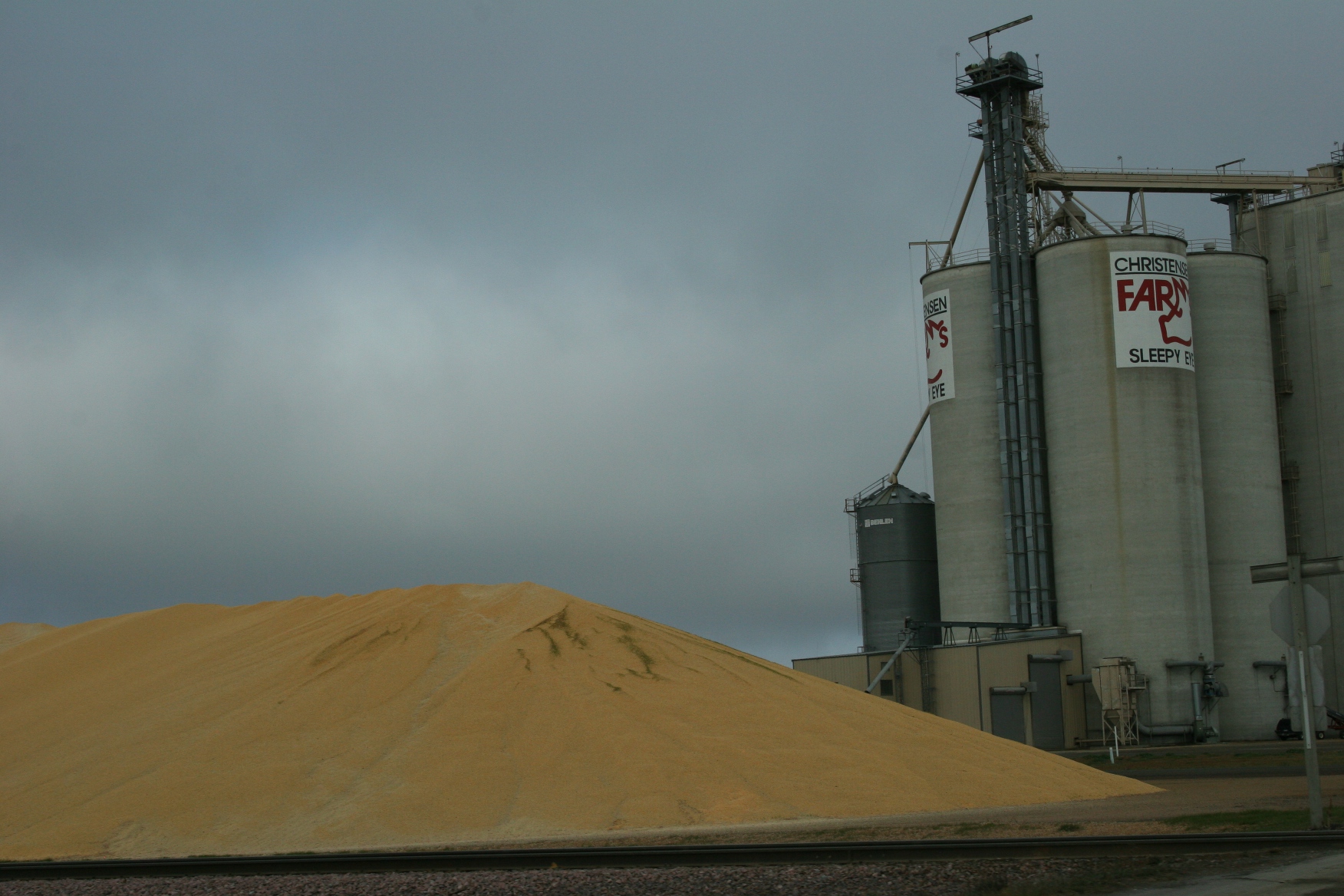
These towering elevators and corn pile at Christensen Farms near Sleepy Eye break up the flat landscape.

In this season, as the earth shifts from growth to harvest to dormancy, I notice even more the details etched into the prairie. The sky seems bigger, the land wider and all of us, in comparison, but mere specks upon the earth.

MORE PHOTOS from that road trip to the prairie:

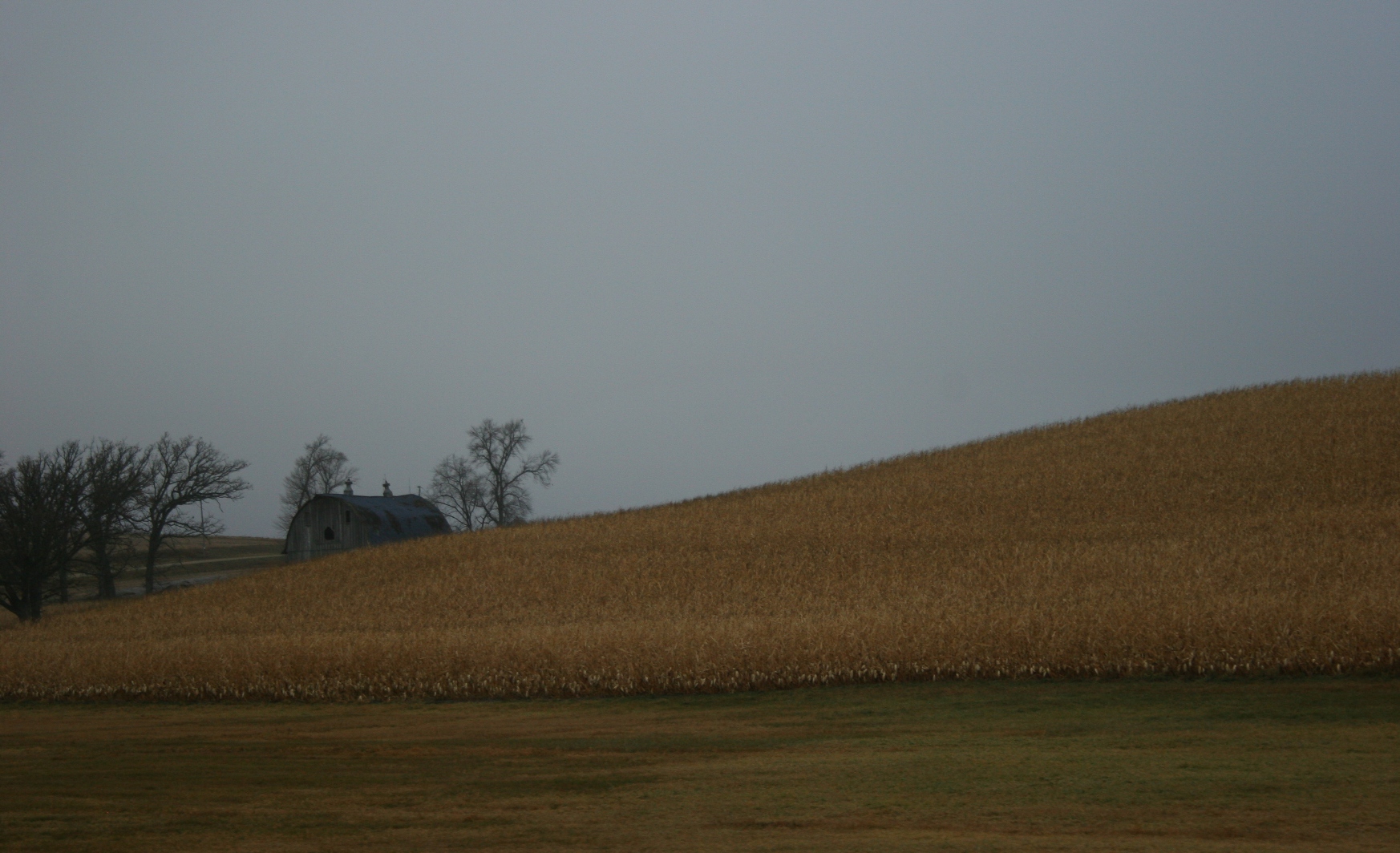
This is not a prairie scene because the prairie has no hills. Rather, I shot this near the beginning of our journey, west of Shieldsville.

Another scene from just west of Shieldsville. It is the muted colors of the landscape that I so appreciate in this photo.

Driving through Sleepy Eye, a strong agricultural community where I lived and worked briefly, decades ago, as a reporter and photographer for The Sleepy Eye Herald-Dispatch. Sleepy Eye is most definitely on the prairie.

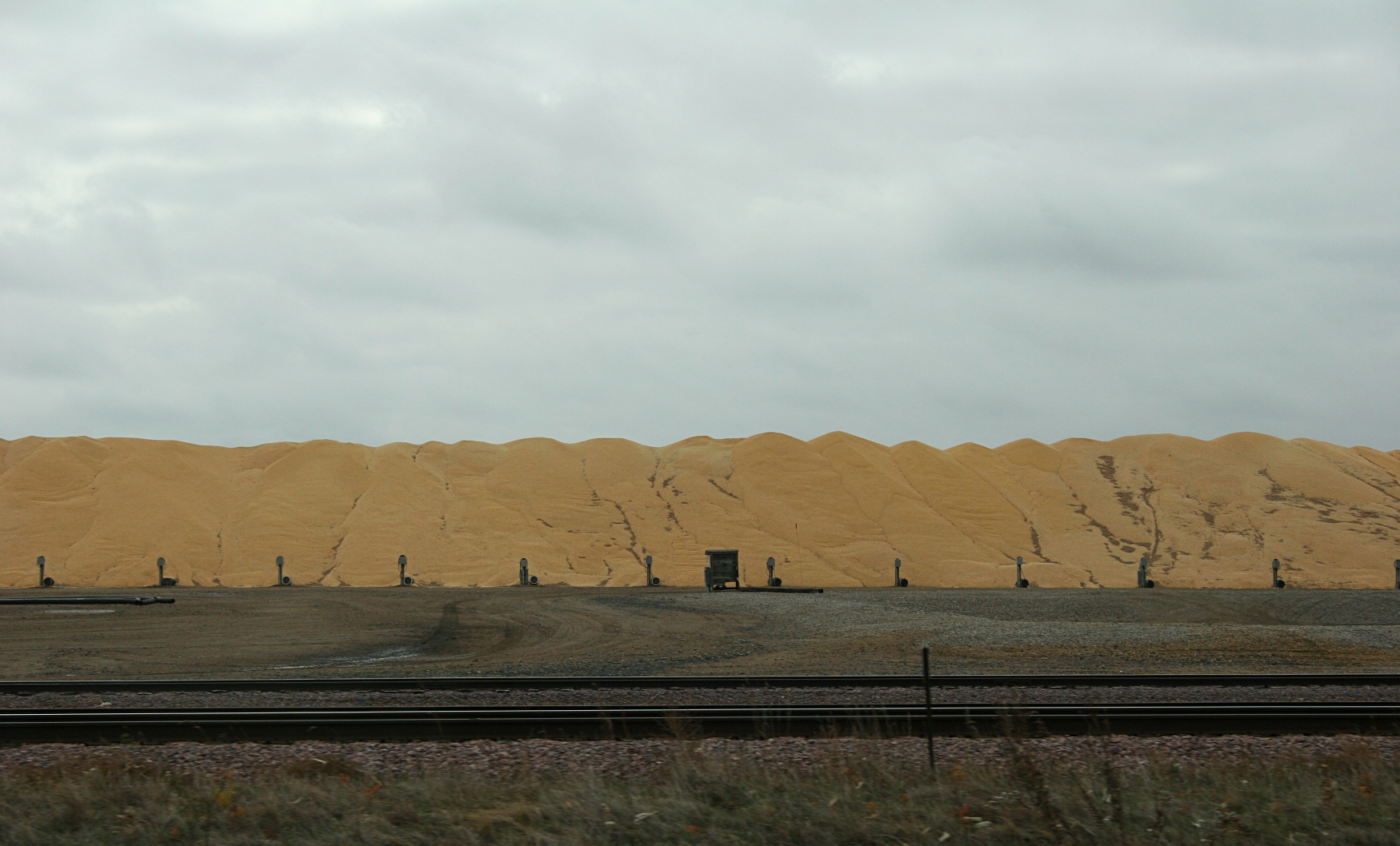
Hills of corn at a grain complex east of Lamberton.

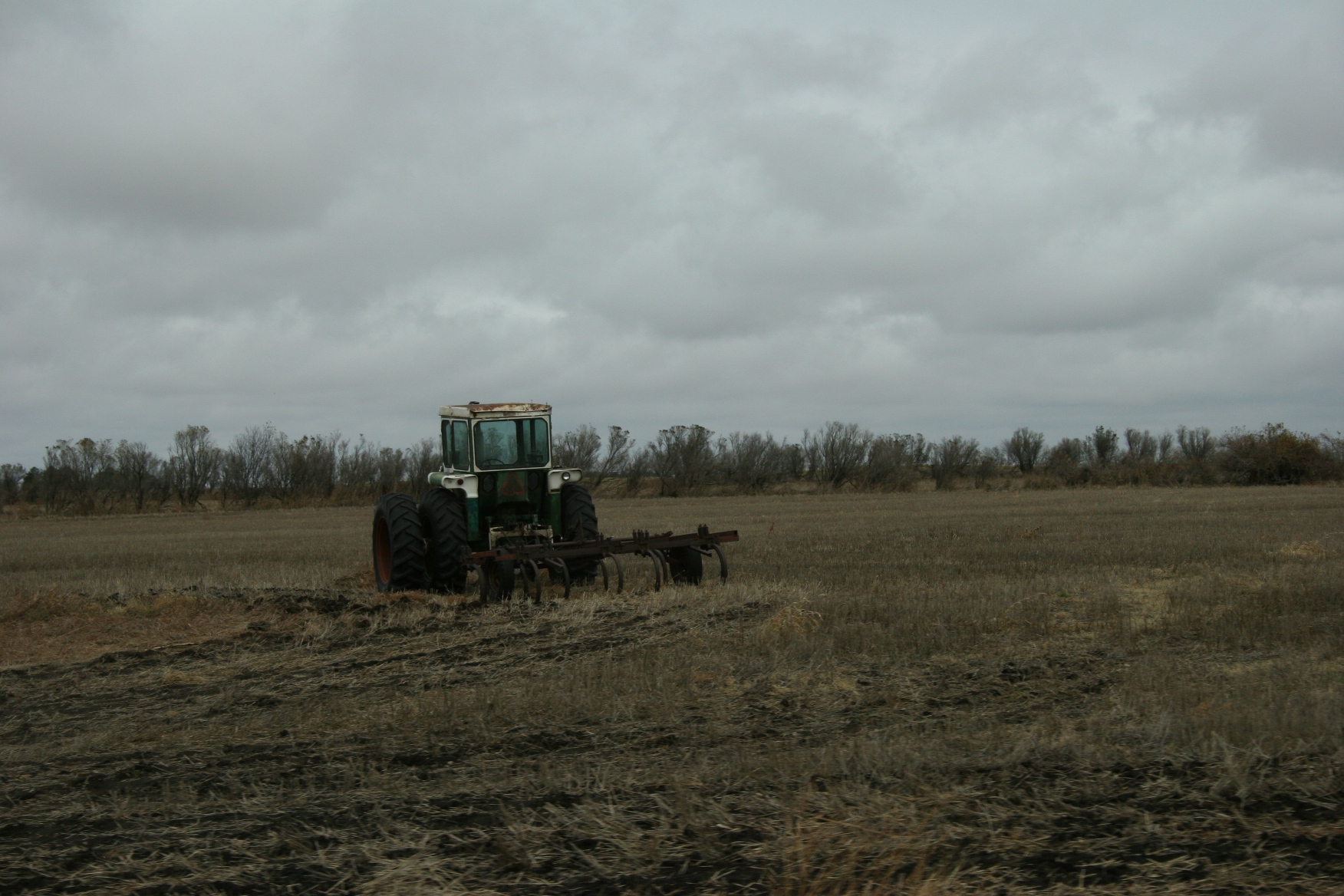
Fields are in all stages of harvest and tillage on the southwestern Minnesota prairie.

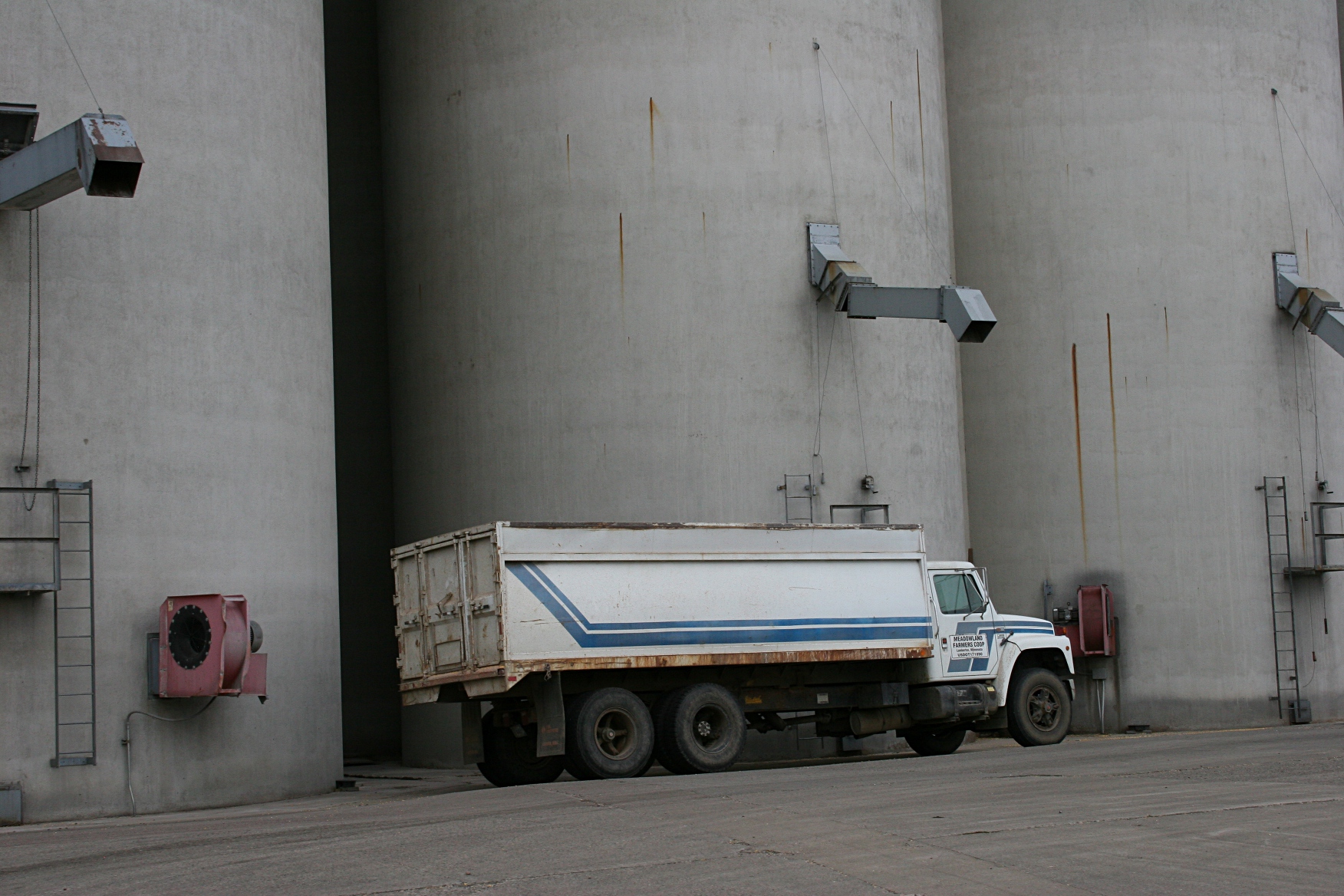
A grain truck parked at an elevator in Lamberton.

An important sign when trucks and tractors are lined up at the elevator in Lamberton.

I ended my Saturday by walking my middle brother’s acreage north of Lamberton as the sun set, my favorite time of day on my native southwestern Minnesota prairie. I grew up about 25 miles northwest of here near Vesta.

© Copyright 2012 Audrey Kletscher Helbling


Transforming an historic building into Seven Sisters Coffee, a community gathering spot & more in rural Minnesota October 23, 2012

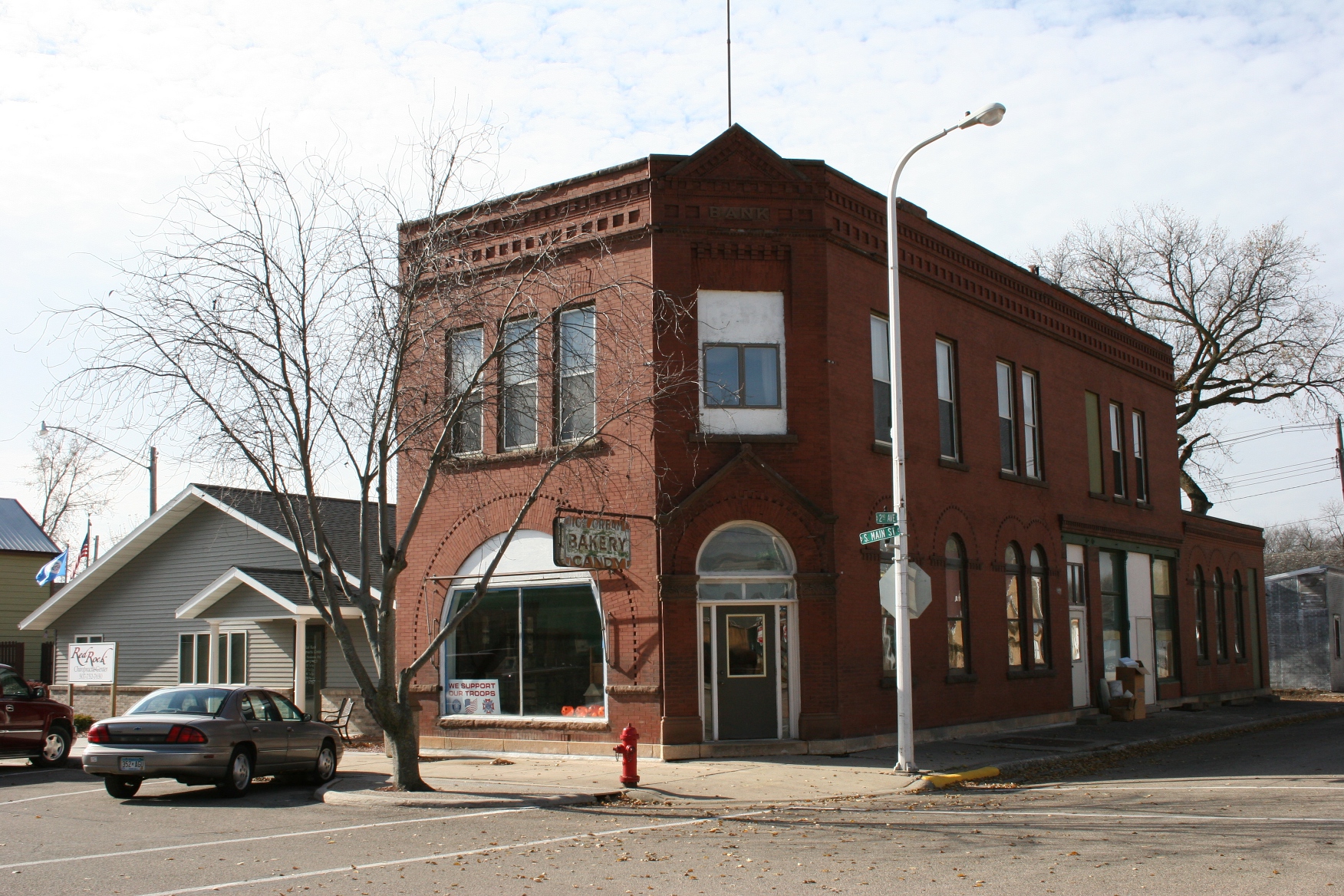
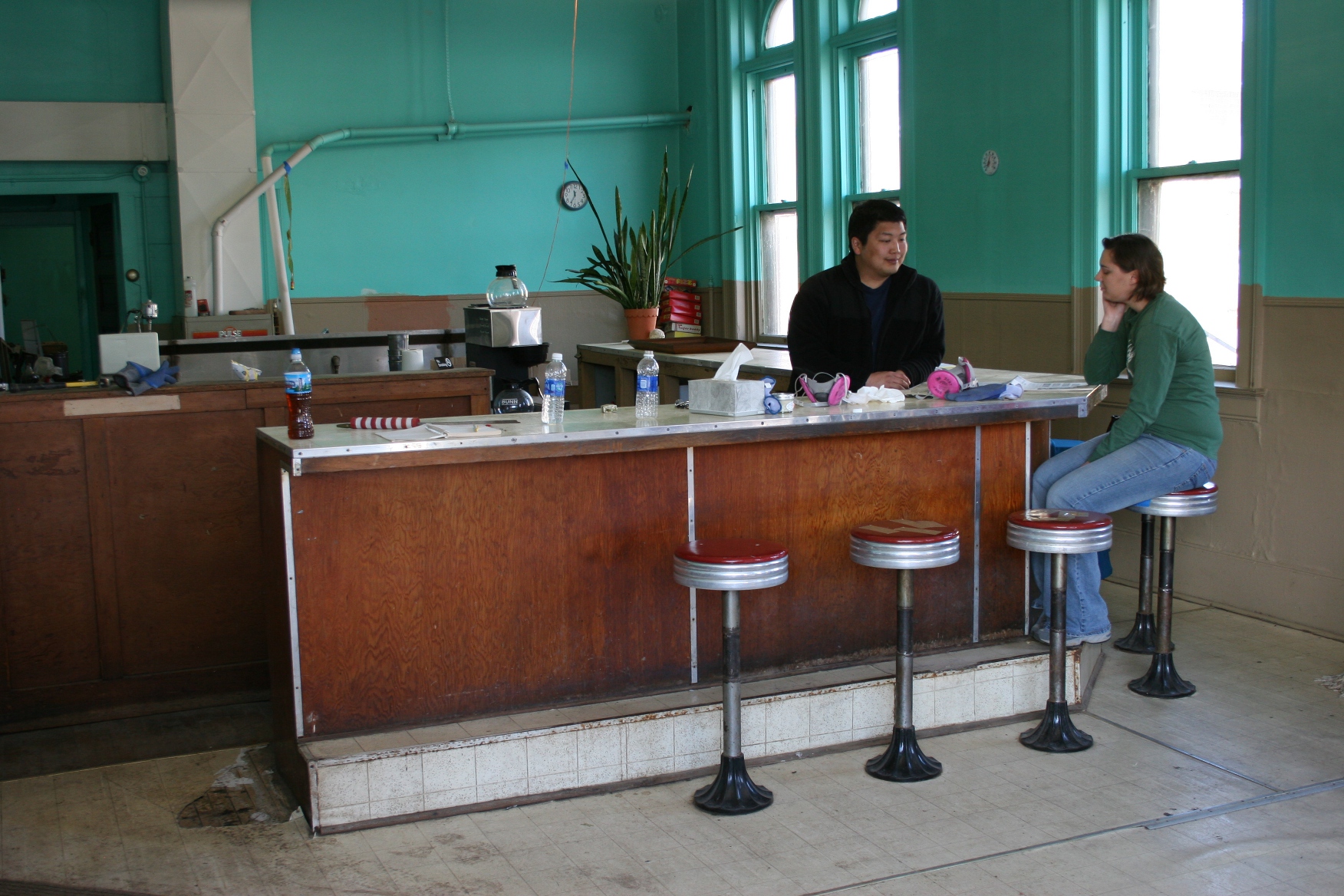
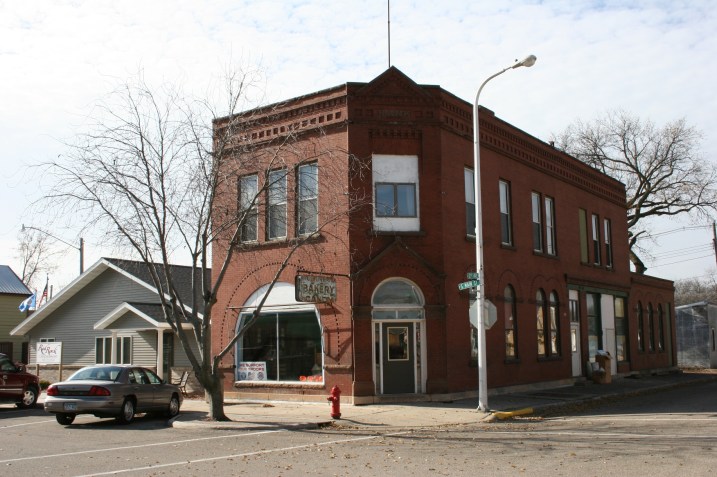
This 1892 former bank building and 95-year bakery anchoring a corner of Lamberton’s Main Street is being renovated into Seven Sisters Coffee by a young couple with connections to this area of southwestern Minnesota. After the business opens, the upstairs will be renovated into loft style apartments.

DAVID AND MICHELLE can see beyond the crumbling mortar, the moisture damage, the buckling floor boards, the teal paint.

Just barely into major renovation of an historic 1892 bank building and former long-time bakery in downtown Lamberton, this couple is thoughtfully and methodically working toward their summer 2013 goal of opening Seven Sisters Coffee.
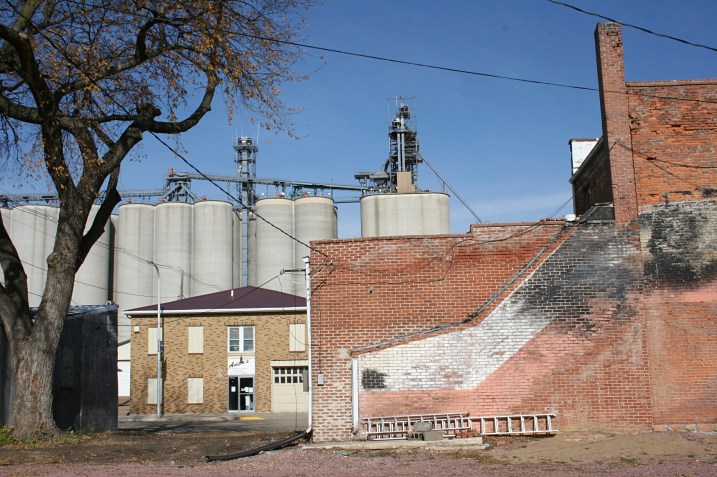
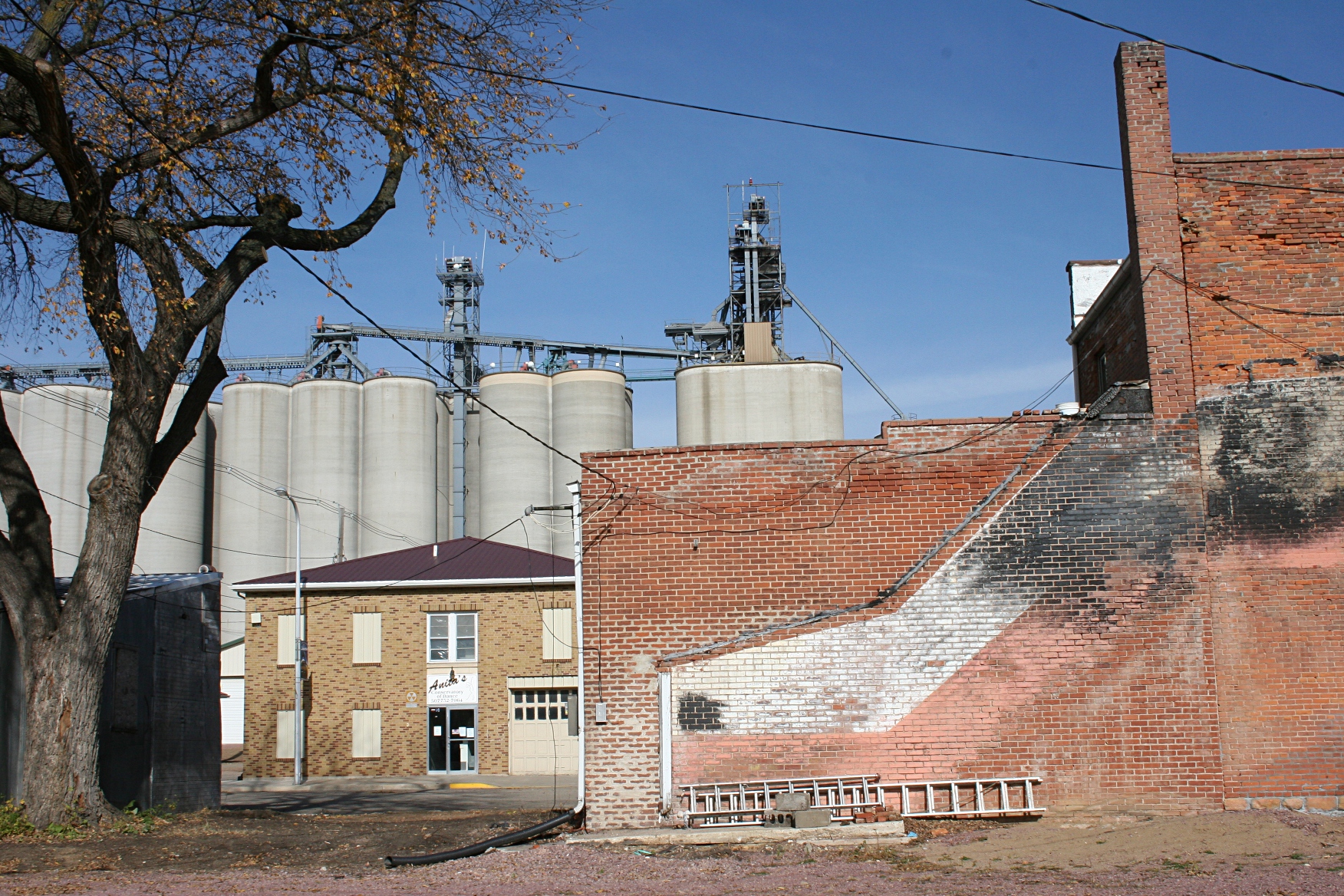
This shows the side and back view of the building, with the rear part added on to the original. Soot from a 2005 fire, which destroyed Plum Creek Crafts next door, mars the brick. Behind the building, a tree was removed and plans are to install a patio area for outdoor dining. They saved a slice of the tree to build a table.

Even the name, Seven Sisters, holds special significance for the pair as Michelle is one of seven sisters and three brothers who grew up in Lamberton, a strong agricultural community of 822 in Redwood County on the southwestern Minnesota prairie. Additionally, Michelle notes that Seven Sisters possesses multiple meanings—in Greek mythology, astronomy and even as a mountain range.

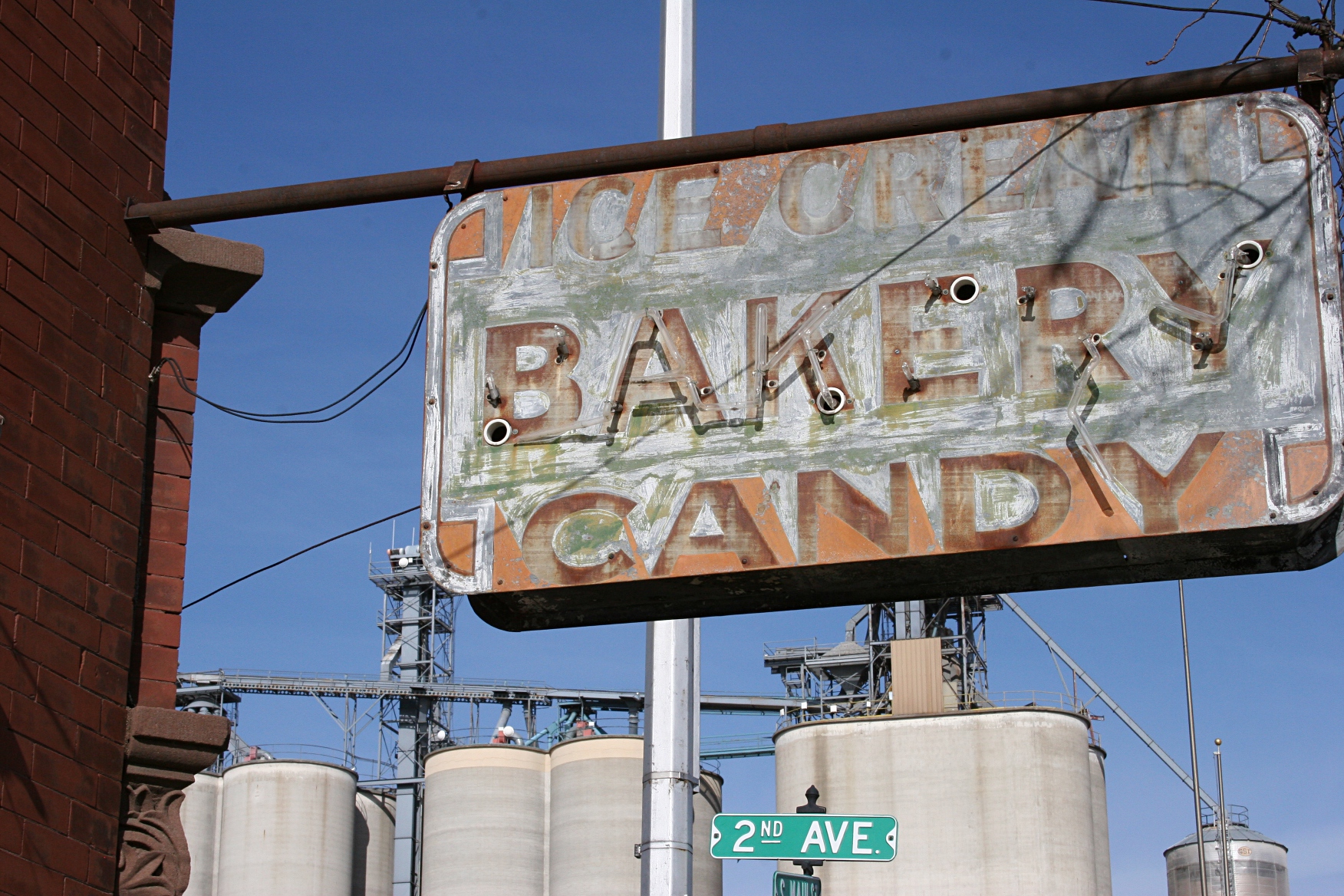
The old sign for the former Sanger’s Bakery still graces the building.

The couple may, perhaps, feel at times as if they are scaling a mountain to reach their goal of establishing a combination cafe, coffee shop and entertainment venue in the 1,900 square foot first floor of the 8,000 square foot brick building. But they are purposeful and focused and driven every week to travel 2 ½ hours from their home to proceed with their project on the prairie.
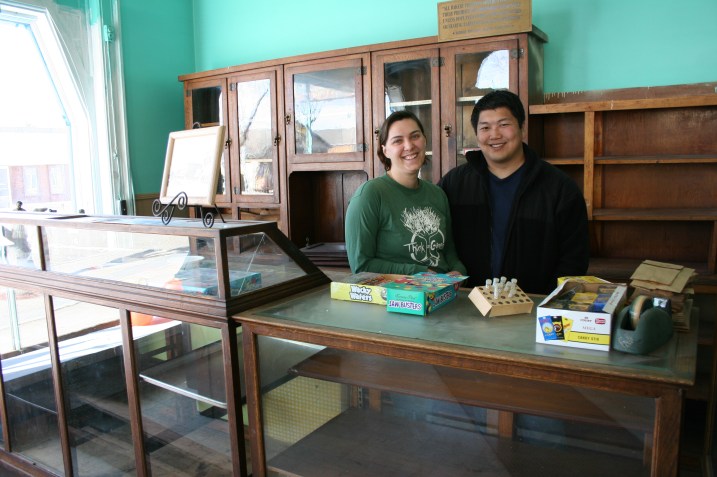
Michelle and David  are keeping the original candy and bakery goods counters and the vintage cabinet, photographed here in the front part of the building. This area of the former bank and bakery will house the cafe and soda fountain. The couple discovered a dumb waiter hidden in the area behind them in the corner.

David envisions Seven Sisters as “an artistic haven as well as a community space.” He expects “townies,” he says, to frequent the front Main Street side of the building, the bright and cheery cafe section offering a full breakfast and lunch menu and ice cream treats from a soda fountain.
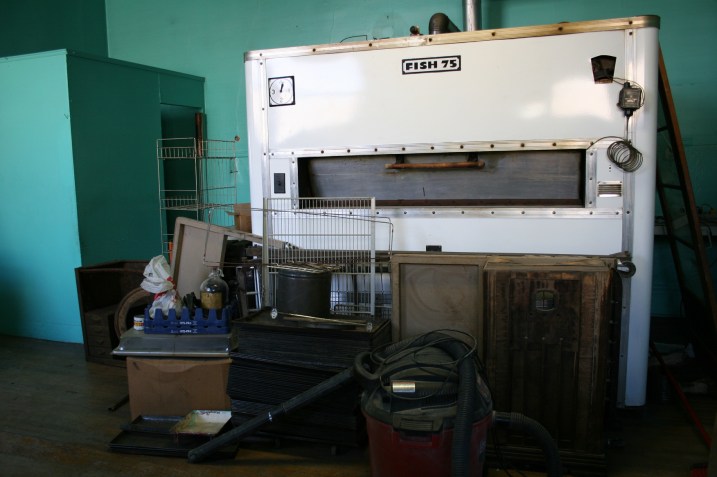
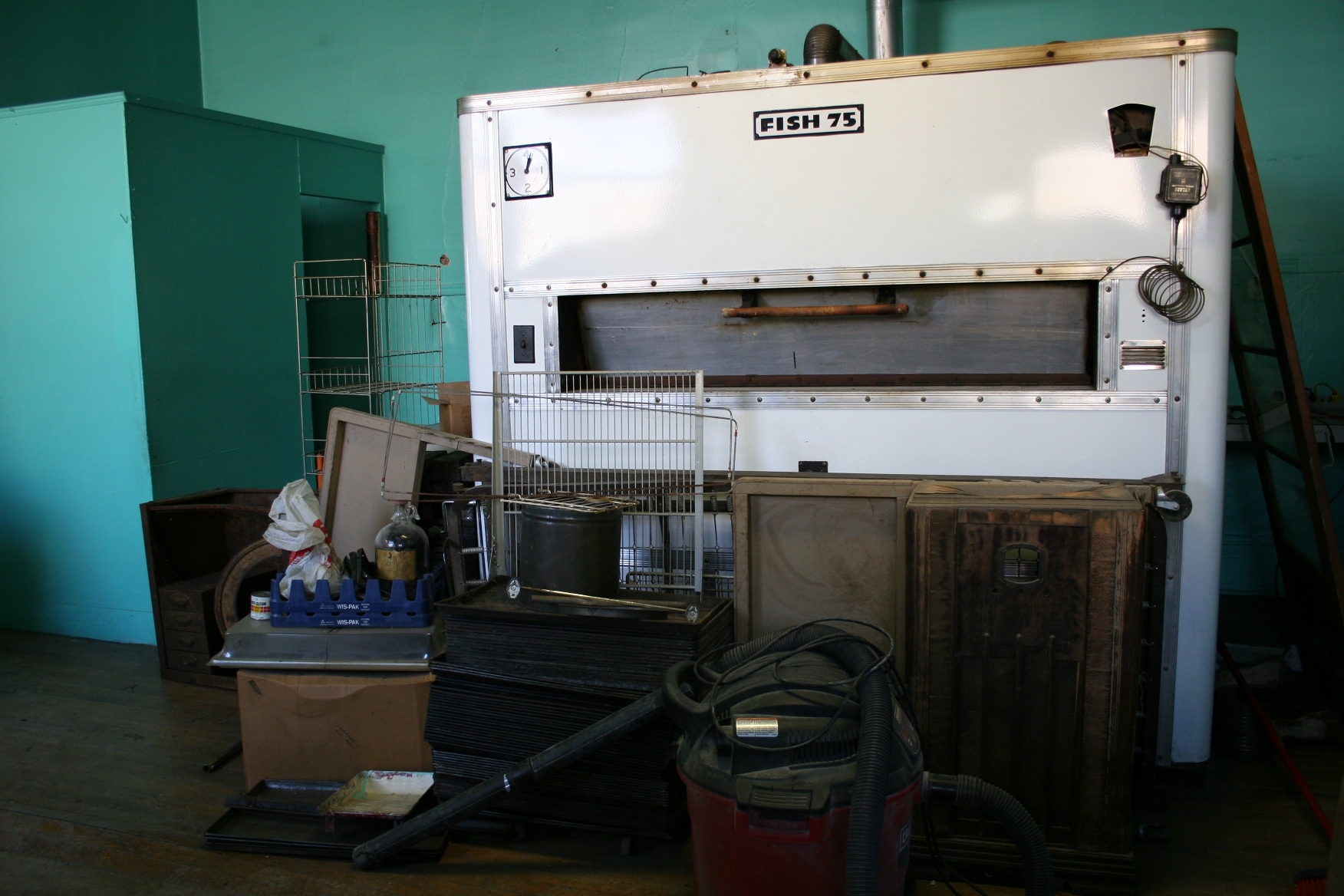
Fifty loaves of bread could be baked in this 1960s vintage two-ton rotary oven. It occupies much of the space in the middle room which will become a cozy coffee shop. This room and the front former bakery/soda fountain area were painted teal after Bob’s niece first chose that hue for the bathroom. Bob loved the color so much that he painted the rest of the place teal. The color has been on the walls for 50 years. No, they are not keeping the teal color.
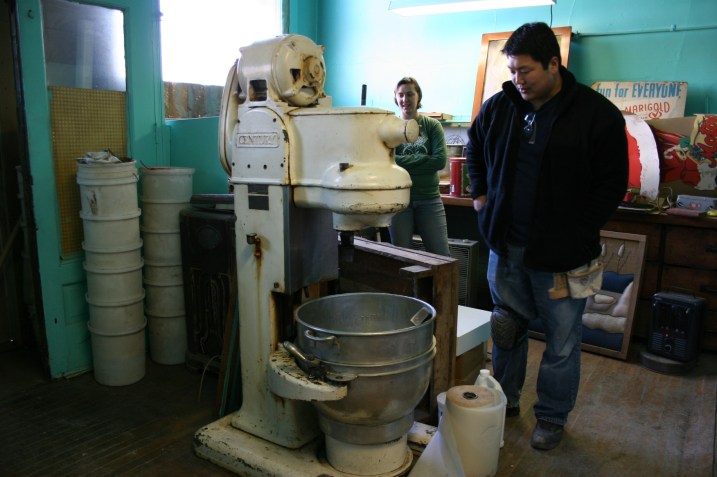
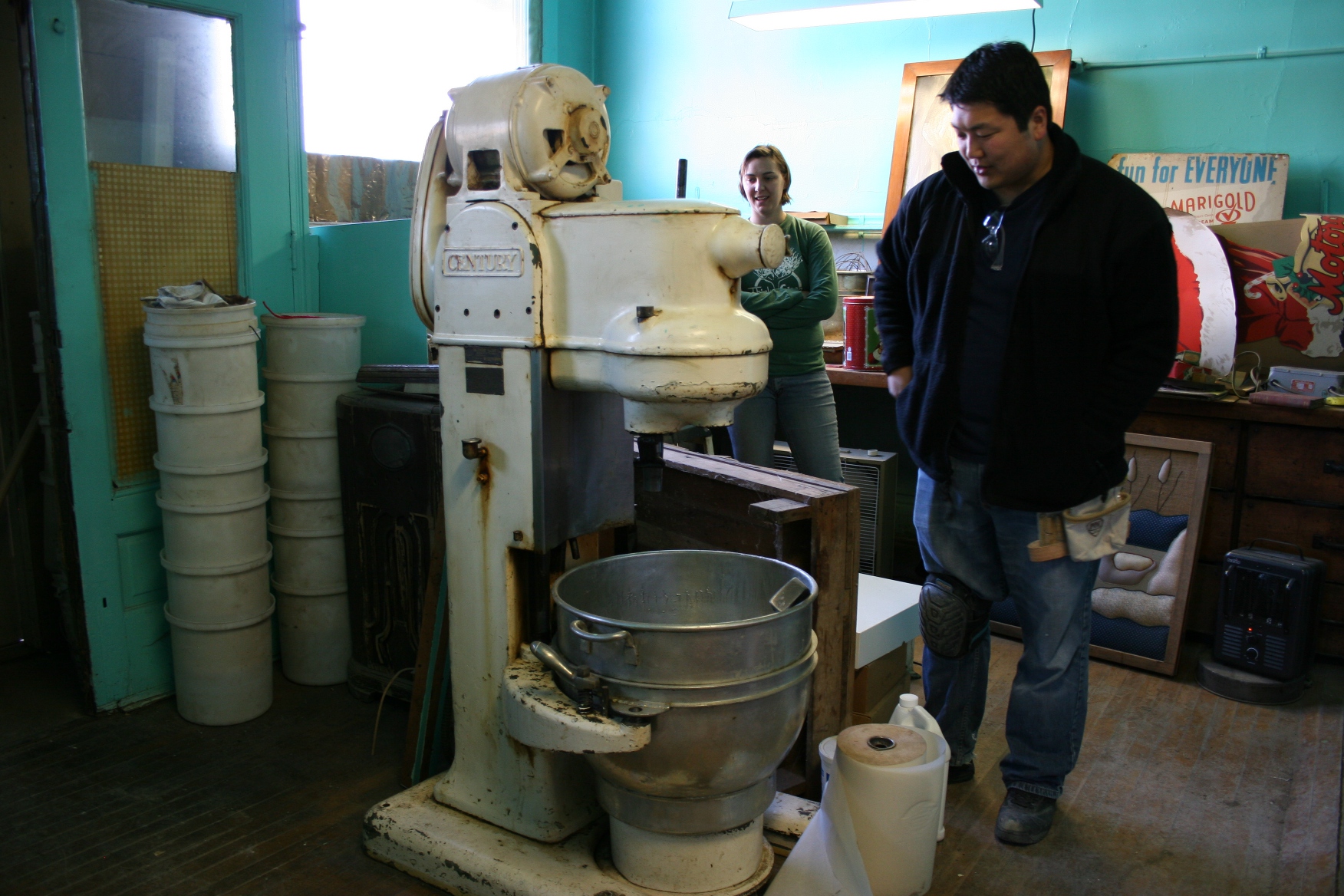
An oversized mixer also occupies space in the middle room.

The smaller middle section, once a post office entry, baking area and even home to the Sanger family, will be transformed into a warm and intimate coffee shop.
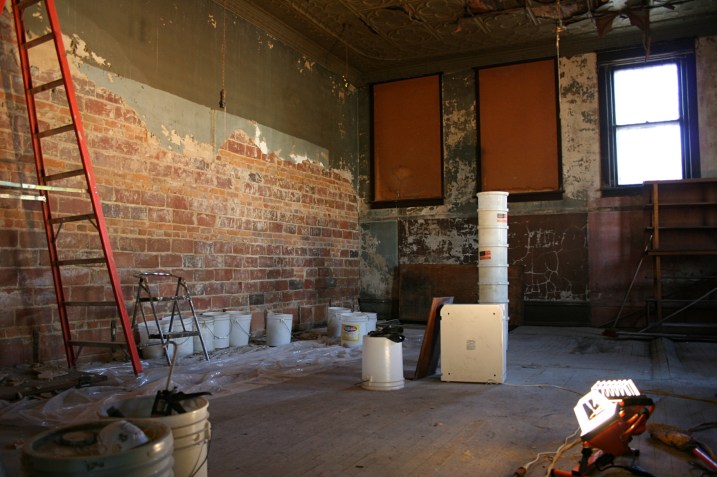
The back room, with focal point brick walls, will become an entertainment venue and artists’ haven.

And in the rear area of exposed brick walls, David expects artists and others to hang out in a more energetic and modern New York loft style space devoted to music and art and private event rental.

Tour this building, inside and out, with David and Michelle and you can see the overwhelming amount of work, inside and out, that needs to be done before Seven Sisters becomes a reality in a community already embracing the business venture.

Locals as well as those living in neighboring towns such as Revere, Jeffers and Tracy and even farther away in the regional hub city of Marshall are ecstatic about Seven Sisters, David says.

Original coffee cups and Bob Sanger’s special cup are stacked under the lunch counter.
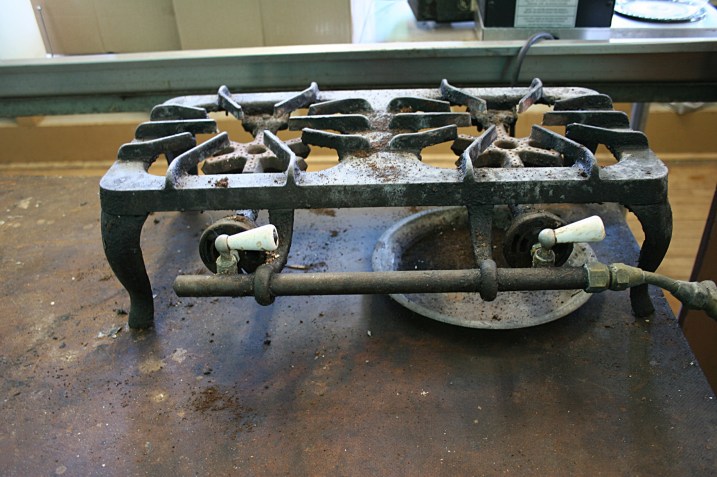
The older gas burners Bob Sanger apparently used to make coffee, etc.

When locals George and Vern, for example, stop by to check on the renovation, David invites them inside for coffee. The two were coffee klatsch buddies of Bob Sanger, long-time bakery owner who died in March. Sanger purchased the bakery from his father, Nick, in 1961. Between Bob, Nick and previous owner, Martin Kuhar, the building has housed a bakery in the First National Bank building for 95 years.
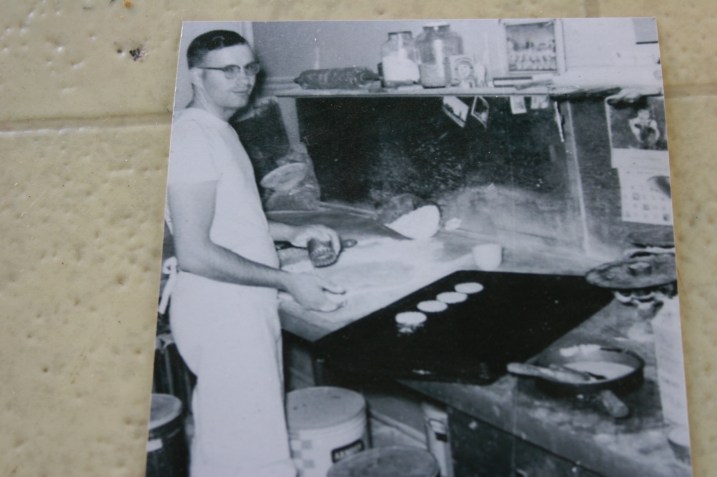
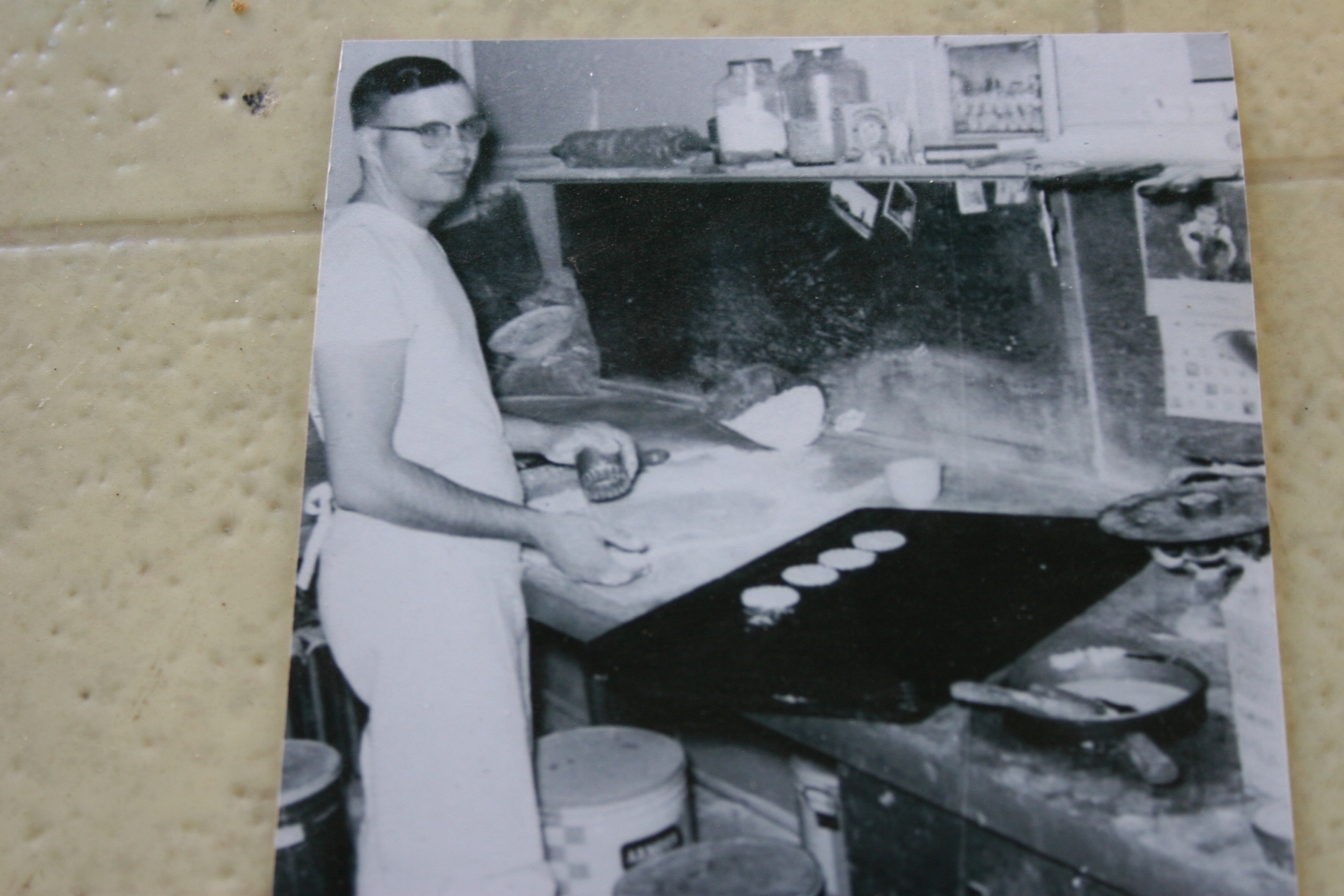
A vintage photo of bakery owner Bob Sanger who died in March at the age of 80.
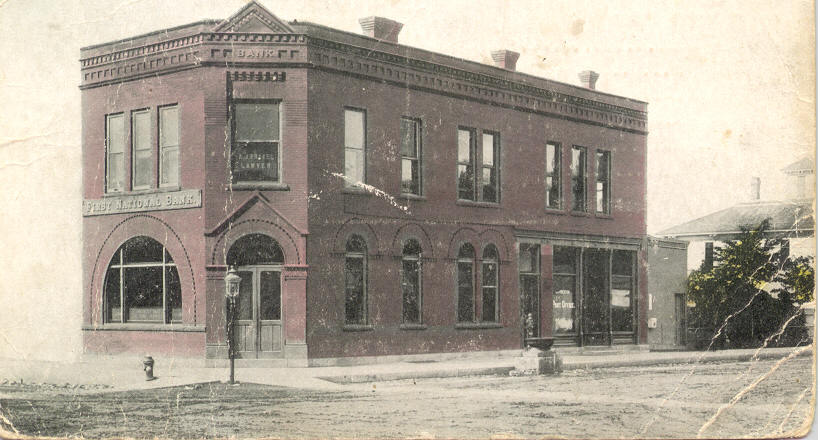
A vintage photo of the First National Bank.

Says David of his and Michelle’s decision to purchase the former bakery after Bob Sanger’s death:

The building is positively gorgeous and has a fascinating history. We had admired it for some time. The quality of the construction is superior to similar buildings of that era. We’ve always talked about opening our own business and the location and timing were right.

Our review of the local economy and the needs of the surrounding area indicates a very strong potential for growth and a serious need for a business of this kind. By offering excellence in service in three different approaches (cafe, coffee shop, event space) we will offset some of the inherent risk of this type of business. In short, it was a perfect confluence of events. We got lucky.

The pair is determined also to buy local as much as possible. Dry goods will come from Griffith’s Grocery across the street. They plan to work with Brau Brothers Brewing and Fieldstone Vineyards, located in the region. They’ll grow their own herbs.

It is clear in talking to David and Michelle that they appreciate the historic gem they’ve purchased.
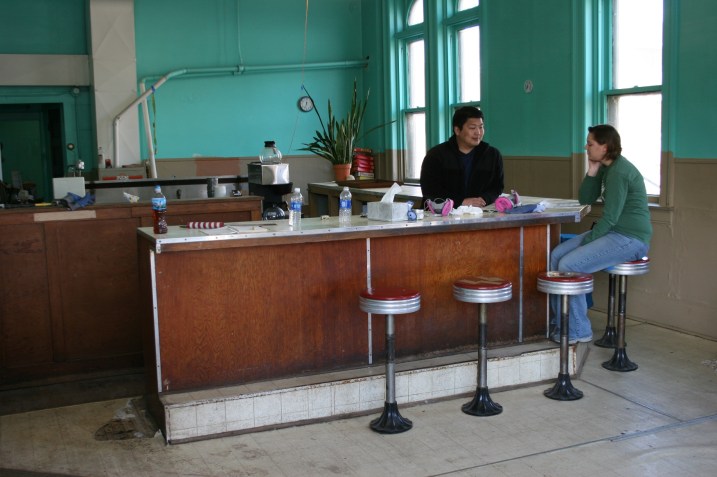
A section of this original lunch counter built by Bob Sanger will be refurbished and topped with granite.

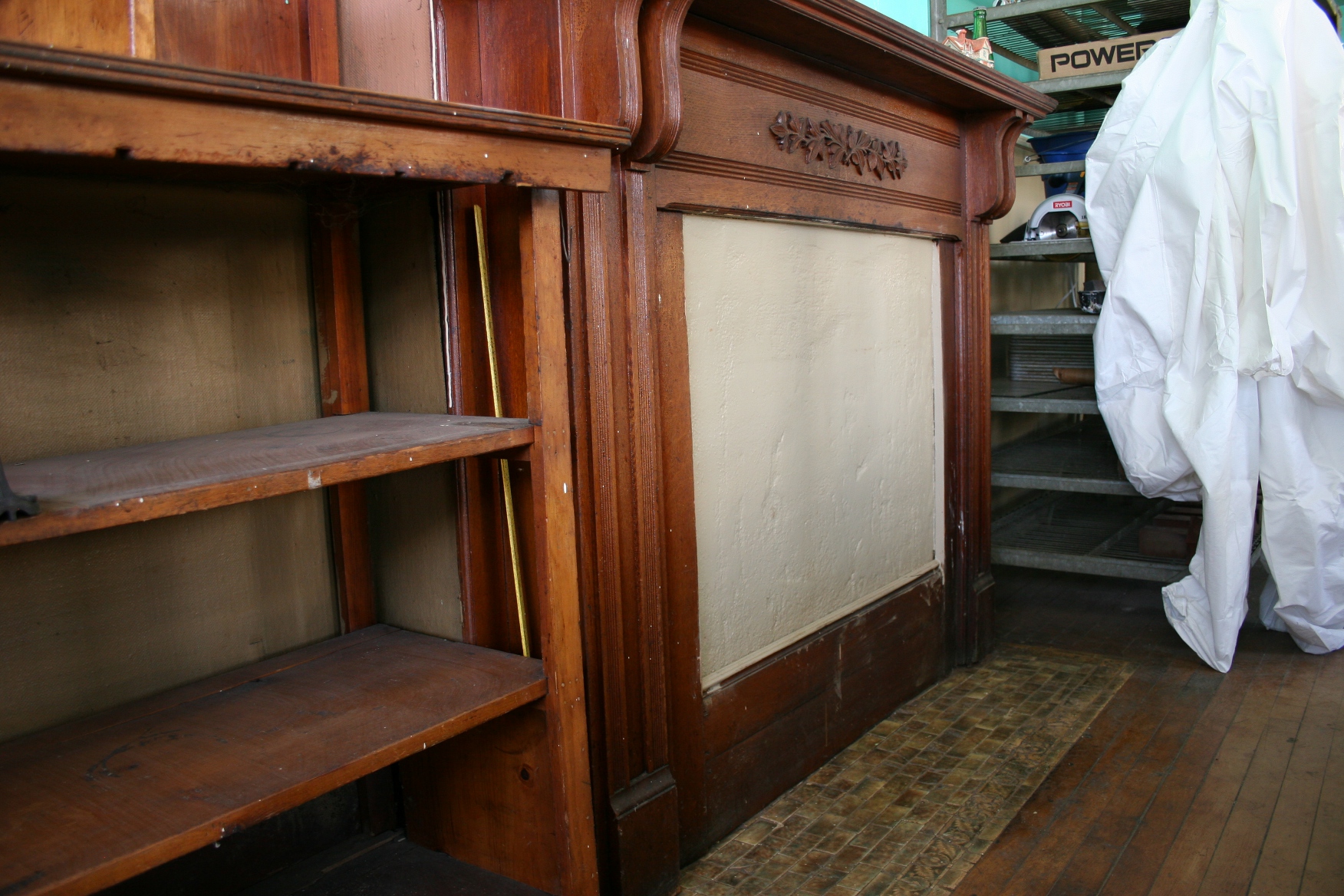
They’re attempting, they say, to retain as much of the natural charm as possible. For example, they plan to refurbish the soda fountain built by Bob; relocate an original bank fireplace facade and tile into the coffee shop and install an electric fireplace; refinish the wood floors; keep the tin ceiling; reuse the candy and bakery counters; restore an old player piano; and more.
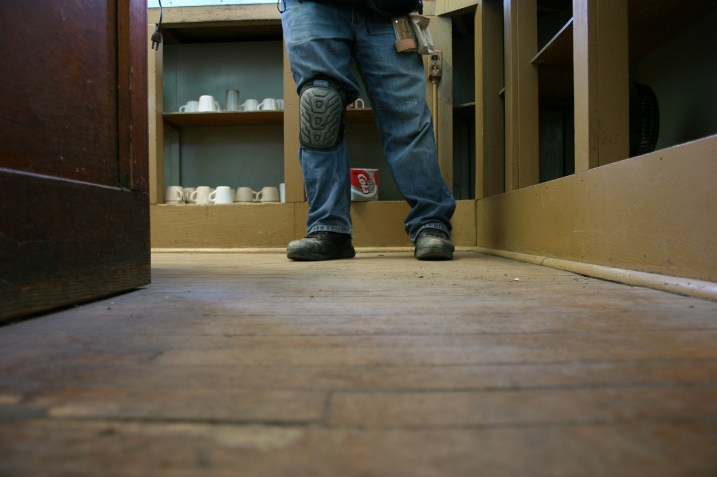
Wooden floors, like this behind the lunch counter, run throughout the building. In one section, however, where the bank vault once stood, the floor is made of pipestone granite.
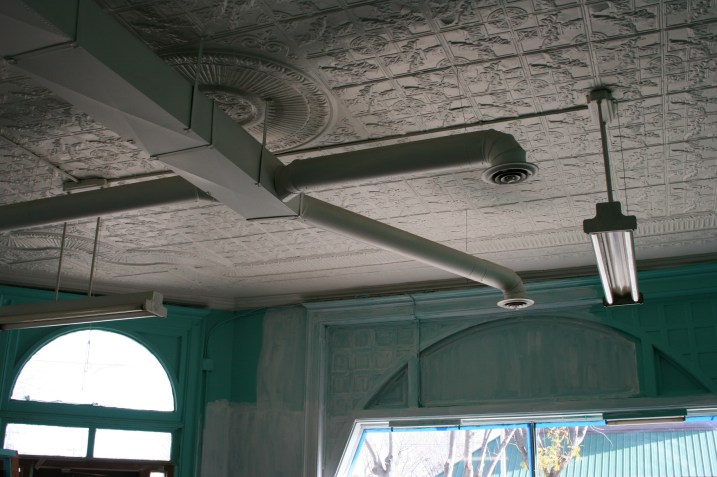
This shows a section of the original tin ceiling in the front part of the building. Ceilings are a lofty 12 and one-half feet high.
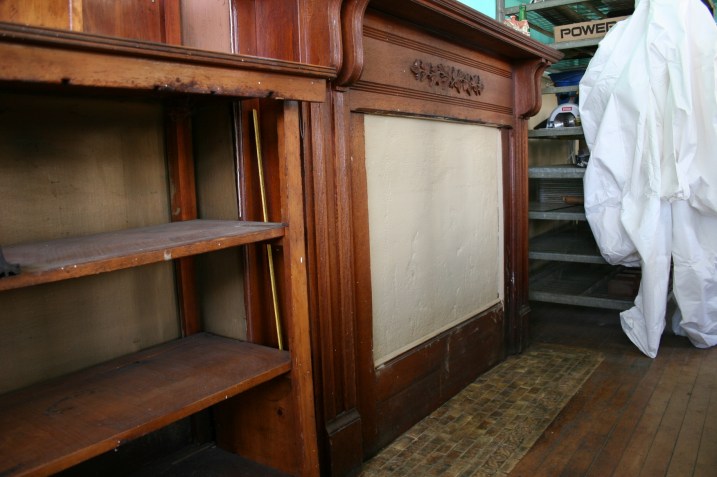
Plans are to move the facade and tile from the this original First National Bank fireplace into the coffee shop, which David will manage. 

The couple is also uncovering and sifting through collectible treasures like WW I and WW II artifacts, signage, rocks, and more accumulated by Bob. So much was damaged though, beyond saving, by moisture problems in the building, David says. But they are saving what they can, possibly incorporating some of their treasures into Seven Sisters.
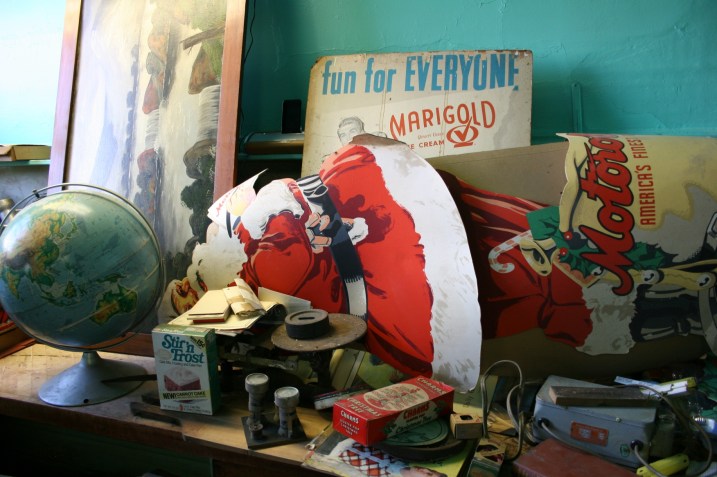
A pile of recently found treasures.
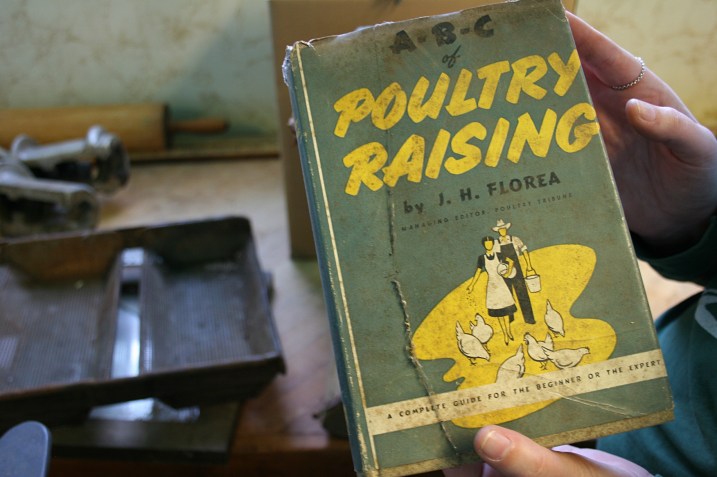
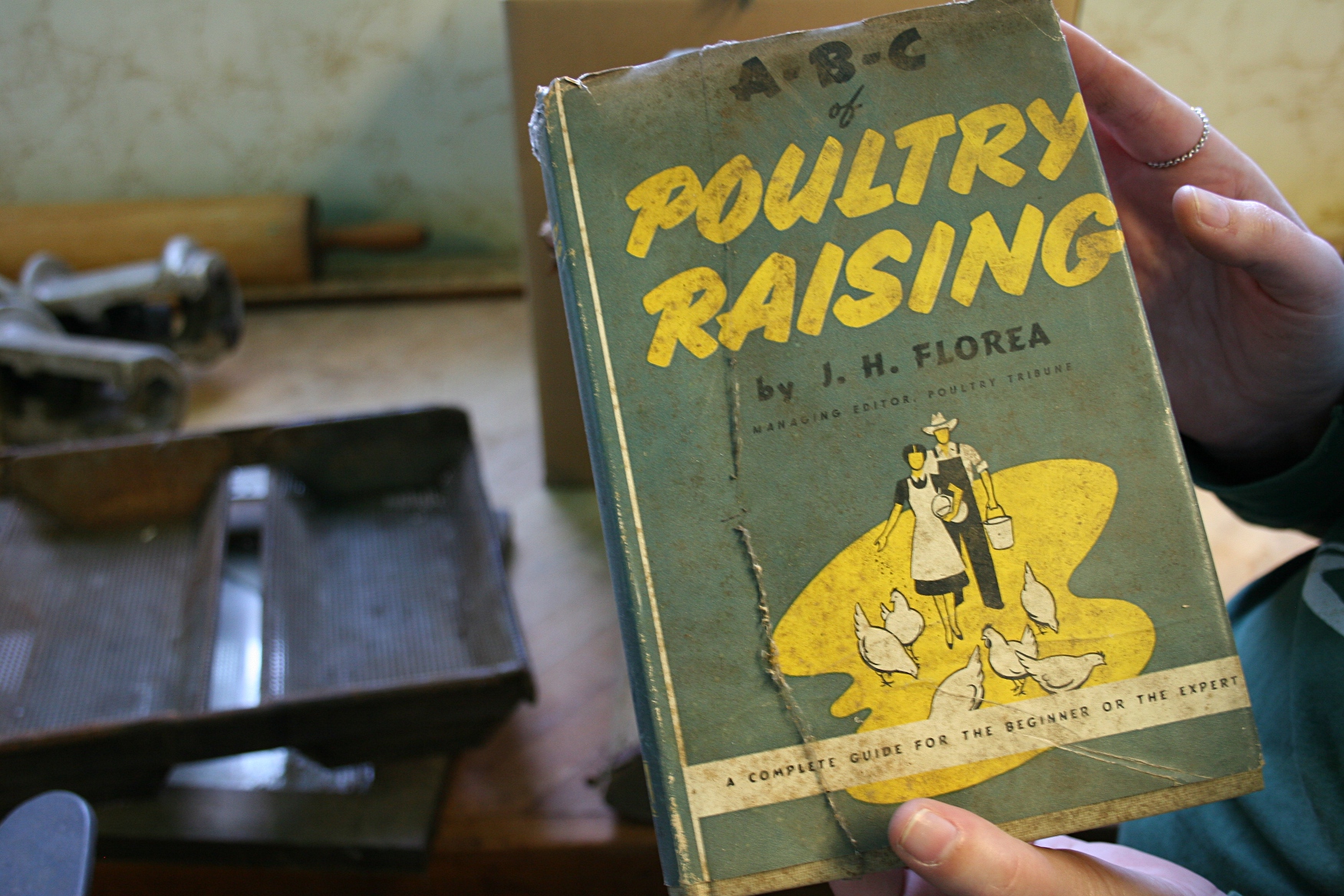
Among the old books uncovered was this one on poultry. Bob Sanger kept a flock of 100 chickens at his house, Michelle says. He used the eggs at his bakery and also sold eggs.
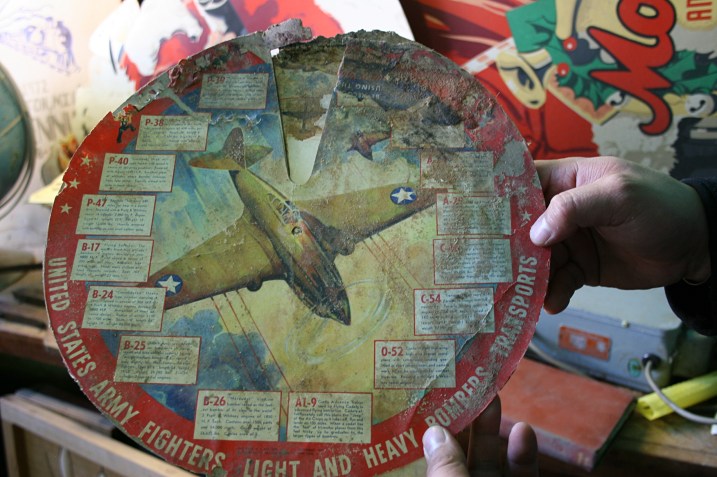
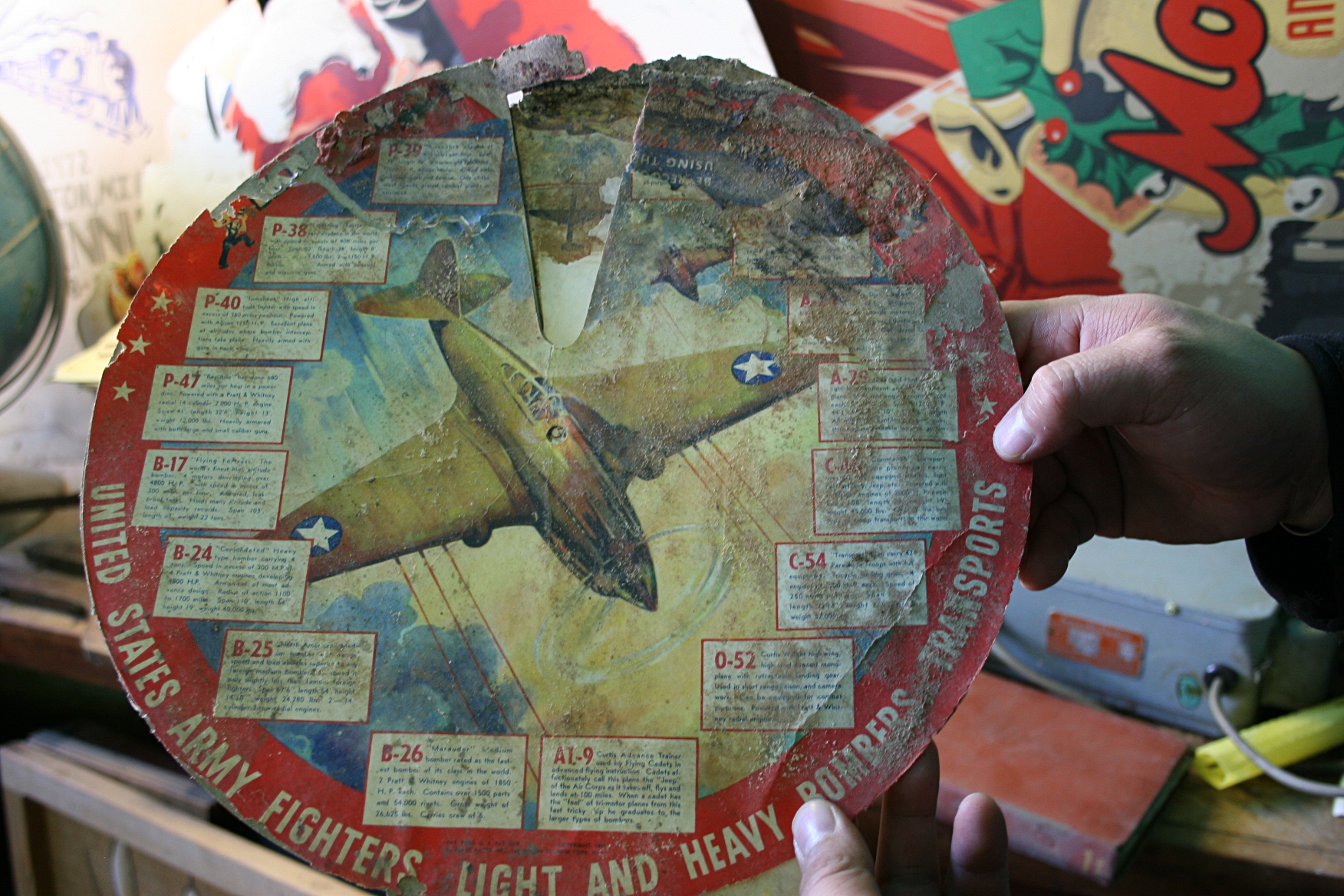
Another find, a vintage bomber transport chart damaged by water, like many of the old items found in the building.

Inedible silver cake decorating balls remain from Bob’s days of baking wedding cakes.
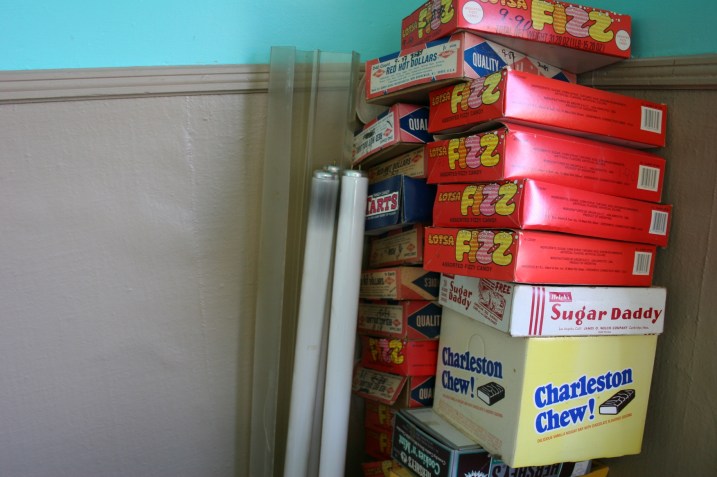
The couple found empty candy boxes (pictured here) and candy still in boxes inside the former bakery.

Michelle has fond memories of coming to Sanger’s for sweet treats. She remembers penny Tootsie Rolls and gumballs and candy cigarettes sold at the candy counter:

Thinking about the hundreds of people who have memories of this building, I really hope we can fill that same role for the next generations.

FYI: Lamberton is located along U.S. Highway 14 about 10 miles east of Walnut Grove, childhood home of Laura Ingalls Wilder, author of the Little House children’s book series. The area is a strong draw for summer tourists interested in Wilder’s books and the Little House on the Prairie television series set in Walnut Grove.

© Copyright 2012 Audrey Kletscher Helbling


Gravel road on the prairie July 9, 2012

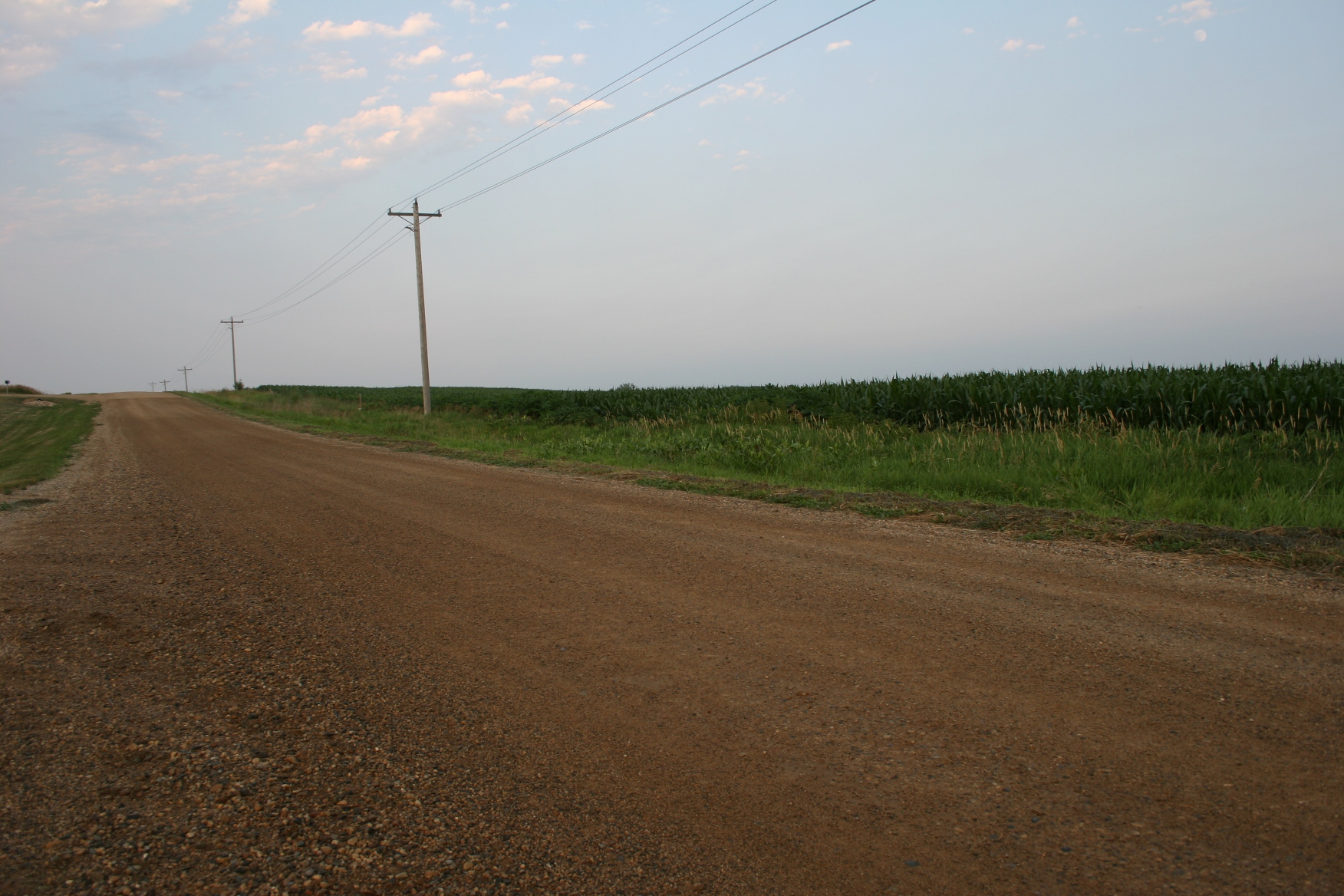
A gravel road just north of Lamberton in southwestern Minnesota.

WHAT IS IT ABOUT a gravel road?

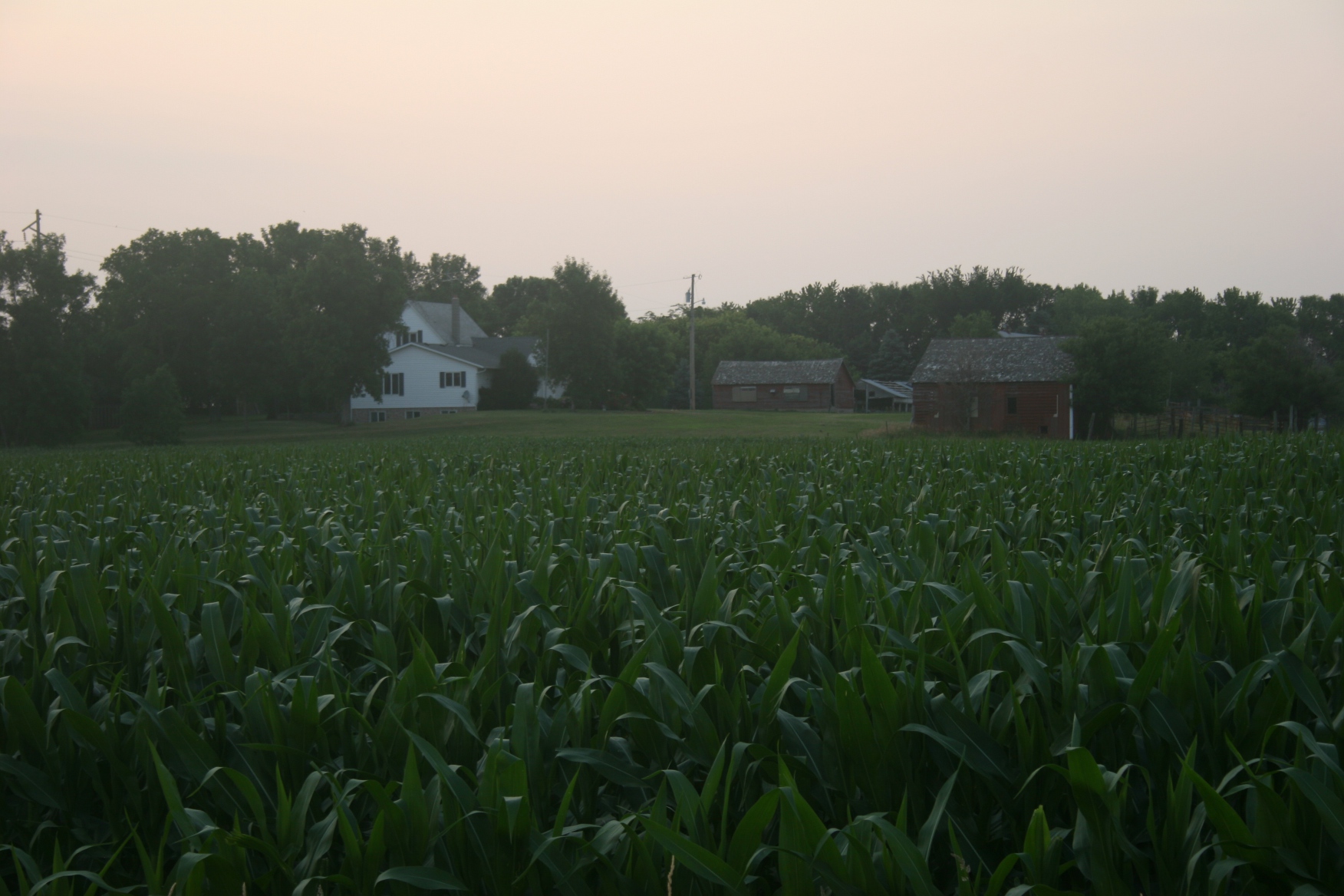
A picturesque farm site on a sultry summer evening as seen from a gravel road north of Lamberton.

It is poetry and peace, country and charm.

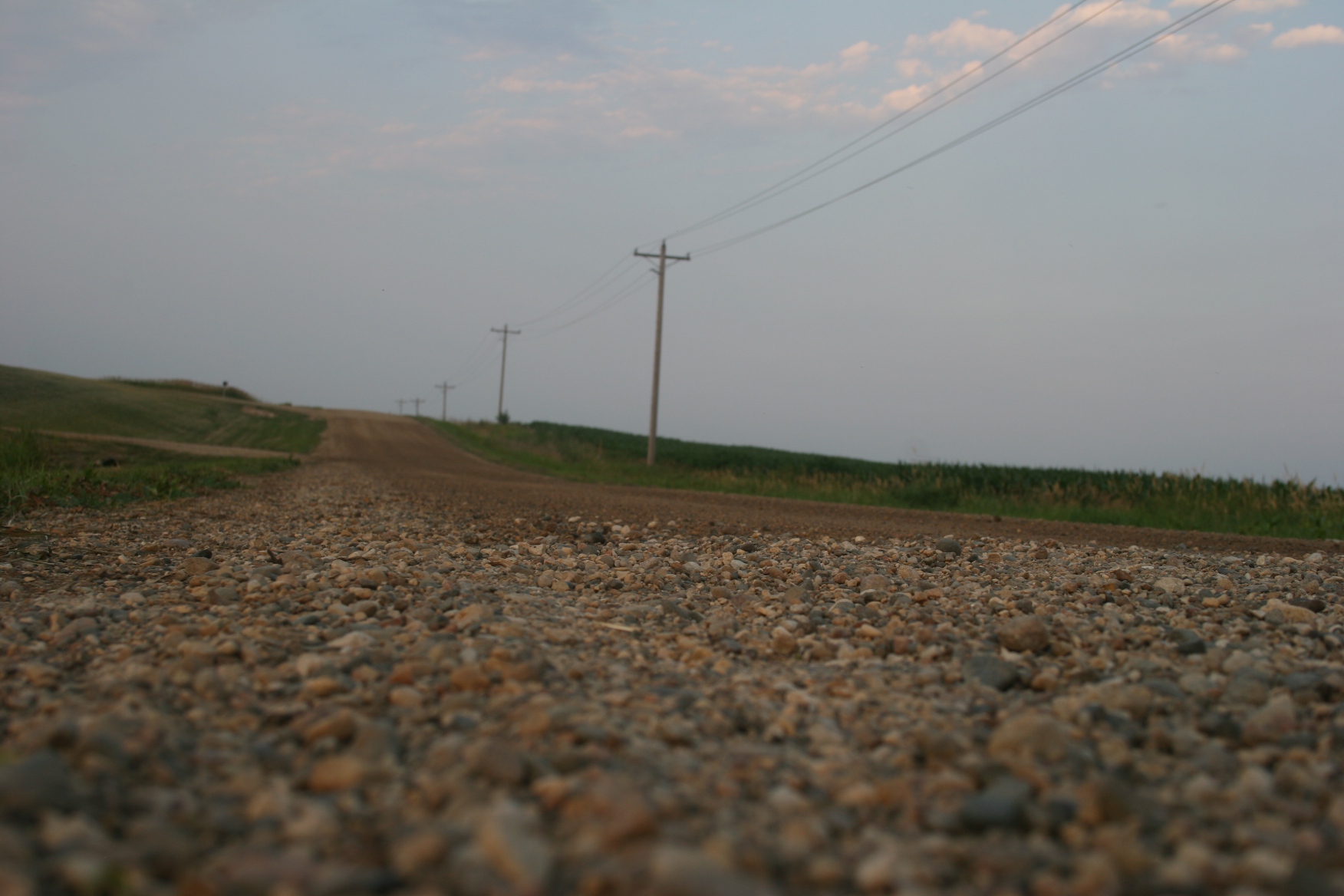
You can almost hear the crunch of the gravel in this image.

But it is more. It is small stones crunching under tires and feet as dust rises and lingers, marking the trail traveled.

As the sun sets on the prairie, a truck travels along a gravel road up to a paved roadway north of Lamberton.

It is a marker of townships, the route of massive yellow road graders blading the road surface to a flat finish or heaving snow toward ditches.

It is memories of bumpy school bus rides and squishing into the back seat of the family car between brothers and sisters.

It is Dad’s admonition to always, always, move to the right when cresting a hill.

Utility lines along the same gravel road stretch into forever.

It is the memory of pinpoint stars dotting the pitch black darkness of a prairie night and the sweet scents of wild roses (once) rambling in ditches and of freshly-mown alfalfa and of hay baled and stacked onto a swaying wagon.

A gravel road is all of these to me, and yet, in its most basic definition, it serves as a way to get from point A to point B, and marks borders between town and country.

Standing on the gravel road, I turned south to photograph the cornfield and Lamberton in the distance.

It is a line in a plat book, a route connecting paved roads, a path to a rural home.

It is a gravel road on the prairie.

© Copyright 2012 Audrey Kletscher Helbling
 

My dream come true: A Little Free Library installed in my hometown on the southwestern Minnesota prairie July 3, 2012

IMAGINE GROWING UP in a town without a library and, all your life, wishing for a library in your hometown.

Then imagine one July day, when you have been gone for nearly four decades and are old enough to qualify as a senior citizen, that a couple drives into your hometown in their station wagon to deliver a library.

That scenario played out in my hometown on Sunday afternoon as Todd Bol, co-founder of the Little Free Library, traveled three hours from Hudson, Wisconsin, with his wife, Susan, and their two dogs to deliver and install a LFL at the Vesta Cafe in the southwestern Minnesota prairie town of Vesta.

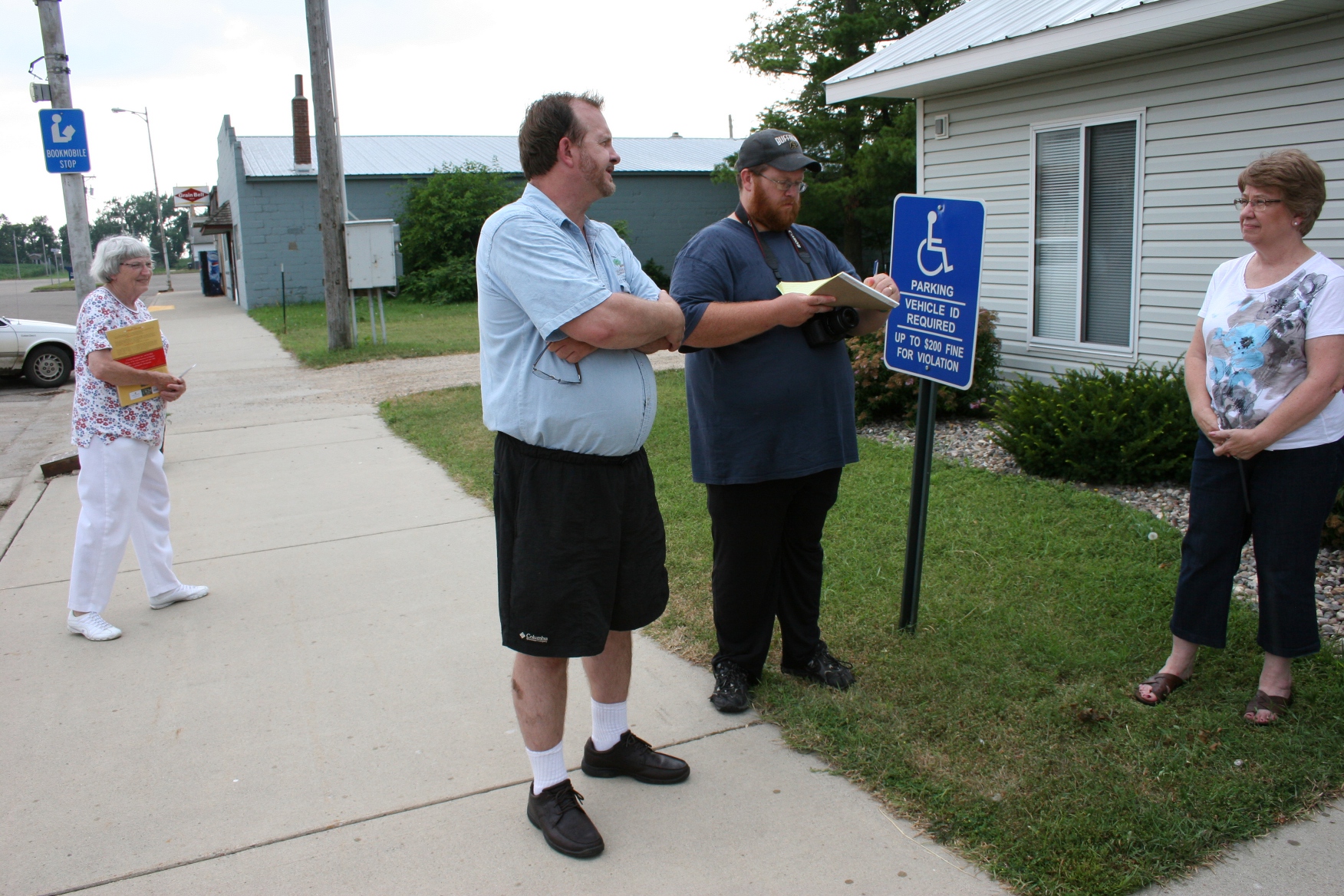
Troy Krause of The Redwood Falls Gazette interviews Little Free Library co-founder Todd Bol as Dorothy Marquardt, left, and Karen Lemcke of the Vesta Commercial Club listen.

“I love books. They are part of my heart and soul,” Todd Bol said Sunday as he stood outside the cafe near the over-sized birdhouse style library anchored on a post. I listened and snapped photos as Troy Krause, editor of The Redwood Falls Gazette interviewed this man who has seen his LFL story spread to media outlets worldwide, from The Huffington Post to The Los Angeles Times and beyond.

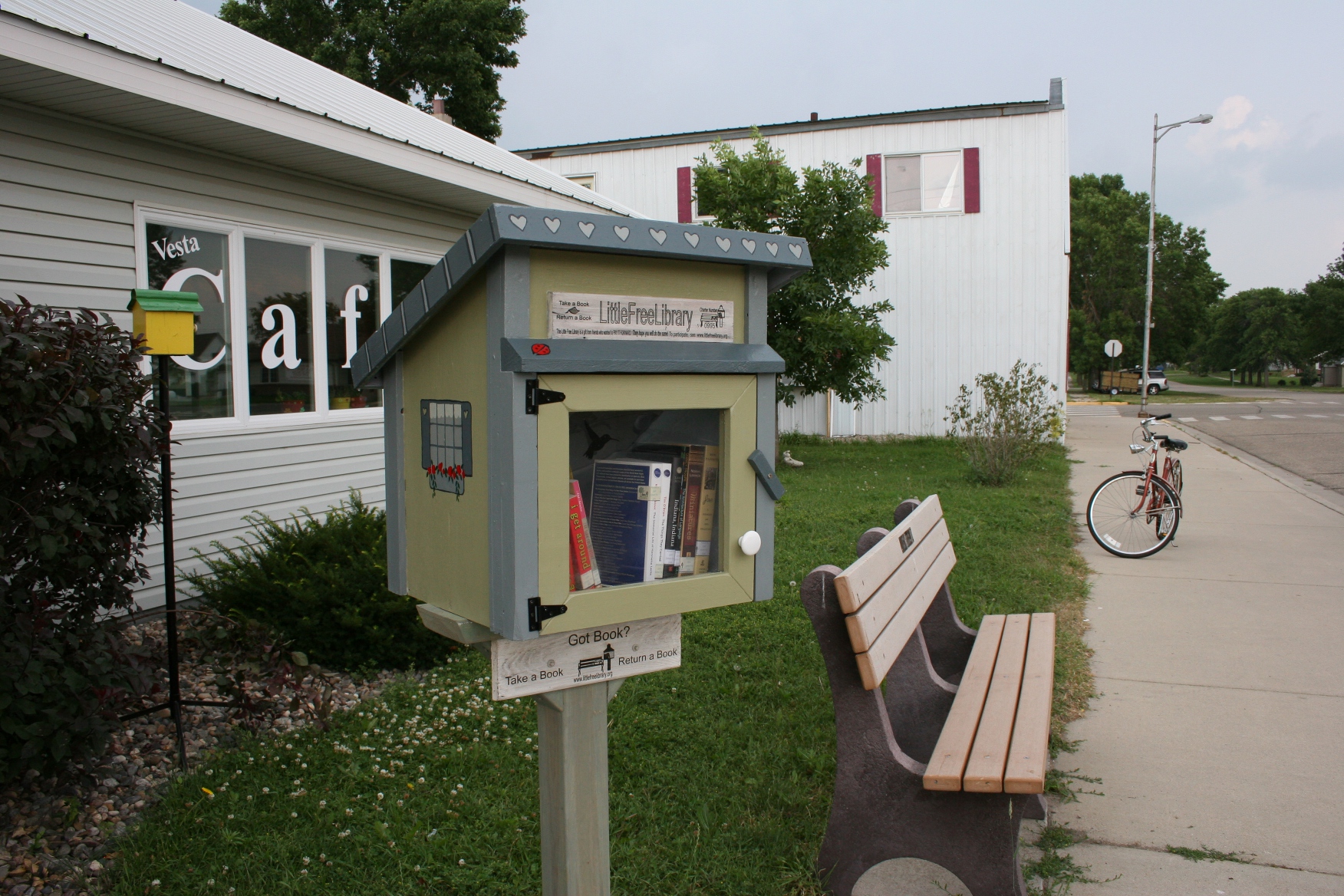
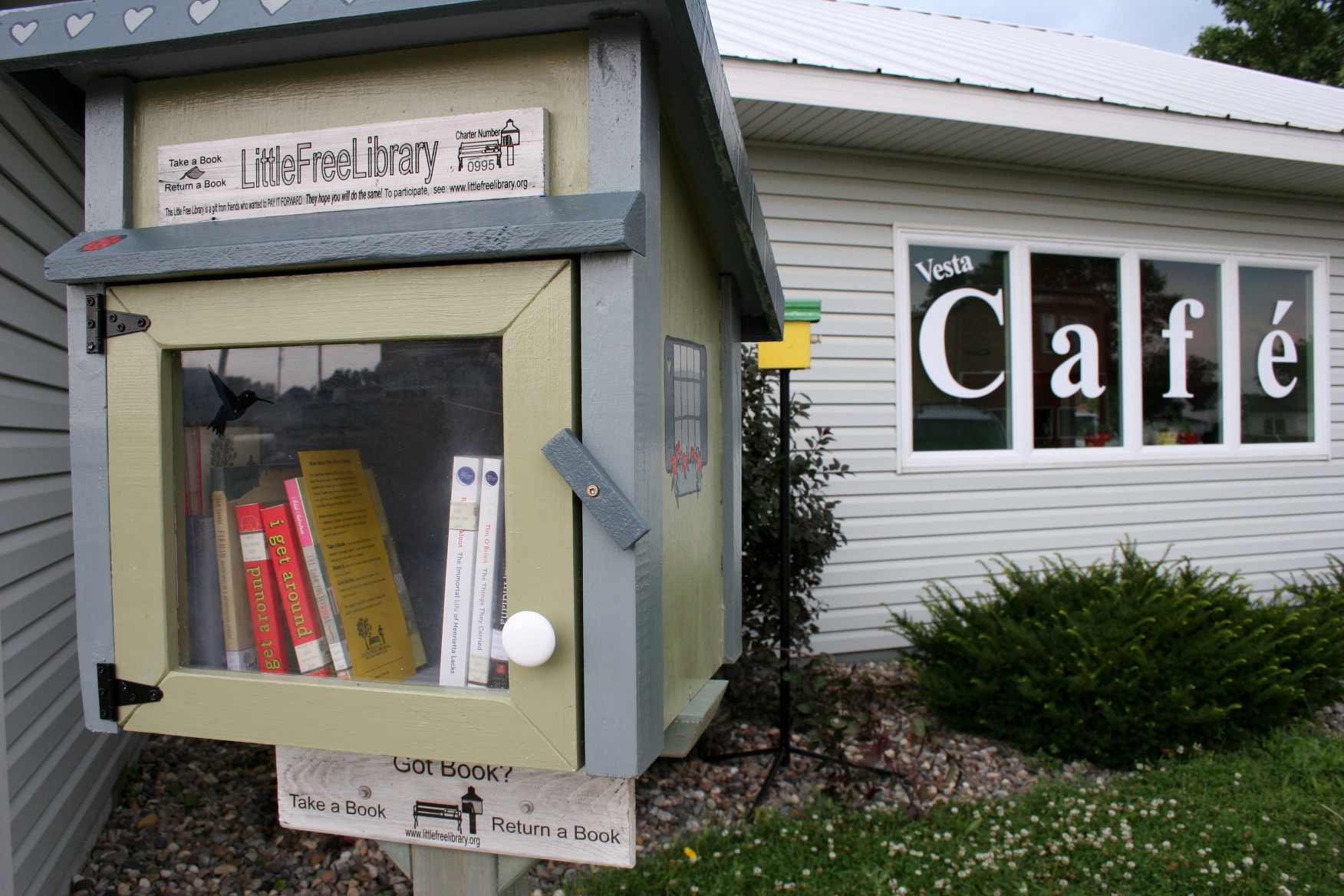
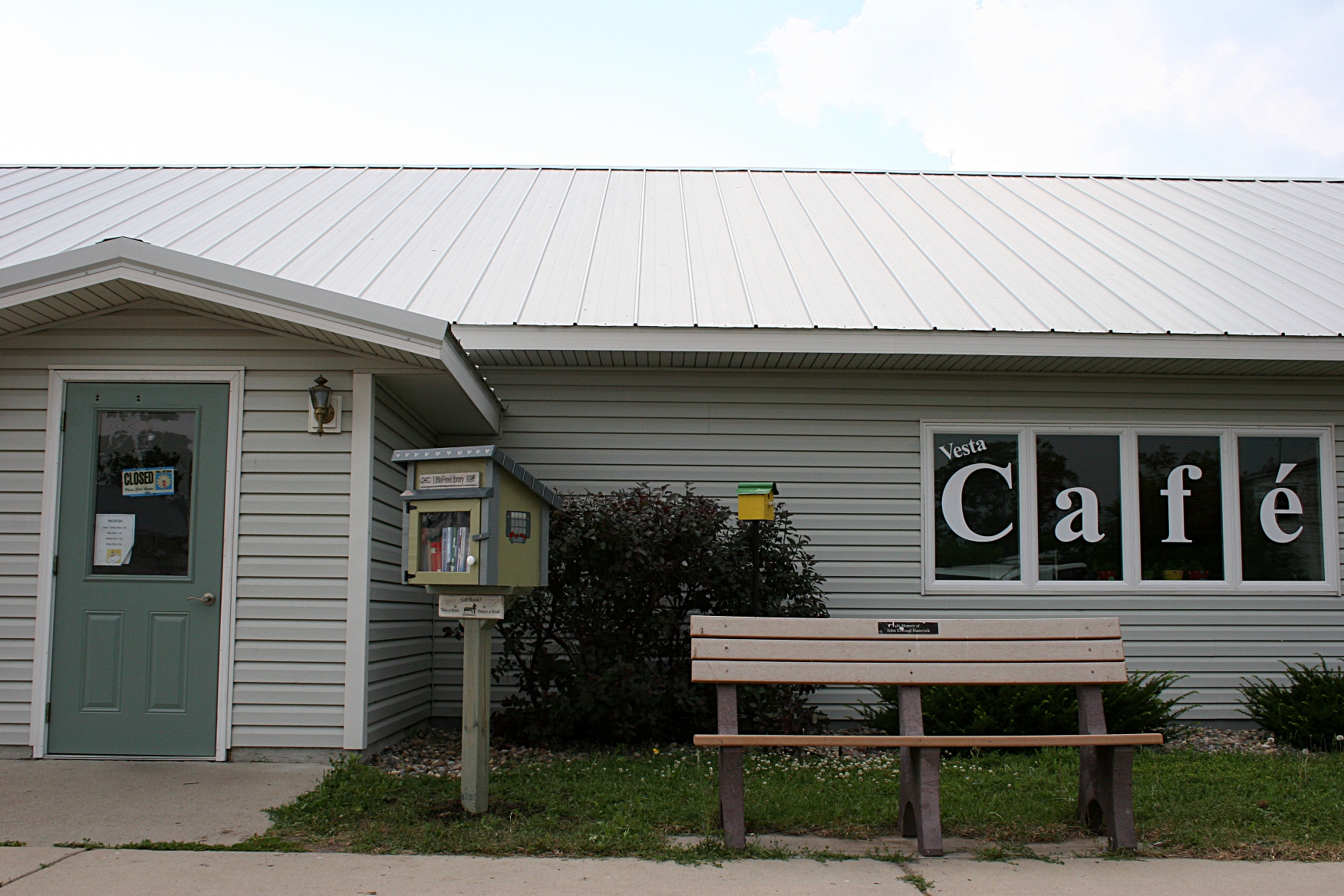
The LFL Todd and Susan installed outside the community owned Vesta Cafe.

Little Free Libraries are popping up everywhere across the country (and even outside the U.S.), bringing books to neighborhoods and cities and now, for the first time, to places likes Vesta, the seed plant for the “Small Towns Minnesota” movement of the LFL project, according to Bol.

The beautiful handcrafted library Todd Bol had built and painted for the residents of Vesta, population around 340.

He offered to donate the library, hand-built by an Amish carpenter from Cashton, Wisconsin, to Vesta after I blogged last November about a LFL in my community of Faribault and then issued this challenge to my hometown of some 340 residents:

I’d like to challenge the residents of Vesta to start a Little Free Library. How about in or near the Vesta Cafe? Make my dream of a library in my hometown come true. I’ll even bring some books for the library the next time I’m “back home.”

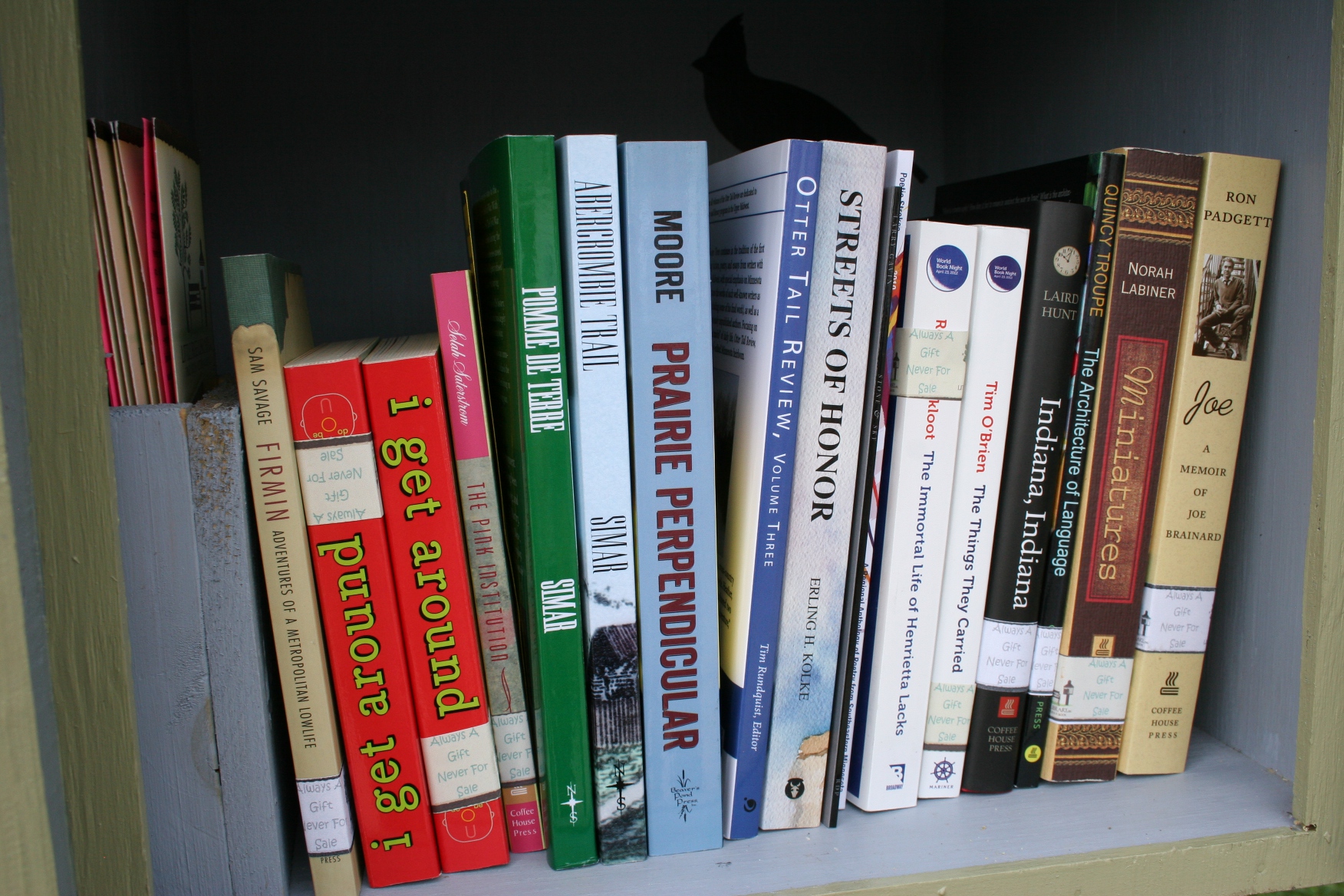
The books Todd Bol and I placed inside Vesta’s LFL. I plan to bring some books for children and teens the next time I’m back in Vesta. Anyone is welcome to donate books. Overflow books will go on a bookshelf inside the cafe and books will be rotated.

Sunday afternoon I delivered on that promise as did Bol with his promise. He brought the library and we filled it with books—his donated by Coffee House Press and mine from my bookshelves. Among my seven donations were two books of poetry, not something I would typically expect Vestans to read. But I wanted Vesta’s LFL to have a copy of Poetic Strokes—A Regional Anthology of Poetry from Southeastern Minnesota, Volume Four. That includes two poems I wrote, one titled “A school without a library.” (When I attended Vesta Elementary School, our library books were selected by students from the Redwood County Library in Redwood Falls 20 miles away and brought back to our school, then later returned and exchanged for a new selection of volumes.)

The other poetry book, Stone & Sky, was written by a Faribault High School English teacher who once lived in nearby Belview and who understands the prairie like I do.

Vesta resident and Vesta Commercial Club resident Dorothy Marquardt took home this book donated by Coffee House Press to Vesta’s LFL. Dorothy is an enthusiastic promoter of my hometown.

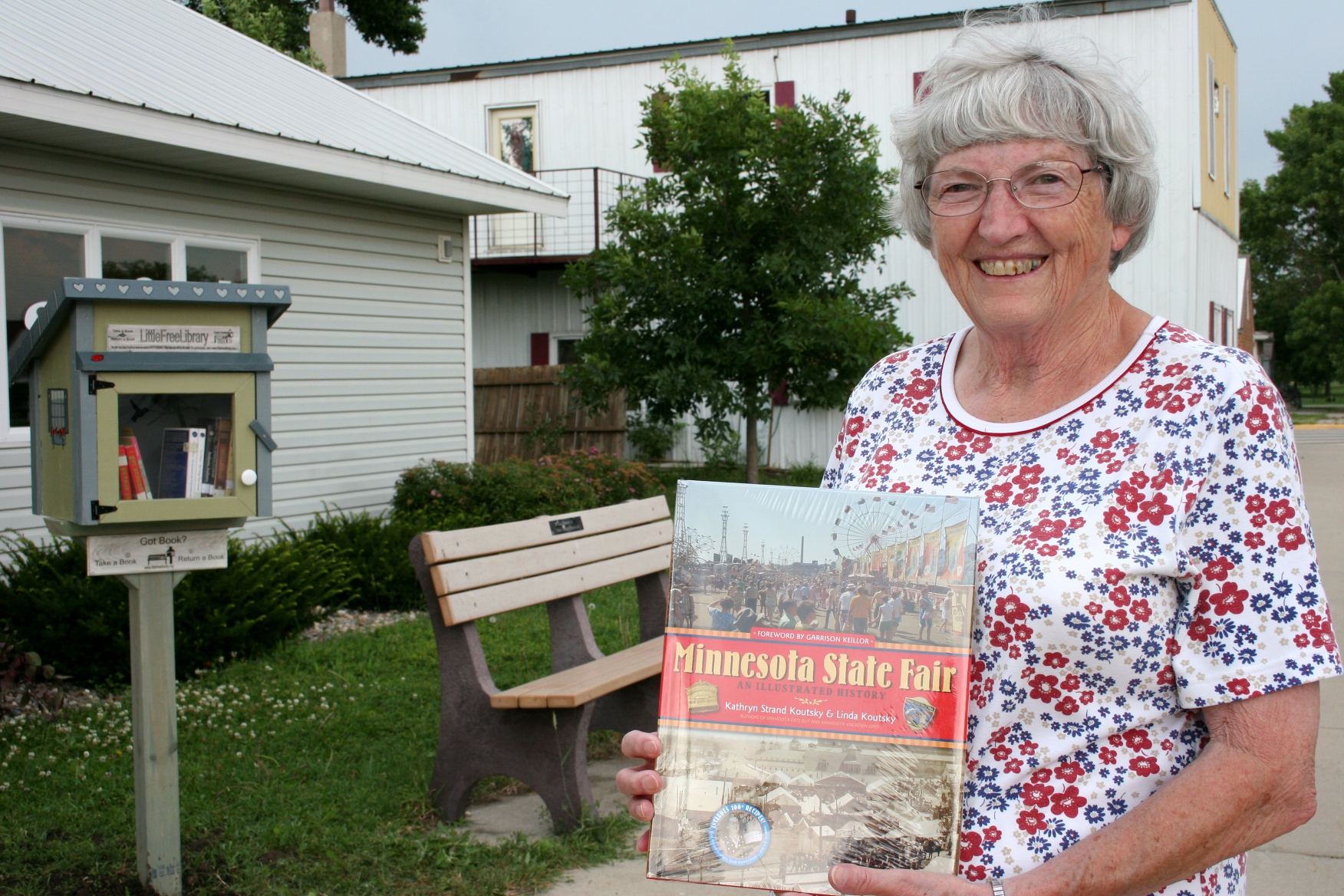
Dorothy Marquardt, a member of the Vesta Commercial Club, which worked with Bol on getting the LFL into Vesta, understands what a LFL will mean to area residents. Vesta recently saw its county bookmobile service end. “It’s kind of a godsend,” she said on Sunday, clutching a copy of Minnesota State Fair—An Illustrated History by Kathryn Strand Koutsky and Linda Koutsky with foreword by Garrison Keillor. Marquardt is officially the first reader to pull a book from Vesta’s LFL.

The team that worked to bring a Little Free Library to Vesta includes Dorothy Marquardt, left, and Karen Lemcke, representing the sponsoring Vesta Commercial Club, LFL co-founder Todd Bol and me (holding a copy of a poetry anthology I donated).

Monday morning, while dining in the cafe, I promoted the LFL to locals, moving between tables explaining how the library works. It operates on the premise of take a book, leave a book. Or take a book and bring a book back later to place inside the outdoor library. It’s all done on the honor system and done to promote literacy and encourage reading.

For me, the establishment of a LFL in my hometown is a dream come true. I always wanted a library while growing up. And now that I’m all grown up, my hometown finally has one.

The Little Free Library at the Vesta Cafe.

#

I’D LIKE TO ISSUE A NEW CHALLENGE TODAY. This one goes to the people of my native prairie, of southwestern Minnesota. I’d like to see more Little Free Libraries in the many small towns, like Vesta, that are without libraries and/or bookmobile service. Purchase a library via the LFL organization. Build your own. Work together—perhaps as a 4-H club or a church youth group or a civic organization or whatever—to bring a LFL into your town.

Be sure to officially register your LFL (there’s a small fee) so word of your library can be spread on the LFL website and via social media. Comment on this post and tell me that you are going to accept my challenge and bring a LFL to your community.

Finally, thank you, Todd Bol, for making my dream come true through your gift of a LFL to my hometown. It is my hope that the library in Vesta will inspire other communities to grow this project in rural Minnesota so that no child or adult, no matter where he/she lives, is without a library.

Thank you also to Karen Lemcke of the Vesta Commercial Club for working with Todd and me to make this project a reality.

This LFL, repurposed from a cranberry crate, needs a new home. Check The Redwood Falls Gazette to read how editor Troy Krause will be attempting to find a location for the library in southwestern Minnesota. Interested? Contact Troy.

FYI: Todd also dropped a LFL off in the neighboring community of Belview. And he left a third library with Troy Krause, editor of  The Gazette. Troy promised to publicize the availability of that third library. I’ll keep you posted on which town accepts the third LFL.

Click here to link to the LFL website and learn more about the Little Free Library project.

© Copyright 2012 Audrey Kletscher Helbling
 

Vesta & Belview celebrating one year after storms June 29, 2012

TWO REDWOOD COUNTY COMMUNITIES will come together to celebrate this Sunday, one year to the date after severe storms ripped through this region of southwestern Minnesota.

St. John’s Lutheran Church in Vesta, hours after a July 1, 2011, storm ripped half the roof from the sanctuary. Photo courtesy of Brian Kletscher.

In my hometown of Vesta, area residents will remember the storm anniversary and rededicate St. John’s Evangelical Lutheran Church at a 10:30 a.m. worship service followed by a catered chicken dinner.

Damage to one of the grain bins at the local elevator. Photo by Brian Kletscher.

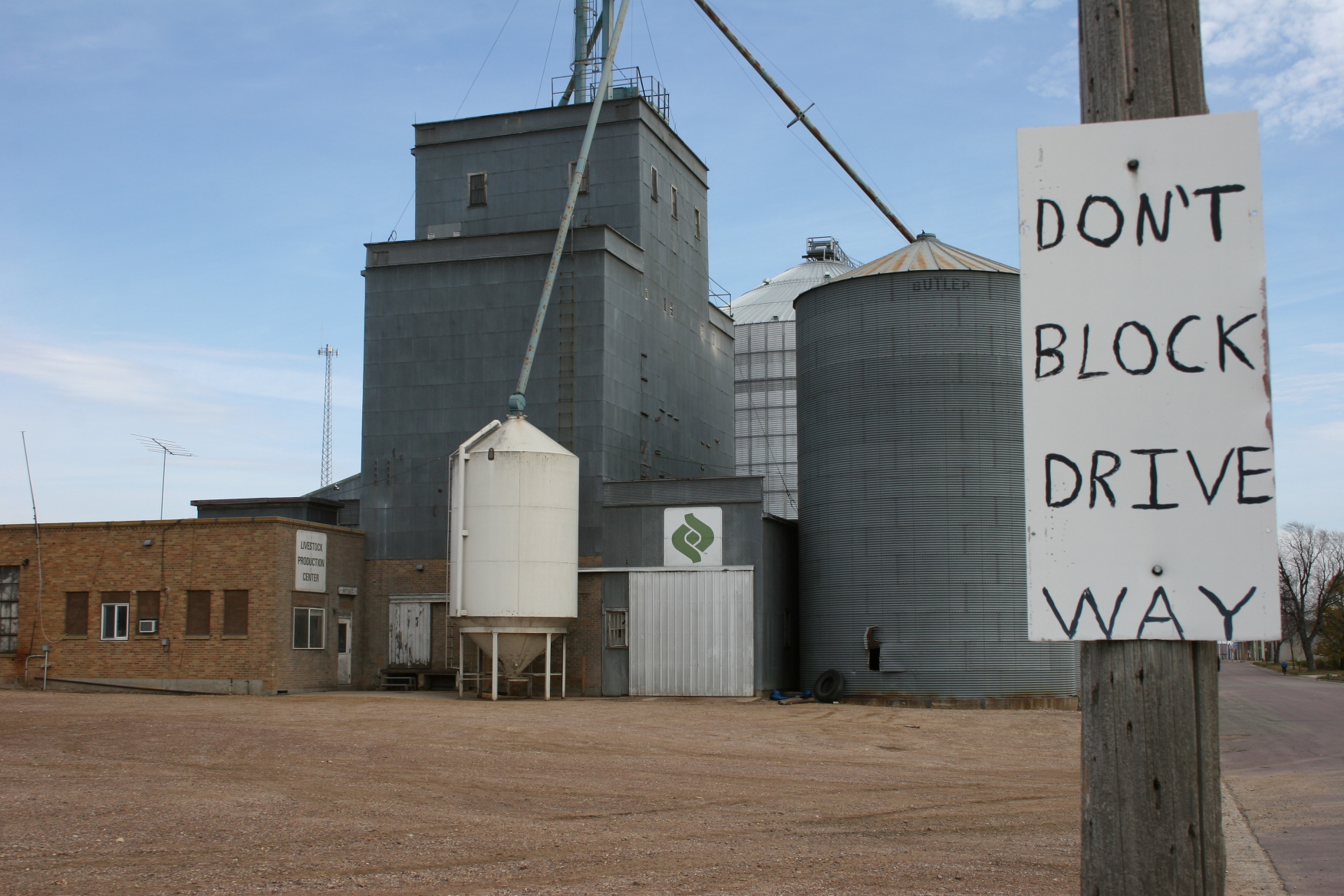
The grain elevator complex, the visual defining landmark in the farming community of Vesta, was ravaged by winds. You’ll see the damage near the top of the old grain elevator. Photo by Brian Kletscher

During the late afternoon of July 1, 2011, a series of downbursts with wind speeds of 90 – 100 mph swept through Vesta, ripping half the roof from St. John’s sanctuary, felling trees, denting grain bins, damaging the landmark grain elevator and more.

Under construction in March, a pastor’s office, bathroom and storage room were added to the south side of the early 1970s era church. Photo by Audrey Kletscher Helbling.

It took nearly a year for St. John’s to reopen after the congregation decided to expand the church as part of the roof reconstruction process.

Entering Belview from Sacred Heart at 9 a.m. on July 2, the morning after the tornado. Photo courtesy of Merlin and Iylene Kletscher, who were not yet living in Belview when the storm hit.

In Belview, about 10 miles to the north and east, residents will also mark the one-year anniversary of an EF-1 tornado which rode in on the same storm system. The tornado, with winds of 95 – 105 mph, wiped out many of this prairie town’s trees (which fell onto buildings and vehicles), damaged the nursing home to the point that it closed for awhile, wrecked roofs and more.

A month after the tornado, Belview’s Parkview Home (nursing home) remained closed as repairs were needed to the damaged roof, covered here with blue tarps. Photo by Audrey Kletscher Helbling.

The communities of Belview and Vesta lost many trees in the July 1 storms. This photo is along a Belview street north of the park. Photo courtesy of Merlin and Iylene Kletscher.

Jerry Hagen’s house, across the street from Merlin and Iylene’s home in a July 2 photo. Photo courtesy of Merlin & Iylene Kletscher.

Damage along South Main Street in Belview. Photo courtesy of Merlin and Iylene Kletscher.

A year later, Belview residents are celebrating with a catered community picnic supper and entertainment at the local park (or in the air conditioned historic Odeon Hall if the weather is too hot) from 4 p.m. – 6 p.m. Sunday.

“We know we can pull together when the going gets tough as was proven after the storm,” says City Clerk Lori Ryer. “Now we would like to pull together in a spirit of community and fellowship and say thank you to everyone in town and to those that helped.”

My Uncle Merlin and Aunt Iylene Kletscher will be among Belview residents attending that picnic, celebrating and listening to the music of Ron and Kathy and Friends. The Kletschers had just closed on the purchase of a foreclosed fixer-upper home along Belview’s Main Street when the tornado ravaged Iylene’s hometown. They lost most of their trees—one of the reasons the couple bought the property—and sustained damage to their house, which they had just begun renovating.

Says Merlin:

So far we have planted four flowering crabs, a new disease resistant elm tree, 13 lilac bushes and the city has the Main Street boulevard planted with really nice-sized maples. We have two churches with new roofs, the bank is putting a new roof on right now and there are also more homes in the process of new shingles, etc., now.

One year later, Belview is looking pretty darn good!

A portion of Main Street in Belview a month after the tornado. Photo by Audrey Kletscher Helbling
FYI: To read more about the July 1, 2011, storms and to view more storm damage photos, check the Minnesota Prairie Roots archives from July 2011. In addition to the damage in Vesta and Belview, many rural residences also were hit. The farm of my cousins, Danny and Marilyn Schmidt, was struck by a second EF-1 tornado which nipped the northwestern corner of Redwood County. Near the South Dakota/Minnesota border, the community of Tyler experienced an EF-2 tornado which followed a 3-mile path through Lincoln County. The tornadoes and wind storms were part of a massive storm system  on July 1, 2011, which began along the western edge of Minnesota and extended as far east as northwestern Wisconsin.

I was on my way with my husband to a party near Nerstrand not far from our Faribault home in southeastern Minnesota when these threatening clouds moved in during the early evening hours of July 1, 2011. It was while driving to our friends’ rural home that my sister Lanae phoned to tell me about the storm in our hometown and to warn me of the approaching bad weather. Fortunately the ominous clouds delivered only rain and nothing severe. But I was worried, very worried.
Copyright 2012 Audrey Kletscher Helbling