Minnesota Prairie Roots

Writing and photography by Audrey Kletscher Helbling

Prairie prose & photos during the season of harvest October 29, 2012

Just west of Shieldsville, not far from our Faribault home in southeastern Minnesota, my husband and I began our 120-mile journey to southwestern Minnesota on a foggy Saturday morning.

I NEVER TIRE of the big sky and infinite land that stretch far before me as I travel back to my native southwestern Minnesota. I wonder sometimes how I ever could have left this place that brings such solace to my soul, such respite to my heart, such peace to my mind.

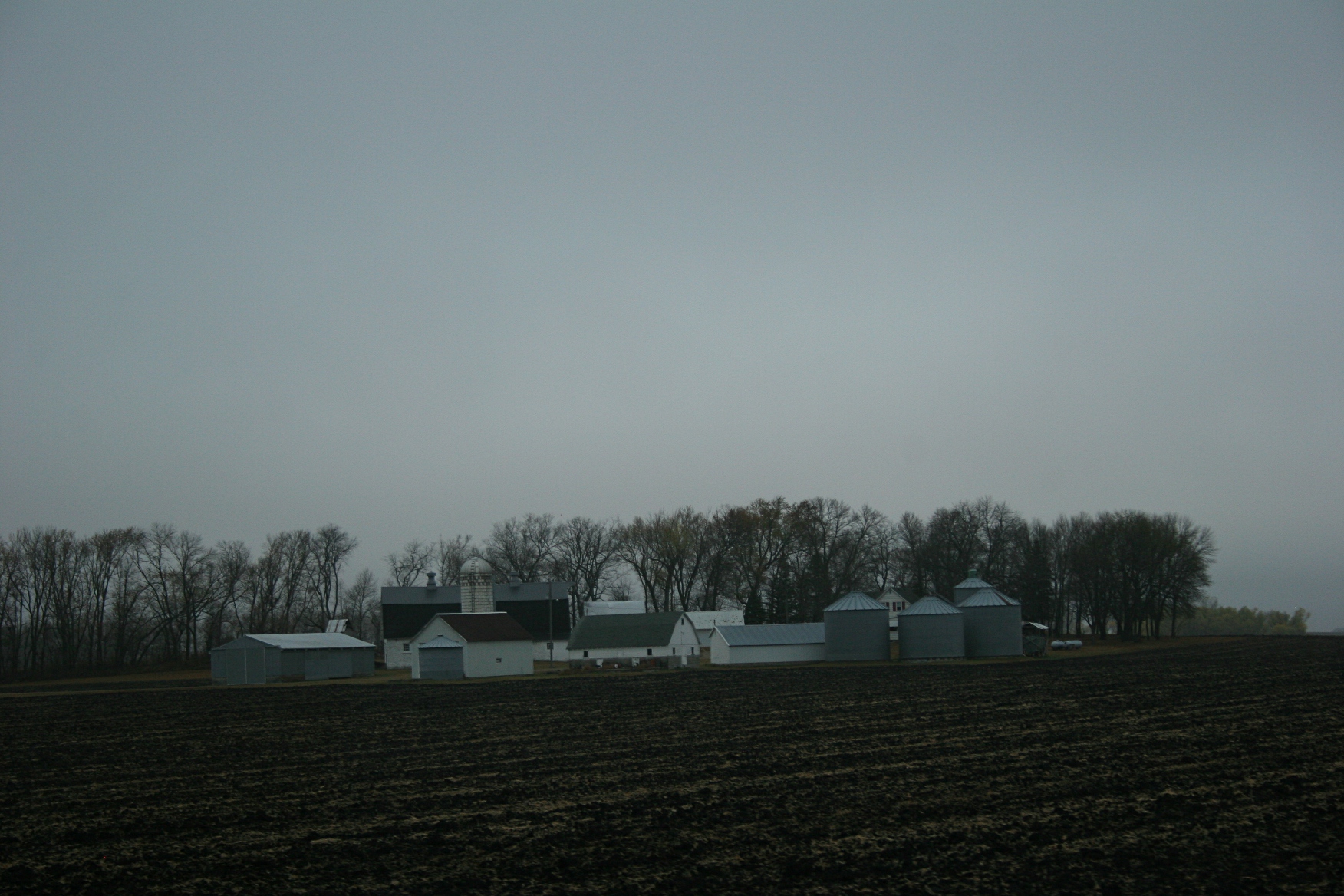
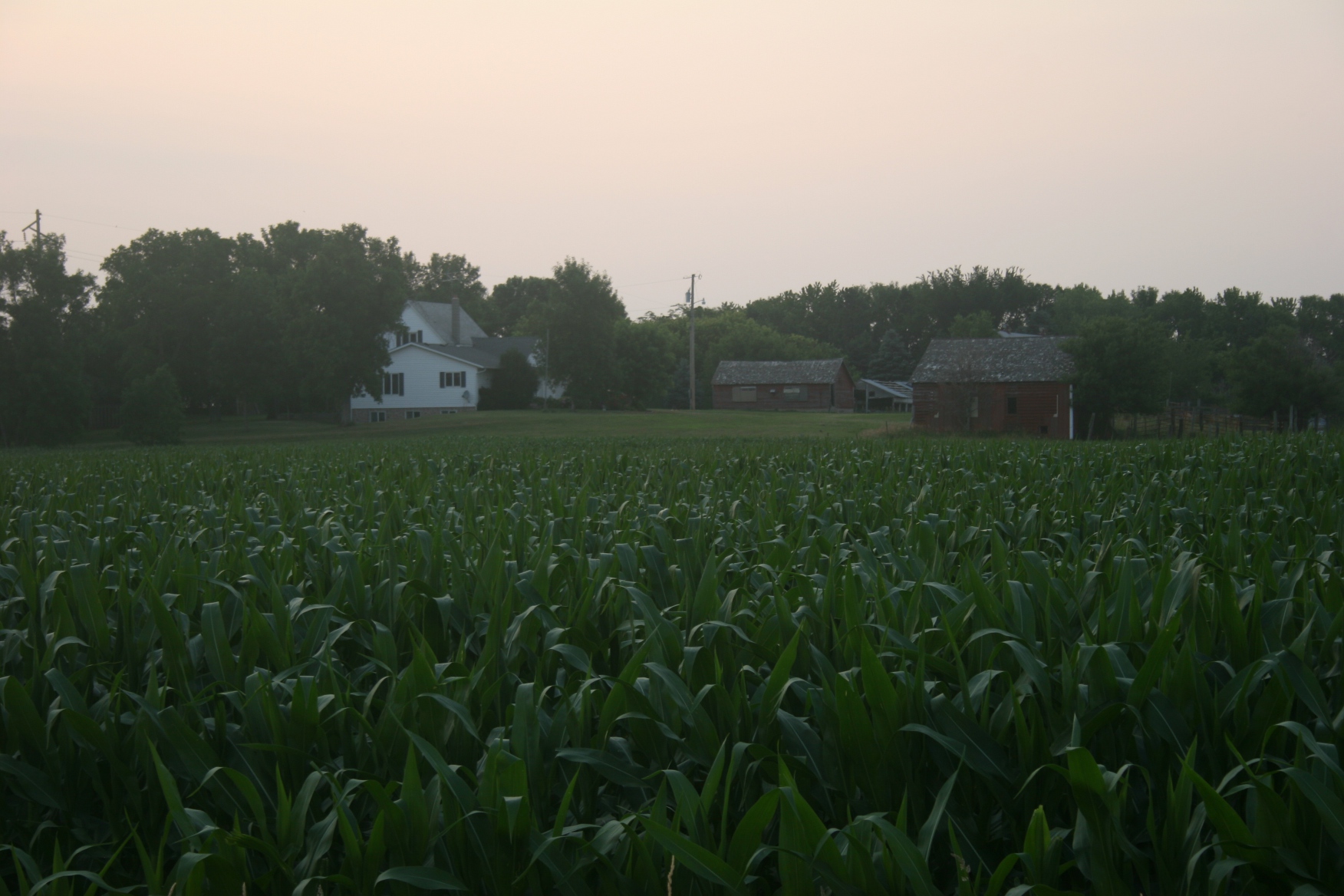
A farm site somewhere along the route which took us through or past Shieldsville, LeCenter, Cleveland, St. Peter, Nicollet, Courtland, New Ulm, Essig, Sleepy Eye, Cobden, Springfield and Sanborn corners, ending in rural Lamberton.

When I see this land, walk this land, the longing to be back here, permanently rooted again, tugs at my very core. I miss the prairie that much and the older I get, the more I appreciate this rural place from whence I came.

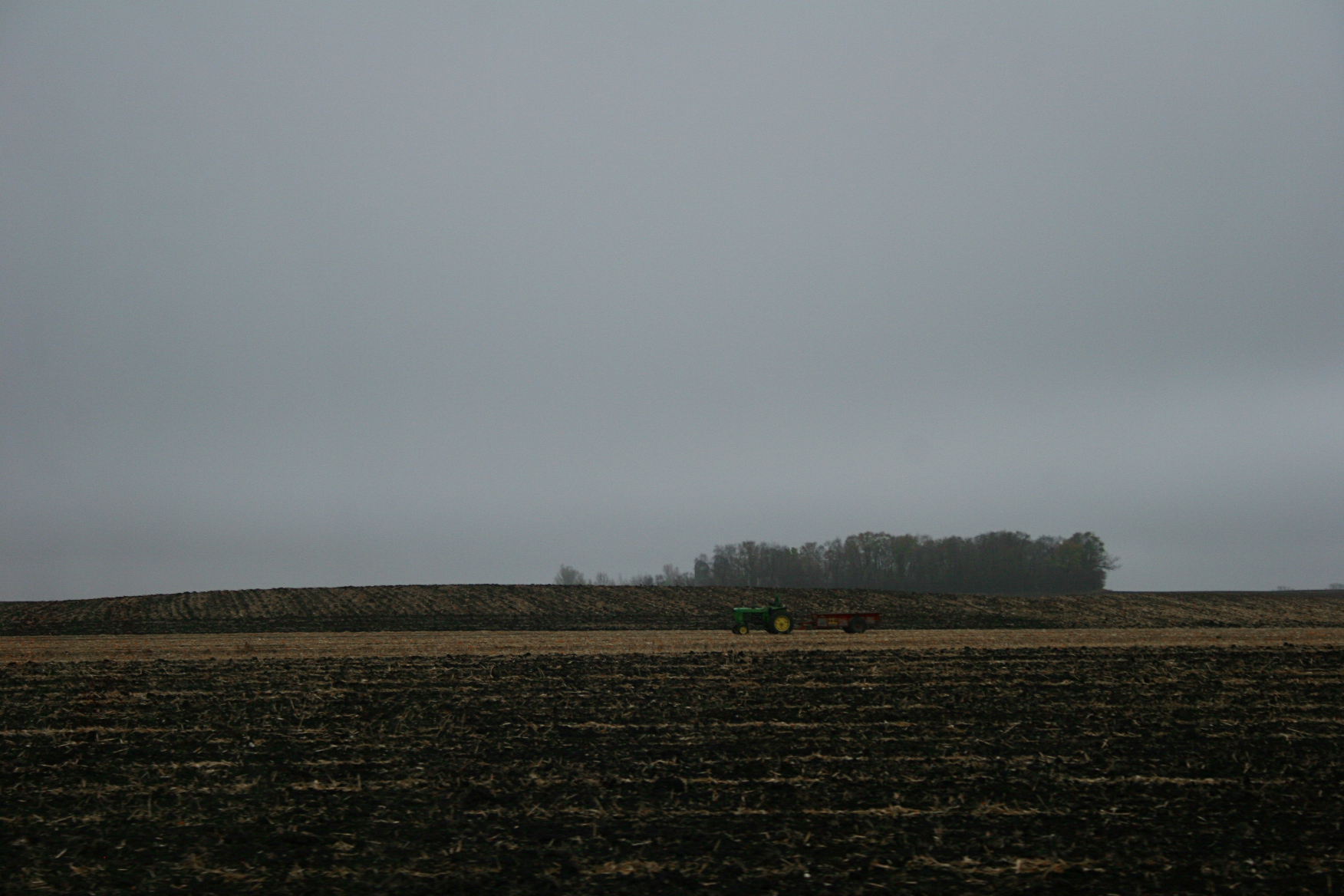
This image, among all those I took, emphasizes the expanse of sky and land which define the prairie.

It is that early-life connection, that growing up as a child of the prairie, that intimate familiarity with the land and the seasons and life cycles, the dirt under fingernails, the rocks lifted from fields, the cockleburs yanked from bean rows, the roar of the combine and the distinct putt-putt of the John Deere tractor, the calf shit clinging to buckle overshoes, the fireball of a sunset, the sights and sounds and smell and feel of this prairie place that shaped who I became as a person, a writer, a photographer.

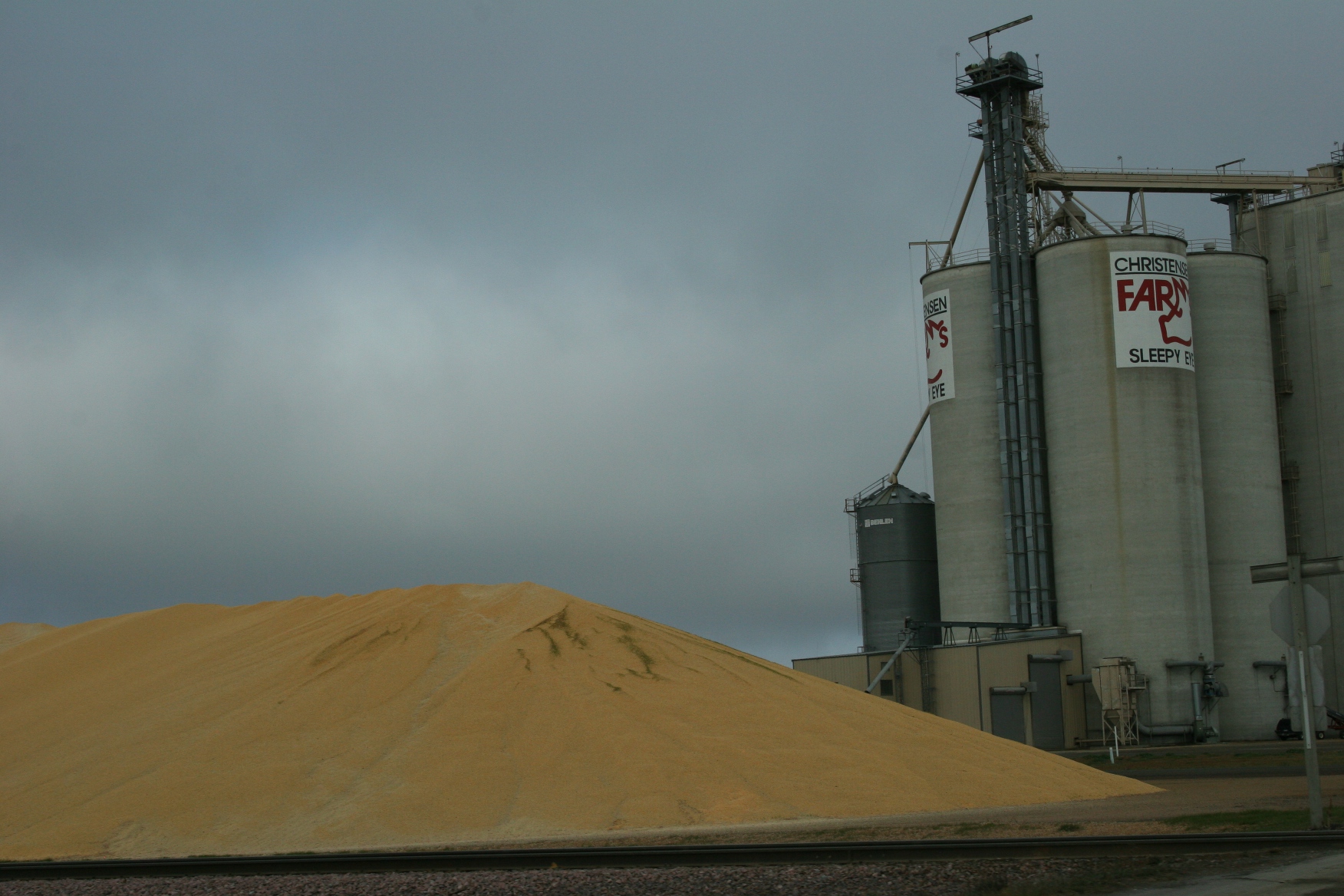
These towering elevators and corn pile at Christensen Farms near Sleepy Eye break up the flat landscape.

In this season, as the earth shifts from growth to harvest to dormancy, I notice even more the details etched into the prairie. The sky seems bigger, the land wider and all of us, in comparison, but mere specks upon the earth.

MORE PHOTOS from that road trip to the prairie:

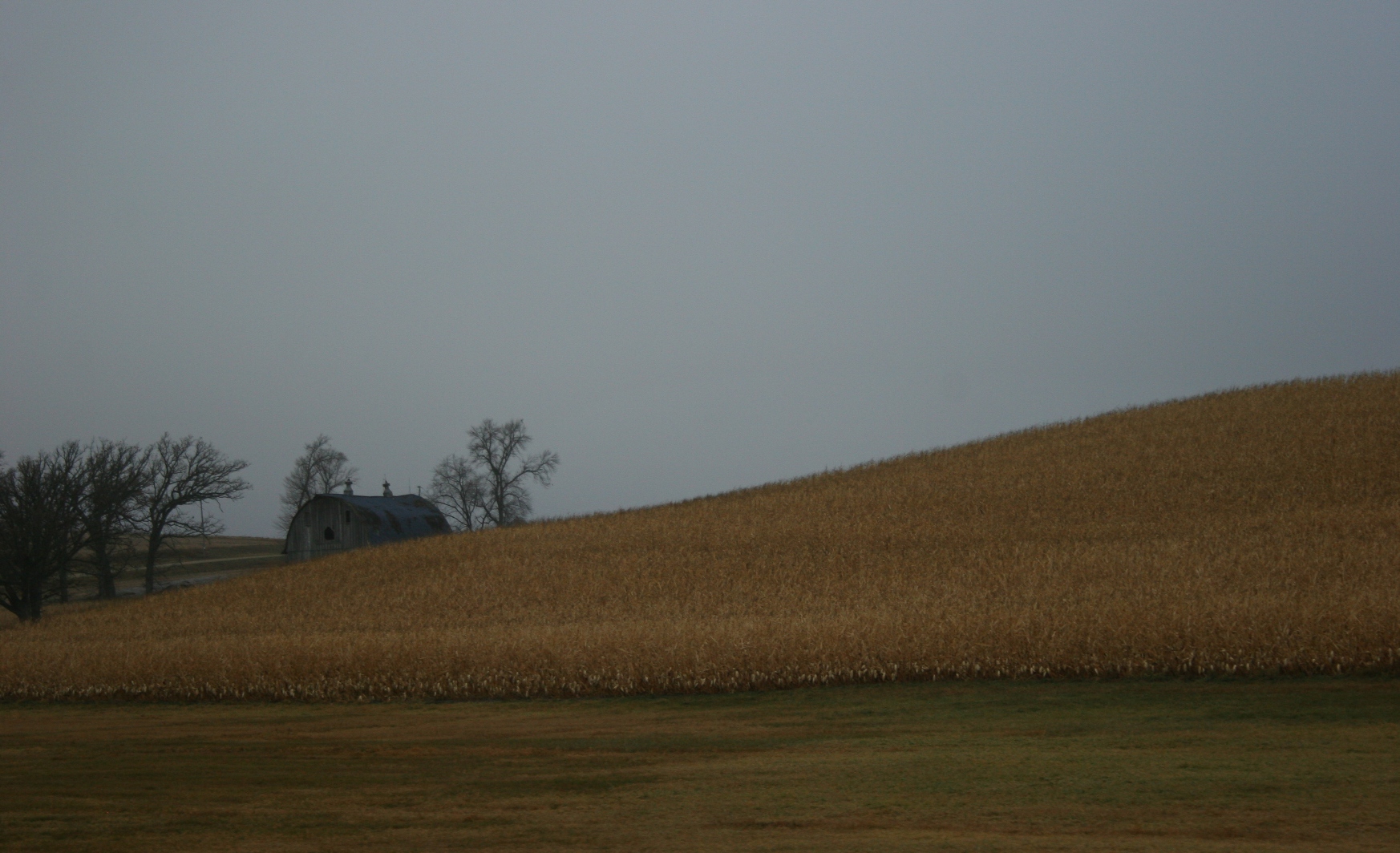
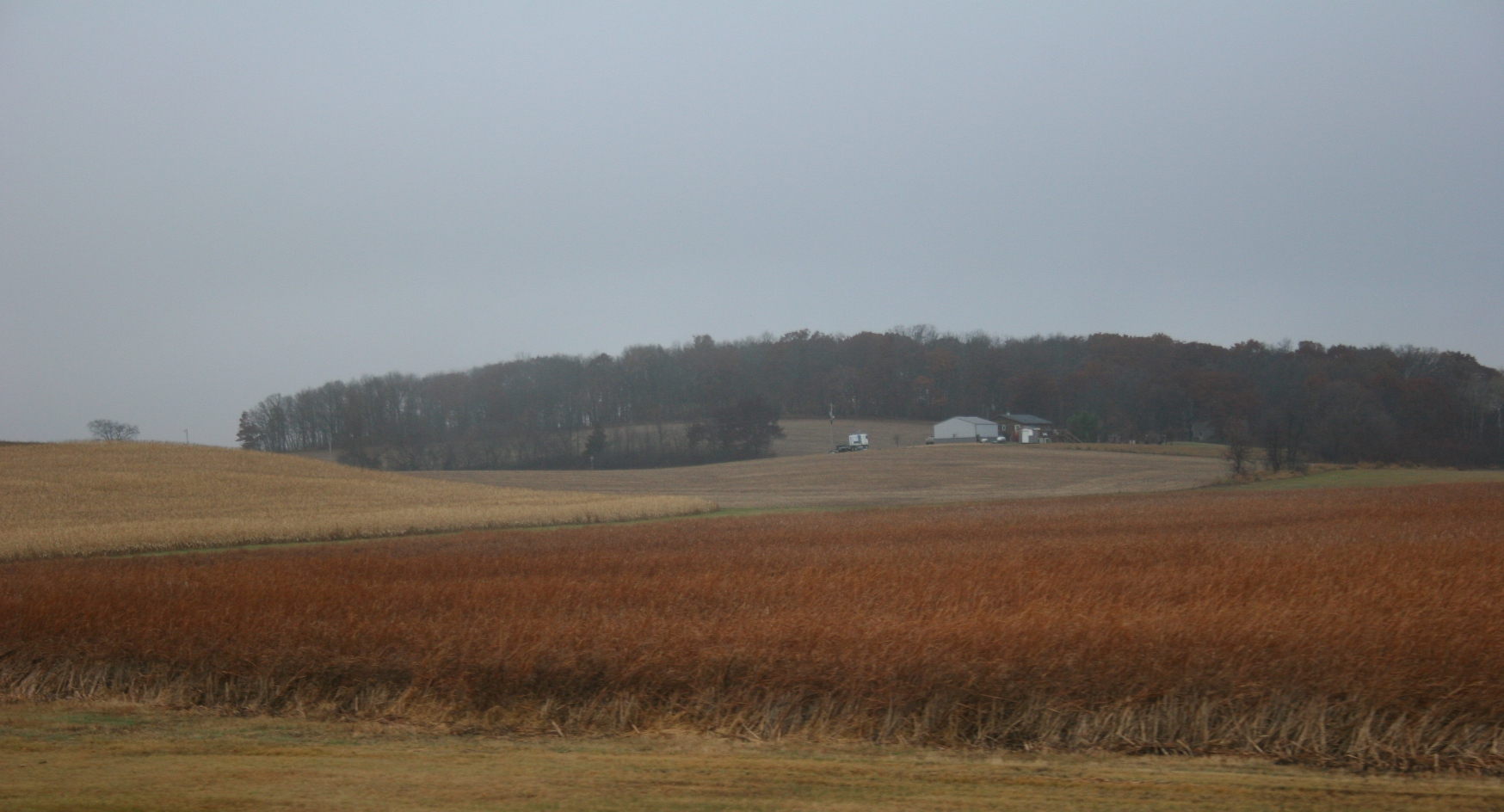
This is not a prairie scene because the prairie has no hills. Rather, I shot this near the beginning of our journey, west of Shieldsville.

Another scene from just west of Shieldsville. It is the muted colors of the landscape that I so appreciate in this photo.

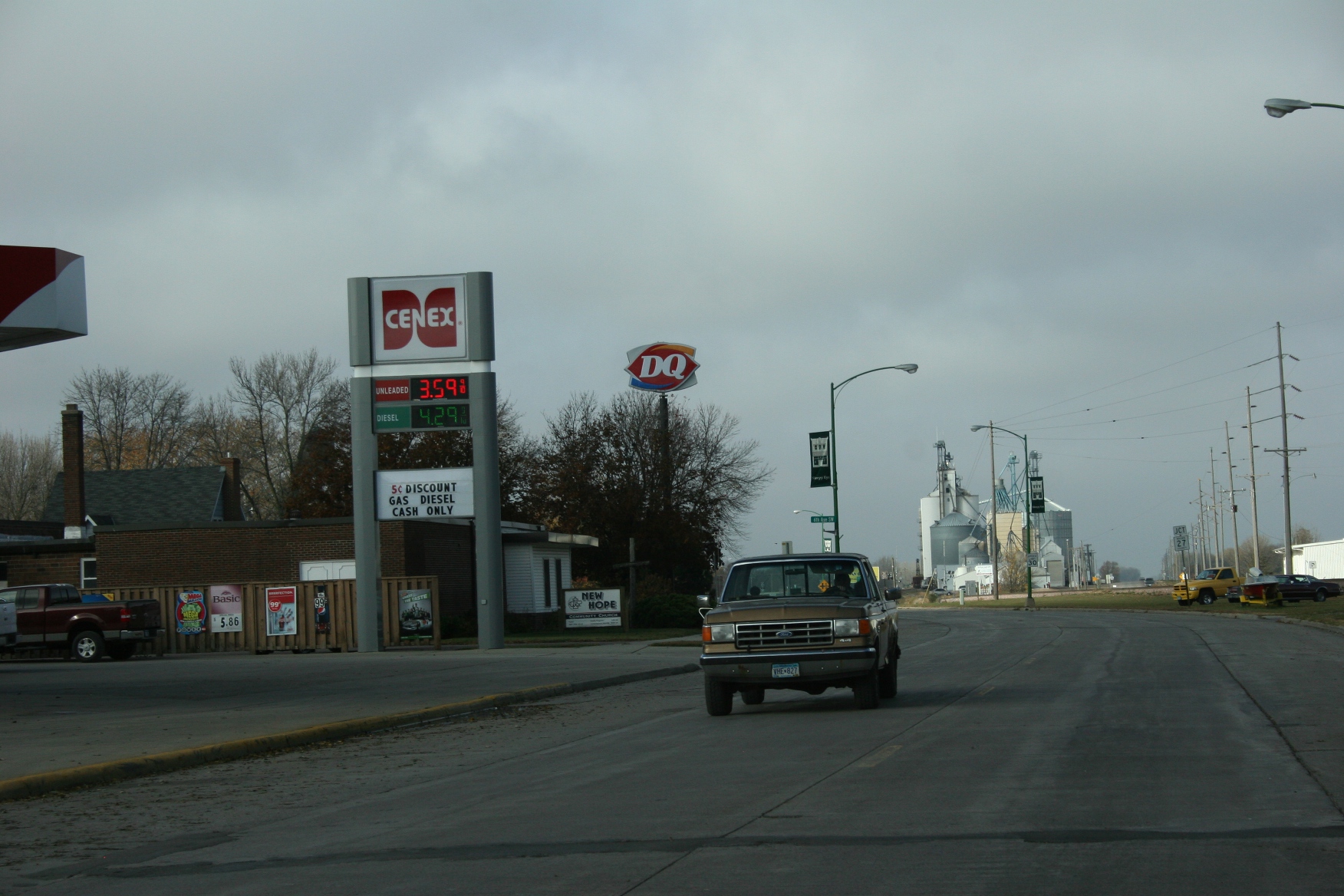
Driving through Sleepy Eye, a strong agricultural community where I lived and worked briefly, decades ago, as a reporter and photographer for The Sleepy Eye Herald-Dispatch. Sleepy Eye is most definitely on the prairie.

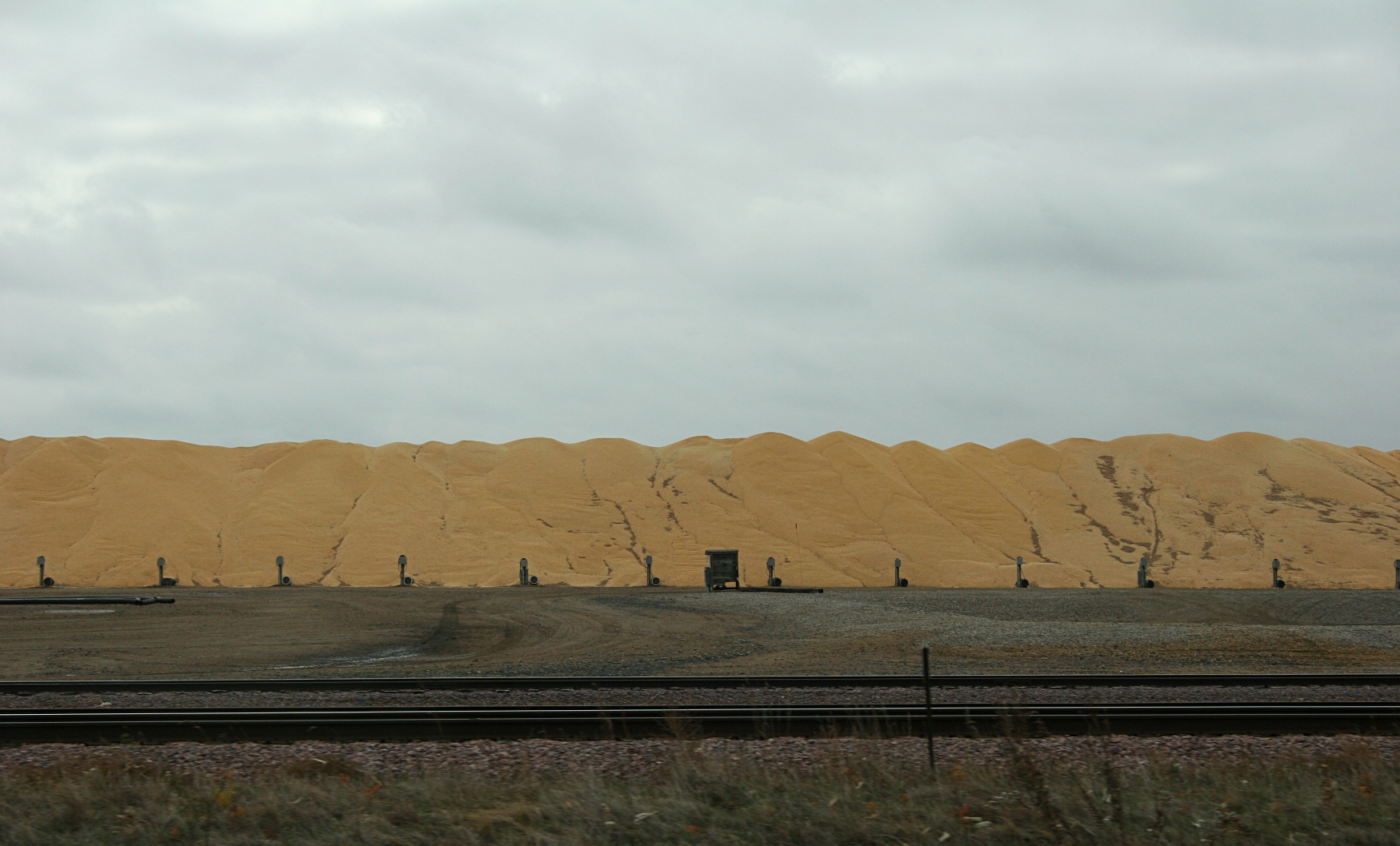
Hills of corn at a grain complex east of Lamberton.

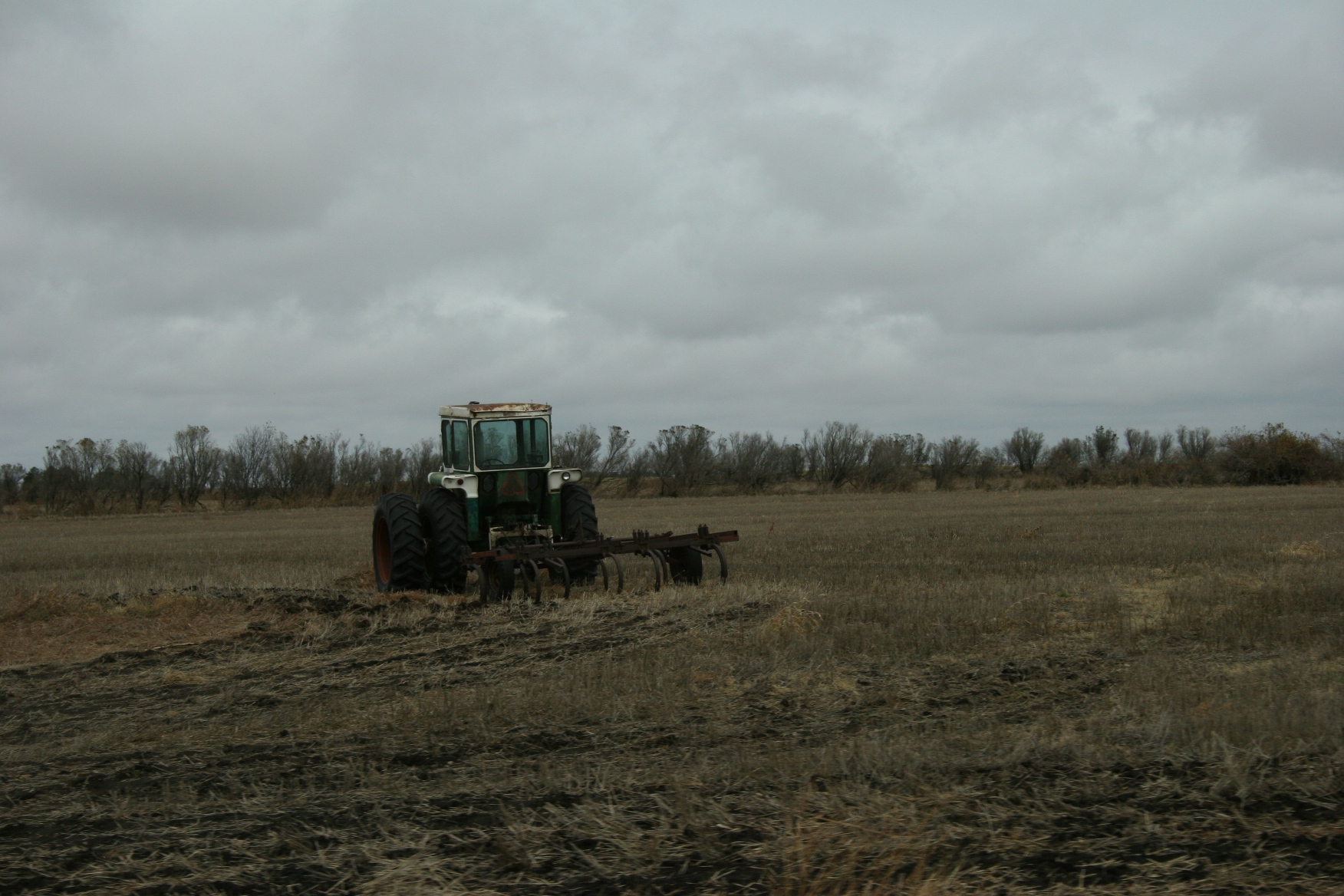
Fields are in all stages of harvest and tillage on the southwestern Minnesota prairie.

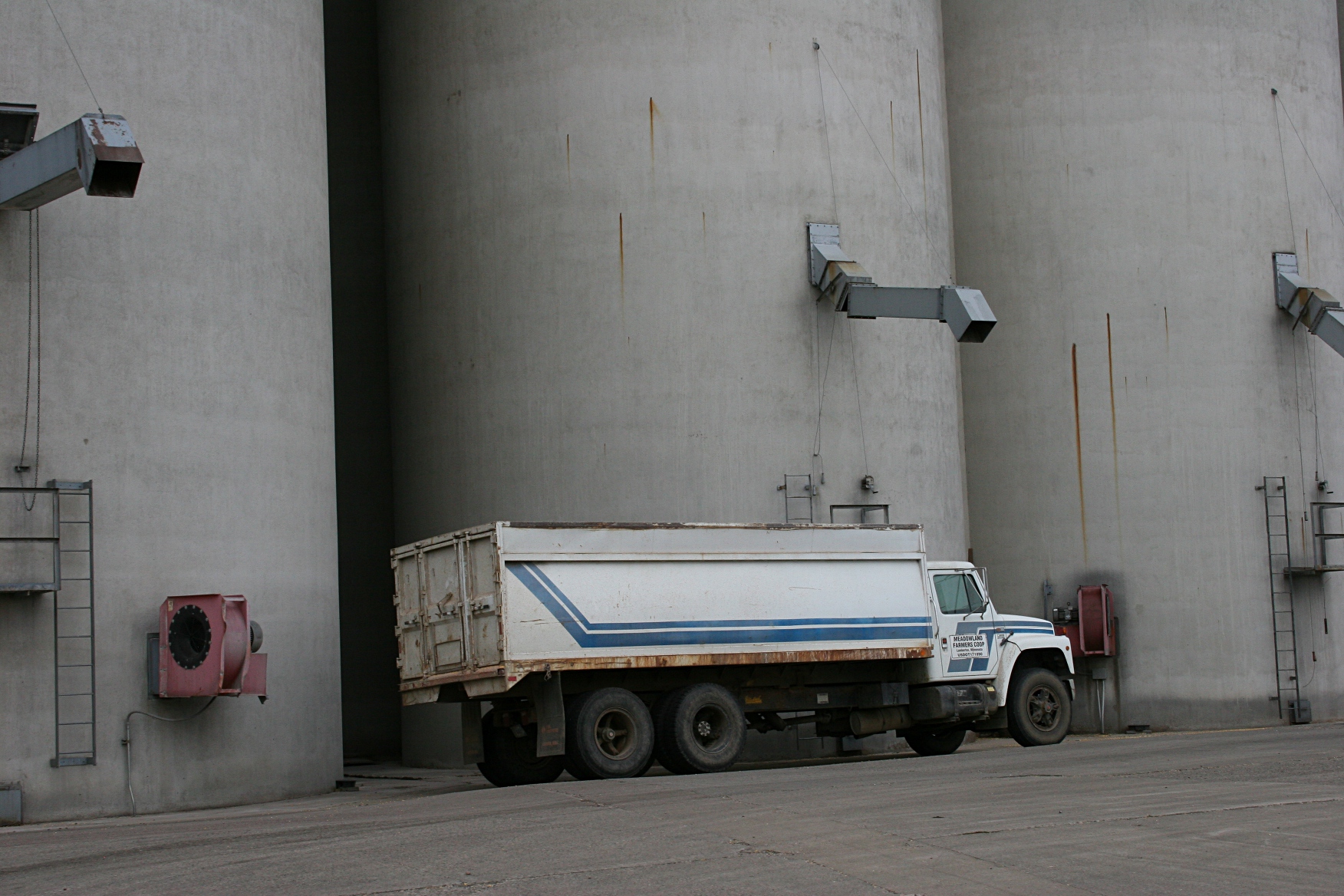
A grain truck parked at an elevator in Lamberton.

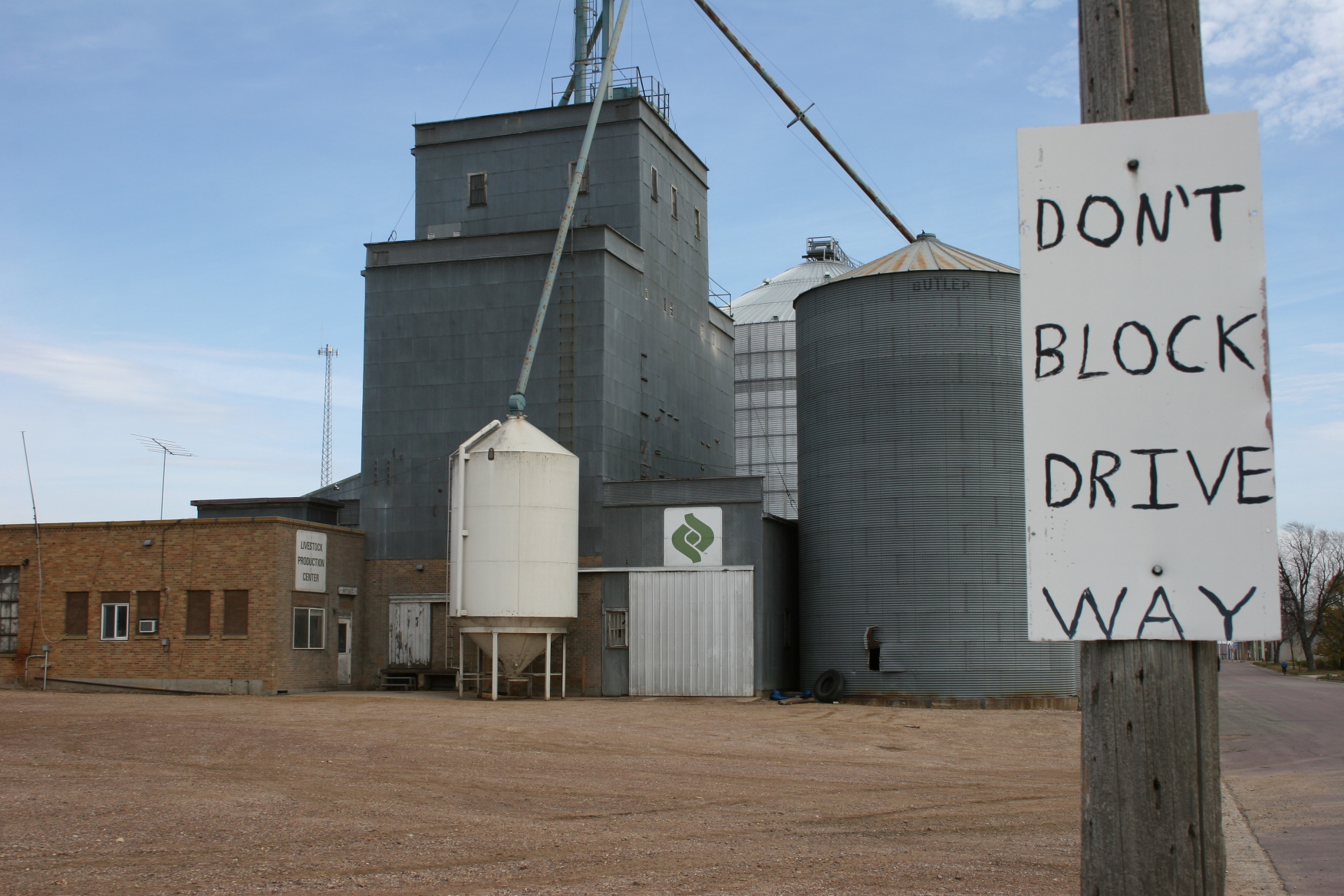
An important sign when trucks and tractors are lined up at the elevator in Lamberton.

I ended my Saturday by walking my middle brother’s acreage north of Lamberton as the sun set, my favorite time of day on my native southwestern Minnesota prairie. I grew up about 25 miles northwest of here near Vesta.

© Copyright 2012 Audrey Kletscher Helbling


Transforming an historic building into Seven Sisters Coffee, a community gathering spot & more in rural Minnesota October 23, 2012

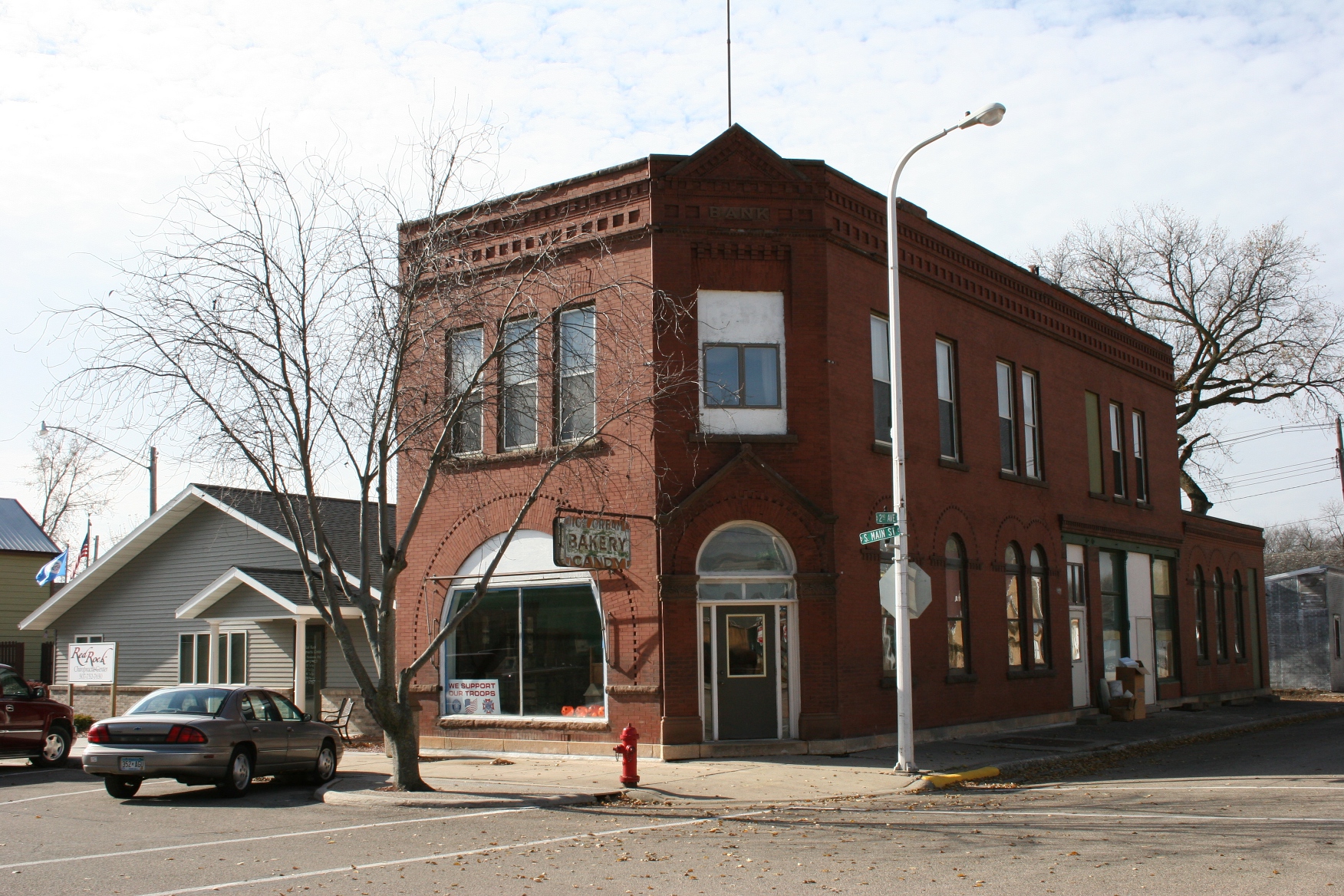
This 1892 former bank building and 95-year bakery anchoring a corner of Lamberton’s Main Street is being renovated into Seven Sisters Coffee by a young couple with connections to this area of southwestern Minnesota. After the business opens, the upstairs will be renovated into loft style apartments.

DAVID AND MICHELLE can see beyond the crumbling mortar, the moisture damage, the buckling floor boards, the teal paint.

Just barely into major renovation of an historic 1892 bank building and former long-time bakery in downtown Lamberton, this couple is thoughtfully and methodically working toward their summer 2013 goal of opening Seven Sisters Coffee.
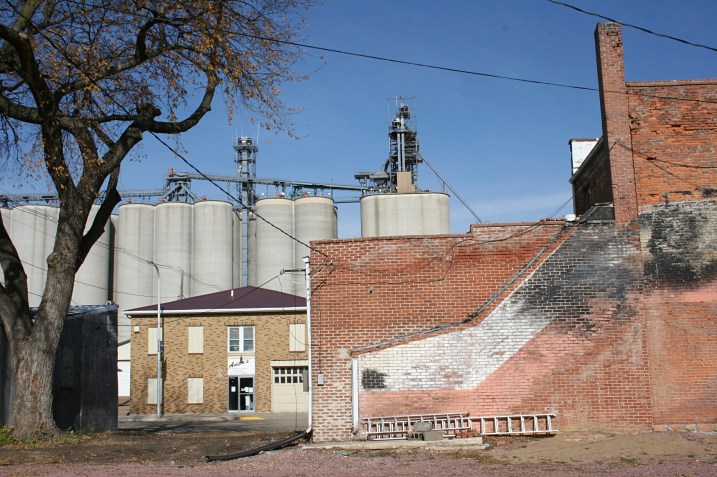
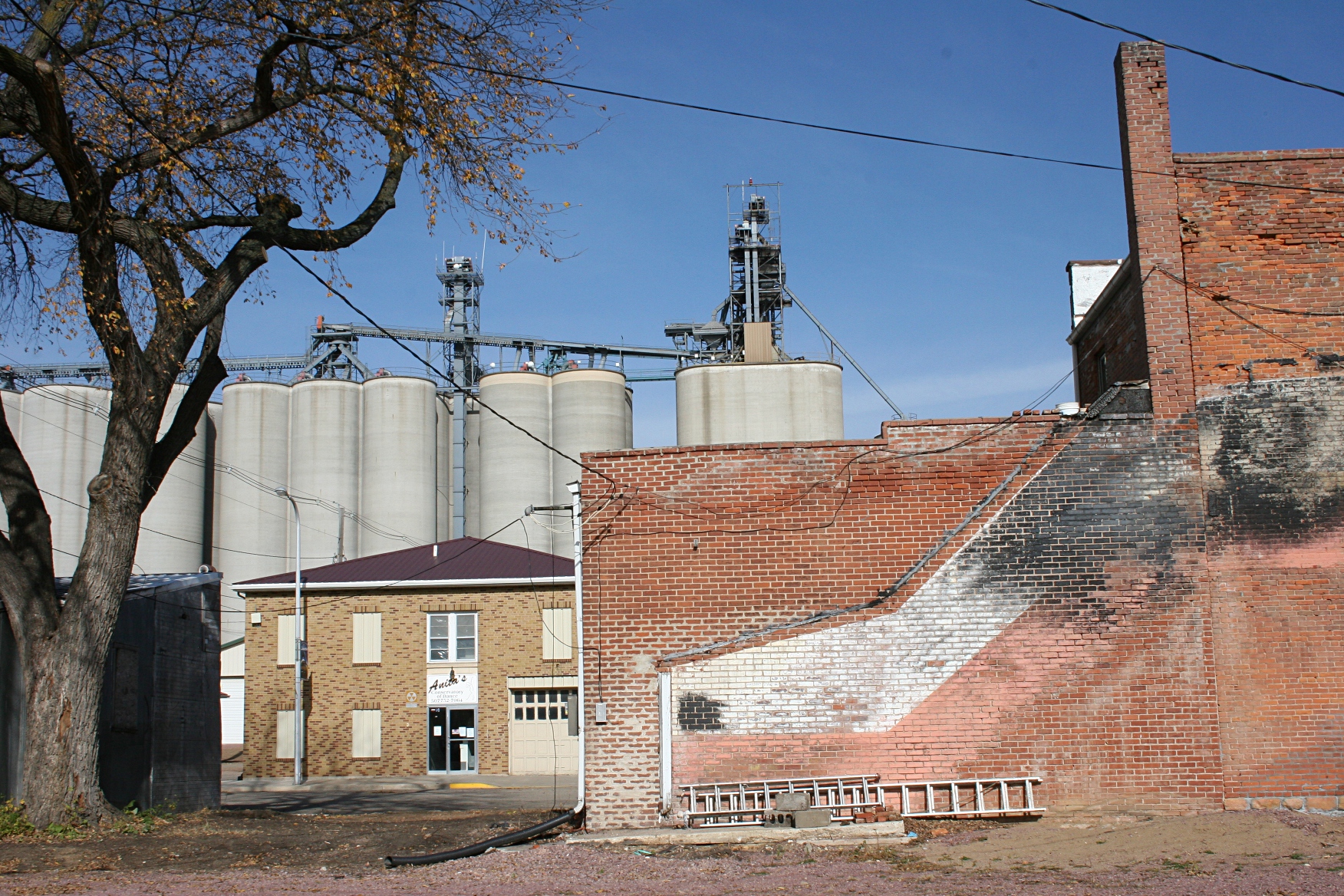
This shows the side and back view of the building, with the rear part added on to the original. Soot from a 2005 fire, which destroyed Plum Creek Crafts next door, mars the brick. Behind the building, a tree was removed and plans are to install a patio area for outdoor dining. They saved a slice of the tree to build a table.

Even the name, Seven Sisters, holds special significance for the pair as Michelle is one of seven sisters and three brothers who grew up in Lamberton, a strong agricultural community of 822 in Redwood County on the southwestern Minnesota prairie. Additionally, Michelle notes that Seven Sisters possesses multiple meanings—in Greek mythology, astronomy and even as a mountain range.

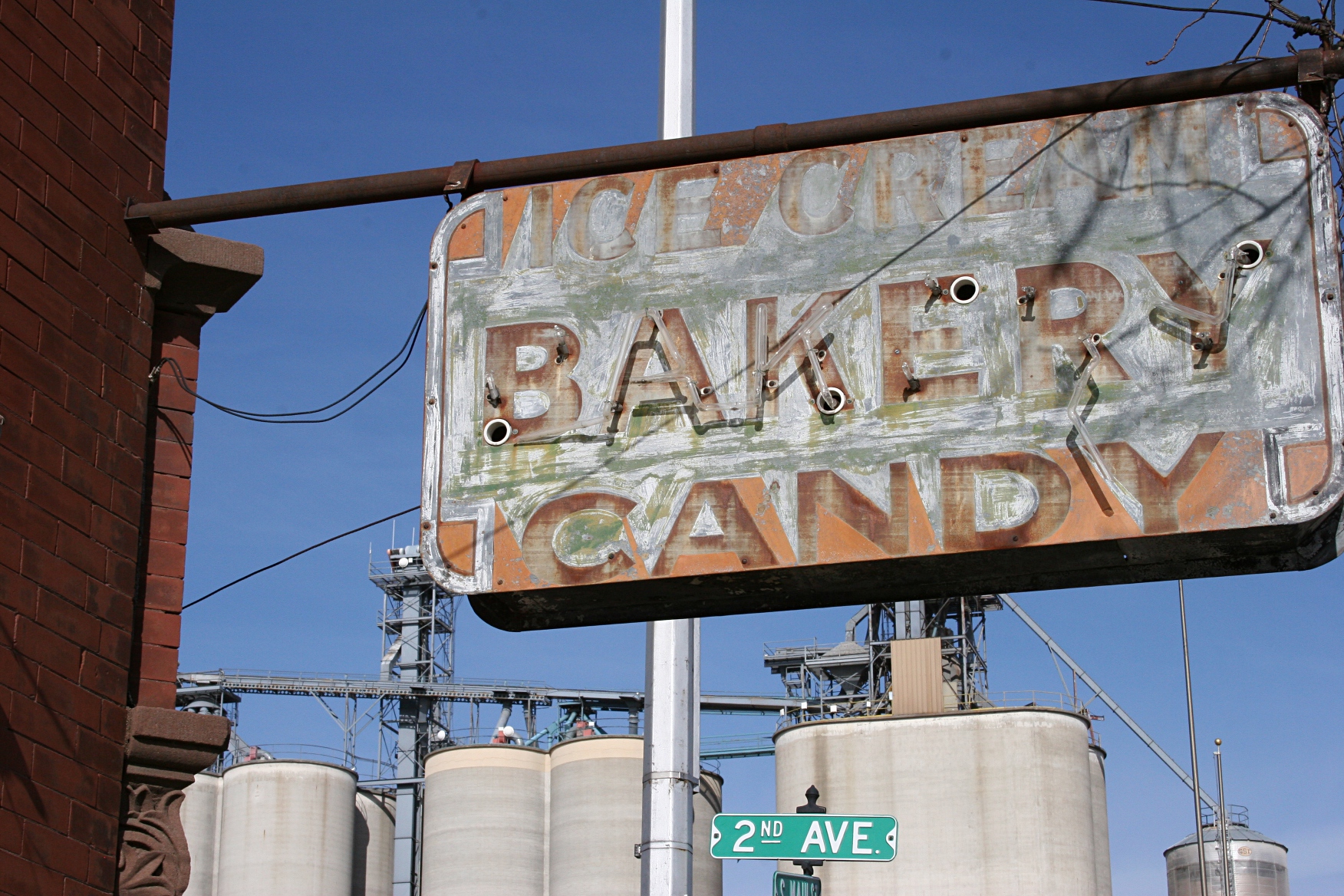
The old sign for the former Sanger’s Bakery still graces the building.

The couple may, perhaps, feel at times as if they are scaling a mountain to reach their goal of establishing a combination cafe, coffee shop and entertainment venue in the 1,900 square foot first floor of the 8,000 square foot brick building. But they are purposeful and focused and driven every week to travel 2 ½ hours from their home to proceed with their project on the prairie.
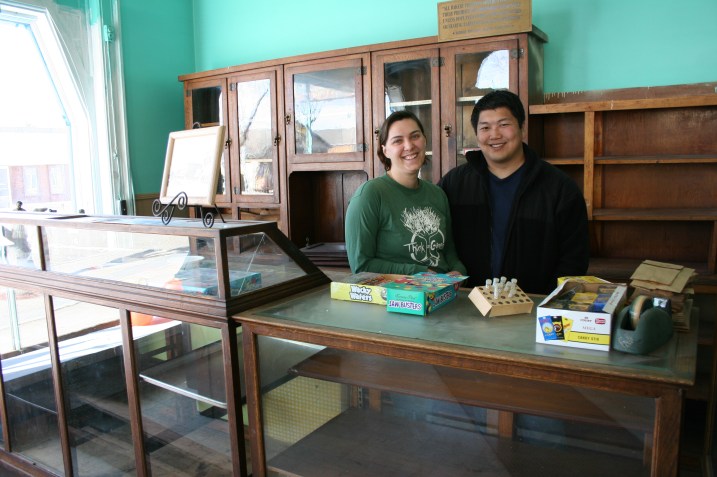
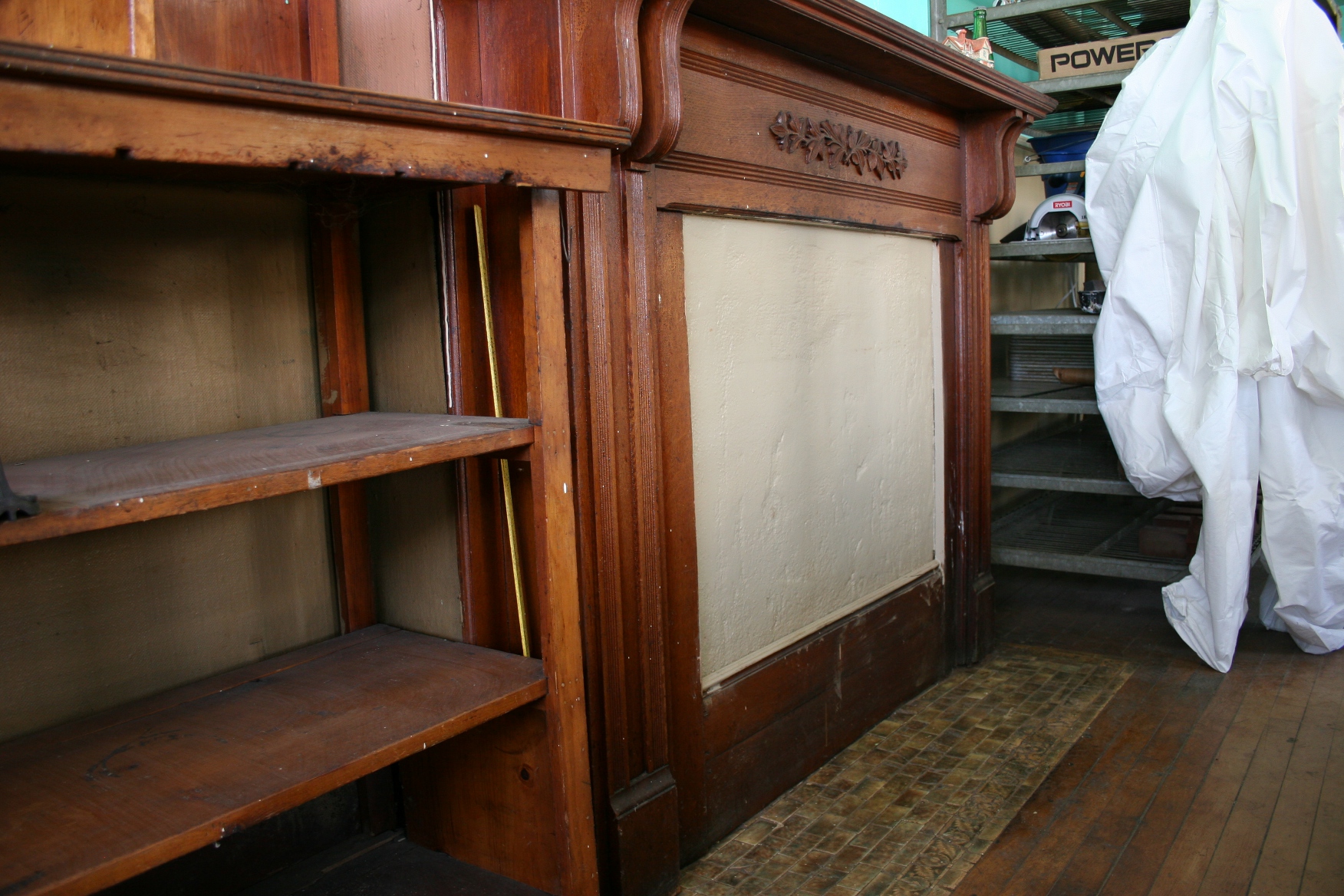
Michelle and David  are keeping the original candy and bakery goods counters and the vintage cabinet, photographed here in the front part of the building. This area of the former bank and bakery will house the cafe and soda fountain. The couple discovered a dumb waiter hidden in the area behind them in the corner.

David envisions Seven Sisters as “an artistic haven as well as a community space.” He expects “townies,” he says, to frequent the front Main Street side of the building, the bright and cheery cafe section offering a full breakfast and lunch menu and ice cream treats from a soda fountain.
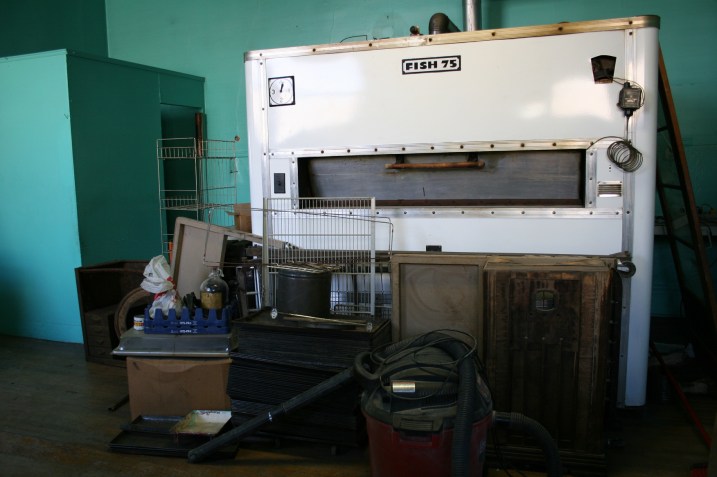
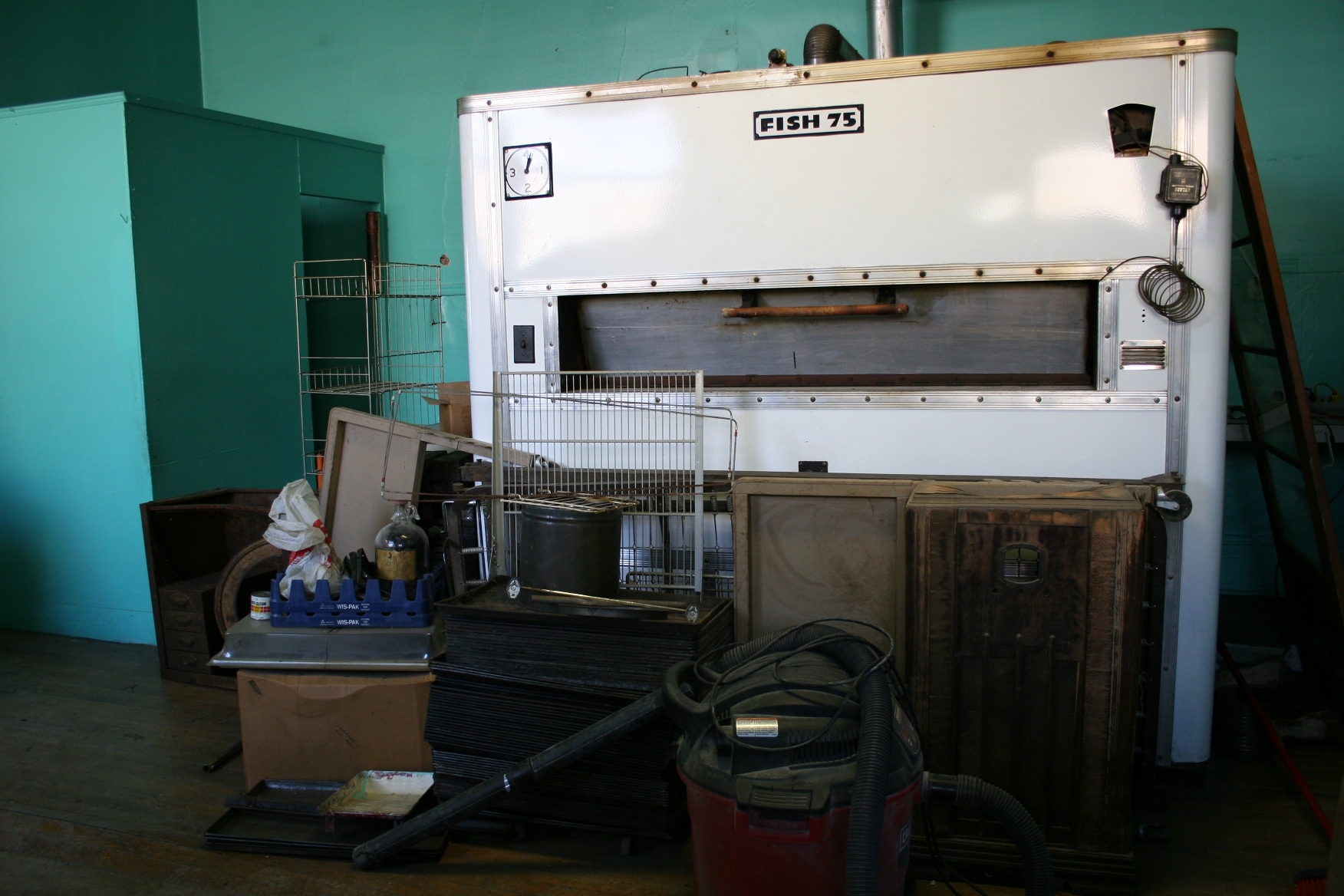
Fifty loaves of bread could be baked in this 1960s vintage two-ton rotary oven. It occupies much of the space in the middle room which will become a cozy coffee shop. This room and the front former bakery/soda fountain area were painted teal after Bob’s niece first chose that hue for the bathroom. Bob loved the color so much that he painted the rest of the place teal. The color has been on the walls for 50 years. No, they are not keeping the teal color.
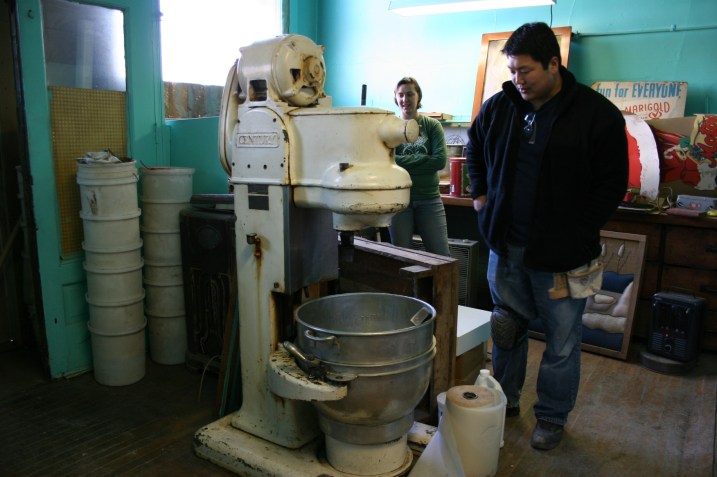
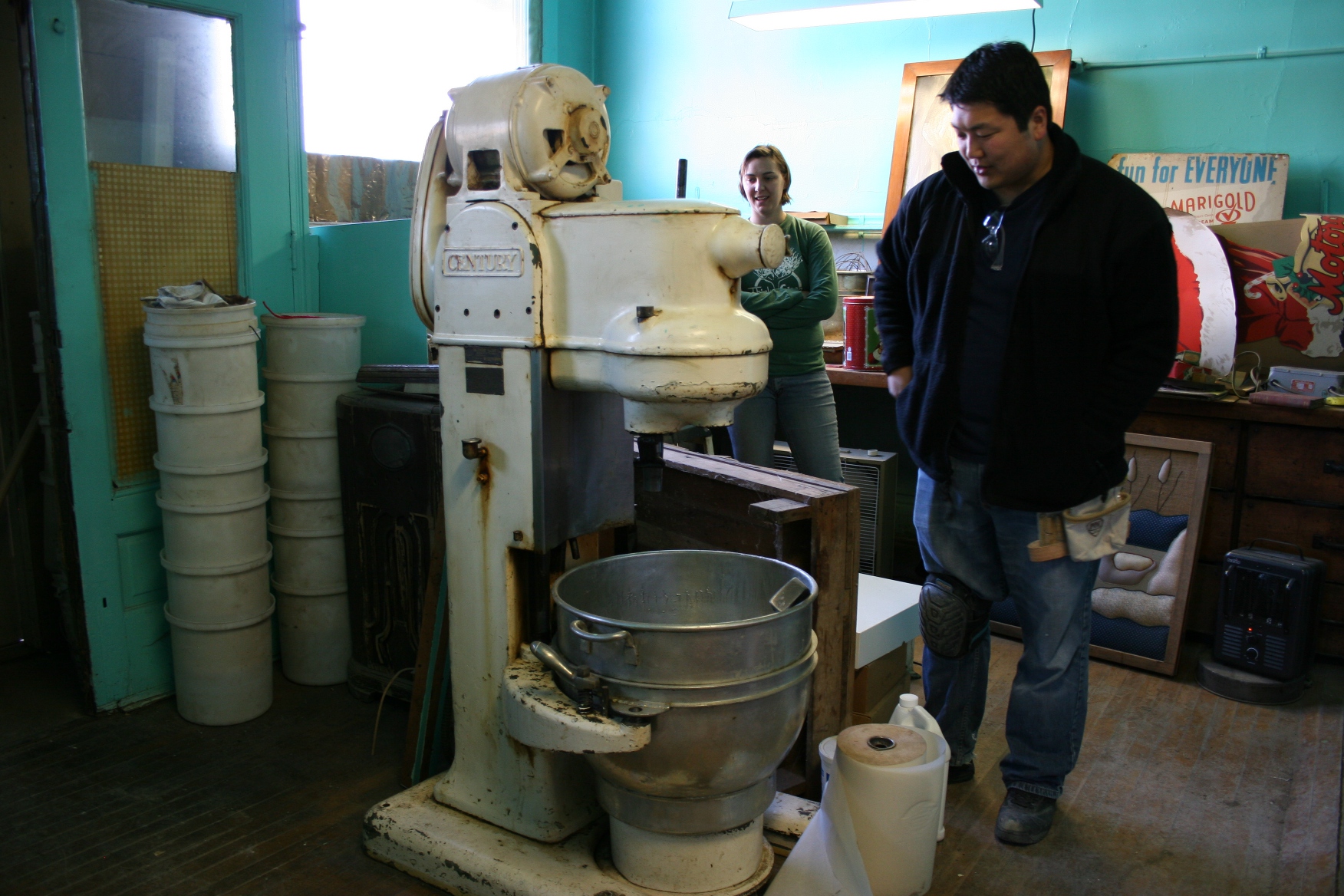
An oversized mixer also occupies space in the middle room.

The smaller middle section, once a post office entry, baking area and even home to the Sanger family, will be transformed into a warm and intimate coffee shop.
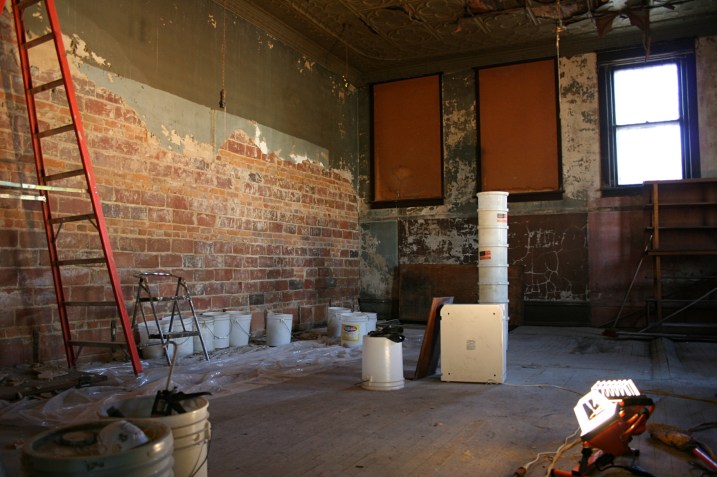
The back room, with focal point brick walls, will become an entertainment venue and artists’ haven.

And in the rear area of exposed brick walls, David expects artists and others to hang out in a more energetic and modern New York loft style space devoted to music and art and private event rental.

Tour this building, inside and out, with David and Michelle and you can see the overwhelming amount of work, inside and out, that needs to be done before Seven Sisters becomes a reality in a community already embracing the business venture.

Locals as well as those living in neighboring towns such as Revere, Jeffers and Tracy and even farther away in the regional hub city of Marshall are ecstatic about Seven Sisters, David says.

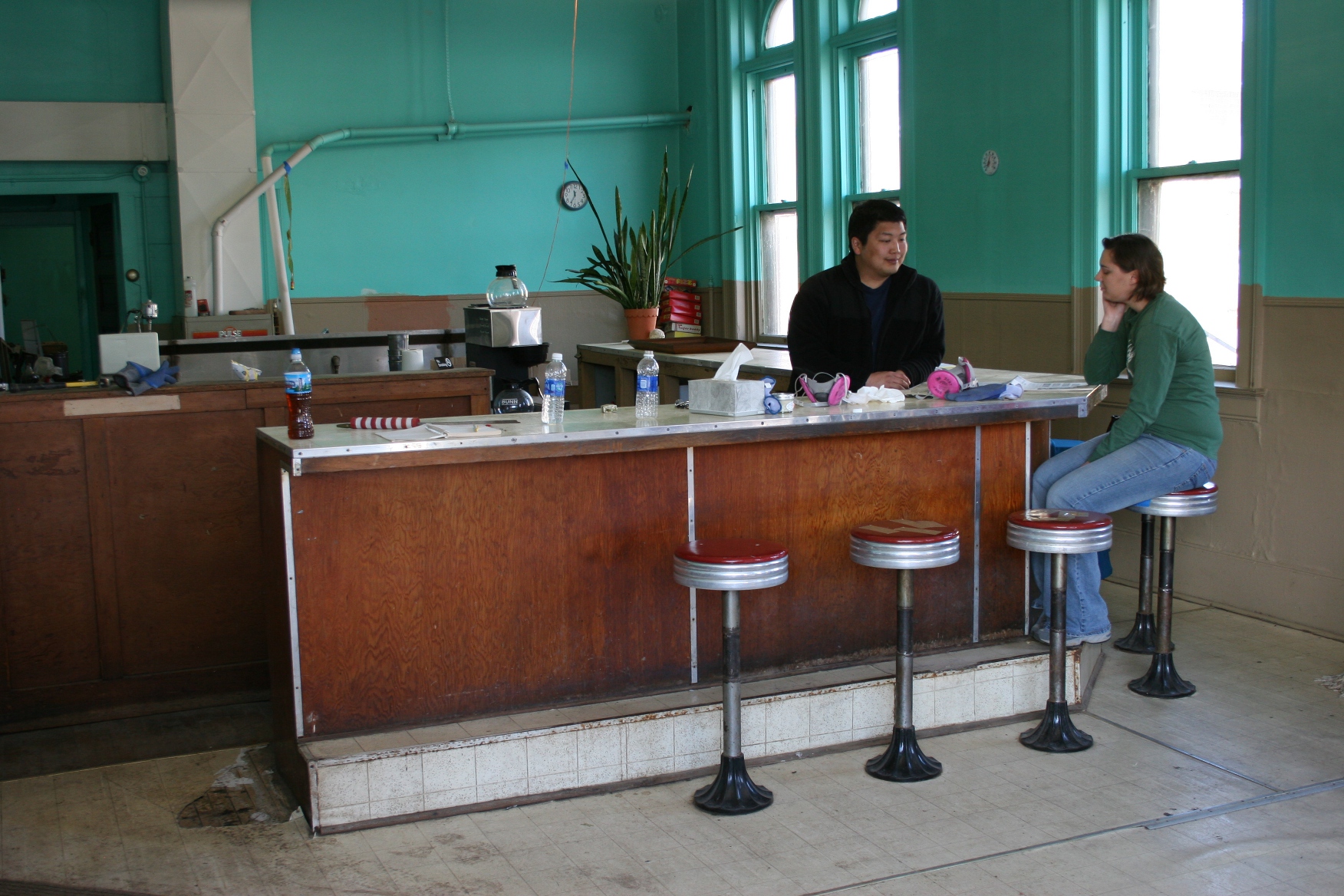
Original coffee cups and Bob Sanger’s special cup are stacked under the lunch counter.
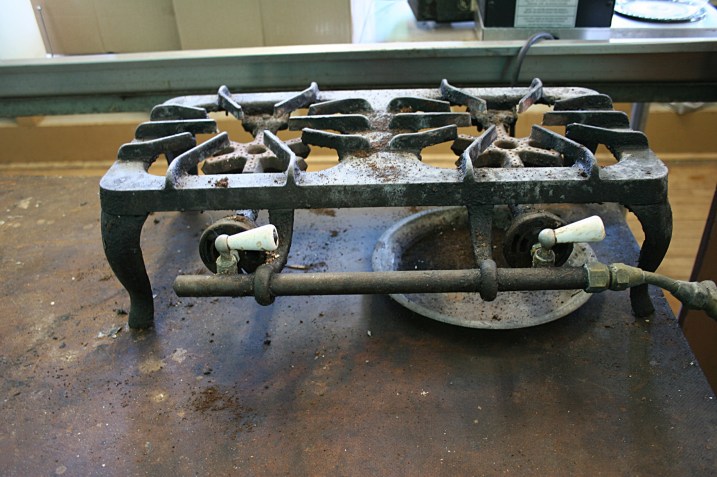
The older gas burners Bob Sanger apparently used to make coffee, etc.

When locals George and Vern, for example, stop by to check on the renovation, David invites them inside for coffee. The two were coffee klatsch buddies of Bob Sanger, long-time bakery owner who died in March. Sanger purchased the bakery from his father, Nick, in 1961. Between Bob, Nick and previous owner, Martin Kuhar, the building has housed a bakery in the First National Bank building for 95 years.
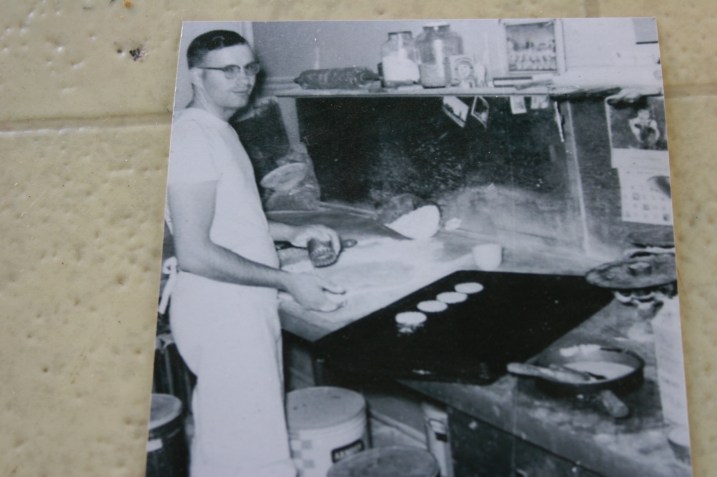
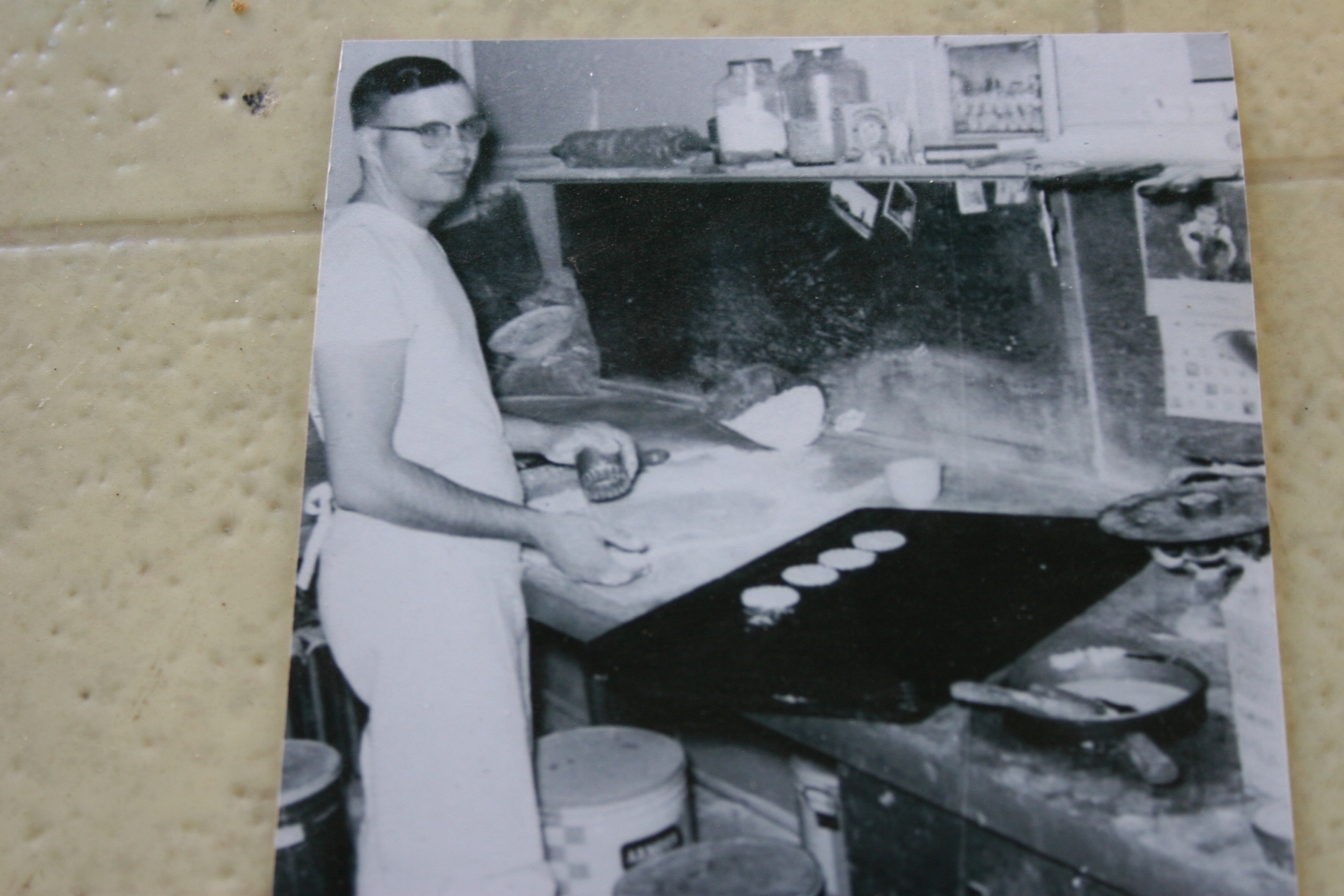
A vintage photo of bakery owner Bob Sanger who died in March at the age of 80.
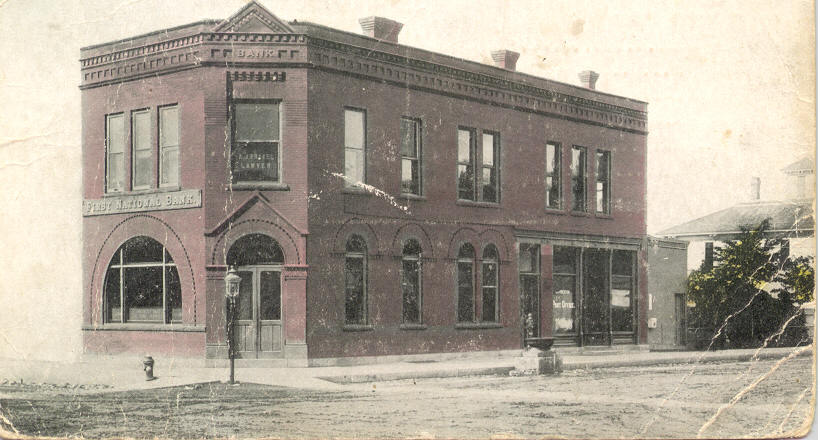
A vintage photo of the First National Bank.

Says David of his and Michelle’s decision to purchase the former bakery after Bob Sanger’s death:

The building is positively gorgeous and has a fascinating history. We had admired it for some time. The quality of the construction is superior to similar buildings of that era. We’ve always talked about opening our own business and the location and timing were right.

Our review of the local economy and the needs of the surrounding area indicates a very strong potential for growth and a serious need for a business of this kind. By offering excellence in service in three different approaches (cafe, coffee shop, event space) we will offset some of the inherent risk of this type of business. In short, it was a perfect confluence of events. We got lucky.

The pair is determined also to buy local as much as possible. Dry goods will come from Griffith’s Grocery across the street. They plan to work with Brau Brothers Brewing and Fieldstone Vineyards, located in the region. They’ll grow their own herbs.

It is clear in talking to David and Michelle that they appreciate the historic gem they’ve purchased.
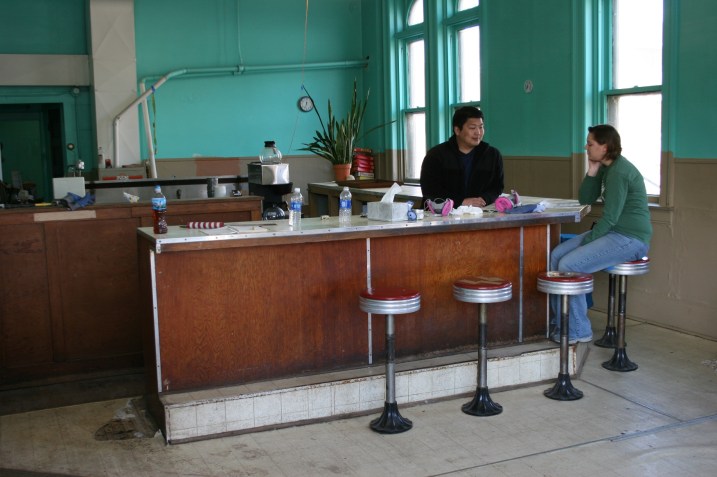
A section of this original lunch counter built by Bob Sanger will be refurbished and topped with granite.

They’re attempting, they say, to retain as much of the natural charm as possible. For example, they plan to refurbish the soda fountain built by Bob; relocate an original bank fireplace facade and tile into the coffee shop and install an electric fireplace; refinish the wood floors; keep the tin ceiling; reuse the candy and bakery counters; restore an old player piano; and more.
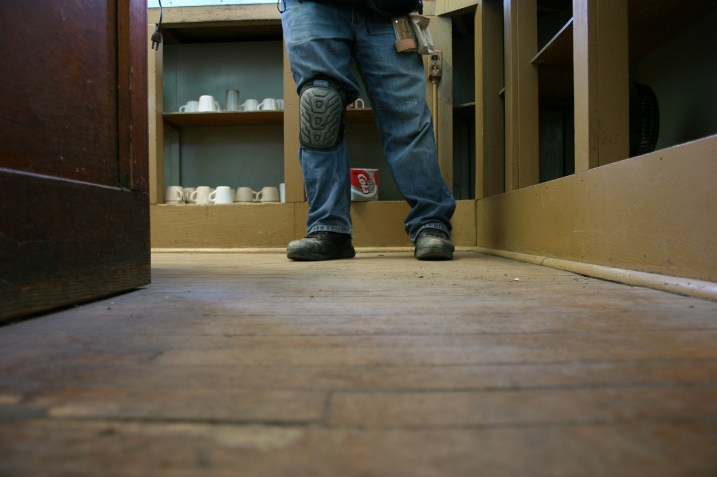
Wooden floors, like this behind the lunch counter, run throughout the building. In one section, however, where the bank vault once stood, the floor is made of pipestone granite.
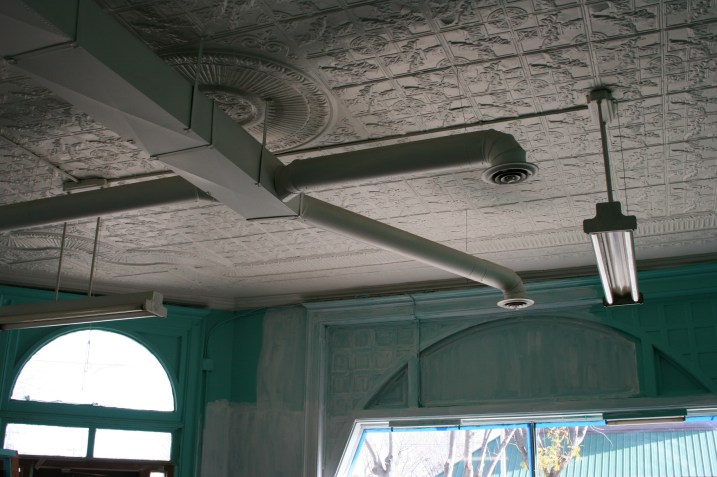
This shows a section of the original tin ceiling in the front part of the building. Ceilings are a lofty 12 and one-half feet high.
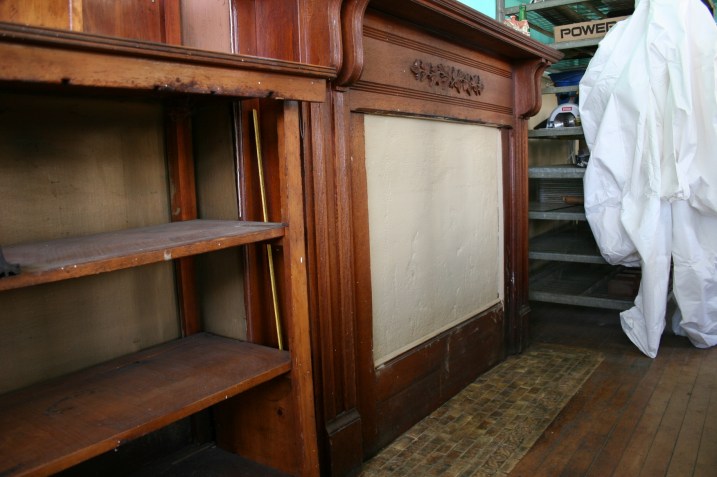
Plans are to move the facade and tile from the this original First National Bank fireplace into the coffee shop, which David will manage. 

The couple is also uncovering and sifting through collectible treasures like WW I and WW II artifacts, signage, rocks, and more accumulated by Bob. So much was damaged though, beyond saving, by moisture problems in the building, David says. But they are saving what they can, possibly incorporating some of their treasures into Seven Sisters.
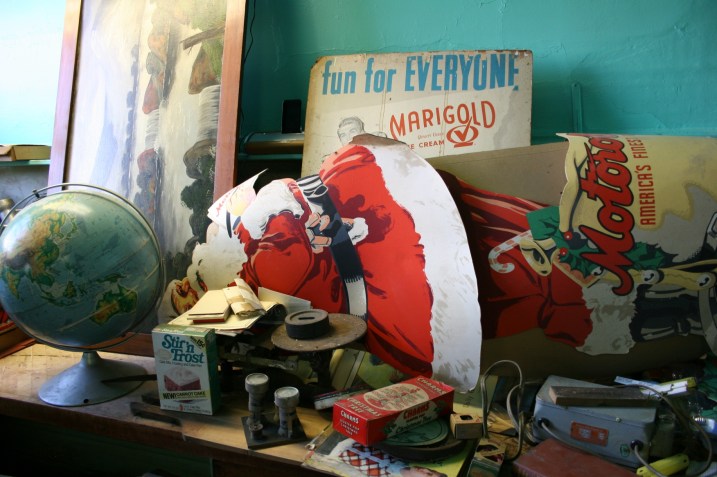
A pile of recently found treasures.
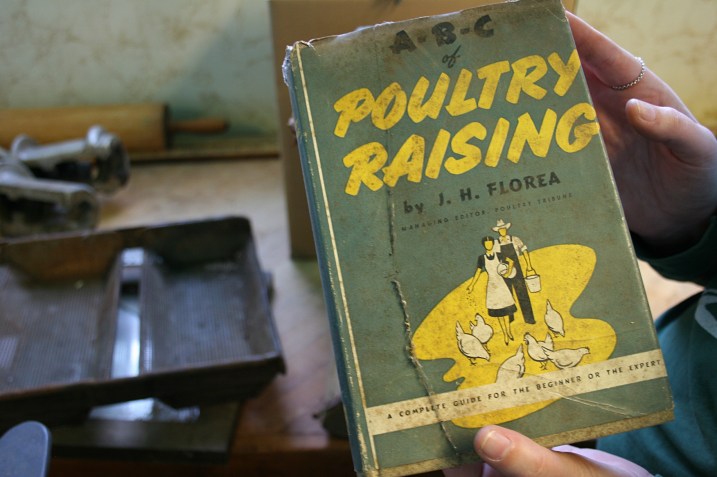
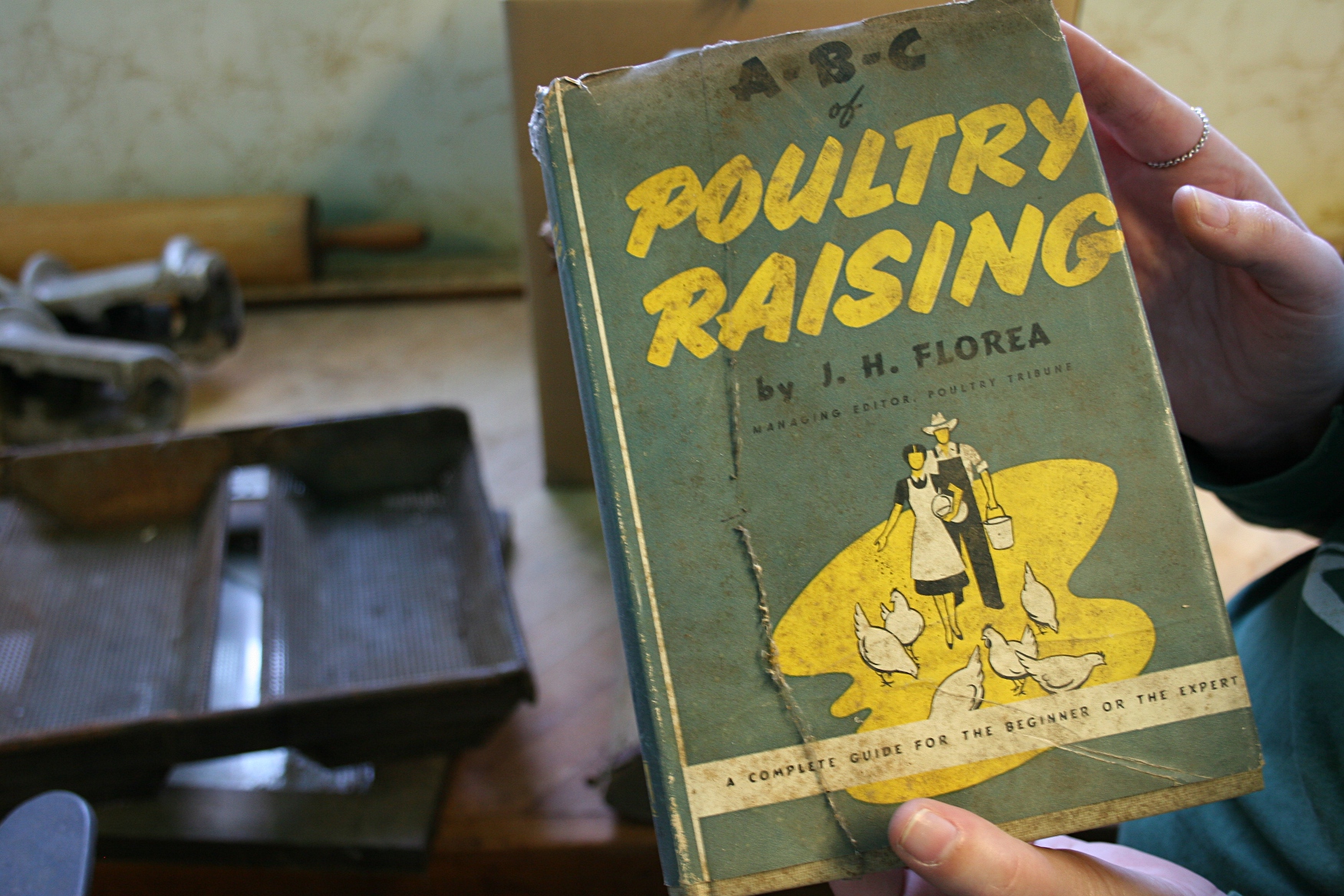
Among the old books uncovered was this one on poultry. Bob Sanger kept a flock of 100 chickens at his house, Michelle says. He used the eggs at his bakery and also sold eggs.
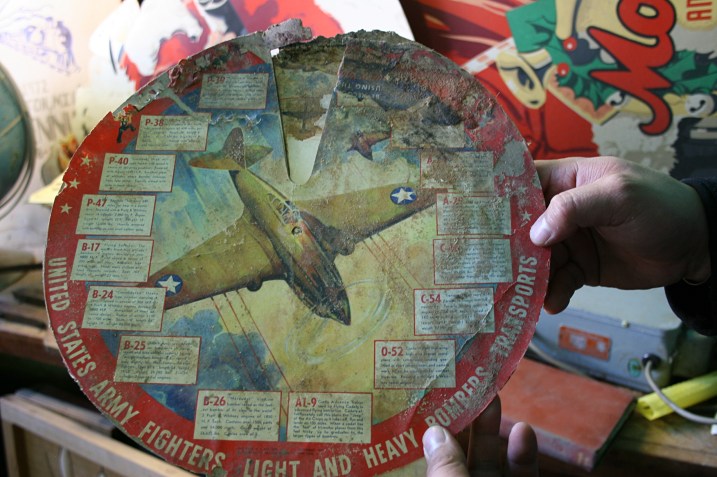
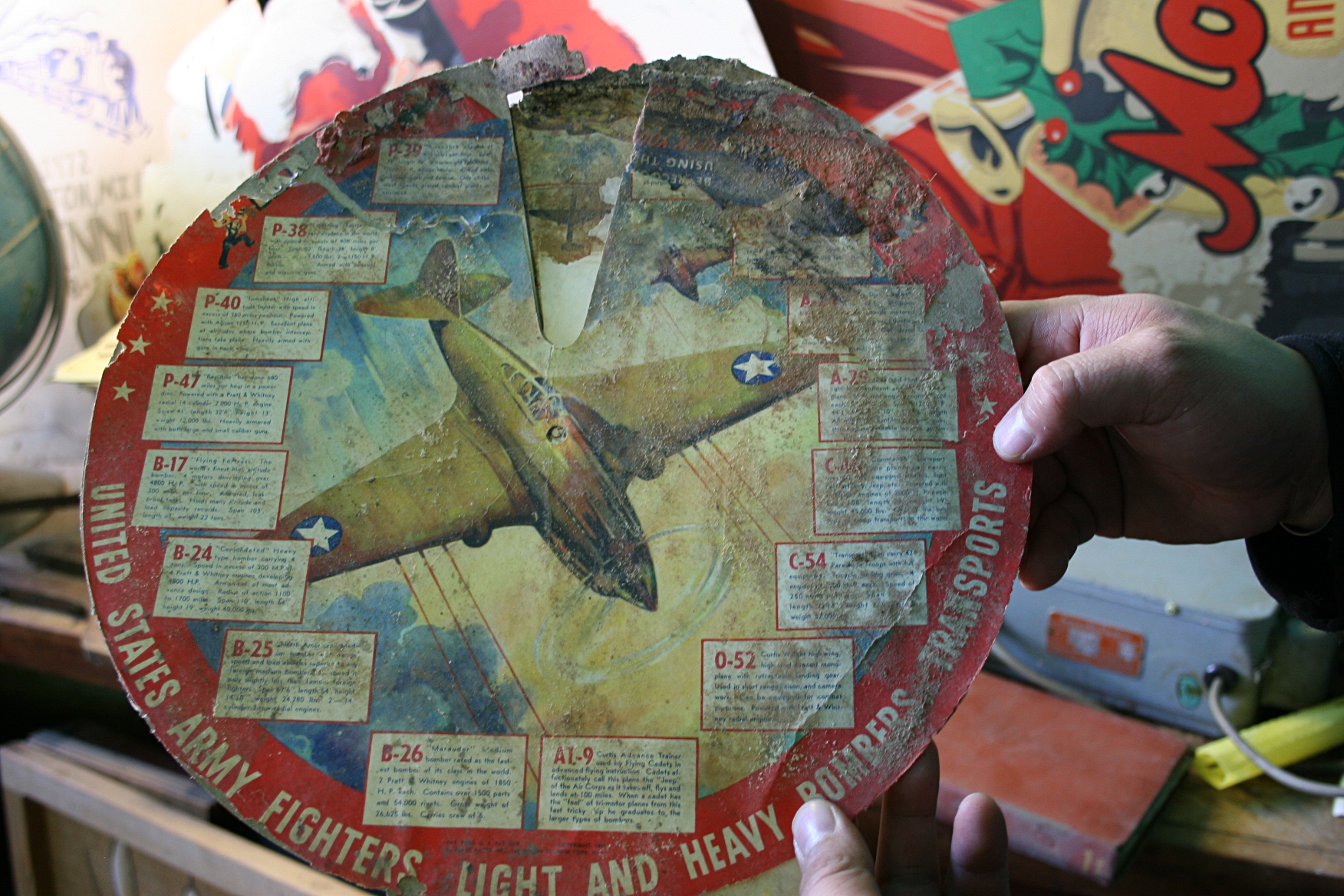
Another find, a vintage bomber transport chart damaged by water, like many of the old items found in the building.

Inedible silver cake decorating balls remain from Bob’s days of baking wedding cakes.
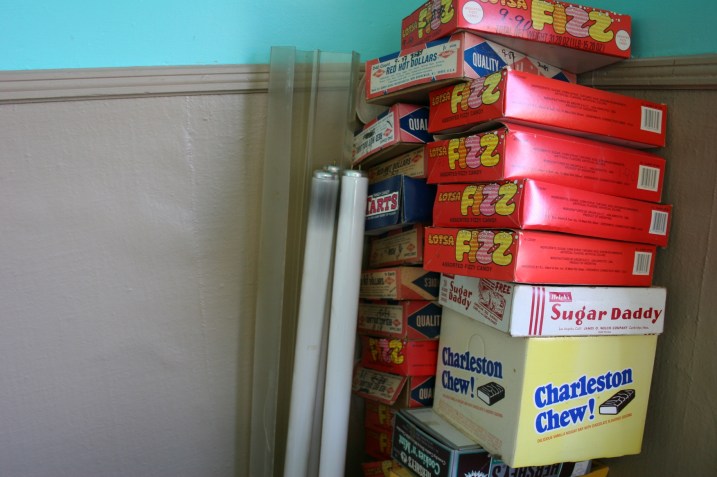
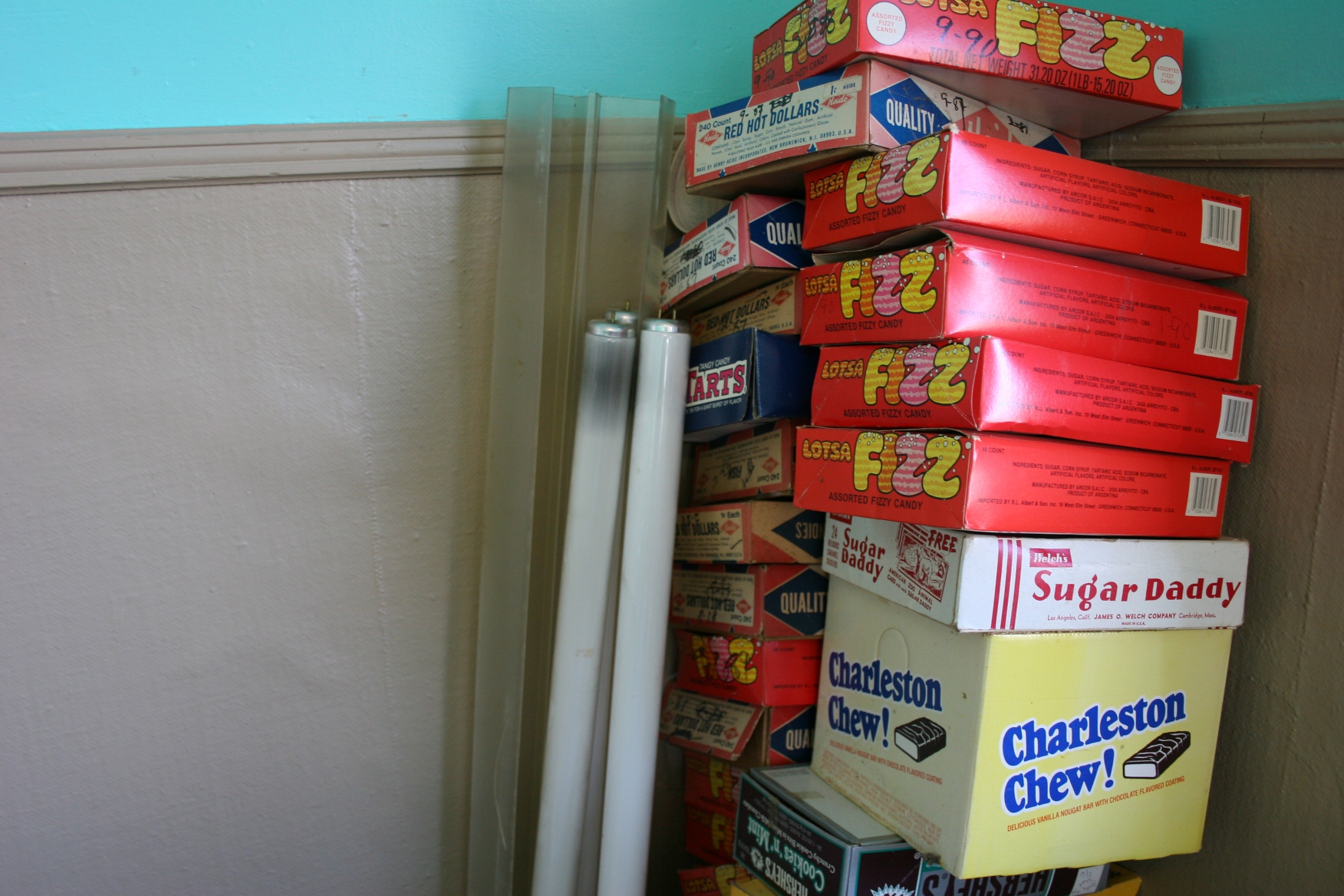
The couple found empty candy boxes (pictured here) and candy still in boxes inside the former bakery.

Michelle has fond memories of coming to Sanger’s for sweet treats. She remembers penny Tootsie Rolls and gumballs and candy cigarettes sold at the candy counter:

Thinking about the hundreds of people who have memories of this building, I really hope we can fill that same role for the next generations.

FYI: Lamberton is located along U.S. Highway 14 about 10 miles east of Walnut Grove, childhood home of Laura Ingalls Wilder, author of the Little House children’s book series. The area is a strong draw for summer tourists interested in Wilder’s books and the Little House on the Prairie television series set in Walnut Grove.

© Copyright 2012 Audrey Kletscher Helbling


Gravel road on the prairie July 9, 2012

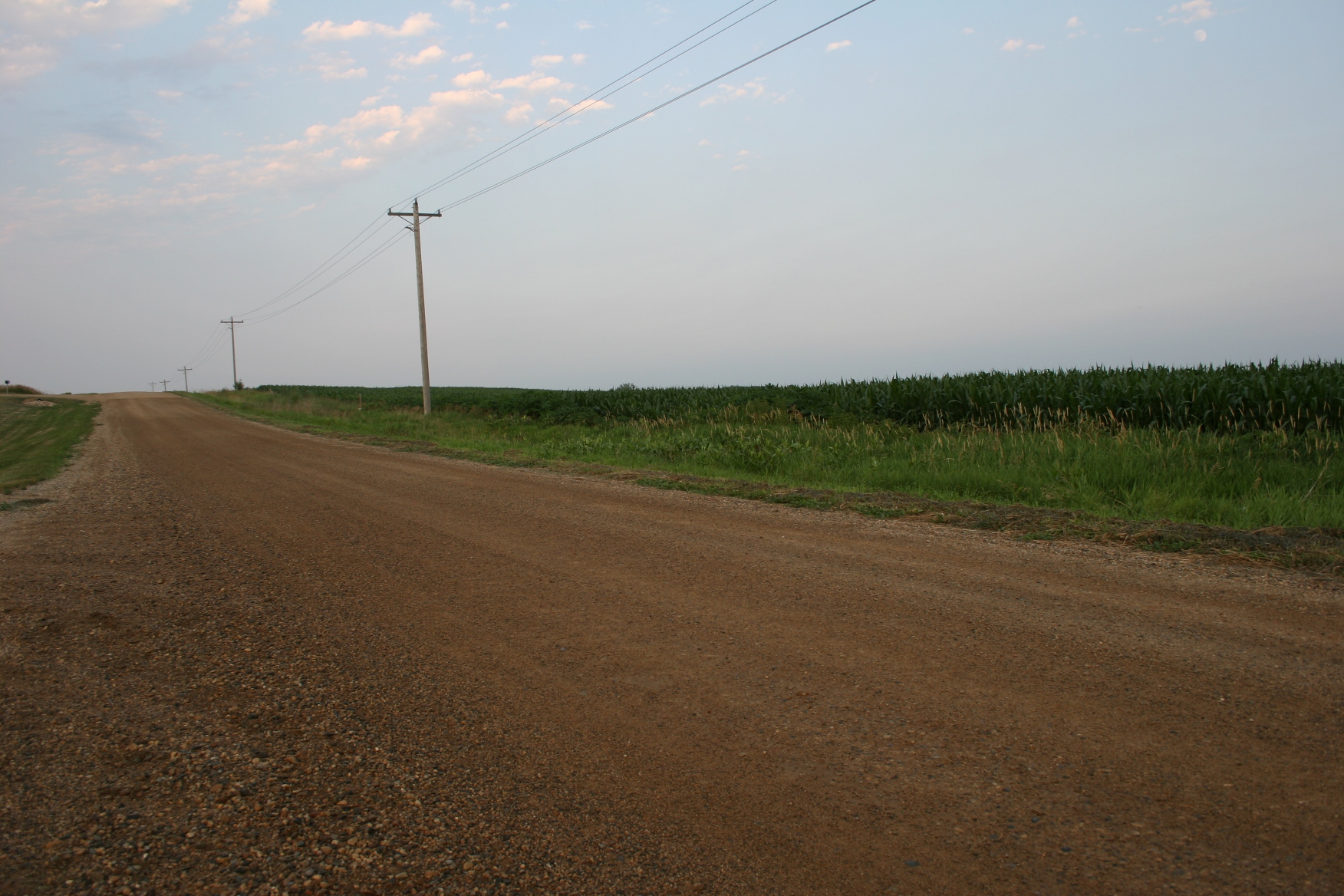
A gravel road just north of Lamberton in southwestern Minnesota.

WHAT IS IT ABOUT a gravel road?

A picturesque farm site on a sultry summer evening as seen from a gravel road north of Lamberton.

It is poetry and peace, country and charm.

You can almost hear the crunch of the gravel in this image.

But it is more. It is small stones crunching under tires and feet as dust rises and lingers, marking the trail traveled.

As the sun sets on the prairie, a truck travels along a gravel road up to a paved roadway north of Lamberton.

It is a marker of townships, the route of massive yellow road graders blading the road surface to a flat finish or heaving snow toward ditches.

It is memories of bumpy school bus rides and squishing into the back seat of the family car between brothers and sisters.

It is Dad’s admonition to always, always, move to the right when cresting a hill.

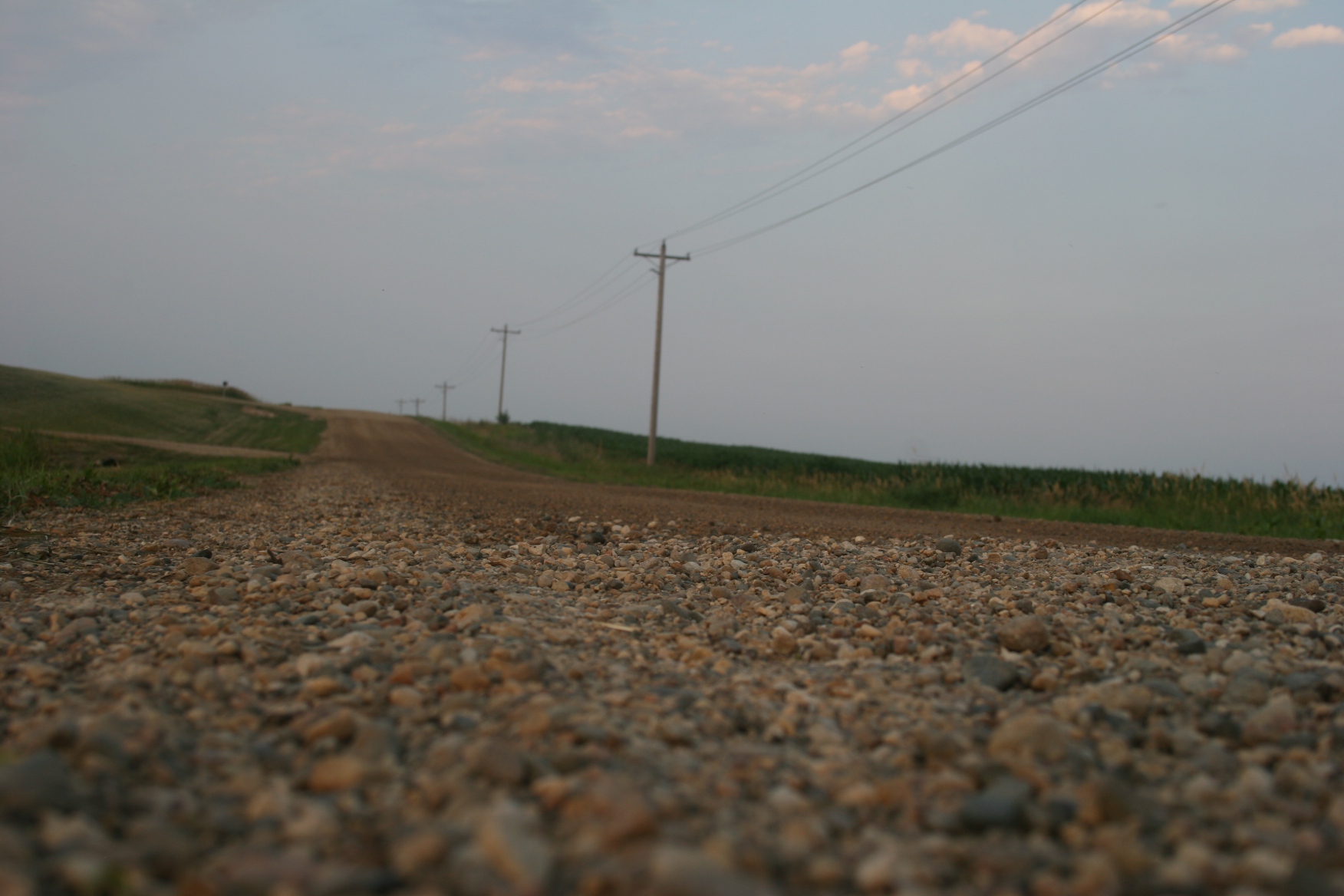
Utility lines along the same gravel road stretch into forever.

It is the memory of pinpoint stars dotting the pitch black darkness of a prairie night and the sweet scents of wild roses (once) rambling in ditches and of freshly-mown alfalfa and of hay baled and stacked onto a swaying wagon.

A gravel road is all of these to me, and yet, in its most basic definition, it serves as a way to get from point A to point B, and marks borders between town and country.

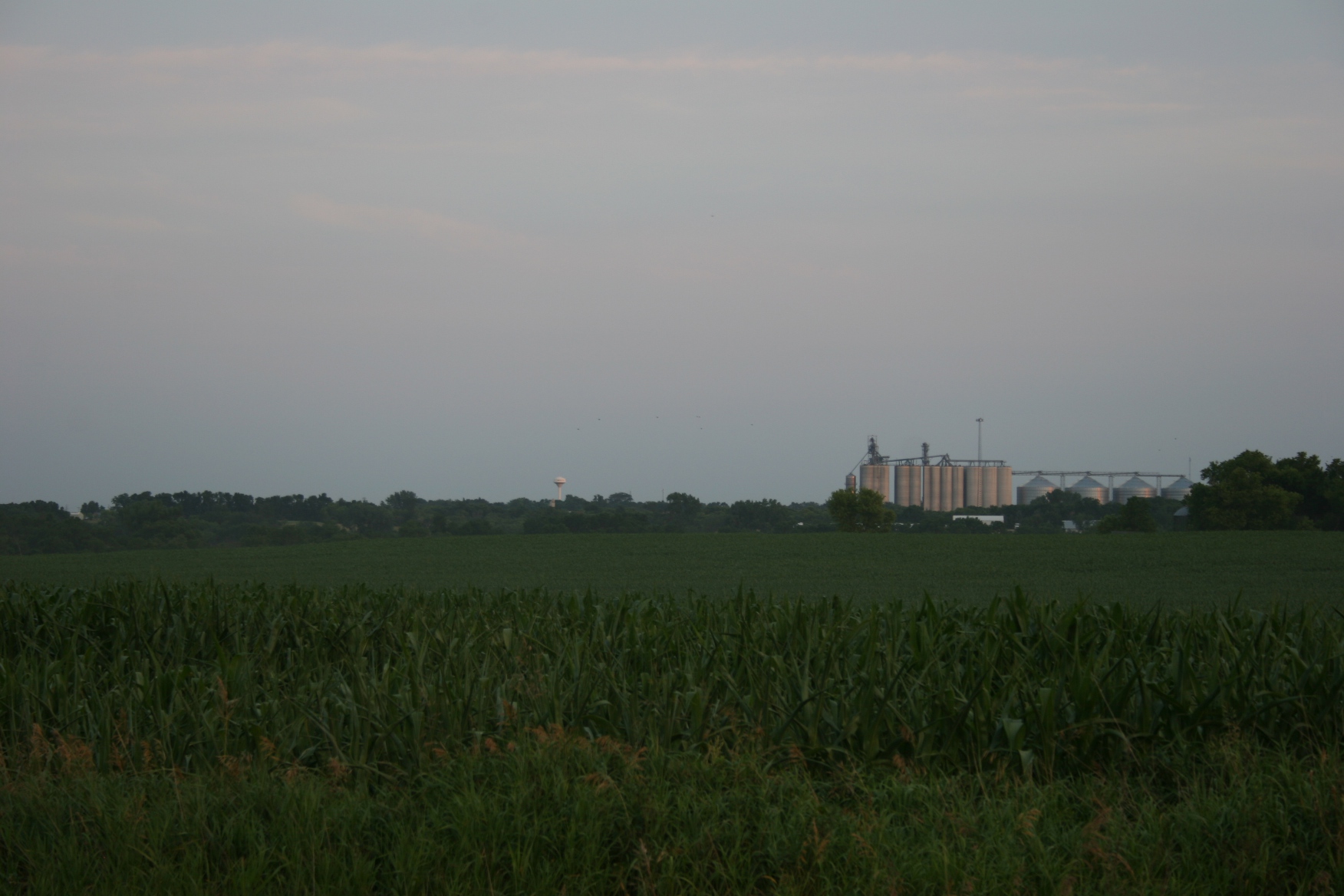
Standing on the gravel road, I turned south to photograph the cornfield and Lamberton in the distance.

It is a line in a plat book, a route connecting paved roads, a path to a rural home.

It is a gravel road on the prairie.

© Copyright 2012 Audrey Kletscher Helbling
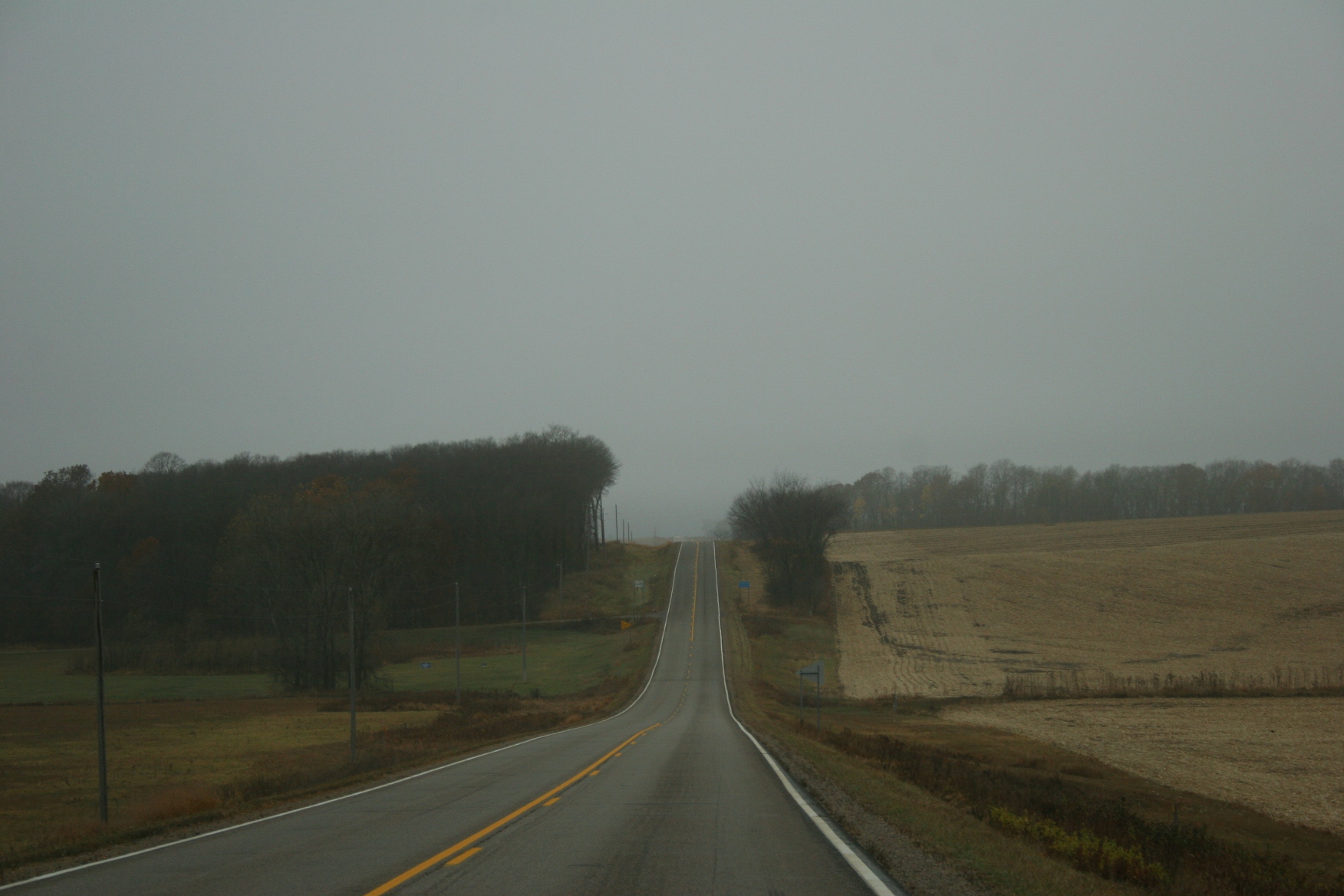
 

My dream come true: A Little Free Library installed in my hometown on the southwestern Minnesota prairie July 3, 2012

IMAGINE GROWING UP in a town without a library and, all your life, wishing for a library in your hometown.

Then imagine one July day, when you have been gone for nearly four decades and are old enough to qualify as a senior citizen, that a couple drives into your hometown in their station wagon to deliver a library.

That scenario played out in my hometown on Sunday afternoon as Todd Bol, co-founder of the Little Free Library, traveled three hours from Hudson, Wisconsin, with his wife, Susan, and their two dogs to deliver and install a LFL at the Vesta Cafe in the southwestern Minnesota prairie town of Vesta.

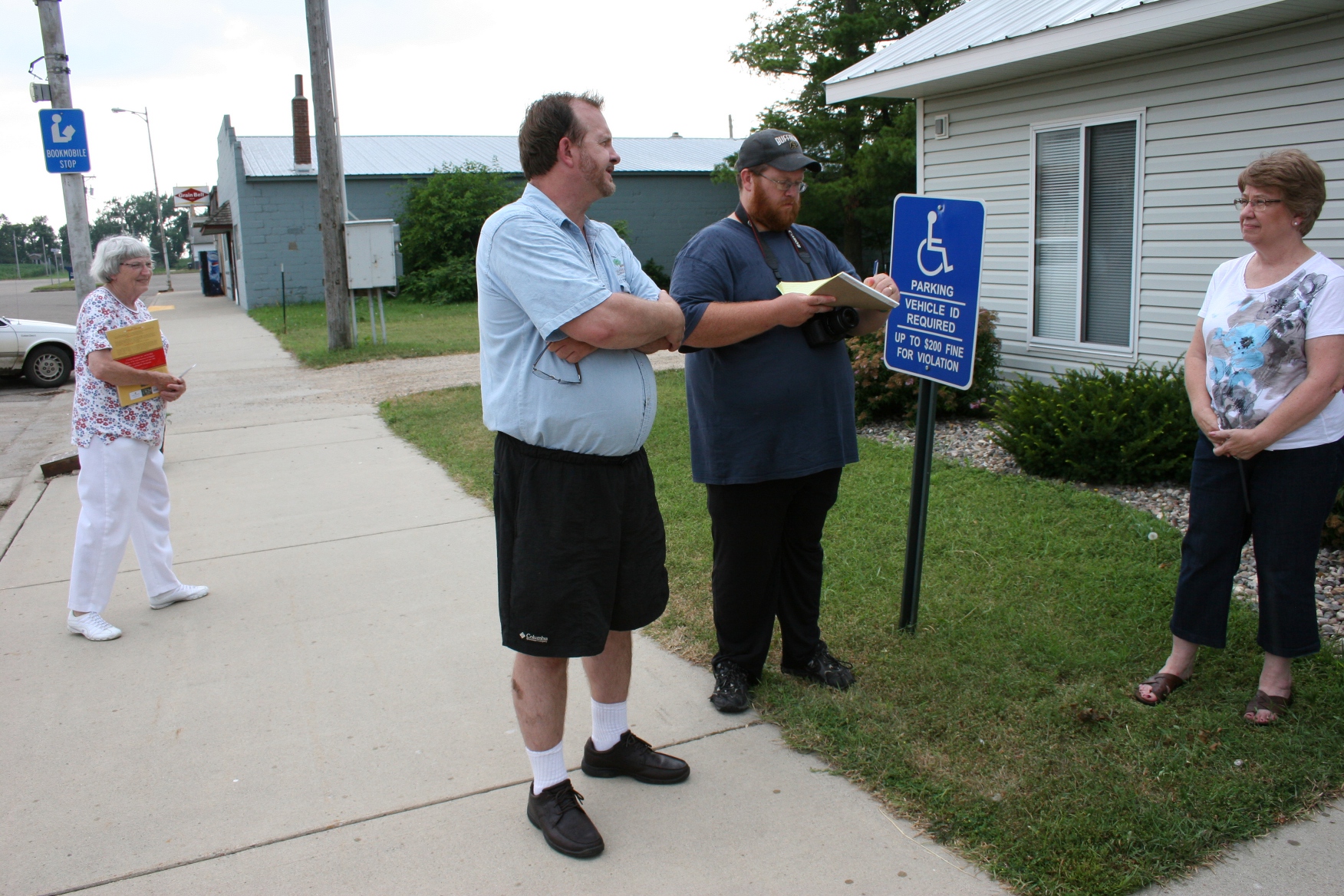
Troy Krause of The Redwood Falls Gazette interviews Little Free Library co-founder Todd Bol as Dorothy Marquardt, left, and Karen Lemcke of the Vesta Commercial Club listen.

“I love books. They are part of my heart and soul,” Todd Bol said Sunday as he stood outside the cafe near the over-sized birdhouse style library anchored on a post. I listened and snapped photos as Troy Krause, editor of The Redwood Falls Gazette interviewed this man who has seen his LFL story spread to media outlets worldwide, from The Huffington Post to The Los Angeles Times and beyond.

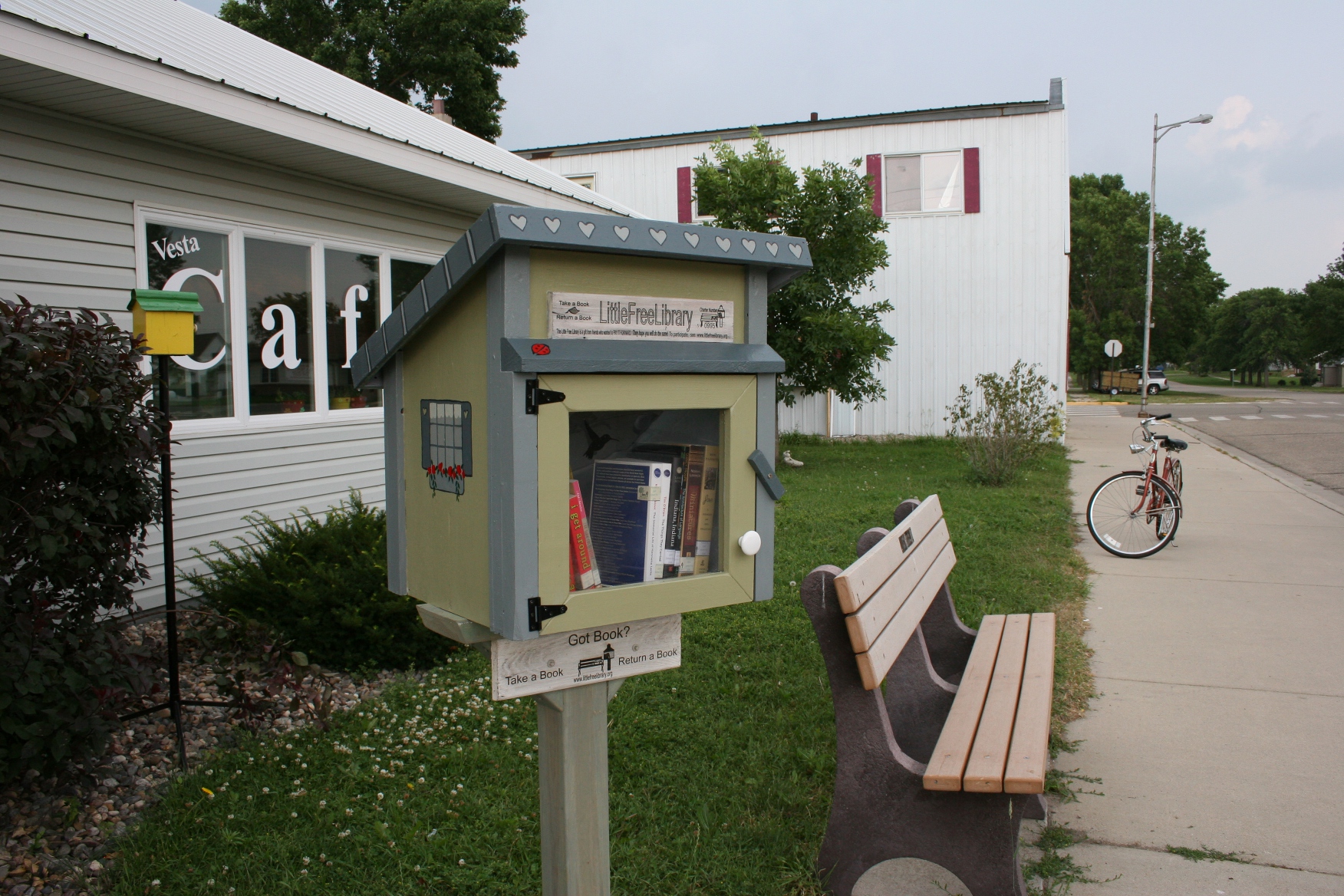
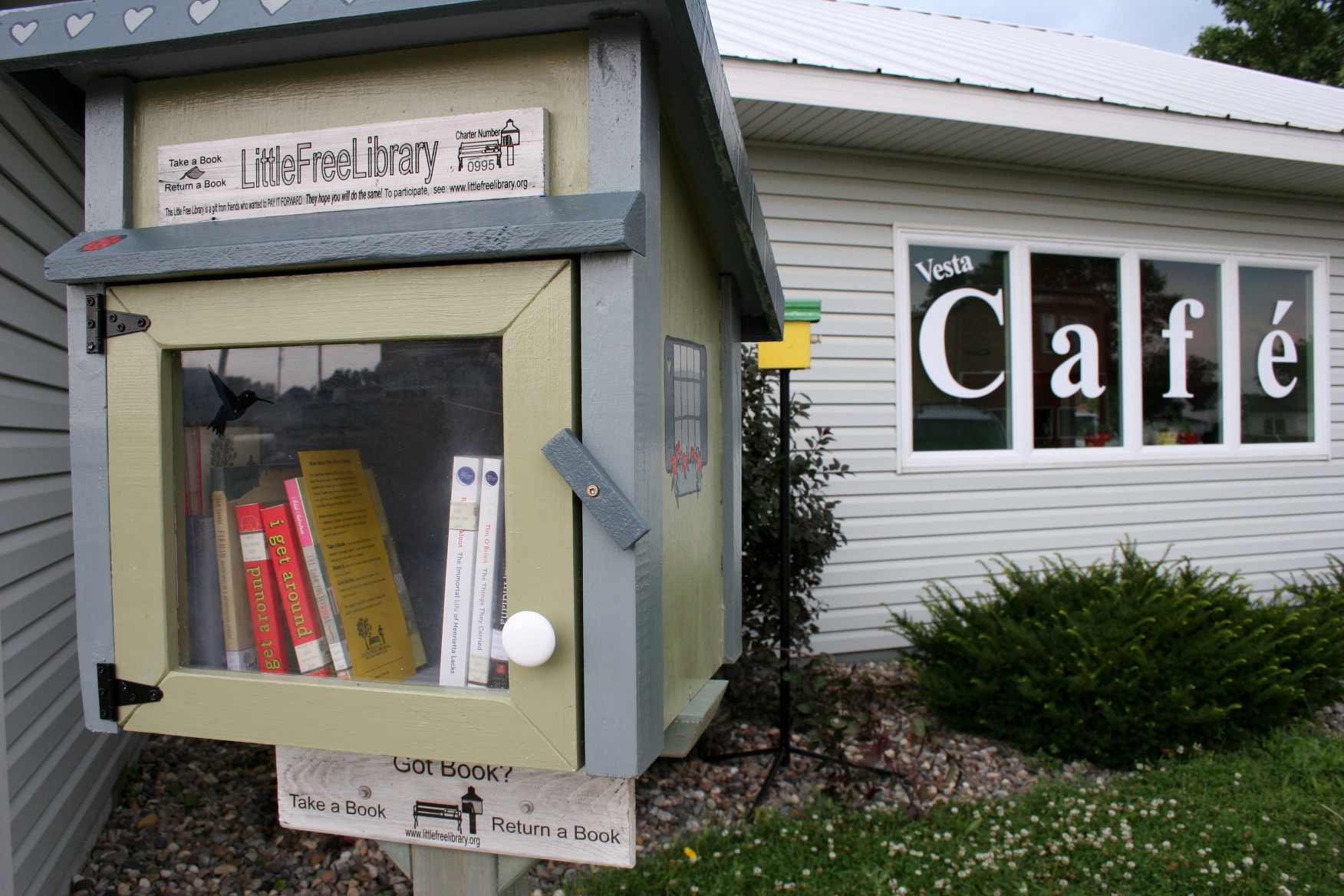
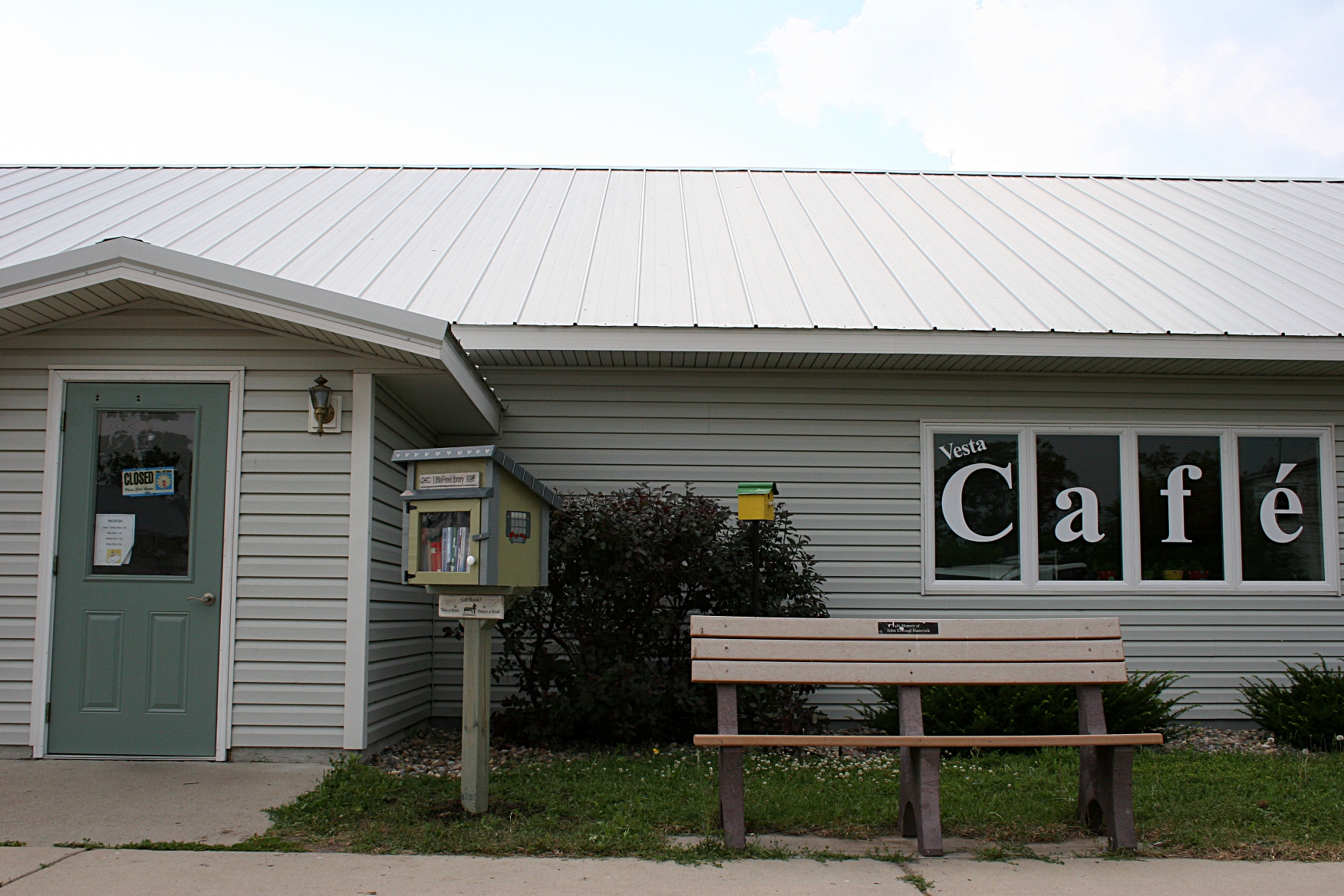
The LFL Todd and Susan installed outside the community owned Vesta Cafe.

Little Free Libraries are popping up everywhere across the country (and even outside the U.S.), bringing books to neighborhoods and cities and now, for the first time, to places likes Vesta, the seed plant for the “Small Towns Minnesota” movement of the LFL project, according to Bol.

The beautiful handcrafted library Todd Bol had built and painted for the residents of Vesta, population around 340.

He offered to donate the library, hand-built by an Amish carpenter from Cashton, Wisconsin, to Vesta after I blogged last November about a LFL in my community of Faribault and then issued this challenge to my hometown of some 340 residents:

I’d like to challenge the residents of Vesta to start a Little Free Library. How about in or near the Vesta Cafe? Make my dream of a library in my hometown come true. I’ll even bring some books for the library the next time I’m “back home.”

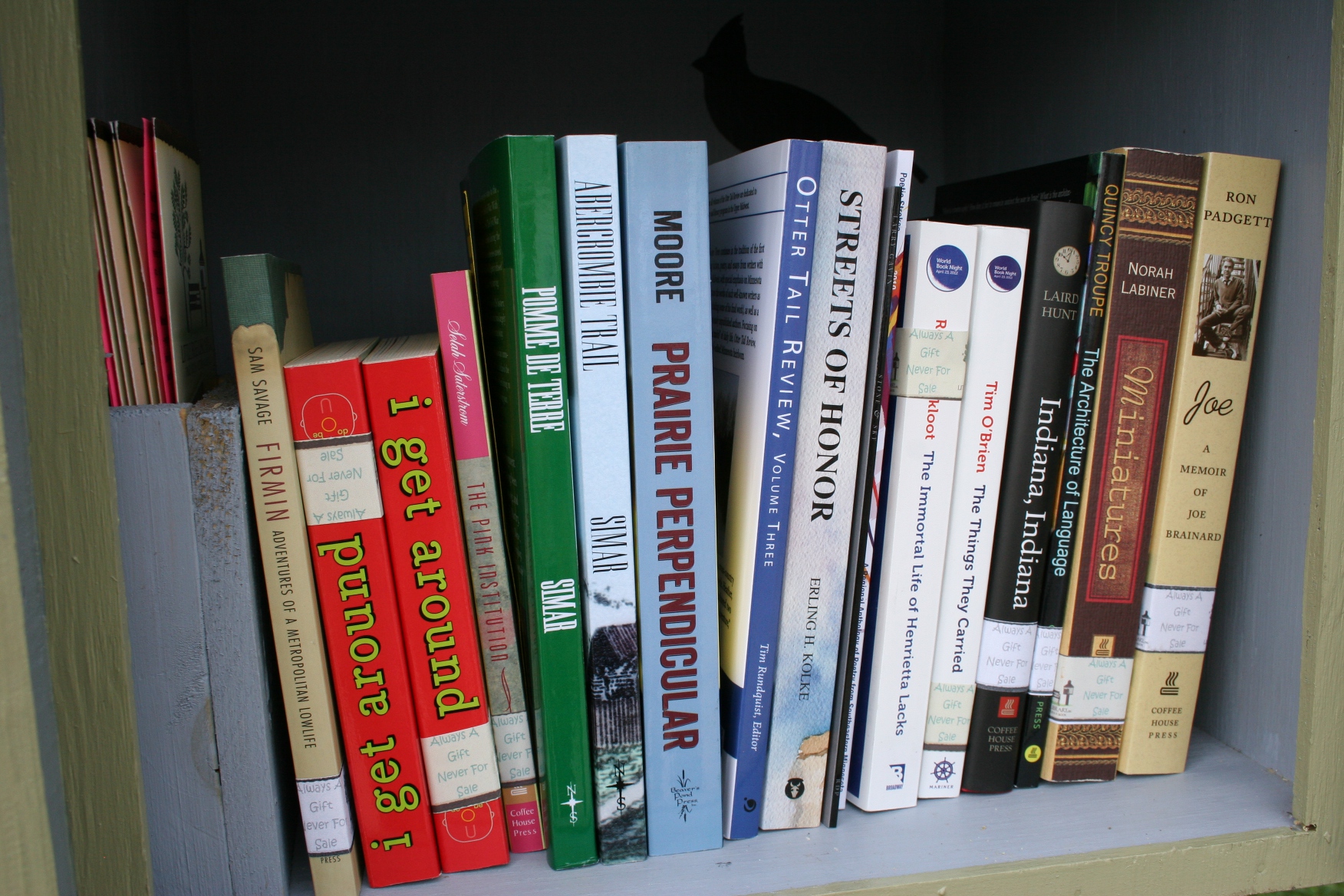
The books Todd Bol and I placed inside Vesta’s LFL. I plan to bring some books for children and teens the next time I’m back in Vesta. Anyone is welcome to donate books. Overflow books will go on a bookshelf inside the cafe and books will be rotated.

Sunday afternoon I delivered on that promise as did Bol with his promise. He brought the library and we filled it with books—his donated by Coffee House Press and mine from my bookshelves. Among my seven donations were two books of poetry, not something I would typically expect Vestans to read. But I wanted Vesta’s LFL to have a copy of Poetic Strokes—A Regional Anthology of Poetry from Southeastern Minnesota, Volume Four. That includes two poems I wrote, one titled “A school without a library.” (When I attended Vesta Elementary School, our library books were selected by students from the Redwood County Library in Redwood Falls 20 miles away and brought back to our school, then later returned and exchanged for a new selection of volumes.)

The other poetry book, Stone & Sky, was written by a Faribault High School English teacher who once lived in nearby Belview and who understands the prairie like I do.

Vesta resident and Vesta Commercial Club resident Dorothy Marquardt took home this book donated by Coffee House Press to Vesta’s LFL. Dorothy is an enthusiastic promoter of my hometown.

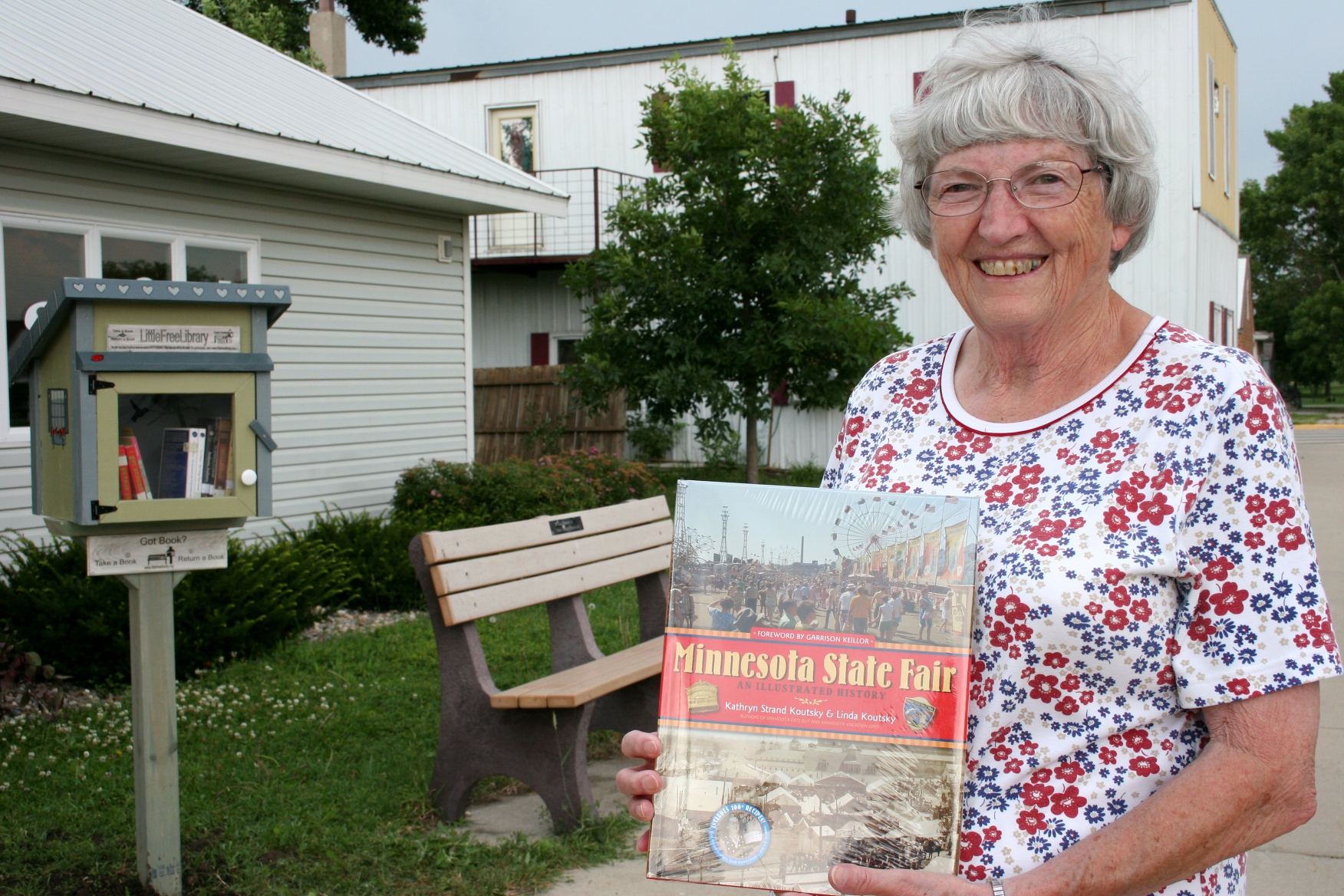
Dorothy Marquardt, a member of the Vesta Commercial Club, which worked with Bol on getting the LFL into Vesta, understands what a LFL will mean to area residents. Vesta recently saw its county bookmobile service end. “It’s kind of a godsend,” she said on Sunday, clutching a copy of Minnesota State Fair—An Illustrated History by Kathryn Strand Koutsky and Linda Koutsky with foreword by Garrison Keillor. Marquardt is officially the first reader to pull a book from Vesta’s LFL.

The team that worked to bring a Little Free Library to Vesta includes Dorothy Marquardt, left, and Karen Lemcke, representing the sponsoring Vesta Commercial Club, LFL co-founder Todd Bol and me (holding a copy of a poetry anthology I donated).

Monday morning, while dining in the cafe, I promoted the LFL to locals, moving between tables explaining how the library works. It operates on the premise of take a book, leave a book. Or take a book and bring a book back later to place inside the outdoor library. It’s all done on the honor system and done to promote literacy and encourage reading.

For me, the establishment of a LFL in my hometown is a dream come true. I always wanted a library while growing up. And now that I’m all grown up, my hometown finally has one.

The Little Free Library at the Vesta Cafe.

#

I’D LIKE TO ISSUE A NEW CHALLENGE TODAY. This one goes to the people of my native prairie, of southwestern Minnesota. I’d like to see more Little Free Libraries in the many small towns, like Vesta, that are without libraries and/or bookmobile service. Purchase a library via the LFL organization. Build your own. Work together—perhaps as a 4-H club or a church youth group or a civic organization or whatever—to bring a LFL into your town.

Be sure to officially register your LFL (there’s a small fee) so word of your library can be spread on the LFL website and via social media. Comment on this post and tell me that you are going to accept my challenge and bring a LFL to your community.

Finally, thank you, Todd Bol, for making my dream come true through your gift of a LFL to my hometown. It is my hope that the library in Vesta will inspire other communities to grow this project in rural Minnesota so that no child or adult, no matter where he/she lives, is without a library.

Thank you also to Karen Lemcke of the Vesta Commercial Club for working with Todd and me to make this project a reality.

This LFL, repurposed from a cranberry crate, needs a new home. Check The Redwood Falls Gazette to read how editor Troy Krause will be attempting to find a location for the library in southwestern Minnesota. Interested? Contact Troy.

FYI: Todd also dropped a LFL off in the neighboring community of Belview. And he left a third library with Troy Krause, editor of  The Gazette. Troy promised to publicize the availability of that third library. I’ll keep you posted on which town accepts the third LFL.

Click here to link to the LFL website and learn more about the Little Free Library project.

© Copyright 2012 Audrey Kletscher Helbling
 

Vesta & Belview celebrating one year after storms June 29, 2012

TWO REDWOOD COUNTY COMMUNITIES will come together to celebrate this Sunday, one year to the date after severe storms ripped through this region of southwestern Minnesota.

St. John’s Lutheran Church in Vesta, hours after a July 1, 2011, storm ripped half the roof from the sanctuary. Photo courtesy of Brian Kletscher.

In my hometown of Vesta, area residents will remember the storm anniversary and rededicate St. John’s Evangelical Lutheran Church at a 10:30 a.m. worship service followed by a catered chicken dinner.

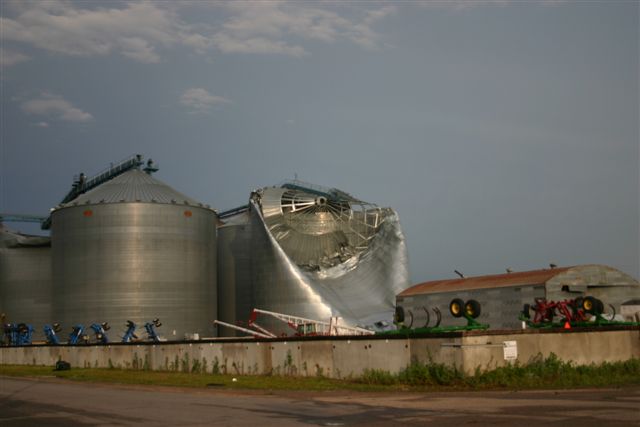
Damage to one of the grain bins at the local elevator. Photo by Brian Kletscher.

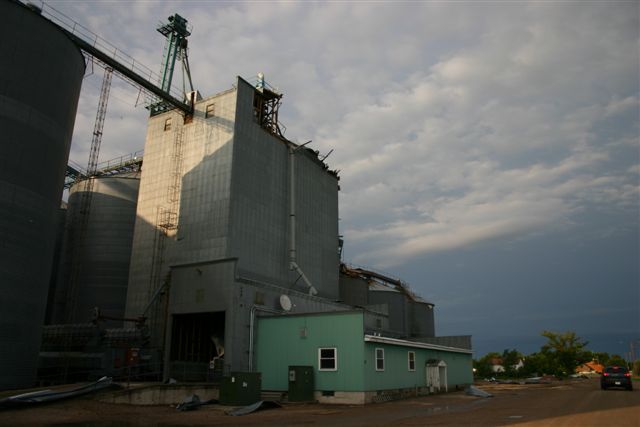
The grain elevator complex, the visual defining landmark in the farming community of Vesta, was ravaged by winds. You’ll see the damage near the top of the old grain elevator. Photo by Brian Kletscher

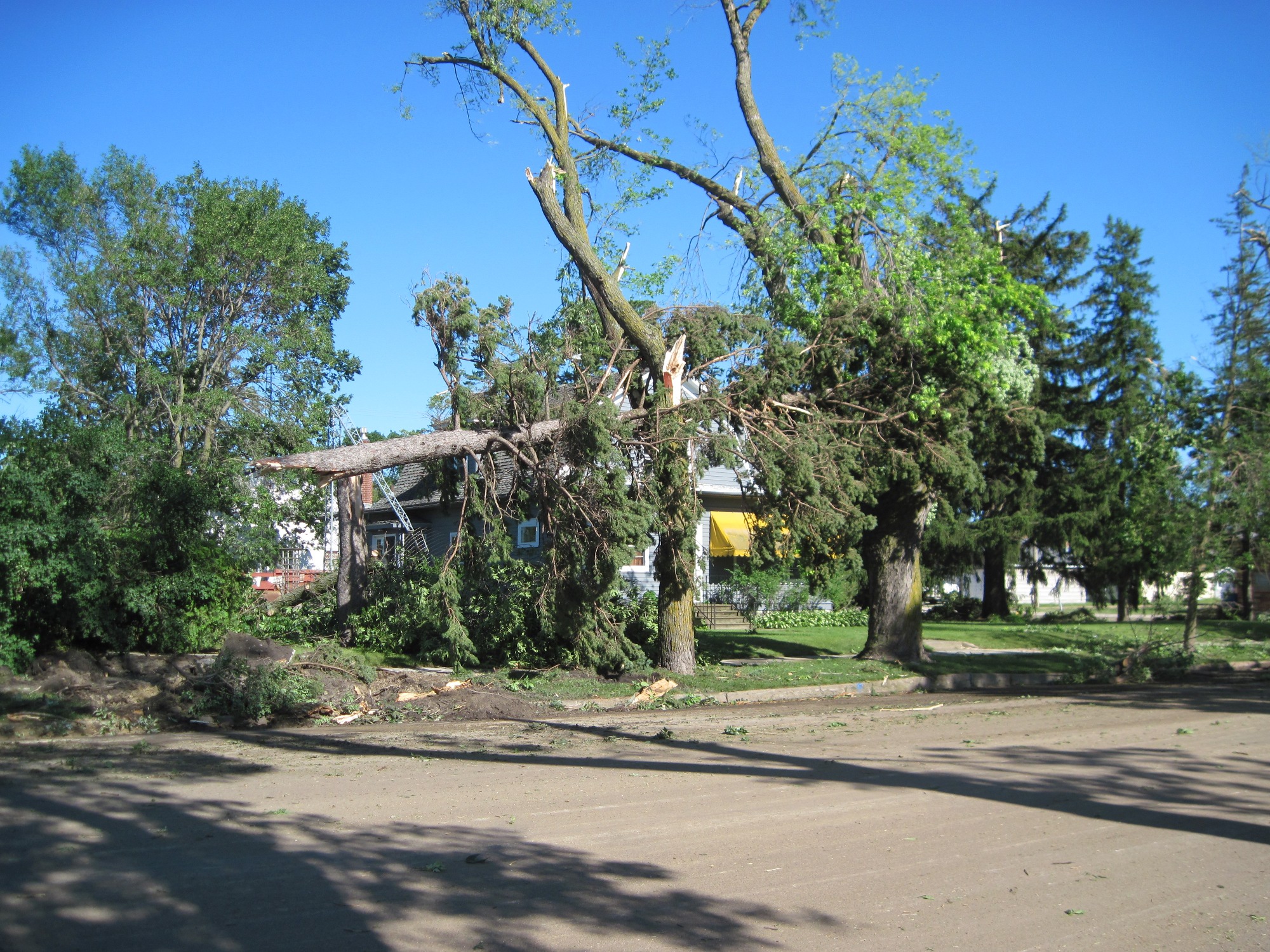
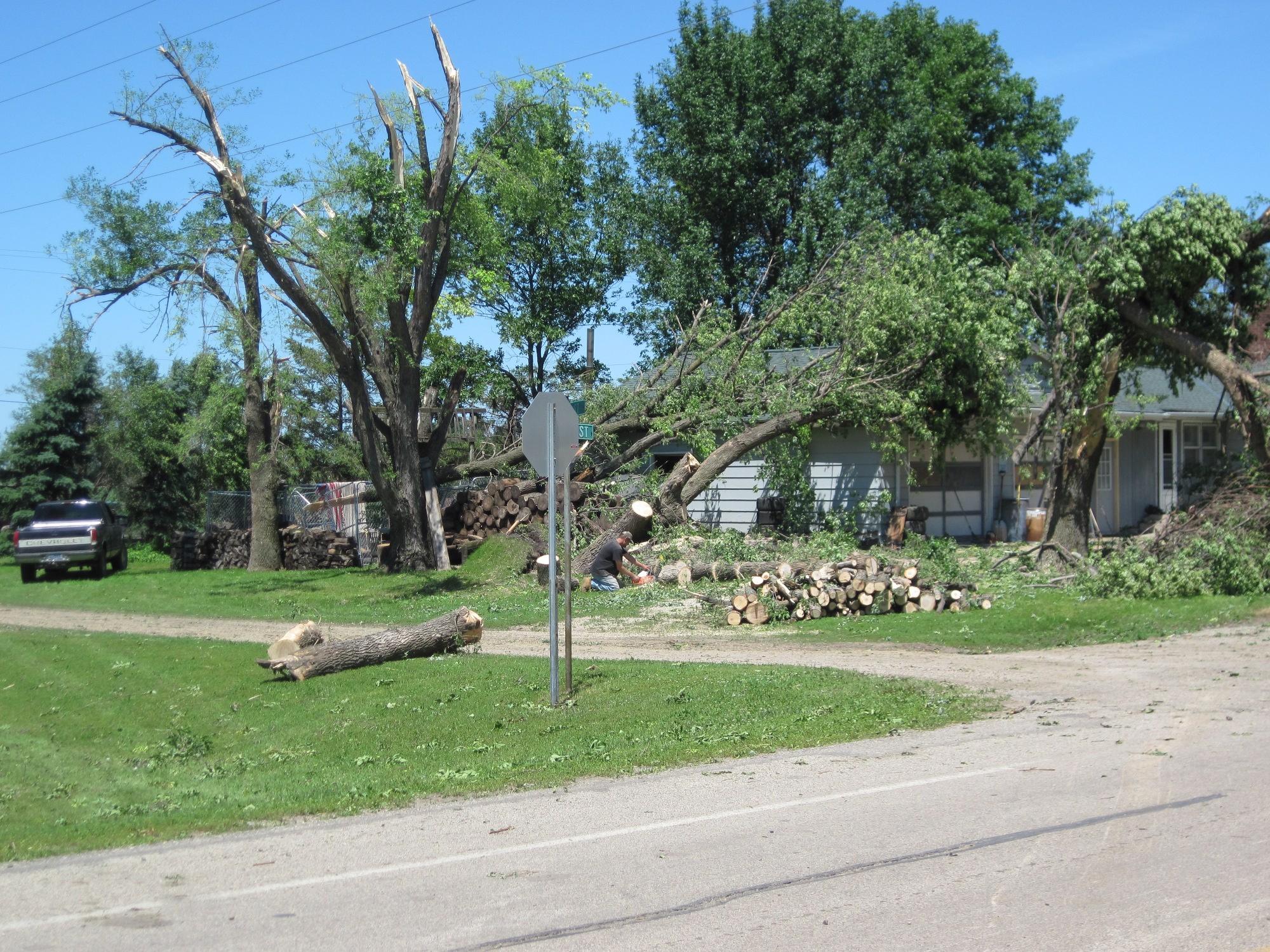
During the late afternoon of July 1, 2011, a series of downbursts with wind speeds of 90 – 100 mph swept through Vesta, ripping half the roof from St. John’s sanctuary, felling trees, denting grain bins, damaging the landmark grain elevator and more.

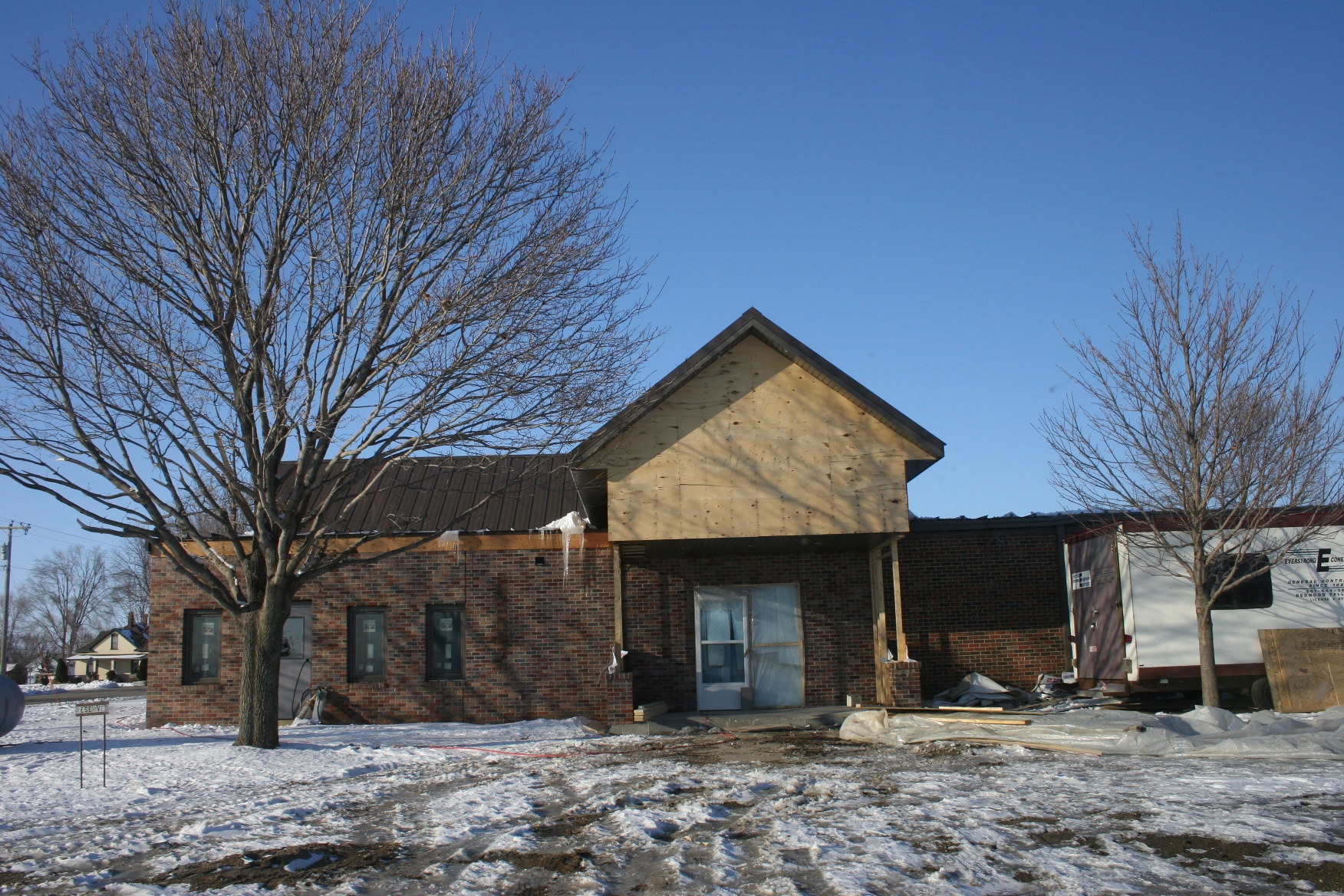
Under construction in March, a pastor’s office, bathroom and storage room were added to the south side of the early 1970s era church. Photo by Audrey Kletscher Helbling.

It took nearly a year for St. John’s to reopen after the congregation decided to expand the church as part of the roof reconstruction process.

Entering Belview from Sacred Heart at 9 a.m. on July 2, the morning after the tornado. Photo courtesy of Merlin and Iylene Kletscher, who were not yet living in Belview when the storm hit.

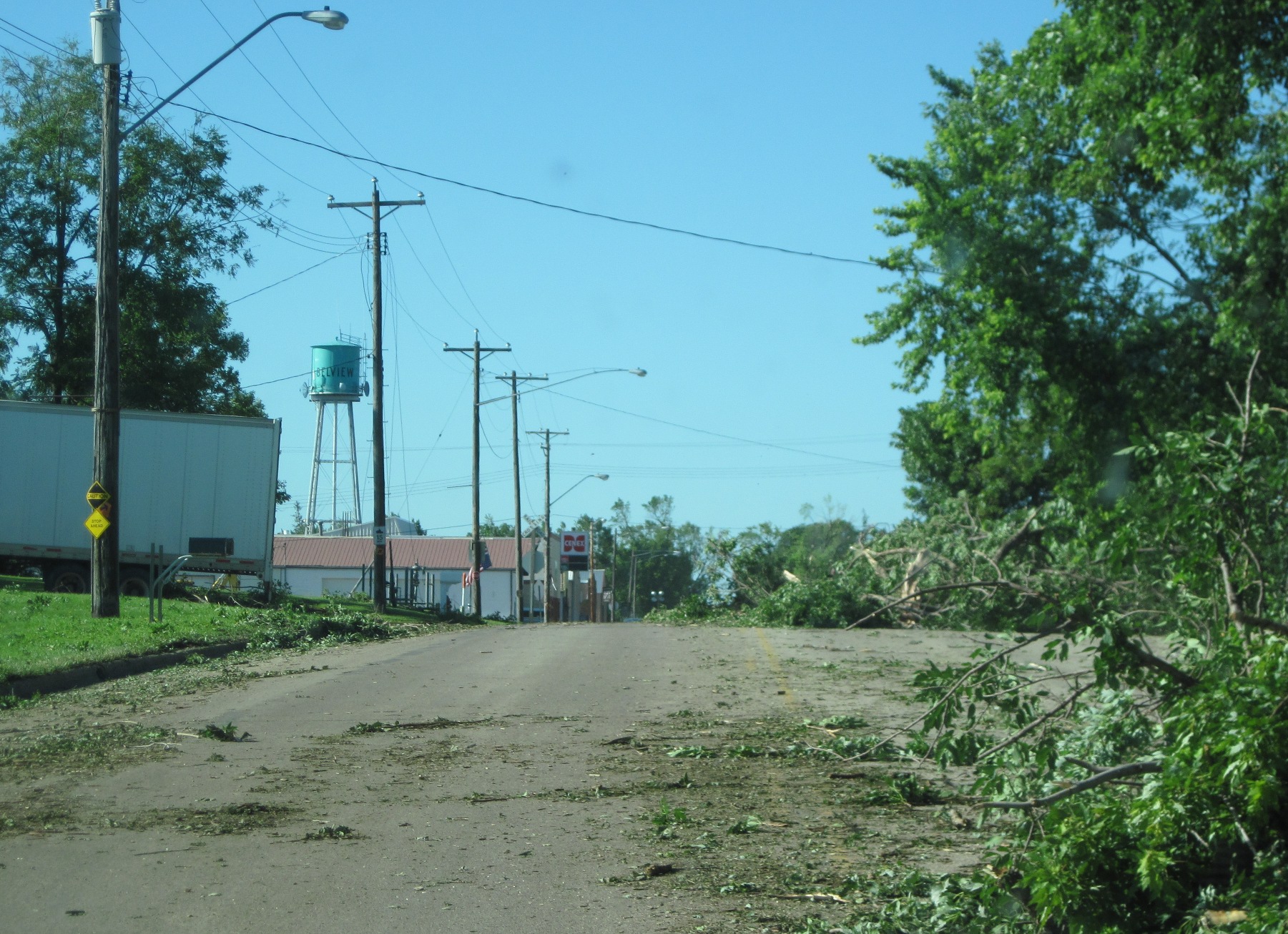
In Belview, about 10 miles to the north and east, residents will also mark the one-year anniversary of an EF-1 tornado which rode in on the same storm system. The tornado, with winds of 95 – 105 mph, wiped out many of this prairie town’s trees (which fell onto buildings and vehicles), damaged the nursing home to the point that it closed for awhile, wrecked roofs and more.

A month after the tornado, Belview’s Parkview Home (nursing home) remained closed as repairs were needed to the damaged roof, covered here with blue tarps. Photo by Audrey Kletscher Helbling.

The communities of Belview and Vesta lost many trees in the July 1 storms. This photo is along a Belview street north of the park. Photo courtesy of Merlin and Iylene Kletscher.

Jerry Hagen’s house, across the street from Merlin and Iylene’s home in a July 2 photo. Photo courtesy of Merlin & Iylene Kletscher.

Damage along South Main Street in Belview. Photo courtesy of Merlin and Iylene Kletscher.

A year later, Belview residents are celebrating with a catered community picnic supper and entertainment at the local park (or in the air conditioned historic Odeon Hall if the weather is too hot) from 4 p.m. – 6 p.m. Sunday.

“We know we can pull together when the going gets tough as was proven after the storm,” says City Clerk Lori Ryer. “Now we would like to pull together in a spirit of community and fellowship and say thank you to everyone in town and to those that helped.”

My Uncle Merlin and Aunt Iylene Kletscher will be among Belview residents attending that picnic, celebrating and listening to the music of Ron and Kathy and Friends. The Kletschers had just closed on the purchase of a foreclosed fixer-upper home along Belview’s Main Street when the tornado ravaged Iylene’s hometown. They lost most of their trees—one of the reasons the couple bought the property—and sustained damage to their house, which they had just begun renovating.

Says Merlin:

So far we have planted four flowering crabs, a new disease resistant elm tree, 13 lilac bushes and the city has the Main Street boulevard planted with really nice-sized maples. We have two churches with new roofs, the bank is putting a new roof on right now and there are also more homes in the process of new shingles, etc., now.

One year later, Belview is looking pretty darn good!

A portion of Main Street in Belview a month after the tornado. Photo by Audrey Kletscher Helbling

FYI: To read more about the July 1, 2011, storms and to view more storm damage photos, check the Minnesota Prairie Roots archives from July 2011. In addition to the damage in Vesta and Belview, many rural residences also were hit. The farm of my cousins, Danny and Marilyn Schmidt, was struck by a second EF-1 tornado which nipped the northwestern corner of Redwood County. Near the South Dakota/Minnesota border, the community of Tyler experienced an EF-2 tornado which followed a 3-mile path through Lincoln County. The tornadoes and wind storms were part of a massive storm system  on July 1, 2011, which began along the western edge of Minnesota and extended as far east as northwestern Wisconsin.

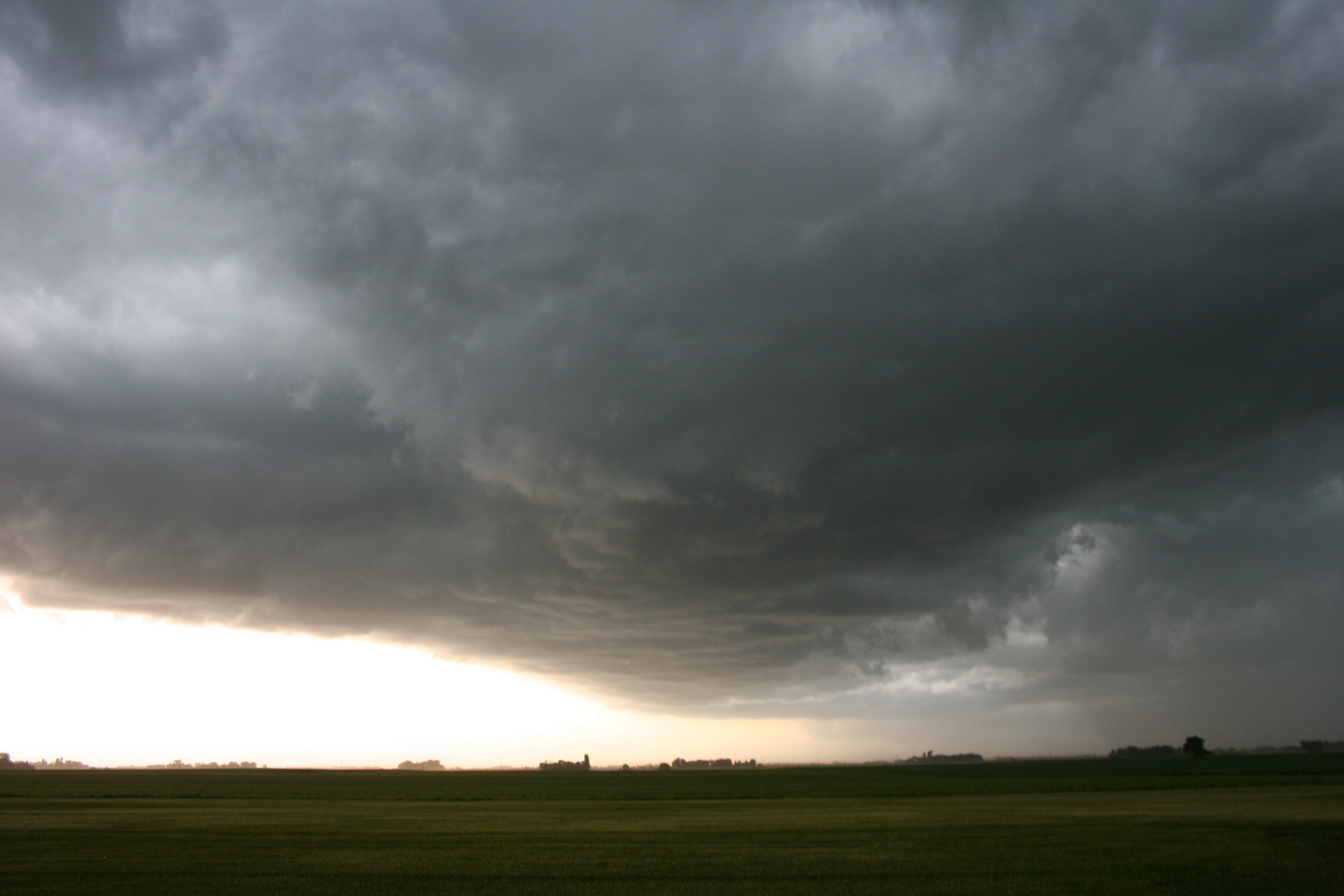
I was on my way with my husband to a party near Nerstrand not far from our Faribault home in southeastern Minnesota when these threatening clouds moved in during the early evening hours of July 1, 2011. It was while driving to our friends’ rural home that my sister Lanae phoned to tell me about the storm in our hometown and to warn me of the approaching bad weather. Fortunately the ominous clouds delivered only rain and nothing severe. But I was worried, very worried.

Copyright 2012 Audrey Kletscher Helbling
 

My Minnesota hometown celebrates summer with its famous chicken, dancing in the street & more June 14, 2012

Filed under: Uncategorized — Audrey Kletscher Helbling @ 8:20 AM
Tags: , , , , , , ,

I’LL NEVER FORGET the summer the neighbor boy coaxed me into riding with him on the Octopus during V-Esta Daze, my hometown’s annual summer celebration. What was I thinking as I settled into the amusement ride with Keith? What was he thinking?

I screamed the entire dizzying ride, scared out of my teenaged wits.

The same chicken dinner sign goes up every year inside the Vesta Community Hall. The price is updated when necessary.

While a carnival is no longer a part of V-Esta Daze, one aspect of the Vesta Commercial Club-sponsored celebration has remained constant. Since 1963, the Club has served its “famous barbecued chicken.”

It’s considered “famous,” I suppose, because V-Esta Daze became known for its chicken, just like Sauerkraut Days in Henderson is noted for its sauerkraut and Barnesville Potato Days is known for its potatoes.

The chicken dinner I enjoyed last summer at V-Esta Daze.

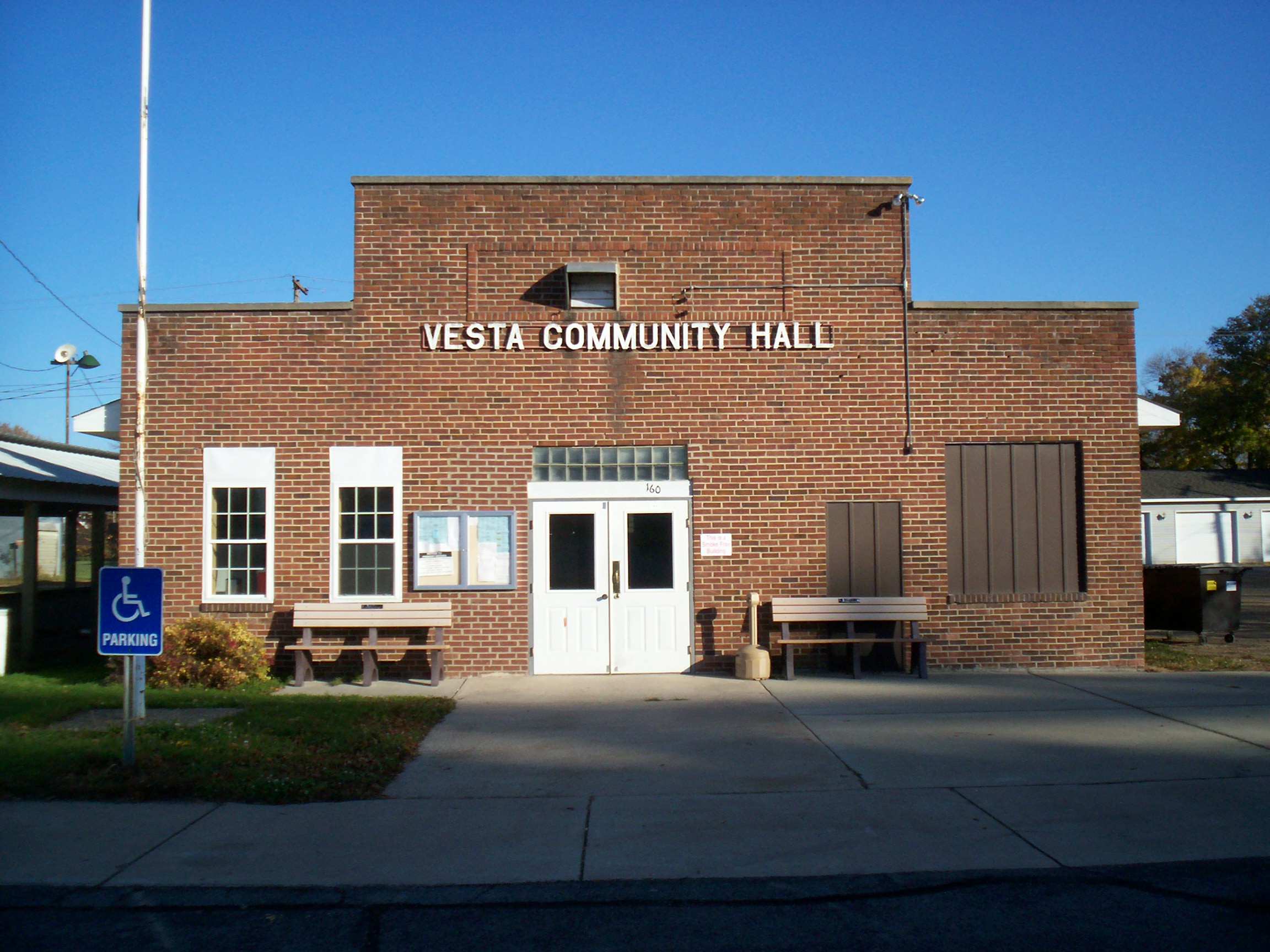
It is such comfortable familiarity, the same year-after-year offering of savory chicken grilled by the same volunteer men over a long pit of coals next to the old brick Vesta Community Hall that keeps locals and natives and those from neighboring towns returning.

This Friday, June 15, the crowds will be back, lining up at the hall between 5 – 8 p.m. for that famous chicken dinner.

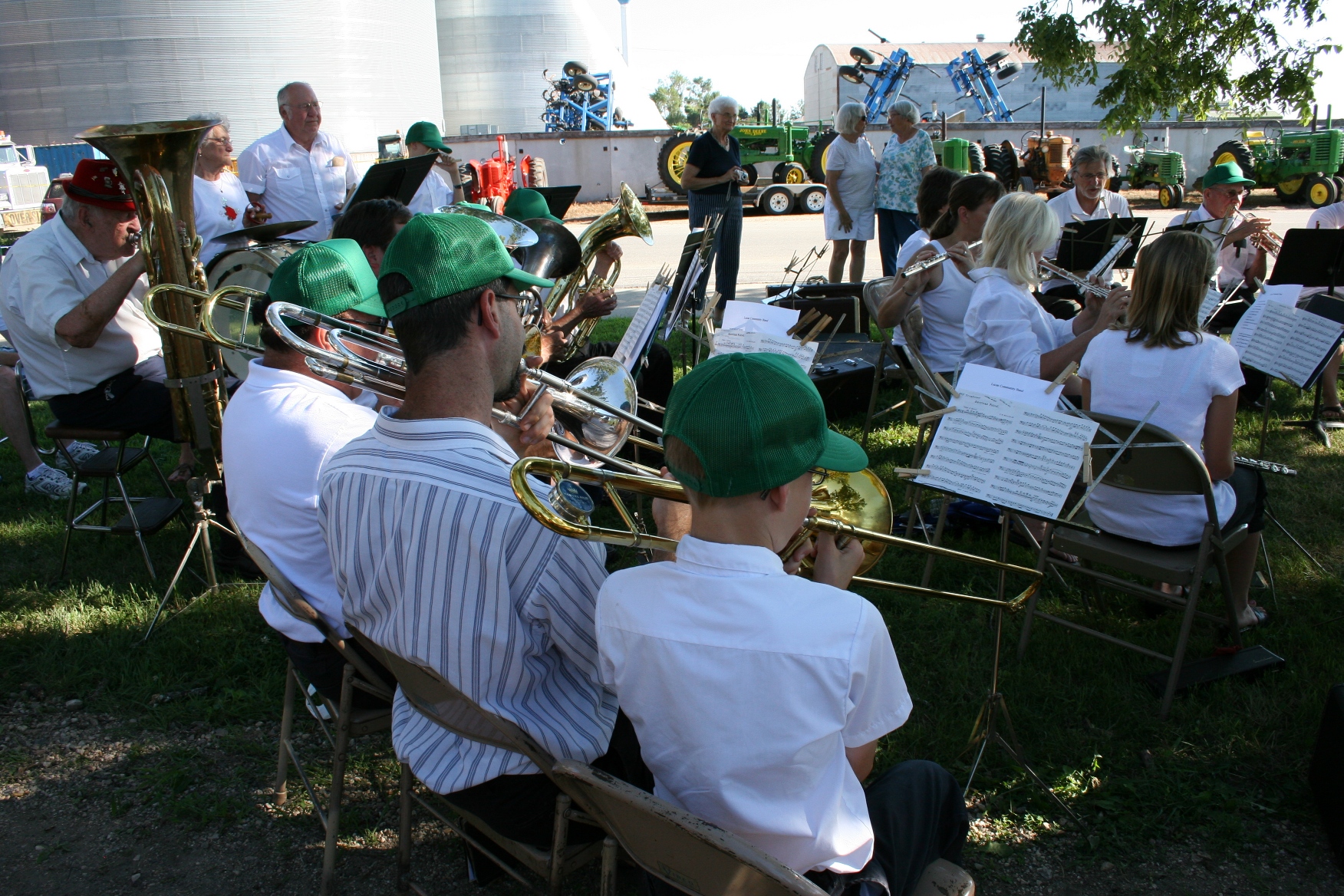
The Lucan Community Band played under the shade trees outside the community hall and across the street from the elevator at last year’s celebration.

Outside the hall, members of the Lucan Community Band will settle onto battered folding chairs to entertain the crowd with old favorites while folks listen and visit, catching up on the latest.

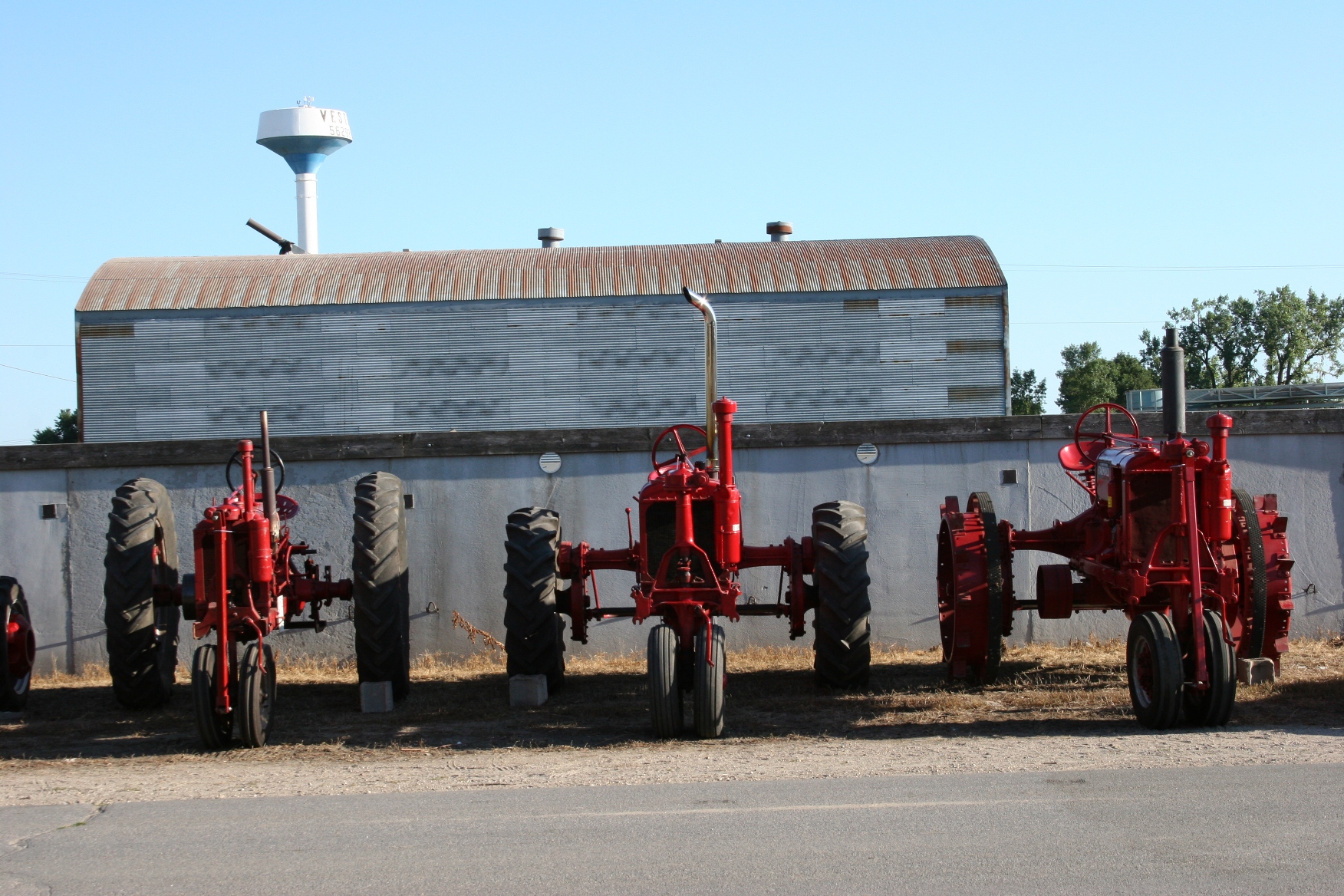
Area residents brought their vintage tractors to town for a tractor and car show last year. This year the show has been expanded to include “anything with wheels.”

Over on Main Street, tractors and cars and more will line up for the “Anything with Wheels” show between 4:30 – 8 p.m.

My cousin Dawn’s son, Kegan, enjoyed a pony ride at the 2011 celebration.

The Vesta Vikings 4-H Club is sponsoring a petting zoo and will be selling root beer floats.

Kids picked up hoses in water fights at last year’s V-Esta Daze.

Kids will engage in water fights near the hall from 6 – 8 p.m. I remember, when I was growing up, how fire departments from neighboring communities competed against one another to push a barrel along a cable with water shooting from a fire hose. I can still hear the pounding of water against metal, feel the excitement as the barrel flipped and turned and rode the cable until one team slammed the barrel into a post.

The only contests this year are the bean bag tourney beginning at 6 p.m. and the pie eating contest at 10 p.m.

In between and after, from early evening until 1 a.m., two musical groups will entertain at the street dance. And let me tell you, there’s nothing quite like dancing on the pavement of your one-block-Main-Street hometown while drinking beer on a sweltering summer night.

At least that’s what I remember, from years ago.

The Vesta Community Hall, center of the V-Esta Daze celebration. To the left is the covered BBQ pit.

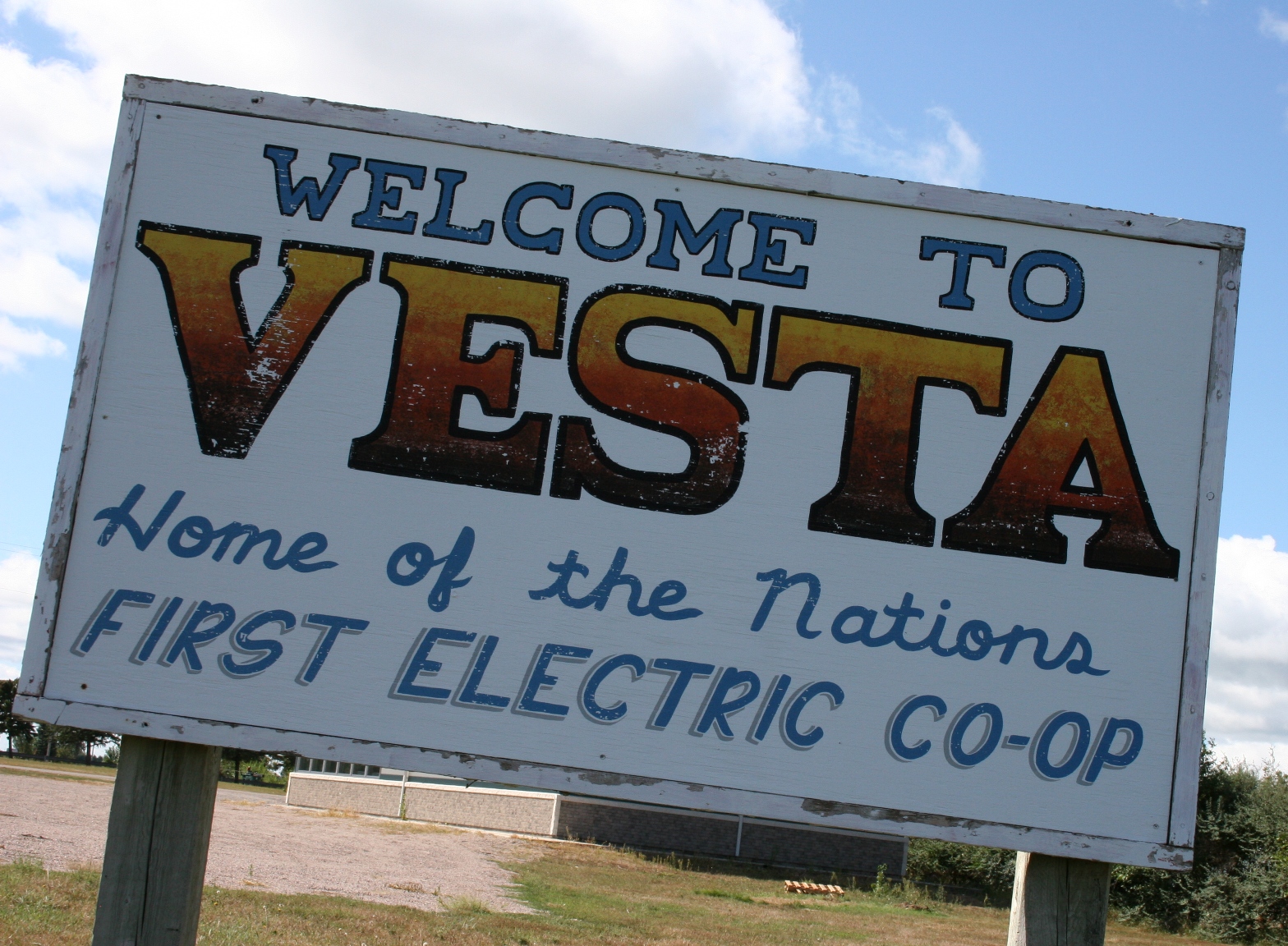
Along Minnesota Highway 19, this sign marks my hometown, population around 330 and home of the nation’s first electric co-op.

FYI: Vesta is located in southwestern Minnesota, half way between Redwood Falls and Marshall on State Highway 19.

© Copyright 2012 Audrey Kletscher Helbling
 

Pull off Highway 14 & view the historic buildings of Lamberton June 7, 2012

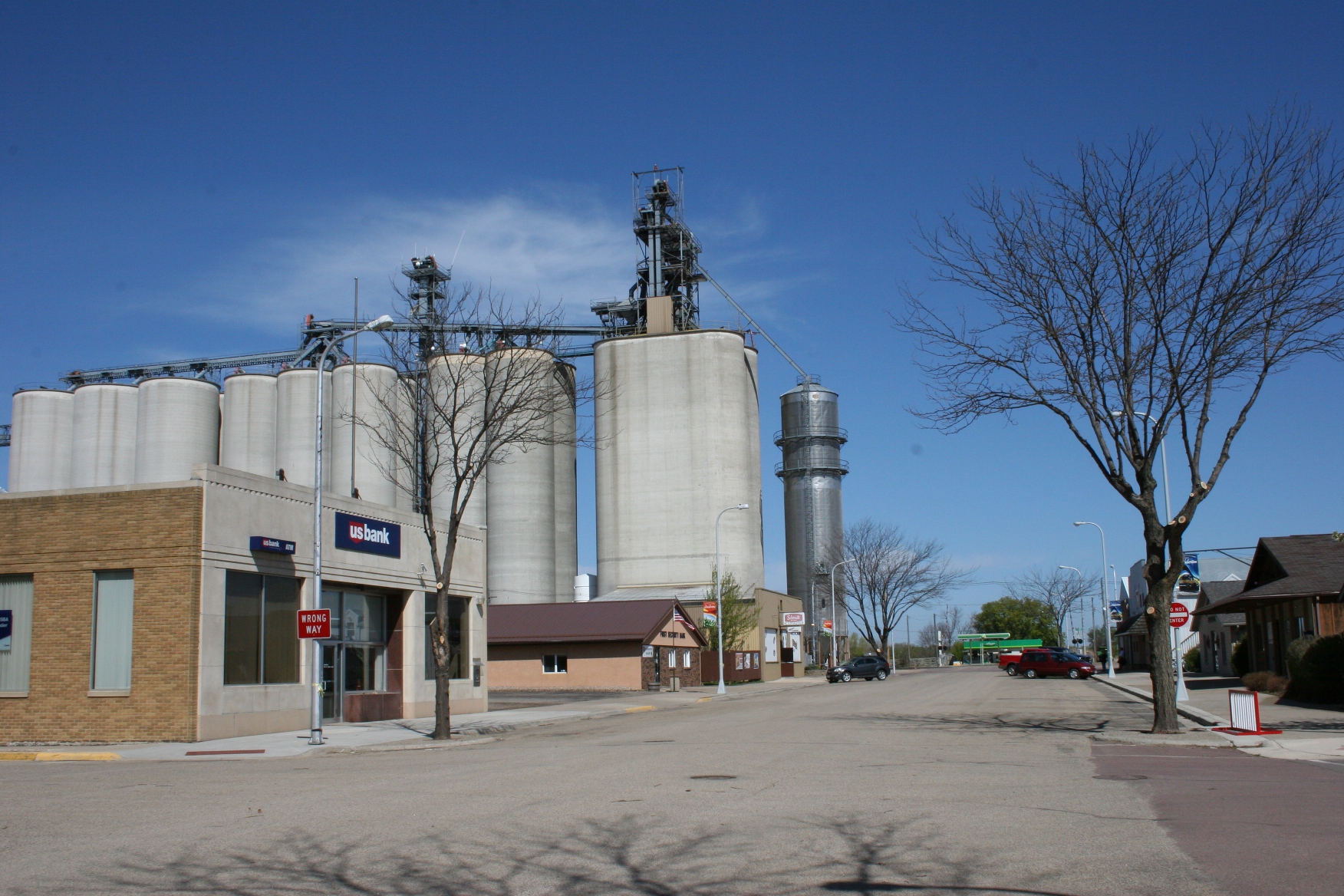
A portion of Lamberton’s Main Street shows this to be a strong agricultural community.

LAMBERTON. Just another small town on the southwestern Minnesota prairie, so you would think if you’re driving on U.S. Highway 14, The Laura Ingalls Wilder Historic Highway.

But this community some dozen miles east of Walnut Grove, destination for fans of “The Little House” books and television series, is worth at least a drive-through if not a stop.

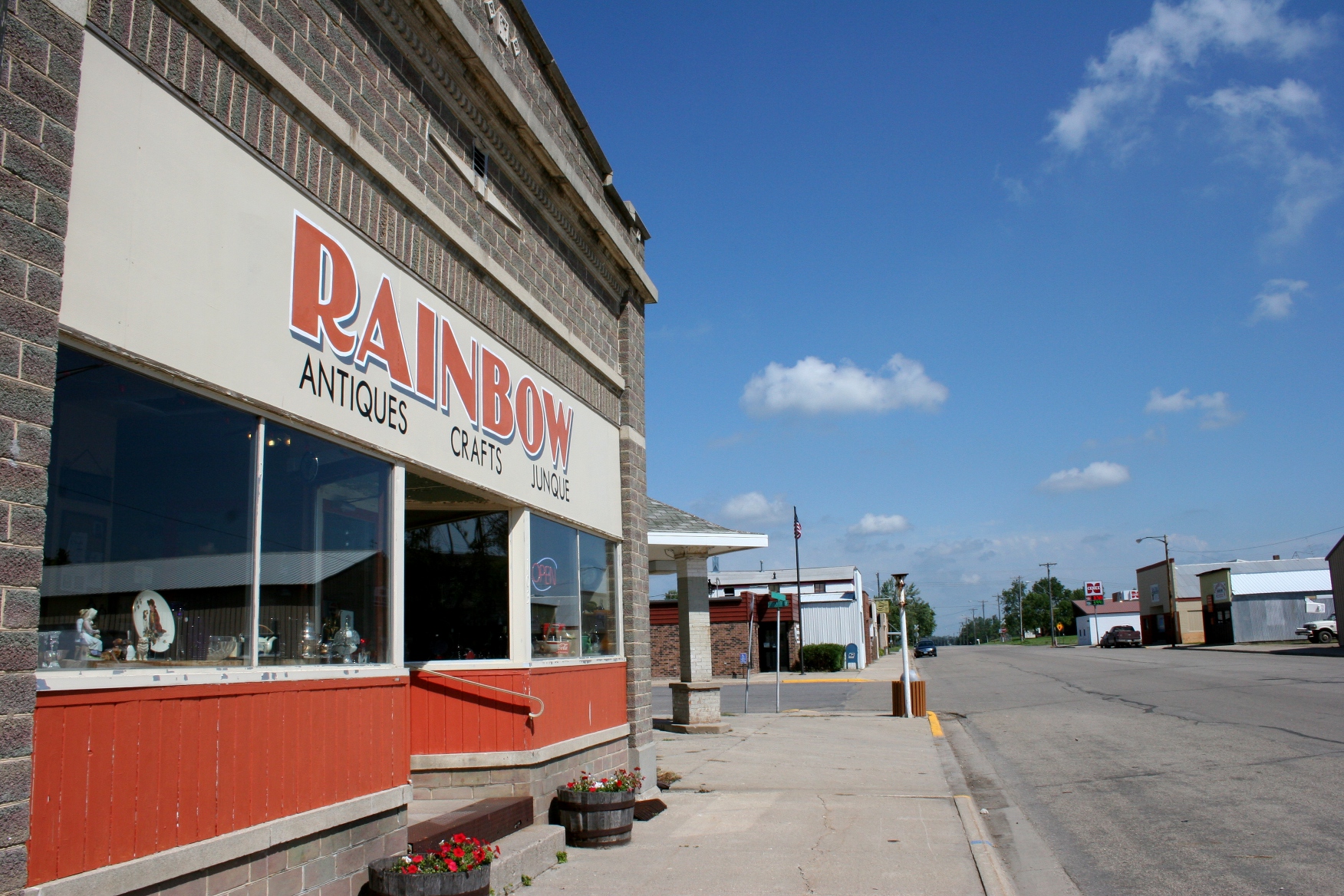
I’ll admit that up until my middle brother moved onto acreage north of Lamberton several years ago, I hadn’t spent much time in this town of 822 except to visit an uncle and aunt who once lived and ran a furniture store here.

I still haven’t explored this agricultural community like I should. But I’ve seen enough to know that I need to look more in depth. Let me show you why, via photos I took, mostly along Main Street, during a brief stop two months ago.

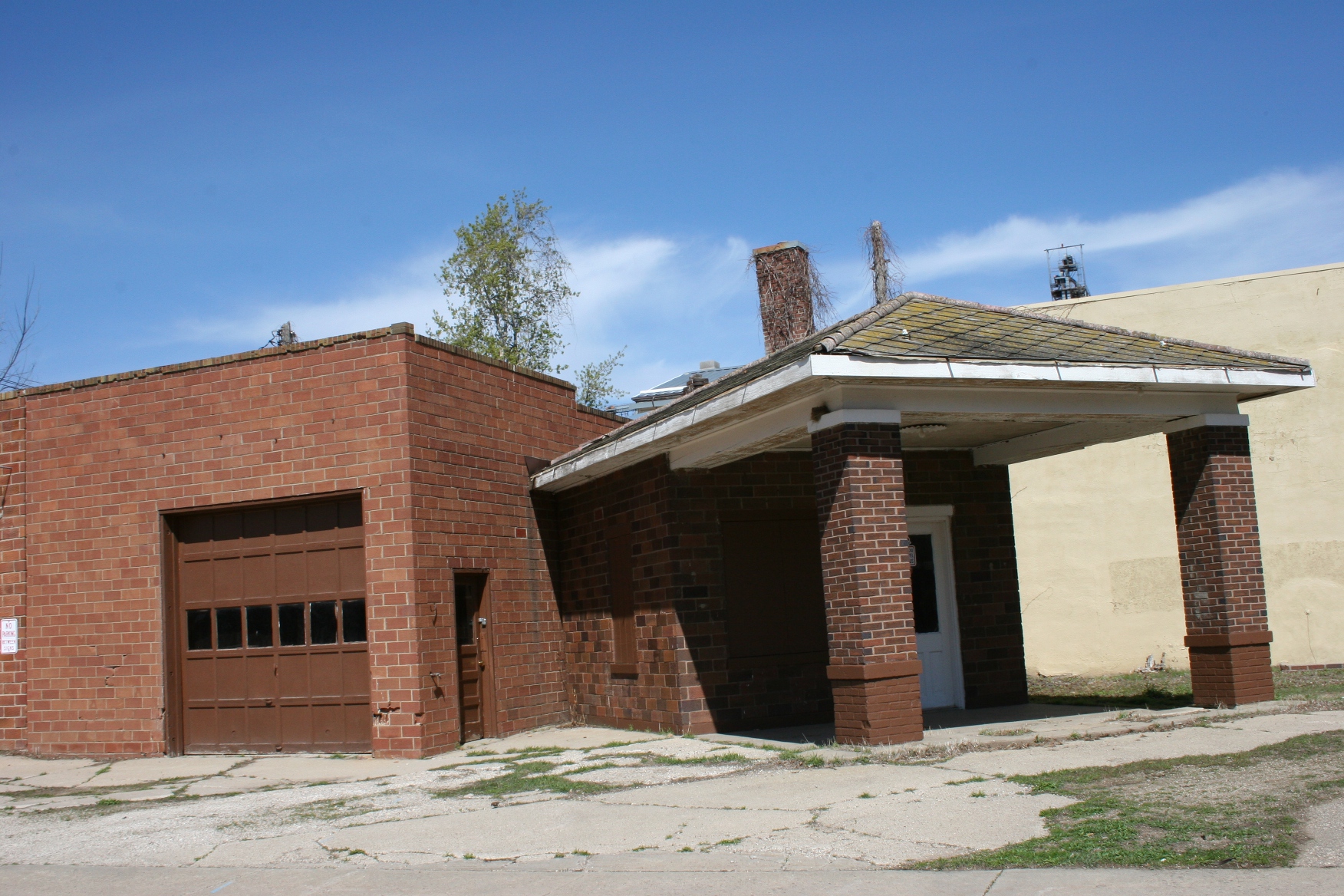
The once-popular corner gas station still stands in downtown Lamberton.

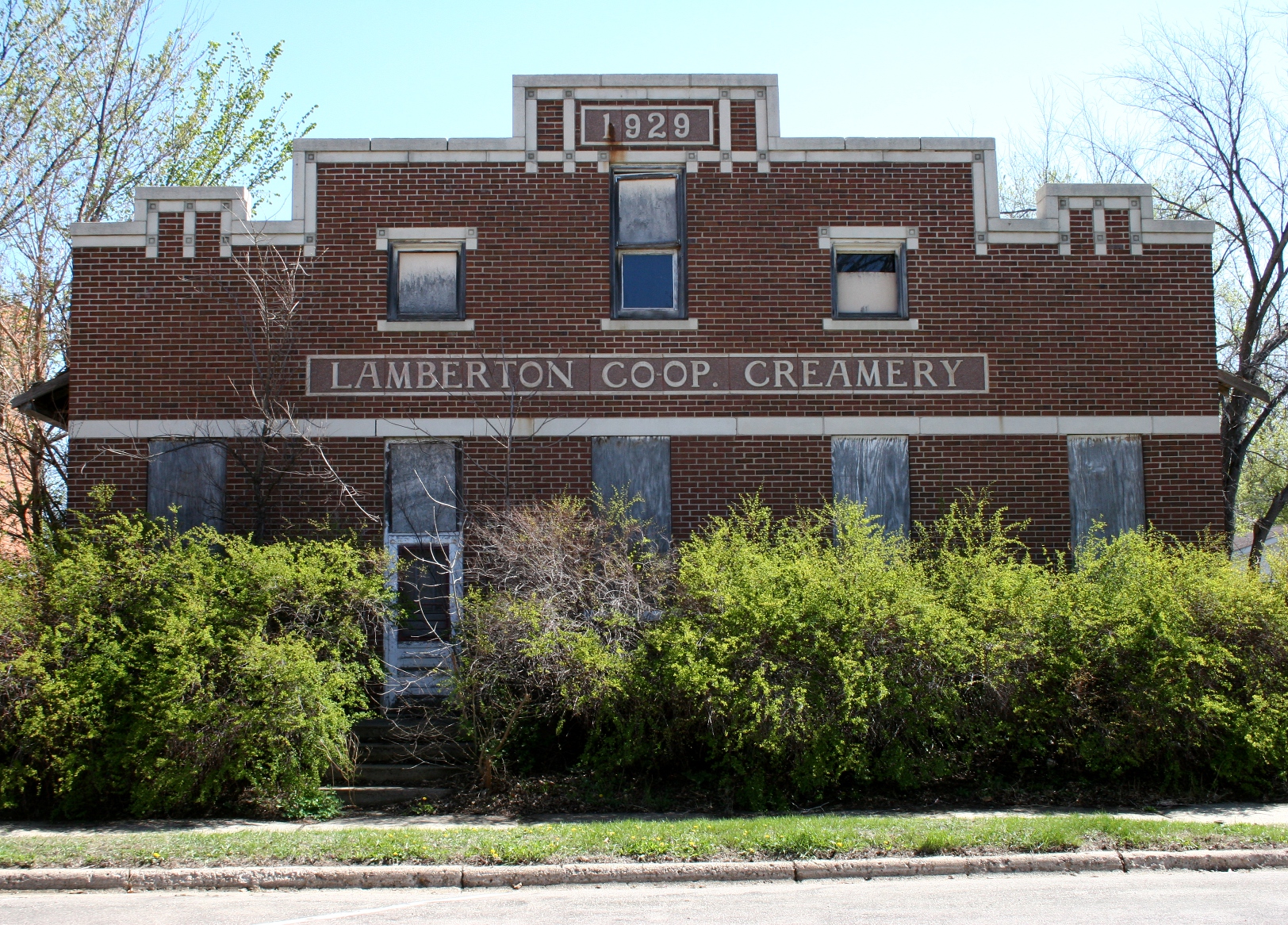
Most small towns once had creameries like this one.

Hanzlik Blacksmith Shop, dating to 1895, was gifted to the city and preserved by the local historical society. With the original wood floor and tools, it’s been called “a warehouse of a long ago lost art” by locals. The community celebrates this piece of history with an annual Hot Iron Days, this year set for September 7 – 8.

It’s the old buildings—from the cute corner gas station to the stout brick creamery to the old wood-frame blacksmith shop—that appeal to me. Some 30 miles to the northwest in my hometown of Vesta, which like Lamberton sits in Redwood County, the old buildings are mostly gone. But not in Lamberton. Here you’ll find plenty of historic buildings to please your artist’s eye and your historian’s heart.

Now all I need is someone with keys so I can take you inside these old buildings.

Vintage signs hold a certain historic charm.

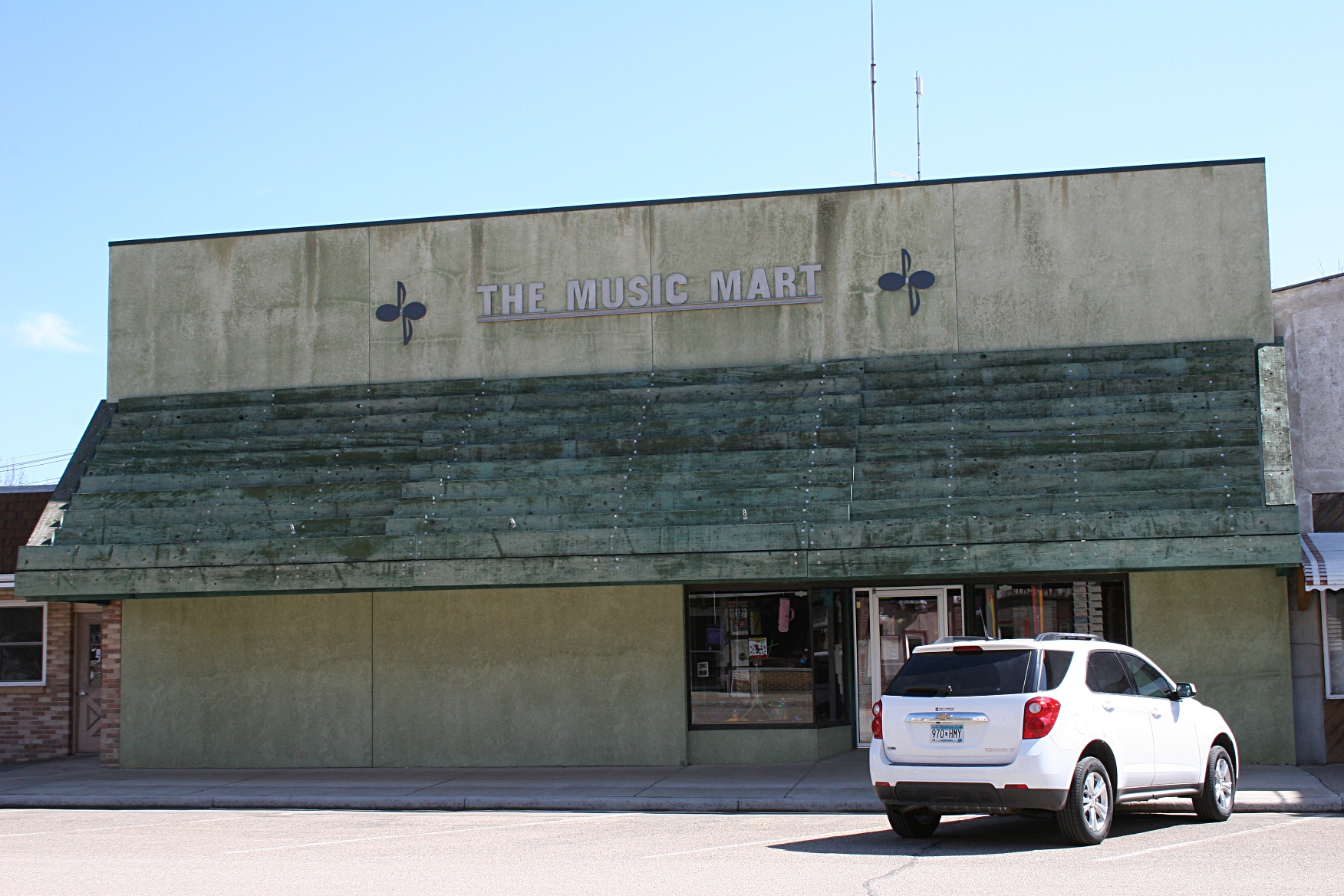
The Music Mart supplies most major brands of band and orchestral instruments. Sales staff reach out to 100-plus schools in southern Minnesota, according to online information. Who would expect to find this type of business in a small town of less than 1,000 residents? Not me.

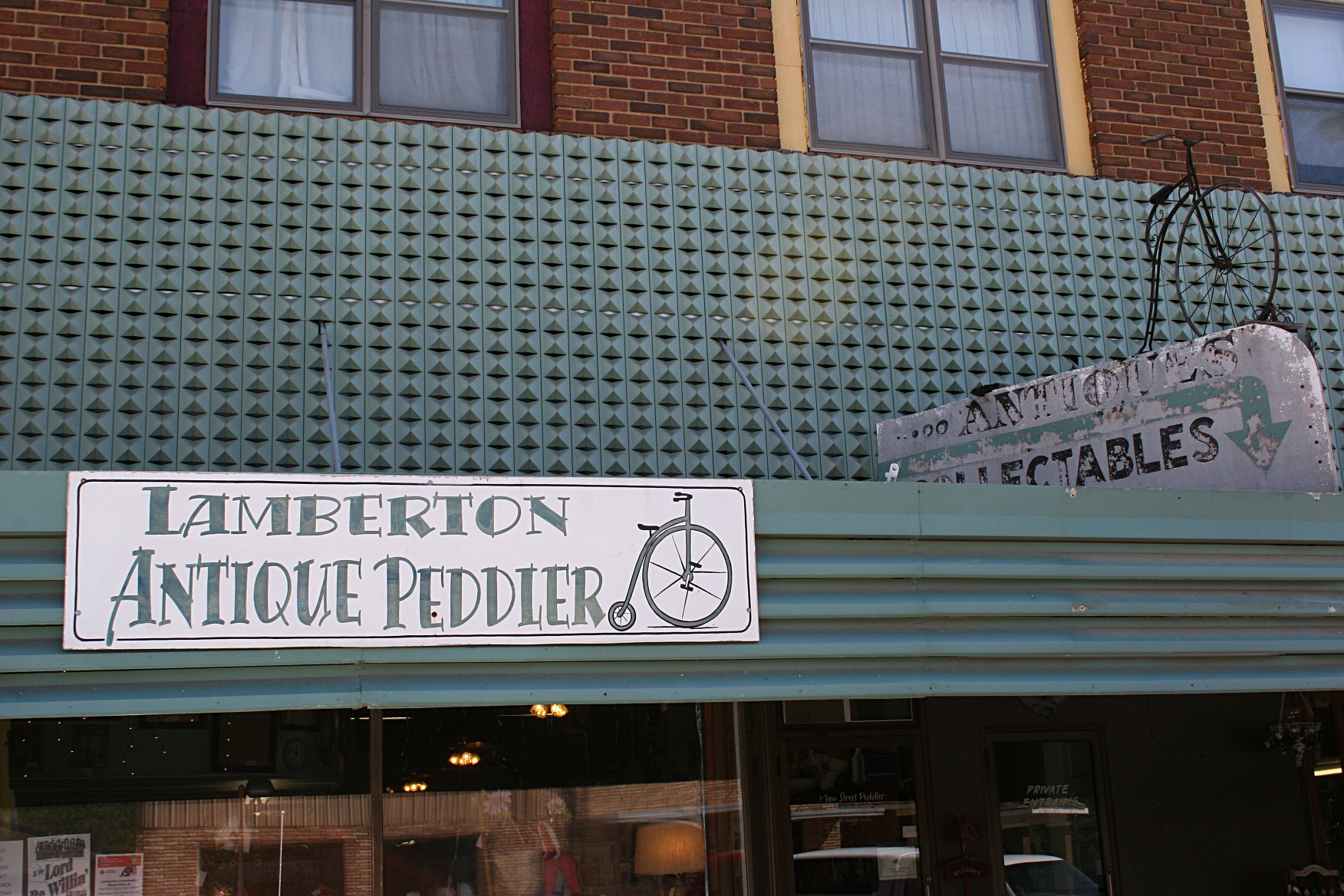
The Lamberton Antique Peddler is a must-see for anyone who is into antiques. This place is packed with merchandise in the former furniture store once operated by my uncle and aunt, Merlin and Iylene.

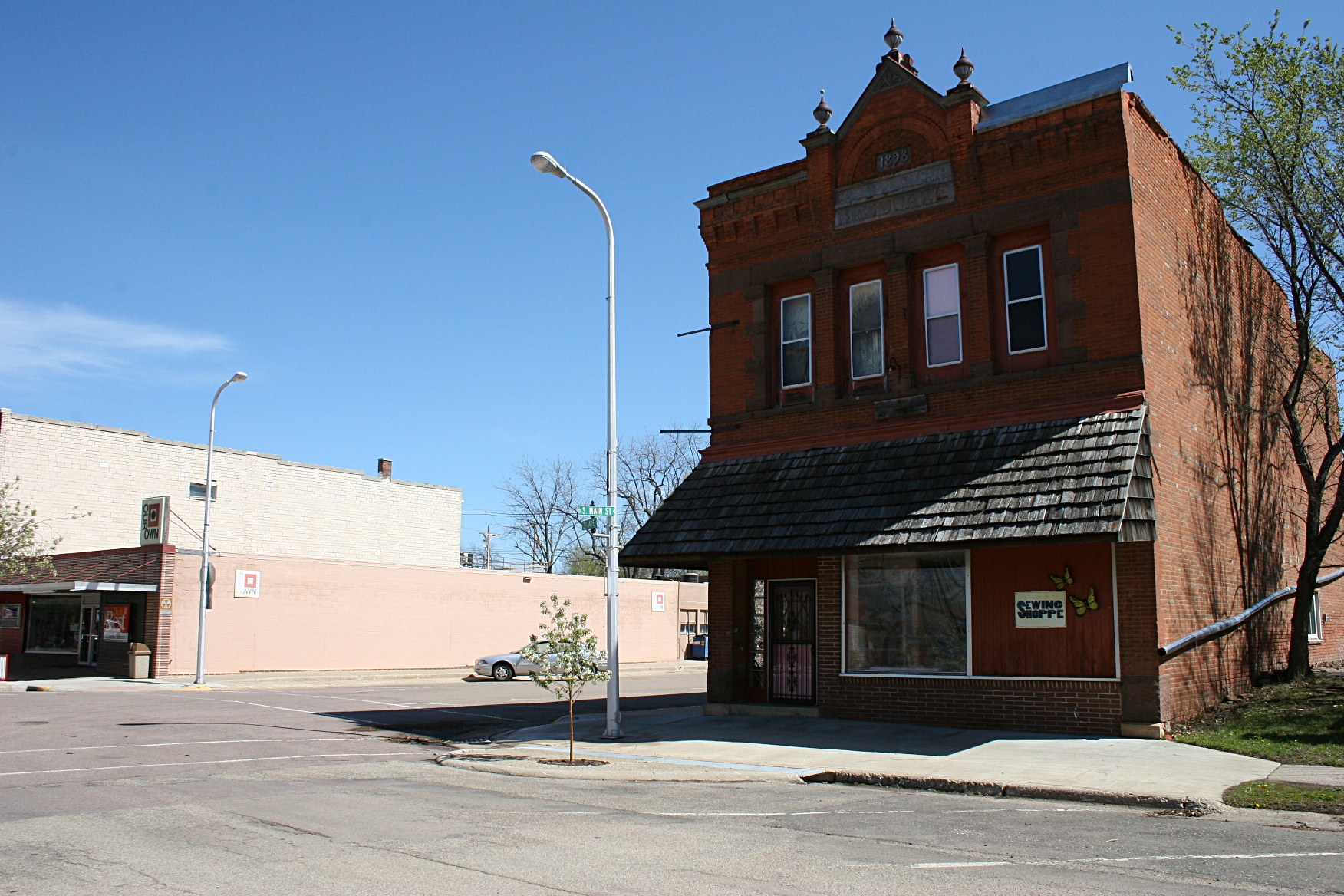
The Sewing Shoppe next to the creamery. Love the architecture.

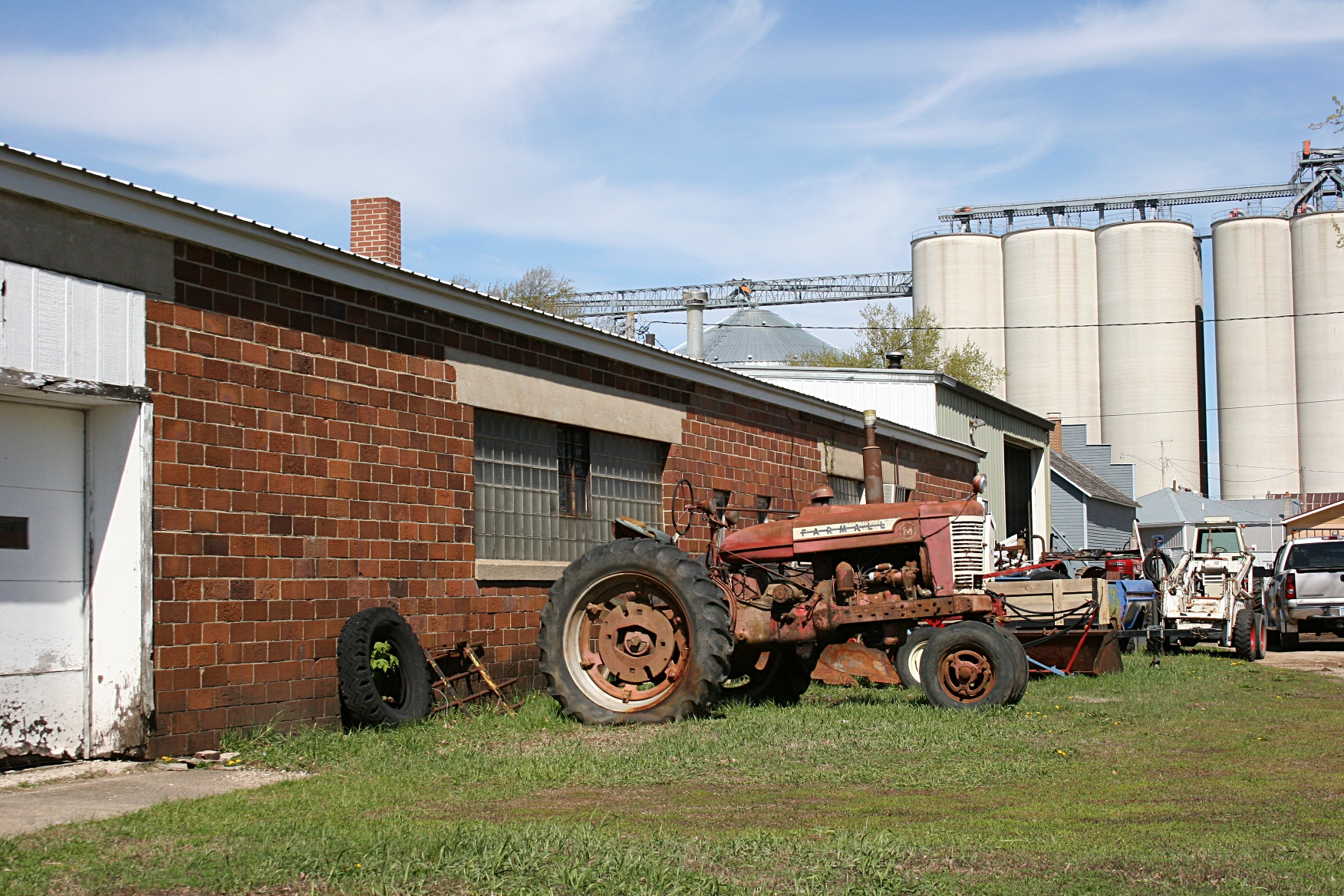
An old Farmall is parked next to a building just off Main Street.

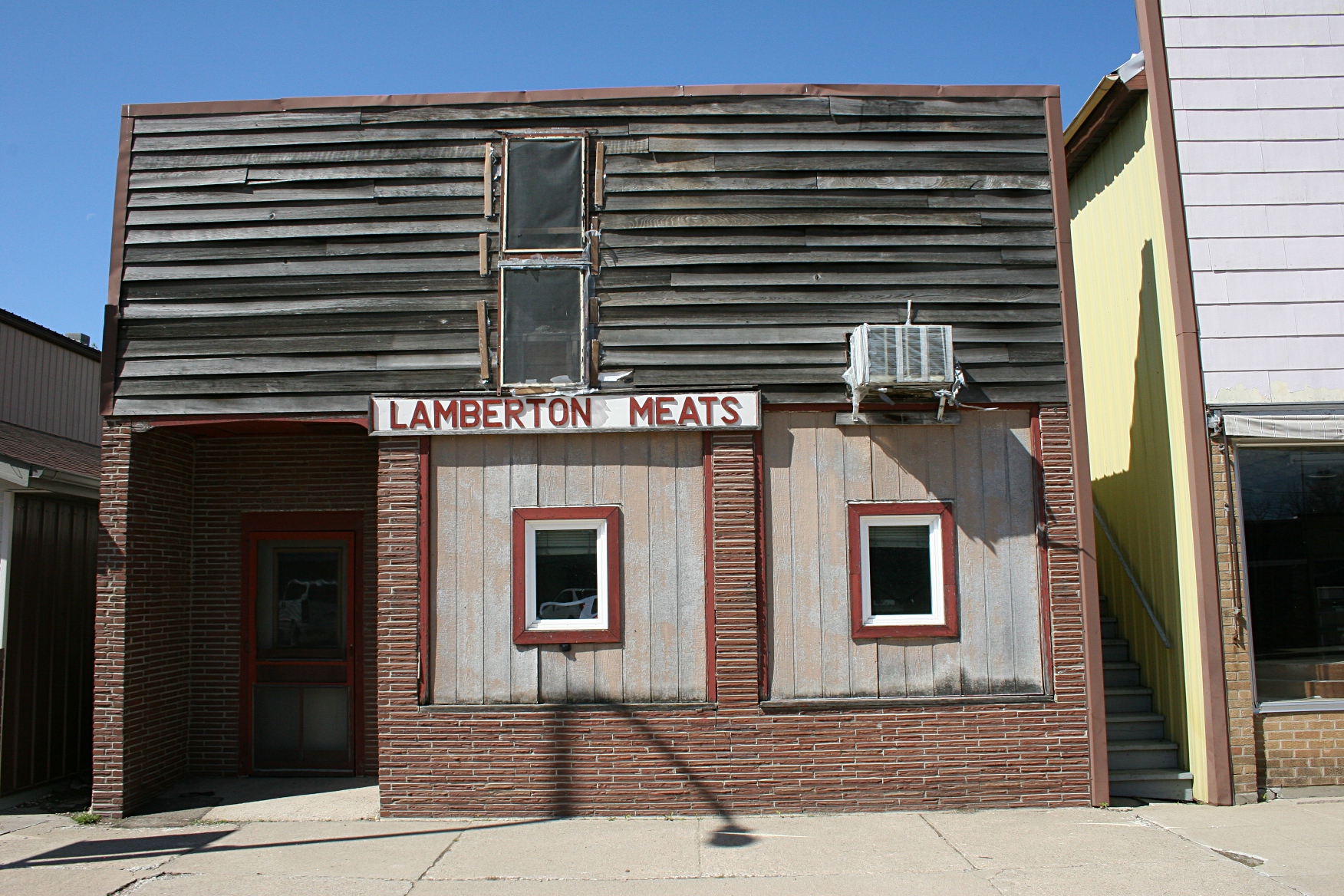
“The locker.”

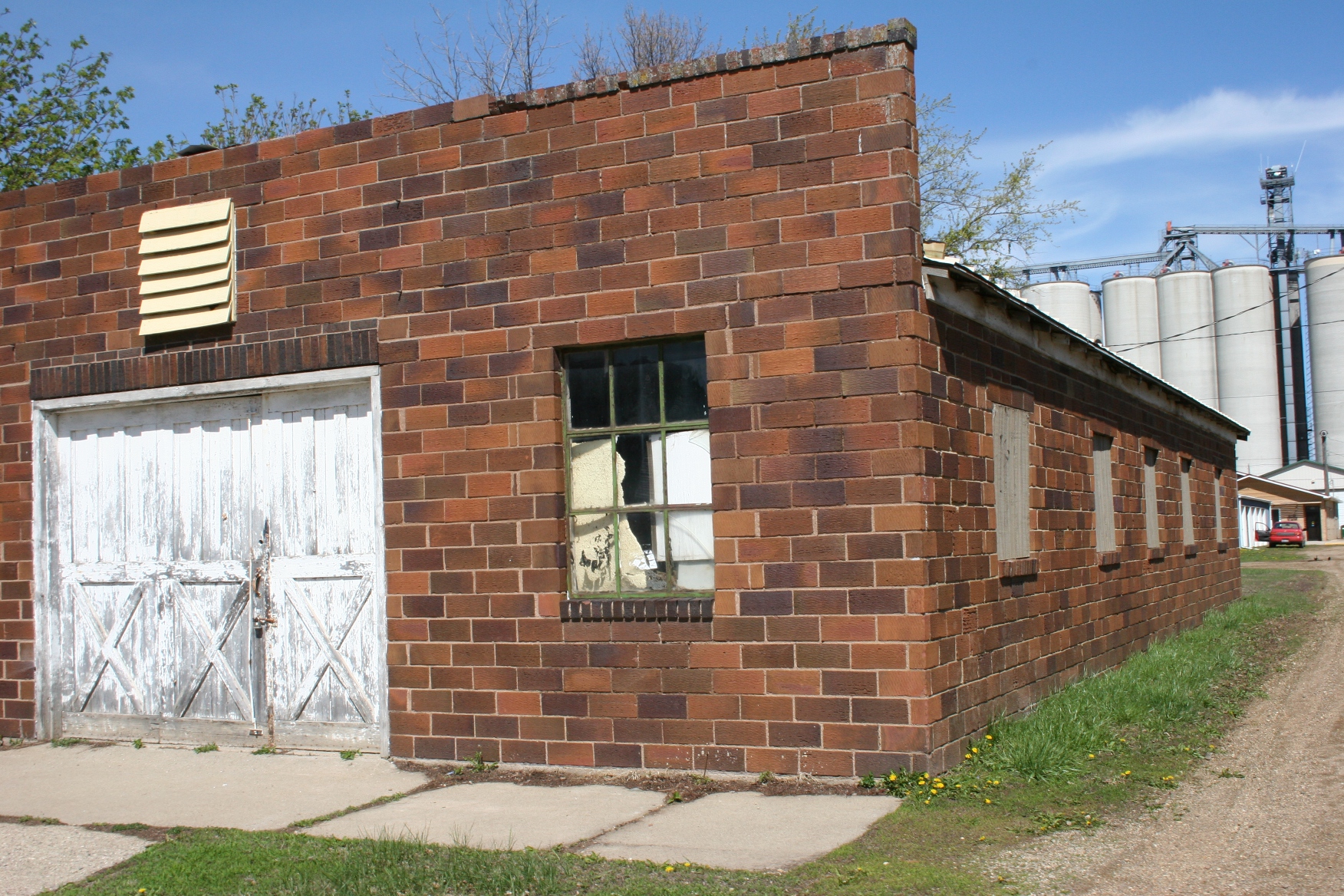
A low-slung brick building, perhaps a former garage, caught my eye.

TO VIEW ANOTHER particularly beautiful building in Lamberton, a former bakery, click here to read a previous post on Minnesota Prairie Roots.

© Copyright 2012 Audrey Kletscher Helbling
 

What would you do with this old bakery in Lamberton? May 31, 2012

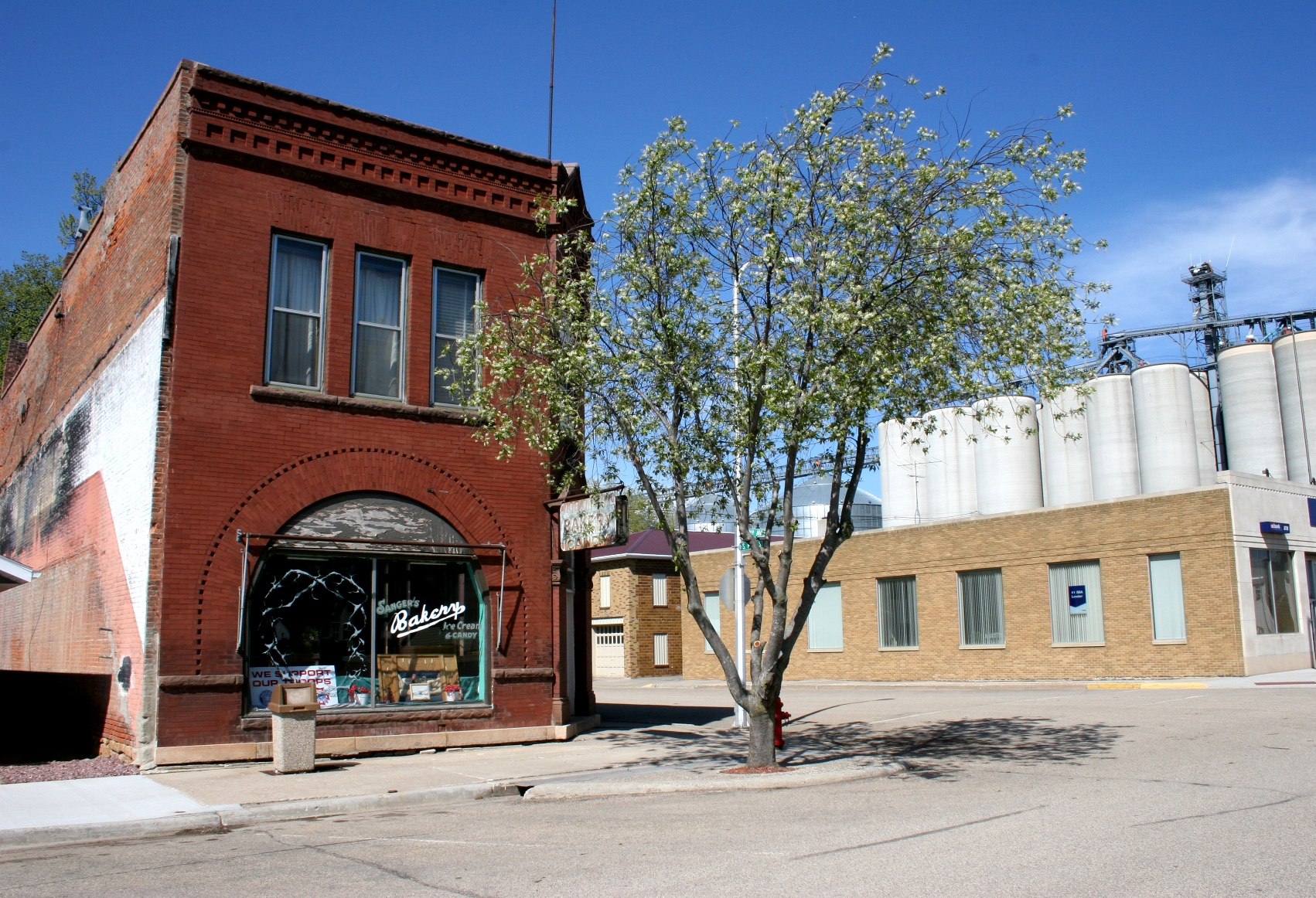
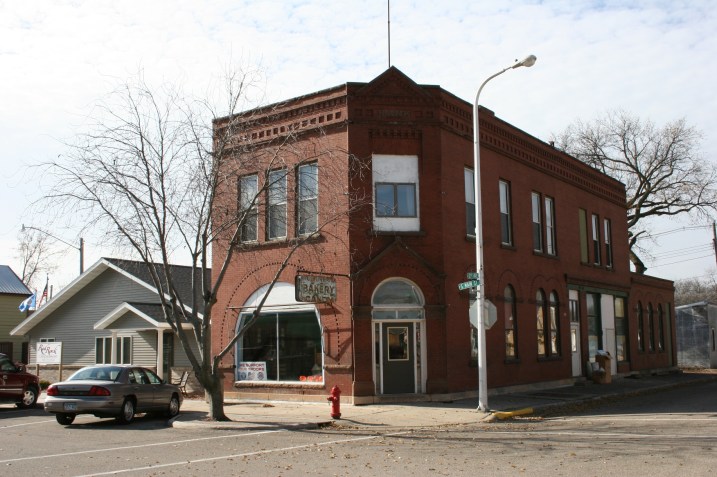
The former Sanger’s Bakery in Lamberton, a Minnesota farming community. I’d move the garbage bin in front of the building, replace it with a bench and add pots of vivid flowers.

I’VE PHOTOGRAPHED many an old building in a lot of small towns. My appreciation for history and architecture and for rural life keep drawing me back to Main Street.

One building in particular intrigues me. The former Sanger’s Bakery, a brick stronghold anchoring a corner in downtown Lamberton in southern Redwood County, possesses a sweet, timeless charm that causes it to stand out.

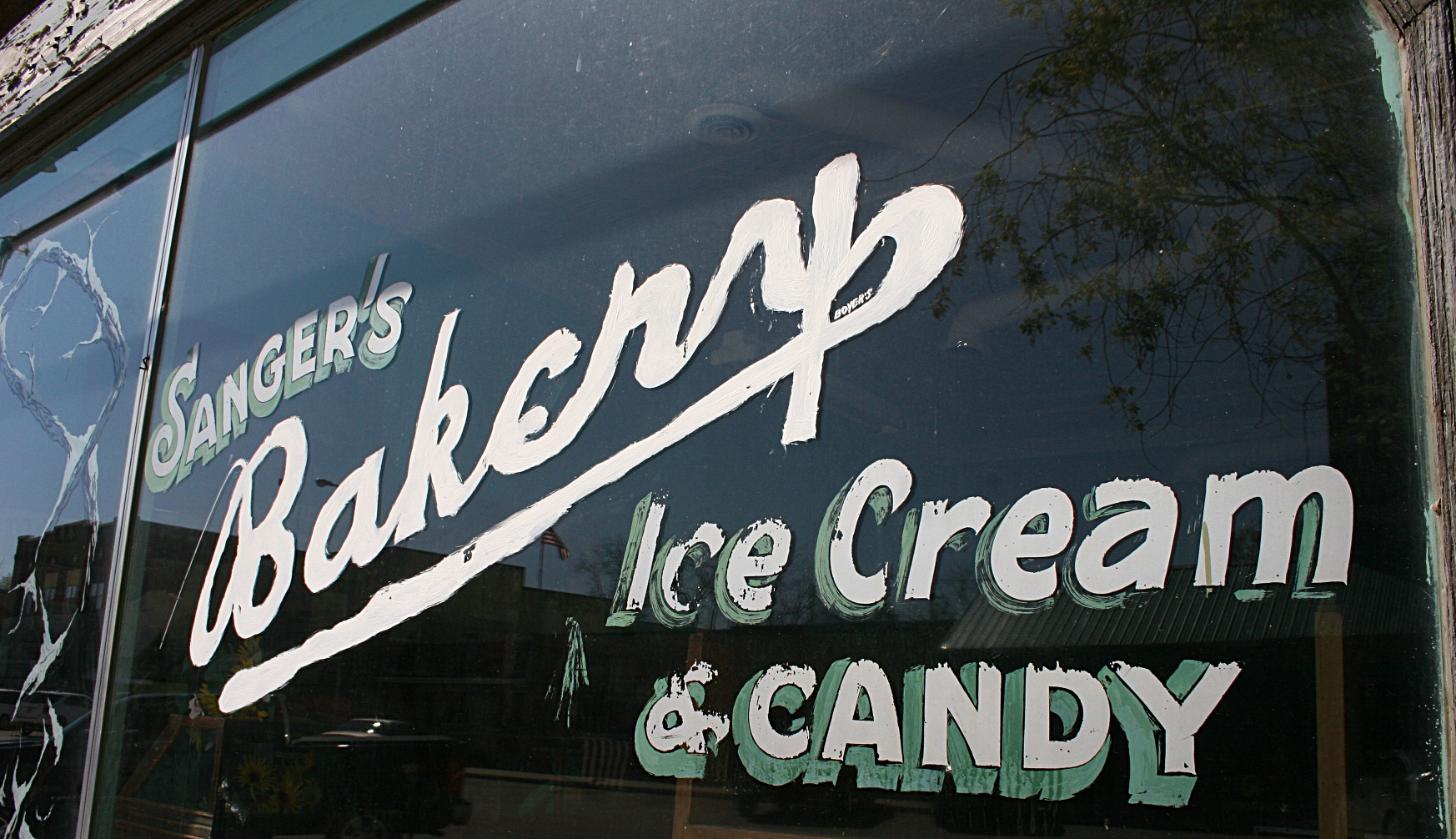
How long has this signage been painted on the front window of Sanger’s?

It’s not necessarily the exterior that catches my eye, although certainly the signage and sweeping arched front window and the fancy details in the brick appeal to me. Rather, it’s the interior which truly captures my interest.

The two times I’ve photographed the exterior, I’ve also paused to press my nose against the windows and peer inside to a snapshot of the past. You would swear the hands on the vintage 7-UP clock have not moved in decades. An old-fashioned candy counter and vintage lunch counter rimmed with stools look like something straight out of a Norman Rockwell painting.

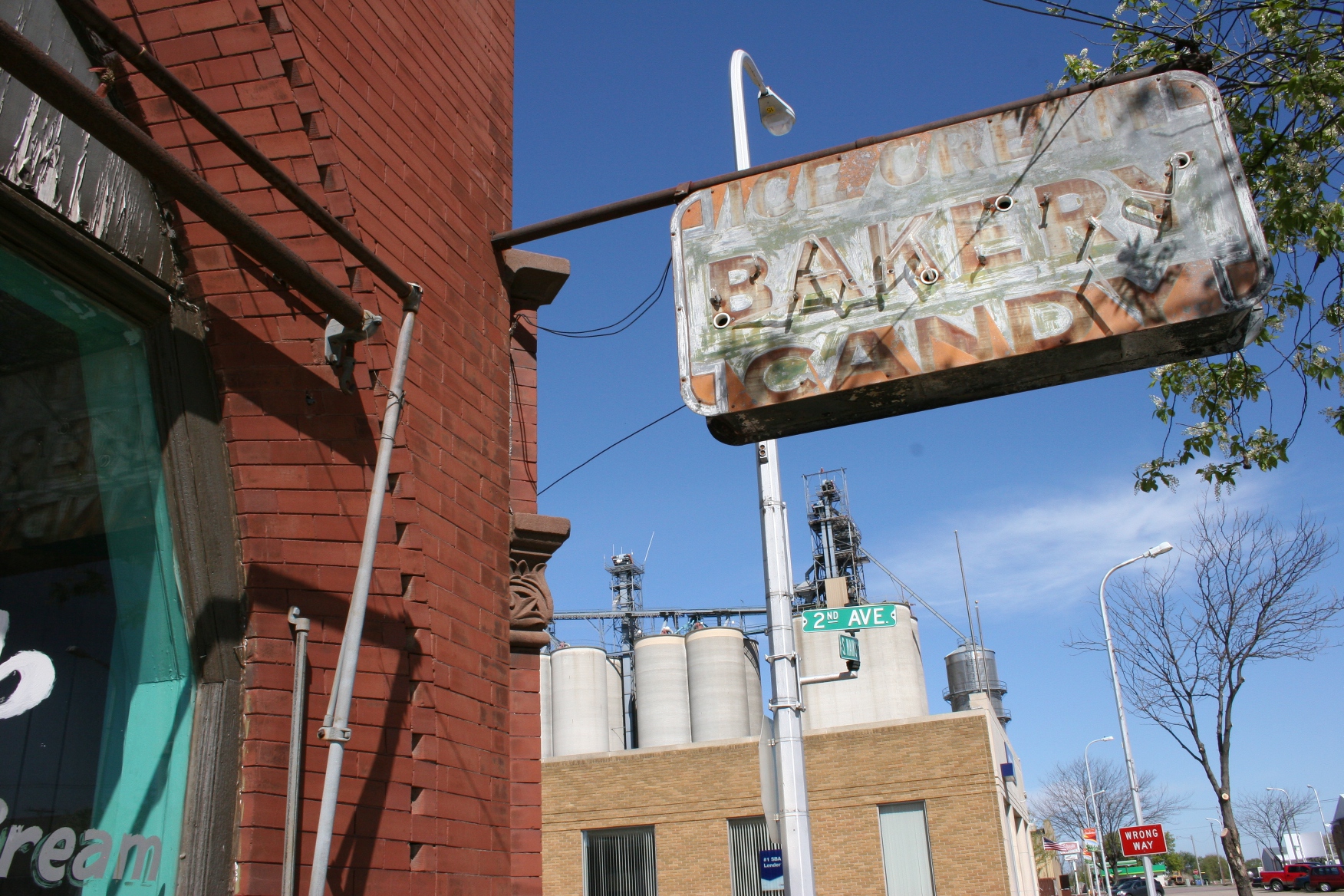
A vintage sign suspended from the front of the bakery.

Honestly, you just don’t find places like this anymore. Martin Kuhar opened the bakery in 1928. The Sanger family purchased it in 1946 and eventually Bob, the youngest of Nick and Mary’s six children, bought the business in 1961. He was a 1955 graduate of the baking program at Dunwoody Institute.

All of this I learned on a recent stop at the bakery, where I found Bob’s obituary taped to the front door. He died March 30.

Just days before his death, this long-time baker was serving coffee to his friends. Oh, how I wish I could have been in that coffee klatch, listening to the stories.

I bet Bob would have shared plenty about the place where he served up baked goods, hand-scooped ice cream cones, malts and candy. He baked buns for local schools and churches and crafted wedding cakes. He also sold fresh eggs from his chickens and honey from his bees. He tended a garden.

After reading Bob’s obit, I desired even more to get into the bakery. I jiggled the front door knob, hoping the door might be unlocked. It wasn’t. I’m determined, on my next trip to Lamberton, to get inside the bakery, to share with you this treasure from the past.

In the meantime, owners of this building and Lamberton area residents, I hope you appreciate what you have here. I could easily see this former bakery reopened as an ice cream/sandwich/pie/coffee/gift shop. The location along U.S. Highway 14 only 10 miles from Walnut Grove, childhood home of author Laura Ingalls Wilder, is ideal. The area already draws plenty of tourists during the summer months.

The right owner, with the right ideas, a good business and marketing plan, and adept at using social media could turn this old bakery into a destination.

I can envision the possibilities.

Readers, what do you think? If anyone out there knows anything about plans for the old bakery, submit a comment. Or, if you simply have ideas, I’d like to hear those, too.

A side shot of the former bakery. Just imagine the possibilities for this spacious building. Let’s hear your ideas.

© Copyright 2012 Audrey Kletscher Helbling
 

Ten months after the storm, a rural Minnesota congregation returns “home” May 4, 2012

St. John’s Evangelical Lutheran Church in Vesta, hours after a July 1, 2011, storm ripped half the roof from the sanctuary. Photo courtesy of Brian Kletscher.

“There is no place like home. We cannot wait to be back in our own church.”

And so, 10 months after a powerful July 1, 2011, storm packing winds of 90 – 100 mph ripped half the roof from St. John’s Evangelical Lutheran Church in my hometown of Vesta in southwestern Minnesota, congregants will worship for the first time in their rebuilt sanctuary this Sunday morning.

I expect many of St. John’s 323 baptized members feel exactly as my uncle, Milan Stage, does—simply happy to return to the comfortable familiarity of their home church.

Since the storm, parishioners have worshiped at their sister congregation in neighboring Echo. Says long-time St. John’s member Karen Lemcke, “We thank Peace Lutheran of Echo for allowing us to join their services for all of this time. It was enjoyable to be in fellowship with them but still nice to be back in our church.”

Inside St. John’s sanctuary in September, I listened to the wind flap the tarp that covered the damaged roof.

When worshipers arrive at St. John’s Sunday morning, they will enter through a new south-facing 20 x 40-foot addition which includes a handicap accessible bathroom, storage room and study area/office for the pastor.

And above them a new south roof—the portion ripped off by the winds—and a new exterior steel roof cover the sanctuary refurbished with new ceiling planking and hanging lights.

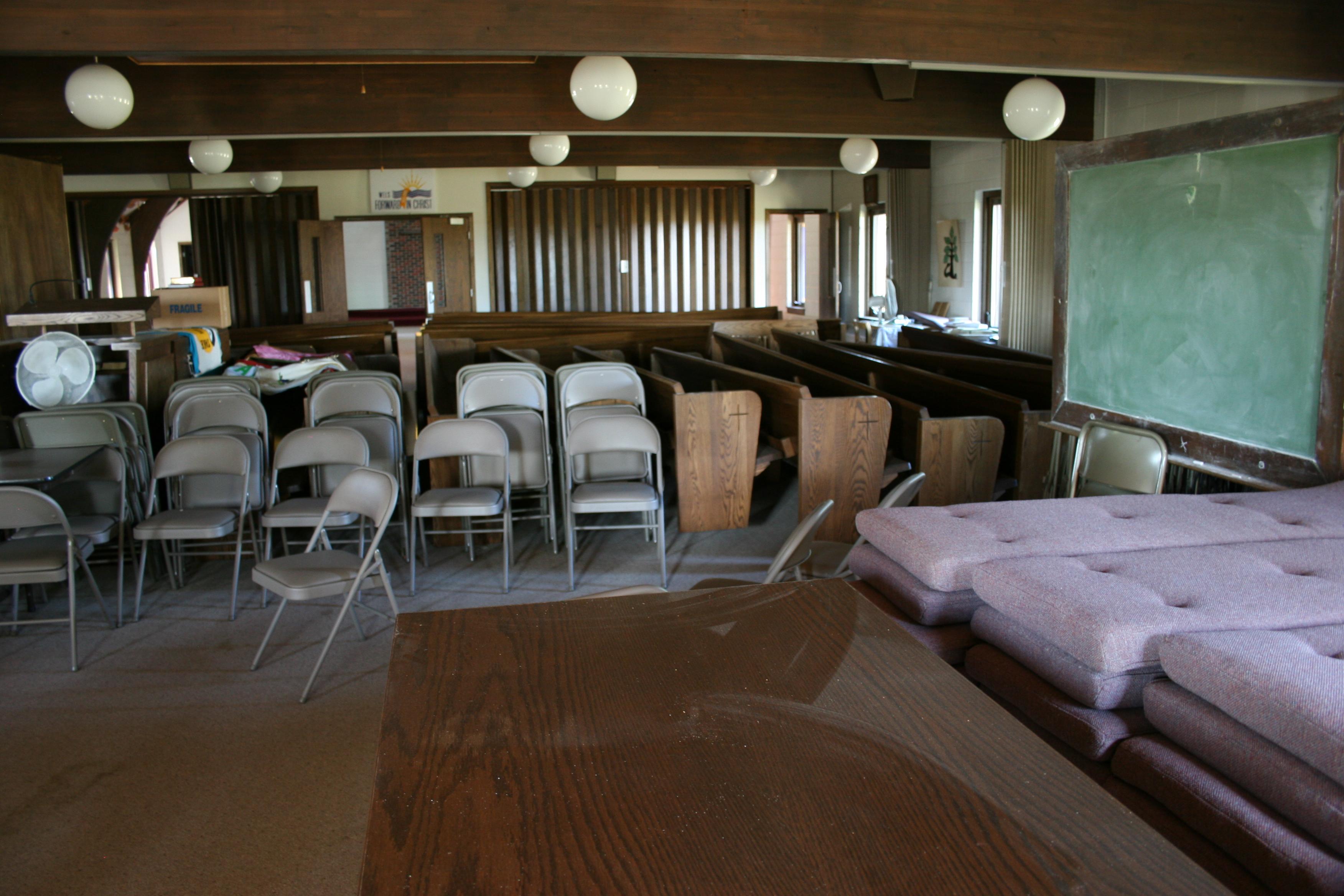
The pews and other items from the church were moved into the undamaged social hall after the storm.

They’ll walk on new carpeting and settle onto new pew cushions to hear the sermon delivered by a former St. John’s pastor, the Rev. Randy Bader, Mission Advancement Director of Great Plains Lutheran High School in Watertown, S.D.  Says Rev. Bader, in part:

I am planning on using the Holy Spirit-inspired words of Isaiah as the basis for the sermon. It includes these words: “For My thoughts are not your thoughts, neither are your ways My ways,” declares the Lord. “As the heavens are higher than the earth, so are My ways higher than your ways and My thoughts than your thoughts.”

We may wonder why our gracious God would allow such a dangerous and difficult situation to touch the lives of His people as it did on that July day last summer. So often we do not understand. But the truth is, we don’t have to understand. Jesus has a purpose for everything that he allows to happen to us, and His ultimate purpose is to bless and save us. 

…Trust Him. His love is the constant, in, and even through, challenging circumstances.

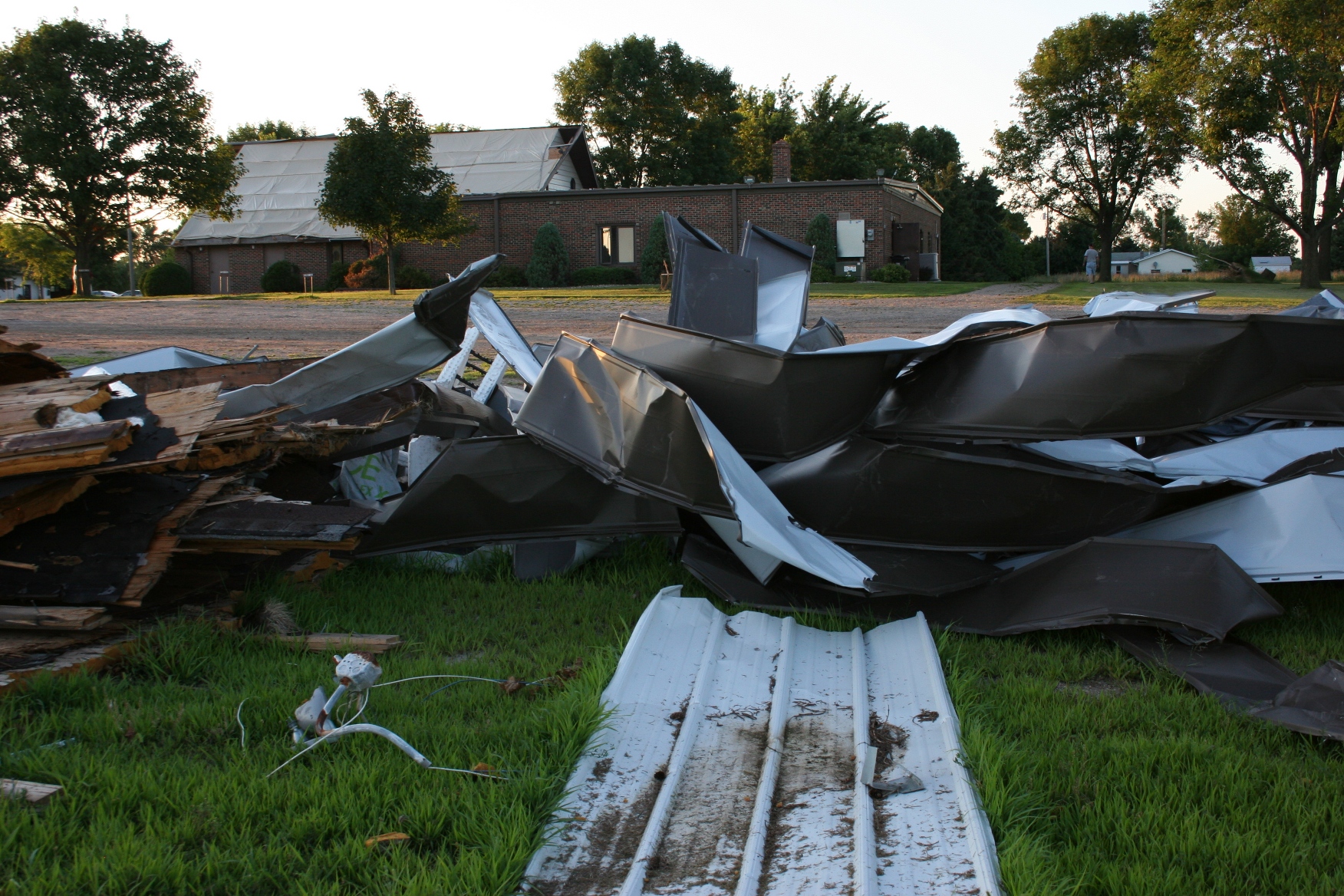
A debris pile on the edge of the church parking lot includes pieces of steel from the roof and brick from the bell tower. Photo taken in September 2011.

Under construction in March, a pastor’s office, bathroom and storage room were added to the south side of the early 1970s era church.

St. John’s members like my 80-year-old mom, especially, welcome the reopening of the church. It’s much easier for her to drive across town to worship services and other functions than to drive or catch a ride the eight miles to Peace Lutheran in Echo. I’m thankful for family members who’ve taken my mom to church services.

During the 10 months since the storm ravaged Vesta and the surrounding area, I’ve kept tabs on St. John’s, checking in most visits back to my hometown to see how the reconstruction was progressing. This, after all, is the church where I was married 30 years ago this May 15. It is the church where my family mourned the loss of our father, maternal grandfather, paternal grandmother and many other loved ones. We celebrated family weddings here and attended confirmations and worshiped here on Sunday mornings and on Christmas Eve.

The old saying goes that a church is not a building. That adage holds true if you consider the essence of a congregation.

But, there is much to be said for a physical structure, for the memories it holds, for the comfort it gives in familiarity. Boards and walls and details in construction and décor connect us to our past, to emotions and to loved ones. A place represents, if anything, a tangible legacy of faith.

And in a farming town like Vesta, population 330, a church building also serves as a place to gather, to swap rain gauge totals and crop reports, to exchange family news, to embrace each other in sorrow and in joy, to welcome the newest residents with baptism banners, to grieve the loss of neighbors and friends and family. A church building represents community within a community, the very soul of small town life.

© Copyright 2012 Audrey Kletscher Helbling
 

Minnesota Museums Month: The Minnesota Machinery Museum, on the prairie May 1, 2012

THINK OF MUSEUMS in Minnesota, and what pops into your mind?

Probably the Science Museum of Minnesota or the Minnesota Children’s Museum or the SPAM Museum in Austin or any other such notable museum.

During May, “Minnesota Museums Month,” I challenge you to think beyond the obvious to those small town museums that are tucked away in nondescript buildings or along back roads or are mostly unknown except to those living within a region.

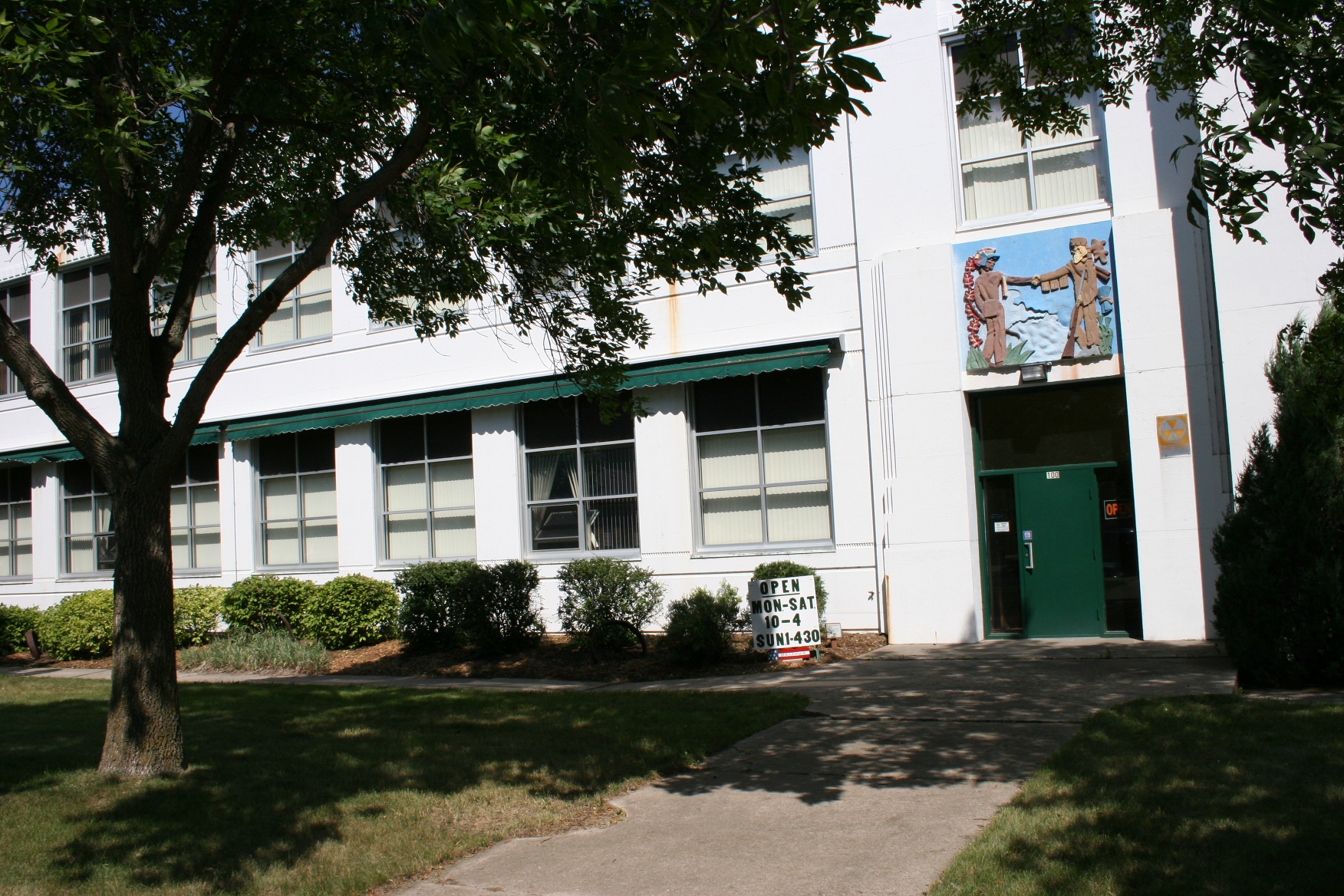
The Minnesota Machinery Museum in a 1939 WPA school building in Hanley Falls.

That leads me directly to Hanley Falls, home of the Minnesota Machinery Museum.

I expect already most of you are asking, “Where the heck is Hanley Falls?”

Hanley Falls, a small farming community, sits along State Highway 23 in southeastern Yellow Medicine County, nine miles south of Granite Falls on the southwestern Minnesota prairie.

It is one of those “blink and you miss it” type towns all too often dismissed by travelers simply flying by on the highway. Let me tell you, Hanley Falls is worth several hours of your time to tour this rural life museum which opened as the Yellow Medicine County Agricultural and Transportation Museum in 1980 and in 1994 became the Minnesota Machinery Museum.

For anyone who appreciates our state’s rich agricultural heritage, this museum rates as a must-see in the heart of our state’s richest farmland. I grew up in this strong agricultural region, in Redwood County next door to the east, and toured the museum for the first time in 2009. Yes, even I was unaware of its presence, having left the prairie in 1974 for college and subsequent employment.

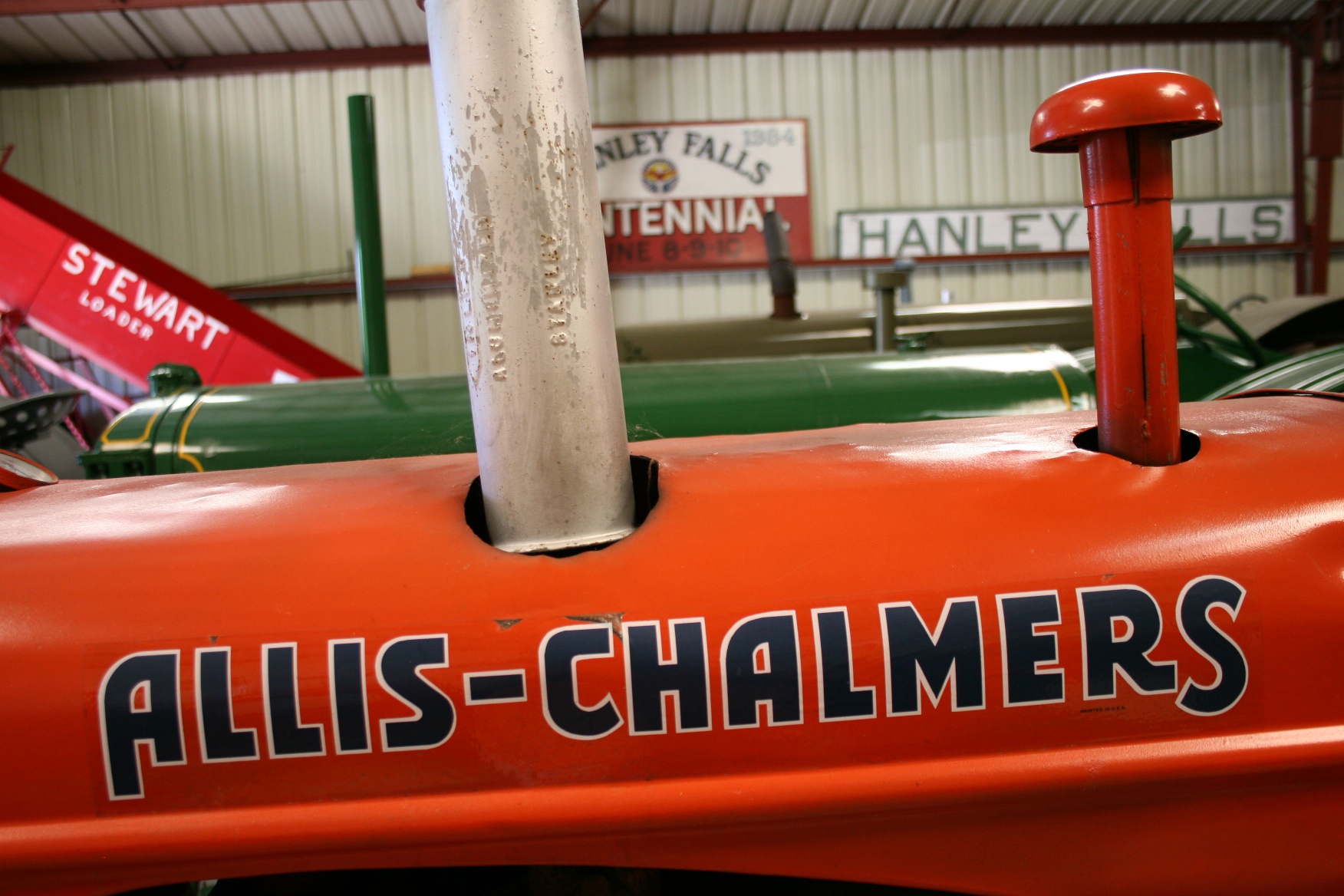
You'll see plenty of old tractors and farm machinery, along with vintage cars and trucks.

The Minnesota Machinery Museum, which is somewhat of a misleading name because it’s not all about farm machinery, reconnected me to my rural roots and educated me on the area’s agricultural history. During my 2009 visit, I learned that visitors will discover “the things you would find on a typical farm before the 1950s” with thousands of artifacts primarily from surrounding communities in a several-county area.

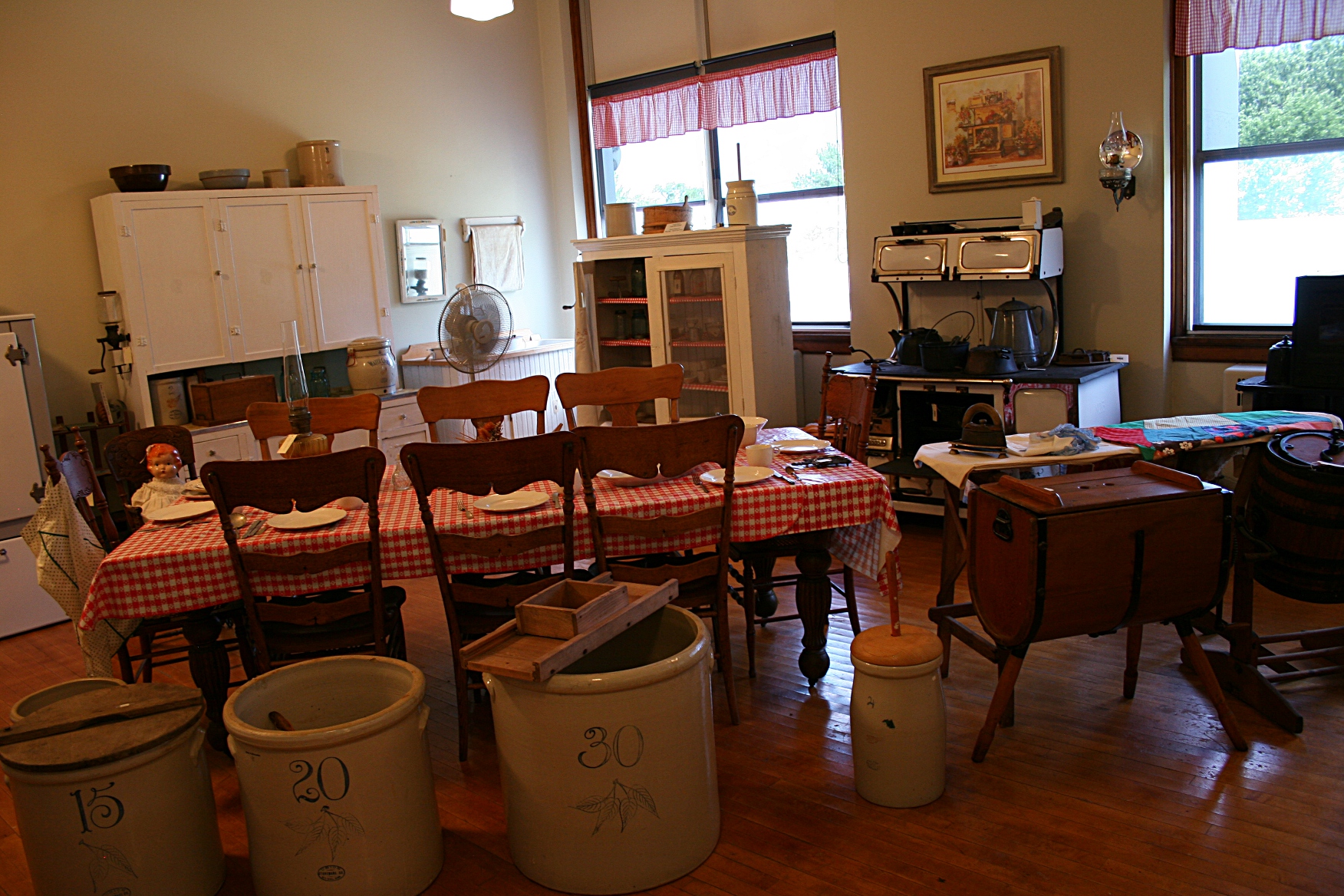
An old-style farm kitchen on the second floor of the museum.

All of those artifacts are housed in five buildings, including a sprawling two-story 1939 Works Project Administration school, on six acres. The first floor of that former school, during my visit, was packed with mostly farm-related equipment while the second floor housed the domestic side of rural life.
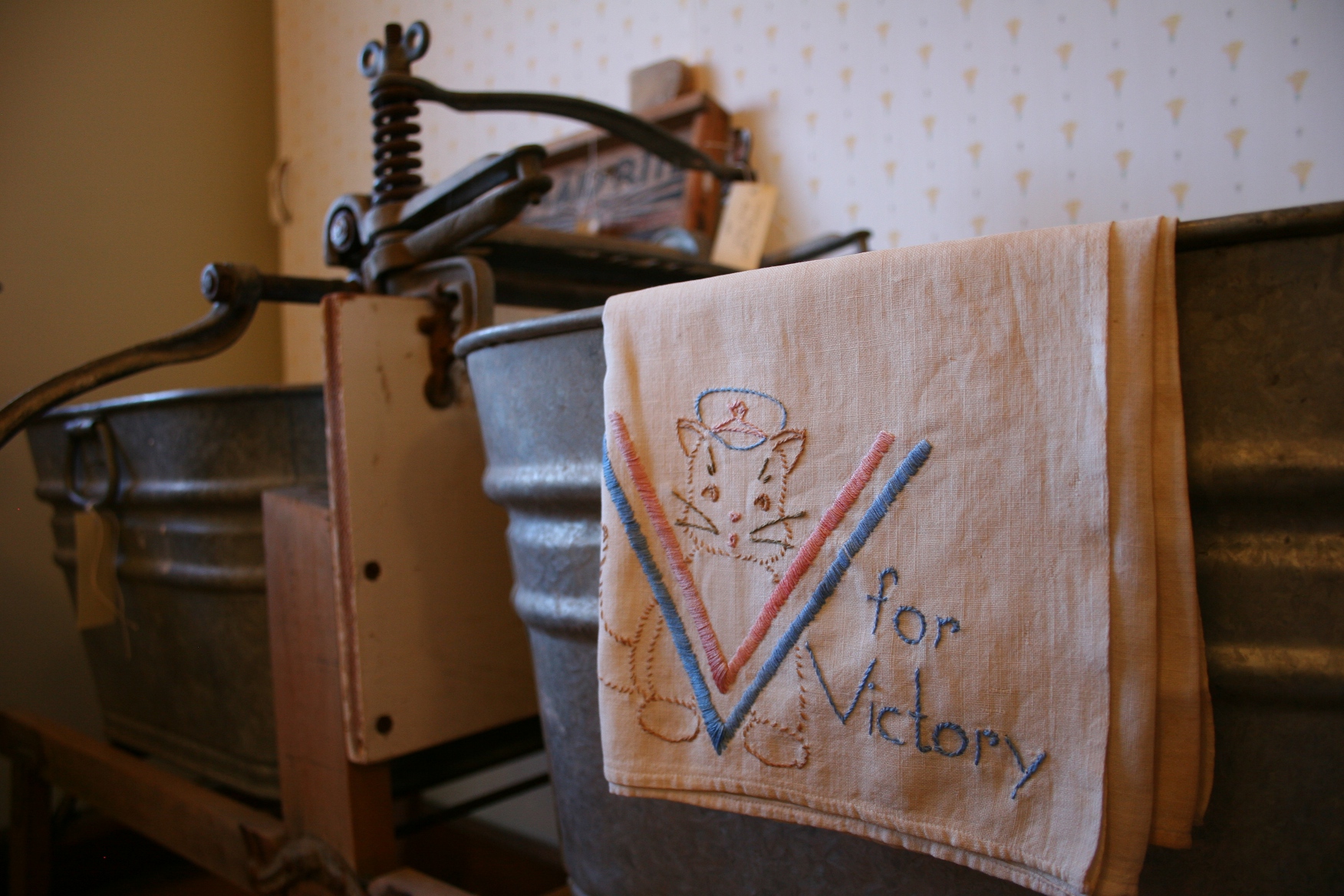
A vintage embroidered dish towel and old wash tubs, both familiar to me. My mother used a wringer washer with wash tubs during the early years of my life on a southwestern Minnesota dairy and crop farm.

It is the mission of the museum, according to its website, “to recapture a century of stories about farm life. Implements, tools, tractors and gas engines in mint condition along with rural art help you look back to an era when neighbors worked together to harvest their crops, raise barns and build a better life for their families.”

Read those words again. They are the essence of this place—the feeling of community, the sense of neighborliness, the embodiment of that which defined rural life at one time. Yes, that life has changed. Neighbors don’t always know neighbors. Oversized farm machinery has, for the most part, replaced the need for neighbors to work together. Barns are falling into heaps of rotting wood. This museum preserves a way of life that exists mostly in stories now.

This bushel basket in the museum brought back memories of feeding cows.

The Minnesota Machinery Museum is as impressive as any you’ll visit in Minnesota. Take time to seek it out, to turn off the highway into Hanley Falls rather than driving by without even a thought of the historical treasure that lies within this small southwestern Minnesota prairie community.

FYI: The Minnesota Machinery Museum is open May – September from 10 a.m. – 4 p.m. Monday – Saturday and from 1 p.m. – 4:30 p.m. on Sunday and is closed on holidays. Click here for more information about the museum.

© Copyright 2012 Audrey Kletscher Helbling