Minnesota Prairie Roots

Writing and photography by Audrey Kletscher Helbling

My Minnesota hometown celebrates summer with its famous chicken, dancing in the street & more June 14, 2012

Filed under: Uncategorized — Audrey Kletscher Helbling @ 8:20 AM
Tags: , , , , , , ,

I’LL NEVER FORGET the summer the neighbor boy coaxed me into riding with him on the Octopus during V-Esta Daze, my hometown’s annual summer celebration. What was I thinking as I settled into the amusement ride with Keith? What was he thinking?

I screamed the entire dizzying ride, scared out of my teenaged wits.

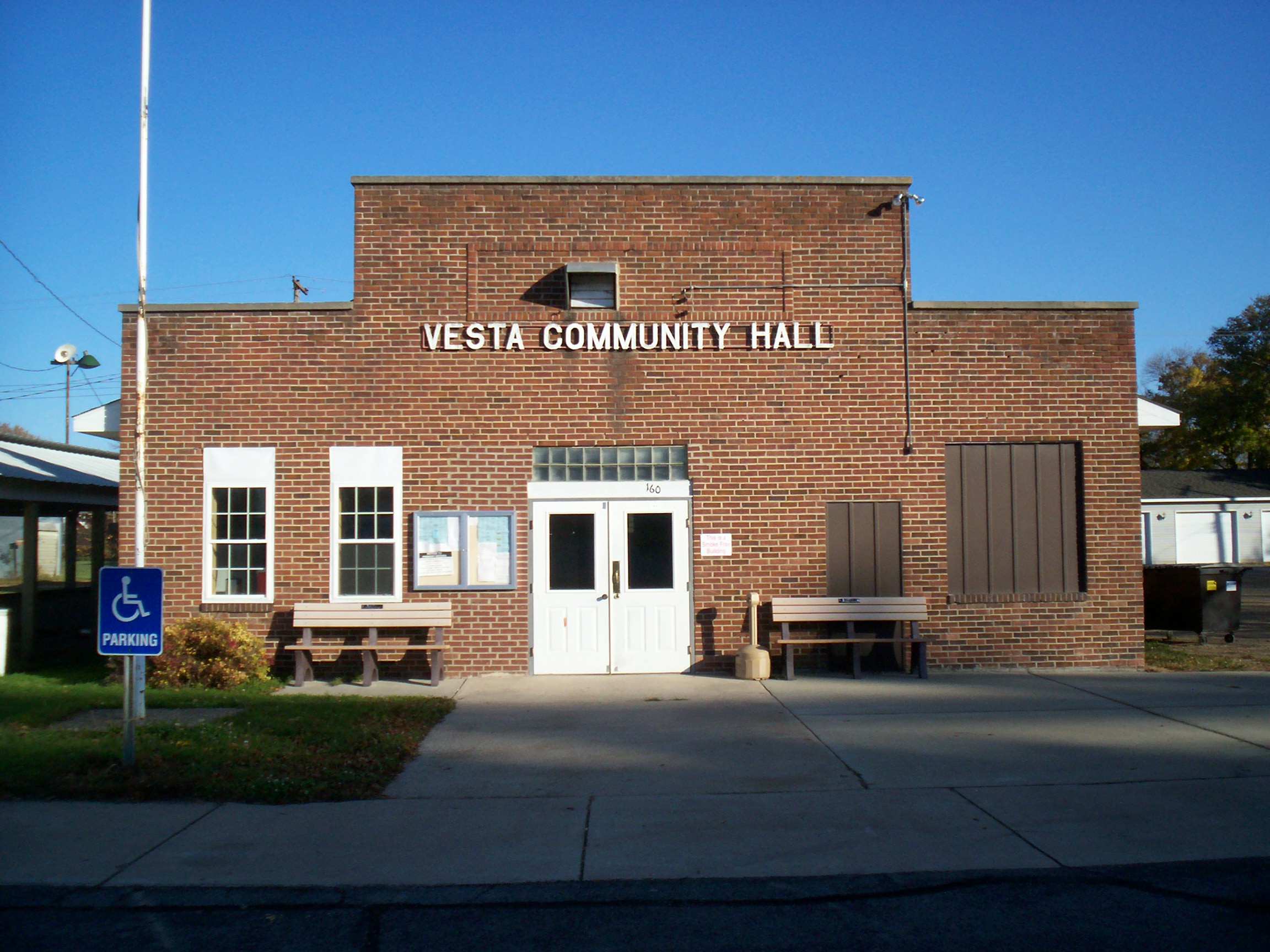
The same chicken dinner sign goes up every year inside the Vesta Community Hall. The price is updated when necessary.

While a carnival is no longer a part of V-Esta Daze, one aspect of the Vesta Commercial Club-sponsored celebration has remained constant. Since 1963, the Club has served its “famous barbecued chicken.”

It’s considered “famous,” I suppose, because V-Esta Daze became known for its chicken, just like Sauerkraut Days in Henderson is noted for its sauerkraut and Barnesville Potato Days is known for its potatoes.

The chicken dinner I enjoyed last summer at V-Esta Daze.

It is such comfortable familiarity, the same year-after-year offering of savory chicken grilled by the same volunteer men over a long pit of coals next to the old brick Vesta Community Hall that keeps locals and natives and those from neighboring towns returning.

This Friday, June 15, the crowds will be back, lining up at the hall between 5 – 8 p.m. for that famous chicken dinner.

The Lucan Community Band played under the shade trees outside the community hall and across the street from the elevator at last year’s celebration.

Outside the hall, members of the Lucan Community Band will settle onto battered folding chairs to entertain the crowd with old favorites while folks listen and visit, catching up on the latest.

Area residents brought their vintage tractors to town for a tractor and car show last year. This year the show has been expanded to include “anything with wheels.”

Over on Main Street, tractors and cars and more will line up for the “Anything with Wheels” show between 4:30 – 8 p.m.

My cousin Dawn’s son, Kegan, enjoyed a pony ride at the 2011 celebration.

The Vesta Vikings 4-H Club is sponsoring a petting zoo and will be selling root beer floats.

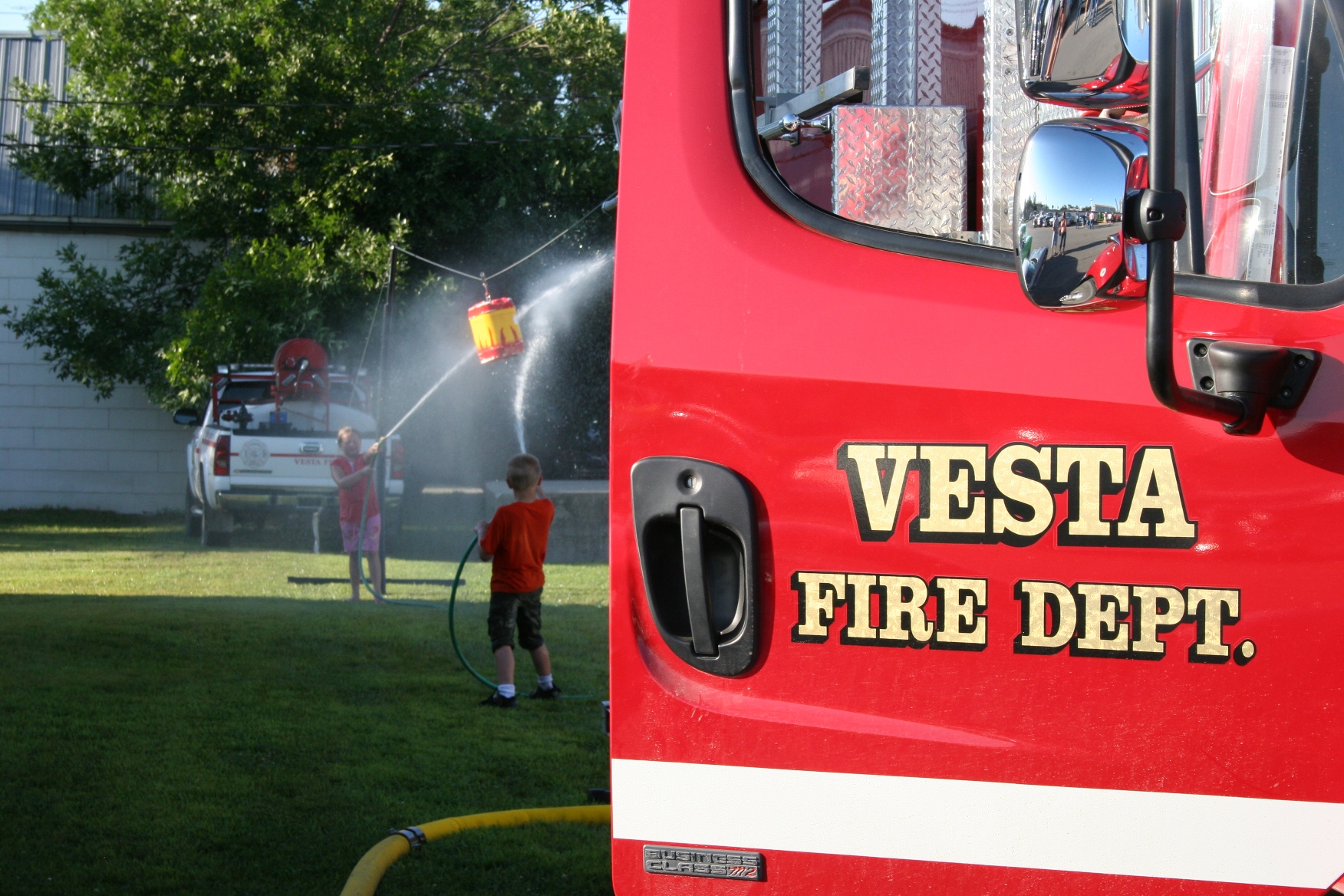
Kids picked up hoses in water fights at last year’s V-Esta Daze.

Kids will engage in water fights near the hall from 6 – 8 p.m. I remember, when I was growing up, how fire departments from neighboring communities competed against one another to push a barrel along a cable with water shooting from a fire hose. I can still hear the pounding of water against metal, feel the excitement as the barrel flipped and turned and rode the cable until one team slammed the barrel into a post.

The only contests this year are the bean bag tourney beginning at 6 p.m. and the pie eating contest at 10 p.m.

In between and after, from early evening until 1 a.m., two musical groups will entertain at the street dance. And let me tell you, there’s nothing quite like dancing on the pavement of your one-block-Main-Street hometown while drinking beer on a sweltering summer night.

At least that’s what I remember, from years ago.

The Vesta Community Hall, center of the V-Esta Daze celebration. To the left is the covered BBQ pit.

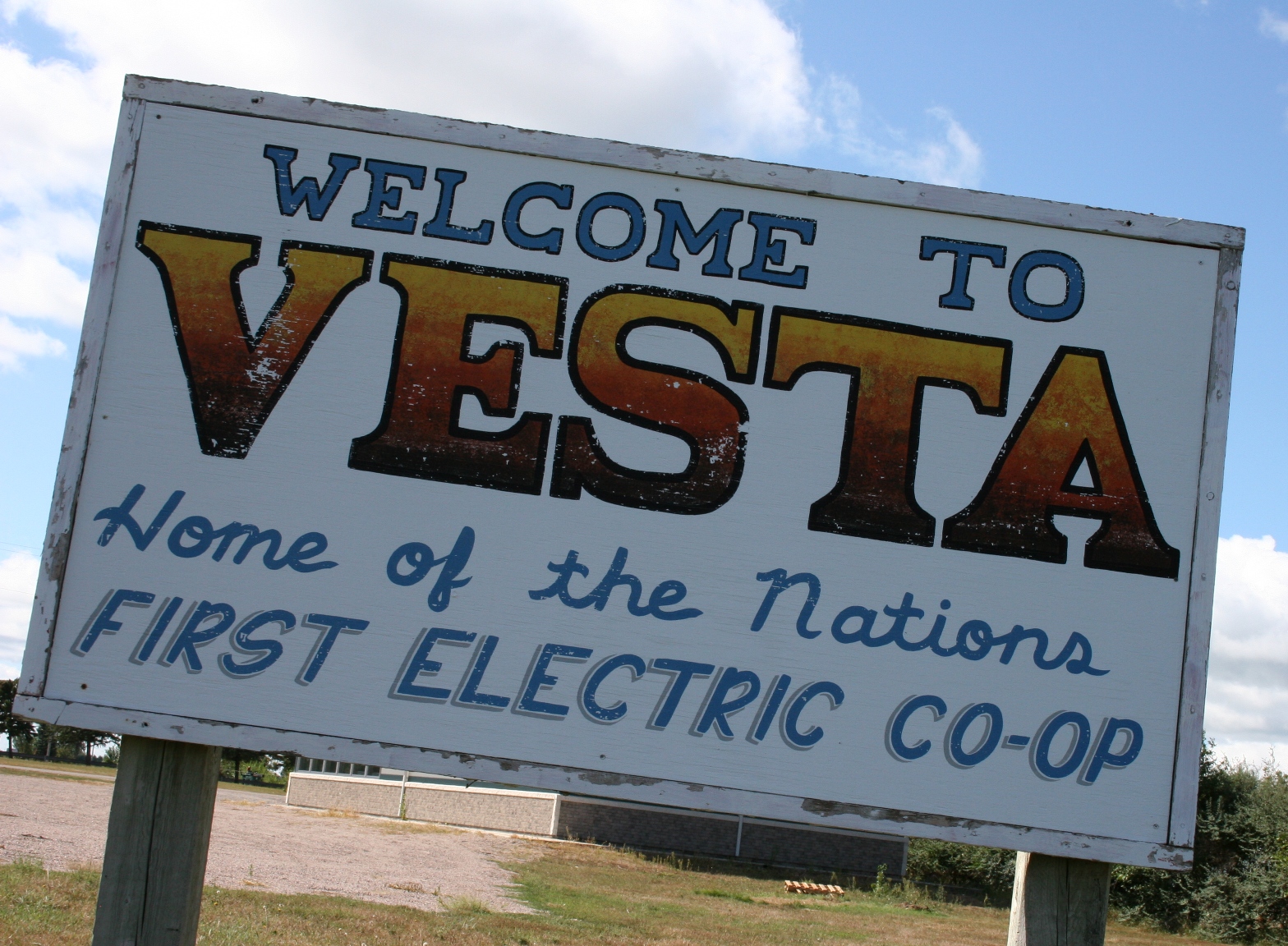
Along Minnesota Highway 19, this sign marks my hometown, population around 330 and home of the nation’s first electric co-op.

FYI: Vesta is located in southwestern Minnesota, half way between Redwood Falls and Marshall on State Highway 19.

© Copyright 2012 Audrey Kletscher Helbling


Pull off Highway 14 & view the historic buildings of Lamberton June 7, 2012

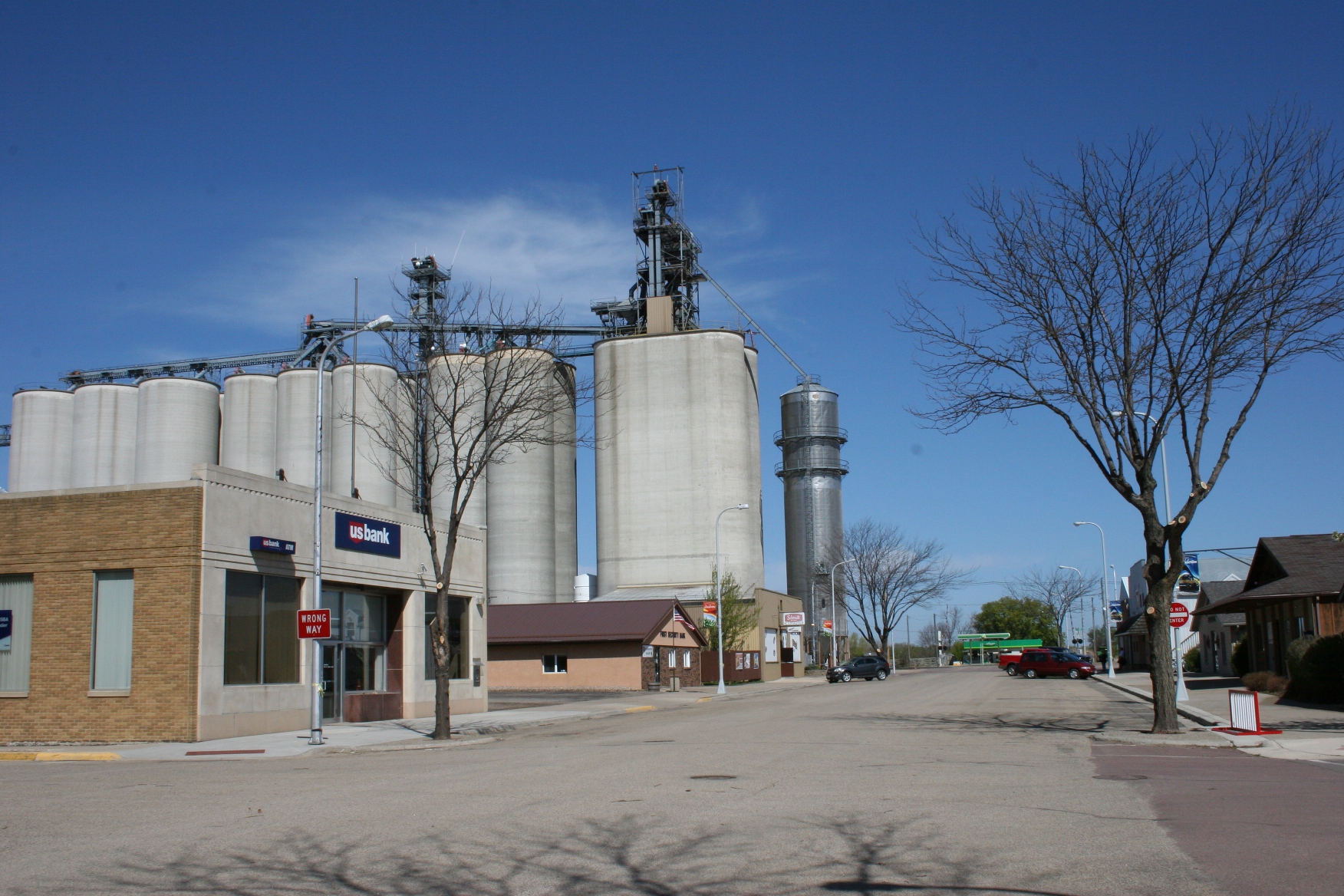
A portion of Lamberton’s Main Street shows this to be a strong agricultural community.

LAMBERTON. Just another small town on the southwestern Minnesota prairie, so you would think if you’re driving on U.S. Highway 14, The Laura Ingalls Wilder Historic Highway.

But this community some dozen miles east of Walnut Grove, destination for fans of “The Little House” books and television series, is worth at least a drive-through if not a stop.

I’ll admit that up until my middle brother moved onto acreage north of Lamberton several years ago, I hadn’t spent much time in this town of 822 except to visit an uncle and aunt who once lived and ran a furniture store here.

I still haven’t explored this agricultural community like I should. But I’ve seen enough to know that I need to look more in depth. Let me show you why, via photos I took, mostly along Main Street, during a brief stop two months ago.

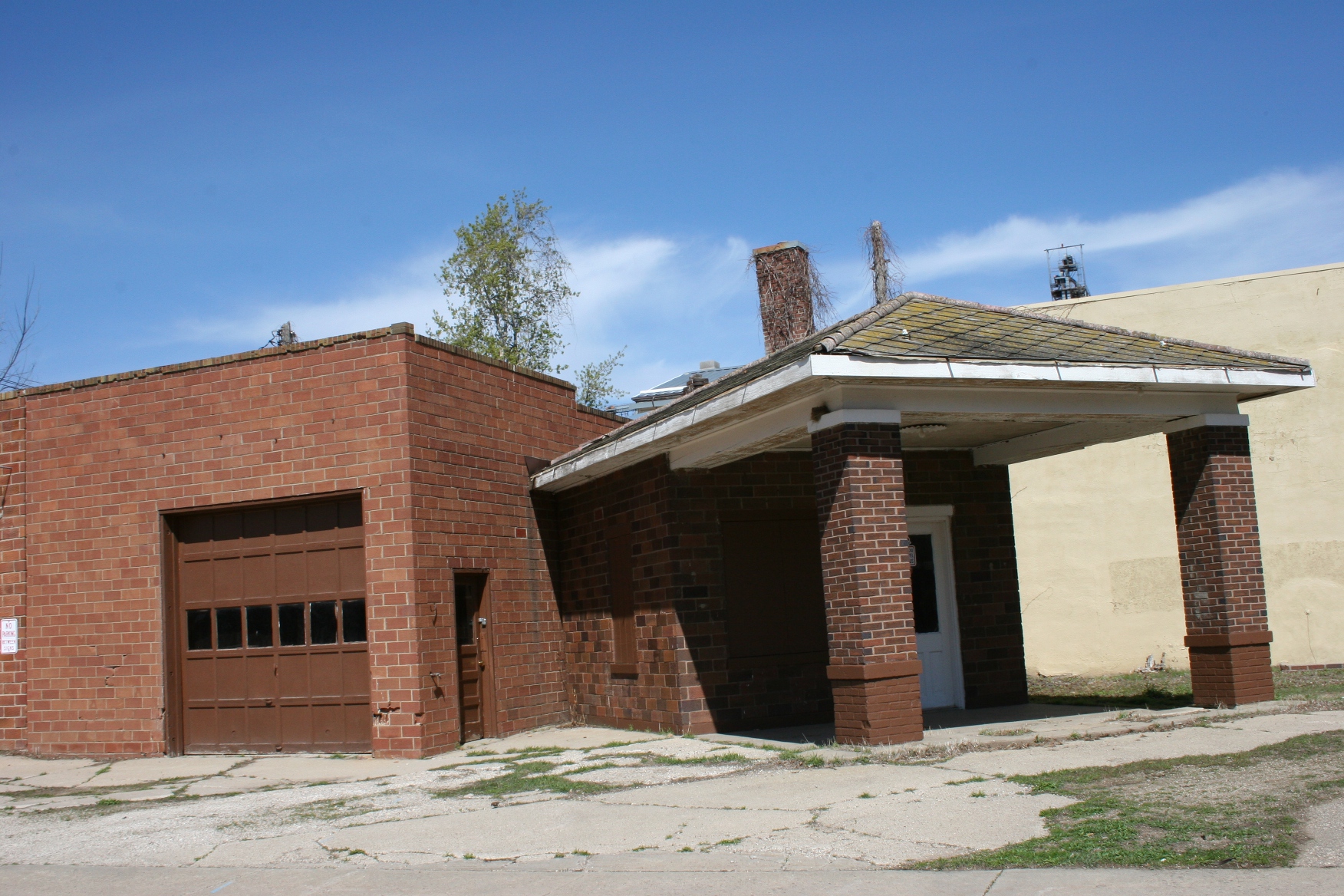
The once-popular corner gas station still stands in downtown Lamberton.

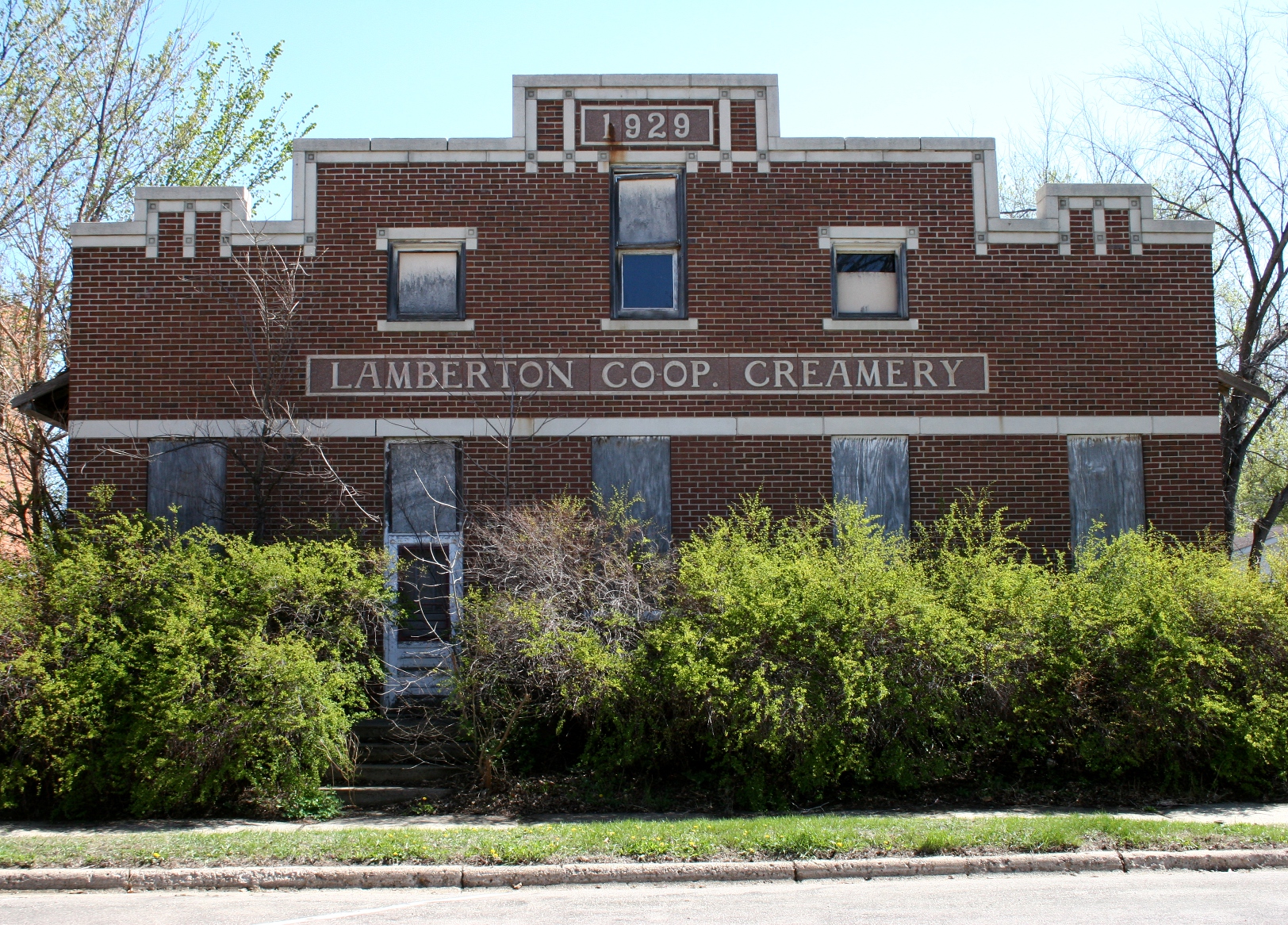
Most small towns once had creameries like this one.

Hanzlik Blacksmith Shop, dating to 1895, was gifted to the city and preserved by the local historical society. With the original wood floor and tools, it’s been called “a warehouse of a long ago lost art” by locals. The community celebrates this piece of history with an annual Hot Iron Days, this year set for September 7 – 8.

It’s the old buildings—from the cute corner gas station to the stout brick creamery to the old wood-frame blacksmith shop—that appeal to me. Some 30 miles to the northwest in my hometown of Vesta, which like Lamberton sits in Redwood County, the old buildings are mostly gone. But not in Lamberton. Here you’ll find plenty of historic buildings to please your artist’s eye and your historian’s heart.

Now all I need is someone with keys so I can take you inside these old buildings.

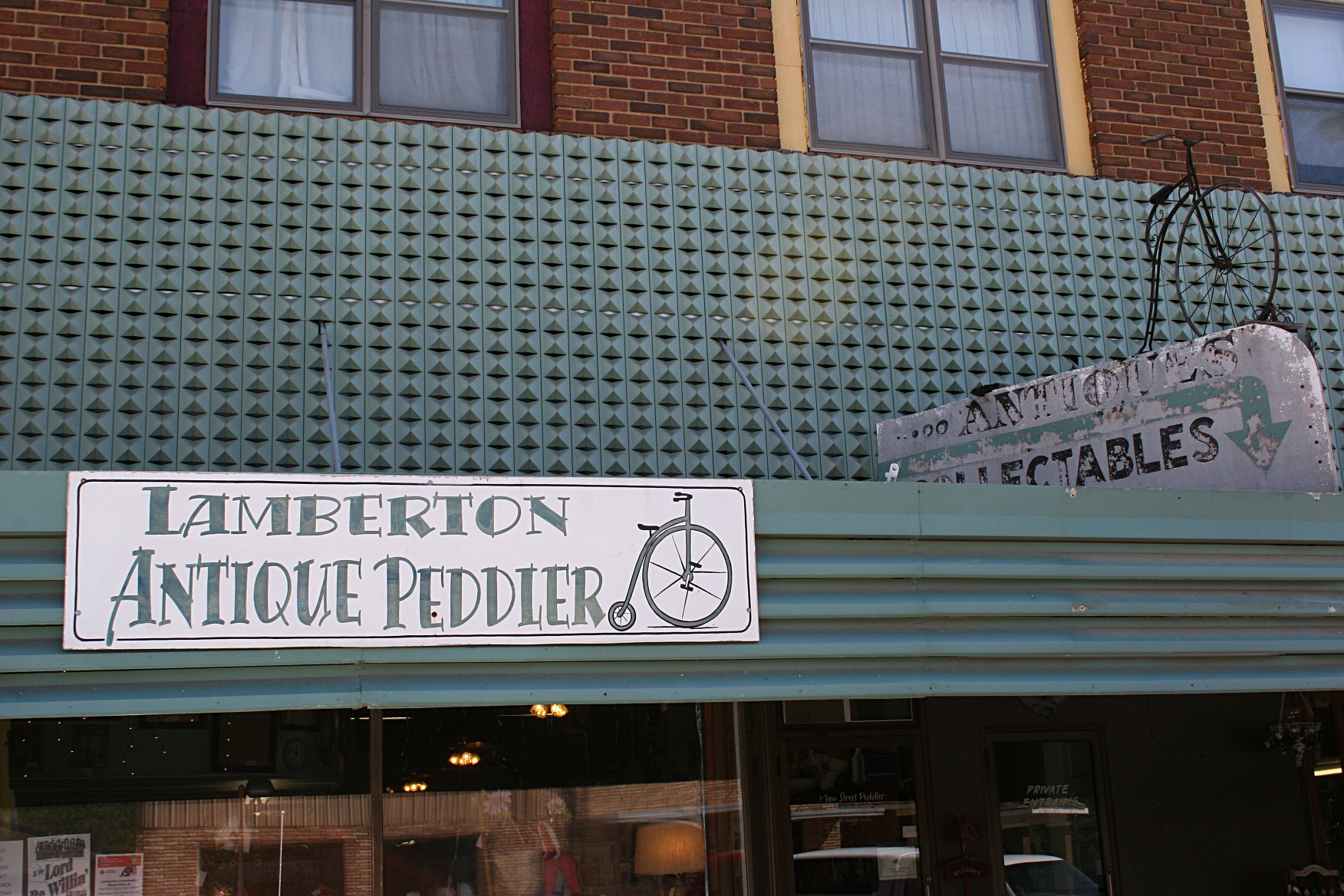
Vintage signs hold a certain historic charm.

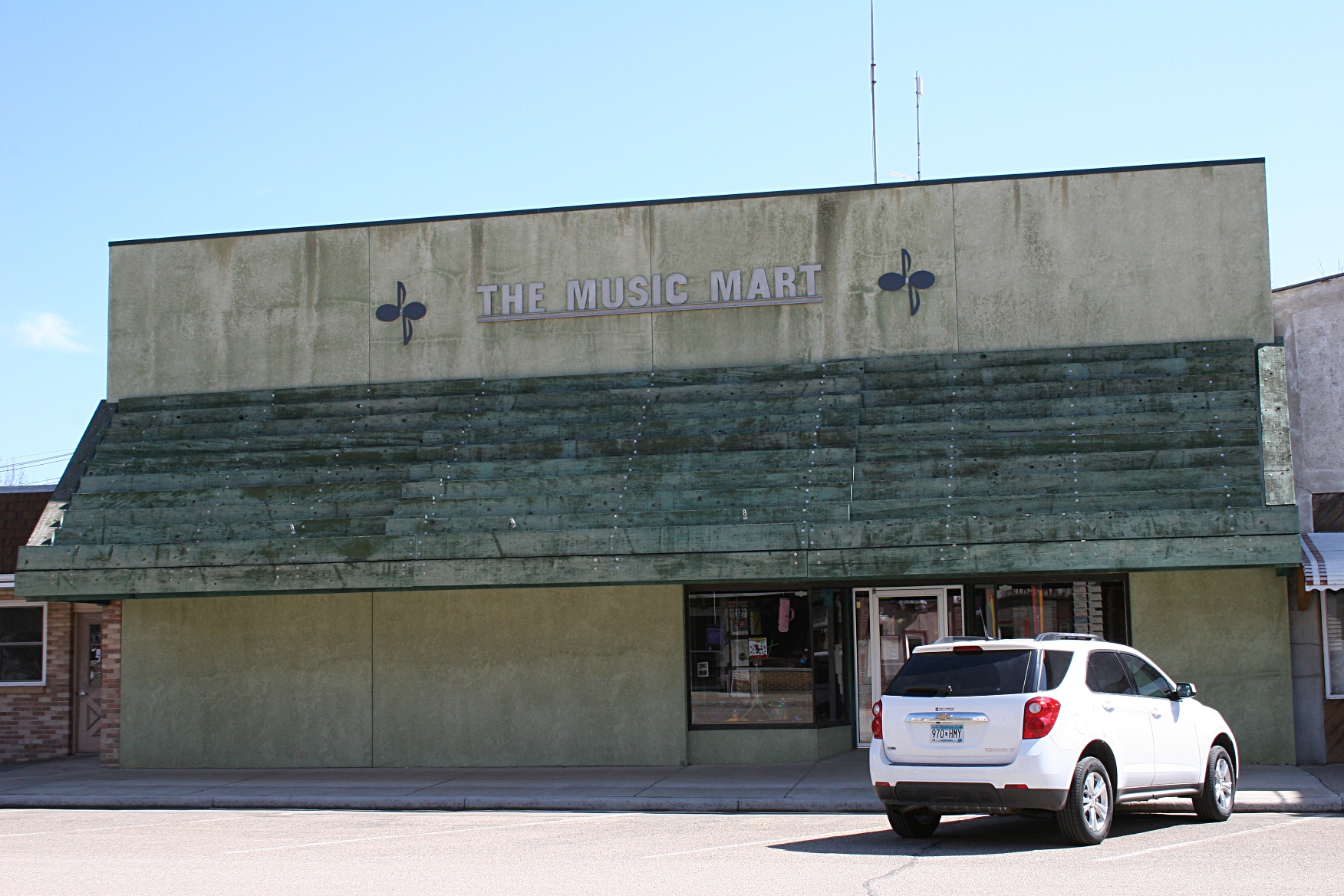
The Music Mart supplies most major brands of band and orchestral instruments. Sales staff reach out to 100-plus schools in southern Minnesota, according to online information. Who would expect to find this type of business in a small town of less than 1,000 residents? Not me.

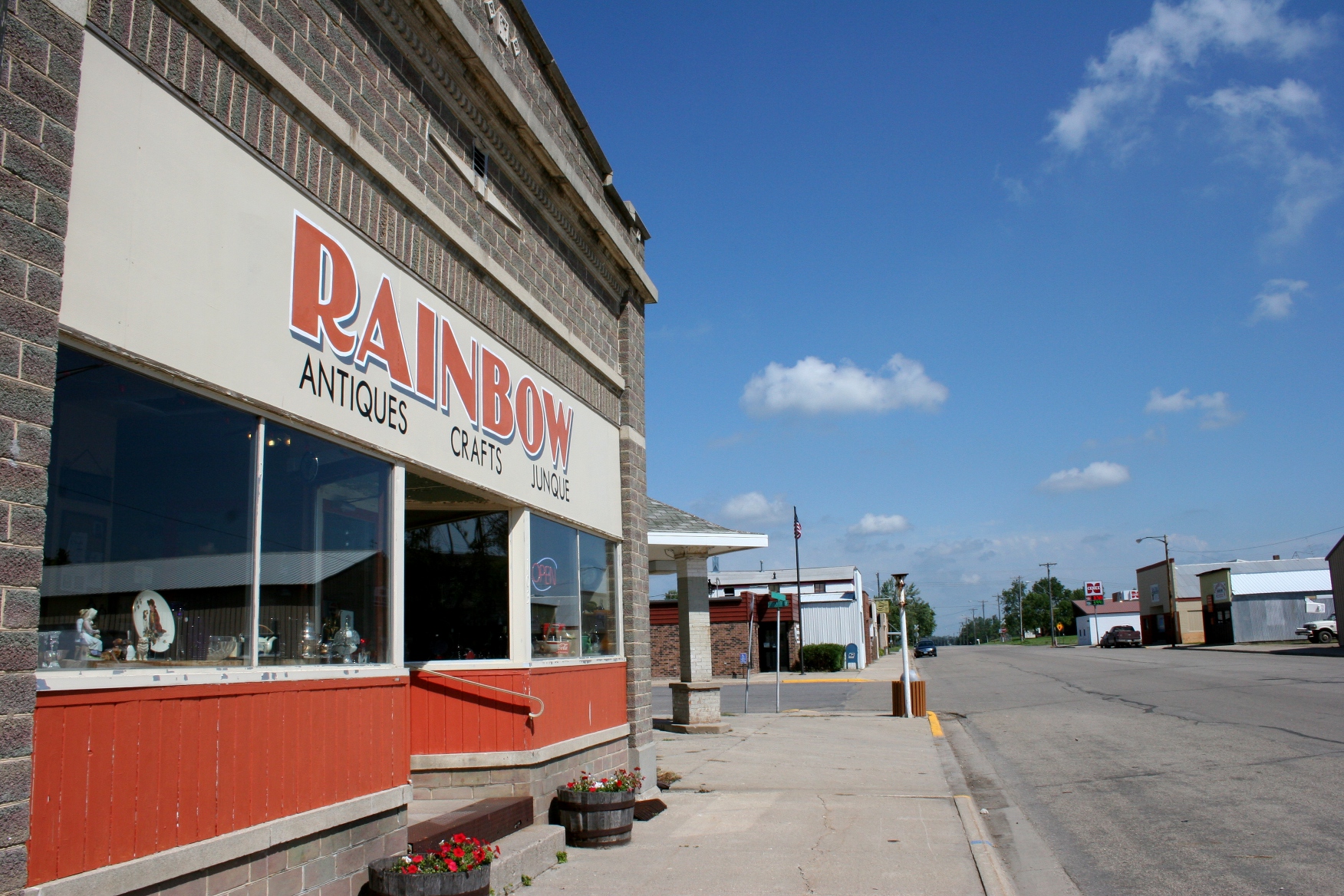
The Lamberton Antique Peddler is a must-see for anyone who is into antiques. This place is packed with merchandise in the former furniture store once operated by my uncle and aunt, Merlin and Iylene.

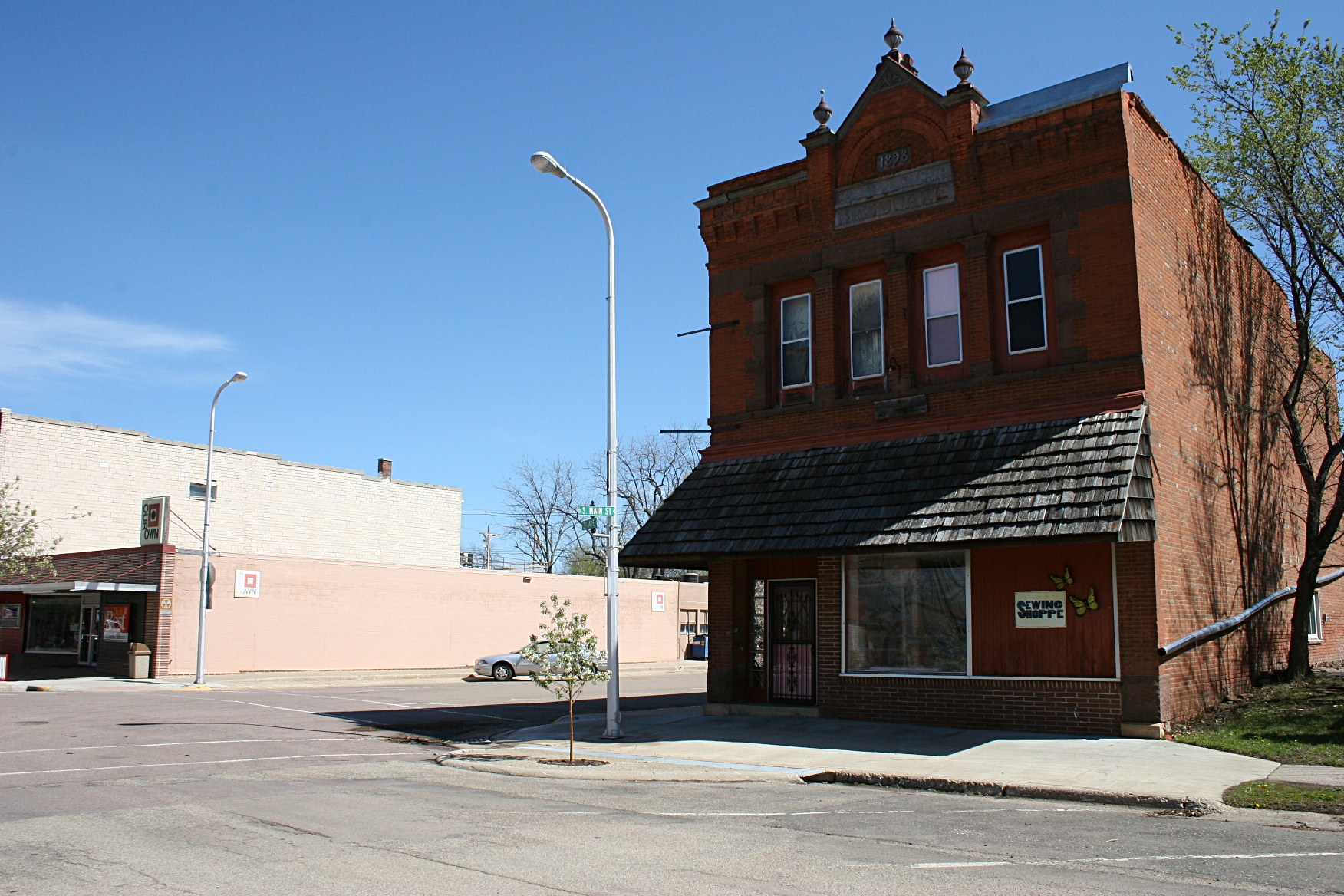
The Sewing Shoppe next to the creamery. Love the architecture.

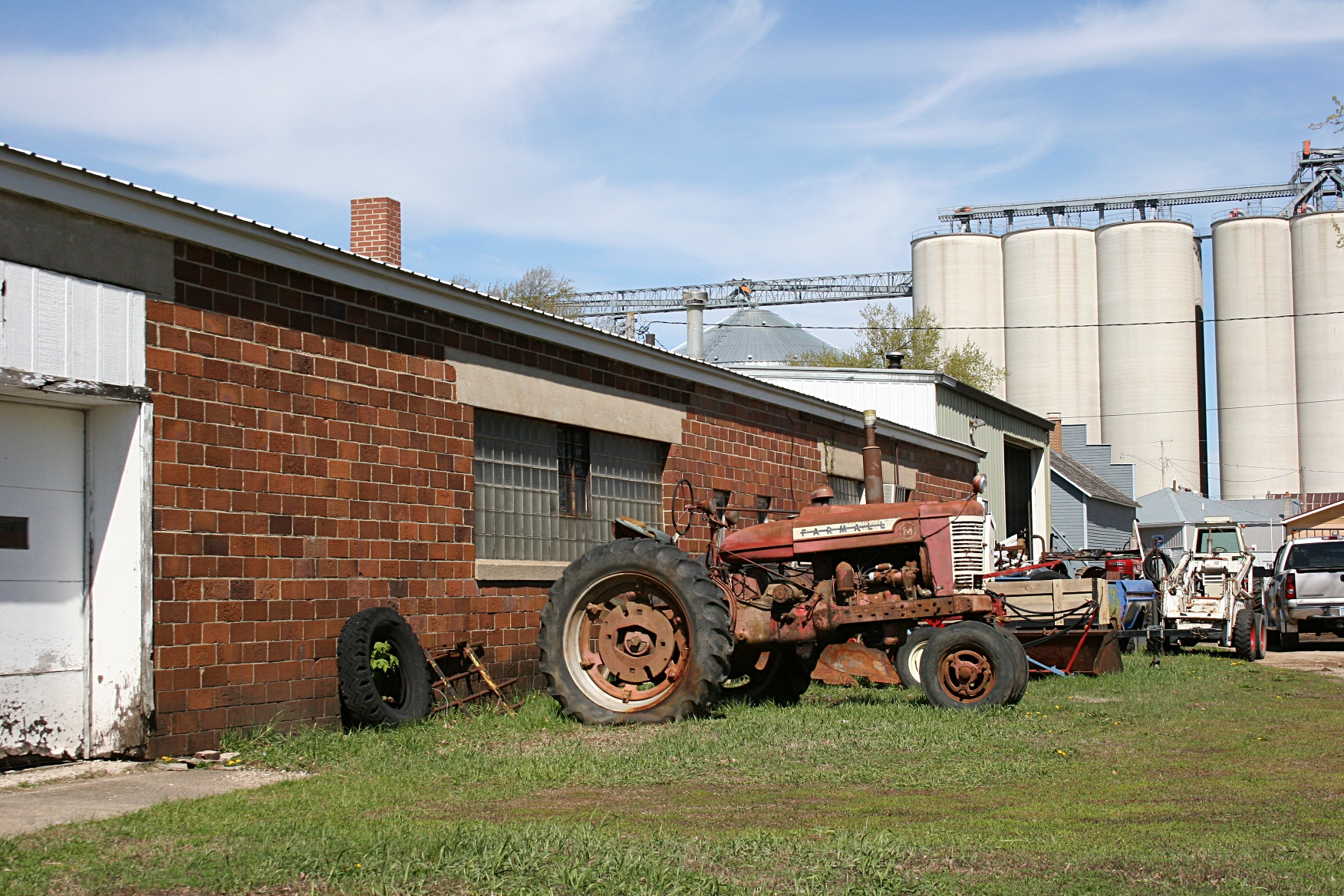
An old Farmall is parked next to a building just off Main Street.

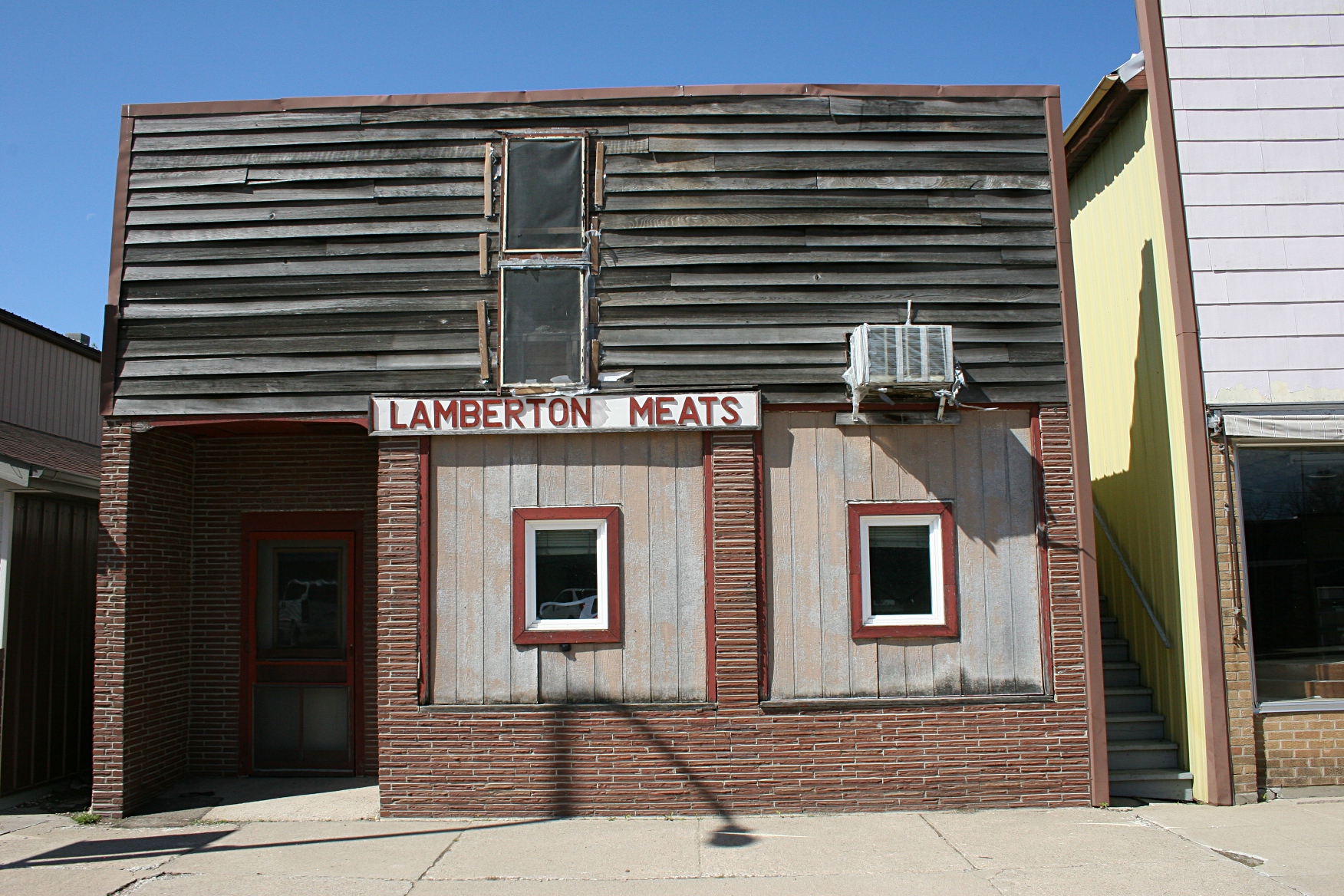
“The locker.”

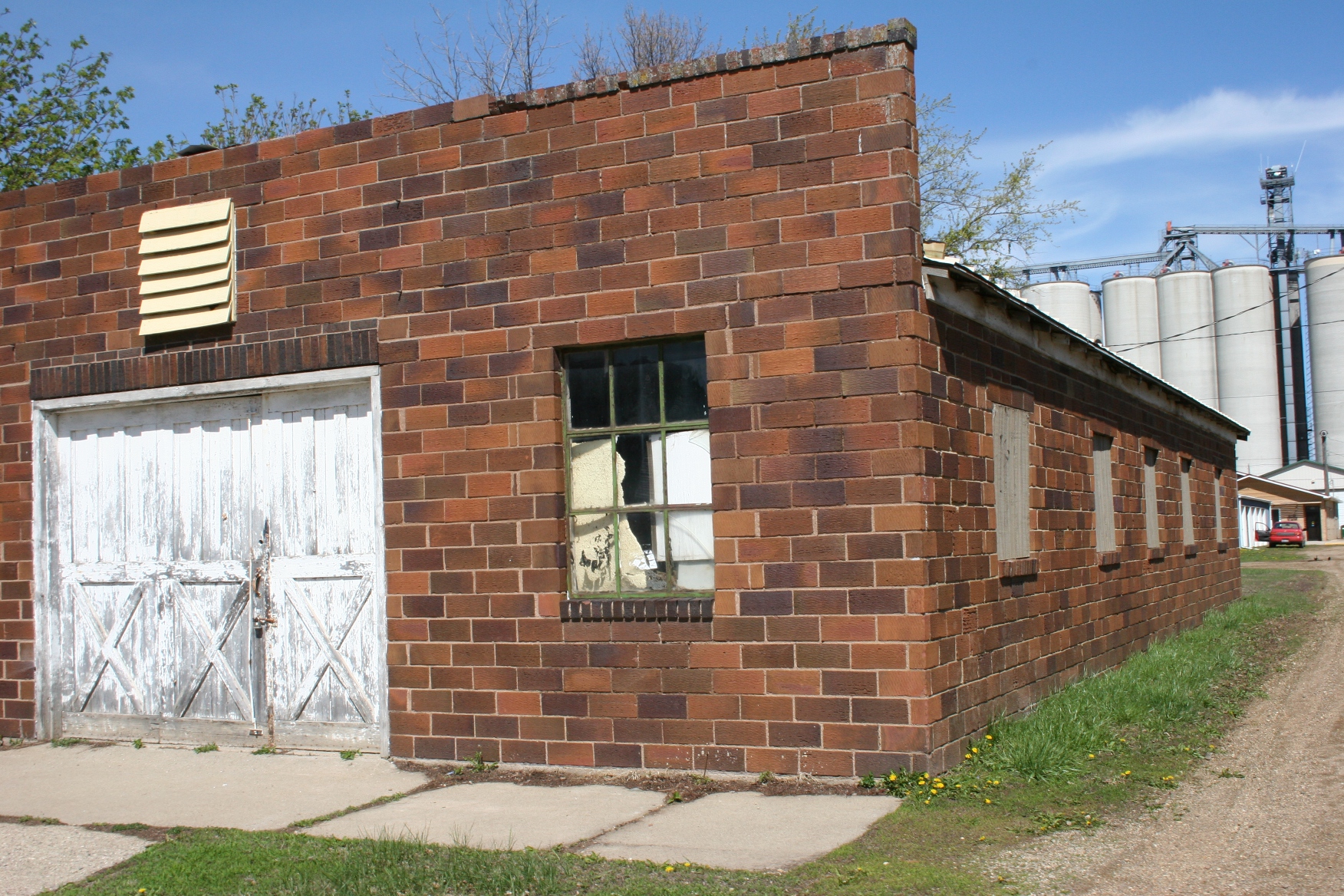
A low-slung brick building, perhaps a former garage, caught my eye.

TO VIEW ANOTHER particularly beautiful building in Lamberton, a former bakery, click here to read a previous post on Minnesota Prairie Roots.

© Copyright 2012 Audrey Kletscher Helbling


What would you do with this old bakery in Lamberton? May 31, 2012

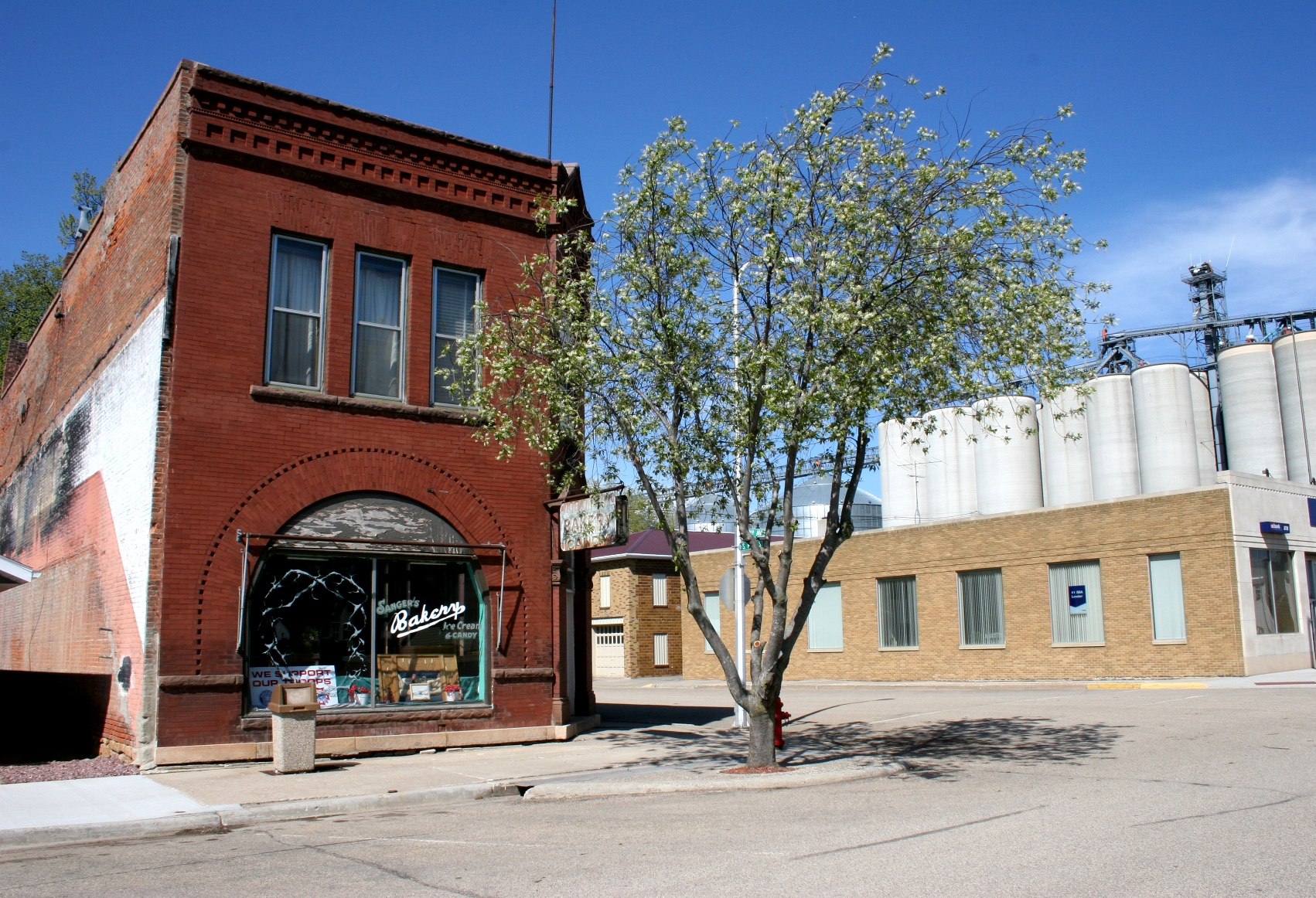
The former Sanger’s Bakery in Lamberton, a Minnesota farming community. I’d move the garbage bin in front of the building, replace it with a bench and add pots of vivid flowers.

I’VE PHOTOGRAPHED many an old building in a lot of small towns. My appreciation for history and architecture and for rural life keep drawing me back to Main Street.

One building in particular intrigues me. The former Sanger’s Bakery, a brick stronghold anchoring a corner in downtown Lamberton in southern Redwood County, possesses a sweet, timeless charm that causes it to stand out.

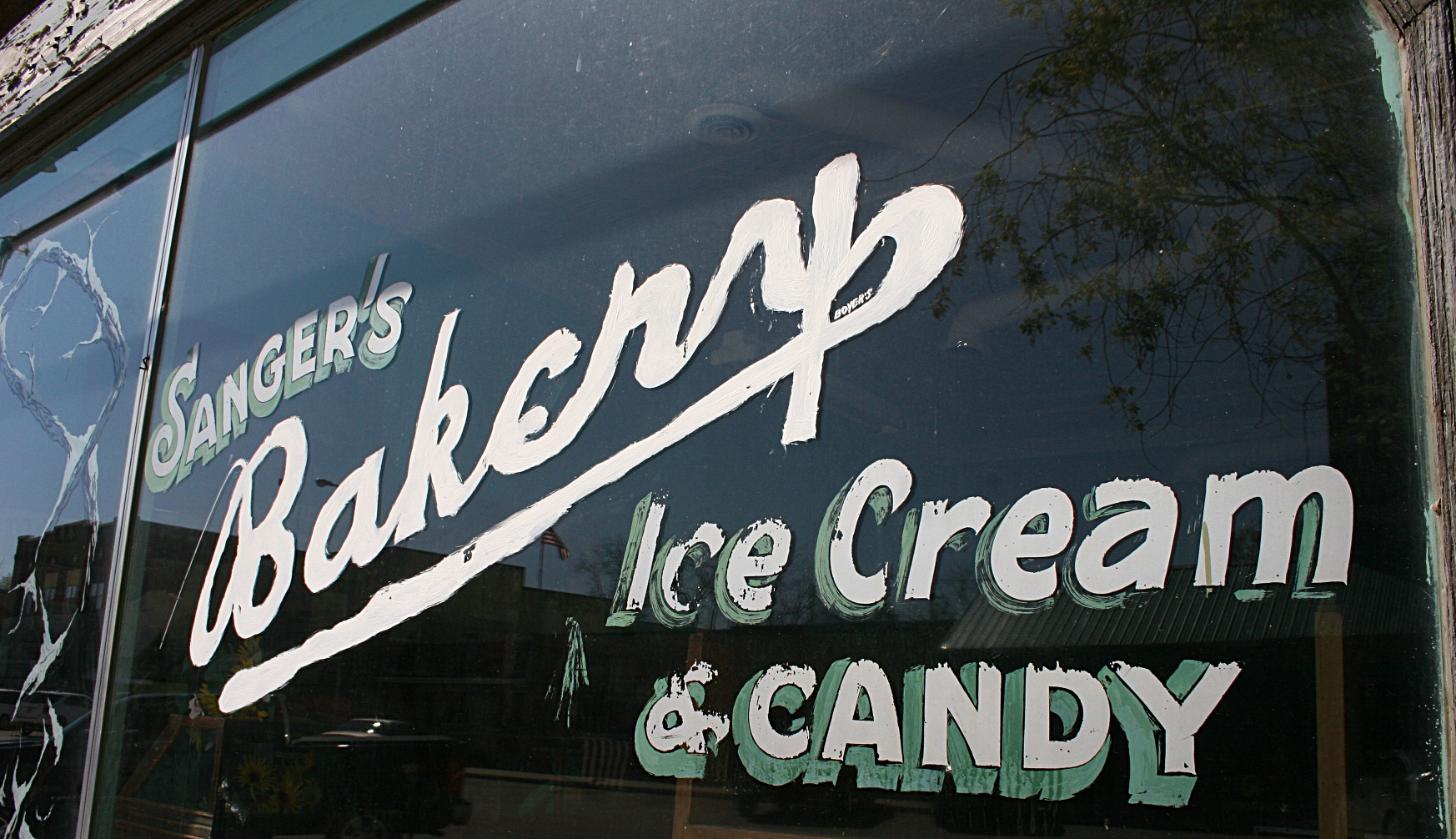
How long has this signage been painted on the front window of Sanger’s?

It’s not necessarily the exterior that catches my eye, although certainly the signage and sweeping arched front window and the fancy details in the brick appeal to me. Rather, it’s the interior which truly captures my interest.

The two times I’ve photographed the exterior, I’ve also paused to press my nose against the windows and peer inside to a snapshot of the past. You would swear the hands on the vintage 7-UP clock have not moved in decades. An old-fashioned candy counter and vintage lunch counter rimmed with stools look like something straight out of a Norman Rockwell painting.

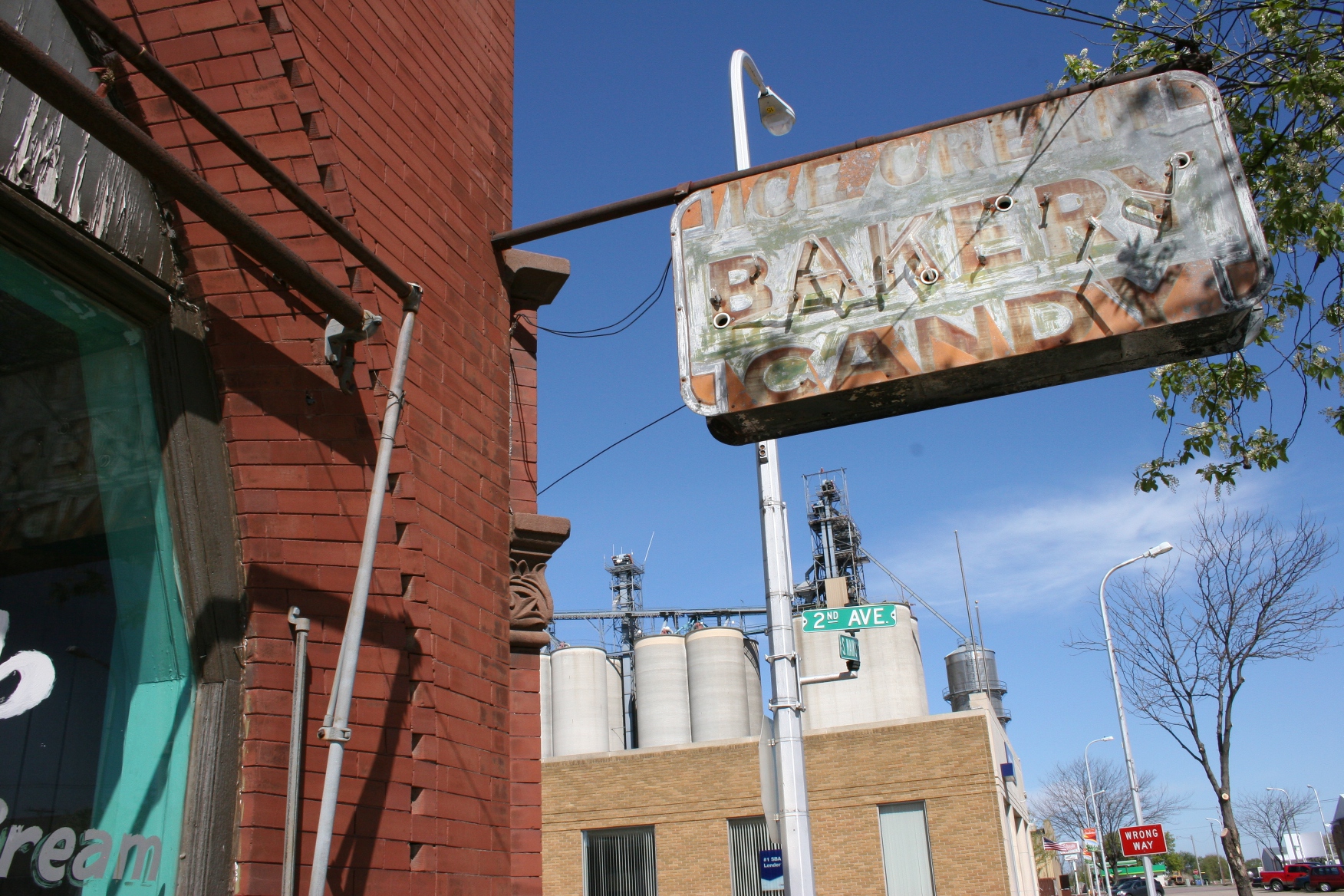
A vintage sign suspended from the front of the bakery.

Honestly, you just don’t find places like this anymore. Martin Kuhar opened the bakery in 1928. The Sanger family purchased it in 1946 and eventually Bob, the youngest of Nick and Mary’s six children, bought the business in 1961. He was a 1955 graduate of the baking program at Dunwoody Institute.

All of this I learned on a recent stop at the bakery, where I found Bob’s obituary taped to the front door. He died March 30.

Just days before his death, this long-time baker was serving coffee to his friends. Oh, how I wish I could have been in that coffee klatch, listening to the stories.

I bet Bob would have shared plenty about the place where he served up baked goods, hand-scooped ice cream cones, malts and candy. He baked buns for local schools and churches and crafted wedding cakes. He also sold fresh eggs from his chickens and honey from his bees. He tended a garden.

After reading Bob’s obit, I desired even more to get into the bakery. I jiggled the front door knob, hoping the door might be unlocked. It wasn’t. I’m determined, on my next trip to Lamberton, to get inside the bakery, to share with you this treasure from the past.

In the meantime, owners of this building and Lamberton area residents, I hope you appreciate what you have here. I could easily see this former bakery reopened as an ice cream/sandwich/pie/coffee/gift shop. The location along U.S. Highway 14 only 10 miles from Walnut Grove, childhood home of author Laura Ingalls Wilder, is ideal. The area already draws plenty of tourists during the summer months.

The right owner, with the right ideas, a good business and marketing plan, and adept at using social media could turn this old bakery into a destination.

I can envision the possibilities.

Readers, what do you think? If anyone out there knows anything about plans for the old bakery, submit a comment. Or, if you simply have ideas, I’d like to hear those, too.

A side shot of the former bakery. Just imagine the possibilities for this spacious building. Let’s hear your ideas.

© Copyright 2012 Audrey Kletscher Helbling


Ten months after the storm, a rural Minnesota congregation returns “home” May 4, 2012

St. John’s Evangelical Lutheran Church in Vesta, hours after a July 1, 2011, storm ripped half the roof from the sanctuary. Photo courtesy of Brian Kletscher.

“There is no place like home. We cannot wait to be back in our own church.”

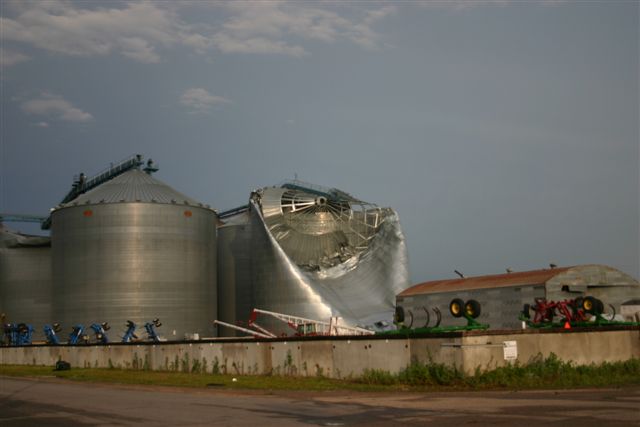
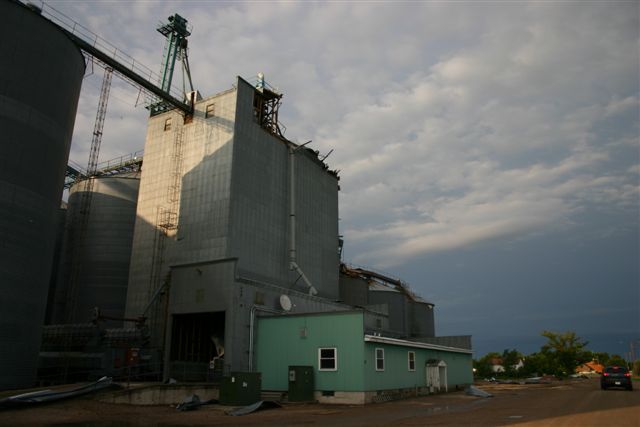
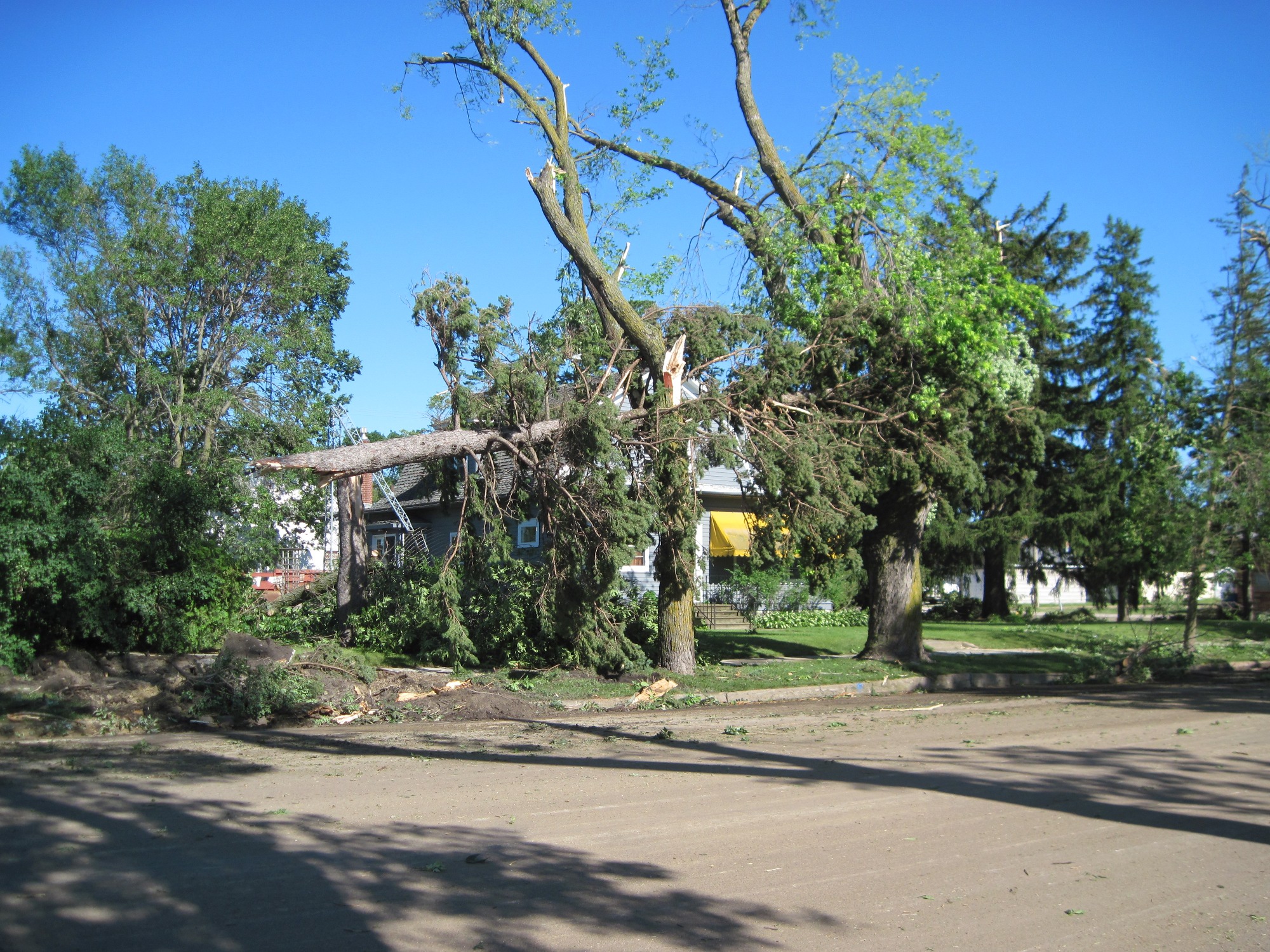
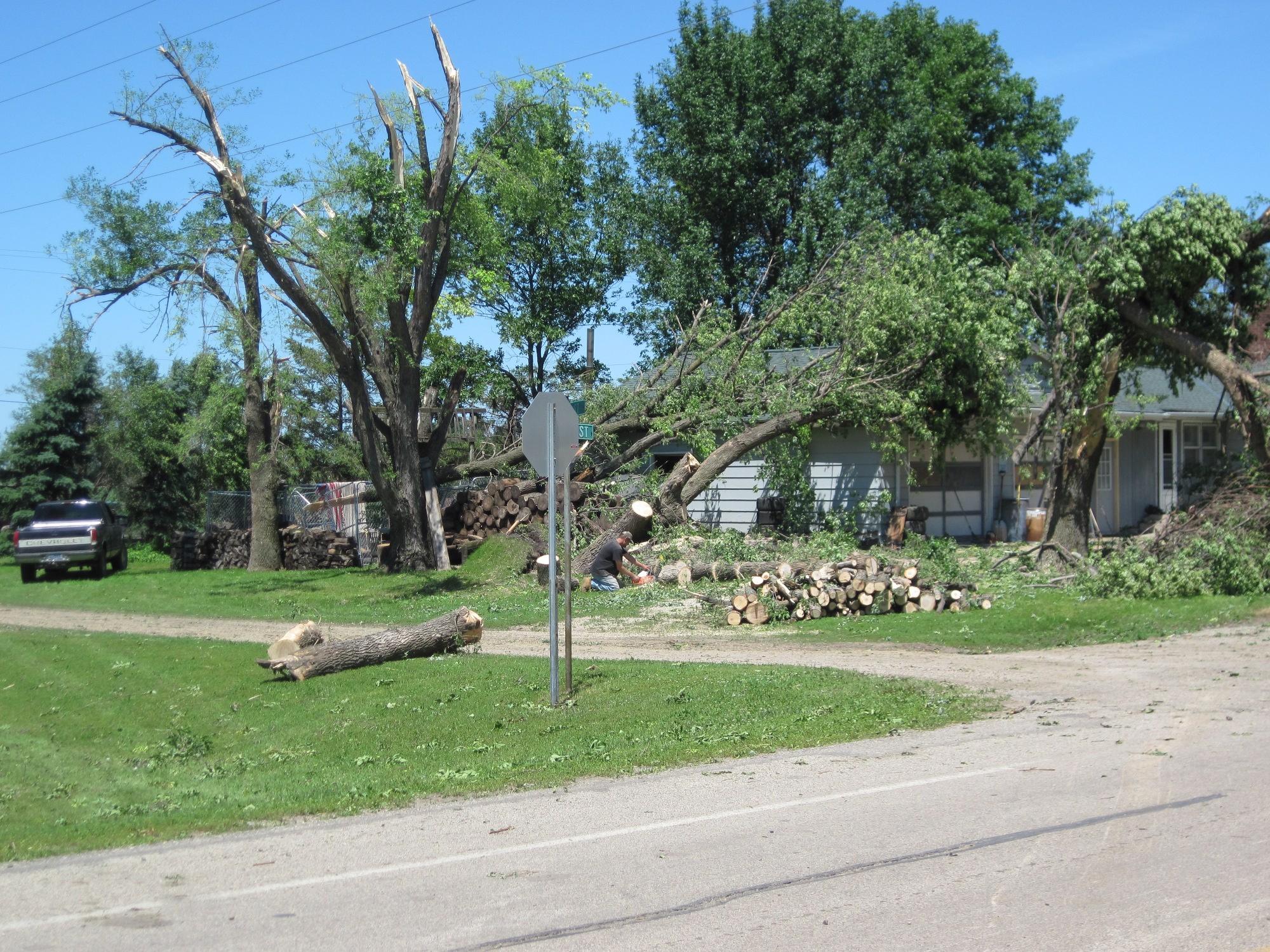
And so, 10 months after a powerful July 1, 2011, storm packing winds of 90 – 100 mph ripped half the roof from St. John’s Evangelical Lutheran Church in my hometown of Vesta in southwestern Minnesota, congregants will worship for the first time in their rebuilt sanctuary this Sunday morning.

I expect many of St. John’s 323 baptized members feel exactly as my uncle, Milan Stage, does—simply happy to return to the comfortable familiarity of their home church.

Since the storm, parishioners have worshiped at their sister congregation in neighboring Echo. Says long-time St. John’s member Karen Lemcke, “We thank Peace Lutheran of Echo for allowing us to join their services for all of this time. It was enjoyable to be in fellowship with them but still nice to be back in our church.”

Inside St. John’s sanctuary in September, I listened to the wind flap the tarp that covered the damaged roof.

When worshipers arrive at St. John’s Sunday morning, they will enter through a new south-facing 20 x 40-foot addition which includes a handicap accessible bathroom, storage room and study area/office for the pastor.

And above them a new south roof—the portion ripped off by the winds—and a new exterior steel roof cover the sanctuary refurbished with new ceiling planking and hanging lights.

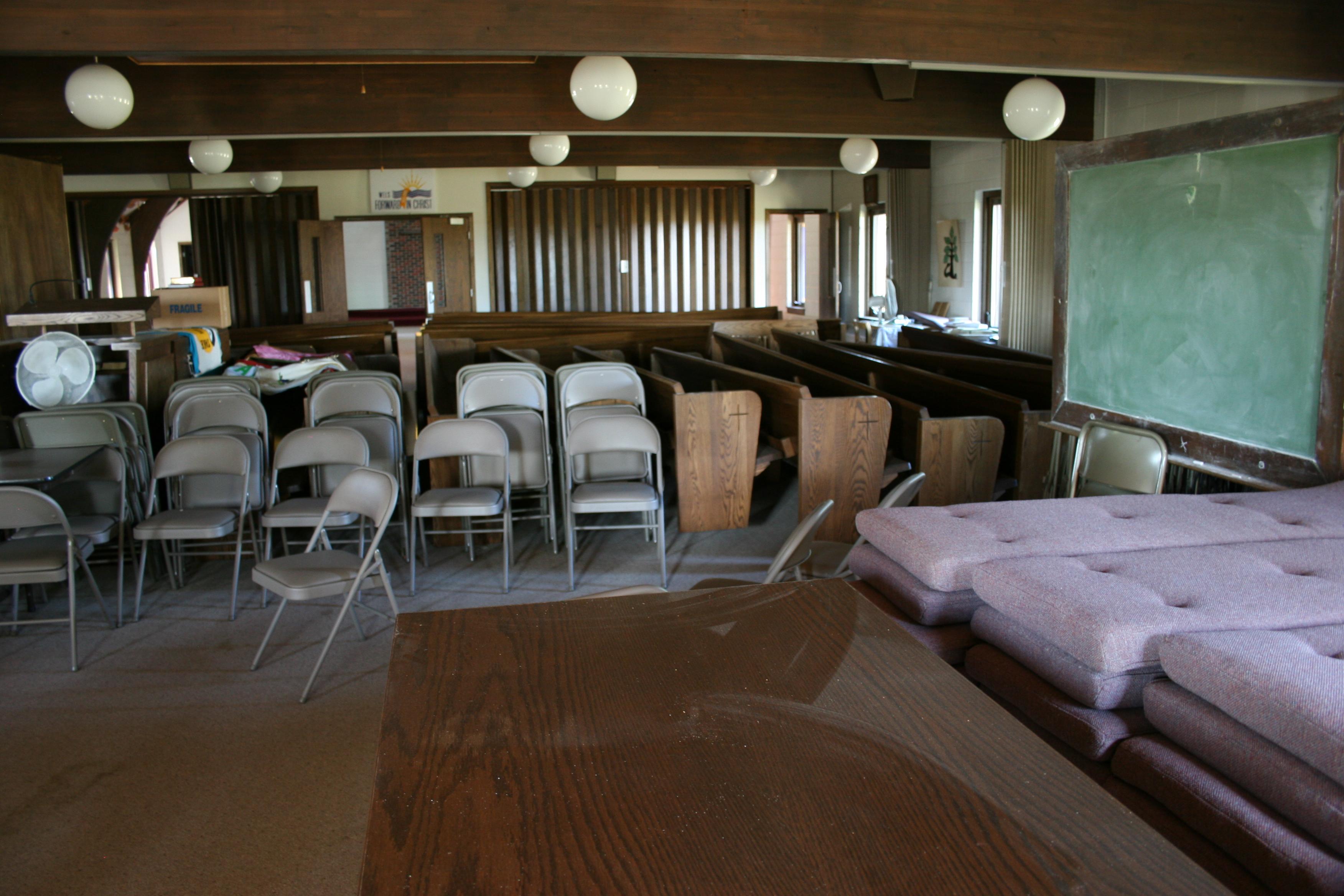
The pews and other items from the church were moved into the undamaged social hall after the storm.

They’ll walk on new carpeting and settle onto new pew cushions to hear the sermon delivered by a former St. John’s pastor, the Rev. Randy Bader, Mission Advancement Director of Great Plains Lutheran High School in Watertown, S.D.  Says Rev. Bader, in part:

I am planning on using the Holy Spirit-inspired words of Isaiah as the basis for the sermon. It includes these words: “For My thoughts are not your thoughts, neither are your ways My ways,” declares the Lord. “As the heavens are higher than the earth, so are My ways higher than your ways and My thoughts than your thoughts.”

We may wonder why our gracious God would allow such a dangerous and difficult situation to touch the lives of His people as it did on that July day last summer. So often we do not understand. But the truth is, we don’t have to understand. Jesus has a purpose for everything that he allows to happen to us, and His ultimate purpose is to bless and save us. 

…Trust Him. His love is the constant, in, and even through, challenging circumstances.

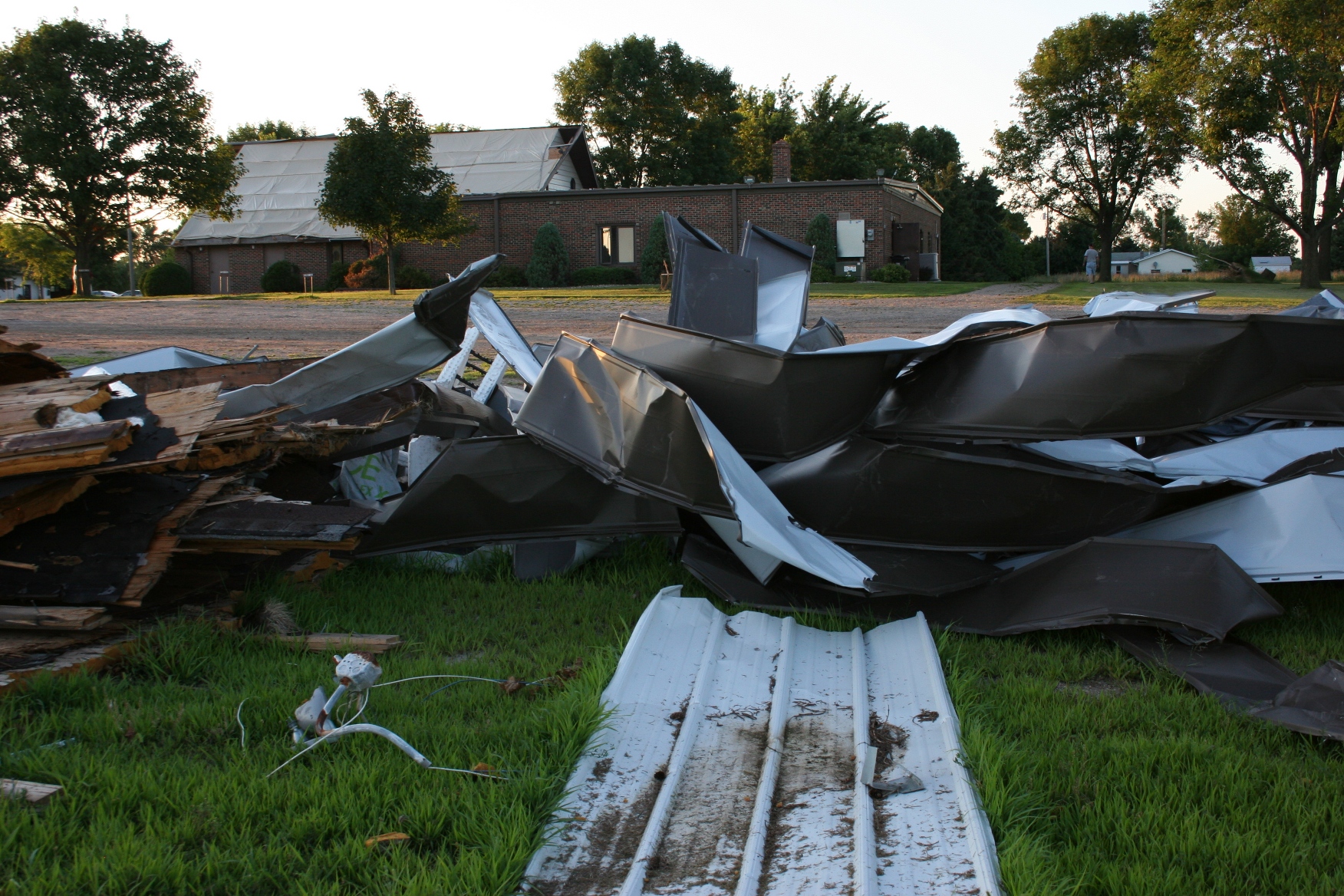
A debris pile on the edge of the church parking lot includes pieces of steel from the roof and brick from the bell tower. Photo taken in September 2011.

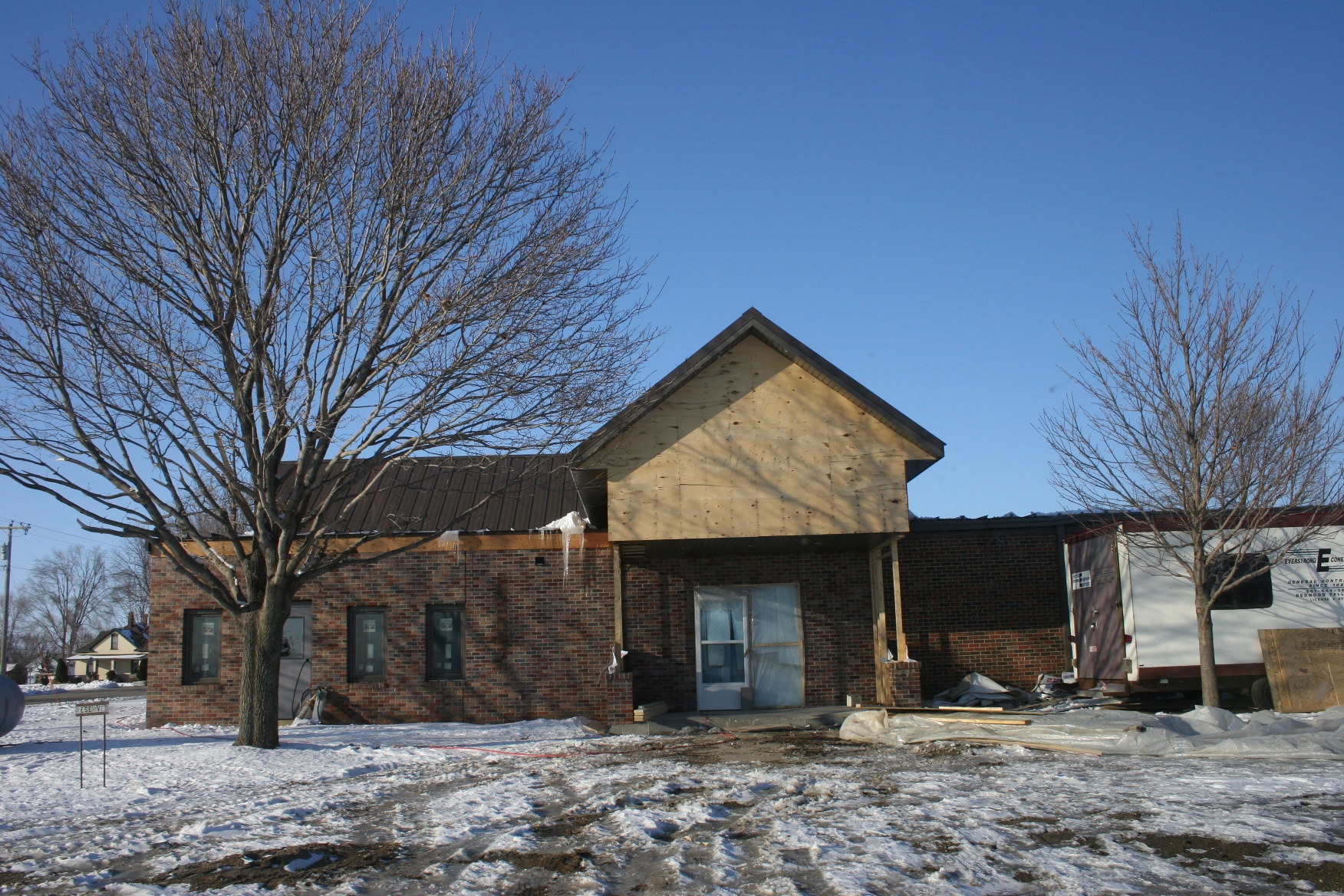
Under construction in March, a pastor’s office, bathroom and storage room were added to the south side of the early 1970s era church.

St. John’s members like my 80-year-old mom, especially, welcome the reopening of the church. It’s much easier for her to drive across town to worship services and other functions than to drive or catch a ride the eight miles to Peace Lutheran in Echo. I’m thankful for family members who’ve taken my mom to church services.

During the 10 months since the storm ravaged Vesta and the surrounding area, I’ve kept tabs on St. John’s, checking in most visits back to my hometown to see how the reconstruction was progressing. This, after all, is the church where I was married 30 years ago this May 15. It is the church where my family mourned the loss of our father, maternal grandfather, paternal grandmother and many other loved ones. We celebrated family weddings here and attended confirmations and worshiped here on Sunday mornings and on Christmas Eve.

The old saying goes that a church is not a building. That adage holds true if you consider the essence of a congregation.

But, there is much to be said for a physical structure, for the memories it holds, for the comfort it gives in familiarity. Boards and walls and details in construction and décor connect us to our past, to emotions and to loved ones. A place represents, if anything, a tangible legacy of faith.

And in a farming town like Vesta, population 330, a church building also serves as a place to gather, to swap rain gauge totals and crop reports, to exchange family news, to embrace each other in sorrow and in joy, to welcome the newest residents with baptism banners, to grieve the loss of neighbors and friends and family. A church building represents community within a community, the very soul of small town life.

© Copyright 2012 Audrey Kletscher Helbling
 

Minnesota Museums Month: The Minnesota Machinery Museum, on the prairie May 1, 2012

THINK OF MUSEUMS in Minnesota, and what pops into your mind?

Probably the Science Museum of Minnesota or the Minnesota Children’s Museum or the SPAM Museum in Austin or any other such notable museum.

During May, “Minnesota Museums Month,” I challenge you to think beyond the obvious to those small town museums that are tucked away in nondescript buildings or along back roads or are mostly unknown except to those living within a region.

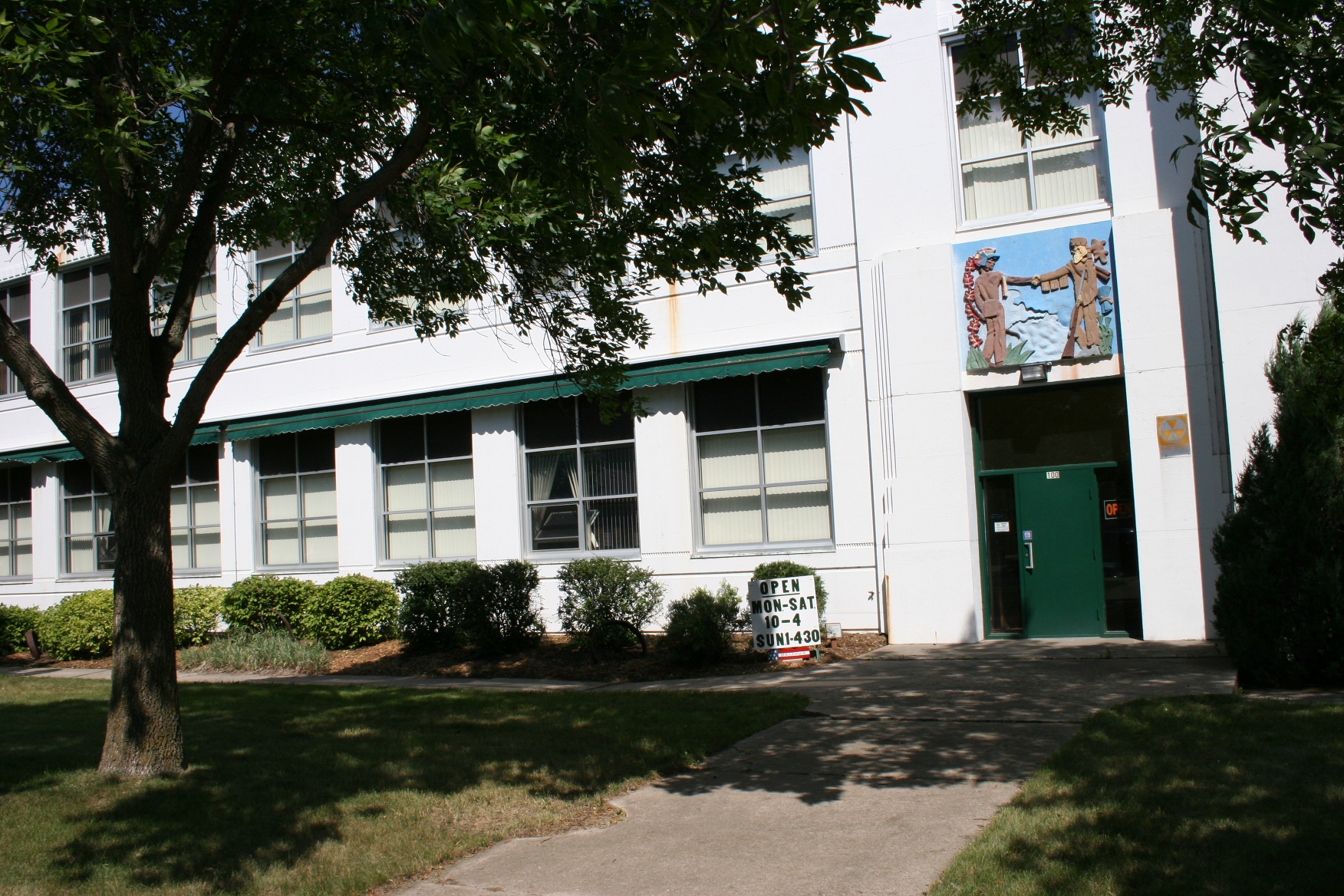
The Minnesota Machinery Museum in a 1939 WPA school building in Hanley Falls.

That leads me directly to Hanley Falls, home of the Minnesota Machinery Museum.

I expect already most of you are asking, “Where the heck is Hanley Falls?”

Hanley Falls, a small farming community, sits along State Highway 23 in southeastern Yellow Medicine County, nine miles south of Granite Falls on the southwestern Minnesota prairie.

It is one of those “blink and you miss it” type towns all too often dismissed by travelers simply flying by on the highway. Let me tell you, Hanley Falls is worth several hours of your time to tour this rural life museum which opened as the Yellow Medicine County Agricultural and Transportation Museum in 1980 and in 1994 became the Minnesota Machinery Museum.

For anyone who appreciates our state’s rich agricultural heritage, this museum rates as a must-see in the heart of our state’s richest farmland. I grew up in this strong agricultural region, in Redwood County next door to the east, and toured the museum for the first time in 2009. Yes, even I was unaware of its presence, having left the prairie in 1974 for college and subsequent employment.

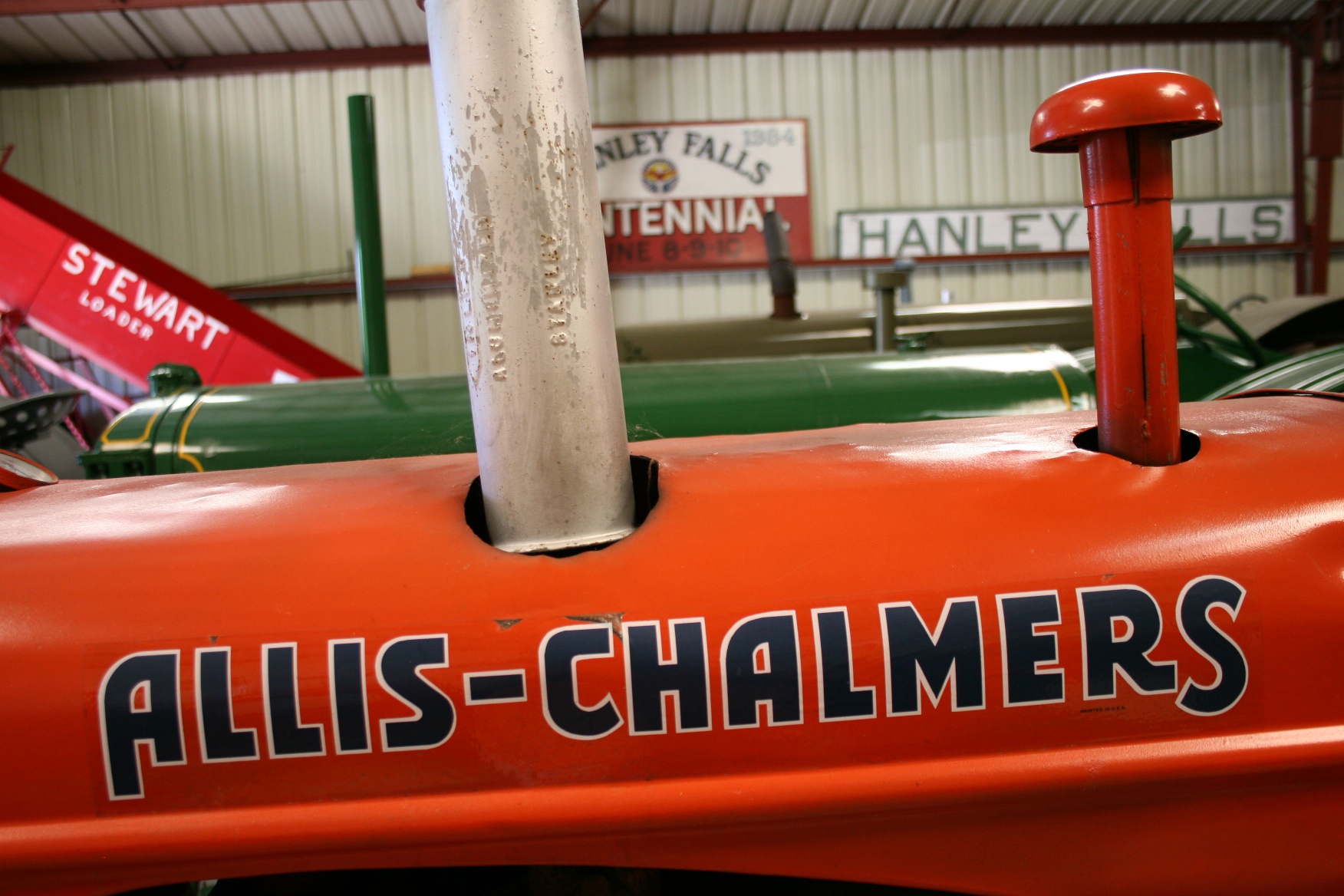
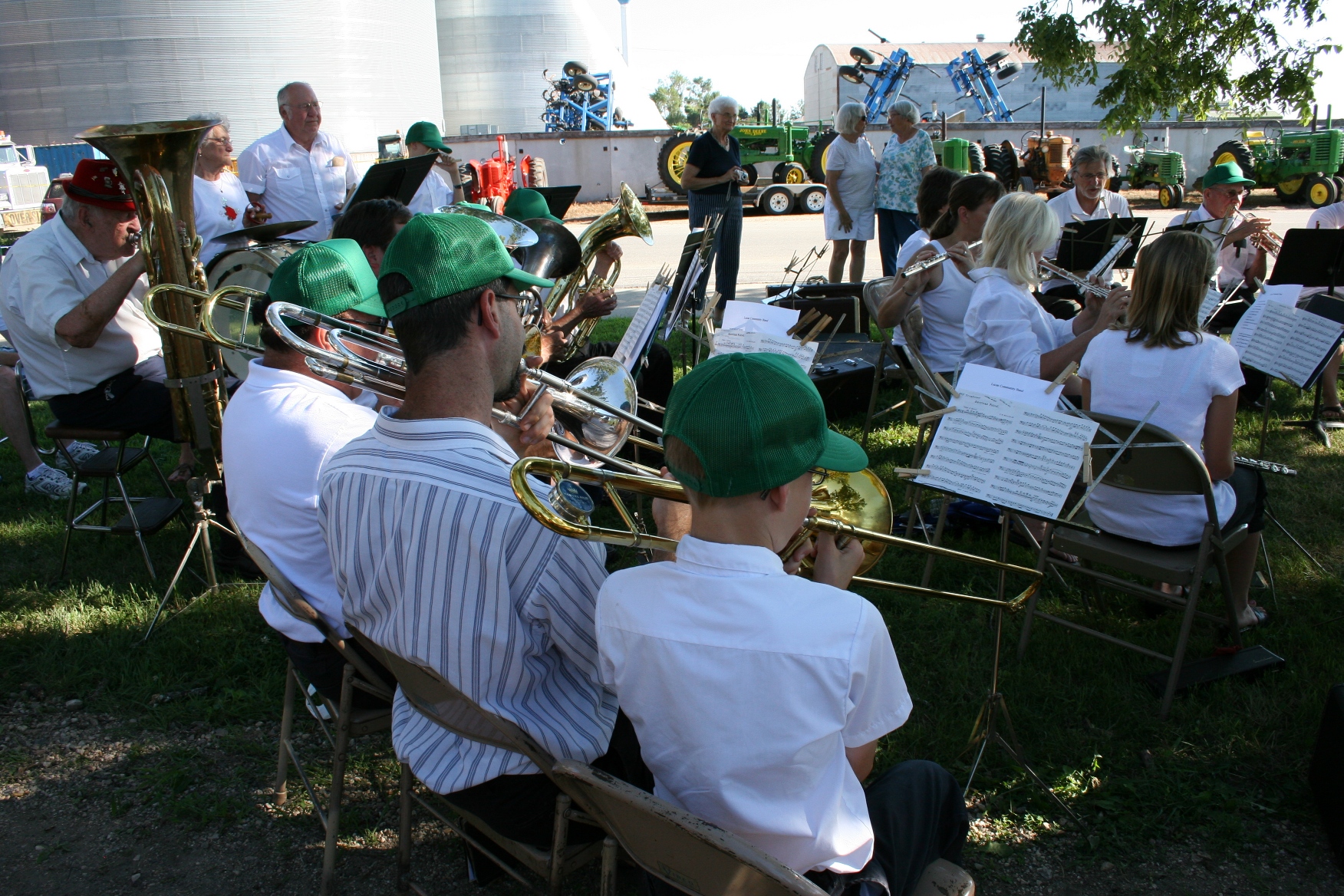
You'll see plenty of old tractors and farm machinery, along with vintage cars and trucks.

The Minnesota Machinery Museum, which is somewhat of a misleading name because it’s not all about farm machinery, reconnected me to my rural roots and educated me on the area’s agricultural history. During my 2009 visit, I learned that visitors will discover “the things you would find on a typical farm before the 1950s” with thousands of artifacts primarily from surrounding communities in a several-county area.

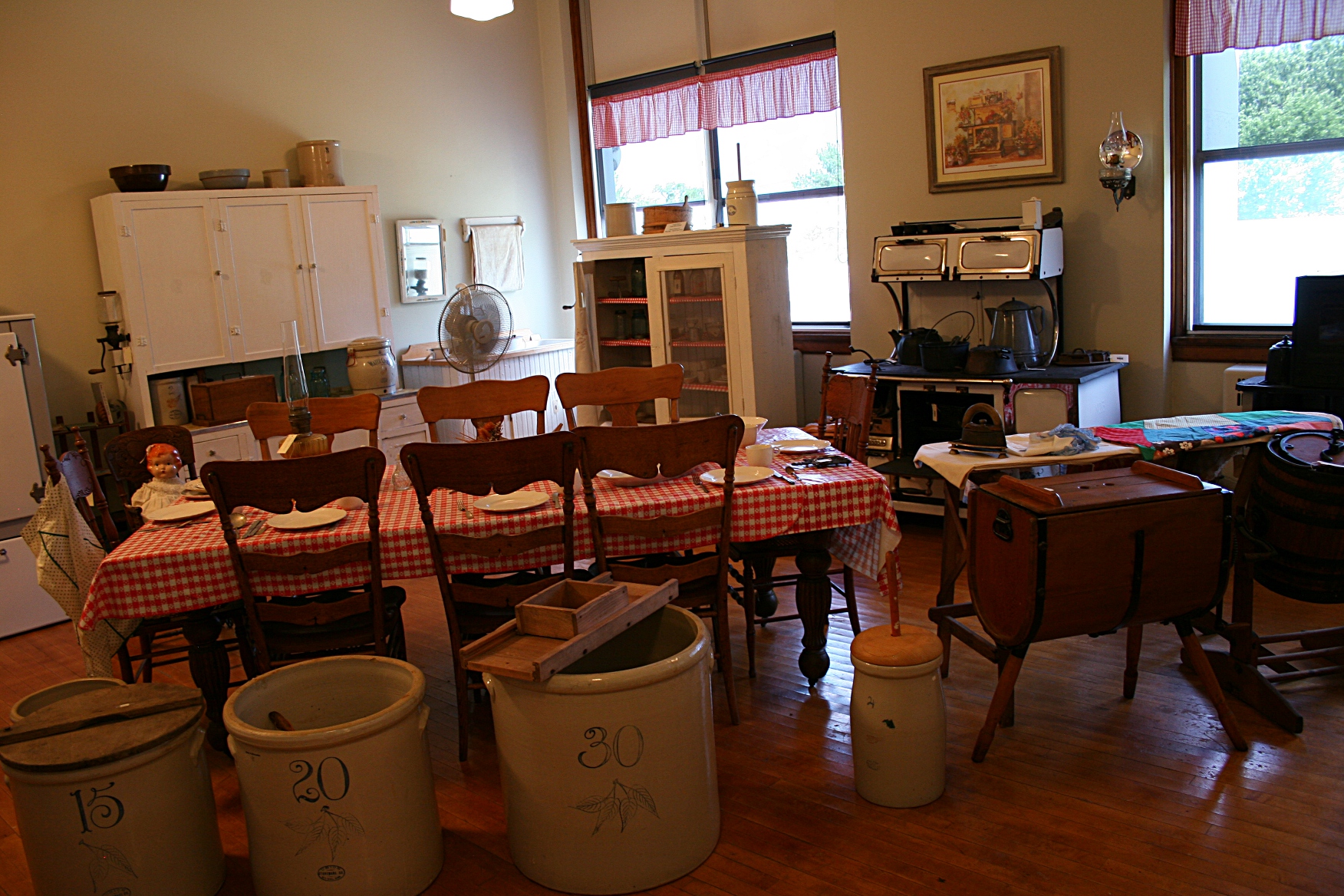
An old-style farm kitchen on the second floor of the museum.

All of those artifacts are housed in five buildings, including a sprawling two-story 1939 Works Project Administration school, on six acres. The first floor of that former school, during my visit, was packed with mostly farm-related equipment while the second floor housed the domestic side of rural life.

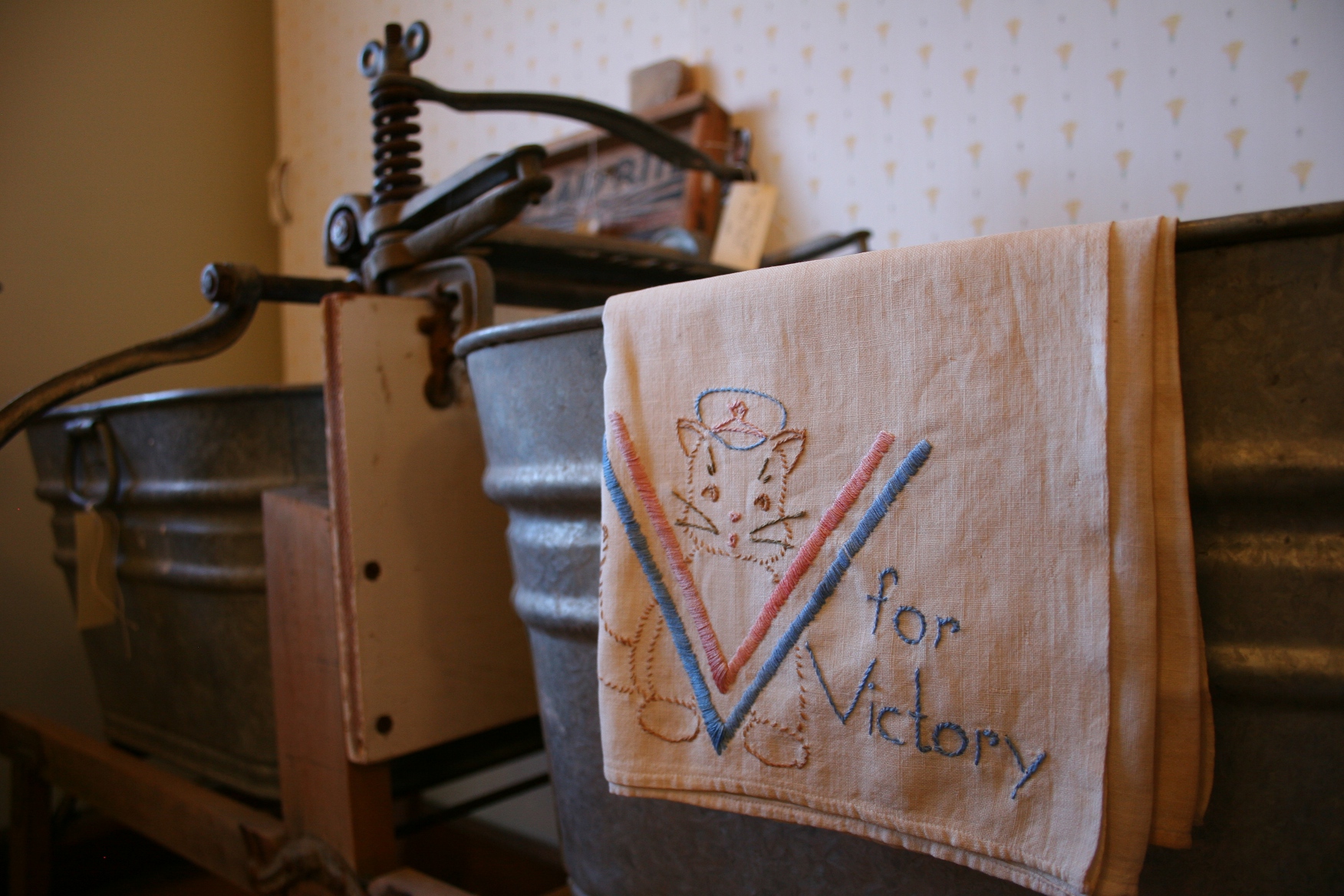
A vintage embroidered dish towel and old wash tubs, both familiar to me. My mother used a wringer washer with wash tubs during the early years of my life on a southwestern Minnesota dairy and crop farm.

It is the mission of the museum, according to its website, “to recapture a century of stories about farm life. Implements, tools, tractors and gas engines in mint condition along with rural art help you look back to an era when neighbors worked together to harvest their crops, raise barns and build a better life for their families.”

Read those words again. They are the essence of this place—the feeling of community, the sense of neighborliness, the embodiment of that which defined rural life at one time. Yes, that life has changed. Neighbors don’t always know neighbors. Oversized farm machinery has, for the most part, replaced the need for neighbors to work together. Barns are falling into heaps of rotting wood. This museum preserves a way of life that exists mostly in stories now.

This bushel basket in the museum brought back memories of feeding cows.

The Minnesota Machinery Museum is as impressive as any you’ll visit in Minnesota. Take time to seek it out, to turn off the highway into Hanley Falls rather than driving by without even a thought of the historical treasure that lies within this small southwestern Minnesota prairie community.

FYI: The Minnesota Machinery Museum is open May – September from 10 a.m. – 4 p.m. Monday – Saturday and from 1 p.m. – 4:30 p.m. on Sunday and is closed on holidays. Click here for more information about the museum.

© Copyright 2012 Audrey Kletscher Helbling
 

Prairie lines April 26, 2012

Filed under: Uncategorized — Audrey Kletscher Helbling @ 6:31 AM
Tags: , , , , , ,

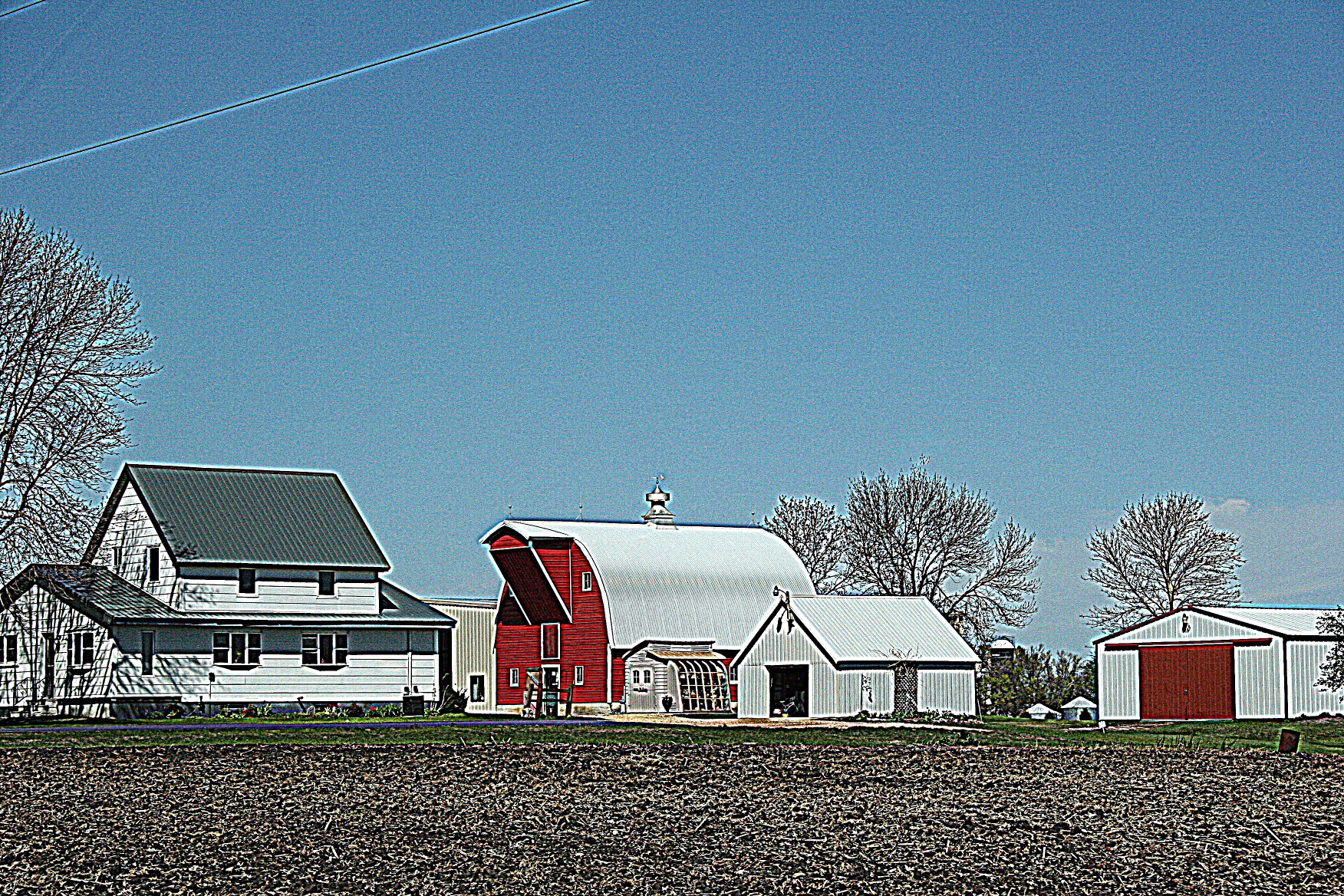
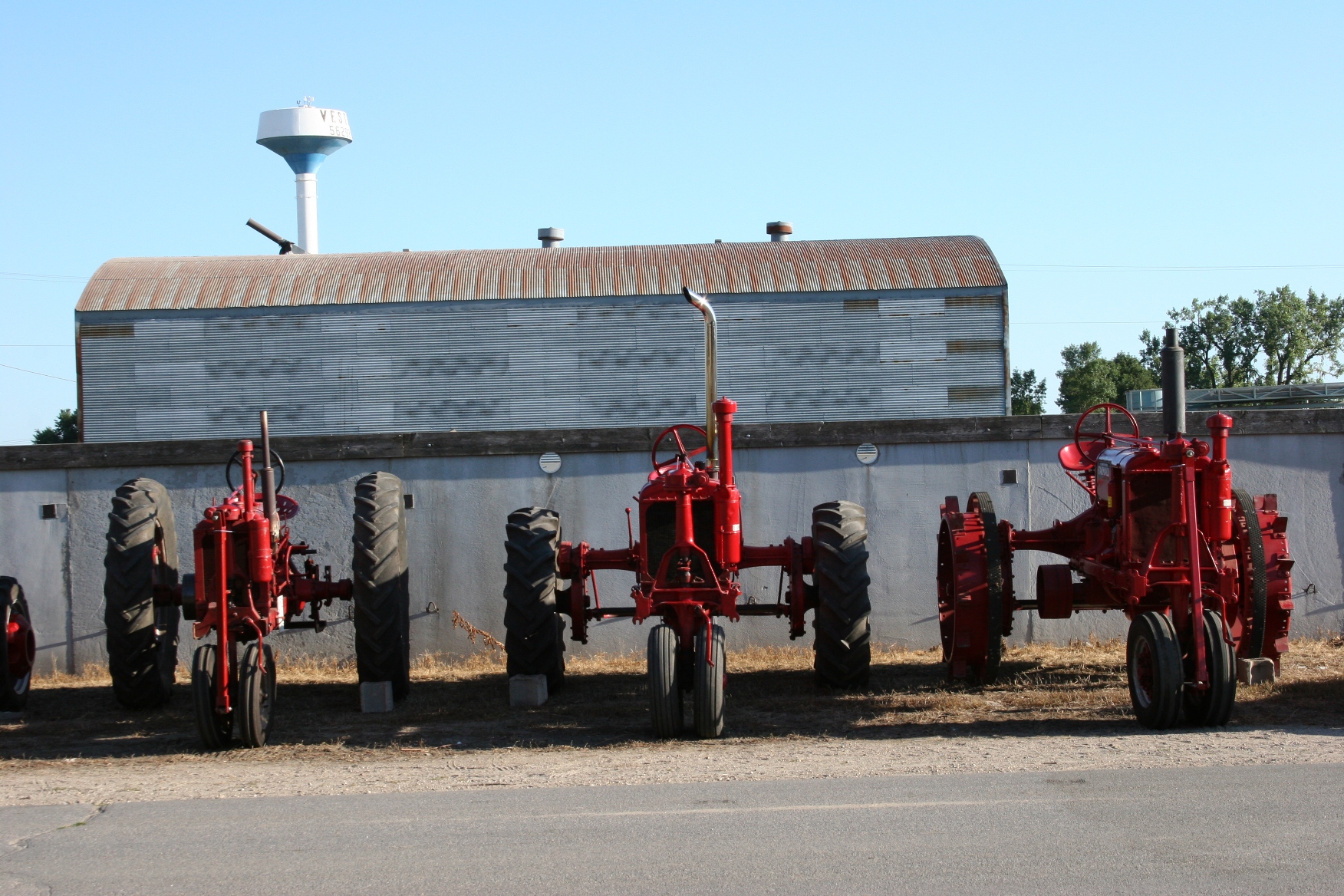
Crisp, straight roof lines define buildings on this farm site along U.S. Highway 14 just minutes west of Springfield in southwestern Minnesota.

I NEVER TIRE of the crisp lines that cut across the southwestern Minnesota countryside. The razor sharp edge of a barn roof. The thick, defined rails of train tracks. The precise spacing of orderly crop rows.

This rich farmland, more familiar to me than any place on this earth, has always been defined by lines. It is the visual perspective I hold of this land that holds my heart.

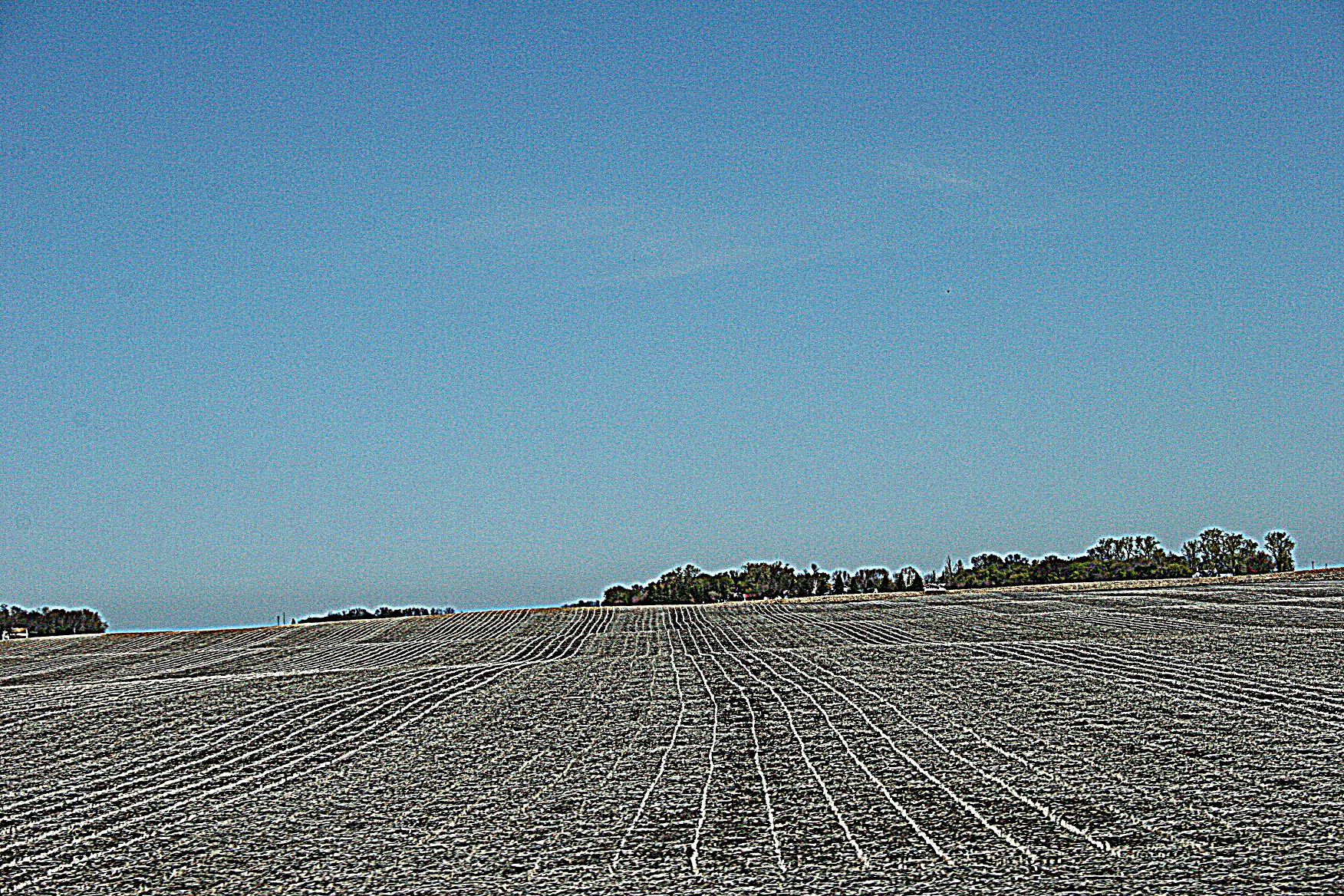
Crop lines along U.S. Highway 14 west of Springfield in a field that awaits planting.

I cannot view this prairie place without seeing those strong, bold and definitive horizontal lines.

It is the expanse of the sky and of the land in this visually uncluttered place that naturally draws my eyes to rest upon the lines, to lock onto a spot that connects me to a concrete object or to the earth.

This barn stands strong and sturdy between Sleepy Eye and Springfield along U.S. Highway 14.

Consider this perspective the next time you travel through western Minnesota. Forget your preconceived notion of this as a place you simply must pass through to get from point A to point B. View the land and the sky, the small towns and the farm sites, the endless vistas with your eyes wide open, appreciating all that unfolds before you.

A farm site with a smiley face on the barn, between Sleepy Eye and Springfield.

Just west of Springfield off U.S. Highway 14, a gravel road and an orange snow fence cut horizontal lines across the prairie as do the low-slung farm buildings.

A pastoral hillside scene on the edge of Courtland along U.S. Highway 14.

Railroad tracks edge past this farm site along U.S. Highway 14 between Essig and Sleepy Eye. To the right in the photo, a tractor awaits the planting season.

© Copyright 2012 Audrey Kletscher Helbling
 

Main Street Wabasso, home of the White Rabbit April 25, 2012

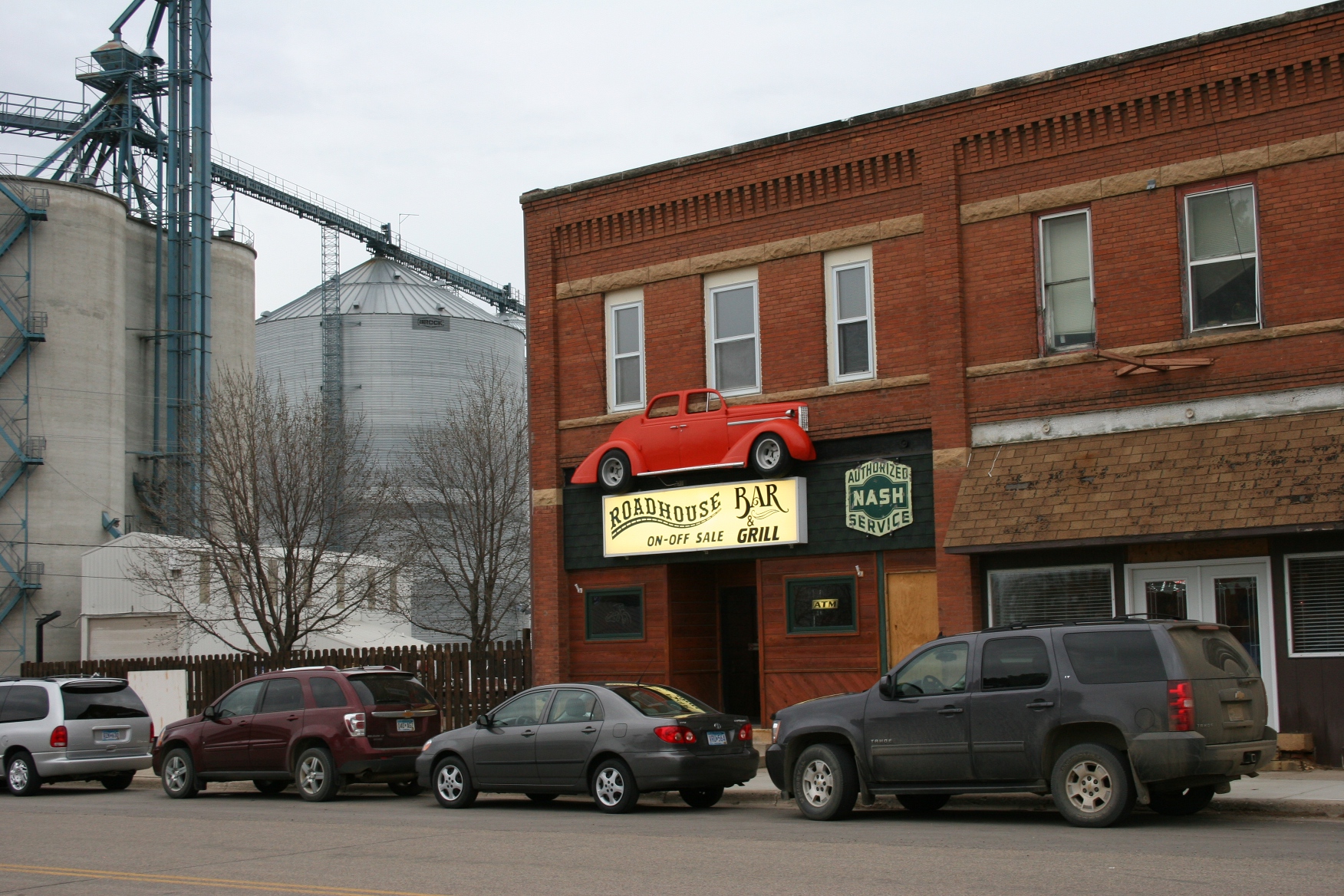
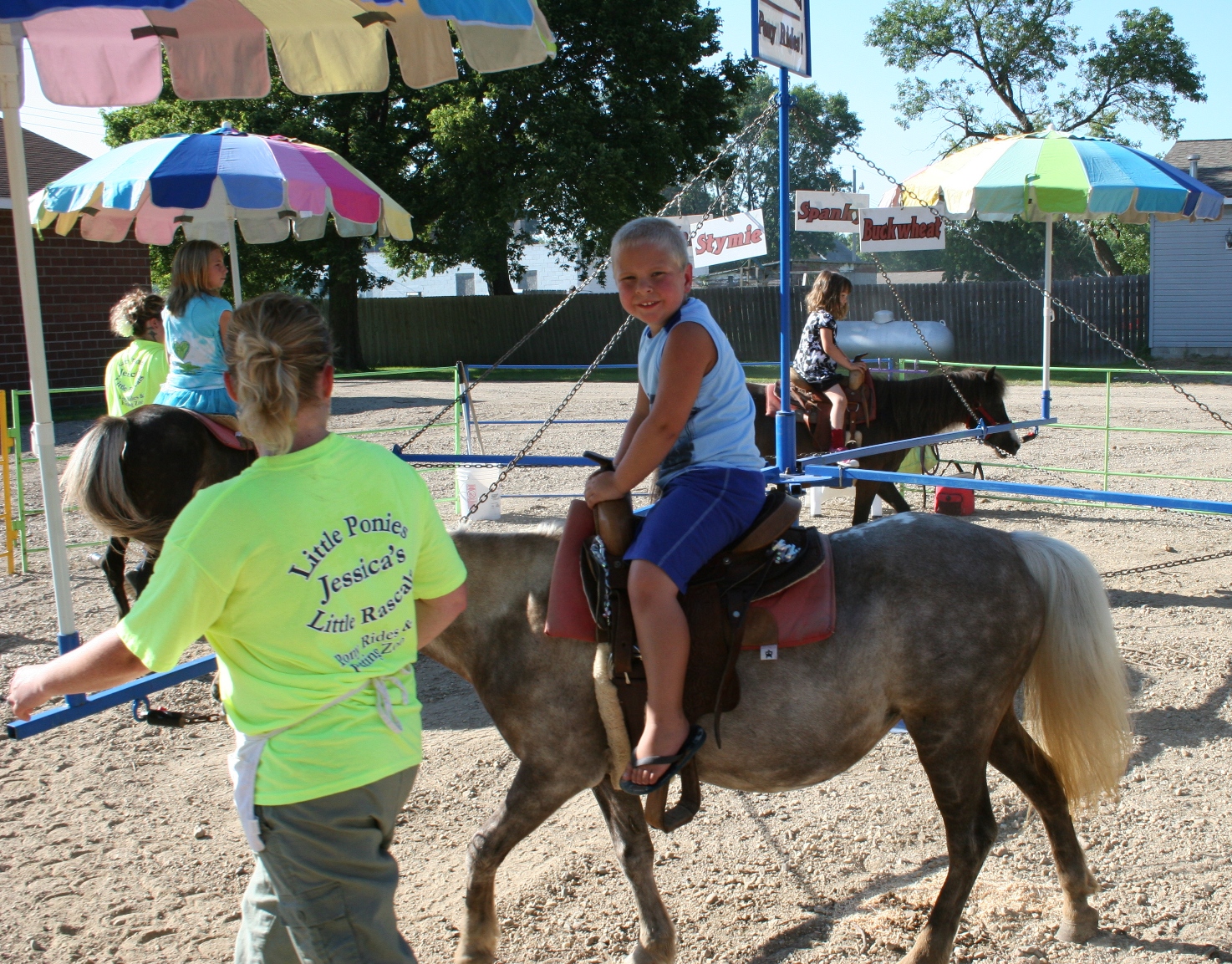
The Roadhouse Bar & Grill is a popular gathering and dining spot in Wabasso. During the summer, old car enthusiasts and motorcyclists gather here for Tuesday evening "Roll-ins" that draw up to 1,000 people. There's plenty of outdoor seating on a sprawling patio where a hamburger bar is set up for the popular event. The Grill also offers an extensive burger and sandwich menu with reasonable prices.

WITH A HALF HOUR wait before we could be seated at the Roadhouse Bar and Grill in Wabasso on a recent Saturday evening, I hit the sidewalk determined to photograph the Main Street of this small southwestern Minnesota town where I attended high school.

This road-side sculpture welcomes travelers to Wabasso, which means white rabbit.

I have, through the decades, discovered minimal familiarity among most Minnesotans with Wabasso, a Redwood County farming community of around 650 that links to Henry Wadsworth Longfellow’s poem, “The Song of Hiawatha.”

Longfellow writes in his section on the Four Winds:

“Honor be to Mudjekeewis!”
Cried the warriors, cried the old men,
When he came in triumph homeward
With the sacred Belt of Wampum,
From the regions of the North-Wind,
From the kingdom of Wabasso,
From the land of the White Rabbit.

I’ve always been told that Wabasso is an Indian word meaning “white rabbit.” I never learned of the poetic connection until researching on my own; English teachers at Wabasso High never taught this, that I recall. I doubt many of the locals are aware of Longfellow’s reference.

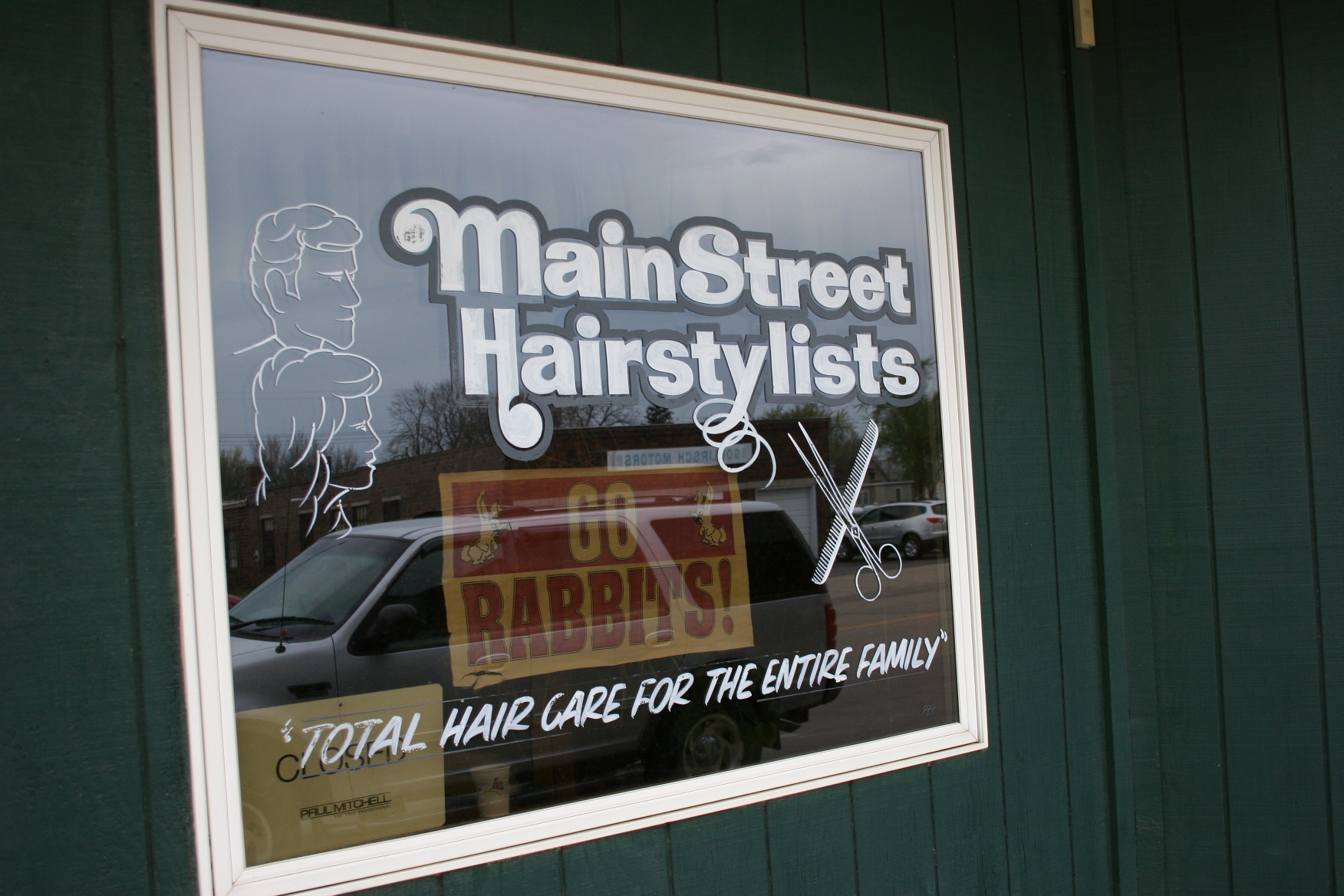
Wabasso is decidedly proud of its white rabbit namesake, though. You’ll find an oversized rabbit statue along State Highway 68 on the south side of town. The public school mascot is, of course, a white rabbit. And, as I found, even local businesses support the Rabbits via storefront signage.

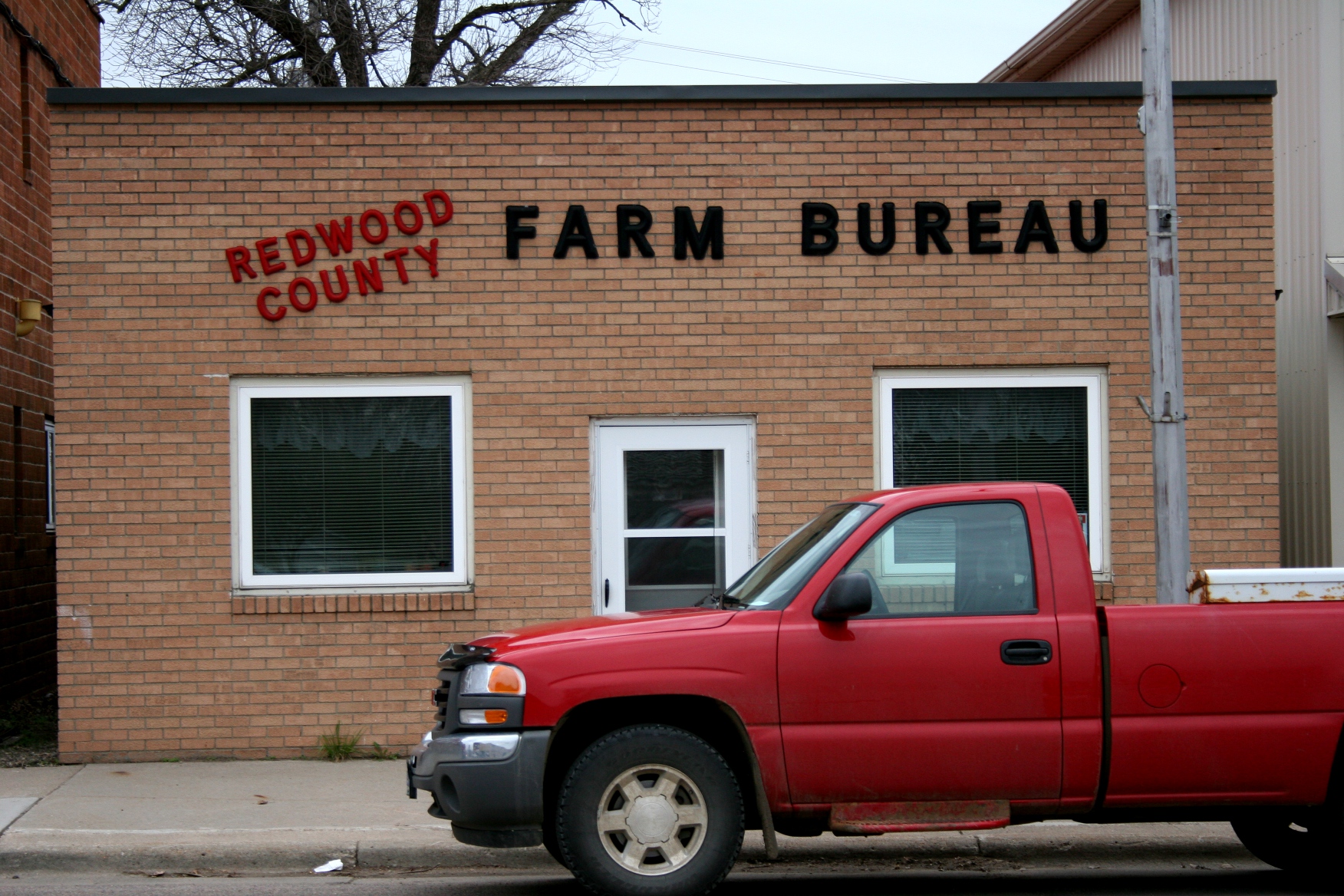
Wabasso’s downtown business district is typical rural Minnesota with a mix of well-kept and deteriorating buildings that border a broad street. Attempts to modernize once stately brick buildings with wood and metal fail and make you wish for a money bag of gold to restore such structures to their original grandeur.

But for now, in this economy, one must choose to appreciate the imperfections of Main Street as adding character to a community like Wabasso, home of the white rabbit.

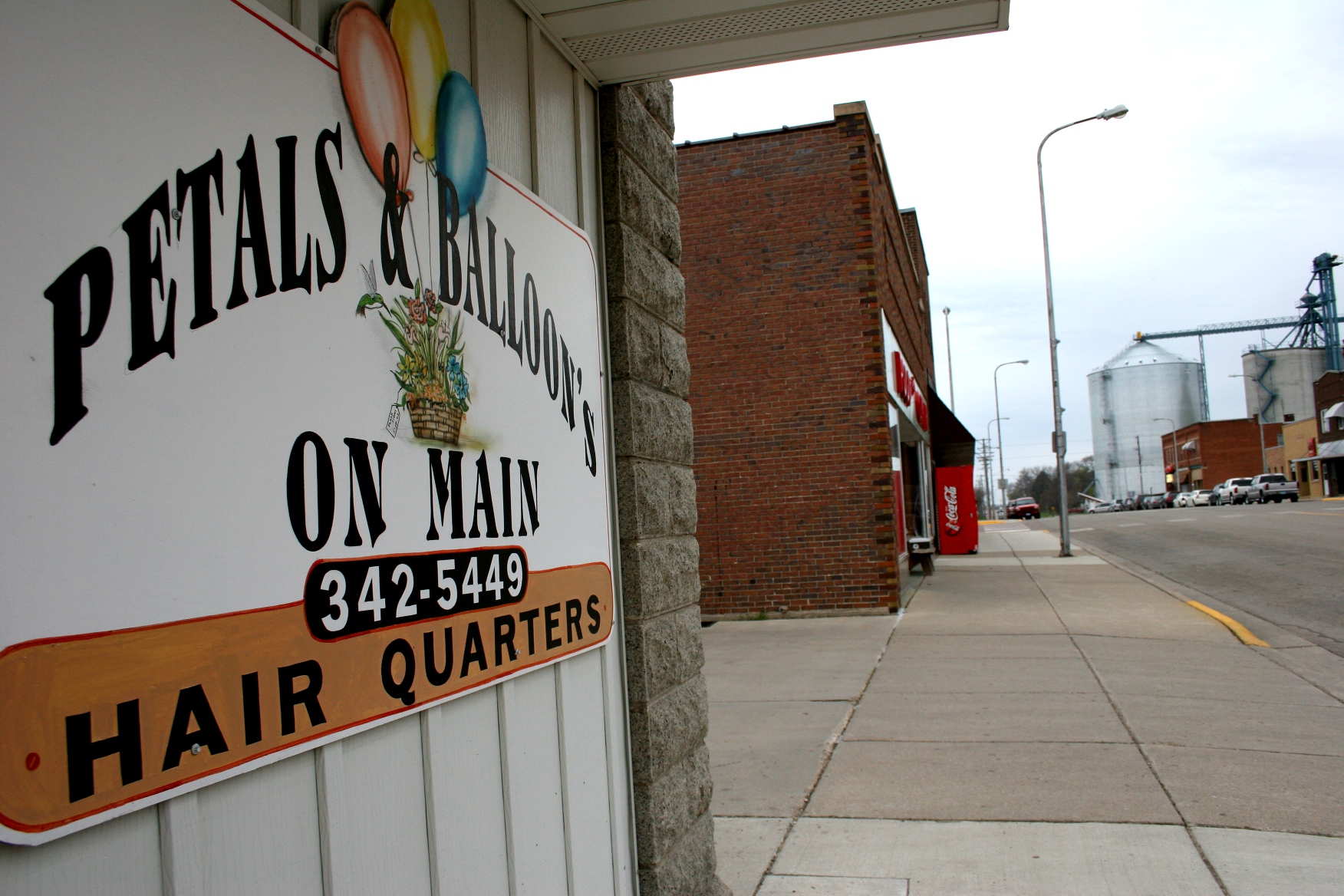
A broad view of a block along Wabasso's Main Street on a recent Saturday evening.

Wabasso is a strong agricultural-based community. The outgoing Future Farmers of America Minnesota State President Hillary Kletscher (my niece) graduated from Wabasso High School in 2011.

A sign supporting the high school sports team hangs in a salon window.

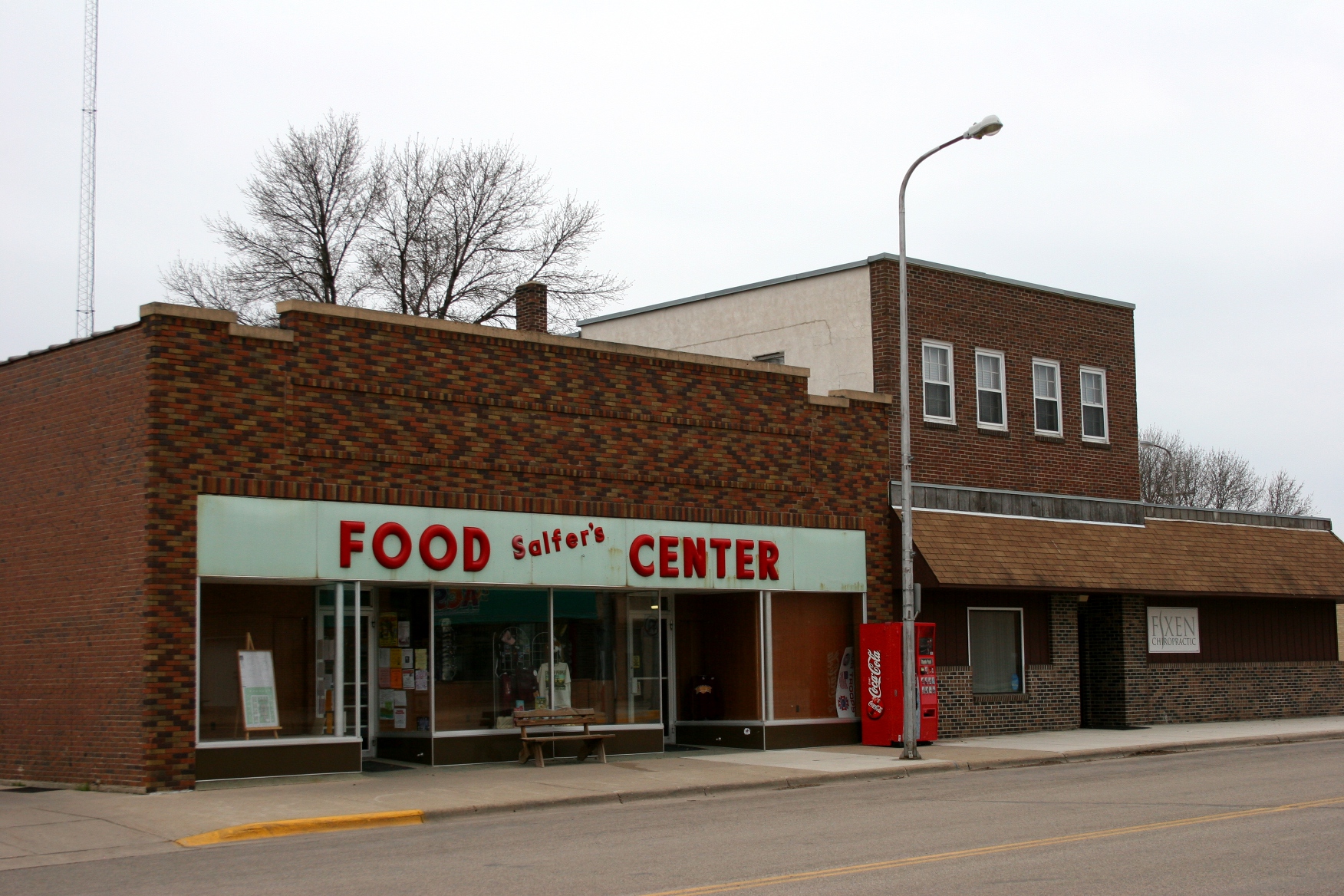
Wabasso is fortunate enough to still have a grocery store.

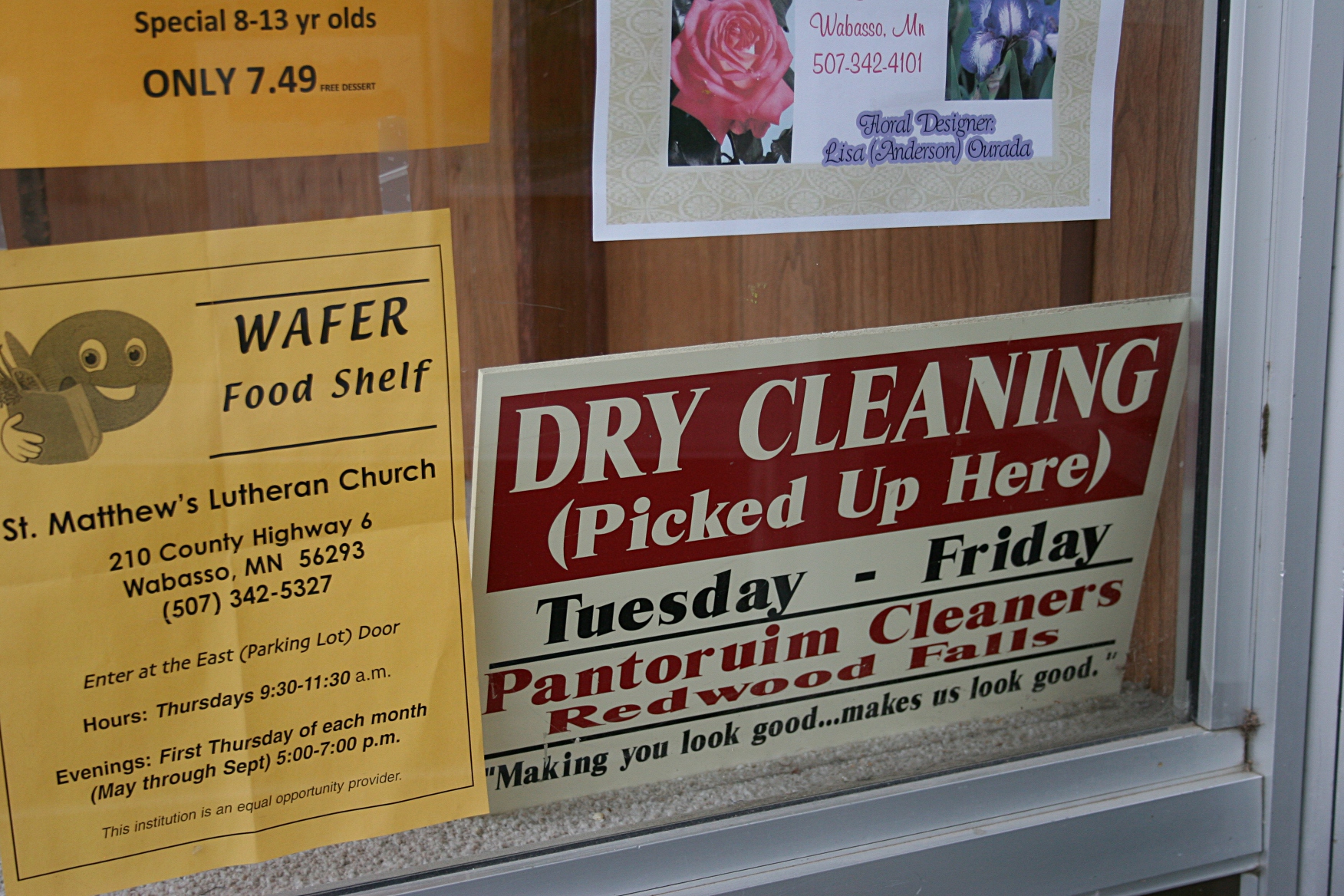
Signage in the window of Salfer's Food Center.

My WHS class of 1974 classmate Marcis owns this combination floral shop and hair salon along Main Street. Marcy was also waiting tables at the Roadhouse the Saturday evening I was in town.

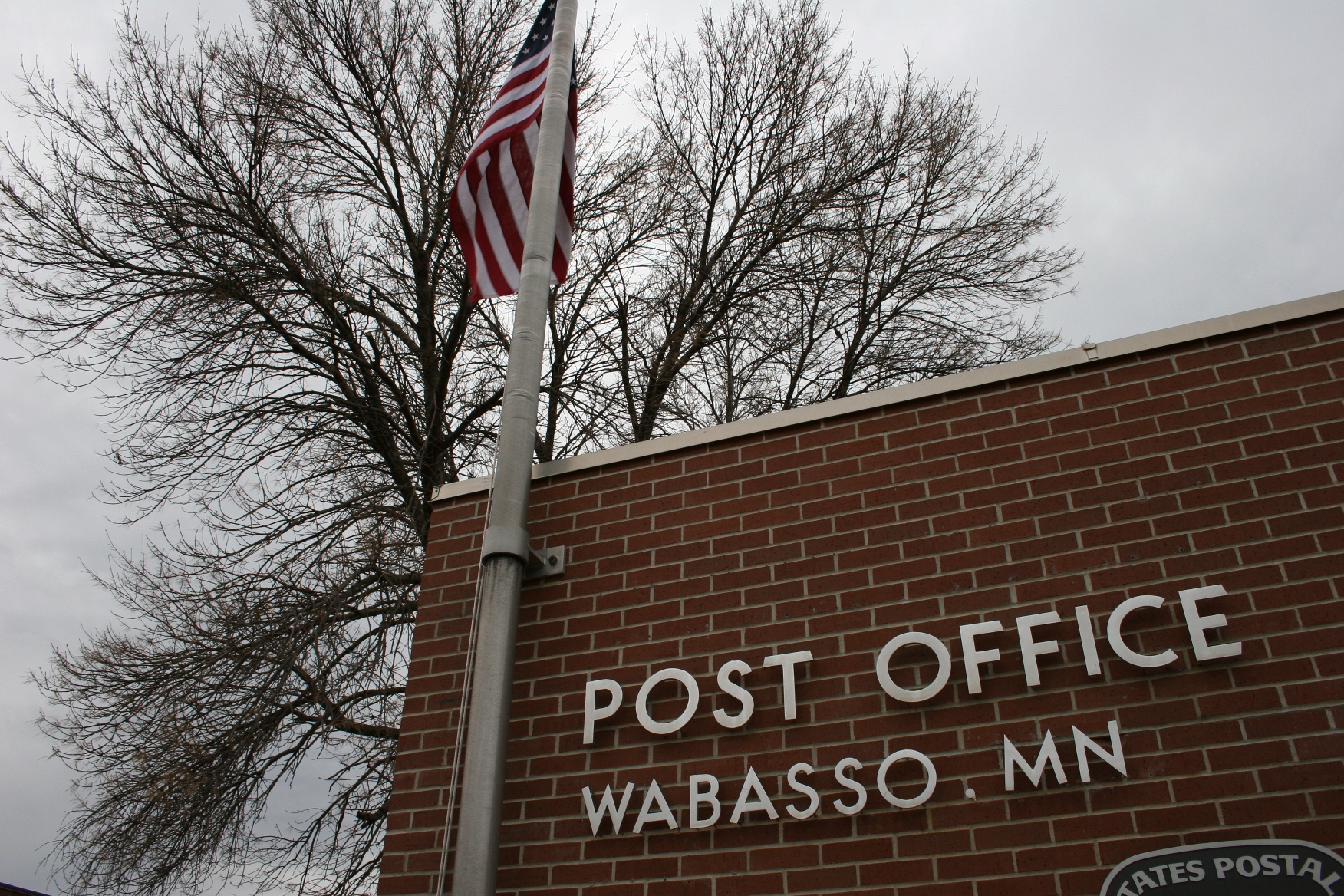
Wabasso is fortunate to also still have a post office, unlike more and more rural communities in Minnesota.

THE PHOTOS IN THIS POST are similar in content to those printed in the just-published spring issue of Minnesota Moments magazine. Photographer Ryan Ware of Chaska and I contributed 16 images from 14 small towns to a photo essay titled “Touring Main Street in Small Town, Minnesota.” The essay is only a small sampling of the hundreds, perhaps even thousands, of images we have taken of small towns and rural areas. Both natives of southwestern Minnesota, Ryan and I share a passion for photography that connects us to our rural roots. I would encourage you to check out Ryan’s photos at his Fleeting Farms blog by clicking here.

CLICK HERE to reach the Minnesota Moments website.

CLICK HERE for more information about the Roadhouse Bar & Grill.

CLICK HERE to learn more about Wabasso.

© Copyright 2012 Audrey Kletscher Helbling
 

There is weather outside of the Twin Cities March 5, 2012

Filed under: Uncategorized — Audrey Kletscher Helbling @ 11:02 AM
Tags: , , , ,
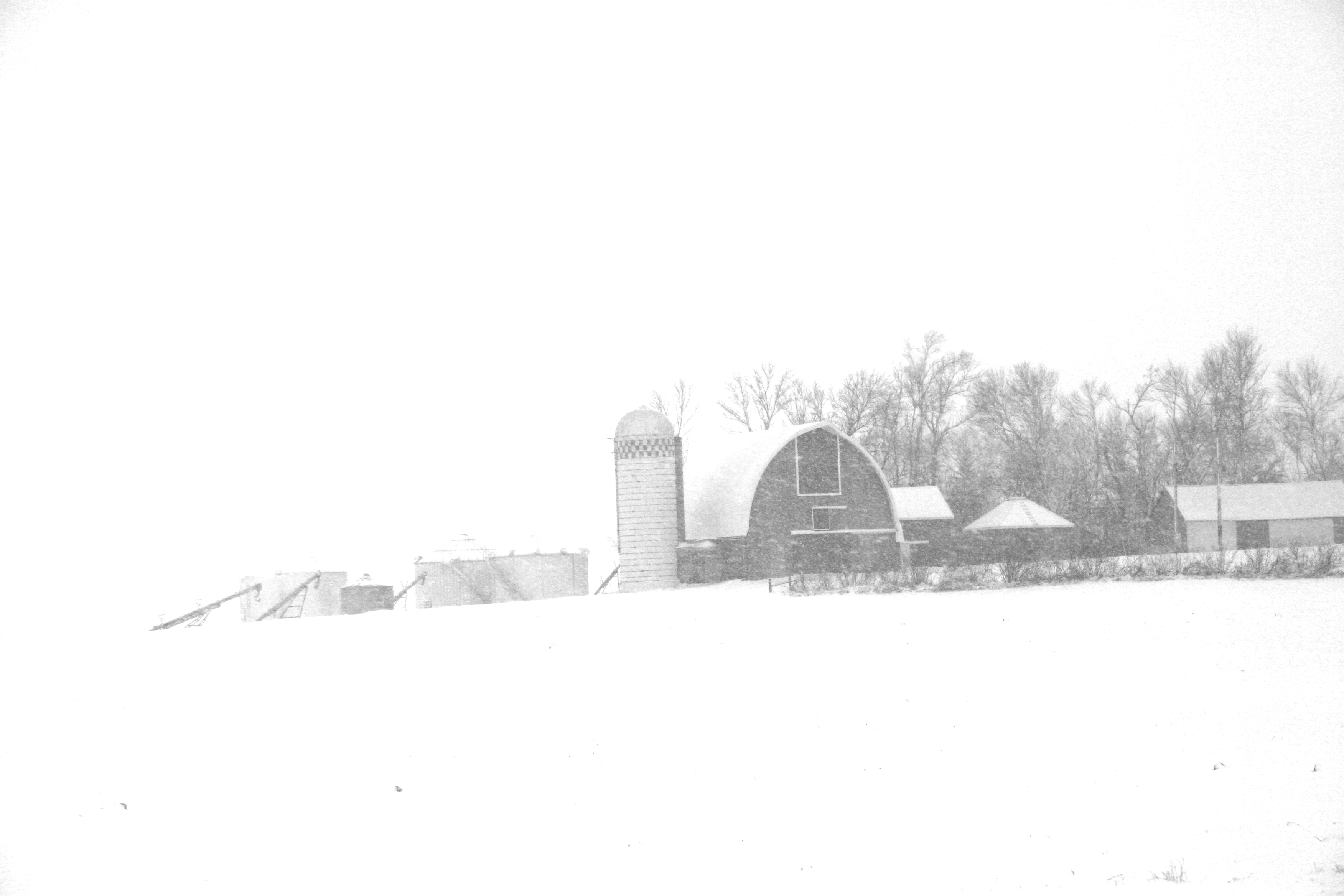
A farm site along Minnesota State Highway 67 between Vesta and Echo on Sunday morning.

A farm site along Minnesota State Highway 67 between Vesta and Echo on Sunday morning.

HONESTLY, I HAVE LIVED in Minnesota long enough that I should know better.

I shouldn’t believe the weather forecasters all the time, especially if those forecasters are based in the Twin Cities. How much or little do they care about the weather in rural Minnesota?

Case in point: This past weekend my husband and I traveled 120 miles west to visit my mom in Redwood County. The forecast, which we always diligently check before driving that direction in the winter, called for occasional flurries. That sounded doable to us.

So Saturday morning we set out, bucking strong winds, to reach our destination. The farther west we drove, the more snow we saw blanketing the landscape. Fortunately those strong Saturday winds did not whip up a blizzard.

Sunday morning, however, we awakened to a Winter Wonderland of snow falling in graceful flakes. You know, the kind of snow that makes you just want to stand there and take it all in for the sheer snow globe beauty of it.

So much for occasional flurries.

Thankfully, no wind accompanied the snow, which continued at a steady pace well into the afternoon. It marked an early departure for us.

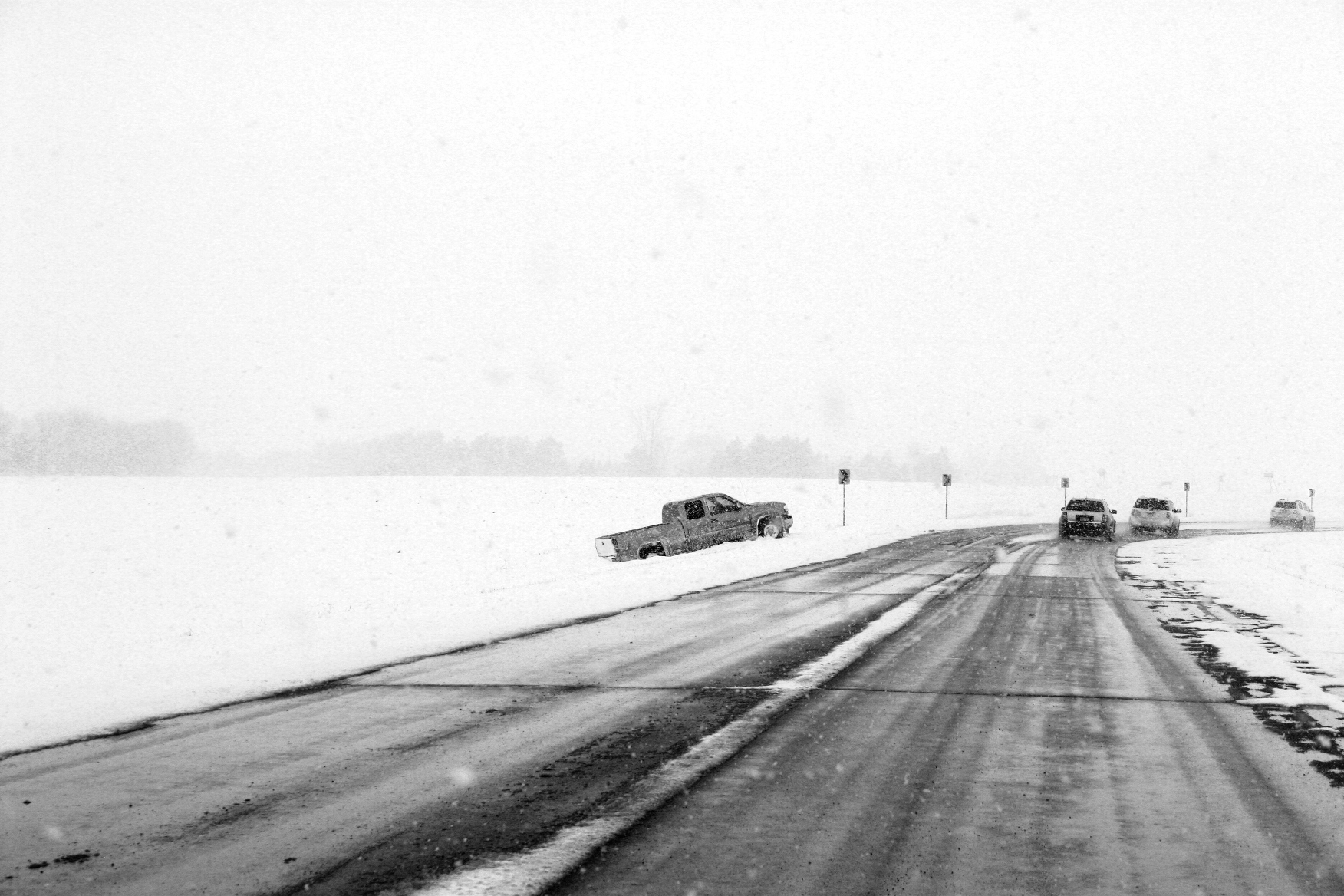
A few miles north of Vesta, we came across this truck spun off the Minnesota State Highway 19 curve.

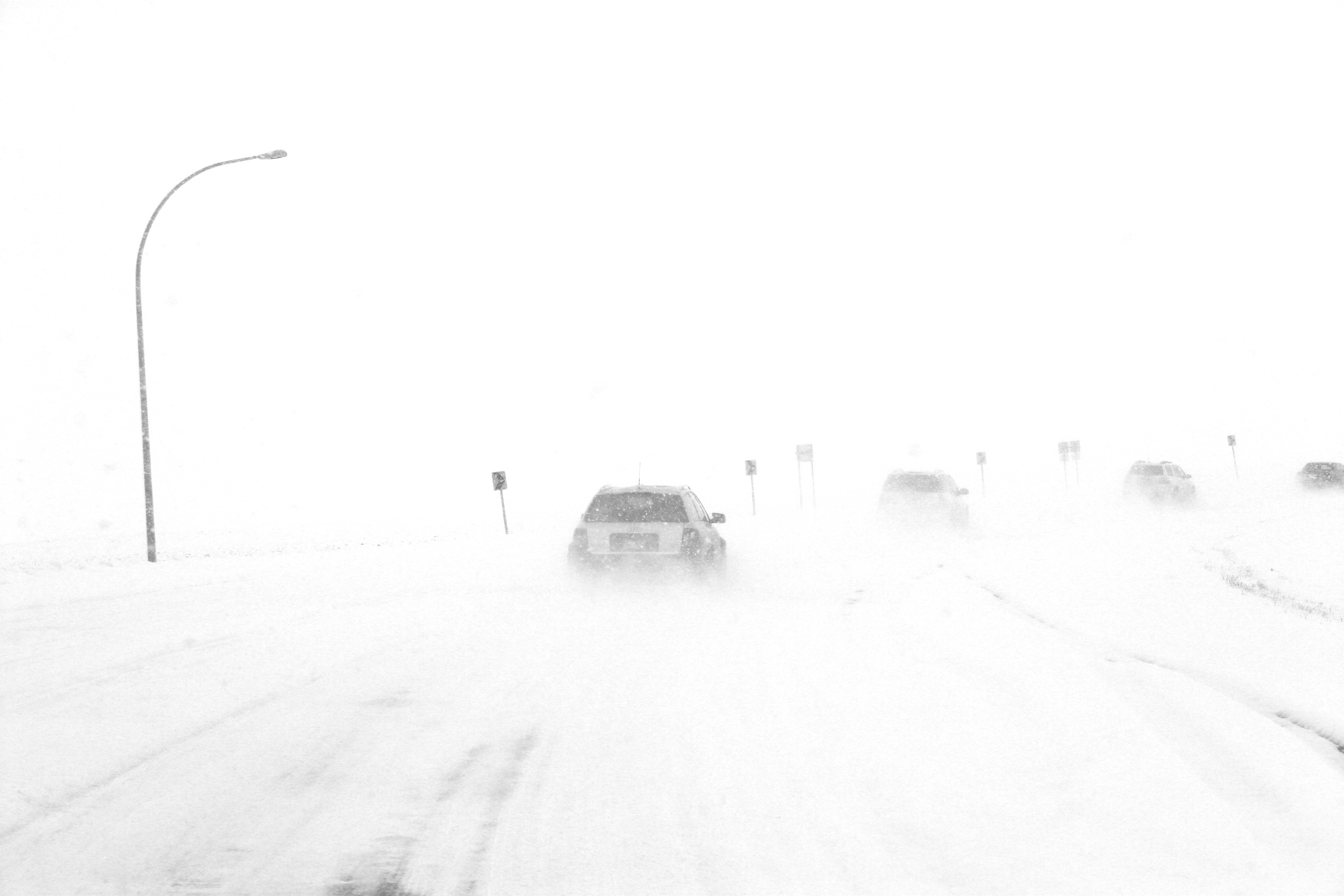
We rounded the curve and drove eastbound into this low visibility, snow-covered roadway situation. Fortunately, shortly after I shot this image, the eastbound lane was mostly cleared of snow. The westbound lane was not.

Pulling onto Minnesota State Highway 19 at Vesta, we realized this could be one long trip back to Faribault. It was slow going until we reached Sleepy Eye, where the snow finally began to clear and roads improved. We followed state highways rather than the short-cut, back county roads we usually travel.

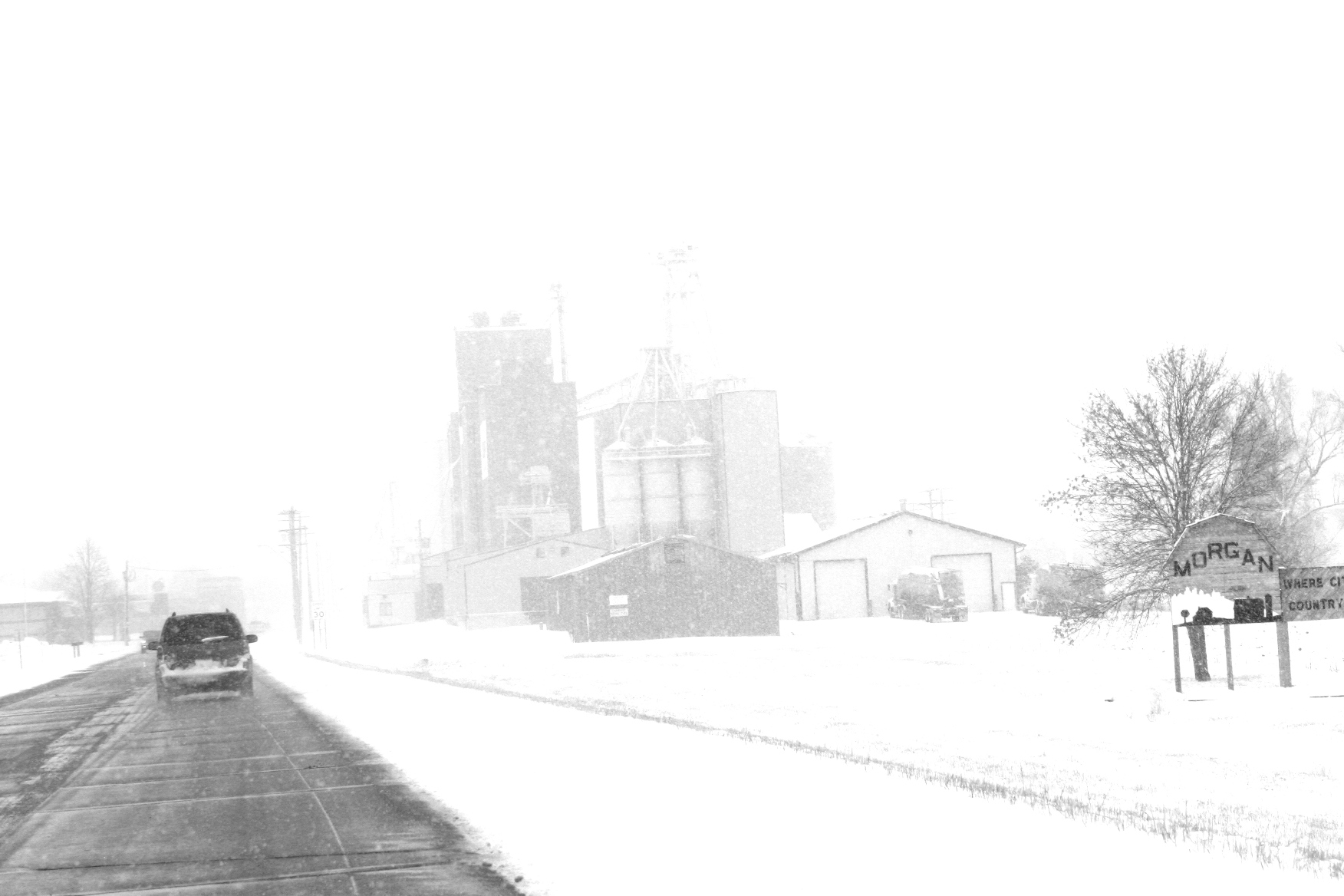
When we drove into Morgan about 30 miles later, snow was still falling strong and steady.

That evening, unpacked and cozied on the couch for the10 p.m. news, the weatherman reported only flurries in southwestern Minnesota. No mention of the several inches that slicked up highways and made for difficult travel.

Between Evan and Sleepy Eye, this pick-up truck cut across the prairie on back roads.

IF YOU LIVE in rural Minnesota, where do you turn for the most accurate weather forecasting?

© Copyright 2012 Audrey Kletscher Helbling
 

What’s your line? January 31, 2012

WHAT LINES DEFINE your world? Horizontal or vertical?

Perhaps you’ve never considered that question. But ponder that for a minute.

Where do you live? Where do you work? What lines define your environment?

Do you live in the city, the country or a small town? Do you live on the prairie, in the mountains or somewhere in between?

My world has always been horizontal. I prefer it that way—flat and unbroken by vertical obstacles. Towering buildings overwhelm me; make me feel small, visually overpowered and uncomfortable.

Can you understand that? Perhaps if you grew up or live in a rural area, you do.

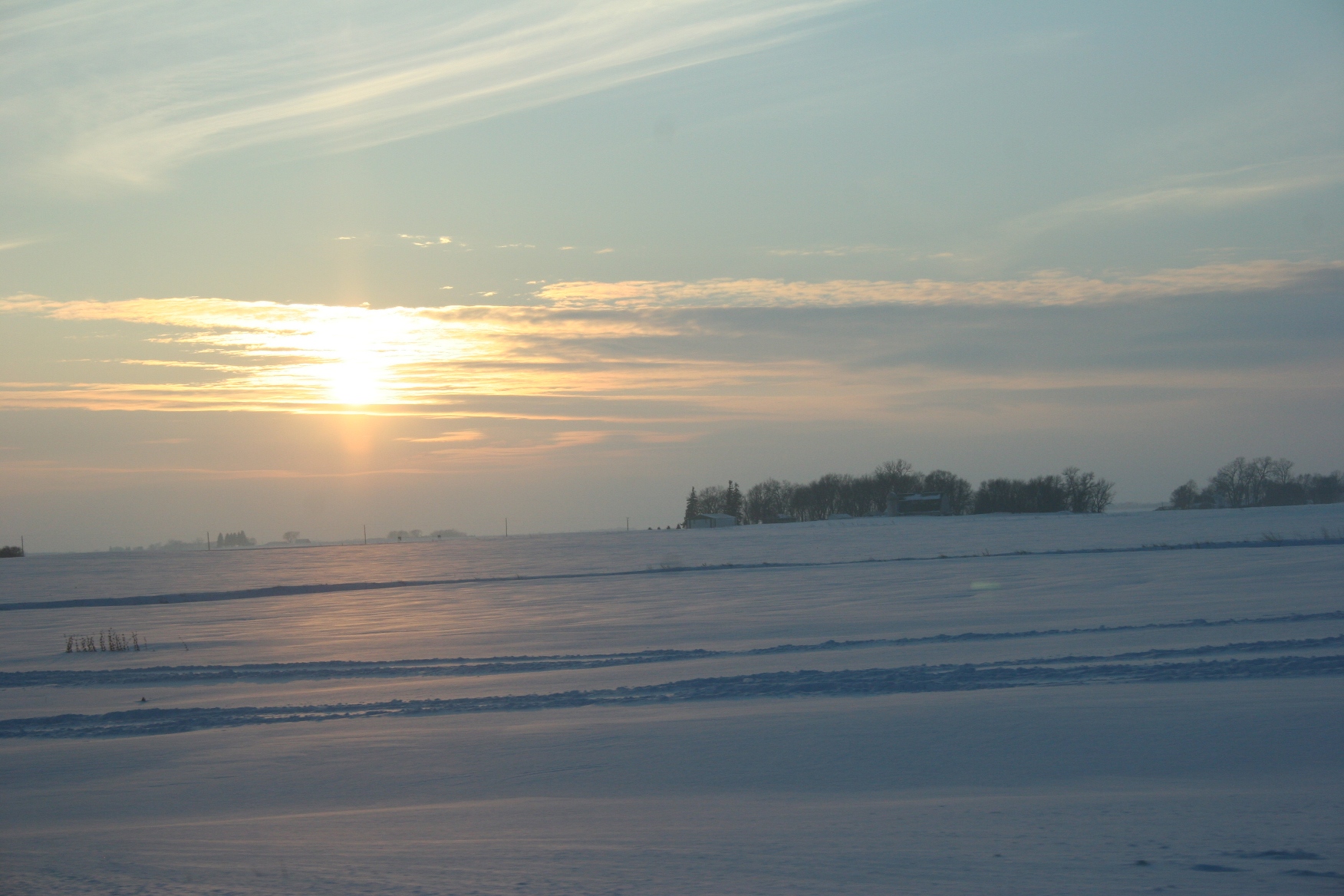
The sun sets on my native southwestern Minnesota prairie in this December 2010 image.

I traveled to Chicago once during college, and to New York. While touring the garment district in the Big Apple, I was nearly flattened by a vendor pushing a rack of clothing as I paused on the sidewalk to gawk at the skyscrapers. In Chicago, I struggled with sleeping in a hotel that stretched too far into the sky.

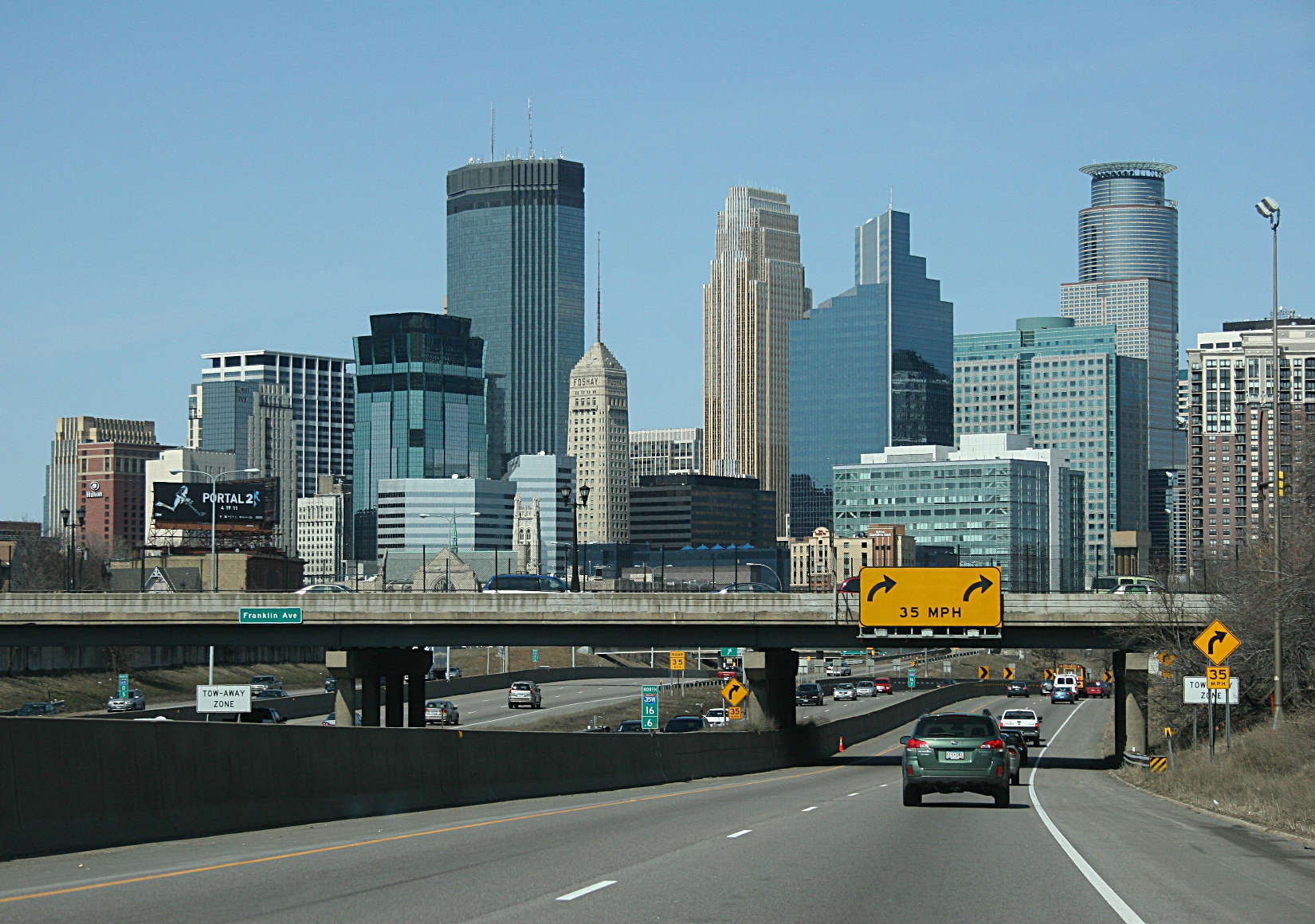
A view of the Minneapolis skyline from Interstate 35.

I can’t recall the last time I visited downtown Minneapolis, but I’m certain it’s been decades. I’ve never been to any other big cities and I have no desire to travel to them.

Some of you will say I am missing out on culture and shopping and so much more by staying out of the city. You would be right.

But to counter that, I will tell you many a big city resident fails to leave the confines of the city to explore the small towns and rural areas that offer grassroots culture and shopping and much, much more.

I am not trying to pit city against country, horizontal against vertical, here. Rather, I’d simply like you to think about your world from a visual perspective. Then, tell me, what lines define your landscape? Vertical or horizontal, or a mixture of both?

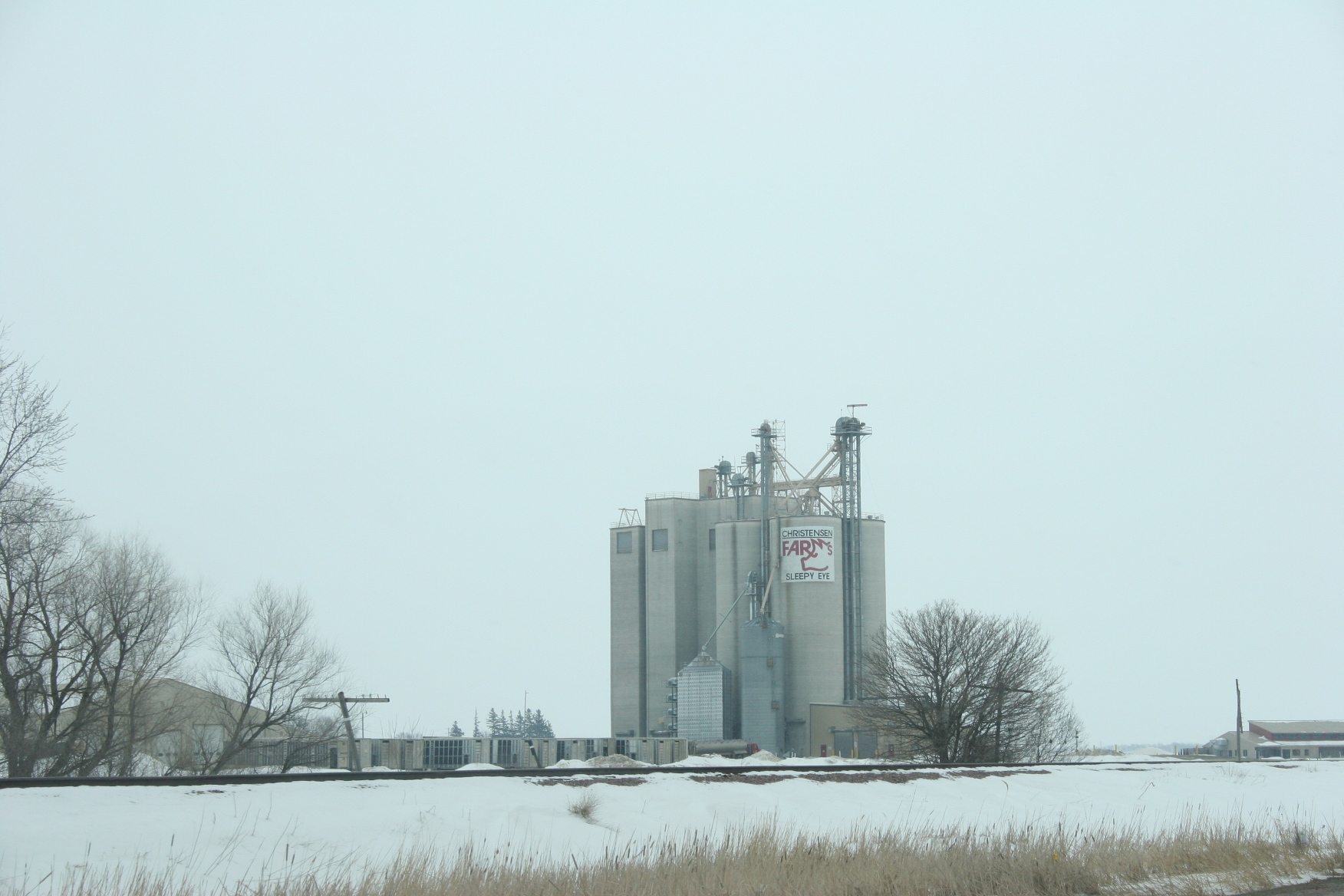
Even in rural Minnesota, vertical lines occasionally break the horizon, like this scene at Christensen Farms along U.S. Highway 14 east of Sleepy Eye in southwestern Minnesota.

The strong horizontal lines of railroad tracks and trains cross the flat prairie landscape of southwestern Minnesota. I shot this along U.S. Highway 14 between Springfield and Sleepy Eye as snow fell late on a March morning in 2011.

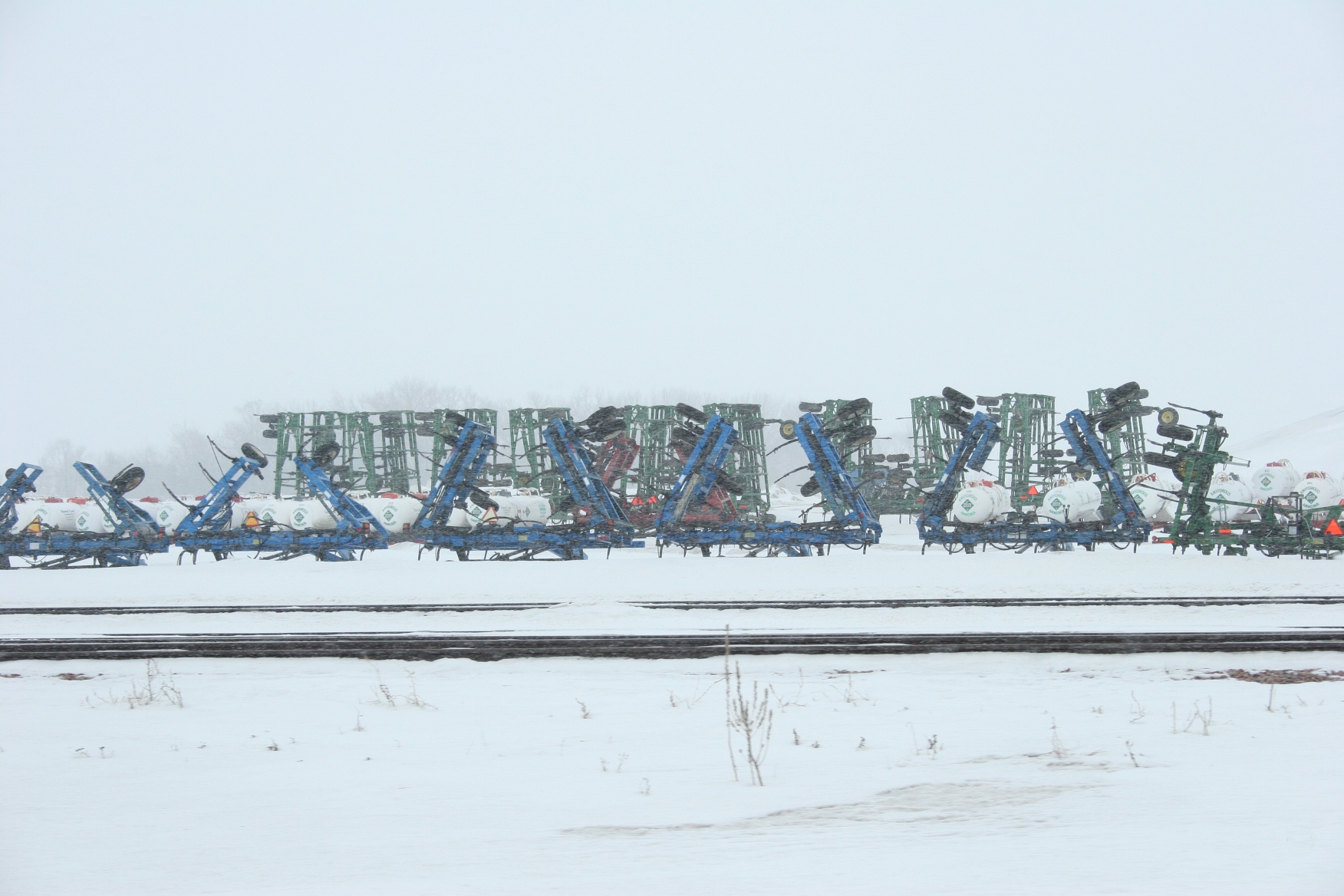
Railroad tracks and diggers slice precise horizontal lines across the landscape in this March 2011 image shot while traveling U.S. Highway 14 between Springfield and Sleepy Eye, in my native southwestern Minnesota.

I live in Faribault, an hour's drive south of Minneapolis along Interstate 35. While I certainly don't consider Faribault, with a population of around 22,000 to be a small town, it's definitely not urban. I shot this pastoral scene last spring several miles west of town near Roberds Lake.

© Copyright 2012 Audrey Kletscher Helbling
 

On-the-road prairie photos December 29, 2011

Filed under: Uncategorized — Audrey Kletscher Helbling @ 11:01 PM
Tags: , , , , , , , ,

Somewhere along a back county road between New Ulm and Morgan.

SORTING THROUGH the on-the-road photos I shot while traveling to and from southwestern Minnesota a week ago, I noticed a similarity in many of my images—pops of red in an otherwise mostly grey landscape.
I didn’t consciously swing my camera lens toward the jolts of red. It just happened. My eye would catch a scene and I would press the shutter button. Traveling at highway speeds allows a mere flick of an instant to frame and shoot through the front and passenger side windows of our family van or car.
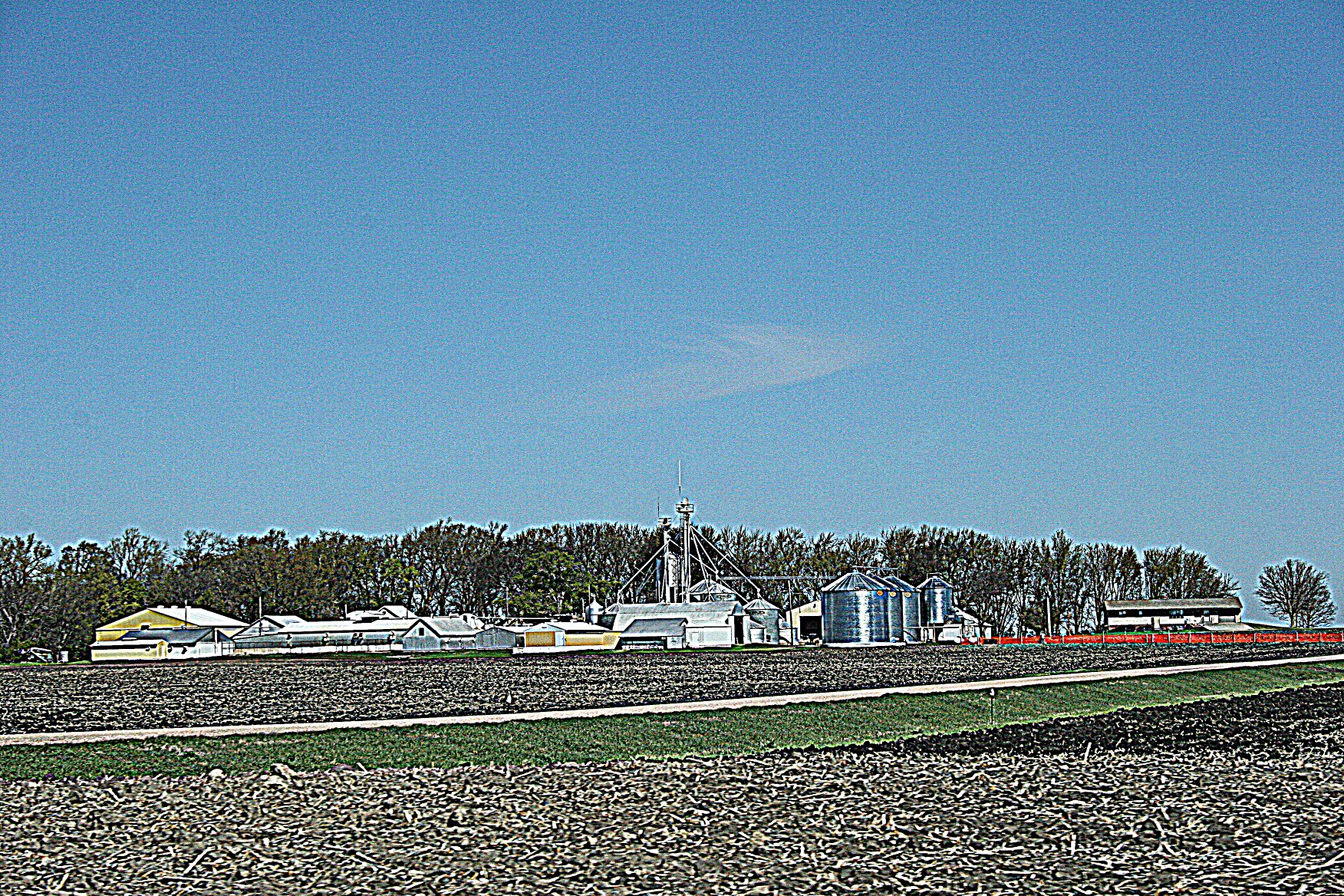
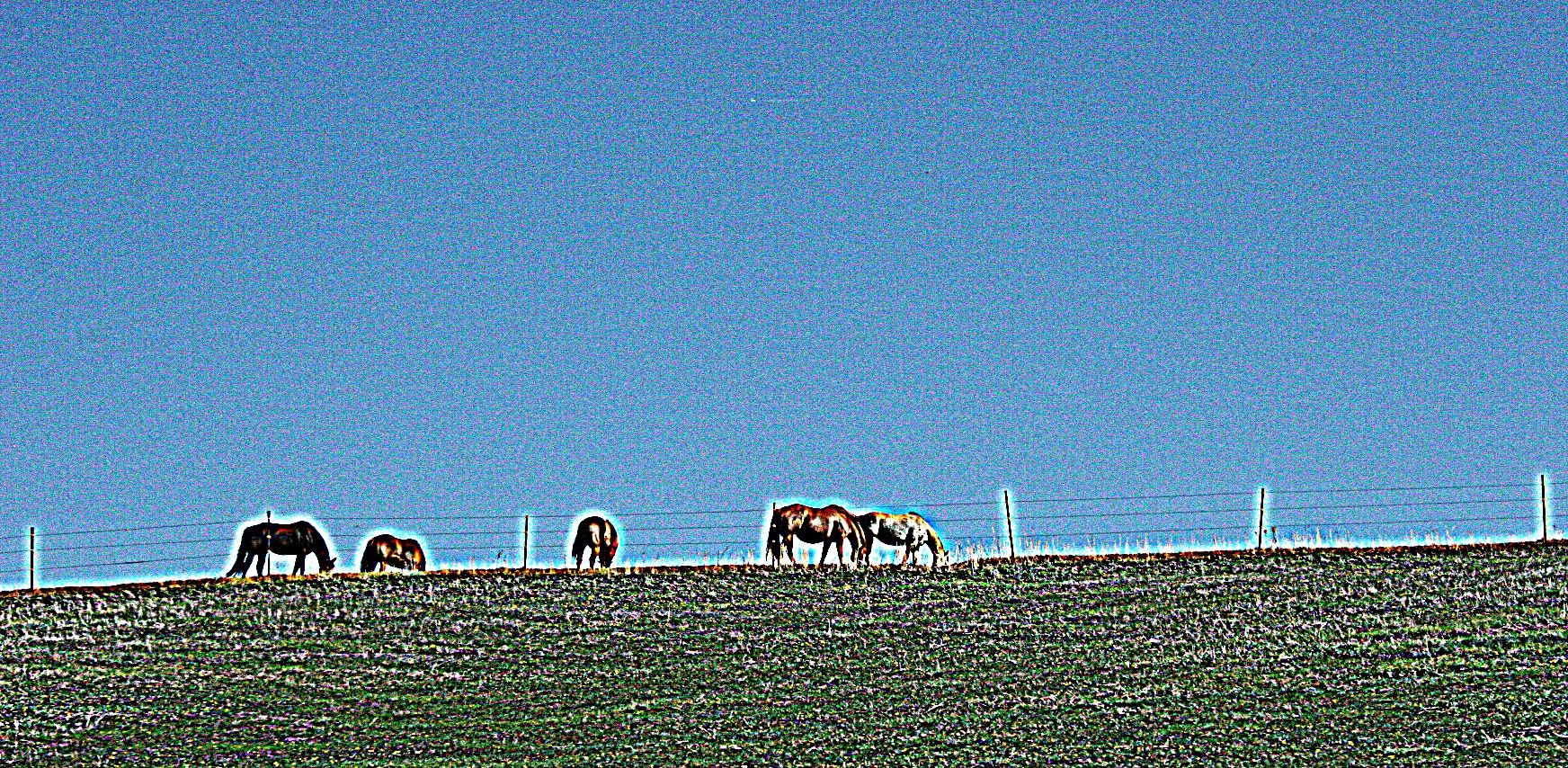
I’ve practiced this type of traveling photography long enough that I’m now photographing some of the same sites along roadways. Yet, even the same subject, photographed at a different time of day, in another season, under changing skies, can result in a distinct image that tells a story or captures a mood.
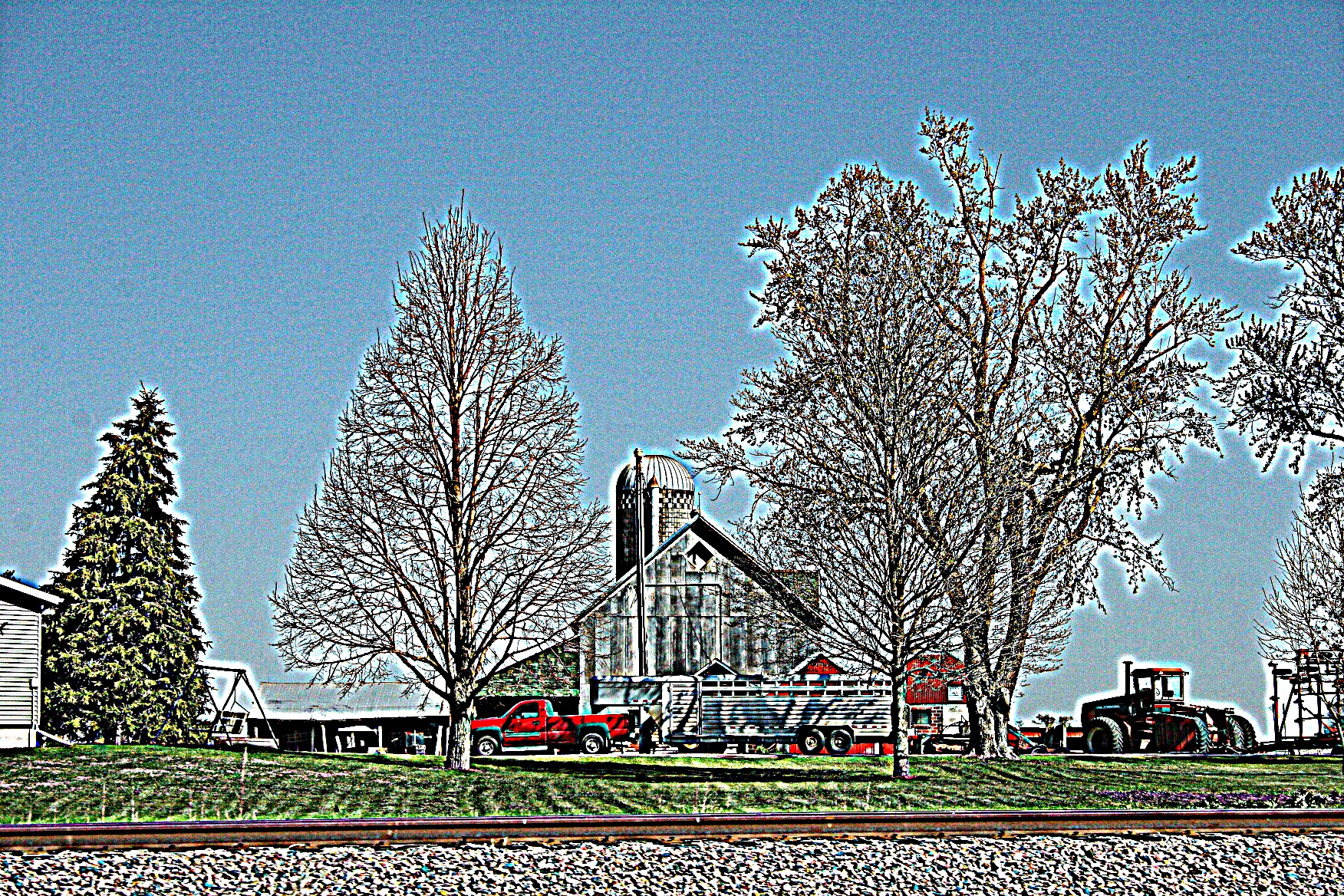
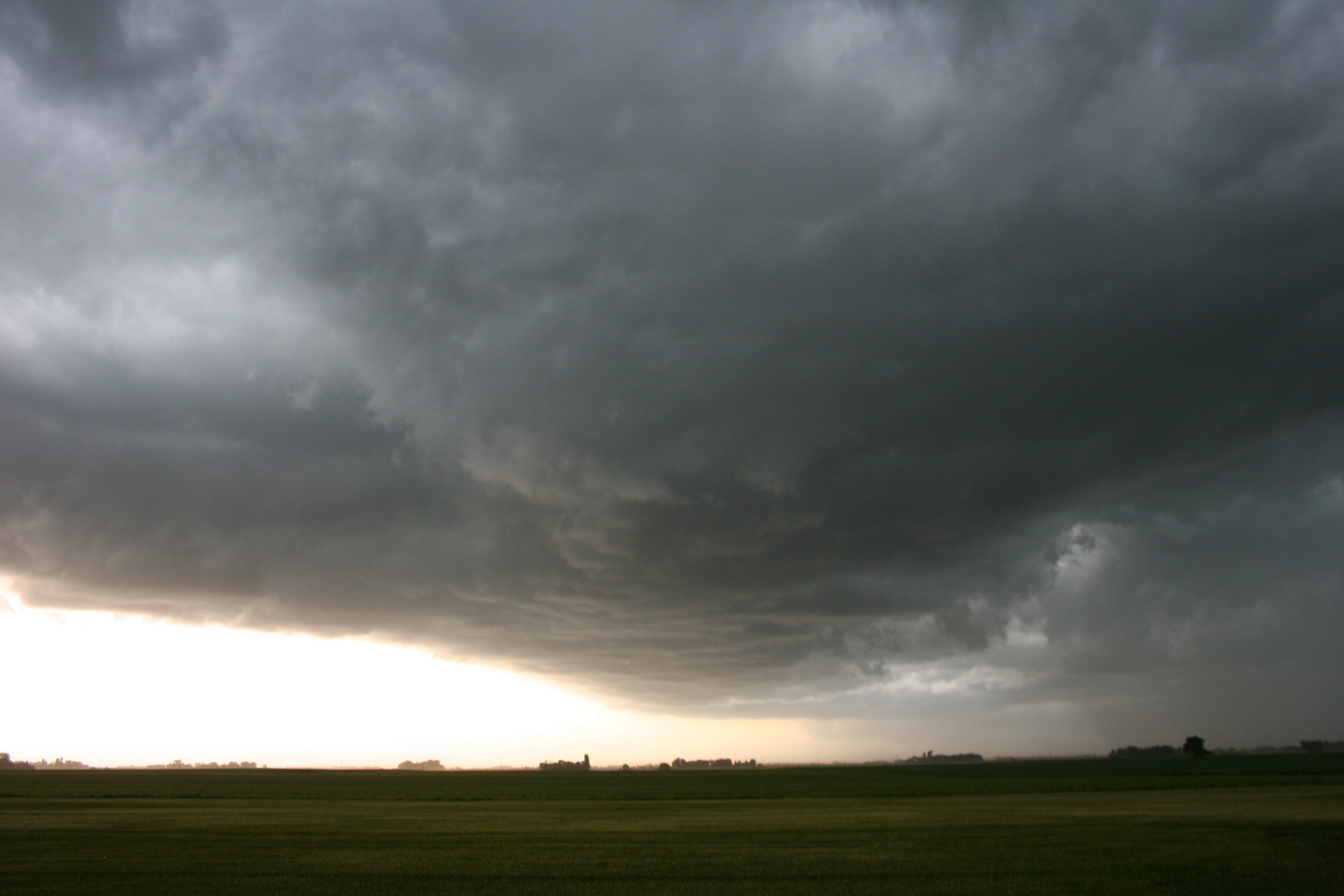
This December, the Minnesota prairie, devoid of snow, appears drab and dreary against iron grey skies. Often only the occasional farm site or small town breaks the bleak blackness of tilled fields that can quickly depress the visual sense.

Perhaps for that reason, my eye is naturally drawn to the red barns and other bursts of red that contrast with the black and white and grey. My eyes are seeking color.

A red barn pop of color in the distance while driving toward Morgan last Friday morning.

Along the same road, I caught just a snippet of the red barn peeking from behind the row of grey grain bins.

Sunnier skies prevailed Saturday afternoon at this farm site just north of Lamberton.

Allow your eyes to wander over my images, to take in the stark essence of the southwestern Minnesota prairie on two days in late December. This is my land, the place that shaped me as an individual and as a writer. It is a land where details are noticed without the distracting visual clutter of traffic congestion and buildings clumped together and lights and signs and crowds.

Not everyone appreciates the prairie, dismissing this land as boring and plain and unexciting. I am not among those who wish only to flash across the prairie like a bolt of lightning. Via my roadside photos, you will see how this infinite space of sky and land has claimed my heart, defining my work as a photographer and a writer.

A red car infuses color into this prairie landscape near Lamberton, heading east toward New Ulm along U.S. Highway 14, the Laura Ingalls Wilder Historic Highway.

A stop sign adds color to an otherwise grey image of the elevator in Essig, along Highway 14 west of New Ulm.

Fields like this one between New Ulm and Morgan define the southwestern Minnesota prairie.

AS I FINISHED this post, I wondered why most barns are painted red. Did the color choice come from a desire for a spot of red to brighten dreary days? I found one answer here, in Farmers Almanac Trivia. Click to read.

© Copyright 2011 Audrey Kletscher Helbling