Minnesota Prairie Roots

Writing and photography by Audrey Kletscher Helbling

Celebrating the Fourth of July for 125 years in North Morristown July 2, 2017

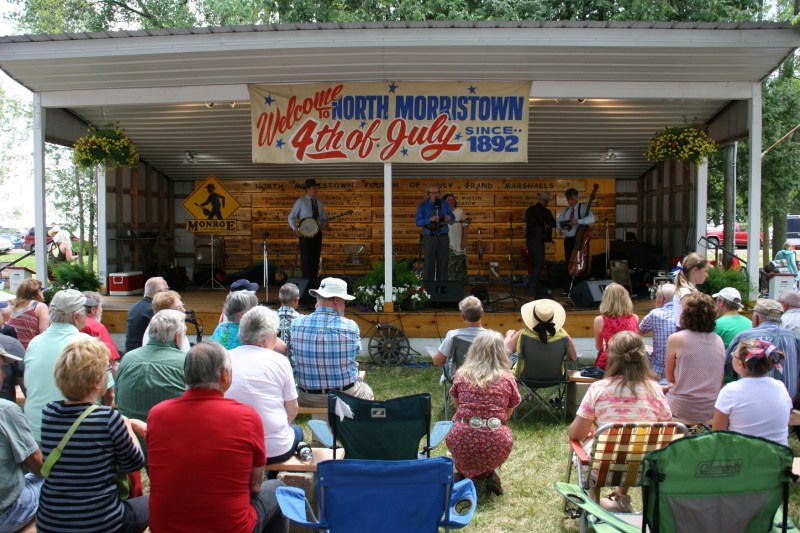
The popular bluegrass band, Monroe Crossing, performed twice at North Morristown in 2016. Minnesota Prairie Roots file photo 2016.


IN RICE COUNTY, the Fourth of July and North Morristown are synonymous. For in this rural spot of corn, soybean and alfalfa fields, farm sites, and a country church and school, folks gather every Independence Day to celebrate. This July Fourth marks 125 years of patriotic and family togetherness.


Vehicles line county roads leading to the festival grounds and also filled parking areas in this Minnesota Prairie Roots photo from July 4, 2016.


You won’t find North Morristown by looking for a water tower or anything that resembles a town. Rather, head northwest of Morristown to 10500 215th St. West and the festival grounds across the road from Trinity Lutheran Church and School, North Morristown.


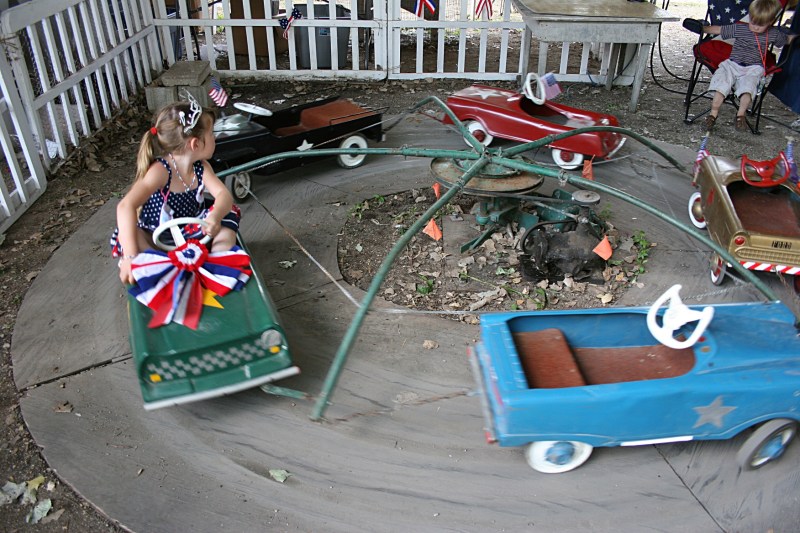
The vintage car ride for kids. Minnesota Prairie Roots file photo 2013.


Although I did not grow up in this part of Minnesota, I’ve lived here 35 years now and have celebrated many July Fourths at this rural location. I love the folksy simplicity of an event which began 125 years ago as a picnic. Today the celebration includes a 5K run/walk, parade, patriotic program, medallion hunt, silent auction, BINGO, musical performances (including the popular Twin Cities based Monroe Crossing), kids’ carnival style rides, fireworks shot over farm fields and more.


The homemade pies are a popular food choice. Buy your pie early for the best selection. Minnesota Prairie Roots file photo.


And then there are the food and beverages: homemade pies, fresh-squeezed lemonade, ice cream, pork sandwiches, burgers, beer and more. This food is basic country at its best, served by volunteers who work tirelessly to feed the masses.


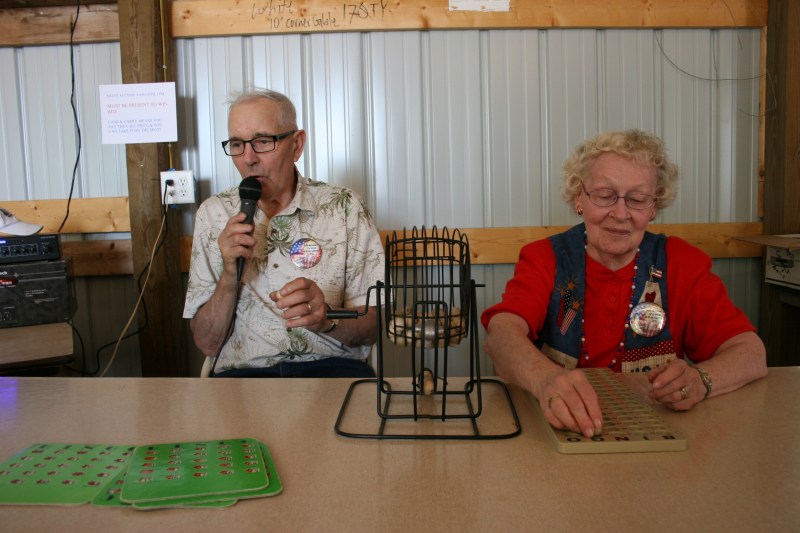
The bingo callers in 2013. I entered this image in a photo contest and won first place. Minnesota Prairie Roots file photo 2013.


Most who attend know each other. They either grew up here, married into a local family or have connections to the area. North Morristown on the Fourth of July is like a big family reunion. But even if you have zero connections to this place, you will feel comfortably welcome on the grassy, tree-filled festival grounds packed with friendly people.


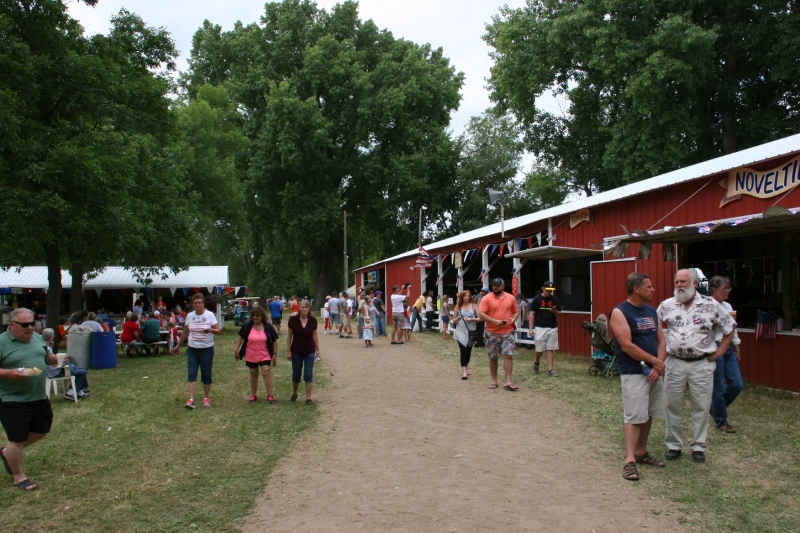
By late afternoon last July 4, the crowd began thinning a bit. Festivities began at 9 a.m. Minnesota Prairie Roots file photo 2016.


As much as I’d like to attend, I may not this year due to the crowds and uneven walking surfaces. A friend, who is one of the grand marshals of this year’s 10 a.m. parade, expressed disappointment upon learning of my shoulder fracture. He was apparently counting on me to photograph the day’s events as I have many times in the past. Sorry, Al.


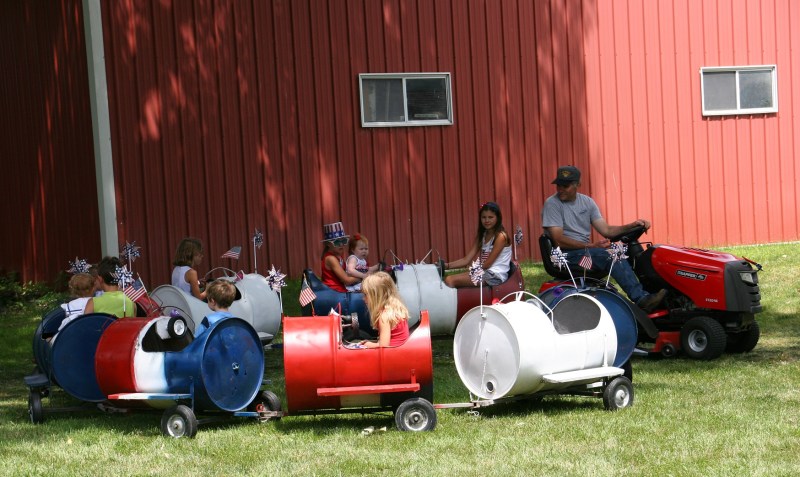
The old-fashioned barrel train draws lots of riders. Minnesota Prairie Roots file photo 2016.


Click here to view my previous coverage of North Morristown’s Fourth of July celebration. From my photographic perspective, you can see why this event has endured for 125 years. It doesn’t get much more grassroots basic Americana than North Morristown on the Fourth.

FYI: Click here to reach the North Morristown July Fourth Facebook page.

© Copyright 2017 Audrey Kletscher Helbling

NOTE: I am taking a break from further blogging this week. Please check back because I’ll be back.


Dresbach & Dakota, that would be in Minnesota June 27, 2017

Following Interstate 90 along the Mississippi River bluffs in southeastern Minnesota.


IN THE MANY YEARS I’VE TRAVELED Interstate 90 along the Minnesota/Wisconsin border in southeastern Minnesota, I’ve never exited to explore Dresbach or Dakota.

That changed this past spring when Randy and I were returning from a day trip to La Crosse, Wisconsin. Time allowed for the pull off onto Riverview Drive which passes through unincorporated Dresbach and Dakota, population 323 or thereabouts.


We pulled off Riverview Drive and curved the van to a small riverside park in Dresbach where I took this photo of the Mississippi.


Traffic signs in Dresbach.


Leaving Dresbach, I noticed this lengthy, leaning retaining wall.


We did a drive through with thoughts of returning again to poke around more. Both villages sit along the western bank of the Mississippi River between La Crosse and Winona, in Minnesota. The river setting is scenic, beautiful, worthy of a second look when the weather warms and river traffic increases.


A welcoming sign outside a business in Dakota. That’s quite a name, Trynowski.


Holy Cross Church in Dakota.


A well-preserved former corner gas station in Dakota that I found absolutely charming.


I snapped a few quick photos from the van and called it good. While both villages deserve more of my photographic study, this is a start.

TELL ME: Have you ever driven through/visited Dresbach or Dakota? If yes, what should I see the next time I’m in either community.

If anyone can provide information about any of the places photographed here, please share.

© Copyright 2017 Audrey Kletscher Helbling


Part III, outside the Paine: More from the gardens June 21, 2017

A lawn sweeps to the majestic front entry of The Paine.

A lawn sweeps to the majestic front entry of The Paine buffeted by the Evening Terrace. The public entry to the art center is to the left.

WHEN I TOUR an estate like The Paine Art Center and Gardens in Oshkosh, Wisconsin, my eyes lock on details. The heft of a door. The hue of a flower. The curve of a sculpture.

Massive doors define the entry.

Massive doors and architectural details define the entry.

The Paine presents many opportunities to embrace art. Natural and man-made. All connect to showcase an historic late 1920s mansion designed by Ithaca, New York architect Bryant Fleming. The English country house reflects three centuries of Tudor and Gothic styles all complemented by  beautiful gardens.


Details in architecture atop tne Kasota limestone walls.

Details in architecture and construction include the use of Kasota limestone.

Also noteworthy is the Minnesota connection to this Wisconsin site on the National Register of Historic Places. The home’s stonework is mostly Kasota limestone from southern Minnesota.

One of many garden "rooms."

One of many garden “rooms.”


A majestic native oak graces the front yard.

A majestic native oak graces the front yard.


Lucious planters frame a path to the patio.

Stately planters and lush plantings frame a path to the Morning Terrace.

The gardens, likewise, mimic perennials, trees and shrubs hardy to Minnesota. Given the climate similarities between the two states, this is logical. Annuals and bulbs are also incorporated into The Paine gardens.

Lilies bloomed during my July 2016 visit.

Lilies bloomed during my July 2016 visit.

Flowers in bloom during my mid-summer 2016 visit differ from those blooming earlier or later. The estate landscape is like an evolving art gallery. There’s a certain visual appeal in that, in observing nature’s art always changing.

BONUS PHOTOS:

The public entry to The Paine Art Center.

The public entry to The Paine Art Center.


The first sculpture I spotted, near the entry.

The first sculpture I spotted, near the entry.


My husband, Randy, plays a xylophone in a garden.

My husband, Randy, plays a xylophone in The Children’s Field Station.


One of many graceful sculptures.

One of many graceful sculptures.

FYI: For more information about The Paine Art Center and Gardens, click here. Then click here to read my first post from inside The Paine. Next, click here to read Part I and then Part II of my gardens series.

© Copyright 2017 Audrey Kletscher Helbling


Part II, outside the Paine in Oshkosh: Ever-changing garden art June 20, 2017

A view of The Paine Art Center from the reflecting pond garden located behind the historic 1920s mansion.

A view of The Paine Art Center from the reflecting pond garden located behind the historic 1920s mansion.

KALEIDOSCOPE. Even the word seems to hold a certain mystique. Rotate a kaleidoscope in your hand and the magic unfolds, there, before your eyes.

I’ve always loved looking into these tubes of mirrors and color that present ever-changing designs like a shifting gallery of art.


paine-gardens-113-garden-kaleidoscope


I’d never known the kaleidoscope as anything but a kid’s toy. But then I toured the gardens at The Paine Art Center in Oshkosh, Wisconsin, and discovered the garden variety of kaleidoscopes. These oversized and sturdy garden kaleidoscopes are comprised of a metal framework surrounding a bowl of plants and a ball. What a visual delight.


paine-gardens-113-kaleidoscope-ball


Robert C. Anderson, a Sturgeon Bay artist, crafted the garden kaleidoscopes at the Paine. These sculptures bring an interactive dimension to the gardens. I like that.

And because my daughter Miranda was able to photograph through the eye piece with her smartphone, you can see the art of a garden kaleidoscope:


paine-gardens-garden-kaleidoscope-1-copy


paine-gardens-kaleidoscope-2-copy


paine-gardens-kaleidoscope-3-copy


Beautiful, isn’t it?

TELL ME: Have you ever seen a garden kaleidoscope or other interactive piece of garden art that especially intrigued you? Click here to see my blogger friend Valerie’s photos of these from the Minnesota Landscape Arboretum.

FYI: Check back tomorrow for one final post from The Paine as we further explore the gardens. Click here to read my first garden post. And click here to read my first post from inside The Paine Art Center.

© Copyright 2017 Audrey Kletscher Helbling

Close-up kaleidoscope images by Miranda Boyd


Part I, outside the Paine in Oshkosh: Flowers and art and water June 19, 2017

paine-gardens-116-wire-basket-sculpture


HEAT AND HUMIDITY PRESSED heavy upon me as I wandered the gardens of The Paine Art Center on a summer day in Oshkosh, Wisconsin. Yet, the heat didn’t stop me from appreciating the lush flowers and plants, the water features, the sculptures and more showcased on this estate.


paine-gardens-106-side-view-with-gardens-in-foreground


It’s a lovely place, this late 1920s mansion and the landscape surrounding it. An episode of The Bachelor was filmed here in October.


paine-gardens-120-zinnias


I realize most of you likely will never travel to eastern Wisconsin to tour The Paine. My second daughter lives in the area. So please join me on this walk around the grounds—a welcome visual summer respite for us dwellers of the North. And for those of you in other regions, I hope you, too, will appreciate the beauty of this estate once owned by Nathan and Jessie Paine of Wisconsin lumber business wealth.


A sweeping lawn stretches between the gardens and the rear of the late 1920s mansion.

A sweeping lawn stretches between the gardens and the rear of the late 1920s mansion.


Sculptures, water features,plants and flowers all intertwine in the gardens.

Sculptures, water features, plants and flowers all intertwine in the gardens.


Italian master sculptor created this marble sculpture titled "Girl with a Bird."

Italian master sculptor created this marble sculpture titled “Girl with a Bird.”


Artsy and beautiful planters abound, including this one outside the Carriage House.

Artsy and beautiful planters abound, including this one outside the Carriage House.


The Carriage House is available for rent, for events like wedding receptions.

The Carriage House is available for rent, for events like wedding receptions.


The showcase reflecting pond.

The showcase reflecting pond.


How lovely those lilies in the pond.

How lovely those lilies in the pond.


And how lovely the other lilies growing in the gardens.

And how lovely the other lilies growing in the gardens.


FYI: Because I have so many photos of the gardens, I will feature my images in two more posts. Click here to read my first post from inside this historic mansion.

Click here for more info about The Paine Art Center and Gardens.

© Copyright 2017 Audrey Kletscher Helbling

NOTE: These images were taken in July 2016.


Scenes from the road in Iowa June 8, 2017

Filed under: Uncategorized — Audrey Kletscher Helbling @ 5:00 AM
Tags: , , , , , , , ,

Westbound from Illinois into Iowa along Interstate 80. Minnesota Prairie Roots file photo May 2016.


IN IOWA EXISTS a comfortable familiarity for me. It’s not that I’ve explored much of this state, except the northern fringes. But Iowa feels like a friendly next door neighbor or cousin, the ruralness of this land creating an instant bond.


For in Iowa—the Iowa I’ve seen—the lay of the land, the length of the sky, the scenes of barns and fields and small towns connect to my rural southwestern Minnesota roots.


I feel at home in Iowa, the place that is often the butt of Minnesota jokes. Outside the Twin Cities metro and the lakes and woods of northern Minnesota, our landscape mostly duplicates that of our southern neighbor.


The world’s largest truck stop, with eight restaurants, a movie theater, dentist and much more, has been open near Walcott off I-80 in eastern Iowa since 1964.


It’s OK to admit you like Iowa. Some of my favorite trips have been to Iowa communities—Clear Lake, Mason City, Decorah, McGregor, Marquette and Dubuque. These towns possess character and hold natural and historic interest for me.


Iowa 80, the world's largest truck stop.

Iowa 80, the world’s largest truck stop.


You know you’re in America’s agricultural heartland when you see a billboard advertising Pioneer seed.
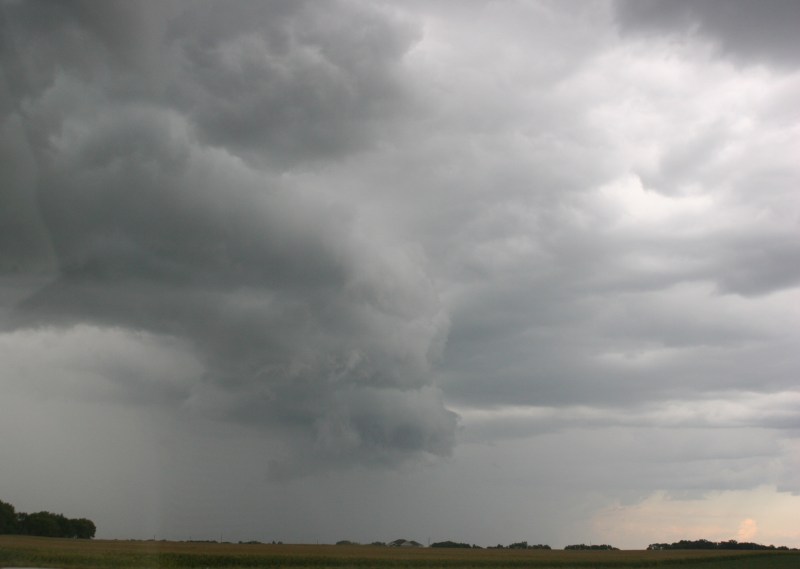


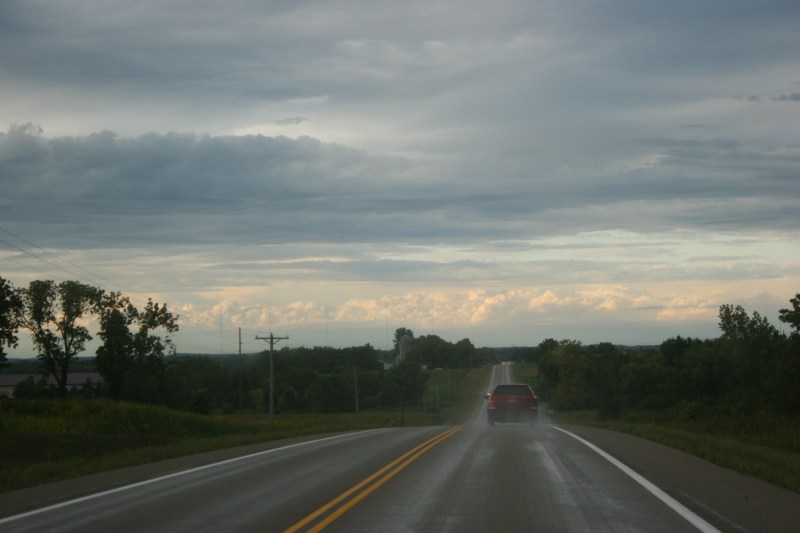
Sometimes we need to step outside our boxes of preconceived ideas about a place and simply explore. Leave the metro and drive a gravel road, stop in a small town, delight in the simplicity of a rural landscape. Iowa and many parts of Minnesota are more than the middle of nowhere. If we choose to slow down, we begin to notice the nuances that define a place, that make it worth our time to visit and to appreciate.


TELL ME: If you’ve traveled to Iowa, what community would you suggest visiting and why? Or, if you haven’t been there, tell me what a visitor should see in your state or country?

© Copyright 2017 Audrey Kletscher Helbling

NOTE: All images were taken in late May 2016 on a return trip from Minnesota to Boston.


The art of an interstate rest stop in Iowa June 7, 2017


PRIME VACATION SEASON is almost upon us and that means many of you will soon hit the roads. And when you travel, especially long-distance, rest stops hold necessary importance.

A year ago, my husband and I drove 2,800 miles from Minnesota to Boston and back to attend our son’s graduation from Tufts University. Some days we spent up to 10 hours in the van. The need to stretch our legs, to pee and to take a break from roadway fatigue led us to many an interstate rest stop.

Hands down, Iowa has the best rest areas. Indiana, not so much.


The rest stop along Interstate 380 near Cedar Rapids honors artist Grant Wood and features his rural themed work on ceramic tile. The floor design mimics crop rows.


So what makes Iowa’s interstate rest areas so appealing? Themed rest stops, of which there are 16. These are centers of art and history as much as places to take a bathroom break, to picnic, to gather travel info and to stretch. And bonus, the sole facility we visited was clean.


My first view of the rest stop focusing on Iowa artist Grant Wood, who was born 40 miles to the northeast and then moved to Cedar Rapids with his family in 1901.


On our return trip from Boston, we stopped at the Grant Wood Rest Area northbound along I-380 south of Cedar Rapids in Linn County. At the time, I knew nothing of these unique stops for travelers. So imagine my surprise when we pulled off the interstate and into a place that looked like a cultural art center in the middle of, well, Iowa fields.


The many windows incorporated into the rest stop mimic the farmhouse windows in Wood’s “American Gothic” painting.


Wood’s work featured the rural Iowa landscape. Here his art is showcased in ceramic tile inside the rest area building.


Behind the rest stop building, visitors can consider the view through these window props.


Completed four years ago, “The View From Our Window: Grant Wood in Iowa” rest area honors Wood, painter of “American Gothic.” In my limited knowledge of Iowa art, this painting of a farm couple standing in front of a farmhouse is symbolic of Iowa as I view it. Rural, through and through. David Dahlquist of RDG Dahlquist Design Studio in Des Moines created the art at this interstate stop.


The green “waves” represent Iowa cropland.
 

Emerging soybean art inside the rest stop structure.
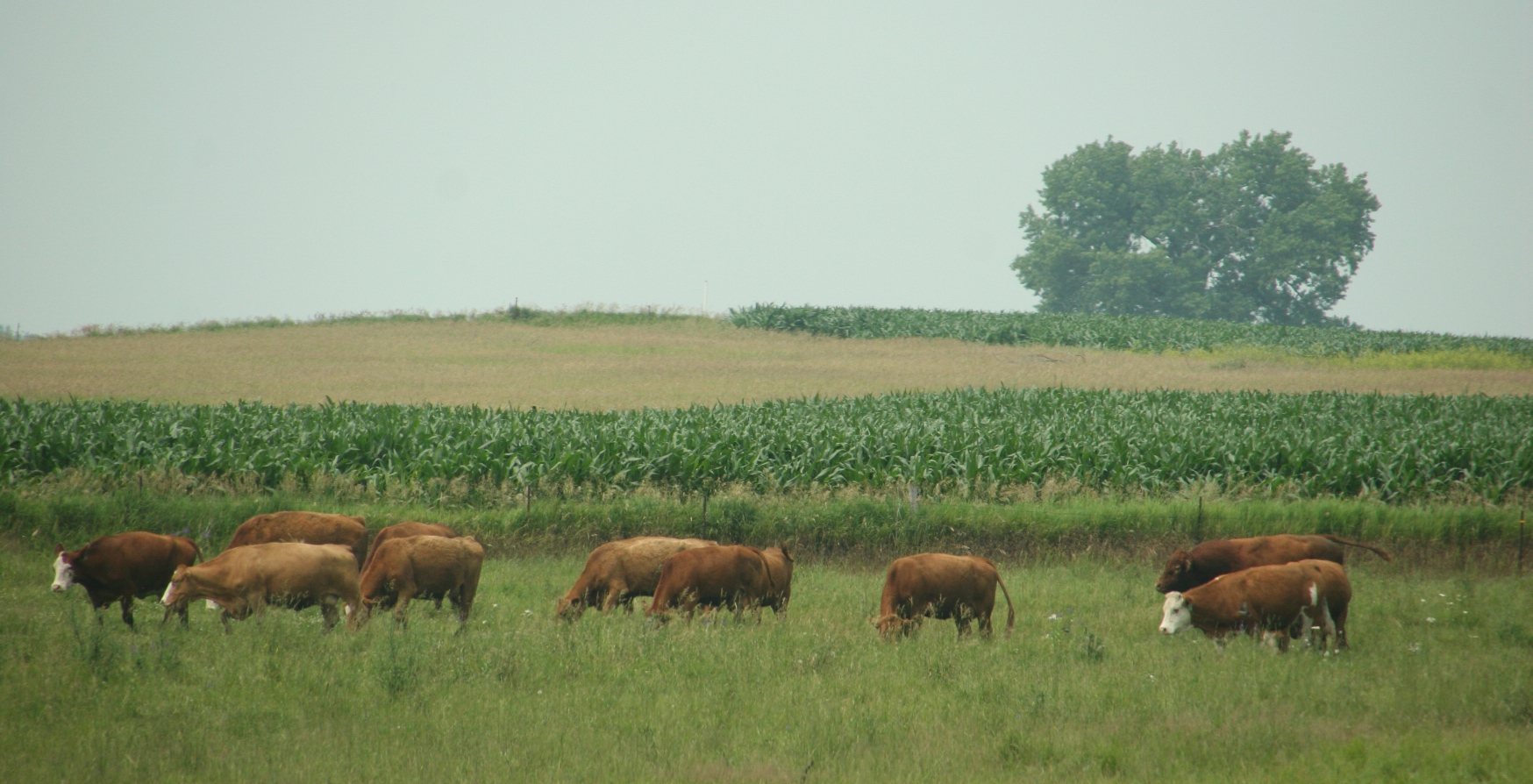
 

Real life farming in Iowa.


For this weary traveler, the Grant Wood rest area proved a welcome respite from the interstate and from the countless other rest stops that were nothing more than functional spaces to meet travelers’ basic needs. Expanding that purpose beyond—to include art and history—made an impression upon me.


Travelers can get a view of the U.S. on a map situated next to a duplicate of the farm woman Wood painted in “American Gothic.”


In other sections of Iowa, you can, for example, learn about Lewis and Clark at the southbound I-29 rest area at Sergeant Bluff.


Picnic areas are sheltered by machinery like structures.


These themed Iowa rest areas are most prolific along I-80. The Mississippi River is the focal point of the westbound stop in the Davenport area. Eastbound, the rest area at Grinnell highlights pioneers while one in Cedar County focuses on the Underground Railroad.


This sign inside the rest stop building honors Wood’s artist’s loft, 5 Turner Alley, in Cedar Rapids.


If you’re so inclined and looking for an inexpensive way to view public art and learn history in Iowa, you could plan a trip around visiting Iowa’s themed rest areas. If anything, it would be quite the unique vacation story.


TELL ME: Have you come across other such unique public interstate rest areas in your travels across the country? Or, offer your opinion of these Iowa rest areas.

FYI: Click here to visit the Iowa Department of Transportation website showcasing Iowa’s themed rest areas.

© Copyright 2017 Audrey Kletscher Helbling


Along Highway 52: About that popcorn & cheese June 5, 2017

SIGNAGE INTERESTS ME. For many reasons. The graphics. The message. The marketing influence. The persuasive power.

Occasionally signage can confuse or present an unclear message.

Let’s consider three signs along U.S. Highway 52, a high traffic four-lane that I sometimes travel between Cannon Falls and Rochester. On my most recent trek along this roadway, I photographed two signs by Pine Island.


The first grabbed my visual attention because of the oversized popcorn kernels scattered on the ground below a popcorn billboard and the single word, Newt’s. What is this sign advertising? A popcorn place? Not quite. Newt’s does have, according to online reviews, some of the tastiest popcorn around. But Newt’s is a beer and burger place that also serves popcorn.

Digging deeper into the popcorn pile, I read on Newt’s Facebook page that the business pops an average of 20,000 pounds (or 10 tons) of popcorn kernels in a year at its north, south and downtown Rochester locations. Now that’s a lot of popcorn. I wonder how much beer is served.


The second sign I photographed promotes a cheese mart. But if you look closely, you will see that the Pine Cheese Mart no longer sells cheese. That’s right. Tacked onto the bottom of the sign is the notation that you can purchase beer and wine making supplies at Von Klopp Brew Shop, once also a marketer of cheese.

When the northbound highway access to the cheese mart was closed, the business took such a hit that it stopped selling cheese and closed its restaurant and gift shop, according to the business website. I wonder how many travelers catch the cheese mart part of this sign and miss the details.


The last “sign” I photographed is farther north on 52 and visible from the southbound lane. There’s nothing fancy about this handcrafted message. It’s simple and to the point. The landowner appreciates farmers and loves his country. Perfect.

© Copyright 2017 Audrey Kletscher Helbling

NOTE: I photographed these signs several months ago. They may or may not still be in place.


From car to military shows & more, there’s plenty to do in Rice County this weekend May 18, 2017

A scene from the July 2016 Car Cruise Night. Minnesota Prairie Roots file photo 2016.


INTERESTED IN VINTAGE CARS, flea markets, running for charity, gardening, military history, or comedy? If you are, check out activities in Rice County this weekend.


The U’s solar car at the August Car Cruise Night last summer. Minnesota Prairie Roots file photo 2016.


Kicking off the weekend is Faribault Car Cruise Night slated for 6 pm. – 9 p.m. Friday along Central Avenue in the heart of historic downtown Faribault. The University of Minnesota solar vehicle is a special draw to this first of the summer cruise event. The car shows are held on the third Friday of the month from May through August.


An absolutely beautiful work of hood ornament art, in my opinion. Minnesota Prairie Roots file photo 2014.


I’m a Car Cruise Night enthusiast. It’s a perfect time to mill around the downtown—appreciating the vehicles, the historic architecture and the people who attend. With camera in hand, I always find something new to photograph. Often, I view the artistic angle of the vintage vehicles. That interests me way more than what’s under the hood.


A Minnesota souvenir, an example of what you might find at a flea market. Minnesota Prairie Roots file photo 2013.


Saturday morning brings the Rice County Historical Society spring flea market from 8 a.m. – 2 p.m. at the RCHS, 1814 N.W. Second Avenue in Faribault. One of my favorite activities is poking through treasures. As a bonus, the county museum will be open at no charge.


The Drag-On’s Car Club graphics, photographed through the window of a vintage car. Minnesota Prairie Roots file photo.


Right next door, at the Rice County Fairgrounds, the Faribo Drag-On’s Car Club hosts its annual Car/Truck Show and Automotive Swap Meet from 9 a.m. – 3 p.m. Saturday. The show includes pedal car races for the kids.


Edited image from Color Dash.


Also along Second Avenue Northwest, but at Alexander Park, Rice County Habitat for Humanity will benefit from a Color Dash 5K  sponsored by the Faribault Future’s class. On-site packet pick-up is at 9 a.m. followed by the race at 10 a.m.


Hosta will be among the plants sold at the GROWS plant sale. Minnesota Prairie Roots file photo.


If you’re a gardener, you’ll want to shop the Faribault GROWS Garden Club perennial plant sale from 8 a.m. – noon in the Faribault Senior Center parking lot along Division Street. Sale proceeds will go toward purchase of trees for city parks and flowers for Central Park.


This piece of military equipment was exhibited last September when the Vietnam Memorial Traveling Wall came to Faribault. Minnesota Prairie Roots file photo 2016.


Military history is the focus of the 8th annual Armed Forces Day—Military Timeline Weekend gathering at the Rice County Steam & Gas Engines grounds just south of Dundas/Northfield on Minnesota State Highway 3. I’ve never been to this event, which recently moved to the Rice County location. For military history buffs, this presents a unique opportunity to learn and to view living history as re-enactors role play noted military battles and more. The event opens at 10 a.m., closing at 5 p.m. on Saturday and at 3 p.m. on Sunday.


The Looney Lutherans. Photo credit, The Looney Lutherans website, media section.


Wrapping up the weekend is “The Looney Lutherans” music and comedy show at 4 p.m. Sunday at the Paradise Center for the Arts, 321 Central Avenue North in downtown Faribault. I expect this trio of actresses will work their magic on even the most stoic among us. I could use some laughter.

Before or after the show, check out the gallery exhibits, including one by 13-year-old Mohamed Abdi, a young artist already exhibiting a passion and strong talent in art.

There you go. All of this is happening right here. Not in the Twin Cities. But here, in greater Minnesota. Let’s embrace the opportunities in our backyard. Right here in Rice County. And, if you don’t live within county lines, we’d love to have you here exploring our part of Minnesota.

FYI: If you plan to attend any of the above events, please check Facebook pages and websites for any possible changes due to the rainy weather and also for detailed info. With the Paradise show, check on ticket availability in advance.

For more events happening in Rice County, visit the Faribault and Northfield tourism websites.

© Copyright 2017 Audrey Kletscher Helbling


Scenes along the interstate in Minnesota May 8, 2017

Filed under: Uncategorized — Audrey Kletscher Helbling @ 5:00 AM
Tags: , , , , , ,

Driving toward downtown St. Paul along Interstate 35-E.


YOU NEVER KNOW WHAT you’ll see while traveling the interstate. Too many motorists engage in risky behavior like tailgating, weaving from one lane to the other, texting, talking on their cells when their full attention should be on the roadway and more. It’s a crazy driving world out there.


I admire these MnDOT responders who aid motorists, here in the thick of interstate traffic near downtown St. Paul. It appears a mighty dangerous job.


I’m no fan of heavy traffic or travel in the Twin Cities metro. But then I suppose many people aren’t. Rural roadways can be just as unsafe.


Is the tanker actually carrying coffee or simply advertising it? Photographed northbound on I-35 toward the Twin Cities metro.


What’s the final destination of this outdoor enthusiast headed eastbound on I-35E?


How does the boss drive?


All of that aside, I always spot interesting scenes along the interstate. Interesting to me, anyway.


Southbound into St. Paul along I-35E.


TELL ME: What have you observed while traveling along the interstate?

© Copyright 2017 Audrey Kletscher Helbling