Minnesota Prairie Roots

Writing and photography by Audrey Kletscher Helbling

How a car looks after spinning into the path of a semi truck January 10, 2012

Filed under: Uncategorized — Audrey Kletscher Helbling @ 7:30 AM
Tags: , , , , , ,

A WEEK AGO I published a post, “New Year’s thankfulness,” about my niece (in-law) who was involved in an accident that quite easily could have killed her. She lost control of her 2002 Saturn Ion on an icy Minnesota interstate sending her car spinning into the path of a semi truck. Her car was then subsequently struck by a pick-up truck. (Click here to read that original post.)

Heidi was knocked unconscious, had to be cut from her vehicle and was transported to St. Mary’s Hospital in Rochester. She, miraculously, suffered only a concussion, a gash on her head, and bumps, cuts and bruises.

At the time I wrote that post, I did not have photos of Heidi’s car meaning I could not fully grasp, but only imagine, the severity of this accident.

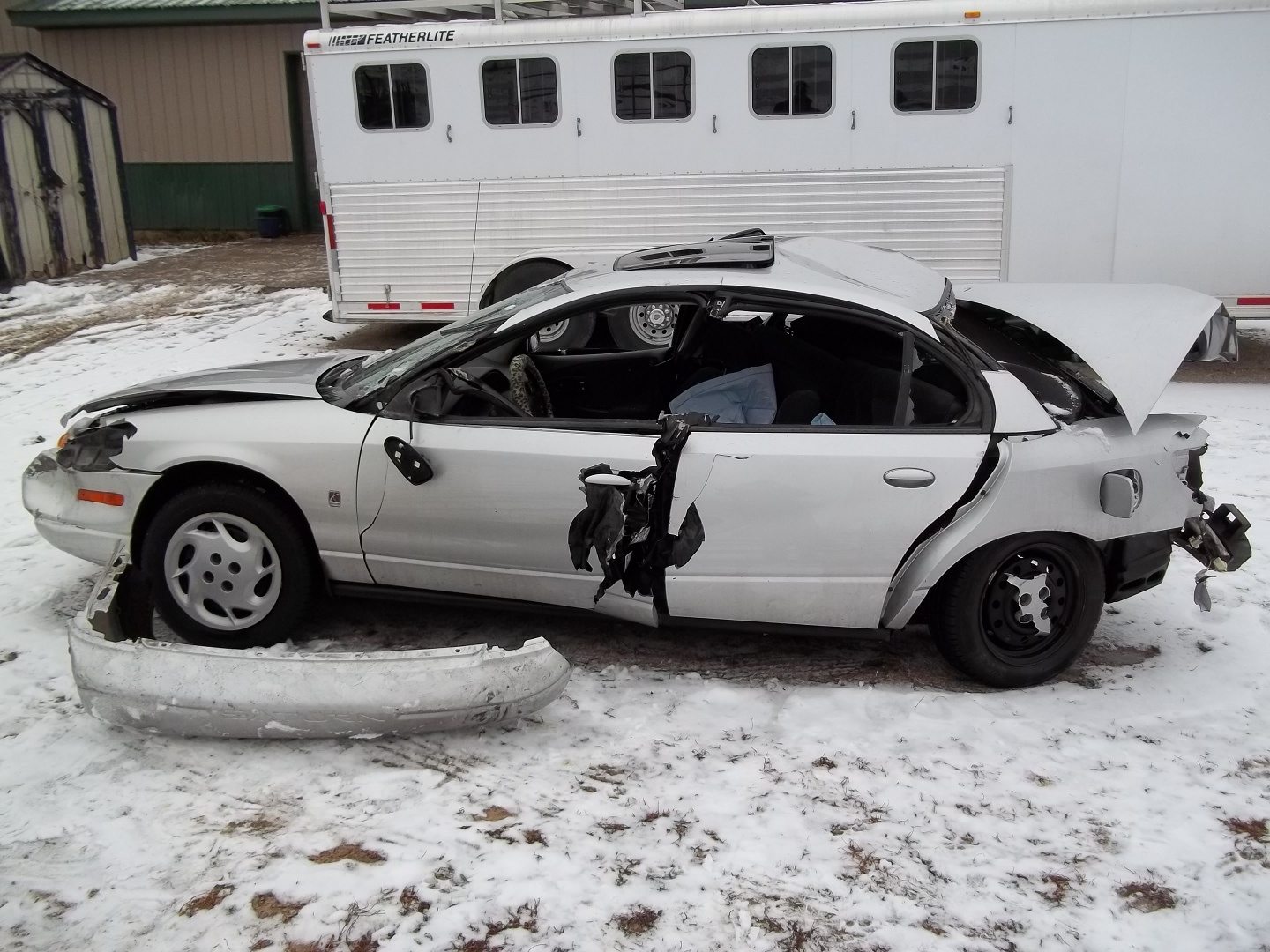
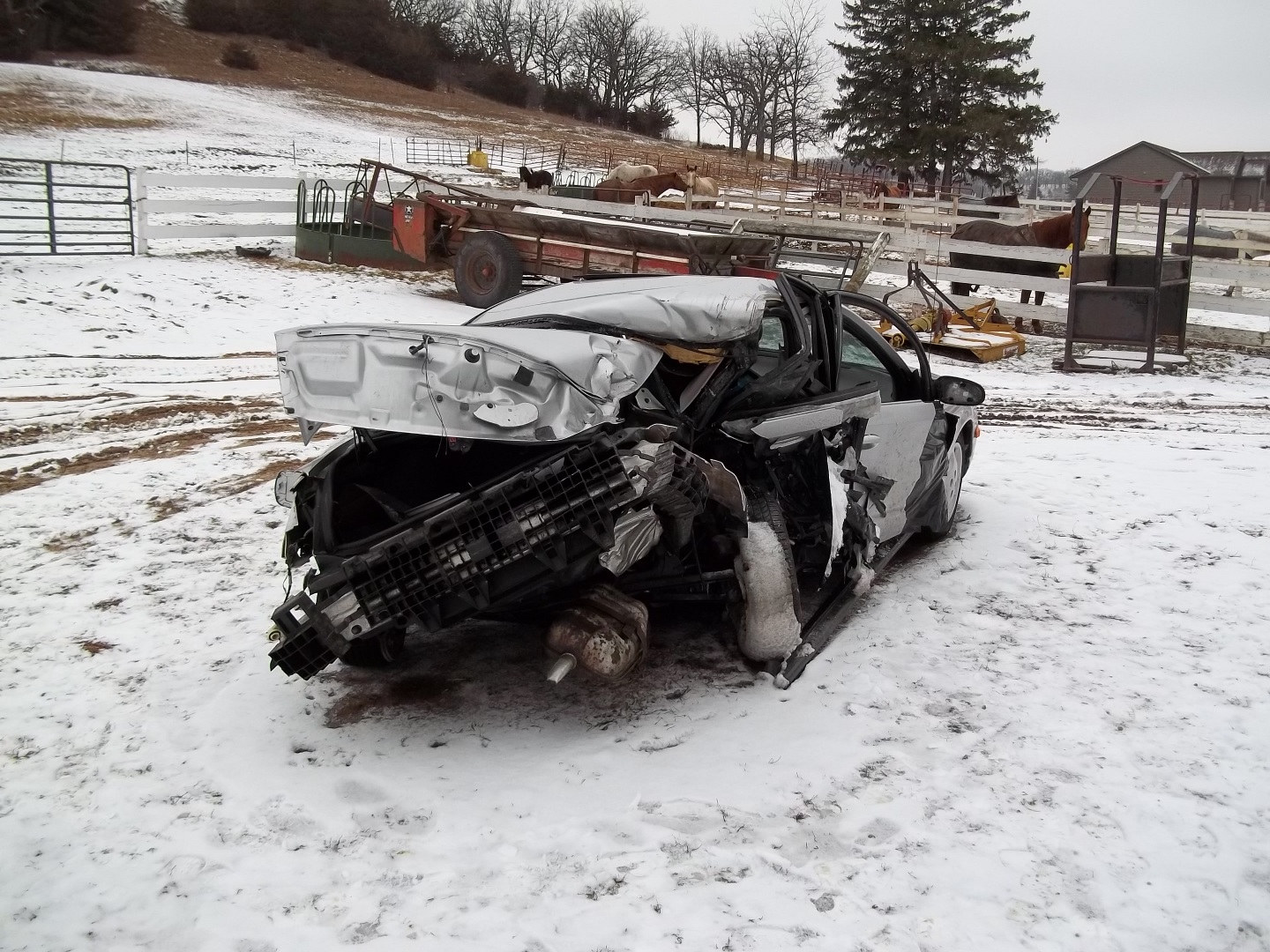
Recently I received two images from Heidi’s husband, Jeremy, and permission to post those car photos here. It is one thing to read, in an e-mail, details of an accident like this involving a semi. It is quite another to view images.

In this case, I would most definitely agree that “a picture is worth a thousand words.”

The demolished rear of Heidi's Saturn after her car was struck by a semi and pick-up on I-90.

Heidi was cut from her car following the December 30 morning crash on an icy interstate.

Jeremy reports that Heidi, also the mother of two young children, is doing much better since the December 30, 2011, crash. “…we’re able to go for walks now and she is able to go down stairs backwards. In a way, her healing process reminds me of watching our kids learning to walk in fast-forward.”

Godspeed in your recovery, Heidi.

© Copyright 2012 Audrey Kletscher Helbling

Photos courtesy of my nephew, Jeremy


If you appreciate old buildings, you must visit historic downtown Appleton, Wisconsin January 9, 2012

I’M NOT A MALL KIND OF GIRL. Never have been. Never will be. If you want to while away an afternoon window or power shopping at a sprawling indoor mall, don’t ask me.

But invite me to explore an historic downtown and I can’t get there fast enough. I delight in the detailed architecture, the charming ambiance, the folksy shops, the comfortable feel and the visual appeal of a downtown that hearkens more to yesteryear than to the modern day 21st Century.

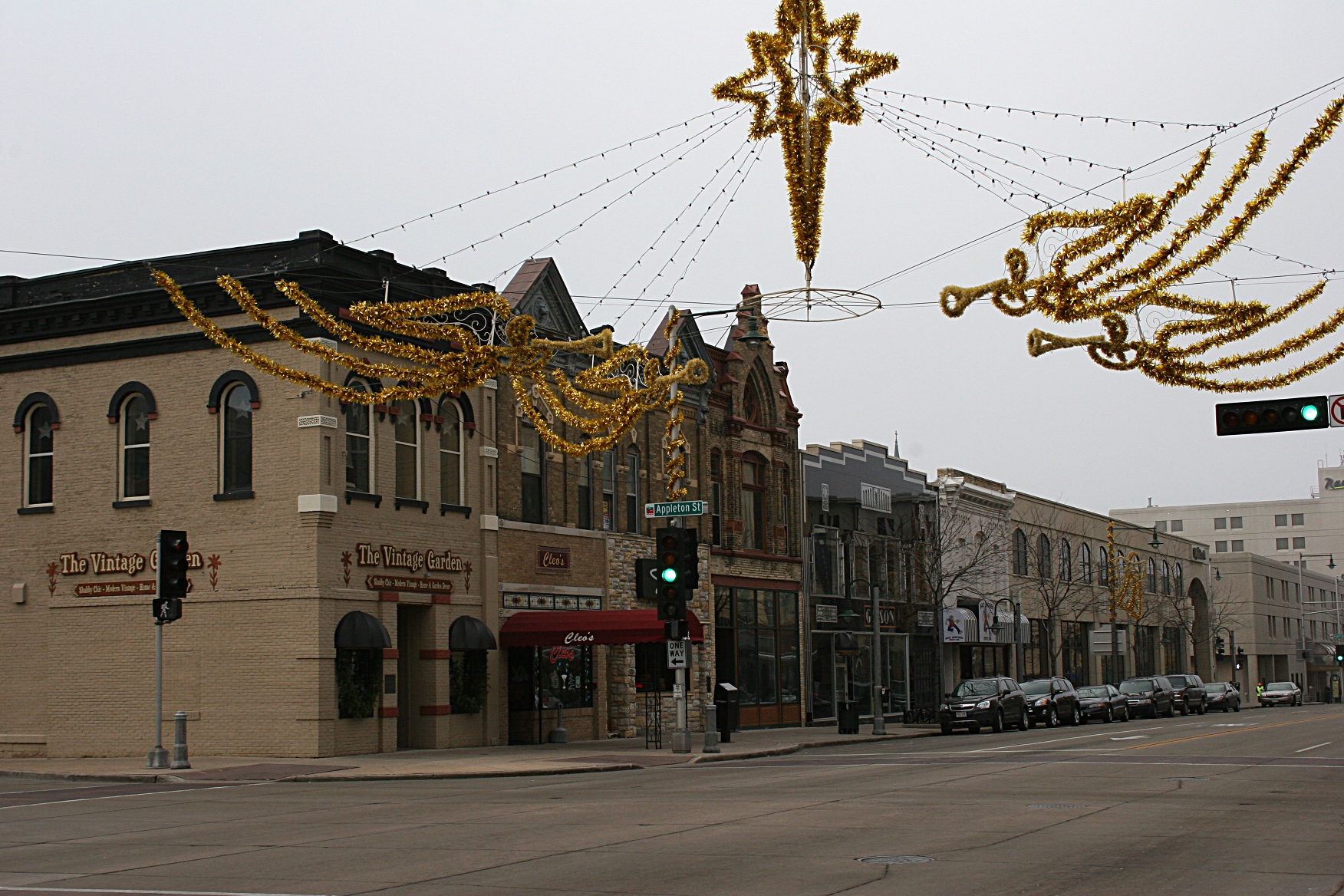
A row of old buildings in downtown Appleton, Wisconsin, on a December morning..

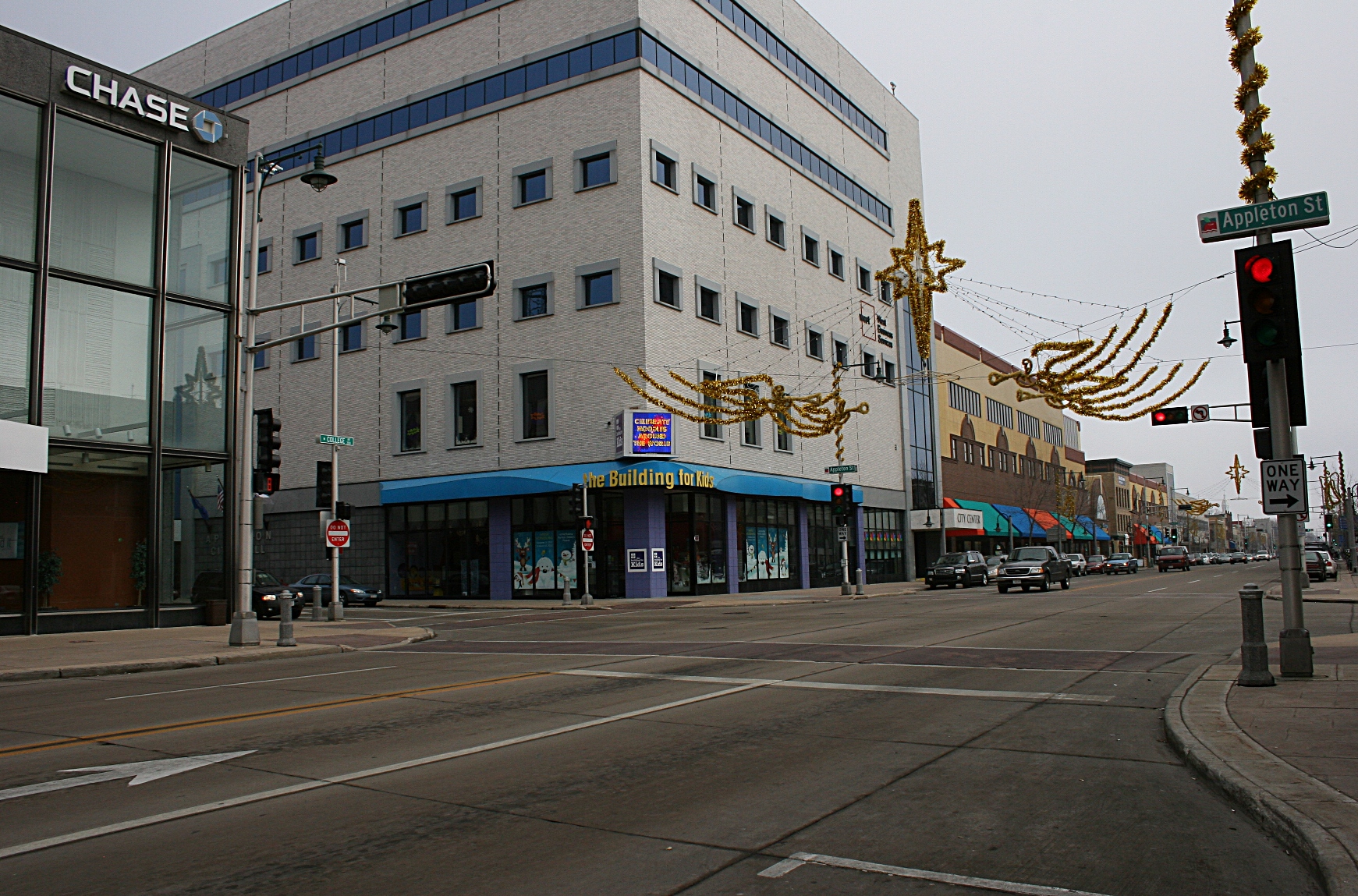
Knowing this about me, you’ll understand exactly why I am so enthralled with downtown Appleton, a city of 72,400 in eastern Wisconsin and home to the 7-acre College Avenue Historic District with 27 buildings dating from 1857-1932 on the National Register of Historic Places.

This downtown is my kind of place—described as “one of Wisconsin’s folksiest, funkiest and friendliest downtowns.”

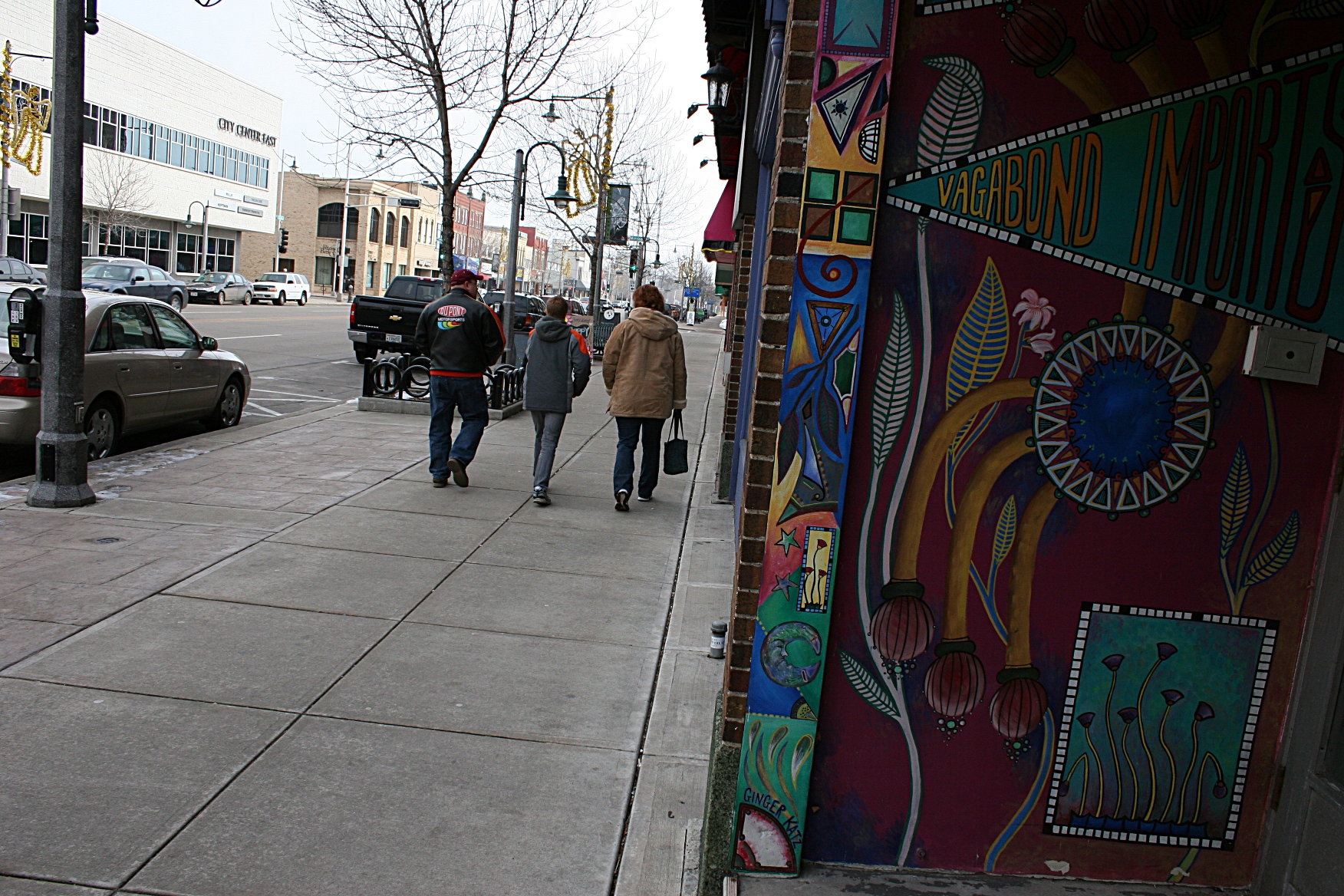
The exterior of funky Vagabond Imports.

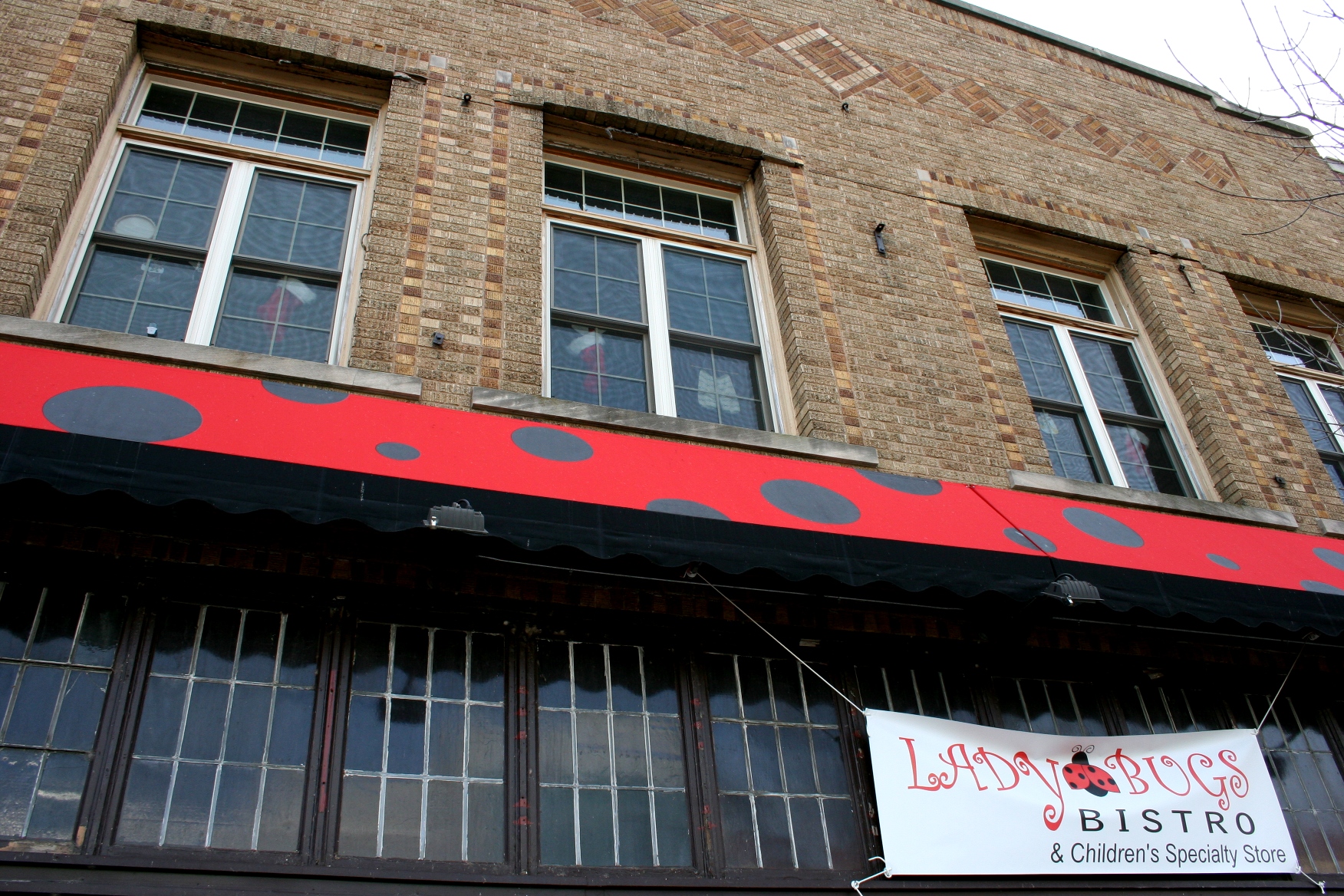
Loved the downtown signage, especially on Lady Bugs Bistro & Children's Specialty Store.

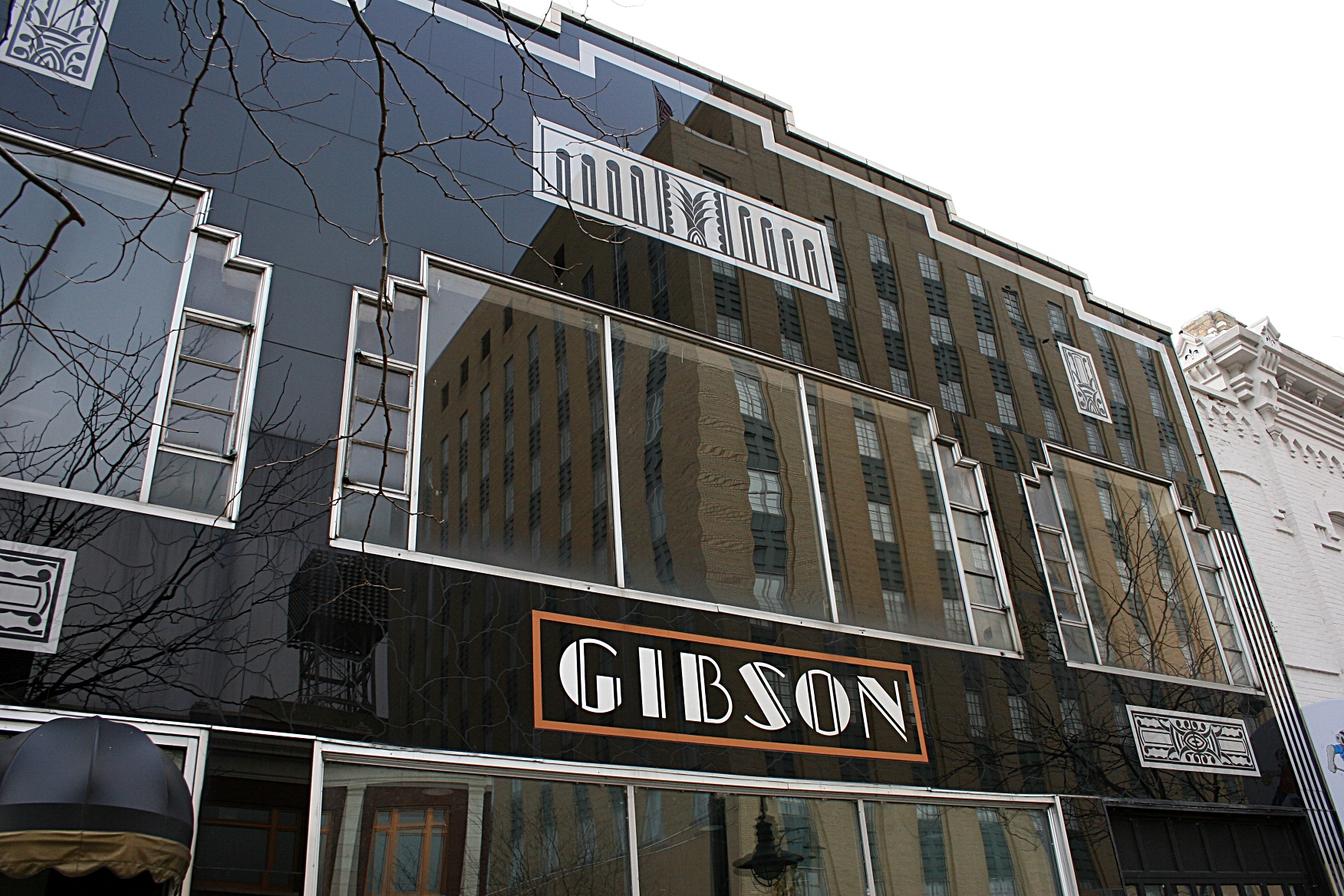
One of the more unique downtown buildings brought to mind the Roaring 20s and flappers and F. Scott Fitzgerald.

I’ll add photogenic to that list of superlative adjectives.

During my brief tour of downtown Appleton recently, I couldn’t stop gawking at the lovely aged buildings with their artsy signage. Even the more modern buildings meld nicely with the old, a sometimes difficult transition to make.

Downtown Appleton, along College Avenue, melds the new with the old.

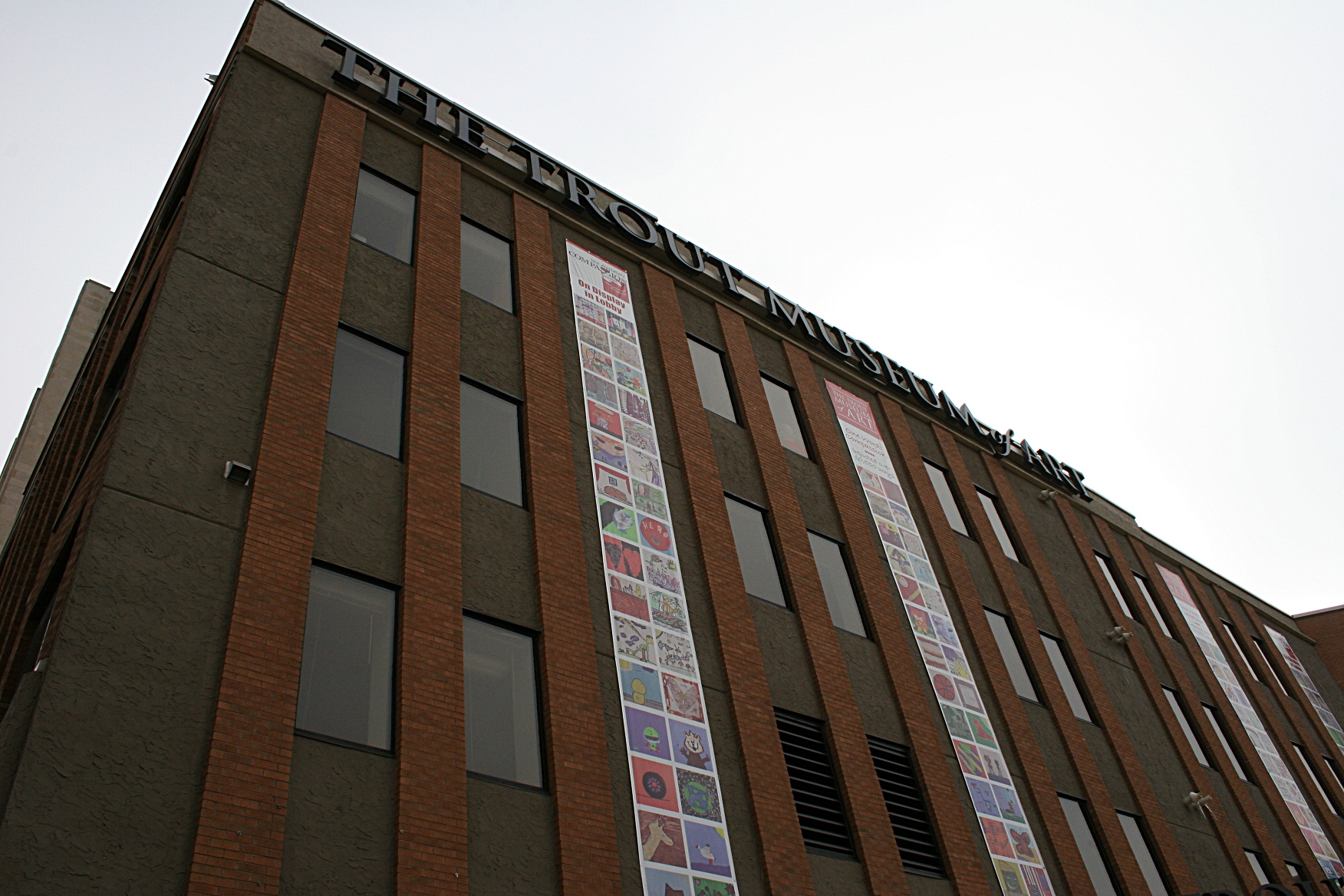
The Trout Museum of Art moved into the Riegel building in 2002.

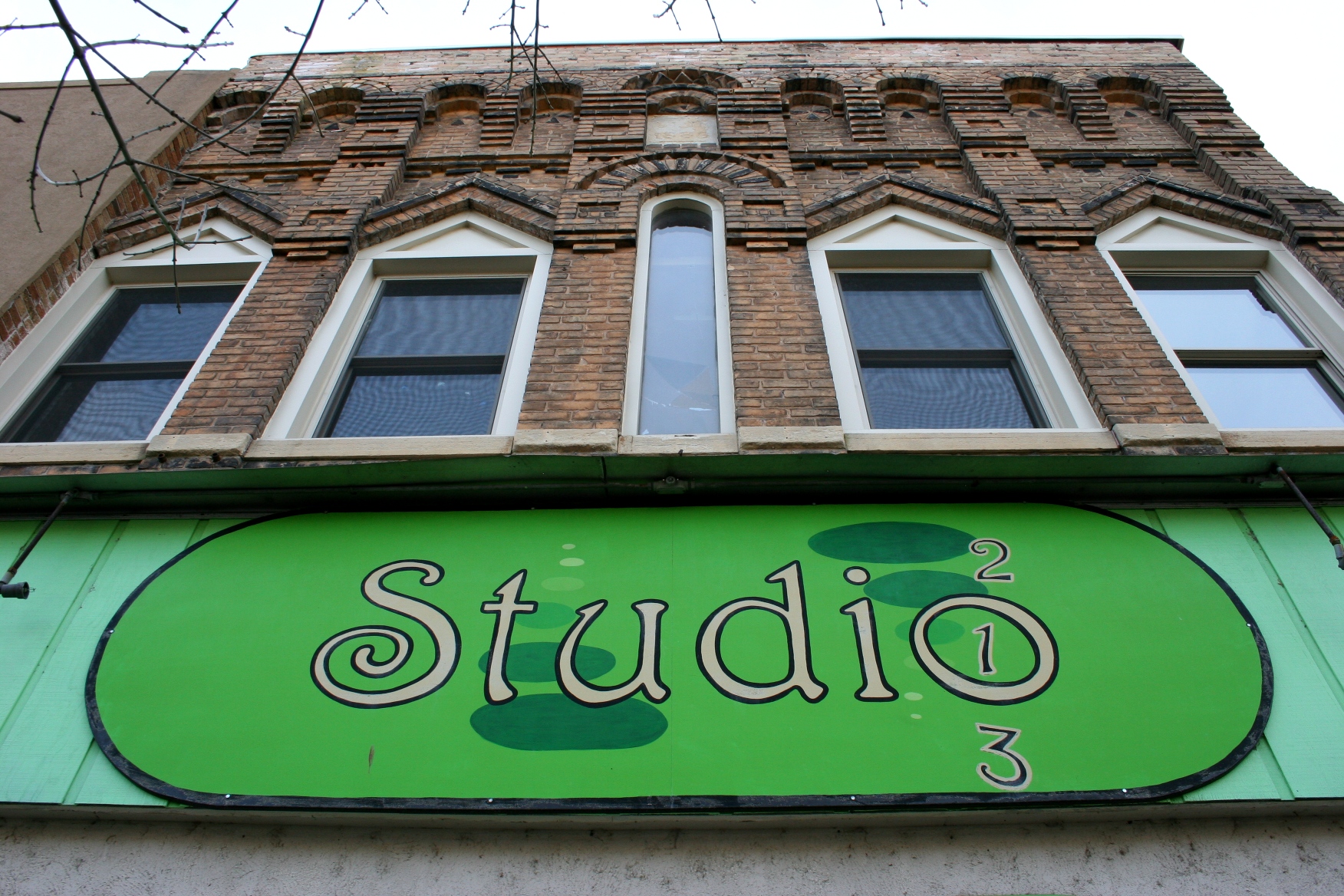
Studio 213 features art, collectibles and handcrafted items.

I found myself wishing for more time to explore and photograph the details of this historic district. However, my husband and second daughter, whom I’d accompanied downtown (the daughter lives in Appleton), will only put up with so much of my photographic dawdling.

So on this Saturday, the photo shoot was short and sweet. But I’ll be back to further embrace a downtown that’s already romanced her way into my heart.

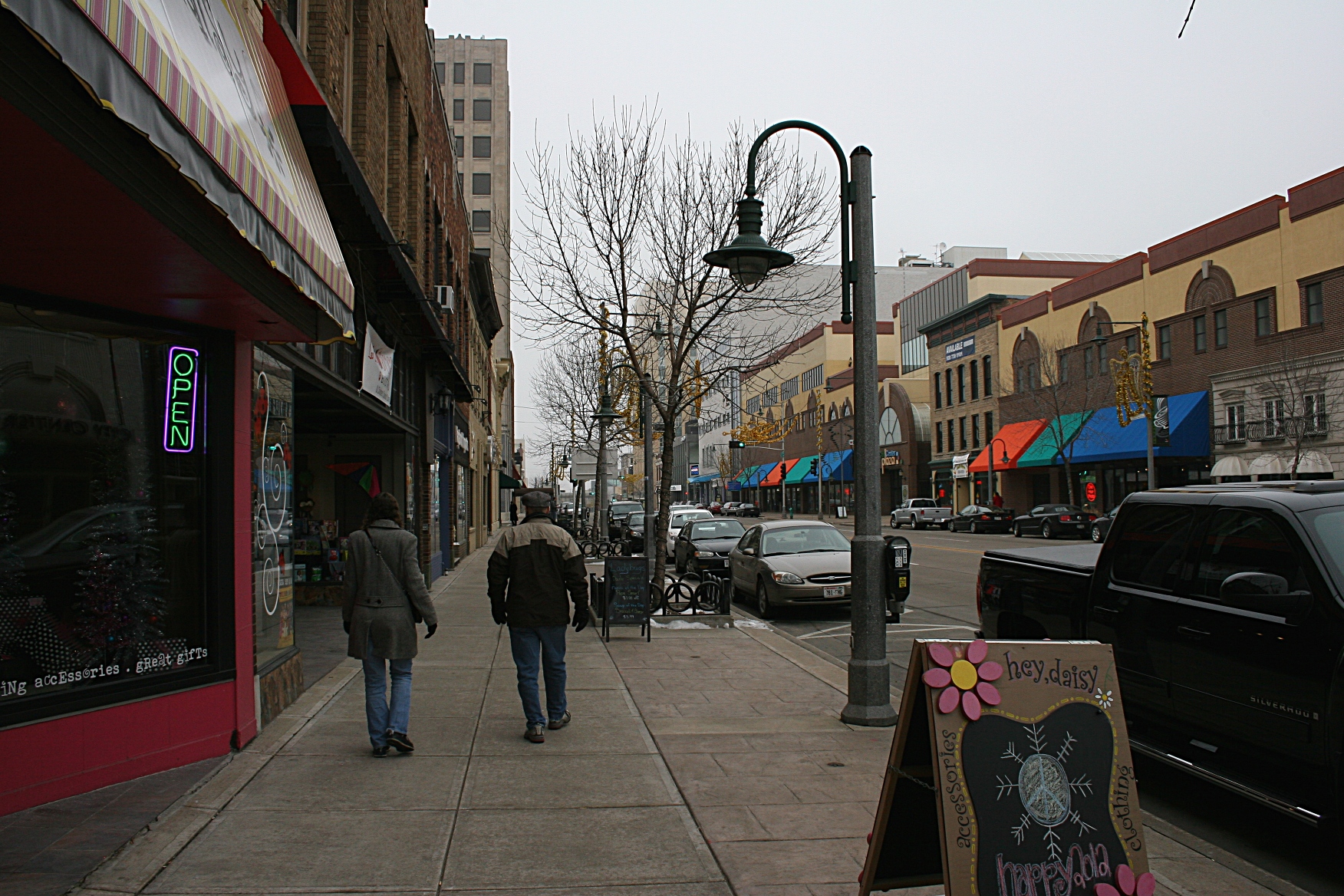
My husband and second daughter head toward the Winter Farm Market at City Center (colorful awnings to the right) while I linger to photograph the street scape and hey, daisy.

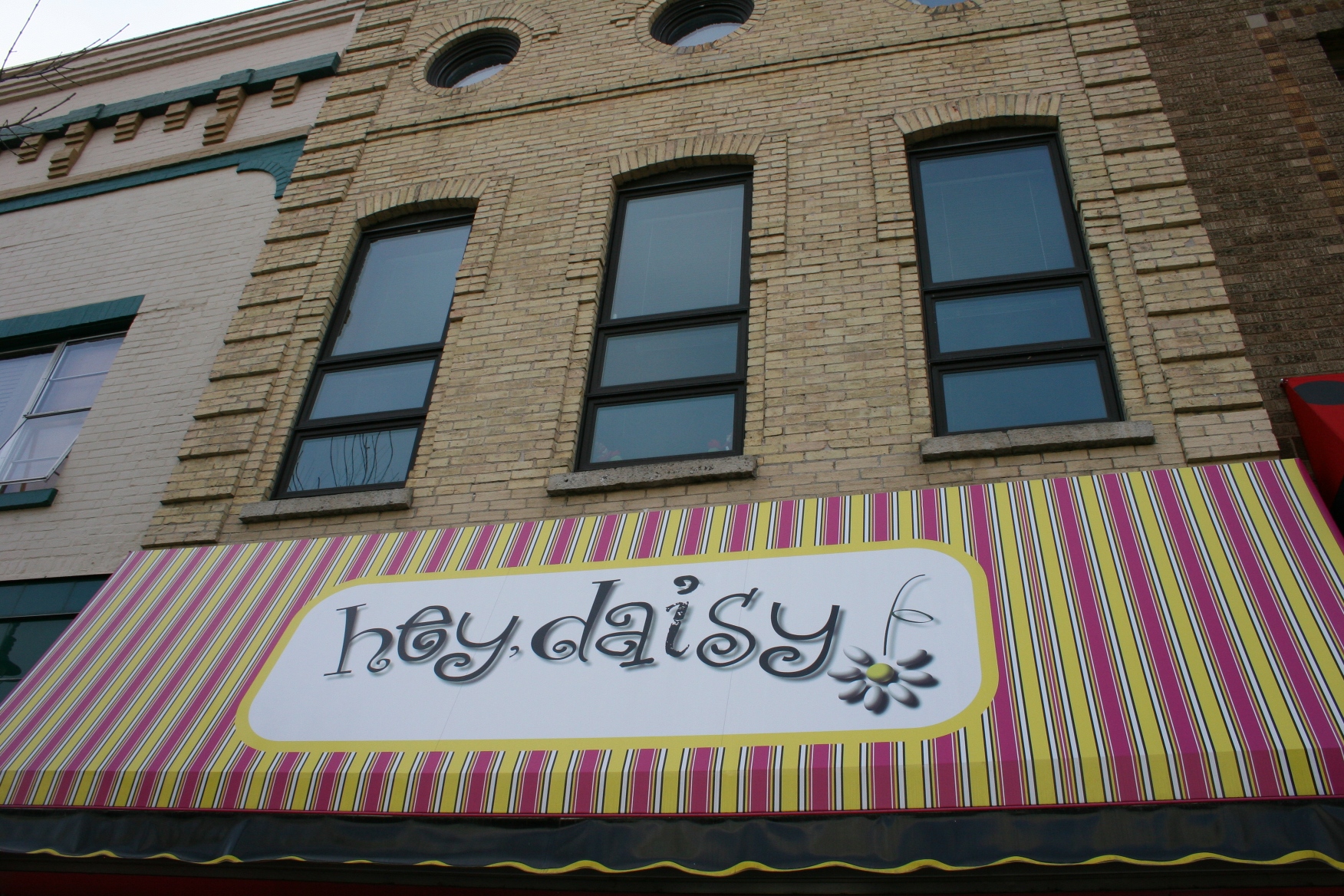
The charming front of hey, daisy, a women's clothing, accessories and gift store.

Downtown Appleton decorated for the Christmas season.

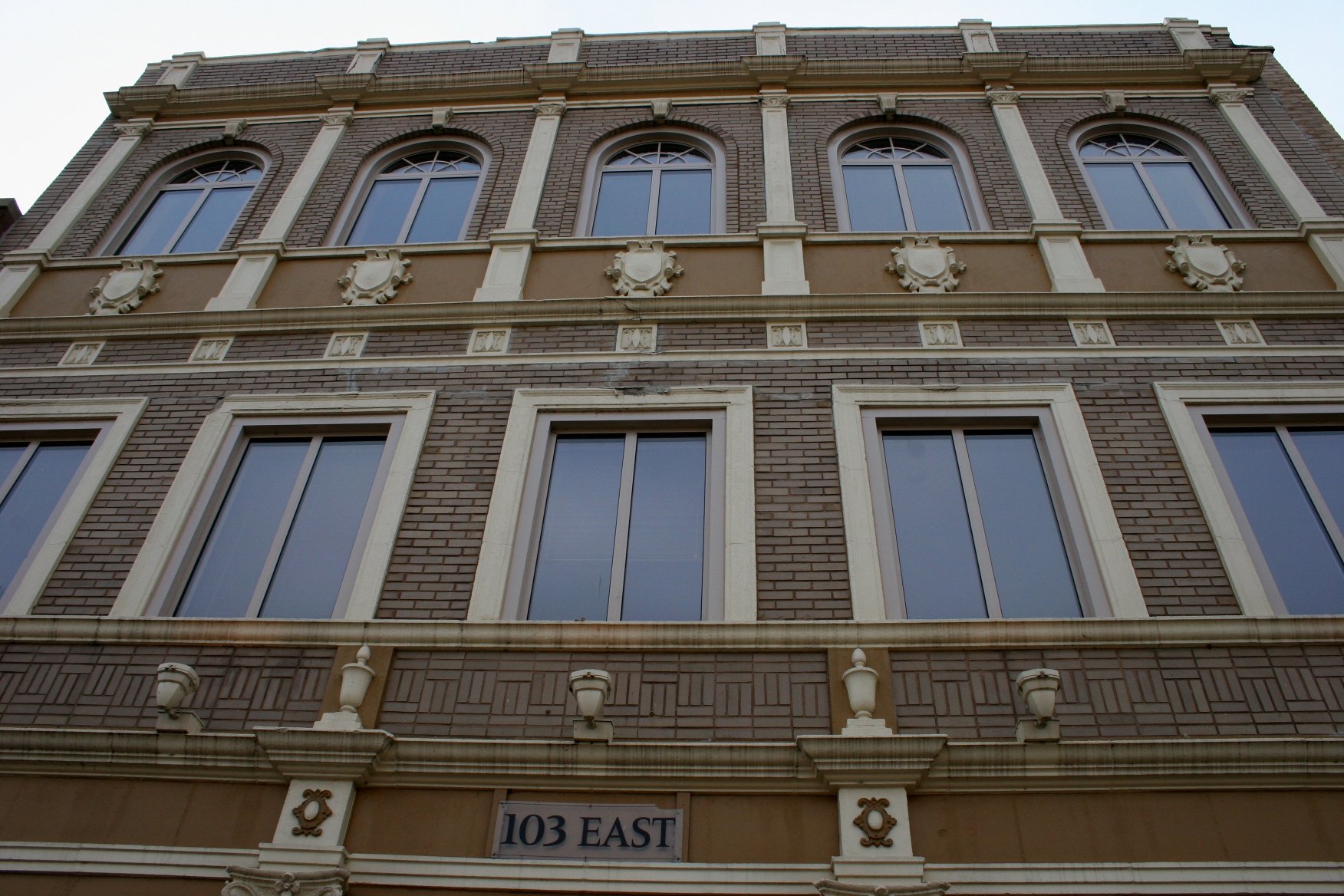
Another beautiful historic building at 103 East College Ave. in downtown Appleton.

© Copyright 2012 Audrey Kletscher Helbling


Same day, same highway 50 miles apart: Plane lands, cattle truck crashes January 7, 2012

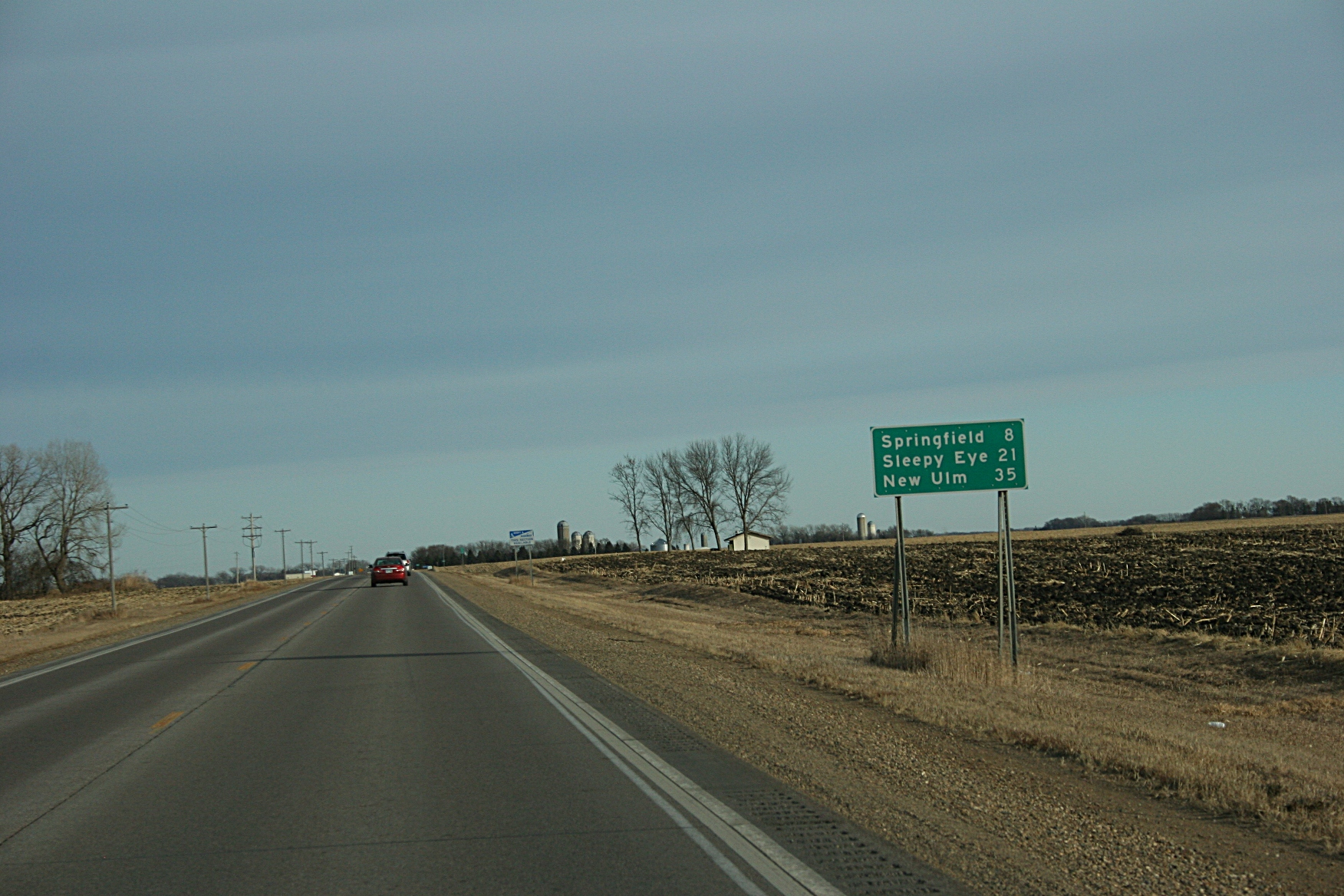
KNOWN AS A NOTORIOUSLY DANGEROUS roadway along some stretches, U.S. Highway 14 in southern Minnesota Thursday grabbed headlines again with two separate crashes about 50 miles and 12 hours apart. One involved a cattle truck, the other a small plane.

This time though, only cattle, not people, died.

I know this road, The Laura Ingalls Wilder Historic Highway, well as it’s the route my family travels back to my native southwestern Minnesota.

I shot this image along U.S. Highway 14 east of Lamberton several weeks ago.

Around midnight Thursday, January 5, a semi truck pulling a cattle trailer left Highway 14 just east of the Nicollet County Road 37 intersection near New Ulm and rolled onto its side in the ditch, according to news reports. The driver suffered only minor injuries, but some of the 35 cattle were killed in the crash or had to be euthanized.

About 50 miles west and some 12 hours earlier, Highway 14 east of Revere in Redwood County became a runway for a Lakeville pilot who was forced to make an emergency landing, according to news sources. He managed to land his plane on the road before it went into a ditch and flipped.

As in the cattle truck accident, the pilot escaped with only minor injuries.

When I first heard and read about these accidents, I was simply thankful that the truck driver and pilot survived. I was thankful, too, that others traveling along Highway 14 were not involved.

Then I started wondering exactly how many vehicles travel along these sections of Highway 14 each day and how those counts and the timing and locations of the incidents affected the outcomes.

According to the most recent statistics I could find from the Minnesota Department of Transportation’s Office of Transportation Data and Analysis, the 2009 annual average daily traffic count was 8,000 for the Highway 14 area where the cattle truck crashed.

See how the outcome could have been so much different had this occurred during peak daylight travel hours? Anyone who’s driven Highway 14 between New Ulm and Mankato realizes just how unsafe this narrow, arterial road is with its heavy traffic, county and other roads intersecting the highway and few opportunities to safely pass.

Fortunately, 50 miles west, the traffic count drops considerably as the population decreases and the land stretches flat and wide into acres of fields punctuated by farm sites and small towns.

Near Revere, where the pilot landed his plane on Highway 14 before noon on Thursday, MnDOT lists the 2007 annual average daily traffic count as 1,550. Odds of putting a plane down without hitting a vehicle were definitely in the pilot’s favor.

And given trees are sparse on the prairie, luck was in the aviator’s favor there, too.

Fortunately, the emergency landing also occurred outside of Revere, in the 3.5 miles between the town of 100 residents and Highwater Ethanol and not too dangerously close to either. The ethanol plant, of which my middle brother is the CEO/GM, is situated along Highway 14 between the crash site and Lamberton.

Viewing a 1994 plat of the area, I spotted a landing strip just to the north and east of Revere. I could not verify whether that still exists and it really doesn’t matter given the pilot claims he had to make a snap decision to put his failing aircraft down Thursday on Highway 14 at a speed of 90 mph.

I’m thankful that on January 5, 2012, U.S. Highway 14 in southern Minnesota didn’t rack up more fatal statistics. It’s already had too many.

© Copyright 2012 Audrey Kletscher Helbling


Preserving central Wisconsin’s rural heritage via on-the-road photography January 5, 2012

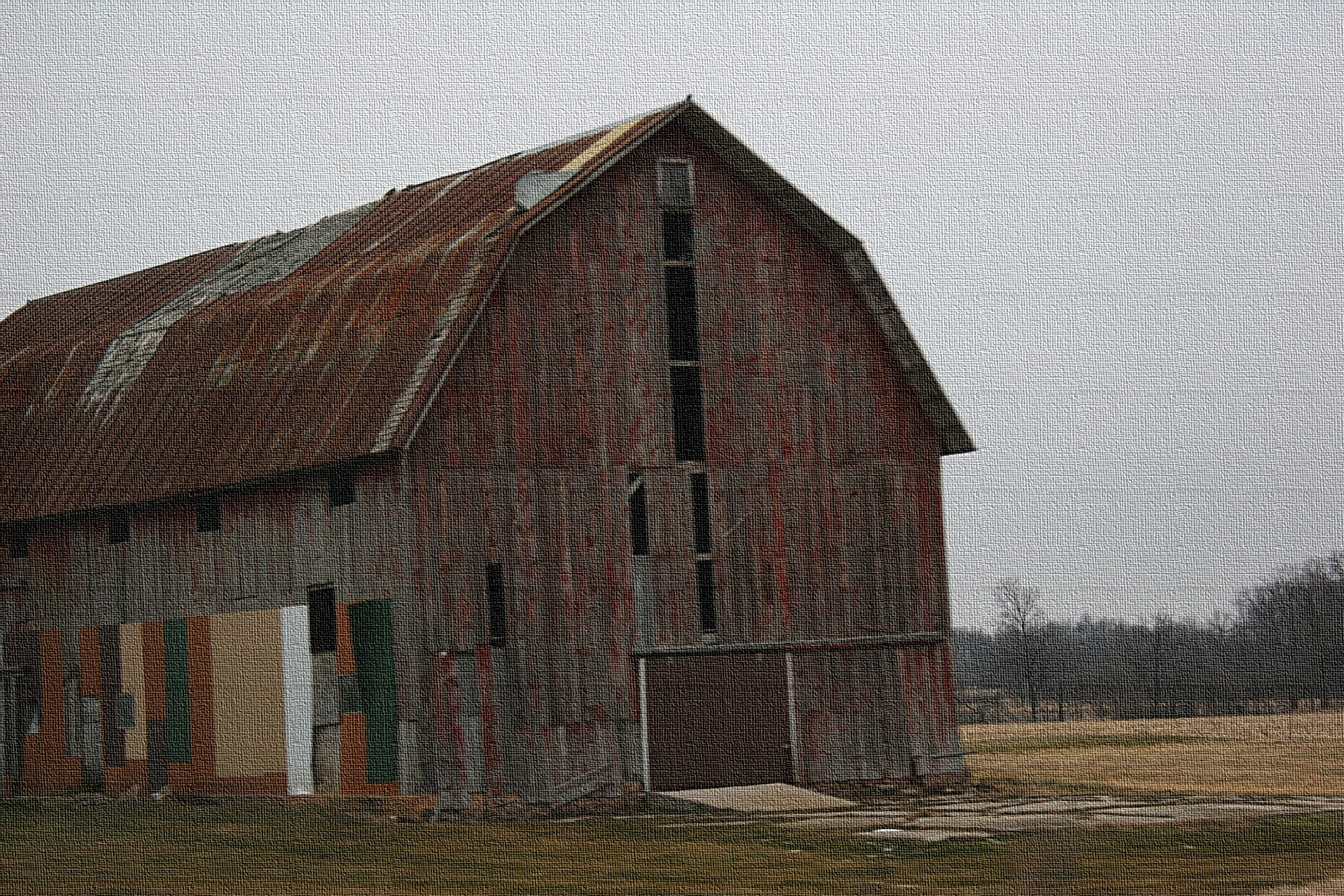
Each time I see this Wisconsin barn, I think of the biblical story of Joseph's coat of many colors.

ON OUR FOURTH TRIP through central Wisconsin in a year along the same route—Interstate 90 to Interstate 94 in Tomah then on Wisconsin Highway 21 to Oshkosh, up U.S. Highway 41 to Appleton—I’m getting to know the Dairyland state from her western to near eastern borders.

She’s a beautiful state of rolling hills, flat marsh land, stands of packed pencil-thin pines, too many towns whose names end in “ville,” infinite piles of stacked firewood, cranberry bogs and potato patches, muskrat mounds, cheese stores, Packers fans, small-town bars and barns—oh, the barns that I love to photograph.

One of my favorite barns along Wisconsin Highway 21 because of the stone walls.

As I’ve done on every 600-mile round trip to and from our second daughter’s Appleton home, I capture the scenery via on-the-road photography, meaning I photograph through the passenger side window or windshield of our vehicle at highway speeds. Sometimes I manage to snap a well-composed image. Other times I fail to lift my camera, compose and click in time and miss the photo op.

Journey after journey, I find my eyes drawn to the many old barns that are so much a part of Wisconsin’s landscape and heritage. And mine. Only in Minnesota.

I’ve seen every type of barn, from the well-preserved to the crumbling, pieced-together-with-tin structure. I know that any barn, once left to fall into a rotting pile of boards, will never be replaced by an equally grand structure.

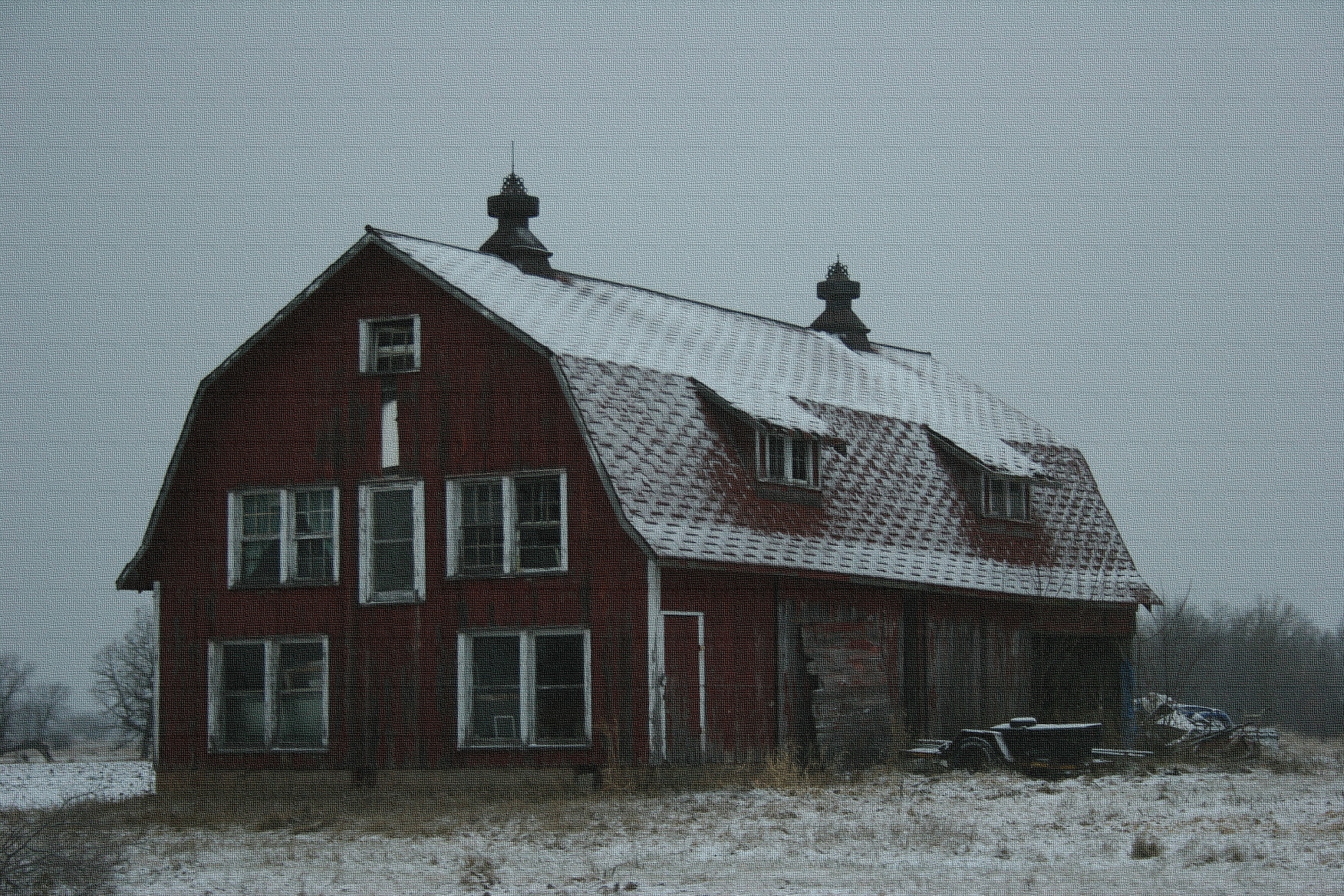
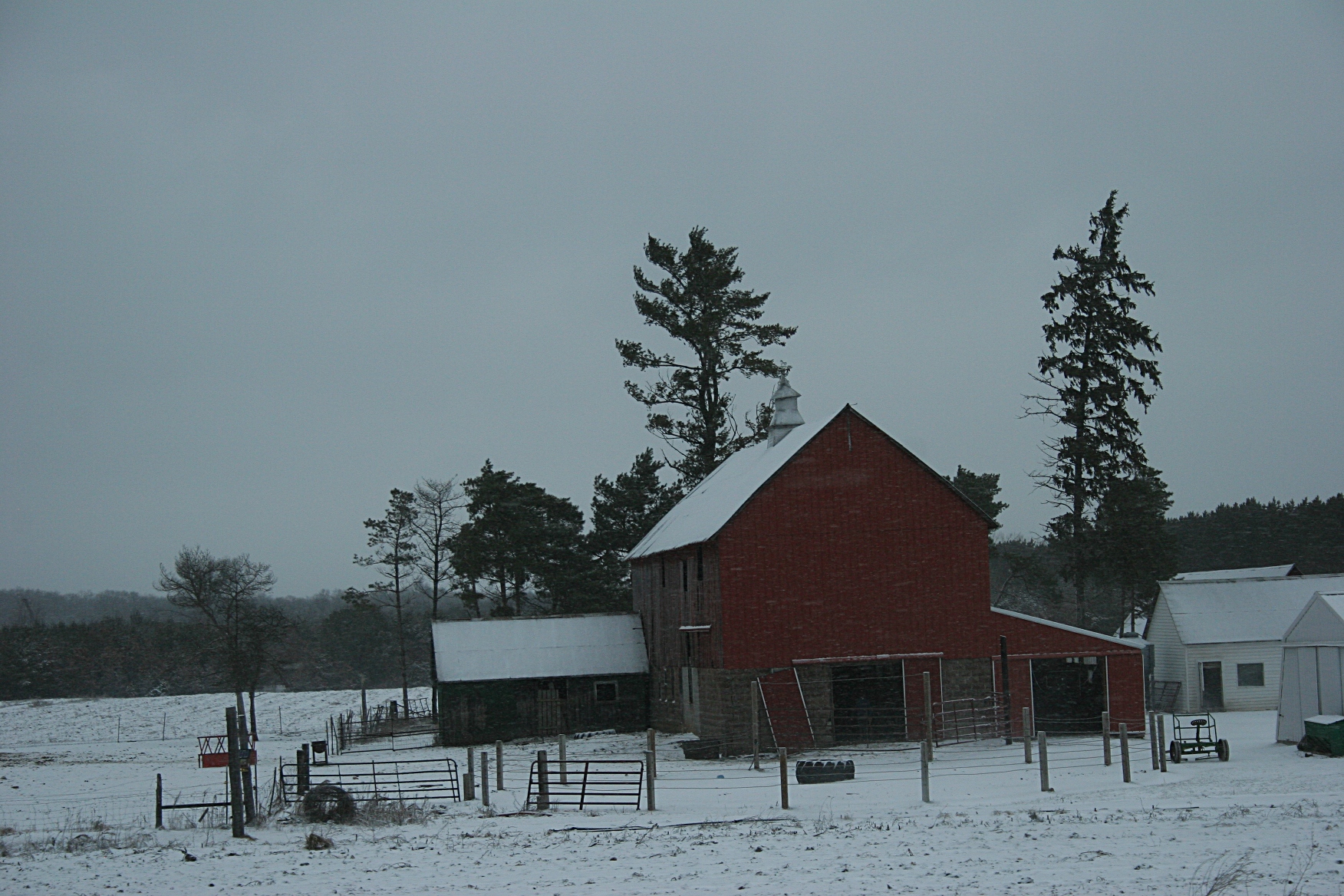
A pieced together weathered barn blends into the gray landscape on a dreary winter afternoon.

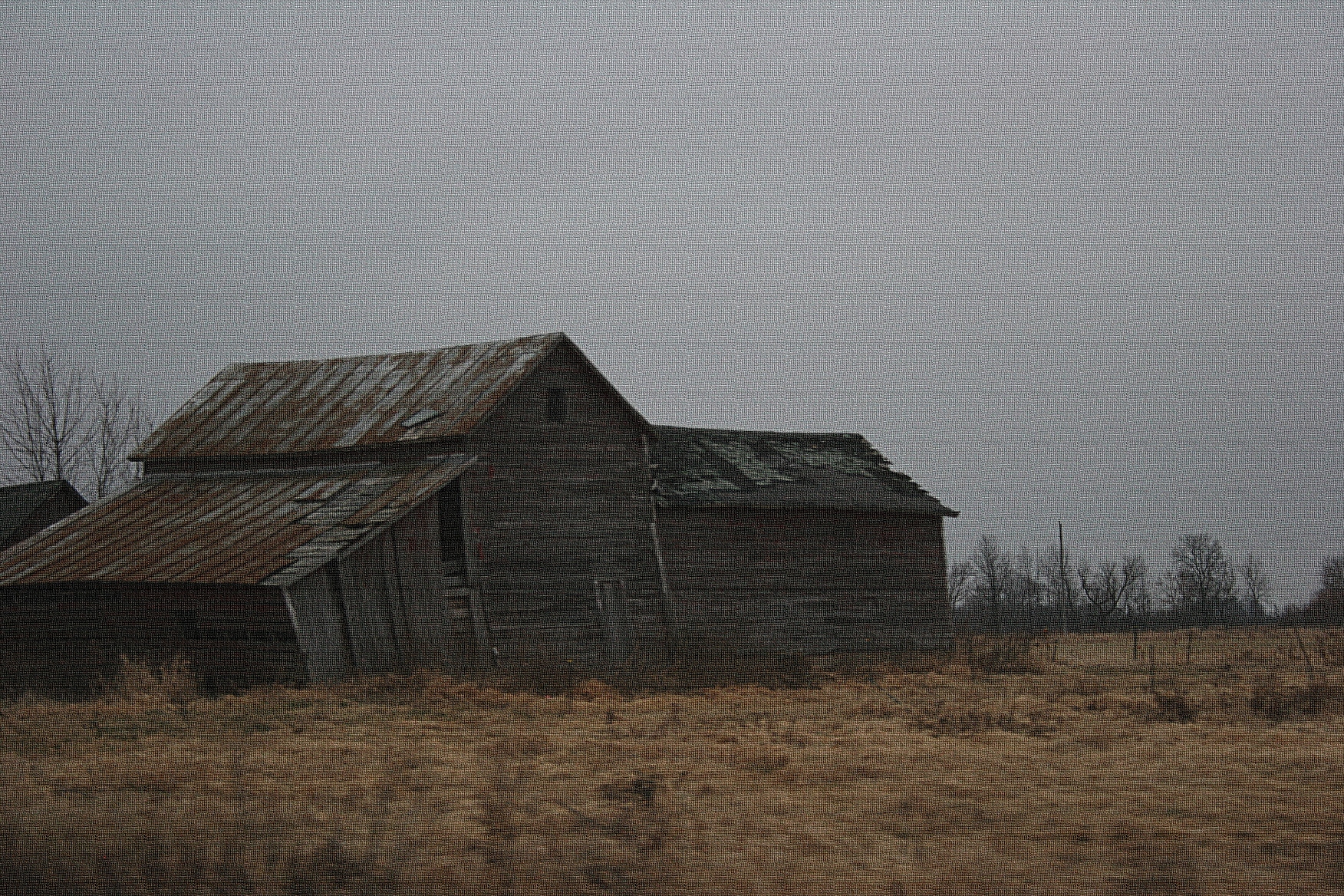
A once grand barn shows the first signs of falling into disrepair.

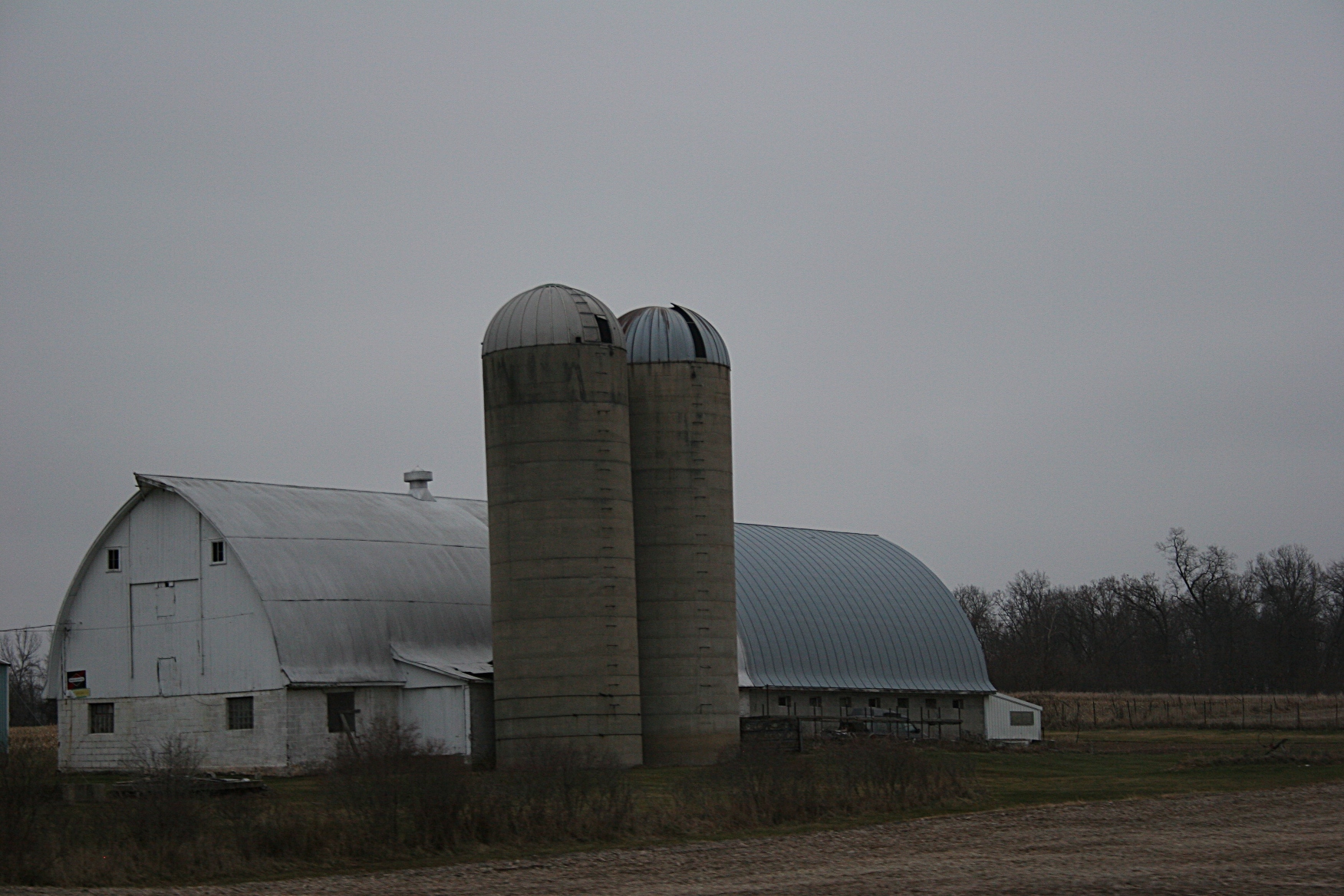
The occasional white barn pops up among the characteristically red barns.

Majestic barns, rising sturdy and proud above the land, are seldom crafted anymore. Instead, mundane metal rectangles sprawl, without any character or beauty, across the landscape. Such structures hold no artistic, but only practical, value on the farm.

Via my barn photography, I am documenting for future generations a way of life—the family farm—which, in many places, has already vanished.

If my photos inspire you to appreciate barns and rural life and the land and our agricultural heritage and the men and women who work the soil and their importance in this great country of ours, then I will have passed along to you something of great worth.

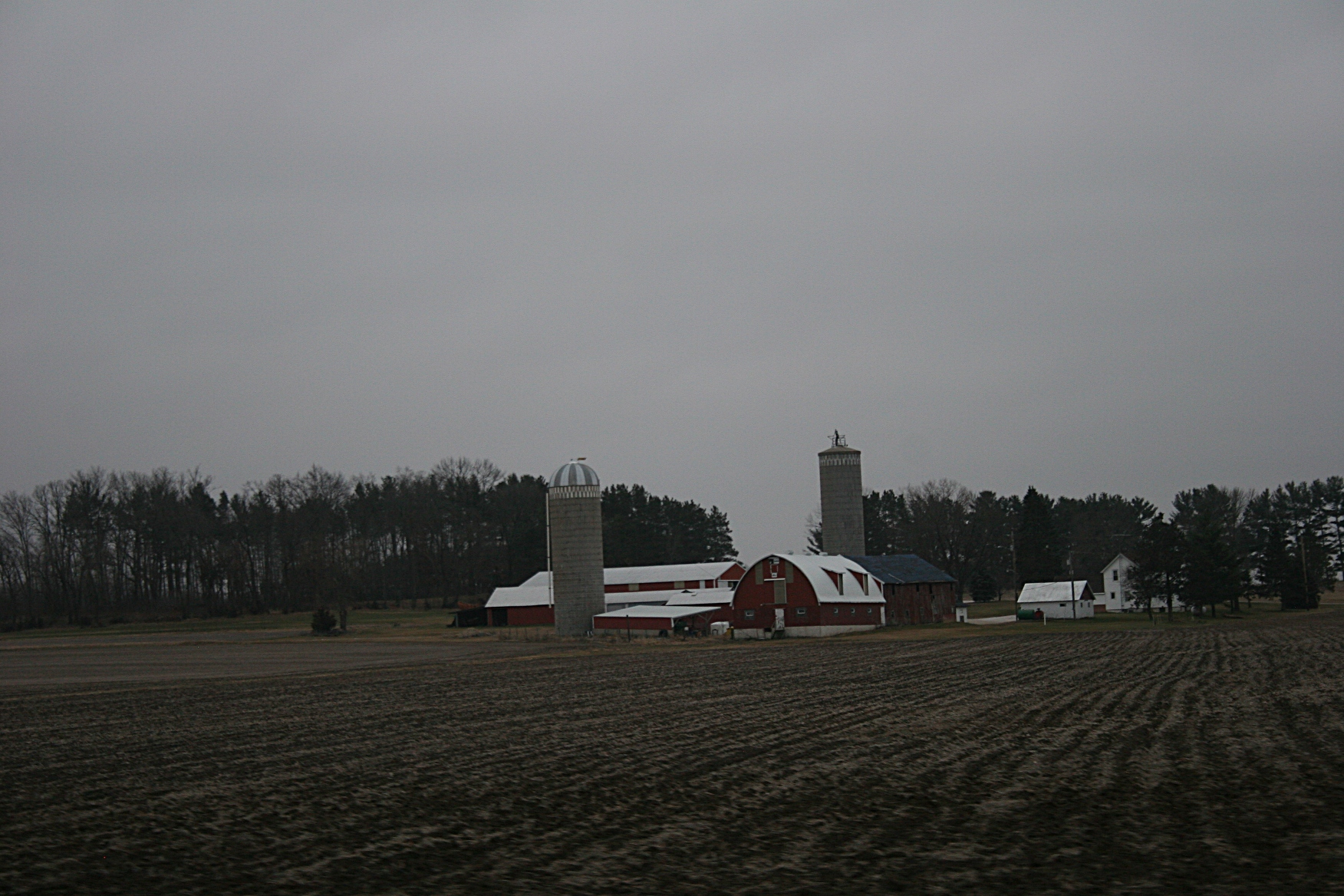
An especially picturesque farm site along Wisconsin Highway 21.

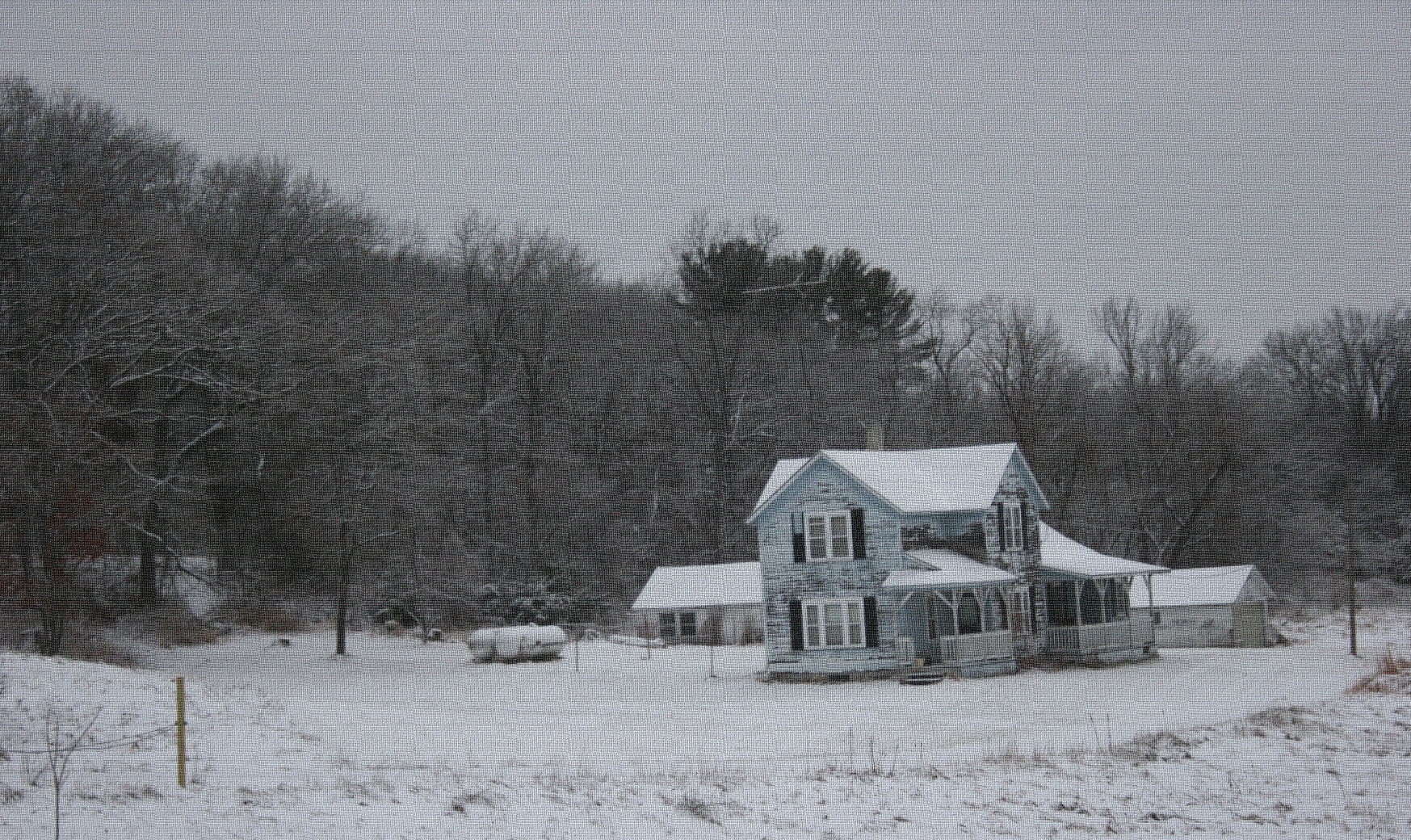
The muted blue-grey of this old farmhouse blends seamlessly with the dreamy landscape on a snowy New Year's Day afternoon in central Wisconsin.

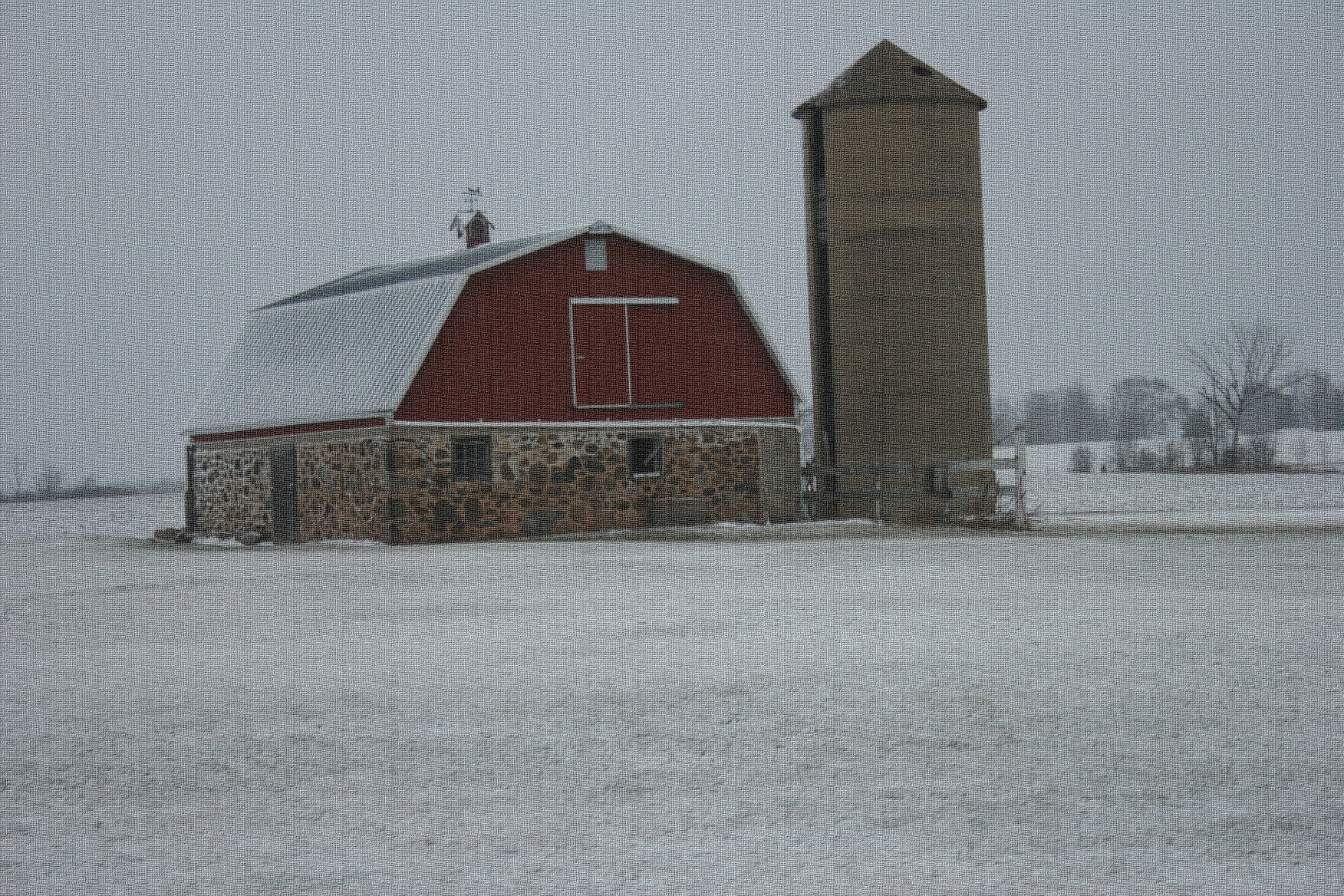
Contrasted against snow, red barns are particularly visually appealing.

NOTE: The above photos were taken on December 30, 2011, and January 1, 2012, along Wisconsin Highway 21 in the central part of the state primarily between Wautoma and Oshkosh.

I have applied a canvas style editing technique to most of the images, creating a quality that is more painting than photo.

© Copyright 2012 Audrey Kletscher Helbling


No cameras allowed on these historic premises January 4, 2012

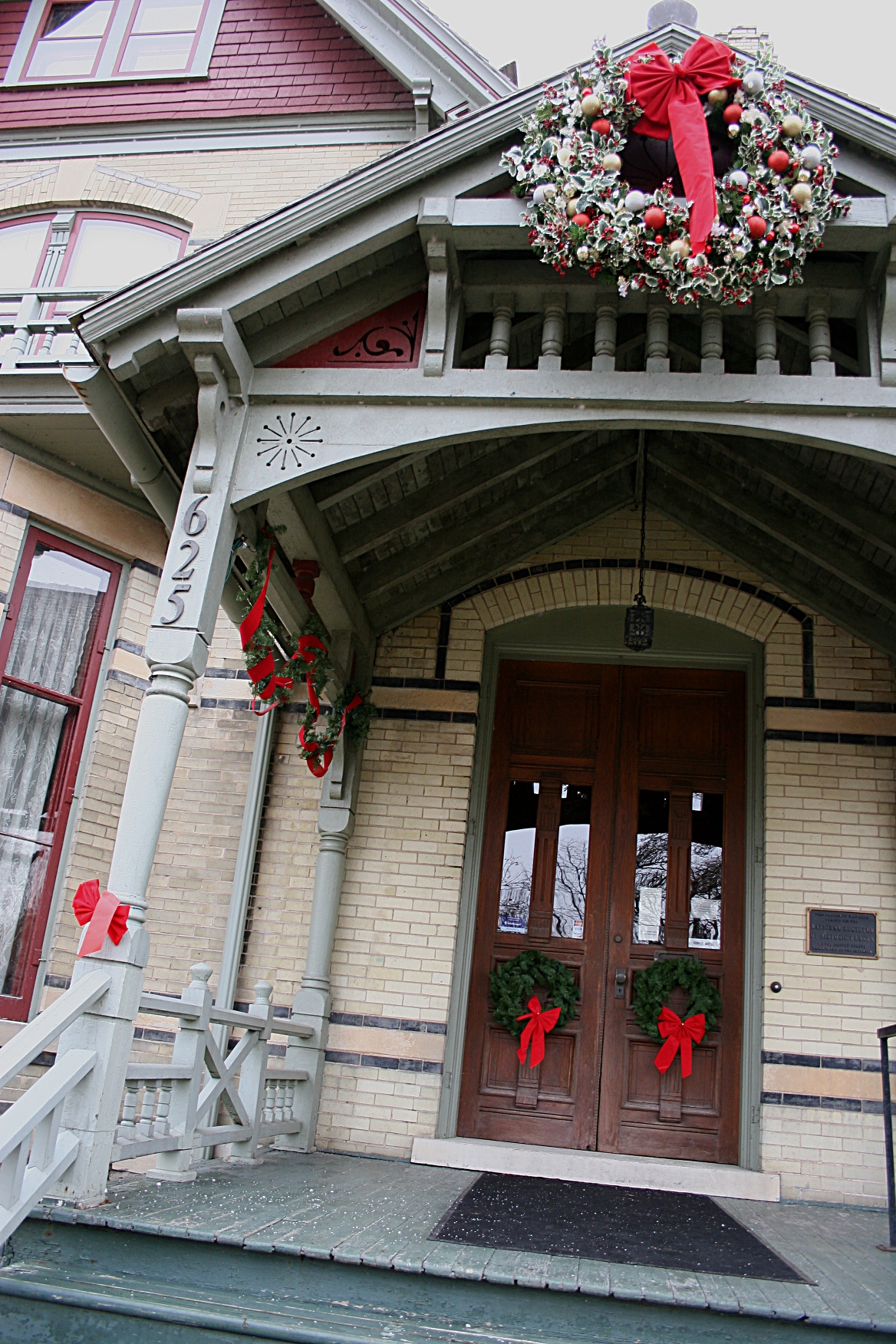
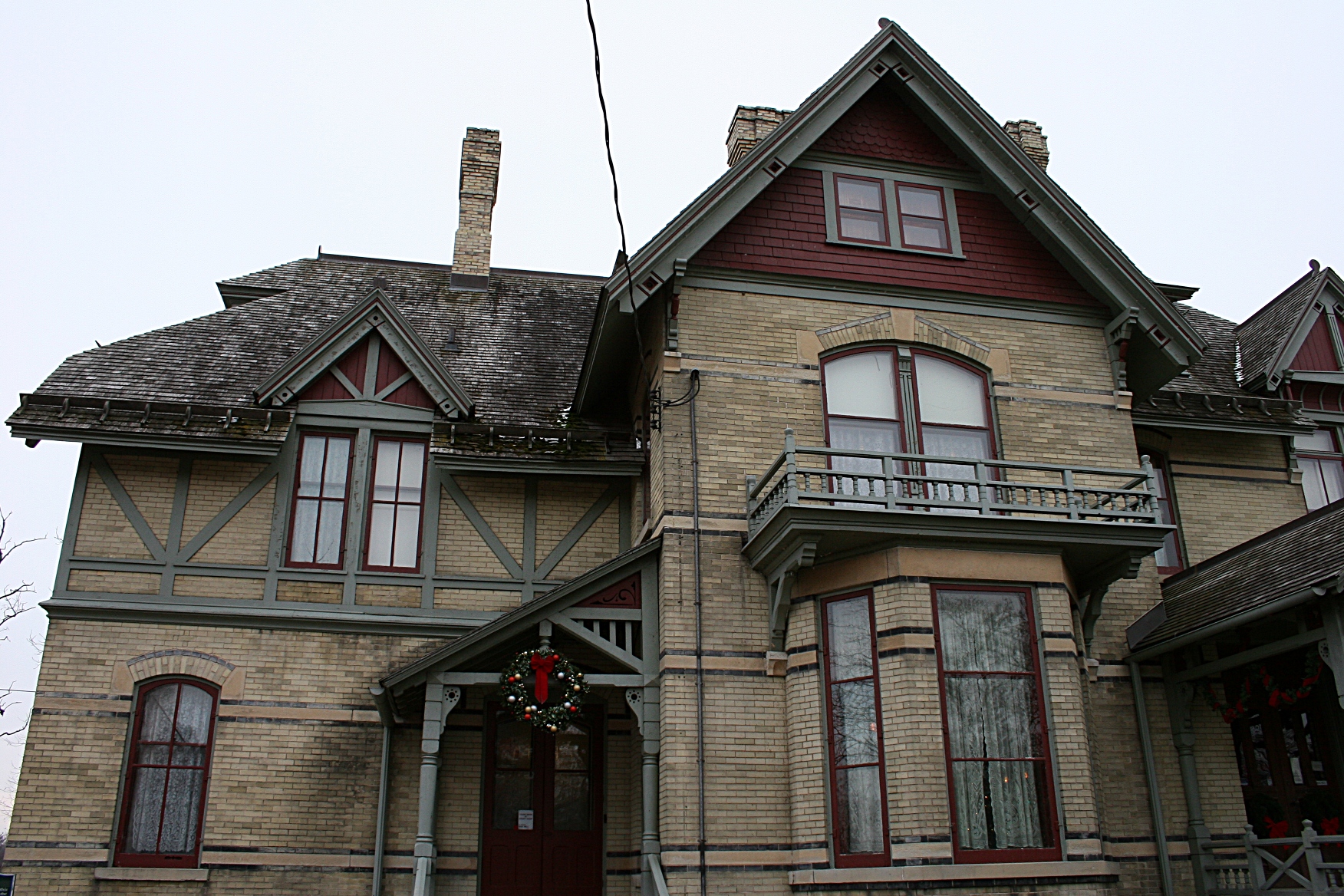
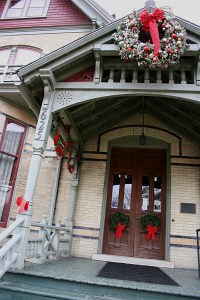
The main entry to the Hearthstone Historic House Museum in Appleton, Wisconsin, located at 625 W. Prospect.

NO PHOTOGRAPHY ALLOWED.

Post a sign with that message or speak those words to me and you’ll find yourself with one unhappy woman. I can’t help it. My camera is a natural extension of me, so when I can’t photograph I’m unsettled and discontented.

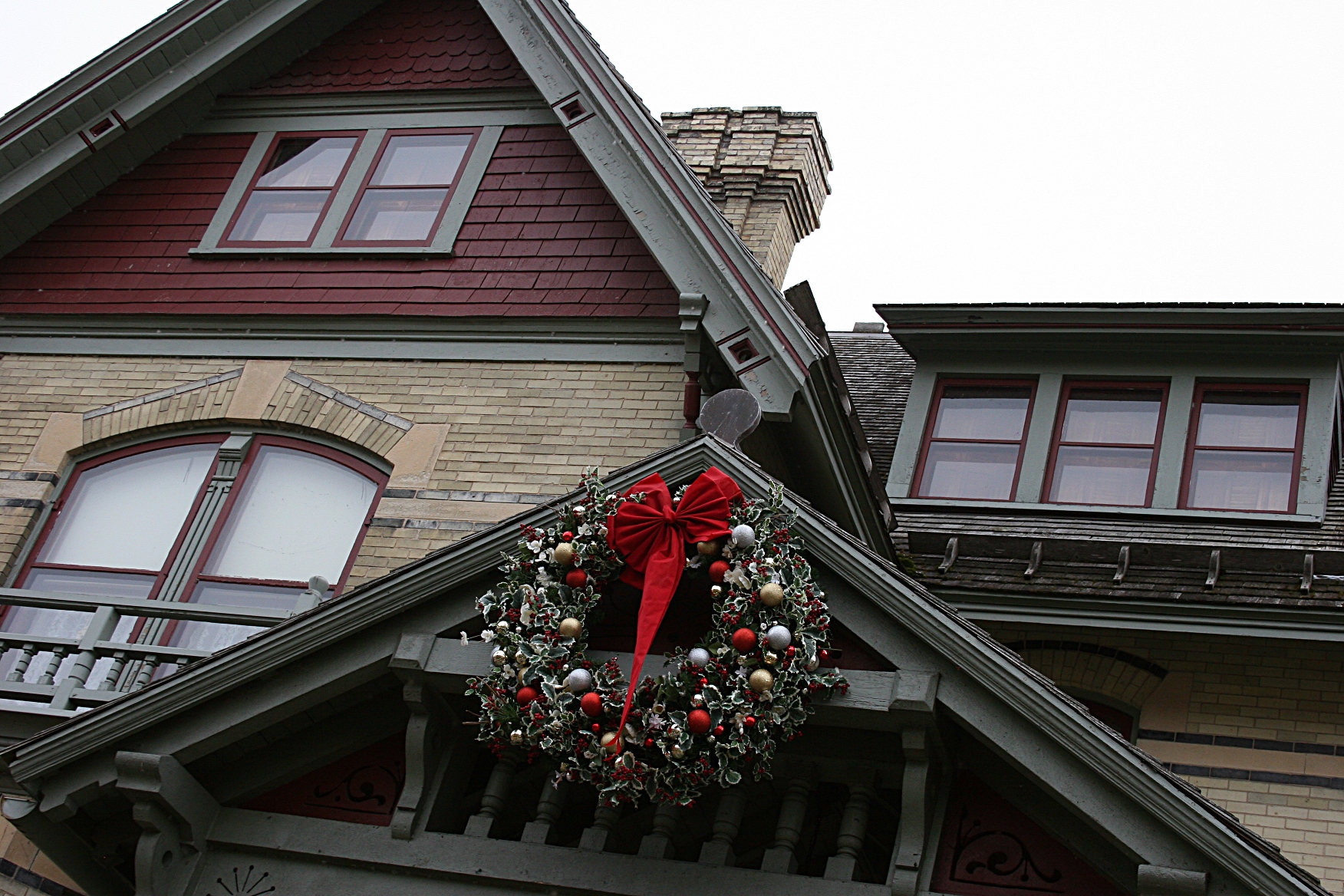
I never expected to encounter a photo ban at an 1882 historic home I toured in Appleton, Wisconsin on Saturday afternoon. But I hadn’t even reached the wreath-adorned double front doors of the Hearthstone Historic House Museum when my daughter pointed to the sign banning photography.

I automatically hugged my Canon EOS 20-D DSLR closer to my right side as we waited for a tour guide to unlock the front door and allow us access into this Victorian home, the first residence—in the world—electrified from a centrally located hydroelectric plant.

If you think I would simply accept the “no photos” rule without question, then you don’t know me. I asked and was told photography would be disruptive to the tour. “Even without flash?” I pursued.

Yes.

I contemplated for some time how I could sneak in a photo or two. But with tight quarters and visitors packed into the home’s rooms, taking covert photos wasn’t even a remote possibility. Besides, the click of the shutter button would surely give me away and I was not about to become the first tourist kicked out of this lovely mansion.

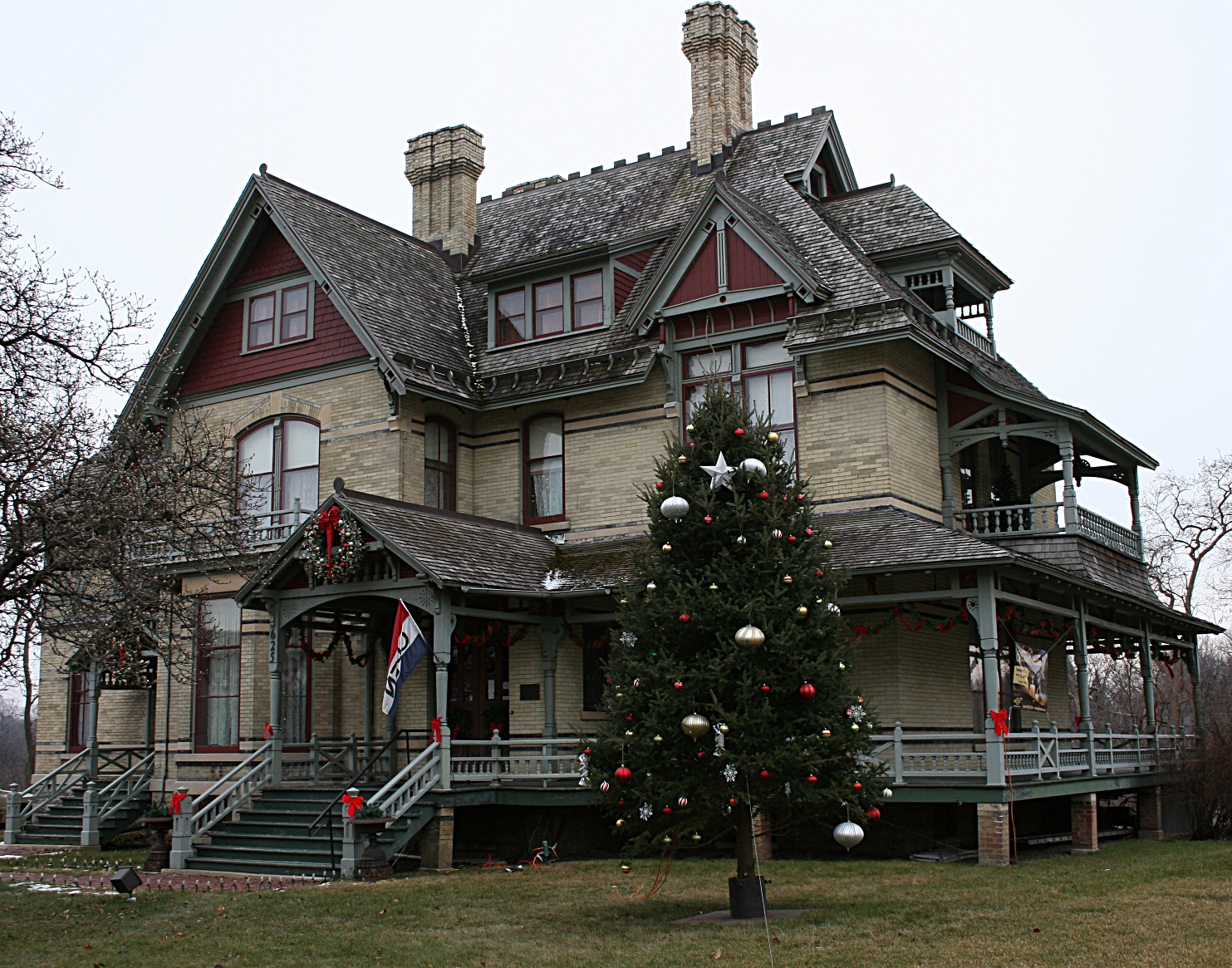
So you will need to settle for exterior images of this house built for Henry J. Rogers, today’s equivalent of the CEO of the Appleton Paper and Pulp Company. He lived here with his wife, Cremora, and their daughter, Kitty, for some 10 years until the nearby paper mill was destroyed by fire.

The original home of Henry J. Rogers and family sits along the Fox River.

From the exterior, this hilltop riverside home, built for $17,000, isn’t nearly as impressive as I’d expected. But inside, ah, inside, the décor is about as opulent and detailed as any historic residence I’ve ever toured.

Nine fireplaces grace rooms defined by wood—inlaid floors, detailed carvings, wood trim and ceilings and, well, wood everywhere. But I suppose when you live in Wisconsin and head up a paper company, finding wood to construct your mansion isn’t a problem.

An Edison phonograph, a stained glass window in the grand hall entry, floor-to-ceiling windows and a hand-painted ceiling in the parlor, the focal point fireplaces, and a dining room table set for Christmas dinner all impressed me.
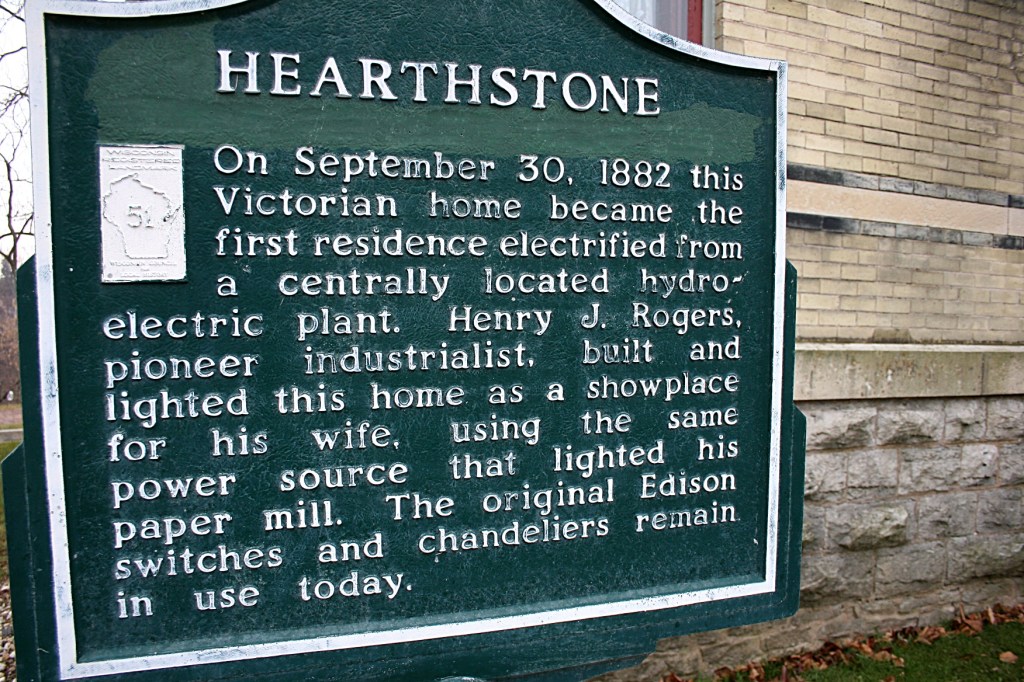
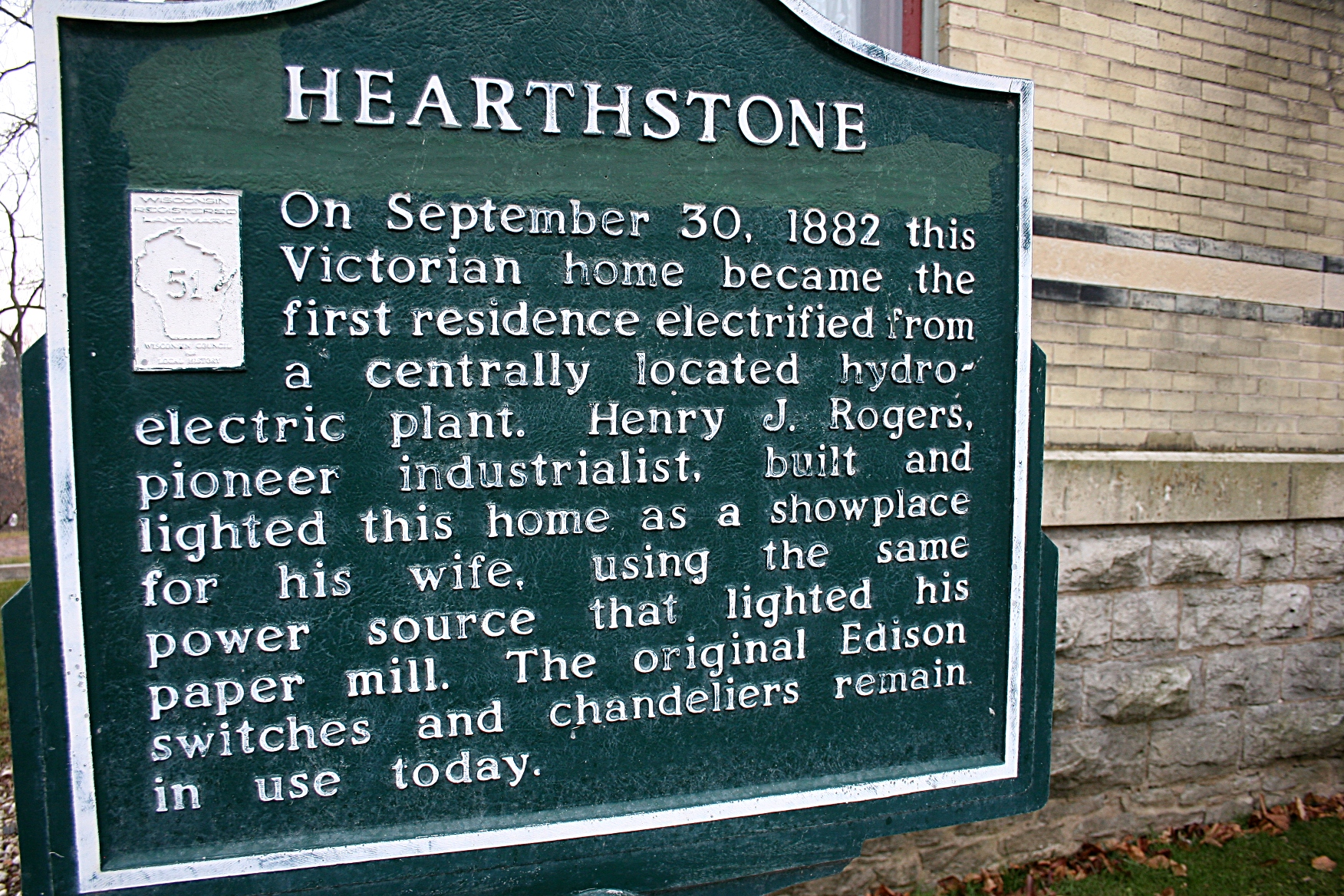
A sign explains the house's historical significance. The house is on the National Register of Historic Places.

In retrospect, I suppose I should have been most impressed by the rare 1882 light switches and electroliers still in operation. After all, the lighting ranks as the reason this home holds such historic value. But, honestly, I’m not all that scientific minded. The décor and personal stories shared by our tour guide interested me far more than the hydro-electric powered lighting system.

Our guide informed us that the Rogers family was charged $1 a month per light bulb for the 50 light bulbs in the house. In the 1880s, $50 was a sizeable chunk of money to pay for monthly electrical usage. That reveals the substantial wealth of this family.

Rogers, however, eventually died with only $12 to his name after moving to Chicago and losing money in a silver market that crashed, a second tour guide later told me.

The story, though, that truly snatched my interest involves Kitty. When she became engaged, the Rogers’ daughter verified the authenticity of her diamond by etching her and her fiancé’s initials into a library window (still there). Not to be judgmental here, but I was not at all surprised when the tour guide revealed that the marriage did not last.

Later, while touring the second floor, we were informed that Henry and Cremora slept in separate bedrooms because the couple thought they would catch tuberculosis from one another by breathing in the same night air. OK, then. But, I suppose I must consider the time period and the lack of knowledge regarding diseases.

Finally, the tidbit I found most personally appropriate involved visitors to the Rogers’ mansion. They would leave their calling cards, the equivalent of today’s business cards, on a table in the great hall. Visitors would bend the corners of their cards in a certain way, depending on the reason for their visits. The family would then decide whether they wanted to see the guest.

At that point in the tour, I considered scribbling “Here to take photos” on my business card and dropping it onto the foyer table.
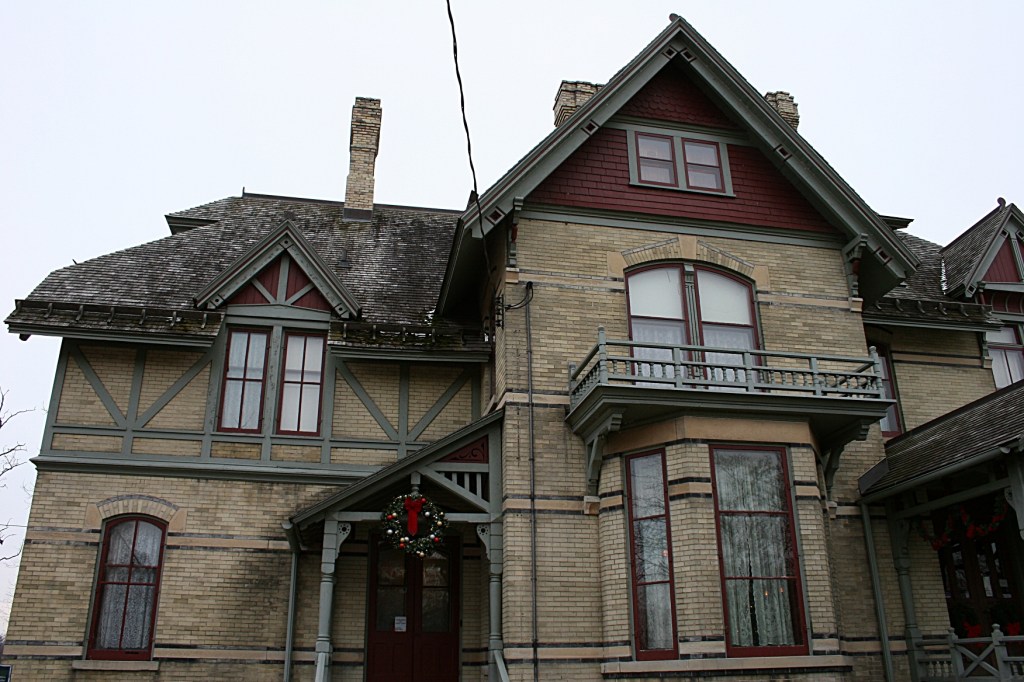
The Rogers' home, which was home to nine other families and which once housed a restaurant called The Hearthstone in the 1930s, is not yet fully-restored to the 1880-1895 time period.
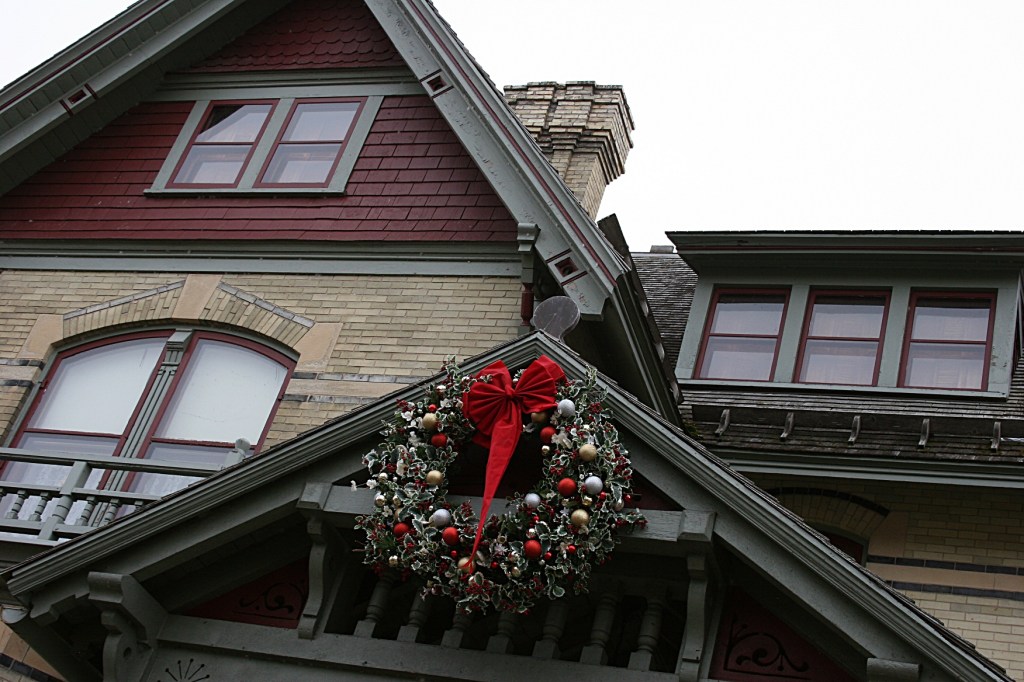
Inside and outside, Hearthstone is decorated with Christmas trees and other holiday decor for a "Victorian Christmas" special event which continues through January 14.

NOTE: Lest you consider me disrespectful of rules, I am not. I understand, somewhat, the “no photography” rule at the Hearthstone house. And I most certainly understand why flash photography would not be permitted in an historic place.

One other point I want to mention: During my tour of the Hearthstone mansion, a visitor’s cell phone rang and she proceeded to answer it, right in the middle of the tour. Now that I found disruptive.

© Copyright 2012 Audrey Kletscher Helbling


New Year’s thankfulness January 3, 2012

Filed under: Uncategorized — Audrey Kletscher Helbling @ 9:57 AM
Tags: , , , , , , , , ,

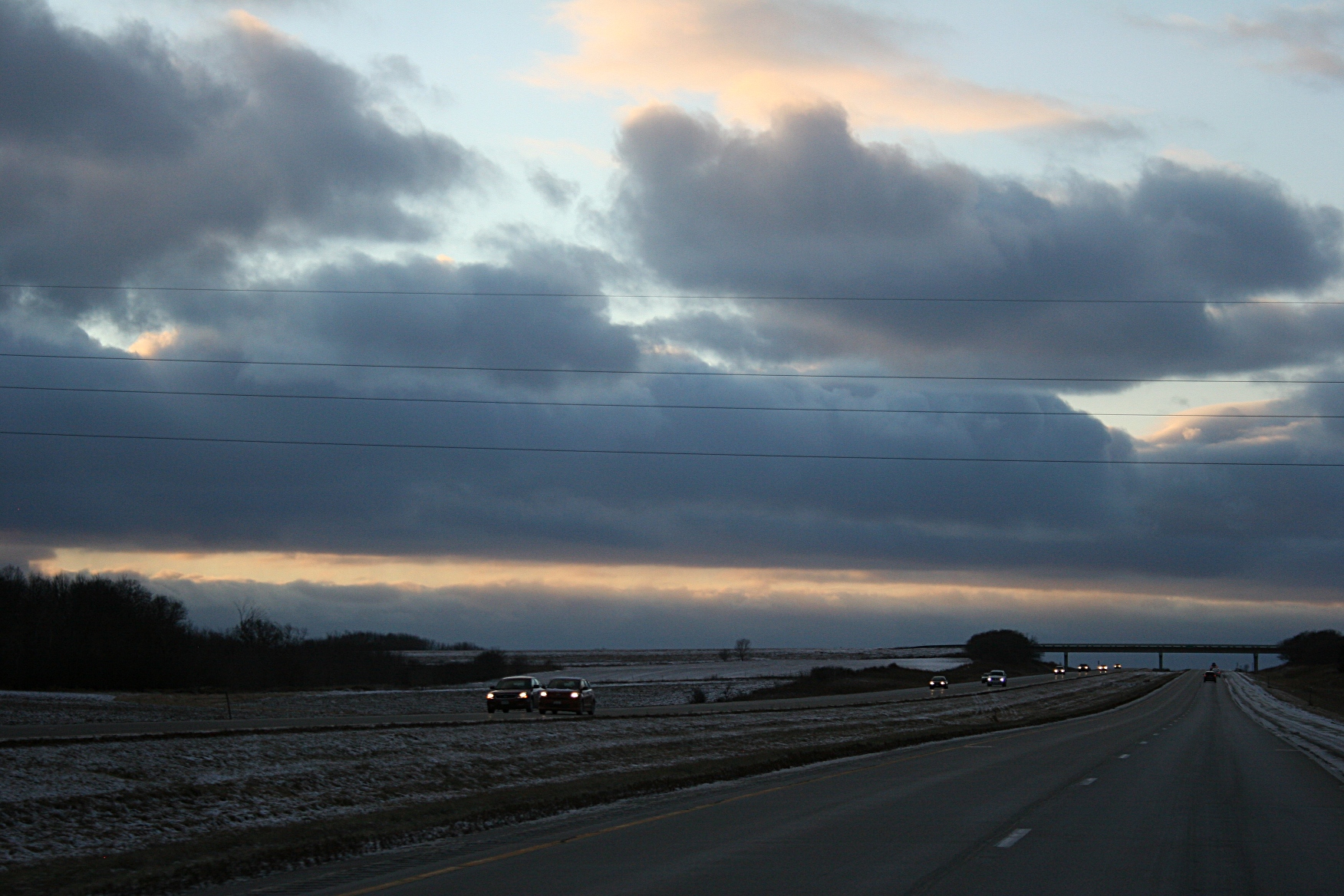
The sun begins to set as we drive west on Interstate 90 near St. Charles on New Year's Day.

FOR EVERY MILE WEST my husband and I drove Sunday afternoon, I felt as if the bully wind shoved us two miles back east into Wisconsin. The wind, raging in from the northwest on January 1, seemed that forceful. It was a long 300-mile drive back to Minnesota from our daughter’s Appleton, Wisconsin home, bucking winds of 30 – 45 mph, at our estimate.

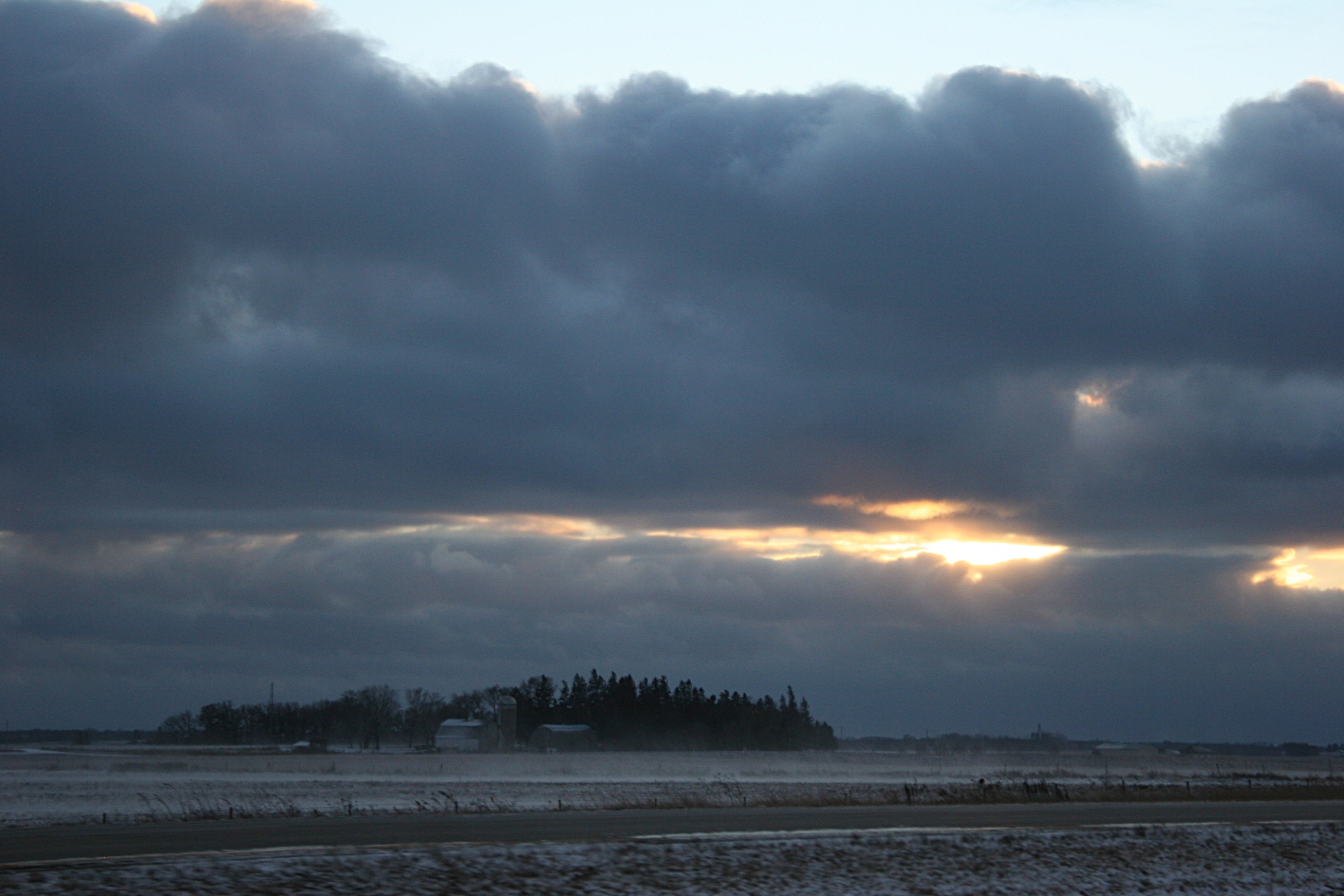
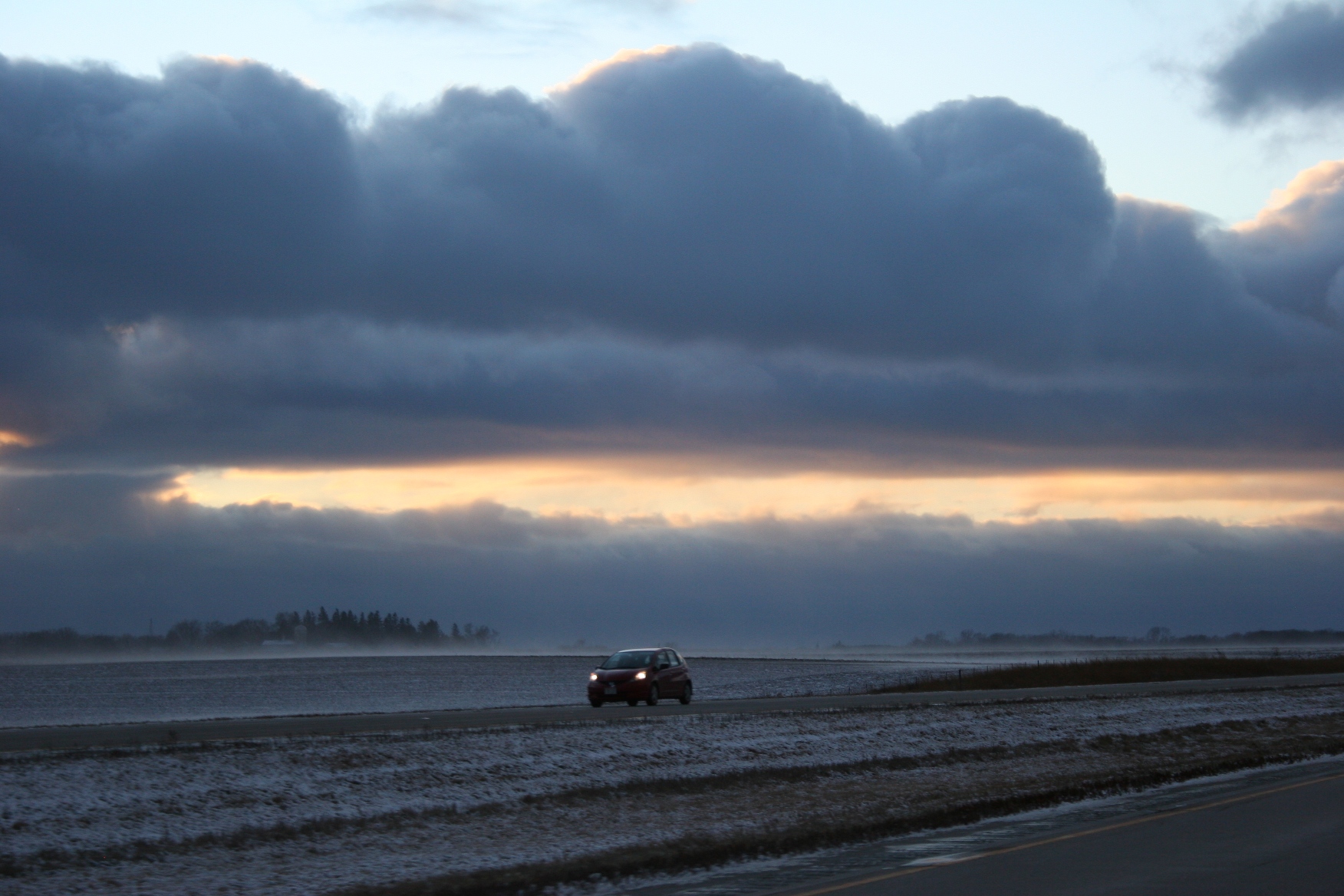
Whipped by strong winds, snow sweeps across farm fields along I-90 in southern Minnesota Sunday afternoon.

Despite the powerful winds, I was thankful for the minimal snow cover. Any more snow than the two inches or less covering the ground between eastern Wisconsin and our southern Minnesota home, and we would have been stranded in Appleton. As it was, the occasional snow squall reminded us just how quickly visibility can become an issue.

Not until we reached the two-lane section of U.S. Highway 14 between Dodge Center and Owatonna, on the final stretch of our journey, did drifting snow sometimes become a concern. The highway wasn’t blown shut, but conditions left me wishing we’d taken our usual U.S. Highway 52 from Rochester to Zumbrota then State Highway 60 to Faribault route.

Despite the gas-sucking travel on Sunday, we drove on mostly snow-free roadways, a bonus on a weekend when two separate snowfalls created occasionally hazardous driving conditions through-out Minnesota and Wisconsin.

High winds pushed eastbound traffic, like this car, along I-90 late Sunday afternoon.

Late Friday morning while traveling along Interstate 90 east of Rochester, we encountered a partially-closed traffic lane due to an earlier accident. A flat-bed semi trailer was parked along the east-bound shoulder with the driver loading debris scattered in the median.

We would learn upon our return Sunday evening that a family member was injured in a crash with an enclosed semi along I-90 on Friday morning. We’re not sure whether the scene we passed by was the site of the accident involving our nephew’s wife. But we do know that Heidi was traveling from Winona to work in Rochester when her car hit an icy patch as she was changing lanes, spun out of control into a semi and was then struck by a pick-up truck.

She had to be cut out of her car.

Thankfully, Heidi was not seriously injured and is apparently going to be OK. She was transported to St. Mary’s Hospital in Rochester, where she was diagnosed with a concussion and held overnight for observation. She’s bruised, sore and now back home recovering.

Heidi’s car, according to her mother-in-law (my sister-in-law) did not fare so well. The passenger side was pushed in and the back end was shoved into the back seat leaving only the driver’s seat, where Heidi was sitting, intact.

That’s how bad this accident was in terms of potential for serious injury, or death.

You can bet my extended family is offering prayers of thanksgiving that Heidi, the mother of two young children, survived, and survived without serious injury.

“The Lord,” says my sister-in-law, “was with her (Heidi) all the way.”

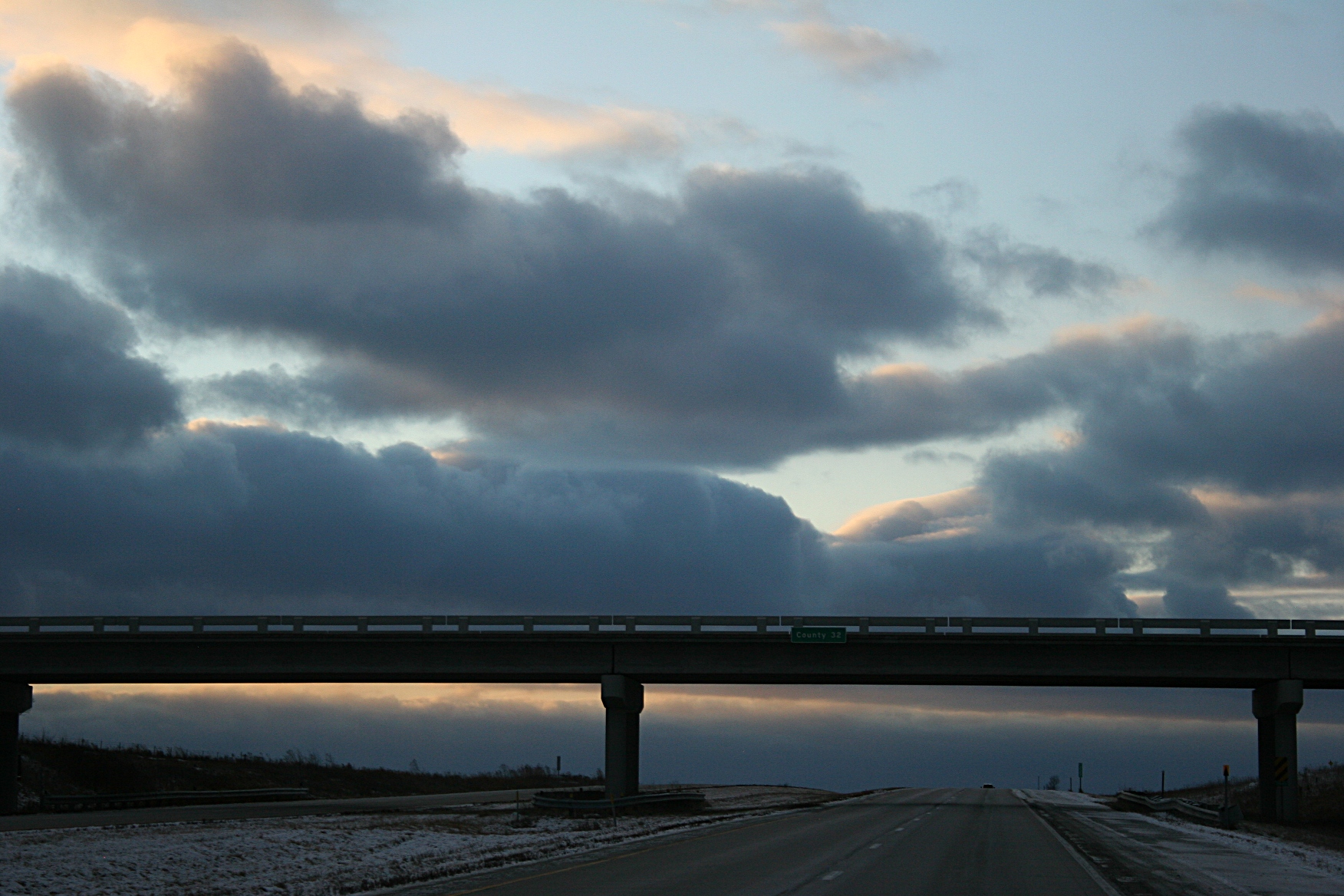
The County Road 32 overpass over I-90 near St. Charles slices across the wide sky as the sun sets on Sunday.

© Copyright 2012 Audrey Kletscher Helbling
 

Packers mania as documented by a Minnesotan January 2, 2012

UNTIL MY SECOND DAUGHTER moved to Wisconsin a year ago, I never realized how fanatical Wisconsinites are about their Packers. Suffice to say that football doesn’t interest me, nor do sports for that matter, which would explain my ignorance on this topic.

But once I grasped the importance of the Green Bay Packers to Wisconsin residents, I decided to make my own sport of this football fanaticism by documenting Packers mania. Now, on every trip across the state to Appleton on Wisconsin’s eastern side, I pull out my camera and scout for signs of Packers craziness. And I mean signs. Literally.

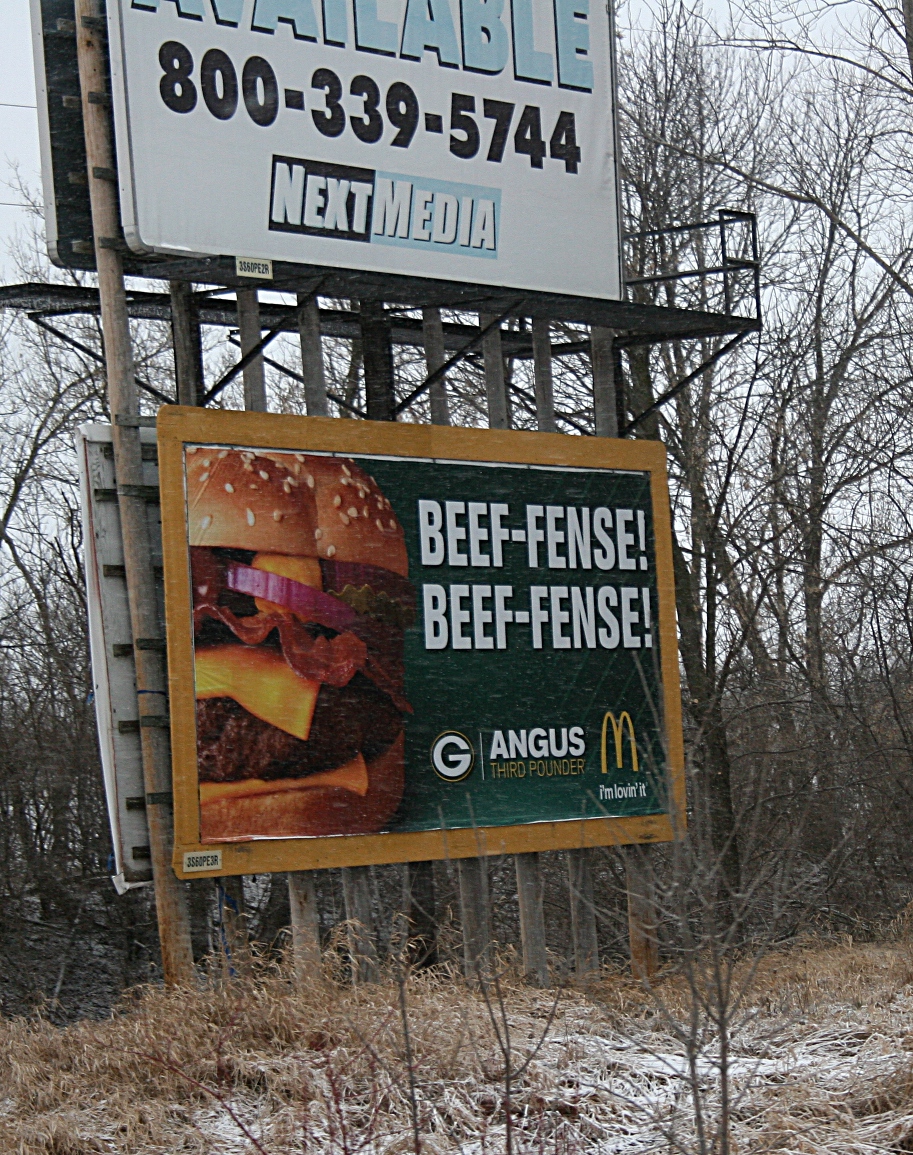
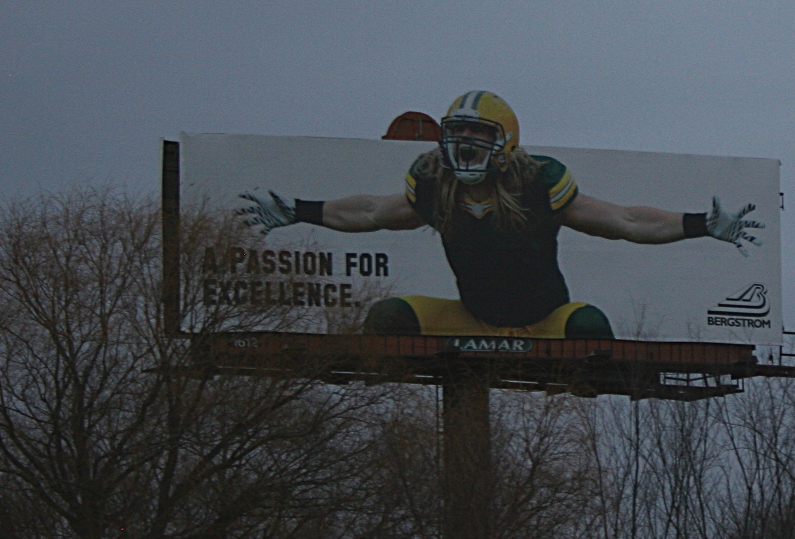
Look at the three billboards I photographed along Wisconsin State Highway 21 and U.S. Highway 41 New Year’s weekend.

Near Omro along Highway 21, I saw this Packers-themed BEEF-FENSE! sign for McDonalds.

Look closely in the middle to read the Miller Lite "Catch great taste" Packers billboard posted along U.S. Highway 41 and photographed late Friday afternoon between Oshkosh and Appleton.

Now if I knew my Packers, I could tell you the name of this player featured on a billboard. Someone help me out here. Who is this player who needs a haircut?

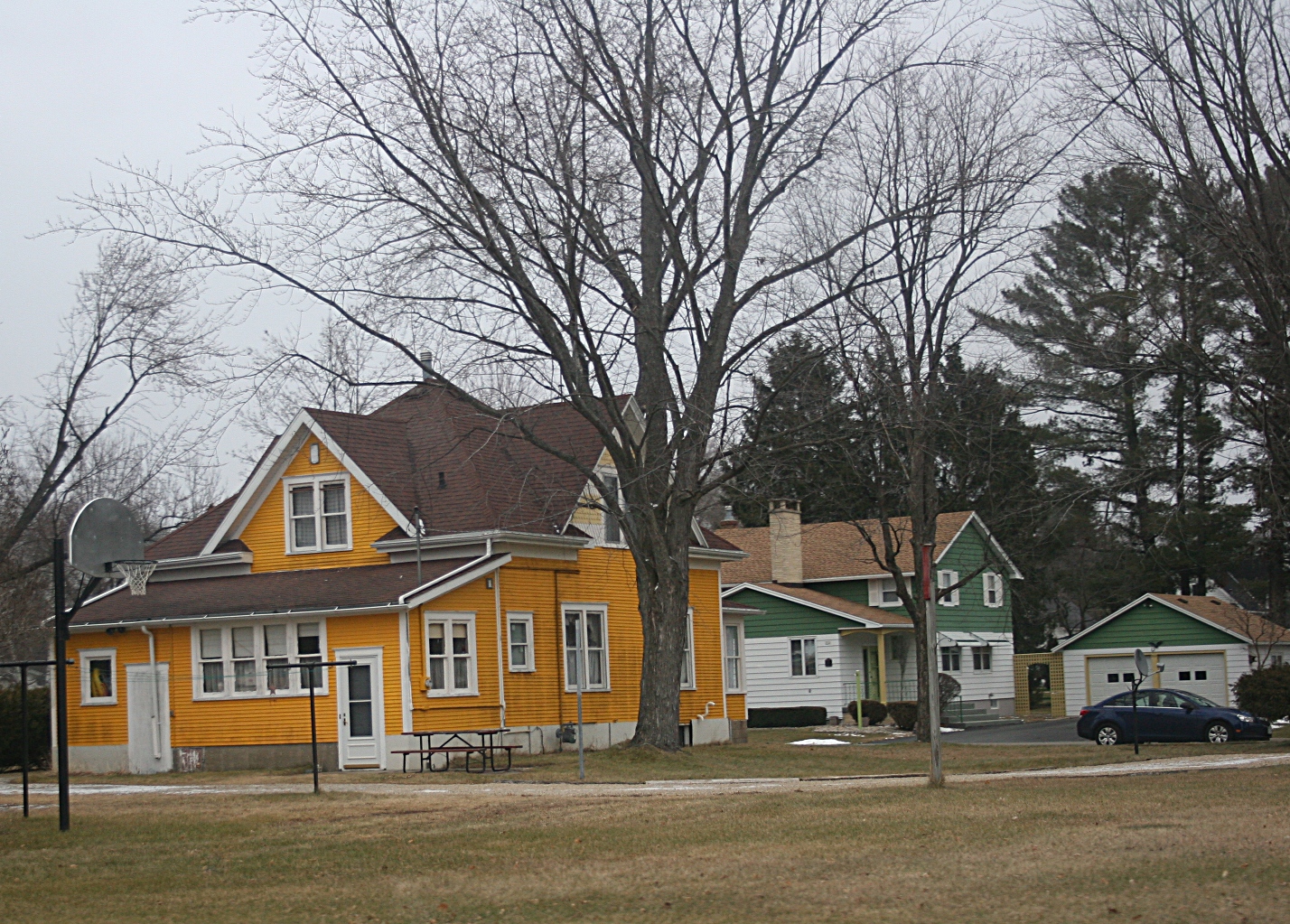
Driving through the community of Wautoma, where my cousin Bev, a former Minnesotan, lives, I spotted these neighboring houses.

Packers fans' houses in Wautoma? Or simply a gold house and a green house?

Now, since I didn’t stop to ask the homeowners, I am uncertain whether these green and gold houses truly symbolize team loyalty or whether the paint color choices were totally based on individual hue preferences. What would you guess? I’d go with the gold as representing the Packers and the green as representing personal color preference.

Walk into almost any Wisconsin business, and you’ll likely see Packers merchandise. At Lamers Dairy in Appleton, where bottled milk is sold along with plenty of Wisconsin cheese, I found Game Time Kettle Korn. I also saw an employee wearing purple. Oh, don’t for a second think it was a Vikings t-shirt. The college freshman was sporting a Winona State University shirt, having crossed into Vikings land for his higher education.

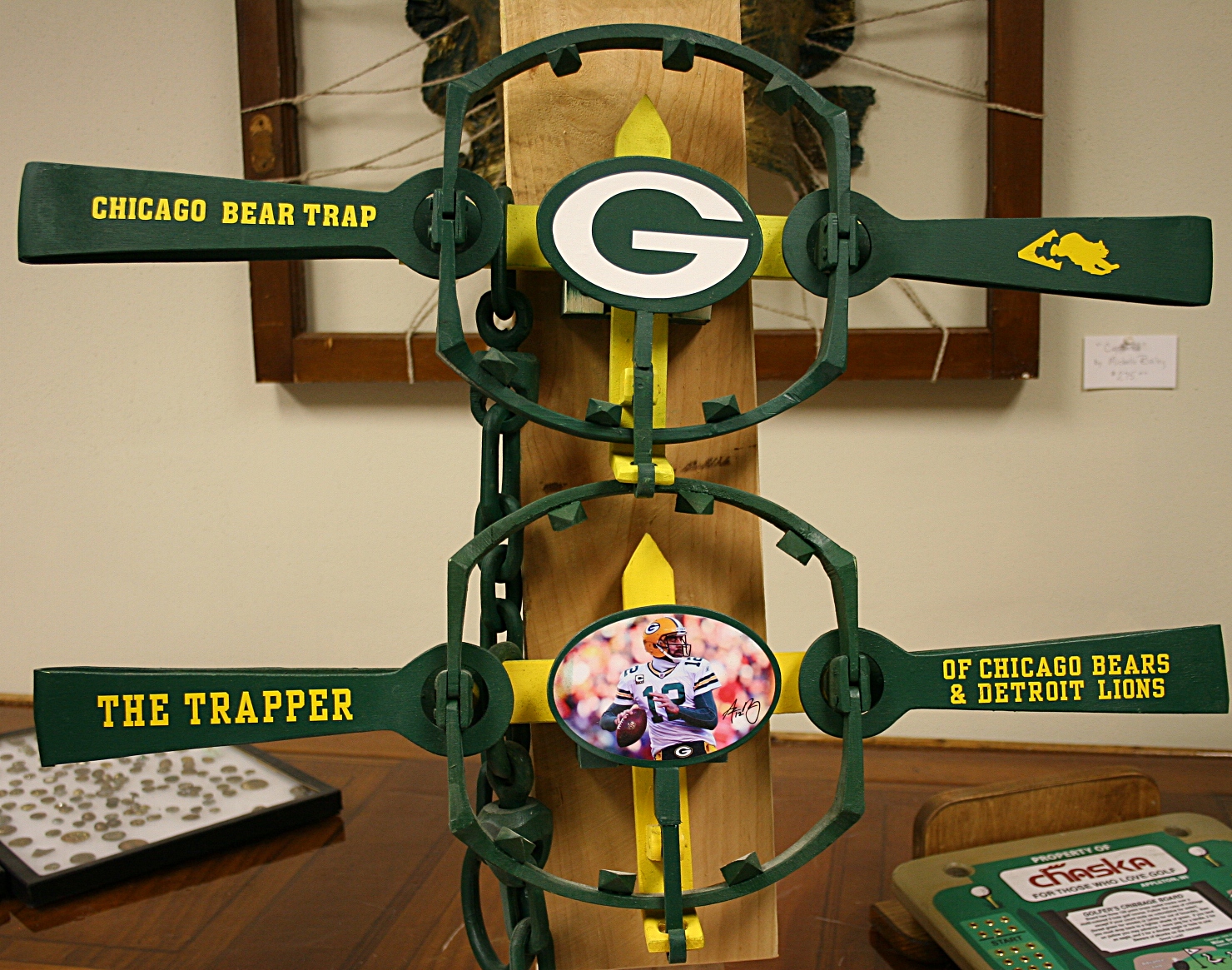
Studio 213, a downtown Appleton business featuring art, handcrafted items and collectibles, yielded customized Bears traps meant to be set by Packers fans.

The traps I found at Studio 213 in downtown Appleton.

Game Time Kettle Korn from Medley Popcorn on the shelves at Lamers Dairy.

And then, of course, Packers jerseys, sweatshirts, t-shirts, jackets and more seem to define Wisconsin fashion. If you want to blend in with the locals, simply slip into Packers attire. They’ll never suspect you’re from Minnesota…

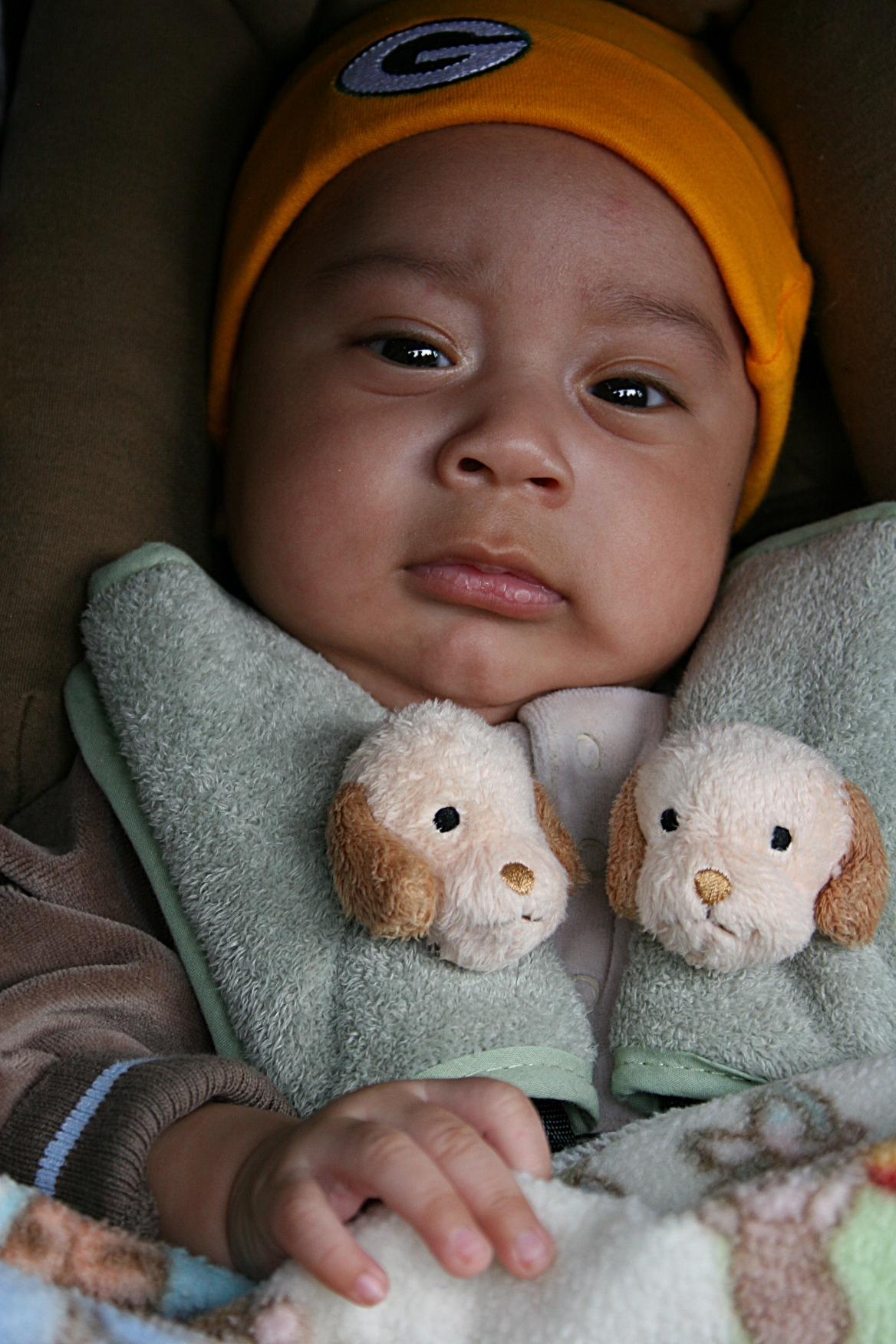
At several months old, baby Leo is already a Green Bay Packers fan.

One more tip: Best travel time through Wisconsin is during a Packers game.

© Copyright 2011 Audrey Kletscher Helbling
 

On-the-road prairie photos December 29, 2011

Filed under: Uncategorized — Audrey Kletscher Helbling @ 11:01 PM
Tags: , , , , , , , ,

Somewhere along a back county road between New Ulm and Morgan.

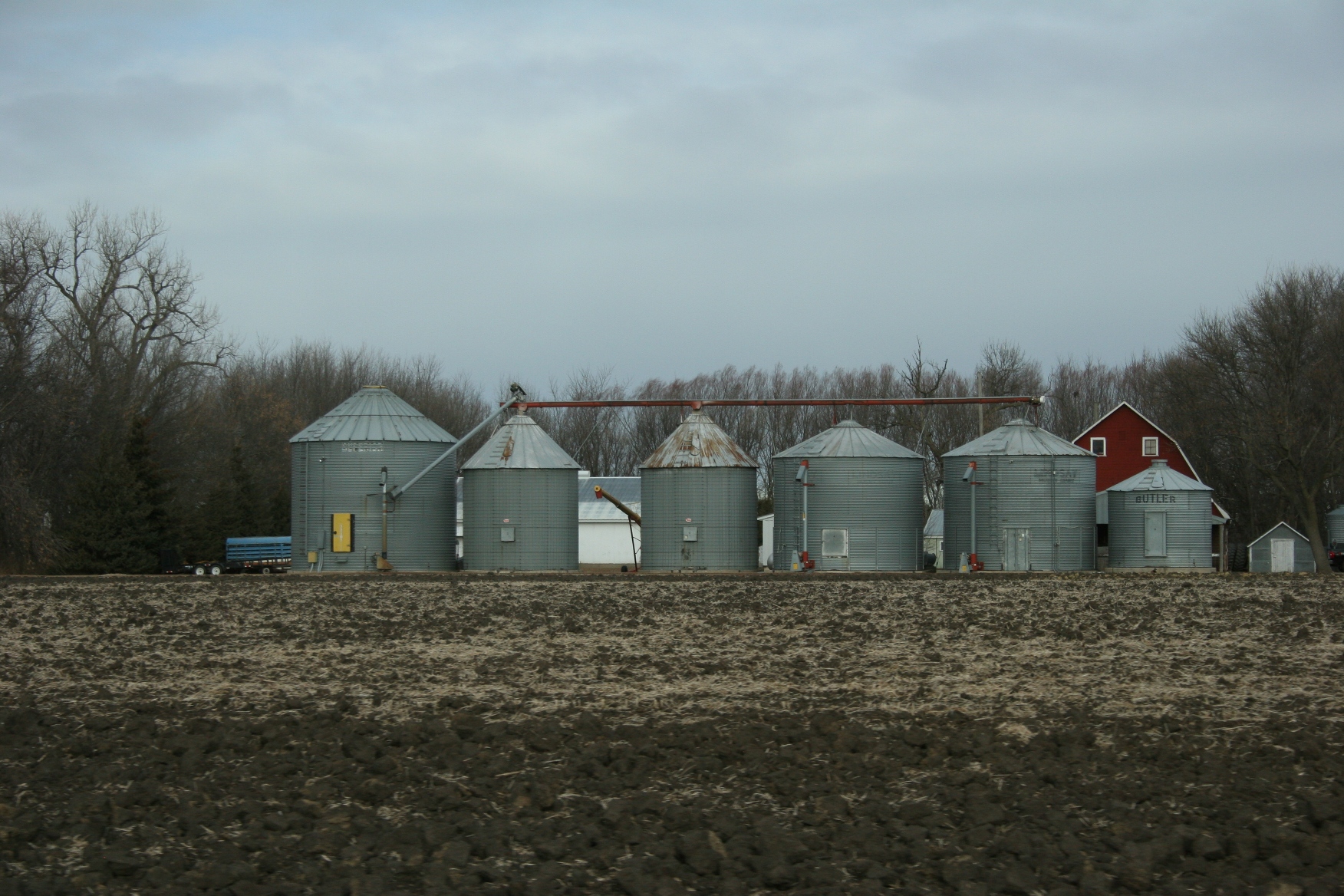
SORTING THROUGH the on-the-road photos I shot while traveling to and from southwestern Minnesota a week ago, I noticed a similarity in many of my images—pops of red in an otherwise mostly grey landscape.

I didn’t consciously swing my camera lens toward the jolts of red. It just happened. My eye would catch a scene and I would press the shutter button. Traveling at highway speeds allows a mere flick of an instant to frame and shoot through the front and passenger side windows of our family van or car.

I’ve practiced this type of traveling photography long enough that I’m now photographing some of the same sites along roadways. Yet, even the same subject, photographed at a different time of day, in another season, under changing skies, can result in a distinct image that tells a story or captures a mood.

This December, the Minnesota prairie, devoid of snow, appears drab and dreary against iron grey skies. Often only the occasional farm site or small town breaks the bleak blackness of tilled fields that can quickly depress the visual sense.

Perhaps for that reason, my eye is naturally drawn to the red barns and other bursts of red that contrast with the black and white and grey. My eyes are seeking color.

A red barn pop of color in the distance while driving toward Morgan last Friday morning.

Along the same road, I caught just a snippet of the red barn peeking from behind the row of grey grain bins.

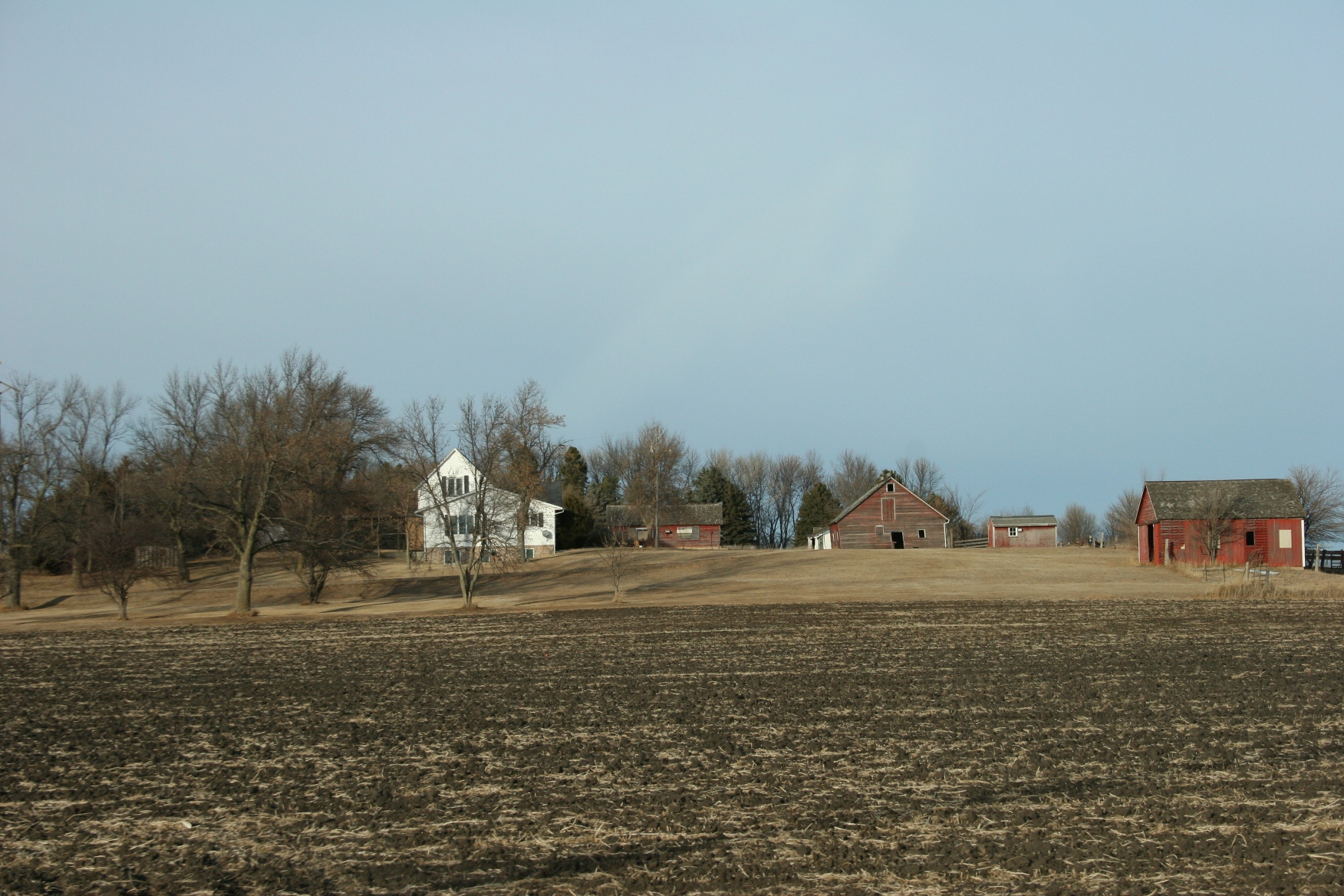
Sunnier skies prevailed Saturday afternoon at this farm site just north of Lamberton.

Allow your eyes to wander over my images, to take in the stark essence of the southwestern Minnesota prairie on two days in late December. This is my land, the place that shaped me as an individual and as a writer. It is a land where details are noticed without the distracting visual clutter of traffic congestion and buildings clumped together and lights and signs and crowds.

Not everyone appreciates the prairie, dismissing this land as boring and plain and unexciting. I am not among those who wish only to flash across the prairie like a bolt of lightning. Via my roadside photos, you will see how this infinite space of sky and land has claimed my heart, defining my work as a photographer and a writer.

A red car infuses color into this prairie landscape near Lamberton, heading east toward New Ulm along U.S. Highway 14, the Laura Ingalls Wilder Historic Highway.

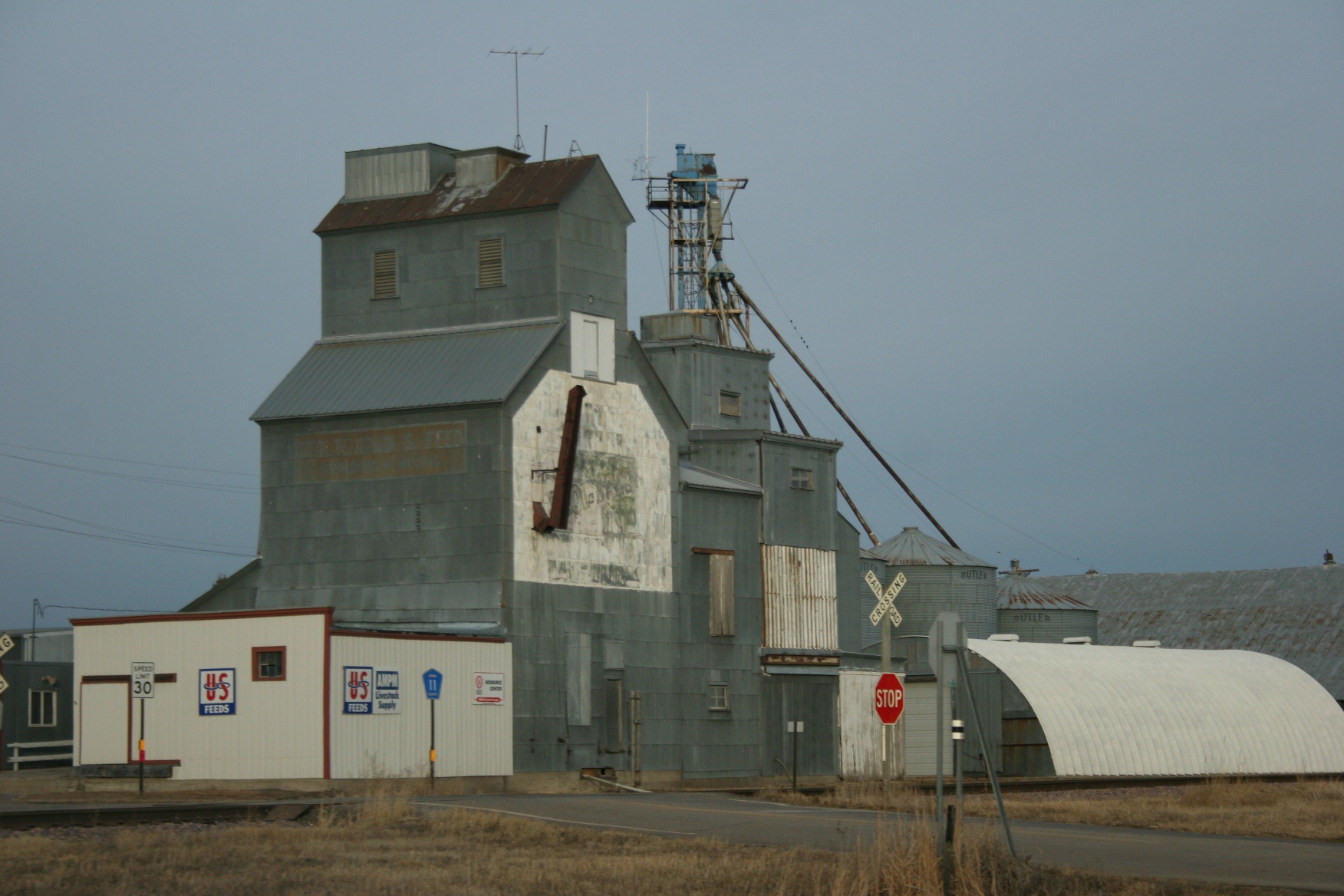
A stop sign adds color to an otherwise grey image of the elevator in Essig, along Highway 14 west of New Ulm.

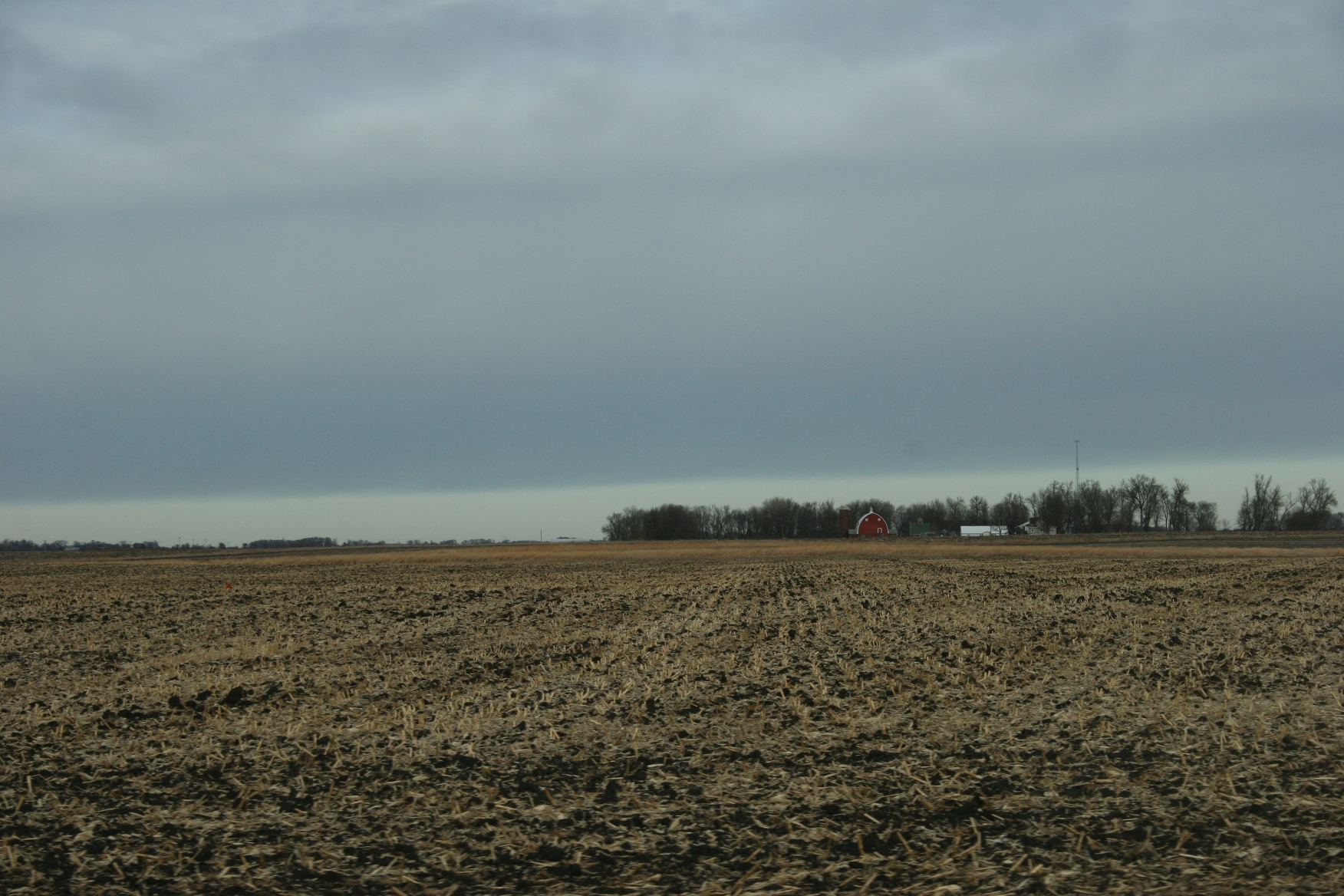
Fields like this one between New Ulm and Morgan define the southwestern Minnesota prairie.

AS I FINISHED this post, I wondered why most barns are painted red. Did the color choice come from a desire for a spot of red to brighten dreary days? I found one answer here, in Farmers Almanac Trivia. Click to read.

© Copyright 2011 Audrey Kletscher Helbling
 

Farewell to the Swany White Flour Mill of Freeport December 28, 2011

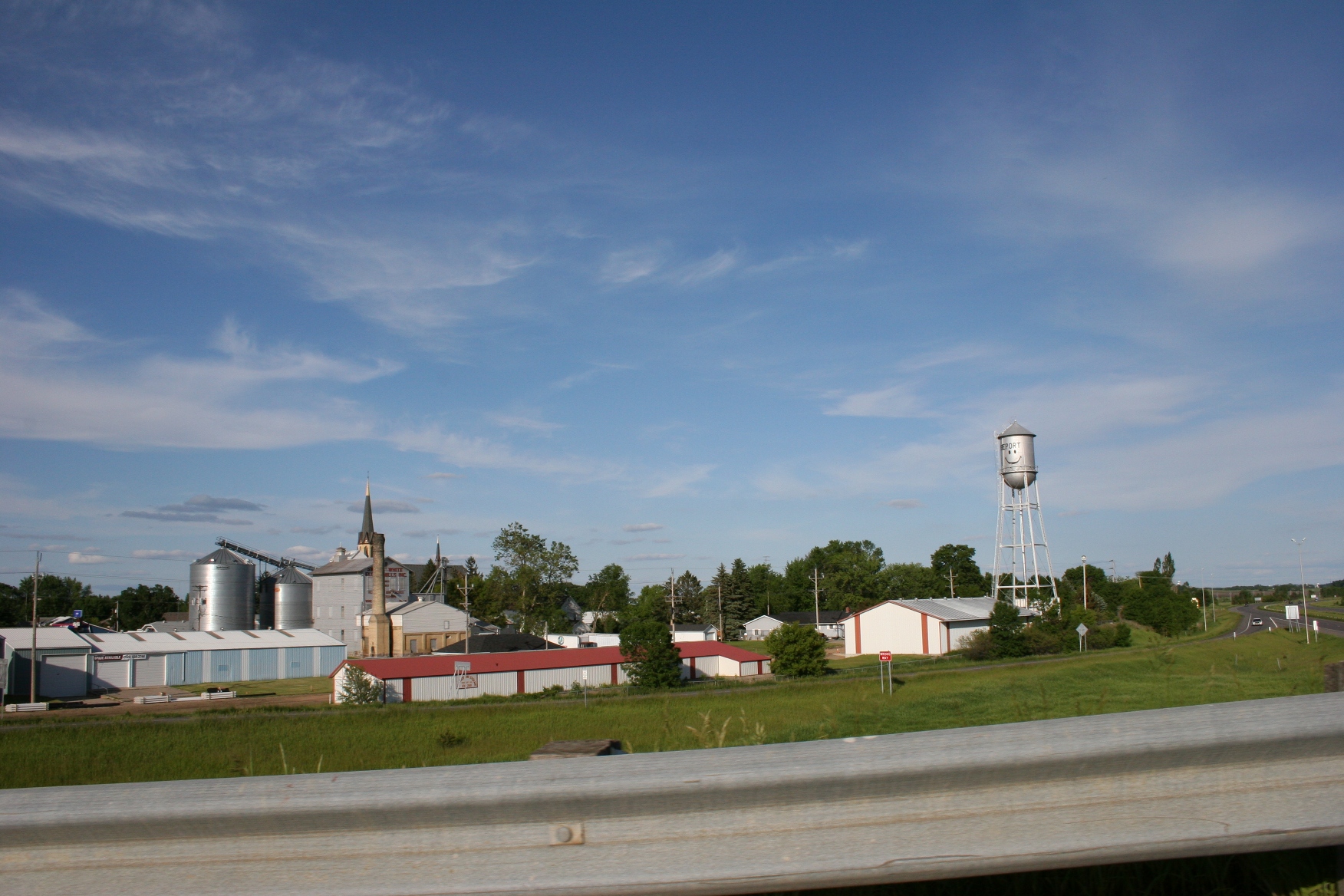
Freeport promotes itself as "The city with a smile!" That's the smiling water tower to the right and the Swany White Flour Mill to the left in front of the church steeple in this June 2011 image. Freeport is among the communities after which Garrison Keillor's fictional Lake Wobegon is fashioned.
CROSSING THE OVERPASS into Freeport last June, I snapped a quick landscape photo with the town’s charming water tower smiling at travelers along Interstate 94 in central Minnesota.

I should have focused, though, on the old-fashioned grain elevator-style flour mill to the left in my framed image.

Late Tuesday afternoon this historic icon, the Swany White Four Mill, built in 1897 and owned by the Thelen family since 1903, burned. Minnesota has lost an important part of her history, a still-functioning mill of yesteryear that specialized in producing commercial grade and organic flour and was known for its famous Swany White Buttercake Pancake and Waffle Mix.

That I never realized the importance of this towering, aged building on that June afternoon saddens me for I am typically drawn to small-town elevators. But when my husband and I swung into Freeport late on that Saturday afternoon 6 ½ months ago, we were more interested in finding Charlie’s Café, a popular dining spot in this town of 450. We were hungry. Charlie’s was packed, so we left town without eating there, but not until I snapped photos of the café and Sacred Heart Church and School.

Popular Charlie's Cafe is noted for its tasty homemade food including caramel rolls, meringue pies and hot beef commercials. To the right is the Pioneer Inn, after which Garrison Keillor modeled The Sidetrack Tap in his fictional Lake Wobegon. Keillor and his family lived near Freeport in the early 1970s.

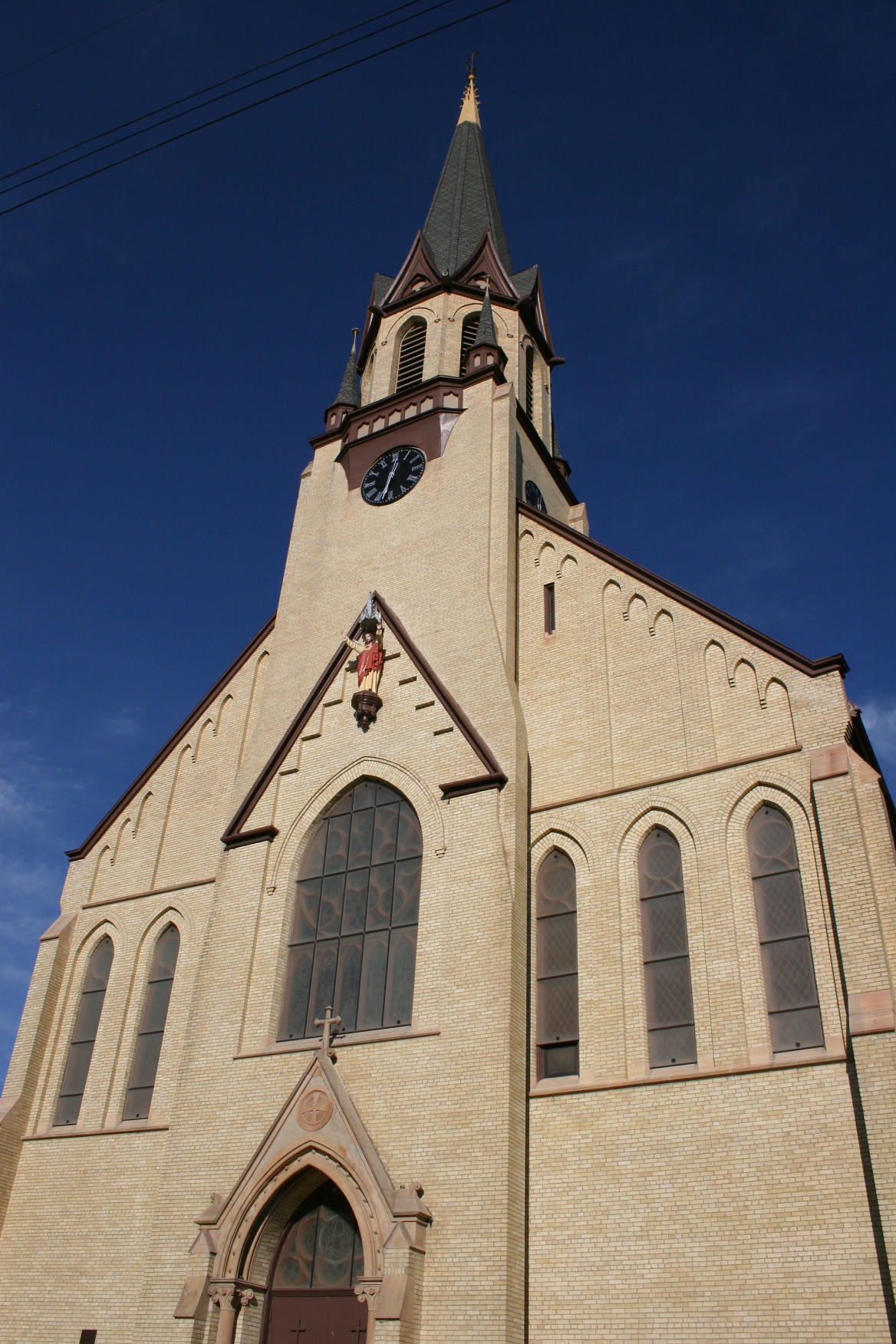
Sacred Heart Church, Freeport, described by Garrison Keillor as "a fine tall yellow-brick edifice with a high steep roof."

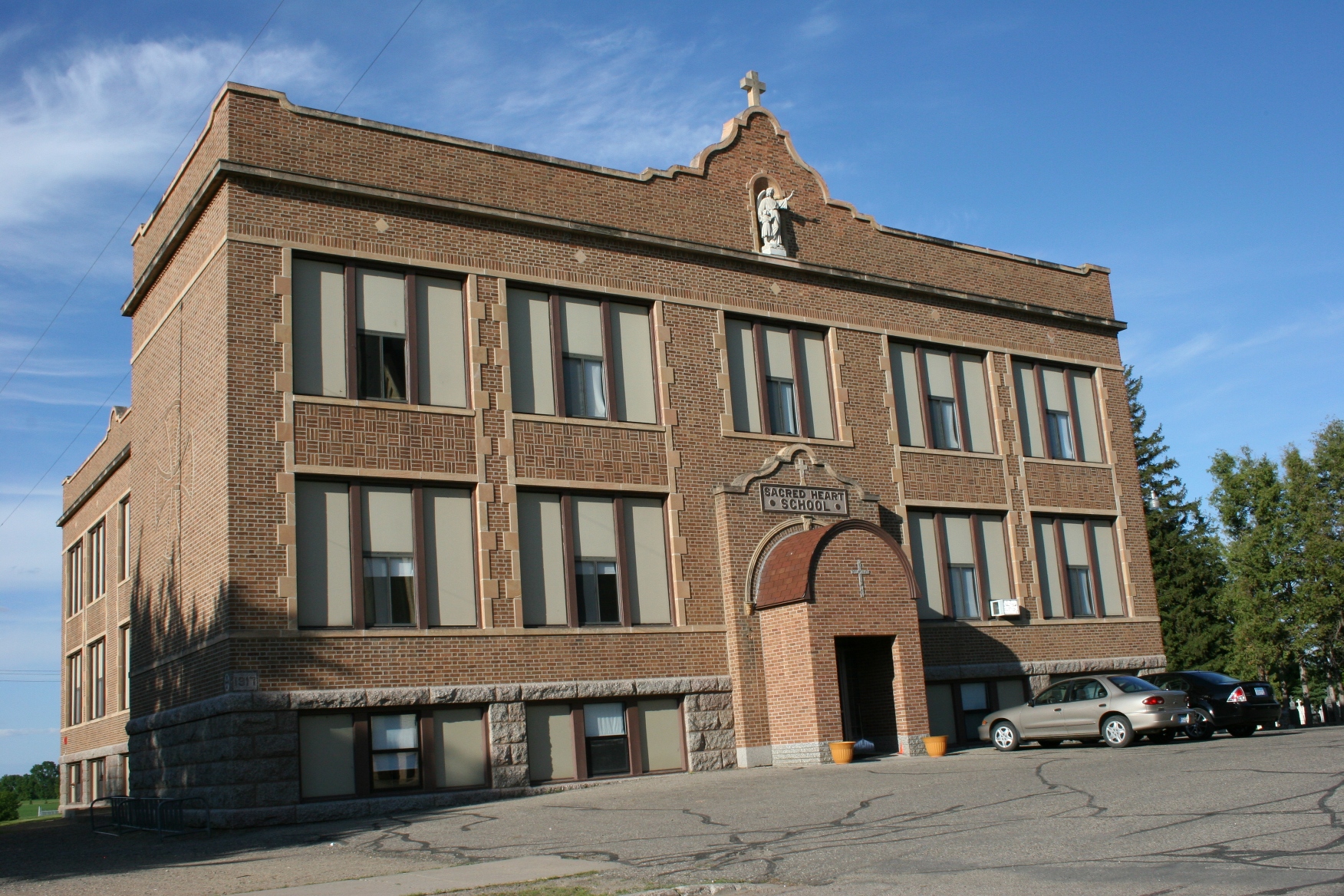
Sacred Heart School in Freeport, a lovely old building that caught my eye.

I totally missed out on the Swany White Flour Mill, simply because I was unaware of its important existence.

Eleven years ago, though, the historic mill, Charlie’s and other central Minnesota scenes were photographed by National Geographic photographer Richard Olsenius, illustrating a story, “In Search of Lake Wobegon,” by Garrison Keillor, expanded in 2001 as a book. A sister-in-law gave me her copy of the December 2000 National Geographic recently, knowing how much I would appreciate Keillor’s writing and the black-and-white images by Olsenius. I do.

Keillor rented a farmhouse south of Freeport some 40 years ago. He and his family weren’t exactly embraced by the community during the three years they lived there. Keillor writes about his experiences in the magazine piece, where he reveals that his fictional Lake Wobegon is based on life in central Minnesota, including Freeport.

I wonder if Keillor is reflecting on those years in Freeport as news of the Swany White Flour Mill’s demise reaches him. A eulogy or a tribute to this historic mill would seem fitting for Keillor’s radio show, “A Prairie Home Companion,” broadcasting from Honolulu, Hawaii, on New Year’s Eve, far from Lake Wobegon “where all the women are strong, all the men are good-looking, and all the children are above average.”

It hasn’t exactly been a quiet week in Lake Wobegon.


Downtown Faribault in December in black & white December 22, 2011

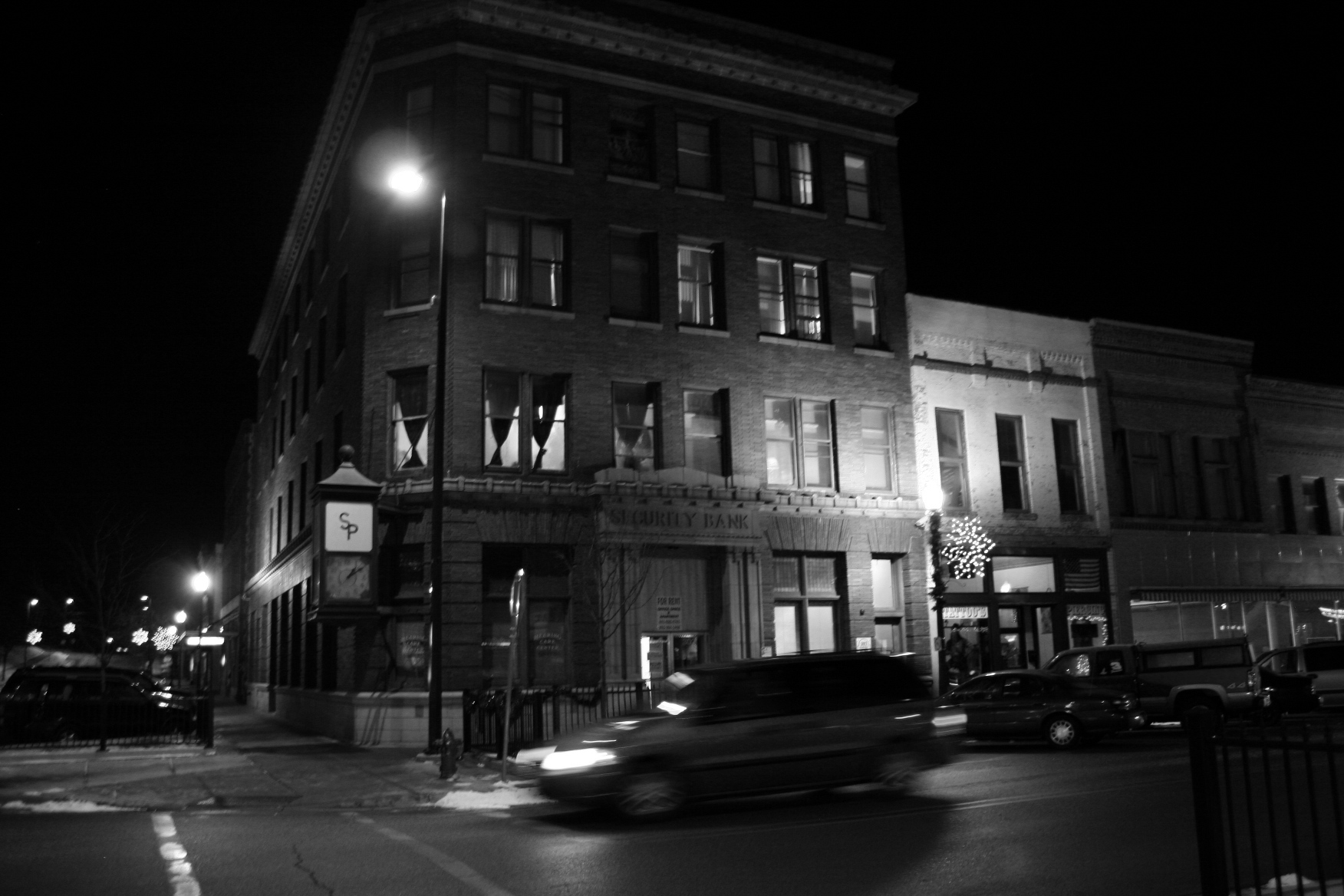
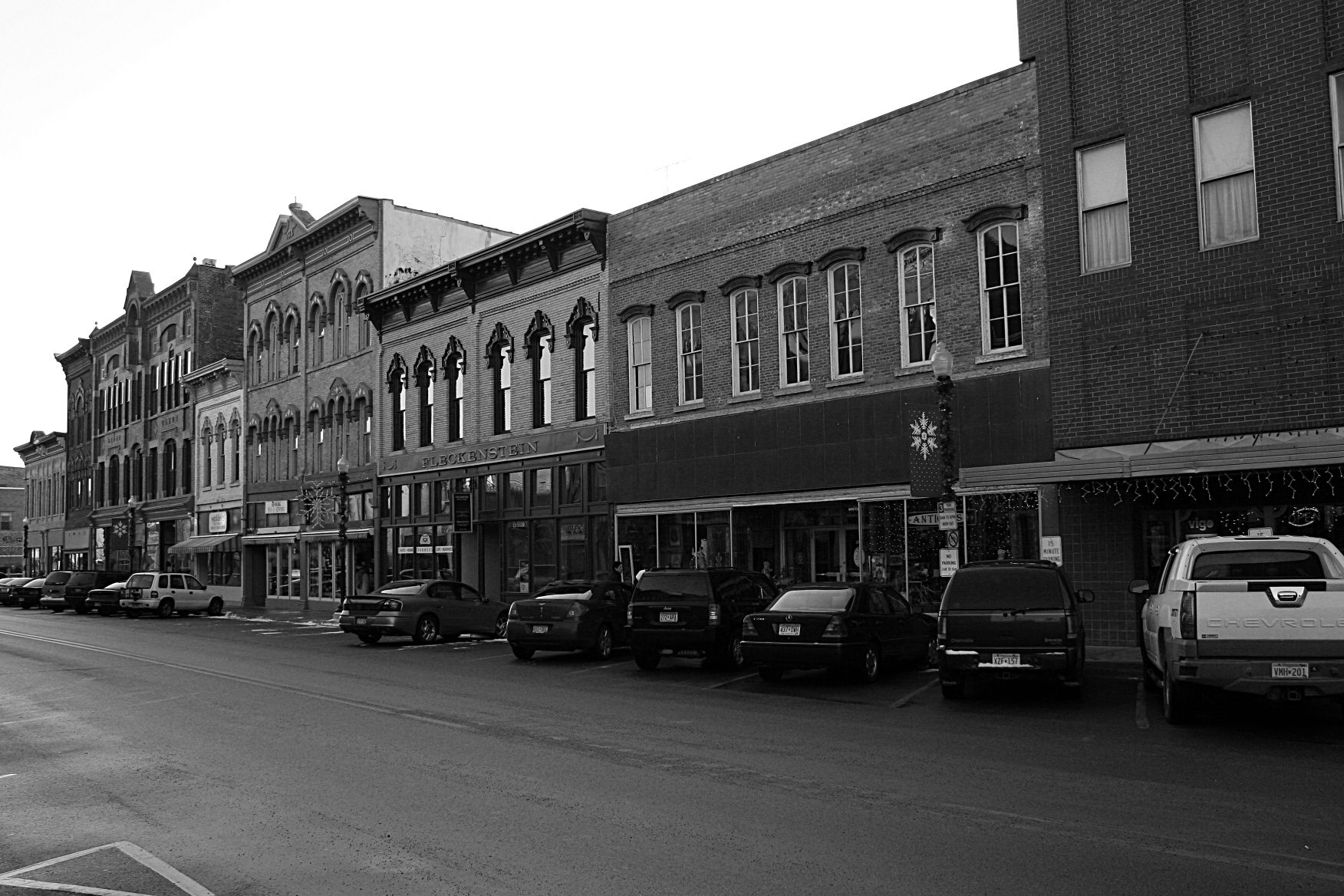
The former Security Bank building anchors a corner of Central Avenue in downtown Faribault.

PHOTOS DEVOID of distracting color possess a certain surreal, dreamy quality and a vintage feel that have always appealed to me.

Some of the best images I’ve seen hearken from years ago which just goes to prove that technology doesn’t always equate better results.

While filing through photos I shot in historic downtown Faribault on Saturday afternoon and evening, I decided to play with my photo editing tools and desaturate several images. I liked the results so much that I stripped every frame of color.

The results, I think, impress even more upon the viewer the history of this early Minnesota community that stretches back to its founding by fur trader Alexander Faribault in 1852.

We’re a city rich in history with 40 properties on the National Register of Historic Places.

With that perspective, please join me on a quick photo tour of the downtown area. Certainly much more comprises our downtown than what you see in the seven images here.

I invite you to explore on your own, to immerse yourself in the history that defines Faribault.

Historic buildings along Central Avenue.

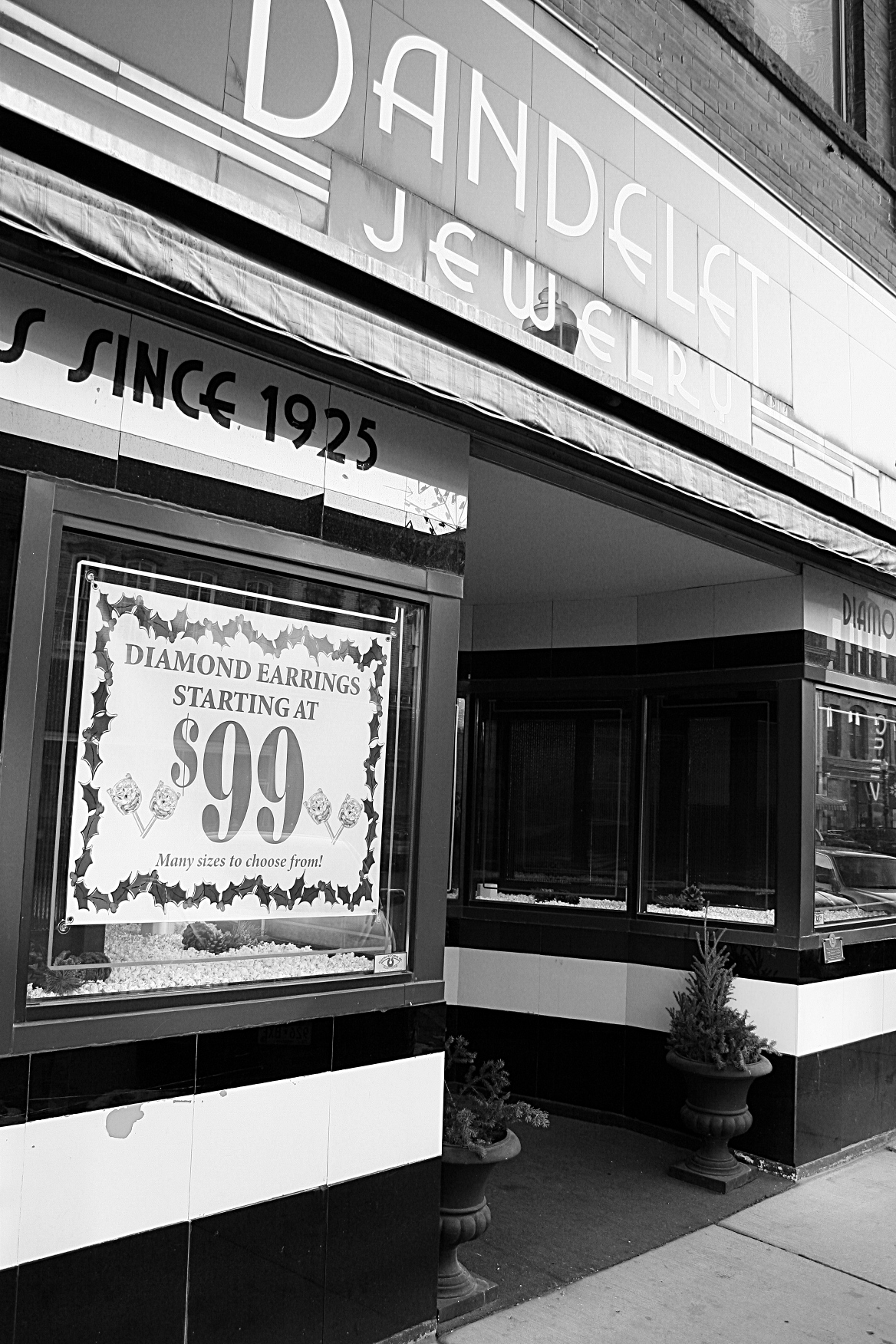
Dandelet Jewelry occupies the former 1882 Dandelet Dry Goods building, which was renovated in 1985.

A scene from the movie, "Grumpy Old Men," was shot in the former drug store to the right in this image. Today the building houses a pawn shop.

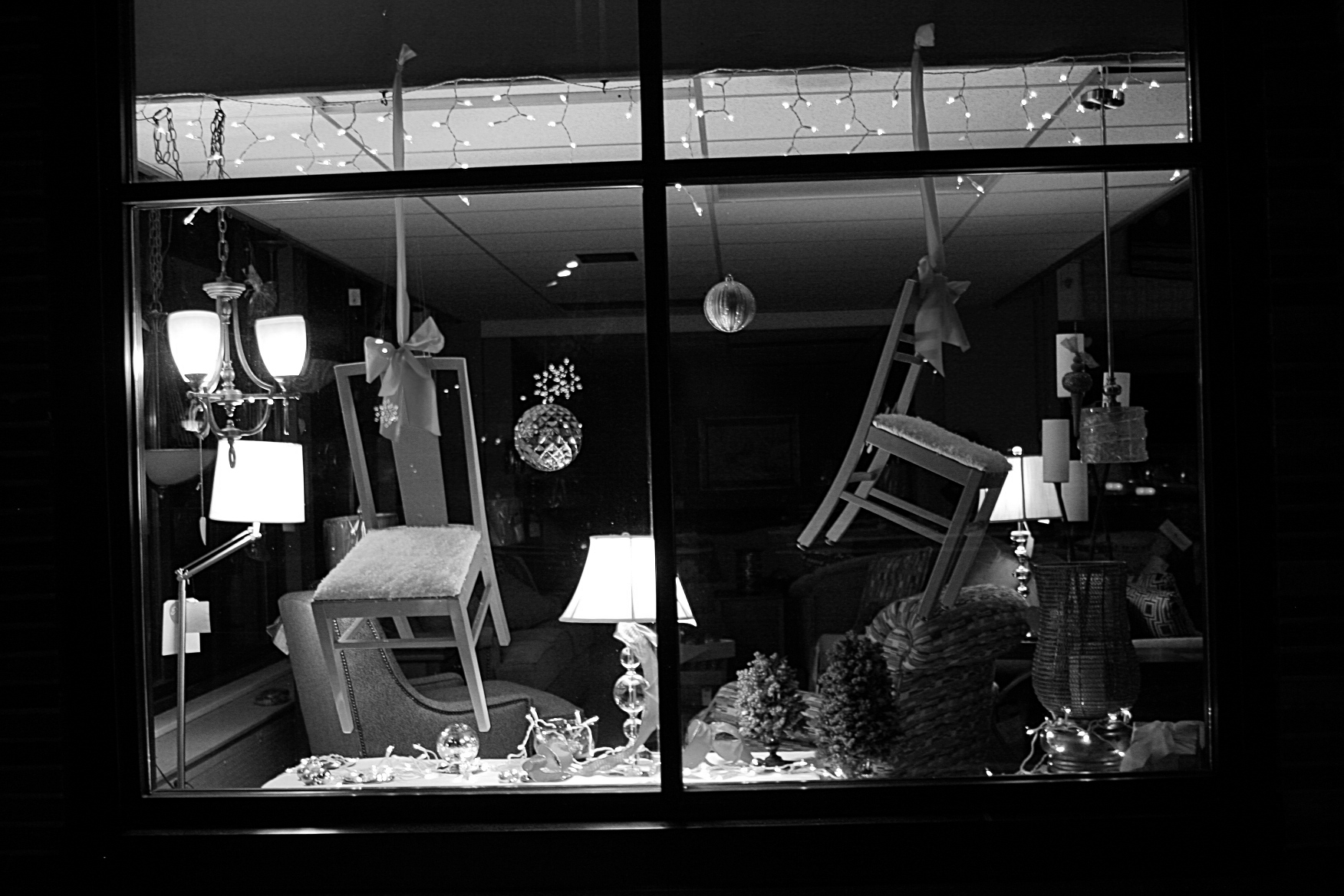
A holiday display window at Erickson Furniture, in business since 1956 and located along Fifth Street Northwest just a block off Central Avenue. Erickson Furniture won first place in the Main Street window decorating contest with its suspended green chairs, holiday ornaments and lights.

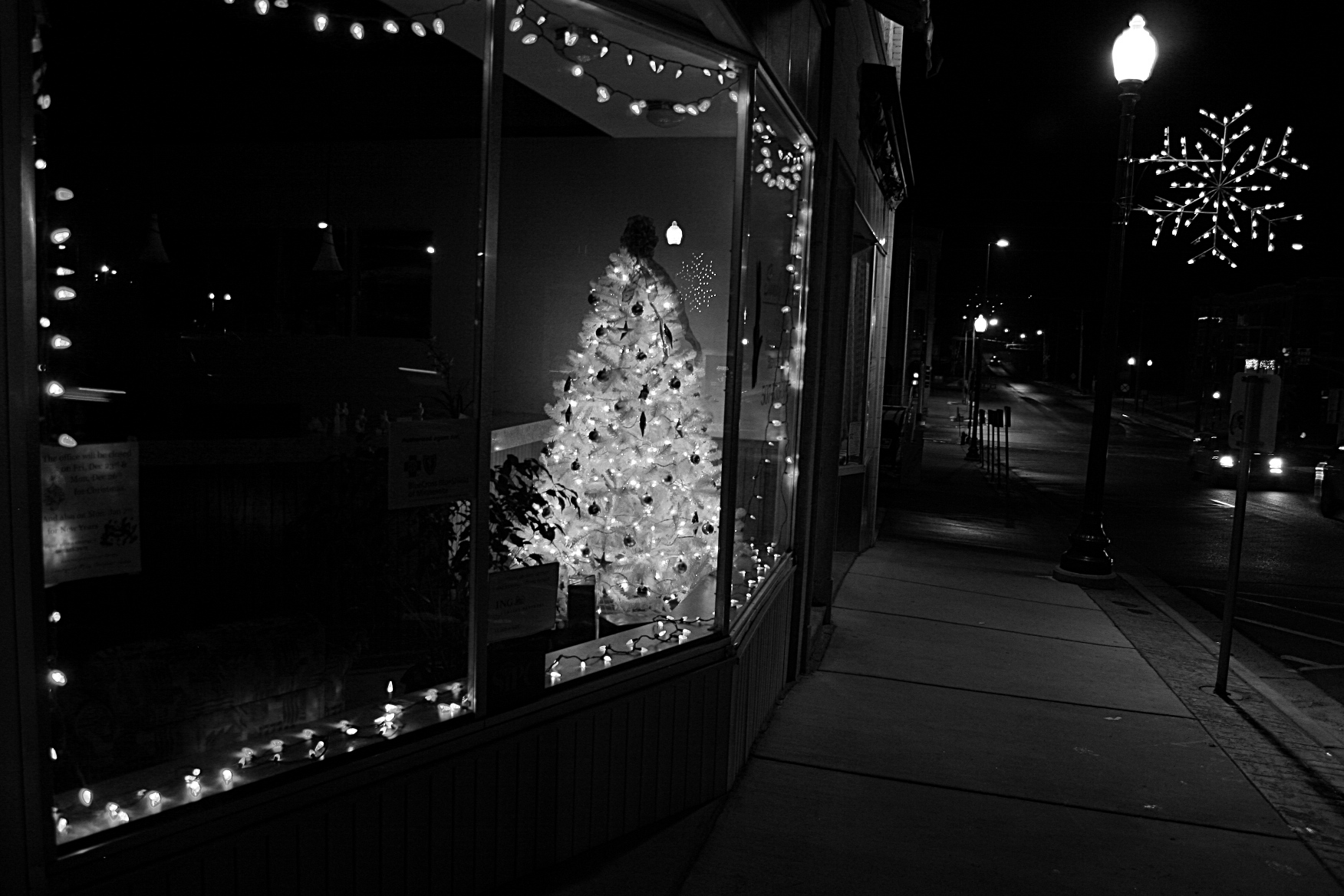
Holiday decorations in a business window along Third Street Northwest just off Central.

A sign in the window of Burkhartzmeyer Shoes, a third-generation family-owned shoe store founded in 1949.

CLICK HERE to read a previous post about Faribault’s historic downtown.

Copyright 2011 Audrey Kletscher Helbling