Minnesota Prairie Roots

Writing and photography by Audrey Kletscher Helbling

Balancing security, freedom and accessibility at the Capitol January 12, 2011


I photographed the Minnesota State Capitol during a fall 2009 tour.

TWICE IN MY LIFE, I’ve toured the Minnesota State Capitol.

The first time was back in the 1960s, when my sixth grade classmates and I traveled some 130 miles from Vesta Elementary School on a field trip to St. Paul.

Then, more than four decades later in the fall of 2009, my husband, teenage son and I toured the Capitol while on a day-trip.

 

Italian marble columns embrace the Capitol's grand stairway.

While the grandeur of the building with its marble columns and staircases, opulent furnishings, ornate carvings and impressionable art certainly awed me, I was most struck by an assertion from our tour guide.

“This is the people’s place. You own this building,” he told us repeatedly. And, yes, that’s a direct quote. I was taking notes because I later wrote a magazine feature story about my Capitol visit.
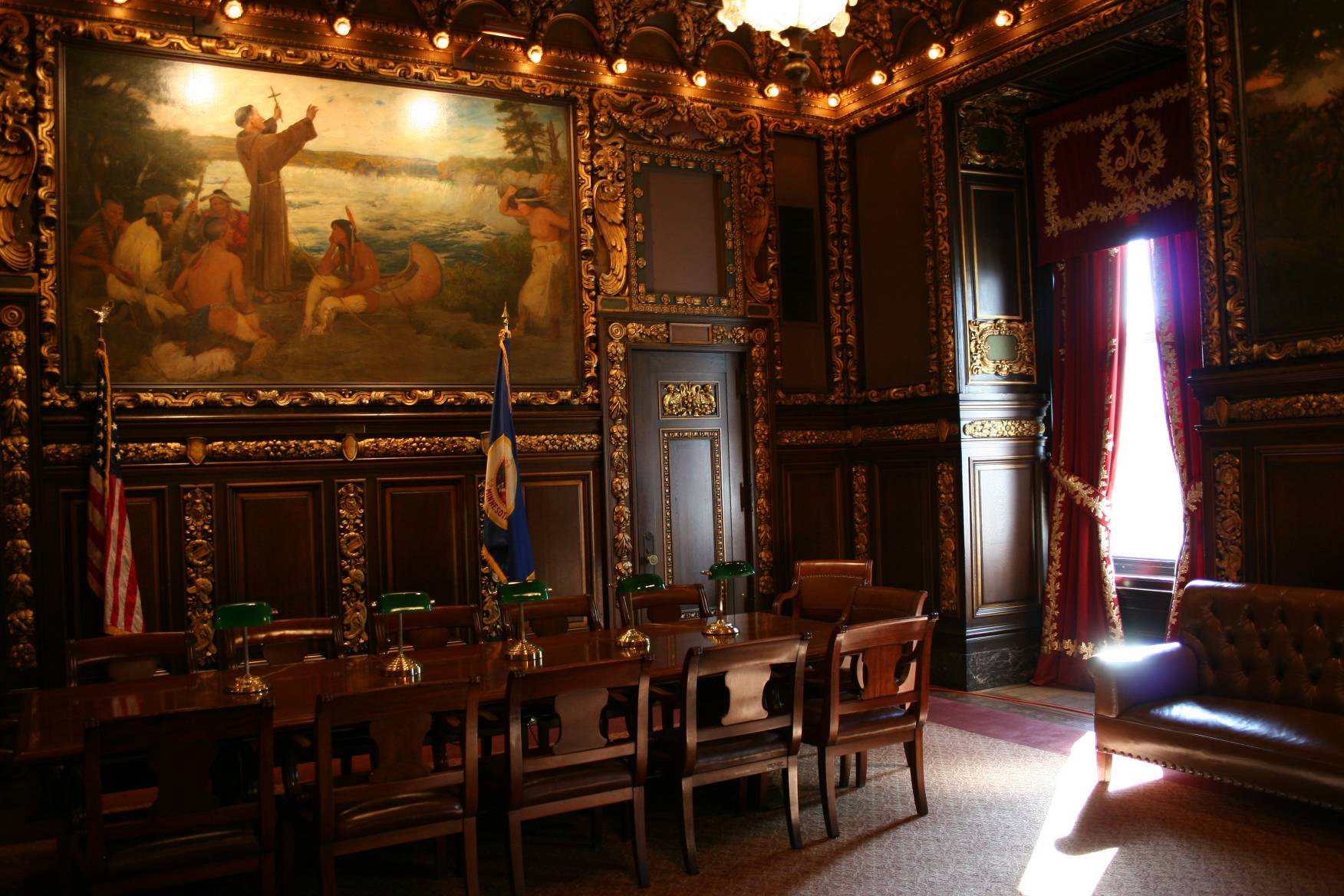
 

The lavish Governor's Reception Room at the Capitol.

I remember thinking then, and writing later, how I would love to welcome guests into the lavish Governor’s Reception Room with dark wood, leather chairs, extensive carvings, heavy drapes, a fireplace and historic paintings.

I also remember feeling surprised that our tour group could just walk into the reception room. At the time, I also wondered which door would lead me to the governor.

Now, today, in the aftermath of the wounding of Arizona Congresswoman Gabrielle Giffords and 13 others and the shooting deaths of six in last Saturday’s attack, I am rethinking our fall 2009 visit to the Minnesota State Capitol.

Because the legislature was not in session when we were there, the building felt almost abandoned to me. I don’t recall seeing hardly anyone, let alone a security presence, anywhere. And security cameras? If they were there, I didn’t notice them, not that I was looking.

Honestly, I was a bit of a lagger during our fast-paced tour. I dawdled and lollygagged to snap photos. I expect our guide noticed my lingering with only five tourists in our group. But he never said anything and I probably could have slipped inside somewhere I shouldn’t have been if I really wanted to do so.

I felt then like I could have wandered anywhere and that surprised me.

Today, in the wake of the Arizona shootings, security issues are once again, as you know, the focus of concern at places like the Capitol complex. But the dilemma lies, as you also know, in balancing security needs with public accessibility.

Here’s a paragraph lifted from that magazine feature I wrote about my Capitol visit:

“Remember, it’s we the people,” our guide impresses upon us as we sit in the House chamber gallery. After a half hour of listening to him, I am beginning to feel like I own this place, like my voice could make a difference. He speaks of approachable lawmakers, who are open to constituents and who mentor pages. As we stand in a back stairwell, he tells of lobbyists and lawmakers who mingle here during the legislative session.


A view of the Minnesota House of Representatives chamber from the gallery.

Looking from the gallery onto the Senate floor.

I wonder now if those legislators and lobbyists will mingle so easily in that back stairway.

Will those of us who tour the Capitol still feel as comfortable as we did before the Arizona shooting?

Will the Capitol guides still tell visitors: “This is the people’s place. You own this building.”

If you read these words inscribed in the Capitol, will you take them to heart?

“The true grandeur of nations is in those qualities which constitute the true greatness of the individual. Labor to keep alive in your heart that little spark of celestial fire called conscience.”

Will you wonder about the weight of these words written above the doorway and viewable from the Minnesota Supreme Court bench?

“Where law ends tyranny begins.”

Conscience and tyranny and law.

The Arizona shootings do not qualify as tyranny, but the violence fits the definition of tyrannical—harsh, severe, unjust, cruel.

How do we weigh it all? Security, freedom and accessibility.

I have no answers.


Words from The Declaration of Independence inspire on the House ceiling.

The Star of the North centers the floor of the Capitol rotunda in the "people's place."

© Copyright 2010 Audrey Kletscher Helbling


A rural Minnesota billboard packs a powerful message January 10, 2011

IF YOU TRAVEL OUTSTATE Minnesota, otherwise known as any place outside of the Twin Cities metro, check out the billboards.

They’re worth noting because of how they differ from advertising along freeways, where anyone from anywhere will see the signage.

In rural areas, the target audience seems much more localized.

For example, on a recent road trip to southwestern Minnesota, I spotted a billboard along U.S. Highway 14 near New Ulm advertising the Brown County Fair. Never mind that the fair happened last August.

Another sign promoted Chuck Spaeth Ford Mercury in Sleepy Eye and New Ulm. My automotive machinist husband tells me Ford no longer manufactures Mercury.

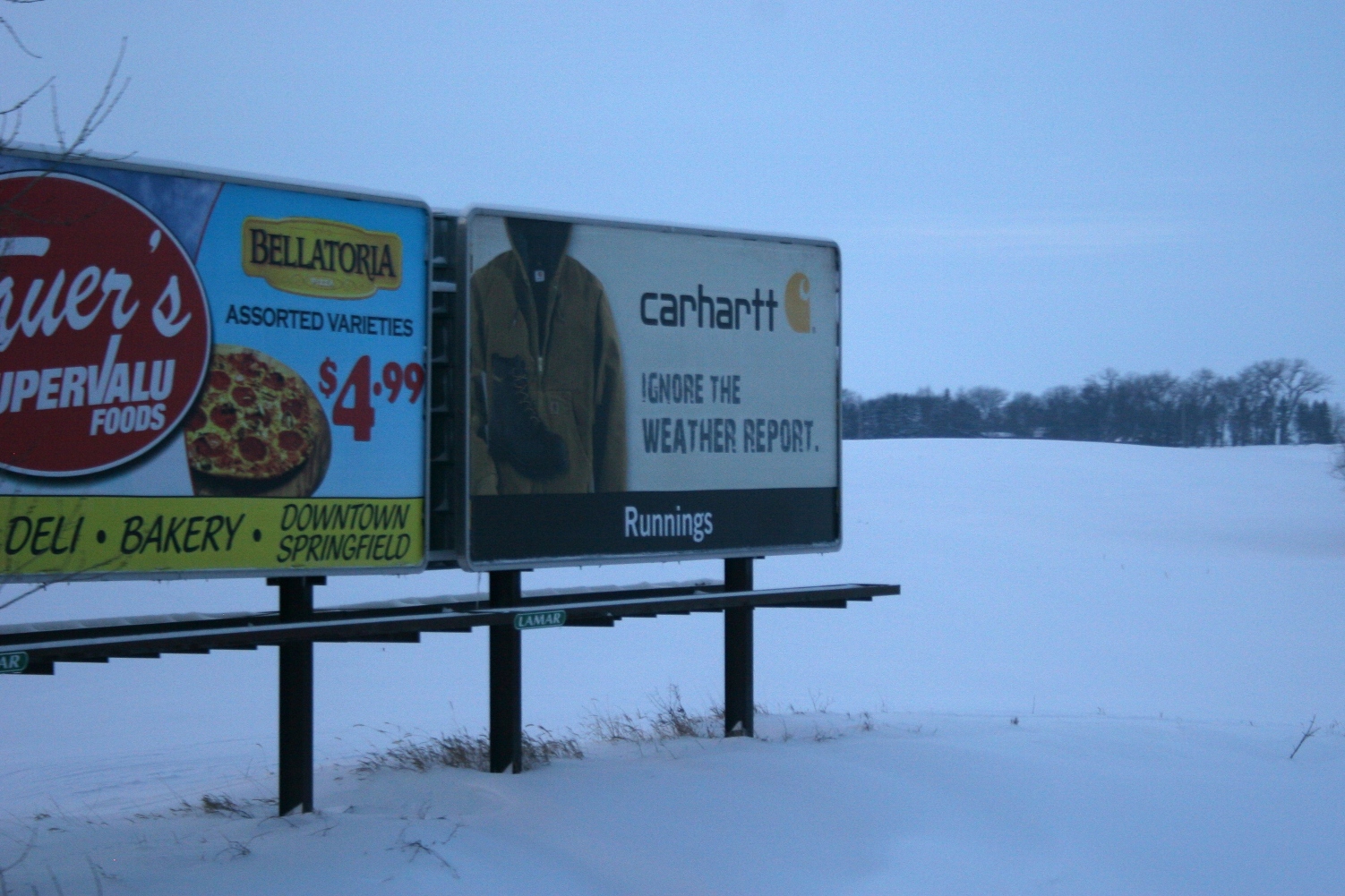
I also saw a billboard advertising Carhartts at the Runnings (“farm”) store in Springfield. This rugged clothing, footwear and more are almost a must-have for rural Minnesotans.


Pizza and Carhartts advertised on billboards along U.S. Highway 14.

Folks in outstate Minnesota like pizza, too. Just buy it at your local SUPERVALU, in this case Tauer’s SUPERVALU Foods in downtown Springfield.

But I spied my favorite billboard of this road trip in Sleepy Eye. Sponsored by the Brown County Underage Substance Abuse Coalition & The Parent Communication Network, this sends a strong message to parents: PARENT YOUR CHILD.


Brown County Underage Substance Abuse Coalition billboard in Sleepy Eye.

I wish such billboards weren’t needed, that underage substance abuse didn’t exist. But we know it does, always has and always will.

I appreciate how the billboard message encourages and empowers parents:

Parents…you are the #1 influence in your child’s life. Talk to your kids today! They really do listen to what you have to say!

I’d like to see replicas of this billboard elsewhere in Minnesota, even Rice County where I live. Rice County is among Minnesota’s most dangerous counties for drunk driving.

Just change the sponsor name on the billboard, and you’re good to go.

© Copyright 2010 Audrey Kletscher Helbling
 

Photographing the Amish in Wisconsin January 8, 2011

Filed under: Uncategorized — Audrey Kletscher Helbling @ 11:40 AM
Tags: , , , , ,

FOR YEARS, I’VE BEEN fascinated by the Amish. I’m not sure why. I’ve never met an Amish person, never visited an Amish farm. But I’ve read Amish fiction by Christian writer Beverly Lewis.

That fiction likely ignited my interest in learning more about a people who live such a simple life, so different from mine.

If I’m honest with you, I’ll tell you that I also really, really want to photograph the Amish and their way of life and tell their story.

My daughters repeatedly warn me that, “Mom, you’re not supposed to take pictures of them.”

I’ve never quite understood that. I’ve heard everything from an Amish belief that photographs steal souls to a belief that photos are considered graven images. When I googled the topic, I found an interesting article on Amish Country News that seems to support the graven images theory.

Recently I’ve been tempted again by my desire to photograph the Amish. This time the Amish were in central Wisconsin. Twice now my second eldest has seen them in their buggies along State Highway 21 near Coloma. Once at night, the other time near sunset. She knows that if I had been with her, I would have taken photos.

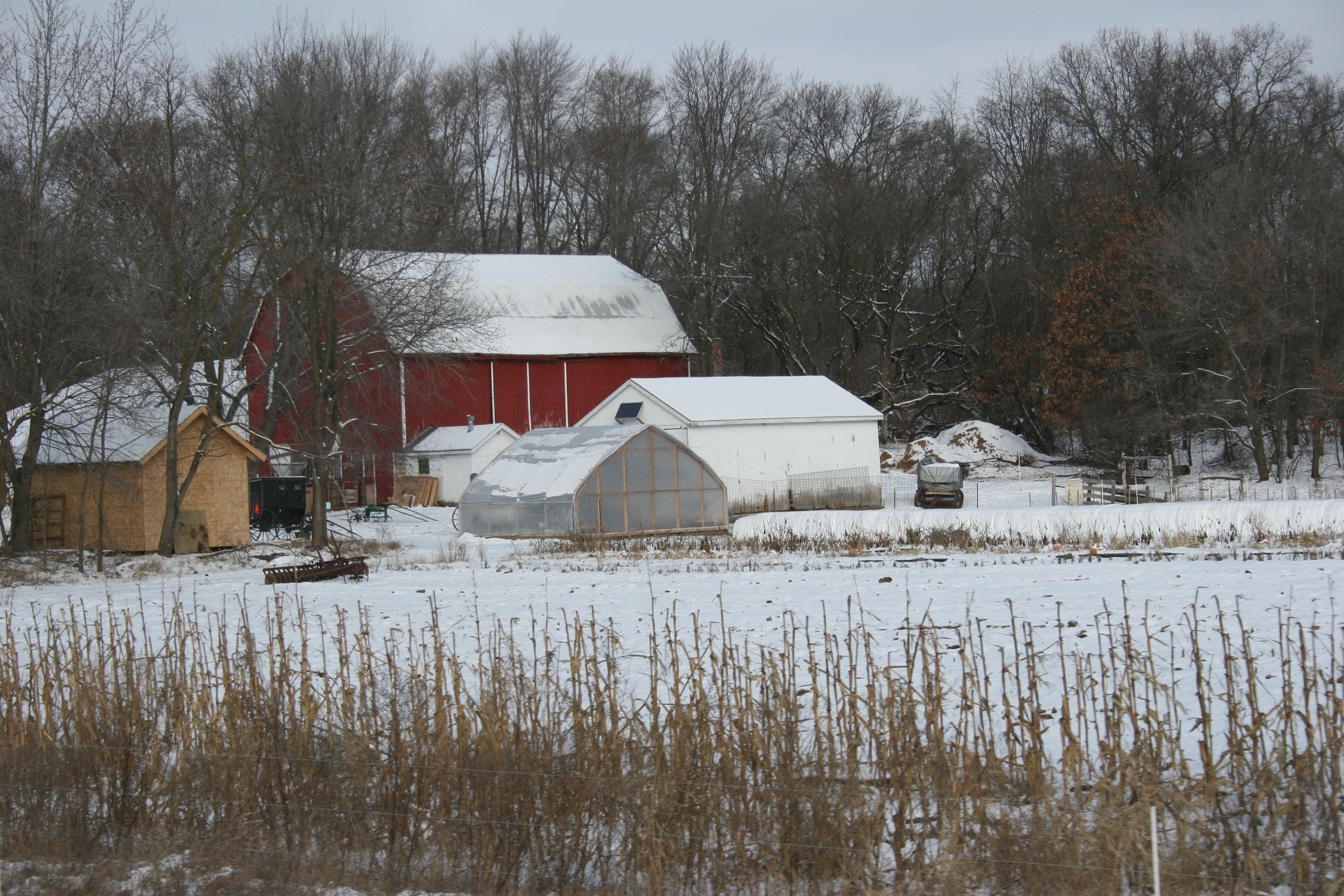
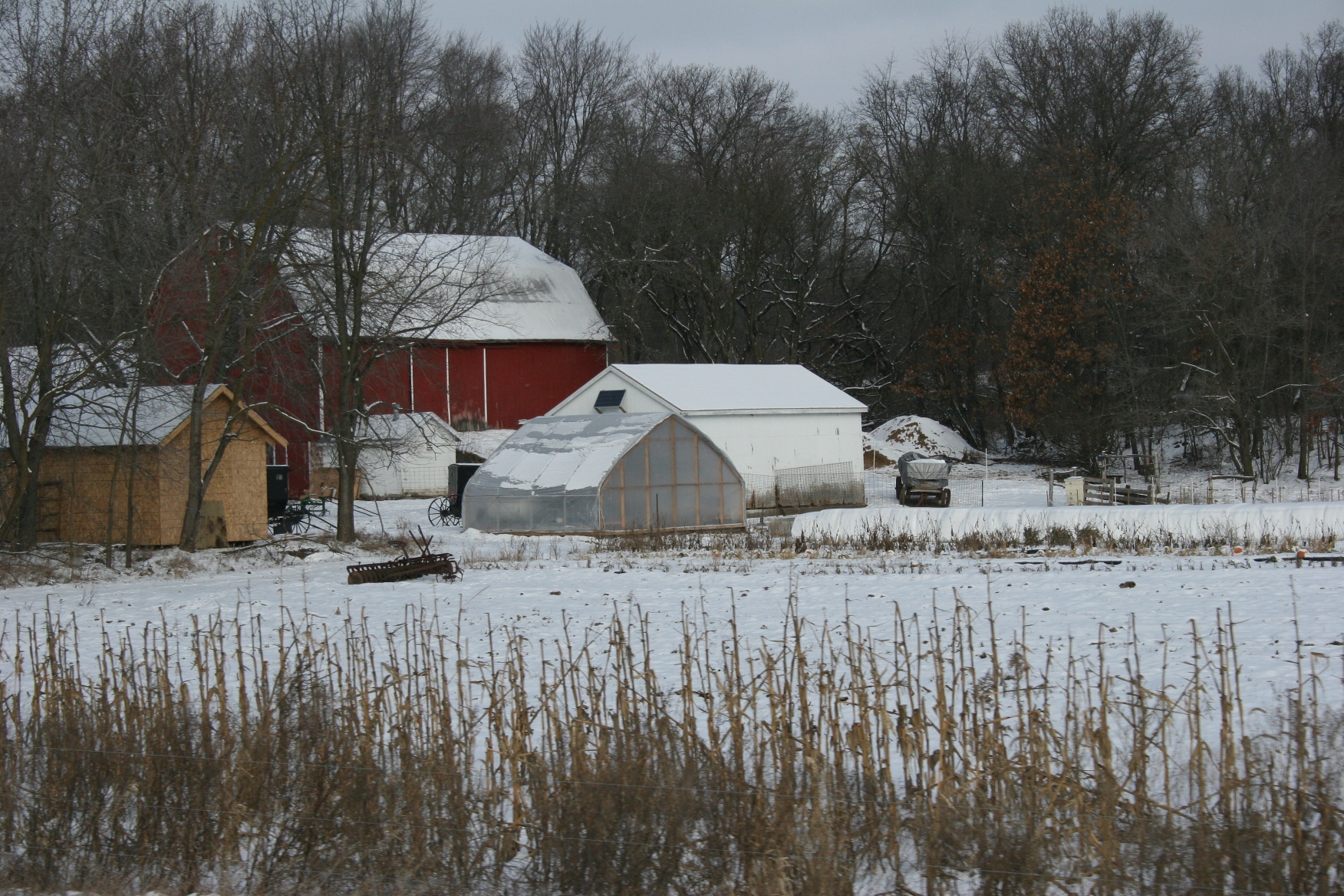
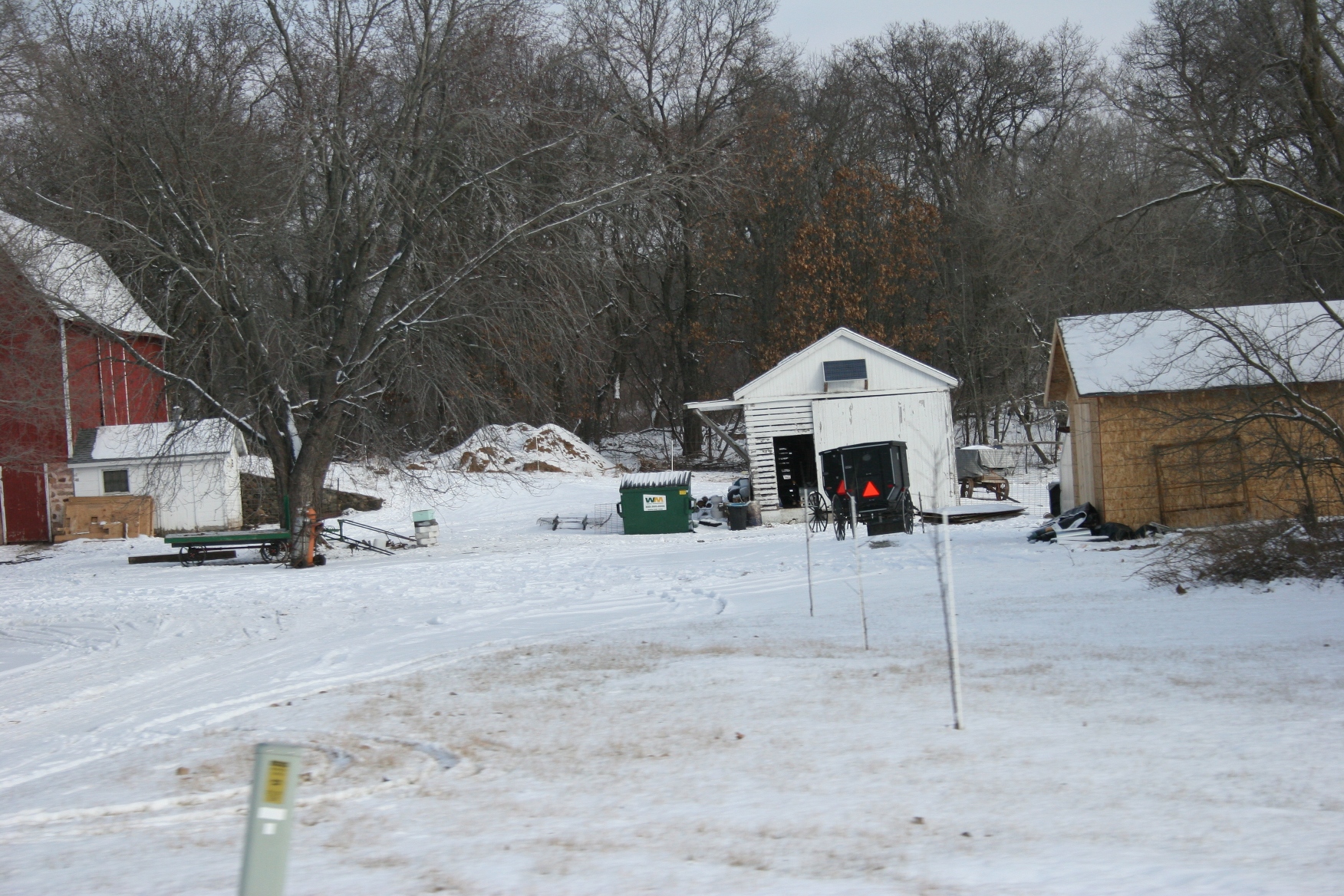
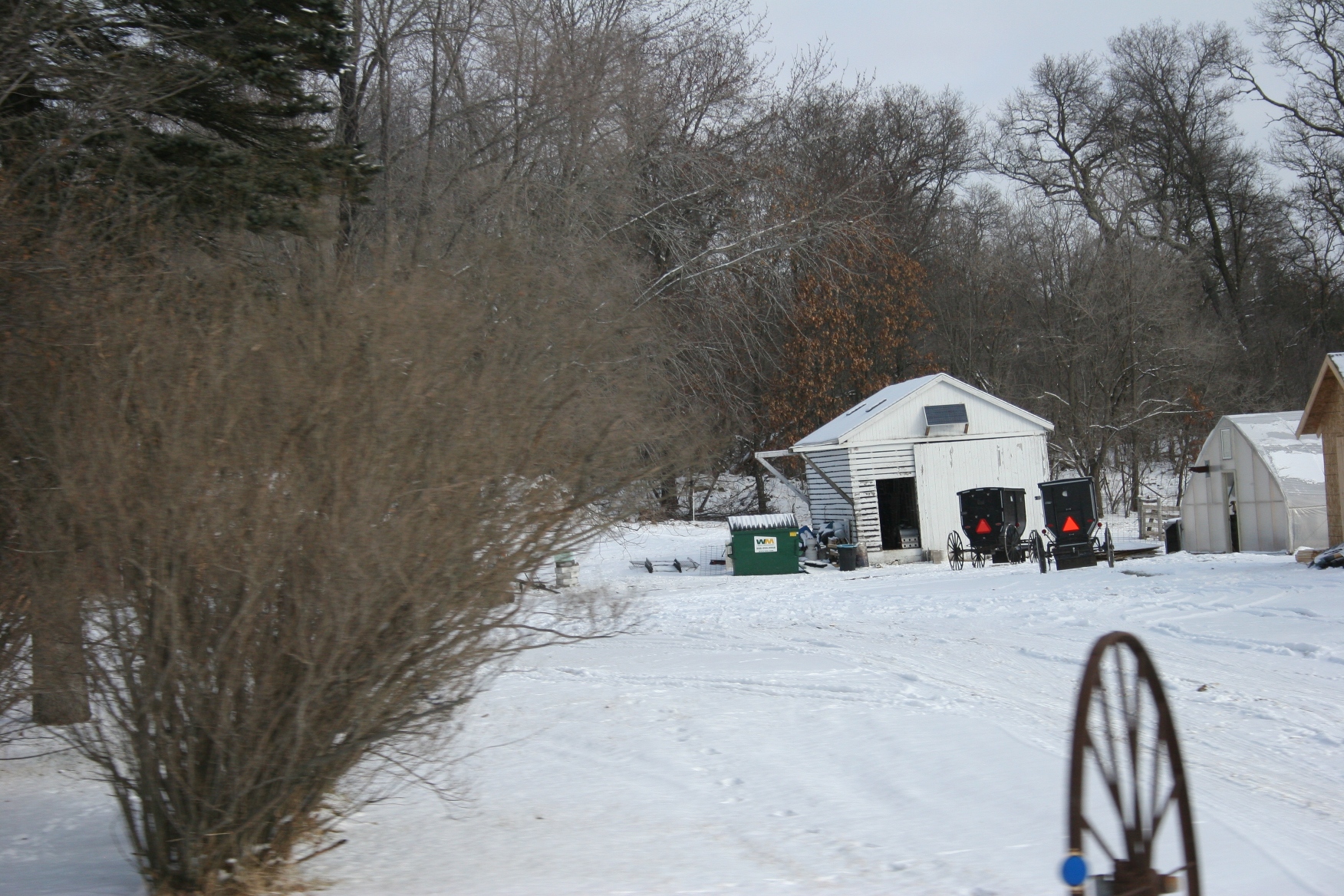
When my husband and I were on that section of highway in early December, I only saw the buggies parked, in a farmyard. I managed, however, by setting a fast shutter speed on my camera, and with rapid-fire clicks of the shutter, to get several images as we drove by. That will have to do for now, until I can return and explore at a horse-trot pace.


Next to the building on the left, I caught my first glimpse of an Amish buggy on this Wisconsin farm.

I continued clicking the shutter as a second buggy came into view behind the building in the middle.

A better view of two buggies parked on the farm place.

My last shot of the Amish farm and buggies, taken from the car as we drove by on Wisconsin Highway 21.

© Copyright 2010 Audrey Kletscher Helbling

 

These businesses have been in Faribault for how long January 7, 2011

EVER SINCE The Faribault Daily News “2010 Year in Review” special supplement published last week, I’ve been meaning to write this post.

Now, you might think that I would summarize the top 10 stories in my southeastern Minnesota community. OK, I will tell you that a late September flood ranked as the top local news event of 2010, according to the newspaper.

A successful season by the Faribault High School Emeralds danceline rated as number 10, although I find that rank as a bit of a stretch for a top 10 news story (no disrespect to the Emeralds intended).

While I found the summary of my community’s top news events to be interesting, I was most impressed by the advertising content. Yes, advertising.

All of the ads in this supplement highlight the number of years that local businesses have been in business. Some have been in Faribault for more than 100 years. Those are impressive numbers in today’s economy and impressive personally to someone like me. My hometown of Vesta in southwestern Minnesota was founded in 1900, while Faribault was founded in 1852. Do the math. That’s a 48-year age difference.

Since those triple digit numbers wowed me, I decided to do a little online research into several of the long-time Faribault businesses that advertised in the special section.

Here’s the scoop on some of our oldest businesses, starting with 134-year-old Parker Kohl Funeral Home, 607 N.W. Second Avenue. As you would guess, the business name reflects the merger of two funeral homes (in 1978). Most interesting to me is the fact that Flora Ray Parker joined her dad, David Ray, in operating the Ray Funeral Home, which originated in the 1870s. Later, her son, John Parker, would join the Parker Funeral Home. Was it common for a woman to operate a funeral home back in the day?


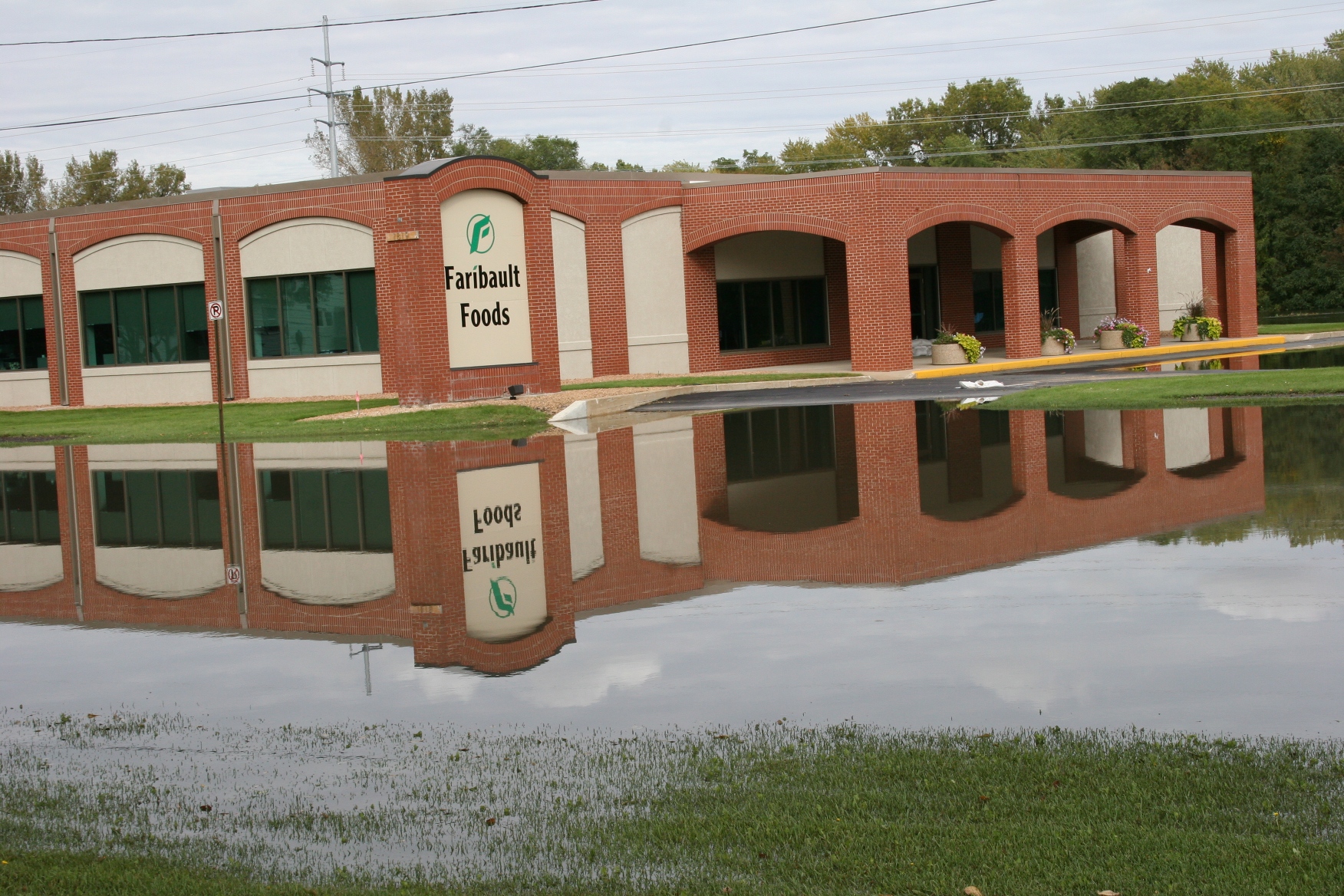
The offices of Faribault Foods, surrounded last September by floodwaters.

Moving on, I clicked onto the Faribault Foods website and found a detailed timeline showing how this 115-year-old canning company has evolved. “Faribault Foods started in 1895 as a vegetable company. We were known for small-sized, juicy corn kernels, tiny ‘petits pois’ peas and a willingness to do everything we could to please our customers,” I read.

Today, according to the company website, Faribault Foods produces canned vegetables; sauced, refried and baked beans; kids’ and family style pasta; soup; chili; and organic and Mexican specialties. In 2007 it became the largest producer of canned organic soups in the country. I did not know that.

Farmer Seed and Nursery, 818 N.W. Fourth Street, has been around for 122 years and is the historic-looking building you’ll see driving along Minnesota Highway 60 from the west toward downtown Faribault. I didn’t find any history on the website except for this statement: “Serving the needs of America’s gardeners for more than 120 consecutive years.”

Yes, this is the company with the seed catalog that Minnesotans (and other northerners) drool over in the dead cold of winter as they plan their gardens and wish for spring.

Some of Faribault’s other long-time businesses include The State Bank of Faribault, founded in 1919; The Community Co-op Oil Association of Farbault, founded in 1925; the Boldt Funeral Home, here since 1927; and Grampa Al’s, established in 1929.

Many more businesses have been around for six or seven decades. Really, that’s impressive, isn’t it?


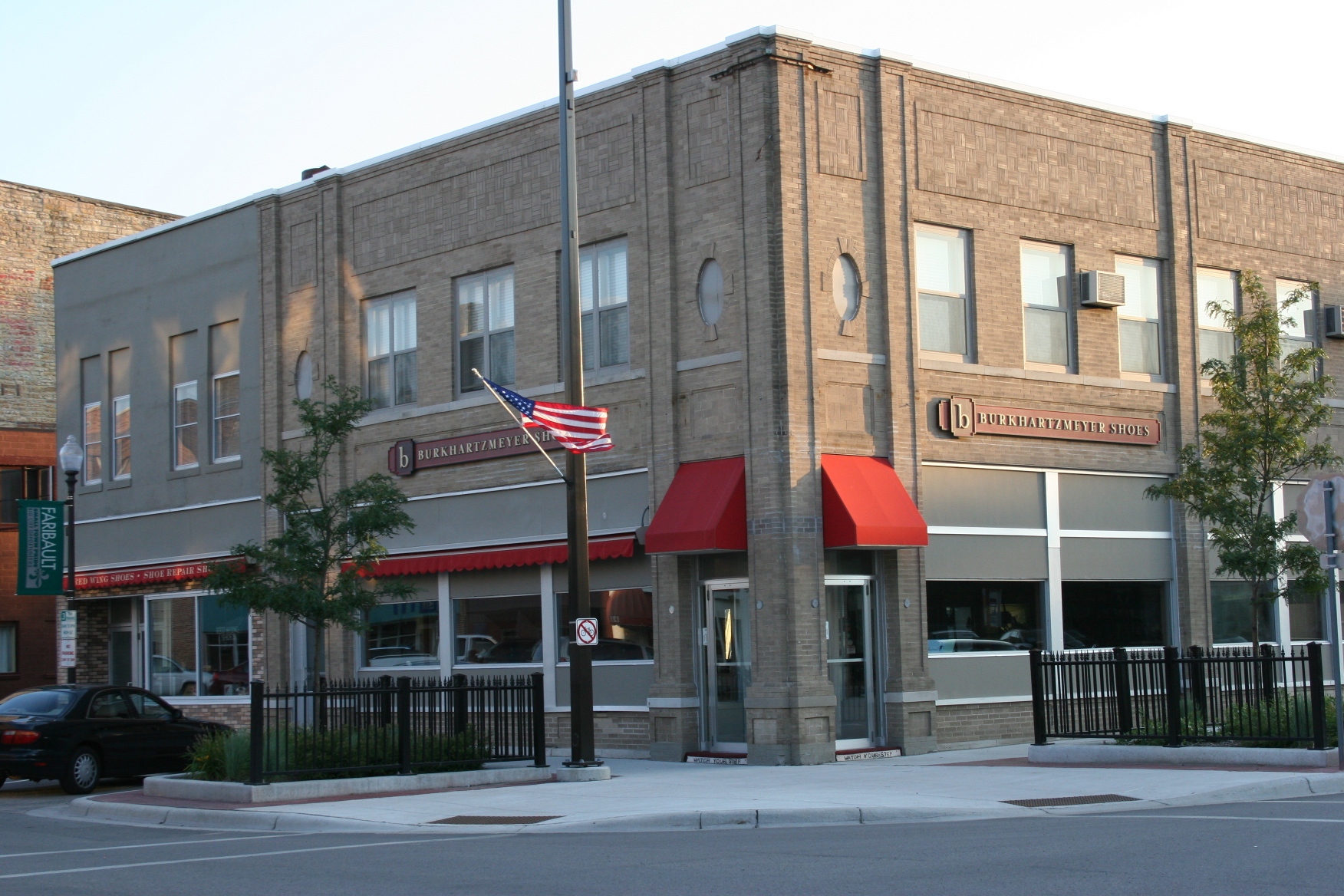
Burkhartzmeyer Shoes, a third-generation family shoe store in historic downtown Faribault.

If you’ve never been to Faribault, come and check out our community sometime. We have a beautiful, historic downtown with interesting shops, like Burkhartzmeyer Shoes, where they fit your feet for shoes, place the shoes in a box and tie the box with cotton string. They’ll even add a lollipop. That’s what I call old-fashioned service from a third-generation family business of 61 years.


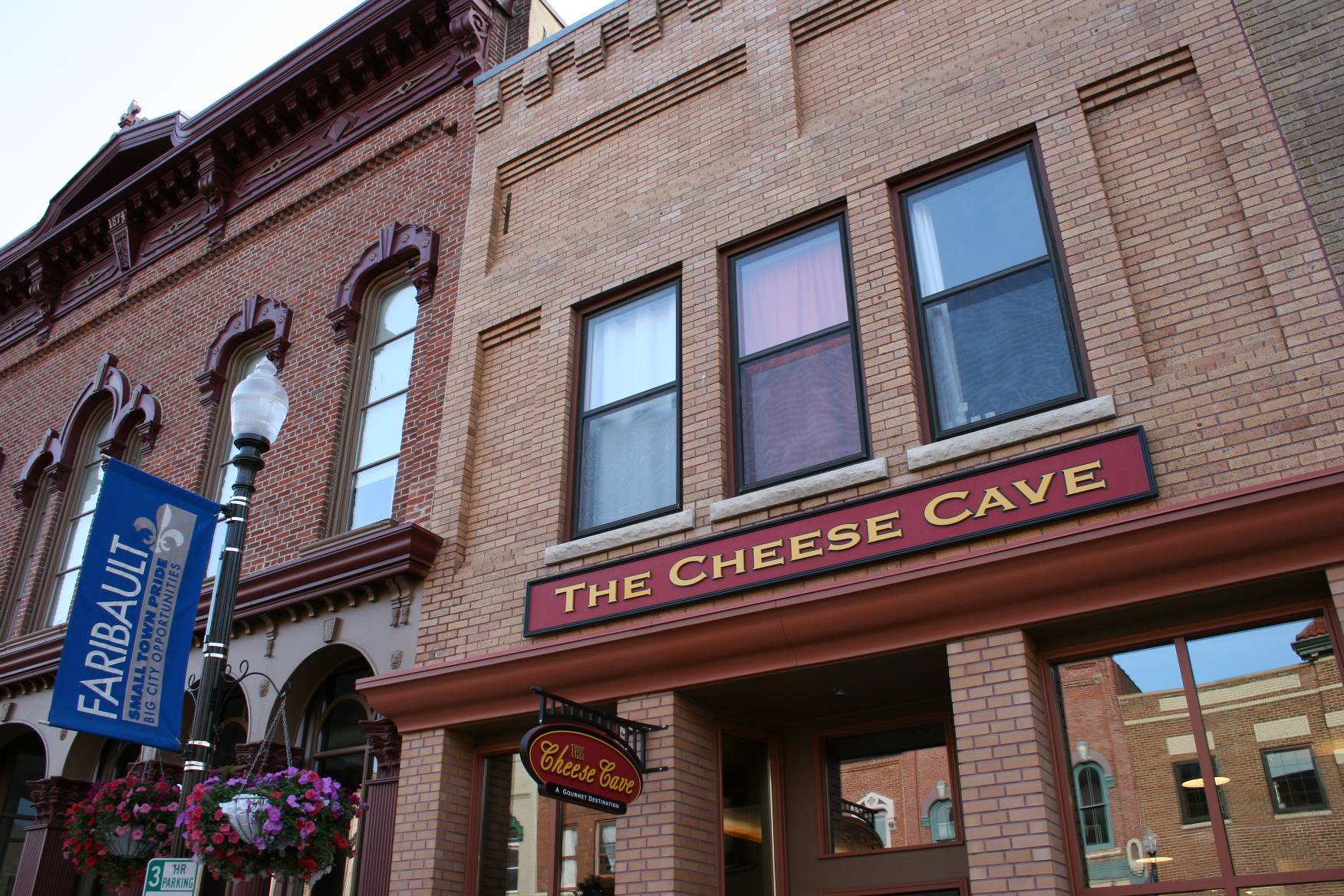
The Cheese Cave serves a limited menu and also sells gourmet products, including cheeses made right here in Faribault and aged in sandstone caves along the Straight River two blocks away.

We also have a cheese store, a candy store, antique and specialty shops, a coffee shop, many ethnic and other restaurants, an art center, thrift stores…enough really to provide you with a day of shopping and entertainment in a historic downtown with a decidedly small-town charm and ambiance.


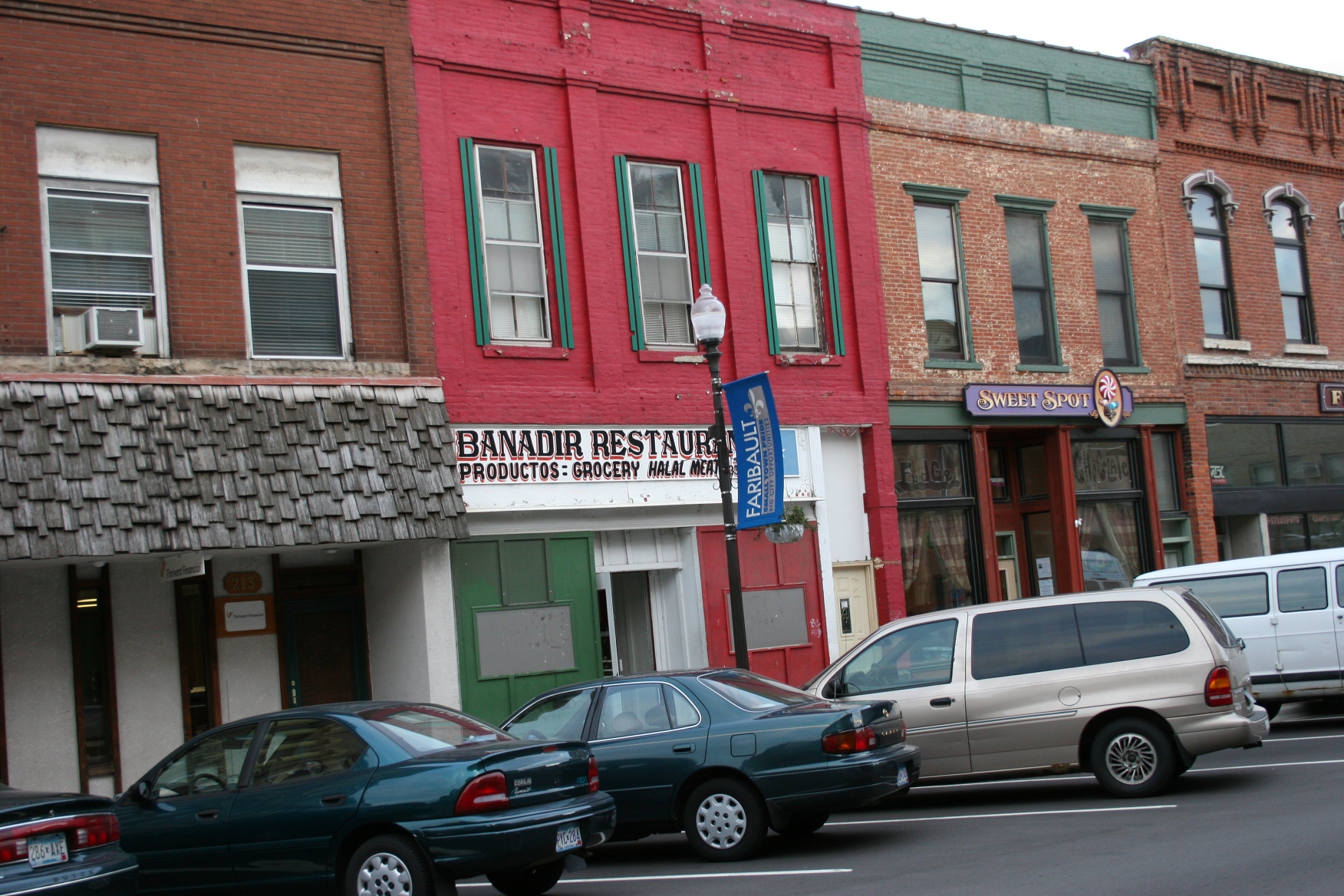
Banadir Restaurant, the red building in the center and one of Faribault's many ethnic eateries, is next door to Sweet Spot Candies, where you can buy homemade and other candies and homemade ice cream.

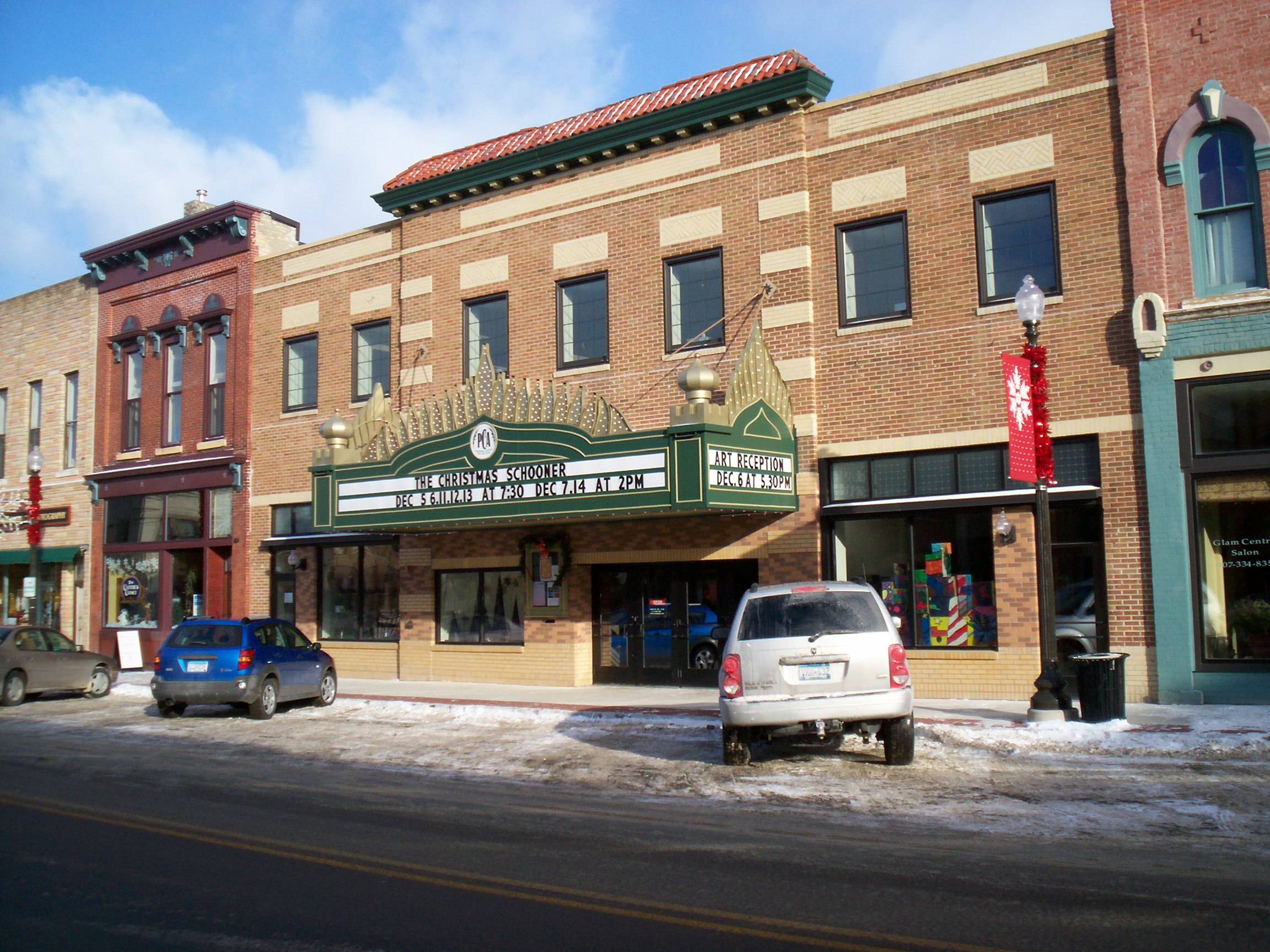
The Paradise Center for the Arts is the cultural hub for theater and art in a historic downtown theater.

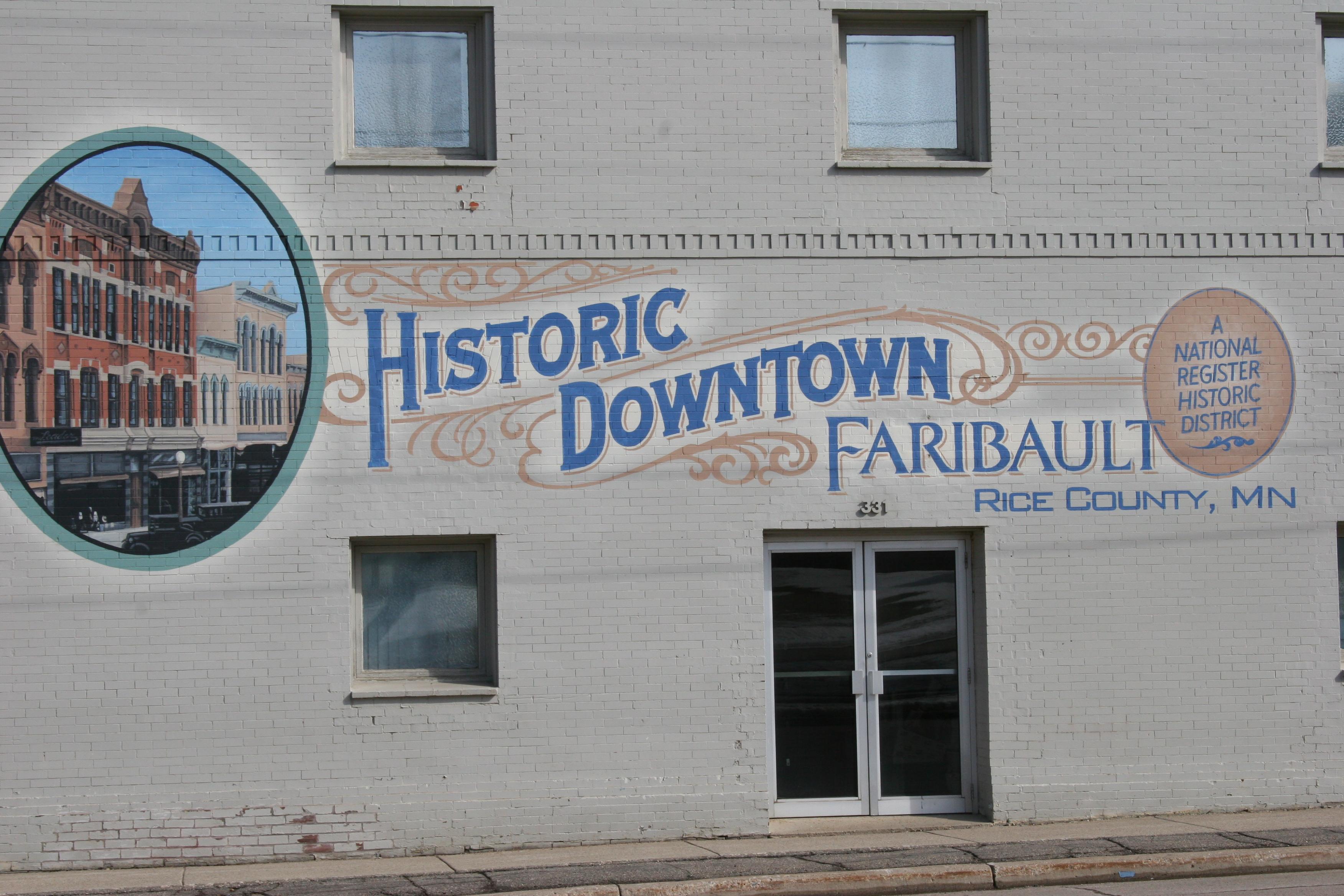
A mural, one of several in the downtown area, promotes historic Faribault.

© Copyright 2010 Audrey Kletscher Helbling
 

The Milty Wilty in Wautoma, Wisconsin January 4, 2011

Filed under: Uncategorized — Audrey Kletscher Helbling @ 8:26 AM
Tags: , , , , ,

UNTIL ABOUT A MONTH AGO, I’d never heard of the Milty Wilty.

In fact, I’d never been to Wautoma, the small, central Wisconsin town that is home to this old-fashioned drive-in. But my husband and I were driving through Wautoma, moving our second eldest daughter to eastern Wisconsin, when I spotted the Milty Wilty. For sure there’s a story behind that name.


The Milty Wilty, which I photographed while we were driving through Wautoma, Wisconsin..

If the drive-in had been open, we would have pulled in. But it’s closed for the season.

You can bet that next summer, when we’re passing through Wautoma again, we’ll stop at the Milty Wilty for a treat. According to several online reviews, the1947 diner serves rich and creamy, light-as-a-feather custard ice cream in huge cones.

I expect the place will be hopping with locals and tourists lining up for that custard or a thick, creamy shake.

My cousin Bev lives in Wautoma. She says the area lakes draw the rich people (OK, she may not exactly have said “rich people,” but that’s what she meant) from Milwaukee and Chicago. I believe her. I saw lots of fancy houses along the lakeshore on the edge of Wautoma.

But I also saw that vintage Milty Wilty along Wisconsin Highway 21. And, honestly, it’s down-home places like that small-town drive-in which appeal to me more than any lakeside McMansion.

You can’t put a price on nostalgia, on a place like the Milty Wilty.

IF ANYONE HAS BEEN to the Milty Wilty, feel free to submit a comment. I’d love to learn more about the drive-in, including how it got its name. Do you have a favorite Minnesota (or Wisconsin or other-state) drive-in? Submit a comment, too. I’m always looking for interesting places to visit when I’m on the road.

© Copyright 2010 Audrey Kletscher Helbling
 

Heading back home to the southwestern Minnesota prairie for Christmas December 26, 2010

We drove along U.S. Highway 14 as we traveled to southwestern Minnesota for Christmas. This stretch is between the Sanborn corners and Lamberton.

FOR THE FIRST TIME in decades, my family and I celebrated Christmas Eve with my mom and four of my five siblings, and their families, “back home” on the southwestern Minnesota prairie.

It was my mom’s wish that all of us be there, attending Christmas Eve church services with her at our home church, St. John’s Lutheran in Vesta.

Our Christmas together was as wonderful and memorable and as full of laughter and love as I expected it would be.

Initially, I doubted that we would make the 2 ½-hour trip west given the steady snow that began falling early Christmas Eve, slicking the highways and creating difficult driving conditions. But by the time we left Faribault around 2:30 p.m. Friday, the snow had stopped and major highways were clear.

So, with the trunk packed full of luggage, air mattresses and sleeping bags, presents and coolers, the five of us crammed ourselves into the car (along with pillows and board games on our laps) for the journey to Redwood County. We were headed first to my brother’s house just north of Lamberton.

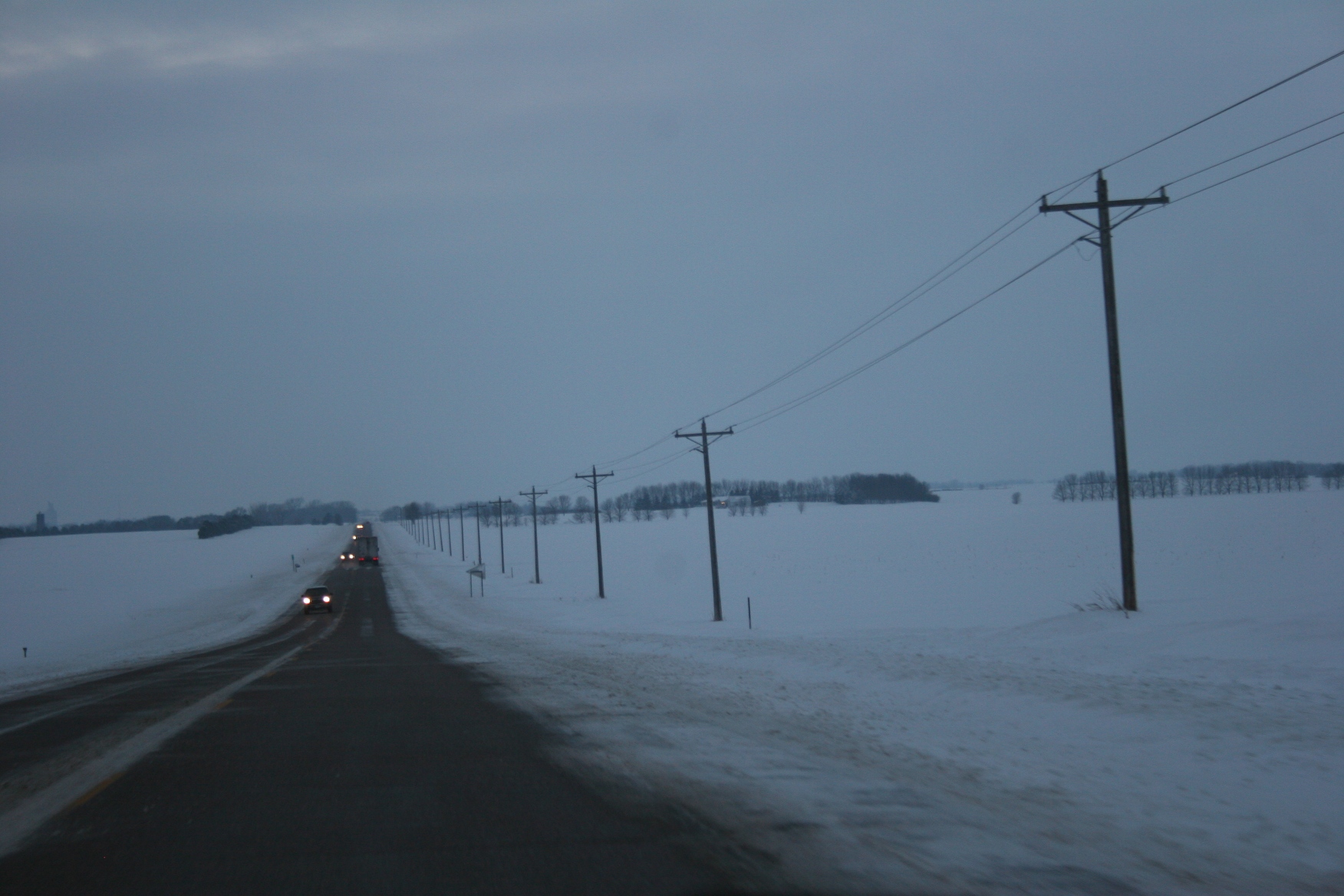
When we got to New Ulm, nearly 1 ½ hours into the trip, I dug my camera out of the camera bag wedged near my feet and snapped occasional photos of the prairie. It is the land I most love—the place my kids call “the middle of nowhere.”

A train travels east along U.S. Highway 14 between Essig and Sleepy Eye while we travel west.

I love this land of plowed fields and wide open spaces, of small-town grain elevators occasionally punctuating the vast skies, of cozy farm sites sheltered by barren trees.

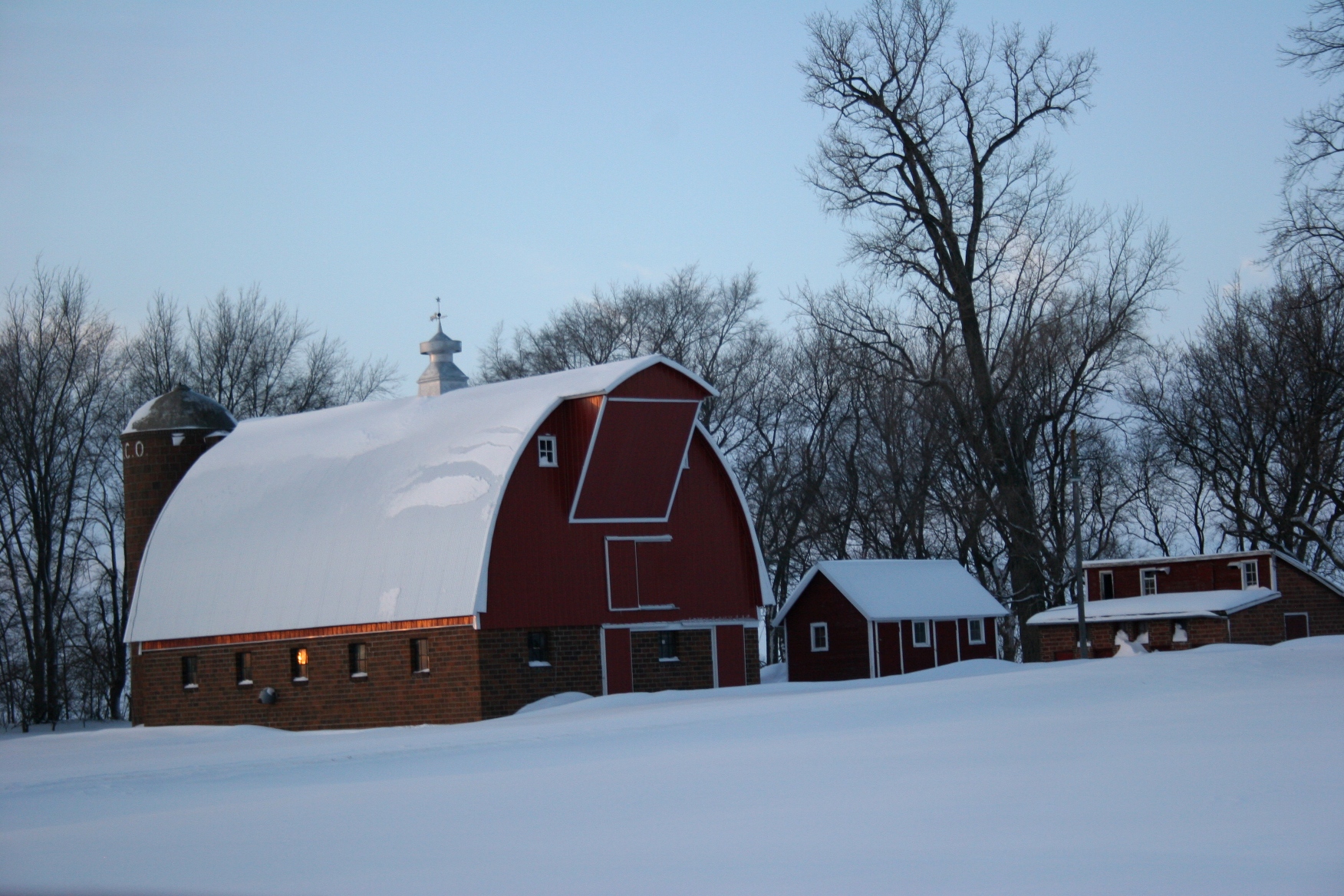
I love, especially, the red barns accented by the fresh-fallen snow, portraying an agrarian beauty that perhaps only someone who grew up on a farm can appreciate.

As much as I have disliked all of the snow we’ve had this winter, I saw only a beautiful winter wonderland when I was back home for Christmas on the prairie.

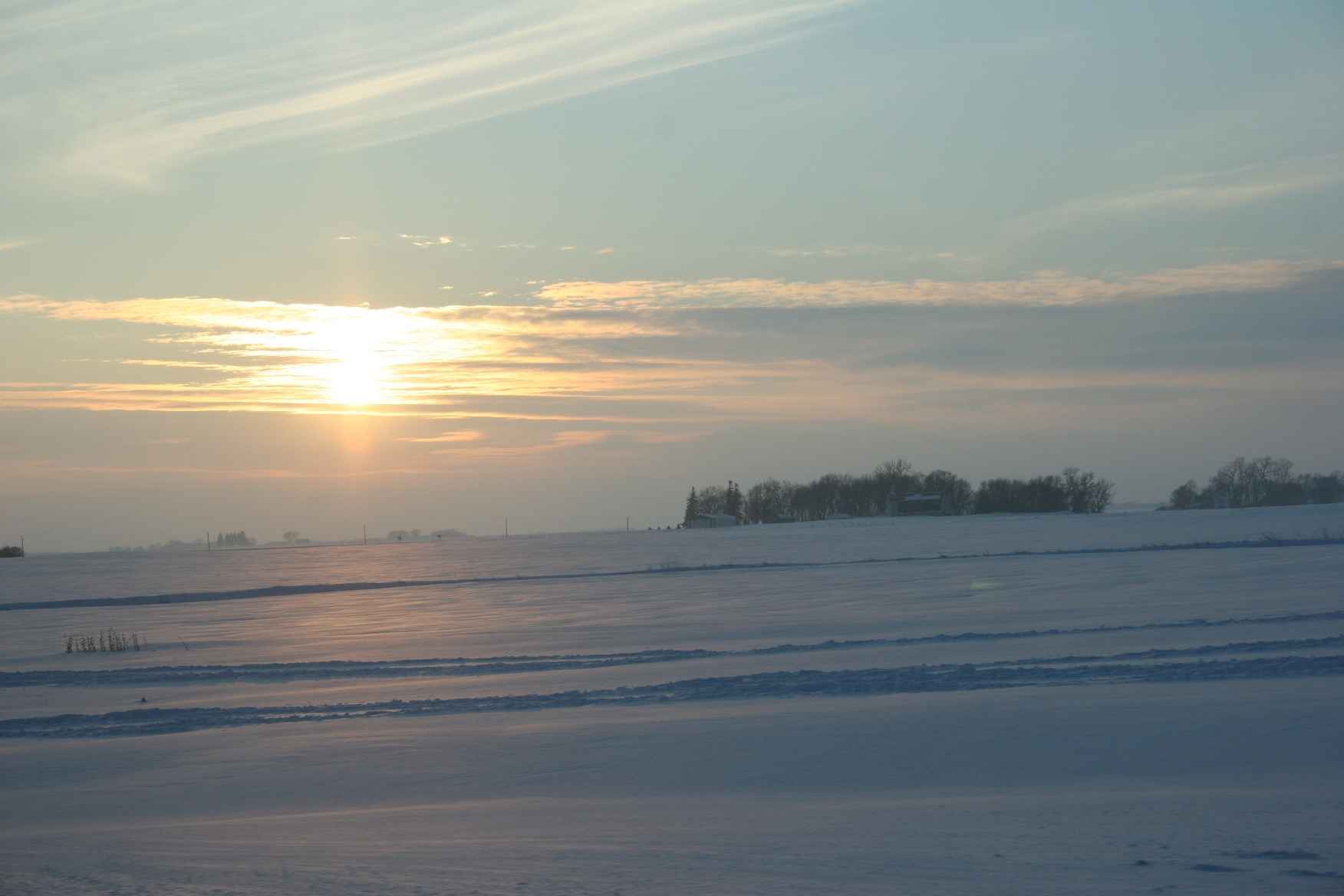
The sun begins setting over the prairie as we head west, passing through Sleepy Eye and Springfield before reaching Lamberton. We saw only occasional glimpses of sun on a mostly gray day.

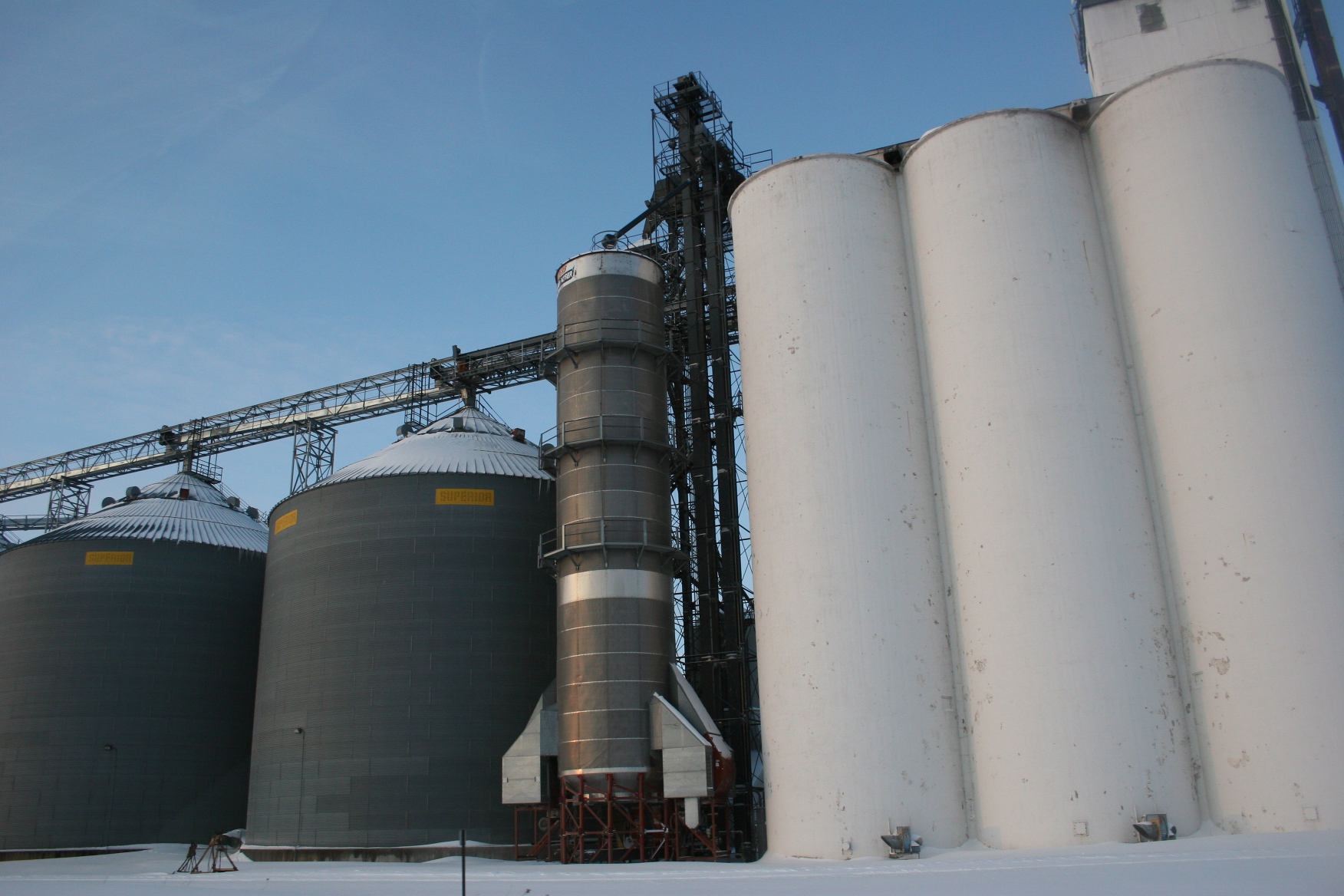
The elevators in Sleepy Eye. Small-town prairie elevators like this can be seen for miles away.

One of many picturesque barns along U.S. Highway 14.

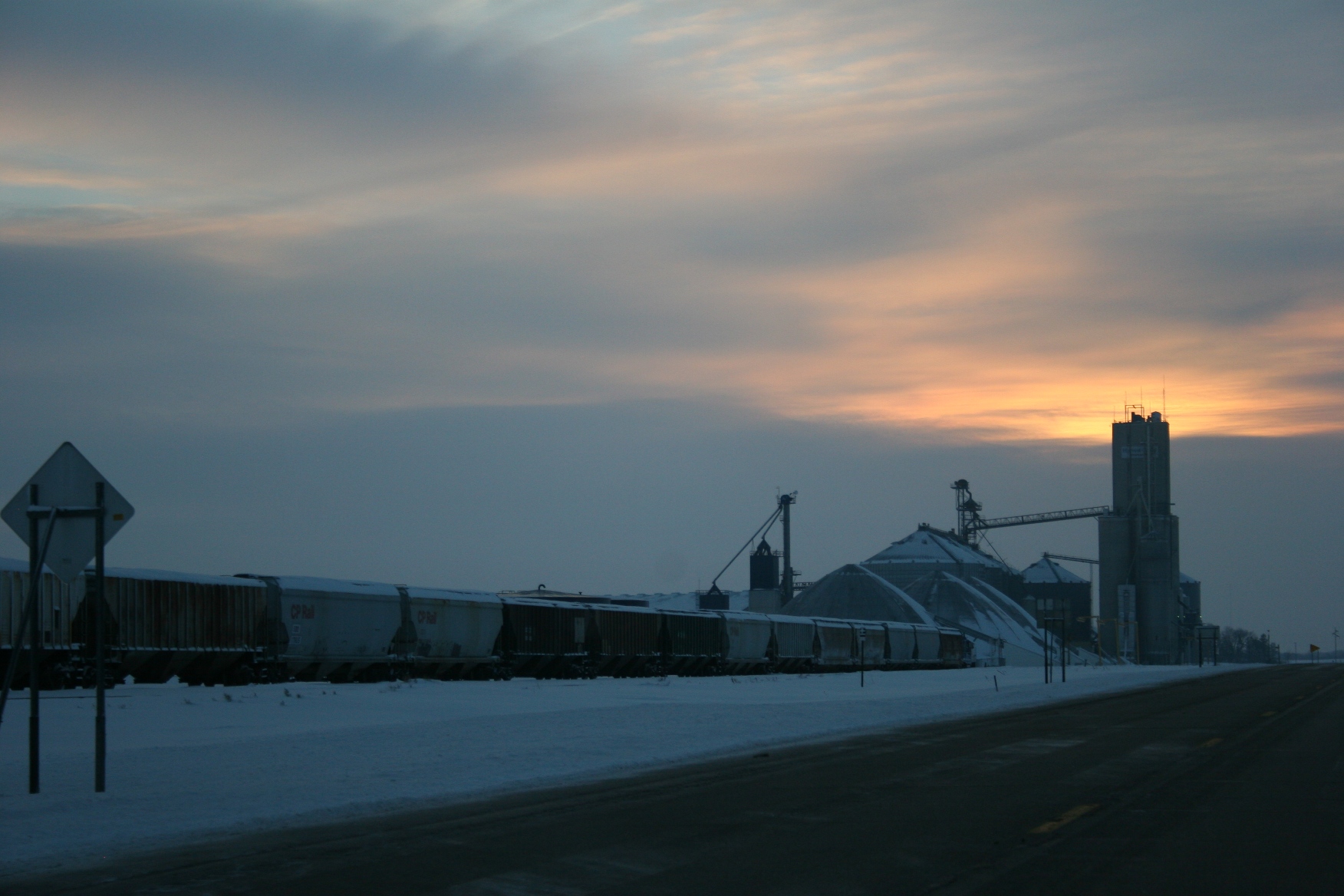
Elevators and trains are a common site along U.S. Highway 14 in the rich farmland of southwestern Minnesota. We've nearly reached our destination when I photograph this elevator complex near sunset.

© Copyright 2010 Audrey Kletscher Helbling
 

Traveling Wisconsin State Highway 21 December 10, 2010

Filed under: Uncategorized — Audrey Kletscher Helbling @ 9:04 AM
Tags: , , , , , , ,

THIS PAST WEEKEND my husband and I moved our second-born to eastern Wisconsin, where she just started a job as a Spanish medical interpreter. Our mission focused primarily on transporting her possessions, carrying them into her second floor apartment, helping her settle in and then leaving the next morning.

That, of course, left no time for exploring the Dairyland state, much to my dismay. I had to settle for viewing the attractions and oddities from the passenger seat of our van.

I settled in for the 300-mile trip with my legs snuggled under a fleece throw and my camera resting in my lap. Whenever I saw something interesting, different or unusual, I clicked away, shooting photos through the side window and windshield which were specked with salt residue.

It didn’t take long before I started seeing roadside cheese signs and fiberglass cows and business names that I found downright intriguing and often amusing.


Wisconsin is, rightfully so, proud of its cheese as promoted in this highway billboard.

Join me for a photographic journey along Wisconsin’s State Highway 21, which slices through the south central part of the state. I didn’t take notes, so I can’t tell you where most of these images were shot. After awhile the towns blend together.

Be assured, though, that the next time we travel Highway 21, we’ll stop and explore. I saw plenty of places—cranberry bogs, an Amish quilt shop, country churches, antique stores, cheese shops, even bars with interesting names—some of which I want to check out. Meanwhile, enjoy this armchair tour, the first in my on-the-road in Wisconsin travel installments.


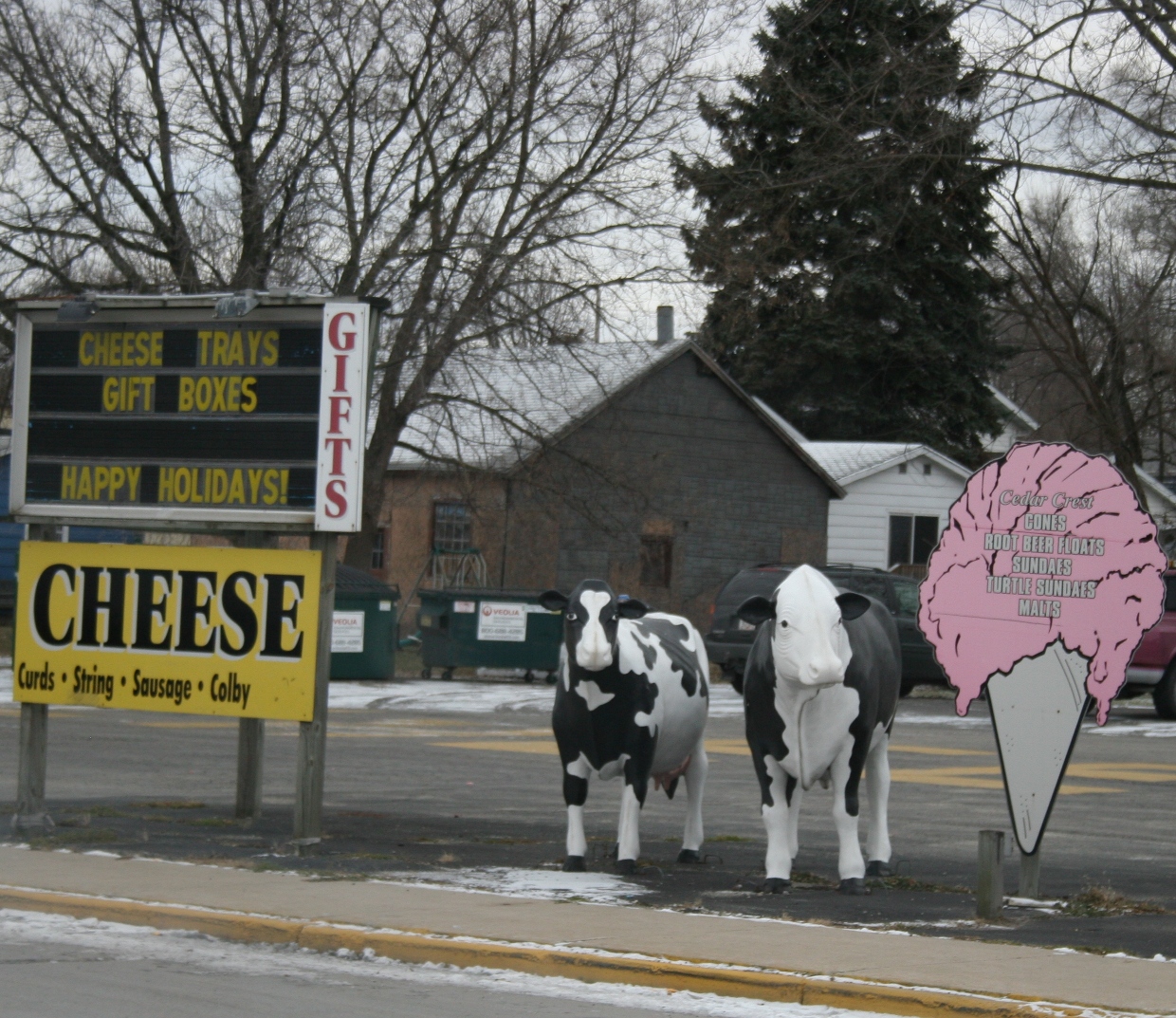
You can't miss these cows and cheese sign right next to Highway 21 in Omro, west of Oshkosh. A sign by the stop sign said we didn't have to stop if we were turning right, crossing over the bridge. It was the oddest stop sign sign I've ever seen. No, I was not quick enough to photograph the stop sign sign. Next trip.

Piggly Wiggly grocery stores are popular in towns along Wisconsin Highway 21. I love the cute, vintage sound of that name. For some reason, I found it humorous that the sign on the right advertises pork chops on special with that smiling pig logo looming overhead. I also hear, via a friend whose brother lives in Wisconsin, that Wisconsinites simply call these grocery stores "The Pig."

Hunting is big in Wisconsin as evidenced by the many "Welcome hunters" signs I saw. And then I spotted this sign in Wautoma, our one brief stop to have lunch with my cousin Bev..

I wondered...are gals welcome too at Guy's Discount Grocery & Liquor? Wisconsin seems more lax with its liquor laws than Minnesota. Grocery and liquor stores are housed together with no dividing walls or doors between them. In Appleton, a sign inside a grocery store advertised the city's new ordinance allowing liquor sales from 8 a.m. to midnight. From the produce department, you could walk right into the liquor department. Oh, and all the store employees were wearing Green Bay Packers jerseys.


Hands down, here's the funniest bar name I saw on signage along Wisconsin Highway 21--the Stumble Inn

© Copyright 2010 Audrey Kletscher Helbling
 

Travel stories from Argentina November 10, 2010

Filed under: Uncategorized — Audrey Kletscher Helbling @ 8:28 AM
Tags: , , , , , , ,


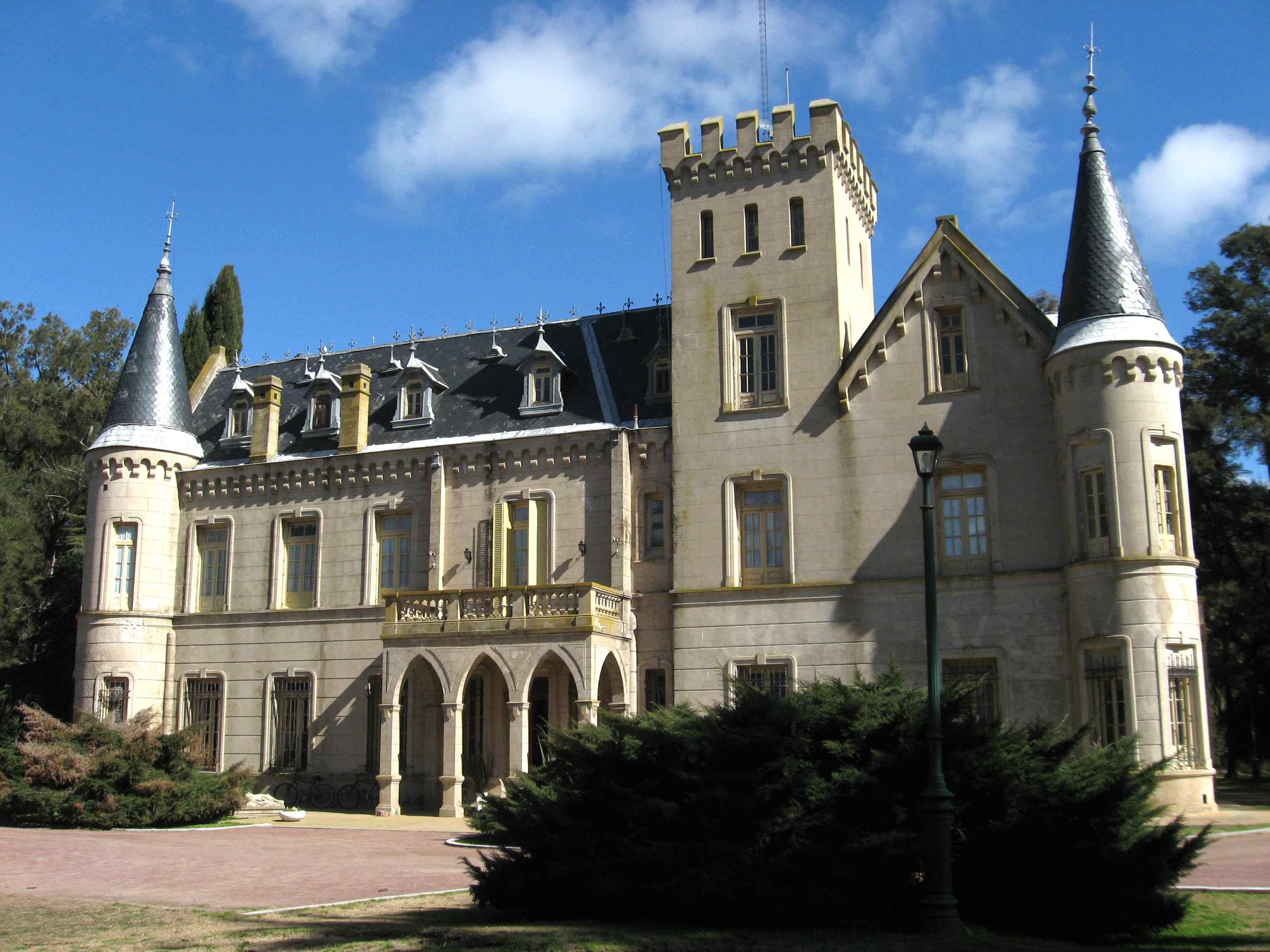
Castle at Estancia La Candelaria in Argentina.


AS DIFFERENT AS my second-born and I are—she’s a fearless traveler, I’m not—we share a common passion and talent. We are both writers.

I never purposely led Miranda on this path, although I suspect that my endless reading aloud of books to her as a child instilled a basic love of language.

She chose to pursue writing on her own with me offering encouragement from the sidelines. In high school, she served as co-editor of the student newspaper, never backing down even when challenged by the principal. At the University of Wisconsin- La Crosse, she also wrote, and edited, for the student newspaper.

Last week Miranda began freelancing for examiner.com, St. Paul. She’s a travel writer with the online entity, and a darned good one. She focuses on Argentina, her adopted country, and the place where she’s studied, done mission work and interned. She just returned from Buenos Aires three weeks ago after a 4 ½-month stint there, her second time in that South American capital city.

Since her return to Minnesota, Miranda has been searching for a job that will utilize her Spanish-speaking skills. She has a Spanish degree and wants to work as an interpreter or translator. I don’t think it’s any coincidence that she opted for minors in international studies and communications studies.

While she searches for employment, Miranda is volunteering with a local charitable service center, helping with Spanish interpreting.

She is also staying connected to the Latin America culture via those examiner.com, St. Paul, articles. She’s penned some interesting features about gauchos, a Buenos Aires cemetery, a favorite pancake restaurant and Mafalda, Argentina’s most popular comic strip. But don’t take my word for it. Read for yourself by checking out the travel section of examiner.com, St. Paul.


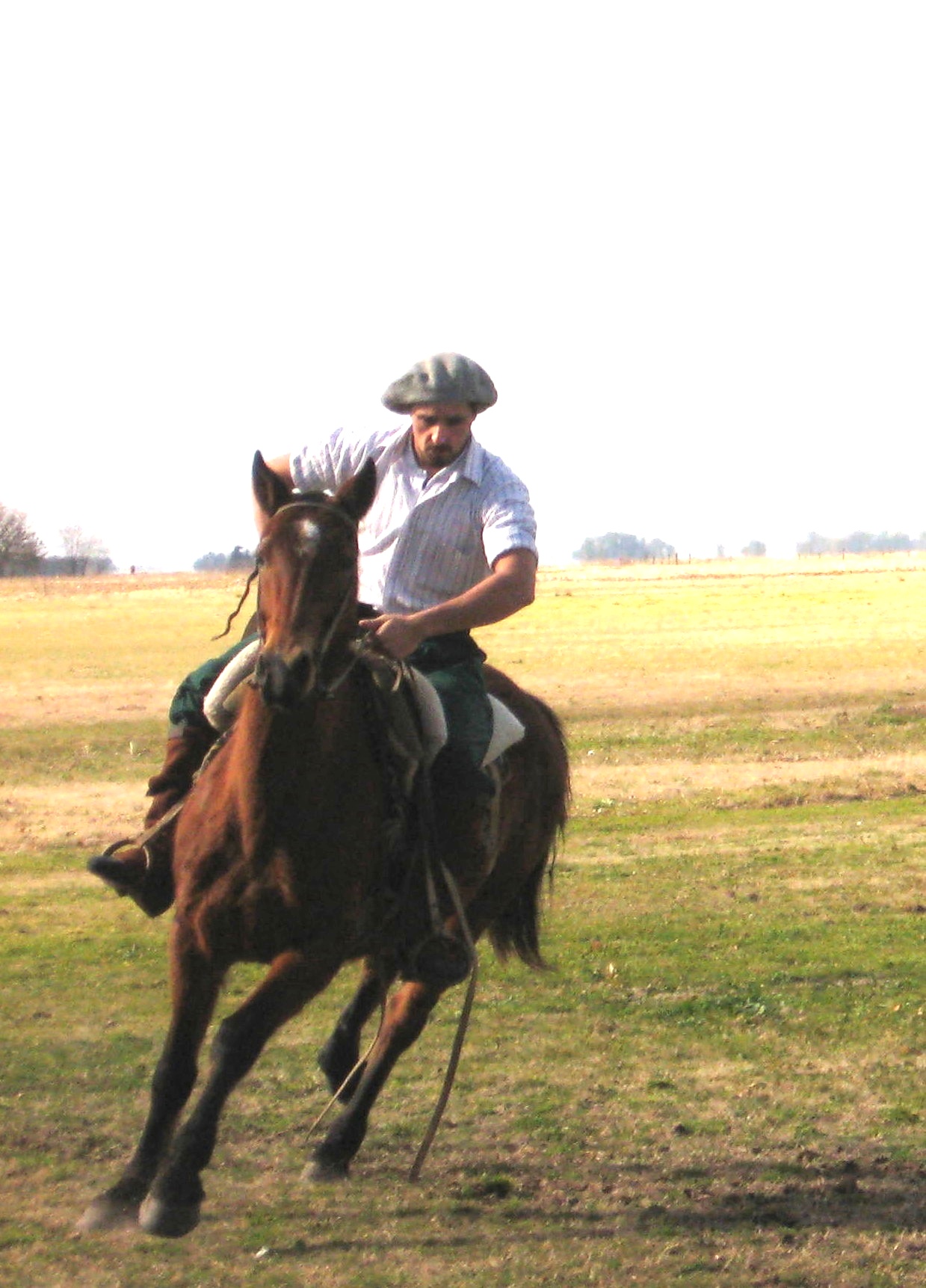
An Argentine gaucho


Statue at Chacarita Cemetery, Buenos Aires, Argentina


PHOTOS BY MIRANDA HELBLING

© Copyright 2010 Audrey Kletscher Helbling
 

An attack in Argentina and how I’m dealing with the crime in Minnesota September 29, 2010

Filed under: Uncategorized — Audrey Kletscher Helbling @ 7:50 AM
Tags: , , , , ,

WHEN THE PHONE RANG early Tuesday afternoon and I picked up to a dial tone, I didn’t think much of it. Just another telemarketer, I figured. But then, the phone sounded again and my 20-something daughter was on the line, speaking to me from Argentina.

“It’s good to hear from you,” I say, surprised really that she is calling given we spoke only several days earlier.

“Well, uh, Mom, I was robbed last night,” she tells me.

I am shocked, momentarily speechless, until I spit out the dreaded words, “Are you OK?”

She is. But her purse and all of its contents are gone—her debit and credit cards, and other important identification, her cell phone and camera. She is stranded, without money, or access to money, with only her passport, in northern Argentina, hours and hours away from her temporary home in Buenos Aires and 6,000 miles from her Minnesota home.

I am thankful, first, that she has not been physically hurt. She sounds fine; she’s had more time than me to digest what’s happened.

Then I ask for details because I need to know how this happened. My daughter shares how she and her friend Ivanna were walking through a “nice neighborhood” toward downtown around 8:30 p.m. Monday when a man came out of nowhere from behind them. He grabbed for my daughter’s purse and as she fought off her attacker, Ivanna screamed for help. Eventually the man got the purse as my daughter fell to the ground. Her assailant, in his mid 30s, sprinted away, hopping onto the back of a motorcycle driven by his accomplice.

Then my second-born tells me she saw no gun, no knife, and I am relieved, yet scared all over again thinking about the possibilities.

All I want is to see my daughter, to hug her, to feel her hair brushing against my cheek, to tell her I love her, to keep her safe.

But for now I can only listen and offer words and lay out a plan to deal with the aftermath of this crime. She and Ivanna immediately went to the local police station. My daughter tells me they waited for an interminable time to speak to the single employee who was working. Several other employees there were simply joking around, she says, and offered no assistance.

Vicariously I am already angry with the police system in this large northern Argentine city. I wonder what today will bring when the two must return to the police station to work on a composite sketch of their attacker.

Back here in Minnesota, I have already spent hours on the phone contacting companies and agencies about the stolen cards. Everyone I’ve talked to has been kind and understanding when I explain what has happened. That reduces the stress level some. Yet, all the phone calls, all the directives to do this and that are wearing on me. During several conversations my voice cracks and I struggle to keep from totally breaking down.

I know this could happen to anyone, anywhere. My oldest daughter, who lives in Minneapolis, tells me this, that this crime could happen on the streets of Minneapolis. She is right. Yet, when an assault like this occurs in a foreign country, 6,000 miles from Minnesota, the whole situation becomes more complicated by distance and communication issues.

I have no doubt that my daughter will recover. She is a strong woman.

As for me, I am counting the days now—23 of them—until she arrives at The Minneapolis-St. Paul International Airport. I cannot wait to have my daughter back, safe in my arms, far from the men who would rob her, and me, of our security.

© Copyright 2010 Audrey Kletscher Helbling
 

If only I could have gotten inside this prairie antique store September 13, 2010

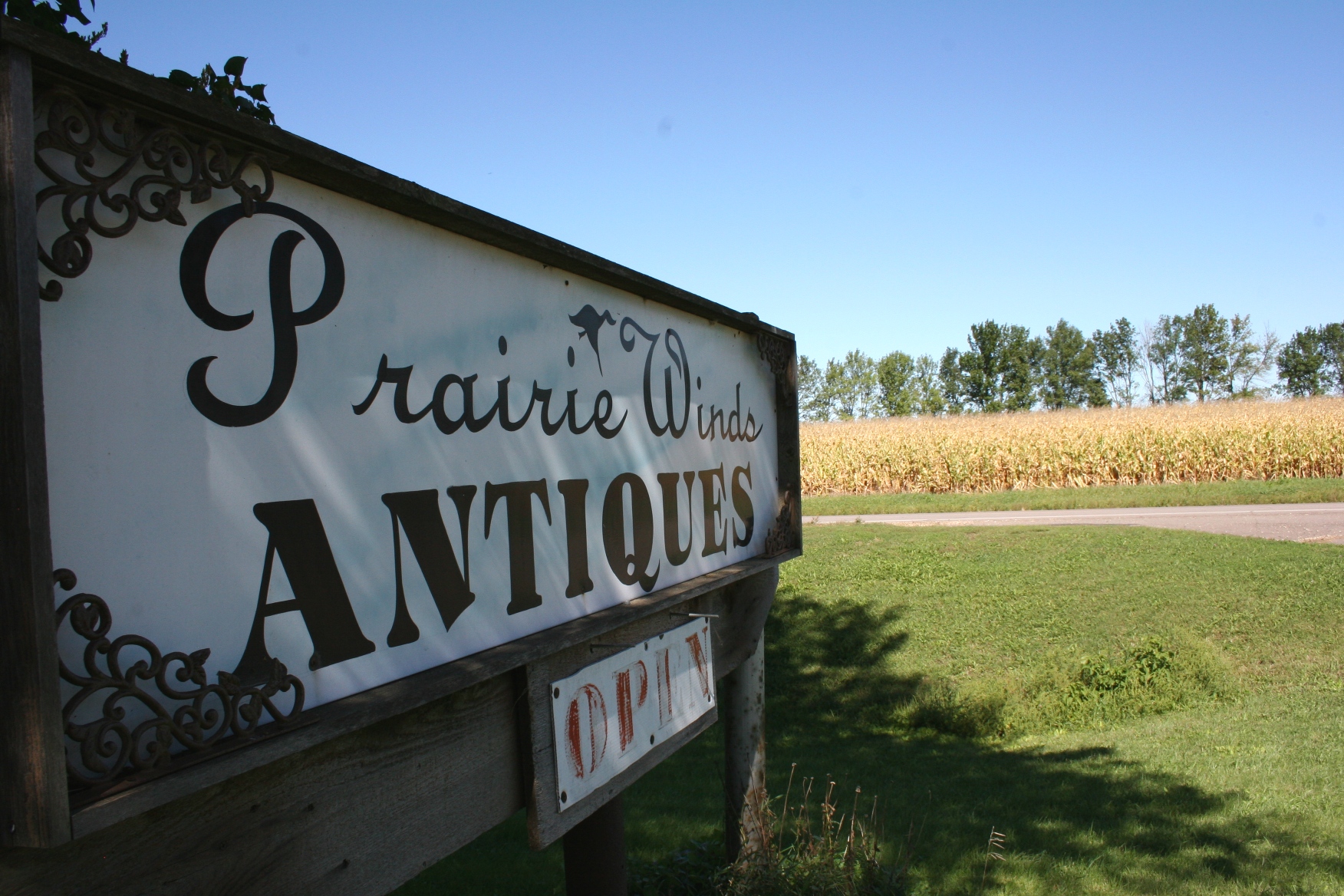
LATE SUNDAY MORNING we turned off the Laura Ingalls Wilder Historic Highway in Springfield, pulled by the prairie winds.

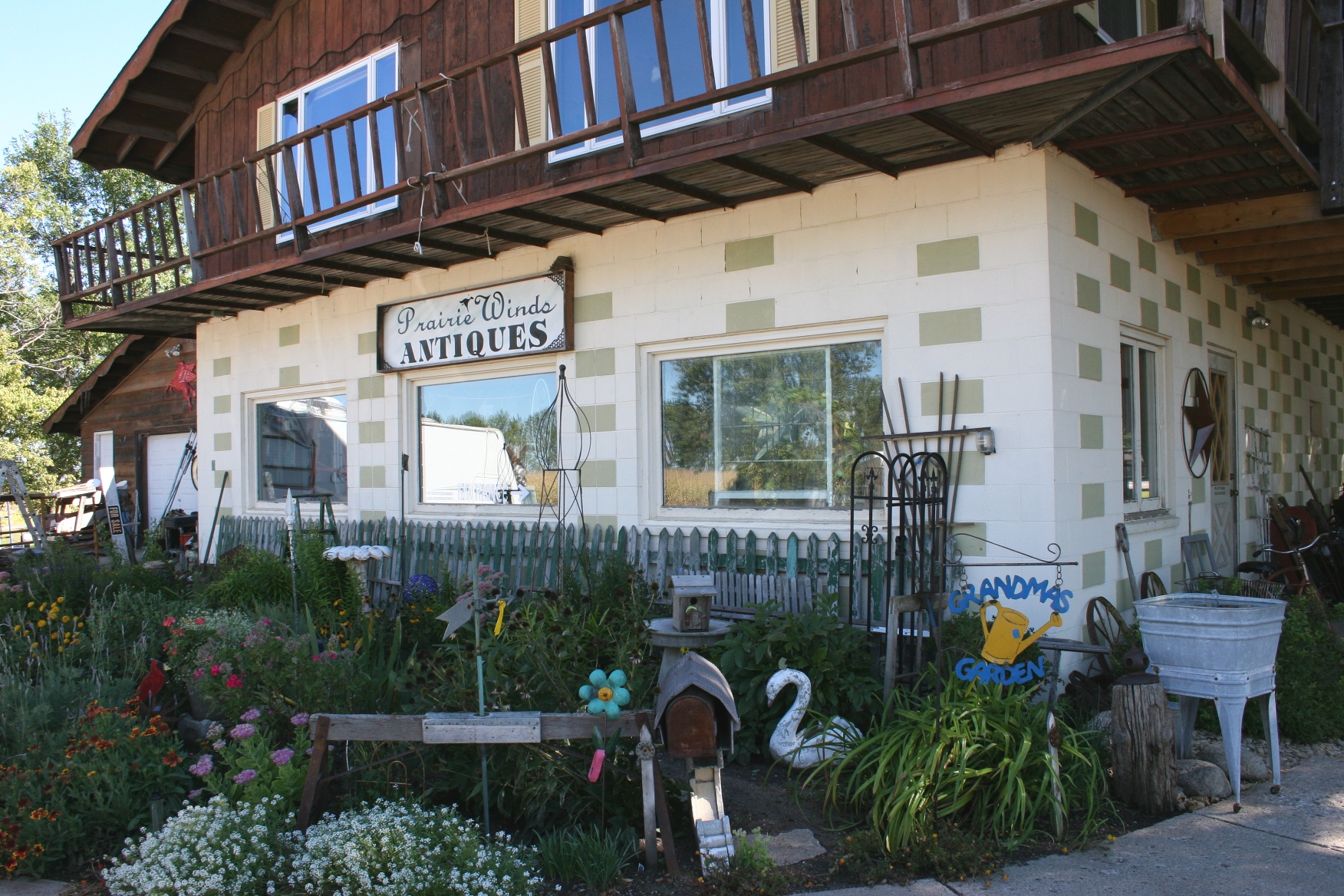
That would be Prairie Winds Antiques, an appropriate name for a business on the edge of this farming community on the wind-swept prairie of southwestern Minnesota.

My sister Lanae had stopped there the day before and picked up an antique—shelves or a box or something—I never saw it.

“There’s an antique store in Springfield?” I asked, even exclaimed when she raved about the place.

“Oh, yeah,” she said.

And that was enough to draw me to Prairie Winds Antiques. So, Sunday, as my husband, son and I were returning to Faribault from a weekend in rural Redwood County, the guys indulged me (sort of) and we pulled off U.S. Highway 14.

I must clarify that this stop did not come without protest from the teenager in the back seat who was reading a book and was overtired from a night of star-gazing under the inky black expanse of prairie sky.

But we stopped anyway, and lucky for him, but unlucky for me, Prairie Winds Antiques was closed, despite the OPEN sign.

Despite the OPEN signage, Prairie Winds Antiques was locked late Sunday morning.

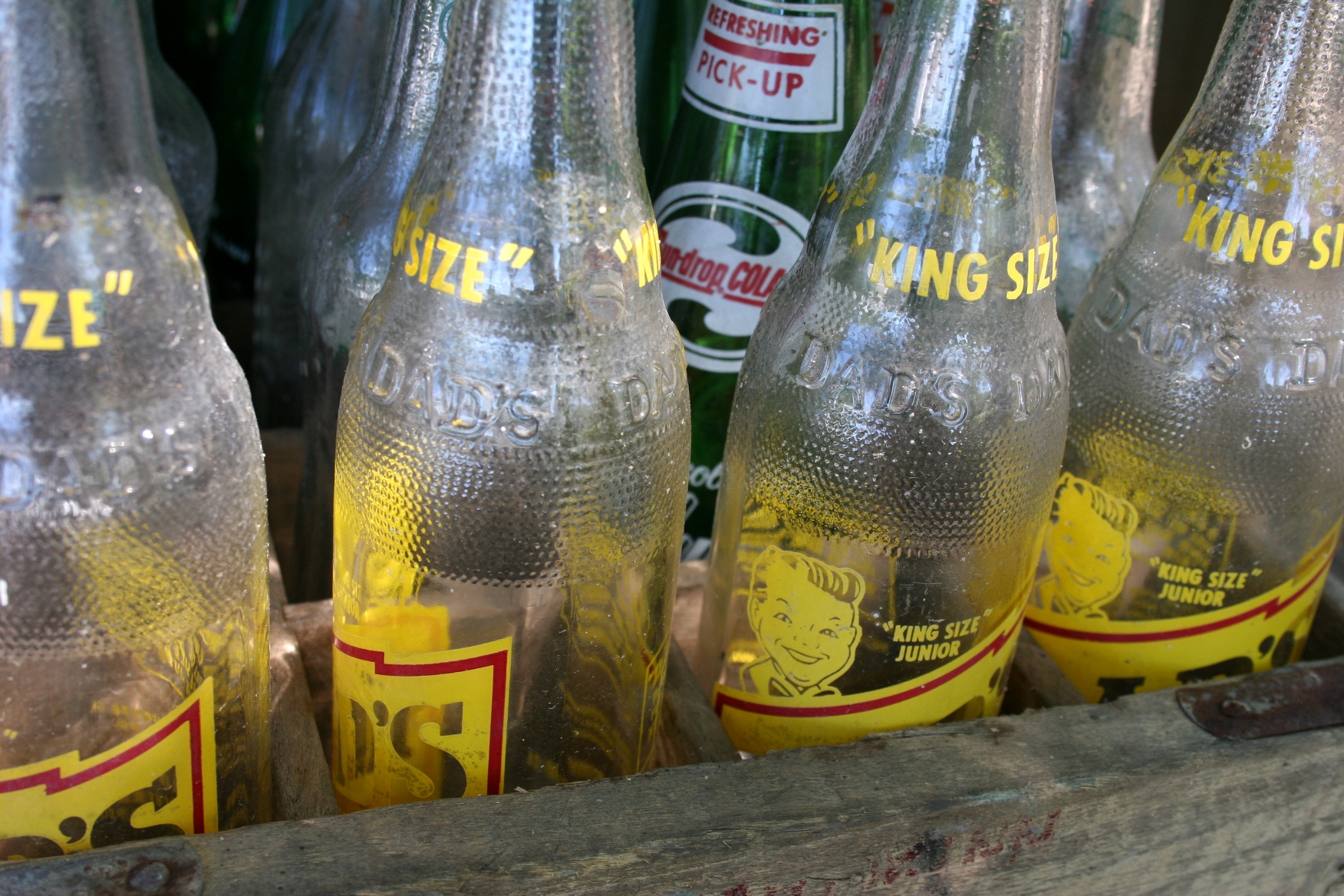
That didn’t stop me from poking around the exterior of the shop, where a cluttered yard full of antiques and collectibles sat exposed to the elements. Pails, tables, signs, farm machinery, garden art, soda bottles, wash tubs, bicycles, sleds, an old car…lots to peruse in the presence of an impatient son.

Even outdoors, you'll find lots of antiques and collectibles at Prairie Winds Antiques.

So I hurried as quickly as I can hurry around old stuff, snapping a few photos and wondering if the pile of stuff that looked like it was in a pile of junk to be burned was really a pile to be burned. I was tempted to take the painted wooden bird with the spindly wire legs from the burning pile because it reminded me of the kitschy painted wooden yard art my grandpa staked in his front yard.

But I didn’t.

You can bet that the next time we’re driving U.S. Highway 14—the road west so many years ago for those brave, adventuresome pioneers—that we’ll pull into Prairie Winds Antiques again. I need to get inside that place. Oh, yeah.

The wooden crates crammed with old soda bottles remind me of the days of my youth when pop was a treat reserved for special family celebrations like birthdays.

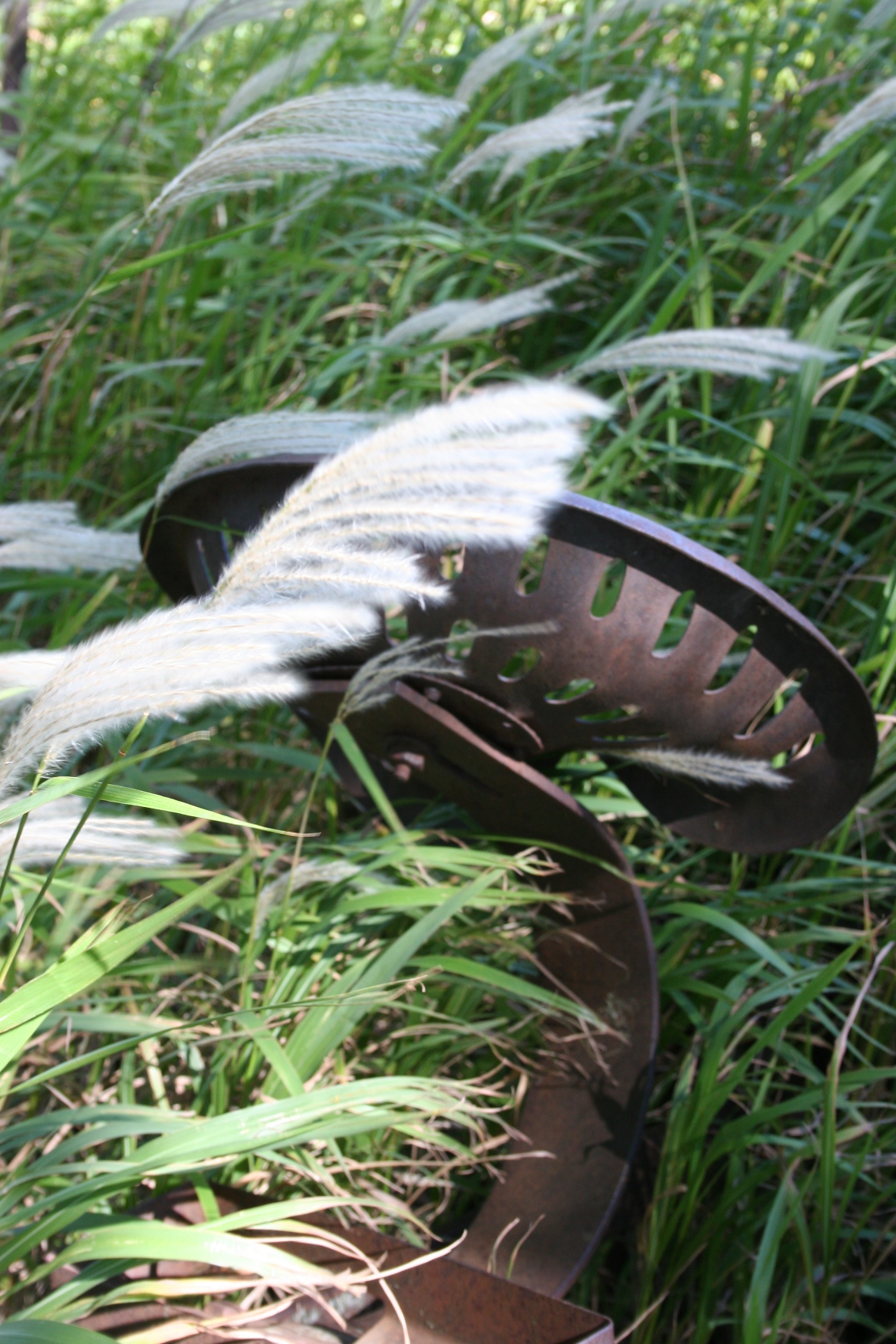
On-site prairie grasses dip and sway in the wind around old farm equipment at Prairie Winds Antiques on the west edge of Springfield.

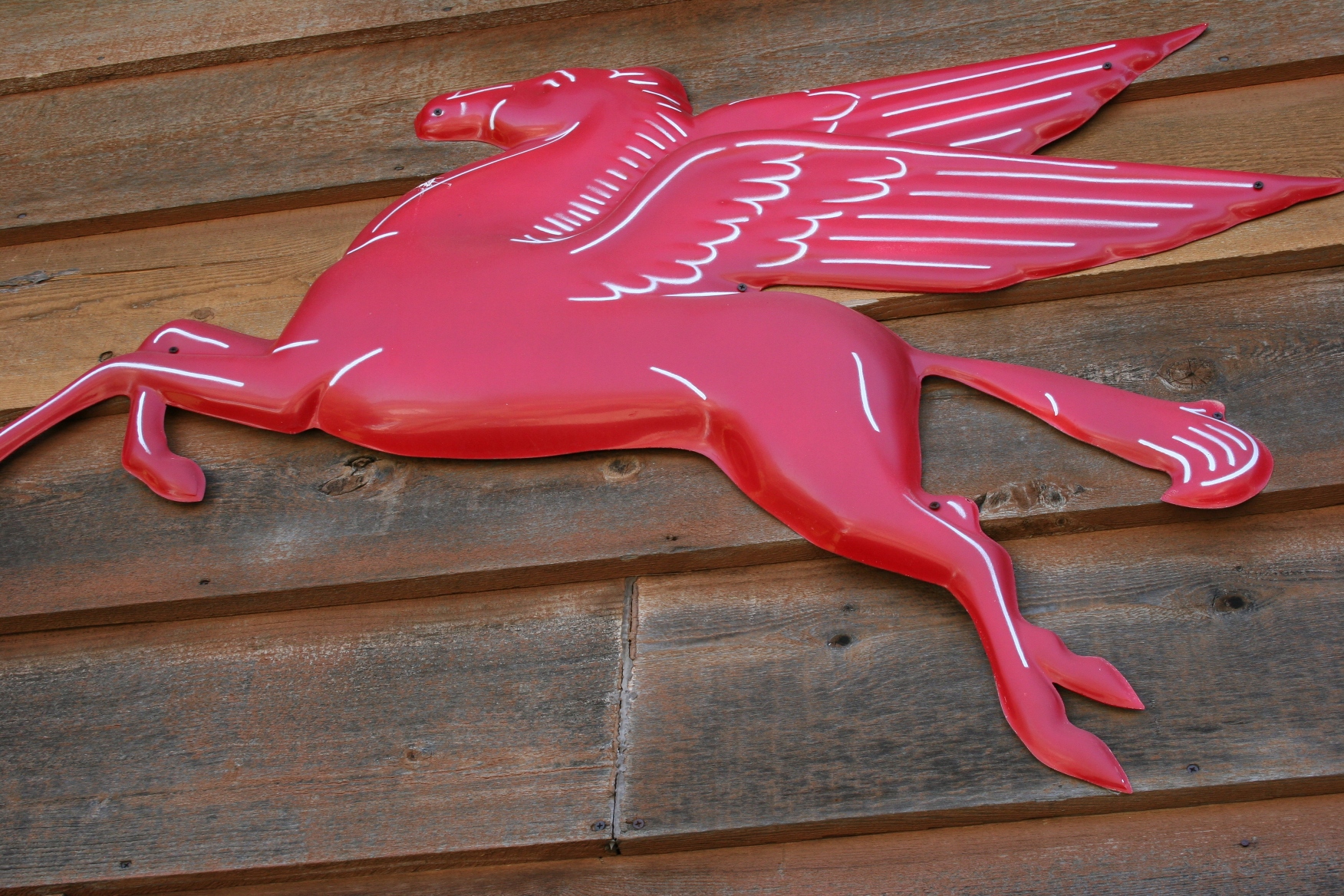
This Flying Red Horse is attached to the garage at the antique shop. I've always had an affinity for this gas station symbol. As a youngster, when our family traveled once a year to visit relatives in Minneapolis, our dad always told us to "Watch for the Flying Red Horse." I don't recall why or where that horse was located; it may have been a landmark to direct us to the right road. I wish I could remember.

I spotted this grasshopper clinging to the edge of a long, weathered table sitting in the yard at the antique store. I immediately thought of the grasshoppers that, in the days of Laura Ingalls Wilder, infested this land and destroyed crops. Wilder wrote about the grasshoppers in her "Little House" books.

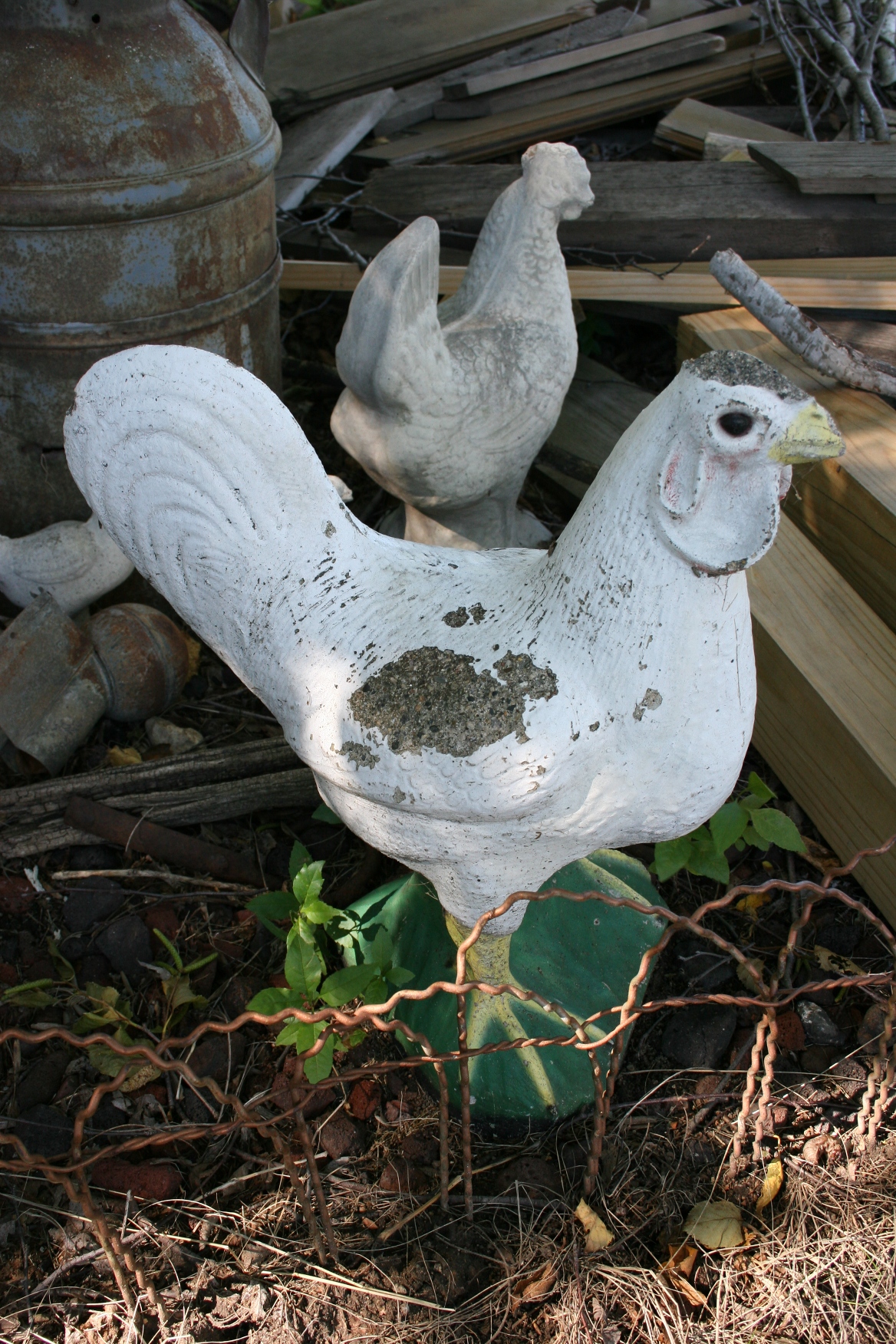
I do not like real chickens, not one bit. But these two free-range fake birds charmed me. I cannot even believe I just wrote that.

© Copyright 2010 Audrey Kletscher Helbling