Blowing snow reduces visibility during a prior winter storm in Rice County. (Minnesota Prairie Roots copyrighted file photo)
AS I WRITE this Tuesday afternoon, a sense of foreboding looms. Grey, with a tinge of otherworldly light, defines the sky. Branches of bare trees lean. Unbalanced. Darkness encroaches, presses upon the earth with an anticipatory heaviness. By the time you read this, my area of southern Minnesota will be under siege with a full-blown blizzard. Unless the weather forecasters are wrong.
But this time the forecast of up to eight inches of snow with wind gusts topping 55 mph seems likely. I’ve already asked Randy to stay home from work because driving 24 miles in white-out conditions would not be smart. Or safe. The National Weather Service warns of treacherous travel, potentially life-threatening conditions. Power lines and trees laden with heavy wet snow could snap.
The weather rather matches my mood. I feel a sense of foreboding on so many levels. I struggle sometimes to see the light for the grey skies, for the oppressiveness that prevails. I wonder what will happen next. What storm is brewing?
(Minnesota Prairie Roots copyrighted file photo)
During a weather event, I can prepare. Take precautions. Buy bread and milk (note I didn’t write, “buy eggs”). Stay home. Shelter in place. Face whatever comes. I’ve lived through blizzards, wind storms and even a tornado. I am a hardy American who happens to live in Minnesota, next to our wonderful Canadian neighbors.
And so that is the approach I must take. Stand strong against the negative forces. Speak up. Continue to show compassion, care, kindness, love. Hold hope. Understand that blizzards don’t last forever, although this one seems never-ending.
A city of Faribault snowplow hits the road during a past winter storm. (Minnesota Prairie Roots copyrighted file photo)
Every single snowplow matters in removing burdensome snow from roadways. Imagine what a fleet of snowplows can do against the deepest snow drifted by raging winds. I’ve seen the results. Roads are cleared. The snow melts. The sun shines. Winter ends. The trees bud green. That is my visual hope during these grey days tinged with an otherworldly light.
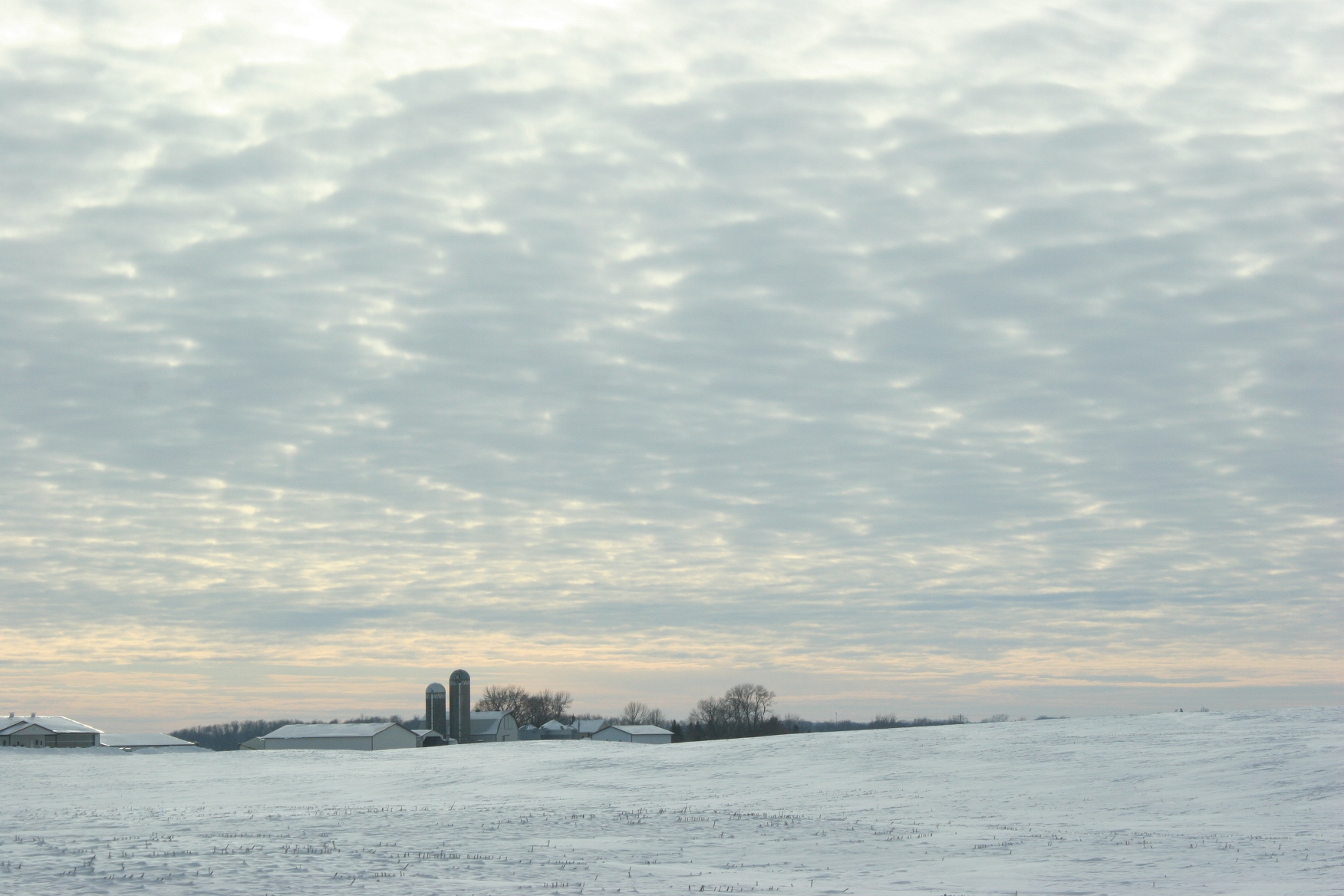
One of my favorite winter photos, of a farm site along Interstate 35 north of Faribault. (Minnesota Prairie Roots copyrighted file photo 2019)
WE MINNESOTANS PRIDE ourselves on our winter hardiness. But this week is testing even the hardiest among us as temps drop into the double digit subzero range. Add the wind and it feels like -30 to -40 degrees outdoors. No wonder extreme cold warnings have been issued for our state. Exposed skin can freeze in minutes. No wonder schools are closing and shifting to e-learning.
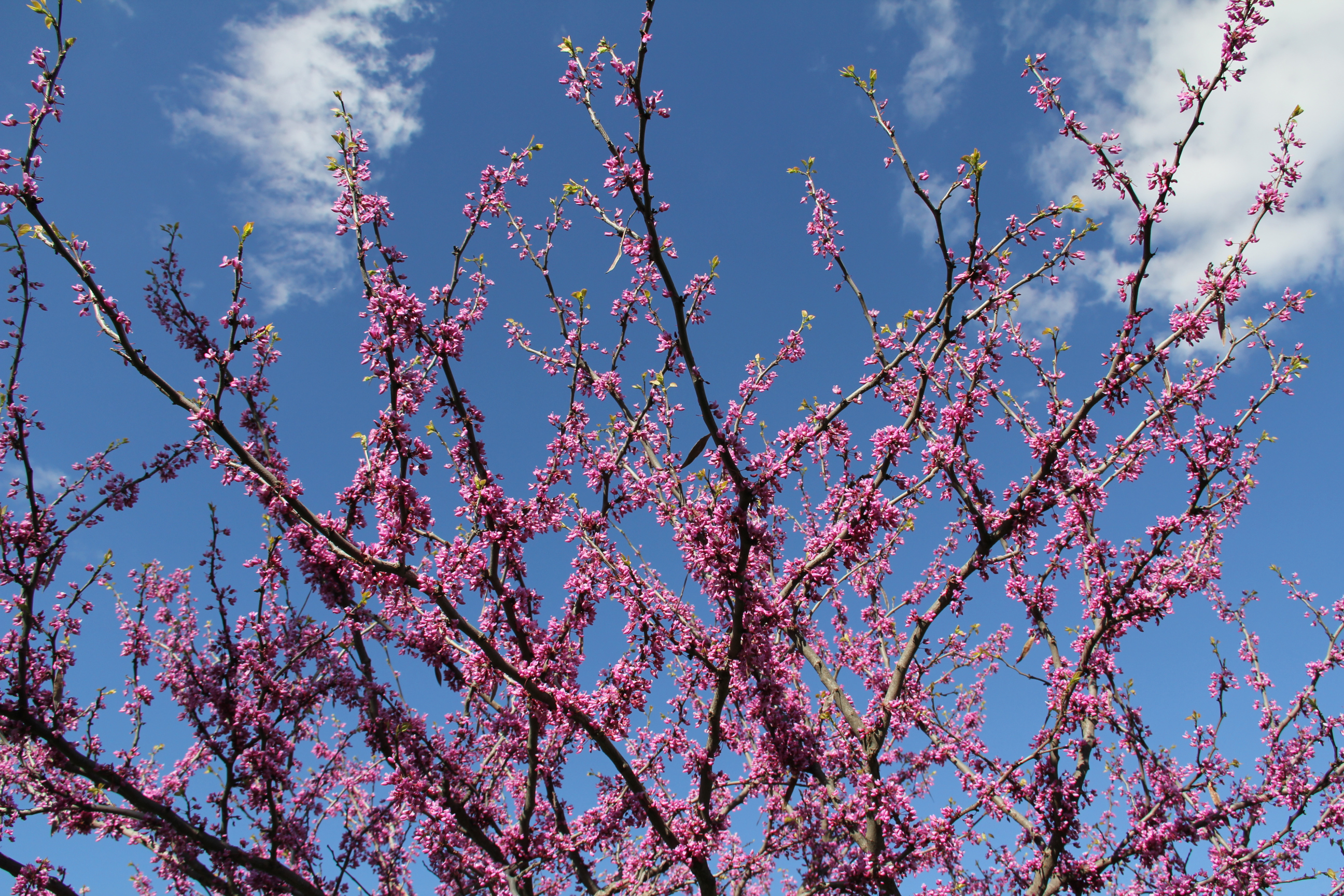
A flowering tree, photographed in Faribault in spring. (Minnesota Prairie Roots copyrighted file photo May 2024)
The bright sunshine fools no one. It’s an illusion of warmth. But the sunshine also reminds me that much warmer days are only months away, that winter isn’t forever, that we will get through this cold spell. We always do.
Photographed at the Cathedral of Our Merciful Saviour garden in Faribault. (Minnesota Prairie Roots copyrighted file photo August 2024)
But as I wait and (mostly) shelter indoors, I find myself drawn to floral photos I took during the spring and summer. Images which visually remind me that the snow will melt, the earth will thaw and warm, seeds will grow, flowers will flourish and these frigid days of winter will be only a memory.
Coneflowers, Rice County Master Gardeners’ Teaching Gardens, Faribault. (Minnesota Prairie Roots copyrighted file photo August 2024)
It’s a bit of a psychological endeavor, this convincing myself that spring will be here “before we know it.” Some days, especially during a cold snap, that seems almost laughable. I admit, my appreciation of winter has diminished as I’ve aged. I’m not alone in feeling that way among my Baby Boomer friends, which is likely the reason many flee to warmer climates for a week, or even months, during winter. I say good for them if that’s a feasible option. It’s not for me.
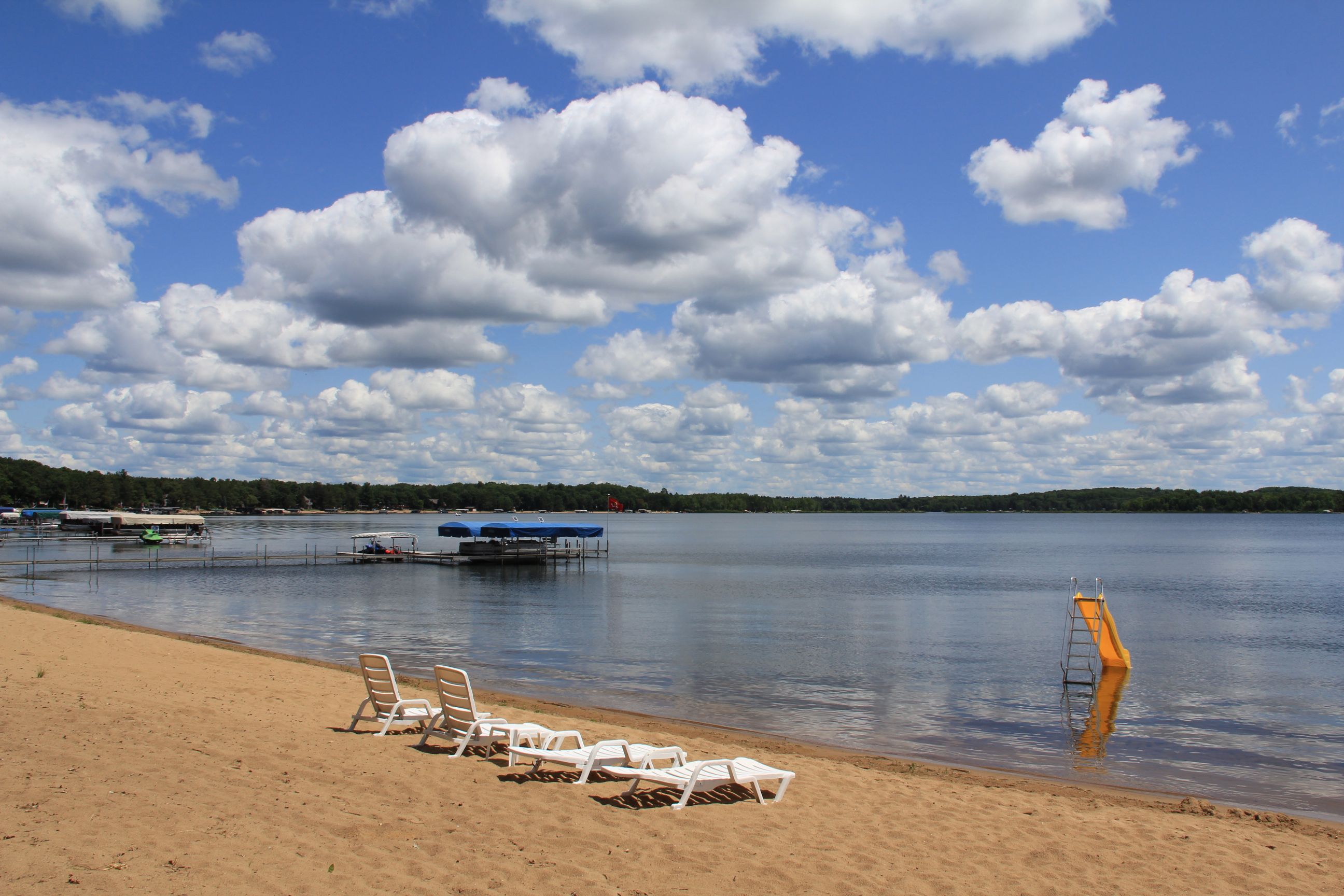
Dreaming of summer days at Horseshoe Lake in the central Minnesota lakes region. (Minnesota Prairie Roots copyrighted file photo July 2023)
So I find ways to cope. Read more. Write more. Walk indoors at the mall instead of outside. And when I do go out, bundle up, clamp a stocking cap on my head without care that it flattens my hair. Eat dark chocolate. Drink tea. Cook soups and chili. Pull out my warmest sweater to layer over a tee and flannel shirt. Connect with friends more. Remember hot summer days Up North at the cabin.
Tulips, one of the first flowers of spring in Minnesota. (Minnesota Prairie Roots copyrighted file photo May 2020)
And never forget that the flowers will unfurl in the sunshine and warmth. Bold, beautiful, vibrant blooms. Lovely. Filling my soul and spirit in a poetically beautiful way that winter can’t.
Bring out the cold weather gear like this photographed at a vintage snowmobile show during a past Winterfest. (Minnesota Prairie Roots copyrighted file photo)
WITH AIR TEMPS DIPPING into the single digit subzero range and windchills at around minus 25 degrees on recent mornings in Minnesota, we’ve been in a bit of a cold snap. We’ll get a several-day respite of 30 degrees before temps plunge again, dipping to even colder early next week when an arctic front moves in.
All this cold got me thinking about ways to define a cold snap. It’s not only about the way it feels, but also how it sounds and looks, yes, looks.
Here’s how a cold snap feels: Like a slap on the cheeks. Biting, bitter, unbelievably cold. Exposed skin can freeze in 10-15 minutes.
The cold of a cold snap also feels like ice on bare feet during a night-time trip to the bathroom. But even before that, cold feels like I-don’t-want-to-get-out-of-bed-from-under-these-warm-covers-because-the-house-is-cold. Our thermostat is set at 62 degrees at night. Comfortable, except during a cold snap when outdoor air seems to infiltrate the indoors.
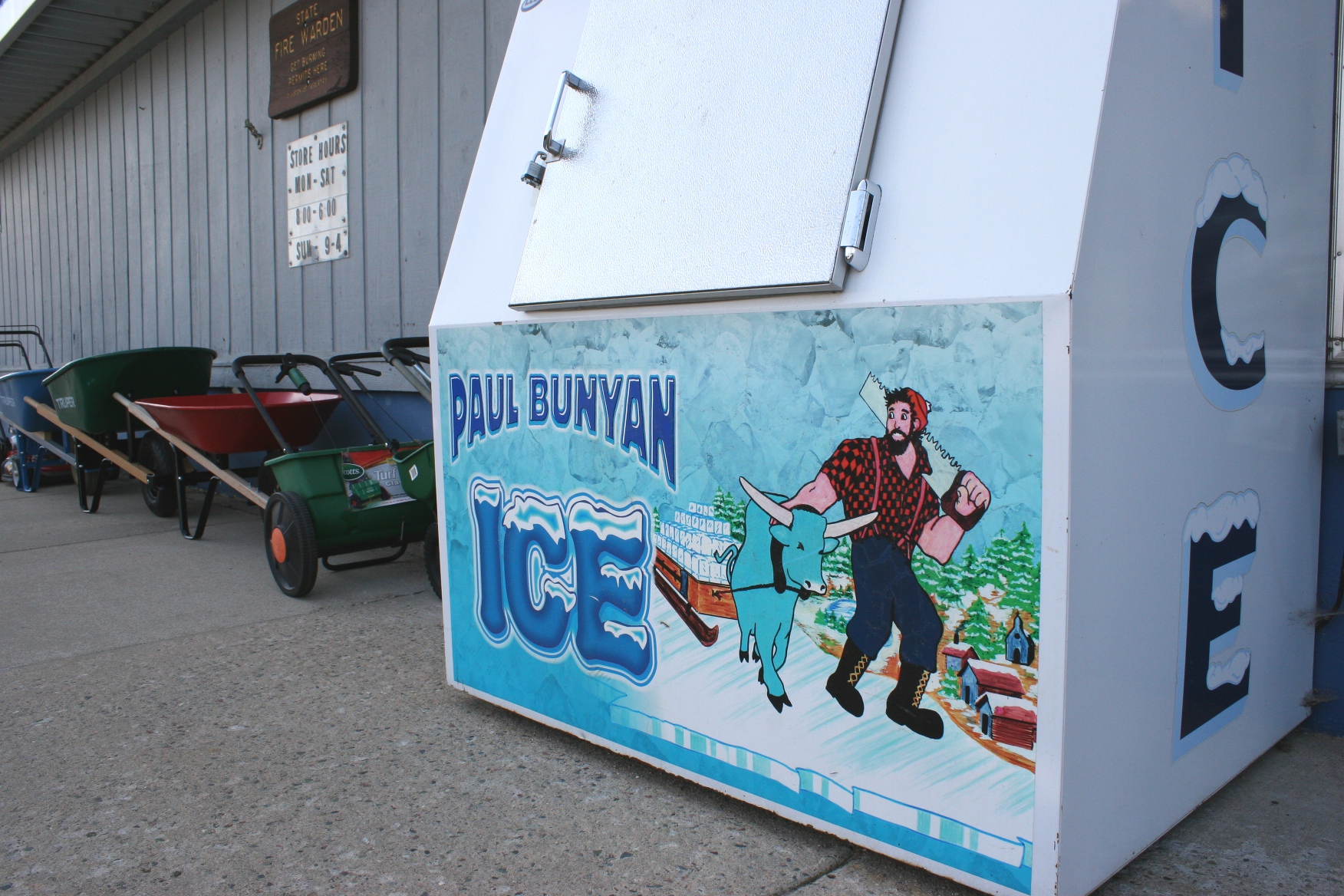
Legendary lumberjack Paul Bunyan has made wearing buffalo plaid flannel fashionable in Minnesota. Here he’s depicted on an ice machine outside Thurlow Hardware and Rental, Pequot Lakes. (Minnesota Prairie Roots copyrighted file photo)
These are the days of layering, of pulling out the warmest flannel or fleece. I wear a tee, topped by a flannel shirt, topped by a sweatshirt or sweater. Randy has pulled out his heavy duty quilt-lined flannel shirt that visually widens his girth. Who cares about fashion? Not me. The goal is to stay warm.
In the evenings, with the thermostat set at 68 degrees, we find additional warmth under fleece throws or, whoever grabs it first, under an especially warm fleece-lined denim quilt. We opt not to crank up the heat in an effort to keep our energy bill down. Even with that, heating an old house with natural gas gets costly.
Chicken Wild Rice Soup, one of my favorite soups, served at a fundraiser in St. Peter years ago. I made a batch of this soup earlier this week. (Minnesota Prairie Roots copyrighted file photo)
A cold snap feels like dry, itchy skin; aching joints; a parched throat. I’m drinking more water and tea. Water flowing from the tap first thing in the morning is ice cold. I’m cooking more soups and comfort foods like Chicken Wild Rice Soup and lasagna.
These deeply cold mornings, Randy warms the van before leaving for work. The sound of tires on the street past our house carries a sharpness and, if snow layers the pavement, tires crunch. Bitter cold holds a distinct, almost indescribable, sound.
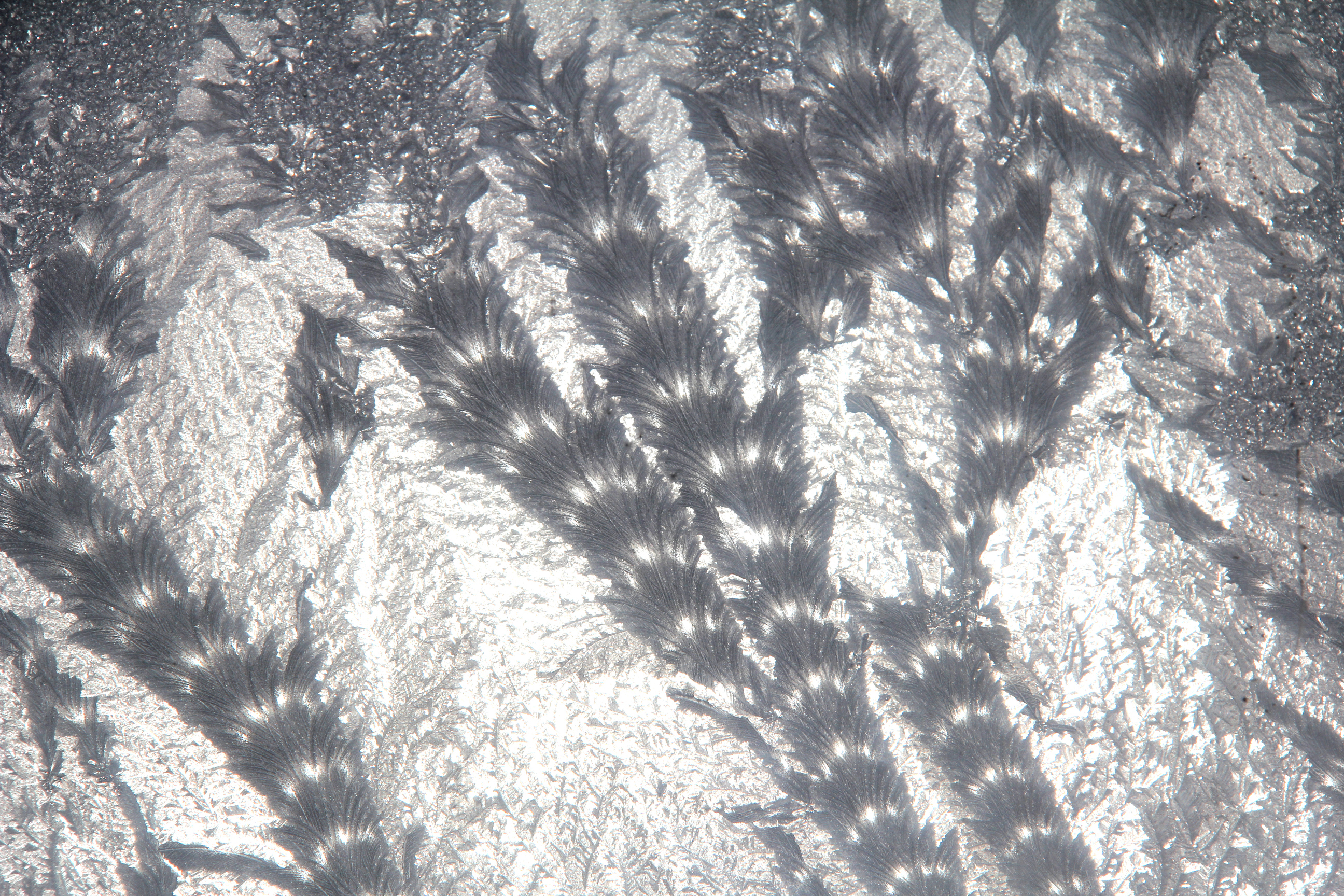
Frost art on an upstairs window during a past winter. (Minnesota Prairie Roots copyrighted file photo)
Inside and outside, a cold snap is visible. I see it in the line of frost edging the bottoms of exterior doors. I pull a rag rug snug against the lower edge of the front door to block the draft. I see cold in the intricate frost patterns painted on bedroom windows upstairs.
These cold winter days have me dreaming of summer days at a central Minnesota lake cabin. (Minnesota Prairie Roots copyrighted file photo July 2020)
And when I look outside from my relatively warm house, it simply looks cold, the sky clear, the bright sunshine only an illusion of warmth. For many Minnesotans, though, warmth is a reality as residents escape to warmer places like Arizona, Texas and Florida. Whether for a week, a month or the entire winter, these vacationers and snowbirds seek a break from the bitter cold and snow of a Minnesota winter.
I can’t help but think about those experiencing homelessness, including right here in Faribault. Where are these individuals living, sleeping? Surely not in the tents I’ve seen pitched along the river bottom. In the metro area, facilities are opening as warming centers. So, yeah, even though I’m not fond of this cold snap, at least I have a home.
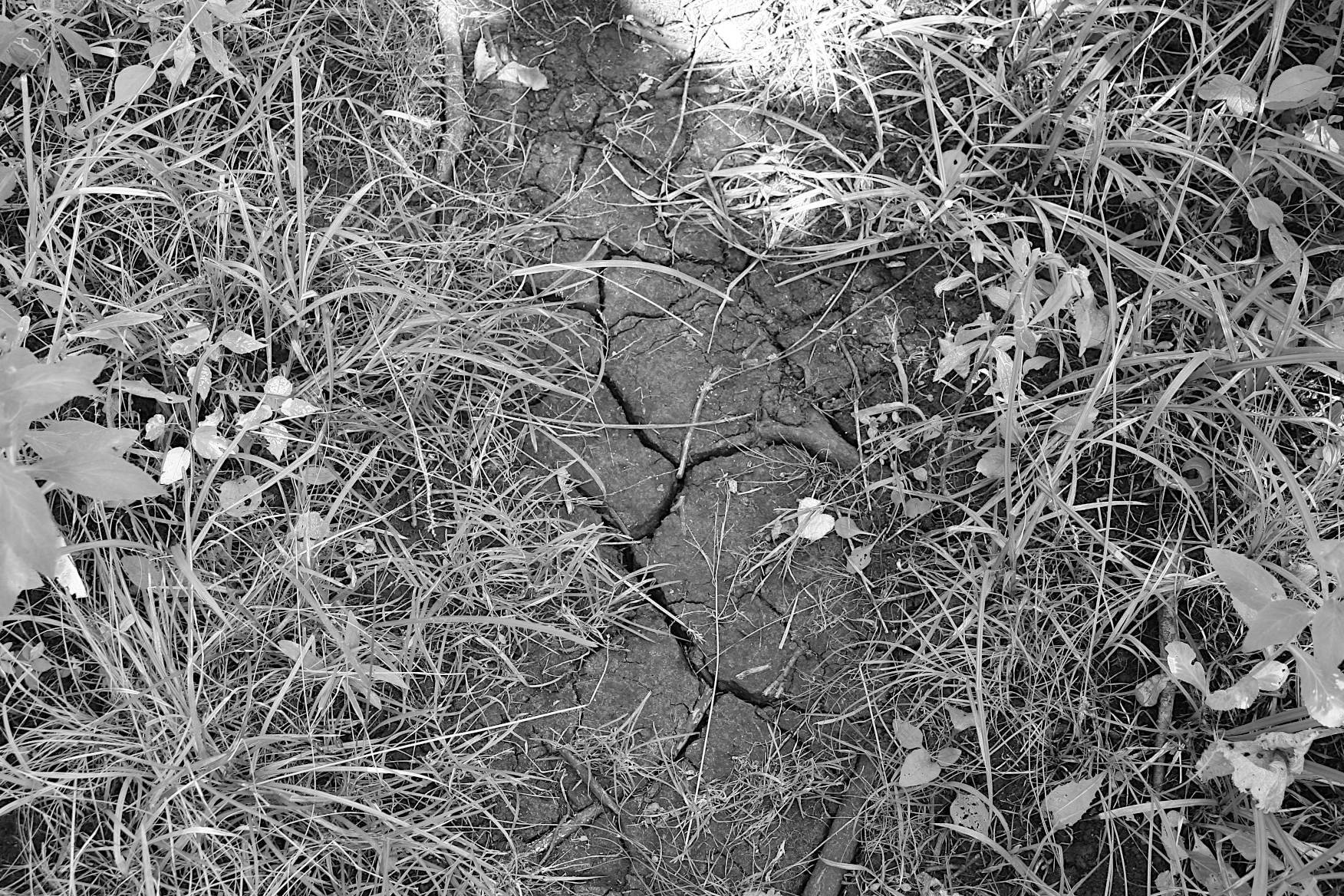
Parched, cracked earth by the Turtle Pond, River Bend Nature Center. (Minnesota Prairie Roots copyrighted file photo August 2021, used for illustration only)
The invitation to the 2012 “It’s All One Water” reception and group show in Zumbrota.
The winning entries were printed in a beautiful 55-page booklet that paired the writing with submitted photos, all themed to water. I opted to pen a poem personifying Autumn as a woman searching for water upon the parched land. To this day I still love that strong visual, inspired by my long ago observations at River Bend Nature Center in Faribault.
And if I were to tap further into my visual memory, I would also see a semi trailer full of hay parked in a southwestern Minnesota farmyard in the summer of 1976. That was a year of severe drought, when my dad bought a boxcar full of hay from Montana so he could feed his cows and livestock. It was the year that nearly broke him as a farmer.
A REALLY DRY & WARM SEPTEMBER IN MINNESOTA
Here we are, 48 years later, settling once again into drought/abnormally dry weather conditions in Minnesota after a winter of minimal snow followed by an excessively wet spring, a dry-ish summer and now a record warm and dry September. This September, the Twin Cities recorded only 0.06 inches of rain and the most days of 80-degree or warmer high temps in any September. It doesn’t feel like fall in Minnesota, more like summer. But at least temperatures cool overnight.
Areas of western and central Minnesota are under a Red Flag Warning today, code words for a high fire danger, due to dry, windy conditions and dropping relative humidity. We are experiencing “near critical fire weather conditions” here in the southern part of the state.
AND THEN THERE’S TOO MUCH WATER
Contrast this with the weather my friends in western North Carolina and other areas affected by Hurricane Helene are experiencing. One is OK (as is her house). But she expects to be without power for a week and is relying on limited cell service at the local firehall. Another friend, a native Minnesotan, lost his car and may lose his home in Hendersonville after a creek swelled, flooding his garage (with four feet of water) and house (30 inches of floodwaters). A foundation wall “blew out” of his home. He is currently staying with family in Florida.
So, yes, even though the lack of rain and abnormally warm weather in Minnesota concern me, I feel a deeper concern for the folks dealing with loss of homes, businesses, infrastructures and, especially, deaths of loved ones. The devastation is horrific. It will take months, if not years, to recover.
RESPECT FOR WATER & MY POEM
In 2012, the following statement published in the intro to “It’s All One Water”: It is our hope to inspire respect, protection, preservation and awe in honor of water, our most precious of Natural Resources. How one views water right now depends on where they live. But I think we can all agree that water is “our most precious of Natural Resources.”
Autumn leaves in the Cannon River, Cannon River Wilderness Park. (Minnesota Prairie Roots copyrighted file photo 2021)
In which Autumn searches for Water
Water. The wayward word rises in a faint rasp,
barely a whisper above the drone of buzzing bees
weaving among glorious goldenrods.
I strain to hear as Autumn swishes through tall swaying grass,
strides toward the pond, yearning to quench her thirst
in this season when Sky has remained mostly silent.
But she finds there, at the pond site, the absence of Water,
only thin reeds of cattails and defiant weeds in cracked soil,
deep varicose veins crisscrossing Earth.
She pauses, squats low to the parched ground and murmurs
of an incessant chorus of frogs in the spring,
of Water which once nourished this marshland.
Autumn heaves herself up, considers her options
in a brittle landscape too early withered by lack of rain.
Defeat marks her face. Her shoulders slump. She trudges away, in search of Water.
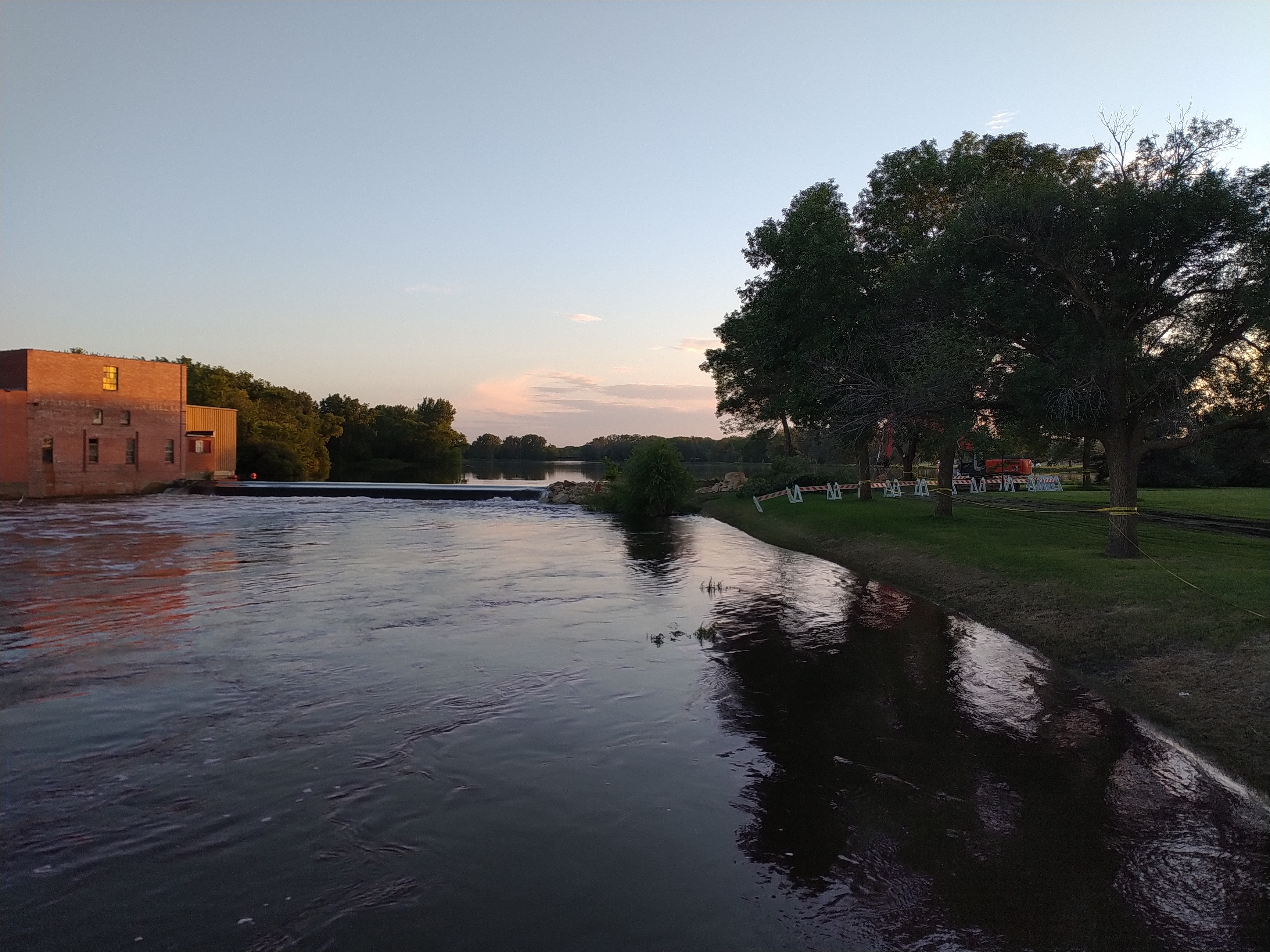
In this cellphone photo from the Second Avenue bridge, you can see the boulders piled across the north edge of the dam, excavator to the right. That’s the Faribault Mill to the left on the Cannon River. (Minnesota Prairie Roots copyrighted photo July 3, 2024)
WHEN I LEARNED late Wednesday afternoon of serious river bank erosion by the Faribault Woolen Mill Dam following recent flooding, one word crossed my mind—Rapidan. Last week the Blue Earth River skirted the Rapidan Dam, eroding the earth and creating a new river channel that eventually claimed buildings, trees and more.
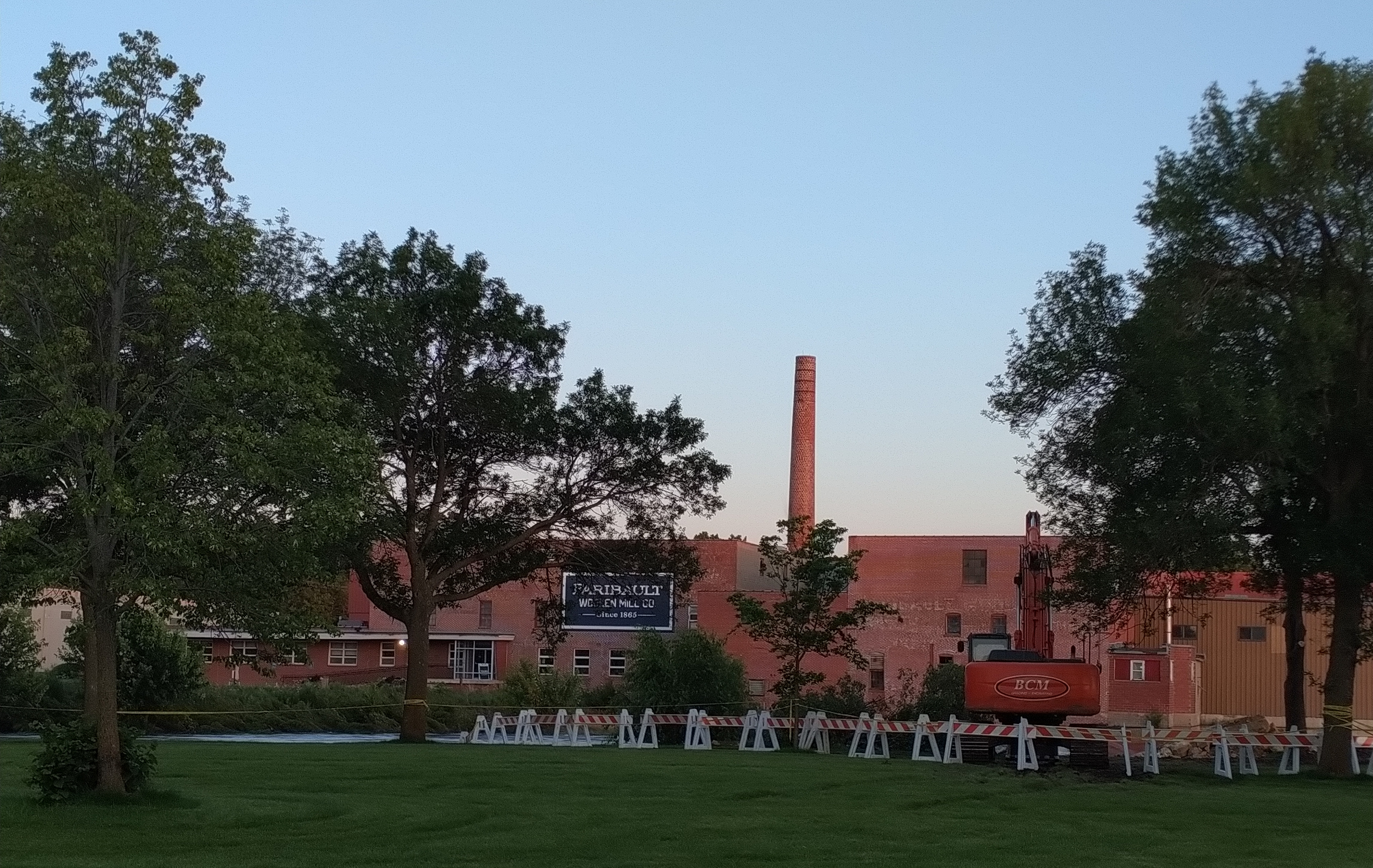
Barricades block access to the area along the river where crews worked to stabilize the bank on Wednesday. The Faribault Mill is across the river. (Minnesota Prairie Roots copyrighted photo July 3, 2024)
Right now I don’t see that happening in my community. The dam, the river, the landscape differ. In Faribault, crews worked to mitigate further erosion by piling boulders on the north side of the mill dam. That’s a temporary fix until water levels drop and officials can check for damage to the dam.
The second dam next to Father Slevin Park is not showing serious erosion, although water is flowing over the bank on the south side. (Minnesota Prairie Roots copyrighted photo July 3, 2024)
I stopped briefly Wednesday evening to see firsthand what is happening at the two dams on the Cannon River. Water levels remain high, although lower than they have been. But more rain is predicted in the next several days. Exactly what we don’t need.
#
NOTE: I did not have my 35 mm Canon camera with me so I had to use my cellphone to shoot these photos, thus I could not zoom in to take better, clearer images.
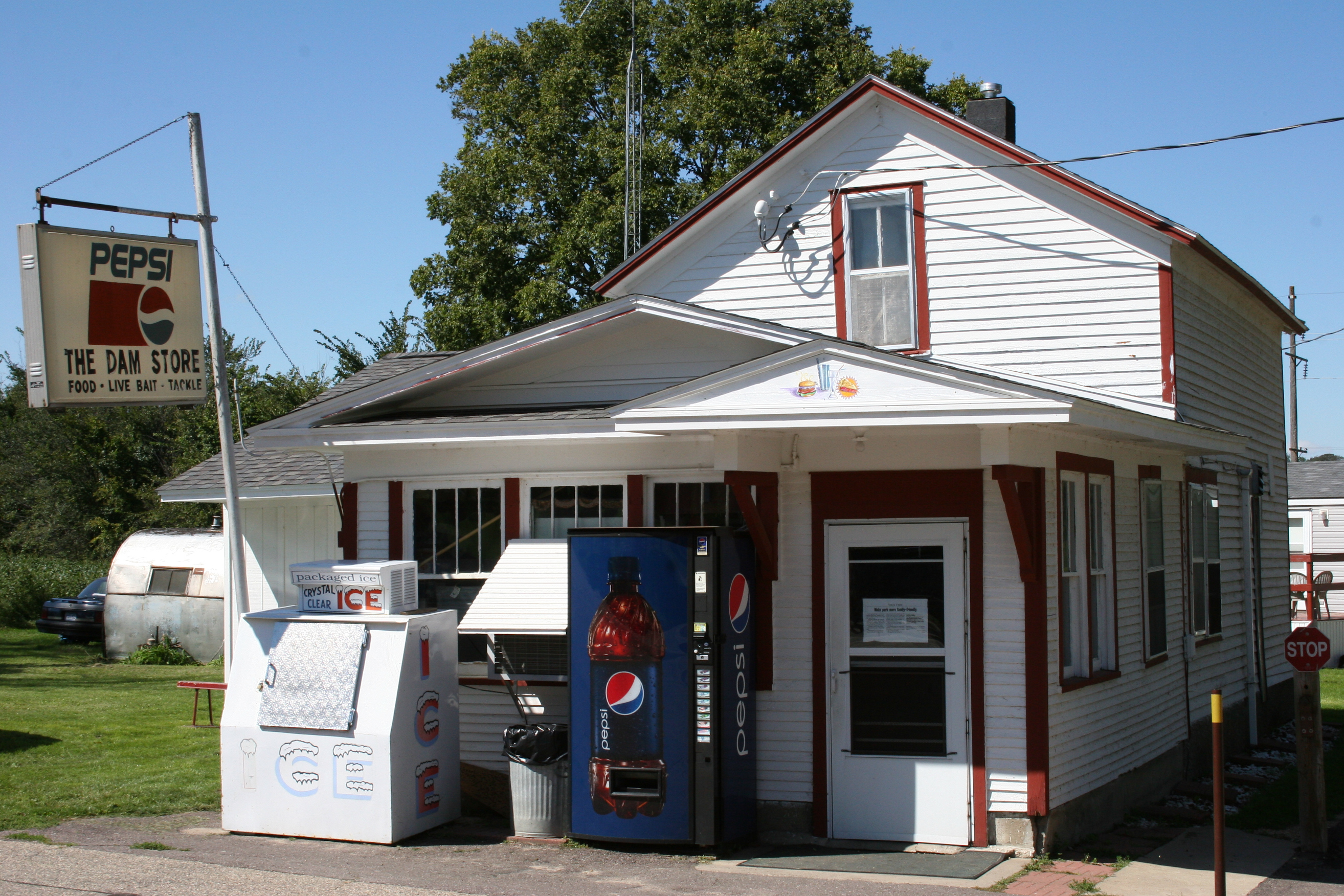
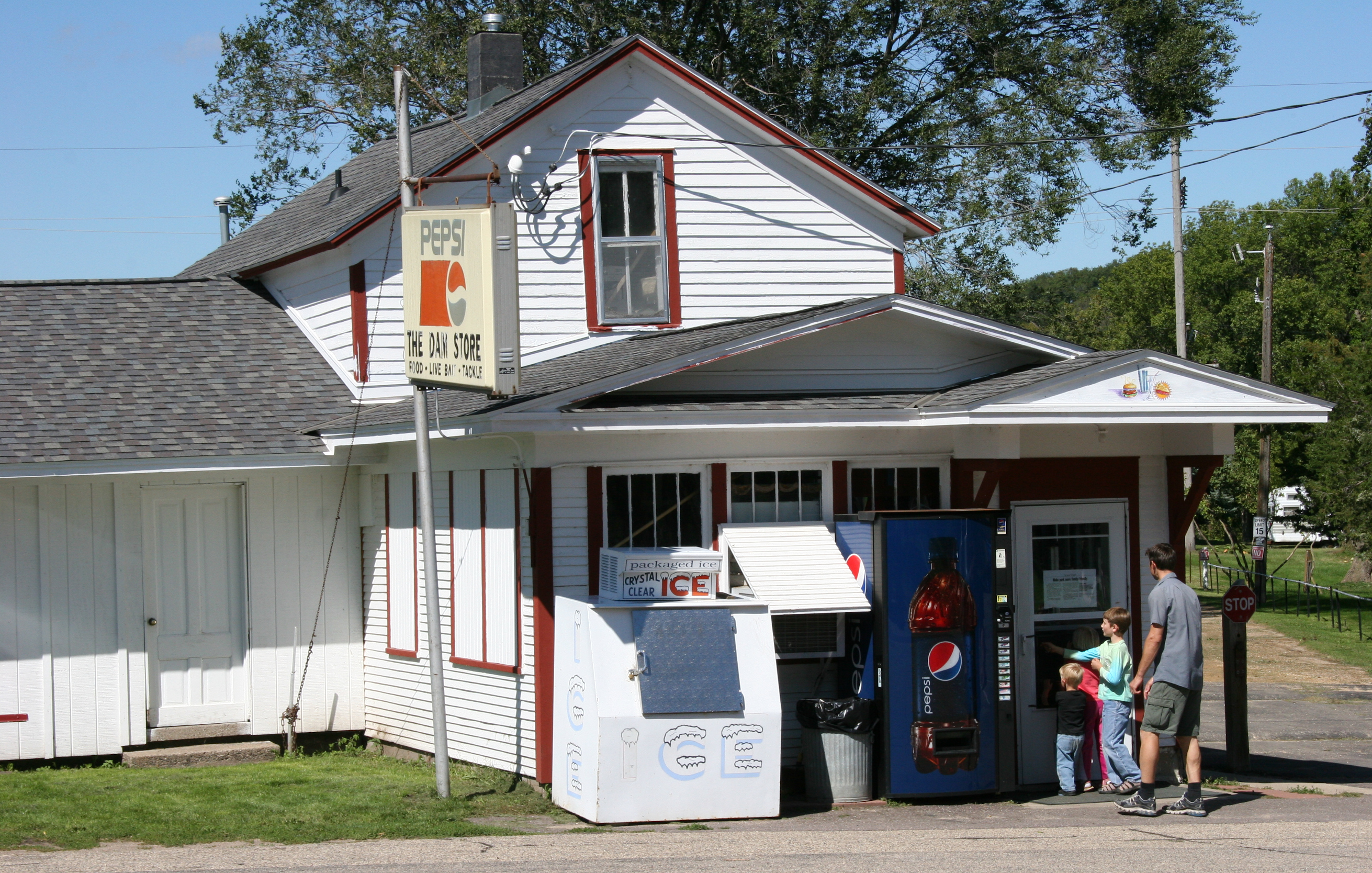
The Dam Store in Rapidan, photographed in 2010. (Minnesota Prairie Roots copyrighted photo 2010)
FOURTEEN YEARS AGO, I wrote a magazine feature story on The Dam Store, a rural southern Minnesota business serving up food, bait and tackle. People travel for miles to buy a burger and a slice of homemade pie here. It’s the kind of place that appeals to me—unpretentious and welcoming. Cozy, homey and comfortable, with great food.
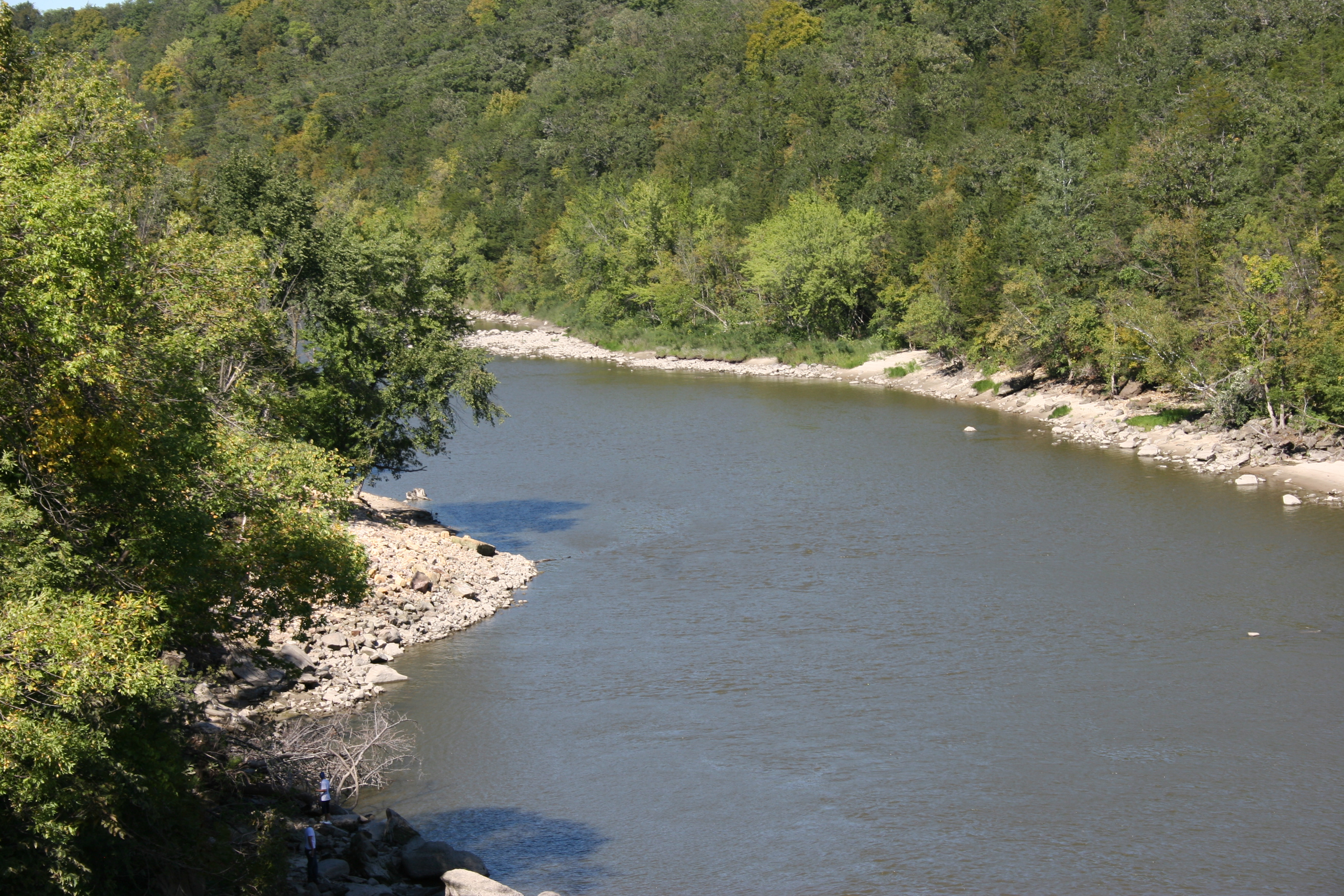
The calm Blue Earth River, photographed in 2010, looks nothing like this today. The raging river has taken out trees, a house, a county shed, and electrical substation as it cut a new path around the Rapidan Dam. (Minnesota Prairie Roots copyrighted photo 2010)
The small eatery is located by the Rapidan Dam, a dam which has been in the news all week due to its possible imminent failure. Thus far, the dam has held. But the roaring, overflowing Blue Earth River carved a path around the dam to the west, eventually claiming the Hruska family’s riverside home. They run the nearby cafe.
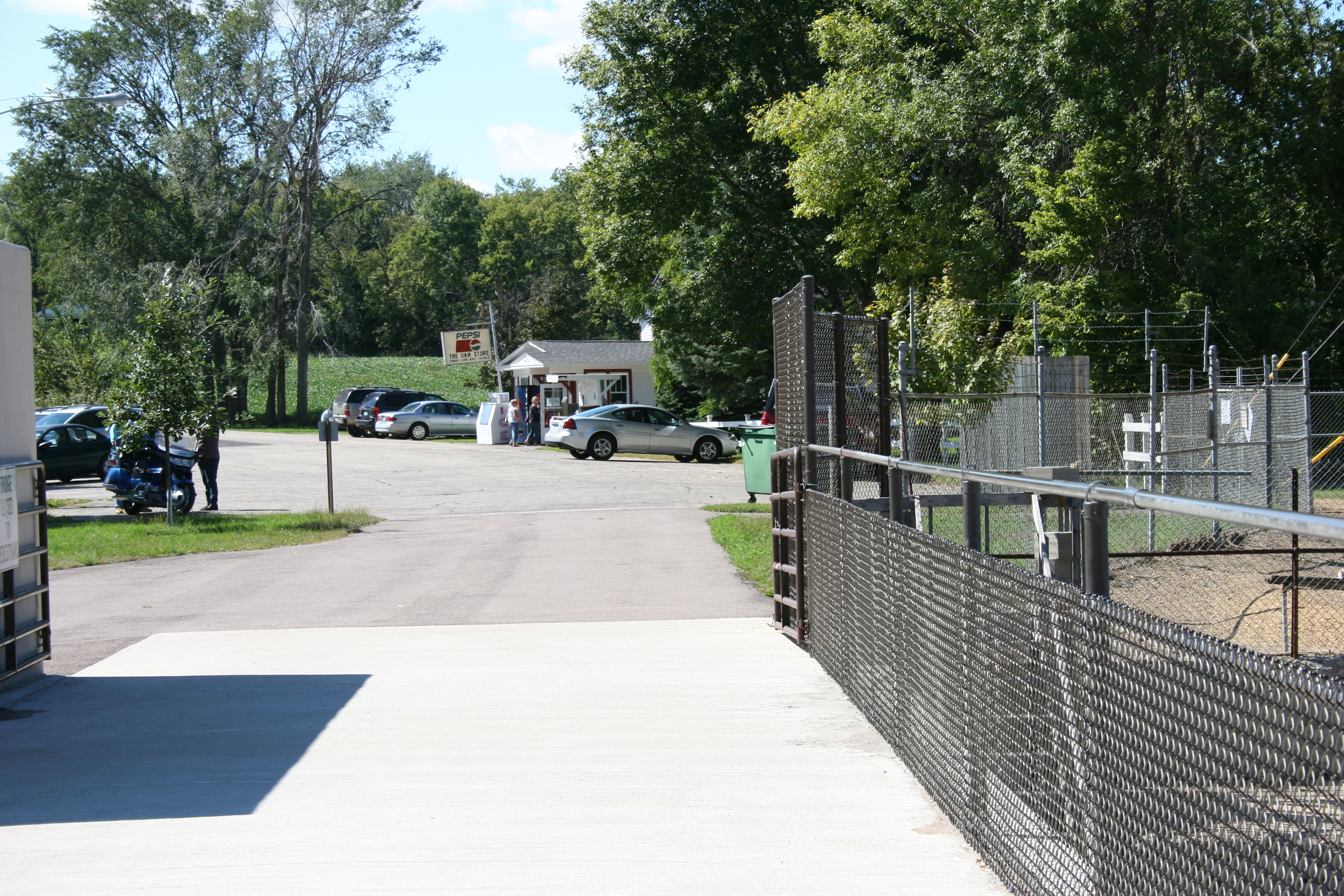
This shows the short distance from the dam walkway to The Dam Store. (Minnesota Prairie Roots copyrighted photo 2010)
The Hruska family, including Jenny Barnes, has run The Dam Store for some 50 years. Her nearby childhood home fell into the raging river Tuesday evening. (Minnesota Prairie Roots copyrighted photo 2010)
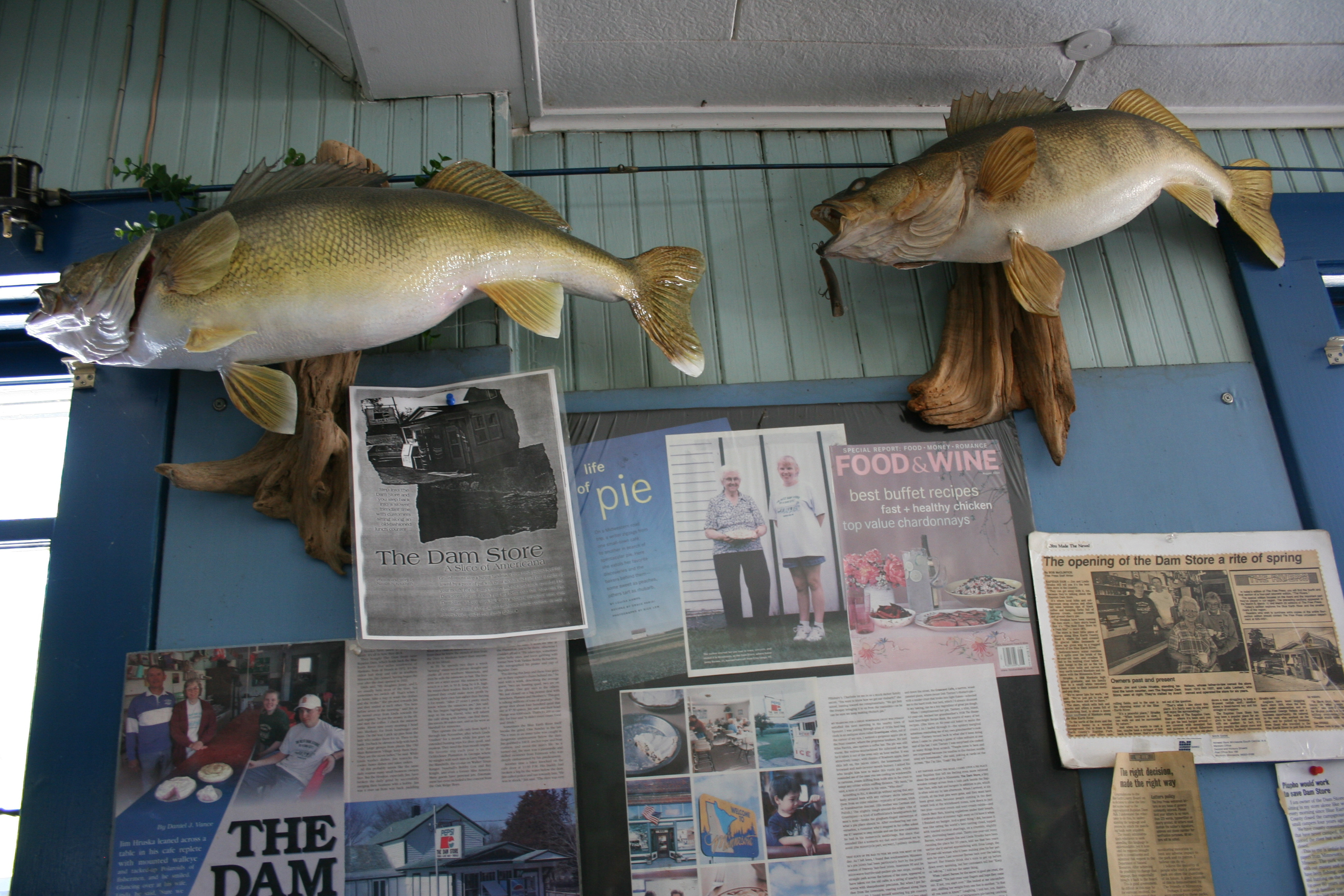
The Dam Store has been written about often as shown in this wall of feature stories. (Minnesota Prairie Roots copyrighted photo 2010)
The Dam Store sits a short distance away, close enough that it could possibly be overcome by floodwaters. At least that’s my non-professional opinion. And if that worries me, I can only imagine how the family feels.
Delicious burger and fries. (Minnesota Prairie Roots copyrighted photo 2010)
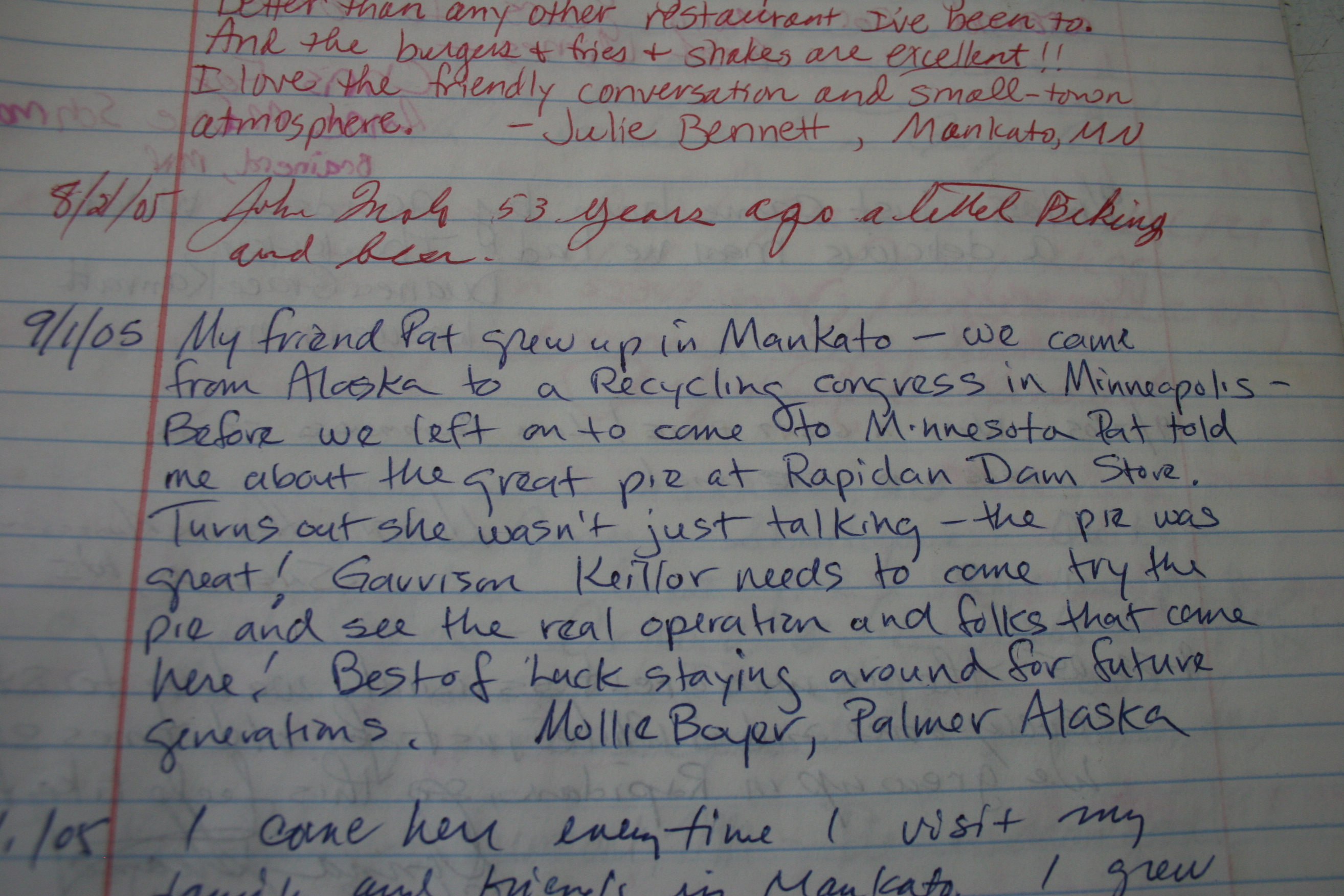
Notebooks full of praise for The Dam Store. (Minnesota Prairie Roots copyrighted photo 2010)
Homemade rhubarb pie. The Dam Store is known for its fruit and cream pies. (Minnesota Prairie Roots copyrighted photo 2010)
This place is a treasure. A destination. A slice of Americana run by folks who care deeply about their customers. People rave about The Dam Store. I read that in comments filling a notebook when I was there back in 2010. I feel the same. To dine here is an experience, a step back in time to days when life seemed simpler.
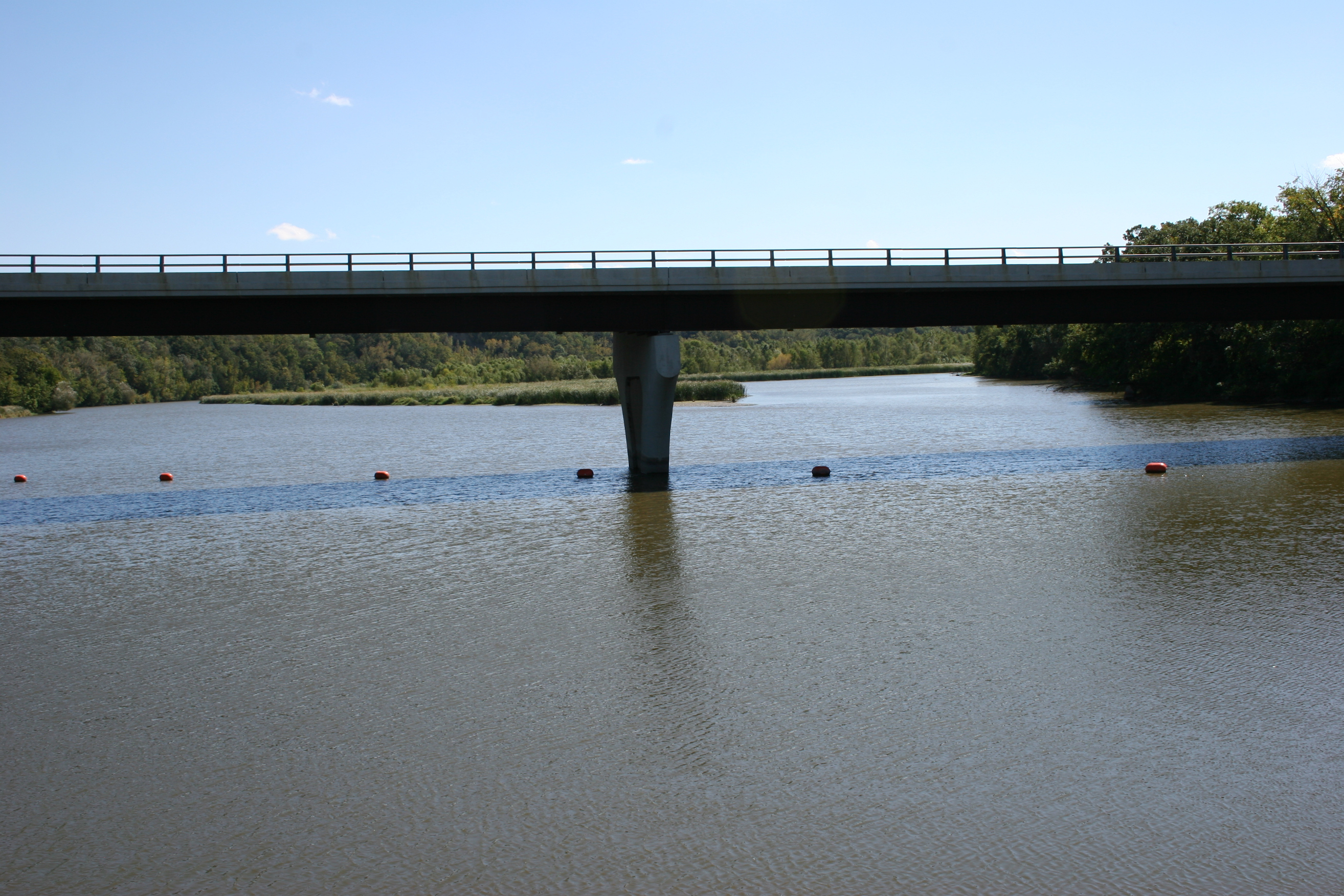
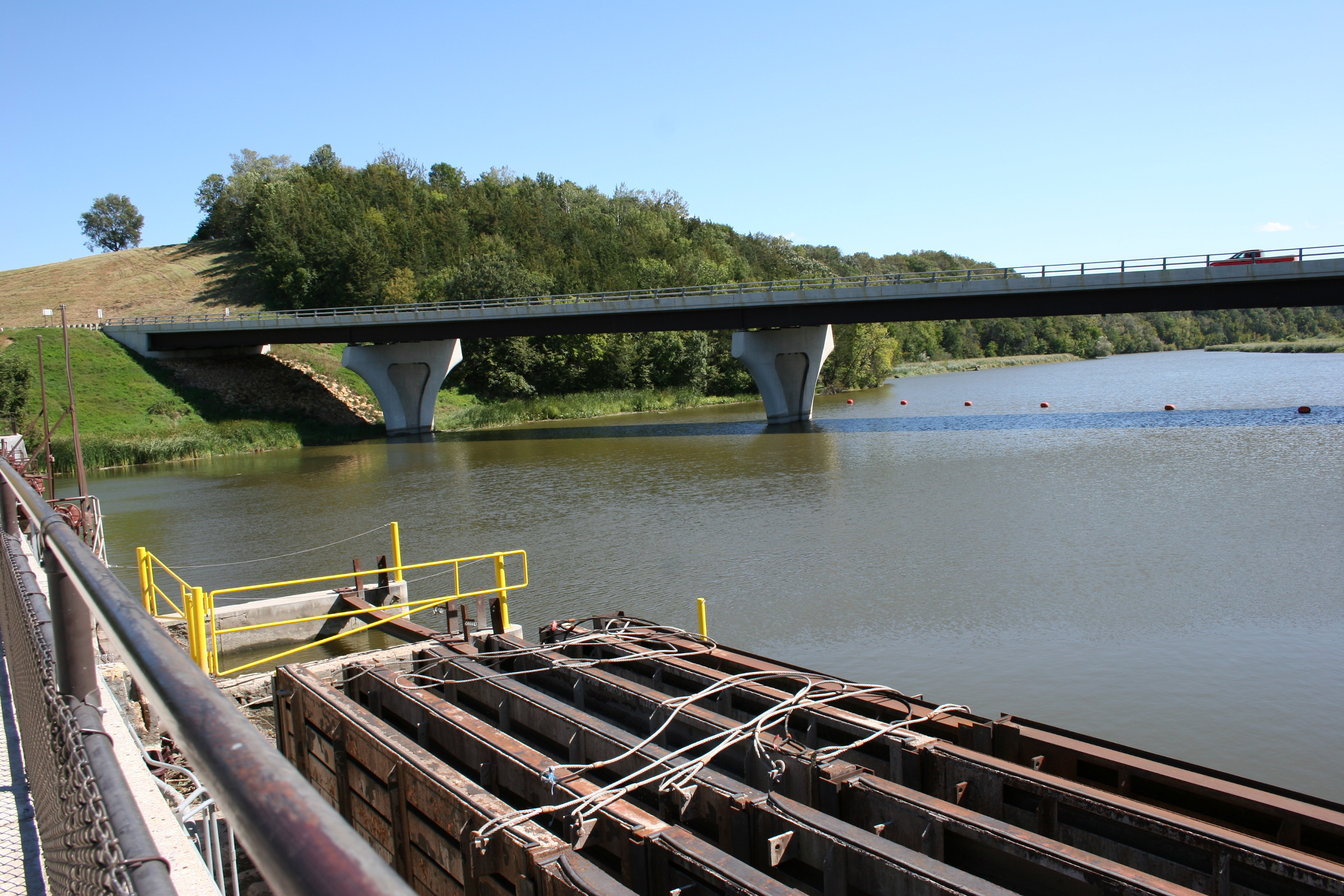
Public officials are now concerned about the integrity of this bridge as the river is no longer flowing over the Rapidan Dam but cutting a path to the west. This 2010 photo shows a low, calm river. (Minnesota Prairie Roots copyrighted photo 2010)
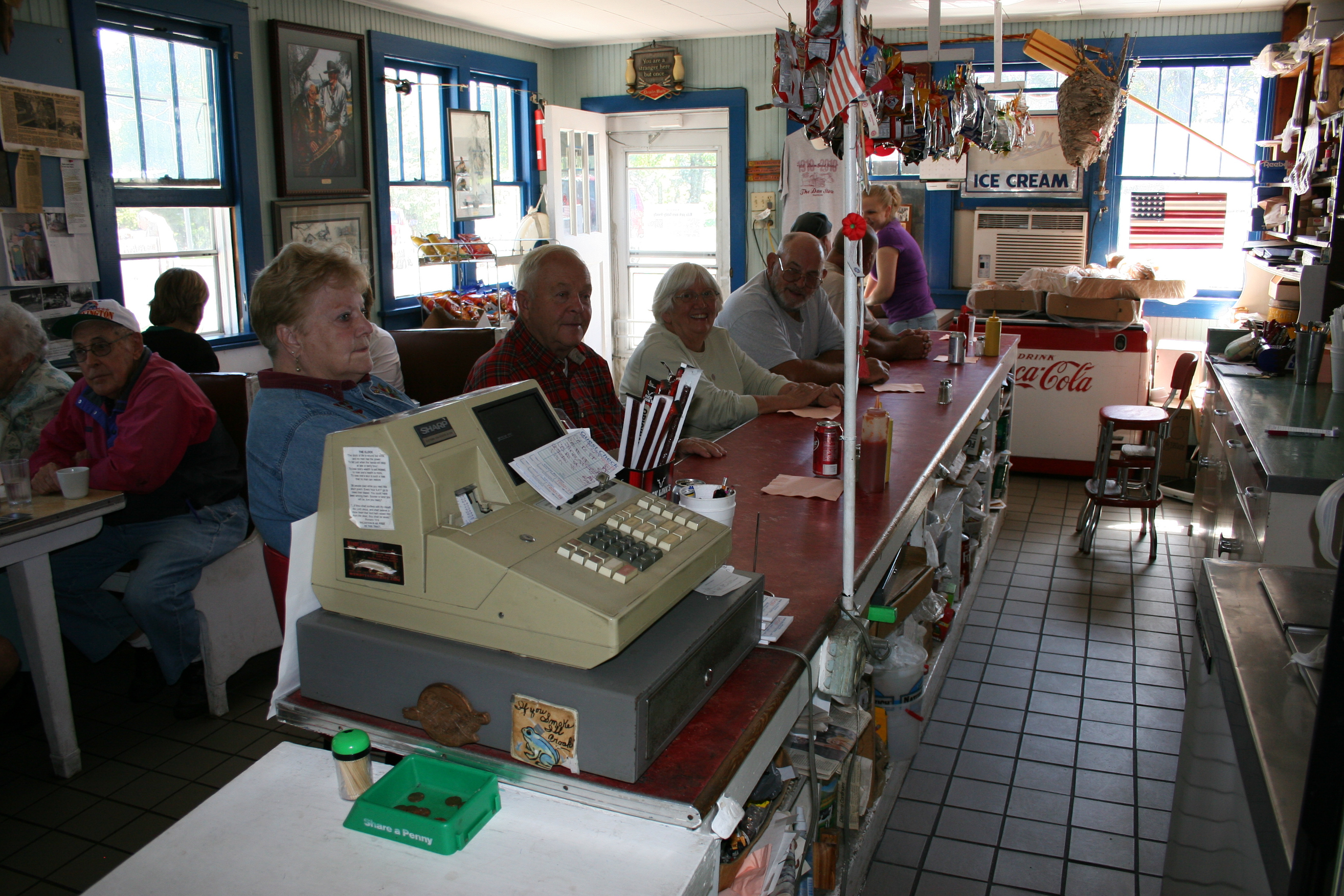
The Dam Store was packed with diners during my 2010 stop. (Minnesota Prairie Roots copyrighted photo 2010)
The dam, built in 1908-1910, is 475 feet wide and measures 87 feet from the top to the streambed. This 2010 image shows a section of the dam and the nearby bridge, now in jeopardy due to river bank erosion by floodwaters. (Minnesota Prairie Roots copyrighted photo 2010)
The scene unfolding today in Rapidan is decidedly one of concern and watchfulness. And for many, one of hope. Hope that The Dam Store will remain standing, untouched by floodwaters. The building has been there since 1910, the eatery in the Hruska family for more than 50 years. This is their history, their life, their livelihood. Their home. Their place.
The main dining area of The Dam Store with booths and lunch counter. (Minnesota Prairie Roots copyrighted photo 2010)
The Rapidan Heritage Society has established a relief fund for the Hruska family with donations accepted at MinnStar Bank offices in Mankato and Lake Crystal. Click here for more information.
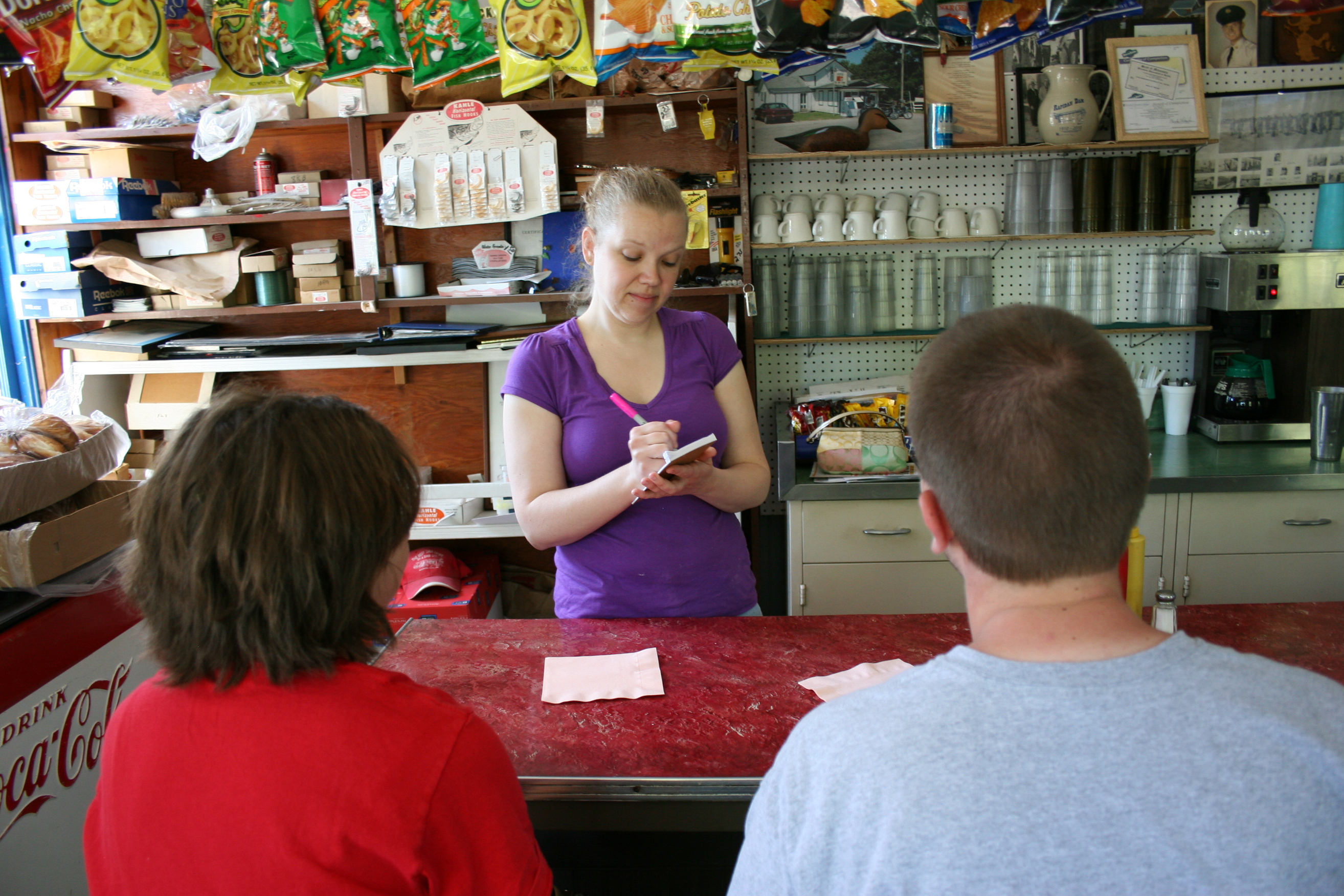
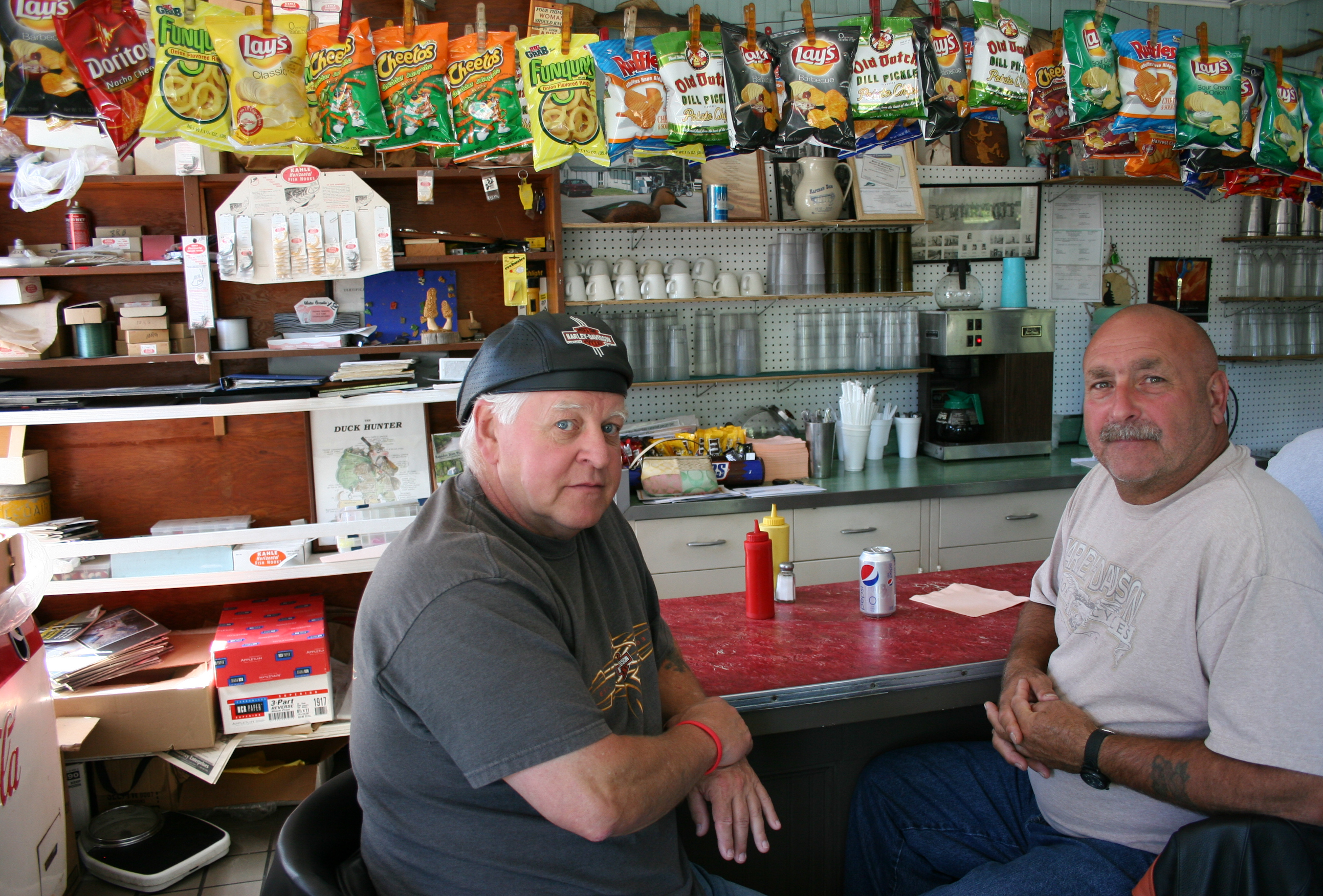
These guys ordered burgers at the lunch counter. (Minnesota Prairie Roots copyrighted photo 2010)
Now, until The Dam Store reopens—and I’m being optimistic that this will all turn out OK—enjoy these photos taken in 2010. I think you’ll understand why this place is so popular, so loved.
An egret flies over the Cannon River by the barely visible dam at North Alexander Park on Friday evening. (Minnesota Prairie Roots copyrighted photo June 21, 2024)
WILDLIFE SENSES, understands, picks up on nuances that we as humans often fail to notice in our heads-bent-to-our-smartphones, busy scheduled lives.
A blue heron perches on the edge of a tree along the Cannon River by the park-side dam. (Minnesota Prairie Roots copyrighted photo June 21, 2024)
The recent flooding is a prime example. I saw countless cellphones raised to record floodwaters and rising rivers. I carried my 35 mm Canon camera, drawn just like everyone else to document the historic natural event unfolding before me along the Cannon River in Faribault.
An egret and blue heron seem to be checking out the river as a red-winged blackbird sits among the grasses to the right. That’s the Faribault Mill in the background, railings for the park-side dam in the foreground. (Minnesota Prairie Roots copyrighted photo June 21, 2024)
But I also noticed the wildlife. They, too, were observing. Watching the water. And watching people invade their river habitat by the hundreds. I sensed how uncomfortable the egret, blue heron, ducks and red-winged blackbirds were amid all the human chaos. So many people and so much traffic.
Flying high above the flooded river. (Minnesota Prairie Roots copyrighted photo June 21, 2024)
I expect they longed for quiet. Peace. A respite from the attention. A return to normalcy. No more peering eyes. No more crowds gathering.
A bullhead partially emerges from shallow water on dam’s edge as it tries to swim up the floodwaters. (Minnesota Prairie Roots copyrighted photo June 21, 2024)
Another bullhead attempts to swim up river. (Minnesota Prairie Roots copyrighted photo June 2021)
And then there were the fish, primarily bullheads, but a few bass, attempting to swim up through water that was rushing down, spilling over the edges of the dam by North Alexander Park. The fish appeared determined to make it to the other side, to the quieter waters of the widened river. It seemed a losing cause to me. But who am I to discourage a stubborn bullhead? If anything, it was fascinating to watch.
A duck family swims in the shallow floodwaters next to the top of the dam. (Minnesota Prairie Roots copyrighted photo June 21, 2024)
Finally, I observed a mama duck and her brood aside the top of the dam. They began edging, descending toward the river. Foolish ducks, I thought, judging the mother mallard. And then I voiced my concern out loud, “Stop, you’ll drown!”
The ducks move toward the deep river. (Minnesota Prairie Roots copyrighted photo June 21, 2024)
I can only imagine the thoughts of that mother and her six ducklings. “Did that woman really say that, warn us to stay out of the water lest we drown?” If ducks could laugh, the seven of them would have chortled, chuckled, carried on and then shared what they’d heard me say. Quack. Quack. Quackity. Quack.
A mallard drake swims in the Cannon River, nowhere near the female duck and ducklings. (Minnesota Prairie Roots copyrighted photo June 21, 2024)
But it was my husband who spoke for them. “They’re ducks, Audrey,” Randy said. “They can swim.”
An egret stands watchful and tall, next to the water rushing, roiling over the dam. (Minnesota Prairie Roots copyrighted photo June 21, 2024)
Uh, yeah. He was right. But it was the mom in me emerging, the protective spirit that, in that moment, did not separate wildlife from human so focused was I on the dangers of the swollen, swift-moving river.
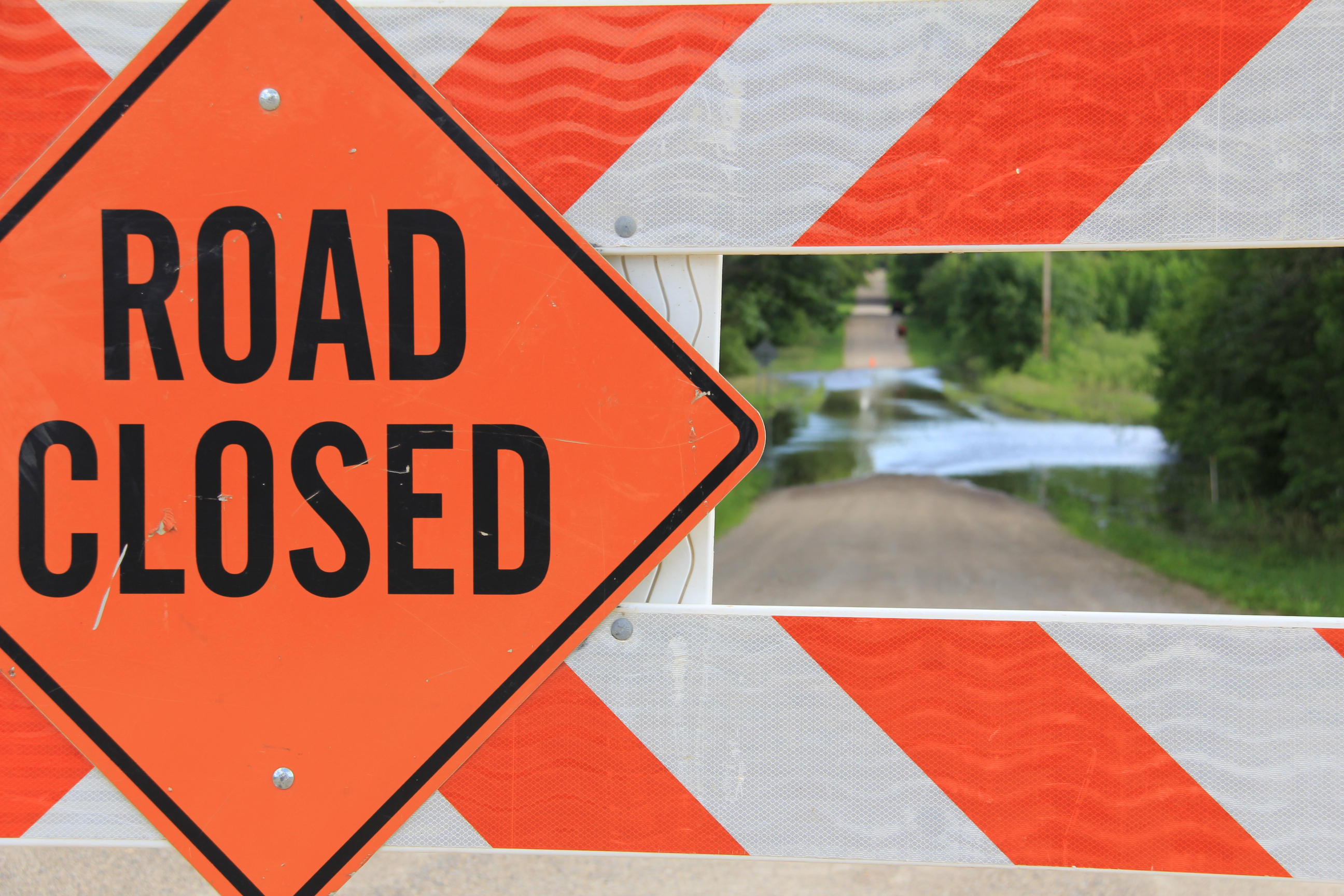
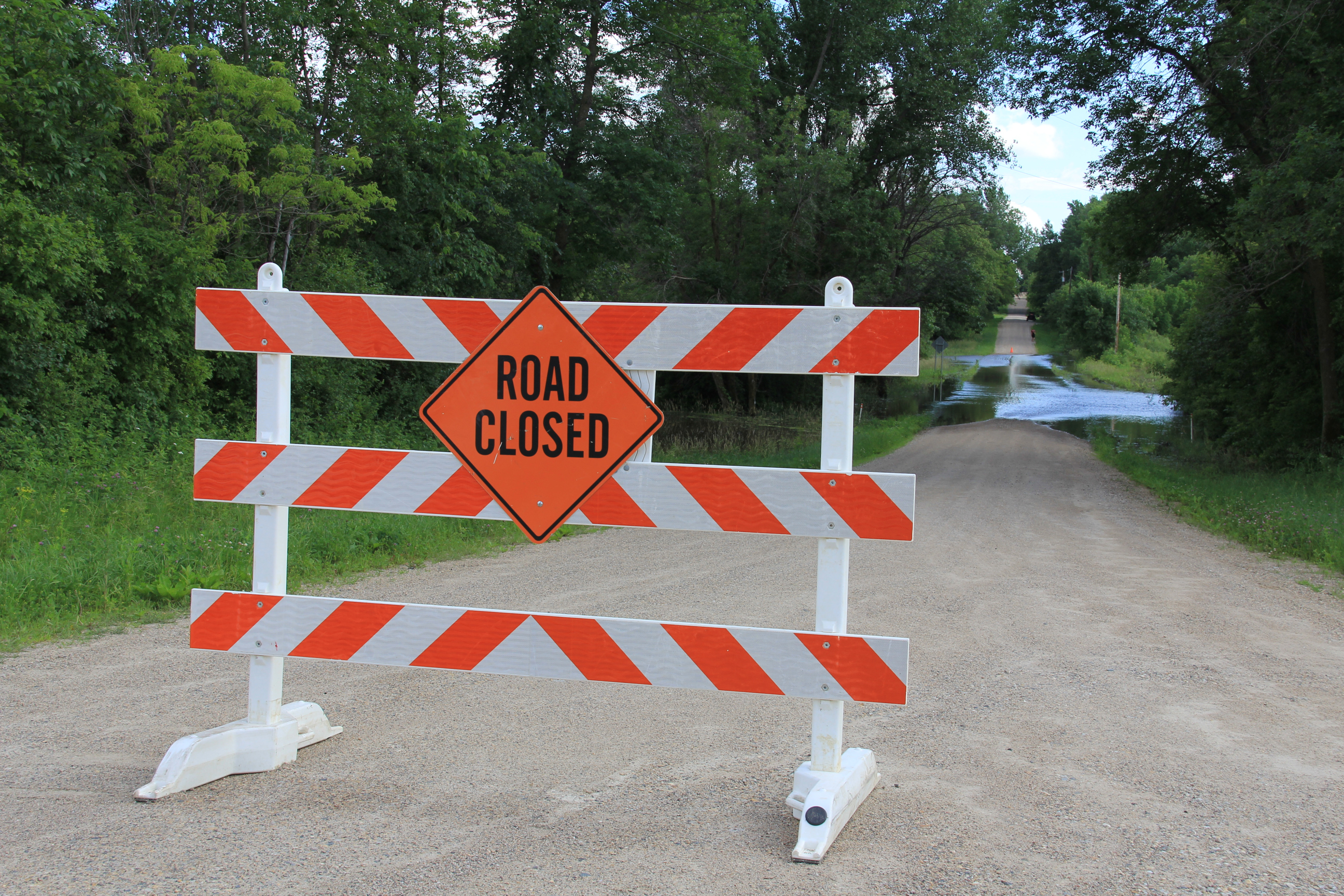
Roads are closed throughout the area due to flooding. Here a barricade blocks Dahle Avenue at its intersection with 220th Street East along the Straight River east of Faribault late Sunday afternoon. (Minnesota Prairie Roots copyrighted photo June 23, 2024)
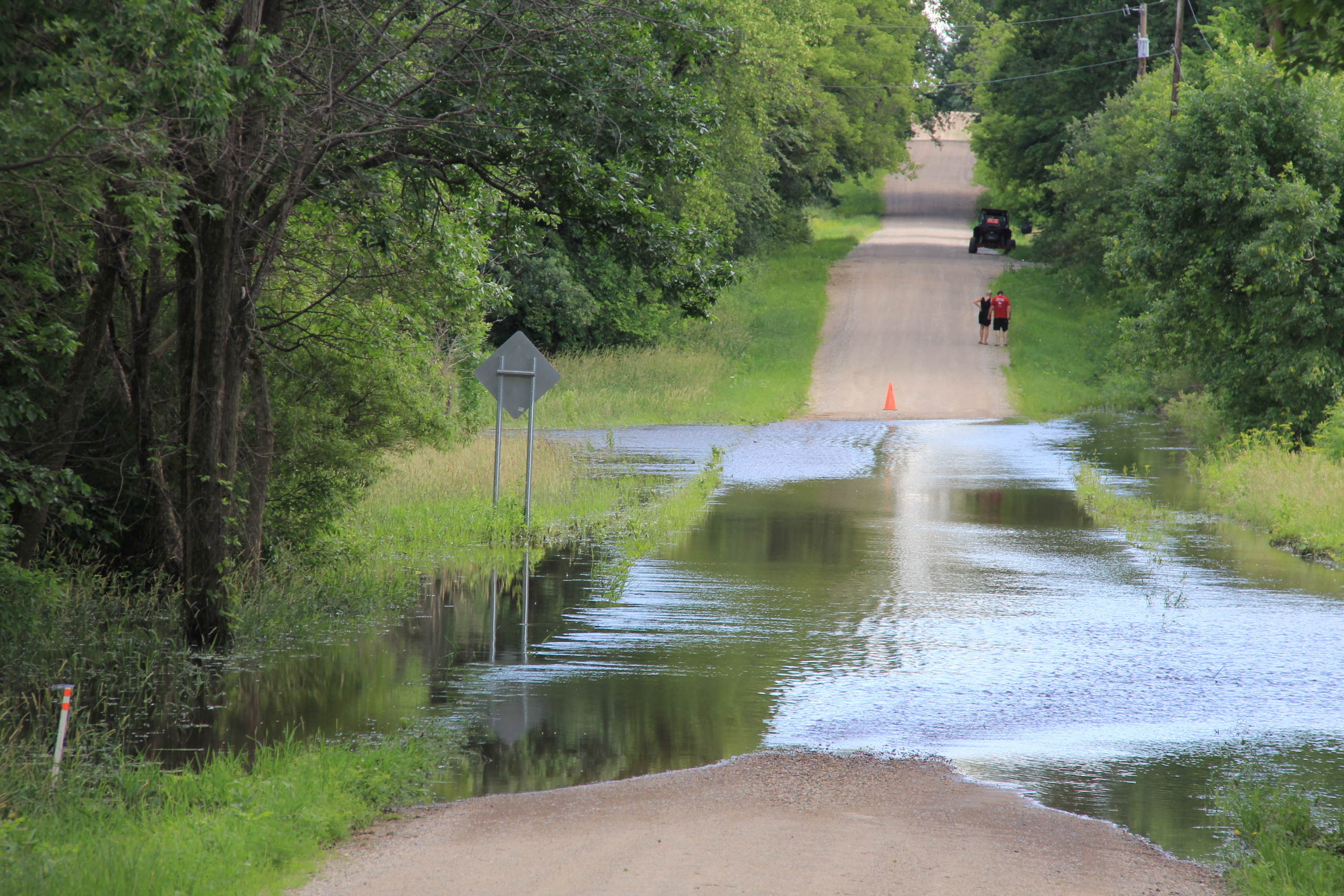
A couple checks out flooded Dahle Avenue. (Minnesota Prairie Roots copyrighted photo June 23, 2024)
As inconvenient as these road closures may be, especially to locals, it’s nothing compared to the flooding of businesses, homes, campgrounds and more, especially in neighboring Waterville. The small town draws lake-lovers to summer cabins and campgrounds with tourism an important part of the local economy.
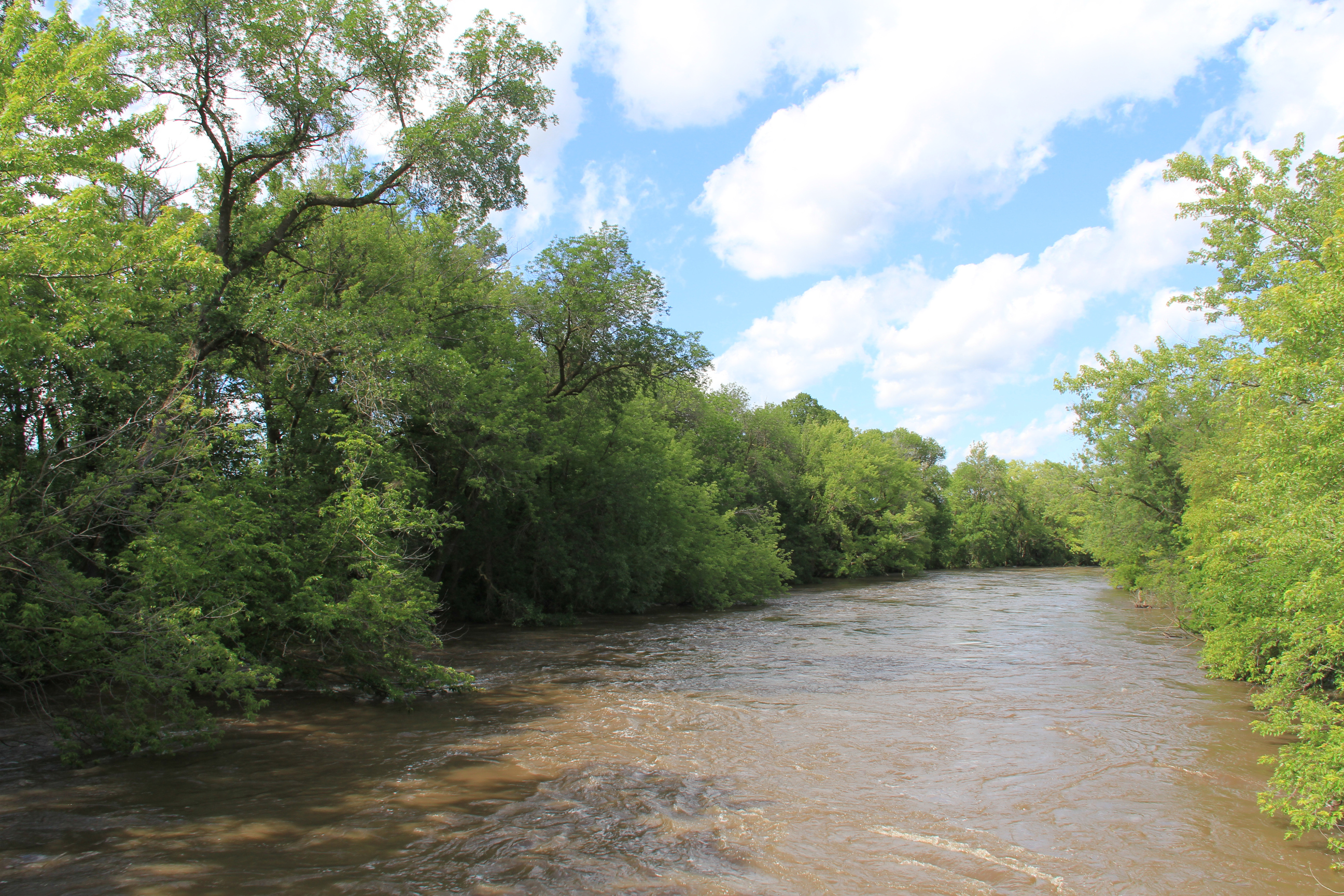
The muddy, fast-moving Straight River, photographed late Sunday afternoon from a bridge on 220th Street East, east of Faribault. (Minnesota Prairie Roots copyrighted photo June 23, 2024)
Other small towns, like Morristown and Warsaw, have also been impacted by the rising Cannon River. That water (and water from the Straight River) eventually ends up in Faribault and then Northfield and other places along the river and its watershed. In Faribault, public safety officials are keeping a close eye on the King Mill Dam, over which the Cannon flows. I’ve not seen that area, which is now barricaded to motor vehicle and foot traffic, and wisely so. The dam is a popular fishing spot. The road past the dam is also a busy traffic route, a connection to Minnesota State Highway 60.
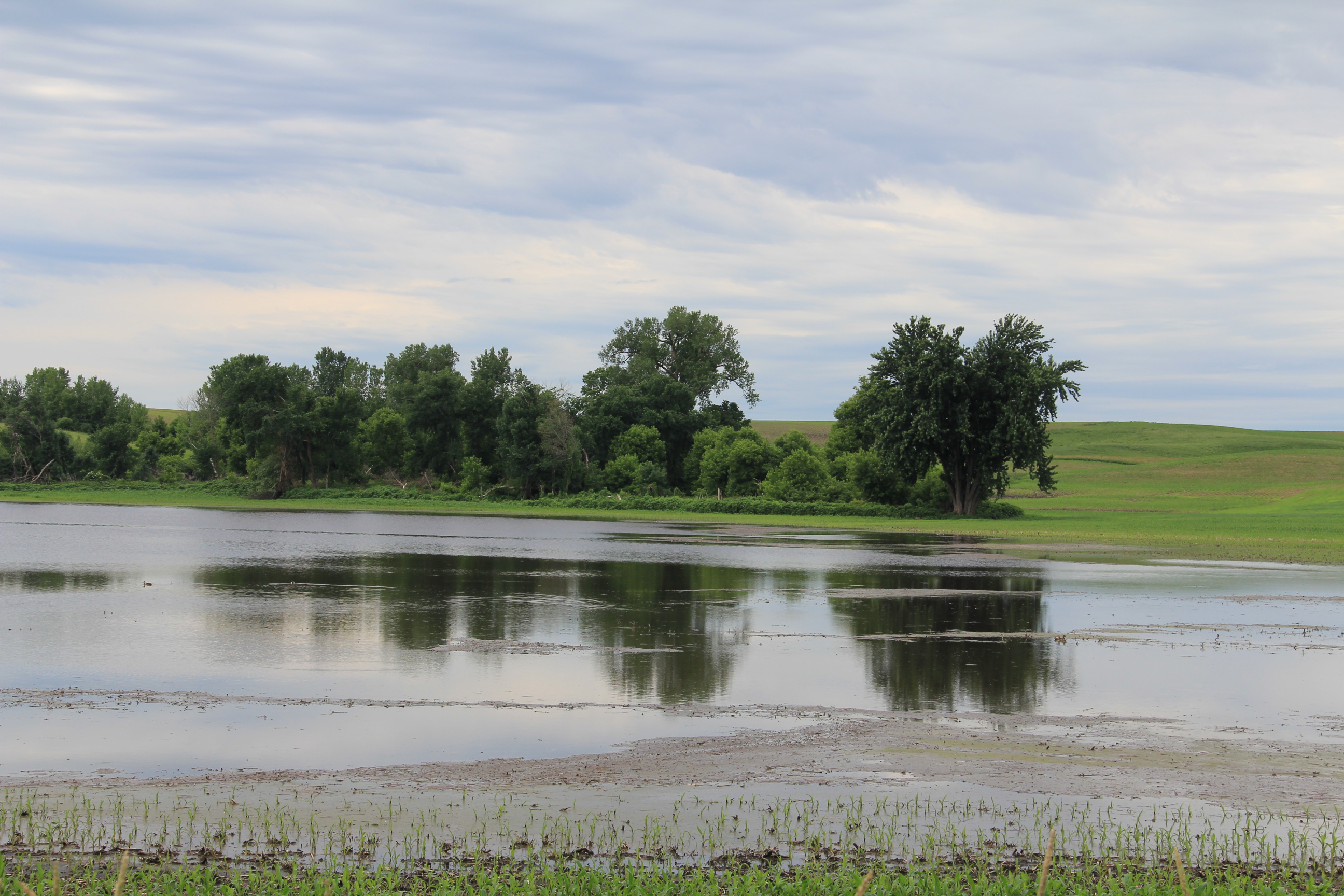
Rounding 195th Street West, a flooded cornfield, photographed northwest of Faribault late Friday morning. (Minnesota Prairie Roots copyrighted photo June 21, 2024)
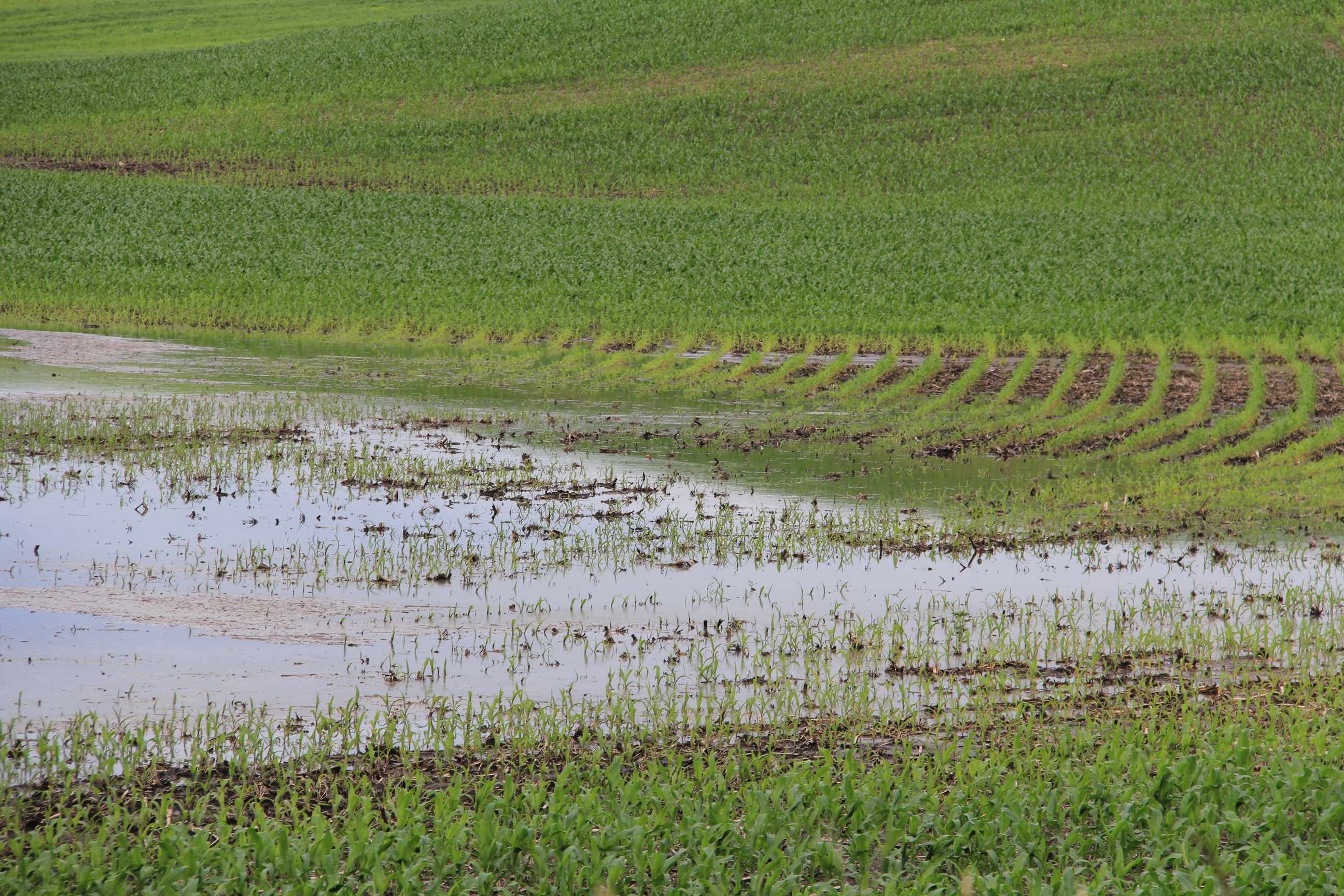
Out in the countryside, too much rain has drowned corn and soybean crops, turning fields into lakes. I feel for the farmers, who depend on a good crop for their livelihood. It’s too late in Minnesota’s short growing season to replant. Crop insurance will cover some of their losses.
Excessive rain flooded this cornfield, transforming it from farmland to lake. Photographed late Friday morning along 195th Street West. (Minnesota Prairie Roots copyrighted photo June 21, 2024)
Rice County has a diverse topography of flat lands and rolling hills, plus differing soil types and drainage systems. Those, and rainfall amounts, affect whether a farm field floods. The entire county has experienced substantial rains. Just last Friday afternoon and into Saturday morning, we measured 3.1 inches of rain in our gauge. The day prior, 1.75 inches. Ten inches of rain fell here in eight days. Too much.
A flooded cornfield along 195th Street West, photographed Friday morning. (Minnesota Prairie Roots copyrighted photo June 21, 2024)
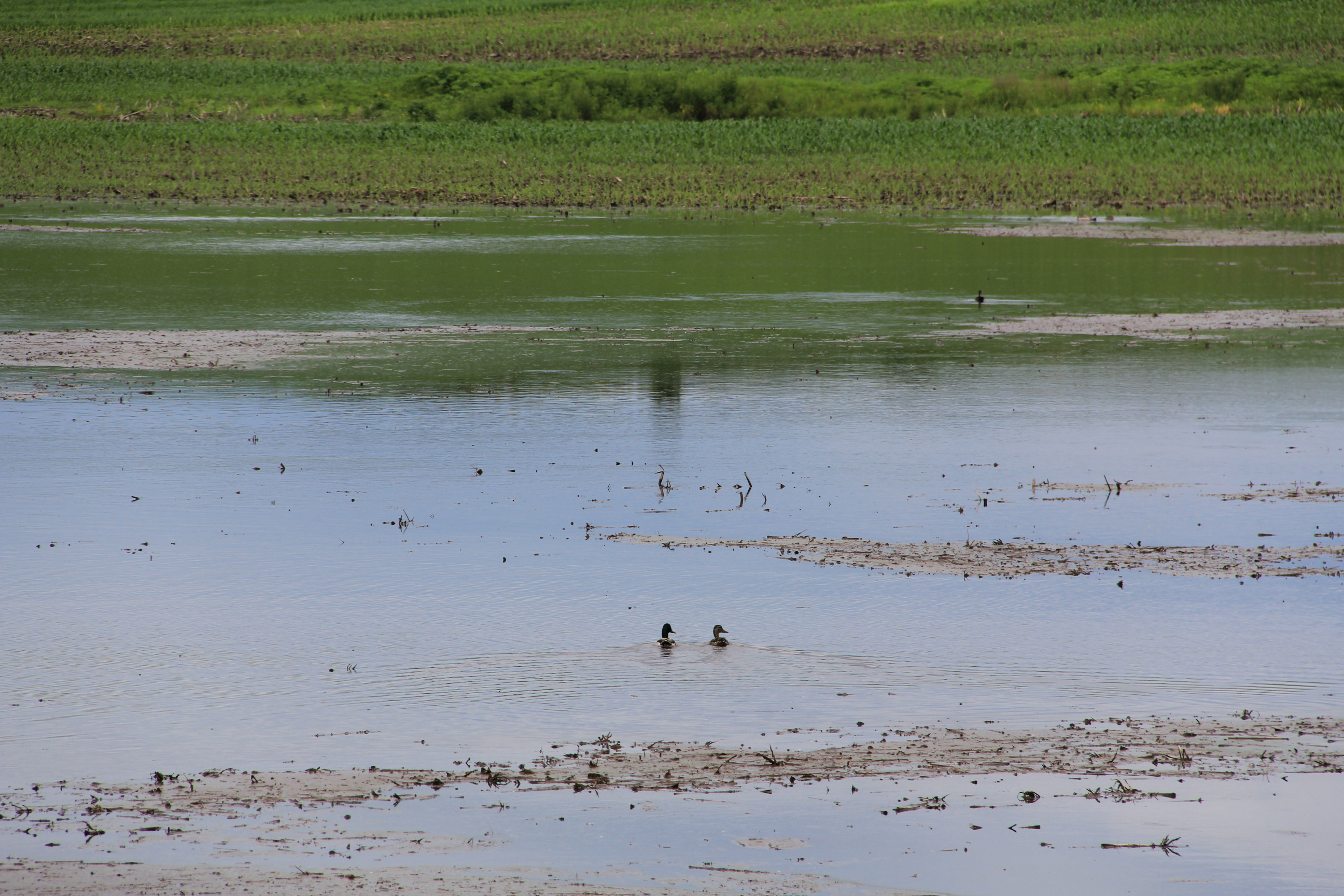
Ducks swim in the cornfield turned lake late Friday morning along 195th Street West. (Minnesota Prairie Roots copyrighted photo June 21, 2024)
Ask any farmer, and he/she can likely give you rainfall totals. I saw some of that rainwater on Friday morning while on a short drive along backroads northwest of Faribault. And that was before Friday’s three-inch rainfall.
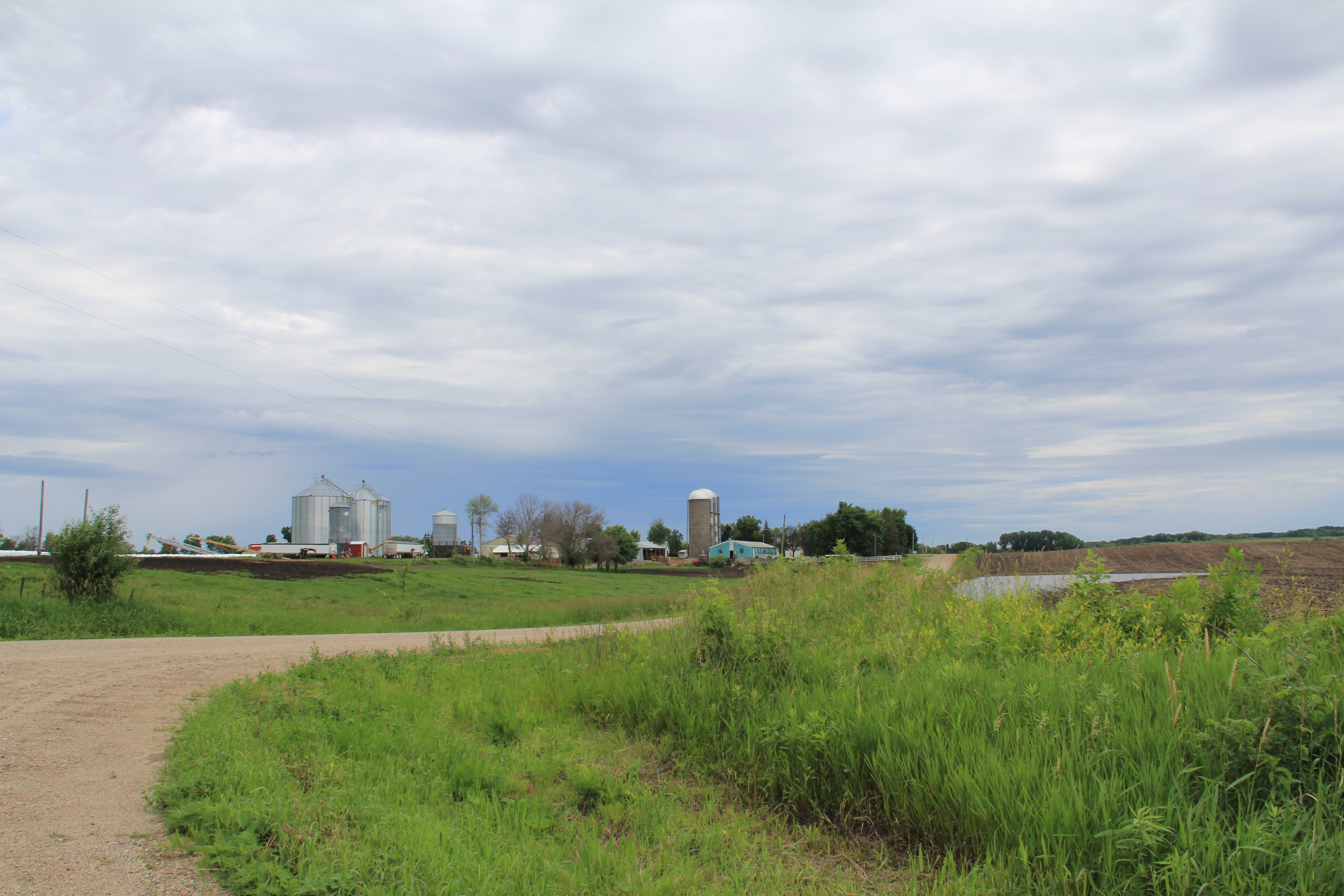
A bit down the road, more flooding in the rolling terrain along Fairbanks Avenue northwest of Faribault, photographed late Friday morning. (Minnesota Prairie Roots copyrighted photo June 21, 2024)
On Sunday afternoon, most fields in the area I traveled were not flooded, but at least one township gravel road along the Straight River was flooded and barricaded. I expect if I expanded my tour, I’d see a whole lot more road closures and flooded fields. (Click here for a list of roadways that are closed in Rice County.)
Public officials are warning people to heed warning signs (like this one on Dahle Avenue) and stay out of flooded areas due to the dangers of swift-moving, high water. (Minnesota Prairie Roots copyrighted photo June 23, 2024)
In the all of this, there’s nothing we can do to control the weather. We can only prepare and then deal with whatever comes. Those, of course, are just words, not really helpful to anyone dealing with flooded fields, flooded roads, flooded homes, flooded businesses, flooded campers, flooded parks, flooded…
Friday evening the Cannon River was well above flood stage at the dam by the entrance to North Alexander Park. More rain overnight into Saturday raised the river level even higher. (Minnesota Prairie Roots copyrighted photo June 21, 2024)
NEARLY 10 INCHES OF RAIN fell in the past eight days at my Faribault home, half of that in the last three days. The significant rainfall not only in my community, but throughout southern Minnesota, has resulted in flooding as rivers swell and overflow their banks.
The same dam scene Saturday morning. (Minnesota Prairie Roots copyrighted photo June 22, 2024)
By Saturday morning, the Cannon encroached on even more land and the river rose higher under the Second Avenue bridge by the entrance to North Alexander Park. (Minnesota Prairie Roots copyrighted photo June 22, 2024)
This churning water at the dam shows the power of the river. (Minnesota Prairie Roots copyrighted photo June 21, 2024)
Minnesota Governor Tim Walz declared a peacetime emergency authorizing the National Guard to assist and support with emergency flood operations as needed. Faribault Mayor Kevin Voracek has declared a local emergency as my city deals with flooding. In nearby hard-hit Waterville, some residents have been evacuated. Mankato has also experienced significant flooding.
A police cruiser is parked Saturday morning under the historic viaduct near Teepee Tonka Park, an area prone to flooding. By Saturday evening, the Straight River had flooded even more of the park and surrounding land. (Minnesota Prairie Roots copyrighted photo June 22, 2024)
A chunk of south central Minnesota, including Faribault and other areas of Rice County, plus portions of Le Sueur, Steele and Waseca counties, remain in a flood warning until 10 a.m. Monday.
Teepee Tonka Park in Faribault, along the Straight River, was completely flooded Saturday morning. By evening, floodwaters crept onto the bridge. (Minnesota Prairie Roots copyrighted photo June 22, 2024)
Saturday morning the bridge at Teepee Tonka Park was open to pedestrians with a police officer stationed there. By evening, the bridge was cordoned off. (Minnesota Prairie Roots copyrighted photo June 22, 2024)
A Faribault police officer chats with the public and monitors the Straight River on the bridge into Teepee Tonka Park Saturday morning. (Minnesota Prairie Roots copyrighted photo June 22, 2024)
It’s a lot—this flooding of homes and businesses, city parks and railroad tracks, parking lots and roadways, cropland… A few blocks from my home, Xcel Energy crews are monitoring an electrical substation surrounded by water from the overflowing Straight River.
Floodwaters surround this warning sign by the Woolen Mill Dam. (Minnesota Prairie Roots copyrighted photo June 21, 2024)
A fire department truck stops on the Second Avenue bridge over the Cannon River on Friday evening as emergency personnel keep an eye on the rising river. (Minnesota Prairie Roots copyrighted photo June 21, 2024)
Police tape along the Cannon River by North Alexander Park is in place to keep people away from the roiling river. Friday evening the river nearly touched the bottom of the bridge. (Minnesota Prairie Roots copyrighted photo June 21, 2024)
I arrived home from church late this morning to automated messages from the 911 emergency system. One issued a cautionary warning from public safety officials to honor barricades by not walking or driving around them. Ignoring such signage in flooded areas will result in a citation from law enforcement.
Watching the swift-moving Cannon River from behind police tape Friday evening near the historic Faribault Mill. (Minnesota Prairie Roots copyrighted photo June 21, 2024)
Tree debris floats down the Cannon on Friday evening. (Minnesota Prairie Roots copyrighted photo June 21, 2024)
There’s a dam here, unseen as the Cannon River floods. (Minnesota Prairie Roots copyrighted photo June 21, 2024)
For the most part, I observed people being careful around floodwaters in Faribault while I was out on Friday evening and then again Saturday morning. The areas I accessed and photographed in that time frame have since been closed to the public, a smart move given the power of the river and the sheer volume of people checking things out. We are all naturally drawn to see for ourselves that which is unfolding in our backyard.
A car sits submerged in the parking lot of Two Rivers Health Center by Two Rivers Park on Saturday morning. (Minnesota Prairie Roots copyrighted file photo June 22, 2024)
Two rivers—the Cannon and the Straight—run through Faribault, converging at Two Rivers Park. Near that park, a car sat submerged Saturday morning in a parking lot. I’ve seen other vehicles sitting in floodwaters at the new riverside Straight River Apartments.
Along the Straight River on Third Avenue Northeast, floodwaters fill a backyard which, ironically, includes a boat. (Minnesota Prairie Roots copyrighted photo June 22, 2024)
Yet, as difficult as this flood event has been, it does not match the Faribault floods of 2010, 2014 and 2016, at least not from my recollection. Still, any flood is challenging.
Along the Straight River, a section of railroad tracks flooded. The Depot Bar & Grill patio is on the left. (Minnesota Prairie Roots copyrighted photo June 22, 2024)
For those affected, there’s clean-up and paperwork and unexpected expenses. Emergencies like this often bring out the best in people, as a community comes together. At the local government level, I expect emergency personnel have been working overtime. The Rice County Landfill, rural Dundas, opens at 7:30 a.m. Monday to begin accepting flood-contaminated materials.
Below the historic viaduct, the Straight River overflows its banks Saturday morning. By evening, it had risen even more. (Minnesota Prairie Roots copyrighted photo June 22, 2024)
I am fortunate. There’s no flooding in my home or yard. But I know others are struggling. I hope that in Sunday’s sunshine—finally, a day without rain—they feel a sense of hope. Floodwaters will recede. And life will, eventually, return to normal.
Walking along the Cannon River by the dam Friday evening, before the river flooded even more. (Minnesota Prairie Roots copyrighted photo June 21, 2024)
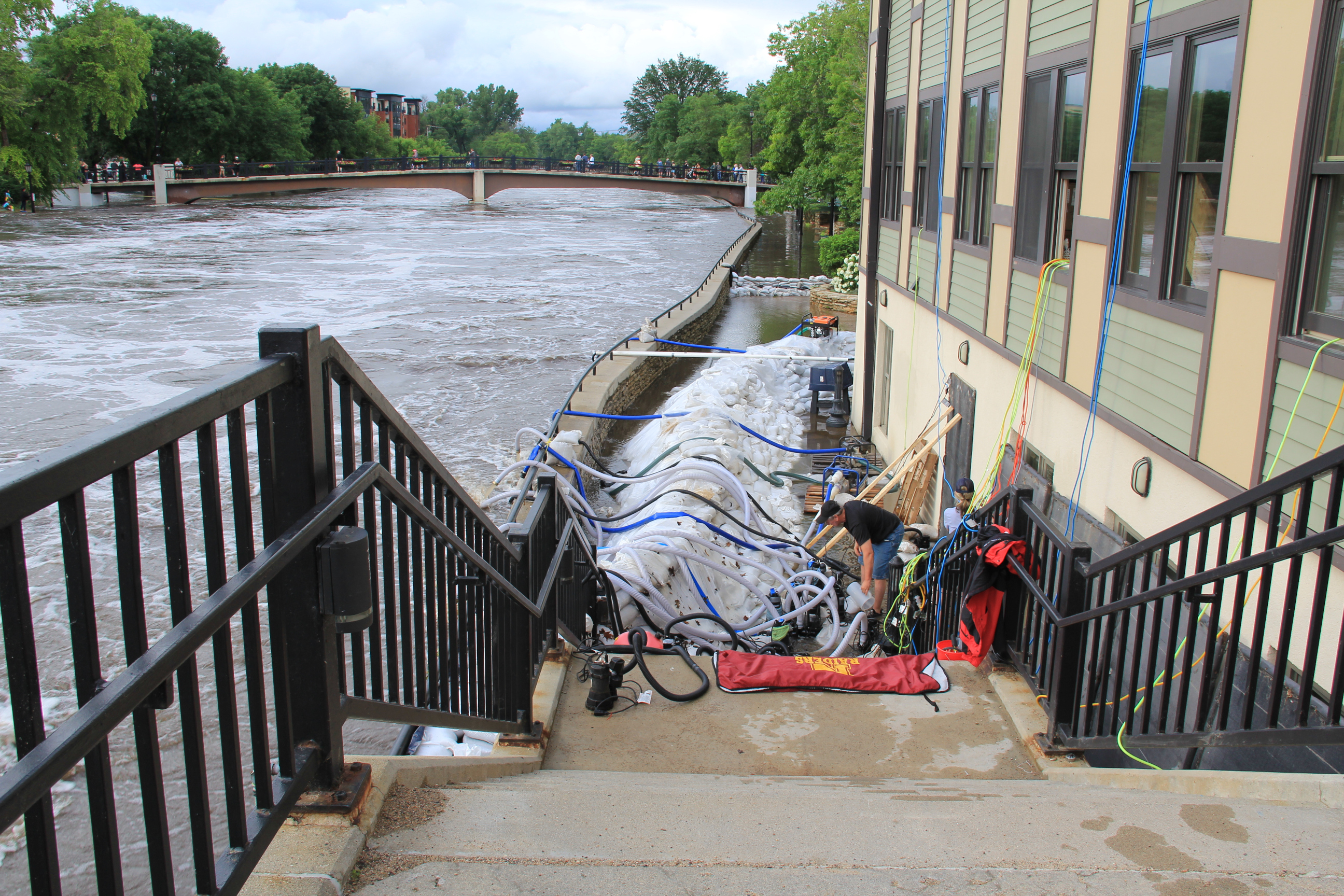
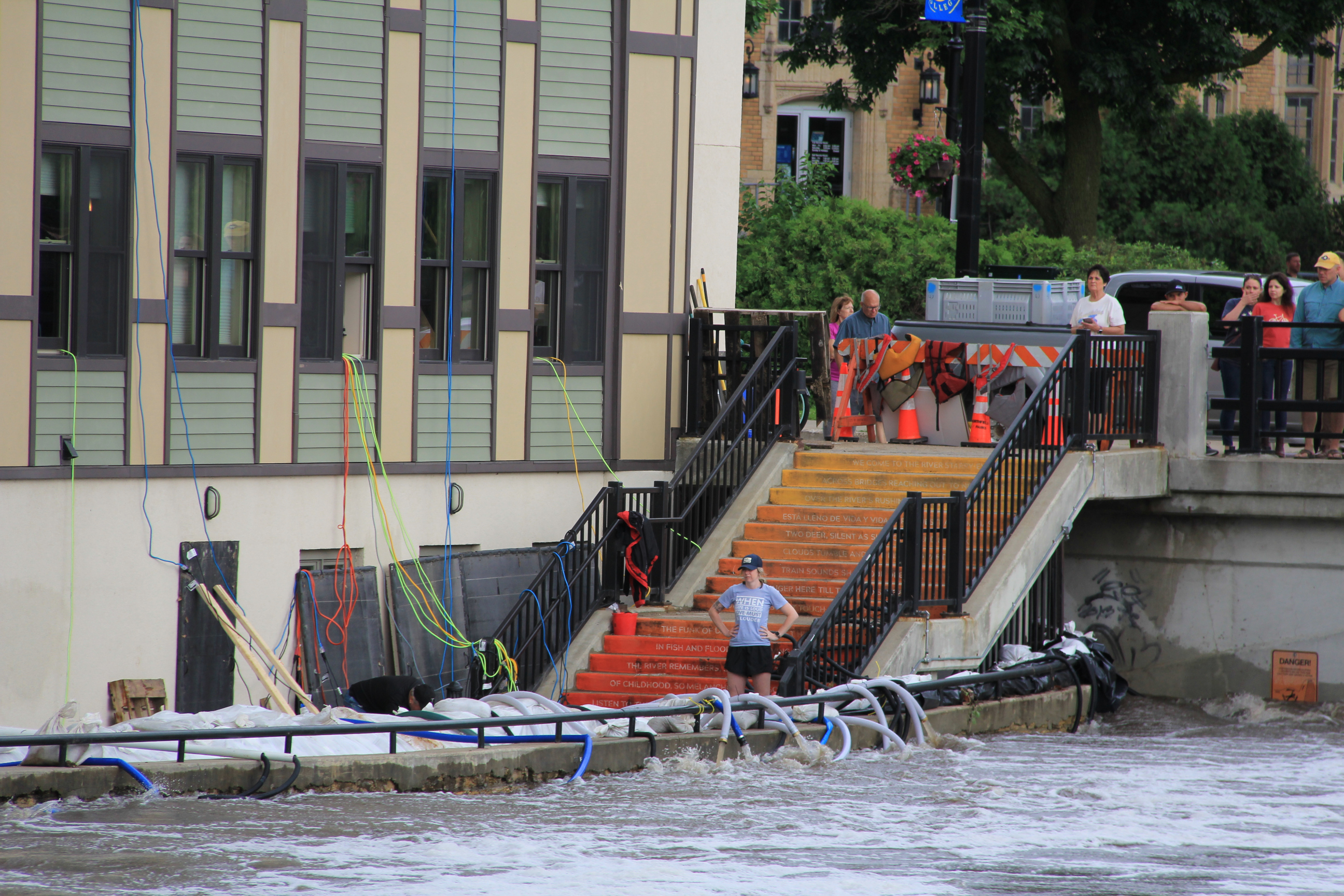
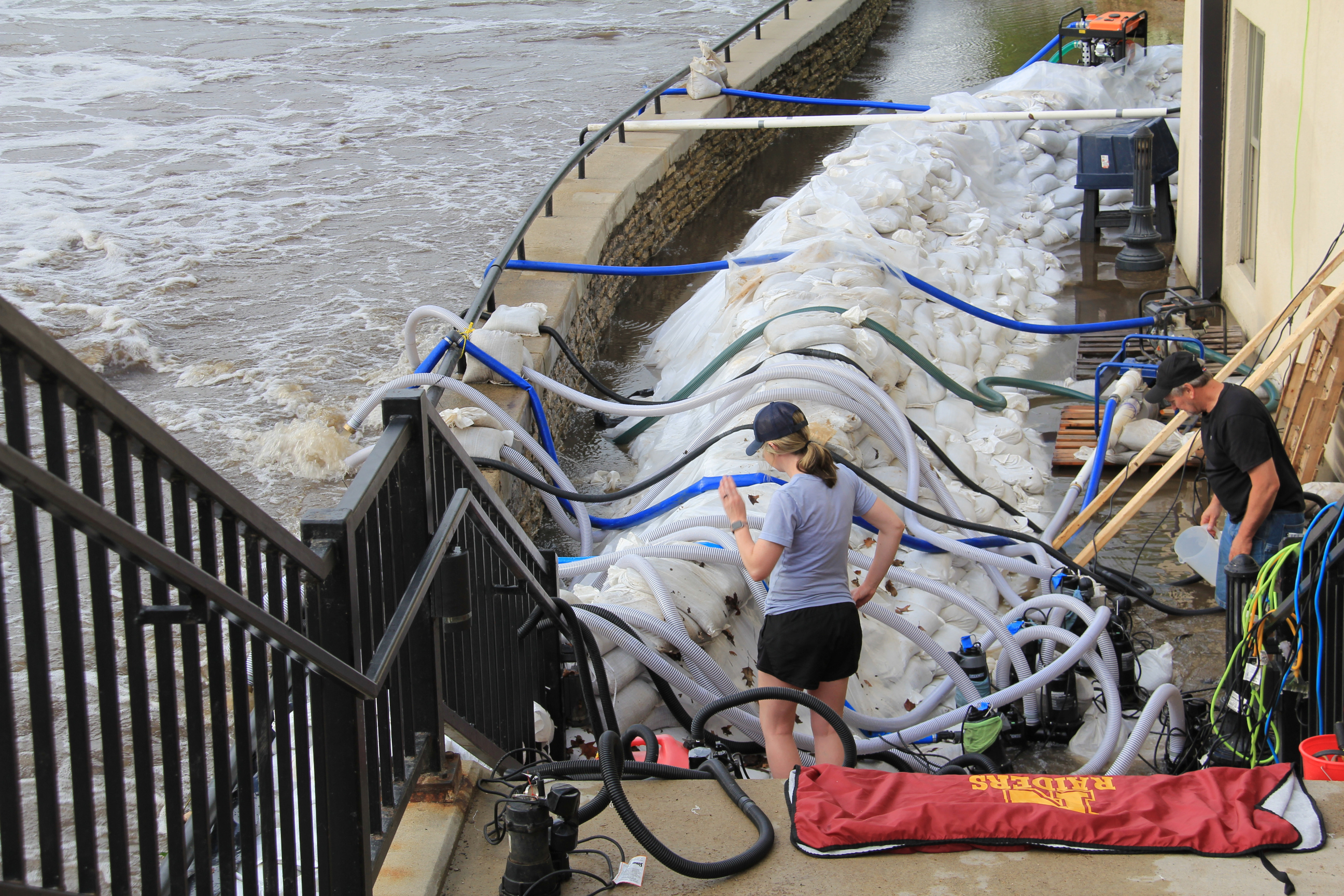
A crew works to protect the Carlson Capital Management building along the east bank of the Cannon River. This is by the “Poem Steps” leading to the Riverwalk, now flooded. (Minnesota Prairie Roots copyrighted photo June 22, 2024)
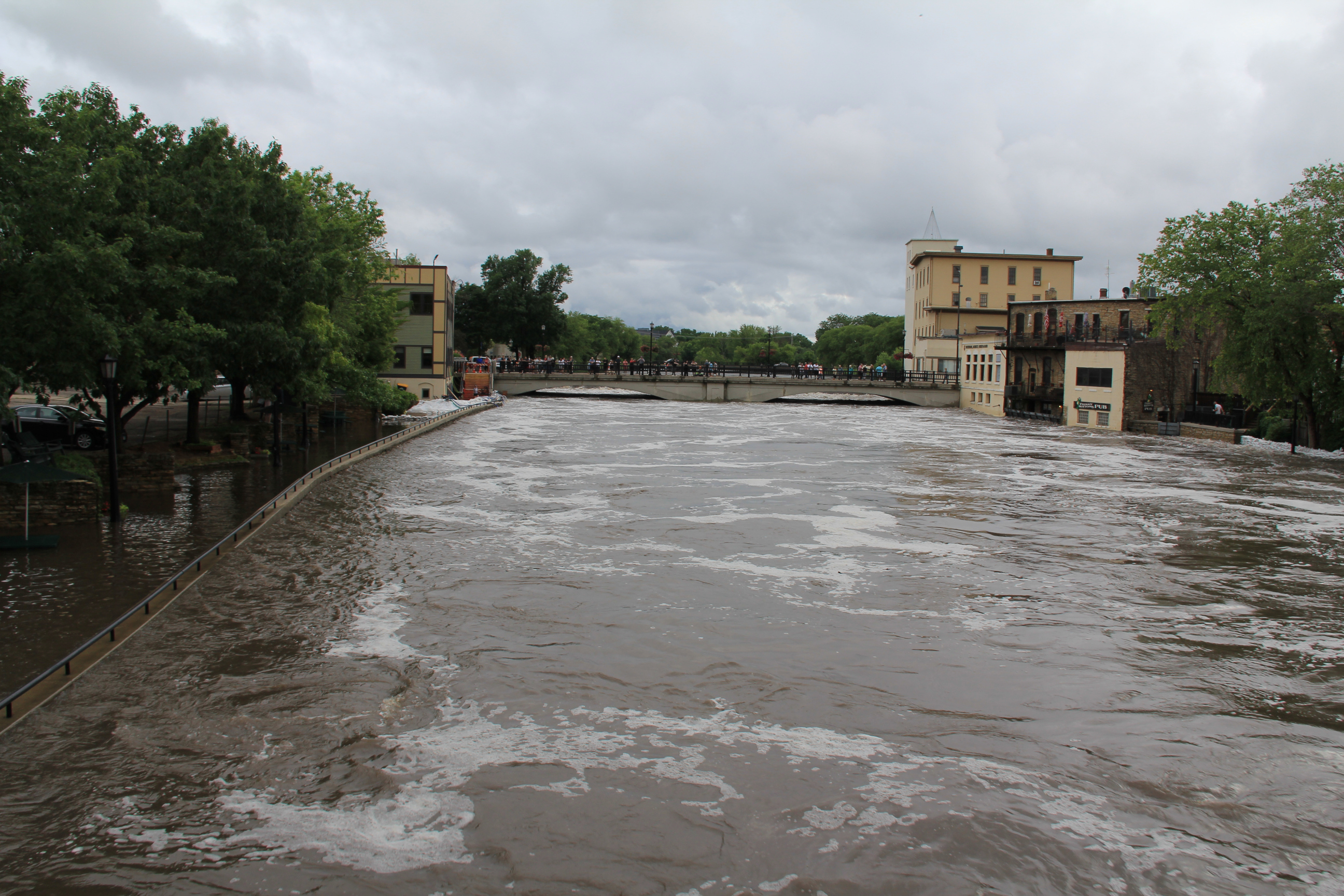
MANY AREAS OF SOUTHERN MINNESOTA, including my county of Rice, have been inundated with torrential rain during the past week. That’s led to flooding of rivers and property and to road closures. Like so many others, I’ve been out and about observing, taking photos.
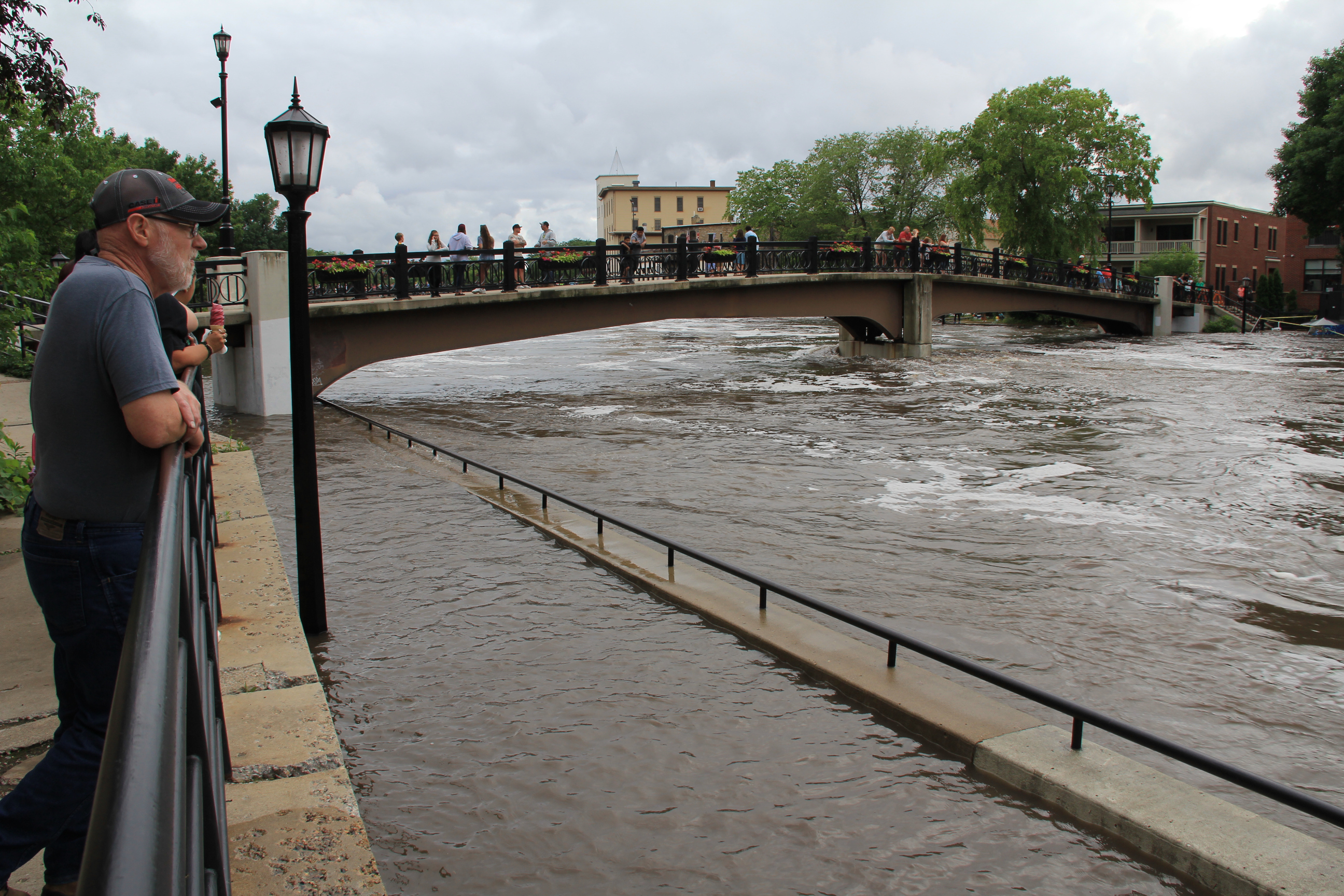
People gather on the pedestrian bridge and along a sidewalk above the Riverwalk to see flooding along the Cannon River. (Minnesota Prairie Roots copyrighted photo June 22, 2024)
Saturday evening, on our way home from visiting family in Lakeville, Randy and I drove through Northfield and stopped to walk along the Cannon River. The river runs through the heart of this historic downtown, which features a waterside river walk.
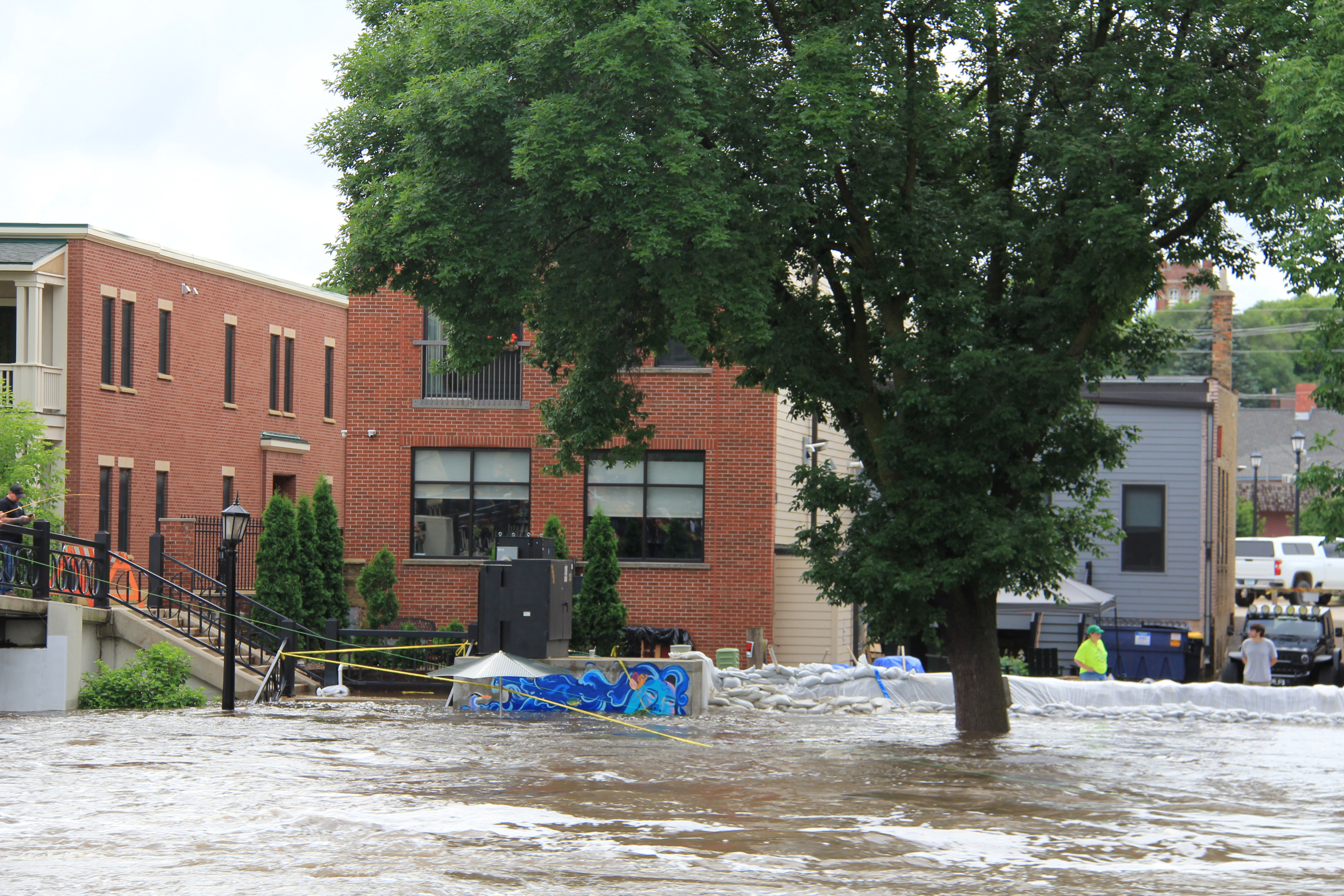
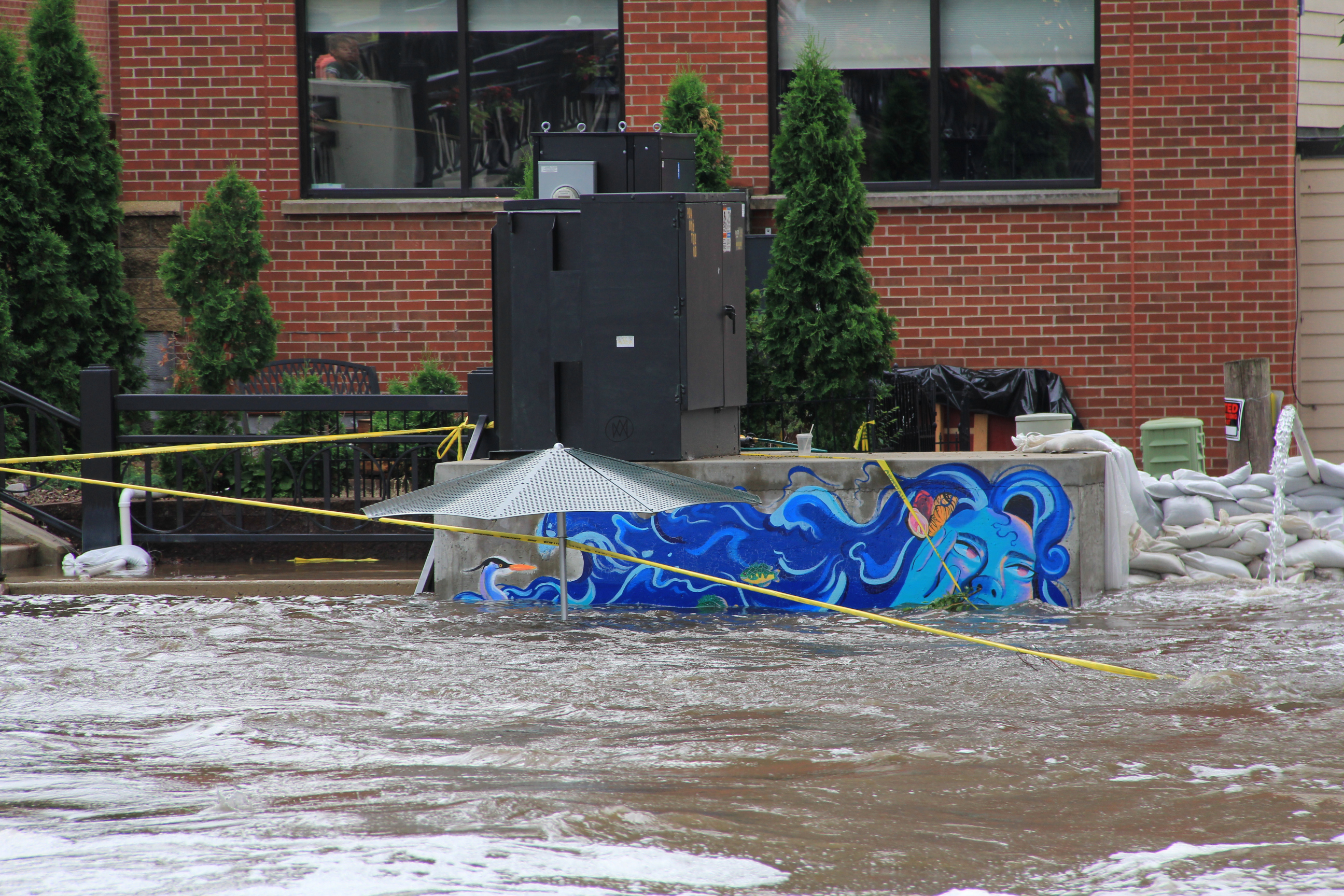
Flooding and sandbagging along the west bank of the Cannon near the Lady Cannon mural.
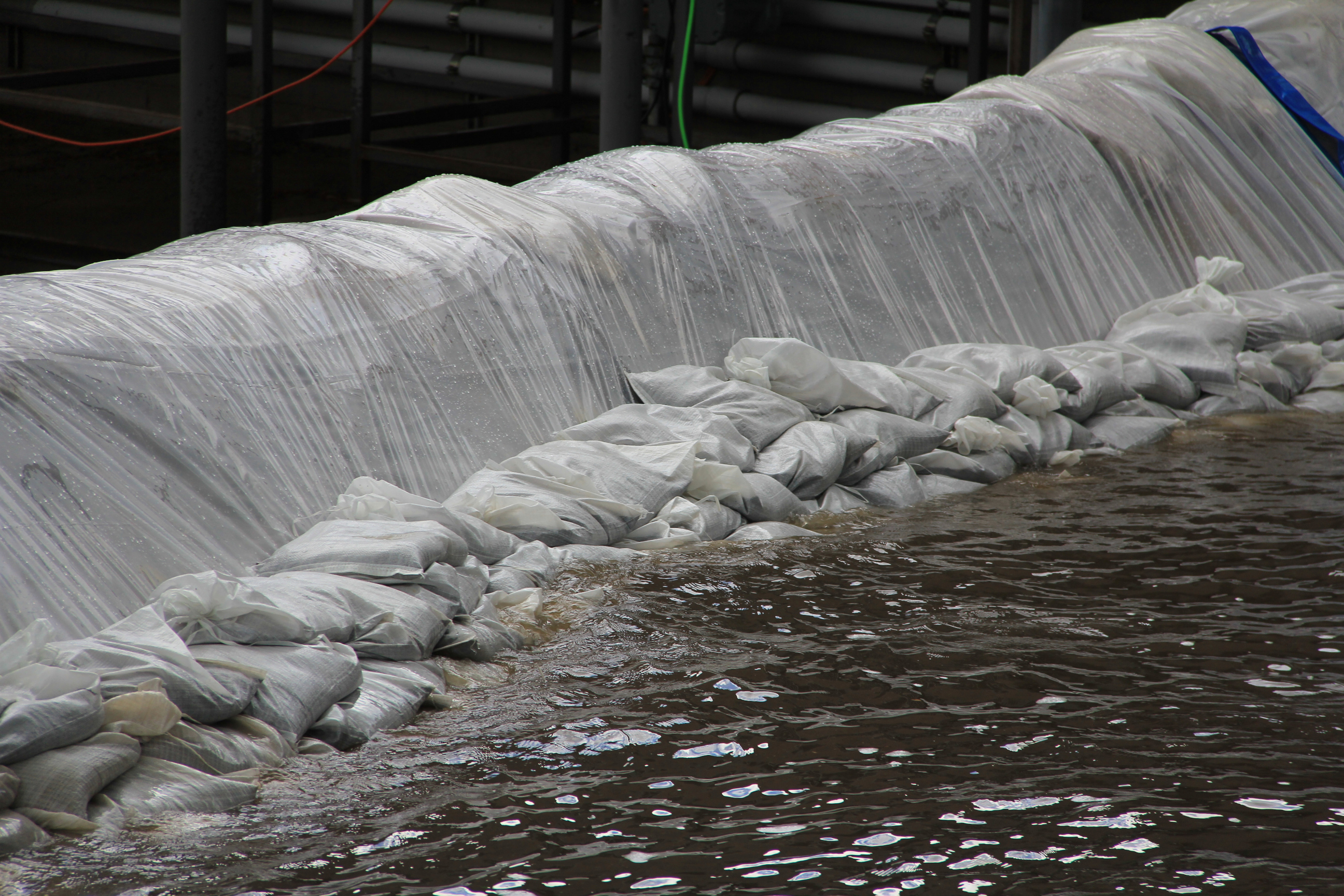
Sandbag wall on the west side of the river. (Minnesota Prairie Roots copyrighted photo June 22, 2024)
Lady Cannon is nearly swimming in the river. (Minnesota Prairie Roots copyrighted photo June 22, 2024)
The Cannon has spilled over its banks, flooding the river walk and adjacent land and threatening buildings at water’s edge. Sandbags are in place. Pumping is underway.
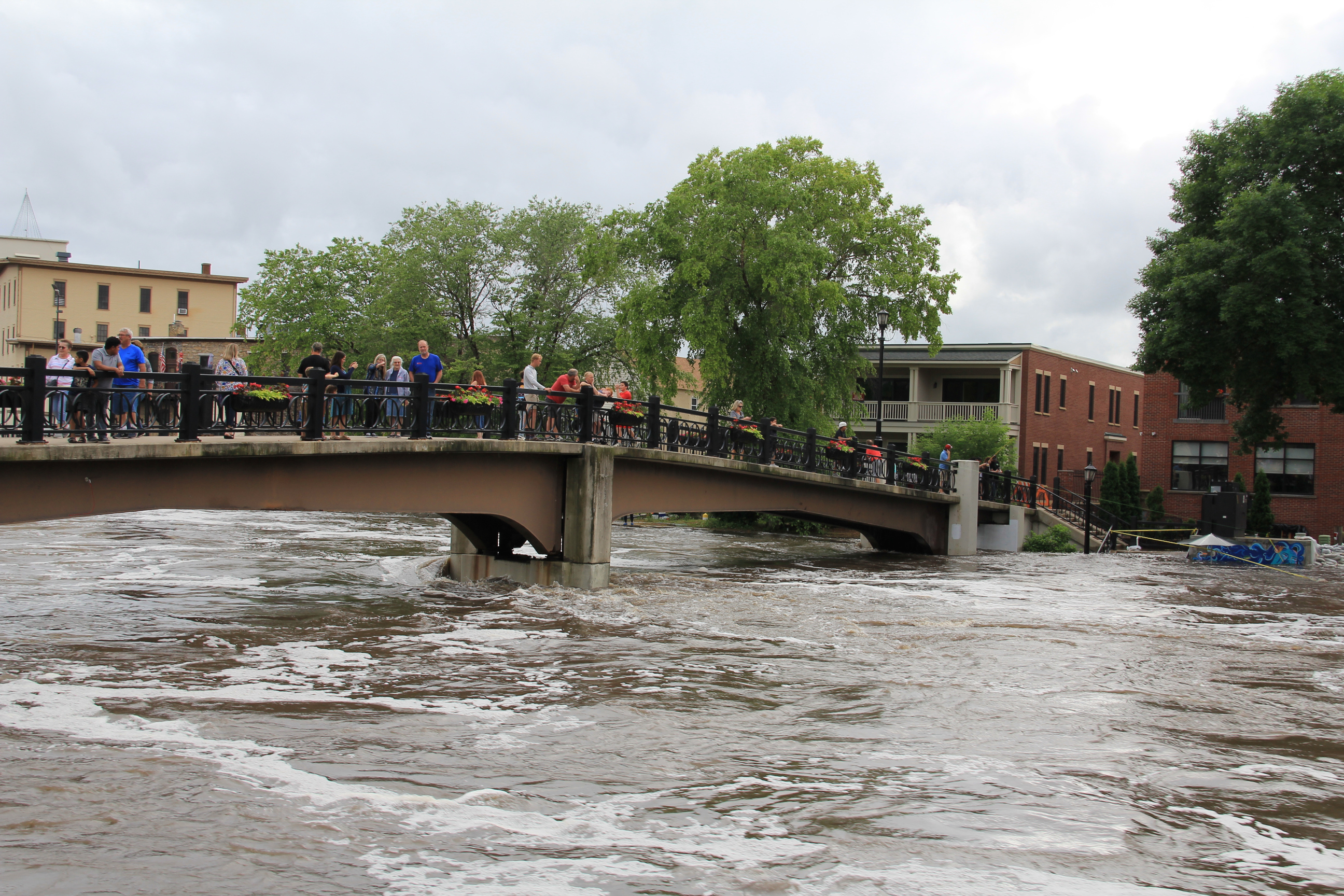
People line the pedestrian bridge across the Cannon for a wide perspective of the river and the flooding. (Minnesota Prairie Roots copyrighted photo June 22, 2024)
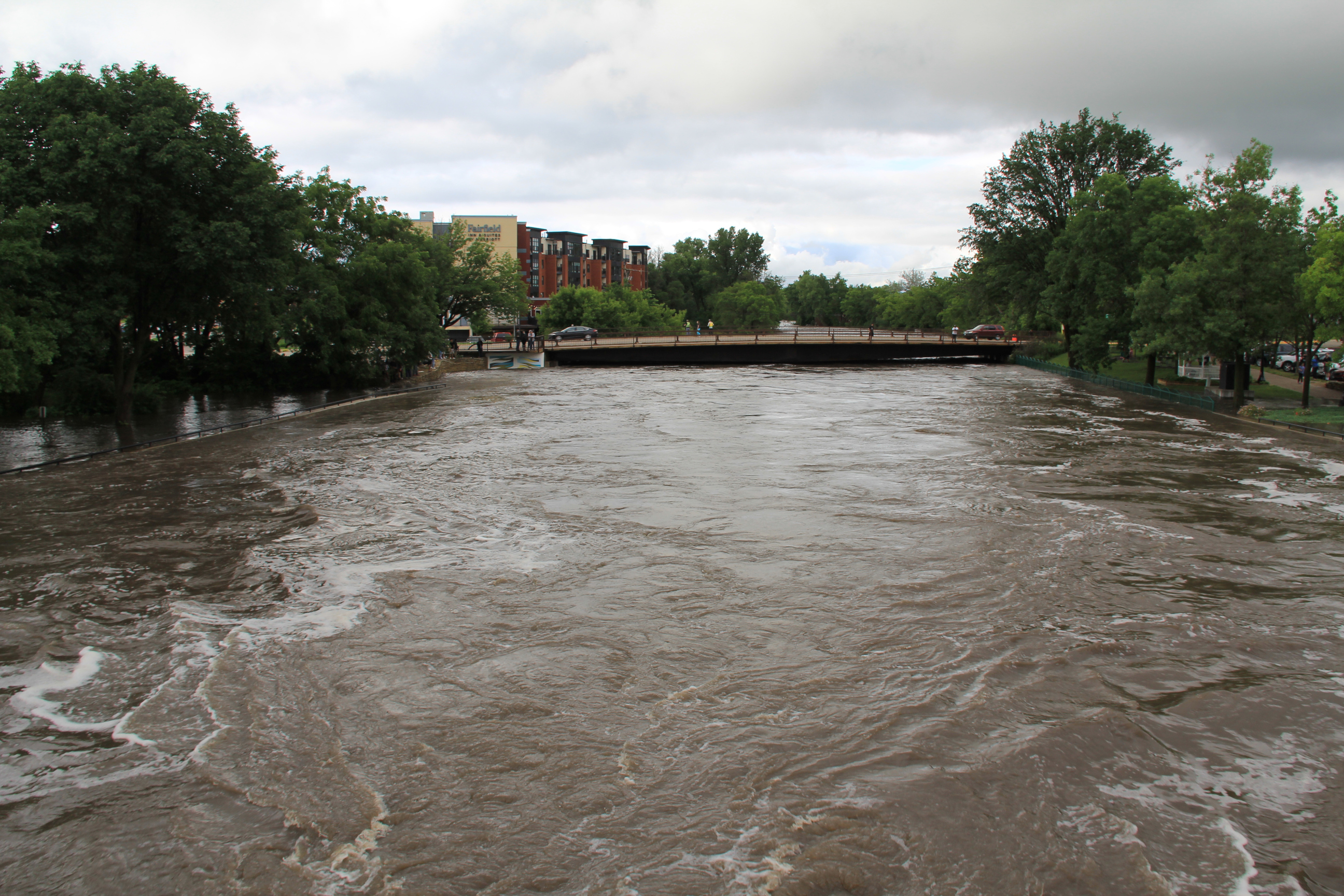
Looking north from the pedestrian bridge to the Second Street/State Highway 19 bridge. (Minnesota Prairie Roots copyrighted photo June 22, 2024)
Looking south from the pedestrian bridge toward the Water Street bridge by the Ames Mill Dam. (Minnesota Prairie Roots copyrighted photo June 22, 2024)
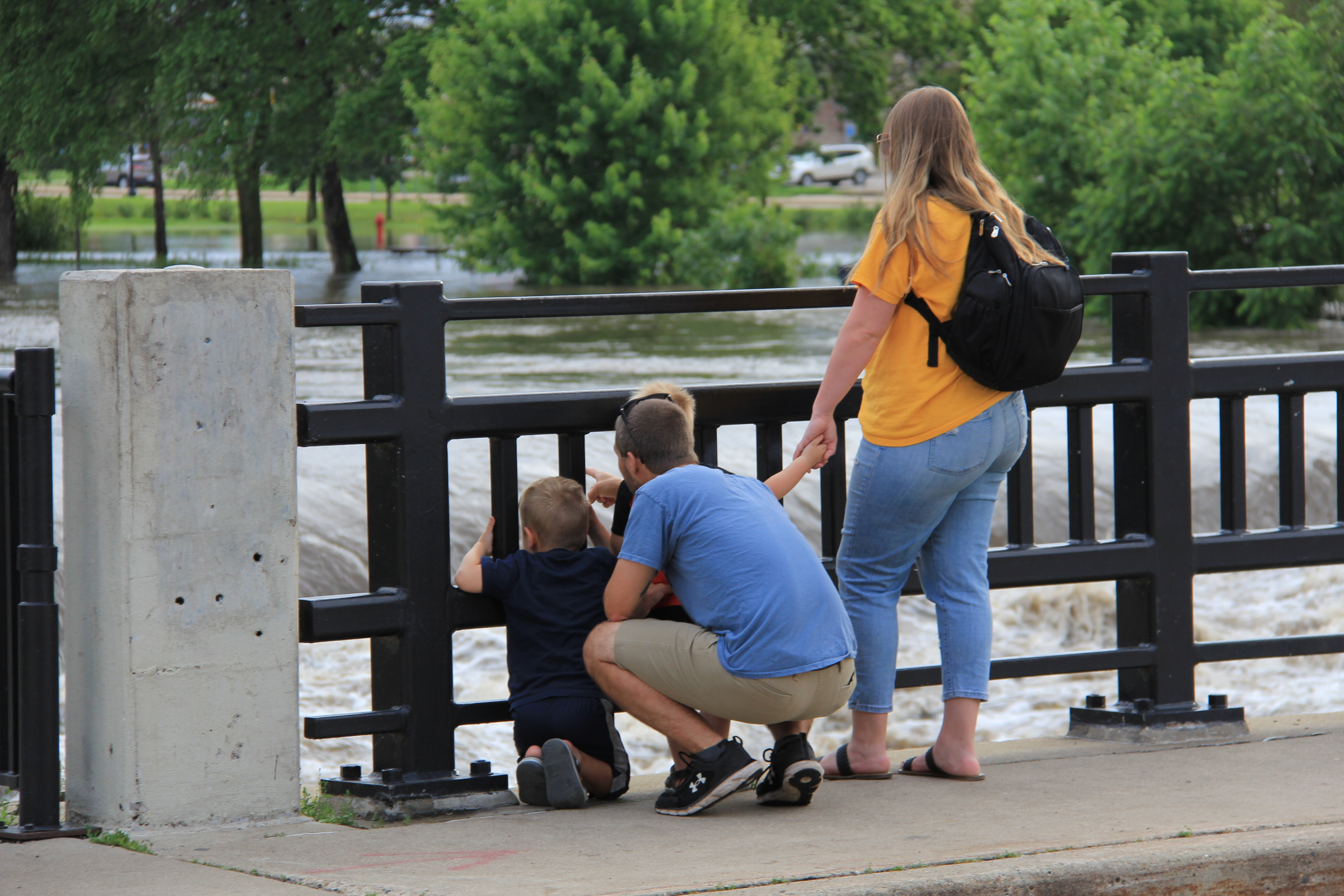
And people are coming to the river by the hundreds to view its raging power. A pedestrian bridge high above the water offers a unique perspective.
The dam is barely visible by the historic Ames Mill. (Minnesota Prairie Roots copyrighted photo June 22, 2024)
Among the many people viewing the river at the dam site. (Minnesota Prairie Roots copyrighted photo June 22, 2024)
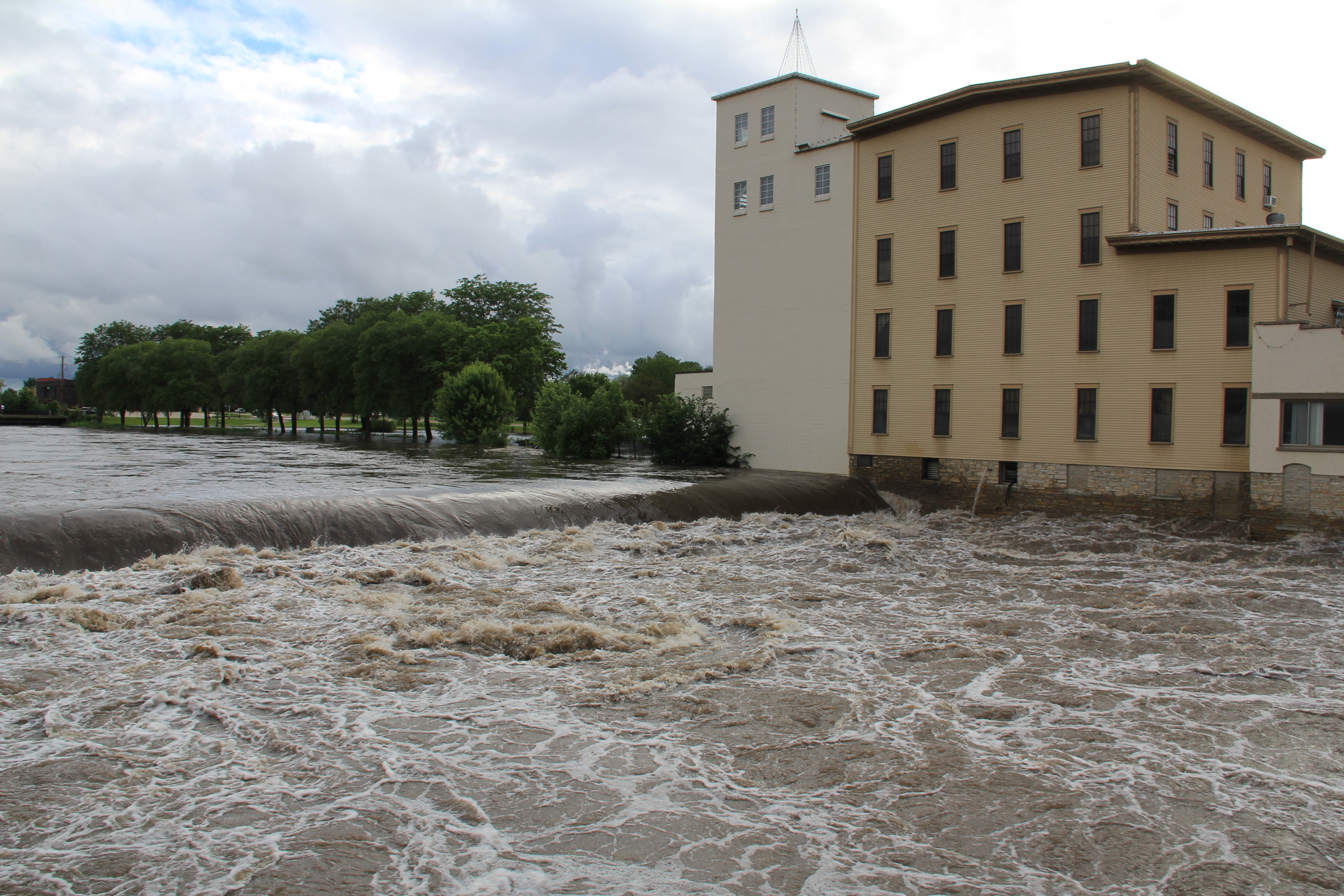
And a bridge across the river by the historic Ames Mill provides a close-up view of the Cannon roaring over the dam.
Protecting Carlson Capital Management. (Minnesota Prairie Roots copyrighted photo June 22, 2024)
A maze of hoses channel water out of the Carlson building while sandbags protect it. (Minnesota Prairie Roots copyrighted photo June 2024)
Froggy Bottoms on the west bank floods whenever the river floods. A neon green poster on the building reads: “This Frog Swims Again.” (Minnesota Prairie Roots copyrighted photo June 22, 2024)
It is impressive, all of it. The nauseating movement of the water. The speed. The danger. The feeling of overwhelming respect and awe in the presence of such power.
Fitting words on the door of the Froggy Bottoms building. (Minnesota Prairie Roots copyrighted photo June 22, 2024)
This I felt as I took in the scene unfolding before me on a Saturday evening in Northfield.
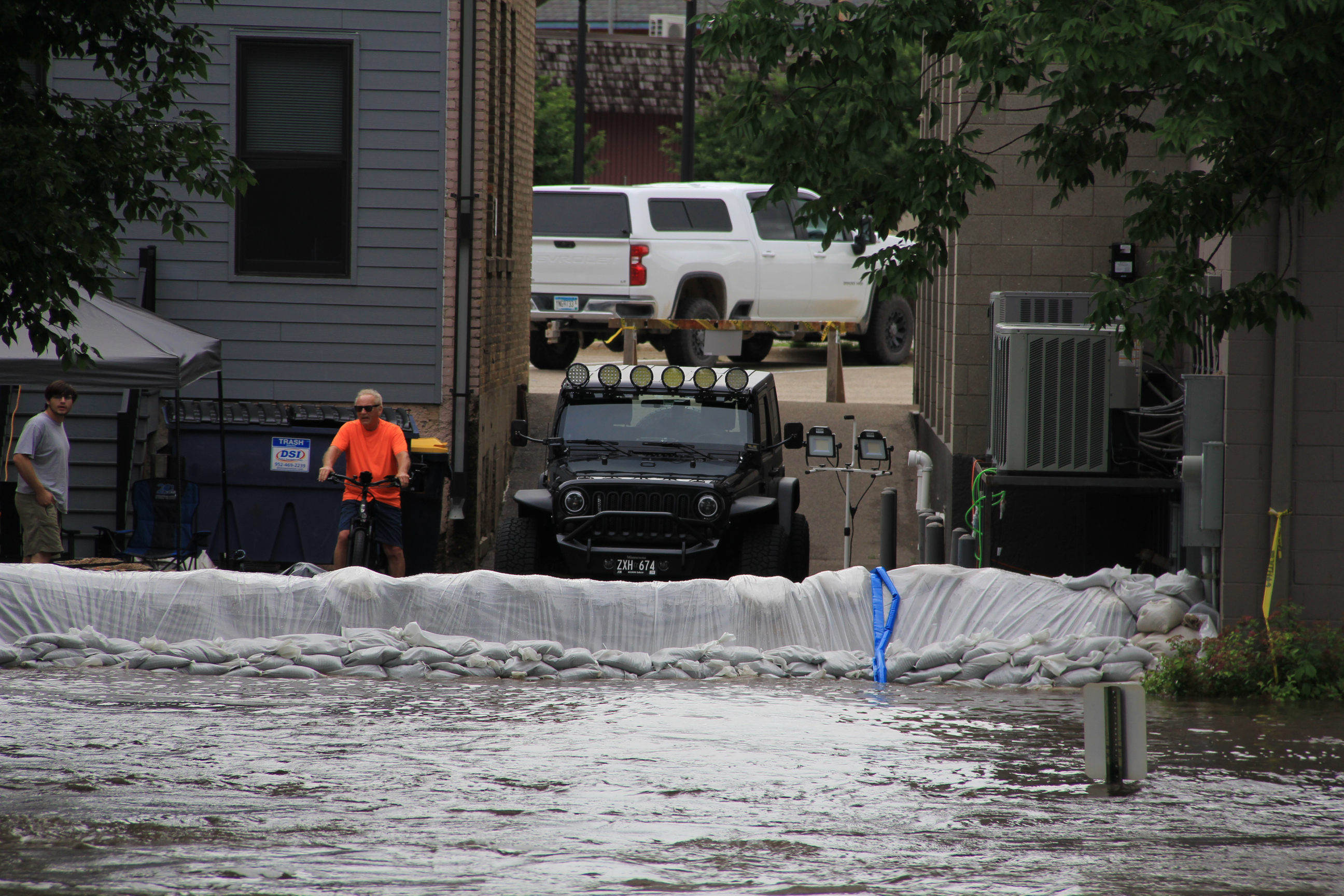
A sandbag wall protects property along the west bank of the Cannon River. (Minnesota Prairie Roots copyrighted photo June 22, 2024)
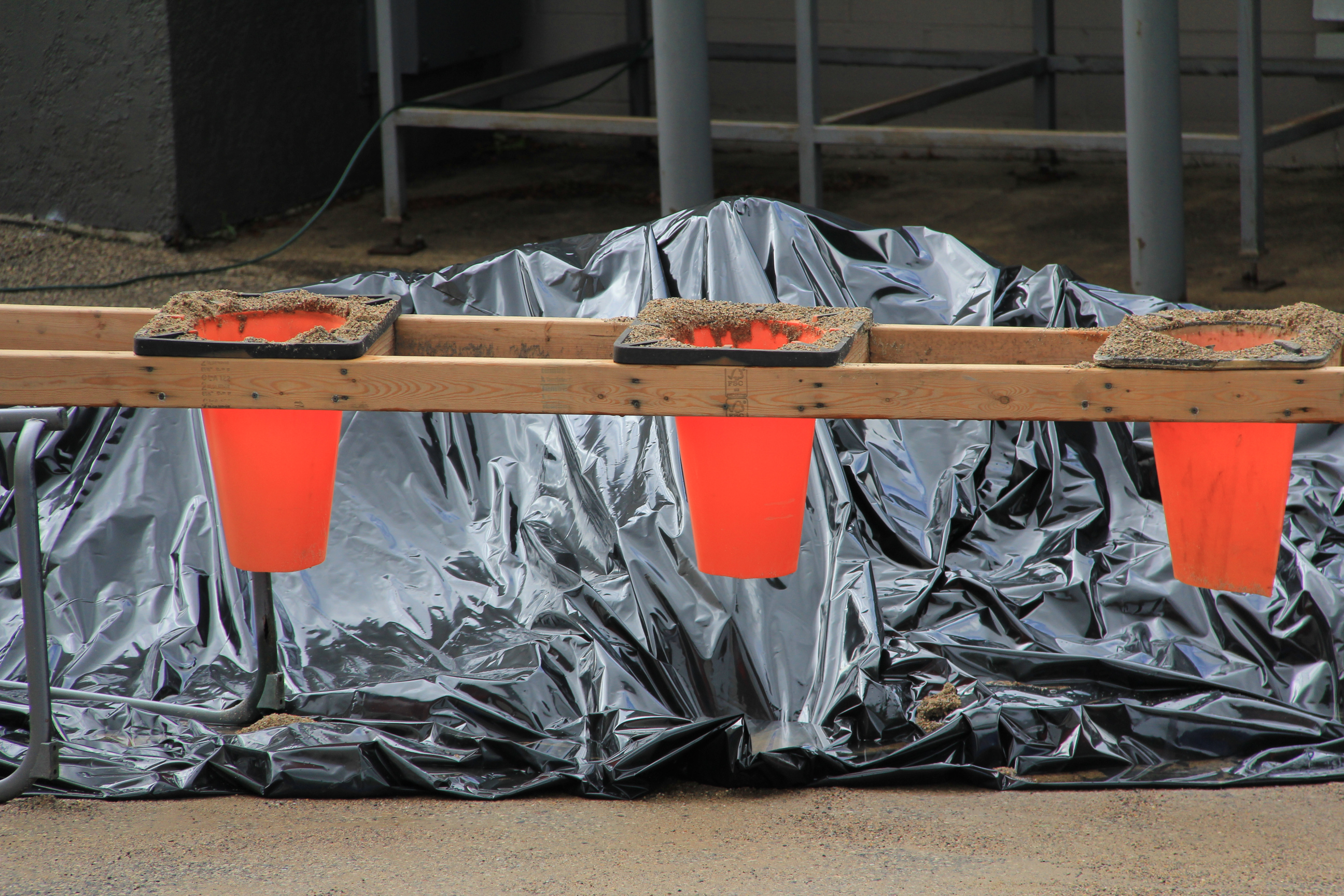
A sandbagging station. (Minnesota Prairie Roots copyrighted photo June 22, 2024)
A line of sandbags protects property on the west bank of the Cannon. (Minnesota Prairie Roots copyrighted photo June 22, 2024)
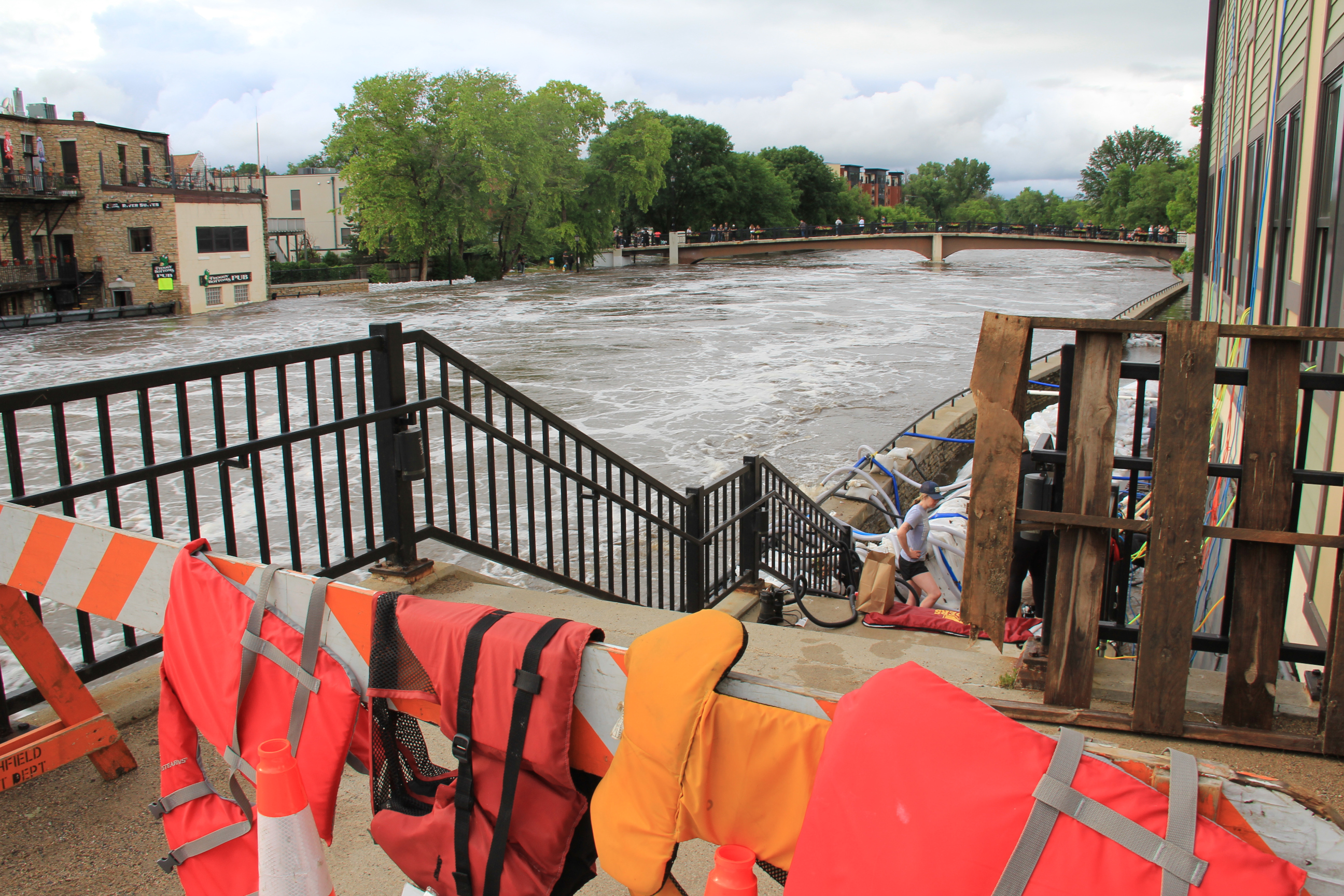
Life jackets drape a barricade blocking access to the flooded east side Riverwalk. Below, workers work to protect the Carlson building from the river. (Minnesota Prairie Roots copyrighted photo June 22, 2024)
NOTE: Check back tomorrow for flood photos from Faribault.





















 Minnesota Prairie Roots
Raging blizzards March 5, 2025
Tags: America, analogy, blizzard, commentary, Minnesota, opinion, snow, weather, winter storm
AS I WRITE this Tuesday afternoon, a sense of foreboding looms. Grey, with a tinge of otherworldly light, defines the sky. Branches of bare trees lean. Unbalanced. Darkness encroaches, presses upon the earth with an anticipatory heaviness. By the time you read this, my area of southern Minnesota will be under siege with a full-blown blizzard. Unless the weather forecasters are wrong.
But this time the forecast of up to eight inches of snow with wind gusts topping 55 mph seems likely. I’ve already asked Randy to stay home from work because driving 24 miles in white-out conditions would not be smart. Or safe. The National Weather Service warns of treacherous travel, potentially life-threatening conditions. Power lines and trees laden with heavy wet snow could snap.
The weather rather matches my mood. I feel a sense of foreboding on so many levels. I struggle sometimes to see the light for the grey skies, for the oppressiveness that prevails. I wonder what will happen next. What storm is brewing?
During a weather event, I can prepare. Take precautions. Buy bread and milk (note I didn’t write, “buy eggs”). Stay home. Shelter in place. Face whatever comes. I’ve lived through blizzards, wind storms and even a tornado. I am a hardy American who happens to live in Minnesota, next to our wonderful Canadian neighbors.
And so that is the approach I must take. Stand strong against the negative forces. Speak up. Continue to show compassion, care, kindness, love. Hold hope. Understand that blizzards don’t last forever, although this one seems never-ending.
Every single snowplow matters in removing burdensome snow from roadways. Imagine what a fleet of snowplows can do against the deepest snow drifted by raging winds. I’ve seen the results. Roads are cleared. The snow melts. The sun shines. Winter ends. The trees bud green. That is my visual hope during these grey days tinged with an otherworldly light.
© Copyright 2025 Audrey Kletscher Helbling