Minnesota Prairie Roots

Writing and photography by Audrey Kletscher Helbling

An obit: I didn’t know Jim, but now I do April 27, 2016

Filed under: Uncategorized — Audrey Kletscher Helbling @ 5:00 AM
Tags: , , , , , ,
A fence surrounds the Urland Lutheran Church Cemetery in the Sogn Valley area.

A fence surrounds the Urland Lutheran Church Cemetery in the Sogn Valley area. Minnesota Prairie Roots file photo 2010 used here for illustration purposes only.

MORE AND MORE, I READ OBITUARIES. Probably because I am aging and more people I know are now dying.

I didn’t know Jim Mueller of Clearwater, though. Yet I still read his 22 column inch obit published April 21 in The Gaylord Hub, a small southern Minnesota weekly where I worked as a reporter for two years right out of college. The Hub arrives in my mailbox each week, a tangible reminder of my past and of the passage of time.

James Henry Mueller left his hometown of Gaylord in 1973, five years before I arrived. If he had still resided there, I likely would have interviewed him. He was that kind of guy. Socially active. A storyteller. A businessman. A character. He would have made for an interesting feature.

Consider this line from the beginning of his obit: Jimmy grew up doted on by his ma and arguing with his pa.

But it is the ninth and final paragraph of this lengthy obit which makes me wish I’d known this 88-year-old:

Jim’s many hats included: Veteran Navy Man, Well Driller, Grain Bin Mover, Beer Seller, Horse Wrangler, and Postmaster. He was a smooth dancer and an ace at bridge. He will fondly be remembered as a Teller of Tales, A Spinner of Yarns, and a Preacher of Sermons.

In addition, paragraph eight notes that Jim donated his body to science. Even in death, his story continues.

NOW IT’S YOUR TURN. How would you like to be remembered? What hats would others say you wore? What do you think of this trend to personalize obituaries with insights and commentary?

© Copyright 2016 Audrey Kletscher Helbling


If you’ve never understood why “she stays,” then you need to read this book April 26, 2016

Filed under: Uncategorized — Audrey Kletscher Helbling @ 5:00 AM
Tags: , , , , , , , ,

IN MY IGNORANCE, I often asked the question, “Why does she stay?”

I couldn’t understand why any woman would stay in an abusive relationship. I expect many of us, if we are honest, have blamed the woman, faulted her for staying with a partner who is verbally, mentally, emotionally, financially, spiritually and/or physically abusive.

Why does she stay?


She Stays by Erica Staab


Erica Staab, director of the HOPE Center in Faribault, answers that question in She Stays. This self-published book is an absolute must-read for everyone. You. Your friends. Your daughter. Your niece. Your sister. Your brother. Your pastor.

Why?

Because you likely know someone who is a victim of domestic abuse. Maybe even you. And you need to know why she stays. It is only when we educate ourselves that we understand. And when we understand, we begin to make a difference.

Long before I read Erica’s recently-released book, I became educated on domestic abuse. Off the top of my head, I can list 13 women, by name, who are survivors. I don’t know the stories of each of these women. But some I do. They were in relationships with men who convinced them they had changed or whom the women believed they could change. These men professed their love. These men were initially charming, loving and attentive. Until they insidiously evolved into monsters who shoved, strangled, smothered, isolated, verbally-destroyed, brainwashed…

Margie Brown Holland and her unborn daughter, Olivia, were honored at The Clothesline Project display this summer in Owatonna. The Minnesota Coalition for Battered Women coordinates the project to honor victims of domestic violence. Redeemer Lutheran Church brought the project to Owatonna this past summer.

Margie Brown Holland and her unborn daughter, Olivia, were honored at The Clothesline Project display in the summer of 2015 in Owatonna. The Minnesota Coalition for Battered Women coordinates the project to honor victims of domestic violence. Redeemer Lutheran Church brought the project to Owatonna. Minnesota Prairie Roots file photo 2015.

I can also personally list the names of three women who were murdered by the men who supposedly loved them: Kay, Becky and Margie. Erica dedicates She Stays to her friend Margie Brown and unborn daughter Olivia. Margie’s dad once lived across the street from me. She also dedicates her book to Julie Carroll, another victim of domestic violence. I didn’t know Julie.

Becky Kasper's portrait.

Becky Kasper of Northfield was murdered in April 2013 by her former boyfriend. She was a student at Arizona State University. This portrait was posted by her father, Dan Kasper, who spoke about domestic violence at Redeemer Lutheran Church in Owatonna in January. Minnesota Prairie Roots file photo January 2016.

But I know that too many women are suffering and dying every day. Too many women are trapped in abusive relationships—whether because of fear, financial worries, even because of hope that the abuser will revert to the loving man he seemed at the beginning of the relationship. I doubt a woman ever enters a relationship thinking the man she loves will abuse her.

Reasons she stays, published on page 18. Text copyright of Erica Staab.

Reasons she stays, published on page 18. Text copyright of Erica Staab.

Erica lays out the reasons she stays in this compilation based on real stories of real women. And she writes in a way that is direct, honest and to the point. You can read this slim 42-page book in less than a half hour. It’s simplistic, state-it-like-it-is understandable.

Erica's book also focuses on reasons she leaves.

Erica’s book also focuses on reasons for leaving. Interspersed throughout this volume are Erica’s photos, primarily nature themed.

But this author and experienced advocate doesn’t end with she stays. She also writes about why she left. Therein lies another reason you must read this book. You will learn that listening, understanding and believing can make all the difference to a woman in deciding whether she stays or she leaves. You can offer hope.

On the final page of She Stays, Erica pens four powerful words: You are not alone.

A victim of domestic abuse should never feel alone. But all too often she does, because we continue to ask, “Why does she stay?”

Statistics on a The Clothesline Project t-shirt from the Minnesota Coaltition for Battered Women..

Statistics on a The Clothesline Project t-shirt from the Minnesota Coalition for Battered Women, displayed this past summer in Owatonna. Minnesota Prairie Roots file photo.

FYI: To purchase a copy of She Stays, click here. Use this discount code to get $2 off: WCPXLKQS. All proceeds from the book will benefit HOPE Center, an advocacy organization in Faribault. Copies may also be purchased directly from HOPE Center.

If you are in an abusive relationship and in immediate danger, call 911 now.

Or contact a local crisis resource center for help and support.

You can find additional information through the following resources:

National Coalition Against Domestic Violence

Minnesota Coalition for Battered Women

NOTE: Men can also be victims of domestic abuse. But because the majority are women, I use that noun and the pronoun she. Just as Erica does in her book.

© Copyright 2016 Audrey Kletscher Helbling

 

How photos & life inspire poetry at a Mankato exhibit April 25, 2016

THE VARIETY OF POETRY a single photo can inspire always amazes me. As do other poets.

At the recent opening of Image and the Word 9 at the Emy Frentz Gallery in Mankato, I mingled with poets. One writes a poem a day. Amazing.

Each year for the past several, I’ve participated in this exhibit which features inspirational photos and reactionary poems by southern Minnesota photographers and writers. I wrote four poems, including one about my automotive machinist husband, Randy. A photo of laced work boots prompted that personal poem.


Chippewa boots have replaced athletic shoes.

A photo similar to this inspired the poem about my husband. Minnesota Prairie Roots file photo.


My Husband at the End of His Work Day

Leather boots lace your aching feet.
Grease outlines your fingernails.
Oil smudges stain your standard blue uniform.
You come home bone-weary, eat, shower, change,
then settle into the recliner with your Sudoku.
Your head nods. You are napping
long before the ten o’clock news,
just like every other hard-working blue collar man.


Standing in a small circle with poets Henry, Ed and Susan, I agreed that our experiences often shape our poetry. Consider that the next time you read a poem. We concurred also that we love words. As a poet, there’s a deep sense of joy and fulfillment in words falling together. Sometimes, oftentimes, we don’t understand how that happens. But when it does, it’s magical. It’s poetry.

FYI: The Image and the Word 9 exhibit will run through May 18 at the Emy Frentz Gallery, 523 South Second Street, Mankato. Gallery hours are from noon to 4 p.m. each weekday except Thursday, when hours are 4 p.m. – 8 p.m. Southern Minnesota Poets Society members Yvonne Cariveau and Derek Liebertz produce the exhibit annually.

© Copyright 2016 Audrey Kletscher Helbling


Real stories from troopers about distracted driving in Minnesota April 22, 2016

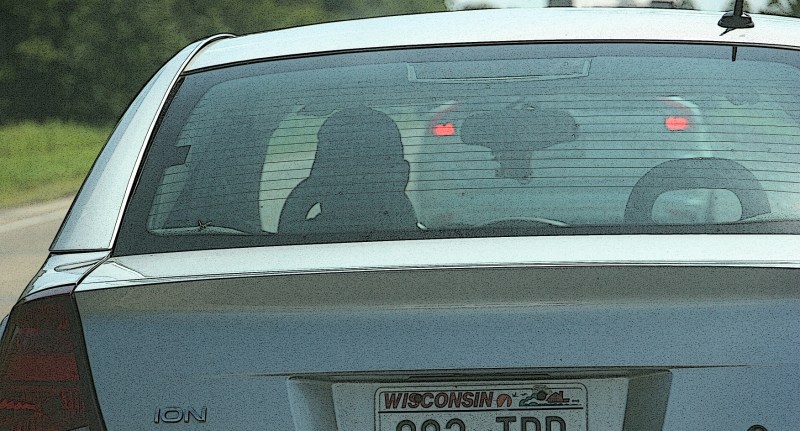
Photographed along Interstate 35 between Medford and Faribault, northbound lane.

Photographed along Interstate 35 between Medford and Faribault, northbound lanes.

THE MINNESOTA STATE PATROL, on its Twitter account, asks this question: Is a text more important than the life in your car or the one next to you?

As law enforcement agencies across the state crack down on distracted driving during April, it becomes undeniably clear that texting while driving is a major problem. We all knew that. Right? Yet we continue to engage in behavior that endangers us and others. Our need to constantly be connected is a tough habit to kick.

Said a 25-year-old woman stopped recently by a trooper along 35E in the metro: “It’s such a habit.” She claimed to be unaware that she was texting. Really?

This billboard sponsored by Federated Insurance of Owatonna stands along Steele County Road 45 that runs parallel to Interstate 35 just north of Owatonna.

This billboard sponsored by Federated Insurance stands along Steele County Road 45 north of Owatonna. CR45 runs parallel to Interstate 35. The photo of the young girl on the billboard personalizes the message.

But a semi truck driver along I-90 clearly knew he was texting. His phone was Velcroed to his steering wheel. When a trooper stopped him for weaving and crossing out of his lane, he admitted to texting his kids. Really?

West of Fosston, a driver was stopped for changing speeds with her head down. The young mother admitted to texting. Her infant was in the back seat. Really?

This message is posted just north of Faribault along the northbound lanes of Interstate 35.

This message is posted just north of Faribault along the northbound lanes of Interstate 35.

In Shakopee, a trooper stopped a 37-year-old man who was looking online for a karate facility address while driving. Really?

And how about this one: A 27-year-old man was cited in Duluth for reading texts with his right hand, drinking with his left and steering with his knees. Really?

Is a text more important than the life in your car or the one next to you?

Be safe on the roads this weekend, my friends.

FYI: Click here to read the Minnesota Patrol Twitter page. And click here to read #SpeakUpMN, what Minnesotans are saying about distracted driving.

© Copyright 2016 Audrey Kletscher Helbling

 

In Owatonna: I scream for ice cream April 21, 2016

Filed under: Uncategorized — Audrey Kletscher Helbling @ 5:00 AM
Tags: , , , , , , , ,
The S'Cream and an insurance agency office are connected.

The S’Cream and an insurance agency office are connected to one another.

I LOVE HOMEGROWN walk-up ice cream shops. They have character. And ice cream treats that are scrumptious and often uniquely named.

This sign explains The Betty and lists other available treats.

This sign explains The Betty and lists other available treats.

Take The S’Cream, a seasonal ice cream shop advertised as “Home of The Betty,” and located along Owatonna’s busy South Oak Avenue.

The Betty, presumably named after someone.

The Betty, presumably named after Betty.

What is The Betty? It is, I discovered, Cool Mint Flavor Burst ice cream, crème de mint and Oreos flurried together, then topped with whipped cream. And let’s not forget the sprinkles. I can attest to The Betty’s sweet deliciousness.

My husband ordered this blue raspberry ice cream treat.

My husband ordered this blue raspberry ice cream treat.

Equally as delectable is the blue raspberry Flavor Burst ice cream treat my husband enjoyed at The S’Cream. It’s actually the owner’s favorite. He tells me the staff is often dreaming up new ice cream offerings. How fun is that?

If you were to create a treat for an ice cream shop, what would you concoct?

© Copyright 2016 Audrey Kletscher Helbling
 

A grandfather’s love April 20, 2016

Filed under: Uncategorized — Audrey Kletscher Helbling @ 5:00 AM
Tags: , , , , ,
My granddaughter at 10 days old.

My granddaughter at 10 days old.

THERE IS A SIDE TO GRANDPARENTING I never considered. And that is the joy of watching my husband in the role of grandpa. Randy holds his little Isabelle with such gentleness, cradling her in his arms like the precious baby girl she is to all of us.

Grandfather and granddaughter.

Grandfather and granddaughter.

He is a man who works with his hands—pounding, fixing, drilling—as an automotive machinist. Oil and grease stain his skin and rim his fingernails. He works hard. But those same strong, rough hands wrap a swaddle cloth around Izzy and tuck in her bare feet as he gazes at her with such tenderness that my heart aches.

Two generations connecting.

Two generations connecting.

And then at one point, this 10-day-old baby reflexively wraps her tiny hand around her grandpa’s right thumb. A kiss before she can kiss him. Love so sweet, so beautiful, between a grandfather and his newborn granddaughter.

© Copyright 2016 Audrey Kletscher Helbling

 

Delighting in Owatonna’s Mineral Springs Park on a Sunday afternoon April 19, 2016

A sign explains the legend of Princess Owatonna, represented in an early 1930s statue in Mineral Springs Park.

A sign explains the legend of Princess Owatonna, represented in an early 1930s statue in Mineral Springs Park. The statue was restored in 1986, but appears in need of repair work again.

I DRANK A LONG, deep drink of glacier cold spring water bubbling from a fountain in Owatonna’s Mineral Springs Park. Water that tasted of iron, of the earth. Water that, as legend goes, holds healing power. Princess Owatonna, the daughter of Chief Wabena, supposedly drank daily of the springs along Maple Creek, regaining her health.

I drank from this fountain of spring water.

I drank from this fountain of spring water. Owatonna Mineral Springs Company spring water was served on railroad dining cars back in the day.

Whether legend or truth, it mattered not to me. I drank more, until my husband pointed out rust running across the park roadway from the spilling water fountains. (I should have noticed the rust in the fountain bowls.)

Maple Creek winds through the park. Several pedestrian bridges cross the waterway.

Maple Creek winds through the park. Several pedestrian bridges cross the waterway.

This 48-acre park is a lovely place, nestled at the base of wooded hills, the creek flowing through.

Maple Creek runs surprisingly clear.

Maple Creek runs surprisingly clear.

I watched this drake for a long time swimming in the creek.

I watched this drake for a long time swimming in the creek.

I was especially impressed by the clarity of the water, so clear I could see the webbed feet of a drake paddling. So clear I could see the creek bottom. So clear I could see a minnow swimming.

The Princess Owatonna statue up close.

The Princess Owatonna statue up close.

Sunday was the perfect day to visit this park with the 1930s statue of the Indian Princess after whom this southern Minnesota community is named. So legend claims.

On the wooded hillside, these wildflowers bloomed.

On the wooded hillside, these wildflowers bloomed.

Sun baked heat into the afternoon at an unseasonably warm 70-plus degrees. Wildflowers bloomed. Hints of buds greened trees. A butterfly darted.

Fishing in Maple Creek, although there were not fish to be seen except minnows.

Fishing in Maple Creek, although there were not fish to be seen except minnows.

Kids raced around the playground, energized. Guys tossed horseshoes. A boy fished with his dad. Walkers walked dogs. The signature scent of roasting hot dogs drifted from the picnic shelter grill.

People smiled. How could you not? Sunday marked a glorious summer-like spring day in Minnesota. As beautiful as they come in April.

© Copyright 2016 Audrey Kletscher Helbling

 

In honor of spring planting season in southern Minnesota April 18, 2016

Filed under: Uncategorized — Audrey Kletscher Helbling @ 5:00 AM
Tags: , , , , ,
A pause in field work along the Rice-Steele County line Sunday afternoon.

A pause in field work along the Rice-Steele County line Sunday afternoon.

FARM IMPLEMENTS KICKED up dust Sunday afternoon under blue skies clumped with white clouds here in southeastern Minnesota.

Prepping the soil for planting along 270th Street East in southern Rice County.

Prepping the soil for planting along 270th Street East in southern Rice County.

It was the kind of balmy spring day that draws me to the land, to memories of spring planting.

This tractor and grain cart (typically used during harvest) sat unattended in southern Rice County Sunday afternoon.

This tractor and grain cart (typically used during harvest) sat unattended in southern Rice County Sunday afternoon.

While tractors and other equipment have changed since I left the farm of my roots at age 17, way too many years ago, one constant remains. This is the season of transition. An awakening. Black earth turned to warm sun. Seeding of the soil. The promise of a harvest.

Just outside Medford this farmer prepped the soil Sunday afternoon.

Just outside Medford this farmer prepped the soil Sunday afternoon.

The farm girl in me still lingers, waiting for spring days like this, for a drive into the country, for an opportunity to honor the land via photos, via thoughts, via a deep emotional connection to the earth.

© Copyright 2016 Audrey Kletscher Helbling

 

Part II: The disasters of Steele County April 15, 2016

Steele County disasters, 107 pandemic display


OF ALL THE DISASTERS HIGHLIGHTED in a current local disasters exhibit at the Steele County History Center in Owatonna, it is the flu pandemic of 1918 that feels most personal. To read the names of victims like Cora, Helen and Forest and to see photos of gravestones grieved me. Every winter, even today, we hear of those who’ve died from the flu. Young. Old. In between. Thankfully, we have vaccines that prevent the illness from infecting most of us.

Snowdrifts blocked a train as noted in this news clip.

Snowdrifts blocked a train as noted in this news clip.

This detailed exhibit, an off-shoot of the Minnesota Historical Society Traveling Exhibit Disasters of Minnesota: Stories of Strength and Survival, connected a worldwide tragedy to Minnesota. To the county just to the south of mine.

Masks, precautions and isolation helped protect against the flu epidemic. To the left in this photo are names of Steele County residents who died from the flu in 1918.

Masks, precautions and isolation helped protect against the flu epidemic. To the left in this photo are names of Steele County residents who died from the flu in 1918, plus photos of some of their gravestones.

In Minnesota alone, according to one report, as many as 12,000 died of the flu in 1918. Worldwide, sources put deaths at 40 or 50 million.

Activities that brought people together were suspended during the flu outbreak.

Activities that brought people together were suspended during the flu outbreak.

I’d never considered the vast scope of this tragedy, how fearful folks must have been, how deep the grief at losing loved ones and friends. I also hadn’t thought about the impact on everyday life. As I browsed the exhibit, I noted news stories about libraries, dance halls, theaters and churches closed because of the pandemic.

I am old enough to remember also the fringe ending of the polio epidemic, highlighted, too, in this exhibit.

These newspaper articles feature snowstorms in the county.

These newspaper articles feature snowstorms in the county.

Steele County has experienced plenty of floods.

Steele County has experienced numerous floods.

Fires, too, have devastated the county.

Fires, too, have devastated the county.

Steele County has experienced plenty of disasters involving snow, heat, wind, water and fire. These are outlined in panel displays.

Portrait of Virginia Hart

Portrait of Virginia Hart

It would be easy to become discouraged, to feel only despair that so many southern Minnesota residents have suffered so much through the years. I was especially appreciative of stories that uplifted me, like that of Ruth Weinmann. The young teacher, ill with the flu in 1918, was taken in by a doctor’s family after her landlady refused to house her and the hospital was full. In gratitude to Dr. Alfred and Alice Hart, Ruth painted a portrait of their daughter, Virginia. It is a lovely expression of thankfulness.


Steele County disasters, 104 chicks hatch in heat


And then there’s the story of chicks hatching in the middle of Steele County’s longest, hottest heat wave—13 straight days of temperatures above 100 degrees beginning on July 5, 1936. Mrs. Tilford Morreim left five eggs on the window sill of her woodshed. In the heat, the eggs hatched. I needed to read that humorous story in the midst of all the suffering and loss.

Information on tornadoes in Steele County.

Information on tornadoes in Steele County.

In every disaster, we must find a reason to be hopeful, to survive, to share our stories…for in sharing exists hope and resilience.

These two exhibits are on display through March 2017.

These two exhibits are on display through March 2017.

FYI: For more information about this exhibit, click here. To read my first post about this exhibit in Owatonna, click here. Check back for a post on a wedding dress exhibit also now showing at the Steele County History Center.

© Copyright 2016 Audrey Kletscher Helbling
 

Part I: Minnesota disasters up close April 14, 2016

The panel to the right introduces the Minnesota Disasters exhibit with each panel featuring a different disaster in our state.

The panel to the right introduces the Minnesota Disasters exhibit with each panel featuring a different disaster in our state.

DISASTER. How do you define that word? In a Minnesota Historical Society Traveling Exhibit currently displayed at the Steele County History Center in Owatonna, disaster covers everything from tornadoes to the 35W bridge collapse to the grasshopper plague, drought, blizzards and more.

I personally remember many Minnesota disasters—such as the bridge collapse; the Halloween blizzard of 1991; the 1998 St. Peter-Comfrey tornadoes; the 1968 Tracy tornado which killed nine; the drought of 1976; and the devastating floods of September 2010.

During Severe Weather Awareness Week, we prepare for dangerous storms like tornadoes. One panel in the exhibit highlights some of Minnesota's deadliest and most devastating tornadoes. The Tracy tornado was not included.

During Severe Weather Awareness Week, we prepare for dangerous storms like tornadoes. One panel in the exhibit highlights some of Minnesota’s deadliest and most devastating tornadoes. The Tracy tornado was not included.

This week, Minnesota Severe Weather Awareness Week, seems an appropriate time to focus on the topic of disasters and to show you the MHS exhibit, Minnesota Disasters: Stories of Strength and Survival.

Eric Lantz, 16, of Walnut Grove, shot this award-winning photo of the Tracy tornado as it was leaving town. He often took photos for the Walnut Grove Tribune, owned by his uncle, Everett Lantz. This image by Eric was awarded third place in the 1968 National Newspaper Association contest for best news photo.

Eric Lantz, 16, of Walnut Grove, shot this award-winning photo of the Tracy tornado as it was leaving town. He often took photos for the Walnut Grove Tribune, owned by his uncle, Everett Lantz. This image by Eric was awarded third place in the 1968 National Newspaper Association contest for best news photo. This copyrighted photo is courtesy of Scott Thoma with the original copyright retainted by Lantz.

I expect many of you have been, at some point, personally impacted by a disaster. The deadly Tracy tornado forever put the fear of tornadoes in my heart. That southwestern Minnesota community lies only 25 miles from my hometown; I saw the devastation in Tracy. Decades later, a tornado damaged the farm where I grew up and high winds partially ripped the roof from my home church of St. John’s Lutheran in Vesta. I respect the powerful forces of nature, specifically of wind.

A debris pile on the edge of the church parking lot includes pieces of steel from the roof and brick from the bell tower. Photo taken in September 2011.

A debris pile on the edge of the St. John’s Lutheran Church parking lot includes pieces of steel from the roof (covered with a tarp here) and brick from the bell tower. Minnesota Prairie Roots file photo September 2011.

Elsewhere in Minnesota—in Belview, St. Peter and individual farm sites across Minnesota—I’ve seen the damage a tornado can cause.  I reported on and photographed tornado damage while working as a newspaper reporter. When a tornado warning siren blows, you won’t see me standing in the driveway looking for the twister. I’ll be sheltering in the basement.

I cannot imagine so many grasshoppers that they obliterated everything.

I cannot imagine grasshoppers so thick that they obliterated everything.

As I perused the MHS disaster exhibit and the accompanying stories of disasters in Steele County, I realized the depth of loss Minnesotans have endured. The Grasshopper Plague of 1873-1877 recounts how locusts devoured even the laundry hanging on clotheslines.

I knew nothing of the flooding at the Milford Mine until I read this panel.

I knew nothing of the flooding at the Milford Mine until I read this panel.

On February 5, 1924, forty-one miners drowned in the Milford Mine near Crosby in northern Minnesota. “For God’s sake, run!” one miner shouted to his co-workers. A warning like that floods the mind with fear. I’d never heard of the mine disaster until touring the MHS exhibit in Owatonna. Now I’ll never forget it.

Because I have extended family in the Hinckley area, I was fully aware of The Great Hinckley Fire of 1894 which claimed 418 lives. To read of feet baking inside shoes and stockings from the fire is horrifying.

The devastation of dust and drought are covered in this panel.

The devastation of dust and drought are covered in this panel.

As bad as those and many other natural disasters, Minnesotans voted the drought of the 1920s and 30s (the Dust Bowl era) as the “number-one state weather event of the 20th century,” according to information posted in the exhibit. I was born decades after that disaster. But, as a teen, I recall a Good Friday dust storm that blew into Redwood County. We were shopping in nearby Marshall and arrived home to find the house layered in dirt; we’d left the windows open. For hours we worked to wash away the grime.

This huge, hard-as-rock snowdrift blocked our farm driveway in this March 1965 photo. I think my uncle drove over from a neighboring farm to help open the drive so the milk truck to reach the milkhouse.

This huge, hard-as-rock snowdrift blocked our rural Vesta driveway in this March 1965 photo. My uncle drove over from a neighboring farm to help open the drive so the milk truck could reach the milkhouse. I’m standing here with my mom, older brother and three younger siblings.

Blizzards, especially, imprinted upon my memory. There is nothing like a prairie blizzard that drives snow across open farm fields, sculpting the snow into rock-hard drifts around buildings and trees. Those winter storms of the 1960s and mid-1970s created all kinds of problems with roads closed, the power out and cows to be milked. Snowstorms of today don’t compare. And, no, I didn’t walk two miles to school uphill in a blizzard. Rather, in one particularly snowy winter, I rode to town on my dad’s cab-less John Deere tractor so I could catch the bus at Don’s Cafe to ride the 20 miles to junior high school in Redwood Falls. The bus drove sometimes on a single lane cut through snowbanks higher than the bus.

More panels in the Minnesota Disasters exhibit.

More panels in the Minnesota Disasters exhibit.

Tell me, what’s your story of dealing with a natural disaster? If you don’t have one, be thankful.

FYI: Check back tomorrow for a look at disasters in Steele County, Minnesota. The disasters exhibit will be on display through March 2017 at the history center in Owatonna. Click here for more information.

© Copyright 2016 Audrey Kletscher Helbling