Minnesota Prairie Roots

Writing and photography by Audrey Kletscher Helbling

The irrepressible spirit of two small Minnesota towns July 15, 2011

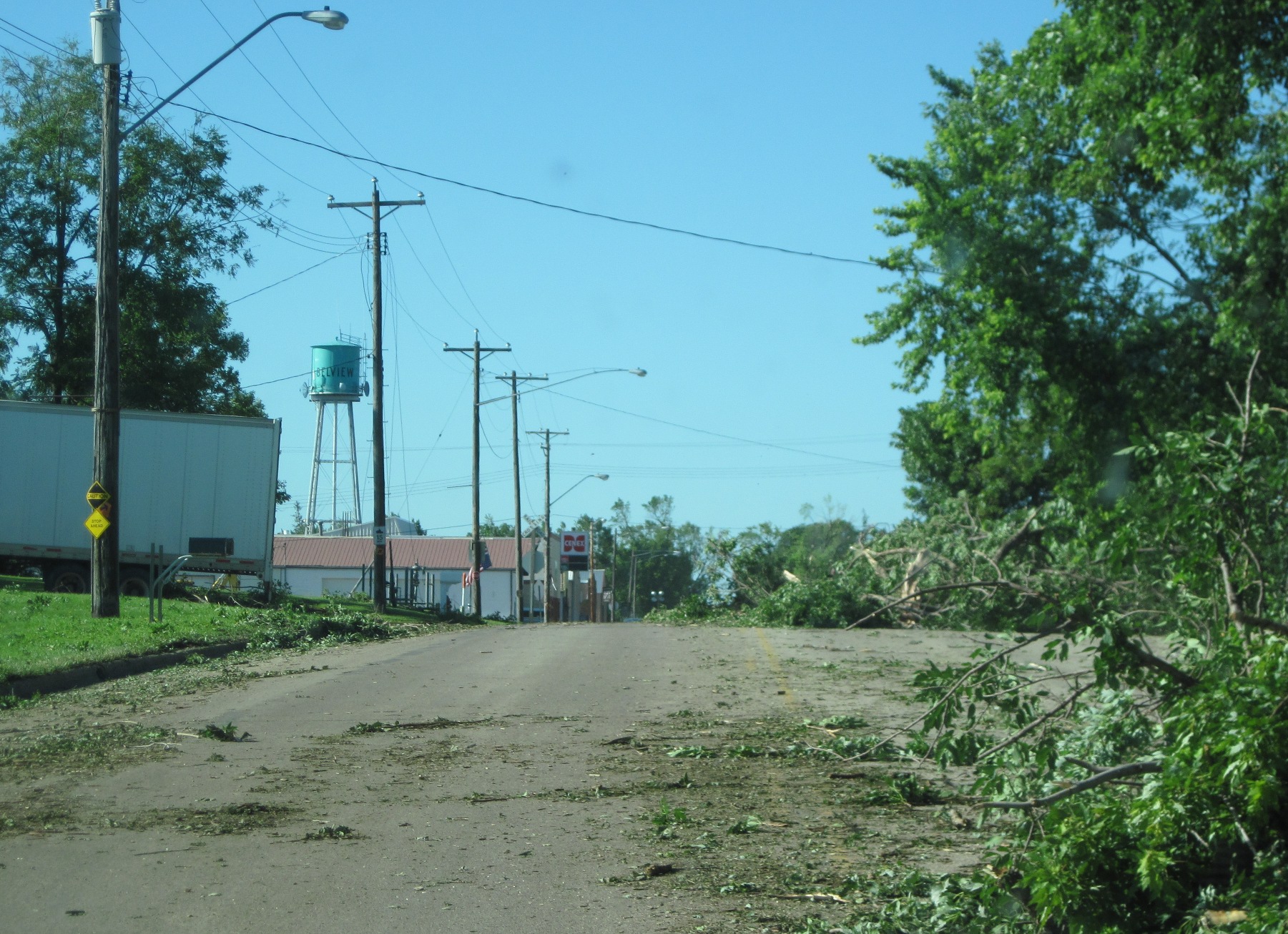
Entering Belview from Sacred Heart at 9 a.m. on July 2, the morning after the tornado. Photo courtesy of Merlin and Iylene Kletscher.

THE RESILIENCE OF RESIDENTS in two small Minnesota communities recently ravaged by storms impresses me.

The folks in Belview, a Redwood County town of 375 hit by an EF-1 tornado on July 1, and the residents of Sauk Centre, a Stearns County community of 4,221 blasted by 80 – 85 mph winds Sunday evening, won’t allow storms to squelch their summer celebrations.

This Saturday, July 16, Belview will host the town’s third “Small Town Saturday Night.”

In Sauk Centre, Sinclair Lewis Days, which began on Sunday, continue as planned through July 16.

I mean, honestly, would you feel like partying if you were still trying to deal with the mess after a tornado or high winds uprooted trees; downed branches; damaged homes, businesses and other buildings; and smashed vehicles in your community?

But I suppose pausing to celebrate in the midst of such devastation bolsters the spirit and allows residents time to take a break, come together, share stories and support each other.

Kim Sander, who initiated the Small Town Saturday Night, once-a-month May – August event in Belview, posted recently on the Belview Blue Jays’ Facebook page: “Come join us and celebrate our small town’s ‘back to life after the storm’…from 5 – 8 p.m. there will be a cruise-in, free popcorn, First Responder’s pork sandwiches, a special display of Arctic Cat mini-bikes, etc. This is our third Small Town Saturday Night and we appreciate being able to bounce back and be ready for ‘business as usual!’ So proud of our town and its people!”

You simply have to appreciate Sander’s upbeat attitude and enthusiasm.

I first learned about the Small Town Saturday Night from City Clerk/Treasurer Lori Ryer just days before the July 1 tornado roared through Belview. She had written an article about hot air balloons in Belview and I was gathering last-minute information prior to publication in the summer issue of Minnesota Moments magazine.

Ryer told me then about the event that brings people into town with classic cars, motorcycles, tractors and such. She mentioned the free popcorn, the vendors, the farmers’ market, food, sometime-hay rides to local vineyards (Echo Creek Vineyard and Grandview Valley Winery) and added, “Bring your lawn chair.” Ryer is among Belview’s most enthusiastic boosters.

I’m sidetracking briefly here to say that I like this whole concept of a Small Town Saturday Night, tapping into the past when farmers and their families would come to town on Saturday night. Heck, I remember watching movies on the side of a building in Vesta, which is just down the road to the south and west of Belview. Vesta movie night may have been on a Saturday night; I don’t recall for certain.

Belview residents seem to be doing a fine job of promoting their little town. Each year the community holds an Old SOD Day celebration. The event, which features your usual small-town activities like a kiddie parade, car shows and more, also has hot air balloon lift-offs. This year’s celebration is set for September 17.
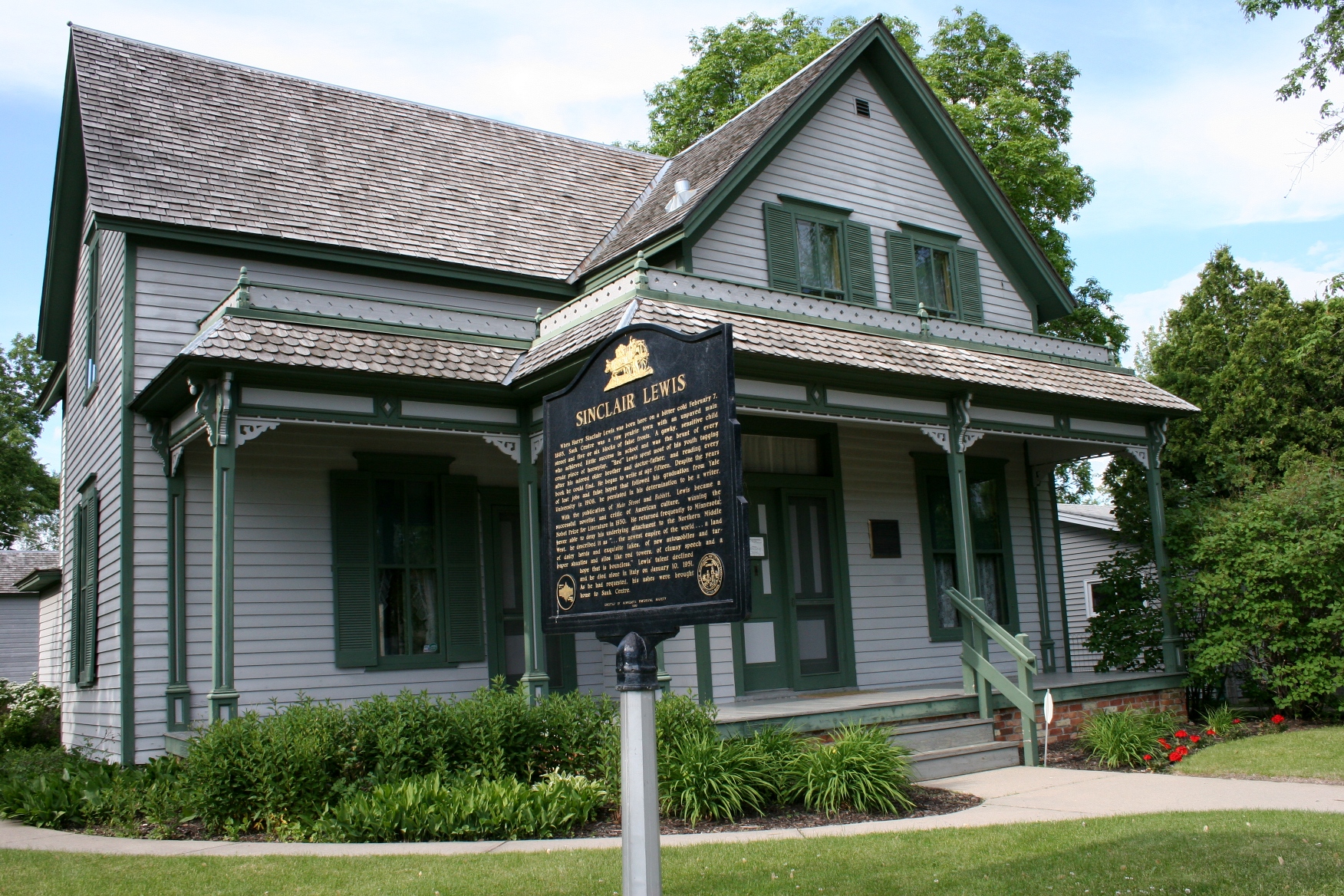
The boyhood home of author Sinclair Lewis was closed for the day when we arrived in Sauk Centre.

UP IN SAUK CENTRE, I haven’t talked with anyone about Sinclair Lewis Days, the annual celebration of native son Sinclair Lewis, author of Main Street and other noted books. But my husband and I stopped in Sauk Centre briefly while en route home from Fergus Falls to Faribault about a month ago. I’m a fan of Lewis and, although I had seen his boyhood home decades ago, I had not viewed the town beyond that. I wanted to see the real Main Street, the basis for his satirical writing about fictional Gopher Prairie.

While physically Sauk Centre’s appearance has changed since our visit, since powerful winds blew through the town on July 10, that won’t keep this community from celebrating. A Welsh Pony Show, fireworks, softball tournament, music in the park and Crazy Days are still continuing as planned, according to information posted online at the Sauk Centre Convention and Visitors Bureau.

I just have to say, Belview and Sauk Centre residents, your ability to continue in spite of challenges speaks volumes to your irrepressible spirits. Even Sinclair Lewis might be impressed.
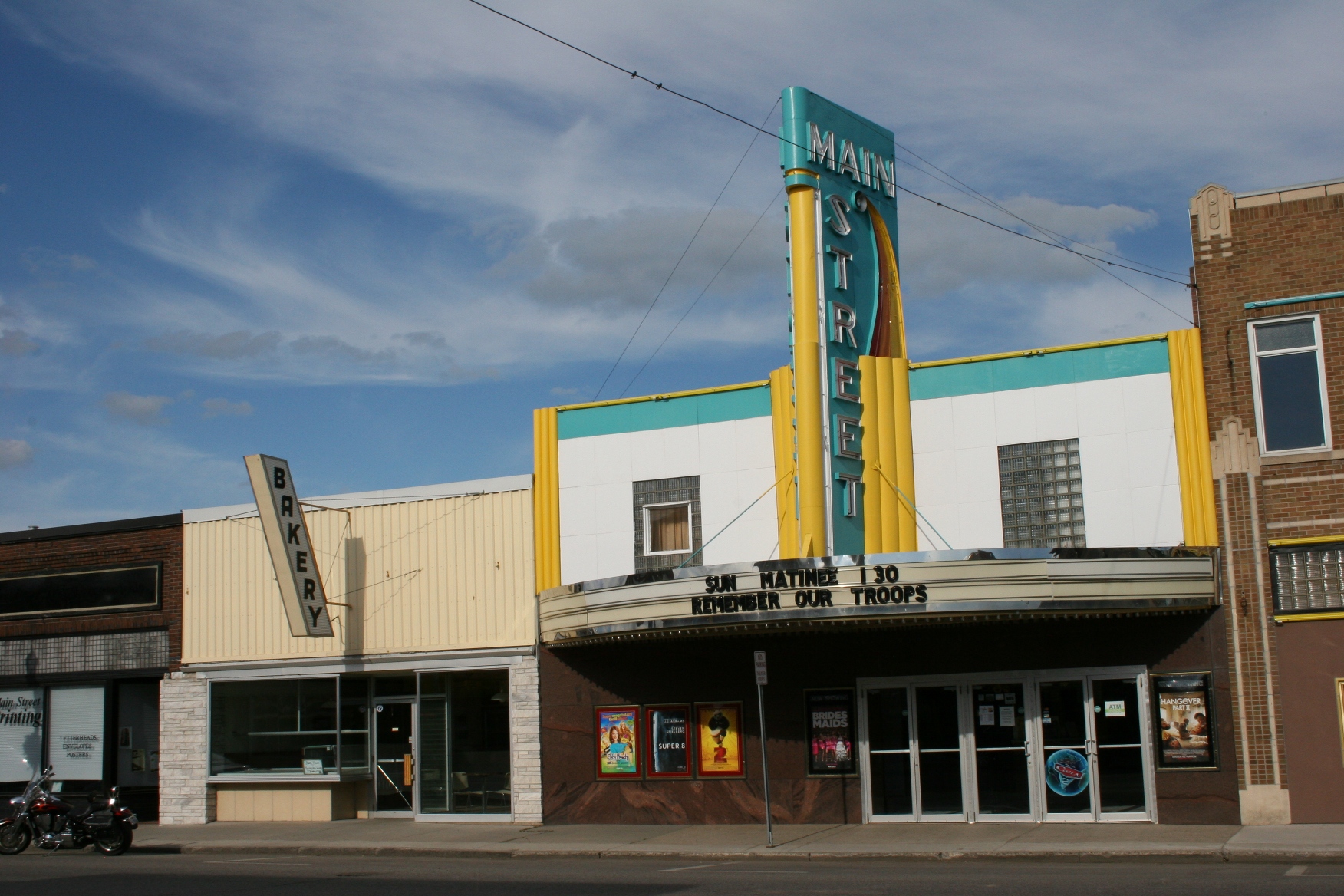
The appropriately-named Main Street Theatre in Sauk Centre's downtown.

Just down the block from the theatre, the Sauk Hop Diner anchors the corner across from the Palmer House Hotel.

Sinclair Lewis worked as a night clerk at the historic Palmer House Hotel.

The typical small-town barber shop, in Sauk Centre, Tony's Barber Shop.

On a block packed with bars, six if I recall correctly, this one, the Next Door Bar and Lounge, stood out.
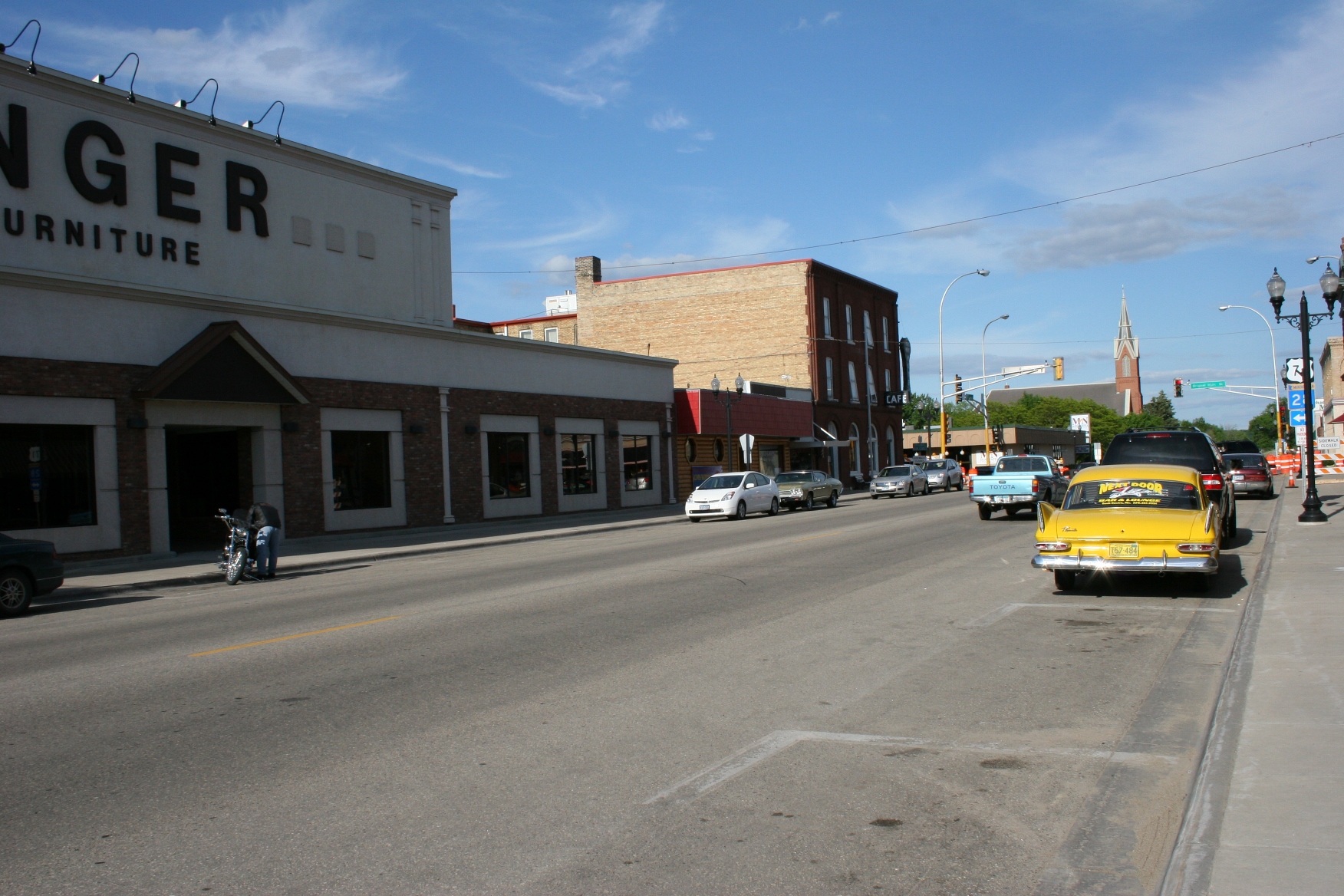
Another view of downtown Sauk Centre, shot several weeks ago.

© Copyright 2011 Audrey Kletscher Helbling


Words matter: Prejudice and acceptance in Faribault July 14, 2011

Filed under: Uncategorized — Audrey Kletscher Helbling @ 7:42 AM
Tags: , , , , , , , , , ,

Faribault is home to a sizable Hispanic population. This file photo was taken at a downtown Faribault Mexican bakery, which has since come under new ownership. The bakery was once at the center of a controversy over its exterior color and was repainted when some local businessmen donated money for a new paint job.

EVERY TIME I HEAR a derogatory comment about an ethnic group, I am still surprised. I don’t know why.

Perhaps the fact that this is 2011, and not 1960, factors into my belief that people have overcome their prejudices toward those with skin colors different than their own.

Then I hear a statement like this: “Willow Street is becoming a little fill in a Spanish word here.” I hadn’t heard the word before, which is why I can’t remember it. But I know for certain that it was unkind and derogatory and cutting toward the Hispanic population that lives in my community of Faribault, specifically along my street.

I couldn’t allow the slam to go unchallenged, especially since it was spoken just as I was about to enter, of all places, my church for Sunday morning worship.

In an immediate moment of incredible self control, I responded by telling this clearly prejudiced individual that there are “good whites” and “bad whites,” just like there are “good Hispanics” and “bad Hispanics.” I knew I had to keep my response simple so he would understand. I also told him that my Hispanic neighbors are “good neighbors.”

With those words tumbling off my tongue, I walked into the sanctuary, attempting to dismiss my anger and focus on an attitude of forgiveness.

I also consciously shifted my thoughts to an exchange I witnessed a day earlier. As a Somali mother walked into a Faribault grocery store with her adorable preschool-aged daughter, a Caucasian couple engaged the woman in conversation. They inquired about the little girl and asked her name.

“Amira,” the Somali mother answered and smiled.

“That means ‘princess,’” the man said and continued to share a story about another Amira he knew. All the while, the mother beamed. When they parted, he told the pair, “God bless you.”

I was trailing behind, thinking how my Aunt Dorothy has always called me her “Little Princess,” even now, today, when I am in my 50s. That endearing nickname has always made me feel so loved. Words can make such an impact.

As the Somali woman continued down the grocery store aisle with her daughter tagging behind, I blurted, “She’s so cute.”

The mother of the little princess turned and rewarded me with a smile, a universal human expression that bonds all humans no matter their skin color.

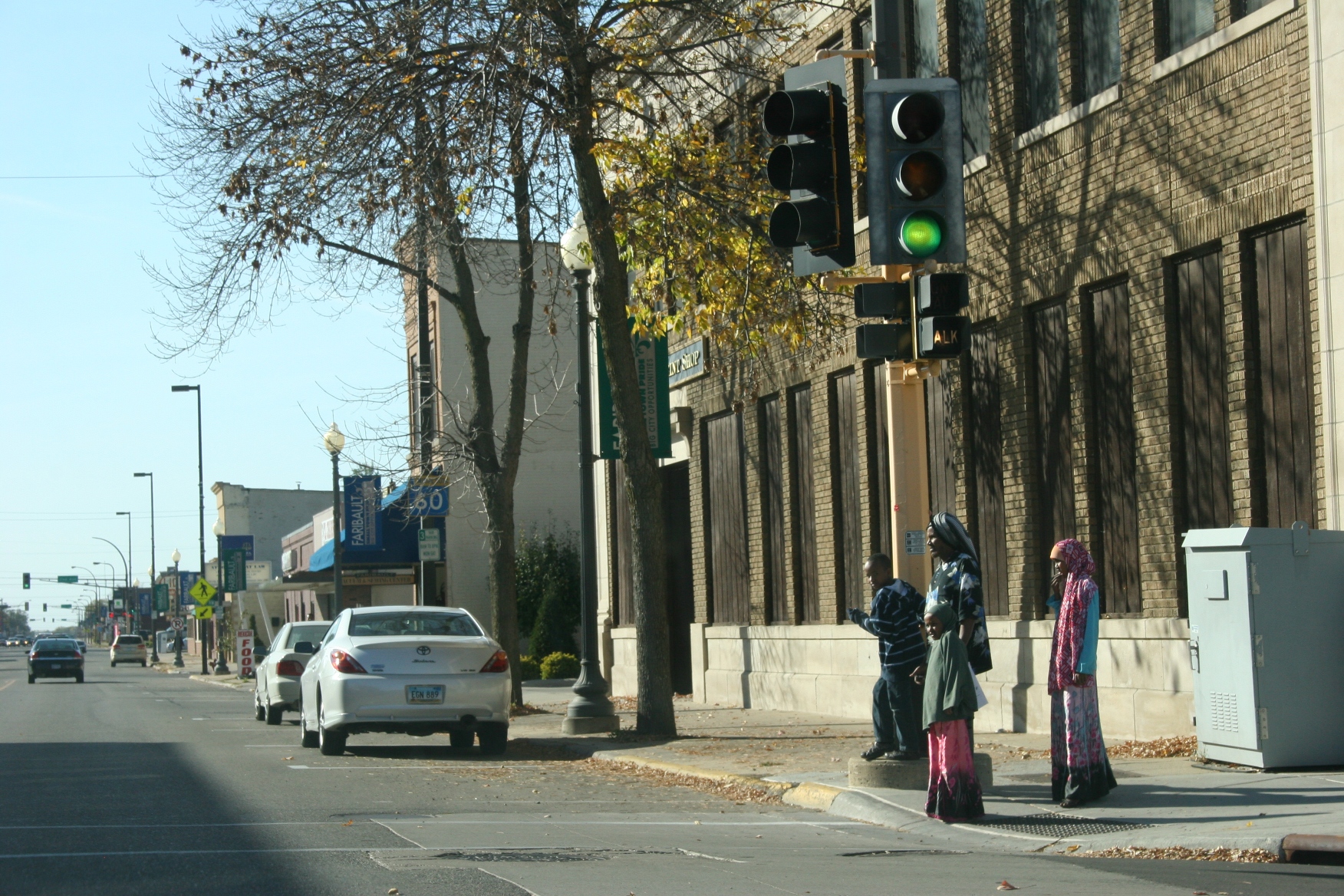
In this file photo, a Somali family waits to cross a downtown Faribault street.

CLICK HERE TO READ one of many posts I wrote related to the exterior colors of two ethnic restaurants in downtown Faribault. The color of the Mexican bakery, which has since changed hands, generated heated discussion within the community in 2009 and 2010.

© Copyright 2011 Audrey Kletscher Helbling

 

An update from storm-damaged Belview July 13, 2011

Entering Belview from Sacred Heart at 9 a.m. on July 2, the morning after the tornado. Photo courtesy of Merlin and Iylene Kletscher.

LESS THAN TWO WEEKS after an EF-1 tornado ravaged the small town of Belview in southwestern Minnesota, I emailed City Clerk/Treasurer Lori Ryer for an update.

I know she’s busy dealing with issues in the aftermath of the July 1 storm, so I asked only for a brief summary, with a specific request for information about Parkview Home. The nursing home, according to Ryer, received major roof damage that resulted in flooding of the building. Initially, 25 residents were evacuated and taken to care centers in nearby Wabasso, Olivia and Redwood Falls.

Since then, Parkview has closed for repairs, residents have been discharged and admitted to new nursing homes, and staff has been laid off.

When the nursing home will reopen remains uncertain as assessments are still being made. But Ryer anticipates, after talking to staff on Tuesday, that Parkview will be closed for at least several months.

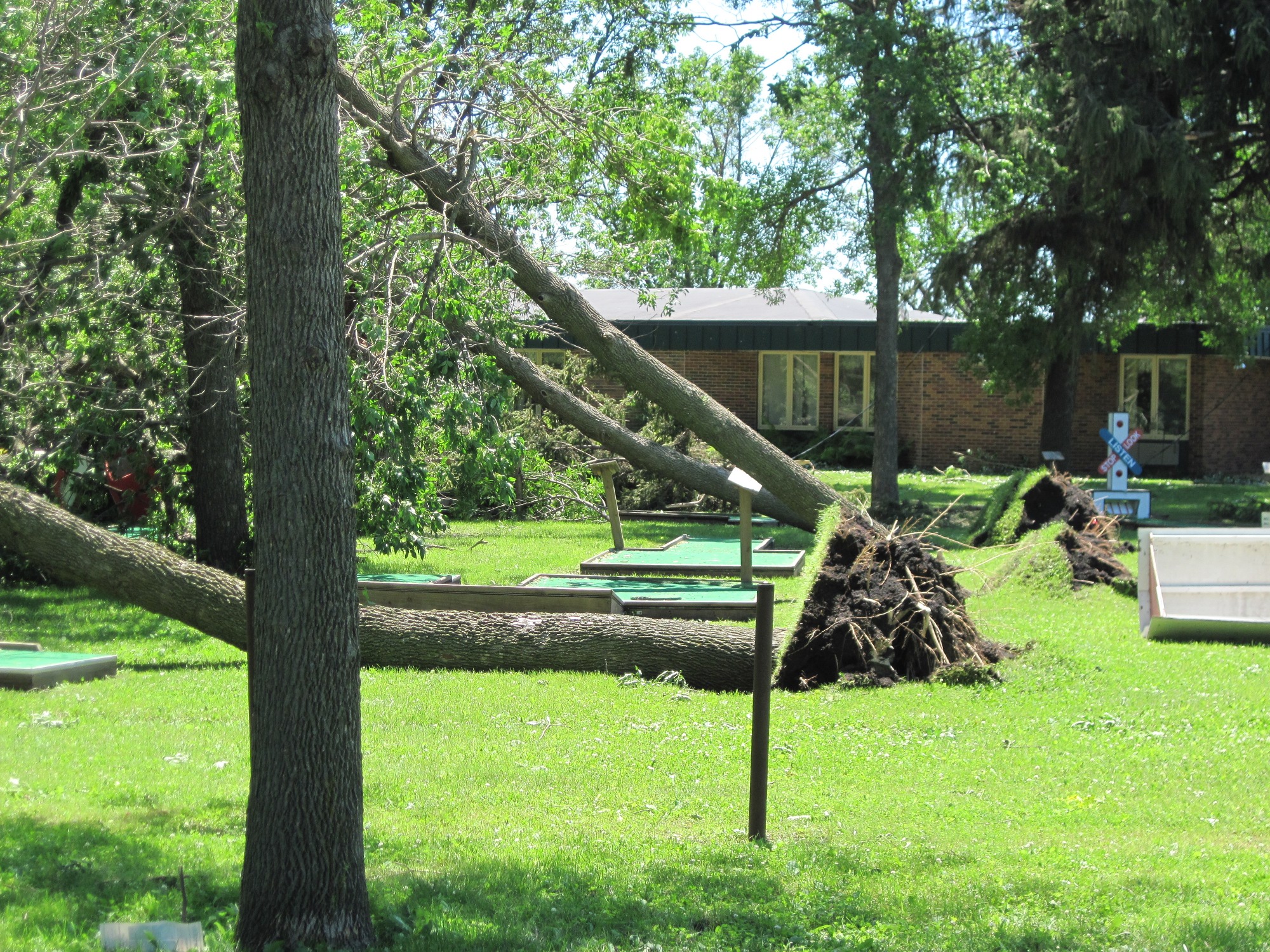
This photo shows Parkview Home and mini golf in the park. Photo courtesy of Merlin and Iylene Kletscher.

Parkwood Apartments, which is attached to the nursing home, was not damaged, but was without power from Friday afternoon, July 1, until the following Monday evening. Some apartment residents left to stay with family members briefly, but everyone has now returned, Ryer says.

Bridgewood Assisted Living was not damaged, but was without power also.

Damage along South Main Street in Belview. Photo courtesy of Merlin and Iylene Kletscher.

Throughout the rest of this community of 375 residents, many home and business owners are still awaiting insurance adjusters. Many homes received minor damage, several moderate, and a few major, damage from results of the 95 – 105 mph tornadic winds, Ryer says.

Many garages and sheds were destroyed and quite a number of cars totaled due to trees falling on them, the city clerk continues.

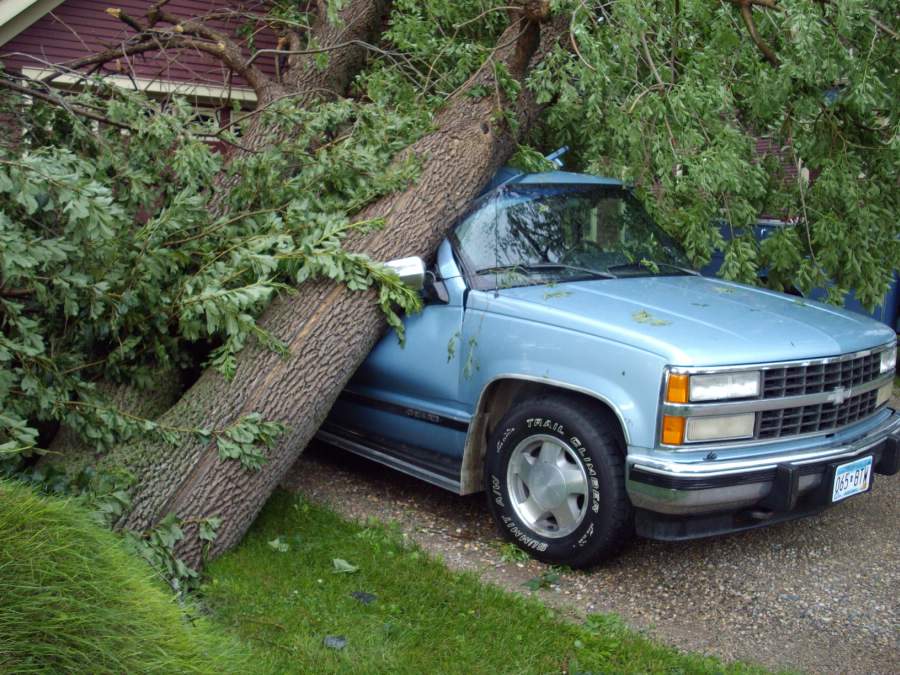
Tom Johnson's SUV was totaled when a tree fell onto it during the Belview tornado. Photo courtesy of Tom and DeLores Johnson.

The Belview school building received major damage, resulting in relocation of the Belview Learning Center summer program. Ryer hopes that program will be up and running in the Belview school building before the new school year begins.

Despite the destruction in her community, Ryer manages to remain positive: “With all that being said, I still marvel at the fact that we had no injuries during the storm or in the days of clean-up afterwards.”

LIKE RYER, I, TOO, marvel that no one was injured or killed by this storm which swept across Minnesota into Wisconsin July 1. My hometown of Vesta, just down the road from Belview, was hit by a series of downbursts with wind speeds of 90 – 100 mph.

I have many family members living in areas affected by the storms. Damage was minimal to their properties, but most lost trees. A cousin living near Wood Lake, however, saw substantial damage to the family’s farm. My home church, St. John’s Lutheran in Vesta, had half the roof ripped off.

St. John's Evangelical Lutheran Church in Vesta with the roof half missing. Photo courtesy of Brian Kletscher.

In a few weeks I’m returning to my hometown for the annual Kletscher family reunion. I’m trying to prepare myself for what I’ll see—my little prairie town with fewer trees, the church where I was married now temporarily closed. I always look forward to worshiping there with my mom when I return home.

I expect it will be the trees, though, that I will miss the most. A friend recently told me that the small towns of southwestern Minnesota are like oasises in a land mostly devoid of trees, except for the trees in those towns and the groves that shelter farm sites. He is right.

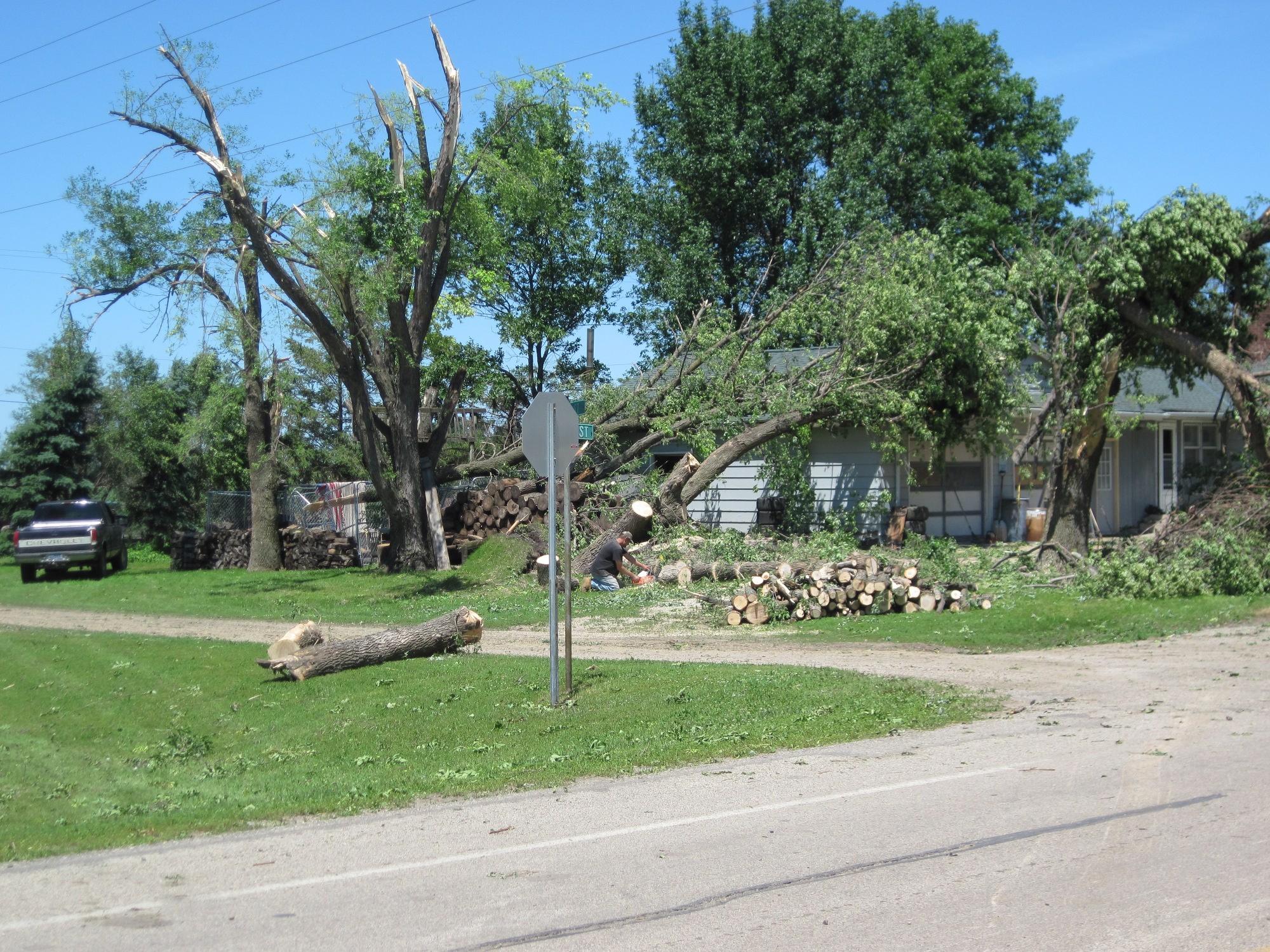
The communities of Belview and Vesta lost many trees in the July 1 storms. This photo is along a Belview street north of the city park. Photo courtesy of Merlin and Iylene Kletscher.

But those of us who grew up on this land, and those who live there, appreciate the wide open spaces, the big sky, the fields of corn and beans and those small towns.

Prairie people are strong, caring, determined folks who come together in time of need. I’ve seen that over and over again in the stories I’ve heard and the comments I’ve received on my blog posts while covering the recent storm damage.

To the residents of Belview and Vesta, Tyler and Ruthton, and all the farm places in between, I know you’ll make it through these challenging days. Your roots reach deep into the prairie and no storm can rip away what you have—each other.

© Copyright 2011 Audrey Kletscher Helbling
 

Why the discrepancies in AP class offerings? July 12, 2011

STATISTICS CERTAINLY DON’T tell the whole story when you’re reading a compilation of numbers. But neither do they lie.

That said, I’d like to direct you to a report by ProPublica, “an independent, non-profit newsroom that produces investigative journalism in the public interest.”

The topic of ProPublica’s investigation (click here to read), advanced placement class offerings in public schools, certainly interests me. I’ve often wondered why Faribault Senior High School, the school my children attended (and one still does) offers so few advanced placement classes. These college-level classes give students an opportunity to test for college credit upon course completion. That, in my parental opinion, equals academic challenges for students and money saved for those who pass the AP exams and continue on to college.

Faribault High offers four AP classes in physics, English literature and composition, calculus and psychology.

Now, compare that to neighboring Northfield and Owatonna, each about a 15-mile drive away. Northfield Senior High School students can choose from 14 AP classes. In Owatonna, the number is even higher at 20 courses.

The three high schools are similar in size: Faribault, 1,230 students; Owatonna, 1,595; and Northfield, 1,300. They are also located in similar-sized communities. However, anyone who lives in the area knows that Faribault is clearly a blue collar town and Northfield is white collar. I’m not sure about Owatonna, but I would peg it as more blue than white collar.

WHY IS THAT IMPORTANT?

A link may exist between educational opportunities at a school and local poverty levels, some conclude. I don’t necessarily buy into the whole “we have X number of students getting free and reduced government lunches therefore we are offering fewer AP classes because students won’t take the courses anyway” philosophy. That’s an all-too-easy excuse to explain away the lack of AP classes and/or low student enrollment or interest in those classes.

Rather, I think the number of AP classes has more to do with funding, priorities and how much a school pushes, or doesn’t push, these advanced courses.

So let’s take a look at some of those statistics. ProPublica lets you type in your school and even compare it with neighboring districts. (Note: The database only includes public schools with a student population of more than 3,000 in the 2009 – 2010 school year.)

At Faribault High, 28 percent of students get free/reduced price lunches, compared to only 13 percent in Northfield. In Owatonna, 21 percent of students get those lunches that are targeted for low income households.

The statistics show high school minority populations of 21 percent in Faribault, 15 percent in Owatonna and only 11 percent in Northfield.

So you get the picture: Mostly wealthier white kids attend high school in Northfield. Not so much in Faribault and Owatonna.

Therefore you would conclude, if you adhere to the whole poverty-educational opportunities theory, that Northfield should outshine Faribault and Owatonna in the area of Advanced Placement classes and enrollment.

You would be wrong.

Owatonna shines with 20 AP classes and 29 percent of their students taking at least one AP course.

Northfield isn’t far behind with 26 percent of  students taking at least one of the school’s 14 AP classes.

Faribault doesn’t even come close with just five percent of students enrolled in at least one of the only four Advanced Placement courses offered.

WHAT’S GOING ON HERE?

I’ve discussed AP and Post Secondary Enrollment Option classes with several FHS teachers at various times and received answers ranging from an administration that doesn’t make AP or PSEO a priority to staff that prefer not to have class content dictated by AP guidelines. Whether those conclusions are accurate, I don’t know.

But as a parent, I am frustrated. Why shouldn’t any child attending Faribault High have the same educational opportunities afforded students in nearby Owatonna or Northfield?

Faribault also falls below the state-wide average of nine AP classes per high school and 23 percent of Minnesota high school students taking an AP course.

I repeat: Only five percent of FHS students take at least one AP class, of which only four are offered in Faribault.

What’s going on here?

NOTE: Statistics listed on ProPublica come from a nation-wide survey by the U.S. Department of Education’s Office for Civil Rights.

THANKS TO Minnesota Public Radio’s Bob Collins for directing readers to ProPublica’s report in his Friday, July 1, News Cut column.

© Copyright 2011 Audrey Kletscher Helbling
 

A bride’s story: Come hell or high water July 10, 2011

“I TOLD HIM NO WAY IN HELL was I leaving my wedding dress behind,” Tina Marlowe Mann remembers.

And she didn’t. Nine months ago Tina defied a fireman’s order and saved her bridal gown. It was the last thing she brought out of her house during a 15-minute mandatory evacuation of flood-ravaged Hammond on Friday morning, September 24. When she exited her home, the fireman instructed her to park her 4-wheel drive Jeep on high ground, with the wedding dress inside, and walk out of the flooded town because the water had risen too high to drive out.

She refused and instead forged—with five adults, two children, a Rottweiler, two cats, a few clothes and that precious wedding dress—through water that reached the door panels and covered the exhaust pipes of her Jeep.

“We got stuck a couple times and I thought we might not make it out, but we did,” Tina recalls.

Come hell or high water, she would not allow the raging waters of the Zumbro River to snatch away her dream dress.

Two weeks ago yesterday, on June 25, Tina Marlowe married Micheal Mann at Beach Park in Wabasha wearing that rescued bridal gown. A reception followed at Slippery’s Bar and Grill on the Mississippi River.

Tina, on her June 25 wedding day, in the bridal gown she saved from a flash flood in Hammond in southeastern Minnesota last September.

As it did last fall, floodwaters once again threatened. “Ironically, this spring we spent a lot of time holding our breath, worried that Beach Park and Slippery’s might receive major damage from spring flooding,” Tina says. “For weeks we watched the hydrological reports from Wabasha with bated breath. We even made a couple trips down there just to monitor the situation with our own eyes—and we did a lot of praying.

“Then wouldn’t you know it that the week before the wedding, it rained every single day. A couple of those days the heavy rains took me right back to September…and I said to Mike, ‘Wouldn’t it be just crazy if we come home from Wabasha to find water in our house again?’”

Water from last fall’s flash flood filled their basement and rose several inches into the main level, displacing the family from their home for three months.

Tina and Micheal continued praying for the rain to stop as June 25 approached. Then on their wedding morning, the sun came out in Wabasha and, as the fog lifted from the Mississippi River valley, it looked to be a perfect day.

The weather forecast, however, called for afternoon showers. And the wedding was set for 4 p.m.

Within an hour of the ceremony, rain began falling. While Tina was slipping into her bridal gown at a Wabasha hotel, family and friends were moving everything from the decorated gazebo to the pavilion.

Tina and Mike

“Irony again prevailed because it rained from 3 until about 4:30, and then it stopped and the rest of the evening was picture perfect,” Tina says. “All of the bridal pictures were taken in the rain. Every person in my wedding party was affected by the flood in one way or another and here we were, standing in the pouring rain on the banks of the Mississippi River, having the time of our lives.

They say it is good luck to have rain on your wedding day because a ‘wet knot’ is much harder to untie. I truly feel blessed.”

#

TINA, RAIN ALSO FELL on my wedding day in May of 1982. My husband and I have now been married for 29 years.

I expect that you and Micheal, with the challenges you’ve faced, already had a tightly-tied knot. Your positive attitude in the face of difficulties continues to impress me, as does your strength.

Congratulations on your marriage. May you and Mike live a long, happy and blessed life together.

Mike & Tina at sunset along the Mississippi River on their wedding day.

READERS: I F YOU HAVE NOT READ the six-part series of stories I posted in March about Tina’s experience during the September 2010 flash flood in Hammond, you’ll want to check it out now. Go to my archives and click on these dates: March 13 – 15 and March 17 – 19. Click here to read the first post, “Part I, Tina’s story, surviving the Hammond, Minnesota, flood.”

Also, consider contributing to Hammond’s efforts to rebuild city parks. Tina, recently-elected to the city council, is leading efforts to repair the flood-damaged parks. Click here to read a blog post about how you can help.

PHOTOS BY SHERWIN SAMANIEGO PHOTOGRAPHY of Rochester and courtesy of Tina Marlowe Mann.

© Copyright 2011 Audrey Kletscher Helbling
 

A virtual tour of Mankato’s sculpture walk July 9, 2011

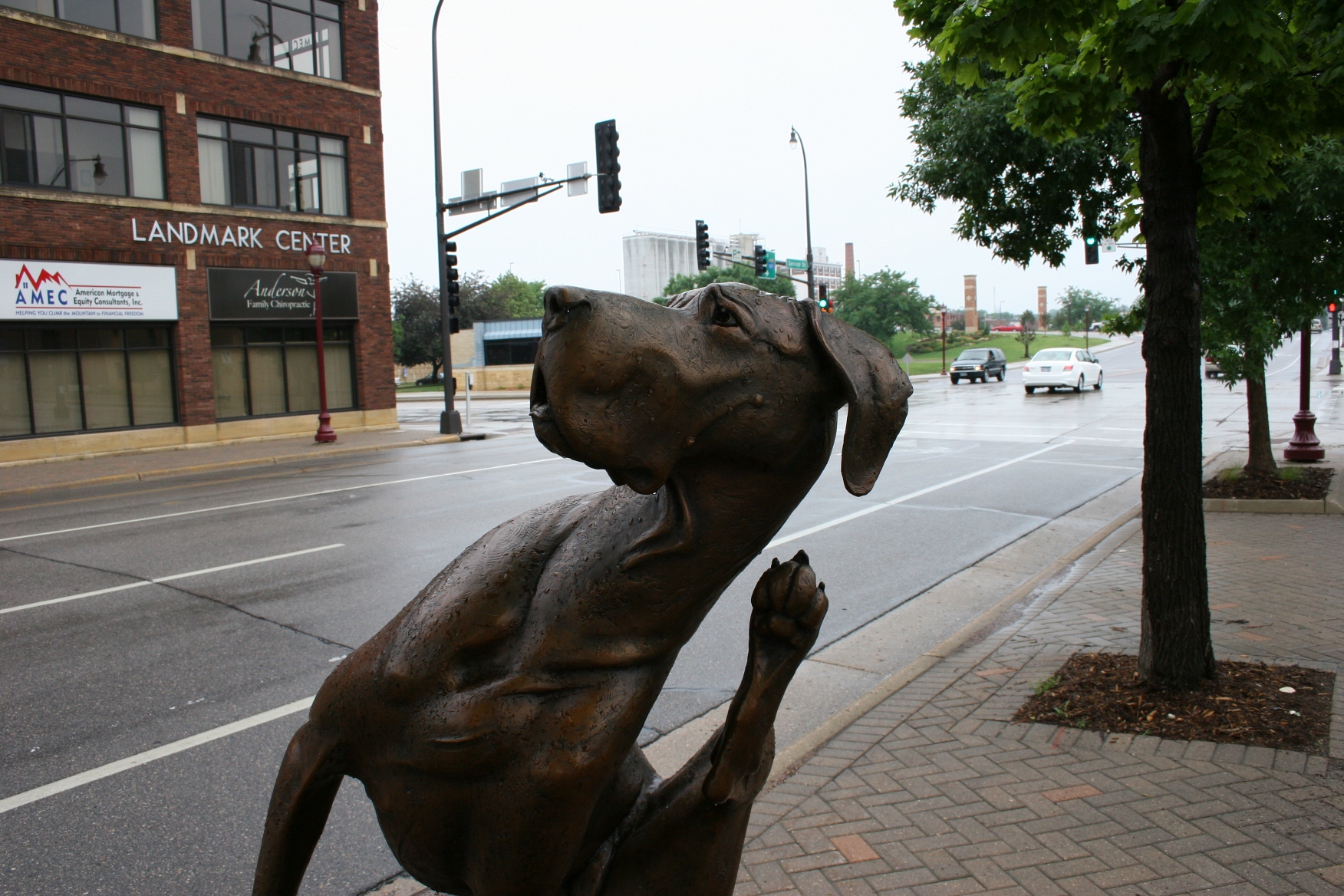
Louise Peterson of Guffey, CO. created this $20,000 bronze sculpture of a playful Great Dane titled "Tickled."

DEAR READERS,

I realize that some, maybe even many, of you, do not live anywhere near Mankato, the southeastern Minnesota community where I recently viewed sidewalk sculptures.

Heck, some of you don’t even live in states bordering Minnesota. Your chances of ever seeing these 25 pieces of art in person are about zilch.

So, for those of you who will view the City Art Walking Sculpture Tour only via Minnesota Prairie Roots, I’ve pulled together one last blog post. Please read my previous two posts for more details and photos of this community art project by first clicking here and then here.

This whole concept of bringing art to the streets through a rotating sculpture tour pleases me immensely. What a grand idea. Such art adds to the vibe of a downtown, to its art, history and culture.

Thank you, Mankato, and everyone who supported this cause financially, for bringing these sculptures to southeastern Minnesota, within quick driving distance of my Faribault home.

Yours gratefully,

Audrey Kletscher Helbling at Minnesota Prairie Roots

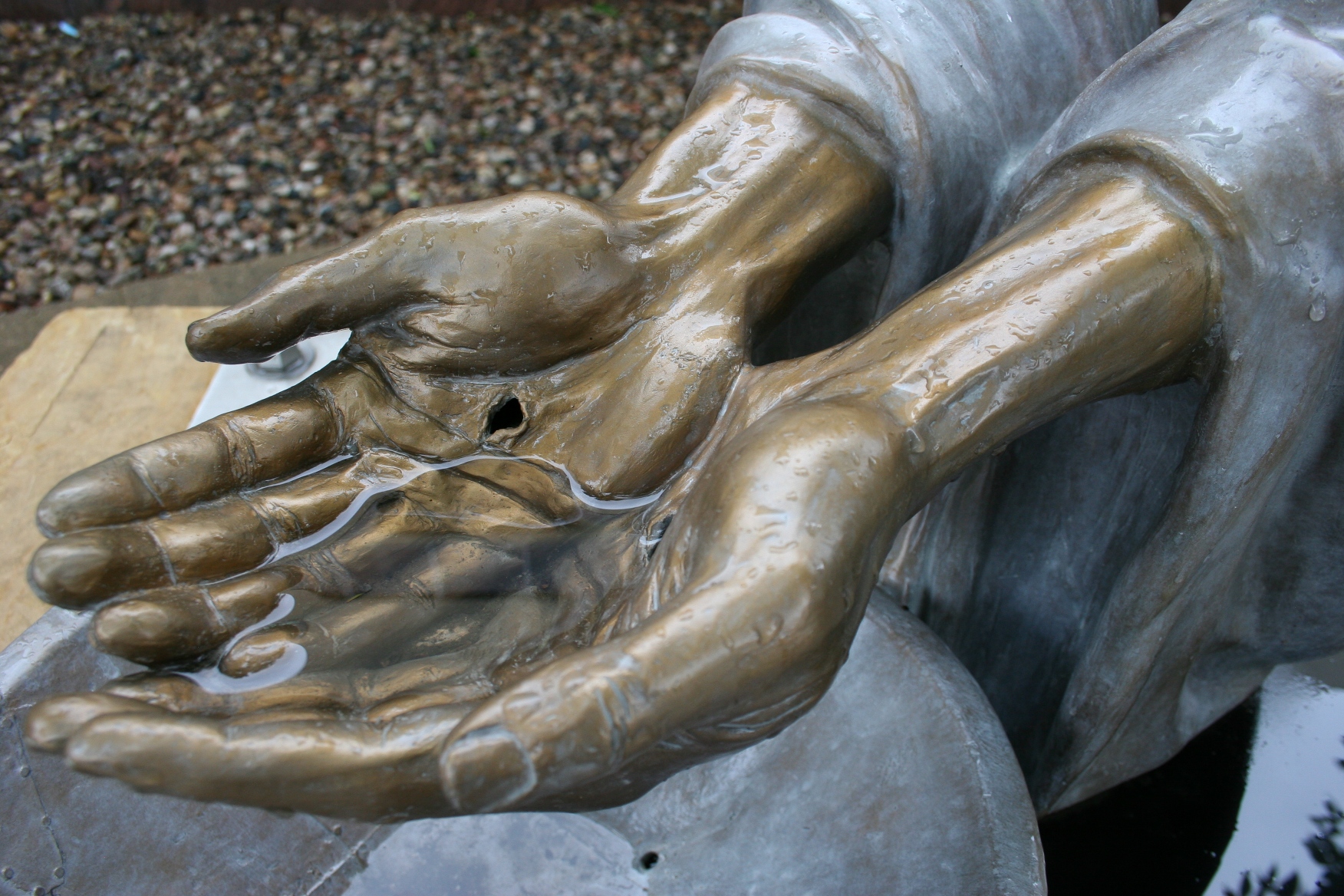
Sioux Falls artist Darwin Wolf's $13,500 sculpture, "The Fountain of Life," references Jesus washing Peter's feet at the Passover. It emphasizes the healing, life-giving qualities of water.

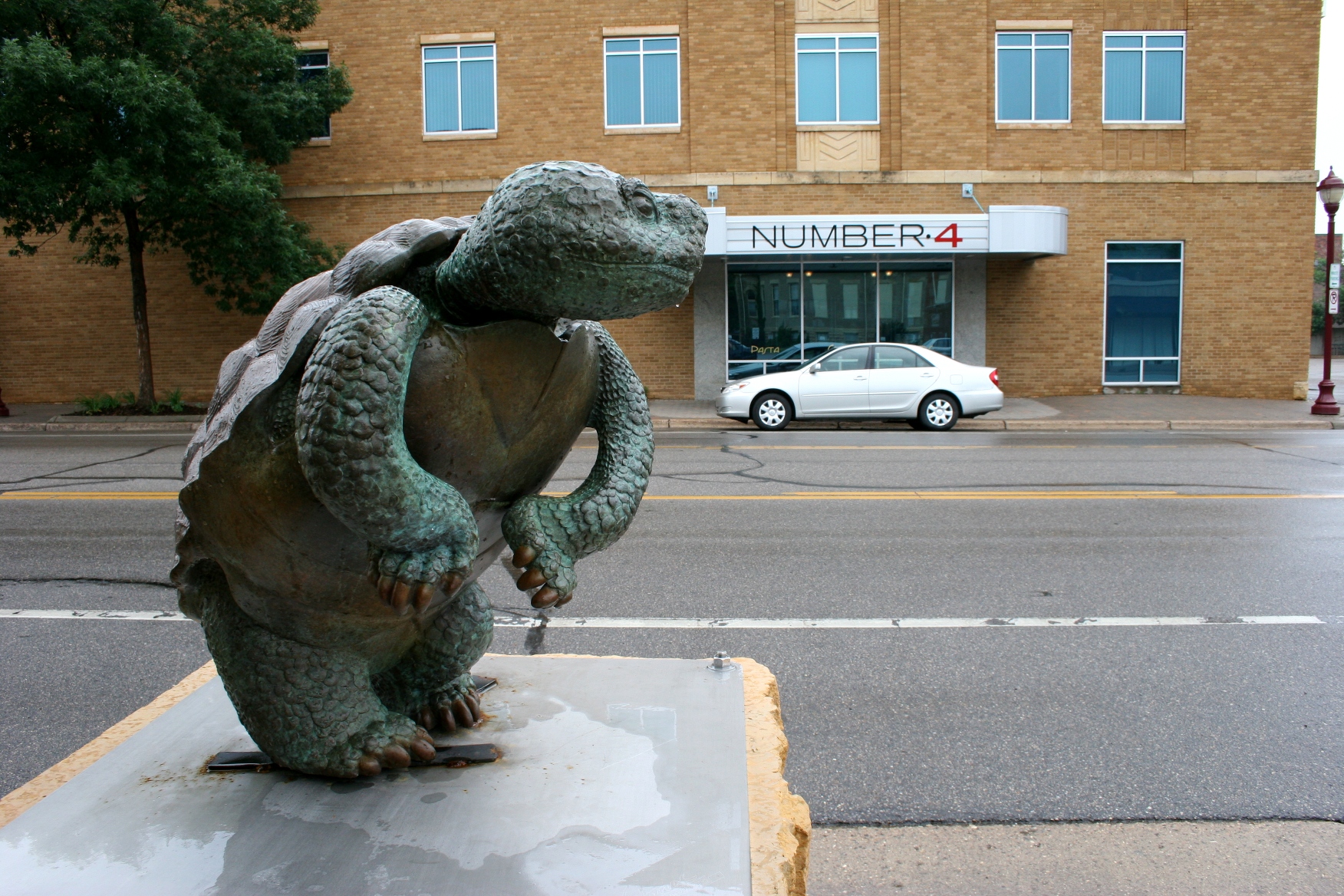
"Poco a Poco" a $12,000 bronze sculpture by Pokey Park of Tucson, Arizona, highlights the tortoise, representative of wisdom in American Indian culture. The building in the background houses Number 4 American Bar & Kitchen.

"Fowl Ball" celebrates geese, ducks, turkeys and chickens in this $7,600 forged and welded weathered steel sculpture by Lee W. Badger of Hedgesville, West Virginia.

All of the sculptures are marked with informational signage.

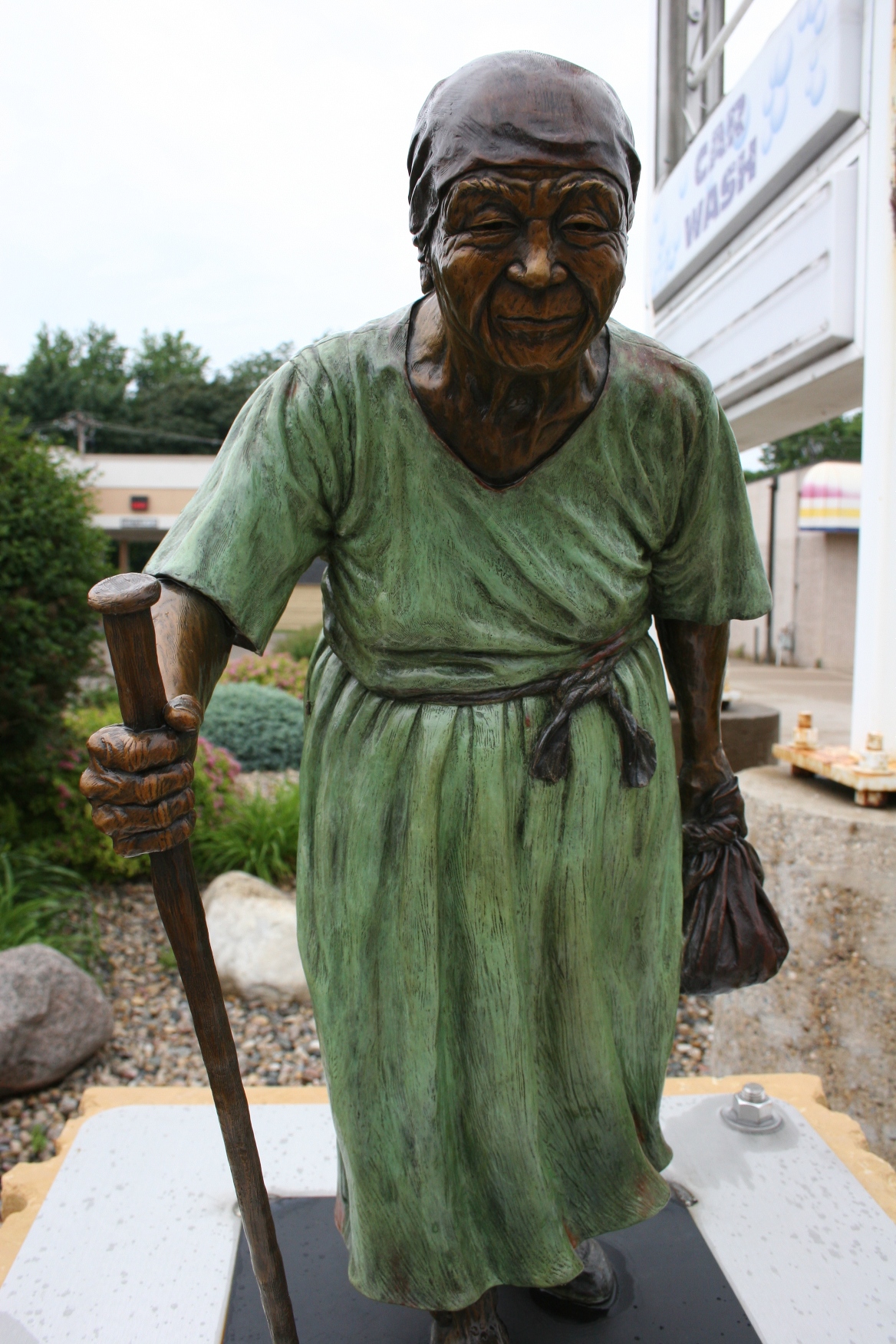
Dee Clements of Loveland, Colorado, created the $6,000 bronze "The Farmer's Wife," one of my favorite exhibit pieces.

To fully appreciate these sculptures, you must notice the details, including the Korean woman clenching her walking stick in "The Farmer's Wife."

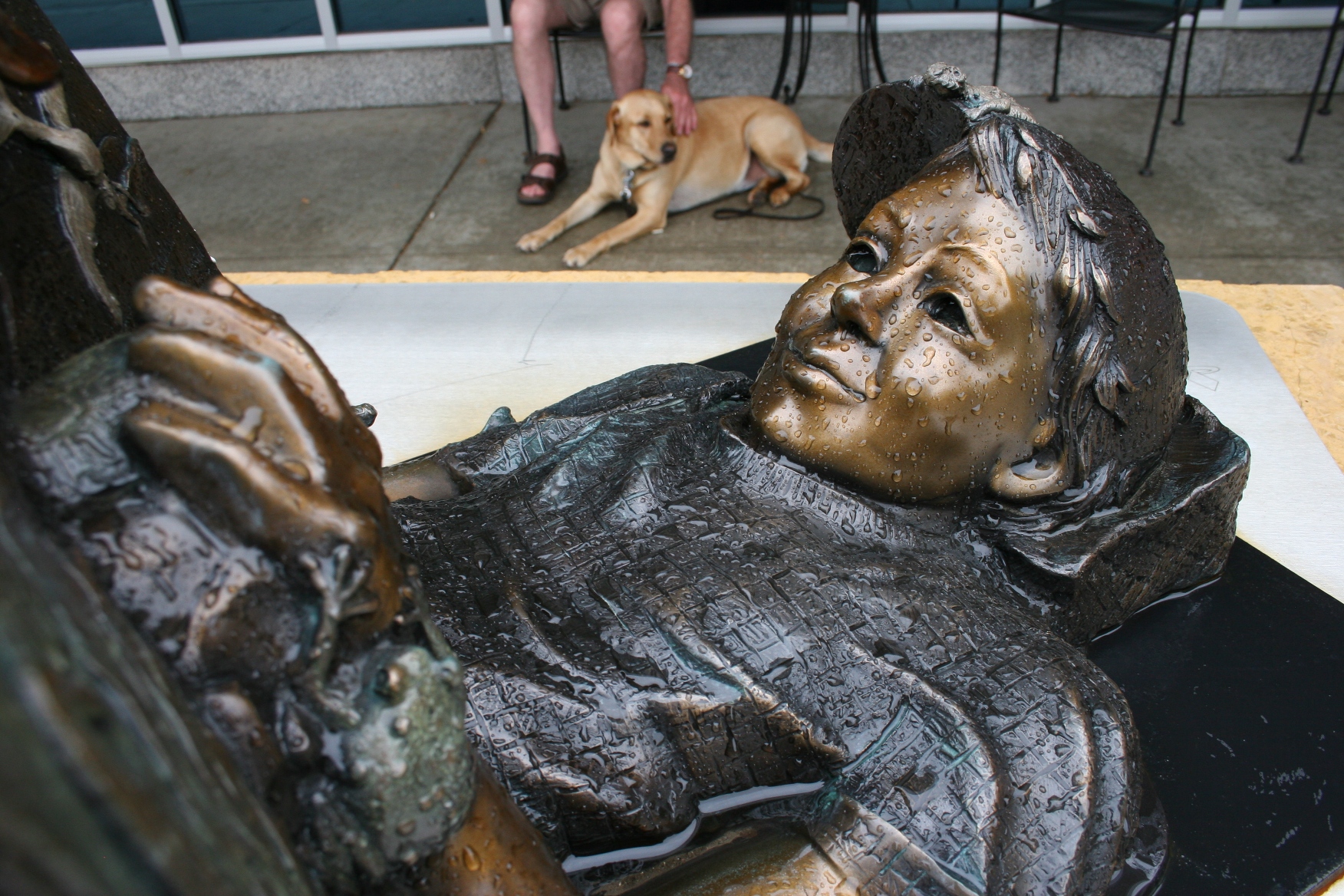
Details define "Reading Magic," a $8,500 bronze sculpture by Julie Jones of Fort Collins, Colorado.

"Spirit of Energy," a $8,400 bronze by Karen Crain of LIttleton, Colorado, represents three renewable energy resources: sun, wind and water.

© Copyright 2011 Audrey Kletscher Helbling
 

Couple grateful to survive Belview tornado July 8, 2011

TOM AND DeLORES JOHNSON never reached their storm shelter late Friday afternoon, July 1, when an EF-1 tornado blew into Belview. They didn’t have time.

But for the Johnsons, that turned out to be a good thing.

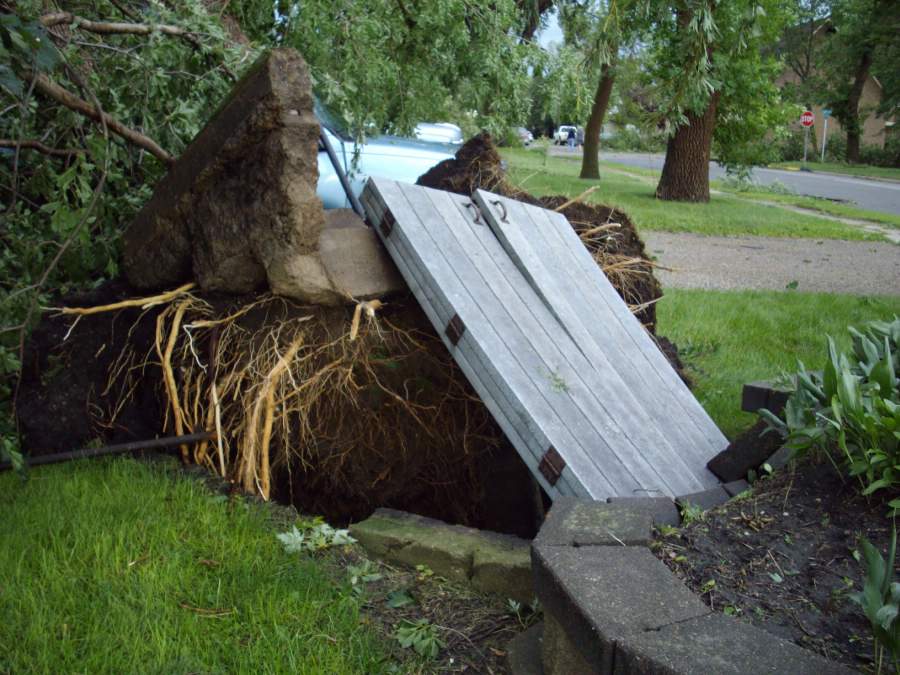
“The storm shelter was ripped up by the big tree that stood next to it…we would have been injured or possibly killed if we would have been in it,” DeLores surmises. Instead, they managed to seek protection in the basement of their 1898 home.

The storm cellar where the Johnsons would have sought protection had they had time to reach it.

“We are grateful to be alive,” DeLores says, a statement likely echoed by other rural and small-town residents in southwestern Minnesota where a wide-spread July 1 storm spawned four EF-1 tornadoes and a more powerful EF-2 twister. Belview was among the communities hardest hit when the tornado, with winds of 95 – 105 mph, ravaged this town of 375.

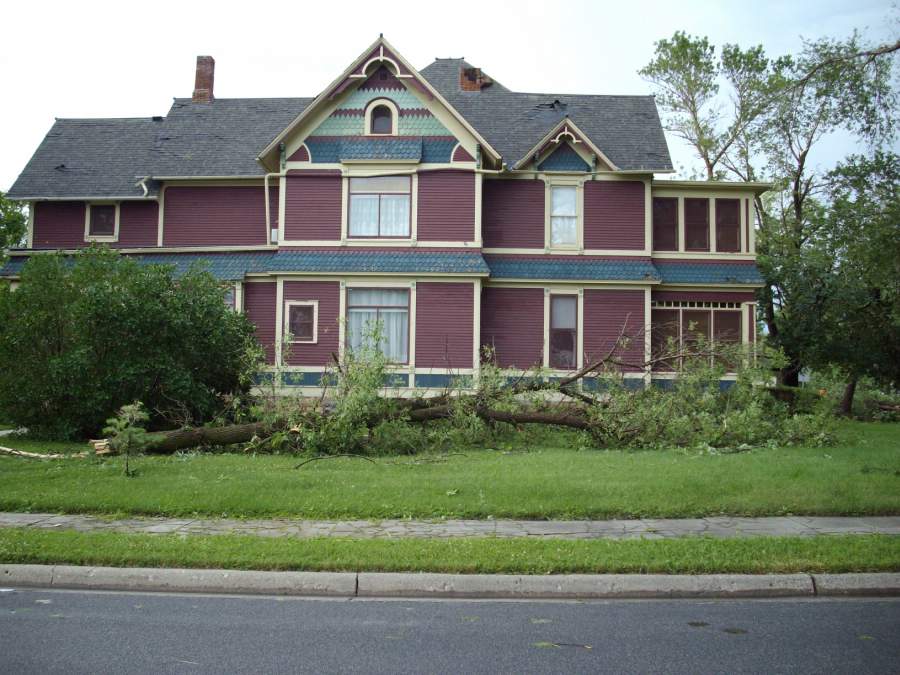
The Johnsons are in the process of cleaning up, dealing with insurance adjusters and gathering estimates so they can begin repairs on the 113-year-old house they’ve lived in since 1988. The list of damages to their home is extensive:

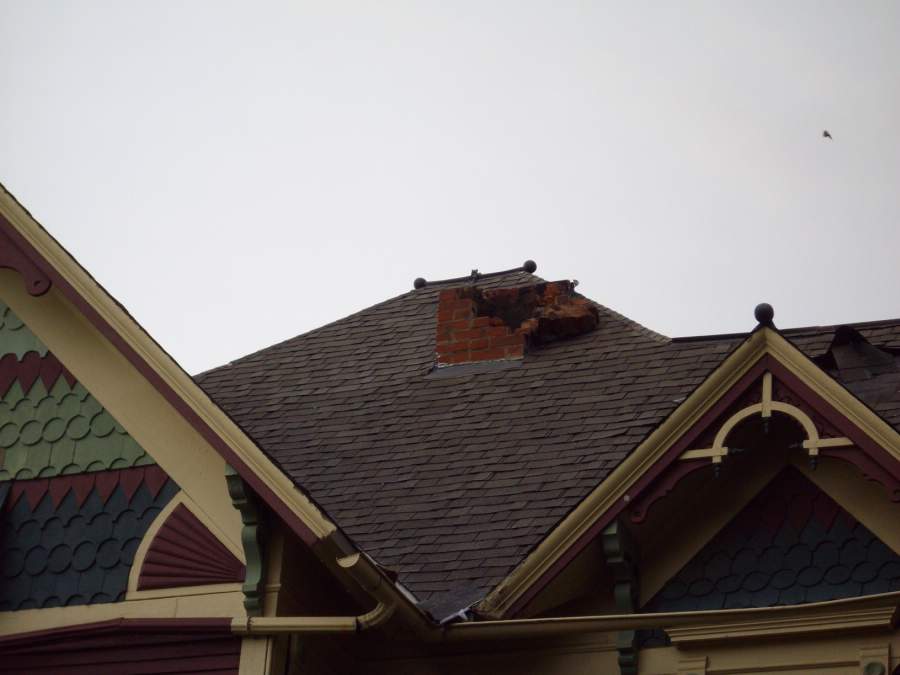
  • chimney blown down
  • rafters broken in the attic
  • shingles missing
  • paint blown off house
  • broken window
  • water damage to walls, ceilings, maple floors and carpet
  • roofs on two porches damaged and in need of replacement

The Johnsons' 1898 house was damaged inside and out by last Friday's tornado. DeLores offered to take photos of the interior for me, but I figured she had enough to do without adding this to her list.

A view of the house roof where the chimney was ripped off by the tornado.

DeLores shares some interesting details about the storm. “The wind blew water through the air conditioner in the bedroom upstairs and blew the water so it ran across the hall into another bedroom. It soaked up the carpet in the hallway and that in turn ran down into our living room.

“Upstairs in my office, water also blew through the air conditioner there. The shade has ground-up leaves stuck into it as does the shade in the bedroom.”

And that’s just the house.

The garage received structural damage when a tree toppled onto it and onto Tom’s  SUV. His vehicle was totaled.

A tree fell onto the garage and Tom's SUV, which was totaled.

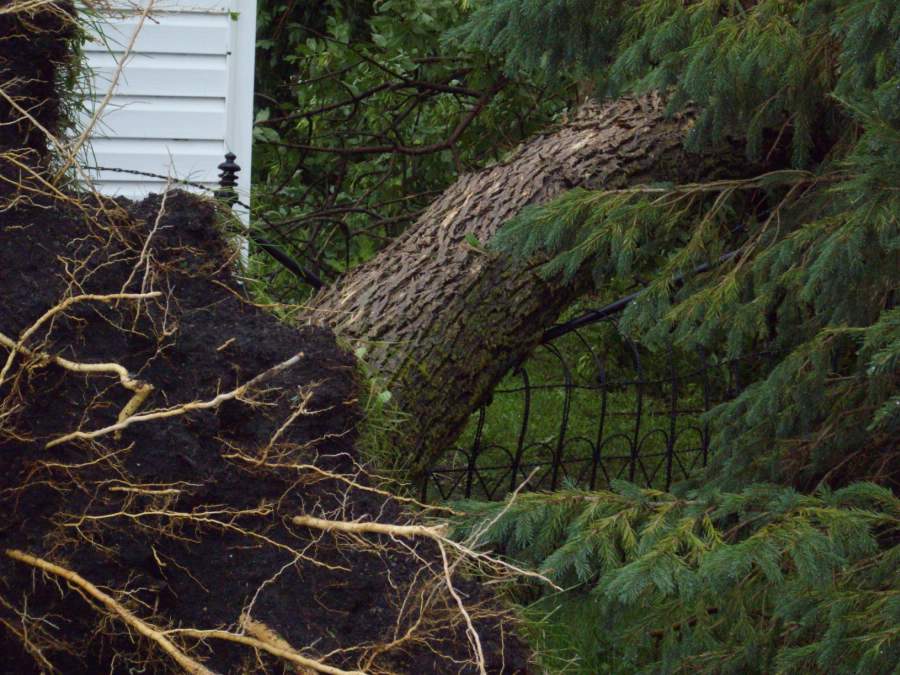
The Johnsons lost nine trees, some of which fell onto a 100-year-old fence that DeLores says they’ve lovingly protected for years.

One of several trees that landed on the 100-year-old fence.

One of numerous downed trees.

Despite the severe damage to home and property, DeLores is grateful that they survived the storm.

She is also appreciative of all the help from family members and others. “Men from Belgrade, Long Prairie and Sauk Centre came and sawed up trees for us and helped to clean up. They were volunteers who we had never seen.”

NEARBY ON A WOOD LAKE area farm, my cousin, Marilyn Schmidt, expressed similar sentiments in an email I received at noon Thursday. “Lucky no loss of life. Fortunately, we were not home.”

Marilyn and her husband, Dan, had just arrived at a west-central Minnesota lake for the July Fourth weekend when an EF-1 tornado hit their Redwood County farm one week ago today.

Since then, with the help of family and residents from Cottonwood, the Schmidts are cleaning up. Click here to read a previous post about the storm damage at their place.

Their son, Matt, was at the farm with a crew on Thursday when Marilyn emailed.

She tells me that all of their neighbors to the south and east and some north and some west had major damage to their properties. The Schmidts’ insurance adjuster already had gotten 1,500 claims by Tuesday night.

Marilyn closed her brief email with this sentence: “Gotta go—men to feed!!!”

IN VESTA, WHERE A SERIES OF DOWNBURSTS with wind speeds of 90 – 100 mph caused significant damage and downed trees, members of St. John’s Lutheran Church are planning to repair their church. The south half of the church roof was lifted off and slammed against the bell tower, according to my uncle, Milan Stage, a church member. The tower was cracked at the base and will need to be taken down, he says.

St. John's Evangelical Lutheran Church in Vesta with the roof half ripped off by strong winds during the Friday afternoon storm. Photo courtesy of Brian Kletscher.

Everything has been removed from the sanctuary into the attached social hall. The congregation is awaiting reports from an insurance adjuster and two contractors who have been on-site.

Milan says the west end and sides of St. John’s appear to be alright, but that “It will be a slow process getting the church back in use.” The church council met Wednesday evening and decided, if funds are available, to remodel the church along with repairing it. In the meantime, congregational members will worship at their sister church, Peace, in nearby Echo.

Across town at Uncle Milan and Aunt Jeanette’s home, the high winds wrecked eave troughs and a deck railing. A branch went through the railing, taking half of the railing and the grill with it, Milan says. Tops were snapped from some ash trees in the Stages’ back yard. Branches from their big cottonwood tree were strewn across the lawn.

JUST A BLOCK TO THE SOUTH my 79-year-old mom, Arlene Kletscher, never made it to the basement during the storm. She was sitting in her living room sorting through papers and wanted to complete the task. In her closed-up, air conditioned house, she never heard the warning sirens. By the time she realized the severity of the situation, it was already too late to seek safety.

This marks the second time my mom has not gotten to safety during a severe storm. Thirty some years ago a tornado hit our home farm, where she was living at the time. Then a silo was downed, wagons strewn across the field, among other destruction.

I am thankful, again, that she is OK.

My mom’s Vesta home was apparently unscathed. However, she lost one tree and her yard was littered with branches and other debris.

READERS, THANK YOU for following my series of storm stories which began last Saturday. Yesterday Minnesota Prairie Roots’ views reached an all-time daily high of 1,443. That indicates to me a continued strong interest in the storms of southwestern Minnesota.

I know several of you have posted links to my blogs on Facebook. Thank you for doing that and also thanks to those who have shared their stories and photos. If you’re reading this and have a storm-related story to share, please submit a comment.

If you missed my earlier storm posts, check my archives. Many of those stories include links to more storm information and images.

PHOTOS COURTESY of DeLores and Tom Johnson

© Copyright 2011 Audrey Kletscher Helbling


National Weather Service confirms July 1 tornadoes in southwestern Minnesota July 7, 2011

THE NATIONAL WEATHER SERVICE confirms what many Minnesotans had already figured out. Several tornadoes touched down during a massive storm system that began near the South Dakota/Minnesota border late Friday afternoon, July 1, and swept as far east as northwestern Wisconsin.

In my home area of Redwood County, two tornadoes were confirmed—both in the northwestern section of the county.

According to the NWS Chanhassen office, an EF-1 tornado with maximum winds of 95 – 105 mph began approximately six miles west of Vesta and continued for some 21 miles to the northeast. The maximum half-mile wide twister moved across Belview, which saw the most widespread tree damage in the surveyed area. The tornado then crossed the Minnesota River and ended two miles into eastern Renville County. Click here to read my previous post on the storm damage in Belview.


Trees blocked the street north of the Belview City Park following the tornado that passed through this Redwood County community of 375. Photo courtesy of Merlin and Iylene Kletscher.

The second EF-1 Redwood County tornado just nipped the northwestern corner of the county traveling a 2 ½-mile path. The tornado hit the farm of my cousin, Marilyn Schmidt, and her husband, Dan. To see the damage there, click on this post published yesterday on Minnesota Prairie Roots.


This tractor rigged with chains holds up a wall of a shop on Dan and Marilyn Schmidt's Wood Lake area farm. The building was severely damaged by Friday's twister. I'm showing this photo specifically for the reader who yesterday questioned how a tractor could hold up a wall. Photo courtesy of Heather Rokeh.

Three other tornadoes were confirmed in southwestern Minnesota—the most-damaging an EF-2 in Tyler with winds estimated at 115 mph. Check out the storm assessment of this 3-mile long tornado in Lincoln County near the South Dakota border by clicking here onto the NWS Sioux Falls website.

You’ll also find information there on an EF-1 twister that struck the Ruthton area in Pipestone County with wind speeds of 100 – 110 mph.

Strong winds, not a tornado, apparently caused the damage in my hometown of Vesta. The Chanhassen office of the NWS lists the storm there as “a series of downbursts” with wind speeds of 90 – 100 mph. Destruction in Vesta included dozens of downed trees, a roof partially-lifted from St. John’s Lutheran Church (my home church), smashed grain bins, damage to the elevator and more. To learn more about the damage in Vesta, read my previous blog post by clicking here or click here to read a story published in The Redwood Gazette.

St. John's Evangelical Lutheran Church in Vesta with the roof half ripped off by strong winds during the Friday afternoon storm. Photo courtesy of Brian Kletscher.

The NWS also determined that an EF-1 tornado with wind speeds of 100 – 110 mph cut a 300-yard-wide, 2 1/2 –mile swath northeast of Danube, lifting much of the roof from at least one home.

Check out the two NWS websites for maps, photos and more detailed information on the storms and the resulting damage.

Also visit the Belview Blue Jays Facebook page, where you’ll find photos of storm damage and other information from Belview.

IF YOU HAVE INFORMATION and photos you would like to share of storm damage, please submit a comment and I will follow-up with an email to you.

Based on my blog readership yesterday and Tuesday, interest in the southwestern Minnesota storms remains high. Yesterday Minnesota Prairie Roots blog views totaled 1,129, my highest daily total since launching this blog. On an average day, I get around 400 views.


Sprinkler gymnastics on the Fourth and more family fun

Filed under: Uncategorized — Audrey Kletscher Helbling @ 6:57 AM
Tags: , , , , , , , , , , ,

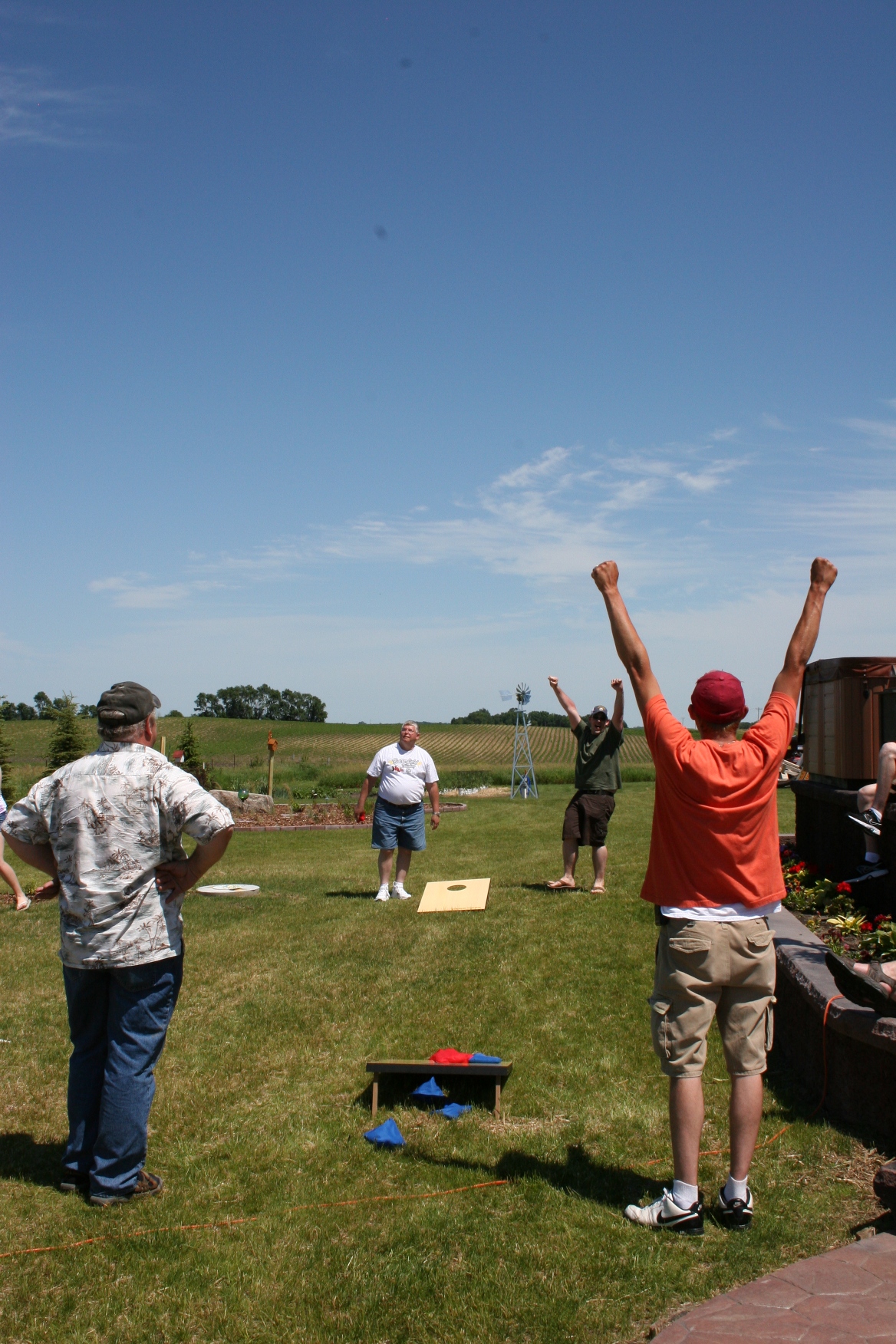
The winning team in the bean bag toss is quite obvious.
NAME SOMETHING PEOPLE save money for.

How many times does your mom have to tell you to do something before it gets done?

Name something you write down to remember.

If you know the answers (see below) to those Family Feud style questions, then you should have been at my middle brother’s home in southwestern Minnesota on Sunday. We sparred in a brief version of this television game show with young family members competing against old, “old” being anyone 50 or older.

Settled onto our lawn chairs on the driveway in front of the garage, one member of each team stepped up to a cooler, introduced themselves and then poised with hands behind backs awaiting the question. Lacking a buzzer to buzz, we substituted a plastic gallon of cheese balls plopped upon a cooler. Slap the cheese ball lid cover first and your team plays first.

If I hadn’t been so intent on winning this game, I may have thought to take pictures of the cheese ball container slapping contestants.

However, I took plenty of photos of the earlier sprinkler gymnastics. I refrained from that activity until later, at the exact moment one gymnast grabbed the sprinkler and ran onto the patio spraying all non-participants, including my 79-year-old mom. Just before that happened, I had decided to join the sprinkler crew. Timing is everything.

When you view these sprinkler gymnastics images, you will understand why I hesitated initially to join the group. I did not want to risk a leap onto water-slicked grass. Nor did I want to appear too foolish in that YouTube video my nephew-in-law was filming.

My extended family doesn't just nilly willy run through a sprinkler. Oh, no. We make it into a game. In this case, follow the leader. Whatever the leader does, you do.

From the youngest participant at age 17 to...

...one of the oldest sprinkler gymnasts at age 50.

Ah, my extended family loves to have fun.

Later, not long after the sun set on the Minnesota prairie, out came the sparklers. More fun. More laughter. More memories.

Sparkler fun for the younger ones.

Combine sparklers and a slow shutter speed and you get some interesting images.

I can’t think of anywhere else I would rather celebrate Independence Day than with my extended family on the land I love most, southwestern Minnesota.

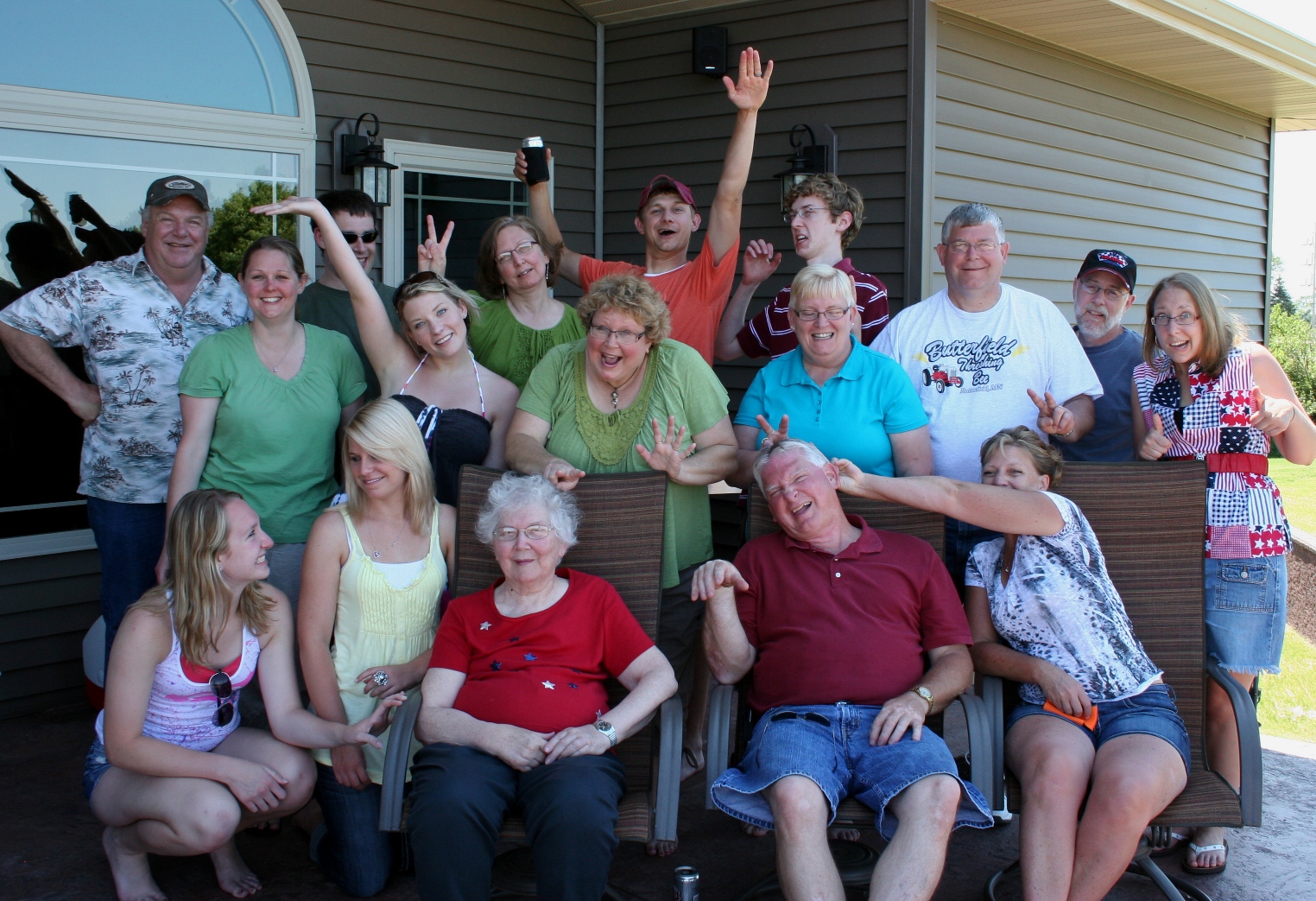
After we shoot "nice" photos, we always like to do a fun photo. I am in the back row in the grass green shirt. Can you tell which of us were teens in the 1970s? (Hint: See the symbol we're making with two fingers. You would think we could be more creative.) All family members, except me, shall remain unidentified.

HOW DID YOU CELEBRATE your Fourth of July?

HERE ARE THE TOP answers to the three questions posed at the beginning of this post:

Vacation, two times and phone numbers.

© Copyright 2011 Audrey Kletscher Helbling