
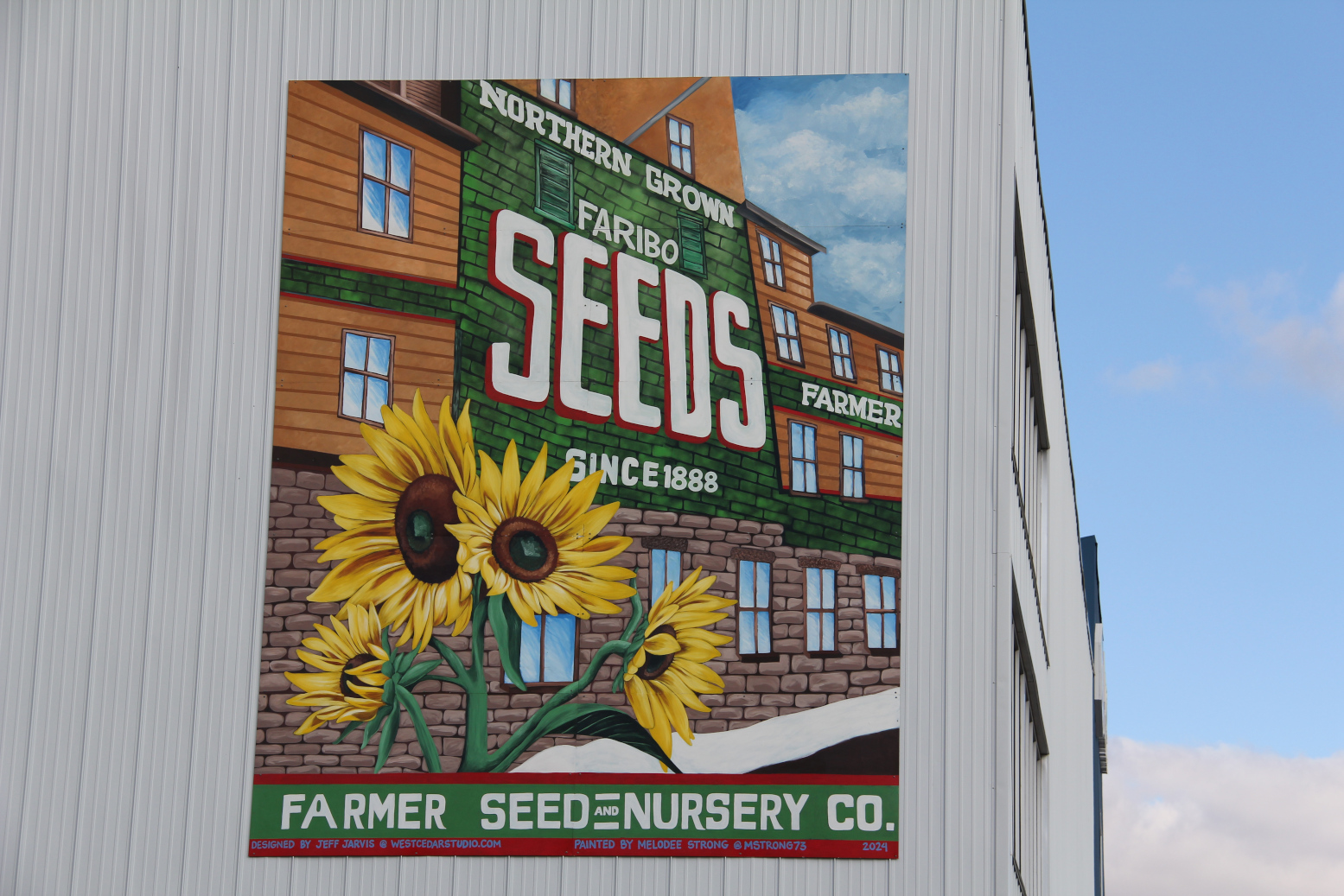
THE FIRST PART of a three-pronged project honoring Farmer Seed & Nursery in Faribault has been completed. Recently a 20 by 24-foot mural, designed by local historian and creative Jeff Jarvis of West Cedar Studio and painted by Minneapolis artist Melodee Strong, was installed at Midwest Indoor Storage, site of the former nursery.
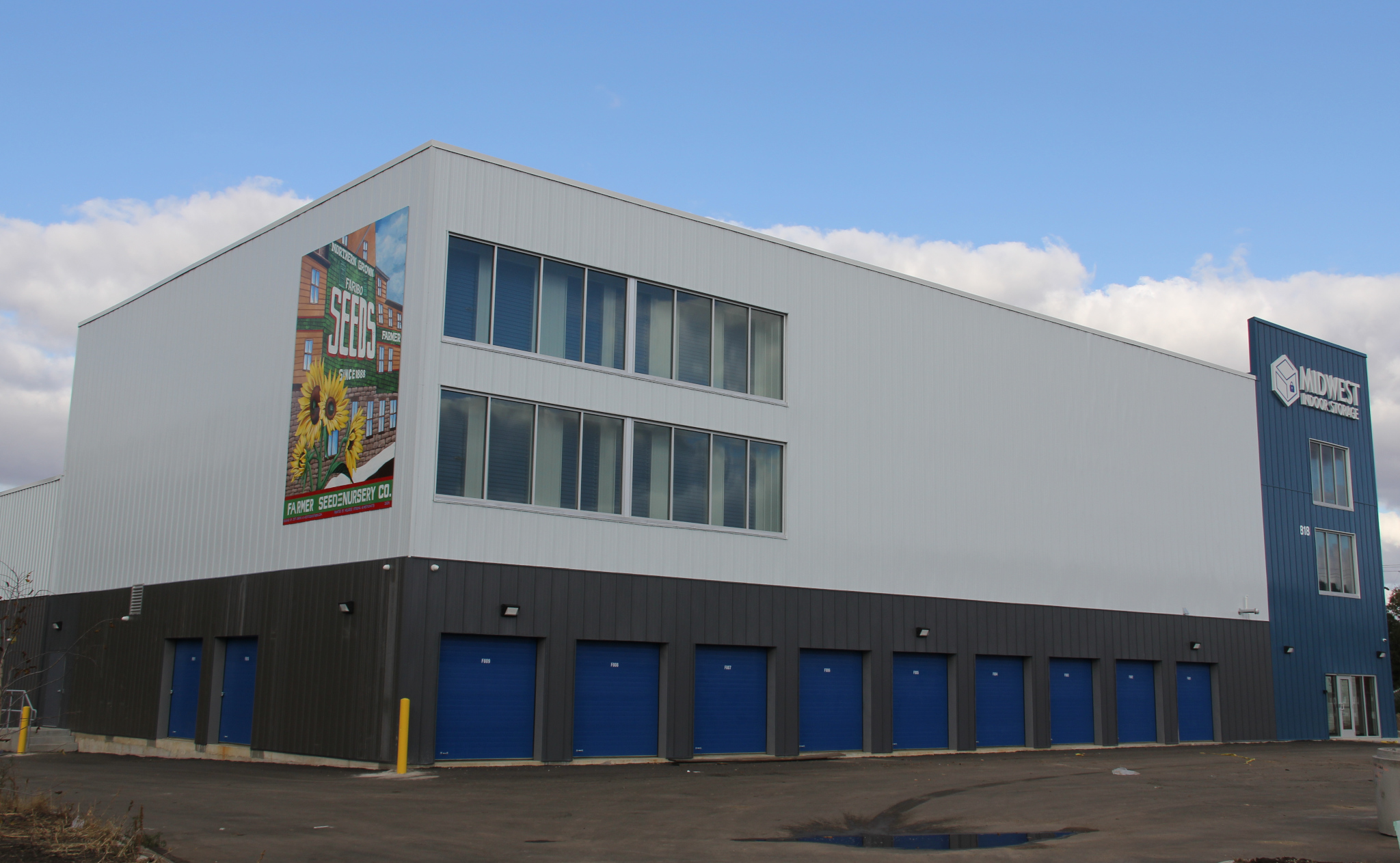
The artwork hangs on a corner of the building’s west side, visible to eastbound passersby along Minnesota State Highway 60/Fourth Street.
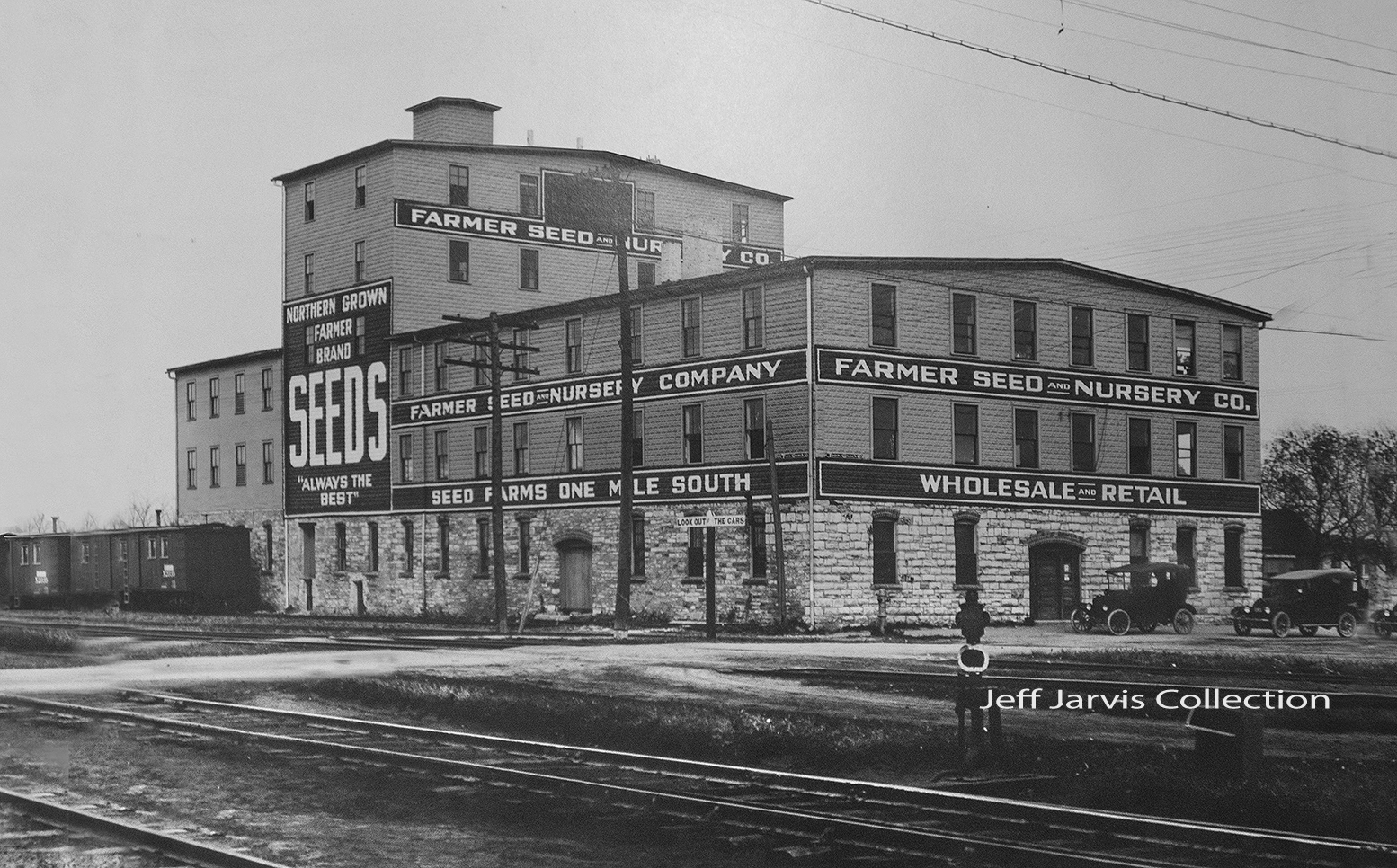
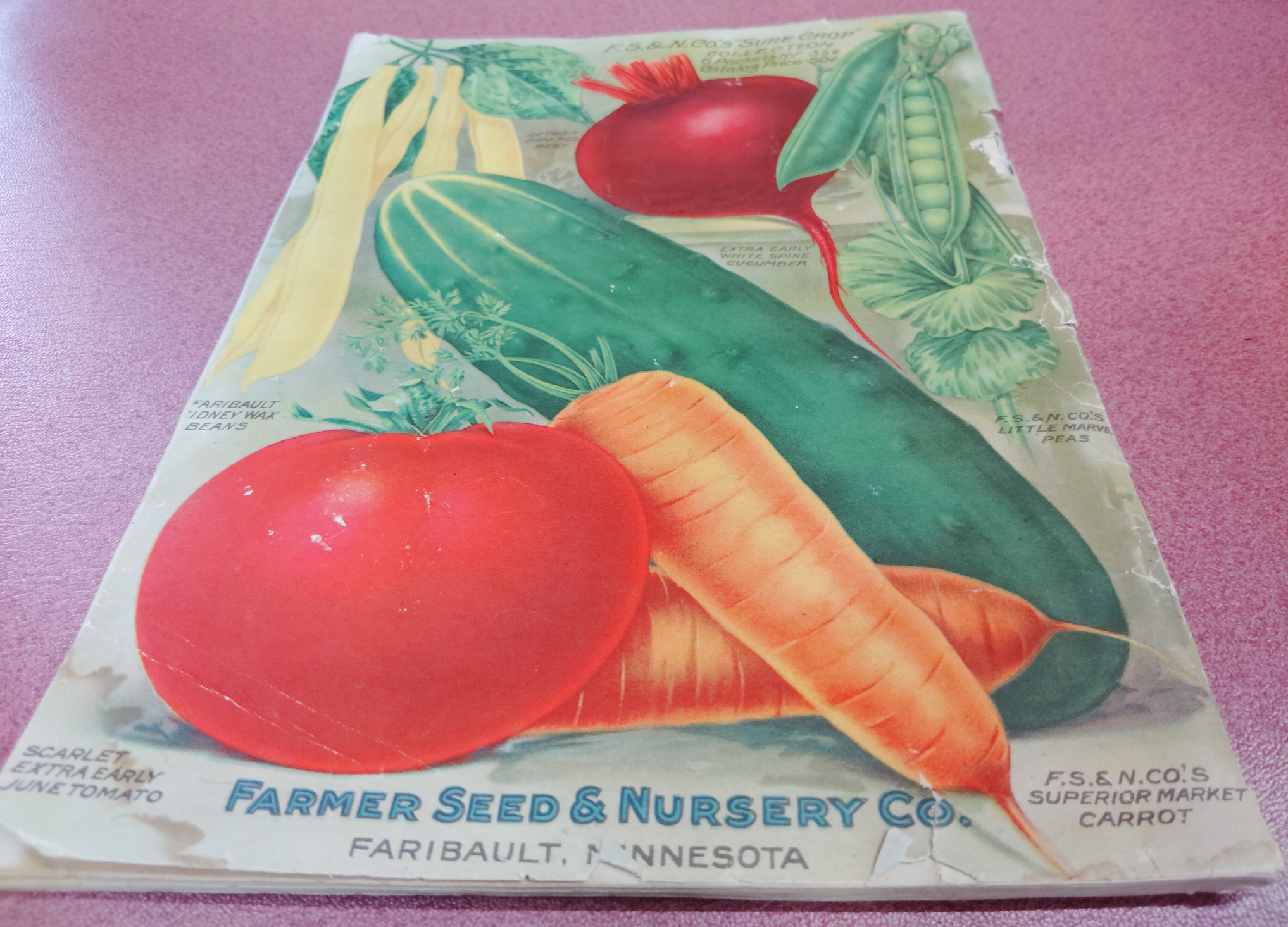
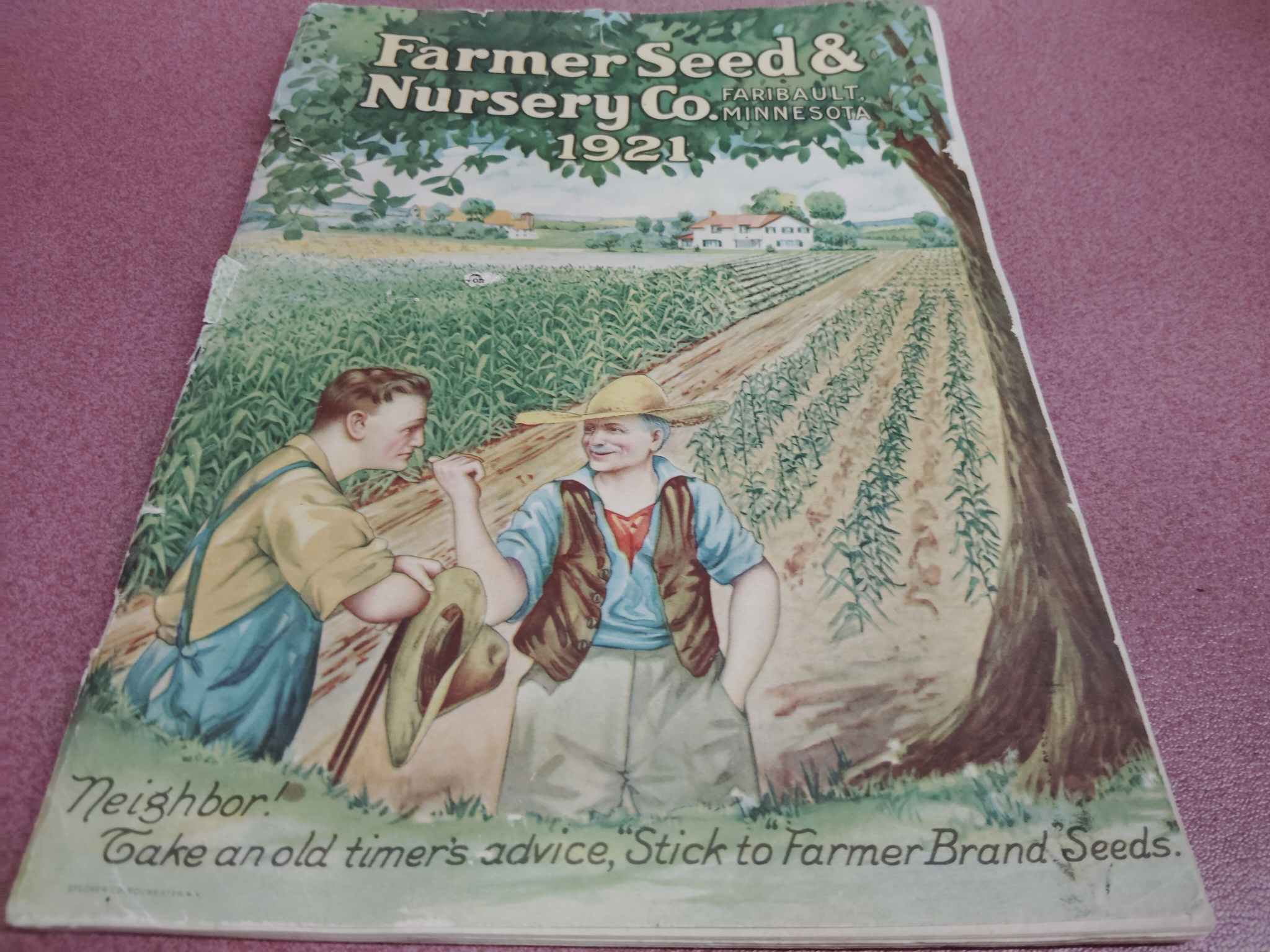
The iconic Farmer Seed and Nursery multi-level complex once rose here, an identifiable community landmark business rooted in agriculture. With nearly a 130-year history in Faribault and company roots in Chicago dating to 1888, Farmer Seed was once noted for its local seed farms, seeds, mail order seed catalog, retail store and Christmas trees. I remember paging through the company’s catalogs while growing up on a southwestern Minnesota dairy and crop farm. From vegetables to flowers to shrubs and trees, Farmer Seed offered endless options for the everyday gardener, farmer and other growers.
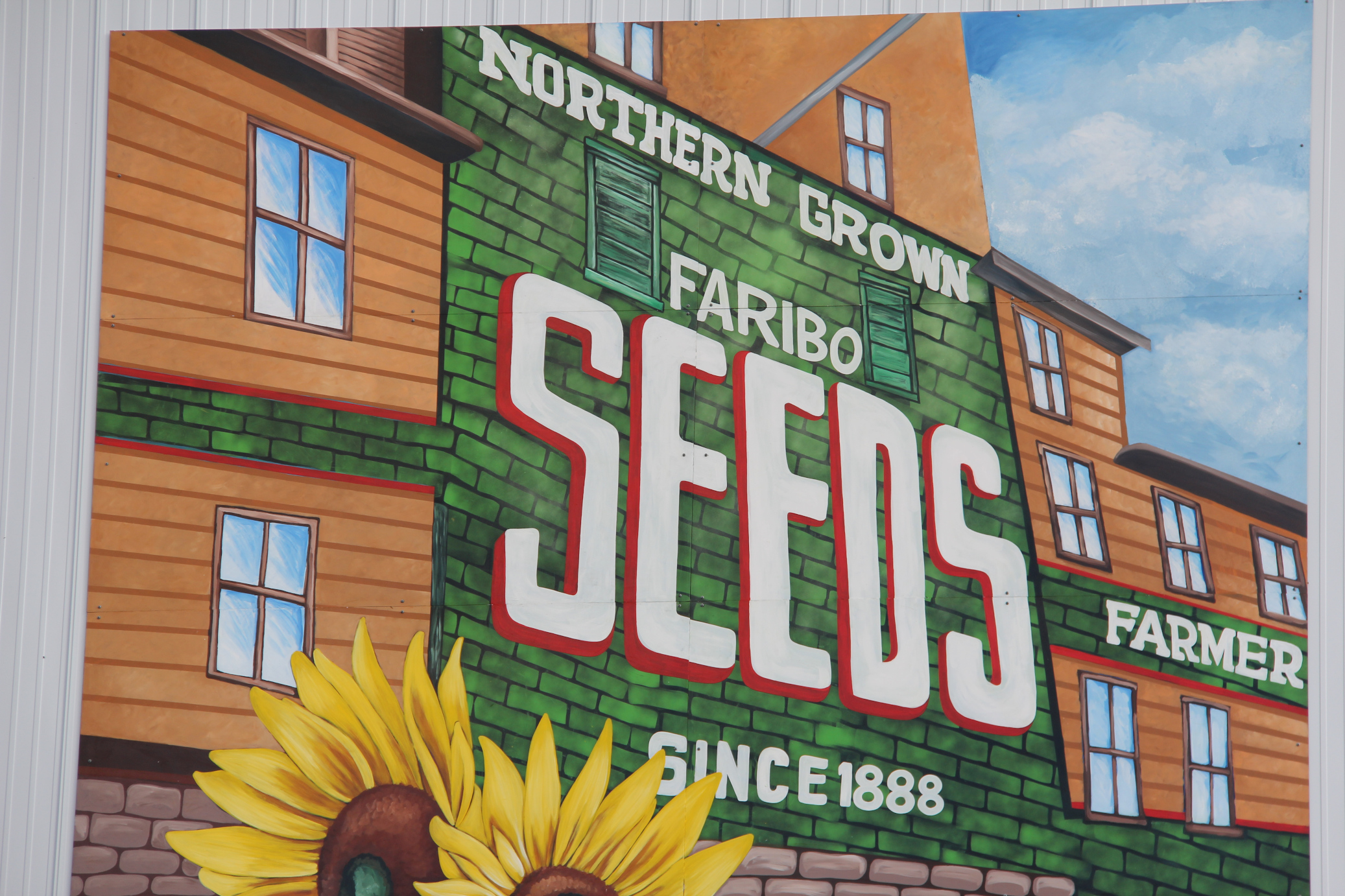
Today the mural and a forthcoming kiosk and memory book will continue to celebrate this long-time Faribault business. In designing the mural, Jarvis kept it simple, focusing on the signature exterior signage that graced the historic building. He added a splash of color in a clutch of sunflowers, highly recognizable, he said, and a popular agricultural symbol.
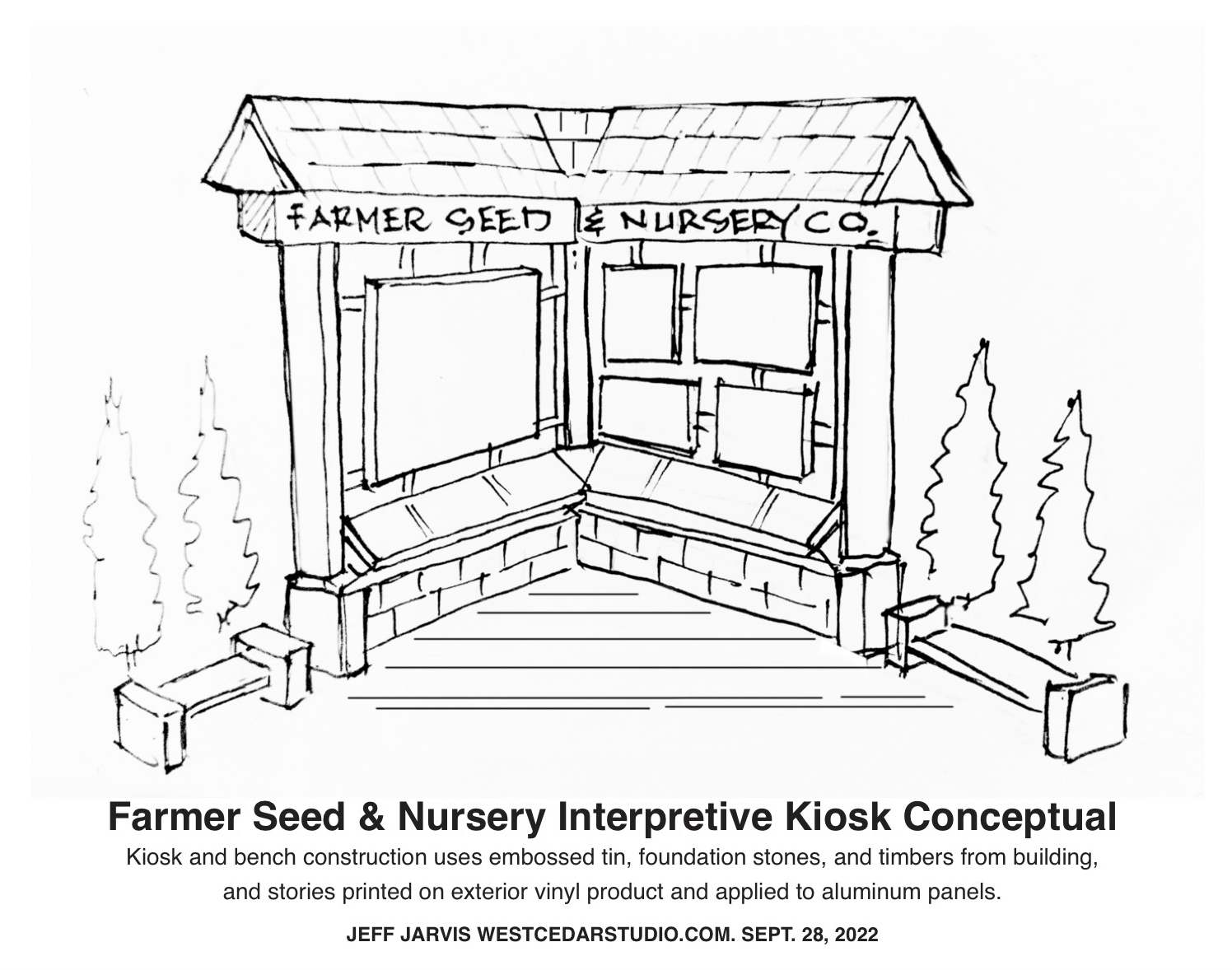
Jarvis also created conceptual sketches for the planned corner kiosk and is developing an interior graphic panel display featuring company history, little-known products and personnel information.
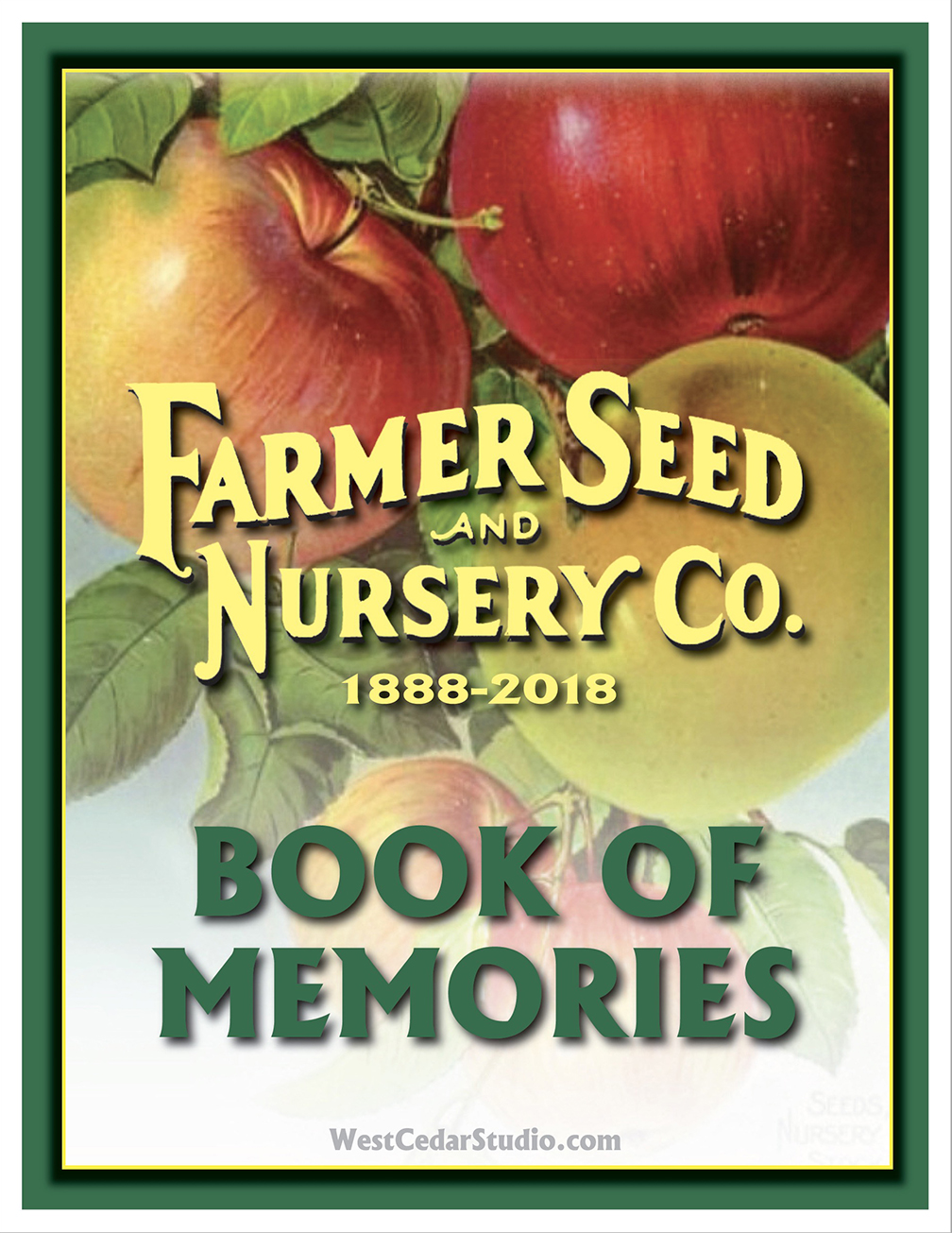
Additionally, this keeper of local history is compiling a Farmer Seed memory book of stories, historical information and photos. Jarvis has included his own childhood story about a coveted Ant Farm purchased at the retail store by his mother and gifted to him at Christmas. He’s looking for more stories and encourages submission of those via a form on his website at https://westcedarstudio.com/farmer-seed-nursery-memory-book/. Once the stories are compiled they will be available to read for free on Jarvis’ studio website or as a printed copy for a fee.
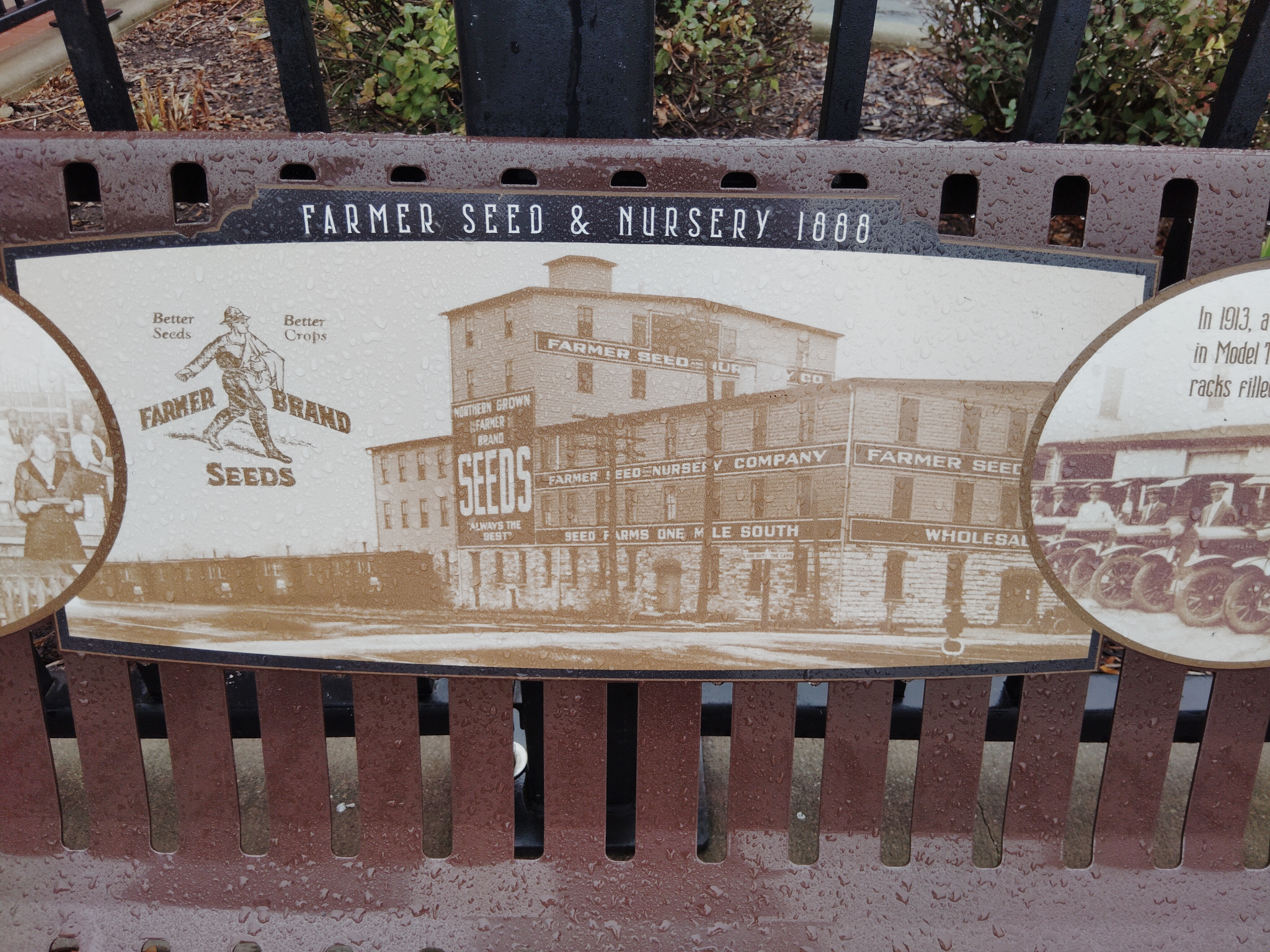
I expect this trio of projects will be well-received in Faribault, where the 2018 closure, then sale and eventual complete demolition of the iconic Farmer Seed complex in 2023 raised public concern. I was among those who hoped the building, on the National Register of Historic Places, could be saved, a new use found for this long-time landmark. It was not to be. But the city, including the Heritage Preservation Commission, recognized the importance of preserving memories by requiring historical remembrance projects as part of the property sale, according to Jarvis. I’m grateful for that and for parts of the building that were salvaged for historical purposes.

Today when I view the newly-installed mural, I think of my own Farmer Seed memories. Like so many others, those trace to Christmas. I loved to wander through the retail store to see all the trees decorated with ornaments. Sometimes my husband and I would buy our short needle short Christmas tree there. Not a flocked tree, which was a Farmer Seed specialty. One year we waited too long and, days before Christmas, got what I think may have been the last tree in town at a bargain price.
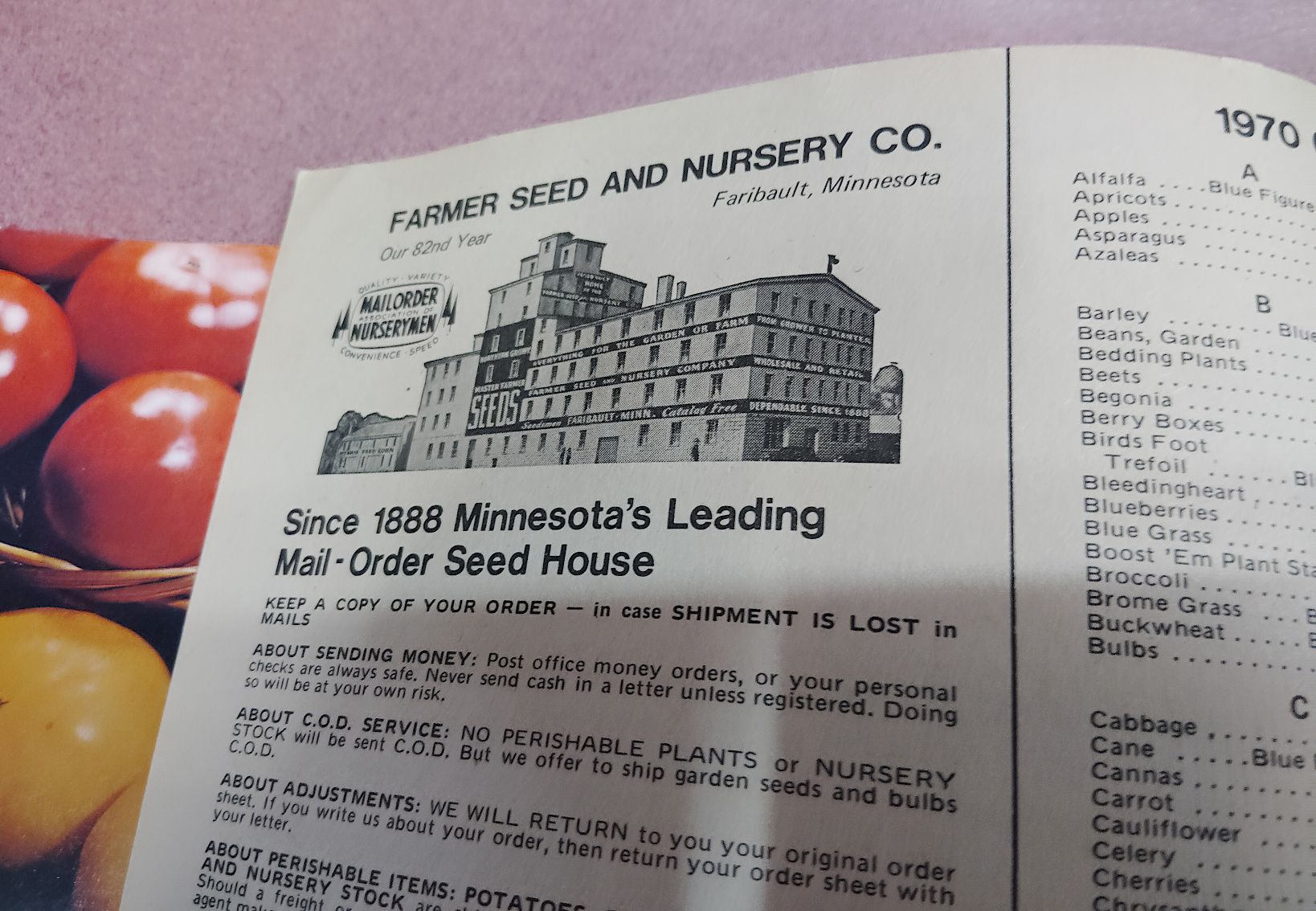
For many area residents, Farmer Seed holds a life-time of memories. Of seed catalogs. Of seed potatoes. Of seed packets. Of lilac bushes and Christmas trees. Of wood plank floors and a building rising high along highway 60, where an indoor storage unit and an under-construction apartment building now stand on land once rooted in agriculture.
© Copyright 2025 Audrey Kletscher Helbling












 Minnesota Prairie Roots
From words on a government website to soybean markets & a crisis in rural America October 15, 2025
Tags: agriculture, America, China, commentary, farm crisis, farming, messaging, opinion, rural America, rural Minnesota, soybean market, soybeans, tariffs, trade war, United State Department of Agriculture
WHEN I FIRST READ the message bannering the United States Department of Agriculture website during the current government shutdown, my jaw dropped. In a two-sentence statement, “The Radical Left Democrats” are blamed for the closure of the federal government. How unprofessional, I thought, to so blatantly put politics out there on a website designed to help America’s farmers. But then again, why should this surprise me?
United States Secretary of Homeland Security Kristi Noem is doing the same in a video message blaming Democrats for the shutdown. She expects this to be broadcast in airport terminals. Many are opting not to air her clearly political statement. And they shouldn’t. It’s unprofessional and wrong in more ways than I can list, no matter what your political affiliation may be.
But back to that message on the USDA website. It goes on to say that President Donald Trump wants to keep the government open “and support those who feed, fuel and clothe the American people.” Now that is certainly a noble statement at face value, one we could all applaud. Who doesn’t want to support our farmers? But in the context of what the President has done to farmers, the statement seems laughable.
Here in the heartland, farmers have lost a major market for soybeans, my state’s top agricultural export. China has stopped buying soybeans from not only Minnesota, but America. That’s billions of dollars in lost income. And all because of the ongoing trade war between the U.S. and China, begun by the man who slapped tariffs—now averaging 58 percent—on Chinese imports with a threat to increase that to 100 percent. I’m no economist. But even I understand China’s retaliatory tariffs and actions to tap other markets for soybeans. They went to Brazil and Argentina.
And now President Trump proposes sending $20 billion in aid to Argentina, all tied to an upcoming election there. Why would we bail out a country exporting their soybeans to China while our own financially-strapped farmers are suffering because they’ve lost a key market? This makes no sense to me. Again, I’m not an economist or a politician, simply an ordinary American citizen, with a farm upbringing (and who decades ago freelanced for the Minnesota Soybean Growers Association), questioning the logic of any of this.
Even without the Argentinian component tossed into the mix, there’s more. President Trump has proposed an aid package for farmers to help them get through the financial crisis he created via his tariffs and the resulting trade war with China. That aid would come from the money collected from tariffs. Now I know farmers—my dad was one—are fiercely independent and would rather have a market for their cash crops than government aid. If not for the tariffs…
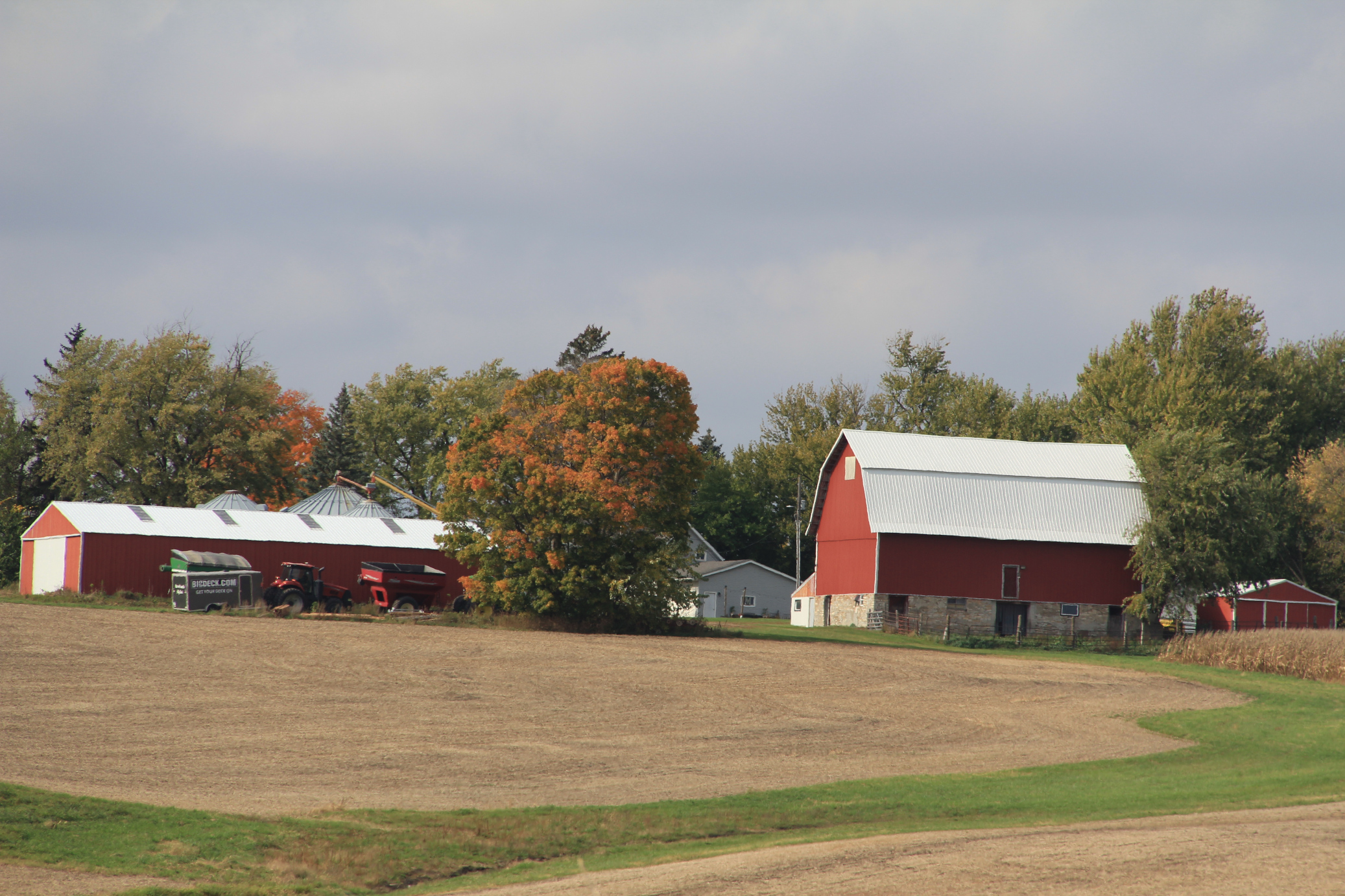
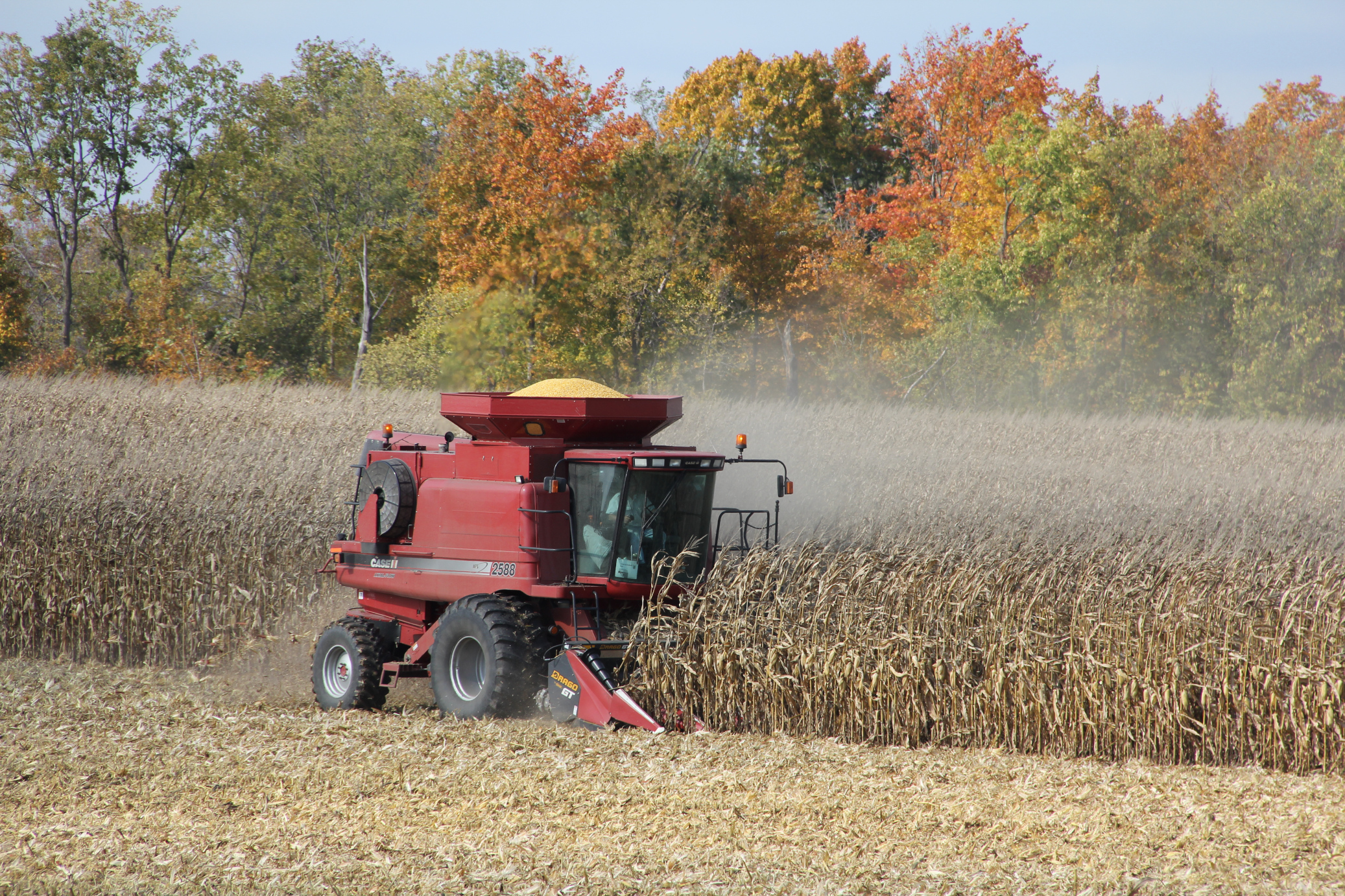
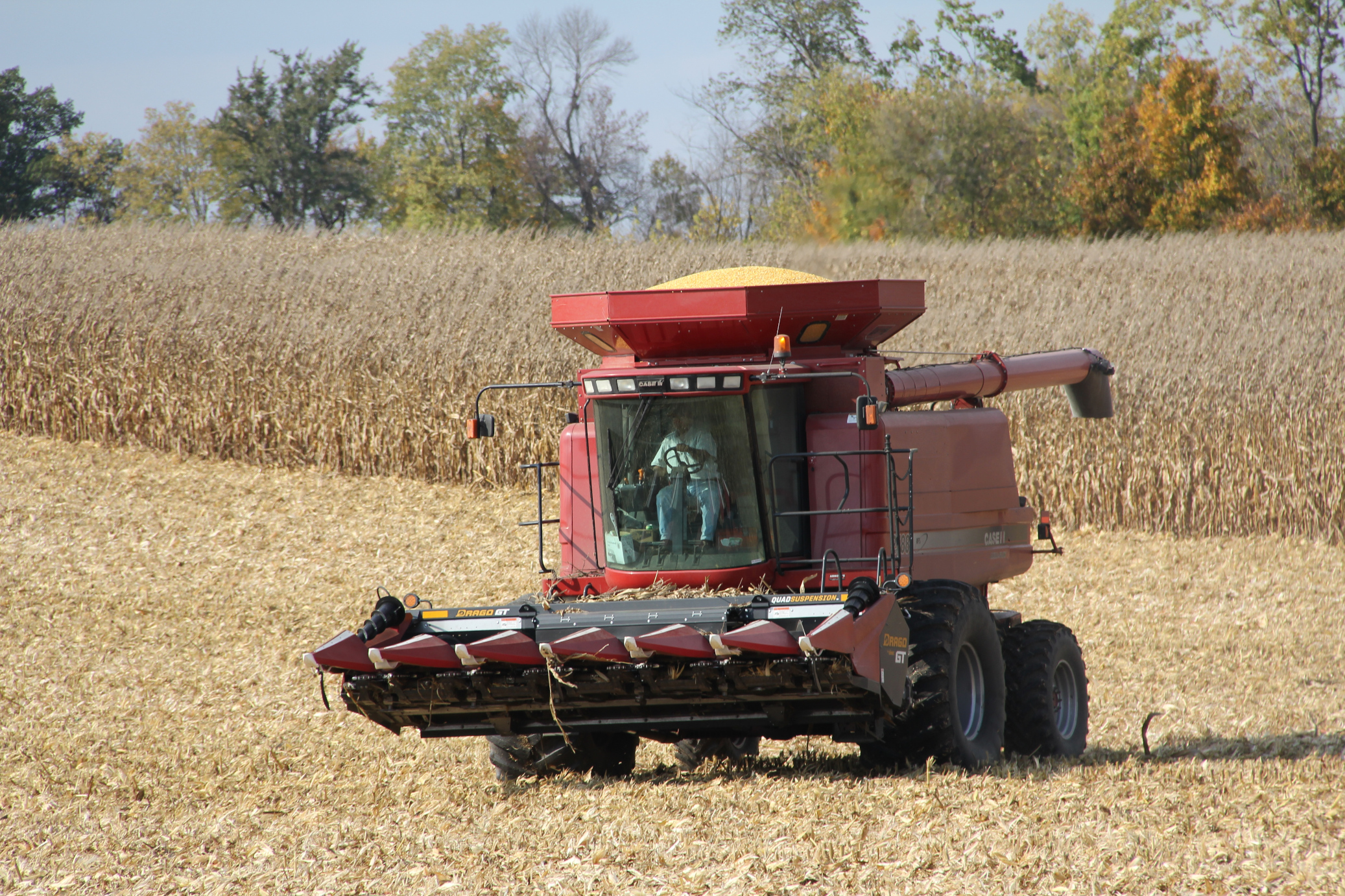
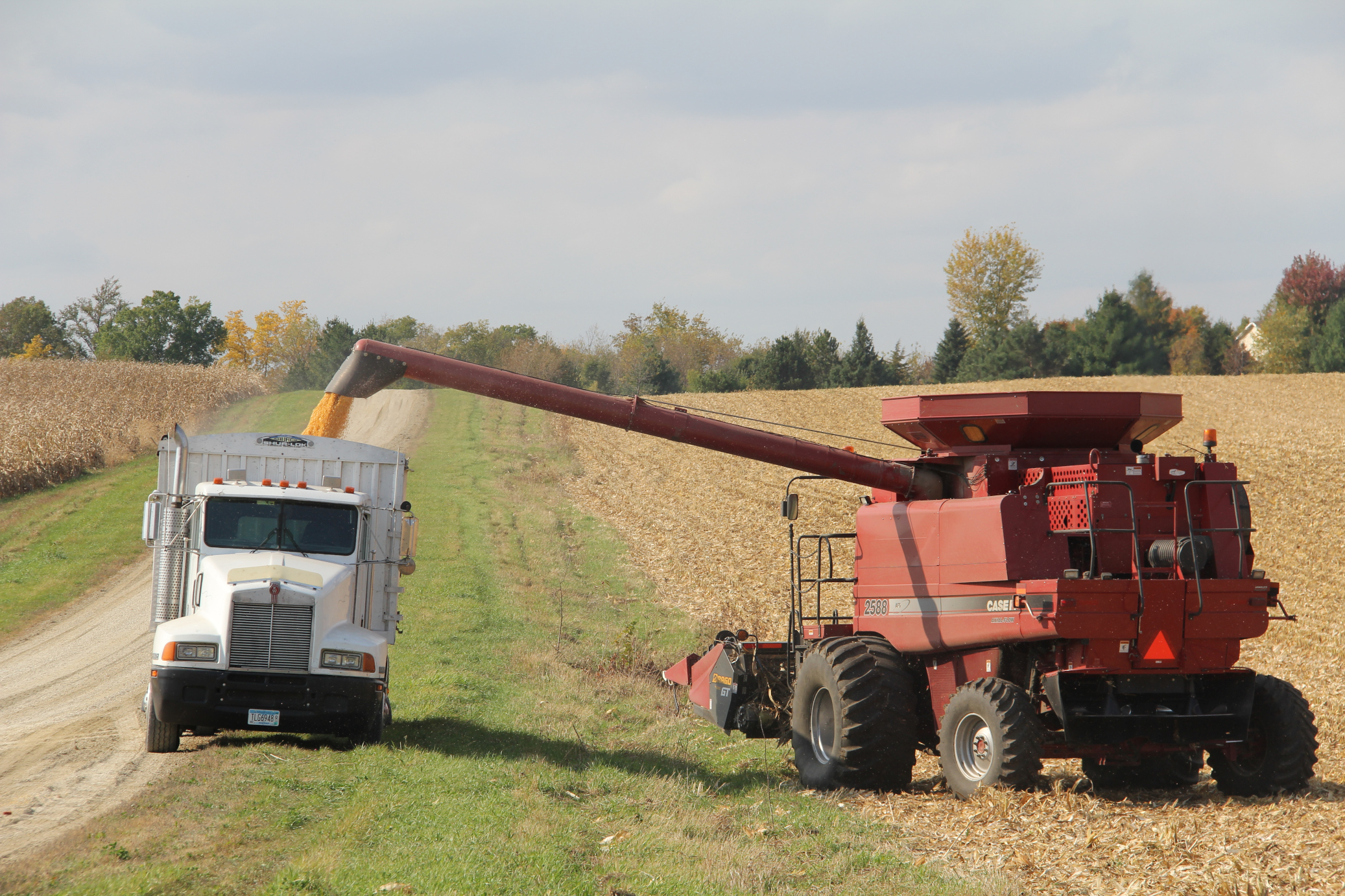
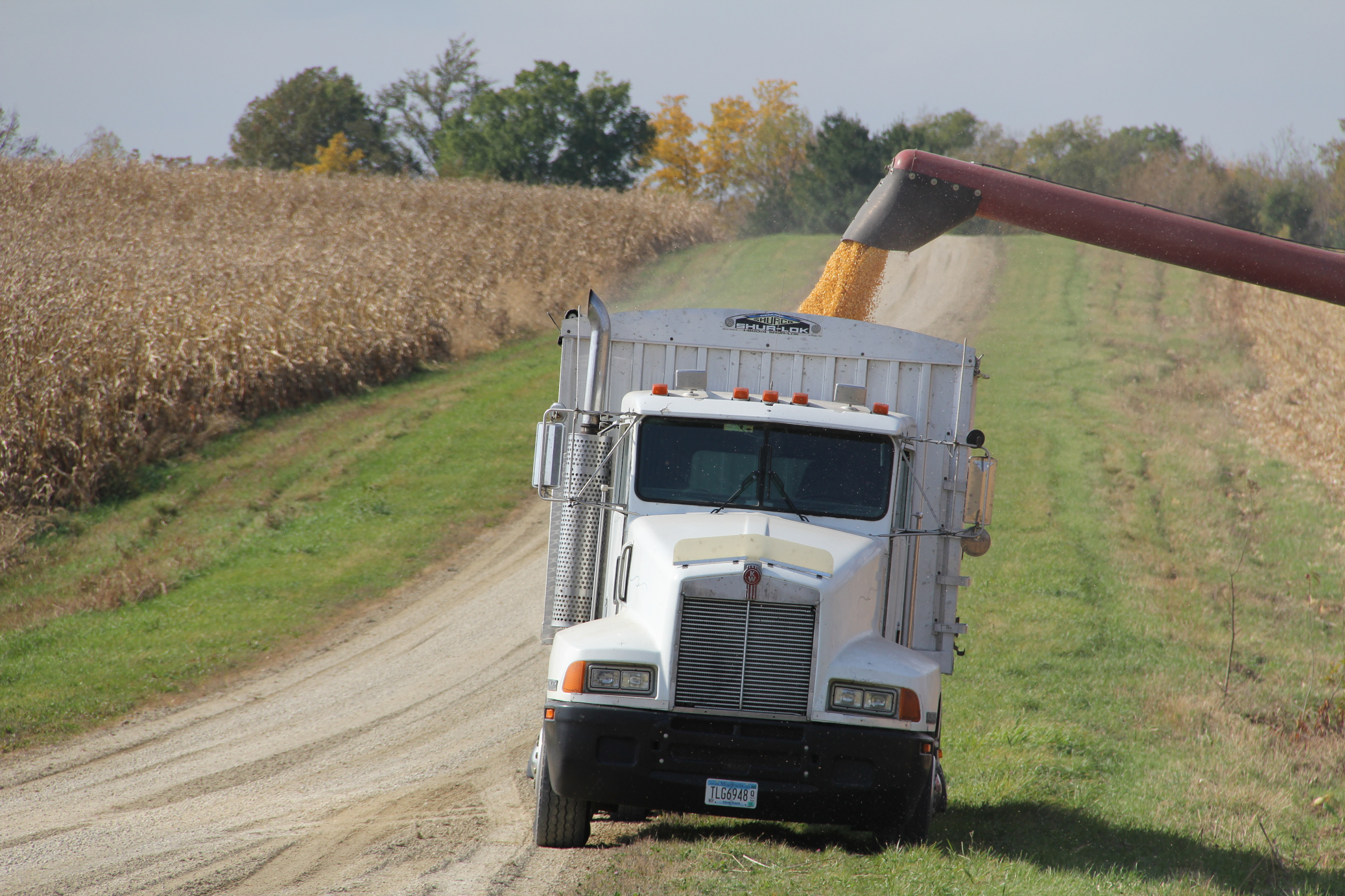
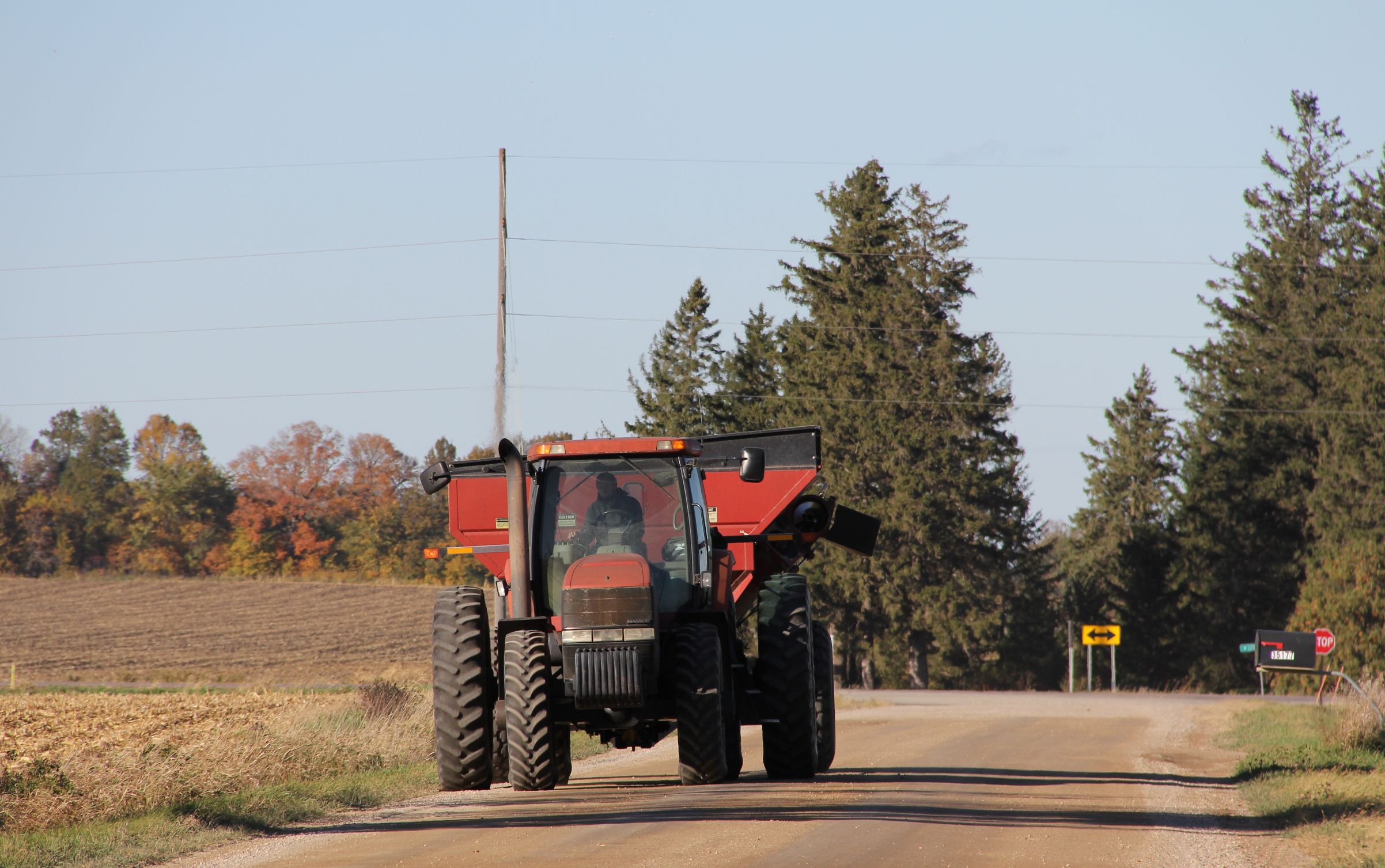
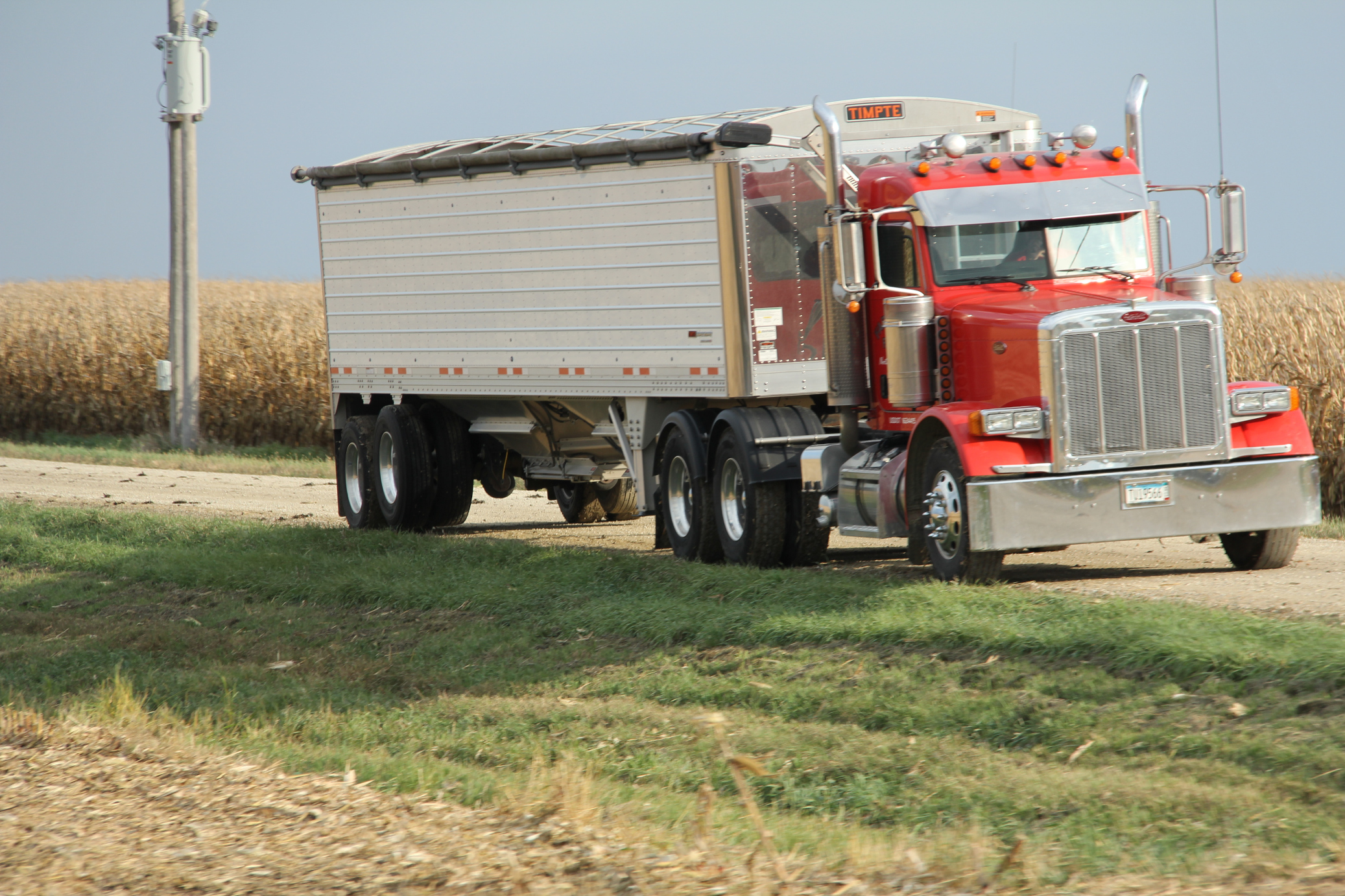
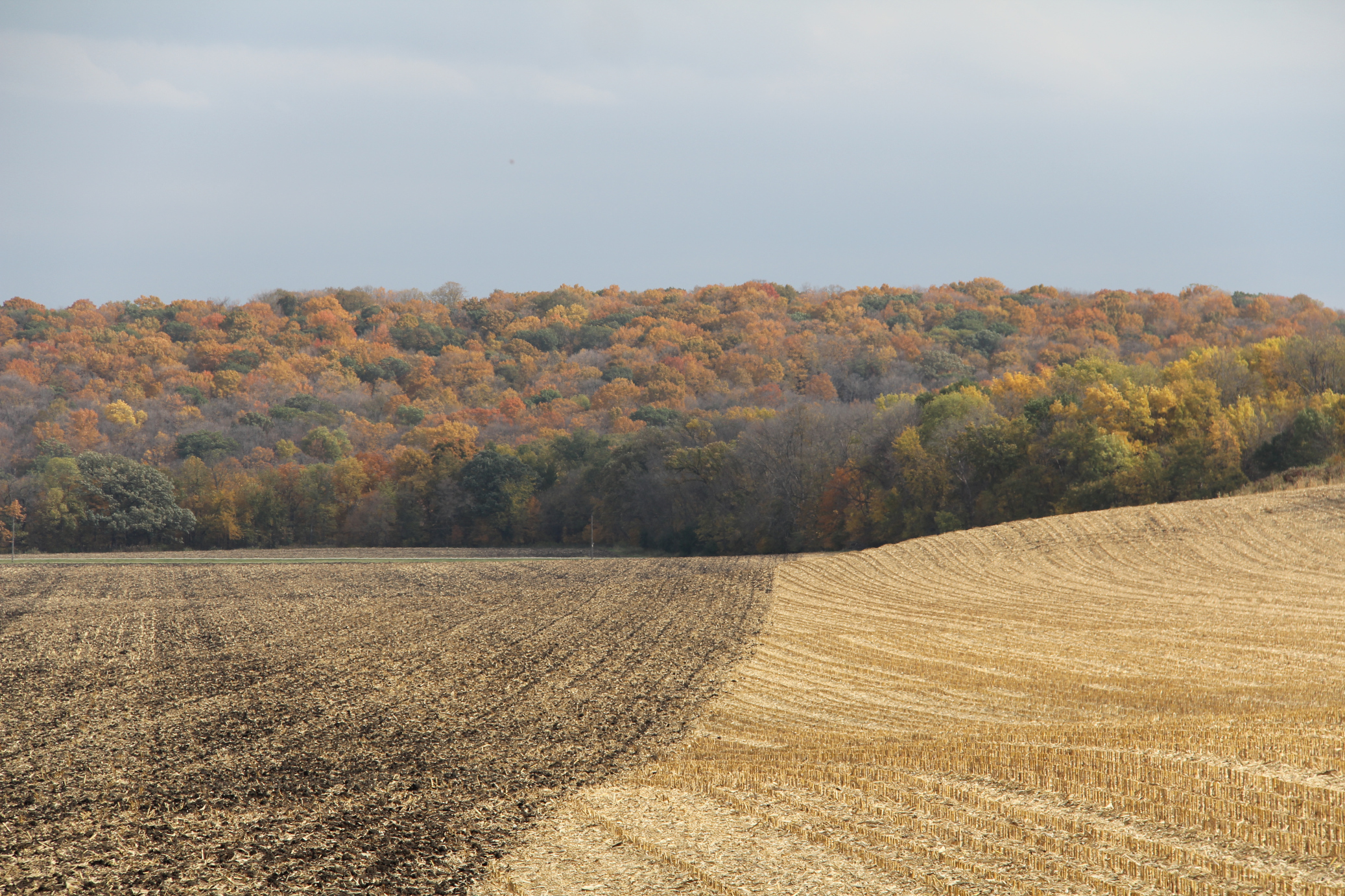
As the harvest continues here in Minnesota, I can’t help but feel for those who work the land, who continue to face so many uncertainties, financial challenges and stressors. Interest rates on loans remain high. Market prices remain low. Land rents continue to rise. Equipment and other costs are high. And on and on, including the loss of the long-standing soybean export market to China, which quite likely may never be reclaimed.
This is becoming a crisis situation for farmers—those who feed, fuel and clothe Americans. From fields to small town Main Street, rural America is hurting. And politically-biased blame words published on a government website aren’t helping.
© Copyright 2025 Audrey Kletscher Helbling