
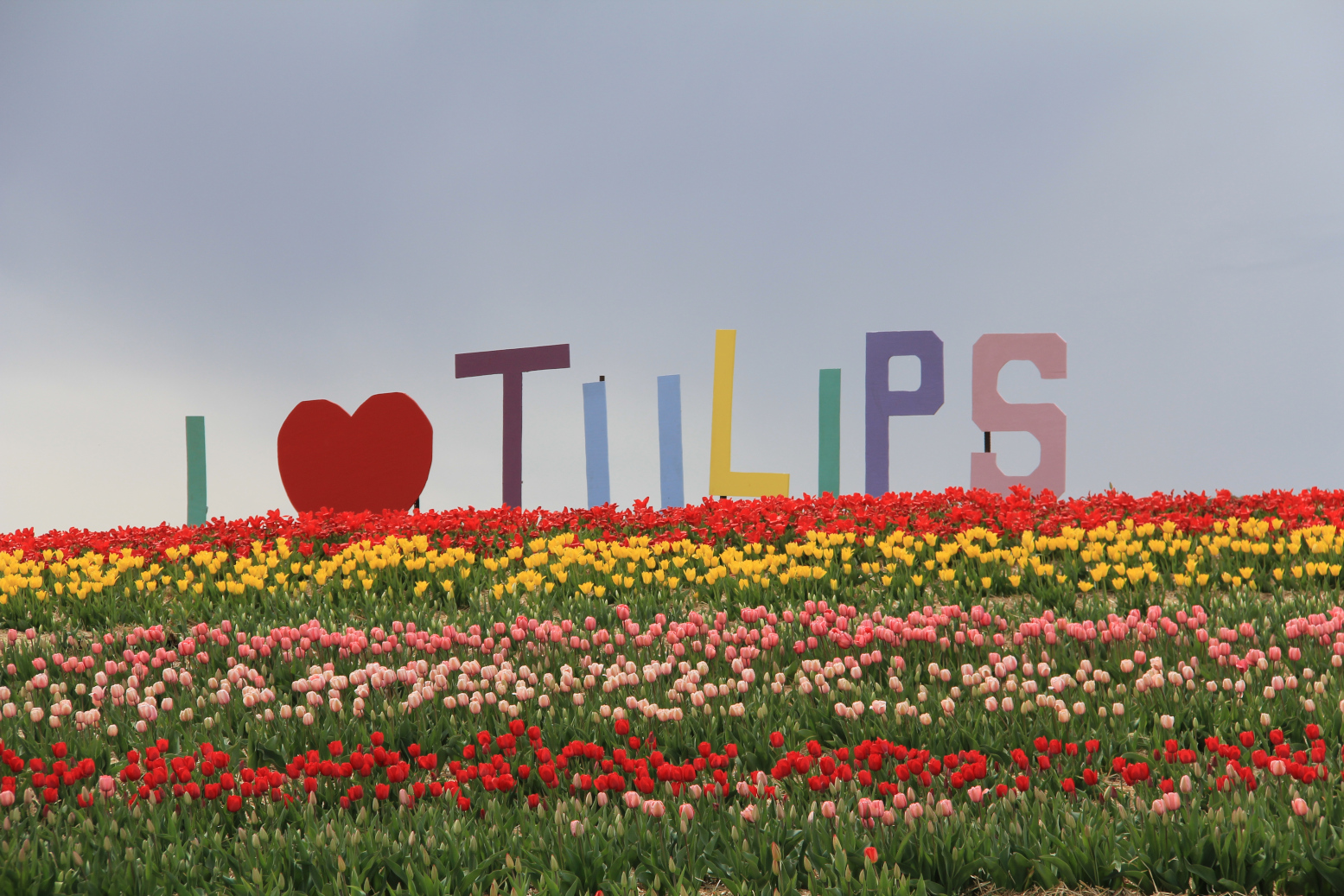
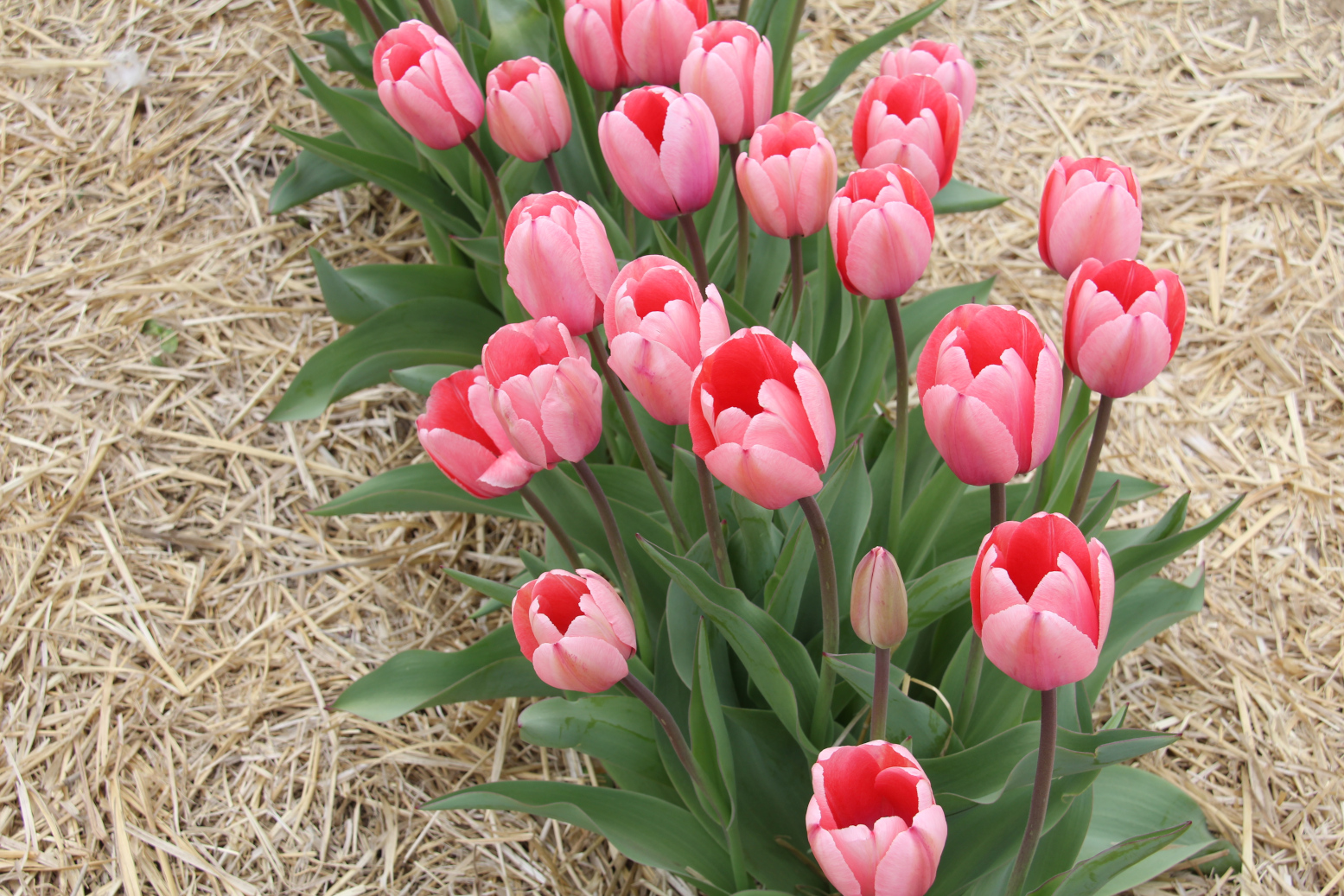
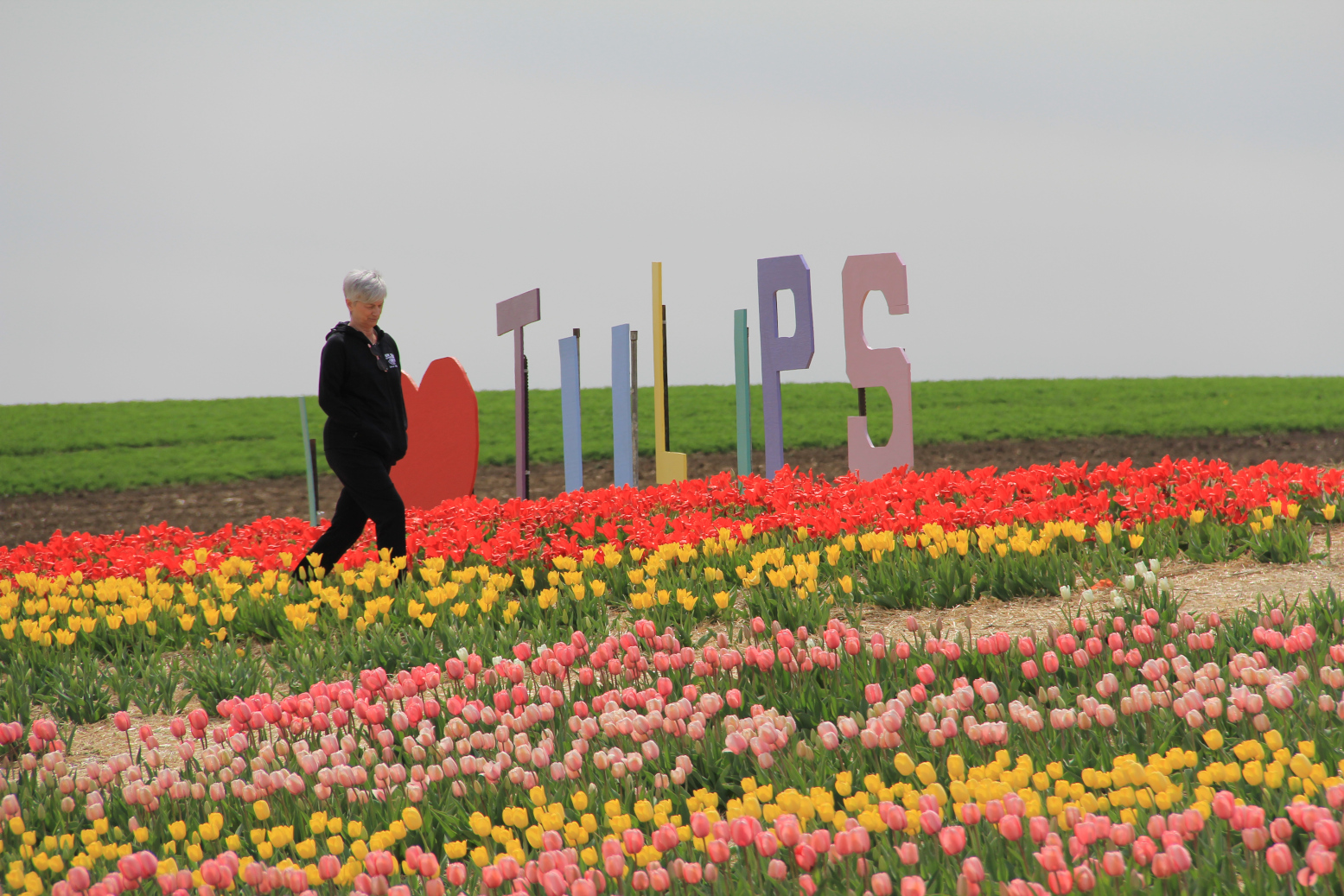
ROWS OF TULIPS curve across a hillside at Brand Farms in Dakota County, splashing color into the agrarian landscape. Vivid red and bright yellow. Softer pinks. Multi-hued flowers of orange and yellow, purple and white. And more.
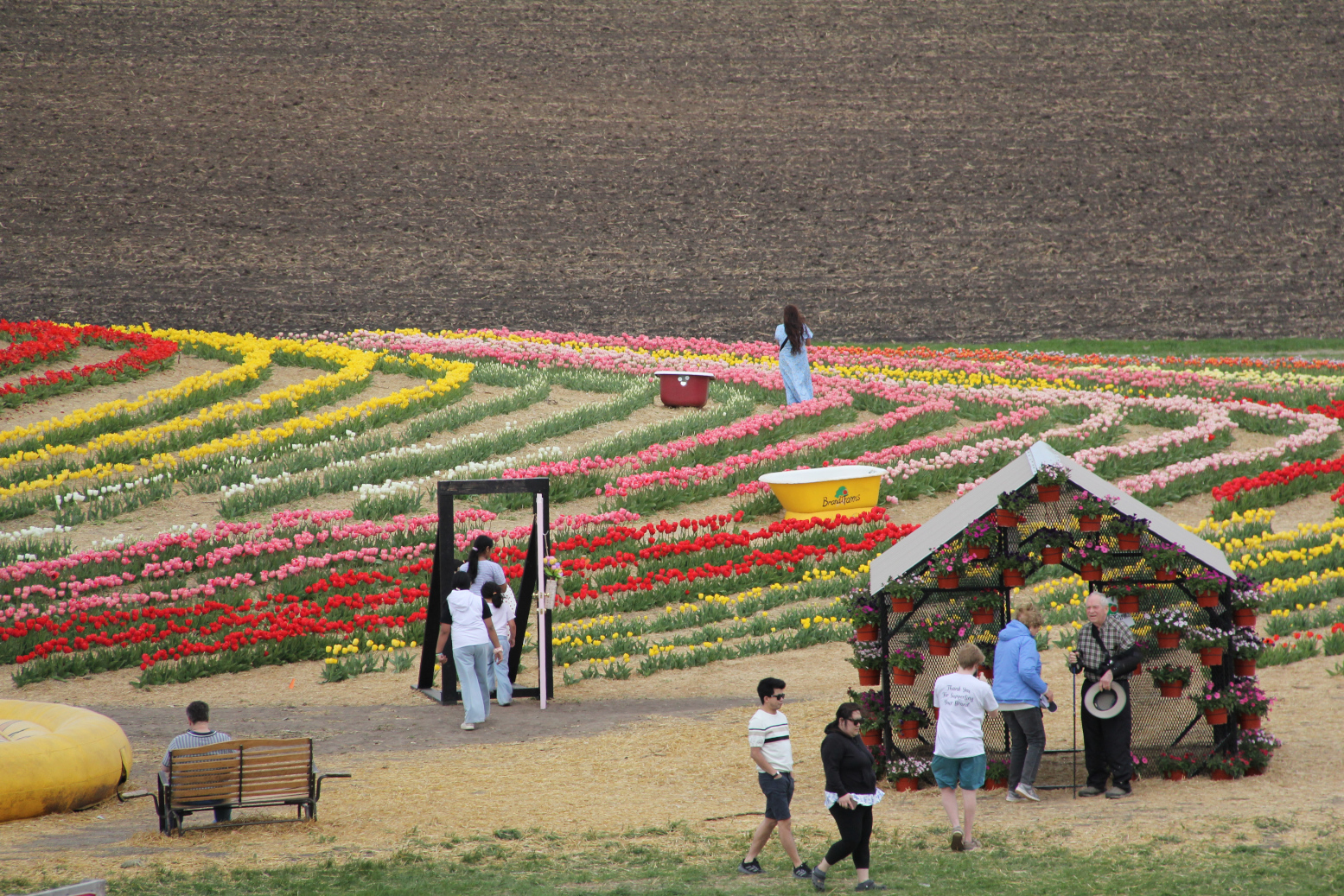
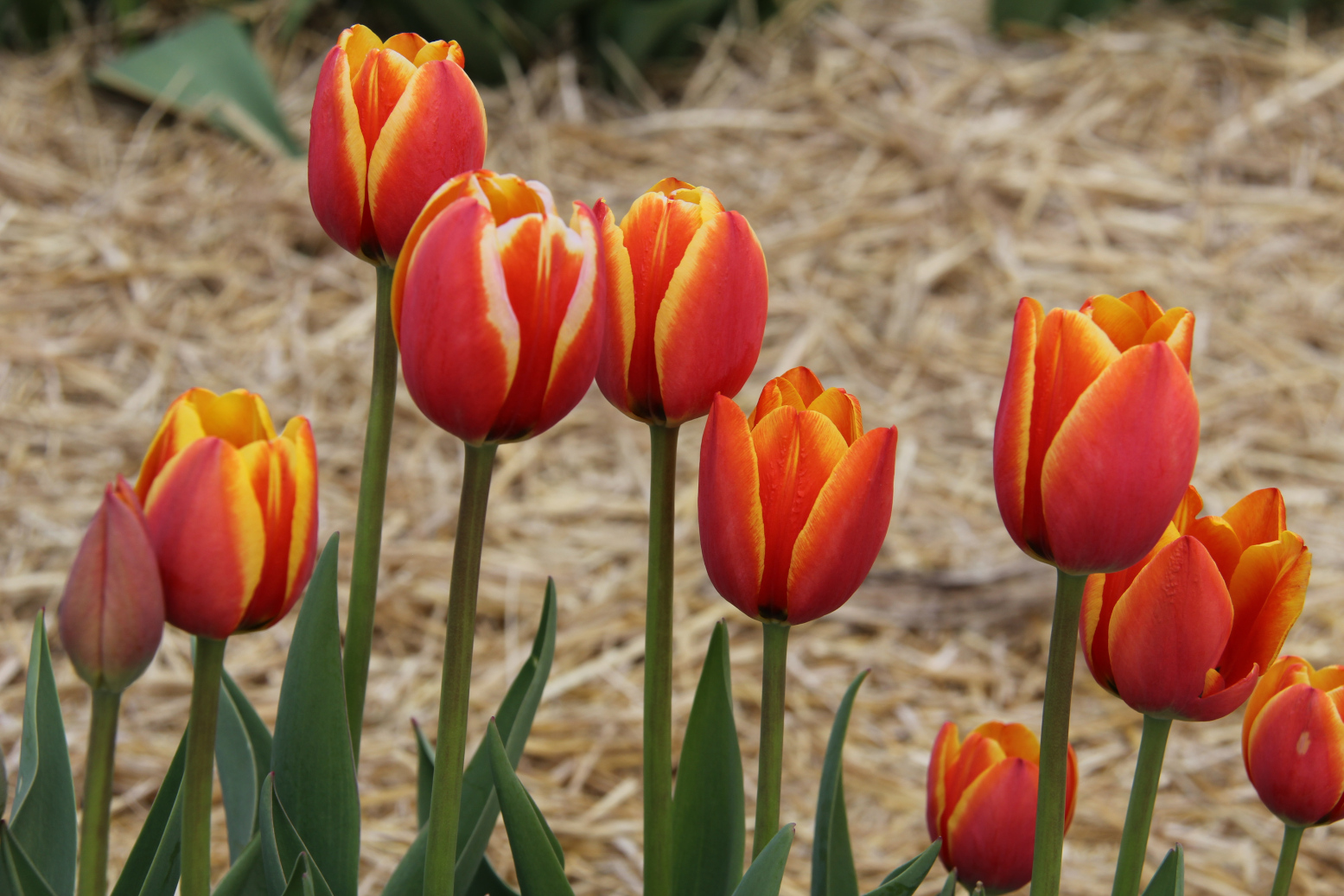
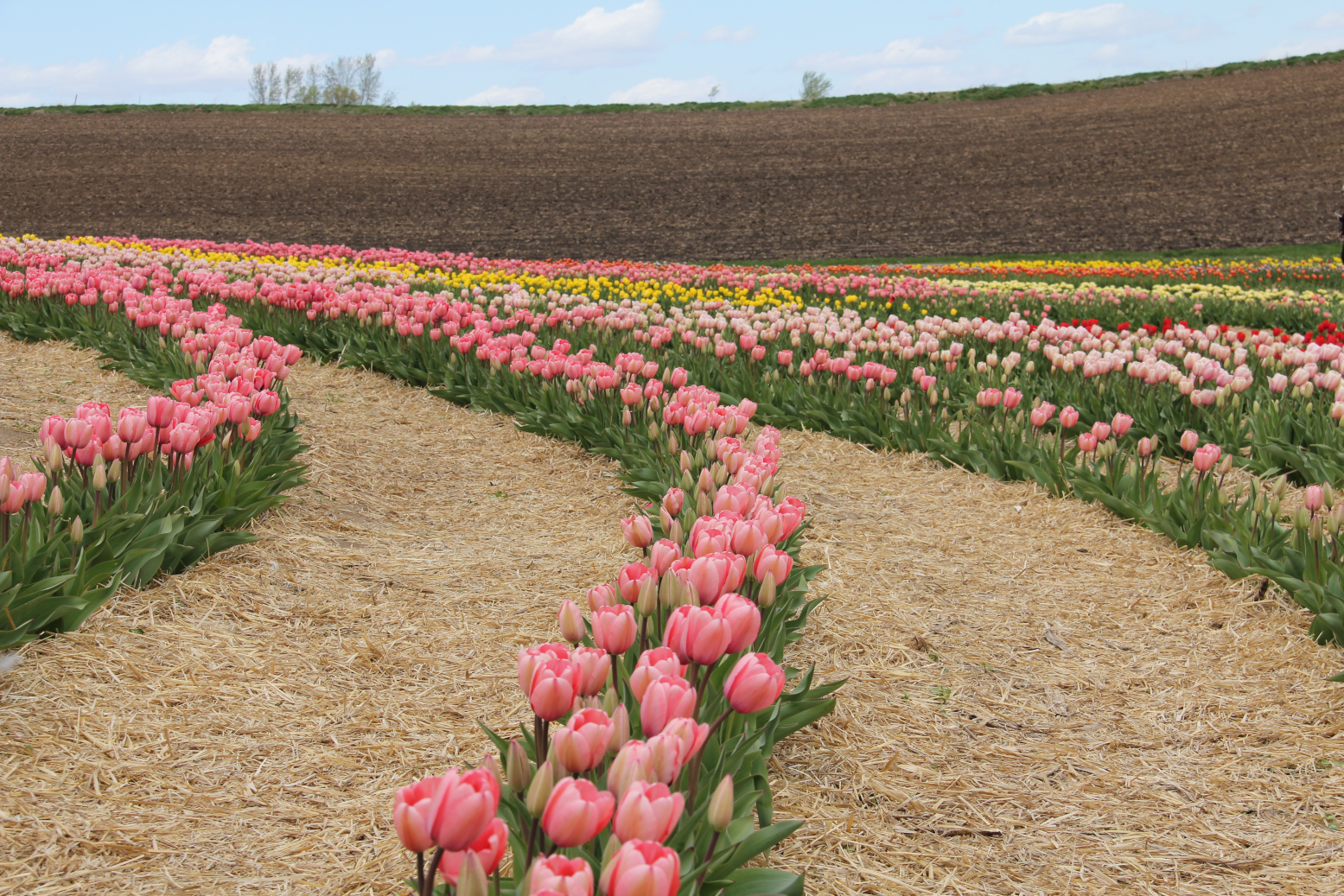
The colorful tulips contrast with the dark soil of a bare field and the sometimes cloudy sky in a land awakening to spring.
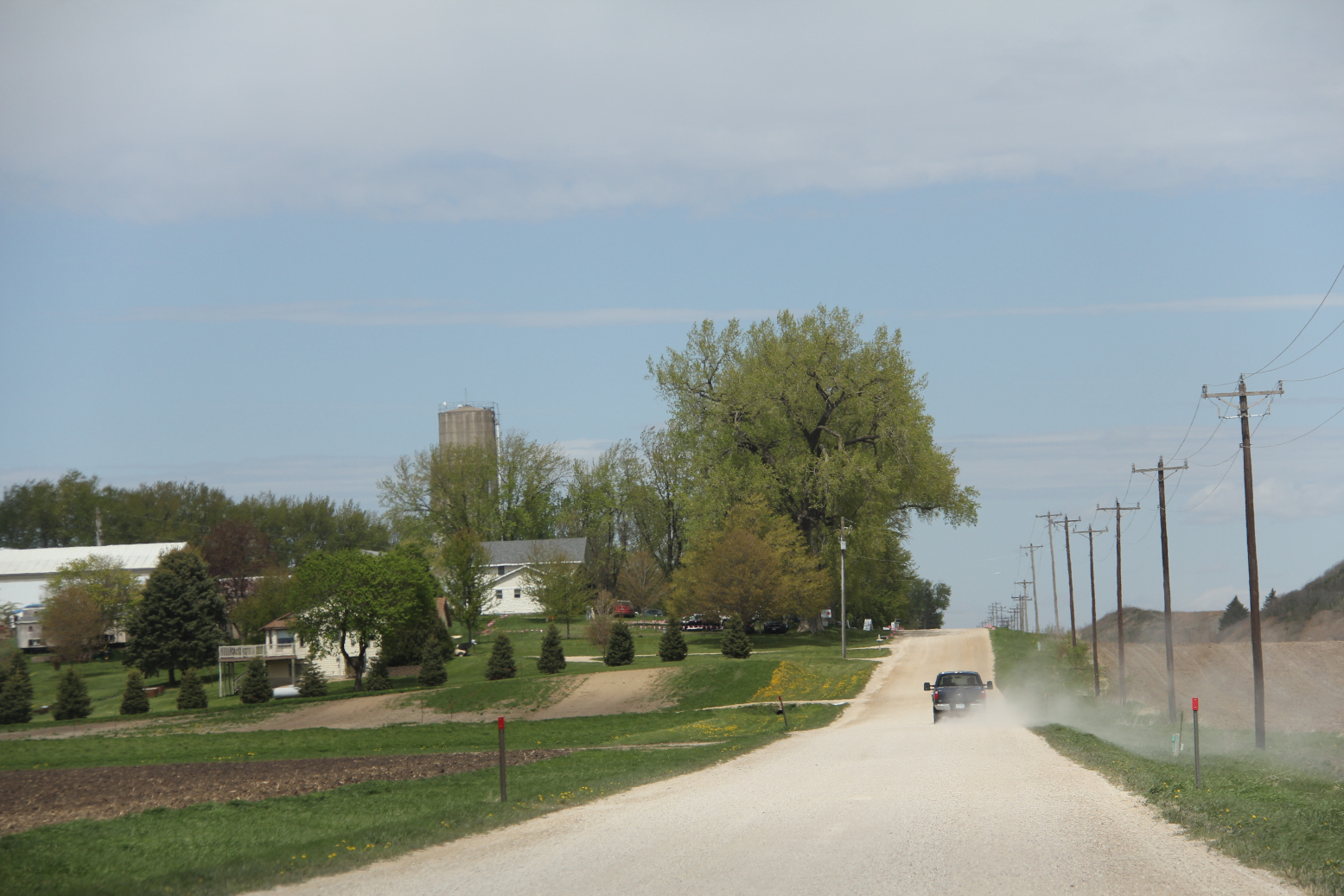
Here, along a dusty gravel road northeast of Farmington, the Brands welcome visitors to their first annual Tulip Festival, featuring 36 tulip varieties—160,000 tulip bulbs from the Netherlands—planted on three acres of this fourth-generation family farm.
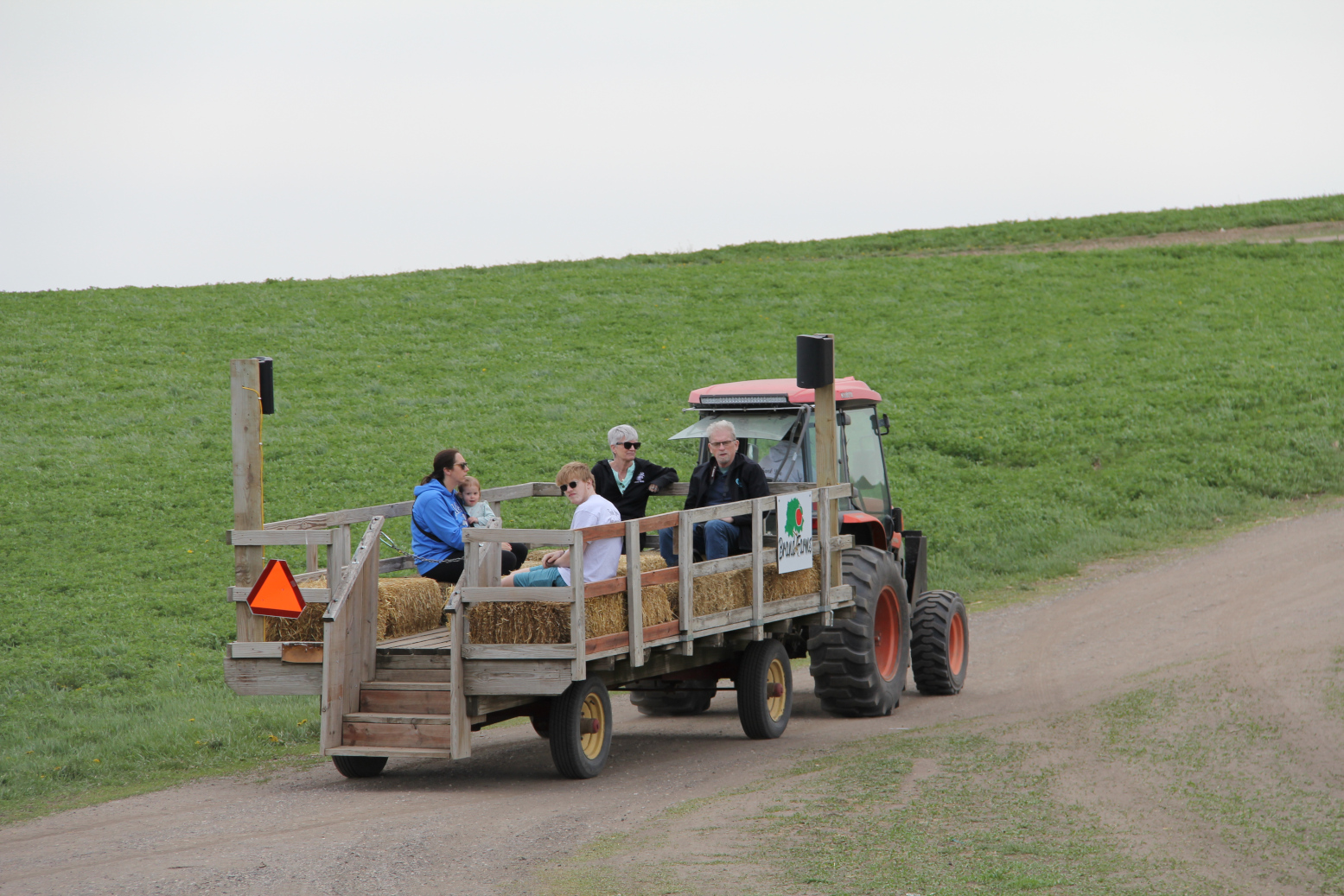
Days after the tulip fest opened, Randy and I met our eldest daughter at the farm, climbed onto a tractor-drawn wagon, settled onto straw bales and bumped our way out to the tulip field, the driver narrating information about the farm along the way.
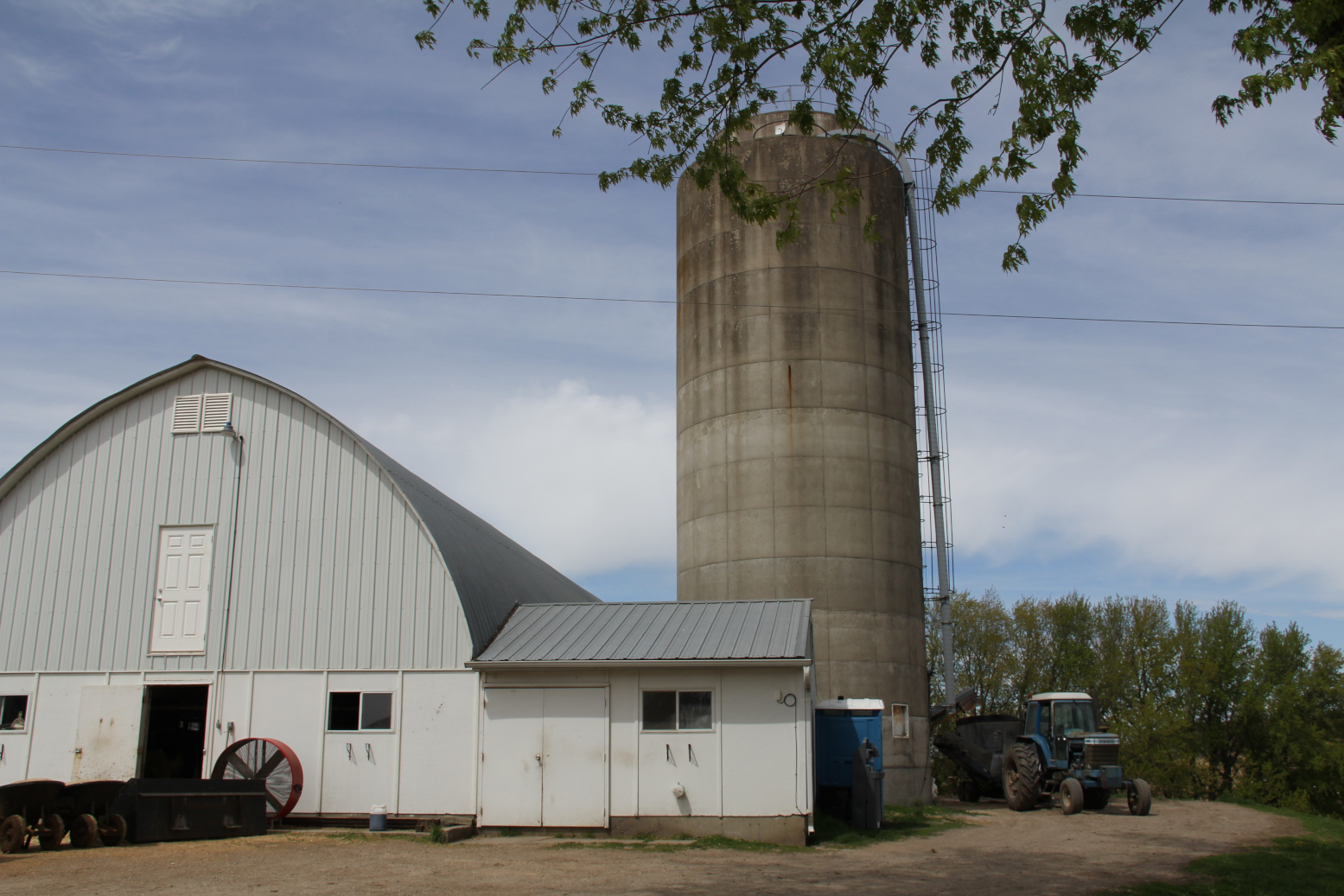
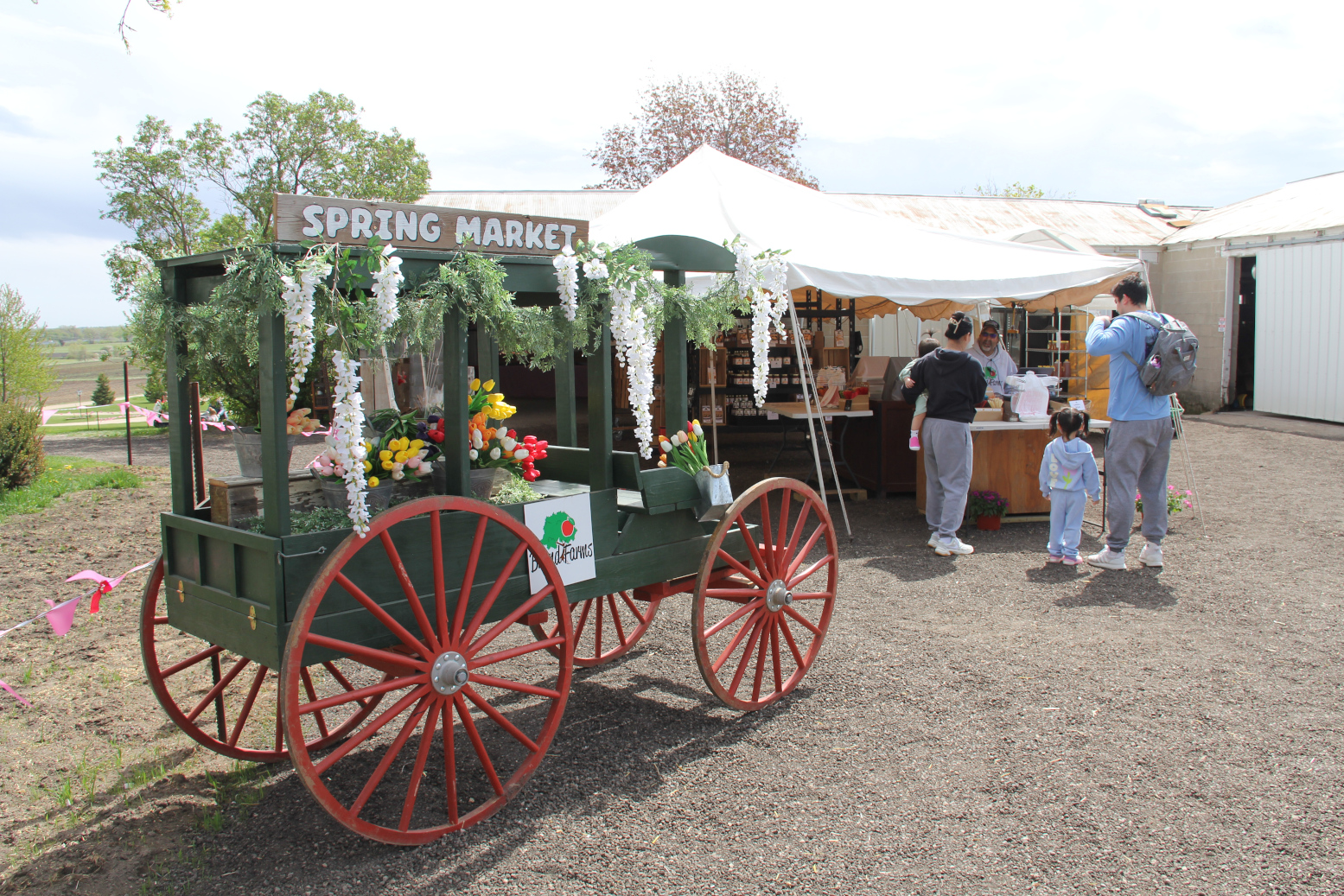
This is a working crop, dairy and chicken farm, also with an apple orchard, a farm market, community supported agriculture (CSA) and side crops of flowers, sunflowers and pumpkins. The Brands have diversified into agri-tourism with events like tulip and sunflower festivals, apple and pumpkin picking. We’ve been here previously in autumn with the two oldest grandkids and their parents.
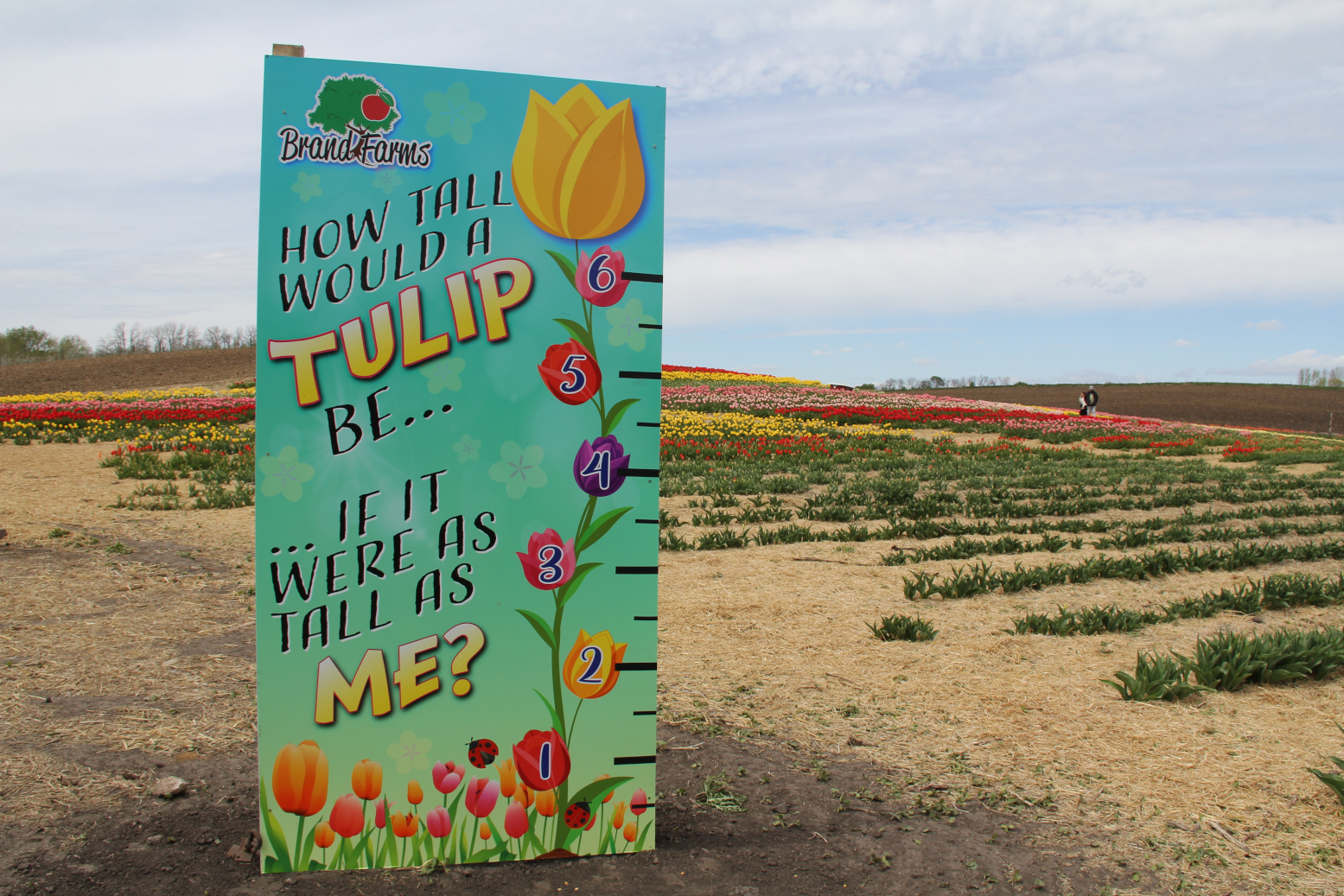
On this weekday afternoon, mostly adults wandered the tulip field. A strong wind whipped across the rolling hills as we meandered, photographed—there are lots of fun photo props—took in the breathtaking beauty of blooms. Some 40 percent of the tulips had not yet opened. Weather always factors in to farming.
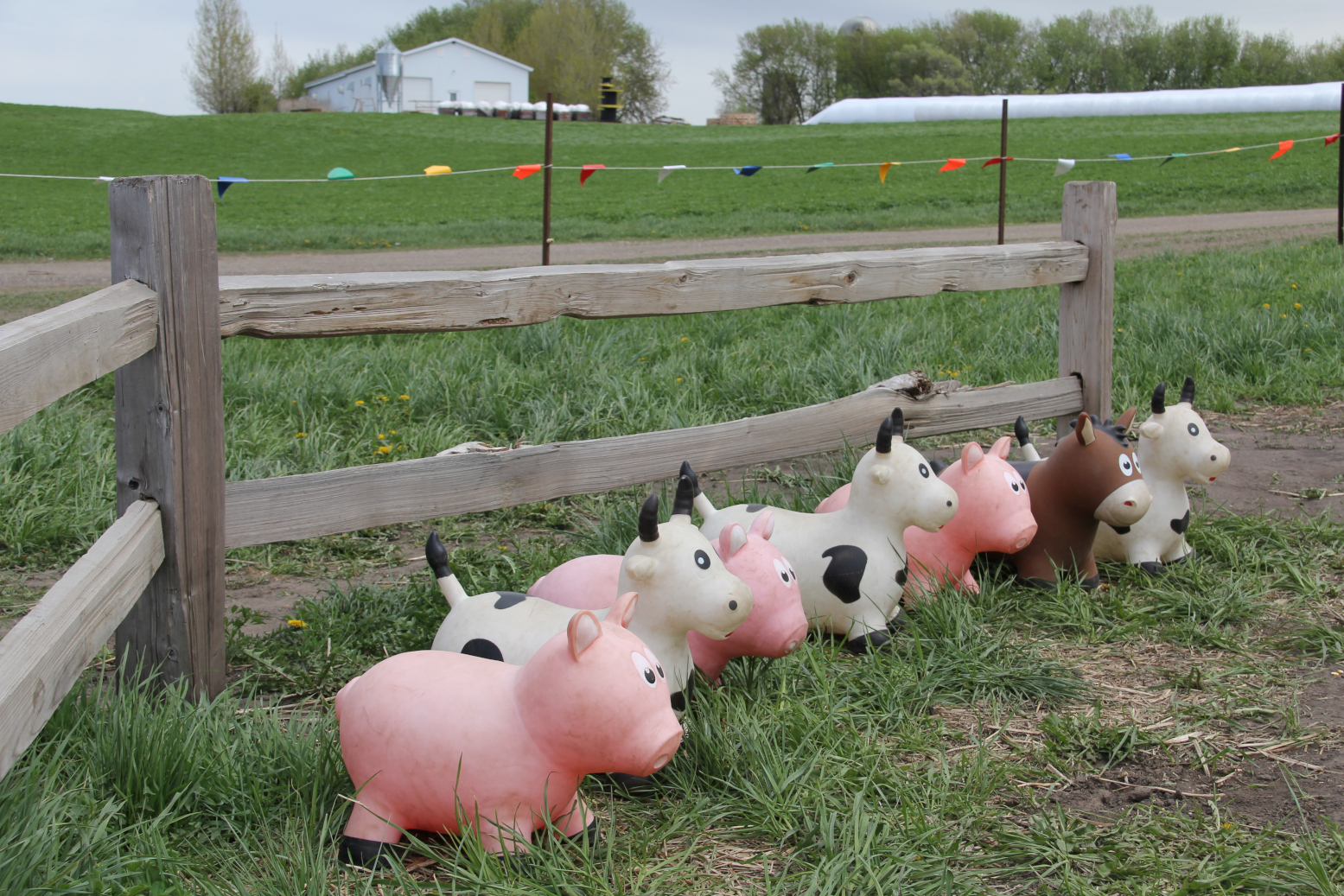
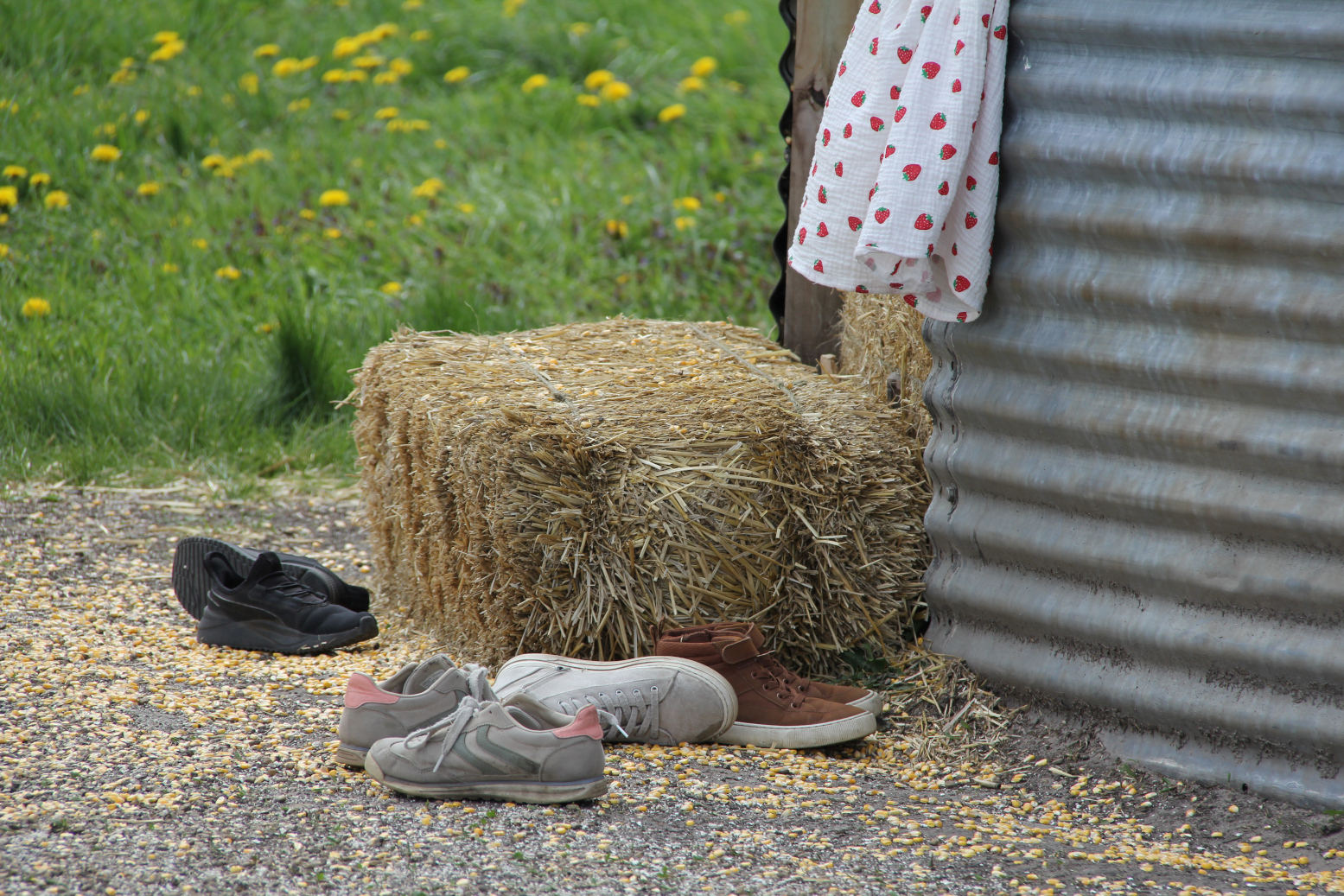
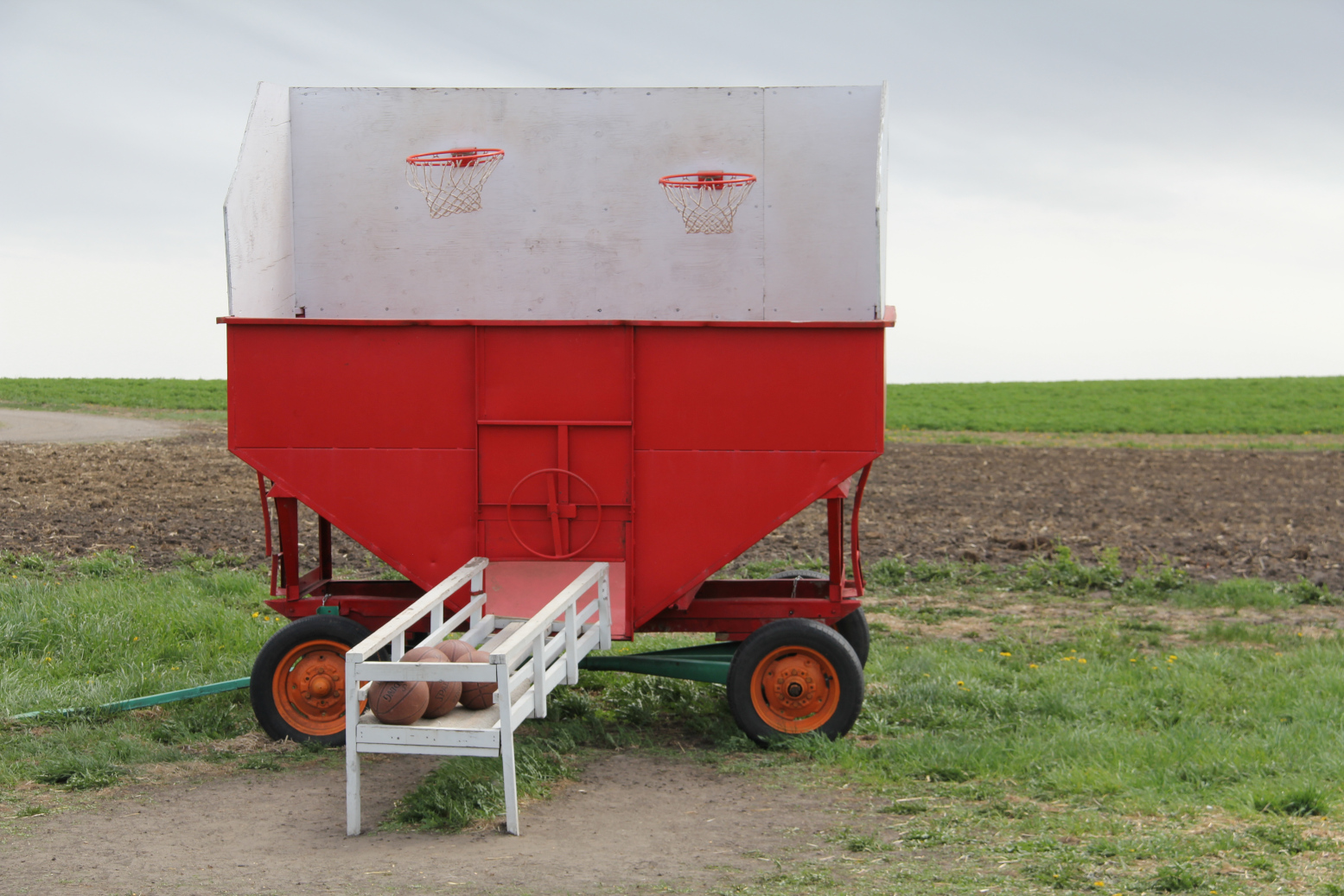
Even for kids who may not be all that interested in looking at tulips, this festival offers plenty of activities like a mountain of straw bales to scale; plastic farm animals to hop on; a giant pad to bounce upon; basketballs to sink; a bin of shelled corn to play in; and more.
There’s a farm food truck, too, vending walking tacos, beverages, ice cream treats and such. From 11:30 a.m.-2:30 p.m. Saturday, May 9, Prairie Potluck brings live music to the Tulip Festival. Weekends can get especially busy here with families.
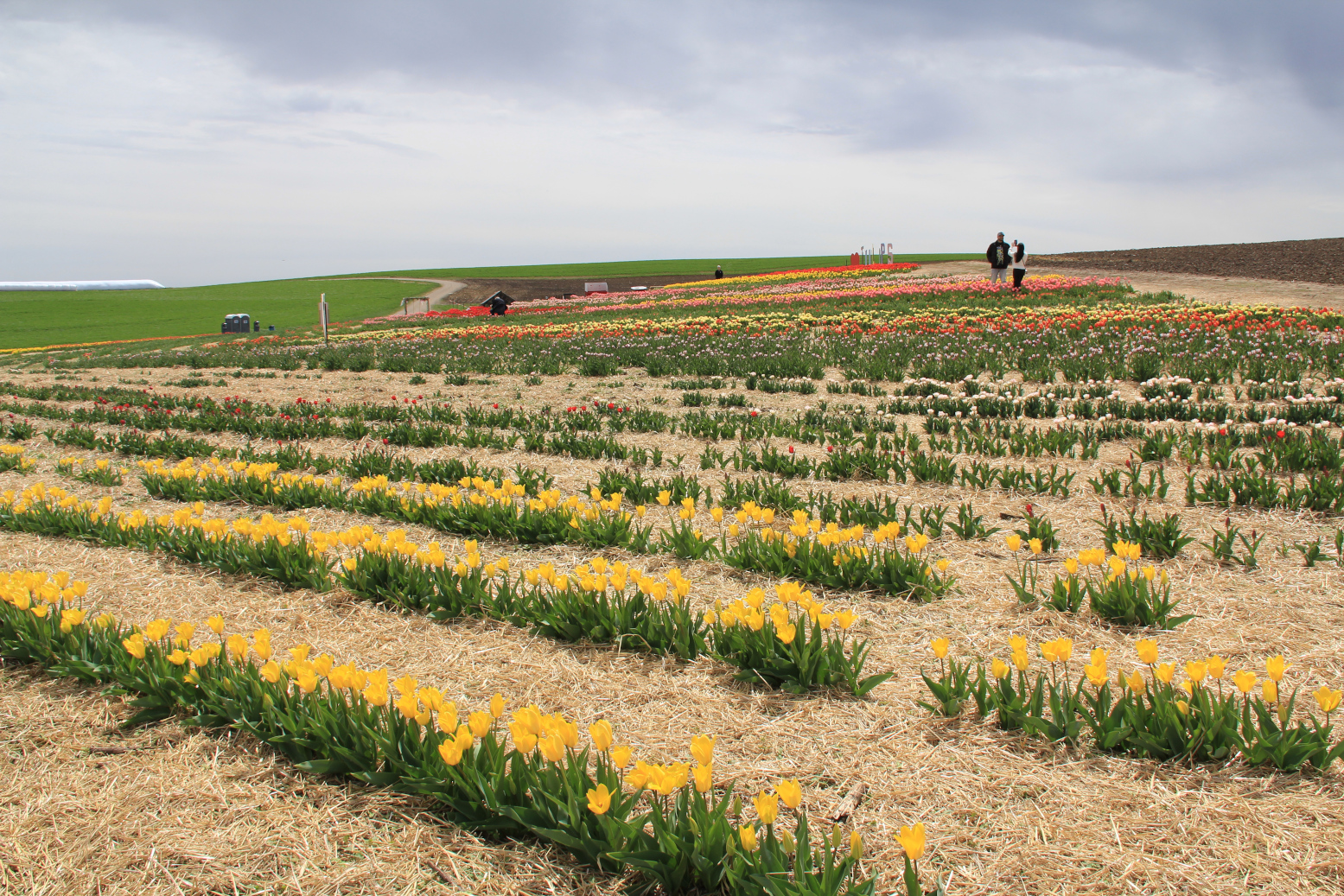
Festival aside, as someone who grew up on a southwestern Minnesota dairy and crop farm, I appreciate the opportunity to reconnect with my rural roots here. It’s not often anymore that I set foot upon a working farm. And when I do, I realize how much agriculture still means to me decades removed from rural life.
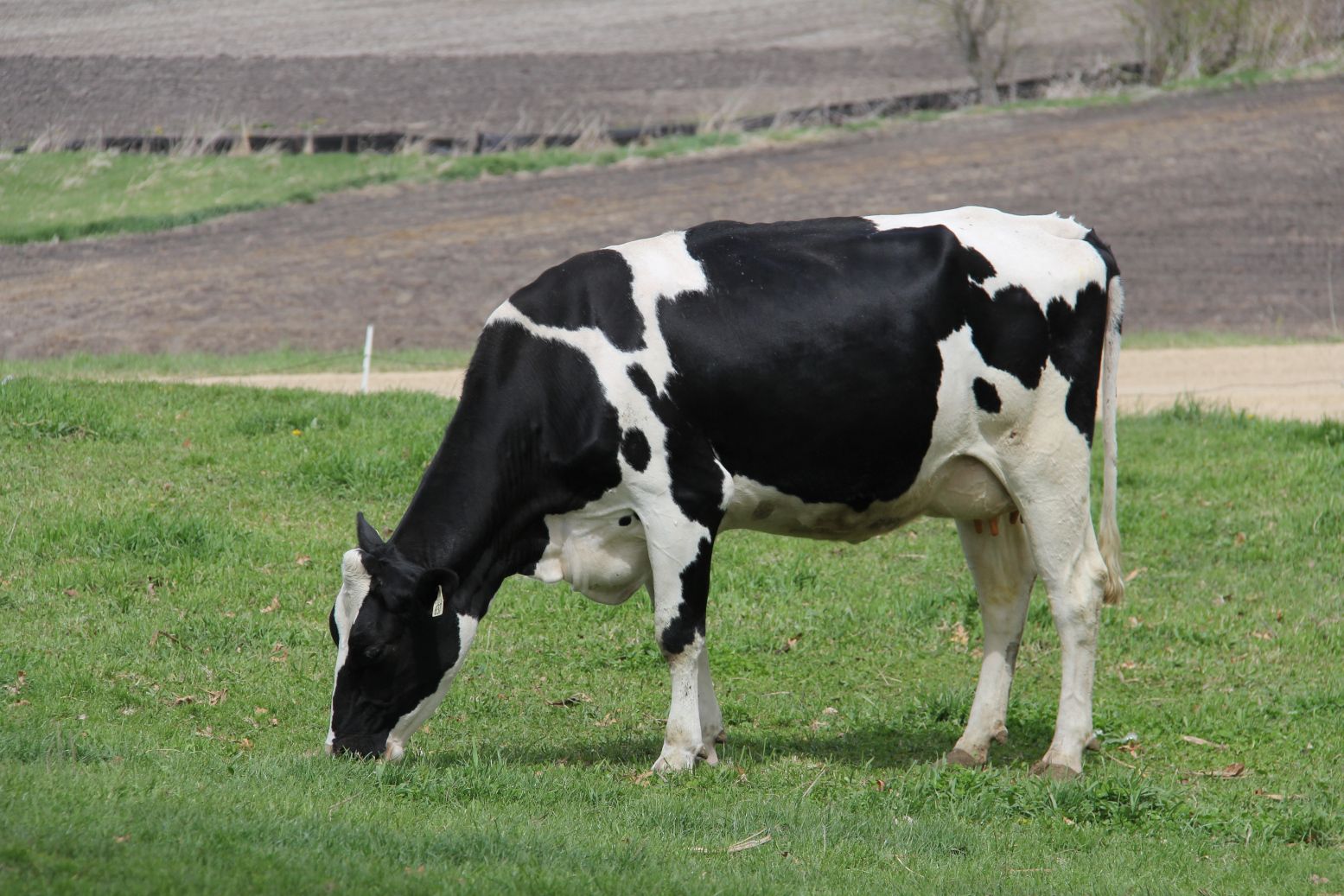
While at Brand Farms, I longed to pet the calves, but had to settle for taking photos of the Holsteins. I realize the Brands can’t have people poking around everywhere. They offer just enough exposure to farm life to inform and educate with scheduled educational tours as another option.
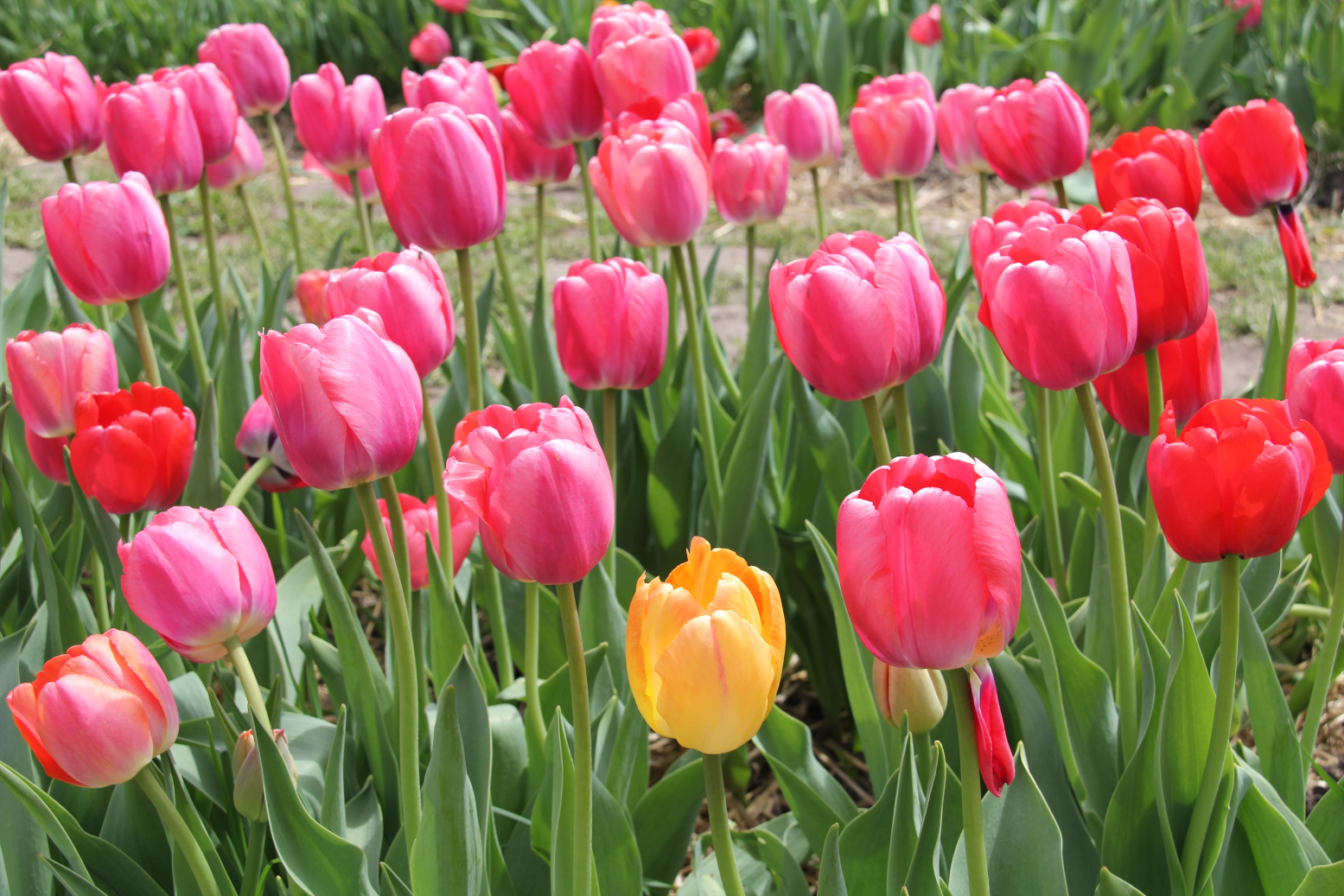
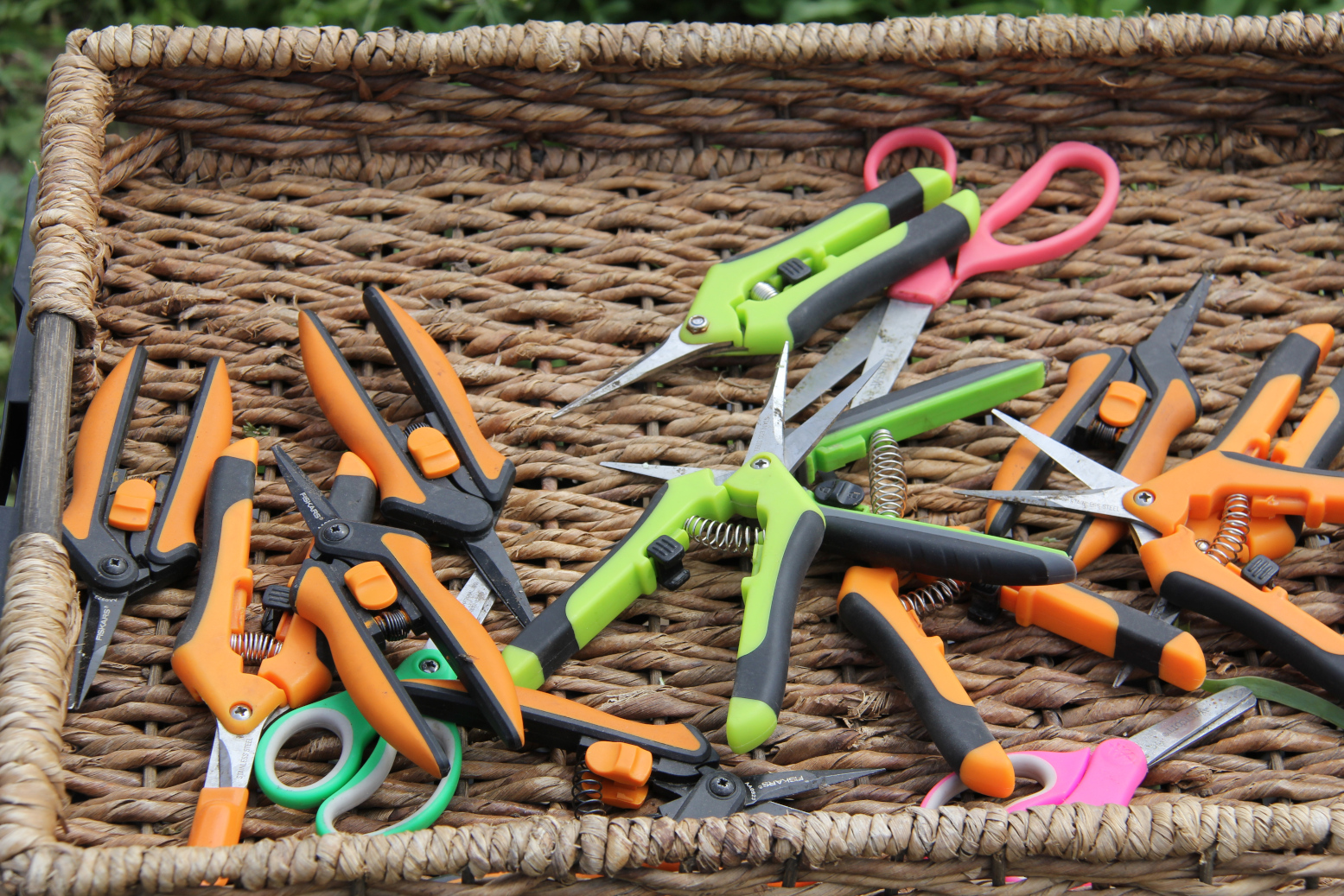
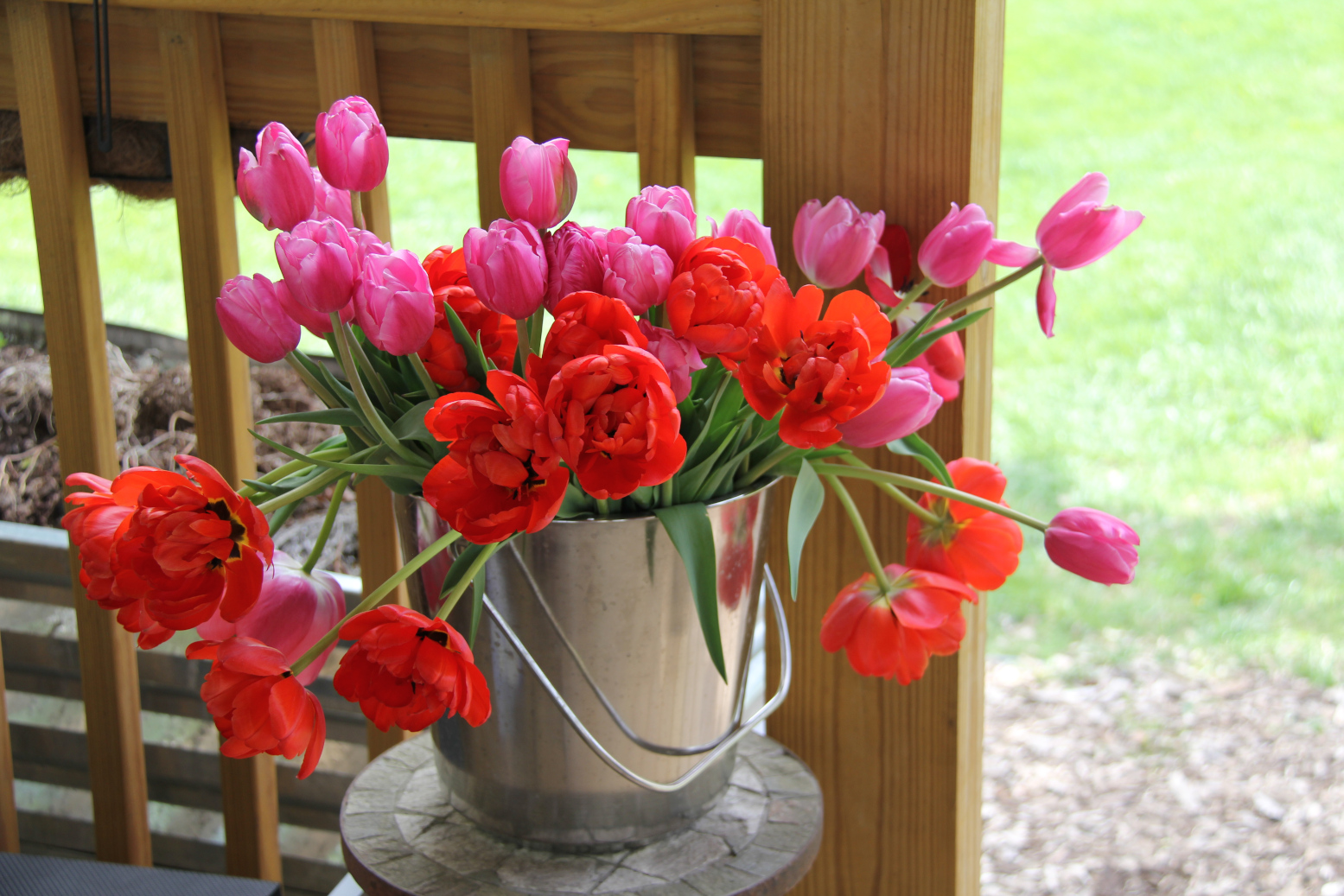
Once we returned from the tulip field to the farm site and I photographed the cows and calves, we walked through the farm store before heading to the U-pick tulip patch. Planted at the bottom of a hill and semi-sheltered from the wind, the tulips bloomed more color into Brand Farms.
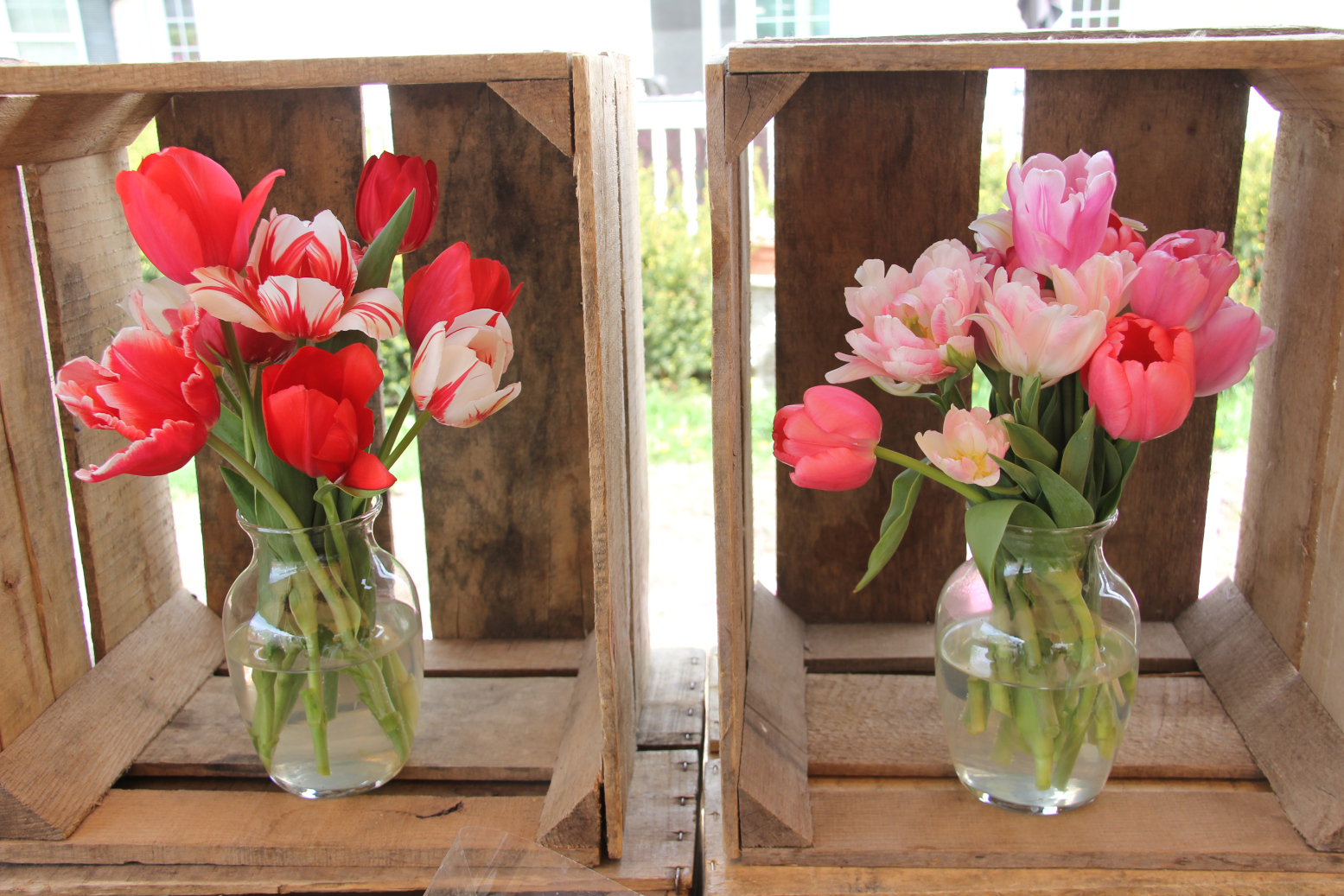
It’d been a delightful 1½ hours on this family farm, originally purchased in 1957 by German immigrants, Anton and Marie Brand. Today their great grandson, Aaron/”Farmer Aaron” farms here with his father. For a farm to remain in the family for four generations is worth celebrating, just as tulips are on a cool and windy afternoon in early May.
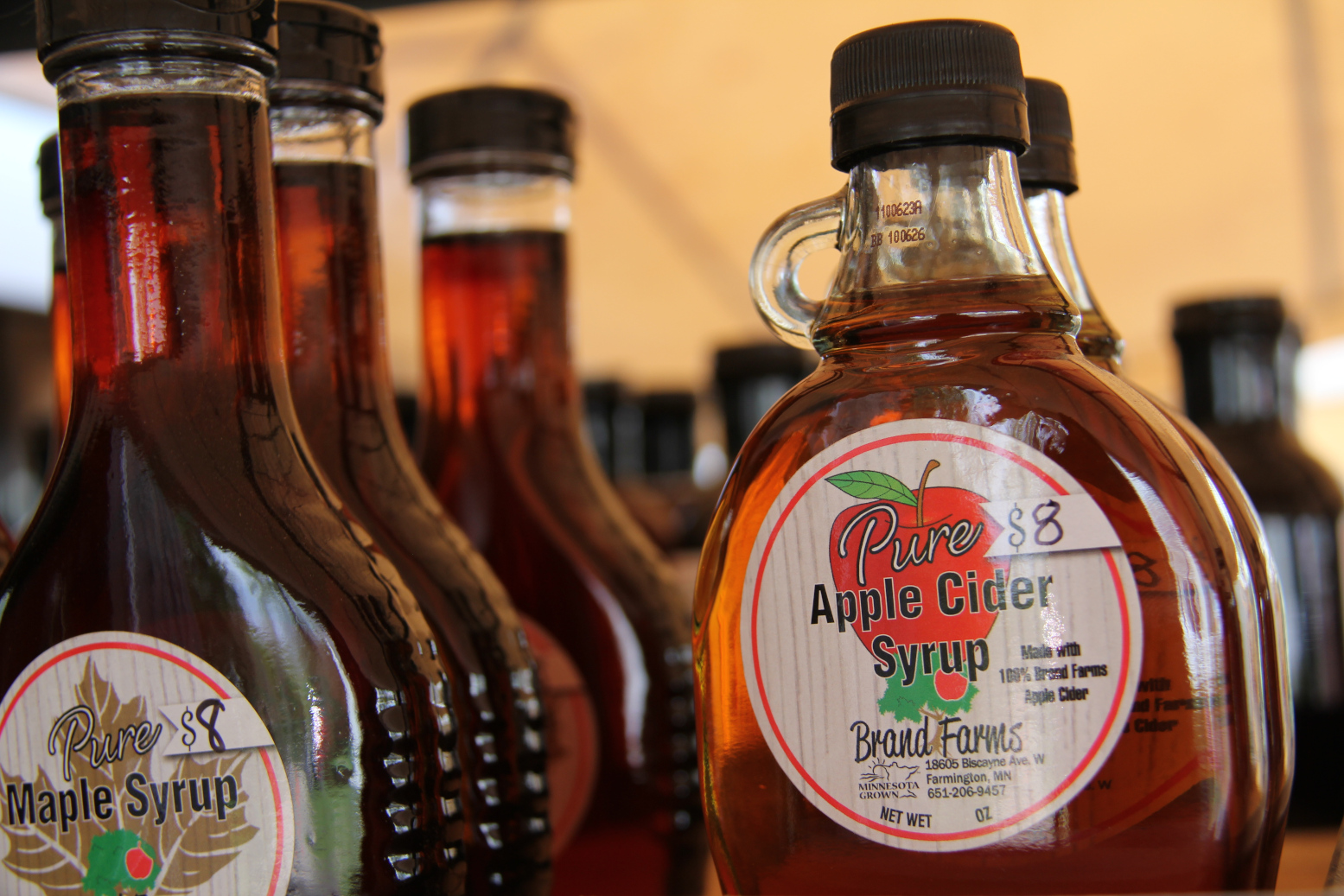
FYI: The Tulip Festival is open daily from 10 a.m.-6 p.m. until around May 24. Check before heading to the farm as weather could impact the end date. There is an admission price. The farm is located at 18605 Biscayne Avenue, rural Farmington. The Brand Barn store is open daily from 7 a.m.-7 p.m. selling farm-fresh eggs, meats, apples and more.
© Copyright 2026 Audrey Kletscher Helbling












From words on a government website to soybean markets & a crisis in rural America October 15, 2025
Tags: agriculture, America, China, commentary, farm crisis, farming, messaging, opinion, rural America, rural Minnesota, soybean market, soybeans, tariffs, trade war, United State Department of Agriculture
WHEN I FIRST READ the message bannering the United States Department of Agriculture website during the current government shutdown, my jaw dropped. In a two-sentence statement, “The Radical Left Democrats” are blamed for the closure of the federal government. How unprofessional, I thought, to so blatantly put politics out there on a website designed to help America’s farmers. But then again, why should this surprise me?
United States Secretary of Homeland Security Kristi Noem is doing the same in a video message blaming Democrats for the shutdown. She expects this to be broadcast in airport terminals. Many are opting not to air her clearly political statement. And they shouldn’t. It’s unprofessional and wrong in more ways than I can list, no matter what your political affiliation may be.
But back to that message on the USDA website. It goes on to say that President Donald Trump wants to keep the government open “and support those who feed, fuel and clothe the American people.” Now that is certainly a noble statement at face value, one we could all applaud. Who doesn’t want to support our farmers? But in the context of what the President has done to farmers, the statement seems laughable.
Here in the heartland, farmers have lost a major market for soybeans, my state’s top agricultural export. China has stopped buying soybeans from not only Minnesota, but America. That’s billions of dollars in lost income. And all because of the ongoing trade war between the U.S. and China, begun by the man who slapped tariffs—now averaging 58 percent—on Chinese imports with a threat to increase that to 100 percent. I’m no economist. But even I understand China’s retaliatory tariffs and actions to tap other markets for soybeans. They went to Brazil and Argentina.
And now President Trump proposes sending $20 billion in aid to Argentina, all tied to an upcoming election there. Why would we bail out a country exporting their soybeans to China while our own financially-strapped farmers are suffering because they’ve lost a key market? This makes no sense to me. Again, I’m not an economist or a politician, simply an ordinary American citizen, with a farm upbringing (and who decades ago freelanced for the Minnesota Soybean Growers Association), questioning the logic of any of this.
Even without the Argentinian component tossed into the mix, there’s more. President Trump has proposed an aid package for farmers to help them get through the financial crisis he created via his tariffs and the resulting trade war with China. That aid would come from the money collected from tariffs. Now I know farmers—my dad was one—are fiercely independent and would rather have a market for their cash crops than government aid. If not for the tariffs…
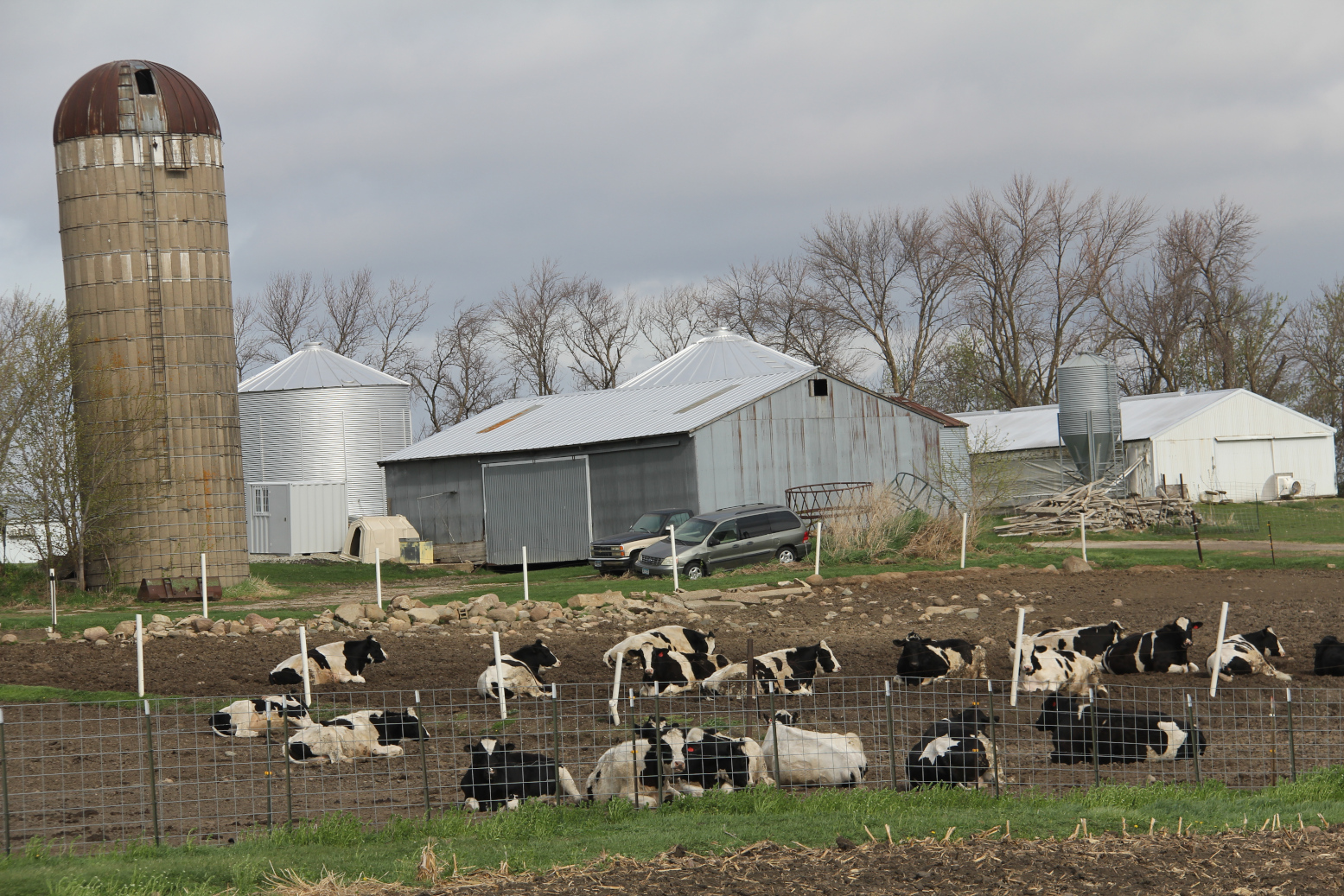
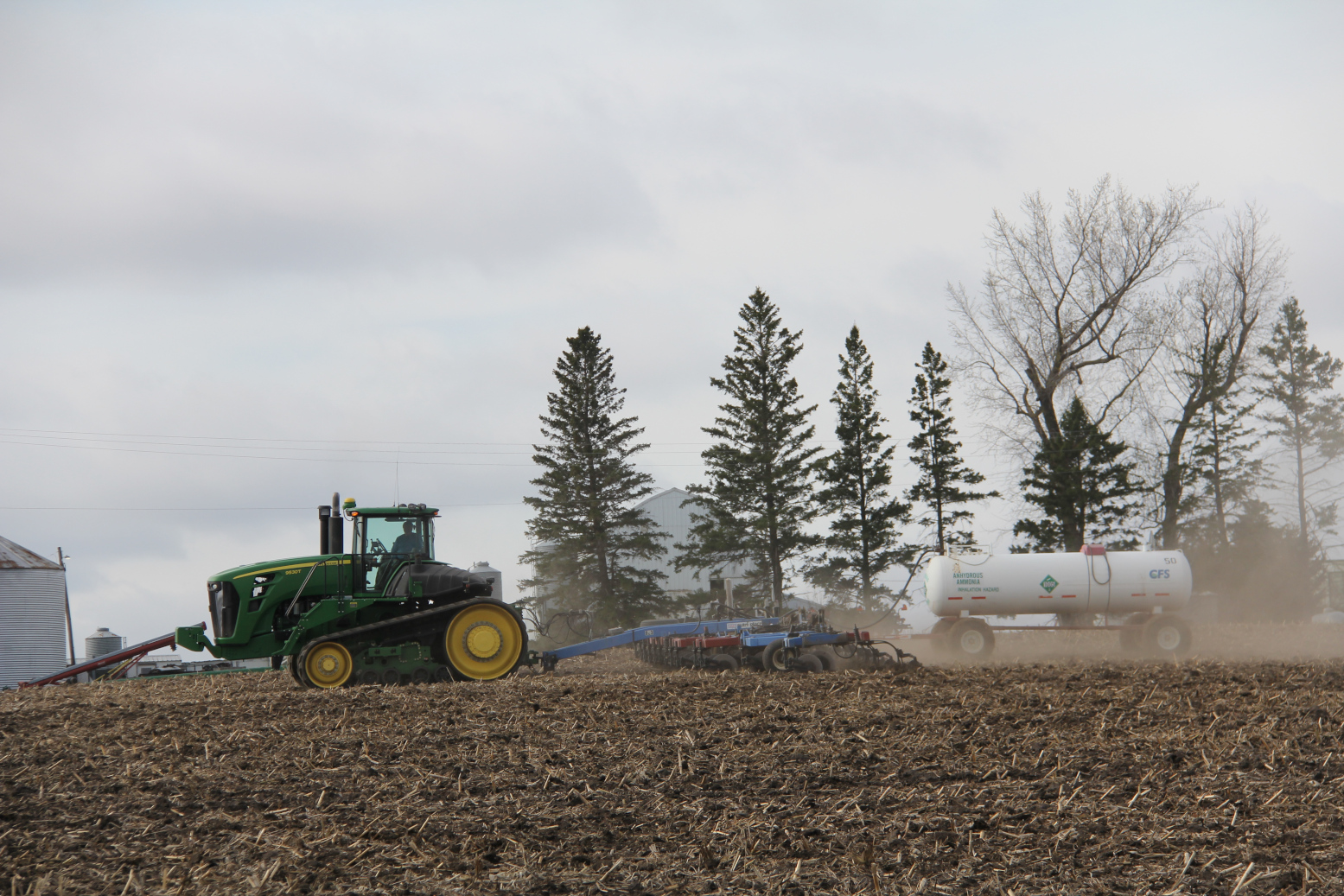
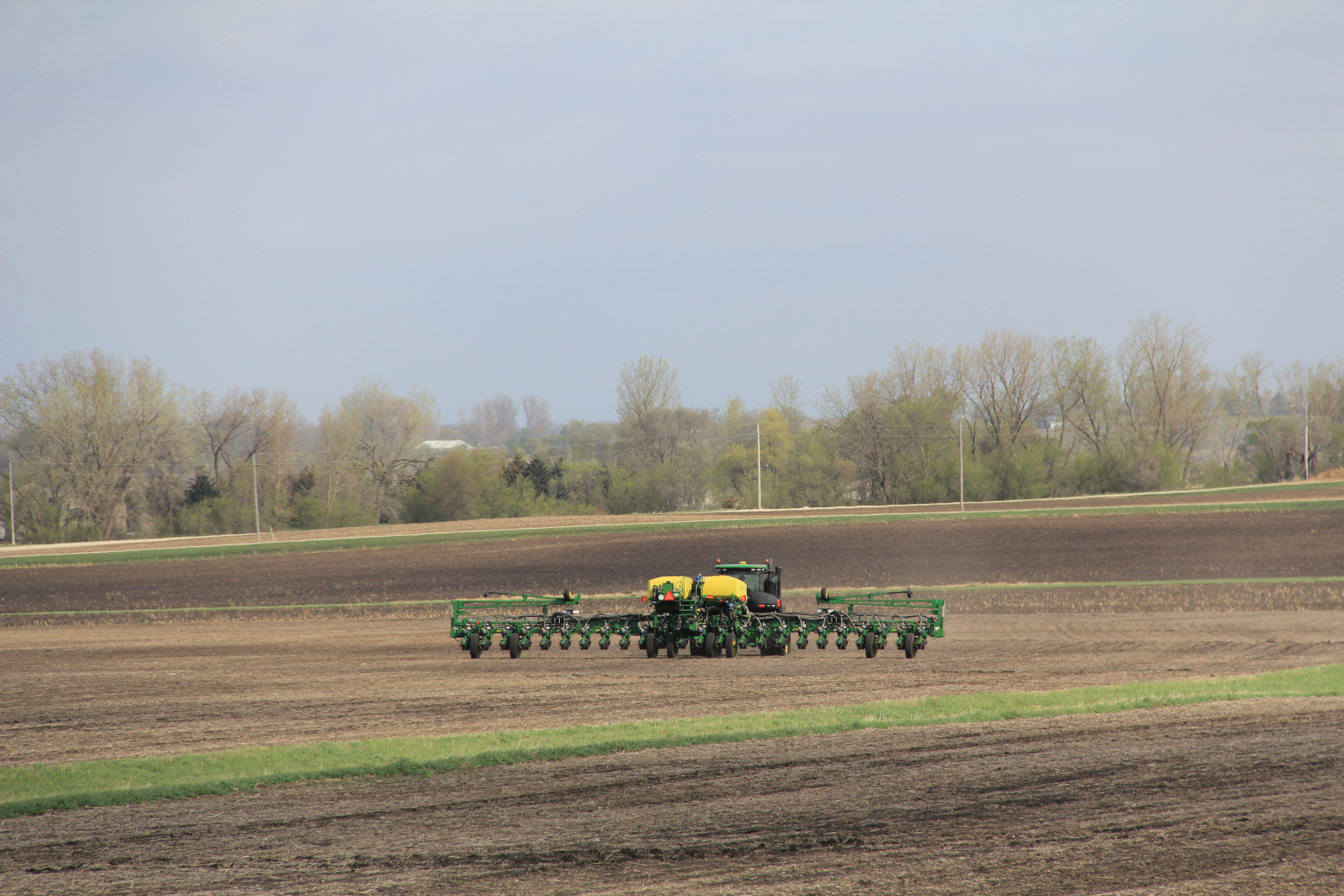
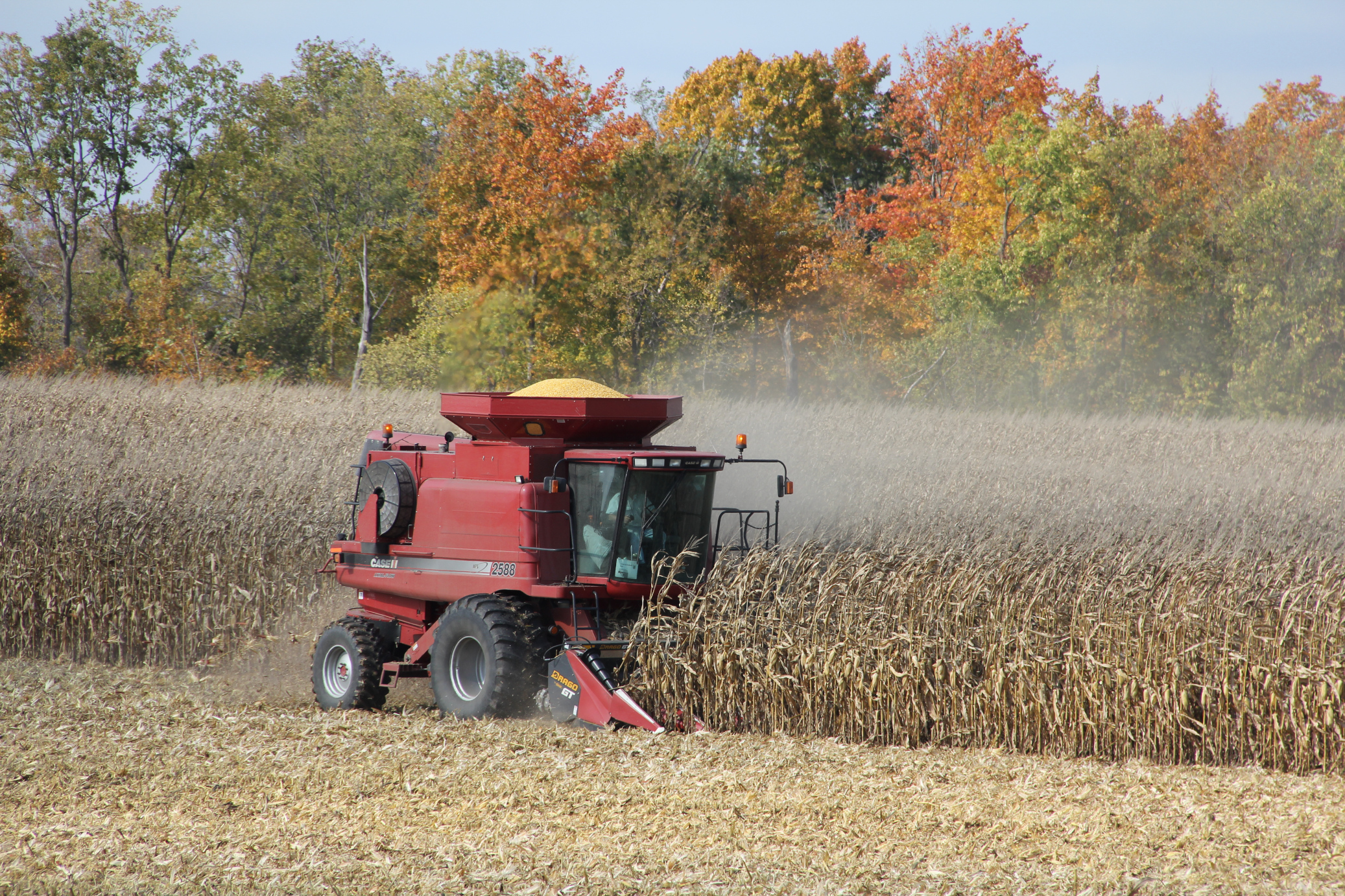
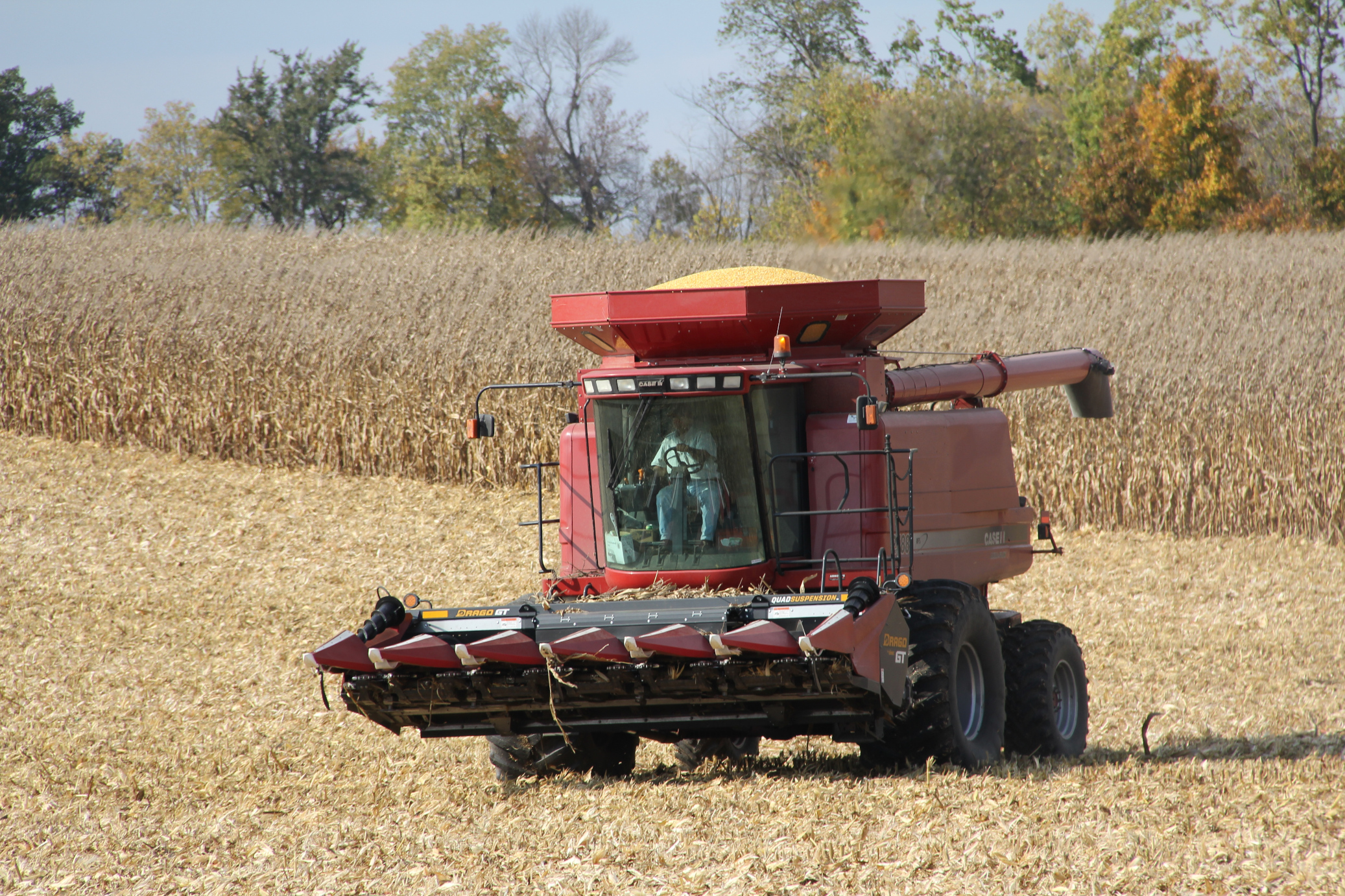
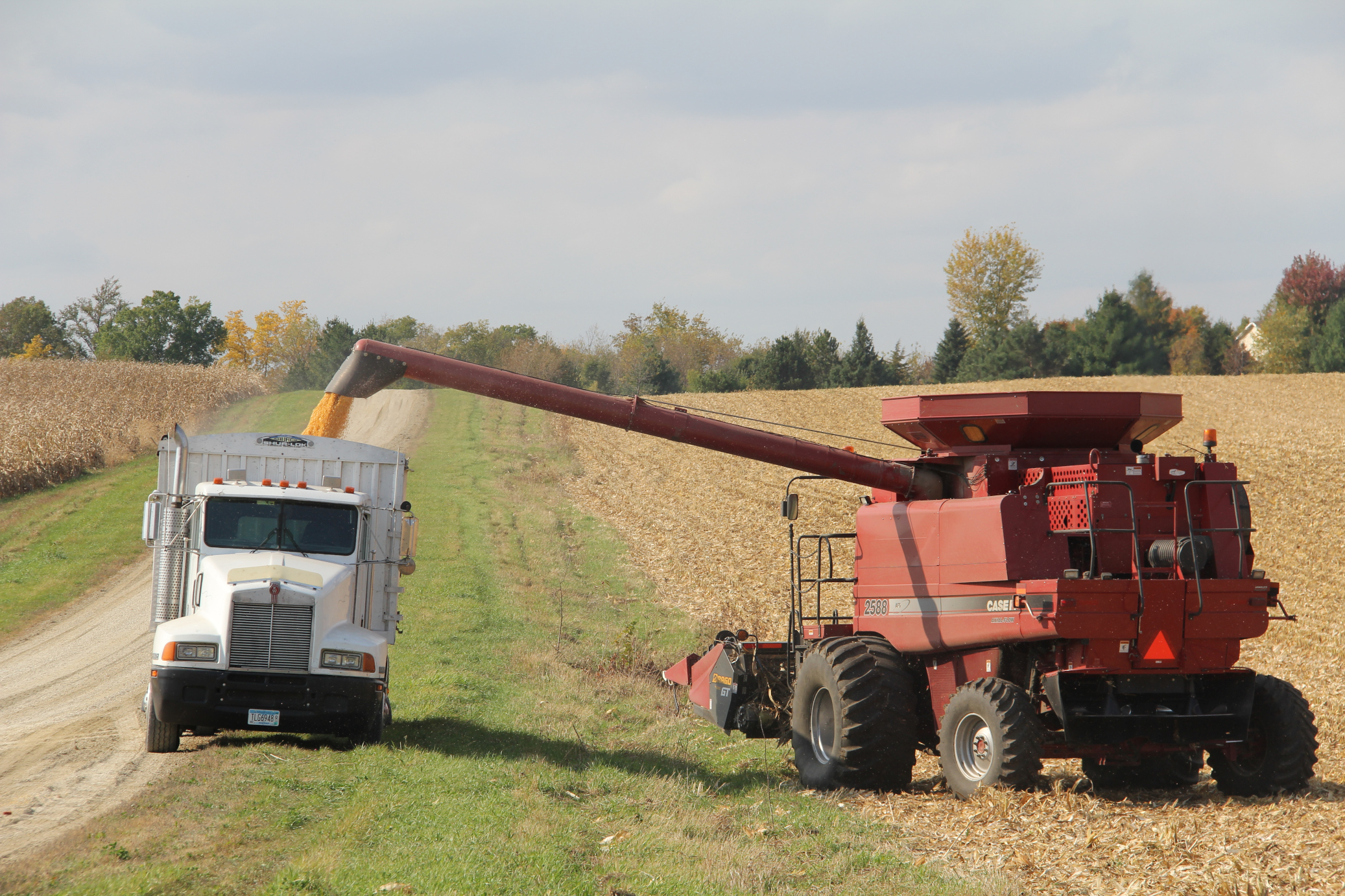
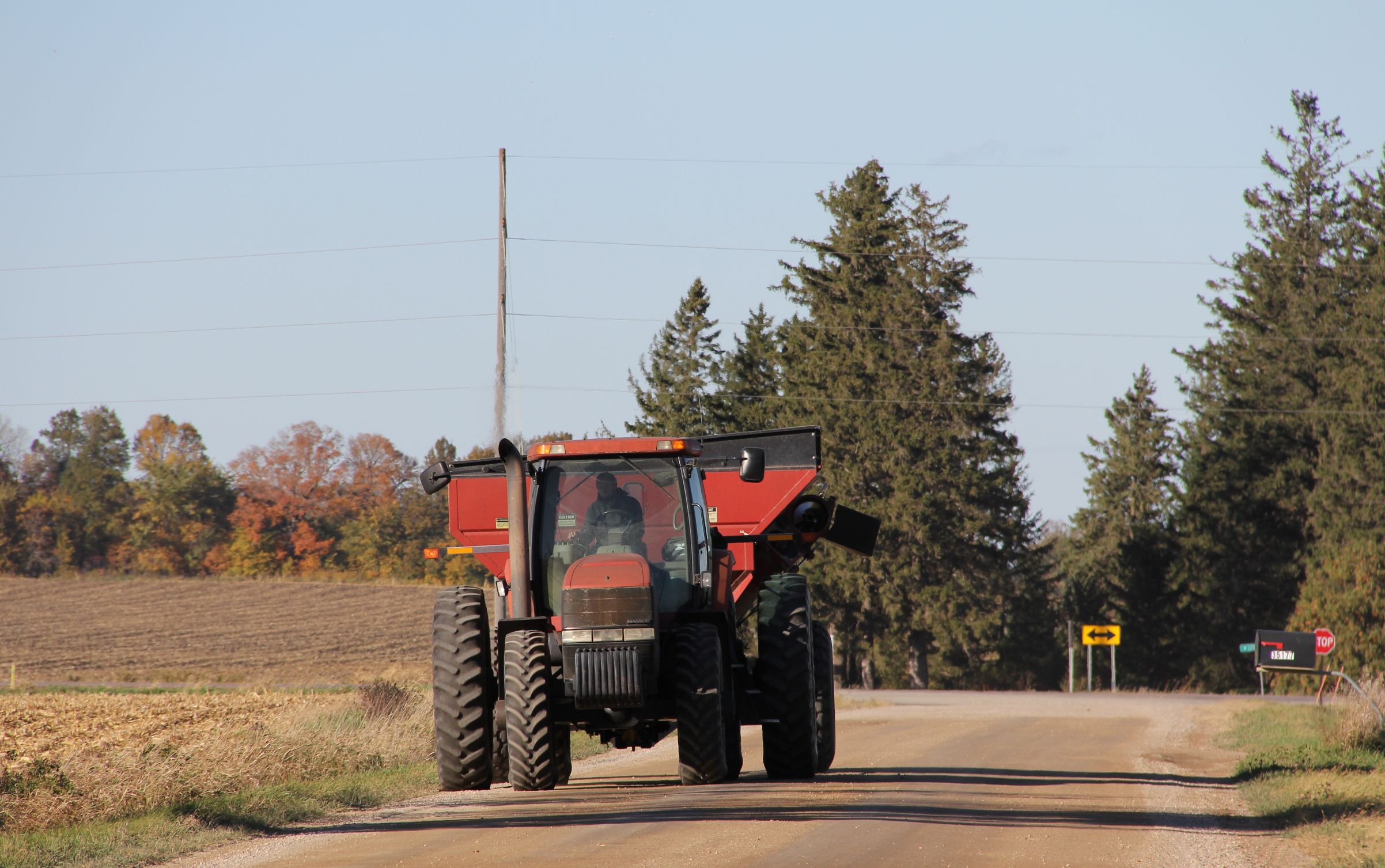
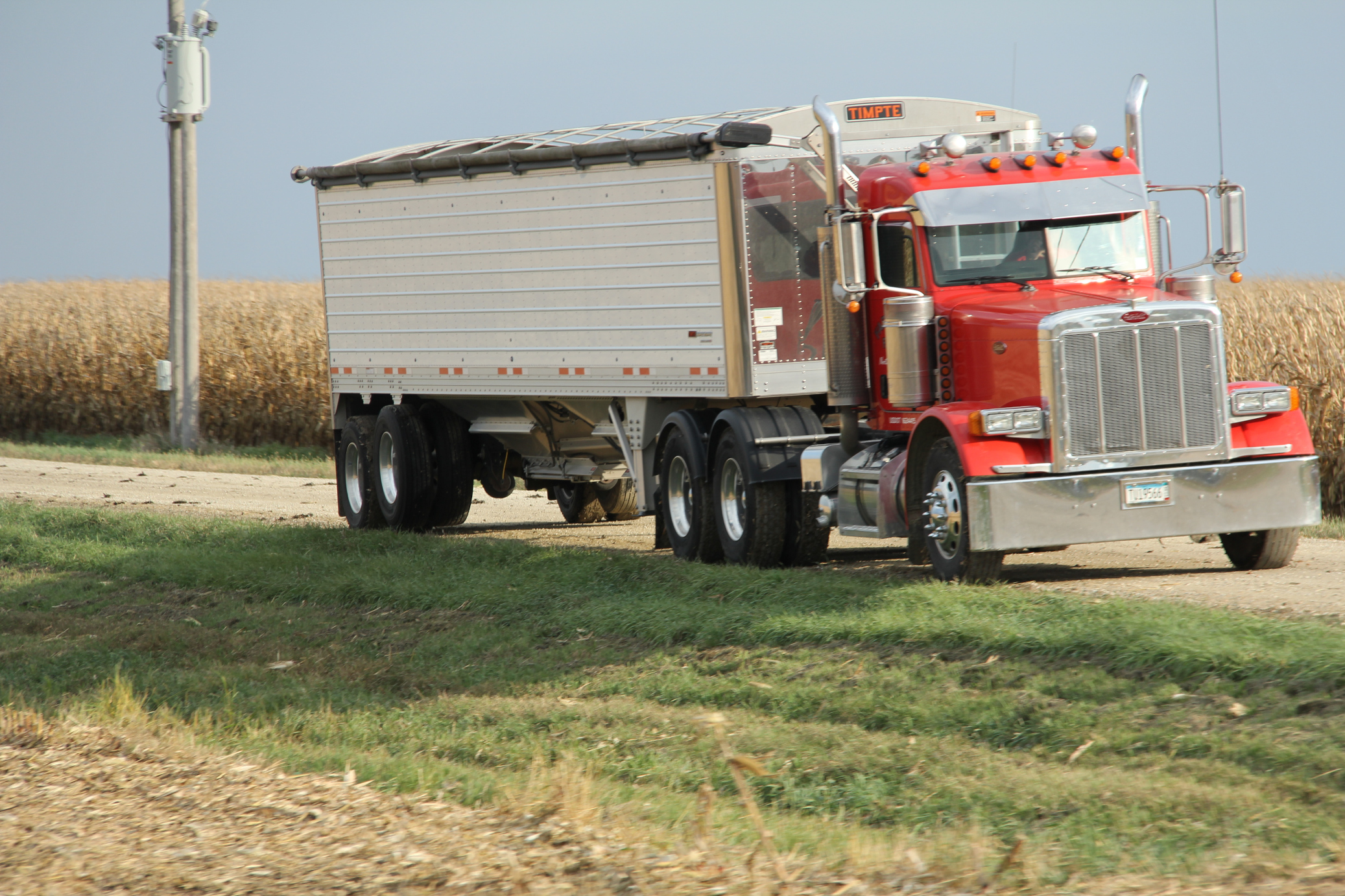
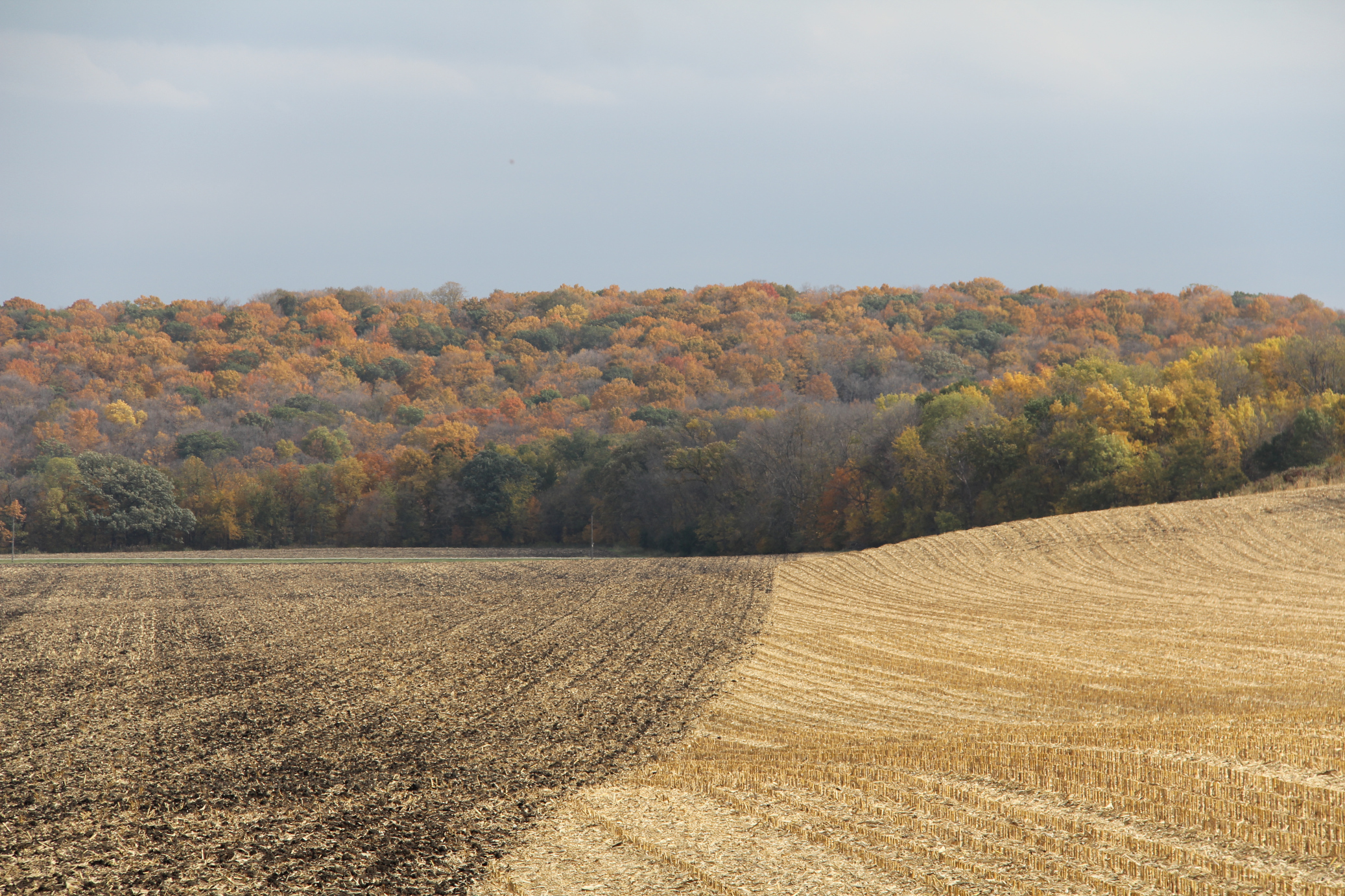
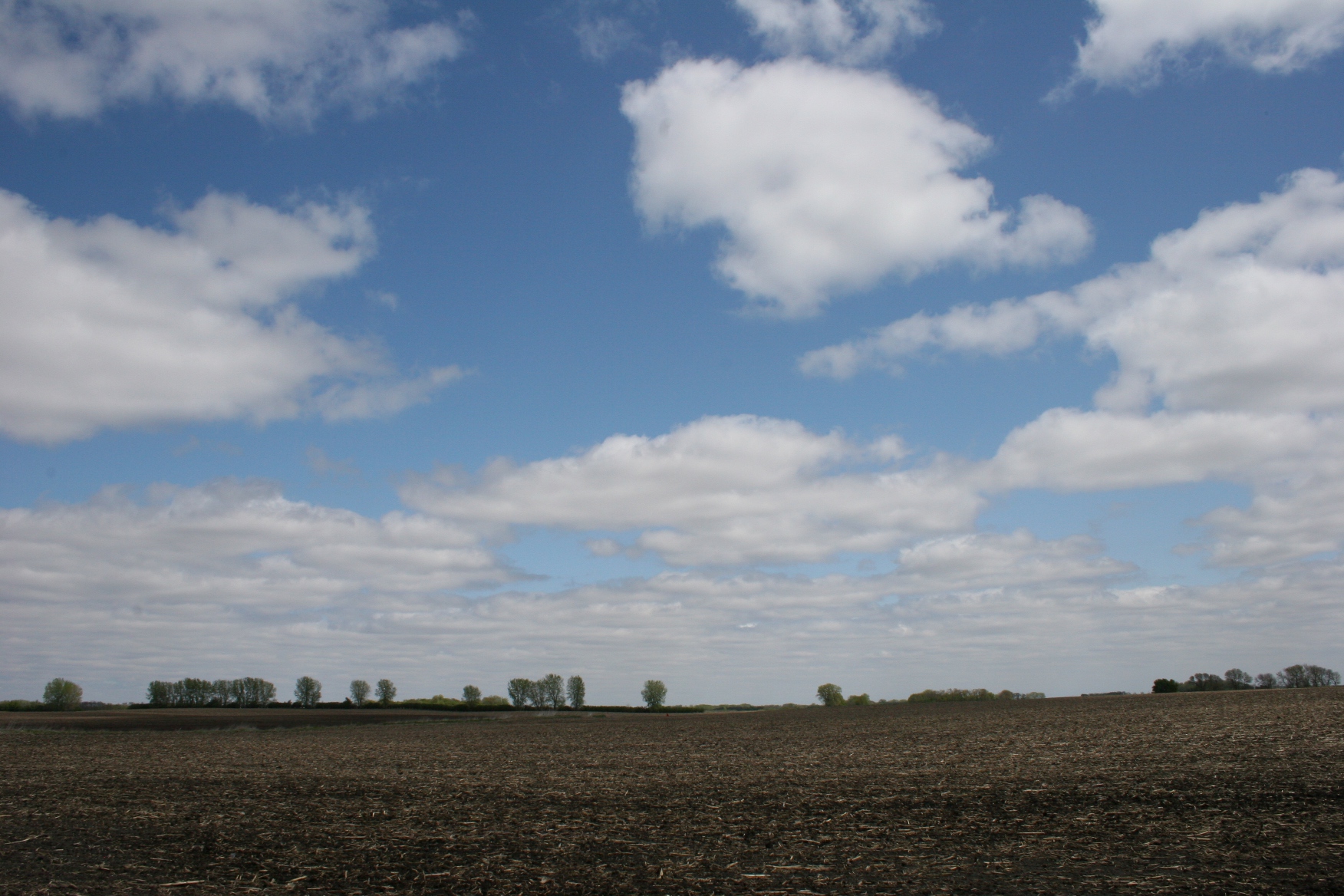
As the harvest continues here in Minnesota, I can’t help but feel for those who work the land, who continue to face so many uncertainties, financial challenges and stressors. Interest rates on loans remain high. Market prices remain low. Land rents continue to rise. Equipment and other costs are high. And on and on, including the loss of the long-standing soybean export market to China, which quite likely may never be reclaimed.
This is becoming a crisis situation for farmers—those who feed, fuel and clothe Americans. From fields to small town Main Street, rural America is hurting. And politically-biased blame words published on a government website aren’t helping.
© Copyright 2025 Audrey Kletscher Helbling