Minnesota Prairie Roots

Writing and photography by Audrey Kletscher Helbling

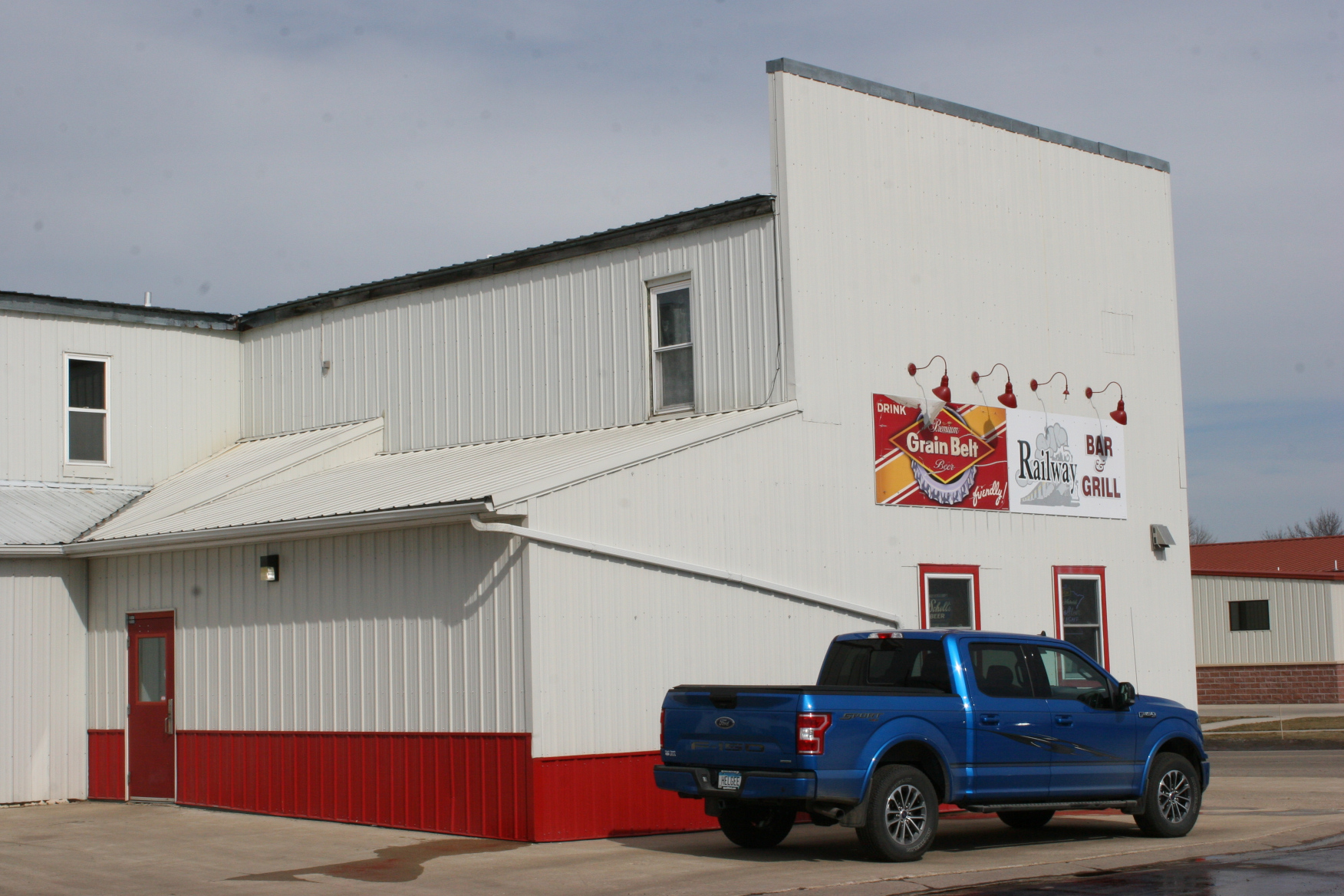
The Railway Bar & Grill, next to the tracks in Sleepy Eye March 5, 2021

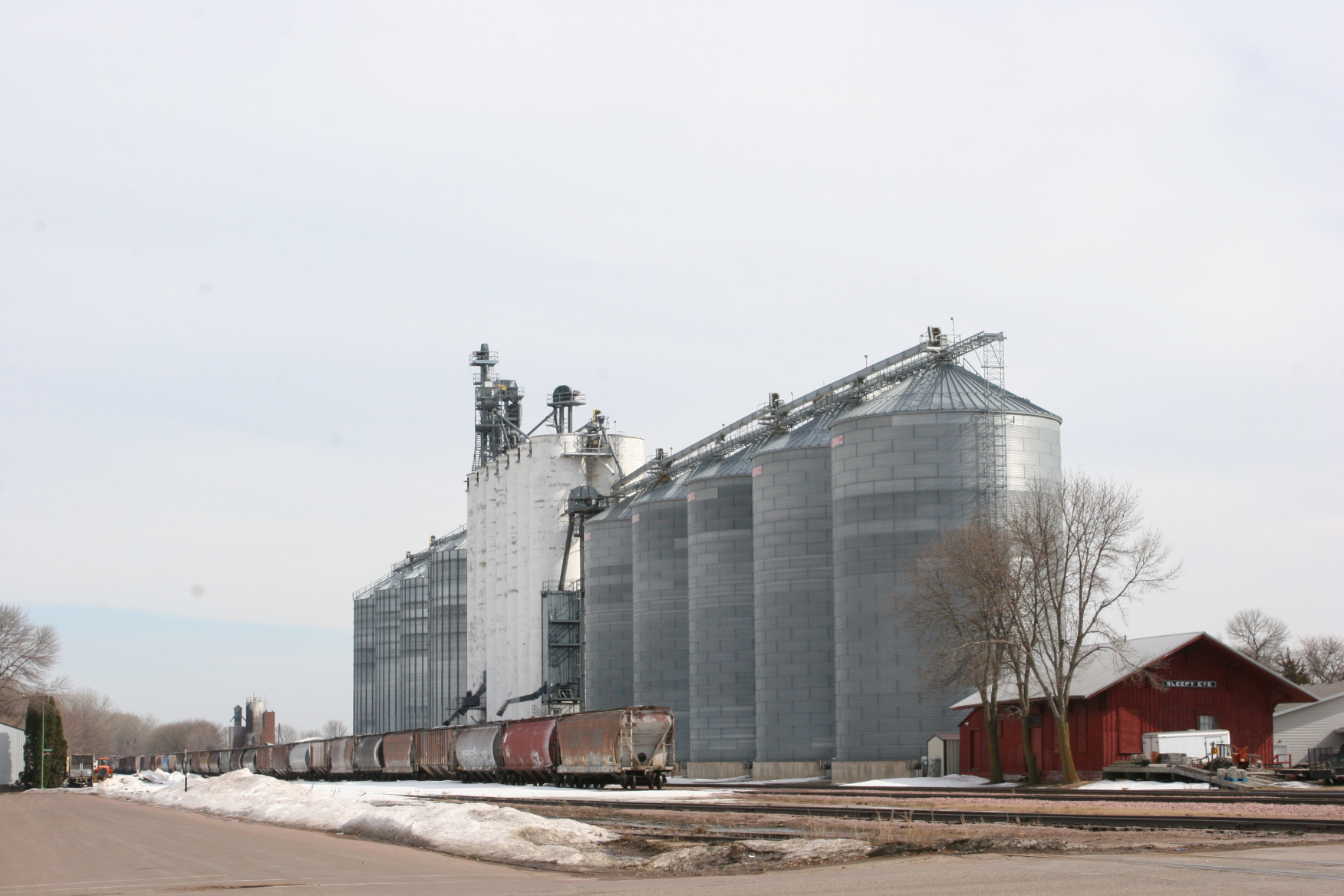
Twin grain elevators mark the skyline of Sleepy Eye. Minnesota Prairie Roots file photo March 2020.

EXACTLY ONE YEAR AGO, Randy and I rolled into Sleepy Eye, a small ag-based community along U.S. Highway 14 in Brown County in southwestern Minnesota. I lived and worked there briefly as a newspaper reporter decades ago. So I’m familiar with the town, although much has changed. In recent years, we’ve stopped at Sleepy Eye Stained Glass for stained glass. Randy occasionally creates and repairs stained glass art.

But on this stop, we’d just come from neighboring Redwood County, where we saw my mom in the nursing home. We didn’t know it then, but this would be our last in-person visit before COVID-19 closed care center doors to visitors and changed everything.

By the time we reached Sleepy Eye well past the noon hour, I was hungry. It’s a running joke in our family that I need to eat on time or I get crabby. It’s the truth, not a joke.

A side view of the Railway Bar & Grill. Minnesota Prairie Roots file photo March 2020.
Across the street from the bar and grill, train tracks and grain bins. Minnesota Prairie Roots file photo March 2020.
Those beautiful vintage grain elevators… Minnesota Prairie Roots file photo March 2020.

We ended up at The Railway Bar & Grill, appropriately named given its location near the train tracks. Next to the grain elevator. I don’t recall what I ordered other than a sandwich. Nothing memorable, but sustenance.

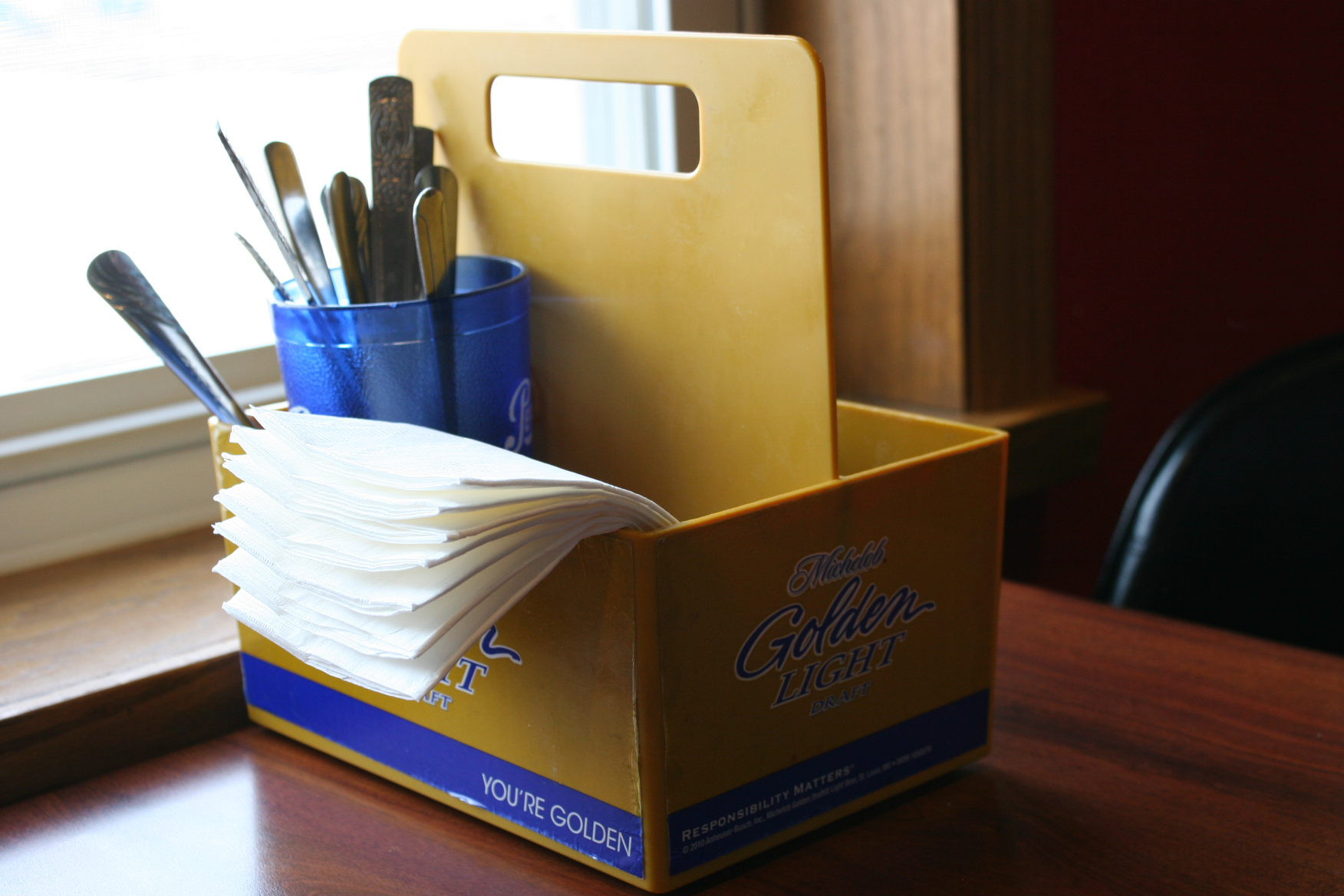
The condiment holder on our table. These always reveal insights into local tastes. Minnesota Prairie Roots file photo March 2020.

In a pandemic year that’s been especially difficult for bars and restaurants, The Railway apparently struggled. The business—complete with bar, two dining areas, private conference room, an outdoor patio, 12 tappers and more—is now for sale. For $165,000.

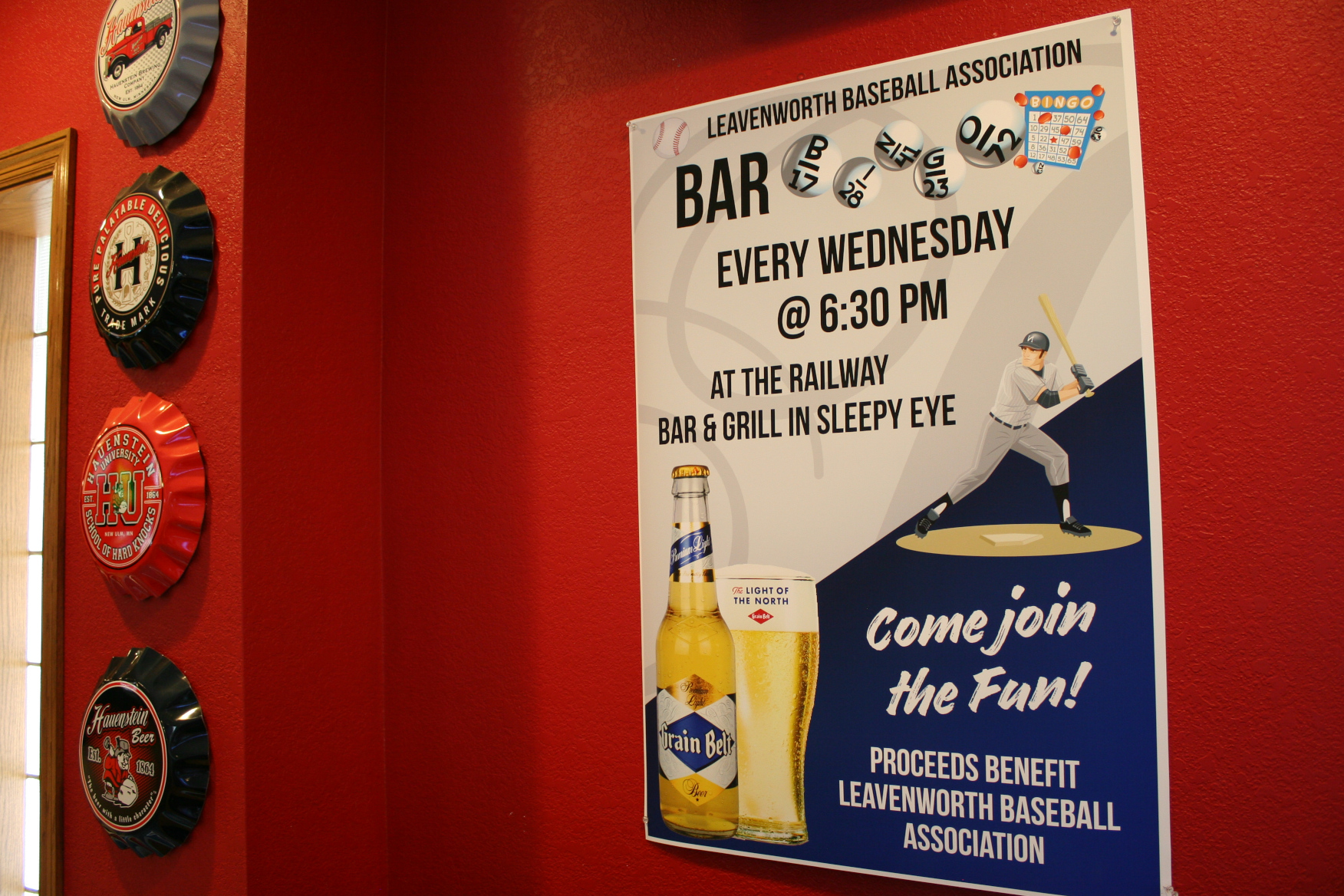
A sign posted inside The Railway Bar & Grill shows community involvement. Minnesota Prairie Roots file photo March 2020.

I’m not familiar with dining options in Sleepy Eye. But I know one thing about small towns—cafes and bars and grills are community gathering places. Spots to meet with family and friends. After a ball game. On a Saturday night. To shoot the breeze. To celebrate. To get out of the house on a cold winter evening. To BS over a beer or two. From all indications, The Railway filled that need in Sleepy Eye.

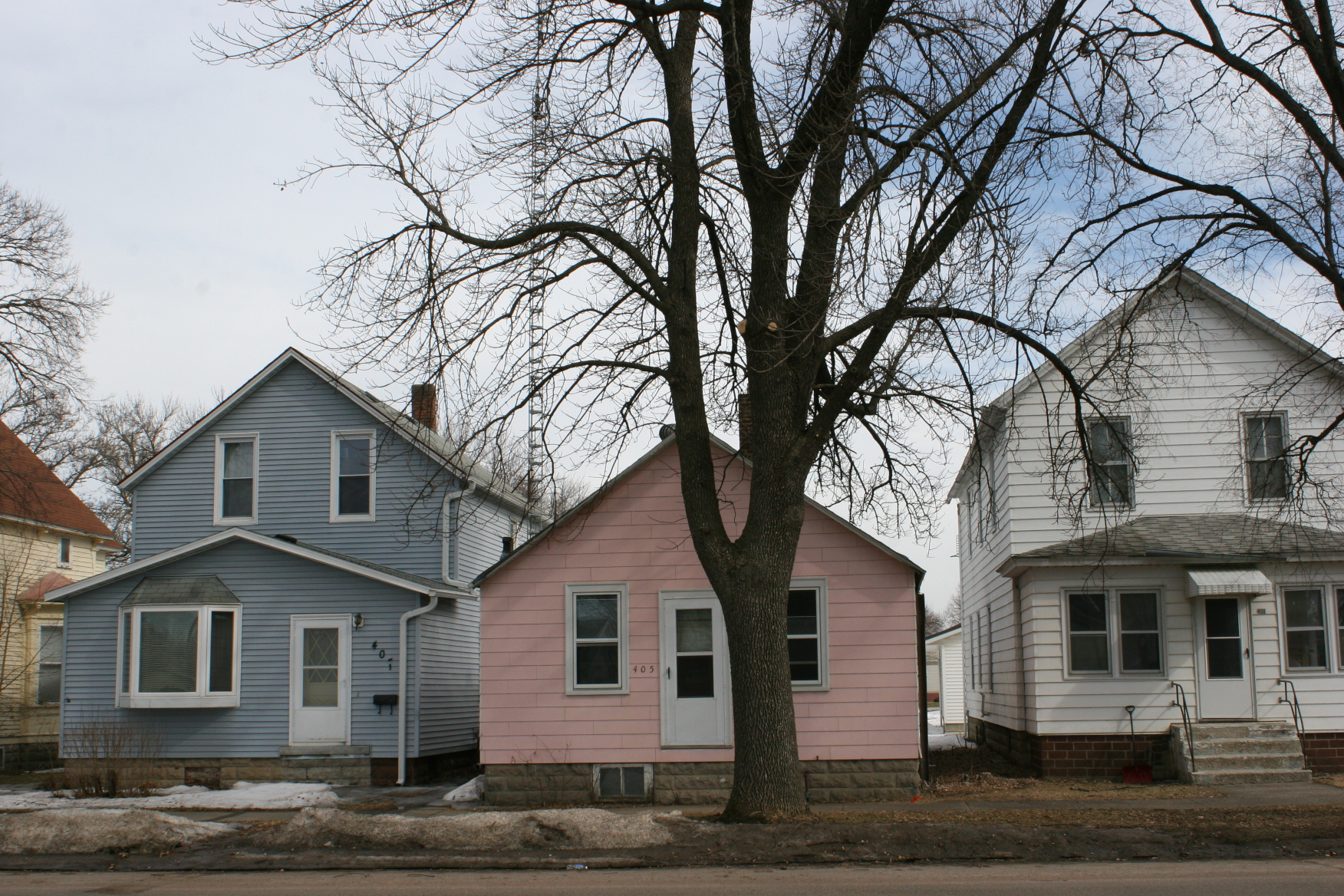
Small houses cram together in the neighborhood by the grain elevators and The Railway Bar & Grill. Minnesota Prairie Roots file photo March 2020.

When Randy and I finished our sandwiches on that early March Saturday afternoon in 2020, I stepped outside to photograph the neighborhood while he paid the bill. I focused my lens on three houses crammed together.

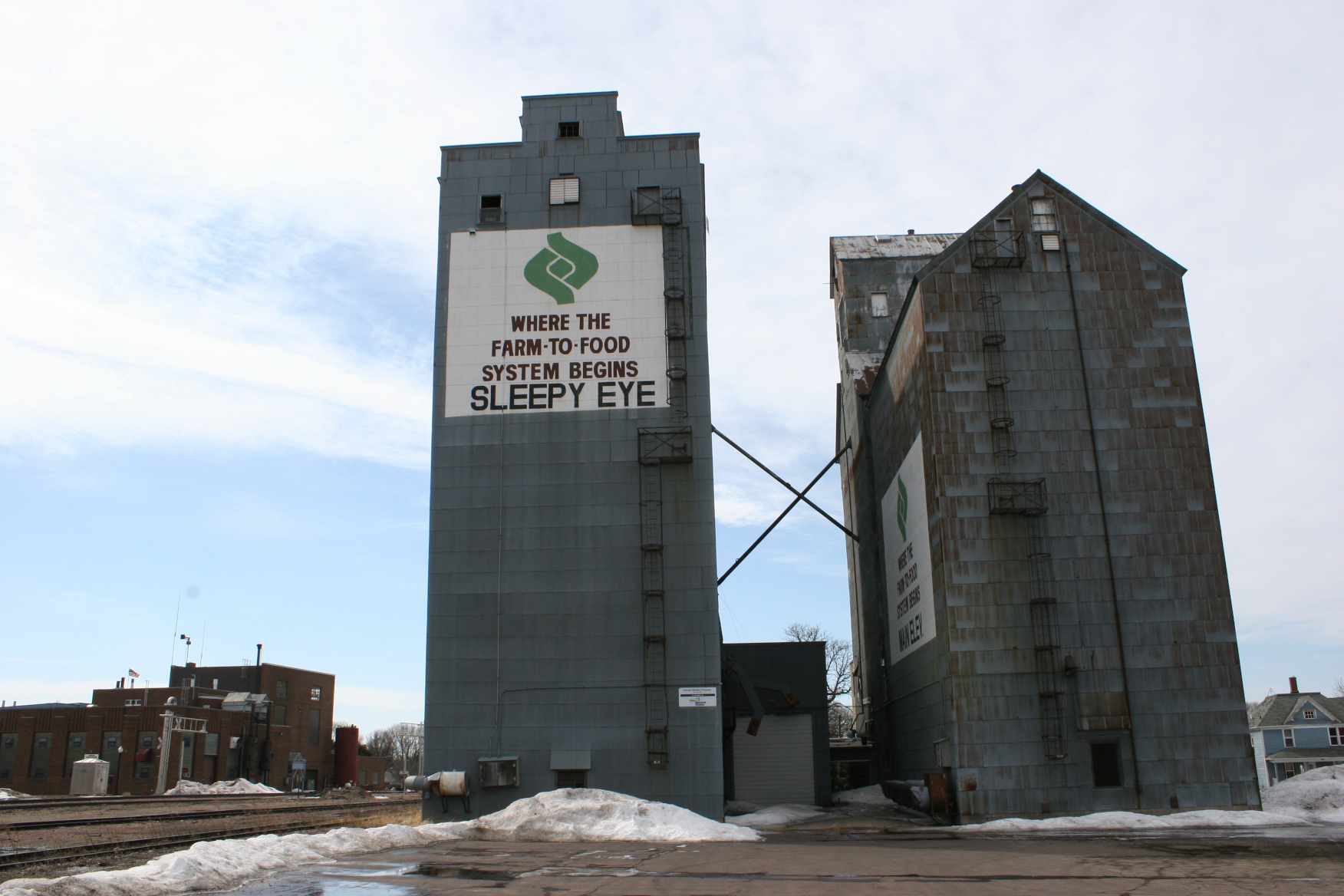
The grain elevators, next to the train tracks in Sleepy Eye, dwarf neighboring buildings. Minnesota Prairie Roots file photo March 2020.

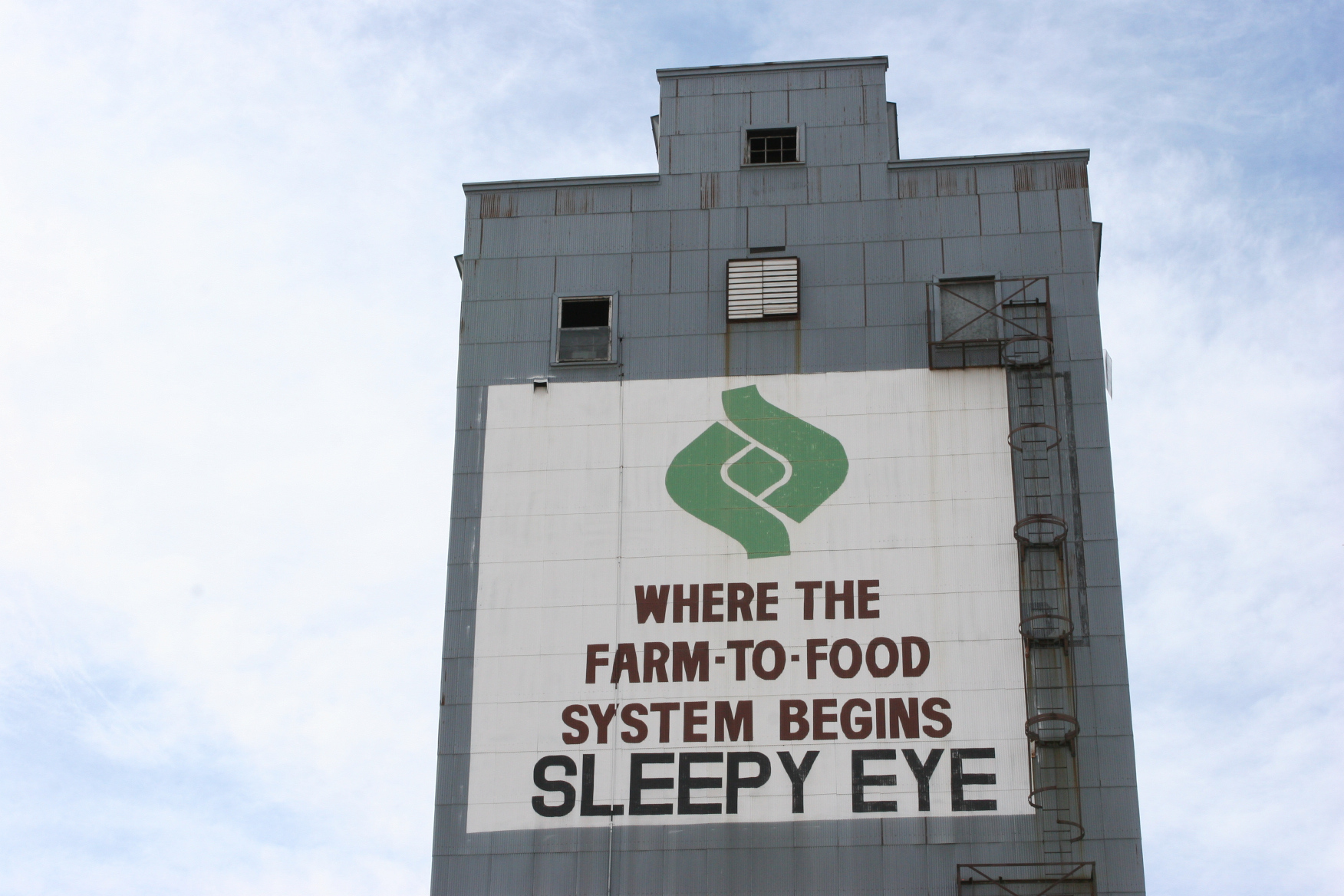
And then I aimed toward the towering grain elevators next to the bar & grill. Vintage elevators always draw my eye for their architectural interest (as cathedrals of the prairie), historical importance and connection to my farming past. Silo style grain storage units will never hold the same appeal as these rectangular grey elevators soaring high above small towns. Too many of these have vanished, including in my hometown of Vesta where a local farmer moved the elevators onto his farm.

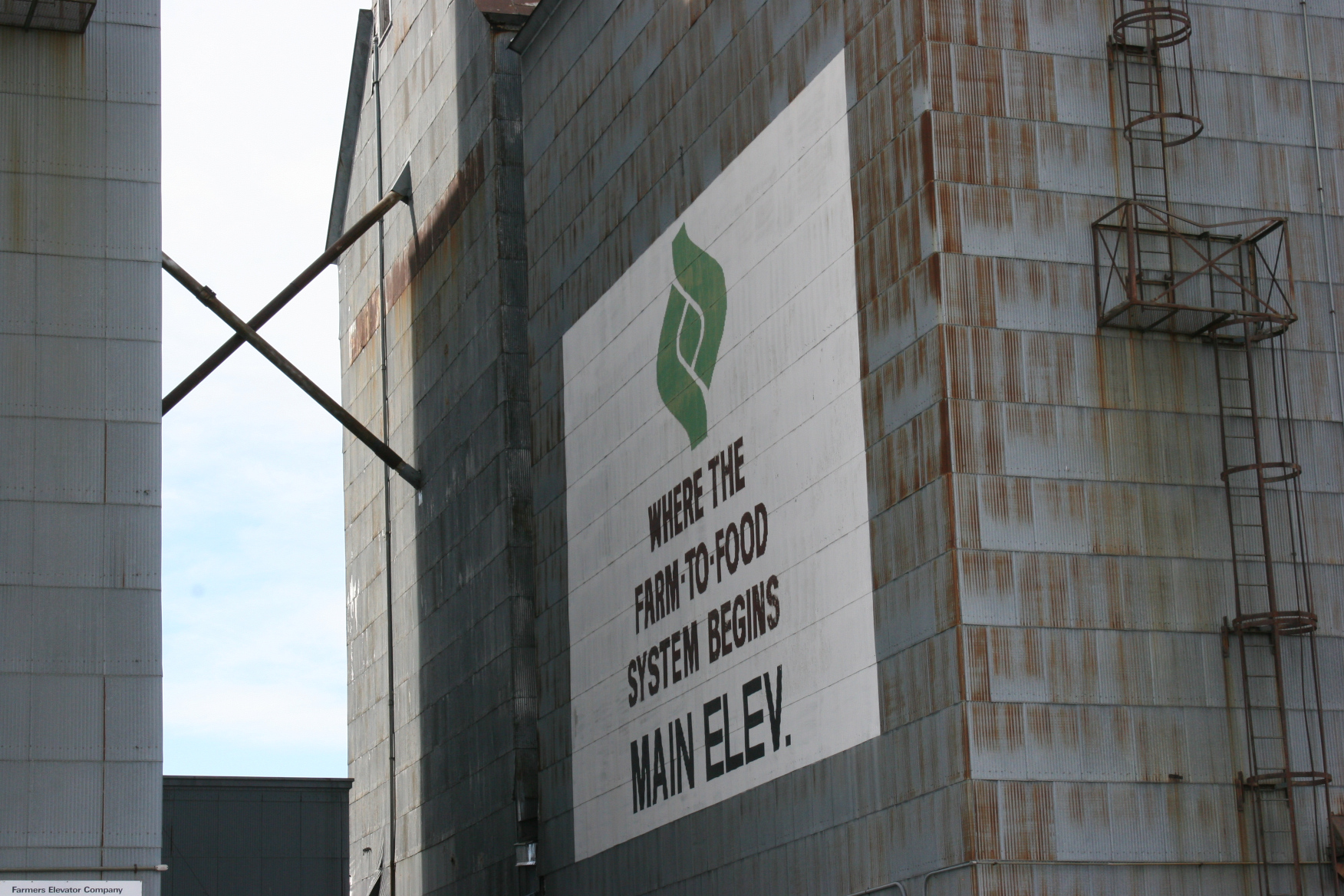
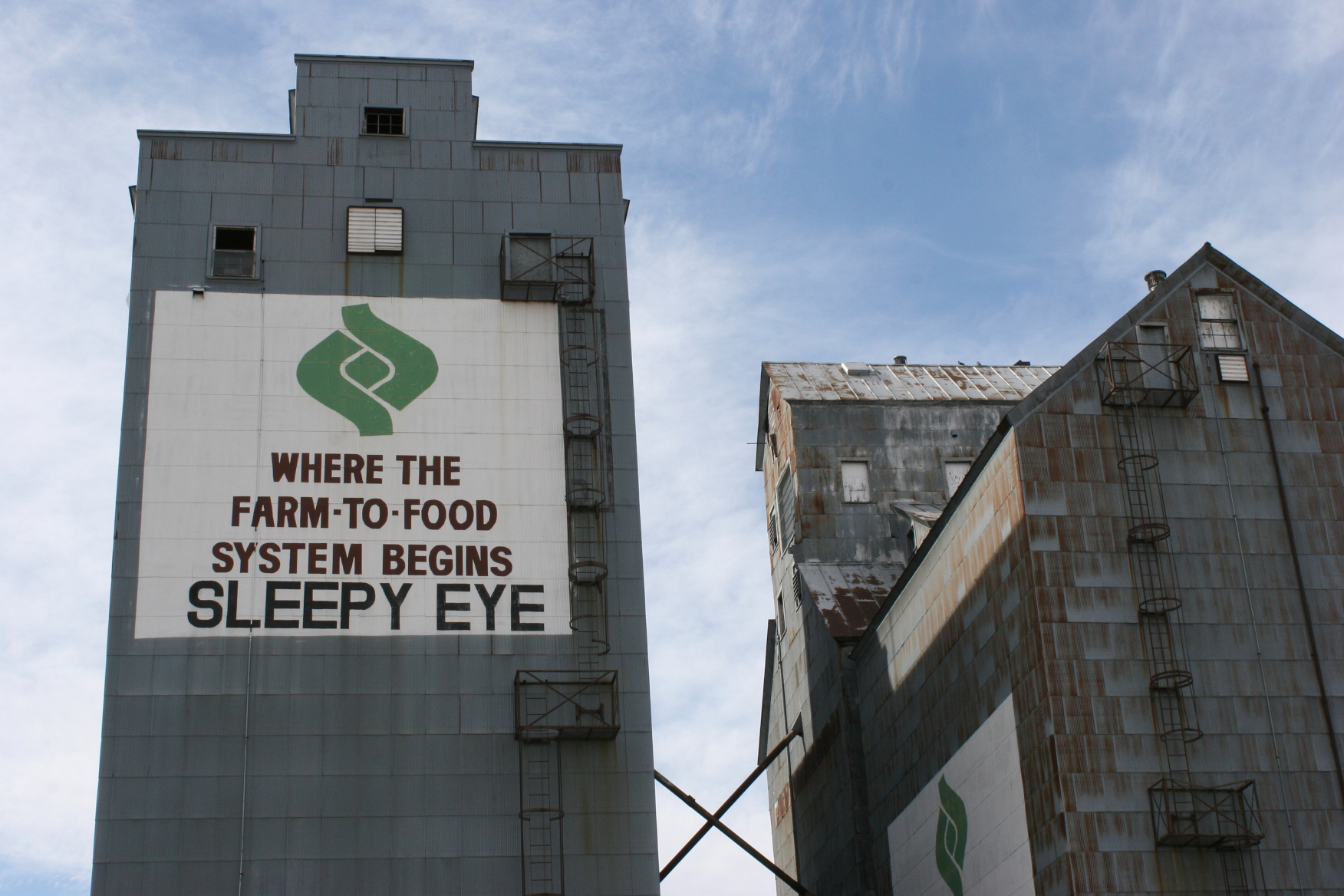
A strong message adds to the visual appeal of the Sleepy Eye grain elevators. Minnesota Prairie Roots file photo March 2020.

On this Saturday, I delighted in reconnecting with my rural roots outside The Railway. In my memory, I heard the rumble of a train, saw grain trucks lining up at the elevator, smelled the earthy scent of harvest…

© Copyright 2021 Audrey Kletscher Helbling


From Minnesota: Reflecting on small towns January 29, 2021

Buckman, Minnesota. Minnesota Prairie Roots file photo September 2020.

RURAL MINNESOTA. For Randy and me, that represents our upbringing, the place of our roots, the land that is part of our personal geography.

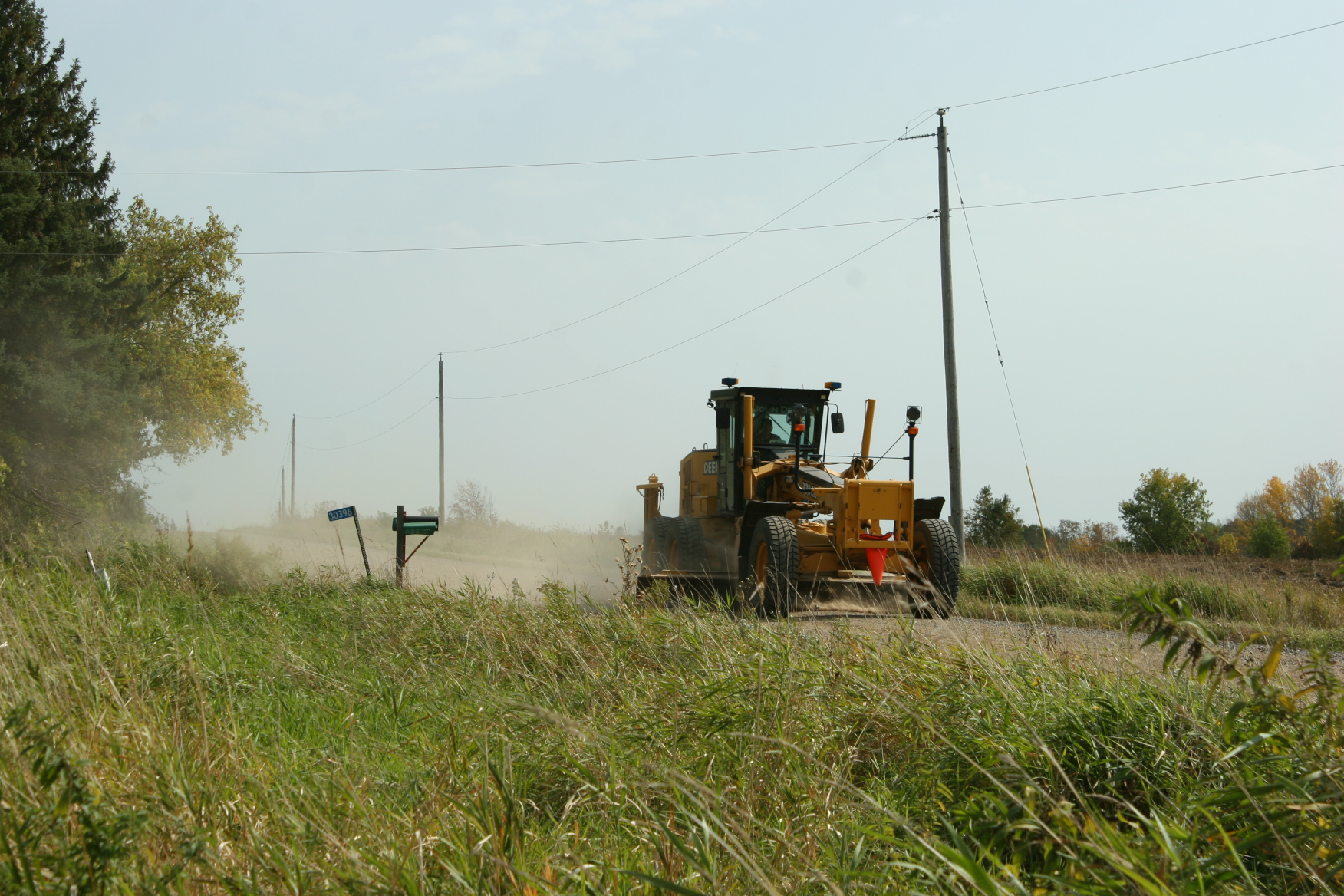
A road grader grades the gravel road near Randy’s childhood farm southeast of Buckman. We pulled off the narrow road to allow the grader to safely pass by our van. Minnesota Prairie Roots file photo September 2020.
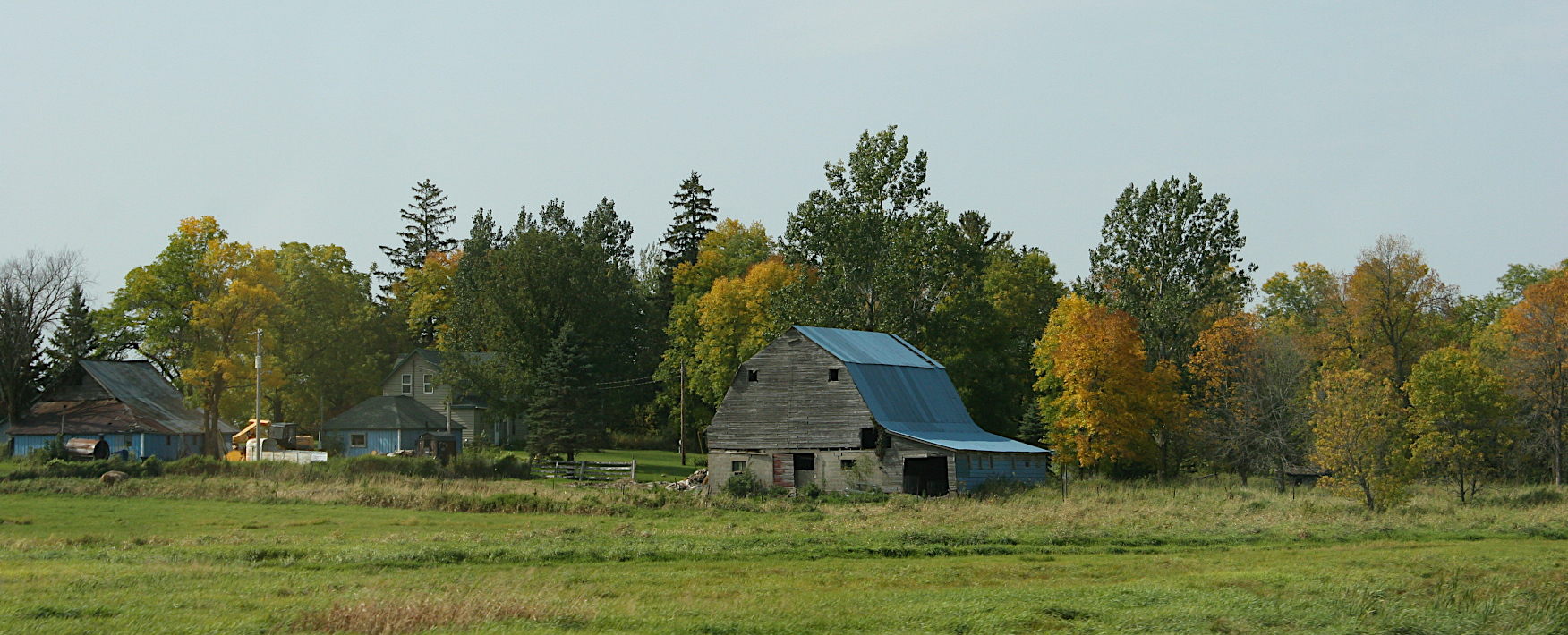
A farm place between Buckman and Gilman. Minnesota Prairie Roots file photo September 2020.
In the small town of Gilman. Minnesota Prairie Roots file photo September 2020.

We both grew up on farms, in large families—his three kids larger than mine at nine. We both picked rock—he more than me as Morrison County in central Minnesota sprouts more rocks than Redwood County. We each labored in fields and barns and understood the value of hard work and our importance in the farming operation. Even at a young age. That carries through in our strong work ethics and our strong link to the land.

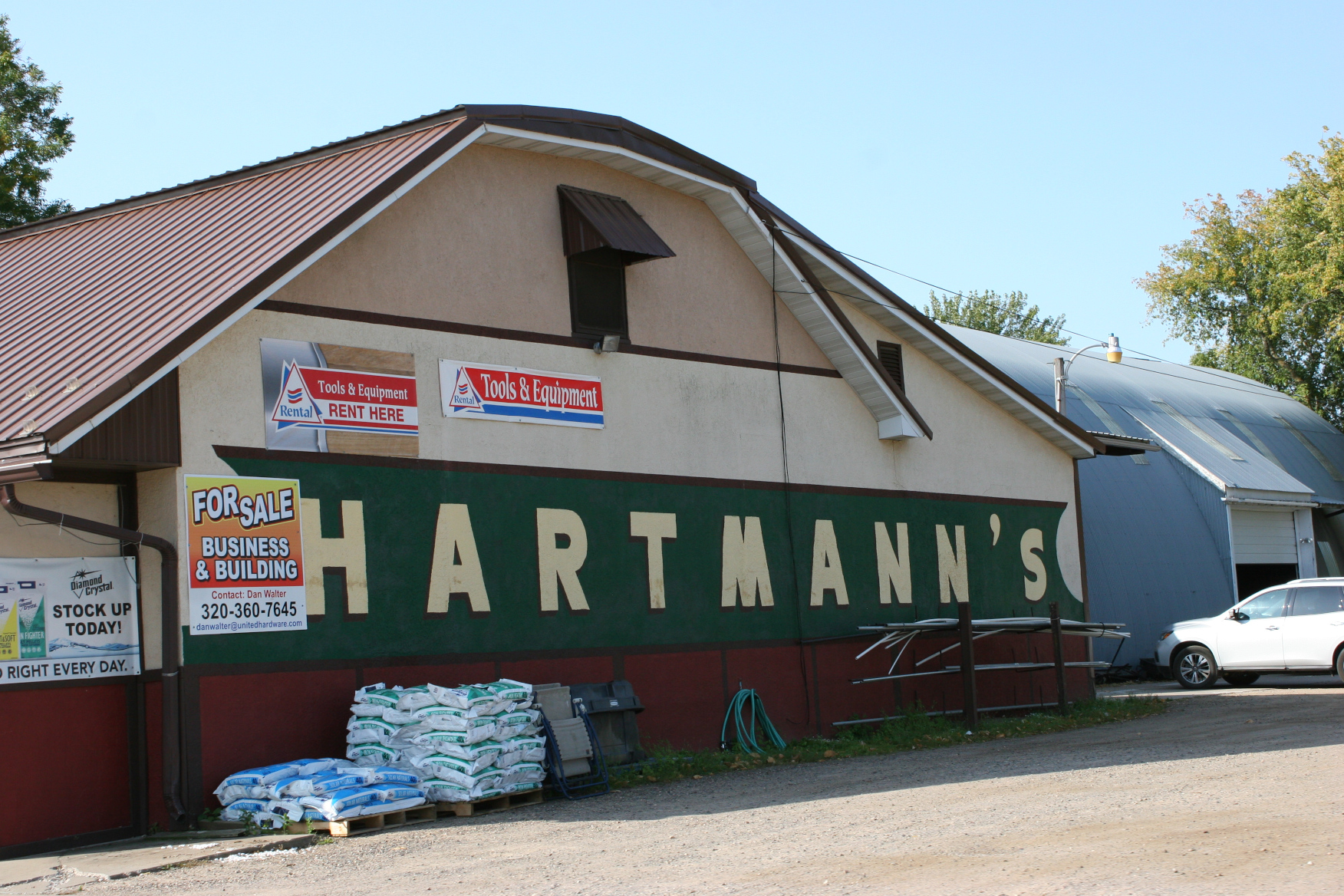
Pierz, a small town to the north of Buckman and bigger than Buckman, still has a hardware store. Randy attended junior and senior high school in Pierz. Minnesota Prairie Roots file photo September 2020.
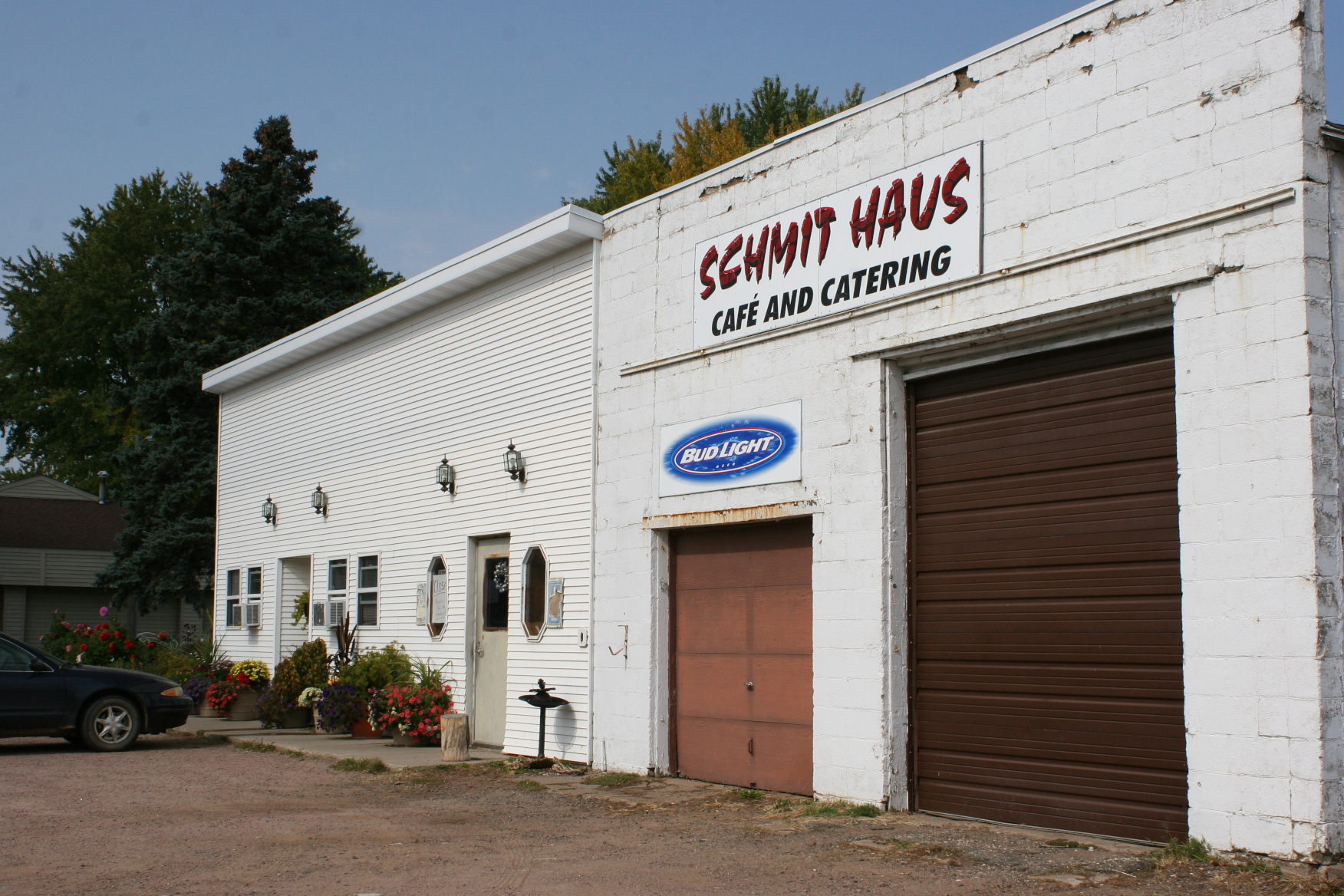
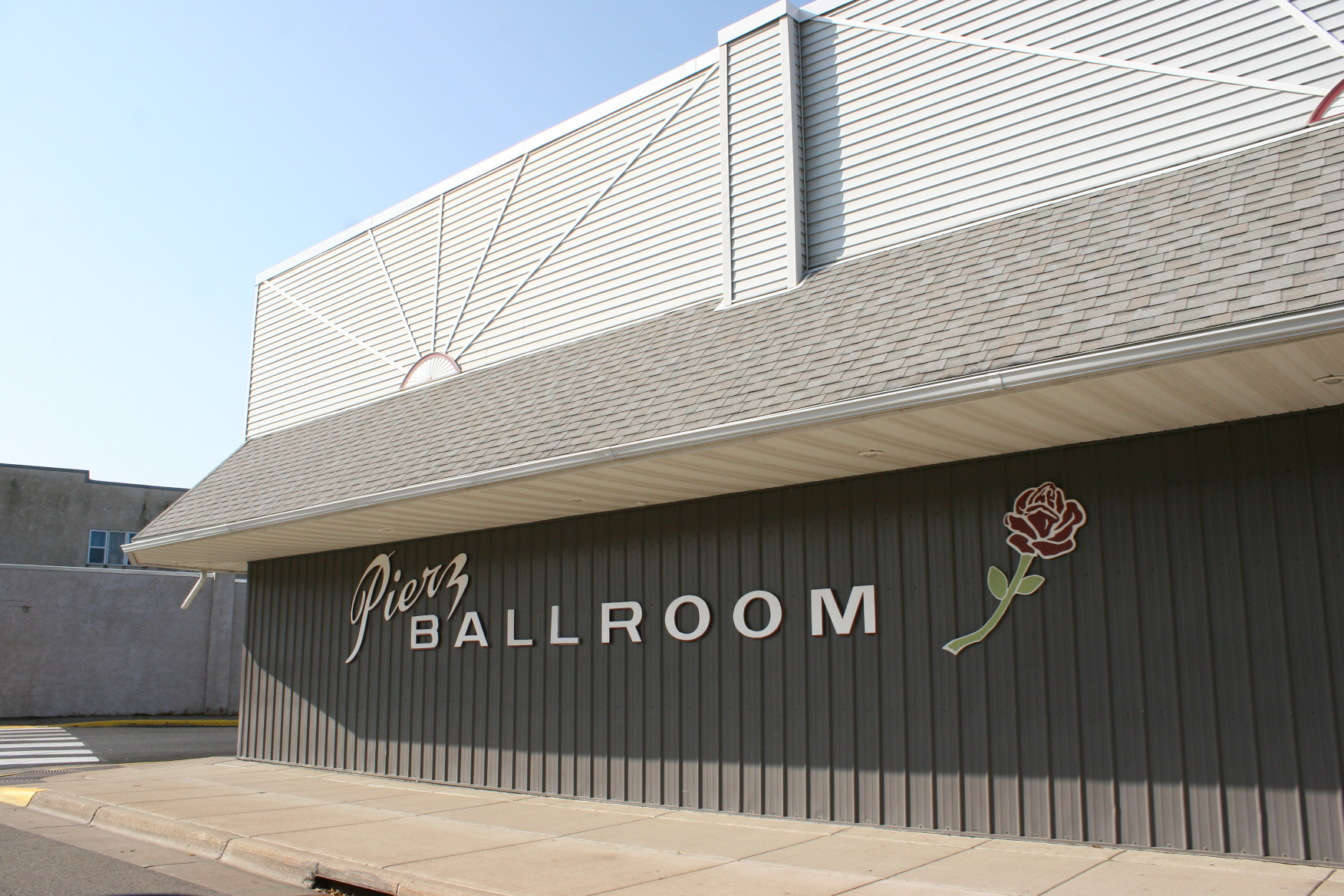
As we passed through Pierz, I photographed this updated community gathering spot. Minnesota Prairie Roots file photo September 2020.
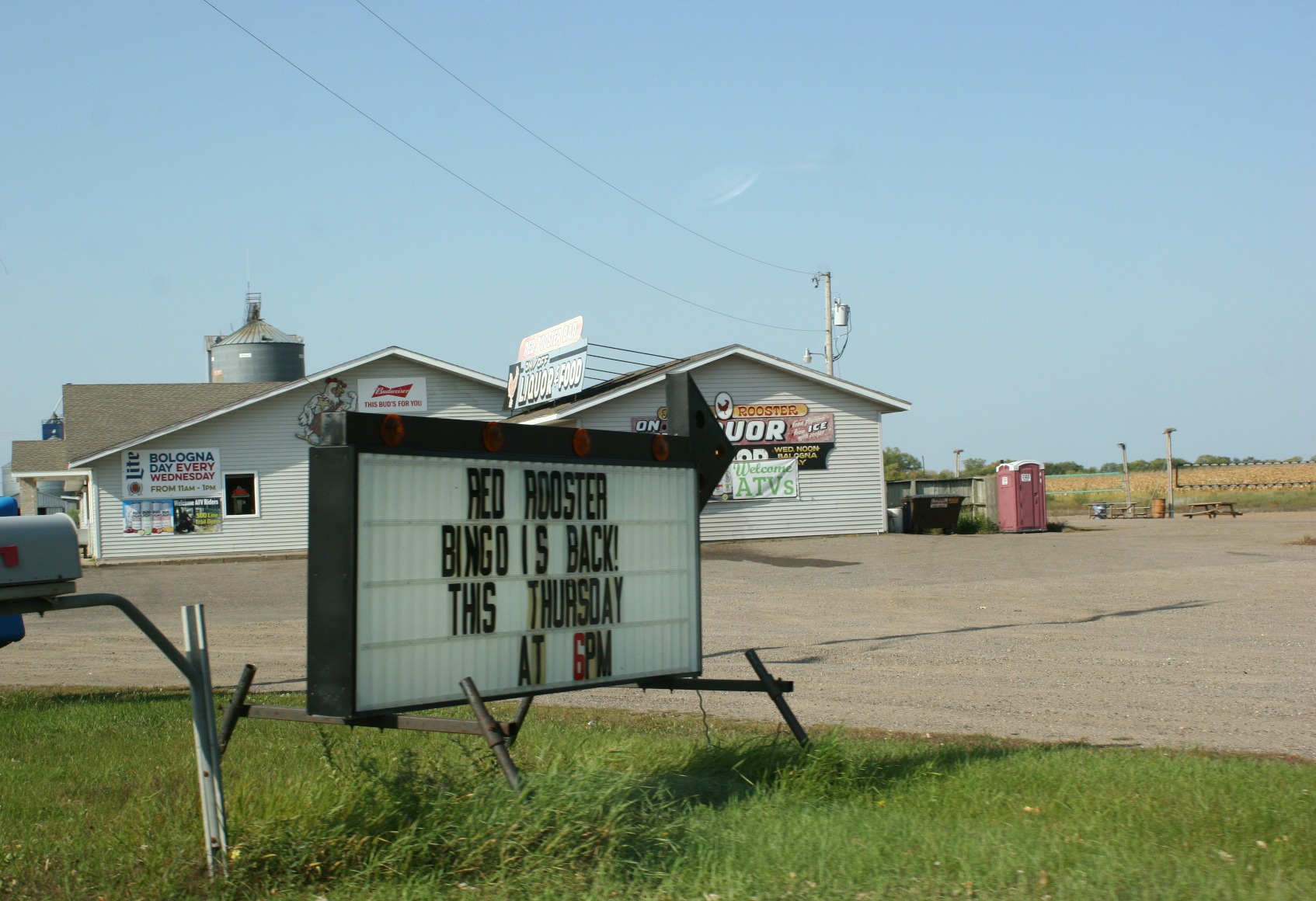
Genola, just to the south of Pierz, is home to the Red Rooster. BINGO is big in this part of rural Minnesota as is weekly Bologna Day (as noted in the banner on the building). Minnesota Prairie Roots file photo September 2020.

And, though we left our rural communities at age 17, we still hold dear the small towns—Buckman and Vesta—that were such an important part of our upbringing. Both have changed with familiar businesses long gone. Society changed and locals began driving farther for groceries and other necessities.

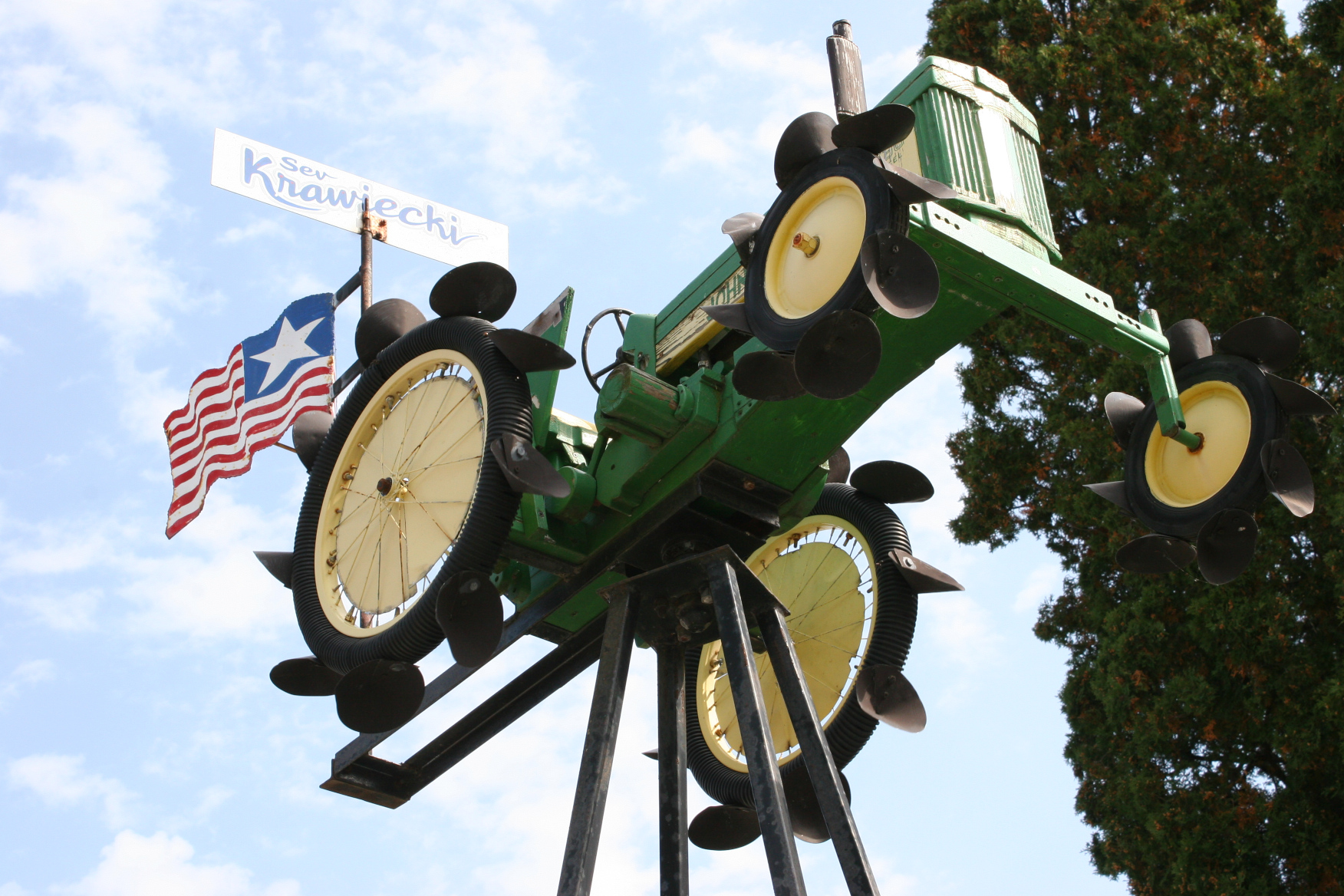
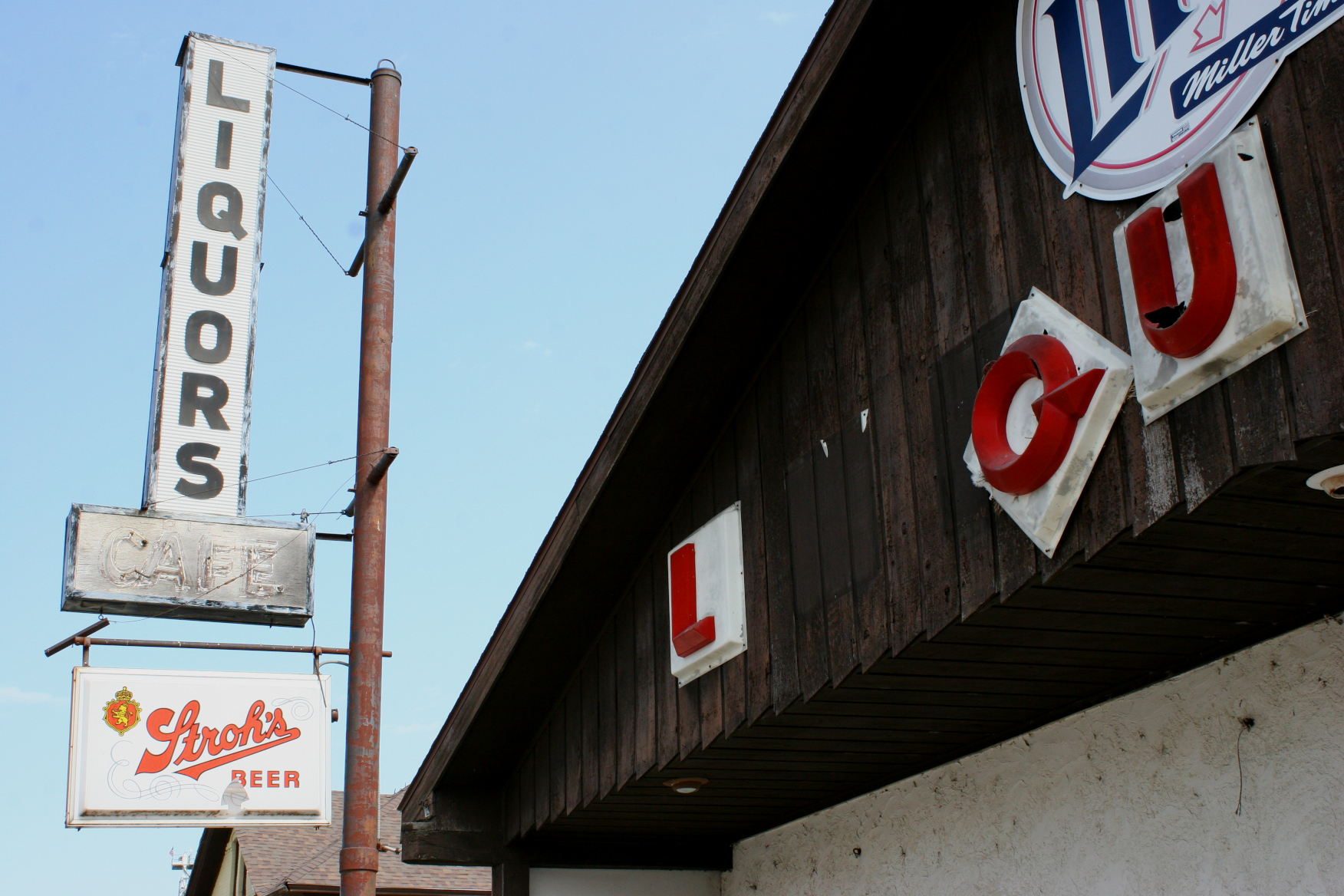
A nod to this area’s rich agricultural base outside Sev’s Food & Liquor in Buckman. Minnesota Prairie Roots file photo September 2020.

It’s easy to get caught in the memories, of the back then, of wishing nothing had changed. But it has and it does. And life goes on.

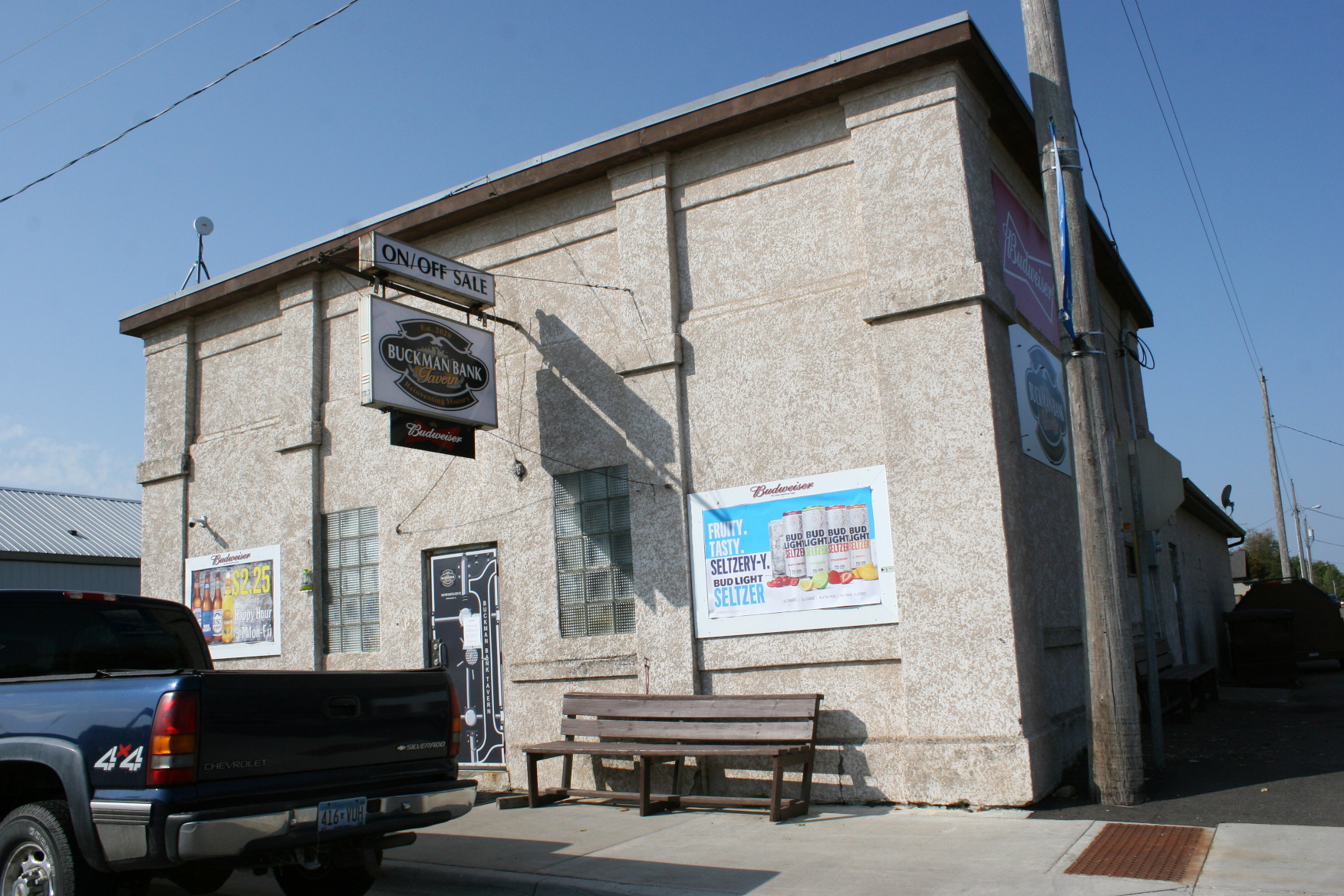
Housed in the old bank building, the Buckman Bank Tavern. Minnesota Prairie Roots file photo September 2020.
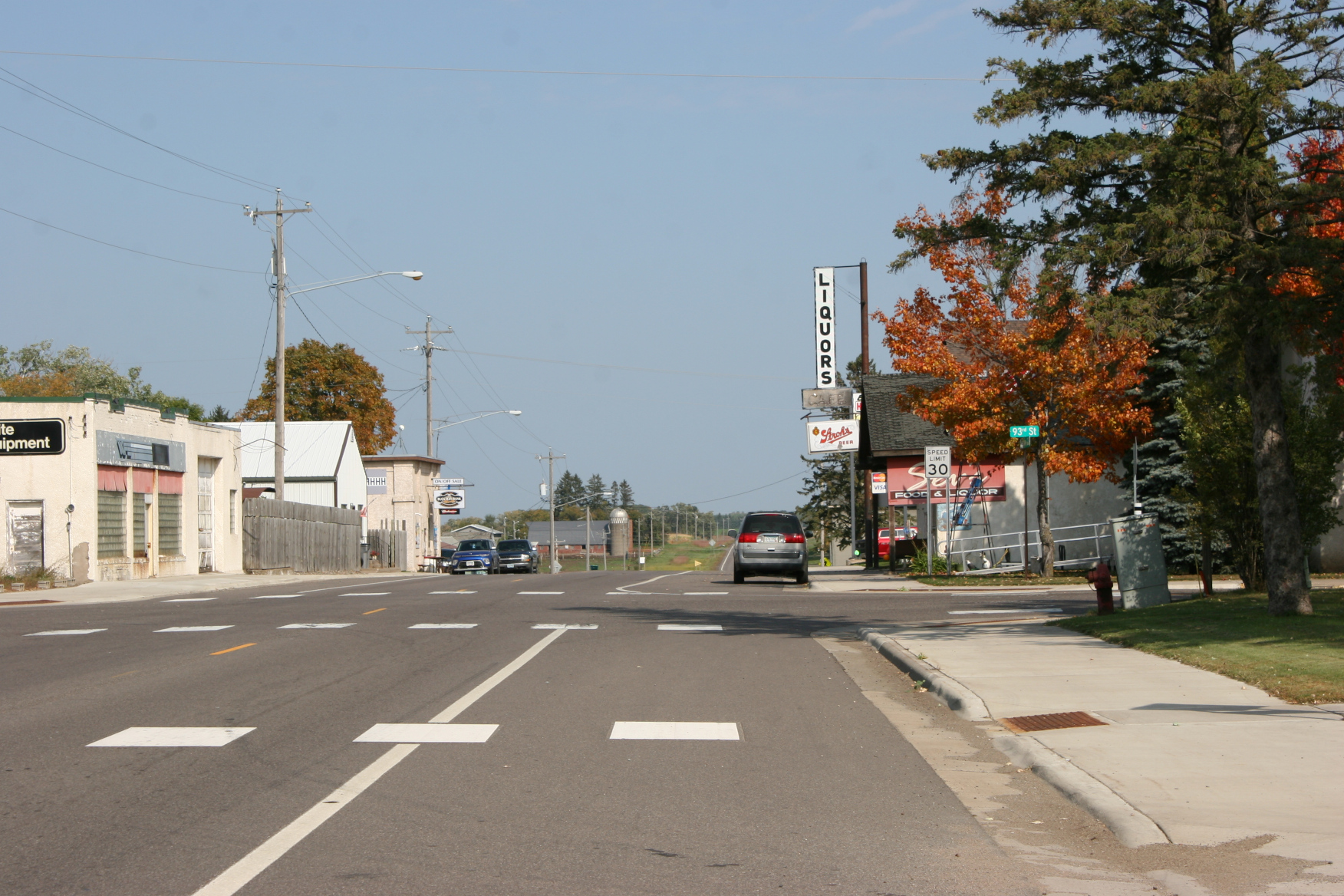
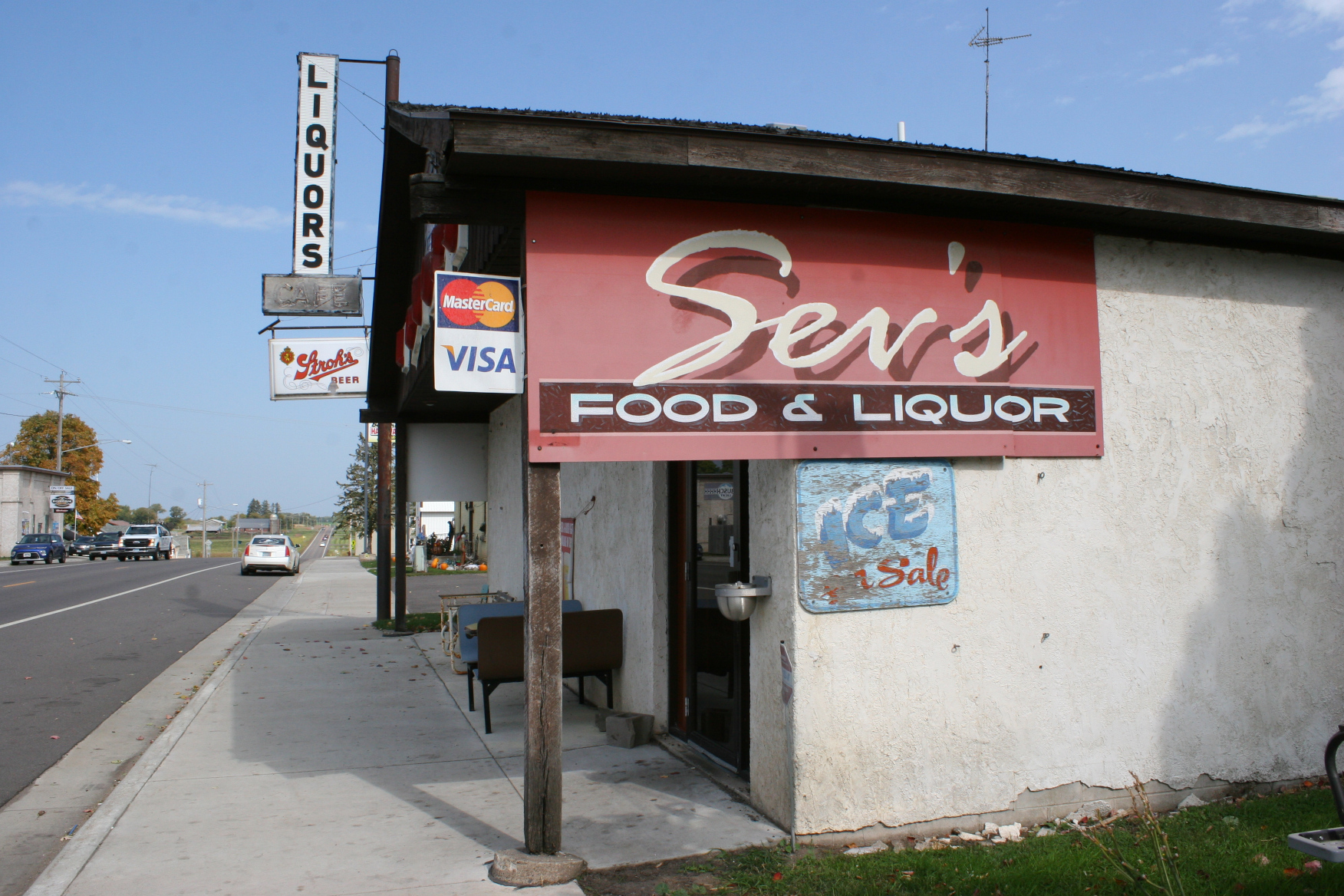
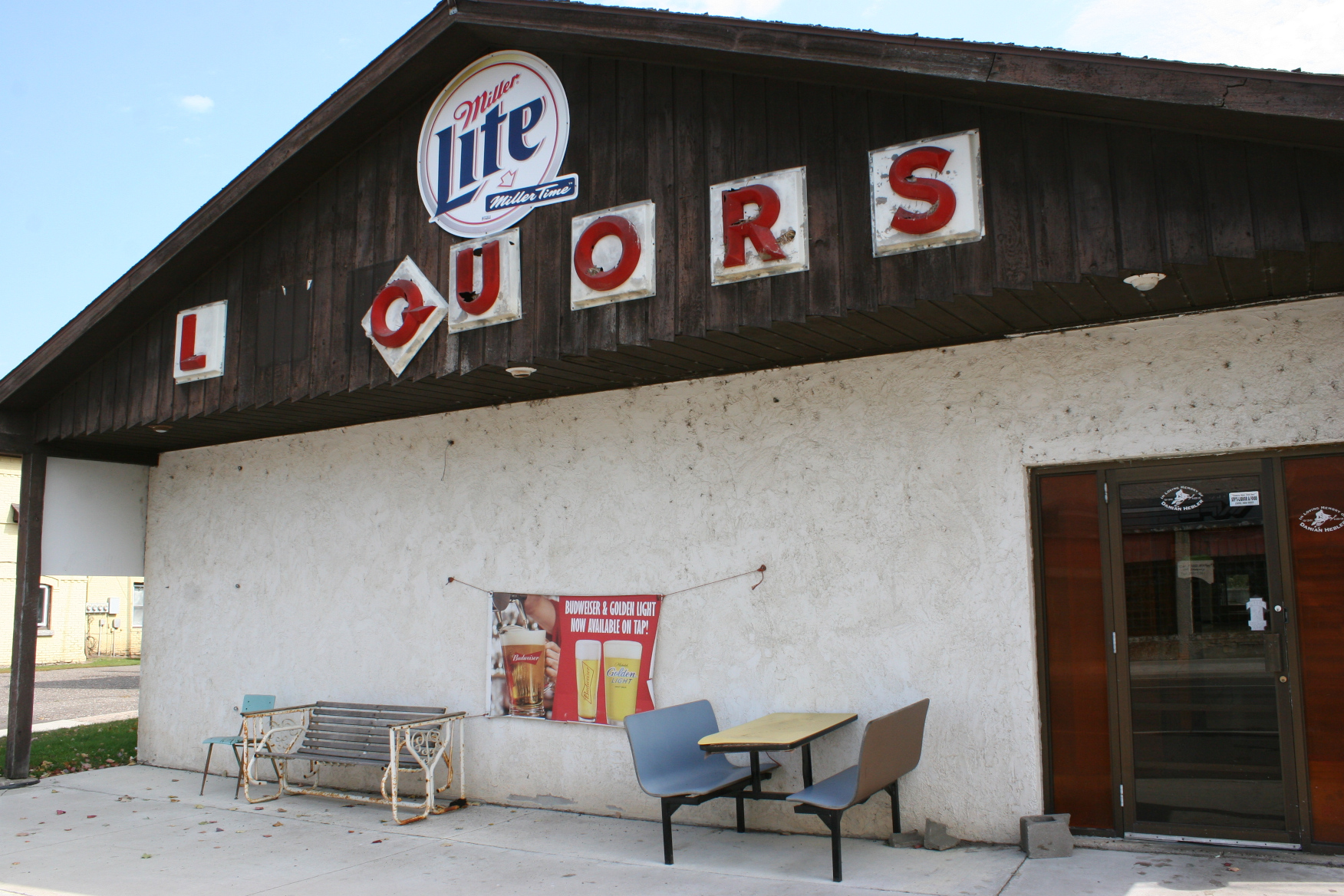
Signs on Sev’s in Buckman. Minnesota Prairie Roots file photo September 2020.
Sev’s Food & Liquor along Buckman’s main street. Minnesota Prairie Roots file photo September 2020.

Returning to our hometowns, our home areas, causes me to reflect while simultaneously appreciating that which remains. Cafes and churches and hardware stores. Post offices and bars and grain elevators. These are the community gathering spots that still mark many of Minnesota’s smallest communities, those towns that span only blocks from east to west, north to south.

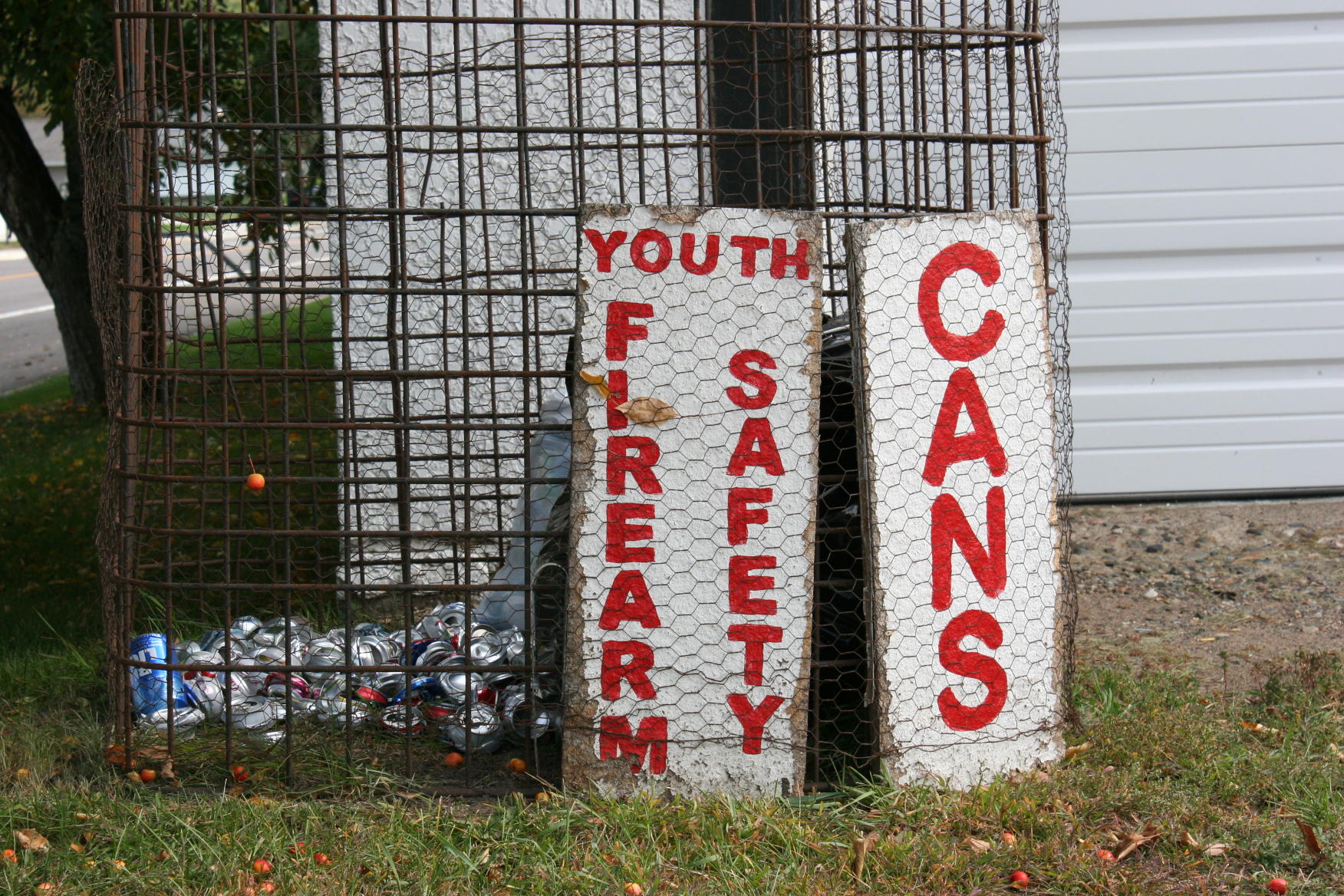
I often see can collection sites in small towns, like this one in Buckman. They offer insights into a community. Minnesota Prairie Roots file photo September 2020.
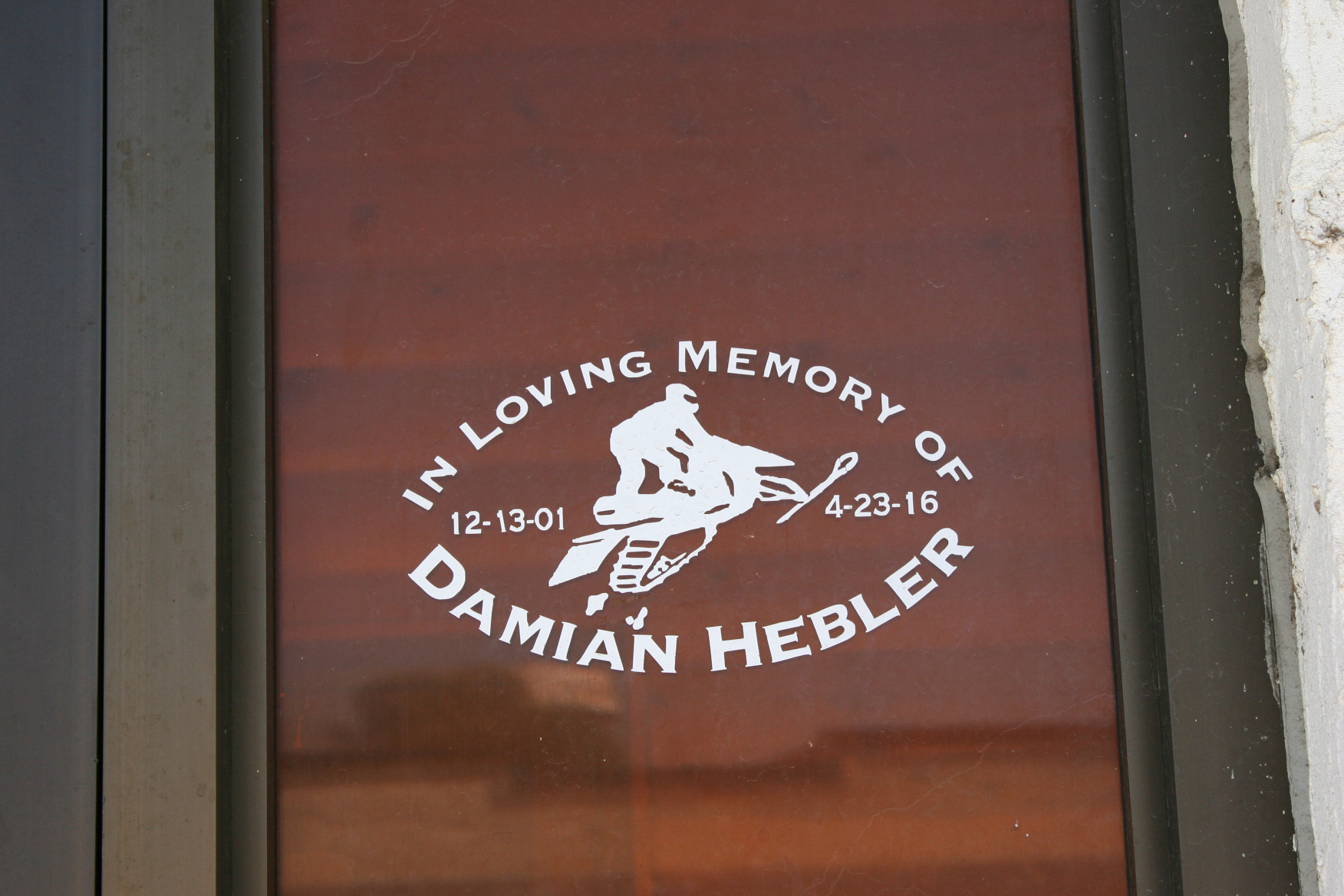
On the door of a Buckman bar, a young man remembered. Minnesota Prairie Roots file photo September 2020.
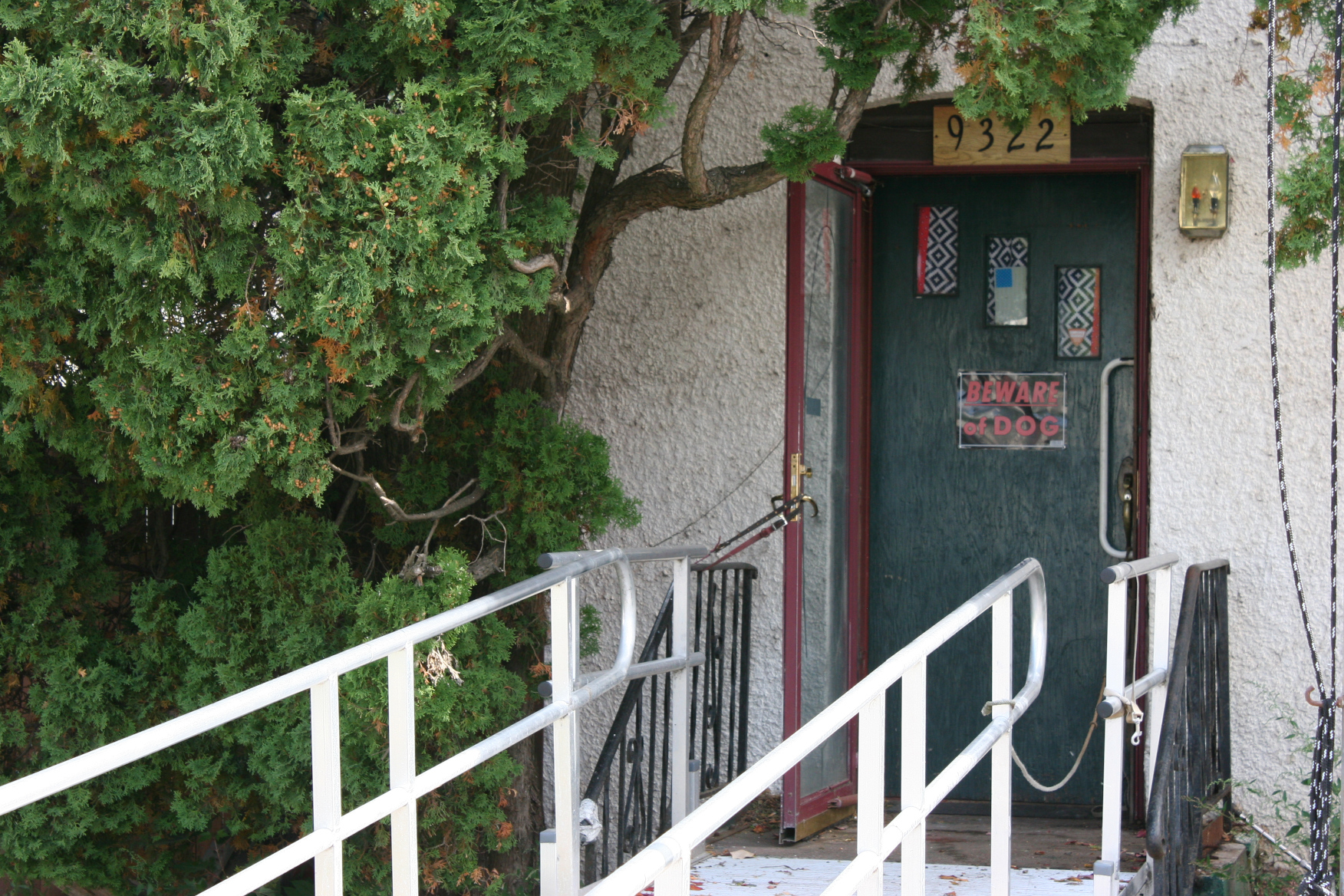
A warning sign posted on a house in Buckman. Minnesota Prairie Roots file photo September 2020.

But more than buildings, people form community. Even in Faribault, where Randy and I have lived since 1982, we’ve found our small town in a city of around 25,000. That’s in our faith family at Trinity Lutheran Church, the “town” that centers our lives. An uncle and I discussed this recently. He lives in Minneapolis. His neighborhood is his community, his small town.

A place to gather outside Sev’s Food & Liquor in Buckman. Minnesota Prairie Roots file photo September 2020.

No matter where you live, whether in rural Minnesota or New York City, the mountains of Idaho or the plains of Nebraska, I hope you’ve found your community and place of joy.

© Copyright 2021 Audrey Kletscher Helbling


Autumn in rural southern Minnesota, before the snow October 29, 2020

Following a back road between Zumbrota and Mazeppa on October 18, before our recent snowfall here in southeastern Minnesota.

AS I VIEW THE LANDSCAPE layered in snow and consider the unseasonably cold temp of 12 degrees, I reflect that only 11 days ago, southern Minnesota looked and felt much different. Like the season of autumn rather than winter.

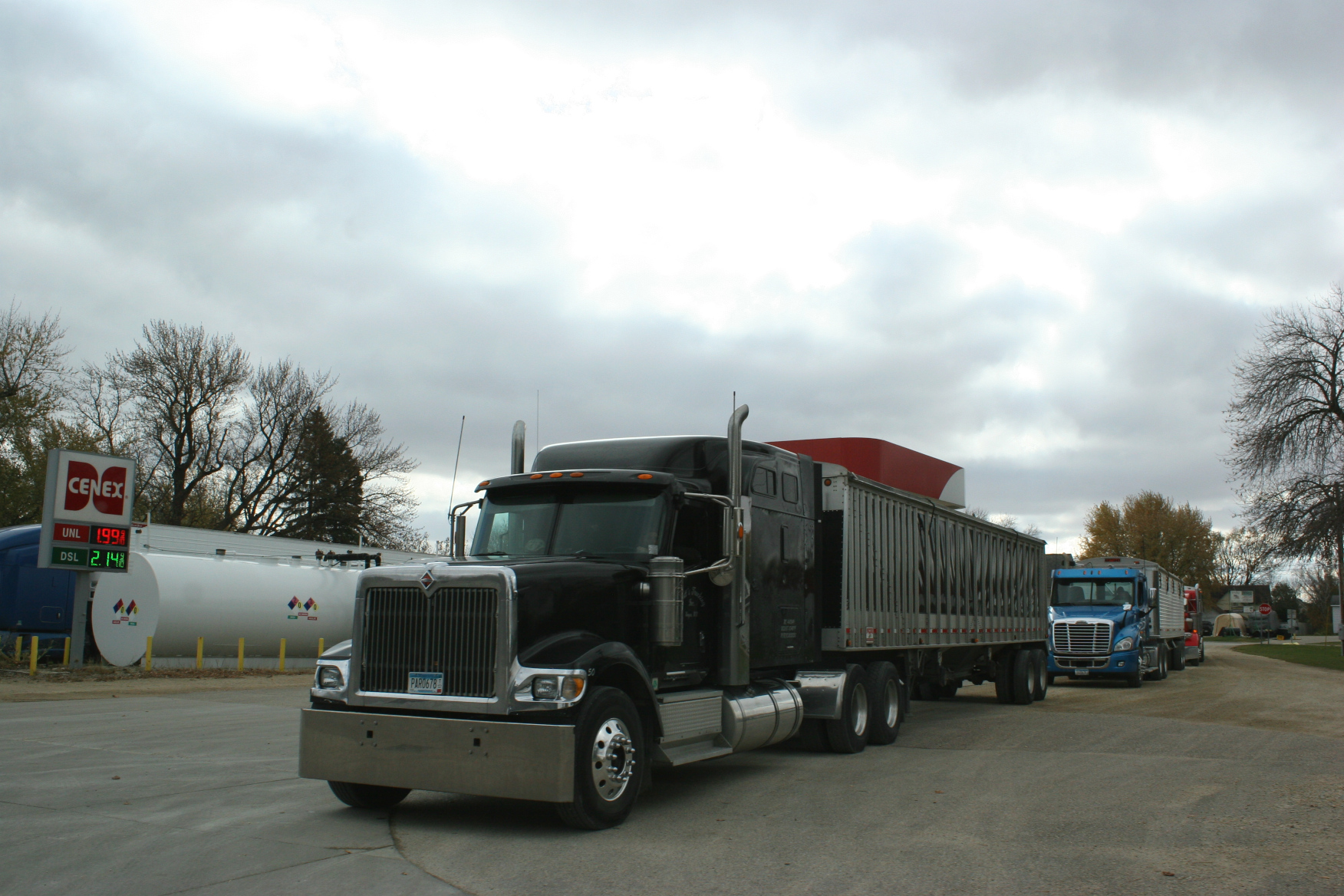
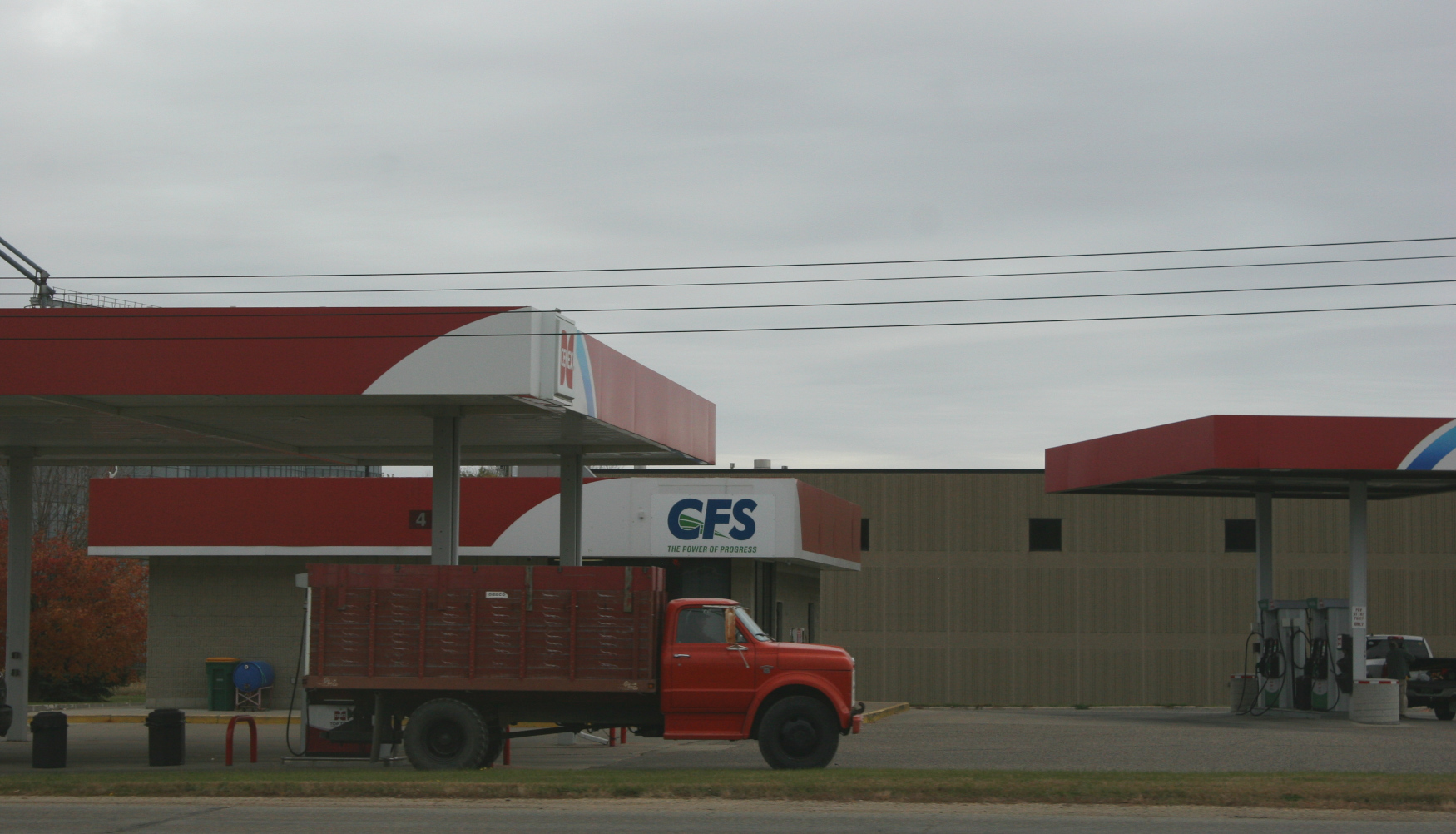
Grain trucks parked in Kenyon.

Today I take you back to October 18, to photos from a Sunday drive that started in Faribault and continued east through Kenyon, Zumbrota, Mazeppa, Oronoco and Pine Island, then back home.

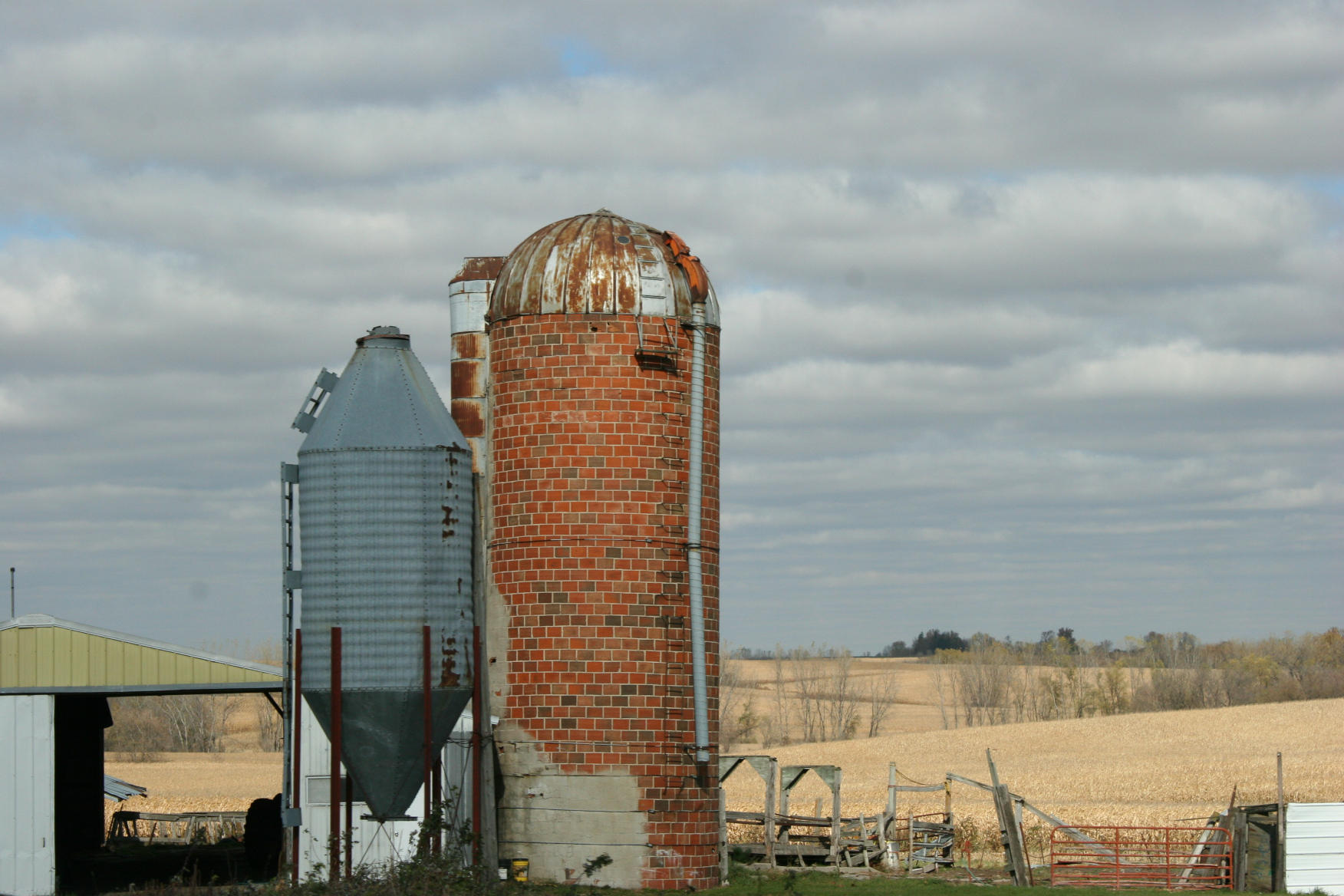
An aged silo between Zumbrota and Mazeppa.
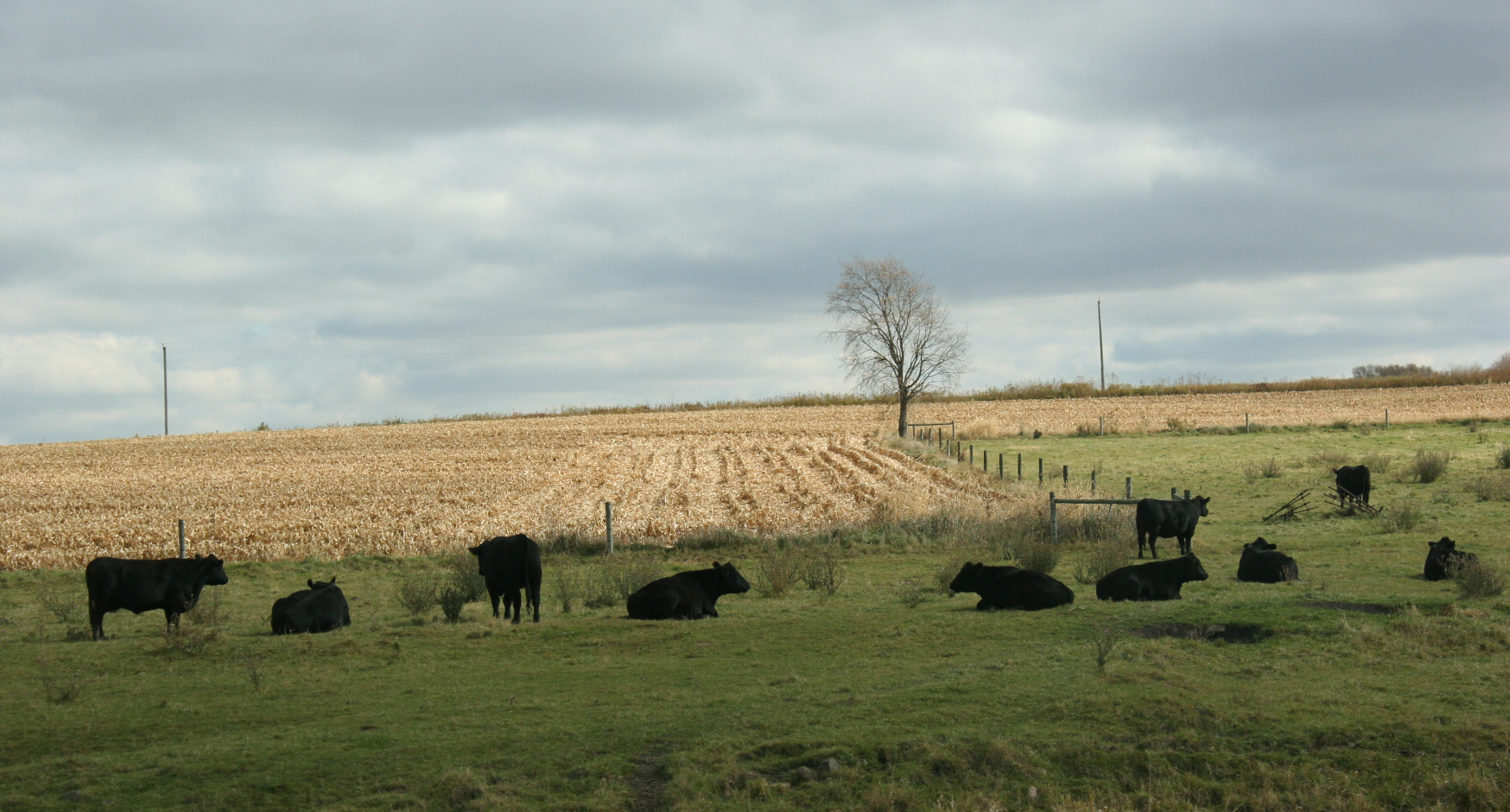
Cattle graze in pastureland between Kenyon and Wanamingo.
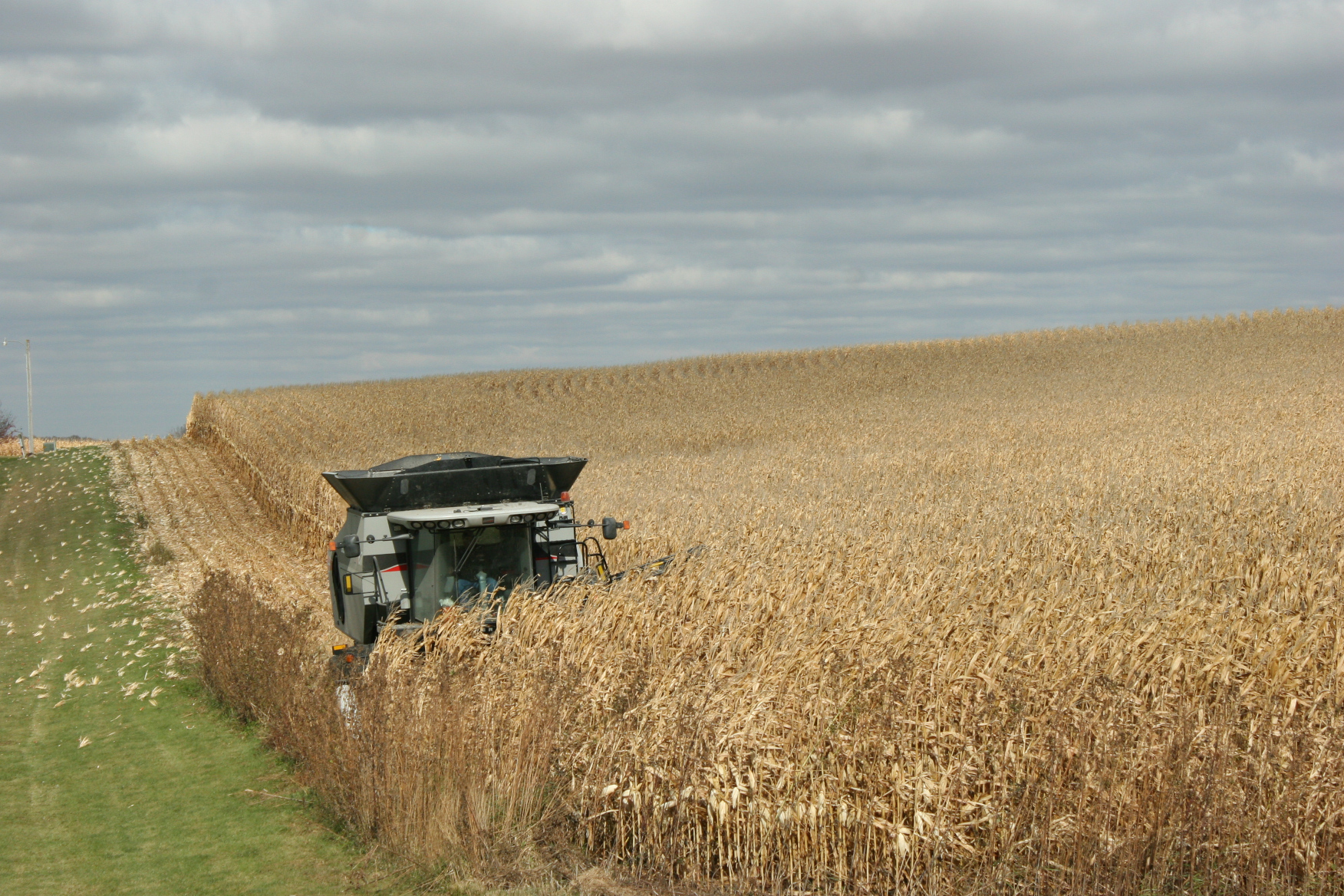
On October 18, the day of our drive, farmers were busy harvesting, here in a cornfield between Zumbrota and Mazeppa.

As farm-raised kids, Randy and I enjoy these rural drives that transport us back in time and also give us a much-needed break from the realities of COVID-19, of politics, of life stressors. I never tire of seeing cornfields and farm sites, especially during the harvest.

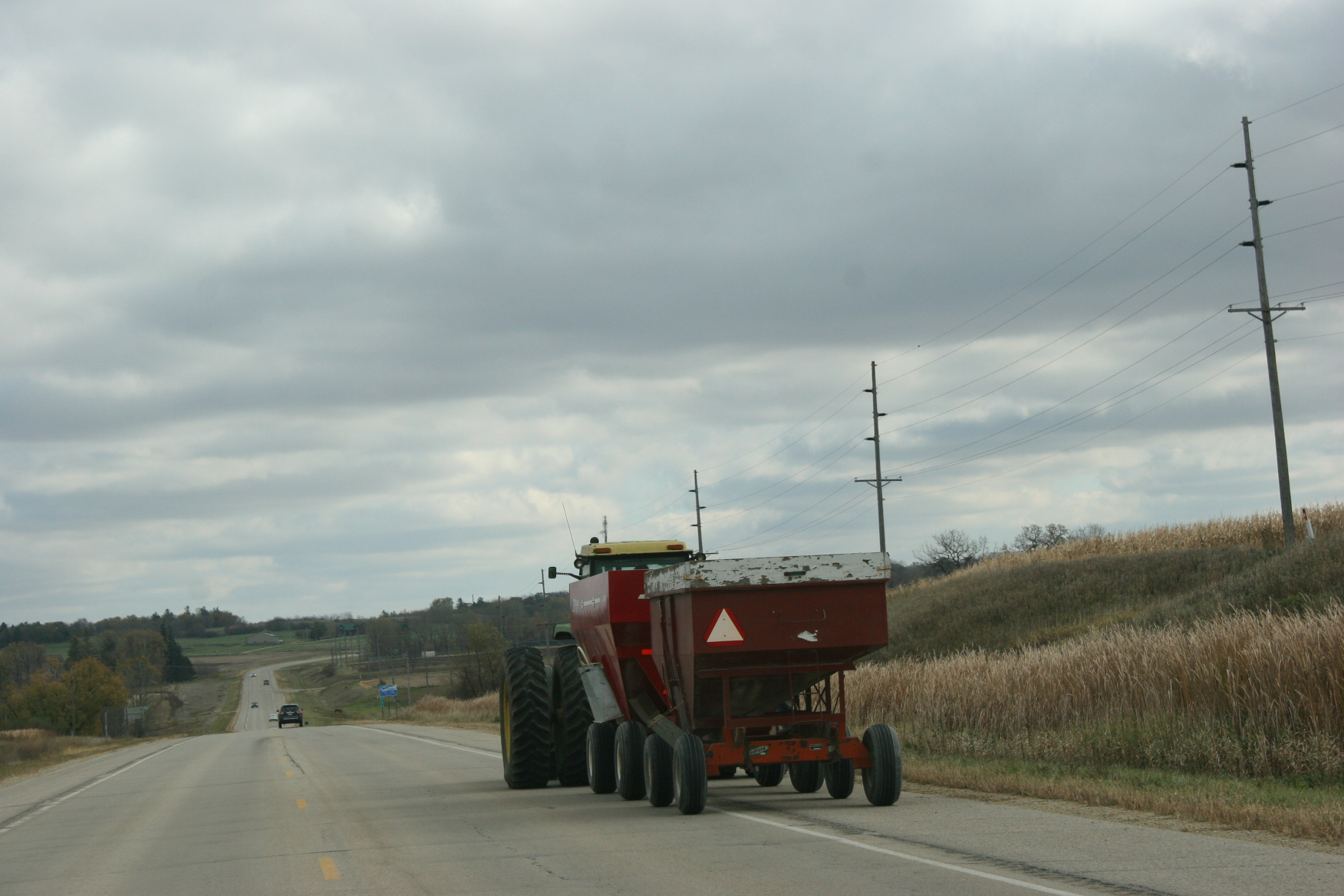
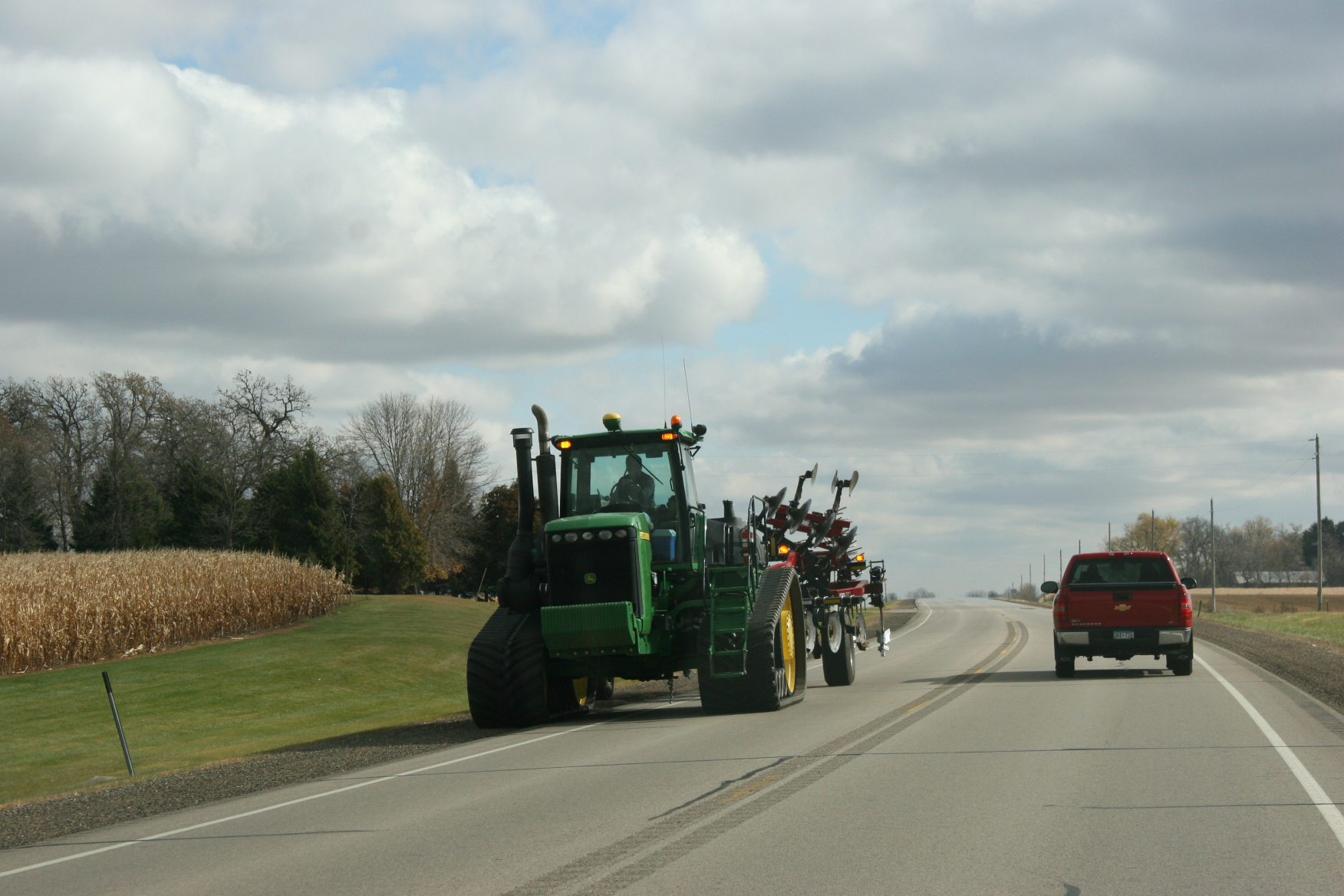
Farmers on the road were a common site, here on Minnesota State Highway 60 west of Zumbrota.

There’s something about immersing myself in the countryside, about simply being in a rural landscape, that comforts me. That soothes and calms. I need that now more than ever.

The Zumbro River Valley stretches before us between Zumbrota and Mazeppa.

We all have, I think, those places which offer us such a respite. Perhaps yours is a room in your house, a place in nature, maybe even within the pages of a book. I’ve been reading a lot lately and highly-recommend Susan Meissner’s A Fall of Marigolds.

Following another farmer, just outside Zumbrota.

Fall. It’s my favorite season, cut too short this year by an early significant snowfall. I’m not happy about it and I doubt many Minnesotans are. We often boast about our hardiness. Yet, we grow weary, too, of our long, cold winters. Most of us, anyway.

A farm site atop a hill between Zumbrota and Mazeppa.

Yet, we choose to live here. This is home. And always will be for me. No matter the season.

© Copyright 2020 Audrey Kletscher Helbling


Destination: Monkey Valley October 22, 2020

On Sunday afternoon, the landscape near Kenyon looked very much like autumn.

JUST DAYS AGO, the southern Minnesota landscape looked like autumn. But, after a record-breaking early snowstorm of up to nine inches of snow on Tuesday, this place I call home looks like winter.

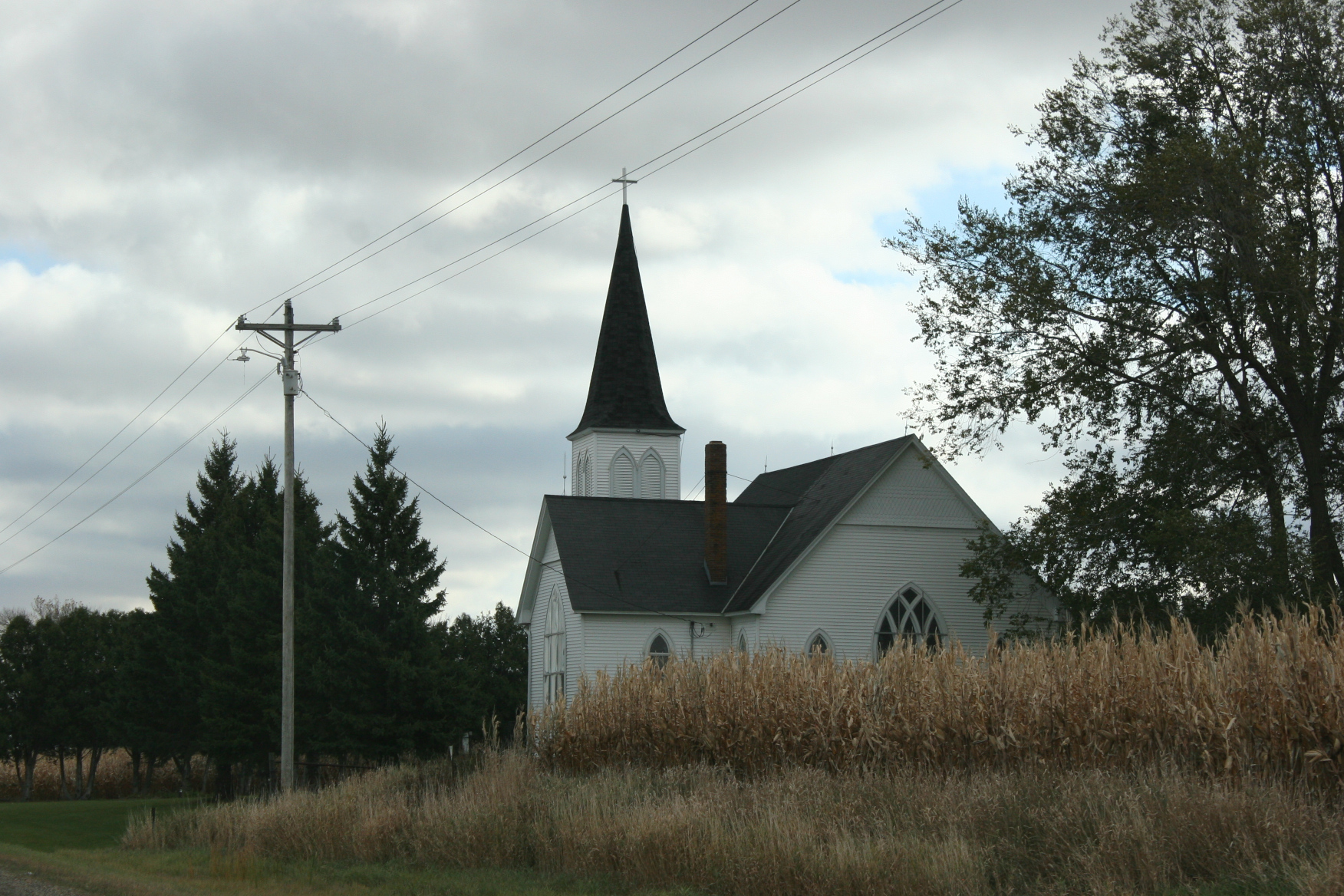
Prairieville United Methodist Church, located along Minnesota State Highway 60 east of Faribault, is no longer an active congregation and opens only for special occasions.

Still, I need to share with you the last remnants of autumn, photographed during a Sunday afternoon drive east of Faribault and eventually into the Zumbro River Valley between Zumbrota and Oronoco. Randy and I felt the urge, the need, to take this final drive of the season, although we were really about two weeks late to see the fall colors. Yet, we found much to appreciate.

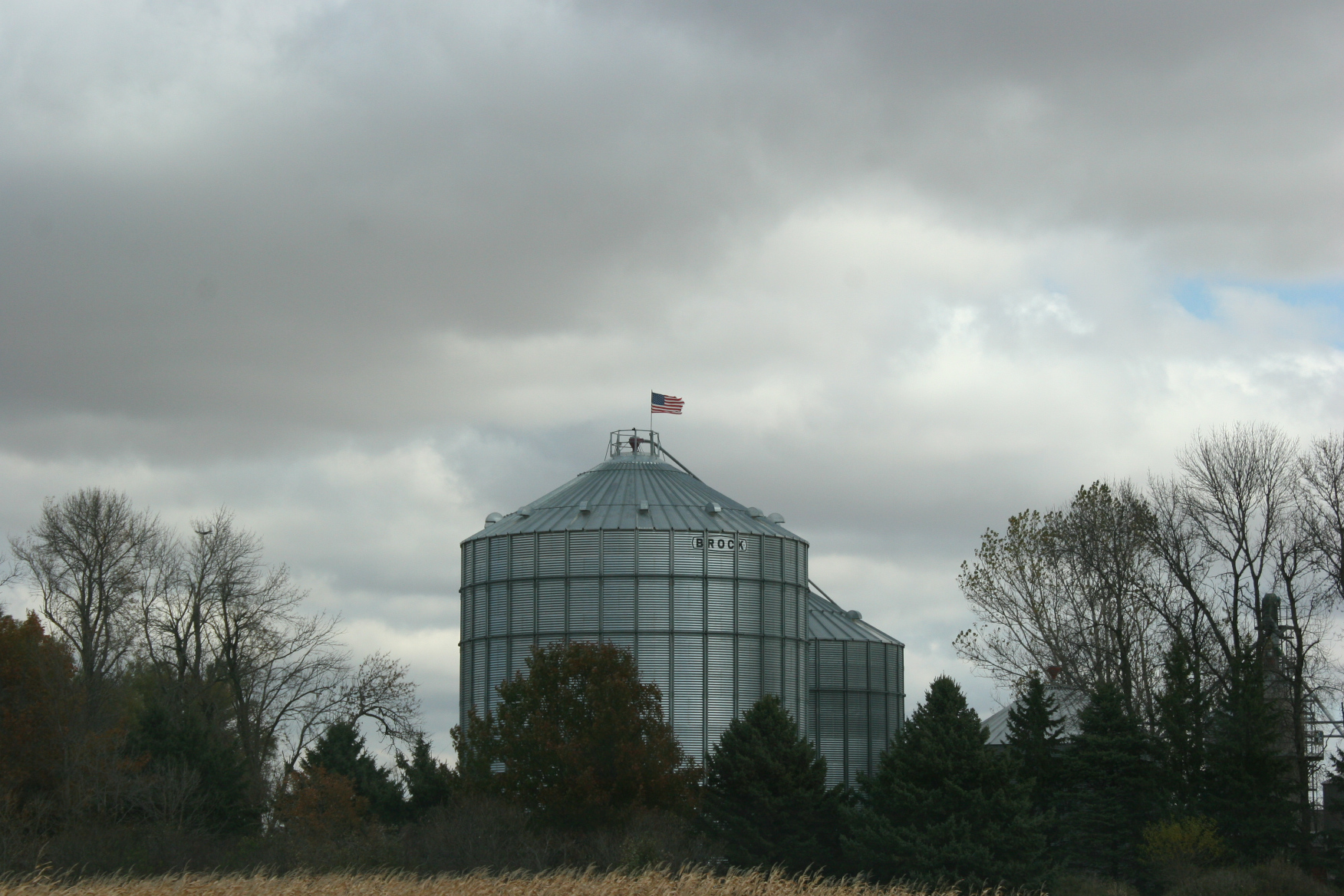
These grain bins are located along Minnesota State Highway 60 between Faribault and Kenyon.

As usual, I collected photo stories. Drives into the countryside and into small towns yield many such stories that often go untold. Had the day been warmer than about 35 degrees, we would have stopped more than twice to walk in these small communities. Our plans to eat a picnic lunch at a park ended with us parked outside the Zumbrota Public Library eating our ham sandwiches, grapes and protein bars in the van.

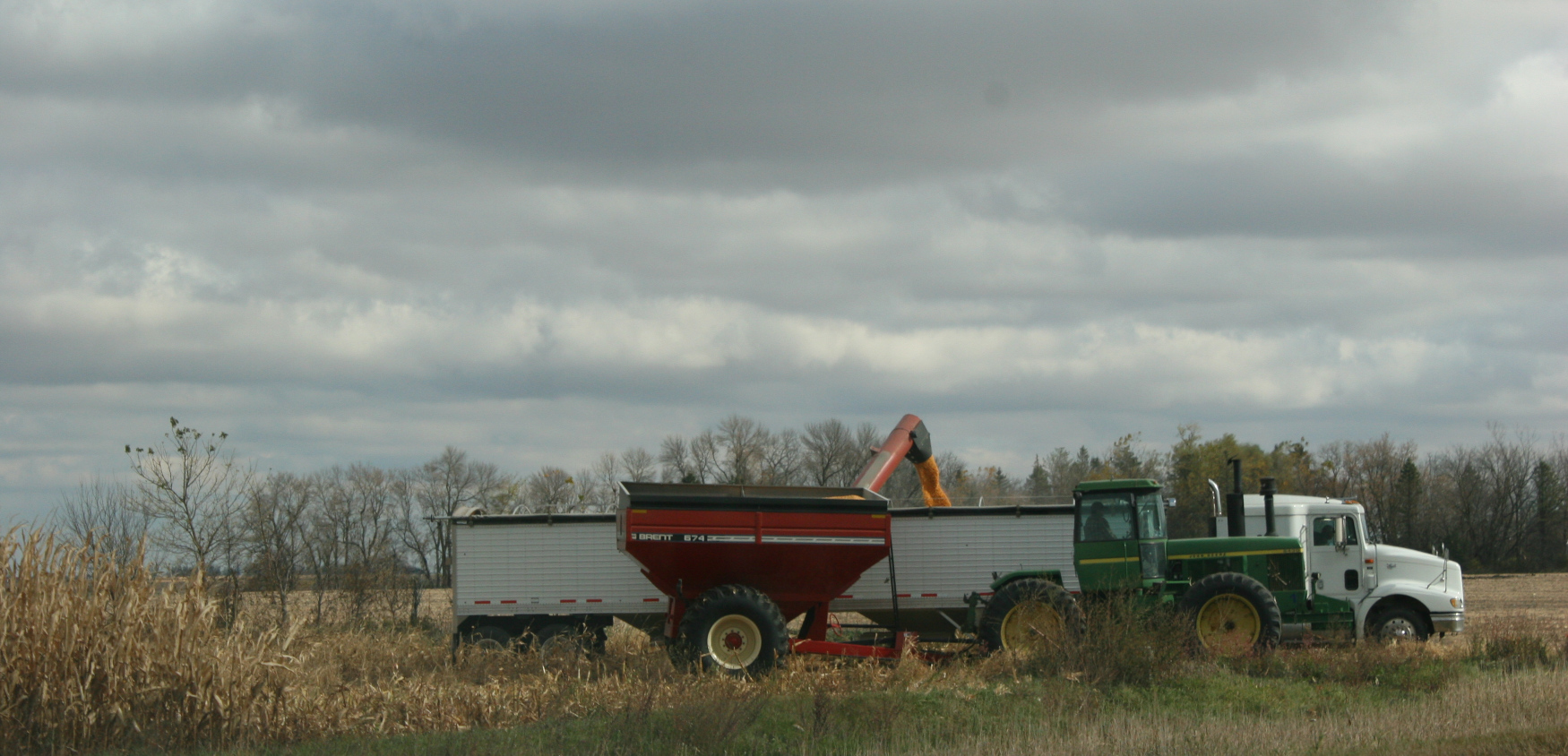
Harvesting corn Sunday afternoon east of Faribault along Minnesota State Highway 60.

I filled my camera with images as we began out eastward drive along Minnesota State Highway 60. I found myself focused on documenting the harvest. Farmers were out in full force on Sunday, sweeping across acres of cornfields to bring in the crop.

A common site, and reason to slow down, during the harvest season.

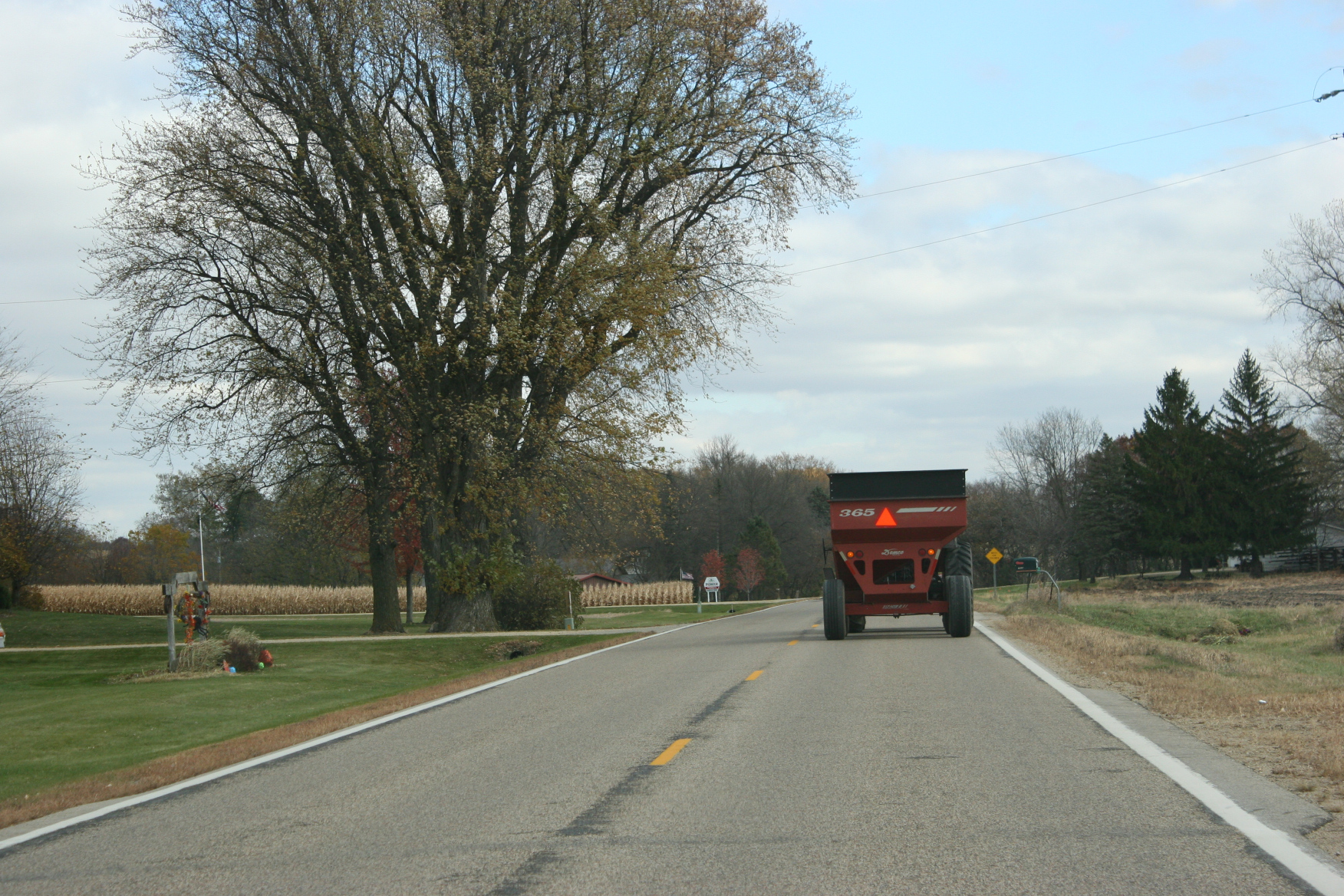
Countless times, we encountered farm machinery on the highway, which led to Randy reciting this sound bite: Farmer on the road! That became a familiar refrain each time we slowed behind or met a tractor or combine and attempted to safely pass.

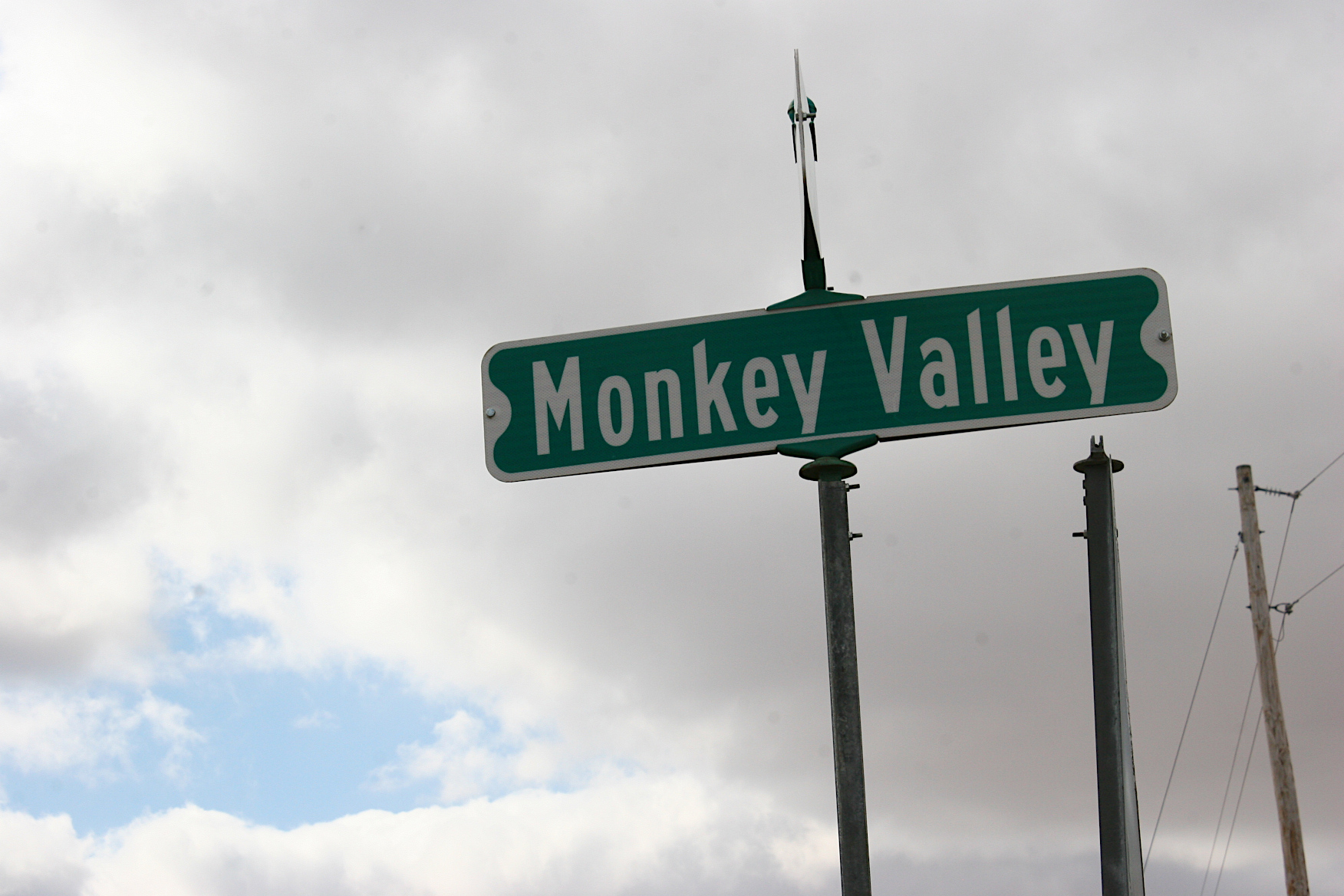
We’ve traveled highway 60 so many times that I struggle to find something new and interesting to photograph. So I suggested exiting onto a gravel road southwest of Kenyon into Monkey Valley.

Beautiful Monkey Valley.

The name itself intrigues me. As legend goes, the area was named such after a monkey escaped a traveling circus many many years ago. True? I don’t know. But I like the story.

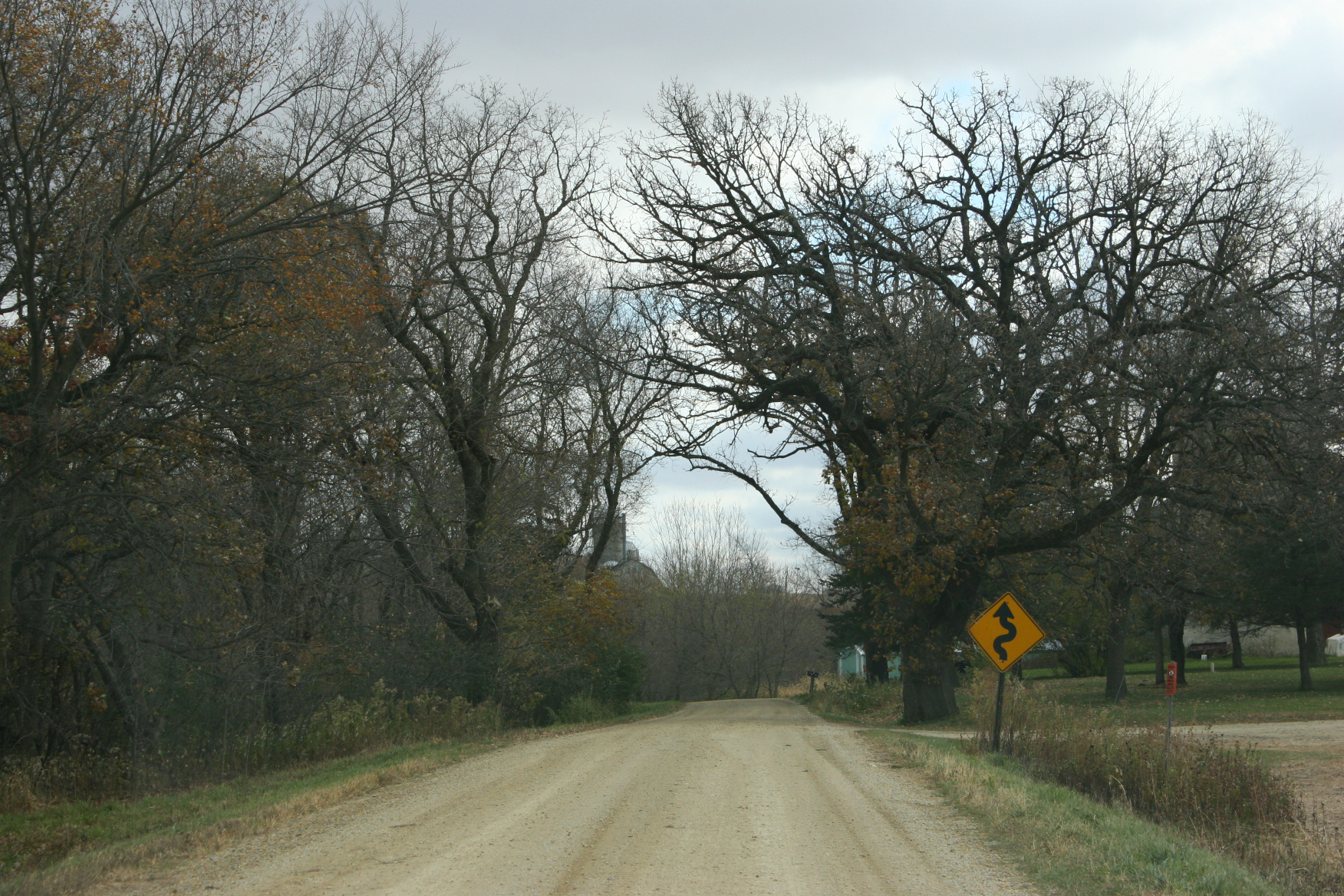
The gravel road winding through Monkey Valley.
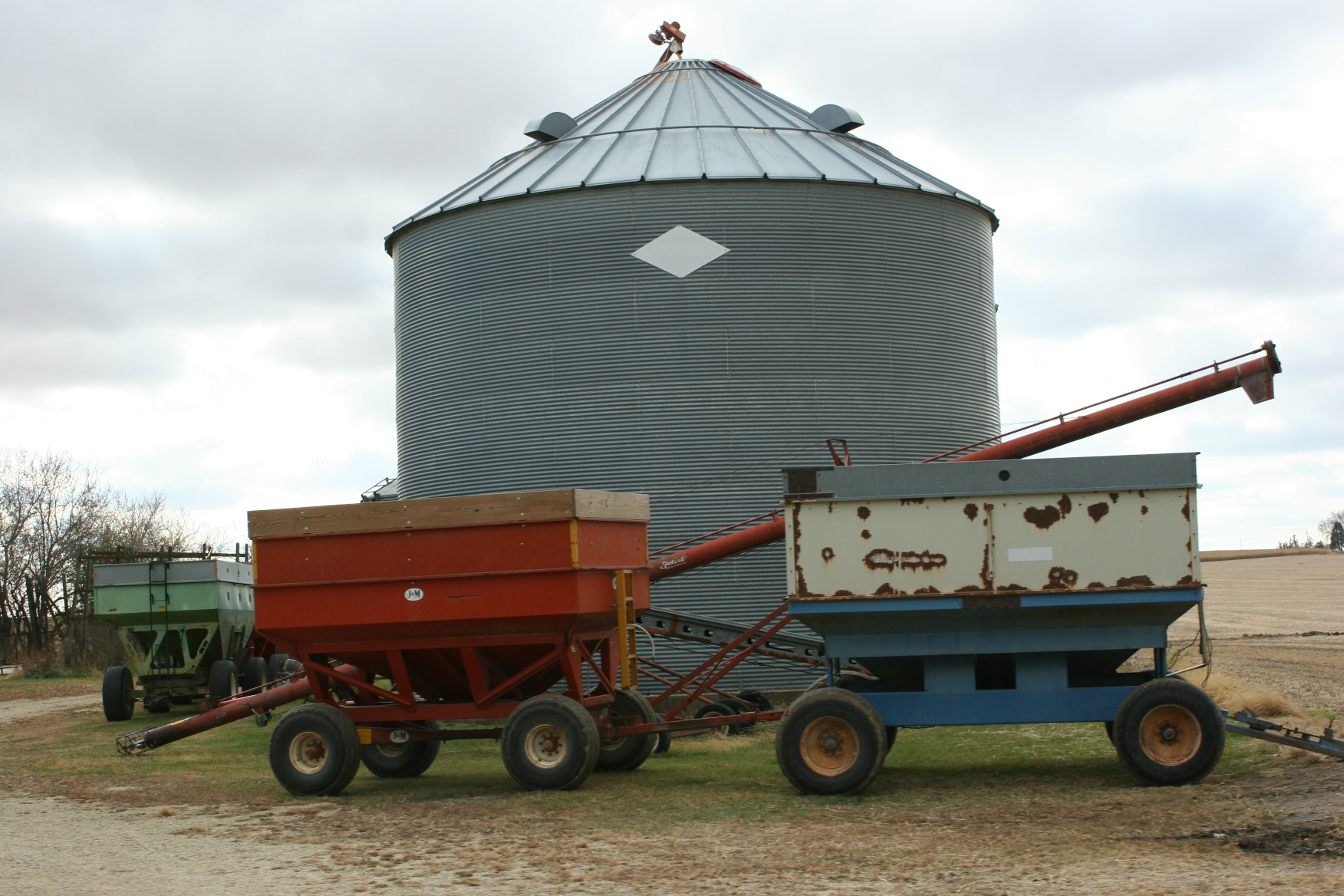
Grain wagons parked next to a grain bin in Monkey Valley.
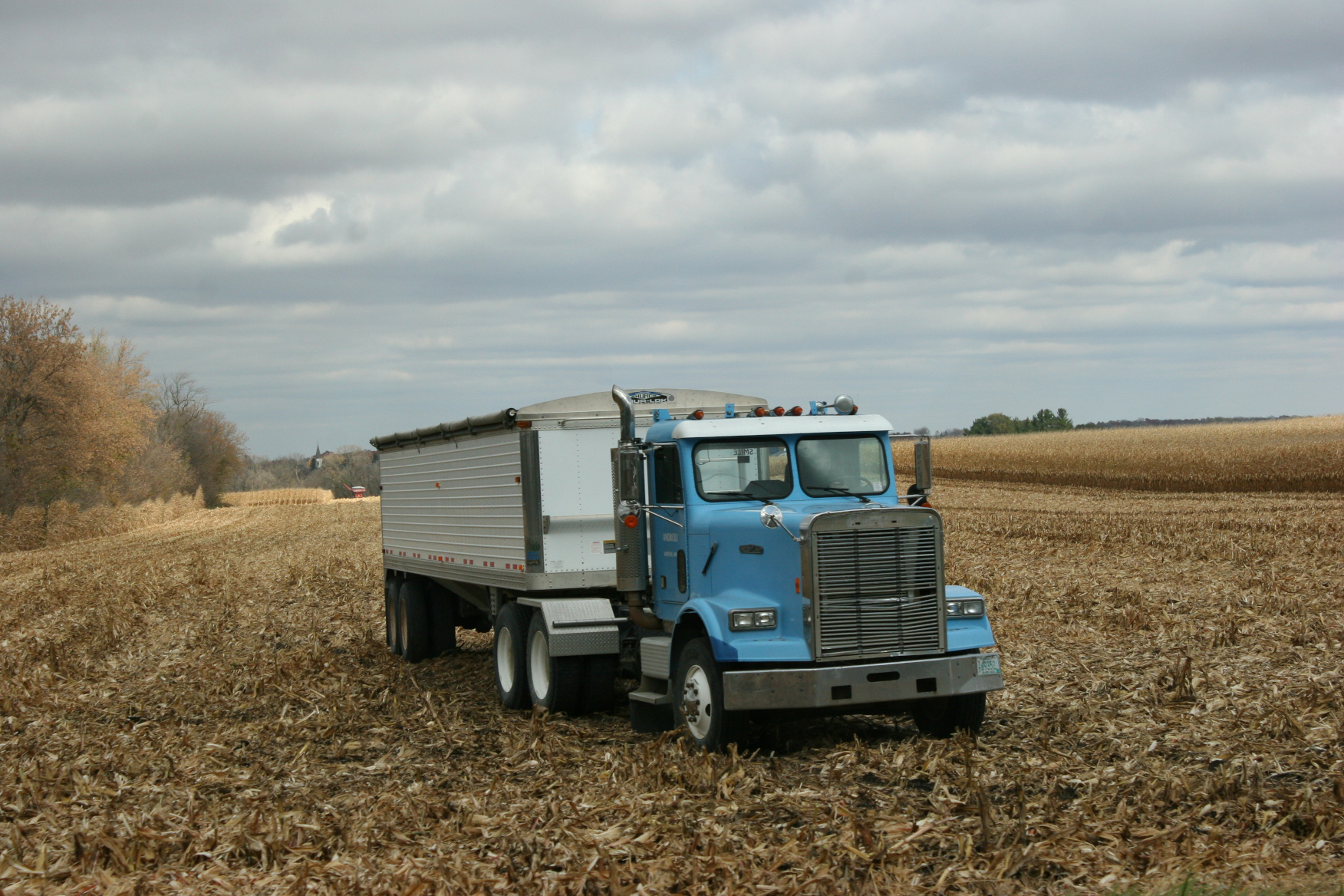
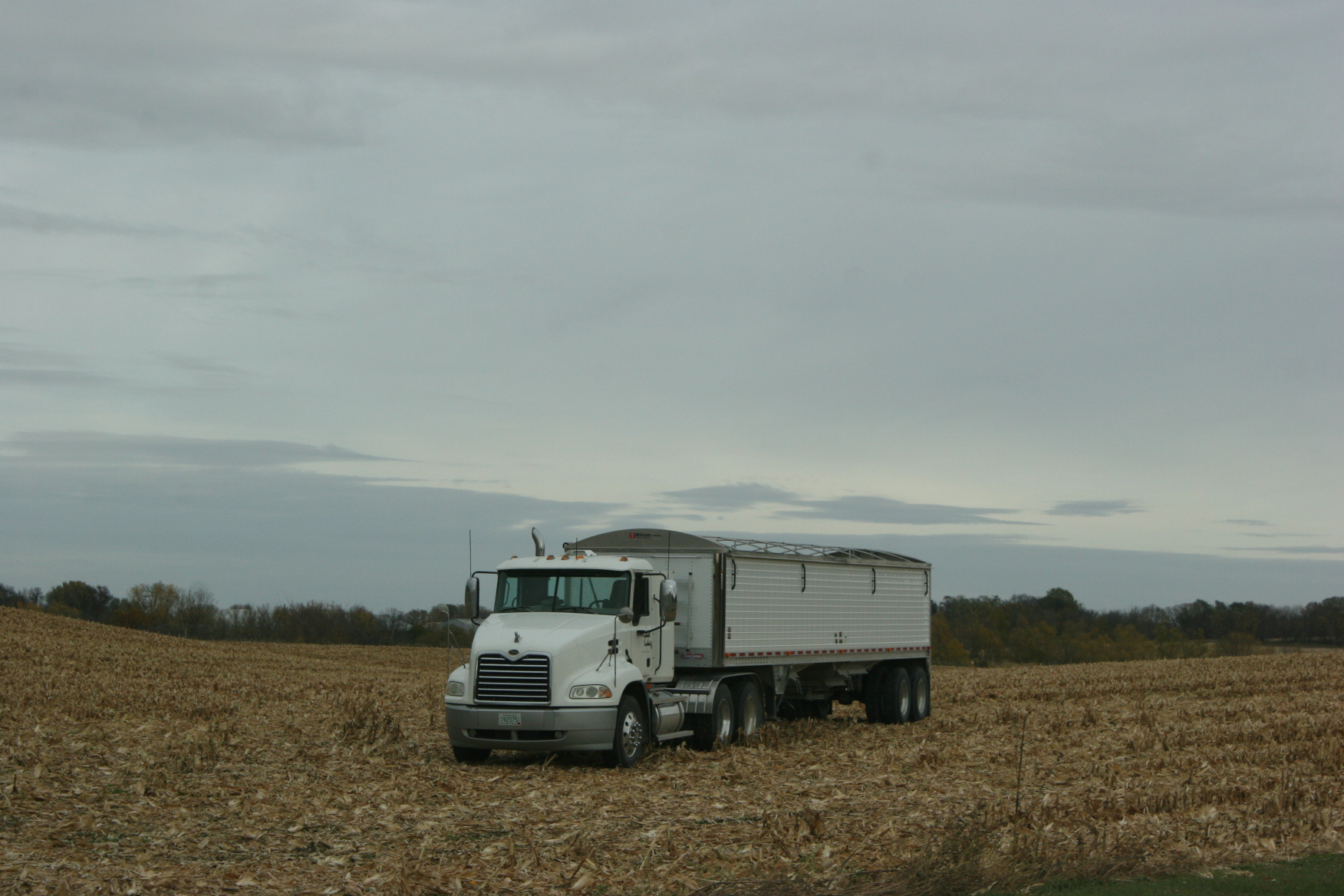
A semi truck awaits the harvesting of corn in a Monkey Valley field.

And I also like this rural route, Monkey Valley Hollow, a gravel road which twists and turns through the woods past farm sites and fields and the Old Stone Church (which I didn’t photograph this time).

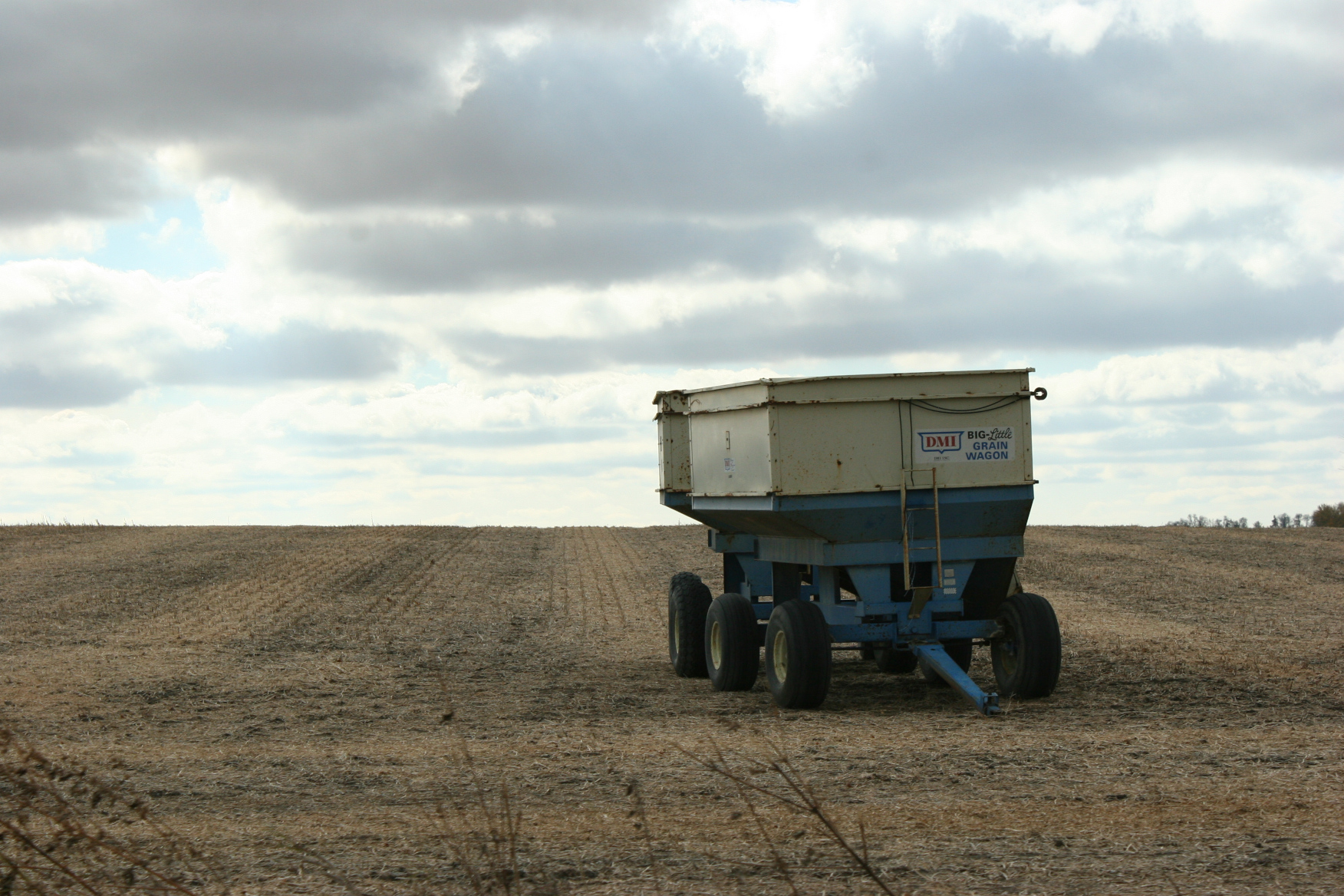
A lone grain wagon, my final photo before leaving Monkey Valley.

After completing this leg of our day trip, we aimed north for Kenyon. I always find something interesting in this small town, even though I’ve been here many times. Check back for those photo stories tomorrow as I show you my discoveries.

© Copyright 2020 Audrey Kletscher Helbling


Thoughts during this season of autumn in Minnesota October 20, 2020

Filed under: Uncategorized — Audrey Kletscher Helbling @ 5:00 AM
Tags: , , , , , , , , , ,
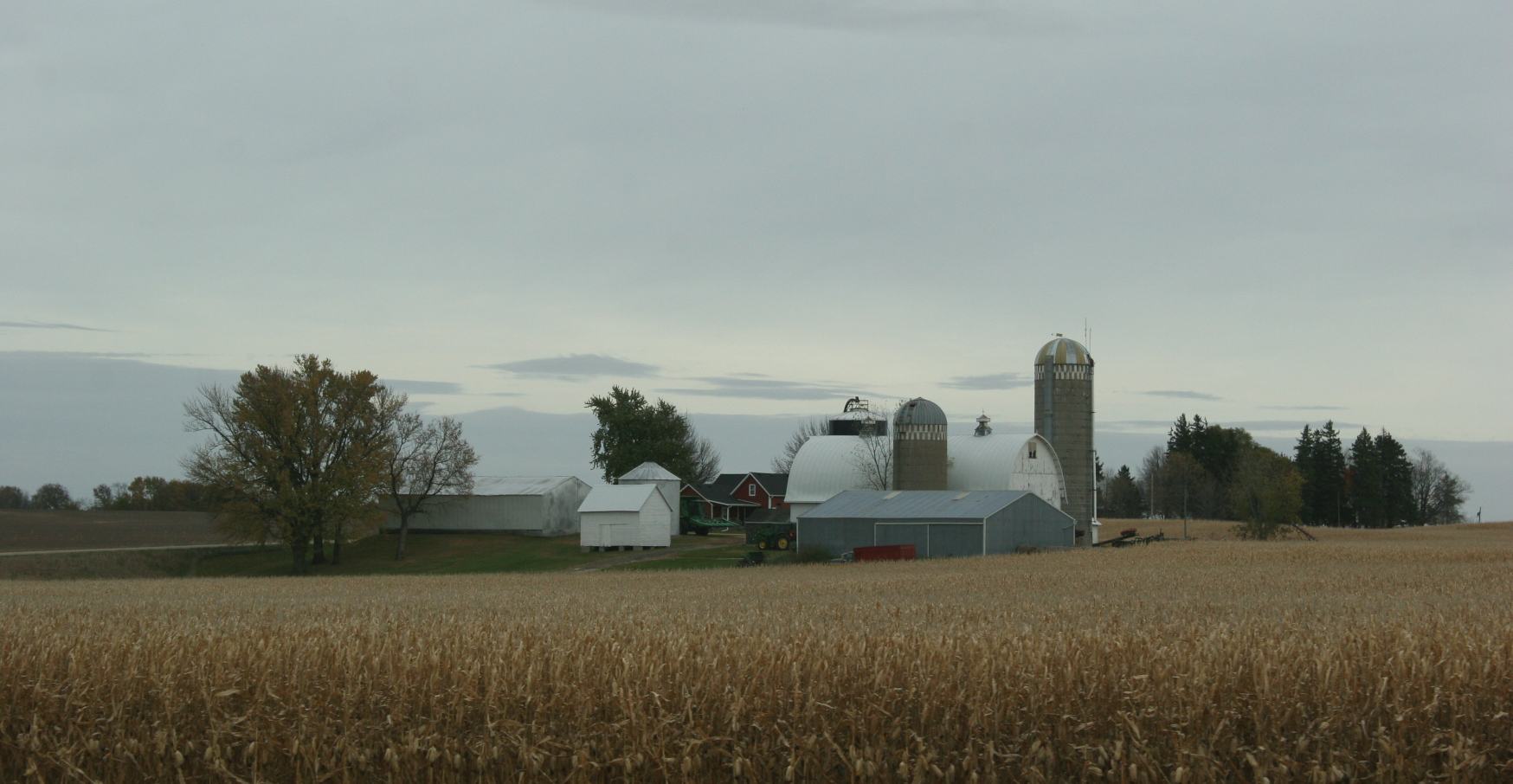
A cornfield fronts a farm site between Faribault and Dundas in rural Rice County, Minnesota.

LIVING IN SOUTHERN MINNESOTA, as I have for my entire life, I feel a strong connection to the land rooted in my rural upbringing.

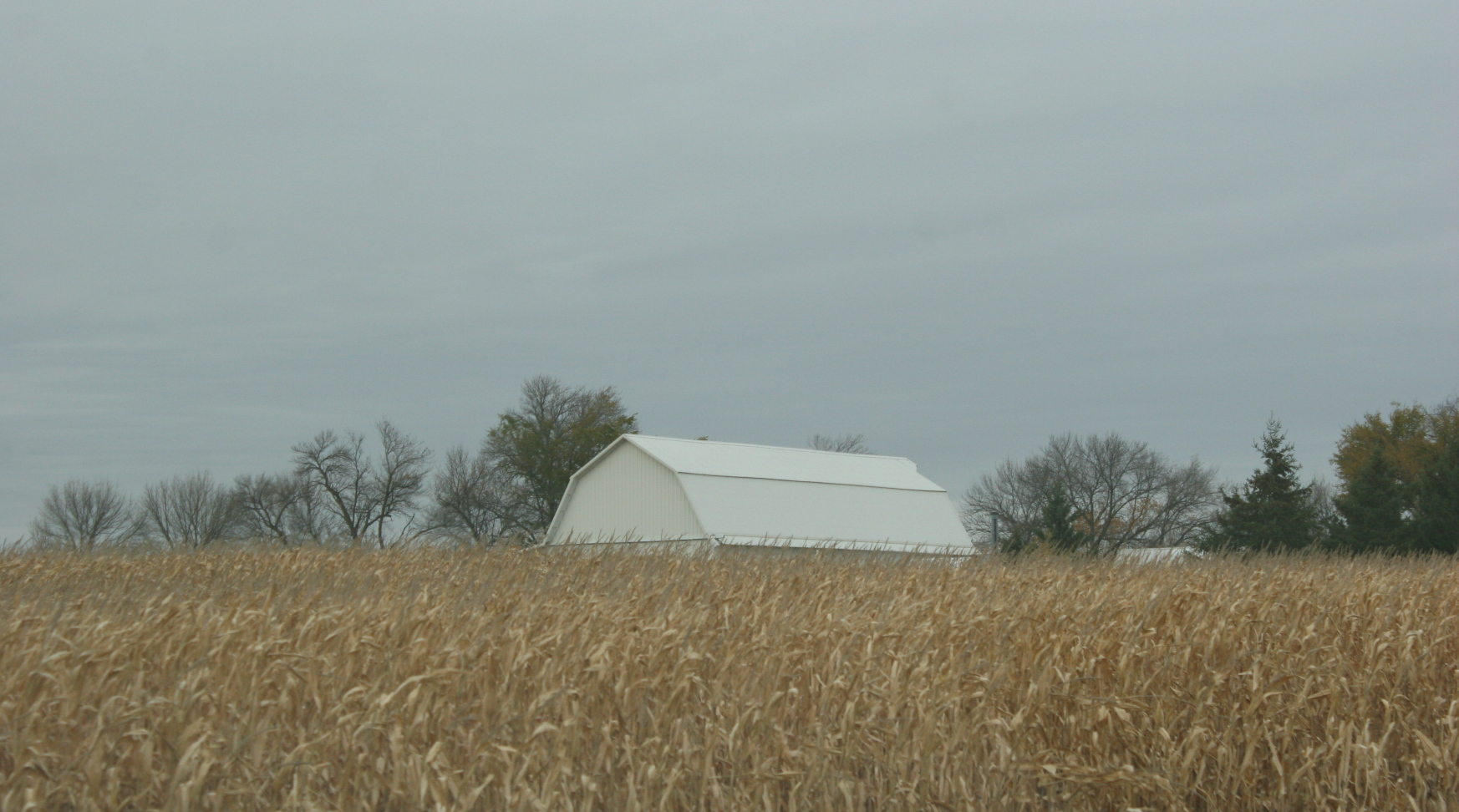
A barn roof is barely visible over a cornfield, rural Rice County.

Each autumn, I reflect on this time of bringing in the crops. Of gathering the last of the garden produce. Of harvesting corn and soybeans from the acres of fields that define rural areas. I miss the sights and sounds and scents of farming this time of year. Once-green fields muting to shades of brown, Combines roaring down field rows. The air smelling of drying leaves and of earth.

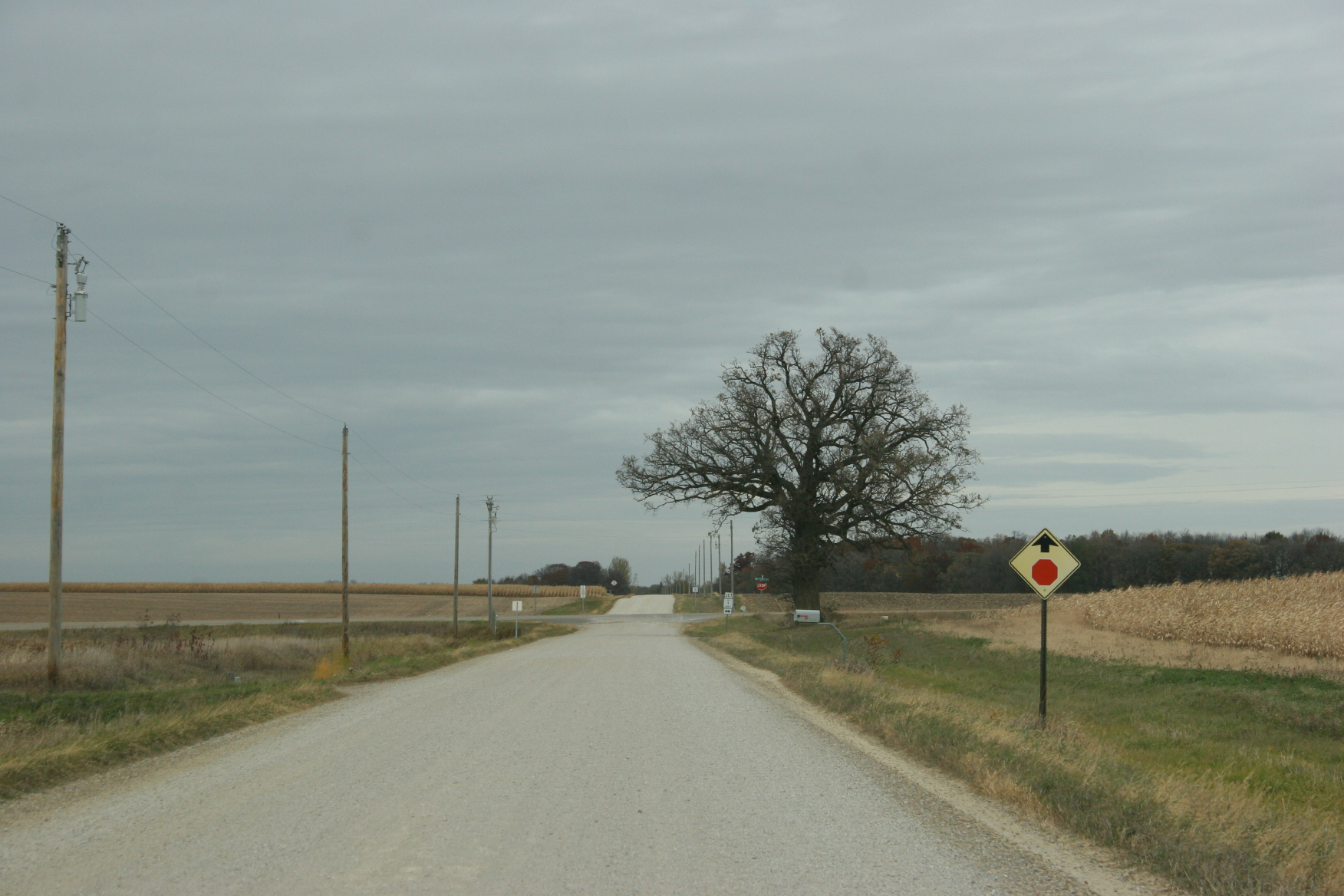
A back country road north of Faribault, heading to Dundas.

For those reasons, I always appreciate a drive through the countryside, especially along gravel roads. The pace is decidedly slower than traveling on a paved surface.

A grain truck awaits the harvesting of corn in rural Dundas.

Although farming has changed considerably with bigger machinery and bigger farms and bigger yields, the basic connection to the land remains. At least for me. It’s part of my creative spirit, of my being.

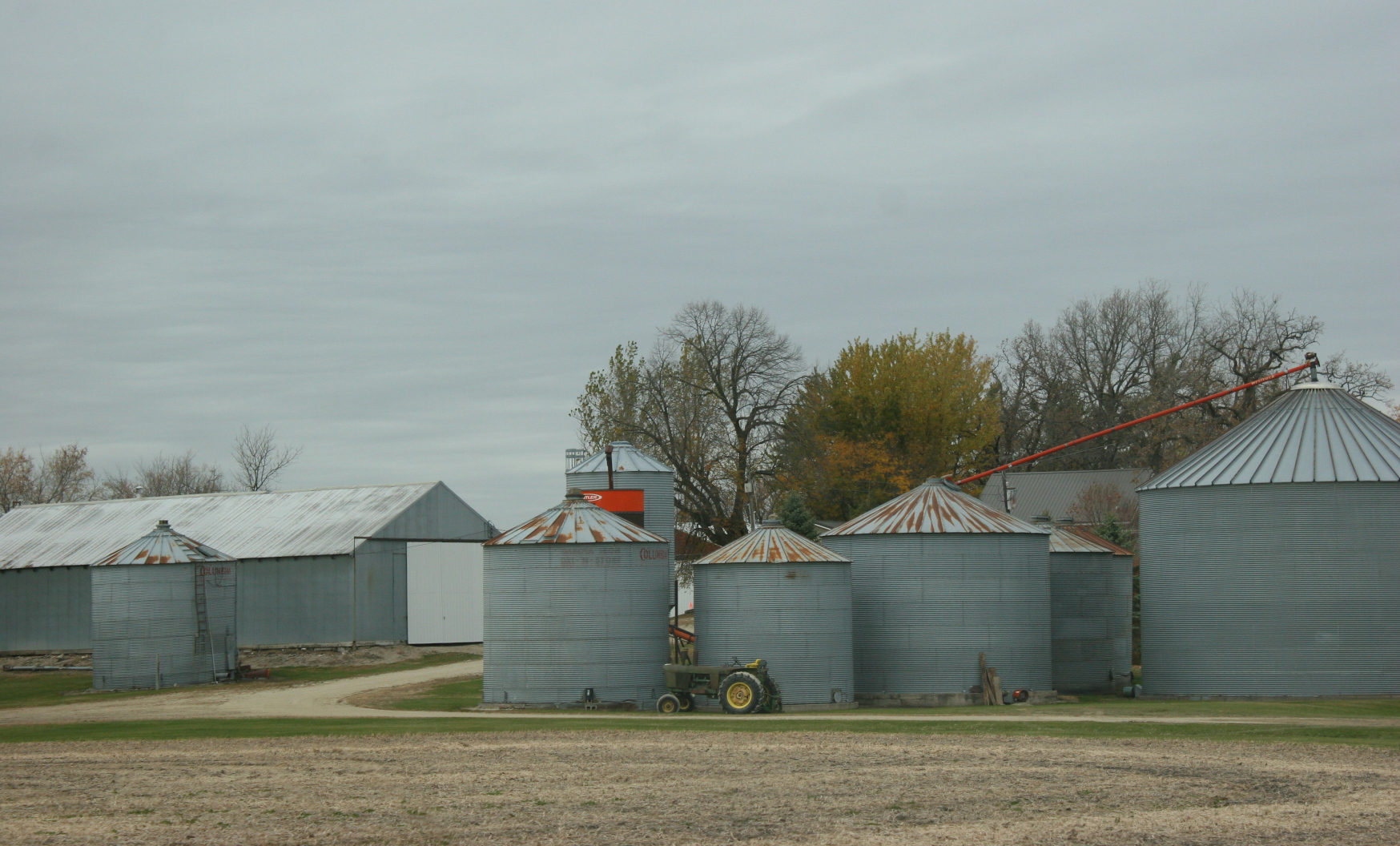
Grain bins define a farm site along a back gravel road in rural Rice County, Minnesota.

Yes, it’s easy to get nostalgic about rural life. I offer no apologies for that because I shall always feel grateful for the 17 years I lived on a farm. I learned the value of hard work, of living with minimal material possessions, of working together, of recognizing that inner strength and fortitude and resilience are important as are honesty and good character.

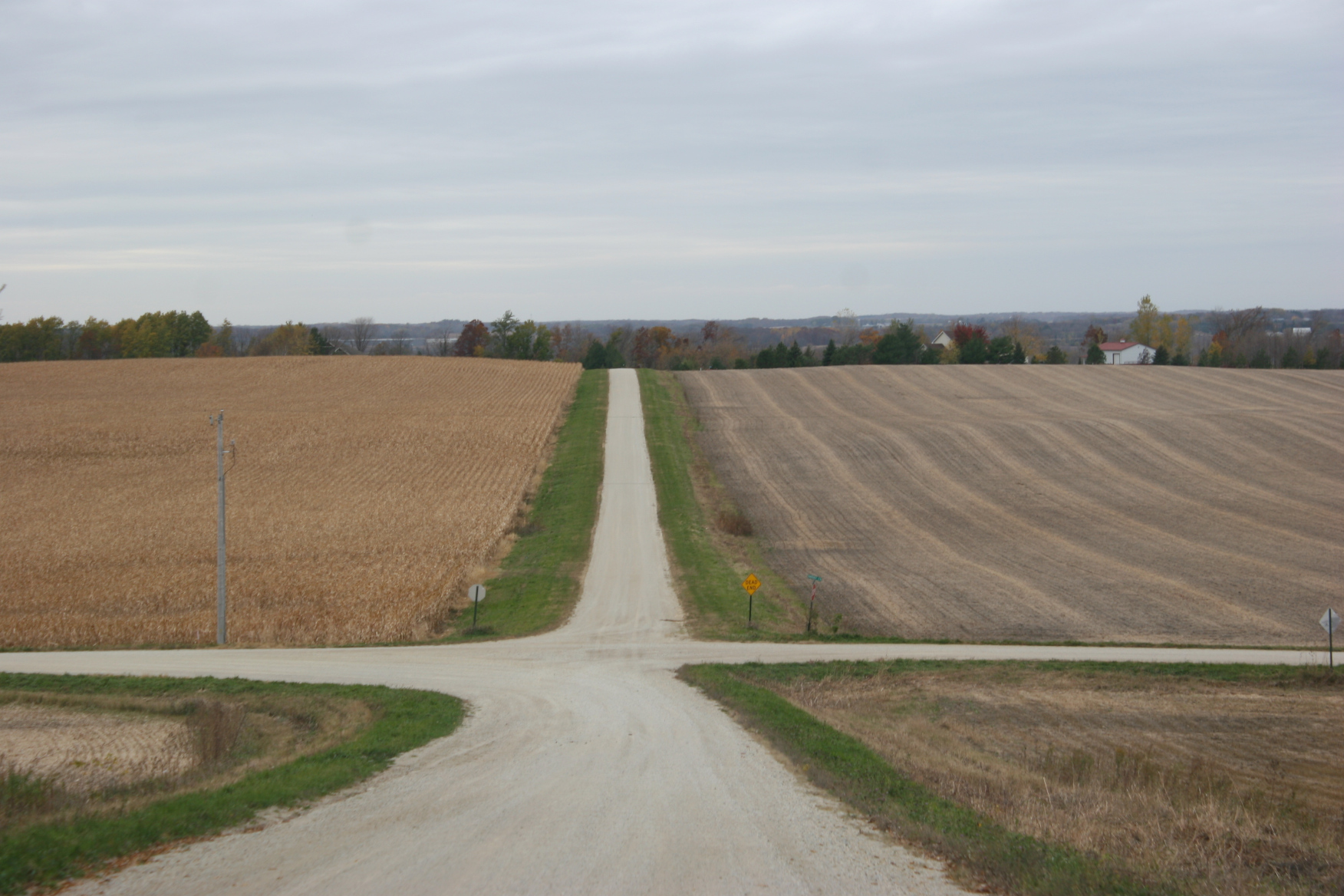
Country roads intersect near Cannon City.

I am thankful I used an outhouse during my childhood, pitched manure, picked rocks, walked beans, fed cows and calves, pulled weeds, didn’t get birthday gifts… There’s something to be said for having grown up in such a setting, in a way of life that by necessity requires significant physical labor and living within your means.

Harvest finished in rural Rice County.
A grain truck parked in Northfield.
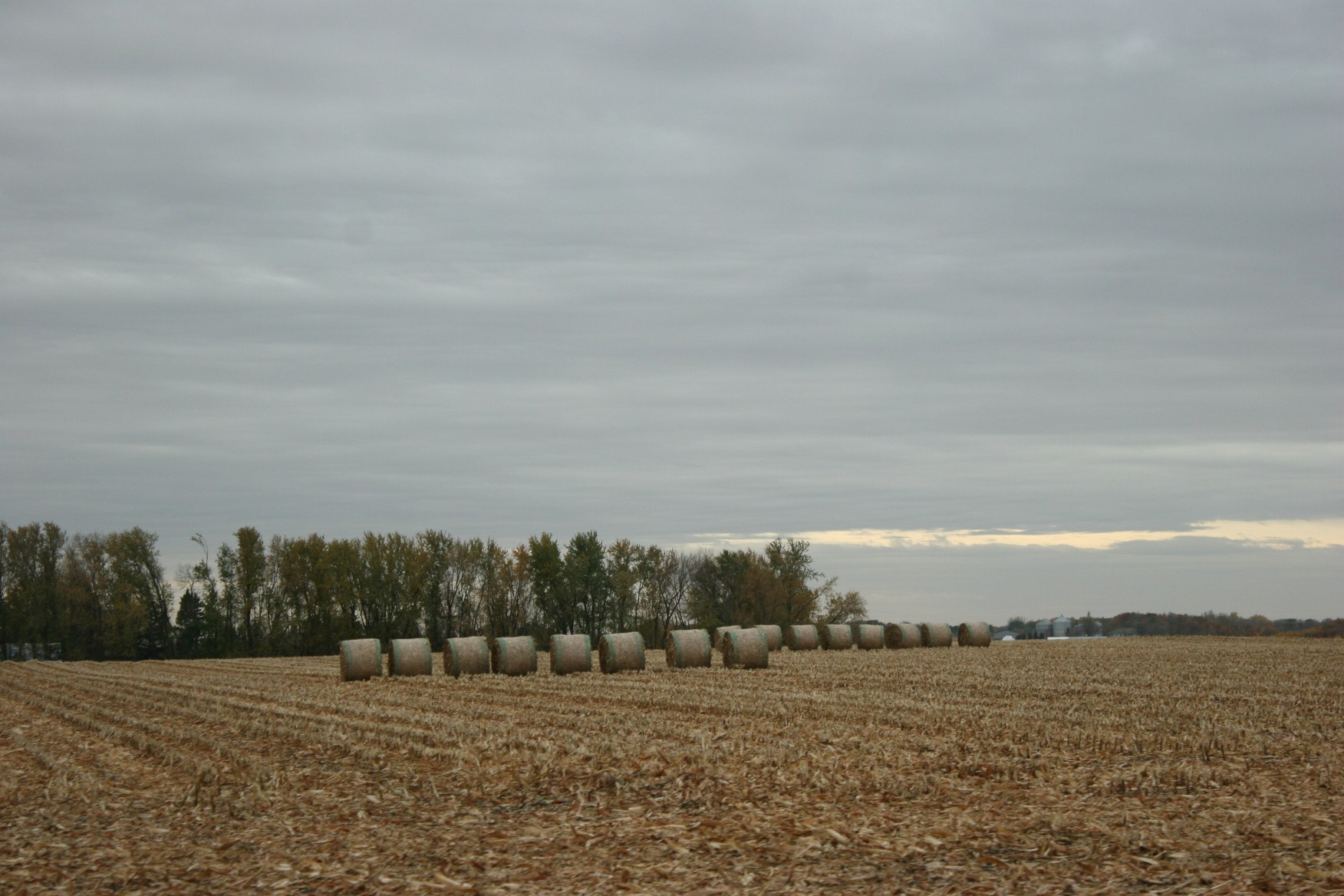
Corn stalk bales line a Rice County field.

In the winter, my hands cracked and bled from exposure to water and the elements. In the spring, when I picked rocks from fields, dirt sifted into holes in my canvas tennis shoes. In the summer, the hot sun blistered my skin as I pulled cockleburrs. (We didn’t have sunscreen.)

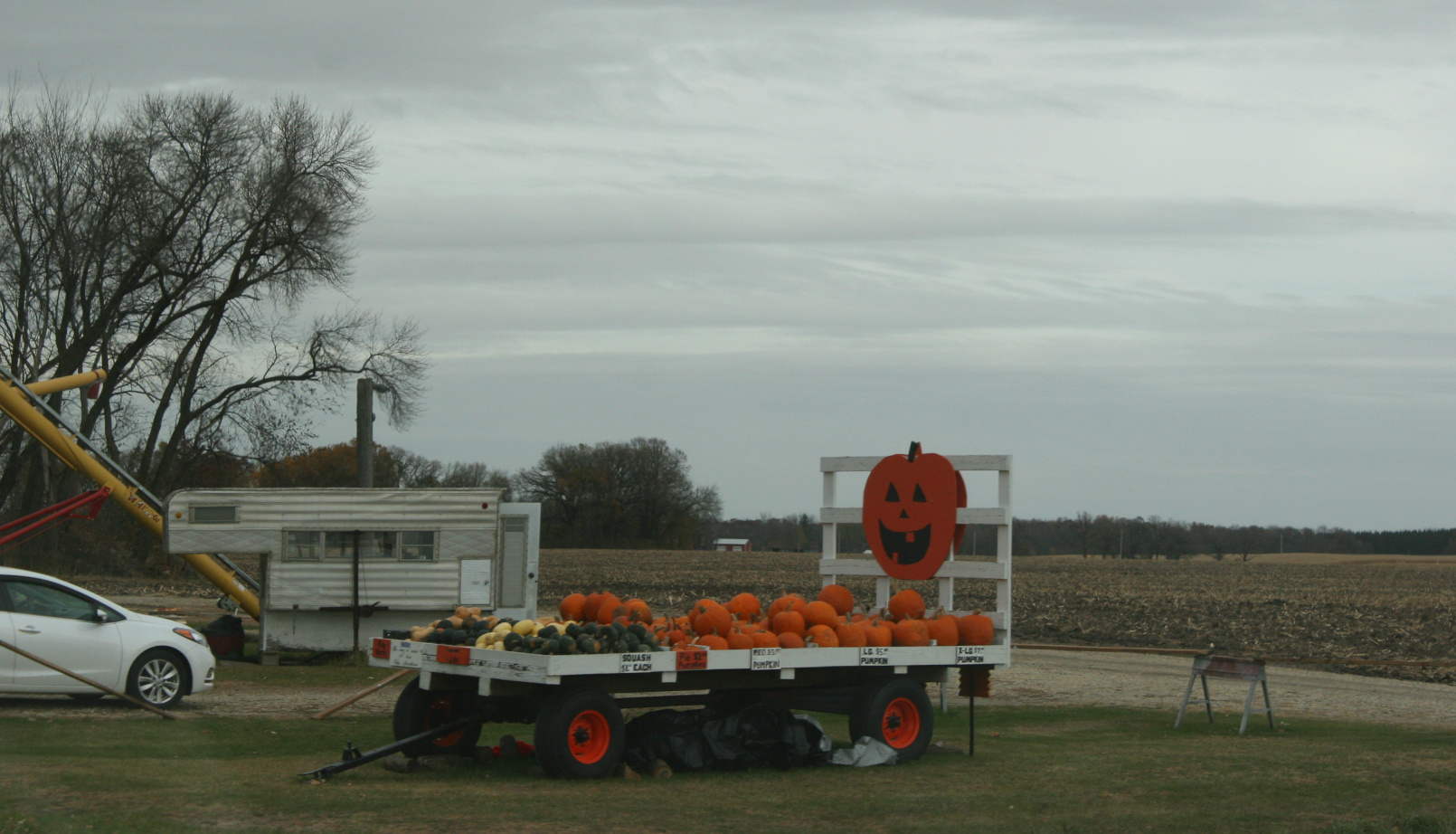
Pumpkins and squash for sale from a wagon parked at a farm site along Rice County Road 1 west of Dundas.
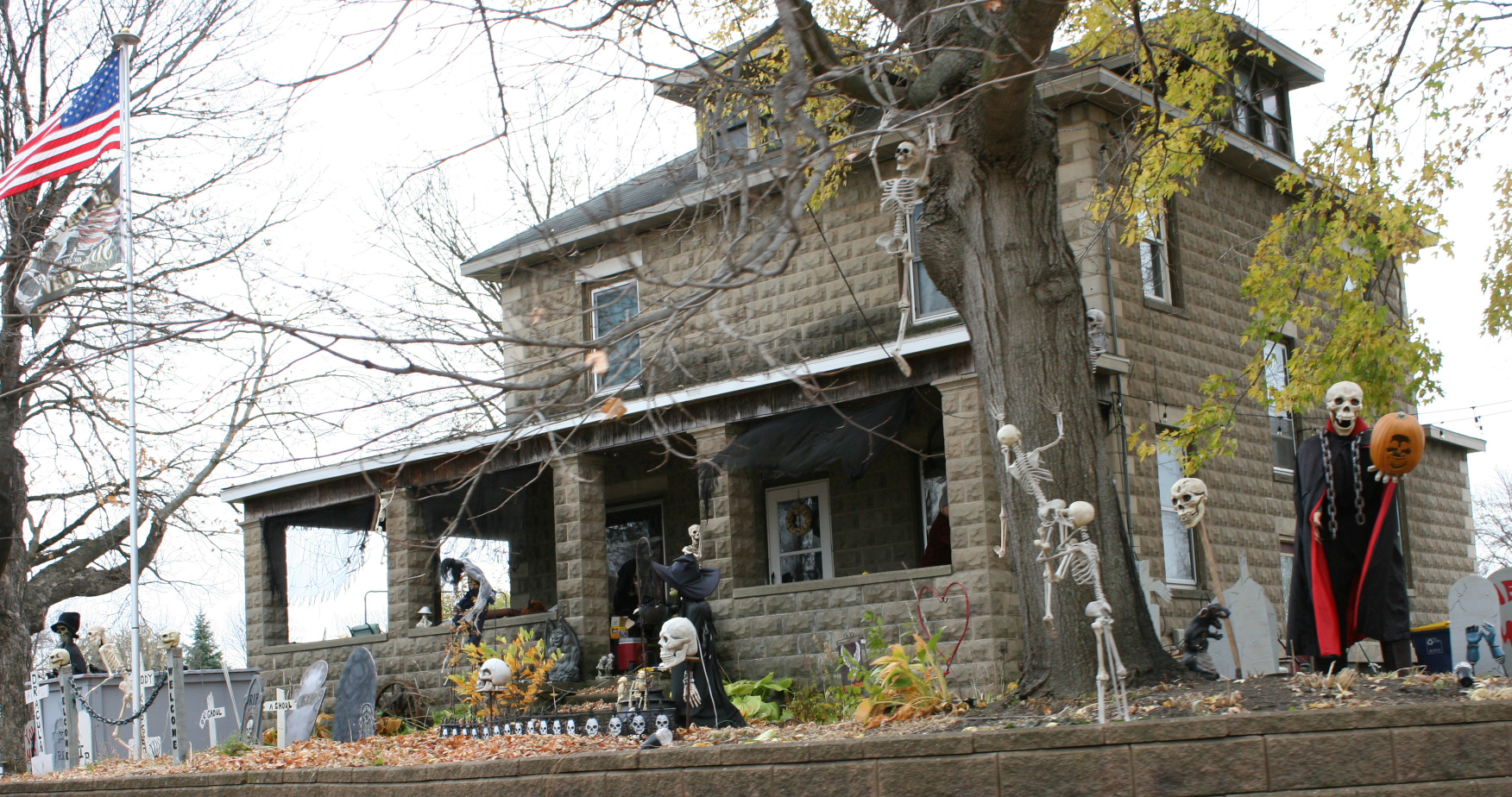
A house in Dundas decorated for Halloween.
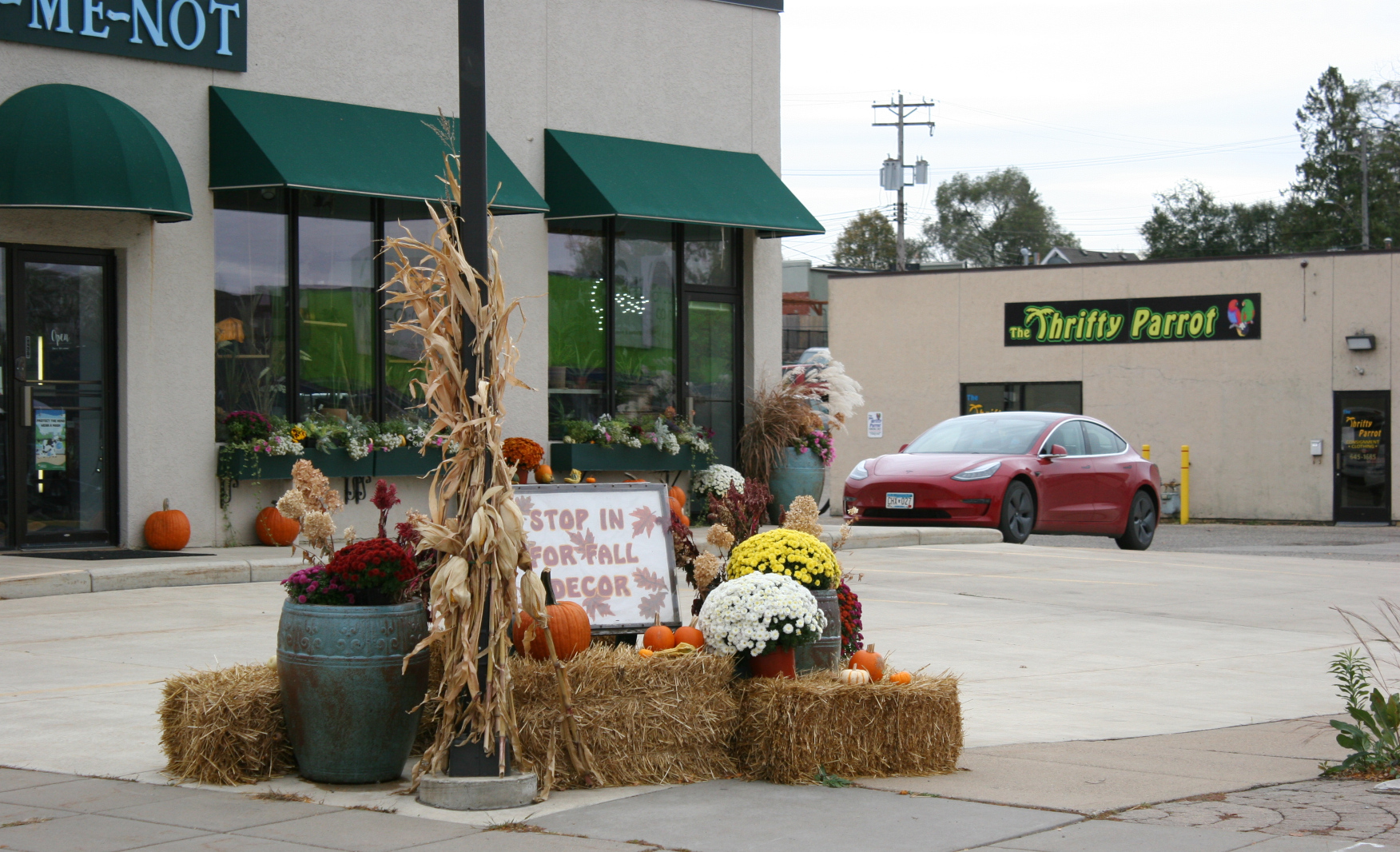
A seasonal display anchors a corner of a downtown Northfield floral shop.

And so these are my thoughts as I immerse myself in the season of harvest via a country drive. A drive that takes me from the countryside into town, to seasonal displays and thoughts of Halloween and Thanksgiving and the winter ahead.

The road ahead may not be easy…

I fully recognize that the forthcoming winter will challenge all of us. I am determined to stay the course during this ongoing global pandemic. To mask up, to social distance, to wash my hands, to connect only with my small family circle, to try and stay as healthy as possible, to care about others…to tap into my can-do farm girl attitude of strength, common sense and resilience. For this is but a season of life, one which requires each of us to think beyond ourselves, understanding that our choices matter now, more than ever to the health and safety of all.

© Copyright 2020 Audrey Kletscher Helbling


Remembering & honoring my hardworking dad this Labor Day September 7, 2020

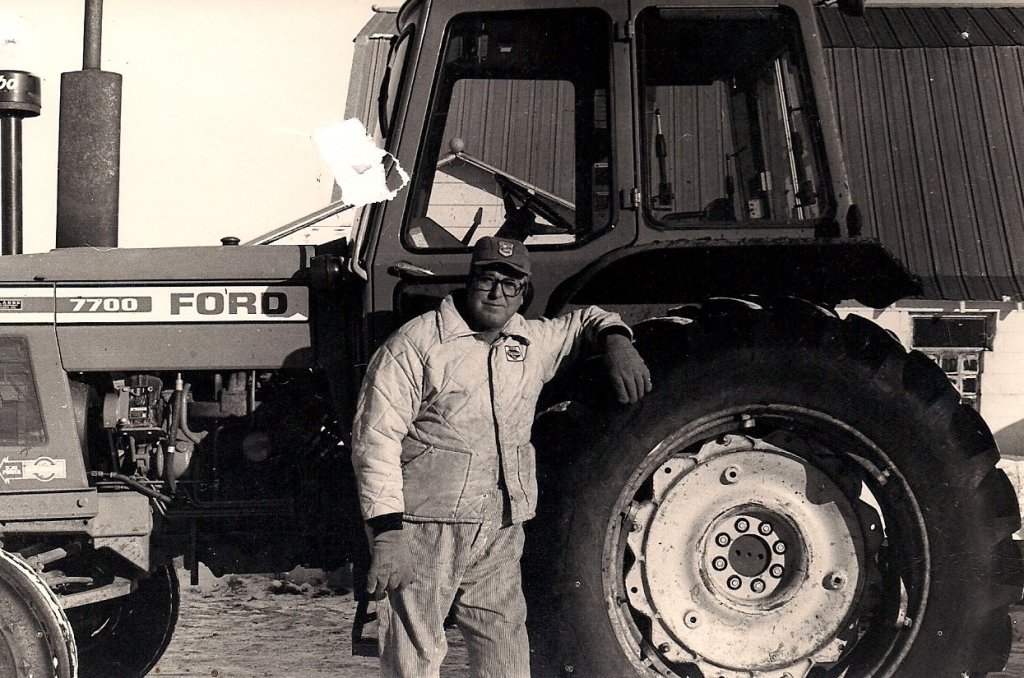
Dad farmed, in the early years with a John Deere and Farmall and IH tractors and later with a Ford. (Photo by Lanae Kletscher Feser)

A photo of my dad, Elvern Kletscher, taken in 1980. He died in 2003.


MY DAD WORKED HARD. Really hard. He was a farmer, beginning back in the day when farming was incredibly labor intensive. Pitching manure. Throwing hay bales. Milking cows by hand. Cultivating corn. He worked from the rising of the sun to beyond sunset. Hours and hours in the barn. Long days in the field. Few, if any, days off.


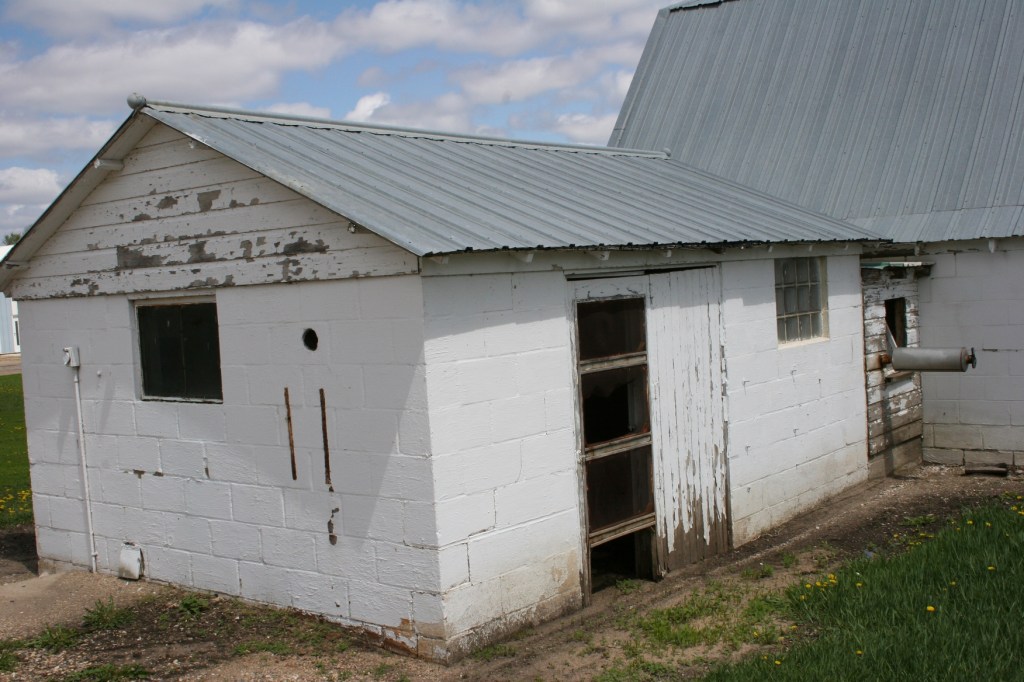
The milkhouse, attached to the barn on the farm where I grew up just outside of Vesta, MN. I spent a lot of time in these two buildings. Minnesota Prairie Roots file photo.


It was a life he knew from childhood, as the son of a southwestern Minnesota farmer. Dad quit school after eighth grade to work on his family’s farm in the 1940s. And when he grew into adulthood, he served on the frontlines during the Korean War, then returned to farm just down the road from the home place. There he worked his own land, milked cows and raised (along with my mom) his family of six children.


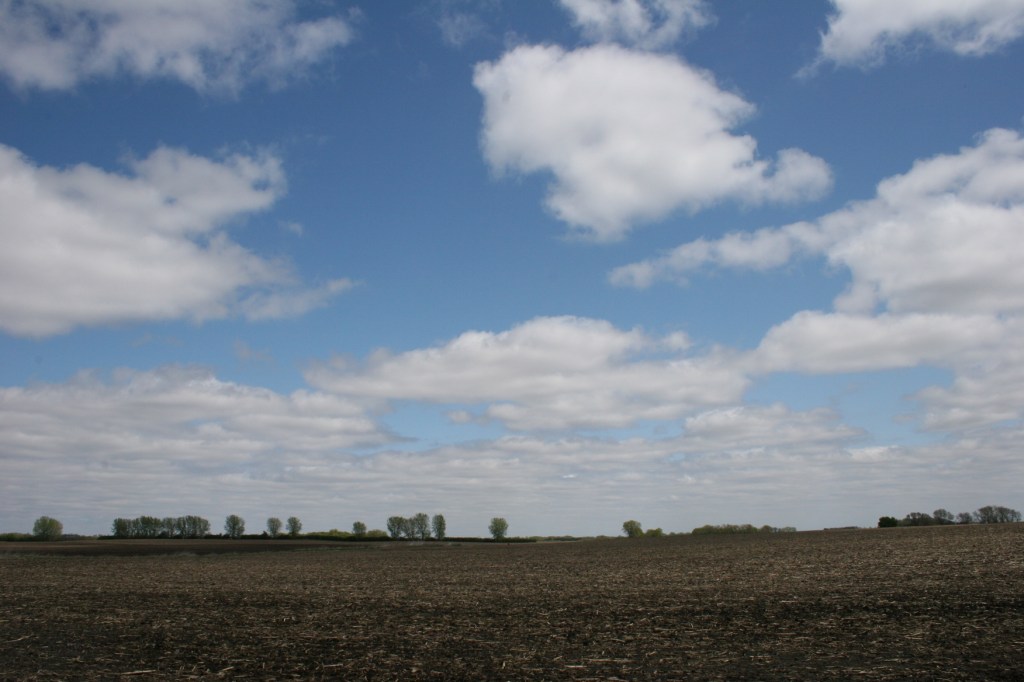
Some of the acreage my dad farmed in Redwood County, Minnesota. Minnesota Prairie Roots file photo.


Like my father, I grew up with a strong work ethic rooted in the land. Walking bean fields to pull unwanted weeds. Picking rock. Throwing hay bales into feed bunks for the Holsteins. Carrying buckets of milk replacer to thirsty calves. Climbing up the silo and forking smelly silage down the chute. The work never ended. And the next day we repeated the process.


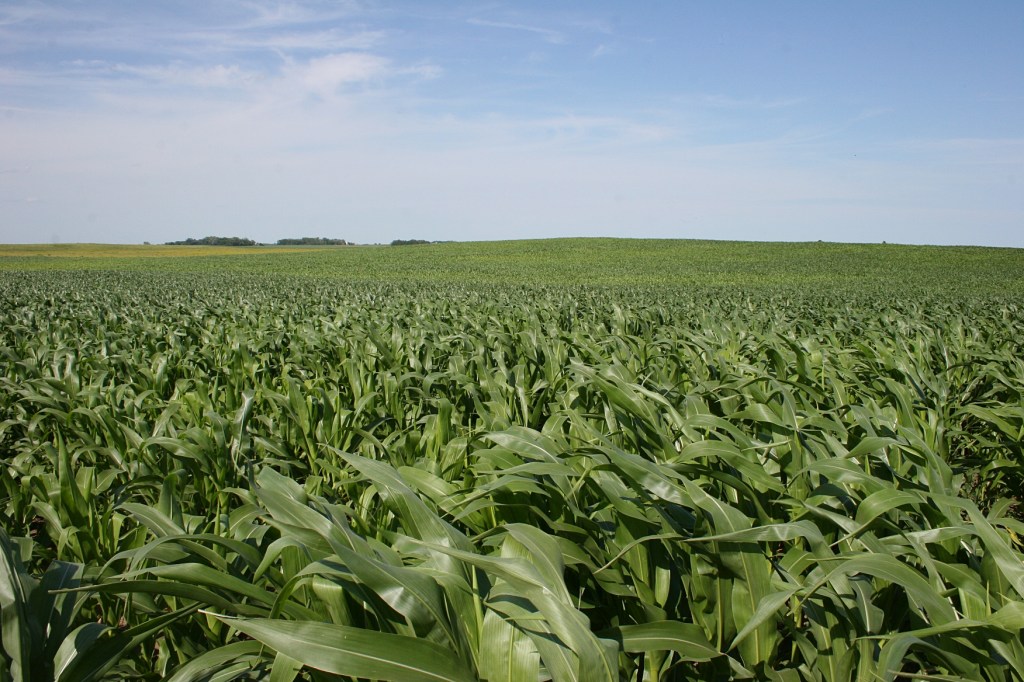
Corn and soybean fields define southwestern Minnesota. Minnesota Prairie Roots file photo.


But it was, in many ways, a good life. Time together. Time outdoors. Time to reflect. Time to learn and grow and stretch, just like the corn stretching toward the sky.


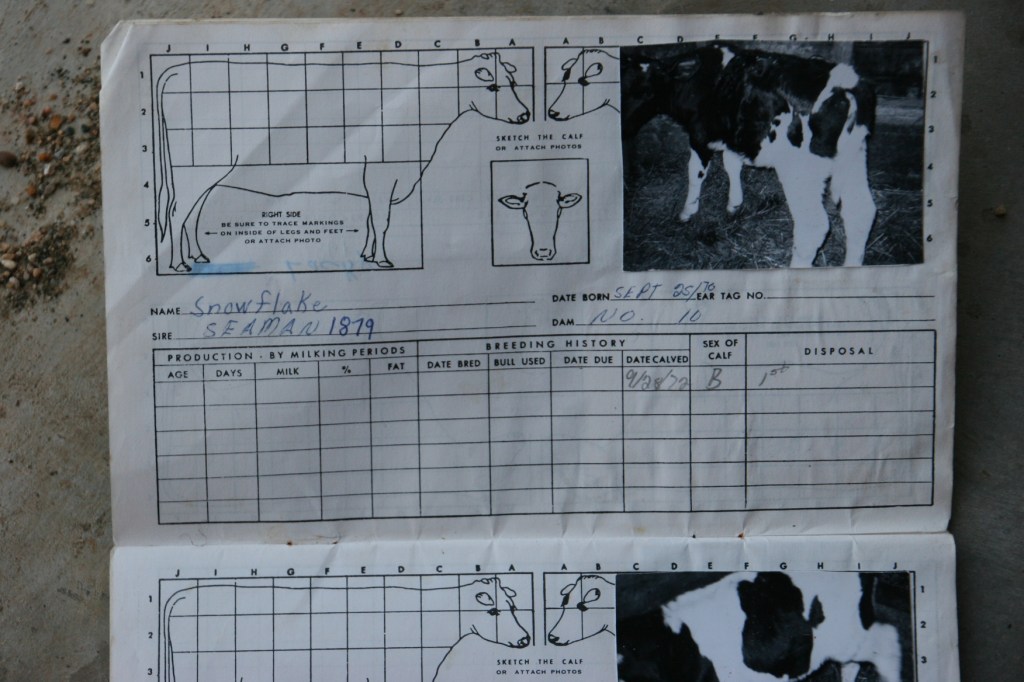
Growing up on our crop and dairy farm, my eldest brother, Doug, photographed the cows and recorded details about them. My middle brother treasures this compilation of information from our farm. And so do I. Memories… Minnesota Prairie Roots file photo.


Working on the farm made me strong and resilient and fostered a sense of independence. I have always been a self-starter, preferring to work on my own. I trace that to the spirit of independence I observed in my farmer dad, who stood up for what he believed. I remember him dumping milk down the drain as the National Farmers Organization aimed to get better prices. I possess a streak of that feistiness, especially when it comes to those who are bullied/oppressed/looked down upon. I do what I can, with the talents I have, to make a positive difference. To uplift and encourage. And to really listen rather than talk.

I always told my dad I wanted to be a farmer when I grew up. He didn’t encourage that thought. None of my five siblings farm, although two work in ag-related businesses. It’s a credit to my parents that each of us pursued diverse careers as a partsman (and part owner) at an implement dealership, as a writer and photographer, a florist, CEO of an ethanol plant, teacher and lawyer. That’s a wide range of occupations among siblings. Our parents did not tell us what to do, and for that I shall always be grateful.


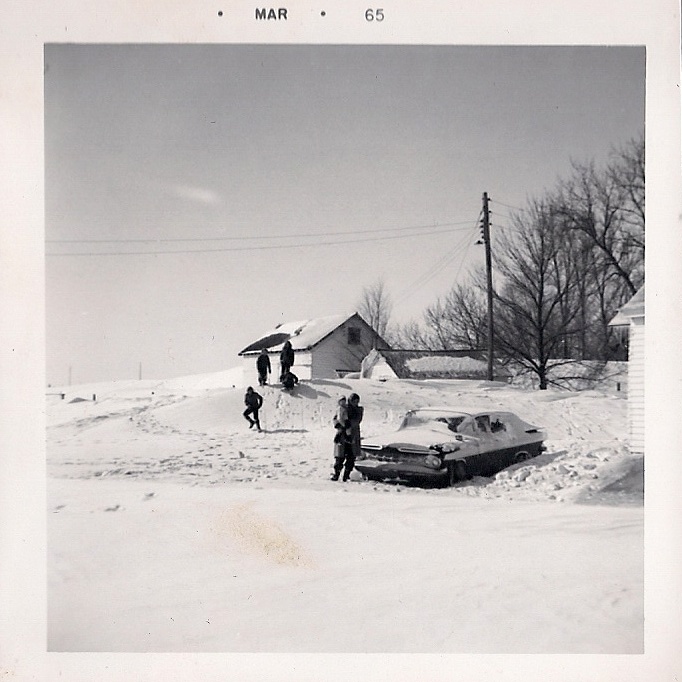
Our southwestern Minnesota farmyard is buried in snowdrifts in this March 1965 image. My mom is holding my youngest sister as she stands by the car parked next to the house. My other sister and two brothers and I race down the snowdrifts.


We were not a perfect family. Still aren’t. There were, and are, struggles. Financial and other. We were poor as in outhouse poor and no gifts for birthdays poor and wearing hand-me-downs poor and only rice for dinner poor. And only two vacations my entire childhood—one at age four to Duluth and one to the Black Hills at around age 12. Yet, I never felt like we were missing anything. We had enough. Food. Shelter. Clothes. And hardworking parents—for my mom worked equally as hard as my dad—who loved and provided for us.

My parents may not have hugged us or told us they loved us. But they showed their love by their care, their provision, their raising us in the faith. Their efforts, from parenting to farming, were a labor of love. And I shall always feel gratitude for that.

#

CLICK HERE TO READ my post, “Many Reasons to Feel Blessed this Labor Day,” published last week on the Warner Press blog.

© Copyright 2020 Audrey Kletscher Helbling


Montgomery celebrates agriculture with art August 13, 2020

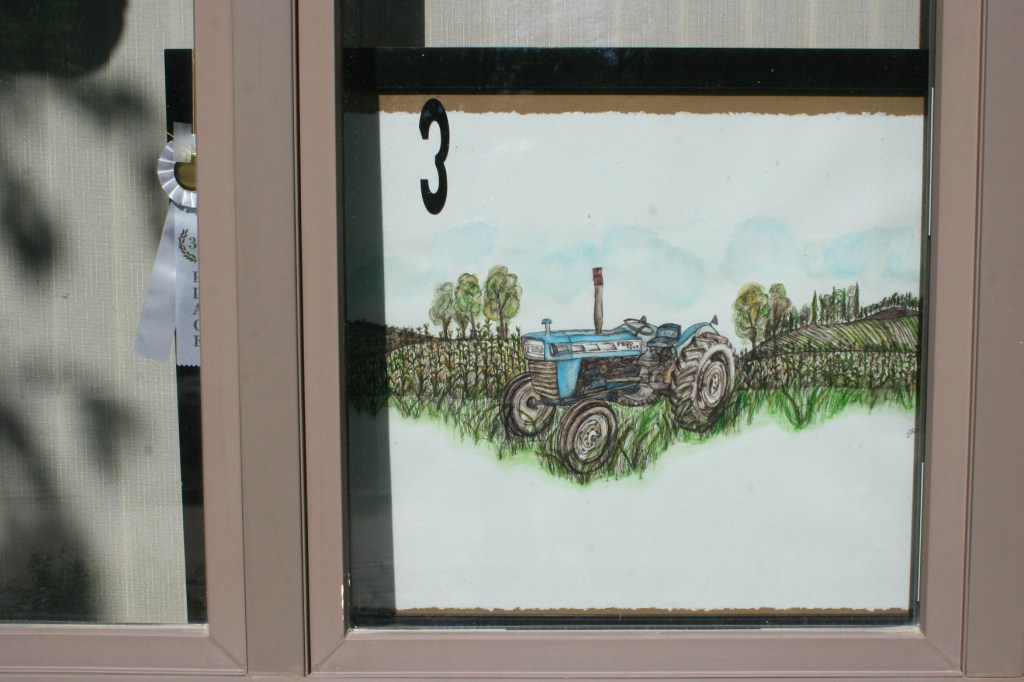
“Stop to Remember,” a pen and watercolor by Cami Vargo, was awarded third place in the show by judges Dale and Gale Looft. The art depicts her Great Grandpa Orville Richter’s 1965 Ford tractor.


THEIR ARTIST STATEMENTS are as compelling as their art.
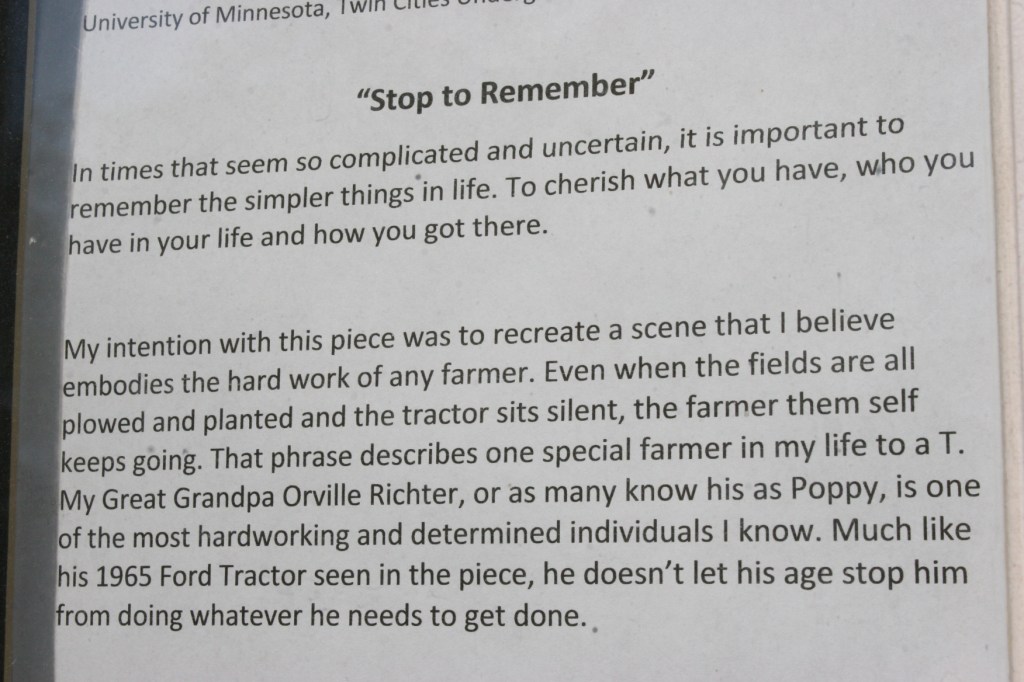
 

Cami Vargo’s artist statement about her tractor art.


In a new exhibit, “Celebrating Farmers and Agriculture,” coordinated by the Montgomery Arts & Heritage Center, 15 artists share their deep love and appreciation for all things rural. Recently I viewed the 22 pieces of art displayed in the front windows of the arts center and businesses in the heart of this small Minnesota town.
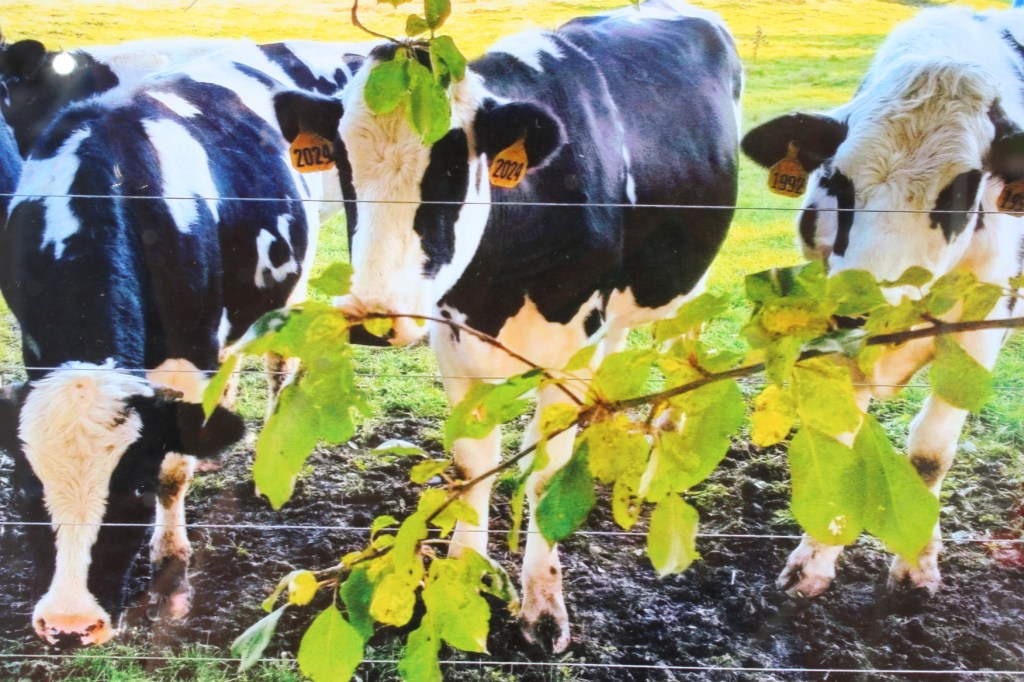
 

One of two photos by Liz Krocak, this one titled “Apple Harvest Visitors.”
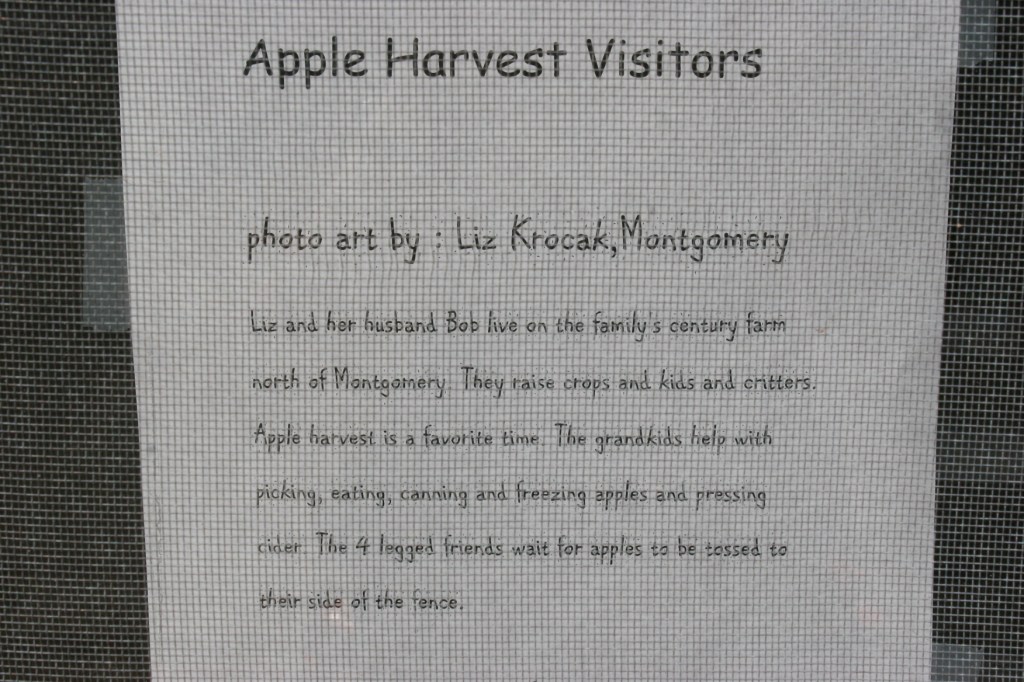
 

Through the screen window, you can read this artist statement by Liz Krocak.
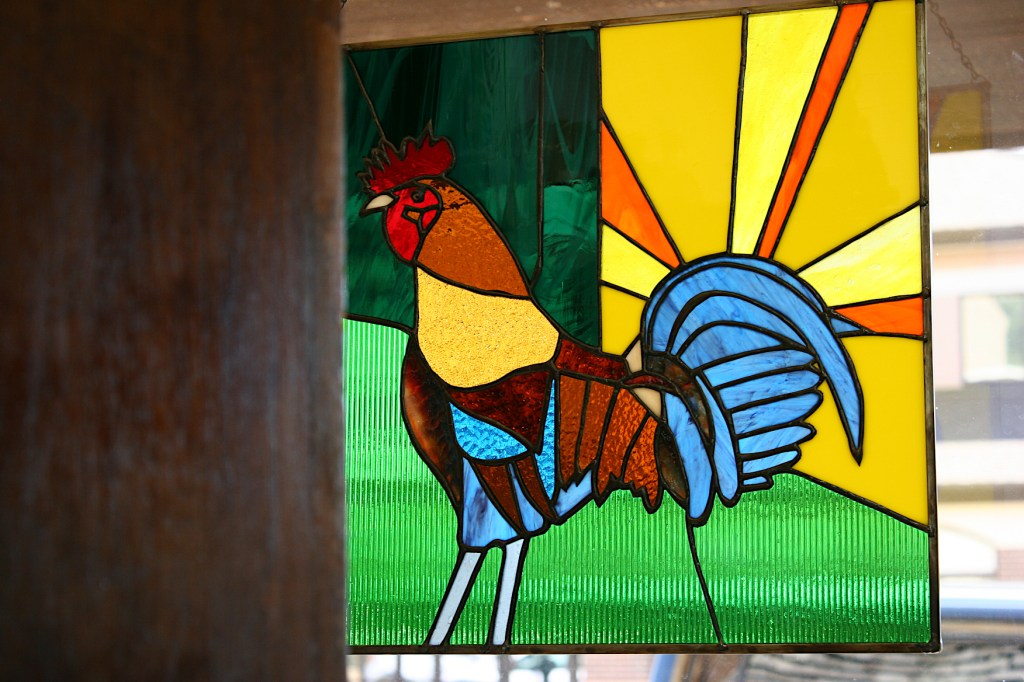
 

Bold and beautiful stained glass art by Annette Stavos hangs in a window of Hermann Thrifty White Pharmacy. If the drugstore is open, go inside and view the art to see the sun shining through it. Another stained glass creation by Mona Grimm hangs in a window of Montgomery Chiropractic and was awarded second place in the show.


From cows to a rooster to a farm dog, from tractors to windmills, from barns to country scenes, the art showcases important aspects of rural life.
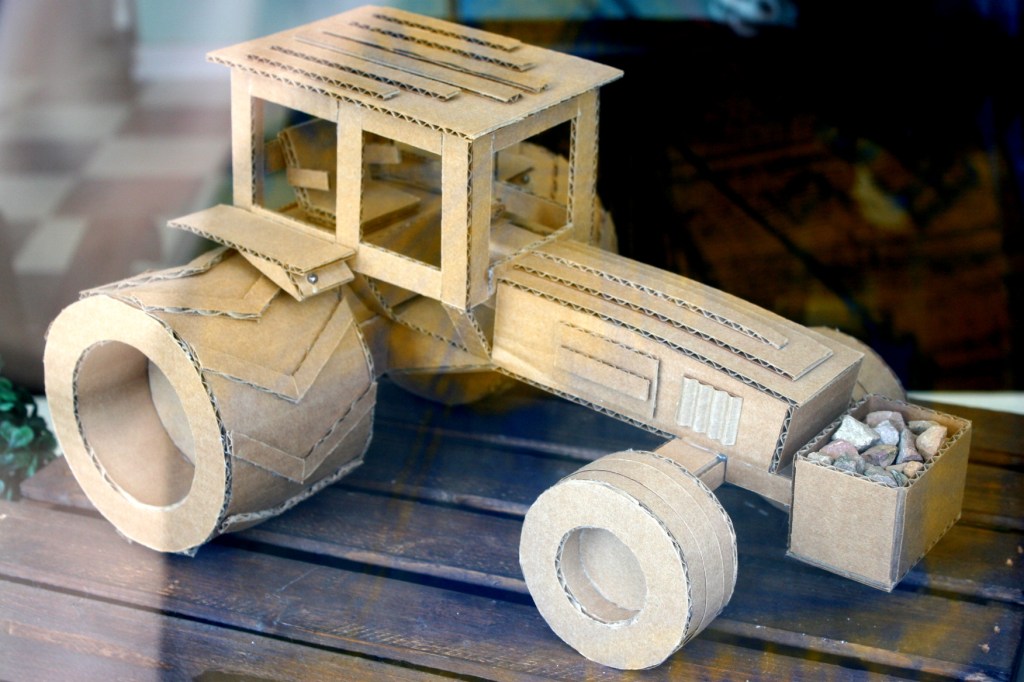
 

Constructed from cardboard by Brian Prchal, this is a replica of a modified 4020 John Deere.
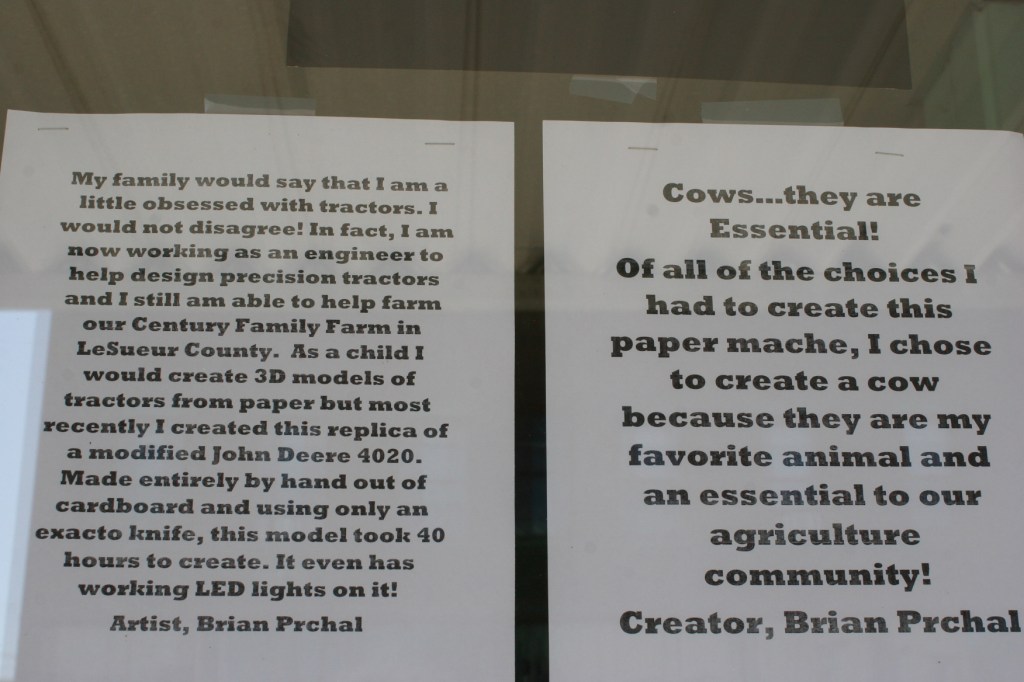
 

Brian Prchal shares the stories behind his two art pieces.


And the stories that accompany that art are often deeply personal. Rooted in the land.
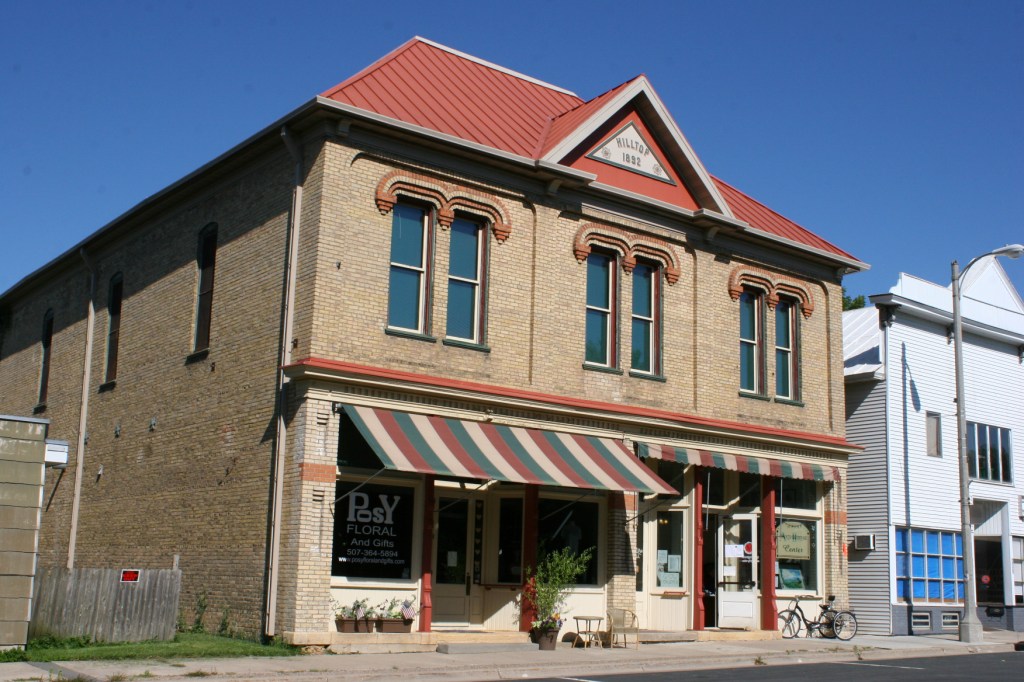
 

The Montgomery Arts & Heritage Center (right side of building), 206 First Street North on the north end of downtown.
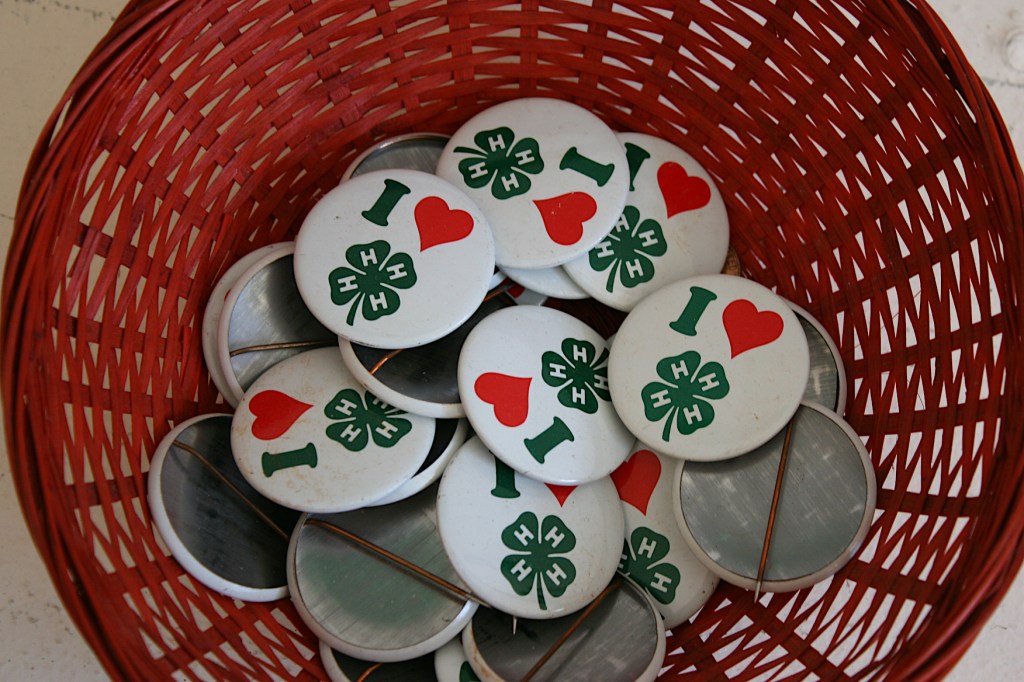
 

In the ag display, 4-H buttons.
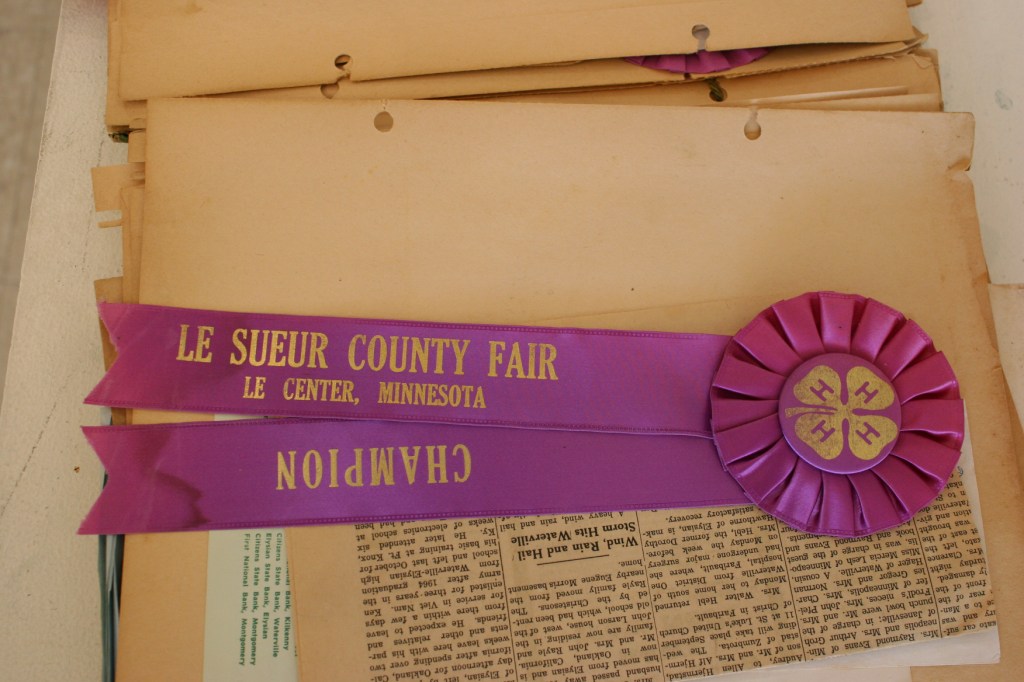
 

County fairs are an important part of rural life.


Before beginning my tour, I stopped first at the arts and heritage center to pick up a map and to view an exhibit of local ag-related memorabilia showing the importance of agriculture in this community.
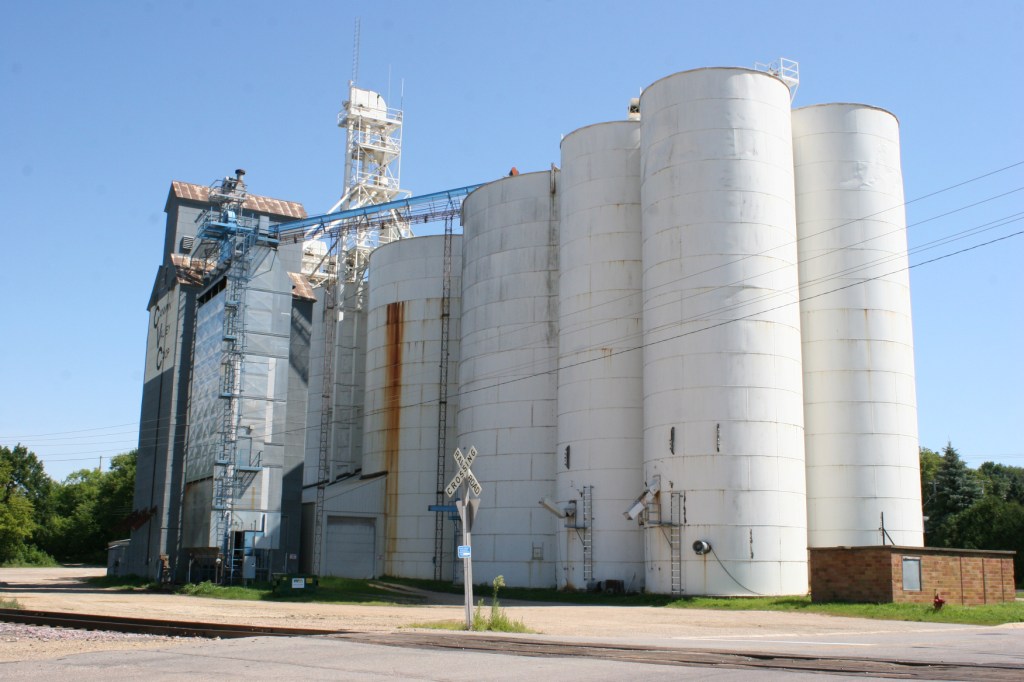
 

The grain elevator complex in Montgomery.


Just down the hill from the arts center, grain elevators loom, a strong visual of ag’s local economic value. On the opposite end of town, the canning company processes sweetcorn. And on every border of town, homes or businesses adjoin farm fields.
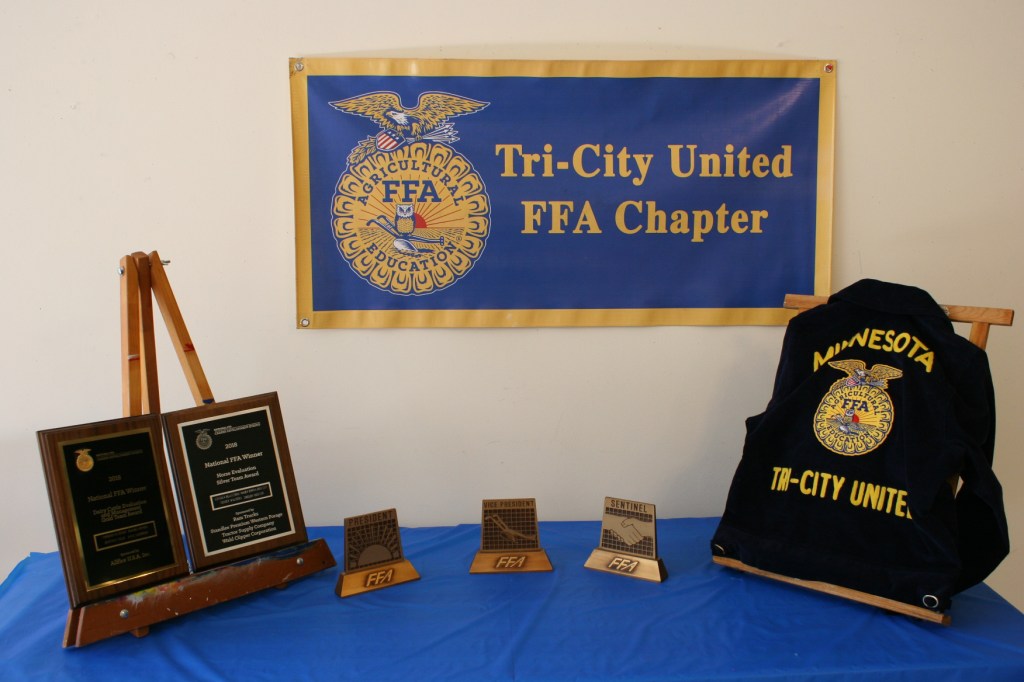
 

Future Farmers of America, based at the local high school.
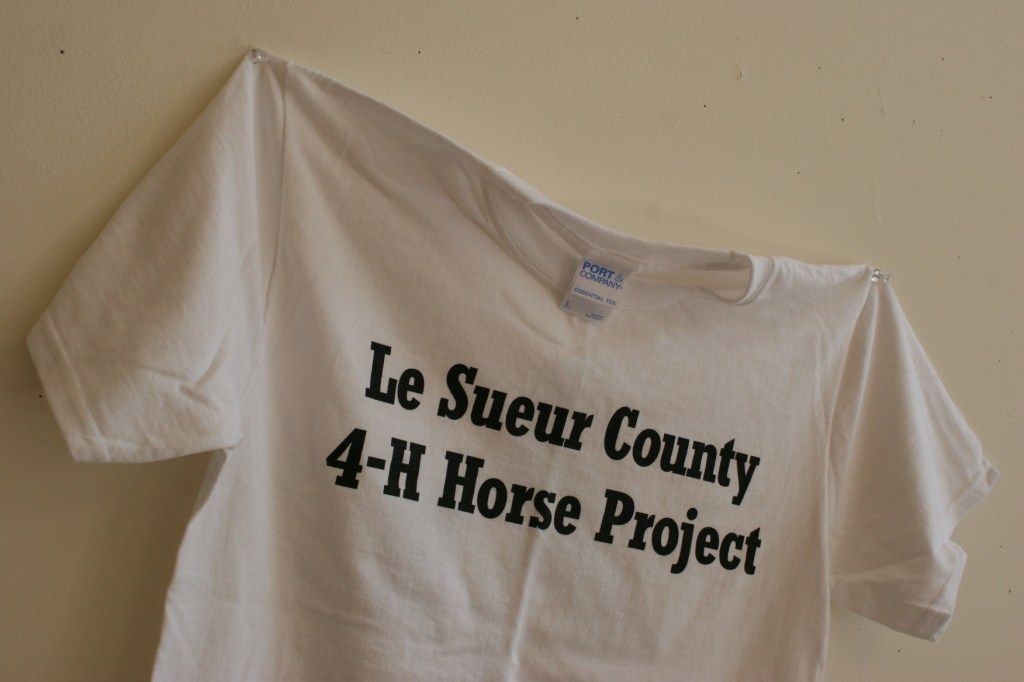
 

Recognizing 4-H in Le Sueur County.
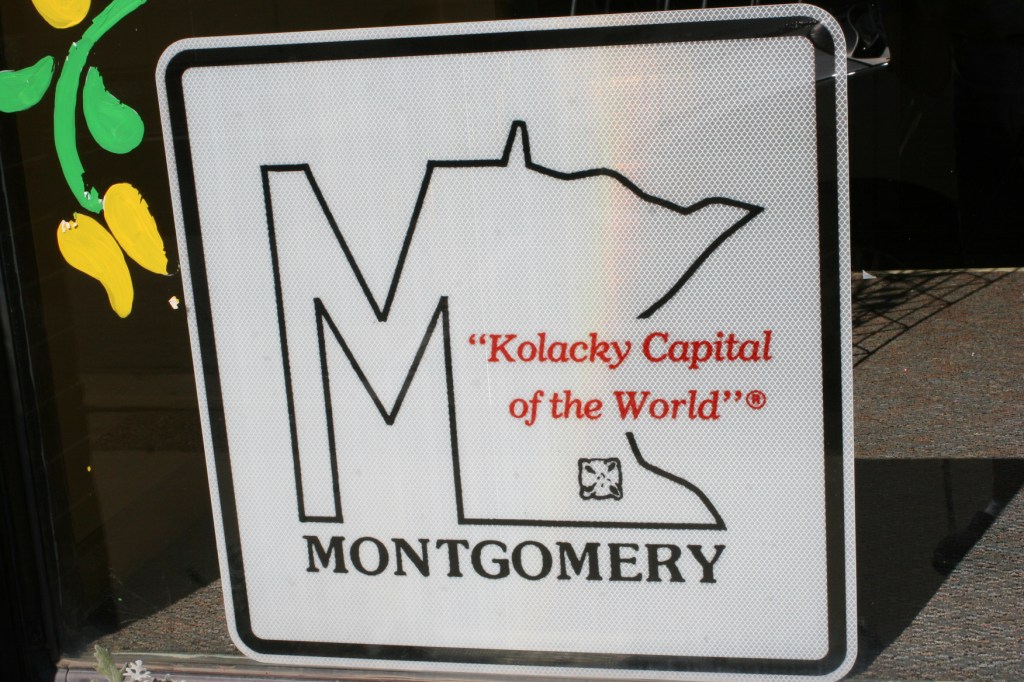
 

Lots of signs downtown celebrate kolacky, a Czech pastry sold at Franke’s Bakery and Mackenthune’s Fine Foods.


Montgomery centers on agriculture and its Czech heritage as the self-proclaimed Kolacky Capital of the World. So it seems particularly fitting that the arts center would focus its new exhibit on farmers and agriculture. The project was funded with a Prairie Lakes Regional Arts Council grant and donations from the Bob and Mary Jo Loftus Foundation and Compeer Financial.
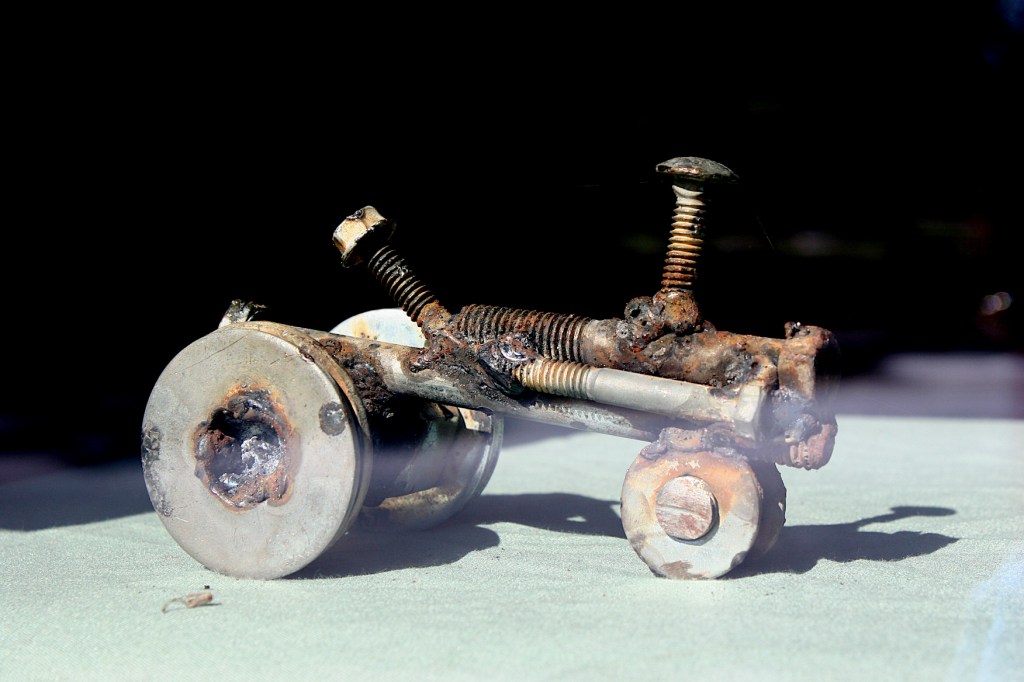
 

“The Nuts & Bolts of Farming” fits this tractor art crafted by Tyler Fromm.


Area artists clearly enjoyed the challenge of creating ag-themed art. I saw that in tractor art drawn, formed from string and nails, cut and crafted from cardboard, welded from nuts and bolts.
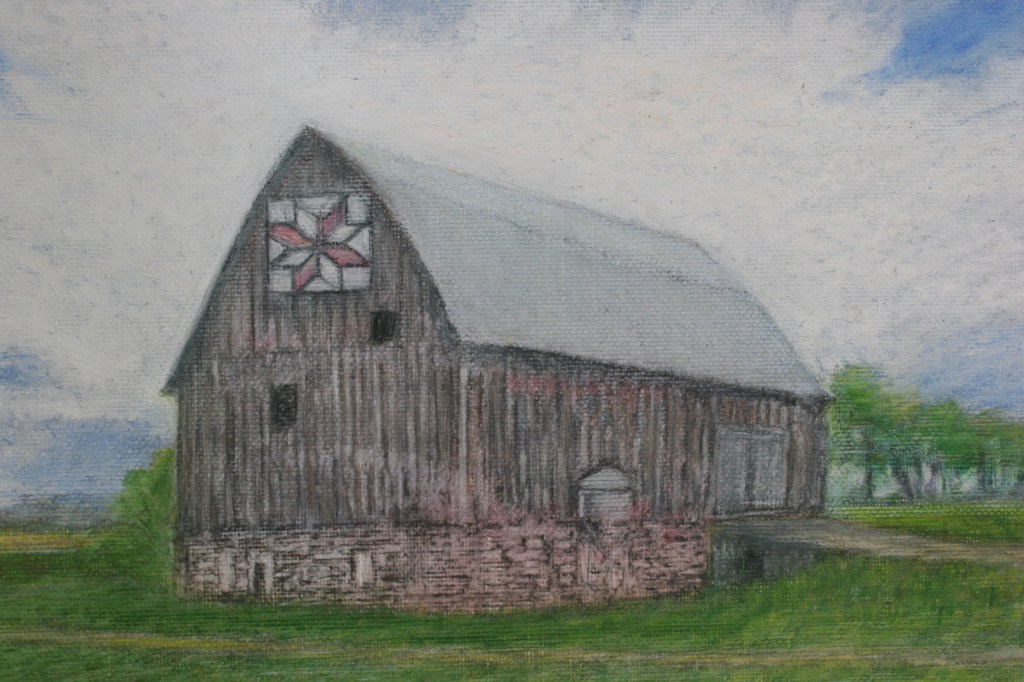
 

Pat Preble won first place for “Old Barn” and “Cows in the Field.” She incorporated a “Star of Heaven” quilt block into her barn art in honor of her mom, a quilter.


Stained glass. Batik. Wood. Photos. Quilts. So many different tools and styles and ways of creating art add to the interest.
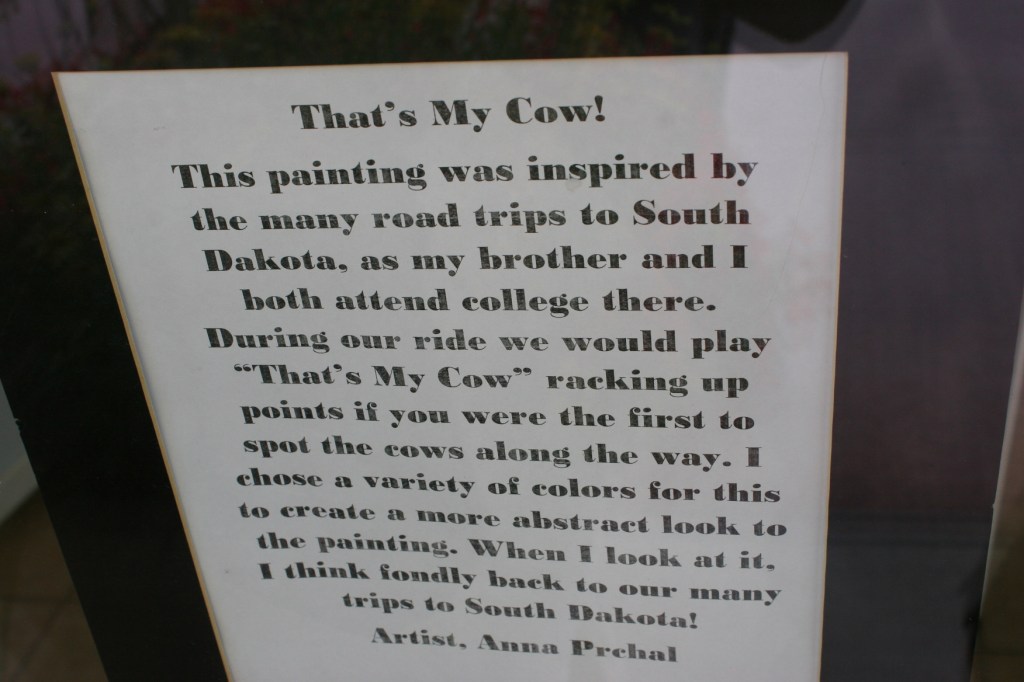
 

This artist statement made me laugh out loud. Because of glare, I was unable to photograph Anna’s cow art.


The art honors pioneer women who pieced quilts, an uncle, farm wives… Liz Krocak writes in her artist’s statement, “Behind every good farmer is his wife, rolling her eyes.” Yes, humor even infuses some of the artist statements.
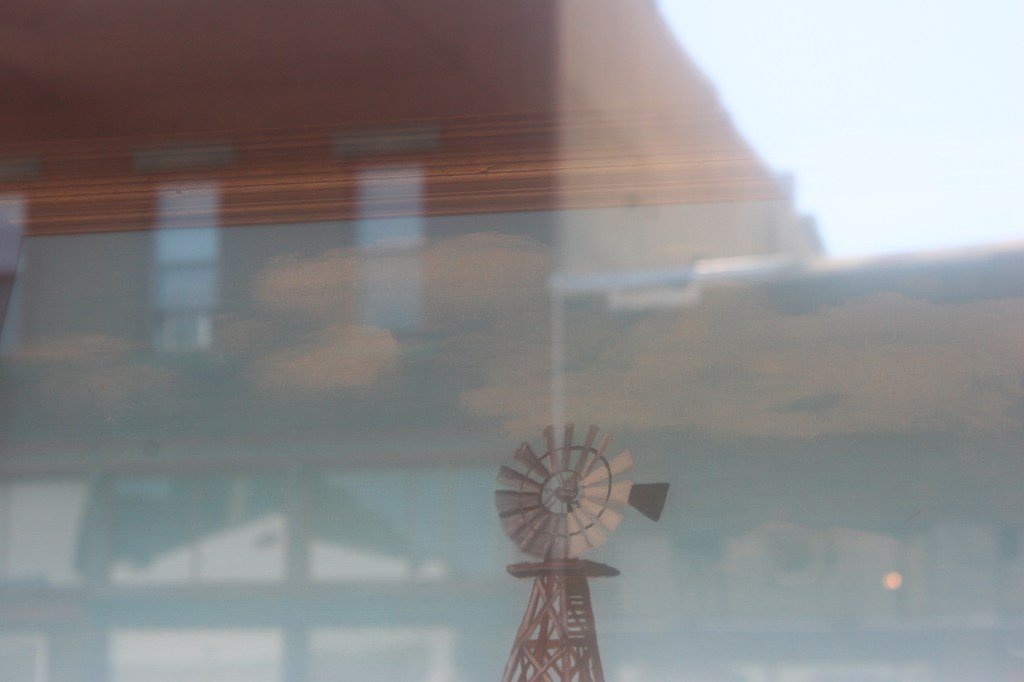
 

Glare made it really challenging to photograph Carol Ehrhardt’s entire cattle and windmill art. But I decided I like this image showing only the top of the windmill and the reflection of an aged building. Ehrhardt was awarded third place in the show.


Annette Stavos, who grew up on a hobby farm, honors her uncle. “My uncle was the real farmer and we helped him pick rocks and bale hay.”
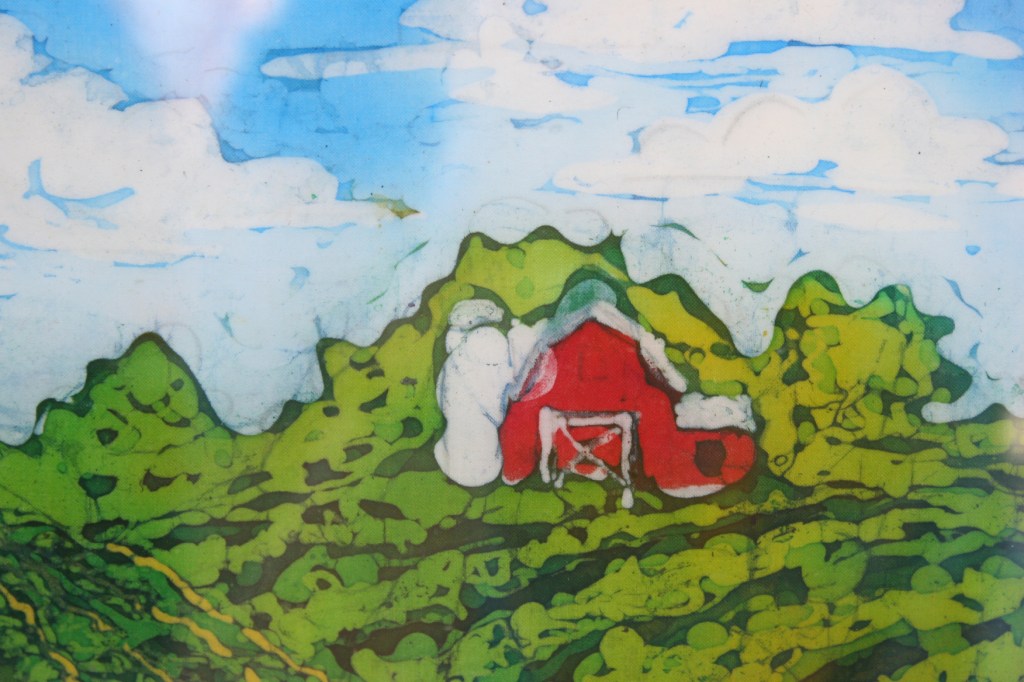
 

A close-up of Susan Hayes batik art titled “Summer Fields.”


Susan Hayes, a city girl who married a farmer, writes. “…I’ve had first hand experience with agriculture and life on a small farm. It’s not easy getting up before 5 am to milk the cows or baling hay in 100 degree weather. She created a beautiful batik piece, “Summer Fields.”
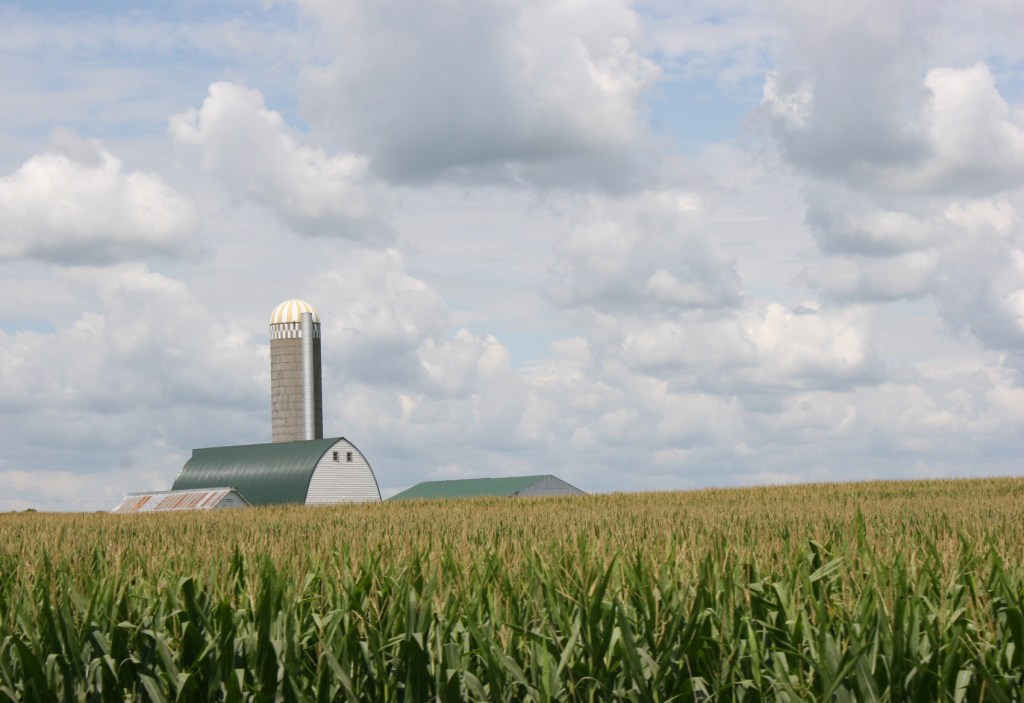
 

A farm in the Montgomery area.


Anna Prchal expresses her love of rural life in these words: “The fresh air, hard work ethic and never having a dull moment there are the things I love most about the farm.”
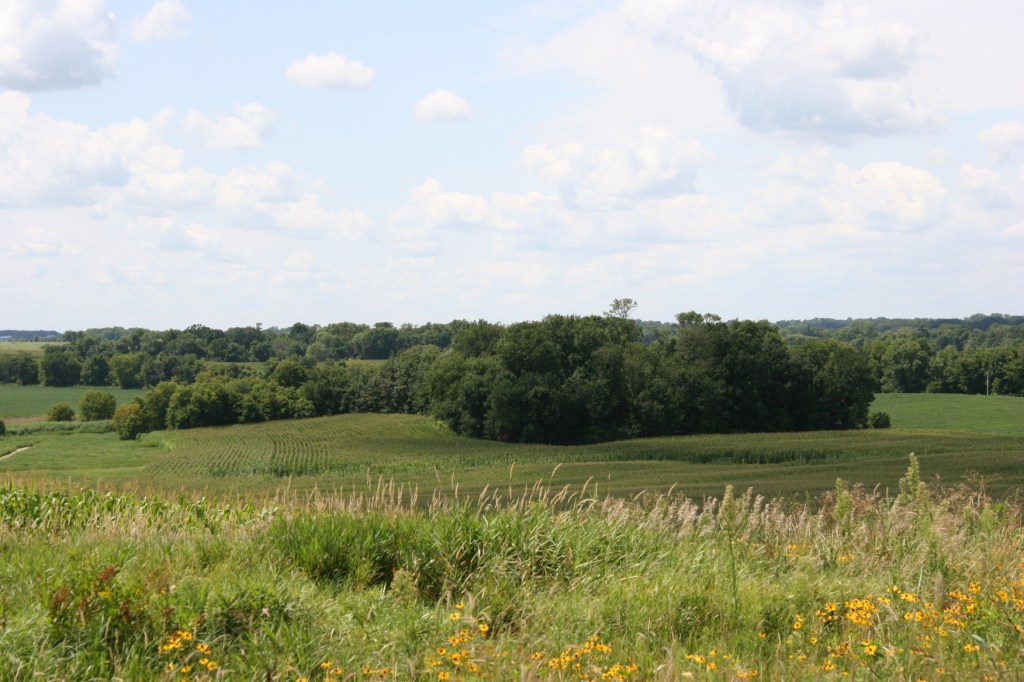
 

The countryside near Montgomery.


For Kimmie Loranger, who once traveled with the carnival, worked as a nanny and waitress, and who was at one time homeless, living in rural Montgomery and now creating art “is the happiest I’ve ever been in my whole life.”
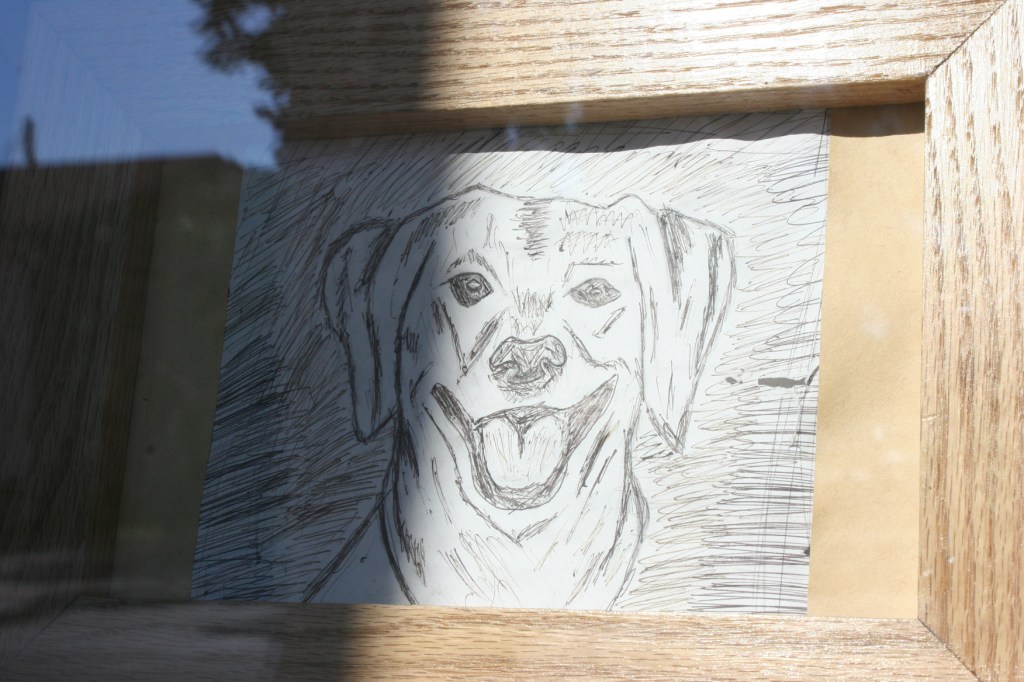
 

Tyler Fromm drew this picture of his “beloved farm dog, Buddy.” Oak siding from the corn crib on his family’s century old farm frames the art.


These are the stories that make this exhibit especially meaningful, especially touching, especially impressionable. This isn’t just another art show, but rather an expression of emotions with a rural perspective. Written. And showcased in art.


FYI: You can view this exhibit any time during the day as the art is visible from outdoors in front windows. Note that glare and reflections sometimes make seeing the art a challenge. The Arts & Heritage Center, however, is open limited hours from 2-5 pm Thursday and Friday and from 9 am to noon Saturdays. The exhibit runs until the end of November. Maps to the art locations are available from several downtown Montgomery businesses in addition to the arts center. Be sure to vote for your favorite for the People’s Choice Award. This blog post represents only a sampling of art in the exhibit.

Please check back next week for additional posts from my visit to Montgomery.

© Copyright 2020 Audrey Kletscher Helbling


Of gravel roads, barns & cornfields August 3, 2020

Rural Rice County, west of Faribault, Minnesota.


ON A SULTRY SUNDAY SUMMER AFTERNOON of oppressive heat and humidity, I needed to get out of the house. Away. Into the country. On a drive. It was too hot to walk, to do anything outside of air conditioning.


Steady rain the night before kept the dust down on gravel roads we drove.


Following back county and township roads in and around Faribault, Randy and I got the rural fix we needed. For me, the crunch of gravel upon tires and the washboard vibration of a road in need of grading.


The corn crop around here looks good.


I needed, too, to see cornfields stretching across the land, tassels flagging fields. My heart aches at the sight, for the missing of living in the country. Memories still root me there.


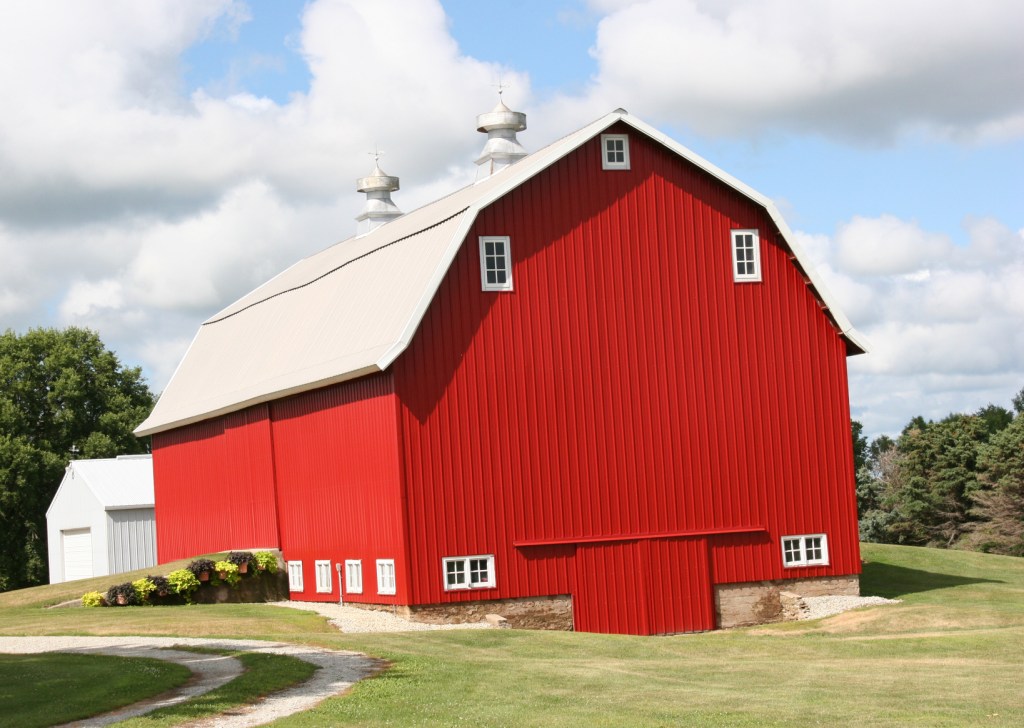
And then I spotted a barn flashing bold red into the landscape on the edge of Warsaw. I’ve long admired that well-kept barn.


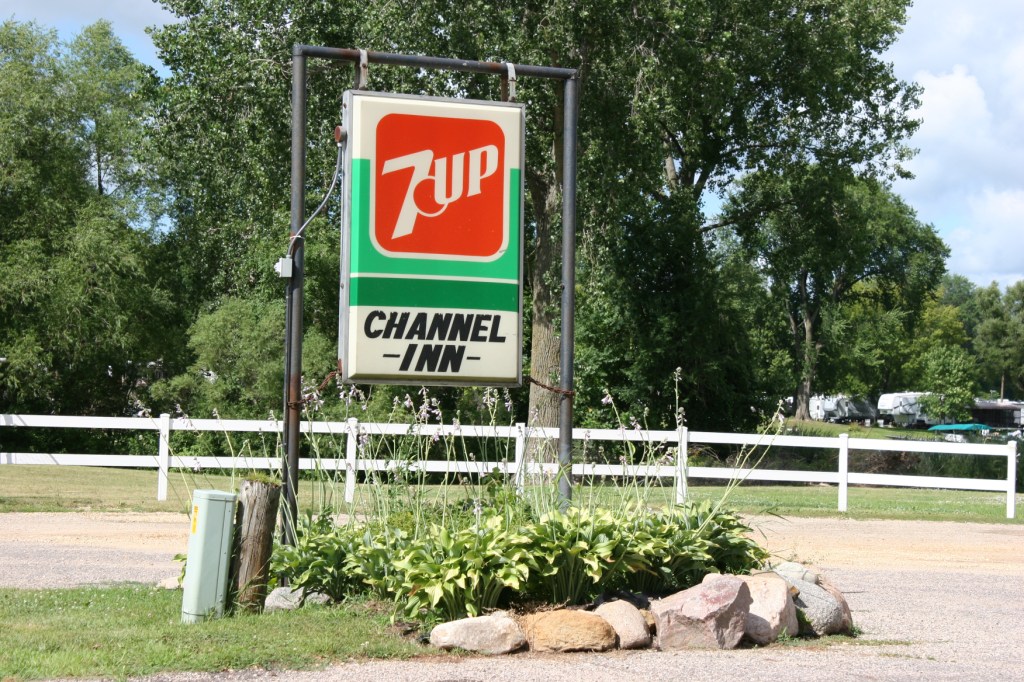
Weaving through Warsaw, Randy reminisced about living there decades ago as we passed his former rental place. At the Channel Inn in Warsaw, we paused only long enough for a photo of the vintage signage.


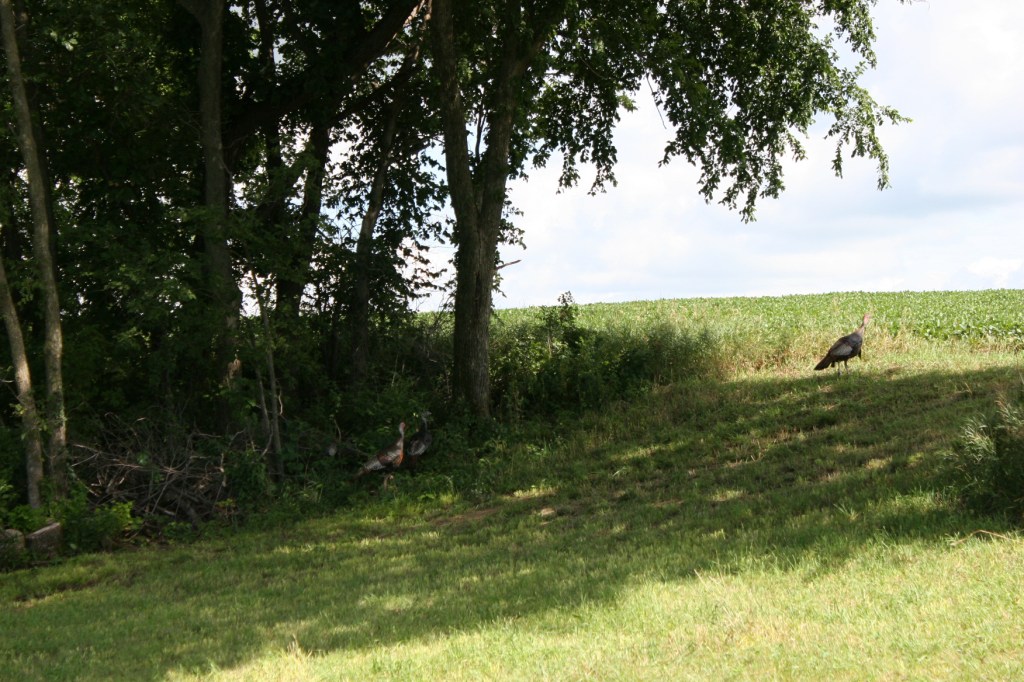
Without my telephoto lens on my camera, I couldn’t get a good shot of these turkeys. But you can make out two along the treeline and one by the field. The rest went the other direction.


And then we followed more gravel roads, routes not previously taken, but which revealed a PIG HOTEL sign on a house. I missed that photo op, but I promise to return. I almost missed the wild turkeys edging the woods.


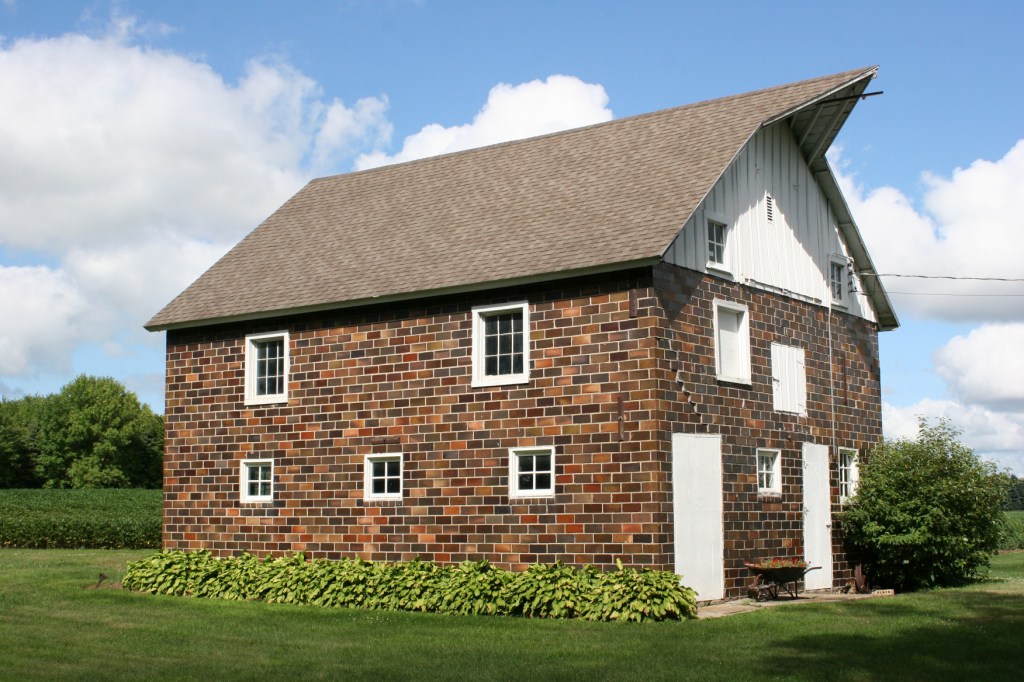
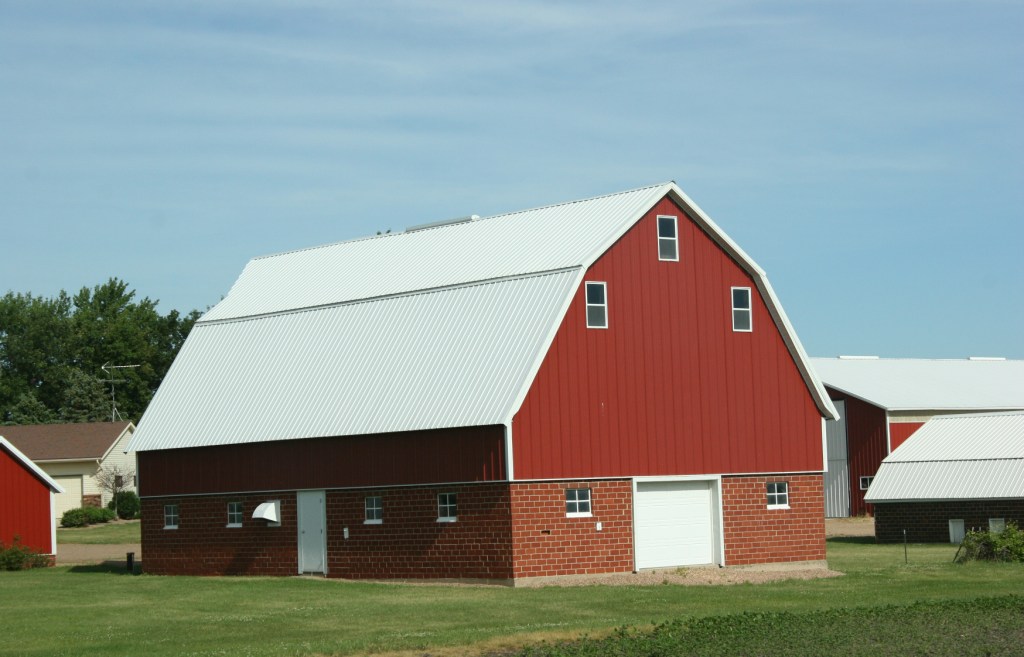
A bit further, I saw the cutest little brick barn. Solid. As good as new. Beautifully poetic in its construction.


Past a gravel pit and an unknown lake and farm sites set among fields on rolling land, we aimed back toward town. Past Ableman’s Apple Creek Orchard, a favorite, and a roadside sign reminding us that we are not alone. Ever.


© Copyright 2020 Audrey Kletscher Helbling
 

En route to visit Mom in a Minnesota care center July 6, 2020

Filed under: Uncategorized — Audrey Kletscher Helbling @ 5:00 AM
Tags: , , , , , , ,

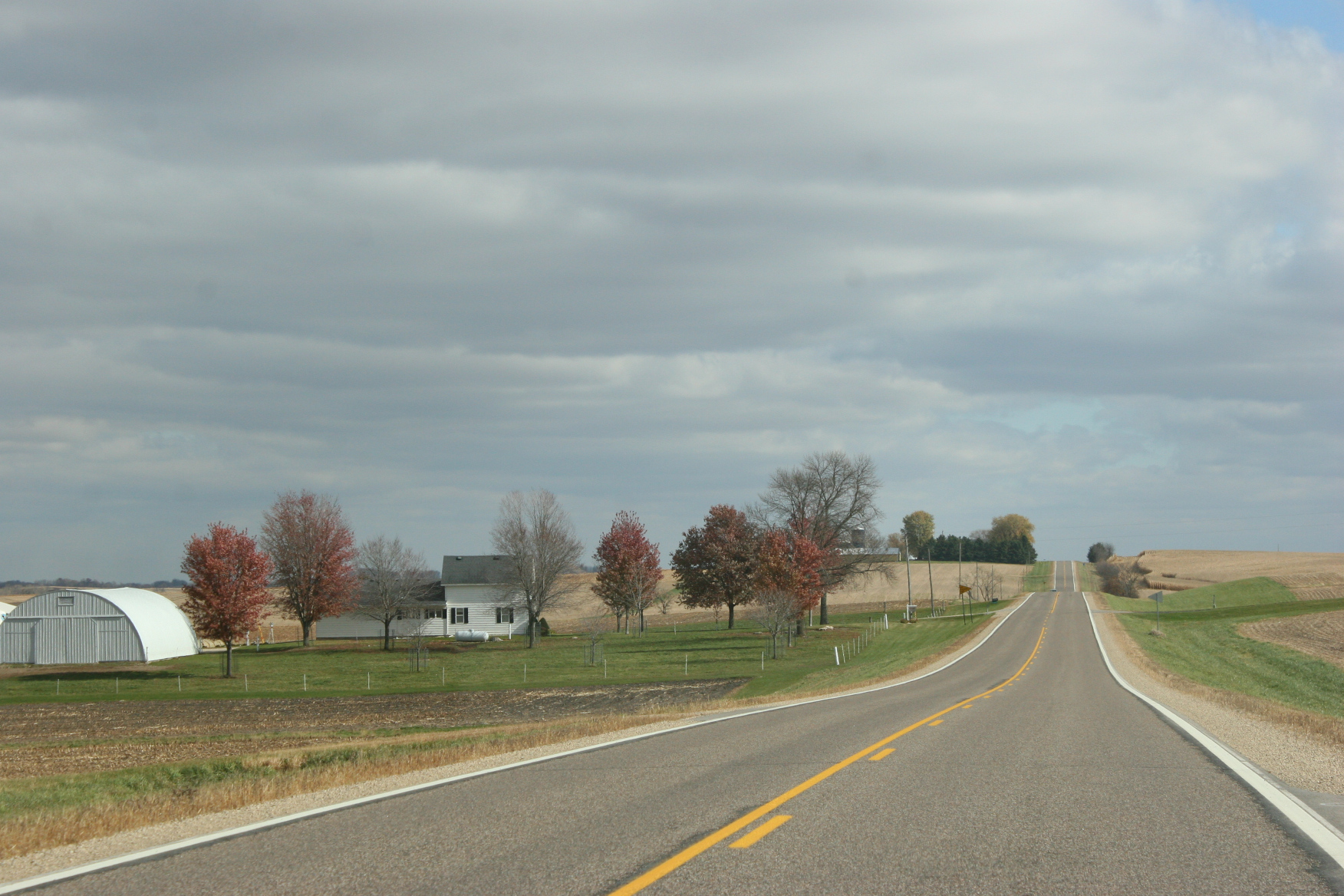
A rural scene between New Ulm and Morgan.


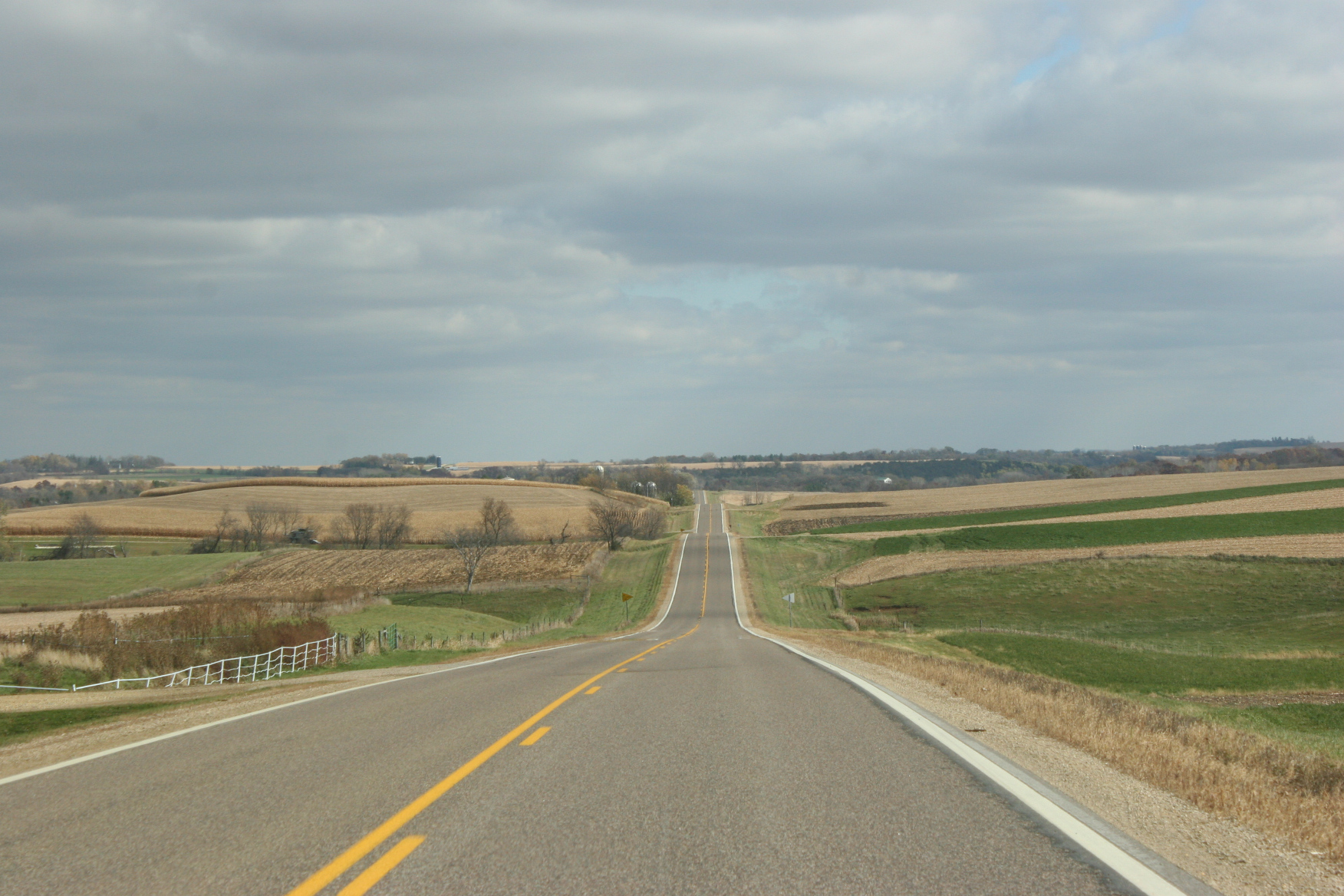
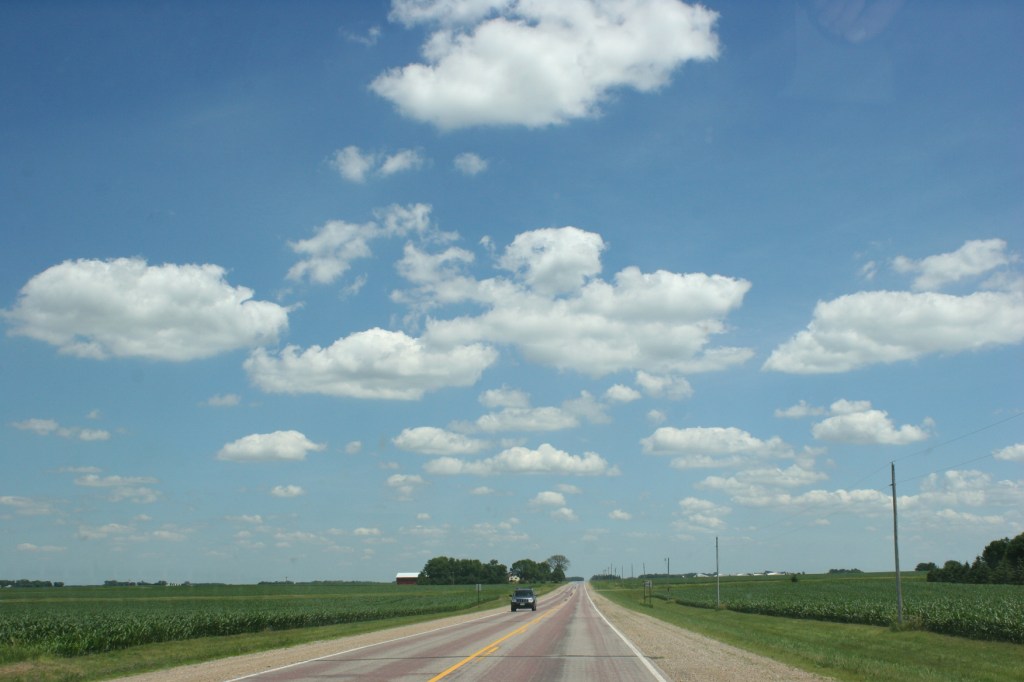
THE HIGHWAY STRETCHED before us, long, like a line drawn through the landscape. Separating fields and farm sites under clouds suspended in an infinite blue sky. The type of clouds that identify a summer day in Minnesota. Southwestern Minnesota. It is my favorite of skies.


Agriculture defines this region of Minnesota.


Our destination, a care center, lay 120 miles to the west. As Randy and I traveled, I tried not to think about what may await us. Would the visit go well? I’d arranged earlier in the week for an outdoors visit with my mom as allowed now by the Minnesota Department of Health. It’d been nearly four months since I’d seen her, on the weekend before care centers closed to visitors due to COVID-19. My mom is on hospice, has been for a year. I recognize that in itself is remarkable. I needed to see her. Phone calls and/or video chats have not been an option due to her health.


A red barn pops among grain bins on this farm site along Brown County Road 29 near New Ulm.


Along the route, I like to photograph scenes. I set my camera on a fast shutter speed, try to frame as best I can and shoot through windows that are all too often splattered with bugs or reflecting sunlight. But I still photograph. It passes the time and allows me to share my world and perspectives in a way that words don’t always fully cover.


Acres and acres of corn and soybeans (with some oats and peas mixed in) spread across the southwestern Minnesota landscape, broken only by farm sites and small towns.


Once on the west side of Mankato, I feel like I’m entering my home territory, the place of expansive farm fields and wide skies. The place where I feel small compared to both. It is a familiar and comforting world. The place that shaped me and which I still hold dear.


My favorite beauty of a barn along Brown County Road 29.


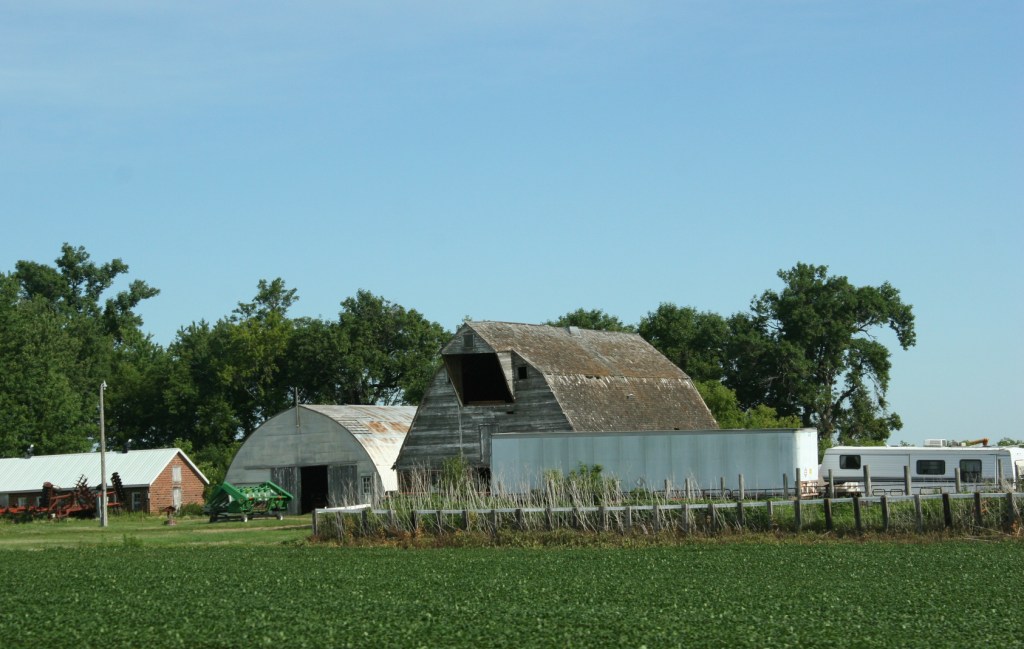
Some barns are weathered by time and the elements and often fall into piles of rotting wood.


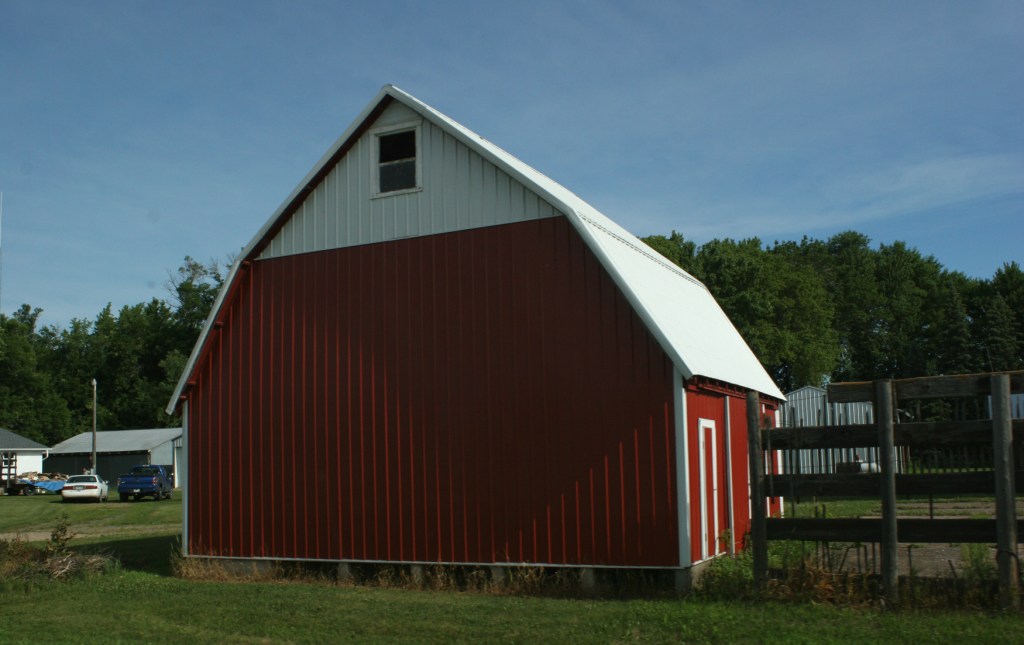
I’m wondering whether this barn/shed is old or new. No matter, it’s lovely.


I appreciate well-kept farm sites where owners show care in upkeep of buildings. Along Brown County Road 29, what I call the back road between New Ulm and Morgan, sit some particularly lovely old barns, a vanishing landmark. Few of these hold animals anymore, which leads to the demise of these once hardworking agrarian buildings.


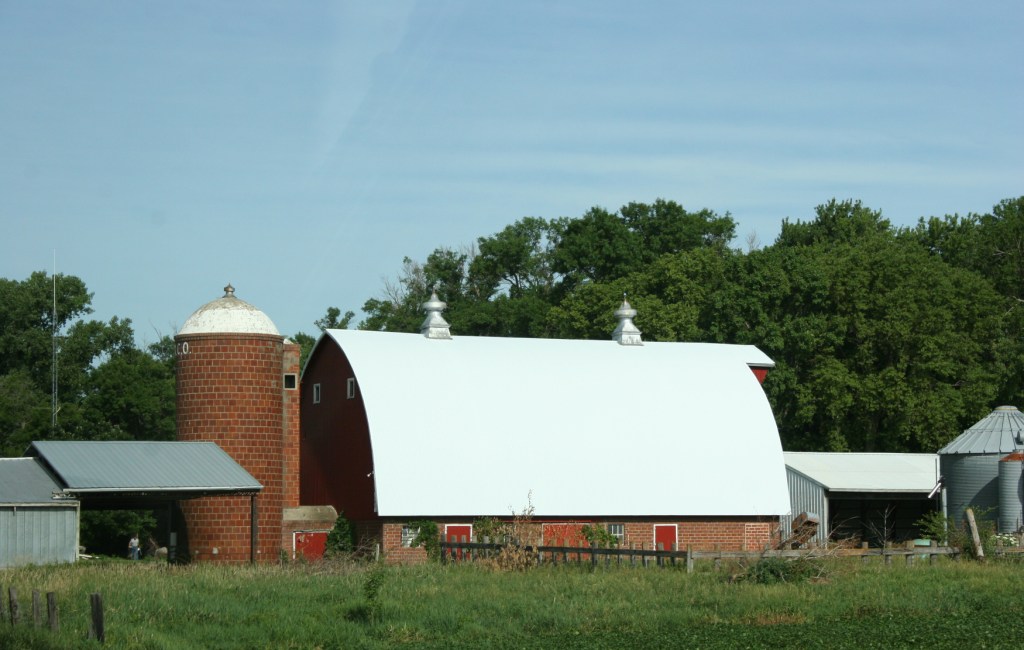
I also am drawn to vintage silos, now abandoned. Farming has changed so much, making the buildings of our ancestors outdated and mostly now storage spaces or simply visual reminders of the past.


The front entry of Parkview Senior Living in Belview, our destination.


All of that I considered as the miles rolled before us. After a pit stop at a park restroom in Redwood Falls, we covered the last 15 miles, arriving at our destination 10 minutes late. Had I not stopped first at the Faribault Farmers’ Market for a garden flower bouquet, we would have arrived on schedule. But I wanted to bring Mom a gift. And flowers are universal in their ability to bring joy.

Following a temp check, health screening, providing contact info and signing necessary forms, we were ready for the supervised one-hour allotted outdoor social-distancing visit. I already expected the designated visit site, a patio in full morning sun and next to three noisy air conditioners, would not work. It didn’t. No one could hear and the heat was too much. We shifted to Plan B, which was to talk via phone with Mom on one side of glass doors/windows, us on the other. That also proved challenging as Mom didn’t understand anything Randy or I said. But the staffer, bless her, repeated whatever we said and thus we managed.

I found myself trying to talk on topics that would spark a connection with Mom. A mention of Curious George, which she’s developed a fondness for, brought a smile. The Parkview staff has ordered dvds for Mom (so caring) after discovering the naughty monkey of children’s book fame makes her happy and holds her interest. I brought two Curious George books and she smiled at the gift.

Mom also reacted when I talked about her childhood pet lamb, Duke. I recognize that memories of yesteryear are much stronger than the memories of 20 minutes ago for the elderly. The aide mentioned that Mom’s one-room country school teacher lives at Parkview, too. I knew this as Mom told me years earlier. Hazel is 104, Mom 88.

We held our cell phones up to the glass, showing Mom photos of her great grandchildren/our grandchildren, four and 18 months. She’s never met Isaac. But images of the pair and photos of her own grandchildren brought smiles.

When I observed Mom drifting, her eyes shifting away from us, I would wave my hands and say, “Mom,” and then she would come back, into the moment. That happened often. I could tell she was tiring and it was time to leave. As much as I wanted to rush through the glass barriers and hug her, I couldn’t. So I told her repeatedly that I loved her. And I fake-blew a kiss. And in that moment, as the aide swung Mom’s chair to wheel her back to her room, I felt a strong connection of love. A bittersweet moment. I just stood there and watched. My heart breaking, yet filled with gratitude for one more visit.

© Copyright 2020 Audrey Kletscher Helbling
 

Delighting in a Sunday afternoon drive in rural Minnesota May 12, 2020
We met an occasional vehicle on our country drive southeast of Faribault, Minnesota.


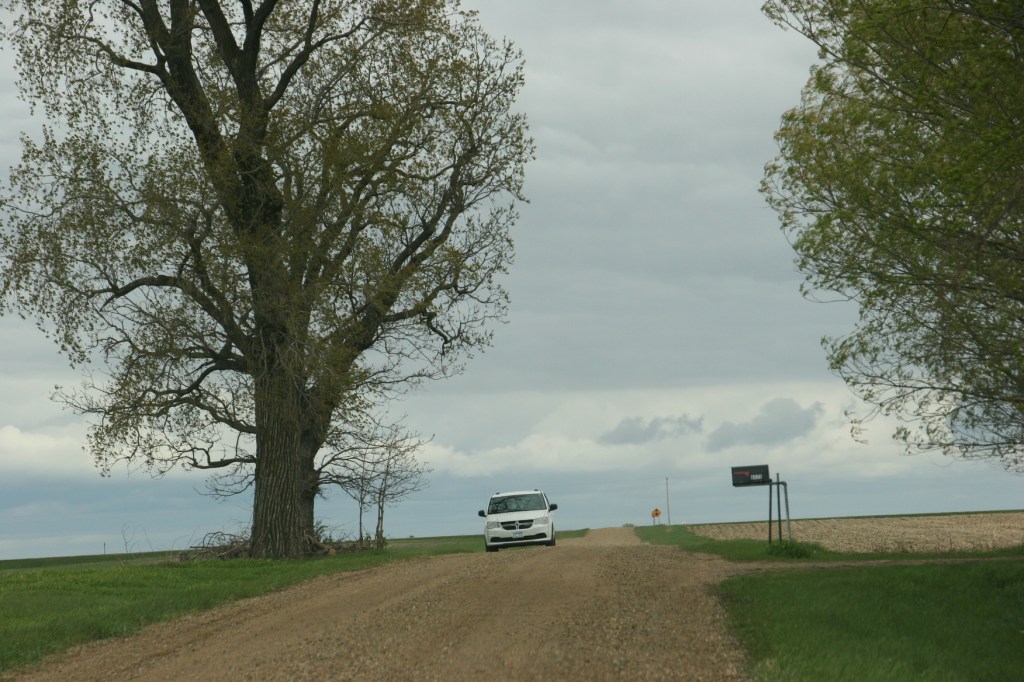
I ABSOLUTELY, UNDENIABLY needed this. To drive into the countryside on a Sunday afternoon. To get away. To view the greening of the land. To forget for a half hour about the realities of life. To focus on nature. To photograph rural Minnesota.
 

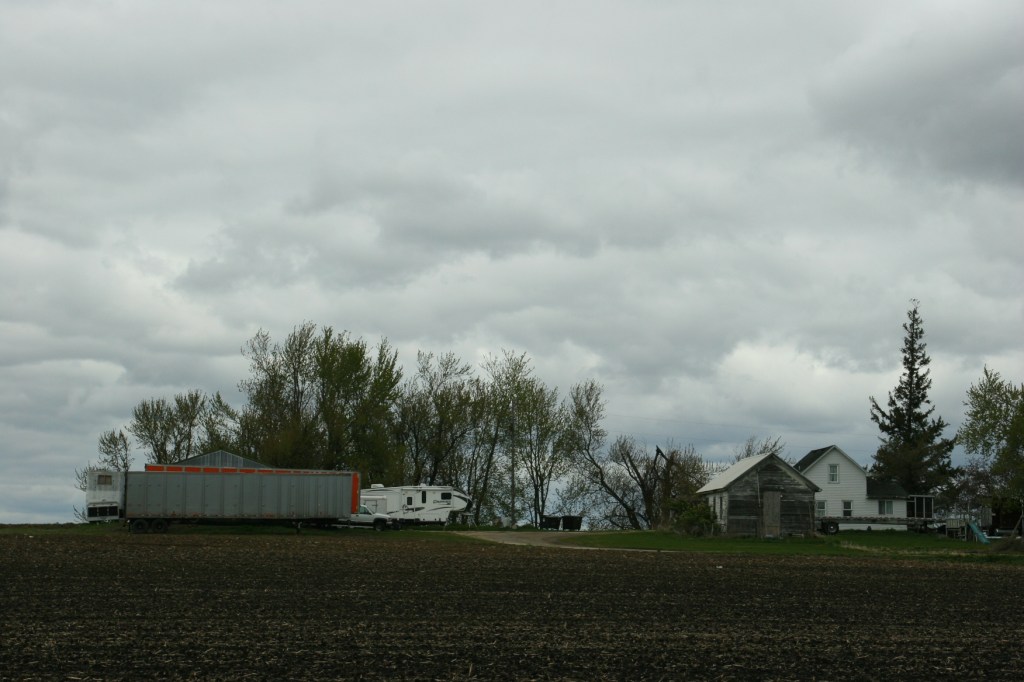
We drove past farm sites.


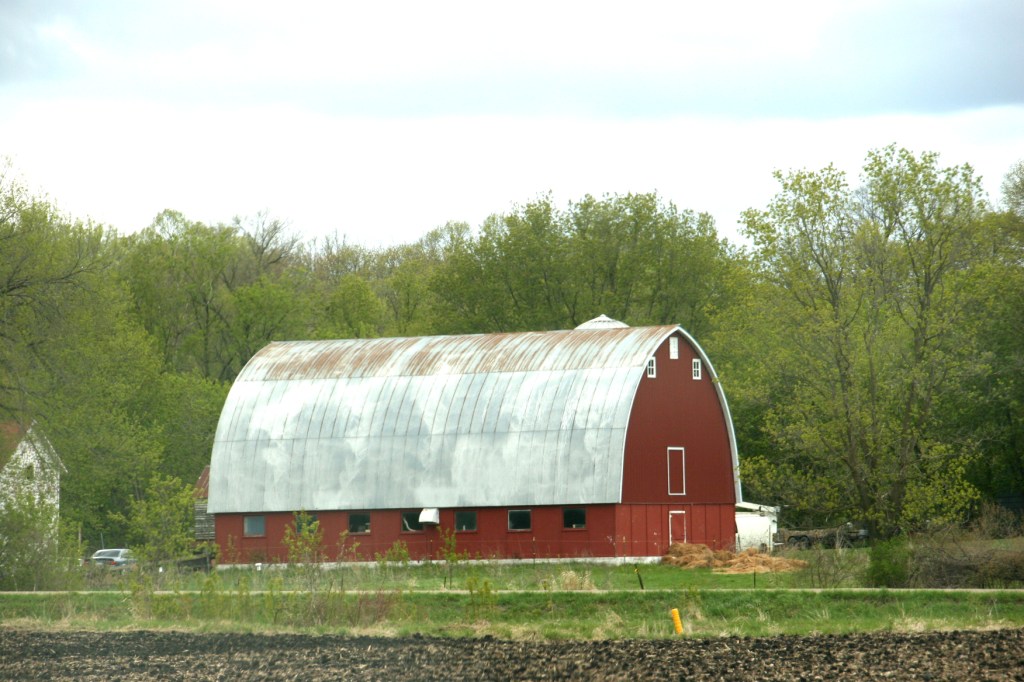
Past lovely barns…


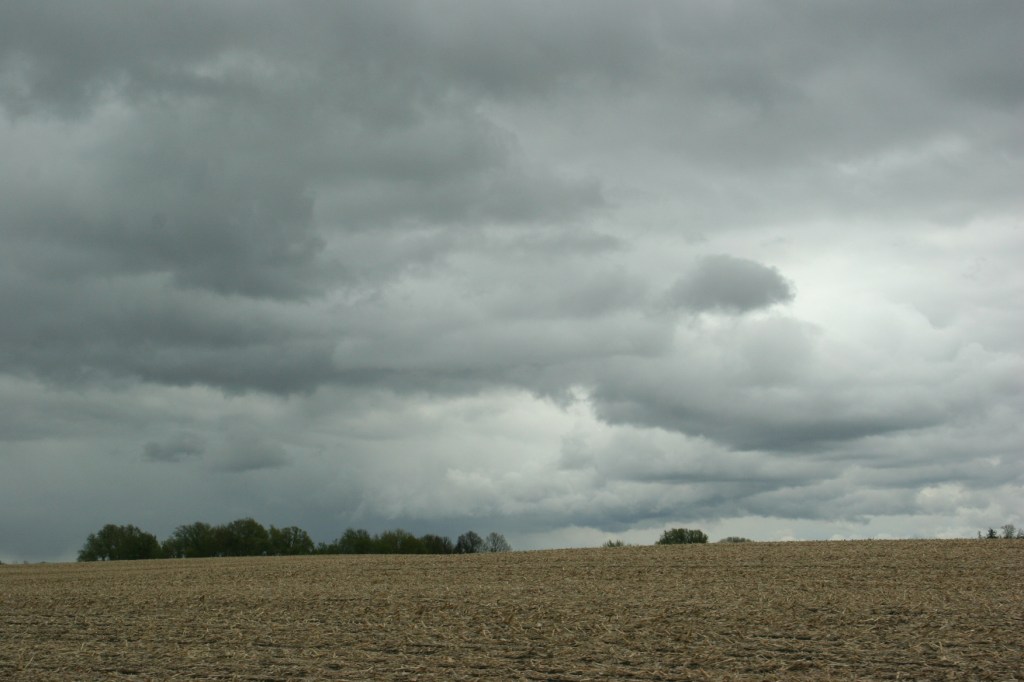
Clouds and cold weather defined Mother’s Day in southern Minnesota.


And that’s exactly what Randy and I did mid Mother’s Day afternoon, aiming southeast of Faribault to follow back country gravel roads. My sense of direction doesn’t exist. I trust Randy to steer us onto roadways that fulfill my need to go at a leisurely pace, to stop when I see something I must photograph, to appreciate the details of place.
 

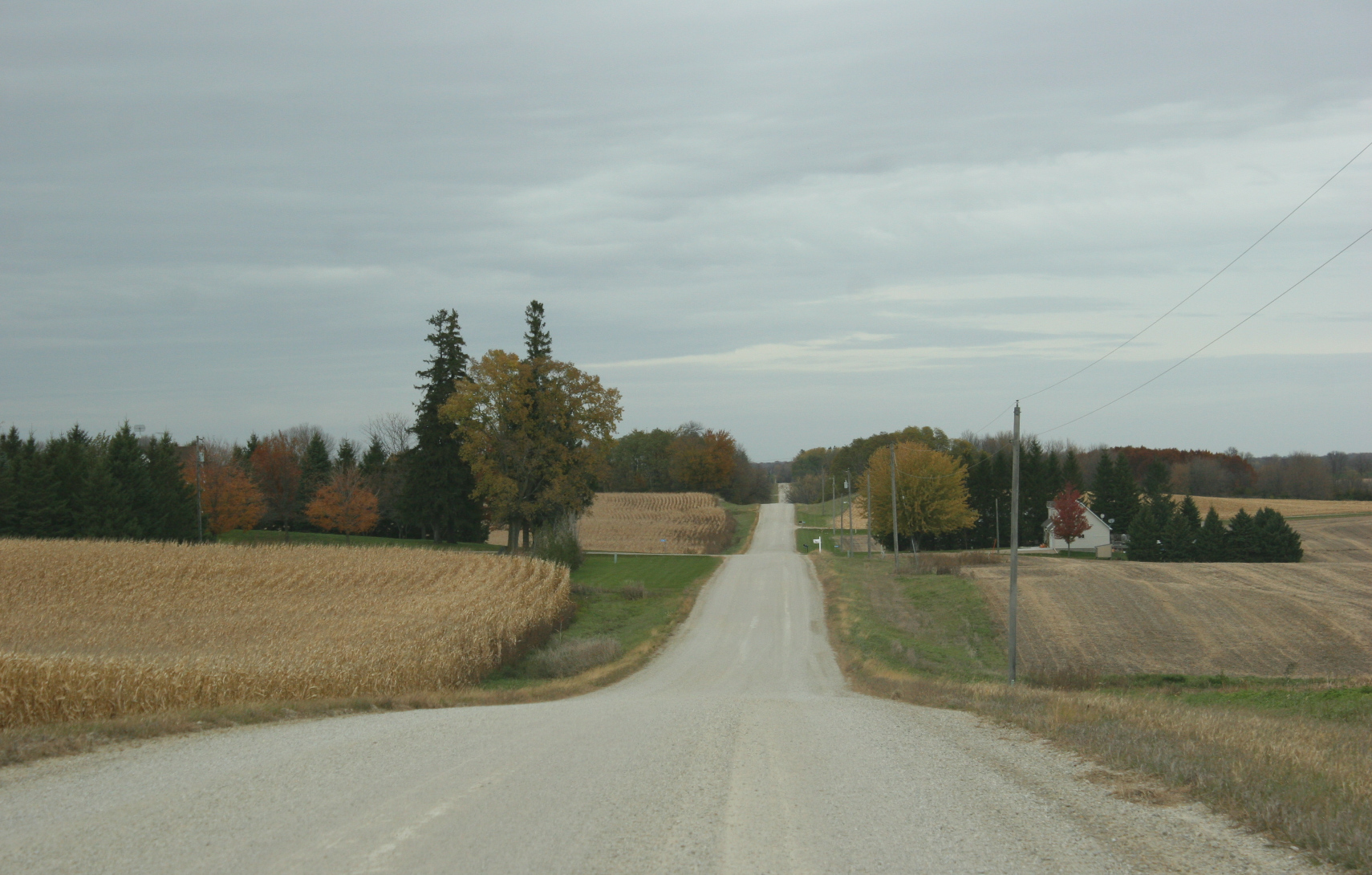
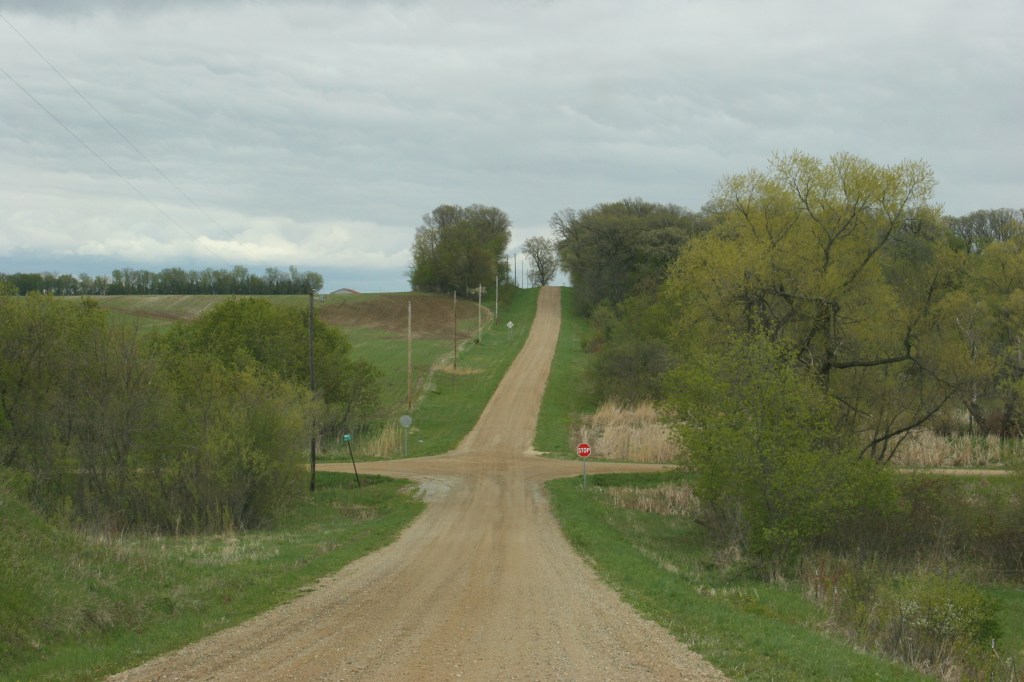
Following gravel roads. Up and down.


Occasionally the cloud-heavy sky spit rain onto the windshield as we dipped up and down, hilltops offering sweeping vistas of a lush landscape.


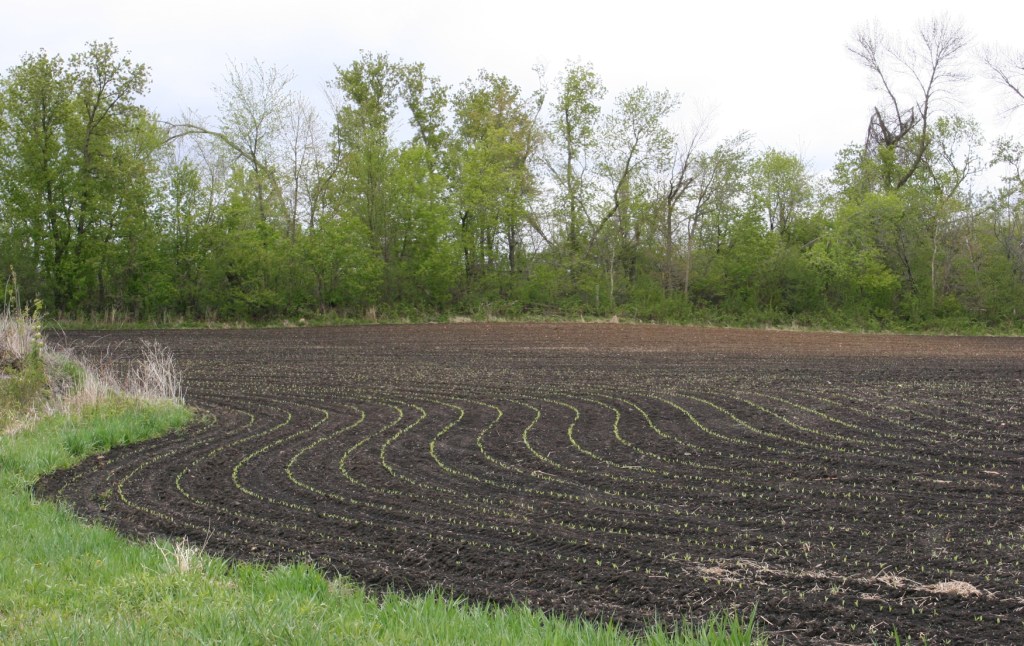
We spotted corn coming up in this field along 250th Street East southeast of Faribault.


Corn popped green, curving rows into one field.


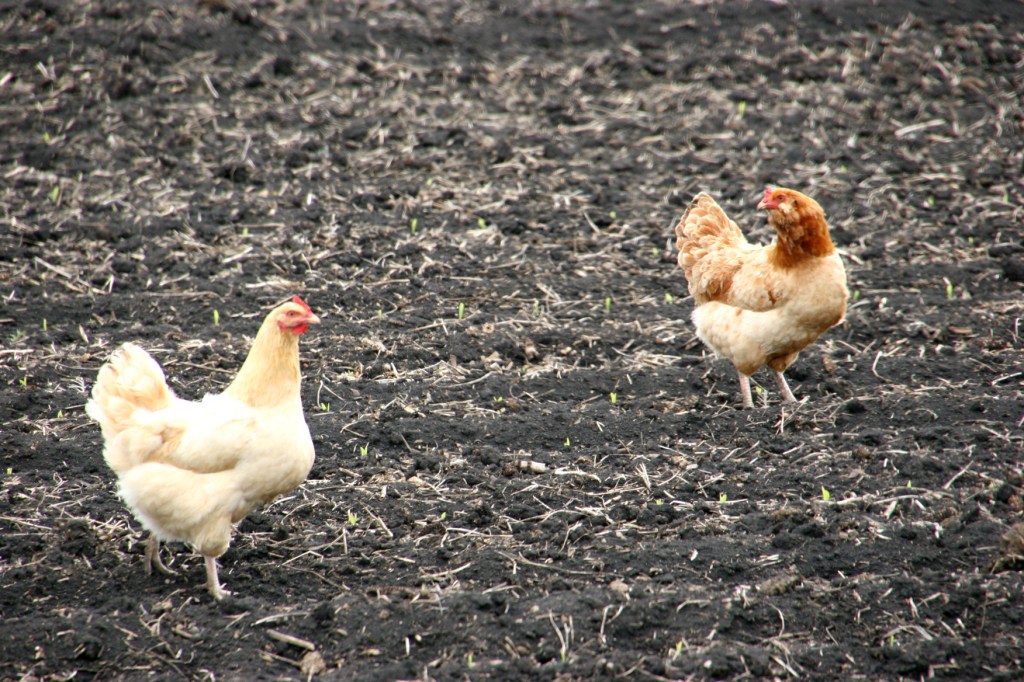
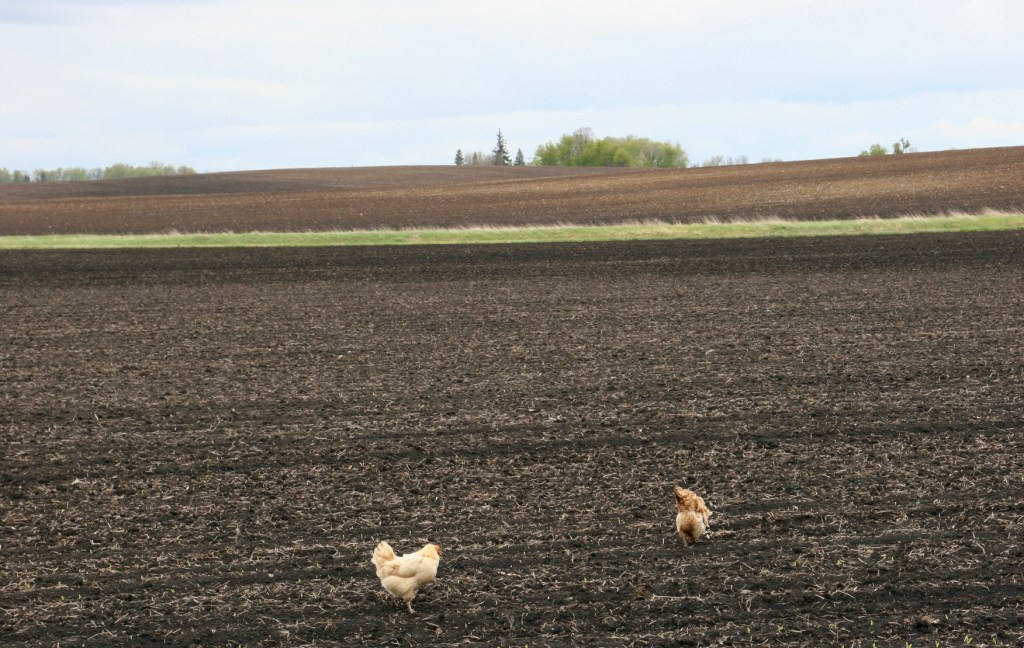
Chickens strayed from a farm site across the road to a field.


Those chickens seem so small in the vastness of farm fields.


Rogue chickens paused in another field to observe us while I swung my lens to photograph them.


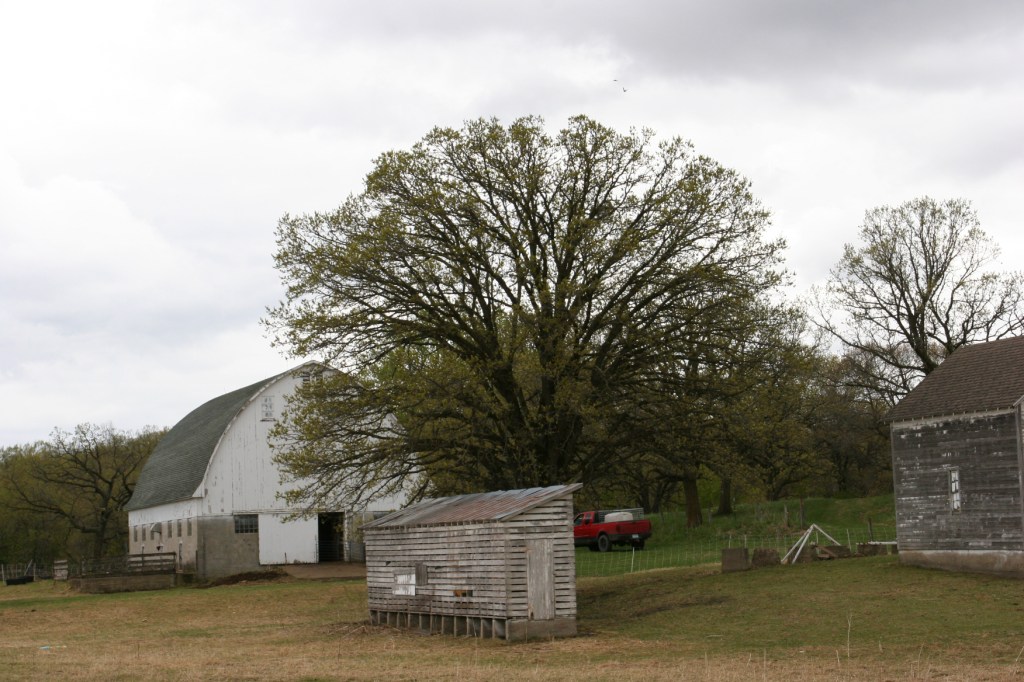
An old farm site along 233rd Street East.


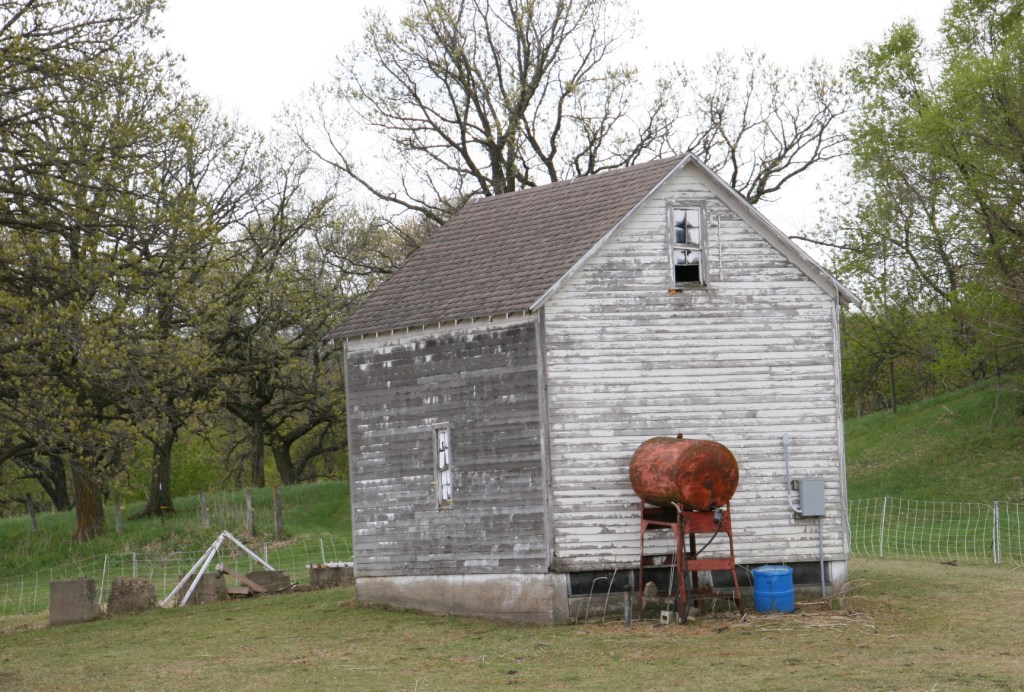
It’s been awhile since I’ve seen a gas barrel like this.


At one point, atop a hill, we studied a farm site below with broad barn, weathered corn crib and a red gas barrel next to an aged shed. Such building sites remind me of yesteryear, when an assortment of small structures defined a farm place.


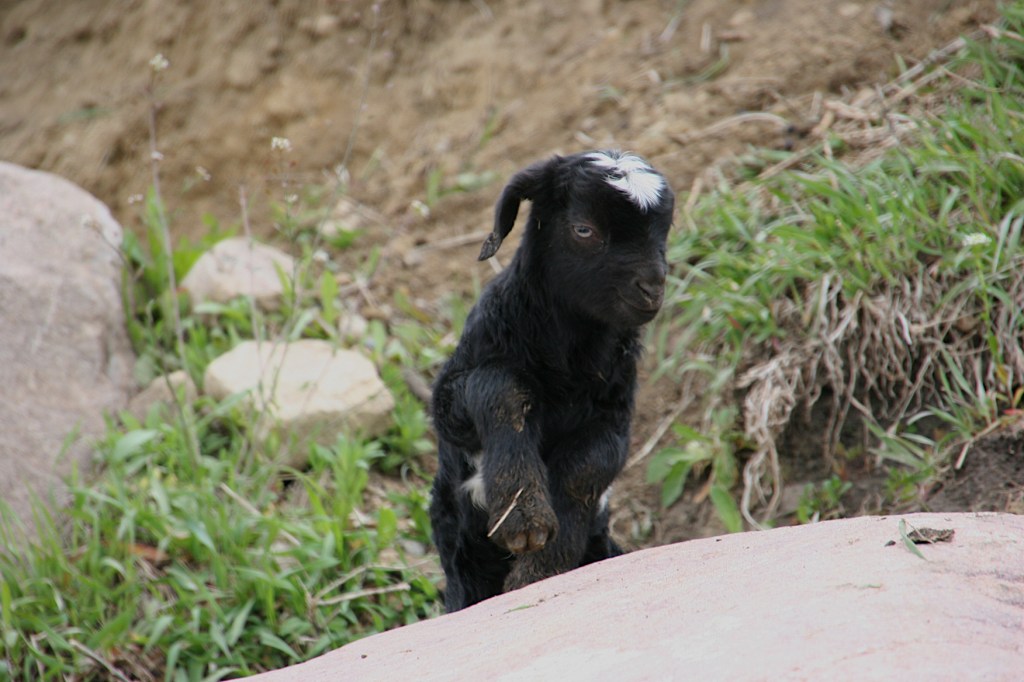
That baby goat wanted so badly to scale that rock, without success.


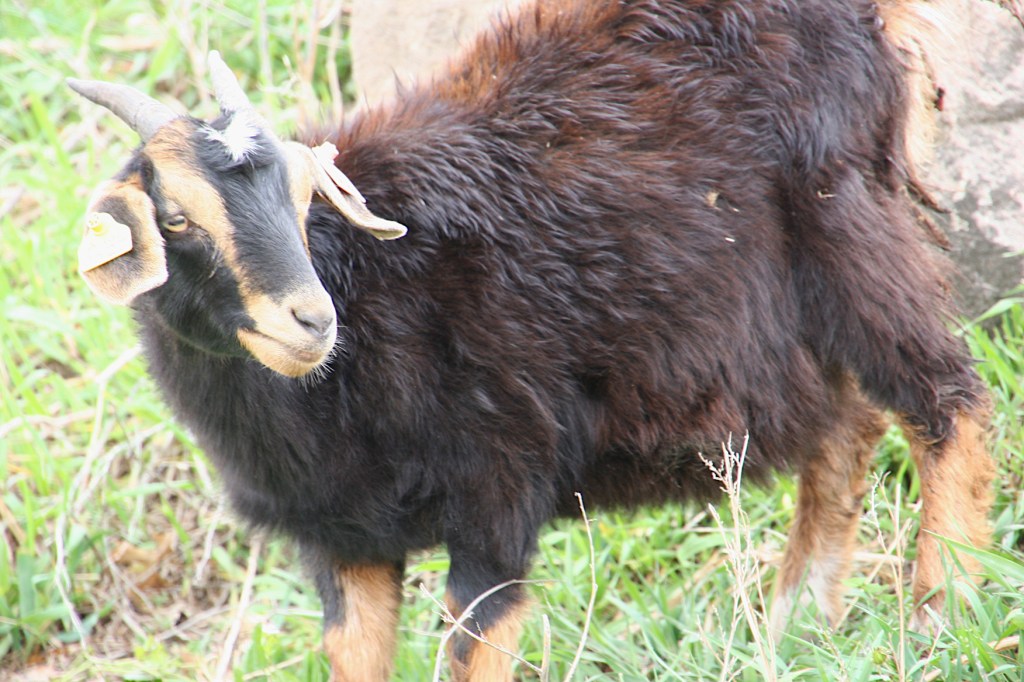
Even the adult goats are cute.


And then, the road curved, leading us to the sweetest surprise of the drive—goats, fenced on both sides of the roadway. Windows rolled down, we heard their plaintive baa and watched as a baby goat struggled to climb a rock. I ooohed and aaahed over the cuteness of these goats.


Spring blooms, finally, in southeastern Minnesota.


Too soon we headed back to town. Randy needed to light the charcoal grill to smoke and cook a pork roast for supper. A Zoom call with family awaited us, too. But, in that short time, I found exactly what I needed—a joyful, therapeutic and sweet escape into the southeastern Minnesota countryside.


© Copyright 2020 Audrey Kletscher Helbling