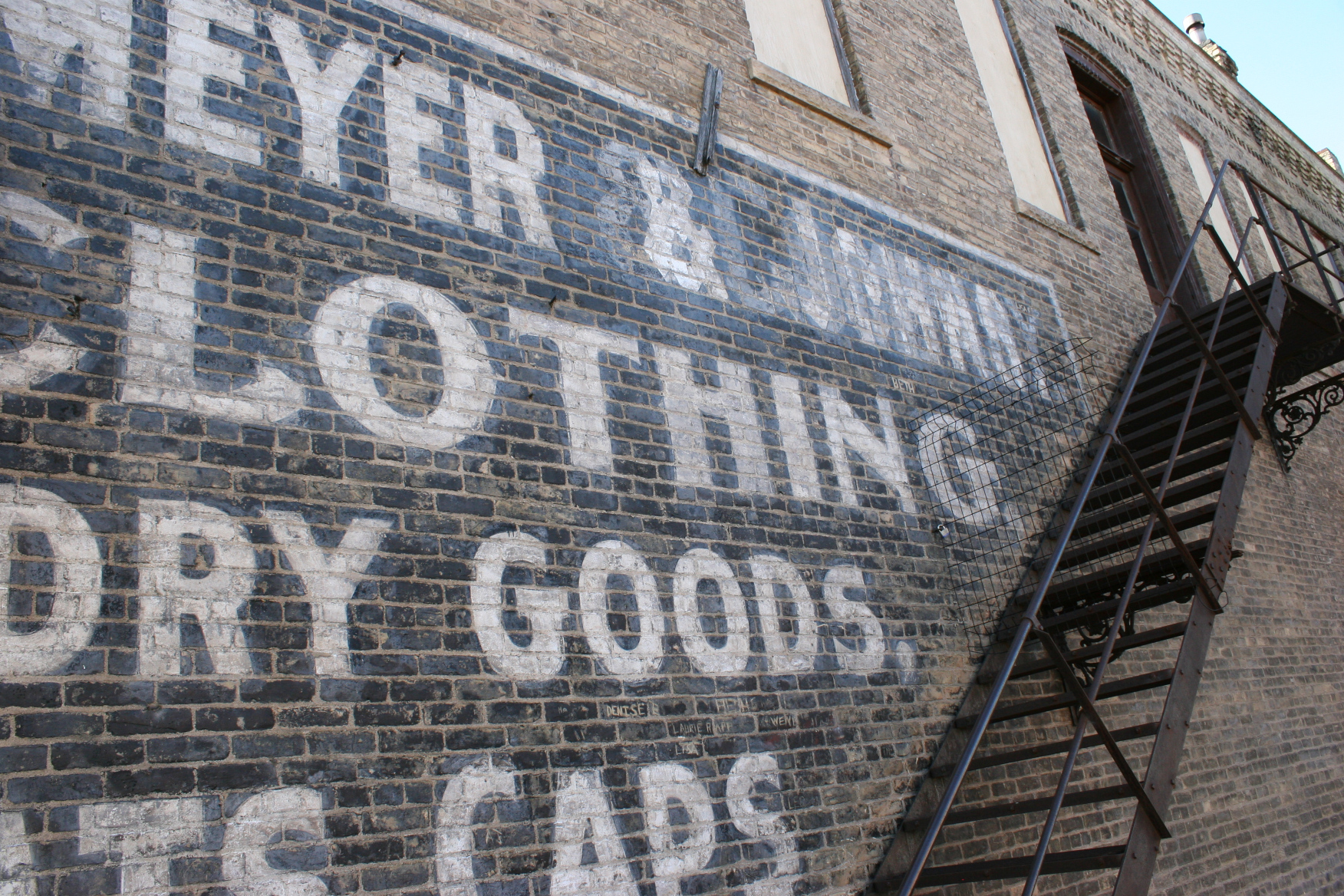
This ghost sign and stairway caught my interest in downtown Cannon Falls. (Minnesota Prairie Roots copyrighted photo October 2021)
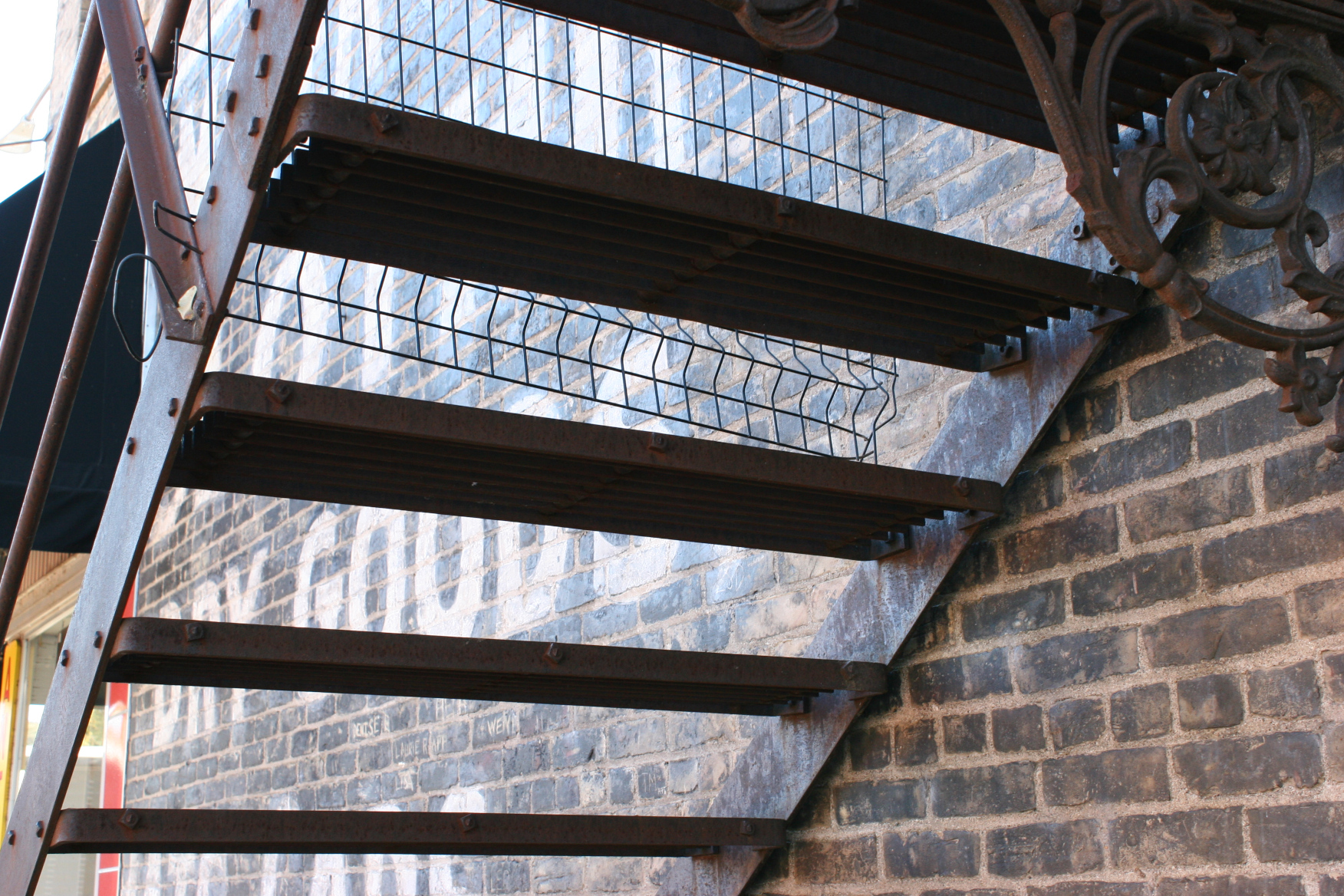
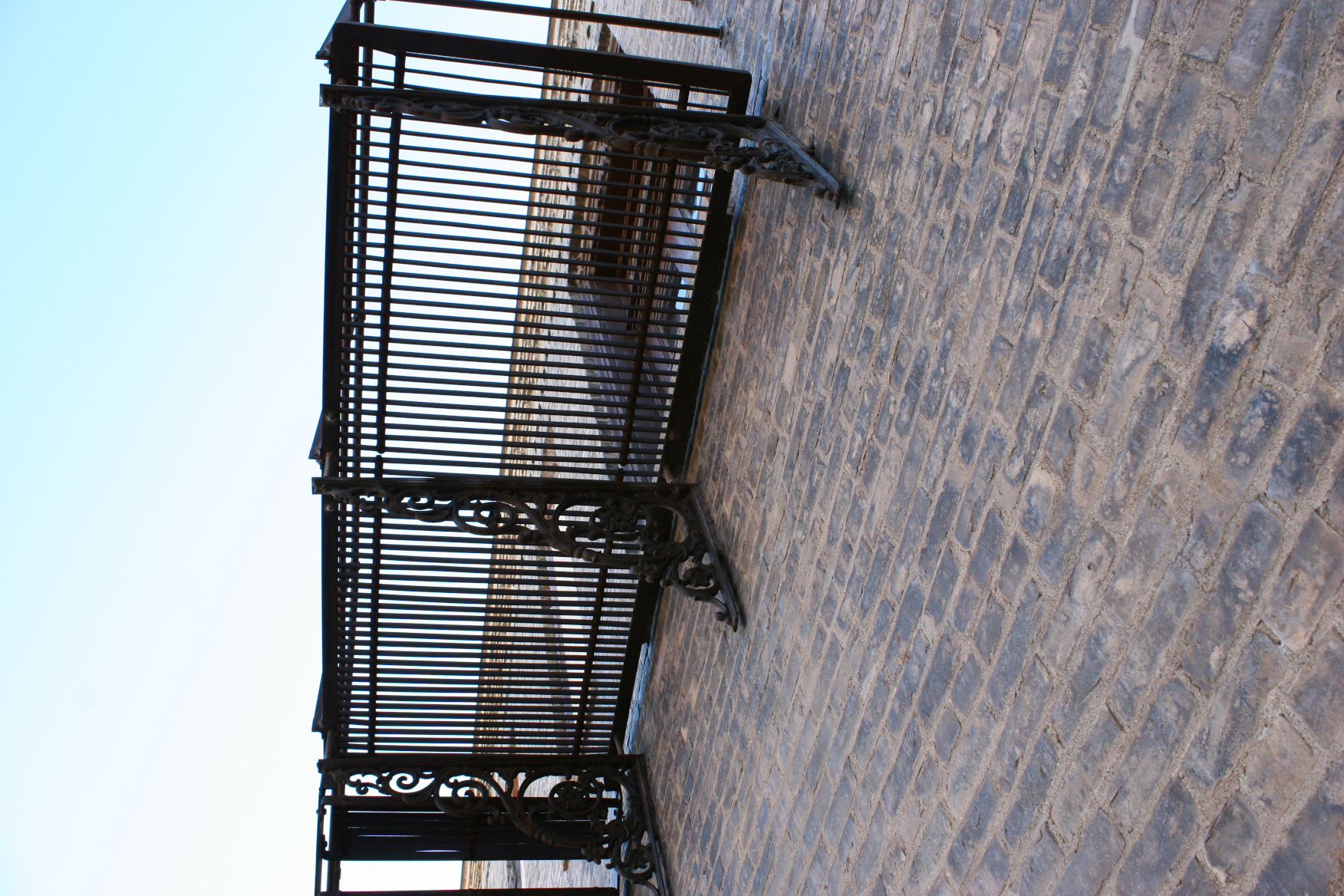
I VIEW THE WORLD through a creative lens. So when I see an exterior metal stairway, I see beyond the intended purpose of a pathway up or down. Rather, I see the angles, the details, the architectural, artsy side of the utilitarian.
Look to the right to see the lovely floral design in the bracing bracket. (Minnesota Prairie Roots copyrighted photo October 2021)
Aiming my camera lens up to the underside of that artsy stairway. (Minnesota Prairie Roots copyrighted photo October 2021)
And I appreciate, too, the fading ghost sign lettering for a dry goods and clothing store painted on the brick building.
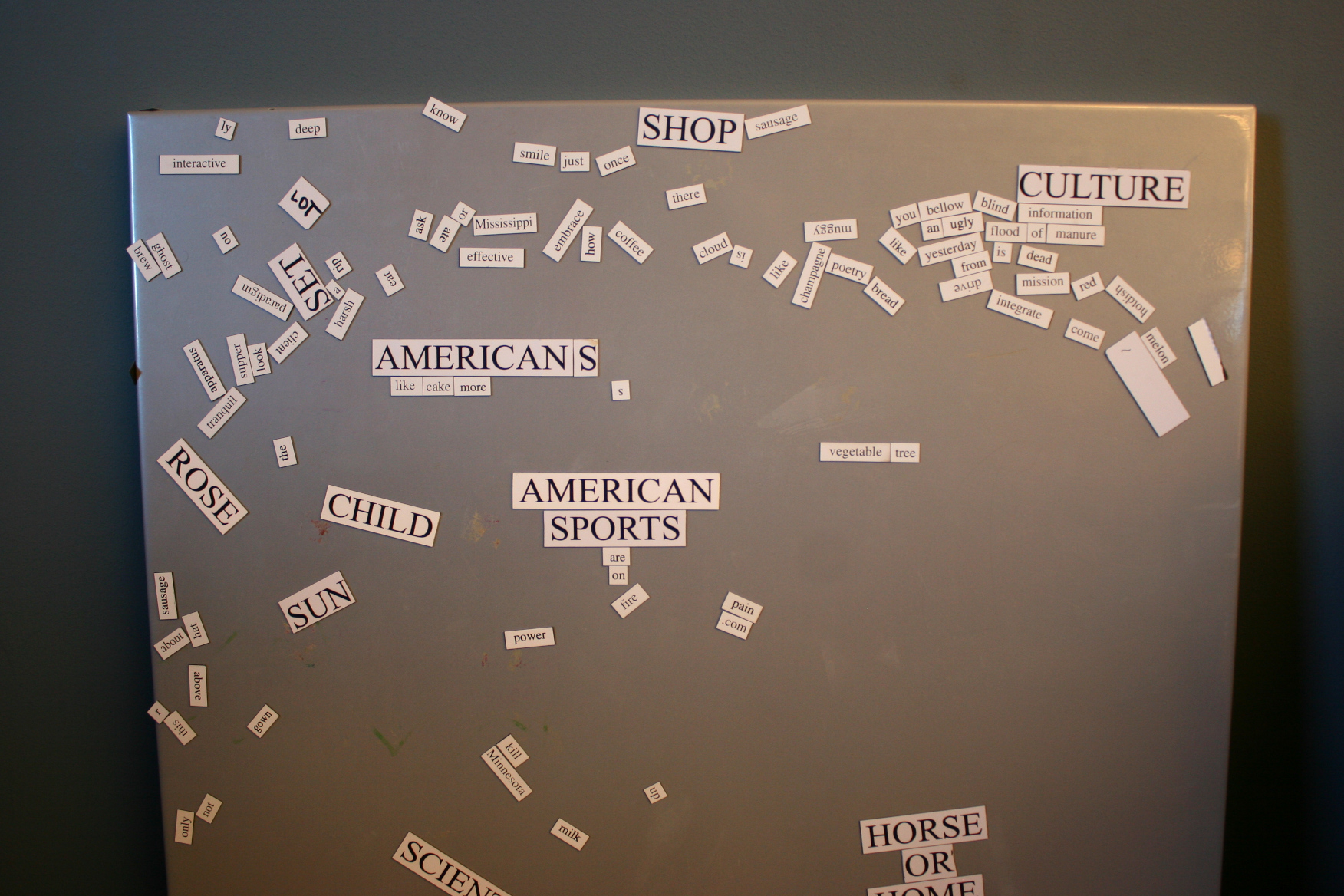
I spotted this magnetic word board at the library. (Minnesota Prairie Roots copyrighted photo October 2021)
JUST UP THE STREET a half a block away at the public library, a magnetic word board invites patrons to create. And while I didn’t, I took note of the coupling of words, whether by intentional placement or not:
smile just once
SHOP sausage
AMERICAN SPORTS are on fire
You bellow blind information like an ugly flood of manure
AMERICANS like cake more
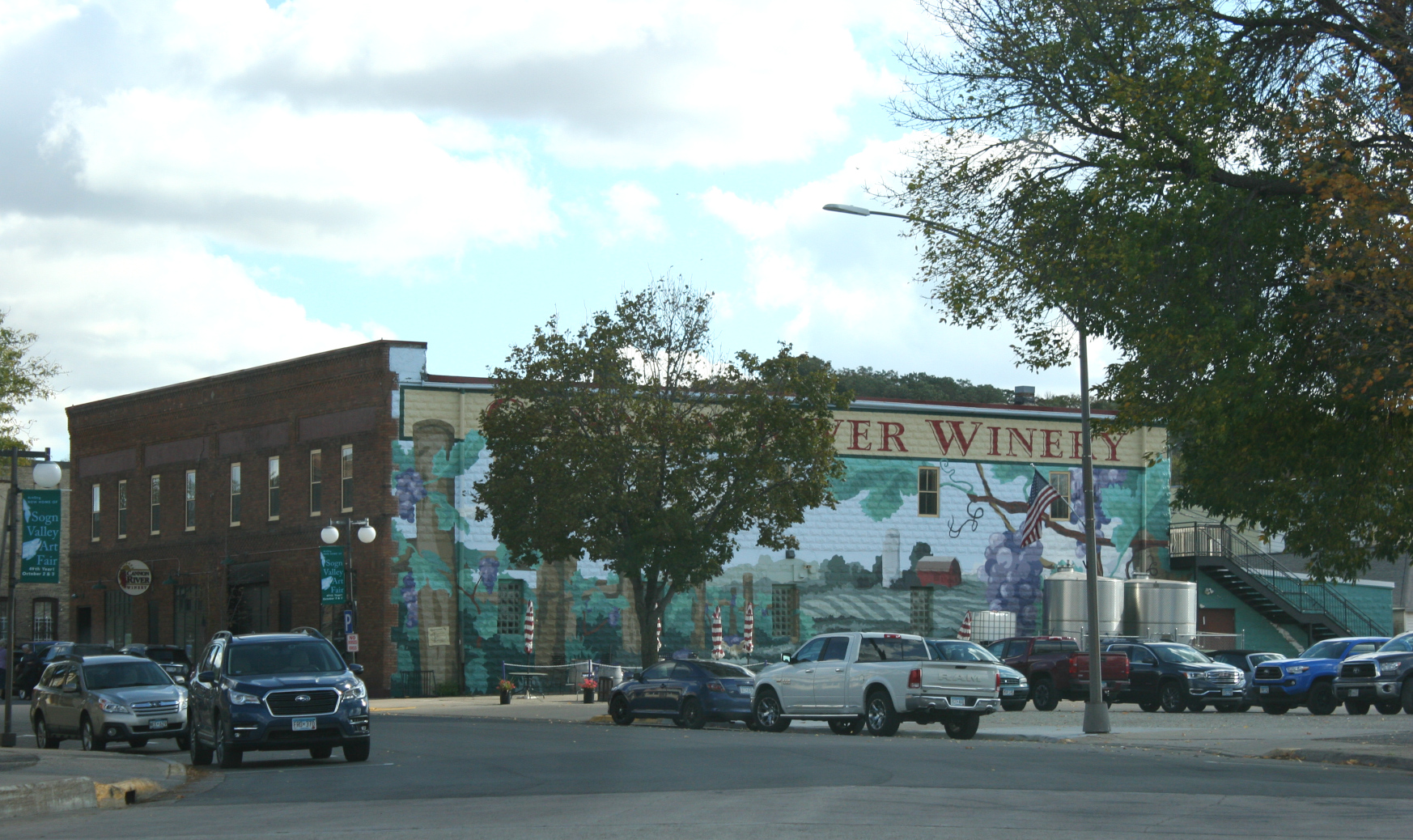
This mural graces Cannon River Winery. (Minnesota Prairie Roots copyrighted photo October 2021)
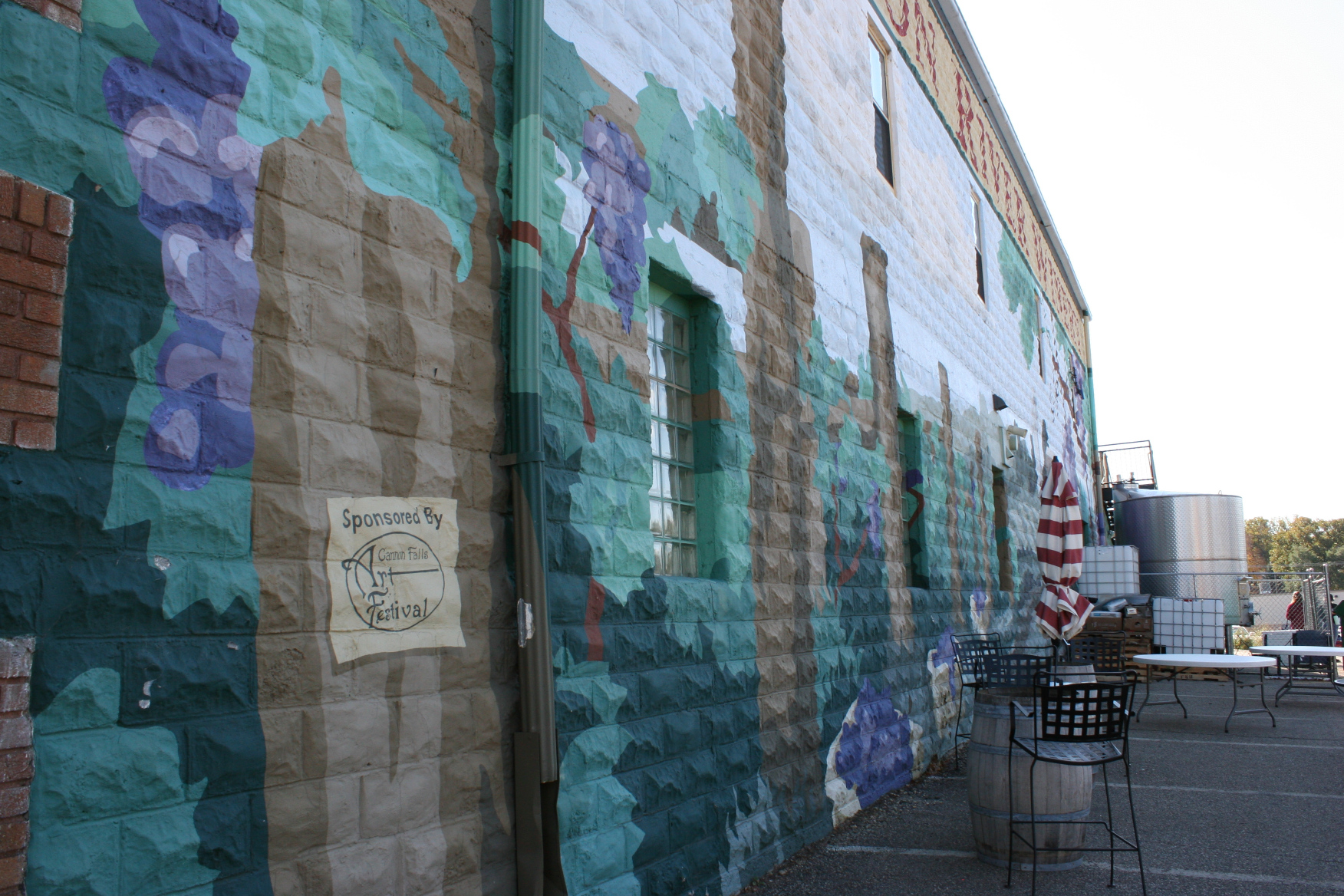
WE AMERICANS ALSO LIKE our wine. Back across the street, near the artsy metal stairway, Cannon River Winery also embraces the arts with a sprawling mural on the side of its building. The scene depicts the area’s rural-ness and the business of growing grapes and crafting wine.
I’ll raise my glass to that—to the winery, to the library, to the antique shop and to all the places in, and people of, this Minnesota community who value the arts. Thank you. I am grateful for the creativity in Cannon Falls.
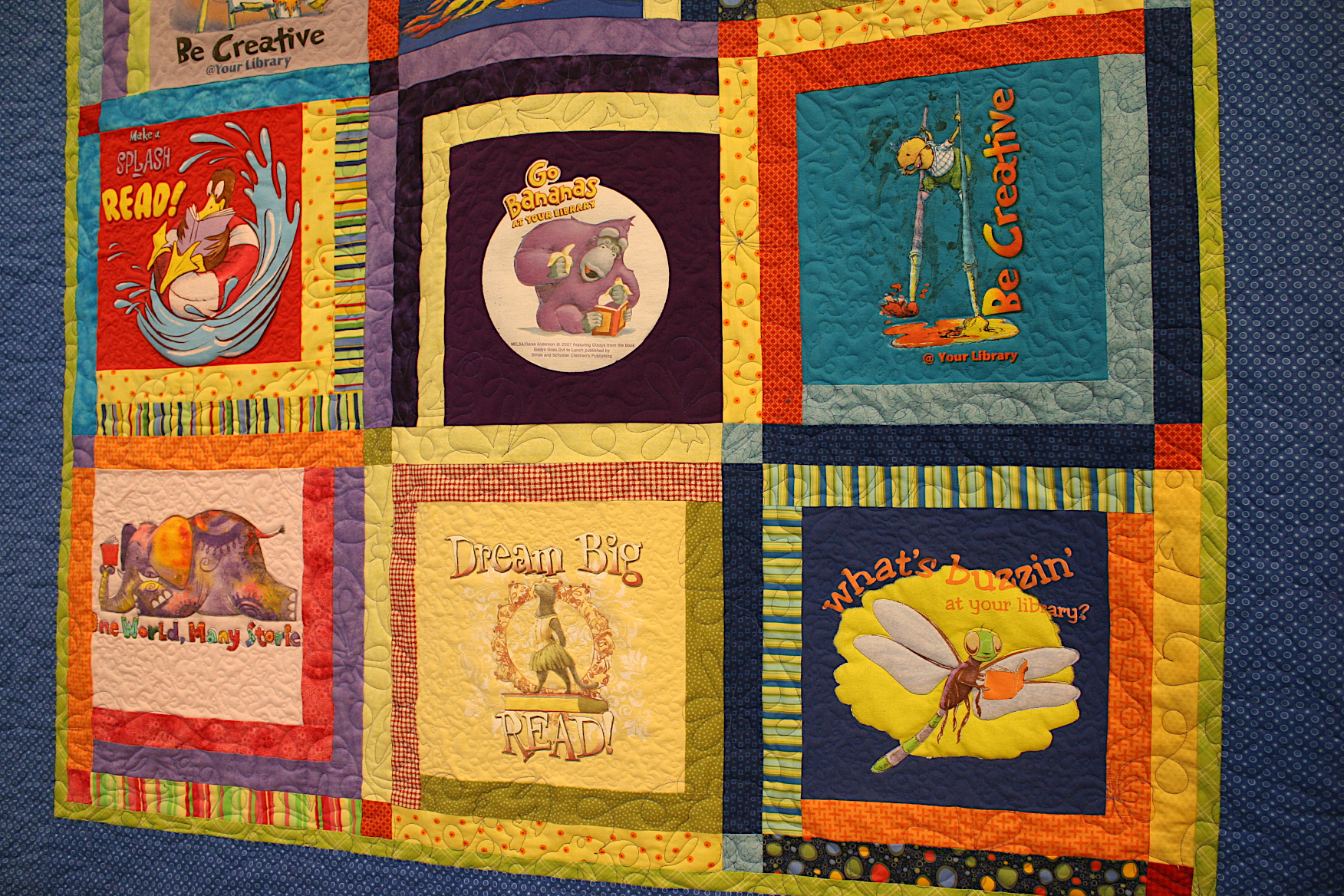
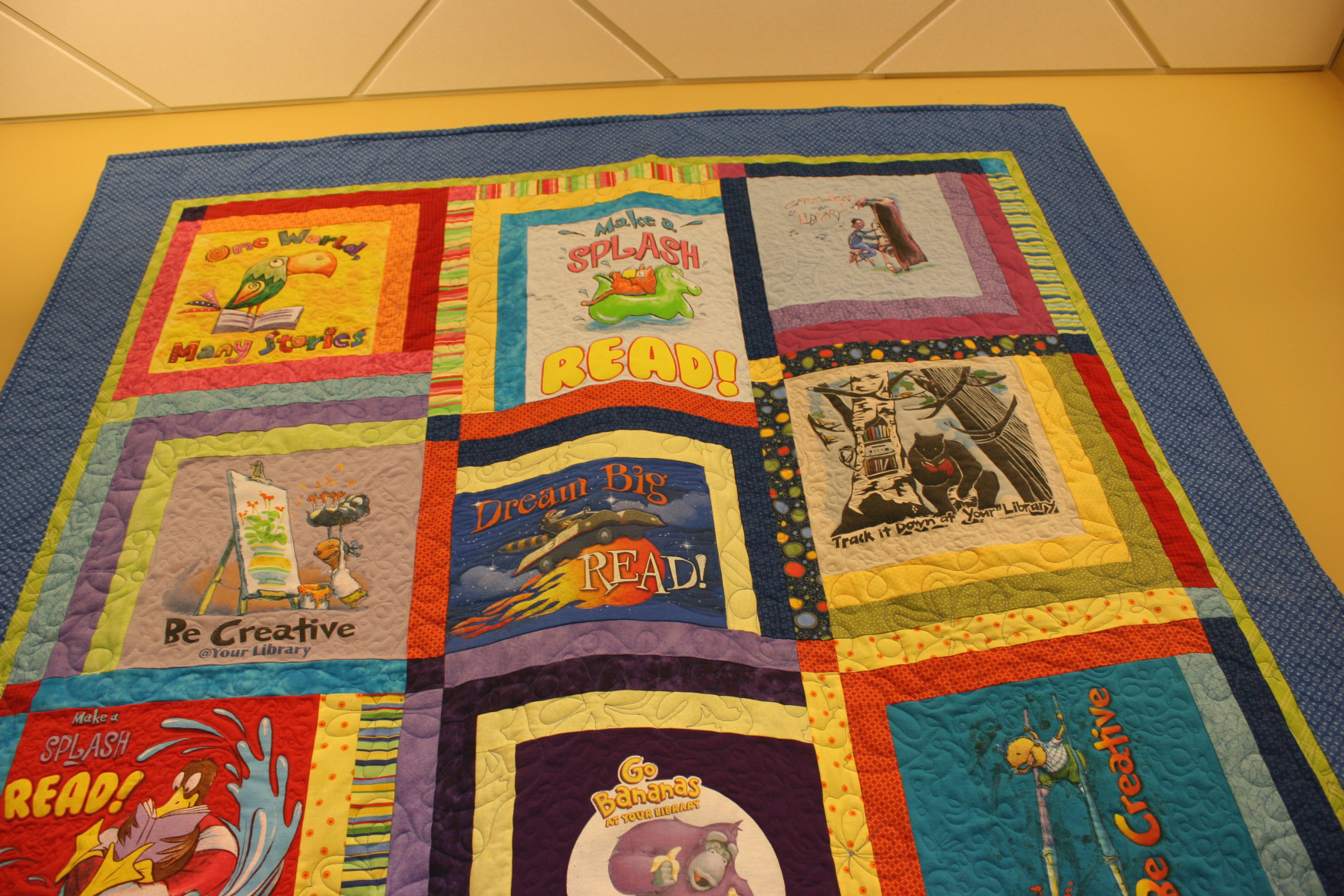
The inspiring quilt displayed at the Cannon Falls Library. (Minnesota Prairie Roots copyrighted photo October 2021)
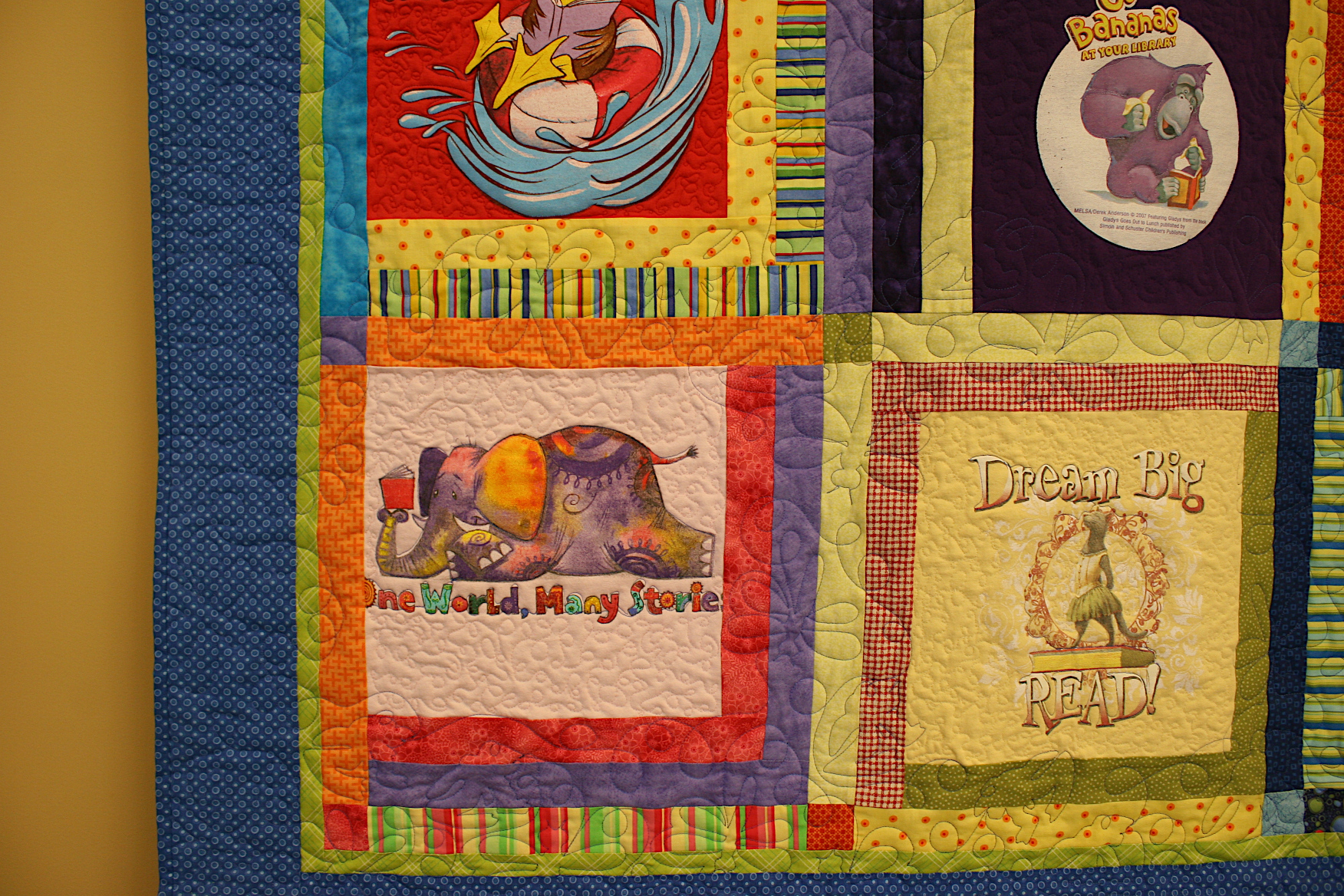
DREAM BIG. Be Creative. One World, Many Stories. Make a Splash.
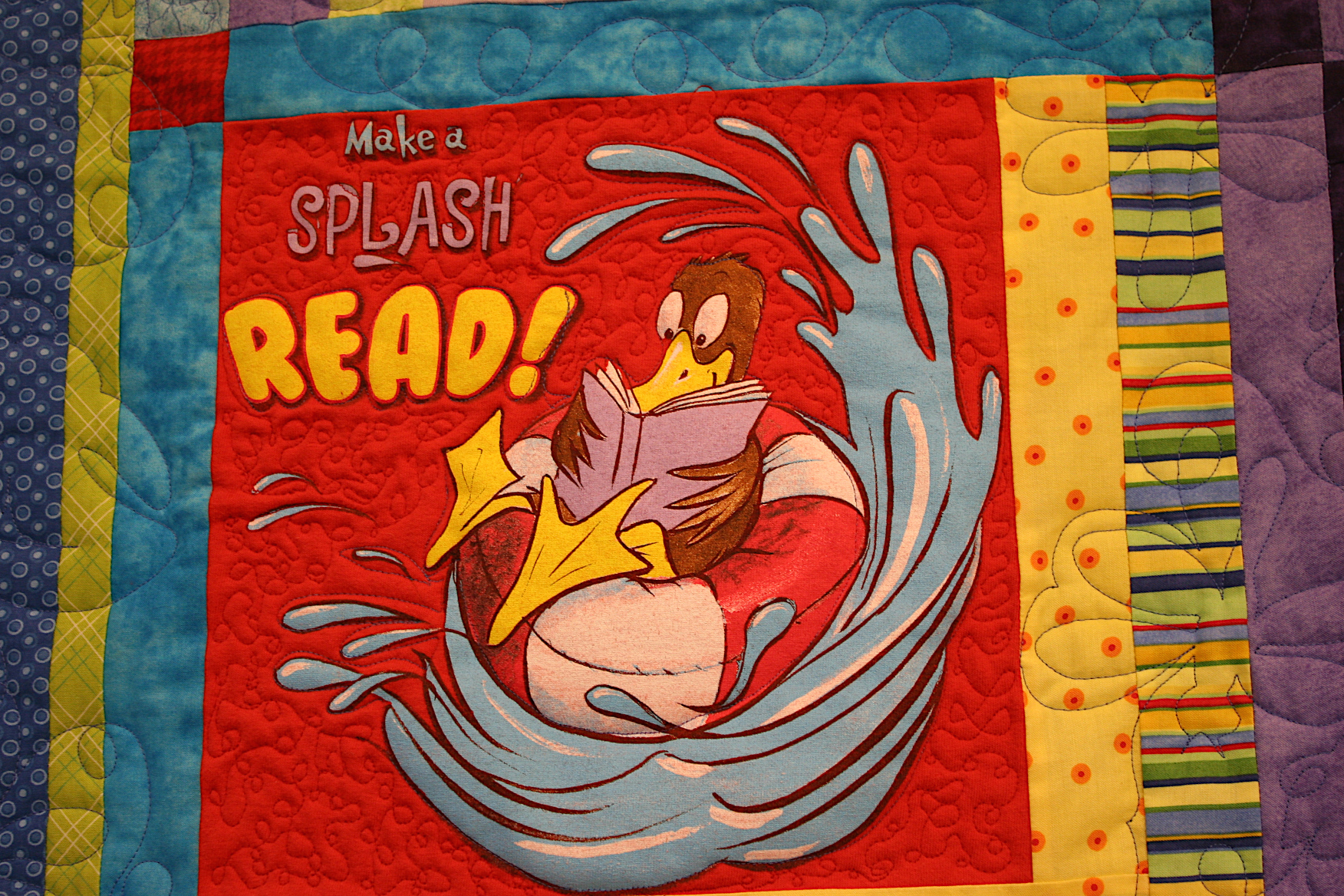
Make a Splash! applies to more than reading. (Minnesota Prairie Roots copyrighted photo October 2021)
Those phrases inspire. They push us to do our best. To pursue our passions. To make a difference. To tell our stories.
When I recently read those words on a colorful quilt gracing a wall in the Cannon Falls Library, I felt empowered.
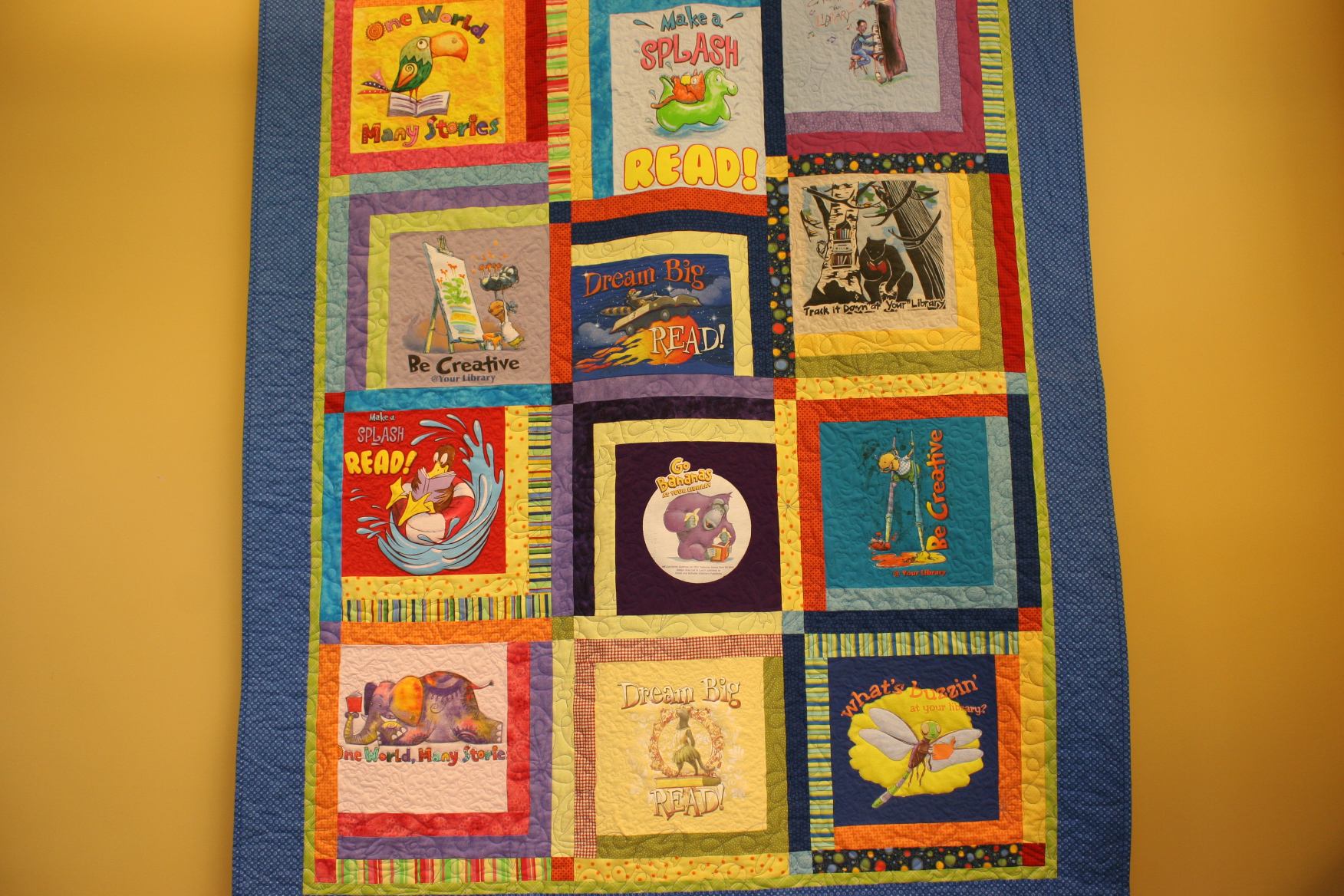
The library quilt as inspiring art. (Minnesota Prairie Roots copyrighted photo October 2021)
The messages have been part of Southeastern Libraries Cooperating summer promotionals to get kids into libraries and reading. They’re simple words and graphics. Kid-appealing. Eye-catching. Positive.
The top section of the quilt art. (Minnesota Prairie Roots copyrighted photo October 2021)
As someone who values books and libraries, and the arts, I appreciate the works of the seamstress who stitched this quilt. It’s a good visual reminder to each of us—whether child, teen or adult—of our talents and worth. I may be good with words. You may be good with numbers. I celebrate that difference in talent (especially come tax time when I hand my financial records over to my accountant).
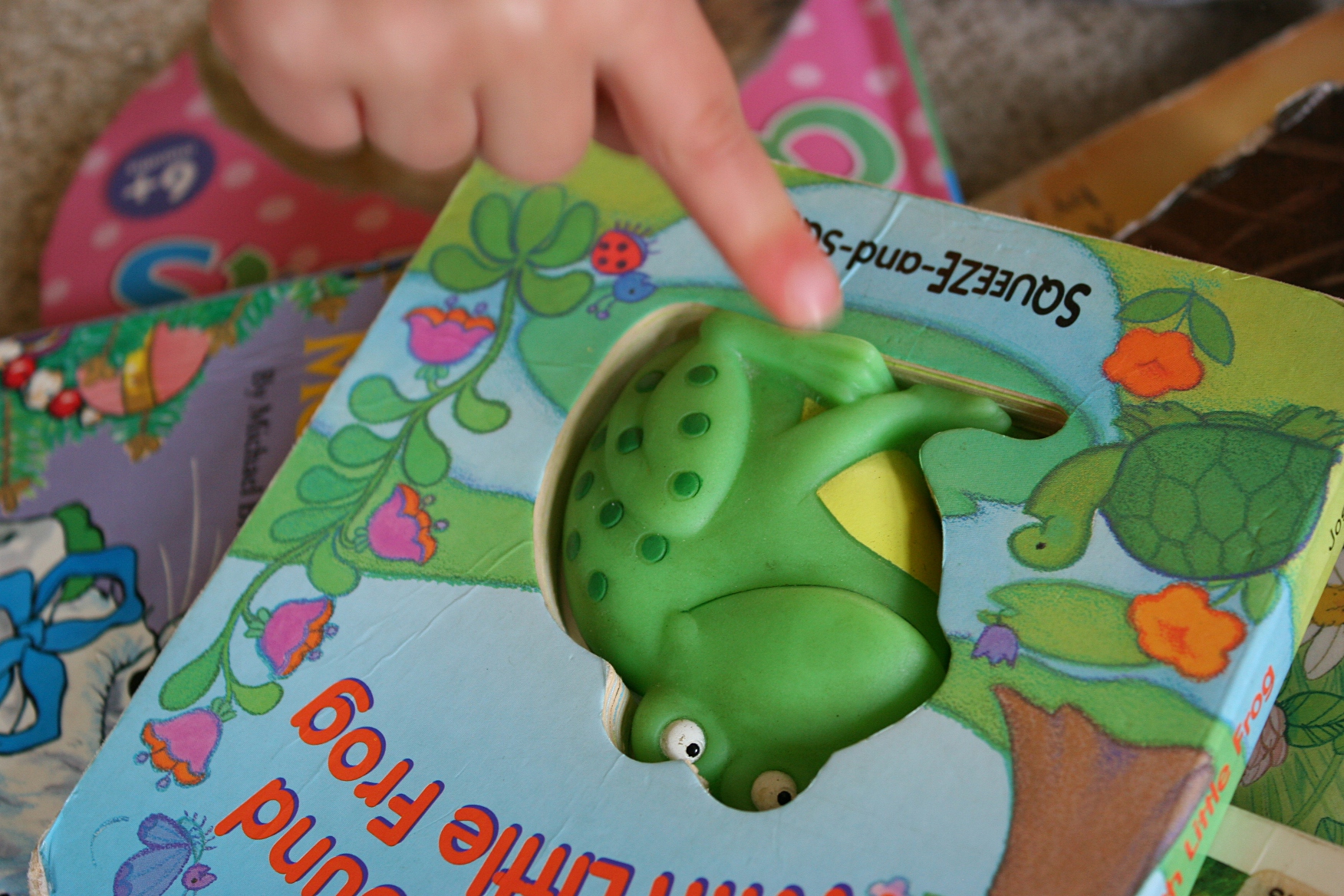
All Year Round With Little Frog was one of my granddaughter’s favorite books as a toddler. I would read and reread it to her whenever she visited, just as I did decades ago to her Uncle Caleb. (Minnesota Prairie Roots copyrighted file photo)
I’ve always loved books and now I have the joy of reading books to my grandchildren, ages nearly three and 5 ½. Books pack shelves in their toy room with more books from the library. Their parents value books.
The world of words is opening even wider to Isabelle, who is in kindergarten. During a recent visit, I would say a word and she would guess the starting letter. Her face lit with sheer delight in determining the correct letter. Her mind is beginning to connect—to understand that sounds define letters which form words and then sentences and stories. I can’t wait to hear her read.
One World, Many Stories… (Minnesota Prairie Roots copyrighted photo October 2021)
So when I read about dreaming big and being creative and making a splash in this world of many stories, I think of my precious grandchildren. And I hope that in some small way, I inspire them to be all they can be. And one way to do that is via books, art and modeling creativity.
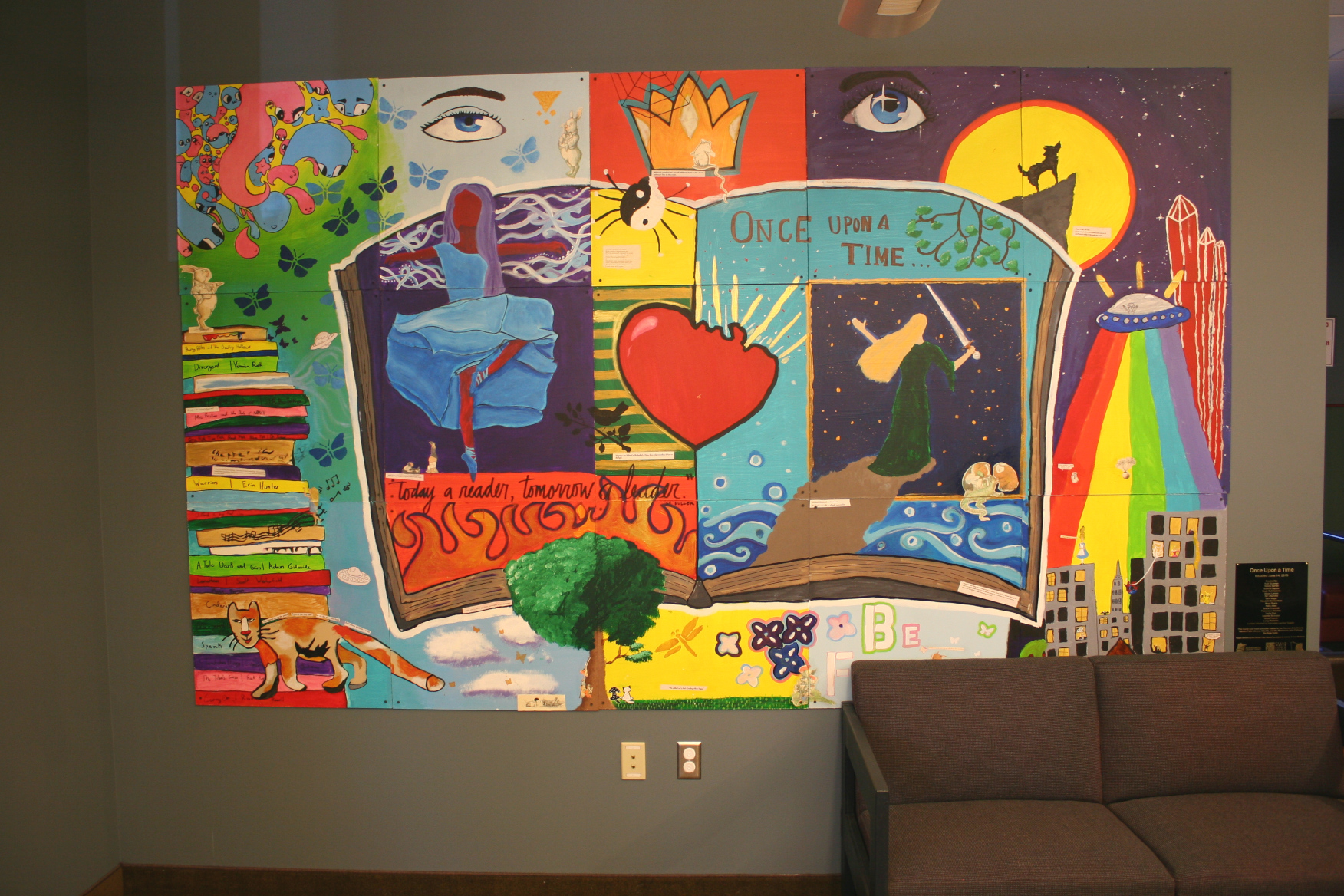
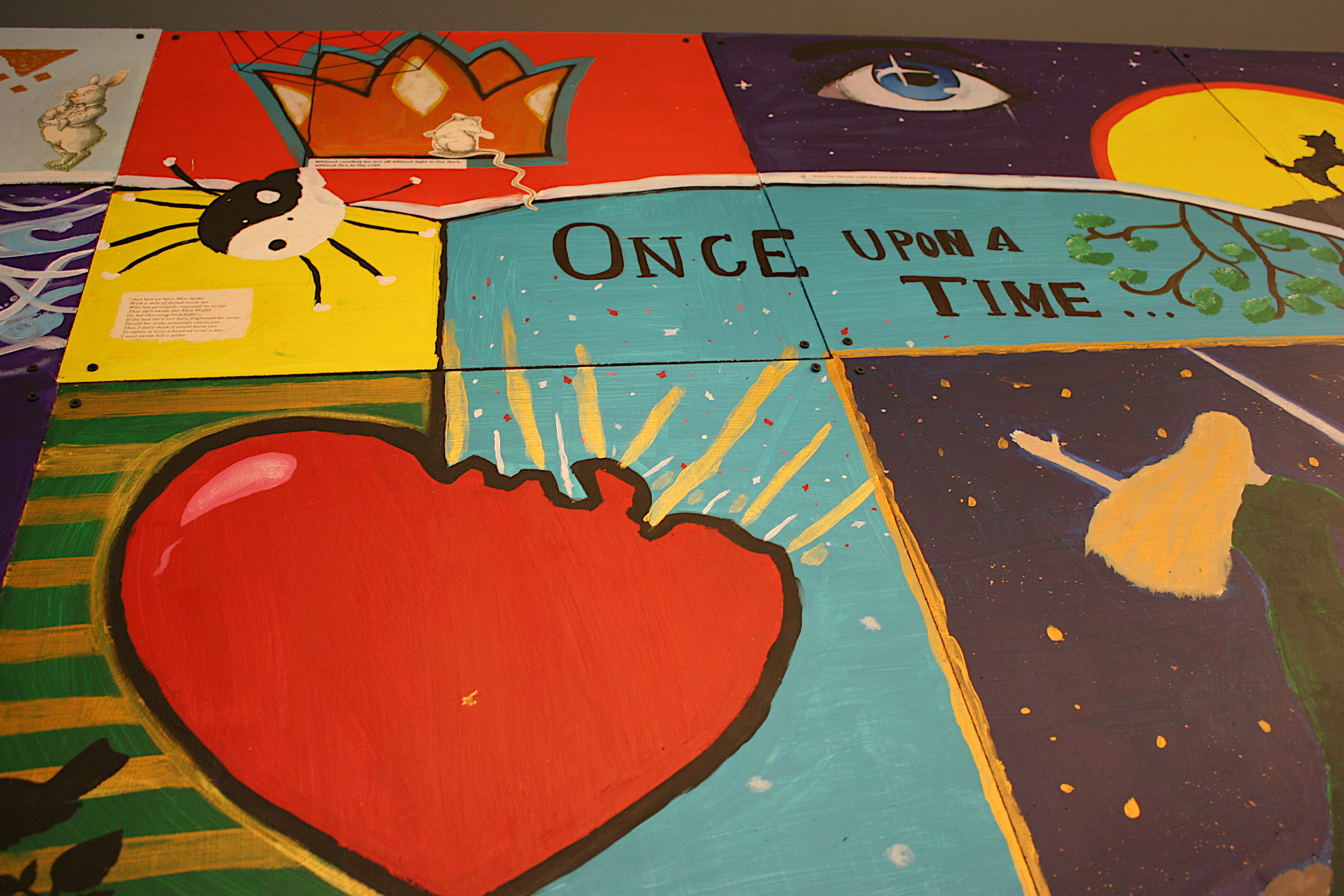
The “Once Upon a Time” mural in the Cannon Falls Library. (Minnesota Prairie Roots copyrighted file photo October 2021)
TUCKED INTO A SIDE CORNER, behind a nondescript cushioned seat for two, a bold mural pops color into the Cannon Falls Library.
The mural is fun, playful, colorful, inspirational… (Minnesota Prairie Roots copyrighted photo October 2021)
I discovered the art on a recent day trip to this small Goodhue County community along the Cannon River. A sign in a downtown storefront window promoting the library’s “Mailbox Mysteries” program led me to the library. Once inside, I registered for the mystery challenge and then browsed. Not books. But art.
This tastefully and artfully decorated library creates an inviting setting in a cozy space. I felt comfortably at home here, where a fireplace angles into a corner with cushy seating nearby.
So much to see and interpret.(Minnesota Prairie Roots copyrighted photo October 2021)
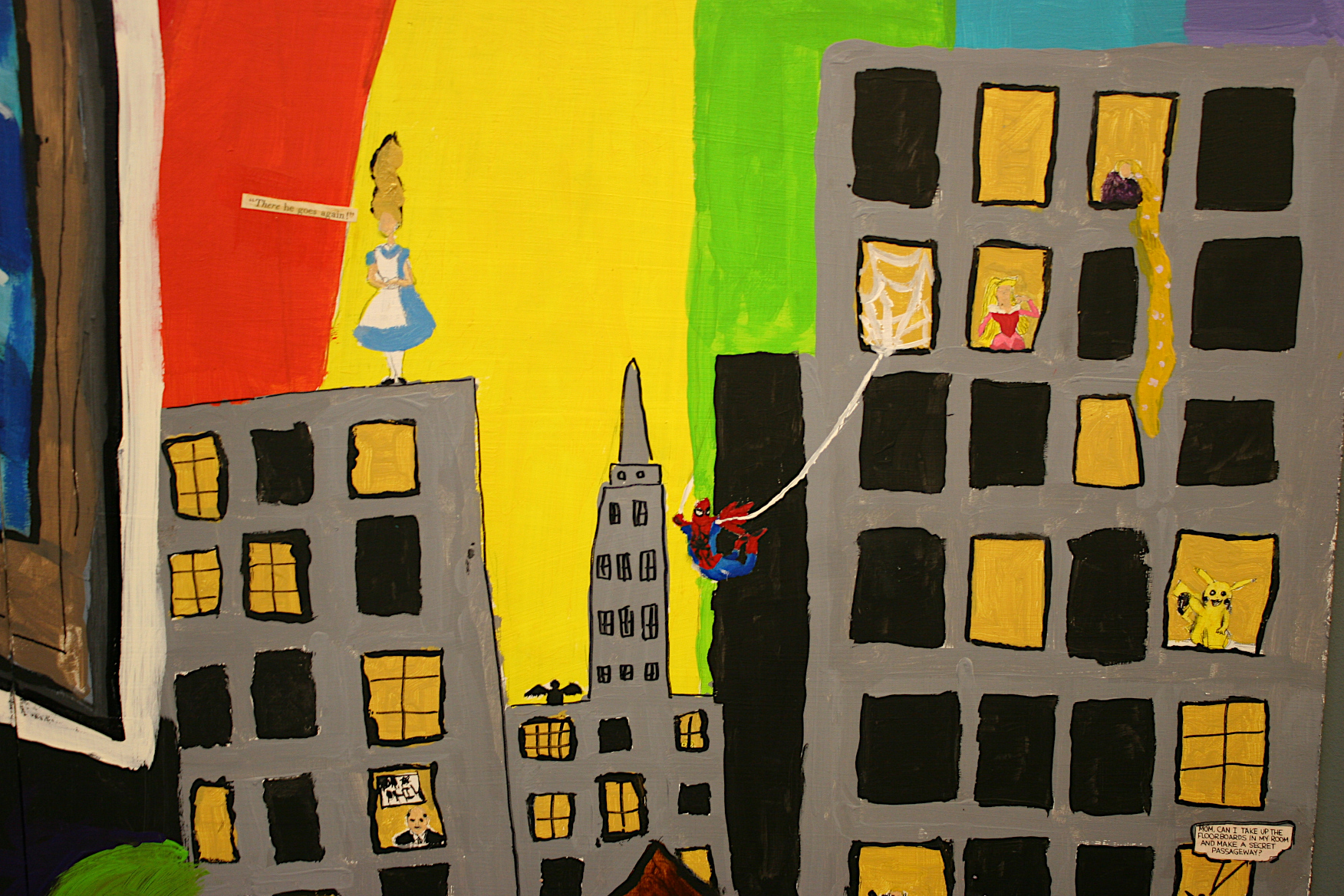
But it was that vivid mural which focused my attention. There’s so much to take in. Even now, as I scroll through my photos, I note details previously unnoticed. This mural requires study and an appreciation for nuances.
What a fitting theme for this library mural. (Minnesota Prairie Roots copyrighted photo October 2021)
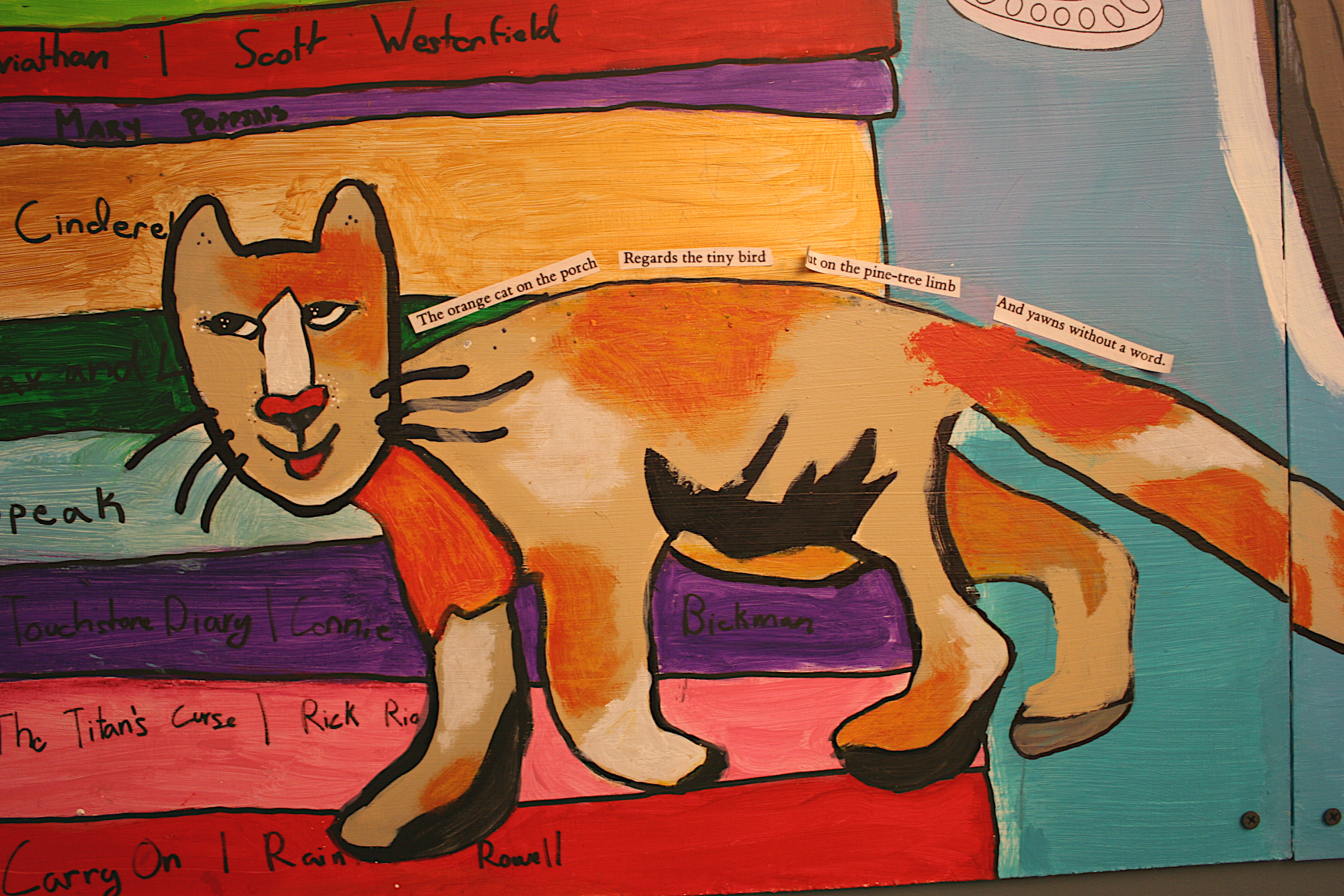
Titled “Once Upon a Time,” this artwork was created by local students under the direction of Cannon Falls native and New York artist Kelli Bickman. A similar, and much larger, Youth Mural Arts project graces the exterior of the local Chamber of Commerce building 1 ½ blocks away.
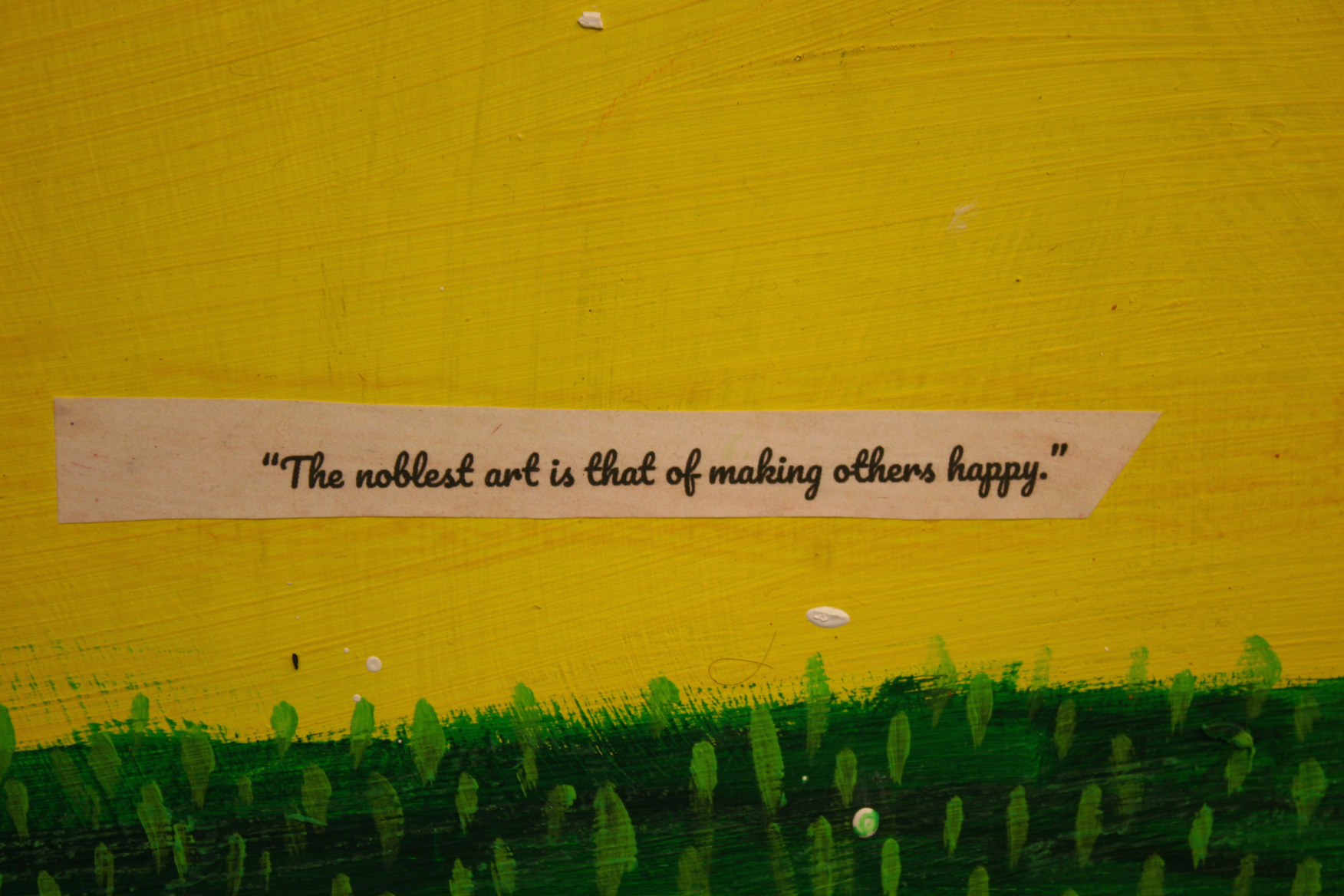
Among the many inspirational quotes incorporated into the library mural is this favorite. (Minnesota Prairie Roots copyrighted photo October 2021)
As a wordsmith, I especially appreciate the inspirational quotes incorporated into the painting: Today a reader, tomorrow a leader. The noblest art is that of making others happy.
Love this quote…(Minnesota Prairie Roots copyrighted photo October 2021)
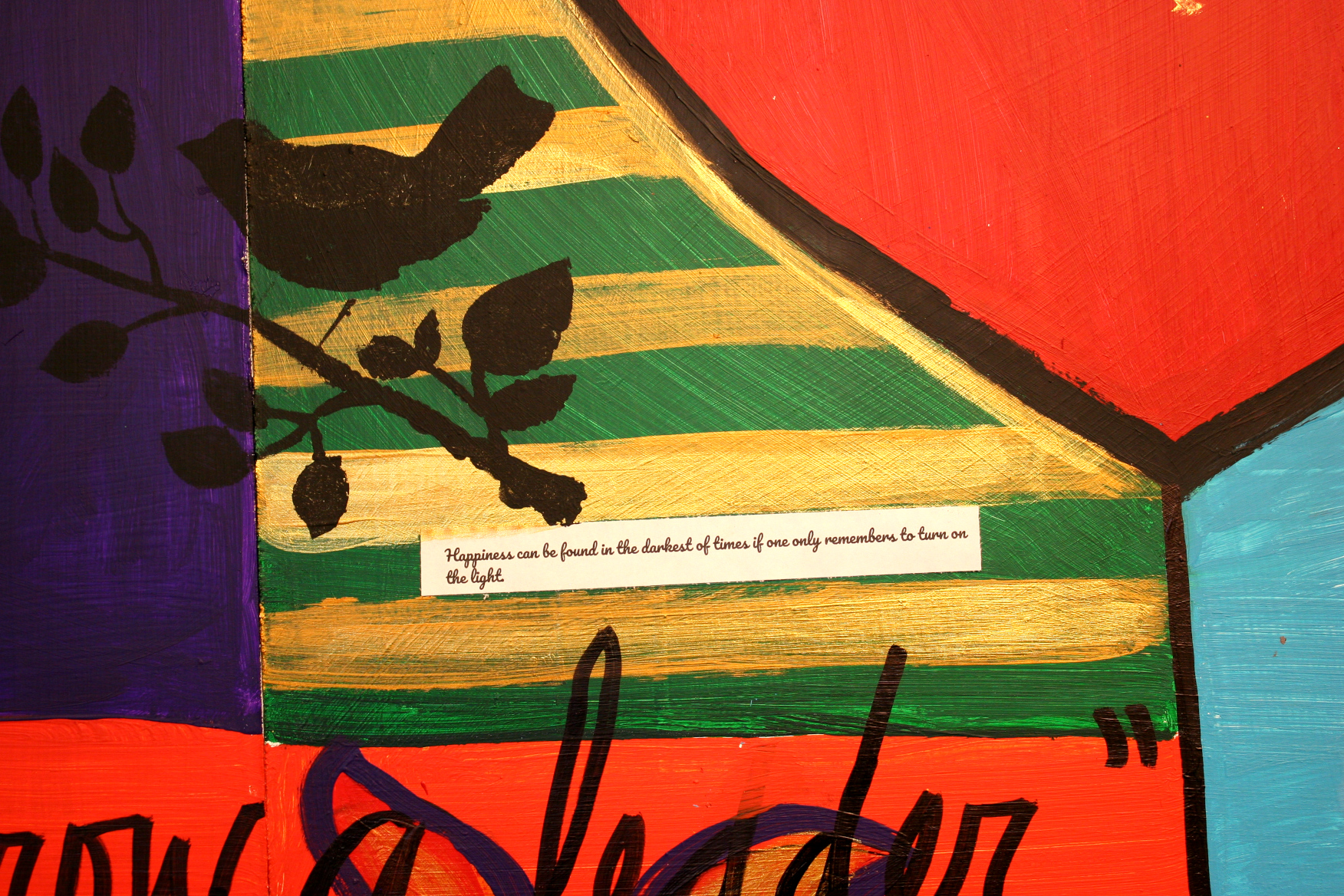
And my favorite: Happiness can be found in the darkest of times if one only remembers to turn on the light. How well that quote fits today as we deal with the darkness of a global pandemic. The artists could not have known that, just months after the dedication of this mural in June 2019, darkness would descend upon our world. Now, more than ever, those words of encouragement—of remembering to turn on the light—resonate.
Once Upon a Time can take you anywhere. (Minnesota Prairie Roots copyrighted photo October 2021)
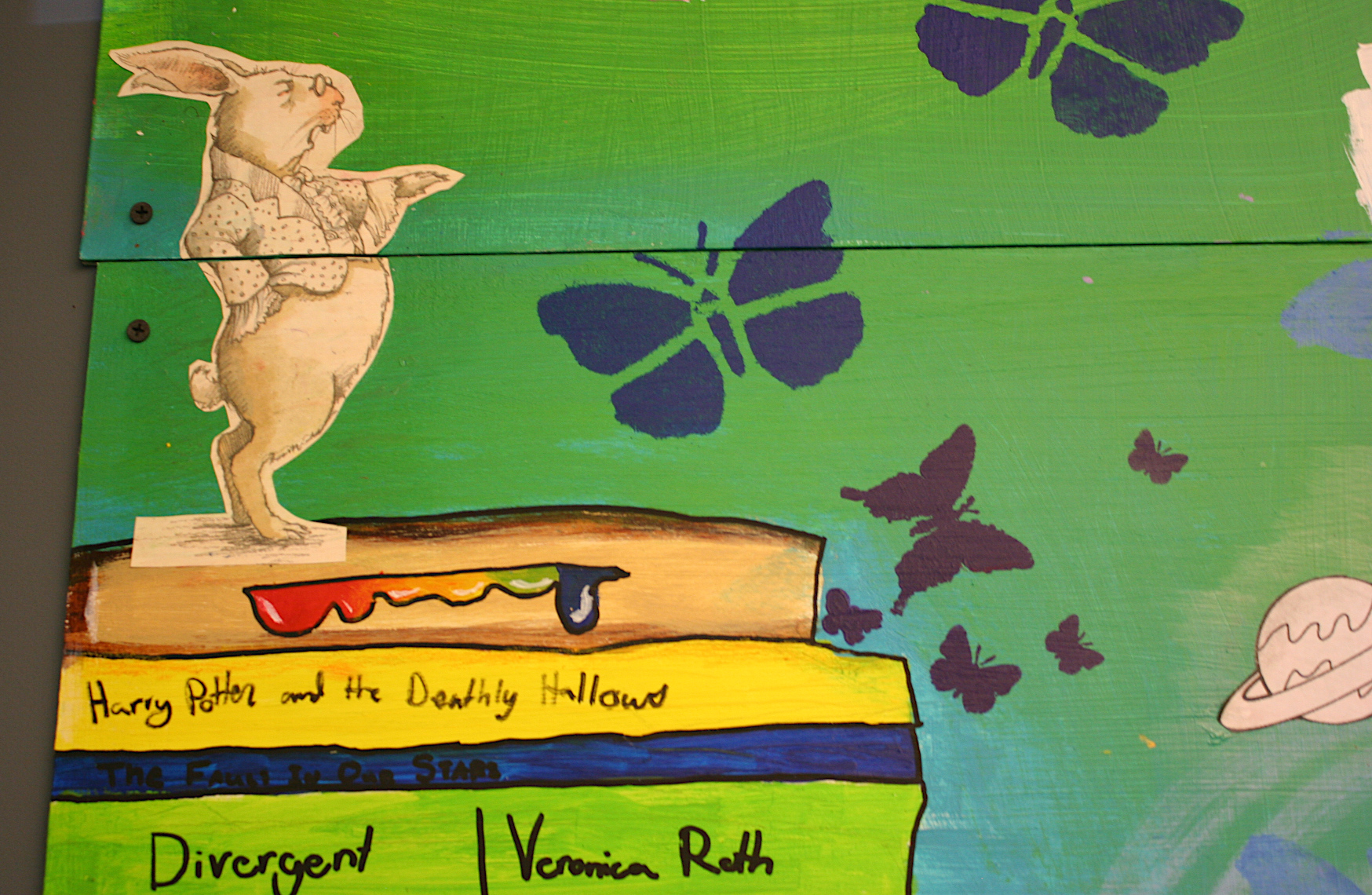
Art is always open to interpretation. So what I take away from this mural may differ from the artists’ vision or from others who view it. I see strength and grace. I see reaching for the stars and achieving goals. I see fiery passion and the fluidity of life. I see going places that may lead far from Cannon Falls, from Minnesota even. I see dreams taking wing. I see how books and music and art and nature influence us.
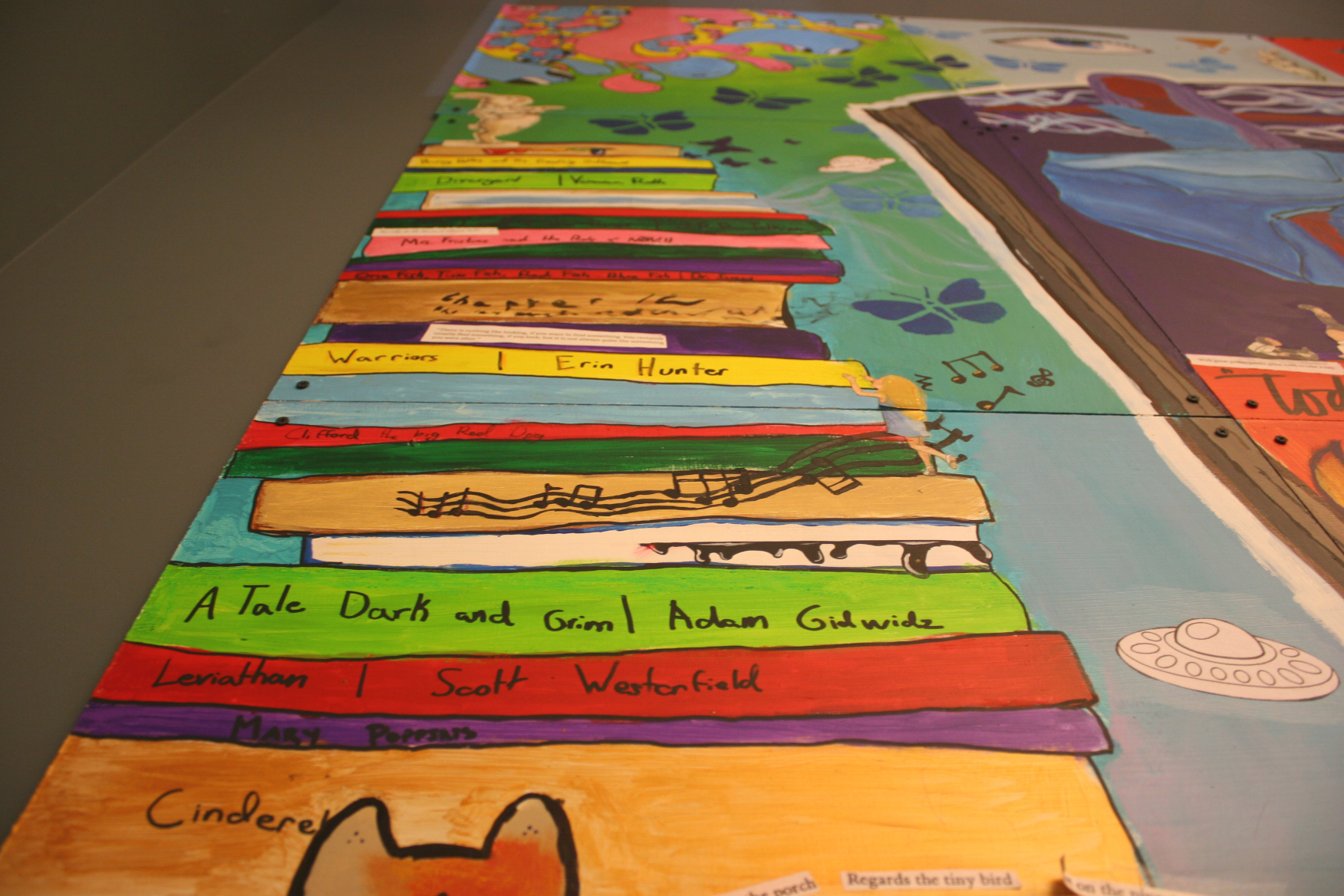
A stack of books painted into the mural fits the setting and the theme. (Minnesota Prairie Roots copyrighted photo October 2021)
I see that Once Upon a Time is our story to write. We write the words and paint the scenes to create the personalized murals which depict our lives. And, in the darkest of times, we can choose to switch on the light, to see happiness.
Cannon Falls’ newest mural, completed earlier this year. (Minnesota Prairie Roots copyrighted photo October 2021)
WHEN ART INTEGRATES into a community in a publicly accessible way, I celebrate. There’s a reason I feel such gratitude. I grew up in rural southwestern Minnesota with minimal art exposure. Yet, today, I work as a creative. Expressing myself via writing and photography is my passion. My path to creativity began with the Little House books read aloud to me and my classmates by a grade school teacher. As I listened, words painted images of the scenes Laura Ingalls Wilder described in her writing.
That’s the backstory behind my deep appreciation for the arts—from visual to literary to performing.
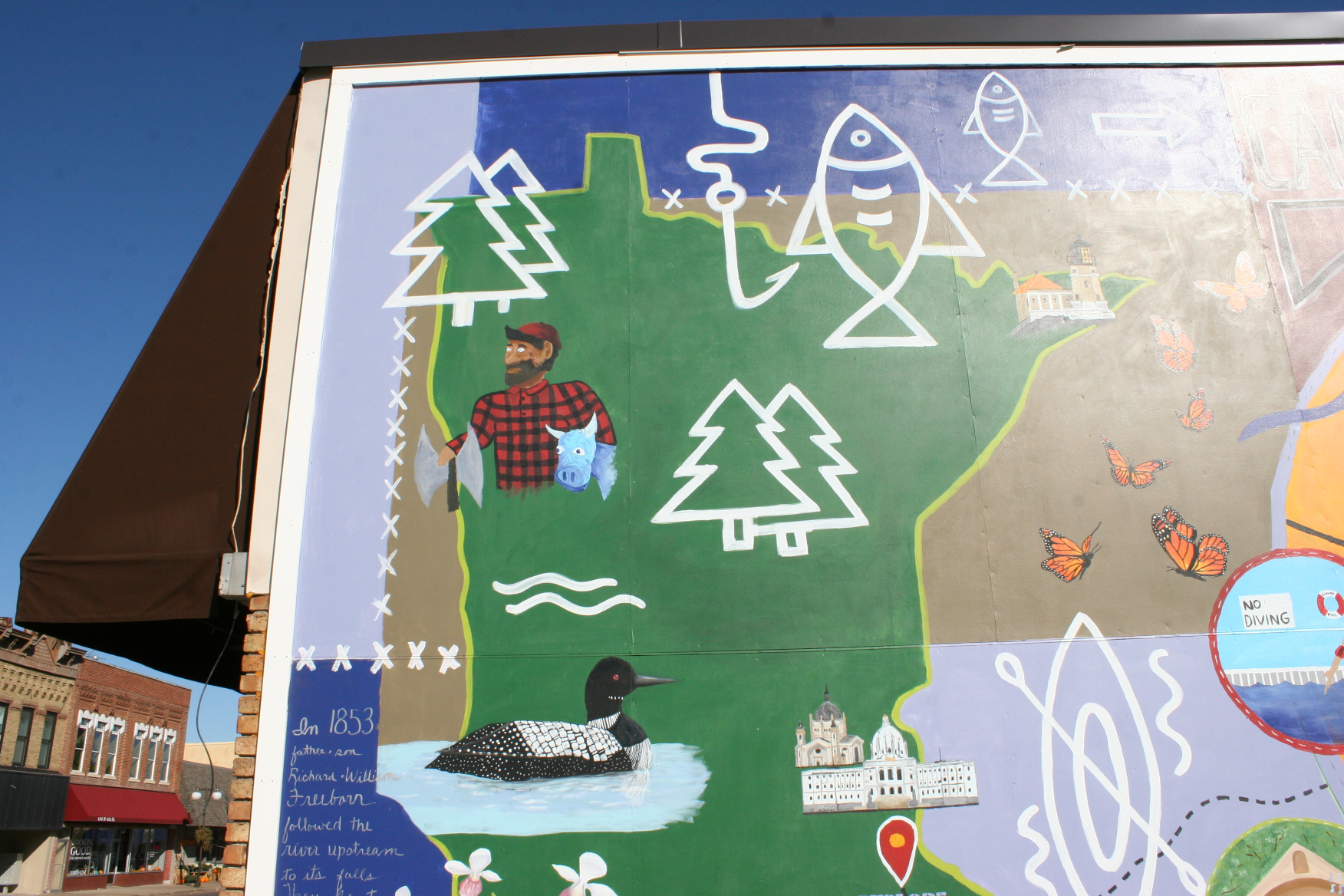
A section of the mural also celebrates Minnesota with iconic images like Paul Bunyan, pine trees, a loon and notable buildings. (Minnesota Prairie Roots copyrighted photo October 2021
I believe art should be accessible to everyone no matter their location, their income, their anything.
The mural is in a highly-visible location. (Minnesota Prairie Roots copyrighted file photo October 2021)
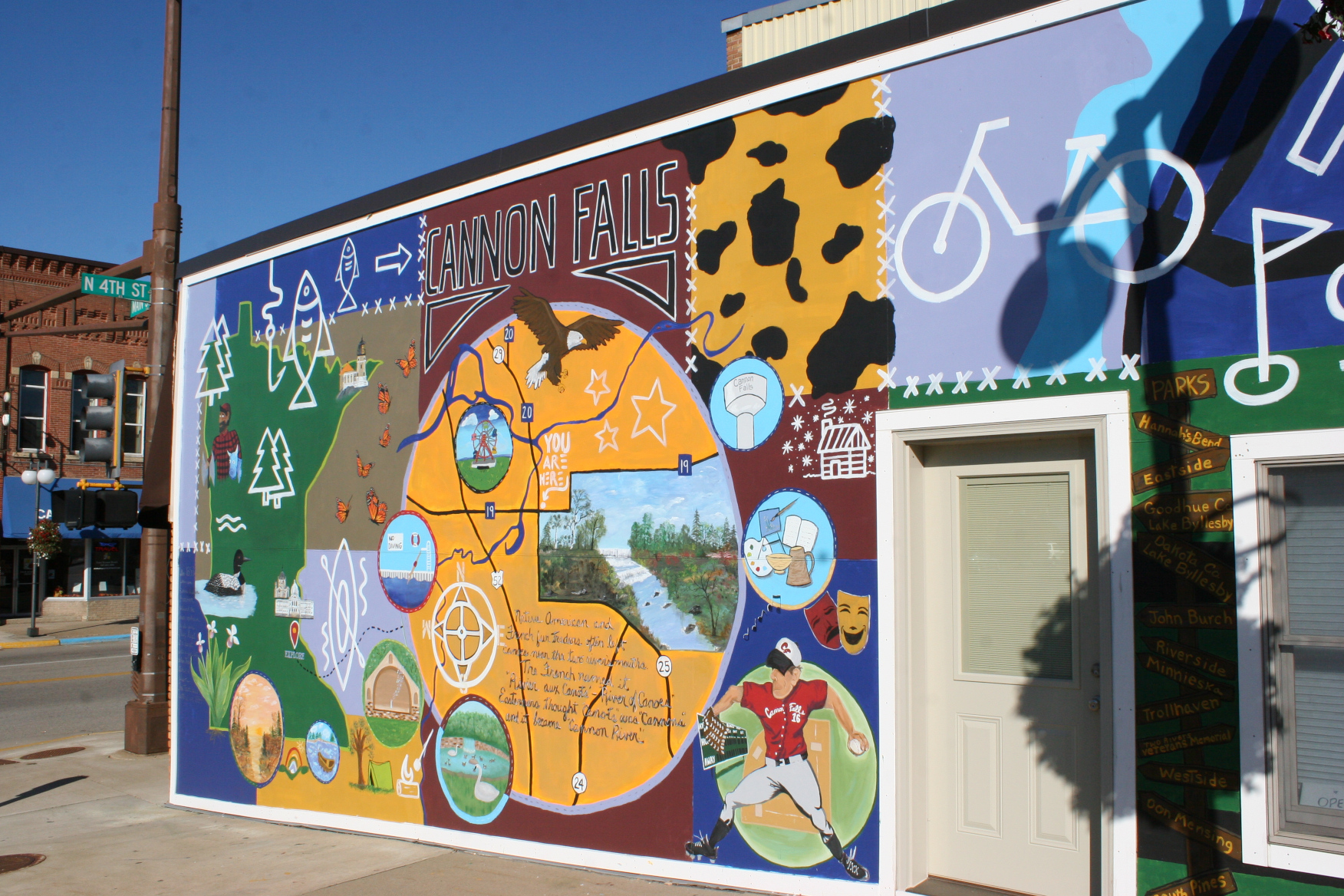
So when I happened upon a new mural in the heart of downtown Cannon Falls recently, I felt grateful. Here, on the side of the Cannon Falls Area Chamber of Commerce building at a busy intersection along Minnesota State Highways 19/20 (4th and Main Streets), a colorful mural depicts the culture, heritage and history of Cannon Falls and the surrounding area.
History in words and art. (Minnesota Prairie Roots copyrighted photo October 2021)
The art reveals much about this small town along the Cannon River, about the early influence of Native Americans and French fur traders. Today, outdoor enthusiasts are drawn to canoe that same river. Others bike, walk and run on recreational trails.
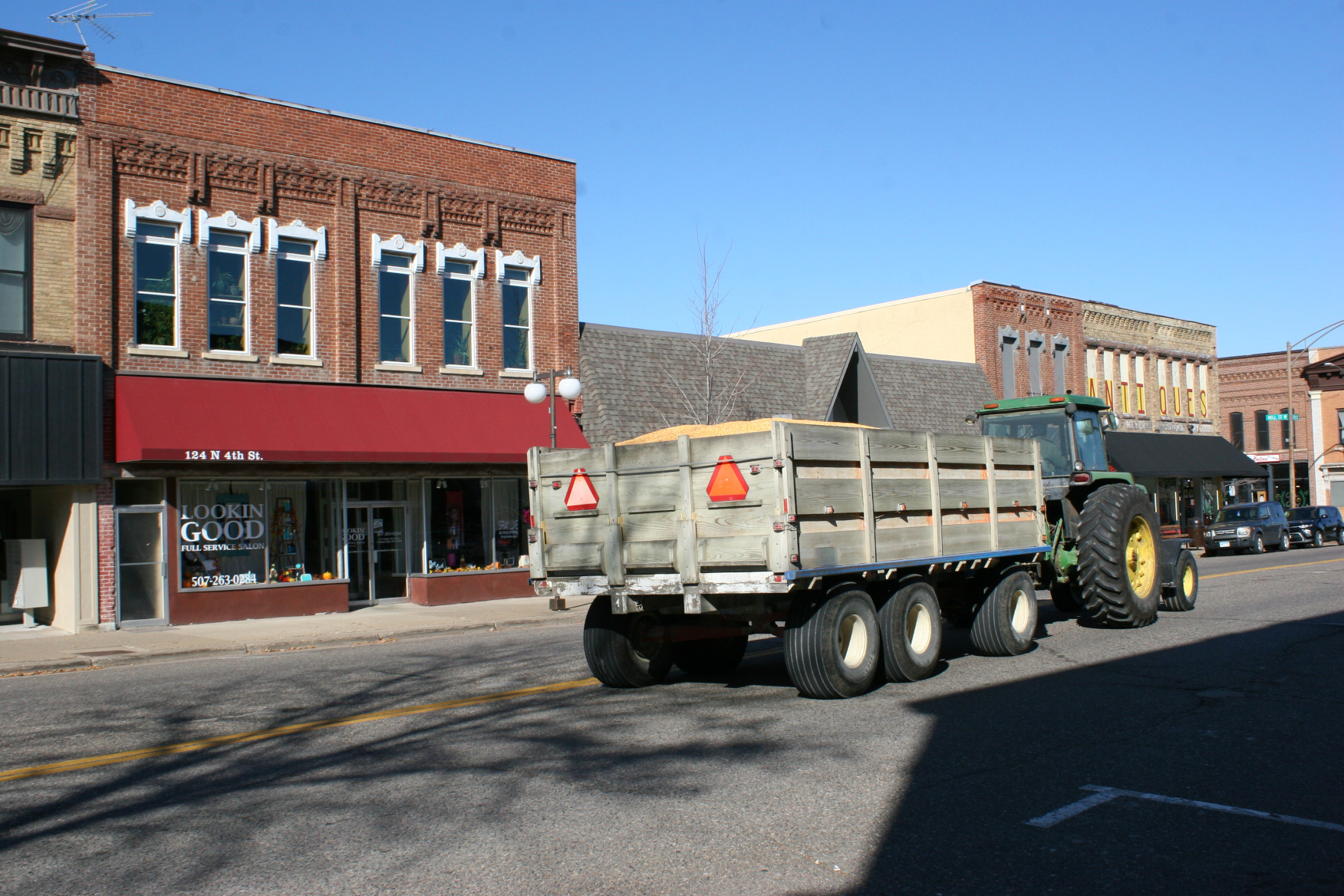
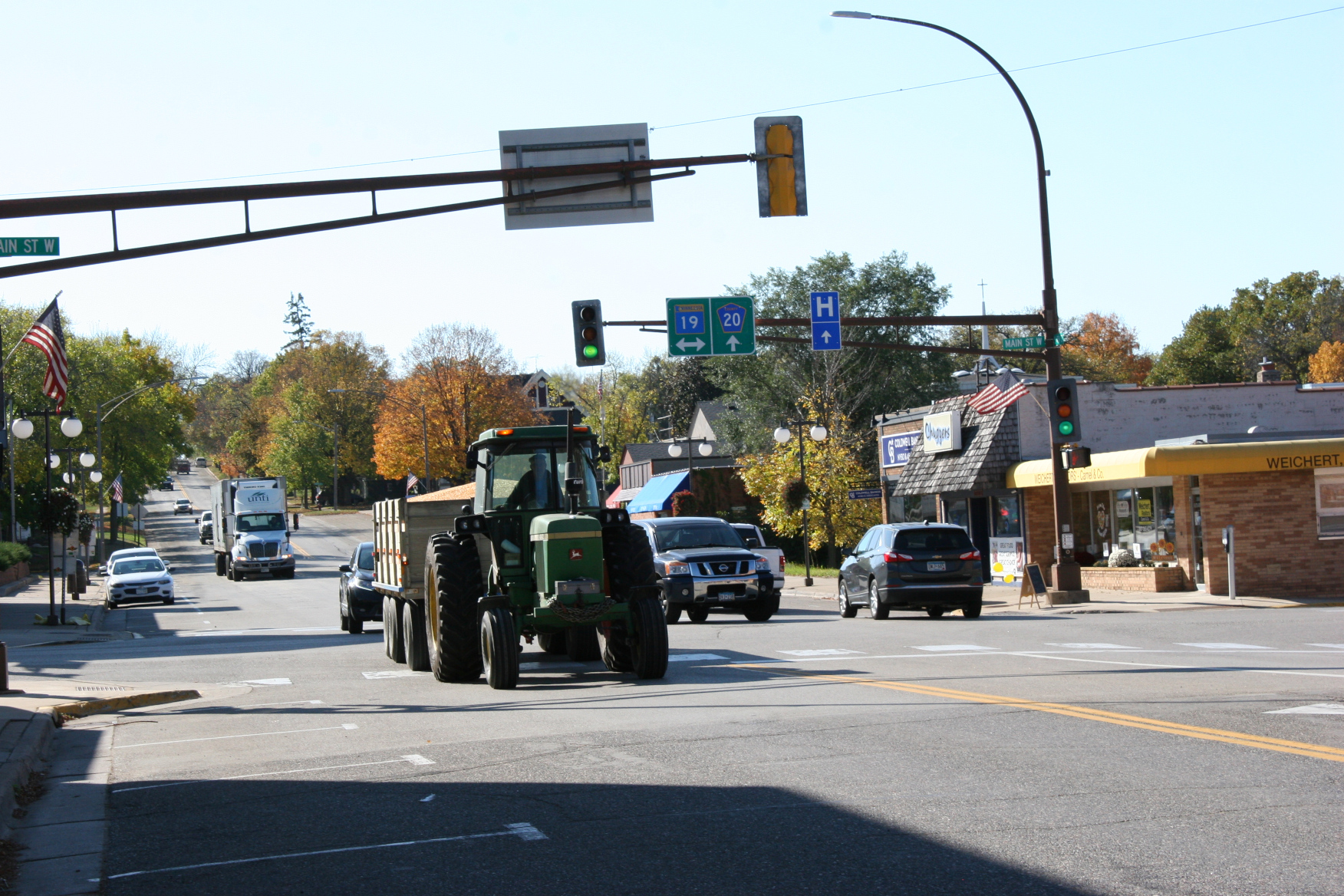
A farmer hauls his grain through downtown Cannon Falls. (Minnesota Prairie Roots copyrighted photo October 2021)
The mural shows, too, the importance of art and agriculture here. On the day I visited Cannon Falls, a farmer steered his John Deere tractor, pulling a wagon heaped with corn, through downtown. Past the mural. I love moments like this when art and reality intersect. This mural truly reflects its community.
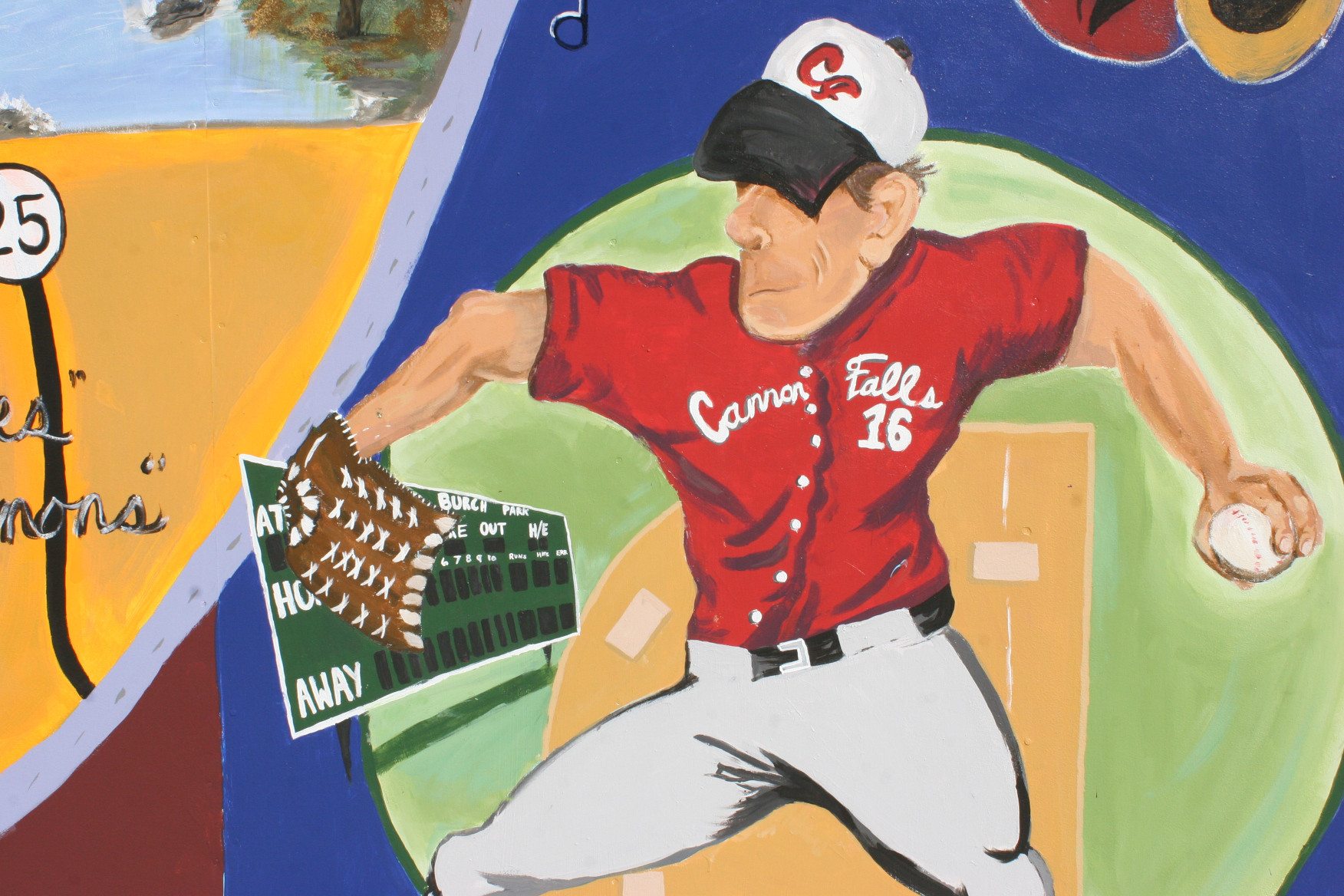
The importance of sports and a local park are depicted in the mural. (Minnesota Prairie Roots copyrighted photo October 2021)
A close up look reveals the words Burch Park on a scoreboard behind a ball player. That references nearby John Burch Park, home to the Cannon Falls Bombers, Cannon Falls Bears and other teams. Sports, in most small towns, are a source of community pride, of togetherness.
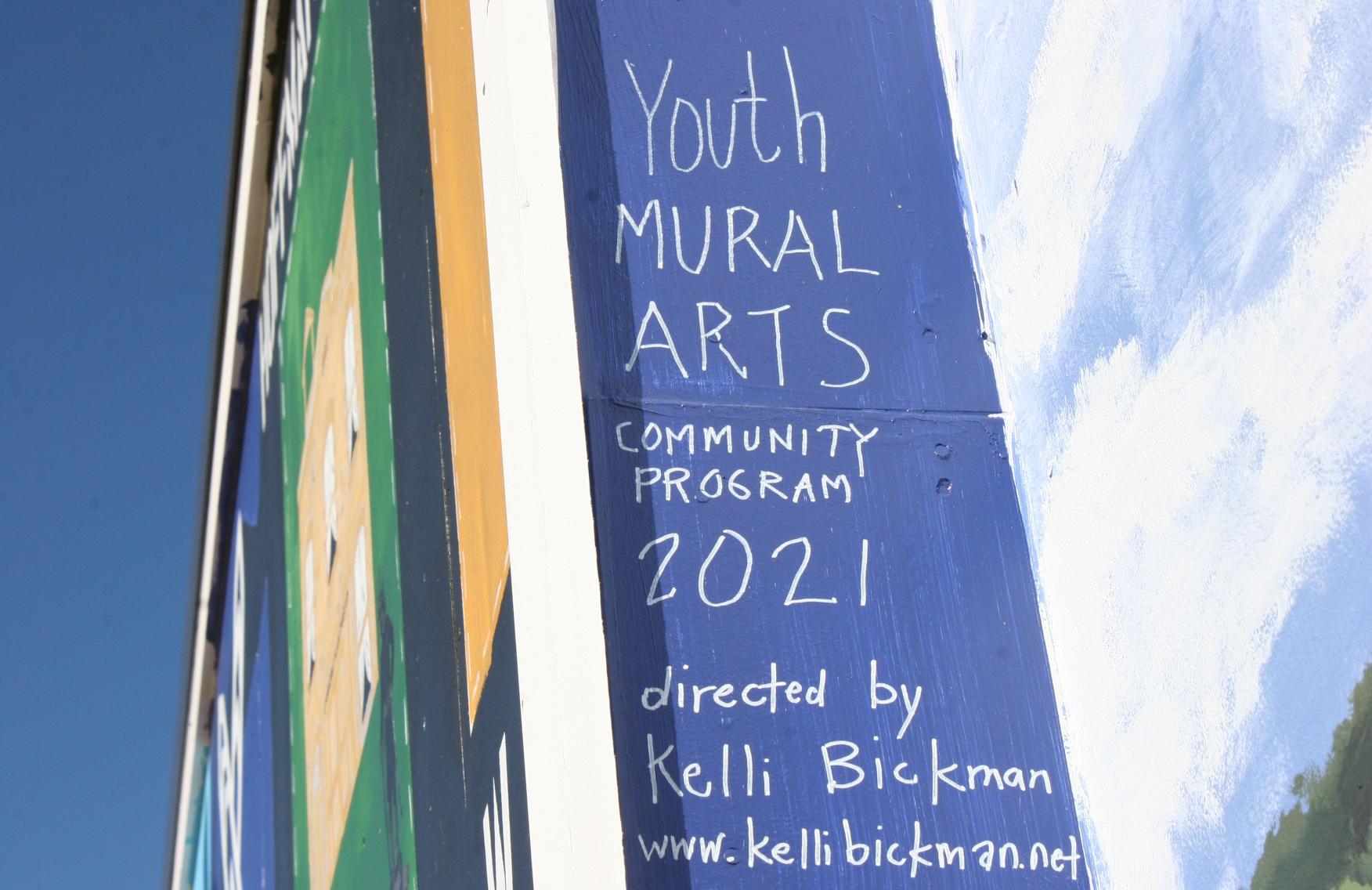
Artist info… (Minnesota Prairie Roots copyrighted photo October 2021)
A close-up of the mural reveals a map, a list of parks, the importance of agriculture and more. (Minnesota Prairie Roots copyrighted photo October 2021)
As I stood viewing and photographing Cannon Falls’ newest mural, I wondered about the middle and high school students who painted the scenes before me. I hope they feel valued, appreciated and, most of all, inspired. Art opens doors. Doors to the future. Doors to seeing the world in a new way. And that is powerful.
#
NOTE: Please check back as I take you inside the Cannon Falls Library to view more art.
Signage on the building housing Antiques on 4th, a bright, uncluttered shop with artfully-displayed merchandise and friendly shopkeepers. (Minnesota Prairie Roots copyrighted photo October 2021)
YOU CANLEARN much about a small town by simply walking. And looking, really looking.
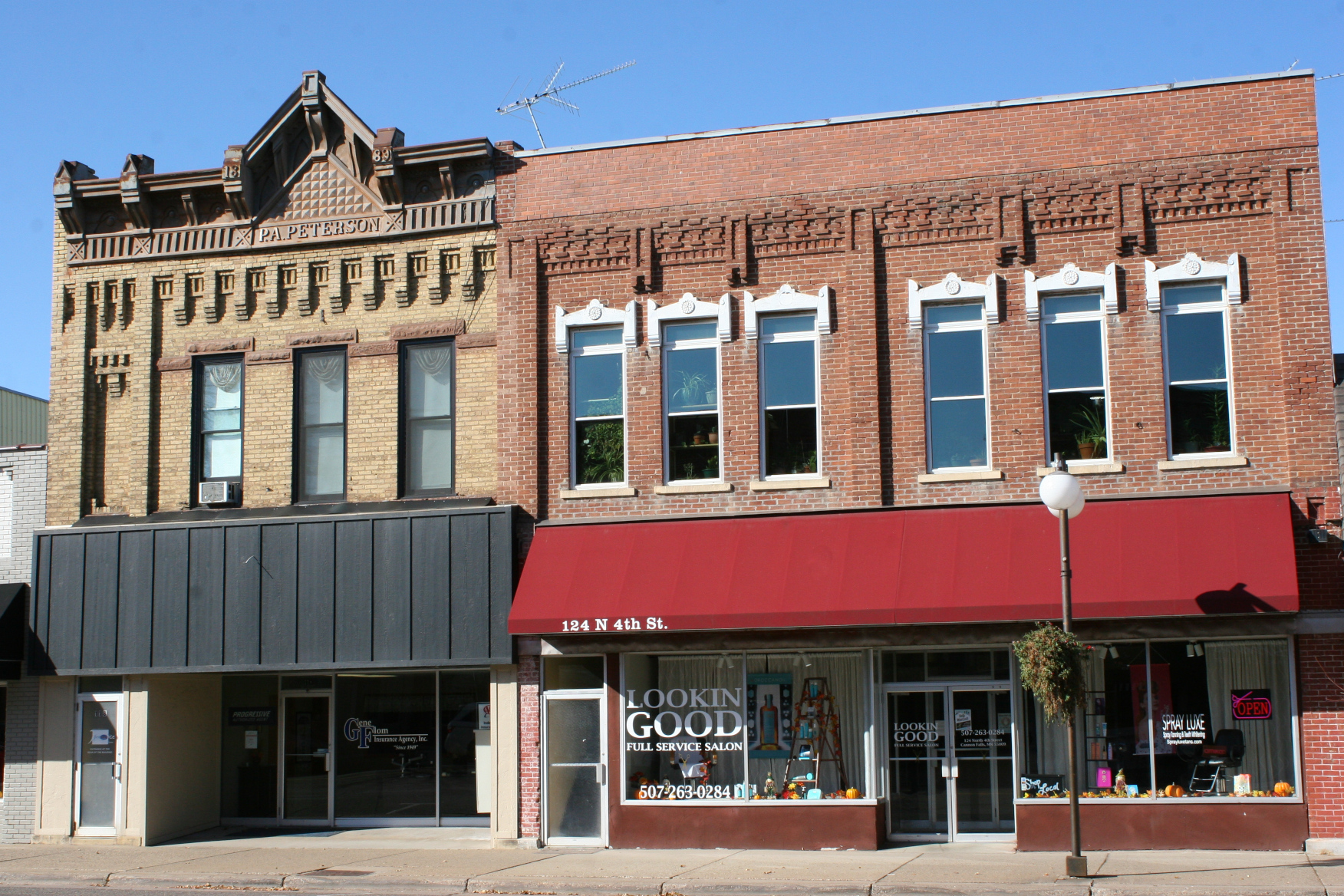
Two historic buildings in downtown Cannon Falls. (Minnesota Prairie Roots copyrighted photo October 2021)
On a recent day trip to Cannon Falls, I explored part of the downtown business district. Now on the National Register of Historic Places, the Cannon Falls Historic District includes 22 historically-significant structures.
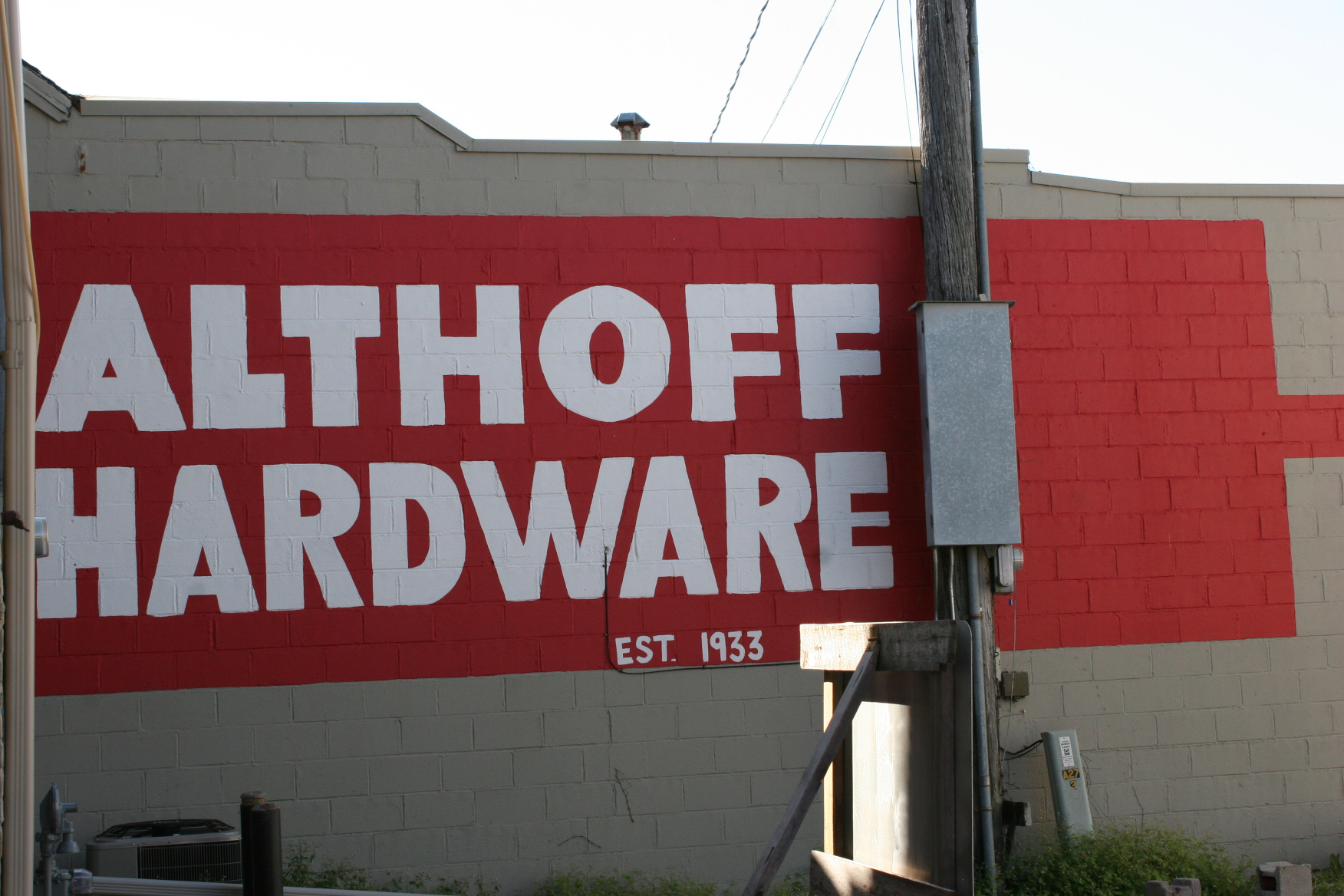
Bold art on the side of the building identifies the local hardware store.(Minnesota Prairie Roots copyrighted photo October 2021)
Given my love of historic architecture, and art, this Goodhue County community of 4,220 within a 40-minute drive of Minneapolis and St. Paul rates as a favorite regional destination.
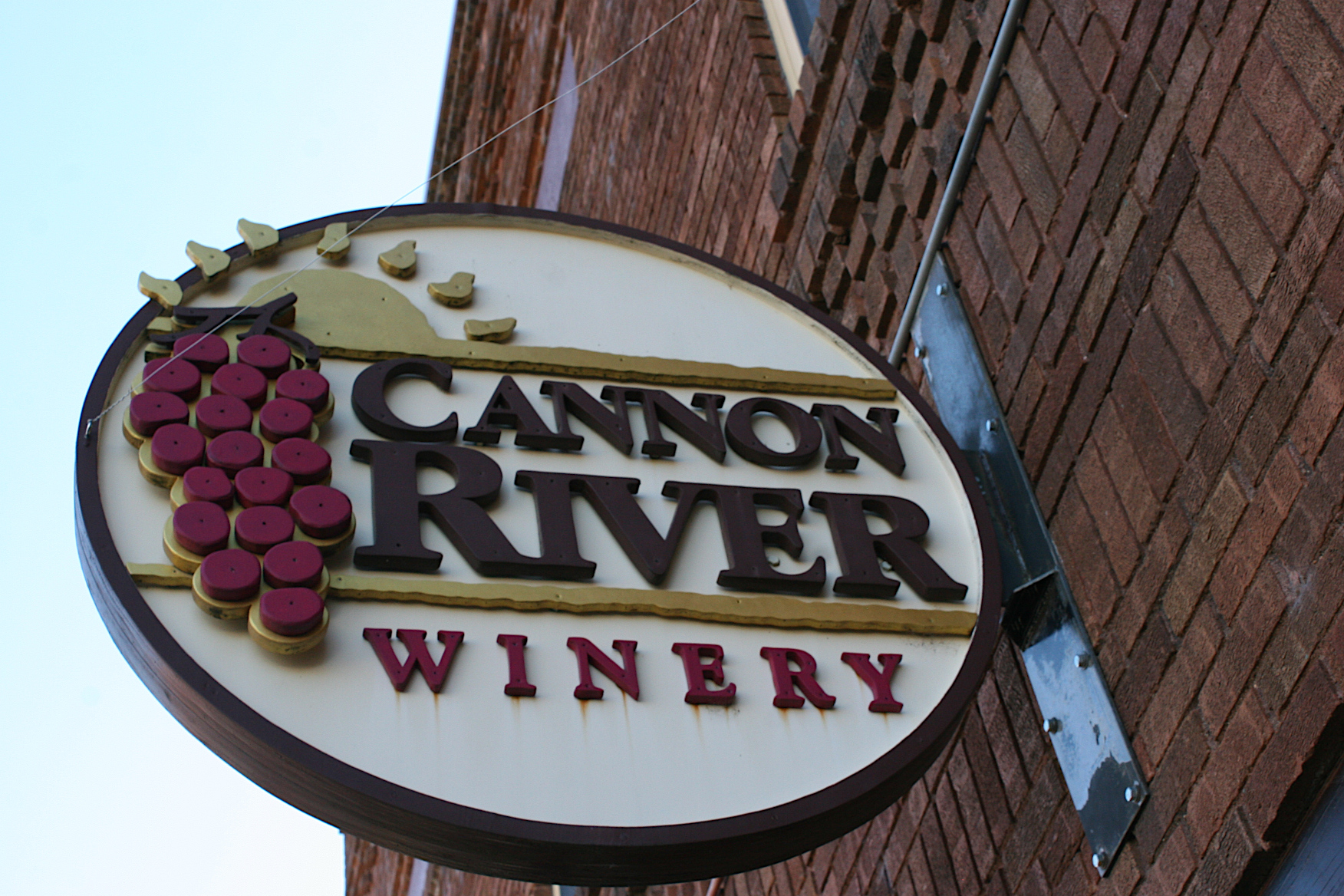
Signage marks the popular winery in Cannon Falls. (Minnesota Prairie Roots copyrighted photo October 2021)
Cannon Falls thrives with a well-known winery and bakery and an assortment of shops from antique to gift to hardware store. Toss in a mix of eateries, bars and a brewery and, well, there’s lots to see and do here. Plus, the town attracts outdoor enthusiasts who canoe the Cannon River and/or bike/hike the Cannon Valley Trail and Mill Towns Trail.
A mural at Cannon River Winery provides a backdrop for an outdoor space. (Minnesota Prairie Roots copyrighted photo October 2021)
During my mid-October visit, I popped into a few shops (including the bakery), discovered the lovely library and admired a new downtown mural. Because of COVID concerns, I skipped dining and imbibing. It was too early in the day and too cool to enjoy either outdoors.
Cannon Falls’ newest mural, a 2021 Youth Mural Arts Community Project, highlights geography, history and local interests. (Minnesota Prairie Roots copyrighted photo October 2021)
Still, I found plenty to take in from the colorful new mural to the art inside the library to ghost signage.
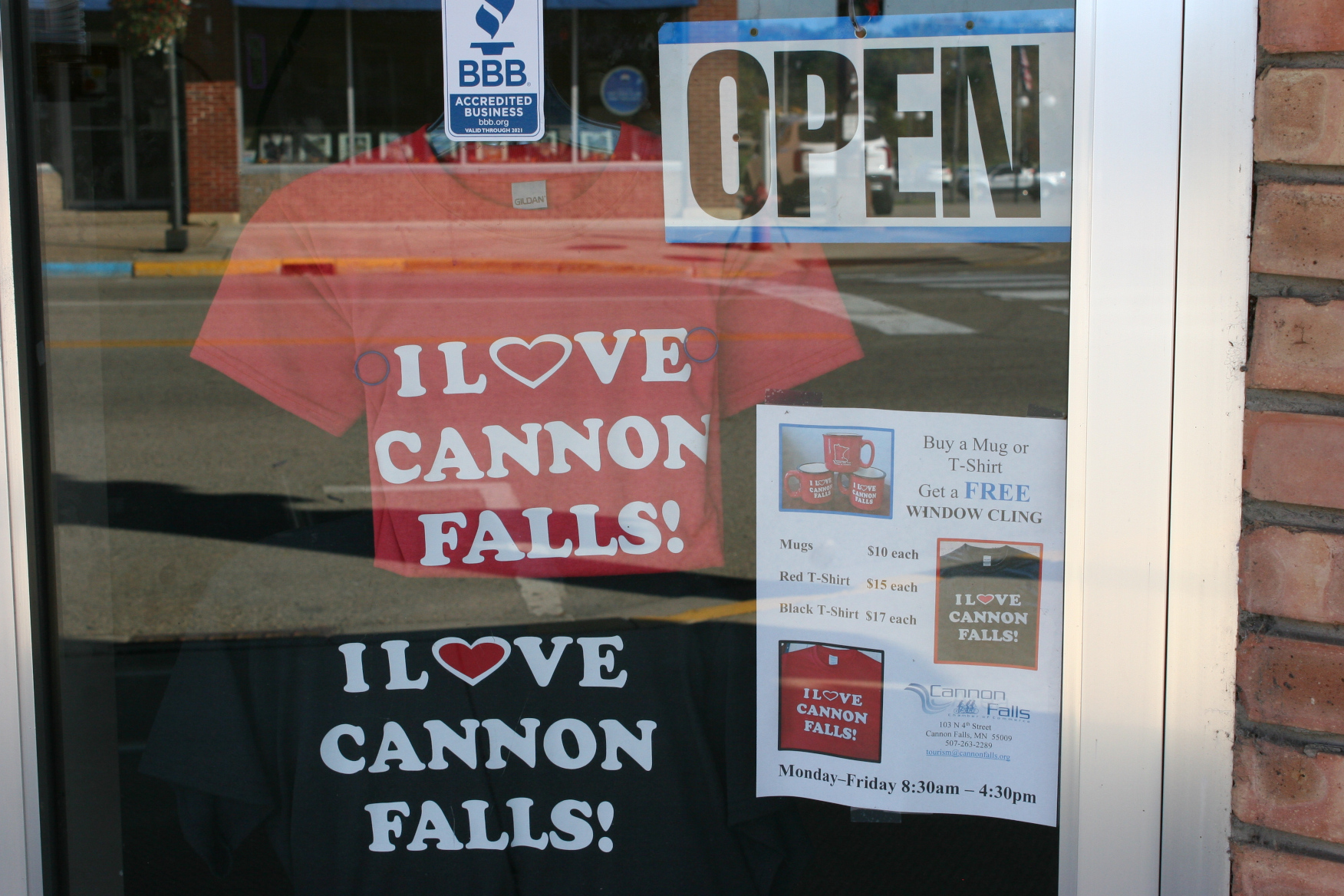
Showing some love for Cannon Falls.(Minnesota Prairie Roots copyrighted photo October 2021)
I noticed, too, hometown pride in the I LOVE CANNON FALLS! tees in a storefront window.
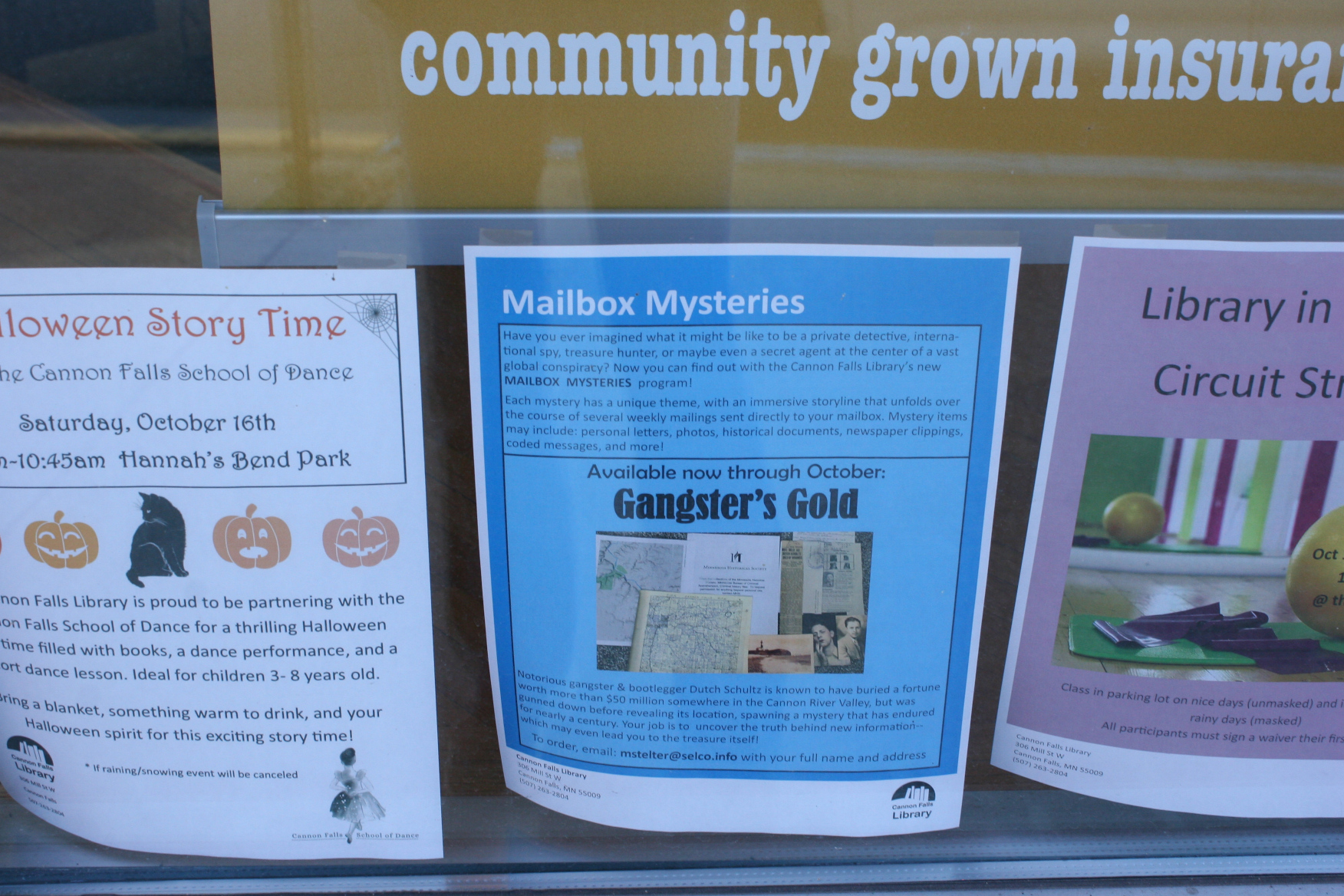
I learn so much about communities by reading signs in windows. (Minnesota Prairie Roots copyrighted photo October 2021)
I noticed also notices taped in a display window, one of which alerted me to Mailbox Mysteries, which led me to the library around the corner which led me to sign up for this challenging endeavor. Now I’m trying to solve the “Gangster’s Gold” mystery with weekly clues snail mailed to me by the library.
Inside the library, I found this vivid “Once Upon a Time” mural. (Minnesota Prairie Roots copyrighted photo October 2021)
Had I not done this walk-about through downtown Cannon Falls, I likely would have missed these nuances. The details which help define this community.
A scene in the center of downtown Cannon Falls reminds me of the town’s rural roots. (Minnesota Prairie Roots copyrighted photo October 2021)
As I meandered, I paused to watch a John Deere tractor roll through downtown pulling a wagon heaped with golden kernels of corn. This is, after all, an agricultural region.
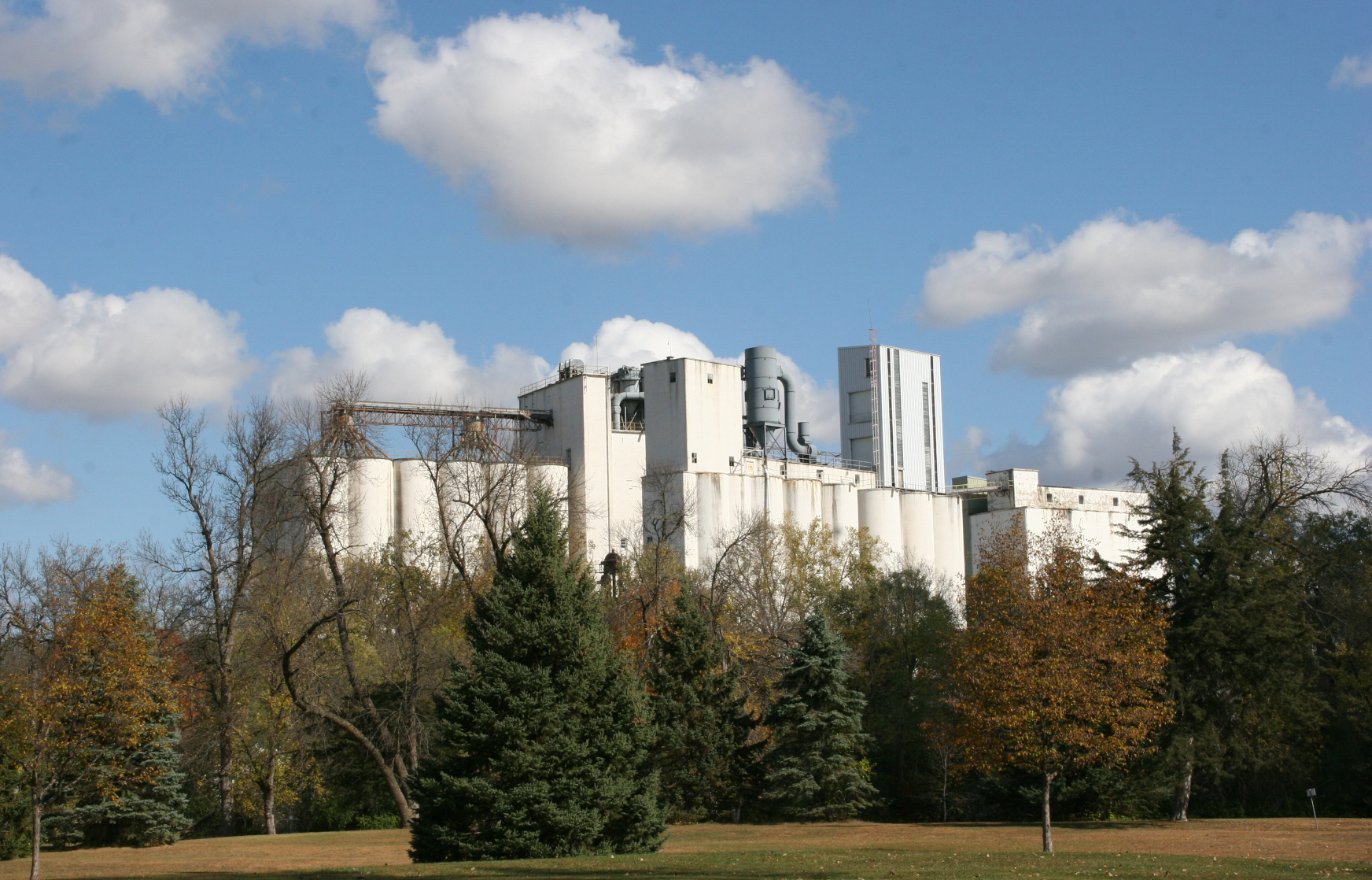
A grain complex in Cannon Falls. (Minnesota Prairie Roots copyrighted photo October 2021)
Later, Randy and I picnicked at Hannah’s Bend Park, the local grain elevator complex defining the nearby skyline. As we finished our lunch, a bald eagle soared overhead, wings spread wide. I expect the Cannon River drew the majestic bird here, to this small southeastern Minnesota town, this Cannon Falls.
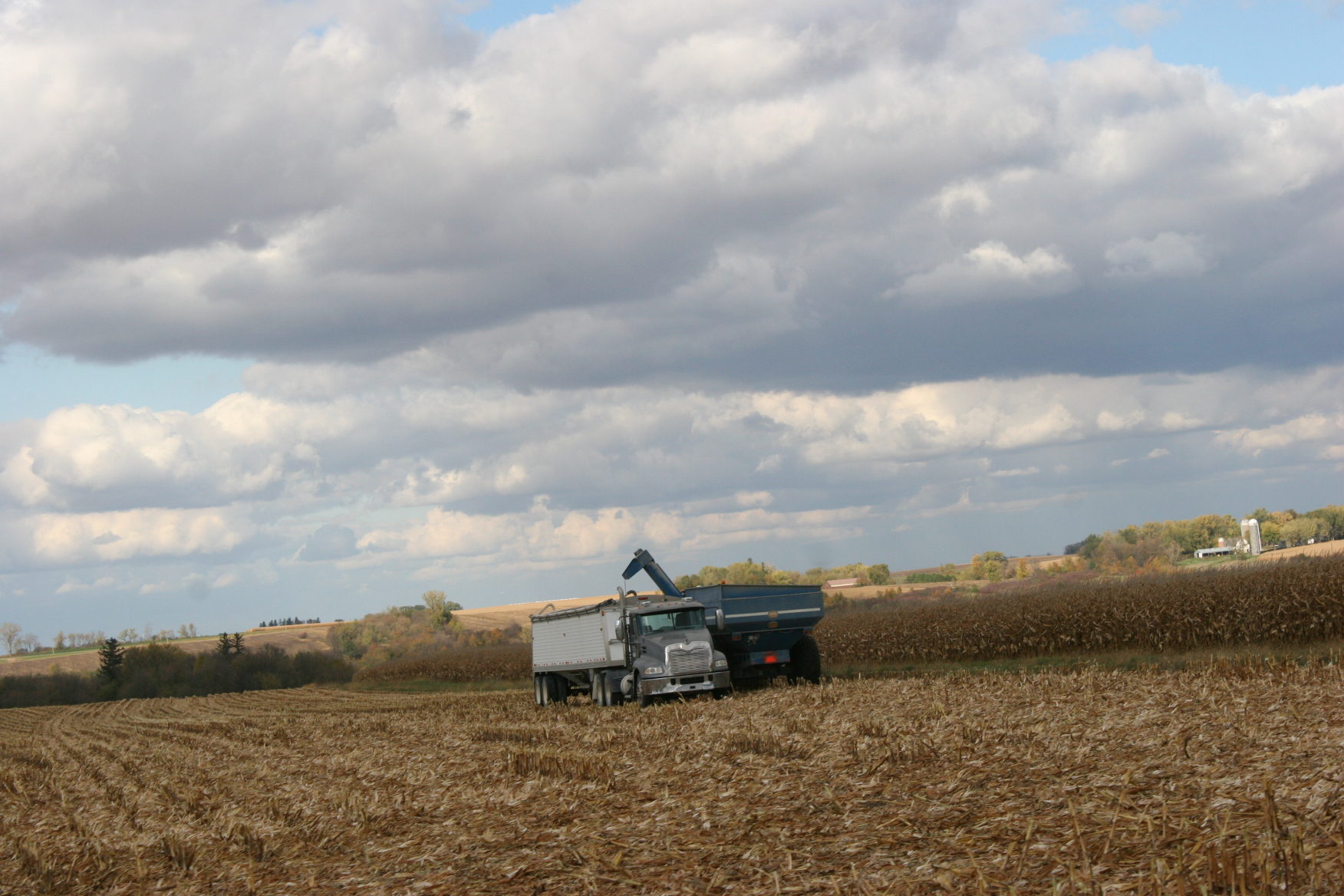
Fall harvest underway near Kenyon in the Monkey Valley area. (Minnesota Prairie Roots copyrighted photo October 2021)
AUTUMN IN MINNESOTA. Ah, what a season.
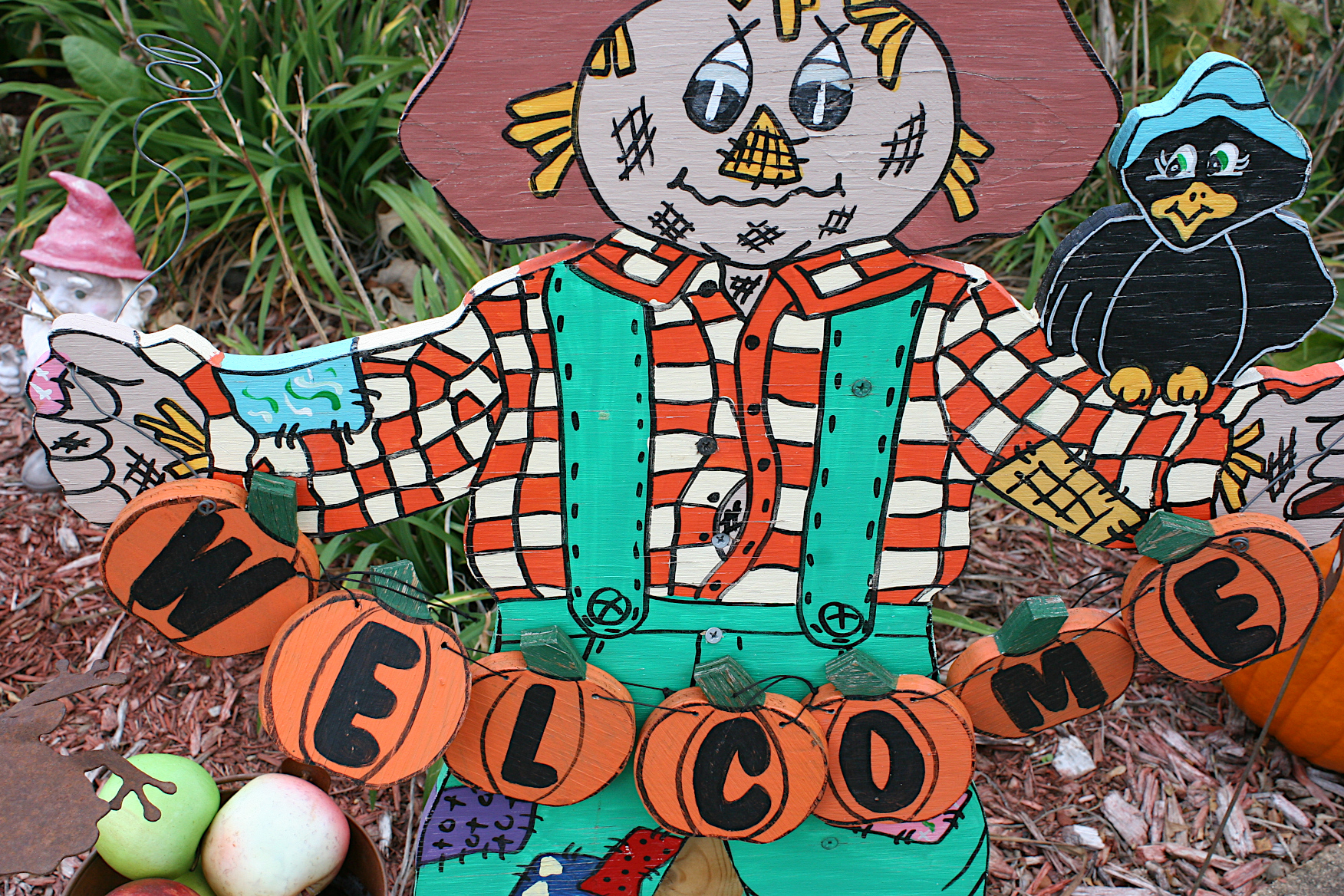
A welcome sign at a Kenyon craft show. (Minnesota Prairie Roots copyrighted file photo October 2021)
It is the season of harvest, of church dinners, of stunning fall colors. Of football games and simmering soups and visits to the apple orchard and pumpkin patch. September and October are, too, the season of craft shows here in southern Minnesota.
Celebrating the season with a yard full of scarecrows. (Minnesota Prairie Roots copyrighted photo October 2021)
Recently, while returning from a fall color drive into the Sogn Valley and then on to Cannon Falls and back, Randy and I stopped at the 100 Ladies and Gentlemen Craft Sale along Minnesota State Highway 56 on the north edge of Kenyon. This marks the event’s 48th year.
Creative signage outside the craft sale building. (Minnesota Prairie Roots copyrighted photo October 2021)
I’ve shopped here previously, perusing the handcrafted works of regional artists and crafters. From holiday decorations to art to baskets to candles to furniture to coveted homemade caramels and much more, the variety of items showcased inside a poleshed style building are endless. Although I walked in with my camera slung across my shoulder, I didn’t take any photos inside. As I recall, photography isn’t allowed to protect the works of creatives. I get that.
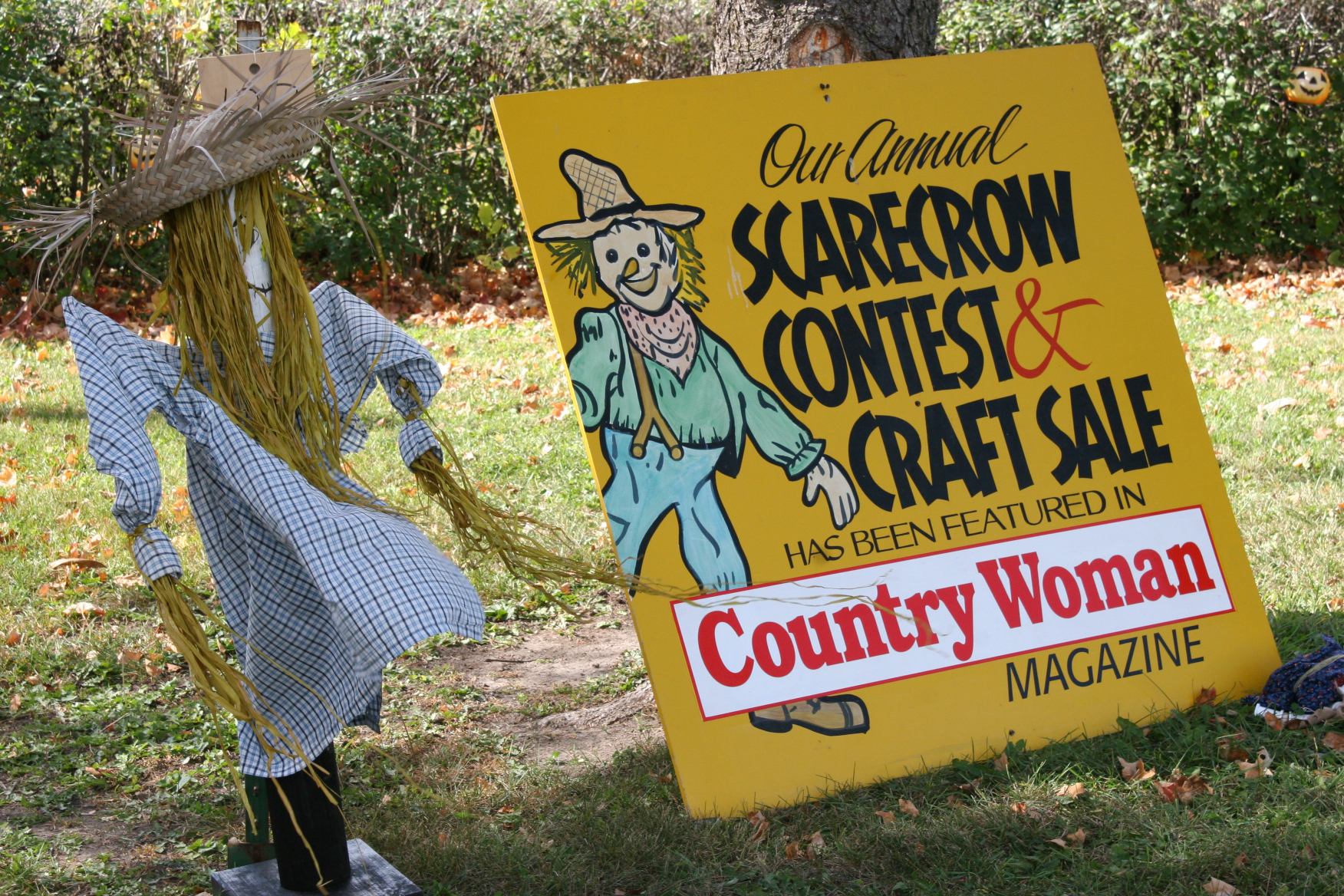
Recognized in a well-known publication. (Minnesota Prairie Roots copyrighted photo October 2021)
A fancy lady scarecrow. (Minnesota Prairie Roots copyrighted photo October 2021)
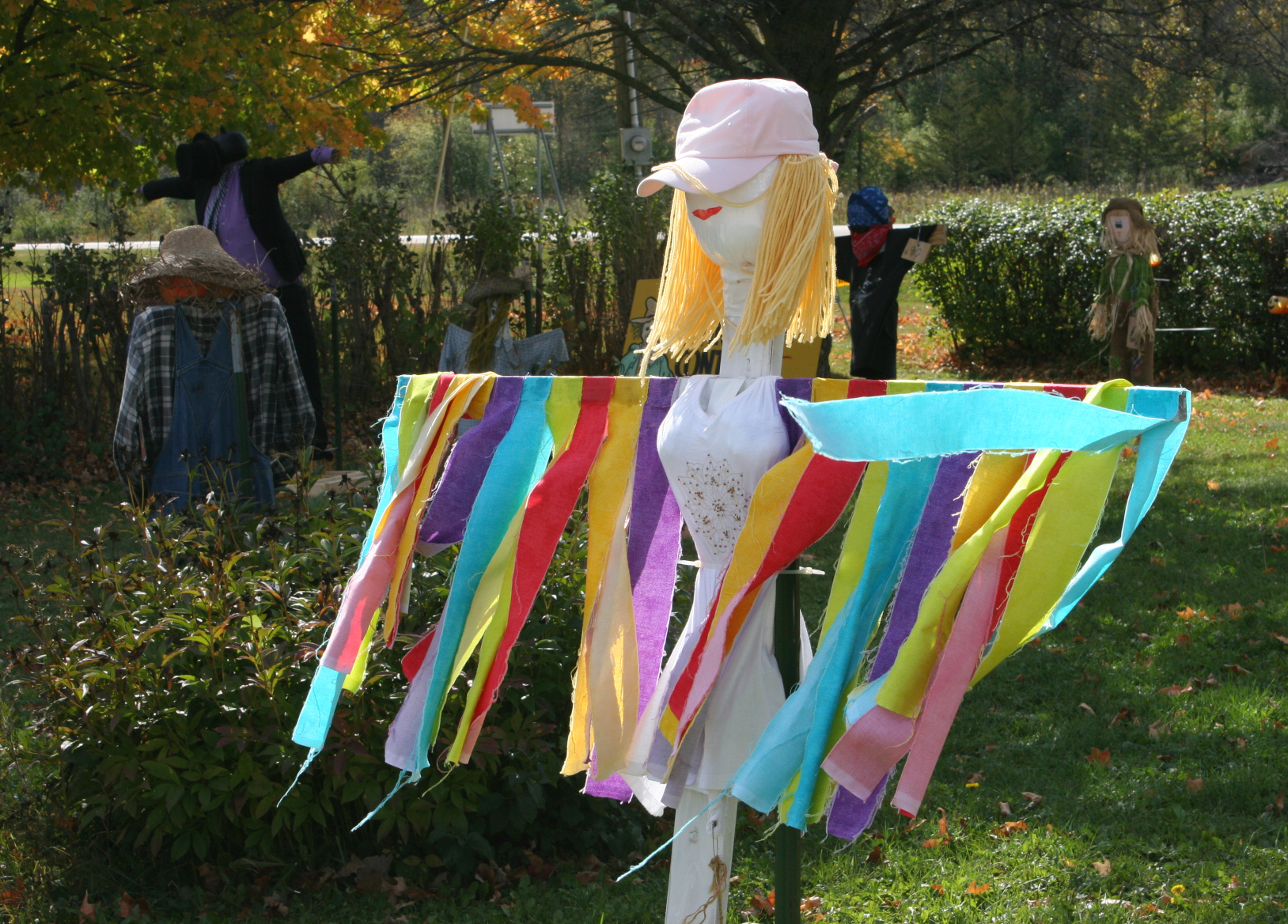
Love the bright hues of this creative scarecrow. (Minnesota Prairie Roots copyrighted photo October 2021)
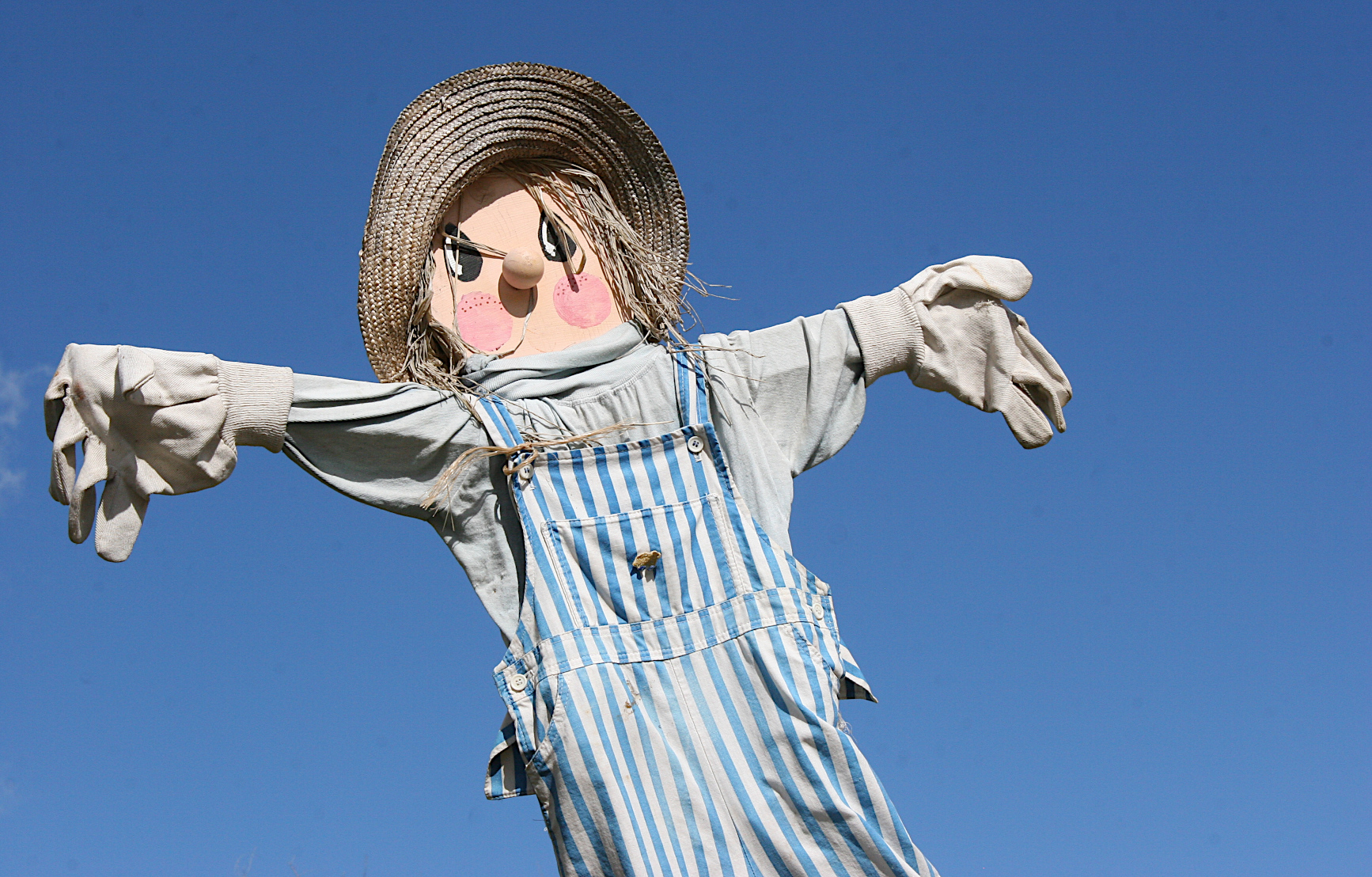
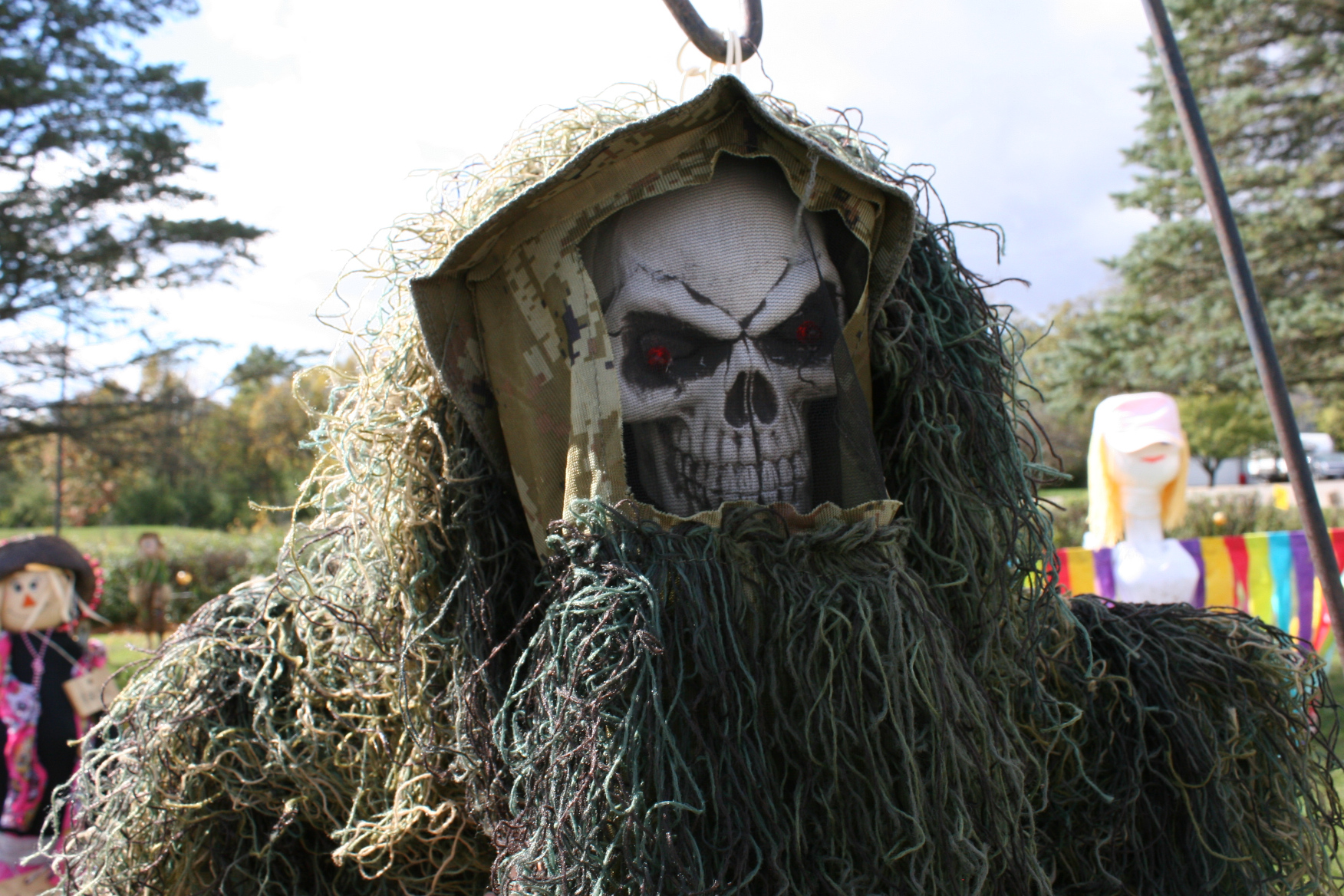
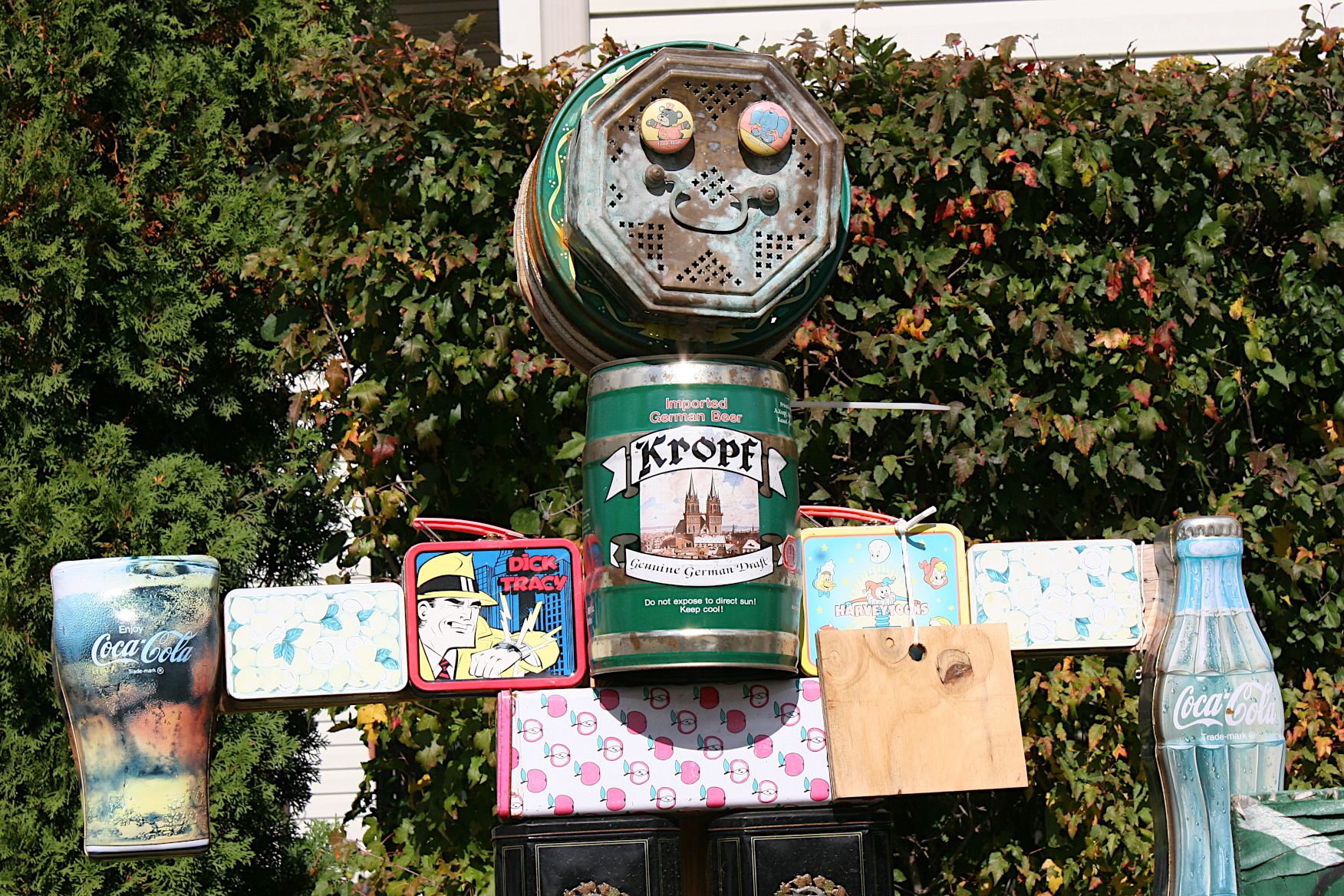
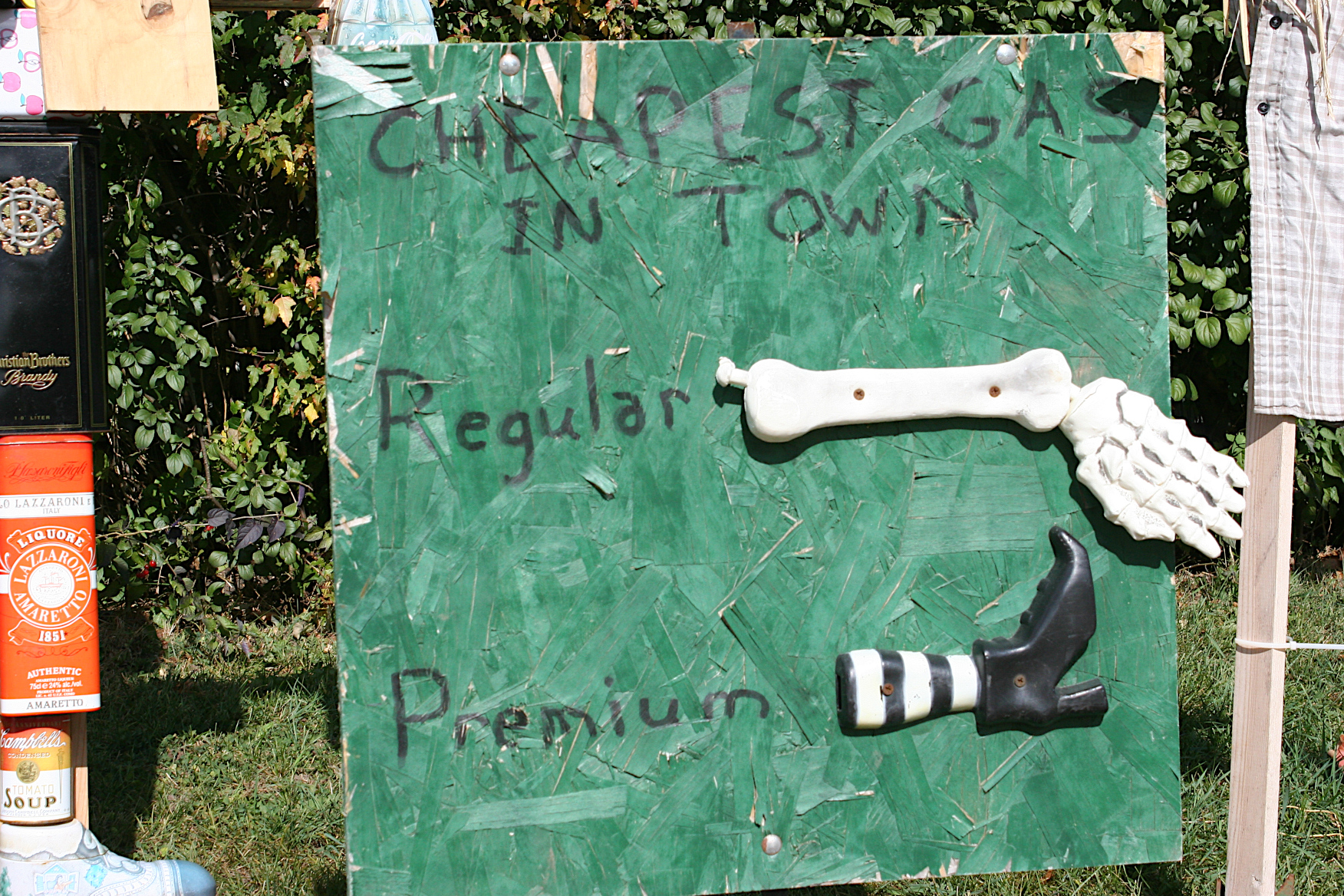
Instead, I aimed my lens at the scarecrows entered in the outdoor Scarecrow Contest. On a grassy area, scarecrows stake their spots and vie for visitors’ votes.
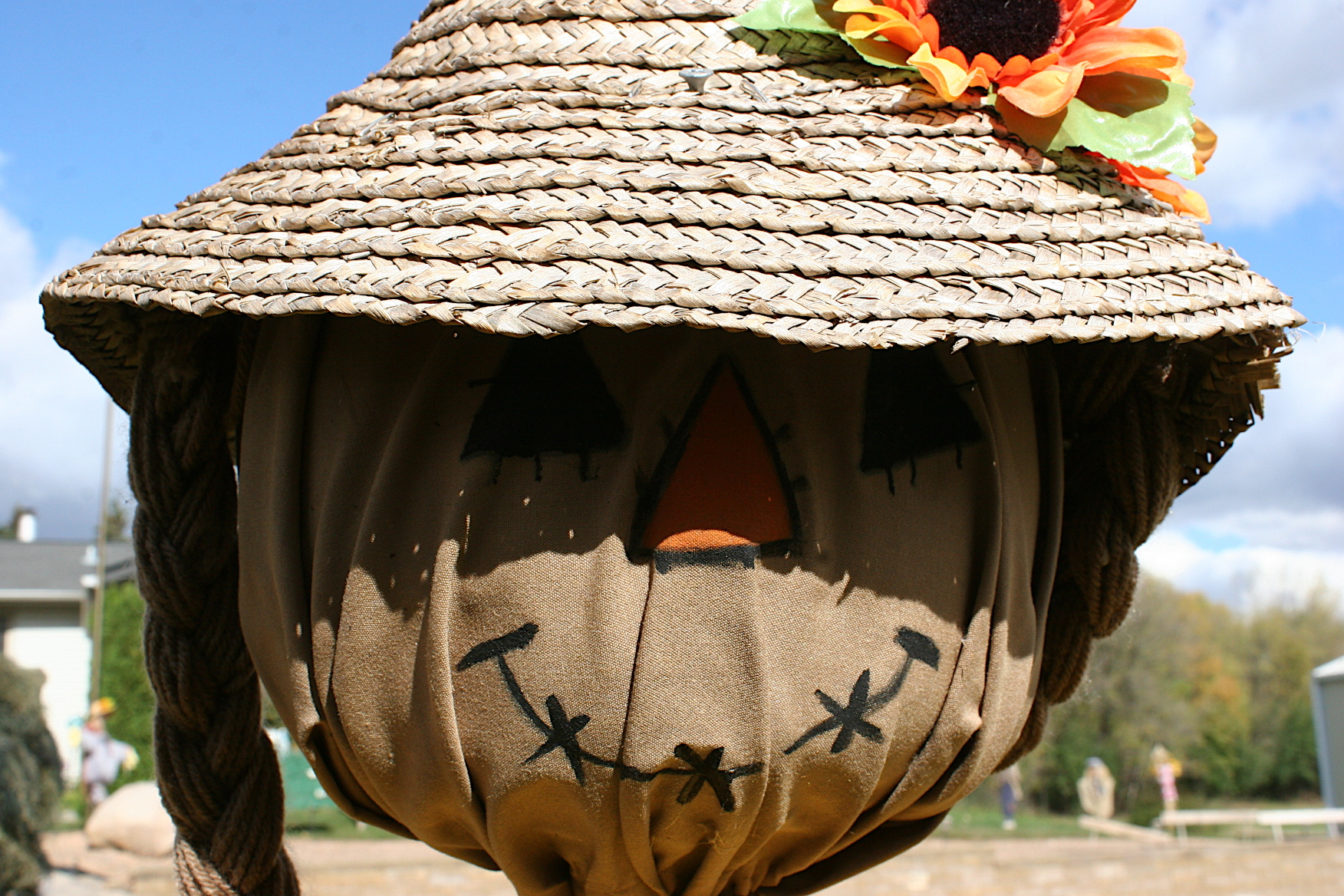
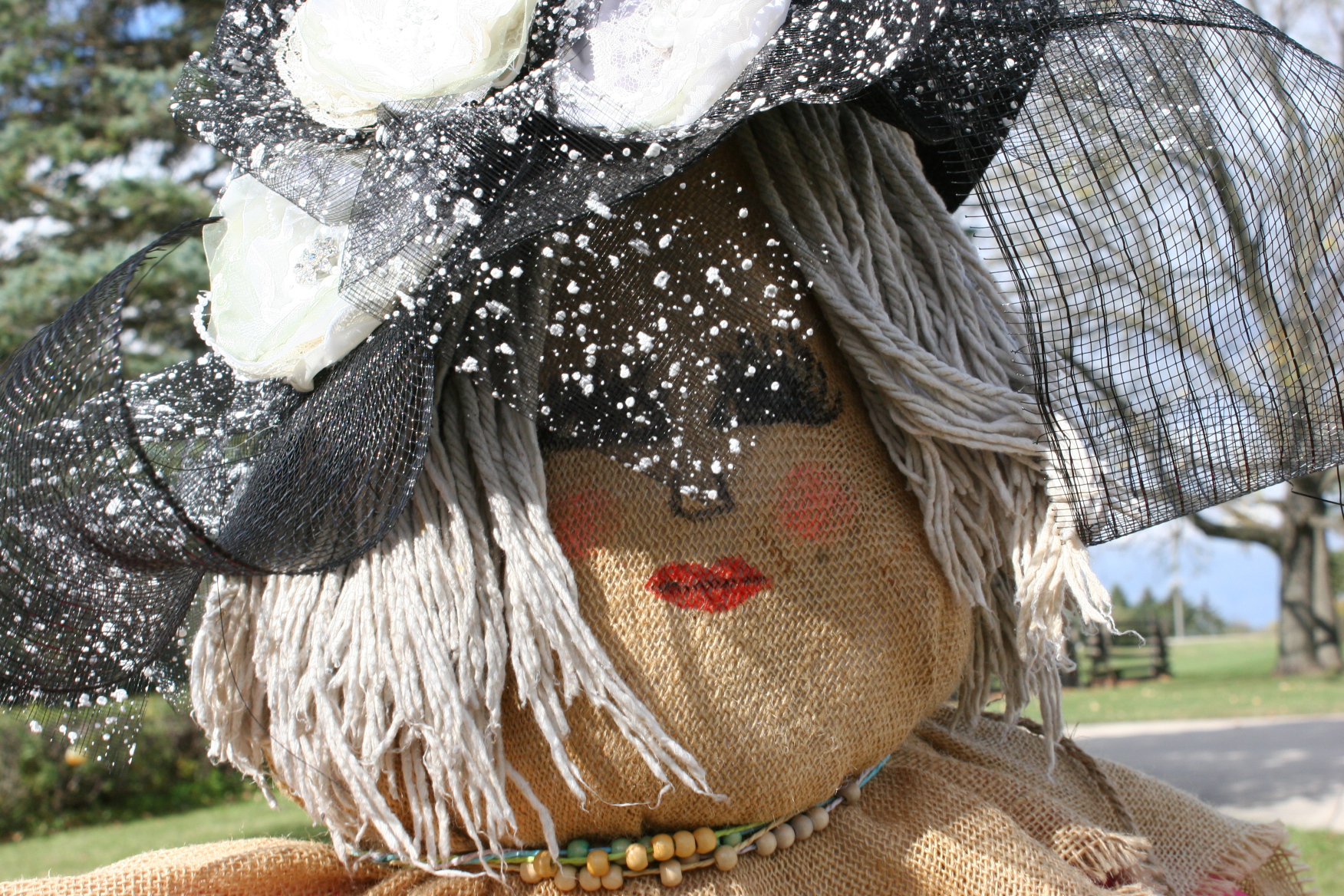
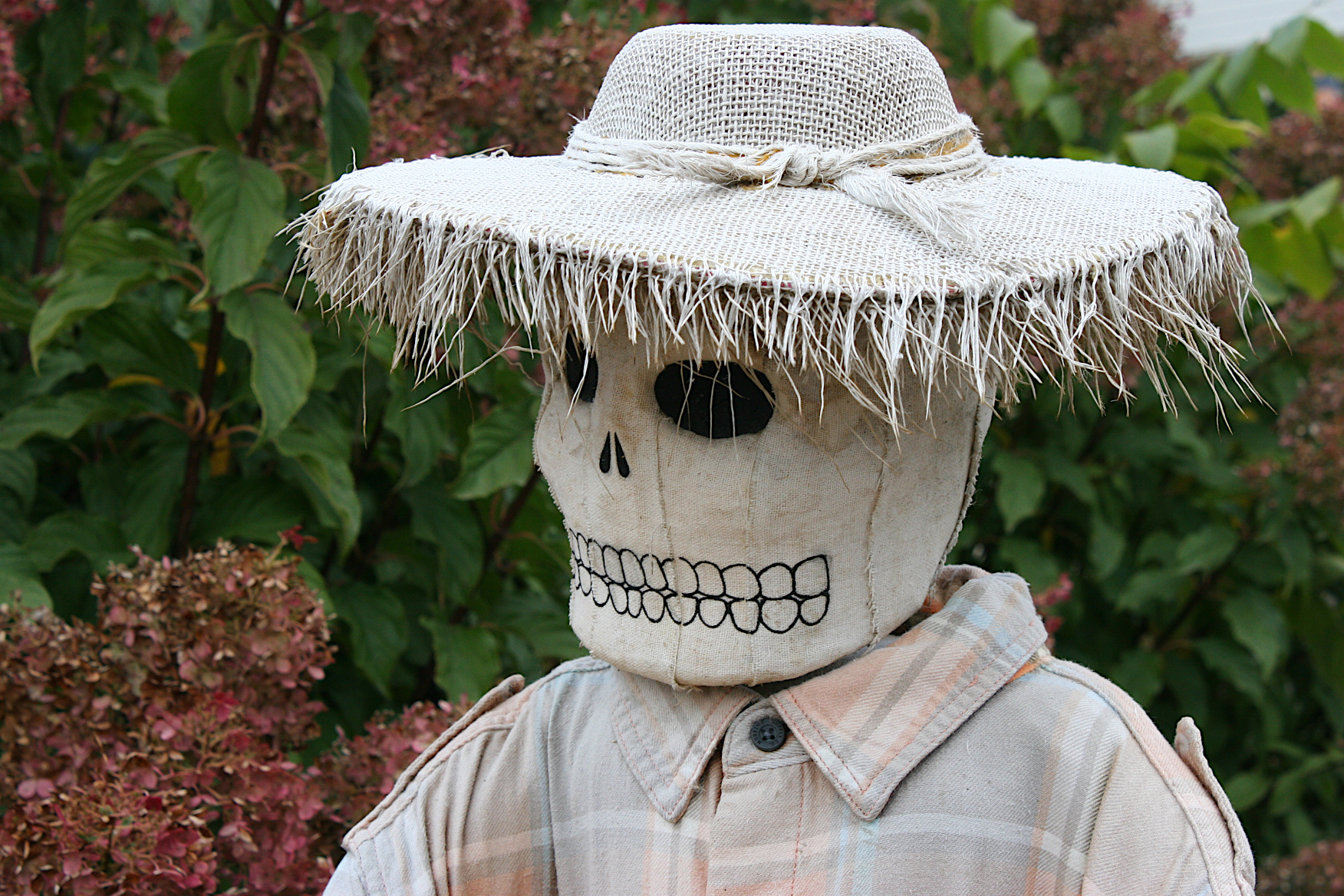
My favorite, which calls for close attention to details. Look at the eyes and mouth. (Minnesota Prairie Roots copyrighted photo October 2021)
The gathering of scarecrows adds a festive, seasonal feel to the autumn event.
Traditional scarecrow. (Minnesota Prairie Roots copyrighted photo October 2021)
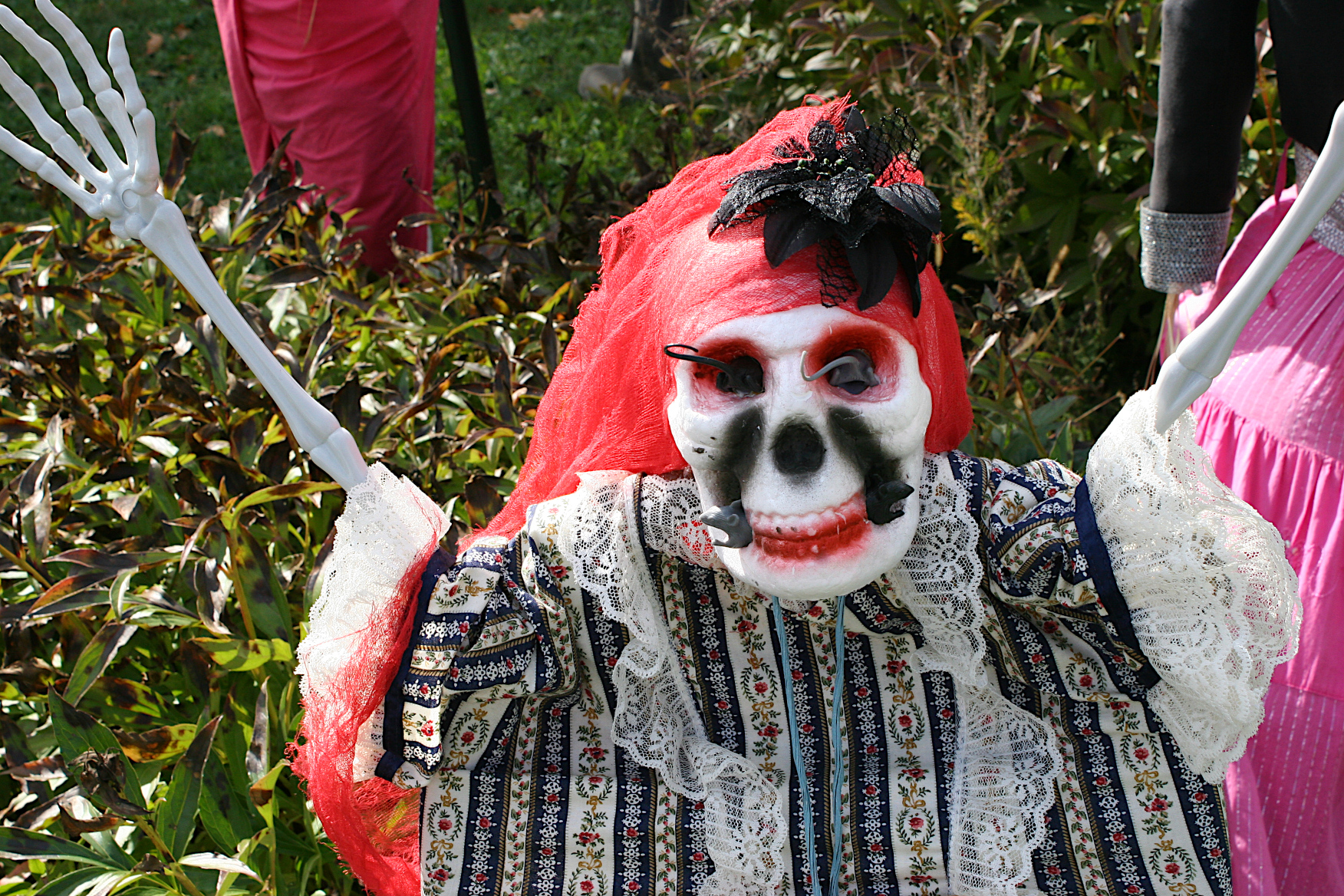
The scariest, in my opinion. (Minnesota Prairie Roots copyrighted photo October 2021)
Perhaps the most unusual scarecrow. (Minnesota Prairie Roots copyrighted photo October 2021)
It’s fun to meander among them, to view the traditional, the scary, the unusual.
Humor among the scarecrows. (Minnesota Prairie Roots copyrighted photo October 2021)
These scarecrows, too, define the season. They remind me that Halloween is fast-approaching—an anniversary year here in Minnesota. This October 31 marks 30 years since the Halloween Blizzard of 1991. That four-day weather event dumped 28.4 inches of snow in the Twin Cities, with even more, 36.9 inches, in the Lake Superior port city of Duluth. Strong winds accompanied the overwhelming snowfall. And, yes, I remember.
More than just a tad creepy, another favorite scarecrow. (Minnesota Prairie Roots copyrighted photo October 2021)
But in this moment, at this place defined by the works of creatives, I appreciated the autumn day. Sunshine and blue sky. Scarecrows’ hair and clothing flapping in the October wind. Winter not yet welcome in this season of craft shows.
FYI: The 100 Ladies and Gentlemen Craft Show continues from 10 am – 8 pm October 28-31 and November 4-7 (closes earlier on the final day).
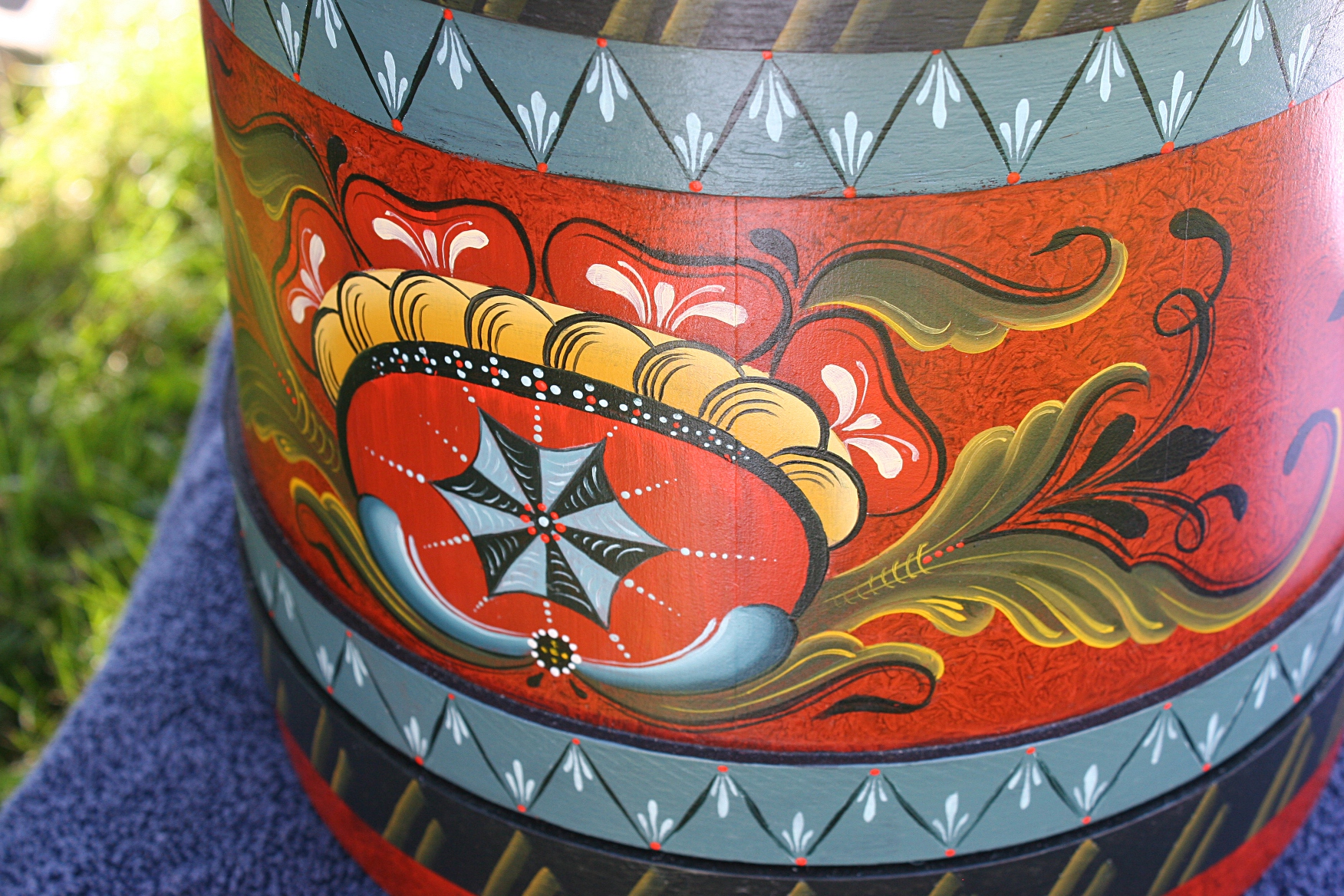
An example of rosemaling from MODNordic Arts Studio in Faribault.Mother and daughter, Donna Johnson and Lyn Rein, create this Nordic art, which I photographed at the Valley Grove County Social in 2019. Minnesota Prairie Roots copyrighted file photo.
CHURCH DINNERS AND ART. I love both. And this weekend, I can indulge in each in my region of southern Minnesota.
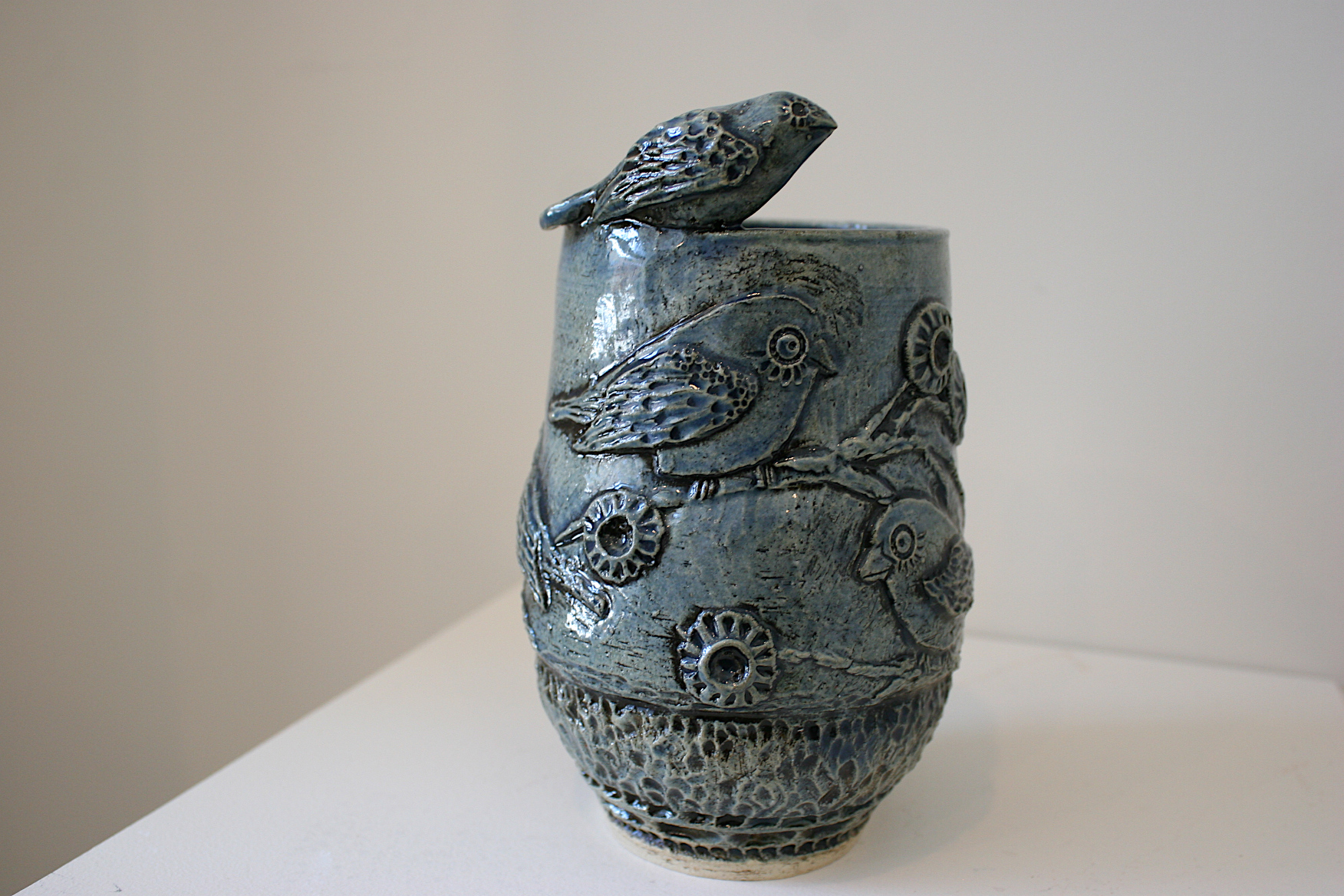
The clay art of Faribault artist Tami Resler. Minnesota Prairie Roots copyrighted file photo March 2021.
The Studio ARTour of South Central Minnesota is already underway, kicking off from 4 – 8 pm today/Friday (at select studios) and continuing through Sunday. The annual event features 36 artists in 17 studios in the Faribault-Farmington-Northfield area.
It’s been awhile since I did this tour and I’m uncertain whether I can fit it in this year. But if you’re free and want to explore the arts at a grassroots level, then this is a must-do event.
Faribault artist Julie Fakler specializes in bold animal portraits. Minnesota Prairie Roots copyrighted file photo.
From jewelry-making to painting to textiles to photography to pottery to ceramics and more, this tour takes you into studios and/or art centers/spaces to meet the artists. To connect. To engage in conversation. To admire and purchase the work of these creatives.
Truly, talent abounds.
Just note that, with COVID-19 still running rampant, you need to mask up.
This year’s meal will be take-out only. In previous years, take-out was available. Minnesota Prairie Roots copyrighted file photo.
The pandemic has also affected the annual Fall Dinner at Trinity Lutheran Church, North Morristown. That’s the country church of July Fourth celebration fame. This year’s dinner will be take-out only, with meals delivered to vehicles. You’re encouraged to arrive early for the 11 am – 1 pm dinner on Sunday, October 10.
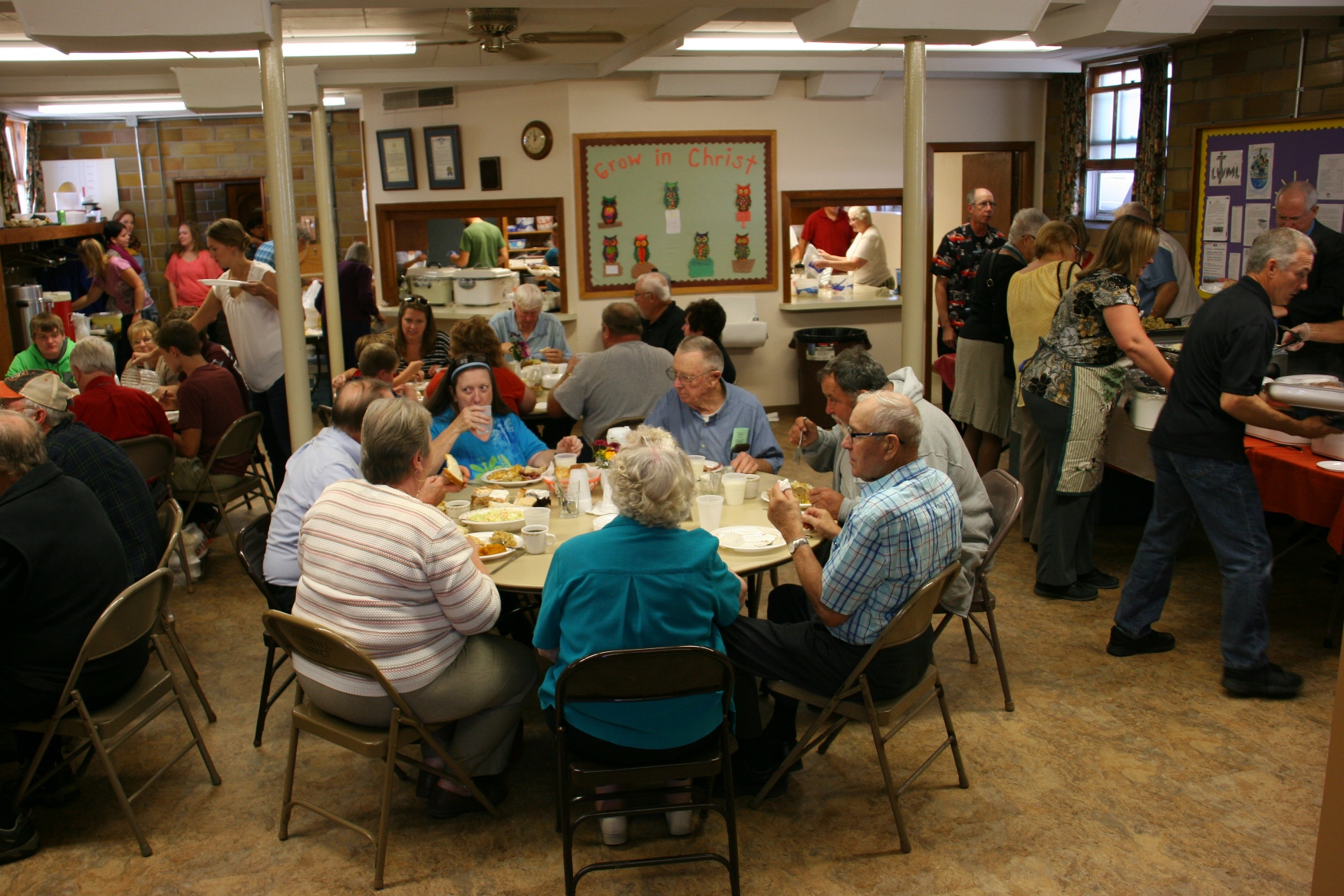
Diners pack the Trinity church basement during a past Fall Dinner. Minnesota Prairie Roots copyrighted file photo.
In a non-pandemic year, crowds gather in the sanctuary and then cram into the church basement for this popular meal of turkey, ham and all the trimmings. I’ve attended numerous times and will tell you this home-cooked dinner is beyond delicious. And it’s yours for only $10.
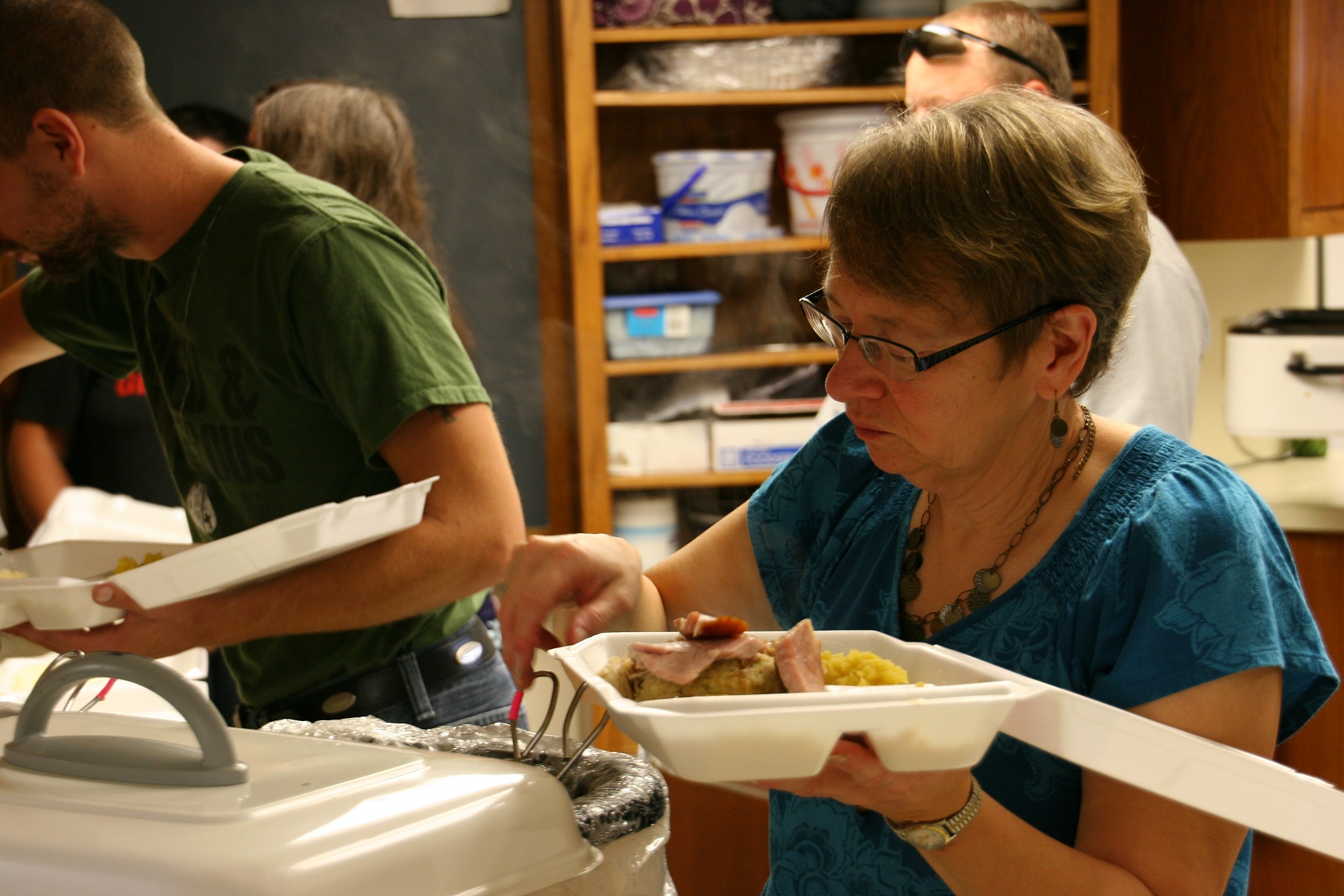
Some of the food served at Trinity’s Fall Dinner. There’s more. It didn’t all fit on my plate. Minnesota Prairie Roots copyrighted file photo.
There you go. If you’re looking for an escape into art and/or crave a meal that’s like Sunday dinner at Grandma’s house or Thanksgiving dinner, then take in both of these events. And, bonus, you’ll probably also see some incredible fall colors along the way.
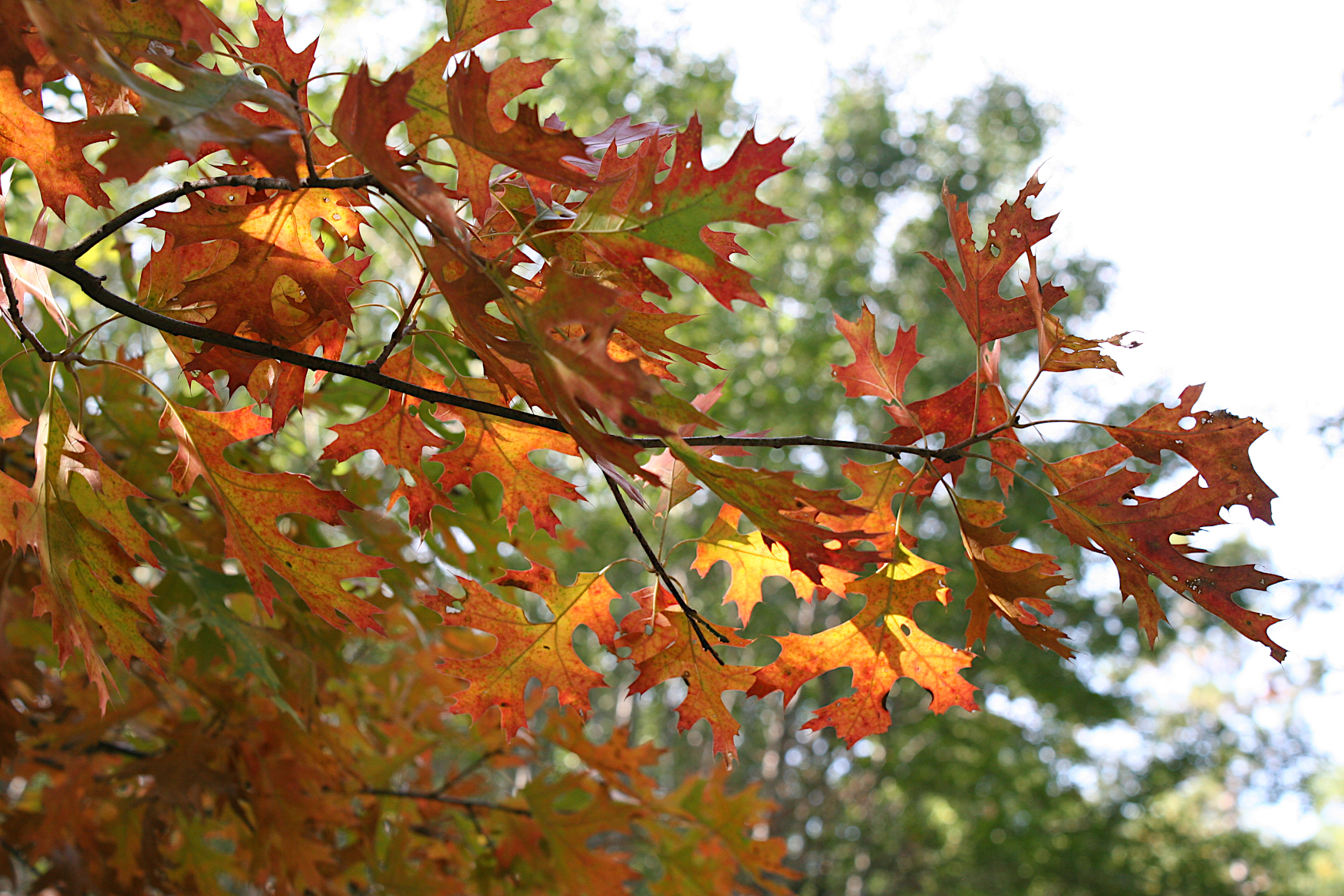
Colorful oak leaves at Mission Park south of Crosslake. Minnesota Prairie Roots copyrighted photo September 2021.
DAYS AGO I SWITCHED out the art in my home to autumn scenes. To reflect the changing season.
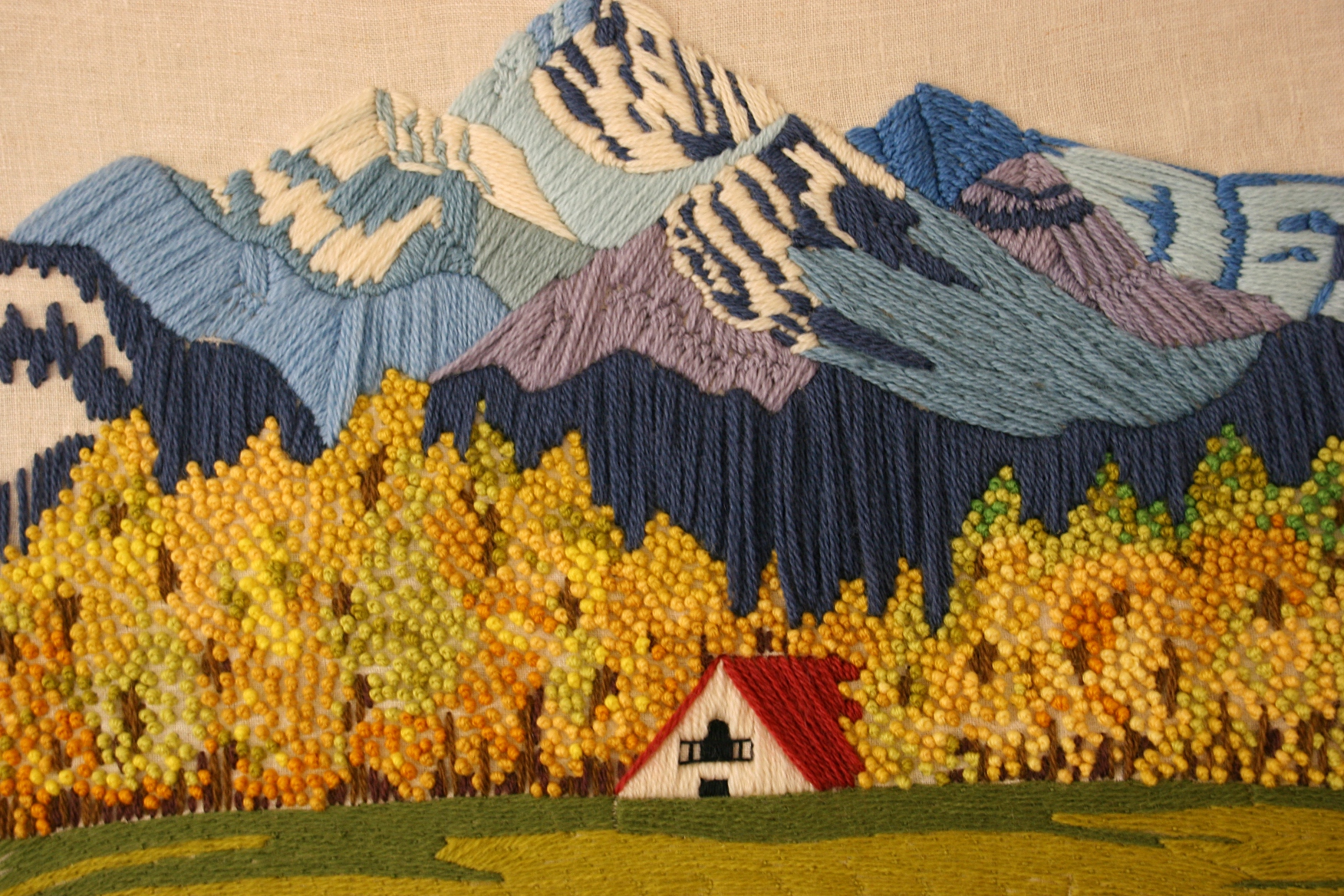
I stitched this crewel embroidery art in the 1970s from a kit gifted by an aunt and uncle. Minnesota Prairie Roots copyrighted file photo.
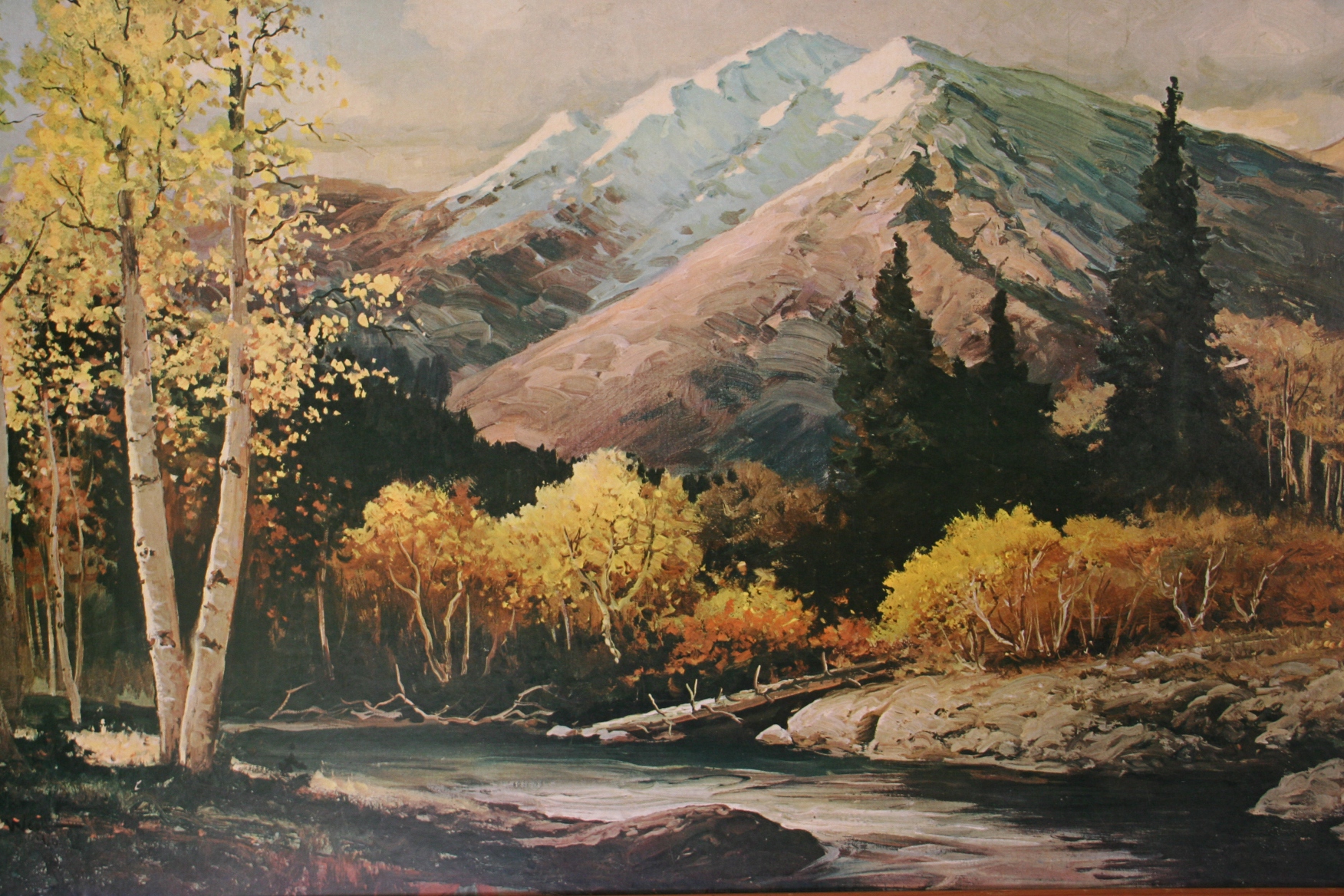
I leaned two paint-by-number autumn landscapes, acquired several years ago in Detroit Lakes, atop a vintage chest of drawers. I exchanged an old mill scene for a rendition of a river winding through flaming orange woods in an interchangeable print my parents received as a 1967 housewarming gift. I hung a crewel embroidery piece I stitched of a multi-hued treeline set against a mountain backdrop. It was a 1974 high school graduation gift from my Uncle John and Aunt Sue. And I placed, too, a mammoth print of Robert Woods “White Mountains and Aspens” purchased for a few dollars at a garage sale in Medford.
“White Mountains and Aspens” by Robert Wood. Minnesota Prairie Roots copyrighted file photo.
Every piece of art I own—and I have a lot, acquired mostly at garage sales, thrift stores and recycled art sales at bargain prices—means something to me. Some is personal. But others simply inspire me or give me peace or take me into nature, as does most of the art now decorating my home.
It’s as if I’m bringing the outdoors in.
Outside, autumn eases into the landscape with oranges, yellows, reds and browns painting over green leaves. I noticed that especially last week on a short get-away to the central Minnesota lakes region where Randy and I stayed for several days at a family lake cabin south of Crosslake. We hiked into the woods at Mission Park and I found myself stopping often to photograph the leaves and the abundance of wild mushrooms. I’ll showcase images from that park soon. But for today, you get this solo image.
Take time to step outdoors. To walk in the woods. To appreciate the beauty of autumn as she paints color into the landscape. I welcome these September days. The cool mornings and evenings. The sunshine that warms the day. The earthy scent of the outdoors. The changing colors that delight me visually, that make this season so beloved to me.
A promo for Mixed Precipitation’s on-the-road performance. Graphic source: Mixed Precipitation.
IN ONE WEEK’S SPAN, I heard opera for the first time and then seven days later listened to an internationally-known Somali singer perform. Both right here in Faribault. In Central Park.
What a delight to experience these performing arts locally, to be exposed to something new to me.
If I’m sounding a bit giddy, it’s because I am. I love the arts and feel grateful for our local Paradise Center for the Arts. Yet, I often yearn to see more. But I don’t want to go into the metro. And, truth-be-told, there’s always cost to consider. Even in attending local arts events. I expect others in Faribault face the same barriers.
So I feel such gratitude for our long-running free summer Concerts in the Park series. And I feel thankful, too, for sponsoring groups like the City of Faribault Parks & Recreation Department and the Paradise Center for the Arts and the local businesses and residents who helped fund the special events I attended recently.
When Mixed Precipitation brought its The Pickup Truck Opera, Volume 1: The Odyssey to Faribault on August 26, I wondered how I would respond. I didn’t quite know what to expect. I needn’t have concerned myself as the adaptation of Homer’s Odyssey proved lively and entertaining with dancing and over-sized puppets and toe-stomping music. Plus opera. And it was performed on the grass, in front of the historic bandshell from the bed of a blue pickup truck. I felt like I was in a small village of yesteryear being entertained by a traveling troupe.
Dalmar Yare. Photo source: Faribault Parks & Rec Facebook page.
The feel was completely different on September 2, when I set up my lawn chair in Central Park to hear and watch Dalmar Yare, a Somali entertainer from Minnesota and with family ties to Faribault. He describes his music as a blend of traditional Somali styles with hints of western influence.
I quickly found myself swinging my crossed left leg to the tempo of the upbeat music. I didn’t understand what Yare sang in a language foreign to me. But I understood the joy I felt, the joy I saw. Throughout the park, local Somali children, teens and adults gathered to listen. Many danced, especially the kids. It seemed part concert, part celebration, part reunion. Simply joyful.
While I listened, I observed the crowd. I noted the open affection of Somali youth for one another. Young men draped arms over shoulders as did teen girls. Preschool girls in their flowing dresses and hijabs ran hand-in-hand across the park. I noticed, too, a stunningly beautiful 20-something layered in a golden dress and matching hijab, fashionable mini purse dangling from her shoulder. The vibrant colors and patterns of dresses and hijabs swirled like a kaleidoscope. An ever-changing gallery of art.
Dressed in my casual attire of jeans, a tee and a zipped sweatshirt with the hoodie occasionally pulled up to provide warmth and protect me from the rain, I felt under-dressed and conscious of my white-ness. And that’s OK; I needed to feel this. I only wish more long-time Faribault residents would have attended.
Photo source: Sod House Theater
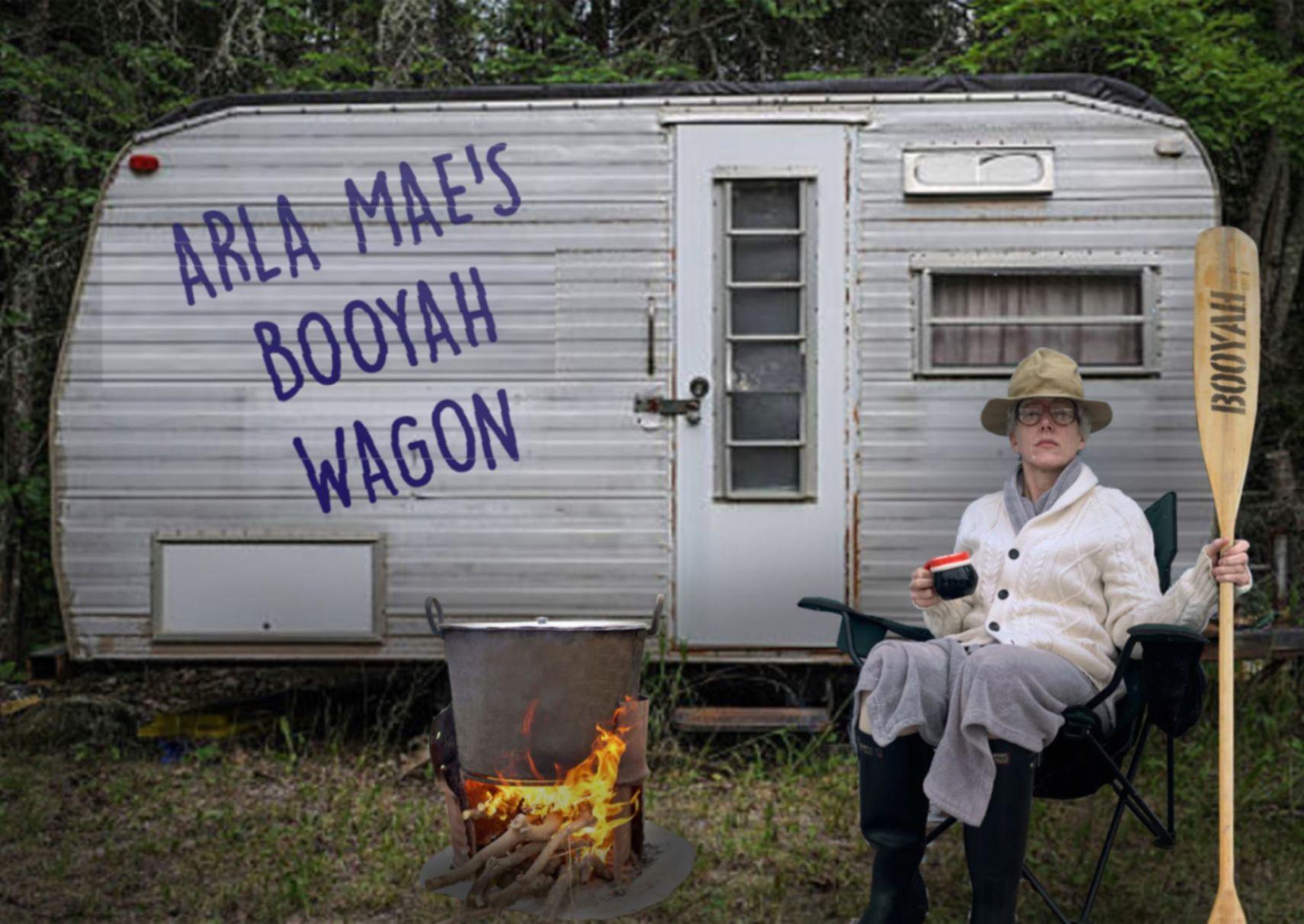
Now this week I’ll learn about booyah, a rich and flavorful stew that is supposedly an Upper Midwest tradition, although I’ve never eaten it. Booyah will theme the Sod House Theater musical comedy about Arla Mae, a rural Minnesotan claiming to operate the state’s first food truck out of which she serves her famous booyah. The play aims to spotlight buying and eating fresh local food. Thus the involvement of James Beard Award-winning chef Ann Kim in creating a special booyah recipe for the production. So what goes into this stew, which is traditionally cooked outdoors in large kettles over a wood fire? You name it: a mix of meats and an assortment of vegetables—onion, potatoes, rutabagas, cabbage, carrots, celery, peppers…
I envision a collage of shapes and colors. Art in a kettle. Art that is new to me. Served to me. Right here in Faribault. In Central Park.
#
NOTE: “Arla Mae’s Booyah Wagon” will also be performed in neighboring communities on these dates and at these locations:
Keepsake Cidery, rural Dundas, 6 pm on Thursday, September 23
Pleasant Grove Pizza Farm, rural Waseca, 6 pm on Friday, October 1
Northfield Central Park, Northfield, 6 pm on Thursday, October 7
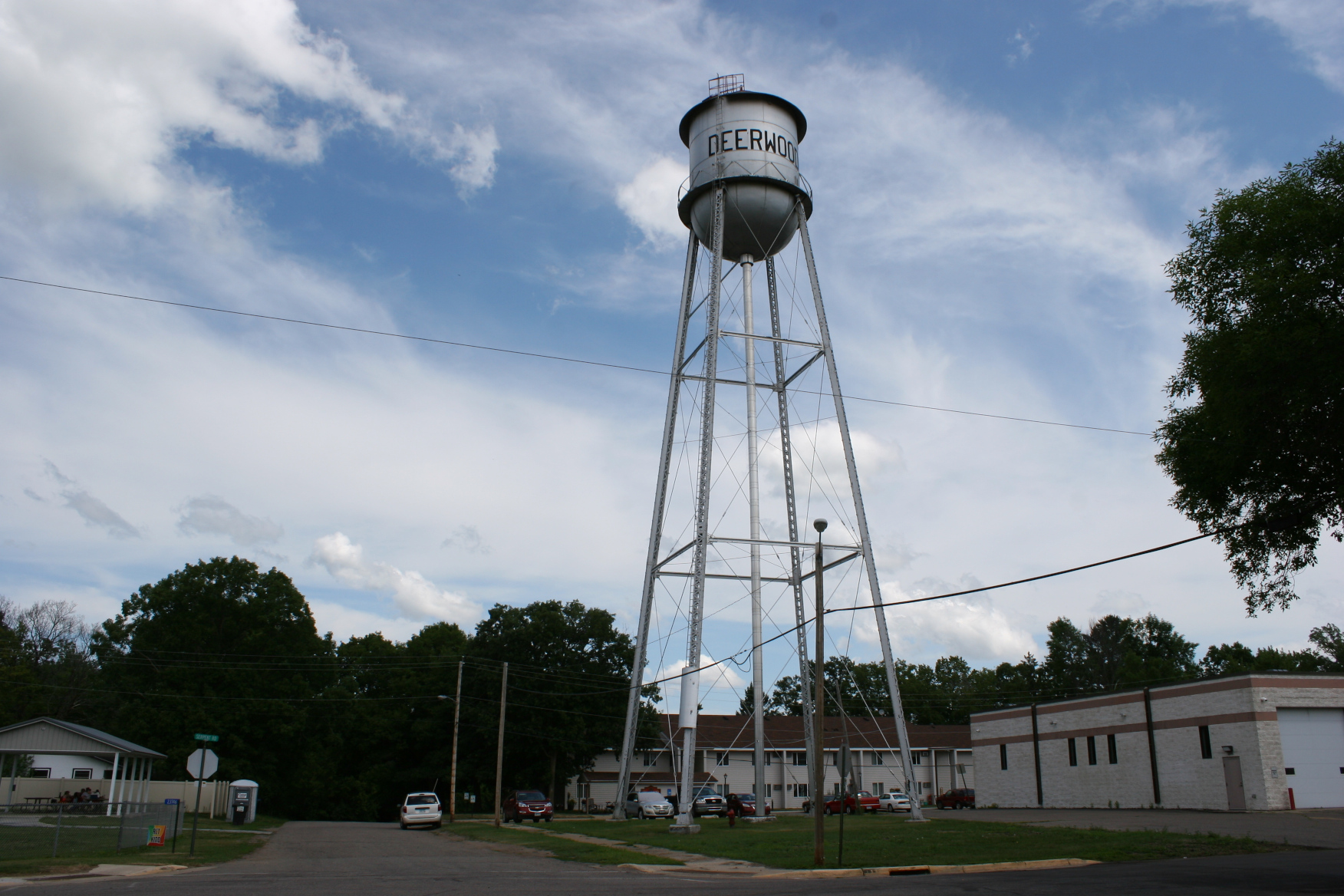
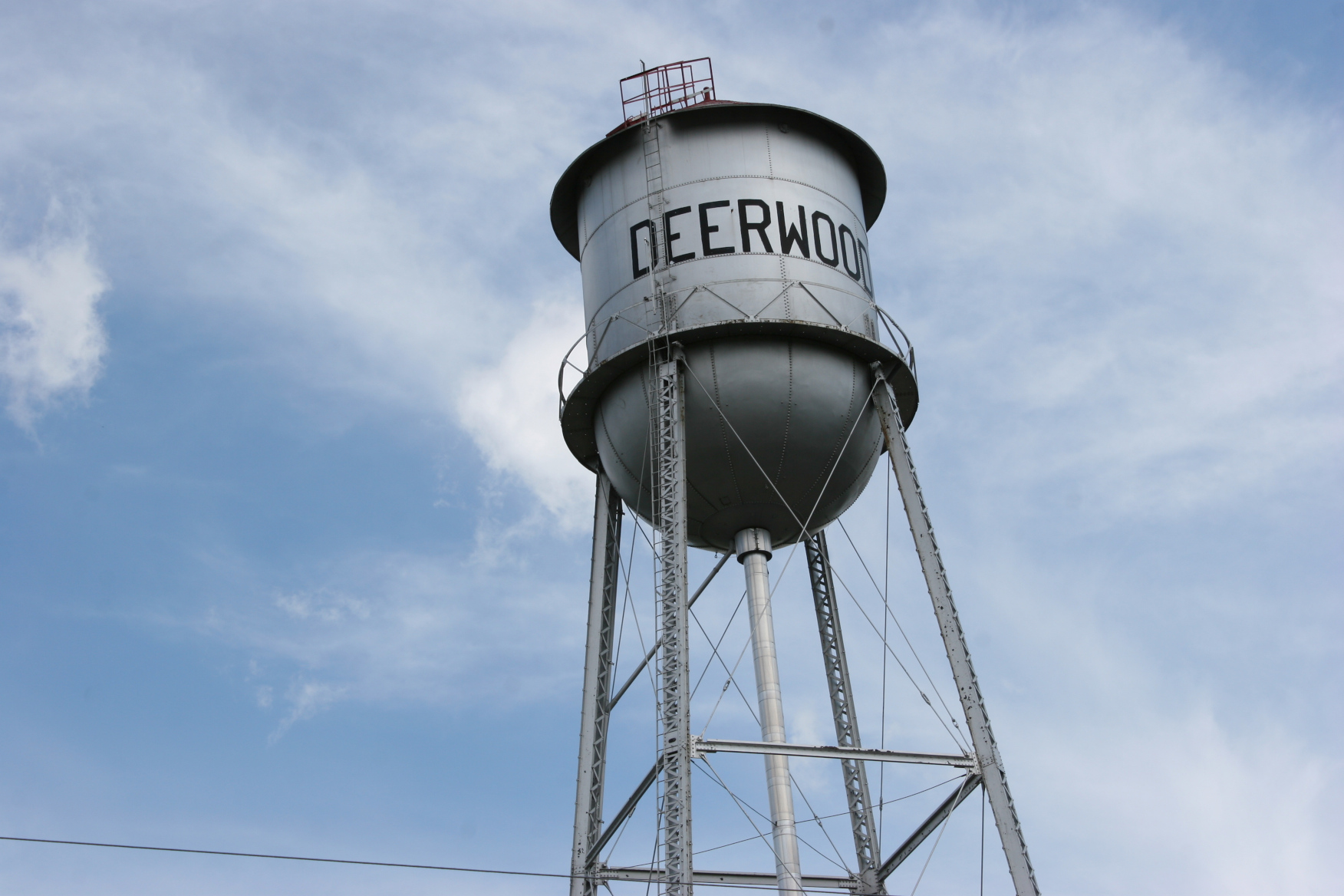
An historic 1914 water tower in Deerwood, Minnesota. Minnesota Prairie Roots copyrighted file photo July 2021.
A TIME EXISTED WHEN I PAID minimal attention to water towers. They all looked the same. Simple silver metal structures rising on leggy supports above prairie towns, dwarfed only by grain elevators.
Through the decades, those standard water towers have mostly vanished, replaced by more modern holding tanks. I understand the need to upgrade, to improve, to advance. Communities grow. Needs change. My city of Faribault is currently planning a new water tower, which will be visible from Interstate 35. If Faribault ever housed a simple metal tower, it was long before I moved here.
Community identifier. Minnesota Prairie Roots copyrighted file photo July 2021.
But in the small town of Deerwood in Crow Wing County, a vintage water tower still stands, by a city park with picnic shelter and splash pad, near an apartment complex, next to the fire station and across the street from the historic Deerwood Auditorium (city hall and police department).
Randy and I discovered the 1914 water tower when we stopped for a picnic lunch en route to a family lake cabin on a Saturday afternoon in July. Previous drives north, we drove right through Deerwood without pause. In a hurry to get to our destination.
That’s problematic. That word, hurry. By hurrying, we too often miss simple delights. Like the historic Deerwood water tower.
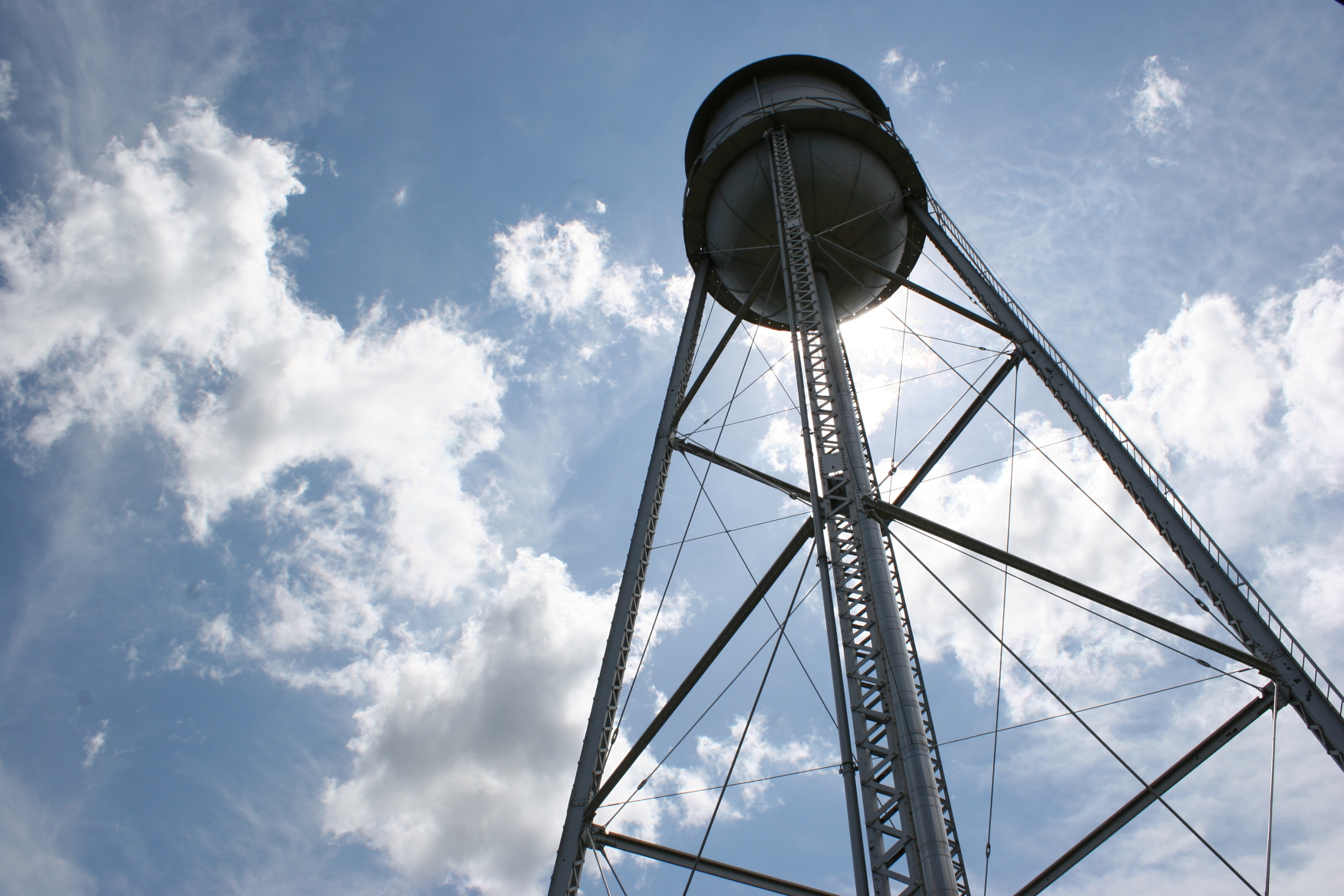
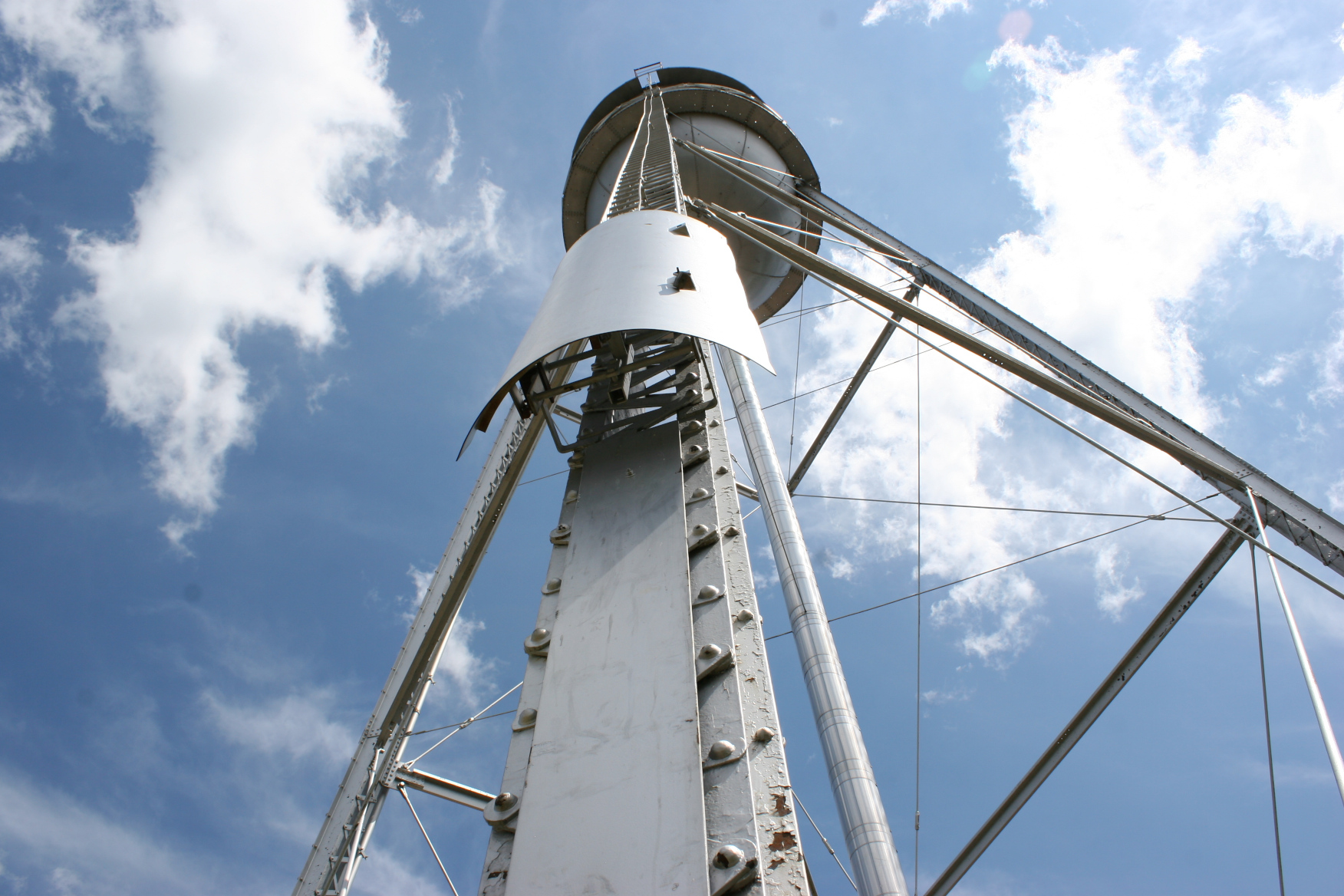
Looking up at the tower offers artistic and architectural angles.Minnesota Prairie Roots copyrighted file photo July 2021.
I grabbed my camera to photograph the tower, attempting to document it from multiple perspectives. Architecturally. Artistically. Historically.
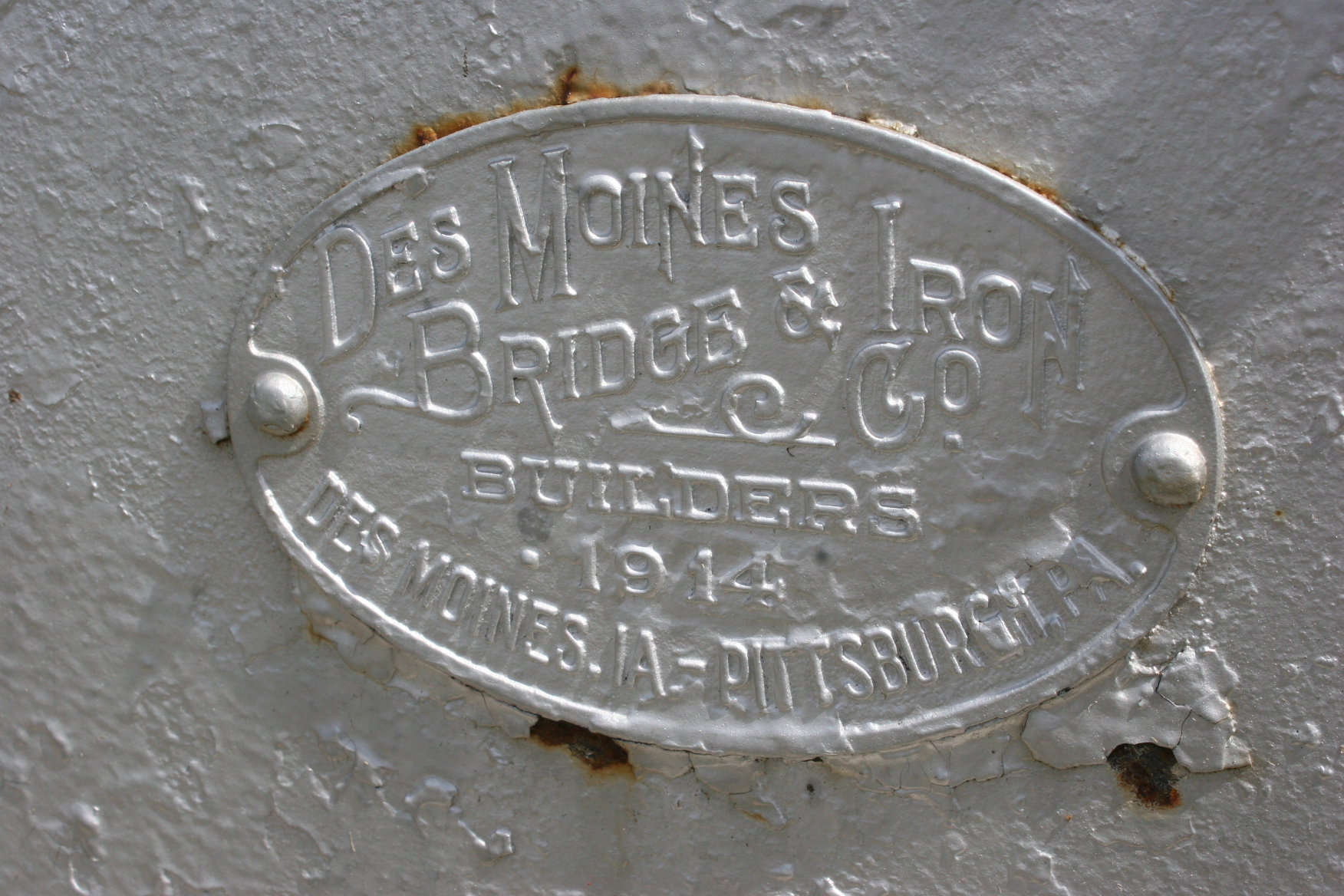
Identifying construction information at the base of the Deerwood water tower. Minnesota Prairie Roots copyrighted file photo July 2021.
Just another underneath view. Minnesota Prairie Roots copyrighted file photo July 2021.
The towers, erected between 1912-1918, were of historical importance in development of the Cuyuna Iron Range. Tax revenue generated from the iron ore mines funded their construction.
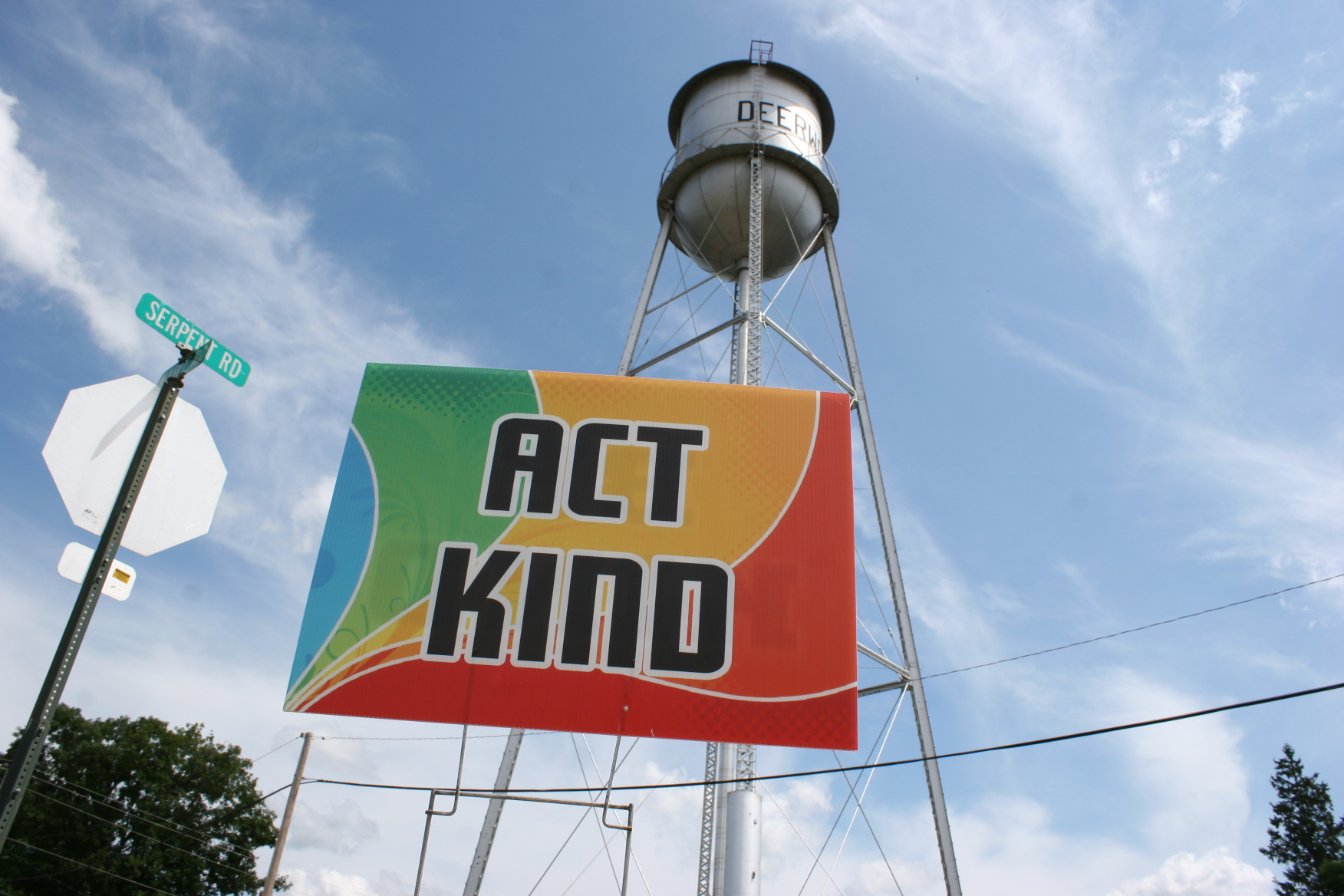
Posted on a street corner by the water tower, a positive message. Minnesota Prairie Roots copyrighted file photo July 2021.
I appreciate that these five towns on the iron range valued their aged water towers enough to pursue and acquire historical designation. The water towers represent a time in Minnesota history. They represent, too, the architecture and art of yesteryear.
TELL ME: I’d like to hear of vintage water towers you’ve noticed and appreciate. Tell me, too, why you value them.












Recent Comments