Minnesota Prairie Roots

Writing and photography by Audrey Kletscher Helbling

Bringing the magic of prom to a Minnesota nursing home May 6, 2014

Filed under: Uncategorized — Audrey Kletscher Helbling @ 6:00 AM
Tags: , , , , , , , ,


TIS PROM SEASON in Minnesota, that annual rite of spring which throws teenage girls into a spin over finding just the right dress, getting a fabulous up-do, planning photo sessions and doing whatever to create the perfect evening.

That’s all delightful, to live in a fairytale world.

But what a group of girls in rural southwestern Minnesota did on the day of their high school prom impresses me more than all the magical glitz and glam.

They took the time last weekend to share prom with the residents of a small town nursing home.

This my mother, who recently moved into Parkview Home in Belview, shared with me during our weekly Sunday evening phone conversation.

If those teens could have eavesdropped on our exchange, they would know just how happy they made my mom by stopping at their workplace before prom to show off their Cinderella selves.

Mom didn’t comment specifically on the dresses, although she did on the “fancy hair.”

And, she noted, some of the girls brought their dates, who, she laughed, looked a bit bored and “were probably wondering when they could leave.”

I don’t doubt her observation. Physically Mom is limited in her abilities. But mentally she is still, as they say, sharp as a tack.

This isn’t about my mother, though, who also profusely praised those prom-goers as kind and thoughtful.

Rather, this is about these young women and, yes, their dates, too. I am impressed by their care, kindness and generosity of spirit. They could have gone on their way, without a thought of stopping at Parkview. But they did. And for that, this daughter is grateful.

© Copyright 2014 Audrey Kletscher Helbling


Belview residents celebrate tornado recovery & the story of a little sequoia tree July 2, 2012

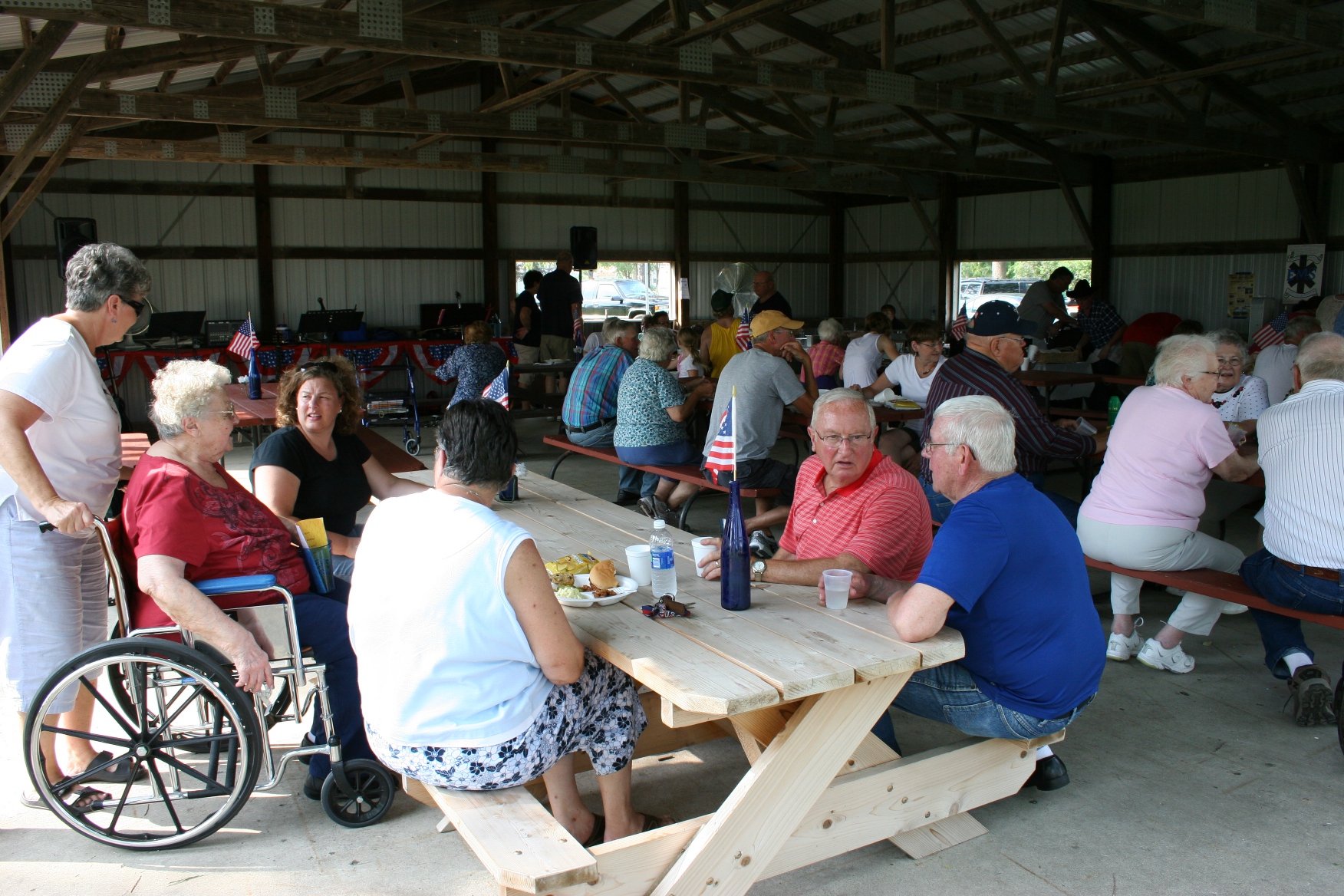
Belview area residents and others gathered at a city park on Sunday to mark the one-year anniversary of an EF-1 tornado.

A YEAR TO THE DATE after an EF-1 tornado swept into the southwestern Minnesota prairie town of Belview, population 375, folks gathered in the late afternoon and early evening hours of an oppressively hot and humid Sunday to remember and to celebrate.

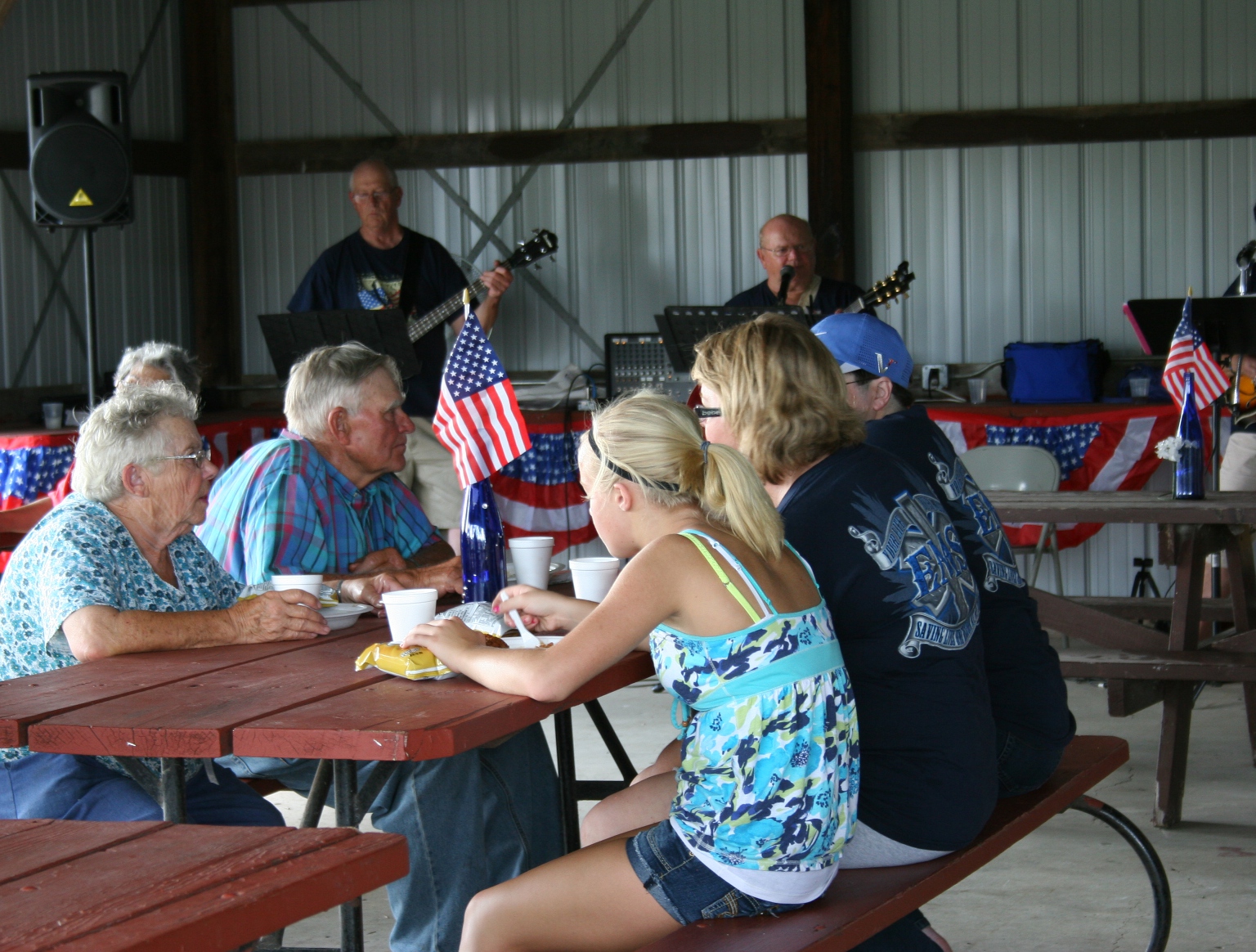
Food and music were part of the celebration.

They celebrated with a catered picnic meal and music right after a brief rain shower passed through town.

They remembered with photos and stories shared.

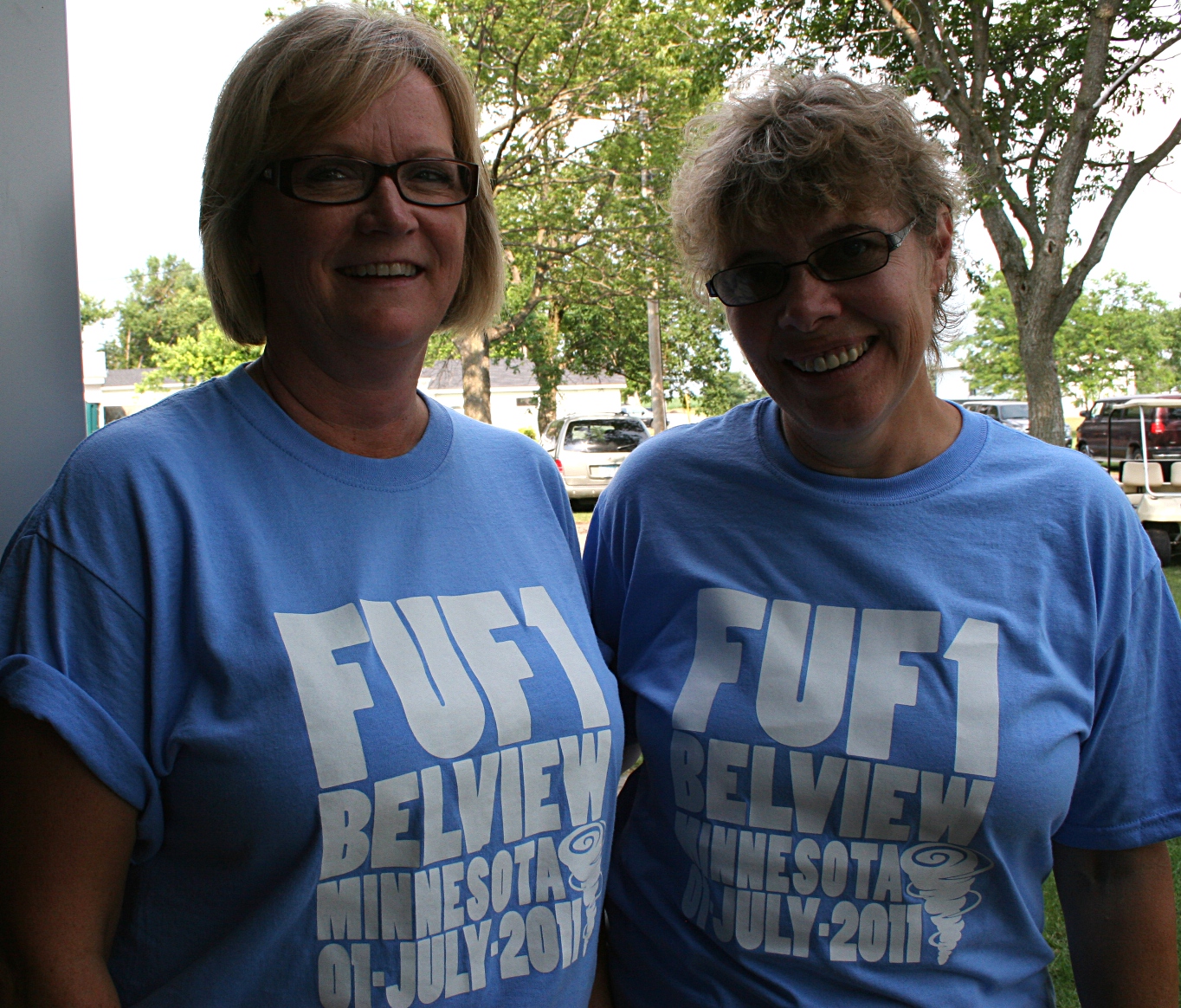
Ingrid Huseby, left, and Linda Sullivan. Yes, the t-shirts mean exactly what you think they mean.

“We were lucky. It could have been so much worse,” Belview resident Linda Sullivan said as we stood in the shade of the Belview City Park shelterhouse after I’d snapped a photo of her and Ingrid Huseby in commemorative, make-a-statement Belview tornado t-shirts printed shortly after the July 1, 2011 storm. “I can’t believe that nobody was hurt; that was the miracle.”

Linda’s right. It is a miracle. And you believe it when you hear stories like that of two women who rode out the 95-115 mph tornadic winds in a car just outside of town; of the couple who did not make it to their storm shelter, upon which a tree then fell; of the Iowa man and his son who sought shelter at the bank when they drove into town in the middle of the tornado; of the natural gas leak at a home…

“Like I said, it could have been so much worse,” Linda repeated several times as we moved into the shelterhouse to view an album of photos showing the damage at her home. She lost 11 trees.

It is Belview’s trees which are undeniably this prairie town’s most devastating loss.

Says City Clerk Lori Ryer. “We lost 70 percent or more of our trees.” In the park alone, where residents were celebrating on Sunday, 70 trees were lost.

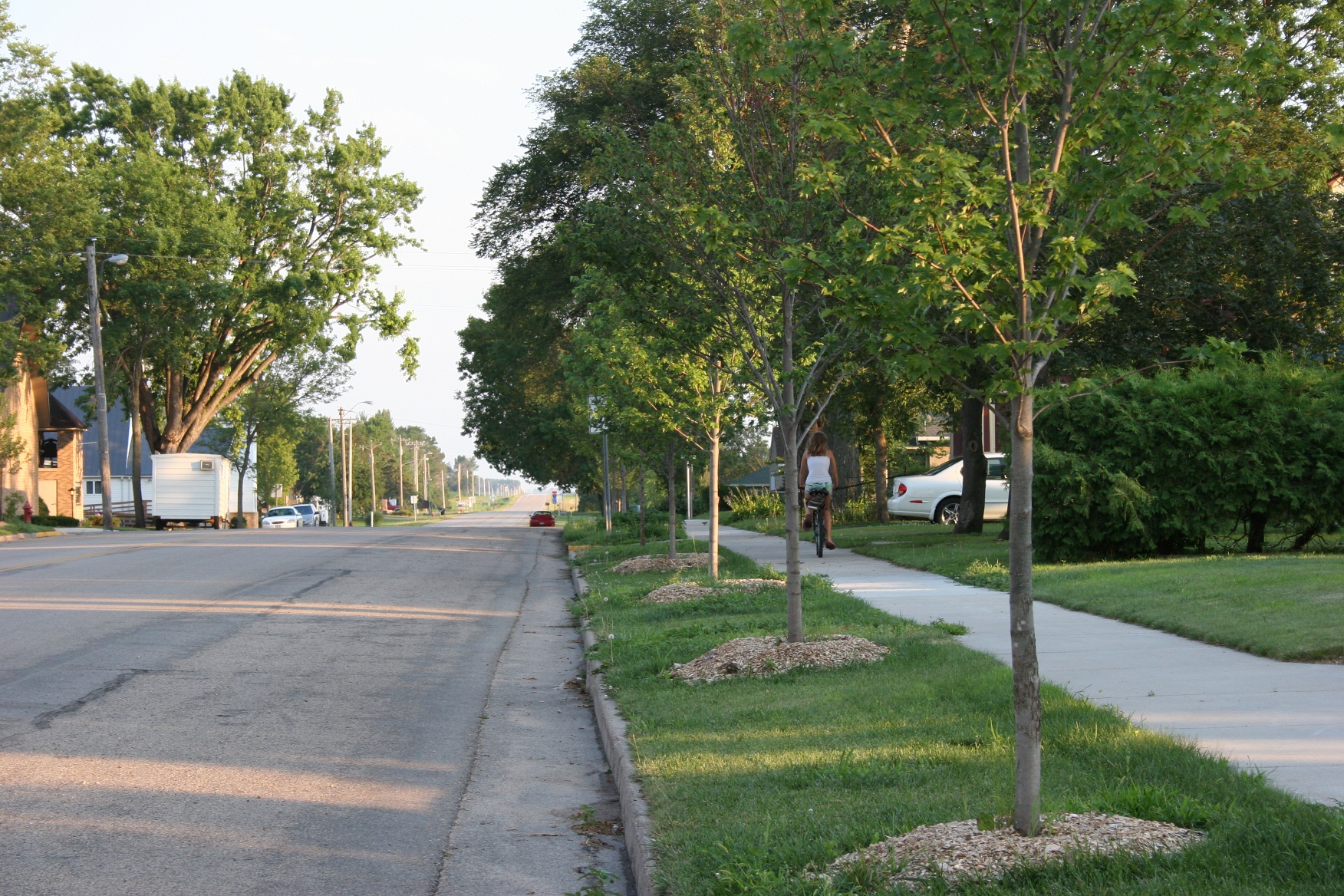
New trees line the boulevard along Belview’s Main Street. A Belview native who owns a tree business offered the city a discounted price on trees. Tree replacement is not covered by FEMA or city insurance.

But already, this community is replacing its trees—57 in the Belview City Cemetery on the edge of town; many along the Main Street boulevard; and others planted at private residences throughout Belview, including peach, pear, apricot and apple trees in Linda Sullivan’s yard.

Linda, who was out of town when the storm rolled in, remembers the phone call from her brother, “You can’t find the house for the trees.”

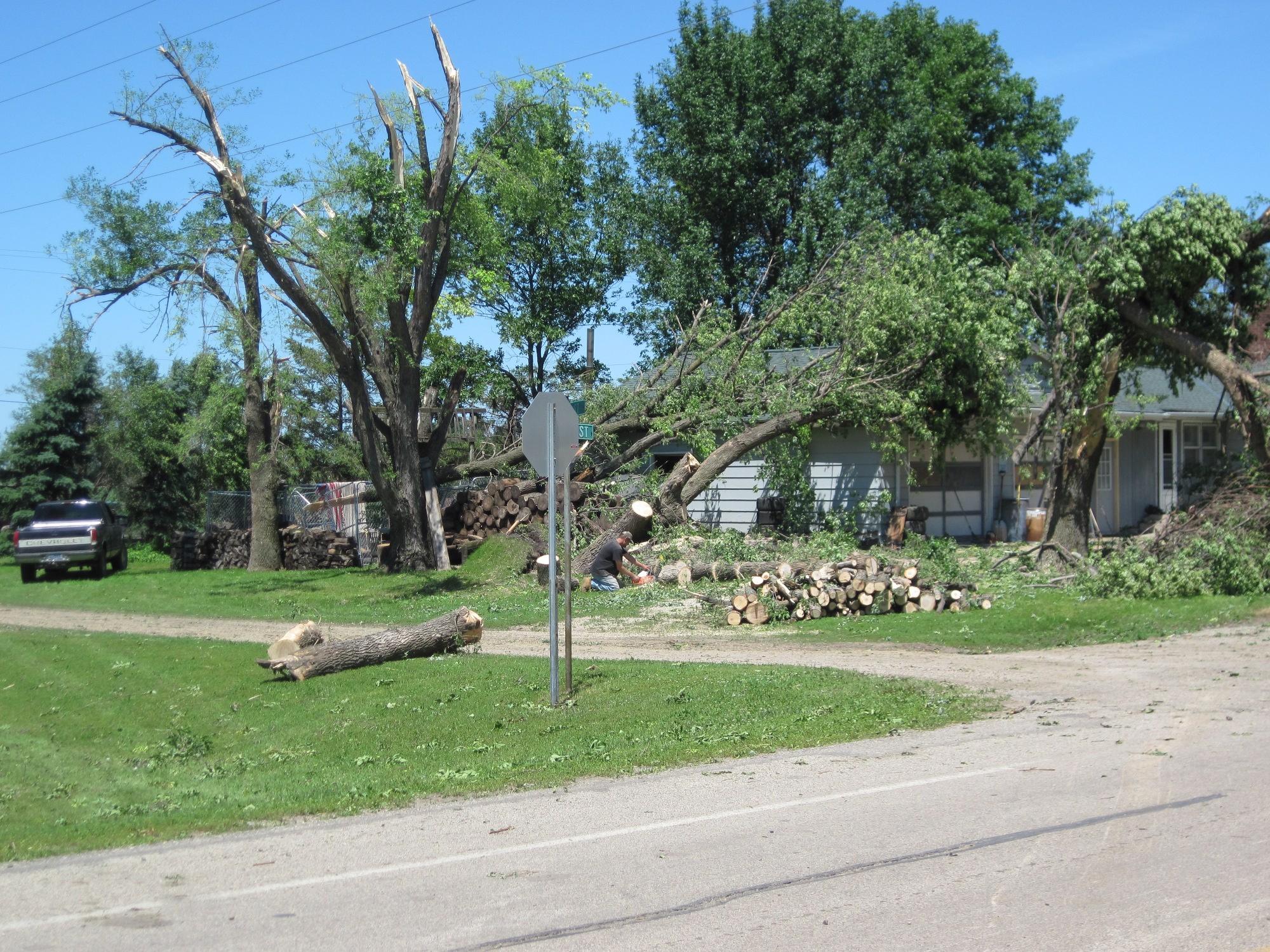
And it was like that all over town with trees or tree branches lying atop houses, garages and vehicles and blocking streets.

In that environment, Belview’s volunteer fire department and emergency personnel responded as they drove a fire rig around town checking on the safety of their friends, neighbors and families.

Lori, the city clerk, praises those volunteers and the many others who came into town to help with recovery. Within two days of the tornado, Linda Sullivan’s property was cleaned up. It was like that all over town as a continual procession of vehicles hauled away downed limbs and trees.

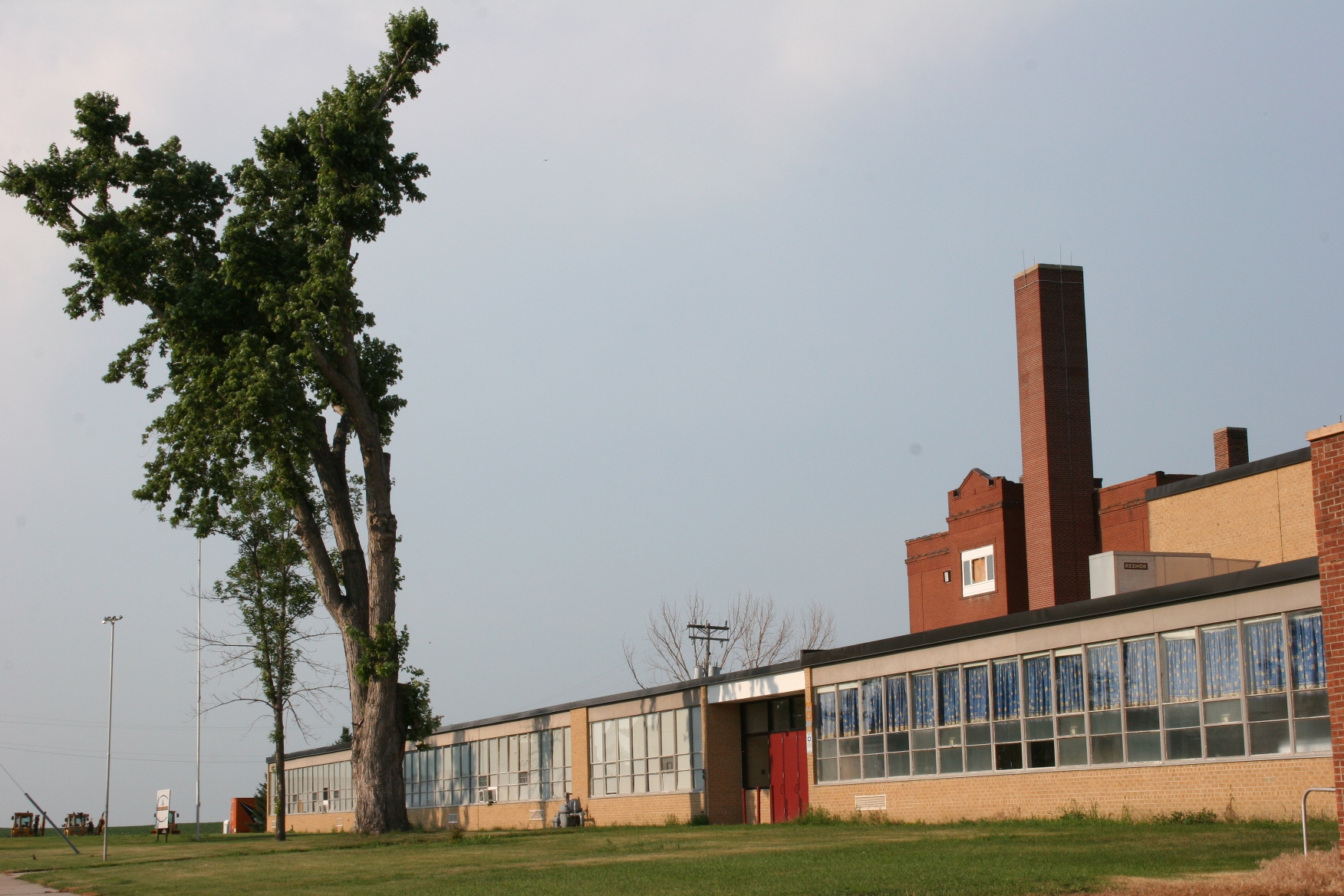
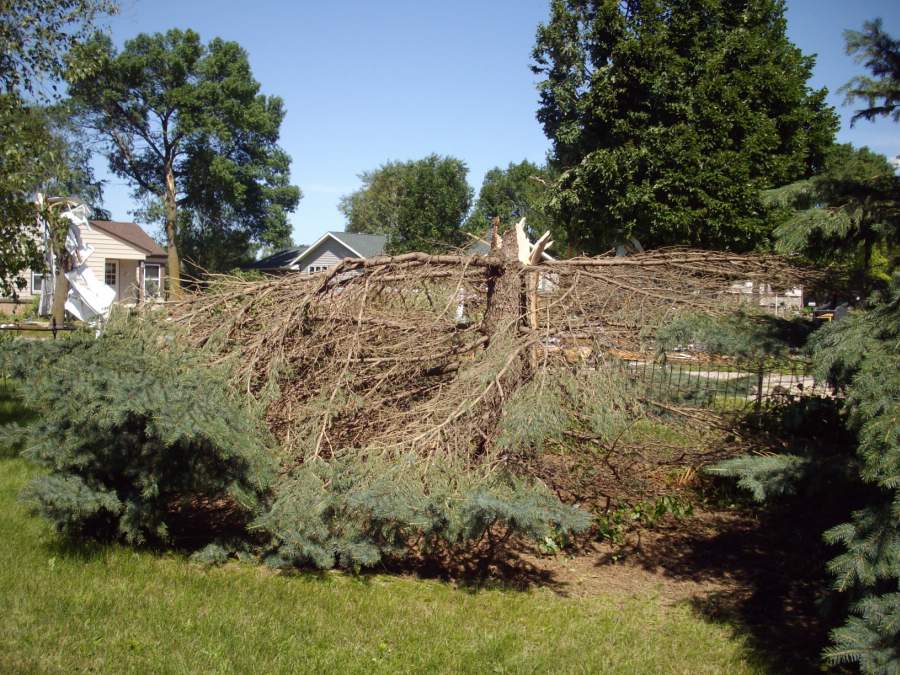
A tornado-ravaged tree stands at the Belview Area Learning Center one year after the tornado.

Today visual reminders of the tornado remain in ravaged trees, in houses still under repair, in the rows of new trees spaded in and now growing along the Main Street boulevard.

But it is a community which has weathered the storm and which seems even stronger today for having experienced an EF-1 tornado.

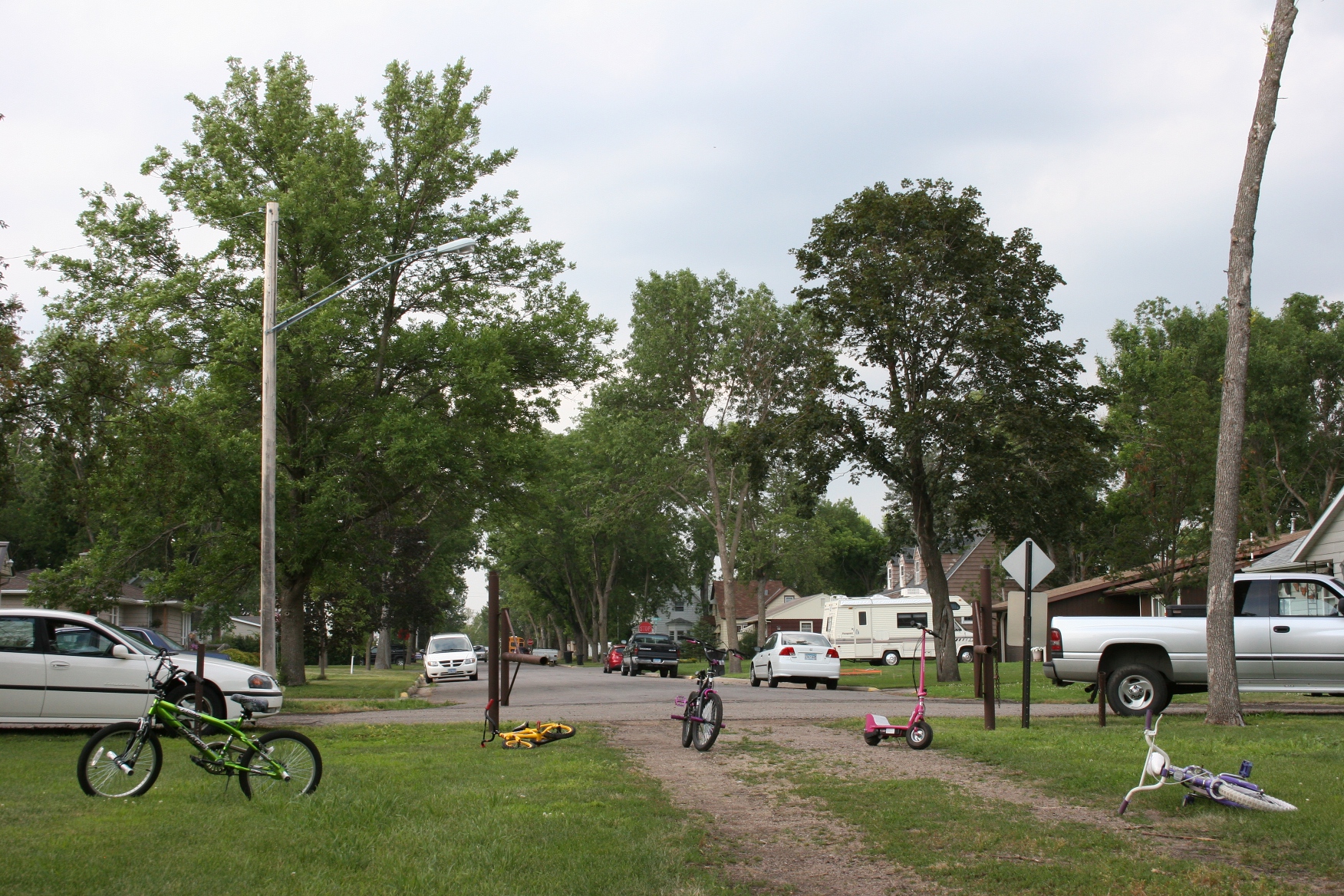
Belview is the type of small Minnesota town where kids can just drop their bikes and scooters, unlocked, in the park.

The Belview Fire Department filled a temporary water reservoir for the kids to splash in during the tornado recovery celebration on a sultry July 1.

#

A SPECIAL FED-EX SHIPMENT arrived from California on Friday for the residents of Belview. It came from Steve, the Federal Emergency Management Agency representative assigned to Redwood County. “He loved Belview,” City Clerk Lori Ryer said. “He’d never been to an area with such a hometown feel like here.” Steve was even invited to Thanksgiving dinner at the home of Delhi Township Board member Tom Werner.

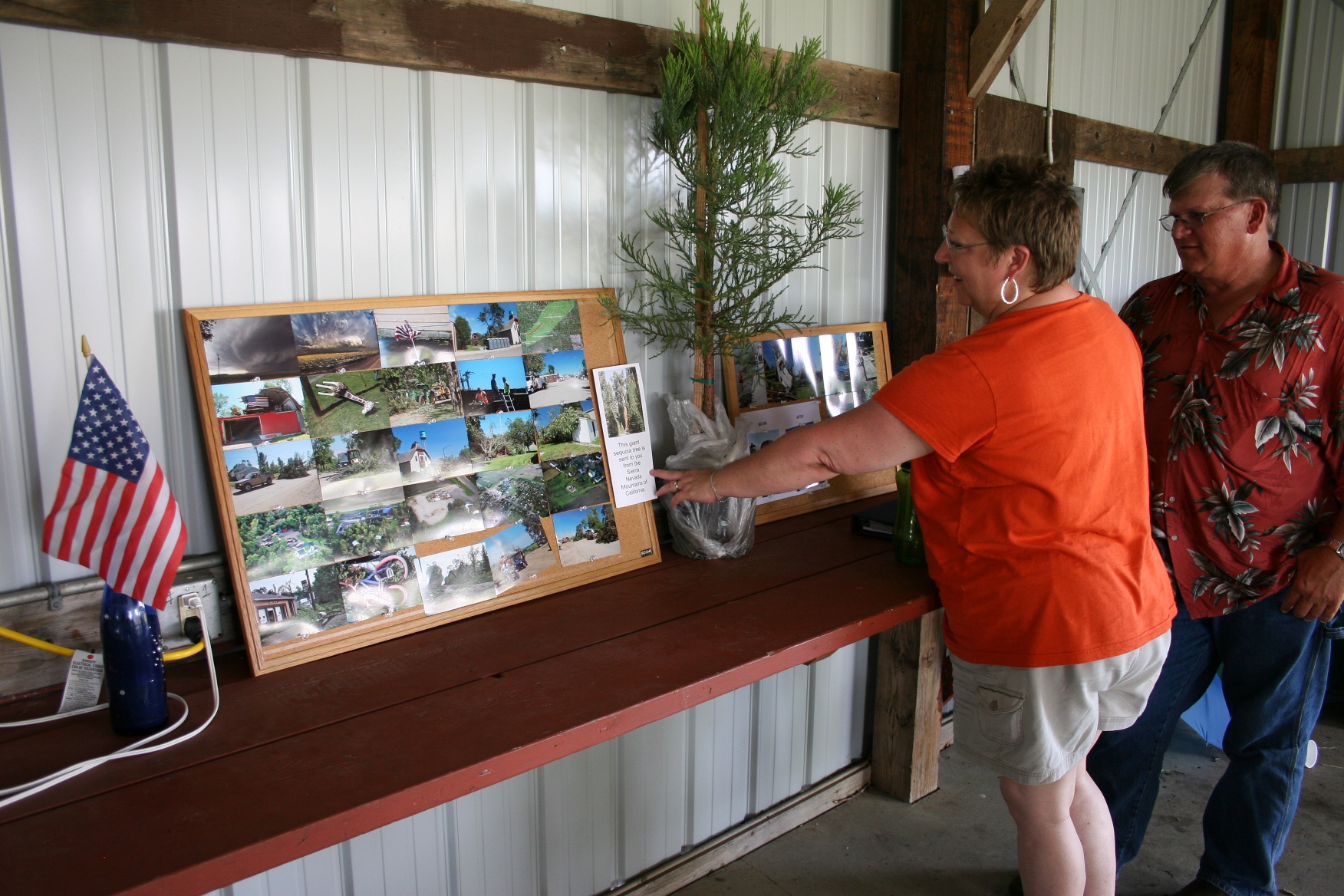
The tiny sequoia photographed here was given to the residents of Belview by their FEMA rep, Steve. Photos of tornado damage and recovery were posted on bulletin boards during the celebration. The image in the upper left corner shows the tornado, as it approached Belview.

The FEMA’s rep’s fondness for Belview showed in the sequoia he sent with the following note:

Some of you I was able to meet personally, with others it was a smile or head nod. In either respect, the experience of working with you during the tornado recovery effort has been engraved in my memory banks. What a fantastic town and great people.

Thank You for the invitation to the one year recovery celebration and tree planting. Believe me I’d very much like to be there, however FEMA wants me here, in New York City, until our mission is completed. Yeah, I know what you’re thinking. New York City??????

I hope you can find a nice place to plant this “little guy”–you might consider giving him a little room to grow. They live in the mountains near my home in California and I can tell you that every time you see one it will certainly take your breath away, they are truly magnificent trees and very hard to forget. Somewhat like the Harvest and Thanksgiving Time in Minnesota.

Wishing you all continued success in the recovery process.

Decades from now, when travelers spy a giant redwood in the Redwood County community of Belview, they will likely ask about the tree. And they will hear the story of the tornado which touched down in this little prairie town on July 1, 2011, and how, one year later, Steve the FEMA rep gifted a sequoia to the city. Surely, the stuff of legends…

© Copyright 2012 Audrey Kletscher Helbling


Vesta & Belview celebrating one year after storms June 29, 2012

TWO REDWOOD COUNTY COMMUNITIES will come together to celebrate this Sunday, one year to the date after severe storms ripped through this region of southwestern Minnesota.

St. John’s Lutheran Church in Vesta, hours after a July 1, 2011, storm ripped half the roof from the sanctuary. Photo courtesy of Brian Kletscher.

In my hometown of Vesta, area residents will remember the storm anniversary and rededicate St. John’s Evangelical Lutheran Church at a 10:30 a.m. worship service followed by a catered chicken dinner.

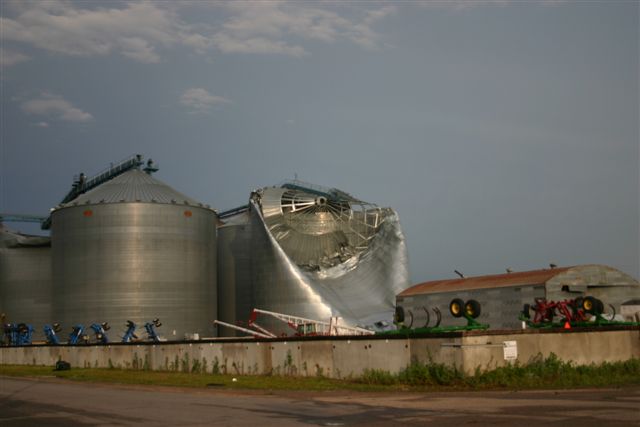
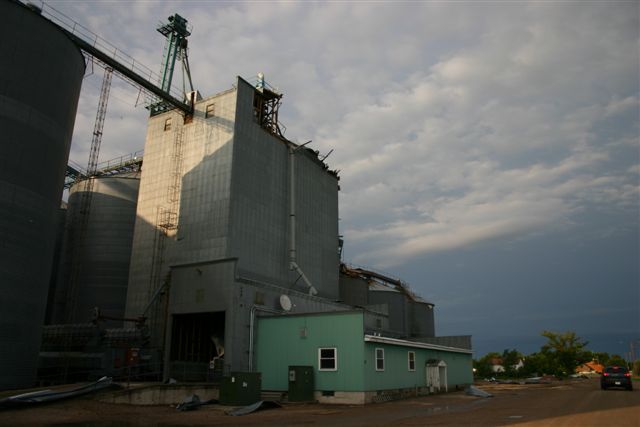
Damage to one of the grain bins at the local elevator. Photo by Brian Kletscher.

The grain elevator complex, the visual defining landmark in the farming community of Vesta, was ravaged by winds. You’ll see the damage near the top of the old grain elevator. Photo by Brian Kletscher

During the late afternoon of July 1, 2011, a series of downbursts with wind speeds of 90 – 100 mph swept through Vesta, ripping half the roof from St. John’s sanctuary, felling trees, denting grain bins, damaging the landmark grain elevator and more.

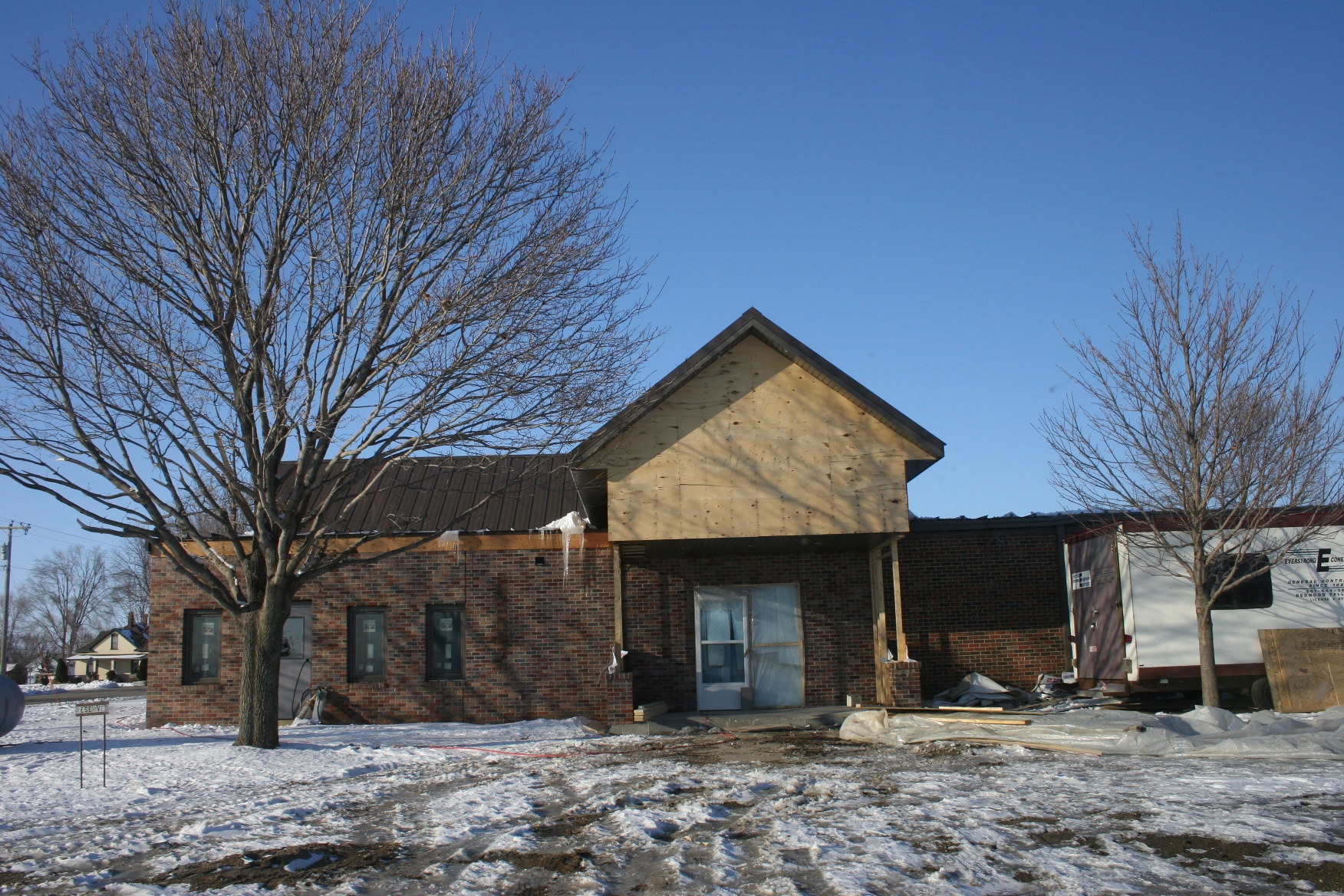
Under construction in March, a pastor’s office, bathroom and storage room were added to the south side of the early 1970s era church. Photo by Audrey Kletscher Helbling.

It took nearly a year for St. John’s to reopen after the congregation decided to expand the church as part of the roof reconstruction process.

Entering Belview from Sacred Heart at 9 a.m. on July 2, the morning after the tornado. Photo courtesy of Merlin and Iylene Kletscher, who were not yet living in Belview when the storm hit.

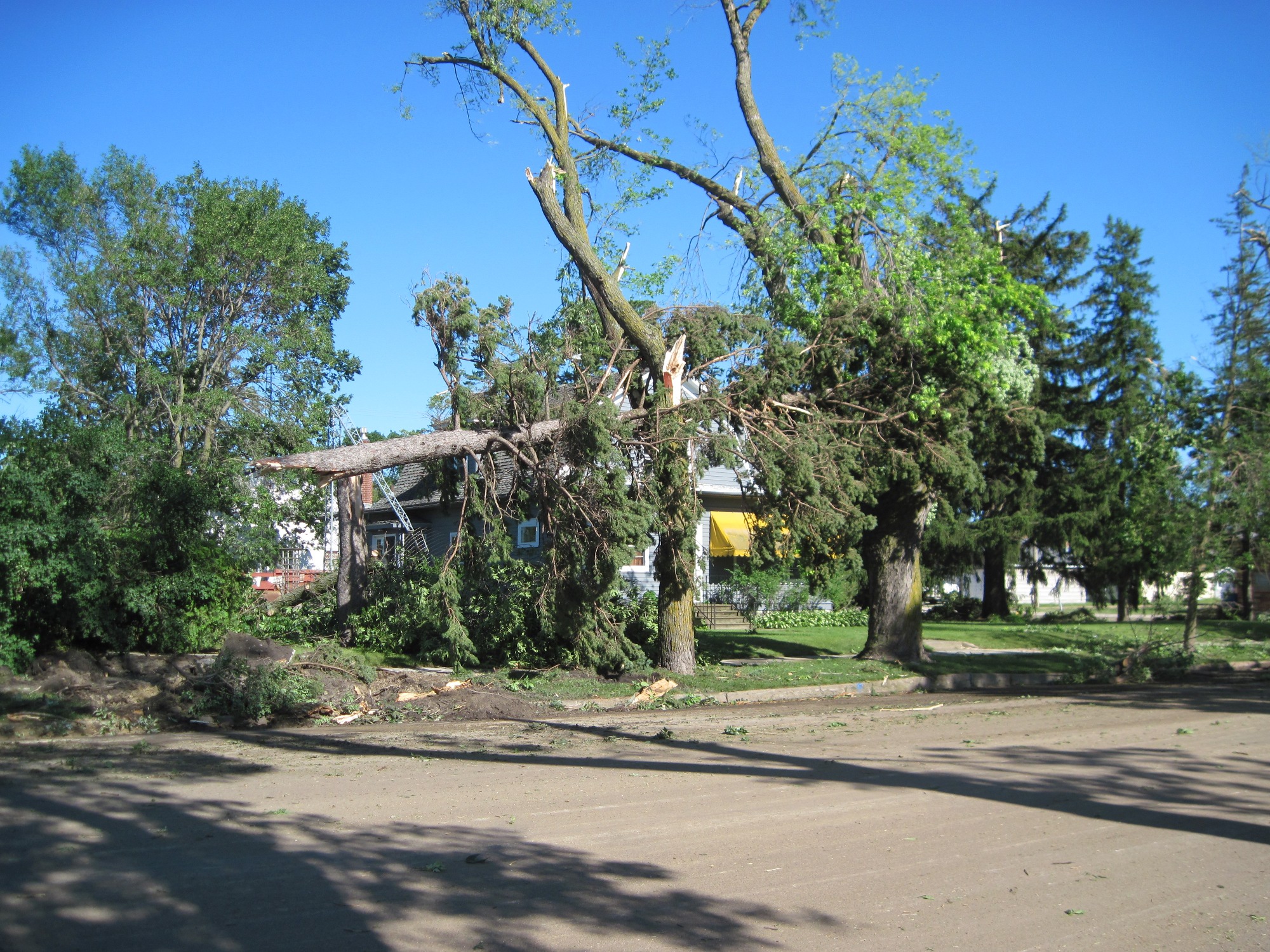
In Belview, about 10 miles to the north and east, residents will also mark the one-year anniversary of an EF-1 tornado which rode in on the same storm system. The tornado, with winds of 95 – 105 mph, wiped out many of this prairie town’s trees (which fell onto buildings and vehicles), damaged the nursing home to the point that it closed for awhile, wrecked roofs and more.

A month after the tornado, Belview’s Parkview Home (nursing home) remained closed as repairs were needed to the damaged roof, covered here with blue tarps. Photo by Audrey Kletscher Helbling.

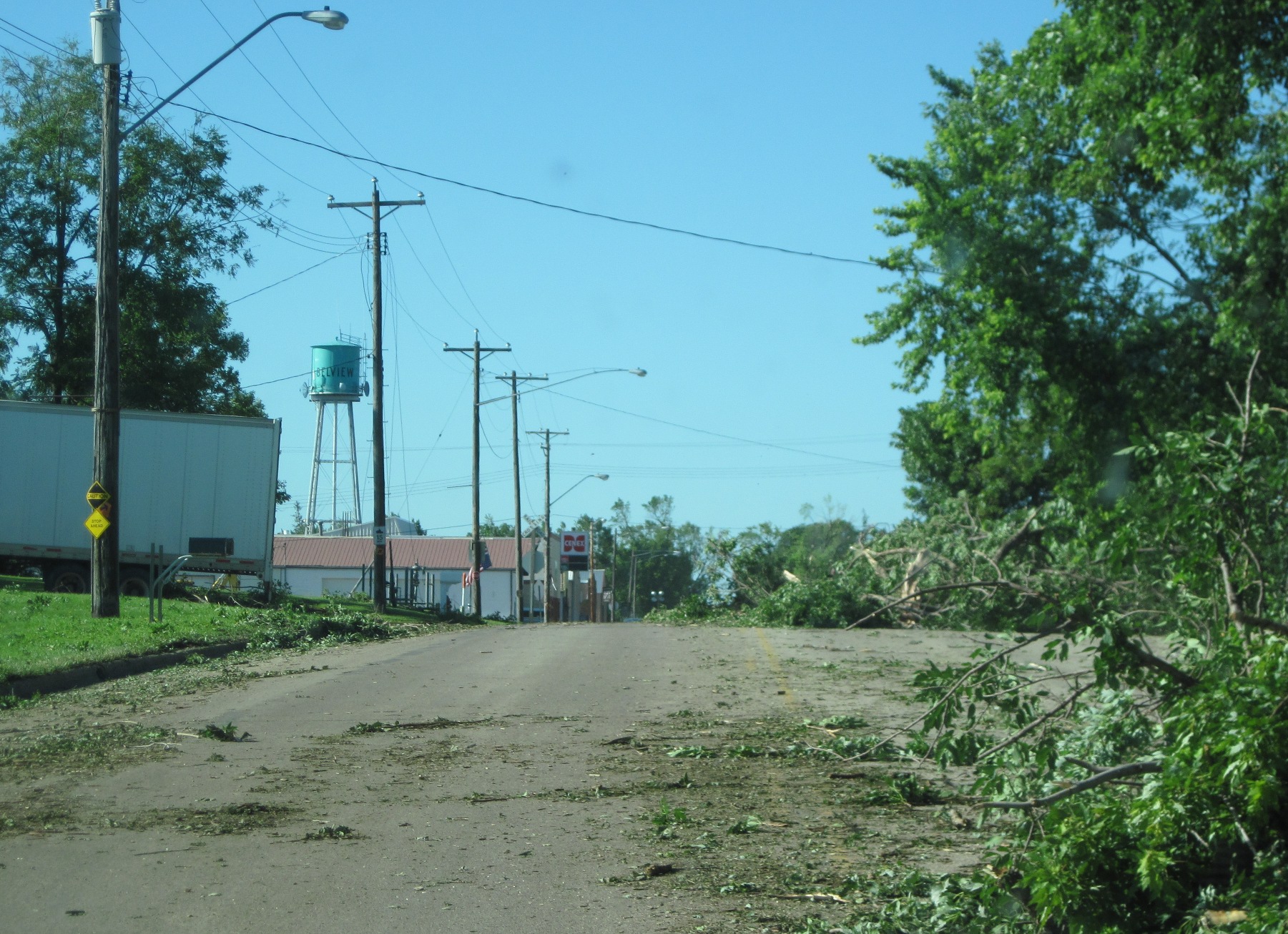
The communities of Belview and Vesta lost many trees in the July 1 storms. This photo is along a Belview street north of the park. Photo courtesy of Merlin and Iylene Kletscher.

Jerry Hagen’s house, across the street from Merlin and Iylene’s home in a July 2 photo. Photo courtesy of Merlin & Iylene Kletscher.

Damage along South Main Street in Belview. Photo courtesy of Merlin and Iylene Kletscher.

A year later, Belview residents are celebrating with a catered community picnic supper and entertainment at the local park (or in the air conditioned historic Odeon Hall if the weather is too hot) from 4 p.m. – 6 p.m. Sunday.

“We know we can pull together when the going gets tough as was proven after the storm,” says City Clerk Lori Ryer. “Now we would like to pull together in a spirit of community and fellowship and say thank you to everyone in town and to those that helped.”

My Uncle Merlin and Aunt Iylene Kletscher will be among Belview residents attending that picnic, celebrating and listening to the music of Ron and Kathy and Friends. The Kletschers had just closed on the purchase of a foreclosed fixer-upper home along Belview’s Main Street when the tornado ravaged Iylene’s hometown. They lost most of their trees—one of the reasons the couple bought the property—and sustained damage to their house, which they had just begun renovating.

Says Merlin:

So far we have planted four flowering crabs, a new disease resistant elm tree, 13 lilac bushes and the city has the Main Street boulevard planted with really nice-sized maples. We have two churches with new roofs, the bank is putting a new roof on right now and there are also more homes in the process of new shingles, etc., now.

One year later, Belview is looking pretty darn good!

A portion of Main Street in Belview a month after the tornado. Photo by Audrey Kletscher Helbling

FYI: To read more about the July 1, 2011, storms and to view more storm damage photos, check the Minnesota Prairie Roots archives from July 2011. In addition to the damage in Vesta and Belview, many rural residences also were hit. The farm of my cousins, Danny and Marilyn Schmidt, was struck by a second EF-1 tornado which nipped the northwestern corner of Redwood County. Near the South Dakota/Minnesota border, the community of Tyler experienced an EF-2 tornado which followed a 3-mile path through Lincoln County. The tornadoes and wind storms were part of a massive storm system  on July 1, 2011, which began along the western edge of Minnesota and extended as far east as northwestern Wisconsin.

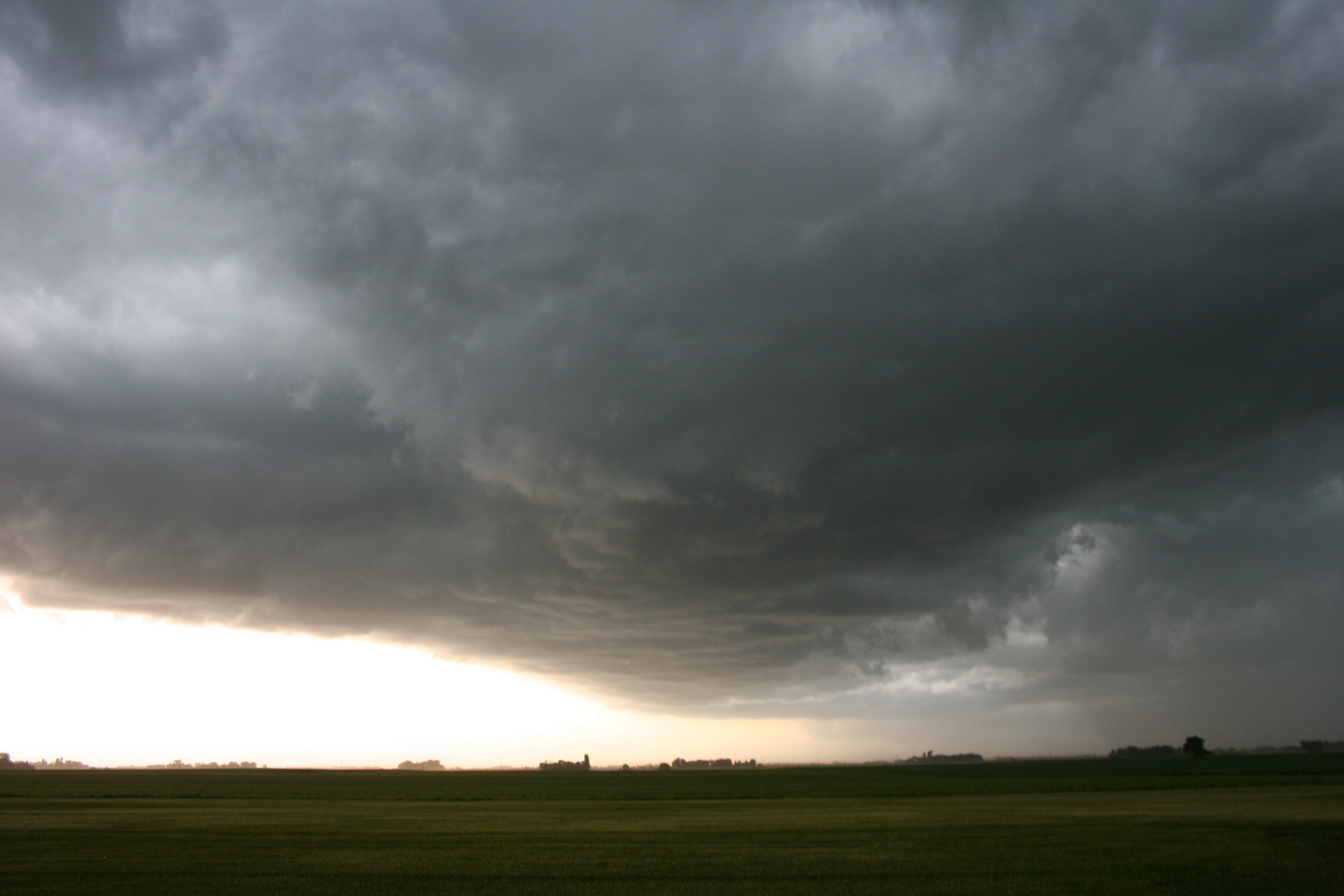
I was on my way with my husband to a party near Nerstrand not far from our Faribault home in southeastern Minnesota when these threatening clouds moved in during the early evening hours of July 1, 2011. It was while driving to our friends’ rural home that my sister Lanae phoned to tell me about the storm in our hometown and to warn me of the approaching bad weather. Fortunately the ominous clouds delivered only rain and nothing severe. But I was worried, very worried.

Copyright 2012 Audrey Kletscher Helbling


Stone & Sky October 27, 2011

LARRY GAVIN once lived in Belview.

So, you’re likely thinking, “What does that matter and who is Larry Gavin and where the heck is Belview?”

Well, dear readers, especially readers of poetry, Larry Gavin is a poet. He moved to Belview, a southwestern Minnesota prairie town of 375, to study writing with great writers like Howard Mohr, Leo Dangel, Fred Manfred, Joe and Nancy Paddock, Phil Dacey, Robert Bly, Bill Holm, Don Olsen and many others. Do you recognize some of those names? You should.

I’m not trying to be uppity here. But Bly, who was born in Madison (Minnesota, not Wisconsin) and still lives in the western part of our state, is one of Minnesota’s most distinguished poets. Holm, a well-known essayist, author and poet, wrote numerous books, including Boxelder Bug Variations. Up until his death, he lived in his prairie hometown of Minneota (Minnesota without the “s”), where residents celebrate Boxelder Bug Days. Howard Mohr penned How to Talk Minnesotan, a must-read for every transplant to our state.
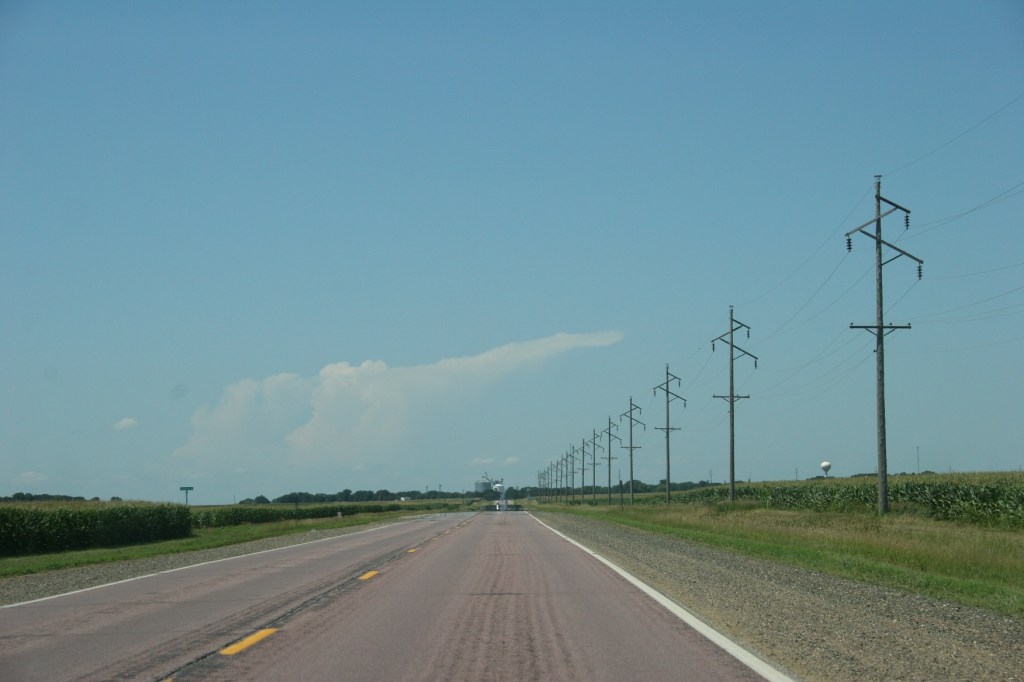
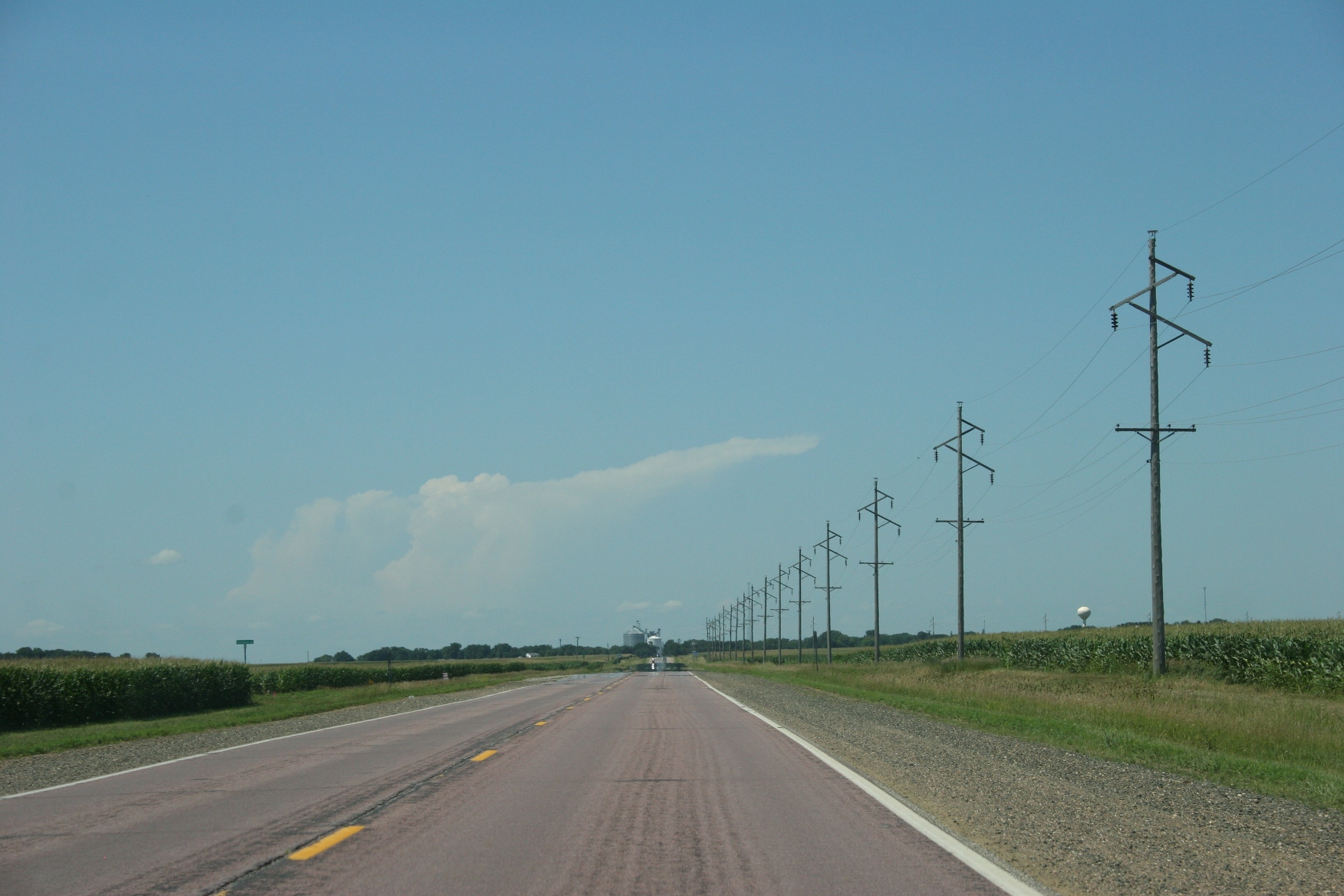
Driving through the southwestern Minnesota prairie near Morgan, about 25 miles from Belview.

Larry Gavin learned from these great writers of the prairie, where he lived for 15 years many years ago. Gavin made his home in Belview, just off State Highway 19 and some 10 miles or so from my hometown of Vesta. He served as the town’s mayor for two terms and taught English at Redwood Valley High School, back then Redwood Falls High School.

It is that connection to my home area and our shared love of language and writing and of the prairie that has connected me to Gavin, who today lives in Faribault and teaches English at Faribault High School. At least one of my daughters, if not both, has been taught by him.

We both won Roadside Poetry competitions–Gavin the first in 2008 and me, this past spring–and had our four-line poems showcased on billboards in Fergus Falls.

I once asked Gavin to read one of my poems at a local author event. Gavin is meant to read poetry. He has the kind of rich, deep voice from which words flow with the rhythm and inflection of someone who clearly loves language.
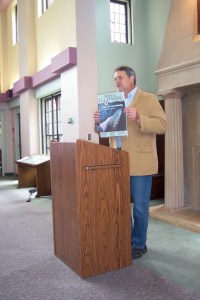
Larry Gavin during an author event at Buckham Memorial Library in Faribault.

Gavin is also meant to write poetry. And he’s written enough to fill three slim books—Necessities, Least Resistance and his just-released Stone & Sky. All have been published by Red Dragonfly Press, a noted not-for-profit literary press based in Red Wing.

When I read Gavin’s poetry, I can sense his deep connection to the land and to nature, shaped, I would like to think, partially by his years on the prairie. When you live on the stark prairie, where the land stretches flat and far and where the sky dwarfs all else and where the wind blows nearly unceasing, you can’t help but write with a strong sense of place and with detail. I see that in Gavin’s poetry.

In his newest book, Stone & Sky, I read of woods and firewood, of raccoon tracks and a walk along a deserted street. Of stone and sky and snakes. I recognize places from here, in Faribault. I recognize, too, prairie-influenced writing.

I don’t pretend to understand every poem in Gavin’s latest collection. But poetry is always open to interpretation and that which I may not find meaningful today I may come to understand at a later time.

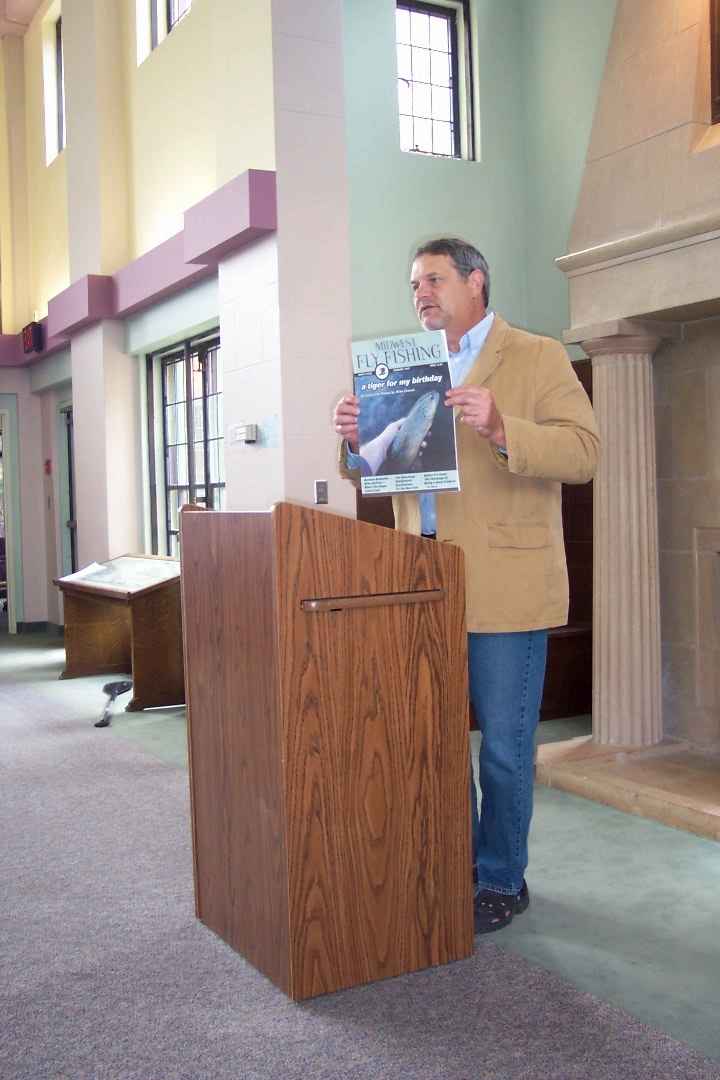
All that said, I posed a series of questions to Gavin, who has written more than poetry. For fifteen years he worked as a field editor for Midwest Fly Fishing magazine, taught at the magazine’s school in Montana in the summer and helped with the Chicago and Minneapolis fly fishing expos each spring. He currently writes for Outdoor News.

My questions to him, however, specifically address his poetry writing. I found his answers insightful and, at times, surprising.

Q:  How long have you been writing poetry, why, and when did you consider yourself a poet?

A:  I started writing poetry in sixth grade and that’s when I started considering myself a poet. I’ve written ever since.

Q: What inspires you and/or influences your poetry?

A:  Work inspires me. Everyday I get up and write something. I don’t miss a day. Inspiration has very little to do with it for me. I like working out ideas and problems in writing each day.

Q:  How would you define your poetry style and content?

A:  I consider myself an inheritor of the great romantic tradition of poetry. That, in my mind, goes from Wordsworth to Yeats and Hopkins to Robert Frost and Wallace Stevens, to Gary Snyder and others. The natural world as reflected and defined by human thought and feelings. The great gift we give to the world is our thoughts and feelings about big issues: transcendence, hope, justice, peace, and love.

Q:  This is your third collection of poetry issued by Red Dragonfly Press. What was the process to getting published by this well-respected Minnesota press?

A:  Scott King is the publisher and I submit a manuscript to him. He responds either yes or no and if he accepts it the manuscript gets in line to be published. The most recent book took about four years to appear. Publication is based on press funding and a variety of other factors. I’m patient and not particularly ambitious.

Q:  Tell me about the content and theme in your first two collections, Necessities and Least Resistance.

A:  They are very different from one another. The poems deal with the natural world as seen through simple objects and ideas. They attempt to make sense of complex subjects like love and our interaction with nature in a pure form of language, and the tools poetry gives us like meter and rhyme. The poems are an explication of the world in the context of the universal individual.

Q:  Stone & Sky just released. It’s an interesting title. How does the title tie in with the content? What is the common thread running through the poems in this collection?

A:  Stone & Sky stretches the boundaries of what is real. It looks at the world in a more magical way. Not magical as fabricated but more magical as mystical – as another way of being real. The language, the images, and the poems stretch the boundaries of what is real and hopefully get at reality in a new way. They are still anchored in the natural world, still anchored in the local, but the themes, like the title, are basic, elemental.

Q:  If you were to select your favorite poem in Stone & Sky, which would it be and why? How about a favorite line?

A:  Actually they are all favorites right now. And you have to remember, I’m on to new things after four years.

Q:  Your love of nature shines in your writing. So does your love of language. How do you combine the two into poetry that sings with descriptive lines? How do you know when you’ve “nailed it,” when you have a poem exactly where you want it?

A:  The old elements of poetry combined in new ways. Rhyme, meter, repetition – give poems life. Everything is a work in progress; they’re never really finished.

Q:  Are you working on another collection? Or are you simply just always writing poetry?

A:  My next collection is called The Initiation of Praise and I’ll start sending it out soon. I also have a selected works which focuses just on outdoor poems. I’m also working on some short stories, and I write an article each week as well.

READERS, Stone & Sky is available from Red Dragonfly Press at  www.reddragonflypress.org and also at Monkey See Monkey Read (in person or through internet sales), an independent bookstore at 425 Division Street, Northfield. Eventually, Stone & Sky will also be available through Amazon. Cover cost is $10.

© Copyright 2011 Audrey Kletscher Helbling

Photo and book cover courtesy of Larry Gavin


Take time to stop and appreciate small towns August 11, 2011

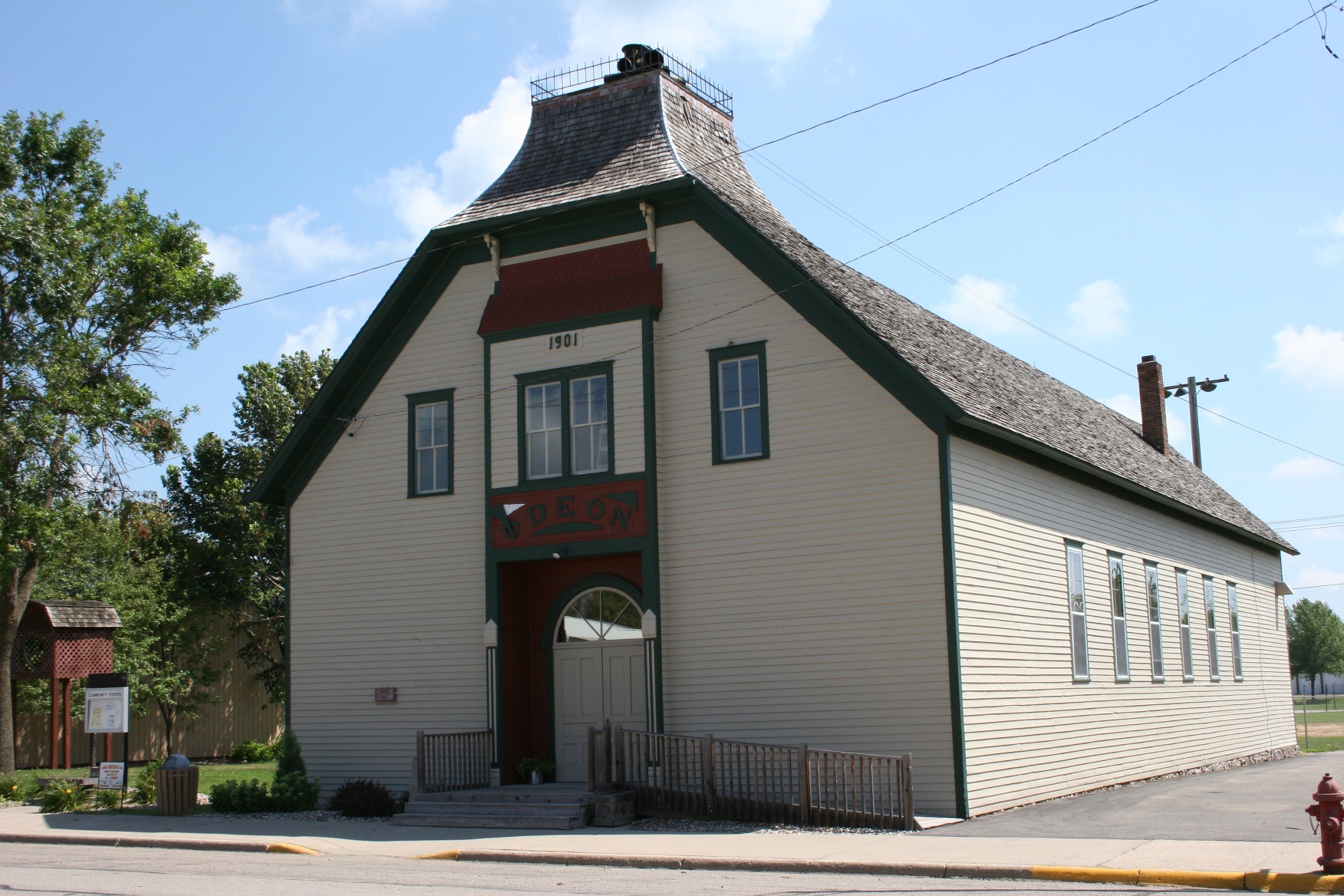
In tiny Belview, you'll find the 1901 Odeon Hall. Listed on the National Register of Historic Places, this Queen Anne style building features a barrel-vault ceiling. Still in use today for wedding receptions and community events, etc., Odeon Hall once also featured vaudeville shows, motion pictures, concerts and more.

I WANT TO THROW a challenge out there. The next time you’re driving through/near small-town Minnesota, or small-town wherever, stop. Pull off the highway and drive along Main Street. Park your vehicle. Get out. Walk. Look. See.

Notice the buildings, the architecture, the signage, the history. Consider what centers the town: the café, the post office, the grain elevator, the churches, the school—if there is a school.

Families, retirees and even single people choose to live, to work, to worship together, to celebrate, to mourn, to live their lives here. This is their home, not just some town in the middle of nowhere that you must pass through to get from destination A to destination B.

I have, in recent years, begun to appreciate the small towns and rural areas of Minnesota more than ever. I grew up on a dairy and crop farm in southwestern Minnesota, which is about as rural as you can get. But I haven’t always valued that upbringing like I should.

As I’ve gotten into the art of photography, I’ve begun to view these towns with a fresh perspective. I notice what, in the past, I’ve overlooked or taken for granted because of my rural roots.

Let me show you some photos I took recently in and near Belview, a community of 375 located four miles north of State Highway 19 in northwestern Redwood County. Belview lies about 10 miles from my hometown of Vesta, another one of those small towns that motorists zip by without a second thought. I bet you didn’t know that Vesta is the home of the nation’s first electric cooperative. I thought so.

That’s the thing about small towns. If you stop and walk and look and see, and I emphasize the word, see, you will discover more than just a place to drive through when getting from point A to point B. You will discover the heart and soul of community.

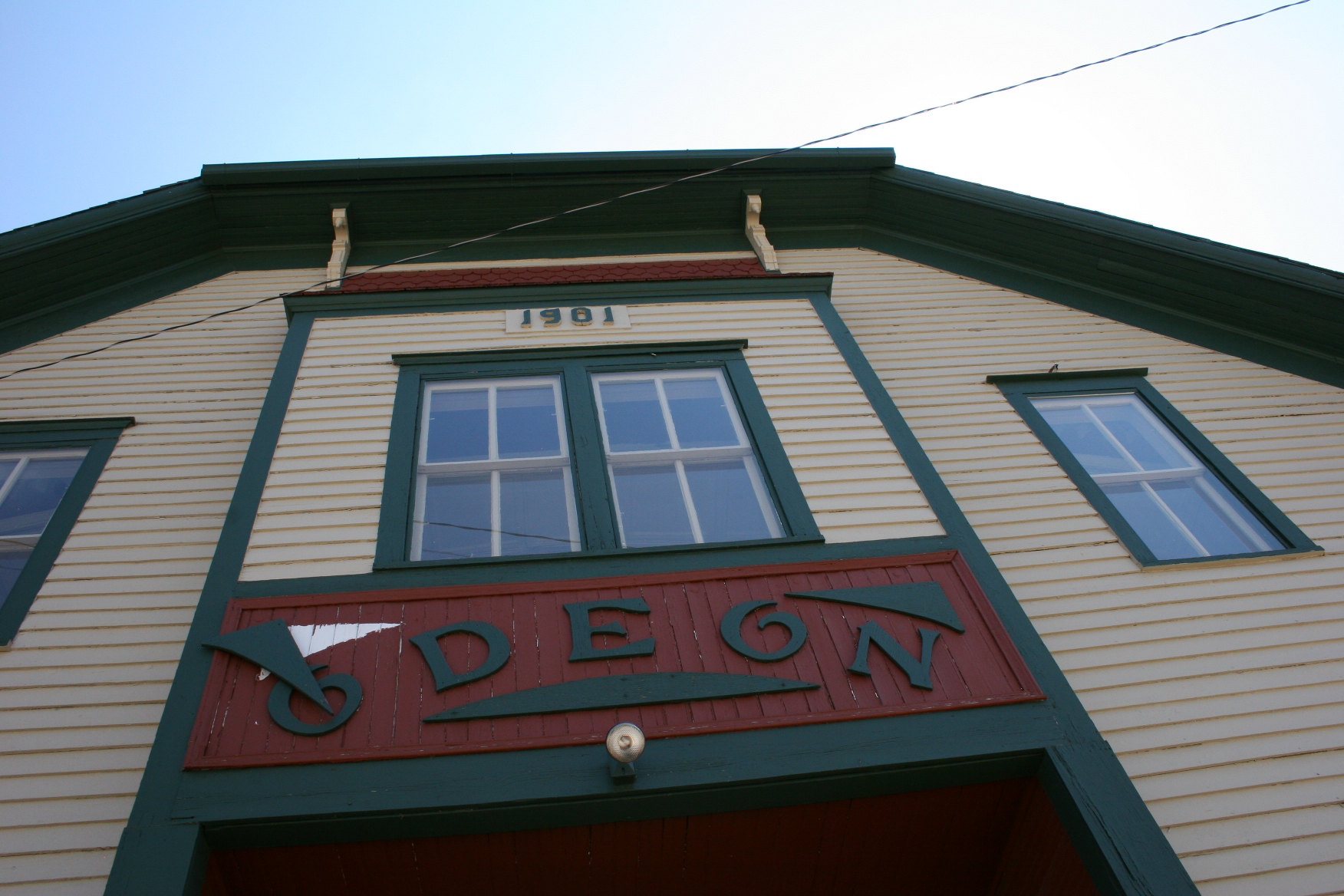
Move in close to view the details, like the front of Odeon Hall. I attended a cousin's wedding dance here decades ago. Imagine the celebrations inside this historic building.

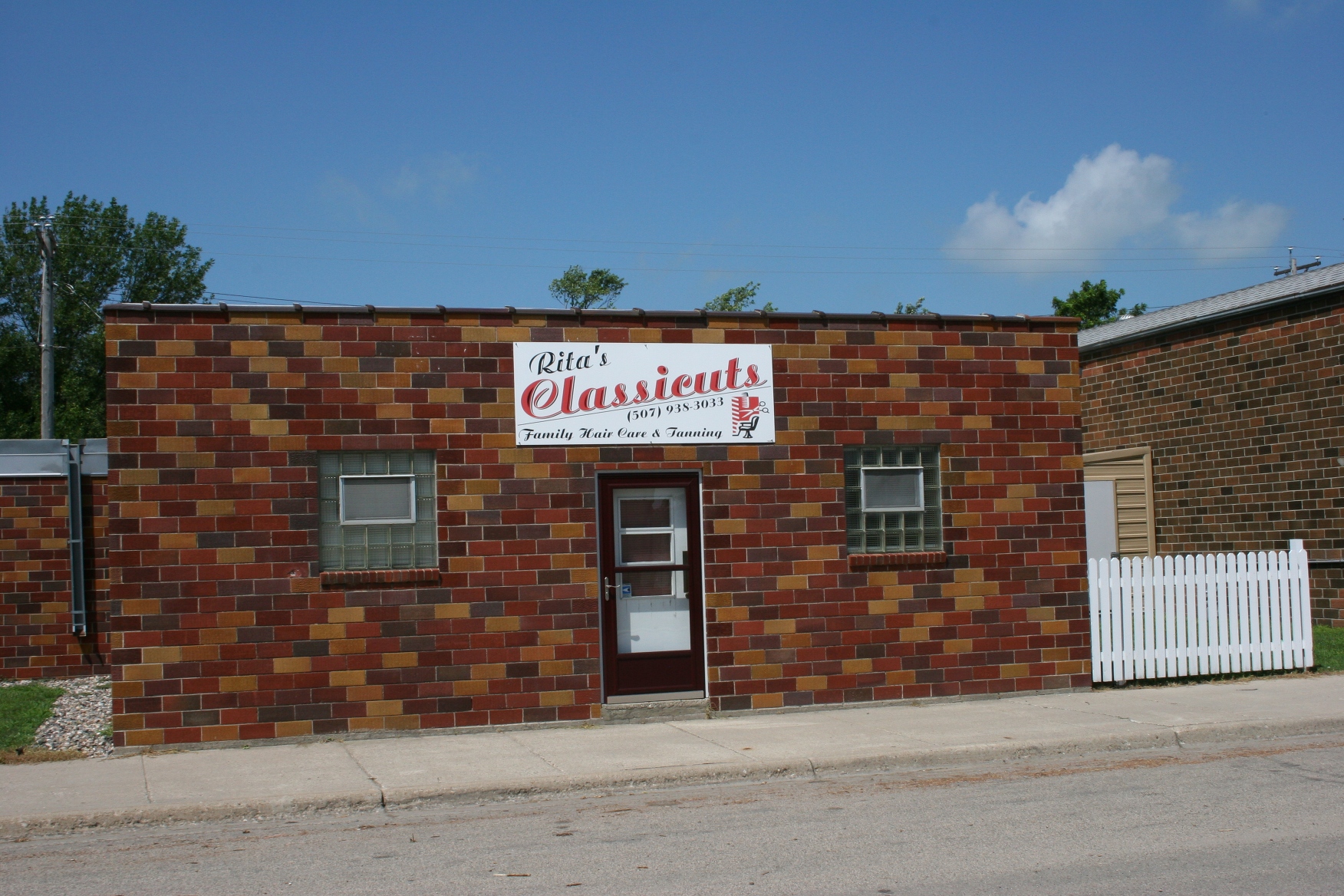
Most small towns, like Belview, are fortunate to still have a place where you can get your hair cut and styled. I appreciate the simple lines of this brick building located along Main Street.

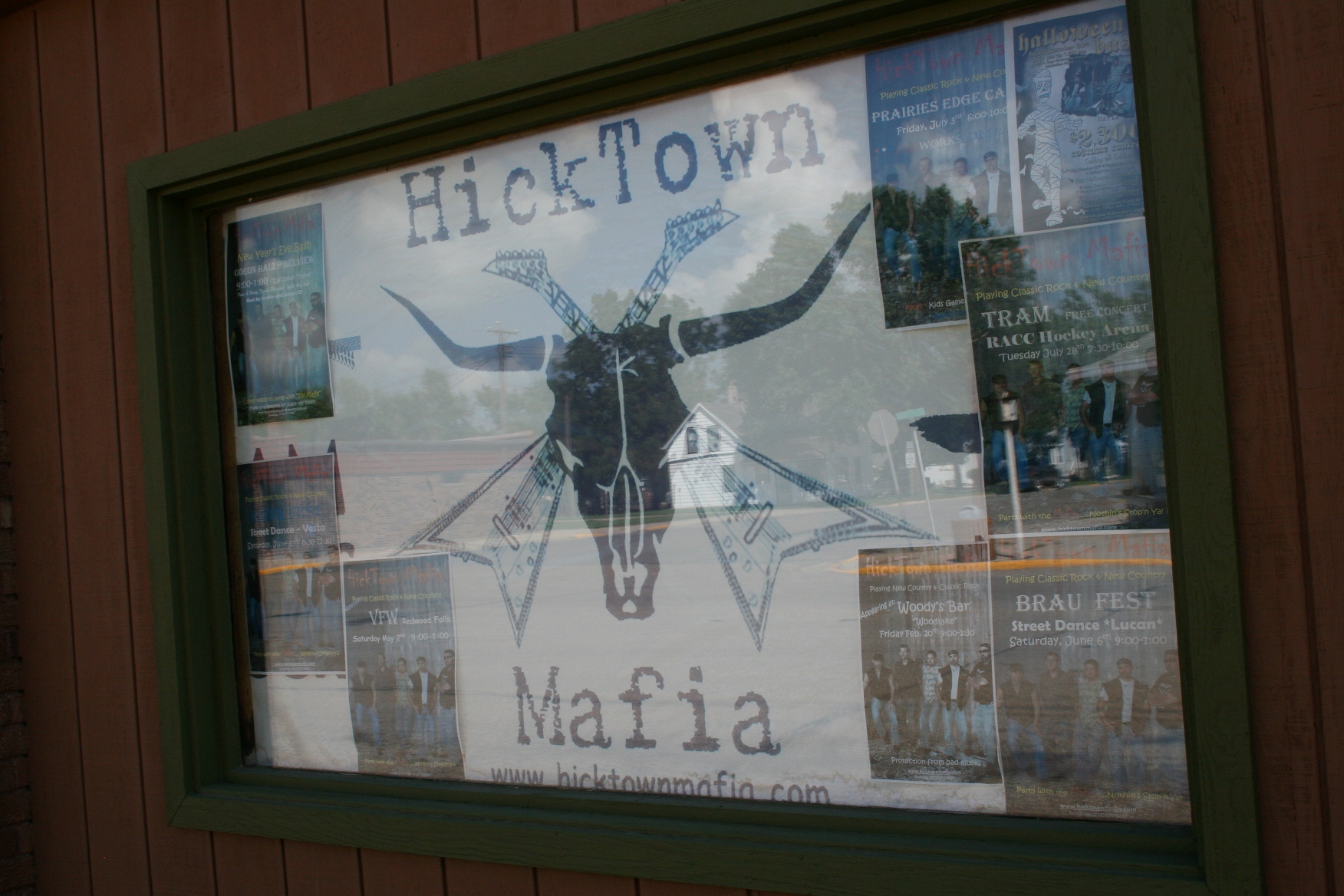
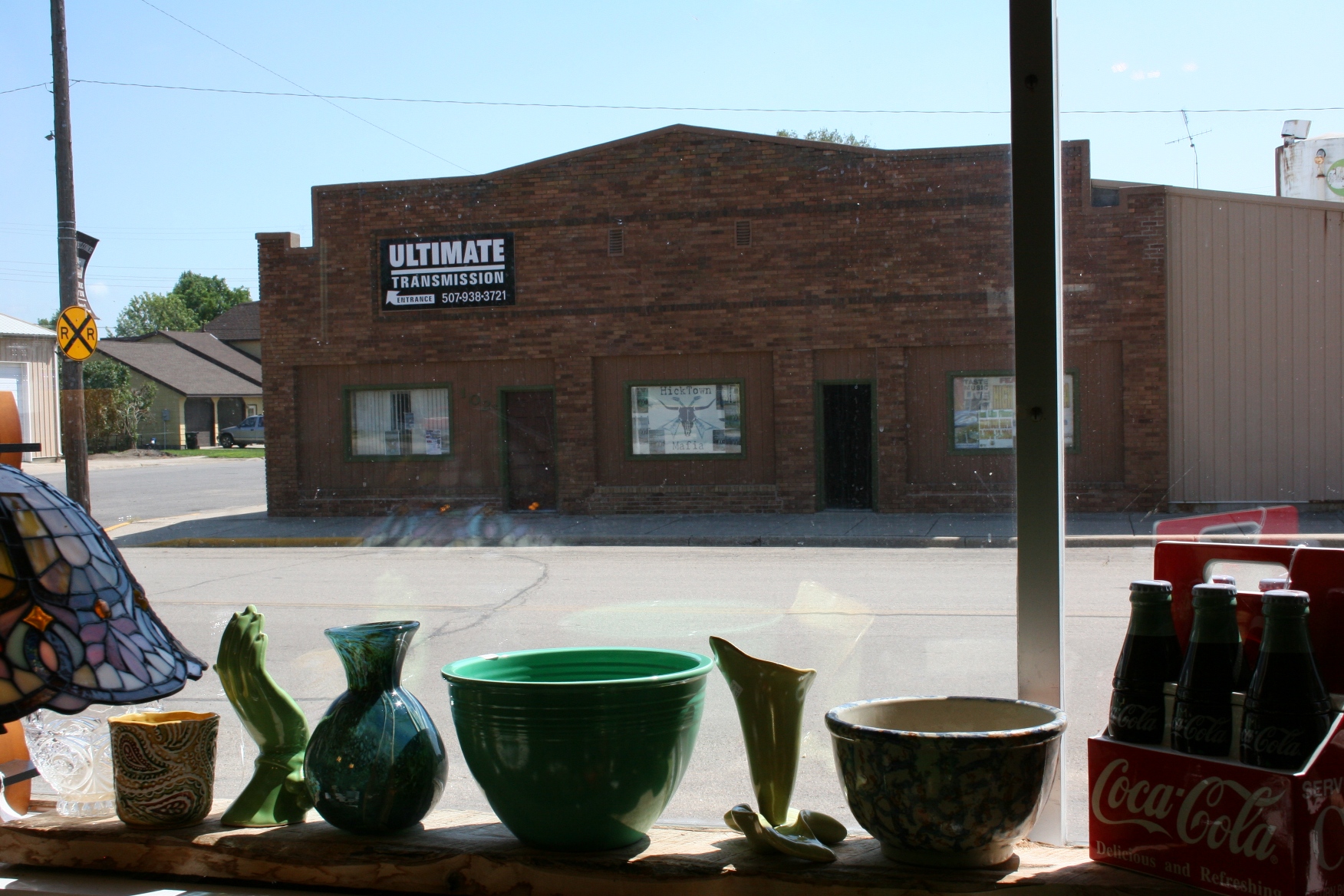
I discovered this poster in the window of a Main Street building advertising a local band, HickTown Mafia. The band plays "country with a kick, rock with an attitude," according to the group's website.

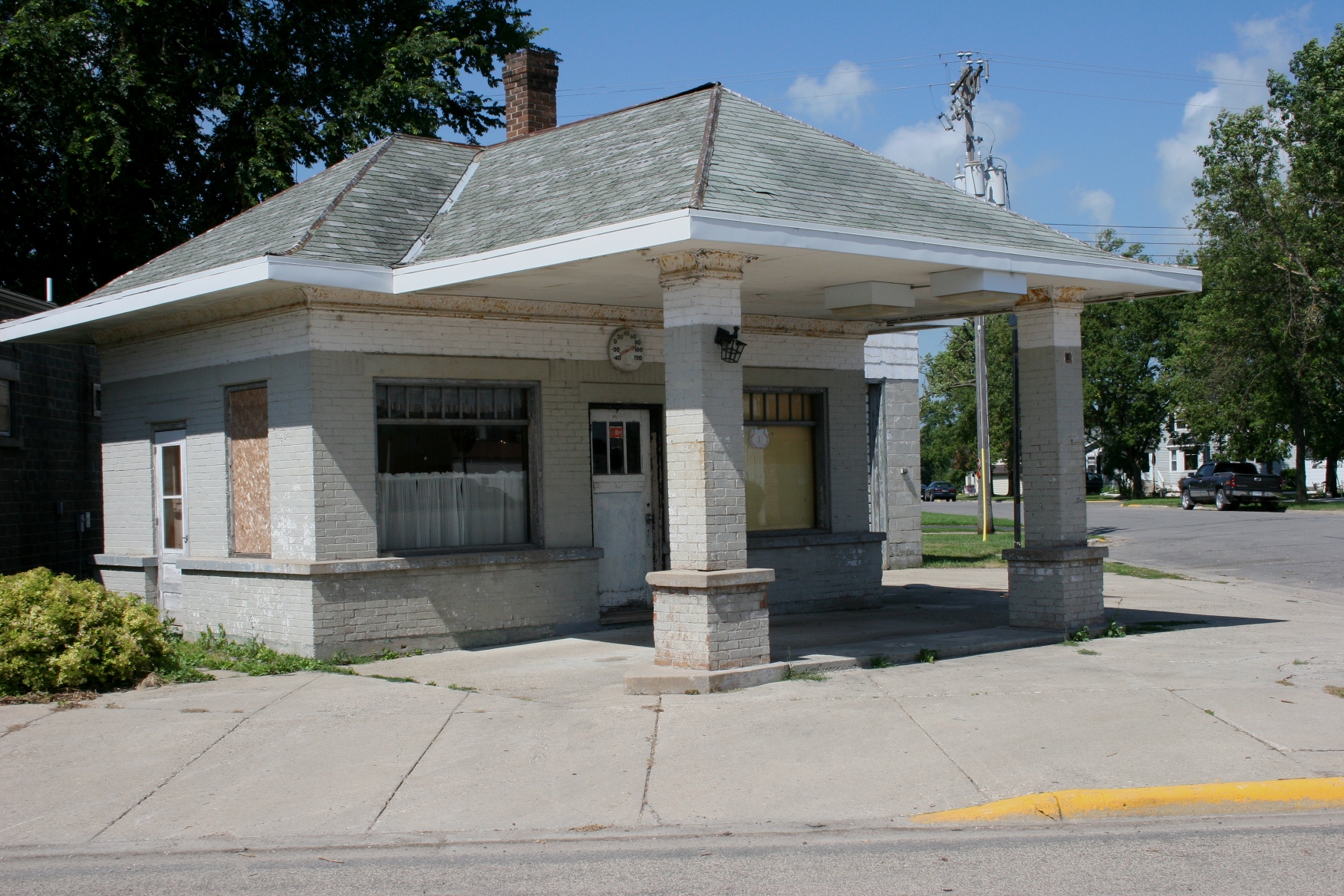
I found this abandoned former gas station (I think) on a downtown corner. This charming building practically shouts for someone to reopen it as a bakery, coffee shop, antique store or some other such venue. Perhaps the two local wineries/vineyards and other area vendors could market their products here.

The Parkview Home, a Belview nursing home, was once home to my maternal grandfather and to other extended aging family members. I've been here often to visit relatives and, during high school, to sing Christmas carols with the Luther League. The building was damaged in a July 1 tornado (note the blue tarp on the roof) and residents have been temporarily displaced.

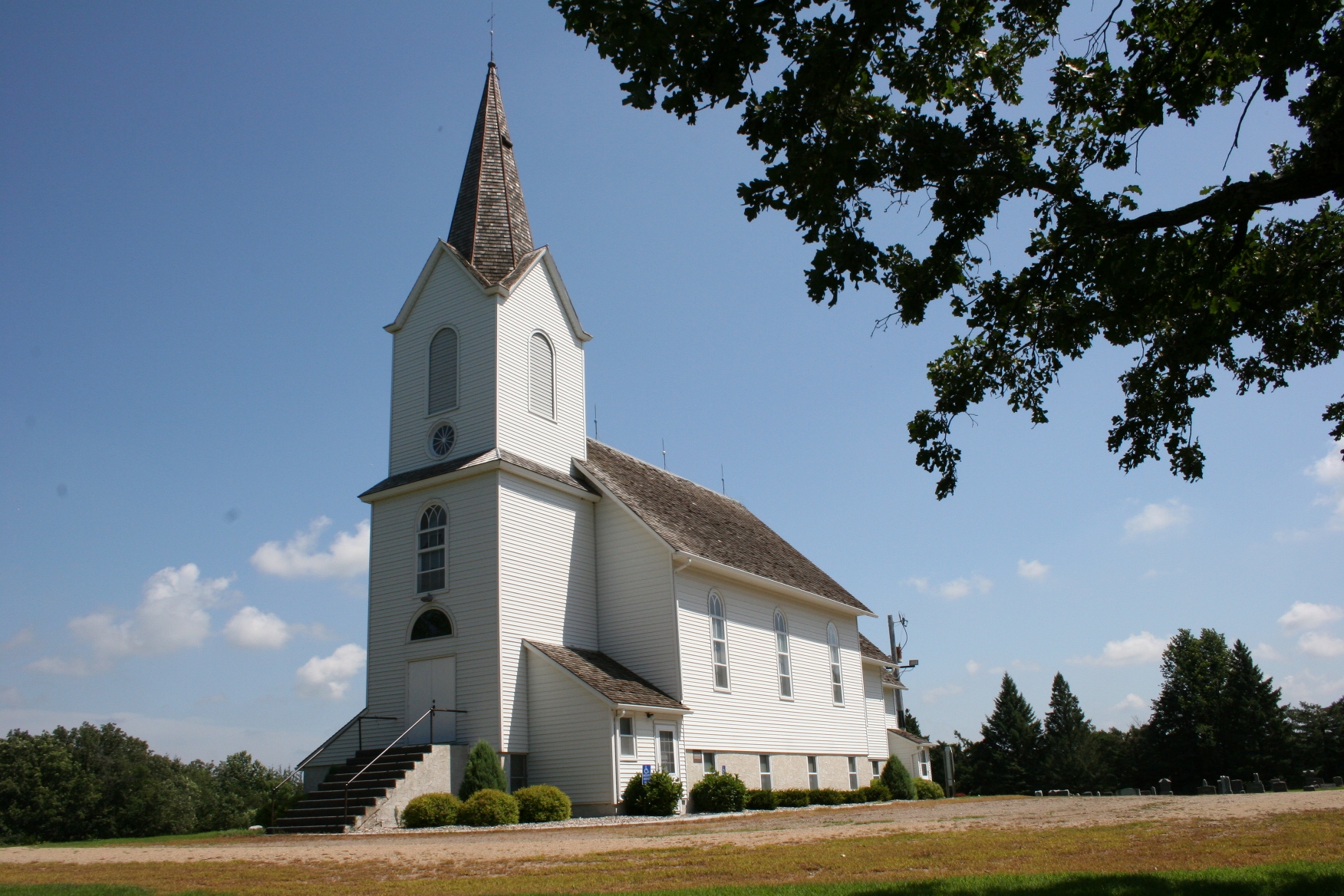
Northwest of Belview, you'll find picturesque Rock Dell Lutheran Church. My Uncle Merlin and Aunt Iylene Kletscher were married here in November 1964, the last time I was inside the church.

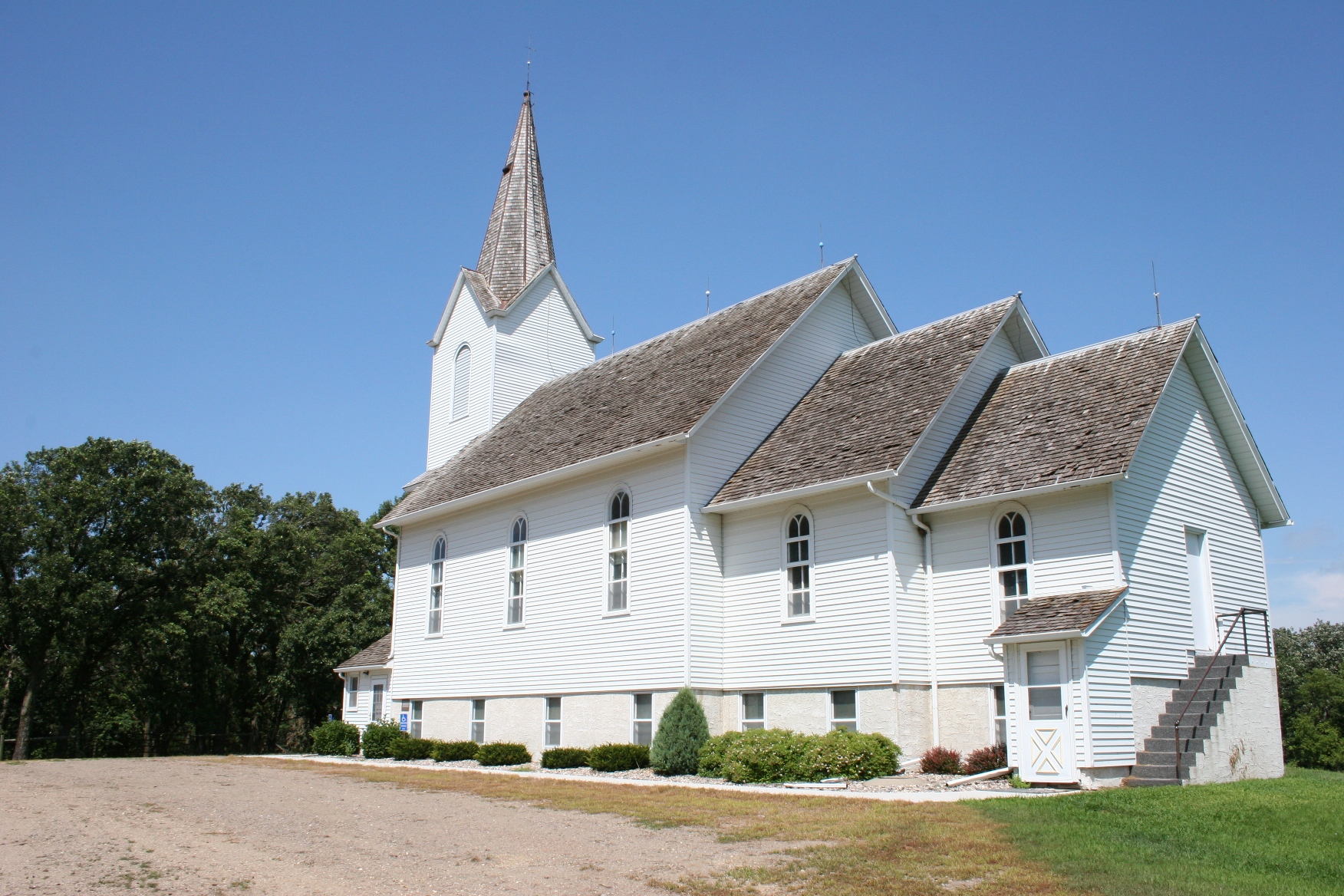
A side view of Rock Dell.

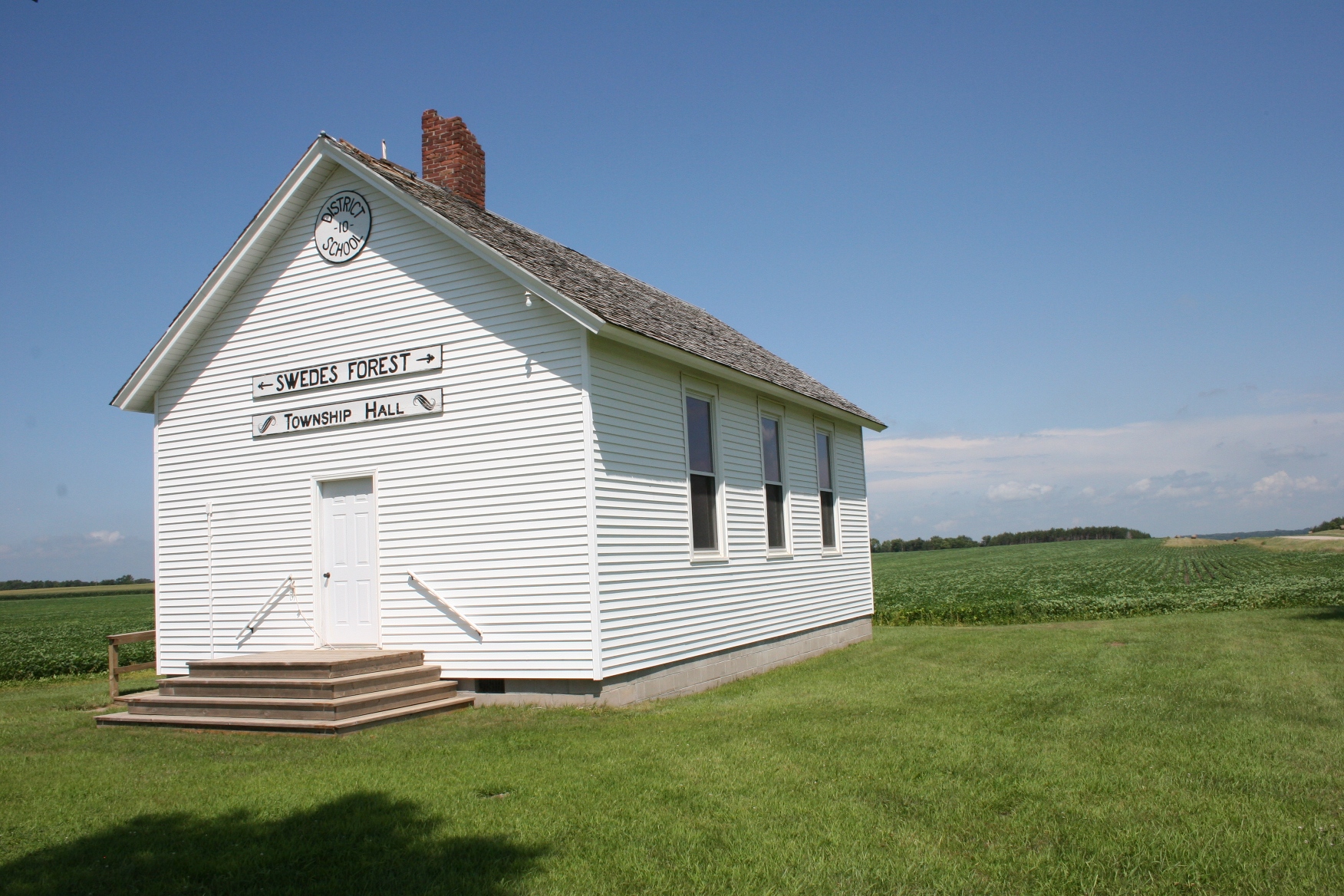
Near Rock Dell you'll find Swedes Forest Township Hall in the middle of corn and soybean fields.

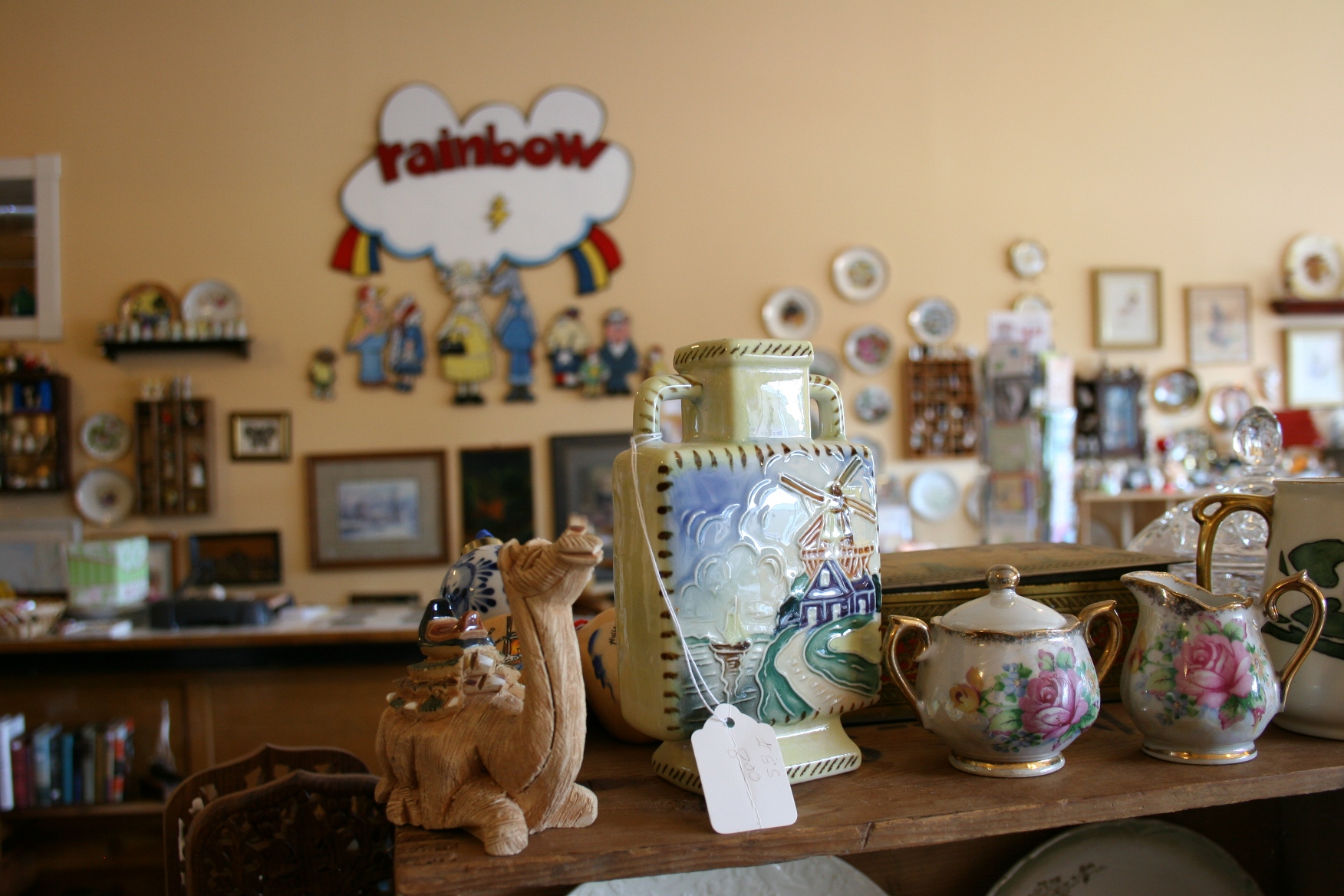
FOR MORE INFORMATION about Belview, click here and here. Also read my previous post about Rainbow Antiques, Crafts and Junque in Belview by clicking here.

TAKE MY CHALLENGE and report back to me on the treasures you discover in a small town or rural area.

© Copyright 2011 Audrey Kletscher Helbling


Follow the rainbow to a charming antique store in Belview August 9, 2011

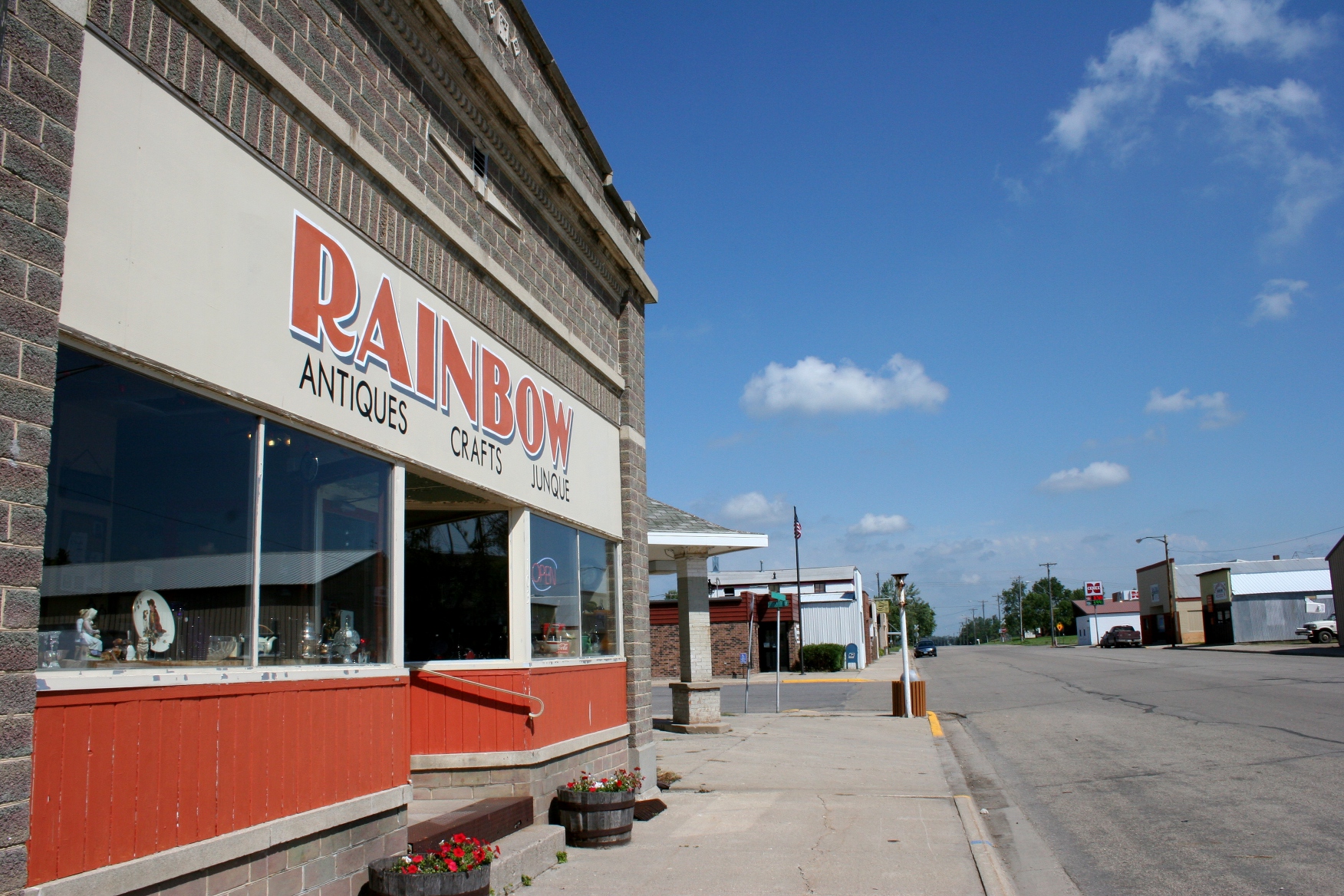
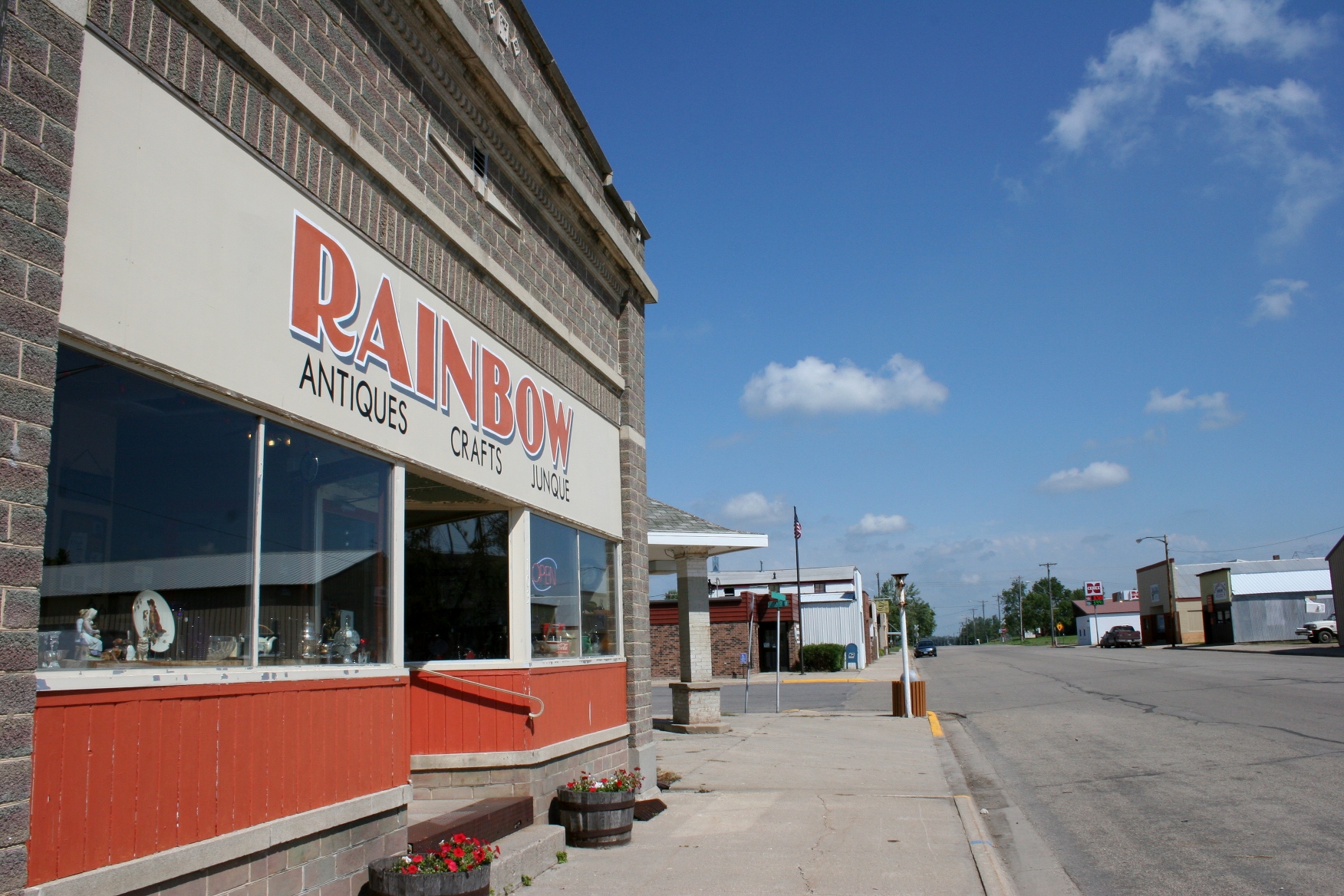
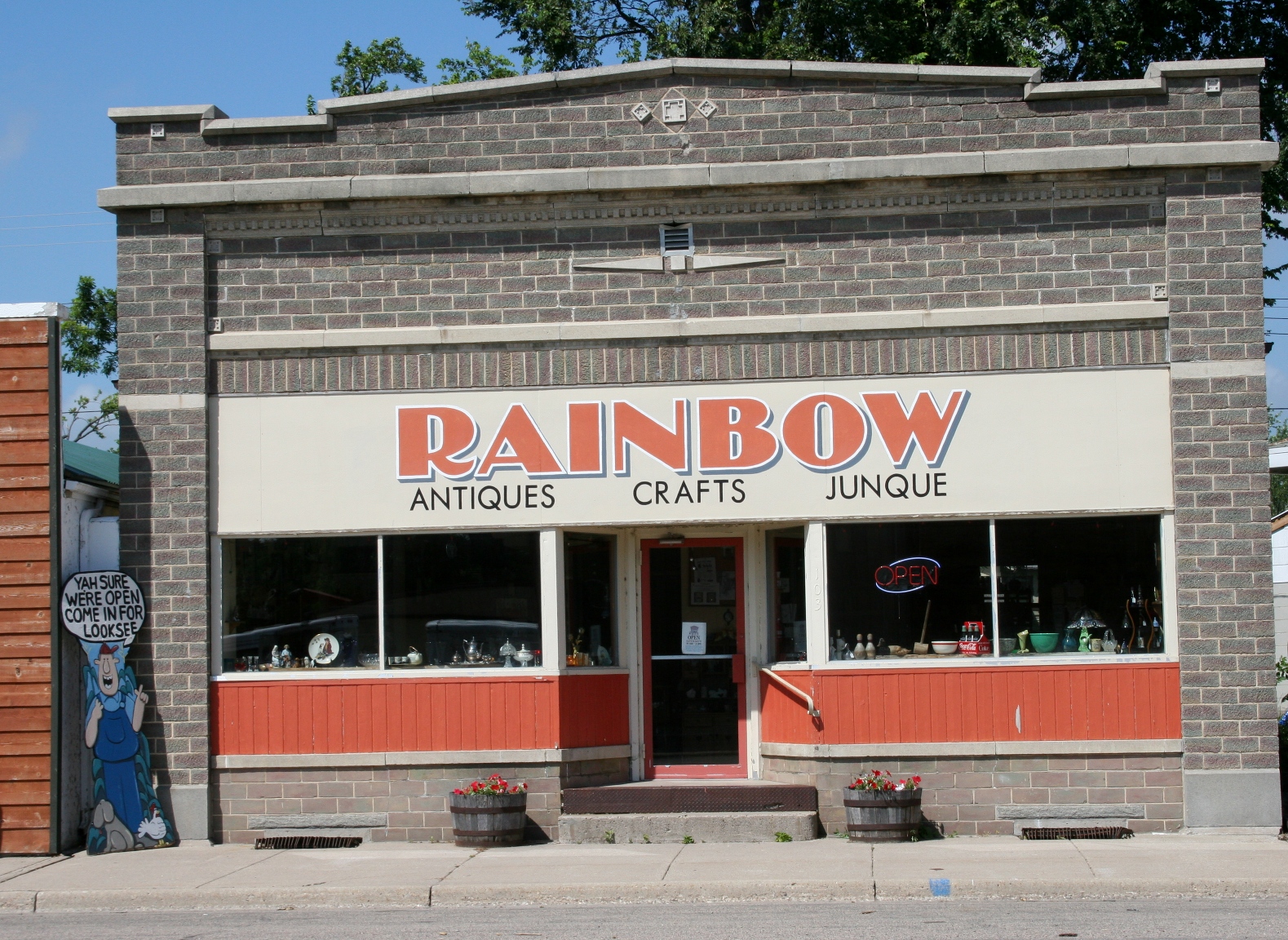
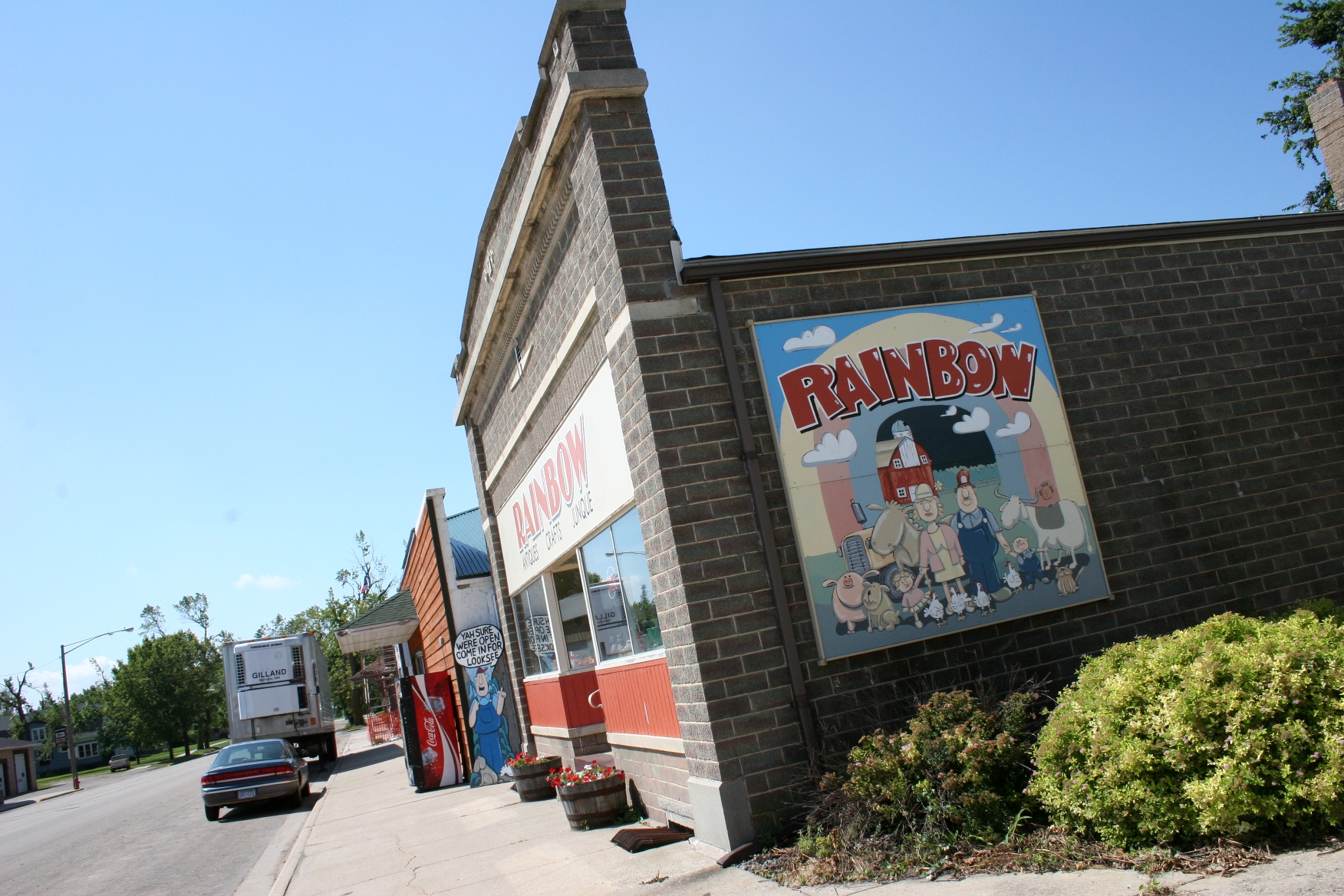
Driving north into Belview, you can't miss Rainbow Antiques, Crafts & Junque.

IF YOU’RE INTO ANTIQUING or architecture or small towns, you’ll want to visit Belview, population 375, four miles off State Highway 19 in southwestern Minnesota.

My husband, Mom and I drove to Belview on a recent Saturday morning to see my Uncle Merlin and Aunt Iylene’s “new” old home along the main drag. We also toured the town, checking out the damage from a July 1 EF-1 tornado. And, lucky us, we happened to be in this Redwood County community on the one day a week that Rainbow Antiques, Crafts & Junque is open.

And let me tell you, Don Gunelson runs one heckuva an antique store with the flair of an artist.

You’ll notice the building right away when you drive or walk Main Street. It’s built of beautiful rainbow brick which, in itself, is worth a stop. I know of at least two other rainbow brick buildings in Redwood County—one in Walnut Grove and the other on a corner in nearby downtown Redwood Falls.

Colorful rainbow bricks comprise the antique shop.

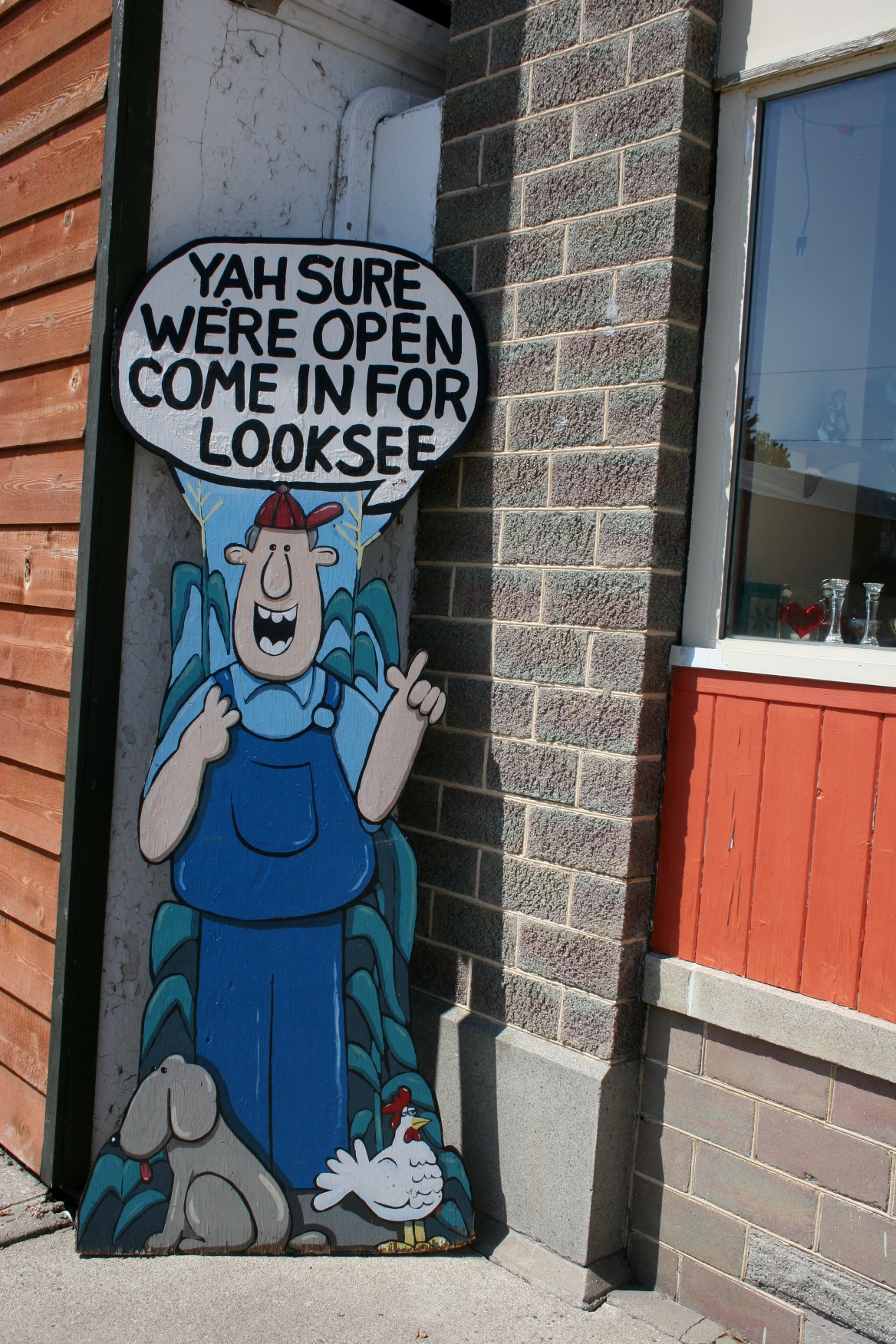
Don directs customers to his store with nicely-done folksy signage. I didn’t ask Don if he created the artwork, but he worked as a graphic designer for a construction magazine before returning to his native Belview from the metro some 10 years ago. He also works part-time at the Belview Post Office.

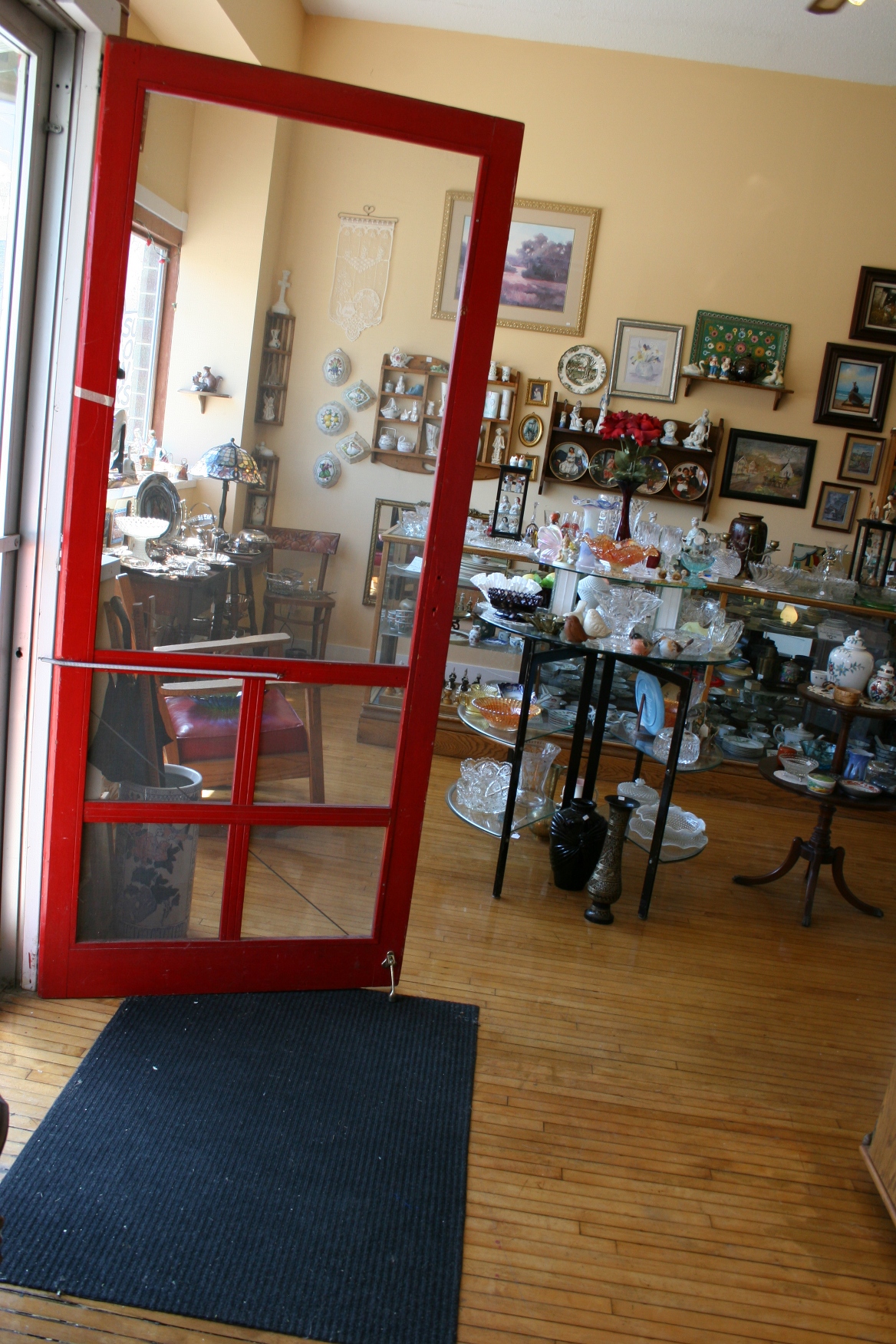
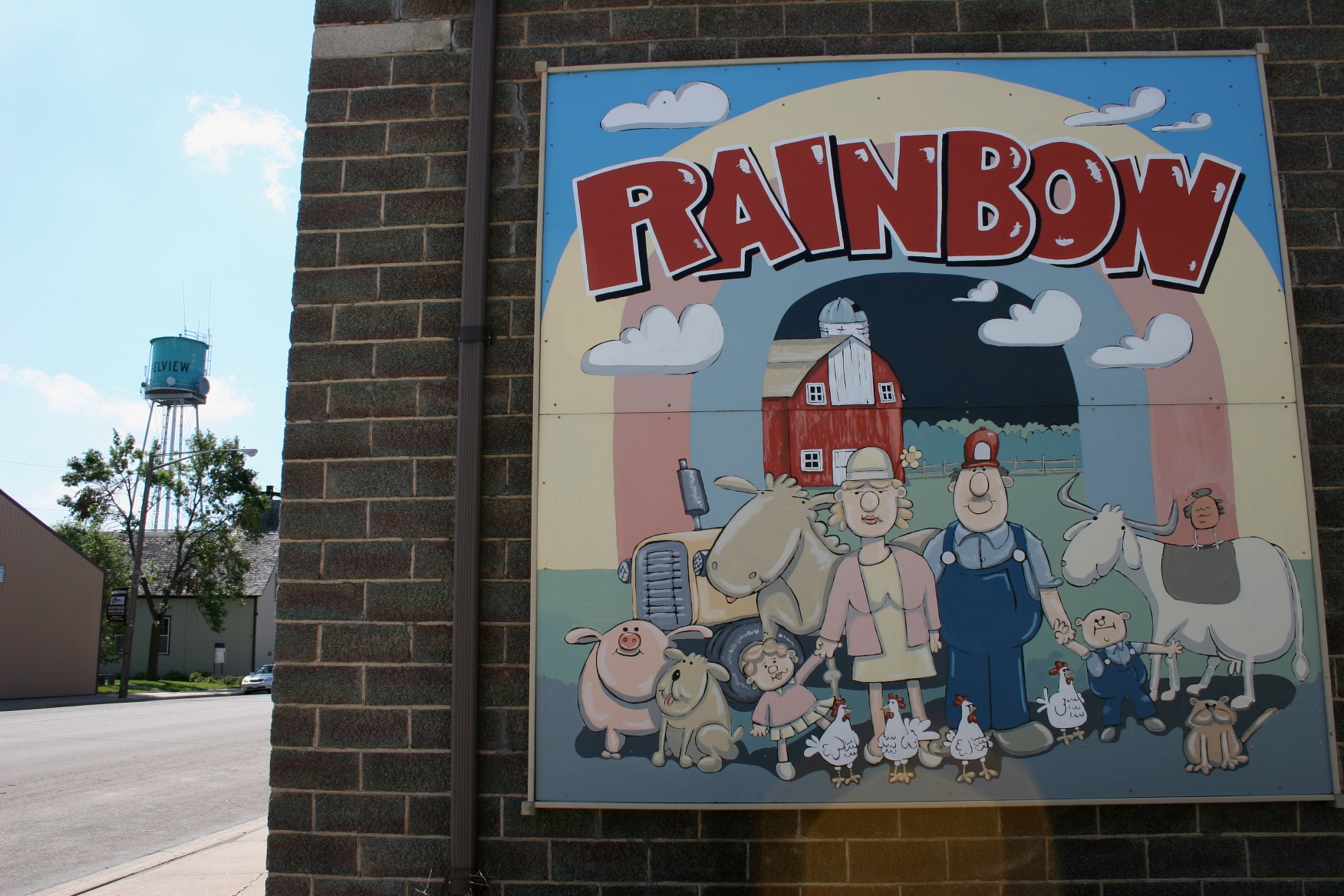
No matter, the friendly painted farmer in the bib overalls who beckons you inside for a “looksee” will already have you smiling before you stroll through the red doors and plant your feet upon the vintage tongue-and-groove floors in a room the color of butter.

Immediately I noticed the old-style screen door painted a vivid red. It’s a perfect fit for setting the mood of this place. I’ve been in a lot of antique shops in my day, and this one, by far, rates as one of the most inviting with plenty of light streaming in the east-facing windows, merchandise displayed in a way that isn’t cluttered and a down-home atmosphere that makes you feel comfortably at ease.

I poked around for awhile, not as long as I would have liked, though, since my mom was waiting for me back at the aunt and uncle’s house. My husband explored, too, and determined the prices to be reasonable—not too high and not too low.

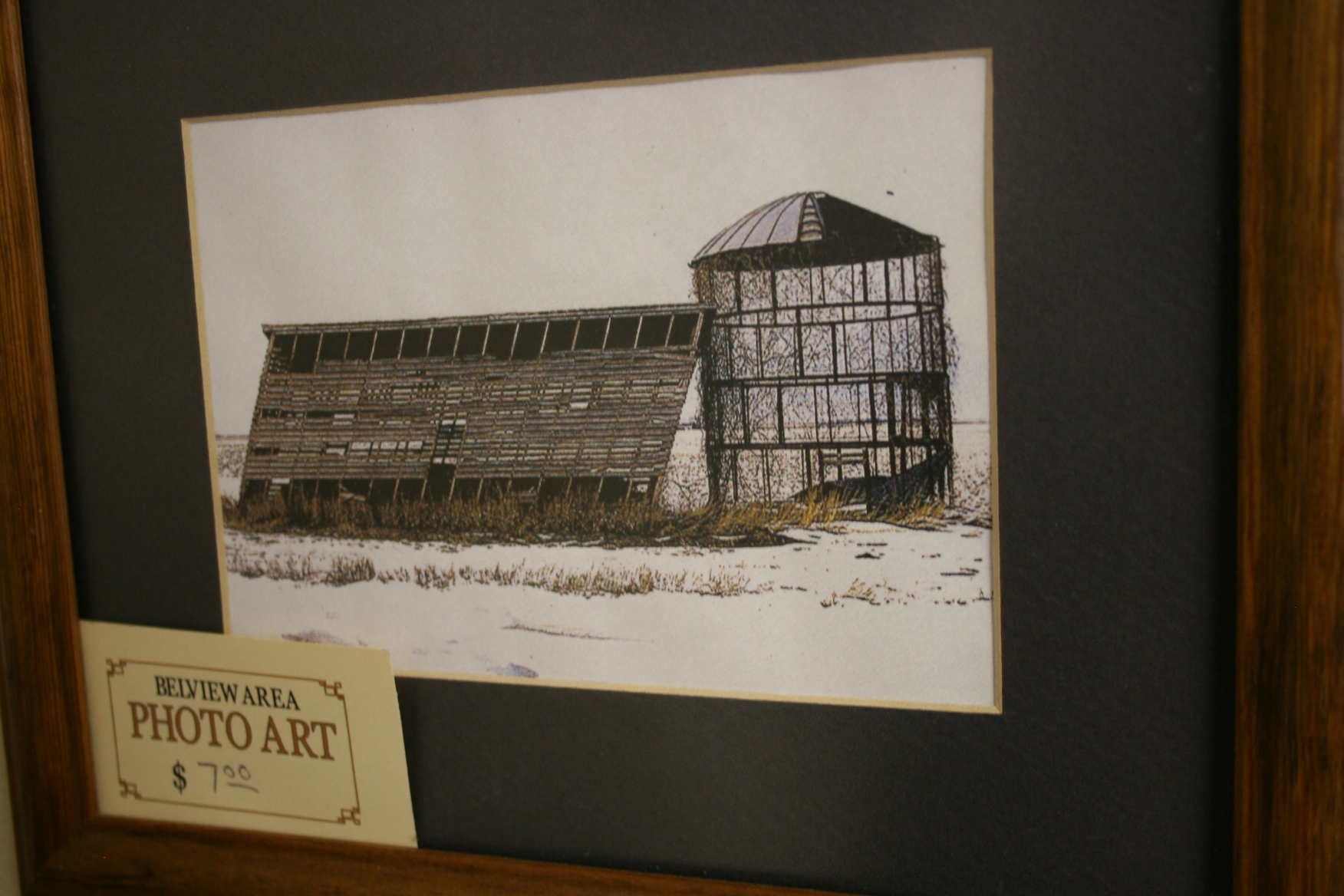
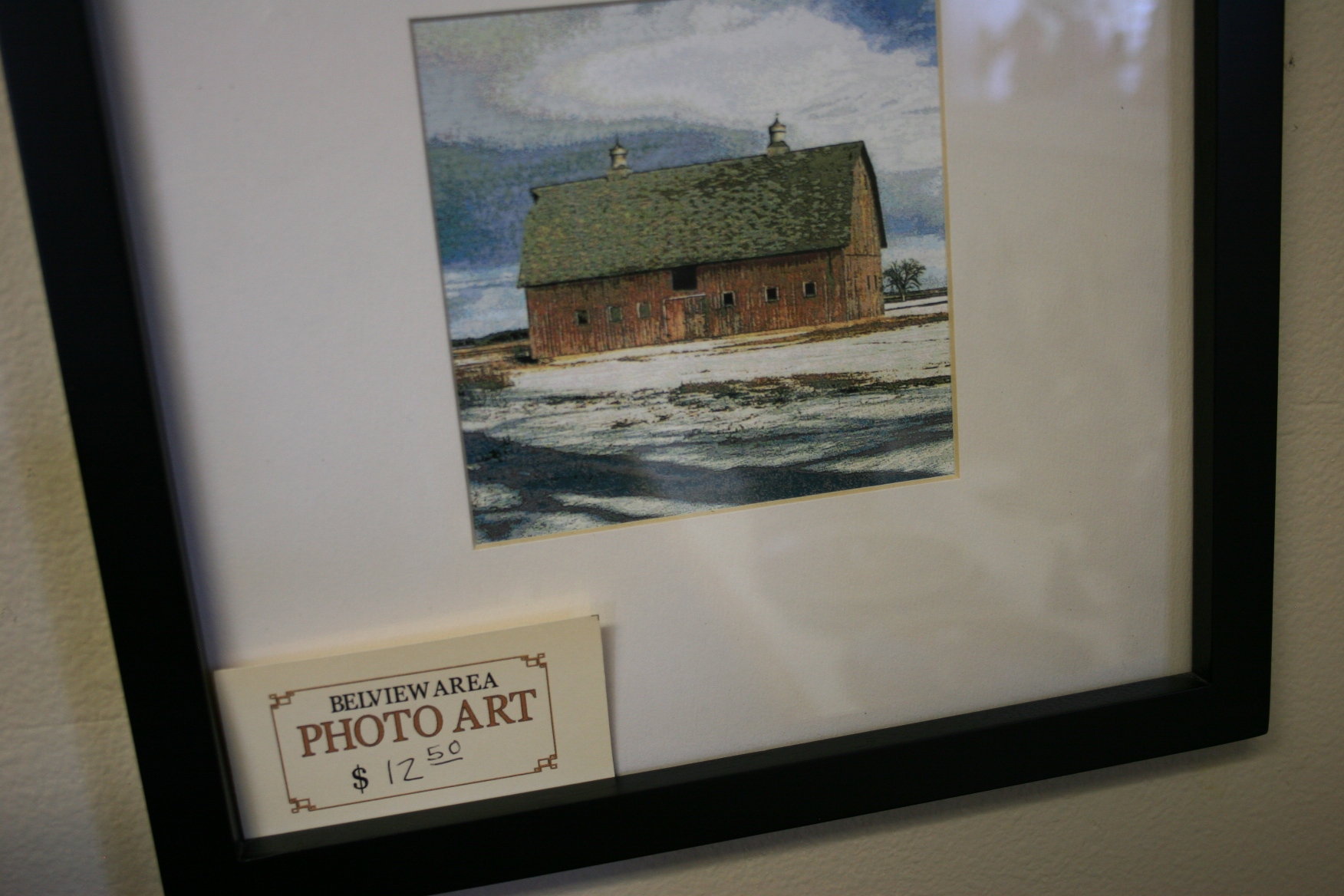
When I got to the back room, I made the discovery of the day, at least in my opinion. And it wasn’t an antique, collectible or junque. I found Don Gunelson’s “Belview Area Photo Art” displayed on the rear wall. I knew from the signage that I was viewing photos, but they sure didn’t look like photos. So I asked Don to explain.

He takes images of area subjects with an inexpensive camera—the fewer pixels the better—edits the photos on his computer and then prints them on watercolor paper with an ink that is more dye than ink. The result is photo art that resembles watercolor paintings.

I gushed over his creations and told him he needs to get these into a gallery—do an exhibit of his “Belview Area Photo Art.”

Now I’m kicking myself for not buying one of Don’s matted and framed creations because, with prices ranging from $7 to $12.50, they’re a steal.

So there you have it, a charming antique store in downtown Belview with an artist running the place.

FYI: Rainbow Antiques, Crafts & Junque, 103 S. Main, is open from 10 a.m. – 3 p.m. Saturdays. Call (507) 938-4476. Maybe Don will open up the shop if you’re in town on a day other than Saturday.

Ruby red glassware is displayed in a front window. To the right in this photo is the blue Belview water tower.

An example of Don Gunelson's Belview Area Photo Art, an area barn.

Some of the merchandise displayed in the main part of the antique store.

A view across the street through one of the large front windows at Rainbow Antiques.

More Belview Area Photo Art by Don Gunelson.

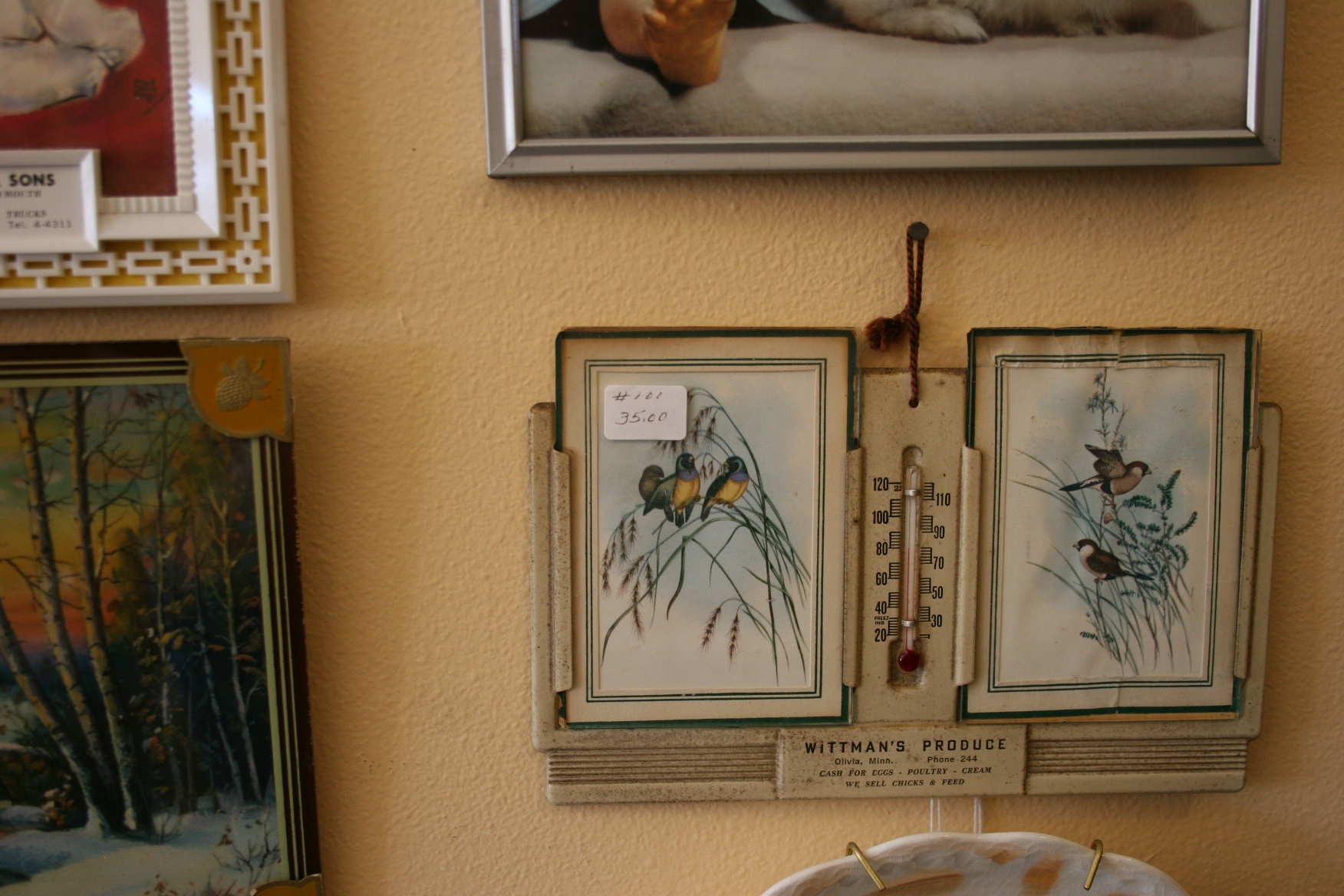
You'll find plenty of collectibles from the area, including this bird thermometer from Olivia.

This colorful folksy farm family graces the north wall of Rainbow Antiques. This photo was shot looking south on Main Street toward Belview's water tower.

Another view of Rainbow Antiques and Main Street Belview looking south.

Check back for more reasons to visit Belview in a future post.

© Copyright 2011 Audrey Kletscher Helbling


It takes a strong man or woman to farm August 2, 2011

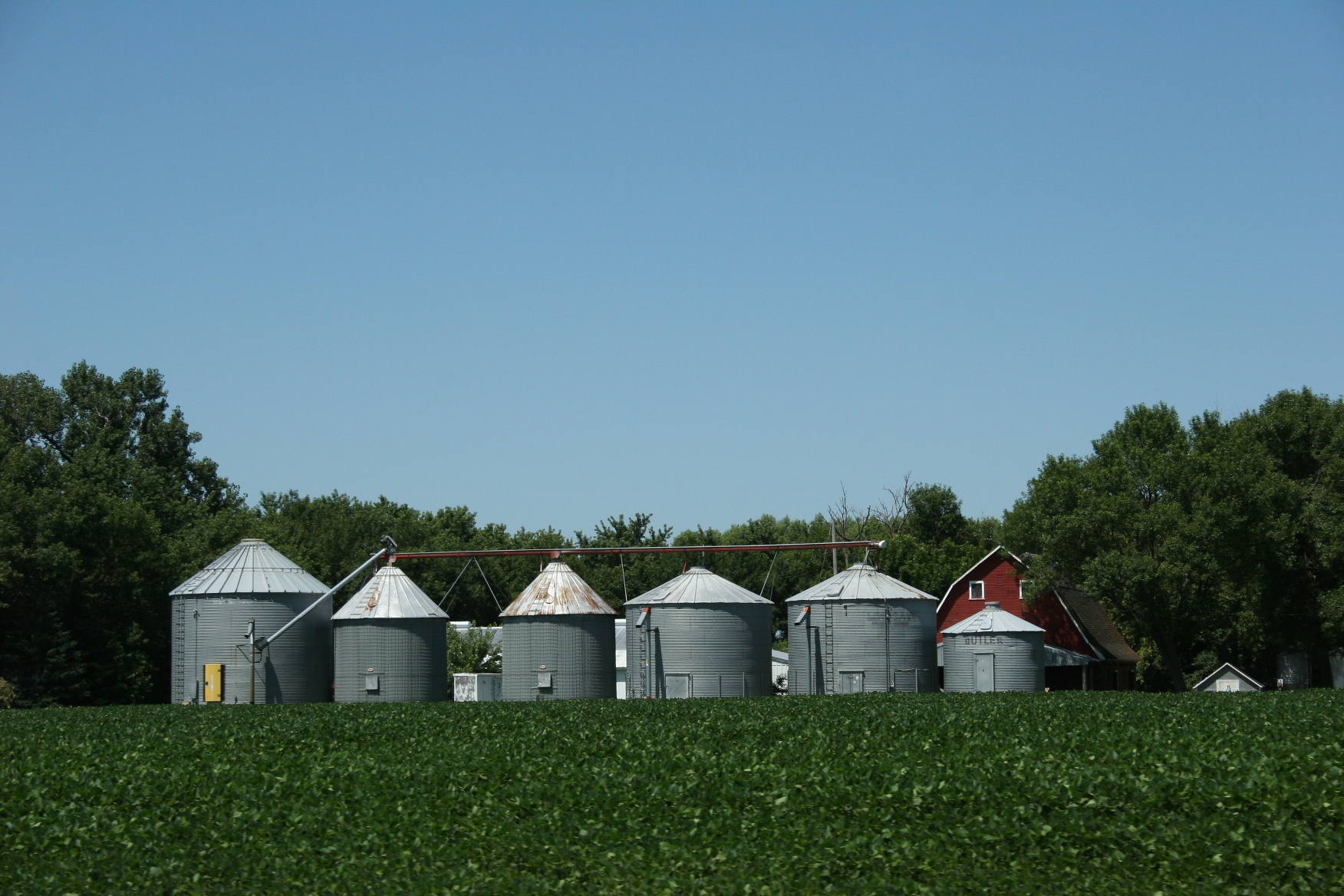
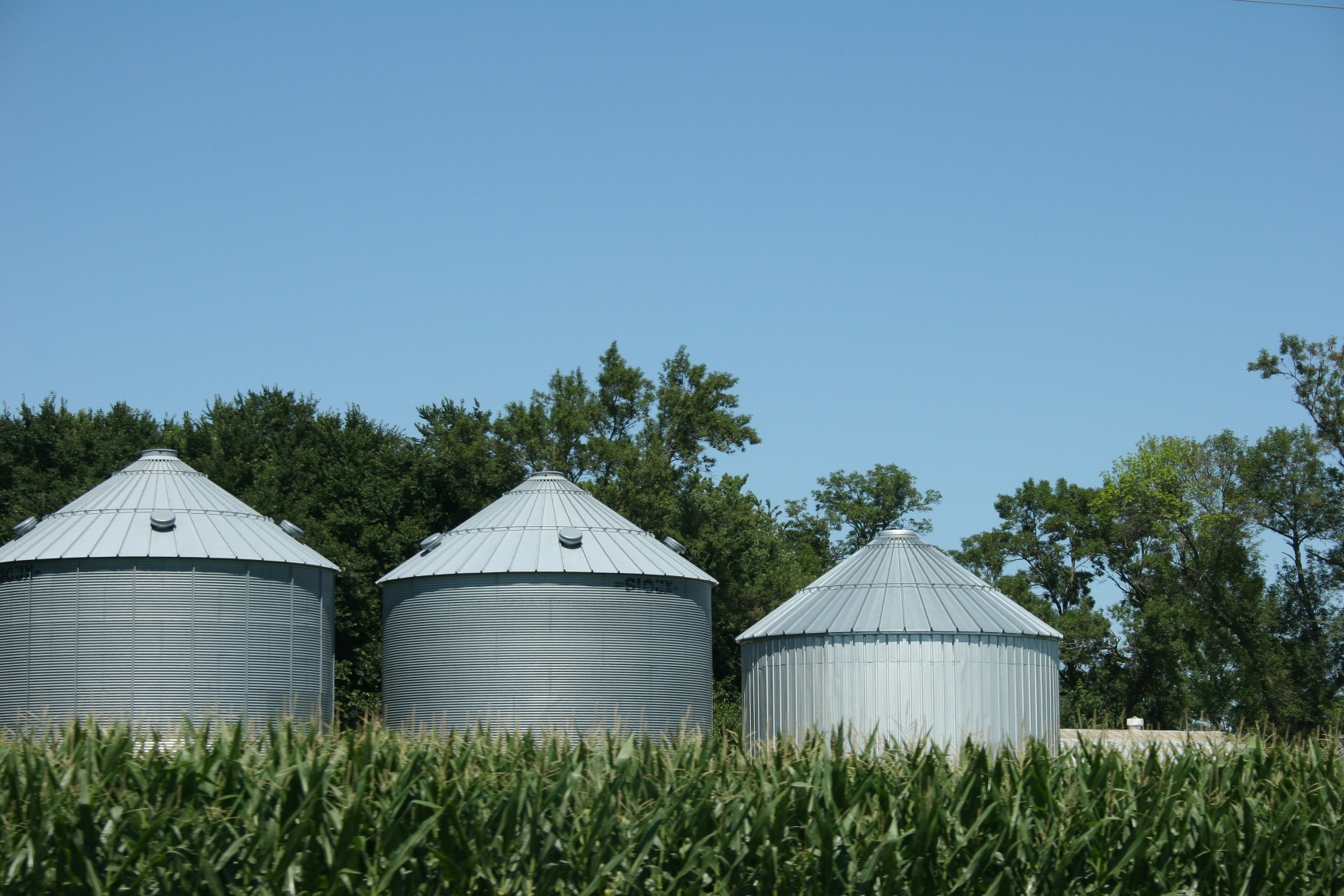
Bins on a farm place somewhere along the back roads between New Ulm and Morgan.

“I COULD NEVER BE MARRIED to a farmer or be a farmer,” I told my cousin Kevin as we stood outside the Vesta Community Hall Friday evening discussing the July 1 windstorms and tornadoes that ravaged my native southwestern Minnesota.

Kevin farms south of Echo, where he lost three grain bins, trees, and, if I remember correctly, an auger, to high winds. He’s looking at replacement and upgrade costs of more than $140,000. And a good chunk of that will not be covered by insurance. Investing so much money in his farm now, at near 60 years old, doesn’t come easily for him, he claims. But he doesn’t have an option if he is to continue farming.
As he was sharing his story, he said, “I told the wife I need to…” Kevin, 56, got married late in life (six years ago), so I still have to remember sometimes that he’s with Kris, a wonderful woman.

It takes a strong man or woman to live a life of farming. As much as I love the farm, I couldn’t farm. I couldn’t handle the financial stress, the “I told the wife I need to” replace the grain bins or I need to borrow money for a new tractor or the beans were hailed out…

I’d stress over borrowing all that money and over the financial risks inherent in farming.  Will commodity prices be up or down when I want to sell the corn and beans? Should I sign a contract now or wait? Should I buy that piece of equipment, build that machine shed? Will I get a decent crop? I’m not a gambler or a risk taker, even though I grew up on a crop and dairy farm.

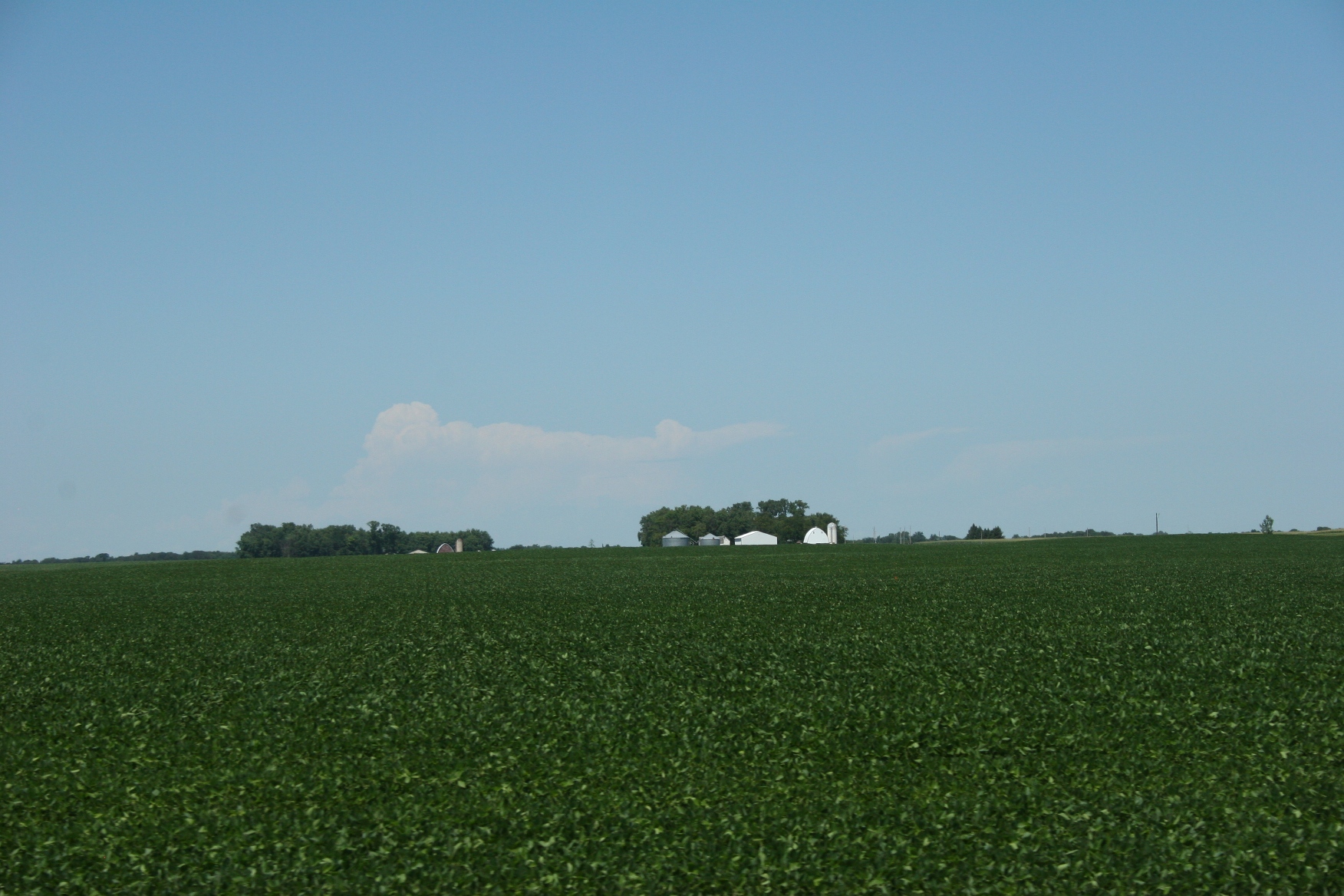
Soybean and corn fields stretch into forever in southwestern Minnesota. I shot this image on Friday between New Ulm and Morgan.

For many Minnesota farmers, this year has been especially challenging. Crops were planted late due to wet field conditions. Then the heavy rains fell, drowning out entire sections of fields. Next, strong winds and hail devastated beans and corn.

For the first time that I can ever recall, I saw black fields near my hometown of Vesta. My cousin told me the fields had been replanted and then the storms came when it was too late to replant again.

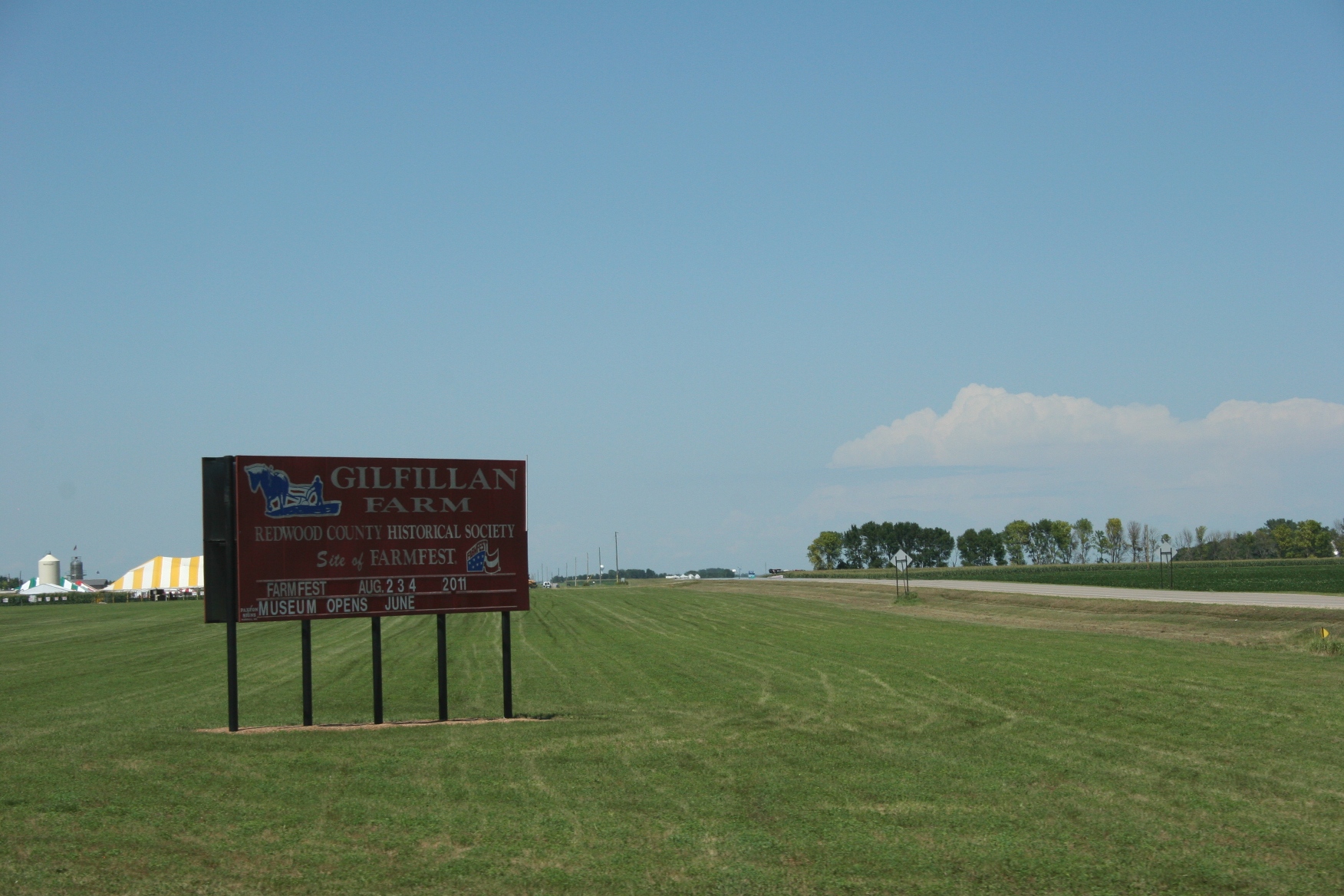
Three days this week, beginning today, farmers, agri-business reps and others will gather at the historic Gilfillan Farm between Morgan and Redwood Falls for Farmfest. There, in the heart of Minnesota’s farm country, I bet if you eavesdropped on a conversation or two or ten, you’d hear some farmer say, “I told the wife I need to…”

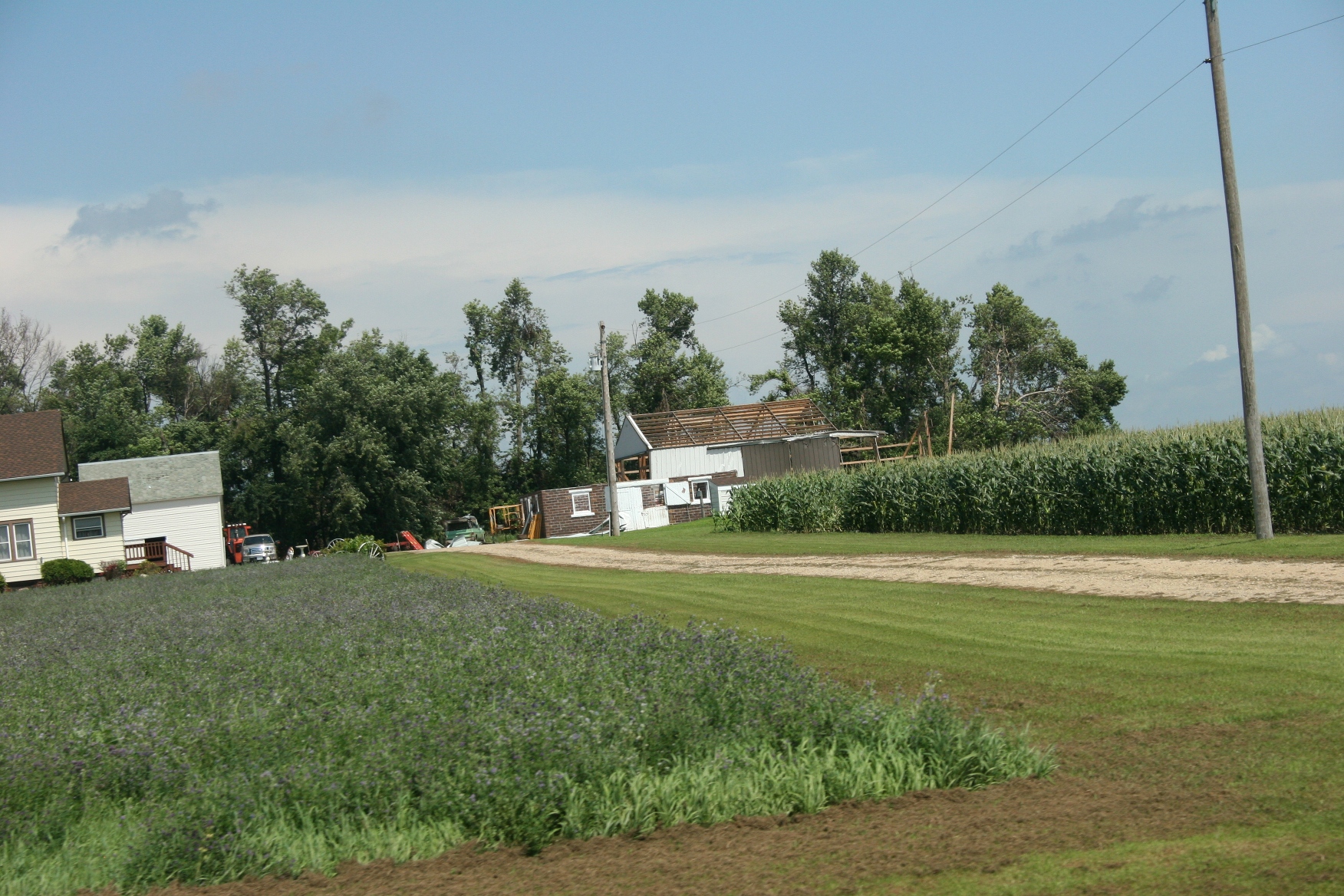
I spotted this damage to a building on a farm just north of Belview, which was hit by a July 1 tornado.

I took this shot traveling Minnesota Highway 67 west toward Morgan Friday afternoon. Follow this road and you'll end up at Farmfest. You can see Morgan's water tower and grain elevator complex in the distance.

Farmfest at the historic Gilfillan Farm runs today through Thursday.

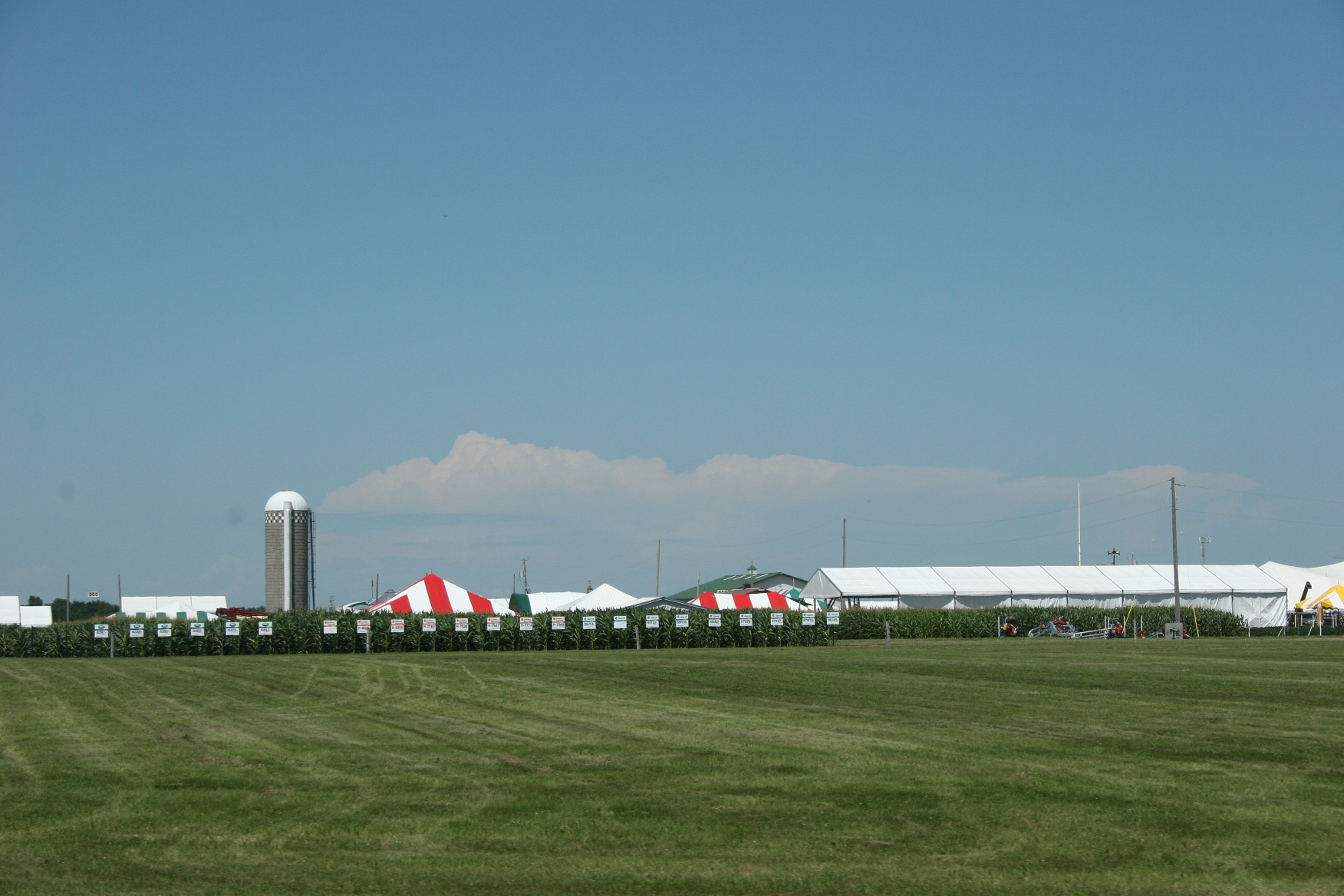
When I drove by the Farmfest grounds Friday afternoon, tents were already in place for the event.

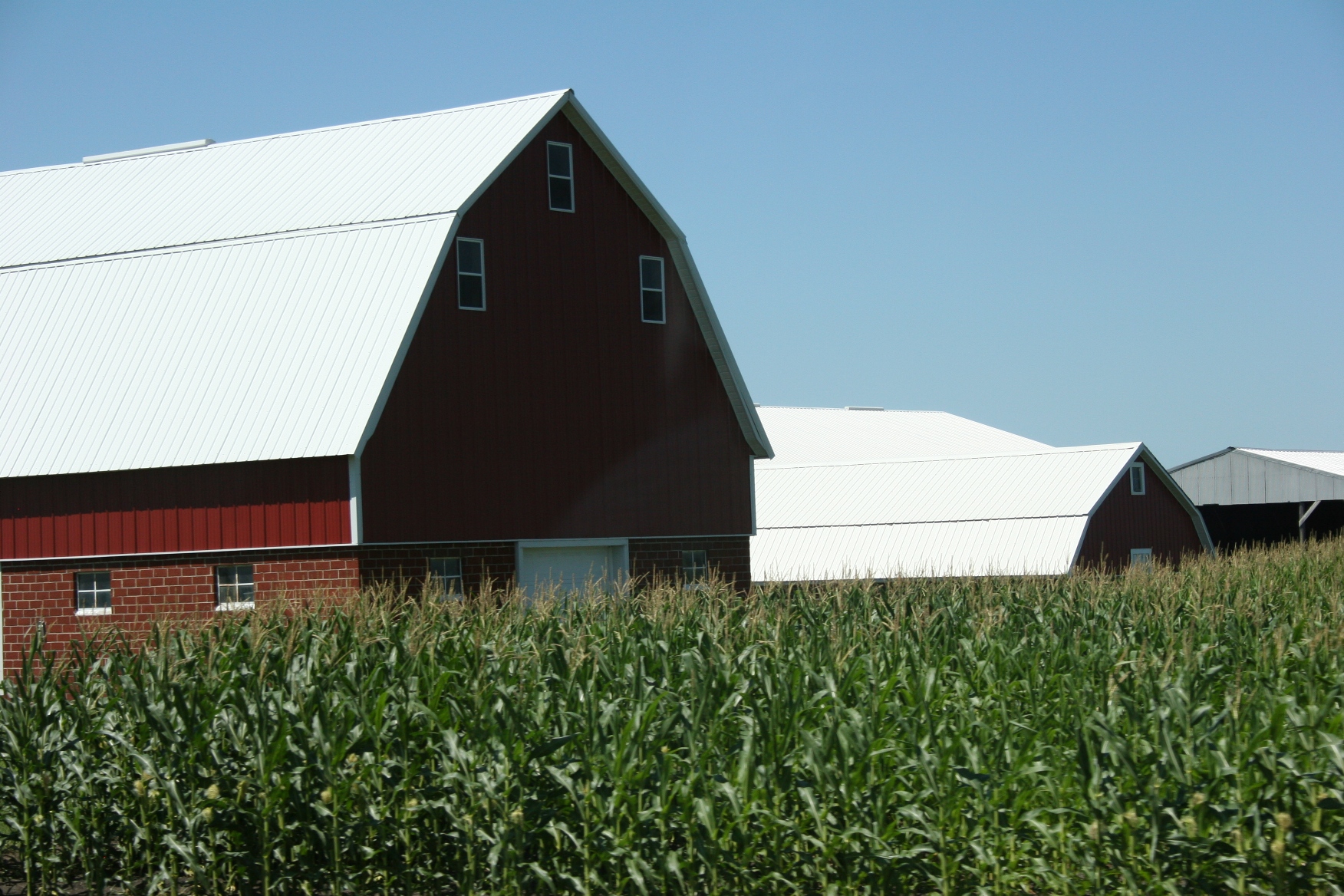
A barn, outbuildings and a corn field between New Ulm and Morgan.

Bins on a farm site along the back road between New Ulm and Morgan.

© Copyright 2011 Audrey Kletscher Helbling


The irrepressible spirit of two small Minnesota towns July 15, 2011

Entering Belview from Sacred Heart at 9 a.m. on July 2, the morning after the tornado. Photo courtesy of Merlin and Iylene Kletscher.

THE RESILIENCE OF RESIDENTS in two small Minnesota communities recently ravaged by storms impresses me.

The folks in Belview, a Redwood County town of 375 hit by an EF-1 tornado on July 1, and the residents of Sauk Centre, a Stearns County community of 4,221 blasted by 80 – 85 mph winds Sunday evening, won’t allow storms to squelch their summer celebrations.

This Saturday, July 16, Belview will host the town’s third “Small Town Saturday Night.”

In Sauk Centre, Sinclair Lewis Days, which began on Sunday, continue as planned through July 16.

I mean, honestly, would you feel like partying if you were still trying to deal with the mess after a tornado or high winds uprooted trees; downed branches; damaged homes, businesses and other buildings; and smashed vehicles in your community?

But I suppose pausing to celebrate in the midst of such devastation bolsters the spirit and allows residents time to take a break, come together, share stories and support each other.

Kim Sander, who initiated the Small Town Saturday Night, once-a-month May – August event in Belview, posted recently on the Belview Blue Jays’ Facebook page: “Come join us and celebrate our small town’s ‘back to life after the storm’…from 5 – 8 p.m. there will be a cruise-in, free popcorn, First Responder’s pork sandwiches, a special display of Arctic Cat mini-bikes, etc. This is our third Small Town Saturday Night and we appreciate being able to bounce back and be ready for ‘business as usual!’ So proud of our town and its people!”

You simply have to appreciate Sander’s upbeat attitude and enthusiasm.

I first learned about the Small Town Saturday Night from City Clerk/Treasurer Lori Ryer just days before the July 1 tornado roared through Belview. She had written an article about hot air balloons in Belview and I was gathering last-minute information prior to publication in the summer issue of Minnesota Moments magazine.

Ryer told me then about the event that brings people into town with classic cars, motorcycles, tractors and such. She mentioned the free popcorn, the vendors, the farmers’ market, food, sometime-hay rides to local vineyards (Echo Creek Vineyard and Grandview Valley Winery) and added, “Bring your lawn chair.” Ryer is among Belview’s most enthusiastic boosters.

I’m sidetracking briefly here to say that I like this whole concept of a Small Town Saturday Night, tapping into the past when farmers and their families would come to town on Saturday night. Heck, I remember watching movies on the side of a building in Vesta, which is just down the road to the south and west of Belview. Vesta movie night may have been on a Saturday night; I don’t recall for certain.

Belview residents seem to be doing a fine job of promoting their little town. Each year the community holds an Old SOD Day celebration. The event, which features your usual small-town activities like a kiddie parade, car shows and more, also has hot air balloon lift-offs. This year’s celebration is set for September 17.

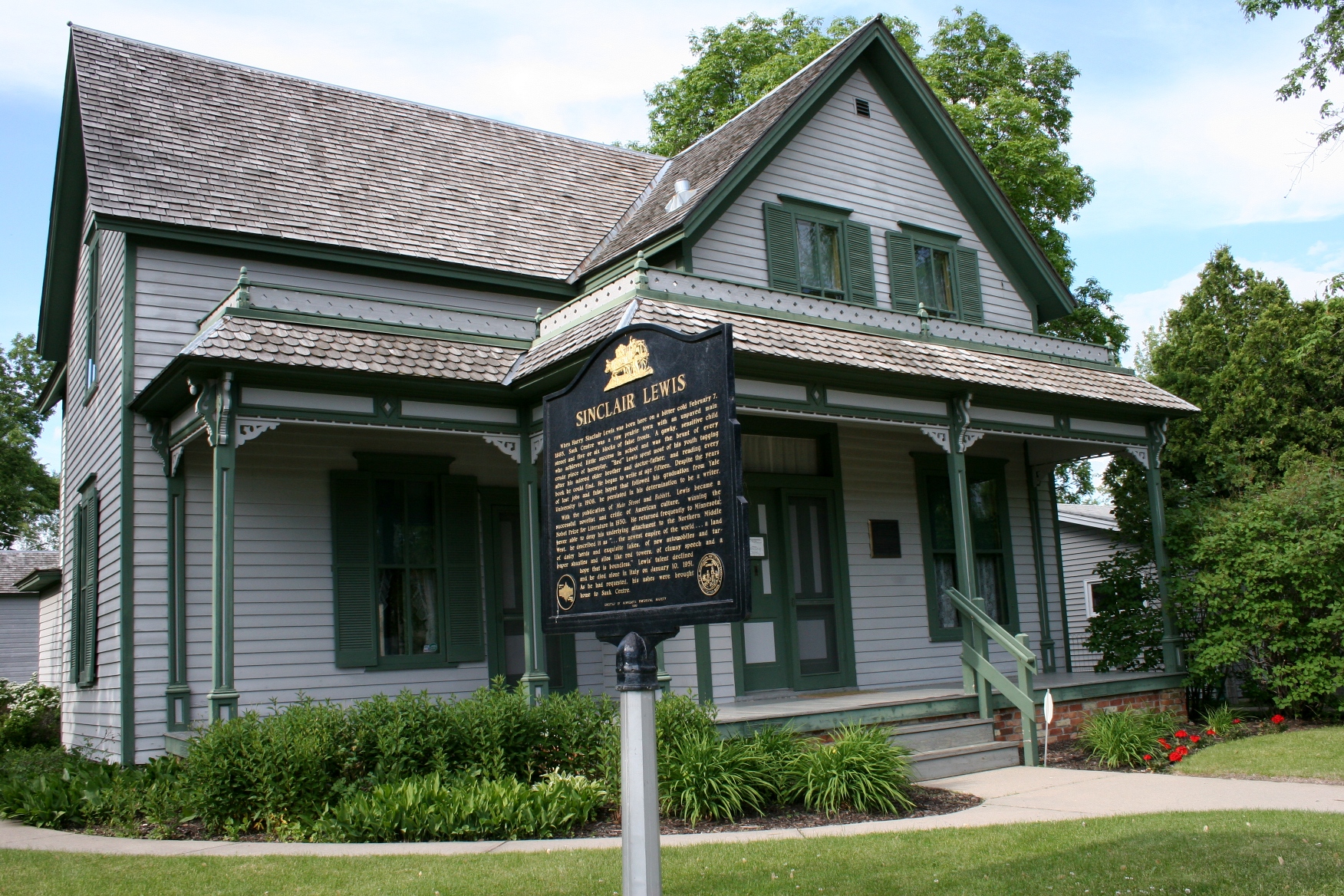
The boyhood home of author Sinclair Lewis was closed for the day when we arrived in Sauk Centre.

UP IN SAUK CENTRE, I haven’t talked with anyone about Sinclair Lewis Days, the annual celebration of native son Sinclair Lewis, author of Main Street and other noted books. But my husband and I stopped in Sauk Centre briefly while en route home from Fergus Falls to Faribault about a month ago. I’m a fan of Lewis and, although I had seen his boyhood home decades ago, I had not viewed the town beyond that. I wanted to see the real Main Street, the basis for his satirical writing about fictional Gopher Prairie.

While physically Sauk Centre’s appearance has changed since our visit, since powerful winds blew through the town on July 10, that won’t keep this community from celebrating. A Welsh Pony Show, fireworks, softball tournament, music in the park and Crazy Days are still continuing as planned, according to information posted online at the Sauk Centre Convention and Visitors Bureau.

I just have to say, Belview and Sauk Centre residents, your ability to continue in spite of challenges speaks volumes to your irrepressible spirits. Even Sinclair Lewis might be impressed.

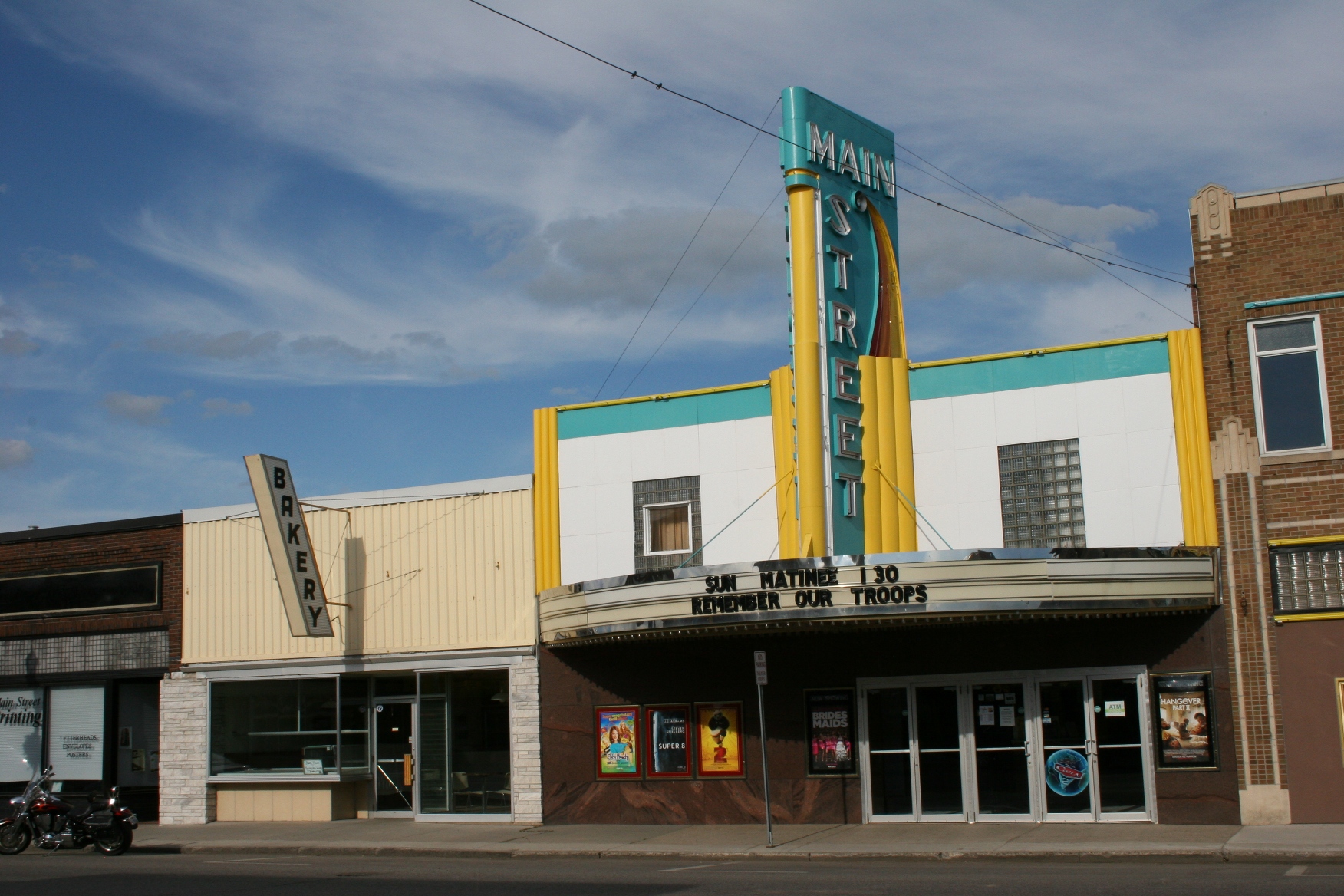
The appropriately-named Main Street Theatre in Sauk Centre's downtown.

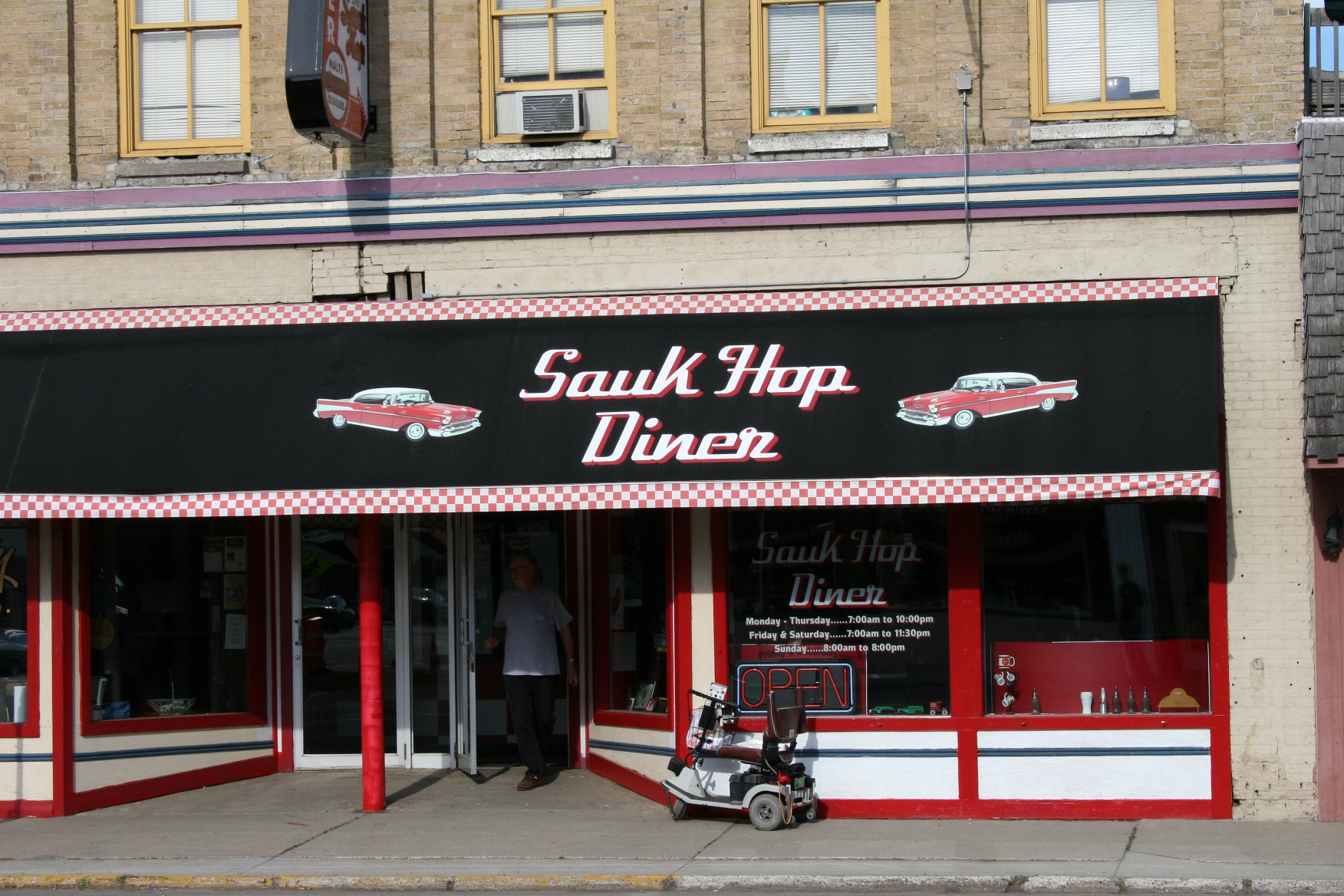
Just down the block from the theatre, the Sauk Hop Diner anchors the corner across from the Palmer House Hotel.

Sinclair Lewis worked as a night clerk at the historic Palmer House Hotel.

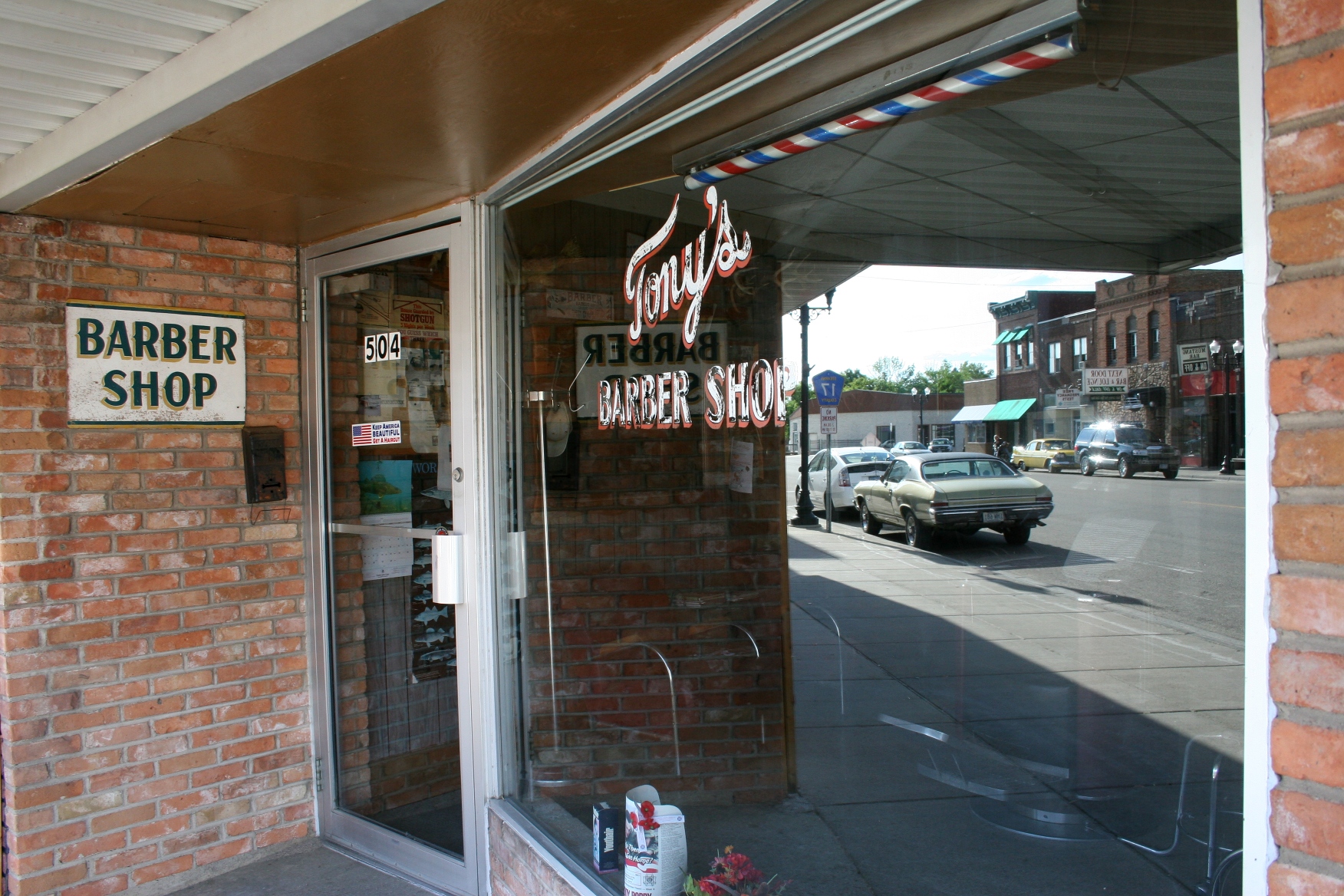
The typical small-town barber shop, in Sauk Centre, Tony's Barber Shop.

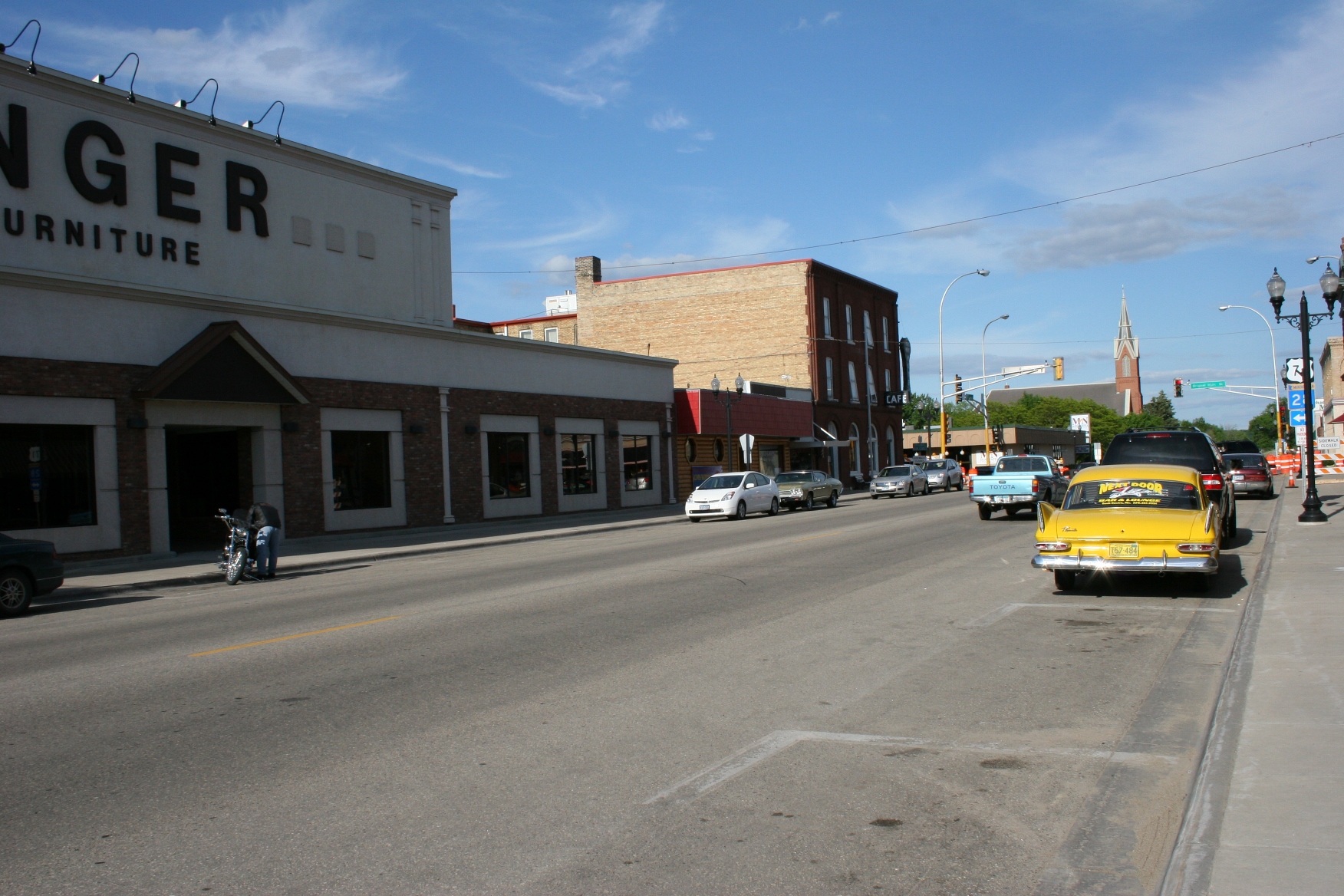
On a block packed with bars, six if I recall correctly, this one, the Next Door Bar and Lounge, stood out.

Another view of downtown Sauk Centre, shot several weeks ago.

© Copyright 2011 Audrey Kletscher Helbling


An update from storm-damaged Belview July 13, 2011

Entering Belview from Sacred Heart at 9 a.m. on July 2, the morning after the tornado. Photo courtesy of Merlin and Iylene Kletscher.

LESS THAN TWO WEEKS after an EF-1 tornado ravaged the small town of Belview in southwestern Minnesota, I emailed City Clerk/Treasurer Lori Ryer for an update.

I know she’s busy dealing with issues in the aftermath of the July 1 storm, so I asked only for a brief summary, with a specific request for information about Parkview Home. The nursing home, according to Ryer, received major roof damage that resulted in flooding of the building. Initially, 25 residents were evacuated and taken to care centers in nearby Wabasso, Olivia and Redwood Falls.

Since then, Parkview has closed for repairs, residents have been discharged and admitted to new nursing homes, and staff has been laid off.

When the nursing home will reopen remains uncertain as assessments are still being made. But Ryer anticipates, after talking to staff on Tuesday, that Parkview will be closed for at least several months.

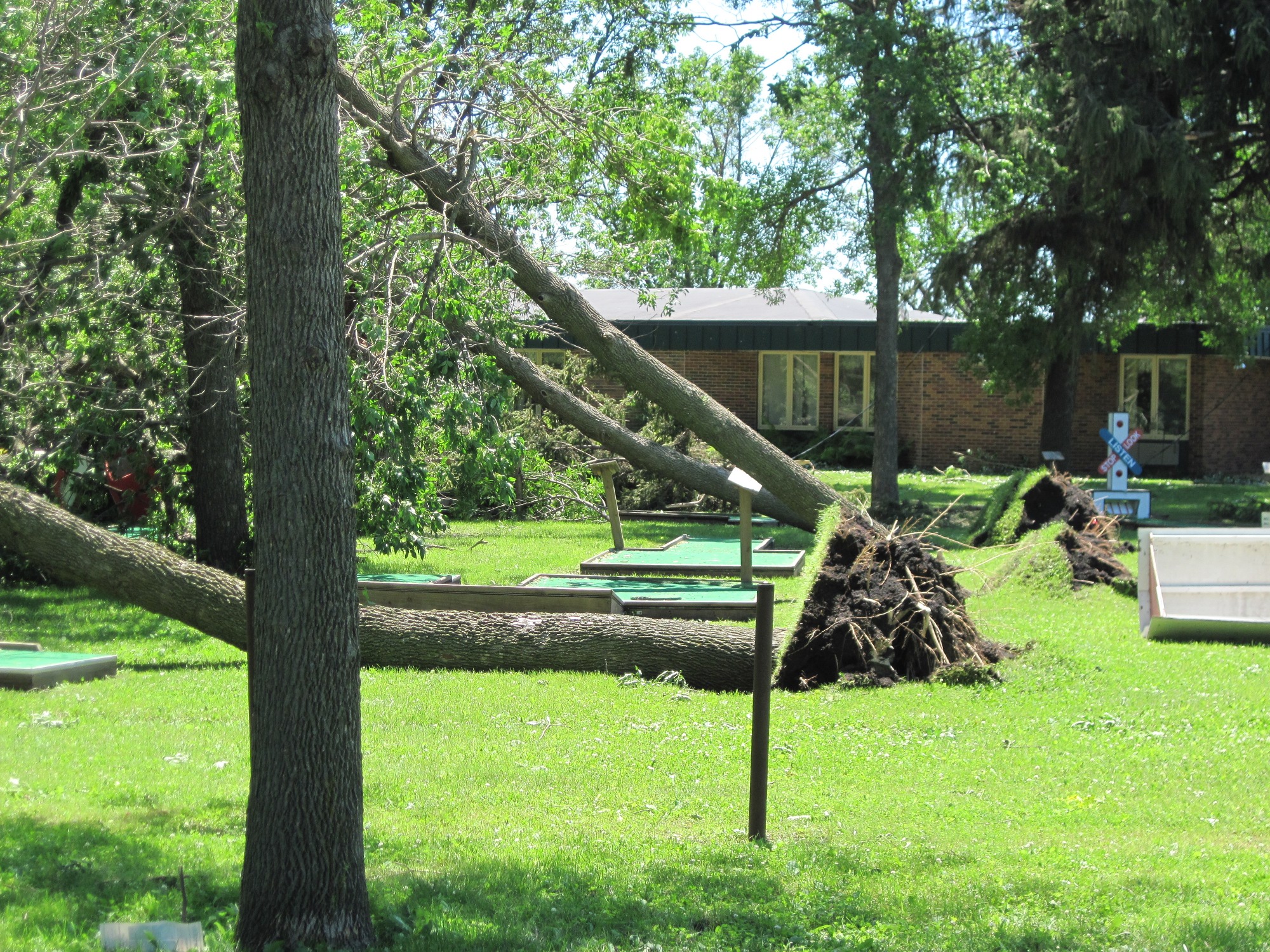
This photo shows Parkview Home and mini golf in the park. Photo courtesy of Merlin and Iylene Kletscher.

Parkwood Apartments, which is attached to the nursing home, was not damaged, but was without power from Friday afternoon, July 1, until the following Monday evening. Some apartment residents left to stay with family members briefly, but everyone has now returned, Ryer says.

Bridgewood Assisted Living was not damaged, but was without power also.

Damage along South Main Street in Belview. Photo courtesy of Merlin and Iylene Kletscher.

Throughout the rest of this community of 375 residents, many home and business owners are still awaiting insurance adjusters. Many homes received minor damage, several moderate, and a few major, damage from results of the 95 – 105 mph tornadic winds, Ryer says.

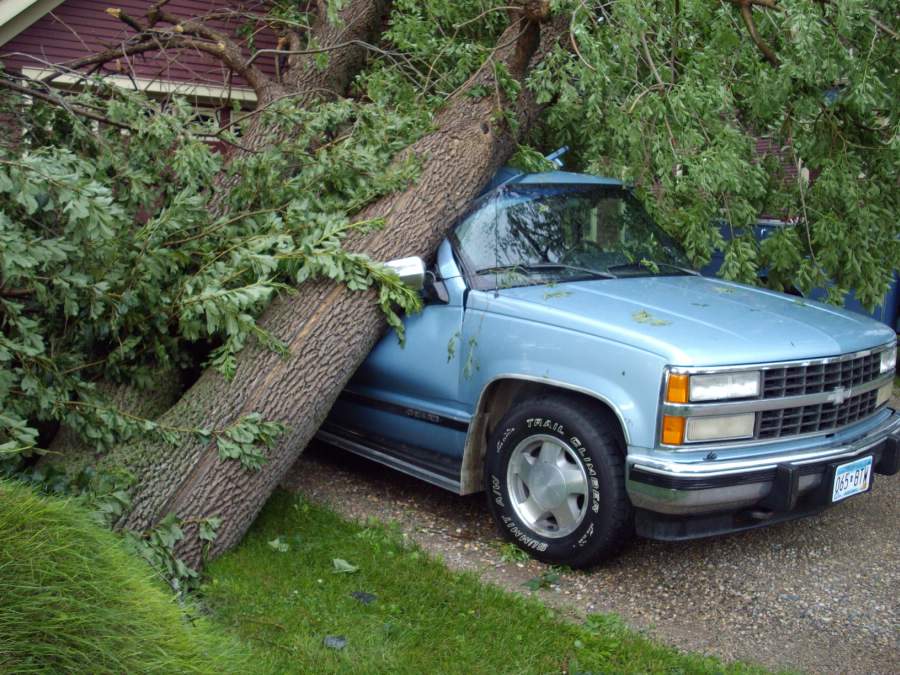
Many garages and sheds were destroyed and quite a number of cars totaled due to trees falling on them, the city clerk continues.

Tom Johnson's SUV was totaled when a tree fell onto it during the Belview tornado. Photo courtesy of Tom and DeLores Johnson.

The Belview school building received major damage, resulting in relocation of the Belview Learning Center summer program. Ryer hopes that program will be up and running in the Belview school building before the new school year begins.

Despite the destruction in her community, Ryer manages to remain positive: “With all that being said, I still marvel at the fact that we had no injuries during the storm or in the days of clean-up afterwards.”

LIKE RYER, I, TOO, marvel that no one was injured or killed by this storm which swept across Minnesota into Wisconsin July 1. My hometown of Vesta, just down the road from Belview, was hit by a series of downbursts with wind speeds of 90 – 100 mph.

I have many family members living in areas affected by the storms. Damage was minimal to their properties, but most lost trees. A cousin living near Wood Lake, however, saw substantial damage to the family’s farm. My home church, St. John’s Lutheran in Vesta, had half the roof ripped off.

St. John's Evangelical Lutheran Church in Vesta with the roof half missing. Photo courtesy of Brian Kletscher.

In a few weeks I’m returning to my hometown for the annual Kletscher family reunion. I’m trying to prepare myself for what I’ll see—my little prairie town with fewer trees, the church where I was married now temporarily closed. I always look forward to worshiping there with my mom when I return home.

I expect it will be the trees, though, that I will miss the most. A friend recently told me that the small towns of southwestern Minnesota are like oasises in a land mostly devoid of trees, except for the trees in those towns and the groves that shelter farm sites. He is right.

The communities of Belview and Vesta lost many trees in the July 1 storms. This photo is along a Belview street north of the city park. Photo courtesy of Merlin and Iylene Kletscher.

But those of us who grew up on this land, and those who live there, appreciate the wide open spaces, the big sky, the fields of corn and beans and those small towns.

Prairie people are strong, caring, determined folks who come together in time of need. I’ve seen that over and over again in the stories I’ve heard and the comments I’ve received on my blog posts while covering the recent storm damage.

To the residents of Belview and Vesta, Tyler and Ruthton, and all the farm places in between, I know you’ll make it through these challenging days. Your roots reach deep into the prairie and no storm can rip away what you have—each other.

© Copyright 2011 Audrey Kletscher Helbling


Couple grateful to survive Belview tornado July 8, 2011

TOM AND DeLORES JOHNSON never reached their storm shelter late Friday afternoon, July 1, when an EF-1 tornado blew into Belview. They didn’t have time.

But for the Johnsons, that turned out to be a good thing.

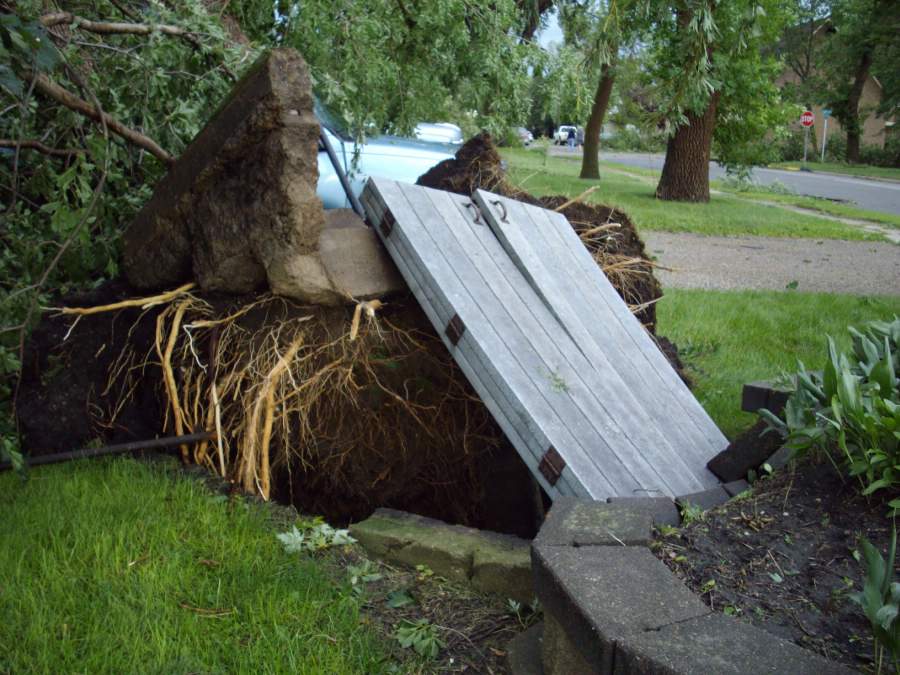
“The storm shelter was ripped up by the big tree that stood next to it…we would have been injured or possibly killed if we would have been in it,” DeLores surmises. Instead, they managed to seek protection in the basement of their 1898 home.

The storm cellar where the Johnsons would have sought protection had they had time to reach it.

“We are grateful to be alive,” DeLores says, a statement likely echoed by other rural and small-town residents in southwestern Minnesota where a wide-spread July 1 storm spawned four EF-1 tornadoes and a more powerful EF-2 twister. Belview was among the communities hardest hit when the tornado, with winds of 95 – 105 mph, ravaged this town of 375.

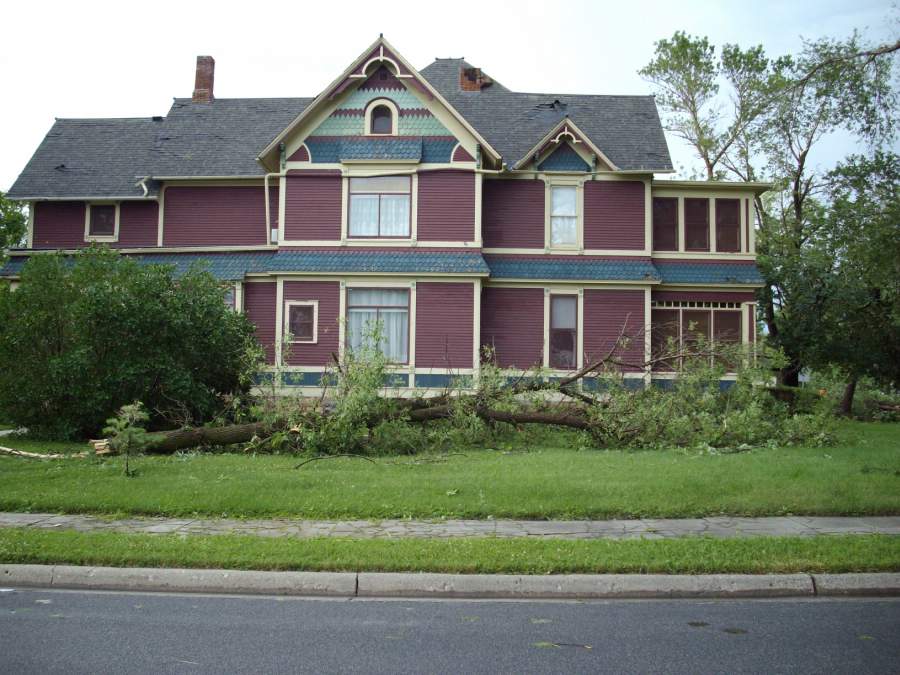
The Johnsons are in the process of cleaning up, dealing with insurance adjusters and gathering estimates so they can begin repairs on the 113-year-old house they’ve lived in since 1988. The list of damages to their home is extensive:

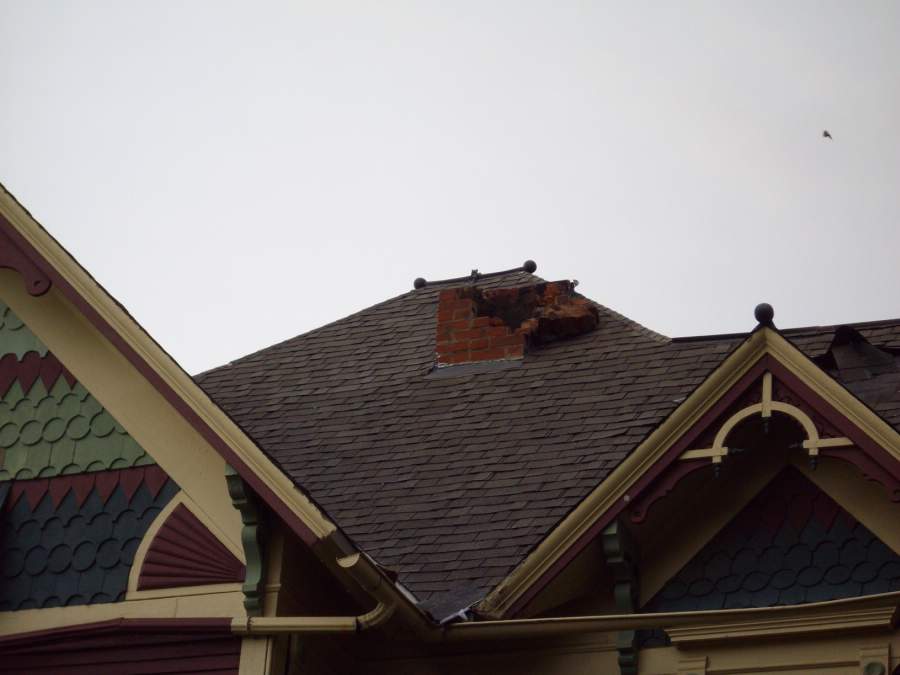
  • chimney blown down
  • rafters broken in the attic
  • shingles missing
  • paint blown off house
  • broken window
  • water damage to walls, ceilings, maple floors and carpet
  • roofs on two porches damaged and in need of replacement

The Johnsons' 1898 house was damaged inside and out by last Friday's tornado. DeLores offered to take photos of the interior for me, but I figured she had enough to do without adding this to her list.

A view of the house roof where the chimney was ripped off by the tornado.

DeLores shares some interesting details about the storm. “The wind blew water through the air conditioner in the bedroom upstairs and blew the water so it ran across the hall into another bedroom. It soaked up the carpet in the hallway and that in turn ran down into our living room.

“Upstairs in my office, water also blew through the air conditioner there. The shade has ground-up leaves stuck into it as does the shade in the bedroom.”

And that’s just the house.

The garage received structural damage when a tree toppled onto it and onto Tom’s  SUV. His vehicle was totaled.

A tree fell onto the garage and Tom's SUV, which was totaled.

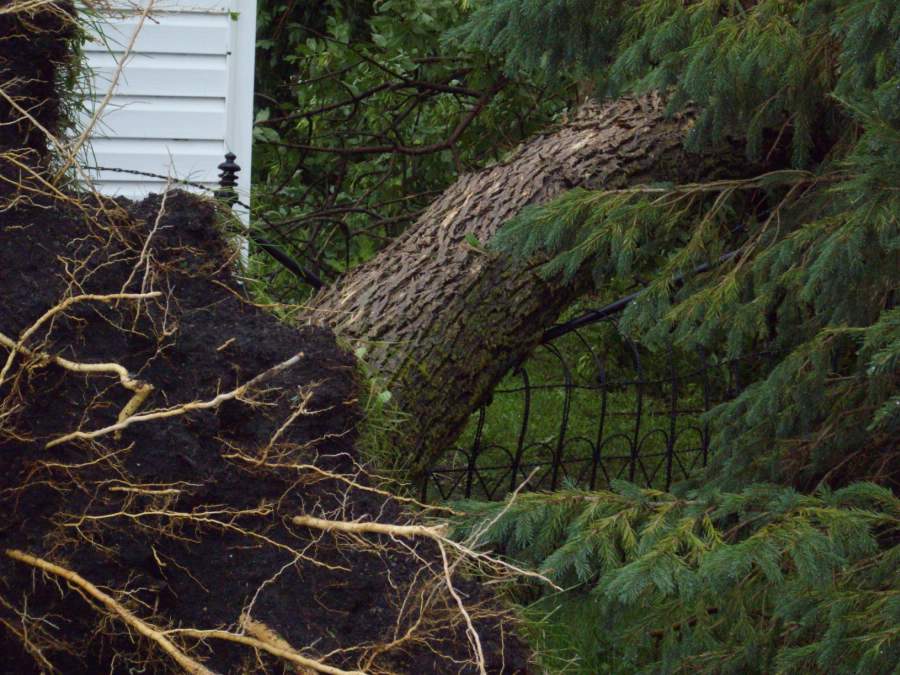
The Johnsons lost nine trees, some of which fell onto a 100-year-old fence that DeLores says they’ve lovingly protected for years.

One of several trees that landed on the 100-year-old fence.

One of numerous downed trees.

Despite the severe damage to home and property, DeLores is grateful that they survived the storm.

She is also appreciative of all the help from family members and others. “Men from Belgrade, Long Prairie and Sauk Centre came and sawed up trees for us and helped to clean up. They were volunteers who we had never seen.”

NEARBY ON A WOOD LAKE area farm, my cousin, Marilyn Schmidt, expressed similar sentiments in an email I received at noon Thursday. “Lucky no loss of life. Fortunately, we were not home.”

Marilyn and her husband, Dan, had just arrived at a west-central Minnesota lake for the July Fourth weekend when an EF-1 tornado hit their Redwood County farm one week ago today.

Since then, with the help of family and residents from Cottonwood, the Schmidts are cleaning up. Click here to read a previous post about the storm damage at their place.

Their son, Matt, was at the farm with a crew on Thursday when Marilyn emailed.

She tells me that all of their neighbors to the south and east and some north and some west had major damage to their properties. The Schmidts’ insurance adjuster already had gotten 1,500 claims by Tuesday night.

Marilyn closed her brief email with this sentence: “Gotta go—men to feed!!!”

IN VESTA, WHERE A SERIES OF DOWNBURSTS with wind speeds of 90 – 100 mph caused significant damage and downed trees, members of St. John’s Lutheran Church are planning to repair their church. The south half of the church roof was lifted off and slammed against the bell tower, according to my uncle, Milan Stage, a church member. The tower was cracked at the base and will need to be taken down, he says.

St. John's Evangelical Lutheran Church in Vesta with the roof half ripped off by strong winds during the Friday afternoon storm. Photo courtesy of Brian Kletscher.

Everything has been removed from the sanctuary into the attached social hall. The congregation is awaiting reports from an insurance adjuster and two contractors who have been on-site.

Milan says the west end and sides of St. John’s appear to be alright, but that “It will be a slow process getting the church back in use.” The church council met Wednesday evening and decided, if funds are available, to remodel the church along with repairing it. In the meantime, congregational members will worship at their sister church, Peace, in nearby Echo.

Across town at Uncle Milan and Aunt Jeanette’s home, the high winds wrecked eave troughs and a deck railing. A branch went through the railing, taking half of the railing and the grill with it, Milan says. Tops were snapped from some ash trees in the Stages’ back yard. Branches from their big cottonwood tree were strewn across the lawn.

JUST A BLOCK TO THE SOUTH my 79-year-old mom, Arlene Kletscher, never made it to the basement during the storm. She was sitting in her living room sorting through papers and wanted to complete the task. In her closed-up, air conditioned house, she never heard the warning sirens. By the time she realized the severity of the situation, it was already too late to seek safety.

This marks the second time my mom has not gotten to safety during a severe storm. Thirty some years ago a tornado hit our home farm, where she was living at the time. Then a silo was downed, wagons strewn across the field, among other destruction.

I am thankful, again, that she is OK.

My mom’s Vesta home was apparently unscathed. However, she lost one tree and her yard was littered with branches and other debris.

READERS, THANK YOU for following my series of storm stories which began last Saturday. Yesterday Minnesota Prairie Roots’ views reached an all-time daily high of 1,443. That indicates to me a continued strong interest in the storms of southwestern Minnesota.

I know several of you have posted links to my blogs on Facebook. Thank you for doing that and also thanks to those who have shared their stories and photos. If you’re reading this and have a storm-related story to share, please submit a comment.

If you missed my earlier storm posts, check my archives. Many of those stories include links to more storm information and images.

PHOTOS COURTESY of DeLores and Tom Johnson

© Copyright 2011 Audrey Kletscher Helbling