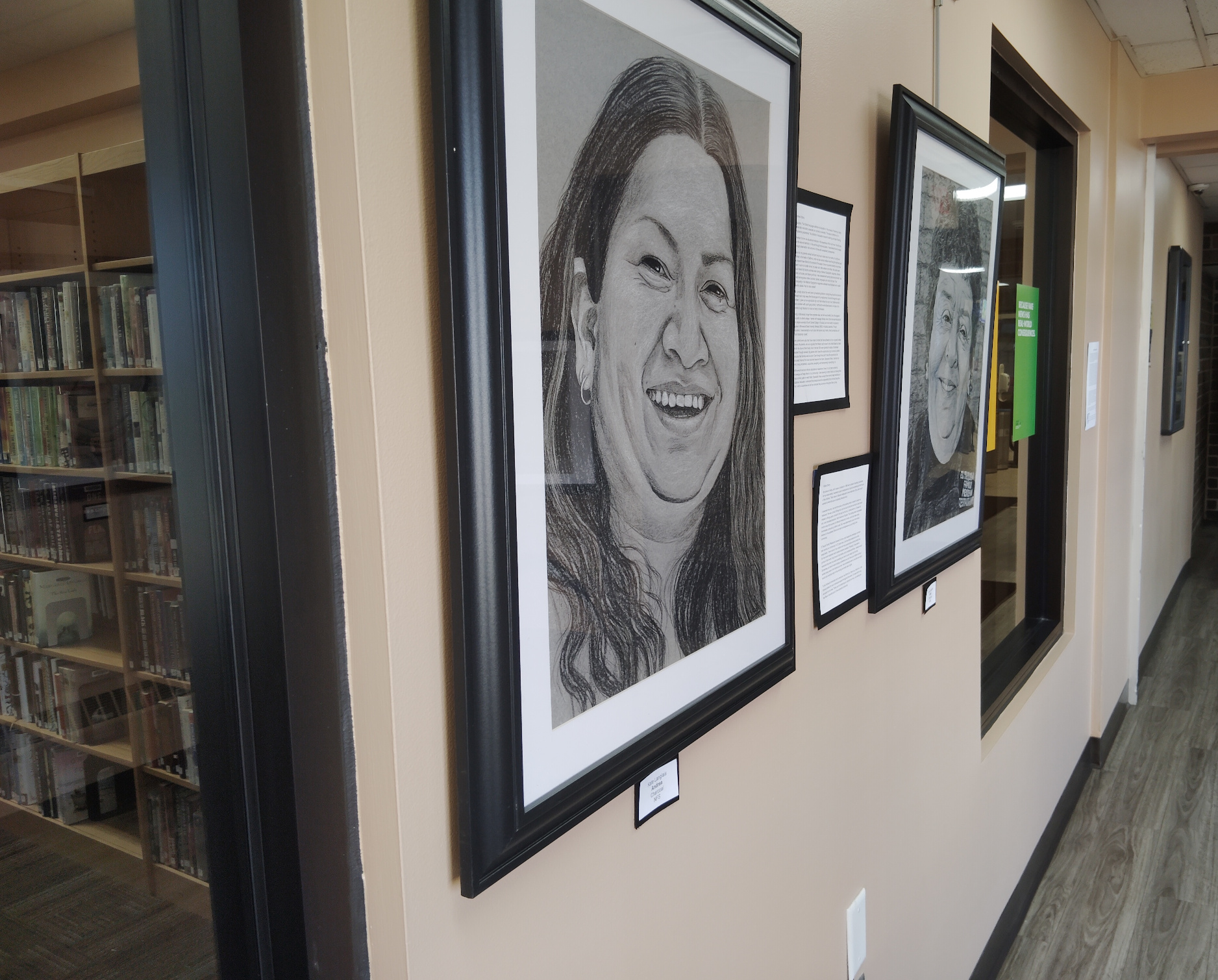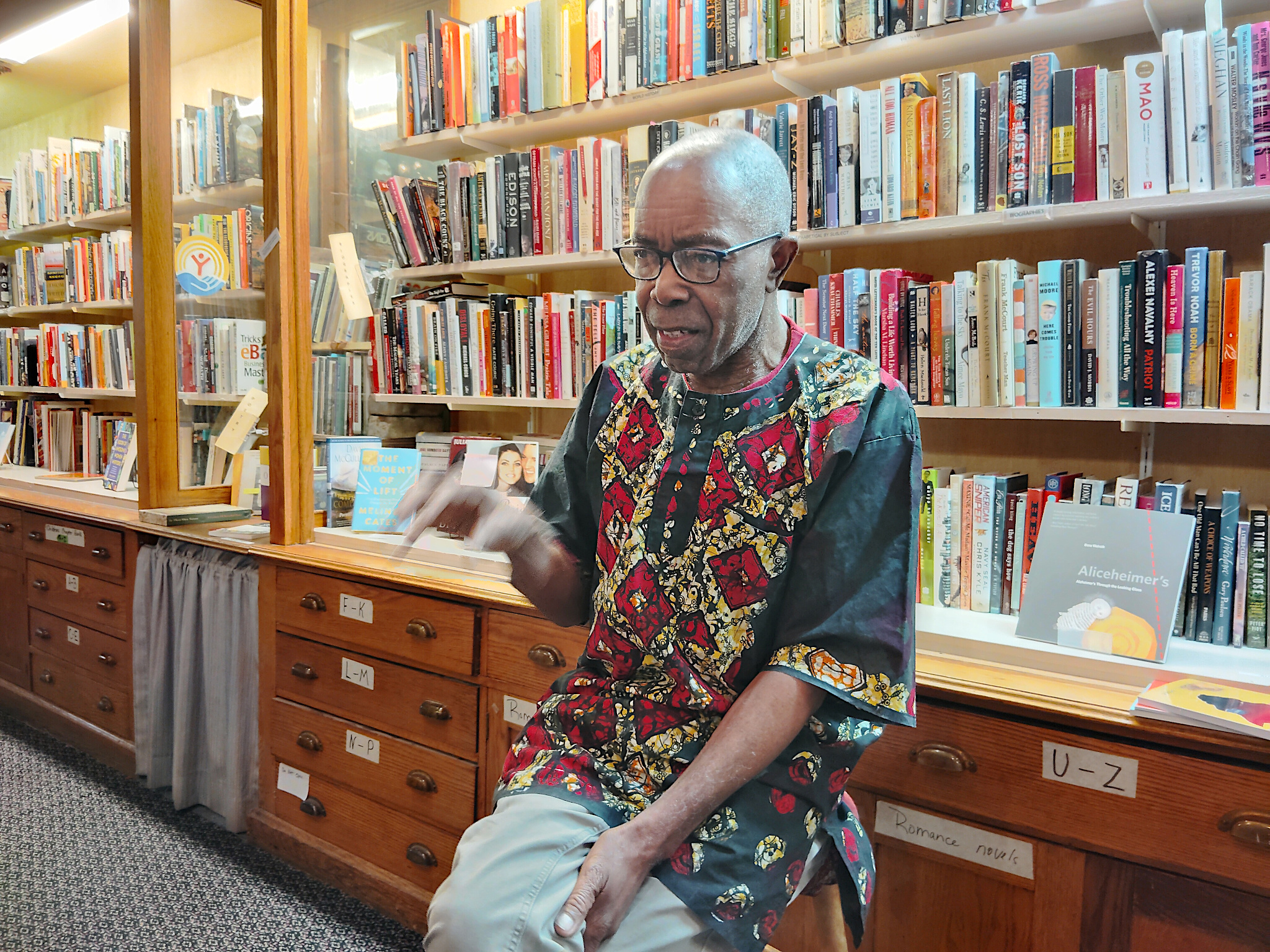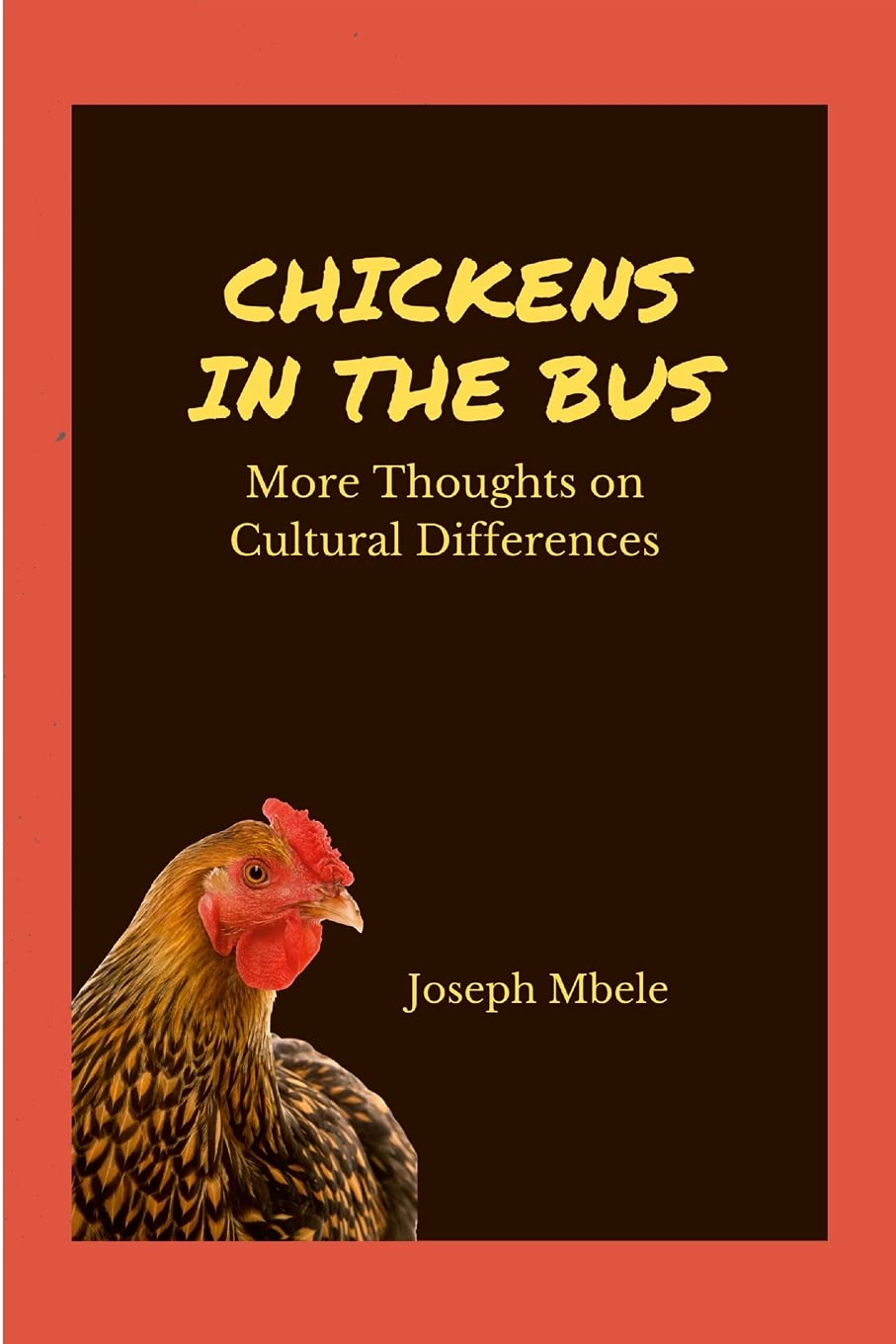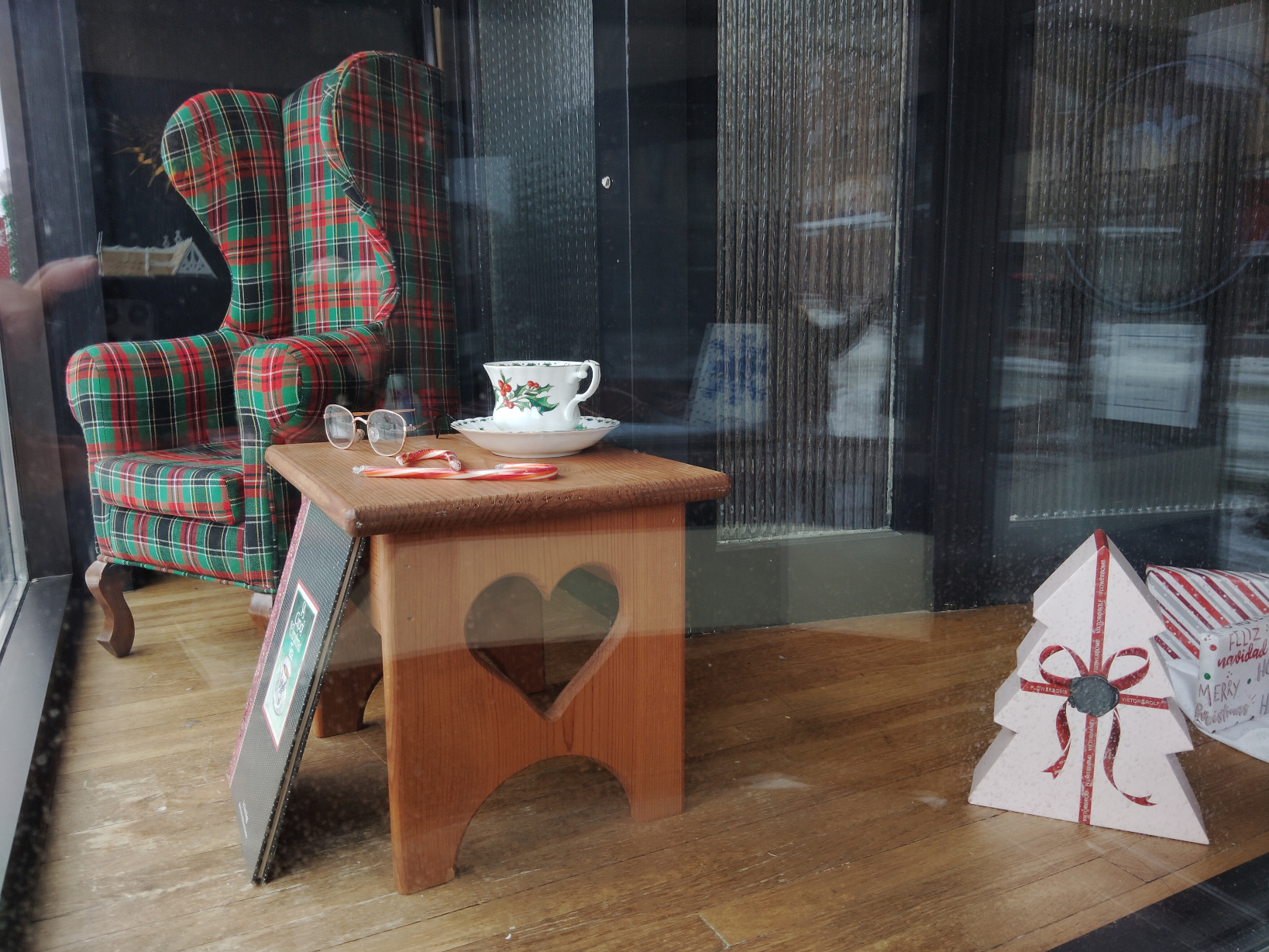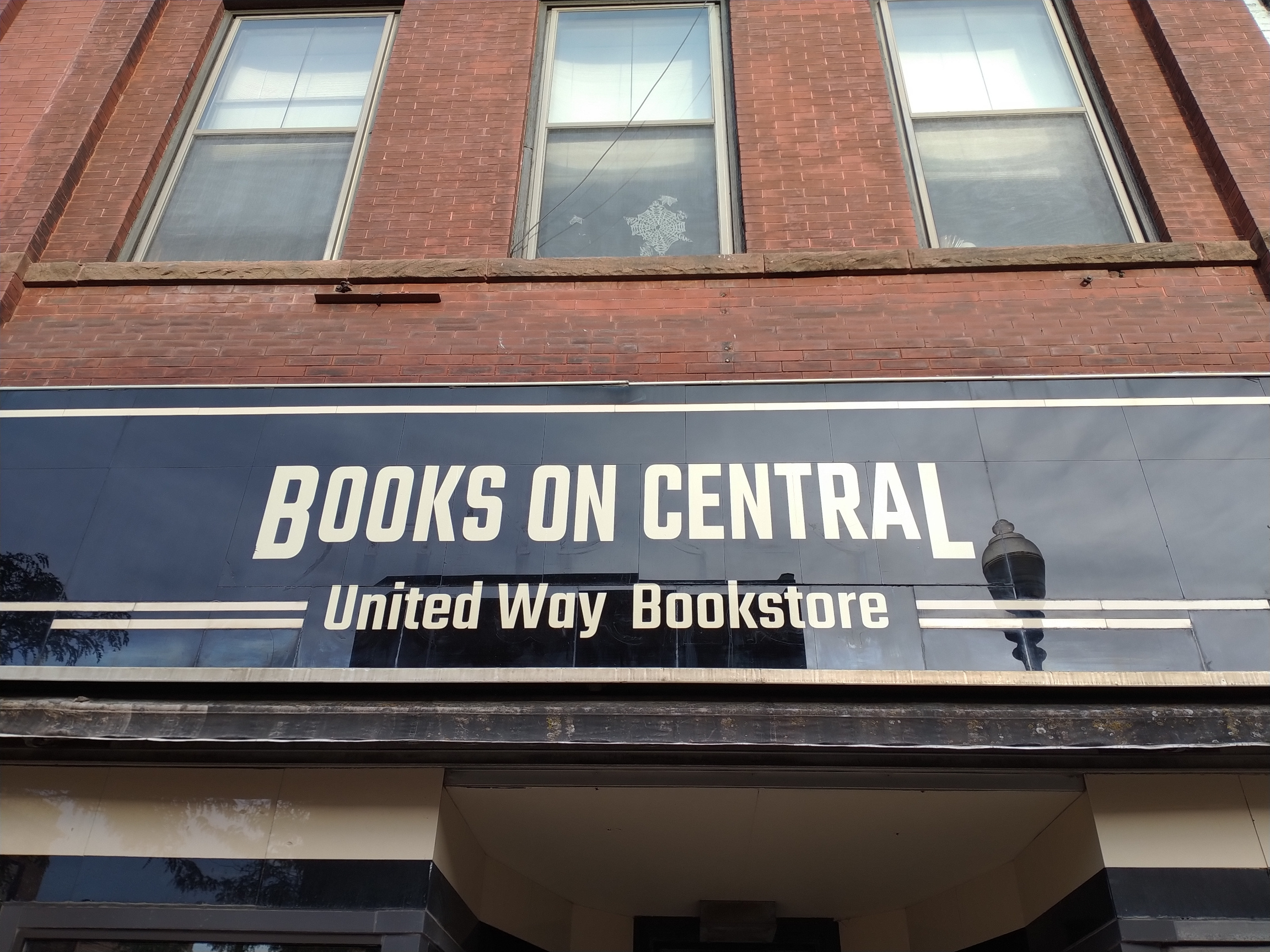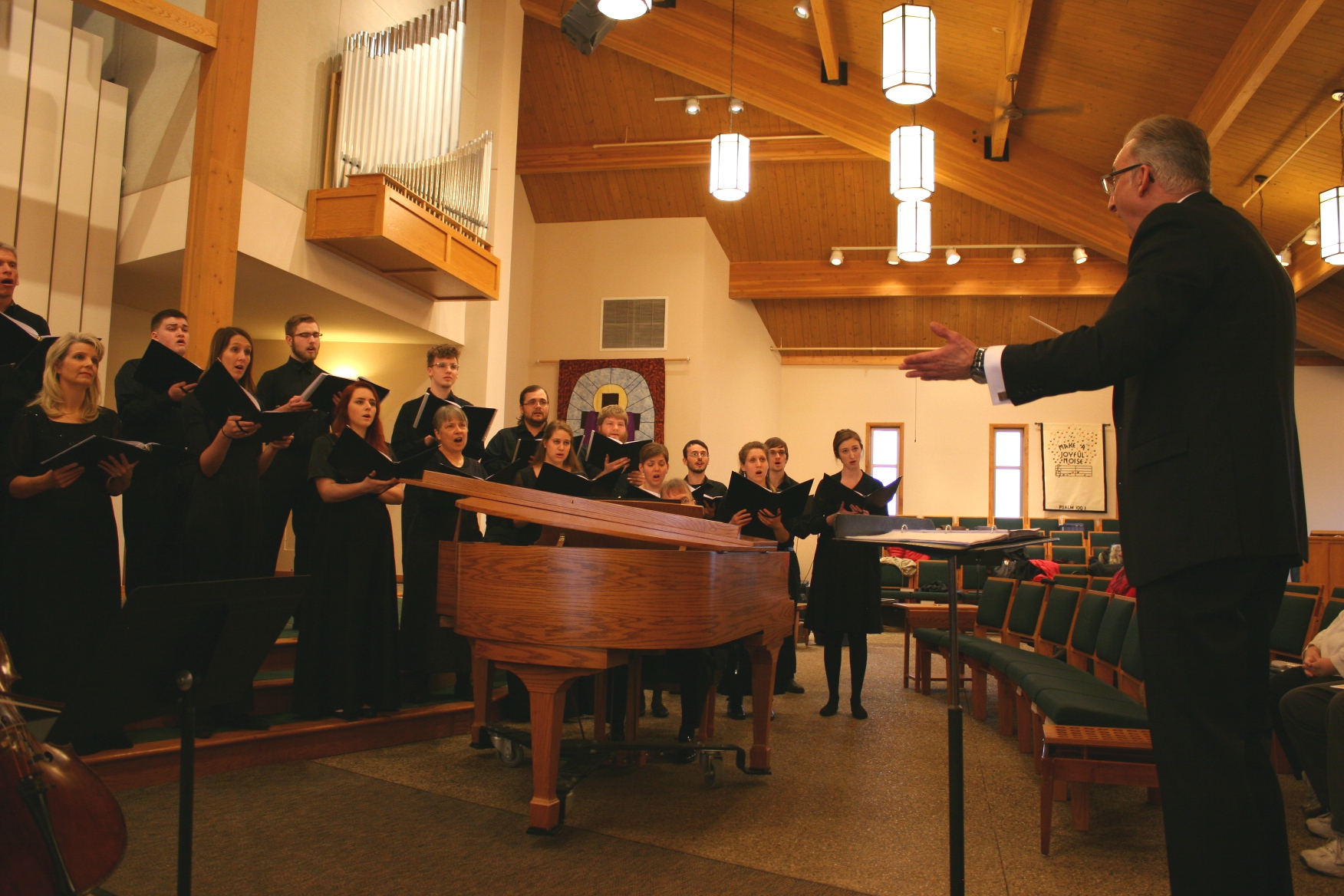
A storefront window display at Books on Central promotes an upcoming holiday reading. (Minnesota Prairie Roots copyrighted photo December 2025)
THE CADENCE AND RHYTHM of a book read aloud or a story told appeals to me. It’s as if the words become living, breathing characters, the setting vivid real-life scenes. Such is the power of the voice in interpreting words.
Wednesday evening, December 17, at 6 pm, two skilled local storytellers, Sam Temple and Tami Resler, will share their talents during a literary event at Books on Central in the heart of downtown Faribault. Holiday stories will focus their storytelling in the cozy bookshop centered by a chandelier inside a former jewelry store.
But the gems for the evening will be the stories that are sure to sparkle with the skills of Temple and Resler. I know both storytellers. They are genuinely kind, caring, joyful individuals who add much to our community.
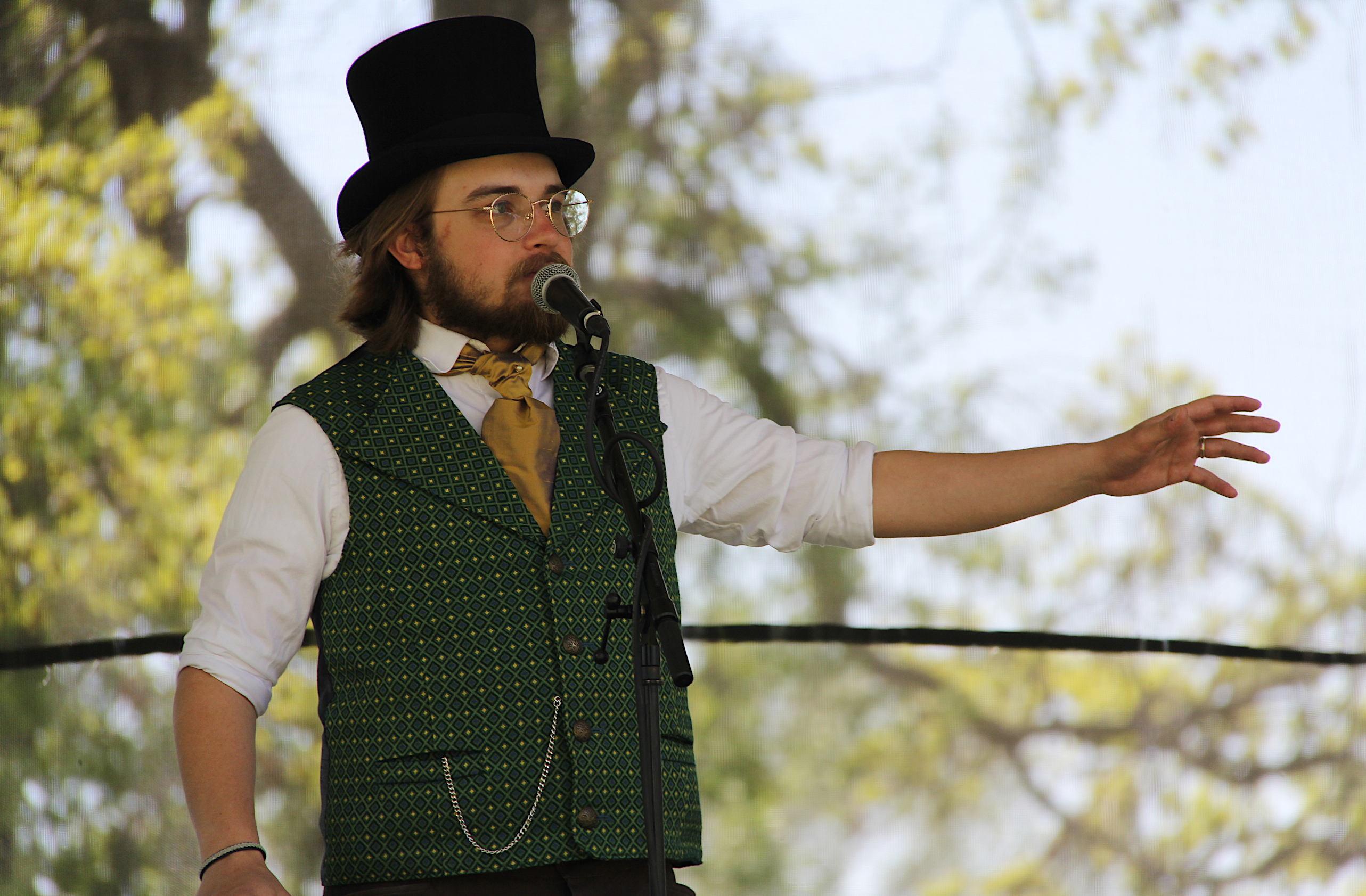
Sam Temple, as Alexander Faribault, shares local and Minnesota history during the Riverside Rendezvous and History Festival in Faribault earlier this year. (Minnesota Prairie Roots copyrighted file photo May 2025)
Temple, who heads Steamboat Media Company and manages Northfield Public Broadcasting, is big into local history. He’s created documentaries about Faribault history with fellow creative Logan Ledman. He’s portrayed town founder, Alexander Faribault, numerous times. He’s also acted and directed and does improv comedy with Little Fish Improv. I’m sure I’ve missed something. But you get the idea. Temple brings tremendous talent and knowledge to anything he does.
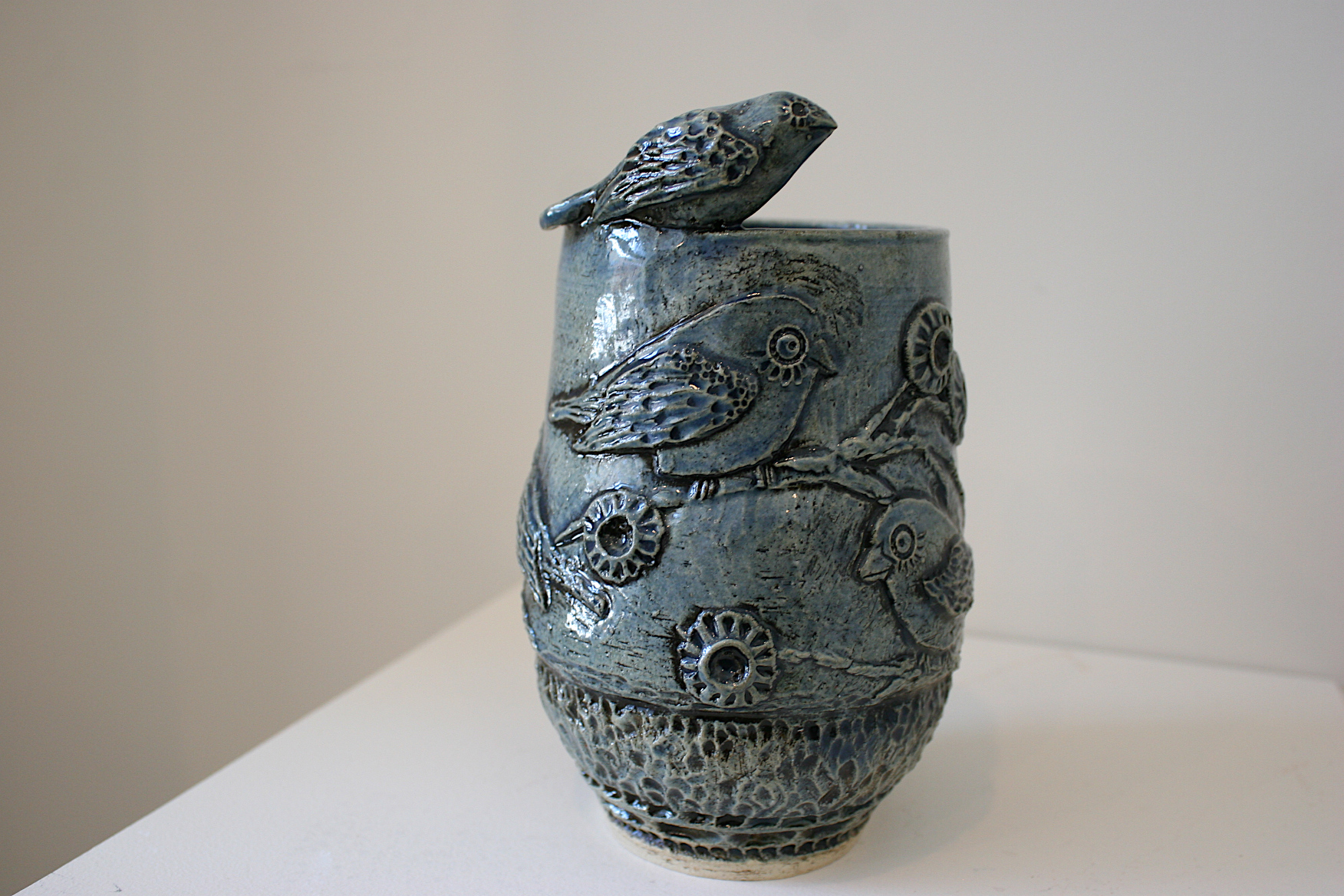
Tami Resler is a multi-talented artist. Here’s some of her pottery showcased in a gallery. (Minnesota Prairie Roots copyrighted file photo March 2021)
Likewise, Resler, a ceramics artist and educator at Shattuck-St. Mary’s School in Faribault, sparkles. I don’t think I’ve ever seen Tami without a smile. Her enthusiasm, I expect, will shine in expressive telling of holiday tales during the reading.
I encourage you, if you live in the area, to take a break from holiday preparations and settle into a chair at Books on Central this Wednesday evening. Relax. Delight in the comforts of a good story. Remember when you were read to as a child or when you read to a child. I hold fond memories of an elementary school teacher reading the “Little House” books by Laura Ingalls Wilder to our class each day after lunch. And I have read countless books to children, still do.
There is joy in books. And there is joy in listening to gifted storytellers who bring words to life with their voices.
FYI: Light refreshments will be served at this event, which is free and open to the public at 227 Central Avenue North, Faribault.
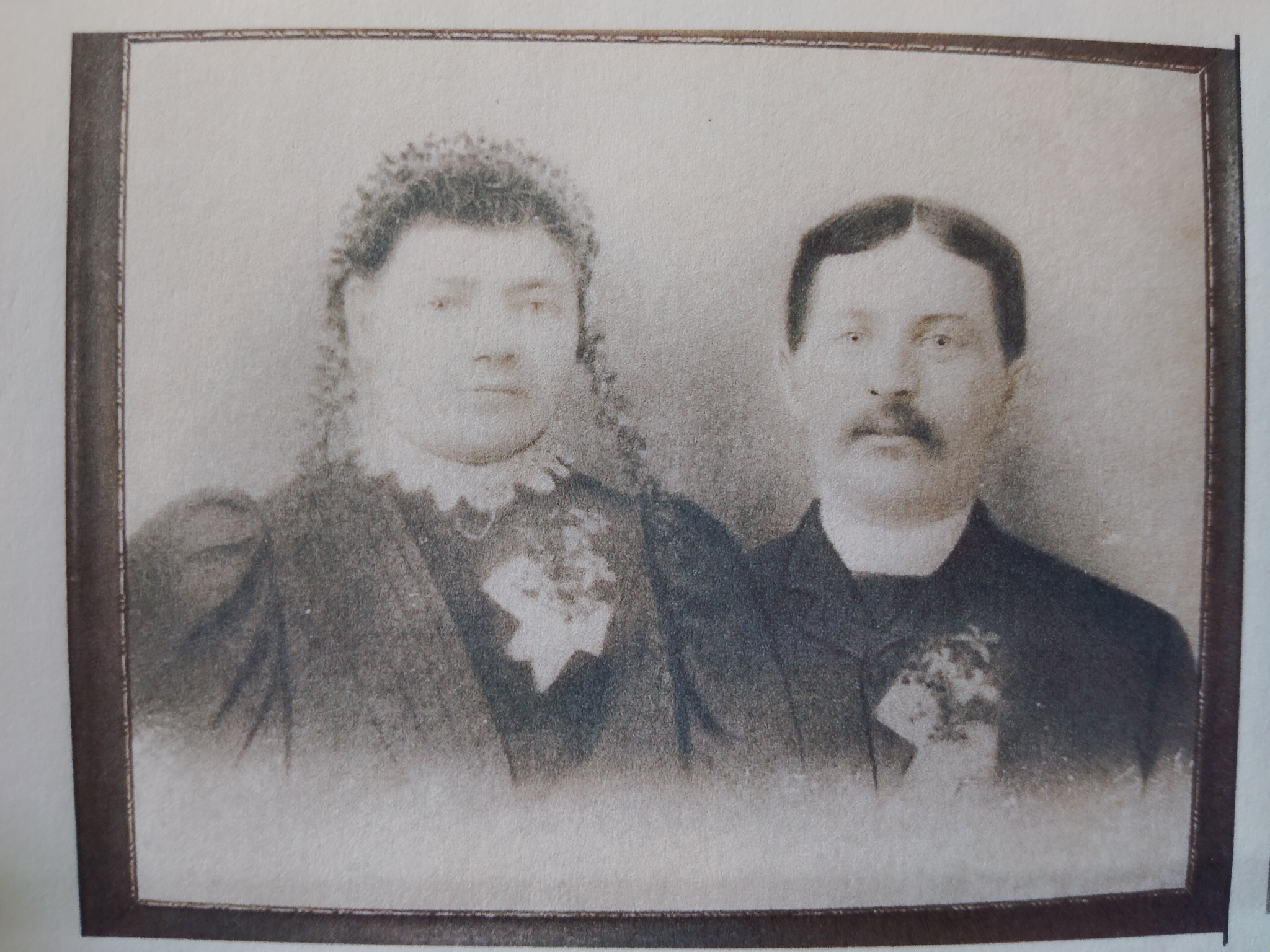
My great grandparents, Rudolph and Mathilda Kletscher, married in 1891. (Photo source: Kletscher Family Tree 2008 produced by Merlin and Iylene Kletscher)
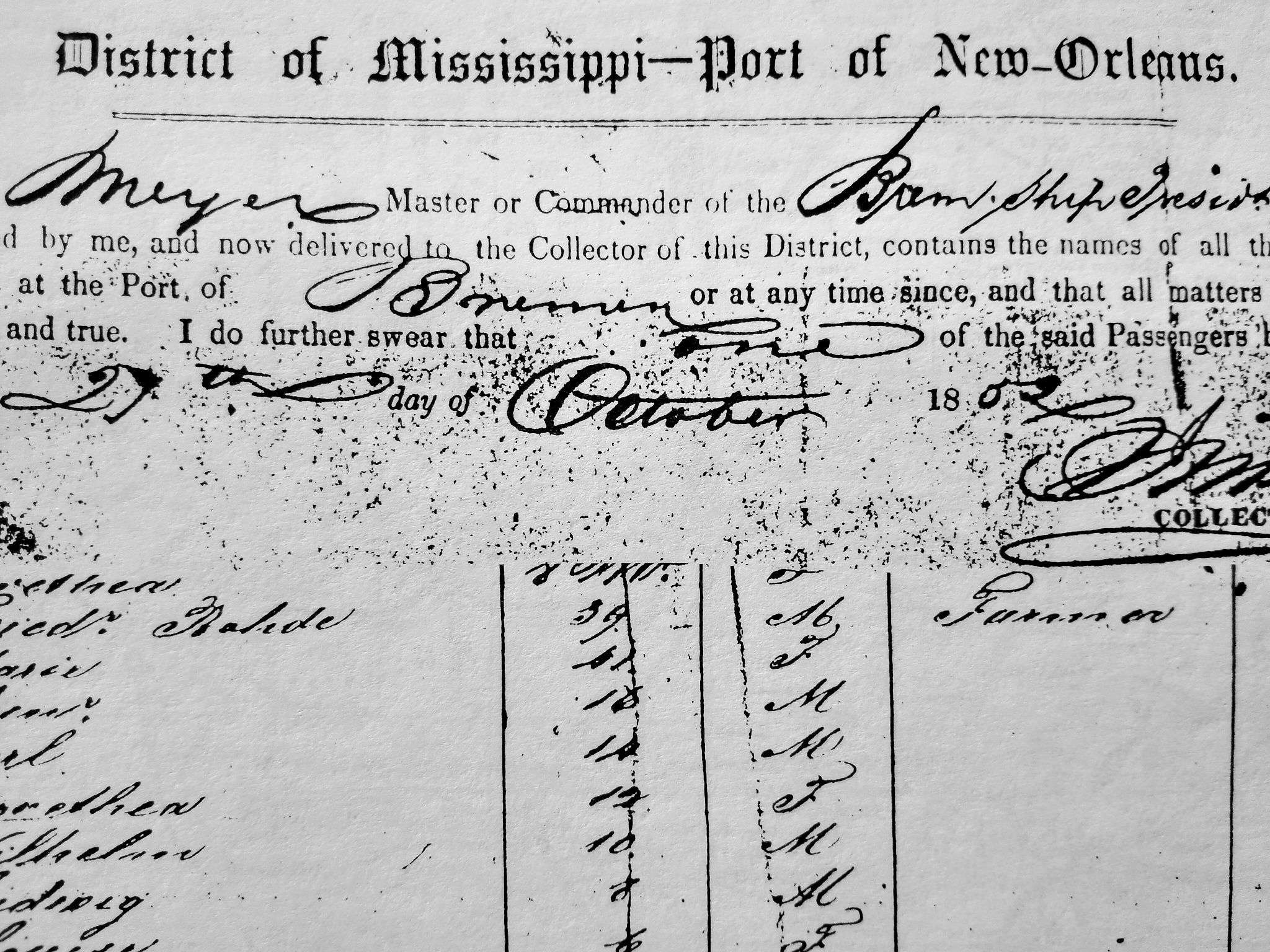
UNLESS WE ARE NATIVE AMERICANS, immigration is part of our family history. On my maternal side, Friedrich and Maria Bode arrived from Germany at the port of New Orleans in October 1852. They would settle in Illinois. Most of the family eventually moved to Minnesota. On my paternal side, my great grandfather, Rudolph Kletscher, landed in Baltimore from Germany in 1886, several years later journeying west to put down roots in southern Minnesota.
I pulled this information from pages of family history uncovered and compiled by family members who have researched our roots in Germany. I am grateful for their work, for the names, dates and places recorded for reference. Sometimes there are stories, or tidbits of stories. But mostly the research reveals documented facts only, not stories.
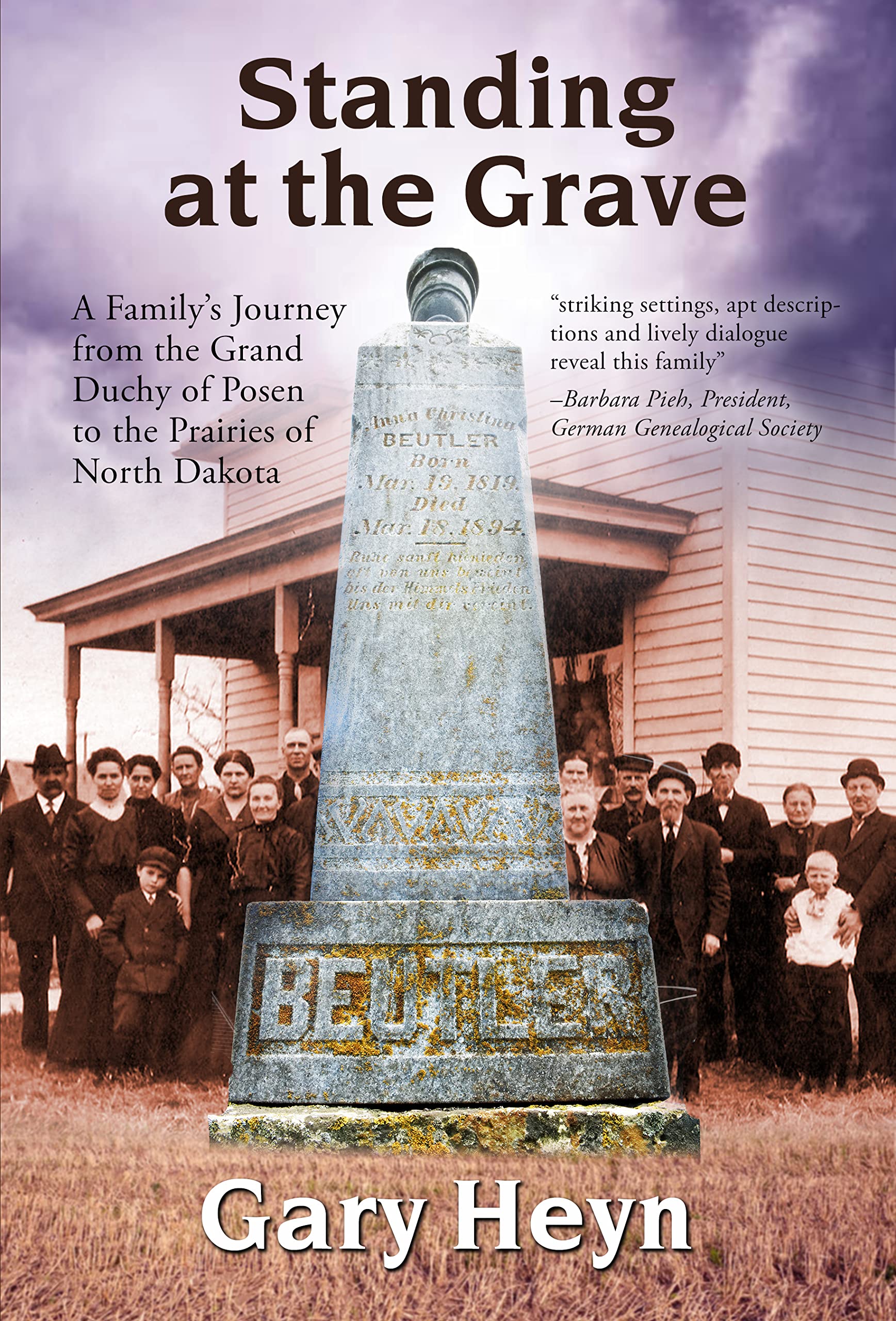
(Book cover sourced online)
It is the stories that interest me most, which explains my interest in reading Standing at the Grave—A Family’s Journey from the Grand Duchy of Posen to the Prairies of North Dakota by Minnesotan Gary Heyn. Books on Central in Faribault hosted Heyn on Thursday evening during a monthly literary event. I was among those in attendance, listening to Heyn read and then answer audience questions. I’d just finished reading his book about his ancestors who immigrated to America from Prussia (now Poland) beginning in 1867 shortly after the Civil War ended.
His ancestors could have been mine. Any of ours. Heyn took basic facts confirmed thorough research at the Minnesota History Center, church records, a Polish history website, old newspapers, even the National Weather Service and gleaned during several trips to Poland to form the foundation for his stories. The dialog and interactions are fictional slices of personal life in Prussia and then in America. Heyn’s characters really come alive when he reveals their fears, their worries, their hardships, griefs, challenges and more in intimate storytelling.
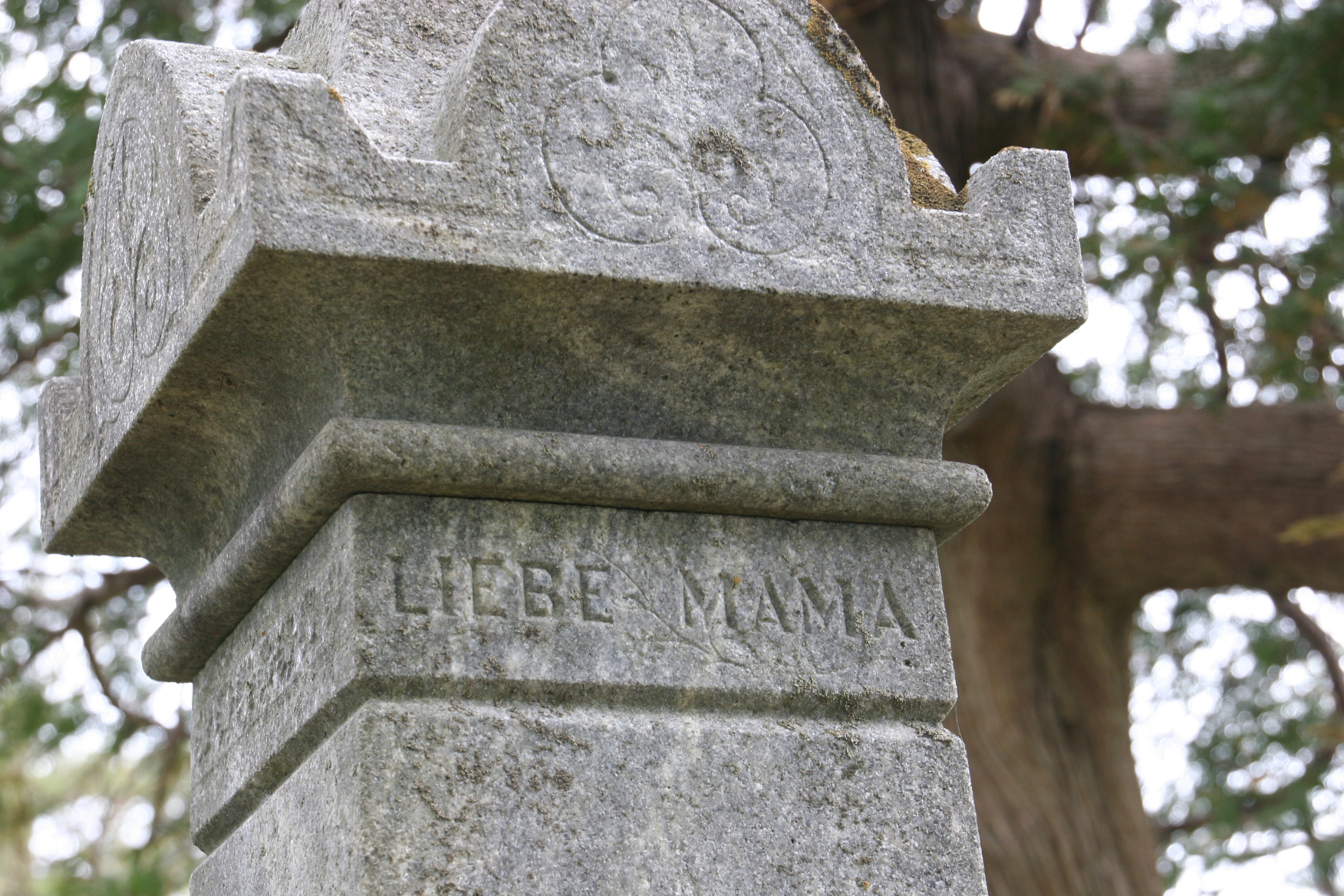
A tombstone in the Immanuel Lutheran Church Cemetery, Potsdam. The German word “LIEBE”means love in English. A Heyn family member is buried in this cemetery. (Minnesota Prairie Roots copyrighted file photo May 2022)
These are, at times, really hard stories. Of death by disease. Of death by accidents. Of death by suicide. Of death by botulism. I appreciate that the author doesn’t avoid tough topics. I understand the worries about weather and crop failure, vicariously stand at the graves of loved ones, recognize the depression a young mother experiences as she looks across the expansive North Dakota prairie, feeling isolated and alone.
But those difficult stories are balanced by the joys of births, of weddings, of the opportunity to claim land through the Homestead Act, to live and love and grow family in a new land rich in opportunity.
Main character, family matriarch Anna, follows her family to America many years after the first, eventually fulfilling her life-long dream of once again owning land, this time 160 acres in North Dakota. Most of the family found land in southern Minnesota, in the Rochester area where the author grew up and first heard the stories of his great grandmother. She lived with his childhood family. That sparked his interest in family history and genealogy, which, after his retirement as an accountant, led to writing Standing at the Grave.
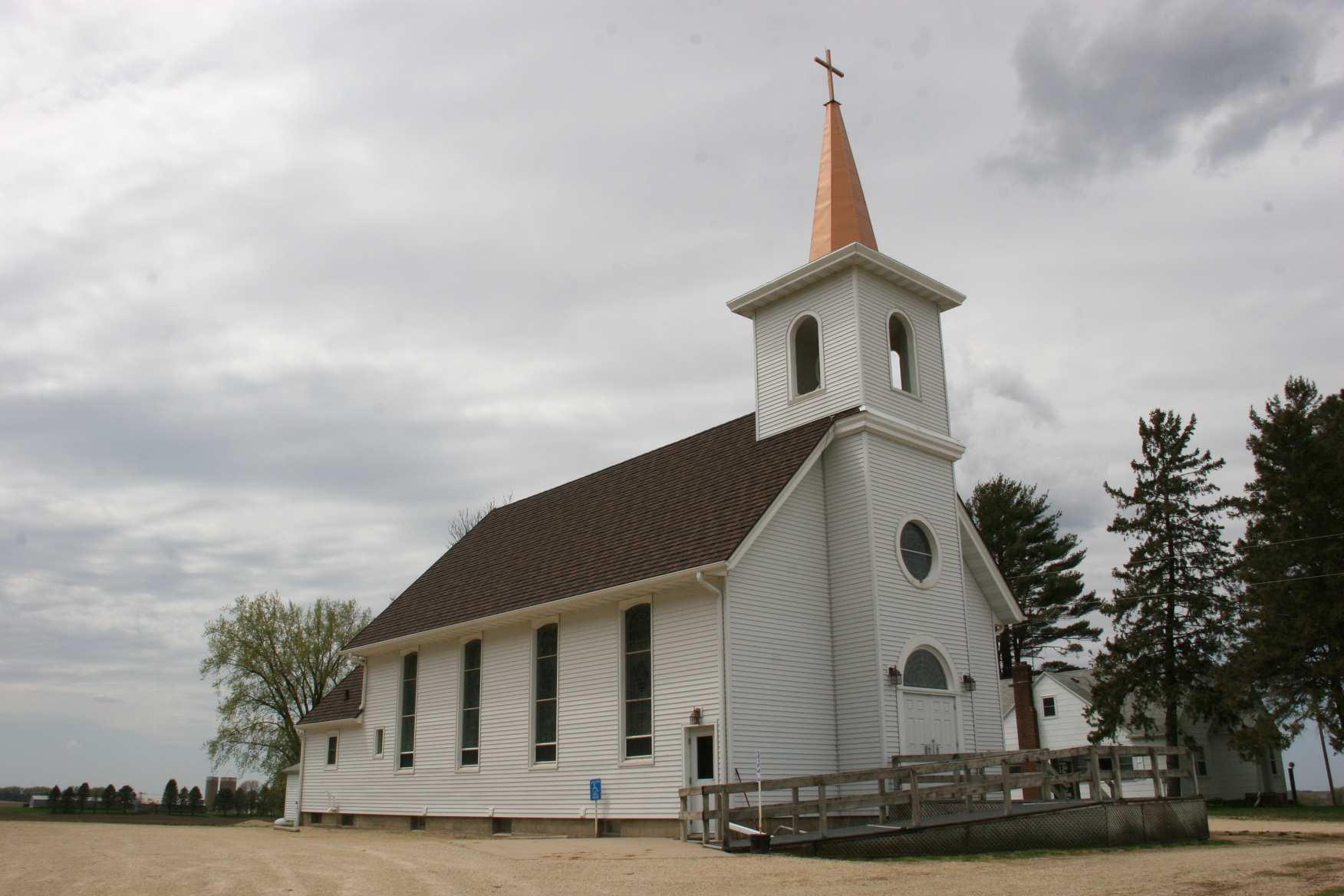
Immanuel Lutheran Church, Potsdam. (Minnesota Prairie Roots copyrighted file photo May 2022)
Southern Minnesotans, especially, will feel at home in places like Elgin, Grand Meadow, Pleasant Valley, Owatonna and more. I’ve even visited and photographed Immanuel Lutheran Church in Potsdam, where Anna stood on the front steps and scanned the countryside below the hilltop church. I’ve walked the cemetery, where Heyn’s ancestor, Willie, lies buried in an unmarked grave.
As much as I appreciate the storytelling in this book, I also appreciate its relevancy to today. Heyn family members new to America in the late 1800s are told to speak English, not German. Sound familiar? (My own mother, who died at age 89 in 2023, spoke German as her first language.) These newcomers to America felt like foreigners, often choosing to live among others from their homeland. Among those who shared their language, culture and customs, who liked bier, sauerkraut, Weihnachtsstollen and Glühwein.
But in times of challenges, Heyn reveals in one story, “…the citizens of this neighborhood, born all across the globe, banded together to help another working man.” That coming together of many nationalities repeats in his book, even as conflicts arise.
A passenger ship list from the port of New Orleans. (Source: The Bode Family book by Melvin & Lois Bode, 1993)
Heyn, in his writing, reveals the challenges, the dreams, the hopes, the resilience and resolve of his immigrant ancestors. These were strong individuals who relied on each other, their faith and their inner strength to cross a vast ocean for a new life in America. This is their story, but also a universal story of immigration, as relatable today as then.
This book helped me better understand those who came before me from Germany to America from a personal perspective. This book also reminds me of the struggles immigrants still face today in America, especially today.
WHENEVER AN AUTHOR appears locally to read from and discuss his/her book, I try to attend. I love reading and learning. I enjoy listening to other writers talk about the craft of writing as I read and write nearly every day.
Osterholm, an internationally-renowned epidemiologist and director of the University of Minnesota Center for Infectious Disease Research and Policy, is a familiar name, especially to Minnesotans. During the COVID-19 pandemic, he was tapped as an expert. I, for one, found him to be an invaluable and trusted source of information during the pandemic. His knowledge and research into infectious diseases stretches well beyond COVID, though.
My history with Osterholm goes back decades to the late 1970s when I was just out of college working at a small town Minnesota weekly newspaper, The Gaylord Hub. Osterholm came to Gaylord during a hepatitis outbreak at the local school. While details of that health issue have long faded, I recall that this highly-contagious disease was connected to a band teacher and musical instruments. I remember photographing Osterholm, also starting his career, and writing a news story about what was unfolding at the school.
The original coronavirus as depicted by the CDC in 2021. (Sourced online)
On November 17, Osterholm will focus on pandemics, sure to be an enlightening talk at this 7-8:30 pm first come first serve seating (doors open at 6 pm.) event at The Grand, 316 Washington Street in Northfield and hosted by local independent bookshop, Content Bookstore.
(Book cover sourced online)
While Osterholm will present in a large venue, author Gary Heyn will appear in a much smaller, intimate setting, the Rice County Area United Way’s Books on Central. The used bookshop is housed in a former jewelry store at 227 Central Avenue North, Faribault. Heyn, a retired corporate executive turned historian, genealogist and writer upon his retirement, will read from and talk aboutStanding at the Grave: A Family’s Journey from the Grand Duchy of Posen to the Prairies of North Dakota. This free literary event is set for 6 pm Thursday, November 20.
I’m about a third of the way through Heyn’s book and I can attest that it is a captivating read, the kind of book I don’t want to put down. It’s relatable when considering my German immigrant ancestors and also in the context of immigration issues today. Once I’m finished with the book, my husband will also be reading it. His ancestors, the Helblings, moved from Germany to then Russia (current day Ukraine) before journeying to America and a new life in North Dakota.
Insights into immigration, tracing family history and stories are always of interest. Heyn will read from the chapters of his book about three mothers from Gembitz Hauland, an historic German-Polish village, who were reunited in Steele County 18 years after sending their children to America. To type those words is enough to break my heart. I cannot imagine how difficult that must have been for those three mothers. But it happened. Over and over and over again.
I encourage you, if you live in my area, to attend these upcoming author talks. These are opportunities to learn via the expertise and creativity of those inspired to write.
THIS WEEK ONE OF MY FAVORITE area writers comes to downtown Faribault. He’s Owatonnan Chris Norbury, award-winning author of three books in the Matt Lanier mystery-thriller series and a stand alone middle school novel, Little Mountain, Big Trouble.
Books on Central, a used bookshop of the Rice County Area United Way, is hosting Norbury beginning at 6 p.m. Thursday, October 23, as part of its author series. Norbury will read and talk about his books and the craft of writing.
I’m excited to see Norbury again. We’ve chatted briefly several times when he was selling his books at events in Faribault. He is a genuinely nice guy whose writing I happen to love. As a writer, I recognize Norbury’s devotion to craft—the time, energy, inspiration and hard work it takes to write a book. I expect to learn more during his upcoming talk and the Q & A that follows.
My first introduction to Norbury came via his mysteries, all set in Minnesota with recognizable place titles like Castle Danger, Straight River and Dangerous Straits. Main character Matt Lanier is a southern Minnesota farm kid turned professional musician. I’m especially drawn to books set in Minnesota and with strong home-grown characters like Lanier.
(Book cover sourced online)
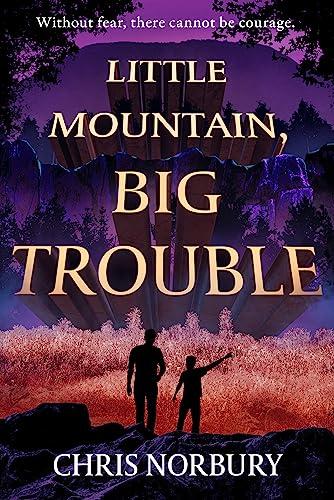
But it is Norbury’s novel for middle schoolers (and older, including adults), Little Mountain, Big Trouble, which really resonates with me. I encourage you to read my review of this book (click here) about 12-year-old Eduardo, who is bullied and eventually paired with a Big Brother, Russ. Like Russ, Norbury was a Big Brother for 20 years and today donates a portion of his book sales to Big Brothers Big Sisters of Southern Minnesota. I appreciate Norbury’s generous ongoing support of an organization which helps young people.
(Minnesota Prairie Roots copyrighted file photo)
Books on Central also gives back to community through its umbrella organization Rice County Area United Way. Book sale proceeds go to the United Way which in turn provides financial support to select nonprofits in the county. All book inventory is donated by community members and all staff at the used bookshop are volunteers. There’s so much to love about this Minnesota bookstore and Minnesota writers like Chris Norbury. Kindness, compassion and community center both as they embrace books and the craft of writing.
FYI: Books on Central, 227 Central Avenue North, Faribault, is open from 11 a.m.-5 p.m. Wednesday-Friday and from 10 a.m.-4 p.m. Saturdays and other times for special literary and other events.
This American Library Association poster anchors the Banned Books Week display at my local library. (Minnesota Prairie Roots copyrighted photo October 2025)
AS A WRITER, journalist and avid reader, I’m a firm believer in free speech. Never have I seen that right more threatened in America than it is today. It’s downright scary—efforts by the federal government to suppress voices (already occurring), promises of retribution (now being carried out), abuse of power (happening on so many levels) and much more that threatens our very freedoms, our democracy. I could go on and on.
But today I want to focus on Banned Books Week, which ends tomorrow. Thursday evening I gathered with a group of volunteers for an appreciation event at Books on Central in Faribault, a used bookshop founded by the Rice County Area United Way. While I don’t volunteer there (yet), I’ve blogged about the bookstore numerous times because I love books and I love that monies from BOC book sales help nonprofits in my area. We weren’t there to discuss banned books, though, but rather to celebrate volunteerism and this small bookshop which has become much-beloved by the Faribault community and beyond.
It was not lost on me as I sat there surrounded by books, listening to volunteers share their passion for this place and for books, that everyone who walks in the door is surrounded by choices. As it should be. Choose what you want to read or want to share with others.
A powerful and fitting quote for Banned Book Week displayed at Buckham Library. (Minnesota Prairie Roots copyrighted photo October 2025)
Yet, there are individuals, organizations, elected government officials and others who want to determine what we can read by banning books from libraries, schools and elsewhere. That, my friends, is censorship. And I’m not OK with that. If I find the content of a book to be offensive, then I can stop reading it or never open it in the first place. Likewise parents can monitor their child’s reading materials just as they would online content.
A sampling of books that have been banned in various places in America. These were included in a display at my library. (Minnesota Prairie Roots copyrighted photo October 2025)
In the words of the American Library Association’s 2025 Banned Books Week theme, “CENSORSHIP is so 1984.” That’s a reference to George Orwell’s prophetic 1949 novel, 1984, about a totalitarian government. That’s a simplistic summary. But the book is particularly relevant to today. I intend to check it out from my library to reread.
Bracelets available at Buckham Library support the RIGHT TO READ. (Minnesota Prairie Roots copyrighted photo October 2025)
After the bookshop appreciation event Thursday evening, I stopped at Buckham Memorial Library to see if staff had created a Banned Books display as they have in the past. They did. After I read the information and looked at a sampling of books that have been banned (not from my library), I grabbed a green bracelet imprinted with this message: CENSORSHIP is so 1984. READ FOR YOUR RIGHTS.
I will continue to read. I will continue to write. And I will continue to embrace, support and advocate for free speech. I have a voice. I refuse to be silenced.
A look through a garden kaleidoscope at The Paine Art Center & Gardens in Oshkosh, WI. (Photo courtesy of Miranda Boyd)
IN SOME WAYS, kindness resembles a kaleidoscope. It’s ever-changing, surprising and delightfully-beautiful. So is music. Combine the two, and you have a harmony of kindness.
A harmonica and instructions given away recently following at a concert in Faribault. (Minnesota Prairie Roots copyrighted photo July 2025)
Attendees at a recent blues concert in Faribault’s Central Park were extended a kindness by the Minnesota Blues Society via the gift of a free harmonica and a short lesson in playing techniques. The Everett Smithson Band had just completed its performance when folks gathered in the park’s center for the give-away. I grabbed two harps (a synonym for harmonica) for my elementary-aged grandchildren, but didn’t stick around for the lesson. An interested group of concert-goers, though, circled Smithson, a Minnesota Blues Society Hall of Fame inductee, for instructions.
Decades ago as a child, I had a metal toy harmonica, with not a clue how to play it. My attempts at music were more noise than anything. Yet here I was, many years later in the presence of a professional harmonica player and vocalist willing to teach a bunch of strangers harmonica basics through the Blues Society’s “Harmonica Lessons for All Ages” program. The group, with a mission in part of promoting blues music in Minnesota, has given away more than 500 harmonicas. That’s a whole lot of kindness spread to music lovers across the state, including right here in Faribault.
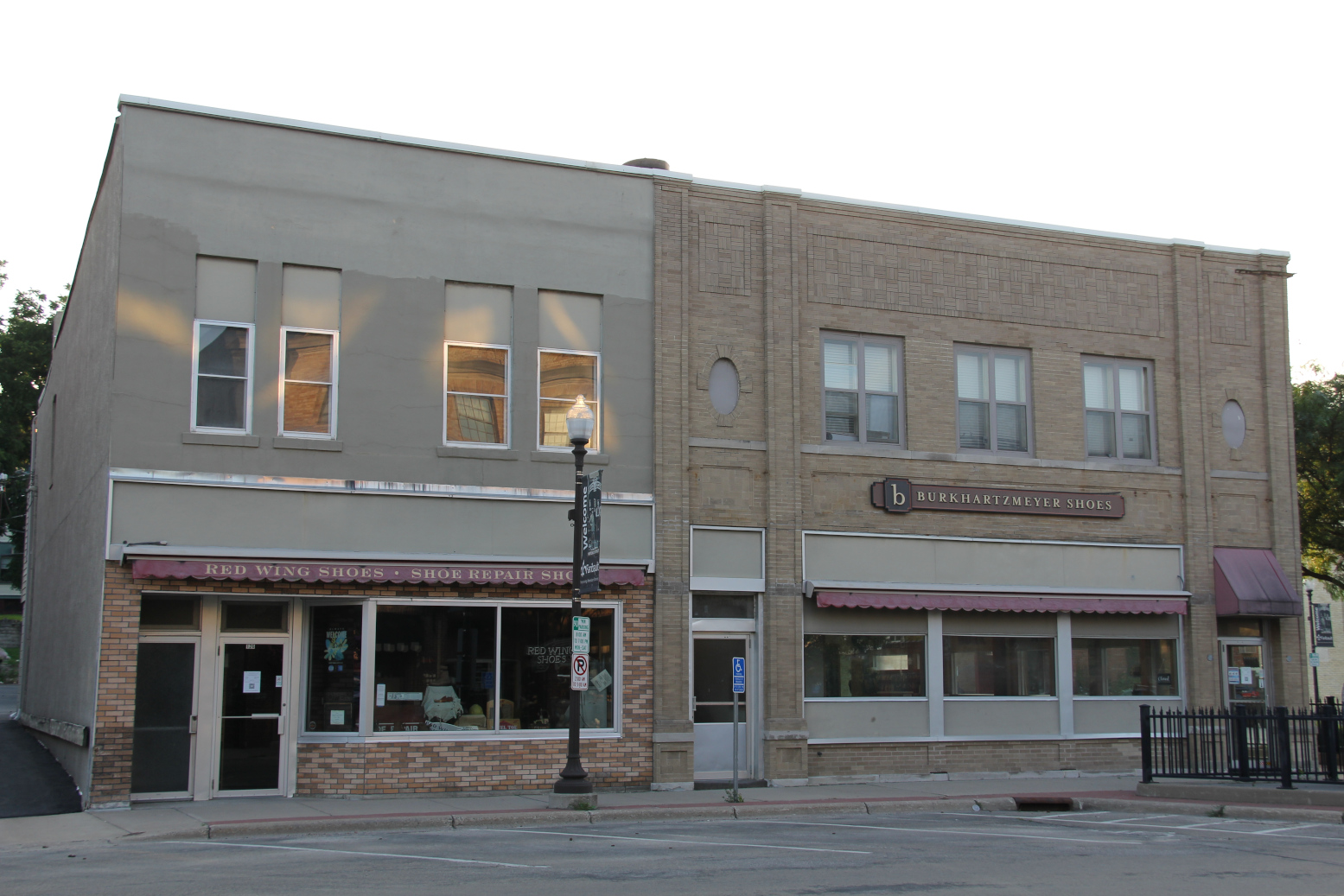
Burkhartzmeyer Shoes, in business since 1949. (Minnesota Prairie Roots copyrighted photo July 2025)
KINDNESS IN A SHOE STORE
It was during a previous concert in the same Faribault park that I once again witnessed kindness, this time in the words of a 10-year-old, the daughter of a friend. I don’t recall how the subject turned to shoes. But this young girl, who’d been cartwheeling across the grass and playing Frisbee and kick ball with her sister and friends, declared that her favorite store is Burkhartzmeyer Shoes. That’s a third-generation family-owned shoe store and repair shop in Faribault.
Now when a kid tells you they like a shoe store better than a certain Big Box retailer (which shall remain unnamed), you take notice. Turns out Bruce at Burkhartzmeyer Shoes allowed my young friend entry to the shoe storage space behind the curtains. She was impressed by all the shoes in the back room and by the free sucker you get whenever you buy a pair of shoes. Oh, and by the fact the Burkhartzmeyers know your shoe size just by looking at your feet.
So here I was in the park listening to a story about a kind shop owner who left such an impression on a 10-year-old that she was now promoting “Shop Local” without even realizing it. Kindness in action repaid with kind words.
Books on Central is located along Central Avenue in downtown Faribault. (Minnesota Prairie Roots copyrighted photo 2024)
KINDNESS IN A BOOKSHOP
Another shop in Faribault, this one open not even two years, also excels in exceptional customer service and kindness. Last week, when the grandkids were staying with us, we popped into Books on Central, a used bookstore run by Rice County Area United Way. All proceeds benefit non-profits which the local United Way supports. My granddaughter, who is very much in to dragons, was looking for a dragon book she hadn’t yet read. There were none to be found despite the best efforts of the volunteer staff and myself to locate one.
The next day, though, I received an email from volunteer Dave Campbell that the graphic novel, The Dragonet Prophecy, was just donated. Did I want it for my granddaughter? Izzy, who previously wanted nothing to do with graphic novels, quickly said, “Yes.” Did I mention she loves dragons?
Dave said he would hold the book for me. If not for his wife, Jeanne, who was volunteering on the day we shopped at Books on Central, the Wings of Fire graphic novel would have been processed, shelved and quickly sold. It’s a popular series. But Jeanne remembered Izzy’s dragon interest and, in this act of kindness, a girl who loves to read now has one more dragon book in her collection.
Kindness exists everywhere. I saw it in a harmonica give-away. I heard it in the story of a 10-year-old praising a local shoe shop. And I received it in a book held for the granddaughter I love, the girl I want to live and grow and thrive in a world of kindness.
POETRY, WHEN READ ALOUD, is, in many ways, like music. It presents one way on paper. But read a poem aloud, and it becomes a song. Music with rhythm, beat and emotion. Vocal intonations carry a poem to melodic heights.
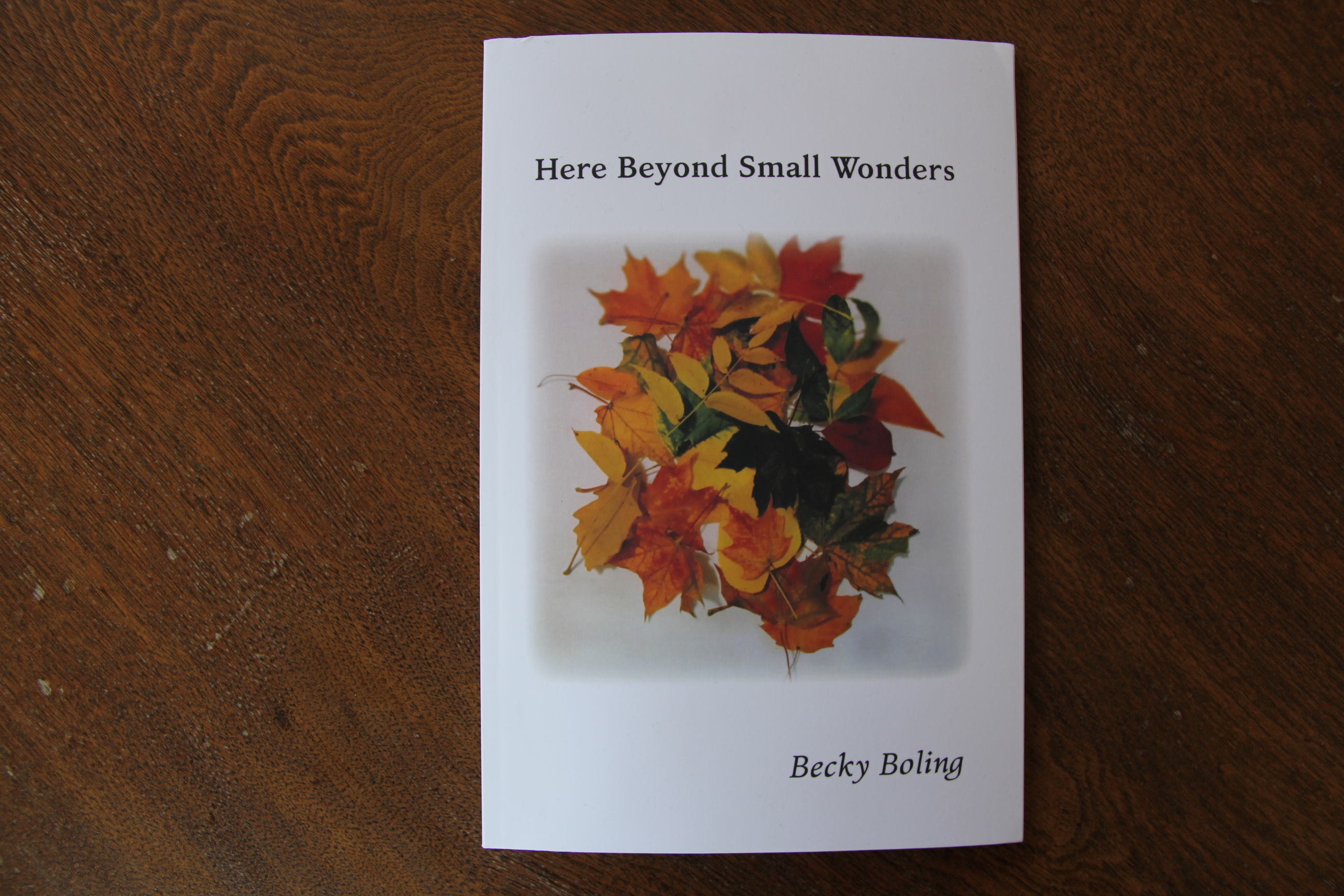
Becky Boling’s recently-published collection of her poems. (Minnesota Prairie Roots copyrighted file photo)
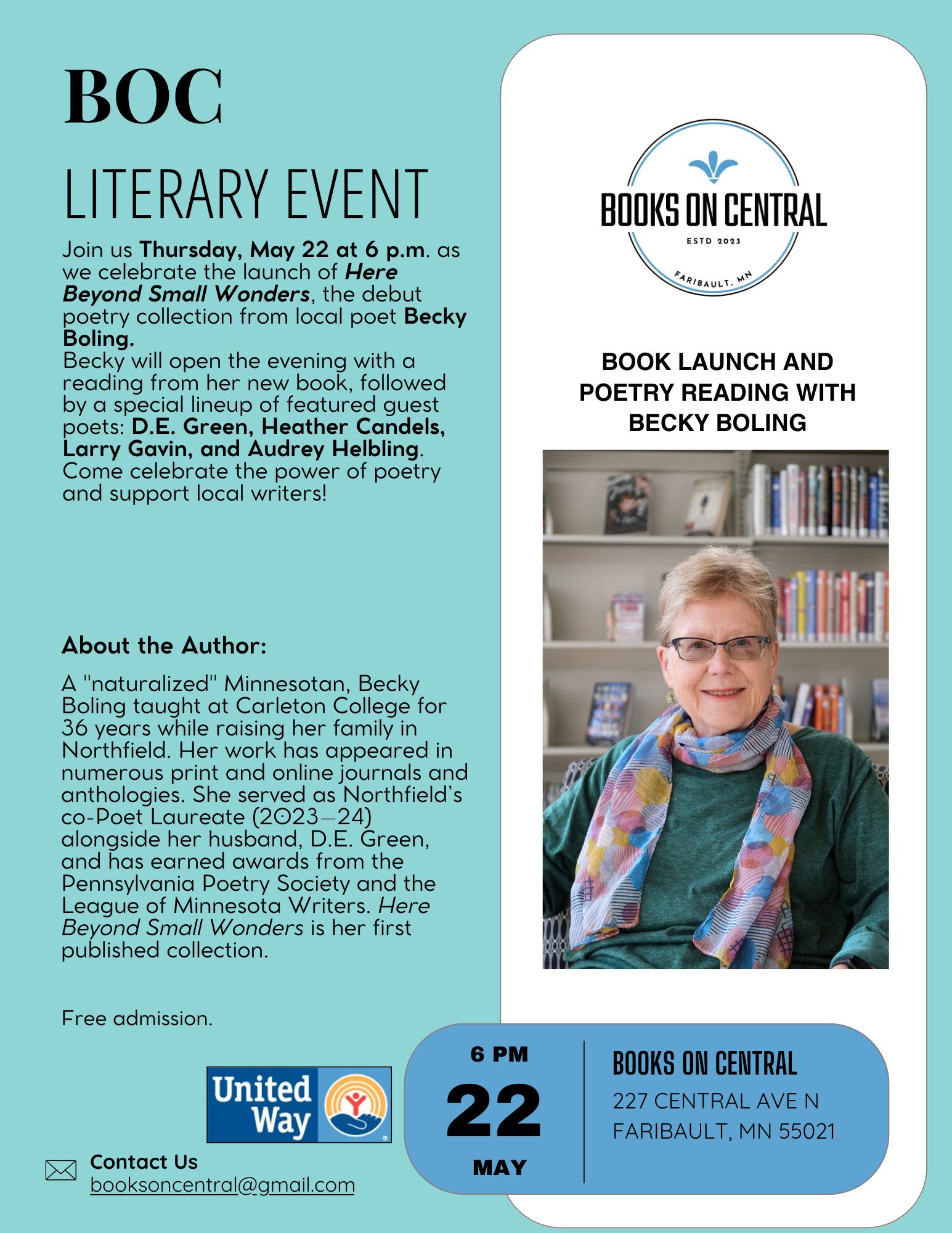
At 6 p.m. Thursday, May 22, the music of poetry will fill Books on Central in Faribault as Becky Boling reads from her first anthology, Here Beyond Small Wonders. Recently published by Finishing Line Press, this collection features detail-rich poems that often focus on ordinary subjects. It’s signature Boling, who is a prolific poet, served as Northfield’s co-Poet Laureate, and is retired from teaching Spanish and Latin American Literature at Carleton College in Northfield.
I love Boling’s writing. Her poems resonate with me in an everyday life kind of way. She has a visually-strong writing style—as most poets do—coupled with emotion-evoking poetry that prompts memories, questions, deeper thinking.
(Literary Event promo courtesy of Books on Central)
Boling has invited four other poets to join her at Thursday’s reading. Those include her husband, D.E. Green, also an accomplished poet; Northfield poet Heather Candels; Faribault poet Larry Gavin; and me. I’m honored to join this gifted group of writers in reading our poems aloud. I will read right after Boling.
I’ve previously listened to all of them read, so I can vouch for how much I’ve enjoyed hearing them. Gavin, especially, has a rich radio voice that makes me want to settle in and let his voice pull me into his writing.
Now, as I’m preparing for this Thursday evening event, I’m paging through the many books in which my poetry has published, selecting the poems I want to read during my allotted five minutes. Then I’ll practice reading those poems aloud, using my voice to create poetic music.
This used bookshop is located in the heart of downtown Faribault along Central Avenue. (Minnesota Prairie Roots copyrighted file photo)
FYI: Books on Central, 227 Central Avenue North, Faribault, hosts periodic free literary events to celebrate authors and to draw people into this volunteer-run used bookstore operated by Rice County Area United Way. All proceeds benefit select nonprofits in the county. It’s a beautiful small space (complete with a centering chandelier) housed in a former jewelry store.
This photo taken at 4 p.m. Friday, March 28, shows the unusually high March temperature in Faribault. (Minnesota Prairie Roots copyrighted photo March 2025)
TWENTY-FOUR HOURS AGO, the temperature registered 81 degrees on the State Bank of Faribault sign in our historic downtown. At 4 p.m. Saturday, the temp read 38 degrees. That’s a 43-degree plunge. Such is the fickle nature of weather in southern Minnesota. One day summer. The next day winter.
Let’s talk that one day of summer. The two oldest of our three grandkids were here for a sleep-over Thursday into Friday afternoon. We took full advantage of the unseasonably warm temps with lots of time outdoors. Who wants to stay indoors when the sun is shining, the breeze is blowing and it feels like summer? None of us.
So out we went Friday morning, first to hang laundry on the clothesline, which didn’t interest Izzy, almost nine, and Isaac, six, quite as much as I had hoped. “We have a dryer,” Izzy informed me as she handed me clothespins. So does Grandma. But Grandma prefers hanging laundry outdoors, under the sky, under the sun, in the wind.
This looks just like the caterpillar found in our backyard on Friday morning. (Minnesota Prairie Roots copyrighted file photo)
A CATERPILLAR, SQUIRRELS, BRAMBLES & A ROCK
Time outdoors led to discoveries, like the woolly caterpillar Izzy found in the backyard and which she insisted was poisonous. I insisted it was not while using a dried maple leaf and a piece of bark to move the fuzzy ball to a safe place in a flowerbed. She worried and warned that I was not to touch the poisonous caterpillar. “Izzy, it’s not poisonous,” I repeated. I’m not sure she believed me.
We noted all the holes dotting the backyard, spots where squirrels dug for hidden walnuts. Empty shells littered the dormant lawn.
The previous evening, Grandpa led Izzy and Isaac up the hill through the woods behind our house. It’s a bit of a climb past fallen branches and brambles. But they were adventurous, determined to make it to the top, to Wapacuta Park. There they found the playground equipment rather scary—Grandpa concurred—but a gigantic rock a whole lot of fun as they scampered atop it. This is the same mammoth rock their mom, aunt and uncle climbed as kids. Life come full circle.
The Fleckenstein Bluffs Park playground. (Minnesota Prairie Roots copyrighted file photo)
TIME TO PLAY & TIME TO ASK SERIOUS QUESTIONS
Late Friday morning we headed to Fleckenstein Bluffs Park near downtown to a playground the kids found much more to their liking. Another rock (albeit fake) to climb, a towering climbing apparatus, musical instruments, sand diggers, mini spinning seats and more, including fossils imprinted in the fake rocks.
We spent time, too, on an overlook above the Straight River. There the grandparents had to answer questions about homelessness given the blue tent pitched alongside the river. “Why do they live in a tent?” Sometimes adults don’t have all the answers. But we tried. Izzy worried that the police were coming to arrest those living in the tent when she saw a cruiser driving down the bike trail. No, Izzy, they’re not going to arrest them.
Beavers have given up chewing on this tree along the Straight River, we discovered during a walk on Friday. (Minnesota Prairie Roots copyrighted file photo)
BEAVERS, GEESE, A HERON & MEMORIES
And so we followed the Straight River Trail, noting trees chewed by beavers, a sandbar in the river, chimes on an apartment balcony clinking in the wind, a pair of geese moving from land to river, a magnificent blue heron flying low above the water…then those geese again, swimming.
Izzy stopped to pluck stones from alongside the trail, dropping them into an empty yogurt cup she’d brought with her. We walked sometimes hand-in-hand, Isaac and Grandpa well ahead of us, also clasping hands. This time together in the outdoors is the stuff of memories, of learning, of connecting with nature.
This used bookshop in Faribault is a must-stop when the grandkids visit. (Minnesota Prairie Roots copyrighted file photo)
DRAGONS, TORNADOES & THE BIG WIDE WORLD
On the drive home, we stopped at Books on Central, a used bookstore run by the Rice County Area United Way. We like to take the kids there whenever they are in town. Izzy found a fantasy book about dragons she’s read, but wanted to own. And a nonfiction book about tornadoes. Isaac was looking for atlases. Jeanne, who volunteers at the bookshop, found two, as yet unprocessed, atlases in the back room. Isaac was happy, promptly sitting down to page through the books. We also chose a book for their baby cousin, Everett, in Wisconsin.
And so that was our day together. A time of laundry hanging, backyard observing, playing, walking and enveloping ourselves in nature. But above all, it was time for us as grandparents to be with our beloved grandchildren, simply enjoying an unseasonably warm late March day in southern Minnesota, “poisonous caterpillar” and all.
THEY ARE SEASONED WRITERS, also well-seasoned in life. They are Becky Boling, Heather Candels, D.E. Green, Steve McCown and Julie A. Ryan, collectively The Poets of the Northfield Public Library. And at 6 p.m. Thursday, September 5, they will gather at Books on Central, 227 Central Avenue North, Faribault for a poetry reading followed by a Q & A.
If you happen to be one of those people who claim a dislike of poetry, I encourage you to reconsider and come to this literary event. The poetry this group will read comes from their recently-published anthology, We Look West. Their poems are down-to-earth relatable. Trust me. I’ve read this 116-page book, loved it and reviewed it. (Click here to read my review.)
The writing within the pages of this volume are stories of life, in poetry form. Poems that transition from east to west, from the sunrise to the sunset of our lives.
They’re written by poets with extensive publishing credentials. Four have taught at the high school or college level. The fifth comes from a strong literary and visual arts background. Two are Pushcart nominees.
I’ve met Boling and Green and read poetry with them at an event at Mercado Local in Northfield. They are a wonderful married couple, comfortable and friendly. No stuffy poets here. And no stuffy poems. Just plain good writing that moves the spirit, fills the soul, imprints upon the heart.
I look forward to hearing The Poets of the Northfield Public Library read selected poems and then share the stories behind their poetry. As a poet, I’m always interested in learning what inspired a particular poem.
And if you have questions, ask away. Writers welcome engagement as they share their passion for poetry, the craft of writing.
FYI: Books on Central is a second-hand book shop run by the Rice County Area United Way and staffed by volunteers. Proceeds from the bookstore benefit organizations and nonprofits throughout the county.
Jeff Jarvis shows an artifact while talking about the Dakota. (Minnesota Prairie Roots copyrighted photo April 2024)
“WE’RE ALL CONNECTED. We’re all one.” Those closing words by local historian and artist Jeff Jarvis as he ended an hour-long presentation on “The Faribault Dakota” at Books on Central Thursday evening resonate. I’ve long been geographically-connected to Indigenous Peoples, first in my native Redwood County and now in Rice County. But Jarvis’ definition of connection stretches well beyond geography to the connection we all share simply via our humanity.
Jarvis, who is also an artist and graphic designer, handed out this mini guidebook at Thursday’s presentation. (Minnesota Prairie Roots copyrighted photo April 2024)
Jarvis spoke to a standing room only crowd packed into the Rice County Area United Way used bookstore on Faribault’s Central Avenue. The third speaker in the popular literary event series hosted by the bookshop since its fall opening, his talk was more history than literary. Interest ran high.
My interest in the Dakota traces back to the southwestern Minnesota prairie, where I grew up between the Upper and Lower Sioux Indian Reservations. Today the word “community,” references these homes of the Mdewakanton Dakota. When I moved to Rice County 42 years ago, I moved onto land once inhabited by the Wahpakute Dakota. But it wasn’t until I listened to Jarvis speak that I learned even more about the place I initially called home on the southeastern tip of Cannon Lake west of Faribault.
Long before fur traders and settlers moved to this region of southern Minnesota, the Dakota called this land home, typically living along the area’s lakes and rivers, including the Cannon. I knew this; I’ve attended many presentations on the Dakota by local historians. But I wasn’t aware that the former Ackman Store, the rental home where Randy and I lived for 2 ½ years after our 1982 marriage, was near the site of a trading post opened by fur trader and town founder Alexander Faribault.
Native American artifacts found in Rice County and displayed at the Rice County Historical Society. These are not the artifacts shown by Jarvis. (Minnesota Prairie Roots copyrighted photo 2024)
Jarvis asked me after his presentation whether I saw ghosts while living there. I didn’t. And in a conversation with Lou Ackman, who grew up and lived along Cannon Lake and loaned Indian artifacts for Jarvis to show Thursday evening, I learned that people often searched the Ackmans’ farm fields for artifacts.
When Randy and I moved into Faribault, our geographic connection to Indigenous Peoples continued. We purchased a house below Wapacuta (sic) Park, where we still live today. It was upon this now park land that the Dakota placed their dead, (wrapped in buffalo robes or blankets) upon scaffolding until later burial. Jarvis also shared that the Dakota sometimes suspended wrapped bodies from trees to catch the spirits in the windy hilltop location prior to burial 1-2 years later. I’d never heard this prior to Thursday.
Peace Park, an unmarked Dakota cemetery near Buckham Memorial Library. (Minnesota Prairie Roots copyrighted file photo September 2022)
But I was aware that Peace Park, a triangle of land near Buckham Memorial Library, is an Indian burial grounds. Jarvis termed it an unfenced and unrecognized cemetery marked by a faith-based WW II monument and nothing indicating this is sacred ground of the Dakota. Several bodies were discovered buried there in 1874, he said, not wanting to delve deeper into that troubling topic at Thursday’s event.
Jarvis covered a lot more in his one-hour presentation. Most I knew. Some I didn’t. I always appreciate learning local history, especially about the 300-400 Dakota who relocated from Cannon Lake to live in elm bark huts and teepees in the area along the Straight River from Division Street to the wastewater treatment plant.
The community of Faribault, Jarvis said, had/has a lot of color and was/is “a beckoning place” to many peoples. He referenced the Indigenous Peoples of yesteryear and the immigrants of today. “We’re all connected. We’re all one,” Jarvis said. He’s right.
One of two rainbows arches over Faribault Thursday evening. (Copyrighted photo by Randy Helbling April 2024)
As I stepped outside the bookshop after Jarvis’ talk, cloudy skies opened to reveal stunning double rainbows—a symbol of promise and of hope. A symbol that we all live under the same sky, that we’re all connected.
A Banned Books Week commentary on free speech October 10, 2025
Tags: 1984, America, American Library Association, Banned Books Week, books, Books on Central, Buckham Memorial Library, censorship, commentary, freedom of speech, George Orwell, libraries, opinion, reading, Right to Read
AS A WRITER, journalist and avid reader, I’m a firm believer in free speech. Never have I seen that right more threatened in America than it is today. It’s downright scary—efforts by the federal government to suppress voices (already occurring), promises of retribution (now being carried out), abuse of power (happening on so many levels) and much more that threatens our very freedoms, our democracy. I could go on and on.
But today I want to focus on Banned Books Week, which ends tomorrow. Thursday evening I gathered with a group of volunteers for an appreciation event at Books on Central in Faribault, a used bookshop founded by the Rice County Area United Way. While I don’t volunteer there (yet), I’ve blogged about the bookstore numerous times because I love books and I love that monies from BOC book sales help nonprofits in my area. We weren’t there to discuss banned books, though, but rather to celebrate volunteerism and this small bookshop which has become much-beloved by the Faribault community and beyond.
It was not lost on me as I sat there surrounded by books, listening to volunteers share their passion for this place and for books, that everyone who walks in the door is surrounded by choices. As it should be. Choose what you want to read or want to share with others.
Yet, there are individuals, organizations, elected government officials and others who want to determine what we can read by banning books from libraries, schools and elsewhere. That, my friends, is censorship. And I’m not OK with that. If I find the content of a book to be offensive, then I can stop reading it or never open it in the first place. Likewise parents can monitor their child’s reading materials just as they would online content.
In the words of the American Library Association’s 2025 Banned Books Week theme, “CENSORSHIP is so 1984.” That’s a reference to George Orwell’s prophetic 1949 novel, 1984, about a totalitarian government. That’s a simplistic summary. But the book is particularly relevant to today. I intend to check it out from my library to reread.
After the bookshop appreciation event Thursday evening, I stopped at Buckham Memorial Library to see if staff had created a Banned Books display as they have in the past. They did. After I read the information and looked at a sampling of books that have been banned (not from my library), I grabbed a green bracelet imprinted with this message: CENSORSHIP is so 1984. READ FOR YOUR RIGHTS.
I will continue to read. I will continue to write. And I will continue to embrace, support and advocate for free speech. I have a voice. I refuse to be silenced.
© Copyright 2025 Audrey Kletscher Helbling