Minnesota Prairie Roots

Writing and photography by Audrey Kletscher Helbling

Musings of a Baby Boomer upon touring a museum exhibit in Moorhead November 15, 2012

I’M WONDERING IF the rest of you baby boomers out there feel as I do, that youthful years have vanished, poof, just like that.

I need only look in the mirror to see the patches of ever spreading gray (time for a dye, again), the lines and creases and sagging skin to realize that Age has crept into my life to the point that I no longer can deny her presence.

Age has also shoved me into the corner of those who are overwhelmed by technology. It’s like the boxing gloves never come off as I resist, rather than embrace, technological changes. No Facebook or Twitter for me. No PayPal or paying bills online. And what is a smart phone and an iPad?

I am not joking, people. I need to enroll in a Technology 101 course or persuade the 18-year-old son, who is pursuing a degree in computer engineering, to tutor me.

Interestingly enough, this musing relates to a recent tour of  The Historical and Cultural Society of Clay County exhibit, “The BOOM 1945-1960 in Clay County,” at the Hjemkomst Center in Moorhead.

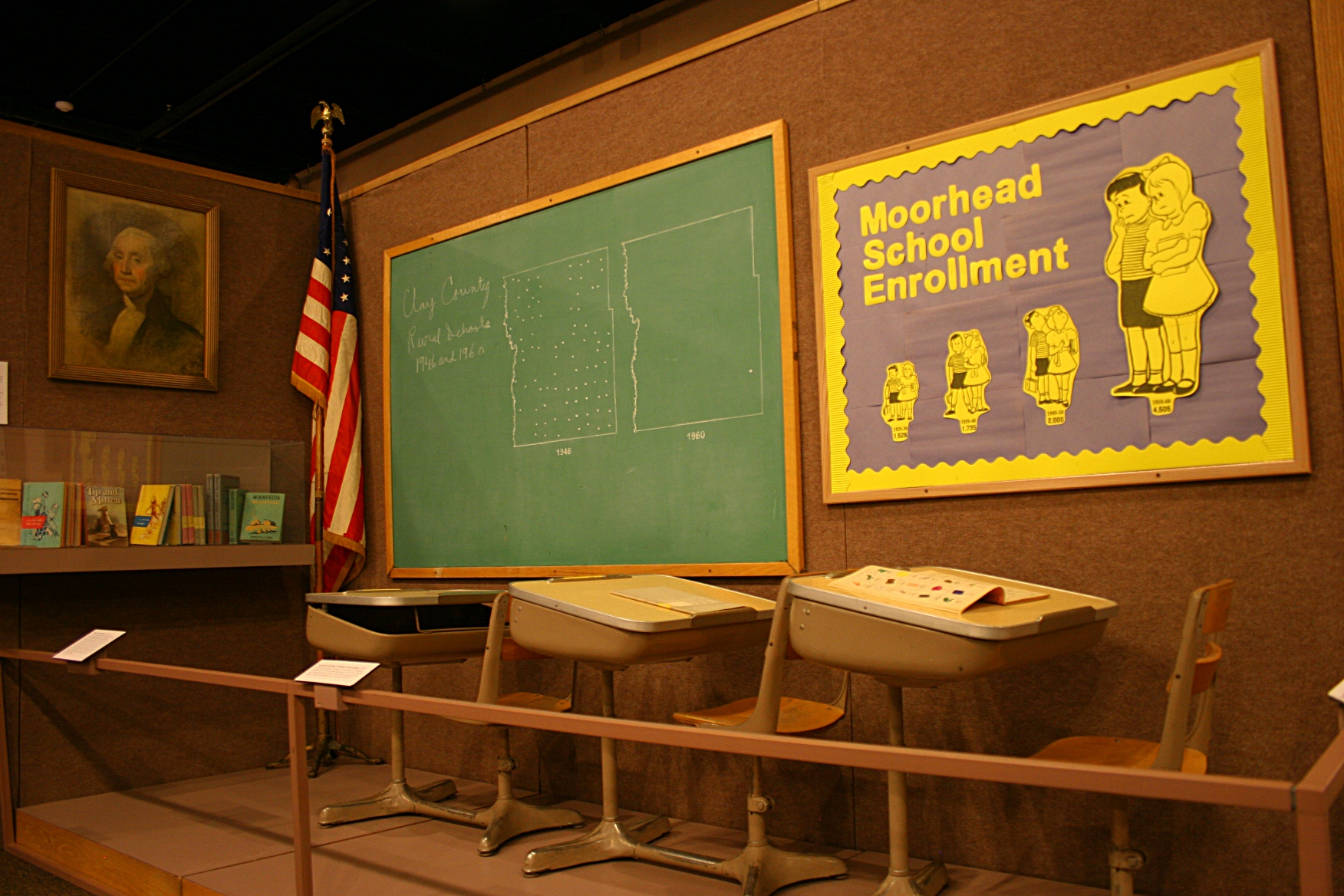
While I was only a few years old at the end of that boom period, much of what I saw in that exhibit, including the outhouse, looked pretty darned familiar:

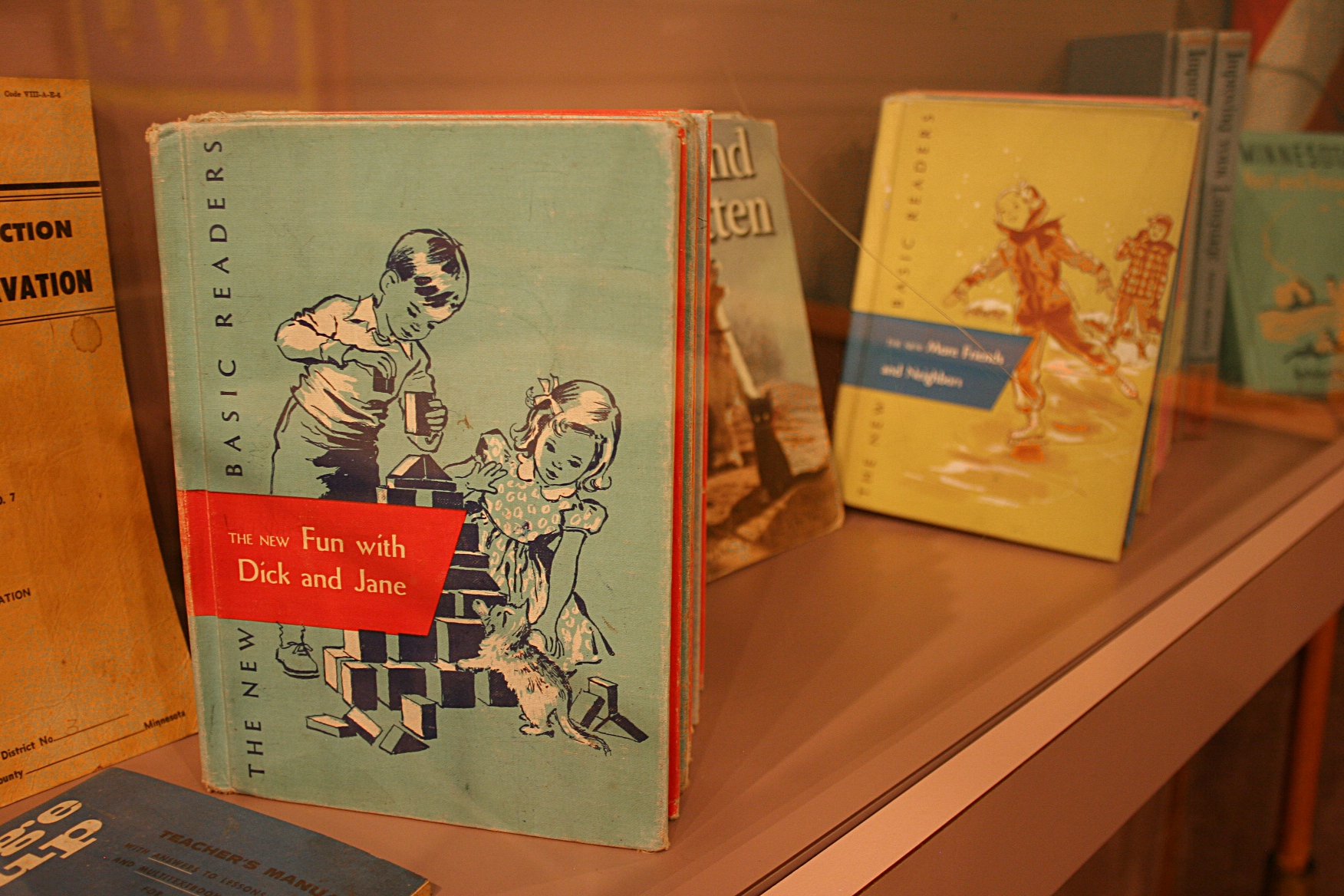
These books are shelved in a mock boom era one-room schoolhouse display. I own that exact Dick and Jane book.  I love Dick, Jane, Sally, Tim, Spot and Puff. They taught me to read. Oh, I mean my teacher taught me to read via that book series.

Fun with Dick and Jane book. Check.

So familiar to me, desks just like I sat in through my years at Vesta Elementary School. The blackboard, though, is not correct. Ours was black, not green.

Rows of school desks. Check.

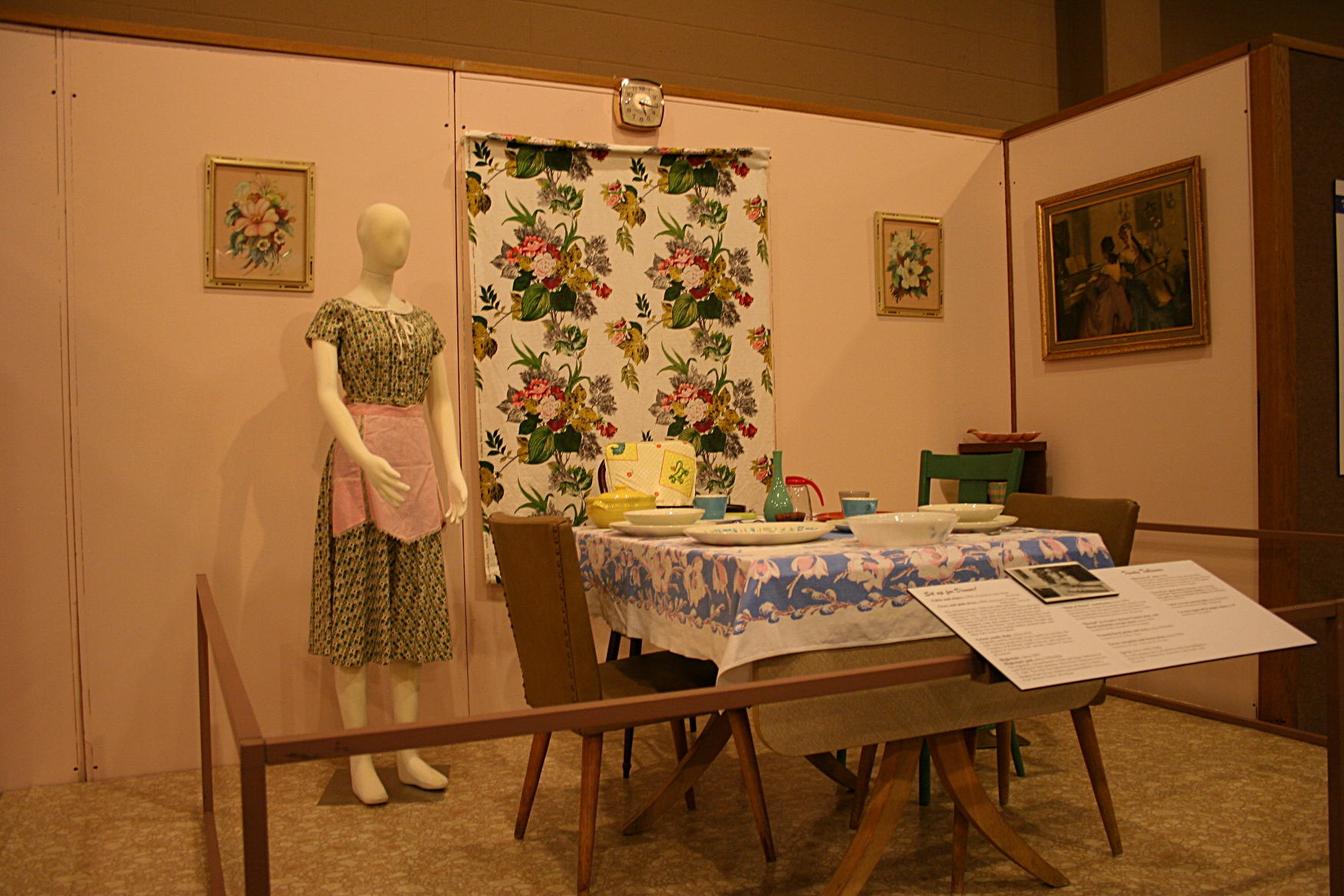
I remember the floral print plastic curtains which once hung in the tiny wood-frame house where I grew up on the southwestern Minnesota prairie. Today I collect vintage tablecloths like the one draping the table here. And, yes, I use them. Come to dinner at my house and you’ll find one gracing the table. I love retro.

A floral print curtain and floral print tablecloth. Check.

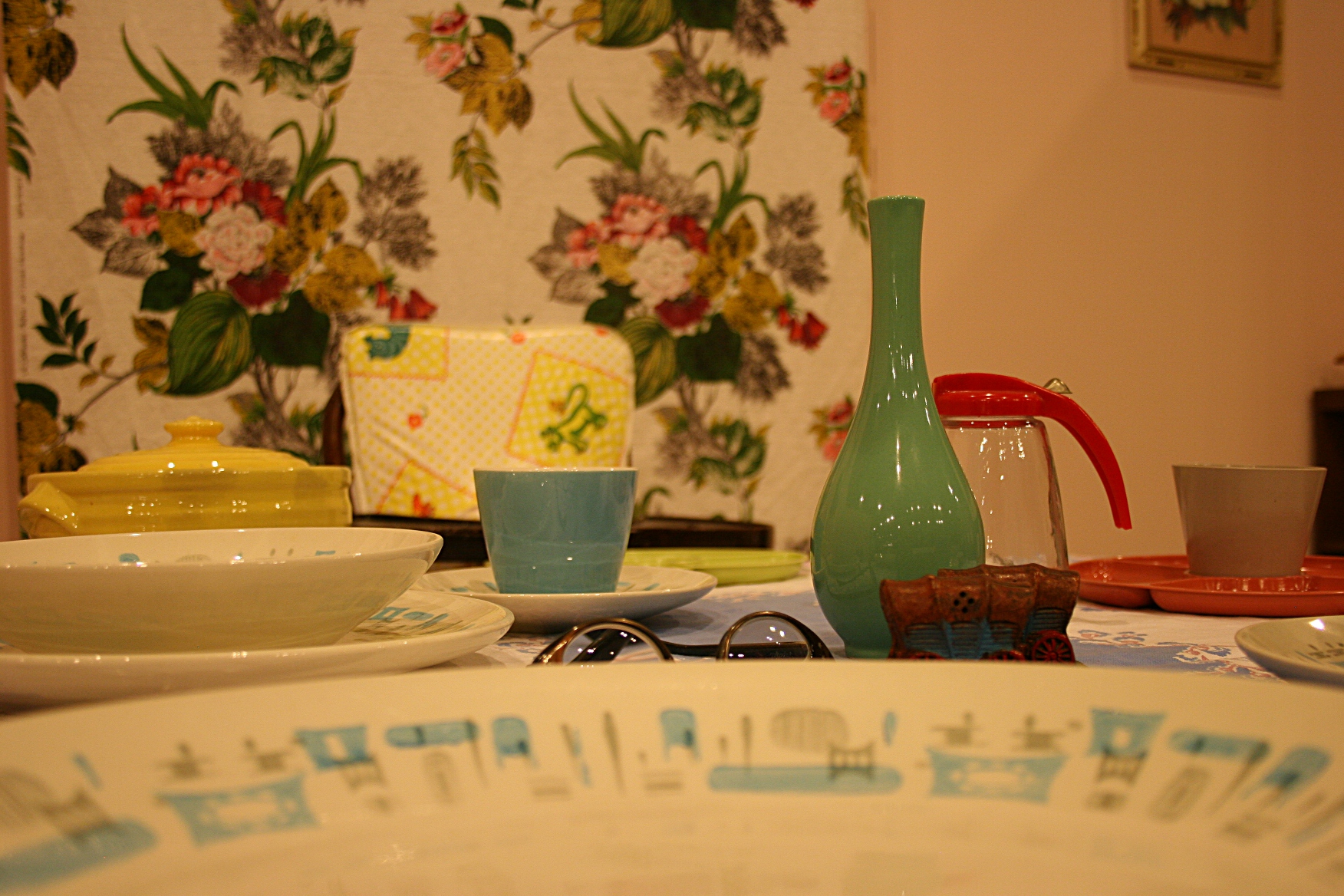
Tucked behind the close-up of the vintage plate, you’ll spy eyeglasses. I’ve worn prescription eyeglasses since age four, including the cat eye style and dark brown framed ones.

Dark-framed eyeglasses and vintage tableware. Check.

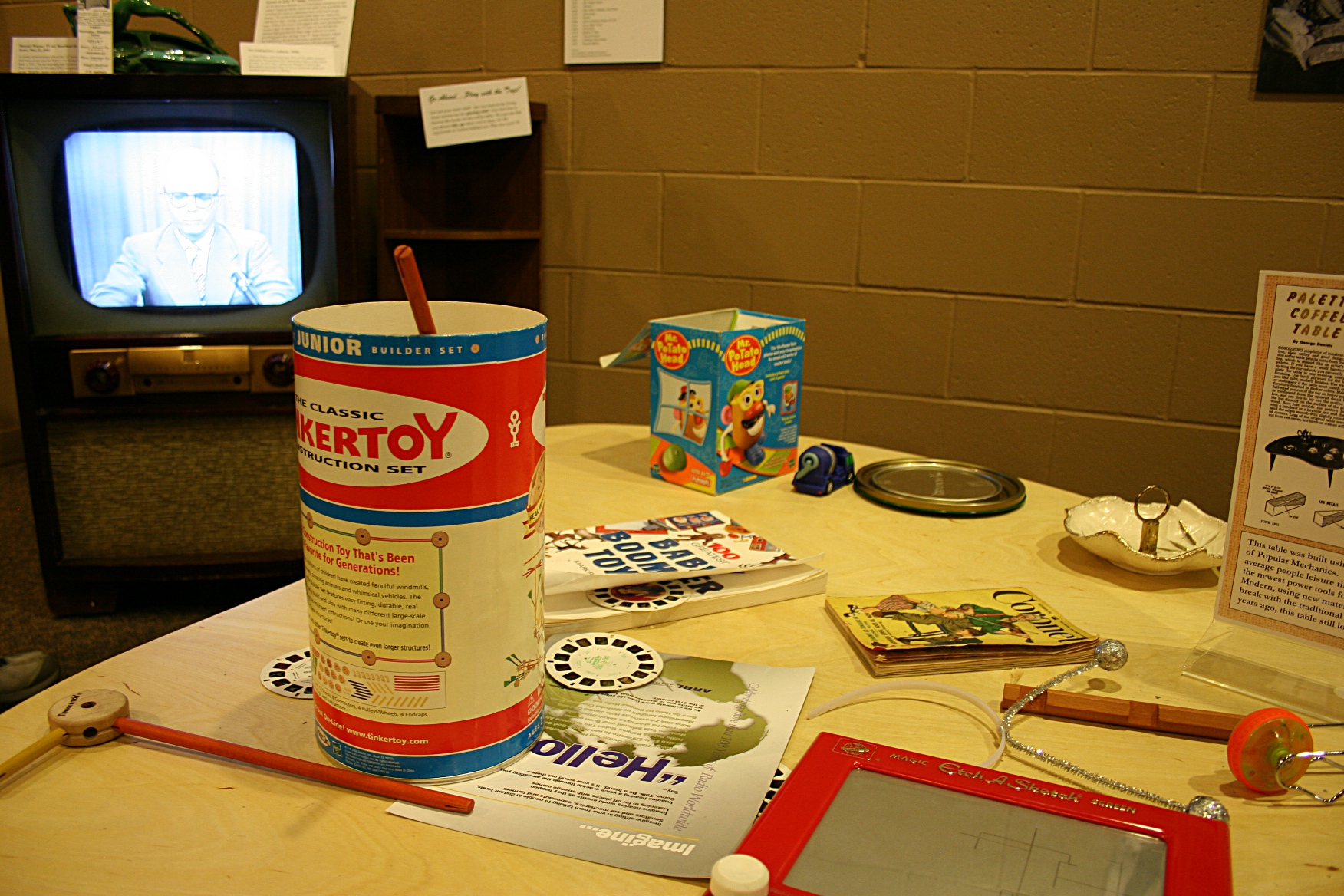
Popular Baby Boomer toys, ones my children, born between 1986 and 1994, also played with. Some toys truly are timeless, although I expect the View-Master isn’t. I played with Mr. Potato Head in the background, but he was not a favorite.

An Etch a Sketch, View-Master reels and Tinker Toys, all among my favorite childhood toys. Check, check and check.

There was not a piece of technology in sight save the old grainy black-and-white television.

© Copyright 2012 Audrey Kletscher Helbling


My writing connection to a Fargo bookstore November 9, 2012

A snippet of the many bookshelves at Zandbroz Variety. So artful and colorful and inviting.

MY PURPOSE IN CHECKING OUT a downtown Fargo, North Dakota, bookstore/gift shop recently focused on a single reason—Lake Region Review.

I wanted to see this Minnesota literary journal on the shelves of Zandbroz Variety because, well, my poetry is published in volumes one and two. Recently-released LRR 2 features 34 pieces of writing by selected authors in Minnesota and the eastern Dakotas.

Lake Region Review 2, with wood print cover art by well-known Minnesota artist Charles Beck of Fergus Falls, nestles next to the first volume of LRR. Beck’s cover art is titled “Cardinals.”

Given that 430 fiction, creative nonfiction and poetry submissions were submitted to the Battle Lake-based Lake Region Writers Network for volume two, getting into the collection is an honor and accomplishment. I’m in the company of mighty fine writers, many of them with an impressive list of writing credentials.

I also happen to live in southeastern Minnesota, far, far away from most of the writers featured in LRR and also far away from events related to the release of the second volume.

The back room of Zandbroz Variety, site of readings, book club meetings and other events and gatherings.

Visiting Zandbroz Variety offered me an opportunity to connect with the Fargo bookstore which will host a Lake Region Review Two Reading Event at 2 p.m. Sunday, December 9. I didn’t know about the event when I visited Zandbroz and introduced myself. And when I photographed the delightful back room of Zandbroz, I was unaware LLR 2 contributors will soon be reading in this cozy and inviting space.

Artwork in Zandbroz Variety’s back room with a favorite quote of mine from the book, The Help.

It was pure coincidence that, two days later, I would receive an email from Luke Anderson, president of the LRWN inviting me and other LLR 2 writers to participate in the reading at Zandbroz. I wish I could, but a 300-mile (one-way) road trip to Fargo is not in my plans as I’ve been to that North Dakota city four times already since February. (My son attends North Dakota State University.) Gas, hotel and dining expenses add up.

Likewise, I couldn’t join other LRR 2 writers who recently read their works for a program to be aired November 30 – December 2 on nine western Minnesota radio stations from Worthington in the extreme southwest to Fergus Falls on the north.

So it goes. I’m not much anyway on public appearances, preferring to write rather than perform. But I’m learning, too, the value in reading poetry aloud to an audience, having done that thrice now.

Promoting is also part of this writing gig. And that, too, can be a challenge given my Minnesota predisposition not to call attention to myself.

However, I did inform the young man staffing Zandbroz Variety that I had poems in both volumes of Lake Region Review. “Perhaps you remember the first; I mentioned cow pee,” I told him. “And in the second, I mention beer.”

He laughed, considered for a moment and replied that “cow pee” sounded familiar to him. Maybe. Maybe not. But I expect he’ll remember me now.

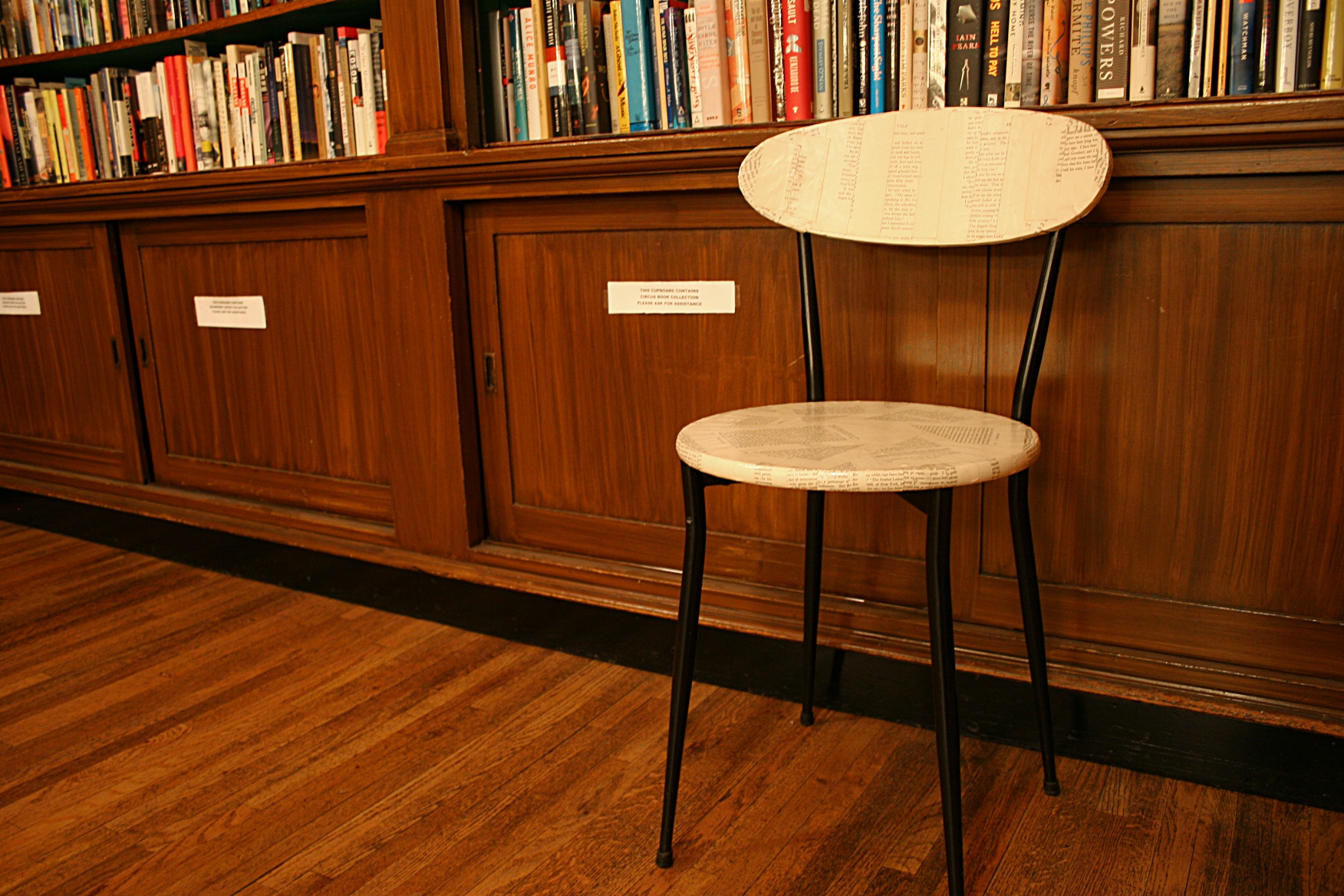
The lines, the books, the setting…this a scene in the back reading room. Love the ambiance.

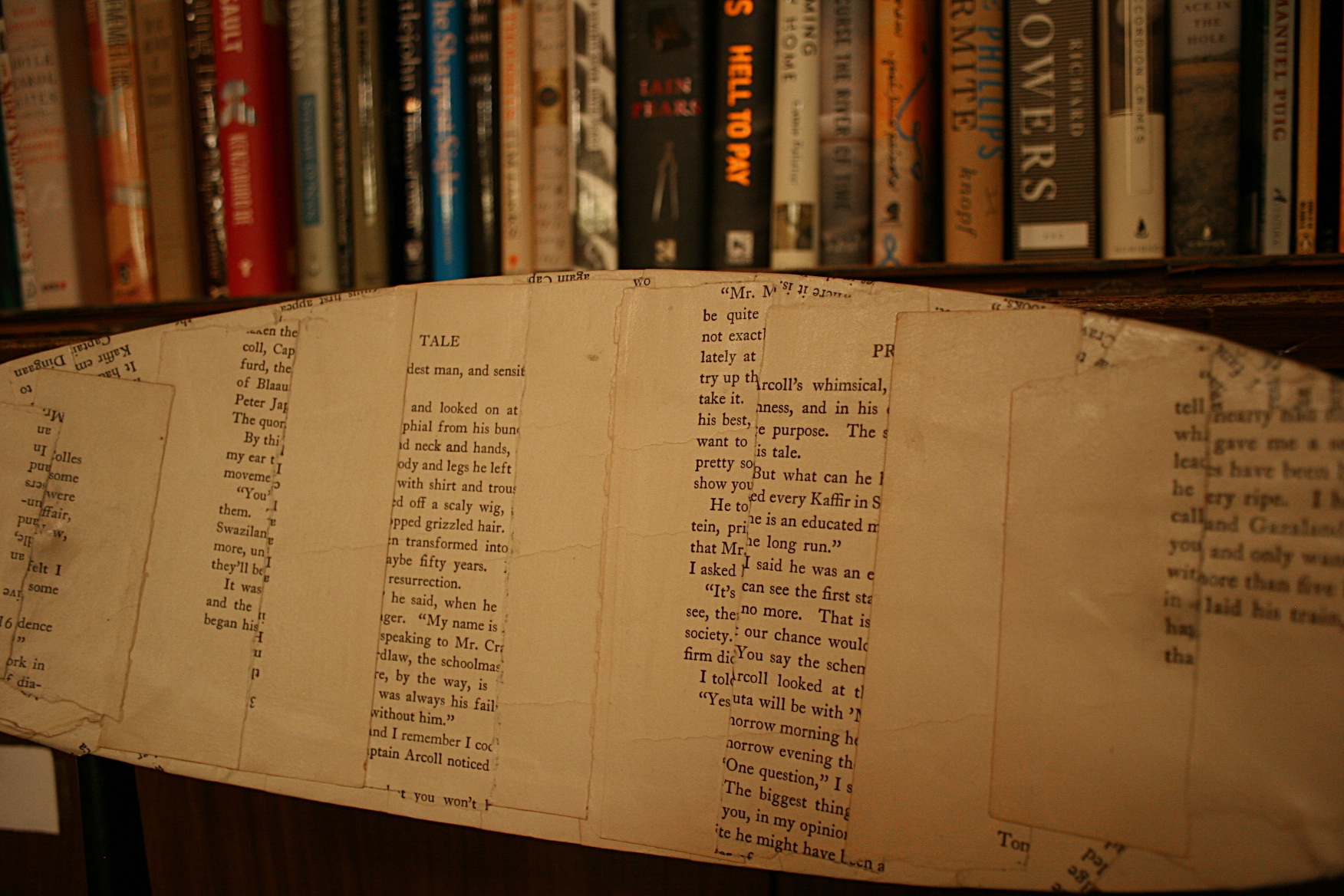
A close-up of the chair back in the photo above. I have no idea from what book these pages were pulled. But I’d place a literary chair like this in my home any day.

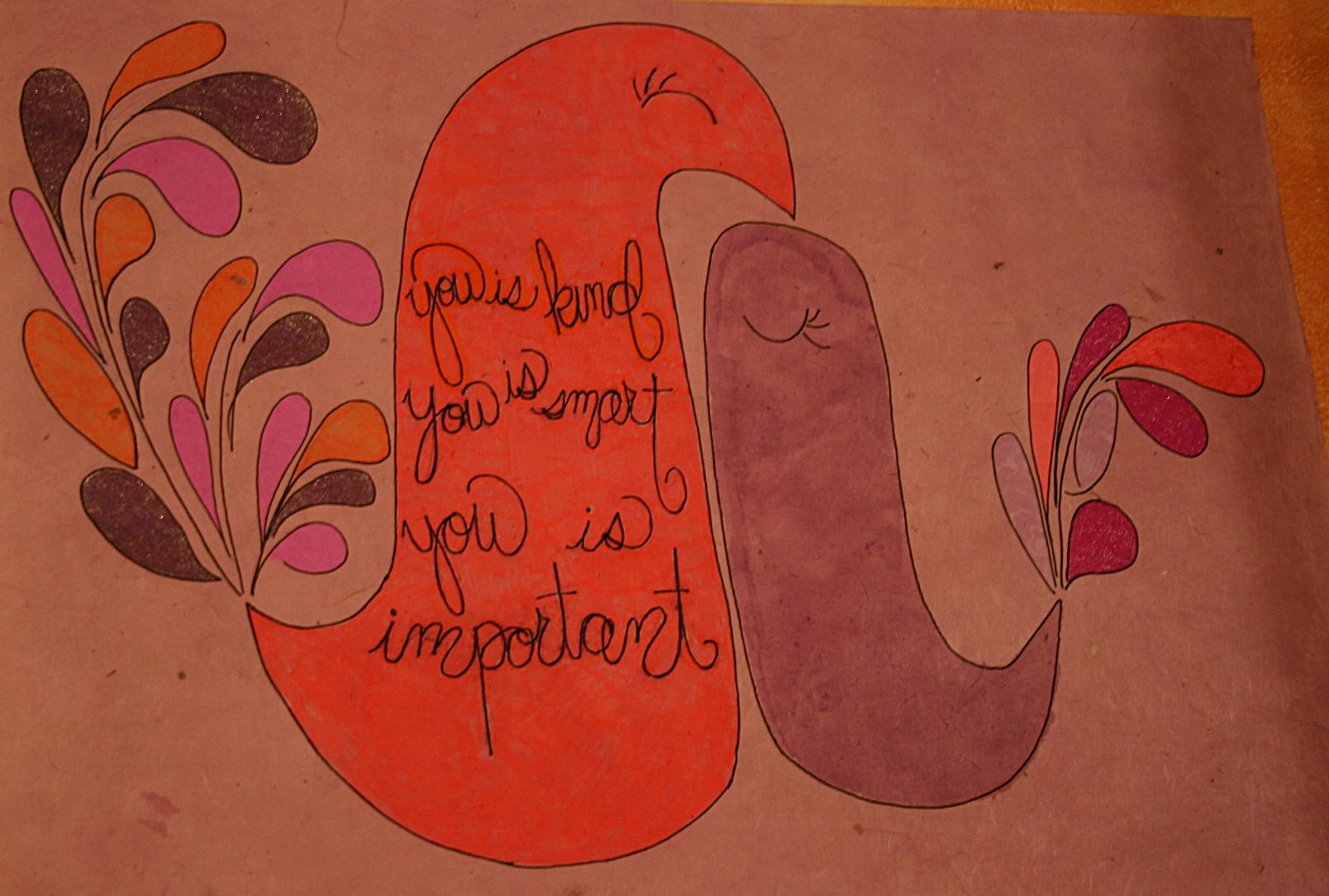
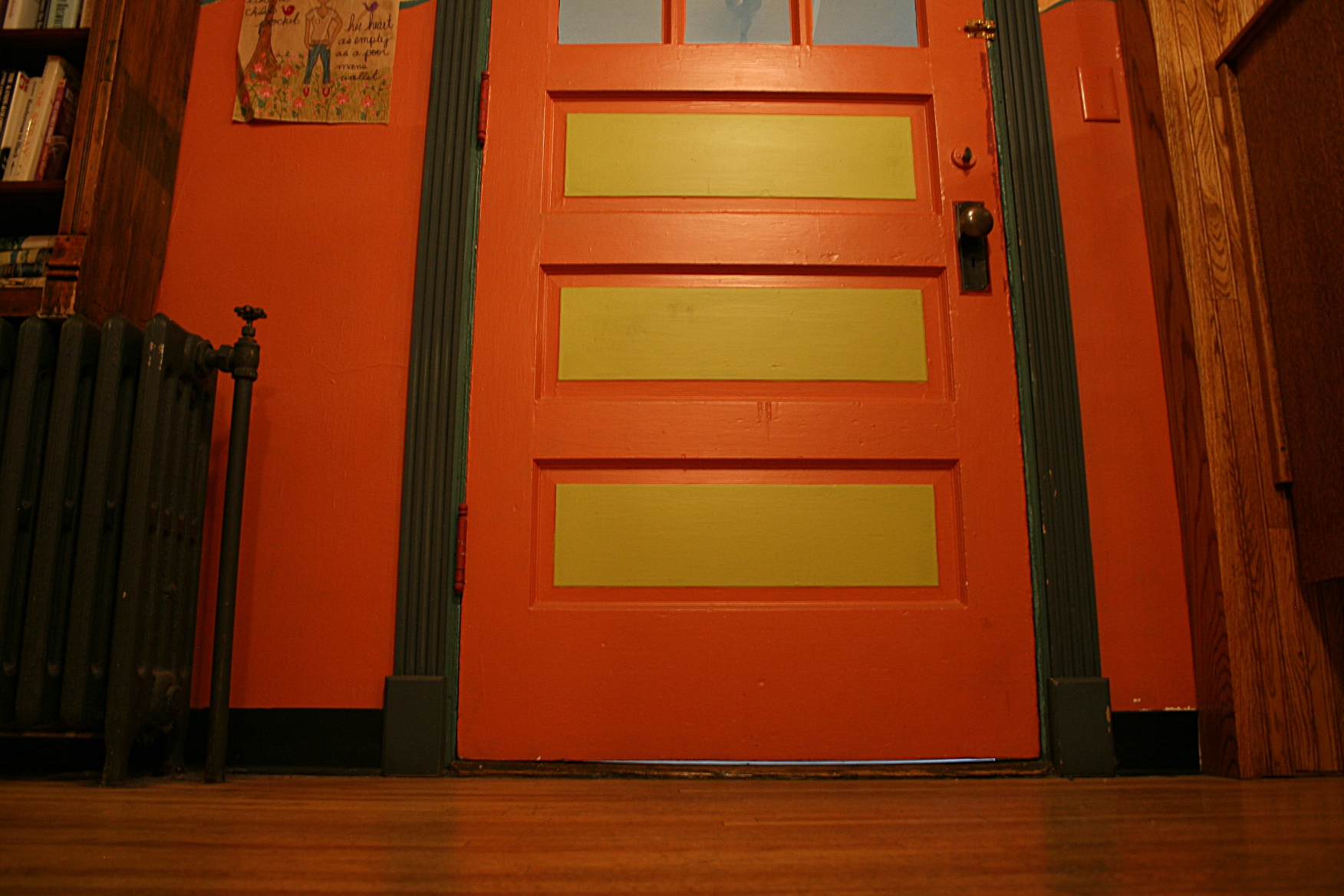
Jolts of color on a door in that welcoming back room.

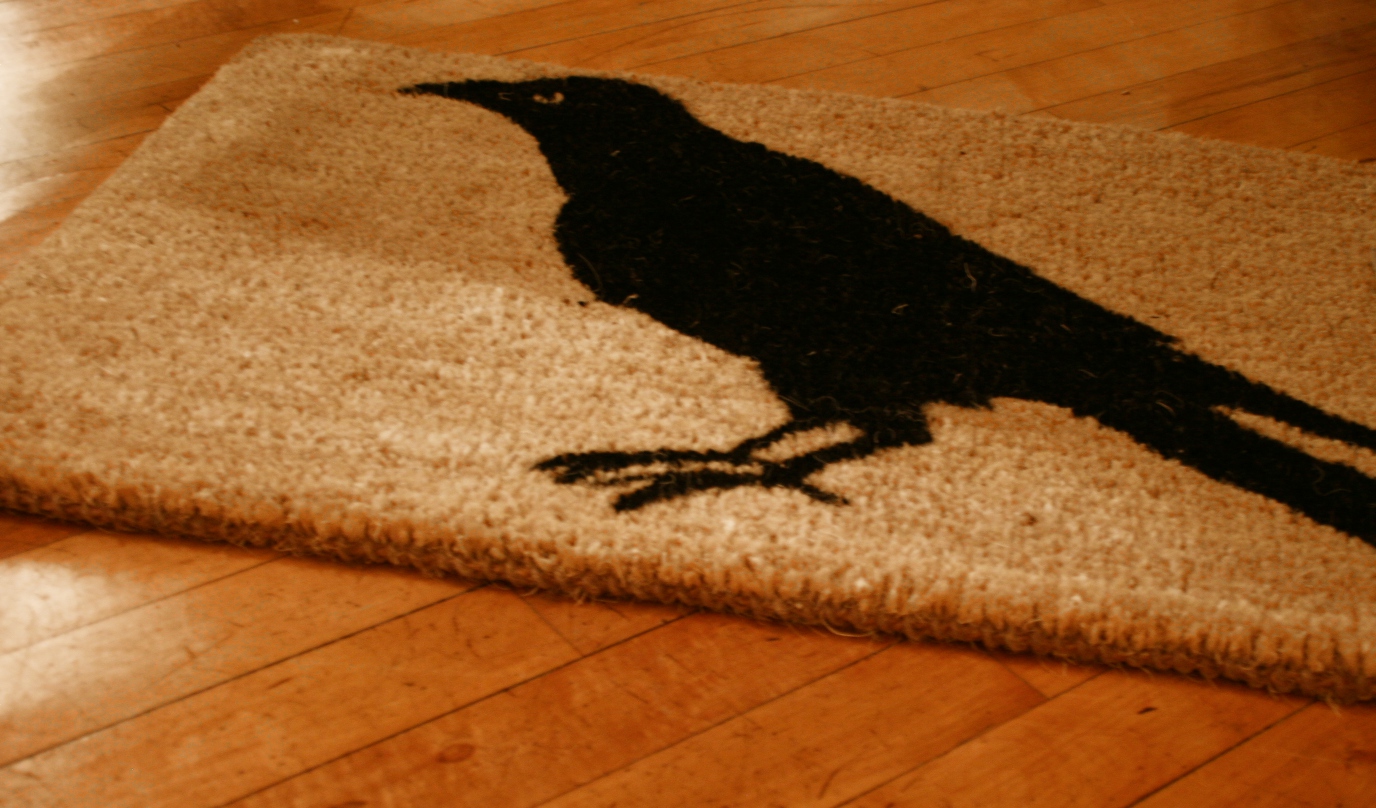
A rug for sale in the variety section of Zandbroz where you will find an eclectic mix of funky and retro and otherwise interesting merchandise. This made me think of Alfred Hitchcock’s “The Birds.”

An enchanting Christmas display near the front of the store.

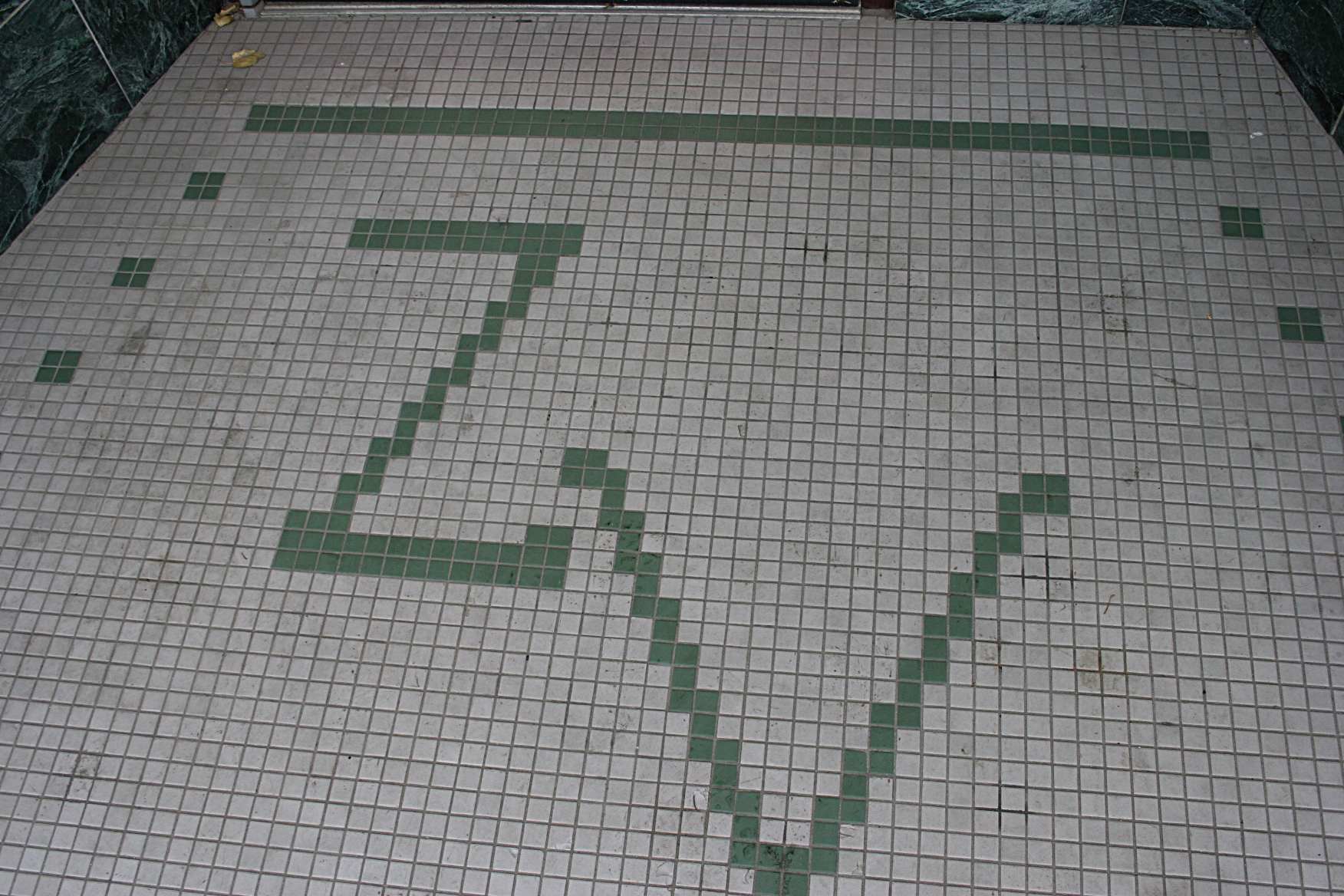
Outside a front door of Zandbroz, I found this lovely tile work. I apologize for the lack of exterior store photos. But a light mist was falling at the time and I was reluctant to pull out my camera. I also limited my interior shots as Zandbroz was busy, busy and other shoppers do not always appreciate someone aiming a camera at them.

FYI: To learn more about Lake Region Writers Network, click here to reach the writers’ group website.

To see where you can find copies of Lake Region Review, published in 2011 and 2012, click here. LRR 2 includes writing by the following: Maxine Adams, Luke Anderson, Joe Baker, Frances Ann Crowley, Holly Dowds, Cindy Fox, Yahya Frederickson, Susan Gilbert, Ruby Grove, Vinnie Hansen, Audrey Kletscher Helbling, Nancy Klepetka, Karla Klinger, Elisa Korentayer, Judy R. Korn, Ryan Kutter, Julie C. Larson, Kim Larson, Linda Frances Lein, Kathleen Lindstrom, Ethan Marxhausen, Linda Back McKay, Travis Moore, Kristine Price, Candace Simar, Doris Lueth Stengel, Liz Sweder, Francine Marie Tolf, Benet Tvedten and Kevin Zepper.

Click here to see where you can listen to readings from LRR 2 airing soon on nine western Minnesota radio stations.

Finally, click here to learn more about Zandbroz Vareity, founded by brothers Jeff and Greg Danz and with stores in Fargo (420 Broadway) and in Sioux Falls, South Dakota. Do you see how they came up with the clever name for their business?

© Copyright 2012 Audrey Kletscher Helbling


Little Free Libraries for Small Towns project in Minnesota and Wisconsin officially kicks off at MOA August 15, 2012

TEN MONTHS AGO, Todd Bol, co-founder of the Wisconsin-based Little Free Library, and I were discussing an idea to get Little Free Libraries into small towns without libraries. I wanted a library in my hometown of Vesta, a community of around 340 residents which has never had a library.

I had blogged about a LFL in Faribault, where I have lived for 30 years, and challenged the residents of Vesta to start a LFL.

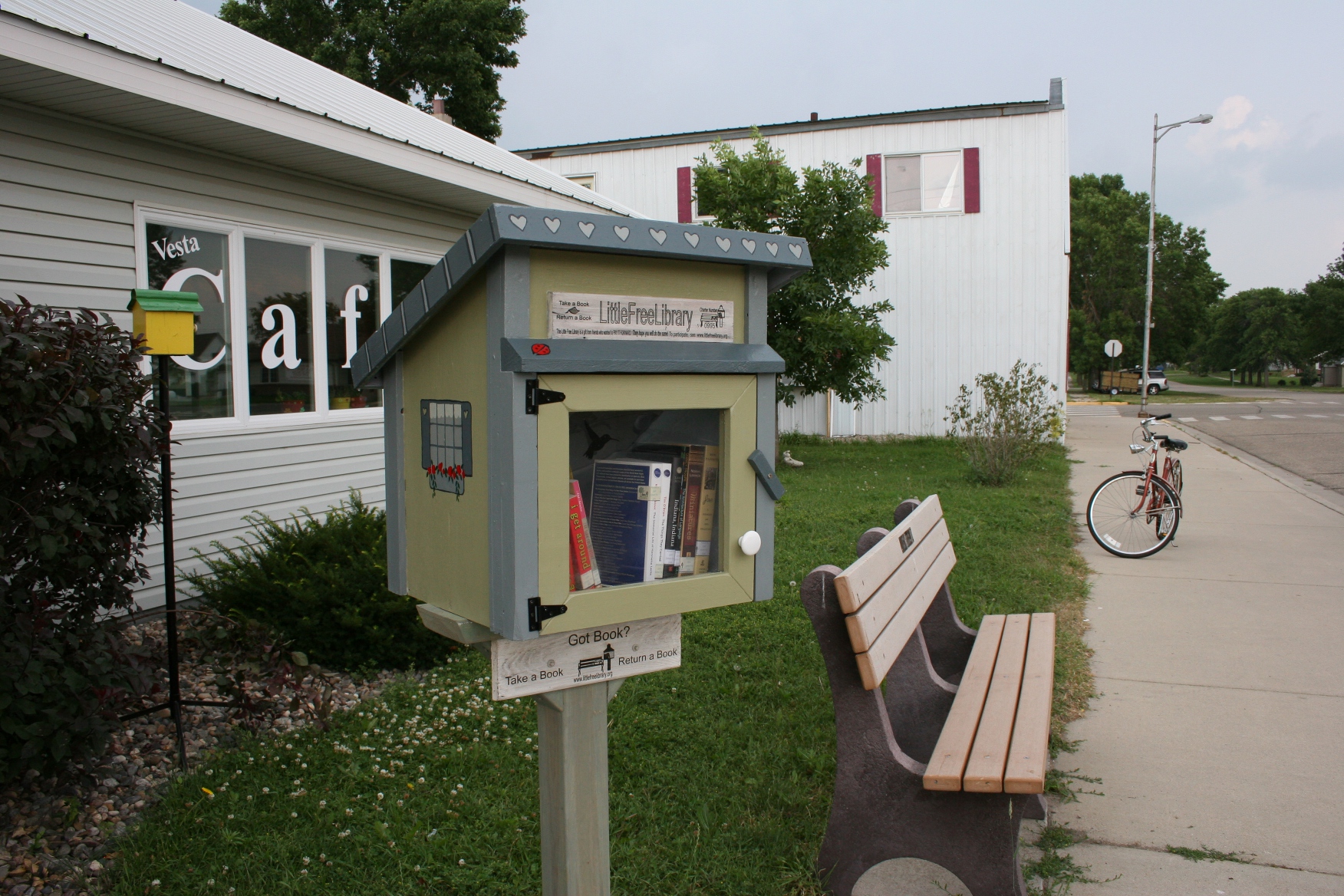
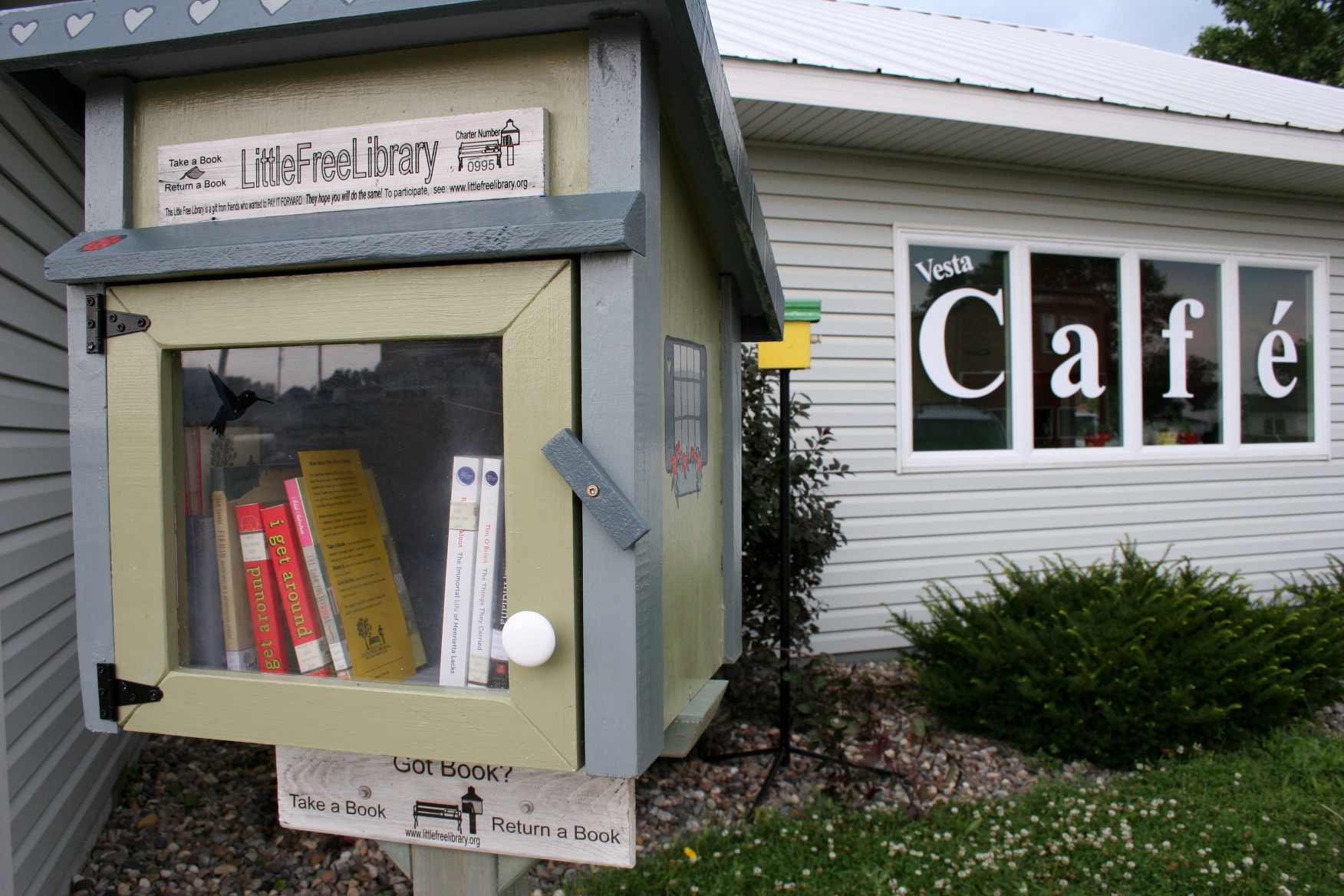
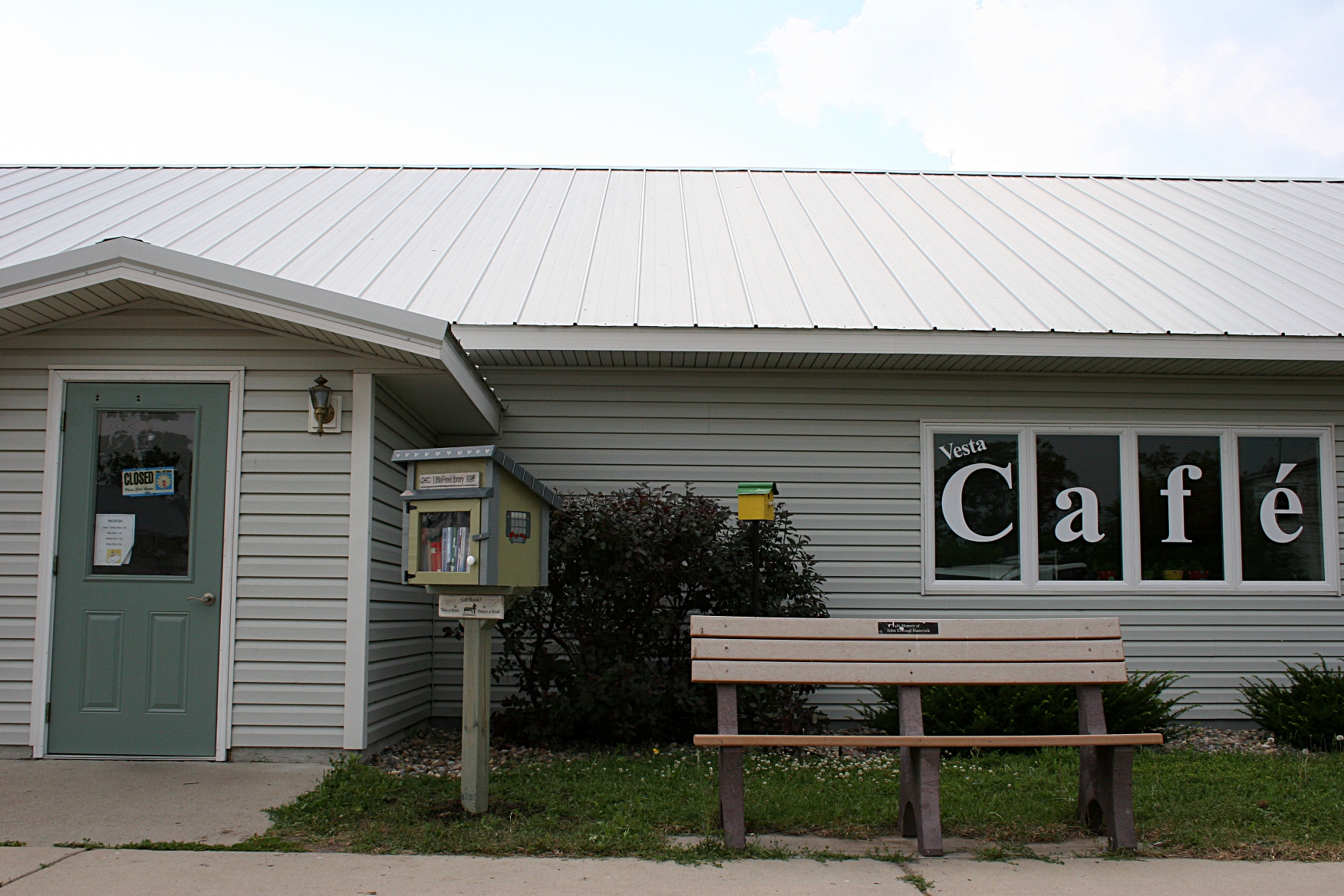
The LFL Todd and Susan Bol installed outside the community-owned Vesta Cafe.

After making that challenge, Bol and I talked and, several months later, he offered to donate, deliver and install a LFL in Vesta, placing the first library in a new initiative, Little Free Libraries for Small Towns. Bol and his wife, Susan, drove from Hudson, Wisconsin, on July 1 and installed a LFL in front of the Vesta Cafe.

This Friday, August 17, that small towns project officially kicks off with a celebration from noon to 3 p.m. in the Mall of America rotunda near the east entrance. A program featuring activities and also appearances by local celebrities sharing their favorite books is slated for 1 – 2 p.m. Businesses and publishers are donating new books and the public is encouraged to bring books for 20 uniquely designed mini libraries to be placed in Twin Cities’ neighborhoods and communities surrounding the mega mall.

MOA is donating those 20 libraries and two special libraries (numbers 2,509 and 2,510) which will tie and break the records of libraries funded by philanthropist Andrew Carnegie.

How sweet is that? But even sweeter, in my opinion, is the MOA’s general support of the Little Free Libraries for Small Towns project as a way “to promote literacy and community-building by supporting neighborhood book exchanges.”

The beautiful handcrafted LFL donated to my hometown of Vesta.

The LFL works on the premise of take a book/leave a book in a little library, which is typically an over-sized birdhouse size structure attached to a post and installed outdoors, making books accessible to the public 24/7.

In kicking off its Little Free Libraries for Small Towns project, the LFL non-profit aims to focus first on the small towns of Minnesota and Wisconsin without ready access to public libraries, like my hometown of Vesta on the southwestern Minnesota prairie. The closest libraries to Vesta are about 20 miles away. Earlier this year bookmobile service to my hometown and several other communities was cut by Redwood County commissioners to save money.

I expect that many other small towns in Minnesota and Wisconsin are in similar positions, without library services because a) they’ve never had libraries or b) funding has been cut or trimmed.

Living in or near a town without a library, as I did growing up, is a hardship for someone like me who loves to read. That’s why I was adamant in my discussion last fall with LFL co-founder Bol that he focus on small towns without libraries. He liked the idea—Bol is very much an energetic ideas man—and he eventually shaped our discussion, with the help of his equally enthusiastic staff, into the Little Free Libraries for Small Towns project.

Bol thinks big. The LFL group is initially seeking 20 sponsors to each facilitate 20 Little Free Libraries for small towns across Minnesota and Wisconsin, resulting in 400 new free libraries. A $600 contribution supports construction, delivery and installation of one LFL to a small town and a starter collection of books as well as official LFL registration and promotion, and a plaque on the sponsored library.

Beyond all of that, the real satisfaction, I think, comes in the reaction of those communities which benefit from such generosity. My hometown has embraced the LFL with a level of enthusiasm beyond anything I ever expected.

The team that worked to bring a Little Free Library to Vesta includes Dorothy Marquardt, left, and Karen Lemcke, representing the sponsoring Vesta Commercial Club, LFL co-founder Todd Bol and me (holding a copy of a poetry anthology I donated and in which I have two poems, “A school without a library” and “Saturday night baths”).

Karen Lemcke, who early on supported the LFL as a member of the Vesta Commercial Club and is now the Vesta library steward, shared several weeks ago that Vesta’s LFL is a “very successful project.”

She then went on to explain that area residents are taking books from the outdoor LFL and that two bookshelves inside the Vesta Cafe have also been filled with donated books. Says Lemcke:

We have a variety of books from non-fiction, fiction and children’s books. On Sunday, children had taken some of the books and sat on a couch nearby looking through them. I heard today that tractor books were on a shelf and local farmers were borrowing them overnight to look through. The women have been going through the books as well and they will be picking up some to read, too…It’s like it (LFL) brought a “little life” to Vesta.

If you are thinking that Karen’s report brought tears to my eyes, you would be right. To hear that farmers are pulling tractor books from shelves to take home, especially, pleases me. And kids paging through books…

The books Todd Bol and I placed inside Vesta’s LFL on July 1. He brought books donated by several Twin Cities publishers and I brought books from my personal collection. I have since collected and donated an additional 40 books.  A retired librarian from nearby Wabasso donated eight bags of books, primarily mysteries, and the cafe manager’s family also donated books and I expect others have given books, too.

With this new LFL for Small Towns project, just consider for a moment how many more scenarios like this can happen in small towns without libraries. What a gift to bring books to the residents of small towns and enhance or instill a love of reading.

The LFL organization is now accepting applications from communities which would like to be considered for the Little Free Libraries for Small Towns project. Applicants from Minnesota and Wisconsin need only complete a short questionnaire requesting information such as the town’s population, whether it has a public library and how a LFL would make a difference in their community.

LFLs will be awarded based on available sponsorships and contributions and the need and interest level of the applicant communities, among other criteria.

So…if your small Minnesota or Wisconsin town needs a library, believe. It can happen. My conversation with the co-founder of the Little Free Library resulted in the donation of a library and a starter collection of books to my hometown…and the launch of the Little Free Libraries for Small Towns project.

The Little Free Library at the Vesta Cafe on the one-block Main Street in my hometown is the seed plant of the Little Free Libraries for Small Towns project.

FYI: For more information about the LFL program, click here to reach the website. To learn more about  the Little Free Libraries for Small Towns initiative and to download an application, click here.  Applications will also be available at the MOA-LFL event on Friday, to which I’ve been invited but will be unable to attend.

If you or your business or organization is interested in sponsoring a library or libraries for the small towns initiative in Minnesota or Wisconsin, email Megan Hanson at mphanson@littlefreelibrary.org.

© Copyright 2012 Audrey Kletscher Helbling


For the love of reading: Faribault’s east side now home to a little library August 6, 2012

Filed under: Uncategorized — Audrey Kletscher Helbling @ 7:18 AM
Tags: , , , , , ,

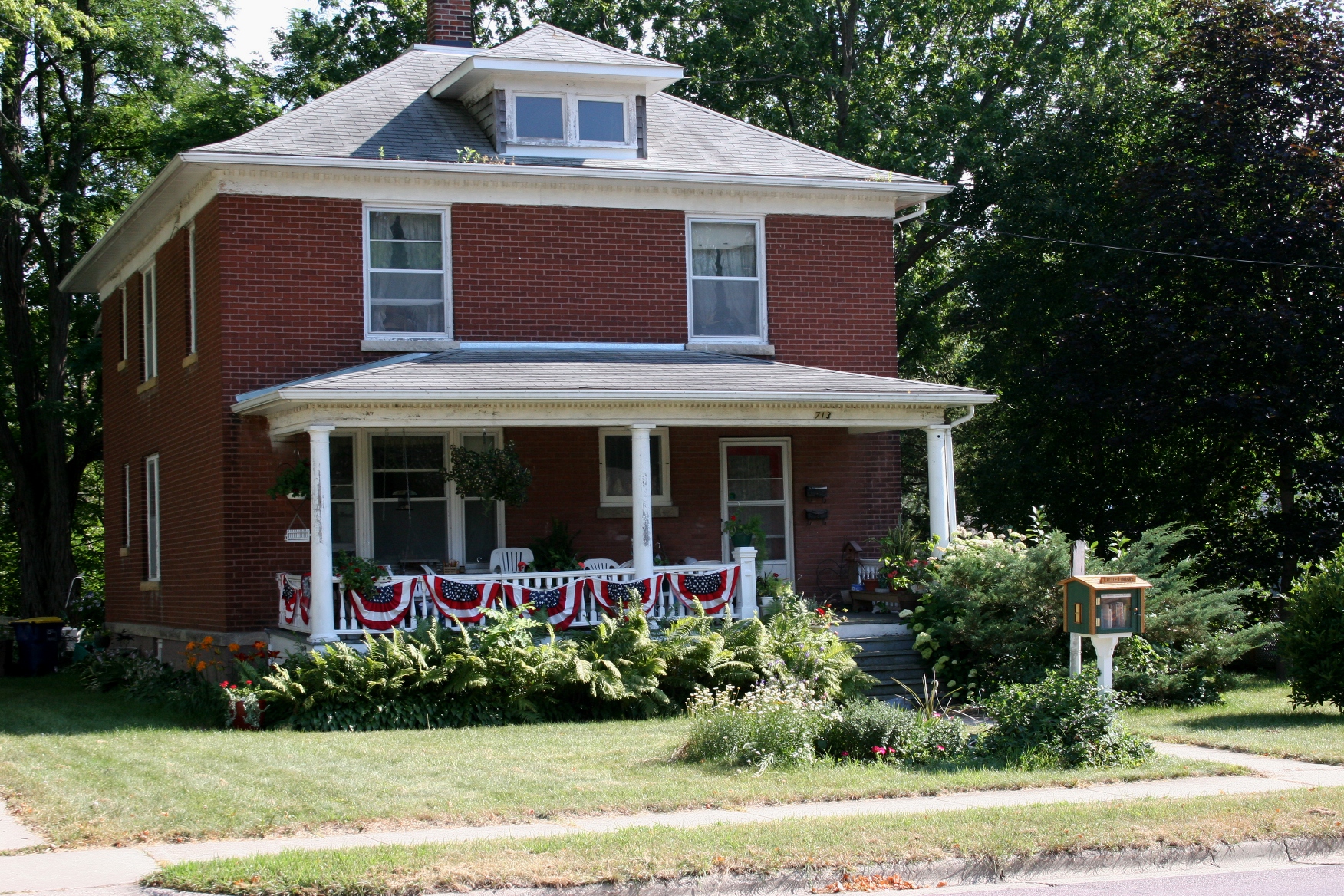
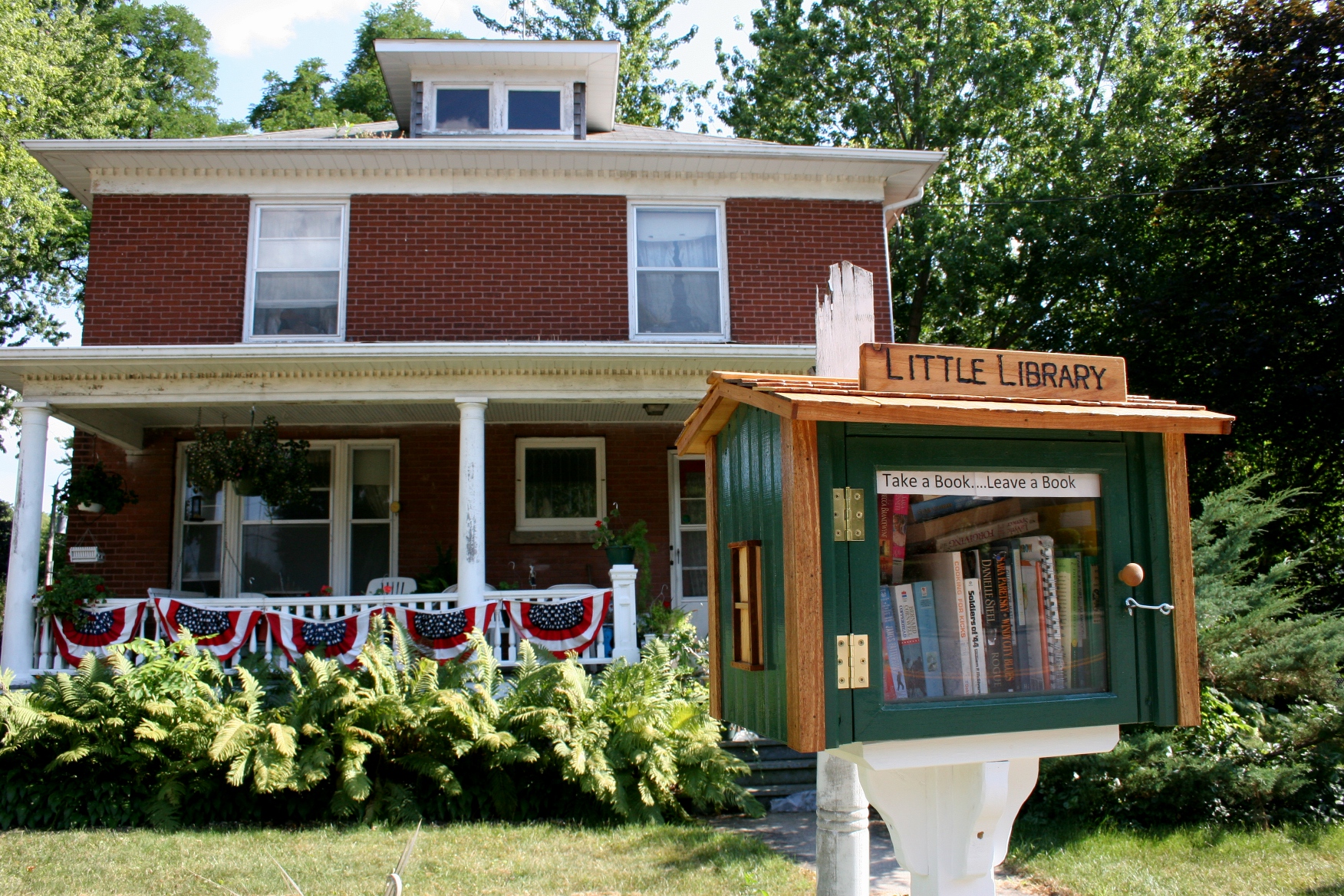
Pat Rice’s little library, right, installed about a month ago in her front yard, 713 Ravine Street, Faribault.

PAT RICE LOVES TO READ. That passion, short and simple, inspired this retired audiologist to recently install a little library in her front yard on Faribault’s east side.

Hers is among four little libraries—one officially registered as a Little Free Library—now gracing neighborhoods in my community.

The little library seems a natural outreach for this woman who reads 100-plus books a year, belongs to a local book club, accepts donations for the American Association of University Women, Faribault chapter’s annual book sale, and serves on the Buckham Memorial Library Advisory Board.

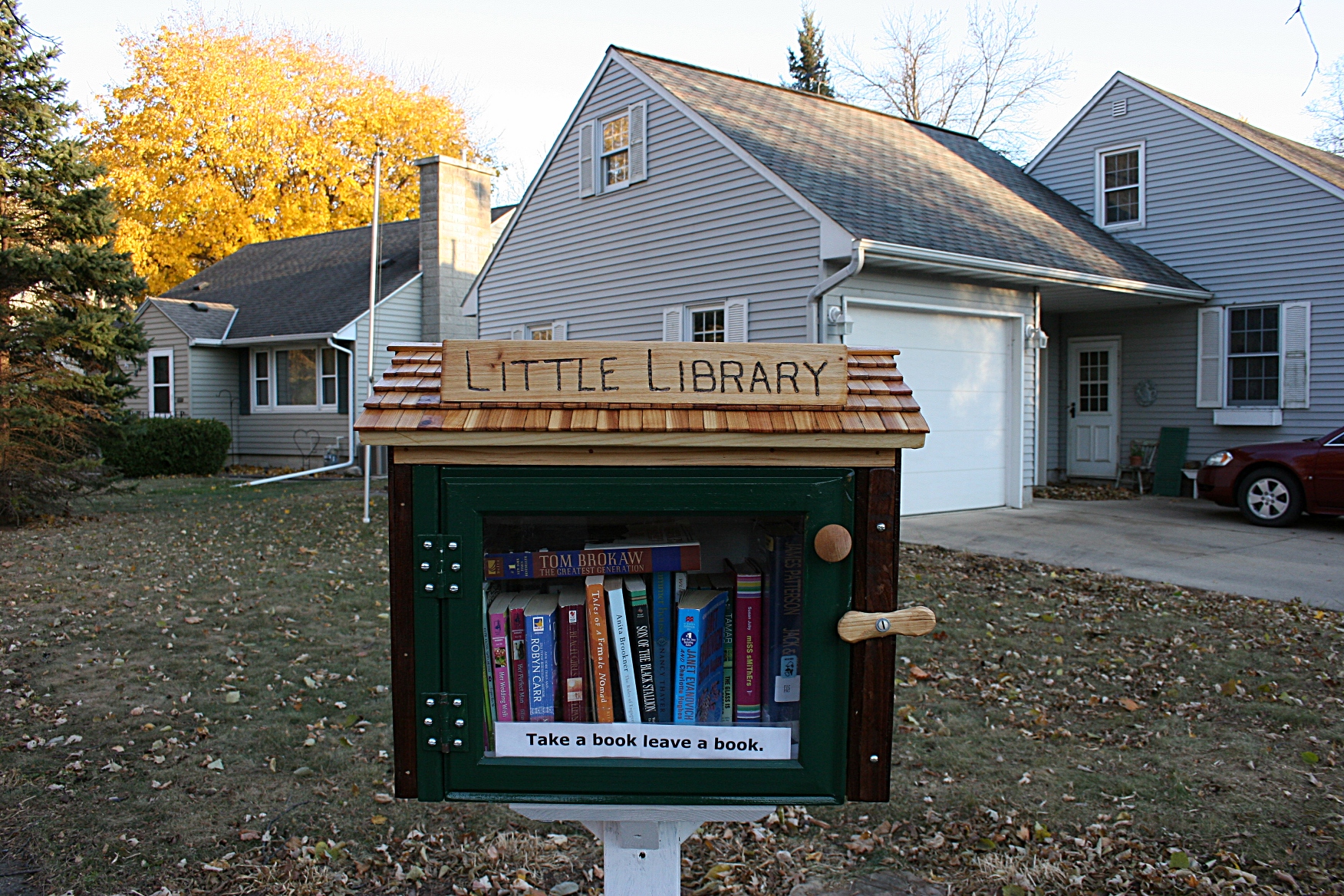
The Smiths’ Little Free Library, located in their yard at 825 Sixth Ave. SW.

It was her connection with another library board member, Joan Smith, that led to the establishment of Faribault’s first Little Free Library last fall. Pat read an article about a little library and passed the story along to Joan whose husband, Dale, crafts elaborate birdhouses. Dale adapted his birdhouse pattern and built a little library which is posted on a corner of the Smiths’ southwest Faribault front yard. It’s open 24/7 to anyone who wants to take and/or leave a book.

And now, thanks to Dale’s efforts, Pat has a near-duplicate little library in her front yard at 713 Ravine Street.

The books recently stashed in Pat’s little library.

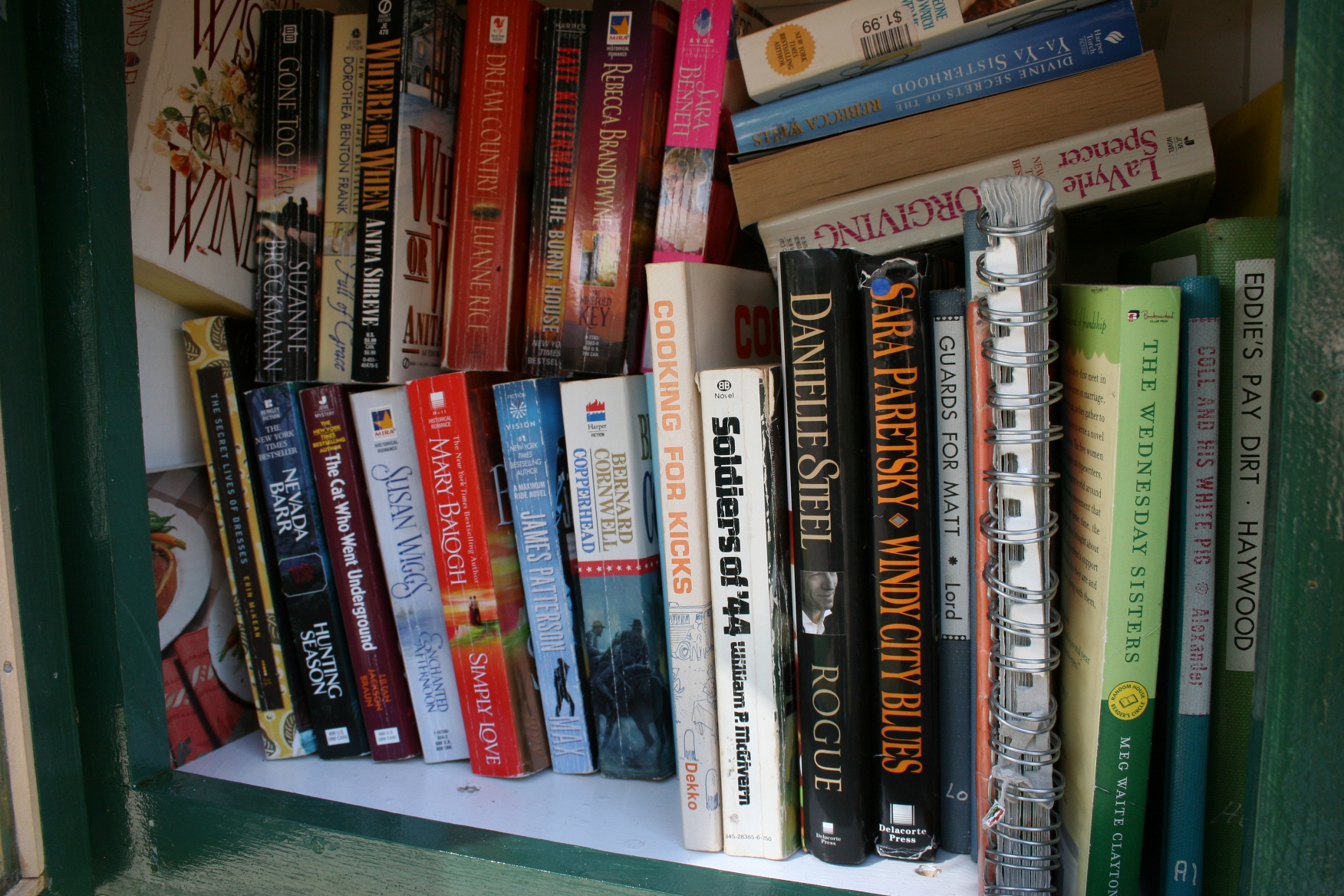
She’s stocked it with mostly a variety of paperbacks (adults tends to favor romances and mysteries, she says), several cookbooks and some children’s books. Pat plans to add more children’s books, even though few kids live in her neighborhood.

But she enjoys children’s books. “I love the illustrations,” says this long-time reader who remembers, as a four-year-old, stretching on her tiptoes to print her name on her first library card at the Camden Library in Minneapolis. That marked a memorable moment for a preschooler whose family had no extra money for books. Acquiring that orange library card—yes she remembers the color—allowed her access to thousands of books, fostering a life-long love of reading.

To this day, Pat still appreciates, and buys, children’s books. She has a little library full of them in the upstairs of her stately brick home. That stash includes a collection of 40 ABC themed titles. Among her favorites are the books of Grand Marais author and illustrator Betsy Bowen who specializes in woodblock prints.

Whenever Pat needs a baby gift, she gives a book.

There’s no doubting this woman’s passion for books. She doesn’t have a television, at least not one that’s plugged in. “I would rather read,” says Pat. She counts Jan Karon, Thomas Gifford and Minnesotan John Sanford among her favorite writers. On a recent 20-hour trip to Virginia, she and a friend listened to four books on audio.

Dale Smith built Pat’s little library, which is open to anyone. Pick up or drop off a book if you’re walking or driving by.

Now she’s hoping the little library in her front yard will encourage others to read due its easy accessibility. “I think there’s a lot of people who don’t use libraries,” Pat says. She cites a story shared by Dale Smith about a man who chose a Zane Grey book from the Smiths’ Little Free Library. It was the first book the man had read in 40 years.

For a voracious reader like Pat, that’s encouraging and reaffirms her reasons for establishing a little library in her east Faribault neighborhood.

#

FYI: I plan to scout out the other little libraries in Faribault and post about them in addition to updating you on the LFL installed in my hometown of Vesta a month ago by Todd Bol, co-founder of the Little Free Library project.

© Copyright 2012 Audrey Kletscher Helbling


Remembering the quotes of 35W bridge collapse survivor Garrett Ebling August 4, 2012

YOU’VE LIKELY SEEN HIM on the news this week, perhaps read about him in a newspaper article. He would be Garrett Ebling, survivor of the 35W bridge collapse.

I’ve never met Garrett, although we have communicated, first after my son was struck by a hit-and-run driver near my Faribault home in May of 2006. Garrett was managing editor of The Faribault Daily News then and showed such compassion and concern for my son and our family.

The following year, not long after the bridge collapse, Garrett and I would reconnect. This time I was on the other end, offering him compassion, concern and prayers as he battled to recover from severe injuries sustained when his car plunged from the bridge into the Mississippi River.

His fortitude impressed me then and still does.

Shortly after, I asked Garrett if he would share his experiences and thoughts with me for a magazine article. He agreed, granting me one of only a few interview requests he accepted. The result was a feature story which published in the November/December 2007 issue of Minnesota Moments. Garrett answered my questions via email given his jaw was wired shut or had recently been unwired, I can’t recall now which. That interview process worked best given his tenuous physical and emotional condition.

The story also included information and quotes from phone interviews with his rescuer, Rick Kraft of St. Paul, and his fiancee, Sonja Birkeland, to whom he’d proposed only four days before the bridge collapse. (They married on August 3, 2008, one year and two days after the bridge collapse and now have a young son, Cooper.)

Garrett’s responses to my long list of questions showed me his incredible strength, determination and positive attitude. He shared his excitement after he stood for the first time in these words:

This morning I stood up—STOOD UP—for the first time since the accident. I was so excited I screamed to my therapist: “Monica, look! I’m standing! I can’t believe it!” But with my jaw wired shut it sounded like “”Wonka, ook! Aye andin! Aye ant eave it!” For a brief moment I didn’t care that I’m muzzled.

Sir Edmund Hillary—the first person to climb Mount Everest—once said “It is not the mountain we conquer but ourselves.” When this is all said and done, I will be standing—STANDING—at the top of the mountain.

But I will not have conquered the bridge. Rather, I will have bested the uncomfortability, the uncertainty, the pain. I will have realized from which the depths I can rise up.

It’s the top of the mountain that puts us closest to heaven.

That last sentence, particularly, has stuck with me through the years. This week I worked the quote into a poem I submitted to The Minneapolis StarTribune which issued a call to readers for 35W poems. Mine, “Quotes from a survivor,” was accepted for online publication and was also published in the Variety section of the August 4 print edition. You will find it, and several other poems, by clicking here. Poems were limited to 35 words.

Garrett, the former journalist and now a small business owner of a sandwich shop, recently published a book, Collapsed: A Survivor’s Climb From the Wreckage of the 35W Bridge. Notice that use, again, of the word “climb.”

I have not yet gotten a copy of Garrett’s book. But I expect inspiring words from this man who has overcome seemingly insurmountable physical and emotional obstacles during his climb to the mountaintop.

© Copyright 2012 Audrey Kletscher Helbling


Five things to do this weekend in the Faribault area July 19, 2012

FROM TEA TO TRACTORS and plenty of in-between interesting attractions, you’ll find lots to do this weekend in my region of southeastern Minnesota.

I shot this image at the Rice County Free Fair several years ago.

Already underway and running through Sunday is the Rice County Free Fair in Faribault. Evening grandstand shows include Enduro Auto Races on Thursday, an All-Star Pro Rodeo on Friday, a National Truck & Tractor Pull on Saturday and a Demolition Derby on Sunday. Besides the entertainment, you’ll want to stroll through the barns, the midway and the exhibit buildings, plus sample some fair food.

John Deere tractors galore lined up at the 2009 Rice County Steam & Gas Engine Show. I have never attended the Credit River Antique Tractor Club Show near New Prague.

In nearby Scott County, tractors take center stage (or rather space) at the annual Credit River Antique Tractor Club Show which runs from 8:30 a.m. – 7 p.m. Friday, July 20, through Sunday, July 22. To get there, take Exit 76 on Interstate 35 and go west on Scott County Road 2 for about 11 miles.

From a tractor parade to flea market, entertainment and more, this promises to be a family-friendly event in a beautiful rural setting. My friend Nancy Fredrickson of Lakeville tipped me off to the tractor show. Says Nancy: “It’s set up at Cedar Lake Farm Regional Park outside of New Prague where the tractors and vendors are scattered under big beautiful trees on hillsides that lead past the old barn and down to Cedar Lake shore.”

Nancy and her husband, Gordon W. Fredrickson, will be there, near the entrance, selling their collector series Farm Country Tales and If I Were a Farmer books. Readers, Nancy and Gordon are two of the finest, down-to-earth people you will meet. Plus, their rural-themed picture books are about as real and honest and authentic as they come. I highly-recommend these books to anyone interested in farming from years past.

Hanging out along Central Avenue during Faribault Car Cruise Night in May.

If classic cars are your thing, then take in, or participate in, the Faribault Car Cruise Night from 6 p.m. – 9 p.m. Friday in the 400 and 500 blocks of Central Avenue in the heart of historic downtown Faribault. According to the group’s Facebook page, “…if you have a cool car or truck or motorcycle, bring it down.”

The Paradise Center for the Arts theater, this photo from several years ago and the set for “South Pacific.”

Also on Friday, but in the 300 block of Central Avenue, the fractured fairy tale, “Into the Woods,” opens at 7:30 p.m. at the Paradise Center for the Arts. The Faribault theater and the Northfield Arts Guild are collaborating on the musical which continues on selected weekdays and weekends through August 5.

Betsy cuts Tacy’s hair in this snippet from a mural by artist Marian Anderson in the Maud Hart Lovelace Children’s Wing at the Blue Earth County Library in Mankato.

Finally, 40 miles away in Minneapolis and Mankato, the Betsy-Tacy Society is holding its annual convention. The organization focuses on celebrating the Betsy-Tacy children’s book series written by Mankato author Maud Hart Lovelace. I love, love, love these books about three friends growing up in Deep Valley (Mankato) in the late 1800s and early 1900s. I read the series to my young daughters two decades ago and we, even to this day, occasionally call my second daughter Tib, after Tib from the books.

It’s probably too late to get into the convention, but you can still join in on some of the fun by attending the free Betsy-Tacy Storytime Tea from 10:30 a.m. – noon Saturday at the Barnes & Noble Bookstore, River Hills Mall, Mankato. A Maud Hart Lovelace interpreter will read from Betsy-Tacy and photos can be taken with Betsy and Tacy. Visitors can also shop at the Betsy-Tacy Bookfair at Barnes & Noble.

The childhood home of Maud Hart Lovelace (aka Betsy), author of the Betsy-Tacy series first published in 1940.

The houses where Lovelace (Betsy in the books) and her friend Frances “Bick” Kenney (Tacy) grew up are owned by the Betsy-Tacy Society and are open to the public. They are a must-see for any fan of Lovelace’s books, although this weekend may not be the best time to tour the homes if you prefer elbow room to crowds.

There you go. Five things you can do within 40 miles of Faribault this weekend.

What are your plans?

FYI: You probably already know this, but just in case you don’t…  By clicking on the highlighted phrases/sentences within the post, you will be directed to more detailed information about the featured events.

© Copyright 2012 Audrey Kletscher Helbling


My dream come true: A Little Free Library installed in my hometown on the southwestern Minnesota prairie July 3, 2012

IMAGINE GROWING UP in a town without a library and, all your life, wishing for a library in your hometown.

Then imagine one July day, when you have been gone for nearly four decades and are old enough to qualify as a senior citizen, that a couple drives into your hometown in their station wagon to deliver a library.

That scenario played out in my hometown on Sunday afternoon as Todd Bol, co-founder of the Little Free Library, traveled three hours from Hudson, Wisconsin, with his wife, Susan, and their two dogs to deliver and install a LFL at the Vesta Cafe in the southwestern Minnesota prairie town of Vesta.

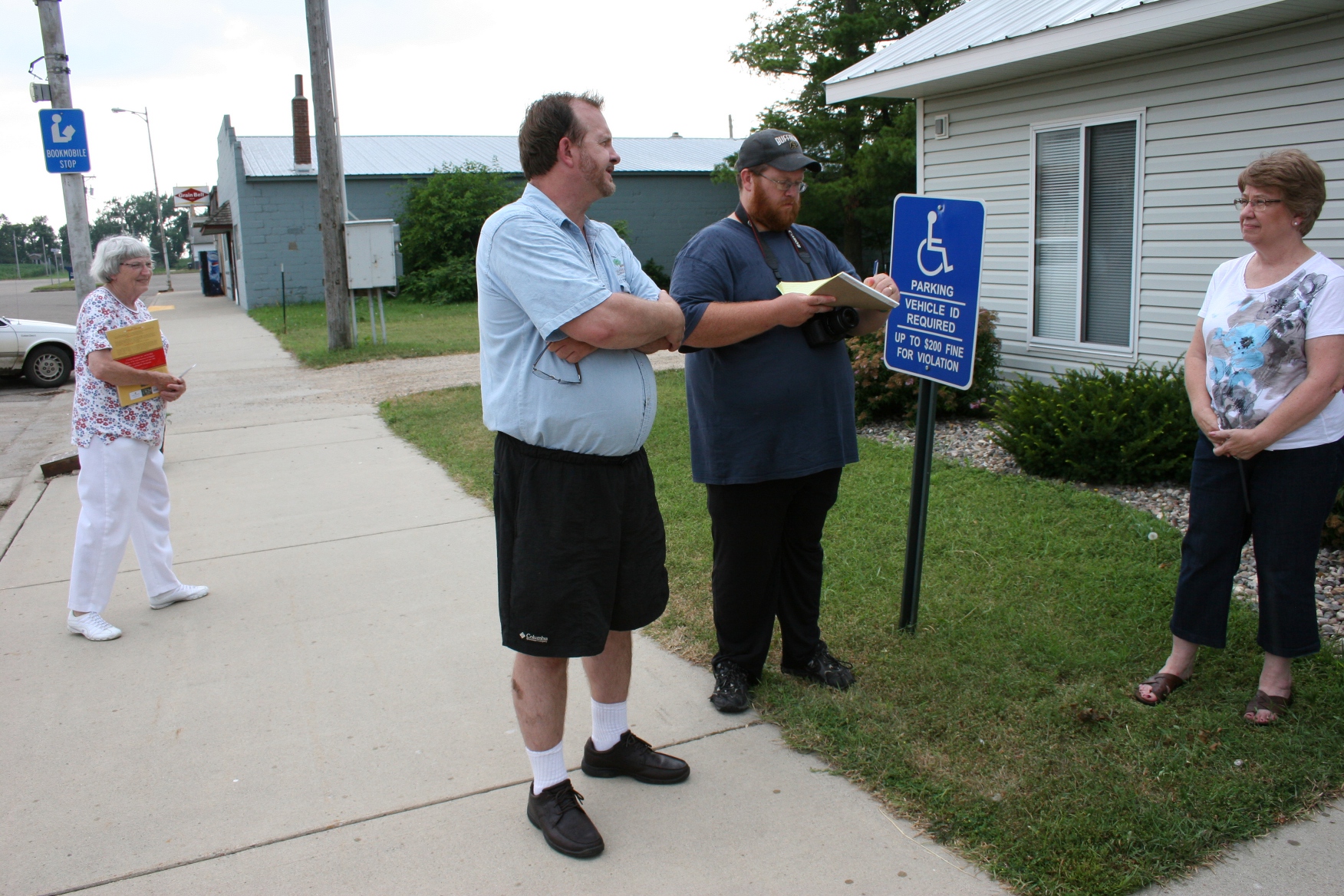
Troy Krause of The Redwood Falls Gazette interviews Little Free Library co-founder Todd Bol as Dorothy Marquardt, left, and Karen Lemcke of the Vesta Commercial Club listen.

“I love books. They are part of my heart and soul,” Todd Bol said Sunday as he stood outside the cafe near the over-sized birdhouse style library anchored on a post. I listened and snapped photos as Troy Krause, editor of The Redwood Falls Gazette interviewed this man who has seen his LFL story spread to media outlets worldwide, from The Huffington Post to The Los Angeles Times and beyond.

The LFL Todd and Susan installed outside the community owned Vesta Cafe.

Little Free Libraries are popping up everywhere across the country (and even outside the U.S.), bringing books to neighborhoods and cities and now, for the first time, to places likes Vesta, the seed plant for the “Small Towns Minnesota” movement of the LFL project, according to Bol.

The beautiful handcrafted library Todd Bol had built and painted for the residents of Vesta, population around 340.

He offered to donate the library, hand-built by an Amish carpenter from Cashton, Wisconsin, to Vesta after I blogged last November about a LFL in my community of Faribault and then issued this challenge to my hometown of some 340 residents:

I’d like to challenge the residents of Vesta to start a Little Free Library. How about in or near the Vesta Cafe? Make my dream of a library in my hometown come true. I’ll even bring some books for the library the next time I’m “back home.”

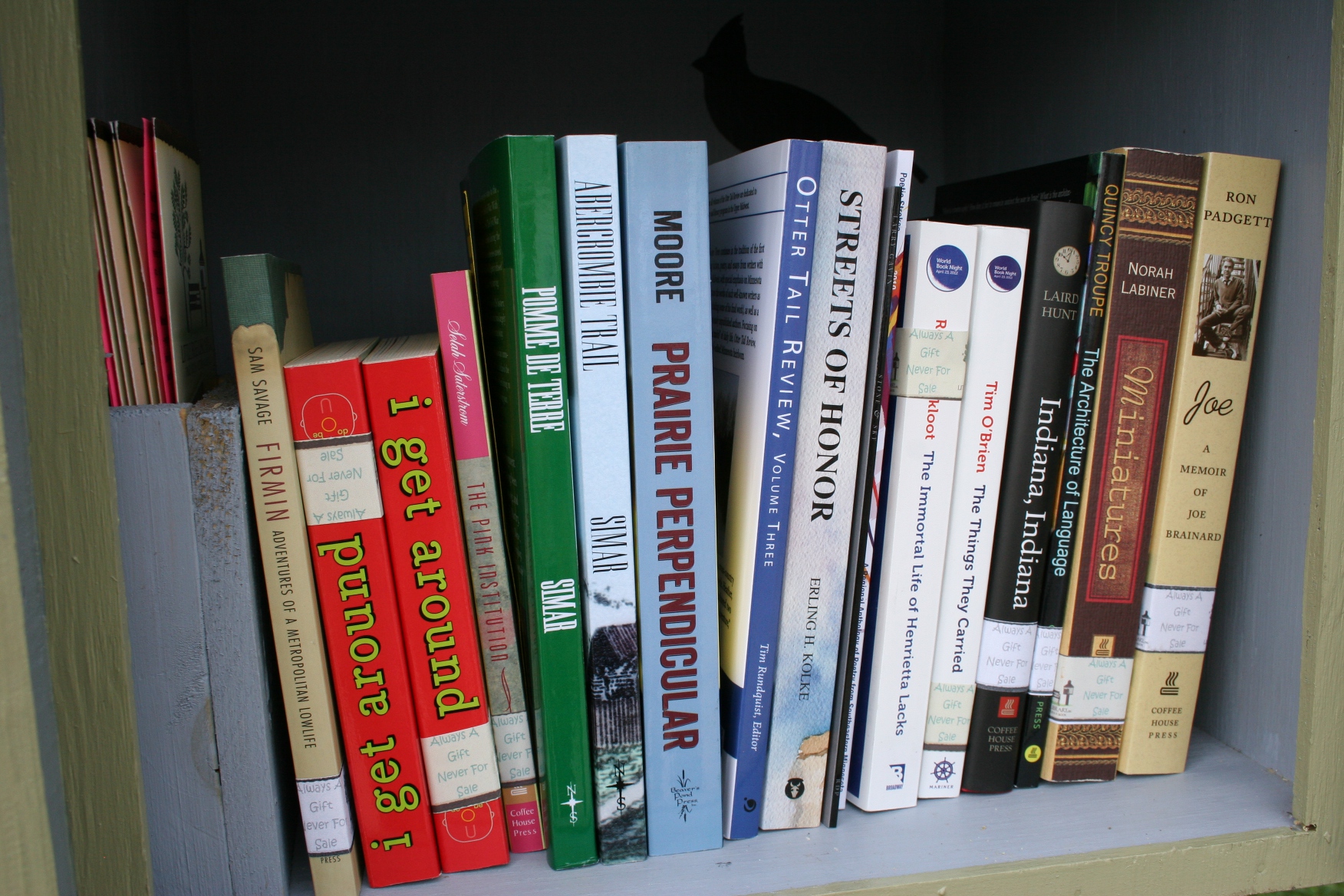
The books Todd Bol and I placed inside Vesta’s LFL. I plan to bring some books for children and teens the next time I’m back in Vesta. Anyone is welcome to donate books. Overflow books will go on a bookshelf inside the cafe and books will be rotated.

Sunday afternoon I delivered on that promise as did Bol with his promise. He brought the library and we filled it with books—his donated by Coffee House Press and mine from my bookshelves. Among my seven donations were two books of poetry, not something I would typically expect Vestans to read. But I wanted Vesta’s LFL to have a copy of Poetic Strokes—A Regional Anthology of Poetry from Southeastern Minnesota, Volume Four. That includes two poems I wrote, one titled “A school without a library.” (When I attended Vesta Elementary School, our library books were selected by students from the Redwood County Library in Redwood Falls 20 miles away and brought back to our school, then later returned and exchanged for a new selection of volumes.)

The other poetry book, Stone & Sky, was written by a Faribault High School English teacher who once lived in nearby Belview and who understands the prairie like I do.

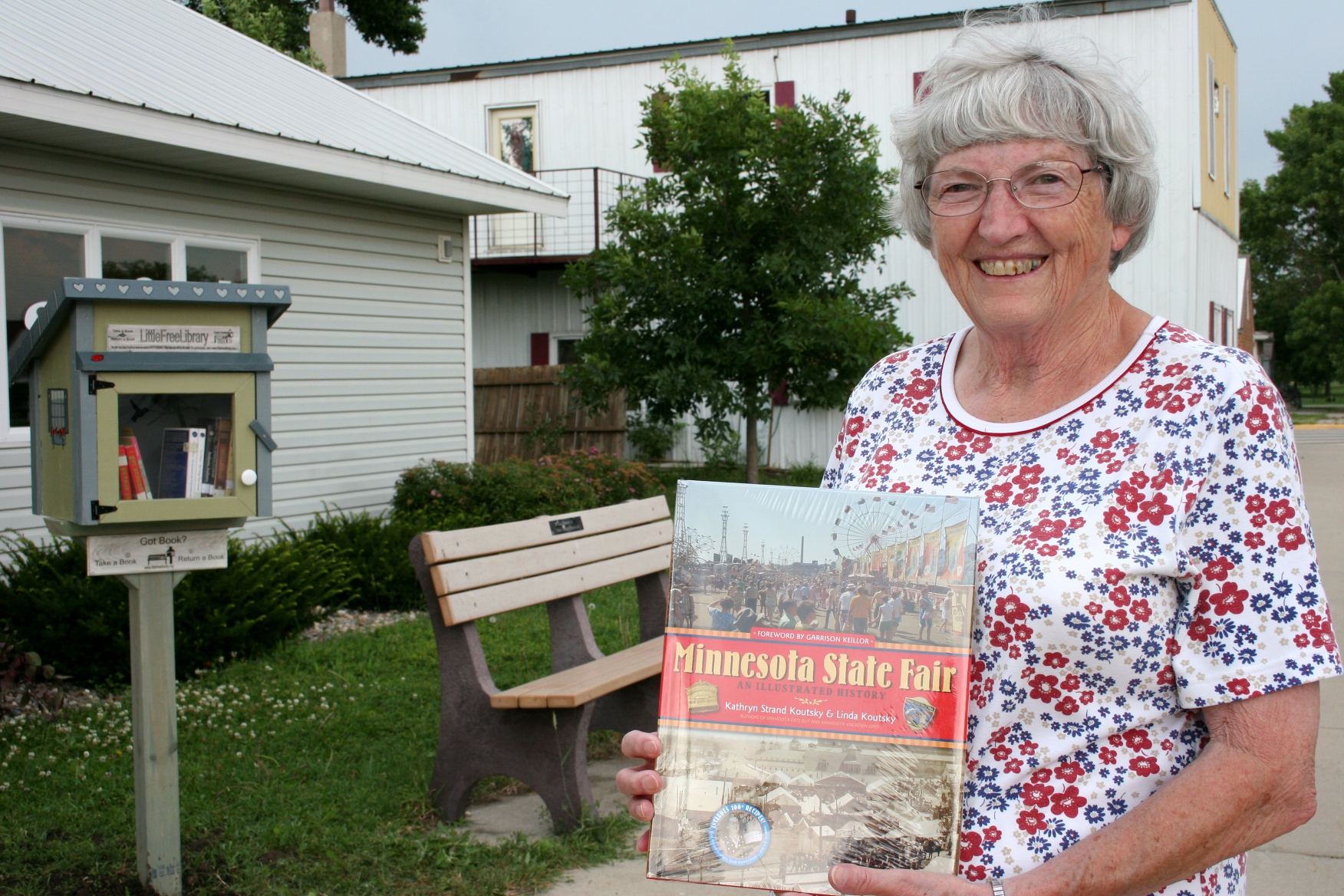
Vesta resident and Vesta Commercial Club resident Dorothy Marquardt took home this book donated by Coffee House Press to Vesta’s LFL. Dorothy is an enthusiastic promoter of my hometown.

Dorothy Marquardt, a member of the Vesta Commercial Club, which worked with Bol on getting the LFL into Vesta, understands what a LFL will mean to area residents. Vesta recently saw its county bookmobile service end. “It’s kind of a godsend,” she said on Sunday, clutching a copy of Minnesota State Fair—An Illustrated History by Kathryn Strand Koutsky and Linda Koutsky with foreword by Garrison Keillor. Marquardt is officially the first reader to pull a book from Vesta’s LFL.

The team that worked to bring a Little Free Library to Vesta includes Dorothy Marquardt, left, and Karen Lemcke, representing the sponsoring Vesta Commercial Club, LFL co-founder Todd Bol and me (holding a copy of a poetry anthology I donated).

Monday morning, while dining in the cafe, I promoted the LFL to locals, moving between tables explaining how the library works. It operates on the premise of take a book, leave a book. Or take a book and bring a book back later to place inside the outdoor library. It’s all done on the honor system and done to promote literacy and encourage reading.

For me, the establishment of a LFL in my hometown is a dream come true. I always wanted a library while growing up. And now that I’m all grown up, my hometown finally has one.

The Little Free Library at the Vesta Cafe.

#

I’D LIKE TO ISSUE A NEW CHALLENGE TODAY. This one goes to the people of my native prairie, of southwestern Minnesota. I’d like to see more Little Free Libraries in the many small towns, like Vesta, that are without libraries and/or bookmobile service. Purchase a library via the LFL organization. Build your own. Work together—perhaps as a 4-H club or a church youth group or a civic organization or whatever—to bring a LFL into your town.

Be sure to officially register your LFL (there’s a small fee) so word of your library can be spread on the LFL website and via social media. Comment on this post and tell me that you are going to accept my challenge and bring a LFL to your community.

Finally, thank you, Todd Bol, for making my dream come true through your gift of a LFL to my hometown. It is my hope that the library in Vesta will inspire other communities to grow this project in rural Minnesota so that no child or adult, no matter where he/she lives, is without a library.

Thank you also to Karen Lemcke of the Vesta Commercial Club for working with Todd and me to make this project a reality.

This LFL, repurposed from a cranberry crate, needs a new home. Check The Redwood Falls Gazette to read how editor Troy Krause will be attempting to find a location for the library in southwestern Minnesota. Interested? Contact Troy.

FYI: Todd also dropped a LFL off in the neighboring community of Belview. And he left a third library with Troy Krause, editor of  The Gazette. Troy promised to publicize the availability of that third library. I’ll keep you posted on which town accepts the third LFL.

Click here to link to the LFL website and learn more about the Little Free Library project.

© Copyright 2012 Audrey Kletscher Helbling


Stories from the Tracy, Minnesota, tornado remembered and published 44 years later June 13, 2012

Eric J. Lantz, 16, of Walnut Grove, shot this award-winning photo of the Tracy tornado as it was leaving town. He often took photos for the Walnut Grove Tribune, owned by his uncle, Everett Lantz. This image by Eric was awarded third place in the 1968 National Newspaper Association contest for best news photo.

FORTY-FOUR YEARS AGO TODAY Minnesota’s first F5 tornado, the most powerful with wind speeds in excess of 300 mph, plowed through the southwestern Minnesota farming community of Tracy killing nine.

Twenty-five miles to the northeast, my farmer father paused from milking cows on that sultry June 13 evening in 1968 to watch the tornado churn across the flat prairie landscape. Not wanting to unduly alarm his family, he did not warn us of the approaching storm. Only afterward, when the menacing clouds dissipated before reaching our farm, did he tell us what he’d observed through the open barn door.

Days later our family of eight piled into the family car and drove to Tracy to see the devastation.

This photo, taken by Eric J. Lantz, a printer’s devil/photographer for the Walnut Grove Tribune, was republished in  the Tracy Headlight Herald courtesy of the Tribune. It shows a damaged boat and overturned car sitting atop the rubble after the Tracy tornado of June 13, 1968.

I was an impressionable 11 ½ years old at the time. Specific memories of that destruction—except for twisted, shredded trees and tossed boxcars—have long vanished. But the overall, chaotic scene and the deaths of those nine Tracy residents are forever seared into my memory. The deadly Tracy tornado is the sole reason I dream about and fear tornadoes.

The photo by Eric J. Lantz illustrates the cover of Scott Thoma’s just-published book.

So I knew when I picked up Tracy native Scott Thoma’s recently-published book, Out of the Blue—The true story of two sisters and their miraculous survival of one of the most powerful tornadoes in Minnesota history—that the nightmare would come.

And it did, on the night I finished the chapter about sisters Linda (Haugen) Vaske, 20, and Pam Haugen, 8, who never made it to the basement of Linda’s home, I dreamed that I could not reach the basement during a tornado.

I’ve blocked out the rest of that nightmare. And for more than four decades, Linda, who was flung about by the fierce winds of that 1968 tornado as was Pam, also blocked out much of that terrifying event. That is until she and Pam sat down with Thoma, a long-time writer and newspaper reporter, to talk about that fateful evening when they nearly lost their lives.

For 44 years, Linda blamed herself for the death of the tornado’s youngest victim, 2 ½-year-old Nancy Vlahos, whom Linda’s then-husband and she were in the process of adopting. The preschooler was ripped from Linda’s arms and later found dead in the street.

While the story of the Haugen sisters and little Nancy centers the book, Thoma’s account of the Tracy tornado encompasses the stories of others, including his own. He lived less than a block from the twister’s destructive path and recalls his father searching for an elderly neighbor and unintentionally stepping upon the man’s lifeless body wrapped in a tattered drape. It was the first time he saw his father cry.

That intimate familiarity with the scenes that unfolded in the aftermath of the tornado and the understanding of how small towns pull together assure readers that Thoma is writing this for reasons which are deeply personal. He is honoring those who died, those who survived and those who helped his community of then 2,500 residents in its hours of greatest need.

You will read about Delpha Koch, who from her farm home five miles southwest of Tracy, phoned a dispatcher at 6:55 p.m. to warn of the approaching tornado, saving countless lives. Ditto for the police officer and train crew and others who alerted residents to the storm.

Delpha, a critical care nurse at the Tracy Hospital, her husband and two sons immediately headed into Tracy, arriving as screaming and stunned residents covered in dirt and silt emerged from the rubble. Almost immediately rescuers began taking the dead and injured to the hospital in a furniture delivery truck and other vehicles.

Thoma, via conversations with survivors and through extensive research, writes with absolute attention to detail, taking the reader inside that 42-bed hospital where 171 patients were seen for tornado-related injuries in the outpatient department. Twenty-three were hospitalized, including the Haugen sisters—Linda was seriously injured, Pam was not.

In what I consider one of the most memorable lines from the book, Thoma quotes Kathy Haugen, upon seeing Linda: “That’s not my sister.” Due to the extent of her injuries, Linda was unrecognizable to even her closest loved ones.

Thoma’s book is as much a tragic story of lives lost and homes and businesses damaged or destroyed as it is about a community pulling together. From Tracy Fire Chief/Fire Marshall/Civil Defense Director Bernie Holm who worked tirelessly for his community to the 80-year-old retired doctor who volunteered at the hospital to the veterinarians who sutured wounds to the farmers who brought tanks of water to the hospital and more, this is a story of how we as humans assist one another in need.

But it is also a story which emphasizes the ferocity of an F5 tornado, one of only two which have ever occurred in Minnesota, the other in nearby Chandler on June 16, 1992. One person was killed in Chandler and 35 injured.

I remember, from 1968 accounts of the Tracy tornado, the reports of tossed boxcars; a 25-ton boxcar was blown two blocks. Thoma spews out the numbers—26 toppled train cars, 111 destroyed homes, 76 houses with major damages, five businesses destroyed and 15 businesses damaged.

Yet, what impacts me most upon reading his book are the nuances of this tornado, like the account of Tracy resident Jerry Engesser discovering a book upon the rubble in his yard. He turns it over to read the title, Gone with the Wind.

And then, the bit that makes goosebumps rise on my arms comes in a partial letter found by a farmer 45 miles away near Redwood Falls. It reads:

Cliffy,
It’s raining and hailing here tonight and the wind is blowing hard…

Linda (Haugen) Vaske had just begun writing that letter to her military husband, Clifford, when the tornado swept into Tracy around 7 p.m. on Thursday, June 13, 1968, claiming nine lives and forever changing this southwestern Minnesota prairie community.

Eric J. Lantz, photographer for the Walnut Grove Tribune, also took this photo which was shared and published in the Tracy Headlight Herald. He captured this scene at the demolished Tracy Elementary School.

FYI: Click here to link to Willmar, Minnesota, author Scott Thoma’s Out of the Blue website. His book was published in May by Polaris Publications, an imprint of North Star Press of St. Cloud, Inc.

To read an earlier post I wrote about the Tracy tornado, click here. It features information from Al Koch, who is married to one of my best friends from Wabasso High School, Janette Koch. Al witnessed the Tracy tornado and destruction and his mother, Delpha, phoned the Tracy dispatcher about the approaching tornado.

My experience with tornadoes is personal. About 30 years ago, when I was already an adult and living away from home, a twister struck the farm where I grew up. Click here to read that post.

Click here to read a post about a tornado which struck my father’s childhood farm about a mile away in 1953 or 1954.

Last July 1 a series of downbursts with windspeeds of 90 – 100 mph swept through my hometown of Vesta. Read about the damage there by clicking here.

And finally, click here to read a post about a terrifying storm my husband, son, mother and I rode out in a car along a rural road north of Walnut Grove (near Tracy) two summers ago. I’ve probably never been more terrified than during those 45 minutes on that stormy, black night.

Yes, I fear and respect tornadoes. You should, too.

© Copyright 2012 Audrey Kletscher Helbling
Copyrighted photos are courtesy of Scott Thoma and are published here with his permission. Photographer Eric J. Lantz retains the copyright to the above photos.

 DISCLAIMER: I received a free copy of Out of the Blue. However, that did not influence my decision to write this post nor its content.

 

A Minnesota politician & writer shares his insights on “The Dakota War, a clash of cultures” May 18, 2012

Filed under: Uncategorized — Audrey Kletscher Helbling @ 3:15 PM
Tags: , , , , , ,

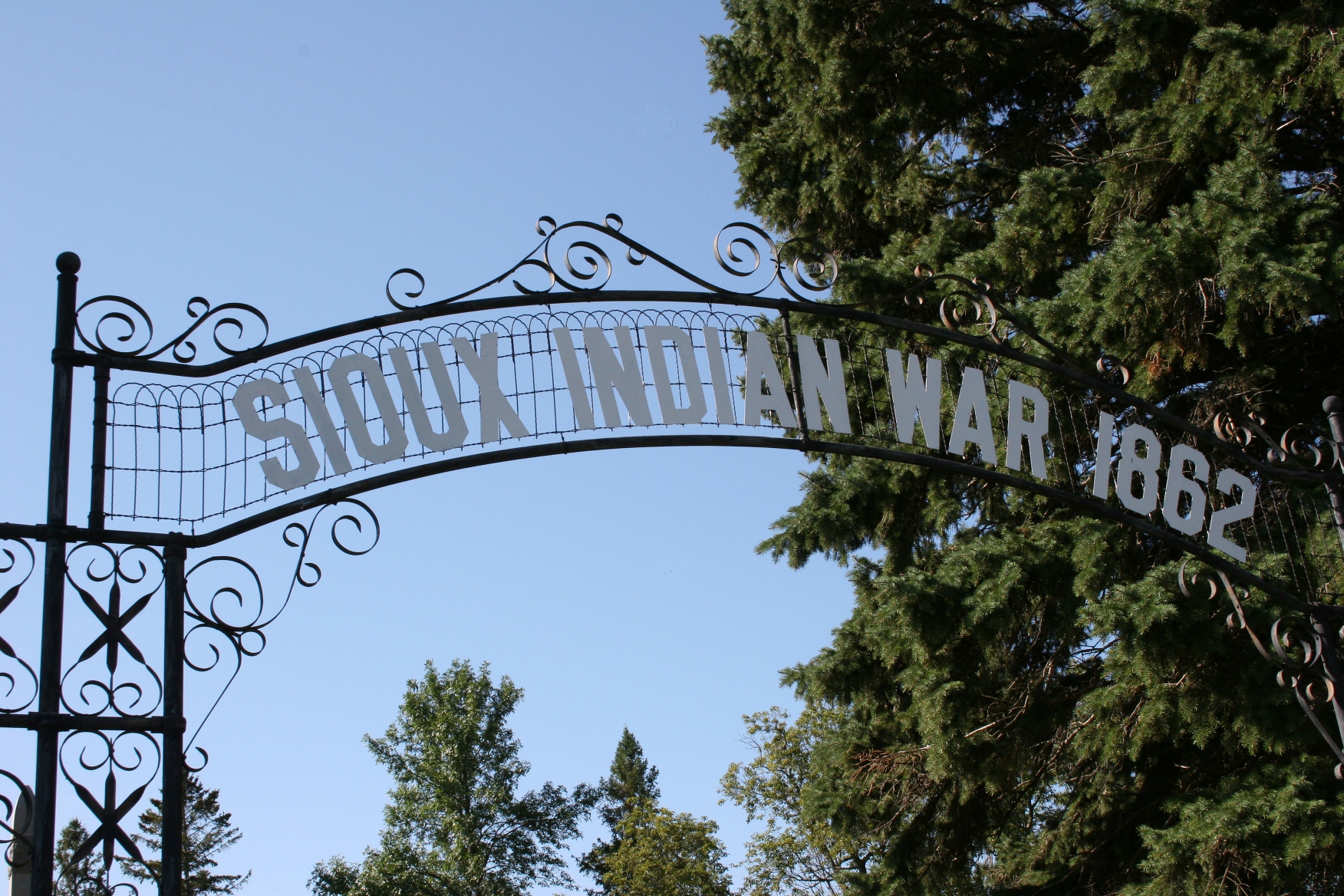
This archway leads to the Wood Lake State Monument, on the site of the battle ending the U.S.-Dakota Conflict.

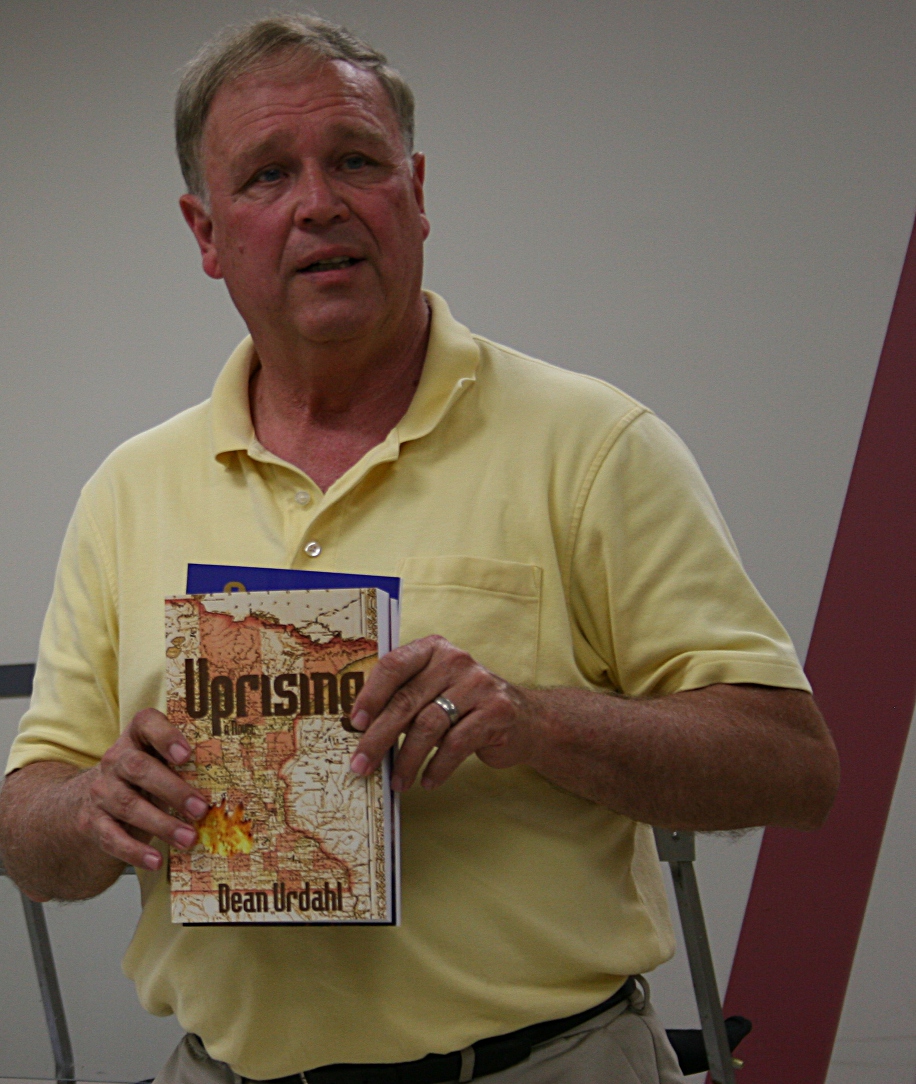
Dean Urdahl has written the trilogy of Uprising, Retribution and Pursuit.

I COULD HAVE LISTENED to Dean Urdahl for hours. Not Urdahl the Minnesota State Representative from District 18B. But Urdahl the historian, the retired American history teacher, the storyteller, the writer.

The southern Minnesota politician, who co-chairs the Minnesota Civil War Commemoration Task Force, was in Faribault Thursday evening to talk about the U.S.-Dakota War of 1862 and to promote his trilogy of historical fiction novels about that conflict.

Urdahl’s interest in the U.S.-Dakota War is rooted deep in family history, in the soil of Meeker County where his Norwegian immigrant ancestors settled in 1856 and where, on August 17, 1862, five settlers were killed by a small group of Dakota. That attack in Acton Township, only 1 ½ miles from Urdahl’s current home, marked the beginning of the war.

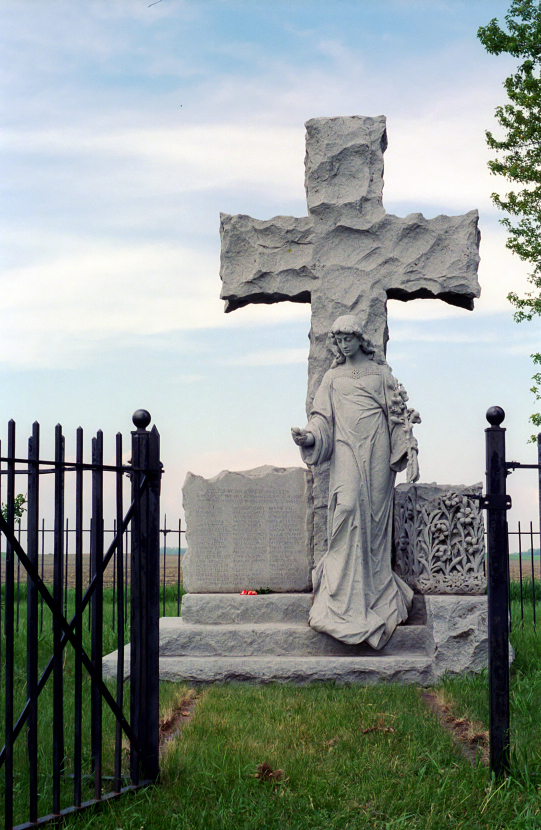
Urdahl’s great-great-grandfather helped bury those five victims in the cemetery of Ness Lutheran Church, a country church southwest of Litchfield. A monument there honors the five who were slain. The Representative grew up attending Ness Lutheran, listening to his mother tell stories about his ancestors and the area’s history. That sparked his interest in history and specifically a strong interest in the U.S.-Dakota War of 1862.

“What happened in 1862 (in Minnesota) is largely ignored by historians,” Urdahl said, adding that the U.S.-Dakota War “gets scant attention and deserves more.”

In 1862, a divided nation was more focused on the conflict between North and South than on the clash between cultures in Minnesota, Urdahl explained.

This historian, however, certainly drew attention to the war between the white settlers/soldiers and the Dakota during his presentation, “The Dakota War, a clash of cultures,” at the monthly Cannon Valley Civil War Roundtable meeting in Faribault in this, the 150th anniversary year of the War.

Cultures collided, Urdahl said, as immigrants settled in the native home of the Dakota and the government adopted a policy “to turn them (the Dakota) into farmers.”

Conflict also existed among the Dakota—between “the blankets,” those sticking to traditional ways, and “cut-hairs,” those turning into farmers, he said.

Speaking without notes and with the skill of a master storyteller passionate about his subject, Urdahl mesmerized his audience, sharing information and a story-style time-line of how the U.S.-Dakota War unfolded.

The Milford State Monument along Brown County Road 29 west of New Ulm commemorates the deaths of 52 settlers who were killed in the area. Located along the eastern edge of the Lower Sioux Reservation, Milford had the highest war death rate of any single township.

Urdahl’s talk was a refresher course for me, a native of Redwood County located at the geographical center of the War. I’ve always been interested in the conflict and even penned a term paper on “The Sioux Uprising of 1862,” as it was labeled when I was a high school student. My maternal ancestors lived in the New Ulm area in 1862 and were warned by friendly Indians to leave; the families fled to the safety of nearby St. Peter.

“We find throughout the war, friendly Indians warning people to leave,” Urdahl said.

That, and much of what this historian said, I already knew. You’ll find it written in books. But some of what Urdahl shared I had forgotten or never heard such as…

  • A drought in 1861 left the Dakota near starvation and relying on government food. (I didn’t recall the drought as preemptive to the desperate situation among the Dakota.)
  • In late July 1862, some 5,000 Dakota gathered at the Yellow Medicine Agency ready to storm the warehouses. Agents eventually released the storehouse of grain to the hungry Dakota, thus averting the start of the war for several weeks.
  • The settlers at Acton were challenged to a target shooting contest by the Dakota before they were killed.
  • The Dakota were intent on attacking New Ulm because they thought the town was built on reservation land. The reservation covered a 10-mile by 150-mile area along the Minnesota River.
  • From 500 – 800 Minnesotans were killed/died during the six-week war, only 75 of whom were soldiers. “The rest,” said Urdahl, “were Swedish, German and Norwegian immigrants who didn’t know what was going on.”
  • Although there is not an accurate count on the number of soldiers who died in the Battle of Birch Coulee, the count of dead horses stands at 90. “They could replace men, not horses,” Urdahl said.
  • When Fort Ridgely was under attack, fort leader Lt. Thomas P. Gere was coming down with the mumps.
  • During the final battle at Ft. Ridgely, doors on both ends of the surgeon’s quarters/headquarters were opened and a cannon ball fired down the hallway toward the stables where the Dakota were stationed.
  • A Confederate officer was reportedly spotted in Little Crow’s (Dakota leader) camp. Some speculate that the Confederacy played a role in the U.S.-Dakota War of 1862, thus diverting soldiers from the Confederate front by keeping them in Minnesota to fight the Dakota.
  • Little Crow lived in a brick house at the time of the War.

Trader Andrew Myrick refused to grant the Dakota credit, remarking, “Let them eat grass.” After an attack on the Lower Agency, Myrick was found dead, his mouth stuffed with grass.

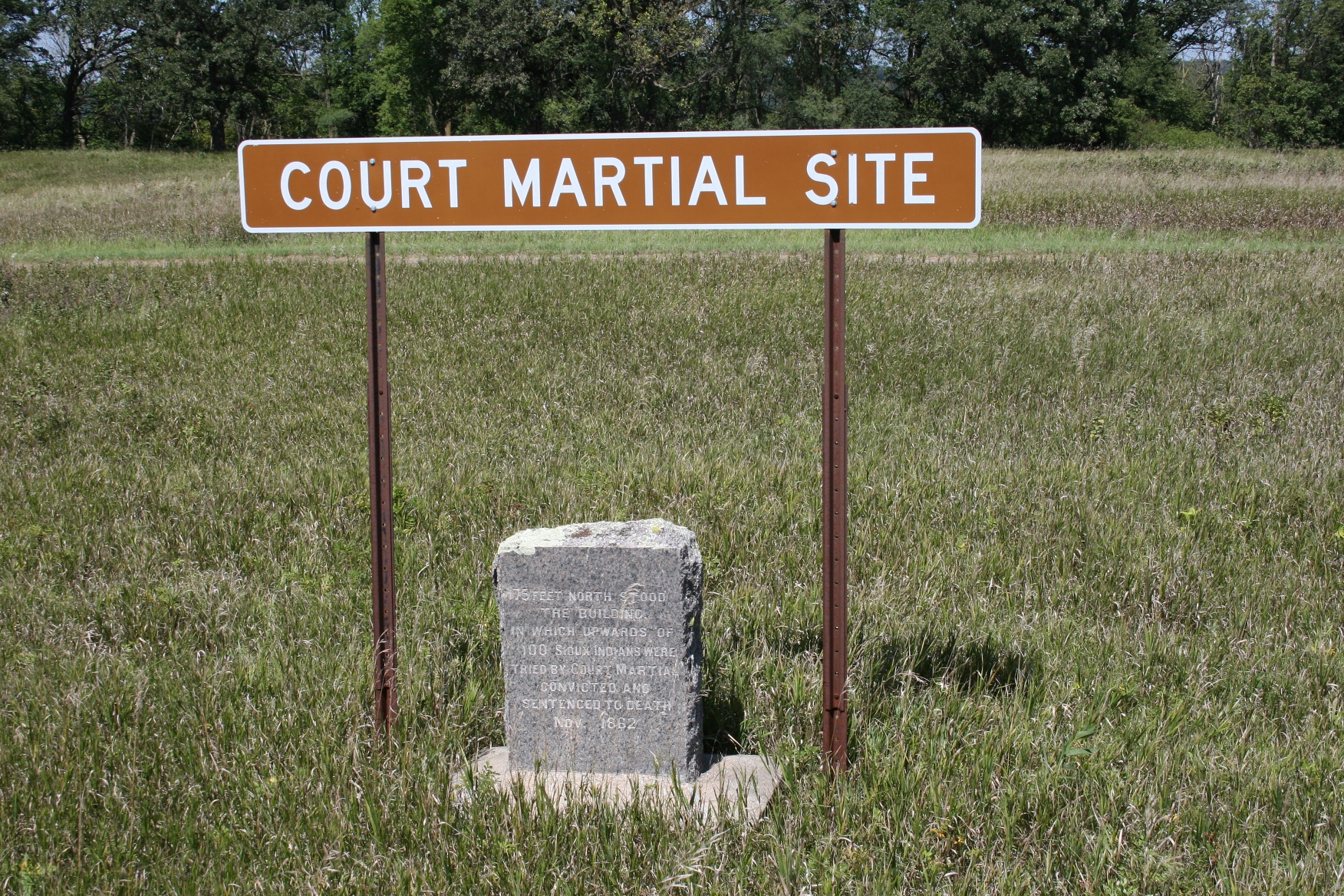
The message on a marker near the Lower Sioux Agency reads: 75 feet north stood the building in which upwards of 100 Sioux Indians were tried by court martial, convicted and sentenced to death Nov. 1862.

As I listened to Urdahl’s presentation, I wondered how Native Americans would react to the information he shared. What perspective would they offer? Would they disagree with him, challenge his facts, voice their opinions? How would they feel?

“There are still very hard feelings on both sides,” this descendant of Norwegian immigrants told his audience. He occasionally gets e-mails from angry descendants of settlers killed during the U.S.-Dakota War.

Growing up in Redwood County decades ago, I was well aware of the animosity between whites and the Dakota passed down through the generations. I know the bad feelings still linger on both sides.

But perhaps in this 150th anniversary year, we can all (white and Dakota) strive to overcome, to understand and to, finally, forgive.

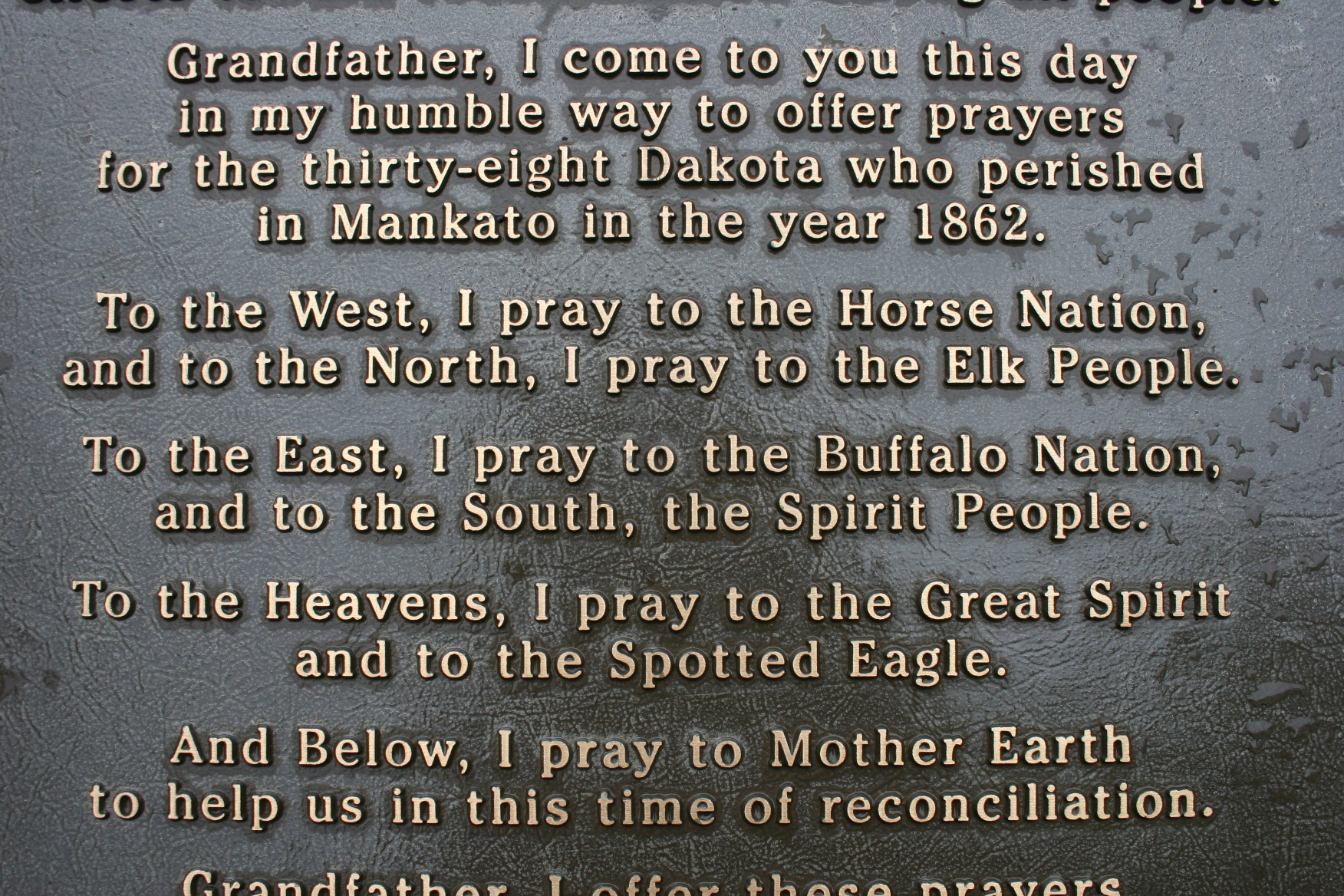
Words on a marker in Reconciliation Park in Mankato where 38 Dakota were hung on December 26, 1862. This stands as the largest mass execution in American history. Initially, 303 were sentenced to death. President Abraham Lincoln approved the deaths of 39 and granted a last-minute reprieve to one other.

FYI: All of the above monument images were photographed within the past several years.

© Copyright 2012 Audrey Kletscher Helbling


Discovering gnomes, a vintage cookbook & more at a used book sale May 5, 2012

Filed under: Uncategorized — Audrey Kletscher Helbling @ 7:19 AM
Tags: , , , , , , , , ,

AS I DREW OPEN the interior glass door into the Faribo West Mall, the offending odor of a hundred musty, damp basements stung my nostrils, mixing with the distinct aroma of Chinese food.

The moldy smell pulled me like an invisible string, past the Great China Buffet and the pet supply store, toward a vacant storefront, recent home to a variety store and years before that, a bookstore.

I stepped inside the former retail space into a temporary bookstore packed with thousands of books lining tables and shelves. I aimed straight for the Minnesota-authored titles while my husband veered toward the cookbooks.

Books I selected from the “Minnesota table,” albeit Prairie Perpendicular (one of my all-time favorite fiction books) is set in a small North Dakota farming community and written by a North Dakotan.

For 45 minutes we perused the selections, me picking How to Talk Minnesotan, A Visitor’s Guide by Howard Mohr, In Search of Lake Wobegon by Garrison Keillor and Prairie Perpendicular by Marston Moore (a North Dakota writer) from the Minnesota table.

I wasn’t searching for anything specific, only that which might interest me or others. The Minnesota language book will go to the oldest daughter’s boyfriend whom I will meet in a few weeks. He’s a California native, still living there, and likely could use a few tips about hotdish and bars. I’ll earmark page 16 for him in Lesson 3, “Eating In in Minnesota.”

If he wants to borrow Keillor’s book, I suppose I could lend it to him. But then again I don’t want to leave him with the impression that Minnesotans are, well, a bit off-kilter. I mean, if you didn’t know anything about ice fishing, what would you think of a photo of St. Joseph Rod & Gun Club members sitting on overturned buckets and playing cards while fishing on a frozen lake? Yeah, perhaps I best keep that Lake Wobegon book tucked away.

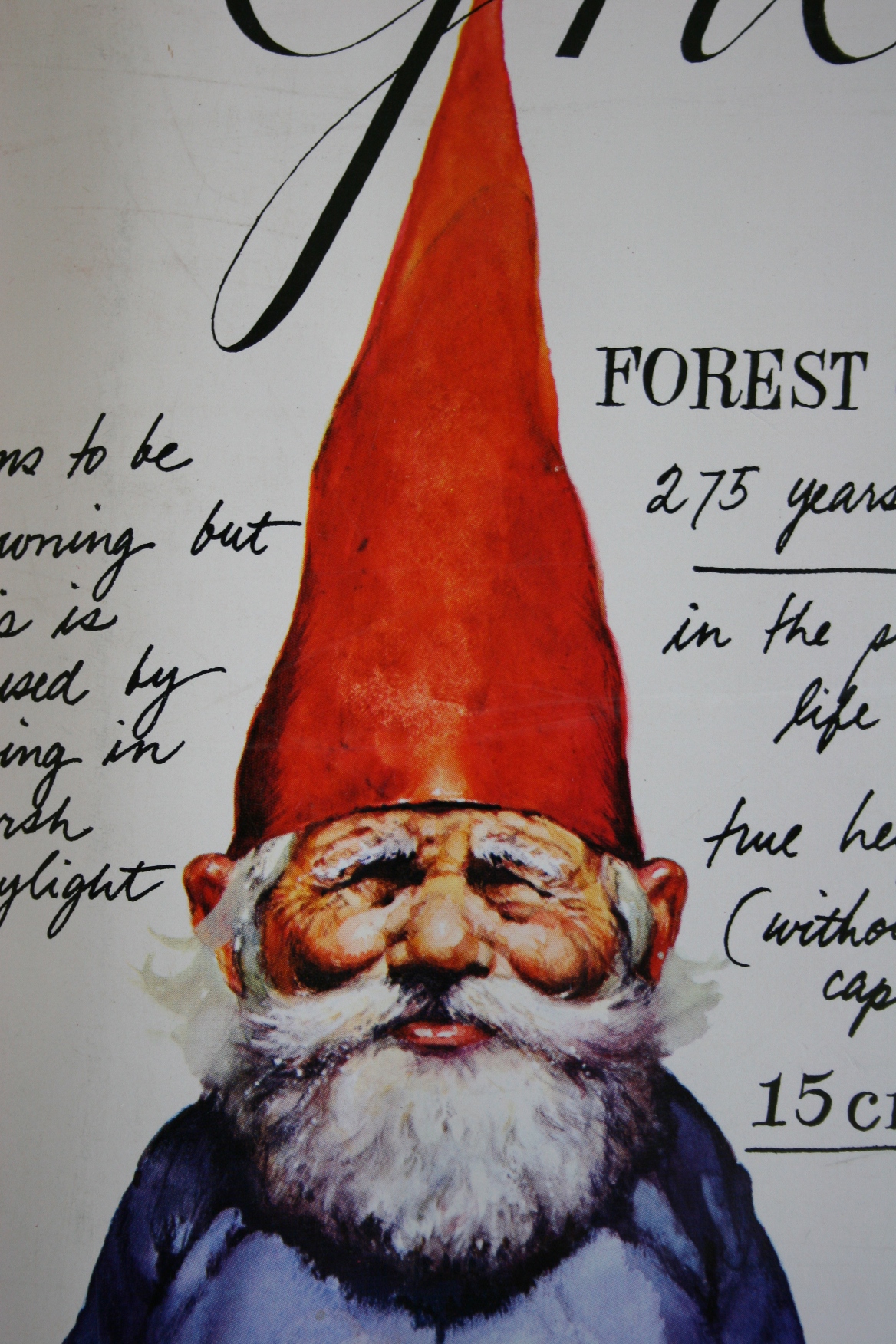
A snippet from the cover of Gnomes written by Wil Huygen and illustrated by Rien Poortvliet.

After discovering those gems, I moved on to the garden books and then the poetry and art and children’s titles. Somewhere in between I found a book about gnomes, complete with humorous stories and art that I just know my gnome-loving floral designer sister will appreciate.

But it was my husband who uncovered the find of the evening, a 1967 Minnesota Valley Cook Book. The 55-page supplement to The New Ulm Journal offers an interesting and amusing glimpse into the past in ads and recipes.

The cover of the 1967 Minnesota Valley Cook Book printed on news print. The cover photo of Mrs. Reuben Mammenga of New Ulm (sorry, no first name given) was taken by Ron Grieser. Mrs. Mammenga won the $5 prize in the pies category for her Chocolate Angel Pie.

I will share more about this 45-year-old southwestern Minnesota cookbook in an upcoming post. Just to pique your interest, did you know that (in 1967) “one of America’s largest department stores is just 11 inches high?” Can you guess which one?

Have you heard of Sauerkraut Cake and Tomato Surprise Cake?

Yes, the entertainment value in this old cookbook rates five stars. So does the Faribault chapter of the American Association of University Women’s annual book sale. Proceeds from the sale go to the AAUW Educational Foundation, local scholarships and community programs.

As I see it, everyone benefits through this book recycling process. Several months ago my 18-year-old son asked, “Mom, when’s that book sale?” He and a friend were at the sale when doors opened Thursday. He came home with a dozen science fiction (including one of his favorites, Vernor Vinge’s A Deepness in the Sky) and fantasy books and a thermodynamics college textbook. Total cost: $12.

The sale continues from 9:30 a.m. – 5 p.m. Saturday; noon – 5 p.m. Sunday; and from 3 p.m. – 7 p.m. May 7-9, next to JC Penney. Hurry in for the best selection. Expect to pay @ $1 per book with newer and mint condition books priced higher.

#

P.S. Please do not think all of the books at this sale smell musty. They don’t. I try to discreetly do a “sniff test” before purchasing.

HAVE YOU EVER shopped a used book sale? What gems did you find? Share your experiences in a comment on this post.

© Copyright 2012 Audrey Kletscher Helbling