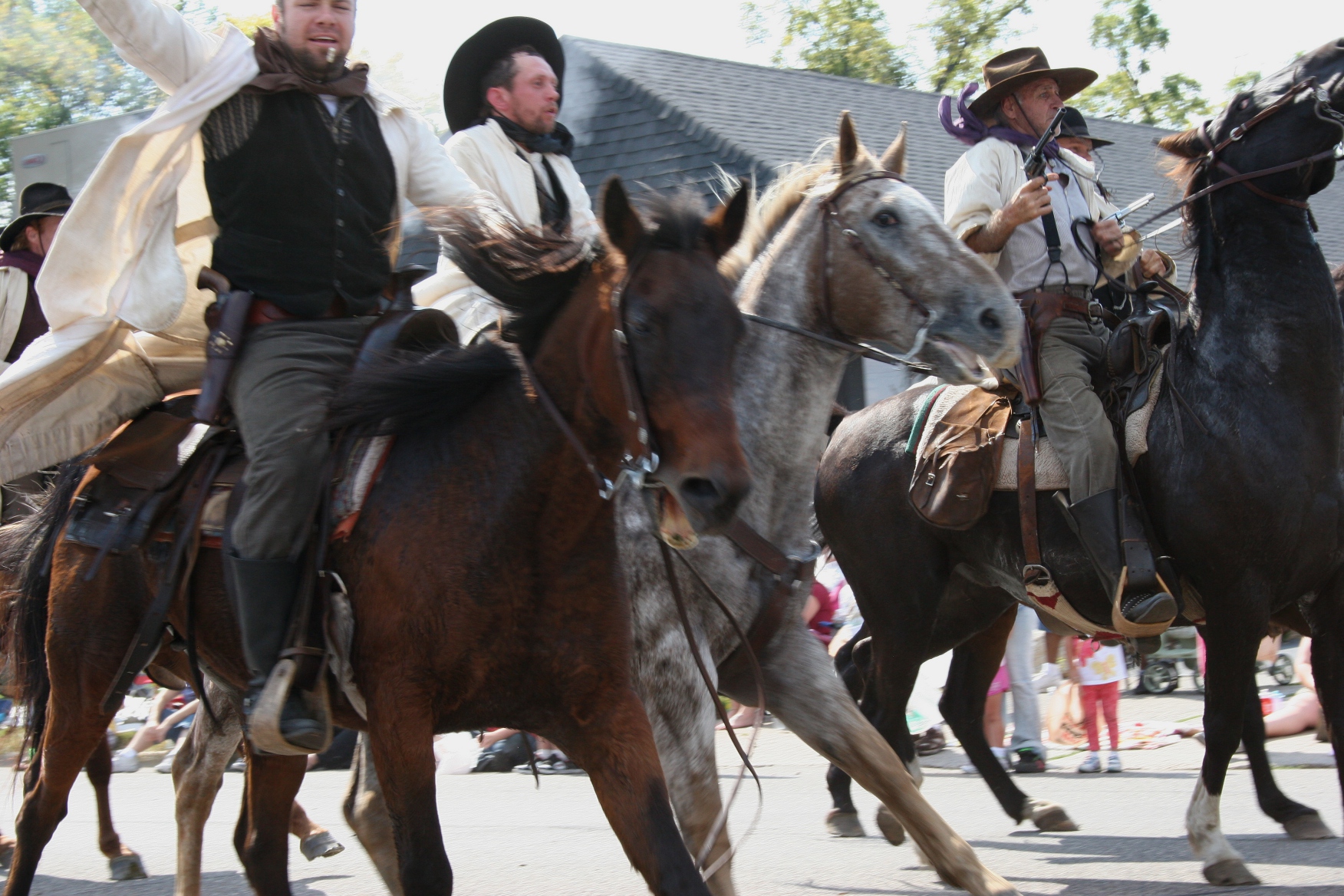
The James-Younger Gang shooting it out during a past Defeat of Jesse James Days parade. (Minnesota Prairie Roots copyrighted file photo)
NORTHFIELD, MINNESOTA is best-known as the community that, on September 7, 1876, thwarted plans by the James-Younger Gang to rob the First National Bank. Townspeople stood their ground against the outlaws, ending in the deaths of the acting bank cashier, a Swedish immigrant and two of the robbers before the gang fled. Northfield marks the failed bank robbery each September with a Defeat of Jesse James Days celebration. That draws 100,000-plus to this city of some 21,000.
Books I’ve purchased at a used book sale, not in Northfield, but in Faribault. (Minnesota Prairie Roots copyrighted file photo)
This week the masses will once again descend on this riverside college town, not for a historical occasion, but rather for one of Minnesota’s biggest used book sales, the Great Northfield Minnesota Book Fair. Certainly, crowds will not swell to levels gathered for the historical event in September. But they will be large, as I can attest from shopping past book fairs, although not recently.
The sale, sponsored by the Northfield Hospital Auxiliary, features an estimated 70,000 donated books, musical recordings, games and puzzles filling tables inside the Northfield Ice Arena. The goal is to raise $100,000 “to enhance healthcare in the Northfield Area.” That means funding special projects at the local hospital and clinics, supporting local health organizations and offering health education scholarships. The book fair began in 1961 and in 2018 hit $1 million in total sales.
Doors for this year’s sale open at 5 p.m. Tuesday, April 22, closing for the day at 9 p.m.. The fair continues until Saturday, April 26, with the following hours: 9 a.m.-9 p.m. Wednesday-Friday and from 8 a.m.-3 p.m. Saturday. Friday is half-price day. Saturday is $5 bag day until 12:30 p.m. From 1-3 p.m. Saturday everything is free. Yes, free.
Puzzles will also be sold at the Book Fair in Northfield. (Minnesota Prairie Roots copyrighted file photo)
Shopping this book fair almost leaves you feeling like you’re robbing the bank given the reasonable prices. Base prices for paperbacks are $1 and for hardcovers, $2, according to the Book Fair website. Of course, some are priced higher depending on rarity or newness. Musical offerings will cost a few bucks. Puzzles and games are priced around $5.
I’ve never shopped the first, or even the second or third, day of the sale. I suppose I’ve missed out by waiting, especially when looking for children’s books. But, hey, with a starting inventory of 70,000, it takes a while for the supply to diminish. There’s still plenty for people to haul out (and they do, by the wagon and box loads) during Saturday’s two-hour freebie close-out.
Defeat of Jesse James Days bobbleheads for sale at the Northfield History Center. (Minnesota Prairie Roots copyrighted photo April 2025)
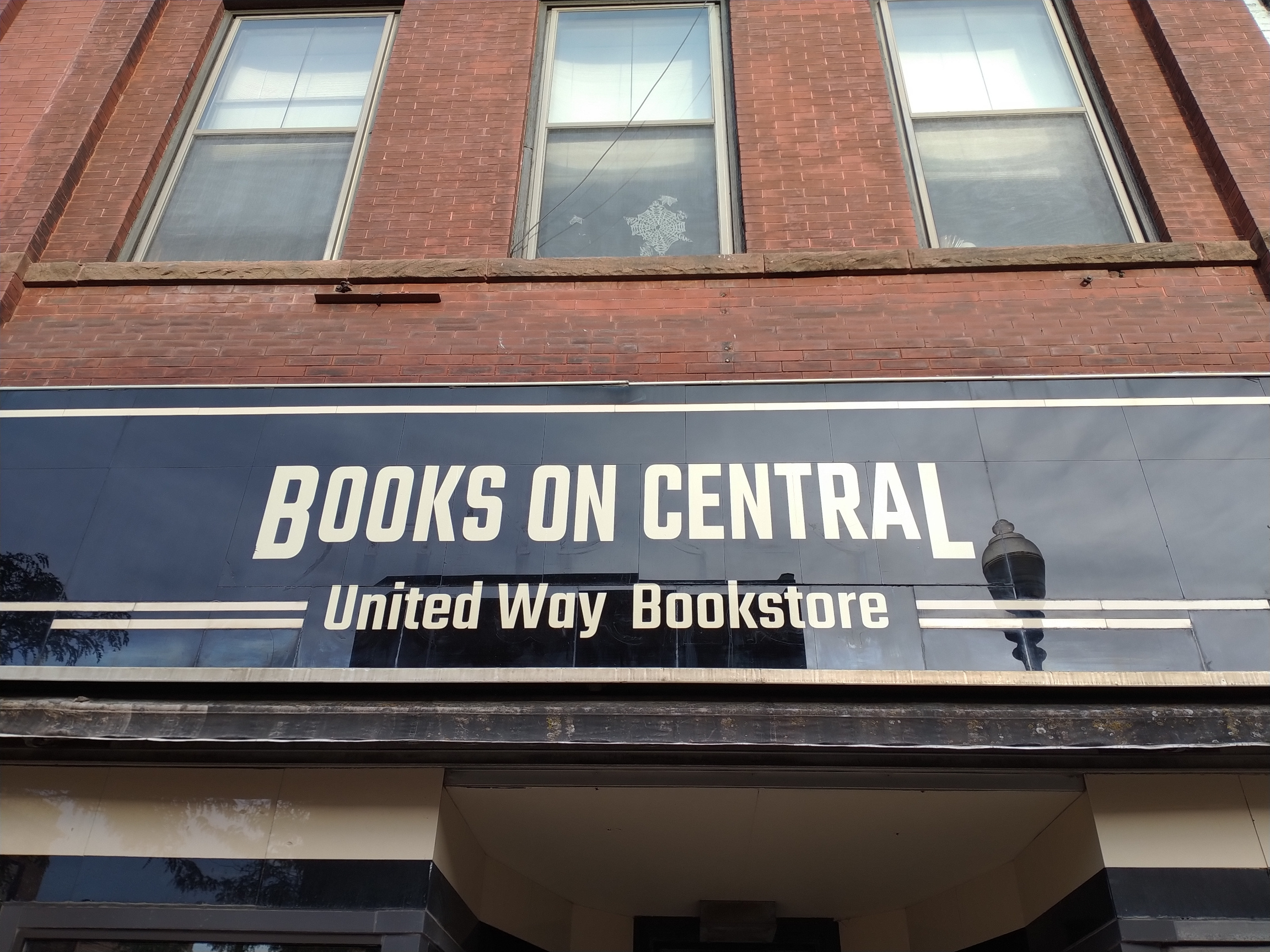
Some 300 volunteers sort through donations, set up and run the sale in the sprawling ice arena with books separated into more than two dozen categories. The organization and efficiency are truly something to behold. The sheer size of this book fair is overwhelming. But then again, Northfield is a city that values books, knowledge and learning, as evidenced by its two liberal arts colleges, an independent bookstore, an engaged public library and an active writing community, especially of poets. That Northfield hosts one of Minnesota’s biggest book fairs should come as no surprise. This is a community which embraces books, and stands up to bank robbers.
Buckham Memorial Library, Faribault, Minnesota.(Minnesota Prairie Roots copyrighted file photo)
I LOVE LIBRARIES for the most basic reason. Books. I love to read. And, for me, Buckham Memorial Library, only blocks from my home, is my go-to source for reading materials.
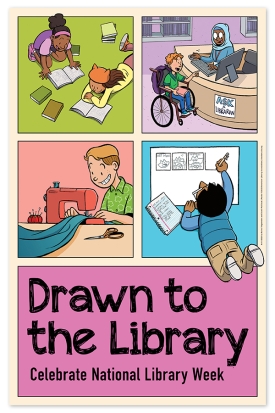
(National Library Week promo sourced online)
The week of April 6-12, National Library Week, I’ve been celebrating public libraries and all they offer. And that’s well beyond books. Libraries have evolved from a shushed setting of a stern librarian sitting behind a desk to warm and welcoming community spaces. I so appreciate the way libraries connect and grow community. I value the vast and varied services and programming they offer.
Dancers at a previous Hispanic Heritage Month event in Northfield, Minnesota. (Minnesota Prairie Roots copyrighted file photo September 2019.
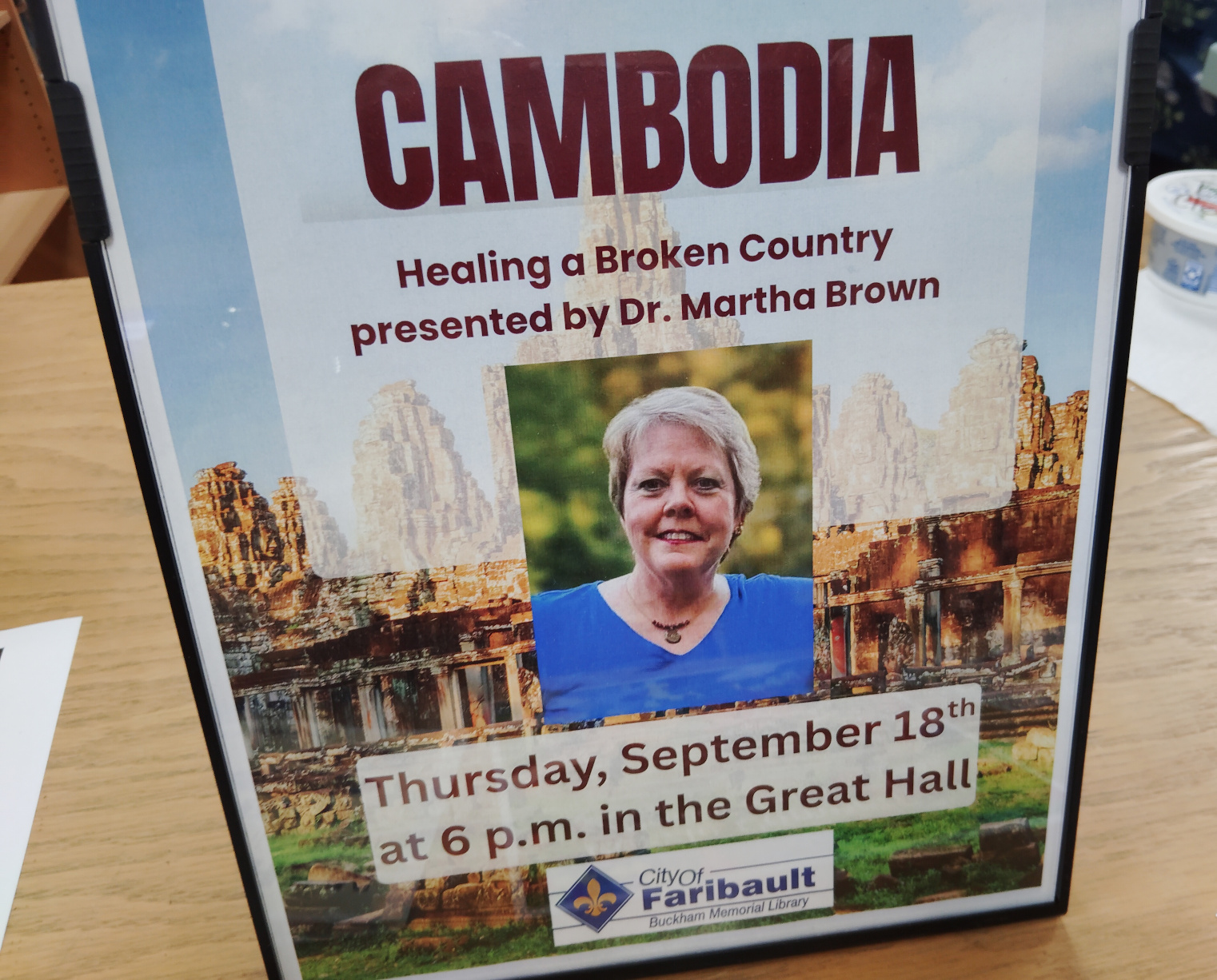
Through the years, I’ve enjoyed many author talks in the Great Hall at Buckham. I’ve even participated myself in a poetry reading and a local authors event. Likewise, I’ve attended author talks at the public library in neighboring Owatonna. In Northfield, I’ve gone to a Hispanic Heritage Month celebration. I’ve checked books out from both those nearby libraries and from all over Minnesota through the inter-library loan system. Almost any book is available to me with only the click of my keyboard and mouse. You’ll even find my writing in books available at the library. That includes This Was 2020: Minnesotans Write About Pandemics and Social Justice in a Historic Year, an award-winning book published by the Ramsey County Public Library.
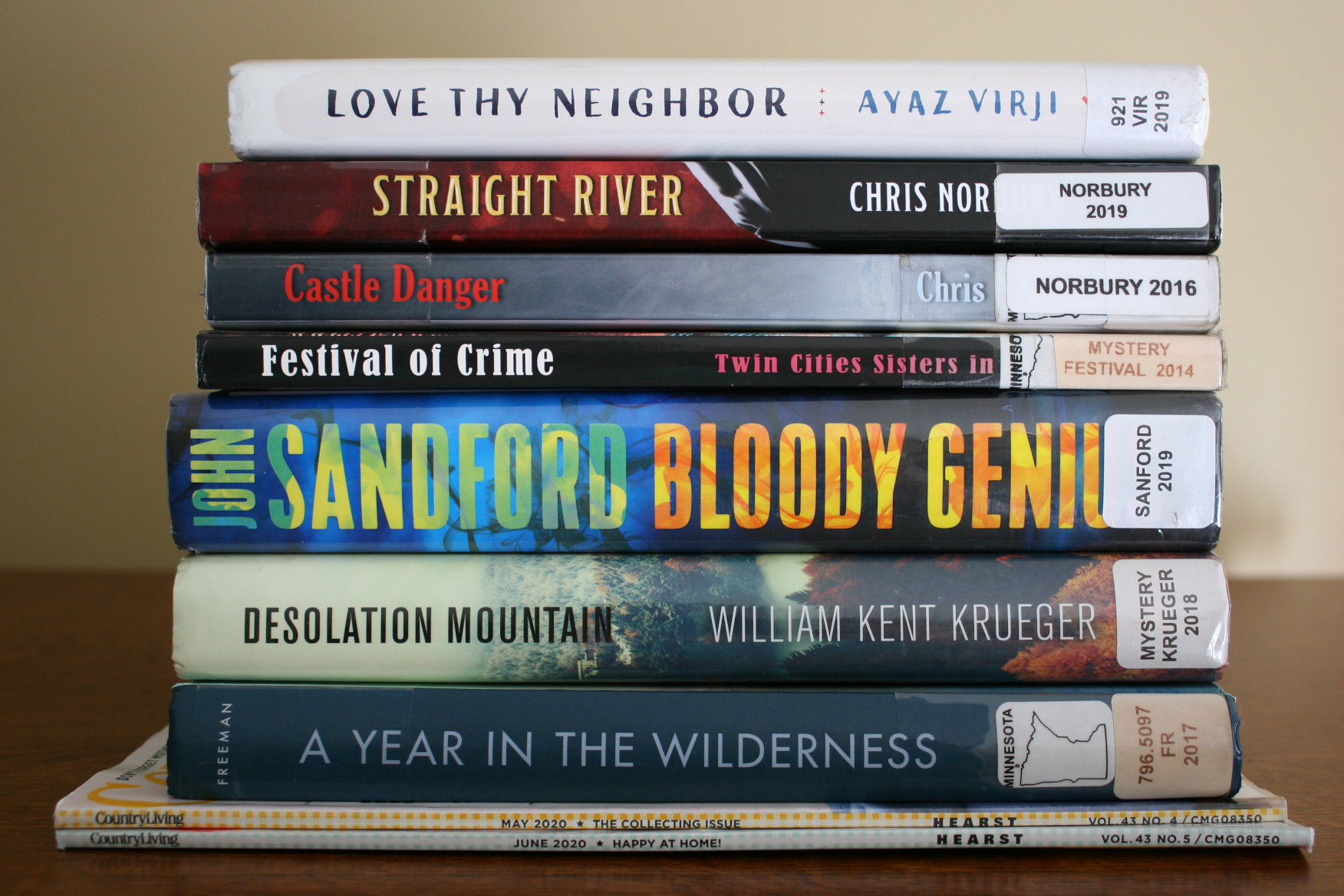
Books and magazines I checked out from the Northfield Library in the past. (Minnesota Prairie Roots copyrighted file photo)
If I didn’t have access to books through libraries, I would struggle. Many evenings I settle into the recliner and read. Reading is an escape for me and a source of information. That I have the freedom to walk into a library and choose a book is not something I take for granted. As a child, I didn’t have easy access to books given my small rural Minnesota community did not have a library. And now, as public and school libraries face book bannings and funding cuts, I hold even more dear the freedom to choose books from the shelves of a well-stocked library.
Sunflowers burst color into the library garden where flowers and vegetables are grown for the community.(Minnesota Prairie Roots copyrighted file photo)
I can also choose a whole lot more like movies and music CDs. My library also offers Adventure Kits which hold yard games, hobby-focused items (for bird watching, cake decorating, rockhounding, etc) and more. There are 3D printer labs, a Makerspace, ukulele lessons, art and gardening classes (even a community garden), a seed library, free state park passes… The list goes on and on.
This information was posted in a display at my library several years ago. (Minnesota Prairie Roots copyrighted file photo)
Libraries truly are hubs for learning, and not just from books, magazines and newspapers.
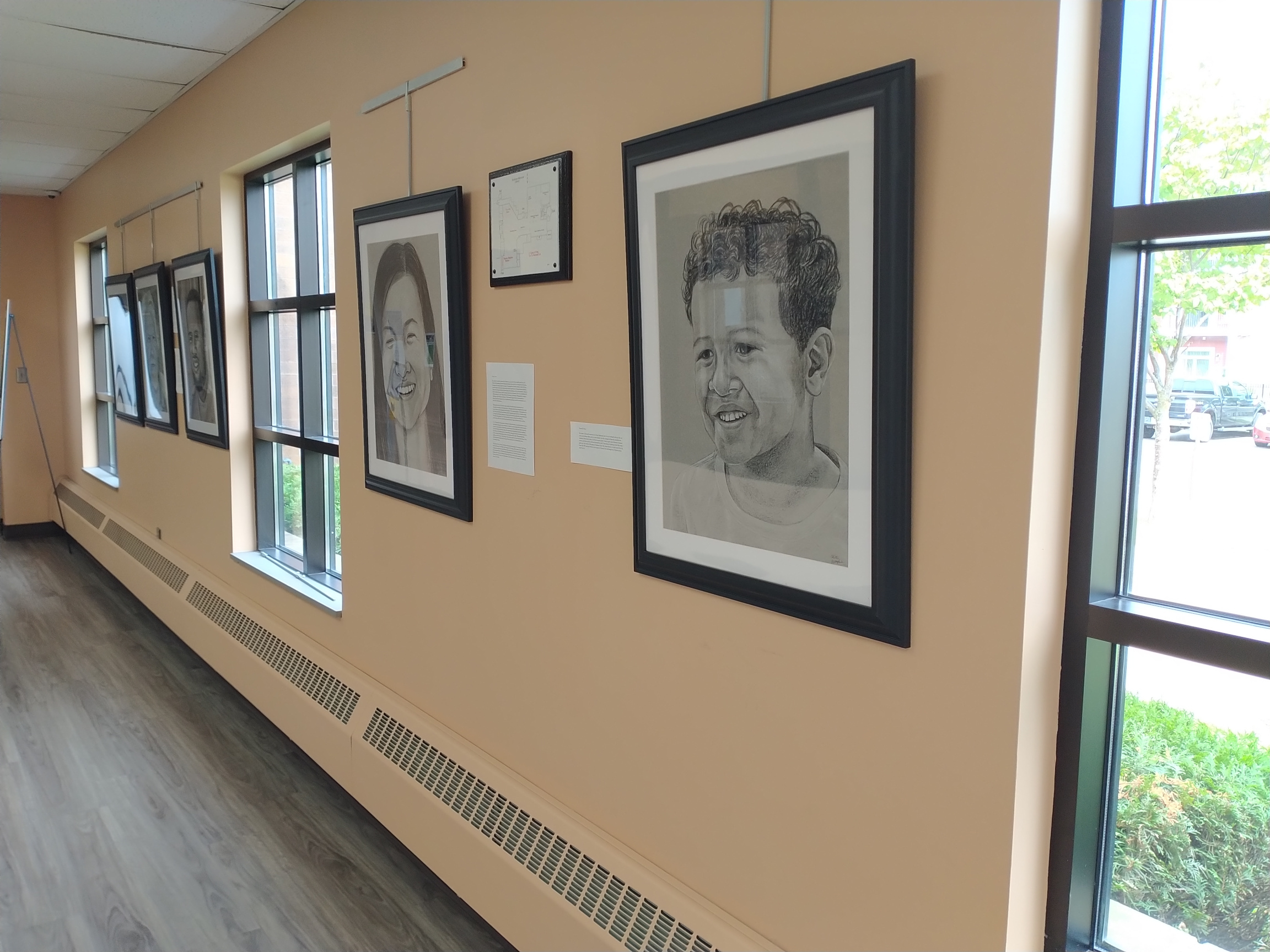
Immigrant portraits by a local artist were displayed in the library corridor. (Minnesota Prairie Roots copyrighted file photo 2023)
Occasional art exhibits in the hallway linking my library to the Faribault Community Center also teach me. Currently, the traveling exhibit “Testify: Americana Slavery to Today” spans that space. It’s an informative and emotion-evoking panel display of photos and information that left me deeply touched and near tears. In the past, I’ve viewed portraits of immigrants and second-generation immigrants by local artist Kate Langlais as part of her “I Am Minnesota” project. Creating an art gallery in a corridor that would otherwise serve as simply a functional connector between two buildings seems a wise use of space.
My poem, “Funeral during a Pandemic,” is published in this book available for check out at my local library and other Minnesota libraries. (Minnesota Prairie Roots copyrighted file photo)
Libraries truly are about connecting. Connecting us to stories, knowledge, information and ideas. Connecting us to each other. Young parents gather in libraries for storytime. Youth meet in my library for pizza and book discussions. The library brings music and other entertainment to the community for kids. Years ago, my son learned to yo-yo from Dazzling Dave, a national yo-yo master. Dave is still teaching Faribault kids to yo-yo during summertime library programming.
The best book I’ve ever read on the craft of writing. It’s the only Stephen King book I’ve ever read because I don’t like his genre of books. (Book cover sourced online)
My son, who now works in software research and development, taught himself to code by checking out thick books on coding from the library. And that was in junior high. I’ve checked out books on writing and photography to grow my skills. But mostly, simply reading improves my writing.
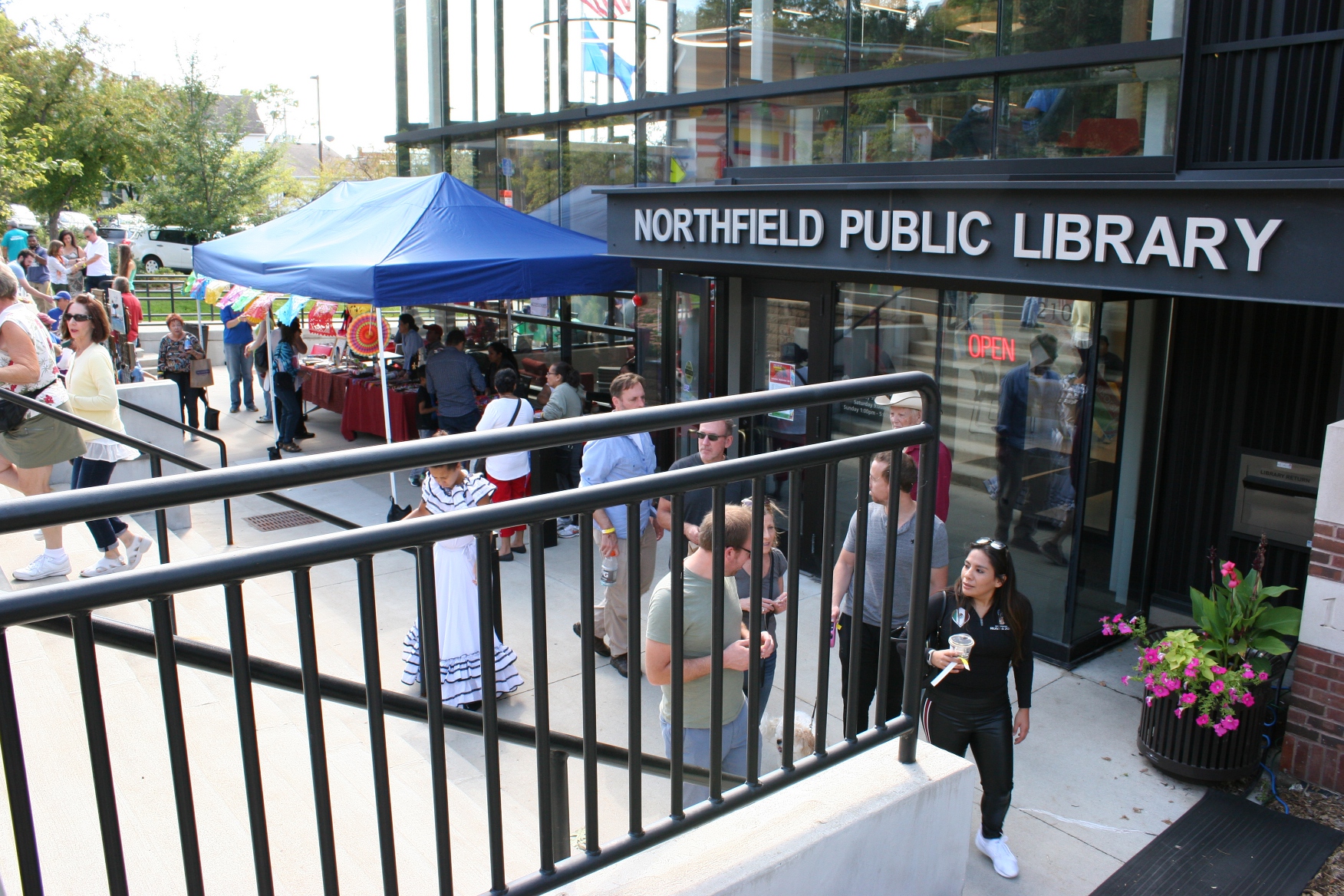
Outside the Northfield Public Library during a past Hispanic Heritage Month celebration. (Minnesota Prairie Roots copyrighted file photo)
I could go on and on about how much libraries offer and how much I value, appreciate and love them. So much draws me to the library. “Drawn to the Library” themes National Library Week. Whether the library in my community or one in a nearby city or a Little Free Library in a front yard, libraries are vital to our communities, to our country, and to me personally. They are an open and (mostly) uncensored place to access knowledge, to widen our world, to connect and grow community.
A bison photo by Jim Brandenburg hangs to the left and the photographer talks about his work in a video, right, inside the Brandenburg Gallery. (Minnesota Prairie Roots copyrighted file photo 2013)
IN MY EYES, he was Minnesota’s best-known photographer. Exceptionally talented. No one even comes close to matching the wildlife and nature photography of Jim Brandenburg. He died April 4 at the age of 79. Not only has Minnesota lost a creative icon, but so has the world. Brandenburg’s prolific work was featured in National Geographic Magazine, earning him the publication’s coveted Lifetime Achievement Award in 2023. His award-winning photos were widely-published internationally. He also published numerous books featuring collections of his photos.
The entry to the Brandenburg Gallery, located in the Rock County Courthouse square. (Minnesota Prairie Roots copyrighted file photo 2013)
But there is perhaps one lesser-known place where Brandenburg’s images can be found. And that’s in the Brandenburg Gallery inside the historic Rock County Courthouse in his hometown of Luverne. That’s in the extreme southwestern corner of Minnesota. The prairie. My prairie.
Light plays upon walls, floors and Brandenburg photos in a stairway display. (Minnesota Prairie Roots copyrighted file photo 2013)
Eleven years ago I toured that gallery, studying and enjoying a sampling of Brandenburg’s images. Many in this collection are prairie-themed. Because I’m a photographer, I viewed his photos with a more focused perspective, noticing angles, light, background and all the components which come together in creating an outstanding image.
Some of Brandenburg’s photo books. (Minnesota Prairie Roots copyrighted file photo 2013)
Every photographer understands that light is the very basic element to consider in shooting photos. Brandenburg challenged himself to take a single picture per day between the autumnal equinox and the winter solstice. The result is his collection of photos, Chased by the Light: A 90-Day Journey, a favorite of mine among his books.
Beautiful natural scenery on the prairie near Blue Mounds State Park. The part of the prairie where I grew up is not rocky like this and is a bit further north. (Minnesota Prairie Roots copyrighted file photo 2013)
When I traveled to Luverne in 2013 to visit the Brandenburg Gallery and other attractions, including Blue Mounds State Park, I was returning to the wide open land and big skies of the prairie, the place that shaped me as a person, photographer and writer. The same can be said for Brandenburg. He loved the prairie and, in fact, established the Brandenburg Prairie Foundation aimed at southwest Minnesota native prairie education, preservation and expansion. His organization partnered with the U.S. Fish and Wildlife Service to purchase nearly 1,000 acres of untilled Rock County prairie, creating Touch the Sky Northern Tallgrass Prairie National Wildlife Refuge.
Those environmental efforts are revealing. Brandenburg cared deeply about the land, especially the prairie. After college, he returned to the prairie and worked as a picture editor at The Worthington Daily Globe. While there, he freelanced for National Geographic Magazine. And so his career developed until he became that homegrown photographer whose work so many worldwide grew to appreciate and love.
Wolf photos displayed in the Brandenberg Gallery. Brandenburg’s published books include Brother Wolf–A Forgotten Promise. (Minnesota Prairie Roots copyrighted file photo 2013)
I admire photographers who excel in the craft. And Brandenburg certainly excels in wildlife photography, a specialized field that requires much more than understanding photo basics. Photographing wildlife requires incredible patience and knowledge of animals. I have neither. But when you look at a Brandenburg photo, it’s like you are right there up close with the subject. Perhaps a wolf—one of his favorite subjects. Or bison. You can see the deep respect Brandenburg holds for these creatures of the wild.
A familiar scene to me, autumn leaves photographed in the Big Woods of Minnesota, within 20 miles of my home and showcased in the Brandenburg Gallery. (Minnesota Prairie Roots copyrighted file photo 2013)
And then there’s landscape photography which, when done well, draws you into a scene and evokes an emotional response. Again, Brandenburg has this seemingly effortless ability to capture the essence of a place and connect it to his audience.
Minnesota has lost an incredibly gifted photographer. But Brandenburg’s legacy lives on in his work, a gift to all of us. And one place to find that is in the Brandenburg Gallery in Luverne. On my beloved prairie. On Brandenburg’s beloved prairie.
FYI: The Brandenburg Gallery, 213 E. Luverne St., is owned and operated by the Luverne Area Chamber of Commerce. It’s open from 8 a.m.-5 p.m. Monday-Friday and from 10 a.m.-5 p.m. Saturday. Admission is free. All photos featured in this post were taken with permission of the Brandenburg Gallery in 2013.
I did not expect this reaction when I randomly pulled the novel from the shelf, drawn by its catchy title printed in a colorful font, drawn by the simple cover art of a lakeside Northwoods cabin. I do, indeed, judge a book by its covers, front and then back synopsis. These covers hit all the marks for me, someone who appreciates stories rooted in rural. Stories that are simple, yet complex. Stories that make me think, that tap into my empathy, that move me. Stories that are strong in place.
(Book cover sourced online)
In some ways, this book reminds me of the writing of Minnesotan Lorna Landvik, author of the popular Patty Jane’s House of Curls, The Tall Pine Polka, Once in a Blue Moon Lodge and more, most of which I have read. But the author of The Funeral Ladies of Ellerie County hails from neighboring Wisconsin, which is similar to Minnesota, but different.
These are what we call bars (the kind you eat) in Minnesota and Wisconsin. Maybe elsewhere. (Minnesota Prairie Roots copyrighted file photo)
At the heart of this story are the funeral ladies, a group of long-time friends who prepare meals for mourners at St. Anne’s Catholic Church. Casseroles—not hotdish as we call casseroles in Minnesota—concocted with canned cream soups. Shredded beef. Peanut butter bars. Pies made with Door County cherries. Food for the body and soul. This reminded me of the Reception Committee in my childhood home church on the southwestern Minnesota prairie. That group of Lutheran women prepared funeral hotdishes comprised of hamburger, pasta, a vegetable and assorted canned cream soups with salt and pepper for seasoning. The recipes are published in the 1985 St. John’s Anniversary Cookbook. The covers of that cookbook have fallen off my tattered copy. A cookbook is central to Swinarski’s novel.
The point here is that The Funeral Ladies of Ellerie County is absolutely relatable for me. I felt comfortably at home with the story initially, even when I learned of a heartbreaking scam involving main character Esther Larson. That shapes the story. Then the story-line focus shifts from friendship, faith and family to tough topics after a Food Network star and his children arrive to bury his estranged wife in her hometown.
Mental health gets attention in this book. (Minnesota Prairie Roots copyrighted file photo)
Without revealing too much of the plot, know that family relationships, love and trauma weave into this novel. That trauma is post traumatic stress disorder, experienced by paramedic Cooper Welsh after participating in a holiday parade interrupted by a deadly shooting. In real-life, six people died in November 2021 when a driver plowed his SUV into a Christmas parade in Waukesha, Wisconsin, killing six and injuring many others. I expect Swinarski patterned her fictional tragedy loosely after this event or the many other mass shootings this country experiences.
I appreciate that the author, even in this fictional account of such violence and its personal aftermath, writes with authenticity. As a reader, I felt emotionally invested. I was rooting for Cooper and for those who love him. Swinarski doesn’t just touch on PTSD. She dives into it head on, writing in her acknowledgments that she talked to individuals dealing with PTSD to craft Cooper’s life story. That research shows.
A sign along the interstate advertises Ishnala Supper Club in Lake Delton near the Wisconsin Dells. (Minnesota Prairie Roots copyrighted file photo)
She writes, too, in an authentic Wisconsin voice with a strong sense of place. Noodles in chili (yes, it’s a thing in Wisconsin). Beer not wine. Brandy old-fashioneds, Wisconsin’s signature drink. Supper clubs. And eating at the popular Wisconsin-based fast food chain, Culver’s.
There are so many reasons to love The Funeral Ladies of Ellerie County. Even if you’re a Lutheran from Minnesota who eats hotdishes, not casseroles.
Three among the many shamrocks placed in my yard 10 years ago on St. Patrick’s Day. (Minnesota Prairie Roots copyrighted file photo)
IF YOU WANT to celebrate St. Patrick’s Day quietly without all the hype, I offer several suggestions. These center not on drinking green beer, listening to Irish music and such, but rather on simple, fun ideas that hold a bit of magic.
Friends planted shamrocks in my yard on a past St. Patrick’s Day. (Minnesota Prairie Roots copyrighted file photo)
First off—and this one takes the most effort—is shamrocking. And, no, this isn’t anything party-related. Rather, this is a way to surprise a friend, a neighbor, a family member with a field of shamrocks planted in their yard. About a decade ago, I was the recipient of this St. Patrick’s Day surprise. And I gotta tell you, this act of kindness left me smiling all day.
This message on the largest shamrock explains shamrocking. (Minnesota Prairie Roots copyrighted file photo)
Here’s how it works. Draw and cut about two dozen black magic marker-outlined shamrocks from green paper or tag board (or buy them, maybe at a dollar store), write a fun/uplifting message on them (this is optional), then tape to a short dowel (or whatever you can stick into the ground). Next, draw and cut one over-sized shamrock from green paper and write this message on it: “IVE BEEN SHAM ‘ROCK’ ED.”
Then, and this is the tricky part, you have to plant these shamrocks when the recipient isn’t watching, perhaps under the cover of darkness. The element of surprise, of awakening to a lawn growing shamrocks, is magical.
The leprechaun trap built by my grandkids last year. (Photo courtesy of Amber Schmidt)
Leprechauns, as we all know, are also magical. And especially mischievous. Last year, my two grandchildren built a leprechaun trap from Magna-Tiles, a plastic flower pot and a tissue box. They drew gold coins on paper to decorate the walls. They also placed fake coins inside the pot. The goal was to trap a leprechaun who would leave real, not fake, gold coins for them. A leprechaun (albeit paper) was, indeed, trapped in their contraption. He did not leave any gold, though. A quarter may have appeased the two of them. So if you have little people in your life, encourage them to craft a leprechaun trap. And then do your part to make some magic happen.
(Book cover sourced online)
My third suggestion—and this is because I love books—is to read a book about St. Patrick’s Day, Ireland or leprechauns. Read it to yourself or aloud to a little person. I typed “leprechaun” into my local library’s online catalog search engine and 14 books, mostly children’s picture books but also some nonfiction, popped up. How to Catch a Leprechaun written by Adam Wallace and illustrated by Andy Elkerton would be a good reference for the aforementioned trap project. And Pete the Cat:The Great Leprechaun Chase, a picture book written and illustrated by James Dean, would surely delight any child as Pete the Cat starts a leprechaun catching business. Even if you’re an adult without a kid to read to, read a book written for children. I love children’s picture books for their art, their stories and their messages.
Lucky Charms, photographed on a local grocery store shelf last March. There’s a collectible trap on the back of the box. (Minnesota Prairie Roots copyrighted file photo)
Finally, channel your inner kid and enjoy a bowl of Lucky Charms cereal. Sure they’re sugary and all that. But, hey, occasionally we have to treat ourselves, so says she who eats fruit-laced oatmeal nearly every morning for breakfast. Lucky Charms is about more than eating something sugary. It’s also about feeling like a kid again, recapturing youthful magic in every bite of those lucky charm marshmallows and toasted oat pieces. Who doesn’t believe in the magic of unicorns, rainbows, horseshoes and five other lucky charms? I do. At least on St. Patrick’s Day.
Sunrise on Horseshoe Lake, rural Merrifield, MN. (Minnesota Prairie Roots copyrighted file photo September 2024)
ON THE SATURDAY I should have been in Madison, Wisconsin, cuddling my nearly two-month-old grandson, Everett, I was, instead, home in Minnesota. Sick with a cold. I felt sad and disappointed that our trip was canceled.
But then my son-in-law sent a short video clip of Everett. To the soundtrack of “It’s a Beautiful Morning,” I watched Everett smile. You know the type of smile that widens and grows until it reaches your eyes. It was only a few seconds, but enough to shift my mood to joy.
And who doesn’t need a little joy right now? There’s a lot happening currently on a national and international scale that causes me deep concern, stress and worry. So I must intentionally seek out that which eases some of my angst. A visit with Everett and his parents would have proven a wonderful distraction. Soon, perhaps, Randy and I can do the four-hour drive to Madison.
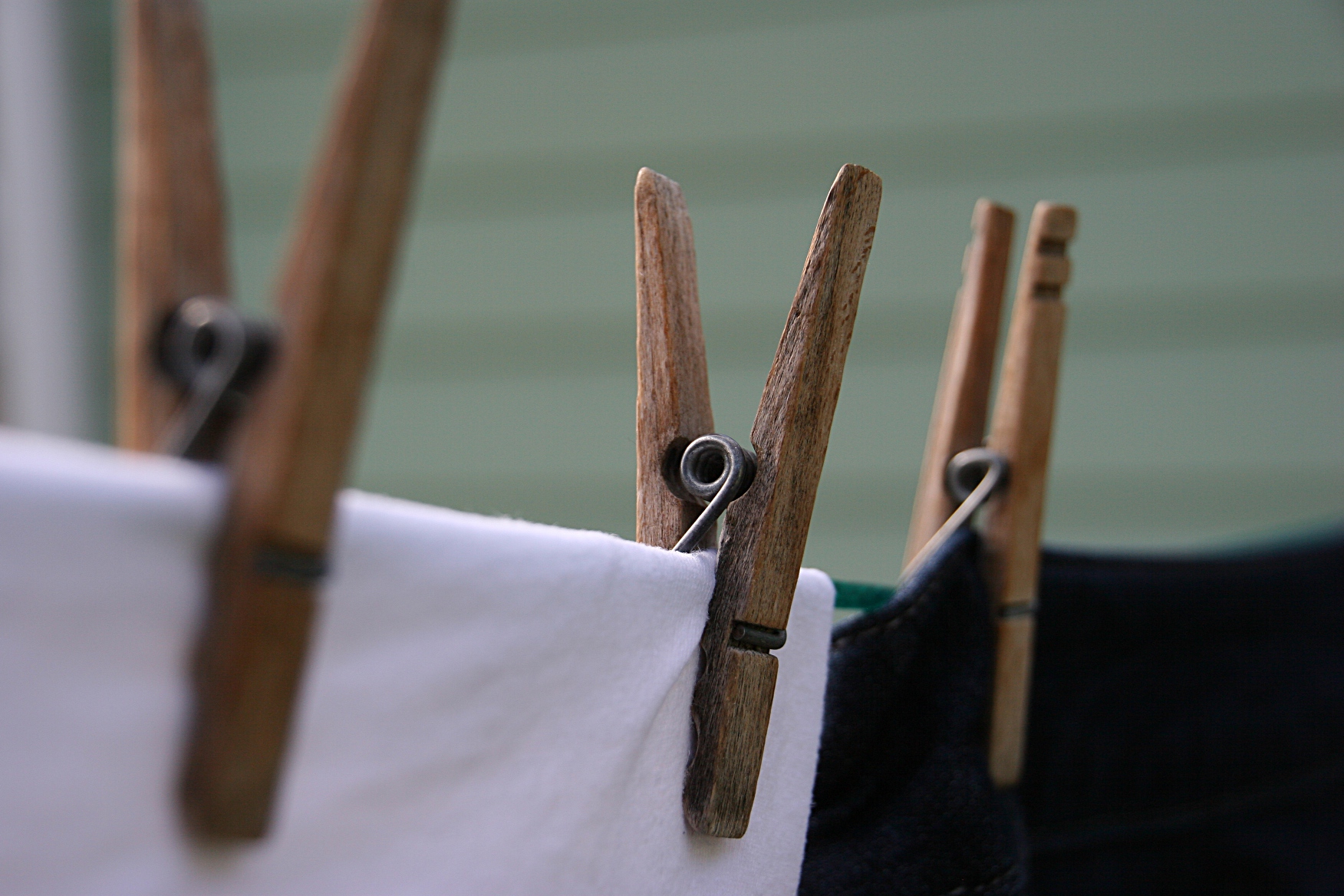
Meanwhile, back home in Faribault, I connect with friends, go on walks, lift hand weights, hang laundry outside on the line, bake banana bread, take a Sunday afternoon drive, listen to uplifting music (specifically Christian radio station KTIS), pull out my camera, write, read…all simple things that brighten my days.
(Book cover sourced online)
Most of you know that I love to read. I happened upon a collection of short stories which was, in a way, like a short “It’s a Beautiful Morning” video clip. The slim volume, Notes from the Porch—Tiny True Stories to Make You Feel Better about the World by Thomas Christopher Greene, was exactly the book I needed to read on the weekend I was still fighting my cold and couldn’t see Everett.
Greene shared the stories via social media from his home in Vermont during the COVID-19 pandemic. And now he’s compiled those stories, typed into his laptop on his front porch, in this book. Even if you’re not a big reader—and I know a lot of people who don’t read books—this is a breeze of a relatable read.
In his book, Thomas Greene writes about a blue heron in sharing the story of his baby daughter Jane. (Minnesota Prairie Roots copyrighted file photo)
The book title alone, Notes from the Porch, points to the content of short snippets about everyday life. Most are not extraordinary moments, with the exception of the death of the author’s daughter, Jane, at six months. Even that has a positive message of we’re all stronger than we think. I bet nearly all of you can relate to that—the resilience we find in the midst of incredible personal challenges. And if you haven’t faced such challenges, then I’m glad you haven’t.
My niece and nephewdance in the rain at a family gathering. (Minnesota Prairie Roots copyrighted file photo)
But back to Greene’s book. He writes several stories about his seven-year-old neighbor boy who races his bike along the street. With wild abandon. Fearless. Occasionally stopping to chat with the front porch writer. I can picture that young boy, who also runs in the rain. Just as I can picture the older couple in another story, on their boat each evening chasing the sun. Rain and sunshine.
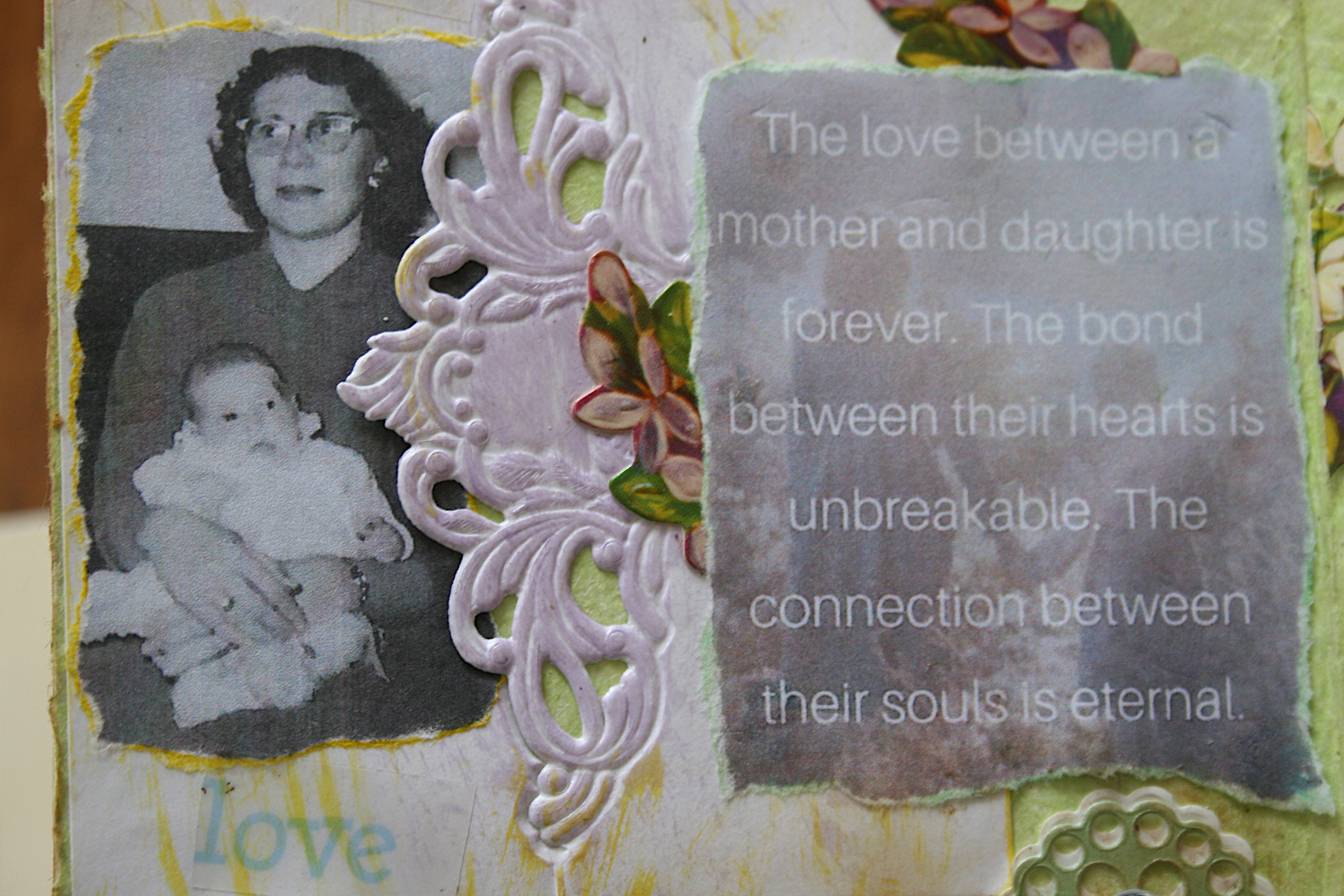
A page in a keepsake book a friend created for me after my mom died. The photo is of my mom holding me. (Minnesota Prairie Roots copyrighted file photo)
Greene’s writing is not only descriptive, but also emotionally touching and insightful. When I read his story, “The Only List I Will Ever Make,” I cried at #11, the final item on his living life list: 11. Call your mom. If your mom is no longer here, call her anyway. No one will root for you more. I used to call my mom every Sunday evening until she could no longer talk on the phone. She’s been gone three years now, dying during the height of Omicron (not of) in a long-term care center. There are days when I wish I could call her, hear her supportive words, tell her I love her. Greene’s writing reminds me that Mom is but a memory away, part of me for the kindness and compassion she taught me, for the unconditional love she gave to me, for the…
This art created by my granddaughter reminds me that we can all be each other other’s sunshine. (Minnesota Prairie Roots copyrighted file photo 2023)
And now Greene has gifted all of us with his kind and compassionate words. He writes of kindness witnessed in a grocery store. He writes about a father joyfully, publicly sharing the news that his straight A daughter has been accepted into an Ivy League school. A Black girl from Vermont, the daughter of an immigrant without any money, going to Harvard because she earned it. That reminds me of my own son getting into an elite East Coast college, because of his smarts, certainly not because we had the money to send him there.
Notes from the Porch uplifts, encourages, teaches. Each story is like “It’s a Beautiful Morning” video clip of my smiling grandbaby. Sure to leave you feeling better.
I AM WRITING THIS OPINIONATED POST with no apologies. As an American woman with a college degree in mass communications (news/editorial emphasis) and experience as a newspaper reporter, I’ve always felt strongly about a free press. Even more so today with threats to that freedom. If you are unaware of current actions against the press, research and read. A free press is a vital part of democracy.
The second page of the Daily News from the August 15, 2017, issue explains the importance of a free press and its role. (Minnesota Prairie Roots copyrighted file photo 2017)
Journalists serve, among other roles, as government watchdogs. That means they, ideally, provide accurate and balanced reporting on government, at all levels. The “fourth estate” holds the government accountable via the stories they write. Not agenda-driven stories shaped by a biased editorial perspective or by information spoon fed to them by a press secretary. But rather stories based on quotes, actions, interviews, facts. Good solid reporting. Not misinformation, disinformation and/or propaganda. I must, though, state the obvious here. Not all sources speak truth to the media. And not all media write truth.
Suppression and criticism of the press are nothing new. Some of the criticism is deserved. Much of it is not. You may like journalists or you may not. That’s not the point. The point is that we need a free press, one unsuppressed/uncensored by those who are in positions of power. If you think otherwise, then look to history and to countries under authoritarian leaders, dictators. Under those leaders, messaging is/has been carefully controlled. Manipulation, intimidation and absolute power rule.
I started my newspaper career at a small town Minnesota weekly, typing my stories on a manual typewriter. This photo was taken in a Hastings antique shop, where I left a message. (Minnesota Prairie Roots copyrighted file photo)
During my journalism career, I have not been immune to those who wanted to control what I wrote. They did that sometimes in a back door way via criticizing me and my work and/or by shutting me out. Thankfully, my editors always had my back.
Let me give you some examples. While covering a school board meeting for a small town southern Minnesota weekly, a teacher said some things that were controversial. Decades out, I can’t recall details. But I do remember how this teacher fumed about my quoting him in a news story. The quote did not reflect favorably on him. But he made the statement at a public meeting. And it needed to be reported. Readers could decide what they thought of his comments.
In that same community, a local realtor called me out for quoting him in a story about a city council meeting. Again, I don’t remember details. But he was absolutely irate and verbally attacked and bullied me for what I’d written. (Sound familiar? Bullying. Fake news.) My reporting was accurate. I was not about to cave to his pressure. Once again, my editor stood up for me. He knew I demanded the best of myself in my work and that I would settle for nothing less than fair and accurate reporting.
Flash ahead to a different small town where I, once again, found myself despised. This time by a school superintendent. He didn’t like that I covered a student walk-out. It happened. I observed, interviewed him and students. And he retaliated. Every time I attended a school board meeting, he refused to give me an agenda or the packet of information distributed to board members and to the editor of the local weekly newspaper. (I worked for a regional daily.) He refused to talk to me. He made no effort to hide his disdain or to make information accessible to me. His was clearly an effort to stop me from reporting on anything school related, including school board meetings. His strategy did not work.
Published in the Faribault Daily News in August 2017 as part of the “Whiteout” campaign. (Minnesota Prairie Roots copyrighted file photo 2017)
Attacks on journalists have become more rabid in recent years. I think we can all agree on that. Don’t kill the messenger for the message he/she delivers. Respect those journalists who truly are doing their best to report fairly and accurately and who hold themselves and their work to high standards. Turn to those reliable sources for news.
Certainly, some media outlets and journalists are incredibly biased with specific agendas. They have become mouthpieces for government leaders, political parties and issues. I’m not praising those who are manipulating people to shape public opinion and to push ideas. Unfortunately, though, I see more and more government leaders, politicians and others targeting dedicated-to-the-craft journalists. These hardworking reporters are being shut out, degraded and abused because they accurately report what they see and hear in their watchdog role. Kinda like me with that small town school superintendent decades ago, just a lot more amplified and with much more serious consequences.
Thankfully, plenty of journalists committed to writing the truth still remain. They are strong men and women of integrity and morals who give a damn about democracy and a free press. Now, more than ever, we need to recognize the value of a free press, underscore FREE. Even though I no longer work as a newspaper journalist, I still strongly value freedom of the press. It is, always has been, a cornerstone of democracy.
(Book cover sourced online)
FYI: I encourage you to read Chasing Hope—A Reporter’s Life by Nicholas D. Kristof, currently an op-ed columnist for The New York Times. The two-time Pulitzer Prize-winning journalist worked as a foreign correspondent in Hong Kong, Beijing and Tokyo. He witnessed some pretty horrible atrocities—including the massacre in Tiananmen Square, the genocide in Darfur and much more—and offers remarkable insights via his experiences, observations and exceptional storytelling.
Of special note in Kristof’s book is a reference to an August 2008 campaign rally in Lakeville, Minnesota, which the author calls “one of the finest moments in American politics in my lifetime.” Kristof shares a story about Senator John McCain, who was then vying for the Republican Presidential nomination. I refer you to pages 239 and 240 in Chasing Hope. This book is worth the read for that story alone. It will give you hope. And, no, I’m not telling you more. Read the book.
I recently finished this book about slavery, freedom and abolition. A must-read. (Book cover sourced online)
DURING THIS, BLACK HISTORY MONTH, I’ve intentionally read books about slavery, Black people and the Black experience. It’s important to me that I widen my knowledge and understanding. Many of the stories are heartbreaking, almost unbelievable in the mental and physical cruelty inflicted upon Blacks. This is hard stuff to read. But it is in the hard stuff that we begin to fully comprehend the importance of empathy, kindness, compassion and the need to stand strong against that which is hateful, hurtful and oppressive.
This book resonates with me personally and professionally in telling the story of 1940s world famous photographer Roy DeCarava, unknown to me until I read this book. Trained in the arts and in photography, he would go on to photograph everyday life in his native Harlem via work for the Works Progress Administration Project, fellowships and more. He worked as a photographer for major publications, has/had his photos featured in exhibits and art museums, became an art professor… And he was Black.
But what I love most about this story is that DeCarava aimed to photograph everyday life, everyday scenes, everyday people in the streets of Harlem. He shows life in raw reality. He worked back in the days of film, admittedly much more challenging than shooting with a digital camera. I started with film, too. You often get only one chance to take a photo. No firing off shots. No digital manipulation. Just a single, unedited print.
I took this portrait, one of my favorites, nearly 11 year ago at International Festival Faribault. (Minnesota Prairie Roots copyrighted file photo 2014)
I will never match the talent of DeCarava. But I do share his focus. I also aim to photograph the ordinary, the everyday, right where I live (or mostly in southern Minnesota). Like him, I notice details. The light. The moments. The expressions. The people, scenes, settings and events that define a place. The anything that might make for an interesting photo.
Unlike DeCarava, my roots are rural. I’ve only ever been to New York City once, while in college. I was awed by the skyscrapers, the street vendors, Chinatown and men hurrying along Wall Street in leisure suits. (This was in 1977.) But I have no desire to return to a place that feels too closed in, too busy, too chaotic.
My photo of Jane chalking art on a Faribault sidewalk. (Minnesota Prairie Roots copyrighted file photo August 2020)
Yet, Harlem in Upper Manhattan was DeCarava’s home, where he found the subjects of his photos. Everywhere Beauty Is Harlem gives a snapshot of the images this photographer snapped. A man on the subway. A boy drawing on the sidewalk with chalk. Black and brown children dancing in water spraying from a fire hydrant.
Beyond the visuals, the story in this children’s picture book encompasses the essence of DeCarava’s photographic focus on the everyday and the ordinary. I really ought to buy a copy of this book for my personal library. If you want to understand my photographic work, then read this multi award-winning children’s picture book. But, more importantly, read this book to learn about a world famous Black photographer whose talent for visual storytelling is a gift to all of us. To see the world through his eyes presents life as it is. Real. Raw. Unedited.
#
FYI: I encourage you to also check out the photography of New York City photographer Keith Goldstein, whose work I follow on his blog, “For Earth Below.” His street photography has opened my eyes to humanity in a way that I never see here in southern Minnesota. His talent is remarkable. Goldstein, I think, works much like Roy DeCarava did, with his camera focused on the everyday, the ordinary. And therein both have found the extraordinary.
A photo I took of a sharing library in Pine River, Minnesota, prompted me to write this essay. (Minnesota Prairie Roots copyrighted photo July 2024)
IF I WAS A REBEL, and I’m not (although a streak of defiance runs through my veins), I’d write a strongly opinionated piece on a controversial topic.
But I don’t like conflict. I prefer status quo to chaos, normalcy to the unexpected. Yet, that is not reality. Life can be easy and hard and good and awful and a whole mix of everything. Sort of like Sideways Arithmetic from Wayside School. I like school. Never liked math.
Nor do I particularly like William Shakespeare’s work with the exception of Romeo and Juliet. Who doesn’t love a love story, even if tragic? Shakespeare’s other writing seems archaic, boring and impossibly unrelatable. I offer no apologies for that view.
I am decidedly a fan of Laura Ingalls Wilder, who certainly has her critics, too. But her detail-rich writing in Little House in the Big Woods, On the Banks of Plum Creek, Little Town on the Prairie and more inspires me as a writer. Plus, I grew up some 25 miles from Walnut Grove, smack dab in the middle of the Minnesota prairie. When you live in a land of wide open spaces, big skies and sweeping winds, you approach writing from a detailed perspective that engages all the senses.
I can’t make much sense of sweeping Absolute Power, which has nothing to do with the senses. Not common sense anyway. Common sense tells me Spider Man is not real. Nor are heroes of the Justice League. Yet, I’d like to call in Superman, Wonder Woman and other superheroes to tackle the threats facing us today, and save the day.
Or perhaps strong-willed orphan Sally Lockhart of The Ruby in the Smoke could clear the smoke obscuring vision. Her experiences dealing with unseemly types qualifies her, in my opinion, to take on anything. Like uncovering lies, aggression, narcissism, manipulation and diversionary tactics. I appoint her to abolish the Department of Government E, or something like that, for starters.
Yes, there’s lots to contemplate. But today I’ve escaped to the sharing library, visually pulled a few books from the shelf to create this essay. And if nothing I’ve written resonates with you, then consider Lunkers Love Nightcrawlers. Head to the lake with a container of nightcrawlers, drop your baited line in the open water or drill a hole in the ice. Fish for answers. Good luck.
#
NOTE: I’ve underlined the titles of books from the sharing library which I’ve incorporated into this essay.This essay is not the piece I wrote for the contest I referenced here last week.
My fiction, creative nonfiction and poetry has published in all these volumes of The Talking Stick, plus volumes 32 and 33 not pictured here. (Minnesota Prairie Roots copyrighted file photo)
WITH ONLY WEEKS until the deadline for an annual writing contest, I am stretching my mind to come up with short stories and poetry that will please not only me, but also the editors of a Minnesota-based literary anthology. It’s not easy, this creative writing. Yet, I enjoy the challenge.
I can’t always explain from whence my fictional stories spring. I’ve written some really dark stuff that has landed me publication and sometimes prizes. Stories with undertones of darkness and violence. Nothing like I’ve experienced in real life, although certainly I’ve faced plenty of dark and trying days.
When I read my second place winning fictional story, “Dear Mother,” at last fall’s Talking Stick 33—Earth Signsbook launch party in northern Minnesota, I qualified my reading with “I don’t know where this dark story came from.” It was implied that the main character killed her abusive mother. The writer who followed me as the first place winner in fiction also wrote a dark story. I don’t recall if Tara or some other writer explained that, in order to reach the light, we need to go through darkness. That resonated with me.
The beginning of “Barbershop Prompt,” published in Talking Stick 31–Escapes. (Minnesota Prairie Roots copyrighted file photo)
I’ve completed the initial draft of my first piece of fiction for this year’s contest. It, too, includes some dark elements. The community calendar in my local newspaper prompted the story, which I realize may seem rather odd. But, hey, inspiration can strike in the most unlikely of places. A previous work prompted by a sign at Bridge Square Barbers in Northfield earned me a second place in creative nonfiction in 2022.
Now three years later, with the printed community calendar of events lying on my office desk, I glanced from newspaper to computer screen as the idea of a story began to take shape. Once I finished the intro, words began to fly (OK, admittedly not always) from my brain to the keyboard to the screen. The draft is saved, awaiting a second look in a few days.
This sharing library in Pine River is inspiring my next creative work. (Minnesota Prairie Roots copyrighted photo July 2024)
Now I’m on to my next piece of writing. A photo I took of a sharing library (like a Little Free Library) in Pine River is serving as my inspiration for a story that has yet to unfold. But I see the possibilities in the many love-themed/titled books shelved inside that library adorned with a Peace/Love/Books sticker.
Romeo and Juliet by Shakespeare. Lunkers Love Nightcrawlers, author unknown to me. Tuesdays with Morrie by Mitch Albom, packed with life lessons, including that of love. Sin Killer by Larry McMurtry, a book of adventure, humor and romance on the American frontier. And then Absolute Power by David Baldacci, about a President “caught” with a billionaire’s wife. That title seems so relatable to today. Absolute power. But writing contest rules call for no political or religious rants, meaning I will need to steer clear of politics.
And so I’ll see where this idea goes. If a plot develops in my mind, if a story flows into something that may, or may not, be dark.
Commentary: The importance of a free press in a democracy March 4, 2025
Tags: books, Chasing Hope: A Reporter's Life, commentary, democracy, free press, freedom of the press, government, journalism, journalists, media, news reporters, newspapers, Nicholas D. Kristof, opinion, United States
I AM WRITING THIS OPINIONATED POST with no apologies. As an American woman with a college degree in mass communications (news/editorial emphasis) and experience as a newspaper reporter, I’ve always felt strongly about a free press. Even more so today with threats to that freedom. If you are unaware of current actions against the press, research and read. A free press is a vital part of democracy.
Journalists serve, among other roles, as government watchdogs. That means they, ideally, provide accurate and balanced reporting on government, at all levels. The “fourth estate” holds the government accountable via the stories they write. Not agenda-driven stories shaped by a biased editorial perspective or by information spoon fed to them by a press secretary. But rather stories based on quotes, actions, interviews, facts. Good solid reporting. Not misinformation, disinformation and/or propaganda. I must, though, state the obvious here. Not all sources speak truth to the media. And not all media write truth.
Suppression and criticism of the press are nothing new. Some of the criticism is deserved. Much of it is not. You may like journalists or you may not. That’s not the point. The point is that we need a free press, one unsuppressed/uncensored by those who are in positions of power. If you think otherwise, then look to history and to countries under authoritarian leaders, dictators. Under those leaders, messaging is/has been carefully controlled. Manipulation, intimidation and absolute power rule.
During my journalism career, I have not been immune to those who wanted to control what I wrote. They did that sometimes in a back door way via criticizing me and my work and/or by shutting me out. Thankfully, my editors always had my back.
Let me give you some examples. While covering a school board meeting for a small town southern Minnesota weekly, a teacher said some things that were controversial. Decades out, I can’t recall details. But I do remember how this teacher fumed about my quoting him in a news story. The quote did not reflect favorably on him. But he made the statement at a public meeting. And it needed to be reported. Readers could decide what they thought of his comments.
In that same community, a local realtor called me out for quoting him in a story about a city council meeting. Again, I don’t remember details. But he was absolutely irate and verbally attacked and bullied me for what I’d written. (Sound familiar? Bullying. Fake news.) My reporting was accurate. I was not about to cave to his pressure. Once again, my editor stood up for me. He knew I demanded the best of myself in my work and that I would settle for nothing less than fair and accurate reporting.
Flash ahead to a different small town where I, once again, found myself despised. This time by a school superintendent. He didn’t like that I covered a student walk-out. It happened. I observed, interviewed him and students. And he retaliated. Every time I attended a school board meeting, he refused to give me an agenda or the packet of information distributed to board members and to the editor of the local weekly newspaper. (I worked for a regional daily.) He refused to talk to me. He made no effort to hide his disdain or to make information accessible to me. His was clearly an effort to stop me from reporting on anything school related, including school board meetings. His strategy did not work.
Attacks on journalists have become more rabid in recent years. I think we can all agree on that. Don’t kill the messenger for the message he/she delivers. Respect those journalists who truly are doing their best to report fairly and accurately and who hold themselves and their work to high standards. Turn to those reliable sources for news.
Certainly, some media outlets and journalists are incredibly biased with specific agendas. They have become mouthpieces for government leaders, political parties and issues. I’m not praising those who are manipulating people to shape public opinion and to push ideas. Unfortunately, though, I see more and more government leaders, politicians and others targeting dedicated-to-the-craft journalists. These hardworking reporters are being shut out, degraded and abused because they accurately report what they see and hear in their watchdog role. Kinda like me with that small town school superintendent decades ago, just a lot more amplified and with much more serious consequences.
Thankfully, plenty of journalists committed to writing the truth still remain. They are strong men and women of integrity and morals who give a damn about democracy and a free press. Now, more than ever, we need to recognize the value of a free press, underscore FREE. Even though I no longer work as a newspaper journalist, I still strongly value freedom of the press. It is, always has been, a cornerstone of democracy.
FYI: I encourage you to read Chasing Hope—A Reporter’s Life by Nicholas D. Kristof, currently an op-ed columnist for The New York Times. The two-time Pulitzer Prize-winning journalist worked as a foreign correspondent in Hong Kong, Beijing and Tokyo. He witnessed some pretty horrible atrocities—including the massacre in Tiananmen Square, the genocide in Darfur and much more—and offers remarkable insights via his experiences, observations and exceptional storytelling.
Of special note in Kristof’s book is a reference to an August 2008 campaign rally in Lakeville, Minnesota, which the author calls “one of the finest moments in American politics in my lifetime.” Kristof shares a story about Senator John McCain, who was then vying for the Republican Presidential nomination. I refer you to pages 239 and 240 in Chasing Hope. This book is worth the read for that story alone. It will give you hope. And, no, I’m not telling you more. Read the book.
© Copyright 2025 Audrey Kletscher Helbling