Minnesota Prairie Roots

Writing and photography by Audrey Kletscher Helbling

Stone & Sky October 27, 2011

LARRY GAVIN once lived in Belview.

So, you’re likely thinking, “What does that matter and who is Larry Gavin and where the heck is Belview?”

Well, dear readers, especially readers of poetry, Larry Gavin is a poet. He moved to Belview, a southwestern Minnesota prairie town of 375, to study writing with great writers like Howard Mohr, Leo Dangel, Fred Manfred, Joe and Nancy Paddock, Phil Dacey, Robert Bly, Bill Holm, Don Olsen and many others. Do you recognize some of those names? You should.

I’m not trying to be uppity here. But Bly, who was born in Madison (Minnesota, not Wisconsin) and still lives in the western part of our state, is one of Minnesota’s most distinguished poets. Holm, a well-known essayist, author and poet, wrote numerous books, including Boxelder Bug Variations. Up until his death, he lived in his prairie hometown of Minneota (Minnesota without the “s”), where residents celebrate Boxelder Bug Days. Howard Mohr penned How to Talk Minnesotan, a must-read for every transplant to our state.
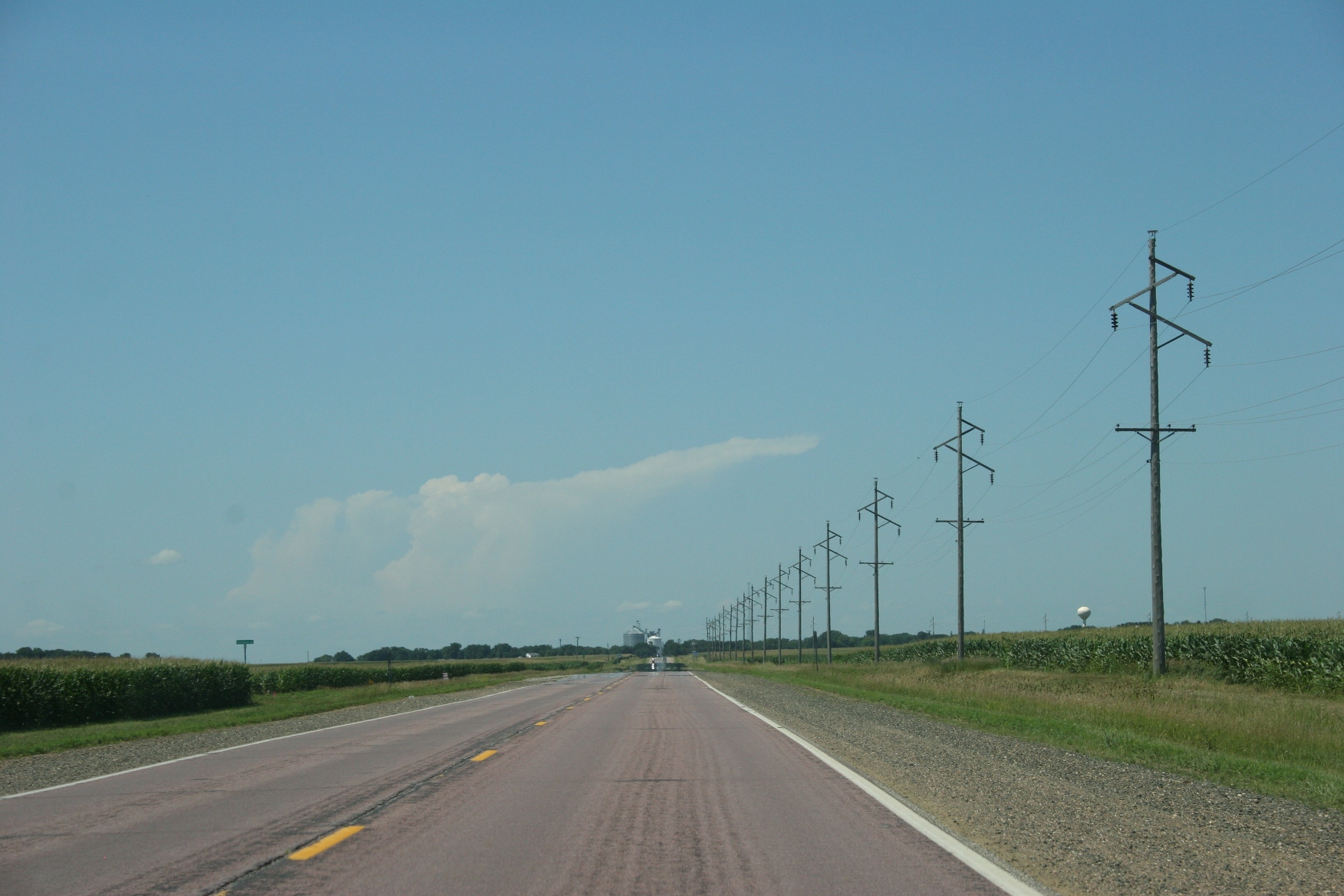
Driving through the southwestern Minnesota prairie near Morgan, about 25 miles from Belview.

Larry Gavin learned from these great writers of the prairie, where he lived for 15 years many years ago. Gavin made his home in Belview, just off State Highway 19 and some 10 miles or so from my hometown of Vesta. He served as the town’s mayor for two terms and taught English at Redwood Valley High School, back then Redwood Falls High School.

It is that connection to my home area and our shared love of language and writing and of the prairie that has connected me to Gavin, who today lives in Faribault and teaches English at Faribault High School. At least one of my daughters, if not both, has been taught by him.

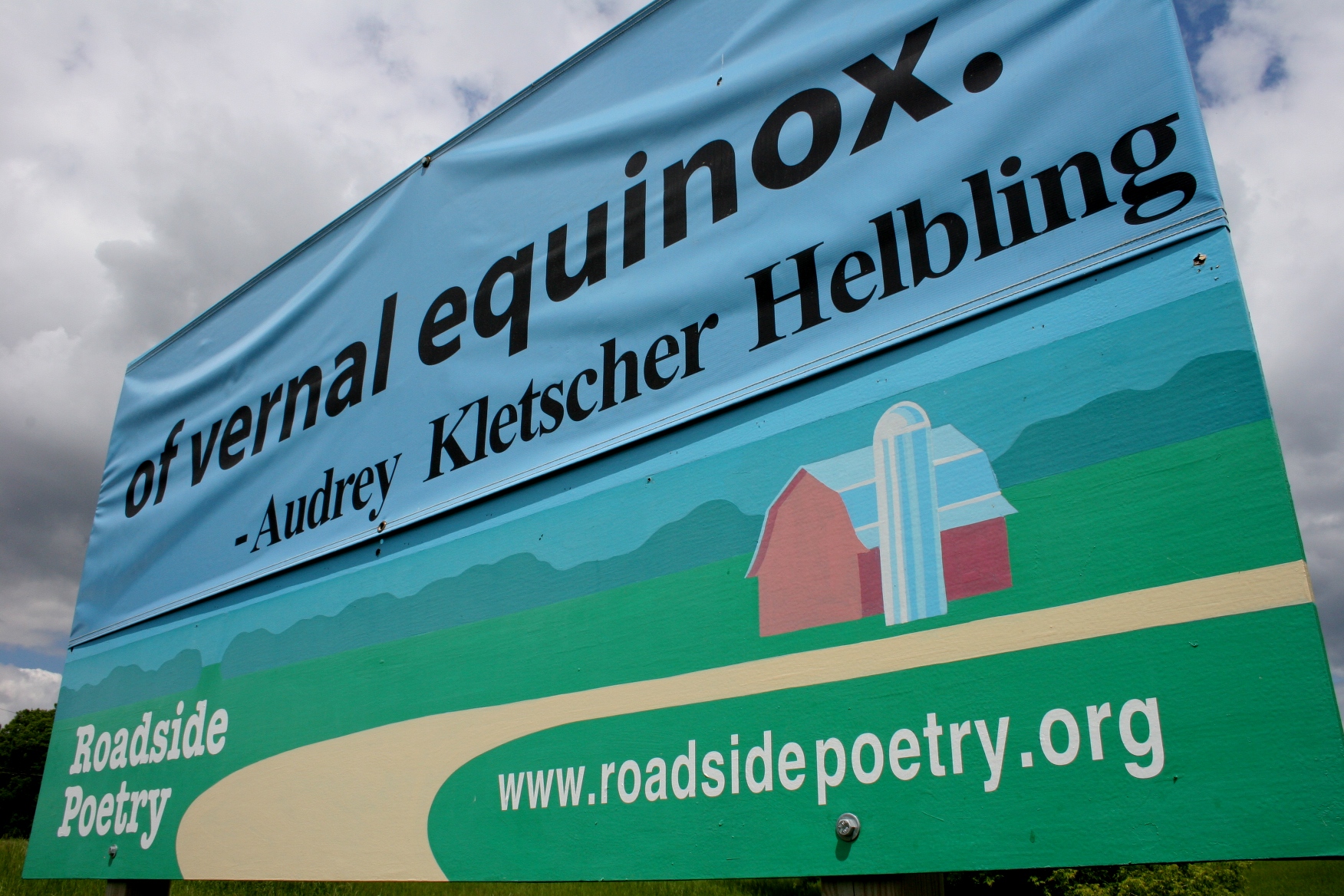
We both won Roadside Poetry competitions–Gavin the first in 2008 and me, this past spring–and had our four-line poems showcased on billboards in Fergus Falls.

I once asked Gavin to read one of my poems at a local author event. Gavin is meant to read poetry. He has the kind of rich, deep voice from which words flow with the rhythm and inflection of someone who clearly loves language.
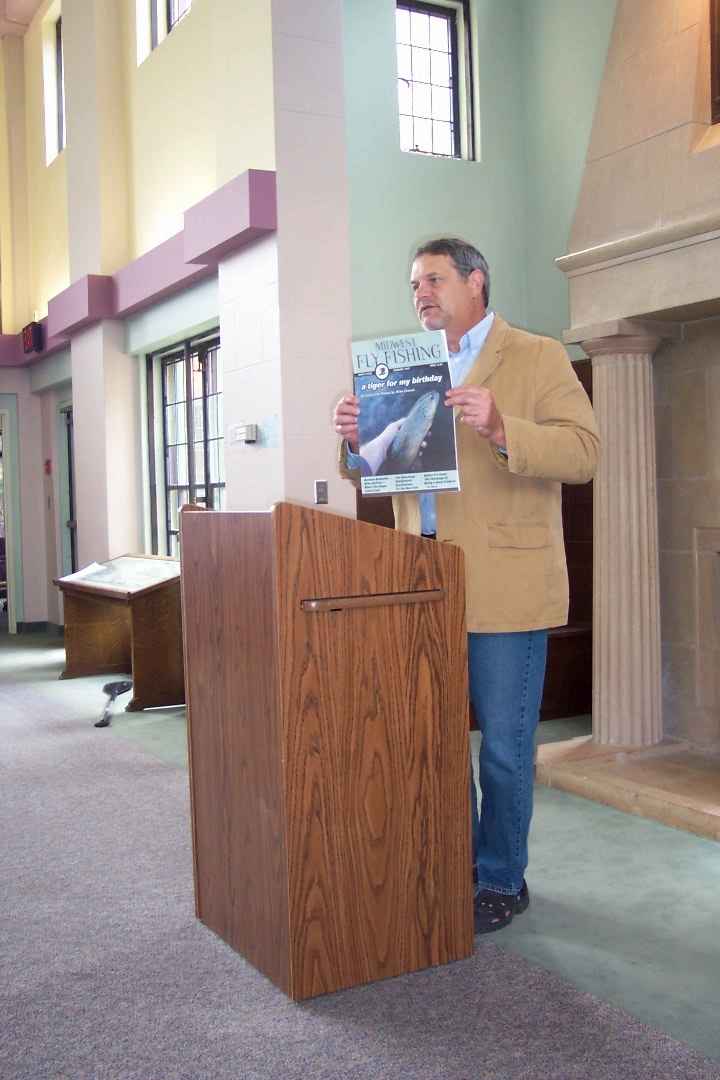
Larry Gavin during an author event at Buckham Memorial Library in Faribault.

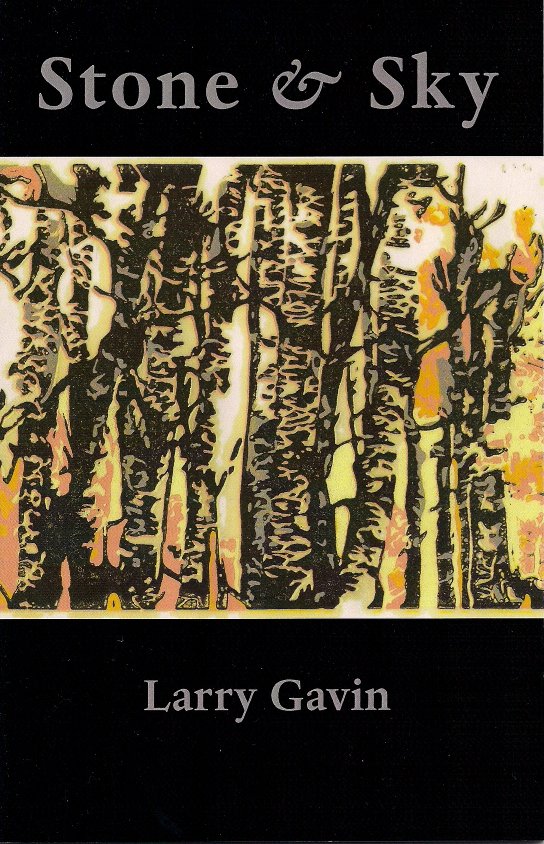
Gavin is also meant to write poetry. And he’s written enough to fill three slim books—Necessities, Least Resistance and his just-released Stone & Sky. All have been published by Red Dragonfly Press, a noted not-for-profit literary press based in Red Wing.

When I read Gavin’s poetry, I can sense his deep connection to the land and to nature, shaped, I would like to think, partially by his years on the prairie. When you live on the stark prairie, where the land stretches flat and far and where the sky dwarfs all else and where the wind blows nearly unceasing, you can’t help but write with a strong sense of place and with detail. I see that in Gavin’s poetry.

In his newest book, Stone & Sky, I read of woods and firewood, of raccoon tracks and a walk along a deserted street. Of stone and sky and snakes. I recognize places from here, in Faribault. I recognize, too, prairie-influenced writing.

I don’t pretend to understand every poem in Gavin’s latest collection. But poetry is always open to interpretation and that which I may not find meaningful today I may come to understand at a later time.

All that said, I posed a series of questions to Gavin, who has written more than poetry. For fifteen years he worked as a field editor for Midwest Fly Fishing magazine, taught at the magazine’s school in Montana in the summer and helped with the Chicago and Minneapolis fly fishing expos each spring. He currently writes for Outdoor News.
My questions to him, however, specifically address his poetry writing. I found his answers insightful and, at times, surprising.

Q:  How long have you been writing poetry, why, and when did you consider yourself a poet?

A:  I started writing poetry in sixth grade and that’s when I started considering myself a poet. I’ve written ever since.

Q: What inspires you and/or influences your poetry?

A:  Work inspires me. Everyday I get up and write something. I don’t miss a day. Inspiration has very little to do with it for me. I like working out ideas and problems in writing each day.

Q:  How would you define your poetry style and content?

A:  I consider myself an inheritor of the great romantic tradition of poetry. That, in my mind, goes from Wordsworth to Yeats and Hopkins to Robert Frost and Wallace Stevens, to Gary Snyder and others. The natural world as reflected and defined by human thought and feelings. The great gift we give to the world is our thoughts and feelings about big issues: transcendence, hope, justice, peace, and love.

Q:  This is your third collection of poetry issued by Red Dragonfly Press. What was the process to getting published by this well-respected Minnesota press?

A:  Scott King is the publisher and I submit a manuscript to him. He responds either yes or no and if he accepts it the manuscript gets in line to be published. The most recent book took about four years to appear. Publication is based on press funding and a variety of other factors. I’m patient and not particularly ambitious.

Q:  Tell me about the content and theme in your first two collections, Necessities and Least Resistance.

A:  They are very different from one another. The poems deal with the natural world as seen through simple objects and ideas. They attempt to make sense of complex subjects like love and our interaction with nature in a pure form of language, and the tools poetry gives us like meter and rhyme. The poems are an explication of the world in the context of the universal individual.

Q:  Stone & Sky just released. It’s an interesting title. How does the title tie in with the content? What is the common thread running through the poems in this collection?

A:  Stone & Sky stretches the boundaries of what is real. It looks at the world in a more magical way. Not magical as fabricated but more magical as mystical – as another way of being real. The language, the images, and the poems stretch the boundaries of what is real and hopefully get at reality in a new way. They are still anchored in the natural world, still anchored in the local, but the themes, like the title, are basic, elemental.

Q:  If you were to select your favorite poem in Stone & Sky, which would it be and why? How about a favorite line?

A:  Actually they are all favorites right now. And you have to remember, I’m on to new things after four years.

Q:  Your love of nature shines in your writing. So does your love of language. How do you combine the two into poetry that sings with descriptive lines? How do you know when you’ve “nailed it,” when you have a poem exactly where you want it?

A:  The old elements of poetry combined in new ways. Rhyme, meter, repetition – give poems life. Everything is a work in progress; they’re never really finished.

Q:  Are you working on another collection? Or are you simply just always writing poetry?

A:  My next collection is called The Initiation of Praise and I’ll start sending it out soon. I also have a selected works which focuses just on outdoor poems. I’m also working on some short stories, and I write an article each week as well.

READERS, Stone & Sky is available from Red Dragonfly Press at  www.reddragonflypress.org and also at Monkey See Monkey Read (in person or through internet sales), an independent bookstore at 425 Division Street, Northfield. Eventually, Stone & Sky will also be available through Amazon. Cover cost is $10.

© Copyright 2011 Audrey Kletscher Helbling

Photo and book cover courtesy of Larry Gavin


Five stars for “The Help” August 31, 2011

ABOUT ONCE EVERY two years, I see a movie in a theater. Maybe three times a year, I’ll rent a movie from a video store. Occasionally I’ll watch one on television.

I tell you this because I’m no movie expert, critic or star-struck Hollywood fan. A movie needs to hold promise as an excellent film before I’ll spend a dime, or my time, watching it.

“Sweet Land,” based on the book by Bemidji writer Will Weaver, and the classic 1970s “Love Story” are among my all-time favorite movies.

Now you can add “The Help,” based on the #1 New York Times bestseller by Kathryn Stockett, to that list.

I have yet to read the book. In fact, I hadn’t heard of Stockett’s novel until several days ago. Yes, I sometimes live with my head buried in the sand.

The movie version of the book might help more than a few viewers pull their heads from the sand. In a nutshell, “The Help” tells the story of black women working as maids in upper class Southern white households during the 1960s.

As a native Minnesotan who has never even traveled into the deep South, my impressions of Southern history are based mostly on books, stories, photos and films. Whether “The Help” gets it right, I’m uncertain. But, sadly, I expect what I viewed on the big screen depicts historical reality.

I don’t want to spoil the plot for you, so I’ll simplify the storyline: “The Help” focuses on one young woman’s efforts to reveal the stories of the maids who serve those rich, white Southern women in Jackson, Mississippi. Skeeter, an aspiring writer, does that by interviewing the black women—first, Aibileen, and next, Minny—and then writing a book.

The writer angle, certainly, is a familiar one to me given I’ve been a writer for decades. But the whole “hiring of help in the household” is mostly foreign, except for the time during my high school years when I cleaned house every Saturday for a family in my hometown of Vesta. I was well-treated, well-paid for then, and simply happy to have a job—even if I had to scrub the toilet, wax the linoleum and wipe the bottoms of the legs on the kitchen chairs, all while the teenaged son slept upstairs.

My experience as a maid/cleaning girl can’t compare, not by any stretch, to that of the black women portrayed in “The Help.” They are treated more like slaves, as second-class citizens, as human beings without rights.

Especially troubling for me are the scenes involving bathroom usage—blacks prohibited from using the same bathrooms as whites.

I cried when one of the main characters, the maid Aibileen, spoke of her son’s death and how the white women continued playing bridge like nothing had happened.

Aibileen also repeats, through the course of the movie, this line which stands out for me among all the others: “You is kind. You is smart. You is important.”

After the movie, which is a lengthy 2 ¼ hours, my husband and I and others in the theater sat through the credits. Typically we would leave as soon as the movie ended. But “The Help” calls for sitting in quiet contemplation in a darkened theater, pondering the story and hoping, hoping, that life for blacks in the South today does not at all resemble life there in the 1960s.

HAVE YOU SEEN “The Help” or read the book? If you have, please share your thoughts. I’d like to hear your opinion, positive or negative, on the movie and/or book.

© Copyright 2011 Audrey Kletscher Helbling


A tale of two girls and a goat-napping August 30, 2011

Filed under: Uncategorized — Audrey Kletscher Helbling @ 3:03 PM
Tags: , , , , , , , , ,

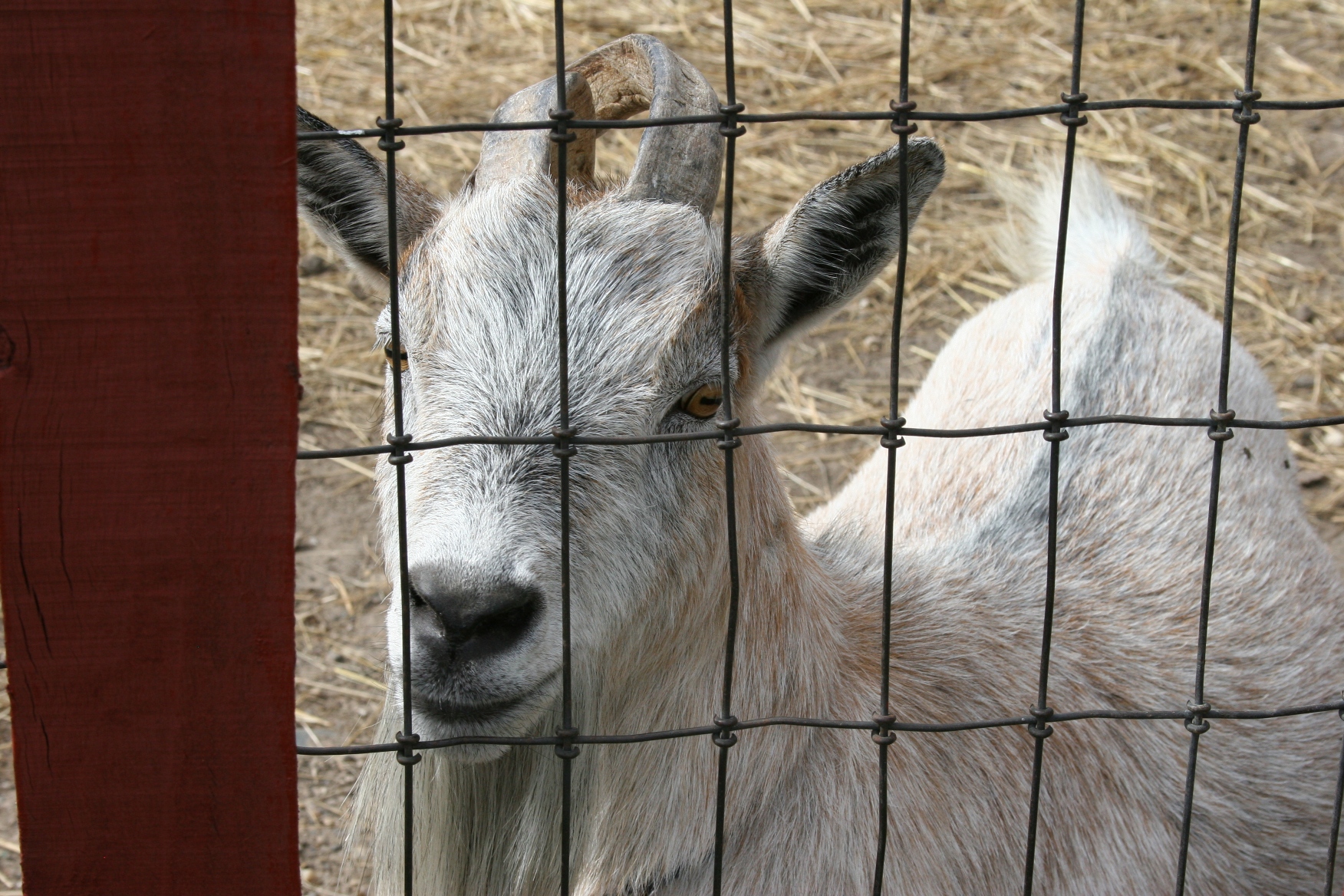
This goat is not to be confused with the heisted goat. Rather this goat was photographed at the Kasota Zoo and is used for illustration purposes only with this blog post.

IF YOU HAVE NOT yet heard the tale out of Mankato about the young stepsisters—we’re talking under age 10—who stole a goat from a zoo in the middle of the night and were caught walking down a street in their pajamas with the goat, then click here.

While this story could have ended not-so-happily, it did. The girls and the goat are fine, although the stepsisters could be in trouble with their parents, or the law.

After lying to the police about how they got the goat, the 6 and 7-year-olds eventually fessed-up and the truth was uncovered. They’d been to a birthday party at Sibley Park Zoo earlier in the day and apparently decided they just had to have a goat.

I heard this story on the 10 p.m. news Monday and laughed and laughed and then laughed some more.

I know, maybe I shouldn’t be laughing. Stealing is wrong. Lying is wrong. But in these days of news stories about natural disasters, war, murders, unemployment, a depressed economy, scandalous politics and more, you have to appreciate an imaginative caper like two kids stealing a goat from a zoo, in their p.j.s, in the middle of the night.

And sometimes you just have to view life with a Betsy-Tacy-Tib perspective.

Betsy, Tacy and Tib, for those of you unfamiliar with that trio, are characters in a series of children’s books written by Mankato author Maud Hart Lovelace and published between 1940–1955. The three, based on real-life friends growing up in Mankato (Deep Valley in the books), get into all sorts of mischief.

The fictional trio made quite a mess in the kitchen when they mixed up “Everything Pudding” combining ingredients like bacon grease, vinegar, onions, sugar, red pepper and more.

Another time they cut each other’s hair.

Betsy cuts Tacy's hair in this snippet from a mural by artist Marian Anderson in the Maud Hart Lovelace Children's Wing at the Blue Earth County Library in Mankato.

And once the three ventured into Little Syria for a picnic lunch. There they encountered a goat. They didn’t steal the goat. He stole from them, grabbing their picnic basket and scattering sandwiches, cookies and hard-boiled eggs in all directions.

Yup, sometimes you have to laugh, whether it’s at the antics of a goat in a book of fiction or the antics of real-life goat thieves who seem like they could have stepped right off the pages of a Betsy-Tacy book.

FYI: The girls with the Betsy-Tacy-Tib mischievous streak and the goat were apprehended along Carney Avenue. Coincidence or not, one of the books in Lovelace’s series is titled Carney’s House Party. And Carney’s surname is Sibley.

WHAT’S YOUR TAKE on this story about the stepsisters who stole the goat from Sibley Park Zoo in Mankato? Share your thoughts by submitting a comment.

© Copyright 2011 Audrey Kletscher Helbling


Poetry & more in Paul Bunyan land August 18, 2011

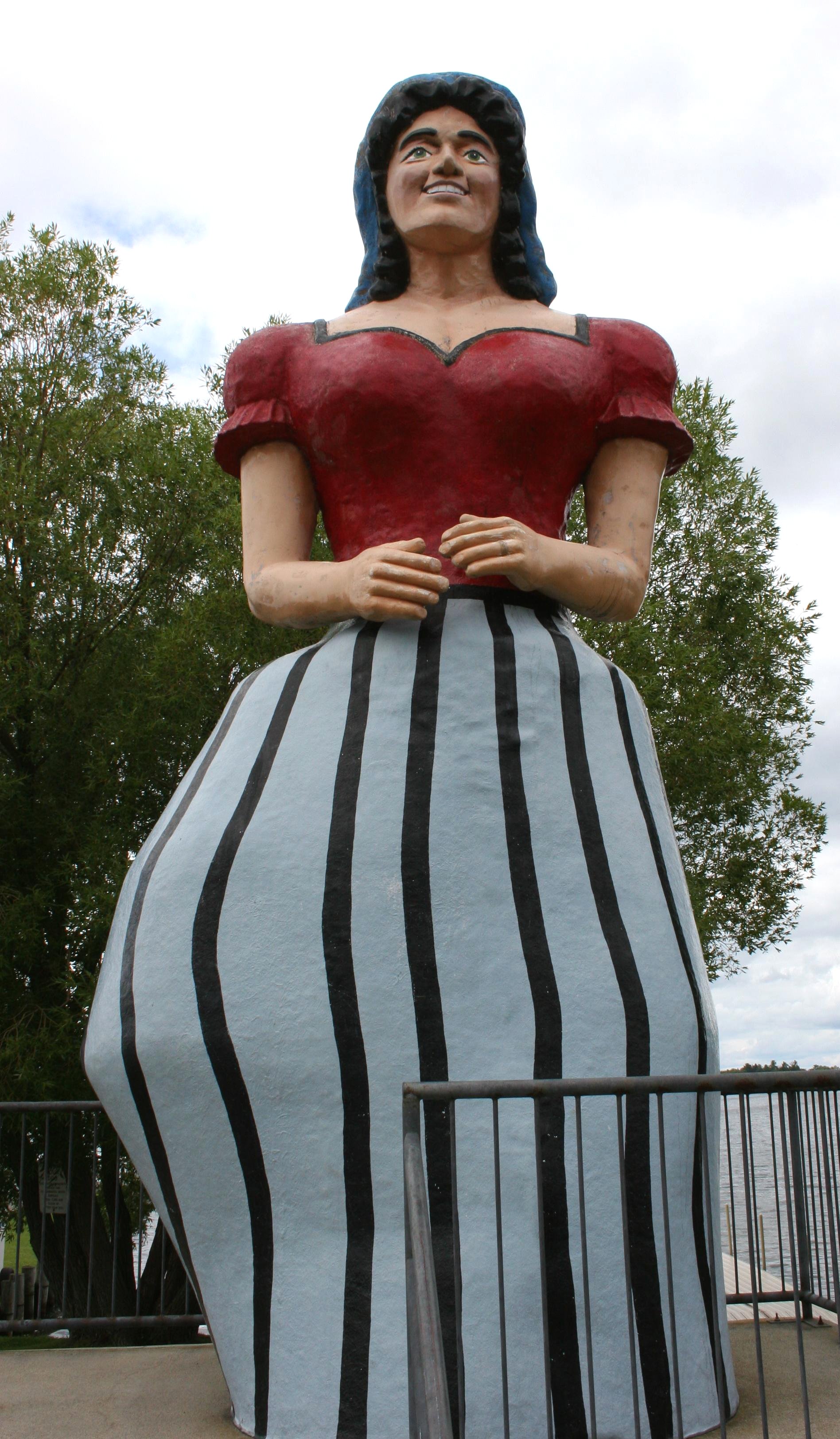
The lake side of the Hackensack Lending Library. To the left stands Lucette Diana Kensack..

Lucette Diana Kensack

SEVERAL SUMMERS AGO while vacationing in northern Minnesota, my family stopped in Hackensack, 50 miles north of Brainerd. The initial draw to this town of 285 was the 17-foot tall statue of Paul Bunyan’s sweetheart, Lucette Diana Kensack. I appreciate kitschy roadside art. What can I say?

Two other discoveries, however, trumped seeing Lucette. A stone’s throw from Lucette, along the shores of Birch Lake, sits the cutest log cabin—a Works Progress Administration project and today home of the Hackensack Lending Library.

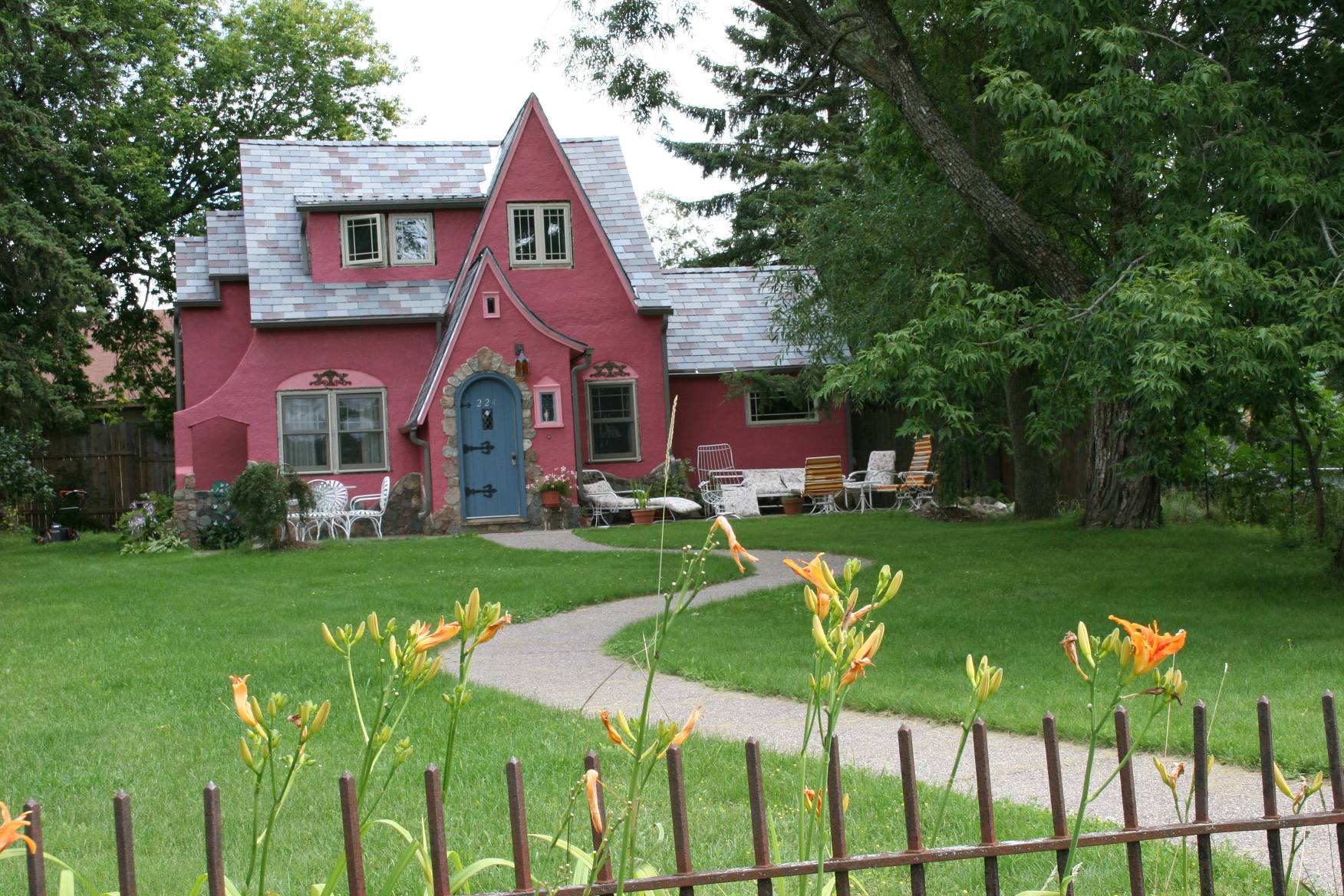
And just down the street from Lucette and the library, I found the sweetest pink fairy tale cottage.

Those small-town treasures marked my introduction to Hackensack.

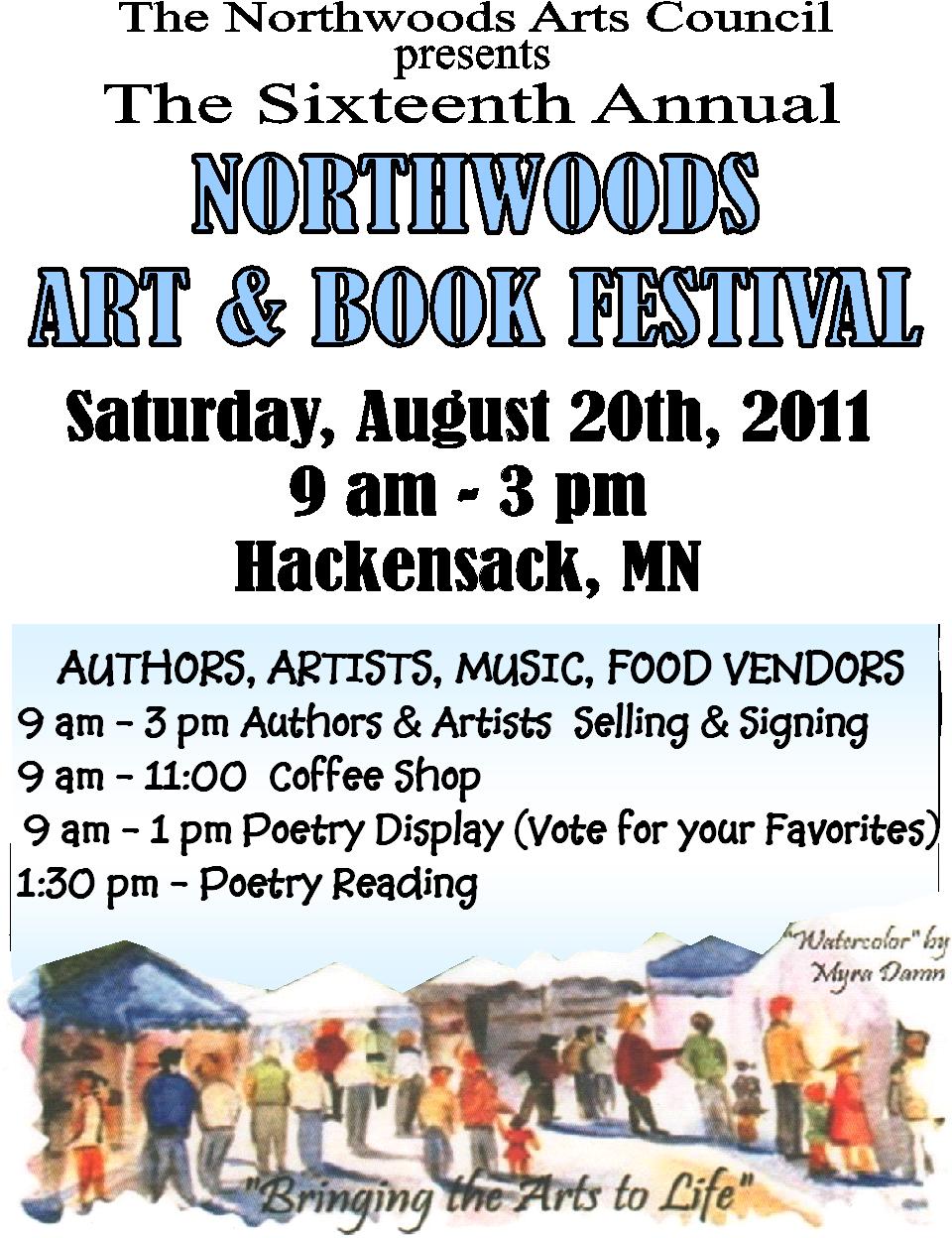
Now, fast forward to last summer. I wasn’t back in Hack, not physically anyway. Rather my poetry was among poems displayed at the town’s annual Northwoods Art and Book Festival. During that event, the featured poets are invited to read their poetry. Fest-goers can also vote for their favorites with six poems selected for “Popular Choice” awards. Six poems are also recognized as “Poems of Merit.” All of the original and unpublished poems are posted without author names attached.

I didn’t attend last year, didn’t win and didn’t deserve to win. My poetry wasn’t worthy of an award.

This year my poetry is back at the Northwoods Festival set for this Saturday, August 20, and I’m more confident that I’ve actually written poems that could win an award. Oh, I’d love to tell you which poem is mine (or it could be both poems that I submitted; I haven’t been told). But I won’t unfairly sway the voting. Suffice to say my rural background shines in my writing.

If Hackensack wasn’t such a long drive from Faribault, I’d be there taking in the poetry, the art, the music, the book-signings, the food. However, if you’re in the Brainerd lakes area or parts north on Saturday, check out the Northwoods Art and Book Festival from 9 a.m. – 3 p.m. and then tell me all about it by submitting a comment.

Voting for the “Popular Choice” awards begins at 9 a.m. and closes at 1 p.m.

If you’re already thinking, “Audrey, I don’t like poetry,” rethink your thinking. I promise you that my poetry rates as down-to-earth, understandable and not at all stuffy.

This whole concept of getting poetry out to the public via a display like the one in Hackensack pleases me. Just like the Roadside Poetry billboards in Fergus Falls. I was fortunate enough to win the spring competition and have my four-line poem plastered across four billboards there.

These new poetry venues, and the increasingly popular sidewalk poetry in cities like St. Paul, Mankato and now Northfield, are bringing poetry to the people. That’s a good thing because, in reality, how many of us actually pick up a book of poetry for leisure reading?

Minnesota poet Todd Boss and designer/animator Angella Kassube are also making poetry even more appealing by utilizing visuals in their acclaimed motion poems. Click here to read some of those.

Poetry has certainly evolved through the years, a necessity to keep writers interested in writing it and readers interested in reading it.

Professionally, I’ve only begun to unfold my wings as a poet. Even publicly calling myself a “poet” still sounds foreign to my ears. But with publication in two magazines and four anthologies, soon to be five (The Talking Stick, Volume 20, published by Park Rapids-based Jackpine Writers’ Bloc); winning the spring 2011 Roadside Poetry competition; inclusion at the Hackensack festival; and recent notification that one of my poems will publish in the Lake Region Writers Network’s first literary magazine, I finally feel worthy of the title “poet.”

The last of four billboards featuring my Roadside Poetry spring poem.

The sweet fairy tale house in Hackensack, located near Lucette and the park and photographed in 2009.

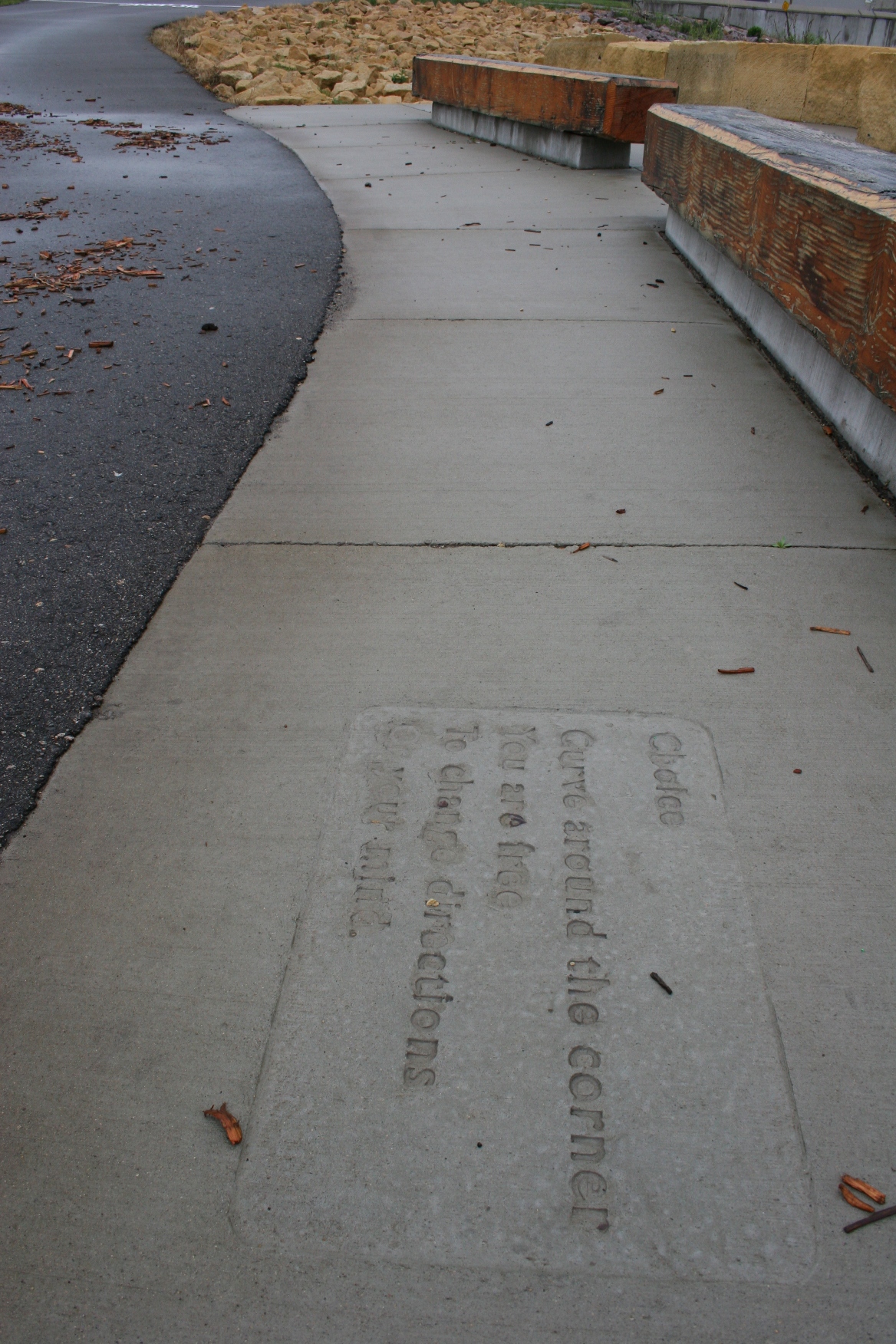
"Curve around the corner/You are free/To change directions/Or your mind," reads this poem by Marlys Neufeld of Hanska and imprinted in a Mankato sidewalk.

HOW DO YOU FEEL about poetry? Do you read it? Why or why not?

© Copyright 2011 Audrey Kletscher Helbling


For the love of reading April 20, 2011

I’VE ALWAYS LOVED to read.

And I’ve passed that love of reading on to my three children, two of whom are now adults and one who is 17. They are all readers.

Even before my girls started school, I read the Little House books by Laura Ingalls Wilder to them.

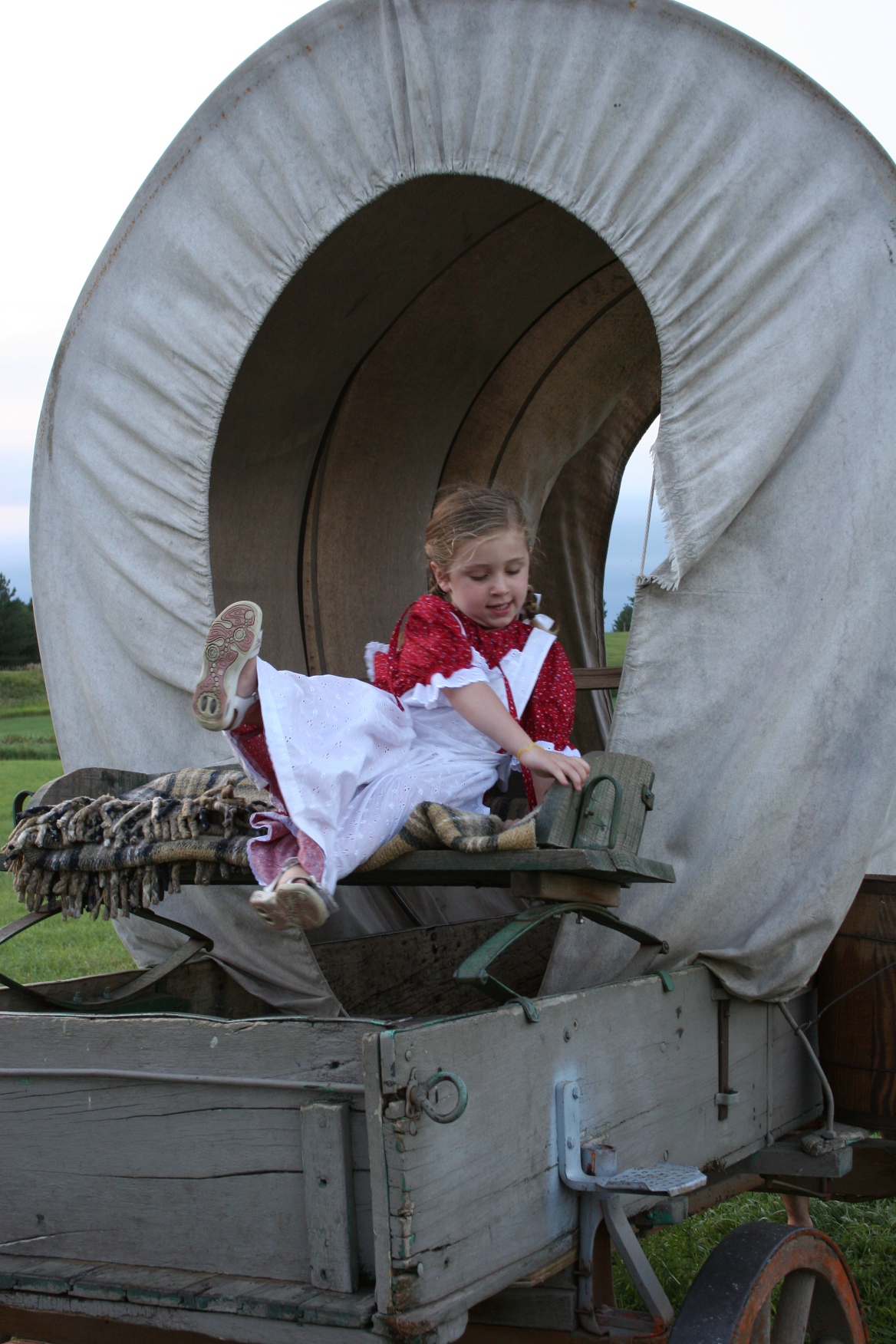
Every summer, the folks of Walnut Grove, Minnesota, produce an outdoor pageant based on Laura Ingalls Wilder's Little House books. Many pageant attendees arrive at the show site dressed in period attire and then climb aboard a covered wagon prop there.

Then I read the Betsy-Tacy book series by Maud Hart Lovelace to my girls. I even nicknamed my second daughter Tib, after the curly-haired, fun-loving Tib in Lovelace’s books. To this day, our family occasionally, fondly, calls her Tib.

A snippet of a mural by artist Marian Anderson in the Maud Hart Lovelace Children's Wing at the Blue Earth County Library in Mankato, Minnesota. The painting depicts the main characters in Lovelace's books, from left, friends Tib, Tacy and Betsy.

Now that I think back on those days of snuggling on the couch with my two girls and later with my son, I am impressed that these preschoolers would sit still for long chapter books. But they did. Of course, I also read picture books and easy-reader books to them.

Long after my trio stopped sitting on my lap or leaning into my shoulders, listening to the stories I read, they continued reading.

Even my boy, my teen. This surprises me. At 17, he still pops out the leg rest on the reclining couch, stretches out his lanky body, grabs a book and reads. For hours. He also reads in bed when he should be sleeping.

There was a time, during his elementary and middle school years, when I checked under his bed for a flashlight and books. He got smart to that and simply hid them elsewhere. So I stopped searching, not wanting to squelch his love of reading even if it meant he wasn’t getting enough sleep.

Today he still reads when he should be sleeping. While I encourage him not to read into the wee hours of the morning, I can’t exactly stop him.

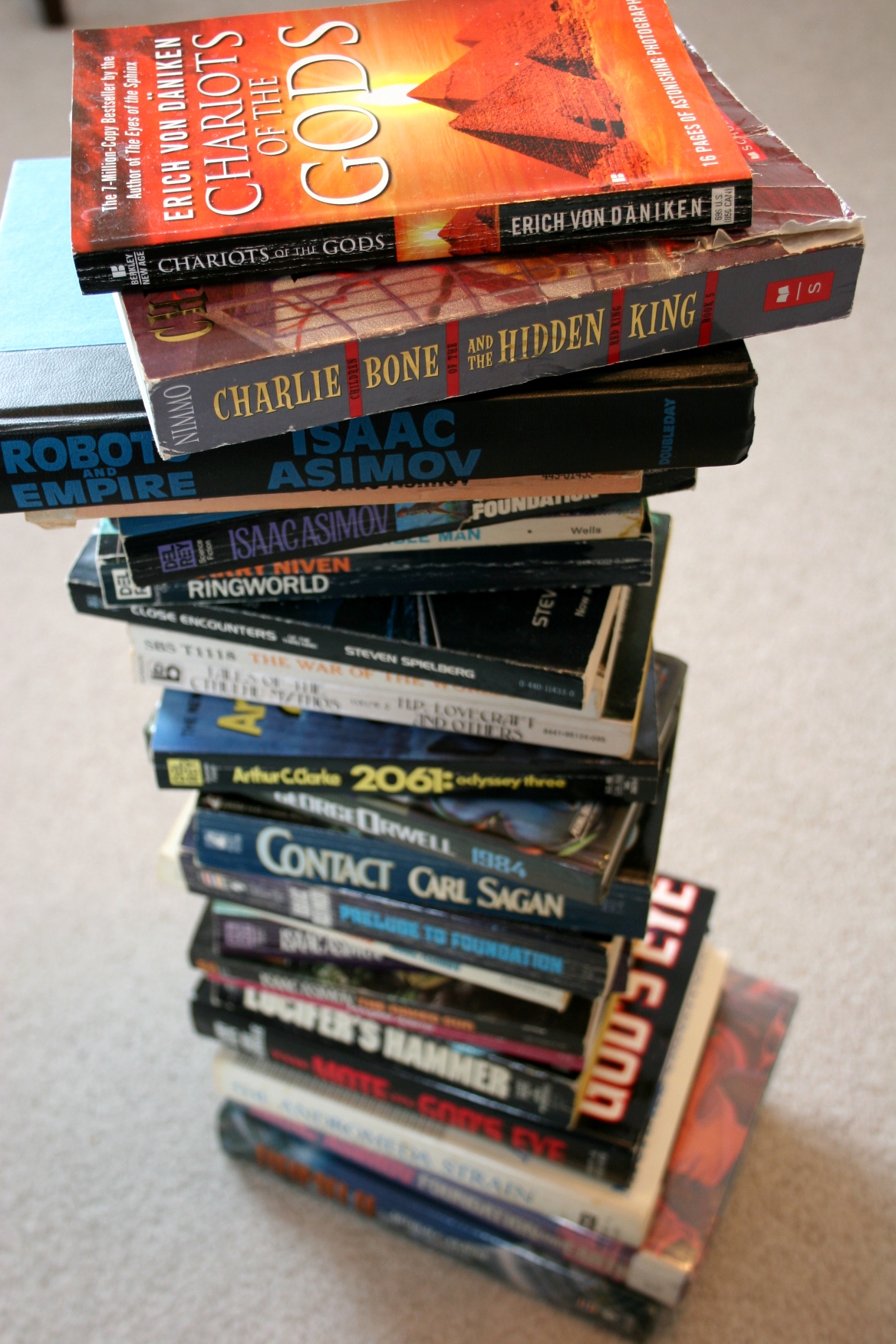
Right now he has two dozen science fiction books stacked in the middle of his bedroom floor: I, Robot and Second Foundation by Isaac Asimov, The Invisible Man and The War of the Worlds by H.G. Wells, Ringworld by Larry Niven, 1984 by George Orwell, Stranger in a Strange Land by Robert A. Heinlein…

Science fiction books stacked on my teen's bedroom floor.

Some of the books have copyrights nearly as old as me.

My son found these books at a used book sale sponsored by the local branch of the American Association of University Women. The AAUW holds the sale annually to raise funds for local reading projects. It’s a worthy cause.

Well, Saturday, we “donated” $25 to the cause, dropping that amount for a box full of two dozen science fiction books, a Star Wars video, two Bach CDs, a nonfiction book about Iowa and a vintage elementary school textbook. The last two items on that list were my selections. I seldom buy books for myself, preferring to check them out from the library because I’ll read a book only once. My teen will read a volume multiple times.

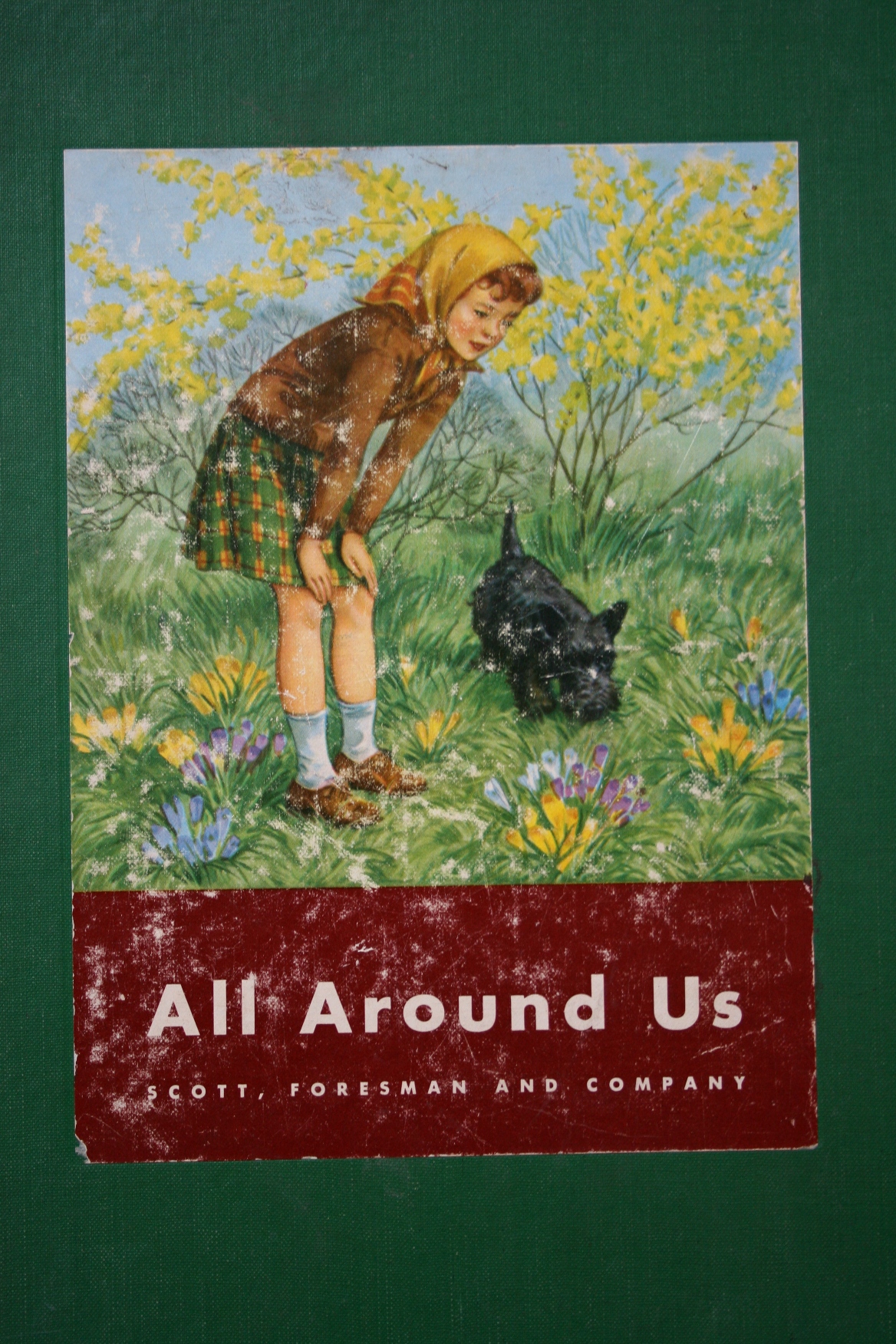
I picked up a 1951 edition of this children's textbook at the used book sale. One of the women working the sale said she used it in her classroom and really liked the book. So did I. But I purchased it for the beautiful vintage art.

I found this brand new book for my niece, who will graduate from high school in about a month. She will attend an Iowa university. I thought she might enjoy this children's nonfiction book that will introduce her to her new home state. Either that or she'll think her aunt (me) is crazy for giving her such an unusual gift. If anyone else wants an Iowa book, you'll find a box full at the sale.

Typically I would not pay $25 for nearly 30 used books, some of them well-used. But how could I deny these books to my teen, who said he can’t even find some of the older books in the library system? Yes, he has a well-used library card.

The older women working the book sale seemed impressed with my gangly teen who managed to fill an entire cardboard box with books. They even offered him a several-dollar discount when I told him he would need to pay half the cost of the books. I only thought it fair. I’ve never been the type of mom to buy my kids something simply because they want it. The son didn’t argue.

I had to restrain myself from buying an armful of children’s picture books. For years I bought used books for the library at the Christian day school my children attended. After I stopped volunteering a dozen years later, breaking that buying habit took a bit of resolve.

Since I passed on the many fabulous children’s books, I did the next best thing. I e-mailed two friends with young children and encouraged them to shop at the sale.

HOW ABOUT YOU, do you buy books at used book sales, garage or rummage sales or elsewhere? Have you always loved to read? And, if you have children, do they also love being read to or reading on their own?

FOR ANYONE WHO lives in the Faribault area, today, April 20, is the final day of the book sale, which runs from 3 p.m. – 7 p.m. in the old Hallmark store at the Faribo West Mall. I’m pretty certain you’ll find plenty of deals on books as the AAUW will just want “to get rid of” their remaining inventory.

© Copyright 2011 Audrey Kletscher Helbling


A Minnesota winter day in photos December 7, 2010

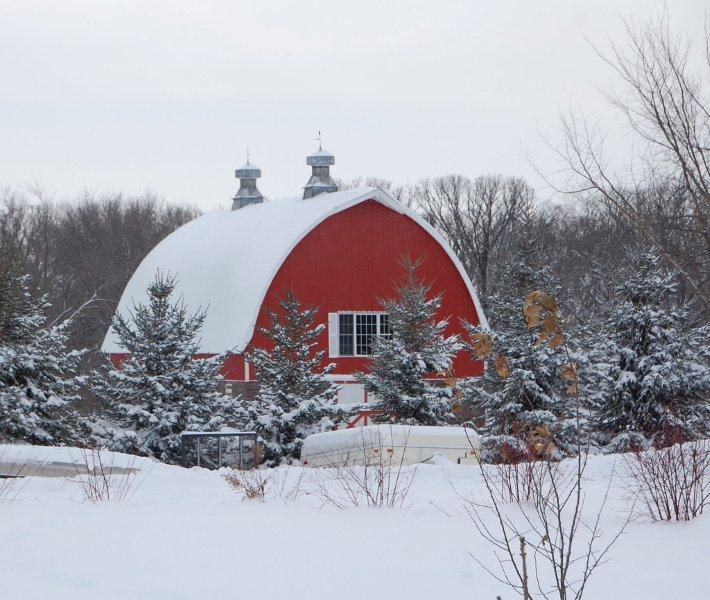
This refurbished barn overlooks the Minnesota River near Belle Plaine. The owners installed new windows, resided the barn and added a small deck off the hayloft, which has been remodeled into a party room. It was the site of a family member's July wedding.

YOU ARE IN FOR A TREAT today as I’m going to feature some guest photos by Harriet Traxler of Carver. I’ve never met Harriet and only recently began corresponding with her via e-mail.

But she has a wonderful little hobby that is near and dear to my heart. Harriet is a self-taught photographer who enjoys photographing everything from children to nature, animals and barns. Like me, she pretty much “wears” her Nikon D40 camera.

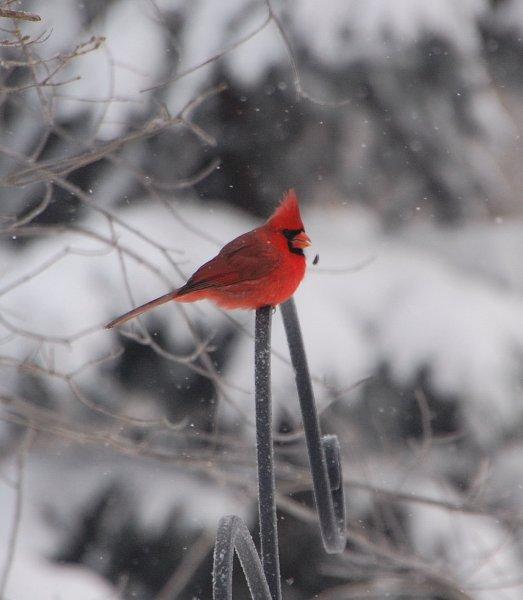
Next to photographing barns, Harriet most enjoys taking pictures of birds. Several years ago she took a photo that included 24 cardinals. Cardinals seem to especially like feeding on black oil sunflower seeds, she says.

It is her barn photos that first caught my attention. She has photographed more than 1,000 barns in Sibley County and compiled those images in 19 books which she prints and binds. If you’ve followed Minnesota Prairie Roots for awhile, you know that I also enjoy photographing old barns. In fact, right now, my camera is filled with barn (and other) images from a weekend trip to eastern Wisconsin.

But back to Harriet, if you’re interested in old barns and/or enjoy the photos posted here, stop by her website at barnsofsibleycounty.com. You may even want to consider purchasing one (or two or more) of Harriet’s barn books as a Christmas gift/gifts.

Even if you’re not from Sibley County where these barns were photographed, I promise you will enjoy these barn and other rural photos. One of my favorite images in Harriet’s books shows a herd of Holsteins gazing at her from behind a barbed wire fence with a farm site, including a red barn, in the background.

I’ll bring you some of Harriet’s stunning barn photos in the future.

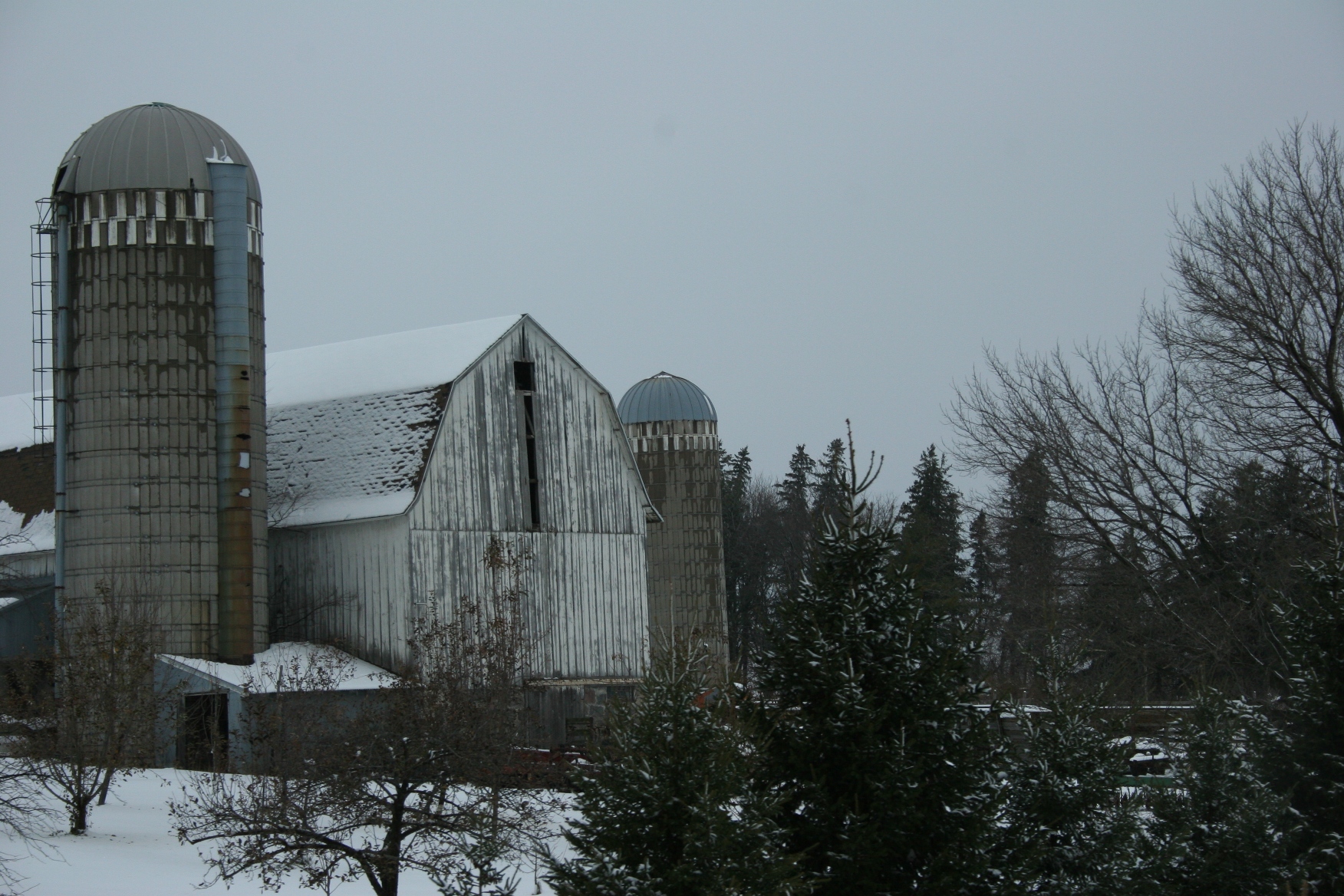
But for today, this photographer is graciously allowing me to showcase several images taken on Saturday, after a major winter storm dumped up to a foot of snow on some parts of Minnesota. Harriet truly captures the beauty of this snowfall. And that is what we Minnesotans sometimes need—to see the beauty rather than all the hard work and inconveniences a major snowfall creates in our lives.

Enjoy and thank you, Harriet, for allowing me to share your photos on Minnesota Prairie Roots.

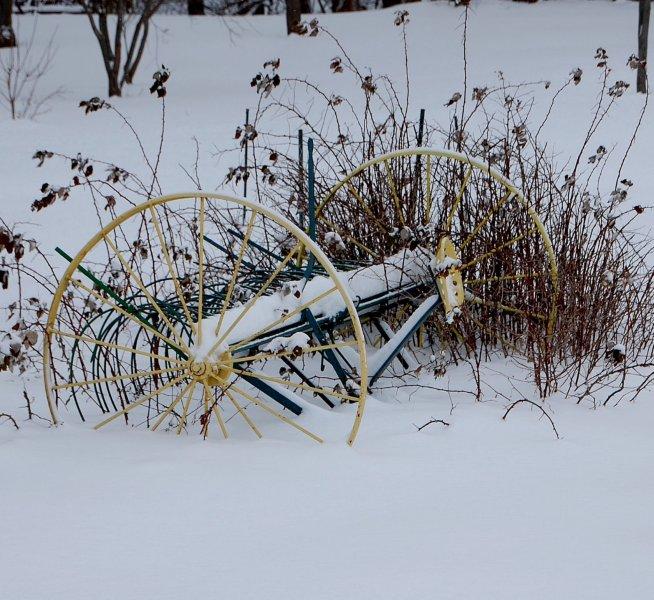
Farm equipment engulfed in snow makes for a scenic image.

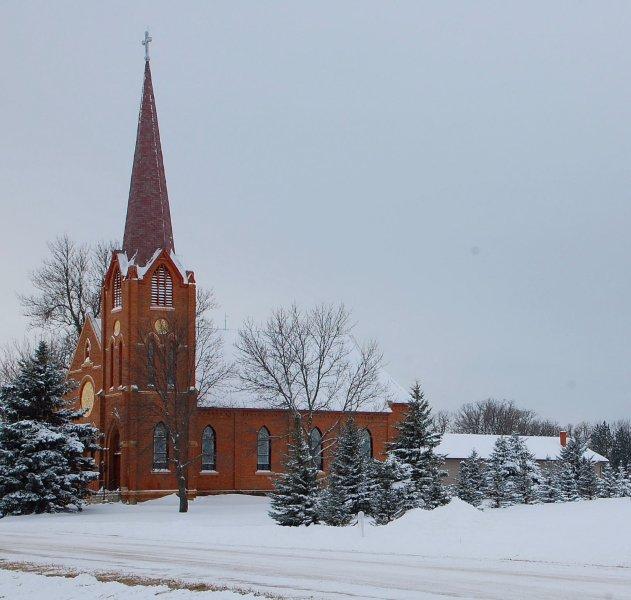
St. John's Catholic Church in Faxon Township, Sibley County, dates back to the 1870s. It is often called "St. John's in the cornfield," Harriet says, because cornfields typically surround the church during the growing season.

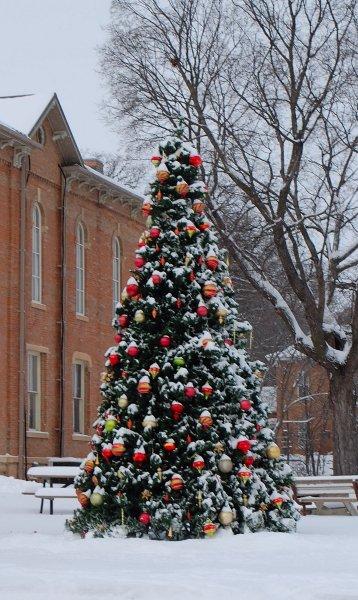
Harriet didn't tell me where she shot this outdoor Christmas tree. But isn't it beautiful?

Text © Copyright 2010 Audrey Kletscher Helbling

Photos © Copyright 2010 Harriet Traxler


A Farm Country Thanksgiving November 24, 2010

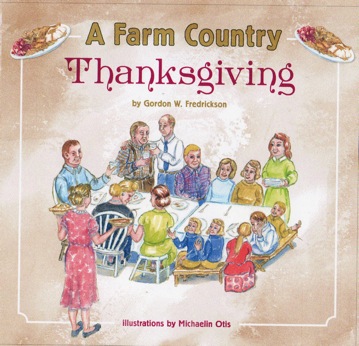
The third book in the Farm Country series.

WHENEVER I OPEN one of Lakeville author Gordon Fredrickson’s books, I feel like I’m stepping back in time to my childhood on a southwestern Minnesota dairy farm.

I’m thankful for Fredrickson, who understands the value in preserving the history of small family farms. Because he was raised on a Scott County dairy farm and farmed for awhile as an adult with his wife, Nancy, Fredrickson gets his 1950s era farm stories right.

Last night I snuggled up in the recliner with his latest children’s picture book, A Farm Country Thanksgiving. I thought it would be a fairly quick read, but I was wrong.

I didn’t whiz through this story told from the viewpoint of 10-year-old farm boy Jimmy. Rather, I savored every rhyming word by Fredrickson and every detailed illustration by Michaelin Otis.

I was the one sledding down the hill. I was the one with snow stuffed down my neck by my older brother. I was pitching silage down the silo chute, eating banana-filled Jell-O, sitting at the kids’ table on Thanksgiving…

If you grew up on a farm in the 1950s and 1960s, you absolutely must read this book and Fredrickson’s other Farm Country series stories about Halloween and Christmas. He’s also published three If I Were a Farmer books.

I guarantee that you will feel all warm and fuzzy and nostalgic and want to dig out the old photo albums or reminisce with your siblings.

I noticed the ear flapper caps, the buckle overshoes, the checkerboard ringed silo (just like the one on my childhood farm), the old runner sled—book illustrations that are as accurate as photographs. The only difference: My albums hold black-and-white snapshots.

Fredrickson captures the essence of family, of hard work, of rural life. He understands that these are worth preserving. But his efforts to save our rural heritage extend beyond his books. This writer travels across Minnesota, and sometimes out of state, presenting his message to school children, senior citizens and others. He dresses the part of a 1950s farmer in bib overalls, brings farm props, talks and reads from his books.

I will tell you too that Fredrickson and his wife, Nancy, are as genuine and kind-hearted and as down-to-earth good as they come. My husband and I lunched with the couple this past summer. Although we had never met before then, having corresponded only via e-mail, I felt as comfortable with the Fredricksons as if I had known them for years. They are truly my kind of without pretenses folks.


I snapped this image of the Fredricksons after lunching with them in August.

I must also point out to you that Fredrickson gives me a plug on the back cover of his Thanksgiving book. He has pulled a quote from a book review I wrote. But that has absolutely nothing to do with the praise I am directing toward him here. He has earned his praise by writing these books, complete with glossaries (after I suggested a glossary), that forever preserve life on the family farm.

I thank him for taking on this project with a passion rooted deep in the land.

© Copyright 2010 Audrey Kletscher Helbling

Book cover image courtesy of Gordon Fredrickson


Photographing barns November 19, 2010


A barn between Morristown and Waseca in a photo I shot last Sunday.


HARRIET TRAXLER OF CARVER has done exactly what I would someday like to accomplish. She has photographed a county full of barns and self-published 19 books, including two versions of Barns of Sibley County and books for each of the county’s 17 townships. She’s also created a 2011 barn calendar.

Traxler photographed 1,100-plus barns.

I’ll write more about Traxler’s barn project in a future post because I’ve only skimmed two of her books. The pair just arrived in my mailbox yesterday.

But I’m so giddy about what I’ve seen that I couldn’t wait to tell you. Anyone who loves old barns will absolutely appreciate Traxler’s books and her efforts to preserve barns through photography.

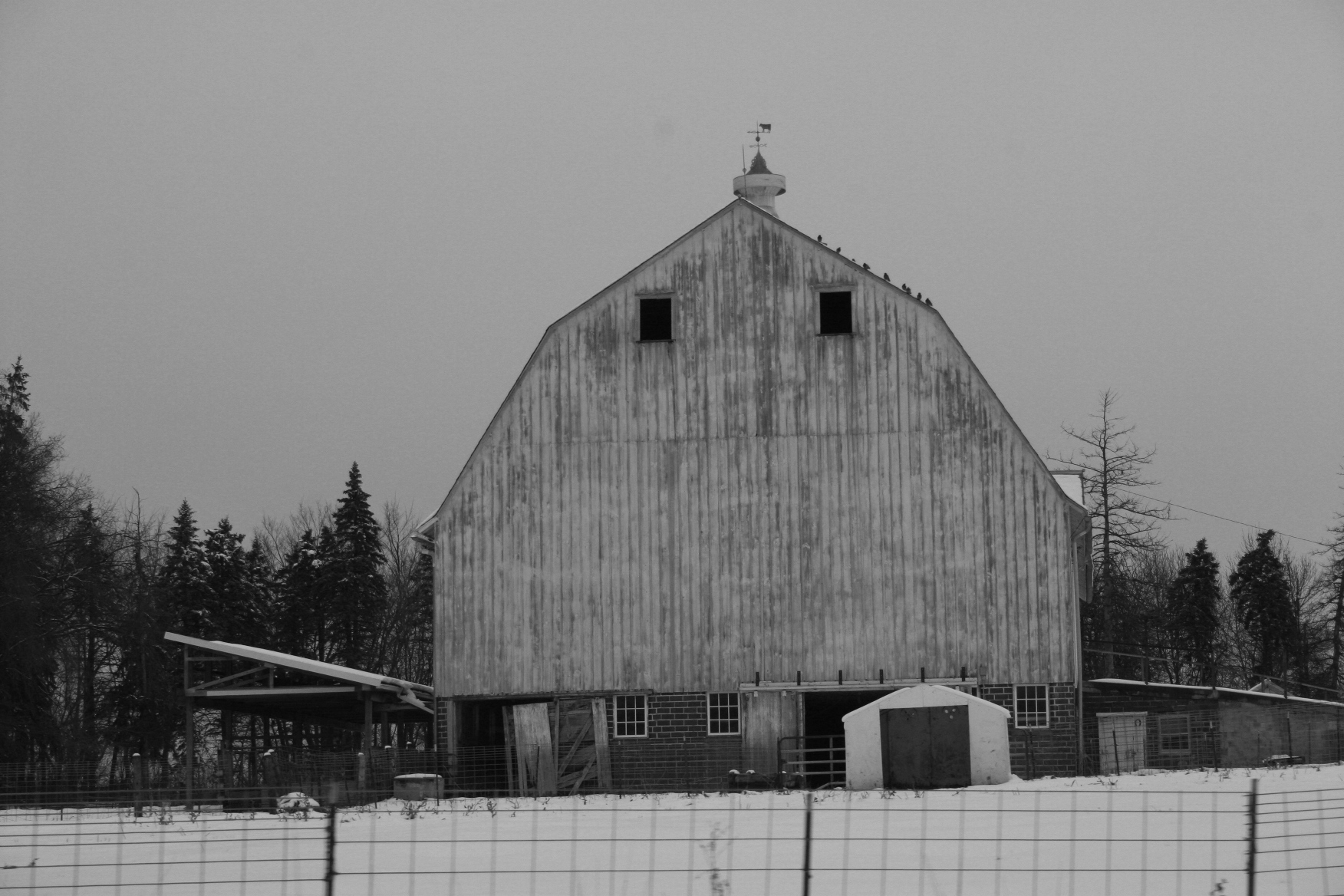
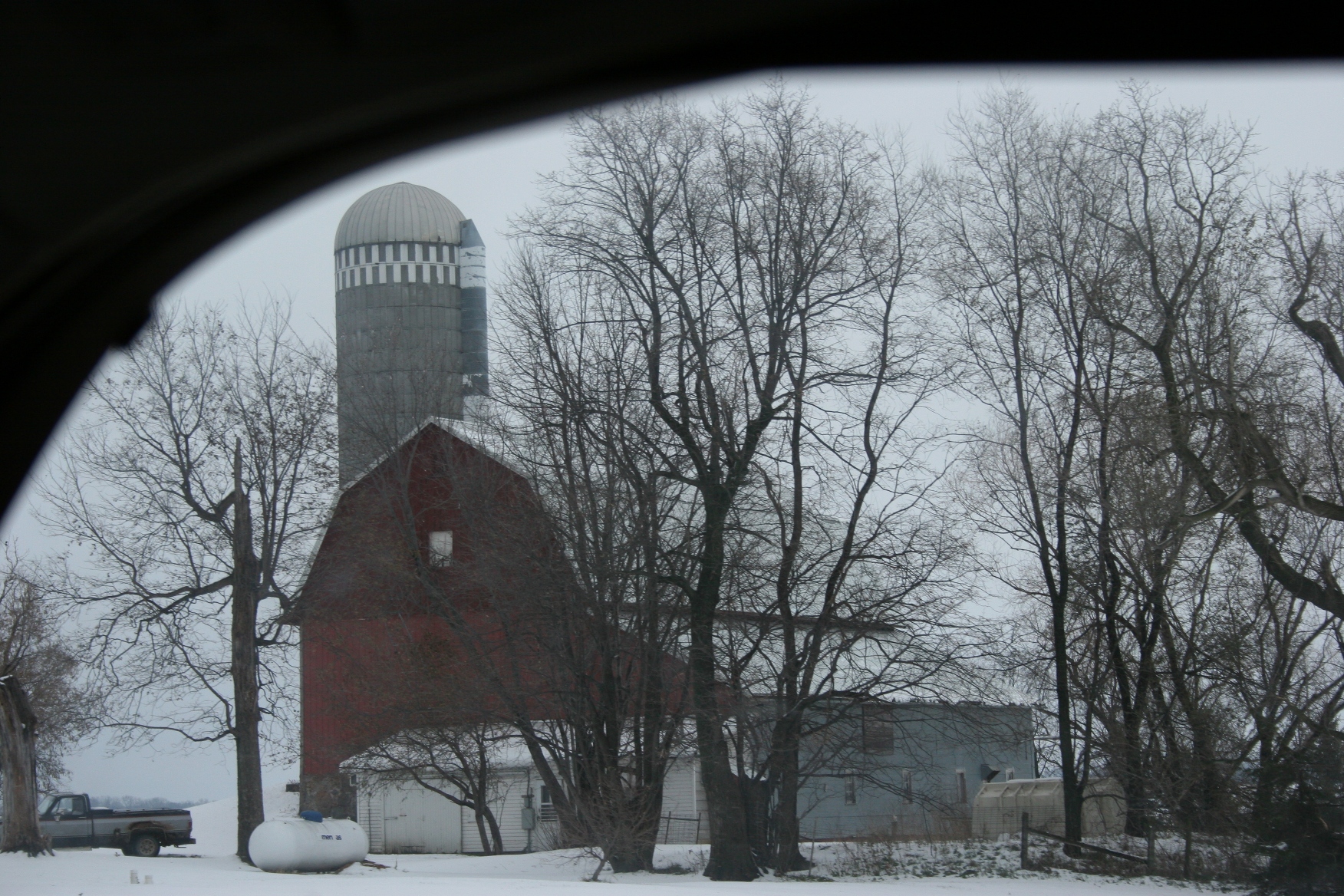
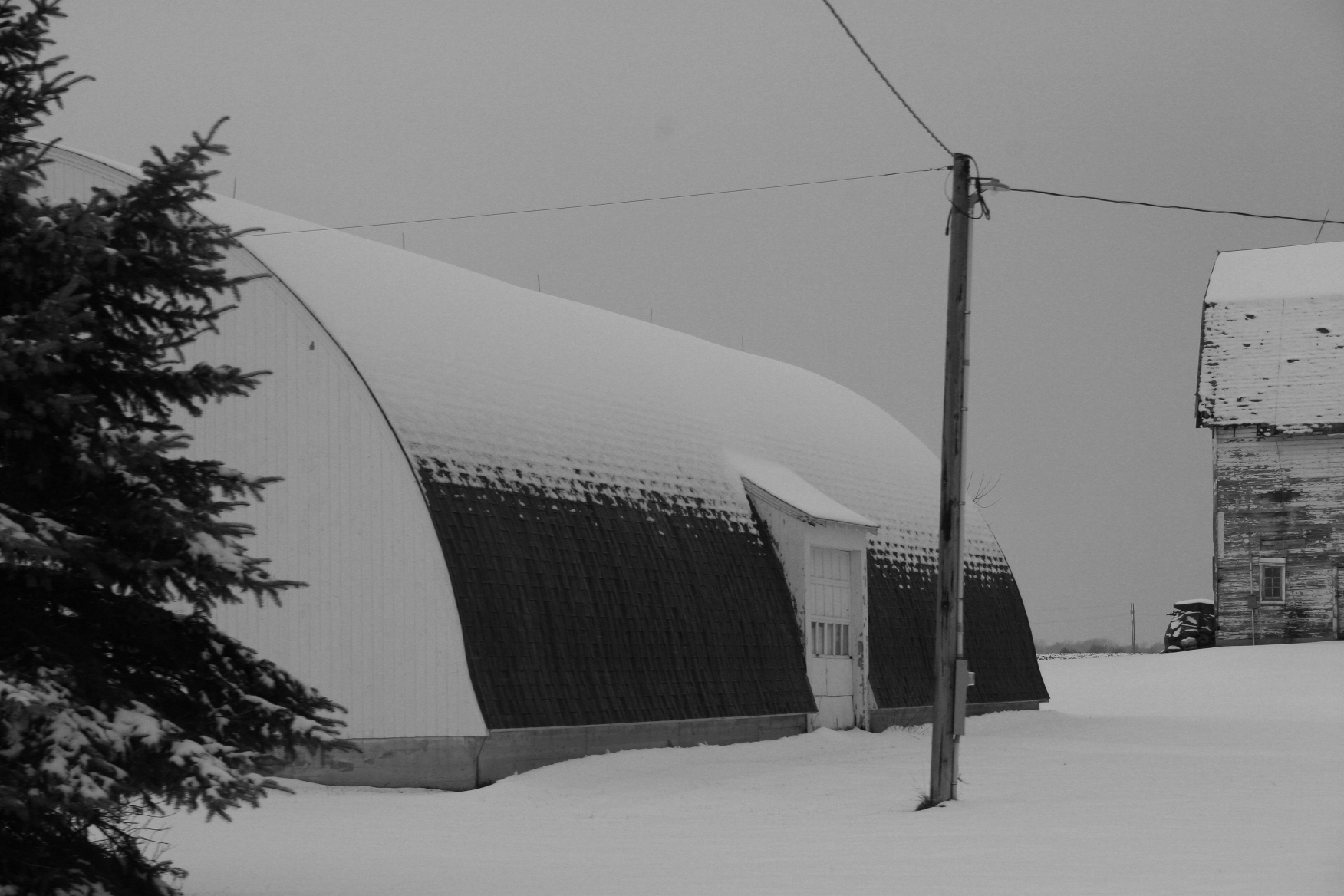
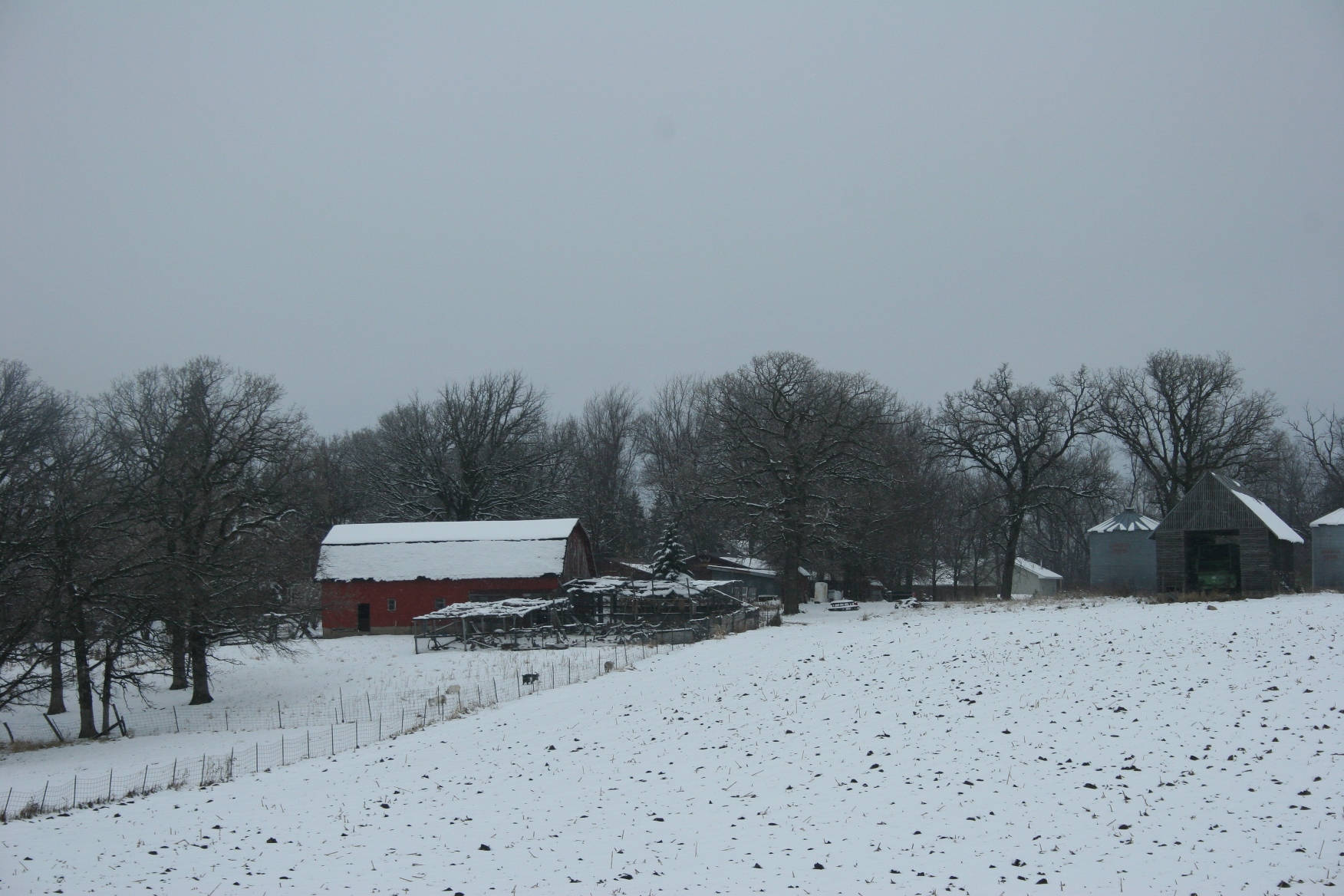
Now that I’ve shared my excitement over those barn books, I’ll show you a few more barn photos that I shot last Sunday along Rice County Highway 16 and Waseca County Highway 7 between Morristown and Waseca. These were taken through car windows—no waiting for the right lighting, no stopping to compose them. They are what they are and I think worthy of sharing with you. Enjoy.


Barn along Waseca County Highway 7


The driver's side rear car window frames this barn scene in a quick shot.


A machine shed with a barn-like appearance. Love the roof line.


Near the intersection of Waseca County Highway 7 and Minnesota Highway 13.


© Copyright 2010 Audrey Kletscher Helbling


Honesty goes a long ways at roadside market October 19, 2010


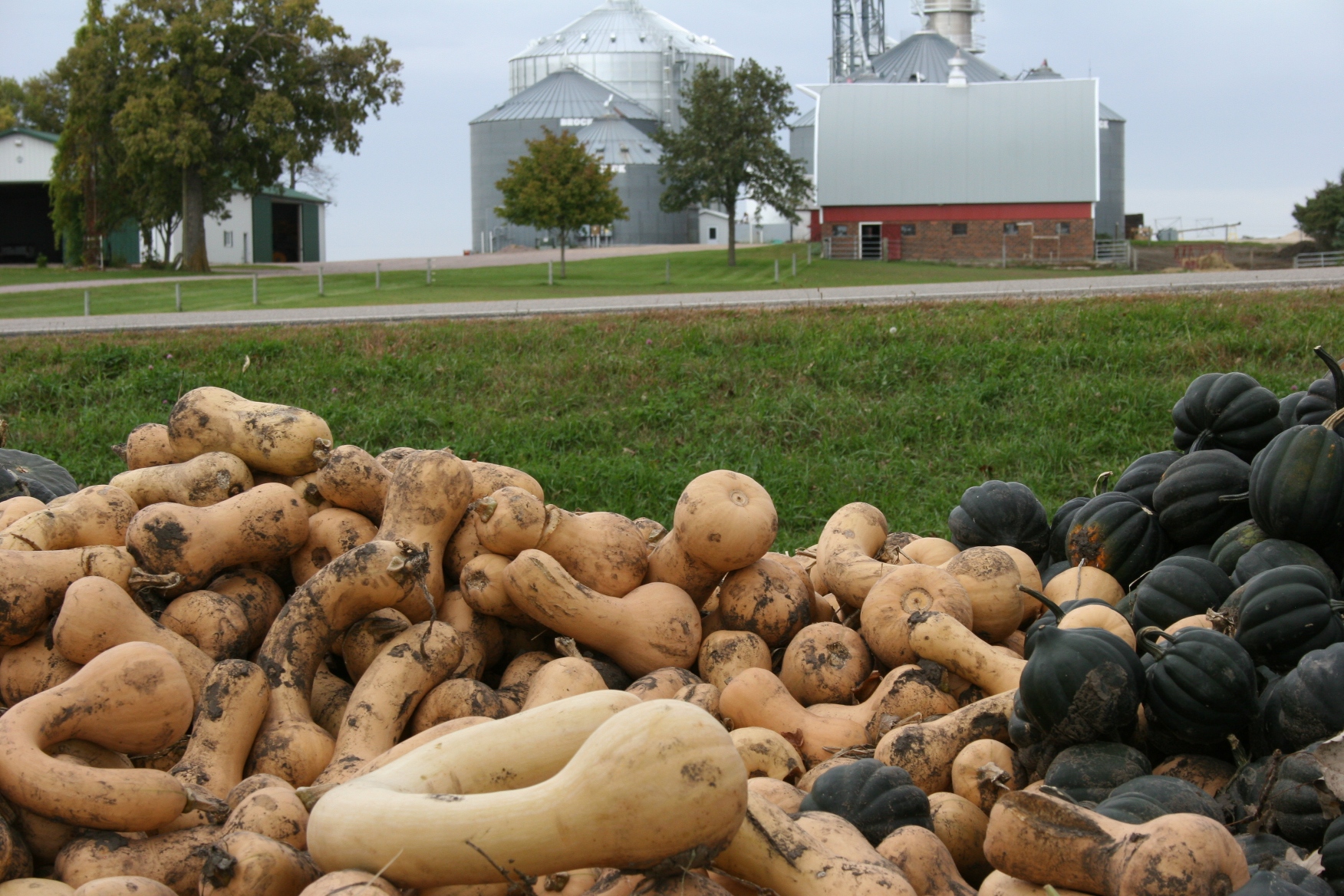
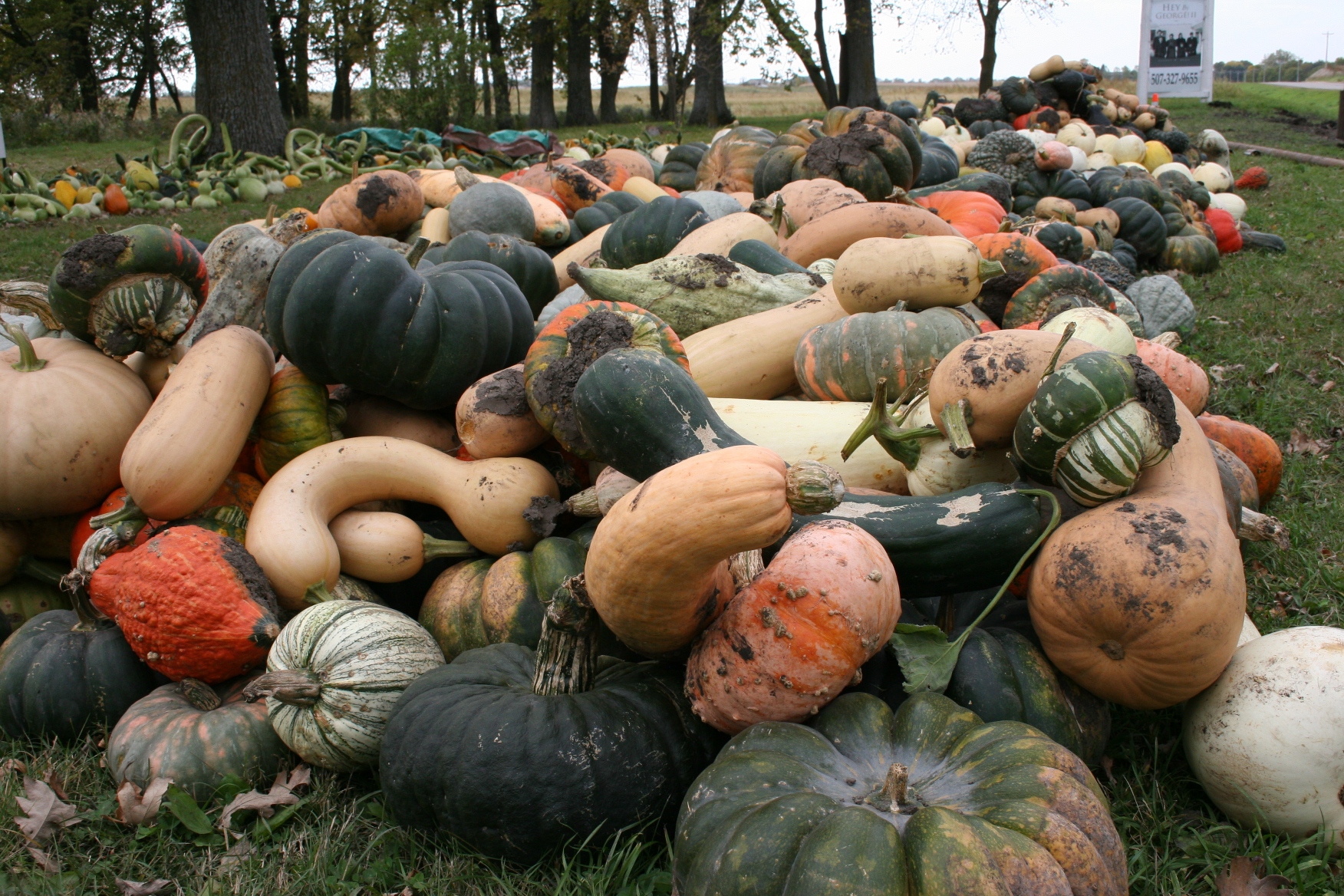
Mounds of squash for sale at George Denn's roadside market.


BY GEORGE, that George is a mighty trusting fellow.

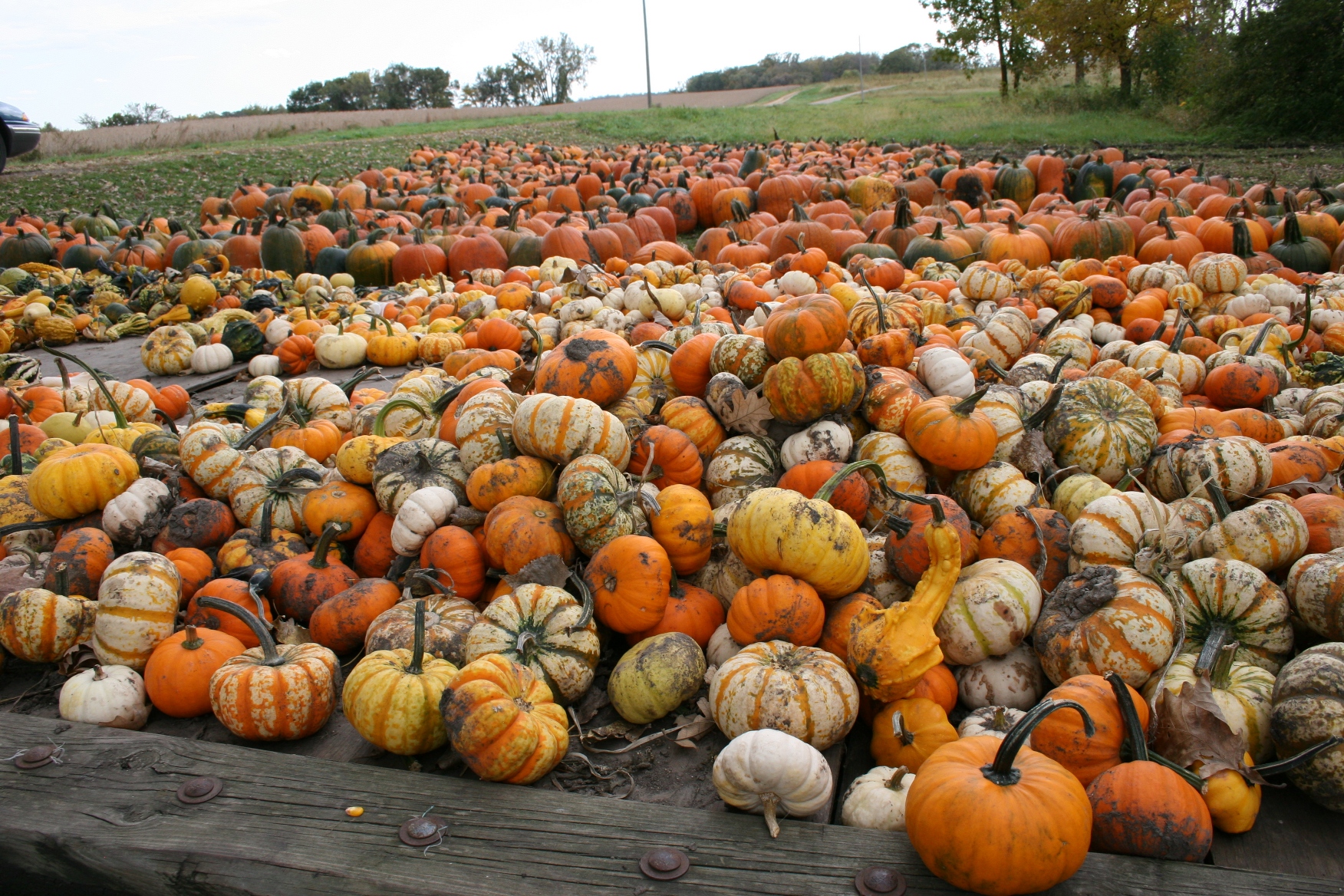
But, hey, the system must work for George W. Denn, purveyor of pumpkins, gourds, squash, hay and straw bales, corn shocks, apples, honey, popcorn, wheat, pumpkin seeds and books—I think that’s it—along Blue Earth County Road 2 on the Blue Earth/Le Sueur county line.

When you pull up to George’s roadside spread northeast of Mankato by Wita Lake next to his farm, he’s nowhere to be seen. That’s where the word “trust” factors into his Hey by George! business.

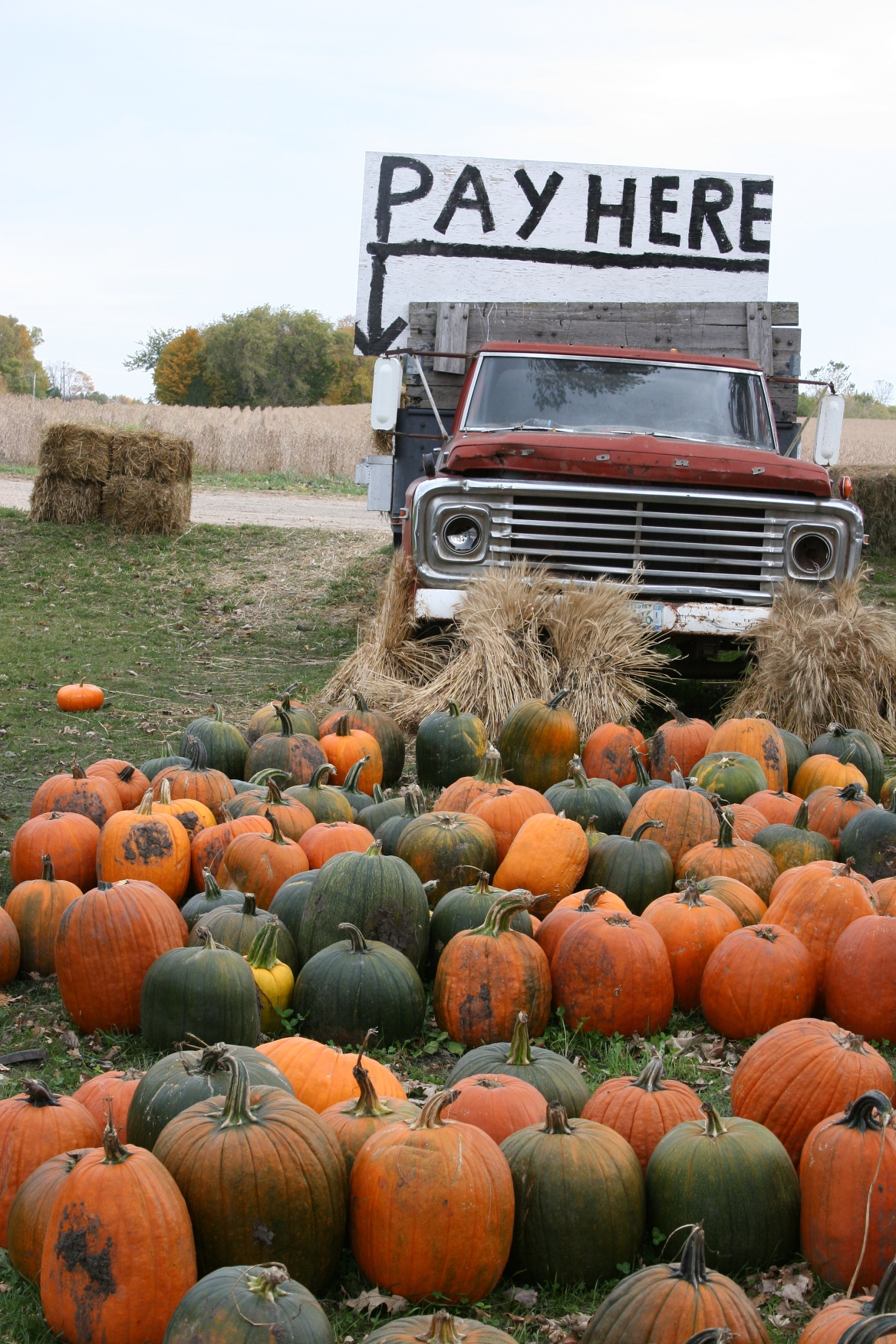
The Christian pumpkin farmer-writer relies on his customers’ honesty to simply deposit their payments in a secure metal box attached to the side of an old truck. Signage directs shoppers to “PAY ON OTHER SIDE” or to “PAY HERE.”

Apparently the system works. Or, if it doesn’t always work, perhaps George figures his business can survive a few stolen pumpkins, gourds or squash among the thousands he’s displayed.

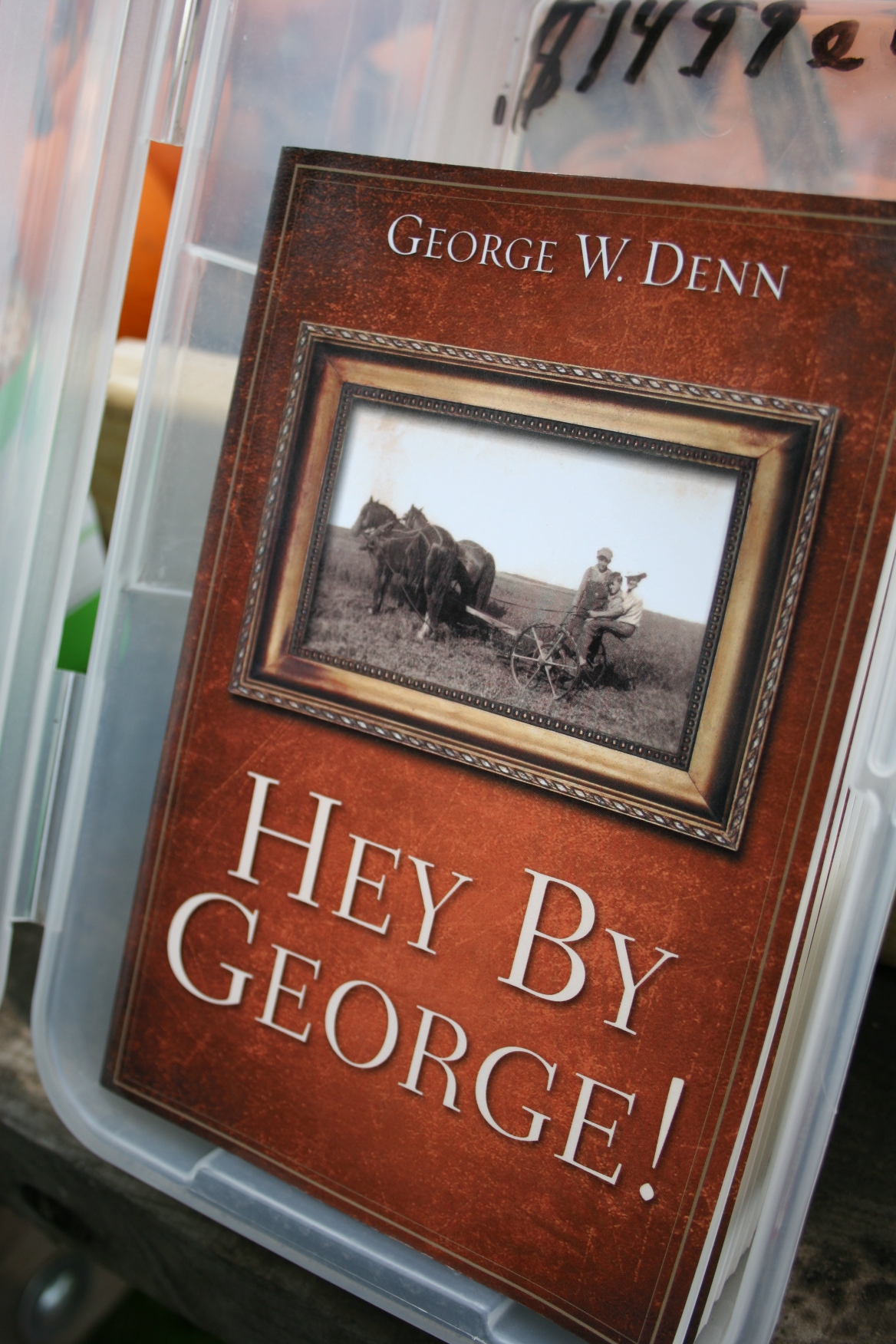
If anyone happens to take one of George’s $14.99 inspirational books or some of his produce without paying, he/she may want to turn to page 35 in Hey By George!.

George reveals that he’s not only mighty trusting, but he’s also mighty forgiving.


You pay on the honor system, depositing your money into a box attached to the side of this old truck.


The money goes here, in this secured box, as directed.


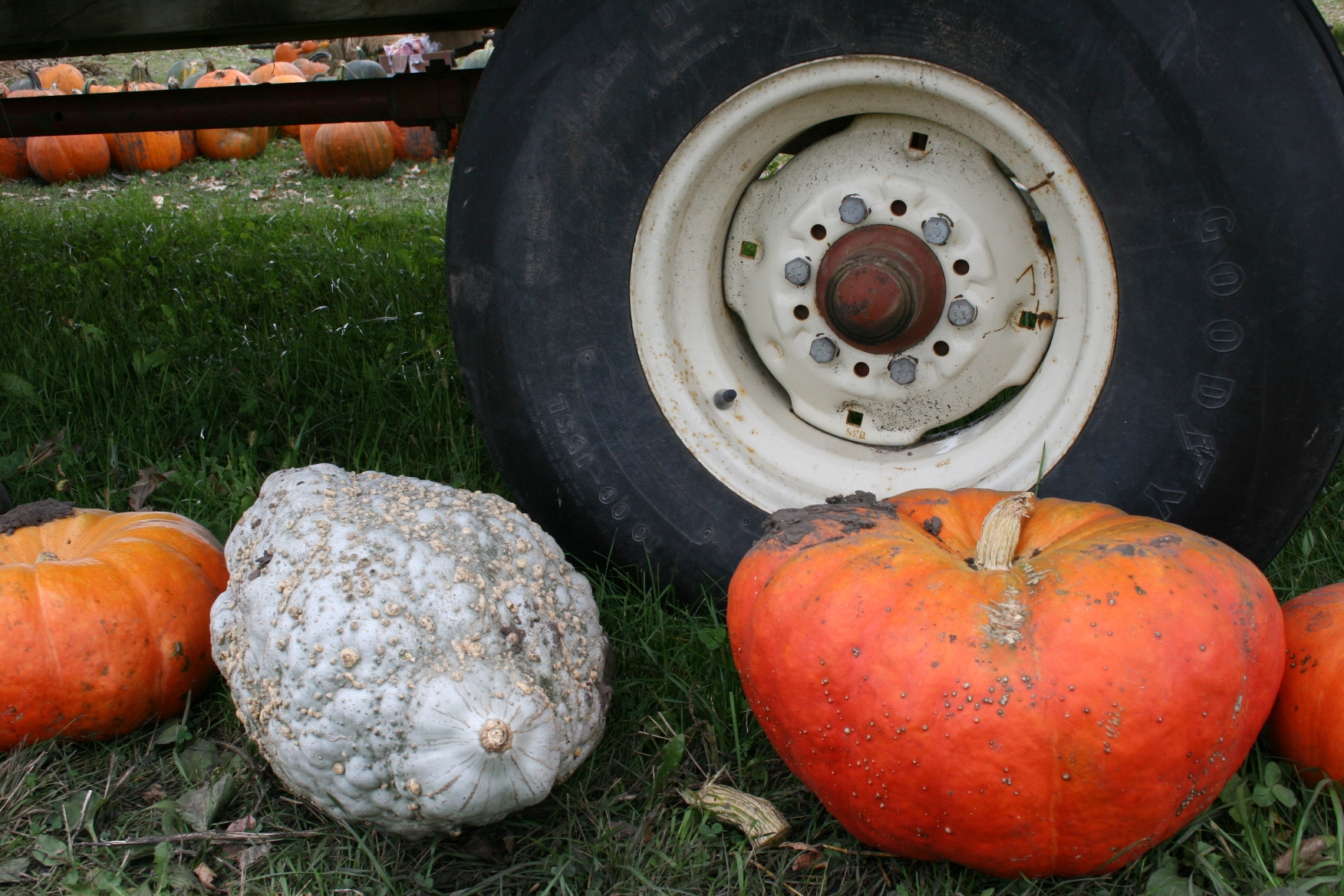
If you can't find the perfect pumpkin here, then you probably won't find one anywhere.


A kitschy sign lists the price for corn shocks.


Piles of squash for purchase.


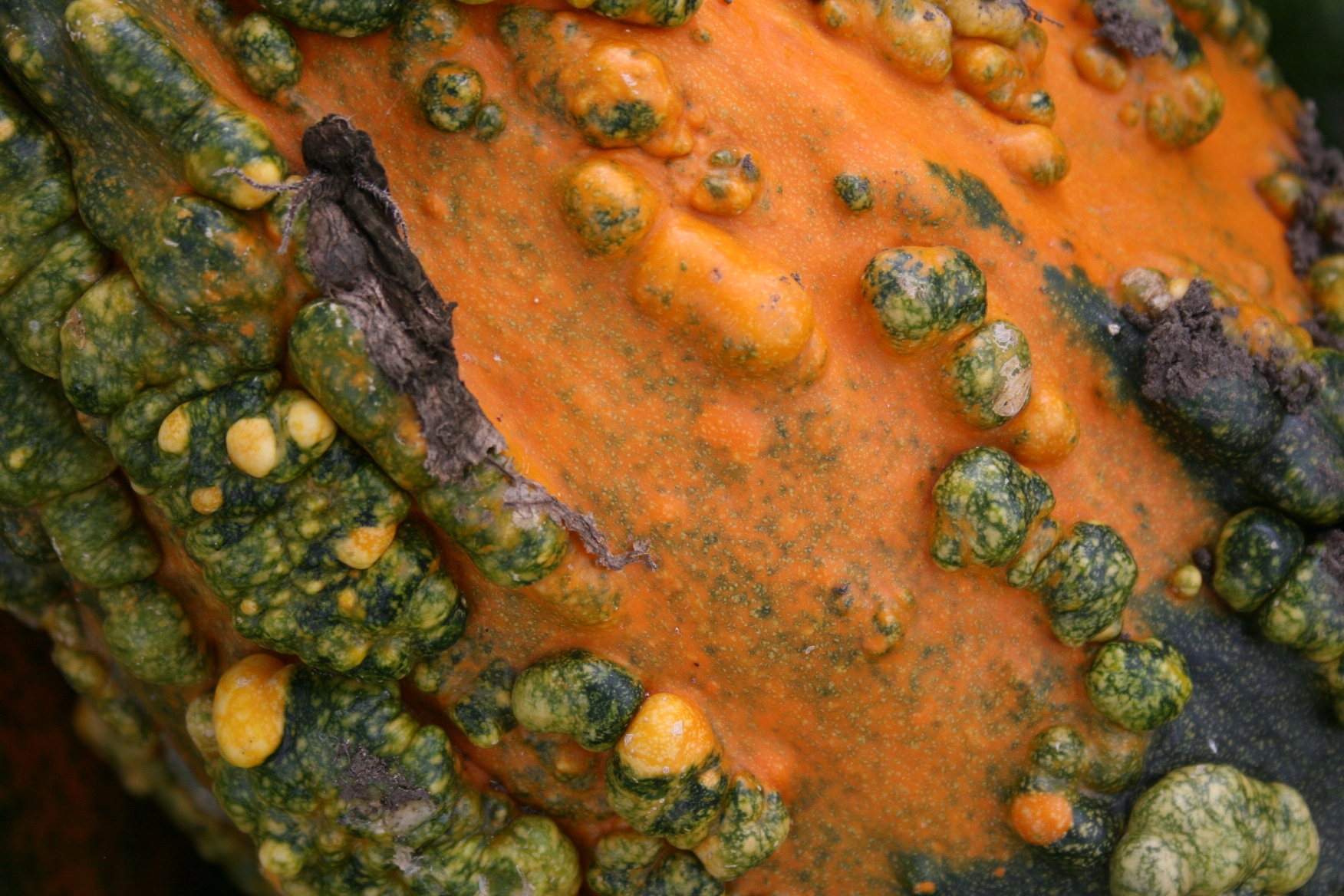
A close-up of the bumpy squash at Hey by George!


Heaps of squash at Hey by George!


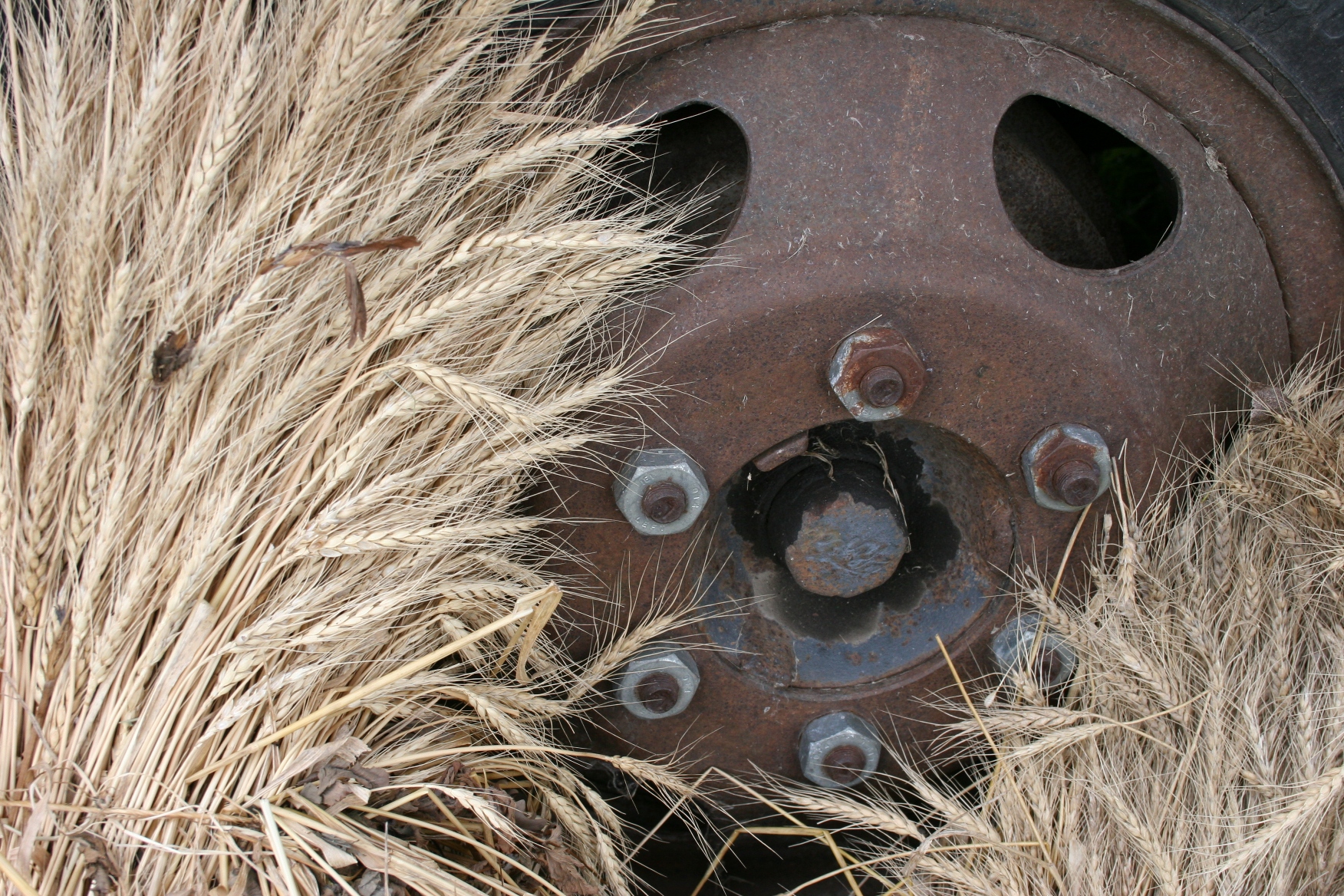
Wispy wheat makes an artful display beside the wheel of the old truck.


Colorful squash next to the old truck are for sale.


Jars of wheat are among the offerings at George's roadside market.


George Denn's two books, Hey By George! and Hey By George II, are tucked into plastic boxes and are also sold on the honor system.


© Copyright 2010 Audrey Kletscher Helbling


Seeking a book about Lutheran hymn writer Paul Gerhardt October 16, 2010

Filed under: Uncategorized — Audrey Kletscher Helbling @ 12:12 PM
Tags: , , , , , ,

SEVERAL WEEKS AGO I met a nice woman from Washington. Well, I didn’t actually meet, meet her. Rather she e-mailed regarding an article I wrote about homelessness in Faribault. That piece published in the September issue of The Lutheran Witness, the national magazine of The Lutheran Church, Missouri Synod.

Anyway, aside from the fact that Donna and I each attend LCMS churches, we also share a love of books.

“I am a book worm! I love books!” this West Concord, Minnesota, native wrote in one of many e-mails we exchanged. “I love to get books into people’s hands!”

Notice all those exclamation marks at the end of Donna’s sentences. That’s absolute proof to me that this retired library aide enjoys books.

Donna had a purpose for mentioning books to me. She wanted to buy an ad on Minnesota Prairie Roots seeking a specific book, Paul Gerhardt—His Life and His Hymns by William Dallman. Concordia Publishing House published the now out-of-print volume in 1921.

The problem: I haven’t yet reached the point of selling advertising on this blog. Believe me, I’d like to earn some money considering all of the time and effort I invest in blogging, but…for now it remains a passion of mine with no financial return.

But back to that book and Donna’s request. Although I’ve been a Lutheran all of my life, I’m not a musically-educated Lutheran. I cannot read a note nor do I know much about the Lutheran musical heritage. However, I can sing, from memory, all of the words to my favorite hymn, “Beautiful Savior.”

This, of course, does not help Donna. I offered to publish this post with the hope that someone out there—and you don’t even need to be Lutheran—has a copy of Paul Gerhardt—His Life and His Hymns. This musically-knowledgeable Lutheran wants to give the book to her pastor during October, Pastor Appreciation Month. If you can’t make that deadline, Donna’s fine with that. She has other ideas and can wait until next October.

Donna has already tracked down a few copies of the elusive 80-page rather plain brown book, so copies are out there. She found one for her church library and, after advertising elsewhere, located one in Great Britain. But the price is higher than she’s willing to pay. A retired pastor in Oregon also has the book, but it’s written in German. She wants English.

So, if you have an English copy of Paul Gerhardt—His Life and His Hymns e-mail your contact information in a comment (which I will not publish) and I’ll forward it to Donna in Washington.

I’m sure if you ask, Donna will tell you that Paul Gerhardt, born in 1607, was trained to be a Lutheran pastor at Wittenberg, Germany, where Martin Luther studied a century earlier. Gerhardt wrote more than 130 hymns including “Come Your Hearts and Voices Raising,” “Upon the Cross Extended,” “Awake My Heart With Gladness,” “Evening and Morning,” “I Will Sing My Maker’s Praises” and “Now Rest Beneath Night’s Shadow.”

Right off hand, I can’t say those hymns sound familiar to me. Remember, though, I’m no musician, simply a Sunday morning singing Lutheran.

Donna’s pastor, however, based his March 2010 Lenten sermons on Gerhardt’s life and hymns, using those as a window into the life of Christian devotion. That explains why Donna wants this certain book for her clergyman’s private collection.

So if you have a copy of Paul Gerhardt—His Life and His Hymns by William Dallman, in English, not German, e-mail me now.

Danke Schöen.

#

HERE’S ANOTHER INTERESTING story from my new Washington friend. Donna volunteers at her church library and her daughter, also a bookworm, gave her a book, Hymns of the Evangelical Lutheran Church for the Use of English Lutheran Missions, published in 1896 by Concordia Publishing House.

Said daughter bought the book for $1 at an American Association of University Women book sale.

But here’s the really odd, coincidental connection to me. Inside the book is the name Martha Schultz, Faribault, Minnesota, and the date, January 10, 1903.  So…, if anyone in Faribault, where I’ve lived since 1982, knows anything about Martha, Martha’s ownership of this book and how it ended up in Washington, Donna and I would very much like to know. Send me a comment.  Thank you.

© Copyright 2010 Audrey Kletscher Helbling