Minnesota Prairie Roots

Writing and photography by Audrey Kletscher Helbling

Poetry and cheesecake October 1, 2010

Filed under: Uncategorized — Audrey Kletscher Helbling @ 8:01 AM
Tags: , , , , , , , , , , ,

My daughter's homemade chocolate cheesecake, my birthday cake.

I FELT JUST LIKE a queen, waiting patiently at the dining room table to be served a slice of decadent chocolate cheesecake.

I must say, it’s a wonderful feeling to be on the receiving, rather than the giving, end. And that’s how it is now when I celebrate my birthday.

On Monday, a day after my birthday, my daughter drove down from Minneapolis for an appointment and later dinner out with me, her dad and her brother. But afterward, ah after that meal, I really enjoyed the celebration.

My first-born had baked a from-scratch, all-chocolate cheesecake. She clued us in that the recipe called for melted peanut butter chips mixed into the chocolate batter. But she scorched the peanut butter chips and had to substitute chocolate chips. That produced some gentle teasing about a many-years-earlier chocolate pudding cake disaster.

Clearly, she’s learned a thing or two about cooking and baking as the cheesecake was pure chocolate perfection.

As much as I enjoyed the rich creamy dessert, even more I appreciated that my daughter chose to make a cheesecake. She knows it’s my favorite dessert.

Then I opened my gift from her and appreciated even more that my eldest had chosen items perfectly suited for me. She didn’t buy just any old thing just to give me a present. Rather, she shopped at a south Minneapolis antique store—one with lots of antlers and a place she nearly walked out of due to all those antlers on the walls.

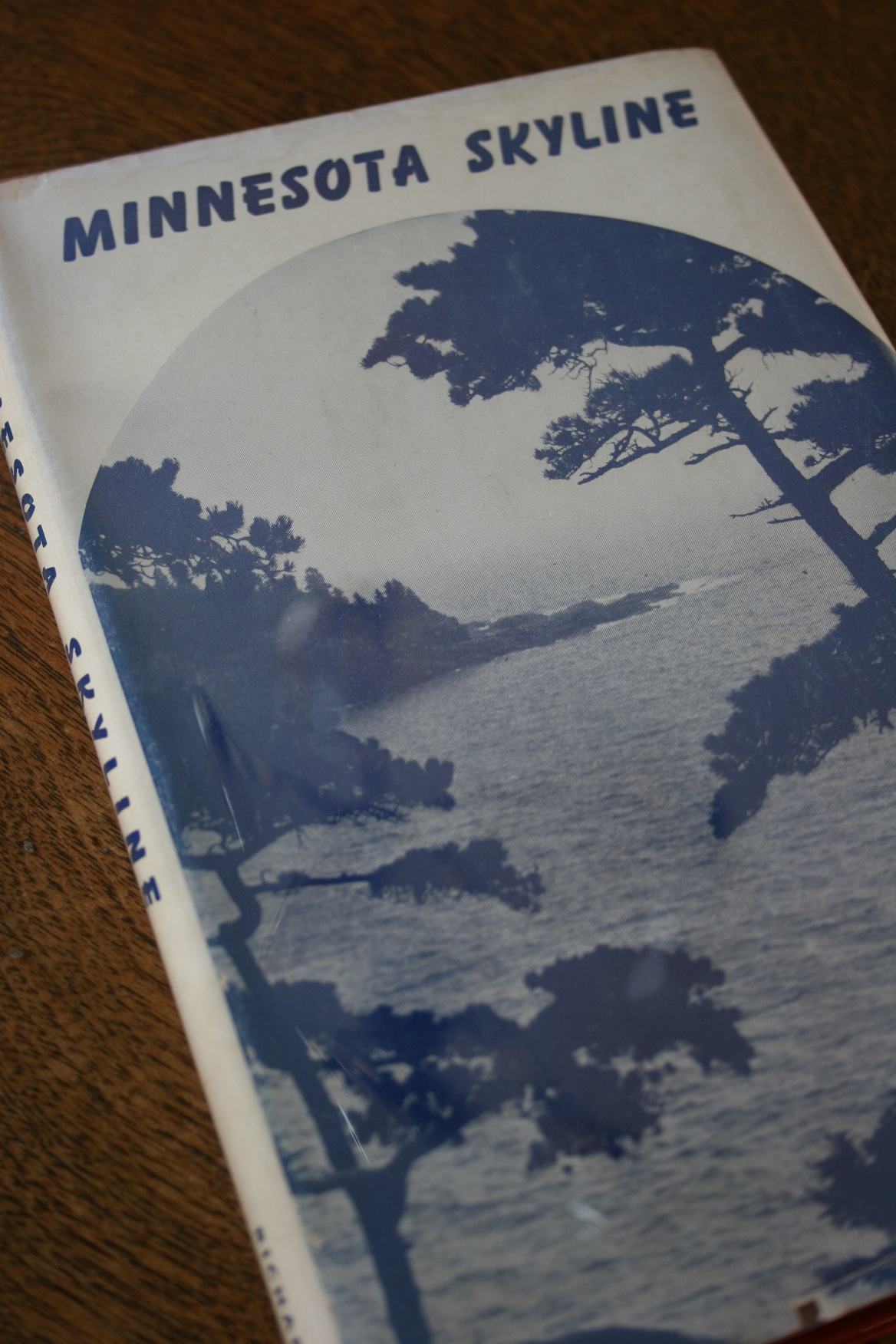
Inside the antique shop, she found a slim volume of poetry, Minnesota Skyline, published in 1953. The book wasn’t priced, she said, and clerks discussed, in front of her, the price she should pay.

Minnesota Skyline, a vintage poetry collection I think worthy of reprinting.

I flipped through the pages and knew I would enjoy this collection with poems like “Wind in the Corn,” “Pioneers of Southern Minnesota,” and “Spring on the Prairie.”

I haven’t had time yet to indulge in the anthology. But that evening, after I opened my daughter’s gift of poetry, I read aloud a verse from “Delano on Saturday Night” by Margaret Horsch Stevens of Montrose:

Men, bent, with toil, feel younger in the glare

Of lights, exchanging jokes and arguments;

And women brighten as they meet and talk

Of recent births, and brides, and home events.

We laughed as we pictured families gathered in downtown Delano on a Saturday night in the 1950s. How times have changed.

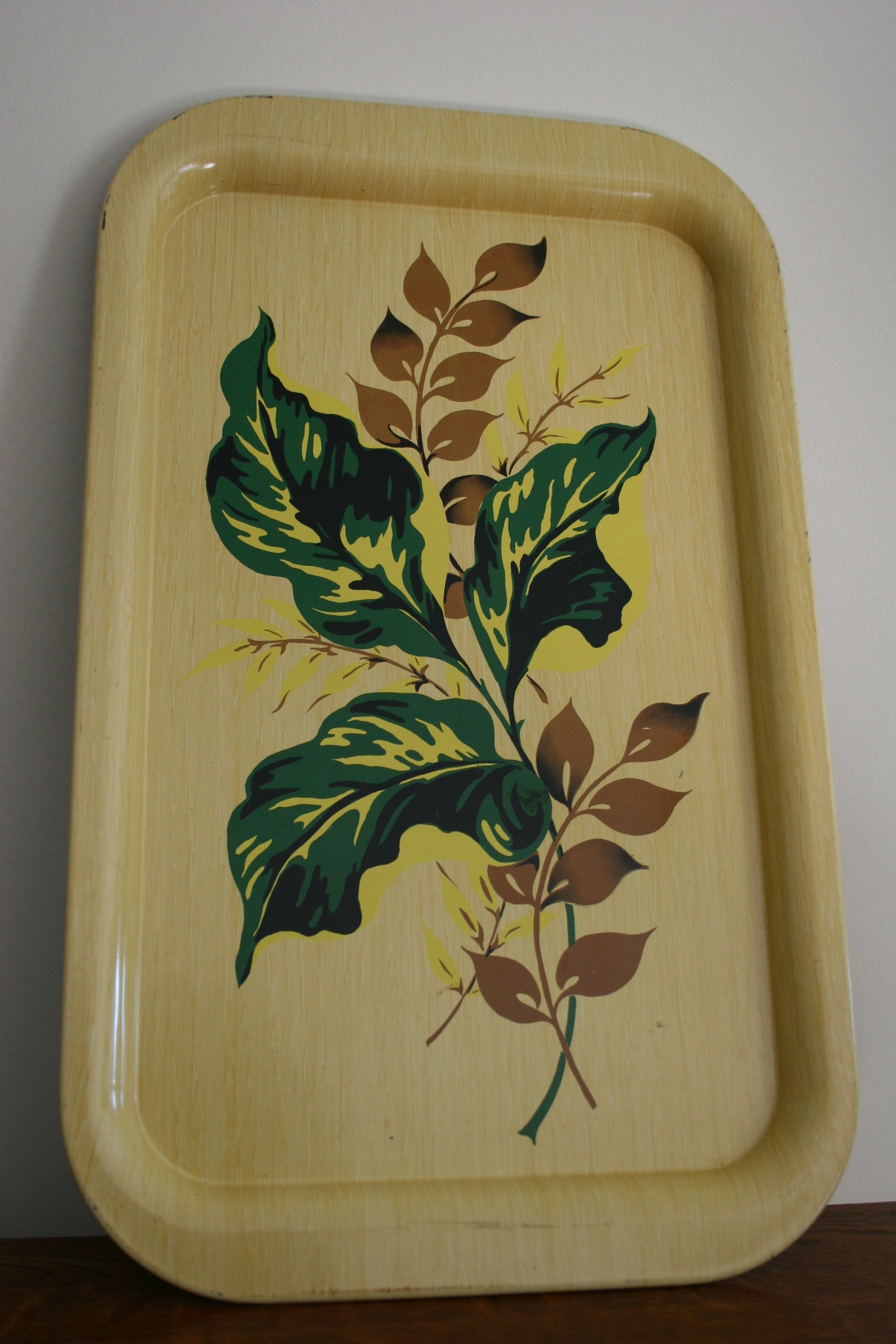
After that impromptu poetry reading, I pulled four slim yellow trays from my birthday gift bag. Once again, my daughter had selected an ideal present for me. I collect vintage metal trays and these were unlike any I have or any I’ve seen. For now I’ve propped two atop a shelf—art leaning against a wall.

My daughter gave me four vintage metal trays for my collection.

There’s something to be said for aging, when you can see your children as grown adults, who are caring and loving and giving and who know that you love poetry and cheesecake.

My husband also remembered my birthday with a colorful daisy bouquet.

© Copyright 2010 Audrey Kletscher Helbling

The Lund Press, Inc., of Minneapolis published Minnesota Skyline.


Visit Christdala Church for worship, art and a history tied to outlaws September 25, 2010

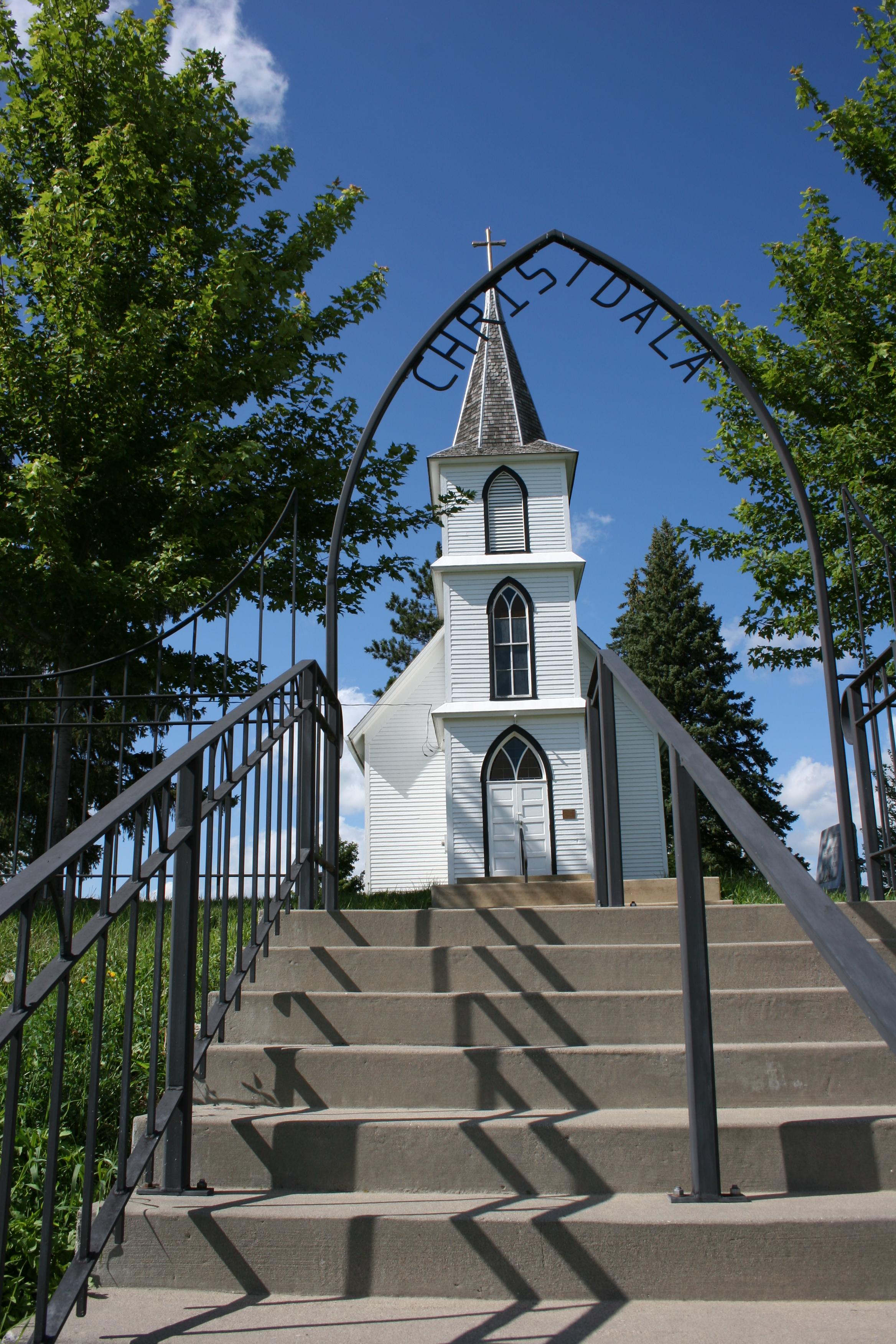
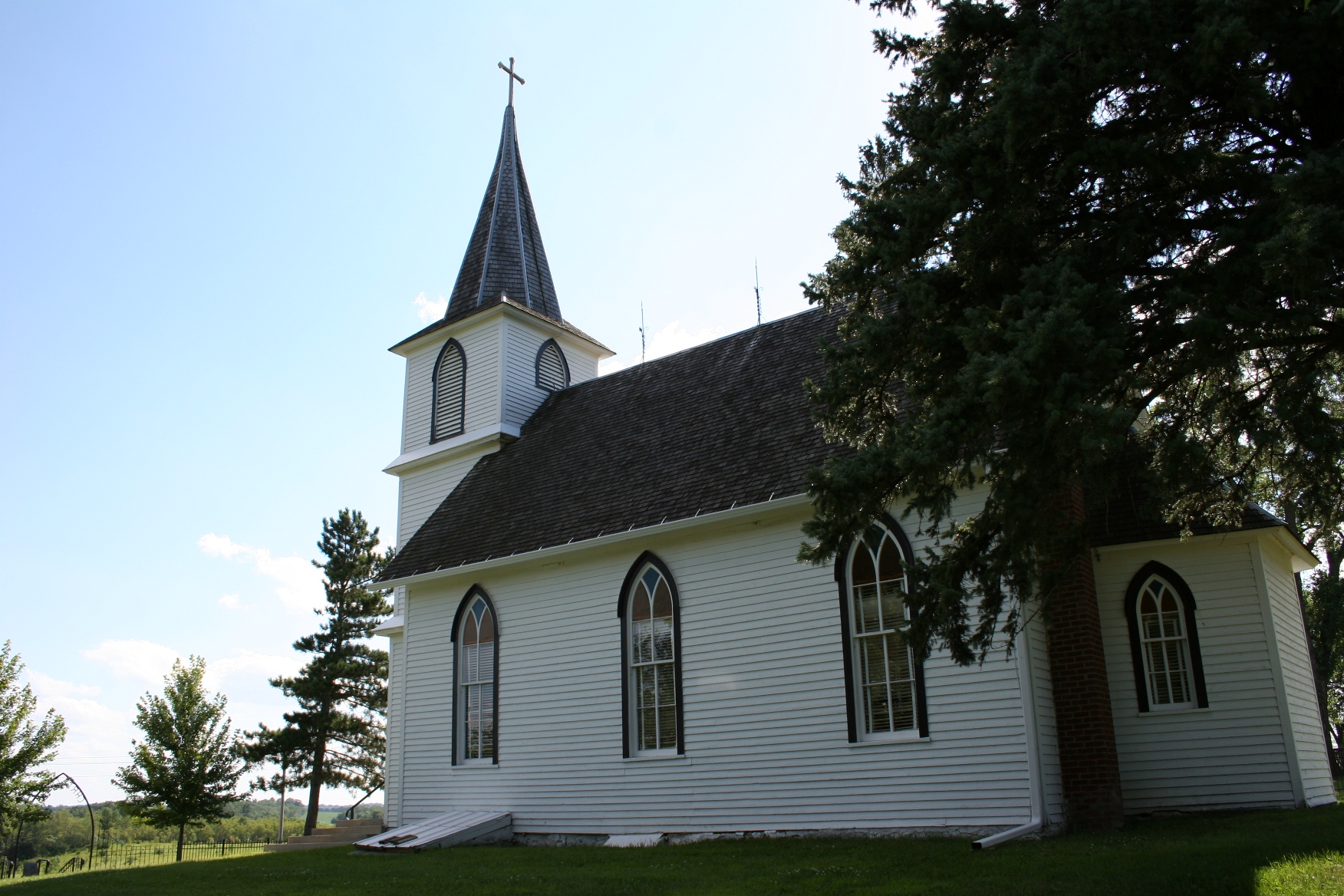
Steps lead from Rice County Road 1 to Christdala Swedish Lutheran Church.

I DOUBT ANY OTHER MINNESOTA church can claim roots in a notorious attempted bank robbery. But Christdala Evangelical Swedish Lutheran Church of rural Millersburg can.

The long-dissolved congregation traces its origins back to the September 7, 1876, attempted robbery of the First National Bank in nearby Northfield. During that failed crime, Nicolaus Gustafson, a Swedish immigrant from Millersburg, was shot point blank in the head by outlaw Cole Younger. He died four days later and was buried in Northfield because the Millersburg Swedish community didn’t have a graveyard, or a church.

The evening of the bank robbery, the Swedish immigrants met to talk about constructing a church and soon thereafter built Christdala.

This Sunday, September 26, the Christdala Church Preservation and Cemetery Association will open the doors to this historic church which sits high atop a hill overlooking Circle Lake just west of Millersburg along Rice County Road 1. On this roadway that passes by the 1878 country church, the James-Younger Gang fled after the botched Northfield raid.

The doors to Christdala, which is on the National Register of Historic Places.

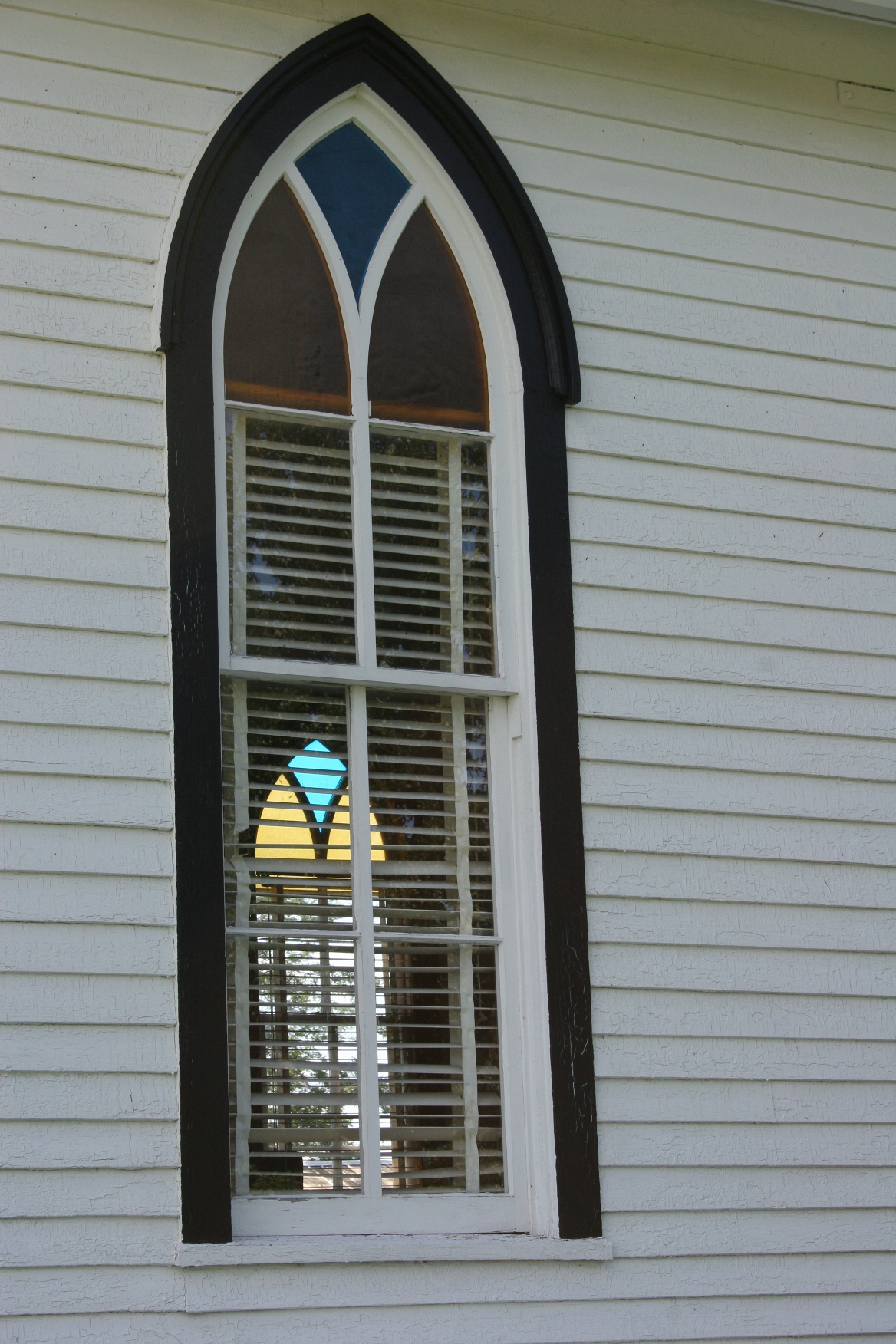
I’ll be there Sunday for the 2 p.m. fall worship service led by the Rev. Ralph Baumgartner, pastor of Galilee Evangelical Lutheran Church in Roseville, who has family ties to Christdala. I’m anxious to get inside this sanctuary, which I’ve only viewed through the slats of Venetian blinds while photographing the locked building on a Sunday afternoon in July.

I've only peered through the blinds into the sanctuary.

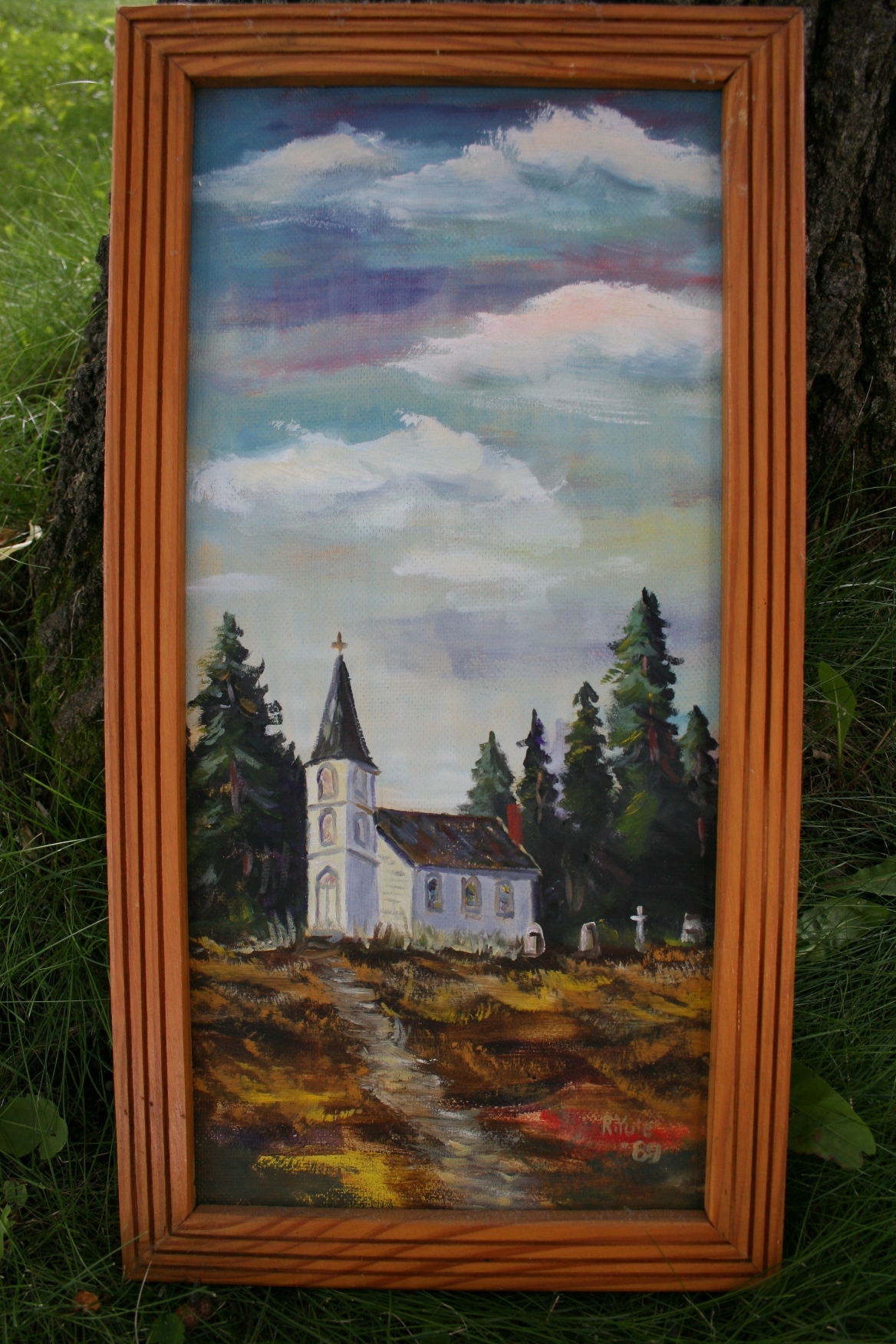
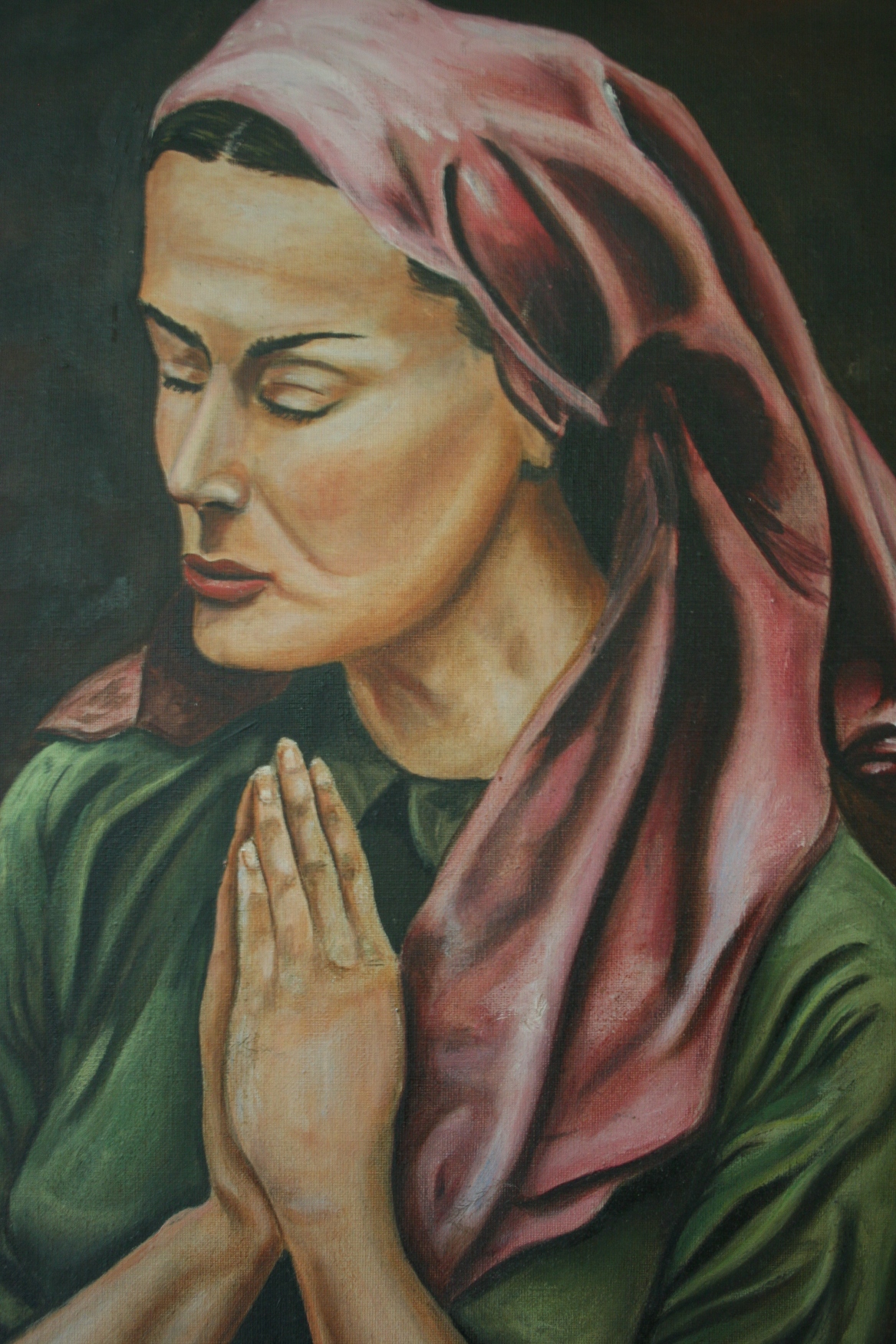
This Sunday I’ll arrive well before worshipers and the curious and the families with a connection to Christdala. I’ll arrive with a van full of paintings by my 92-year-old artist friend, Rhody Yule of Faribault. Rhody, who has been creating art for 76 years, did an oil painting of the church in 1969. He’s showing that piece and eight other religious-themed works at Christdala’s open house.

He’ll talk a bit. I’ll talk a bit. But mostly, we welcome visitors to pause and study the paintings, to feel the emotions painted into the faces of the disciples, of Christ, of a woman in reverent prayer. Rhody paints with a heart of faith reflected in his art.

Christdala Swedish Lutheran Church painted in 1969 by Rhody Yule.

A snippet of Rhody Yule's painting, one of nine he will show at Christdala.

Christdala visitors can also pick up a copy of God’s Angry Man—The Incredible Journey of Private Joe Haan by B.Wayne Quist. The newly-released book tells the true, powerful life story of Haan (Quist’s uncle), who grew up in an Owatonna orphanage and who served in Patton’s Third Army during WW II. Quist, a member of the Christdala Preservation Association, will donate profits from Sunday’s book sales to Christdala.

Copies of the fall issue of Minnesota Moments magazine, featuring my photo essay on country churches, will also be on sale with a portion of the proceeds benefiting the church.

B. Wayne Quist will sell copies of his latest book, God's Angry Man.

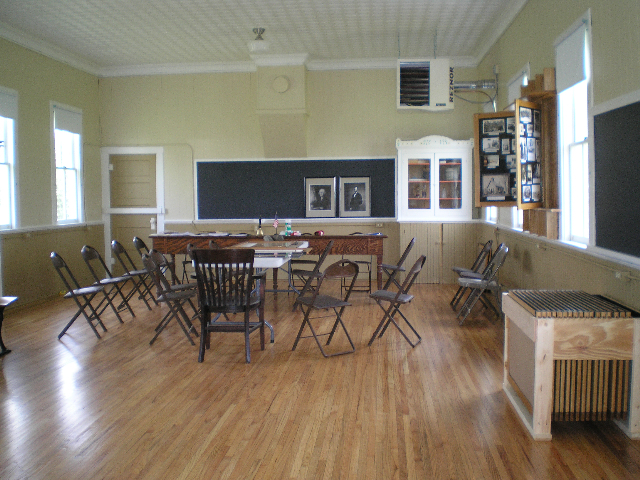
Before and after the worship service, visitors can tour the 1881 Millersburg School, which the Christdala preservation group has refurbished and is transitioning into a community museum. Exhibits include church and school records, photos, military medals and records, Indian artifacts, an old doctor’s buggy and more. Faribault genealogist and preservation member John Dalby will be at the schoolhouse to answer questions.

The Millersburg School has been refurbished and will feature exhibits tied to local history.

Sunday promises to be an interesting day for those who gather at Christdala. It will be a day of history and of art, of worship, of thoughtful remembrances at gravesites, of families reuniting and of others simply coming together on this spot, this Christdala, this “Christ’s Valley,” here where the outlaws once escaped on their galloping horses.

A side view of the 1878 Christdala Swedish Lutheran Church.

© Copyright 2010 Audrey Kletscher Helbling
Book cover image courtesy of B. Wayne Quist and schoolhouse image courtesy of John Dalby.


It’s OK if you don’t have pickle bumps September 23, 2010

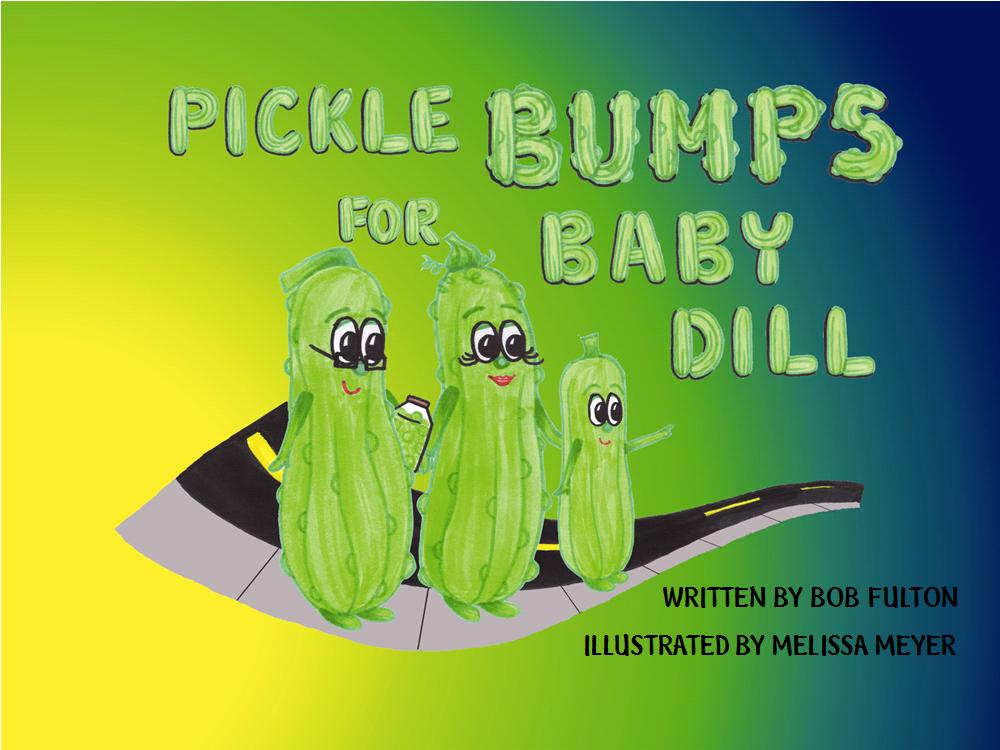
I’LL ADMIT TO MORE than a bit of skepticism about a children’s picture book titled Pickle Bumps for Baby Dill. “What kind of book is that?” I wondered before calling the author, Bob Fulton.

Well, exactly as the title suggests, this is a story about Baby Dill, a pickle born without bumps. But that’s not all. You see, after speaking with Fulton and upon reading his book, I learned the real purpose. And it’s much more than a story about cute, talking pickles.

Fulton delivers a strong message via the Dill family and Baby Dill’s friends. The message: “It’s OK to be different.”

That’s a message especially fitting for this time of year, the beginning of school.

I would speculate that many students have, in recent weeks, felt like they don’t quite fit in with their classmates. Maybe they aren’t wearing the latest fashions. Maybe they’re in a new school, struggling to make friends. Maybe they’re shy, quiet. Maybe their hair or their skin is the “wrong” color. Maybe they’re struggling with learning.

Maybe, like Baby Dill, they wonder why they are different from everyone else.

Fulton addresses that concern, which leads the Dill family on a shopping trip for pickle bumps. In the end, Baby Dill decides, with the support of his friends, that he would rather remain bump less.

While Fulton’s story has a positive ending, I know that isn’t always reality. In real life, kids bully, tease, make fun of, pick on, humiliate—whatever words you want to choose—those who are different. For all too many kids, there are no understanding friends to stand by and support them.

A book like Fulton’s offers encouragement. “We like you just the way you are,” Baby Dill’s friends tell him. That’s a message that needs to reverberate through-out our schools, our homes, our communities.

Pickle Bumps for Baby Dill would be a good addition to any elementary school classroom or library. While aimed at preschoolers and lower elementary students, the story also appeals to 10 – 12-year-olds, Fulton says. Having experienced bullying myself while in junior high school, I applaud any efforts to help students, parents and teachers address the issue.

The college educator—he taught chemistry for 39 years at St. John’s University and The College of Saint Benedict—has even added a list of 12 questions at the end of his book to prompt discussion.

He shares, too, that his book evolved from telling stories to his grandchildren and a specific request from his youngest grandson to “Tell us a story about a pickle.”

Fulton did and then put his tale into writing in Pickle Bumps for Baby Dill, published by Pickle Bump Press. Melissa Meyer, originally from Saint Joseph, Minn., illustrated the book.

#

AS A SIDE NOTE, please be aware that October is National Bullying Prevention Month. Check out the PACER Center Web site for information that can help you address bullying. Perhaps by working together, through understanding and listening and empathy, we can help reduce the bullying that is all too prevalent in our society, especially in our schools.

© Copyright 2010 Audrey Kletscher Helbling
 

My unforgettable “road” poem publishes in The Talking Stick, Forgotten Roads September 15, 2010

TYPICALLY WHEN I write poetry, I turn to my past, to childhood memories.

That’s evident by my poems published in three volumes of Poetic Strokes, A Regional Anthology of Poetry from Southeastern Minnesota:  “Abandoned Farmhouse,” “Prairie Sisters,” “Walking Beans,” “Saturday night baths,” and “A school without a library.”

Occasionally I deviate from that trip down memory lane. “Lord, My Rock” published in the fall 2004 issue of The Lutheran Digest and “Tribute to a Korean War Veteran” published in the May/June 2009 issue of Minnesota Moments magazine.

My latest in-print-poem also detours from my typical subject of childhood days, although it stays on the road of memories, albeit this one a heart-wrenching, emotional recent memory.

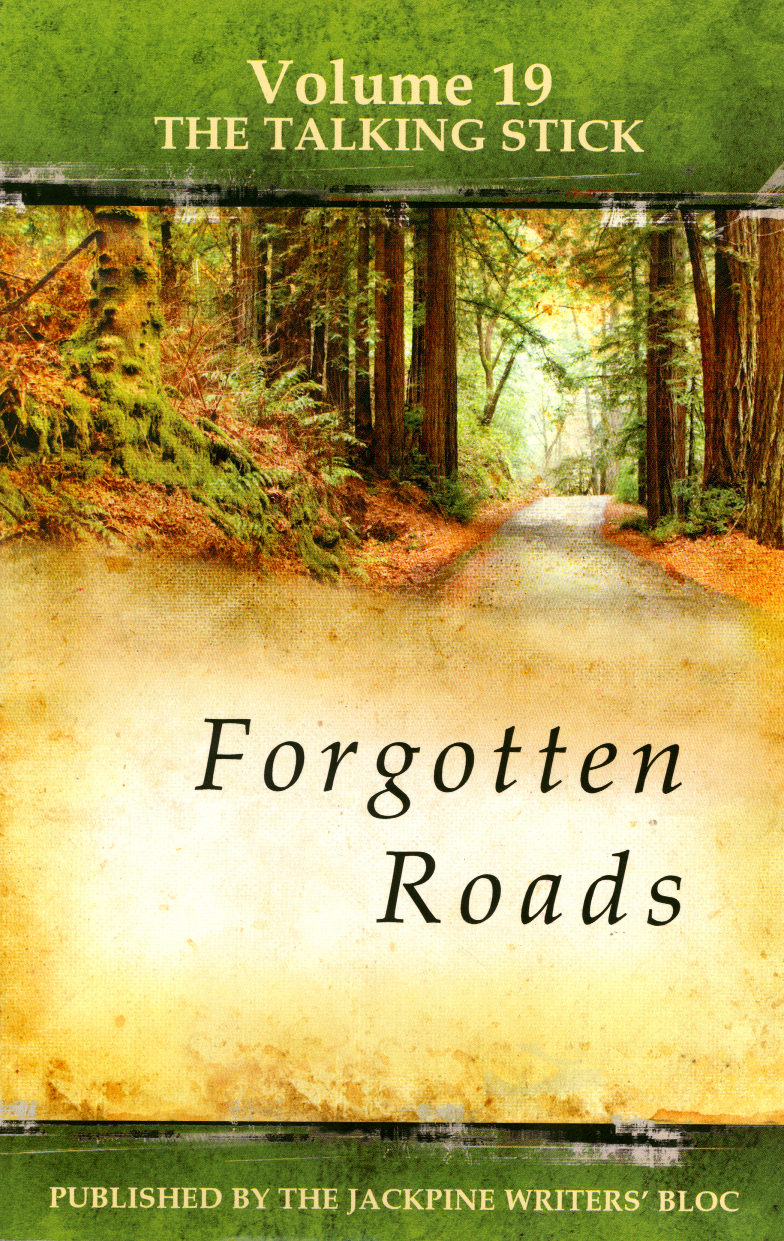
“Hit-and-Run” has just published in The Talking Stick, Forgotten Roads, Volume Nineteen, debuting this Saturday at a Book Release Party in the Northwoods Bank Community Room in Park Rapids.

The poem looks back to May 12, 2006, the day my then 12-year-old son was struck by a hit-and-run driver while crossing the street just a short distance from our home. Thankfully, my boy was not seriously injured. But the driver was never found and the memories of that horrible incident still linger. Now I’m sharing, in poetic verse, how that morning unfolded emotionally for me. Certainly, I have not forgotten this road.

Apparently my words resonated with the editors who reviewed the 200-plus poems submitted in this literary competition. “Hit-and-Run” was among the top seven poems selected by the editorial board for prize consideration by noted Minnesota poet Heid Erdrich. My poem earned an honorable mention.

“A terrifying imagery/memory,” Erdrich partially wrote in her evaluation.

Indeed.

If you would like to read my poem, the other winning poems and the fiction and creative non-fiction published in this latest collection by writers with a connection to Minnesota, check out the online purchasing options at The Jackpine Writers’ Bloc. The Park Rapids/Menahga-based group annually publishes The Talking Stick, which is sold by the Writers’ Bloc and several northern Minnesota bookstores.

I’ve read two of the past anthologies and I promise that you will enjoy some top-notch writing by emerging and established Minnesota writers. The Talking Stick has an excellent, long-standing reputation and I’m proud to be published in it.

If you’re a writer, consider entering the 2011 The Talking Stick competition. Submissions call for the 20th volume goes out in December with a March 1, 2011, submission deadline.

Finally, if you’re in the Park Rapids area this weekend, consider attending the book release party, which begins at 1 p.m. Writers published in The Talking Stick, Forgotten Roads, will read their works beginning at 2 p.m. No, I won’t be there as I have another commitment. But you’ll meet plenty of other Minnesota writers anxious to sell their books or compare notes on this journey we call writing.

© Copyright 2010 Audrey Kletscher Helbling
 

Celebrating words and art in Paul Bunyan land August 19, 2010

Filed under: Uncategorized — Audrey Kletscher Helbling @ 9:39 AM
Tags: , , , , , , , ,

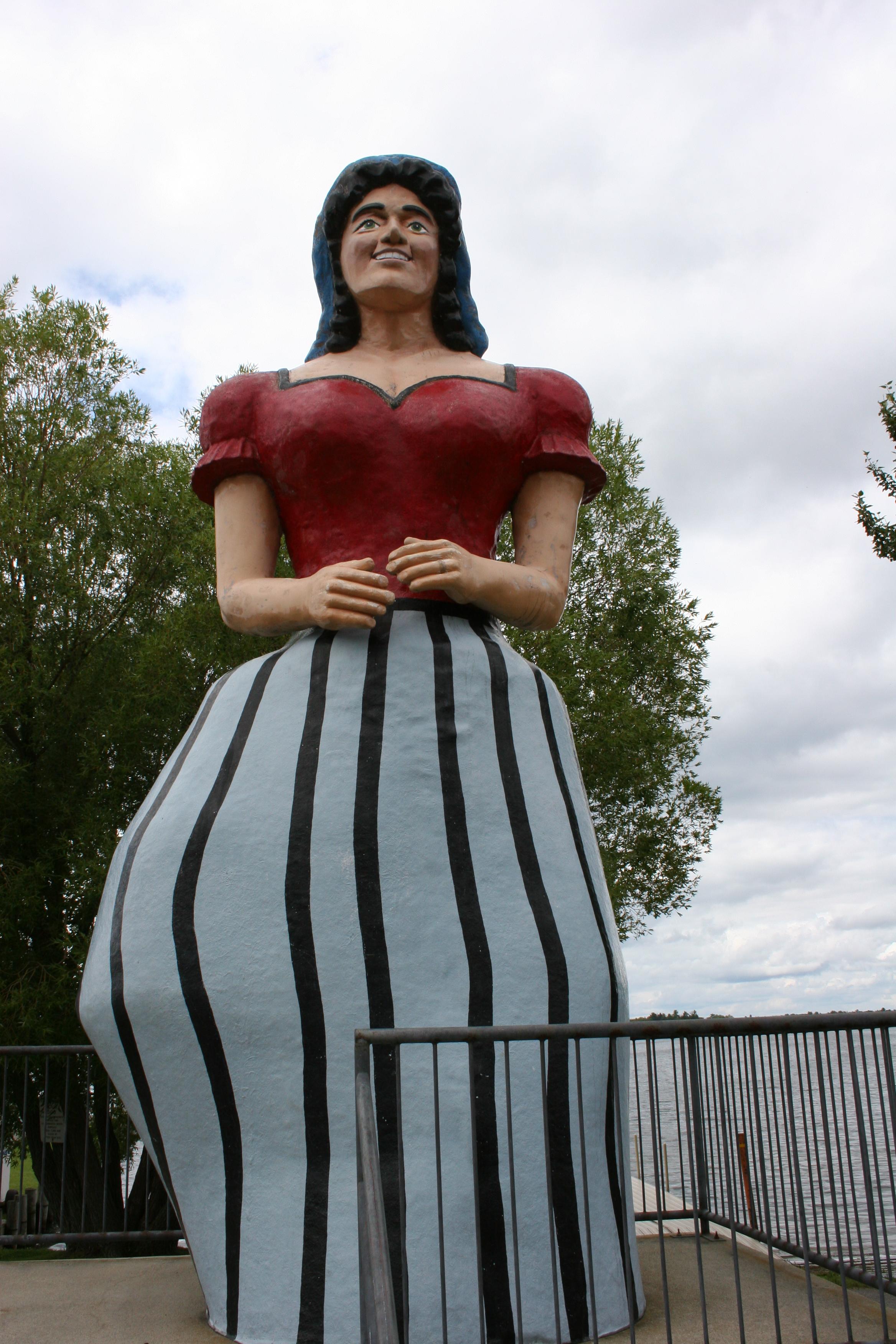
Paul Bunyan's sweetheart, Lucette Diana Kensack

I’VE BEEN INVITED to Hackensack, home of Paul Bunyan’s sweetheart. Lucette Diana Kensack lives (or technically, stands) along the shores of Birch Lake next to a quaint 1930s log cabin that is the Hackensack Lending Library.

The lakeside of the Hackensack Lending Library. To the left stands Lucette.

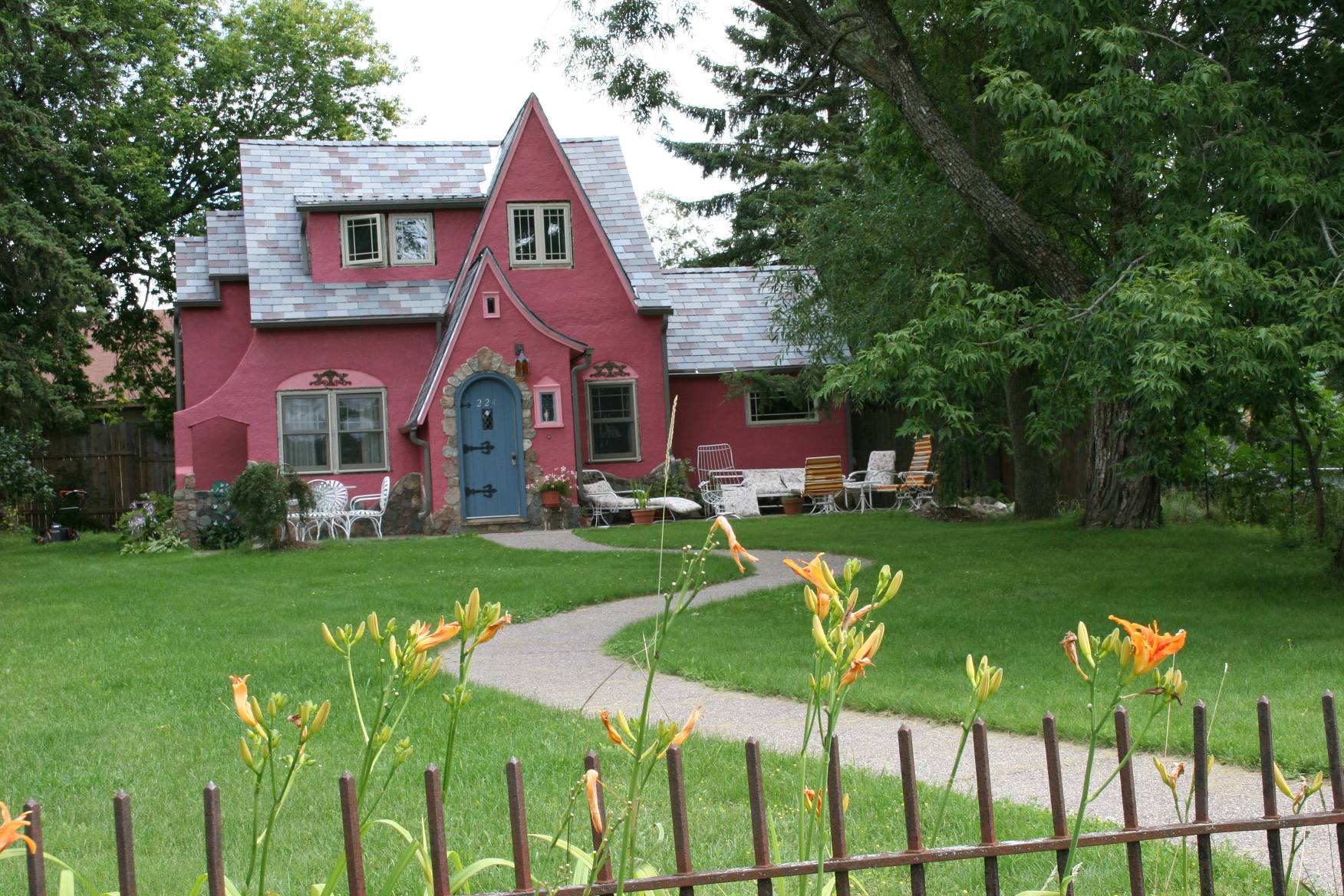
Just down the road along First Street sits a sweet, pink fairy tale cottage.

Unfortunately, I’m not traveling to Hackensack, which lies midway between Brainerd and Bemidji and marks the half-way point on The Paul Bunyan Trail. I was just in Hackensack last summer and another trip that far north is not on the schedule. But if it was, I tell you, I would want to stay at that Hansel and Gretel cottage. (I don’t care that it’s a private home.)

I discovered the fairy tale cottage while visiting Hackensack last summer.

Instead, I’ll be back here in southern Minnesota awaiting results of a poetry competition. You see, some time ago I submitted two poems for possible display at The Northwoods Art Festival and Book Fair in Hackensack from 10 a.m. – 4 p.m. on Saturday, August 28.

Recently I learned that both my poems were selected for display and are vying, like all the chosen poems, for “Works of Merit” designation by long-time Brainerd poet Doris Stengel. The visiting public will also vote for their six favorites as “Popular Choice” award winners. As far as I know, no cash prizes are made. Rather the prize lies in peer and/or public recognition.

I would love to tell you which of the untagged poems are mine. But since I don’t want to be accused of voter fraud, illegal lobbying or some other such poetic “crime,” I have sworn myself to secrecy. I’m quite certain that revelation of my poems’ titles could lead to disqualification.

That disclaimer aside, if you’re in the Hackensack area on August 28, check out the arts festival and specifically the poetry display at the Union Congregational Church. Minnesota writers and illustrators will be at the church signing and selling their books. At 1:30 p.m., the award winners will be announced and display poets can read their poems.

But there’s more to this fest than the written word. You also will find artists who work in paint, clay, metal, wood, fiber and photography. Throw in food and music and you have a genuine Paul Bunyan-worthy Minnesota festival.

Come to think of it, perhaps I should have penned a poem about Paul Bunyan.

© Copyright 2010 Audrey Kletscher Helbling
 

“Little House on the Prairie” originated as a book series, remember August 4, 2010

Filed under: Uncategorized — Audrey Kletscher Helbling @ 7:28 AM
Tags: , , , , ,

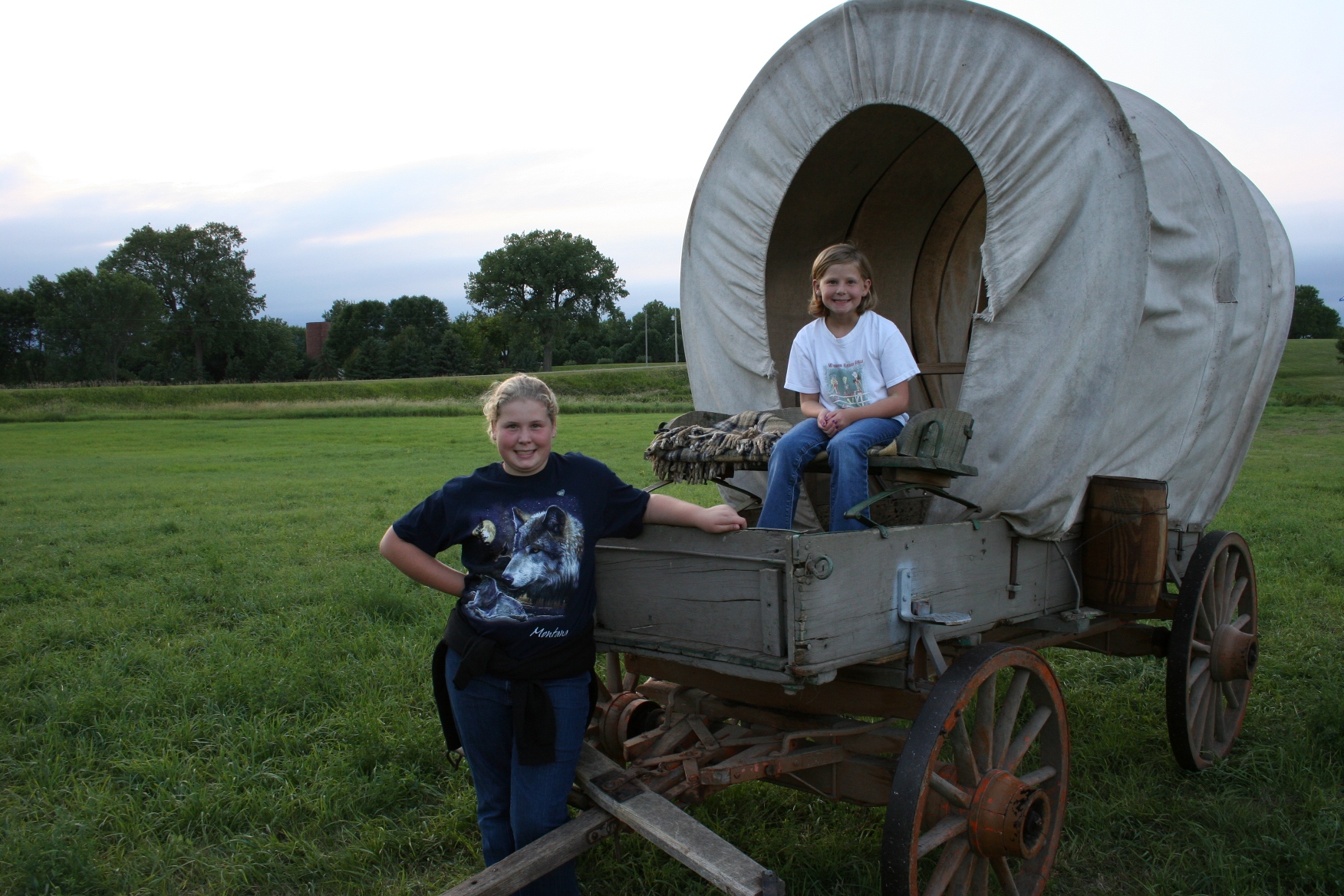
A Laura look-alike climbs onto a covered wagon at the Laura Ingalls Wilder Pageant site near Walnut Grove recently.

WHENEVER THE TOPIC of “Little House on the Prairie” surfaces, folks cannot believe that I know the stories from the books and not the television show.

But years before the long-running TV series aired, in a school in a small town some 20 miles north of Walnut Grove, my teacher read, yes, read, Laura Ingalls Wilder’s books to me and my classmates daily after lunch. I have fond memories of sitting there in my desk at Vesta Elementary School raptly listening to Mrs. Kotval read of the Ingalls family’s life on the prairie, my prairie.

At the time, back in the mid-1960s, I simply loved hearing the mesmerizing accounts of prairie fires and of blizzards, of fiddle-playing and of grasshopper plagues, of mean Nellie Oleson and of kind, kind Mary, Laura’s older sister. Wilder’s descriptive writing drew me in—into the dug-out, onto the seat of the covered wagon, into the country school. Simply put, I adored the Little House books.

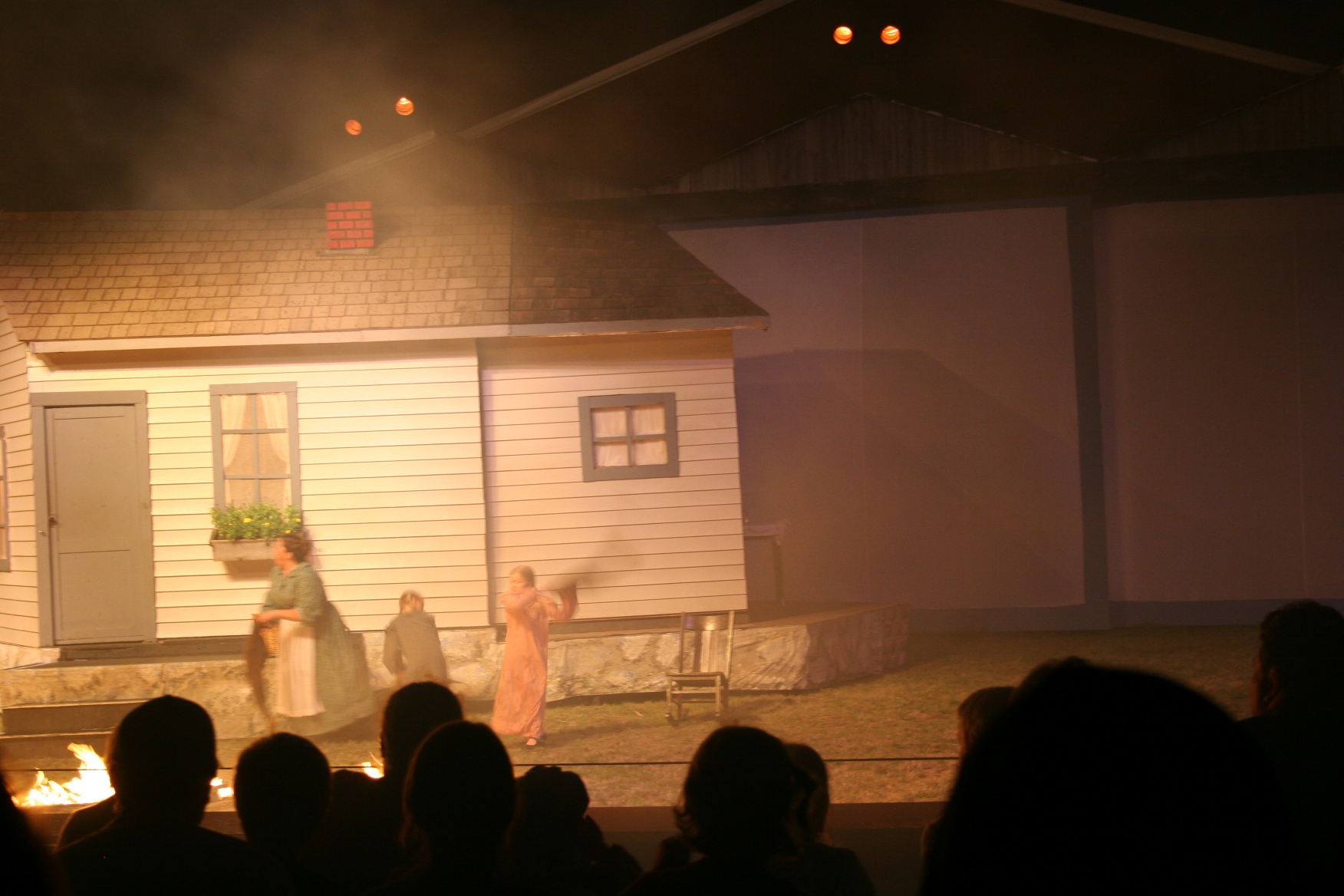
A prairie fire scene from the Laura Ingalls Wilder Pageant, presented every July at a hillside amphitheater along the banks of Plum Creek near Walnut Grove. I've seen the pageant three times in its 33-year history.

Honestly, I don’t recall my teacher emphasizing that neighboring Walnut Grove, the Ingalls’ family home from 1874 – 1876 and from 1877- 1879, was the setting for On the Banks of Plum, Creek. Truly, what mattered most to me was the telling of a good story to which I felt connected.

You would think then, given my early exposure to the Little House books, that I would have become a devoted fan of the television series. I wasn’t. The show aired in September 1974, my first year of college. I had no time for TV then or in the years that followed.

However, I recall seeing an episode or two or three. Of those I remember only the inaccuracies of mountains in Walnut Grove and of day-trips to Mankato. Despite the producers’ clear lack of prairie-landscape and geographic-distance knowledge, they offered good, wholesome family entertainment that has endeared generations, just not me.

I remain unimpressed by the hoopla over the television series and the big to-do about those, like Michael Landon (Charles “Pa” Ingalls) and Melissa Gilbert (Laura Ingalls), who starred on the show.

It is the books, the writing of Laura Ingalls Wilder, that impress me, that take me back to elementary school days, when my teacher gave me the gift of reading.

Years later I would pass that gift along to my daughters by reading the Little House books to them. Even as preschoolers they would snuggle against me on the couch, leaning in close as page after page I read of prairie fires and of blizzards, of fiddle-playing and of grasshopper plagues, of mean Nellie Oleson and of kind, kind Mary, Laura’s older sister.

I worry that today’s generation is growing up without that intimate knowledge of Wilder’s writing, accepting instead the embellished Hollywood version of life on the prairie. Even my 8 ½ and 12-year-old nieces, who recently attended the Laura Ingalls Wilder Pageant, “Fragments of a Dream,” in Walnut Grove with me and other family members, had not read the books. I was surprised, disappointed even.

I mourn that loss of connection to the written word, that ability to create, to envision, to perceive, yes, to imagine a scene, a setting, a place, simply through reading.

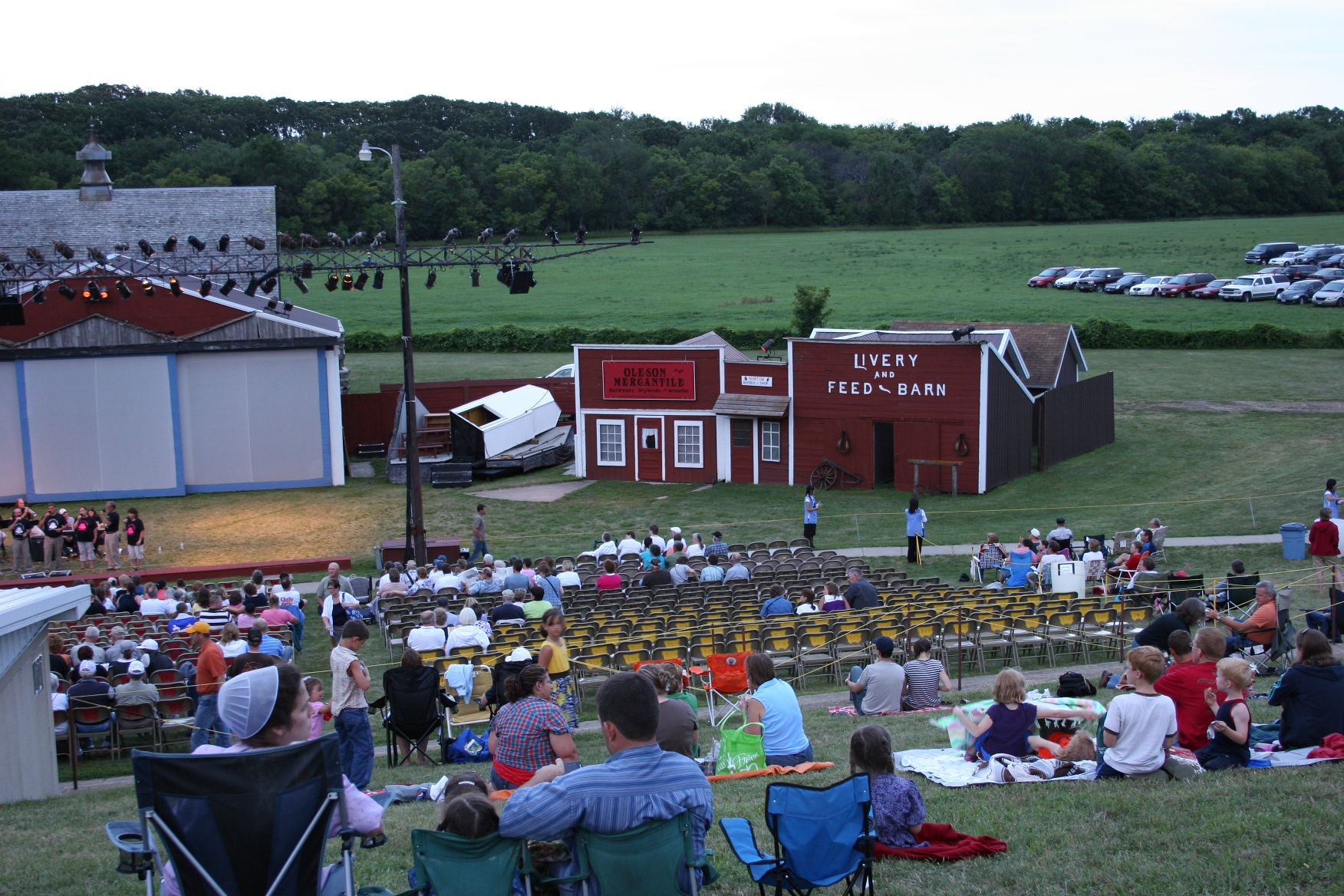
For 33 years, Walnut Grove area residents have presented the Laura Ingalls Wilder Pageant based on Wilder's stories. I've found the pageant to be true to the books, the acting superb, the setting beautiful.

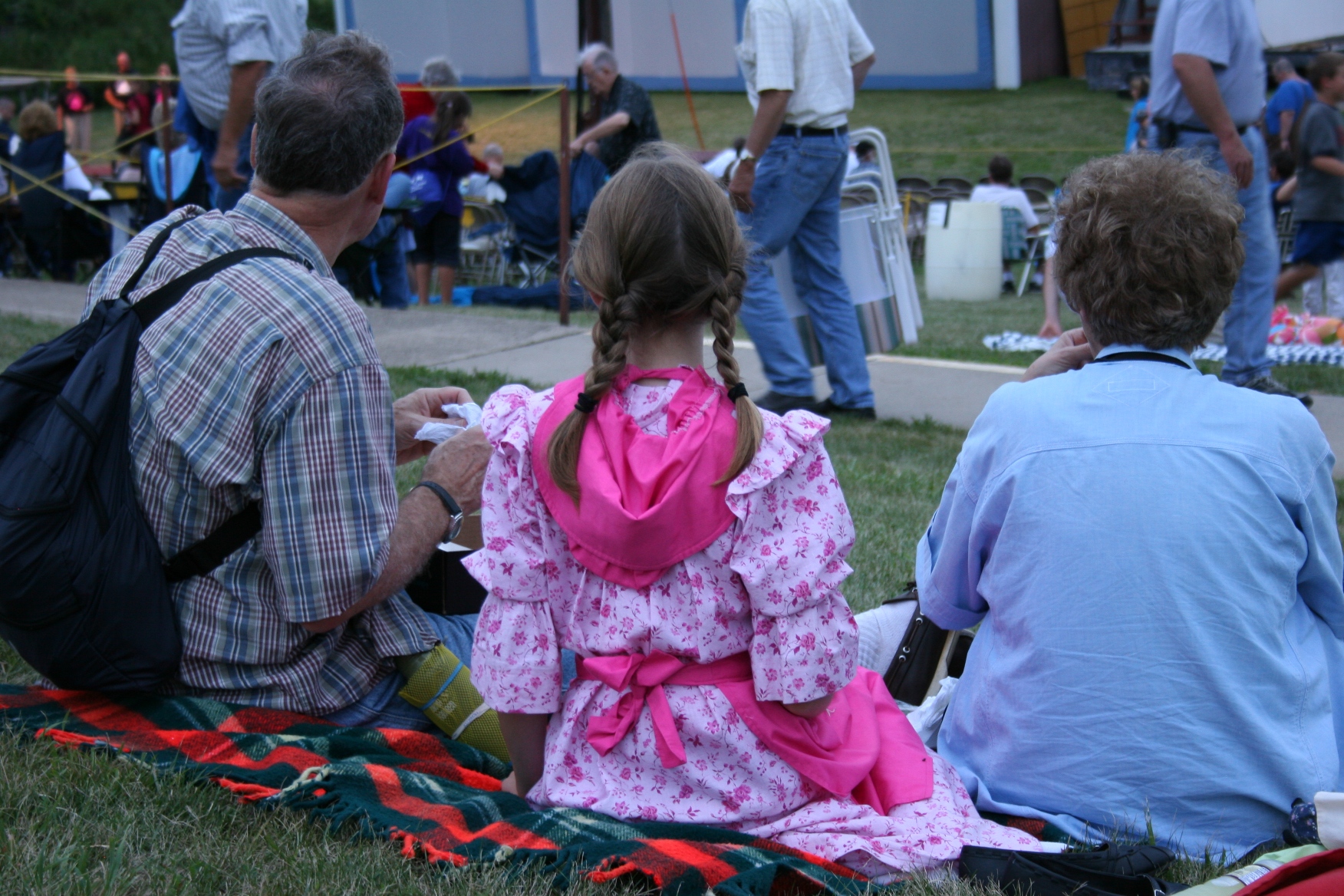
Devoted "Little House" fans come to the pageant dressed in prairie dresses and bonnets.

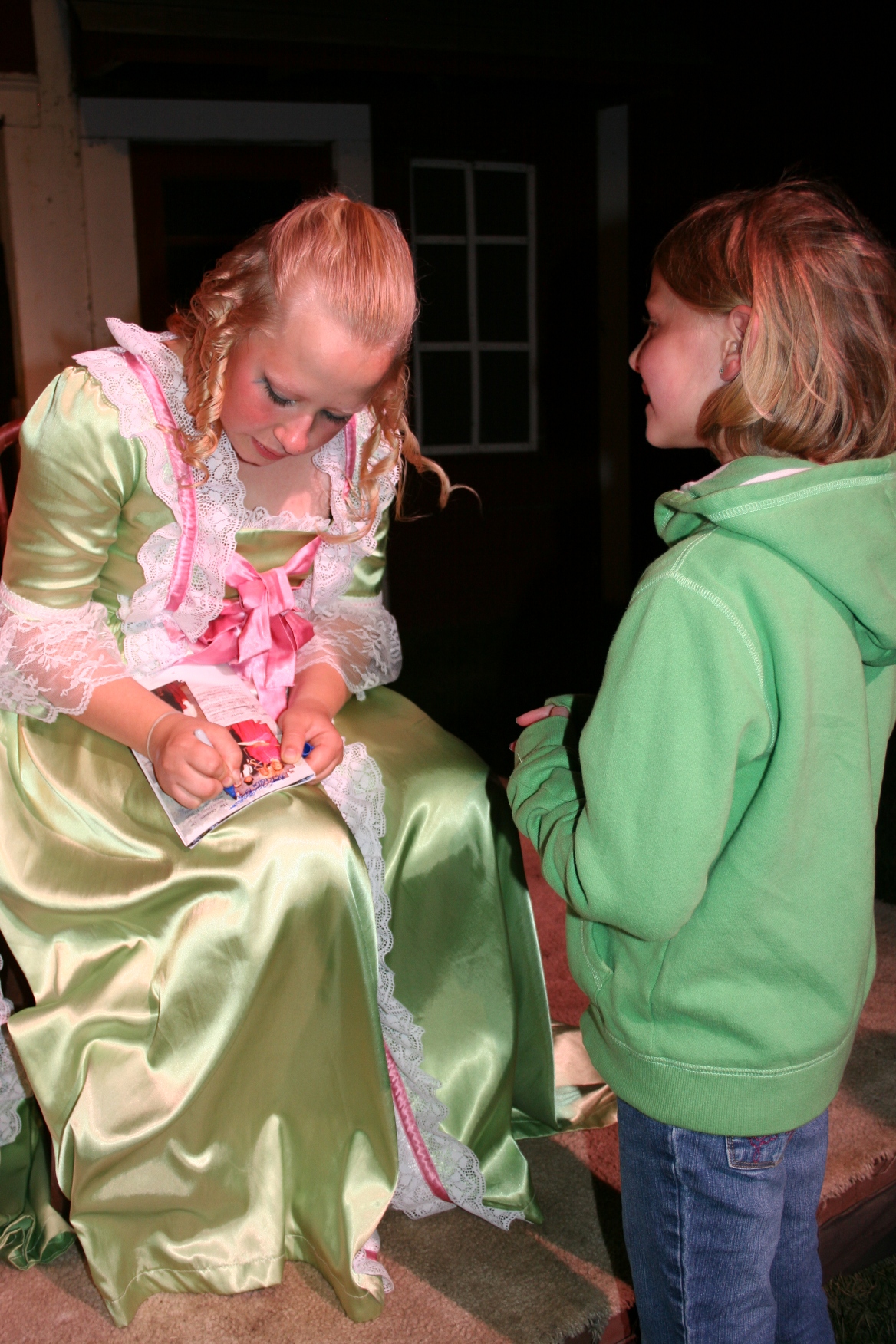
Amy Van Dorsten, 15, played the coveted role of mean and spiteful Nellie Oleson in this year's pageant. My niece Cortney insisted on getting Nellie's autograph after the performance.

A covered wagon near the pageant grounds entrance provides photo ops for Little house fans like my nieces.

© Copyright 2010 Audrey Kletscher Helbling
 

Fredrickson’s book presents field work, past and present August 3, 2010

Filed under: Uncategorized — Audrey Kletscher Helbling @ 7:41 AM
Tags: , , , , ,

ONCE UPON A TIME, I told my farmer-dad I wanted to be a farmer when I grew up. Clearly, I became a writer instead of a tender of the land or of animals. But my heart remains rooted in the southwestern Minnesota prairie, my childhood home, the place where I worked in the barns, worked in the fields and became the person I am today.

For those reasons I particularly appreciate children’s picture books like those written by Lakeville author Gordon W. Fredrickson who specializes in writing about country life and farming.

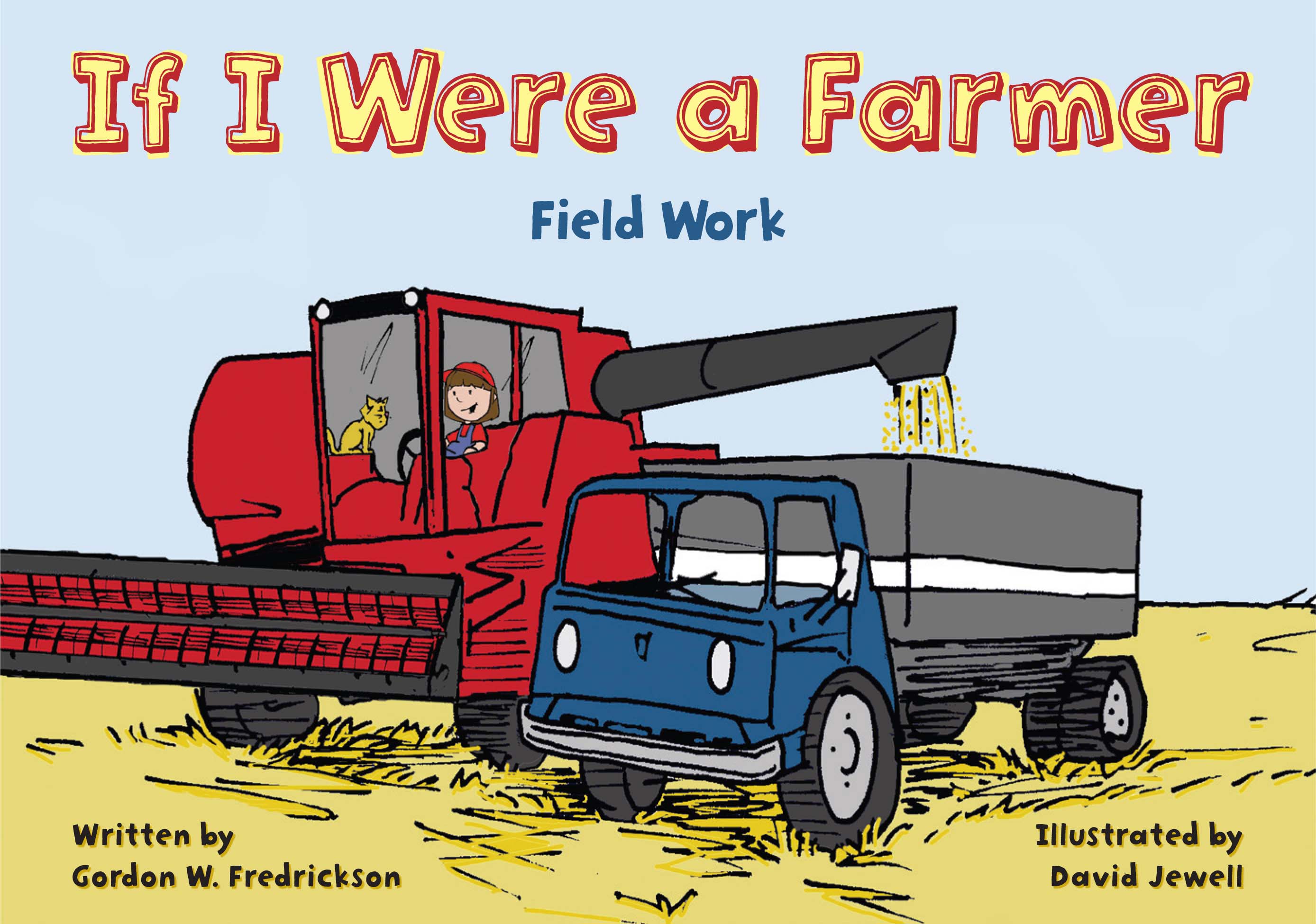
His second, If I Were a Farmer book, Field Work, recently released from Beaver’s Pond Press, just in time for Minnesota’s annual celebration of agriculture, Farmfest. Fredrickson and his wife, Nancy, will be in the Craft/toy/home and garden pavilion during Farmfest’s three-day run this week at the Gilfillan Estate between Morgan and Redwood Falls. The event opens at 8 a.m. today.

That pitch aside, let me tell you a bit about Fredrickson. He grew up on a Scott County dairy farm, did his share of farm chores and working the land, farmed for awhile as an adult and taught high school English. He possesses the experience, knowledge, skills and passion to write about agriculture in an interesting, informative and, sometimes, humorous fashion.

Fredrickson’s subtle humor shines in Field Work as page by opposite page, he compares past farming practices and farm equipment to modern-day farming practices and equipment.

His book reconnects me to the past, to those years on the farm. So for that reason, Fredrickson’s story also appeals to adults, particularly former farm kids.

For those unfamiliar with agriculture through the years, Fredrickson’s story provides a history lesson. He even includes a glossary (per my suggestion after publication of an earlier book) to further aid readers in understanding the equipment and other terminology used in his story.

From working the soil through planting and harvesting, this former farmer details the growing season via would-be farmers. Little Nancy imagines herself as a modern-day farmer while Tommy prefers older equipment and practices from about the 1950s. Children, especially those ages 6 – 8, will enjoy the storyline and the educational content woven into it.

I don’t want to spoil the ending for you, but the humorous clincher last page clearly shows me that Fredrickson, even though an award-winning writer now, is a true mustard-pulling, rock-picking, scoop-shoveling farm boy at heart.

#

IN ADDITION TO FIELD WORK, Fredrickson has also published If I Were a Farmer: Nancy’s Adventure and three books in the Farm Country Tales series–Christmas Eve, Halloween and Thanksgiving.

#

FIELD WORK ILLUSTRATOR David H. Jewell of Minneapolis died on July 15 after being hospitalized for pneumonia. He suffered from diabetes and related complications.

#

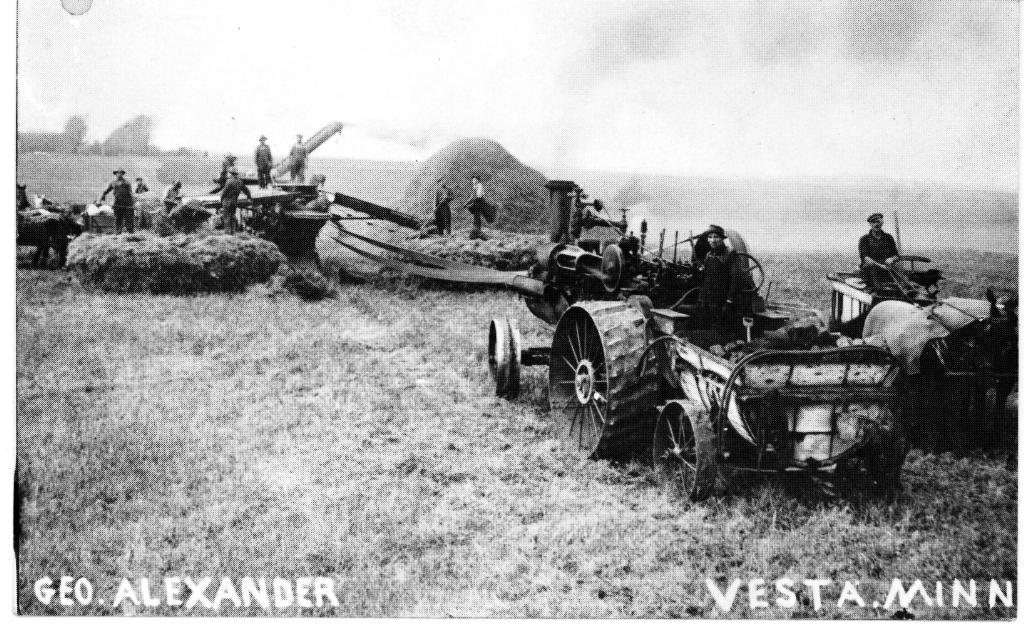
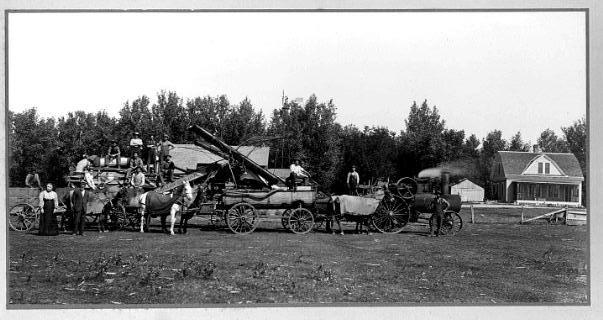
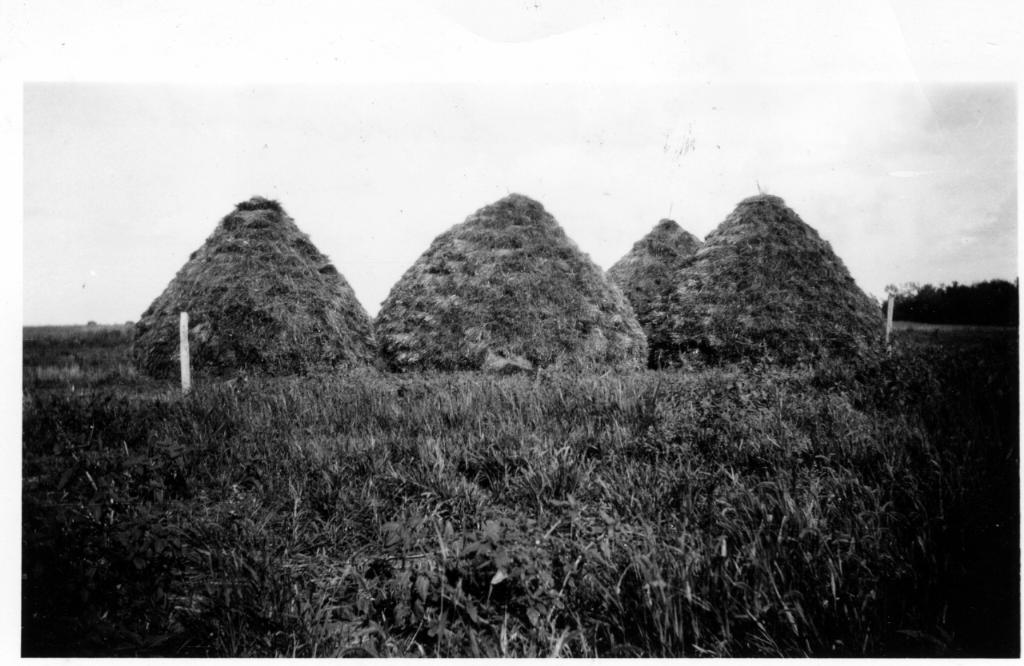
JUST FOR FUN, I asked Redwood County historian and Redwood Falls Mayor Gary Revier if he had any old farm photos he could share for publication on this post. He obliged and here are just three of the many he e-mailed. These hearken back to the days of horse-drawn machinery, even earlier than the time period covered in Fredrickson’s Field Work.

This threshing scene is near my hometown of Vesta in southwestern Minnesota, in Redwood County, home to Farmfest. Given the label, I assume this was at the George Alexander farm.

Another threshing scene, this one from the Whittet place in Redwood County.

A field scene from Sundown Township.

© Text Copyright 2010 Audrey Kletscher Helbling

Photos courtesy of Gary Revier

Book cover image courtesy of Gordon W. Fredrickson


A must-read: Hidden History of the Minnesota River Valley June 3, 2010

Filed under: Uncategorized — Audrey Kletscher Helbling @ 9:51 AM
Tags: , ,

Elizabeth Johanneck, a rural Wabasso, Minnesota, native has just published this history book on the Minnesota River Valley.

I’VE NEVER BEEN THANKED in the introduction to a book…until now.

Minnesota author Elizabeth Johanneck publicly thanked me for guiding and mentoring her while writing Hidden History of the Minnesota River Valley. Her just-published, autographed book arrived Tuesday at my home.

The 156-page soft-cover title from The History Press also includes my essay, “Strong Words on Strong Stone at Birch Coulee.”

Beth’s book, as the title suggests, focuses on stories rooted in the Minnesota River Valley. You’ll read about everything from the founding of the Sears, Roebuck and Company to Alexander Ramsey Park to “The Myth about Scalping.”

Yes, some of the topics covered in this history book are unsettling. But through interviews and research, Beth presents the facts as honestly as possible, even if the truth disturbs or challenges what many of us have been taught.

My friend possesses strong storytelling skills that make her book more than a compilation of historical facts. Beth weaves personal experiences into her writing that connect with the history she shares. That personal perspective engages the reader.

Beth, like me, grew up on a Redwood County farm—she near Wabasso, me a bit further to the west just outside of Vesta. We attended Wabasso High School together where we shared a locker. Her down-to-earth personality and appreciation for the Minnesota River Valley area influence writing that is warm and folksy.

Check out Beth’s Minnesota Country Mouse blog, where she says “the ‘hayseed’ in her writing betrays her ‘city-slicker’ aspirations.”

Whether you’re from the Minnesota River Valley area or not, you’ll find stories in this book that are entertaining, poignant, shocking, revealing and, often, thought-provoking.

If you like ghost stories, you’ll appreciate “The Terrible Story of Little Annie Mary,” which tells of a 6-year-old girl supposedly buried alive in 1886.

Black-and-white photos, both current and historic, are generously dispersed through-out this book, adding to its appeal.

For anyone who enjoys Minnesota history, Beth’s book is a must-read. (And I’m not saying that simply because I’m a friend of the author and have a story in this book.)

Beth will be at the Barnes & Noble bookstore at the River Hills Mall in Mankato from 1 p.m. – 3 p.m. this Saturday, June 5, signing copies of Hidden History of the Minnesota River Valley. The book retails for $19.99.

She also has a signing set for 2 p.m. – 4 p.m. July 17 at the Bavarian Blast in New Ulm. You may also purchase her book online from major retailers.

© Copyright 2010 Audrey Kletscher Helbling

 

Hear Minnesota voices (including mine) in The Talking Stick anthology April 26, 2010

Filed under: Uncategorized — Audrey Kletscher Helbling @ 8:06 AM
Tags: , , ,

The Talking Stick, Volume Eighteen, Common Threads, published in 2009

“YOUR POEM WAS CONSIDERED to be one of the best in the poetry category,” the letter reads.

The words are sweet music to my writer’s soul.

“Your poem, along with several others, was sent to Poetry Judge Heid Erdrich,” the paragraph continues.

I am so excited I can hardly stand it. My poem has placed among the top seven in a state-wide contest that attracts a wide range of Minnesota poets, established and emerging.

Hit-and-Run, will publish in the Minnesota literary anthology, The Talking Stick, Volume Nineteen, produced by the Park Rapids-based Jackpine Writers’ Bloc, and tentatively subtitled Forgotten Roads.

No, I didn’t win the $500 first place prize or even the $100 second place prize. But I’ve received honorable mention, and that’s good enough for me.

“We had over 300 entries (in the categories of poetry, creative nonfiction and fiction) of exceptional quality and our decisions were difficult.”

The words resonate—a symphony chorus of praise.

To compete with so many other writers, and then to have my poem selected for prize consideration by award-winning, professional poet Erdrich, pleases me. A lot.

“A terrifying imagery/memory,” Erdrich evaluates. “Some of the lines do not strengthen the poem because they are so long.” Even though her brief comments are not entirely positive, I take them constructively. She, after all, has published three poetry collections.

Me? I’ve had five, soon-to-be eight, poems printed in publications. Read my April 21 blog post, I’m a poet and now I know it, for information about my other recent literary success.

Hit-and-Run, which will print in The Talking Stick, Volume Nineteen, is by far my most emotional, my most heart-wrenching, poem. I write about my initial reaction to the most terrifying day of my life, when my then-12-year-old son was struck by a hit-and-run driver on May 12, 2006.

Apparently the deep-felt emotions in that poem resonated with the Jackpine Writers’ Bloc editorial team. Those writers selected the poems to be published and chose the top several to pass along to celebrity poetry judge Erdrich for prize consideration.

I am grateful to editors Sharon Harris and Tarah L. Wolff for their dedication to The Talking Stick. Without their passion and commitment to this project, fledging poets like me—yes, I believe I can now officially call myself a “poet”—would not have such opportunities.

Readers, please support home-grown literary endeavors by purchasing books like The Talking Stick. The newest volume should be completed in August, just in time for a book release party tentatively slated for September 18 in Park Rapids.

© Copyright 2010 Audrey Kletscher Helbling
 

The Case of the Lying Teen and the Hypocritical Mom April 13, 2010

Filed under: Uncategorized — Audrey Kletscher Helbling @ 8:16 AM
Tags: , , ,

AS THE HANDS on the clock nudge closer to 11 p.m. Sunday, I feel my anxiety level rise.

What has been months in the planning is about to reach a dramatic conclusion.

But I am tired, exhausted really. And for the past hour or more, I have been fighting sleep. I want this all to end so I can go to bed.

Just another 30 minutes, I tell myself, and it will be done.

In the meantime, I need my 16-year-old son to get out of here.

“Caleb, stop reading and go to bed,” I strongly, emphatically, protectively suggest. “You have school tomorrow.”

He lifts his head, turns from the pages of his book to look at me.

“You hypocrite,” he accuses.

I can’t argue with that other than to say that I’m the mom and I don’t have school tomorrow and if I want to stay up late and finish reading a thrilling mystery, I can.
Before my boy heads off to bed, he leans in to hug me. “Where’s your book?” I ask, noting that his science fiction anthology, The Starry Rift, Tales of New Tomorrows edited by Jonathan Strahan, is not on the couch or anywhere in my view.

He smiles a lying grin. “It’s in my backpack,” he says, his smile growing bigger.
I know better.

But what can I say? I am a hypocrite.

Deadly Stillwater by Roger Stelljes

As he heads upstairs, I turn back to my book, Deadly Stillwater by Twin Cities writer Roger Stelljes. The police are hot on the trail of the kidnappers.

This story line is not calming me. I am, in fact, becoming more agitated with each flip of a page.

I close the book.

I need my sleep.

The police will just have to wait until morning to solve this crime. And they do, before noon.

Now it’s Tuesday morning, and my teen is hurrying downstairs for breakfast. I spy a book tucked in the crook of his arm.

“Were you reading last night?” I ask.

“Maybe,” he answers. At least he’s not flat out lying this time.

“Do you have those tests today?” I inquire, referring to the Minnesota Comprehensive Assessment tests.

“Yeah, reading,” he says.

“Then you shouldn’t have stayed up late,” I admonish.

“I was practicing,” he shoots back.

© Copyright 2010 Audrey Kletscher Helbling