Minnesota Prairie Roots

Writing and photography by Audrey Kletscher Helbling

“Anonymous mother” & a call to action November 5, 2025

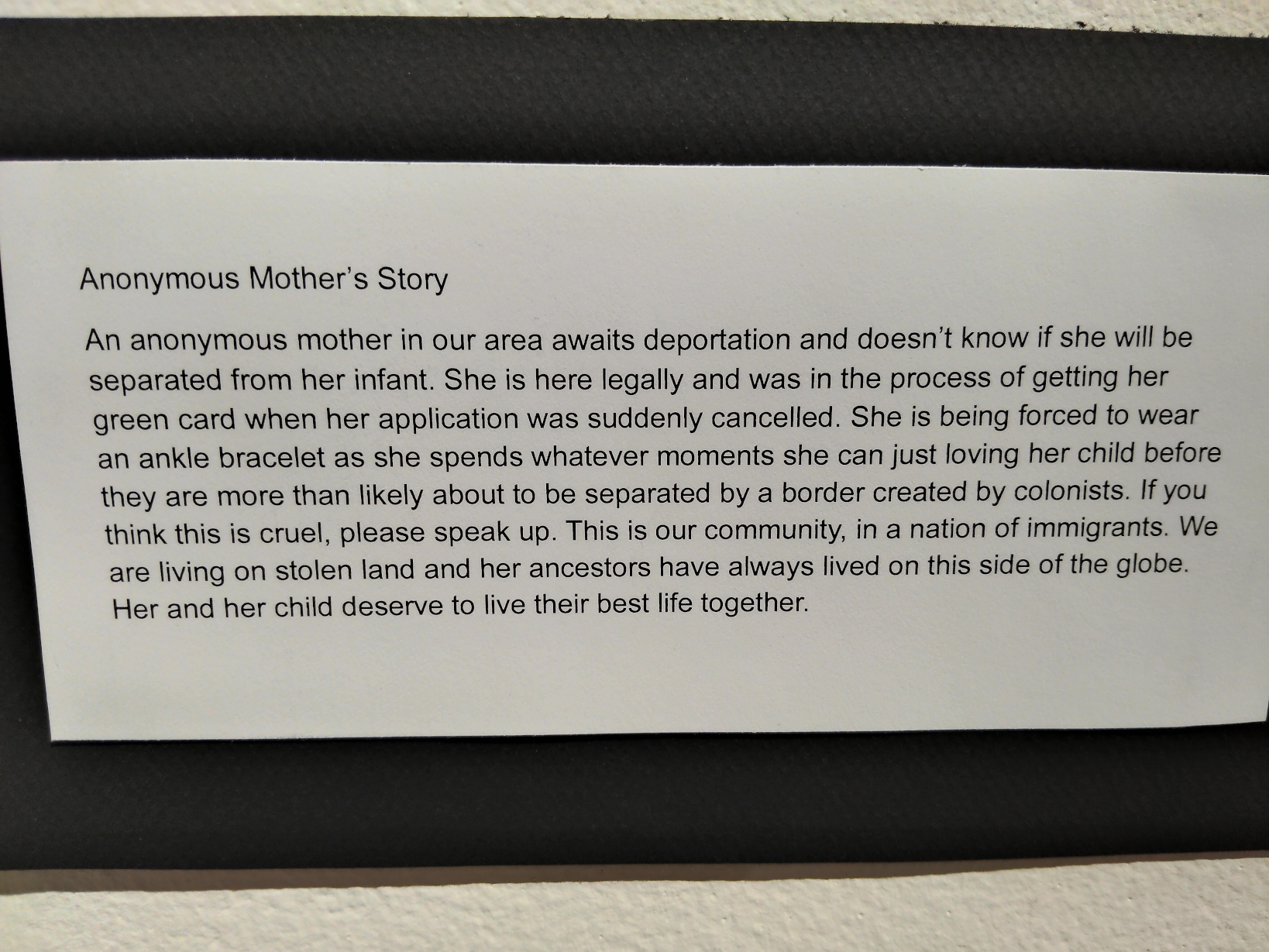
An anonymous mother’s story and commentary as written by Kate Langlais for her “I Am Minnesota” project. (Minnesota Prairie Roots copyrighted photo October 2025)

I ALMOST MISSED IT. “Anonymous Mother’s Story” positioned next to “The Young Mother” charcoal portrait in the “I Am Minnesota” exhibit by Faribault artist Kate Langlais. But there it was, tucked in the corner near the light switches in the Paradise Center for the Arts main gallery.

The exhibit features some 20 portraits and stories of first and second-generation immigrants from my community. None is more relevant than that of the young mother who now faces deportation and separation from her infant. Here are key words in her story: young mother. here legally. green card. application suddenly canceled. awaiting deportation. ankle bracelet. cruel and inhumane.

We’ve all heard countless media reports of people snatched from the streets and elsewhere by masked agents of the federal government, unlawfully detained without due process, separated from family, deported… That is, indeed, cruel, inhumane, heartbreaking and wrong. Even when immigrants are following all of the rules, all of the laws to legally live here, they find themselves targeted.

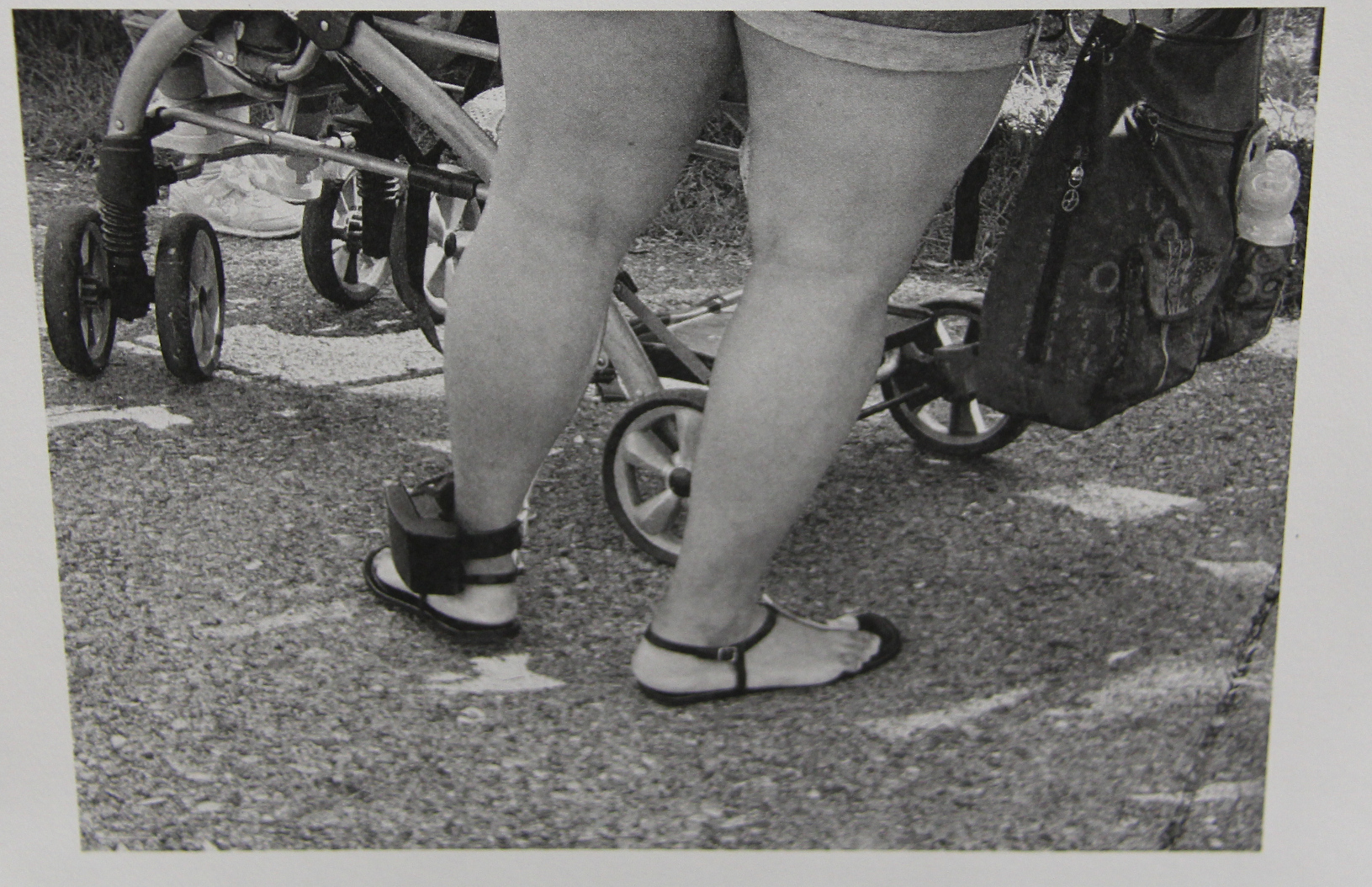
Martha Brown took this photo of the anonymous mother which is included, along with text, in the “I Am Minnesota” exhibit. (Minnesota Prairie Roots copyrighted photo October 2025)

To read the story of this young mother from my area, to see the faceless portrait, and then to also view a photo taken by Martha Brown, candidate for Minnesota House District 19a, deeply touched me. Brown photographed only the young woman’s legs and the wheels of her baby’s stroller. That was absolutely the right and compassionate thing to do.

The intentionally-framed image is more effective and powerful than if Brown had photographed the woman’s face. Every single person who sees this image should understand the reasons for anonymity. In a statement with the photo, Brown urges southern Minnesotans to reach out to their U.S. congressman “to stop this cruel and inhumane treatment.”

Langlais’ inclusion of the anonymous mother’s portrait and story, along with Brown’s photo and words, is perhaps the most important part of the “I Am Minnesota” exhibit. And to think, I nearly missed it there in a corner of the gallery. Don’t miss this exhibit, which closes on November 15 at the Paradise Center for the Arts. It’s located in historic downtown Faribault, a place many immigrants call home.

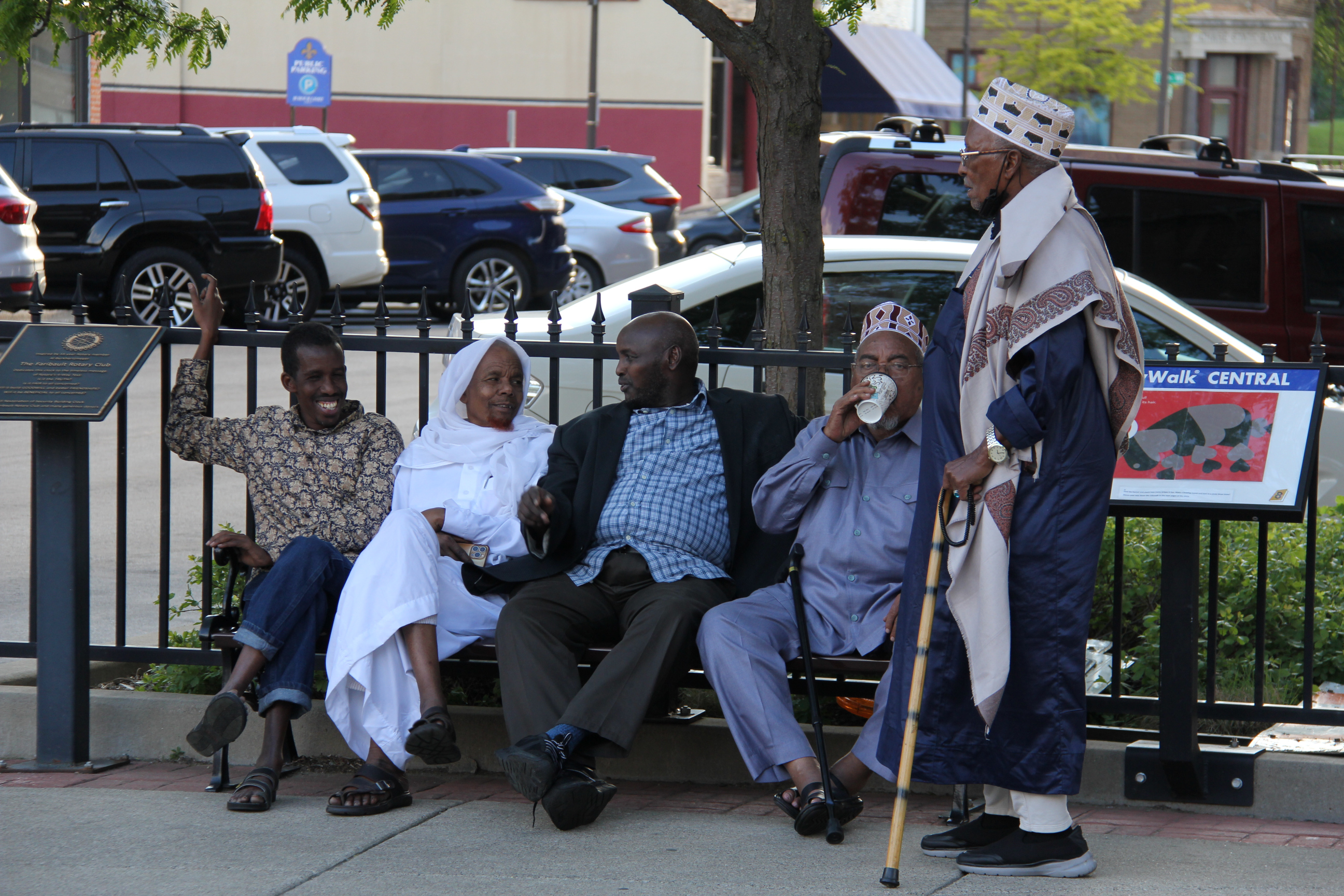
One of my favorite images from downtown Faribault shows a group of Somali men visiting on a street corner. (Minnesota Prairie Roots copyrighted file photo 2024)

FYI: The Northfield Public Library is hosting “Bridging Communities: A Celebration of Somali Culture” from 1-4 p.m. Saturday, November 8. The event features interactive dance workshops led by the Somali Museum of Minnesota Dance Troupe; a performance by the Faribault Middle School Choir; and a participatory sing-along of Somali songs. Other activities include henna art, face painting, bilingual Somali storytelling, a scavenger hunt with prizes and more. The library is collaborating with Somali community partners and St. Olaf and Carleton colleges to bring this event to Northfield.

NOTE: I photographed the “I Am Minnesota” exhibit with permission of the Paradise. I also received permission from Martha Brown to include her photo in this post.

© Copyright 2025 Audrey Kletscher Helbling


Protesting in Minnesota October 19, 2025

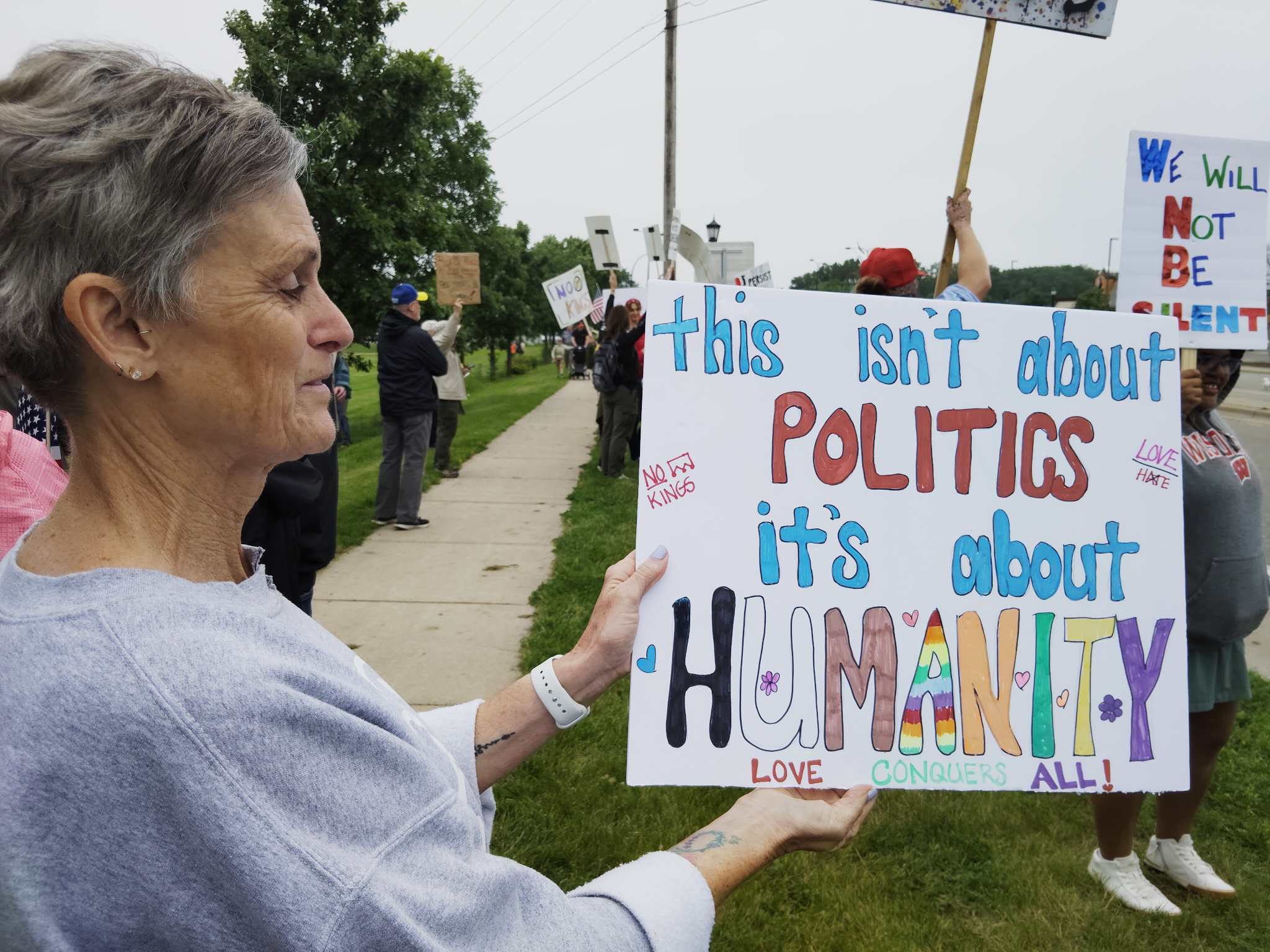
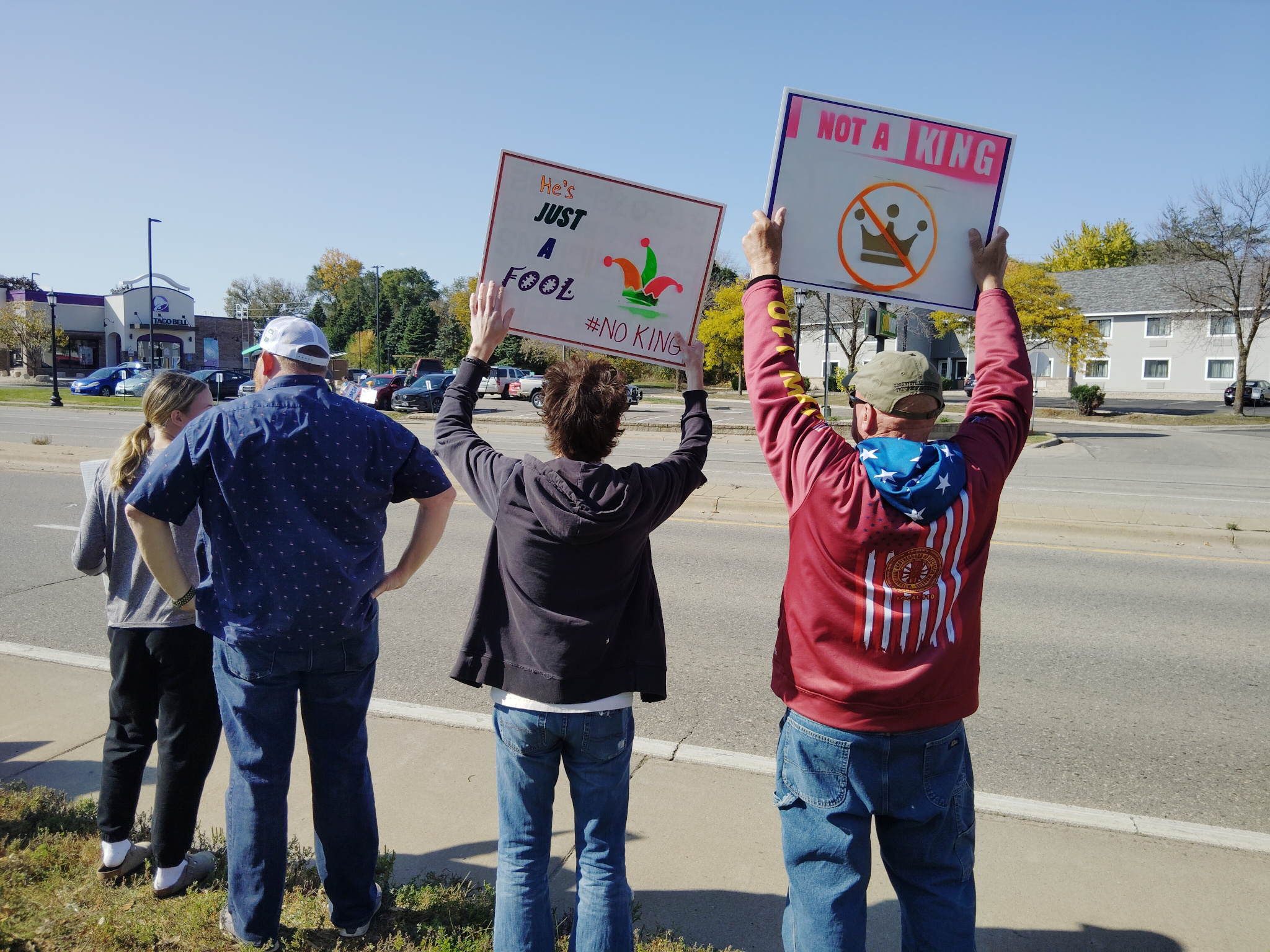
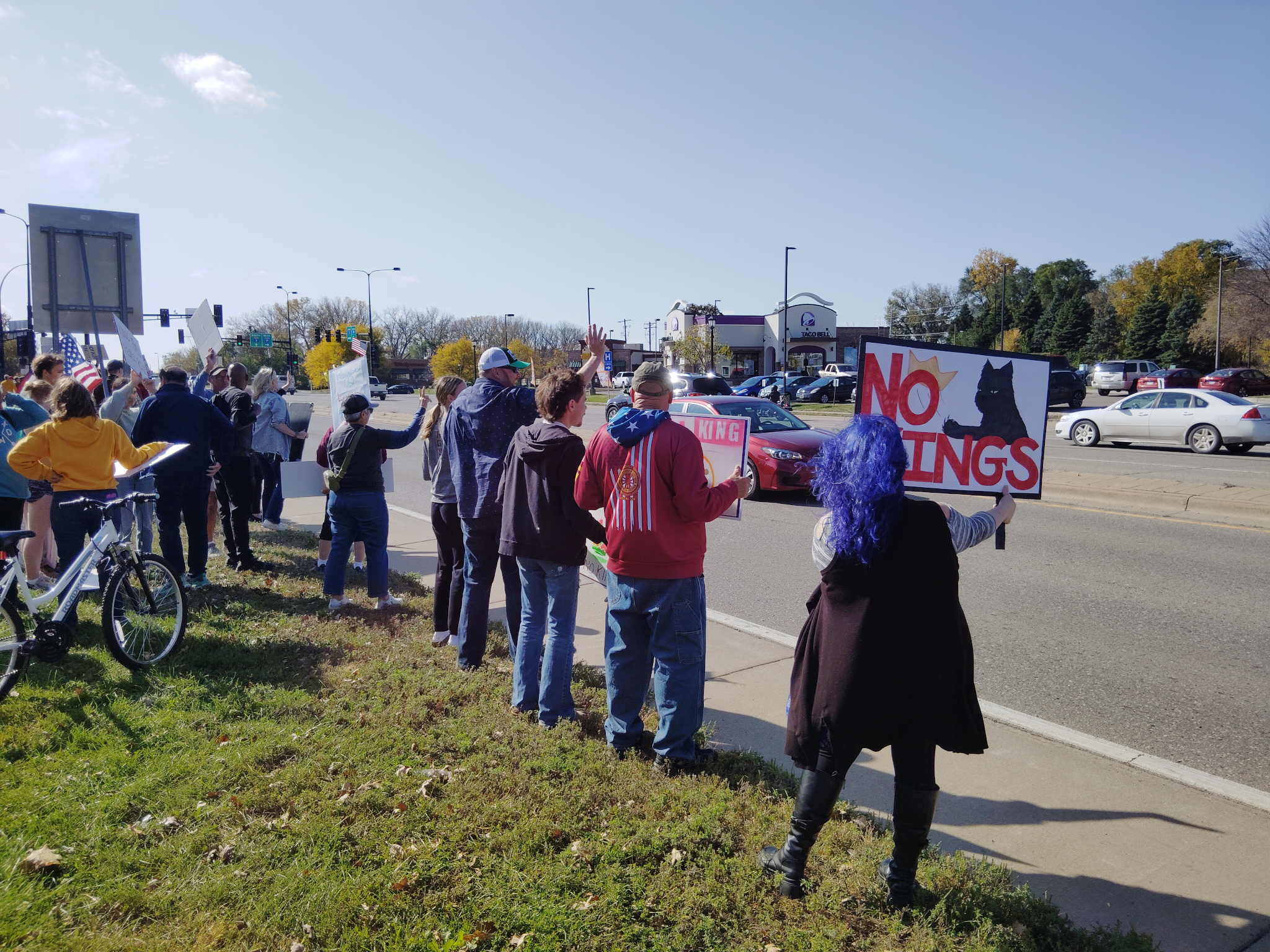
Protesters stand along Minnesota State Highway 3 in Northfield on Saturday afternoon during the NO KINGS protest. (Minnesota Prairie Roots copyrighted photo October 2025)

I AM AN AMERICAN, a Minnesotan, a resident of Rice County and the city of Faribault. I am a writer, photographer, blogger, poet. I am a wife, mother, grandmother. And I am also a protester.

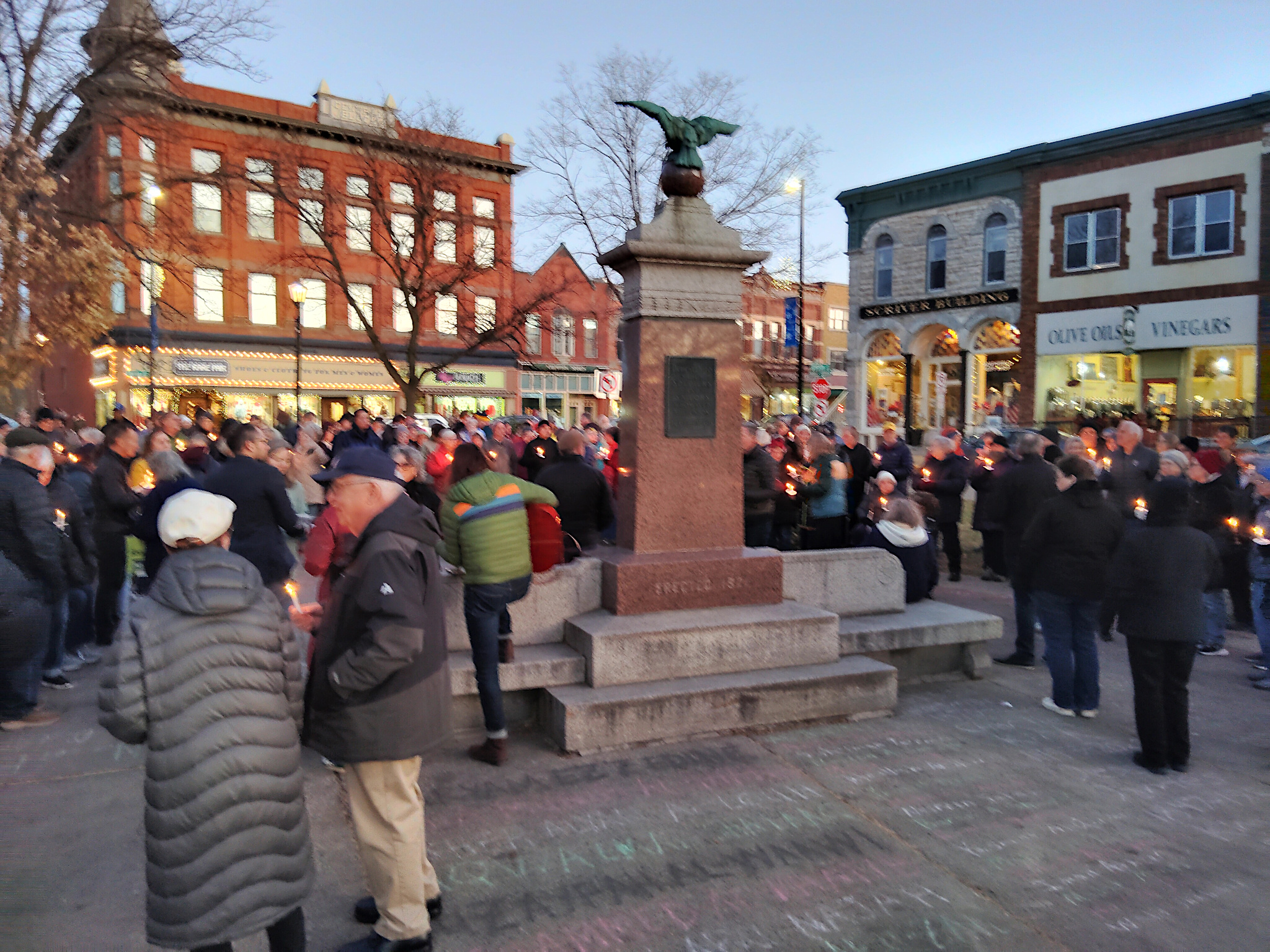
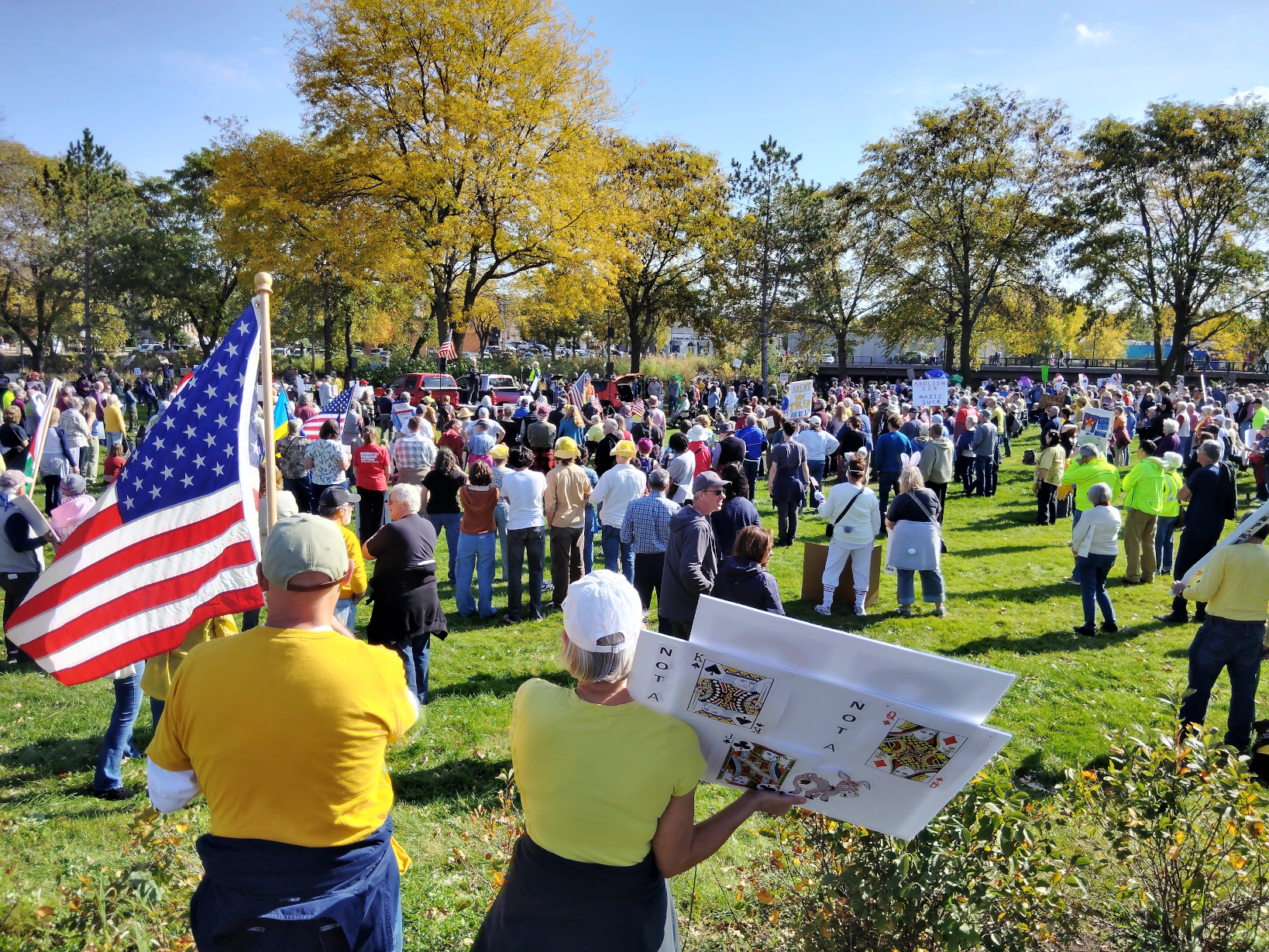
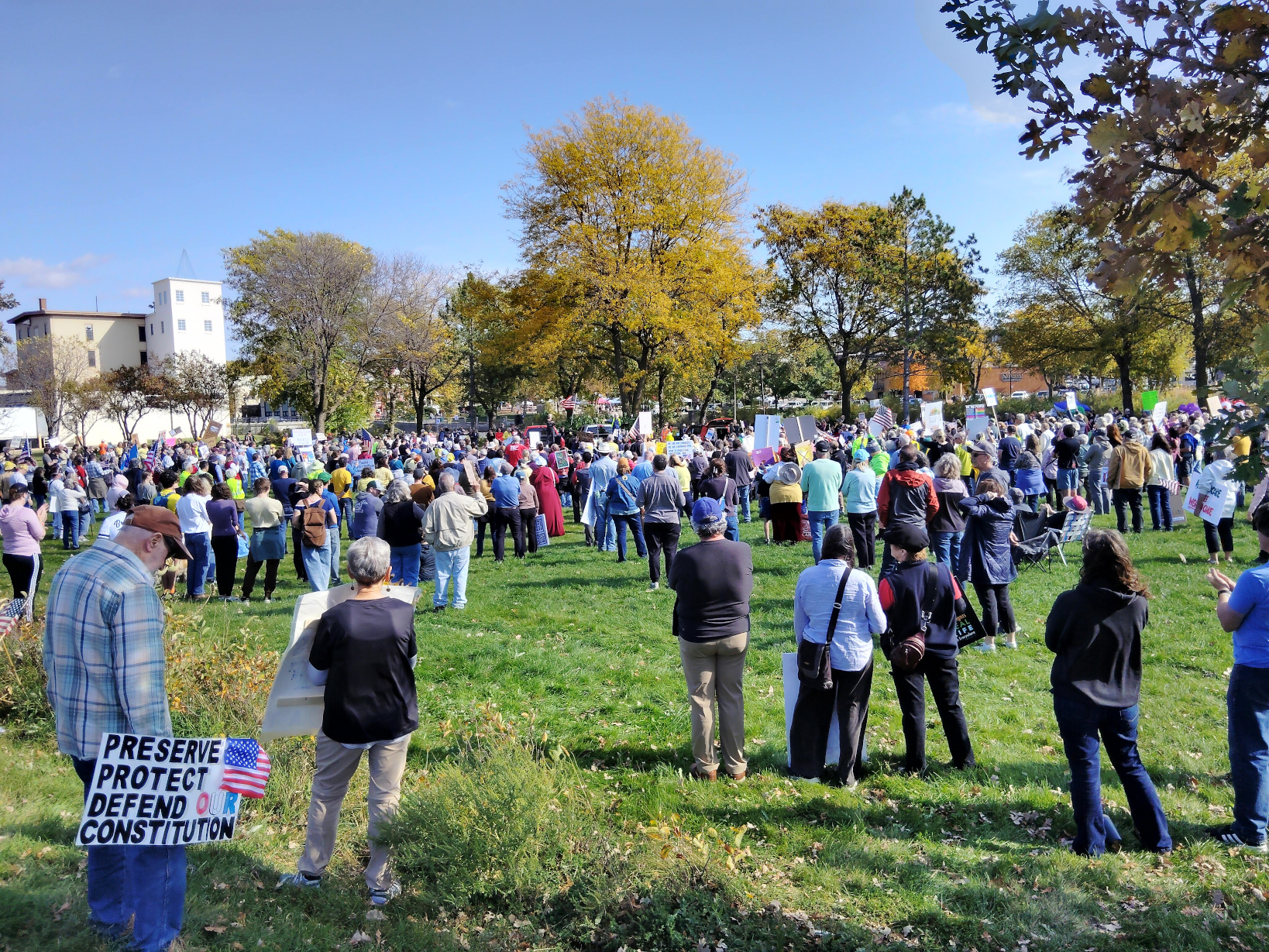
A snapshot of a portion of the crowd protesting in Northfield, population around 21,000. (Minnesota Prairie Roots copyrighted photo October 2025)

On Saturday I joined millions across the country and world participating in NO KINGS rallies in my fourth protest since June 14. I care about America. I love America. But I don’t like what’s happening here under the Trump administration, which is eroding our democracy and taking, or attempting to take, away our rights, freedoms and, oh, so much more by authoritarian rule, force, threats, retribution, control, manipulation…

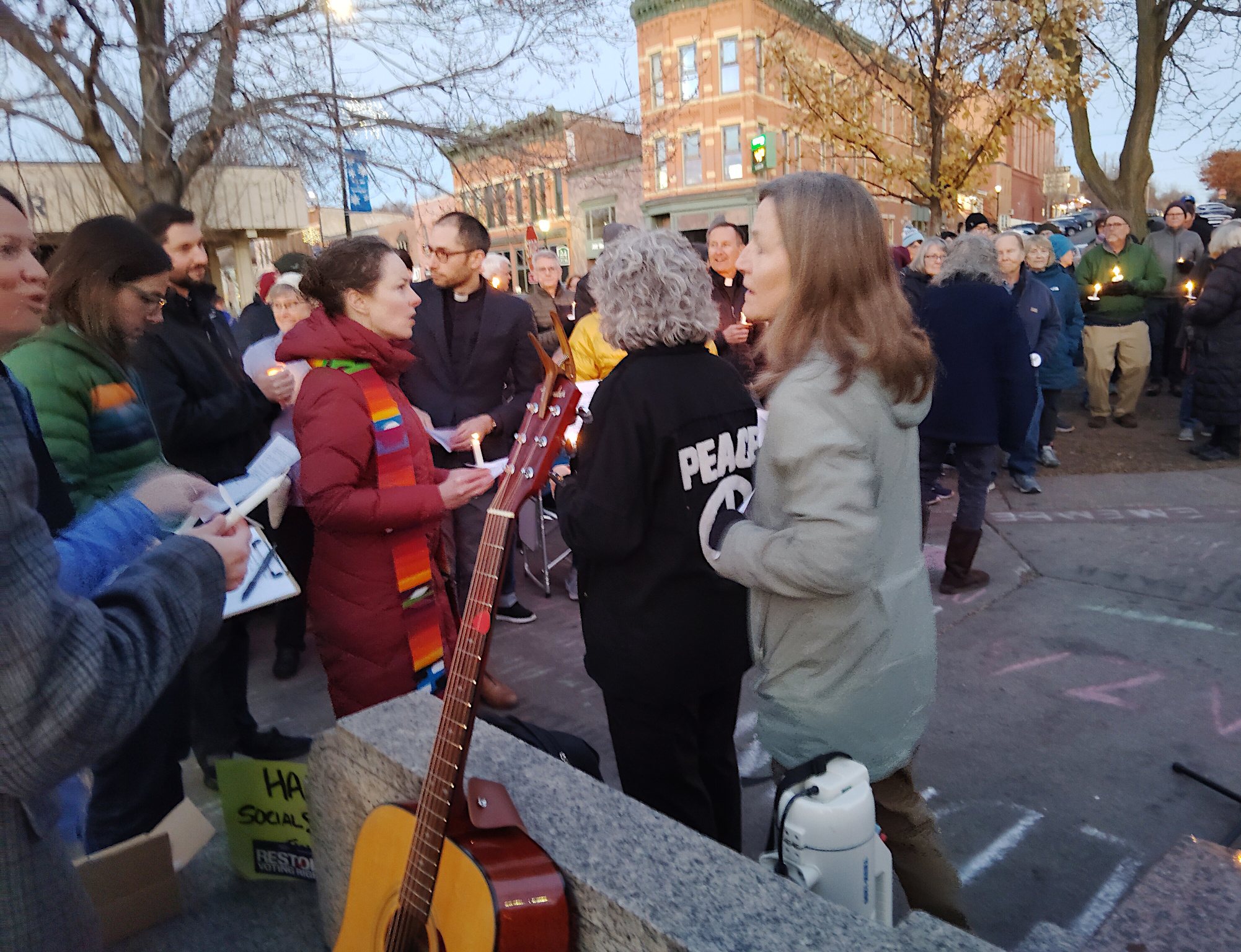
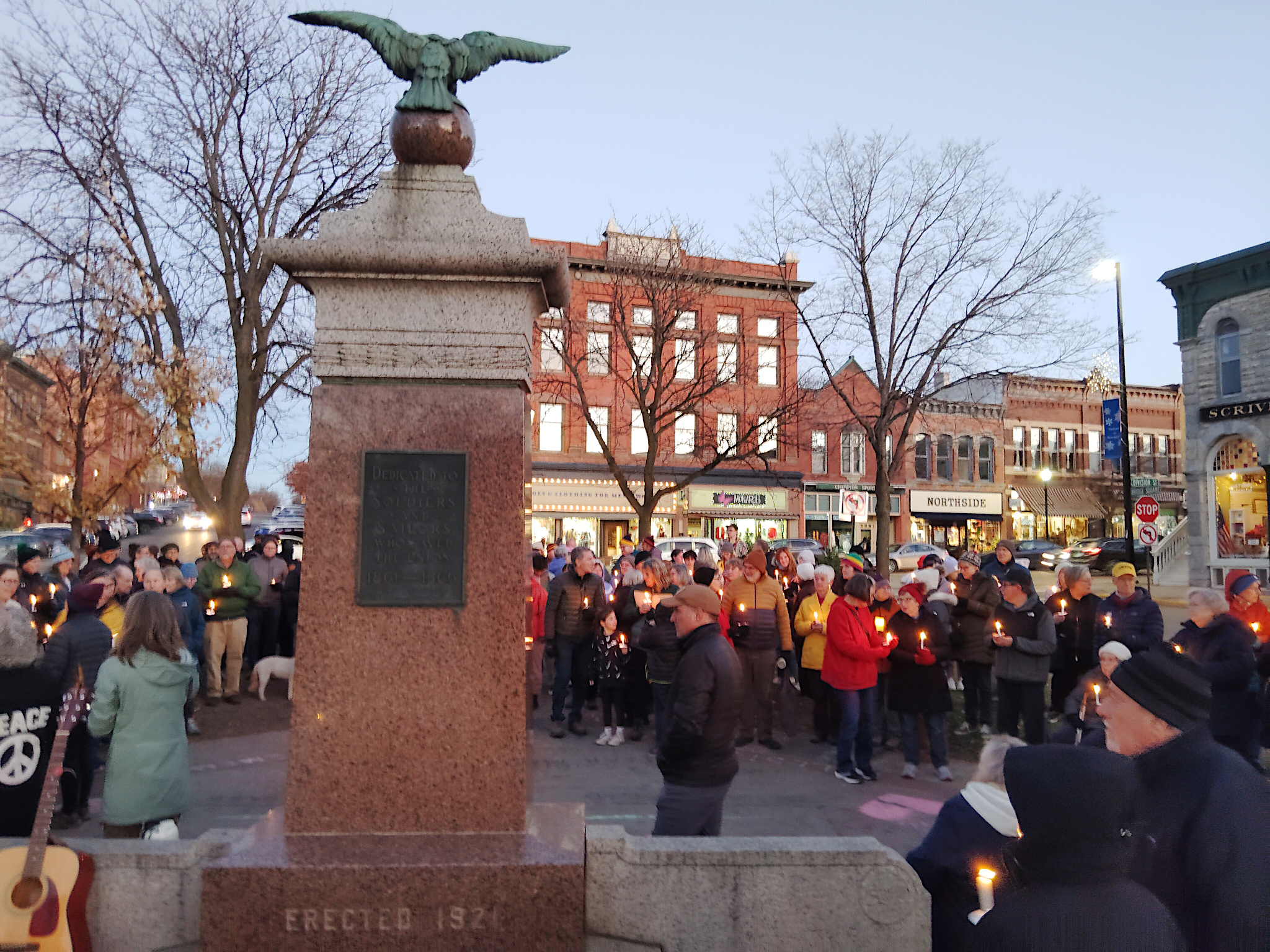
I refuse to remain silent at a time such as this. So I exercised my rights to free speech and freedom of peaceful assembly under the First Amendment to the Constitution by participating in a protest in neighboring Northfield along with a thousand or more others. We packed Ames Park along the Cannon River and lined the east side of Minnesota State Highway 3 for a block to listen to speakers, to share our concerns, to hold protest signs high, to hear plans of action, to sing and pray and reflect, and to engage in conversation.

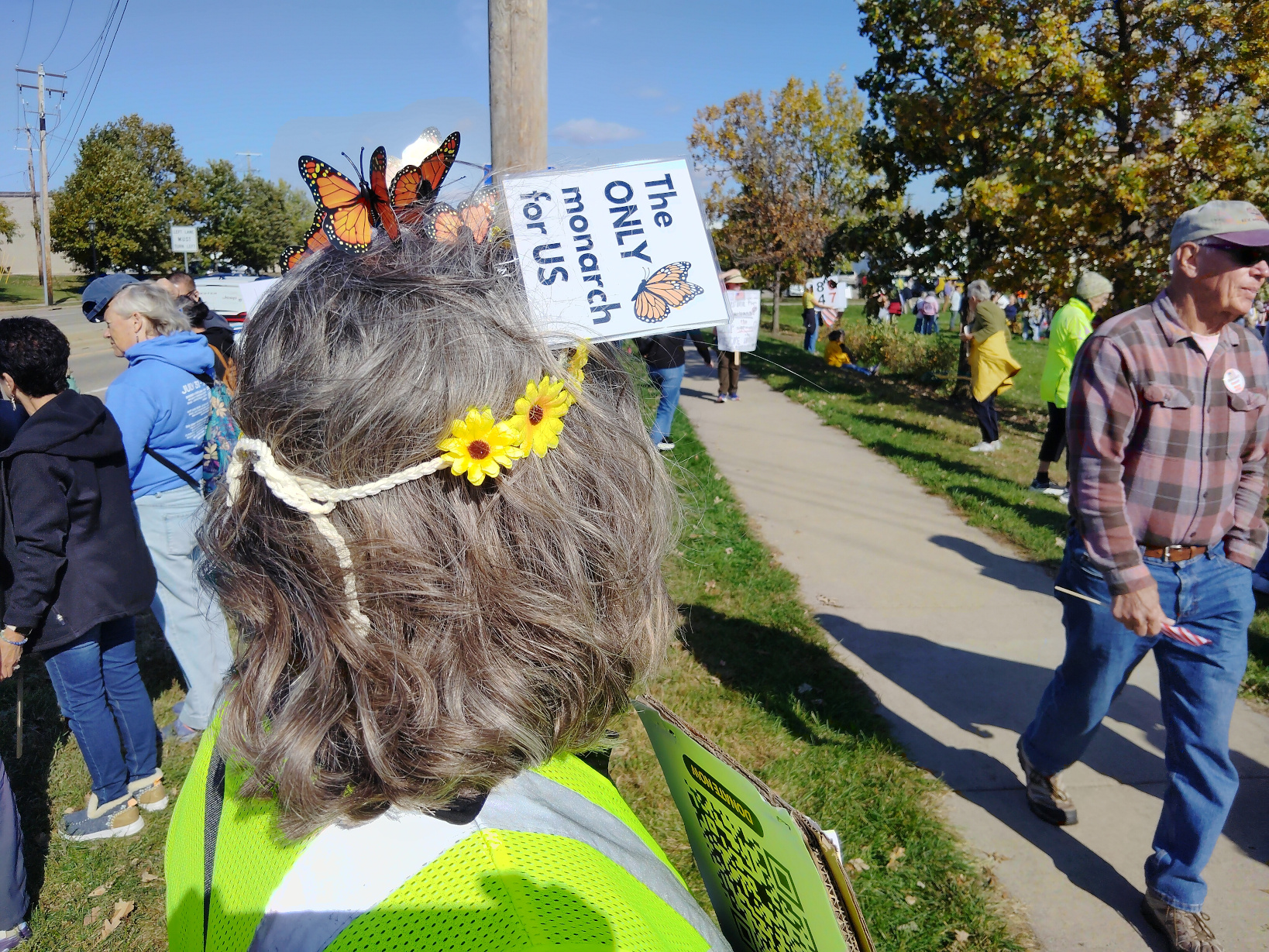
Minnesota Highway 3 through Northfield is a busy roadway, providing a highly-visible location to protest. (Minnesota Prairie Roots copyrighted photo October 2025)

At times throughout the 1 ½-hour event, I protested next to a Vietnam War veteran, a mechanic, a retired professor of Spanish and Latin American literature (also a poet), a retired college office employee, a retired engineer, a retired elementary school teacher… I also mingled among countless others there for the same reason—to protest. To express our concerns about healthcare, education, the economy, immigration, due process, freedom of speech, a free press, free and fair elections, government funding cuts, the presence of military in our cities, the balance of power, the judiciary, the overreach of power, clean energy… The list goes on and on.

I saw a baby strapped to his/her mom. Kids on shoulders. Kids with signs. Young people of high school age and early adulthood. Those in their middle years. Those in their sixties, like me. And those even older, some probably pushing ninety. The turn-out for this protest was even bigger and more diverse age-wise than the one in June in Northfield on the date Minnesota House Speaker Emerita Melissa Hortman and her husband, Doug, were assassinated.

Clever and creative signage is always part of the protests. (Minnesota Prairie Roots copyrighted photo October 2025)

To be among this group of peacefully protesting concerned Americans during the NO KINGS rally felt empowering. Uplifting. We were unified in our movement, even as one speaker pointed out that we may not agree on everything. Another termed what’s unfolding in America today as not “normal.” It is not, and should not be, normal. Ever.

Support from motorists passing by was overwhelmingly positive with honking horns and waves. Of course, we got a few middle fingers and intentionally roaring, racing vehicles. Only once did I feel unsafe—when a car sped by at a dangerously high speed, the driver clearly attempting to antagonize and threaten us. That was the only overt hatred I witnessed.

The crowd listens to speakers during the Northfield protest. (Minnesota Prairie Roots copyrighted photo October 2025)

Those of us peacefully gathered did not, as some Republican politicians adamantly and wrongly stated, come because we hate America. Far from it. We love America. That was clear in the peaceful tone of the event, in American flags waving, in recitation of the Pledge of Allegiance, in singing of the national anthem, in signage, in our desire to uphold the Constitution, in our genuinely deep concern about the state of our country under President Donald Trump. In our voices rising. Loud. And free.

#

NOTE: Please be respectful in your comments. I moderate all comments on this, my personal blog.

© Copyright 2025 Audrey Kletscher Helbling
 

From words on a government website to soybean markets & a crisis in rural America October 15, 2025

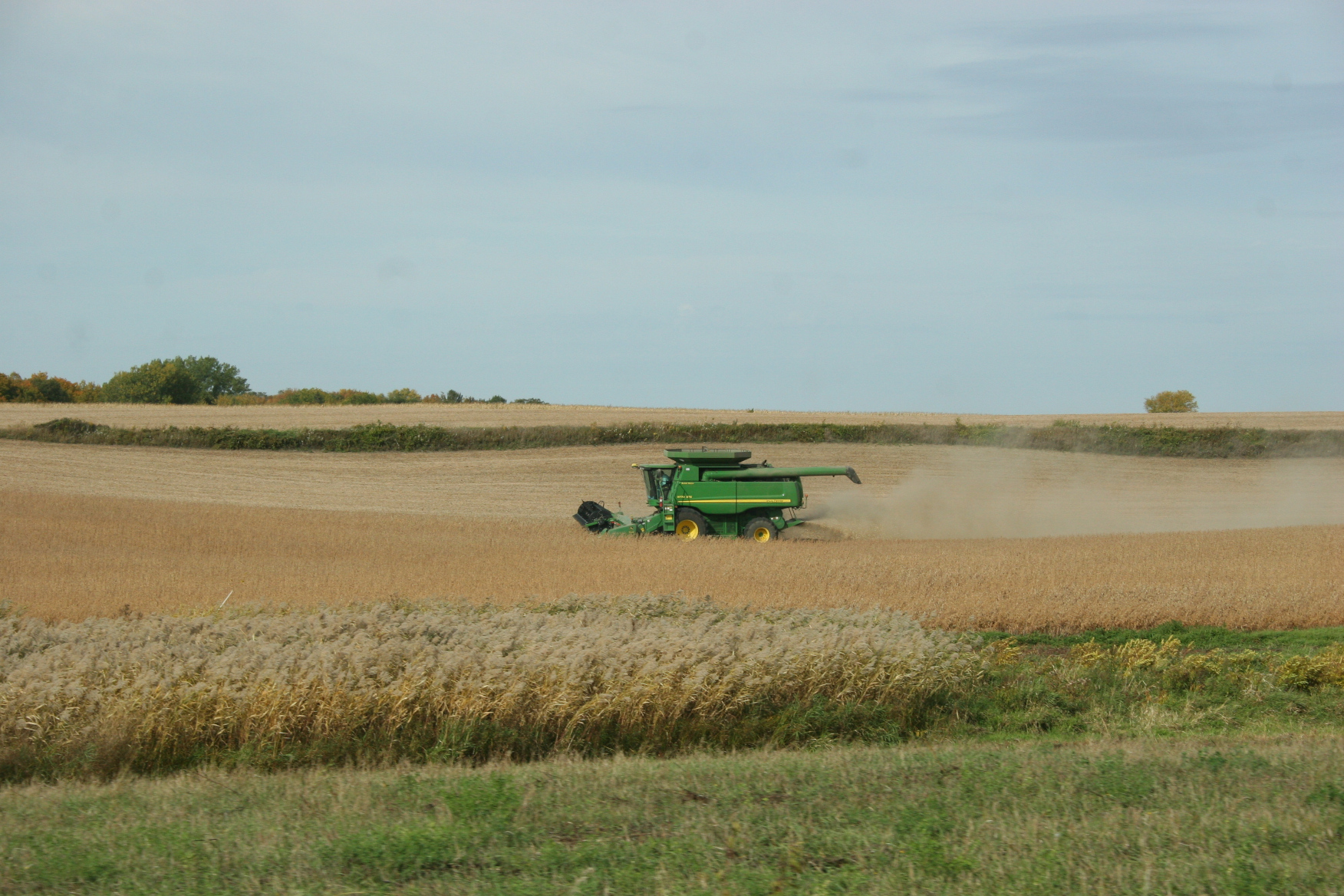
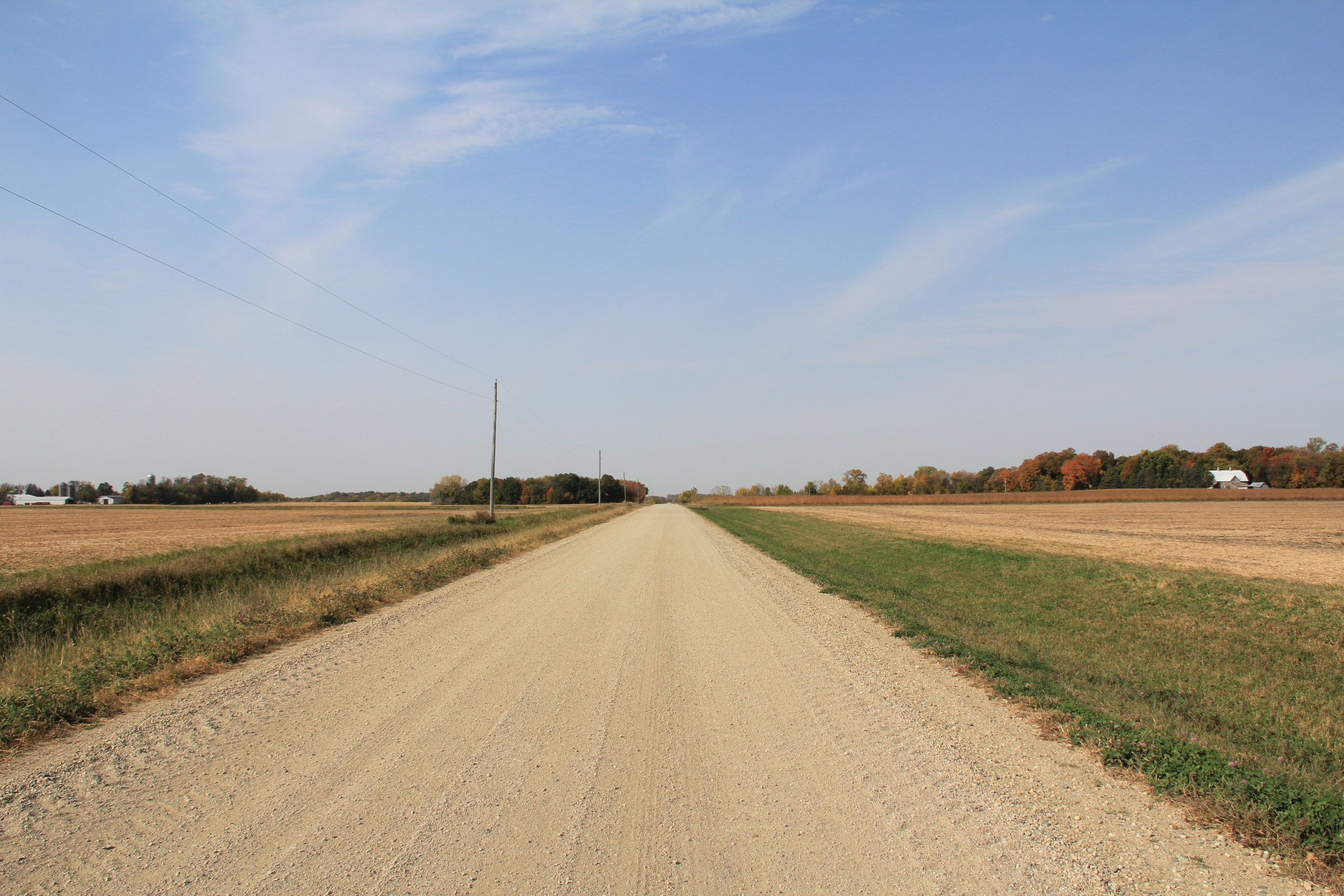
Combining soybeans in rural Rice County, Minnesota. (Minnesota Prairie Roots copyrighted file photo October 2022)

WHEN I FIRST READ the message bannering the United States Department of Agriculture website during the current government shutdown, my jaw dropped. In a two-sentence statement, “The Radical Left Democrats” are blamed for the closure of the federal government. How unprofessional, I thought, to so blatantly put politics out there on a website designed to help America’s farmers. But then again, why should this surprise me?

United States Secretary of Homeland Security Kristi Noem is doing the same in a video message blaming Democrats for the shutdown. She expects this to be broadcast in airport terminals. Many are opting not to air her clearly political statement. And they shouldn’t. It’s unprofessional and wrong in more ways than I can list, no matter what your political affiliation may be.

But back to that message on the USDA website. It goes on to say that President Donald Trump wants to keep the government open “and support those who feed, fuel and clothe the American people.” Now that is certainly a noble statement at face value, one we could all applaud. Who doesn’t want to support our farmers? But in the context of what the President has done to farmers, the statement seems laughable.

Rural Minnesota, planted in corn and soybeans. (Minnesota Prairie Roots copyrighted file photo October 2024)

Here in the heartland, farmers have lost a major market for soybeans, my state’s top agricultural export. China has stopped buying soybeans from not only Minnesota, but America. That’s billions of dollars in lost income. And all because of the ongoing trade war between the U.S. and China, begun by the man who slapped tariffs—now averaging 58 percent—on Chinese imports with a threat to increase that to 100 percent. I’m no economist. But even I understand China’s retaliatory tariffs and actions to tap other markets for soybeans. They went to Brazil and Argentina.

And now President Trump proposes sending $20 billion in aid to Argentina, all tied to an upcoming election there. Why would we bail out a country exporting their soybeans to China while our own financially-strapped farmers are suffering because they’ve lost a key market? This makes no sense to me. Again, I’m not an economist or a politician, simply an ordinary American citizen, with a farm upbringing (and who decades ago freelanced for the Minnesota Soybean Growers Association), questioning the logic of any of this.

Even without the Argentinian component tossed into the mix, there’s more. President Trump has proposed an aid package for farmers to help them get through the financial crisis he created via his tariffs and the resulting trade war with China. That aid would come from the money collected from tariffs. Now I know farmers—my dad was one—are fiercely independent and would rather have a market for their cash crops than government aid. If not for the tariffs…

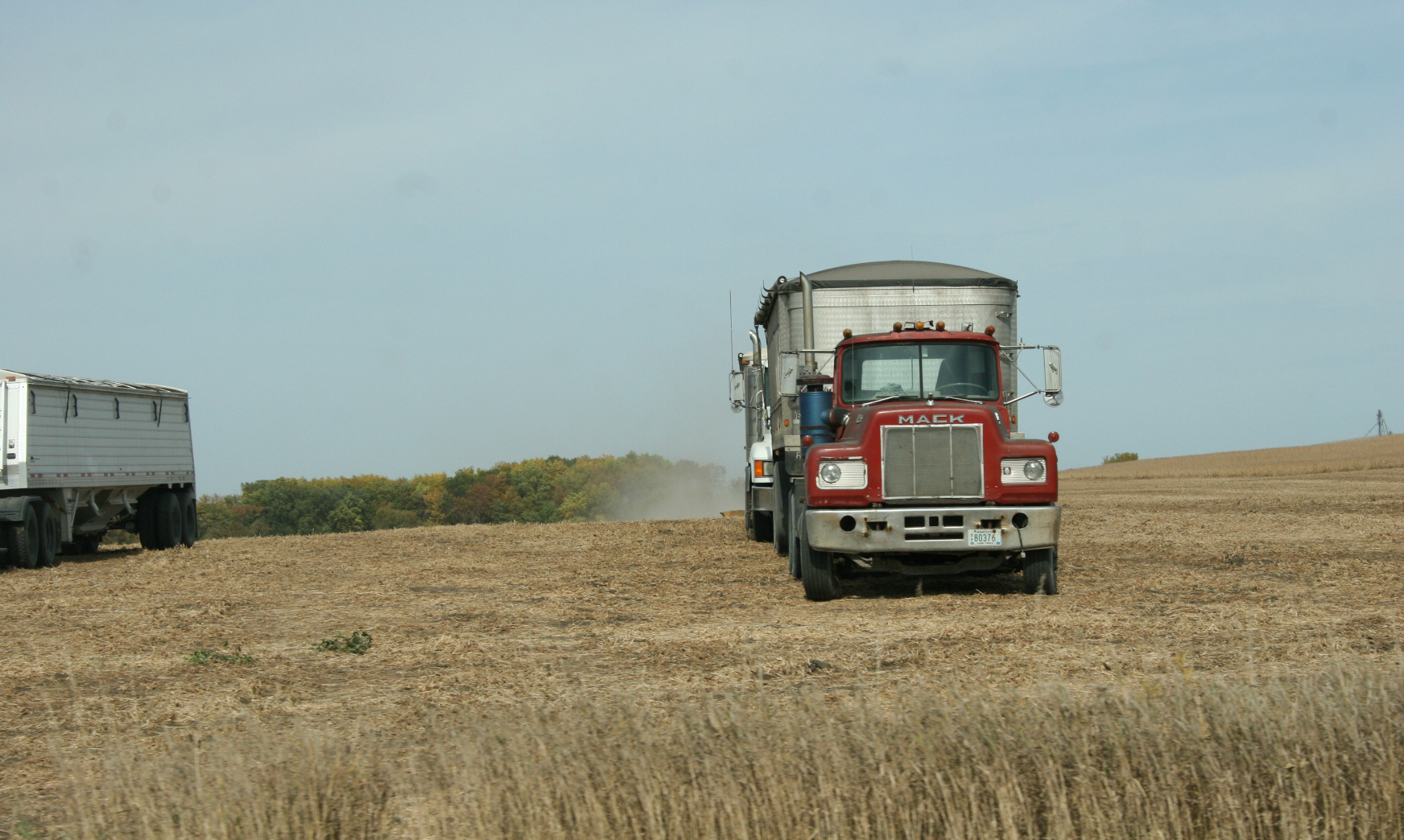
Trucks await the harvest. (Minnesota Prairie Roots copyrighted file photo October 2022)

As the harvest continues here in Minnesota, I can’t help but feel for those who work the land, who continue to face so many uncertainties, financial challenges and stressors. Interest rates on loans remain high. Market prices remain low. Land rents continue to rise. Equipment and other costs are high. And on and on, including the loss of the long-standing soybean export market to China, which quite likely may never be reclaimed.

This is becoming a crisis situation for farmers—those who feed, fuel and clothe Americans. From fields to small town Main Street, rural America is hurting. And politically-biased blame words published on a government website aren’t helping.

© Copyright 2025 Audrey Kletscher Helbling
 

Thoughts on Indigenous Peoples Day from Minnesota October 13, 2025

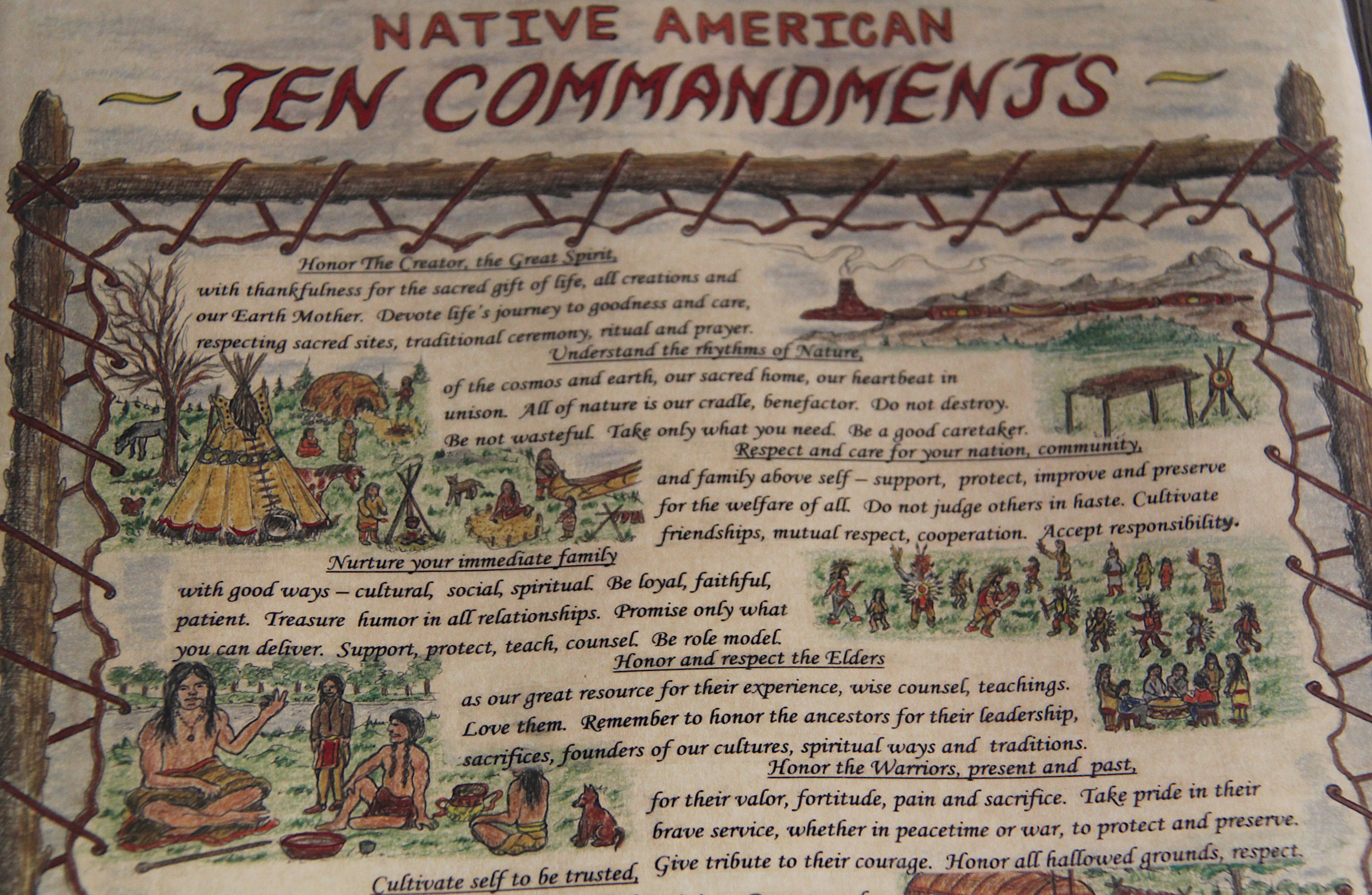
This shows a portion of the “Native American Ten Commandments” I found in a Waterville shop. (Minnesota Prairie Roots copyrighted photo October 2025)

POKING AROUND IN SMALL TOWN Waterville on Saturday, I happened upon an unusual piece of wall art, “Native American Ten Commandments,” in a shop run by Ron, former hardware store owner and an interesting man with lots of stories to tell. I left feeling like he would be my go-to source for anything I ever wanted to know about Waterville.

But I didn’t ask Ron about the Native American wall art hanging so high on the wall I struggled to read and photograph it. Rather, I thought about this art and the title of the piece in the context of today, October 13, Indigenous Peoples Day in Minnesota, as proclaimed by Governor Tim Walz.

I considered how the words “Ten Commandments” seem more European than Native. Perhaps a different title would be more fitting for this summary of cultural and spiritual values. Despite that heading, I found the content of these “commandments” to be positive and reflective of Native beliefs and culture as I understand them to be.

These words popped out at me: earth, nature, respect, care, protect, honor, traditions, family and community.

We would all do well to read, then reread, those words and contemplate their importance. Today, more than ever, I feel like we need to reconnect with the land, to build community, to recognize the importance of respect.

Today I pause to remember and celebrate Native Americans, who lived here first, who have long held a spiritual closeness to the earth, who deserve this special day of honor, Indigenous Peoples Day.

© Copyright 2025 Audrey Kletscher Helbling
 

A Banned Books Week commentary on free speech October 10, 2025

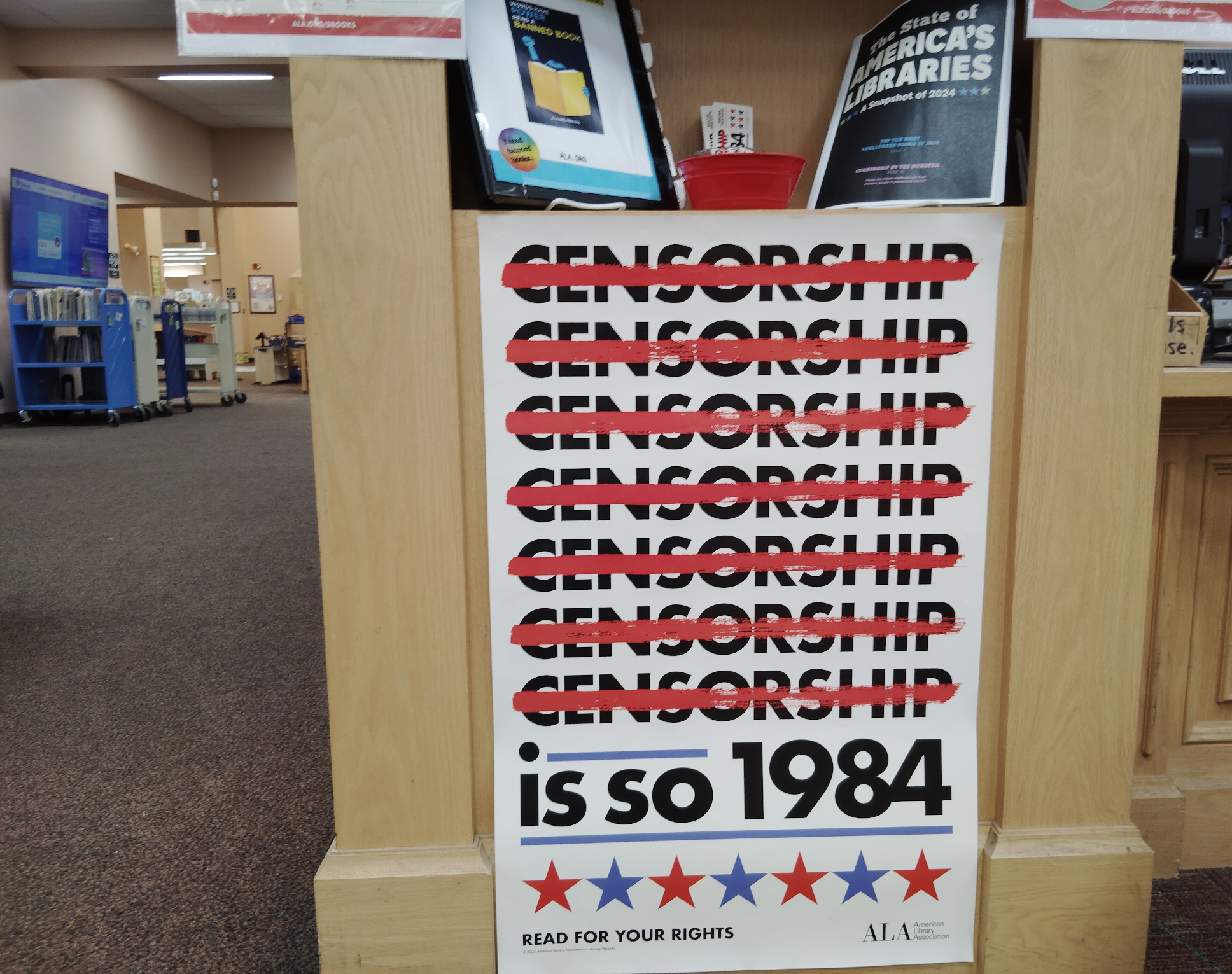
This American Library Association poster anchors the Banned Books Week display at my local library. (Minnesota Prairie Roots copyrighted photo October 2025)

AS A WRITER, journalist and avid reader, I’m a firm believer in free speech. Never have I seen that right more threatened in America than it is today. It’s downright scary—efforts by the federal government to suppress voices (already occurring), promises of retribution (now being carried out), abuse of power (happening on so many levels) and much more that threatens our very freedoms, our democracy. I could go on and on.

But today I want to focus on Banned Books Week, which ends tomorrow. Thursday evening I gathered with a group of volunteers for an appreciation event at Books on Central in Faribault, a used bookshop founded by the Rice County Area United Way. While I don’t volunteer there (yet), I’ve blogged about the bookstore numerous times because I love books and I love that monies from BOC book sales help nonprofits in my area. We weren’t there to discuss banned books, though, but rather to celebrate volunteerism and this small bookshop which has become much-beloved by the Faribault community and beyond.

It was not lost on me as I sat there surrounded by books, listening to volunteers share their passion for this place and for books, that everyone who walks in the door is surrounded by choices. As it should be. Choose what you want to read or want to share with others.

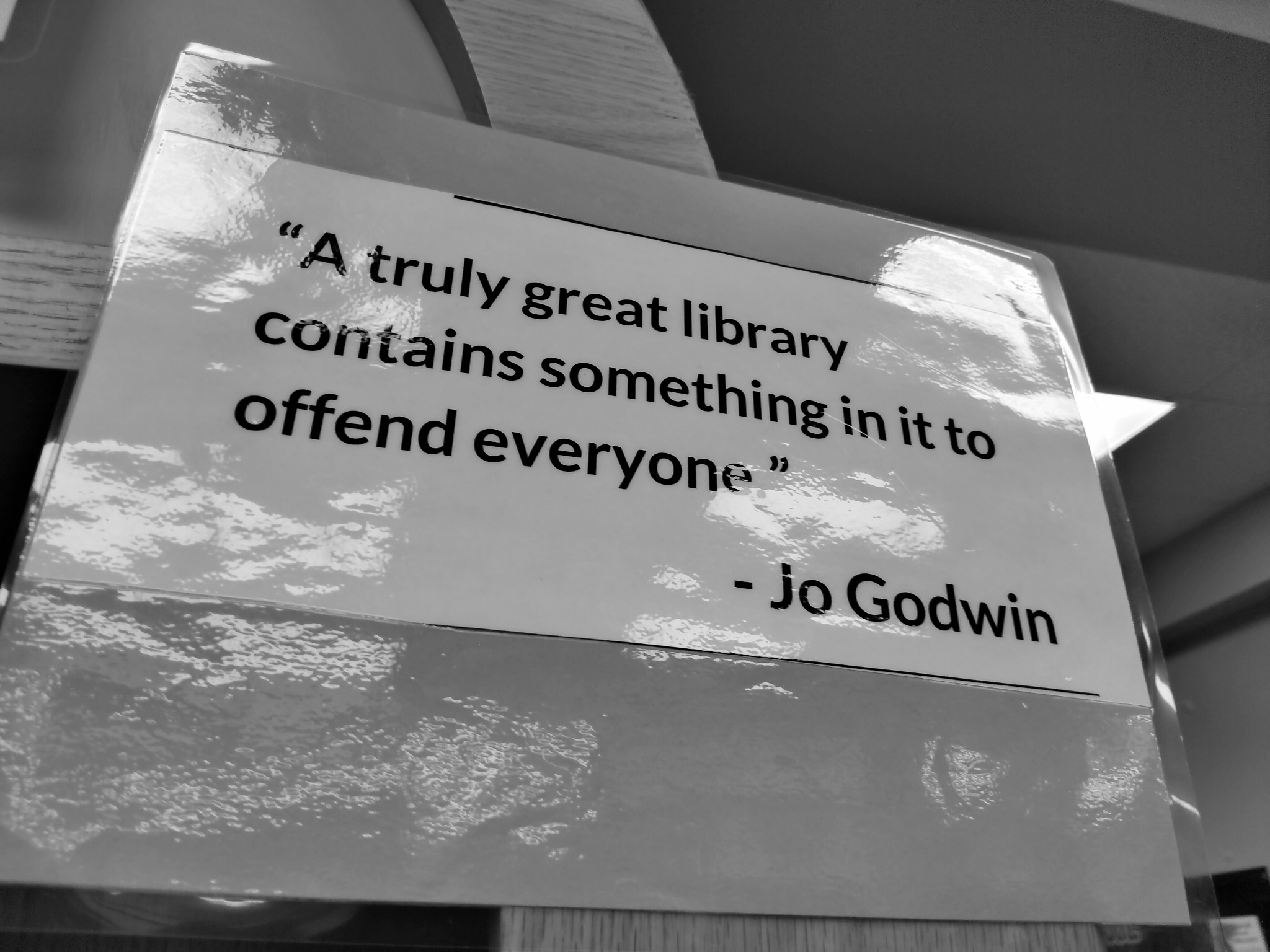
A powerful and fitting quote for Banned Book Week displayed at Buckham Library. (Minnesota Prairie Roots copyrighted photo October 2025)

Yet, there are individuals, organizations, elected government officials and others who want to determine what we can read by banning books from libraries, schools and elsewhere. That, my friends, is censorship. And I’m not OK with that. If I find the content of a book to be offensive, then I can stop reading it or never open it in the first place. Likewise parents can monitor their child’s reading materials just as they would online content.

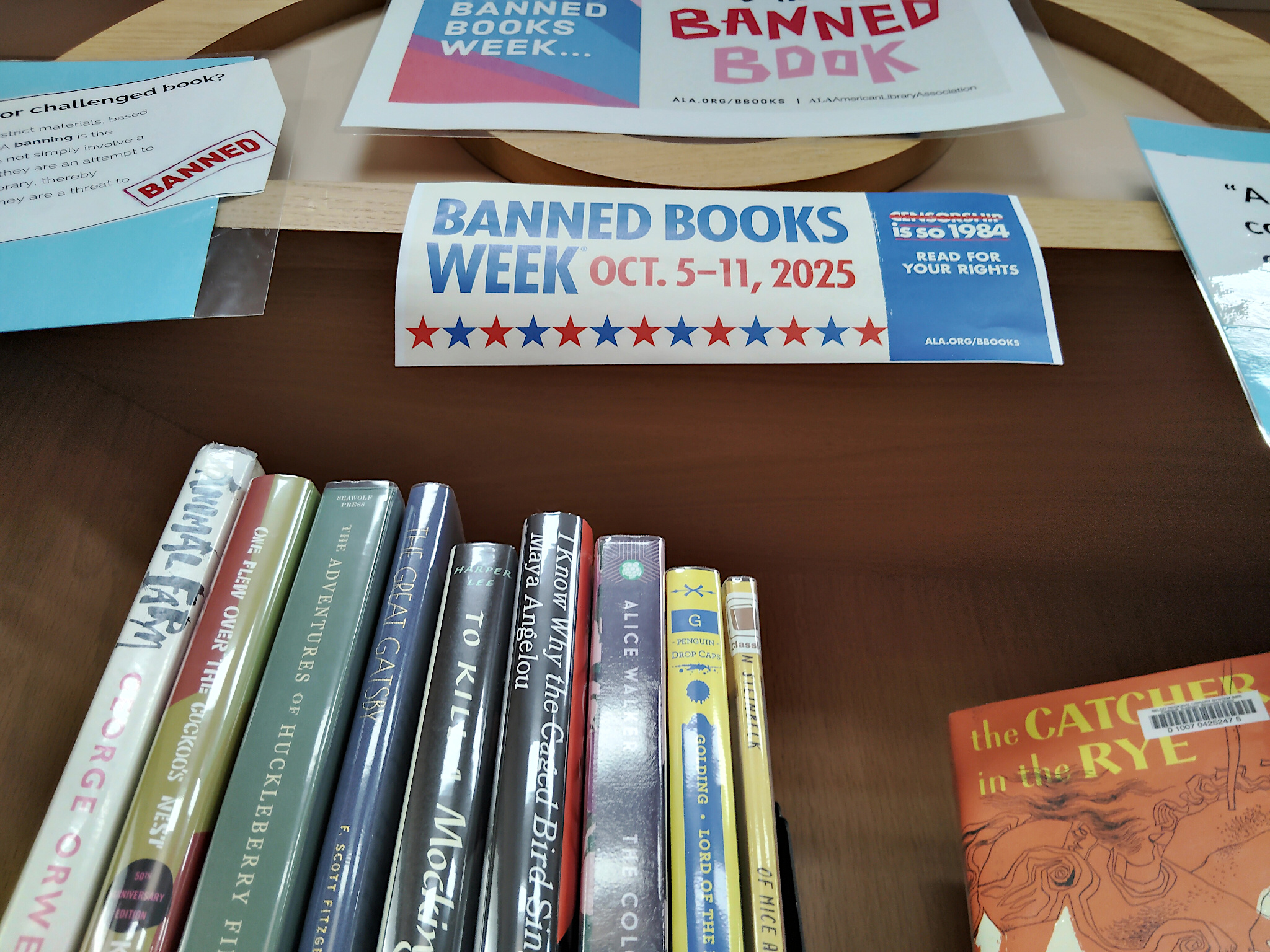
A sampling of books that have been banned in various places in America. These were included in a display at my library. (Minnesota Prairie Roots copyrighted photo October 2025)

In the words of the American Library Association’s 2025 Banned Books Week theme, “CENSORSHIP is so 1984.” That’s a reference to George Orwell’s prophetic 1949 novel, 1984, about a totalitarian government. That’s a simplistic summary. But the book is particularly relevant to today. I intend to check it out from my library to reread.

Bracelets available at Buckham Library support the RIGHT TO READ. (Minnesota Prairie Roots copyrighted photo October 2025)

After the bookshop appreciation event Thursday evening, I stopped at Buckham Memorial Library to see if staff had created a Banned Books display as they have in the past. They did. After I read the information and looked at a sampling of books that have been banned (not from my library), I grabbed a green bracelet imprinted with this message: CENSORSHIP is so 1984. READ FOR YOUR RIGHTS.

I will continue to read. I will continue to write. And I will continue to embrace, support and advocate for free speech. I have a voice. I refuse to be silenced.

© Copyright 2025 Audrey Kletscher Helbling
 

The stories of two Marthas September 19, 2025

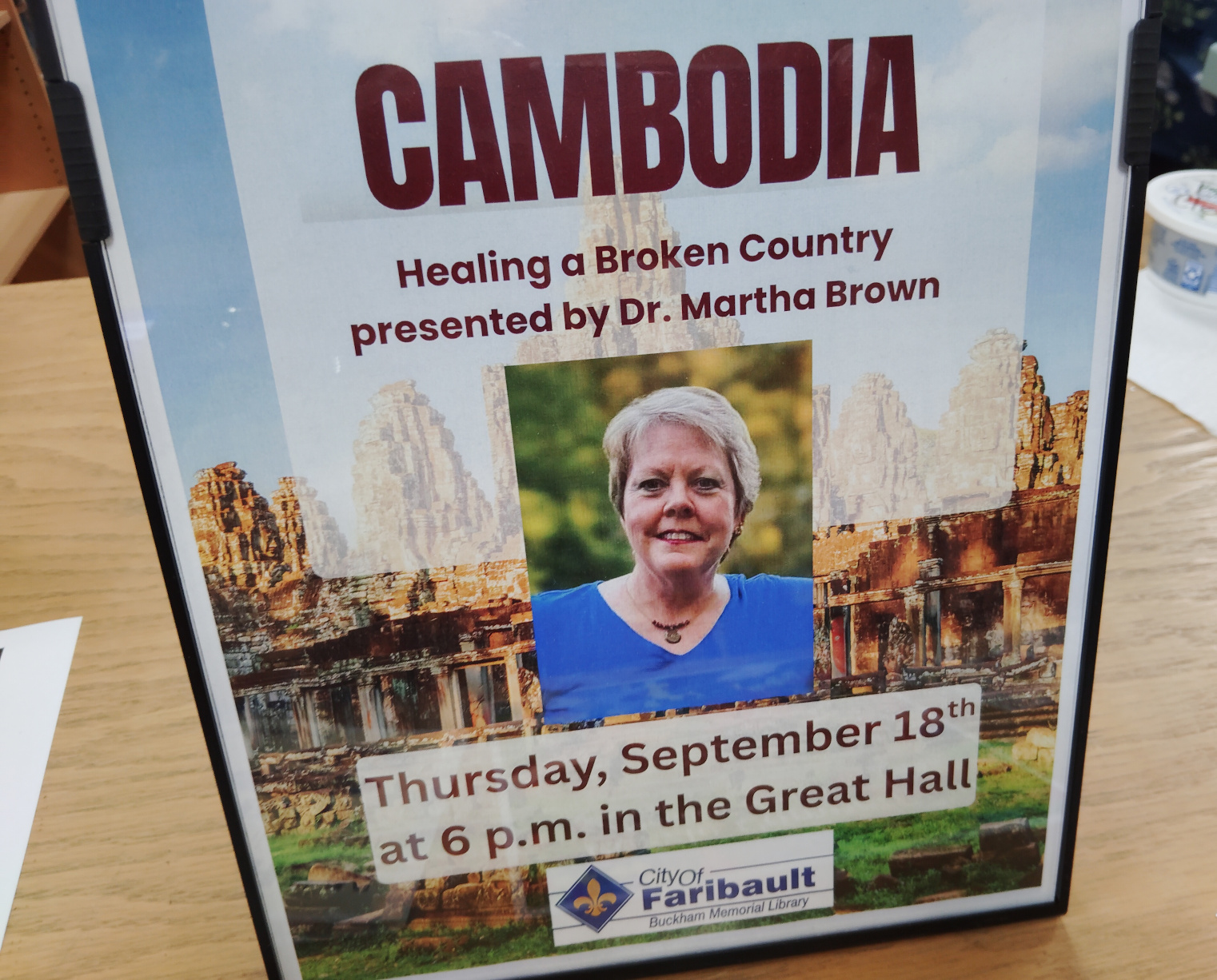
A promo for Martha Brown’s presentation about Cambodia sits on the checkout counter at Buckham Memorial Library, Faribault.

HISTORY CONNECTS THE STORIES of the two Marthas. One, Martha Ballard, a midwife and the main character in a book of historical fiction, The Frozen River by Ariel Lawhon. The second Martha is Martha Brown, local author, educator, speaker, musician and political candidate for state representative in my district. She shared her personal reflections about a trip to Cambodia on Thursday evening at the Faribault library in a presentation titled “Cambodia—Healing a Broken County.”

I’d just finished reading Lawhon’s book earlier Thursday so the commonalities between a story set in the late 1700s in postrevolutionary America and Brown’s recent trip to Cambodia connected in my mind. In both stories exist violence, trauma, strength, power and resilience within an historical context.

THE CAMBODIAN GENOCIDE

I’ll start with Brown. She focused on the time before and after the 1975-1979 Cambodian Genocide in which some 2 million Cambodians were murdered under the rule of Khmer Rouge, the Communist political party then in power. She also touched on the illegal and secret bombings of Cambodia by the U.S. in 1969 against North Vietnamese forces in Cambodia. That, too, claimed untold civilian lives.

I don’t want to get into historical details here or a political discussion about the Vietnam War. Rather, I intend the focus to be on those who suffered in Cambodia and those who survived. Just as Brown focused her hour-long talk. She arrived in Cambodia expecting to see trauma from the genocide. But instead, she said, she found recovery, healing and joy. She saw survivors of the genocide as part of the healing.

A HORRIFIC HISTORY NOT HIDDEN

The history of the genocide has not been hidden nor erased in Cambodia. “They don’t bury their history,” Brown said. I jotted that quote in my notebook, mentally connecting that to current day America and ongoing efforts by the current administration to erase/hide/rewrite history. We all know the quote—”Those who cannot remember the past are condemned to repeat it”—by Spanish Philosopher George Santayana. We would do well to contemplate and hold those words close.

In her presentation, Brown did not avoid the hard topics of children recruited and indoctrinated to participate in the Cambodian Genocide killings of educators, doctors, ordinary people, even those who wore eyeglasses. Perpetrators were never punished, went back to their lives, now live among the population. This was hard stuff to hear, especially about the brainwashing of children to kill. “We need to teach our children well,” said Brown, ever the educator who cares deeply about children.

LESSONS LEARNED IN CAMBODIA

Her passion was evident as she spoke of hugging survivors, of apologizing for the U.S. bombings of Cambodia, of crying while in the southeast Asian country. She learned that how you live and treat people is more important than wealth. She learned that people can be poor and still be happy. She learned about the differences in a society that focuses on community rather than self.

When Brown’s talk ended, others shared and a few of us asked questions, including me. Mine was too political to answer in a non-political presentation. But I asked anyway about the internal and external factors contributing to the rise and fall of empires. Brown hesitated, saying only that we could draw our own conclusions from her talk.

Book cover sourced online.

A MUST-READ BOOK

Then I wrote “The Frozen River by Ariel Lawhon” on a slip of paper. Not to give to Brown, but rather to the local director of Hope Center serving survivors and victims of sexual assault and domestic violence and their families. I handed the paper to Erica Staab-Absher after hugging her. “You need to read this book,” I said.

In this book of historical fiction, the author bases her writing on real-life midwife Martha Ballard, who documented her life in a journal. Ballard was witness to violence, sexual assault, injustices, secrets, manipulation, power, trauma and much more. This book will resonate with anyone who has survived a sexual assault or cared about someone who has been so viciously attacked. I cannot say enough about the value of reading this book and how empowering it was to me as a woman. It is a love story, mystery and a documentation of strength and resilience.

Resilience. Strength. Healing. Those three words come to mind as I connect the work of a New York Times bestselling author and a talk about the Cambodian Genocide at my southern Minnesota library. By reading and listening, I learned. To read a book pulled from the shelves at my public library and then to listen to personal reflections about a trip to Cambodia on the second floor of that same library are freedoms I no longer take for granted. Not today. I choose to remember and learn from the past. And hope we do not repeat it.

© Copyright 2025 Audrey Kletscher Helbling
 

Politics, passionate voices & peach pie at a potluck September 9, 2025

A protester at the NO KINGS day rally in Northfield. (Minnesota Prairie Roots copyrighted file photo June 2025)

MONDAY EVENING I GATHERED in rural Rice County with a crowd concerned about issues ranging from healthcare to immigration, agriculture, education, the environment, diversity, gun violence, the SNAP program, tariffs, voting rights, veterans’ benefits, the economy and much more. All current-day topics worrying many of us, including me.

I’ve never been politically active. Until this year. To stay silent now feels complicit. I care enough about this country, about freedom, about democracy, to let my voice be heard. I’ve participated in three pro-democracy rallies, including the NO KINGS Day Rally in Northfield and two on Labor Day in Owatonna. I’ve volunteered at a DFL Sweetcorn Feed in Faribault. I’ve donated to the DFL, called and emailed my legislators in Washington, DC. And Monday evening I attended a potluck, billed as a DFL Working Families Garden Party. This all from someone who previously voted primarily Republican. But no more, not in the past four Presidential elections or in some other past elections. I’ve always looked at candidates, their character and their stances on issues before voting. I still do, but party affiliation now matters to me, too.

Minnesota potlucks always include bars, like these at a previous event I attended. (Minnesota Prairie Roots copyrighted file photo)

DEEP CONCERN

At all of these recent events, I’ve heard—whether from politicians, candidates for office or ordinary people like me—a deep concern for our country under the current administration and those who go along with whatever our President says and does. This concern comes from good, decent people. Farmers, teachers, business owners, lawyers, blue collar workers, college students. People who carry crockpots of pulled pork and baked beans, bowls of creamy garden-fresh cucumber salad, peach pie and bars to a political party on a rural acreage.

As I sat in this bucolic setting Monday evening listening to short speeches from candidates like Martha Brown of Faribault, running for Minnesota House District 19A on the slogan of “Common-Sense Leadership for Working People,” or fiery Matt Little from Elko New Market who embraces the label of “radical” and who is running for Congress in the Second Congressional District or Ben Schierer of Fergus Falls, campaigning for state auditor and vowing to represent both urban and rural communities, I felt hope.

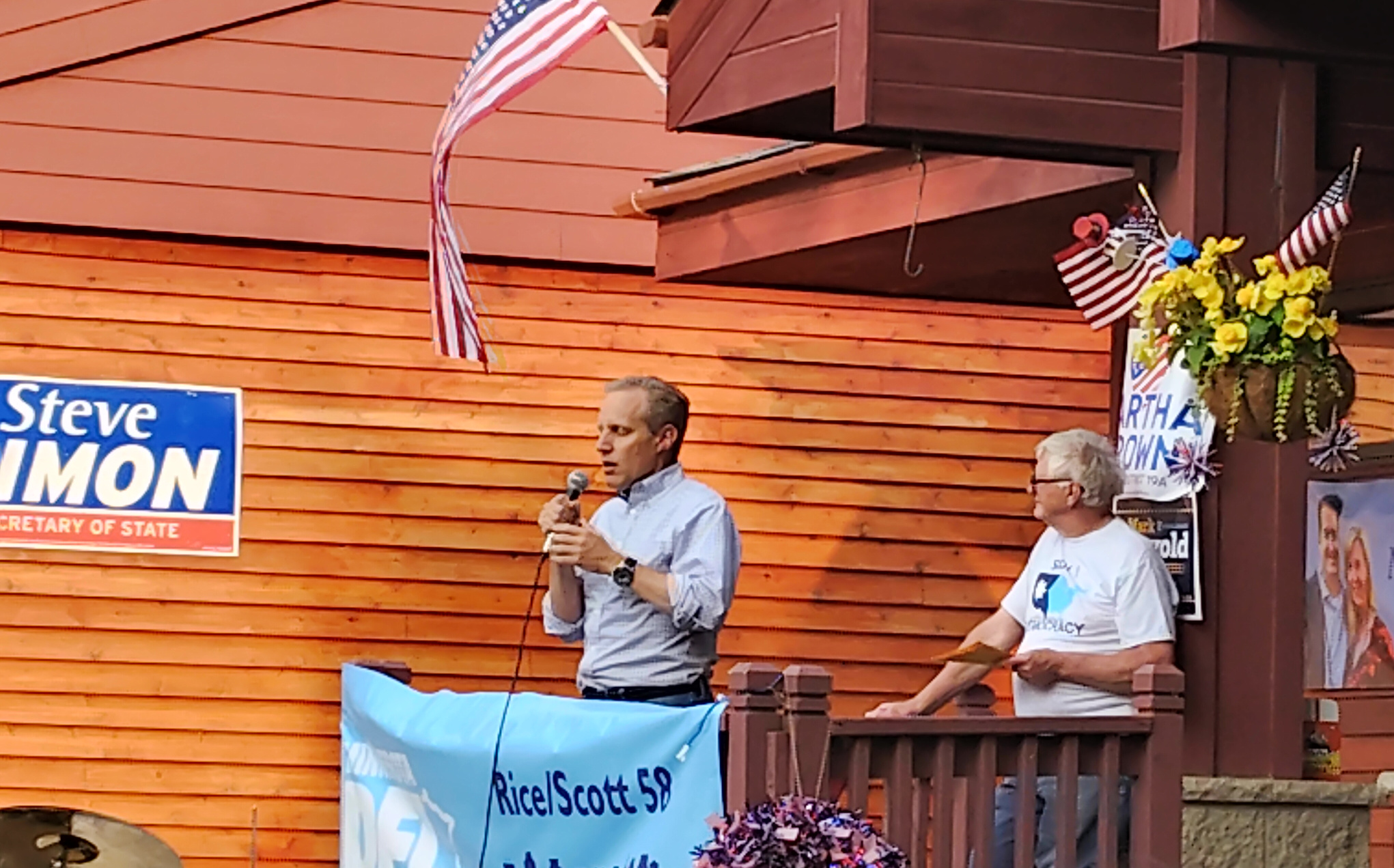
Minnesota Secretary of State Steve Simon speaks at the DFL Garden Party hosted by Ted Suss, right, near Nerstrand. (Minnesota Prairie Roots copyrighted photo September 2025)

COMPASSION & HOPE

I felt hope, too, when I heard Minnesota Secretary of State Steve Simon talk about protecting voter information, voting rights and more. I felt hope when I heard Minnesota Senate Majority Leader Erin Murphy speak. As a nurse, her care and compassion for others threads through her speeches, shines in her political life.

A memorial banner honors the Hortmans, shot to death in June, and their dog, who had to be euthanized due to his injuries. Below the Minnesota flag hangs a campaign sign for Jake Johnson, who is running for office in Minnesota’s First Congressional District. (Minnesota Prairie Roots copyrighted photo September 2025)

Most notable in Murphy’s talk, at least for me, is the deep grief she feels over the politically-motivated assassination of her friend and colleague, Minnesota Speaker of the House Emerita Melissa Hortman and Hortman’s husband, Mark. The Hortmans were shot to death on June 14, the day I protested in Northfield, despite warnings not to do so. I refuse to be silenced.

Murphy spoke on Monday evening against a backdrop of American and Minnesota state flags and a banner of the Hortmans and their dog with this message: STAND UP FOR JUSTICE AND PEACE. She talked, too, about attending the funeral on Sunday of Fletcher Merkel, 8, among two students killed in a mass shooting that injured 21 others at Annunciation Catholic Church in south Minneapolis on August 27. Justice. Peace. No more gun violence.

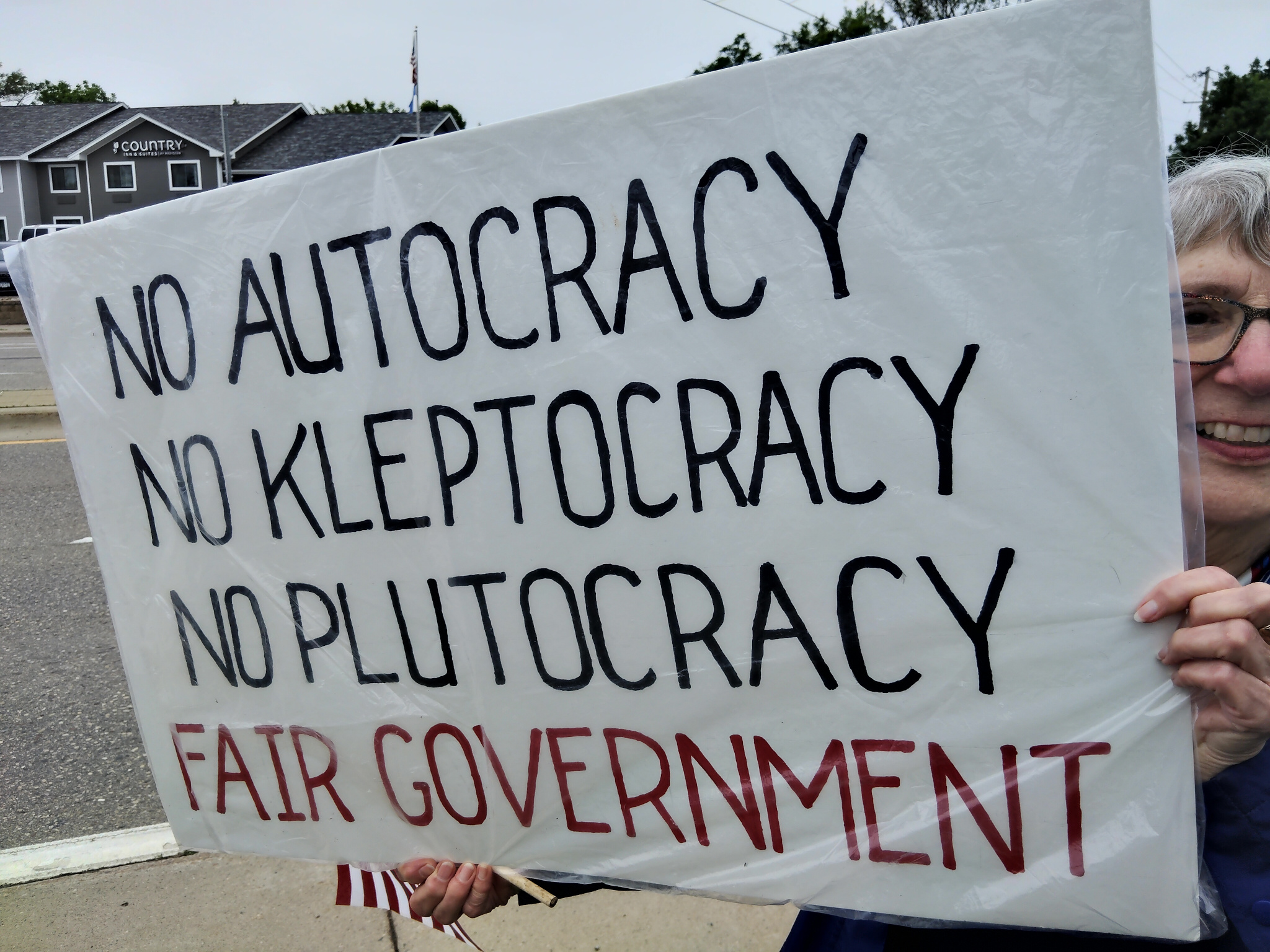
This sign from the NO KINGS rally in Northfield really resonated with me. (Minnesota Prairie Roots copyrighted file photo June 2025)

UNPRECEDENTED

I’ve lived enough years to observe that what’s happening in this country right now is unprecedented. I’ve never felt more fearful of losing our freedoms under authoritarian rule. It’s happening already with snatching people off the streets, imprisonment and deportations without due process. It’s happening in intimidation and retribution; mass firings; suppression of free speech; funding cuts that are undermining research, healthcare, education and more; gathering of private information by the government; sending armed military into cities; and in countless other ways that affect all of us no matter our political affiliations.

This isn’t about rural vs urban. This isn’t about us vs them. This is, rather, about preserving and protecting our very freedoms as Americans. This is about caring and feeling hopeful. This is about speaking up. About doing something. And sometimes this is also about eating pulled pork, baked beans, cucumber salad and homemade peach pie at a potluck on a beautiful September evening in southern Minnesota.

#

NOTE: I moderate all comments on this, my personal blog, reserving the right to publish or not publish comments. Please be respectful whether you agree or disagree with me.

© Copyright 2025 Audrey Kletscher Helbling
 

As school starts for most in Minnesota September 2, 2025

I photographed this creative back-to-school front window display at Owatonna Shoes Monday afternoon. (Minnesota Prairie Roots copyrighted photo September 2025)

HOW WELL I REMEMBER the first day of classes at the start of a new school year. Decades ago as a student. Then as a parent of three. And now as a grandparent.

As a student, I felt excited. Nervous. Happy. I remember the sharp tips of new Crayola crayons. The discomfort of new shoes. Piles of multi-colored notebooks awaiting words.

As a mom, I remember worrying if my kids would catch the right bus, make friends, like their teachers.

But none of that matches the concerns I feel today as the grandmother of a first grader and a fourth grader who begin classes Tuesday morning in a community in the south metro. The deadly shooting of two students and injury of 21 others (including three octogenarian worshipers) during a morning back-to-school Mass last week at Annunciation Catholic Church in south Minneapolis weighs heavy on all of us.

(Minnesota Prairie Roots copyrighted photo September 2025)

Children, teachers and staff should feel and be safe in school. Parents should never have to wonder if their children will come home. Grandparents shouldn’t have to worry how their children, their grandchildren, are going to navigate all of this.

But school violence is all too real. And it shouldn’t be. I invite you to read a blog post by Kathleen Cassen Mickelson (click here), a mother, grandmother, writer, photographer, poet and activist. She writes with passion and clarity about the Annunciation shooting and gun violence, including steps we can take to change things. Kathleen’s words are powerful and move us to a place of action with the strong word, “Demand.”

As someone who grew up in Minneapolis, Kathleen writes from the heart. She is grieving. Angry. Frustrated. Just like me. Just like so many of us in Minnesota and beyond.

(Minnesota Prairie Roots copyrighted photo September 2025)

To the politicians out there who put guns before kids and who vote against funding for mental health programs, pause for a moment and assess your priorities. Walk in the shoes of kids, parents, grandparents, teachers. And then think of Fletcher Merkel, 8, and Harper Moyski, 10, shot to death in a Minneapolis church during the first week of classes at Annunciation Catholic School.

© Copyright 2025 Audrey Kletscher Helbling
 

The day after a mass shooting…thoughts from Minnesota August 28, 2025

An inspirational word in an art installation honoring Barb Larson, shot and killed in 2016 inside her workplace, the Faribault Area Chamber of Commerce & Tourism. Used here for illustration only. (Minnesota Prairie Roots copyrighted file photo)

IN MY BIBLE, I highlight verses that resonate with me, that inspire, that uplift and offer hope. Those include Jeremiah 29:11. It reads: For I know the plans I have for you, declares the Lord, plans to prosper you and not to harm you, plans to give you hope and a future. In faith communities, this specific scripture is often directed to youth, who are our future.

On Wednesday morning those words written by the prophet Jeremiah were shared by Matt DeBoer, principal of Annunciation Catholic School in south Minneapolis, following a mass shooting at the adjacent church. The shooter fired from outside through stained glass windows into the church, killing two students and wounding 18 others, including three parishioners in their eighties. All were attending a back-to-school morning Mass.

The churning Straight River, visually reflective of what we’re feeling now in Minnesota. (Minnesota Prairie Roots copyrighted file photo)

NEVER AGAIN”

This act of gun violence is nothing short of horrific. No one can deny that. Fletcher, 8, and Harper, 10, are dead. Seven others were critically injured, taken to a level 1 trauma center. All are expected to survive. The level of pain and grief and anger, yes, anger, we are feeling collectively in Minnesota right now is palpable.

In all the media coverage I’ve watched and read, I keep circling back to Principal DeBoer and his message at a late Wednesday morning press conference hours after the shooting. He shared the school’s Jeremiah 29 based theme for 2025-2026 of “a future filled with hope.” Hope happens to be one of my favorite words, but not one I personally relate to a mass shooting. Yet on Wednesday morning, the principal called for all of us to look to the future with hope, because we can’t change the past. I listened. I heard. I heard him say, “Never again.” I heard DeBoer ask us to commit those two words to our speech pattern. “Never again.”

And I heard, too, his call for action as he referenced this African proverb: When you pray, move your feet.

As the day progressed into evening vigils, I continued to watch television coverage. Clergy led a prayer service at the Academy of Holy Angels, a nearby private Catholic high school that Annunciation students often attend beginning in ninth grade. In a message also themed to hope, Archbishop Bernard Hebda mentioned the broad support received from those of all faiths—Protestants, Jews, Muslims… And from Pope Leo XIV. I would expect nothing less. We are all hurting.

Another vigil followed at Lynnhurst Park. As I watched television coverage begin, I focused on the diverse crowd. A young girl seated on the ground clutching a teddy bear. A priest in a wheelchair. Attendees sheltering flickering candles with their hands. People in bright orange t-shirts emblazoned with “Protect Minnesota.” Photographers working. A woman in a black tee with the simple word, “Enough,” and a slash drawn through a circled gun. Instrumental music played—”Bridge Over Troubled Water”—setting an introspective mood.

“Doing something” must be about our kids. Photo used for illustration only. (Minnesota Prairie Roots copyrighted file photo)

WE NEED TO…”

And then the line up of speakers stepped up, addressing the crowd. The mood at this vigil was decidedly different. This gathering focused on a call to action in oftentimes fiery and emotional speeches by politicians and local leaders calling for stronger gun laws. In all the thoughts shared, Minnesota Lieutenant Governor Peggy Flanagan’s message rose to the top for me. While she spoke the usual “You are not alone” and “Enough is enough,” here’s the one soundbite that sticks with me: “We need to love our babies and our children more than our guns.” That bears repeating. “We need to love our babies and our children more than our guns.”

On this, the morning after the murder of two children and wounding of 17 others at Annunciation Catholic Church less than an hour from my Faribault home, I reflect on Flanagan’s words. And I think of my own two elementary-aged grandchildren starting the new school year on Tuesday. I want them to feel, to be, safe. I want this gun violence to end. As the mayor of Minneapolis said, his is “a city united in grief,” which must now become “a city united in action.”

I hold hope that perhaps this time something will change. I understand that gun violence is complicated, that it involves addressing the root causes of such violence. Yet, if not for the guns—three used in the Minneapolis shooting—two children would still be alive.

#

This story has been updated to include the first names of the two children killed in the shooting. Their names were released late Thursday afternoon. The number of injured has also been updated to 18.

© Copyright 2025 Audrey Kletscher Helbling
 

My heart breaks after another mass shooting, this time at a Minneapolis church/school August 27, 2025

I’ve photographed many stained glass windows in churches. I looked through my archives and found this image of a window at Mother of Good Counsel Votive Chapel, LaCrosse, Wisconsin and it struck me as fitting for this post. (Minnesota Prairie Roots copyrighted file photo 2015)

I HAD MY MORNING PLANNED. Wash sheets and towels and hang them on the line. Pay bills. Write a blog post. I finished the laundry. But then all activity stopped and my attention focused to breaking news—a mass shooting in south Minneapolis.

For hours I’ve watched media coverage of events unfolding at Annunciation Catholic Church and School in south Minneapolis. Early today two school children were shot and killed during morning Mass. Seventeen others were injured, among them two adults. Four required surgery. Seven were in critical condition at Hennepin County Medical Center, a level one trauma center. Several went to other hospitals.

My heart breaks for the families, friends and classmates of the eight and 10-year-olds who were killed. My heart breaks for all who were part of and witness to this violence. Minneapolis Mayor Jacob Frey and Minneapolis Police Chief Brian O’Hara, who spoke at a press conference, echoed the same. Their pain and anguish were evident in their words, their voices breaking with emotion.

I was especially touched by Mayor Frey’s message that we must go beyond simply saying “thoughts and prayers” because, as he stated, these kids were literally in church praying. He’s right. I believe in prayer. But I also believe that caring and compassionate action must accompany prayer. Frey called upon all of us to wrap our arms around the affected families, to love and support them. These are not only Minneapolis families affected, but American families, he said, adding that these shootings happen far too often.

According to officials, the gunman, dressed in black and armed with a rifle, shotgun and pistol, fired from the outside through church stained glass windows, hitting victims sitting in the pews. The man, in his early 20s and with no known criminal record, is dead from a self-inflicted gunshot wound, according to the police chief.

Both the mayor and police chief used the word “evil” when describing this morning’s shooting. They also used words like “deliberate act of violence,” “unspeakable act,” and “unthinkable tragedy.” We’ve heard those words way too often following mass shootings that have occurred way too often. Once is too often.

My day goes on, not as I planned, but tinged now with deep sadness. I can’t shake the images of children emerging from Annunciation School with their parents, hands clasped, faces showing the deep pain they are feeling. They are forever changed.

This is tough. All of it. Something must change.

© Copyright 2025 Audrey Kletscher Helbling