Minnesota Prairie Roots

Writing and photography by Audrey Kletscher Helbling

Is it true about “no flannel” in Boston? January 22, 2014

UNTIL MY SON PREPARED for a flight to Boston last spring to visit three colleges, I’d never heard of Tufts University.

My son in a Tufts University sweatshirt. Edited Minnesota Prairie Roots photo.

My son in a Tufts University sweatshirt. Edited Minnesota Prairie Roots photo.

He had to spell out the name for me, T-U-F-T-S.

That was my introduction to the private research university he now attends after transferring from North Dakota State University. The move to Tufts’ Medford, Massachusetts, campus was the right one for him. He’s challenged in his studies and happy living in a metro area far from the wind-whipped plains of Fargo. I don’t necessarily think he would be where he is today, though, without that year at NDSU.

But back to Tufts, which has a current student population of nearly 11,000 with 5,255 of them undergrads.

Last Thursday I was watching NBC’s Parenthood. The TV show focuses on the lives of the Braverman family, including college student Drew. Drew’s girlfriend, Amy, is currently staying with him in his Berkeley dorm room. I missed the season 4 finale in which Amy revealed she’d gotten into Tufts.

In Thursday’s episode, Amy shared that the girls at Tufts are snobby and everyone is smart and she simply cannot return there because she doesn’t fit in.

Awhile ago, I asked my son if he ever felt out of place at Tufts. I mean, this is a college where lamb is served in the dining center and there’s a sailing team. Not exactly a part of his lower middle class upbringing.

A man of few words, he said that depends on who he is with and that even then he doesn’t let his lack of family wealth bother him. Unlike Amy on Parenthood, I’ve never heard him call anyone at Tufts “snobby.”

Financial aid at Tufts is based on need, the sole reason my son can afford to attend this distinguished university. Annual attendance cost far surpasses our yearly family income. Tufts has set a goal of “ensuring that no highly qualified applicants are turned away because their need exceeds the university’s resources,” according to information on the Giving to Tufts portion of the university’s website. Our family is grateful to Tufts for embracing that philosophy of admitting students “not based on ability to pay, but on ability, pure and simple.”

That all said, when the son was home in Minnesota for holiday break, we went clothes shopping. I swear he grew an inch or more in the three months since I’d seen him.

About one thing he was adamant: “They don’t wear flannel shirts in Boston.” This from a 19-year-old who, only after entering college, began caring about attire. Not to say he dressed poorly. But fashion simply never mattered much to him.

Now he’s back at Tufts with these new clothes: four sweaters, three pairs of jeans, grey pants, and a winter scarf (in Tufts colors).

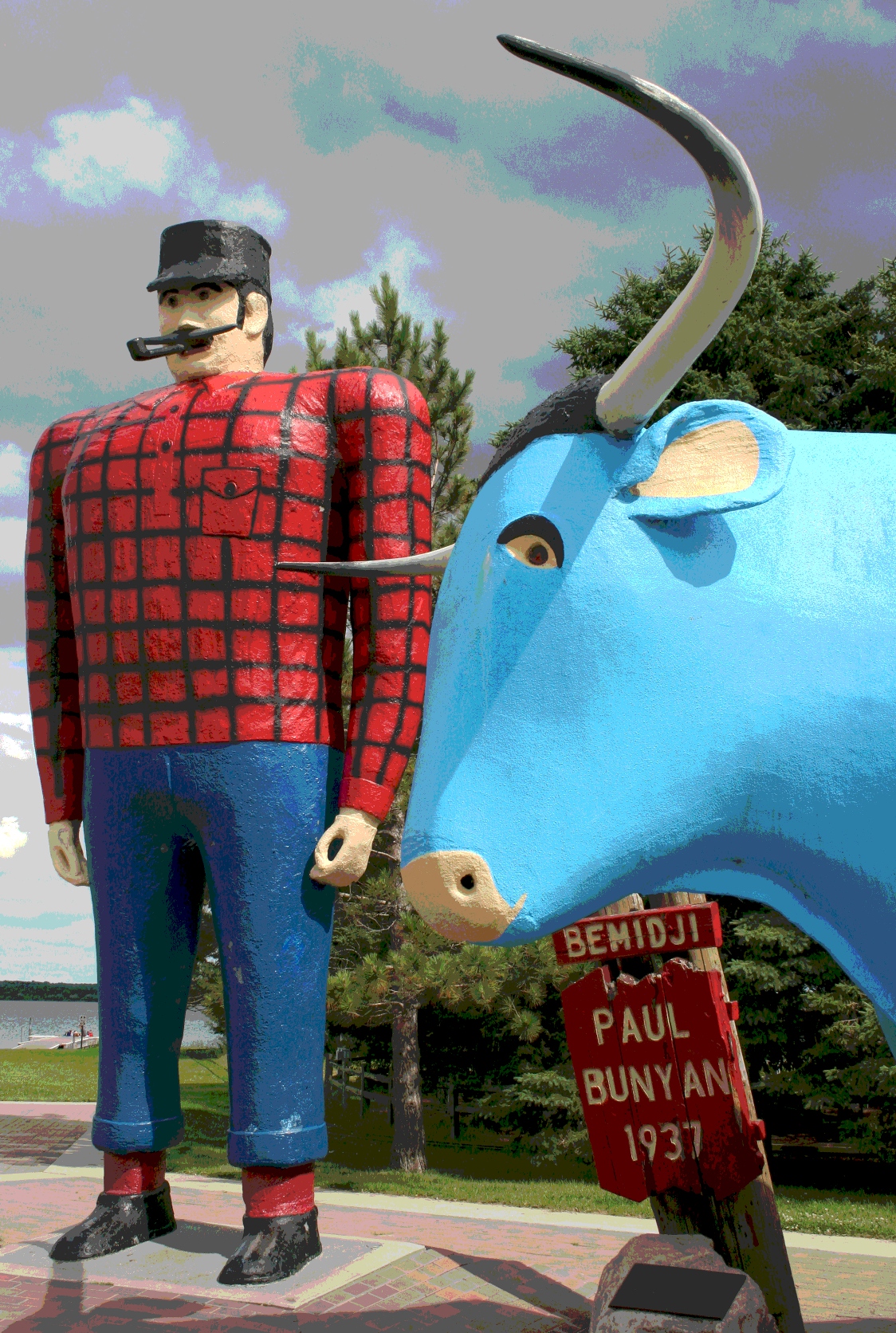
Legendary Paul Bunyan and Babe the Blue Ox in Bemidji, Minnesota. Minnesota Prairie Roots edited file photo.

Legendary Paul Bunyan (dressed in his flannel lumberjack shirt) and Babe the Blue Ox in Bemidji, Minnesota. Minnesota Prairie Roots edited file photo.

Surprisingly, though, he took his flannel back to Boston, too. He likely can wear the shirts, unnoticed, under his new sweaters.

Had he left his flannel shirts behind in Minnesota, I would have swiped them. I take no shame in dressing like Paul Bunyan.

FYI: Click here to reach Tufts’ Facebook page and the latest on the university’s mention in the Doonesbury comic strip.

Click here to reach Wikipedia’s “Tufts University in popular culture.”

© Copyright 2014 Audrey Kletscher Helbling


Believing in the magic of Santa and of community theatre December 11, 2013

ALTHOUGH I’VE TRAVELED TO NEW YORK, albeit only once and in the late 1970s, I’ve never been to Macy’s.

I’ve watched the Macy’s Day parade, though, on television and this year heard a brief first person account from my 19-year-old son. He attends college in the Boston area and spent his Thanksgiving break in the Big Apple.

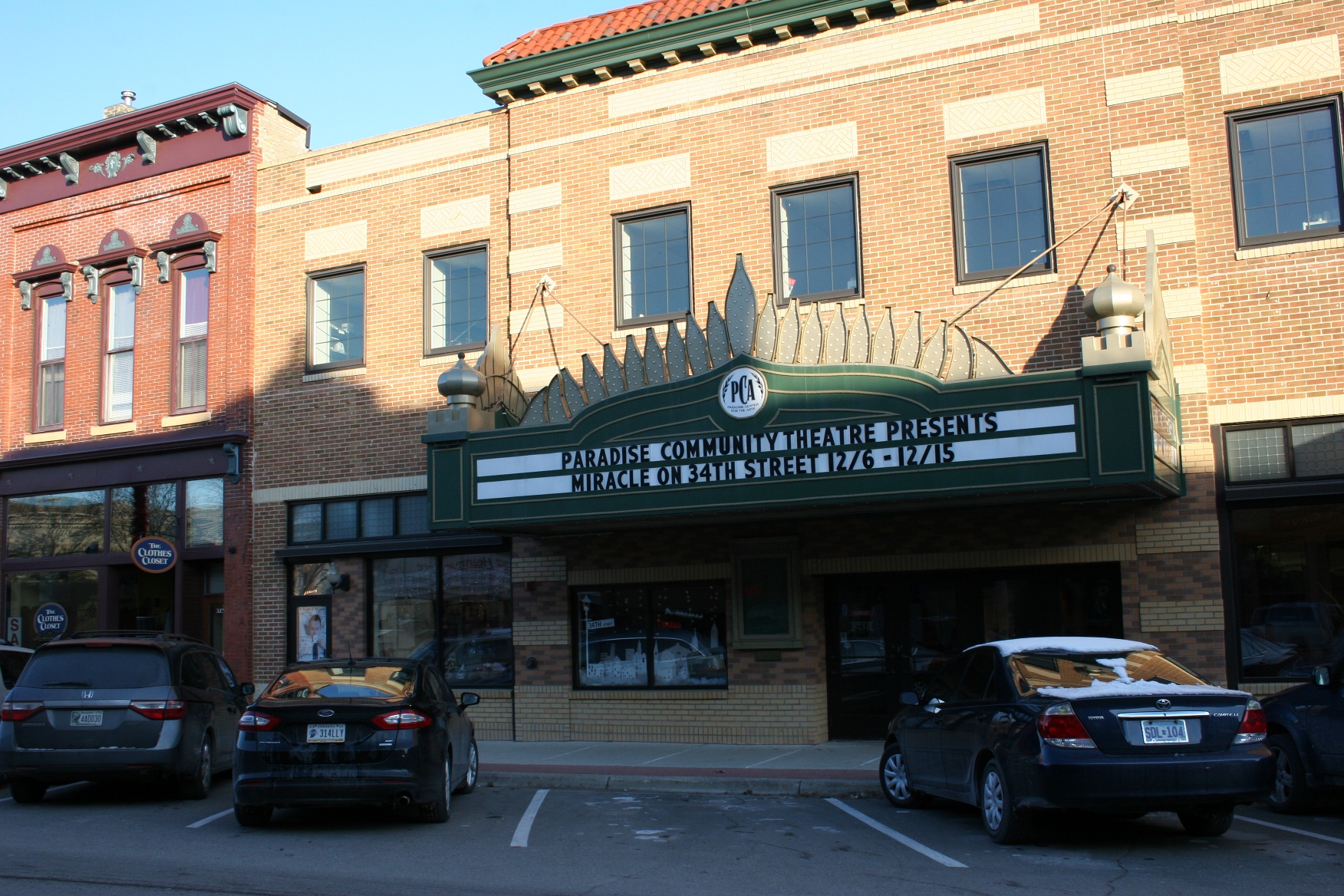
The historic Paradise Center for the Arts in downtown Faribault.

The historic Paradise Center for the Arts in downtown Faribault.

Saturday evening, thanks to the Paradise Community Theatre’s production of Miracle on 34th Street, The Musical, I visited the aforementioned New York department store and watched (imaginatively speaking) a portion of the parade.

Plus I was swept into the holiday spirit by songs such as “It’s Beginning to Look a Lot Like Christmas” and by the acting of 31 gifted performers. The cast includes a lot of dedicated young actors and actresses who bring abundant energy and talent to the stage.

With the exception of a cold theater (due to furnace problems), a not-so-good seat (I waited too long to reserve my ticket), and occasional difficulty hearing the singers above the orchestra, I thoroughly enjoyed the performance.

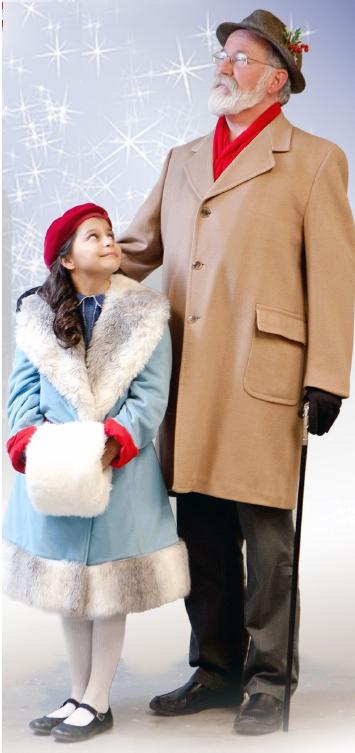
Malia Hunt as Susan Walker and Jerry Fox as Kris Kringle. Photo by Betsy Cole Photography and courtesy of the Paradise Center for the Arts.

Malia Hunt as Susan Walker and Jerry Fox as Kris Kringle. Photo by Betsy Cole Photography and courtesy of the Paradise Center for the Arts.

This classic Christmas story, which was unfamiliar to me (I know, I know), thrusts you right into the magic of the holiday season. Do you believe in Santa Claus? Do you believe in love? You will after viewing this splendid performance of Miracle on 34th Street in which Kris Kringle claims that he truly is Santa Claus. Northfield resident Jerry Fox portrays as convincing of a Santa Claus as you’ll ever see, both in appearance and demeanor.

And adorable 10-year-old Malia Hunt of Faribault exudes absolute confidence in her main character role as Susan Walker, the little girl who wants a father for Christmas, along with a farmhouse, a swing in the backyard and a cow.

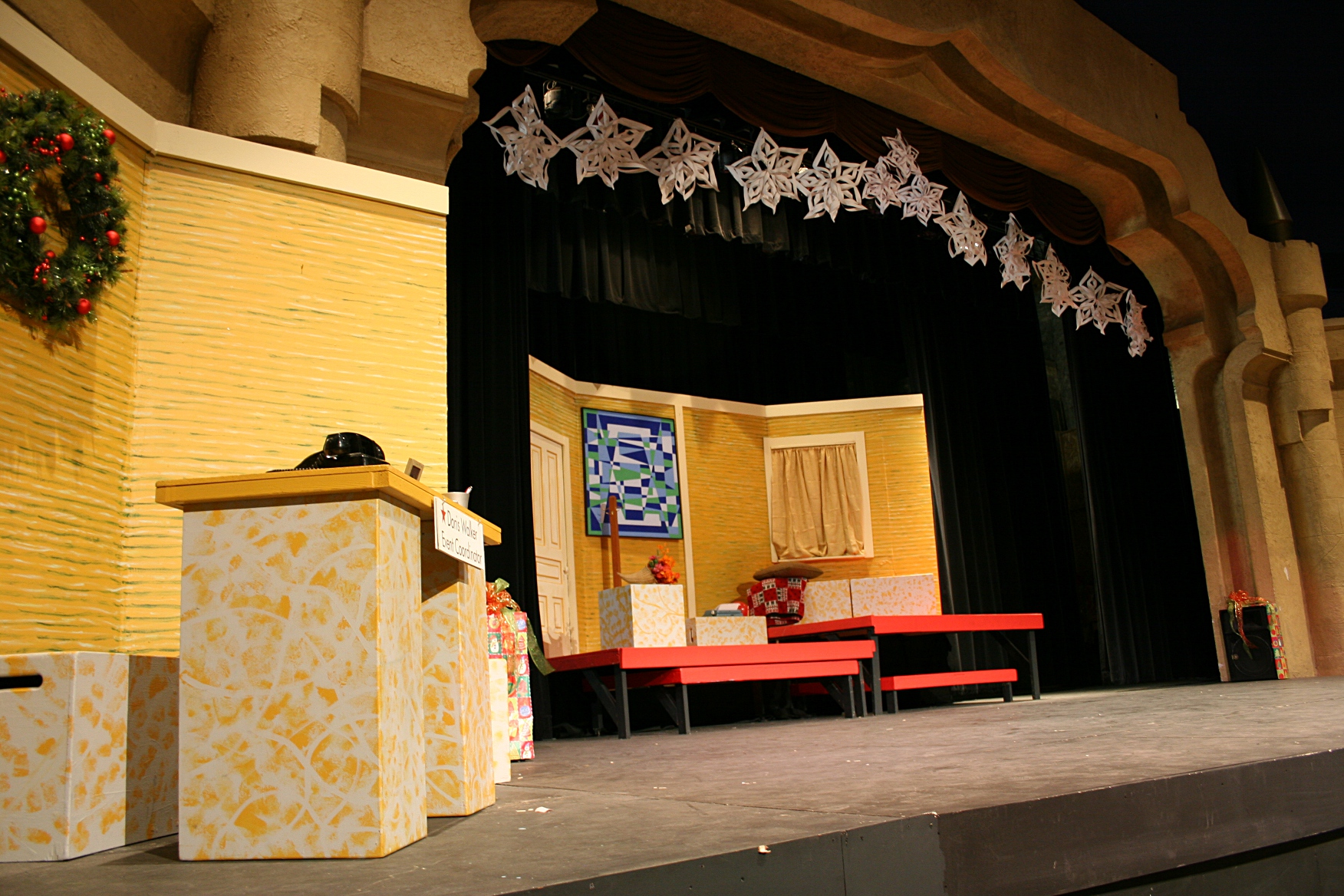
The sets are constantly changing in the performance. This set shows the Macy's Department Store desk of Doris Walker (Sydney Place-Sallstrom), left, and Doris and Susan Walker's apartment, center stage.

The sets are constantly changing in the performance. This set shows the Macy’s Department Store desk of Doris Walker (Sydney Place-Sallstrom), left, and Doris and Susan Walker’s apartment, center stage.

My favorite line in the entire show comes from Jackson Hemann of Medford, who plays Thomas Mara, Jr., the young son of a New York district attorney determined to prove Kris Kringle is not Santa.

When Kringle’s attorney, Fred Gaily (Mickey Morstad), asks Thomas why he believes in Santa, the young boy replies: “My mommy told me so.”

Ah, to possess such child-like faith.

“Faith,” Kris Kringle declares during the performance, “is believing in something when your common sense tells you not to.”

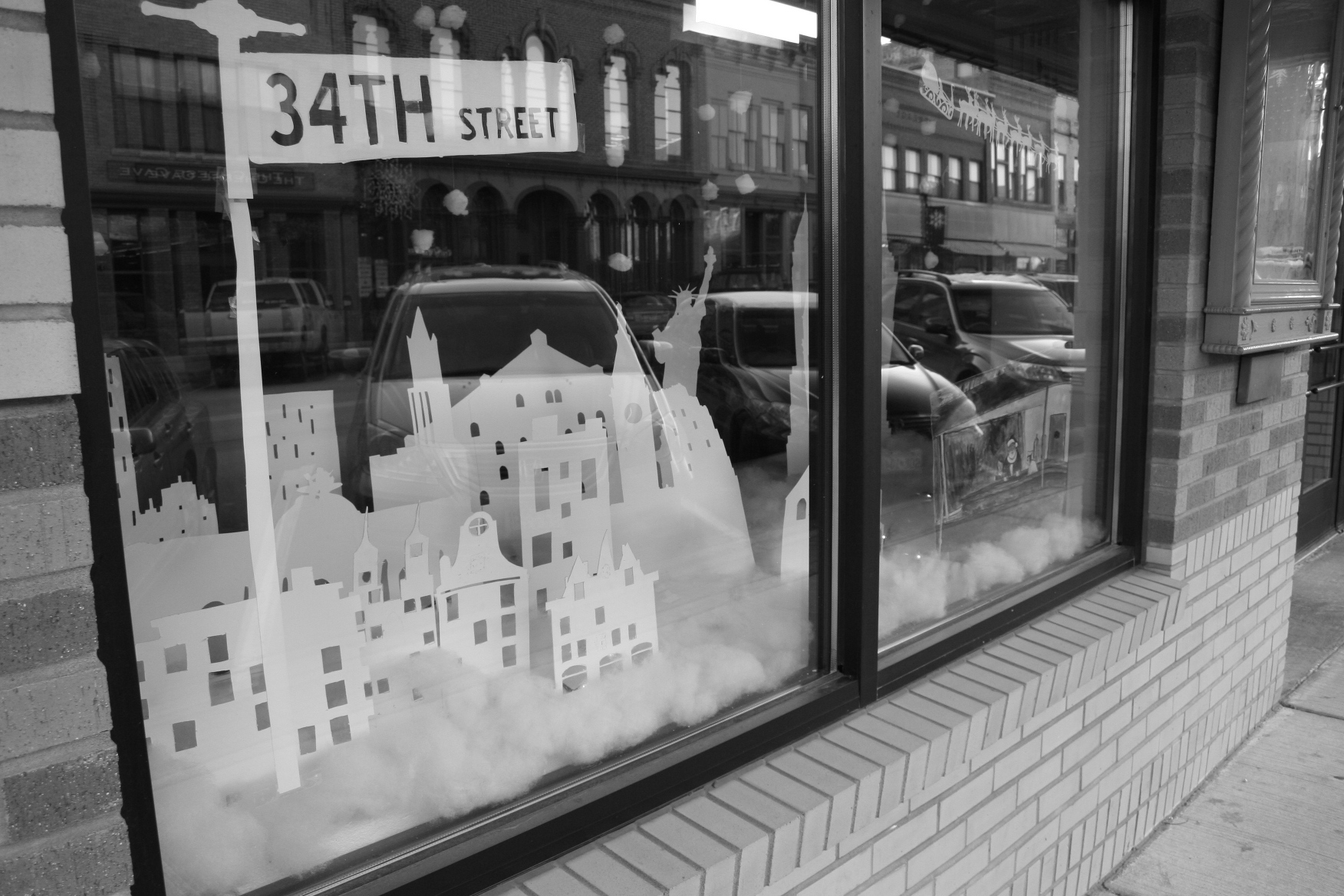
An artistic interpretation of Miracle on 34th Street graces a front window at the Paradise Center for the Arts, which reflects some of downtown Faribault's historic buildings.

An artistic interpretation of Miracle on 34th Street graces a front window at the Paradise Center for the Arts with some of downtown Faribault’s historic buildings reflected on the glass.

When the show ended at 10 p.m., children clustered around Fox. Don’t try telling them he isn’t really Santa Claus.

They believe in the magic of Santa Claus, just like I believe in the magic of theatre to transport me from Central Avenue in Faribault, Minnesota, to 34th Street in New York City.

FYI: Additional performances of Miracle on 34th Street are set for 7:30 p.m. this Thursday – Saturday, December 12 – 14, and at 2 p.m. on Sunday, December 15, at the Paradise Center for the Arts, 321 Central Avenue in historic downtown Faribault. Click here for more information. As of early Tuesday afternoon, only limited seating remained for the Friday and Saturday shows with the Sunday afternoon performance nearly sold out.

My husband and I attended Miracle on 34th Street compliments of an event hosted by South Rice County Chapter of Thrivent Financial for Lutherans. This did not influence my decision to review the performance nor the content of my review.

© Copyright 2013 Audrey Kletscher Helbling
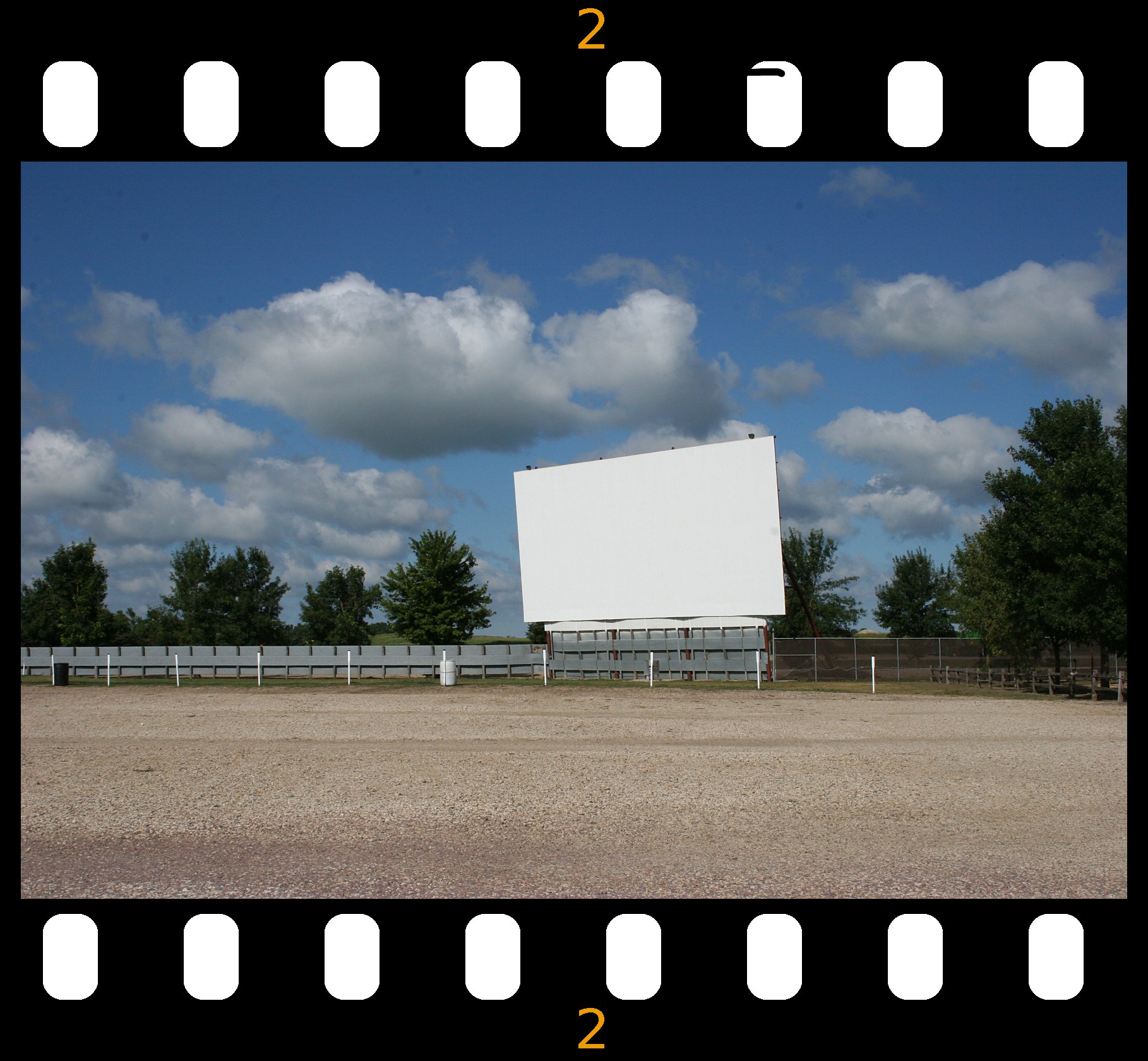
Photo of Jerry Fox and Malia Hunt by Betsy Cole Photography and courtesy of the Paradise Center for the Arts.


In Luverne: “Go digital or go dark” August 29, 2013

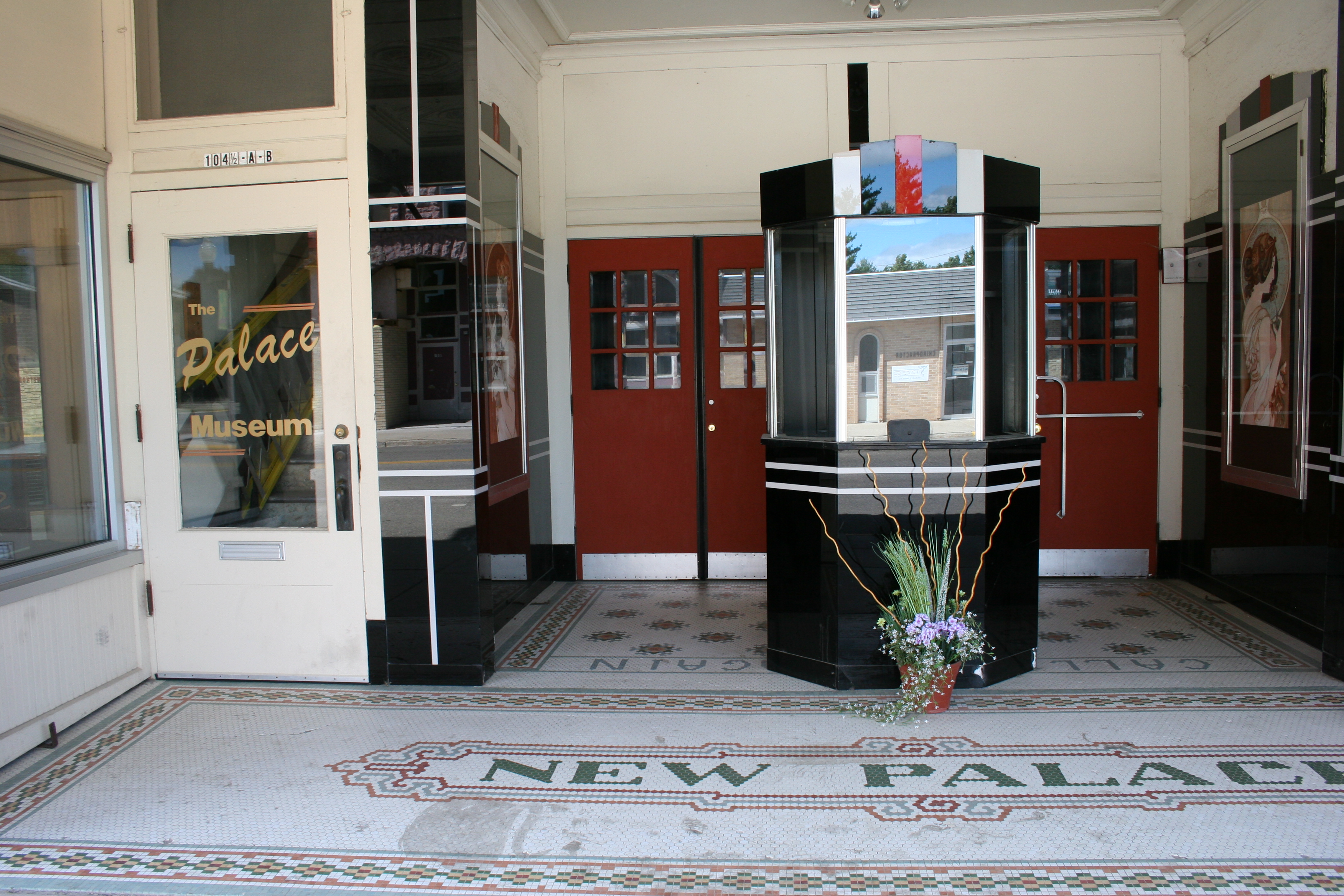
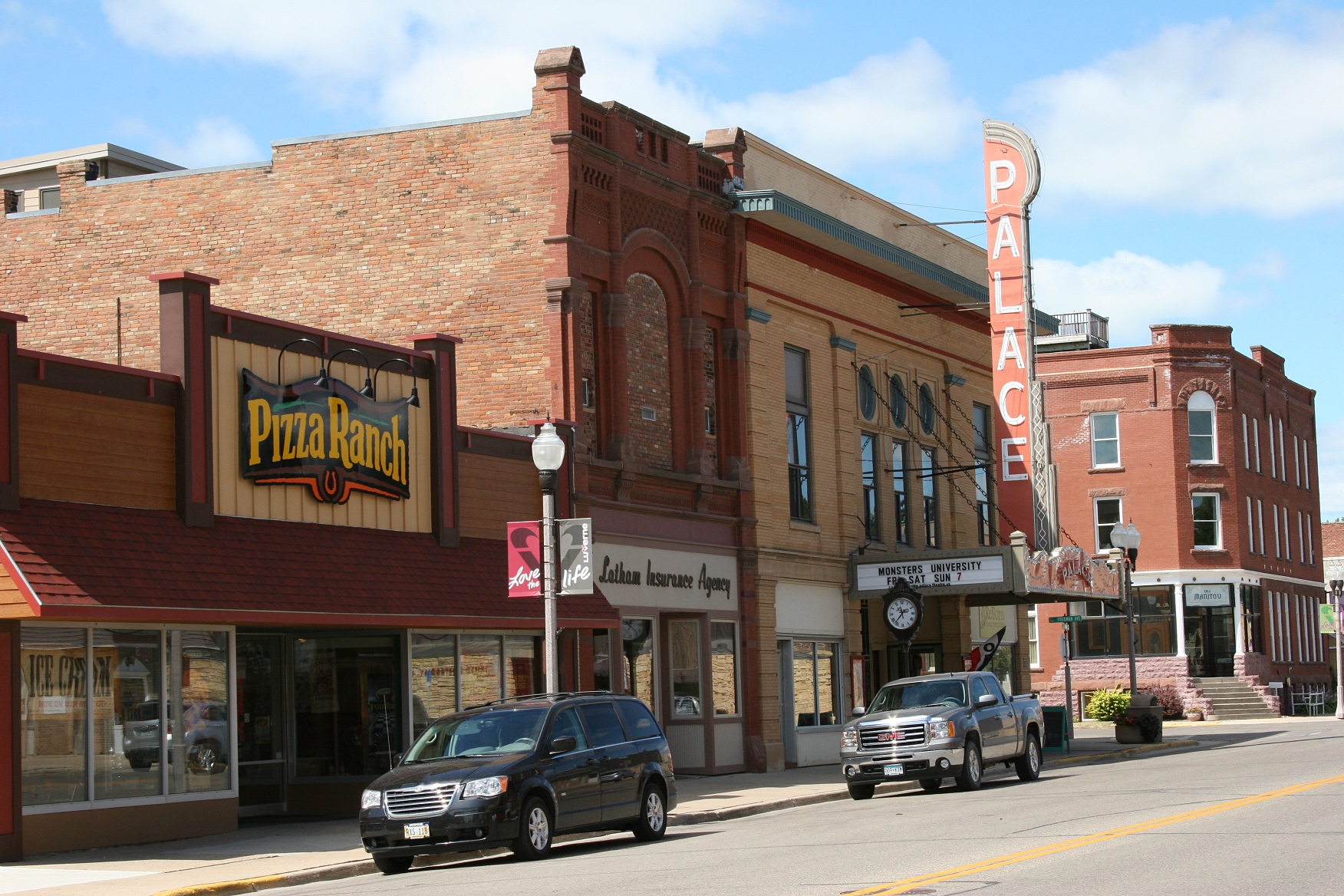
The entry to the historic Palace Theatre in downtown Luverne, Minnesota.

The entry to the historic Palace Theatre in downtown Luverne, Minnesota.

THE DOORS TO THE OLD THEATRE were locked, much to my dismay, on a recent Saturday visit to Luverne in extreme southwestern Minnesota.

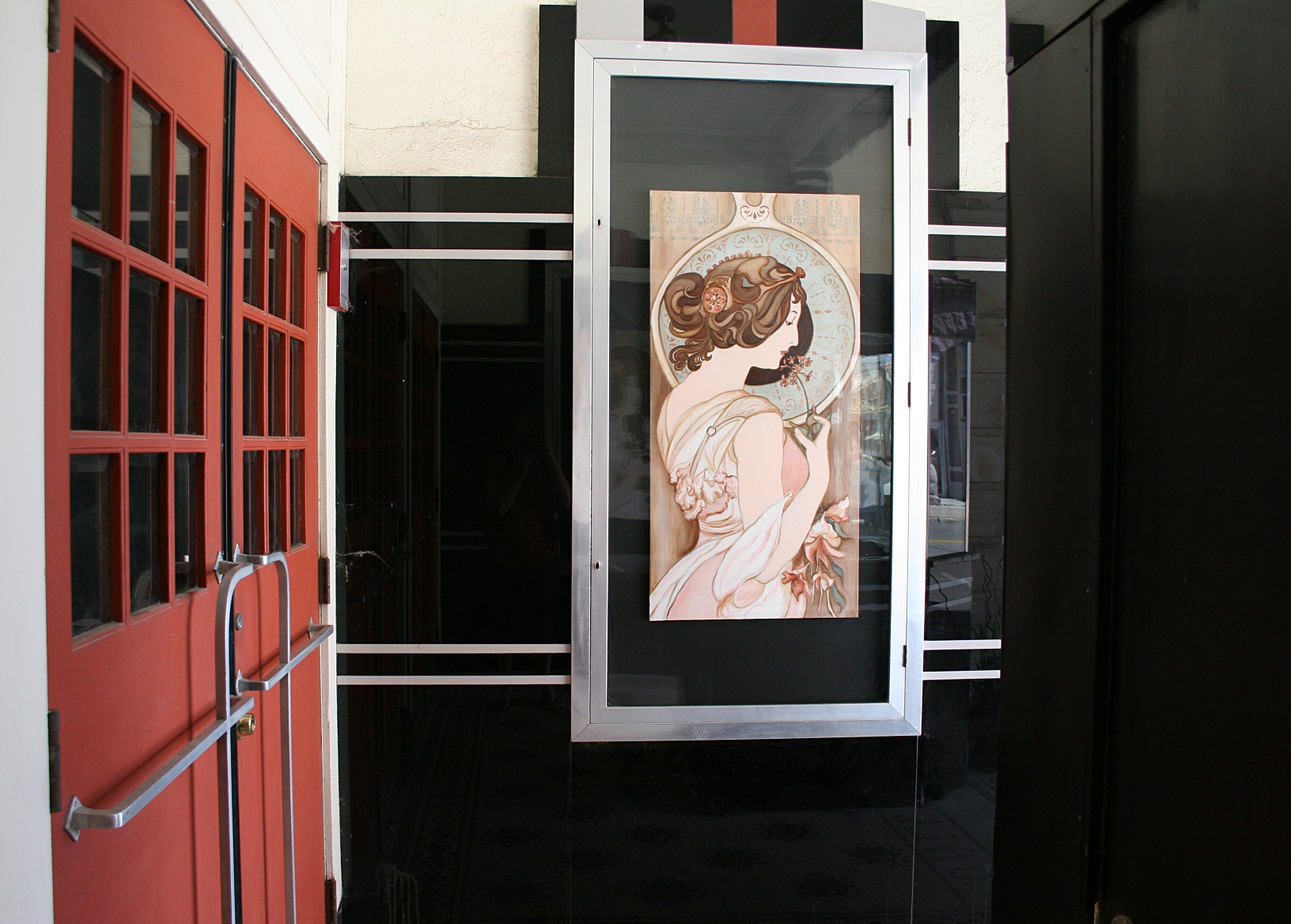
Charming exterior art.

Charming exterior art.

If only I could have gotten inside to view the original painted wall panels, stage curtains, pipe organ, and artistic wall and ceiling décor inside the 1915 Palace Theatre.

I am a fan of old theatres and of old buildings in general. But you know that if you’ve followed Minnesota Prairie Roots.

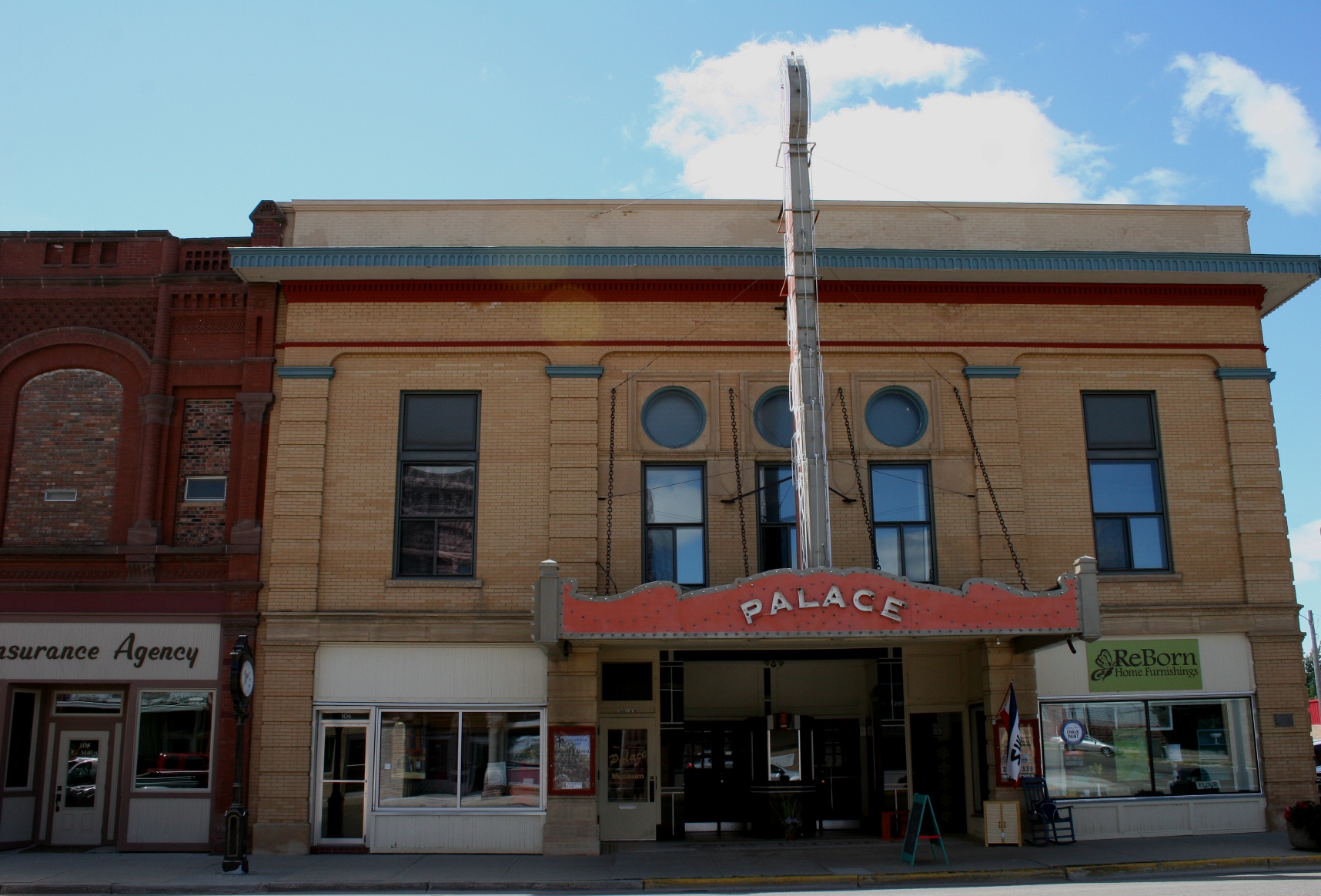
That's ReBorn, in the right corner of the city-owned theatre building at 102 E. Main Street.

The city-owned Palace Theatre at 102 E. Main Street, operated by the nonprofit Blue Mound Area Theatre.

That Luverne appreciates the value of its historic theatre enough to preserve the building, which hosts a variety of cultural and other events, pleases me. The building was placed on the National Register of Historic Places in 1978.

Theatre supporters are currently working to continue one aspect of the building’s use, that of showing movies. Through the “Go Digital or Go Dark” campaign, efforts are underway to raise $75,000 for the purchase of a digital projector. At the end of 2013, film companies will no longer produce 35mm film, necessitating the switch.

Now I’m not a big movie watcher, having last viewed an in-theatre movie several years ago. But I like the option of a local theatre, which my community of 23,000 no longer has. Sad. Truly sad.

I expect the good folks of Luverne would miss their movies, too, should funding not come through for the digital projector.

A notable sign draws the eye to the Palace.

A notable sign draws the eye to the Palace.

A special fundraising event, “A Night at the Palace,” slated for Saturday, September 7, will raise monies specifically for that projector. Click here to learn more.

There’s just one more bit of information you should know about the Palace Theatre. Six years ago, on September 6, the Palace Theatre hosted the world premiere of The War, a Ken Burns documentary on World War II. Luverne is one of four communities featured in the film.

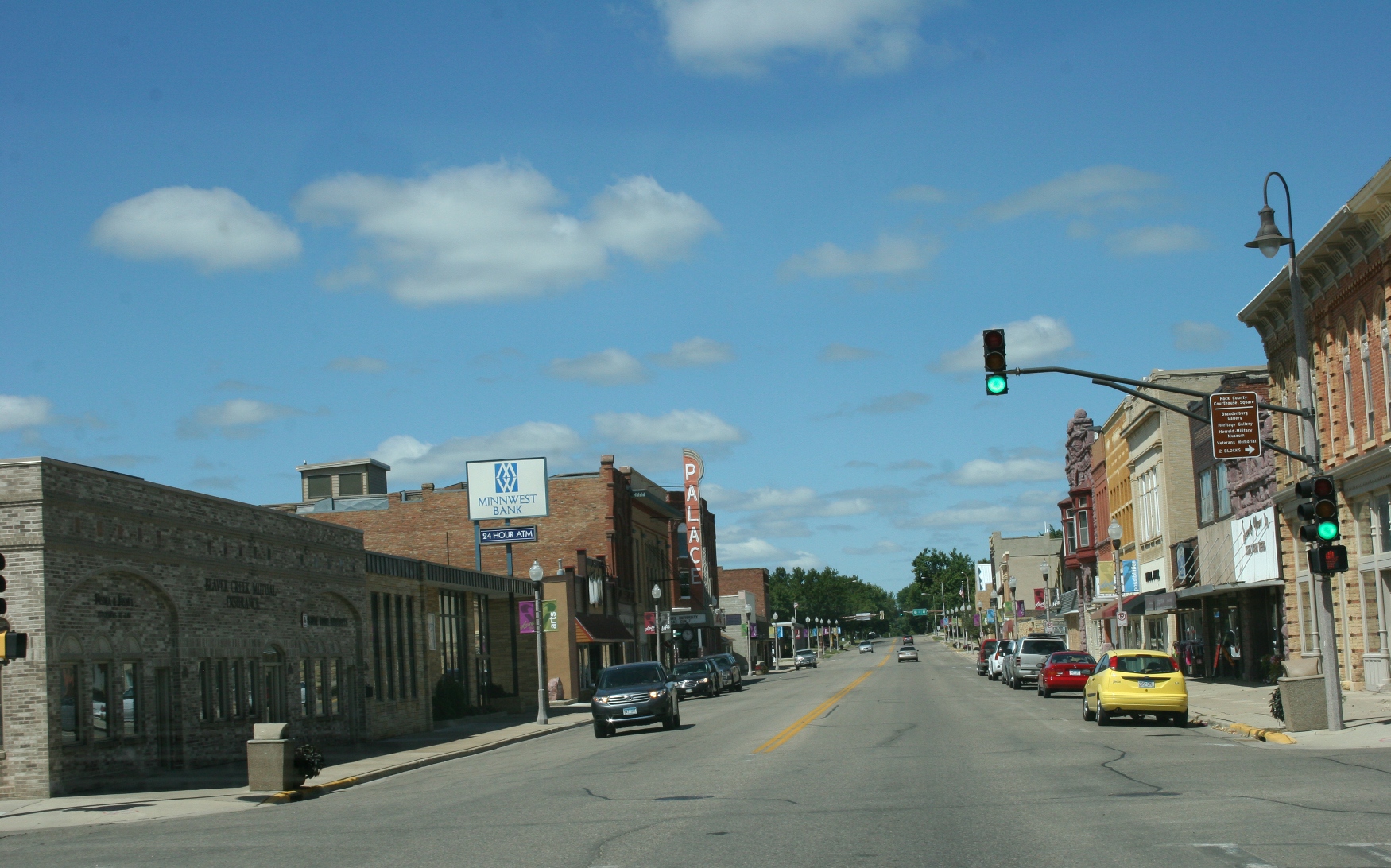
Downtown Luverne, Minnesota.

Downtown Luverne, Minnesota.

Of all the venues which could have been selected for the debut showing, the Palace Theatre was chosen. That, my friends, says a lot for the community of Luverne and the historic theatre.

FYI: To learn about another Luverne theatre in need of funding for a digital projector, click here and read about the Verne Drive-in.

If you wish to donate monies (via PayPal) toward purchasing a digital projector for the Palace Theatre, click here.

© Copyright 2013 Audrey Kletscher Helbling

 

Discovering a drive-in movie theatre in Luverne & a nation-wide effort to save these icons August 15, 2013

A FEW WEEKS AGO, while traveling specifically to Luverne in the southwestern corner of Minnesota to tour the Brandenburg Gallery and Blue Mounds State Park, I discovered a vanishing icon of American culture.

That would be a drive-in movie theatre on the south edge of town just off Interstate 90.

Verne Drive-in entry sign

The Verne Drive-In Theater, built in the 1950s, is one of only a few drive-ins remaining in Minnesota. Others include the Long Drive-In in Long Prairie, the Starlite 5 Drive-In Theatre in Litchfield, the Vali-Hi Drive-In in Lake Elmo and Sky-Vu Drive In in Warren. I think I’ve covered them all.

Nearly a year ago, the Cottage View Drive-In in Cottage Grove, in a controversial move, was closed and the land sold for construction of a Walmart store. (Click here to see Minnesota Public Radio photos of a September 2012 event celebrating the Cottage View’s 46-year history.)

Although I didn’t see a show at the Verne Drive-In, my husband and I drove through the vacant theatre parking lot on a Saturday morning just to check out the place and reminisce. We went to a few outdoor movies together when our community of Faribault still had a drive-in theatre. We also each attended drive-in movies separately while growing up. Me in Redwood Falls and he once in the Little Falls area and then near Brainerd.

Verne Drive-in, screen w filmstrip

I expect most of you hold on to some drive-in movie memories whether its cramming into the trunk of a car, making out with a long forgotten boyfriend or girlfriend, waiting in line for a concession stand snack or burger, tuning in to a movie via those little boxes stationed throughout the gravel parking lot, piling the kids into the car in their jammies for a night out under the stars…

At the Verne Drive-In a young couple, who went on their first date at the drive-in four years ago, recently became engaged there.

Drive-in theatres, most assuredly, are a part of our history, our culture, our growing up years and our personal memories.

Verne Drive-In exit sign film strip

Once commonplace in communities across the country, drive-ins are vanishing with only 368 remaining in the U.S., according to Project Drive-In established by Honda Motor Company. Honda, via an online and texting voting process, is giving away digital movie projectors to five drive-in theatres. The goal is simple: to save as many drive-ins as possible.

The financial challenge for drive-ins today lies in the need to switch to digital projection by the end of 2013, an upgrade which costs an estimated $80,000.

For theatres like the one in Luverne, winning a free digital projector through the Project Drive-In giveaway would be huge. You can vote online and/or via texting for these two Minnesota drive-ins daily for the next 25 days: the Verne Drive-In or the Long Drive-In. Click here for more information.

Project Drive-In also includes opportunities to donate monies toward saving our nation’s drive-ins and to pledge to go to a drive-in movie theatre. Win. Win.

WHAT MEMORIES DO YOU have of drive-in movie theatres? Let’s hear.

© Copyright 2013 Audrey Kletscher Helbling
 

The TARDIS travels to Kenyon March 19, 2013

Filed under: Uncategorized — Audrey Kletscher Helbling @ 7:29 AM

Tags: , , , , , , , ,
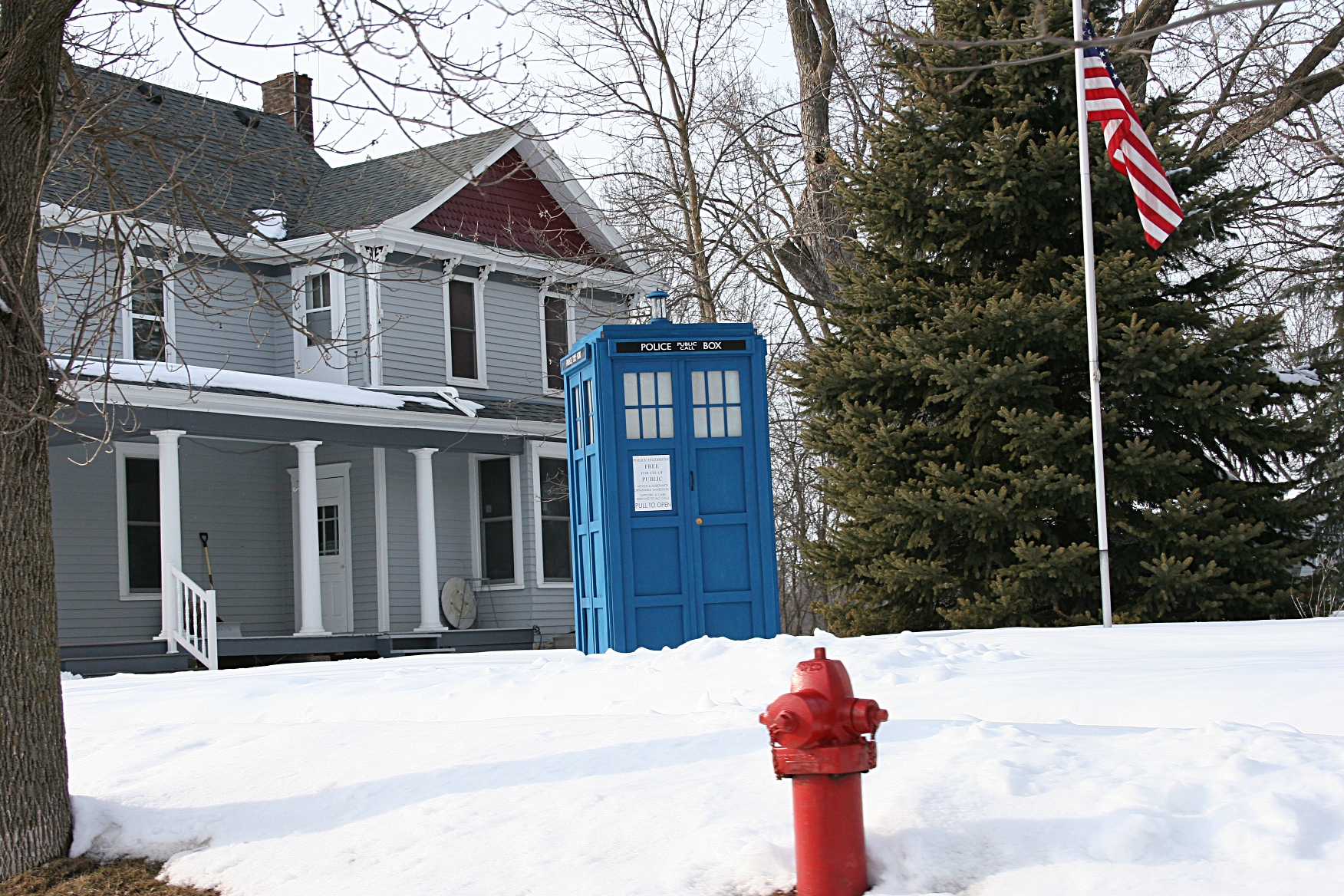
The TARDIS is labeled as a Police Public Call Box. A note on the front reads: Advice and Assistance obtainable immediately. Officers and cars respond to all calls. Pull to open.

The TARDIS is labeled as a Police Public Call Box. A note on the front reads: Advice and Assistance obtainable immediately. Officers and cars respond to all calls. Pull to open. This shot was taken while driving westbound on Highway 60.

TRAVELING EASTBOUND into Kenyon along Minnesota Highway 60, I spot what appears to be a portable blue toilet seemingly randomly planted in a front yard near an American flag clipped to a pole.

Why would anyone place a porta potty in this visible location and in the snow near a flag?

Turns out I am not viewing an outdoor loo at all, but rather a TARDIS. Exactly. What’s a TARDIS, you ask?

My 19-year-old passenger son explains that a TARDIS is the featured mode of transportation on the BBC sci-fi television show, “Doctor Who.” The TARDIS, according to the series website, will take the doctor anywhere, anytime.

But to Kenyon, Minnesota?

With no time to stop and inquire about the Time and Relative Dimension in Space capsule, I can only wonder who placed this here and why?

LET’S HEAR your thoughts, readers. The more creative, the better. I’ll even accept the truth on the TARDIS placement. I am pretty much clueless as to the TARDIS and “Doctor Who.”

Another view. I don't know which house the TARDIS belongs to, the gray one or the white one.

Another view of the TARDIS.

© Copyright 2013 Audrey Kletscher Helbling
 

Montgomery, Part II: Entertaining & inspiring the folks of South Central Minnesota in an historic dance hall March 5, 2013

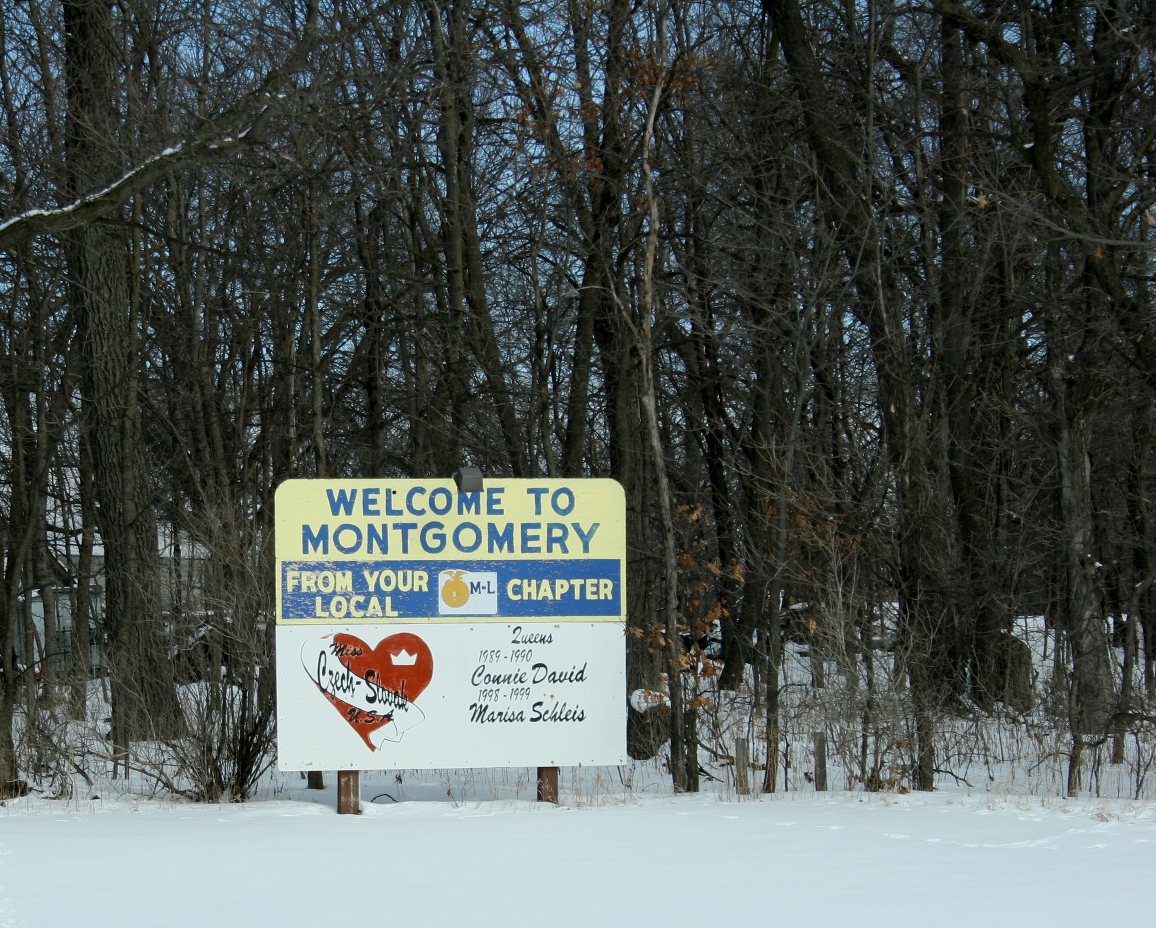
A sign just off Minnesota Highway 13 welcomes travelers to Montgomery.

A sign near the Minnesota Highway 13 and 21 intersection welcomes travelers to Montgomery.

IN RURAL SOUTHERN MINNESOTA, in the heart of Czech country, in a community with a fading welcome sign noting local Miss Czech-Slovak U.S.A. queens Connie David (1989-1990) and Marisa Schleis (1998-1999), you’ll discover an unexpected treasure.

The red-roofed building in the distance is Hilltop Hall.

The red-roofed building in the distance is Hilltop Hall.

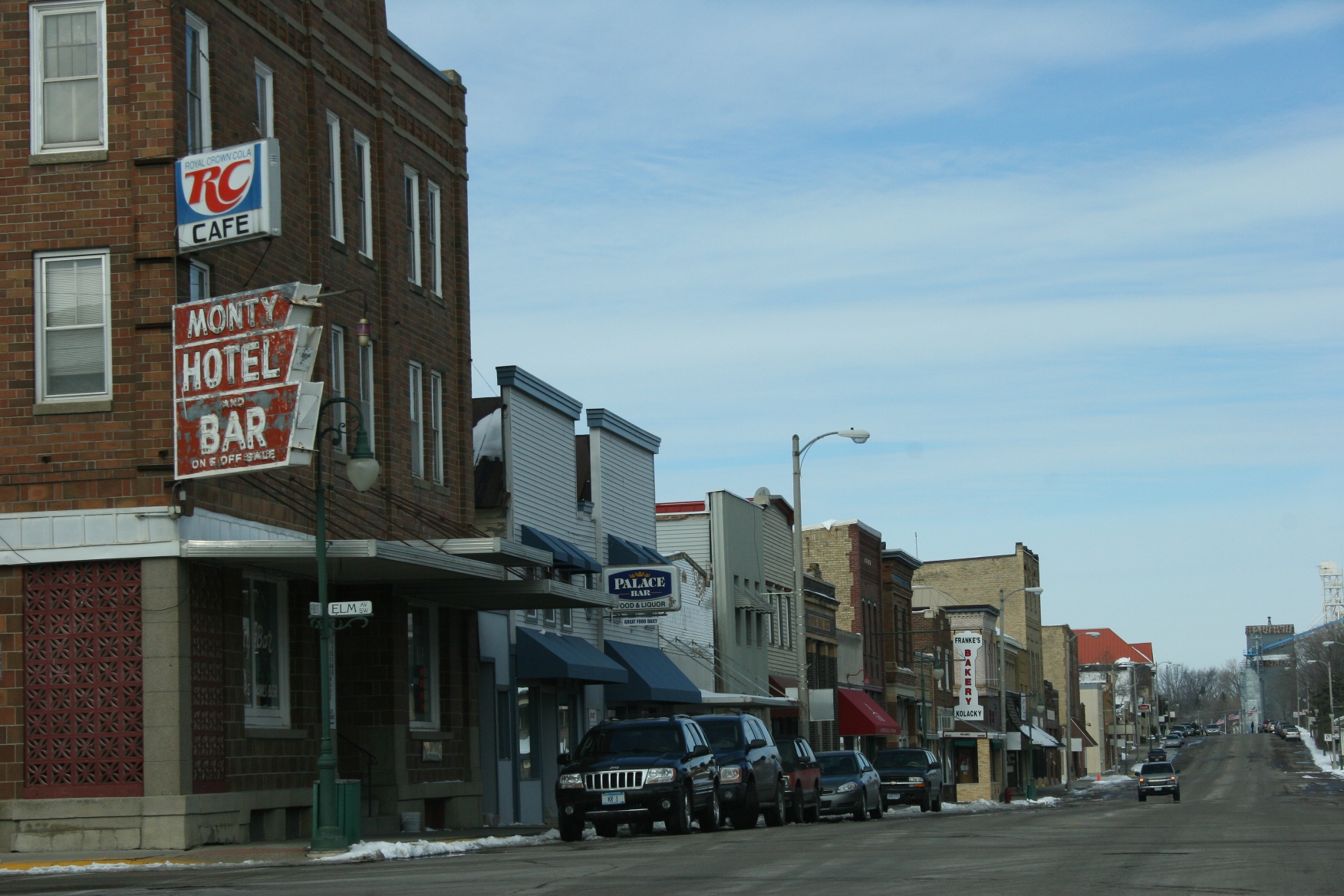
Historic Hilltop Hall sits on the north end of First Street in Montgomery, past the library and chiropractic office, the eateries and bars, the newspaper and accounting offices, the antique shops, even farther than the bakery which bakes ethnic kolacky, just two doors up from the meat market, source of homemade sausage.

Hilltop Hall was "falling apart," John Grimm says of the building he bought in the early 1990s. He reroofed, gutted and reconstructed and/or restored the interior.

Hilltop Hall was “falling apart,” John Grimm says of the building he bought in the early 1990s. He reroofed  the hall and gutted and reconstructed and/or restored the interior.

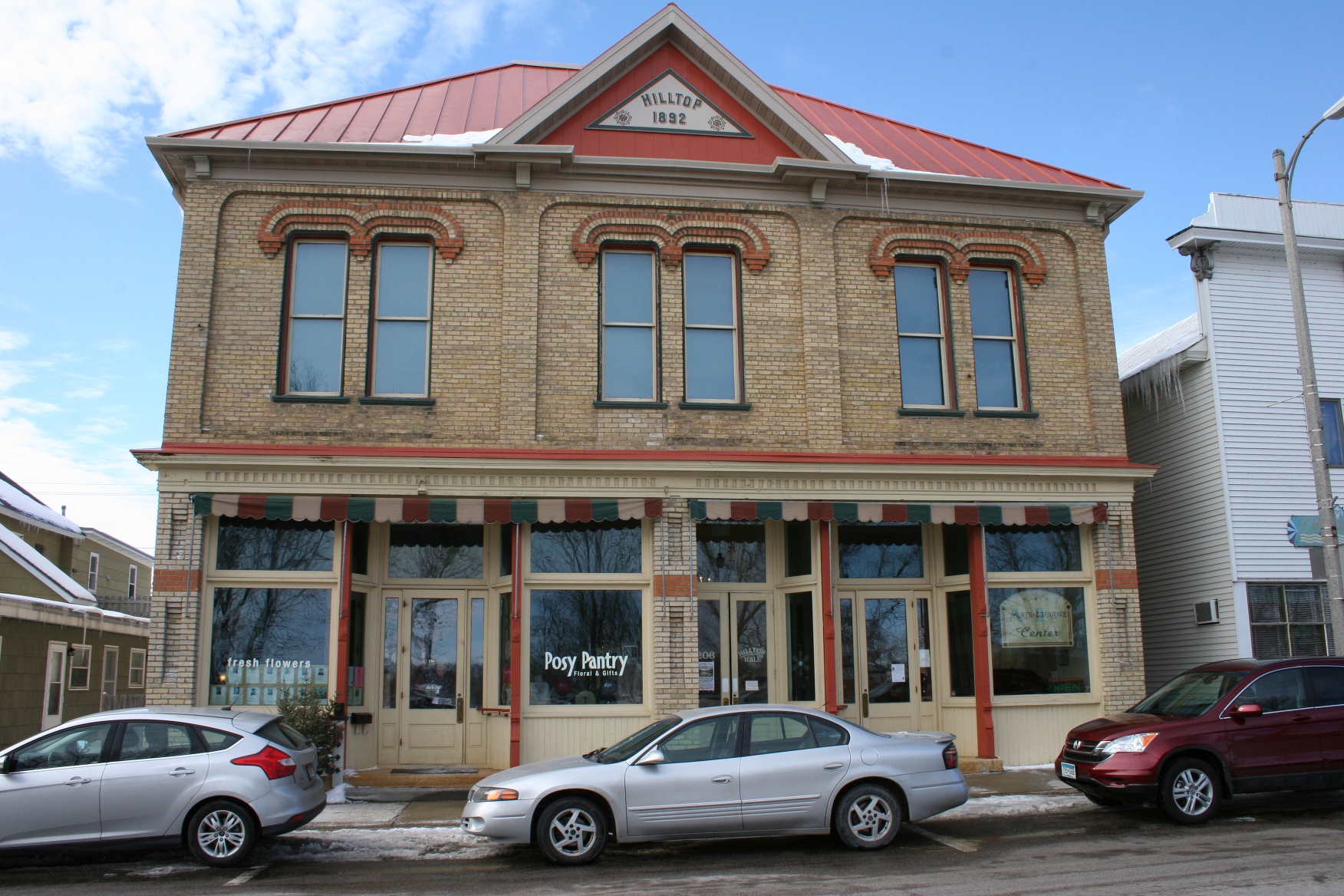
The red-roofed 1892 brick structure on the National Register of Historic Places represents a center of culture in this self-proclaimed Kolacky Capital of the World, a farming town of nearly 3,000 notably proud of its Czech heritage.

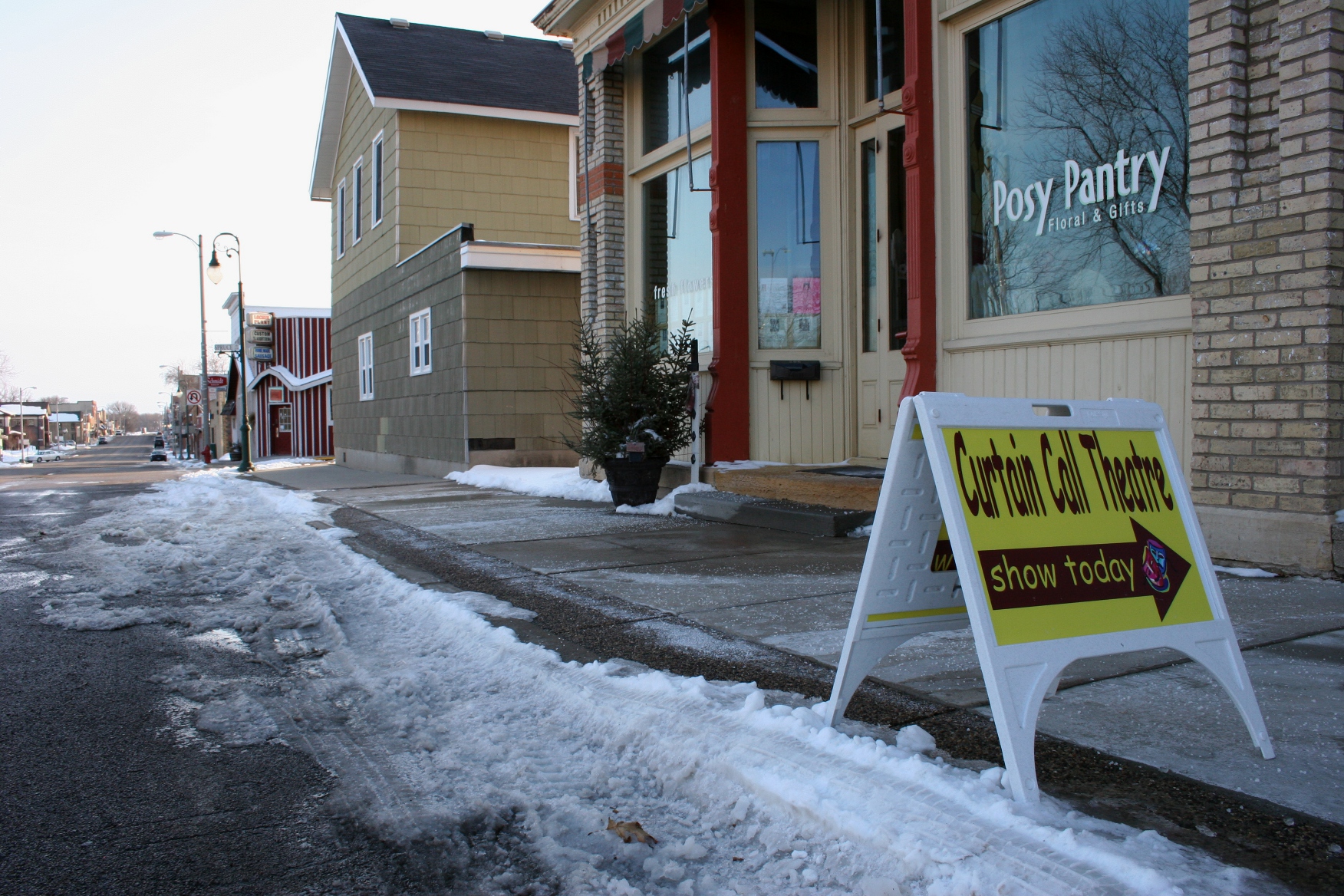
A sign outside Hilltop Hall directs guests to the Curtain Call Theatre performance of "On Golden Pond." The area theatrical group also performs in neighboring New Prague.

A sign outside Hilltop Hall directs guests to the Curtain Call Theatre performance of “On Golden Pond.” The area theatrical group also performs in neighboring New Prague.

The community should also be proud of Hilltop, a rare small town gem which hosts once-a-year comedic performances by Curtain Call Theatre and monthly Hilltop Happenings Series variety shows in the second floor 75-foot by 45-foot vintage concert and dance hall. The main floor is home to the Montgomery Area Arts & Heritage Center—featuring rotating historic and artistic exhibits—and a floral/gift shop, Posy Pantry.

Native Wisconsinite John Grimm, 72, a retired airline pilot, entrepreneur and former Le Sueur County commissioner who has lived in the Montgomery area since 1992, represents the driving force behind this cultural center nestled into a hill across the alley from St. John’s Lutheran Church.

This composer and singer—by passion, not profession—and a team of equally enthusiastic musicians six months ago revived the variety shows which have been an irregular part of Hilltop since Grimm purchased and restored the building in the early 1990s. He bought the old hall, he says, “to save a significantly historic building” and “to create a place where local folks could perform.”

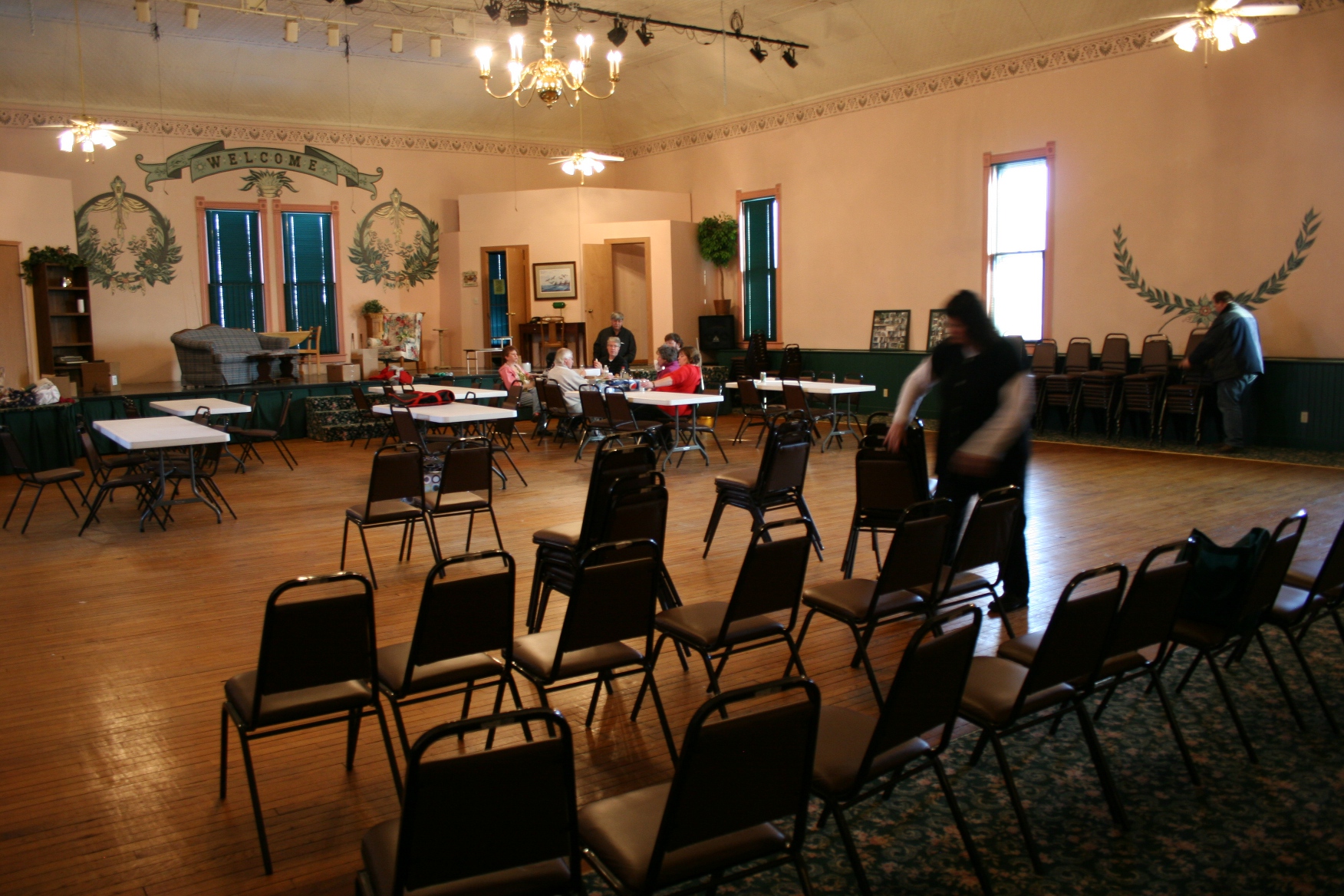
Except for a small section which was damaged by water, this wood floor is original.

Except for a small section which was damaged by water, this wood floor is original. Here volunteers stack chairs following the final performance of “On Golden Pond” while the cast enjoys pizza.

Now on Sunday afternoons, during the recently-resurrected variety shows, audiences ranging from 30 – 100 gather in the upper floor venue, feet planted on the restored wood floor, to hear next-door Lutheran pastor, Bob Kaul, strum his folk style guitar music or professional musician Craig Wasner of Northfield perform or Grimm present his Elvis impersonations (or other musical selections).

In a kicked back atmosphere where performers arrive two hours before the 4 p.m. – 6 p.m. show to rehearse, if necessary, and then sit among the crowd, the audience will hear a wide range of music from gospel to pop, folk, country, classical and more presented by regular troupe members from the Montgomery, Le Sueur, New Prague and Northfield areas.

Among the crowd favorites, Grimm notes, is 2012 Montgomery-Lonsdale High School (now Tri-City United) graduate Jesse Beulke, a gifted musician studying psychology and music at Minnesota State University, Mankato, with aspirations of becoming a professional composer. Beulke’s classical music selections on the piano have drawn standing ovations. “The audience recognizes his talent,” Grimm says.

Other regulars include musicians Wade and Mary Lou Fradenburgh, Maren Wasner and Wendy Zaske.

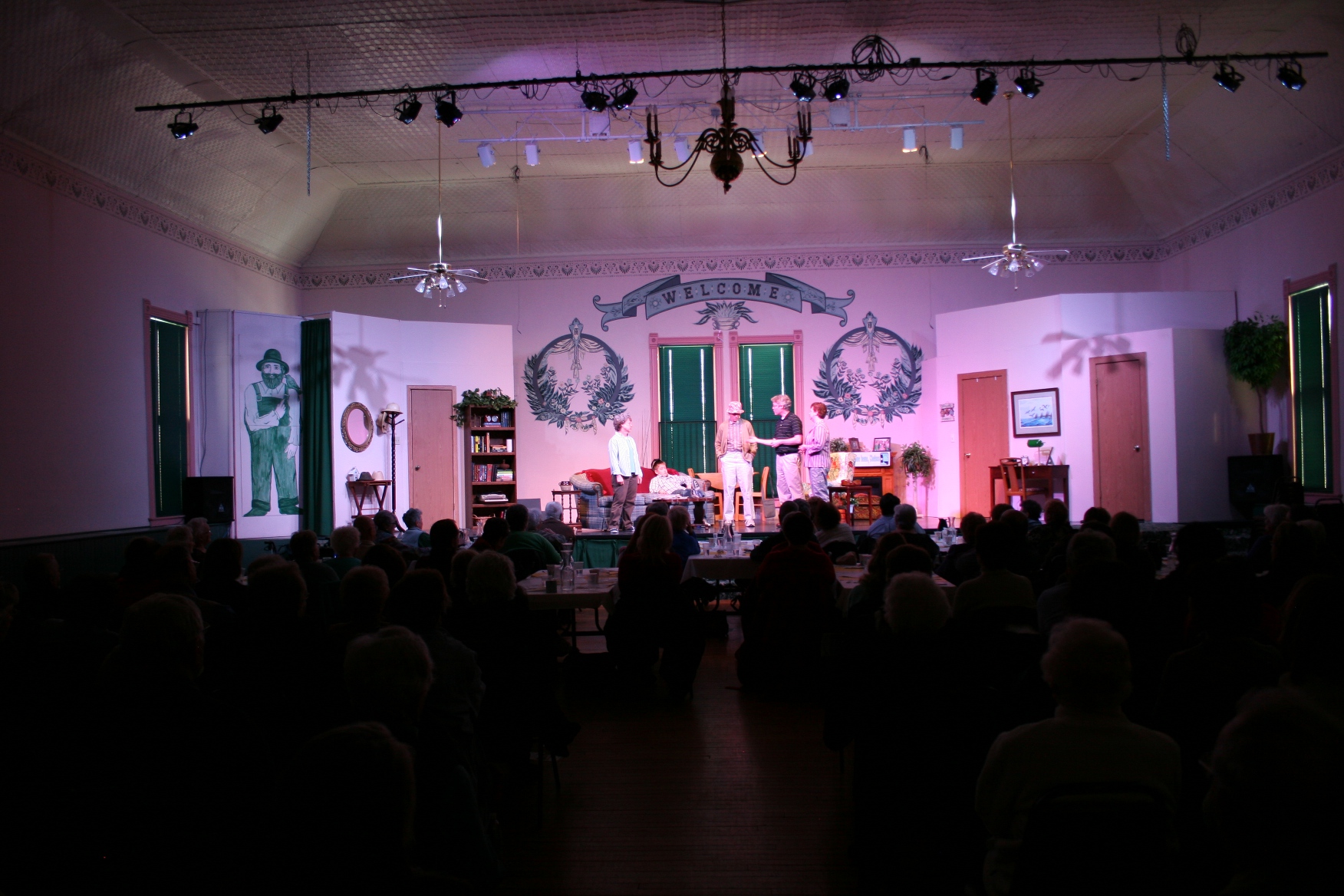
A view of Hilltop Hall's performance venue shows John Grimm and Fran Bohlke playing the lead roles in "On Golden Pond."

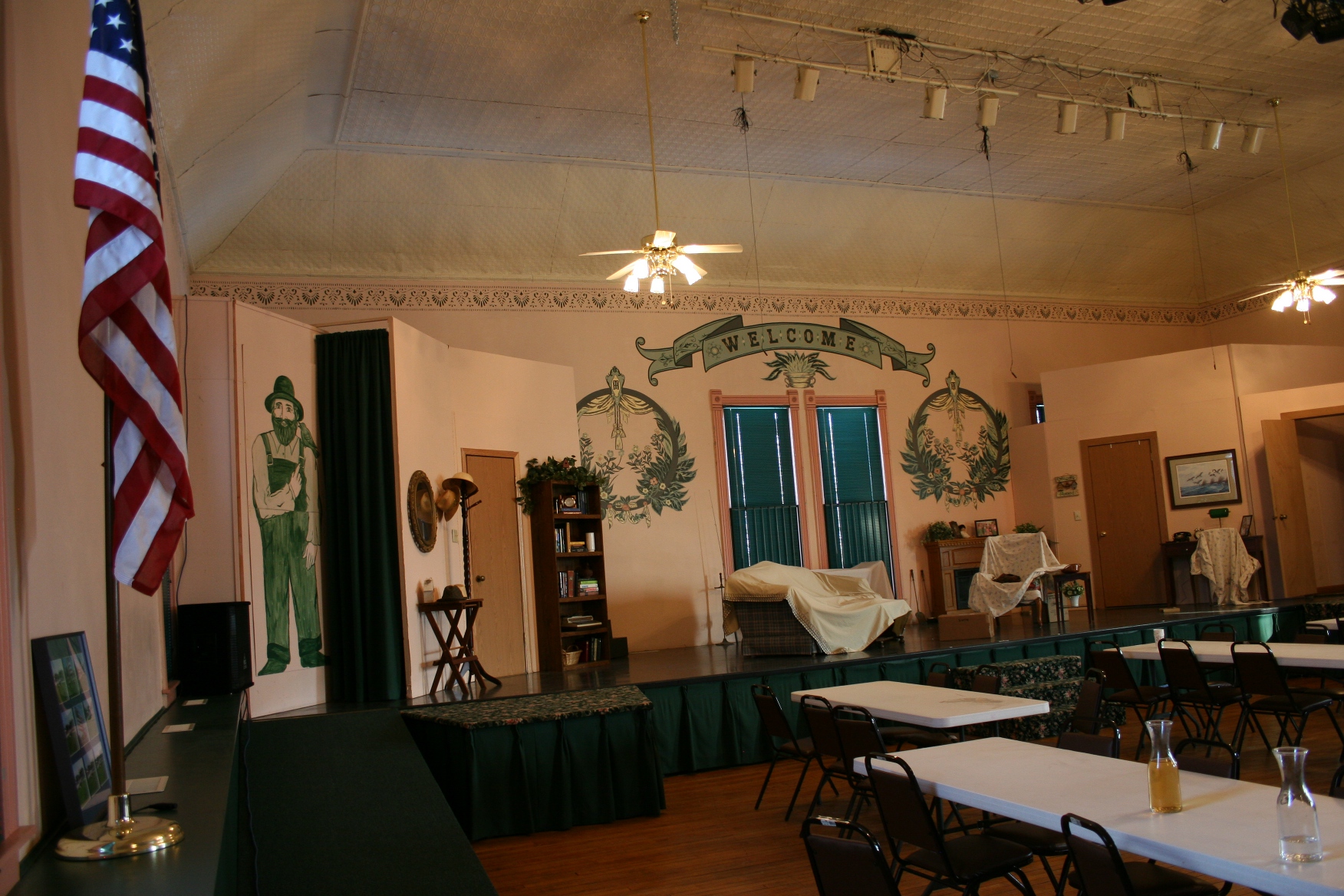
A view of Hilltop Hall’s performance venue shows the cast of “On Golden Pond.” John Grimm, center, plays the lead role along with Fran Bohlke of Shakopee, left in Curtain Call Theatre’s production. This marked Bohlke’s third time playing Ethel Thayer. She previously played the part during performances in Worthington and Luverne. Stenciling in the hall was either replicated or restored, depending on condition.

Grimm is planning to add original humorous skits to the monthly Sunday variety shows, tapping into his passion for performing. Fran Bohlke, who played Ethel Thayer opposite Grimm’s Norman Thayer Jr. in the Curtain Call Theatre’s recent performances of “On Golden Pond” at the Hilltop, will also sing at the March 24 show.

While Grimm and his troupe welcome guest performers, those entertainers must audition for what’s billed as “a unique mix of breathtaking talent, lighthearted entertainment and tasty snacks—all in one lovely historic place…that brings entertainment, enjoyment and inspiration to the folks of South Central Minnesota.”

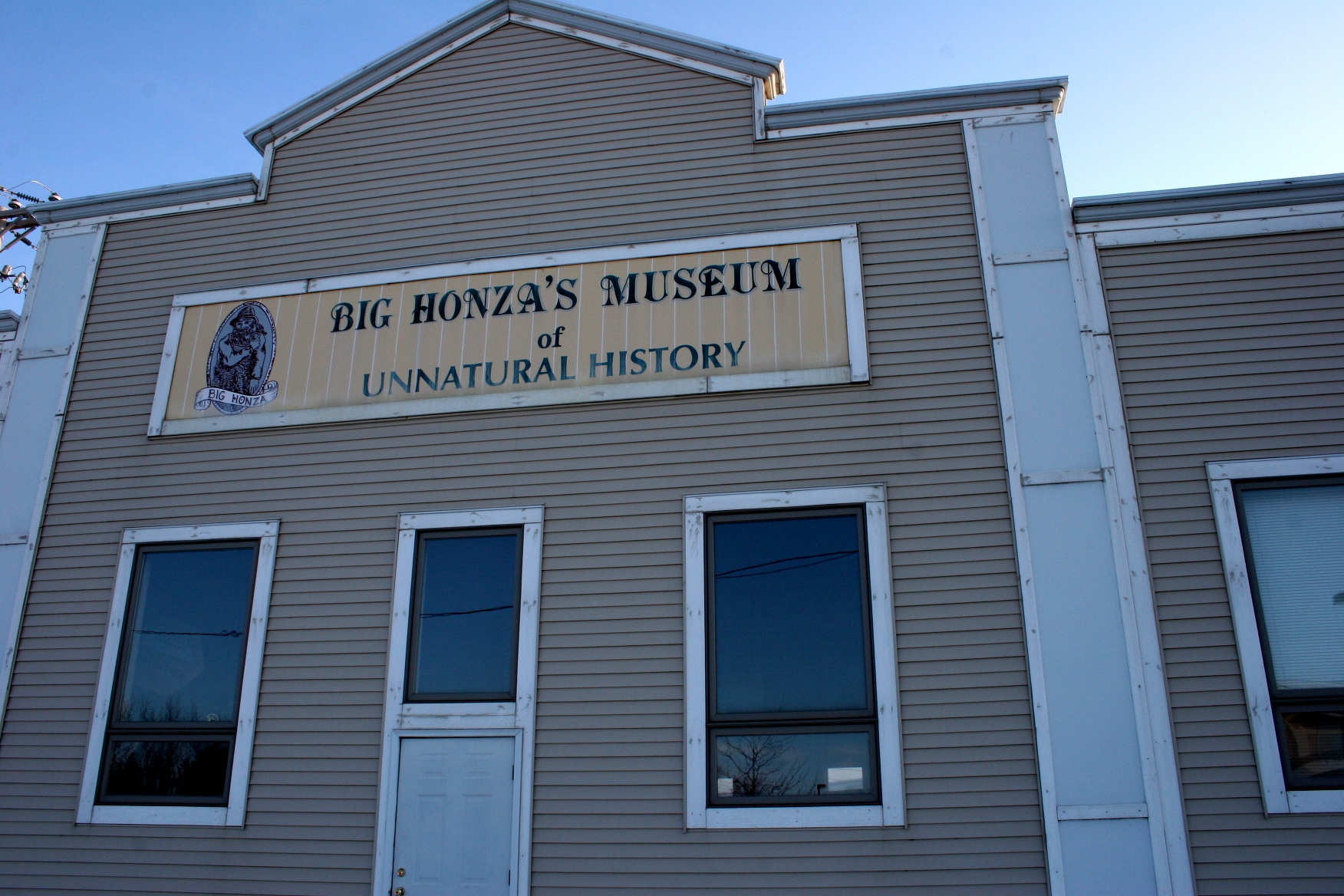
Big Honza's Museum of Unnatural History.

Big Honza’s Museum of Unnatural History.

The snacks include freshly-popped popcorn from the popcorn machine tucked in the hall’s second floor corner kitchen and pizza from Pizzeria 201 just down First Street in the historic Westerman Lumber Company office and residence. Grimm also owns that 1895 building which is on the National Register of Historic Places. Next door you’ll find Big Honza’s Museum of Unnatural History, another project of the creative Grimm.

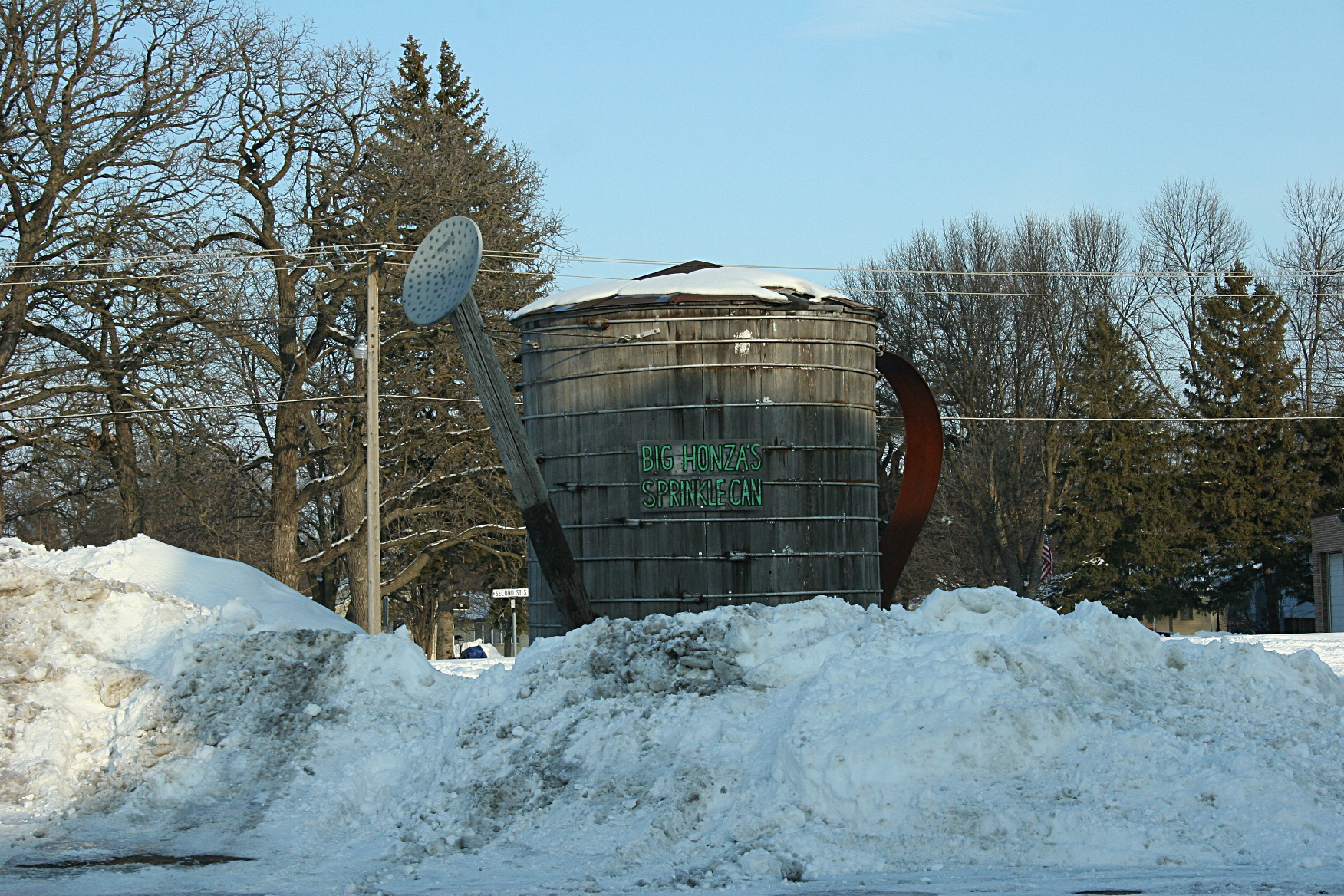
Big Honza' sprinkling can located near his museum.

Big Honza’ sprinkling can located nest to the Big Honza museum.

As Grimms tells it, the fictional Big Honza Giganticzech originated when he penned a musical for Montgomery’s annual Kolacky Days celebration, embellishing local history to create the town’s version of Paul Bunyan. That led to the museum where visitors will see items like Big Honza’s airplane/corn shredder, a chain driven concertina and more. The museum is open by appointment or ask the folks at the Pizzeria to let you in; they have a key.

A view of the set for "On Golden Pond" with Big Honza painted on the wall to the left.

A view of the set for “On Golden Pond” with Big Honza painted on the wall to the left.

At Hilltop Hall, a rendition of Big Honza is painted onto a wall of the stage where those Curtain Call Theatre comedies are presented each February. Grimm enjoys the intimate setting of the old dance hall which will seat about 100 during the dinner theatre shows. On a recent Sunday afternoon, dinner guests savored chicken breast with pasta and sauce, roasted cauliflower and fresh fruit in a meringue-topped shell catered by Pizzeria 201. Other audience members arrived later just for the show.

“People look forward to it,” Grimm says of the yearly winter plays first performed at the Hilltop in 1999 with “Bull in a China Shop.” Other shows have included “The Odd Couple,” “Moon Over Buffalo,” The Dixie Swim Club,” and more. “Bathroom Humor” is slated for February 2014.

Set requirements, due to limited space in the built-on stage area, are the biggest restrictions in selecting a play, Grimm says. He doesn’t worry about the number of performers as a spiral staircase hidden behind the stage allows actors and actresses to slip down to the first floor floral shop to await their cues. Grimm installed the staircase after removing the building’s original freight elevator, a decision he today regrets.

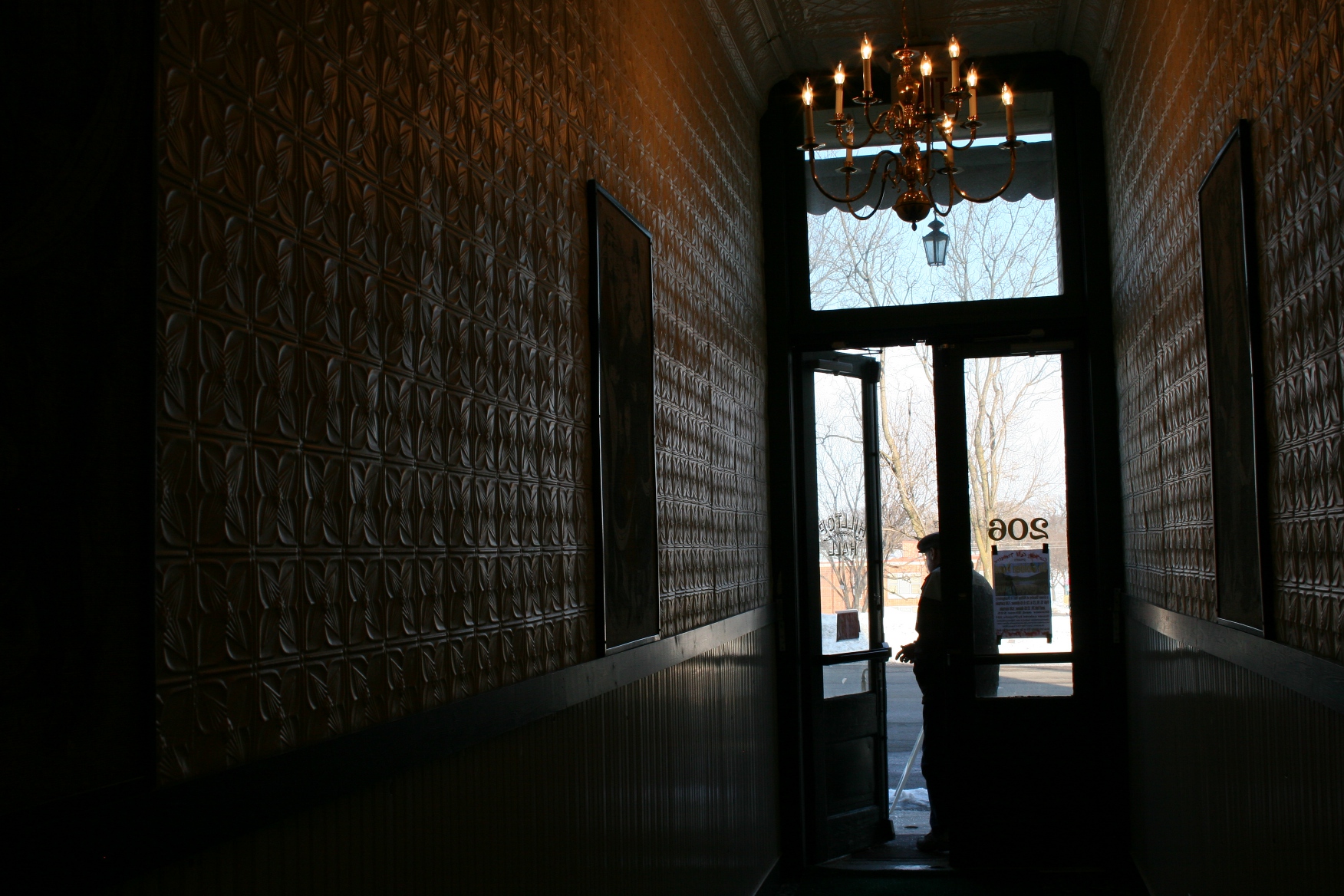
When Grimm purchased Hilltop Hall, site of a laundromat, he found 10 inches of lint covering these walls as dryers had been vented into the hallway. This hall runs between the heritage center and floral shop and leads to a stairway to the performance space.

When Grimm purchased Hilltop Hall, site of a laundromat, he found 10 inches of lint covering these walls as dryers had been vented into the hallway. This hall runs between the heritage center and floral shop and leads to a stairway to the performance space. The chandelier is not original to the building.

He’s never regretted, though, his decision to buy the old dance hall, although Grimm admits some people think he’s crazy. But his passion for singing and entertaining—he’s composed several hundred songs, made four CDs and authored a play, “It’s About Us”—for promoting Montgomery, and for offering this arts venue, drive him.

With annual taxes on the building at $10,000-plus and a monthly light bill of some $200, his Hilltop project is a “money losing situation,” Grimm says. He justifies the expense noting that he doesn’t take vacations, so his vacation money goes into his arts endeavor.

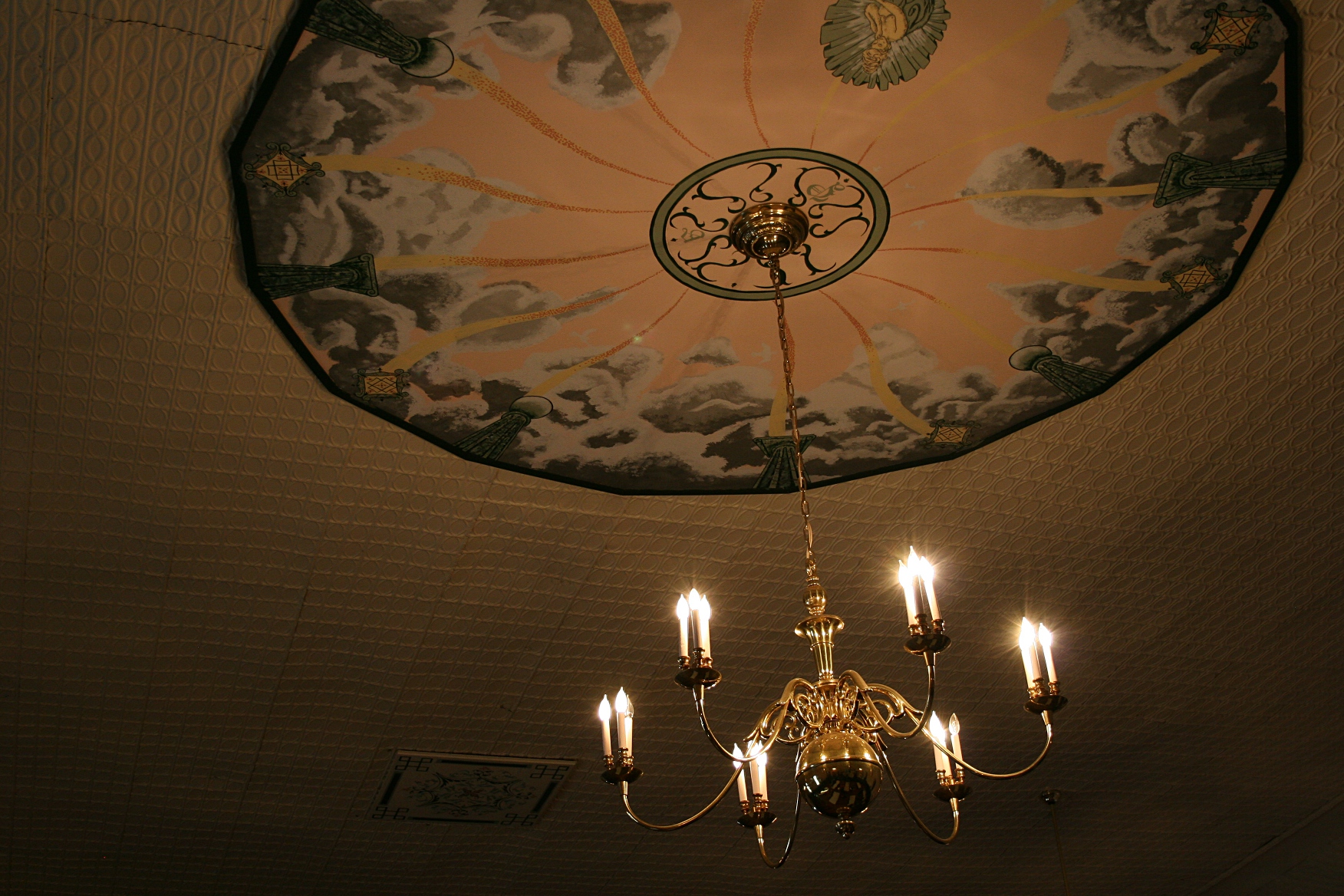
The ceiling plaster had crumbled, so an artist laid on his back to re-create this mural on sheetrock in the center of the performance space.

The plaster had crumbled, so an artist laid on his back to re-create this ceiling mural on sheetrock in the center of the performance space. The chandelier is antique but not original to the hall. The original lights could not be restored, Grimm says.

Grimm admits an ineptness at promoting and that Hilltop Hall is under-utilized. But he won’t compromise his conviction not to allow alcohol into the building which is also used for the occasional community meeting, piano recitals and exercise classes.

For now he’s focused on those monthly variety shows, bringing “pizza, performers & plenty of pizzazz” to the folks of South Central Minnesota at the historic Hilltop Hall in Montgomery.

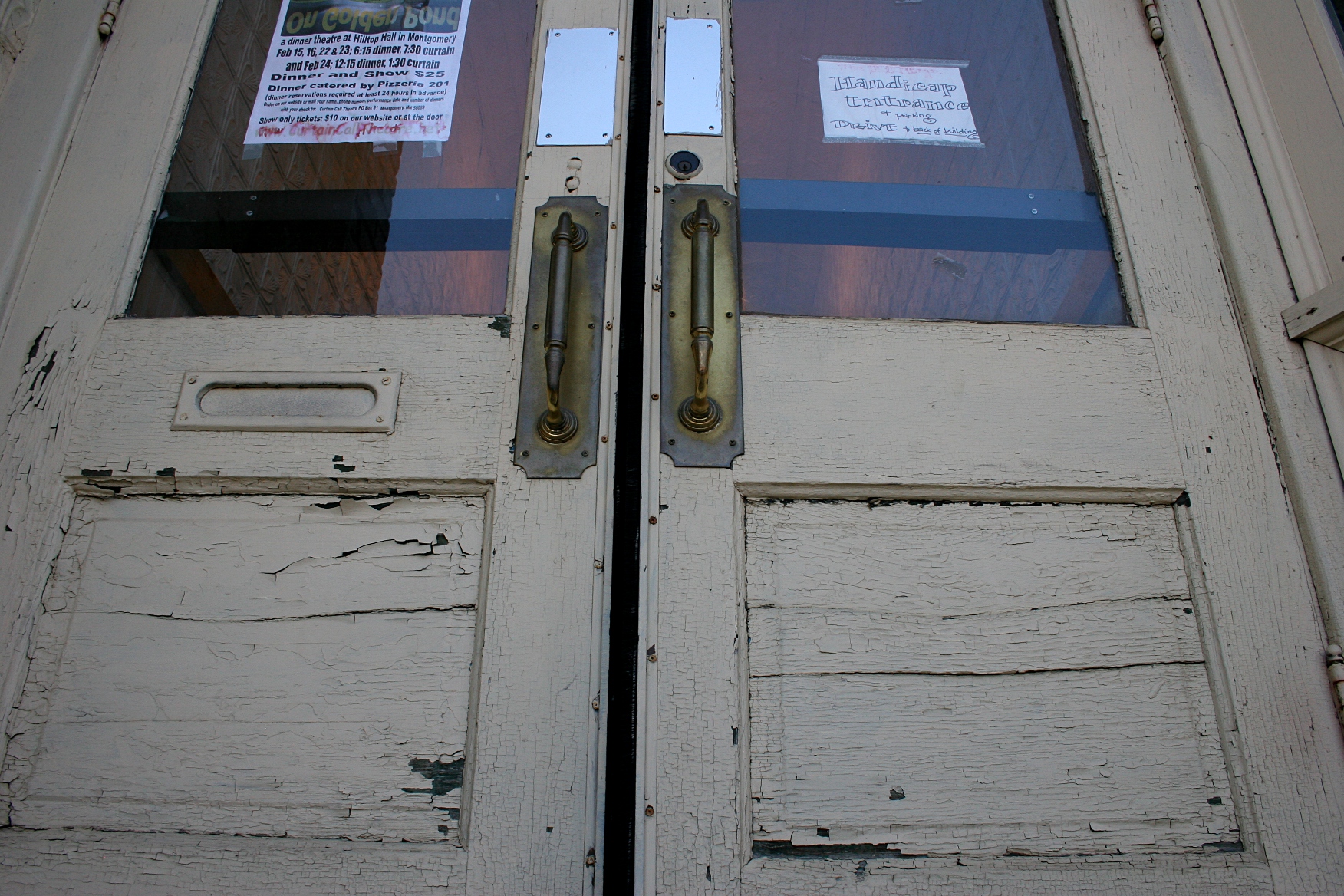
These exterior doors open to the hallway leading to the performing arts center.

These exterior doors open to the hallway leading to the upstairs performing arts center. A handicapped accessible entry is at the rear of the building off the alley.

FYI: Upcoming Hilltop Happenings Series shows are set for 4 p.m. – 6 p.m. on Sundays, March 24, April 28, May 26 and June 30. Admission is free although donations are accepted to help defray production and overhead costs.

The 2013 billing promises “…popular favorites to concert hall classics; from costumes and comedy to inspirational gospel and harmonic collaborations.”

Hilltop Hall is located at 206 First Street North in Montgomery’s downtown business district.

To learn more about the people and places in this post, be sure to click on their highlighted names. I’d encourage you, especially, to click on Jesse Beulke’s link to hear two original compositions, “I Guess It’s Goodbye” and “Rise,” by this gifted young composer and musician.

CHECK BACK FOR MORE posts from Montgomery.

© Copyright 2013 Audrey Kletscher Helbling
 

My opinion of Fargo, the film not the city, & a television series October 2, 2012

Filed under: Uncategorized — Audrey Kletscher Helbling @ 9:02 AM
Tags: , , , , , , , , ,

SO THEN, THERE, I watched that there Fargo movie just like I promised ya I would, albeit that promise was made, and this review written, months ago. Ya betcha.

But timing is everything. This past week the Academy Award winning writers of Fargo, native Minnesotans Joel and Ethan Coen, announced plans to executive produce an hour-long series for FX television loosely-based on Fargo. Perfect. Time to pull this review out of my draft box, update and publish it.

Since I don’t get FX, relying instead on a roof antenna to deliver several channels of programming to the single 1990s television in our house, I doubt I will ever view the new Fargo series. I have no idea what writer Noah Hawley, or the Coens, have planned for the small screen adaptation.

But, if the team can produce a show similar to the 1990s television series Northern Exposure, set in Alaska, I’d consider it a success. Honestly, I loved that geographic-centric show with strong local characters and could see the same premise working for Fargo.

That update given, let’s return to my opinion of the original Fargo film. To get you back on track, I’ll repeat the intro to this post:

So, then, there, I watched that there Fargo movie just like I promised ya I would, albeit that promise was made, and this review written, months ago. Ya betcha.

Honestly, people, I cannot write like I’m some northwoods hick. This is not how I talk either. Nor is this how Minnesotans or North Dakotans speak, although occasionally a “ja/ya” or “you bet” may slip into our conversations.

After watching the Coen brothers’ 1996 award-winning film for the second time, because I’ve visited the city of Fargo thrice already this year with the son now attending North Dakota State University, my negative opinion of the language in the movie has broadened. Now not only do I dislike the inaccurate accents and word usage, but I don’t like the bad language either. I apparently had forgotten about all the crude language written into the script.

Apparently I had also forgotten that seven—and I think I got that count right—characters are murdered. That’s a lot of bloodshed.

So what do I consider the film’s notable accuracies in depicting Minnesota?

The Coen brothers, who are native Minnesotans, got it right with the snowy highway scene, the scraping ice from the windshield, the buffet and the eggs for breakfast, the car needing a jump start and this weather phrase: “Gotta front comin’ in.”

But here’s what I really appreciate in Fargo: One of the main characters is a strong woman, Brainerd (Minnesota) Police Chief Marge Gunderson. She is gutsy and determined and she is married to an artist. That the Coens would write that key part for a woman impresses me, because, even in 2012, I am quite certain the number of women who head up police departments in Minnesota and North Dakota is relatively small.

I also like this line by Gunderson, spoken at the end of the movie as she ponders the loss of life, all because of money: “There’s more to life than a little money, you know. Don’tcha know that?”

That statement is enough to redeem the movie for me.

But I’m still wondering why this film was titled Fargo. Sure, the opening scene takes place in Fargo. But that’s it. From there on in, it’s set in Minnesota. I suppose Brainerd doesn’t have the same ringing appeal or instant identity as Fargo.

And then I’m a bit confused by the discrepancies between the opening—which states that the events depicted in the film took place in Minnesota in 1987—and the afterward, in which viewers are told the film is based on incidents but not a true story. Which is it?

IF YOU’VE SEEN the movie Fargo, what’s your opinion of it?  Do you think it accurately depicts Minnesota and/or Minnesotans? Would you have chosen a different name for the film?

What do you think of plans for a television spin-off of Fargo? What type of content would you like to see in that proposed series? Would you watch it?

CLICK HERE to read a previous post I wrote about a woodchipper and movie memorabilia from the Fargo film on exhibit at the Fargo-Moorhead Visitors Center.

© Copyright 2012 Audrey Kletscher Helbling
 

A Minnesota arts collage, from theater to poetry September 15, 2012

FOR A FEW SECONDS THERE, I searched the dictionary of my brain for that word which temporarily eluded me. Collage. That would be it.

Remember when that art form was especially popular, when, as a school assignment, you had to scrounge up ten zillion magazines and then snip out images themed to a specific subject and glue it all in a jumbled mess onto a piece of paper?

Today I present a collage—not a jumbled mess, though—of art.

Let’s take the biggest focal piece first. A Hudson.

A Hudson, like this one I photographed several years ago at a Faribault car show, centers “The Car.” Do not expect, though, to see a real Hudson on stage, only the shape of one.

The Hudson centers the stage at the Paradise Center for the Arts during a production of The Car by Carol Wright Krause. My husband and I saw this play by the Faribault-based The Paradise Community Theatre Friday evening. I’d rate it as one of the best I’ve ever seen performed locally.

Here’s a summary of the play written by director Gabe Talamantes:

The Car is about a family’s car, which as Ed (a character in the five-person drama) puts it “is a miracle of modern American engineering.” This miracle car is a character in itself, a highly theatricalized version of a 1954 Hudson. It takes us on a journey into the lives of the Banners and the challenges an all American family faces as they struggle through two decades of change at home and abroad. We will see how they choose to overcome such difficulties.

Now, why am I so enthusiastic about The Car? Because it moved me to tears. When a theatrical performance can evoke such a strong emotional reaction from me, I will embrace it with unbridled enthusiasm.

That break-down moment for me came near the end of the play, when Vietnam War veteran Hal Banner (played by Todd Ginter), broke down in the arms of his father, Ed Banner (Chuck Larsen). He was no hero, Hal said, pointedly telling his father that he (Ed) would never understand the horrors of war. And then Hal got specific, talking about seeing the eyes of those he killed.

That’s when the tears trickled down by cheeks and I struggled mightily to keep from sobbing. In that moment, I heard my Korean War veteran father, not Hal/Todd. My dad, too, spoke of seeing the eyes of those he killed on the front lines in Korea.

Later, when I congratulated Todd on his performance, he told me that he had talked to several veterans in preparation for his role. And it was the eyes which they spoke of and which he knew he needed to emphasize in that heartrending father-son conversation. It is easily the most powerful moment in the play.

I wondered how many audience members might be veterans and at that moment suppressing war memories and feelings, as my father did.

But this play is about so much more than war. It also addresses the issue of prejudice when Hal brings home a Japanese wife, portrayed by Carrie Jendza whose mother came here from Korea some 40 years ago. Carrie presents a stunning performance as do Susan Dunhaupt as Ed’s wife, Geneva, and Faribault High School sophomore Emily Remmey as Beth Banner, Hal and Sumiko’s daughter.

The prejudice starts right away when Ed Banner insists on calling Sumiko the Americanized “Sue.” He slides in references to “slant eyes” (there’s the “eye” thing again) and other derogatory comments.

In real-life, prejudice is an issue in Faribault, home to many Latino, Somali and Sudanese family. It is no secret that prejudice exists in my community. You can read about it in a previous post by clicking here.

I didn’t spot a single minority in the audience Friday evening,  not unusual despite Faribault’s sizable minority population.

There, that’s all I’m telling you about The Car, other than to advise you to see this powerful and memorable production. It’s community theater at its best for the superb acting and the unforgettable messages delivered.

Faribault artist Vivian Jones created this watercolor, “It Was Grandma’s Car,” for the current “car pARTS” show.

Additional performances of The Car at the Paradise, 321 Central Avenue, Faribault, are set for 7:30 p.m. on September 15, 20, 21 and 22 and at 2 p.m. September 16. Call (507) 332-7372 or click here to reach the Paradise website. According to info published in the theater program, production of The Car is made possible through a Minnesota State Arts Board Operating Support Grant.

While you’re at the play, be sure to check out the exhibit, “car pARTS,” in the Carlander Family Gallery.

The Beat logo.

NOW LET’S PLACE another piece in that art collage. On-air poetry.

In July, Northern Community Radio began airing poetry on its weekday morning show during a segment called The Beat.

On Monday my poem, “Her Treasure,” will air on 91.7 KAXE (89.9/Brainerd) and on 90.5 KBXE. Now I won’t be able to listen to whomever reads my poem between 7:30 a.m. – 8 a.m. and again between 3:30 p.m. – 4 p.m. Faribault is well outside the coverage area which extends from Thief River Falls to Hermantown to Pierz. Eventually, though, I’ll be able to listen to the reading of my poem online.

You can listen to The Beat via online streaming. (I’m not smart enough to figure that out and my former in-house techie now lives at NDSU in Fargo.)

I’m in the company of some mighty fine poets, from novices to Minnesota’s 2011 poet laureate, Joyce Sutphen, to well-known Minnesota writer Will Weaver. You can check out the current listing of The Beat poems/poets by clicking here.

The poems chosen for airing were selected through a juried process.

Connie Ludwig, right, and I pose for a photo with her watercolor, “Pantry Jewels” (above my head) inspired by my poem, “Her Treasure.” This photo was taken in April at Crossings at Carnegie in Zumbrota.

Just, FYI, “Her Treasure” is the same poem featured in “Poetry Artist Collaboration XI” at Crossings at Carnegie in Zumbrota last April. To read my poem, click here.

I love this whole concept of The Beat, of Northern Community Radio’s “daily reminder that, in Minnesota, poetry matters, and Minnesota poets prove that every day.”

You can expect a forthcoming detailed post from me on this project funded by Minnesota’s Arts & Cultural Heritage monies.

The cover of last year’s The Talking Stick 20.

NEXT, LET’S PLACE the third piece in this arts collage. More poetry, plus fiction and creative nonfiction.

Today I’m missing out on a book release party for The Talking Stick 21 in the Park Rapids area. This anthology, published by The Jackpine Writers Bloc, represents some fine writing by Minnesota writers. You can, referencing back to The Beat, listen to the poetry of Sharon Harris, a Jackpine member and one of the key producers of the collection.

I’ve been published in two previous volumes of The Talking Stick (including receiving an honorable mention for my poem, “Hit-and-Run,” in volume 19) and will be published again in this newest volume. My poem, “Broken,” was chosen from among 275 submissions for publication.

To learn more about The Talking Stick, click here. To learn more about The Jackpine Writers’ Bloc, click here.

THAT’S IT. Now, go ahead, add your own pieces to this art collage via your comments.

© Copyright 2012 Audrey Kletscher Helbling
 

Connecting, conversing and celebrating cultural diversity at Faribault festival August 28, 2012

This woman represents El Salvador during the International Festival Faribault on a drizzly Saturday. Flags suspended from the Central Park band shell in the background show the countries participating in the event.

DESCRIBING AN EVENT like International Festival Faribault within the confines of a blog post or two seems daunting. How do I adequately convey the essence of this fest celebrating the cultural diversity of my community?

You can view my first effort by clicking here and reading “Yearning for respect & equality, ‘no matter what color you are.’”

Now, as I scroll again through the many photos I took during the fest (when rain wasn’t drizzling upon my camera), I ponder which images to share, what words to pen.

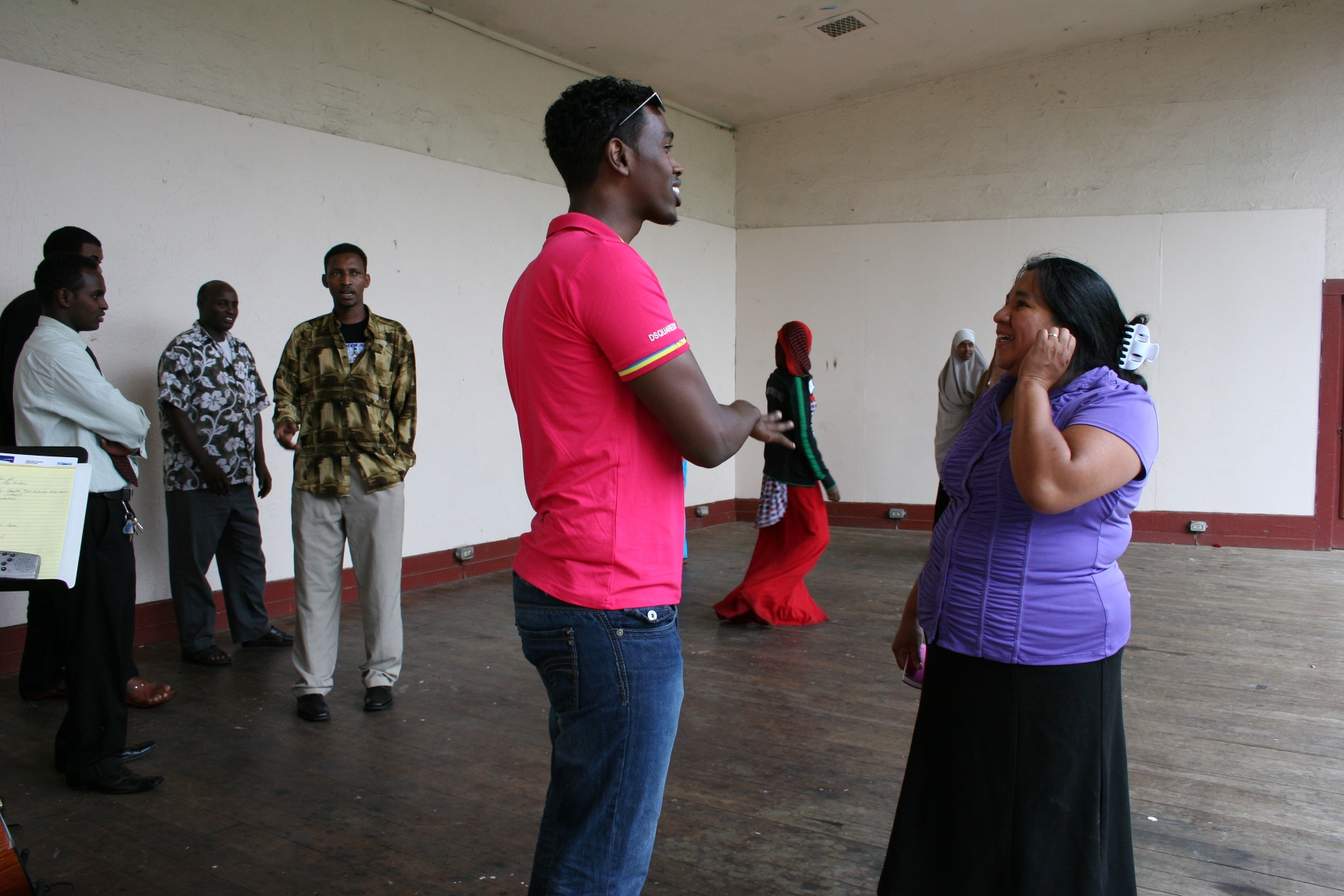
Cultures connecting on the band shell stage between musical acts.

And “c” words—like color, connecting, communicating, conversation, coloring, candy, culture, care, colorful clothing—pop out at me as I view my photos.

I should perhaps add “confusing” to that list because I felt overwhelmed when trying to photograph the wood carvings from Somalia and Kenya peddled by Bashir Omar and Asher Ali.

A woman, without prompting, took this mask from the table manned by Bashir Omar and Asher Ali and asked me to photograph her.

Suddenly, it seemed, everyone wanted to pose for a picture. And I much prefer candid to set up shots. I obliged, though, because it seemed the easiest thing to do.

Lul Abdi shows off beautiful wood crafts from Kenya and Somalia.

Then Lul Abdi, who had grabbed a wooden platter and giraffe, and held them up for me to photograph, asked me to write in my blog that an election is coming up in Somalia and I should tell everyone to vote for whomever it is she supports. Bashir Omar translated my answer—I don’t write about international political issues.

While this back-and-forth translation was occurring, I felt befuddled because, when too much noise (in this instance lots of conversation going on around me and music in the background), is coming my way, my brain doesn’t process anything. That issue is related to the 70 percent hearing loss in my right ear.

Despite the difficulties, this muddle served as an aha moment. Imagine if I was Lul, struggling on a daily basis to understand those around me. Life would be challenging.

Busy artists at the kids’ activity table.

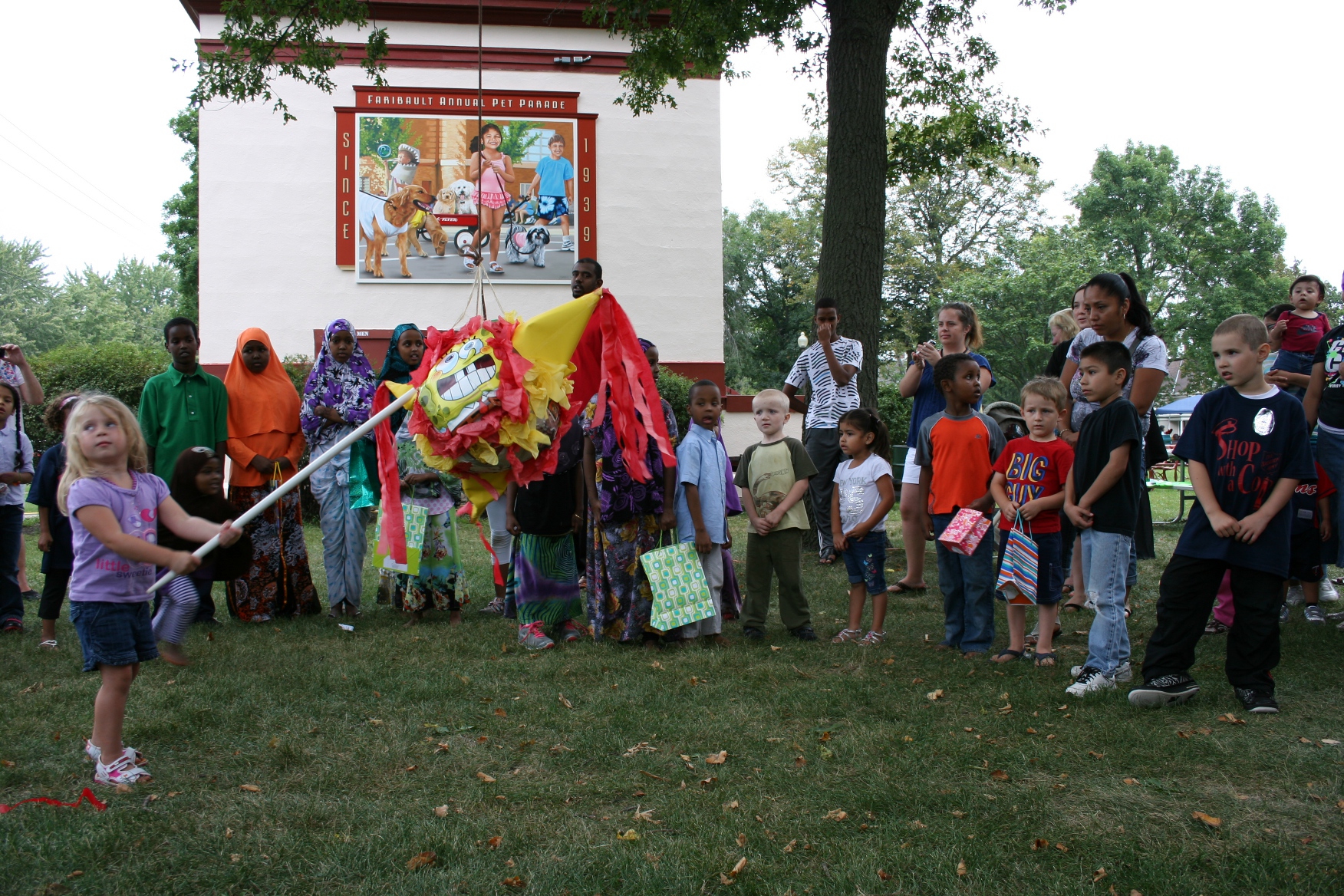
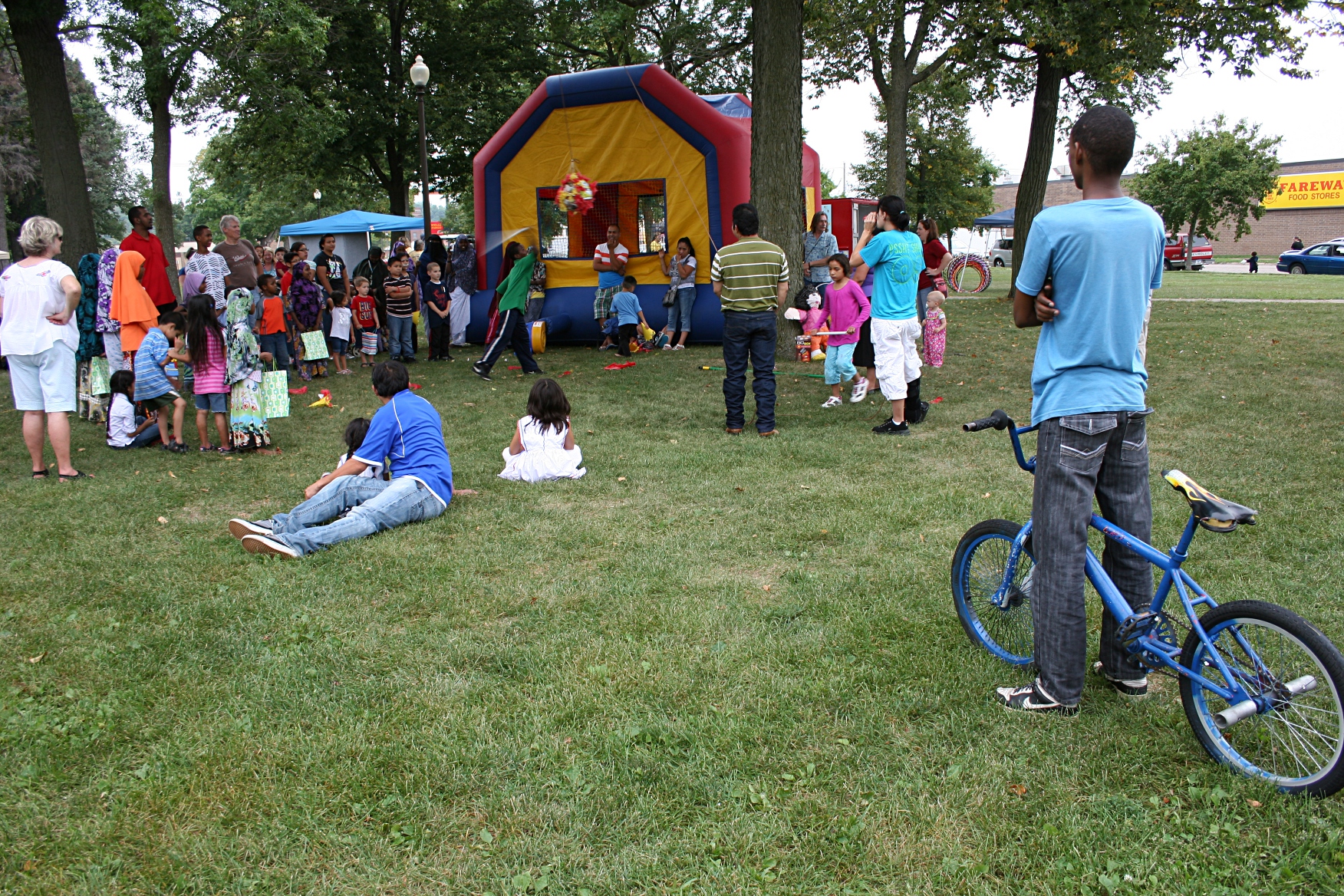
But sometimes we all speak the same language. And I saw, rather than heard, that on Saturday, at the festival, especially among the children. They sat side-by-side painting at the kids’ activity table, bounced side-by-side in the bouncy tent, stood side-by-side in line to take turns swinging at pinatas.

A little girl stands on the opposite side of the group of children waiting to swing at the pinata.

Differences in color and culture and language mattered not to these children. They shouldn’t matter to any of us. Therein lies the message I most want to communicate to you today and which was communicated so well via International Festival Faribault.

Happy children all focused on the same goal: breaking the pinata.

All around me, children and adults of all colors mingled.

The boy on the right was biking past Central Park and stopped to watch the activities at a distance.

The scramble for candy once one of three pinatas is broken.

AND HERE ARE SOME ADDITIONAL BONUS PHOTOS:

Masks displayed at the food vendor representing El Salvador.

Waiting at the bouncy tent.

A Mexican dish (help me out if you know, but I think tortillas) was wrapped in banana leaves. My husband and I tried this.

Conversation and connecting…, no other words necessary.

Necklaces and other jewelry from Kenya and/or Somalia and for sale at the festival.

Kids painted and colored, etc., elbow to elbow at the always busy kids’ activity table.

Some mischievous face painting was also part of the fun.

© Copyright 2012 Audrey Kletscher Helbling
 

From shy teen to confident artist, entertainer & business woman August 21, 2012

Jodi Gustafson of Big Shoe Entertainment begins transforming young Owen’s face into a Ghost Rider’s skull mask at the recent Blue Collar BBQ & Arts Fest in Faribault.

IMAGINING 37-YEAR-OLD JODI GUSTAFSON—also known as Lollipop the Clown, Jenius Strangeways or the proprietor of Big Shoe Entertainment and Jodelle’s Finery—as a once shy teen weaving down the hallways of Richfield and Coon Rapids high schools seems an impossibility.

But this vivacious and confident small business owner, whom I met at the recent Blue Collar BBQ & Arts Fest in Faribault where she was transforming faces through her stunning full face painting, reveals an adolescent timidness that contradicts her very public professions.

“I hated being shy,” said Gustafson, who recalls turning red if anyone so much as said “hi” to her. Determined to overcome that shyness, she eventually, and purposefully, chose a job with the United Way which involved public speaking.

“I knew I would never change if I didn’t get out of my comfort zone.”

That decision proved pivotal for Gustafson when a company wanted a carnival theme for its campaign but couldn’t afford to hire a clown. Gustafson volunteered, thinking clowning couldn’t be all that difficult. She was wrong, but continued anyway with the clowning which led to painting cheek art and then, with the encouragement of Cindy Trusty of Cindy’s Creative Celebrations, to full face painting and finally the official formation of Big Shoe Entertainment in the early 2000s.

Owen’s half-mask skull evolves under Gustafson’s skillful hands. She contracts her work for community and private events (such as birthday parties) and with corporations (such as for company picnics).

Today this mother of three (ages three to 17) operates two successful small businesses from her Bloomington home. Big Shoe Entertainment, encompassing clowning, balloon twisting, airbrushed and glitter tattoos, henna and crazy hair, but primarily full face painting, keeps her crazy busy, especially during the summer, with gigs throughout Minnesota, Iowa and Wisconsin. The pace slows during the other seasons.

An assortment of the make-up, all with FDA-approved ingredients and meant to be used on the body and face, which Gustafson uses for face painting.

In anywhere from one to five minutes Gustafson, with brushes and make-up pads and an array of colorful make-up, can transform a face into a work of art. She’s morphed five billion faces, she exaggerates, into butterflies, and also creates lots of flowers and princesses, and masks such as skull, dragon and Mardi Gras.

She especially enjoys painting “gore” faces, but seldom has the opportunity.

Owen sits perfectly still as Gustafson paints. Some kids squirm or won’t close their eyes, meaning she sometimes needs to adjust her work to eliminate painting around the eyes or needs to explain step by step what she is doing. Typically, Gustafson doesn’t talk while painting faces.

She’s always learning—from videos, books, classes and practice. That practice includes painting designs all over her arms and legs while relaxing at home in front of the television. Gustafson puts her own spin on existing patterns via color choices and painting style, defining her work as her own in a profession that’s becoming more saturated. Yet, most are not at her level of expertise, she says, in an honest, but not boastful, way.

Gustafson works with two agents and occasionally hires independent contractors to assist at events where she can’t handle the volume solo. She’s picky, though, and chooses only the best artists.

American Family Insurance of Faribault sponsored free full face painting by Gustafson at the recent Blue Collar BBQ & Arts Fest. Lines were long. Gustafson painted for five hours, averaging 20 – 25 faces per hour. If she returns next year, she’ll bring another painter, she says, to shorten those lines.

All of this is interesting given Gustafson early on was intimidated by full face painting. Clearly she’s not anymore as she works with the swiftness and assurance of a skilled artist. She always had an interest in art, she says, but not the confidence. She took art classes in high school and moved on to painting still lifes in acrylic on canvas, something she has no time for now.

Besides mothering and operating Big Shoe Entertainment, Gustafson also owns Jodelle’s Finery, specializing in Renaissance and Victorian “garb.” That’s her term, “garb,” referencing the durable period clothing she fashions, as opposed to “costumes,” for the Minnesota Renaissance Festival and steam punk events. (Steam punk fashion, since I didn’t know and perhaps you don’t either, is Victorian clothing with a technological, sci-fi twist.)

Even Jodelle’s Finery, in typical Gustafson fashion, has an interesting beginning. When pregnant with her middle child, Gustafson was feeling quite domestic and taught herself to sew. Her first project was a baby quilt. Today she’s advanced to sewing that garb for others and for her role as the street performer Jenius Strangeways at the Minnesota Renaissance Festival.
Yes, this once shy teen morphed into an actress too—role playing at the Renaissance and on the stages of community theaters in Faribault (where she lived until moving to Bloomington in June), Owatonna and Northfield.

“I don’t like to be still,” claims Gustafson, who before she took on the Renaissance acting gig two years ago, worked in shops at the Minnesota festival.

Owen’s skull face mask is almost done.

Yet, in the middle of all that public busyness of painting faces and clowning and acting, Gustafson says she still occasionally slips back in to the quiet, nervous and shy Jodi of years past. That happens, she explains, if she’s not role-playing and doesn’t know anyone at an event she’s working.

Mostly, though, she’s made a choice to get past her shyness, to be the strong and confident woman who paints faces, entertains and clothes entertainers via her two successful businesses.

Owen opens his eyes for the great reveal.

FYI: Jodi Gustafson doesn’t have a website for Big Shoe Entertainment, so don’t bother trying to find one. You may contact her via email at gusjodi@gmail.com or call her at (952) 215-4544. You can also check out her Jodelle’s Finery Facebook page by clicking here.

I initially developed this post idea to showcase Gustafson’s full face painting because I was so impressed by her work. But when I interviewed her about a week later and learned how she overcame her shyness, that became the real story. I hope you will be inspired, as I am, by Gustafson’s determination to overcome an obstacle, change and pursue her passions in life as her professions.

Gustafson transformed Isaac into a tiger at the Faribault festival.

Isabella, 7, of Faribault, became a dalmatian under Gustafson’s crafting. Butterflies and dalmatians proved the most popular paintings chosen by attendees at the Faribault fest.

© Copyright 2012 Audrey Kletscher Helbling