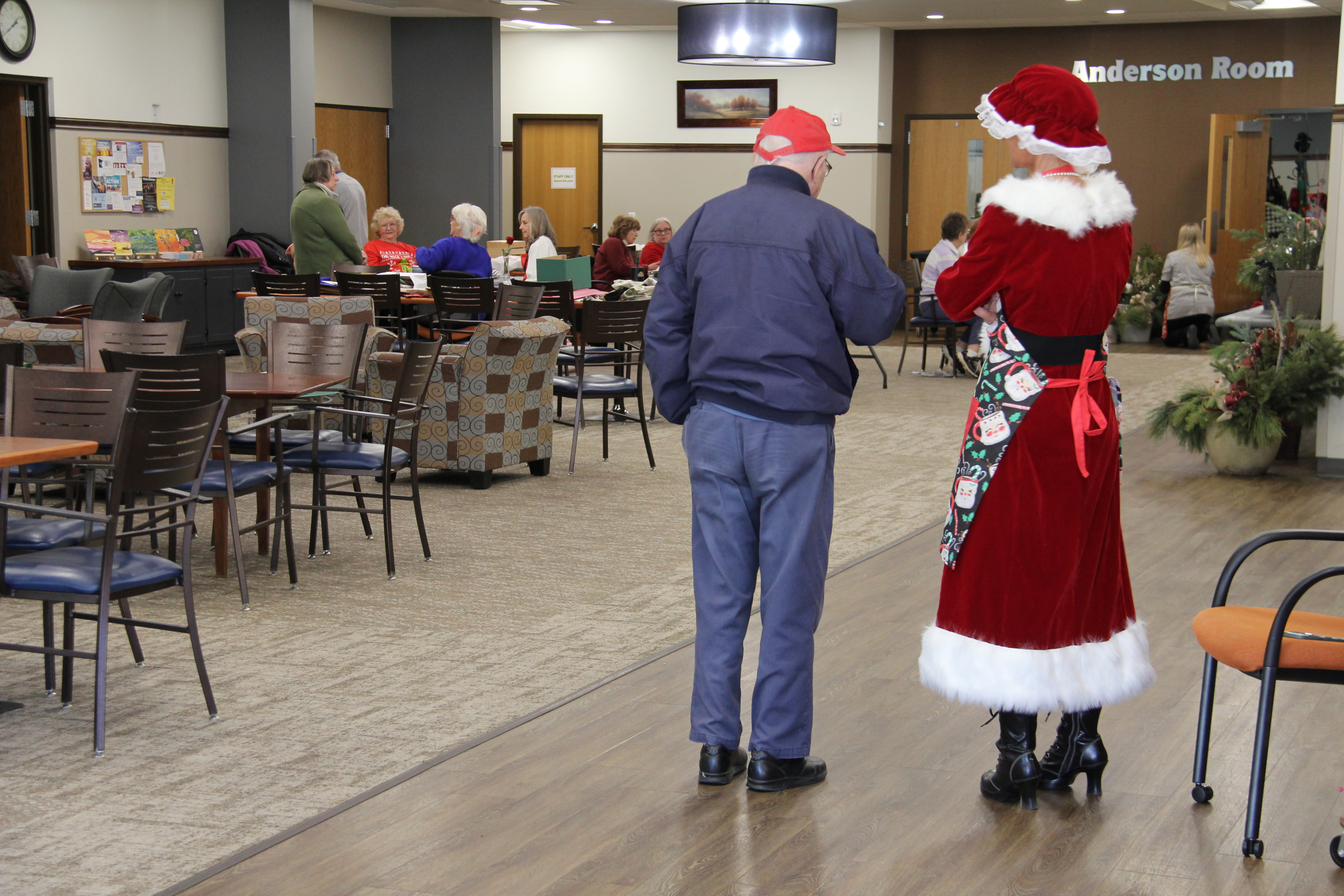
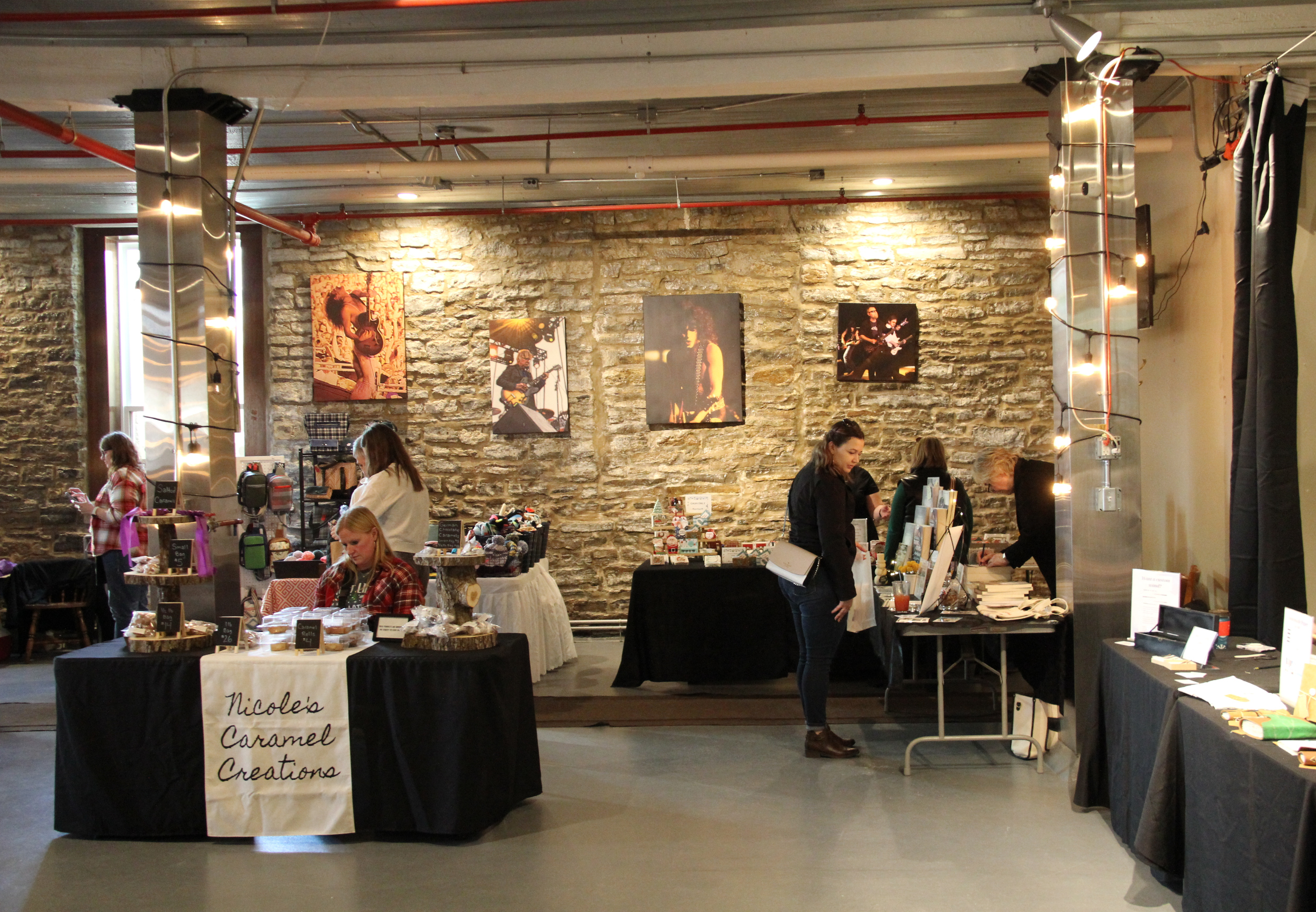
Visiting during a recent Pop-Up Christmas Shoppe at Buckham West, Faribault. (Minnesota Prairie Roots copyrighted photo November 2024)
HOLIDAY MARKETS, craft sales, boutiques, bazaars and bake sales, whatever you term them, seem endless this time of year. I’ve hit many. And that’s from someone who doesn’t like to shop.
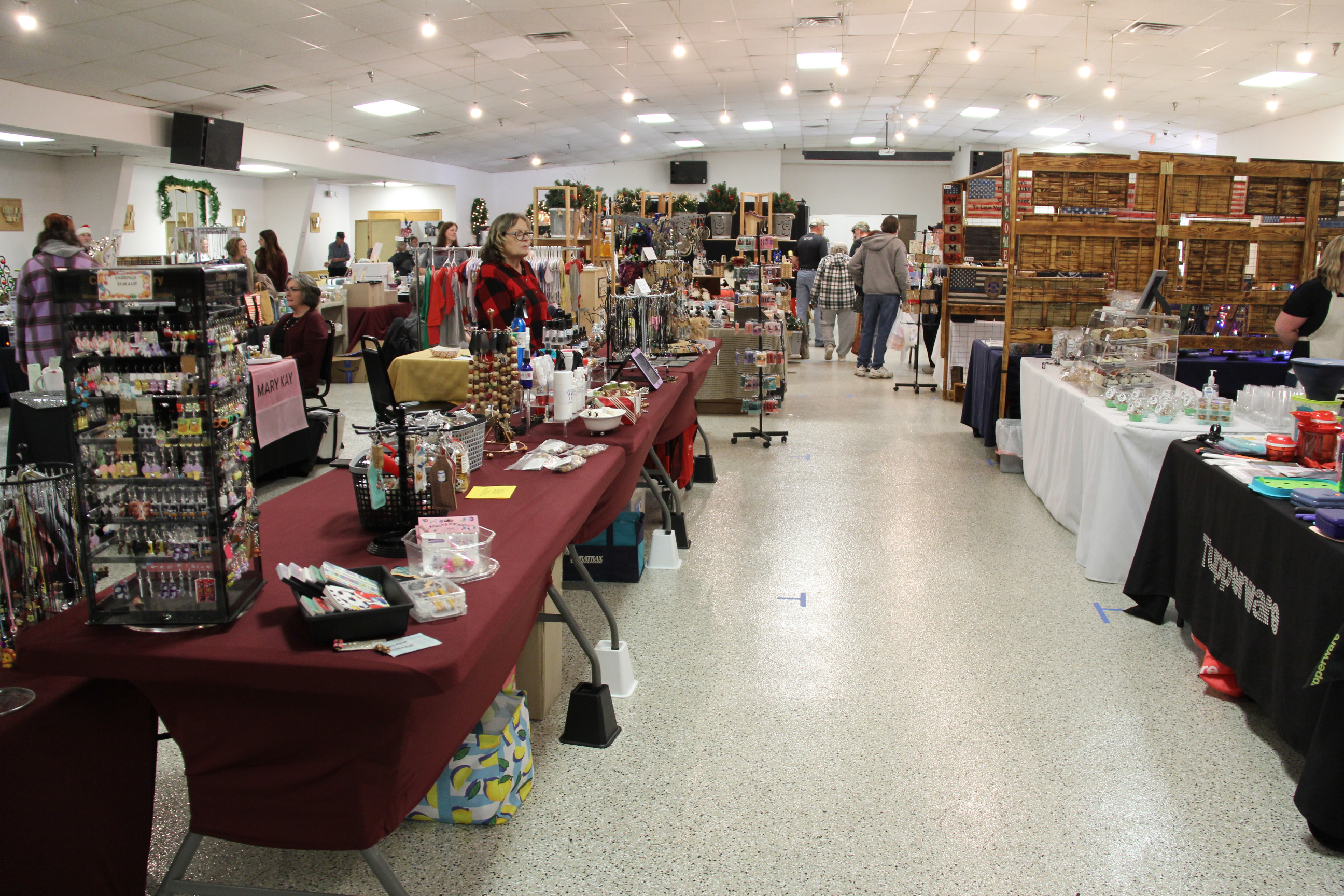
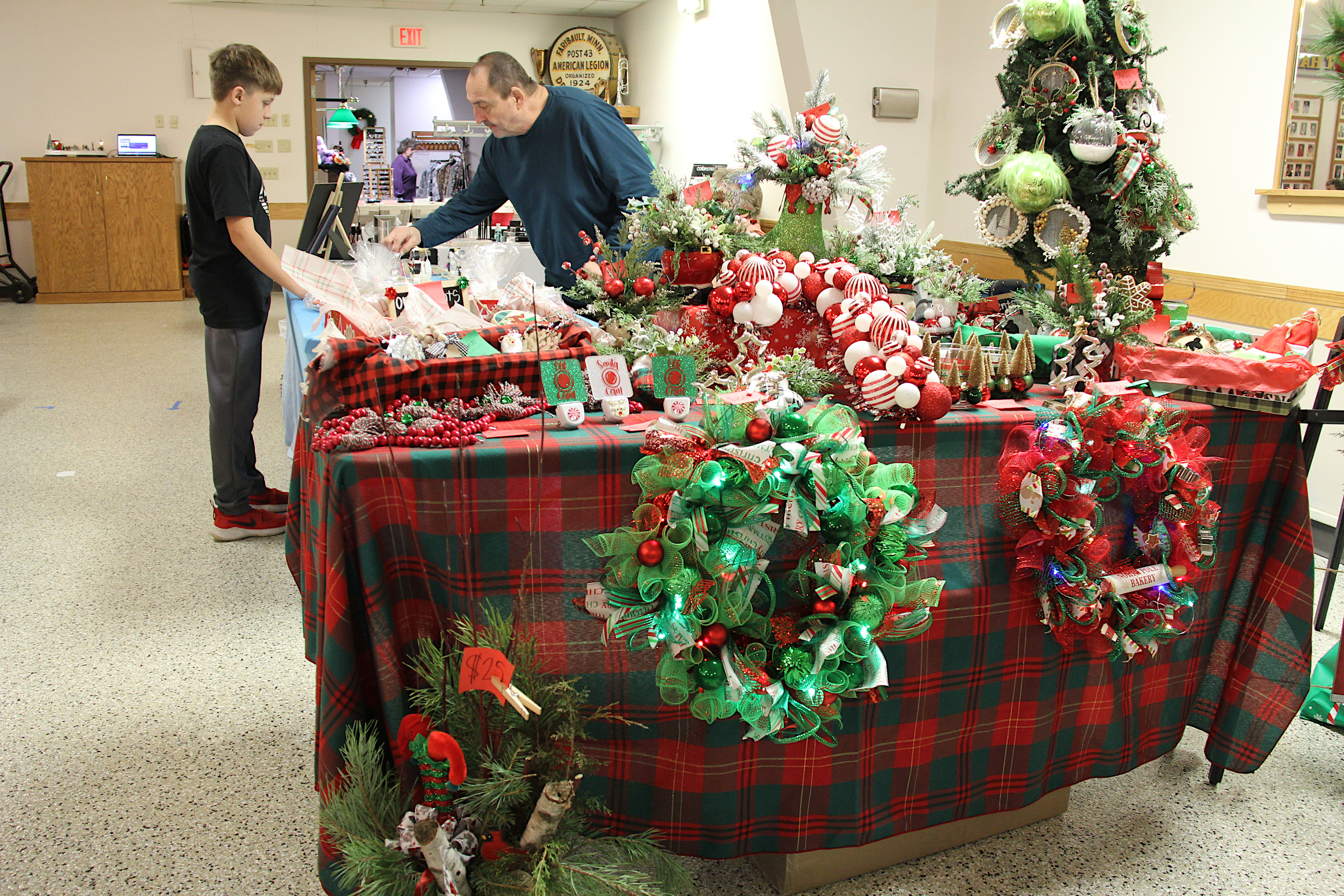
Vendors filled the Faribault American Legion on Saturday for a Christmas Market. (Minnesota Prairie Roots copyrighted photo December 2024)
I should note here that I buy very few Christmas gifts—just a couple for the two grandkids and for my son. And this year for the soon-to-be-born second grandson. That’s it. Those gifts, at least for the little people, come from a big box retailer because the kids have their lists (which Grandma appreciates).
Shoppers come and go from the Craft Spirits Holiday Market at 10,000 Drops Distillery, Faribault, last Saturday. (Minnesota Prairie Roots copyrighted photo December 2024)
Caroline Jones of Graceful Mandalas marketed these mugs and other of her creations at the 10,000 Drops holiday market. (Minnesota Prairie Roots copyrighted photo December 2024)
Sellers were scattered throughout the complex of buildings housing the distillery and Corks & Pints. (Minnesota Prairie Roots copyrighted photo December 2024)
Back to the one or two-day holiday markets usually held on weekends. These are not just about selling merchandise, although certainly that’s the goal. Rather such pop-up shops, whether held in a church basement, senior center, an old shed, school gym, distillery or elsewhere, are community events. A place for folks to gather, converse, embrace the holiday spirit and maybe buy a gift or two. I bought something for my son at a recent market.
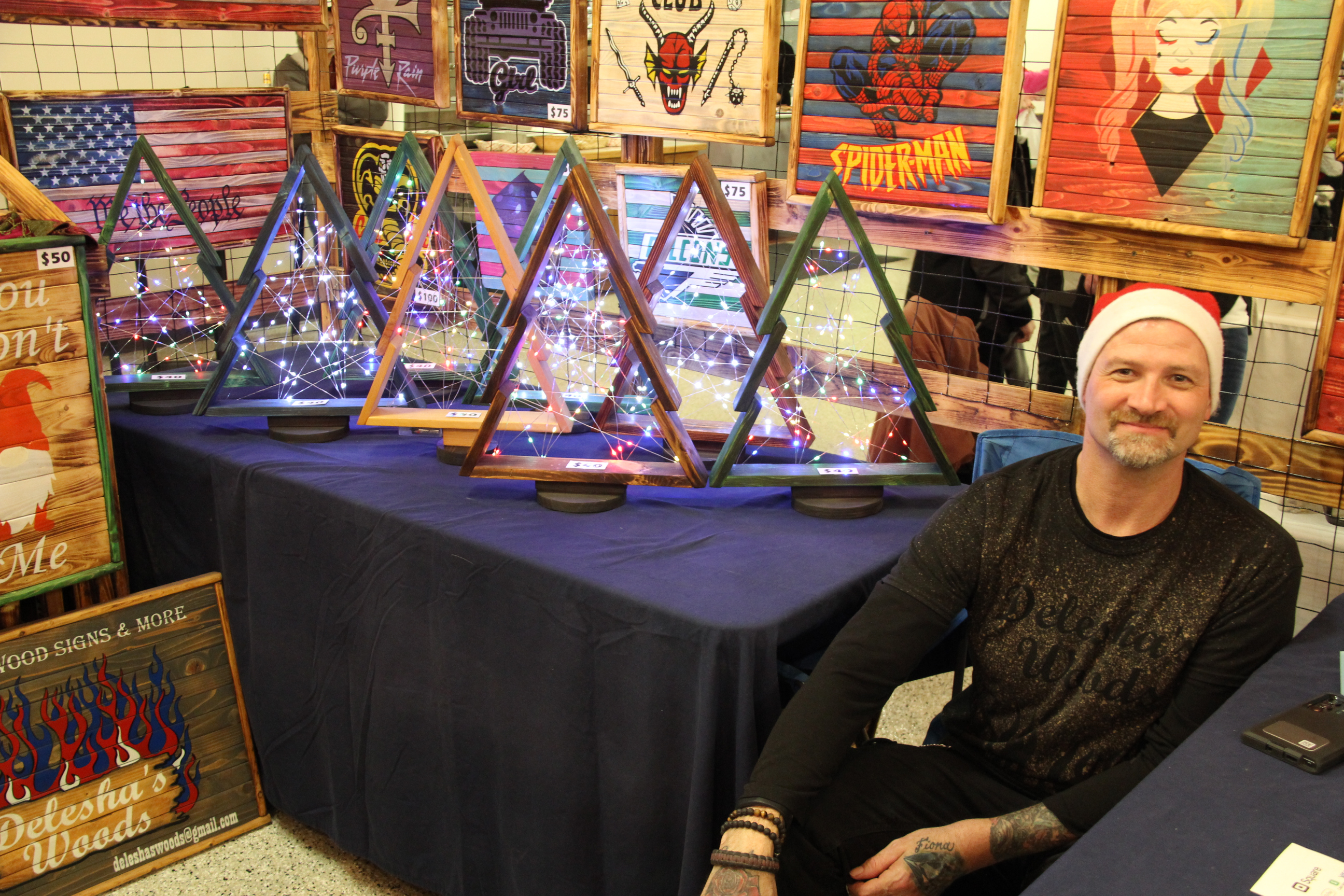
I chatted a bit with Chris Delesha of Delesha’s Woods at the Legion market. (Minnesota Prairie Roots copyrighted photo December 2024)
My friend Kirk Mansfield was at the Legion selling wood and metal creations crafted by him, his wife, Paula, and a friend. (Minnesota Prairie Roots copyrighted photo December 2024)
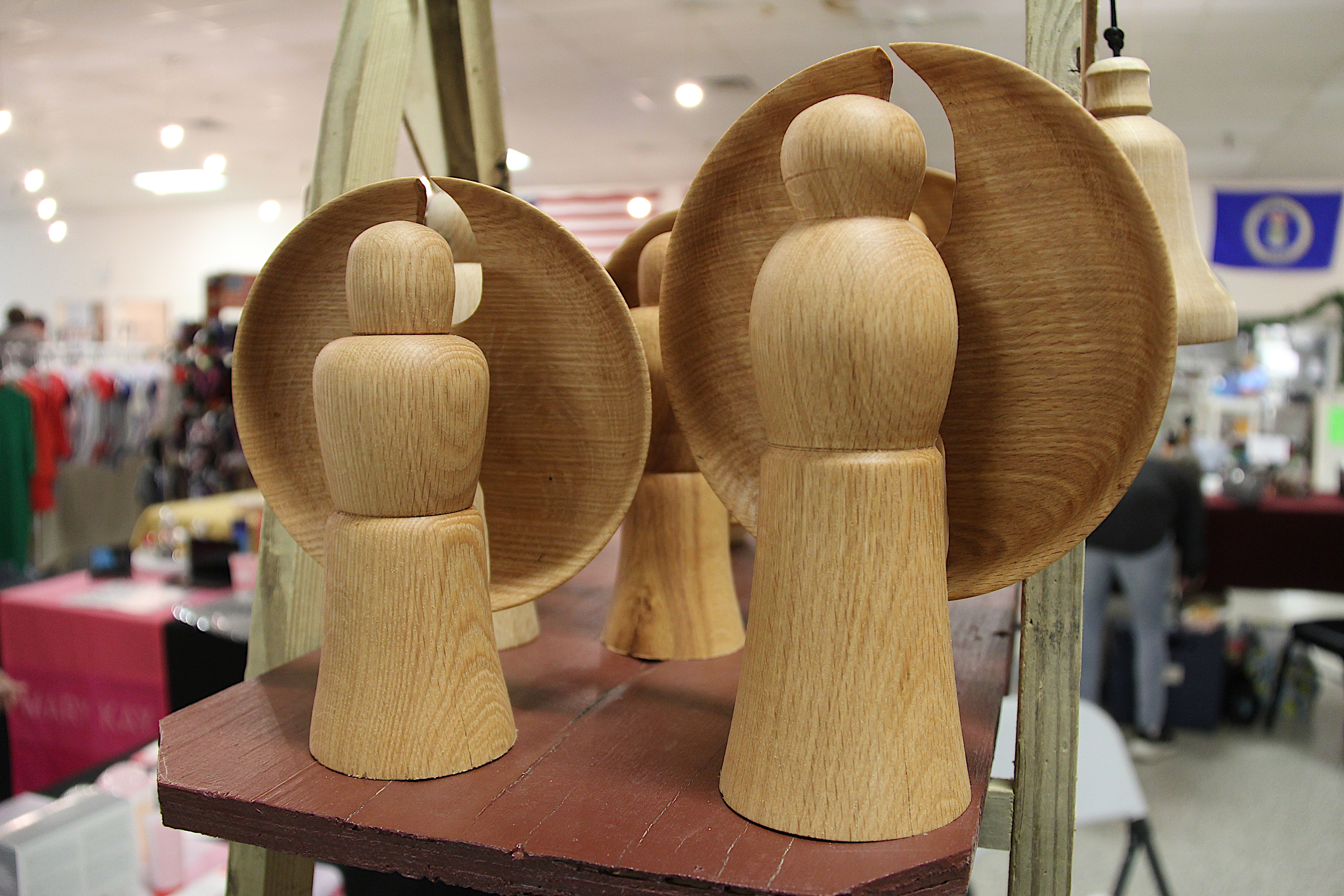
Angels, bowls and more created by Turnings by PDan and sold at the Legion’s Christmas Market. (Minnesota Prairie Roots copyrighted photo December 2024)
I enjoy connecting with people, talking to friends and strangers at these sales. Everyone has a story. Something they may want to share, whether about their product or family updates or holiday plans.
Vendors chat at the holiday market at 10,000 Drops. (Minnesota Prairie Roots copyrighted photo December 2024)
I practice active listening. Not just hearing. There’s a difference. And when I do that, I find people opening up to me. I value these one-on-one conversations allowing me to show interest, empathy and care. Sometimes all people need is for someone to listen, really listen.
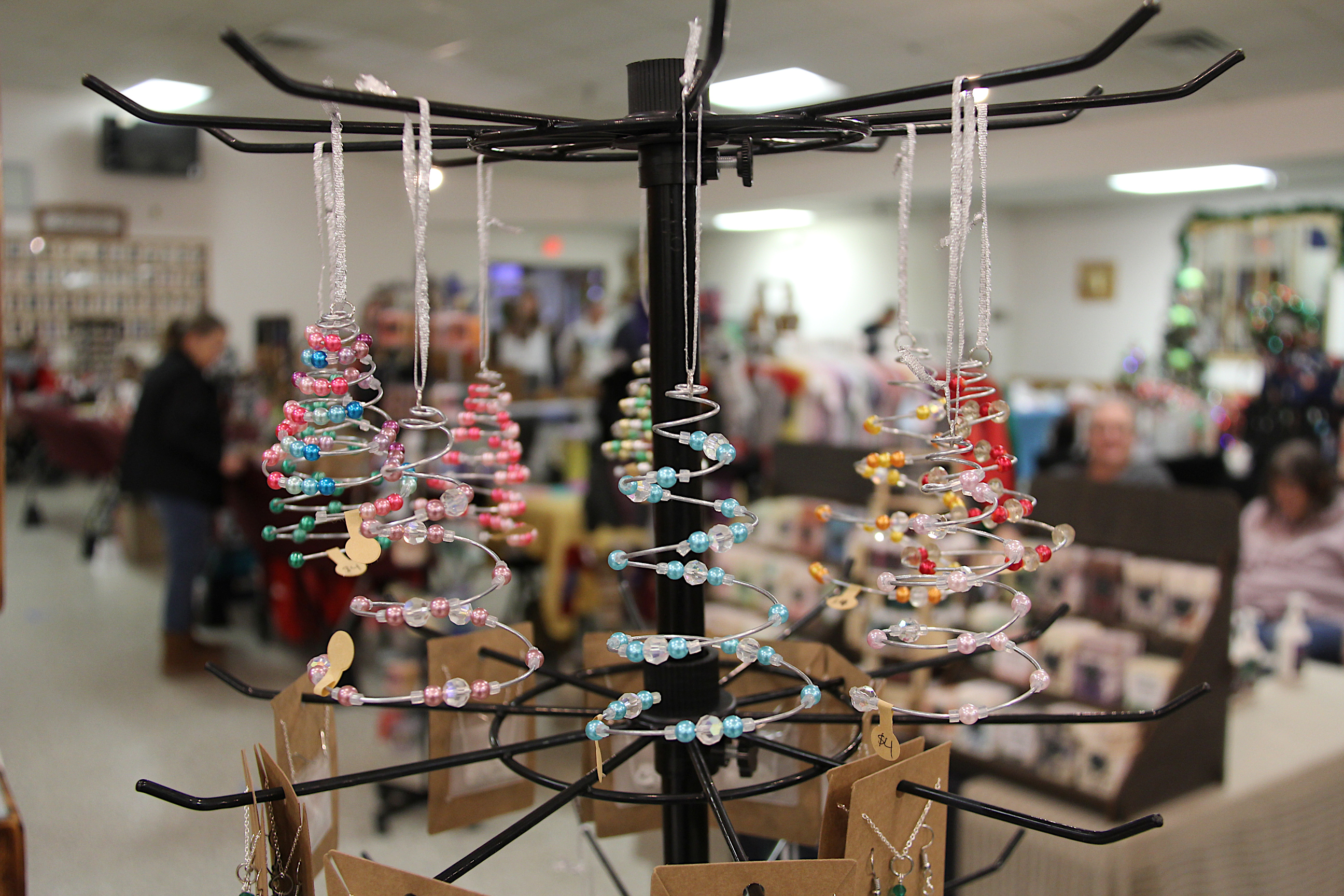
Sellers get creative in displaying their wares. (Minnesota Prairie Roots copyrighted photo December 2024)
These pop-up sales are also a place to learn. Vendors—from artists to crafters to bakers and more—are a talented bunch. Even if I don’t buy anything, I often chat with the sellers about their goods. I’m genuinely interested in learning and connecting with creatives, in listening to their backstories.
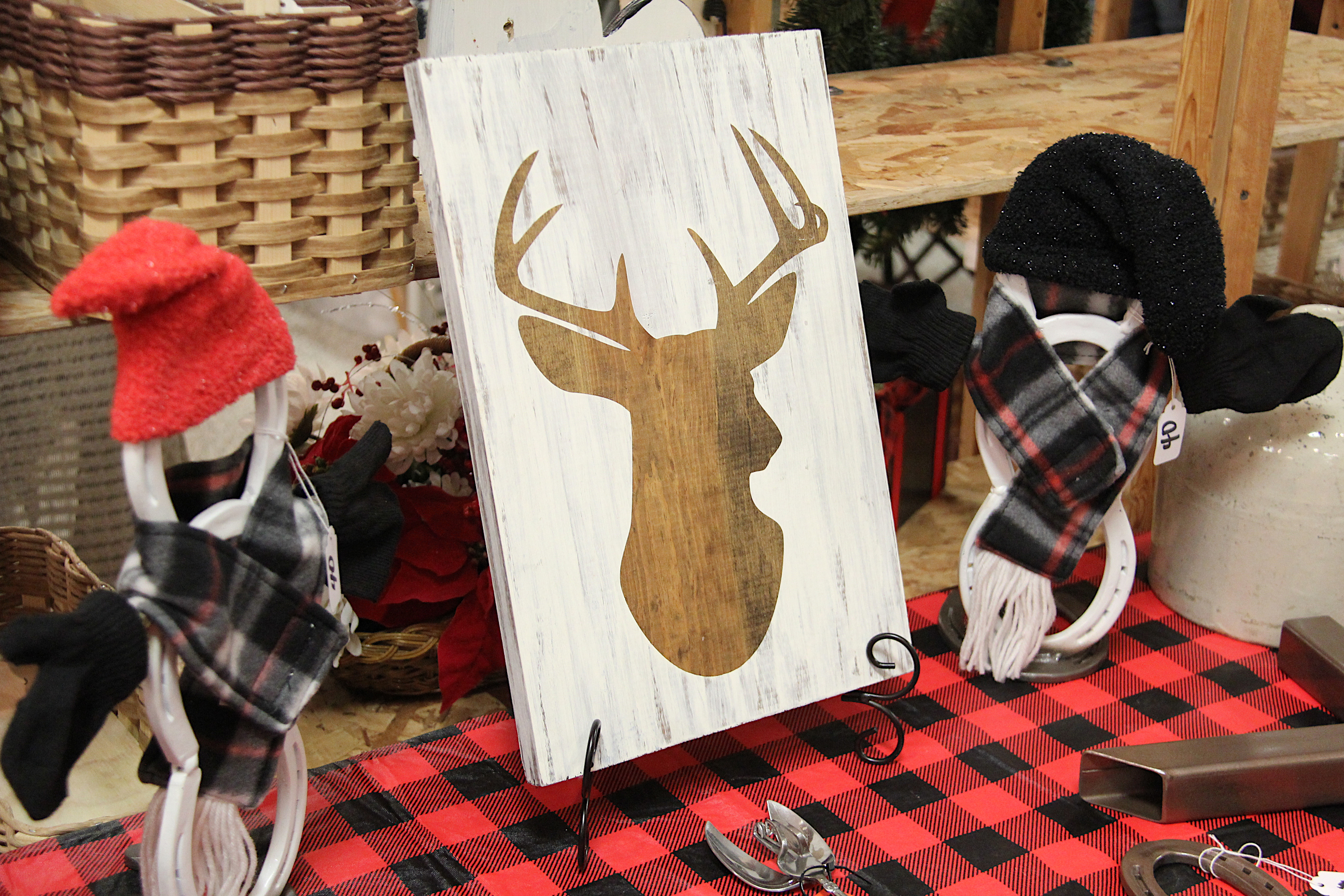
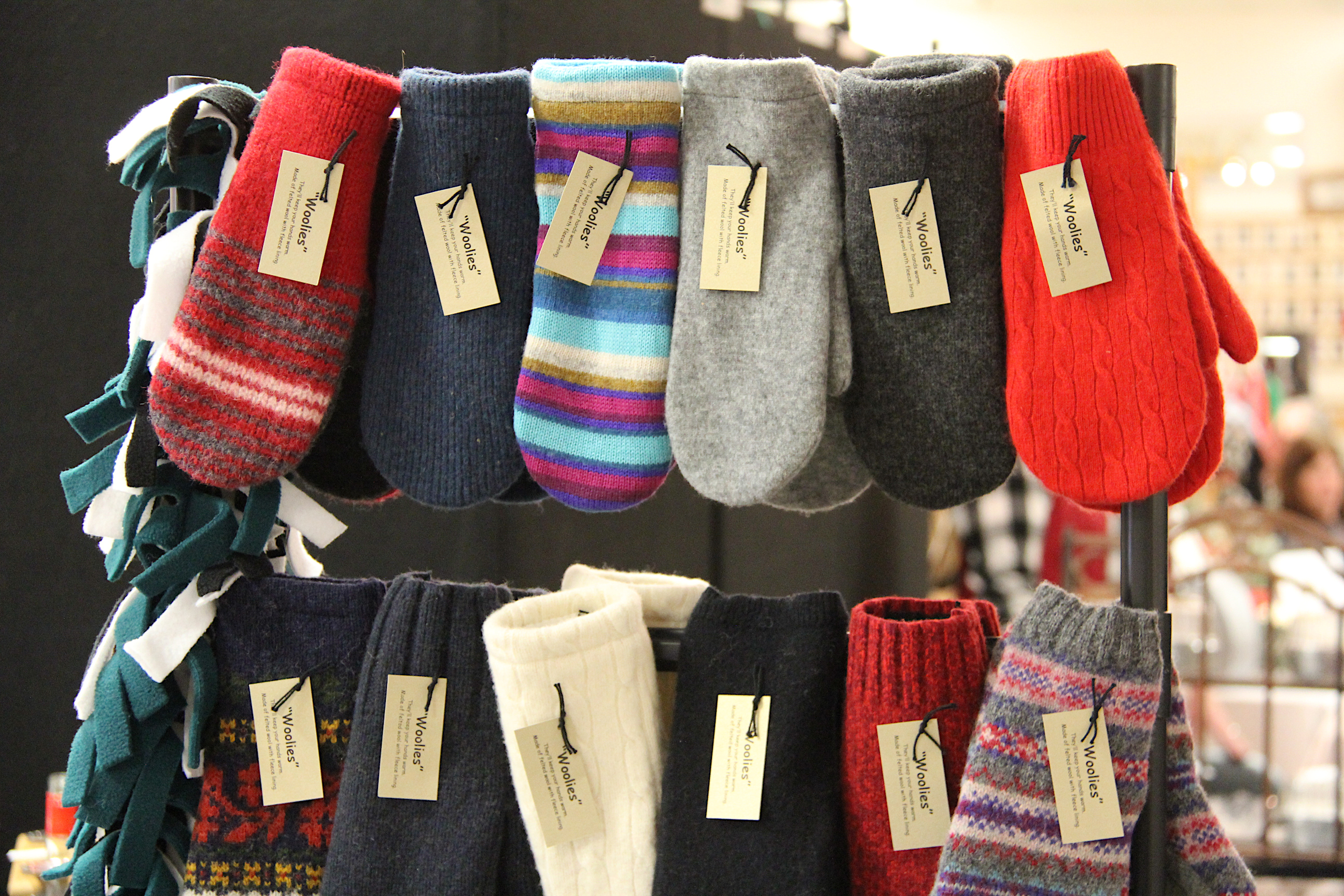
Linda’sWoolies, felted wool, fleece-lined mittens for sale at the Legion Christmas Market. (Minnesota Prairie Roots copyrighted photo December 2024)
Multi generations engage at the Legion’s holiday sale. (Minnesota Prairie Roots copyrighted photo December 2024)
Vicky Scheiber, Nicole Boehme and Heather Berg create custom papercrafts, greeting cards, jewelry and woodcrafts under the name Scheiber Designs, here sold at the Legion’s Christmas Market. (Minnesota Prairie Roots copyrighted photo December 2024)
Creatives never get, dollar-wise, what they should for the time invested. They create because they love what they do. They hold a passion for knitting, for baking, for woodworking, for sewing, for photography, for writing, for whatever and then try to turn that into something which brings in a bit of money and brings joy to others.
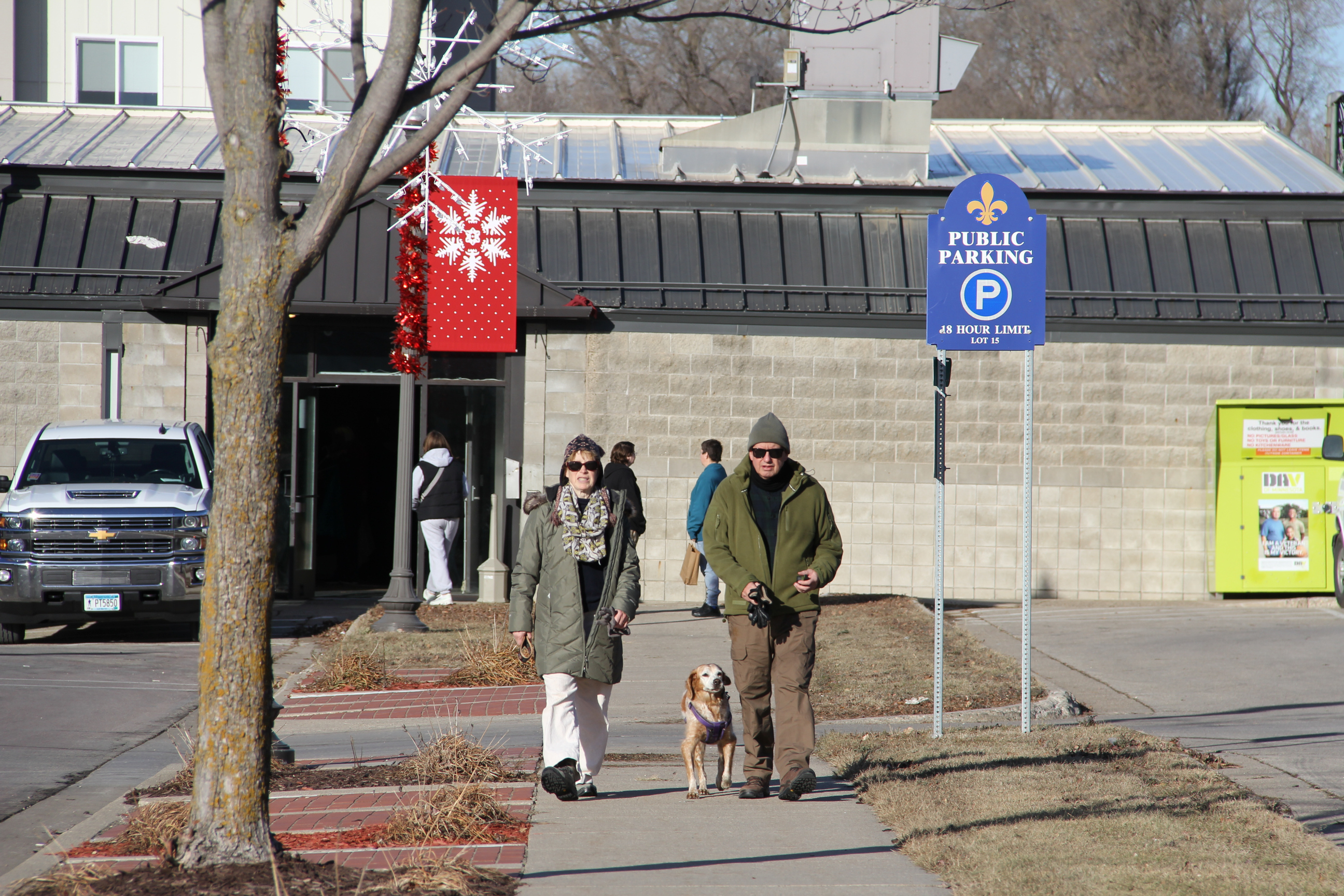
A scene outside the Christmas Market at the American Legion last Saturday. (Minnesota Prairie Roots copyrighted photo December 2024)
In these final weeks before Christmas, I hope you’ve taken time to attend a holiday market in your area. They offer a great shop local option and an opportunity to experience community at its most grassroots basic.
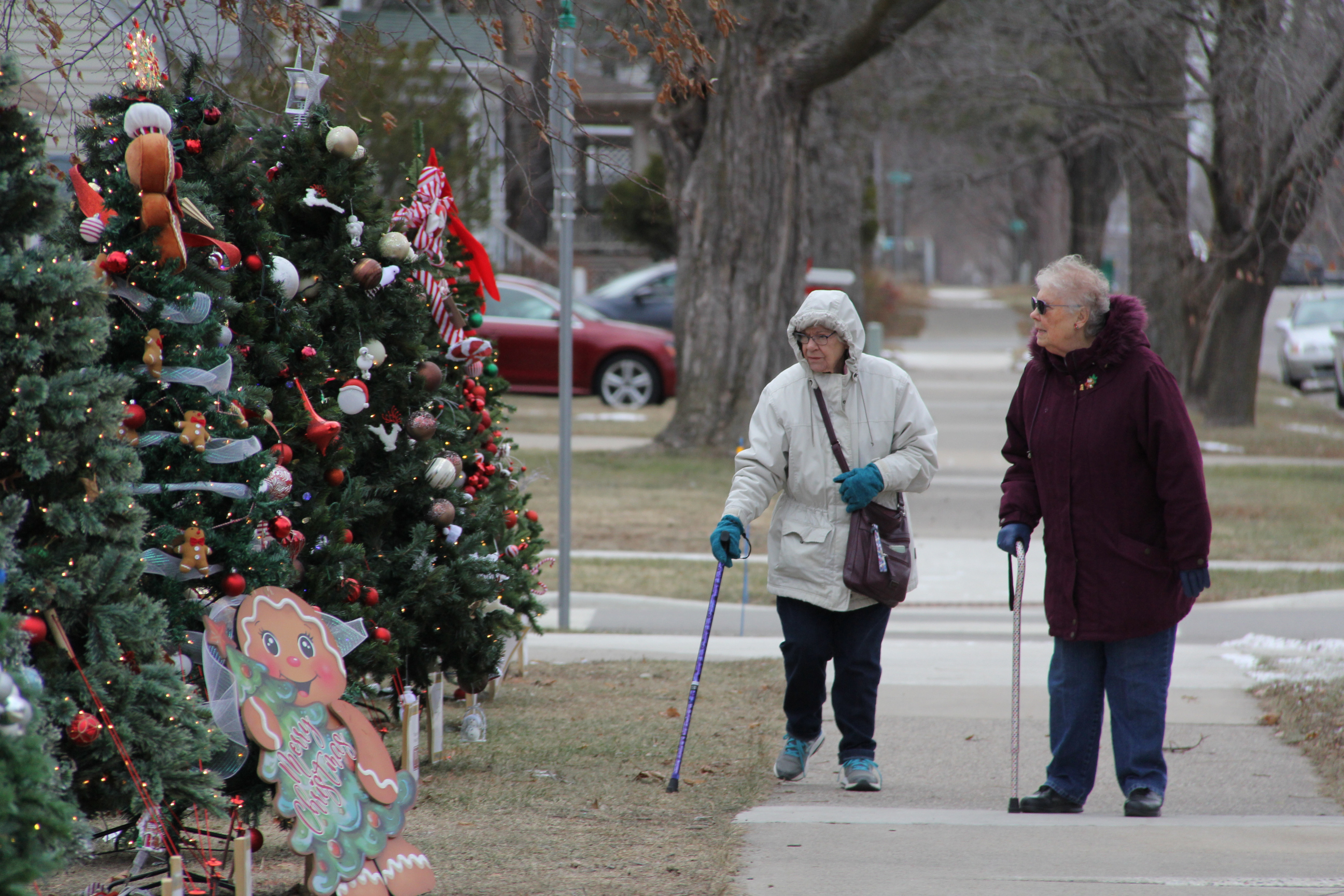
Viewing Christmas trees in Central Park on a recent weekday afternoon. (Minnesota Prairie Roots copyrighted photo December 2024)
FIVE YEARS IN TO FARIBAULT’S Adopt-a-Tree Holiday Tree Program, the initiative to give Christmas trees to those in need continues to grow. This year 75 decorated artificial trees were donated and placed in Central Park. That’s up from some 20 trees when the program launched in 2020. Each December since, those numbers have increased.
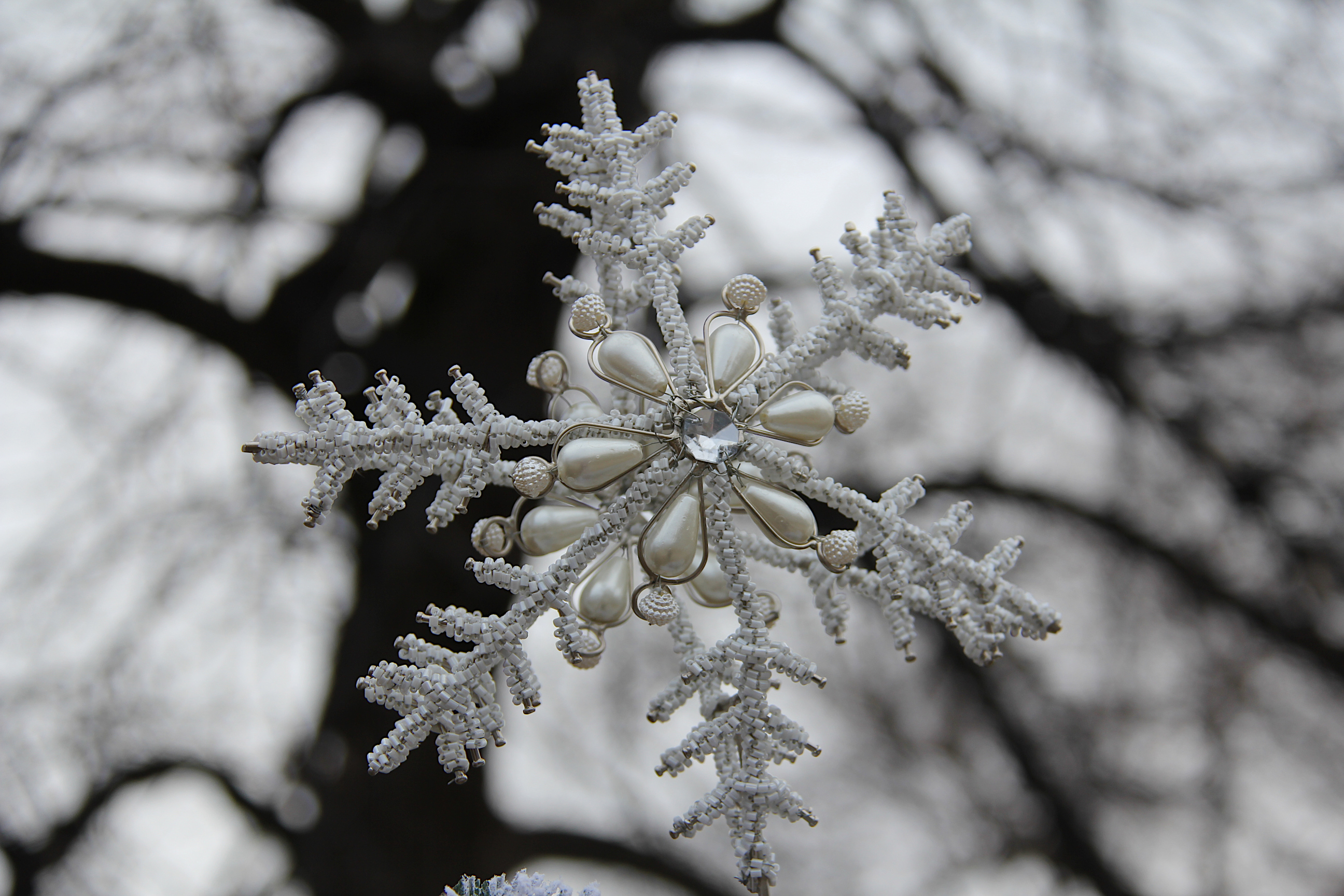
A snowflake tree topper shimmers against a backdrop of trunk and branches on a tree in the park. (Minnesota Prairie Roots copyrighted photo December 2024)
This all started during the COVD-19 pandemic after restrictions on large gatherings resulted in cancellation of Hometown Holidays events. The trees in the park not only brought light and joy during an especially dark time, but also helped folks in my community who were struggling financially.
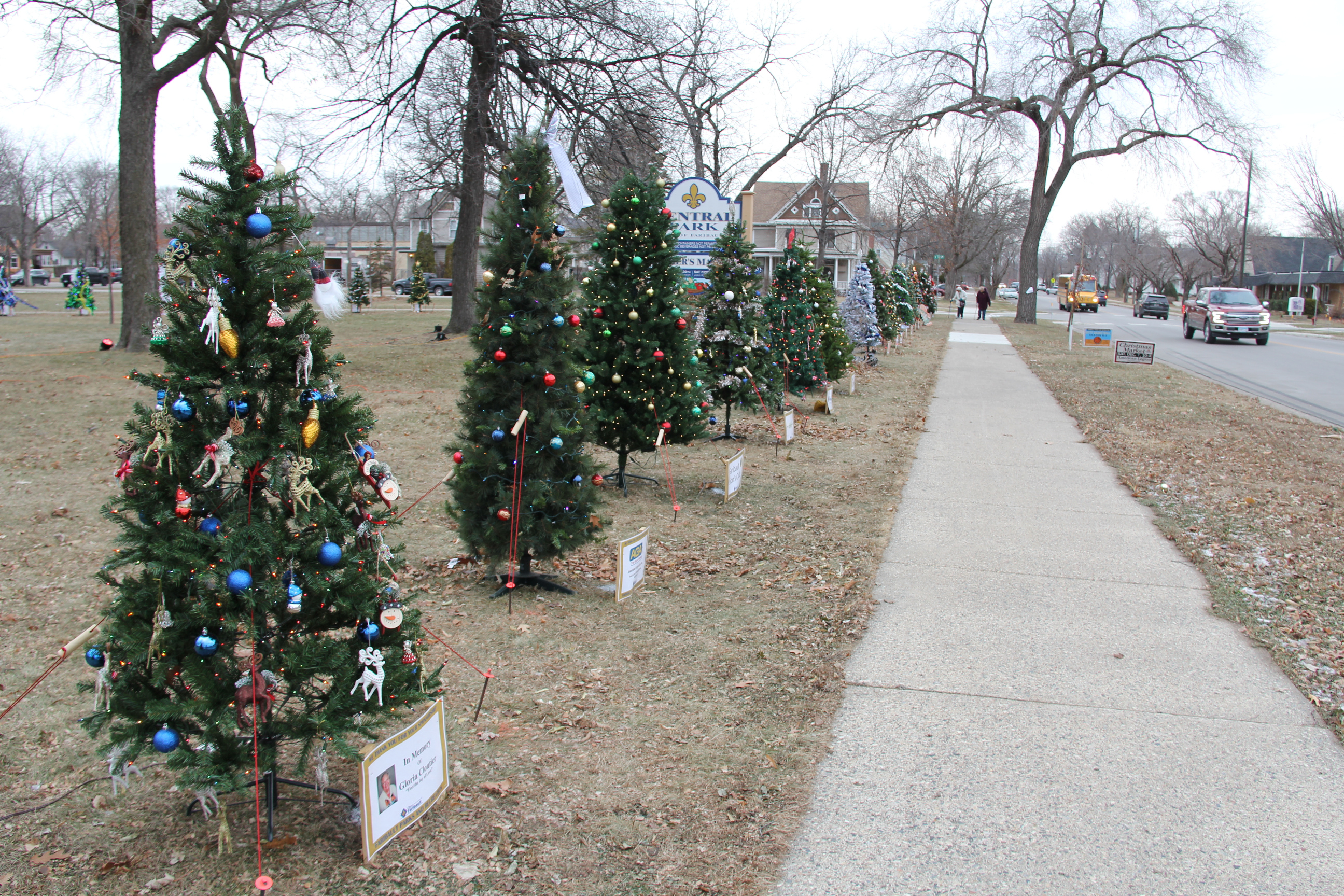
Here trees line the sidewalk along Second Avenue. More trees edge sidewalks leading into the heart of Central Park. (Minnesota Prairie Roots copyrighted photo December 2024)
Initiated by the Faribault Parks and Recreation Department, which paired with nonprofit St. Vincent de Paul, the Adopt-a-Tree program gives Christmas trees to those who would otherwise not have one. If you’ve priced Christmas trees, you know they are costly.
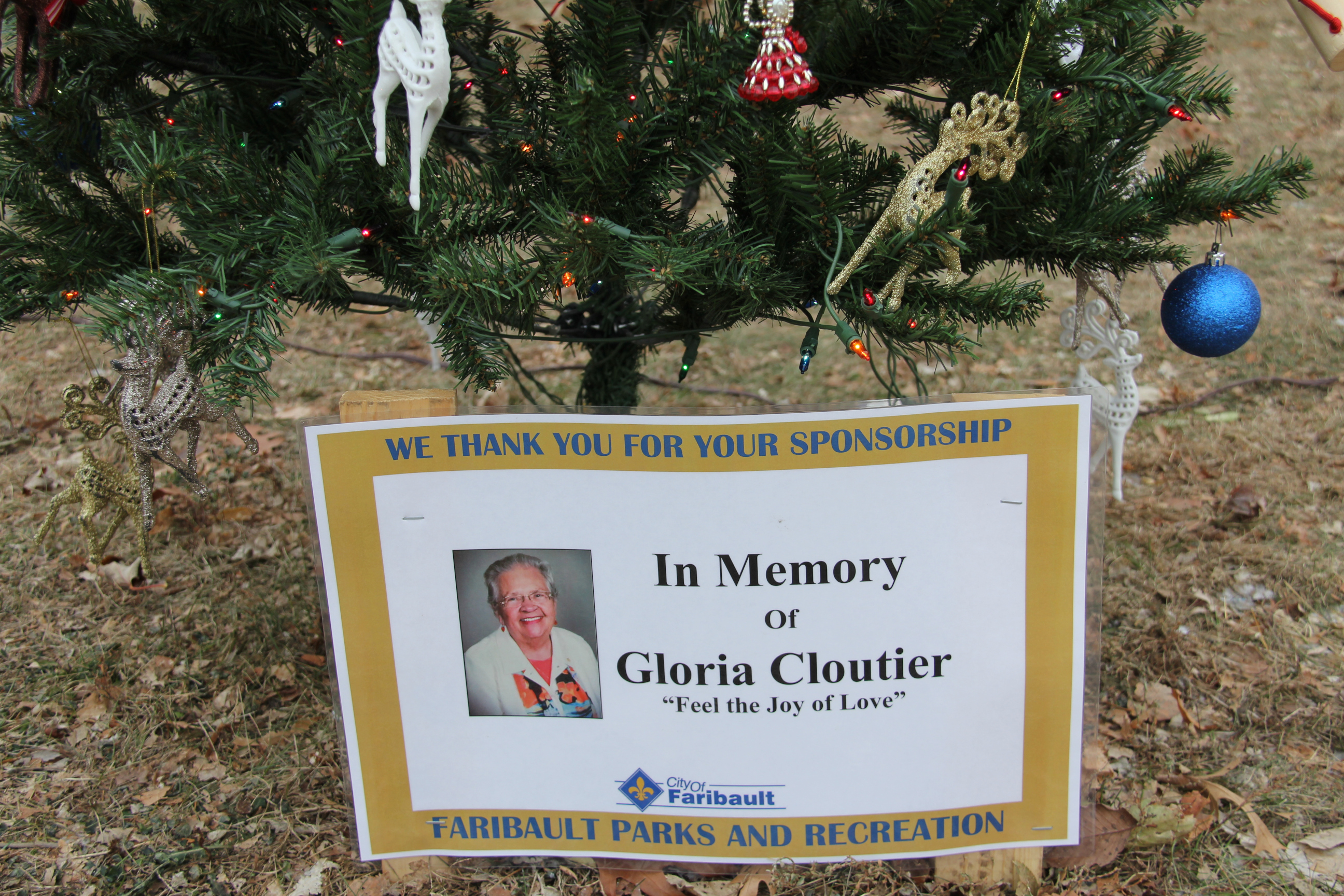
I knew Gloria, who recently passed and who absolutely exuded love and joy. I love that someone (likely family) donated a tree in her honor. (Minnesota Prairie Roots copyrighted photo December 2024)
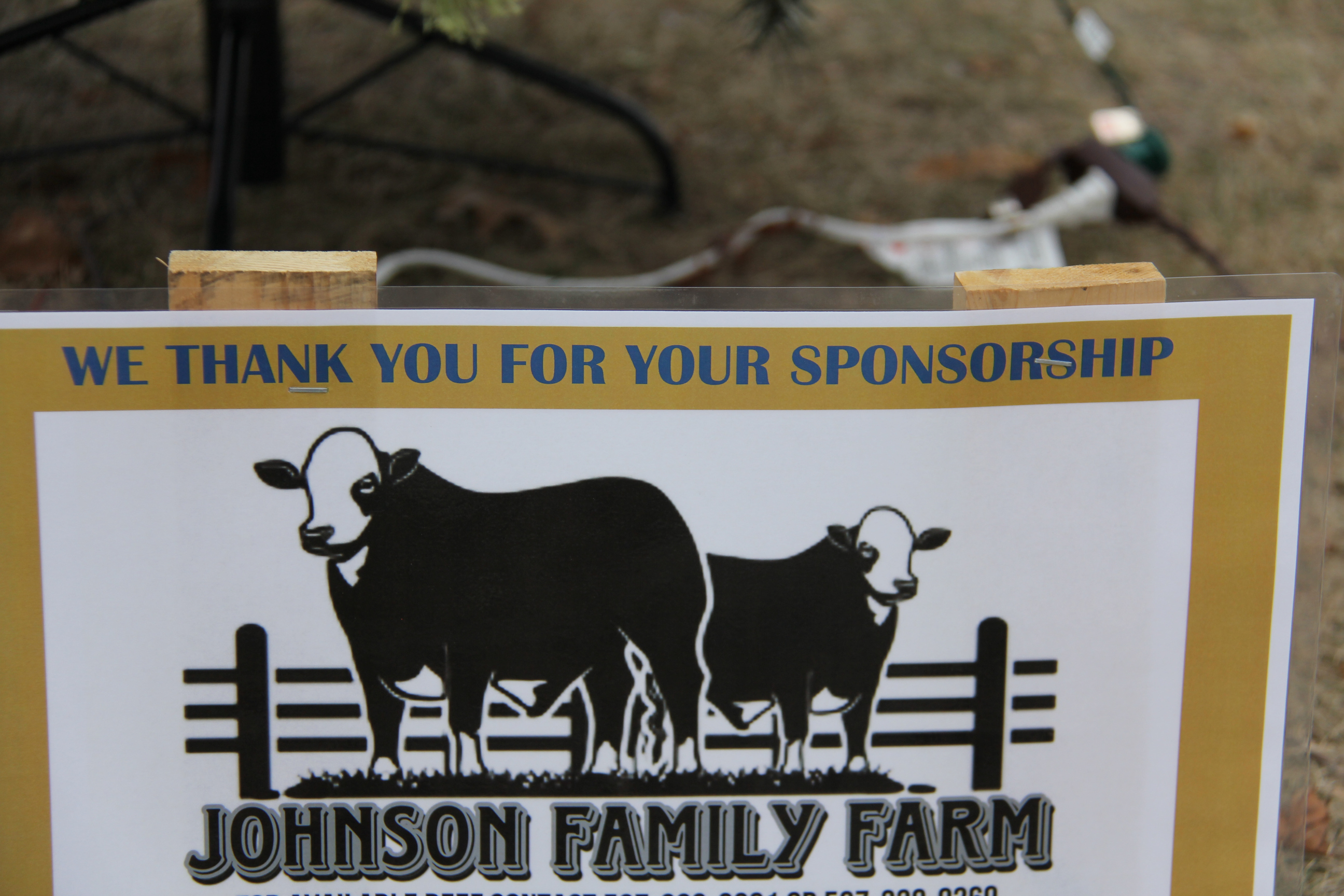
Ours is a rural area, as evidenced by this farm sponsorship. (Minnesota Prairie Roots copyrighted photo December 2024)
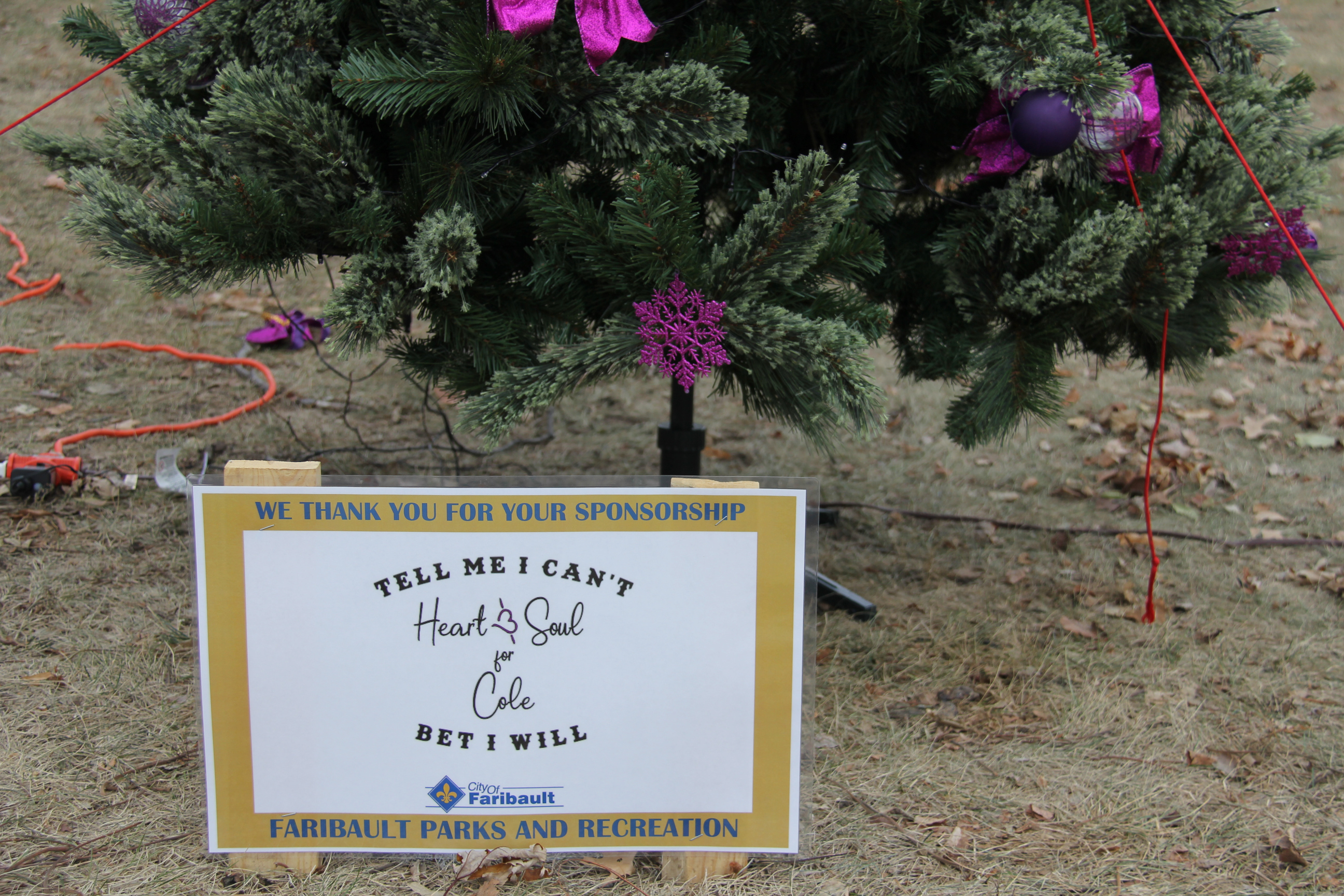
Another personal sponsorship, which speaks to love and determination. (Minnesota Prairie Roots copyrighted photo December 2024)
The community quickly embraced the idea with service clubs, businesses, churches, individuals, nonprofits, schools and more buying and decorating trees to display in Central Park and then give away. These groups and individuals benefit, too, by raising awareness about their causes/organizations/businesses or simply by offering sponsors an opportunity to give back.
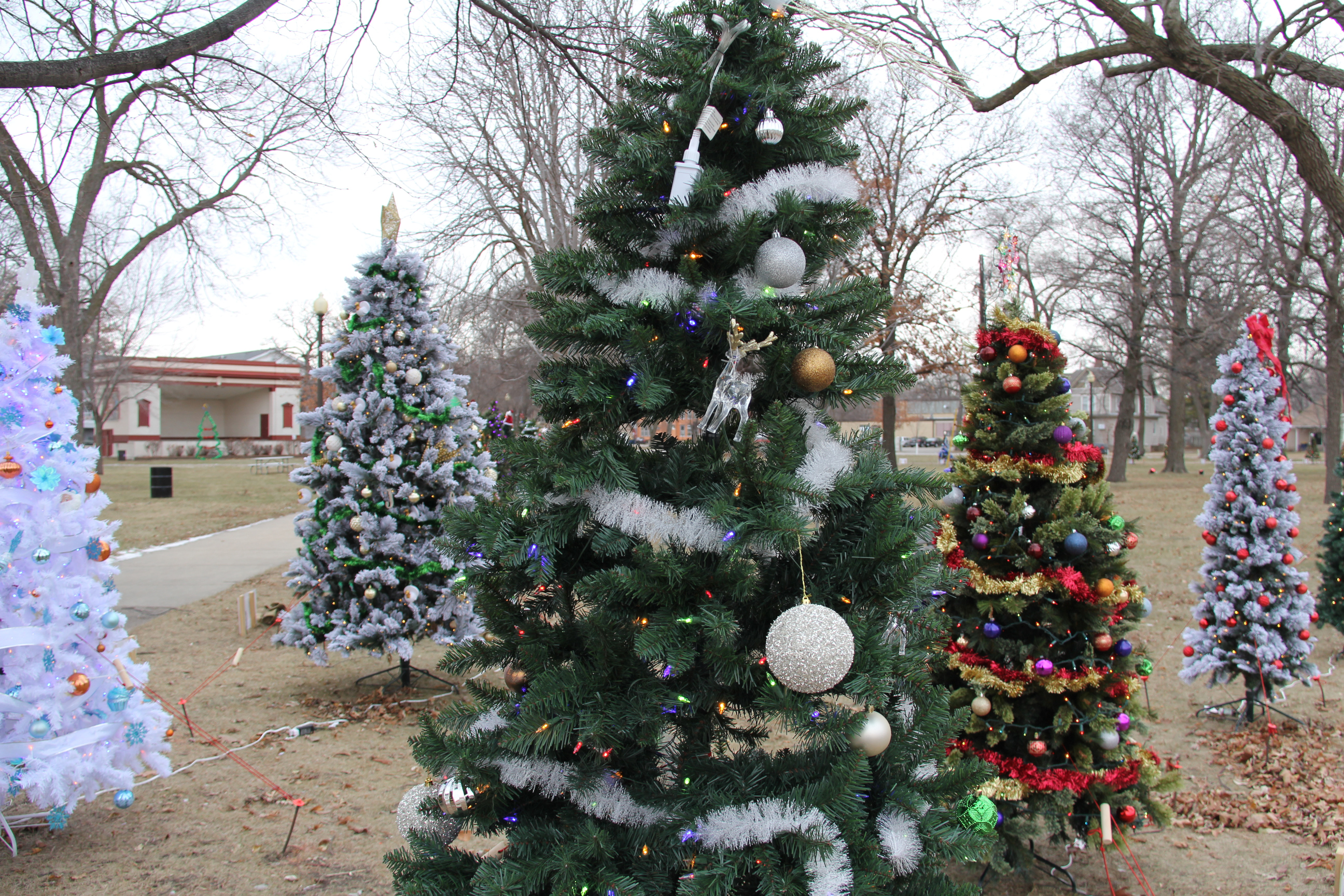
Trees in many sizes and colors were donated. (Minnesota Prairie Roots copyrighted photo December 2024)
Adopt-a-Tree has truly built community spirit. To view these festive trees is to see generosity, compassion and care. To view these trees is to understand that Faribault folks genuinely want to help others. When we connect on that level, we are a stronger, better community.
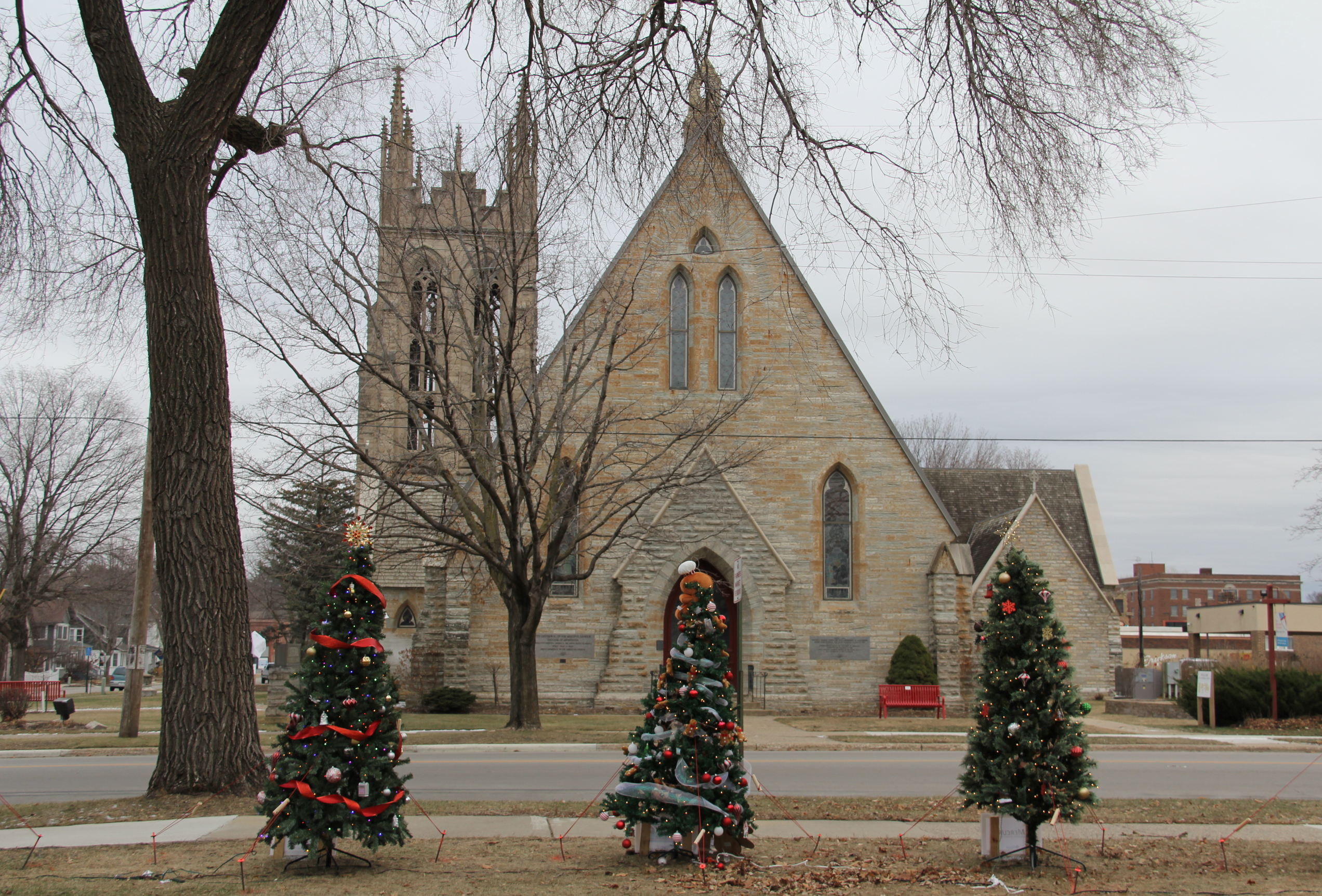
The historic Cathedral of Our Merciful Saviour backdrops trees along Second Avenue Northwest. (Minnesota Prairie Roots copyrighted photo December 2024)
I’ve seen the trees aglow at night from afar, a beautiful sight in Central Park along busy Second Avenue Northwest. I’ve seen the trees during daylight, too, when I walked through the park and looked more closely at the decorations and the tree sponsor information printed on signs.
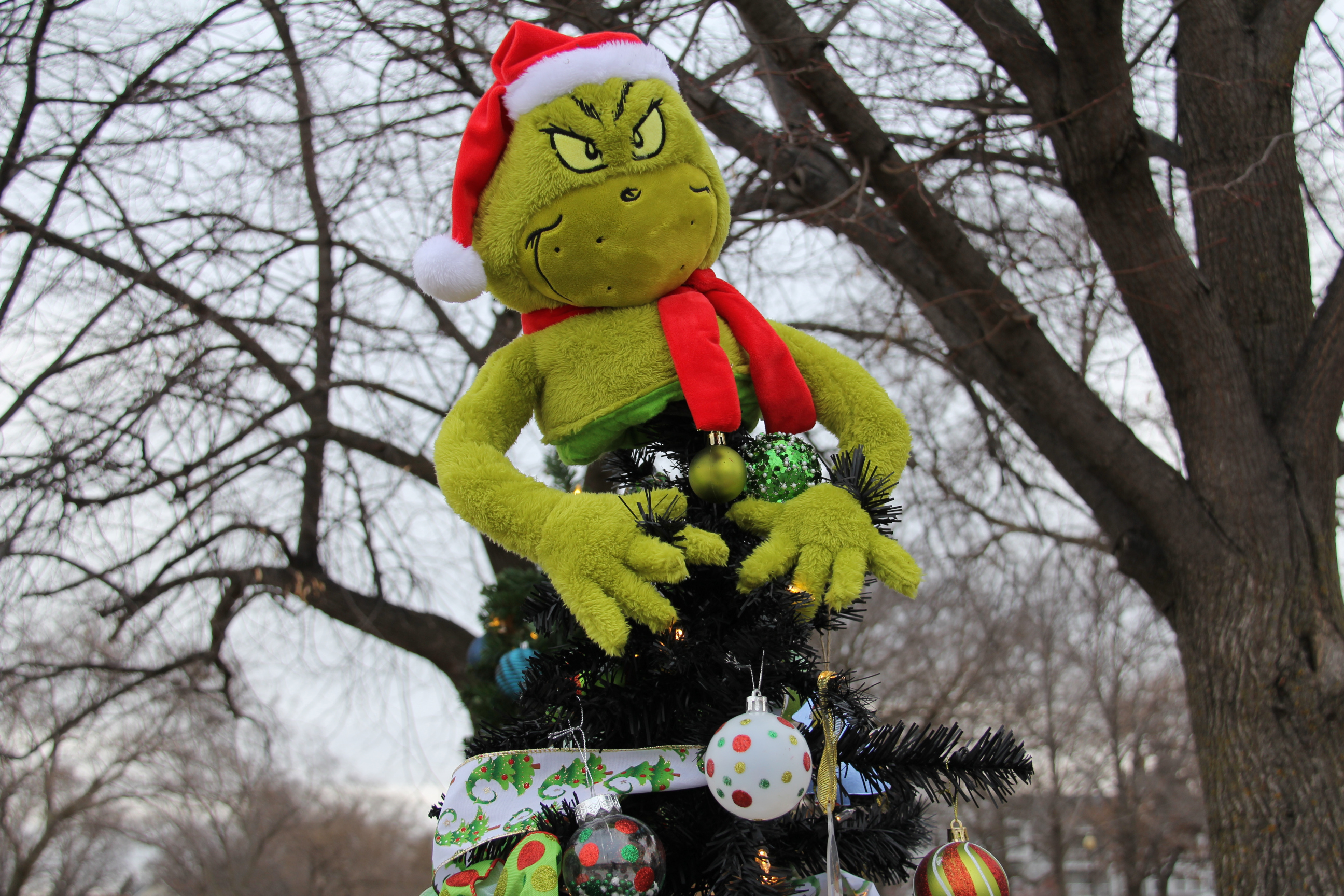
The Grinch tops a Grinch-themed tree. (Minnesota Prairie Roots copyrighted photo December 2024)
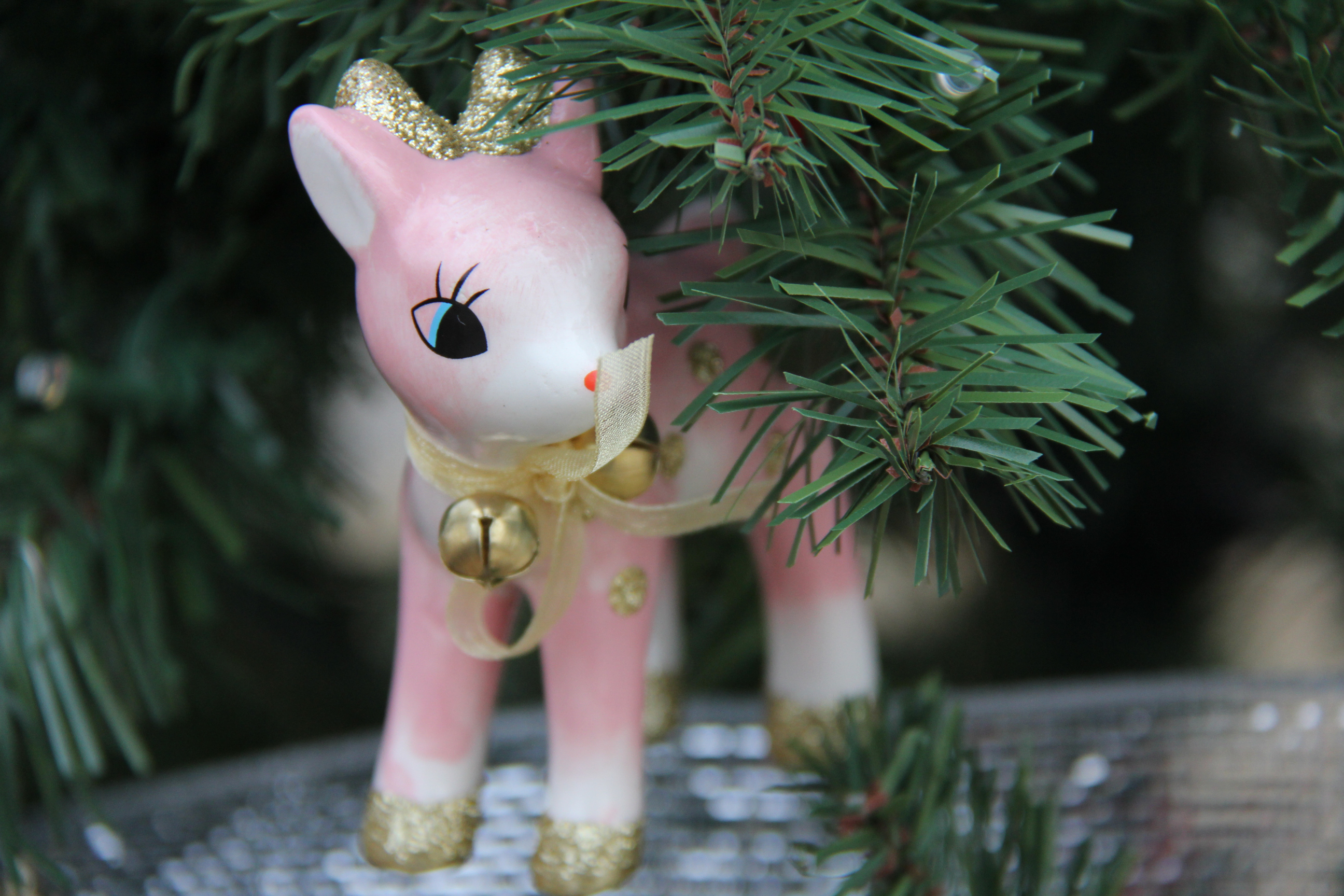
An unexpected find, a sweet reindeer in pink. (Minnesota Prairie Roots copyrighted photo December 2024)
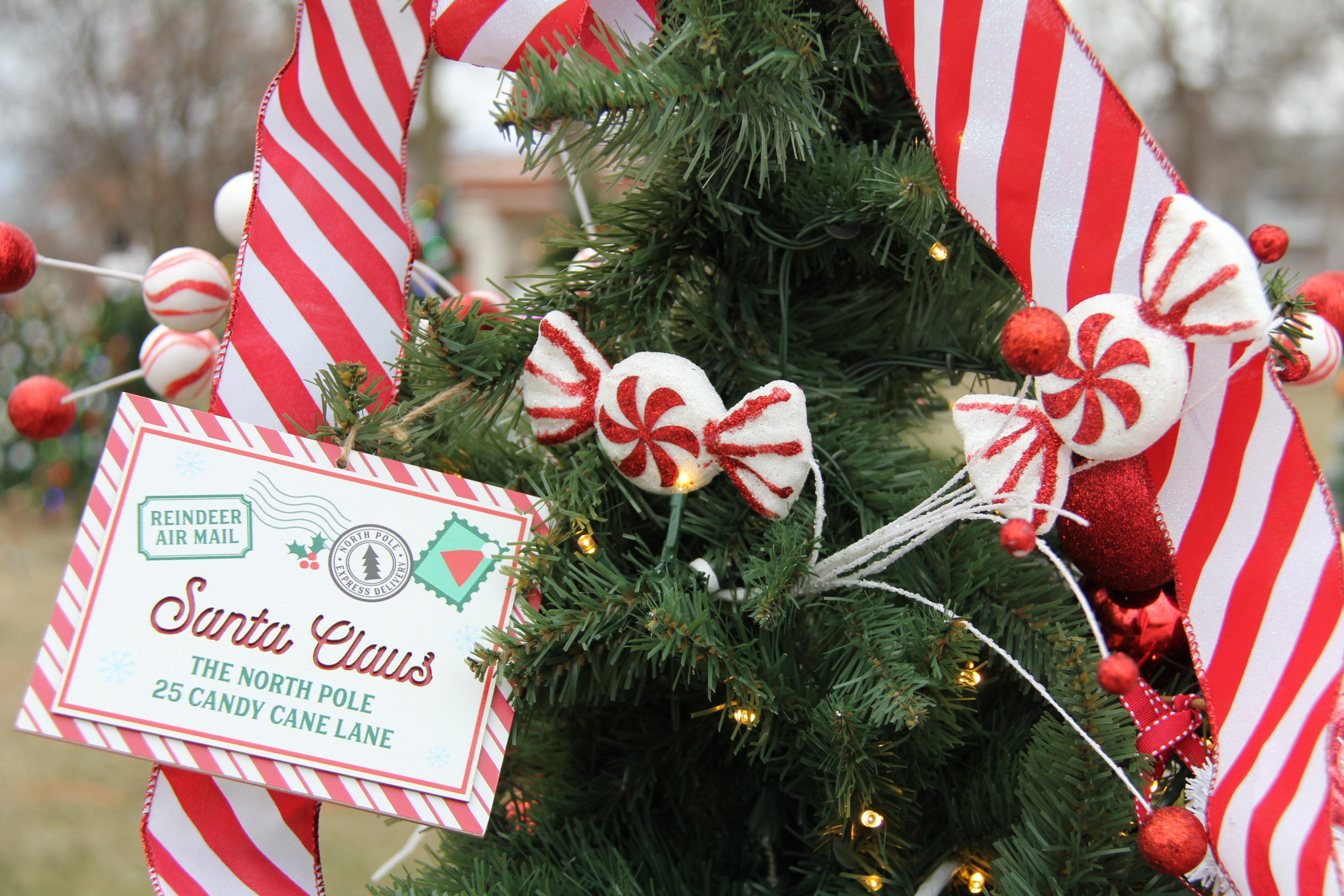
On the candy cane-themed tree, vivid red. (Minnesota Prairie Roots copyrighted photo December 2024)
Bulbs, other ornaments, garland, ribbon, lights…adorn trees, some with toppers, some without. Some trees are themed—the Grinch, candy canes, gingerbread men, reindeer…
Spotted on the tree donated by the Faribault, Minnesota, Chapter of HOG (Harley Owners Group). (Minnesota Prairie Roots copyrighted photo December 2024)
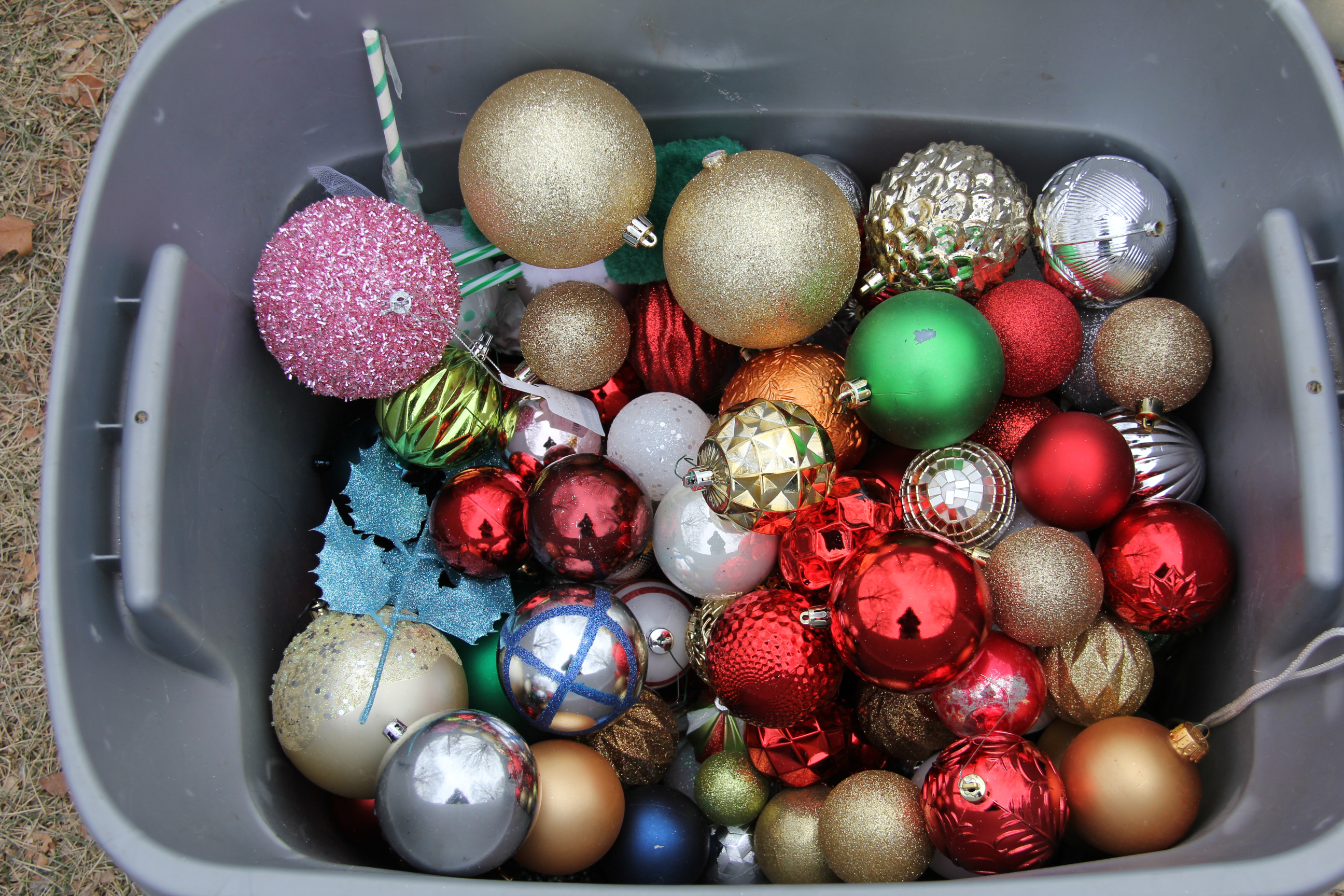
A tub of ornaments sits in the park. Many trees blew over and ornaments fell off during strong winds last week. (Minnesota Prairie Roots copyrighted photo December 2024)
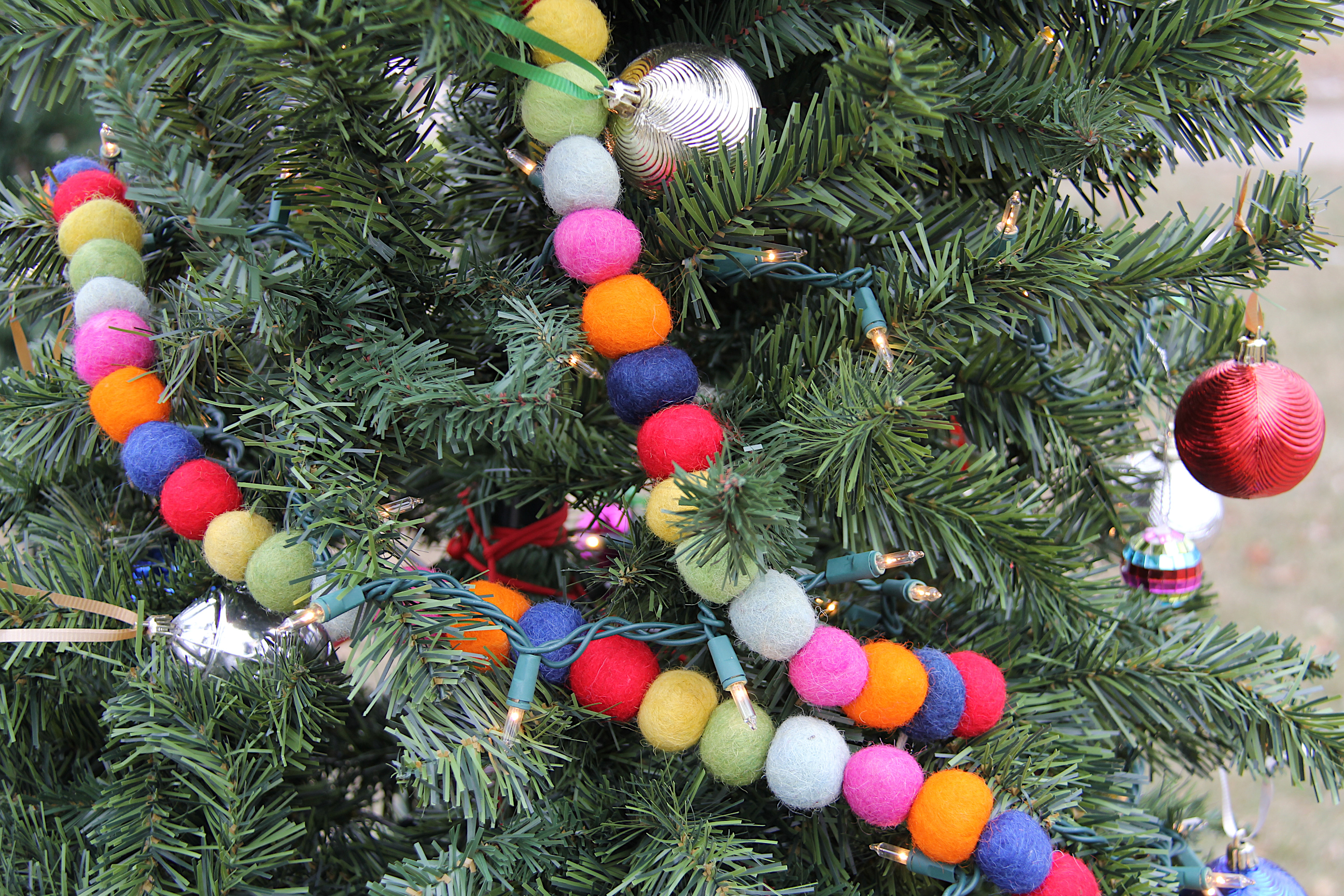
Pom poms strung together make a particularly creative and colorful garland. (Minnesota Prairie Roots copyrighted photo December 2024)
No matter the decorations or the tree size or color (from flocked to white to black to assorted greens), the visual statement is the same. We care.
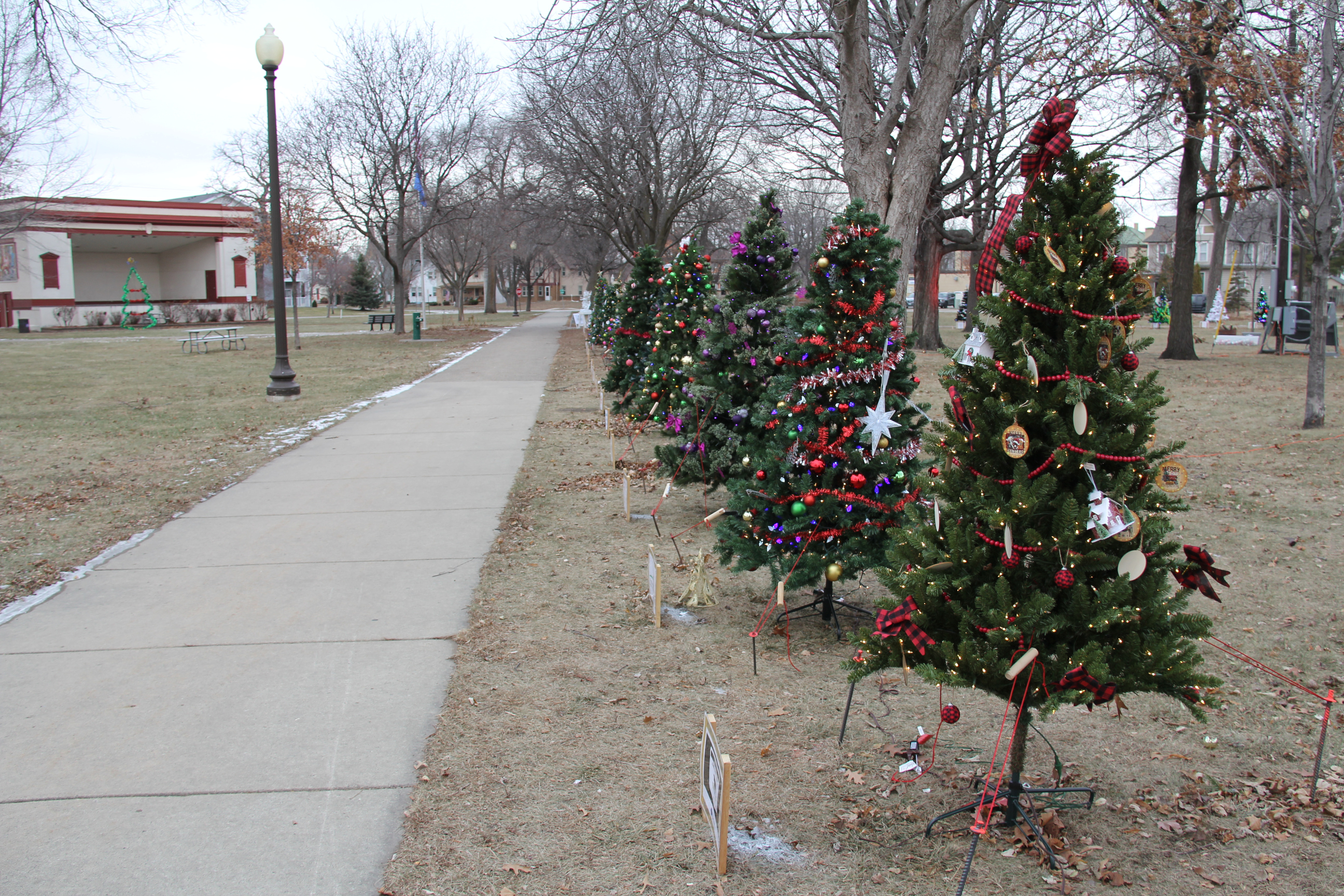
Trees line the sidewalk leading into the park toward the bandshell in the background. (Minnesota Prairie Roots copyrighted photo December 2024)
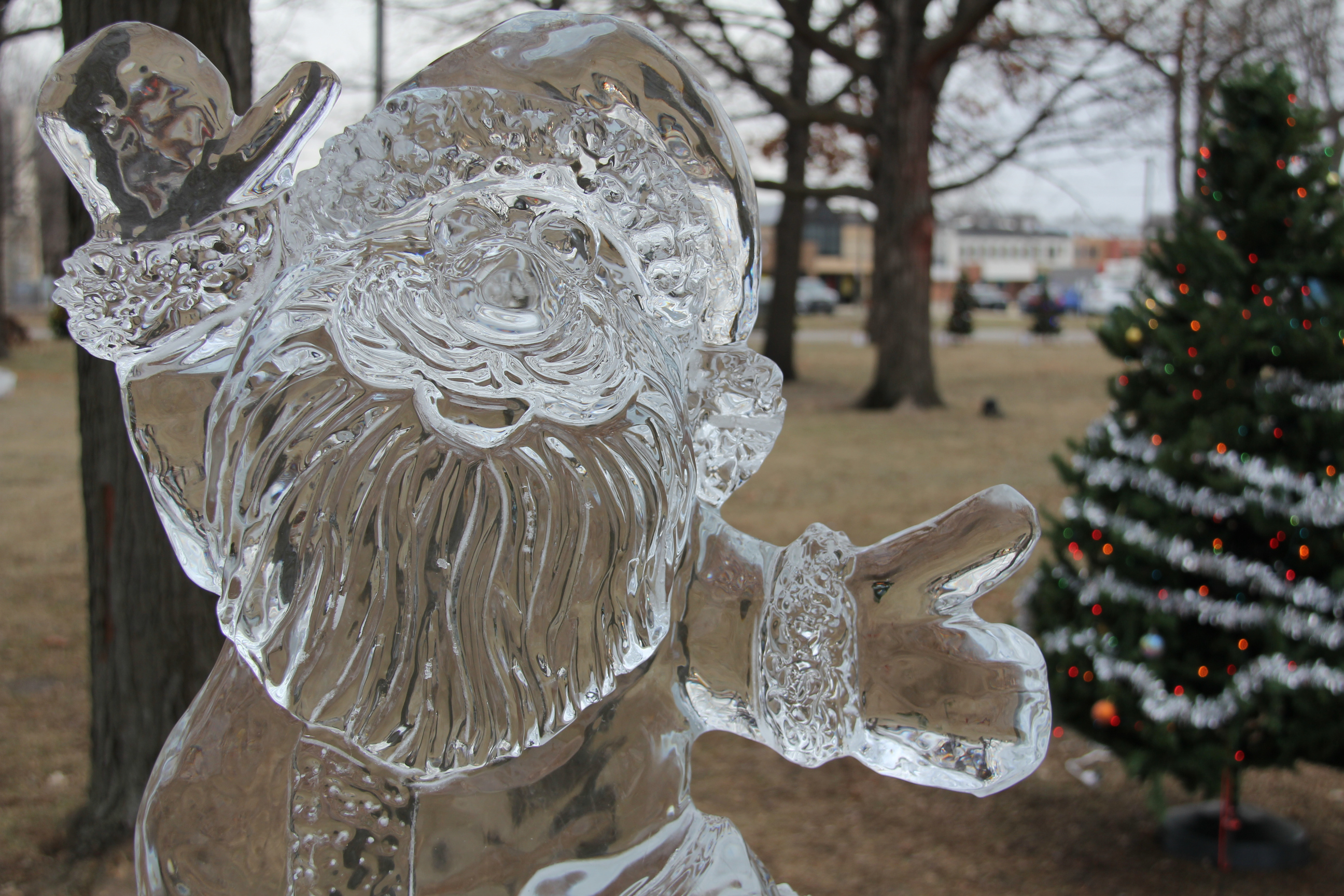
At the end of the row of trees pictured above sits this Santa ice sculpture carved by Adam Scholljegerdes and Jason Felix for Winterfest. (Minnesota Prairie Roots copyrighted photo December 2024)
When individuals and families pick up their trees from Central Park this week, I can only imagine the happiness they feel knowing that a Christmas tree will grace their homes. What a gift. This is not just about a tree. This is also about feeling loved and cared for by community. And that will last long after ornaments have been removed, the tree dismantled and placed in storage.
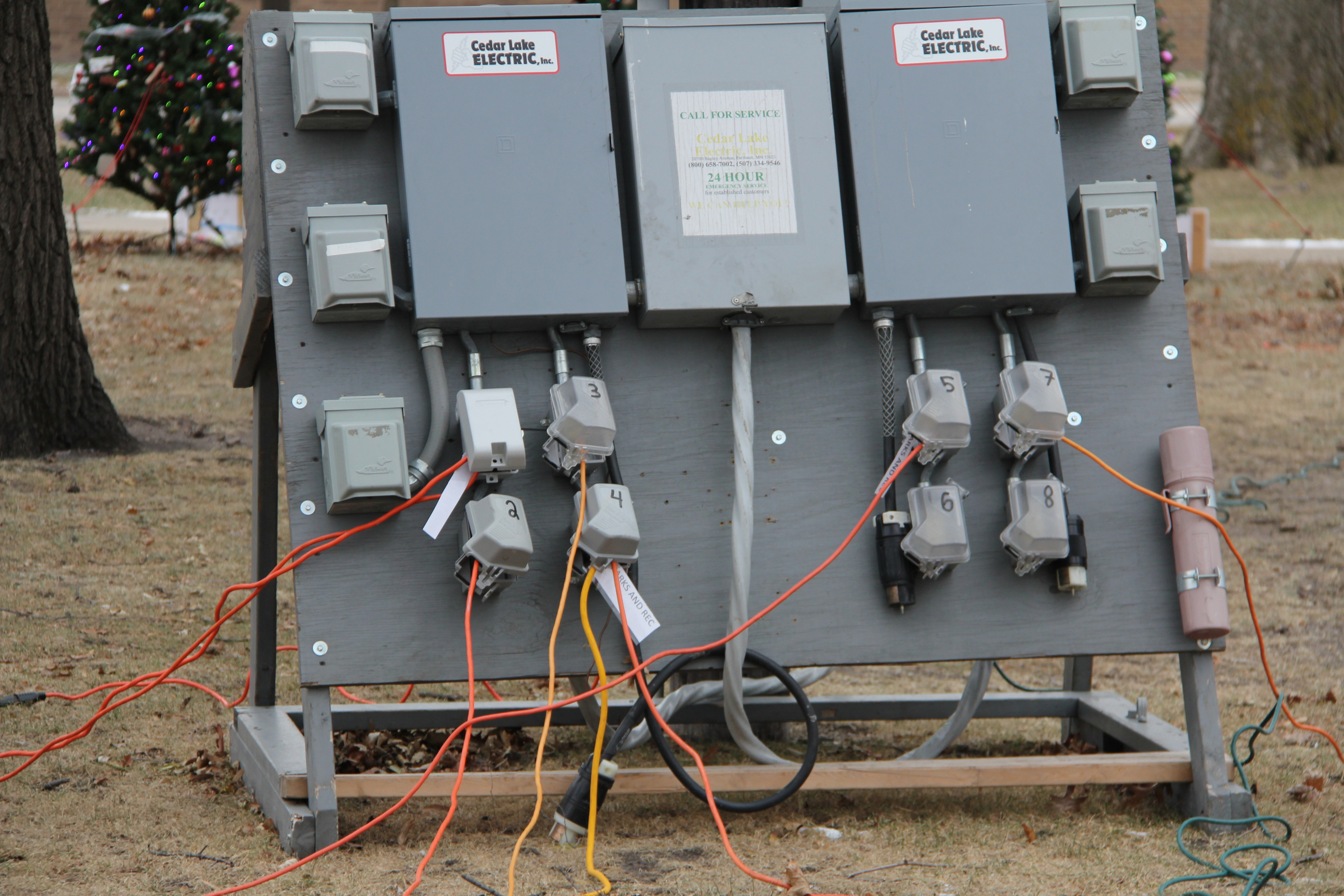
It takes a lot of power to light 75 Christmas trees. (Minnesota Prairie Roots copyrighted photo December 2024)
We never know what someone is going through, whether struggling financially or otherwise. So if the simple gift of a decorated Christmas tree lifts spirits and makes the holidays bright, consider the long-lasting impact. Light breaks through darkness. Joy fills hearts. Hope rises.
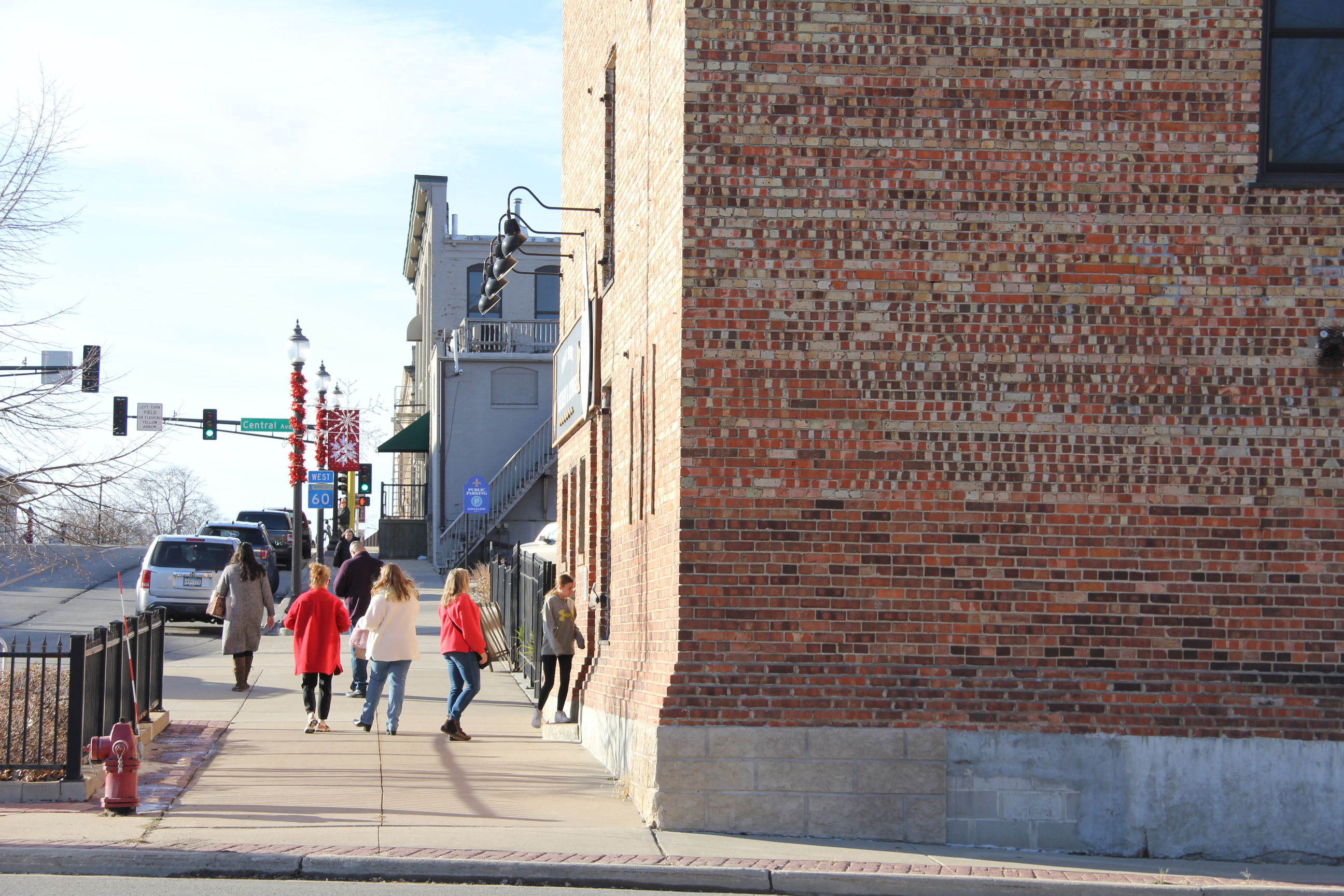
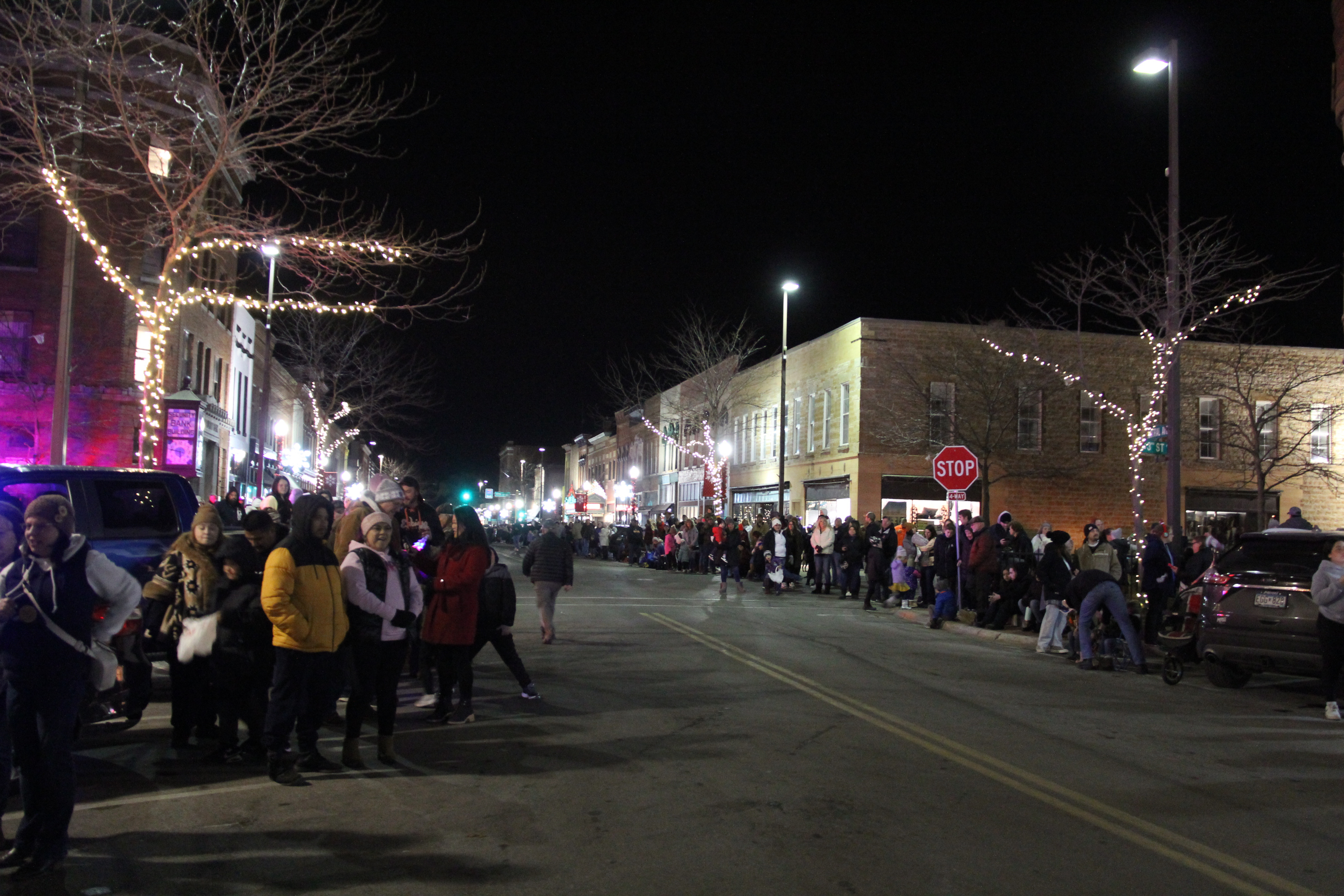
Crowds gather along Central Avenue in Faribault before Saturday’s parade. (Minnesota Prairie Roots copyrighted photo December 2024)
ON SATURDAY EVENING, with the temp at a balmy 45 degrees, crowds gathered in the heart of downtown Faribault for fireworks followed by a holiday parade as part of my city’s Winterfest celebration. Without snow and with such warmth, this felt nothing like weeks before Christmas in southern Minnesota. Yet, I wasn’t complaining. I’d rather be warm than cold.
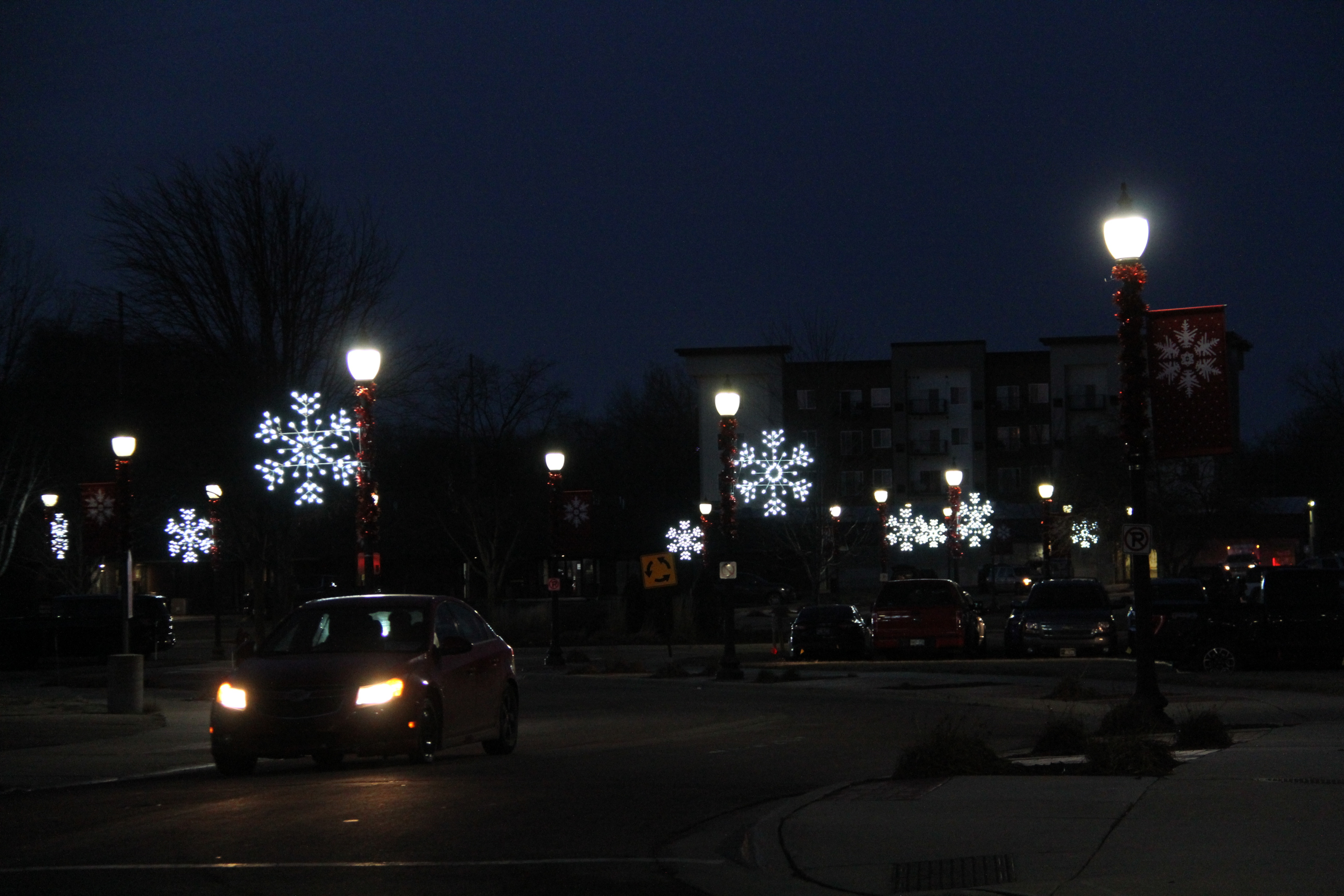
A festive street scene 1 1/2 blocks off Central Avenue near The Depot Bar & Grill. (Minnesota Prairie Roots copyrighted photo December 2024)
That meant wearing long johns under my jeans, winter boots, a stocking cap and mittens, and a hooded sweatshirt under a lighter weight jacket (not the down-filled parka I initially thought I needed). I was prepared to stave off the evening chill while waiting.
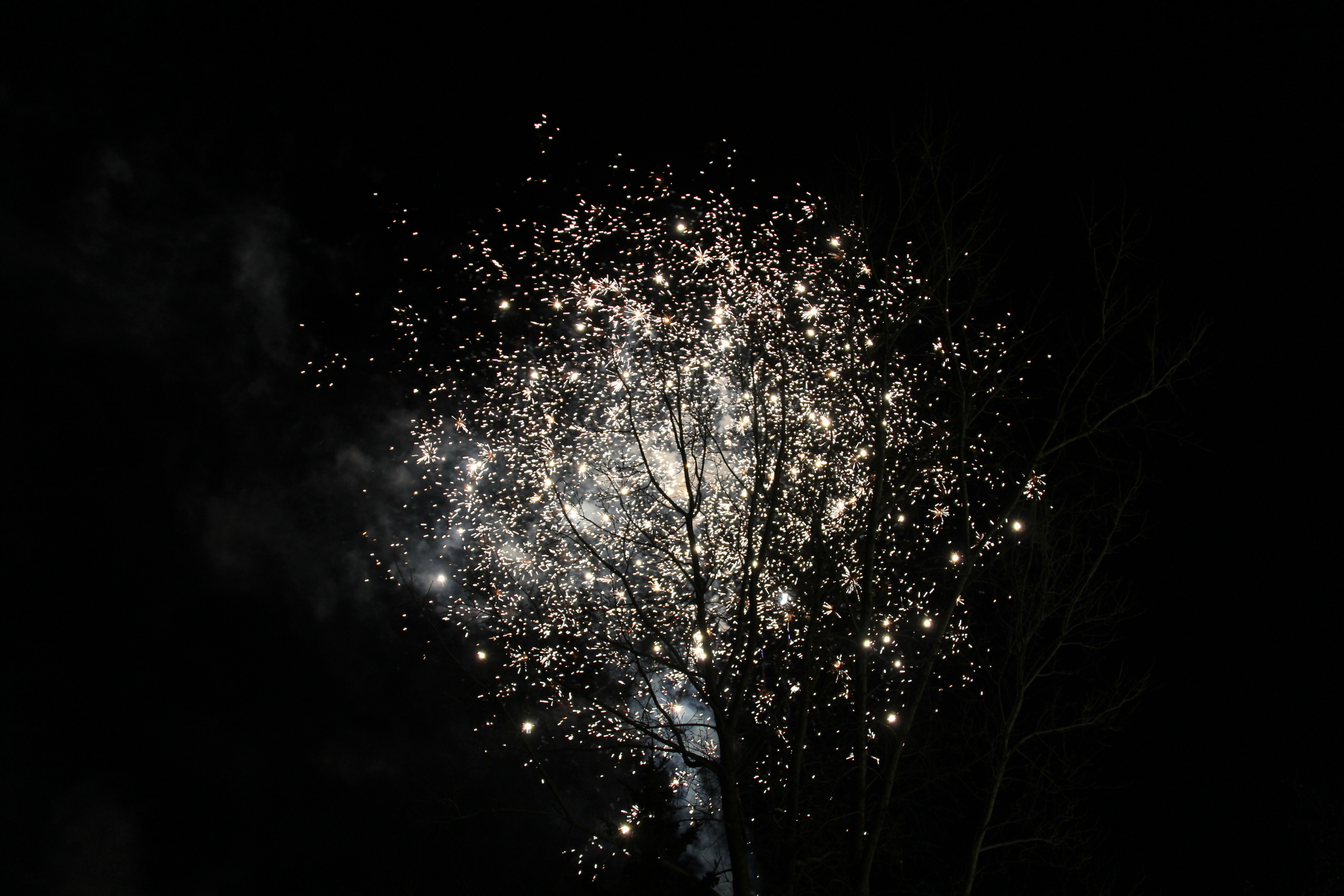
We sat really close to the fireworks launch site. Here, fireworks glitter as they fall from the sky, surrounding a bare tree. (Minnesota Prairie Roots copyrighted photo December 2024)
Randy and I did lots of waiting. First for the fireworks to start (it was our choice to arrive early) and then during the parade (as lengthy gaps between units persisted). We even left early given the delays.
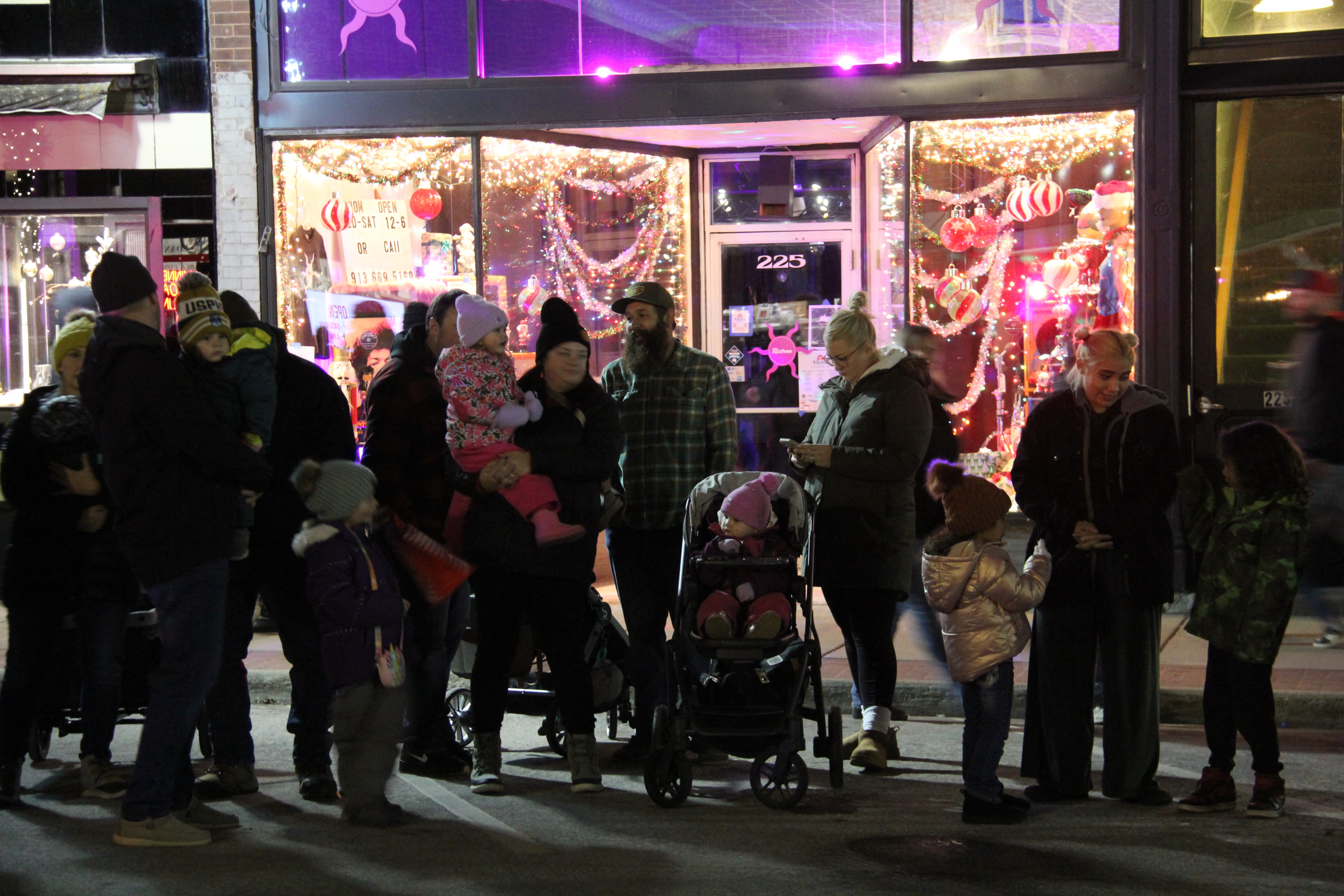
Against the backdrop of a festive storefront, families wait for the parade to begin. (Minnesota Prairie Roots copyrighted photo December 2024)
Aside from the waiting, the fireworks and Parade of Lights on Central proved wonderful. Festive and uplifting. There’s something about gathering to watch a parade that creates a true sense of community. Throngs crowded the edges of Central Avenue, leaving a single lane for vehicles, floats and parade participants to work their way through our historic downtown.
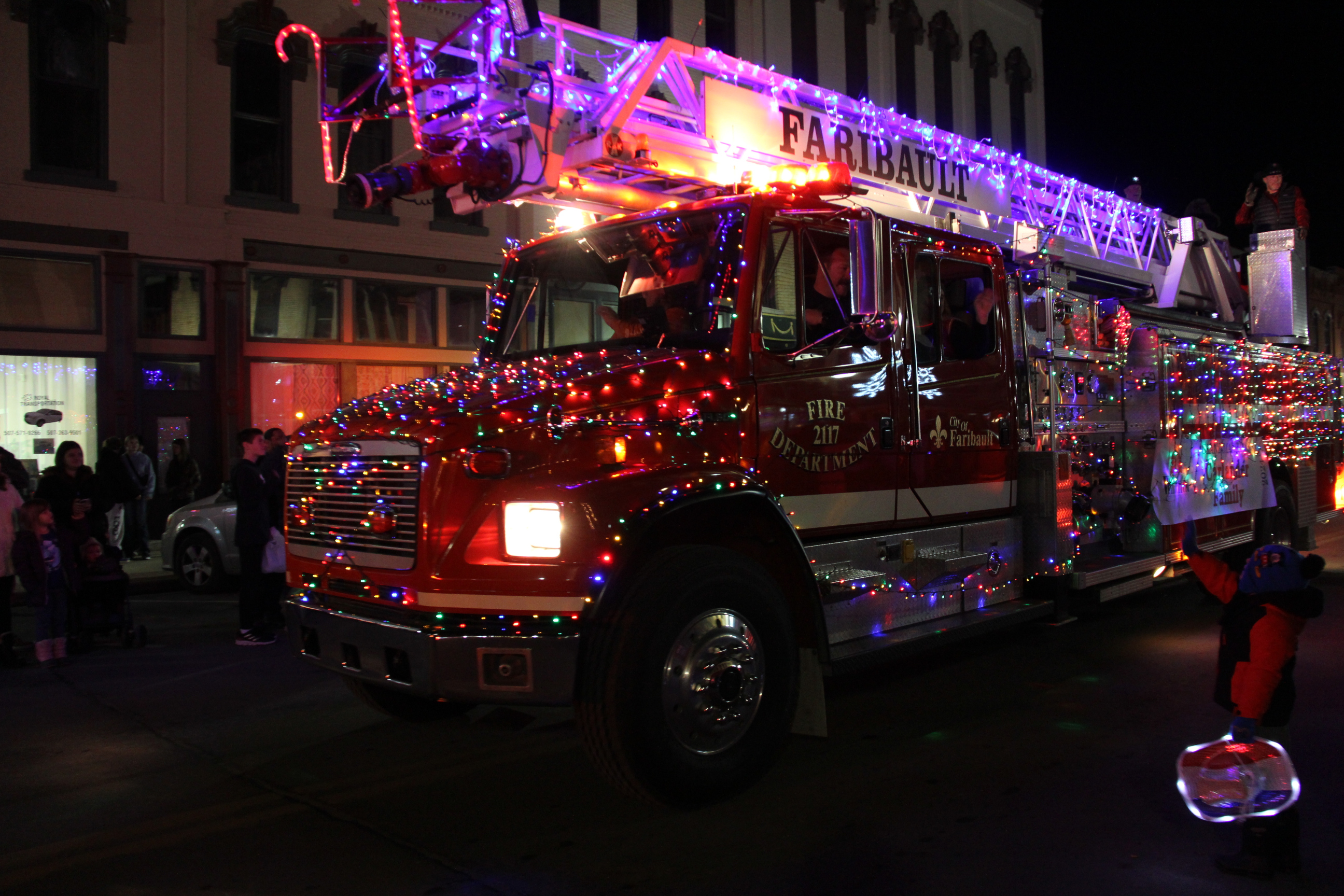
As the massive Faribault Fire Department ladder truck passes, the boy on the right holds his light-up cowboy hat and waves. (Minnesota Prairie Roots copyrighted photo December 2024)
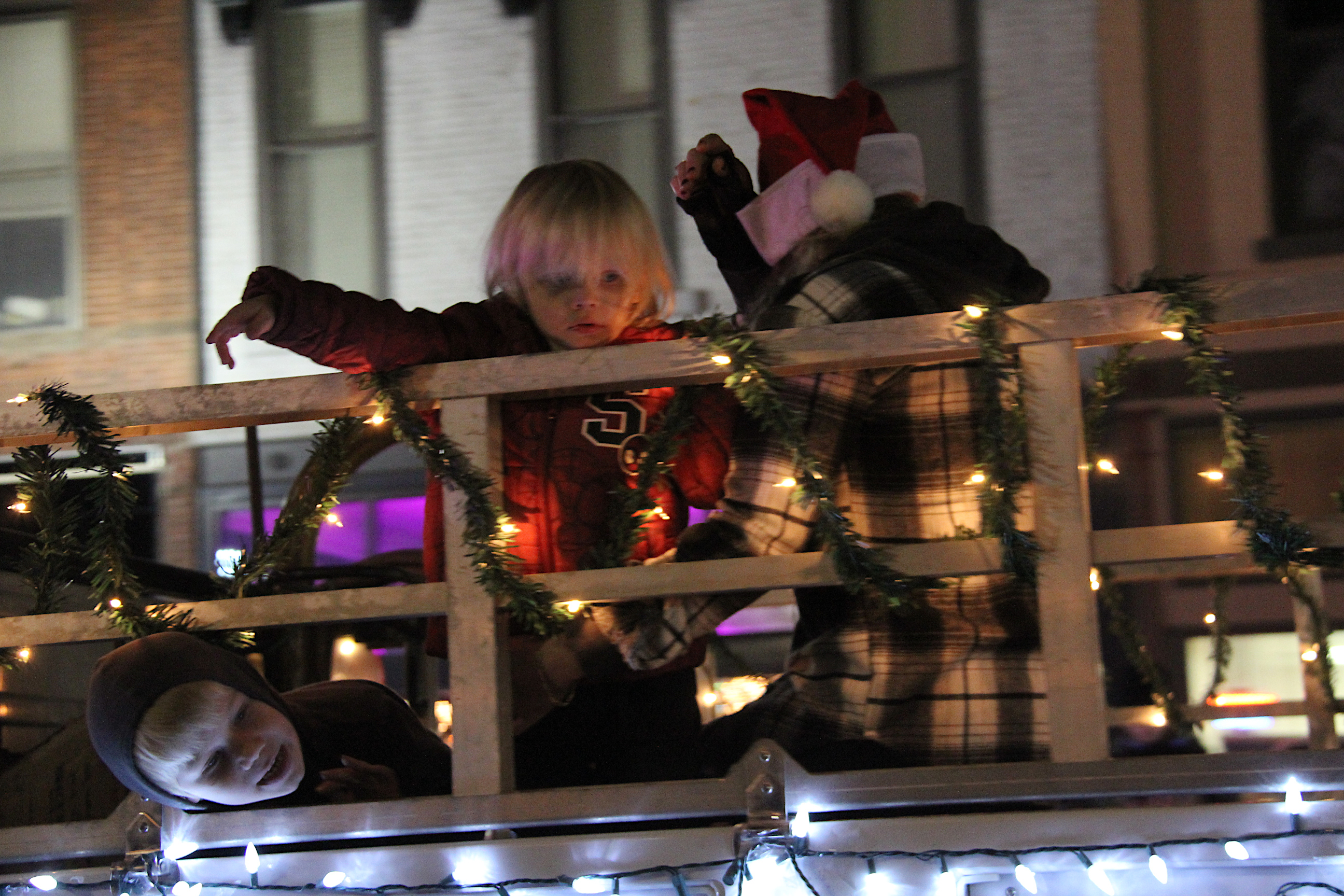
Kids not only watched the parade, but also participated, as shown here. (Minnesota Prairie Roots copyrighted photo December 2024)
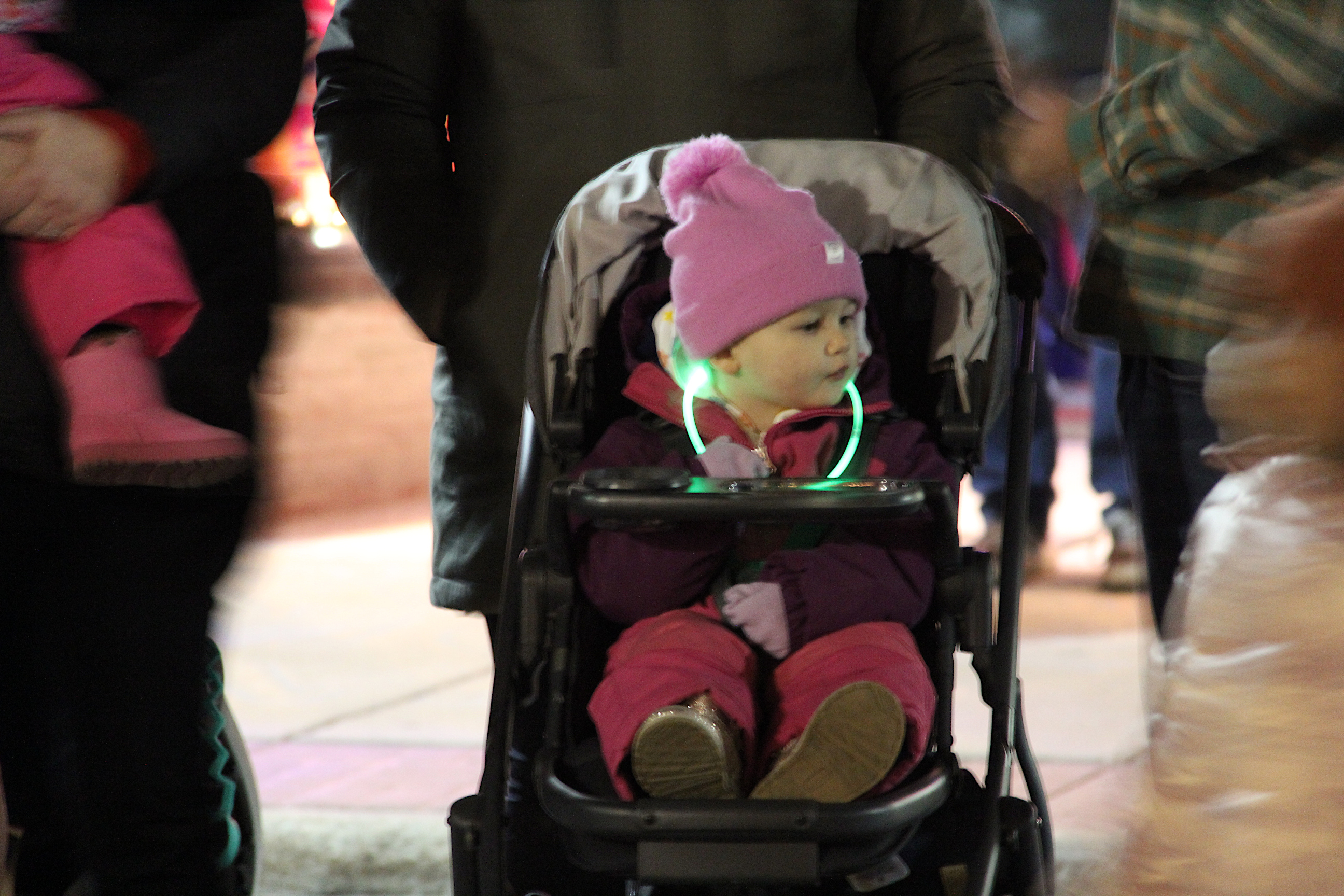
All bundled up to watch the parade from the comfort of a stroller. (Minnesota Prairie Roots copyrighted photo December 2024)
I love watching the kids. There’s magic in their enthusiasm. There’s magic in the way they scramble for candy and jump up and down. They exude pure joy.
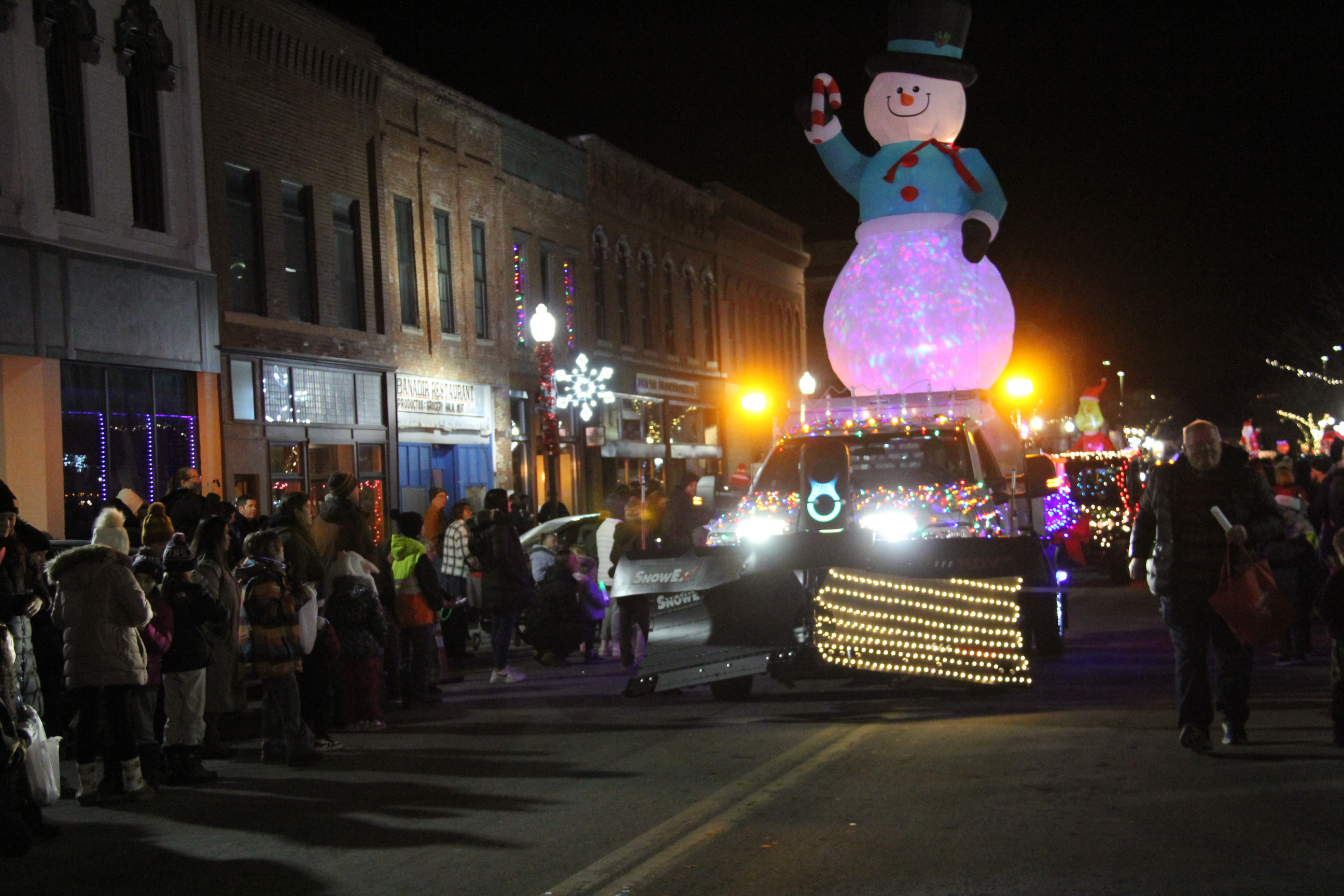
The oversized snowman is a parade staple. (Minnesota Prairie Roots copyrighted photo December 2024)
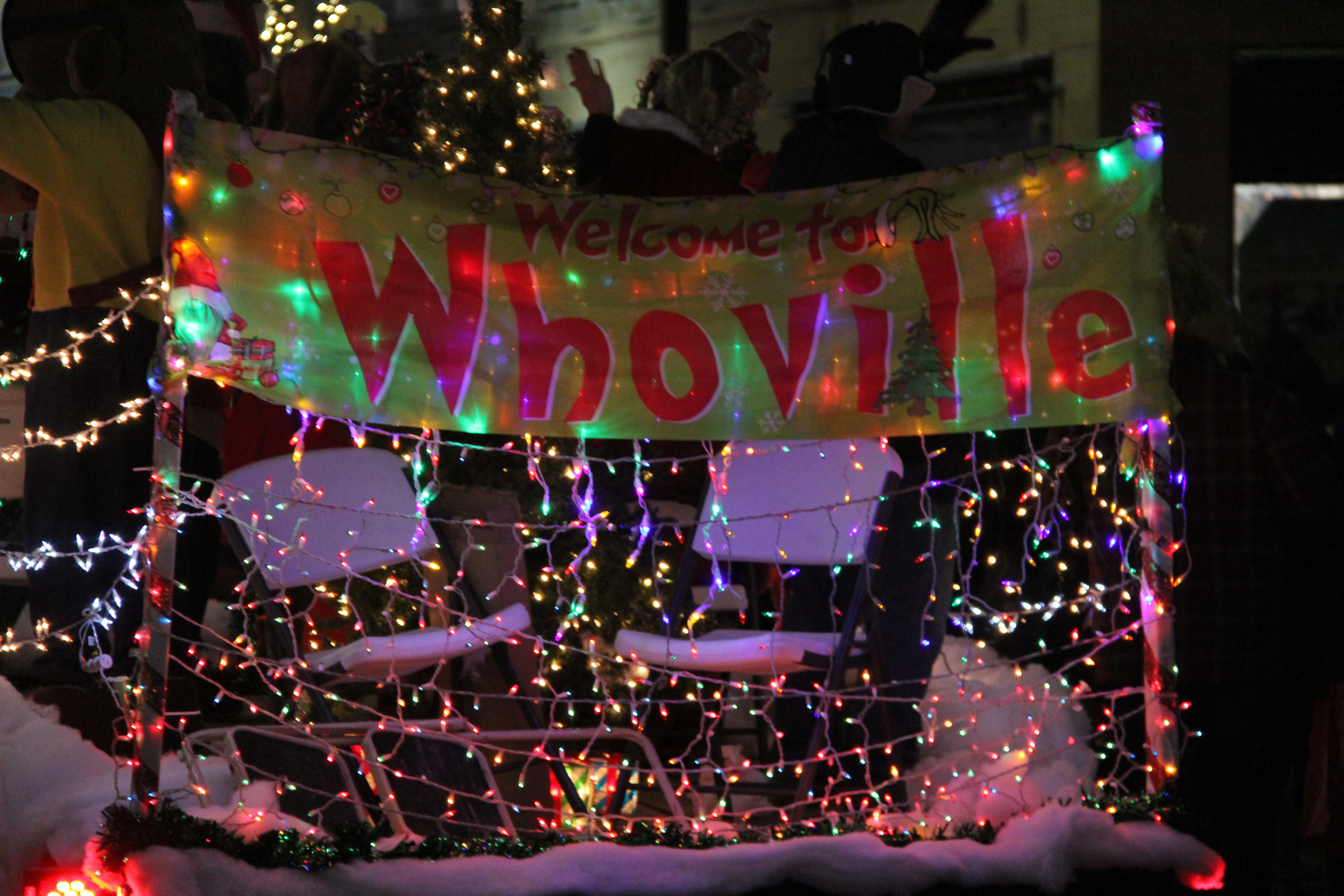
The magic of Whoville came to Faribault. (Minnesota Prairie Roots copyrighted photo December 2024)
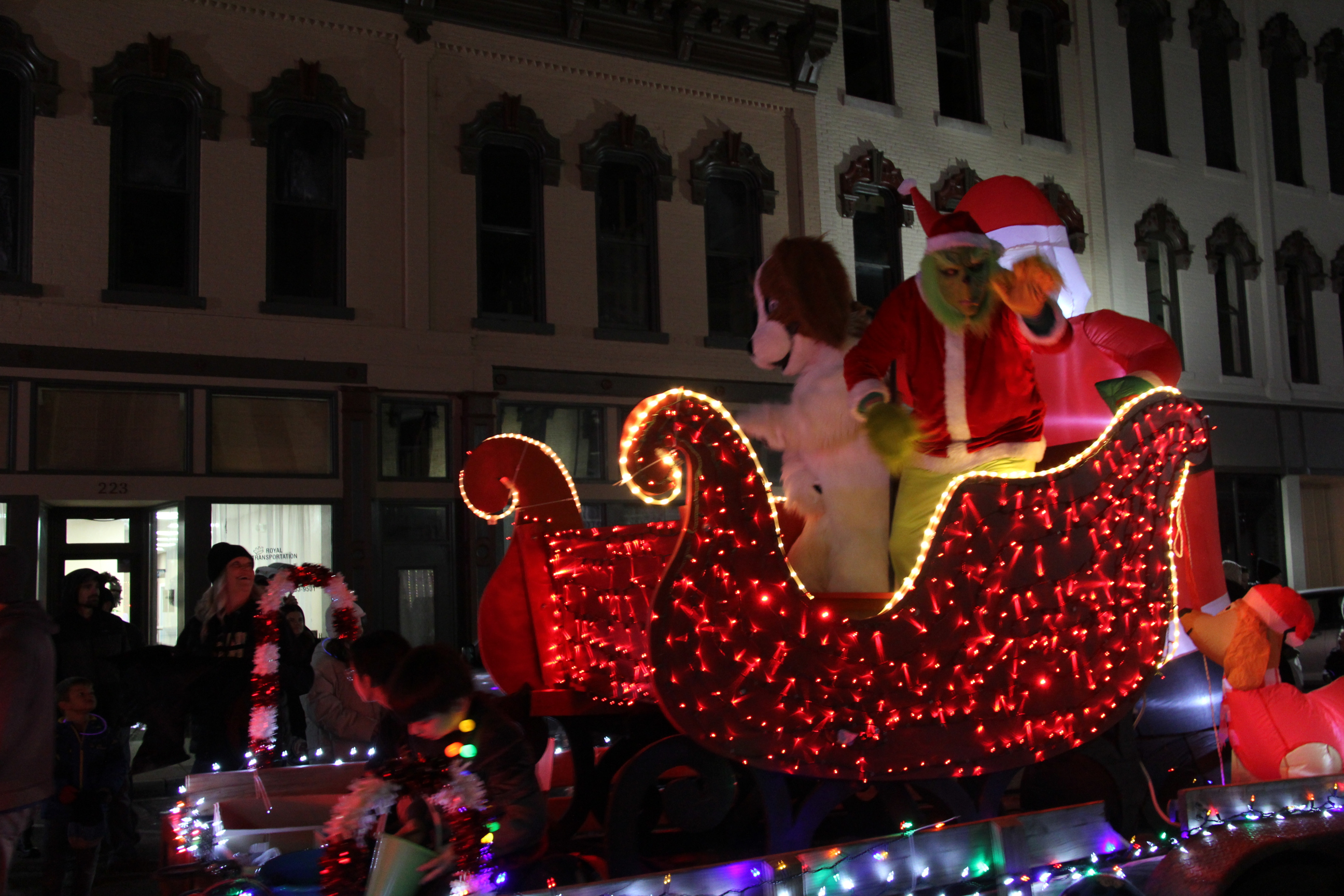
The Grinch and Max share the love. (Minnesota Prairie Roots copyrighted photo December 2024)
You can’t help but feel happiness surging along the street as music and holiday lights and costumed characters all create a festive mood. Santa, the Grinch with Max his dog, a chubby snowman, an oversized gingerbread boy…I saw all of them and considered how these characters make us smile in the dark of December. Even as an adult, I still very much love the Grinch, who was transformed from mean to loving and caring. That gives me hope.
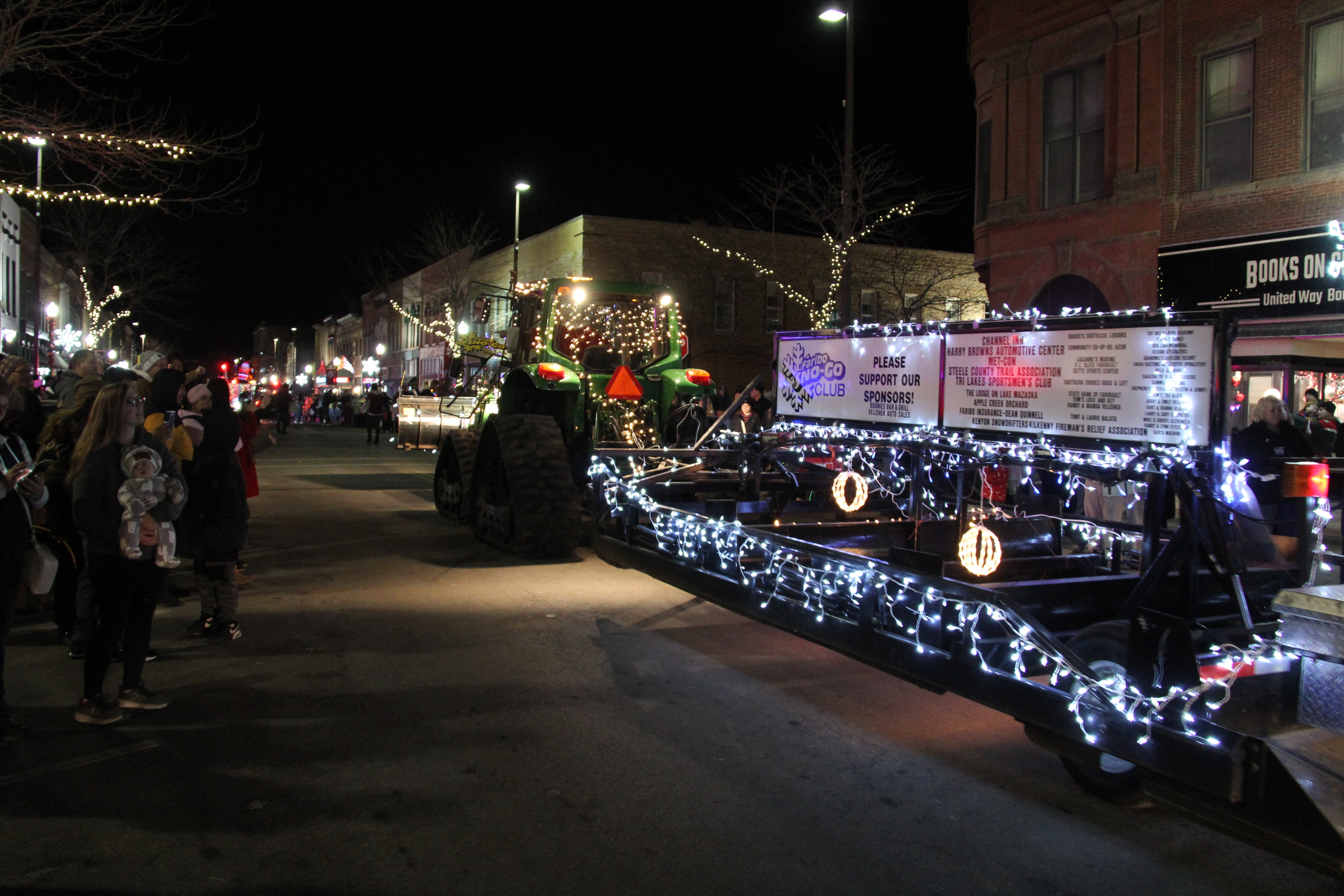
To the far left in this scene, a bundled up baby sleeps while the Sno-Go Club parade unit passes by. (Minnesota Prairie Roots copyrighted photo December 2024)
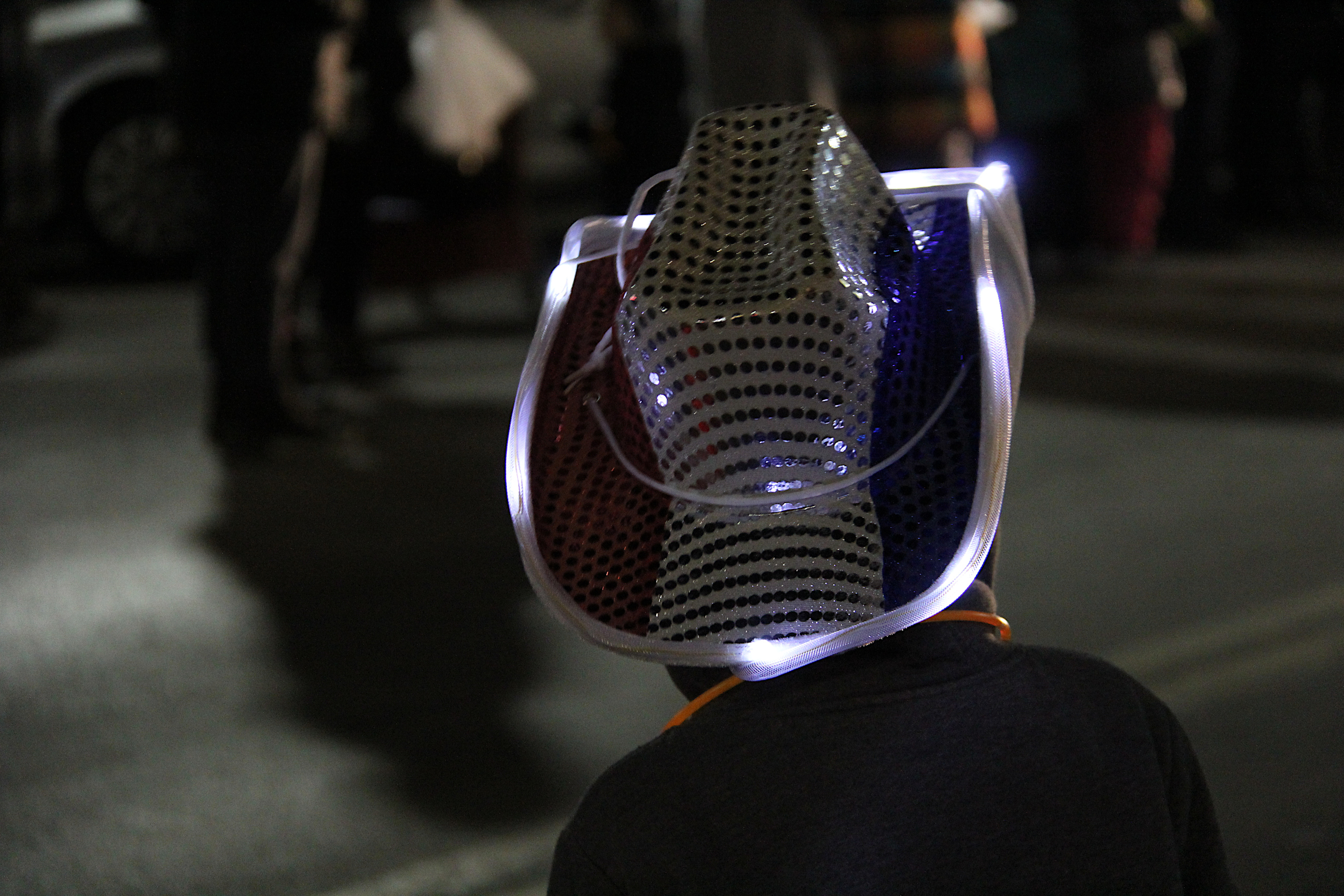
A boy standing near me got a free light-up cowboy hat. He wore it sometimes, sometimes not. (Minnesota Prairie Roots copyrighted photo December 2024)
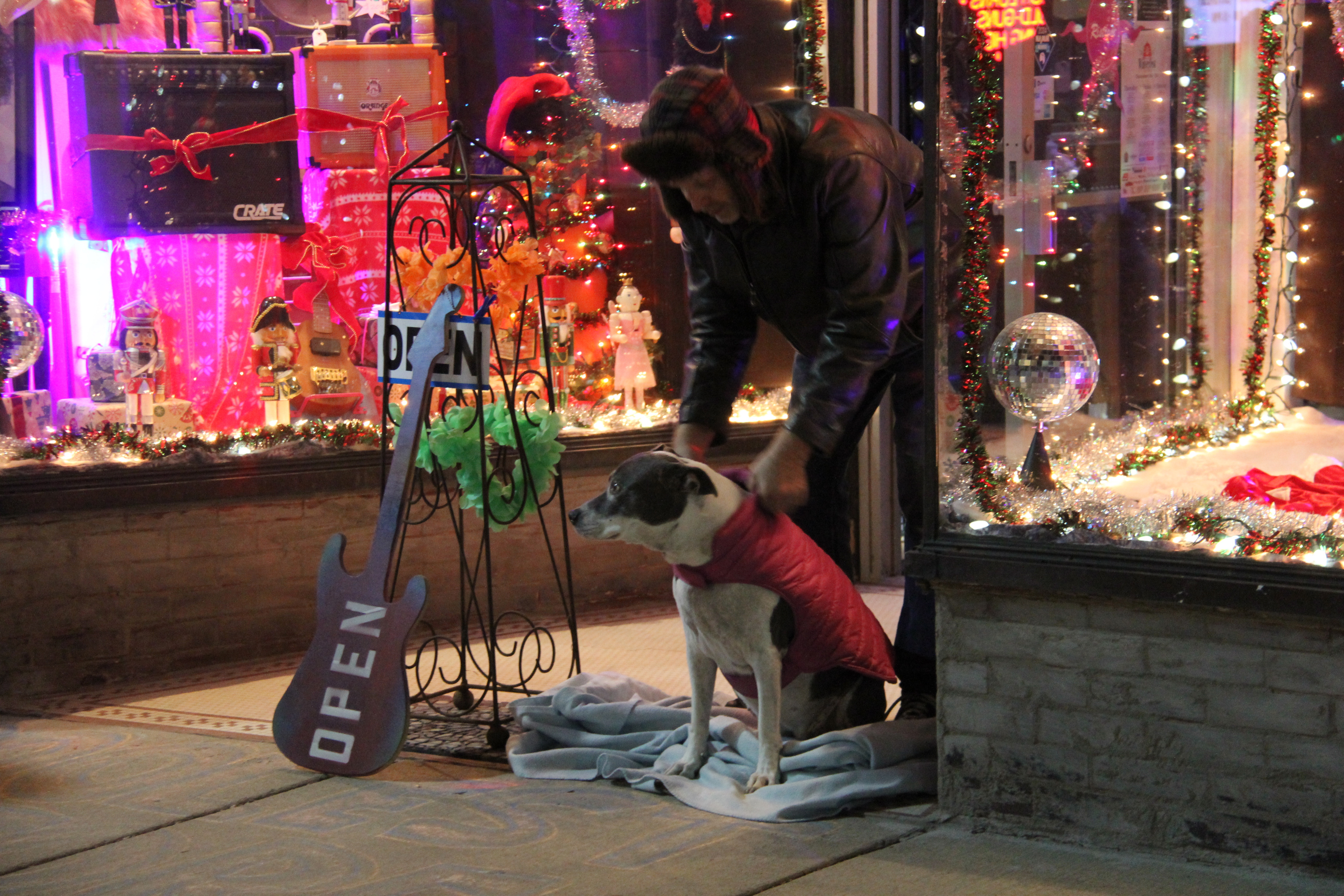
A shopkeeper and his dog at the parade. (Minnesota Prairie Roots copyrighted photo December 2024)
Glo sticks ringed necks. Freebie cowboy hats flashed atop heads. Babies bundled in snowsuits slept. Kids waited and watched. Youth danced and waved and smiled.
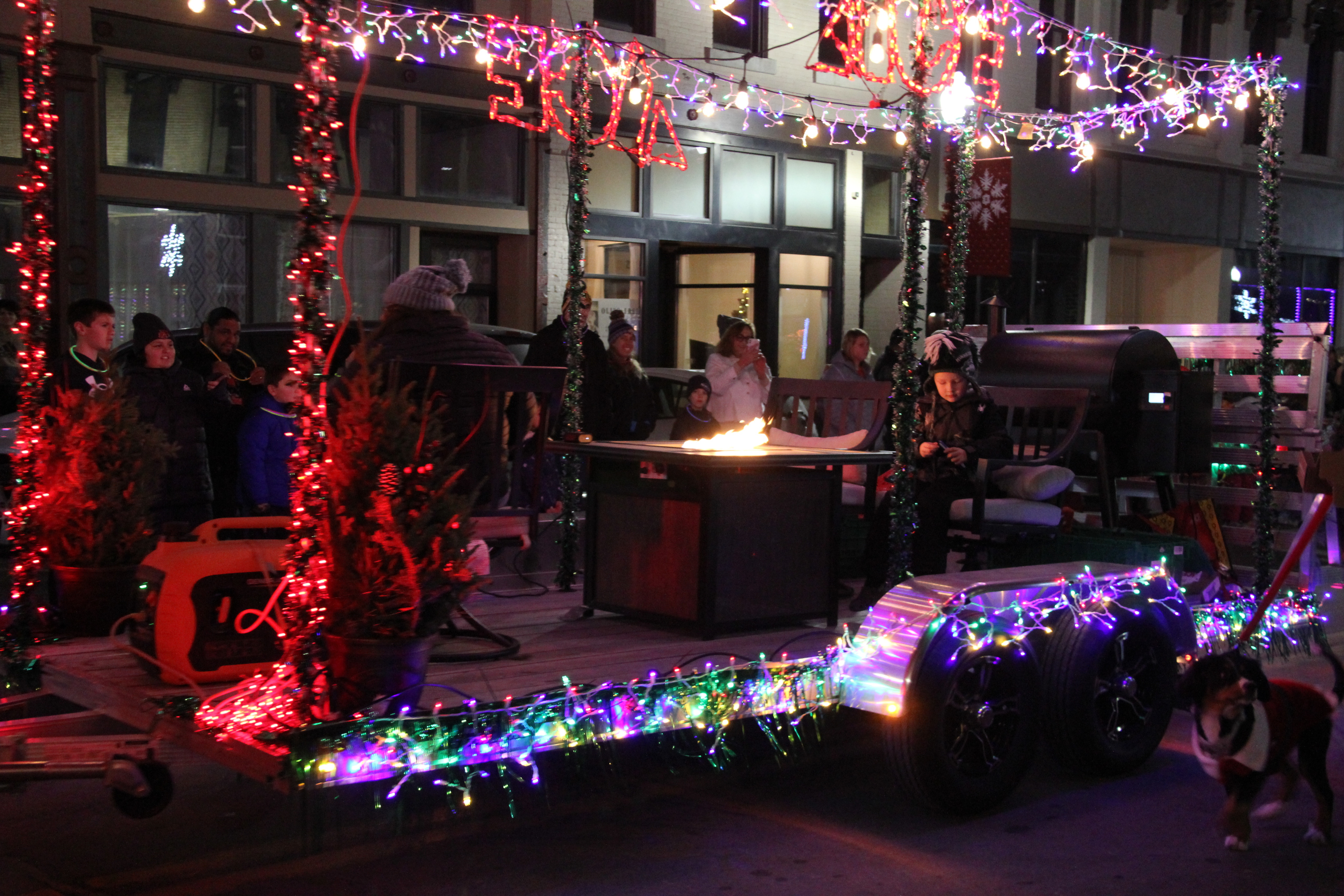
Fire on one float… (Minnesota Prairie Roots copyrighted photo December 2024)
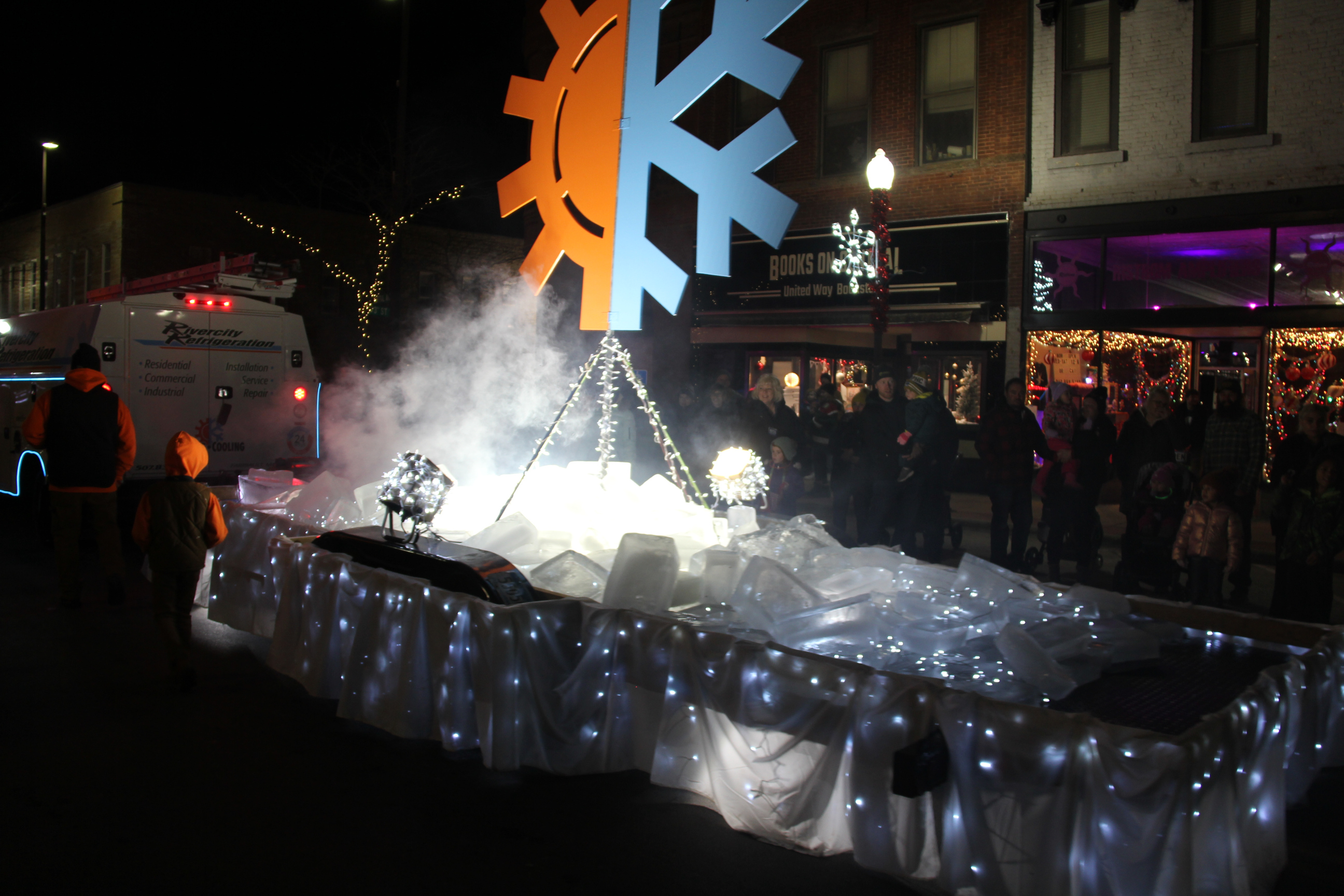
…and ice on another, from River City Refrigeration. (Minnesota Prairie Roots copyrighted photo December 2024)
I especially enjoyed the contrast of fire and ice in two parade units. One featured a fire pit, the other what I can only assume was dry ice. They were decidedly creative, a switch-up from masses of holiday lights, inflatables and standard holiday decorations.
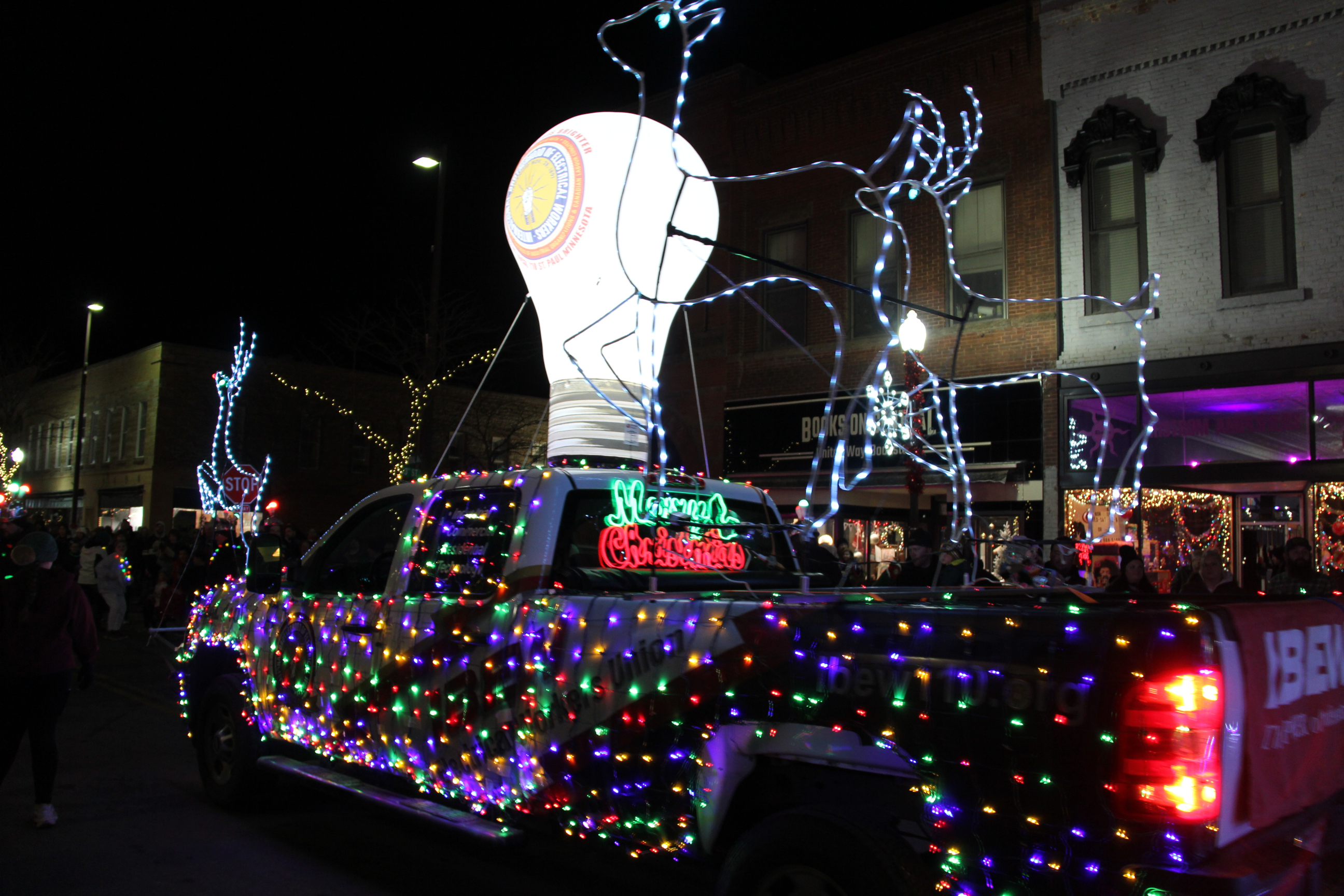
The parade unit of the International Brotherhood of Electrical Workers was all about light. (Minnesota Prairie Roots copyrighted photo December 2024)
Unit by unit, person by person, the parade lit a path along Central Avenue, shining the light of the holidays upon everyone watching. Light. The lights of happiness and joy and love and hope and a feeling that, despite our differences, we are all alike. Craving light. Needing light. Immersing ourselves in the light of community on a December evening in Faribault.
I photographed this tag hanging on The Gratitude Tree in the neighboring city of Northfield in 2019. I love this idea of publicly expressing thankfulness, including for community. (Minnesota Prairie Roots copyrighted file photo July 2019)
WHEN CONSIDERING GRATITUDE, as we do this week, we usually look inward. But I want to look outward and share six reasons why I feel grateful to live in Faribault.
This is my all-time favorite image showing local diversity. Here children gather to break a pinata during an international festival at Faribault’s Central Park. (Minnesota Prairie Roots copyrighted file photo 2012)
PEOPLE make a community. I knew no one when I moved here as a newlywed in 1982. But I was welcomed and have since formed deep friendships in Faribault. I can walk into a business, attend an event, or simply be out and about and run into someone who knows me. Conversation often follows.
Recently I attended a 75th anniversary open house at Burkhartzmeyer Shoes, a third-generation family owned shoe store in downtown Faribault. After purchasing athletic shoes, I headed to a back room for complimentary refreshments. A small group of us sat there talking and laughing, simply enjoying each other’s company. I felt like I was inside a small town cafe drinking coffee and conversing. It felt that down-home comfortable.
But I can feel just as comfortable with strangers, including Adolfo, whom I met in October while walking in Central Park. Adolfo moved to America from Venezuela, a country he fled because of Communism and violence. On this morning, he was pushing his one-year-old grandson in a stroller. It’s part of their daily routine. Darling Milan drew me to his grandpa, where I connected with Adolfo on a personal level and heard his story. I feel grateful for every opportunity I have to meet Faribault’s newest immigrants and hear their stories, stories often laced with hardship and hope. To live in a city as diverse as Faribault is truly a gift.
Kids help at the Faribault CommUnity Thanksgiving Dinner by, among other things, creating festive placemats.(Minnesota Prairie Roots copyrighted file photo November 2017)
Faribault overflows with CARING INDIVIDUALS AND ORGANIZATIONS striving to help others: the Community Action Center, Rice County Habitat for Humanity, St. Vincent de Paul, HOPE Center, Ruth’s House, IRIS (Infants Remembered in Silence), the Salvation Army, Operation: 23 to 0… I’ve received support while dealing with some especially challenging life events. When you experience that community love and care first-hand, you understand the true meaning of community.
Once again this Thanksgiving, volunteers will serve a free CommUnity Thanksgiving Dinner as they have for the past 30 some years. I’ve previously helped deliver those holiday meals. Every Tuesday, a free meal is also available at the Community Cafe. With Christmas approaching, I’m part of a bible study group coordinating the annual Angel Tree (gift giving) at my church. I could go on and on with an endless list of how people are helping people in my community. Hearts are loving, spirits giving.
A 1950s scene along Faribault’s Central Avenue is shown in this downtown mural.(Minnesota Prairie Roots copyrighted file photo)
I am especially grateful to live in a community which values THE ARTS. The Paradise Center for the Arts in downtown Faribault centers our arts scene. Every time I tour a gallery exhibit, attend a play or otherwise engage in the arts, I feel grateful to live here. I’ve even contributed to the local arts scene by publicly reading my poetry. I love attending summer concerts in the park and concerts inside the historic Cathedral of Our Merciful Saviour. I appreciate the history-based murals that color our downtown. I grew up in rural southwestern Minnesota with minimal access to the arts, meaning my gratitude for the arts in Faribault runs deep.
I treasure Buckham Memorial Library, just blocks from my home. (Minnesota Prairie Roots copyrighted file photo 2022)
My thankfulness for BUCKHAM MEMORIAL LIBRARYalso runs deep, for the very same reason. I grew up in a small farming town without a library. And I love to read. That we now also have a volunteer run used bookstore, Books on Central (benefitting the Rice County Area United Way), notches my gratitude level even higher.
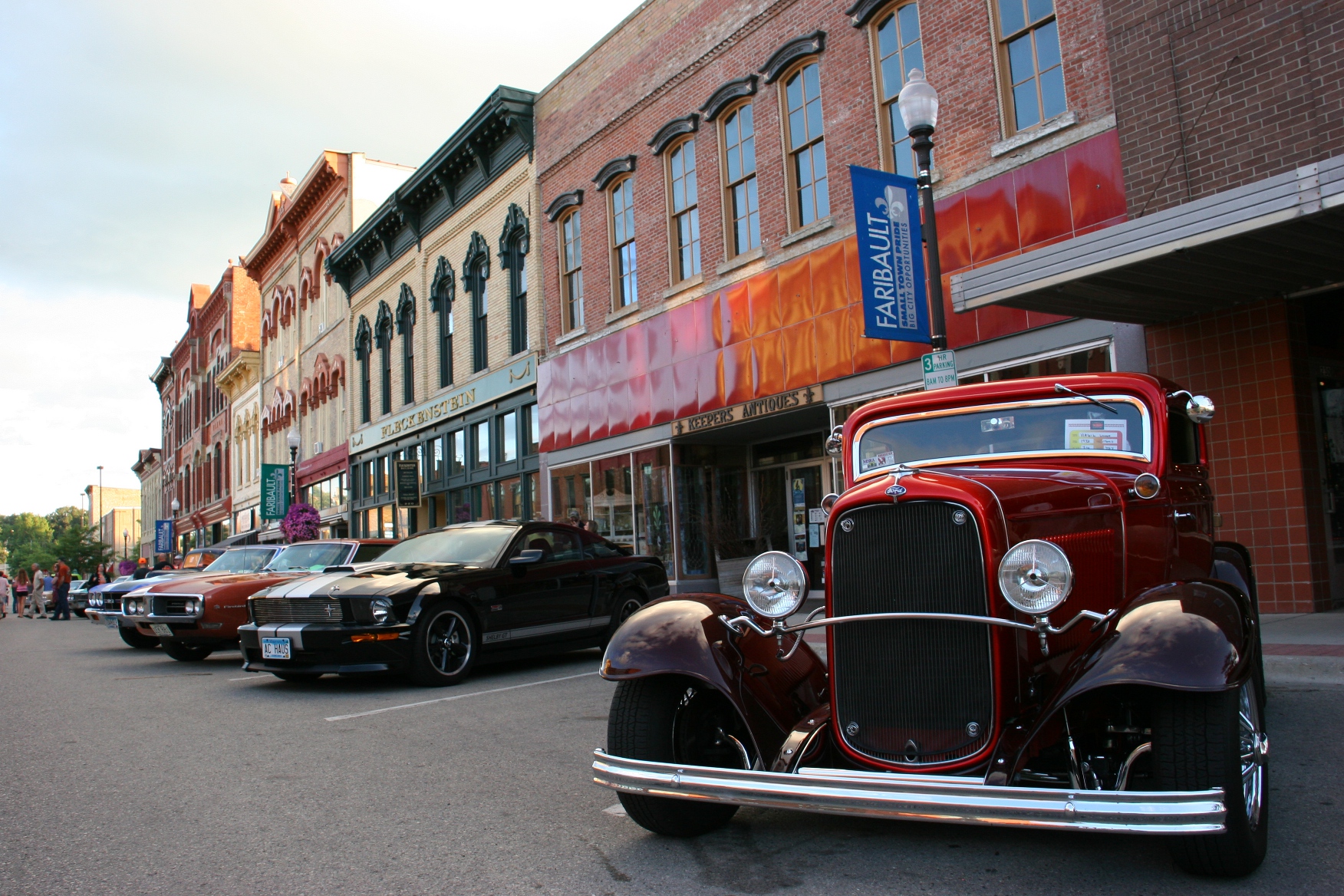
A snippet of Faribault’s historic buildings, photographed during a monthly Car Cruise Night.(Minnesota Prairie Roots copyrighted file photo 2016)
The bookshop is located in the heart of our HISTORIC DOWNTOWN, another reason I feel grateful to live in Faribault. My community cares about preserving historic buildings. I love old architecture. There’s nothing quite like walking among vintage vehicles along Central Avenue during Car Cruise Night as the sun sets at the end of a summer day. Beautiful.
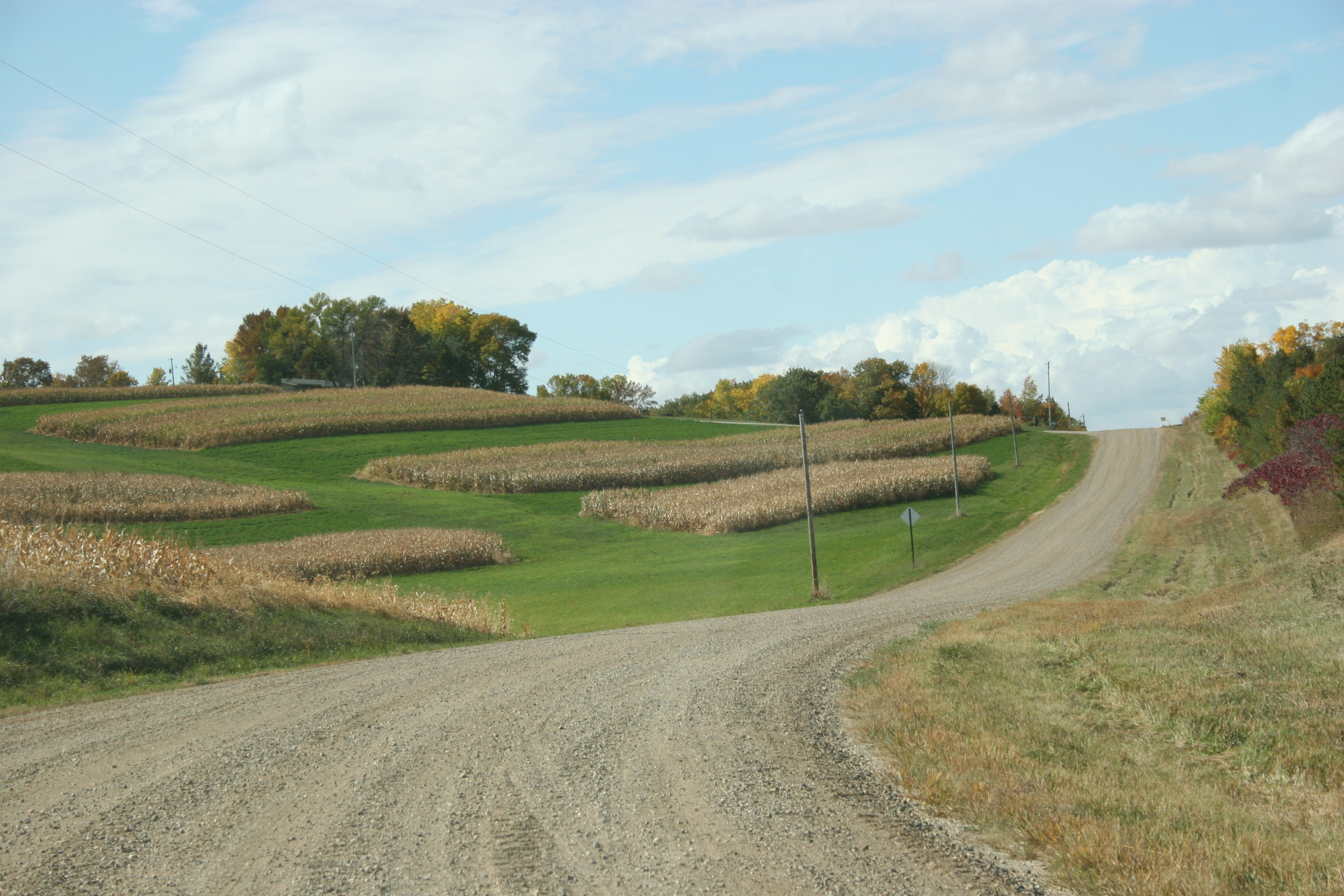
In just minutes, I can reach the countryside, where I love to travel gravel roads. This road winds among the lakes and farm fields west of Faribault. (Minnesota Prairie Roots copyrighted file photo October 2022)
Faribault also offers incredible NATURAL BEAUTY in a diverse landscape of woods and prairie, hills and valleys, ravines and bluffs. It’s so different than my native prairie. Admittedly, it took me a while to “get used to” all the trees when I moved here 42 years ago. I still mostly have no sense of direction on roads and streets that don’t run prairie grid straight. But I love to walk through city parks, along city trails, at River Bend Nature Center, on the campus of the Minnesota State Academy for the Deaf… And within a short drive of my home, I am immersed in the countryside.
A view of The Gratitude Tree outside the Northfield Public Library in 2021. People wrote their reasons for feeling thankful on a blank tag. Those were then hung on the tree. I’d like to see a Gratitude Tree in every community once a year. (Minnesota Prairie Roots copyrighted file photo May 2021)
This list of a half dozen reasons to feel thankful for the place I call home just touches the surface of why I am grateful to live in Faribault. It’s not utopia, certainly. Nowhere is. But today I want to pause, consider and acknowledge specific reasons for feeling thankful that Faribault is my home. I hope you’ll do the same, wherever you live.
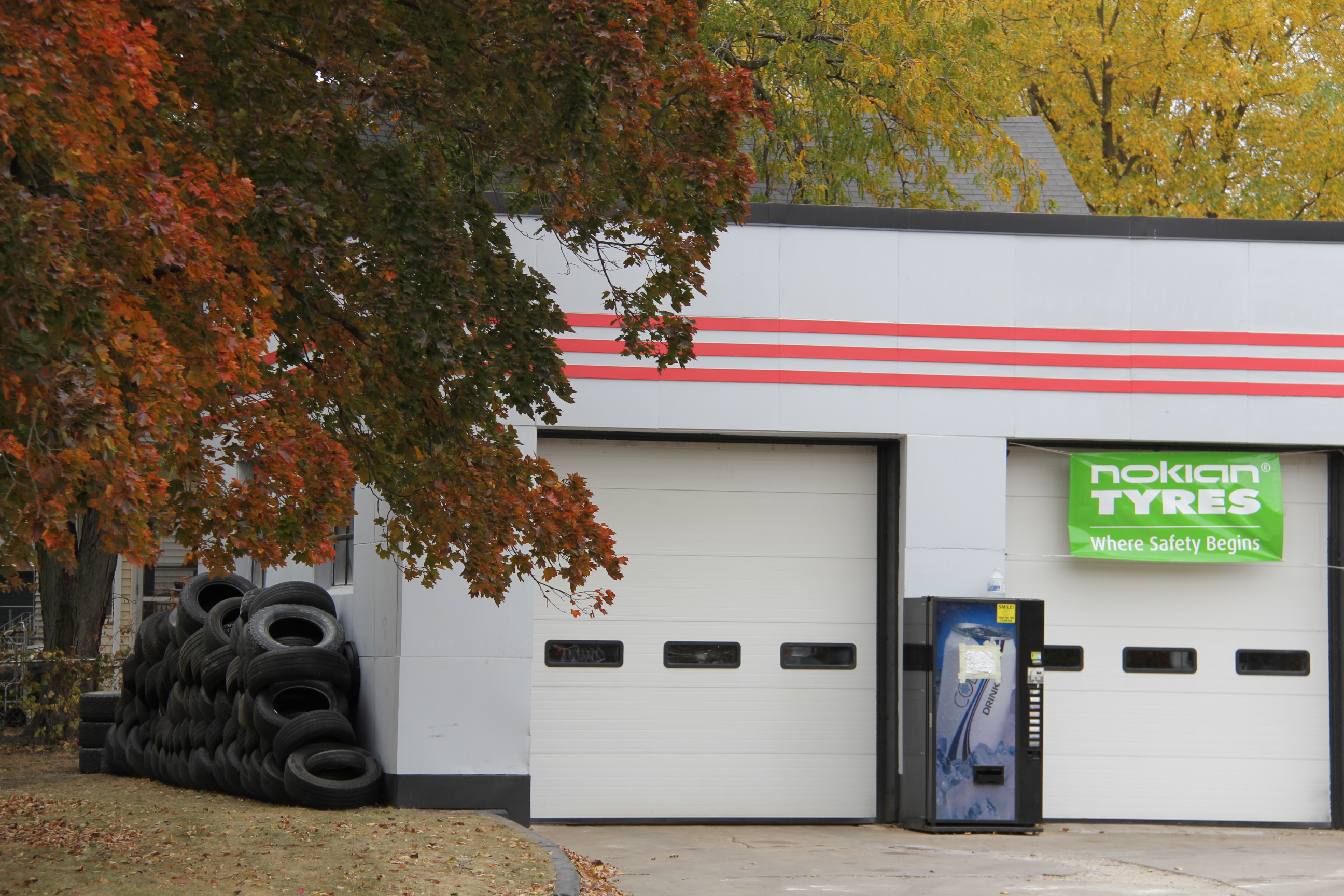
Art, as I see it. (Minnesota Prairie Roots copyrighted photo October 2024)
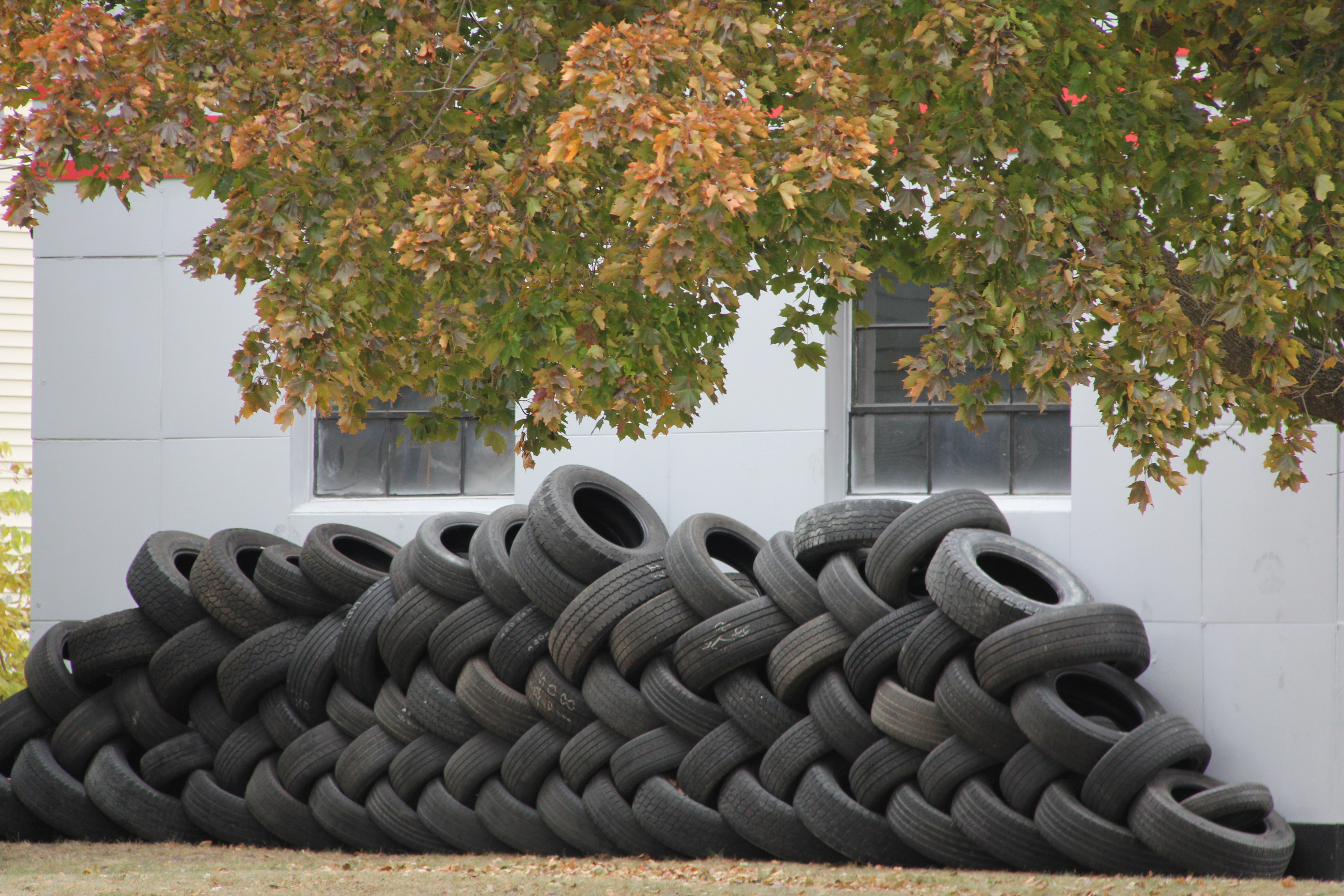
TIRES AND ART. Typically the two would not intertwine. But that thought changed when I spotted a stash of used tires on the side of Vintage Auto & Glass about a month ago. I noticed how the bottom three layers wove together, almost like a braid. But then the top layers were strewn haphazardly, as if the creator got bored and infused abstract into the pattern.
In all reality, this was not art at all to whoever placed the tires alongside the Faribault garage. This was simply a pattern that would keep the tires in place. At least that’s my guess.
This photo gives perspective on size and placement of the garage art. (Minnesota Prairie Roots copyrighted photo October 2024)
If any mechanics are reading this, I hope you appreciate that I appreciate the creative tire stacking. And even more, I appreciate your mechanical skills. As the wife of a long-time, semi-retired automotive machinist, I understand how hard you work to keep vehicles running. I understand the knowledge, skills and experience you bring to your work. I understand the patience needed in dealing with customers. I understand the time pressures. I understand the frustrations. I see the grease under your fingernails, the oil and dirt creasing your palms. You work hard to serve others.
And on this day, I see another side, that of a creative.
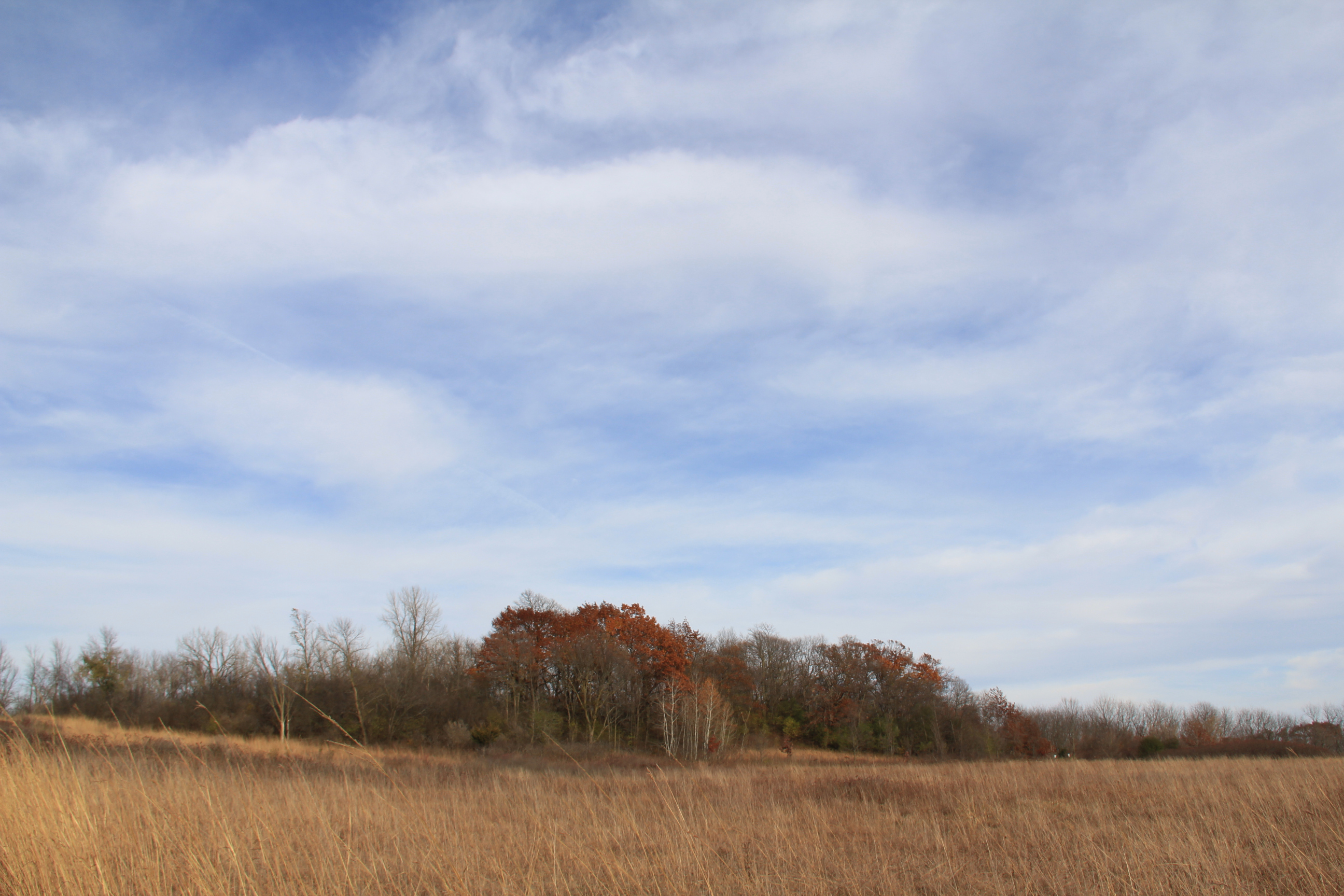
The woods, sky and prairie of River Bend in early November. (Minnesota Prairie Roots copyrighted photo November 2024)
NOVEMBER MARKS A SEASON of transition, a time when the landscape slides ever closer to a colorless environment. Soon winter will envelope us in its drabness of gray and brown highlighted by white. There’s nothing visually compelling about that.
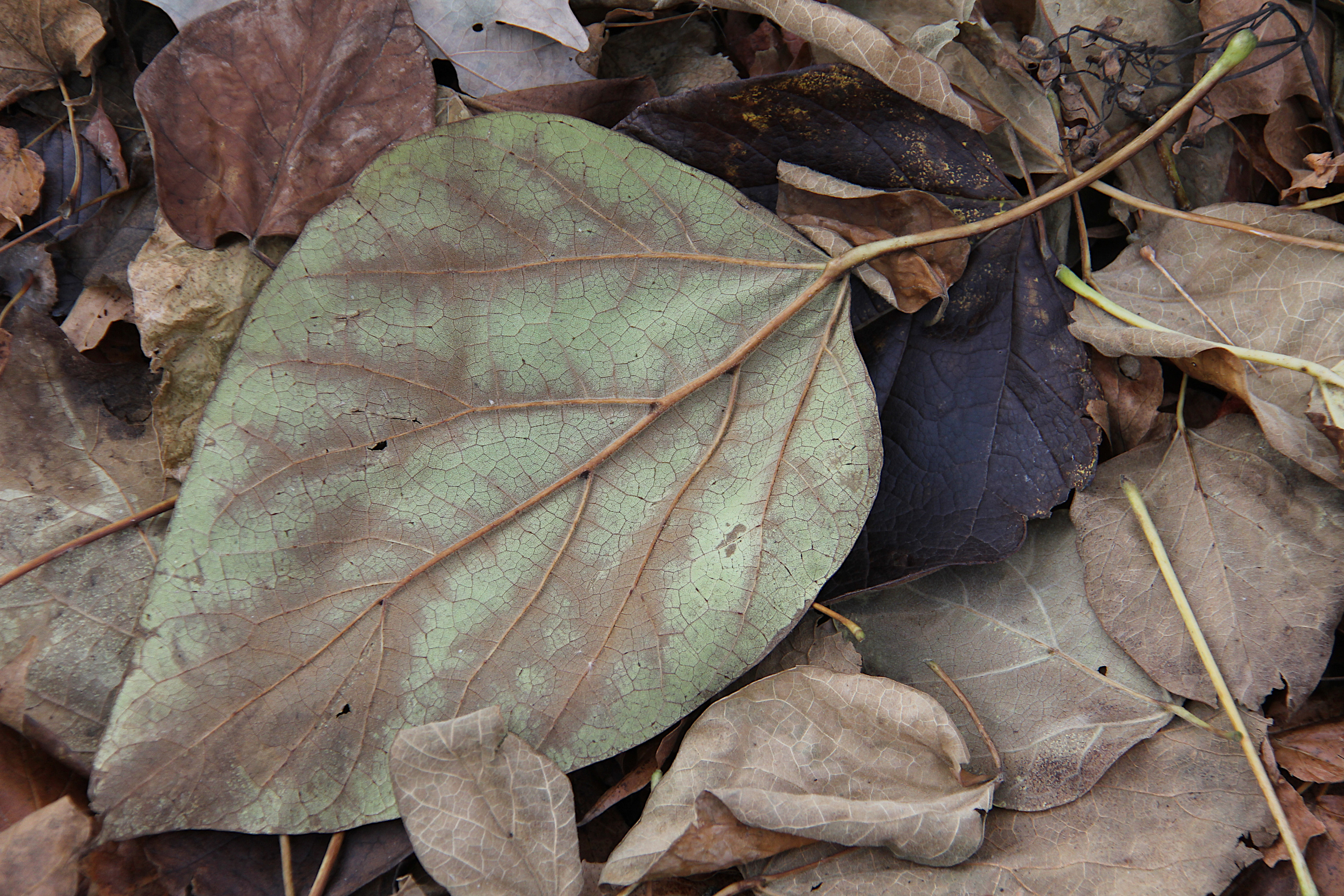
I found the veined back of this oversized fallen leaf especially lovely. (Minnesota Prairie Roots copyrighted photo November 2024)
As a life-long Minnesotan, I understand this about November. I know this. But I still don’t like the absence of color or light, the dark morning rising, the darkness that descends well before 5 p.m. And, yes, seasonal affective disorder, even if you don’t admit you’re experiencing it, likely touches all of us in Minnesota.
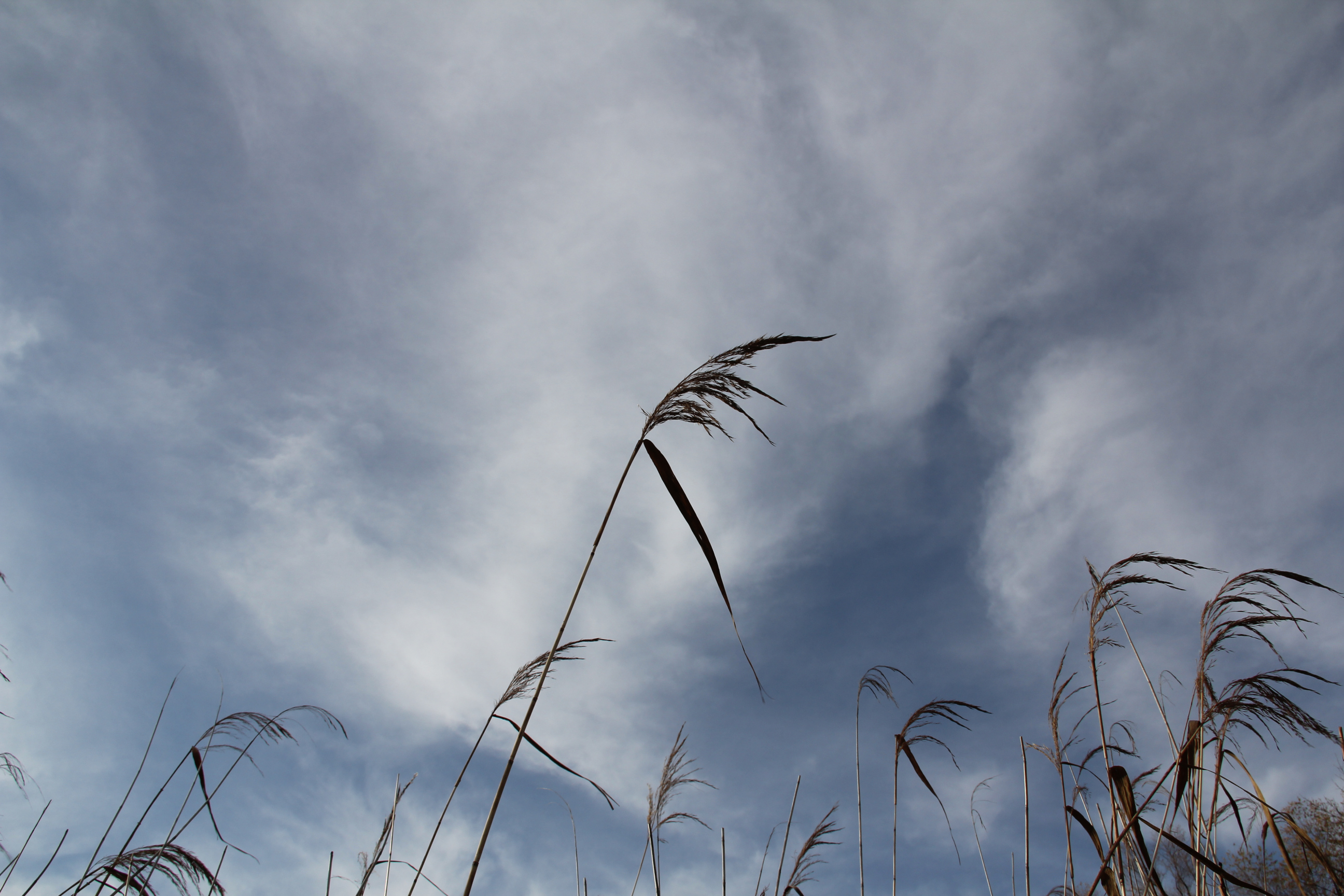
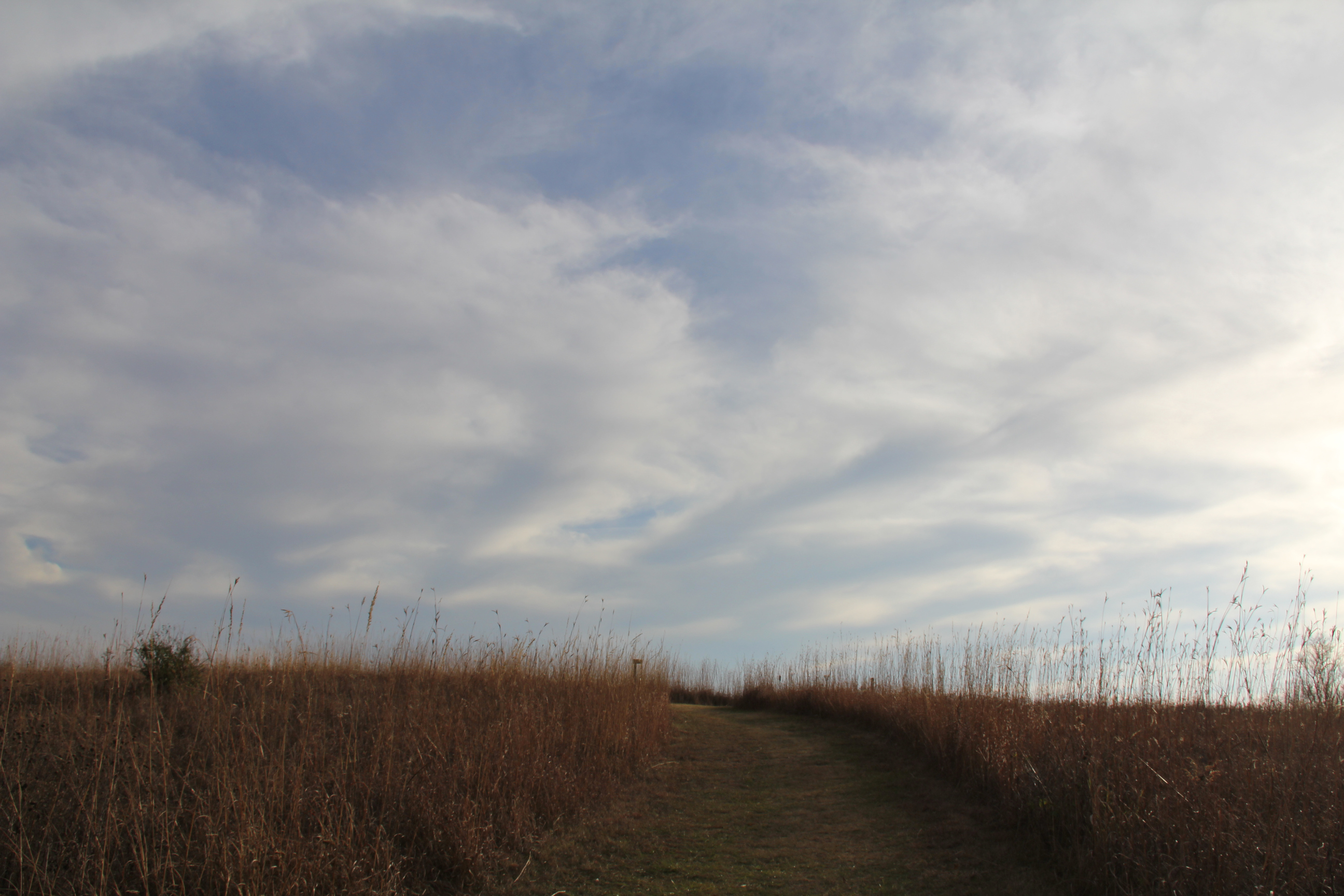
Beautiful: Wisps of clouds in the big sky and grass heads soaring. (Minnesota Prairie Roots copyrighted photo November 2024)
Times like this, it helps to get outside, into the natural world, and view the November landscape through an appreciative lens. It’s possible to reshape your thinking if you slow down, notice the details, determine that beauty is to be found in the outdoors, even in this eleventh month of the year.
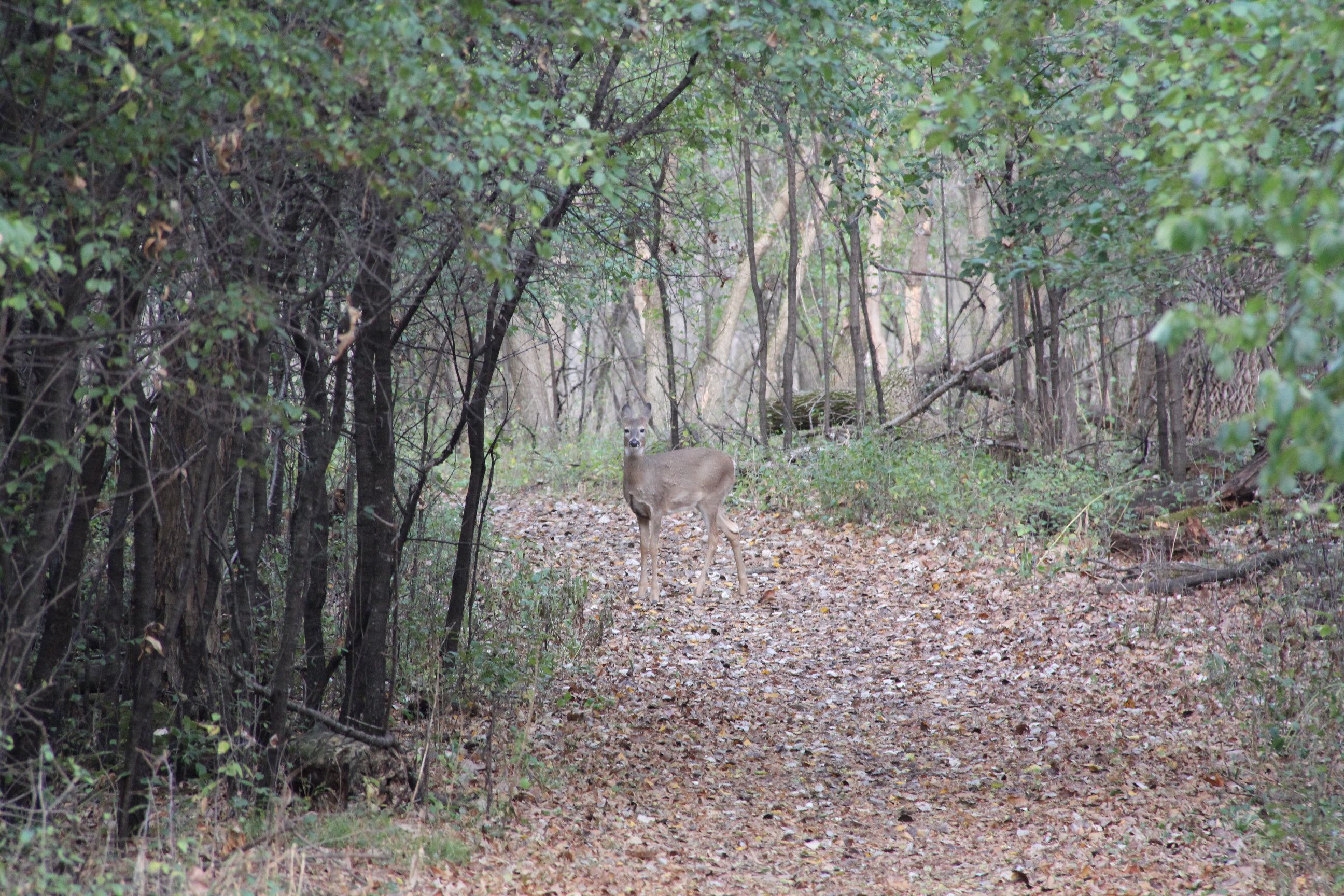
My initial glimpse of the nearly invisible deer standing on a leaf-littered trail. (Minnesota Prairie Roots copyrighted photo November 2024)
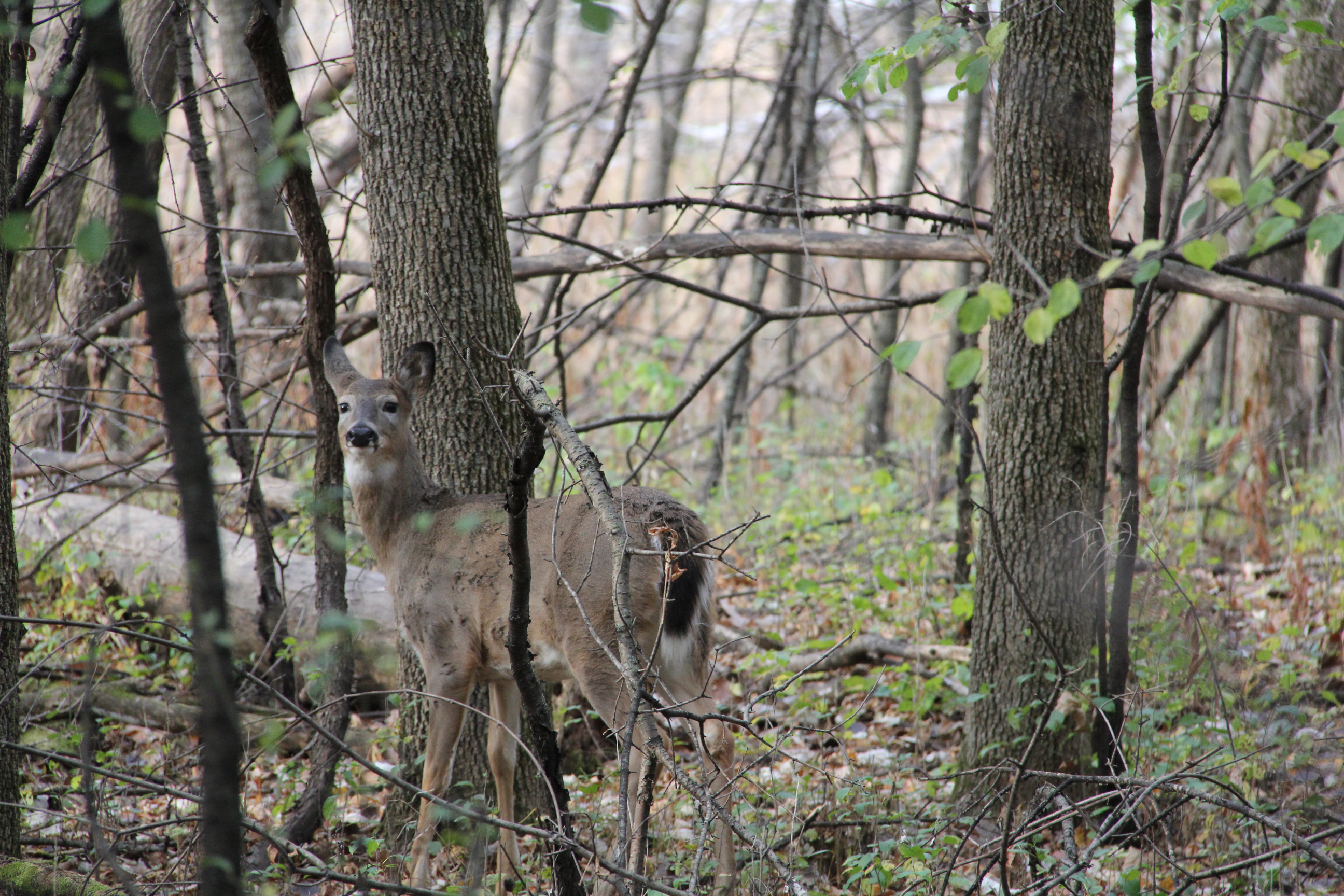
So into the woods I went at River Bend Nature Center in Faribault, where first off I spotted a deer on a trail, the animal effectively camouflaged among the dried leaves, the trunks of trees and buckthorn (an invasive species still green). The doe stood and watched as I eased slowly toward her intent on getting within better focal range. Soon she wandered into the woods, among the trees. I shot a rapid series of images as the stare-down continued, until finally the deer tired of my presence and hurried away.
I moved closer, then zoomed in with my telephoto lens to get this close-up image. (Minnesota Prairie Roots copyrighted photo November 2024)
What a wonderful way to begin my walk. Even if I consider deer too populous and a danger on roadways, my interest in watching them never wanes. And there are plenty of deer to watch at River Bend.
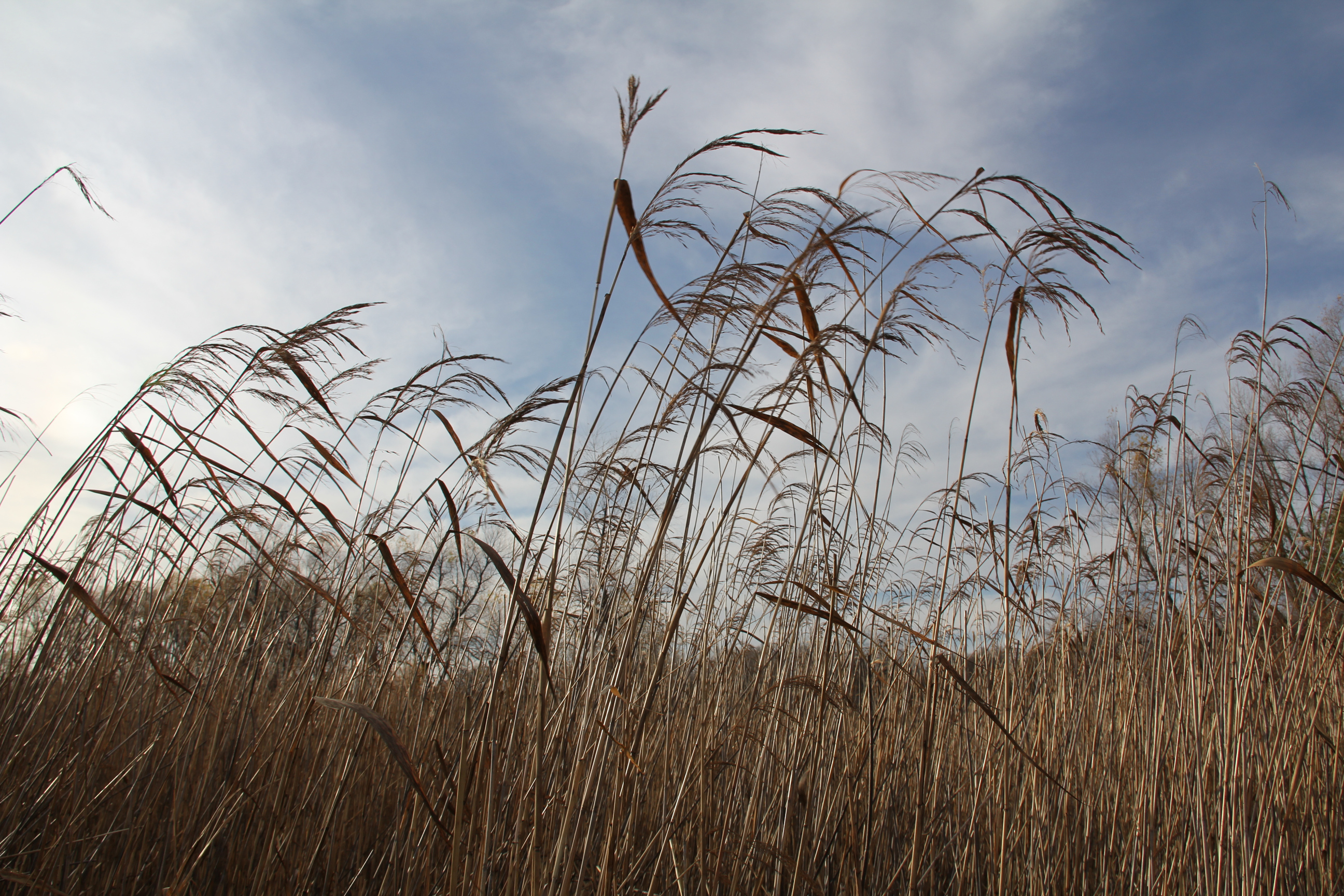
This grass stretches way above my head and dances in the wind. (Minnesota Prairie Roots copyrighted photo November 2024)
Mostly, though, I don’t see many animals at the nature center. Plant life becomes my point of interest. In November, that means dormant plants like dried grasses stretching across the expansive prairie. Or grasses rising high above my head along the trail, stalks listing, pushed by the wind. Dancing.
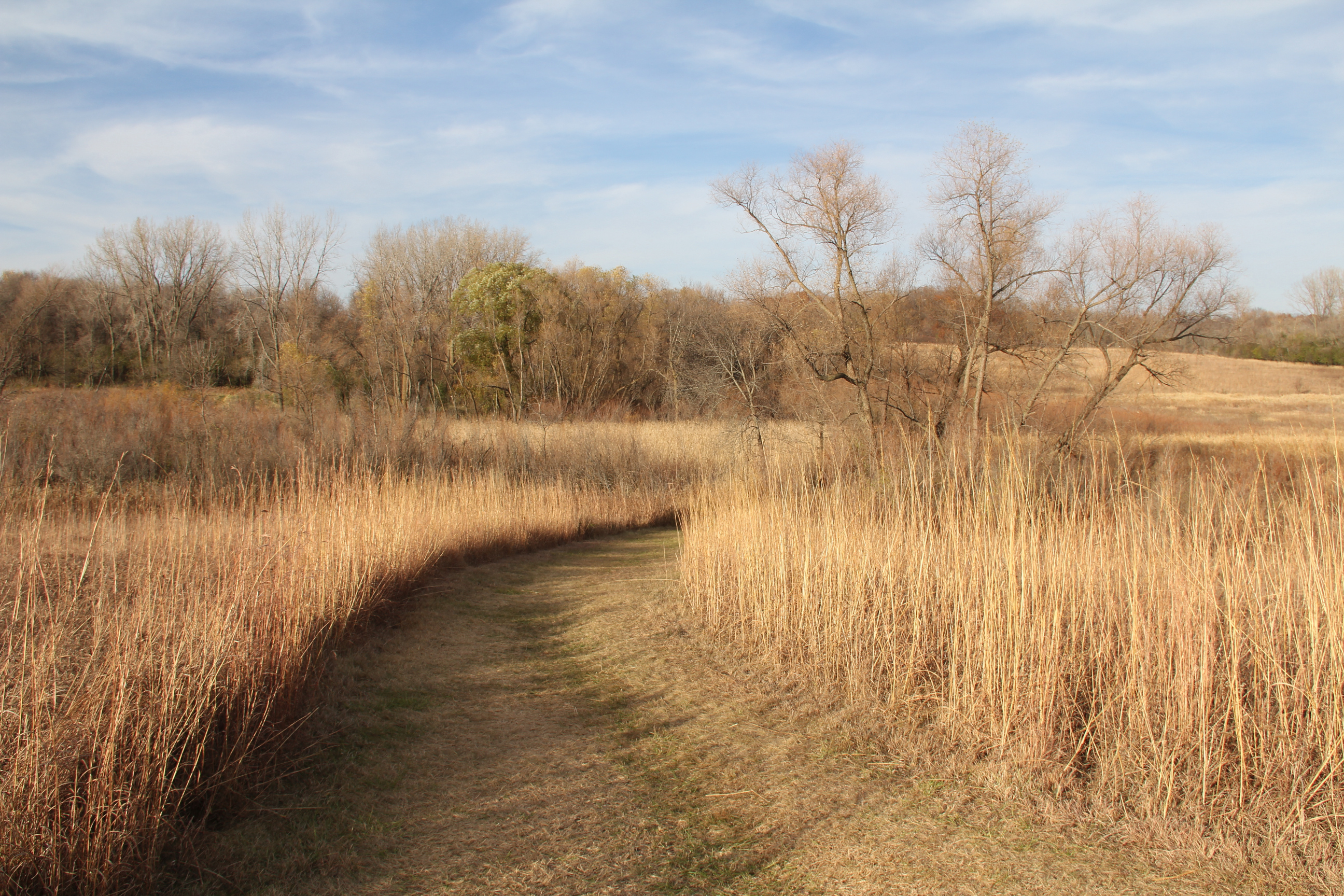
Dried grasses, possible fuel for fire, edge a trail. (Minnesota Prairie Roots copyrighted photo November 2024)
These grasses have lost their luster green, but they are no less lovely in muted shades. The thought crosses my mind how rapidly a spark could ignite a raging grass fire here upon the parched land.
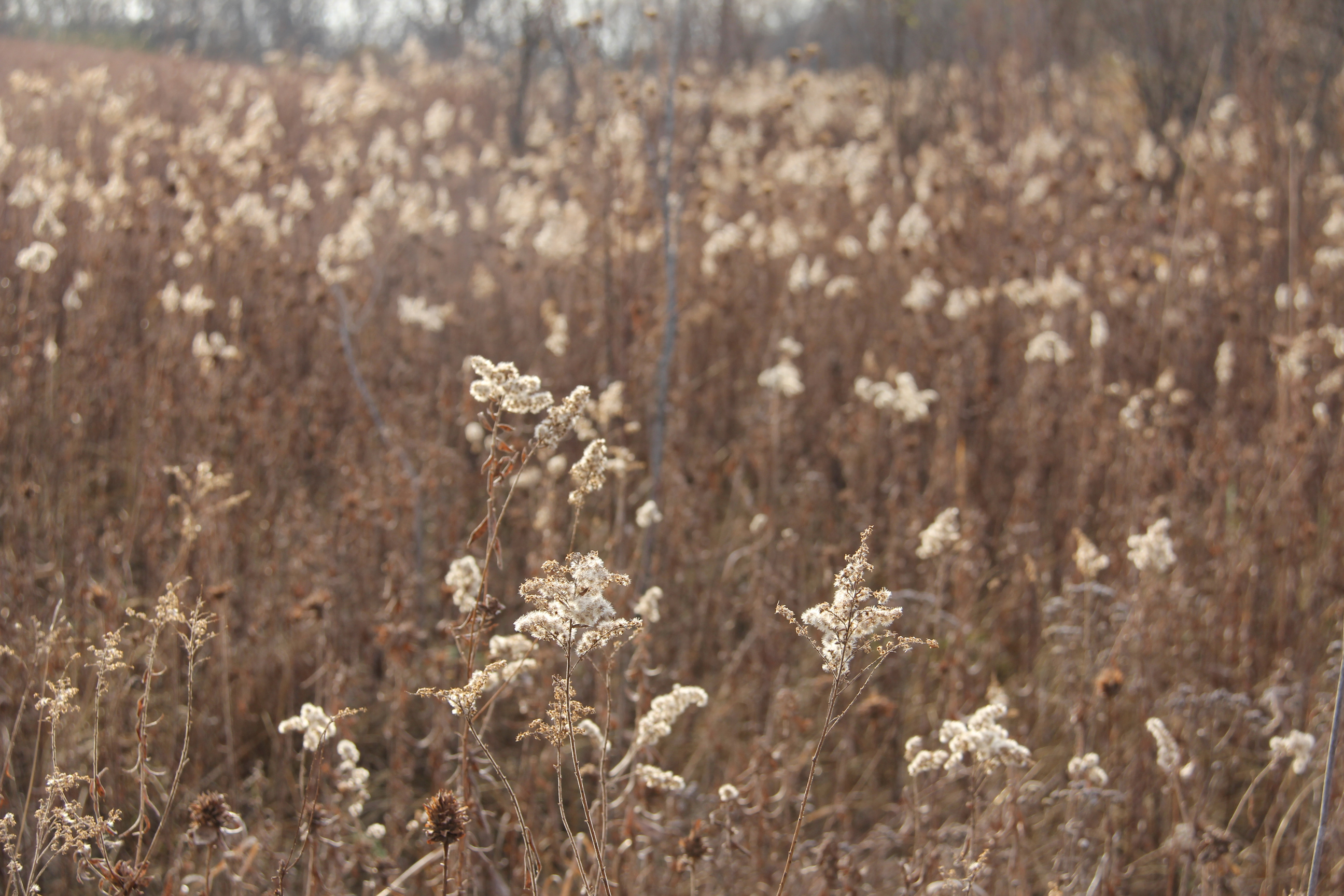
Dried goldenrod seemingly glow in the afternoon sunlight. (Minnesota Prairie Roots copyrighted photo November 2024)
Weeds and wildflowers (I’m no naturalist when it comes to identifying what I see) are likewise dead and dried, some glowing in the late afternoon sunshine. And that, too, is lovely.
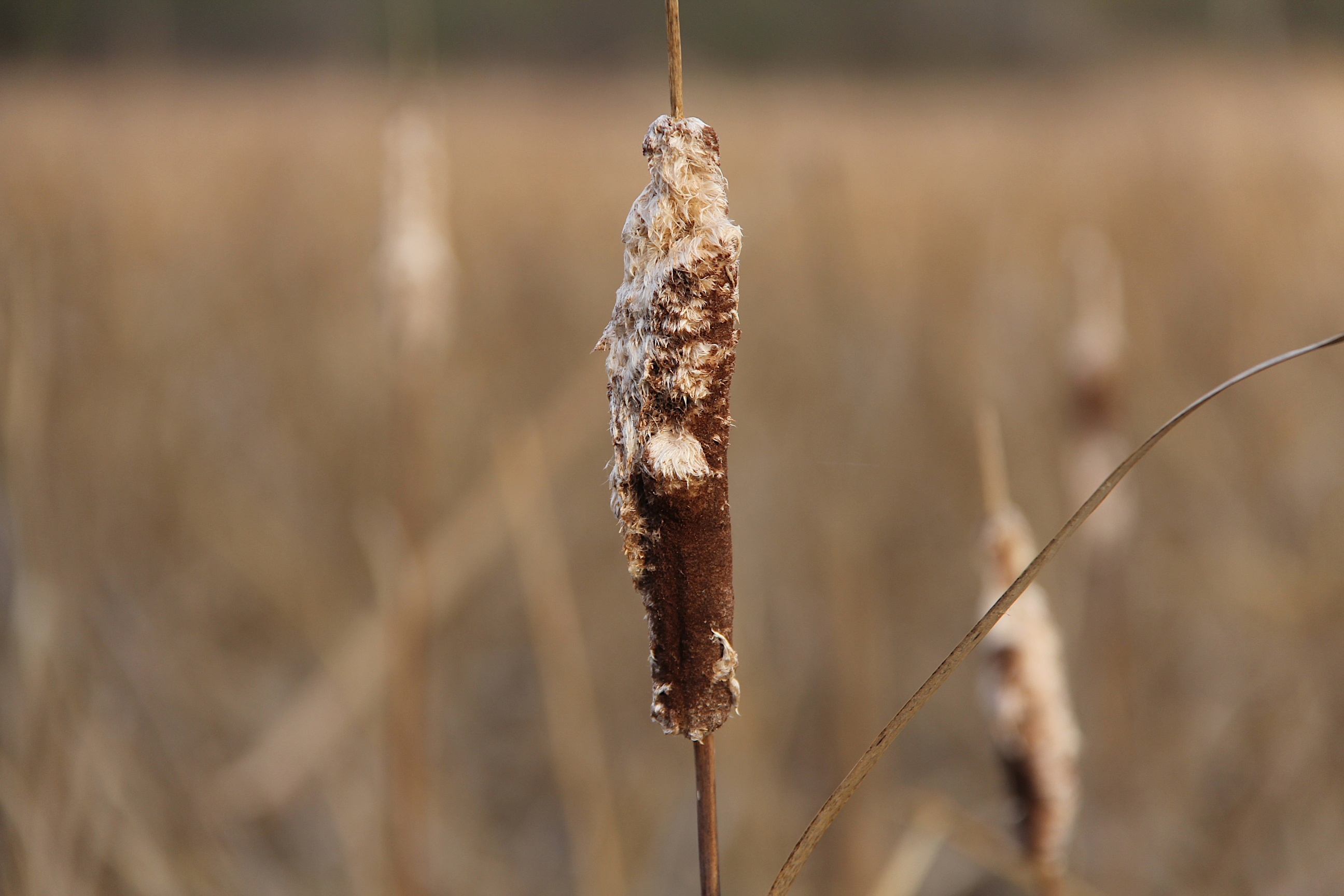
Cattails burst open at season’s end. (Minnesota Prairie Roots copyrighted photo November 2024)
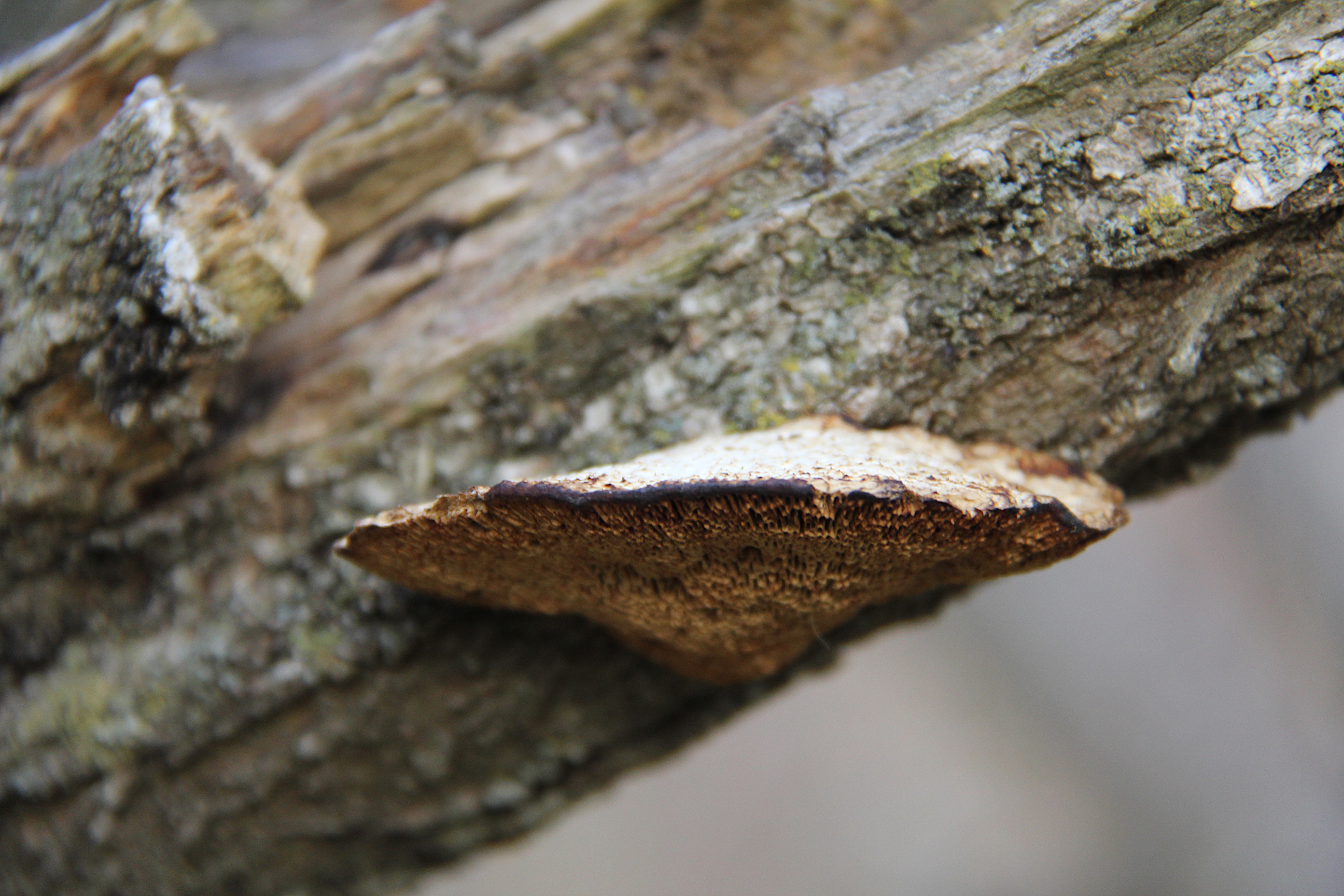
Fungus blends in with bark. (Minnesota Prairie Roots copyrighted photo November 2024)
Cattails appear ravaged by the seasons. Fungi ladder a tree branch. These are the details I notice in looking for photos, in convincing myself that beauty exists within the woods, upon the prairie, even in November.
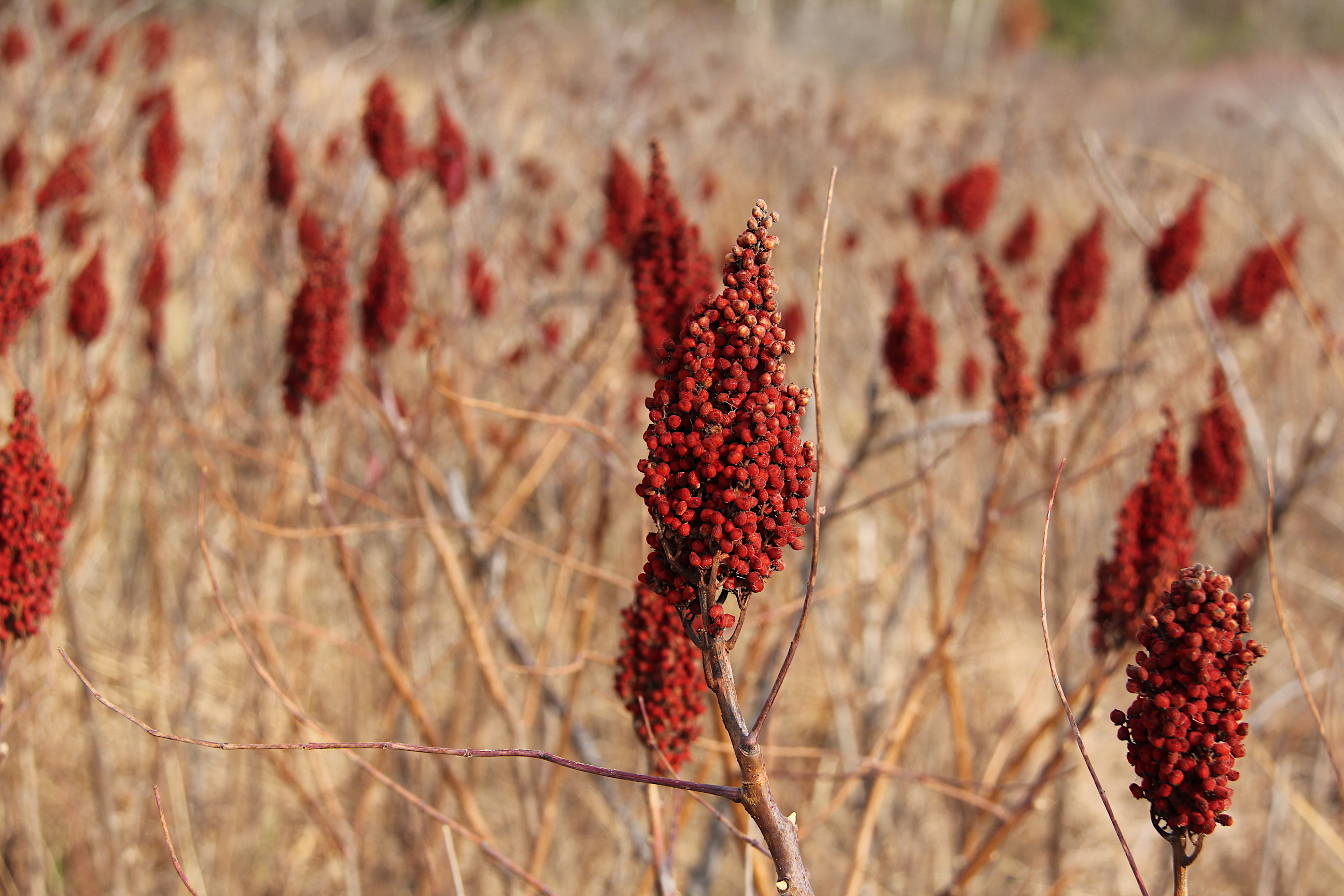
Dried sumac edge the prairie. (Minnesota Prairie Roots copyrighted photo November 2024)
Dried sumac in a hue that isn’t orange, that isn’t red, flames.
Walking uphill to the prairie, the sky appears expansive. (Minnesota Prairie Roots copyrighted photo November 2024)
A blue sky, swept with wisps of clouds, accents the scenes I take in. I always feel small under the expansive sky, no matter the month.
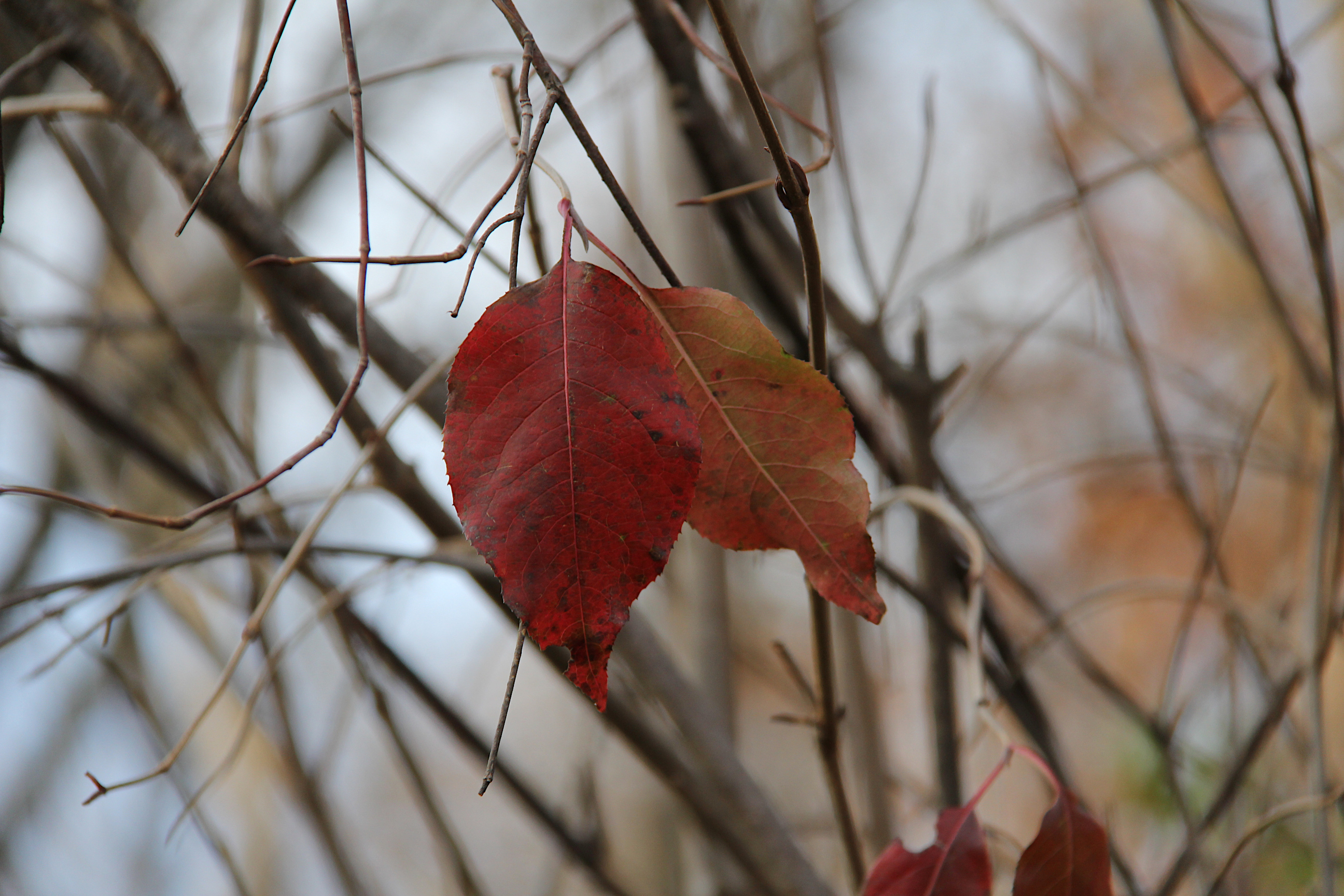
A spot of color in stubborn leaves. (Minnesota Prairie Roots copyrighted photo November 2024)
A few stubborn, autumn leaves still cling, flashing color like the flick of a flame. That, too, I see on this November day.
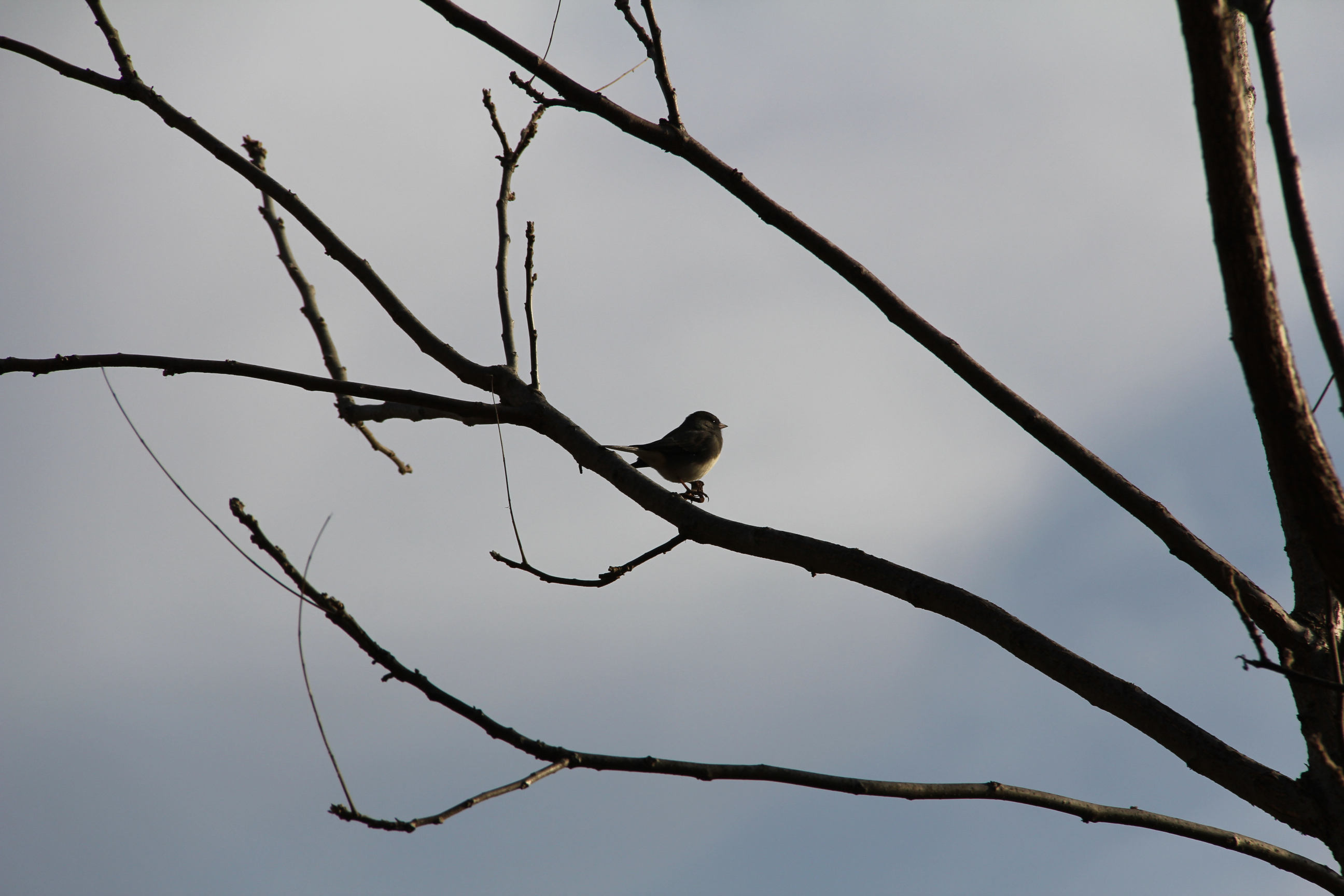
If any image visually summarizes November, this would be it. (Minnesota Prairie Roots copyrighted photo November 2024)
A flutter of birds near the end of my walk draws my eyes to a bare tree. To watch. To hear their movement, like a whisper of winter coming. Quiet and colorless. Signs of December soon overtaking November.
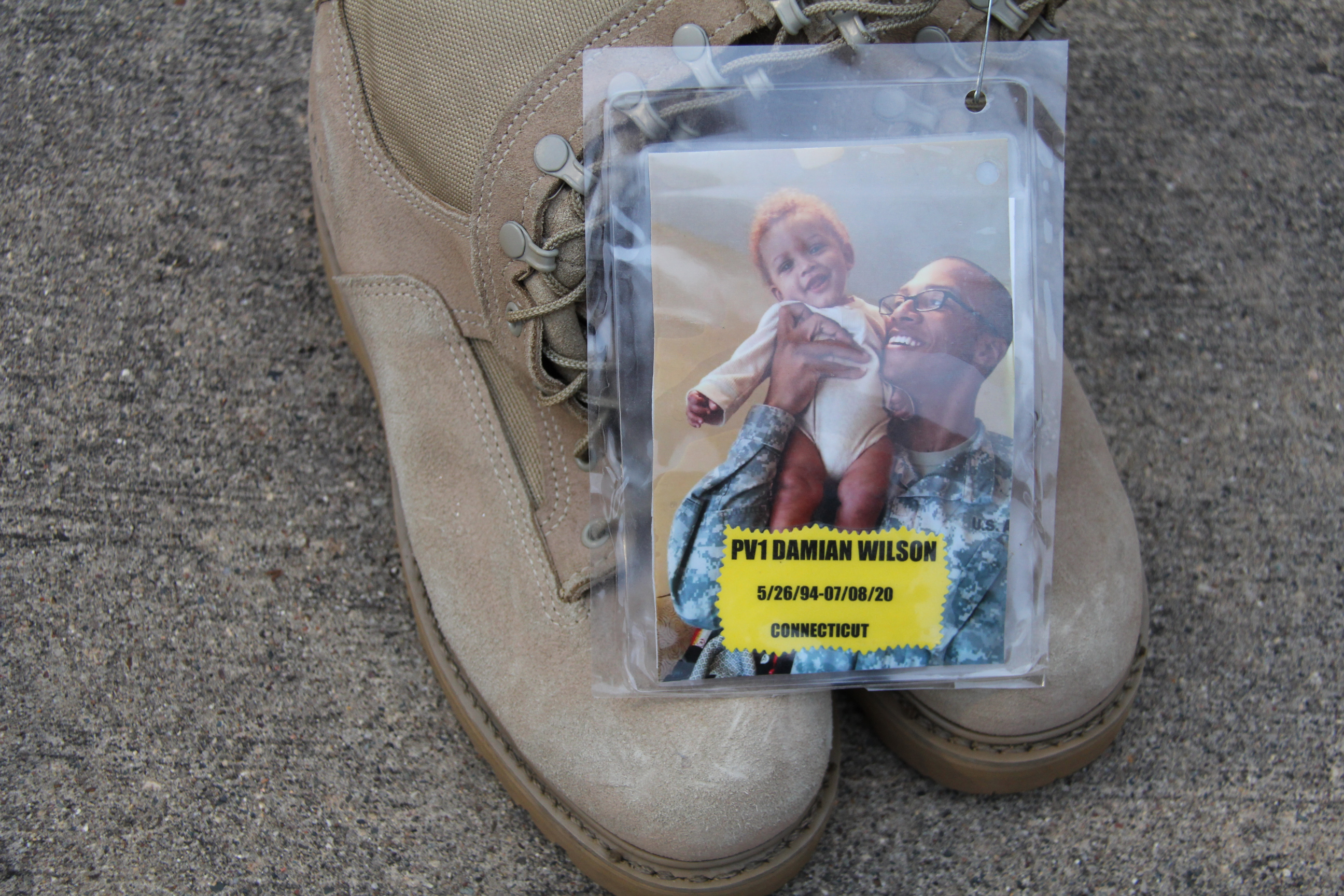
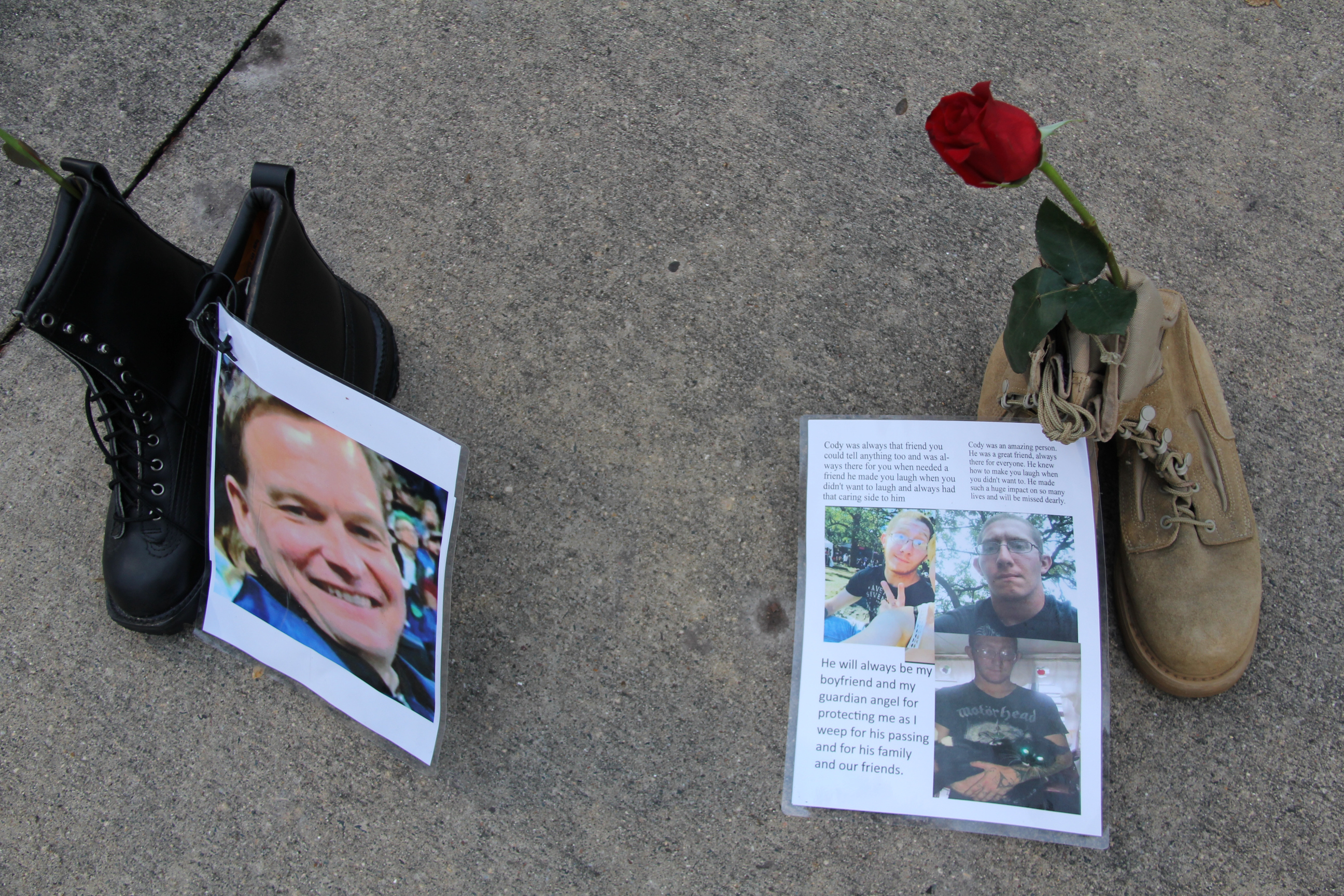
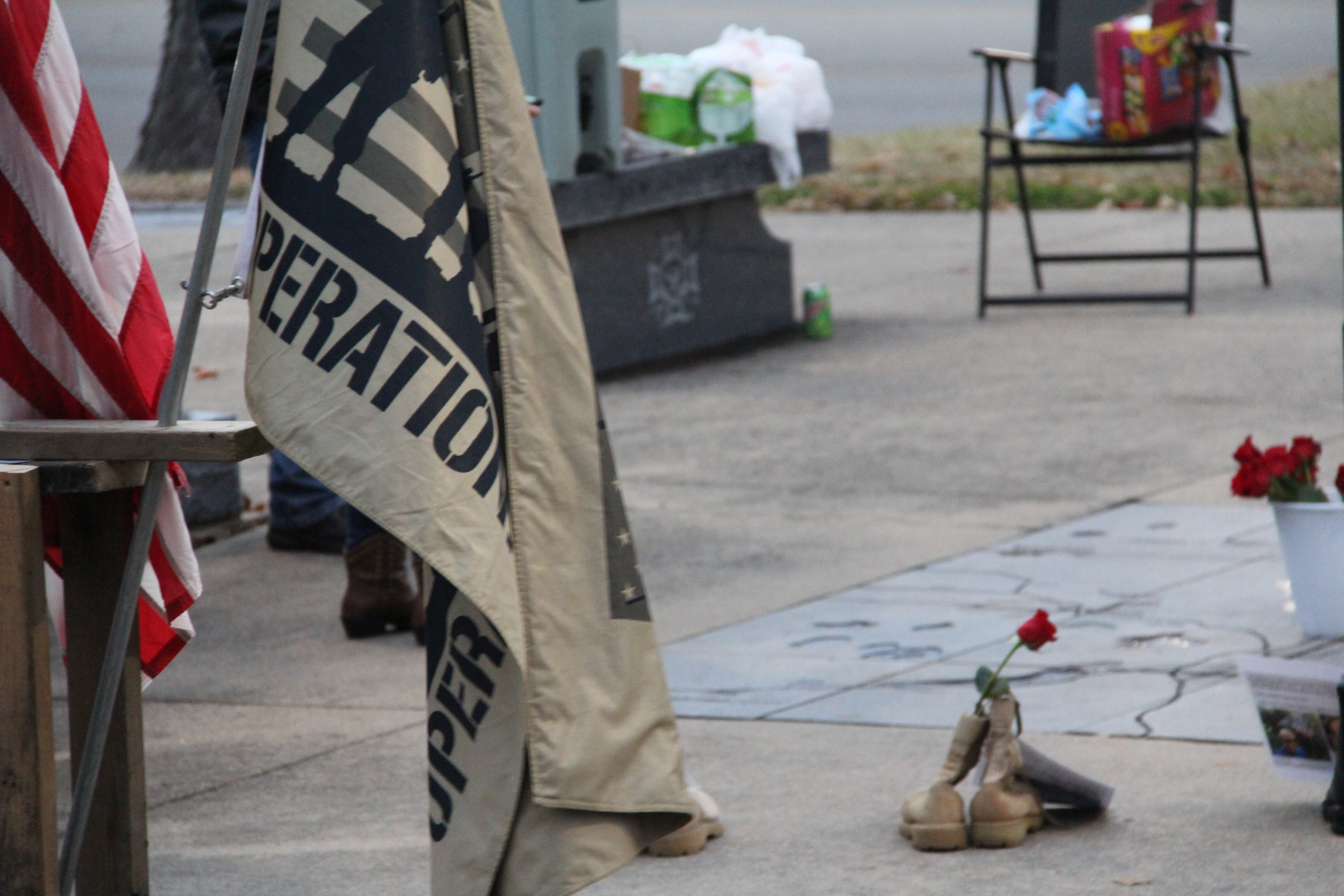
Each pair of boots displayed at the vigil represents a veteran who lost his/her life to suicide. Here, PV1 Damian Wilson of Connecticut. (Minnesota Prairie Roots copyrighted photo November 2024)
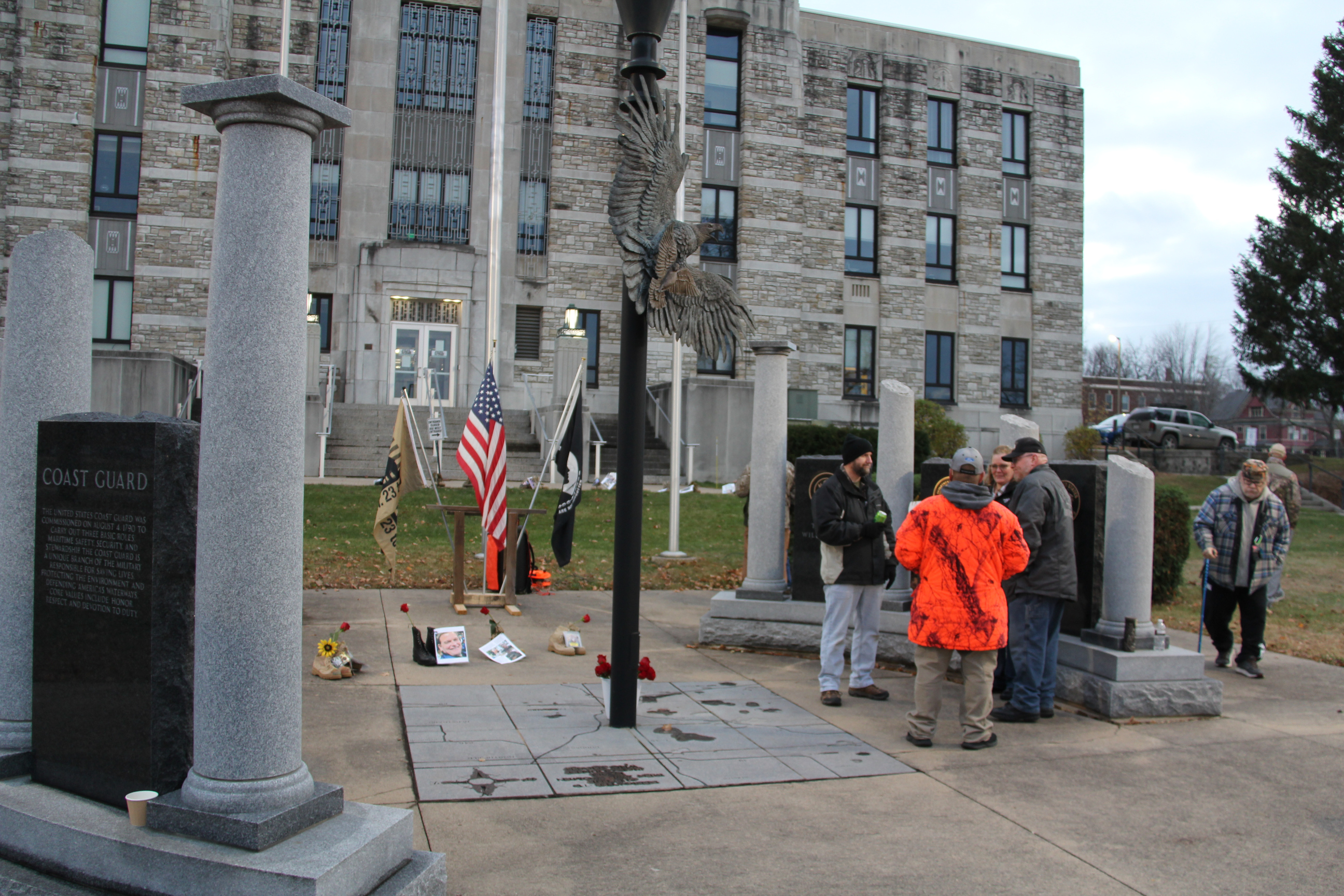
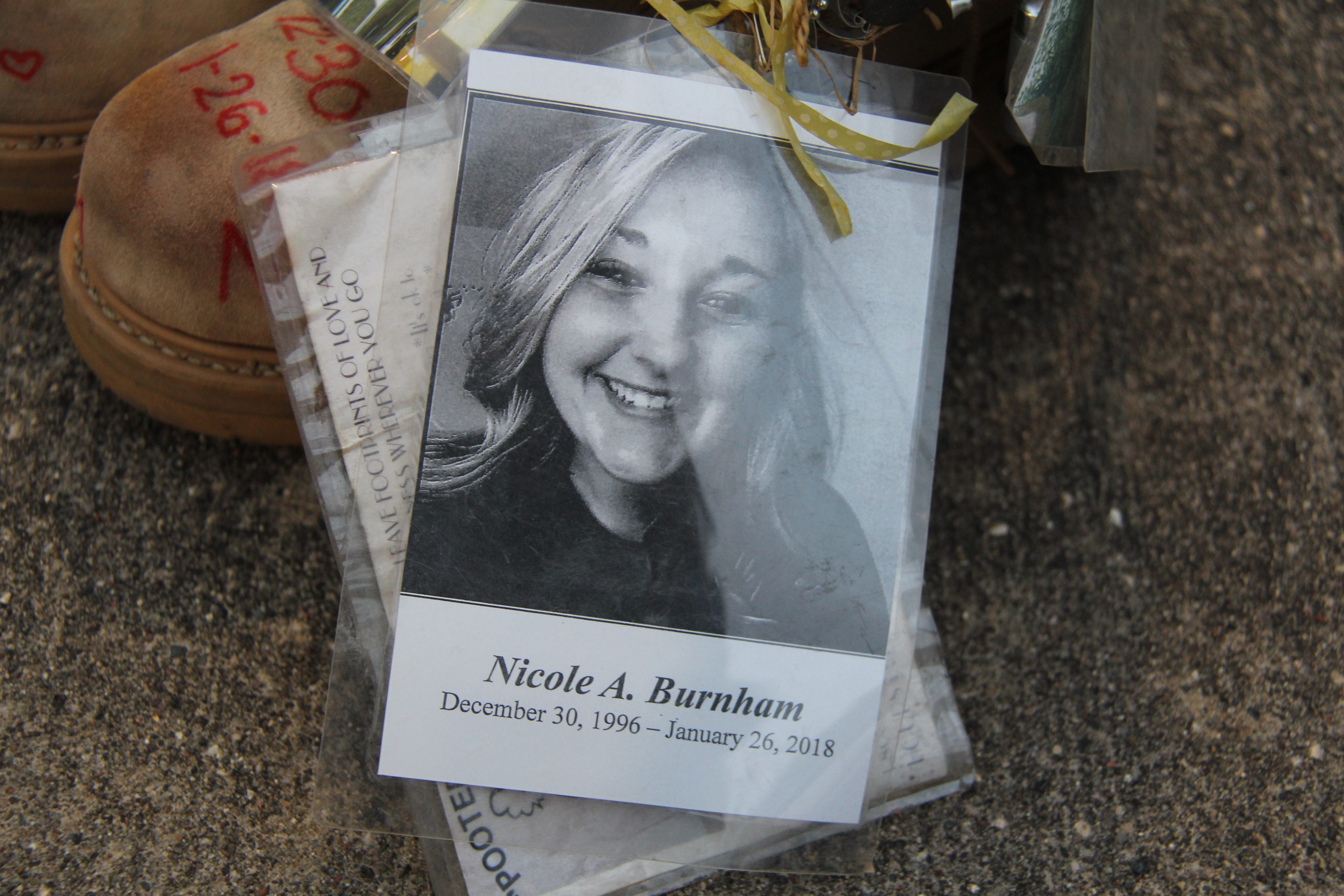
CODY, DAMIAN, NICOLE…and 20 others. Twenty-three military veterans recognized, honored, remembered during a 23-hour vigil beginning at noon Sunday and ending at 11 a.m. Monday. Twenty-three, because 22 veterans and one active military duty member, on average, lose their lives via suicide in this country every single day. The average age is 59 ½. Twenty-three because the veterans’ support group Operation: 23 to 0, southern Minnesota chapter, organized this event at the Rice County courthouse in Faribault.
At the vigil late Sunday afternoon, supporters and those holding vigil gather. Boots edge the veterans’ memorial and the courthouse steps in the background. (Minnesota Prairie Roots copyrighted photo November 2024)
That organization aims to reduce the number of deaths by suicide via providing a network of support and by raising awareness. As the daughter of a Korean War veteran who suffered from post traumatic stress disorder, I fully understand the need, the cause. This resonates with me on a personal level.
The Operation: 23 to 0 flag flew beside the American flag. (Minnesota Prairie Roots copyrighted photo November 2024)
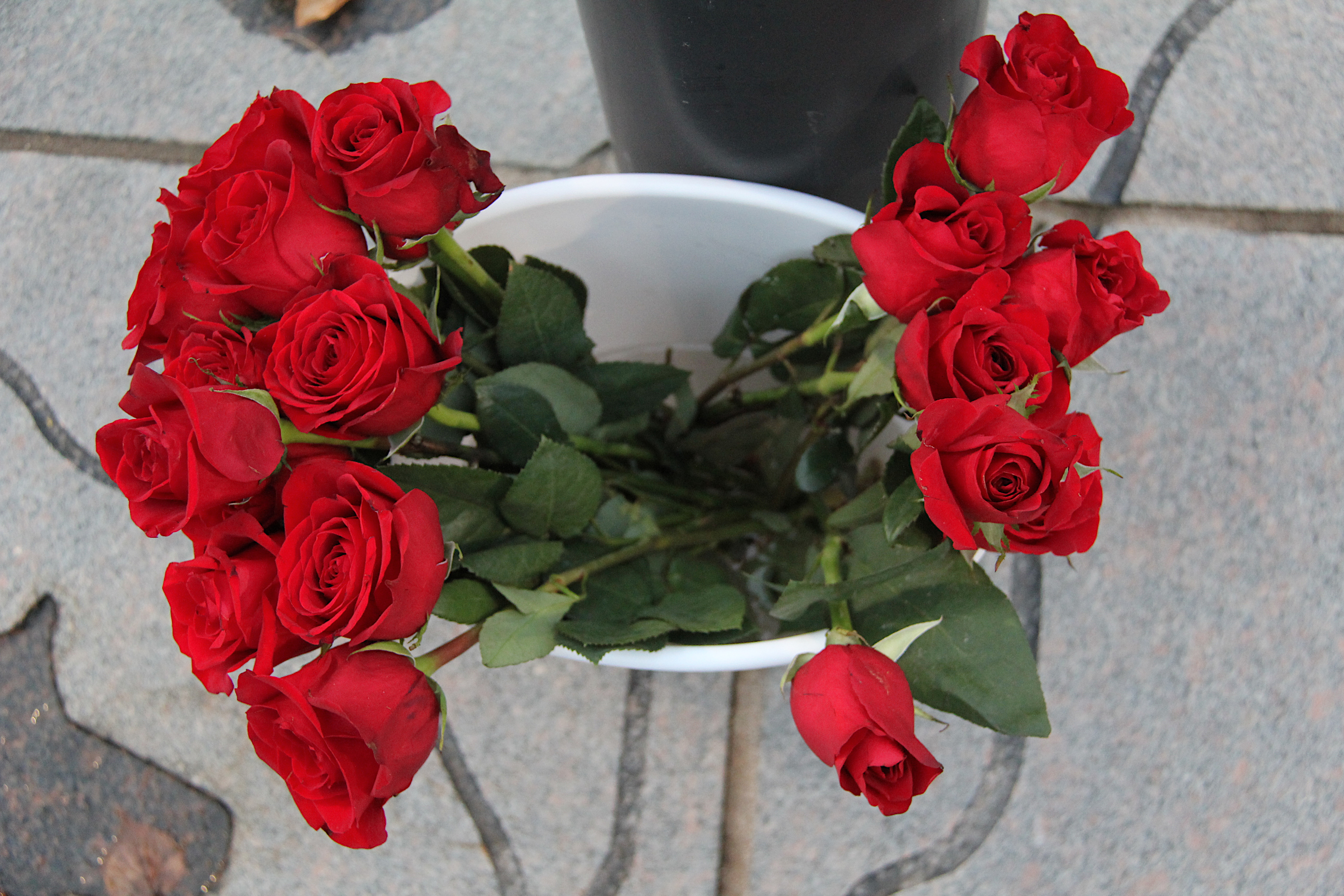
A bucket of roses, with roses placed in each deceased veteran’s boots, sits at the vigil. (Minnesota Prairie Roots copyrighted photo November 2024)
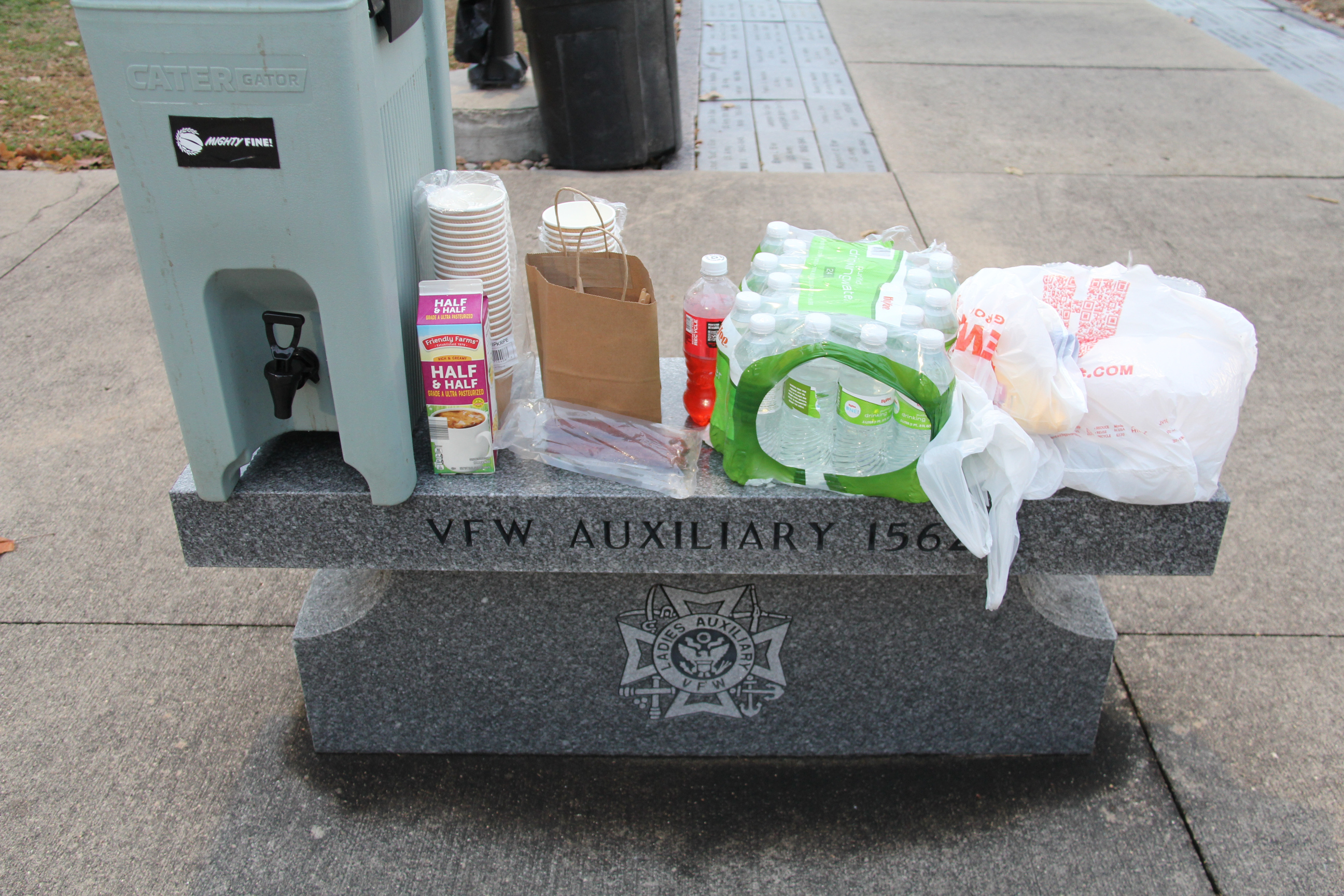
Donated food and beverages for those holding vigil. (Minnesota Prairie Roots copyrighted photo November 2024)
Because of that and because I care, I stopped by late Sunday afternoon to pay my respects and to show my support for Operation: 23 to 0 and for the veterans holding vigil. Those included Kirk Mansfield of Faribault, whom I’ve come to know through the years as an incredibly caring and compassionate individual dedicated to helping veterans. Mansfield is quick to point out that this is a team effort, that it takes a whole network of people, including the American Legion family, to make a difference.
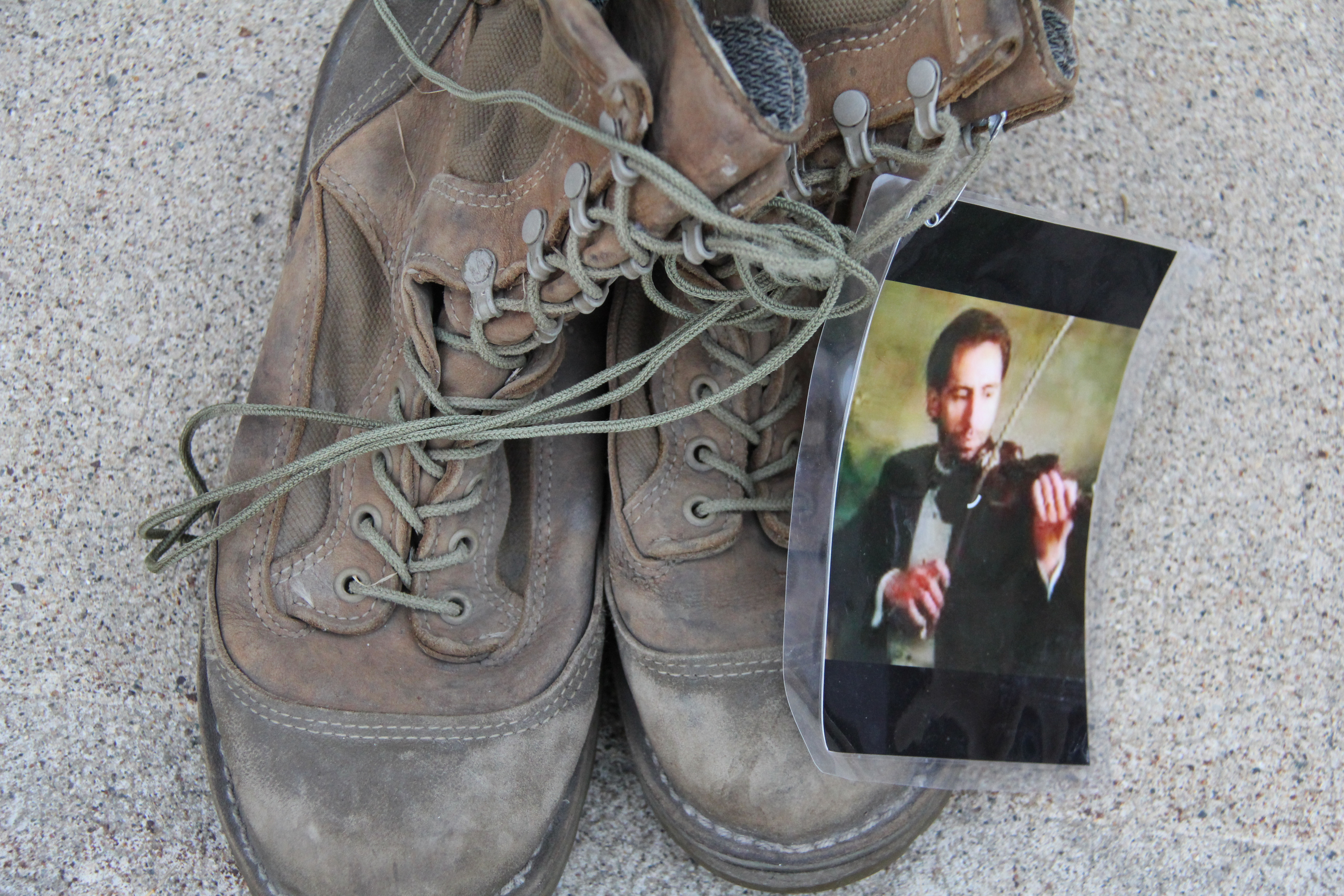
The photos, the stories, the boots, the messages…personalize the loss. (Minnesota Prairie Roots copyrighted photo November 2024)
Images and words identify veterans who died via suicide, who are missed deeply, who were recognized. (Minnesota Prairie Roots copyrighted photo November 2024)
He was not only a soldier, but a violinist. (Minnesota Prairie Roots copyrighted photo November 2024)
He shared stories of a struggling young veteran in Iowa who needed a place to live, of a pregnant woman who lost her partner (a veteran) to suicide and who brought her now young daughter to the vigil in Faribault. He mentioned, too, a young veteran he was expecting later. Someone who is struggling.
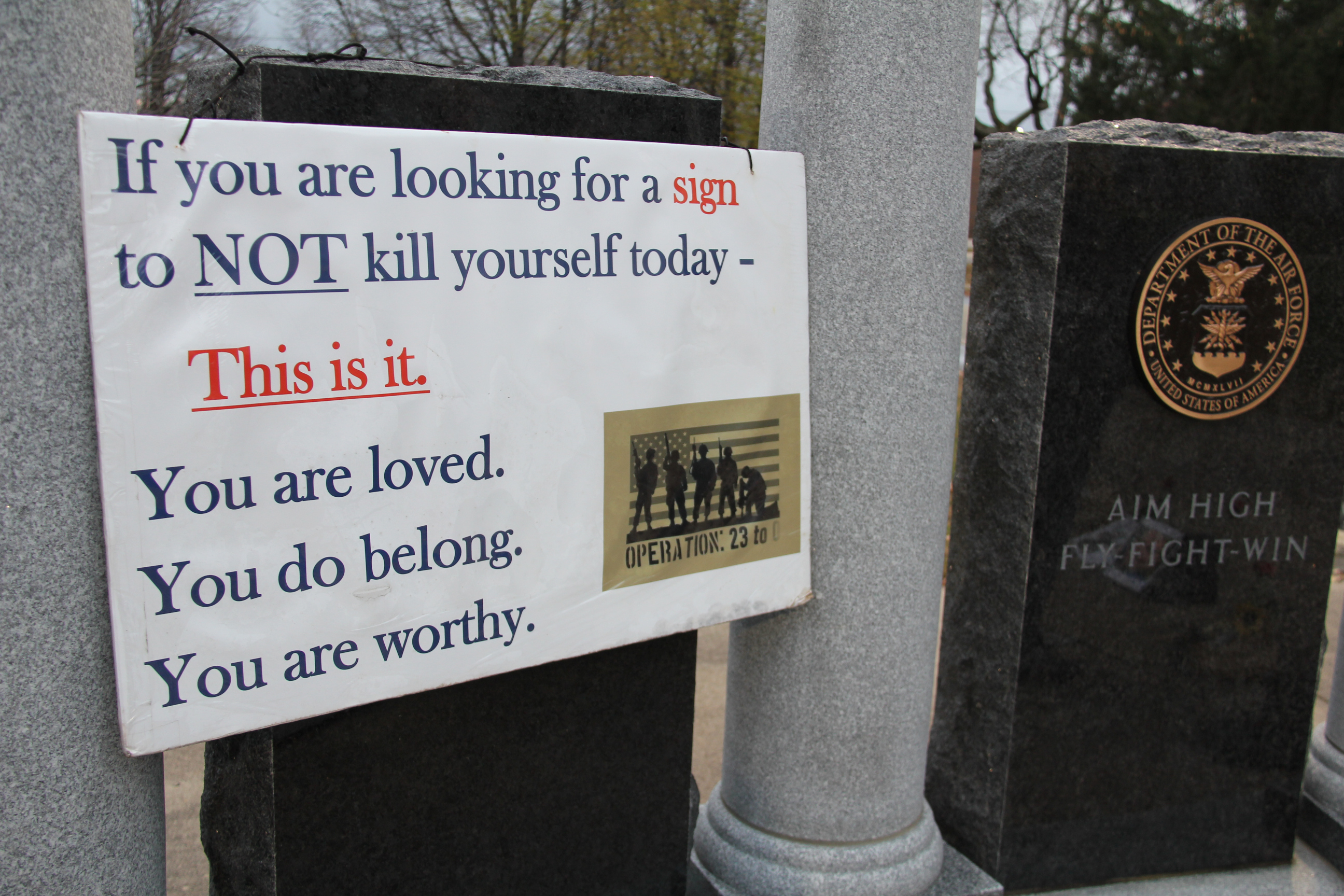
Anyone who stopped by the vigil could see this message, that they are valued. They matter. (Minnesota Prairie Roots copyrighted photo November 2024)
As I stood next to Kirk, the cold November wind sweeping up the hill, chilling me, and darkness descending, I saw the light of hope. That comes across not only in this vigil, but also in a message posted between stones honoring branches of the military. The poster reads: “If you are looking for a sign to NOT kill yourself today—This is it. You are loved. You do belong. You are worthy.” What a powerful message of hope.
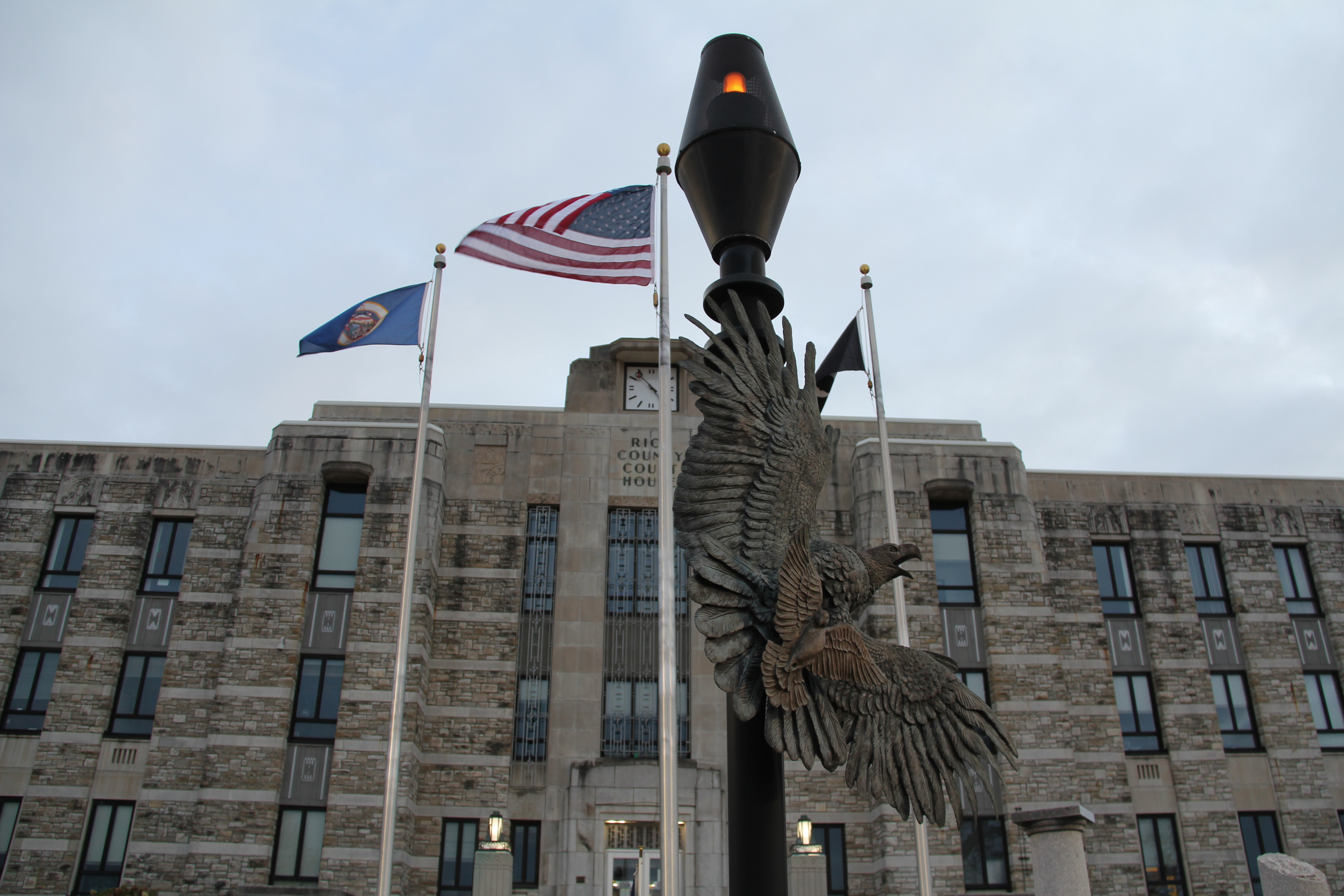
An eagle and eternal flame center the Rice County Veterans’ Memorial by the Rice County courthouse. (Minnesota Prairie Roots copyrighted photo November 2024)
On this Veterans Day, when we honor all who served our country in the military, those caring words matter. They matter because people (whether veterans or not) are struggling. Perhaps struggling with finances, relationships, mental health or any myriad of issues that create feelings of hopelessness.
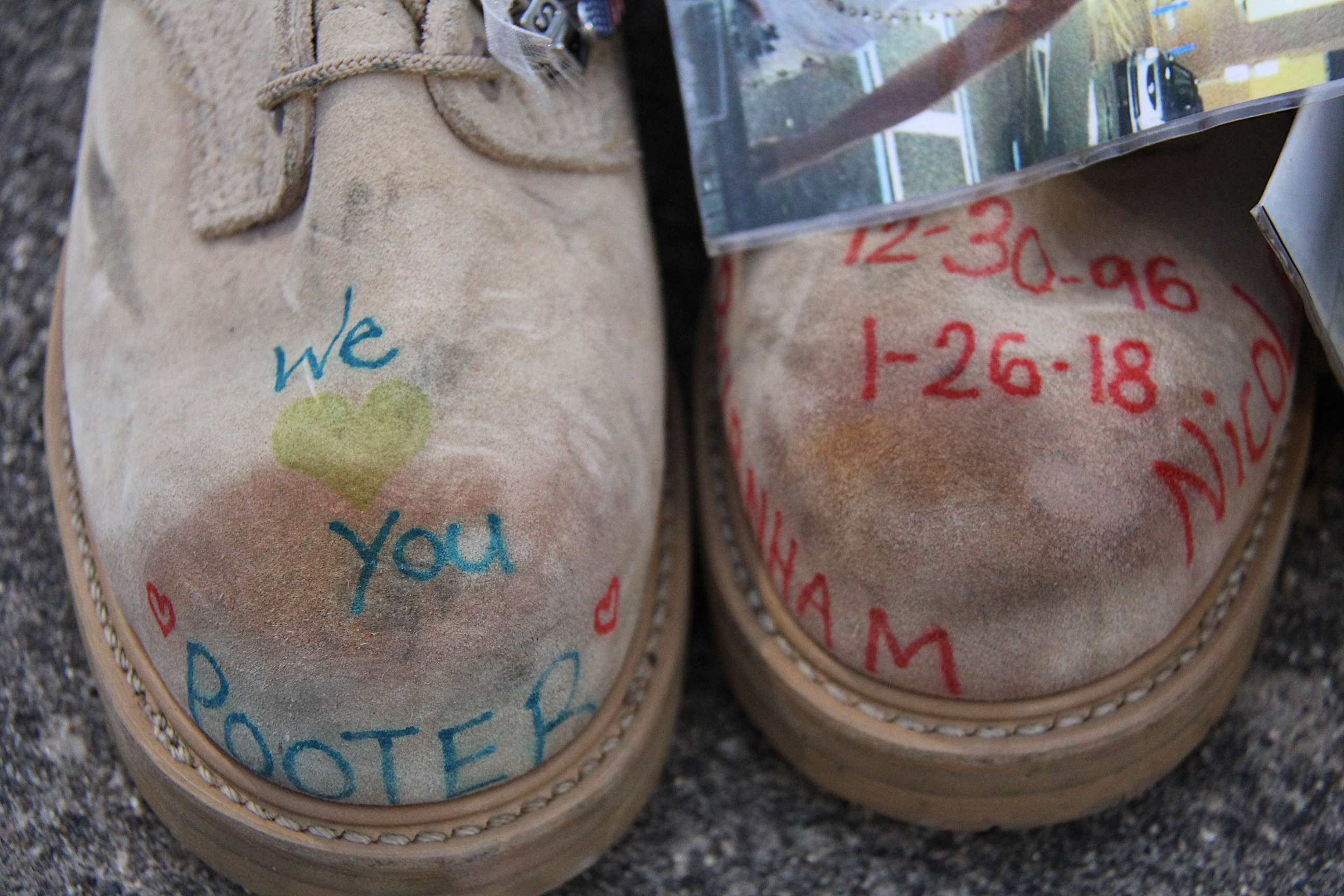
Loving messages on a veterans’ boot. (Minnesota Prairie Roots copyrighted photo November 2024)
Flags, boots, roses, all honor the veterans who died via suicide. (Minnesota Prairie Roots copyrighted photo November 2024)
Love and grief on a pair of boots. (Minnesota Prairie Roots copyrighted photo November 2024)
Each pair of boots placed at the Rice County Veterans Memorial or at the foot of the courthouse steps represents someone who loved and was loved, but who now is among the twenty-three.
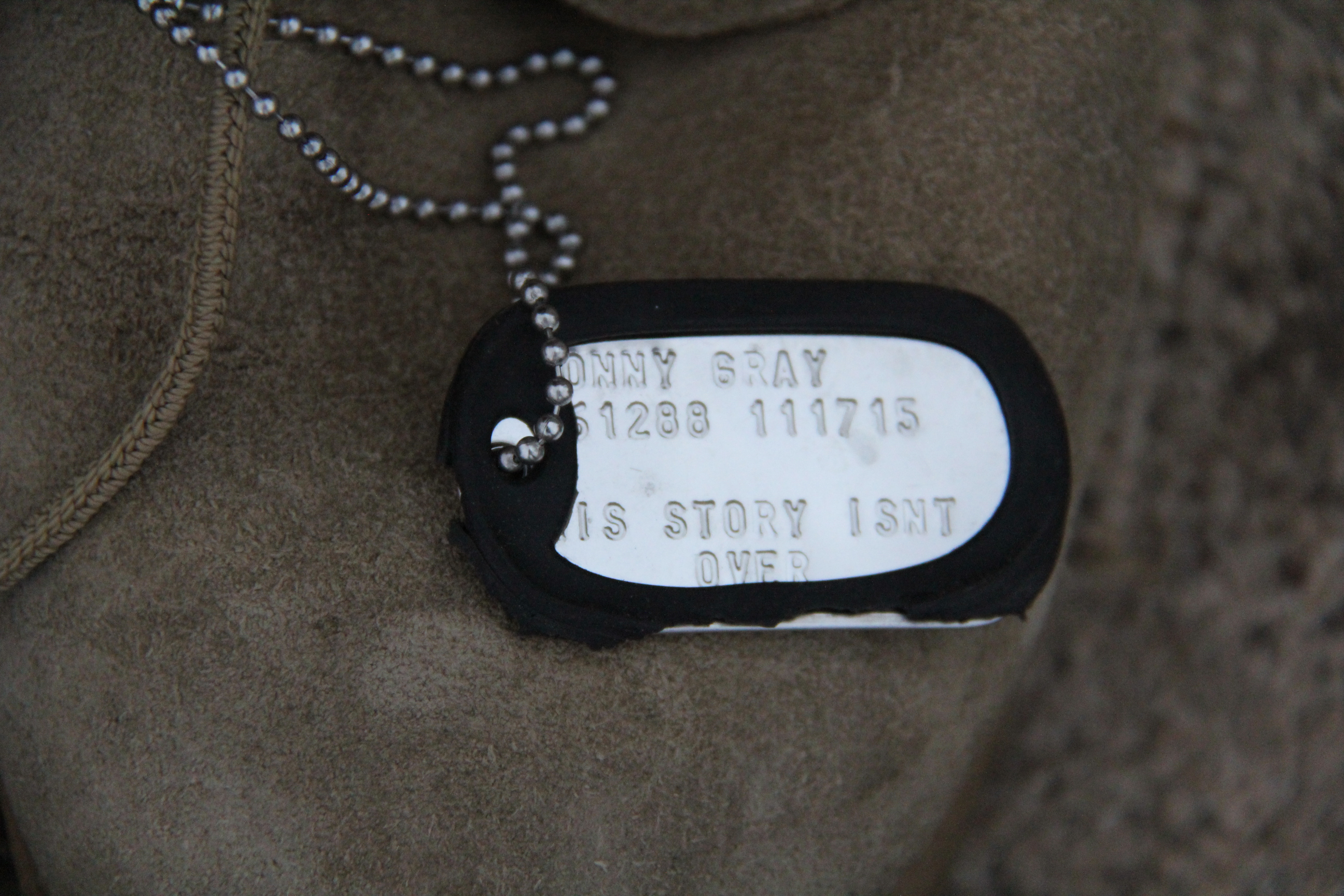
I really like this message spotted on a dog tag on a veteran’s boot. “His story isn’t over.” (Minnesota Prairie Roots copyrighted photo November 2024)
Operation: 23 to 0 is dedicated to being there. To listening. To supporting. To networking. To doing. To raising awareness. I see that. And I am grateful.
#
FYI: If you or someone you love is feeling hopeless, know that someone wants to help you. Talk to a friend, family member, professional. Call or text the 988 Suicide and Crisis Lifeline. Learn more about Operation: 23 to 0, which is based in Stillwater and has three chapters in Minnesota. You are loved.
Yulia Sholomova won first place in the Halloween Group Show for her costumed kitties. The show at the Paradise Center for the Arts in Faribault runs until November 16. (Minnesota Prairie Roots copyrighted file photo October 2024)
TO VIEW VISUAL ART created by others feeds my spirit in a way that I can’t fully explain. Perhaps it’s the kinship I feel as a creative. Perhaps it’s the appreciation I hold for their work. Or maybe it’s simply because of the feelings sparked by viewing a work of art.
Admiration. Joy. Serenity. Chaos. Calm. A myriad of emotions can arise when looking at a painting, a sculpture, mixed media, a photo, whatever the artist creates.
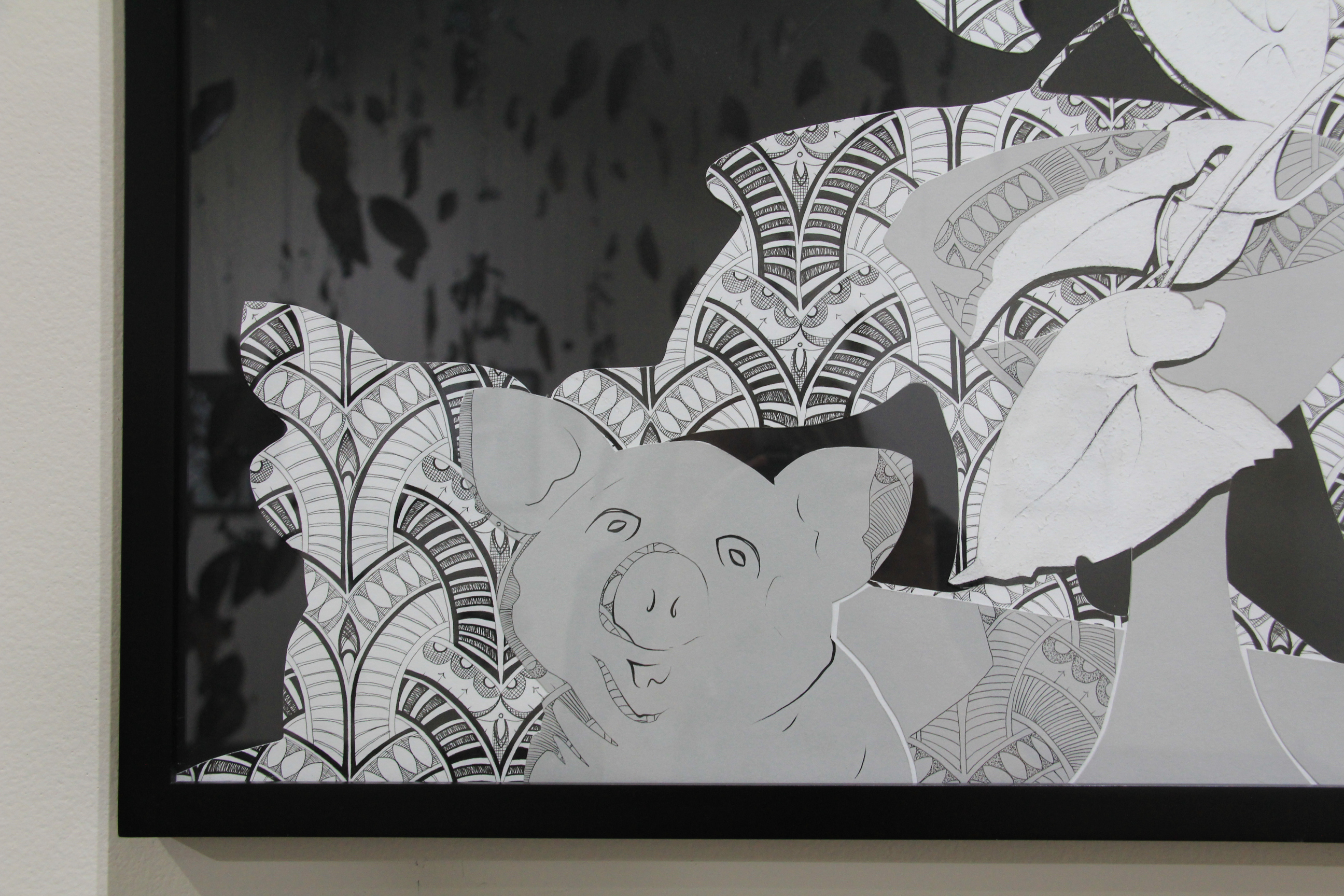
This shows a section of “Melody” done in micron pen and cut paper by Shelley Caldwell. (Minnesota Prairie Roots copyrighted photo October 2024)
Recently I popped into the Paradise Center for the Arts in Faribault specifically to see the Halloween Group Show. But then I was drawn to the other galleries. There I saw “Unfurling,” mixed media drawings and an installation by Shelley Caldwell who creates art from her Faribault County farm near the Iowa border. Her exhibit seemed familiar. And it should have. In October 22, Caldwell’s work was featured in a smaller installation at the Paradise.
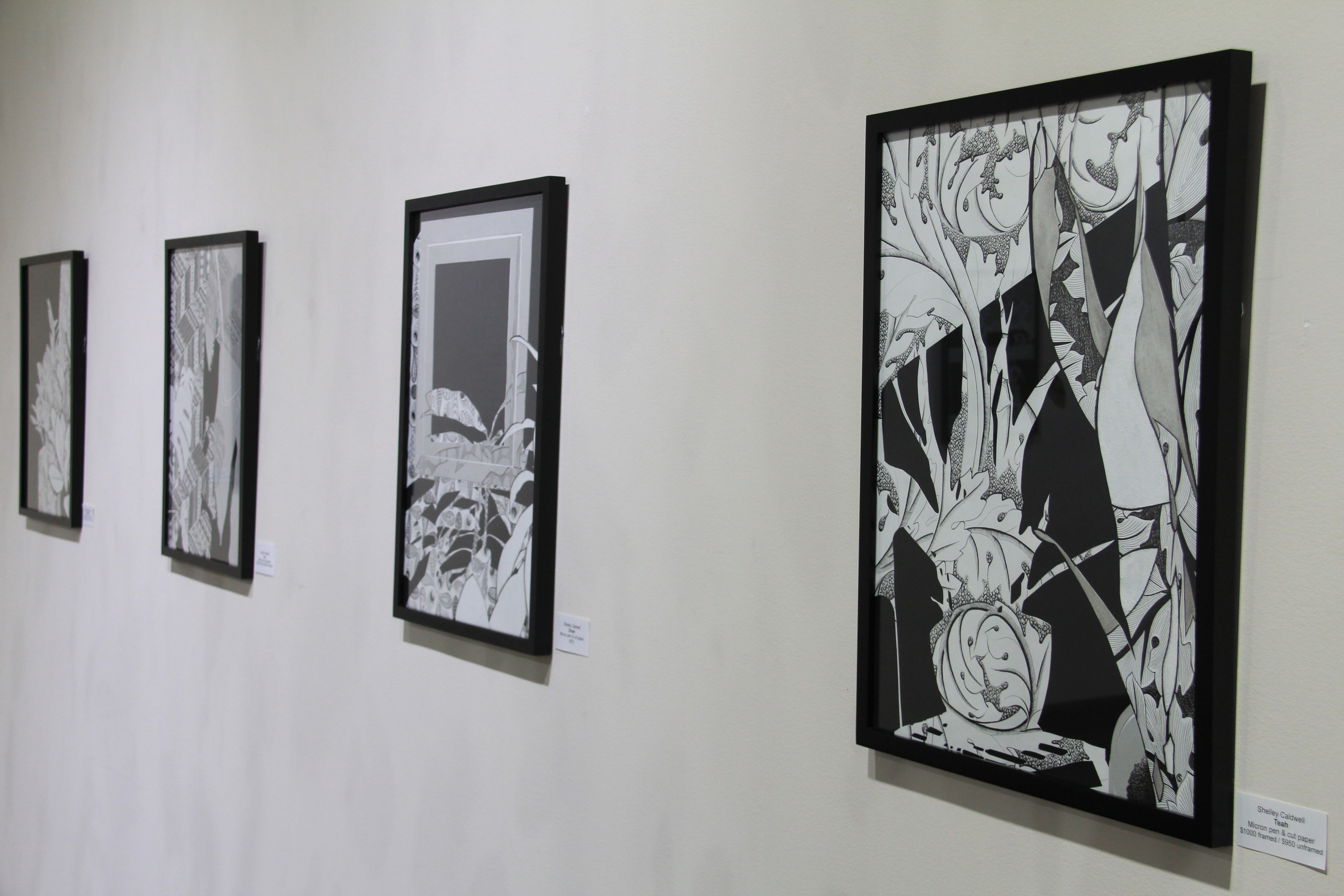
Some of Shelley Caldwell’s art, which rings the main gallery walls. (Minnesota Prairie Roots copyrighted photo October 2024)
Then, as now, plants focus her art. She combines drawings of natural subjects with abstract drawings to create art that is signature identifiable as hers. This time Caldwell worked with micron pen and cut paper to craft black-and-white framed pieces rather than artfully staging spider plants.
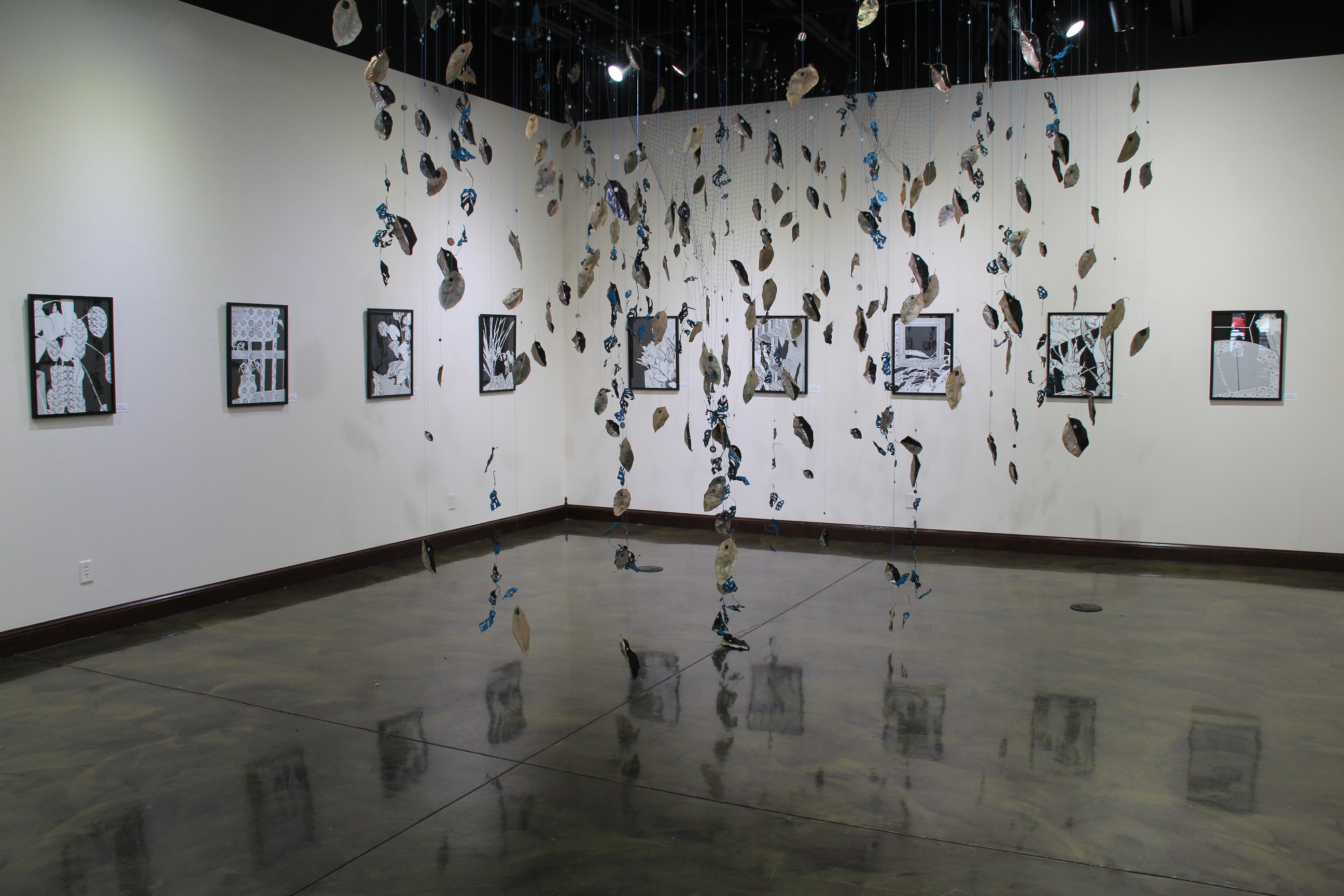
This shows an overview of Shelley Caldwell’s exhibit, including dangling leaves. (Minnesota Prairie Roots copyrighted photo October 2024)
Real plant leaves, though, dangling and dancing, shape the focal centerpiece suspended from the gallery ceiling. There is movement. Freedom. A certain airiness.
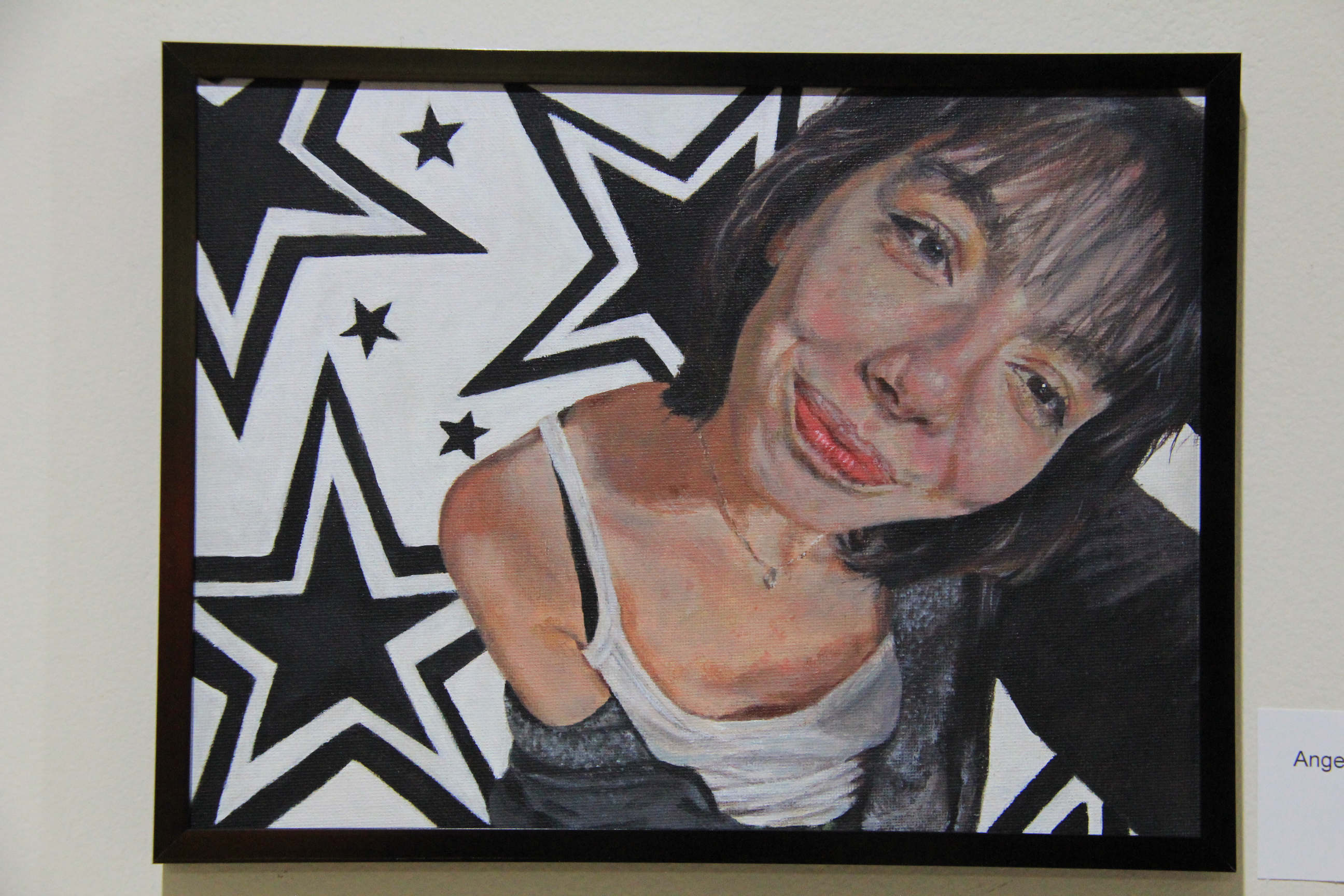
“Stars & I,” an acrylic painting by Angelina Dornquast. (Minnesota Prairie Roots copyrighted photo October 2024)
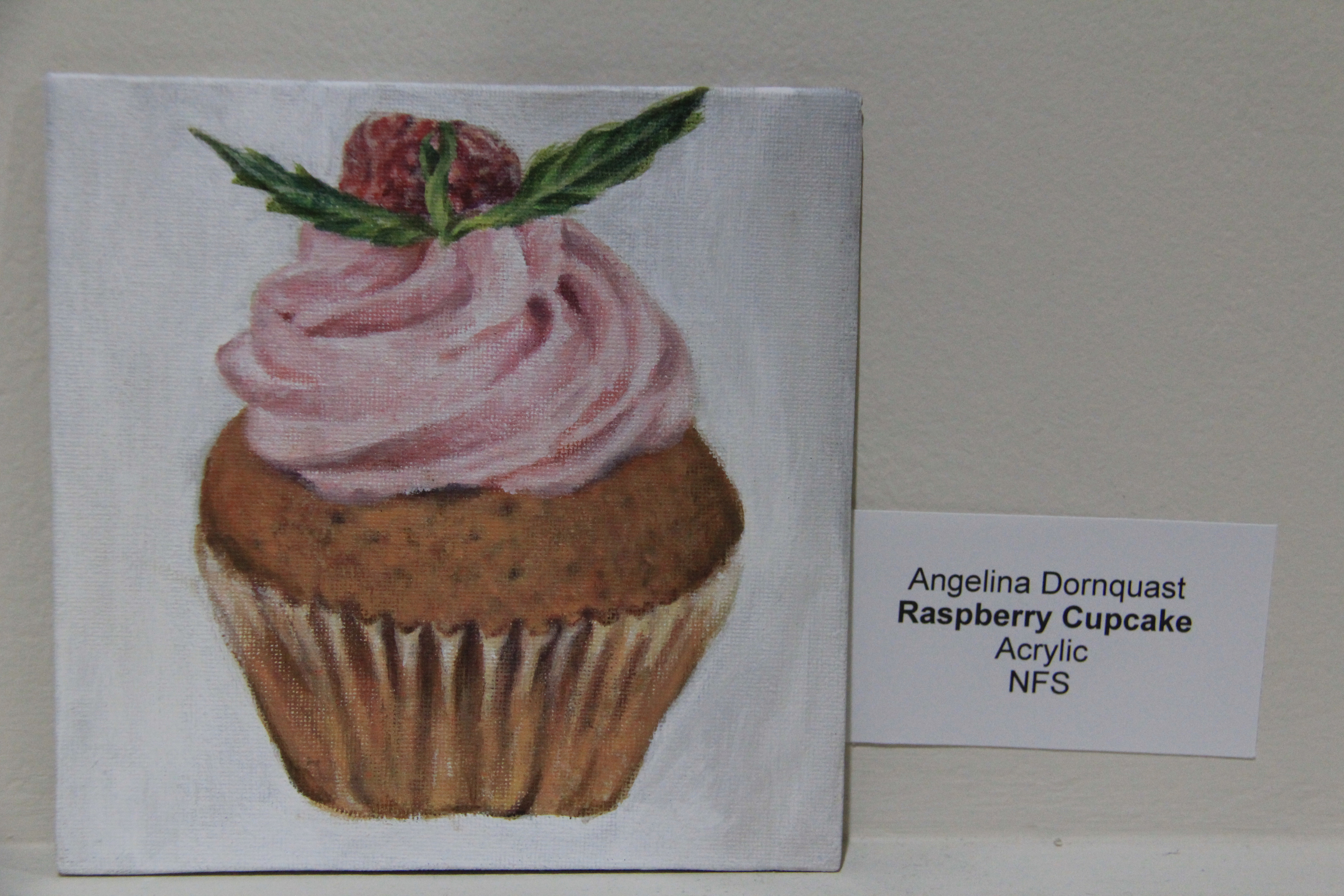
“Raspberry Cupcake,” an acrylic by Angelina Dornquast. (Minnesota Prairie Roots copyrighted photo October 2024)
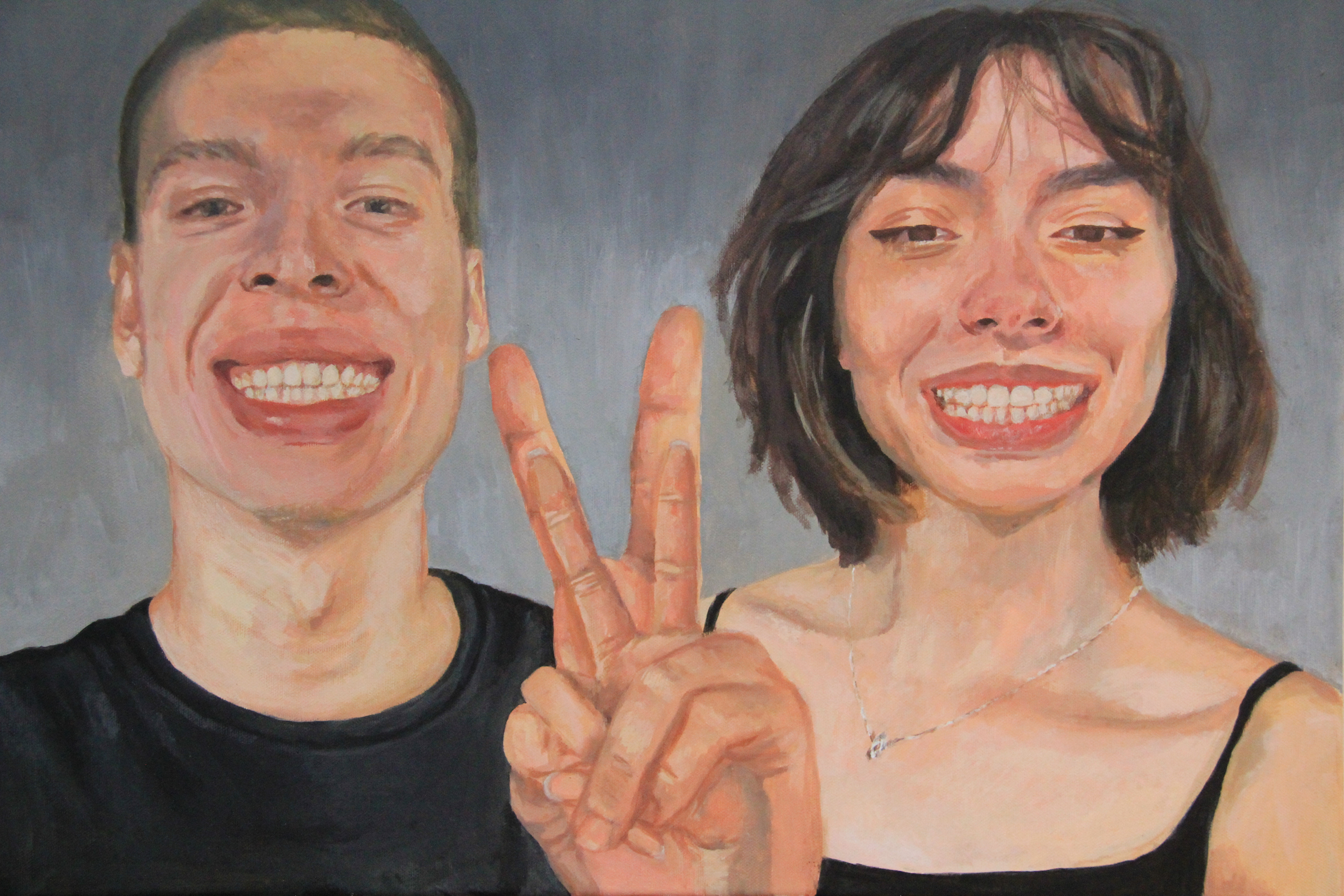
Angelina Dornquast’s acrylic, “Peace and Love.” (Minnesota Prairie Roots copyrighted photo October 2024)
From Caldwell’s exhibit, I turned the corner to look at the acrylic paintings of Angelina Dornquast, a recent Waterville-Elysian-Morristown High School graduate. To think that someone this young can be this talented in portraiture impresses me. I thought in my head, “Wow, this girl can paint!” Plus, I sensed the confidence this young artist has in herself and in her work. That shines.
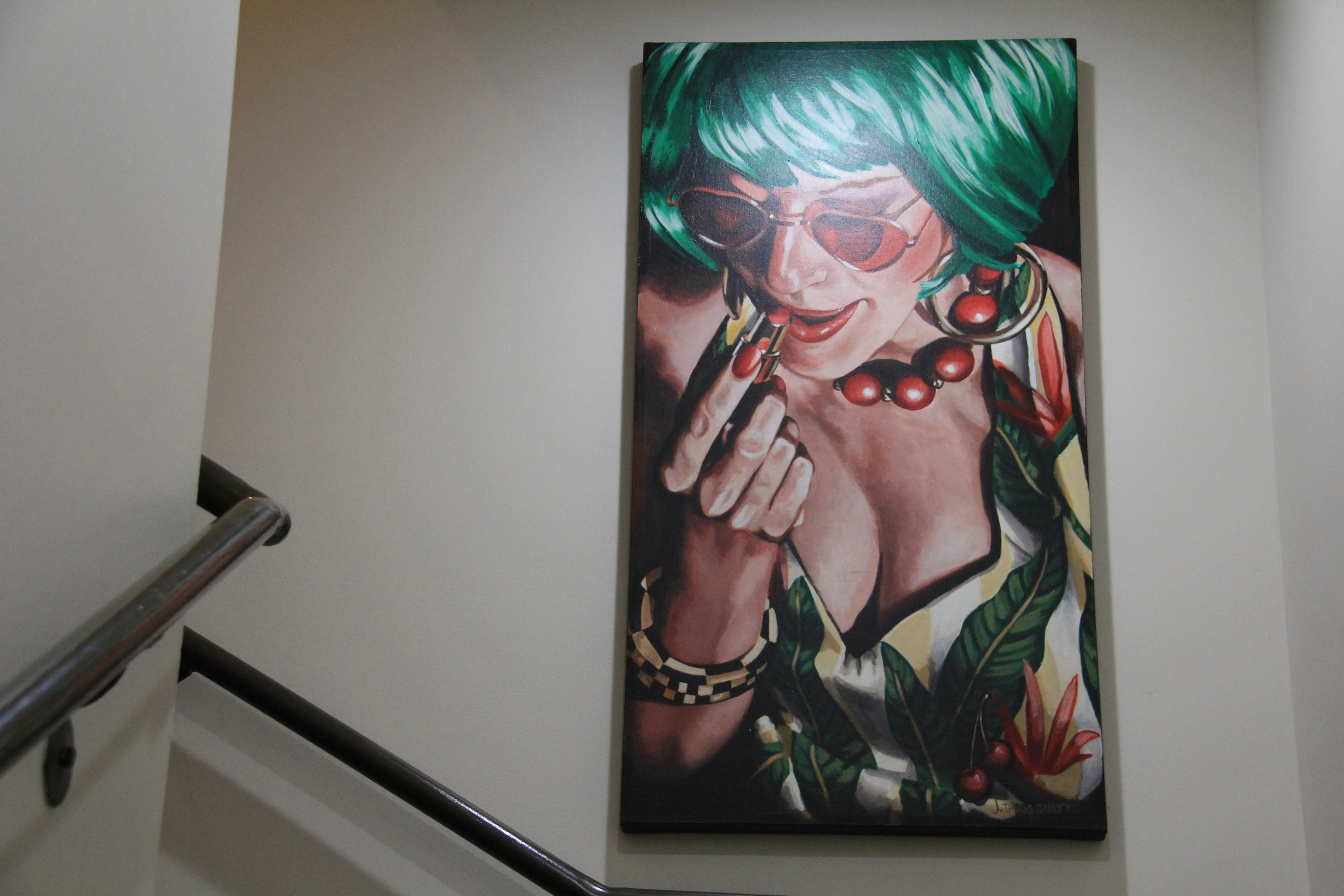
This portrait by Jaclyn Theiss Garlock is part of the Paradise’s permanent art collection. (Minnesota Prairie Roots copyrighted photo October 2024)
As I was about to head to the next gallery, Paradise Executive Director Julie Fakler pointed out an over-sized portrait of a glamorous woman on a stairway wall. The painting is the work of Jaclyn Theiss Garlock of Clear Lake, Iowa, and was a gift to the Paradise, part of its permanent art collection. The woman in the painting exudes strength, sass and attitude. I rather like her.
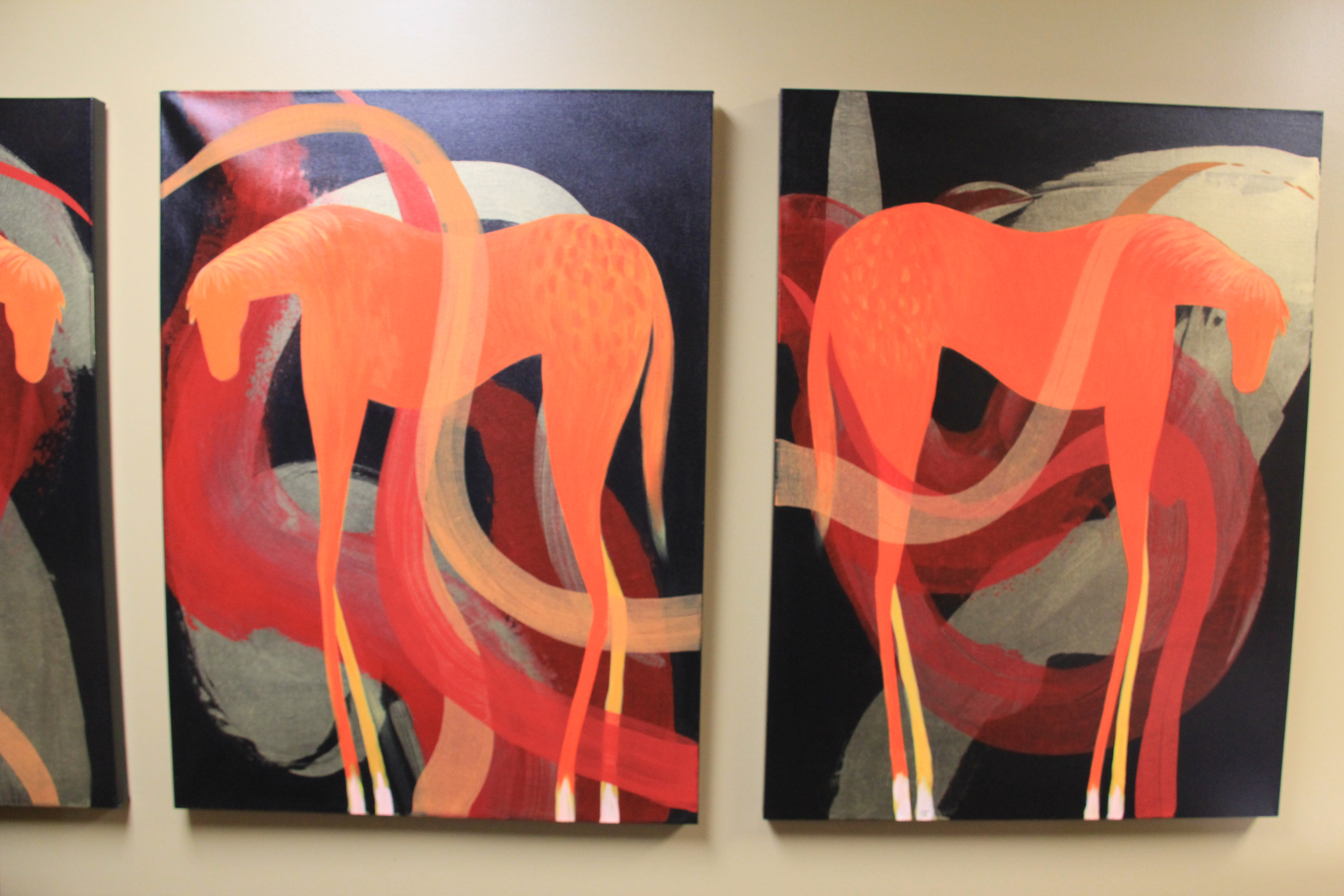
Two of the horses in Walter Salas-Humara’s trio of paintings which hang in an office at the Paradise. (Minnesota Prairie Roots copyrighted photo October 2024)
Inside Fakler’s office hangs more art in the permanent collection, including a trio of horses by Walter Salas-Humara of the musical group The Silos. The bold, long-legged horses are a signature subject and style of Salas-Humara. I enjoyed getting a peek at the permanent collection not typically seen by the public.
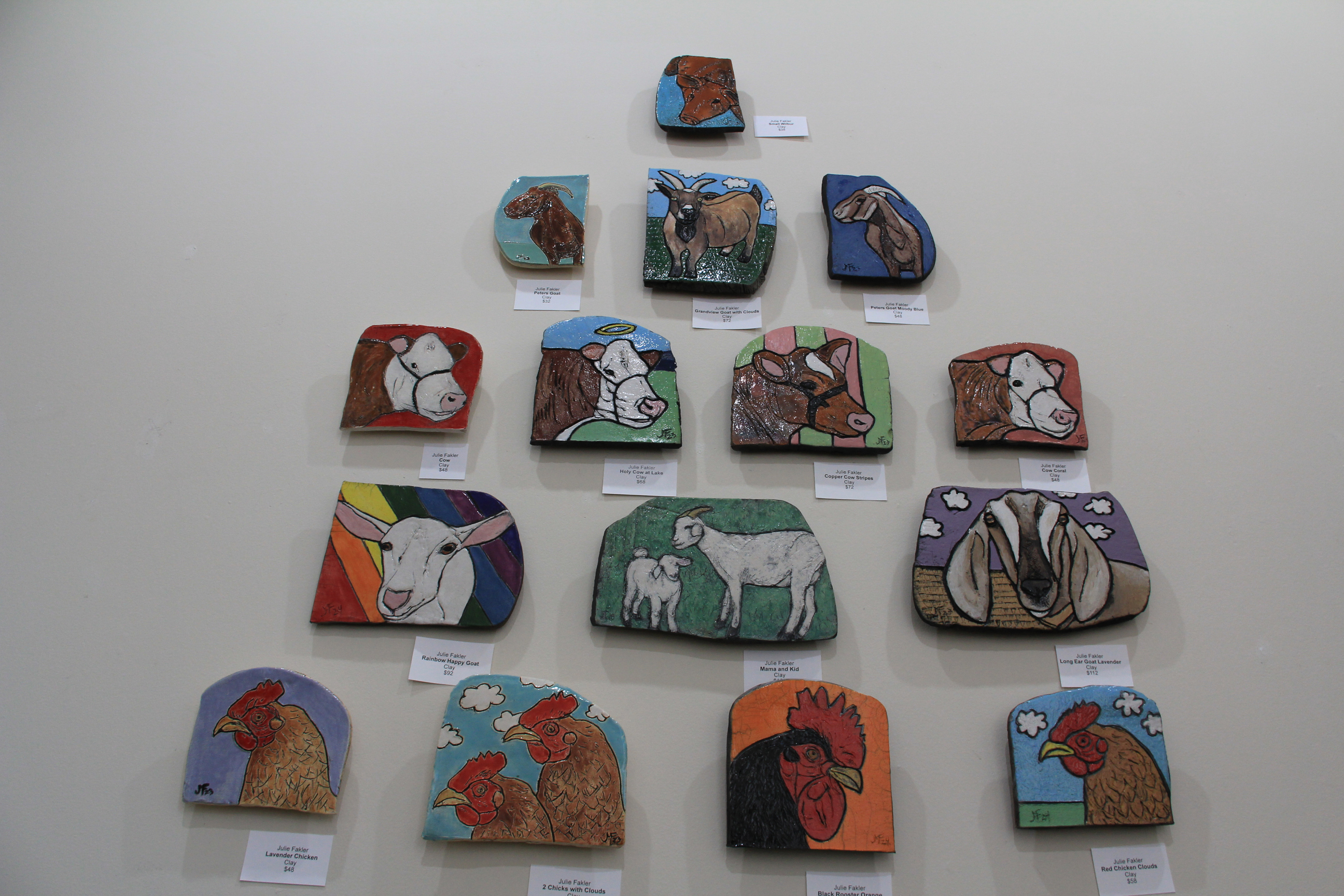
A grouping of animal portraits in clay by Julie Fakler. (Minnesota Prairie Roots copyrighted photo October 2024)
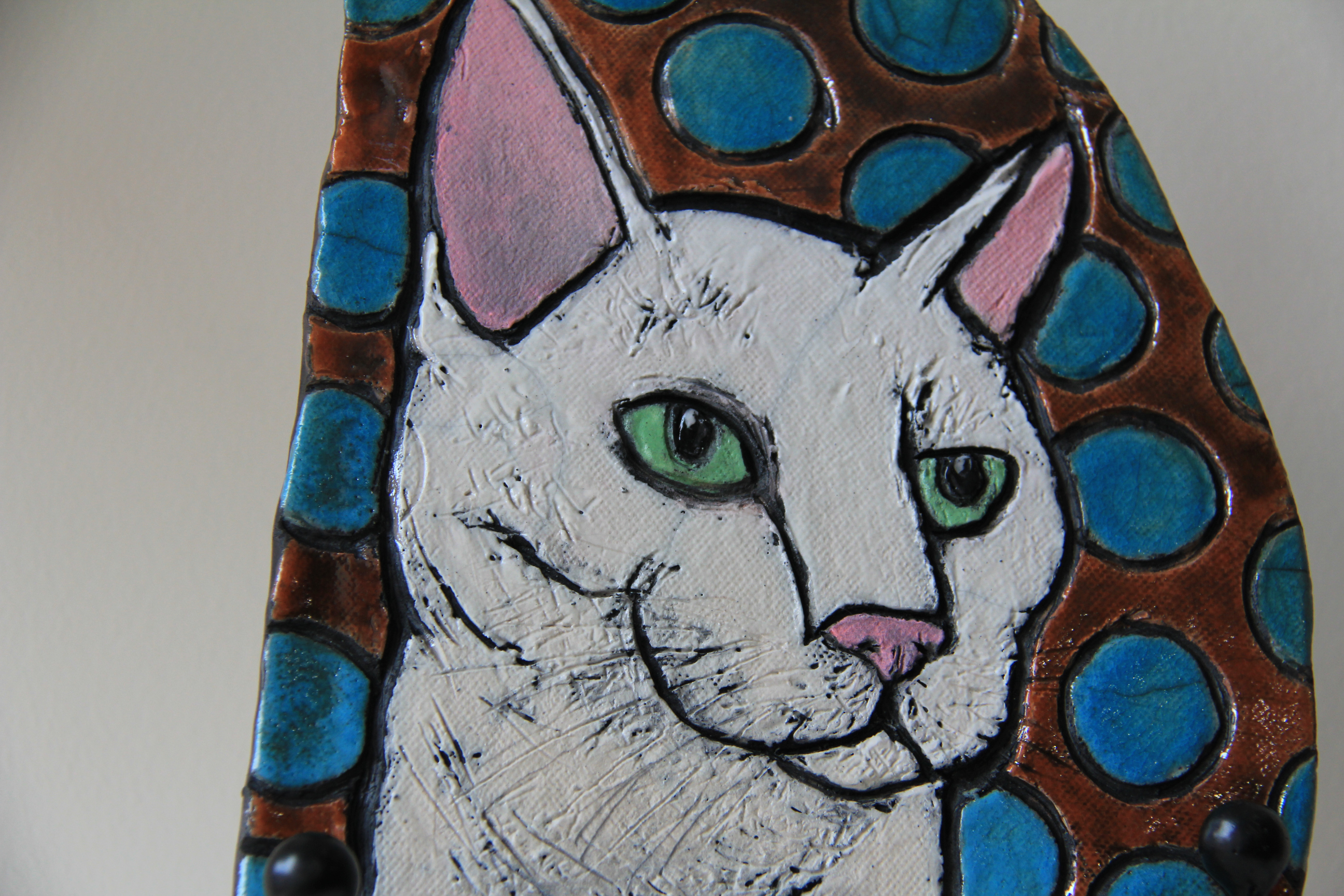
“Miro Turquoise Circles” created in clay by Julie Fakler. (Minnesota Prairie Roots copyrighted photo October 2024)
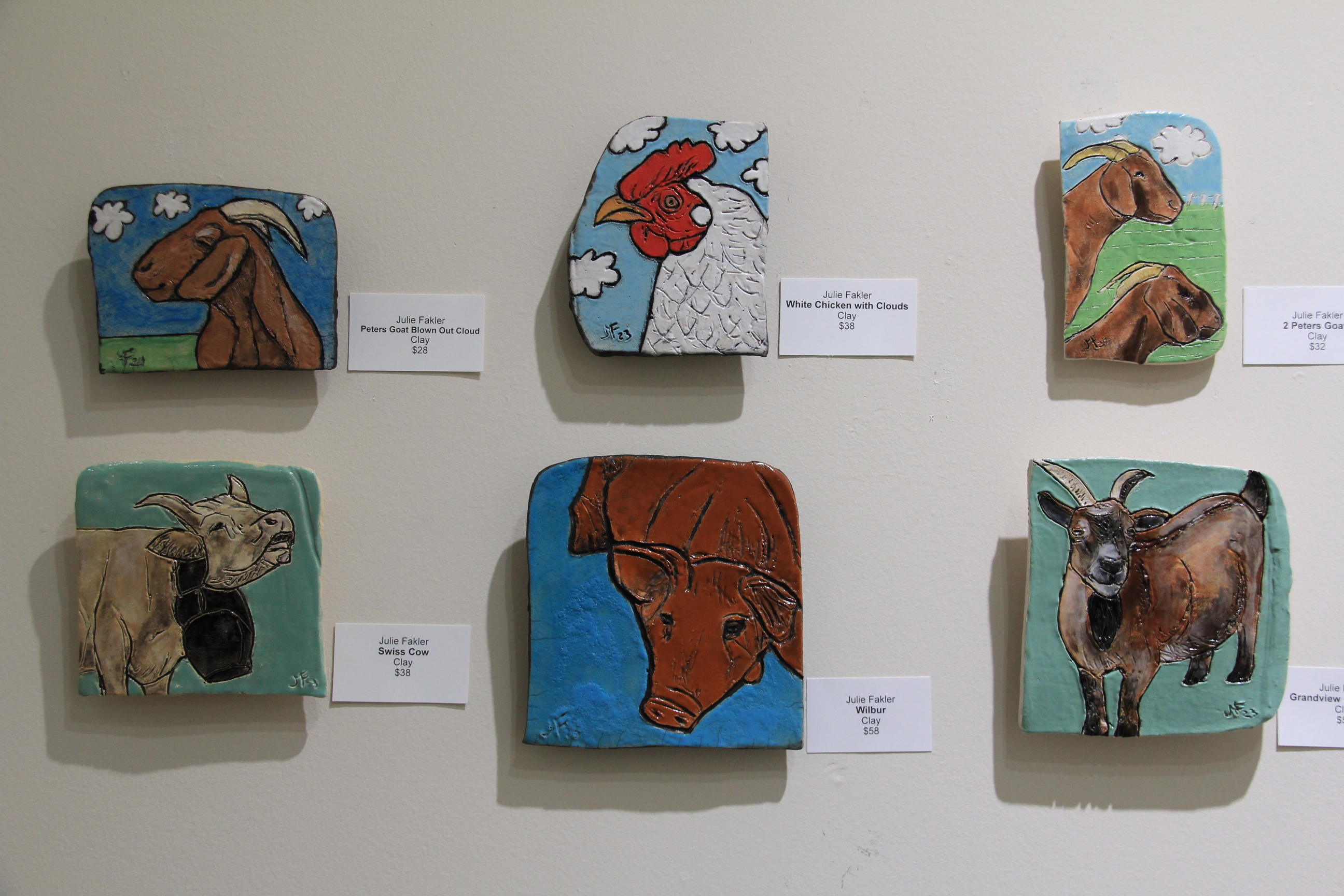
More animal portraits in clay created by Julie Fakler. (Minnesota Prairie Roots copyrighted photo October 2024)
Fakler is a gifted artist, too, not unexpected from someone who leads an arts center. She specializes in animal portraits done primarily in clay. I’d recognize Fakler’s dogs, cats, goats, chickens, cows, pigs anywhere. They are bold, with personality. I could easily envision them on tee shirts, tote bags, greeting cards. They are uncomplicated and folksy in a way that reconnects me to my farm upbringing. And they are currently on exhibit in another Paradise gallery along with the work of those in a creative aging class.
There’s so much to see, experience and feel when viewing all of this art inside the Paradise galleries. Current art will be up until November 16, after which the works of more creatives will go on display beginning November 18. To have access to all this art in my community sparks gratitude within me. I had only minimal access to the arts as a child. Now I see, and experience, the arts often, much to my delight.
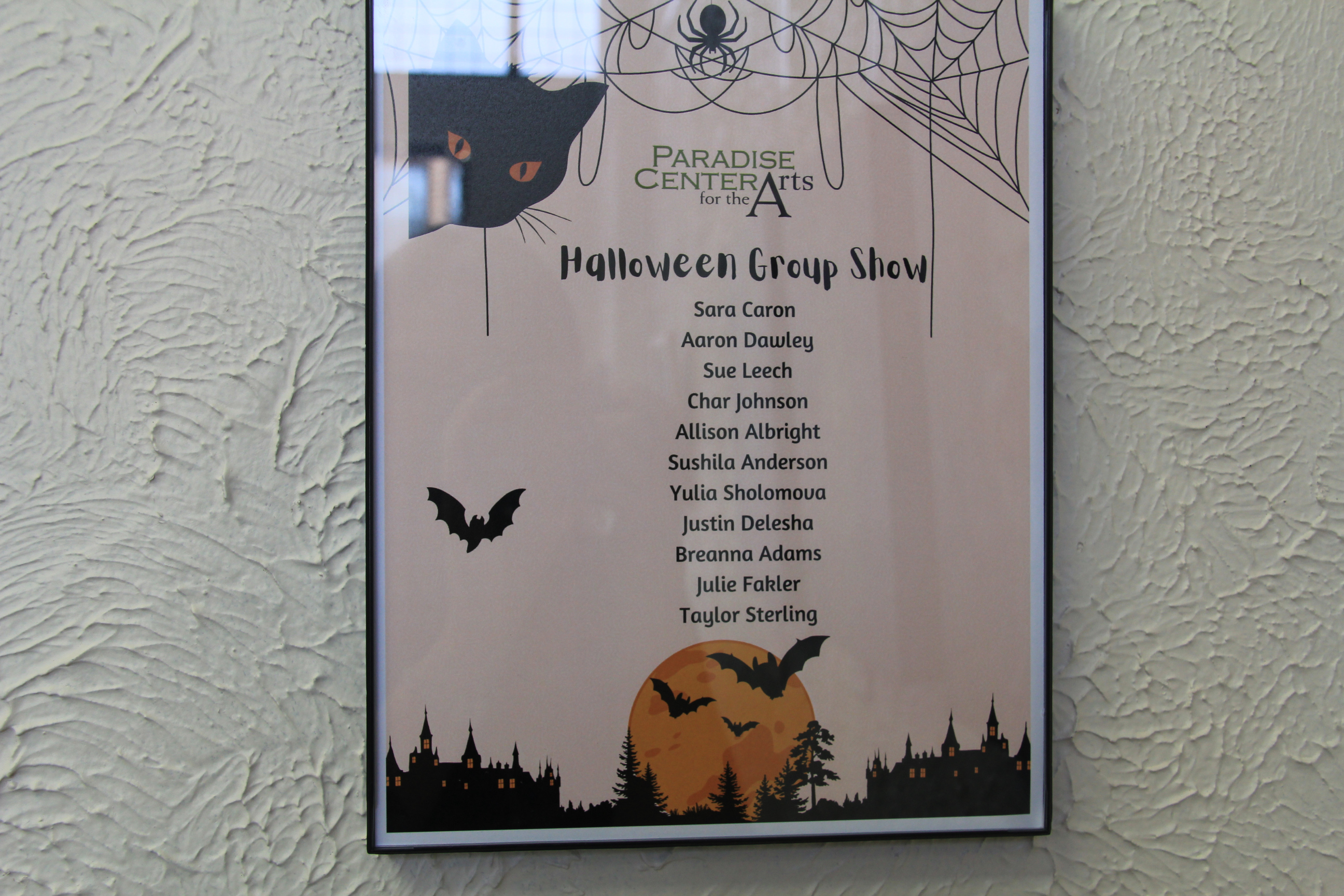
A list of the Halloween Group Show artists hangs in the gallery. (Minnesota Prairie Roots copyrighted photo October 2024)
Eleven artists participated in the Halloween Group Show. This collection shows how these creatives took a theme and created a diversity of art with mixed media, stained glass, acrylic, intagio, clay… The results are as varied as Halloween costumes. And I loved it, even if a bit creeped out by some of the artwork.
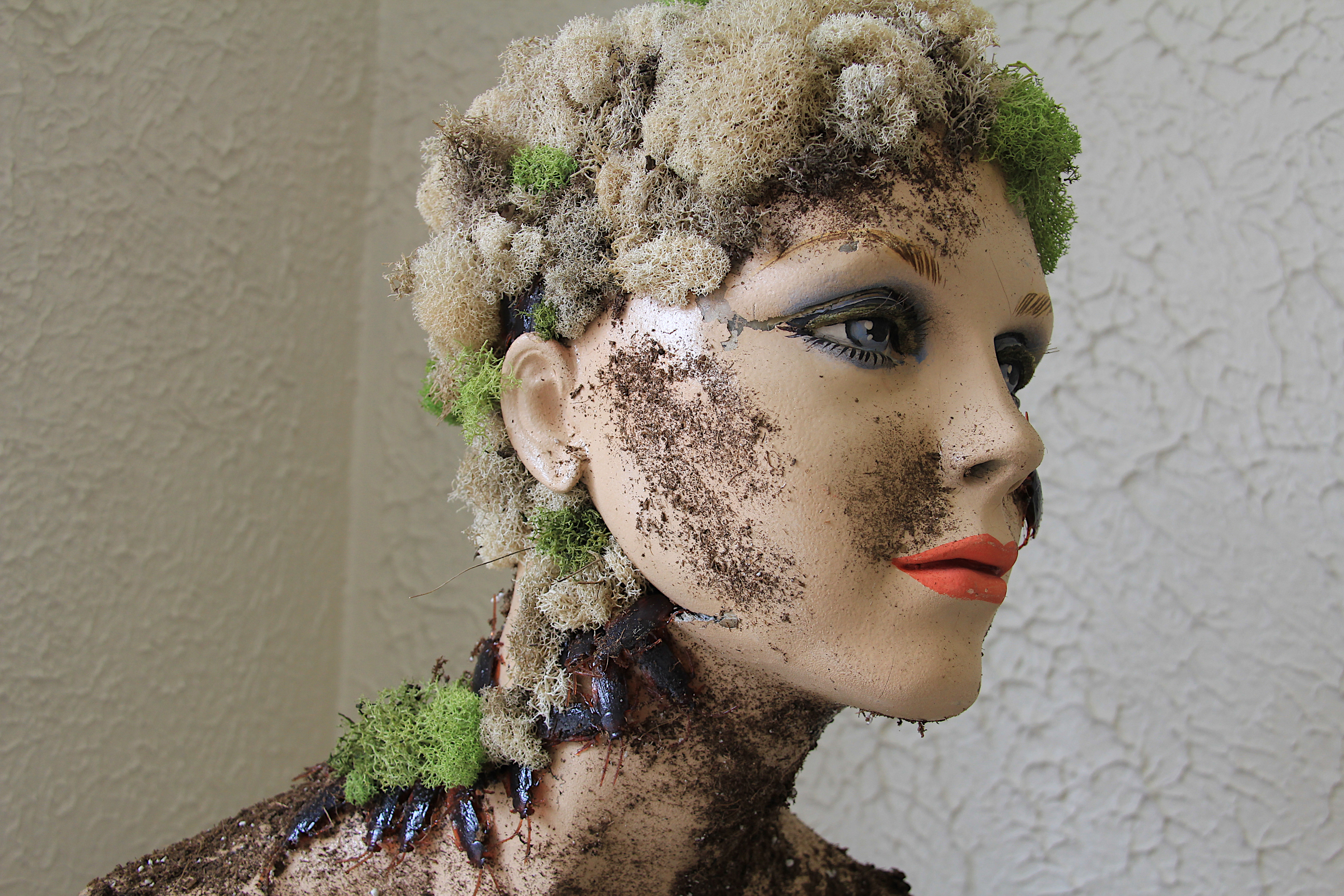
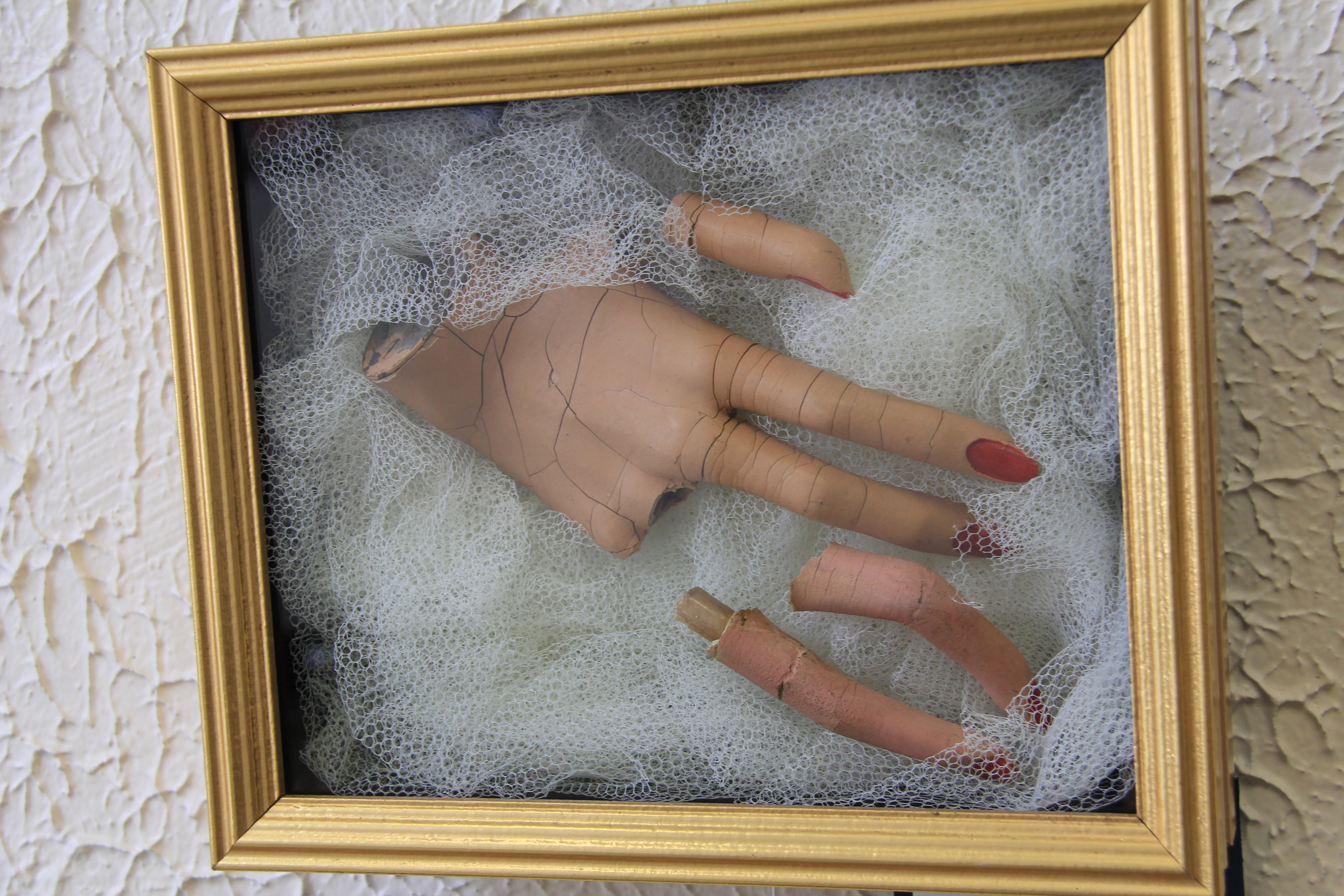
“Hand of the Beholder” by Sara Caron. (Minnesota Prairie Roots copyrighted photo October 2024)
Take Sara Caron’s “Roach Motel” mixed media piece featuring a flower-potted mannequin crawling with roaches. Or her “Hand of the Beholder” broken fingers on a hand nestled in netting, presumably a bridal veil. There’s definitely some underlying meaning going on here as implied by the title.
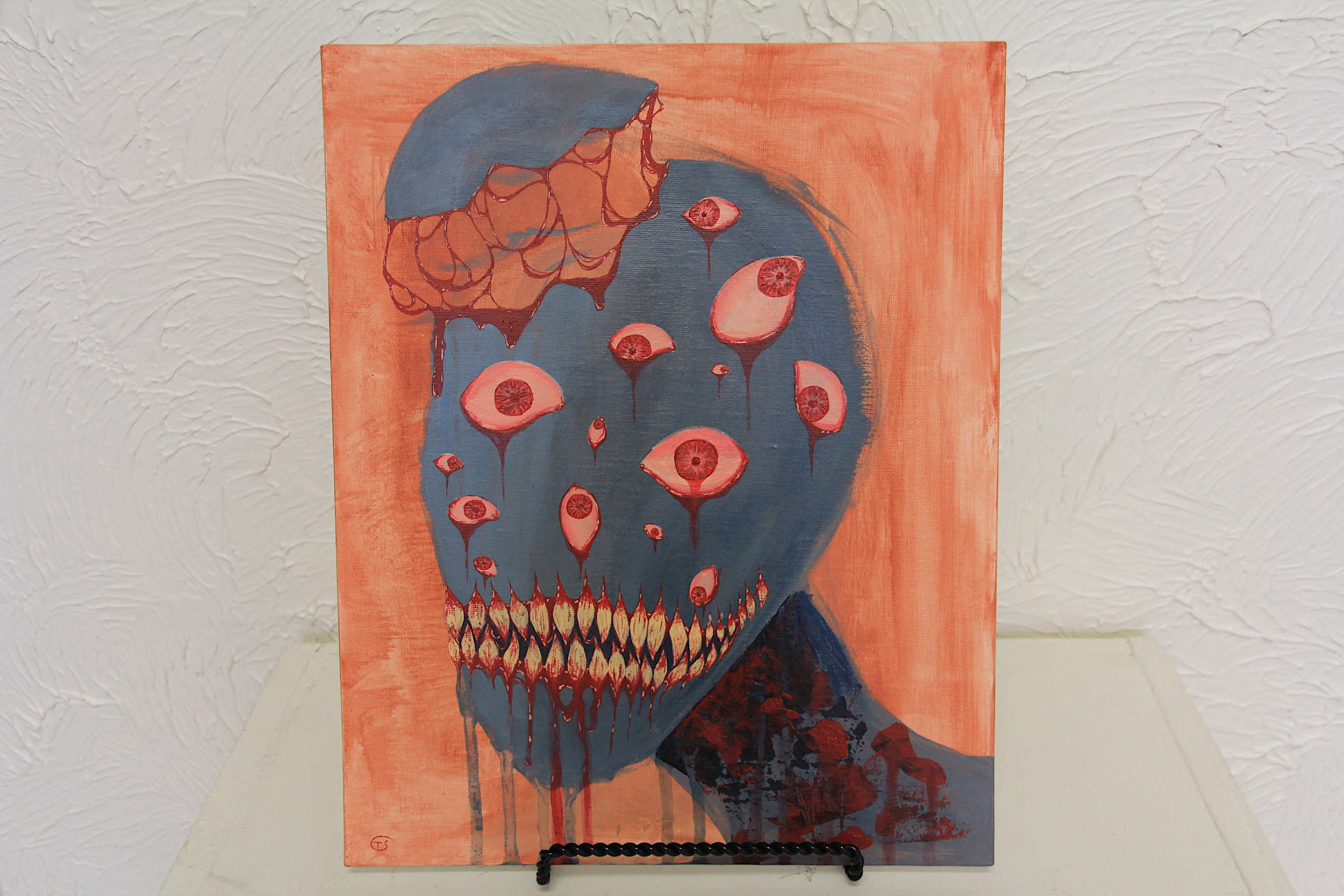
“Smile” by Taylor Sterling. (Minnesota Prairie Roots copyrighted photo October 2024)
Taylor Sterling’s blood-dripping, eye-popping, cracked skull acrylic painting titled “Smile” also taps into Halloween’s ghoulish side.
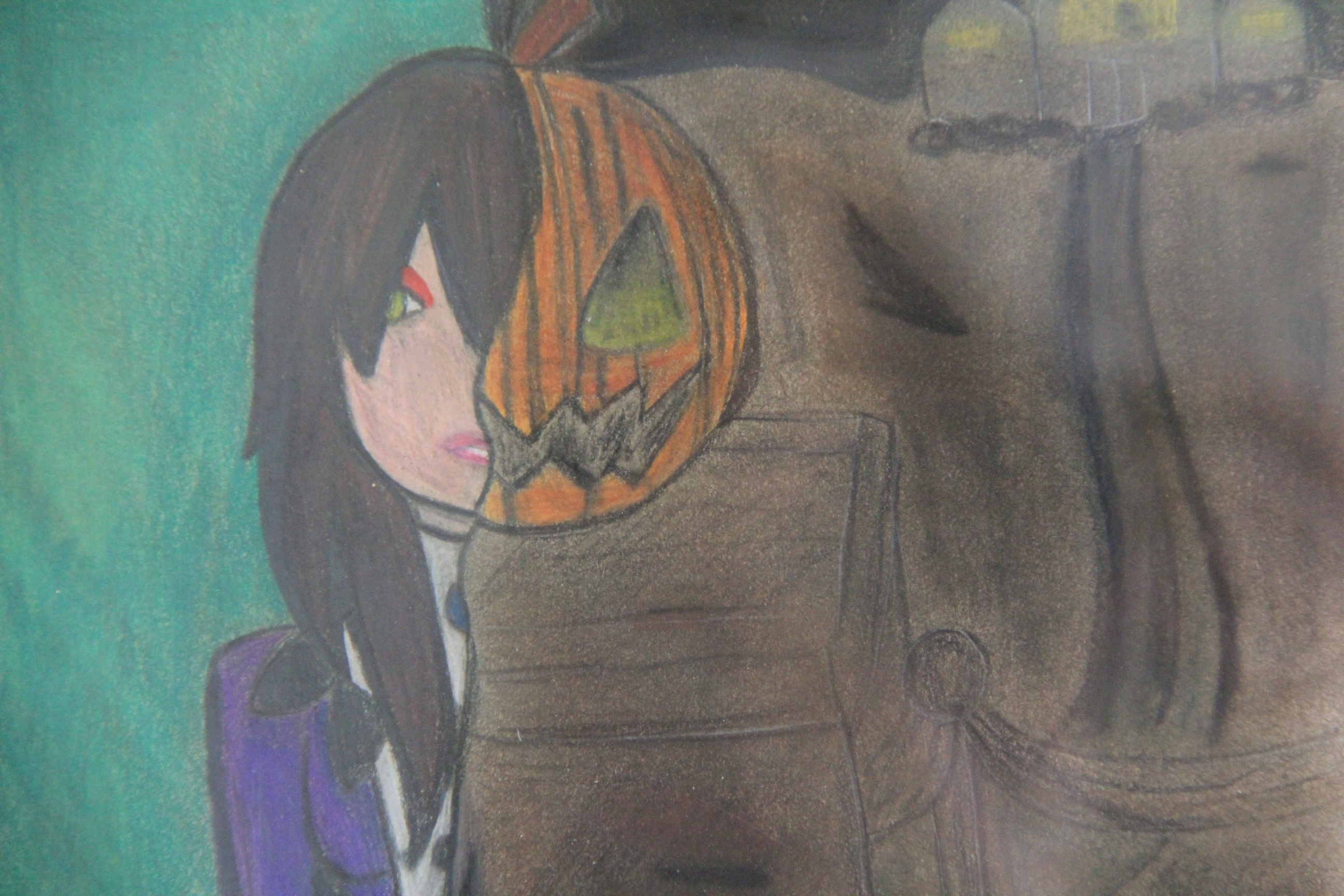
This shows a portion of Breanna Adams’ piece, “Lady Dina and Dark Horse.” (Minnesota Prairie Roots copyrighted photo October 2024)
Likewise Breanna Adams’ “Lady Dina and Dark Horse” reminded me of an unnerving performer I saw on the television show “America’s Got Talent.” Not that the AGT contestant was half pumpkin-head like Adams’ girl whose face is mostly veiled by long, dark hair. But that’s where my mind went…back to AGT. The uneasiness I felt then and in viewing the “Lady Dina” painting were the same.
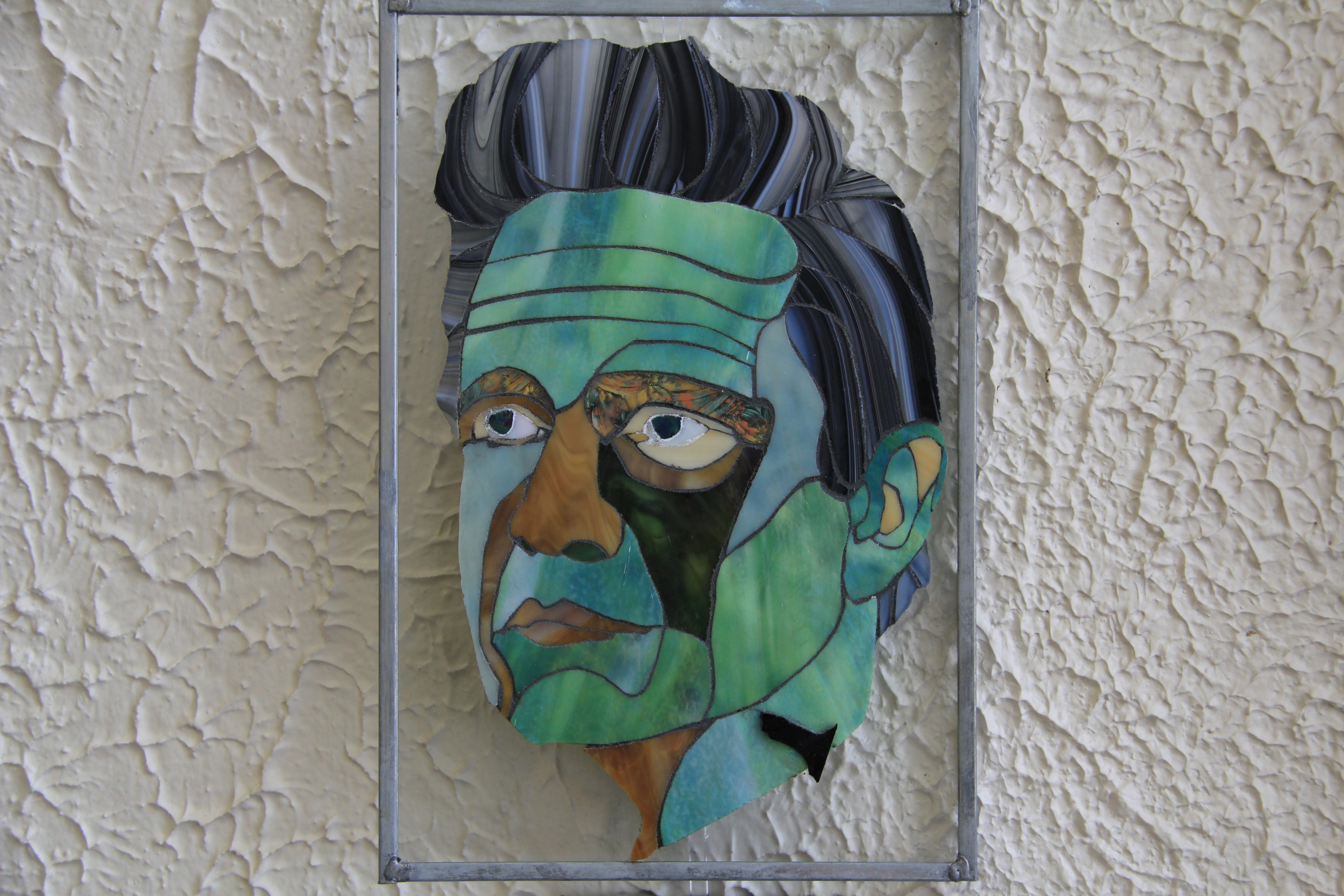
“Johnny Cash as Frankenstein,” a stained glass mosaic by Sushila Anderson. (Minnesota Prairie Roots copyrighted photo October 2024)
How we see and react to art is part of the artistic experience. Only the artist truly knows why they created what they did, how they did. As a writer, I was recently asked about the ending of a short story, an award-winning dark piece I wrote within the constraints of word count limits. It intentionally leaves the reader hanging. I couldn’t tell my sister-in-law how “Dear Mother” ends, because even I don’t know. Sometimes creativity simply flows without understanding of its root source or conclusion. I expect that can apply to both literary and visual art.
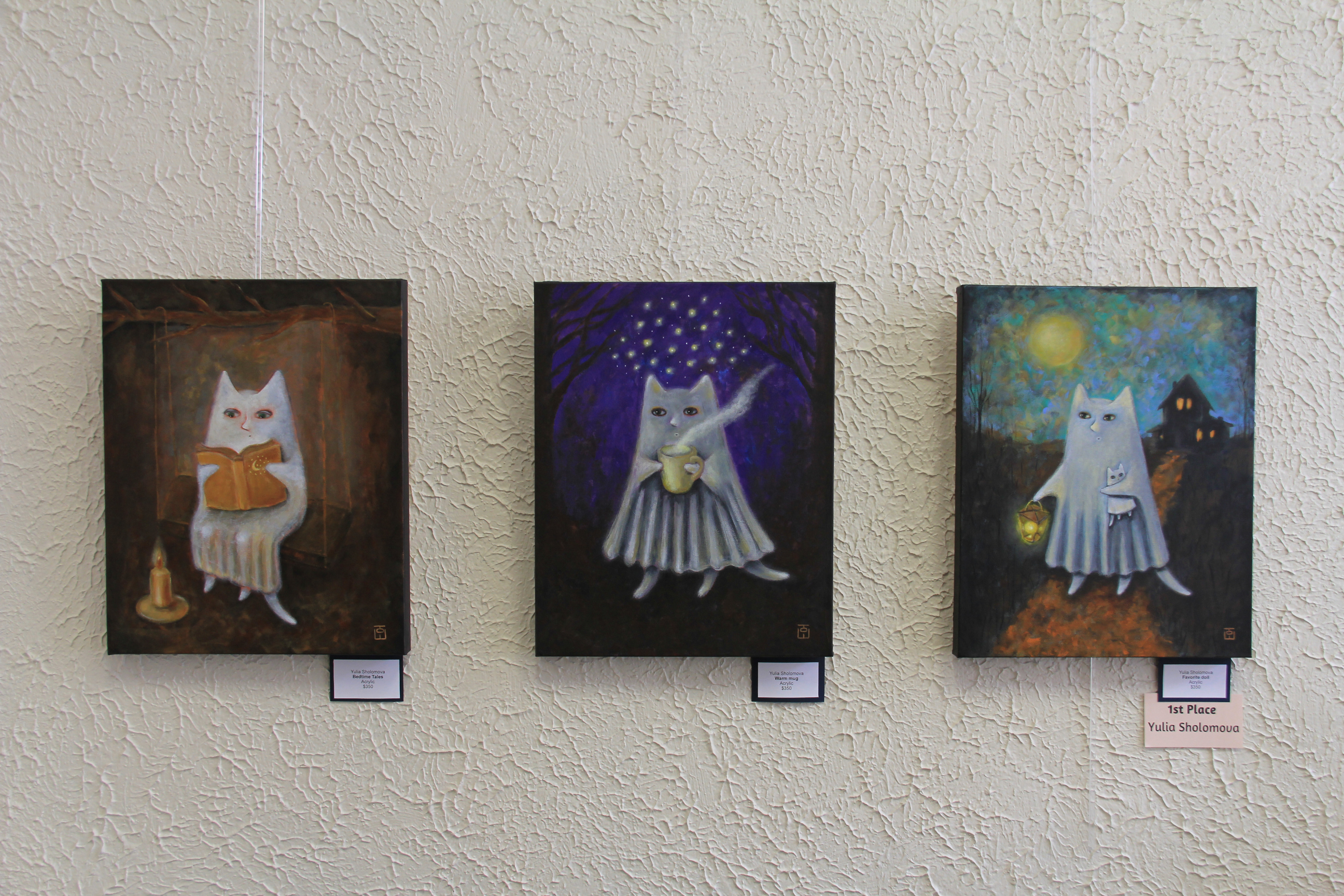
Yulia Sholomova’s trio of costumed kitty paintings titled, left to right, “Bedtime Tales,” “Warm mug,” and “Favorite Doll.” (Minnesota Prairie Roots copyrighted photo October 2024)
Or maybe the 11 artists featured in the Paradise Halloween show can tell you exactly what inspired them. Perhaps memories of trick-or-treating or fears or going through a haunted house or a long ago Halloween costume party.
Three top honors were given in the exhibit as judged by artist Tami Resler. (Minnesota Prairie Roots copyrighted photo October 2024)
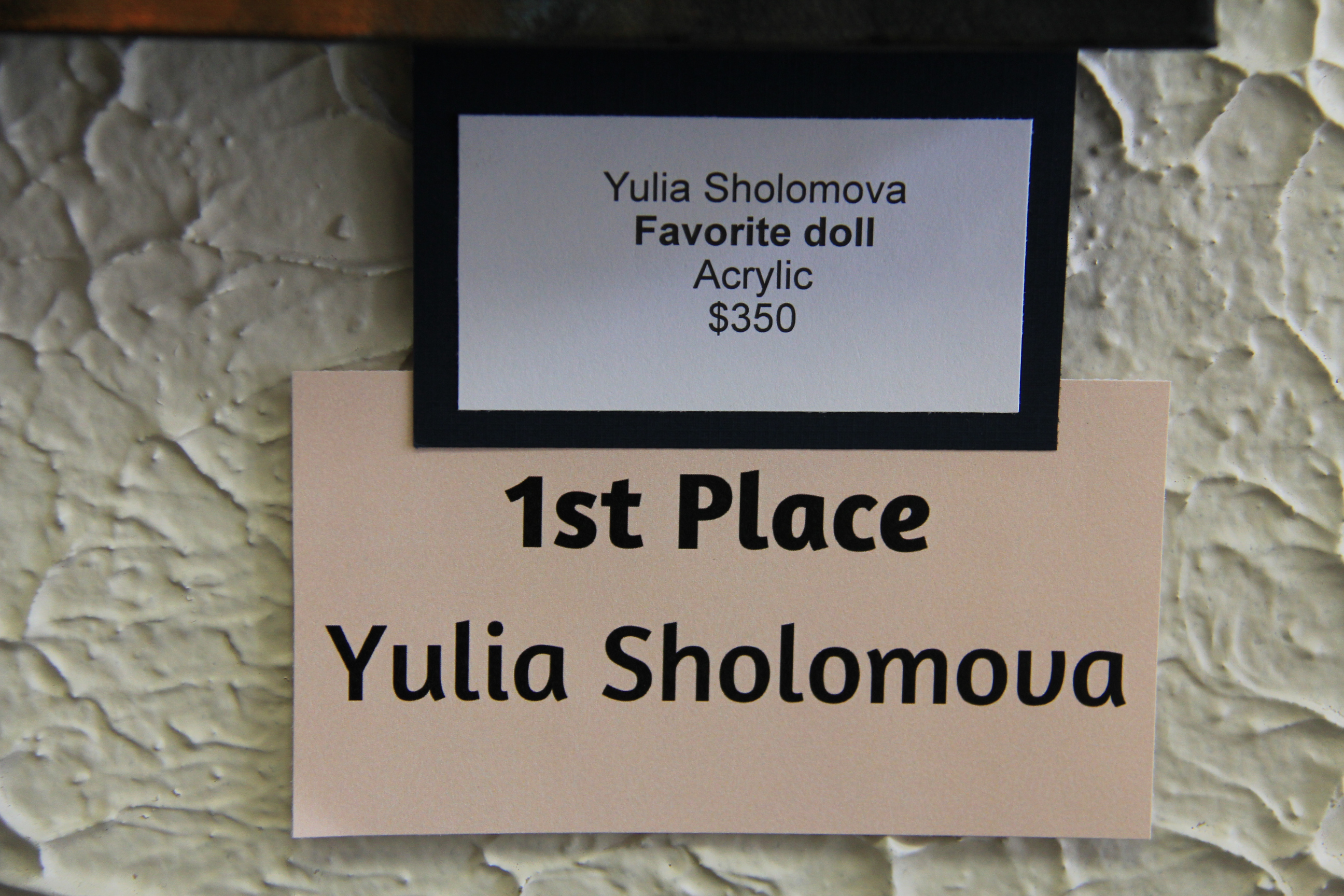
Yulia Sholomova’s trio of costumed sweet ghost kitties done in acrylics certainly lends itself to warm, cozy feelings. Her “Favorite Doll” painting earned first place in the group show. Sushila Anderson got second place for her “Johnny Cash as Frankenstein” stained glass mosaic. And Caron earned third place for that bug-infested mannequin.
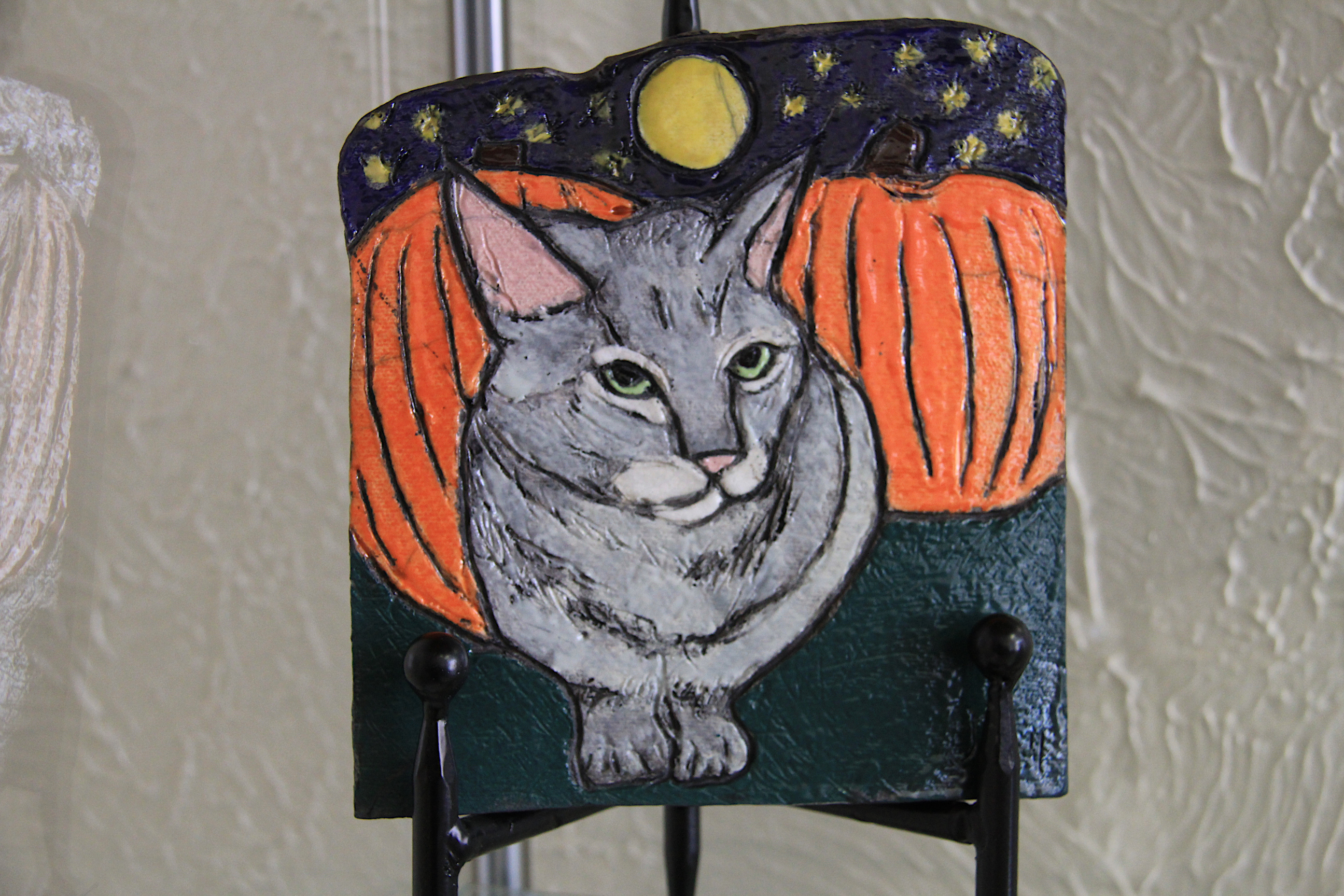
“Cat with Pumpkins 1” by Julie Fakler. (Minnesota Prairie Roots copyrighted photo October 2024)
Julie Fakler, who creates animal portraits and is the executive director of the Paradise, brings her talent to the show in clay, including the cutest cat nestled between pumpkins.
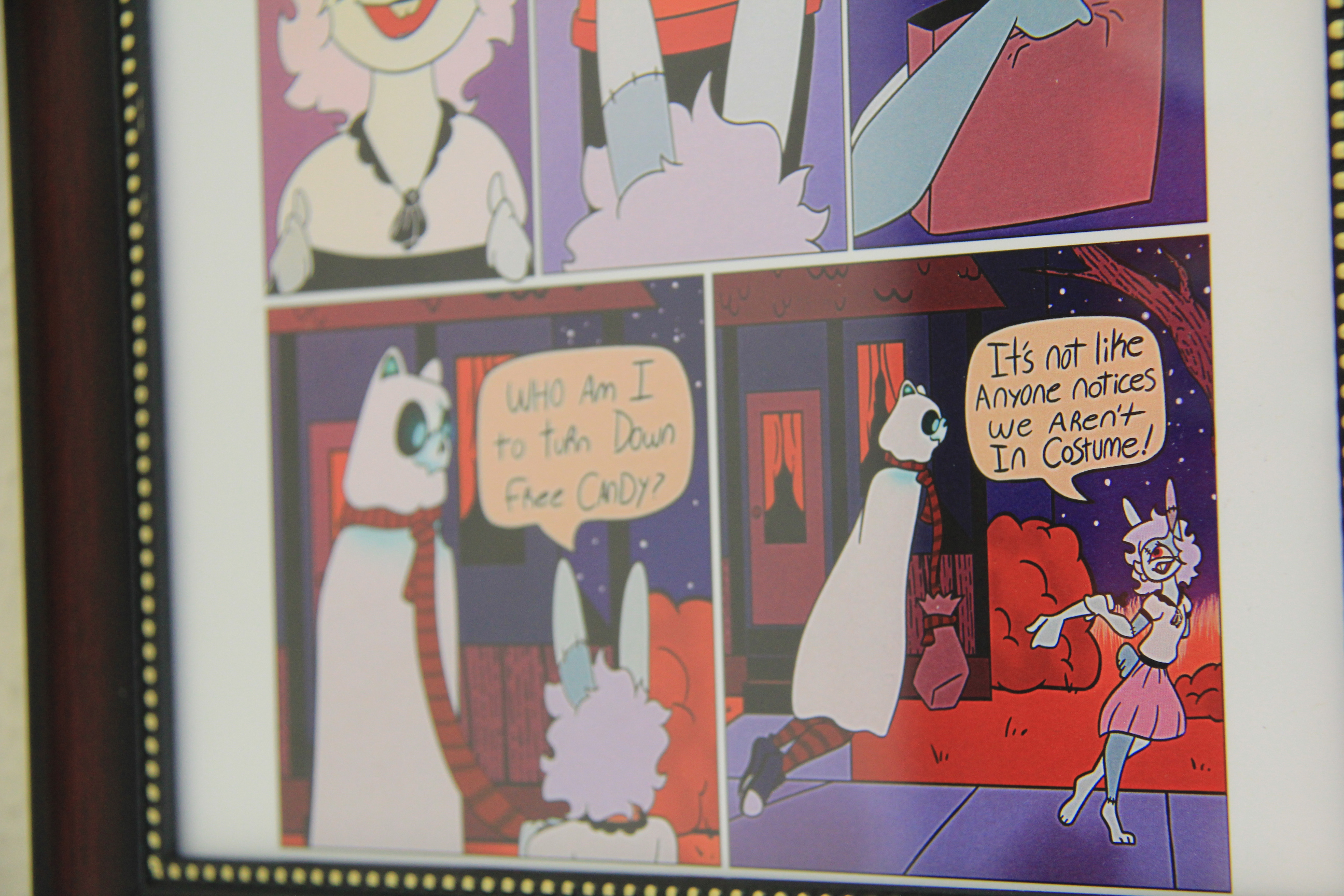
This shows a section of Aaron Dawley’s “Trick or Treat” artwork. (Minnesota Prairie Roots copyrighted photo October 2024)
There are many other pieces to be seen and appreciated, including art by Alison Albright, Aaron Dawley, Justin Delesha, Char Johnson and Sue Leech. It’s a real treat to view this Halloween Group Show, which runs until November 16.
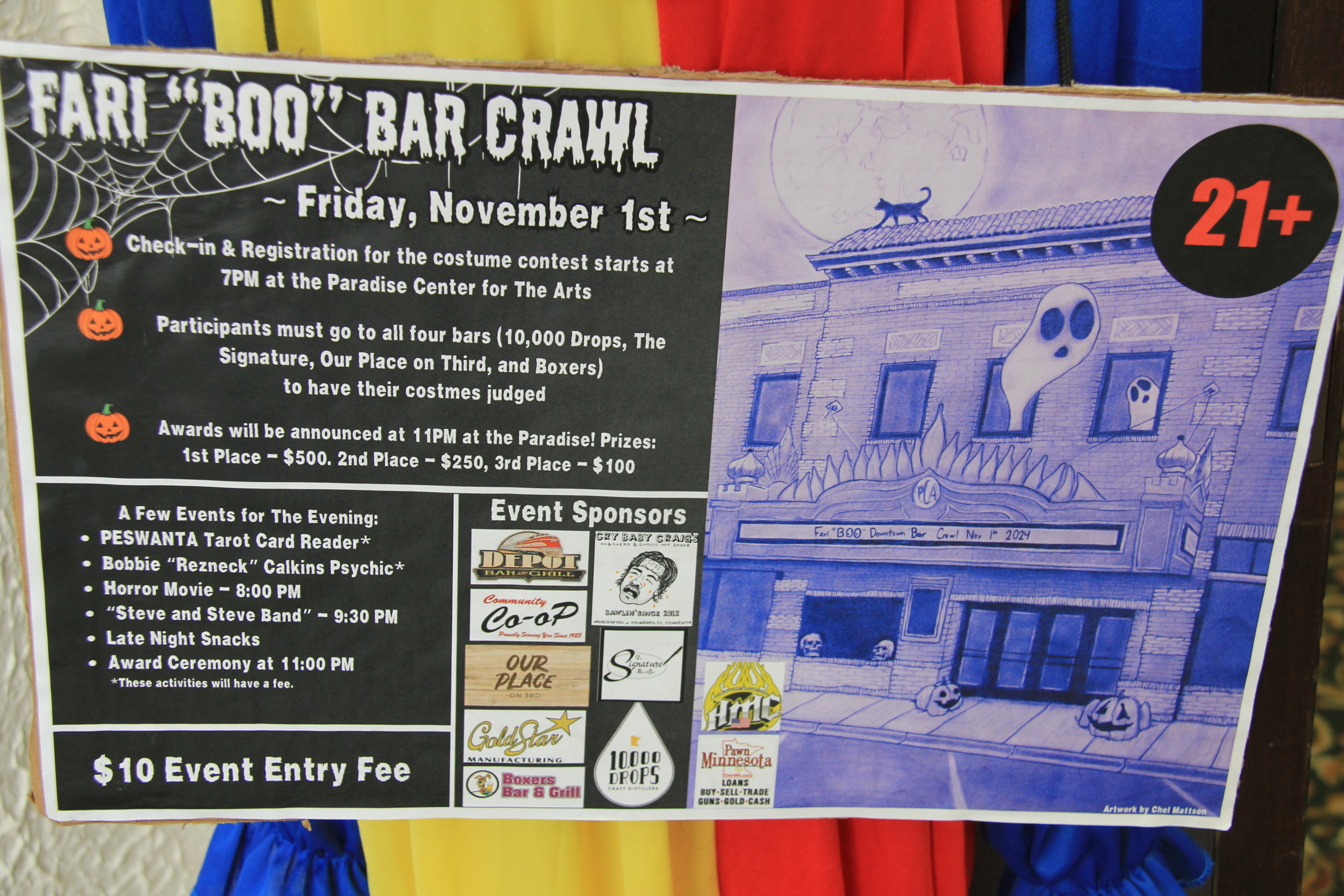
Just inside the gallery door, a creepy clown holds this sign promoting the Halloween bar crawl. Chel Mattson created the poster art. (Minnesota Prairie Roots copyrighted photo October 2024)
FYI: The Paradise Center for the Arts is hosting a Fari “Boo” Bar Crawl fundraiser from 7-11 pm Friday, November 1, at the center and at four downtown Faribault bars. The event includes a costume contest, optional tarot card and psychic readings (for an additional fee), a horror movie, music, snacks and costume awards ceremony. For details, click here.
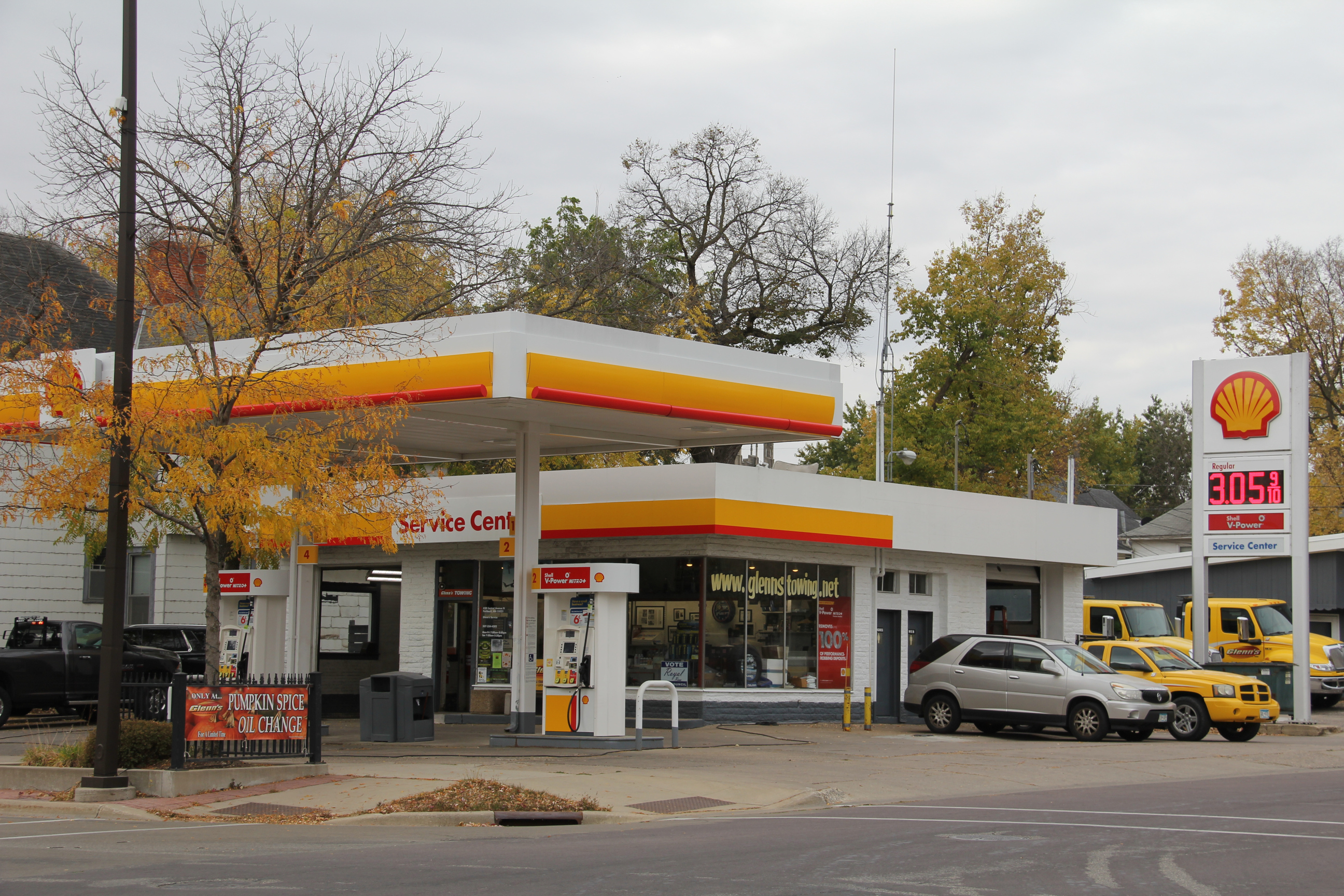
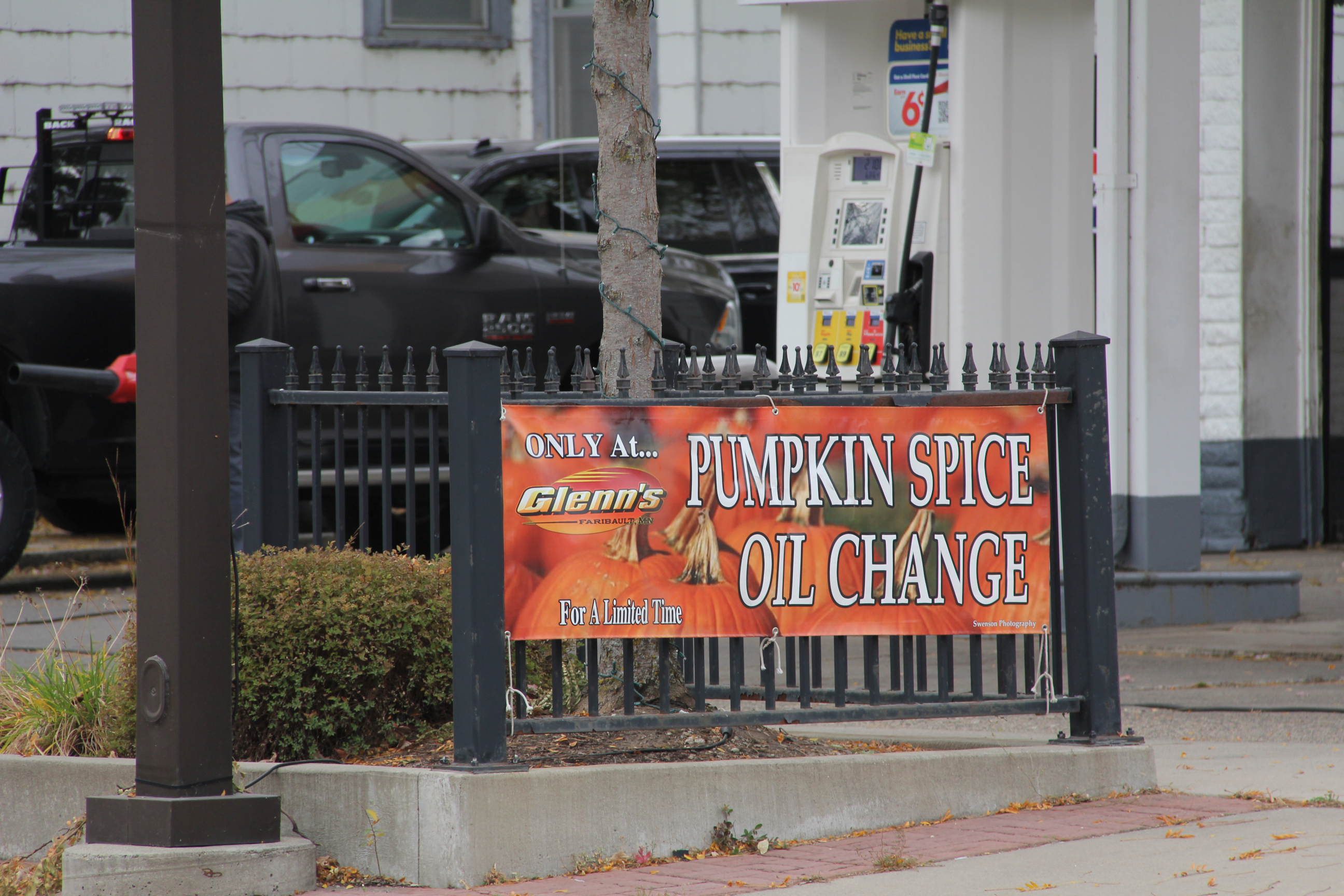
A pumpkin spice sign, far left, banners a fence at Glenn’s on the corner of Central Avenue and Seventh Street NW in Faribault. (Minnesota Prairie Roots copyrighted photo October 2024)
ONLY At…Glenn’s For A Limited Time. PUMPKIN SPICE OIL CHANGE.
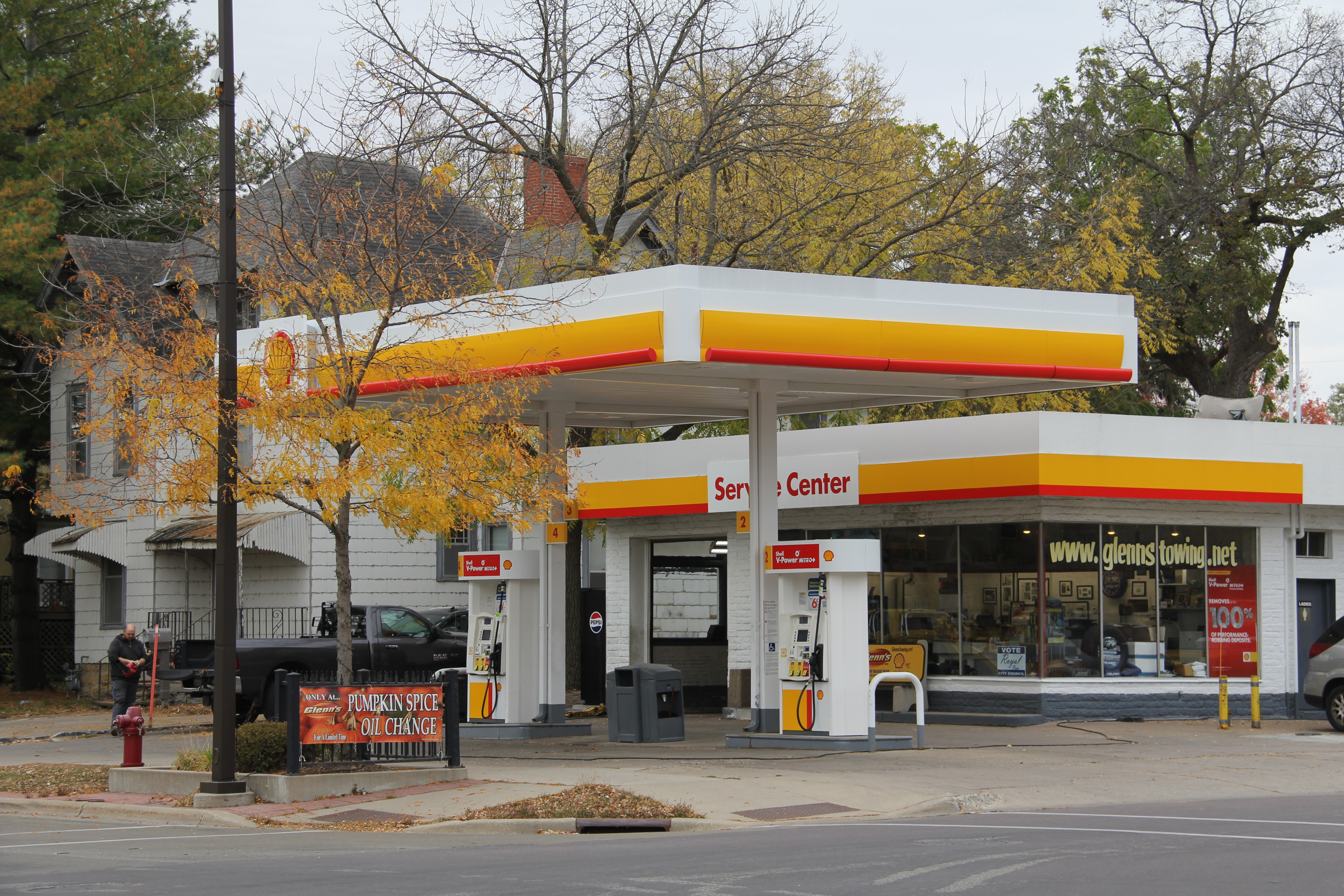
That message bannering a corner fence at Glenn’s Service, a full service auto repair shop, gas station and towing service, 628 Central Avenue North, Faribault, certainly grabbed my attention. Not that I needed an oil change given my sort-of-retired automotive machinist husband services our vans. But, I wondered, what exactly is a PUMPKIN SPICE OIL CHANGE?
The sign led me to call Glenn’s and ask about that oil change. (Minnesota Prairie Roots copyrighted photo October 2024)
So I called Glenn’s, expecting to learn that oil change customers will be treated to a pumpkin spice latte. Not that I’ve ever had a latte. I haven’t. I brew my own plain black decaff coffee at home in my mini coffee pot. Nothing fancy for this girl, although I wouldn’t mind trying a fancy coffee drink.
The guy who answered the phone—the guy who isn’t Glenn, because Glenn passed away years ago—told me the whole PUMPKIN SPICE OIL CHANGE offer is a joke. Oh, so there’s no free pumpkin spice latte with an oil change? Nope. I didn’t ask for a detailed explanation because I know service stations are often busy places and I didn’t need to take anymore of this guy’s time. But he did volunteer that a customer had the sign made for the shop a few years back.
Glenn Rasmussen opened the business at this location in 1937. In 2010, Glenn’s son Donny sold the business to the Bock family, dad Bruce and his son, Steve. (Minnesota Prairie Roots copyrighted photo October 2024)
I can only imagine mechanics and customers joking about pumpkin spice this and pumpkin spice that. And then coming up with that PUMPKIN SPICE OIL CHANGE idea and someone ordering a banner and the guys hanging the sign, laughing the entire time.
It’s clever marketing, for sure. Humor works in marketing as does a message that elicits interest. That banner at Glenn’s has likely been the source of more than one entertaining story between oil changes, car repairs, tows…during this season of all things pumpkin spice.














 Minnesota Prairie Roots
Recent Comments