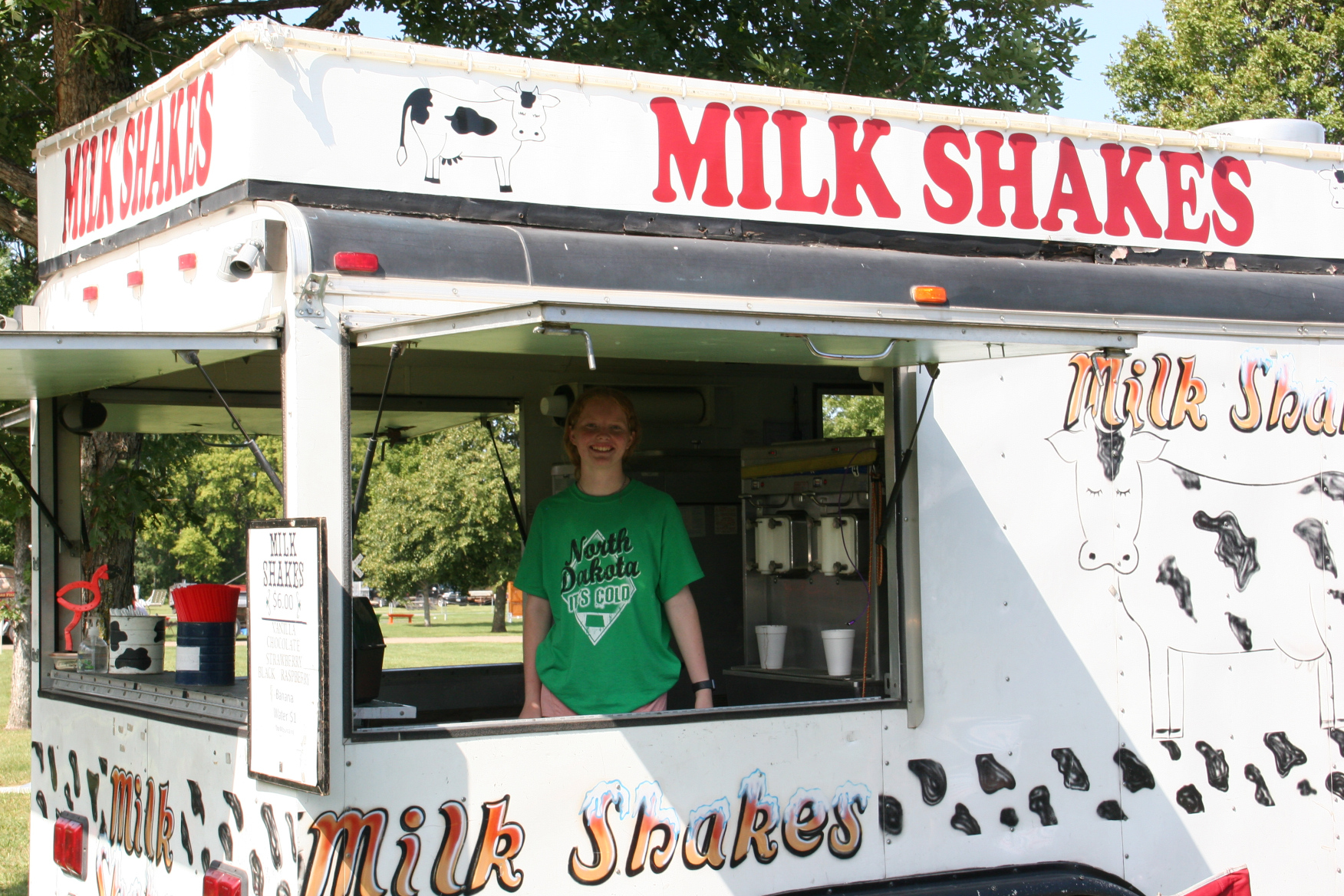
The Milk Shakes booth has a decidedly rural theme with Holstein cow art. (Minnesota Prairie Roots copyrighted photo September 2022)
AS A WRITER AND PHOTOGRAPHER, I view life through a creative lens. That means, even at a farm-themed event like the Rice County Steam and Gas Engines Show, I notice the artsy side.
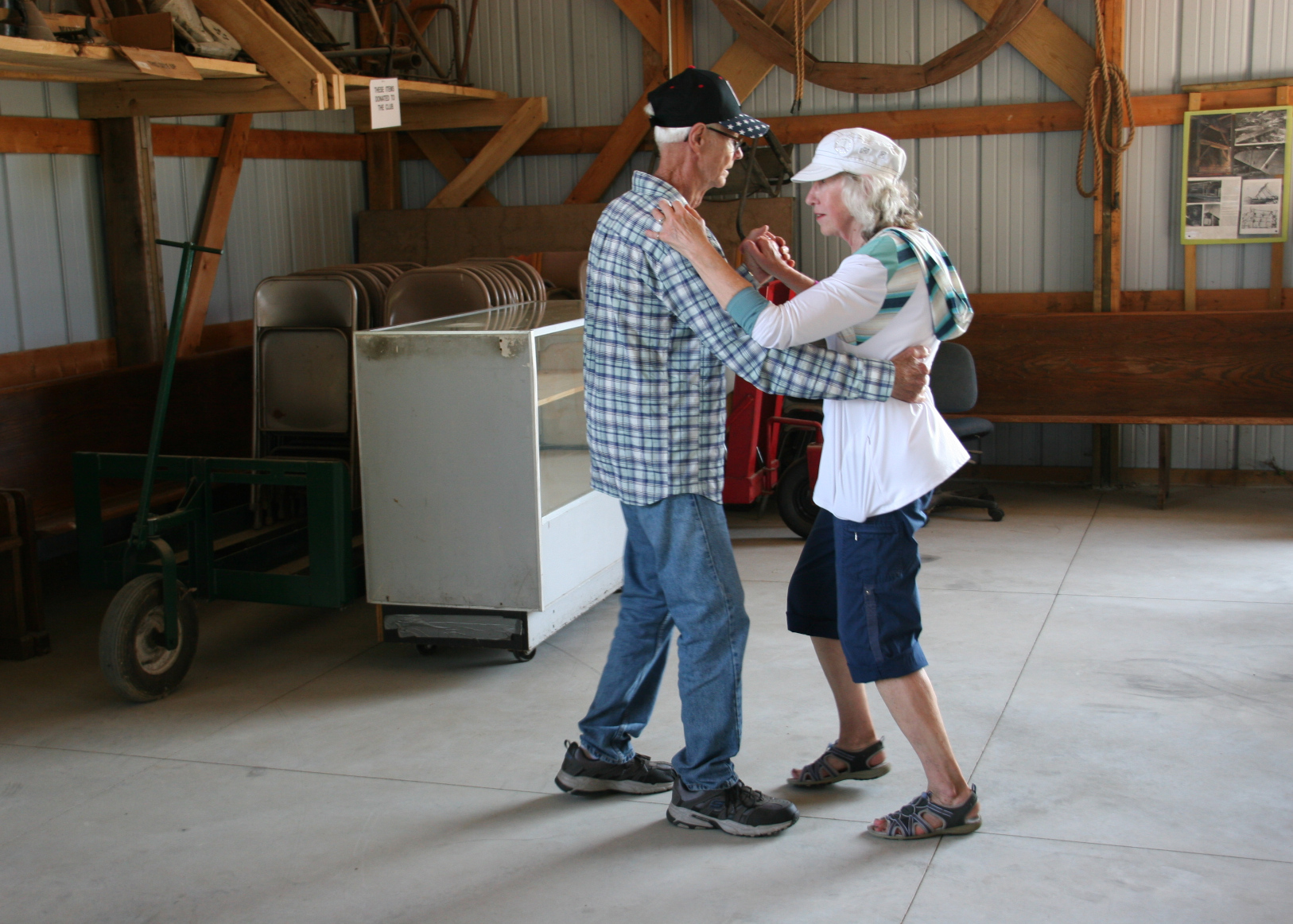
Dancing in the music shed to the band Steam Machine Friday afternoon.(Minnesota Prairie Roots copyrighted photo September 2022)
I attended the show in rural Dundas on Friday. While most attendees focus on the field of tractors, the multiple ag-related demonstrations, the flea market and more, I also focus on creative details within the all of it. Like hand-lettered signage, handcrafted items, music, and, yes, even the couple dancing to bluegrass tunes performed by Steam Machine.
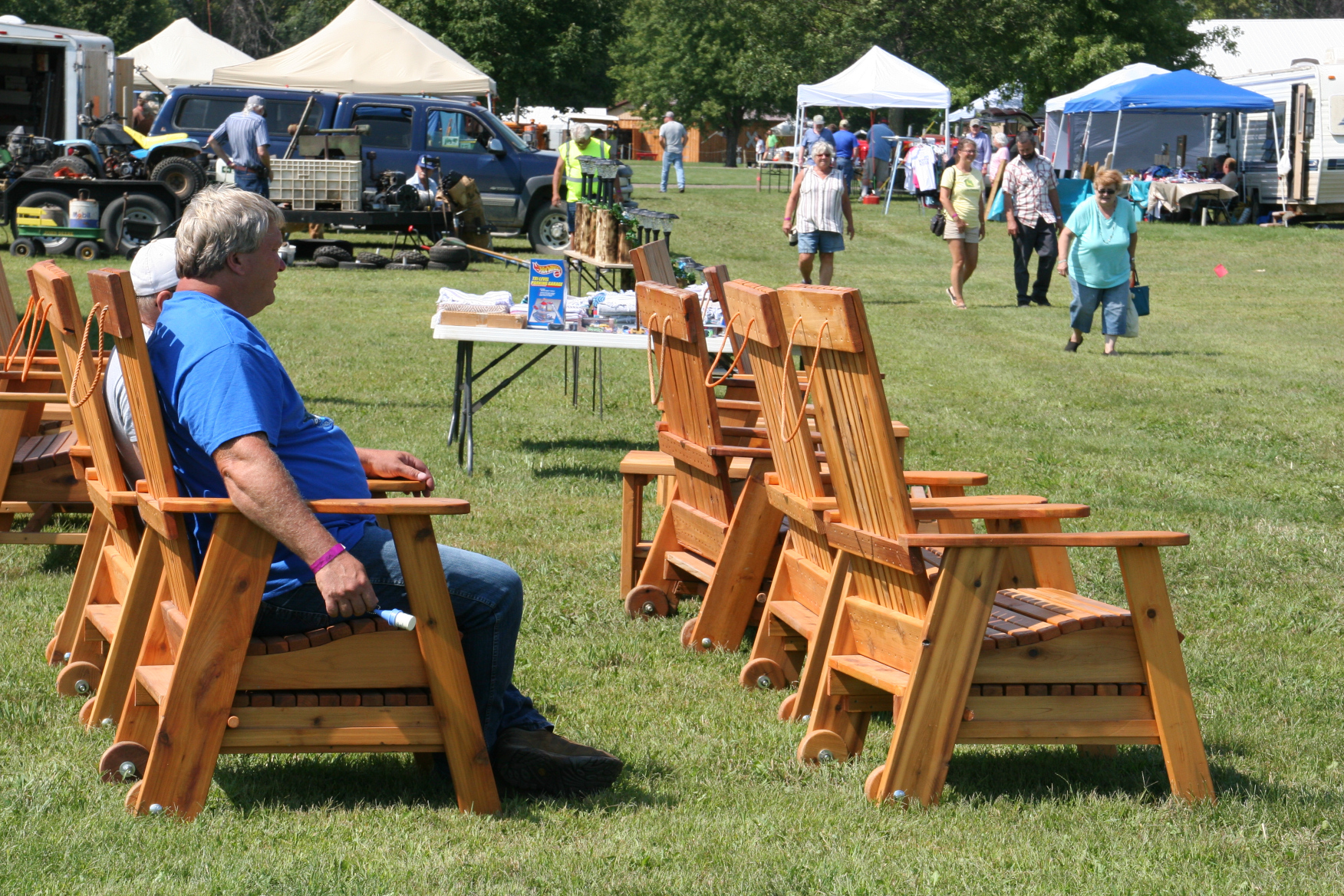
Flea market attendees try out a vendor’s yard chairs. (Minnesota Prairie Roots copyrighted photo September 2022)
The arts, whether literary, visual or performing, enhance our lives, bringing joy, comfort, diversion, entertainment, introspection and much more.
Cute crocheted animals by Kay Dudley. (Minnesota Prairie Roots copyrighted photo September 2022)
I value the talents of those who create. I create with words and with my camera. Put a paintbrush or crochet hook in my hand and I would be hard-pressed to make anything worthy of notice. But, gosh, do I admire creatives like Kay Dudley of Faribault who brought her crocheted animals to the flea market. Likewise, I admire the skill of the woodworker who built the sturdy yard chairs for sale.
Hand-embroidered linens. (Minnesota Prairie Roots copyrighted photo September 2022)
On the other end of the show grounds, I found more to appreciate in the 1912 farmhouse. Embroidered linens displayed in the kitchen caught my eye. I know how to embroider, although decades have passed since I picked up a needle, embroidery floss and a hoop to stitch a design into cloth. I really ought to resume that craft.
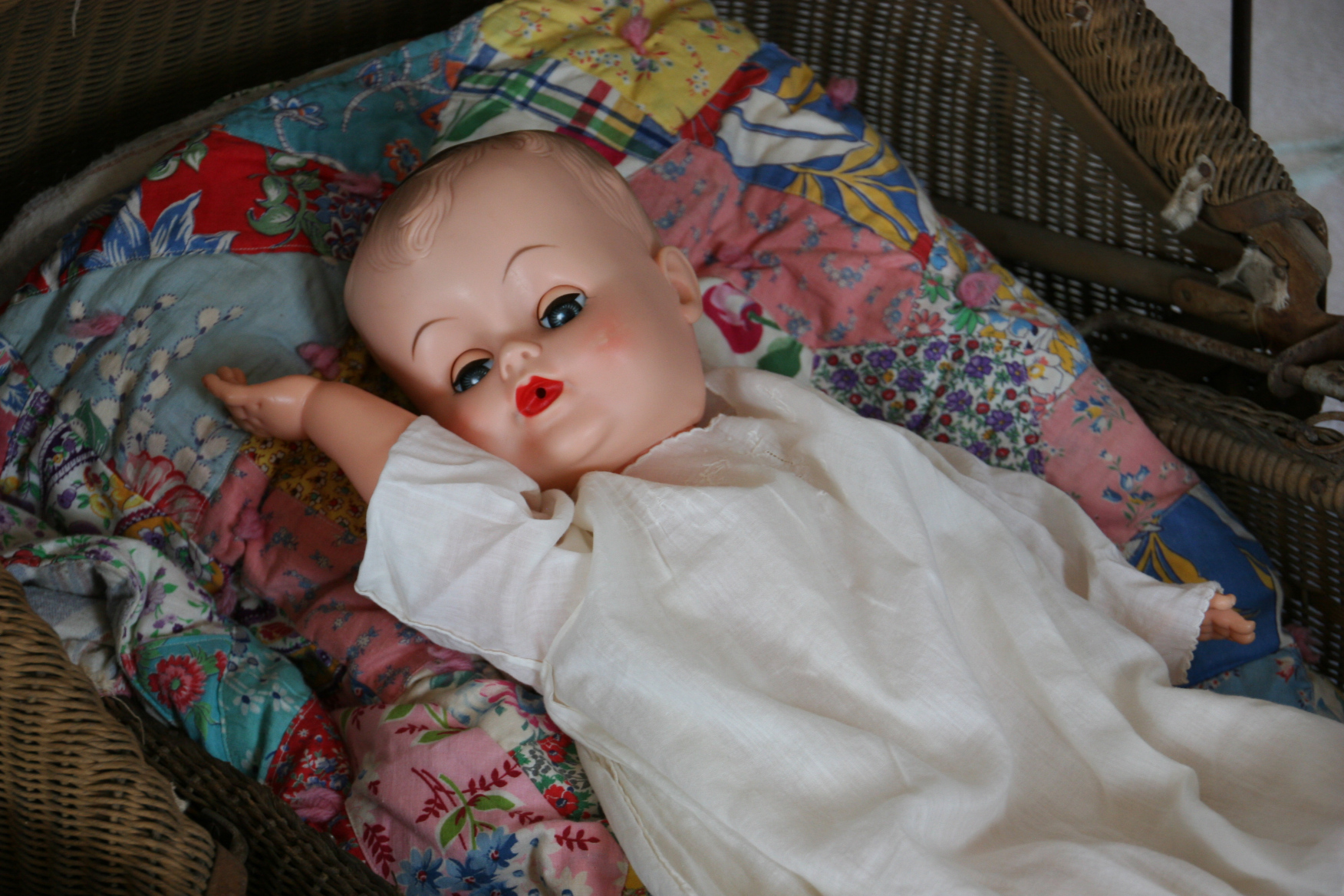
A vintage doll nestles in a quilt. (Minnesota Prairie Roots copyrighted photo September 2022)
In another room of the farmhouse, a doll laid upon a quilt, reminding me of my paternal grandmother who stitched endless quilts for her family, me included. I was quite the seamstress as a teen, sewing many of my clothes and dresses for Grandma, too. She could quilt, but she couldn’t make her own clothes. I always found that interesting. I haven’t touched my sewing machine in years.
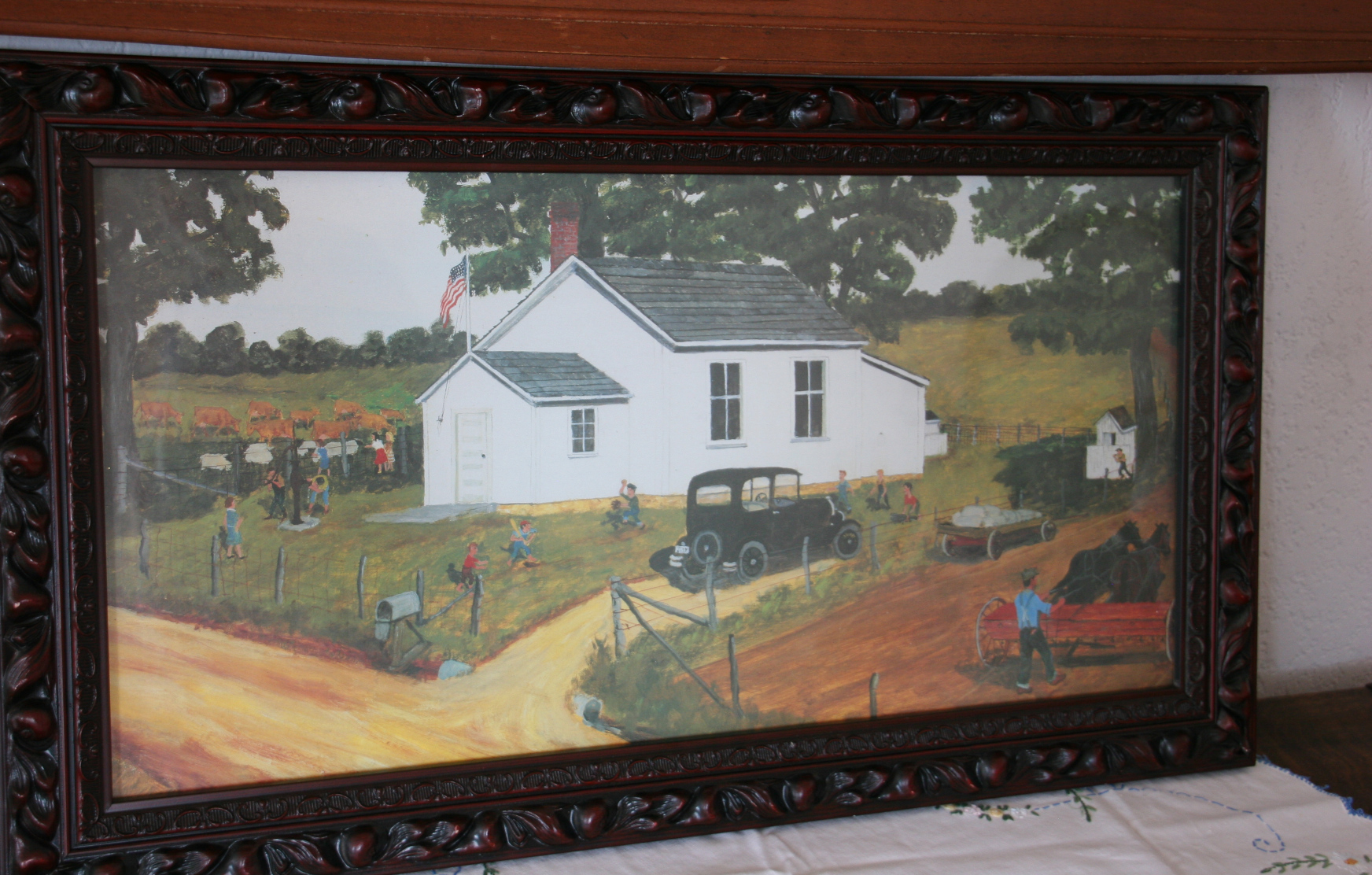
An original painting of a country schoolhouse. (Minnesota Prairie Roots copyrighted photo September 2022)
I was especially interested in the original painting of a rural schoolhouse scene propped on a table in the farmhouse. The vintage art, scored at a Goodwill store for $5, is exactly the type of art I collect.
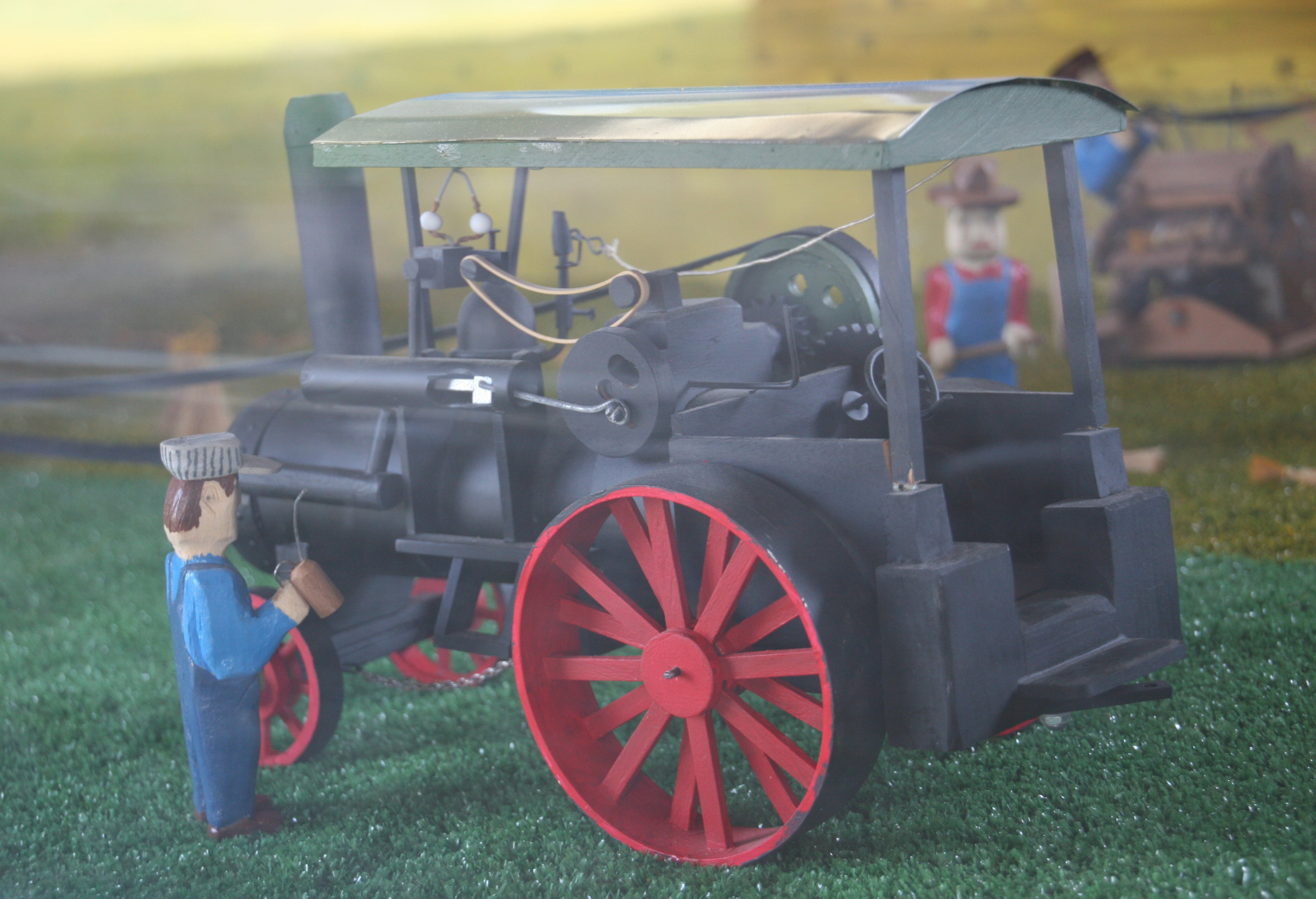
David Terry hand-carved a 1920 threshing scene displayed inside a large case in the music building. This is just a portion of his work. (Minnesota Prairie Roots copyrighted photo September 2022)
In my collection is a North Dakota threshing scene painted by my father-in-law and among my most treasured pieces of original art. So when I saw a hand-carved threshing scene displayed in the music building at the Rice County Steam and Gas Engines Show, I was reminded of Tom’s painting. I display it this time of year atop the entertainment center in my living room.
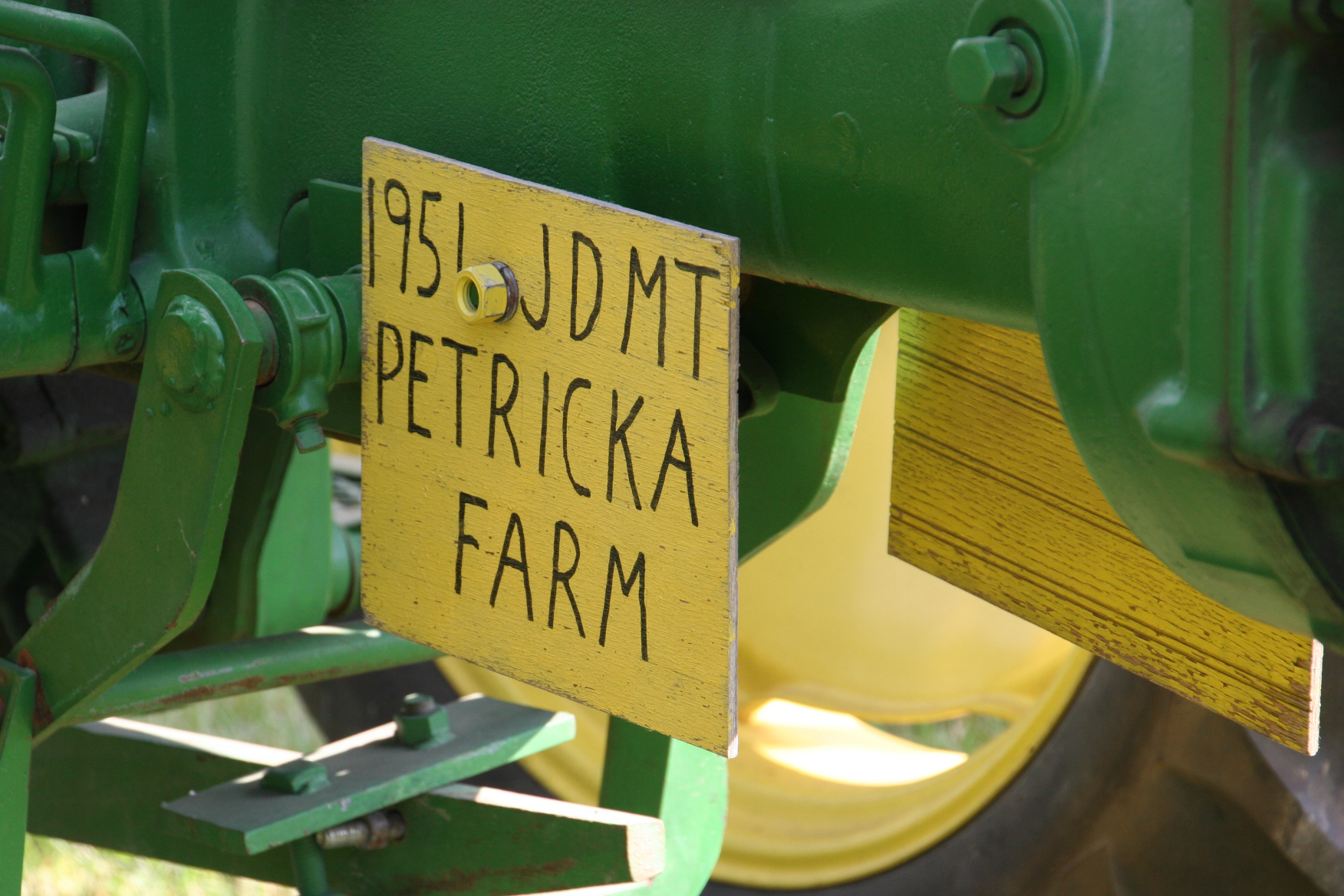
A handmade sign identifies the owner of a vintage John Deere tractor. (Minnesota Prairie Roots copyrighted photo September 2022)
Original paintings and other original art, including signs, always draw my appreciation. There’s just something about a handcrafted sign that makes me pause, take notice, remember. From signage on tractors to signage on buildings to signage among the food vendors, I noticed the creativity.
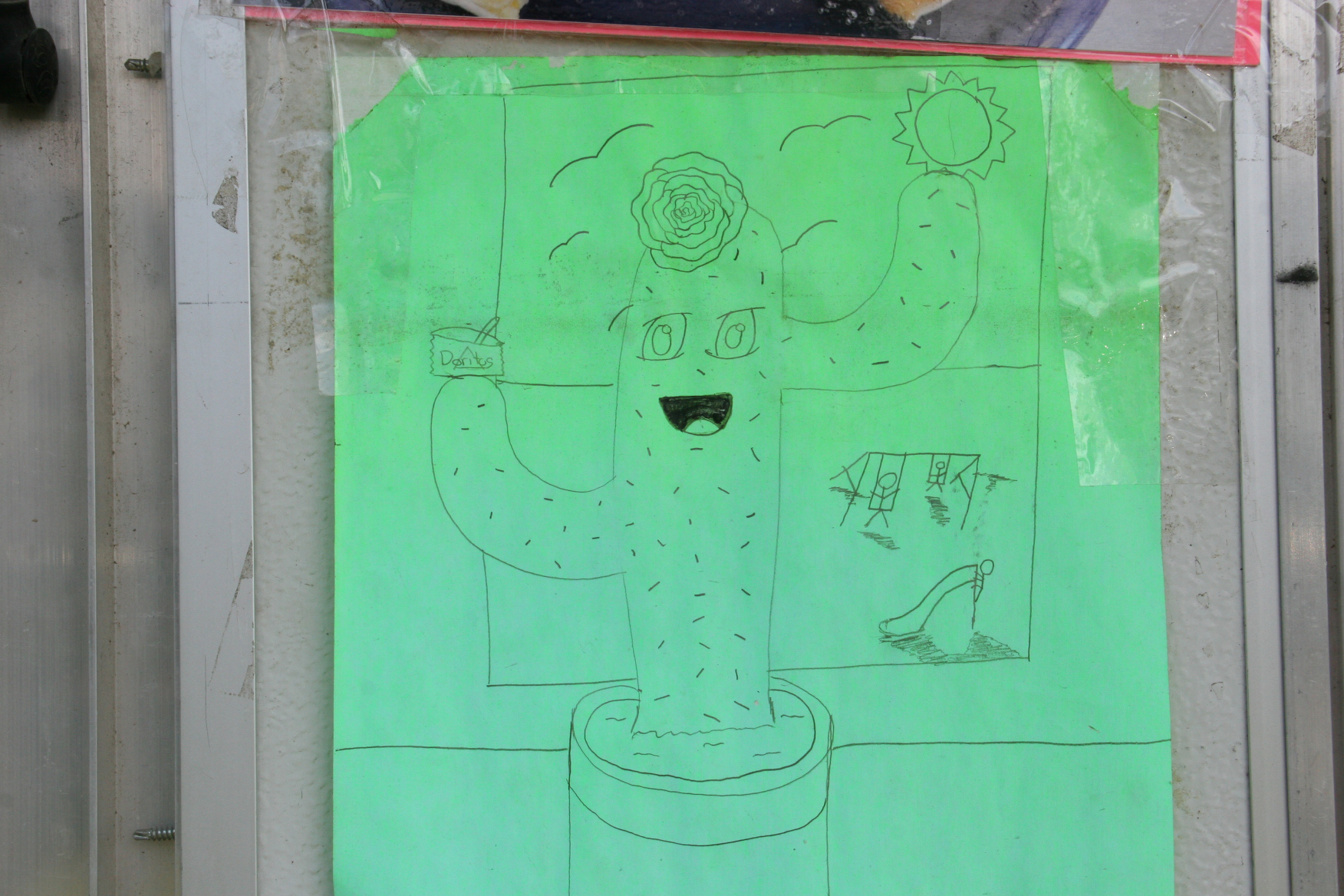
Loved this hand-drawn art posted by the food service window of El Tacazo Mexican Delights. (Minnesota Prairie Roots copyrighted photo September 2022)
Every piece of art I spotted added to my enjoyment of this southern Minnesota farm-themed show. Certainly I value the ag and history aspects of this event. But I value, too, the creativity.
An anvil-shaped sign fittingly marks the Blacksmith Shop where attendees can watch blacksmiths at work. (Minnesota Prairie Roots copyrighted photo September 2022)
John Deere tractors parked near the log cabin at the Rice County Steam and Gas Engines Show. (Minnesota Prairie Roots copyrighted photo September 2022)
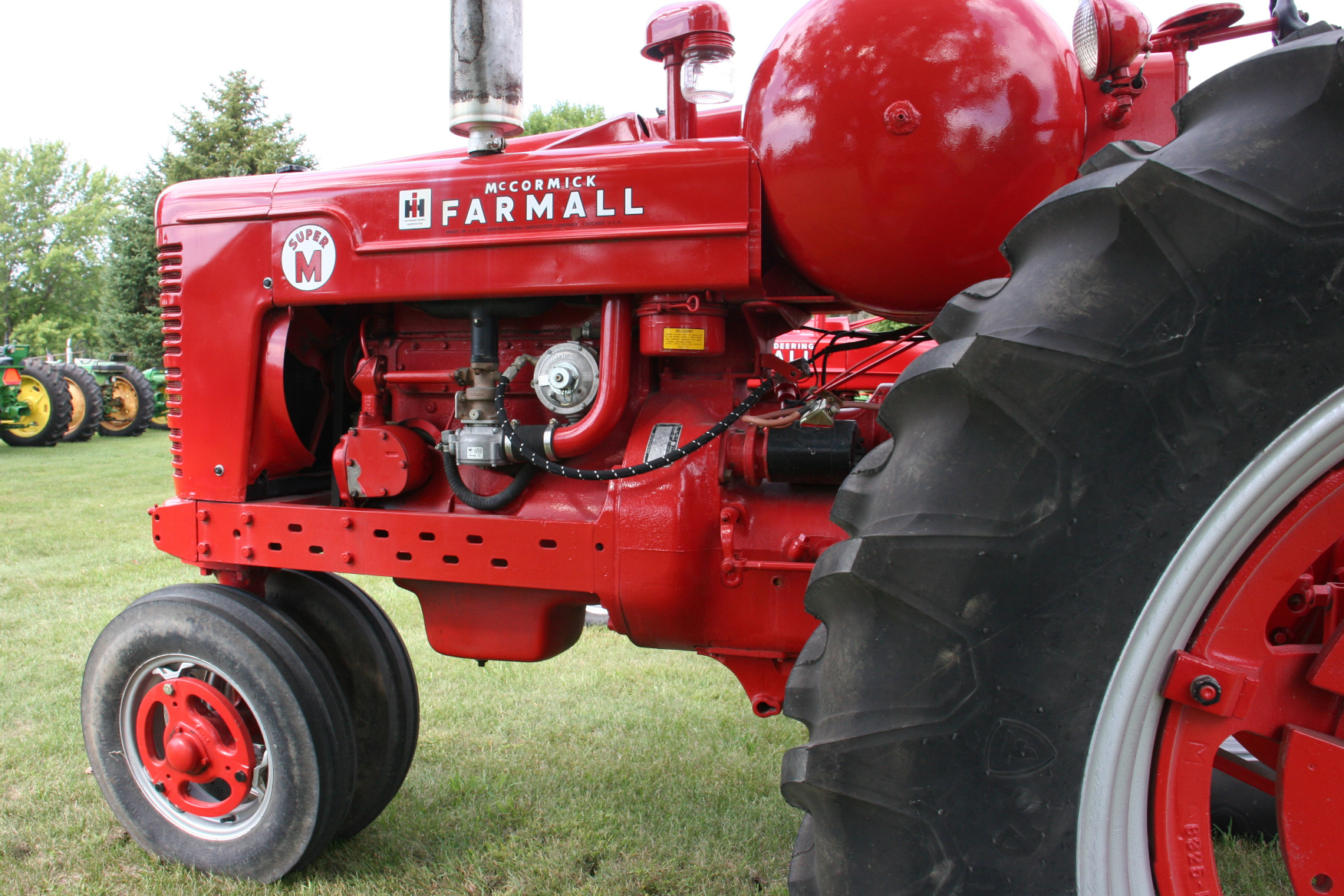
GROWING UP ON A CROP and dairy farm in southwestern Minnesota, tractors are part of my history. I am familiar with the putt-putt-putt of an aged John Deere, the maneuverable size of a B Farmall, the necessity of a dependable tractor.
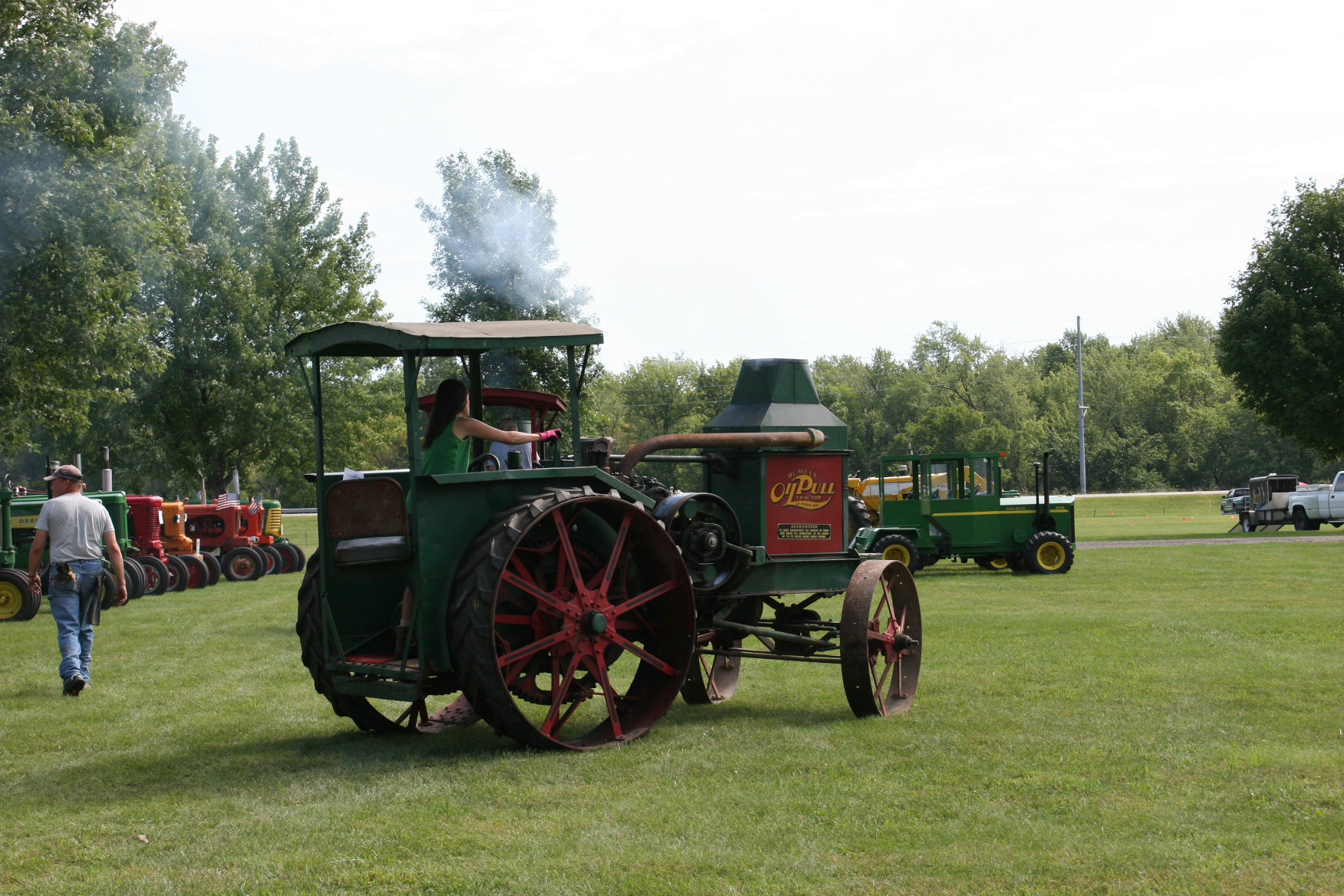
Rumely Oil Pull tractors were sold between 1910-1930. (Minnesota Prairie Roots copyrighted photo September 2022)
The tractor is the workhorse of the farm. That remains as true today as it did 50 years ago when I still lived in rural Redwood County.
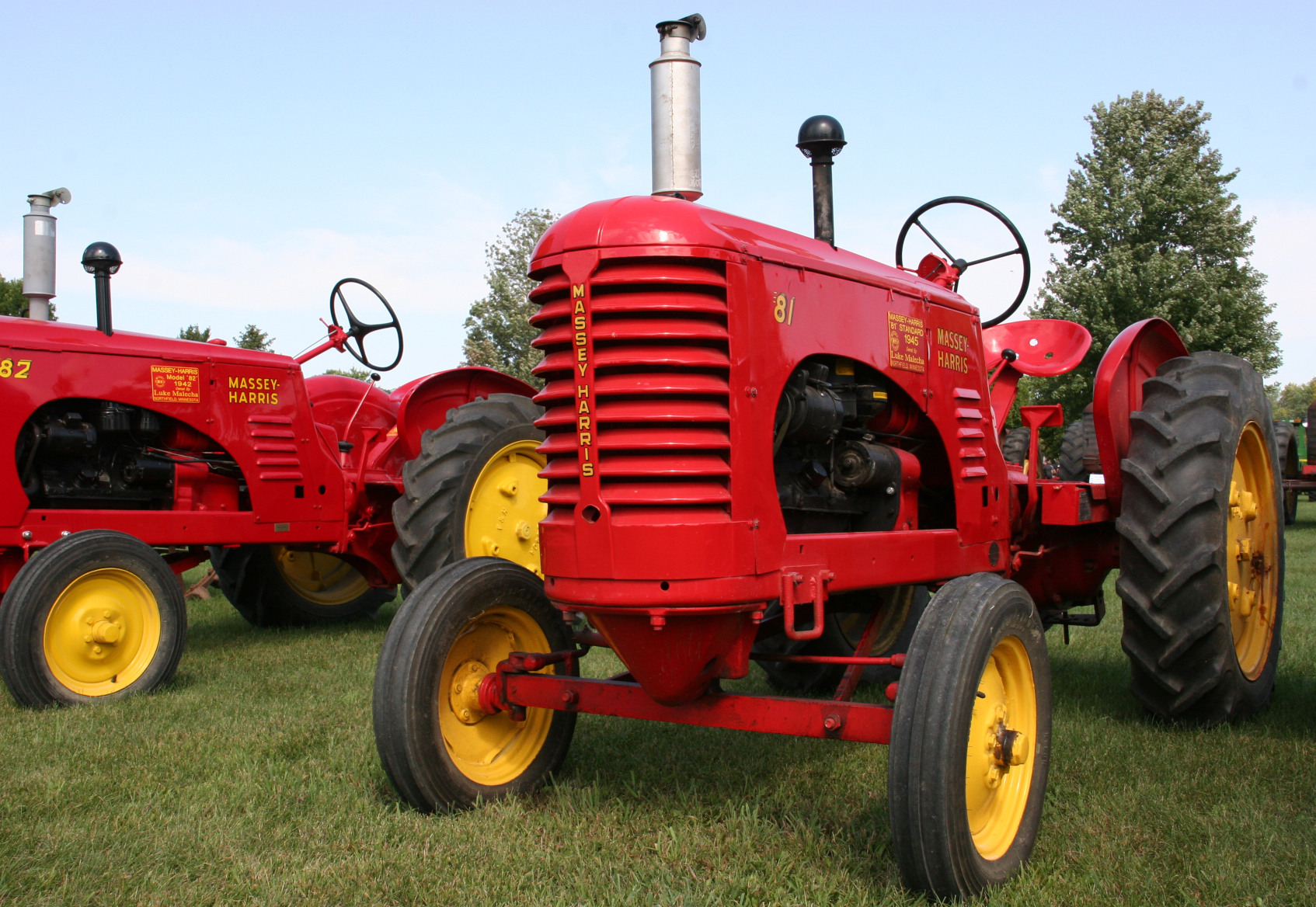
The Massey-Harris is the featured tractor at this year’s show. (Minnesota Prairie Roots copyrighted photo September 2022)
So when I attended the Rice County Steam and Gas Engines Show in rural Dundas on Friday, I began reminiscing. I expect many others did the same while meandering among the rows of vintage tractors or watching the daily high noon parade. This event is heavy on the tractors, threshing machines and farm equipment in general. And that holds appeal for those of us rooted in farms.
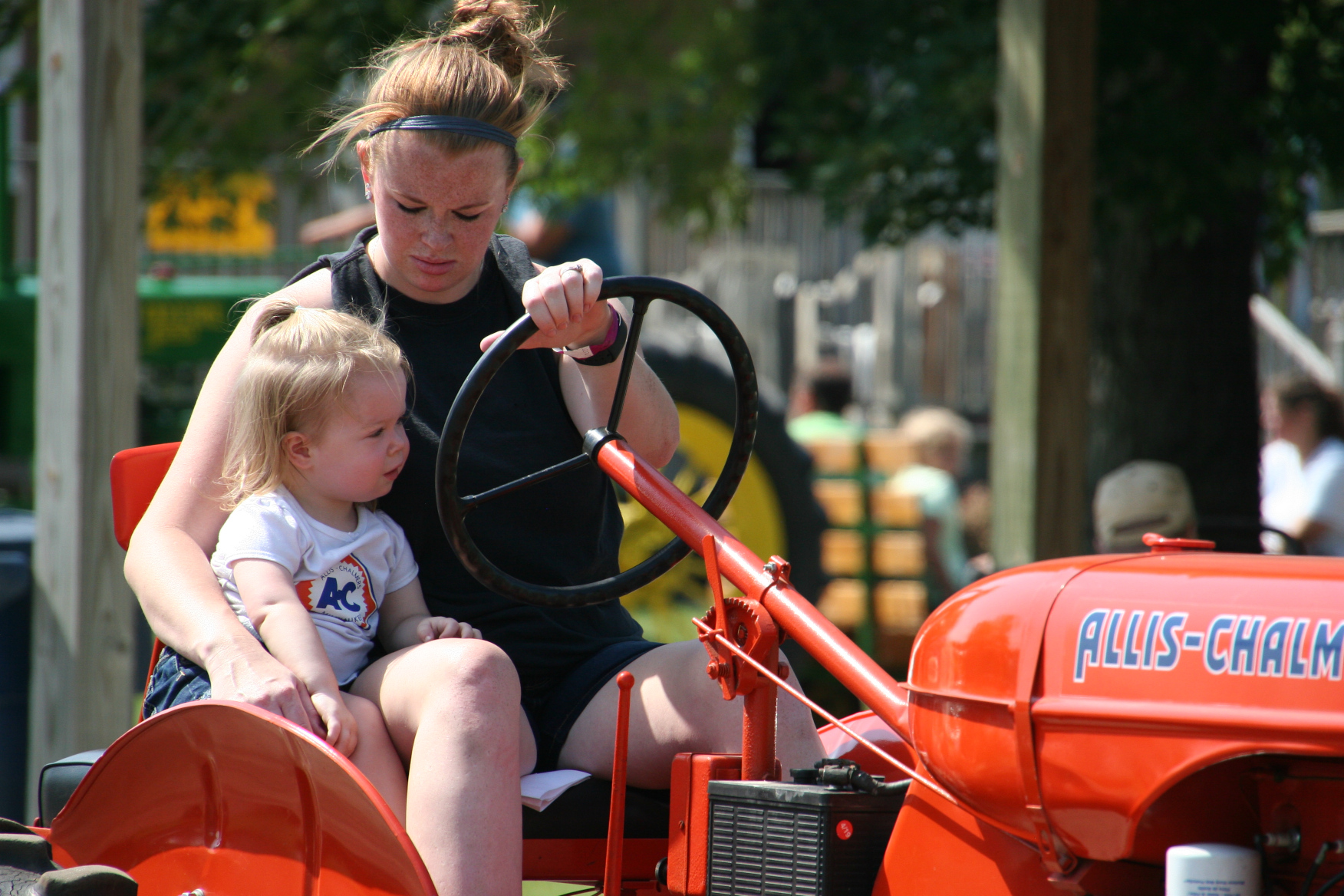
Guiding a vintage Allis Chalmers along the parade route on Friday. (Minnesota Prairie Roots copyrighted photo September 2022)
I am old enough to remember tractors without cabs, air conditioning, GPS or other technology. Instead, my dad’s tractors were shaded from the hot summer sun by an umbrella, protected from the winter cold by canvas and guided solely by the skill of hands on the steering wheel.
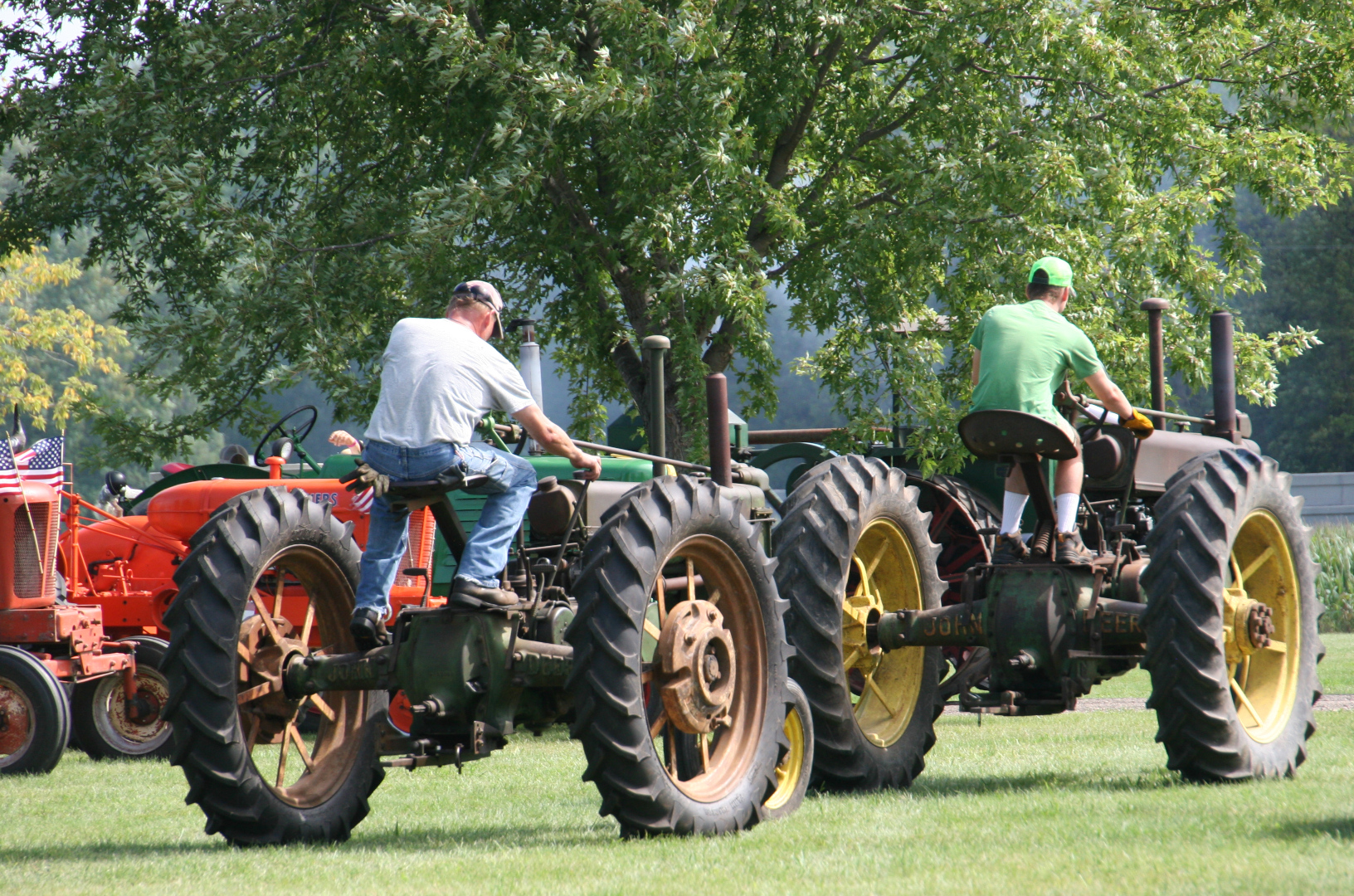
John Deere tractors like the one I rode in winter to catch the bus to school. (Minnesota Prairie Roots copyrighted photo September 2022)
My most memorable tractor story is that of Dad driving my brother Doug and me the mile into Vesta on the open cab John Deere in the dead of winter so we could get to school. We were both in junior high then, attending school in the county seat some 20 miles to the east. It was a particularly snowy and brutal winter, so awful that buses couldn’t venture onto rural roads to pick up students. If we could get into town, we could catch the bus at the local cafe. From there, the bus took a state highway to the school in Redwood Falls.
Not a B Farmall, but an IH tractor none-the-less. (Minnesota Prairie Roots copyrighted photo September 2022)
Dad wasn’t partial to any tractor brand. He owned John Deere, International Harvester and Ford tractors. The B Farmall remains my favorite as I drove that small scale IH tractor in the farmyard, pulling the flatbed trailer up to the feed bunk to unload hay for the cows.
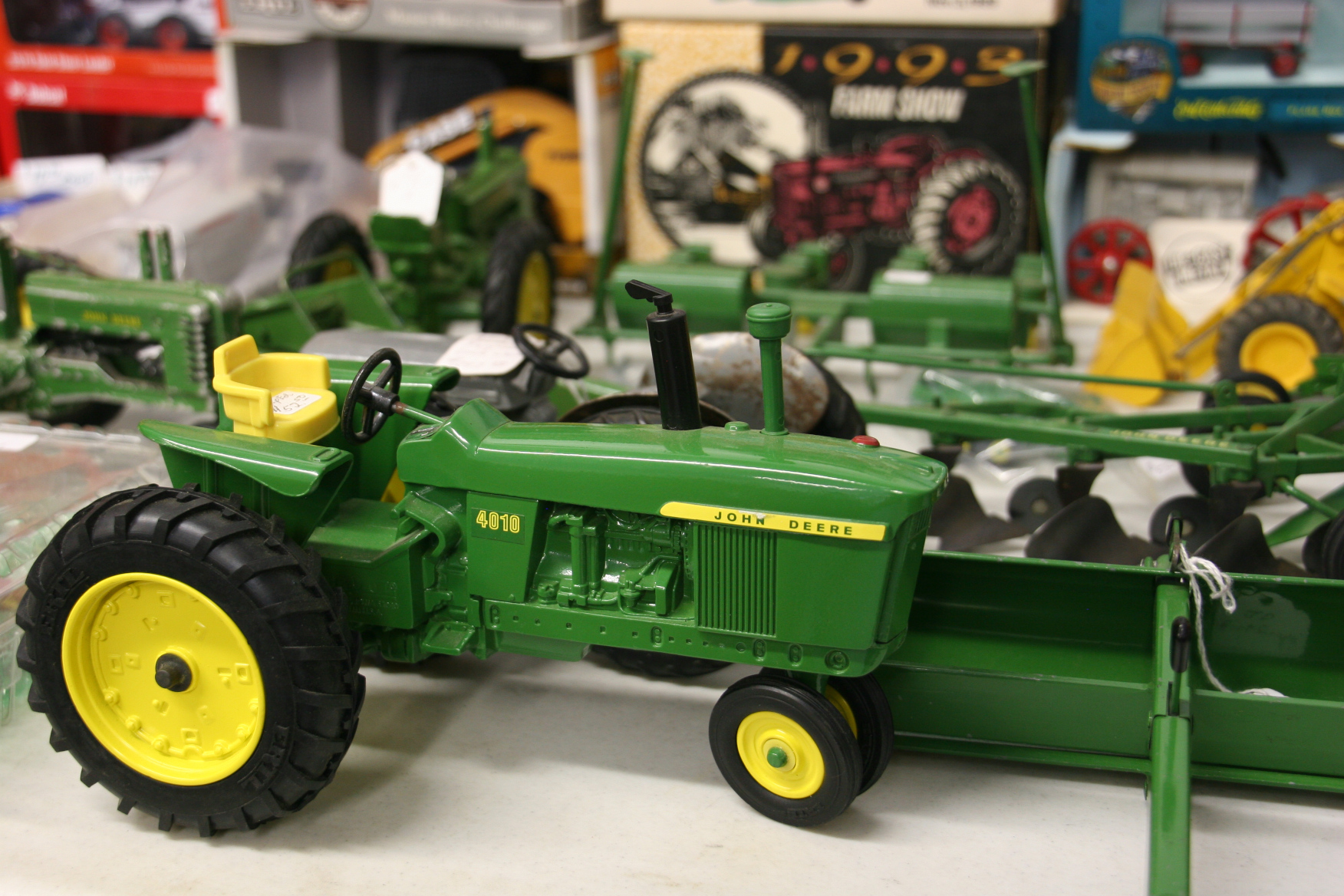
I found this toy John Deere tractor for sale from vendor Shippy’s Toys. (Minnesota Prairie Roots copyrighted photo September 2022)
John Deere likewise will always hold a special spot in my heart. I remember once a year attending John Deere Days at the farm implement dealership in Redwood Falls. That included a free meal followed by a John Deere promotional movie at the local theater. To eat ice cream from a plastic cup with a little wooden “spoon” and to see a movie on a screen were treats, not to mention the door prizes. Like silver dollars. And bags of seed corn.
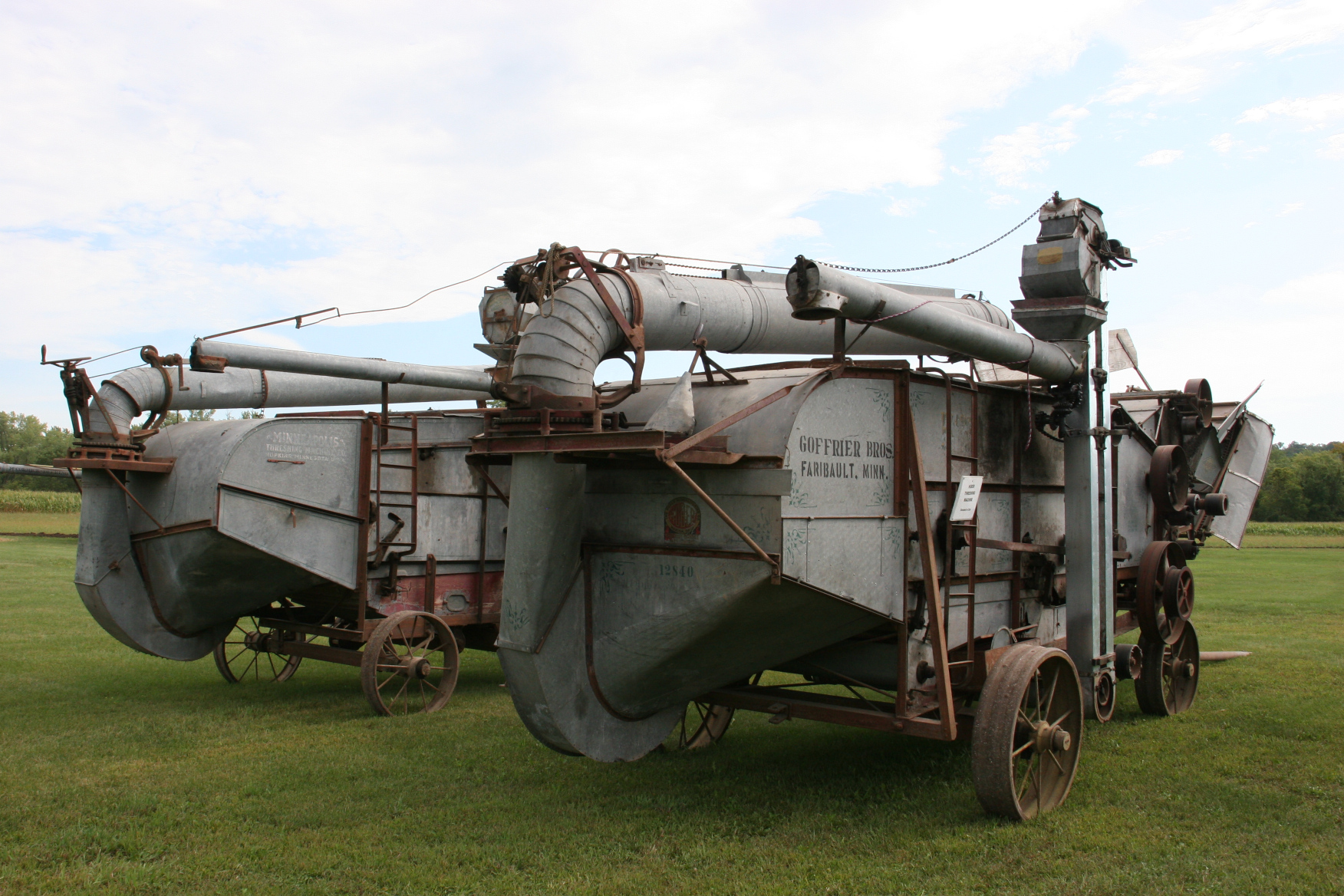
Aged threshing machines, well before my time, on exhibit. There are threshing demonstrations during the show. (Minnesota Prairie Roots copyrighted photo September 2022)
Aging has a way of making us view the past through a nostalgic lens. Yet the reality of life on the farm in the 1960s and 1970s is one of hard work and challenges. Uncontrollable factors—weather, prices and more—have always made farming a gamble. Yet, for those of us who grew up on the land, there’s an undeniable sense of hardiness within us, even decades removed from the farm.
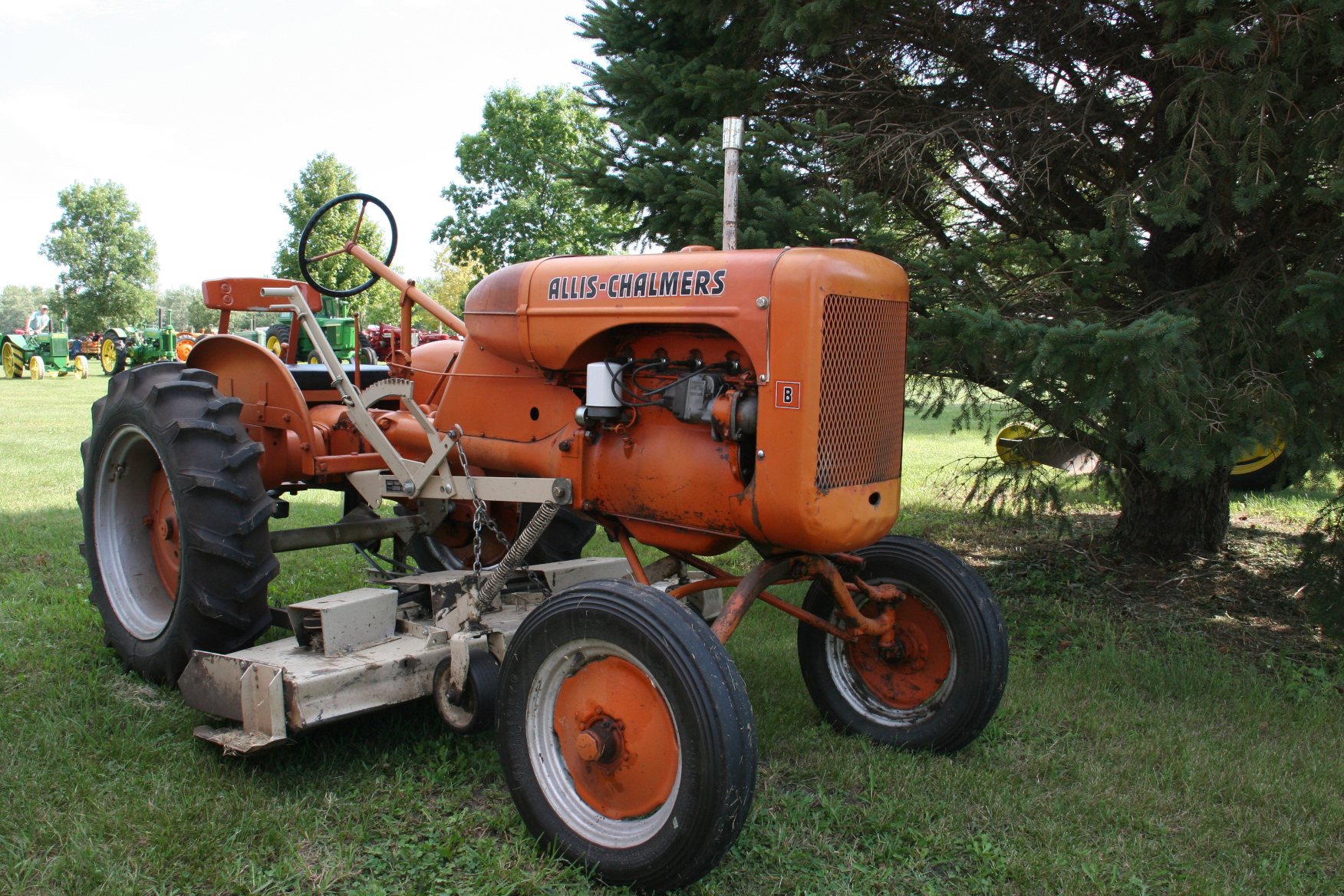
Allis Chalmers tractors are among those displayed in the field of tractors. (Minnesota Prairie Roots copyrighted photo September 2022)
When I attend an event like the Rice County Steam and Gas Engines Show, I reconnect to my past. Remembering. Appreciating. Thankful for the land and hard work that shaped me personally and professionally. I expect that’s true for many who walk the show grounds at this rural-rooted annual event in southern Minnesota.
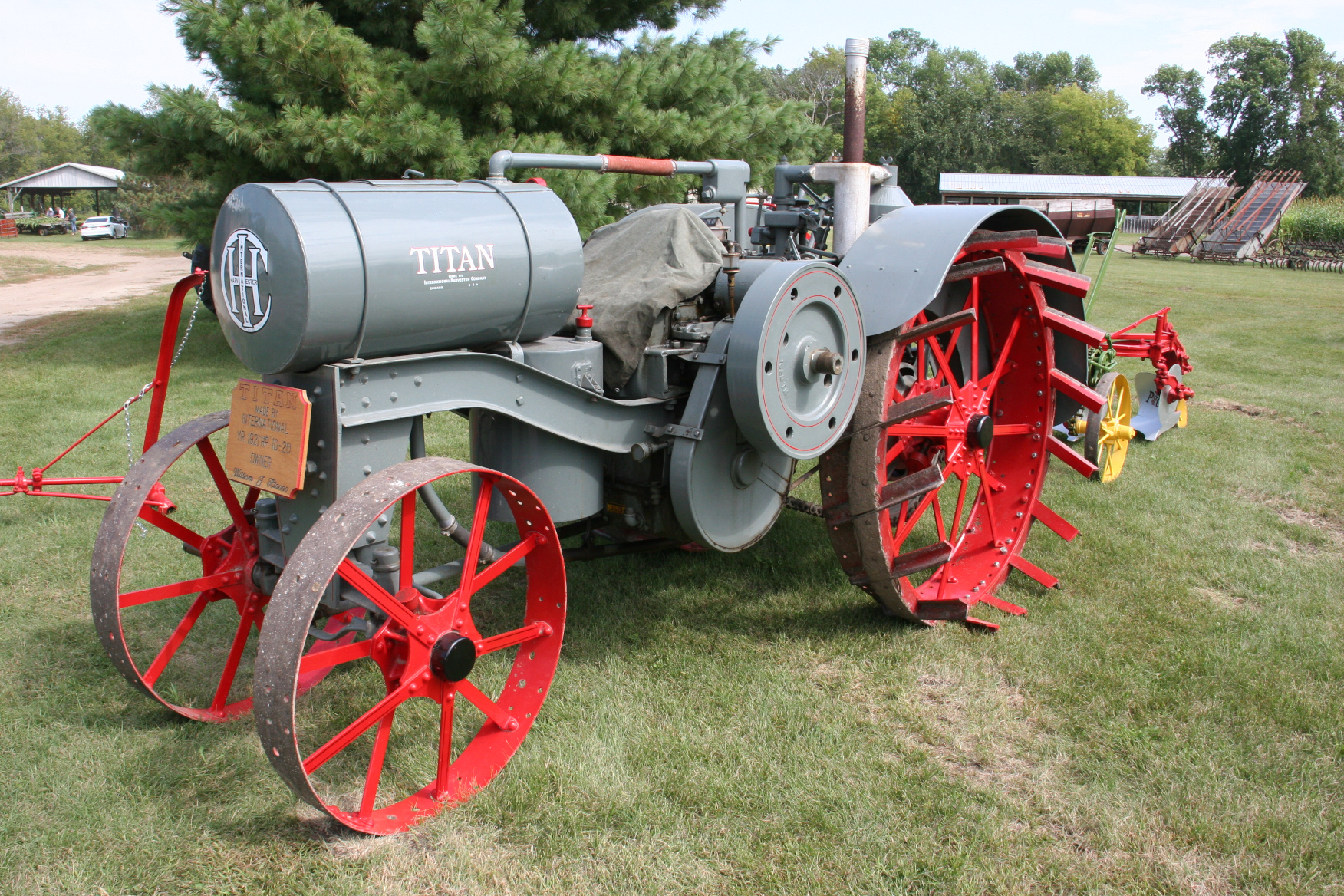
A 1921 Titan International. (Minnesota Prairie Roots copyrighted photo September 2022)
FYI: The Rice County Steam and Gas Engines Show continues today (Sunday, September 4) with gates opening at 7 am and closing at 5:30 pm on the grounds south of Dundas along Minnesota State Highway 3. For more information, visit the club website and/or read my first post on this year’s event. This show is about much more than tractors and other farm equipment.
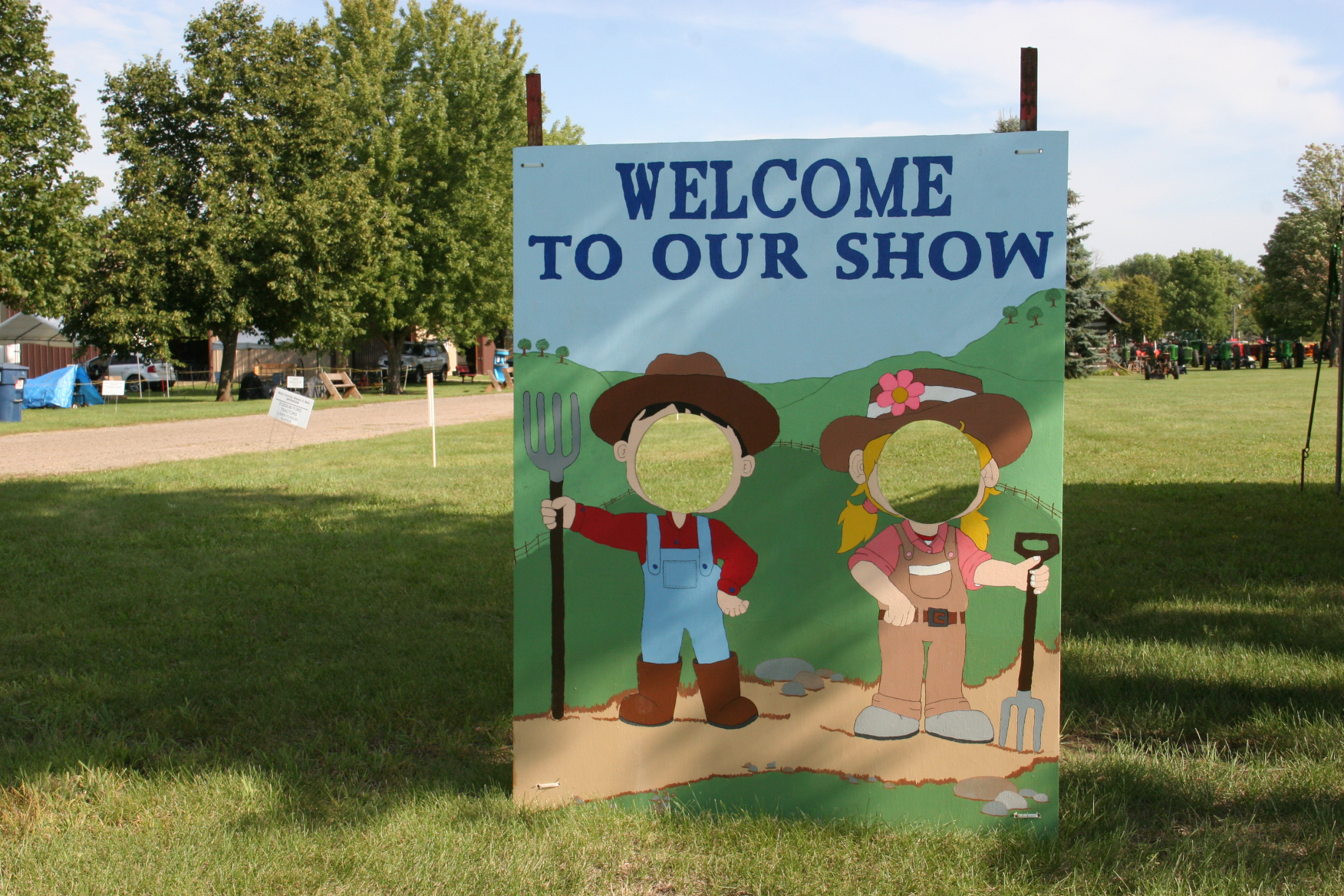
Photo cut-outs just inside the entrance. (Minnesota Prairie Roots copyrighted photo September 2022)
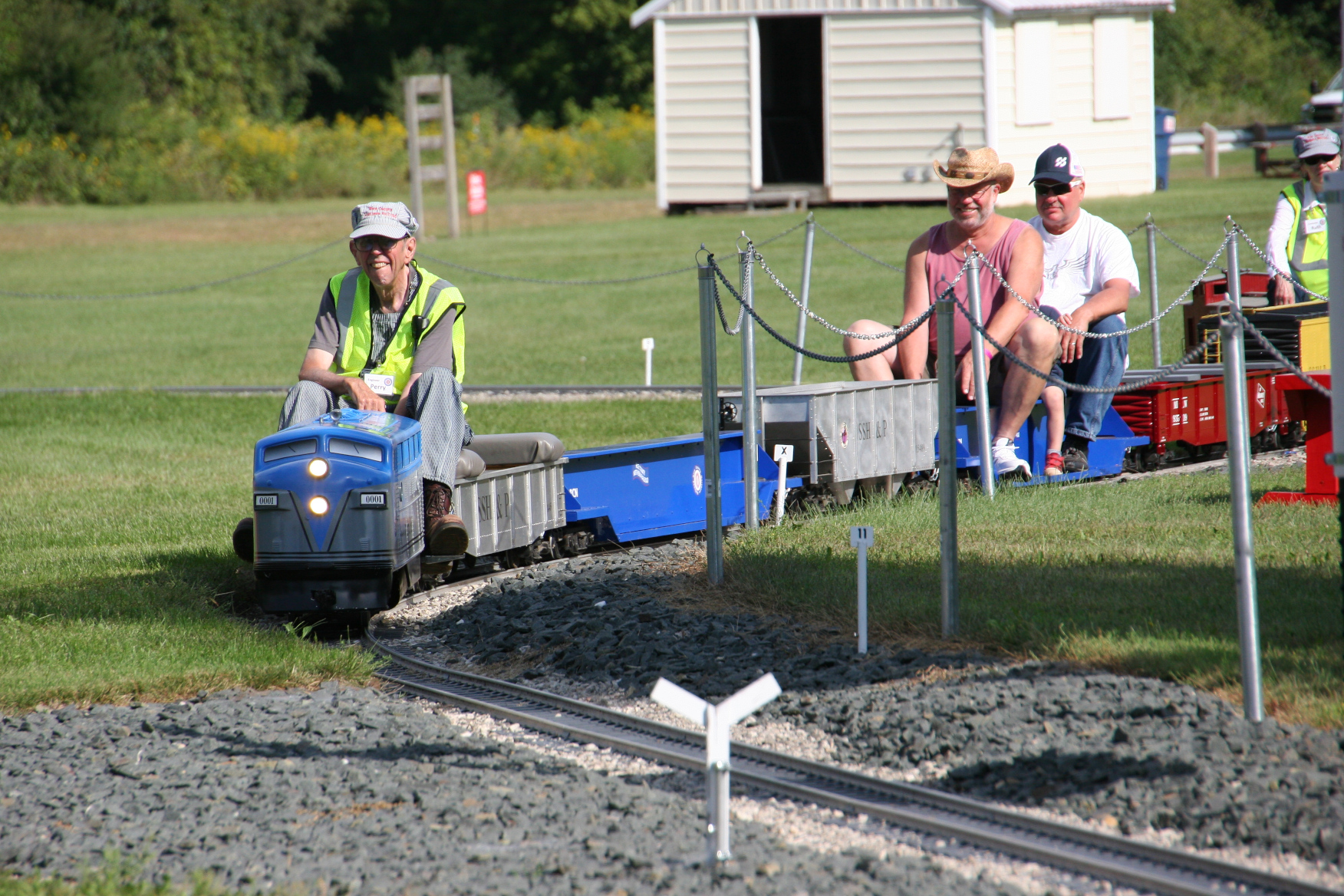
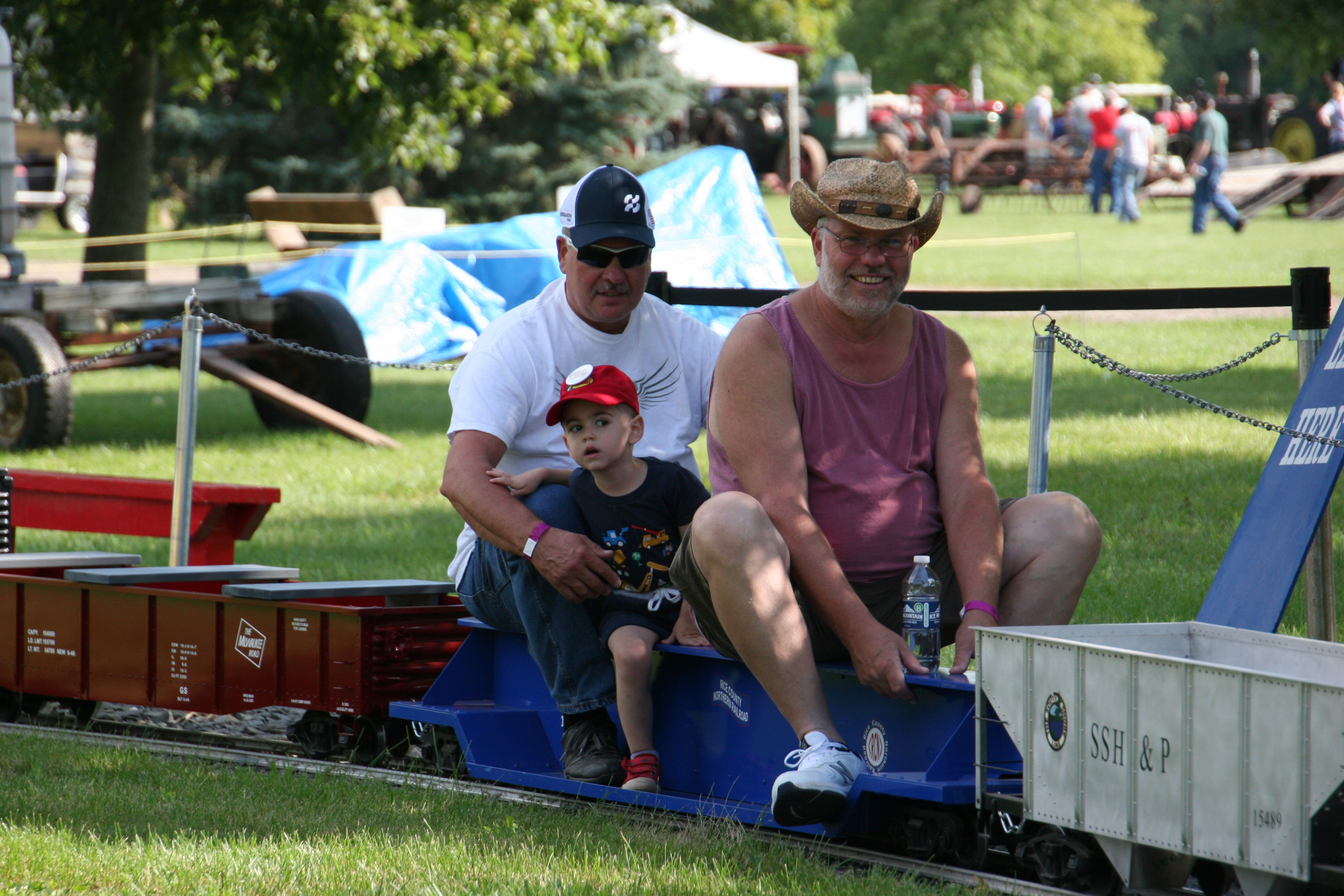
BARELY INSIDE THE GATES of the Rice County Steam & Gas Engines Show mid Friday morning, I boarded a train. It was an unexpected ride, this double loop around the tracks while straddling a slightly swaying model train car. I thought these free train rides were only for kids. Not so, the crew assured me.
The model train carries all ages. (Minnesota Prairie Roots copyrighted photo September 2022)
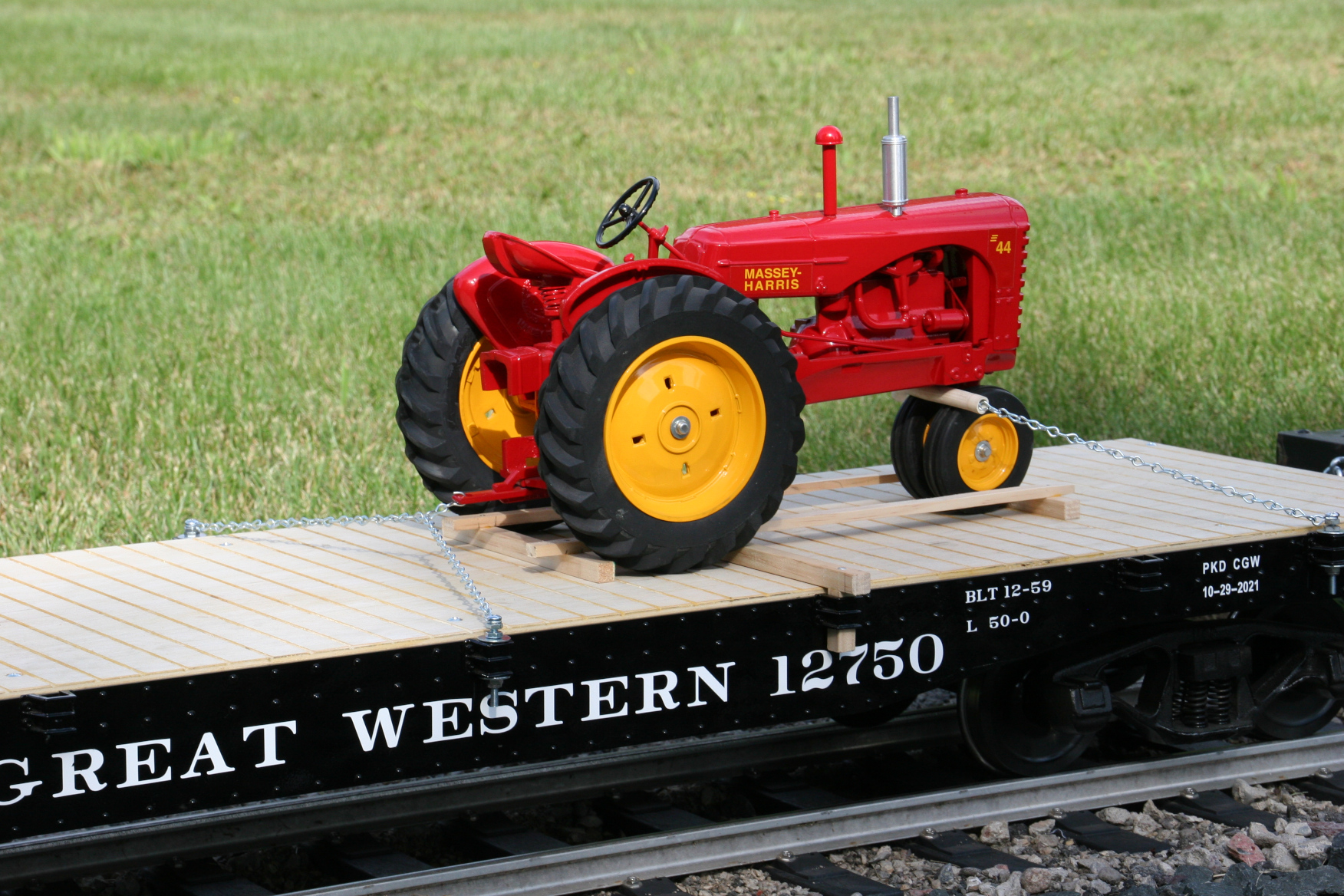
On a train car, a mini Massey-Harris the featured tractor. (Minnesota Prairie Roots copyrighted photo September 2022)
Riding the rails. Kids must be accompanied by an adult. (Minnesota Prairie Roots copyrighted photo September 2022)
When I disembarked, a preschooler sandwiched between two adults for his turn on the rails.
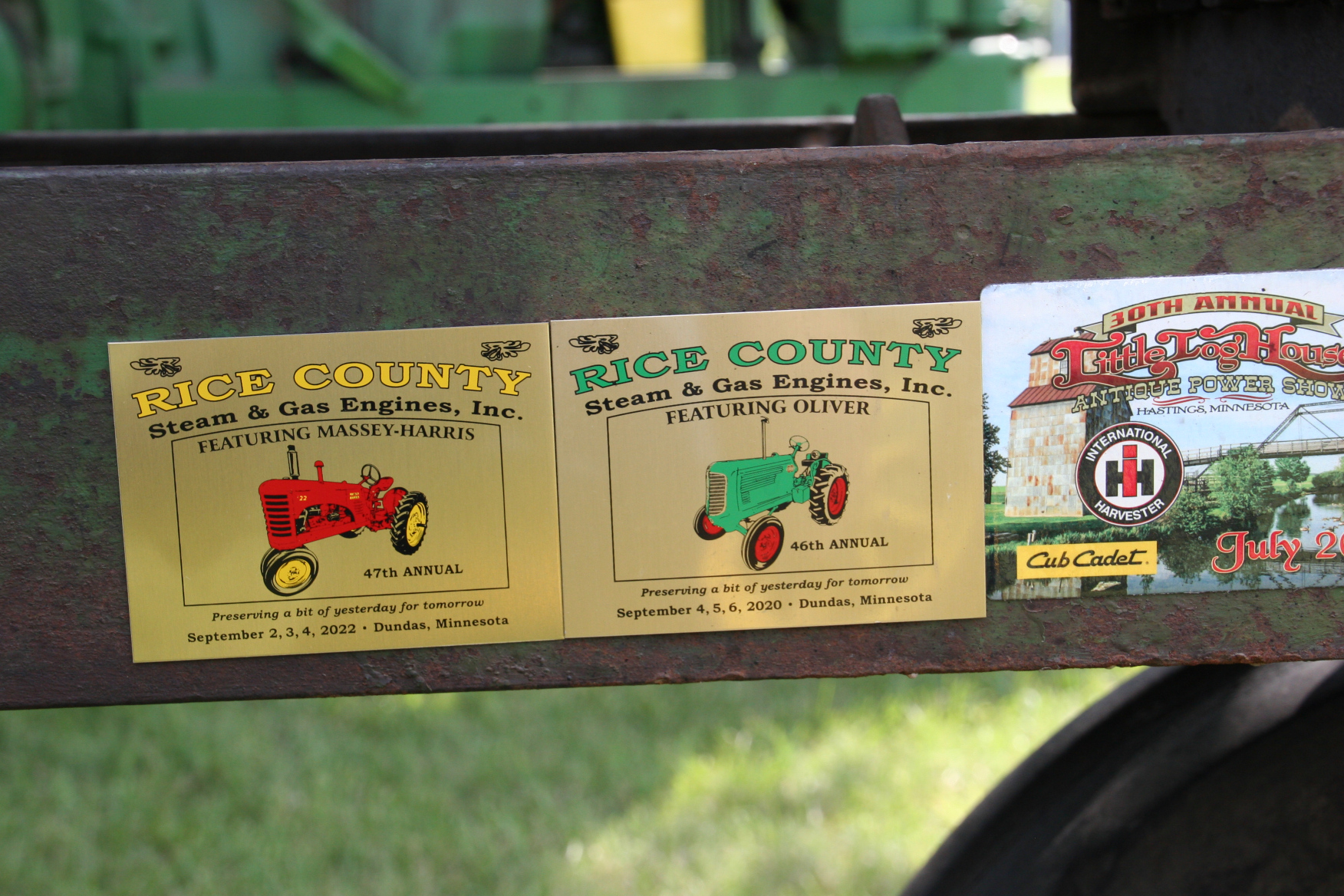
Photographed on a tractor, show stickers. (Minnesota Prairie Roots copyrighted photo September 2022)
What a fun way to begin my four hours at the show, which continues through Sunday at the event grounds south of Dundas, which is south of Northfield. This 47th annual gathering is about “Preserving a Bit of Yesterday for Tomorrow.” And that’s exactly what you will find here. Old. Aged. Vintage. Snapshots into the past. Farming as it was done back in the day. Agriculture/farming/rural life center the show.
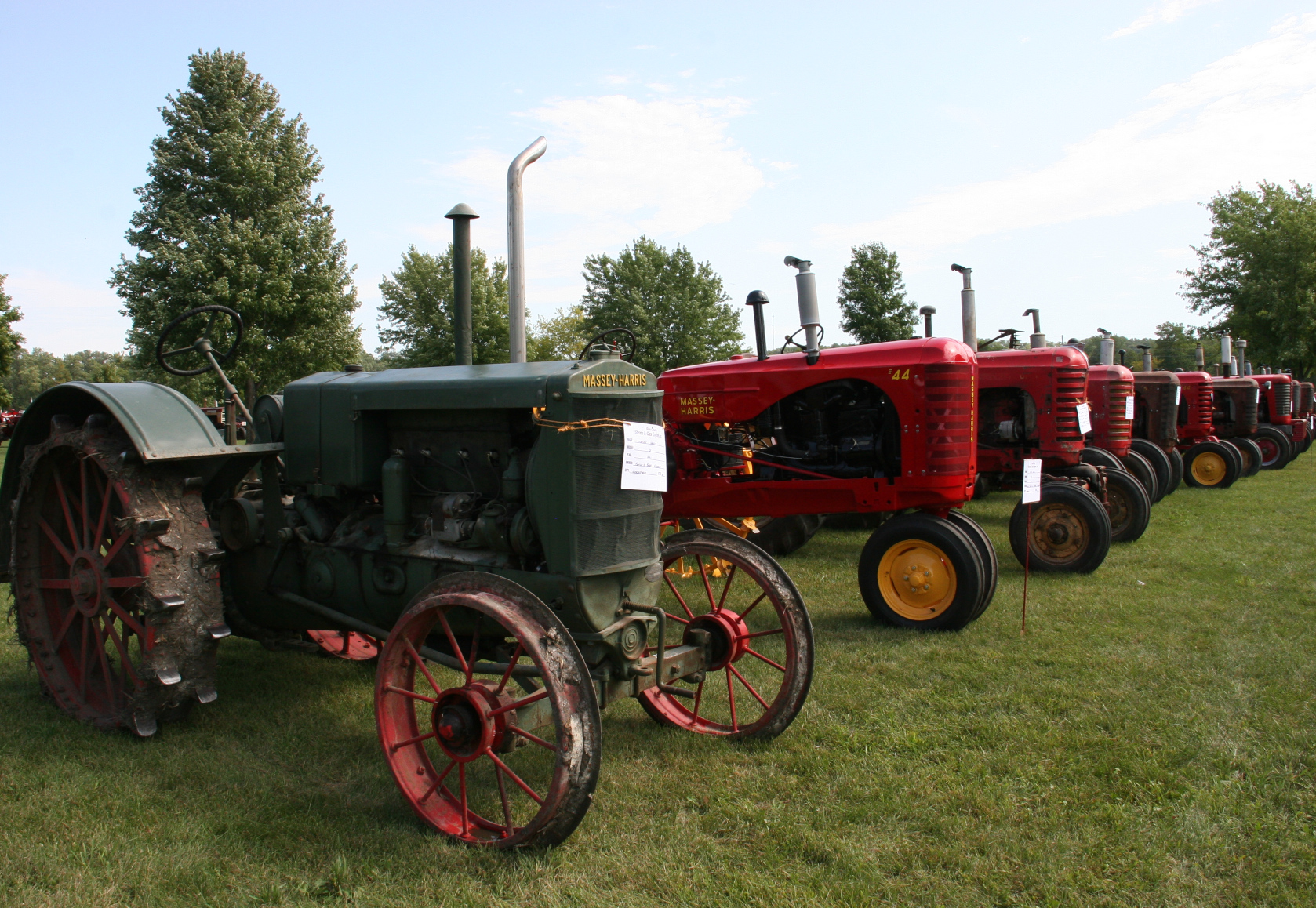
Massey-Harris tractors all in a row. (Minnesota Prairie Roots copyrighted photo September 2022)
Conversation while leaning on a John Deere. (Minnesota Prairie Roots copyrighted photo September 2022)
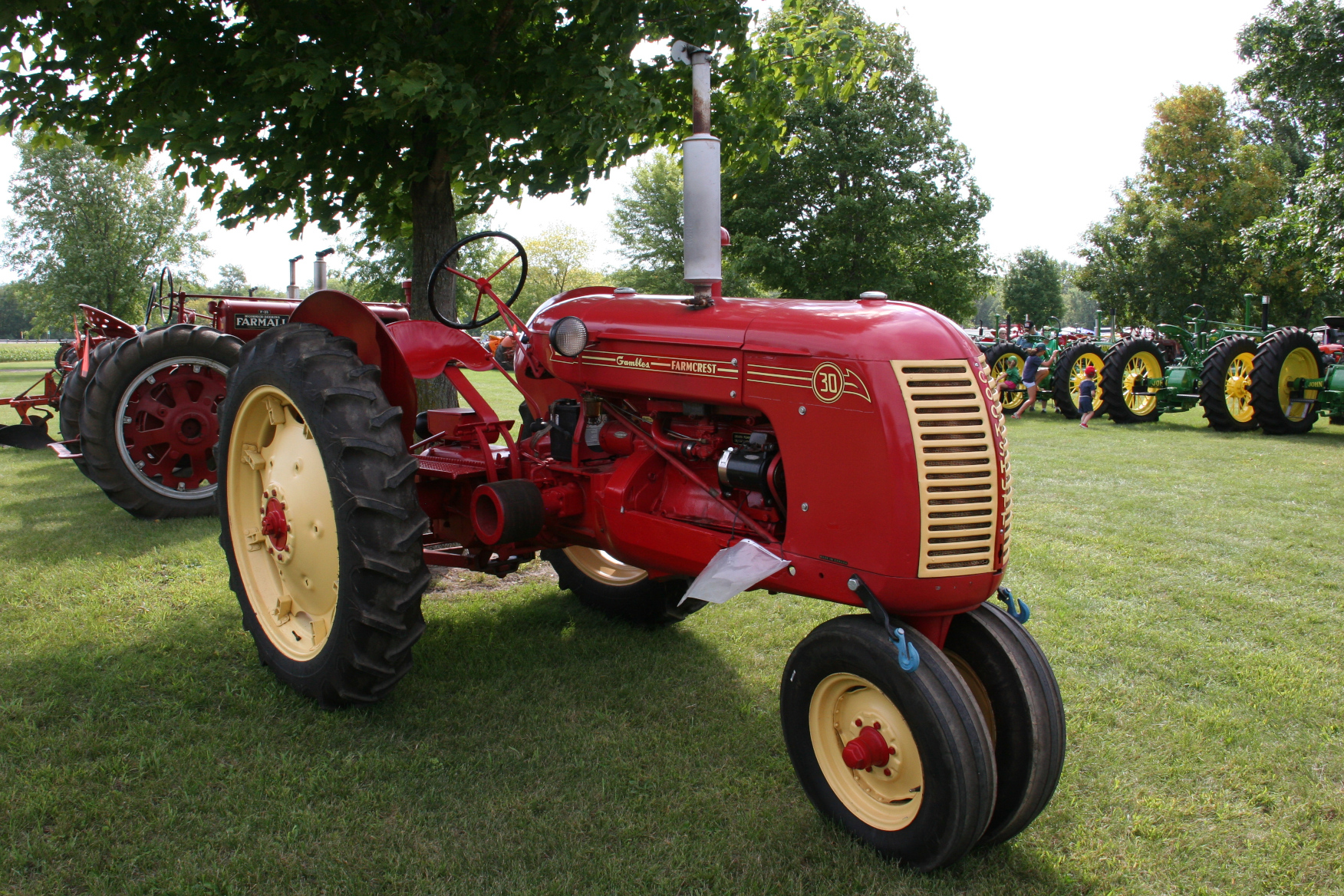
A tractor made by Cockshutt and marketed by Gambles. (Minnesota Prairie Roots copyrighted photo September 2022)
Vintage tractors are the focus with a field of tractors on display. This year’s featured brand is Massey-Harris. But brands ranging from the well-known John Deere, Allis Chalmers, International Harvester…to the rare Gambles line the grassy grounds.
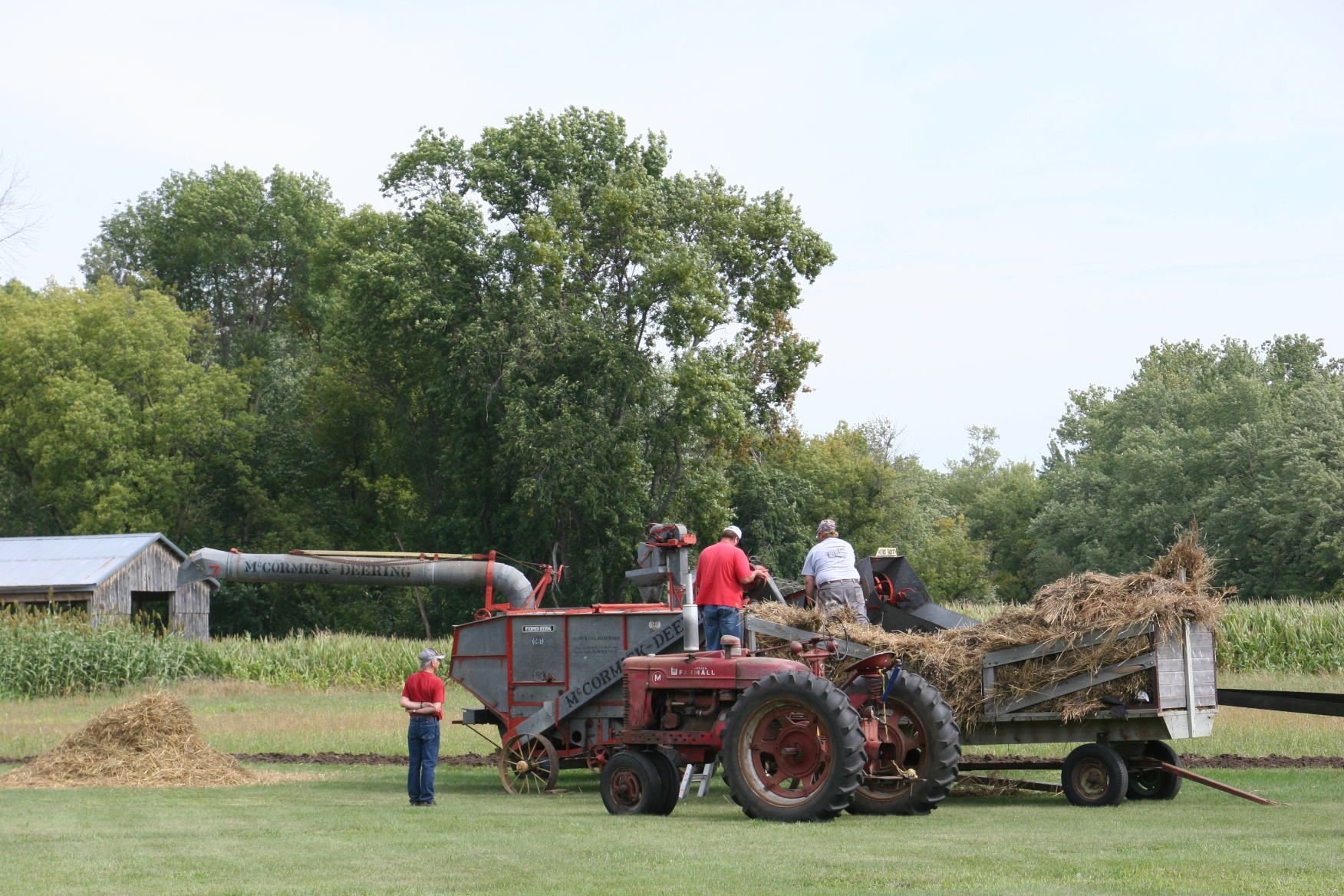
The threshing crew. (Minnesota Prairie Roots copyrighted photo September 2022)
Other farm machinery is also on-site, including a threshing machine, typically threshing oats, but under repair during my visit.
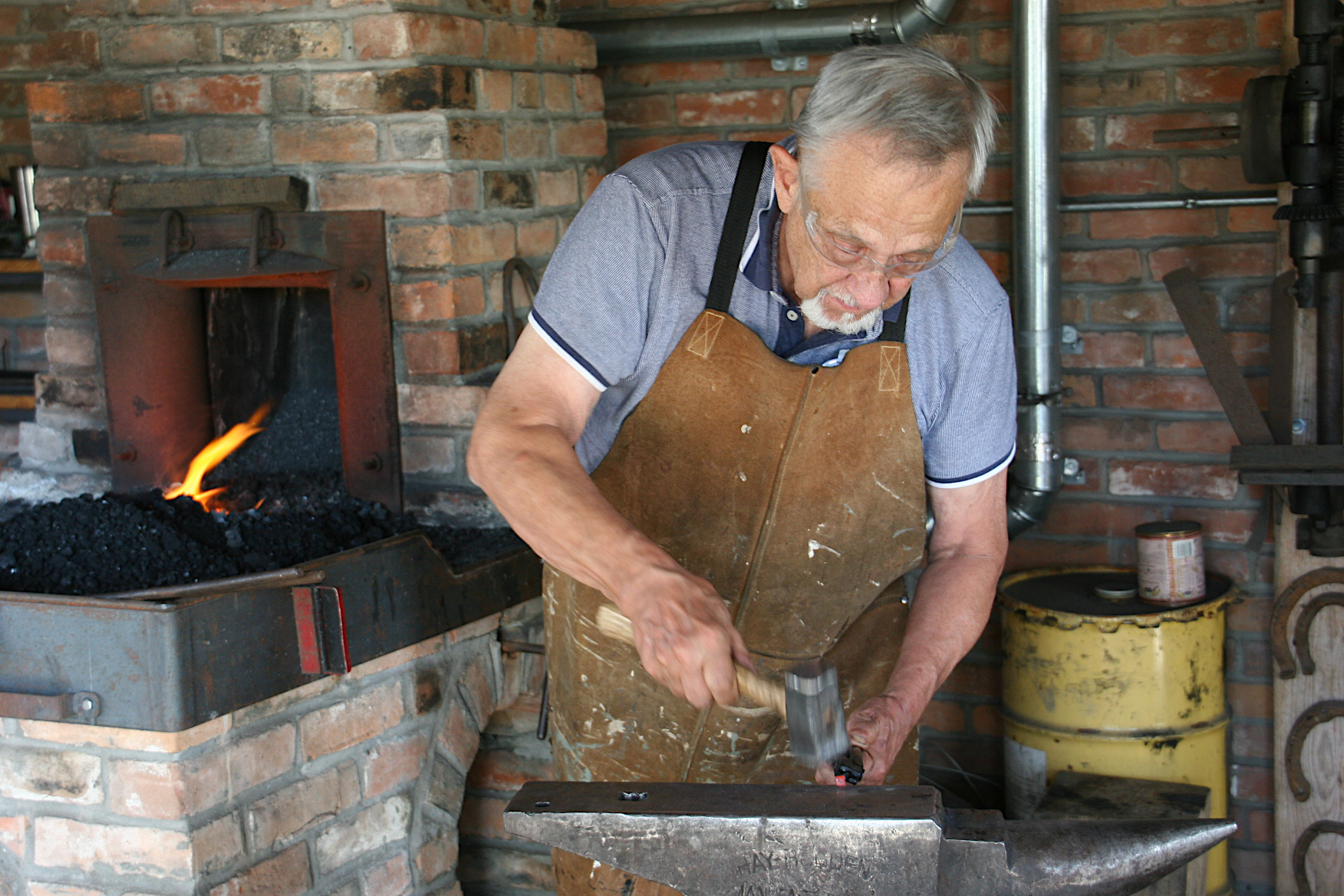
The blacksmith at work. (Minnesota Prairie Roots copyrighted photo September 2022)
There’s simply so much to see here, so much equipment to take in, so many demonstrations to watch. I observed blacksmithing and sorghum pressing. There’s also syrup making, corn shelling, flour milling, lumber sawing… Not all were up and running yet Friday morning.
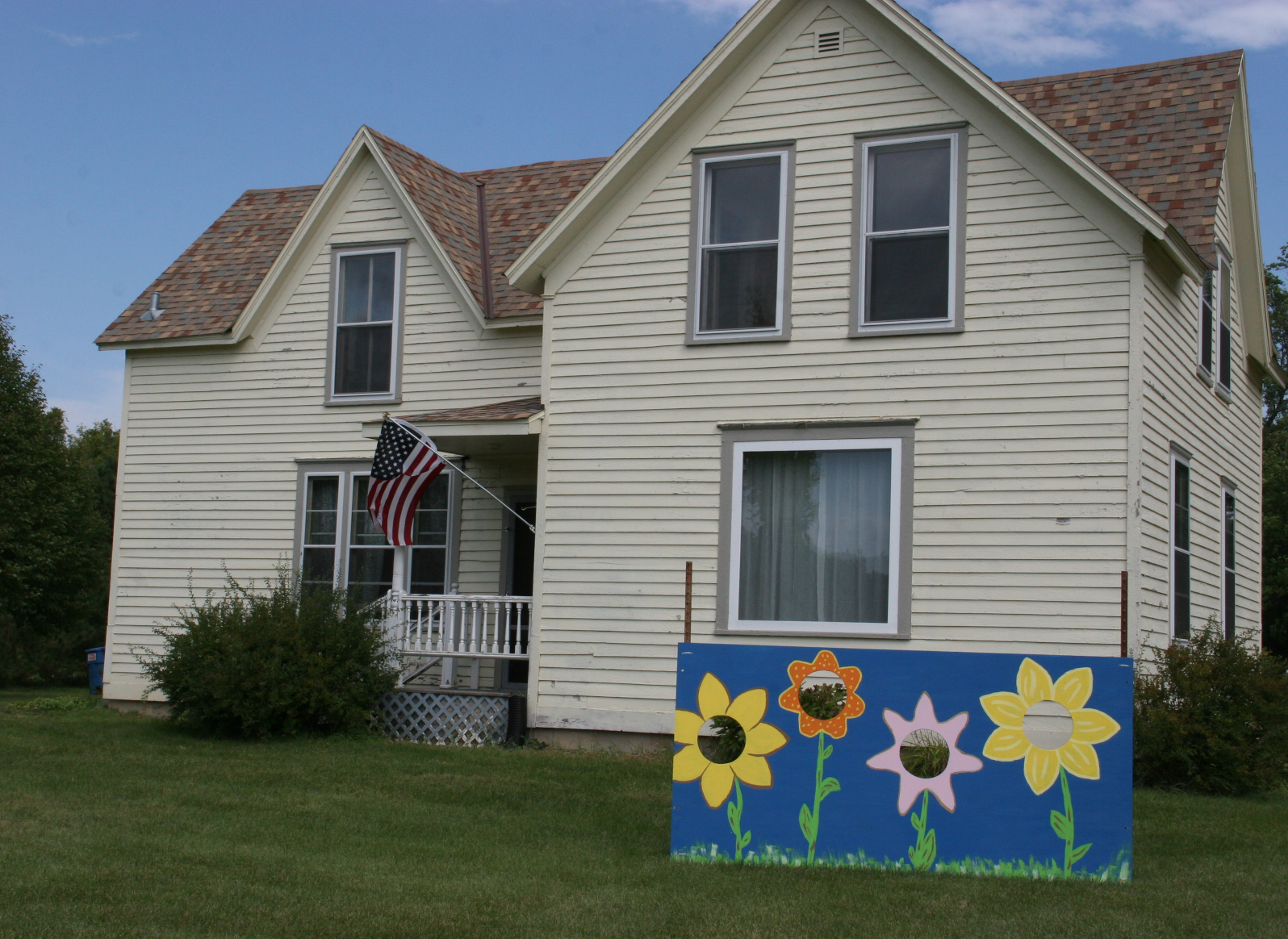
The 1912 farmhouse. (Minnesota Prairie Roots copyrighted photo September 2022)
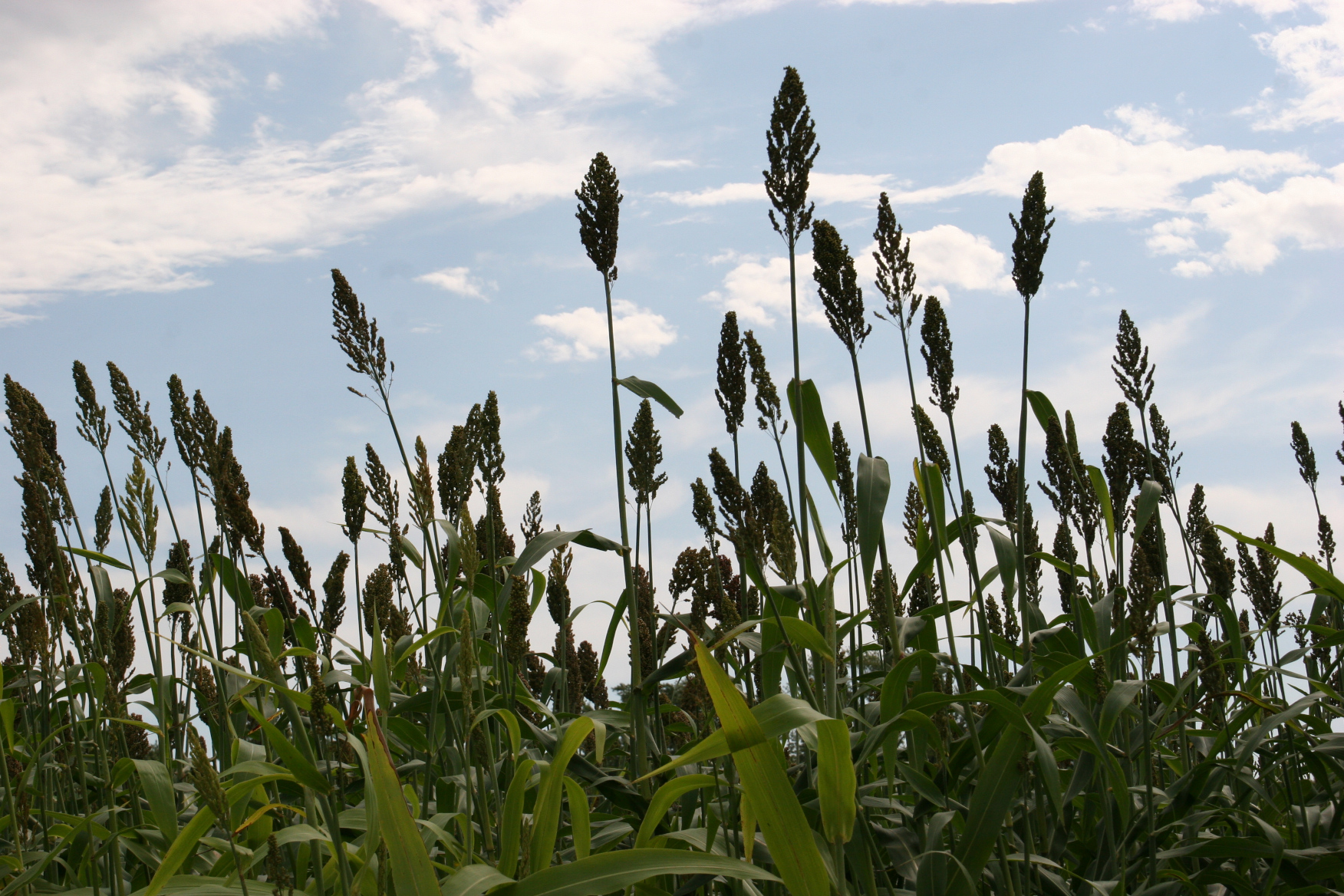
Sorghum towers in a field. (Minnesota Prairie Roots copyrighted photo September 2022)
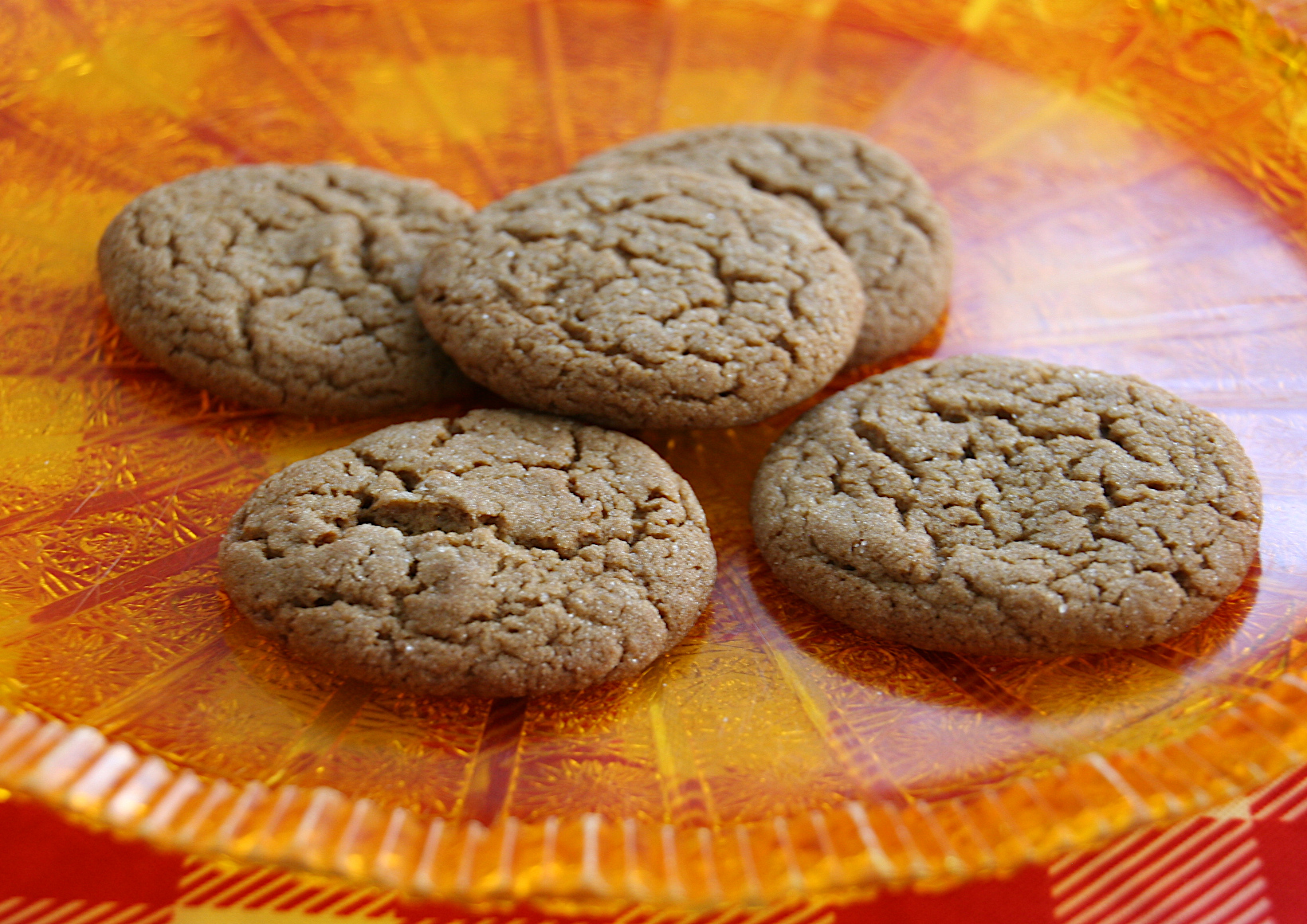
Delicious cookies made with sorghum. (Minnesota Prairie Roots copyrighted photo September 2022)
While demonstrations are a major draw, so are the aged farm buildings moved onto the grounds. Inside the 1912 Drentlaw farmhouse, my friend Ruth served cookies made with sorghum.
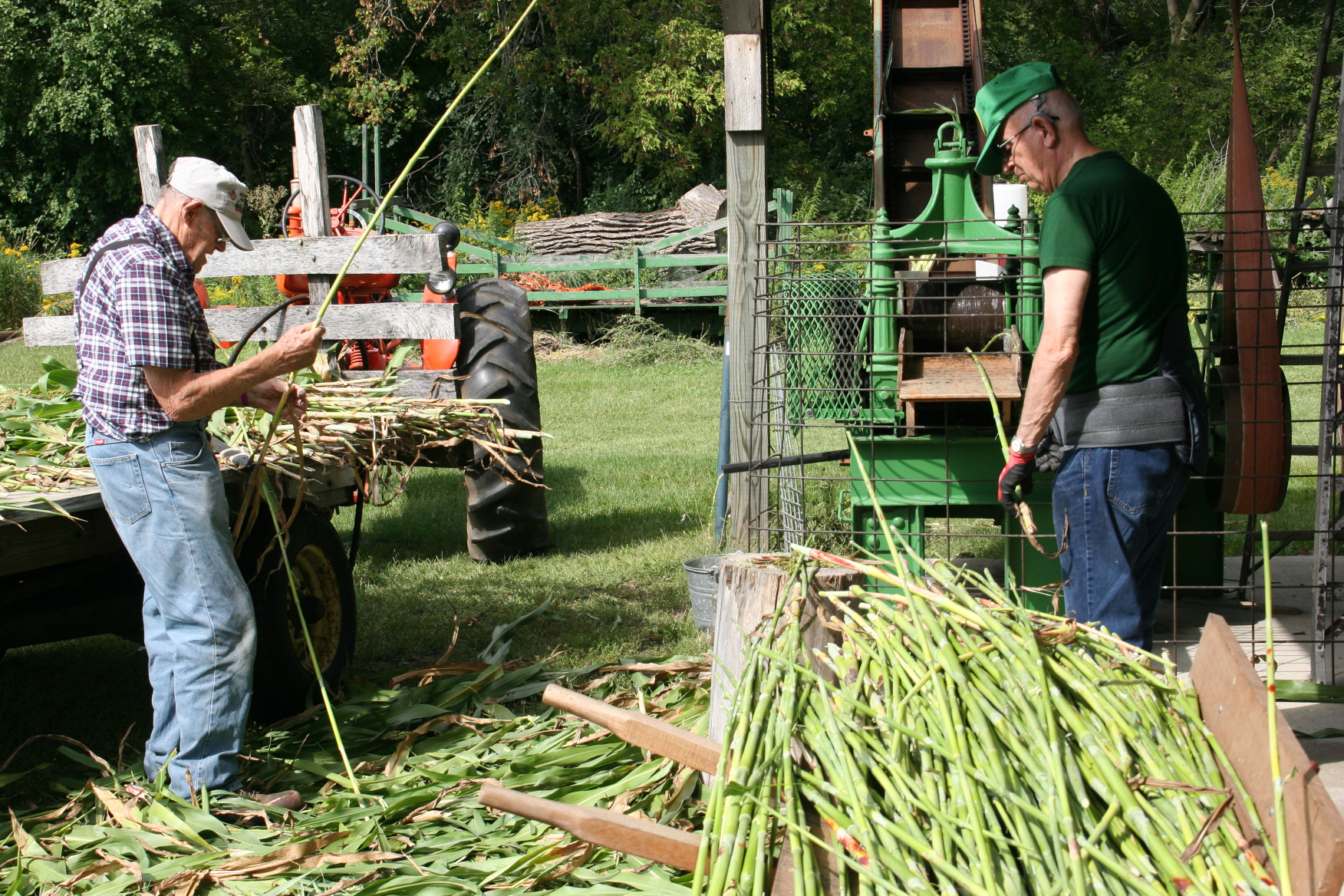
Pressing sorghum. (Minnesota Prairie Roots copyrighted photo September 2022)
Across the way, two men fed sorghum stalks into a press, liquid streaming into a bucket.
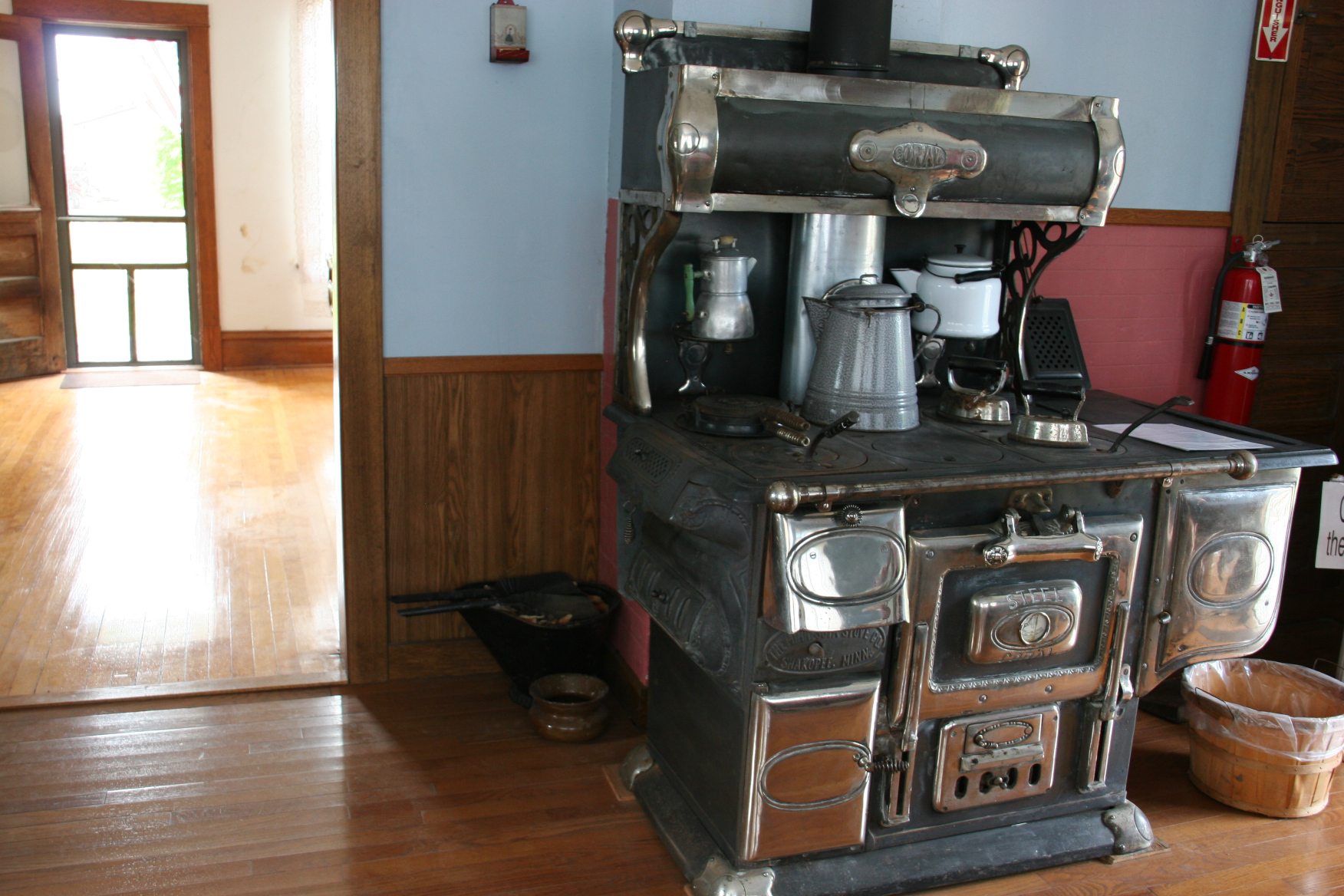
A massive stove defines the farmhouse kitchen. (Minnesota Prairie Roots copyrighted photo September 2022)
As I walked upon the wood floors of the farmhouse, I felt immersed in the past. A wood-burning stove anchors the small kitchen where a water dipper rests in an enamelware bowl in the sink. Embroidered dish towels drape a drying rack.
The dining room table set for guests. (Minnesota Prairie Roots copyrighted photo September 2022)
In the dining room, with fine china set upon a lace-covered table, the morning breeze billowed lace curtains.
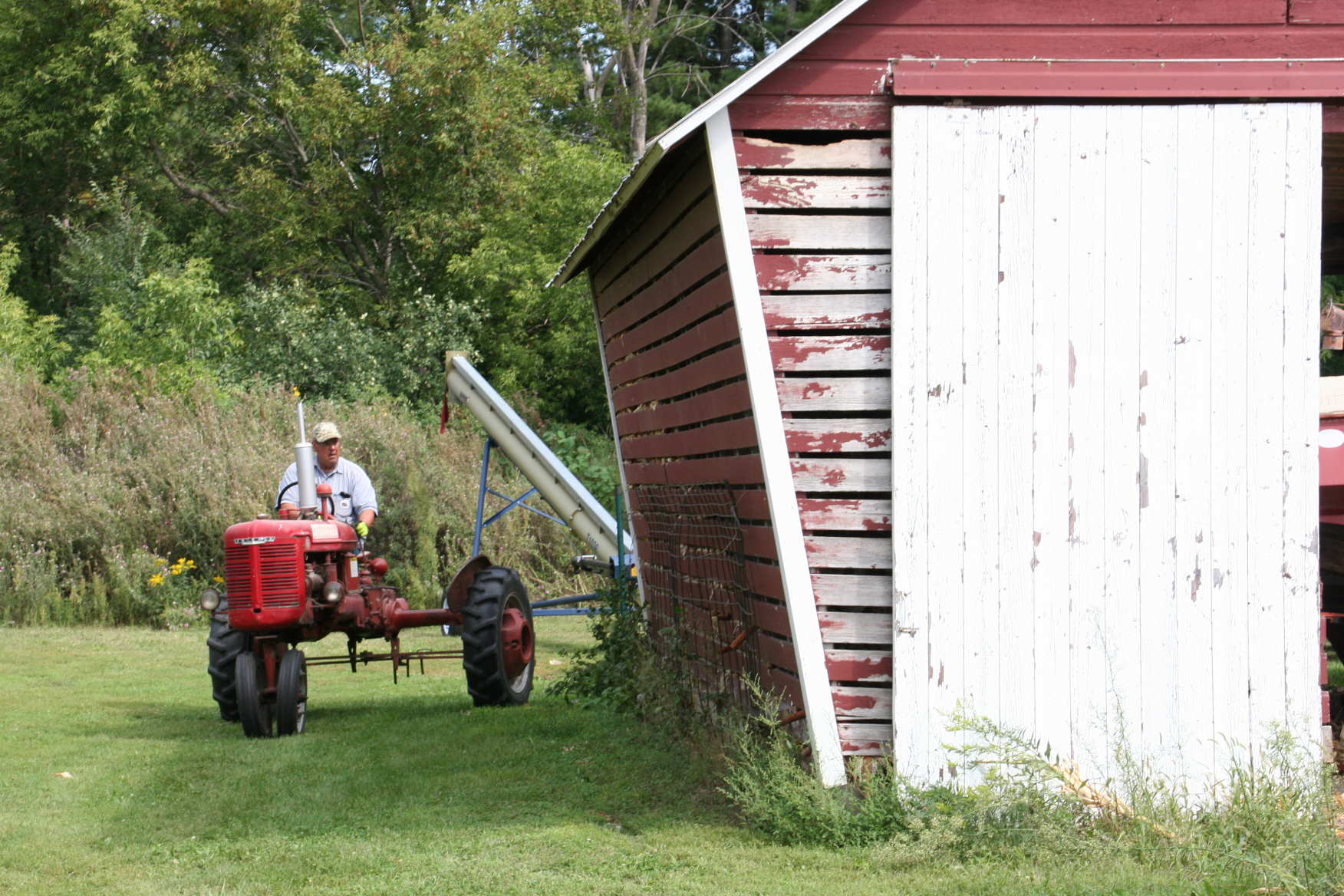
Rounding the corn crib… (Minnesota Prairie Roots copyrighted photo September 2022)
Outside the main house sits a summer kitchen with a corn crib and granary nearby. Replicating a farm site of yesteryear seems a goal. As a farm girl, I appreciate these efforts to preserve a bit of yesterday. Our Minnesota agrarian history needs to be shared at events like this which connect all ages to a way of life that is quickly vanishing.
My oddest find at this year’s flea market. (Minnesota Prairie Roots copyrighted photo September 2022)
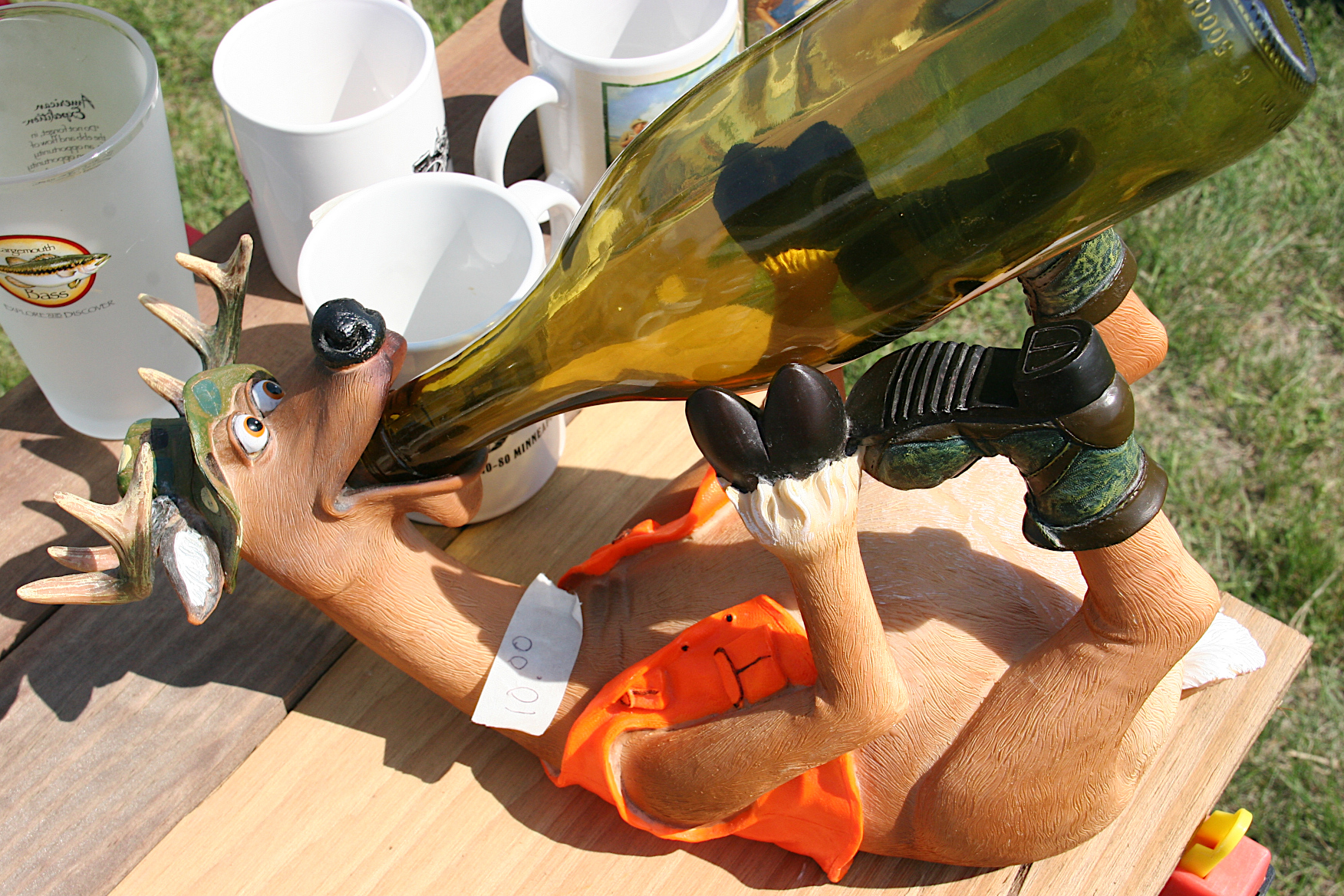
Even the flea market connects attendees to the past where old stuff mixes with crafts and an assortment of other merchandise. Every time here, I challenge myself to find oddities, weird whatever that makes me do a double take. This year’s vendors did not disappoint me.
A burger basket from the Northfield Knights of Columbus. (Minnesota Prairie Roots copyrighted photo September 2022)
Nor did the food. Vendors offer an assortment of tasty food and beverages ranging from burgers and fries to Mexican food, milkshakes, lemonade, kettle corn, mini donuts and more. It’s all about food and conversation and watching the daily tractor parade at noon while seated at a picnic table in the Food Pavilion.
One of three musicians in the band Steam Machine performs Friday afternoon. (Minnesota Prairie Roots copyrighted photo September 2022)
Over in the poleshed style music building, I listened to the bluegrass band Steam Machine. A couple danced across the cement floor, nearby hay racks piled with oats bundles. I photographed, then attempted to cool down after too much time in the heat and humidity.
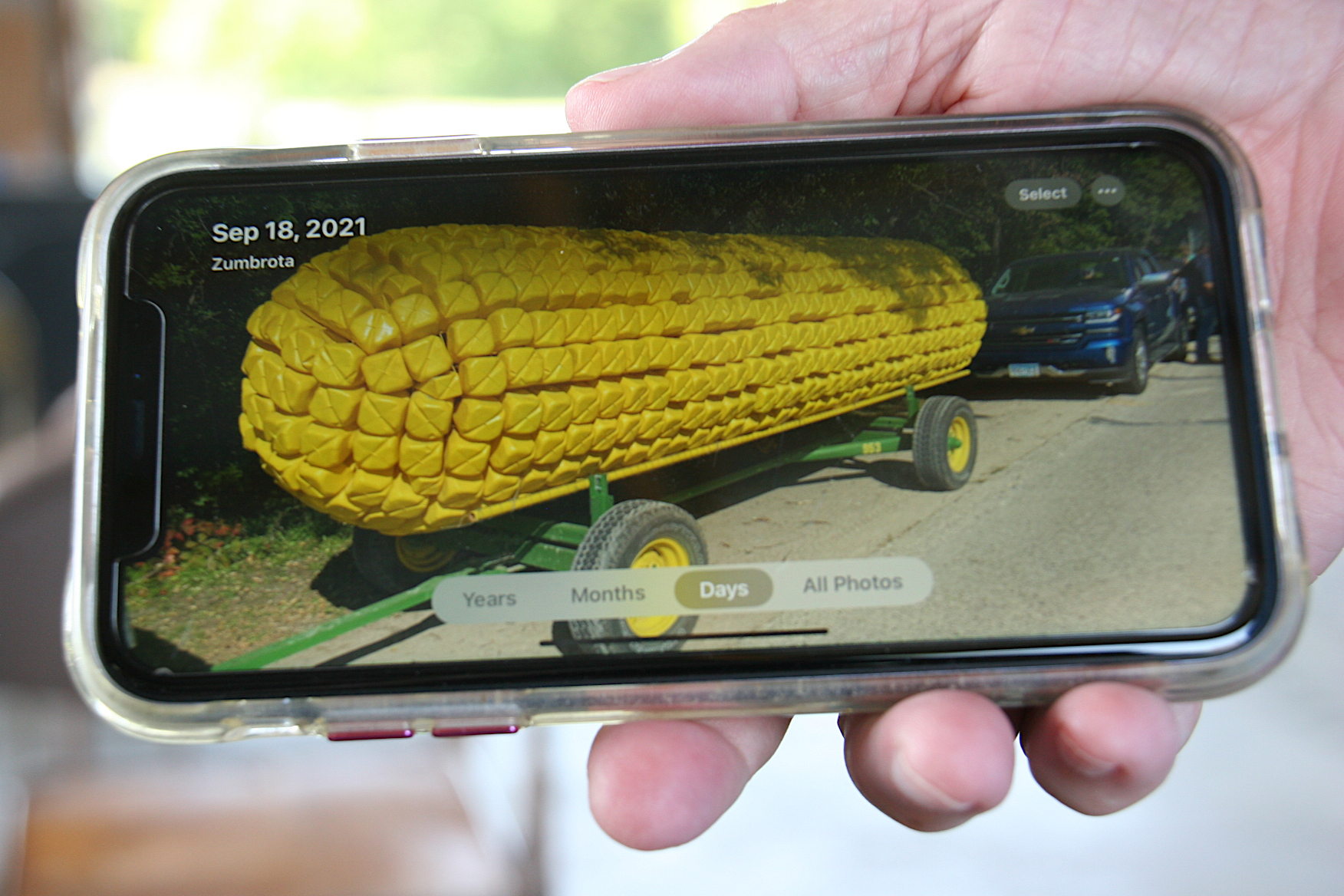
A gigantic ear of corn made of milk jugs. (Minnesota Prairie Roots copyrighted photo September 2022)
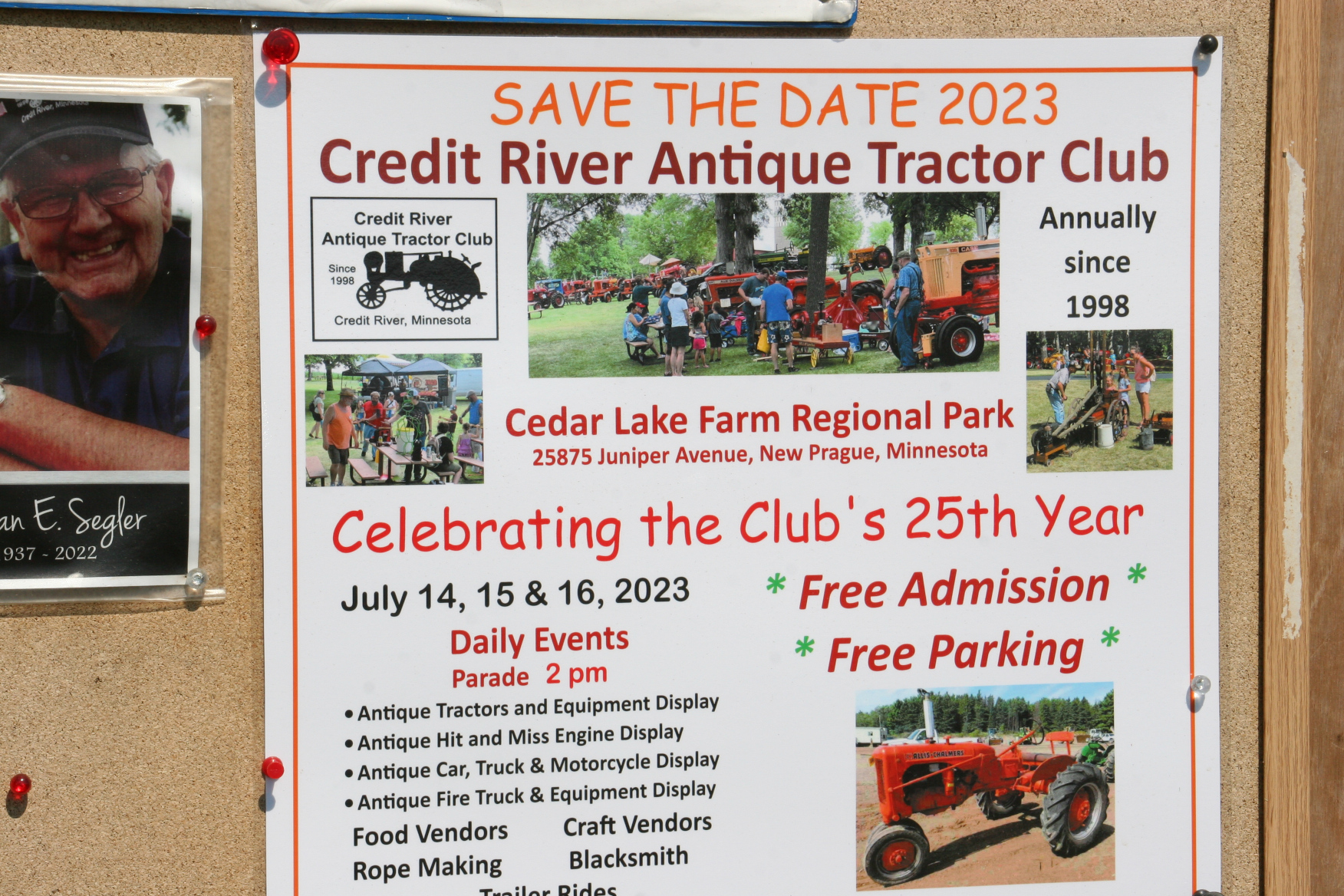
A poster promotes the 2023 Credit River show. (Minnesota Prairie Roots copyrighted photo September 2022)
I love how so many people care about our agricultural history. That includes the guys from the Credit River Antique Tractor Club who were selling raffle tickets for a 1952 Ford 8N tractor. Their annual show is set for July 14-16, 2023, in rural New Prague.
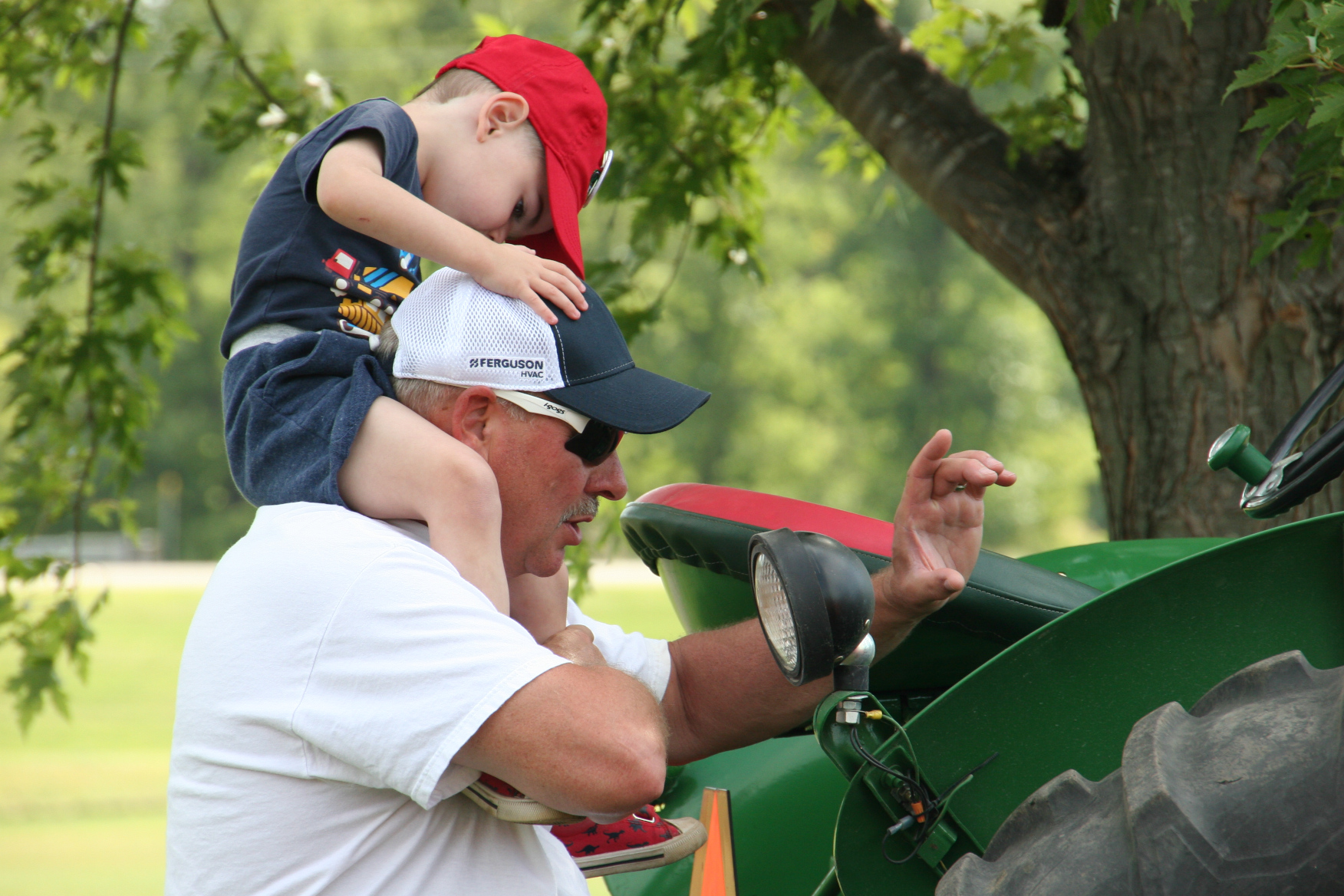
Teaching the younger generation about tractors. (Minnesota Prairie Roots copyrighted photo September 2022)
The Rice County folks will be back, too, in 2023, “Preserving a Bit of Yesterday for Tomorrow.” There will be a tractor parade, a Kids Pedal Pull, demonstrations, tractors galore and, oh, so much more at the Labor Day weekend show. Even train rides…
All Quacked Up! open-faced sandwich. (Photo source: The Hideaway Speakeasy Facebook page/Minnesota State Fair)
WHEN MY FAIR-THEMEDFOOD POST published yesterday, I had no idea that duck eggs from a rural Faribault farm are the focus of a new Minnesota State Fair food.
But then a newsletter from Graise Farm landed in my email Thursday morning and I knew immediately I needed to share this fair food update. Duck eggs from the farm owned by Tiffany Tripp and Andy Olson are featured in All Quacked Up!, a new open-faced sandwich created by The Hideaway Speakeasy. This is kind of a big deal for co-owners of this farm north of Cannon City, which is northeast of Faribault.
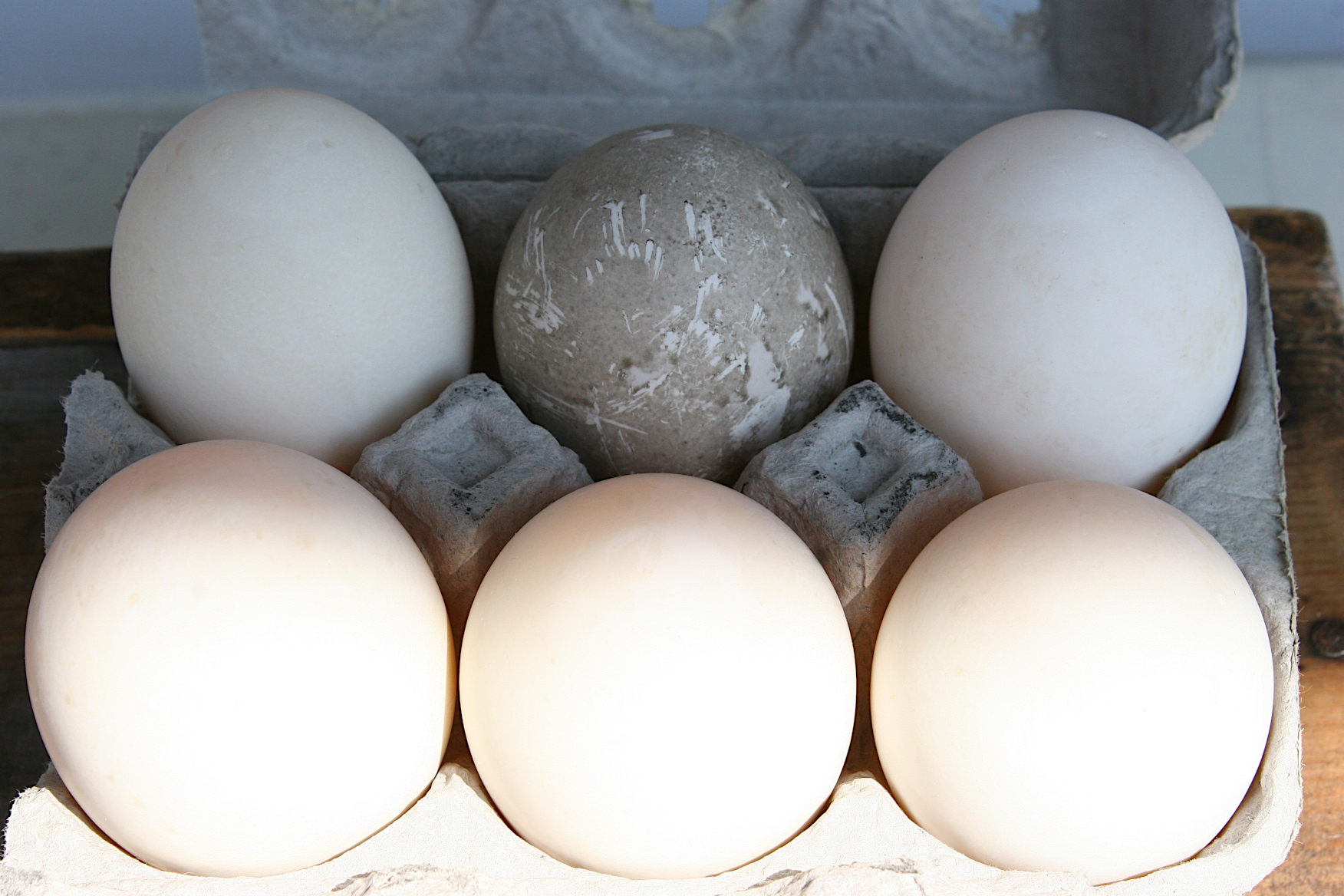
Graise Farm eggs, photographed at the Cannon Valley Farmers’ Market. (Minnesota Prairie Roots copyrighted file photo May 2021)
On Tuesday, Andy delivered 2,600 duck eggs to the Hideway fair location in the upper grandstand veranda area. Graise Farm has committed to providing 5,000 eggs.
Besides my excitement for Tiffany and Andy, who truly are deserving of this sale and the resulting exposure this will give their business, I love the name. All Quacked Up! is memorable and just plain fun. And even if I’m not a fried egg foodie, the sandwich sounds tasty. Here’s its description:
Fried, farm-fresh duck egg from Graise Farm in Faribault atop shaved smoked ham, aged cheddar cheese, tomato and spinach, served open-face on toasted sourdough bread with paprika aioli.
When I consider a fried egg sandwich, I think of my dairy and crop farmer father who often ate fried eggs for breakfast. Chicken, not duck, eggs. Plain, not fancy. Fried in lard, seasoned with salt and pepper. I can picture him now in his striped bib overalls, forking mouthfuls of egg, the yolk running across his dinner plate. And then, when the egg was mostly gone, he sopped up the remaining yolk with a slice of toasted homemade bread.
I expect many other farm kids share that fried egg memory. Perhaps even Tiffany, who left the family farm after earning degrees in agricultural economics and Spanish to work and travel the world, then returned to the family farmstead in 2012. Andy isn’t a farm kid. But, together he and Tiffany embrace rural life, sharing their passions of “raising animals humanely and eating healthy, delicious food grown locally.” Their animals are pasture-raised and/or organic-fed, including those free-range ducks.
You’ll find Graise Farm eggs at this food co-op in Northfield, Minnesota. (Minnesota Prairie Roots copyrighted photo October 2021)
The pair raises ducks, chickens, pigs and goats. They sell eggs, pork, and stew chickens and ducks. For more information, visit the Graise Farm website, which lists locations to buy those typically jumbo-sized duck eggs. And, yes, that includes in the Twin Cities metro.
#
FYI: Tiffany was instrumental in establishing the Cannon Valley Farmers’ Market with food and products from small-scale farmers and producers in the Cannon River Valley. In the warm weather months, that market is open from 4 – 7pm Thursdays at the Rice County Fairgrounds in Faribault. Cold weather moves the market indoors to the Faribo West Mall.
THE 2022 PLANTING SEASON has proven exceedingly challenging for Minnesota farmers. A late spring with unseasonably cold temps, coupled with too much rain, has delayed seeding of corn and soybeans.
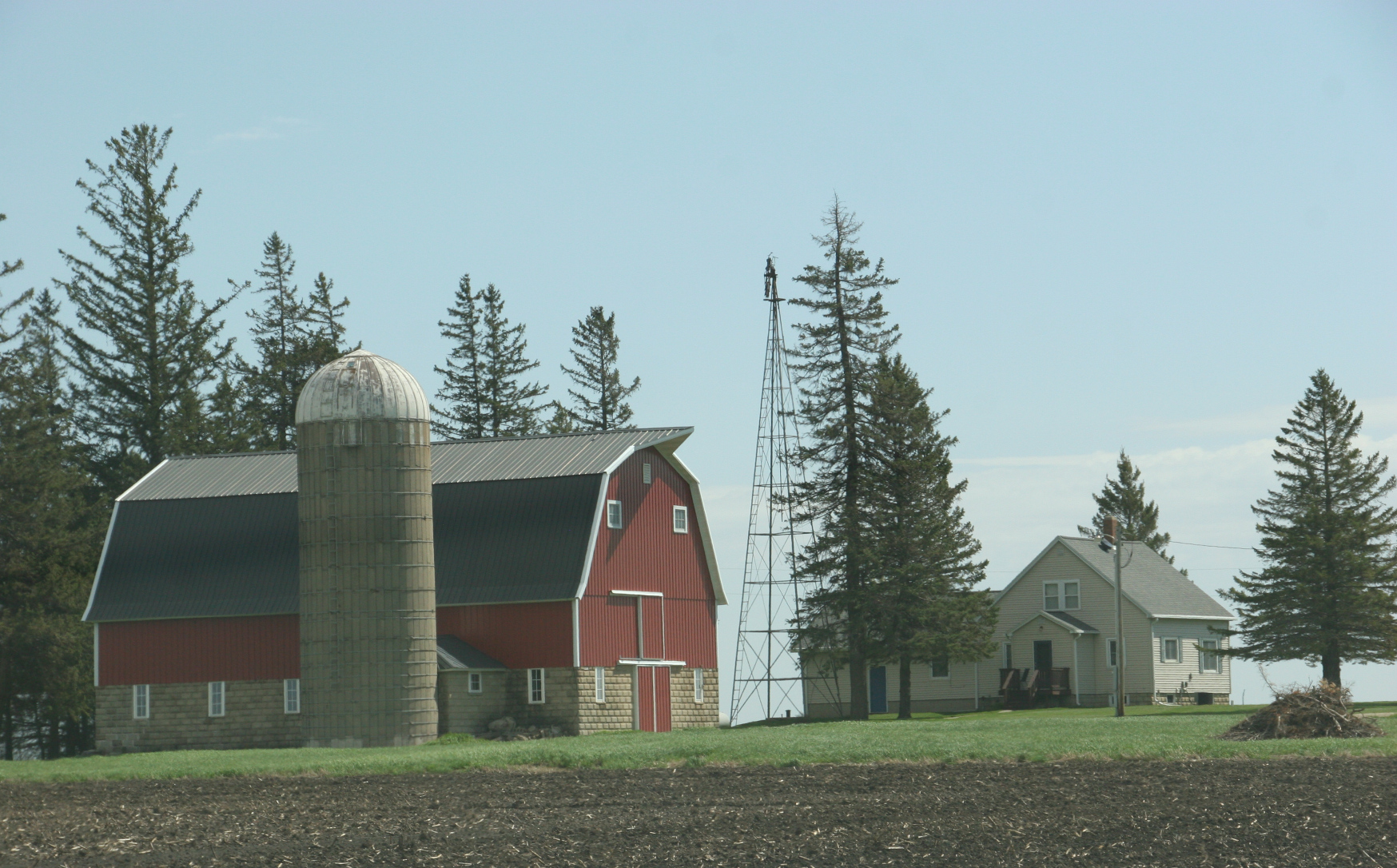
A picturesque farm site in southern Minnesota, field in the foreground. (Minnesota Prairie Roots copyrighted photo May 2022)
Some areas of our state have experienced widespread flooding, creating muddy conditions and lakes. Not exactly what farmers need in May. To add to that, destructive storms damaged or destroyed farm buildings and equipment, especially in the western region of Minnesota.
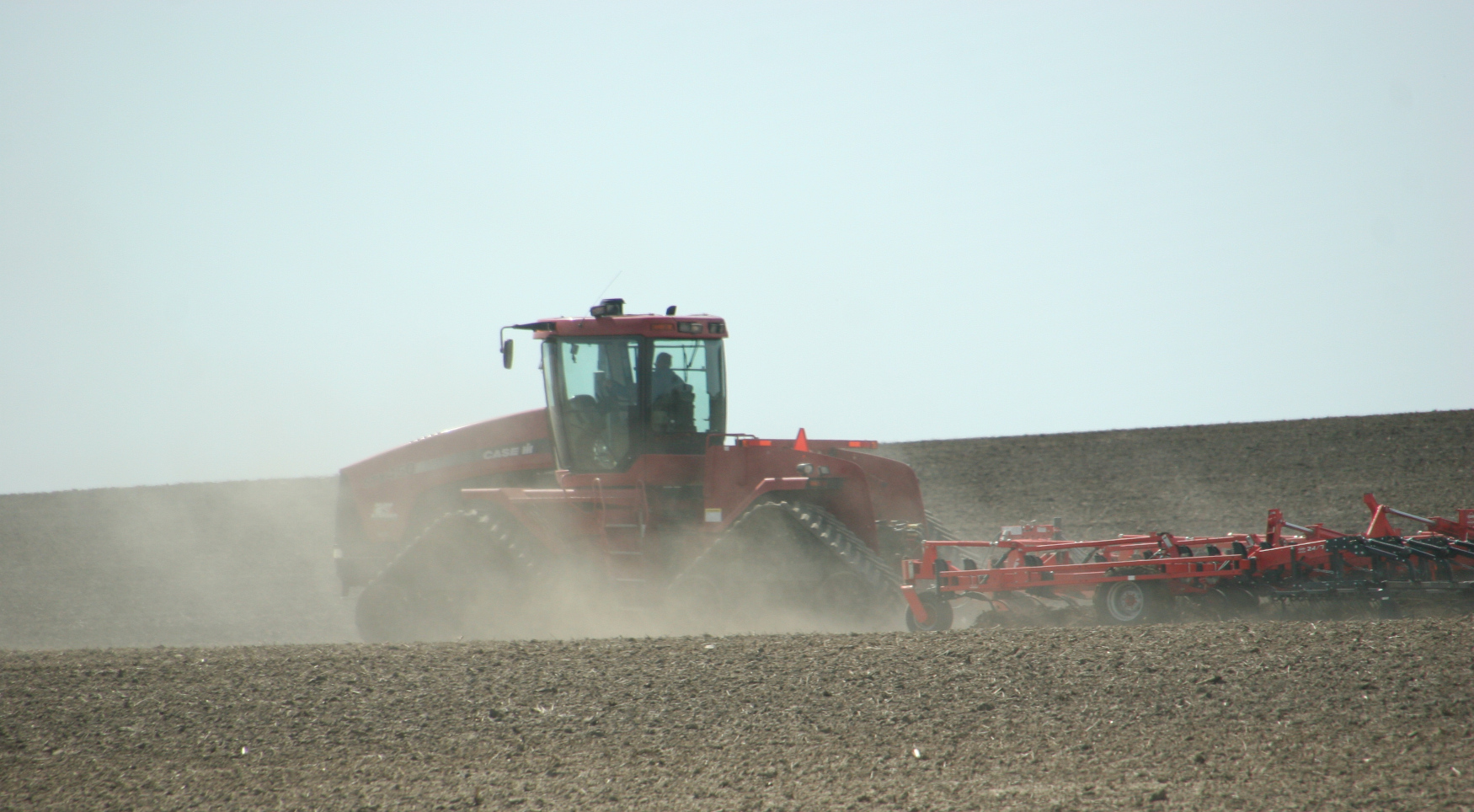
Soil type and topography (here on a hillside) affect tilling and planting, along with the biggest factor, weather. (Minnesota Prairie Roots copyrighted photo May 2022)
Corn planting data from the United States Department of Agriculture (updated every Monday) shows below average planting progress throughout the Midwest, West and in some states east of Illinois. In Minnesota, only 60 percent of the corn was planted as of May 23. That compares to 98 percent last year and a 5-year average of 86 percent. That puts into perspective the 2022 planting delays.
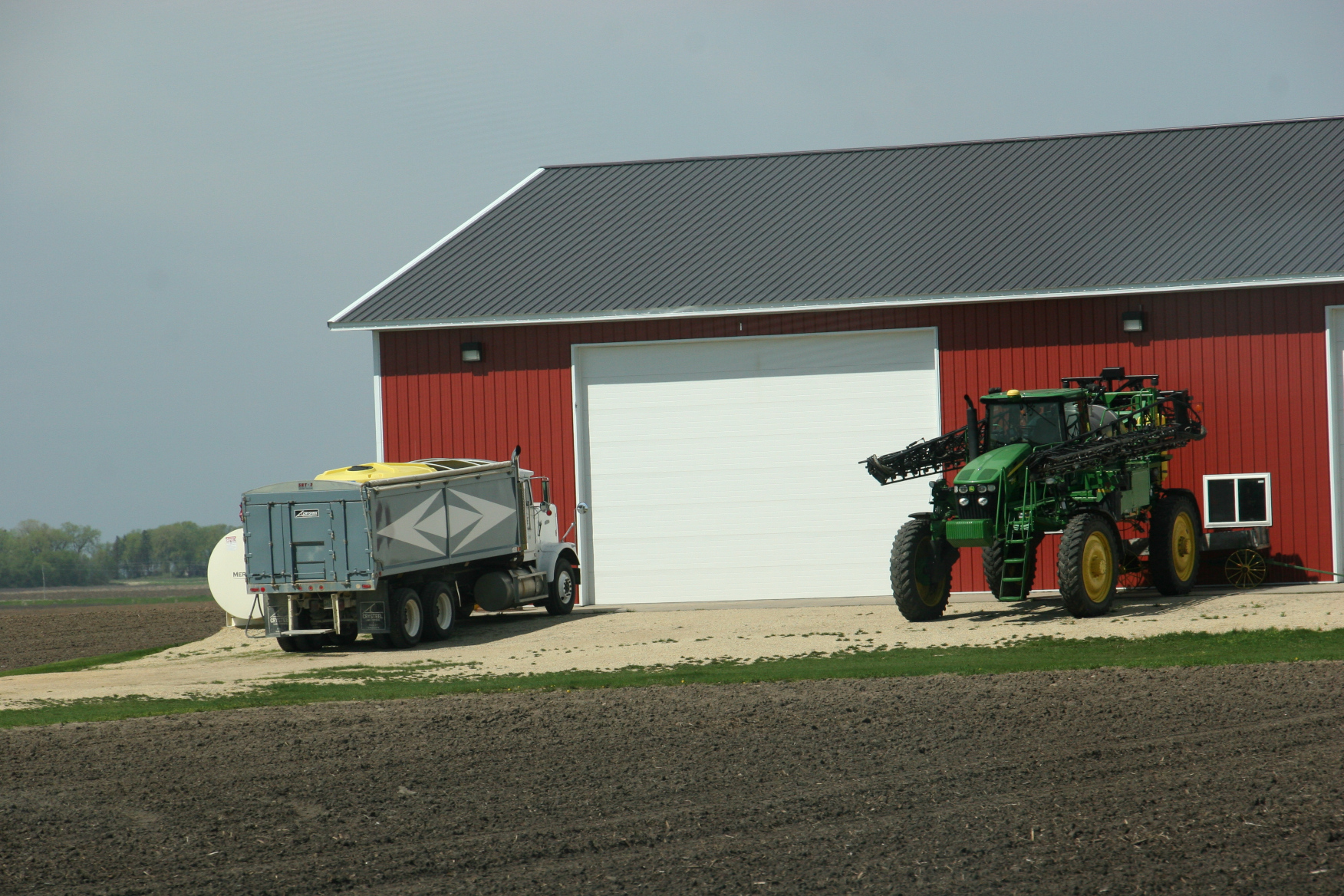
Equipment, outside a farm outbuilding, ready for spring field work. (Minnesota Prairie Roots copyrighted photo May 2022)
Yet, if you farm, you realize a stretch of good weather can quickly change everything for the good. Time will tell how this all plays out.
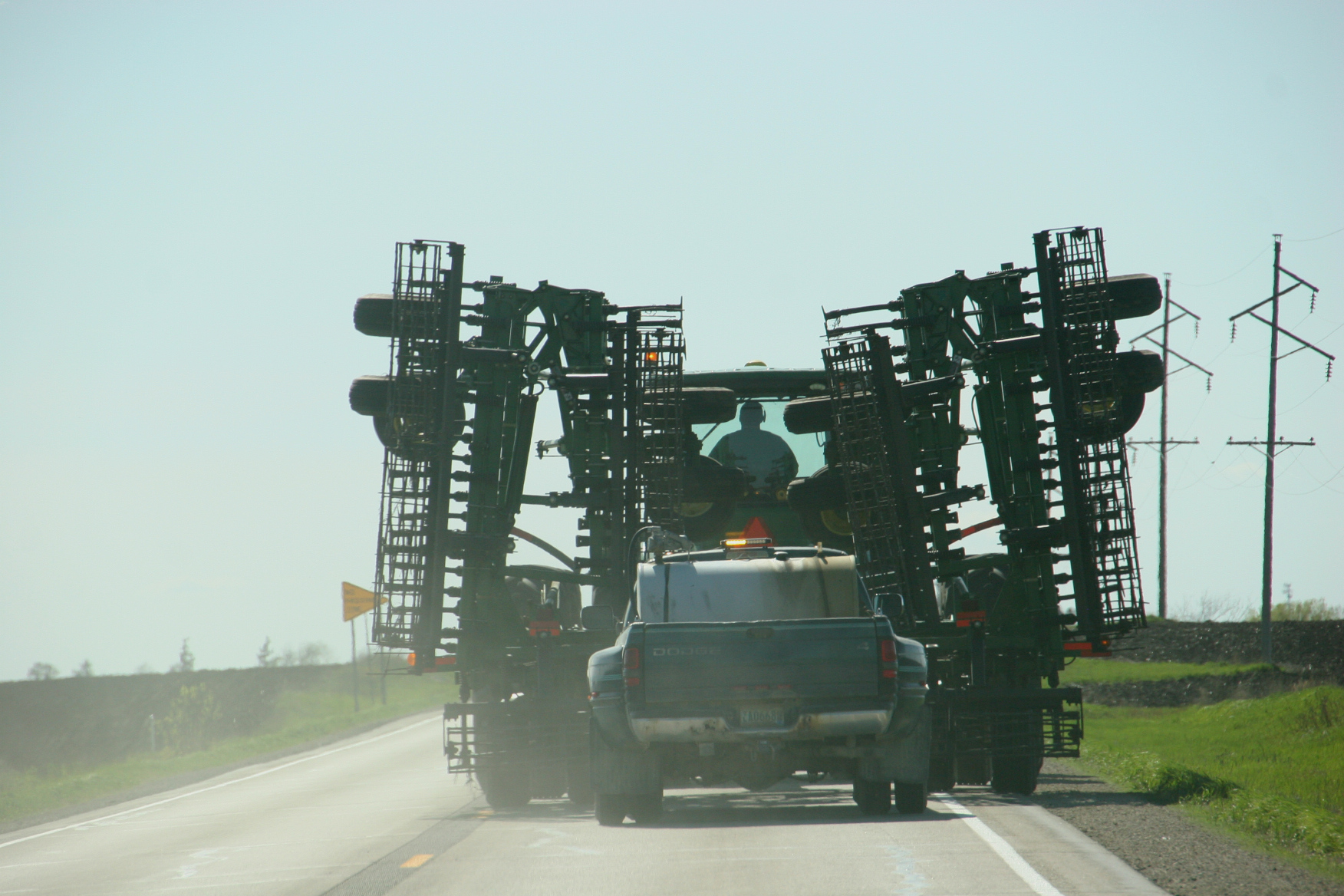
Following farm equipment on Minnesota State Highway 60. This is a common sight in spring which requires patience and caution by motorists. (Minnesota Prairie Roots copyrighted photo May 2022)
I find it interesting that, nearly 50 years removed from the farm, I still pay attention to spring planting, and, later, harvest. I have friends who farm. But, more than that, farming is part of my history, part of who I am, even as an adult decades distanced from living on the land. I am proud of my rural heritage. It shaped me. It grew me. I see that rural influence in my writing, my photography, in the places I value and, I suppose, even in the way I live my life.
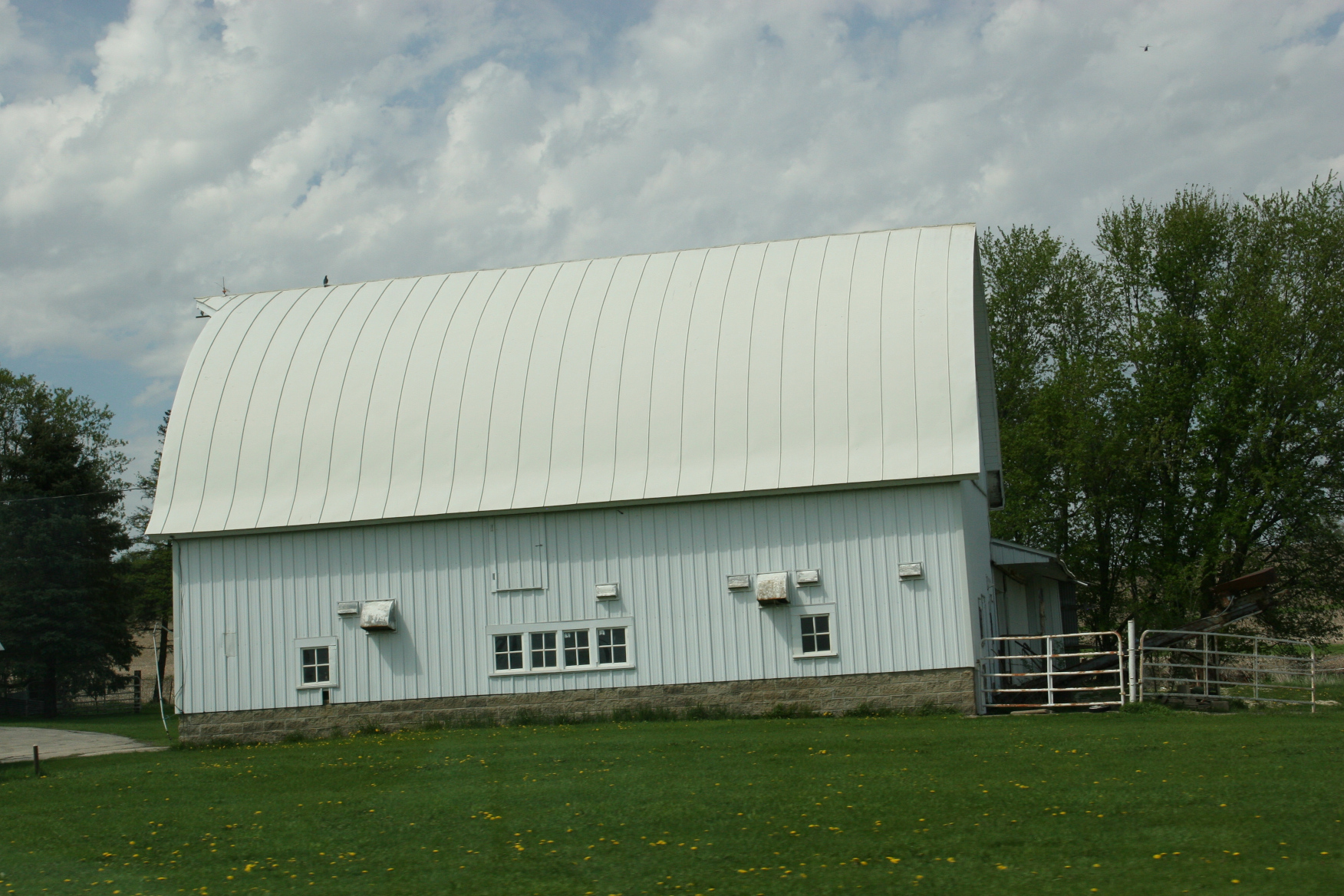
A well-kept barn in southern Minnesota. (Minnesota Prairie Roots copyrighted photo May 2022)
I am, and always shall be, honored to call myself a farm girl.
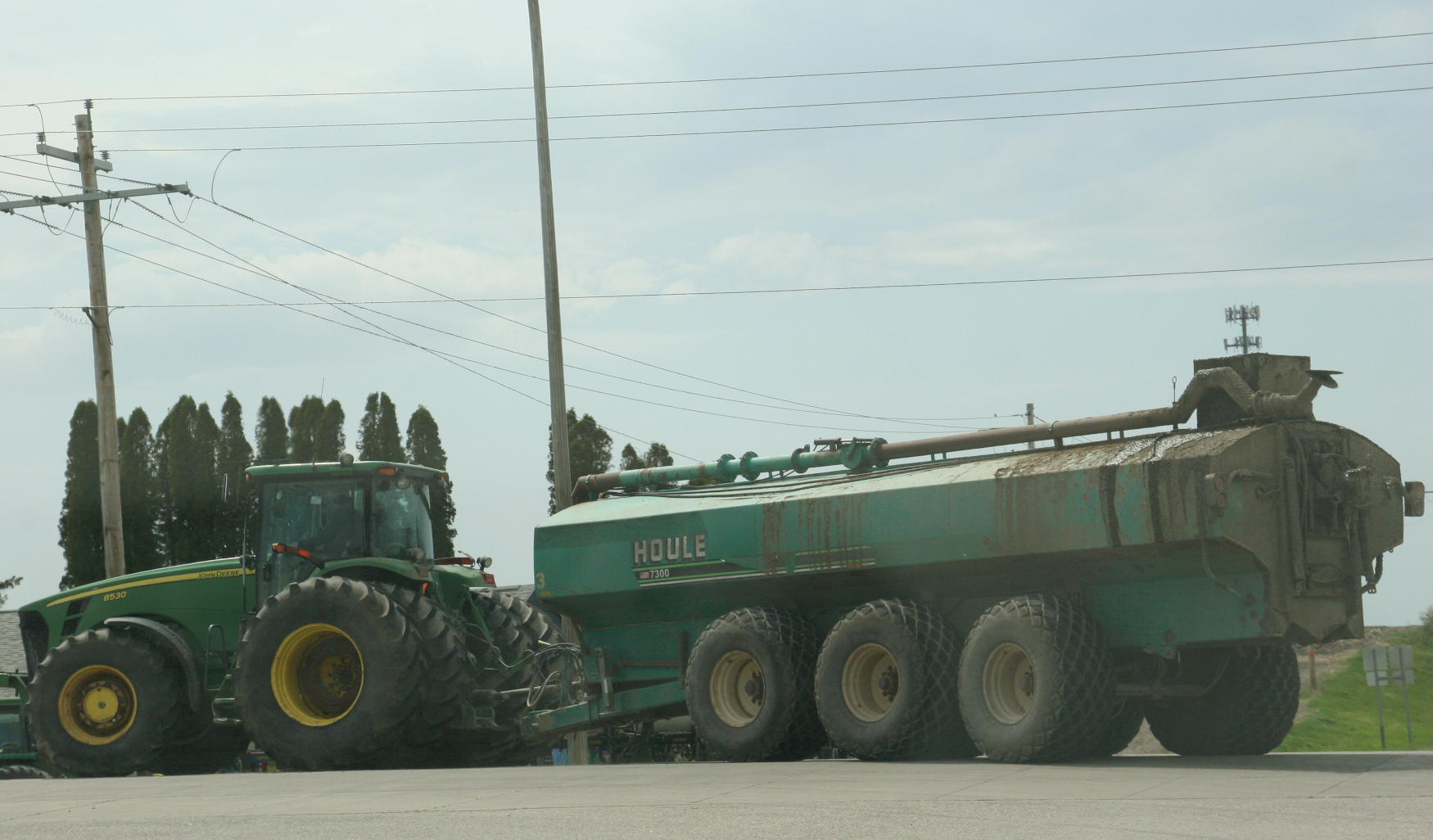
Another common sight on Minnesota roadways in the spring–a farmer hauling liquid manure to spread on fields. Not really anything you want to follow and I was thankful when the tractor turned. (Minnesota Prairie Roots copyrighted photo May 2022)
HOW ABOUT YOU? Did place shape you? I’d like to hear.
NOTE: I took these photos on May 14 in Goodhue, Olmsted, Rice and Wabasha counties in southeastern Minnesota.All images were taken through the passenger side windshield or side window while traveling on the roadway.
IN RECENT YEARS, I’VE TAKEN to reading obituaries printed in my local newspaper, the Faribault Daily News, and also online. That includes checking the obit listing on KLGR radio in Redwood Falls, the county seat of my hometown county. Extended family and many other people to whom I’m connected live in southwestern Minnesota.
I am of that age when the generation just ahead of me is passing at a rapid rate. That includes my mom, who died in January, and my father-in-law a year earlier. But young people also die, usually unexpectedly. That includes my cousin Randy, who died suddenly at the age of 50 just two days after my mom. And then a cousin’s 48-year-old stepson shortly thereafter.
It’s a lot, this death. And while death is difficult, it’s part of life and we will all some day face our earthly mortality. That’s reality.
Obituaries not only publicly inform us of deaths and funeral/burial details, but they also reveal information about the deceased. Most are written in a straightforward manner of factual life basics. Birth, marriage, education, occupation, interests, family. That sort of stuff.
But once in awhile I find a stand-out obit unlike any other. That would be the obituary of Martha Ann Schewe, 74, of Danube, who died March 4. “Marcy/Tractor Mimi/Pizza Grandma/Murphy” was, according to the record of her life, welcomed into heaven with a flyswatter and a hot plate of pierogi. And, yes, I had to Google pierogi, which is a Polish staple dumpling—dough wrapped around a savory or sweet filling and cooked in boiling water. That flyswatter and pierogi hook hooked me into reading the story of Marcy’s life.
And what a life it was. Pennsylvania-born, she eventually landed on a Minnesota farm with her native-born husband. Marcy met Jim at a dance in DC and they corresponded daily for 16 months while he was stationed overseas during the Vietnam War. He even mailed an engagement ring to her. That arrived on Friday the 13th. She waited a day to open the package.
I encourage you to click here and read Marcy’s obit in its entirety. It’s worth your time to read about this woman who was determined to leave rural life behind after a childhood of following “a heavily wooded, bear infested road to the bus stop, delivering milk from her parents’ dairy farm to the neighbors along the way.”
Love and life had a way with Marcy, who would grow to embrace farm life in southwestern Minnesota.
Details reveal a woman who loved family and life. But she disliked squirrels, even grumbled about them. There’s a whole lot more packed into her obituary. Please read it. Yes, I’m repeating that because you really need to read Marcy’s story (and the comments in her guestbook).
Marcy’s obit ends with this loving, humorous conclusion: Her fierce and vibrant spirit is carried on by her soulmate, her 5 children, 9 grandchildren, 5 great grandchildren, 7 siblings, a handful of hated squirrels, a menagerie of farm animals, and a whole wide world full of longtime friends, some of whom she hadn’t gotten around to meeting yet.
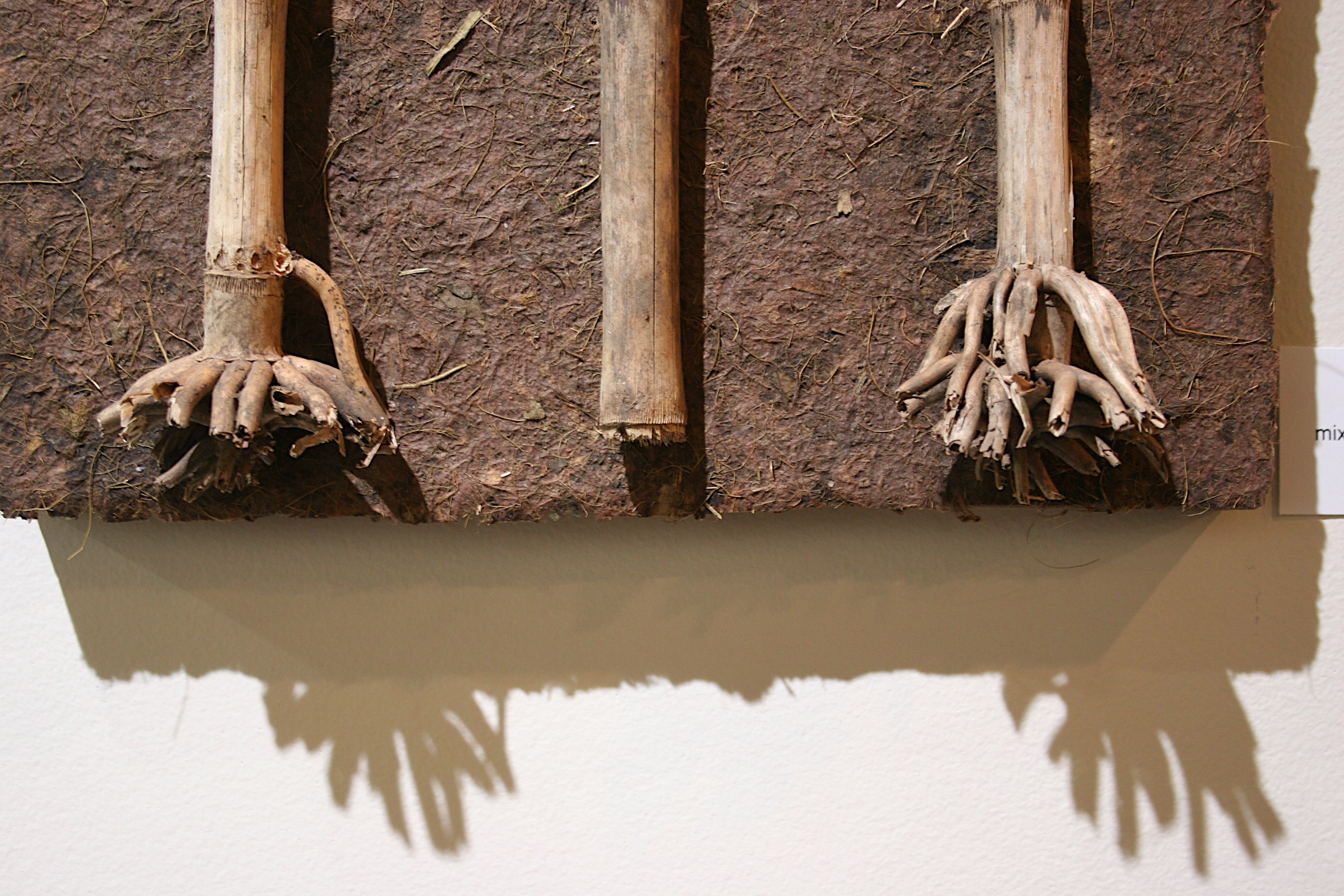
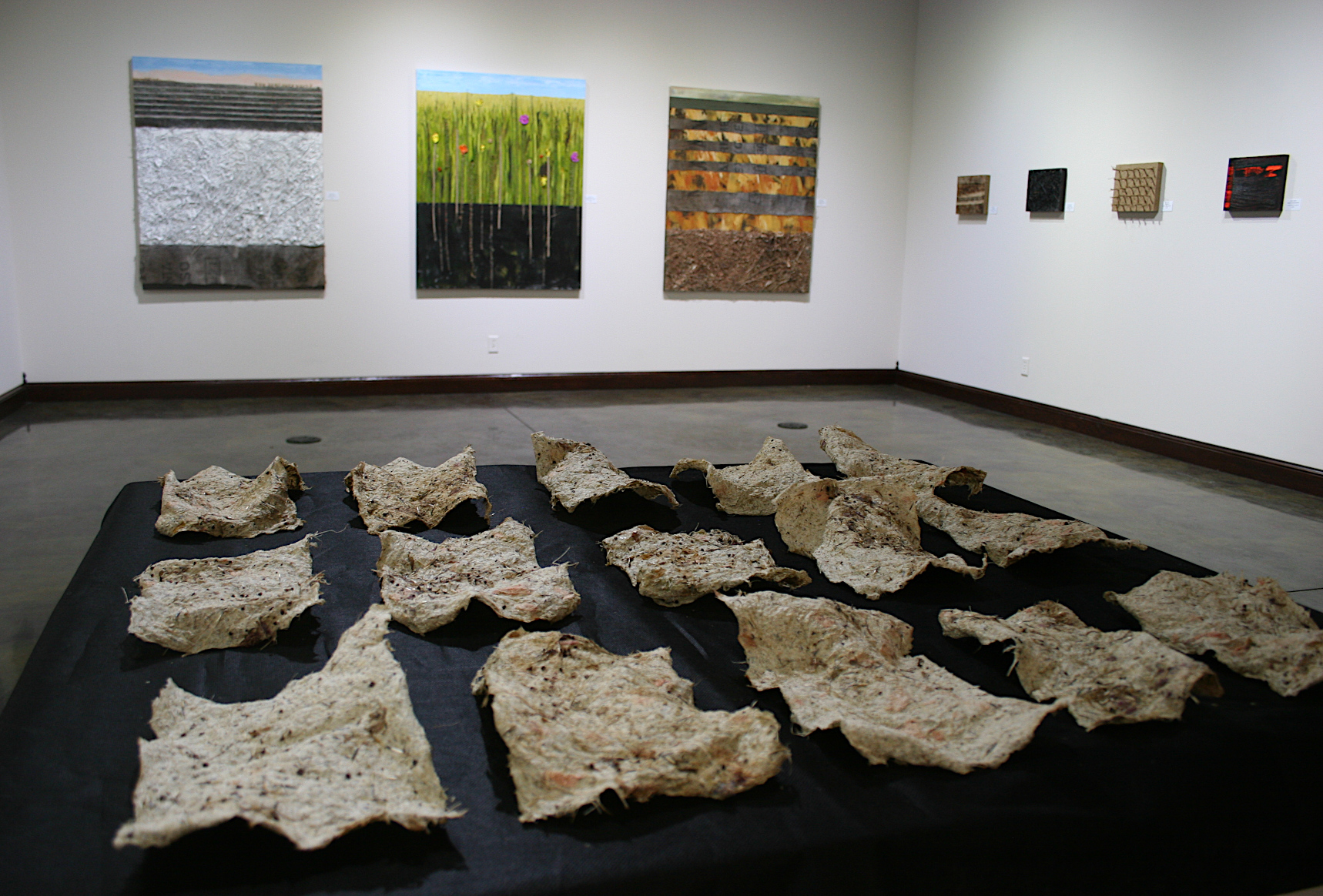
The lower portion of “Roots” shadows on the gallery wall. These are dry corn roots. (Minnesota Prairie Roots copyrighted photo March 2022)
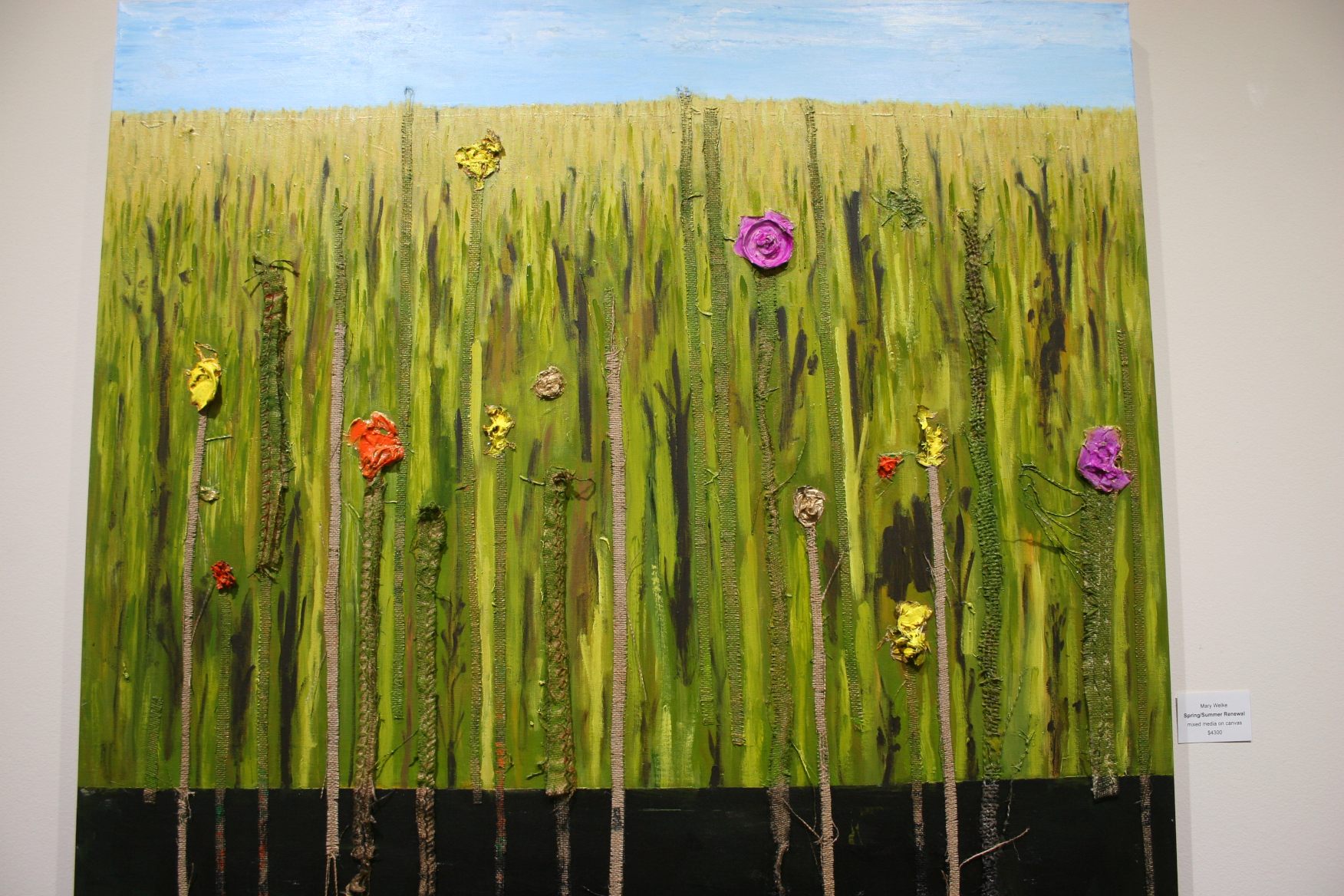
Welke’s mixed media art is unlike any I’ve ever seen. It resonates with me, reconnecting me to my southwestern Minnesota prairie roots. To the farm. To the land. The place that shaped me as a person, writer and photographer.
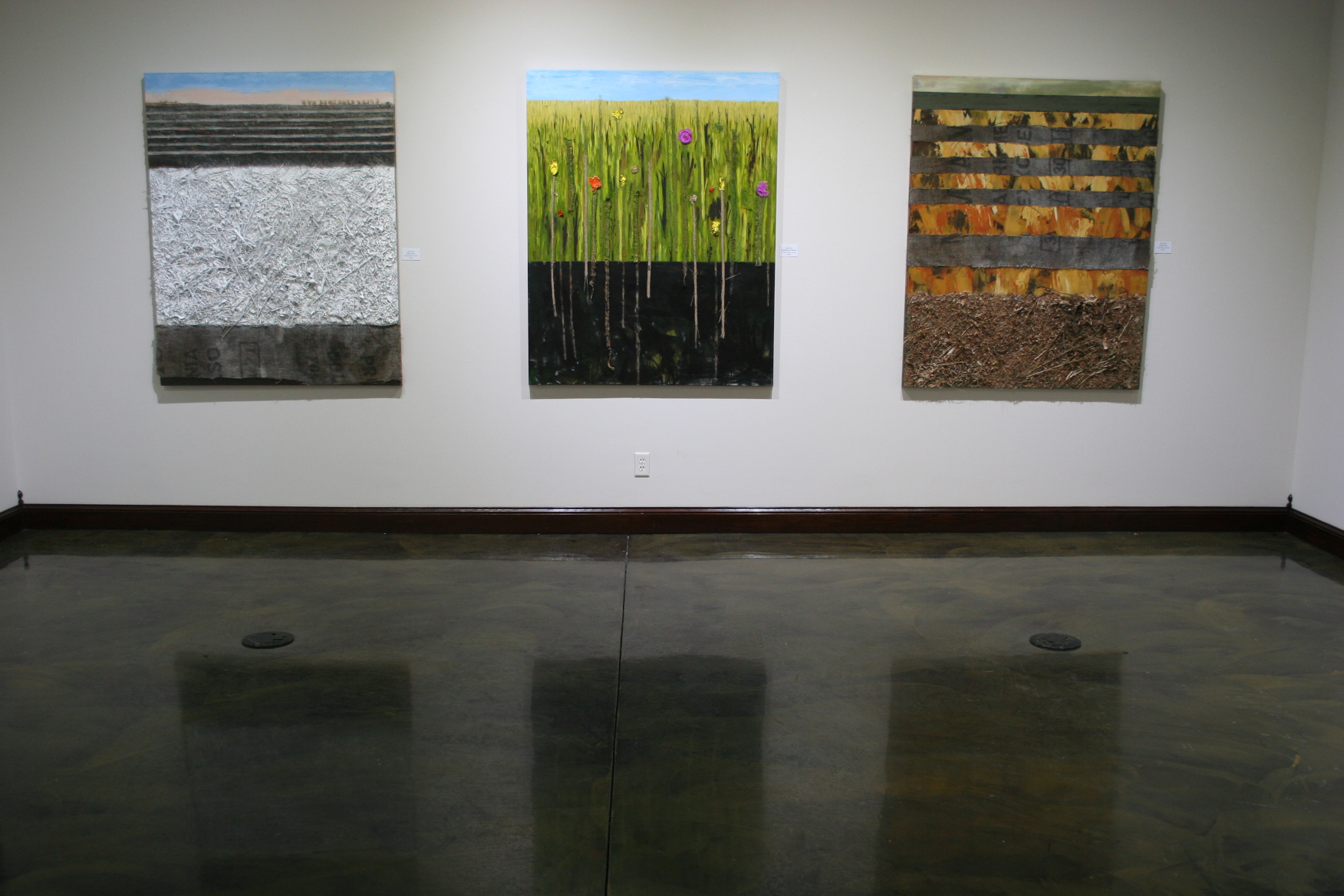
Nature inspires Mary Welke as seen in these oversized mixed media art pieces. (Minnesota Prairie Roots copyrighted photo March 2022)
That I experienced such a strong emotional reaction is a credit to this artist, who grew up near the Mississippi River in northeast Minneapolis. Her childhood exploration of river and fields and time with her grandmother in a sprawling vegetable garden instilled an early appreciation of nature, which inspires her art.
“Autumn Yield” by Mary Welke. (Minnesota Prairie Roots copyrighted photo March 2022)
Understanding that background explains how this urban resident came to create “Field and Farmland,” a project funded by a 2020 Minnesota State Arts Board Artist Initiative Grant. She also did her homework—visiting, researching and documenting the prairie and meeting with farmers. The result is art reflecting the prairie, prescribed burns and farmland restoration.
“Spring/Summer Renewal” by Mary Welke. (Minnesota Prairie Roots copyrighted photo March 2022)
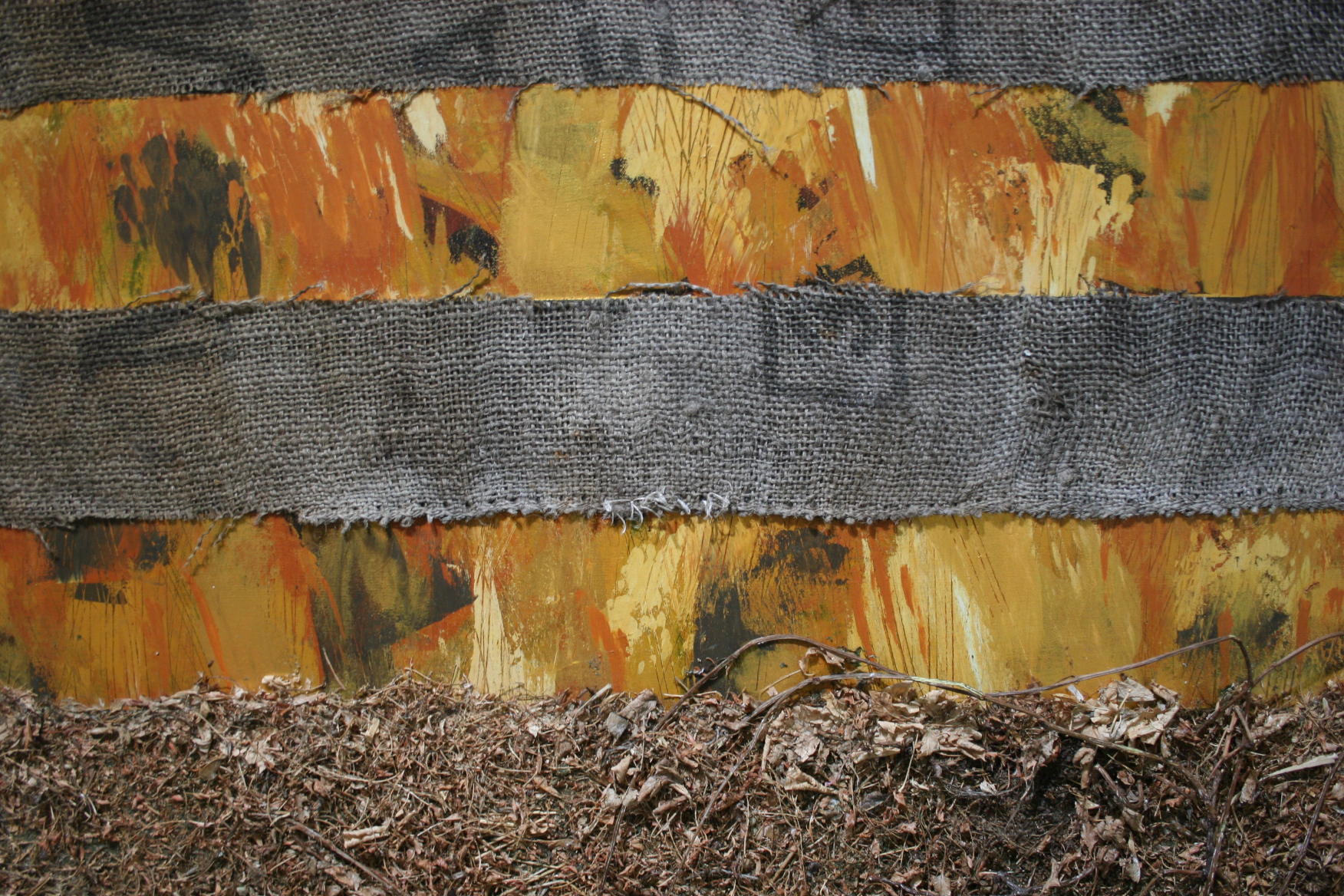
The incorporation of organic materials like soil, corn roots and leaves, other crop residue and more drew me into Welke’s art. I felt as if I was back on the farm, watching my dad turn the rich black soil toward the sun for spring planting. I felt, too, like I was walking the rows of a harvested corn field, the scent of autumn lingering in the prairie wind.
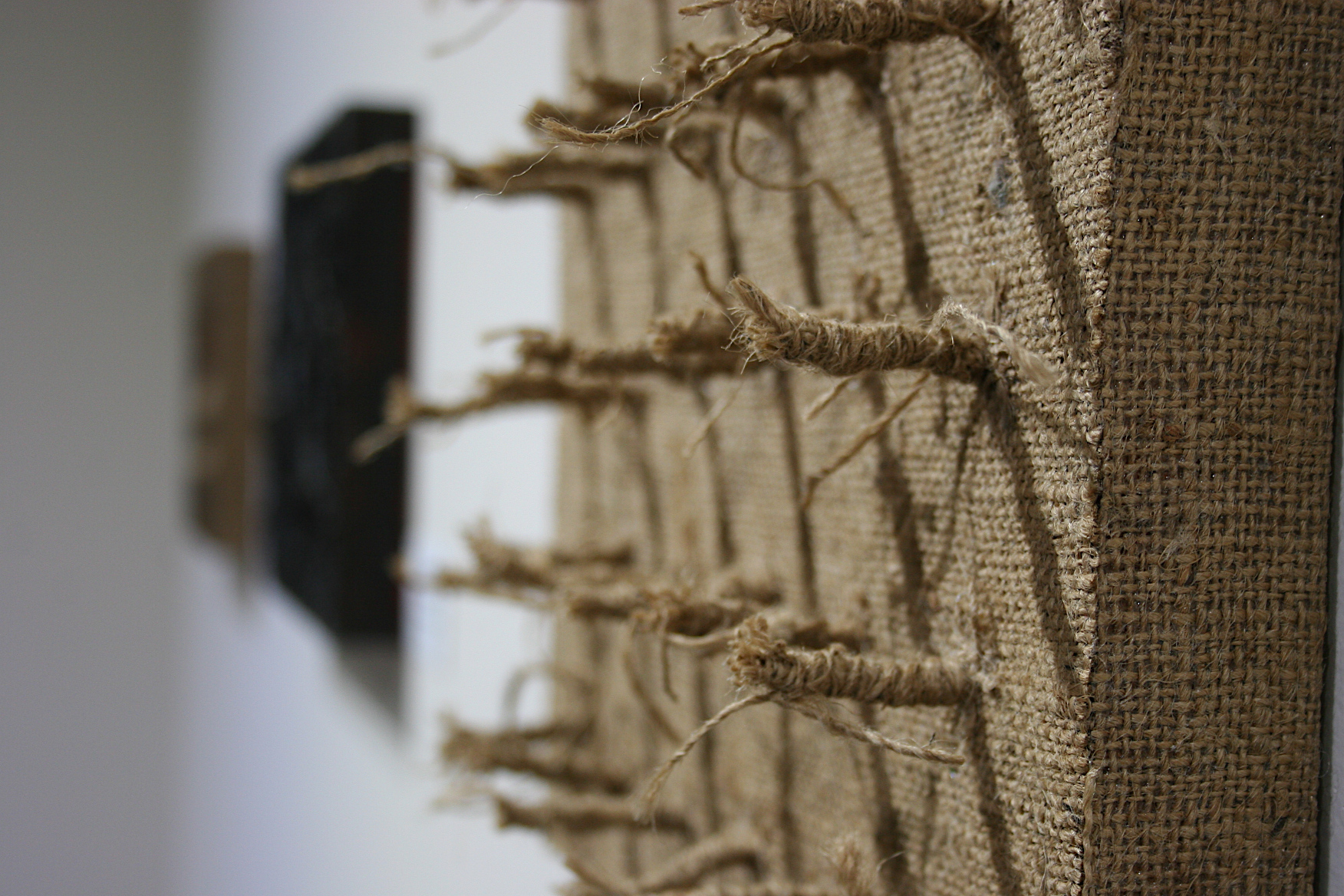
I didn’t note the title of this art featuring burlap and twine. (Minnesota Prairie Roots copyrighted photo March 2022)
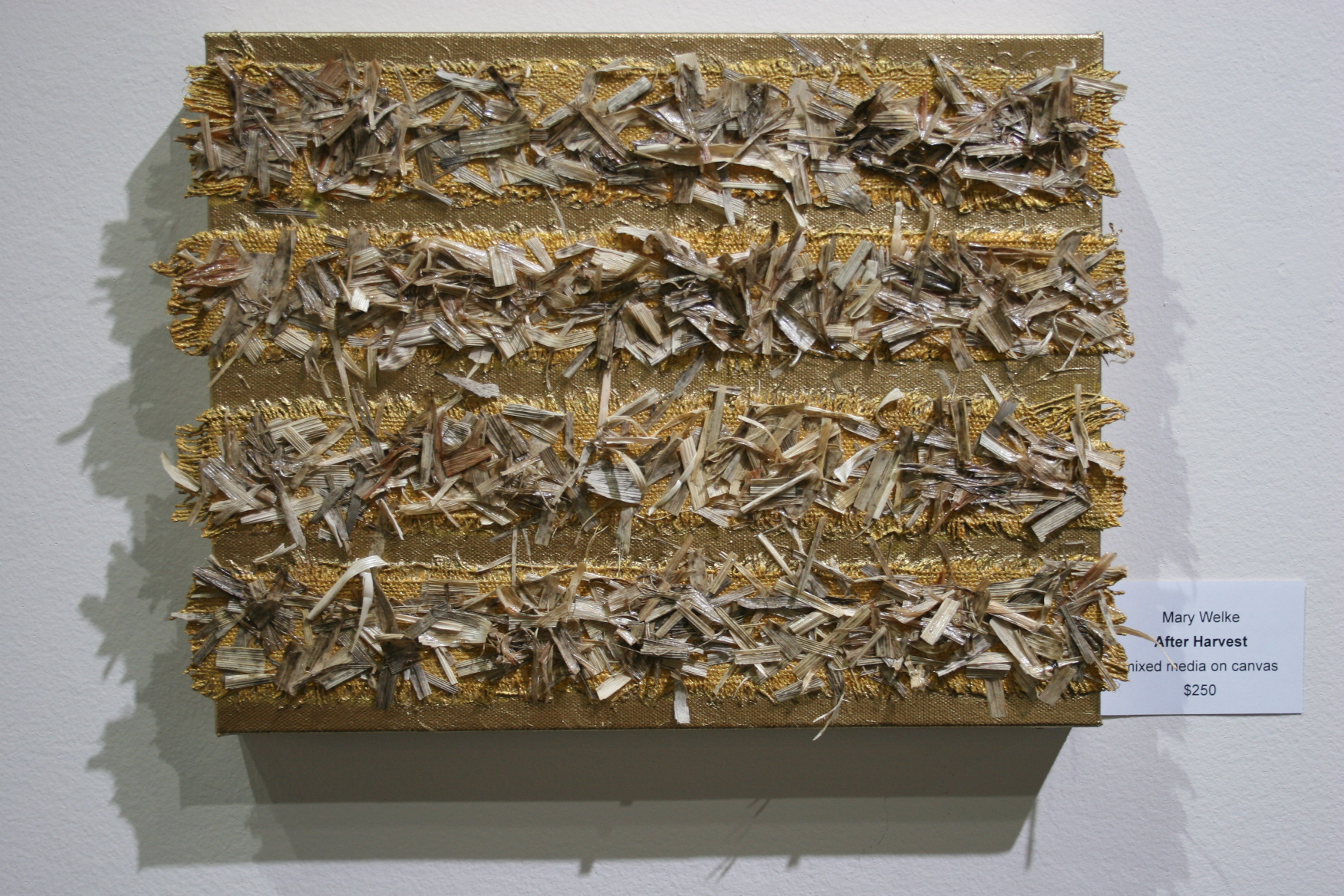
So much texture in “After Harvest” by Mary Welke. (Minnesota Prairie Roots copyrighted photo March 2022)
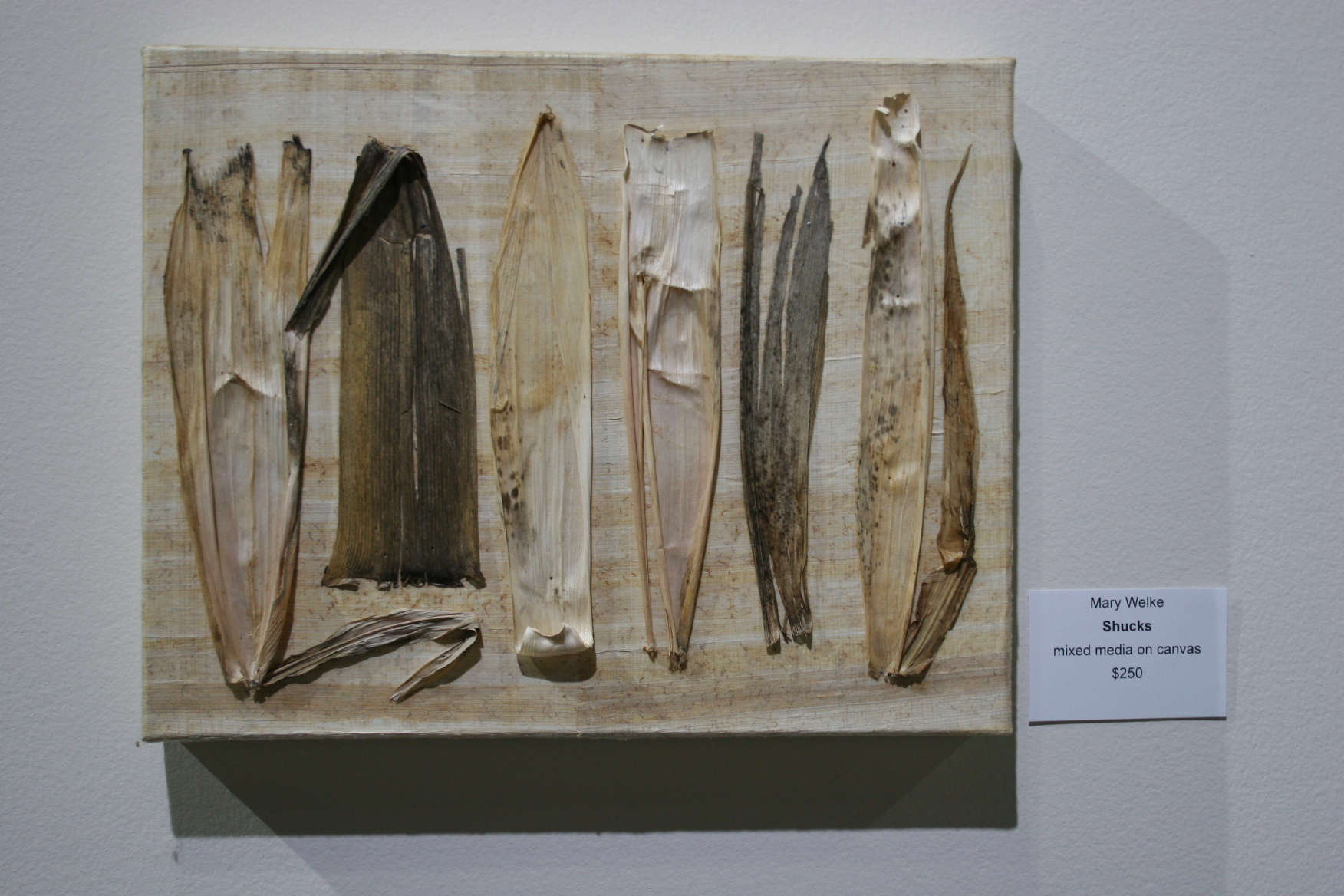
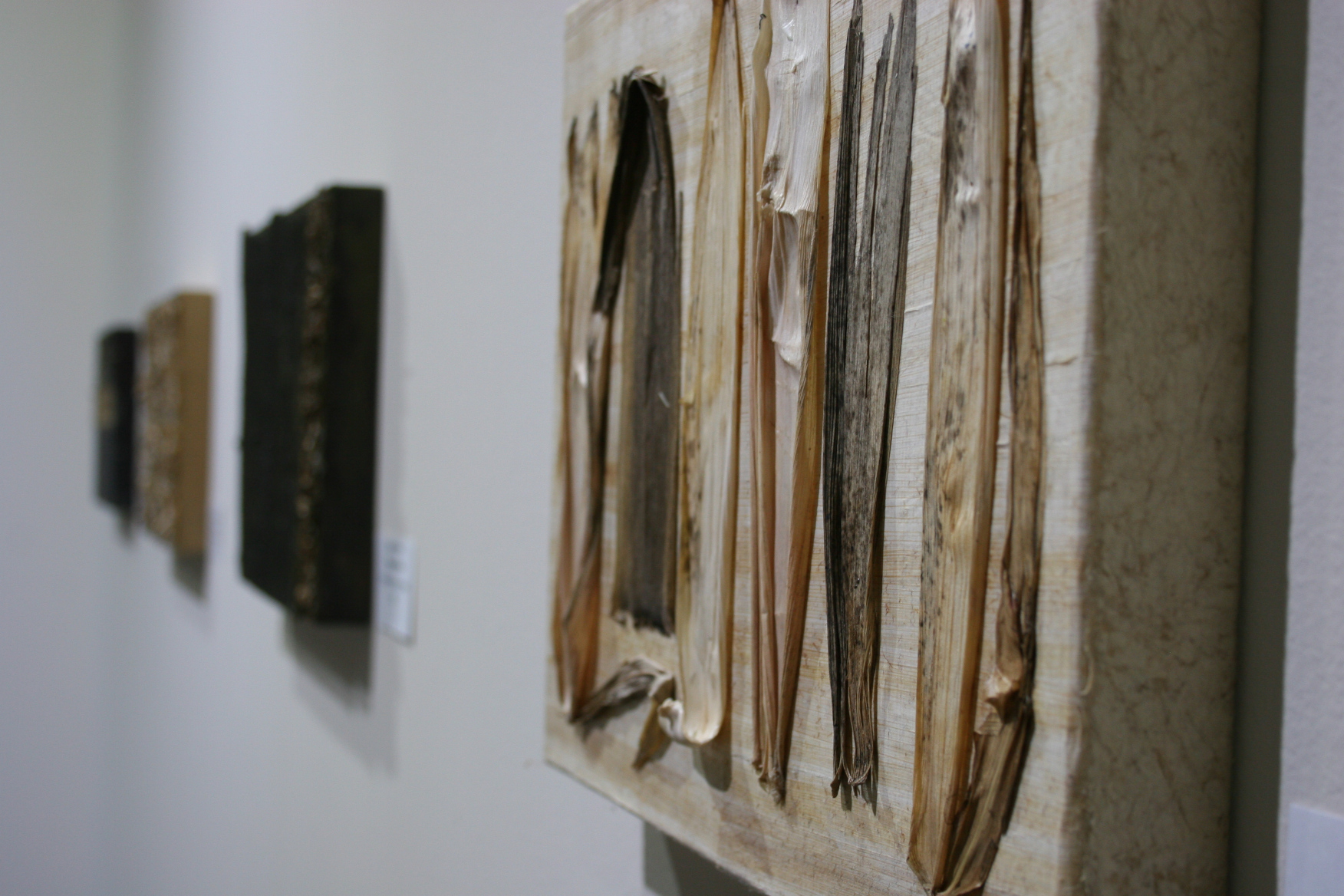
Corn husks up close in Mary Welke’s “Shucks.” (Minnesota Prairie Roots copyrighted photo March 2022)
Welke’s art is layered. Textured. It holds not only a visual depth, but a depth of connection to the land, to farming.
Mary Welke’s “Topographical Prairie Lands” scattered across a black surface. (Minnesota Prairie Roots copyrighted photo March 2022)
This is what I love about art. The ability to relate. To stand in a gallery and contemplate. Remember. Appreciate. And, with Welke’s work, especially, to feel rooted in the land.
#
NOTE: Please check back for more posts on other exhibits currently at the Paradise Centerfor the Arts.Artists Mary Welke, Kate Langlais, Michael Stoecklein and Summer Heselton will participate in a Visual Artists Talk at 6:30 pm on Thursday, March 10. See the Paradise Center for the Arts Facebook page for more info. The art of all four will be on display at the Paradise through March 19.
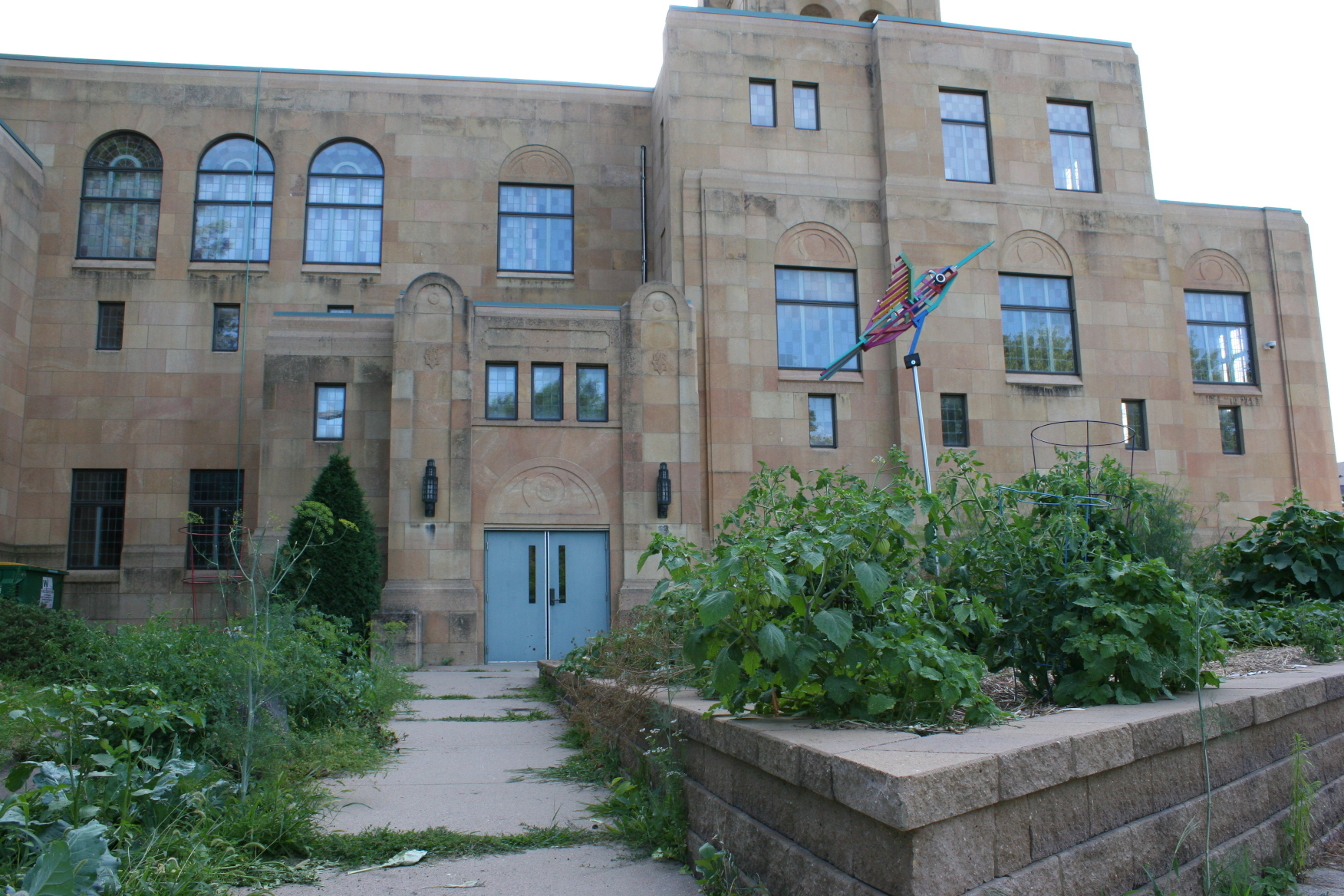
The vegetable garden outside Buckham Memorial Library, Faribault, Minnesota.(Minnesota Prairie Roots copyrighted file photo August 2020)
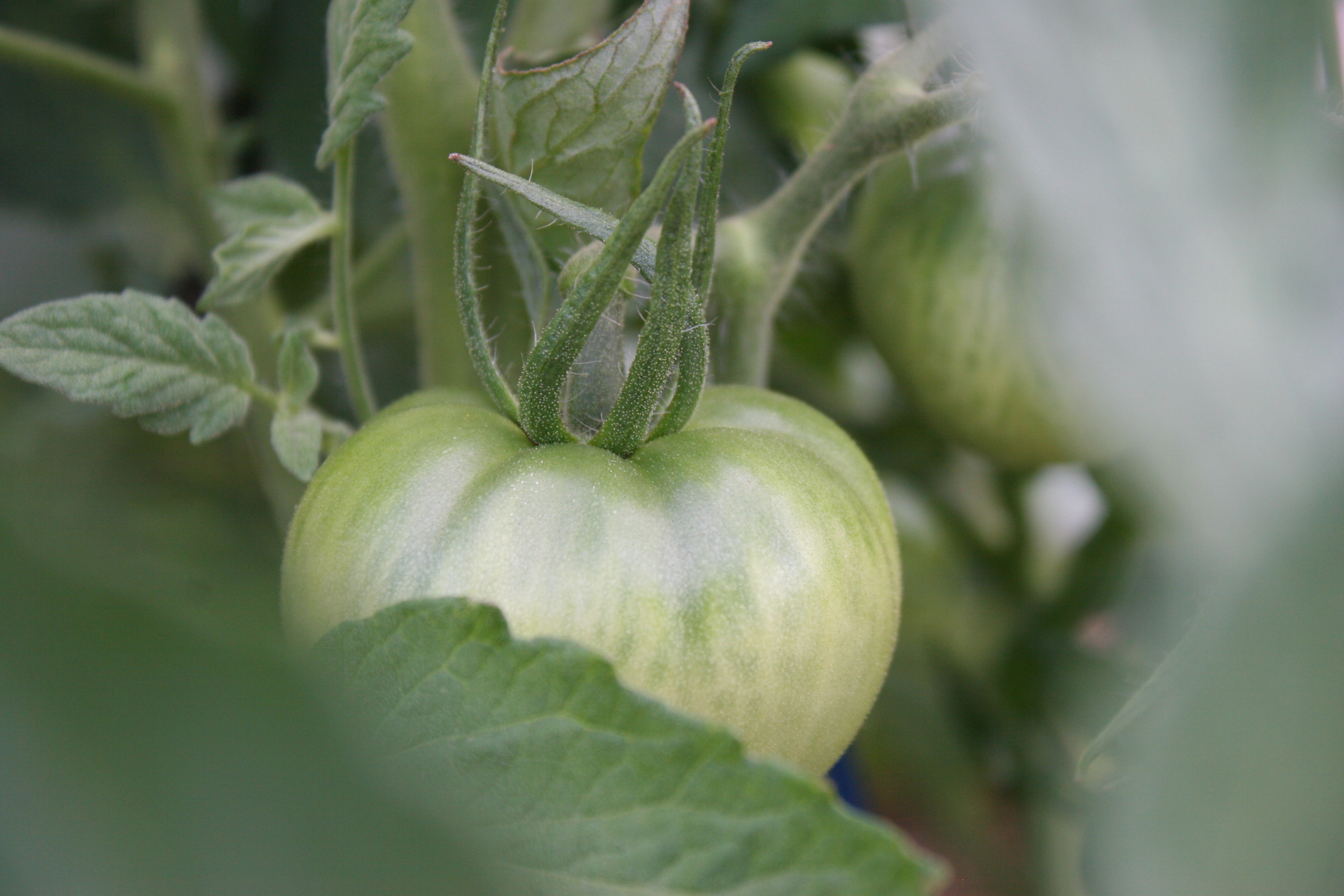
AT THE END of the growing season a few weeks back, I walked into Buckham Memorial Library and spotted a stash of green tomatoes free for the taking. To say that I reacted with joy might be an understatement.
I felt practically giddy at the thought of preparing green fries, a coveted food I haven’t eaten in years because…I don’t have a garden.
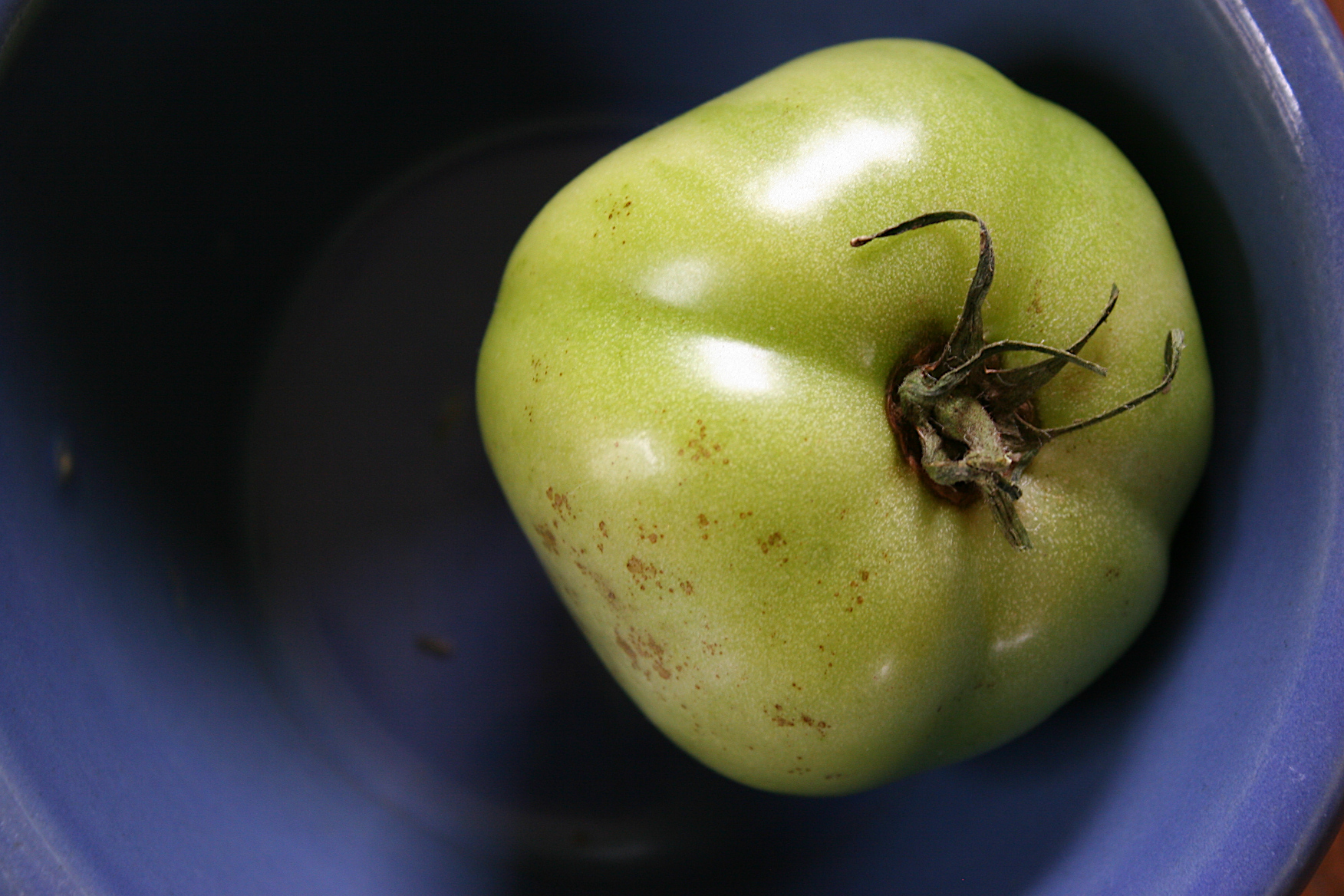
A green tomato in the library garden. (Minnesota Prairie Roots copyrighted photo August 2020)
But, back in the day, my mom planted a sprawling garden, growing vegetables to feed our farm family of eight. Green fries were a summer-time to harvest staple as were the tomatoes left to ripen on the vine.
Items grown in the library garden are free for the taking to the community. (Minnesota Prairie Roots copyrighted file photo August 2020)
Earlier this summer and fall, when I stopped at The Friends Organic Learning Garden on the library’s east side to look for produce, I noticed choice green tomatoes. I was tempted to pick a few. Who would miss the green orbs? But my conscience prevailed and I walked away empty-handed.
Perfect for making green fries. (Minnesota Prairie Roots copyrighted photo October 2021)
So when those green tomatoes appeared inside the library, I quickly took four, reining in my greedy impulse to grab more.
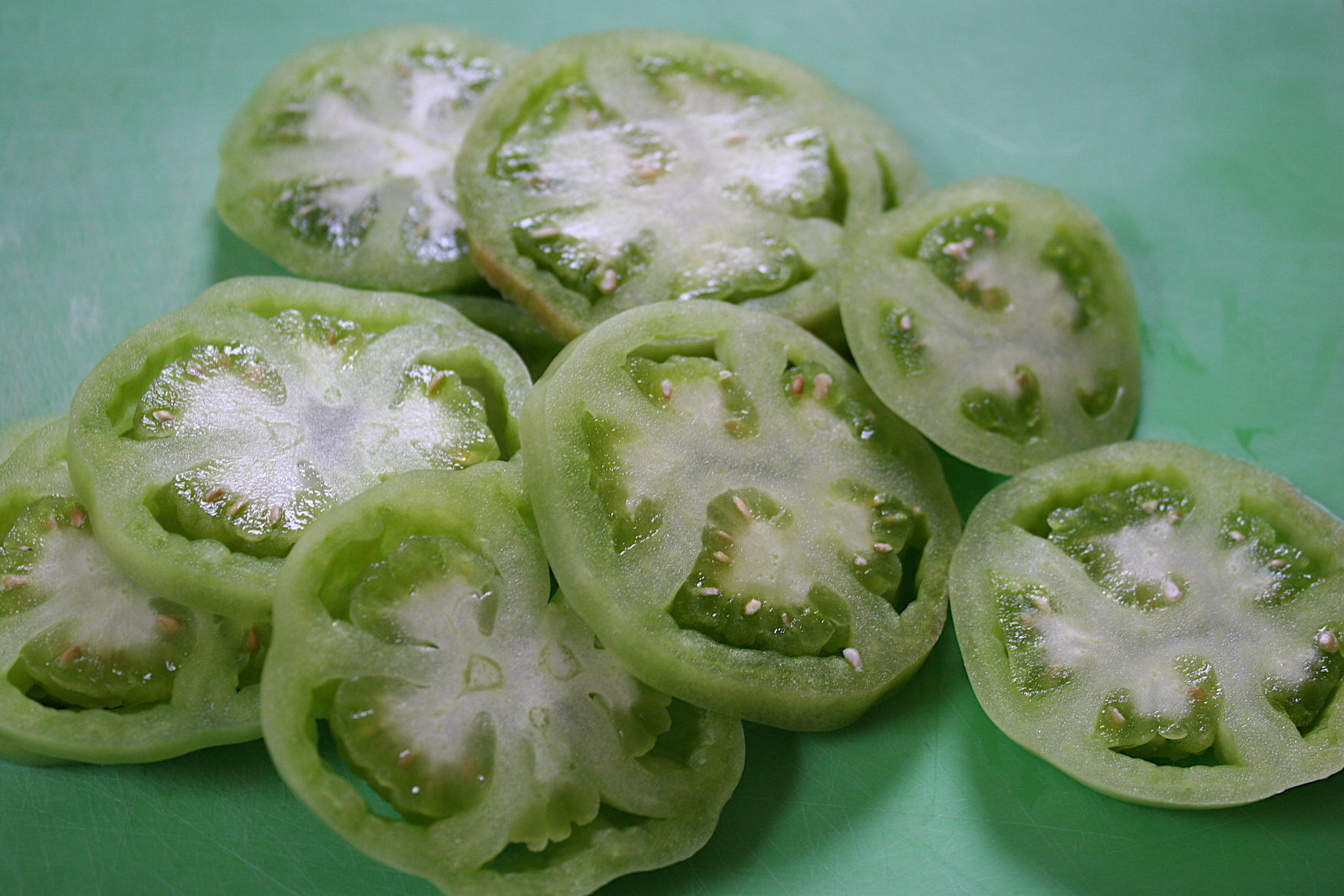
Step one: Slice the tomatoes. (Minnesota Prairie Roots copyrighted photo October 2021)
The next day, I sliced two of those beautiful green tomatoes, dipped both sides in all-purpose white flour and laid the slices into a hefty cast iron skillet sizzling with butter. Lots of butter. I ground on fresh black pepper, sprinkled on salt and then waited for the slices to brown, flipping and seasoning and adding butter as needed.
Frying the tomatoes to golden brown. (Minnesota Prairie Roots copyrighted photo October 2021)
The result: golden circles of green-fried tomatoes that tasted of sun and sky and earth. And of yesterday’s garden.
As I forked into the savory rounds, I thought of Mom and how she spaced tomato plants evenly in the tilled soil and ringed each with a rusty tin can opened on both ends. The cans protected the tender plants from the prairie wind and cold. I remember pouring water into those cylinder reservoirs, overflow sometimes flooding the surrounding ground. When the plants edged over the cans, Mom removed the weather shields.
To me, green fries rate as much more than a food I enjoy. They are part of my culinary family history. A connection to my now 89-year-old mom who, though no master chef, did her best to feed her family with food sourced from our farm.
TELL ME: Do you have a favorite food tracing to your childhood and that you crave today? I’d like to hear. And, have you ever eaten, or made, green fried tomatoes?
Just outside of Cannon Falls along Goodhue County Road 8, we stopped to admire the treeline and the gravel road winding toward it. (Minnesota Prairie Roots copyrighted photo mid-October 2021)
WHITE ROCK. Belle Creek. Hader. They are among the 60-plus ghost towns of Goodhue County. Places that once thrived, marked now only by signs along a road, a cluster of homes, perhaps a church or abandoned buildings.
Oh, lovely hues of autumn near Cannon Falls. (Minnesota Prairie Roots copyrighted photo mid-October 2021)
Yet, acknowledging their existence, as the Goodhue County Historical Society does with roadside signs, matters. Because these towns mattered to previous generations and still matter to those with connections to the likes of Aspelund, Burr Oak Springs, Crystal Springs, Eidsvold, Skyberg and so many more with names that hint at heritage and sound poetically beautiful.
On a road trip to Goodhue County a month ago, Randy and I followed County Road 8 east and then south of Cannon Falls back toward Faribault.
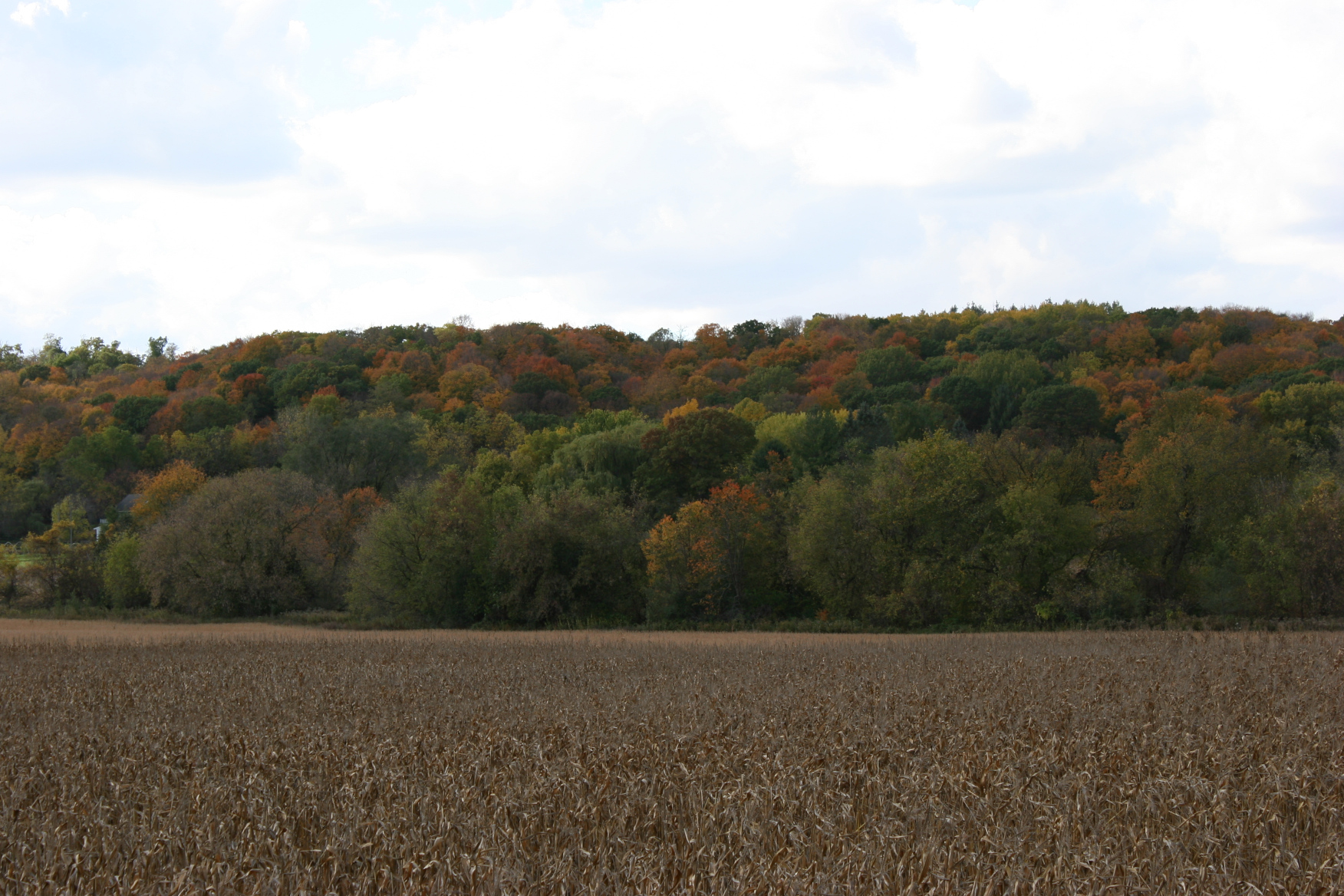
Clouds and trees and field along CR 8. (Minnesota Prairie Roots copyrighted photo mid-October 2021)
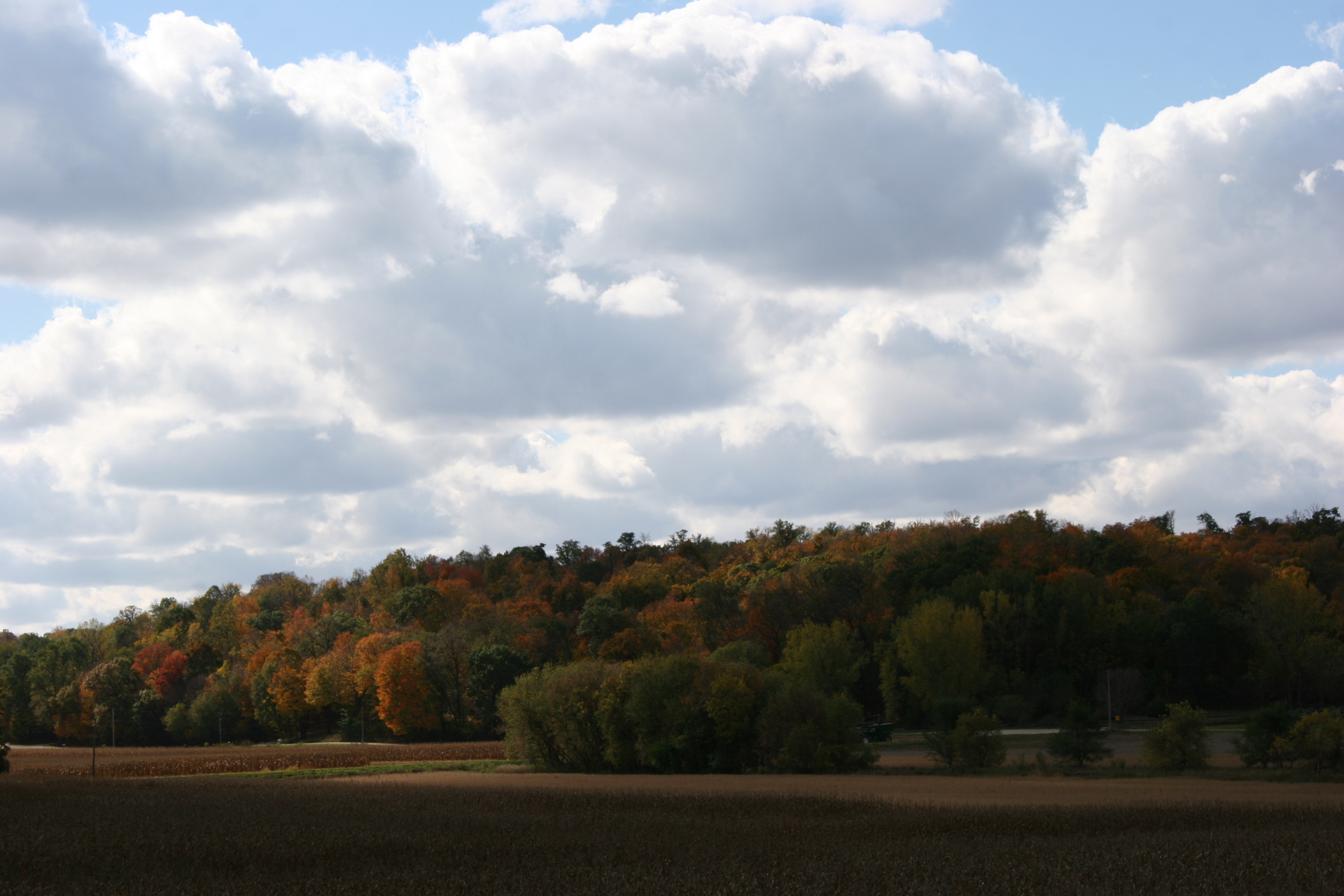
Our route took us past clusters of woods, some tinged in autumn hues.
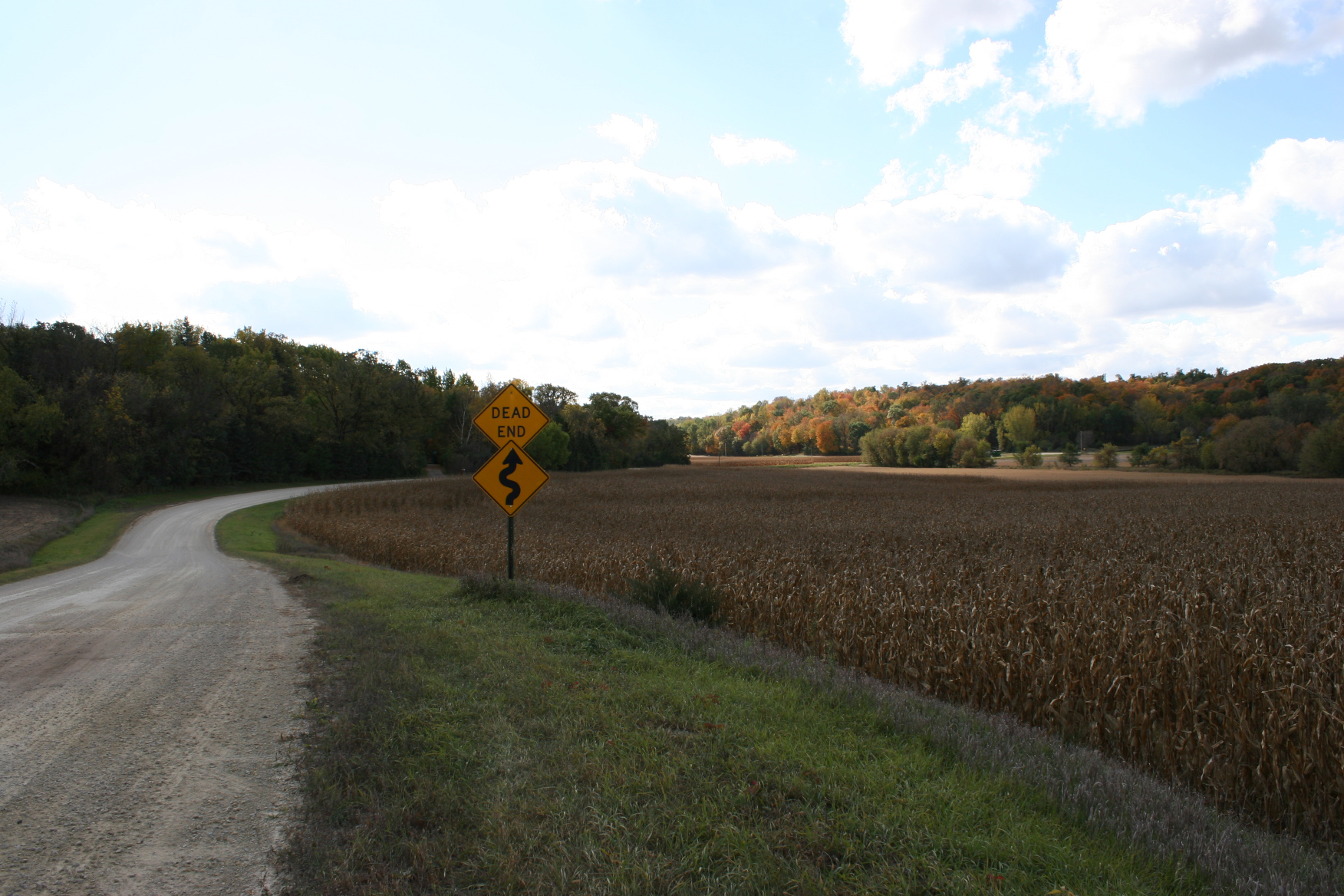
Goodhue County Road 8 near Cannon Falls sweeps into the valley. (Minnesota Prairie Roots copyrighted photo mid-October 2021)
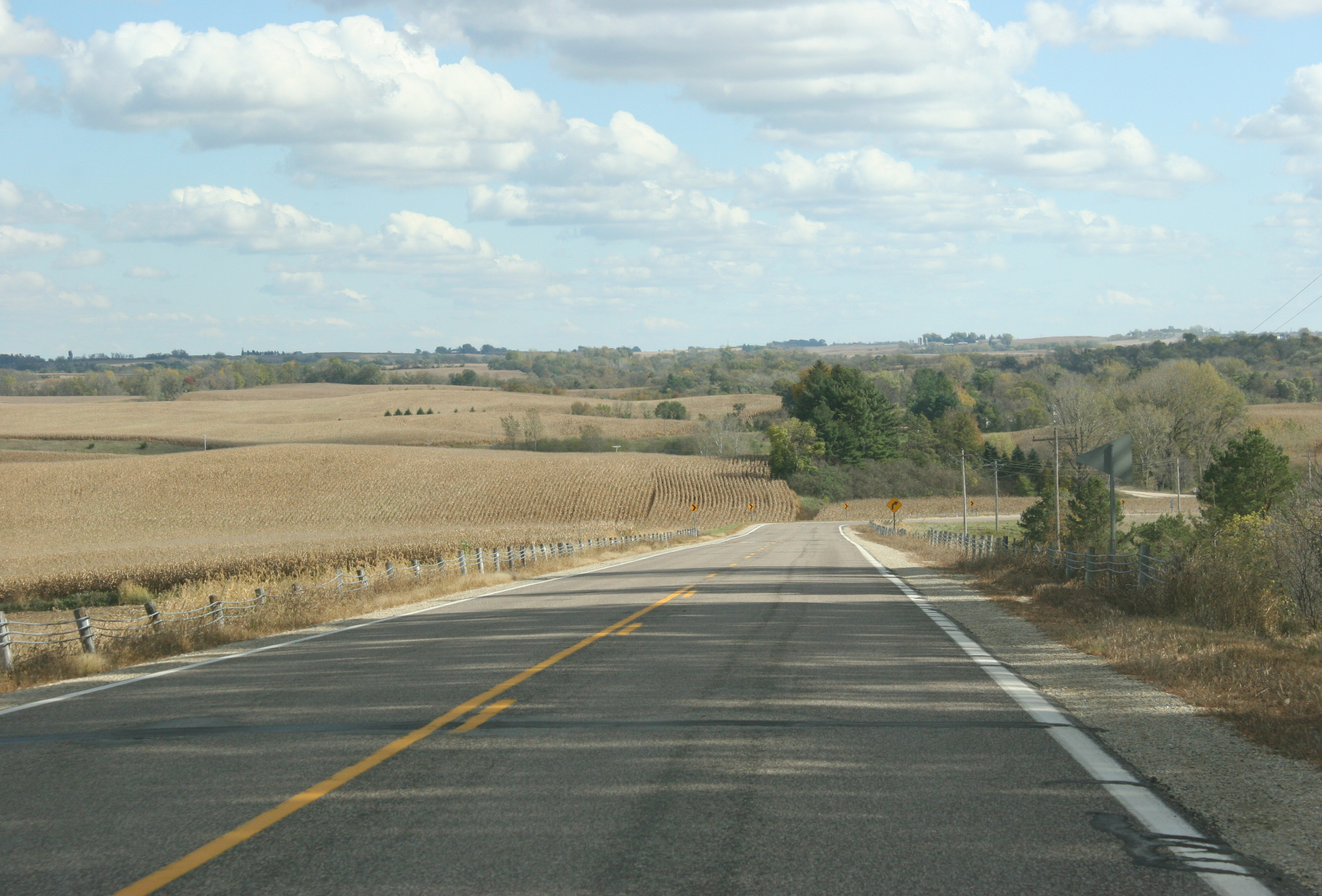
Soon the road curved and swept into the valley, rows of corn rolling across the landscape. Only groves of trees surrounding farm sites broke the vista of endless unharvested fields.
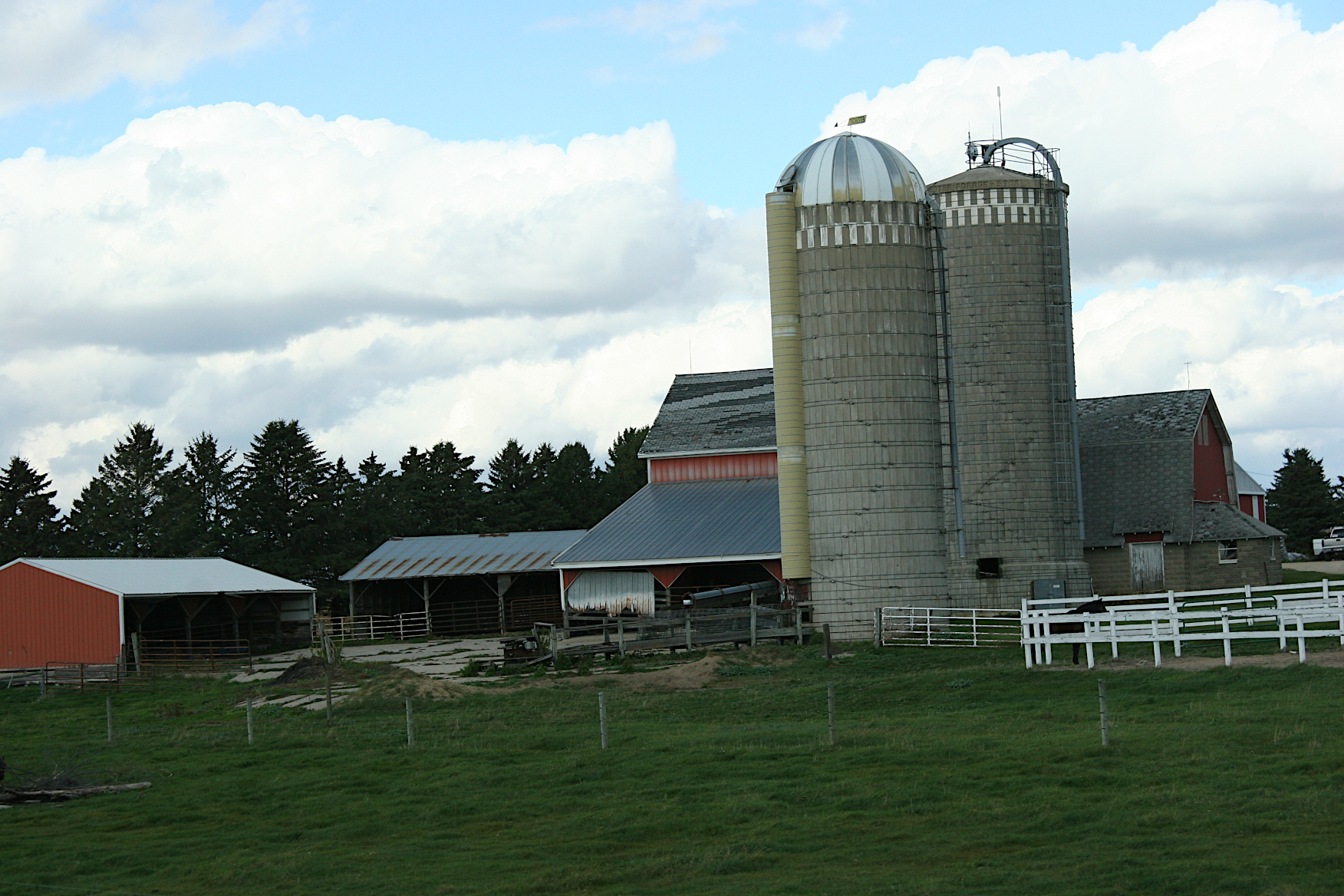
Somewhere between White Rock and Belle Creek, this farmyard drew my eye. (Minnesota Prairie Roots copyrighted photo mid-October 2021)
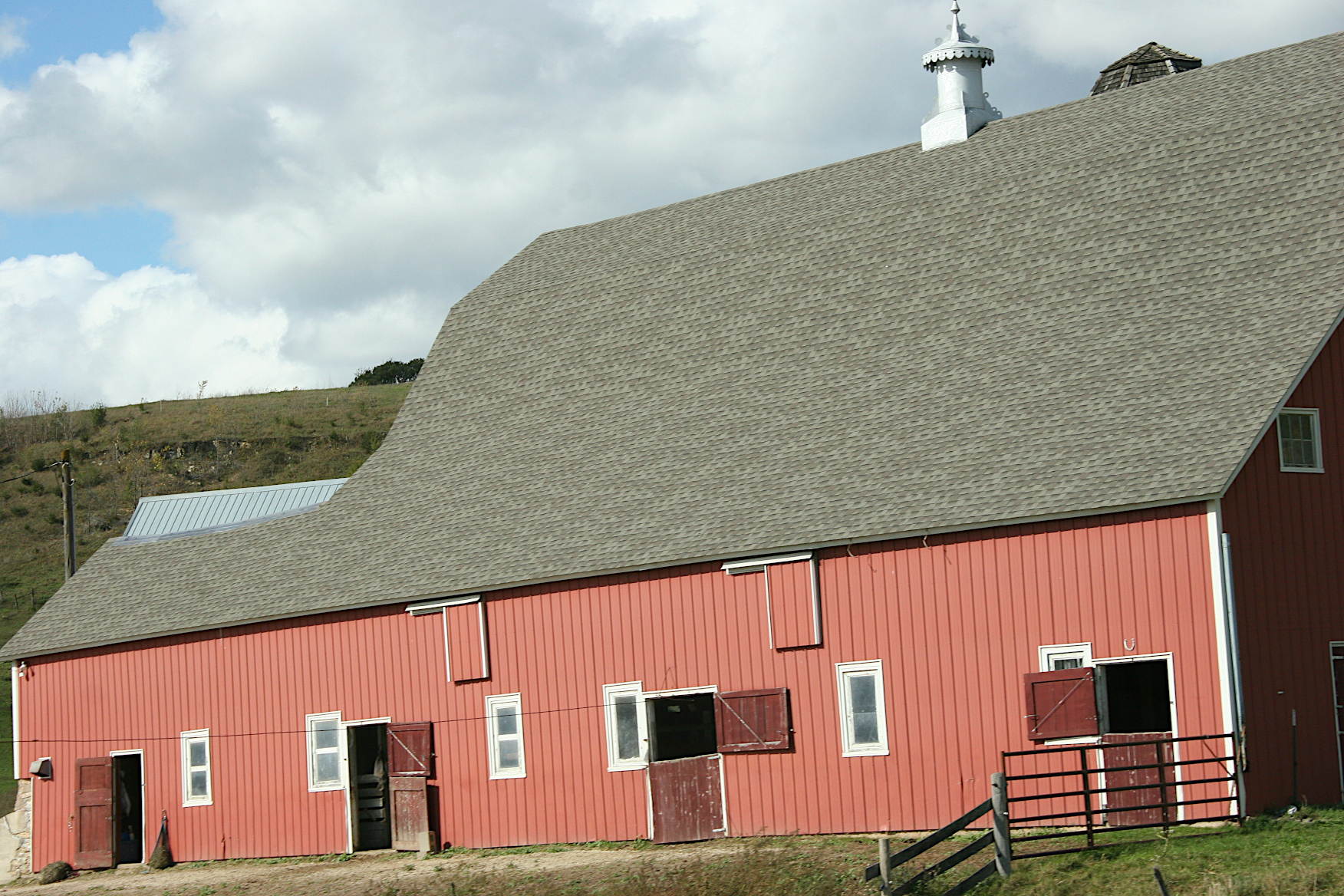
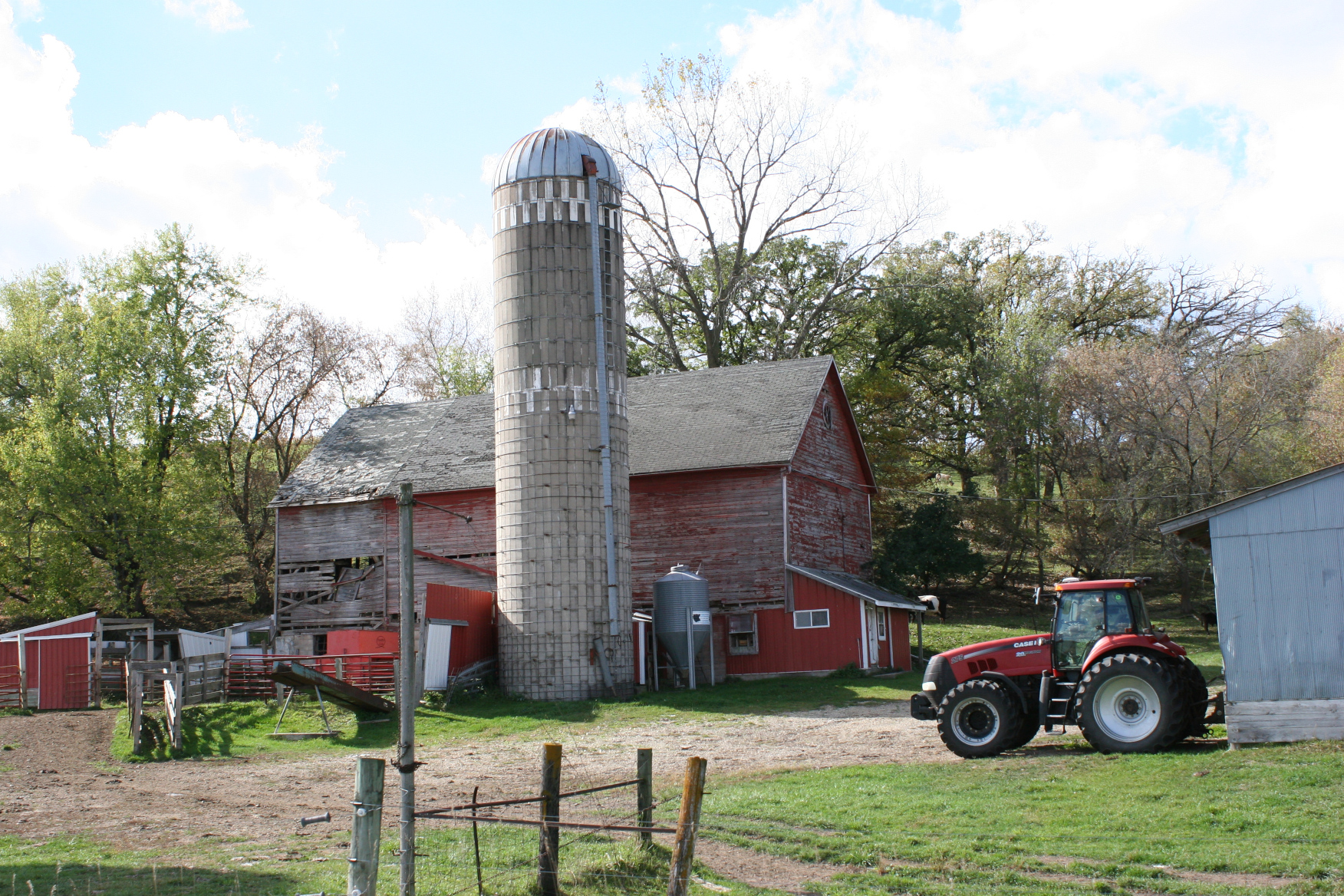
Sometimes those farmyards hugged the paved road and I caught a close-up glimpse of farms, some with aged weathered barns and outbuildings, others updated with modern equipment and structures.
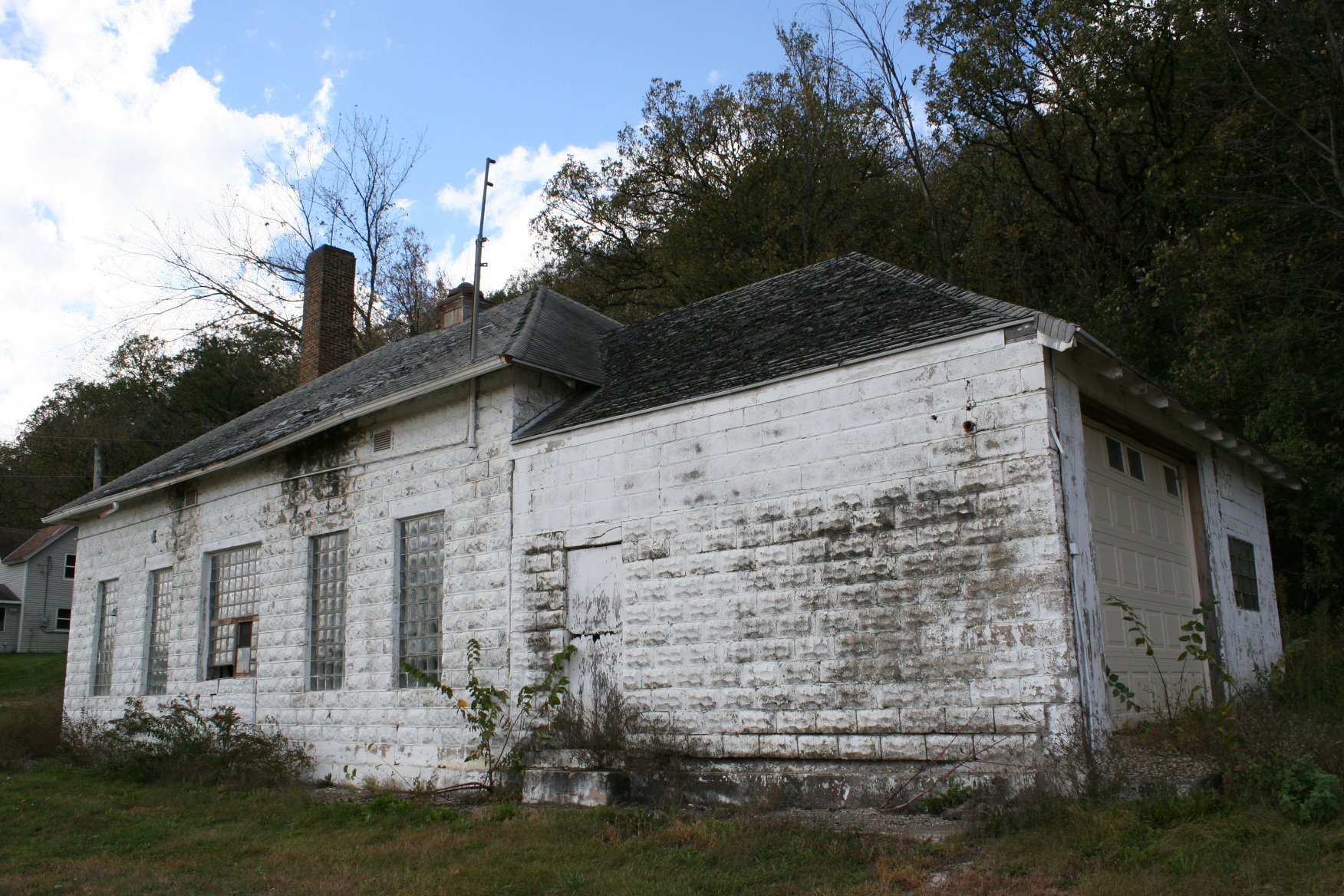
Likely a former creamery in Belle Creek. (Minnesota Prairie Roots copyrighted photo mid-October 2021)
In Belle Creek, Randy and I noticed a white building, likely a former creamery. Creameries often graced these small settlements, a necessity for farmers who sold cream for butter-making.
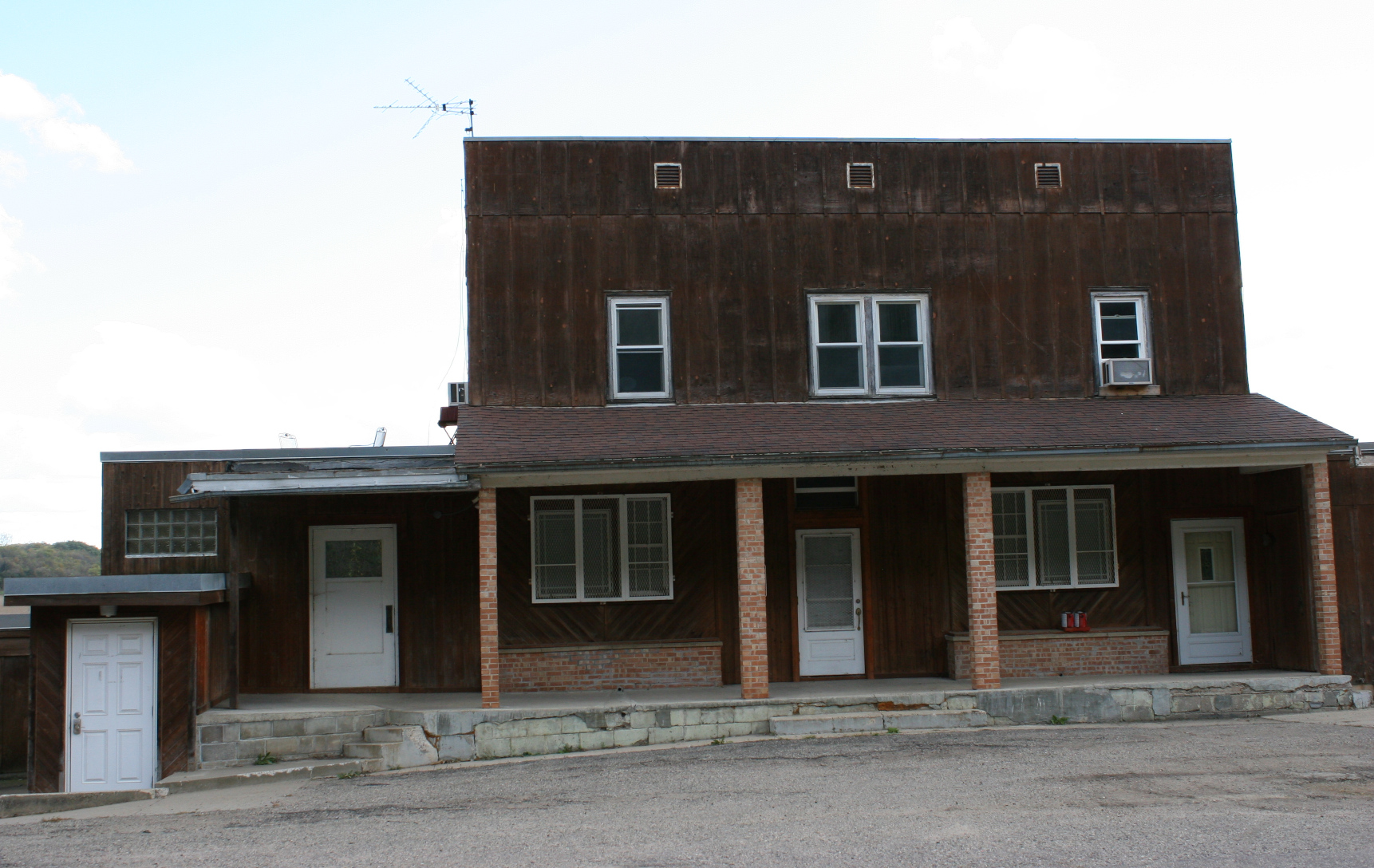
In Belle Creek, a building with an unknown-to-us story. (Minnesota Prairie Roots copyrighted photo mid-October 2021)
Another building in Belle Creek left us guessing at its past life. Perhaps a general store. Then a dance hall. We could be way off…
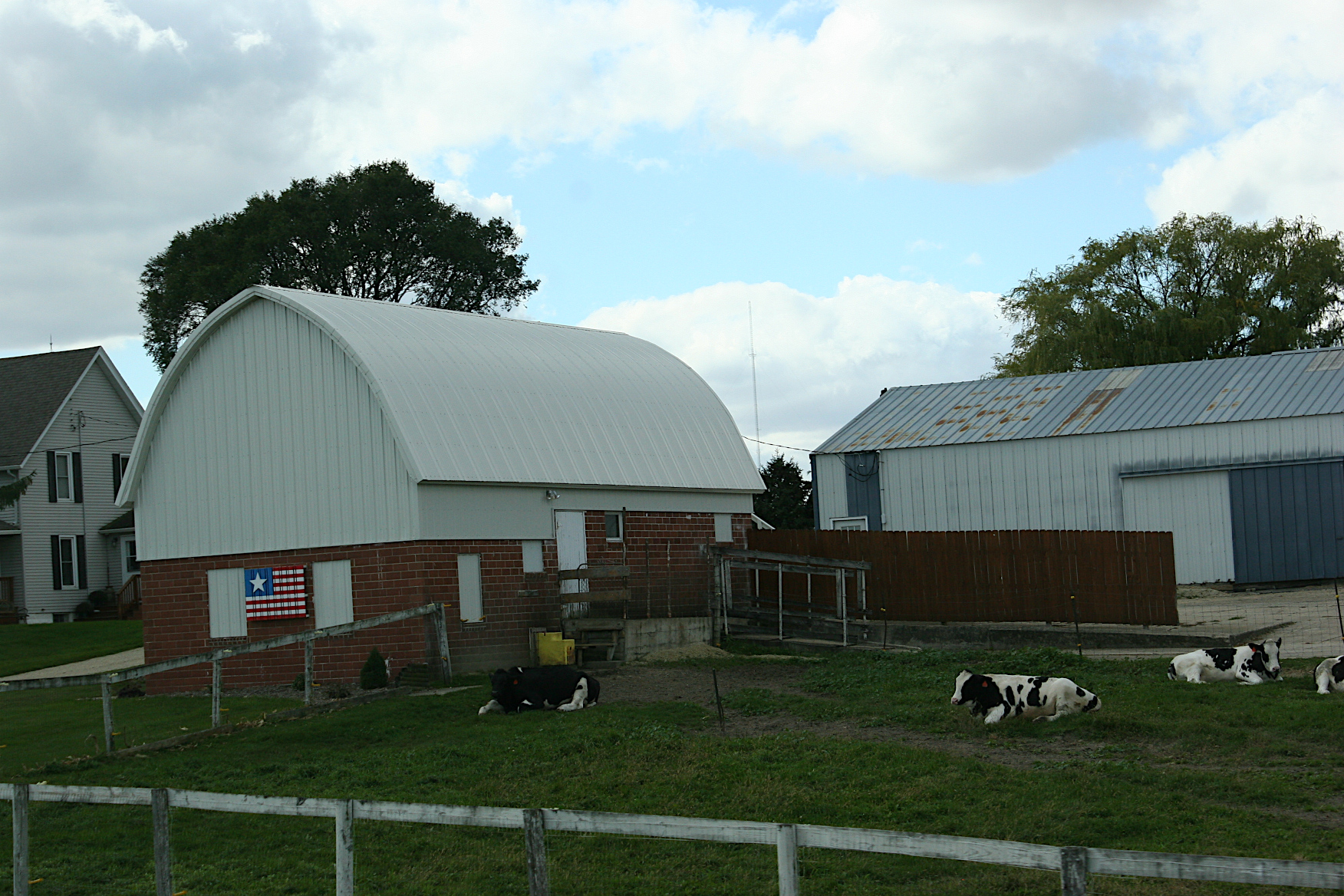
Seeing cows in the countryside takes me back in time. (Minnesota Prairie Roots copyrighted photo mid-October 2021)
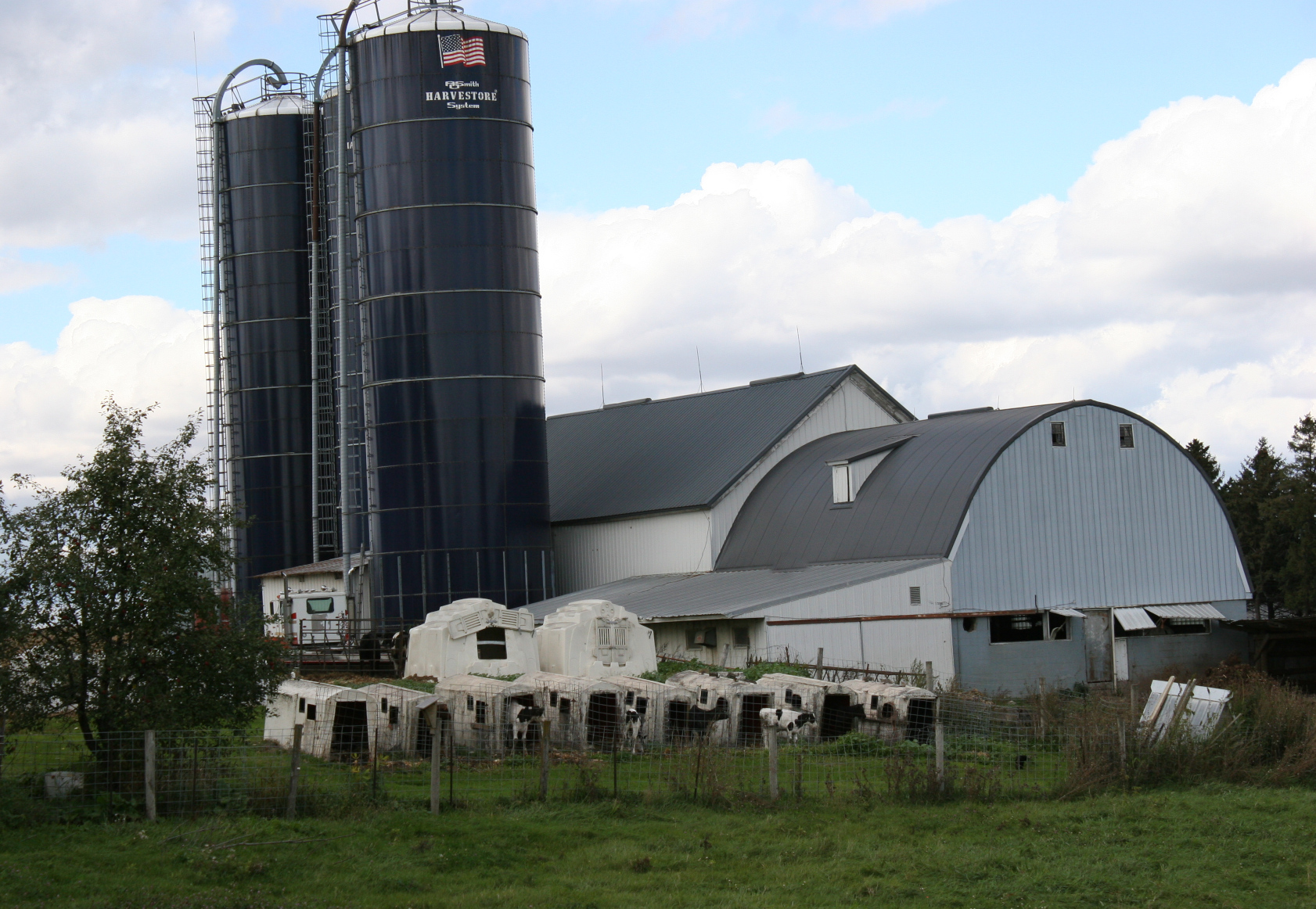
Near Hader, I spotted calves outside their huts. (Minnesota Prairie Roots copyrighted photo mid-October 2021)
Occasionally, we spotted cattle, cows, calves. Growing up on a dairy farm, I delight in seeing bovines, especially Holsteins. But rare are the small family farms today that still raise animals. Corporate and mega farms have mostly replaced that self-sufficient lifestyle. That’s reality.
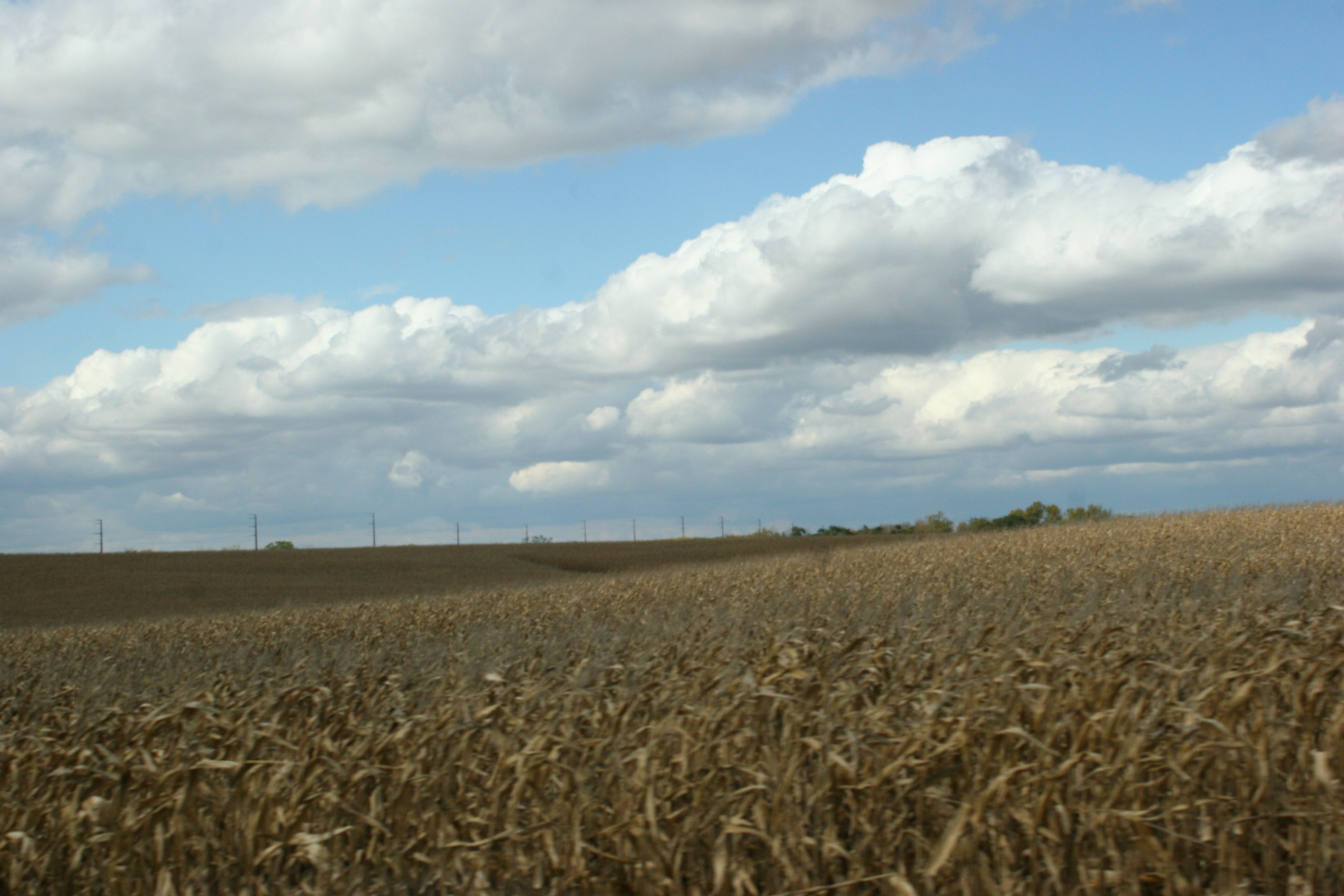
Lots of sky and cornfields along CR 8 in Goodhue County. (Minnesota Prairie Roots copyrighted photo mid-October 2021)
Just like ghost towns, many farms have become, in some ways, ghost farms. They are but ghosts of the past. Ghosts of their former selves and purposes. I see that in decaying, empty buildings, especially barns. I see that in the absence of livestock. I see that in families who can no longer support themselves solely via the farm.
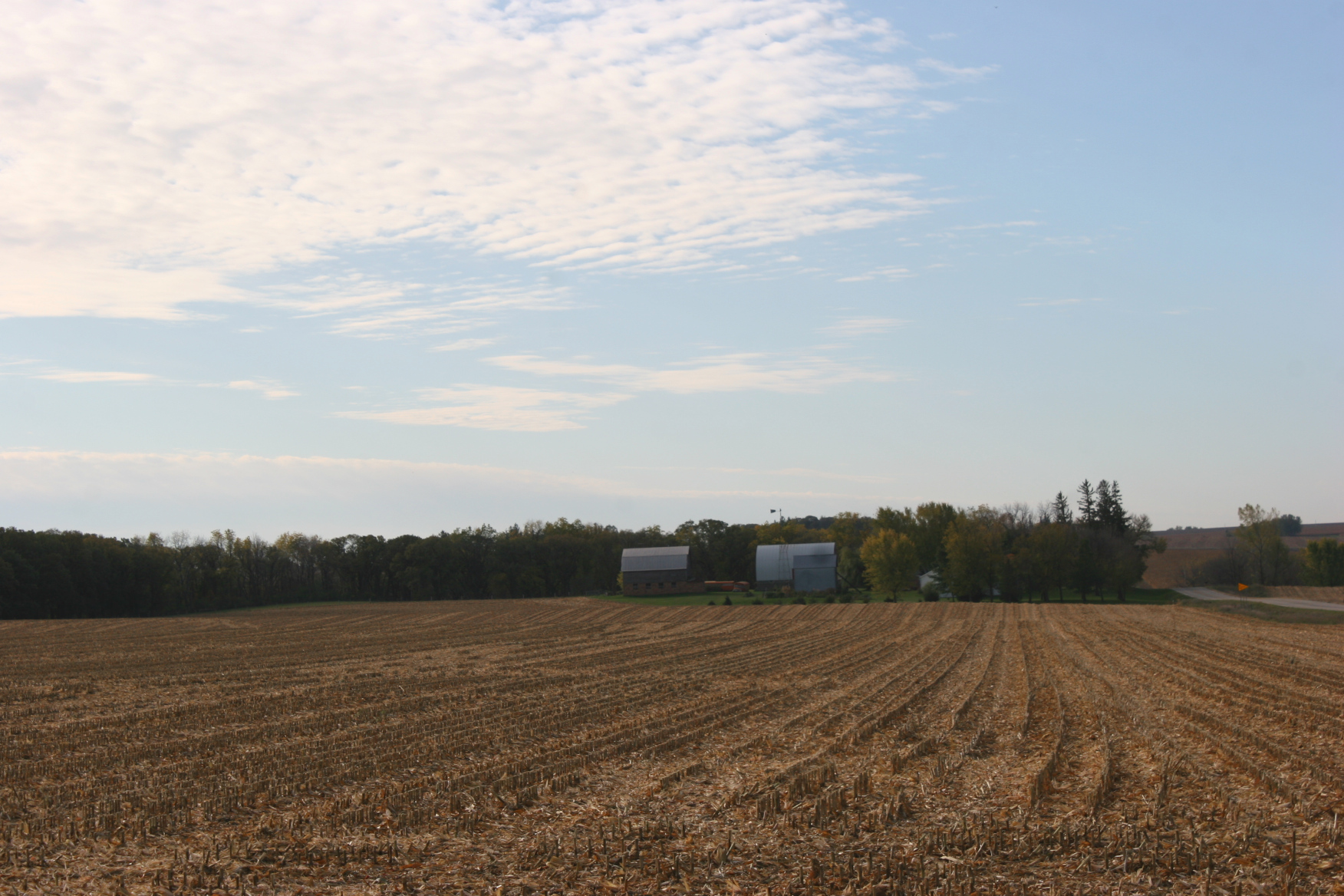
Farm after farm after farm defines this area of Goodhue County. (Minnesota Prairie Roots copyrighted photo mid-October 2021)
All of this is unsettling. But with time comes change. And with change must come acceptance and perhaps also an added historical appreciation for the past.
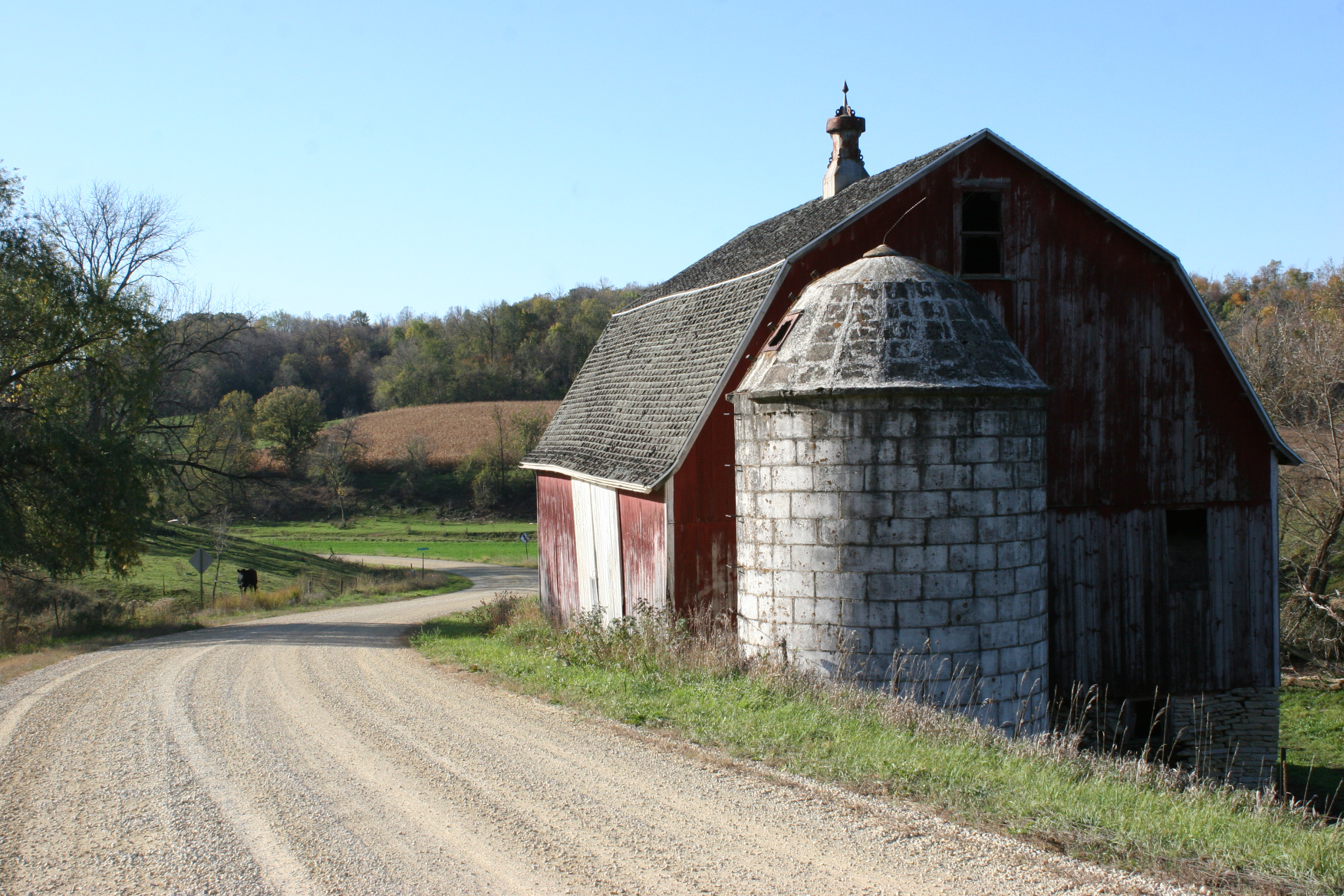
Along a backroad in the Sogn Valley, an aged barn and silo hug a curve on a gravel road. (Minnesota Prairie Roots copyrighted photo October 2021)
MINNESOTA’S DIVERSE LANDSCAPE inspires. From the vast prairie to the northwoods. From lakes to rivers. From hills to valleys. My home state, minus mountain ranges and ocean, is truly a beautiful place. We are so much more than cold and snow, as many non-residents equate with Minnesota.
The countryside near Nerstrand, on our way to Sogn Valley. (Minnesota Prairie Roots copyrighted photo October 2021)
Autumn, especially, showcases Minnesota’s natural beauty. This fall, Randy and I took many rural drives to immerse ourselves in the countryside and the season. We chose road trips over staying home and doing chores on the weekends. Our priorities change as we age. The work can wait. We recognize, too, the approach of winter. We felt an urgency, a need, to hit the road before the snow flies.
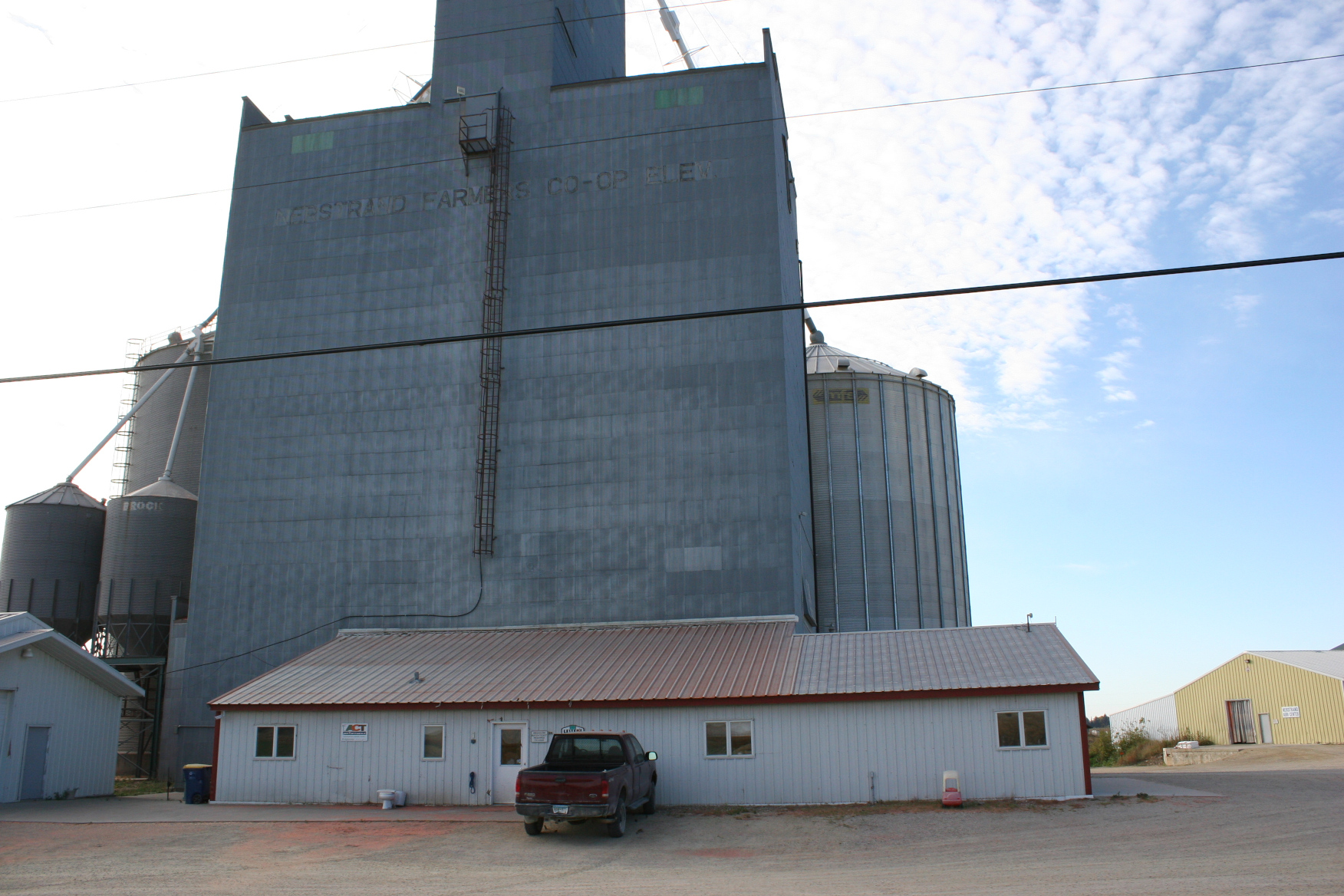
We drove through Nerstrand, past the grain elevator, on our way to the Sogn Valley. (Minnesota Prairie Roots copyrighted photo October 2021)
Often we choose a destination, this time Cannon Falls. But sometimes we simply head in a general direction, oversized Minnesota Atlas & Gazetteer available to guide us. We prefer paper maps to GPS. This trip, we aimed east toward Goodhue County, driving through the picturesque Sogn Valley.
The rolling countryside of the Sogn Valley provides a beautiful backdrop for farms. (Minnesota Prairie Roots copyrighted photo October 2021)
I love this rural region defined by farms and fields and winding gravel roads. Hills and river valleys and prairie intermingle and it’s all like poetry writing upon the land.
I delight in finding cows grazing deep in Sogn Valley. (Minnesota Prairie Roots copyrighted photo October 2021)
As a farmer’s daughter, I hold a fondness for aged barns, at one time the anchor of an agrarian life. I labored for years on my southwestern Minnesota childhood family dairy and crop farm, most of that time inside the barn. Or the silo.
Abandoned building, abandoned tractor in the Sogn Valley. (Minnesota Prairie Roots copyrighted photo October 2021)
Now, when I pass by barns weathering in abandonment, I feel overcome by sadness. I recognize that a way of life is vanishing. I understand and appreciate advances in agriculture while simultaneously grieving the loss of farm life as I knew it.
I worry about all the barns we are losing. They hold history. Stories. Memories. And they are falling in heaps of rotted wood.
But, on this drive through the Sogn Valley, we happened upon a small country church that uplifted my spirits. Country churches and adjoining cemeteries rate as another draw for me deep into rural Minnesota. They are historically, poetically, spiritually and artistically relevant.
Along 70th Street in Goodhue County, on a small plot of land ringed by a row of trees and set among cornfields, Eidsvold Norwegian Methodist Church rises. The last service was held here in 1949. Yet, the aged clapboard structure remains. Important to someone. And on this Friday morning in mid-October, appreciated by me.
PLEASE CHECK BACK tomorrow as I take you on a tour around, but not inside (it was locked), Eidsvold church.















Recent Comments