Minnesota Prairie Roots

Writing and photography by Audrey Kletscher Helbling

Reflections on harvest time in southern Minnesota September 27, 2011

Westbound on U.S. Highway 14 between Nicollet and Courtland in southern Minnesota Friday afternoon.

I LOVE THIS LAND, this rural southern Minnesota.

You can take your woods and your lakes and your boats or your big city freeways and skyscrapers and traffic jams.

I will take sky and a land that stretches flat into forever.

I like my space open, not hemmed in by trees packed tight in a forest. I want to see into forever and beyond, the horizon broken only by the occasional grove hugging a building site.

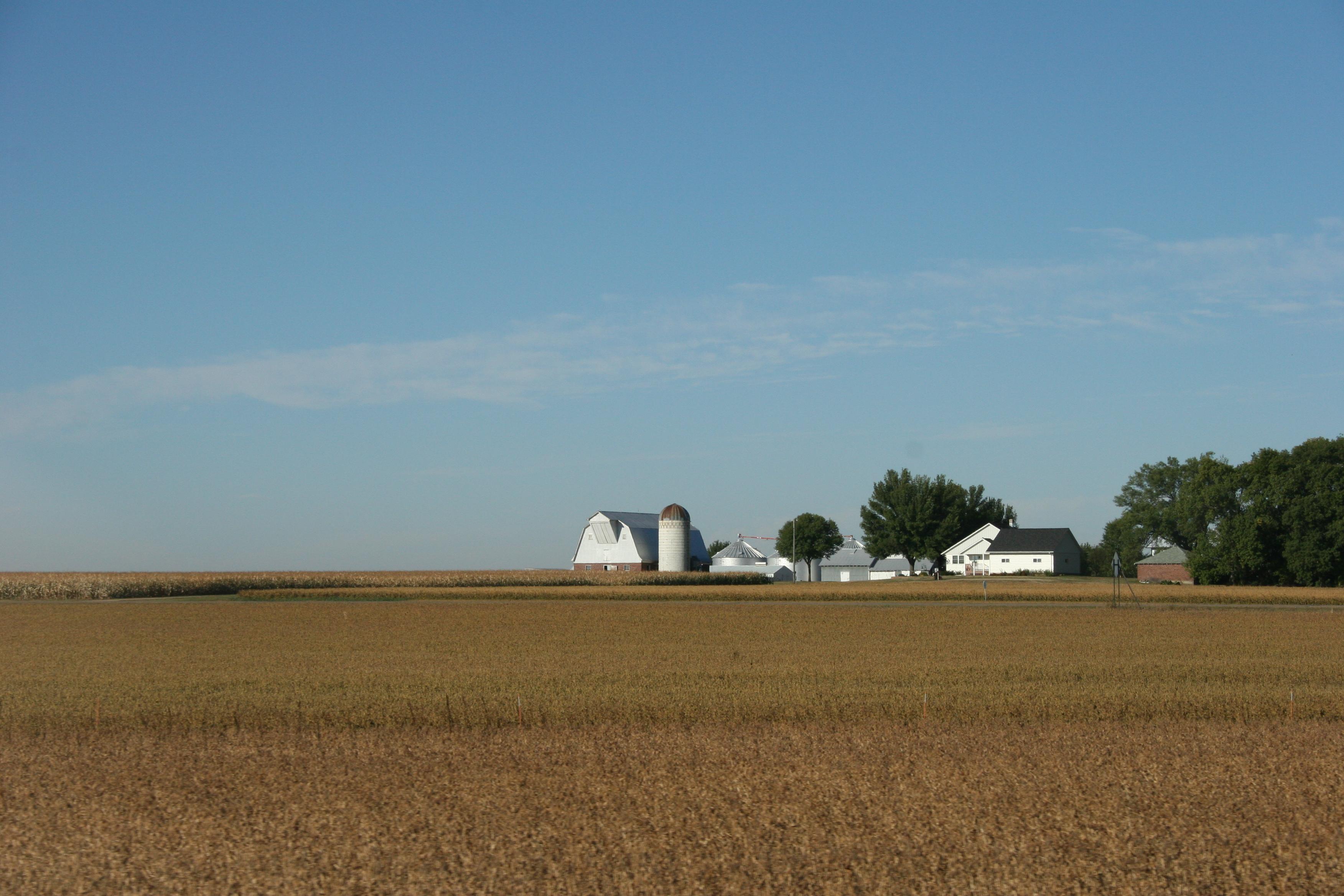
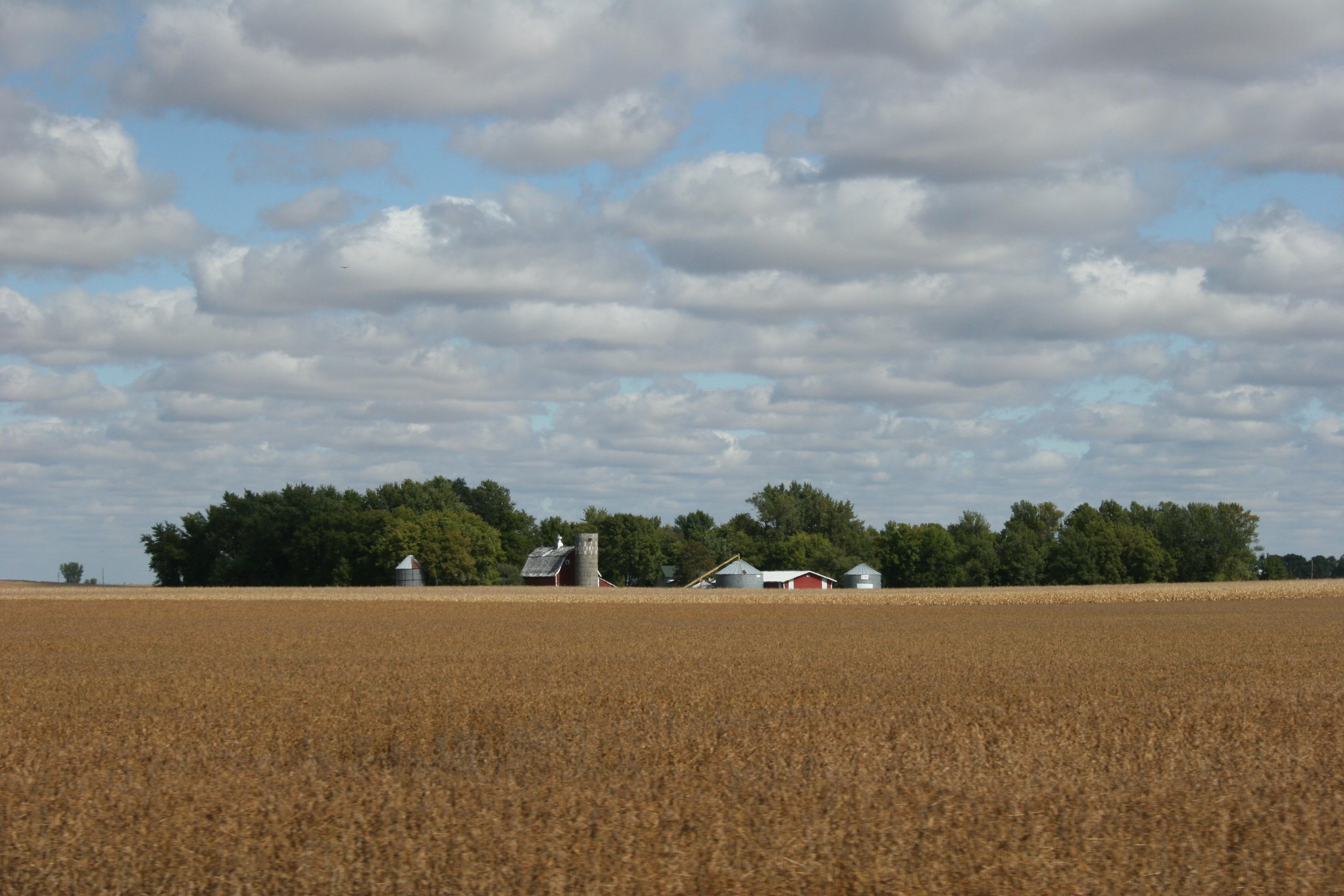
A farm site between Mankato and Nicollet, as seen from U.S. Highway 14.

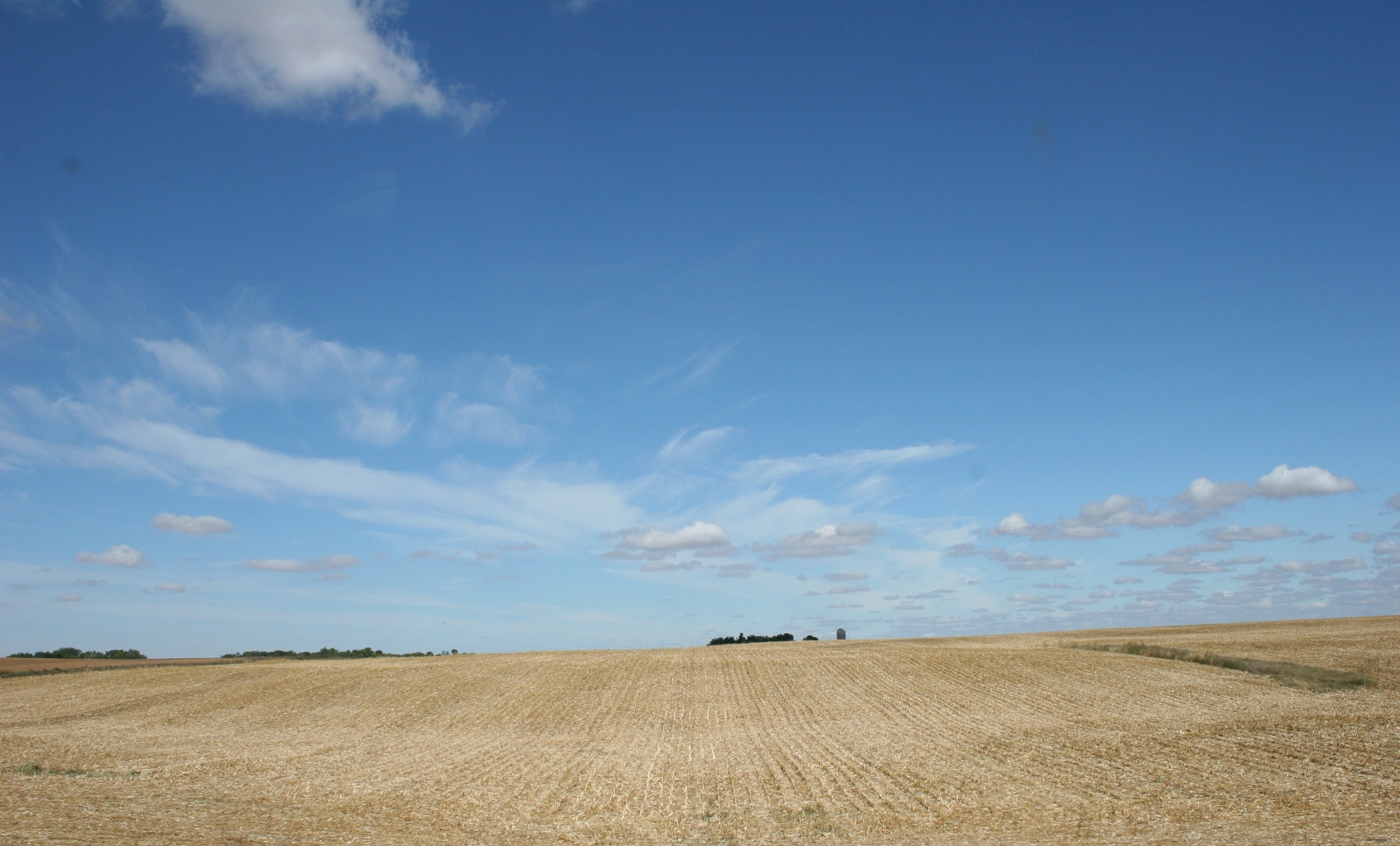
A harvested corn field between Nicollet and Courtland.

I want corn and soybean fields ripening to the earthy hues of harvest. Not gray cement or dark woods.

Give me small-town grain elevators and red barns and tractors, and combines sweeping across the earth.

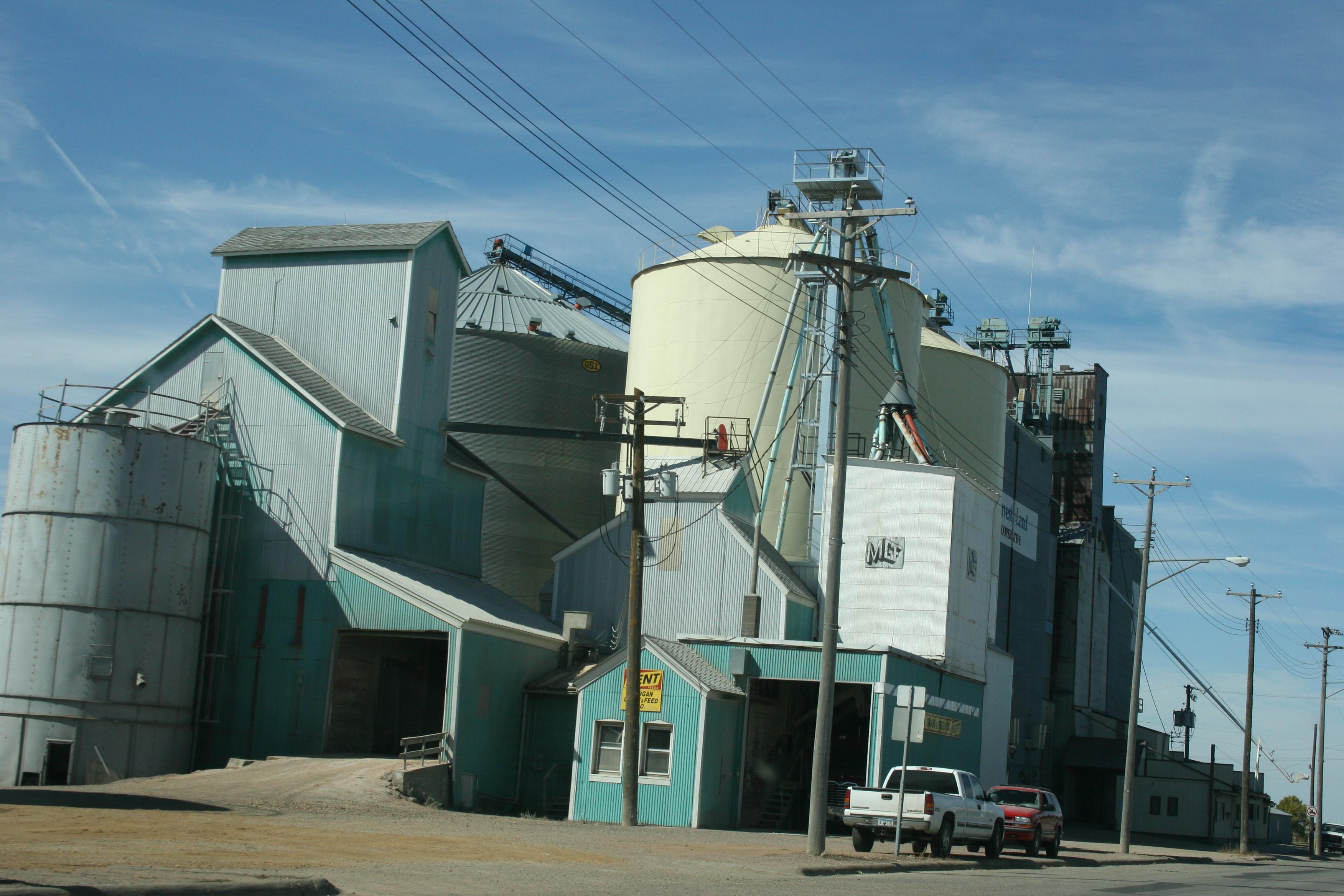
The elevator complex in Morgan in Redwood County.

A farm site along the twisting back county road between New Ulm and Morgan.

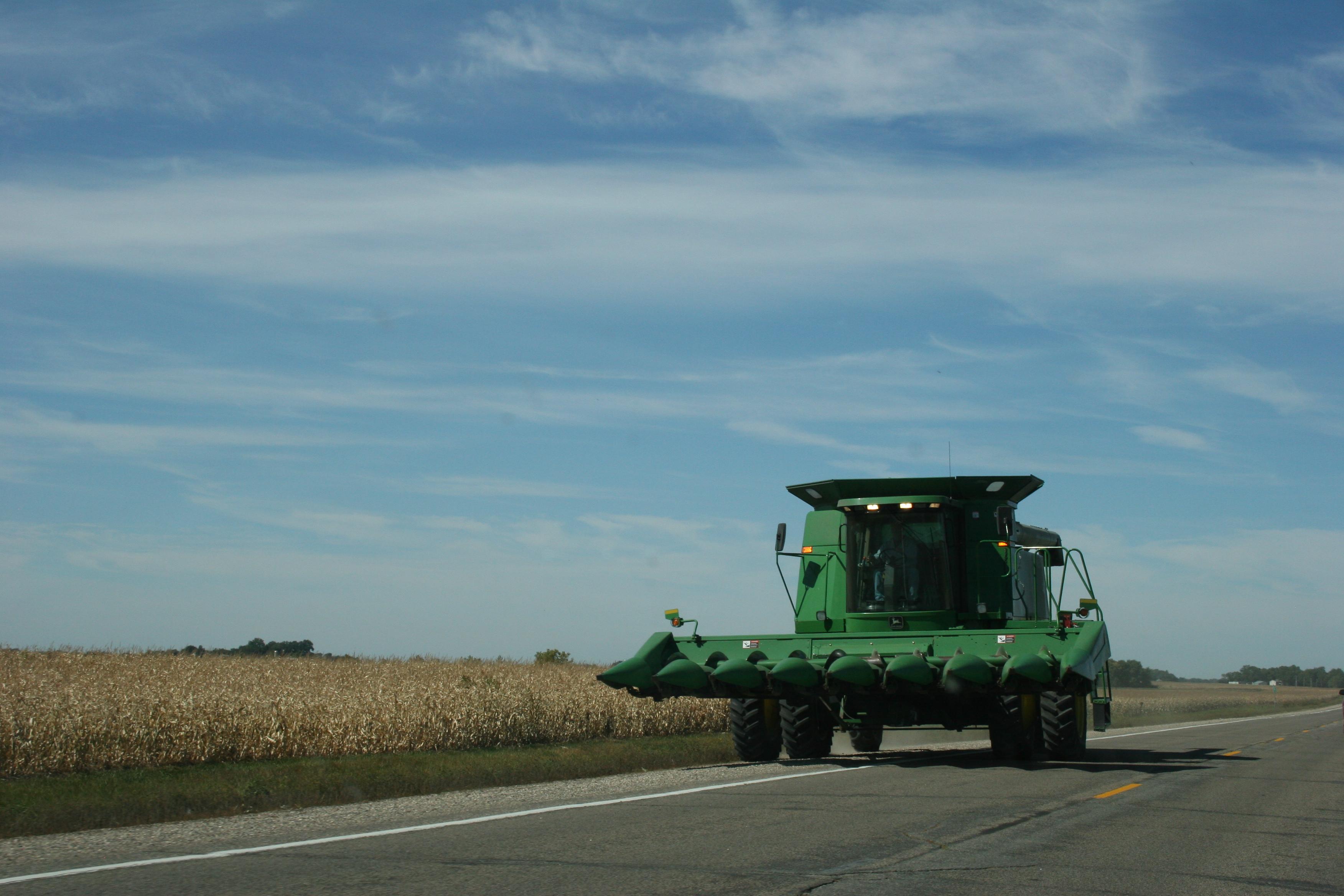
A John Deere combine spotted on the highway just outside of Morgan.

This is my land, the place of my heart.

Although I left the farm decades ago, I still yearn, during autumn, to return there—to immerse myself in the sights and smells and sounds of harvest. The scent of drying corn husks. The roar of combines and tractors. The walk across the farm yard on a crisp autumn night under a moon that casts ghost shadows. Wagons brimming with golden kernels of corn. Stubble and black earth, turned by the blades of a plow.

Today I only glimpse the harvest from afar, as a passerby. Remembering.

A farm site between Morgan and Redwood Falls in southwestern Minnesota.

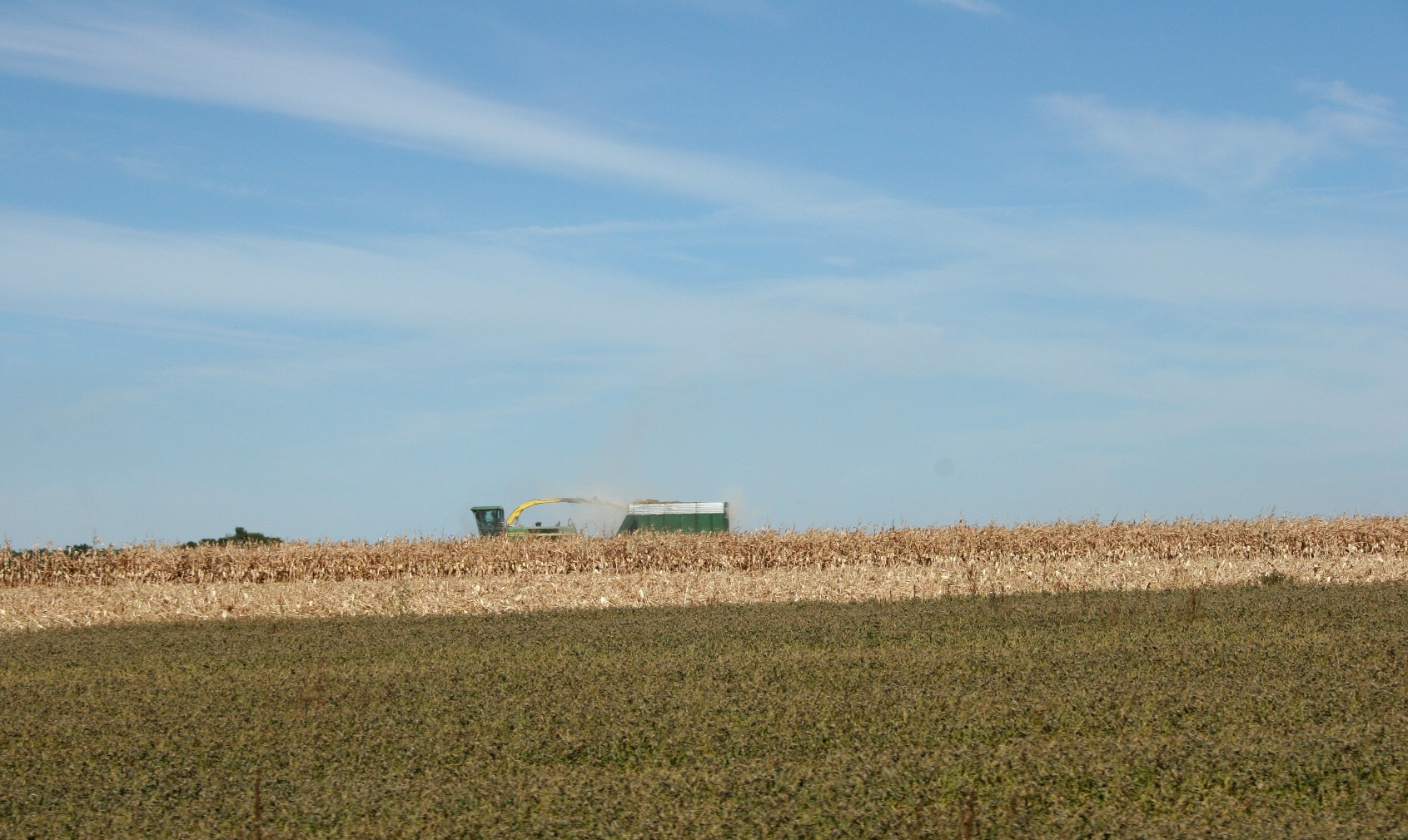
Harvesting corn on Saturday just outside of Courtland.

Chopping corn into silage between New Ulm and Morgan.

ALL OF THESE IMAGES (except the elevator) were taken at highway speed from the passenger side of our family car while traveling through southern Minnesota on Friday and Saturday.

© Copyright 2011 Audrey Kletscher Helbling


A tale of two girls and a goat-napping August 30, 2011

Filed under: Uncategorized — Audrey Kletscher Helbling @ 3:03 PM
Tags: , , , , , , , , ,

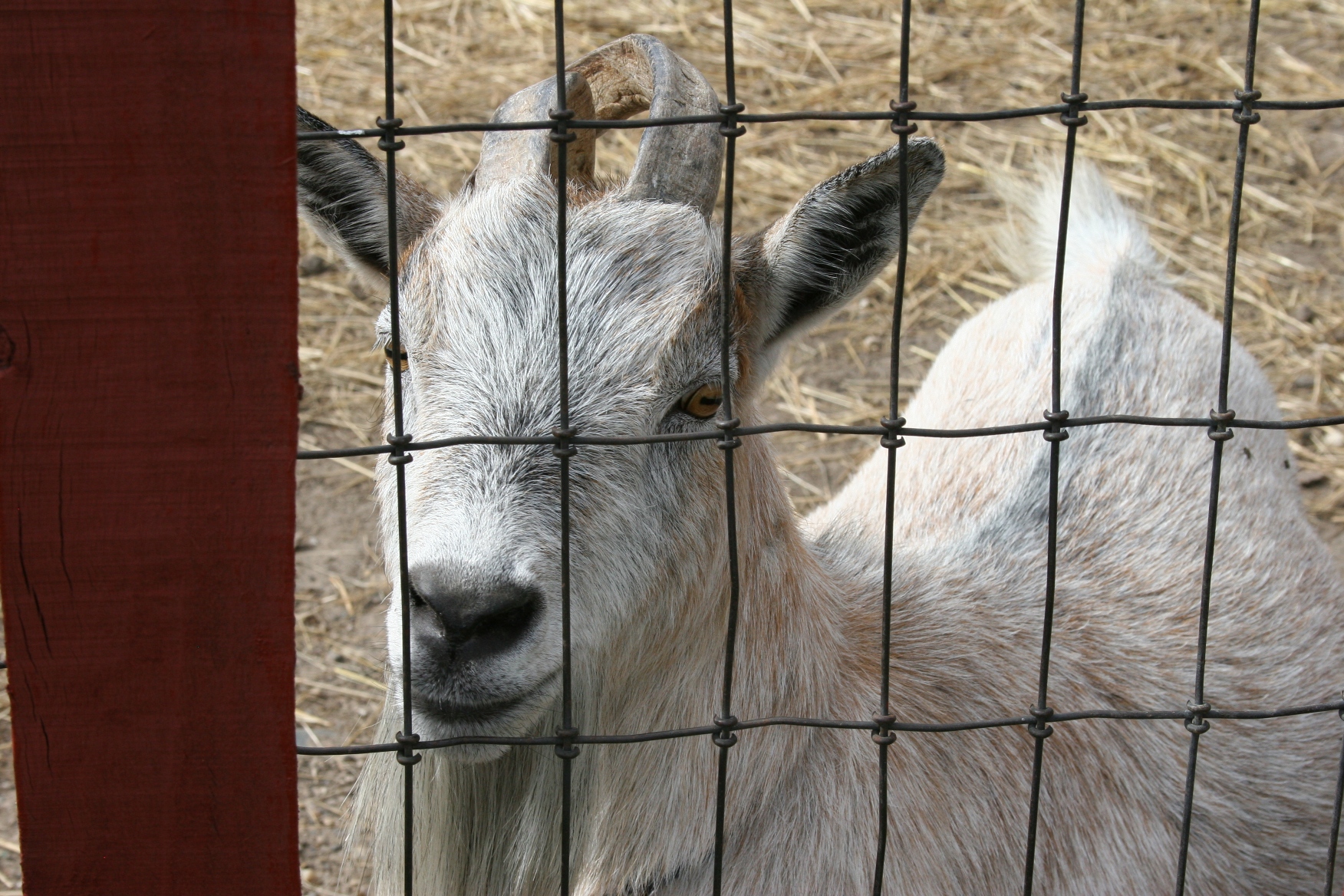
This goat is not to be confused with the heisted goat. Rather this goat was photographed at the Kasota Zoo and is used for illustration purposes only with this blog post.

IF YOU HAVE NOT yet heard the tale out of Mankato about the young stepsisters—we’re talking under age 10—who stole a goat from a zoo in the middle of the night and were caught walking down a street in their pajamas with the goat, then click here.

While this story could have ended not-so-happily, it did. The girls and the goat are fine, although the stepsisters could be in trouble with their parents, or the law.

After lying to the police about how they got the goat, the 6 and 7-year-olds eventually fessed-up and the truth was uncovered. They’d been to a birthday party at Sibley Park Zoo earlier in the day and apparently decided they just had to have a goat.

I heard this story on the 10 p.m. news Monday and laughed and laughed and then laughed some more.

I know, maybe I shouldn’t be laughing. Stealing is wrong. Lying is wrong. But in these days of news stories about natural disasters, war, murders, unemployment, a depressed economy, scandalous politics and more, you have to appreciate an imaginative caper like two kids stealing a goat from a zoo, in their p.j.s, in the middle of the night.

And sometimes you just have to view life with a Betsy-Tacy-Tib perspective.

Betsy, Tacy and Tib, for those of you unfamiliar with that trio, are characters in a series of children’s books written by Mankato author Maud Hart Lovelace and published between 1940–1955. The three, based on real-life friends growing up in Mankato (Deep Valley in the books), get into all sorts of mischief.

The fictional trio made quite a mess in the kitchen when they mixed up “Everything Pudding” combining ingredients like bacon grease, vinegar, onions, sugar, red pepper and more.

Another time they cut each other’s hair.

Betsy cuts Tacy's hair in this snippet from a mural by artist Marian Anderson in the Maud Hart Lovelace Children's Wing at the Blue Earth County Library in Mankato.

And once the three ventured into Little Syria for a picnic lunch. There they encountered a goat. They didn’t steal the goat. He stole from them, grabbing their picnic basket and scattering sandwiches, cookies and hard-boiled eggs in all directions.

Yup, sometimes you have to laugh, whether it’s at the antics of a goat in a book of fiction or the antics of real-life goat thieves who seem like they could have stepped right off the pages of a Betsy-Tacy book.

FYI: The girls with the Betsy-Tacy-Tib mischievous streak and the goat were apprehended along Carney Avenue. Coincidence or not, one of the books in Lovelace’s series is titled Carney’s House Party. And Carney’s surname is Sibley.

WHAT’S YOUR TAKE on this story about the stepsisters who stole the goat from Sibley Park Zoo in Mankato? Share your thoughts by submitting a comment.

© Copyright 2011 Audrey Kletscher Helbling


A virtual tour of Mankato’s sculpture walk July 9, 2011

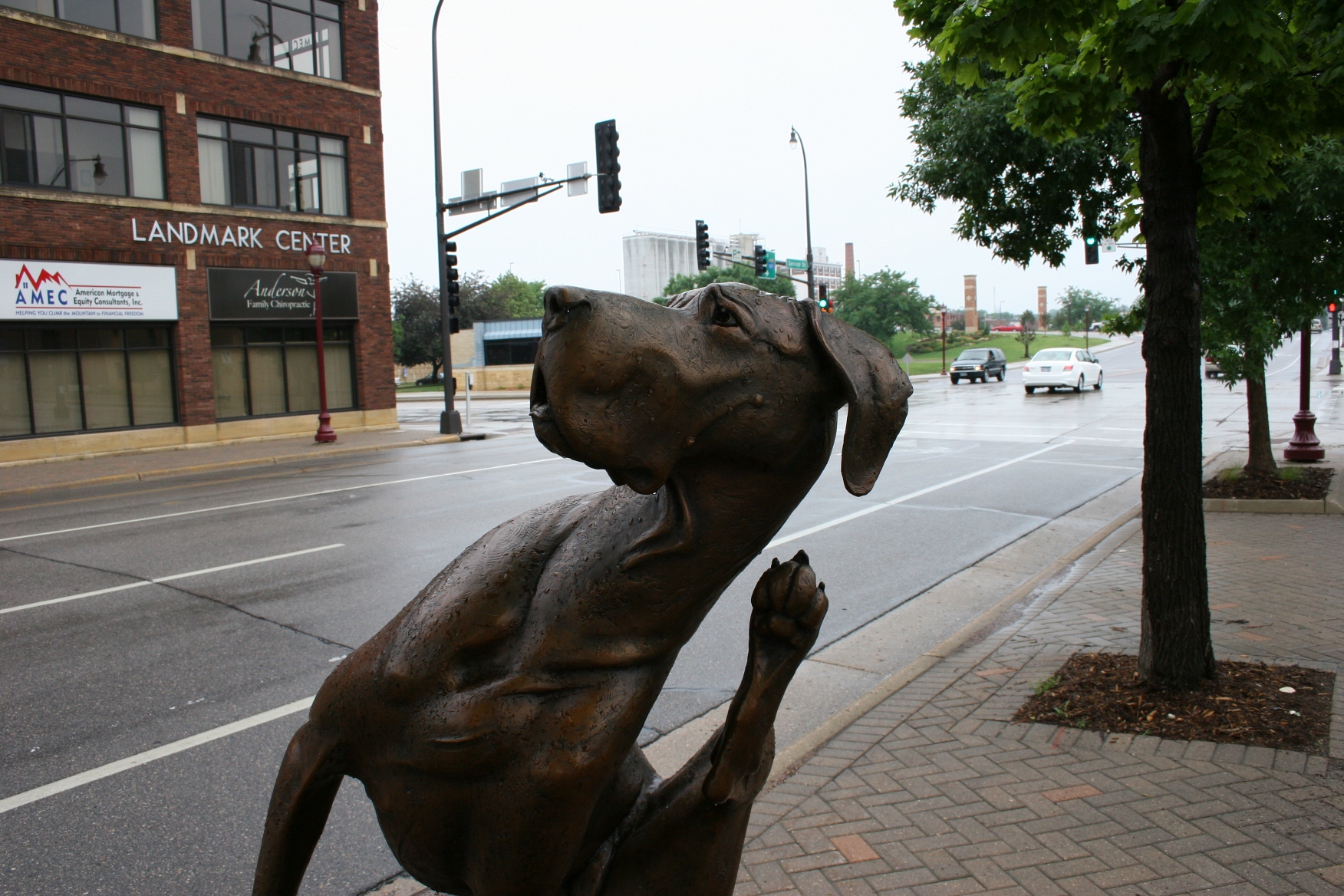
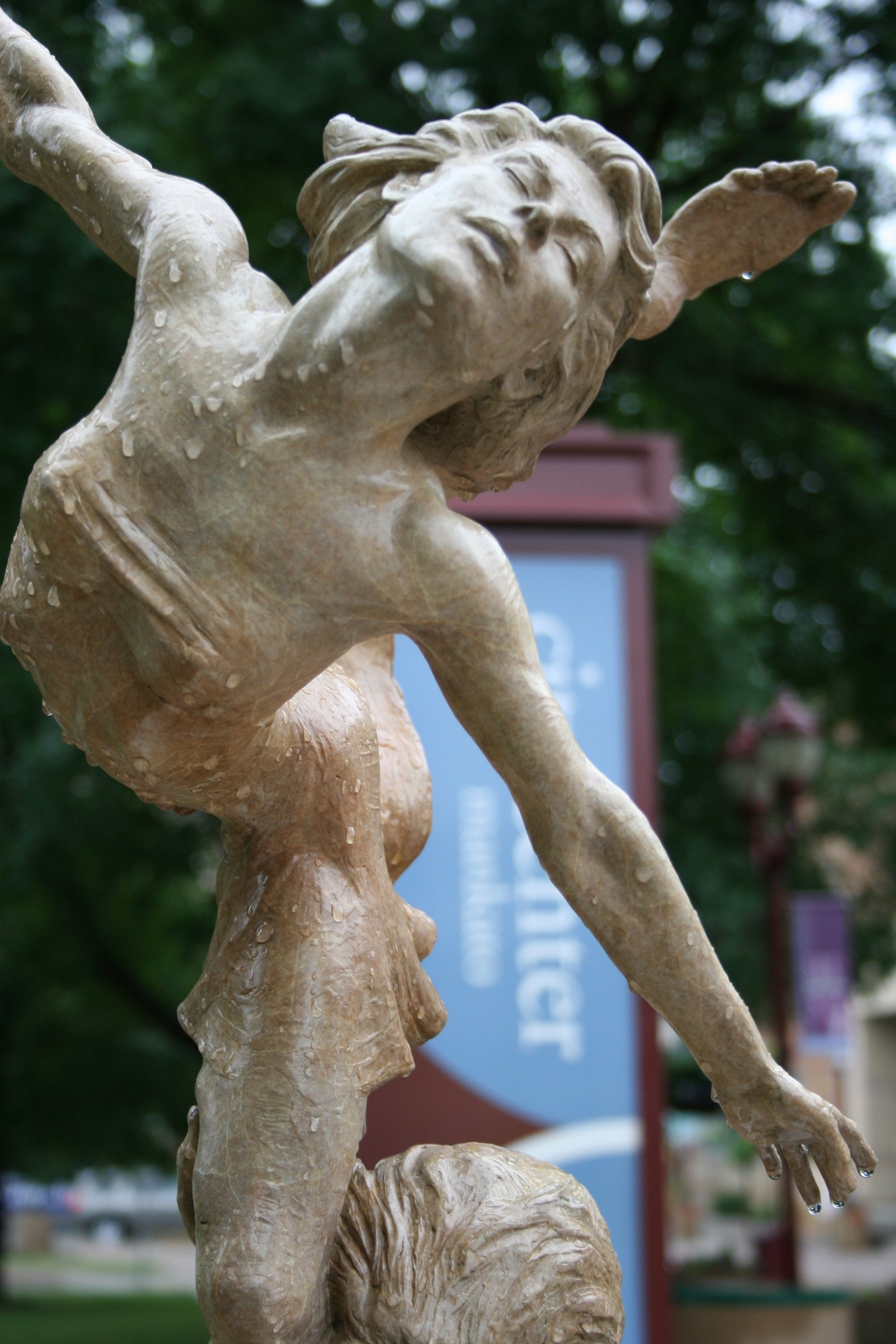
Louise Peterson of Guffey, CO. created this $20,000 bronze sculpture of a playful Great Dane titled "Tickled."

DEAR READERS,

I realize that some, maybe even many, of you, do not live anywhere near Mankato, the southeastern Minnesota community where I recently viewed sidewalk sculptures.

Heck, some of you don’t even live in states bordering Minnesota. Your chances of ever seeing these 25 pieces of art in person are about zilch.

So, for those of you who will view the City Art Walking Sculpture Tour only via Minnesota Prairie Roots, I’ve pulled together one last blog post. Please read my previous two posts for more details and photos of this community art project by first clicking here and then here.

This whole concept of bringing art to the streets through a rotating sculpture tour pleases me immensely. What a grand idea. Such art adds to the vibe of a downtown, to its art, history and culture.

Thank you, Mankato, and everyone who supported this cause financially, for bringing these sculptures to southeastern Minnesota, within quick driving distance of my Faribault home.

Yours gratefully,

Audrey Kletscher Helbling at Minnesota Prairie Roots

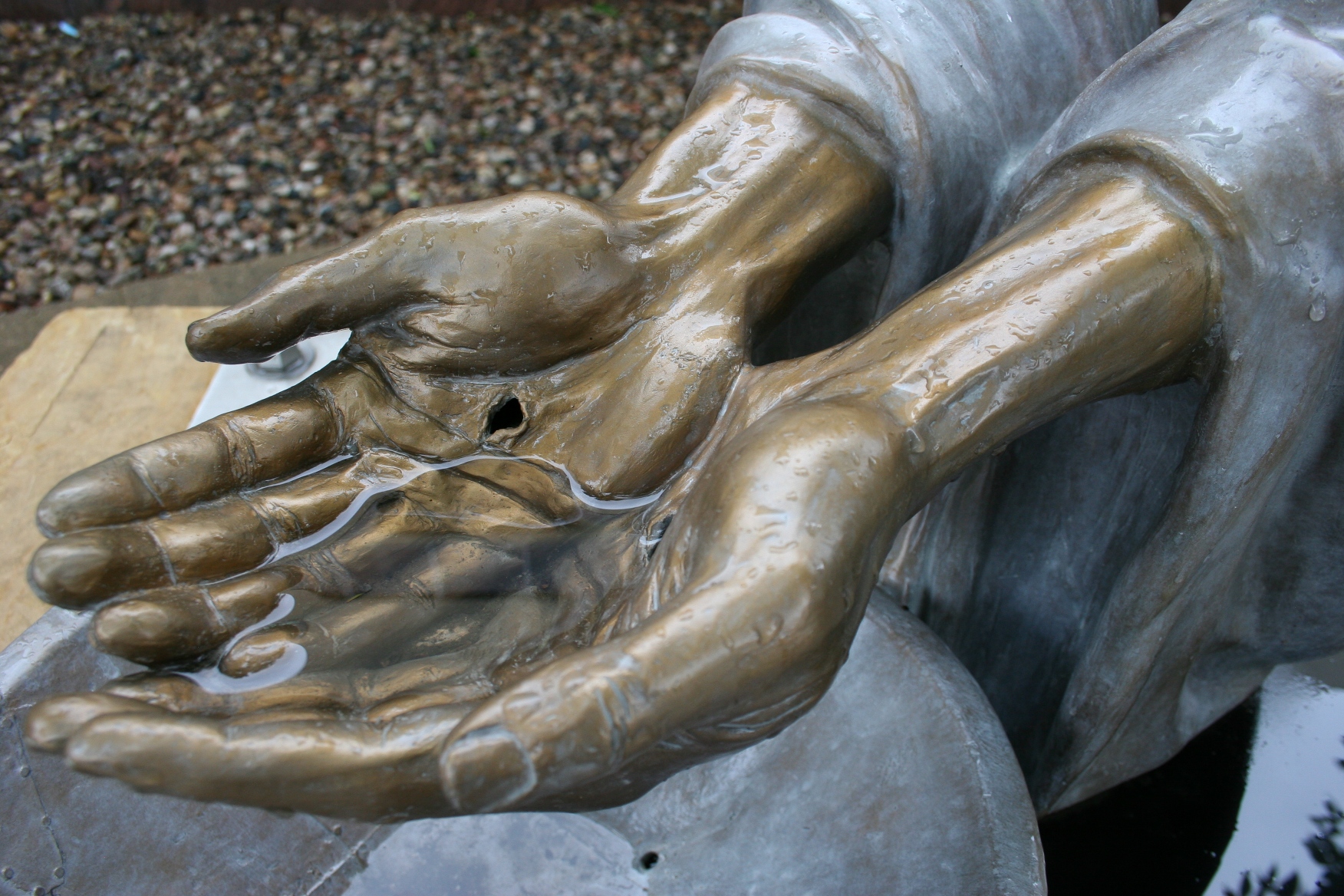
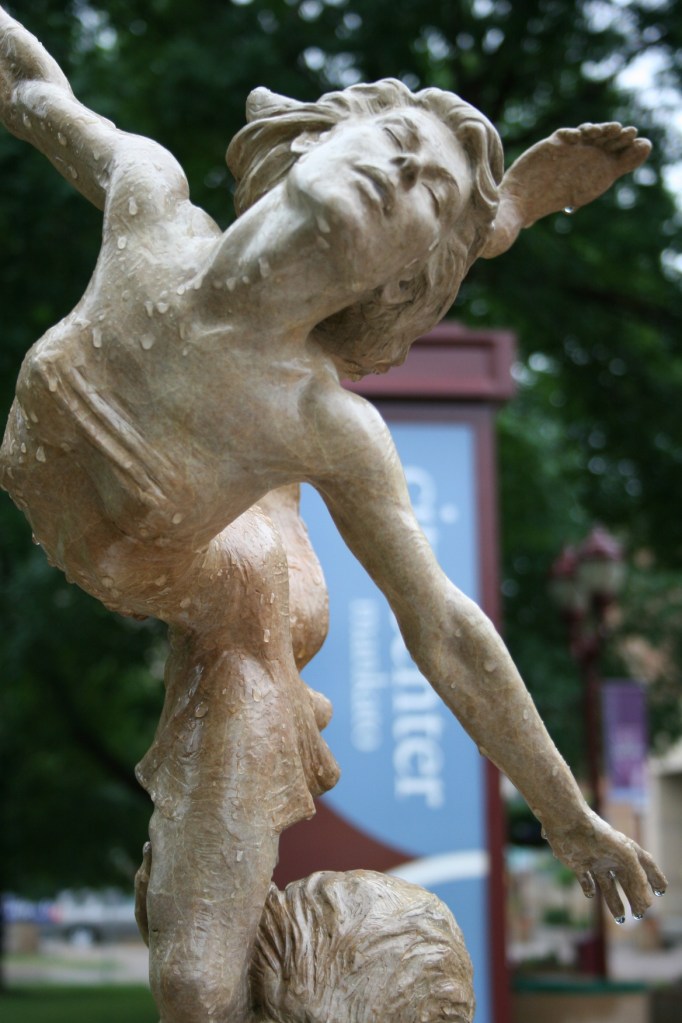
Sioux Falls artist Darwin Wolf's $13,500 sculpture, "The Fountain of Life," references Jesus washing Peter's feet at the Passover. It emphasizes the healing, life-giving qualities of water.

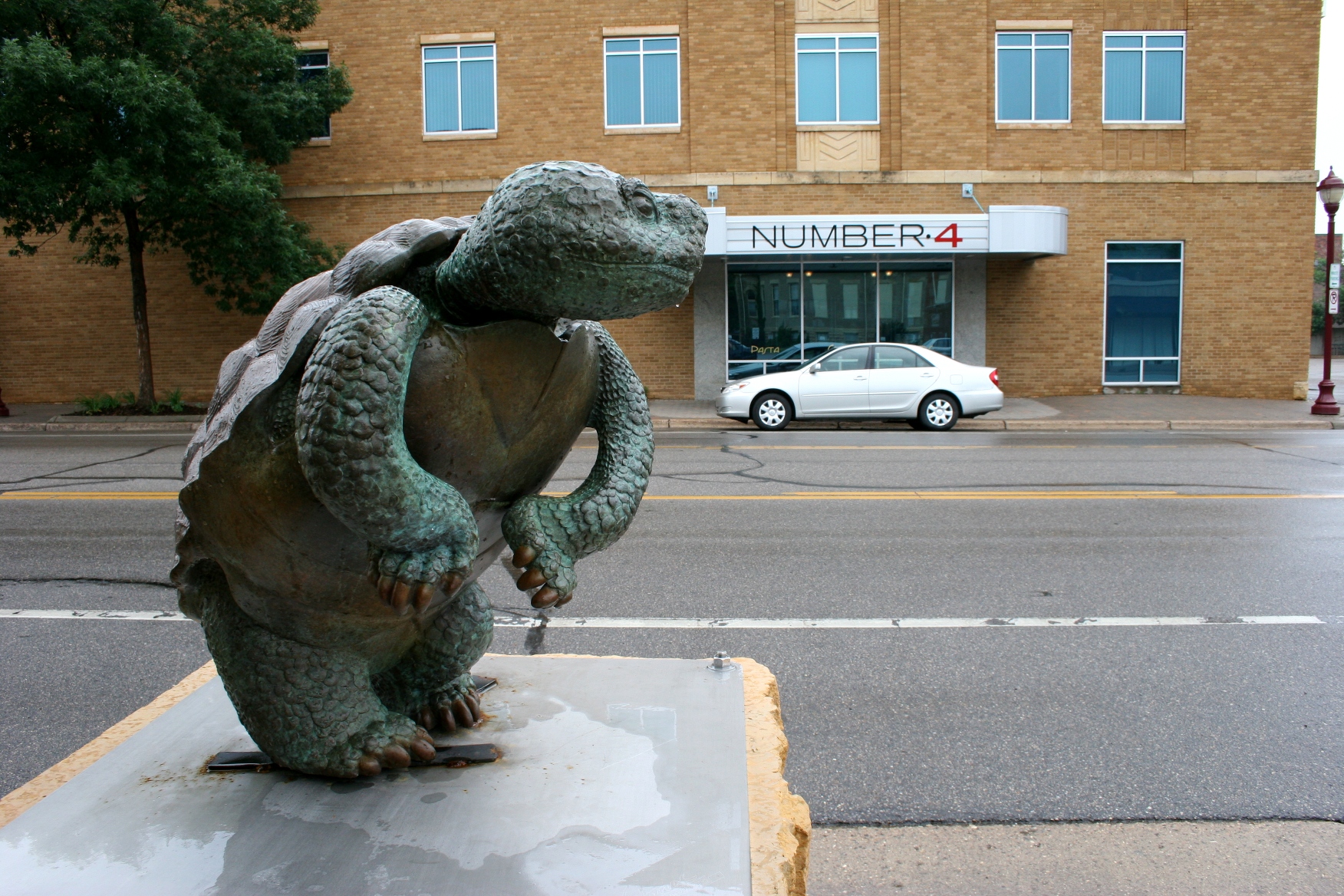
"Poco a Poco" a $12,000 bronze sculpture by Pokey Park of Tucson, Arizona, highlights the tortoise, representative of wisdom in American Indian culture. The building in the background houses Number 4 American Bar & Kitchen.

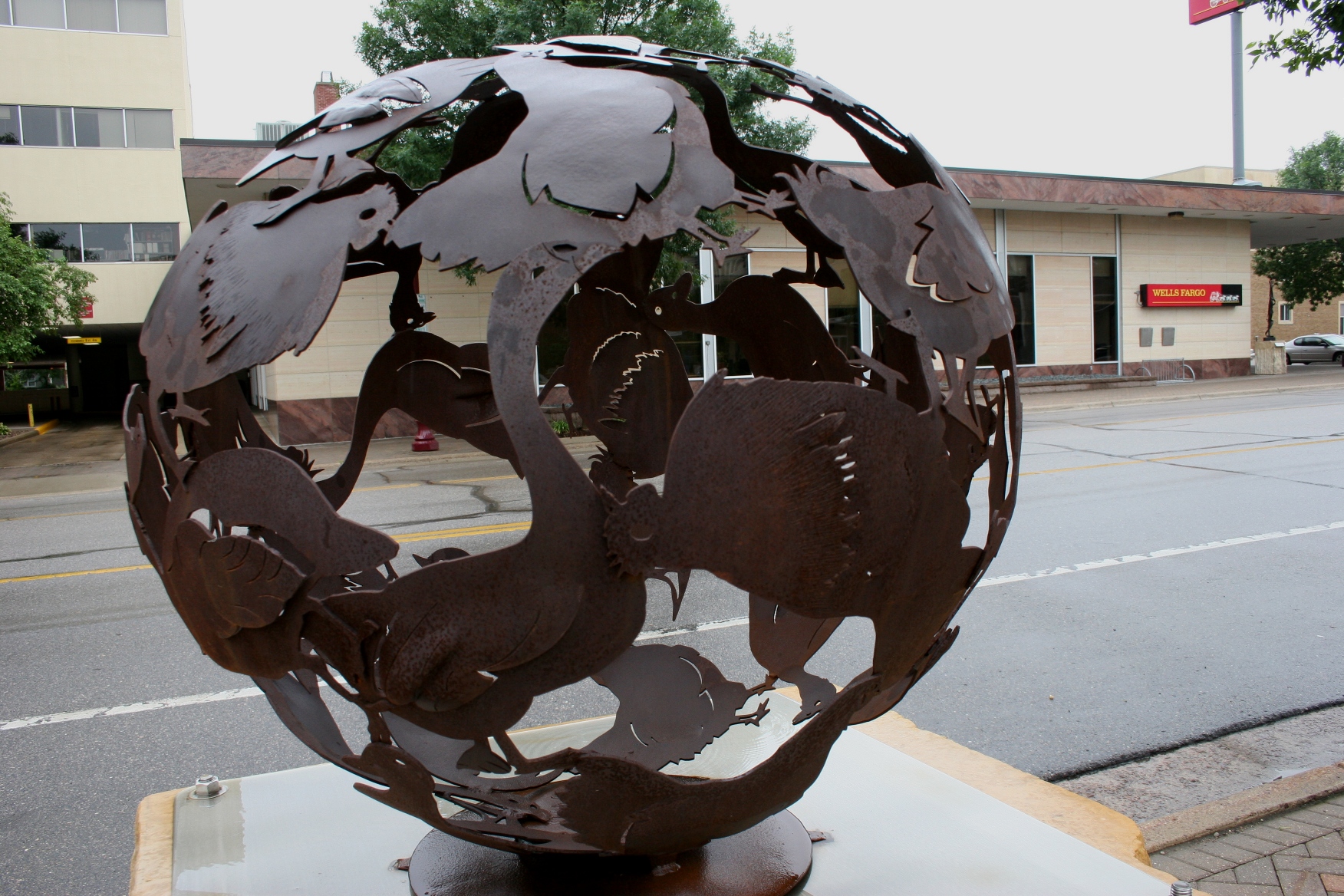
"Fowl Ball" celebrates geese, ducks, turkeys and chickens in this $7,600 forged and welded weathered steel sculpture by Lee W. Badger of Hedgesville, West Virginia.

All of the sculptures are marked with informational signage.

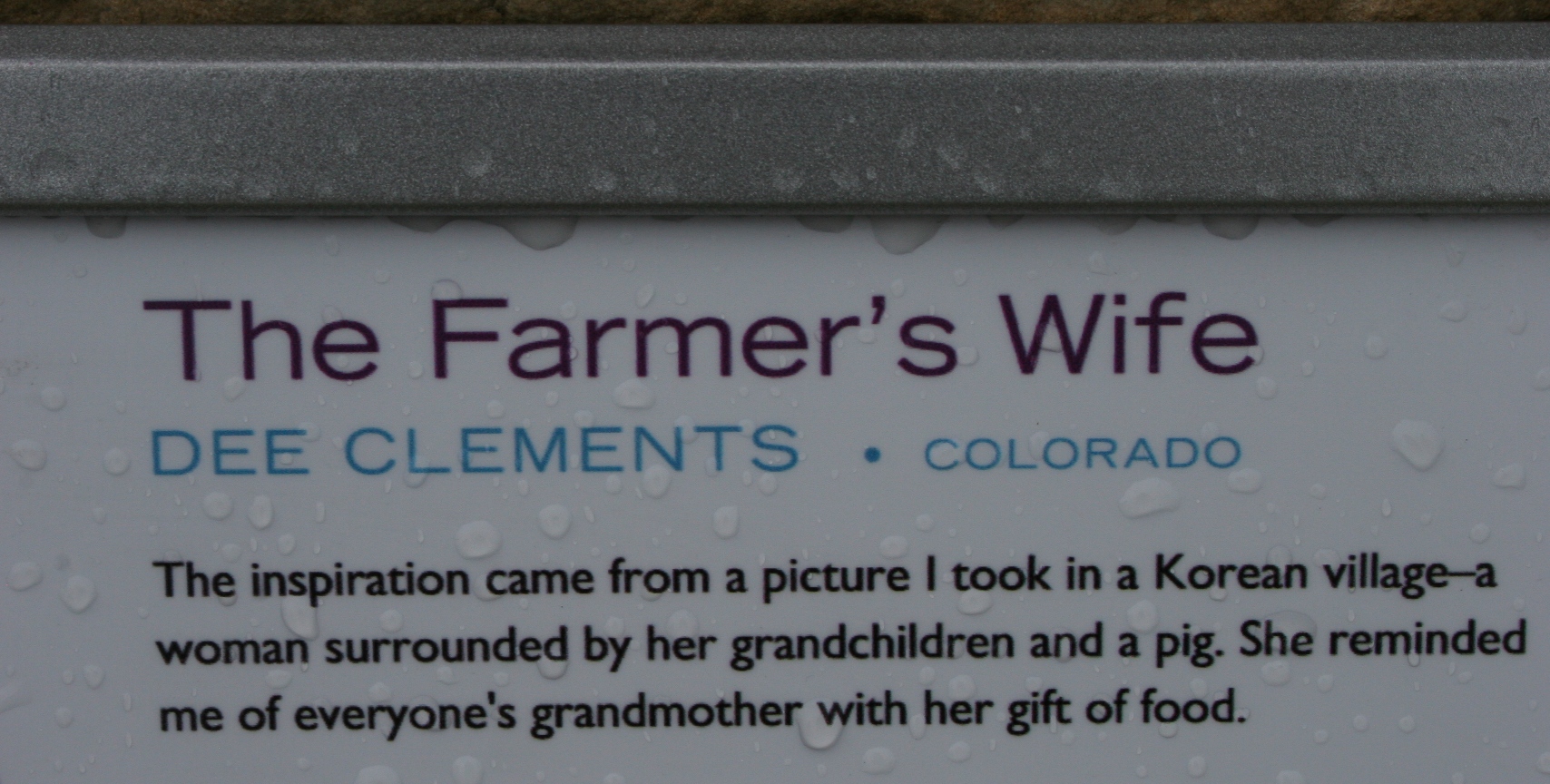
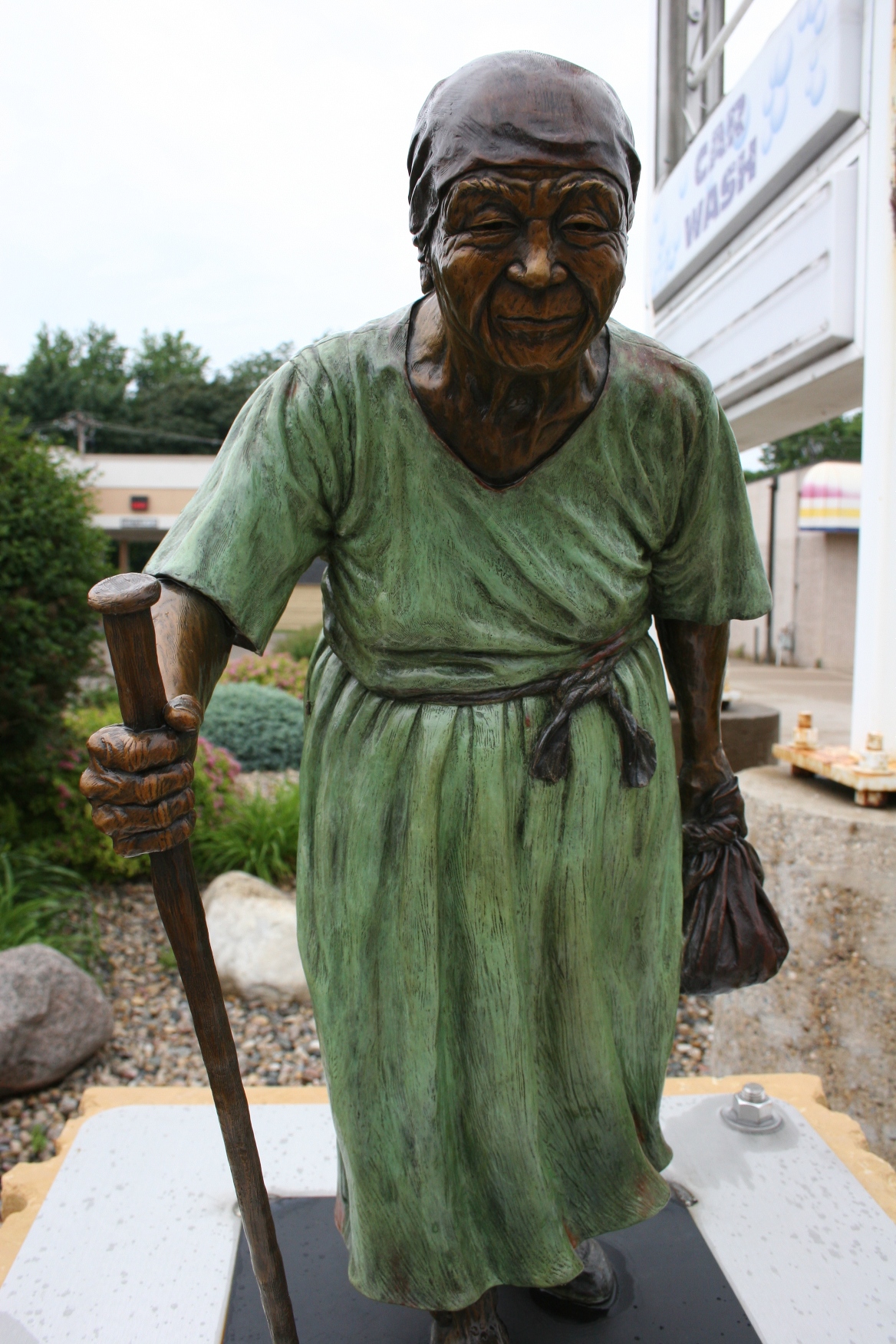
Dee Clements of Loveland, Colorado, created the $6,000 bronze "The Farmer's Wife," one of my favorite exhibit pieces.

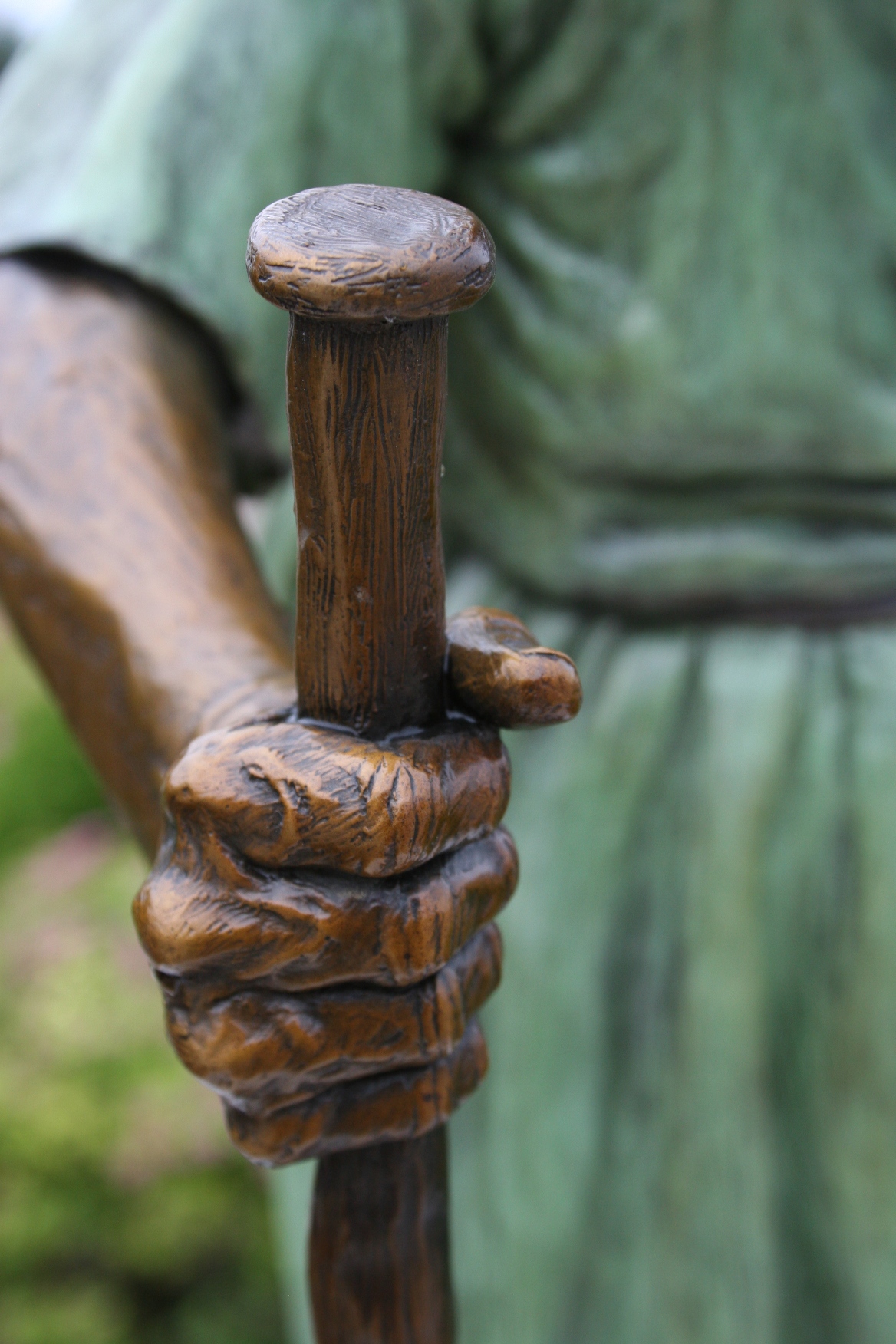
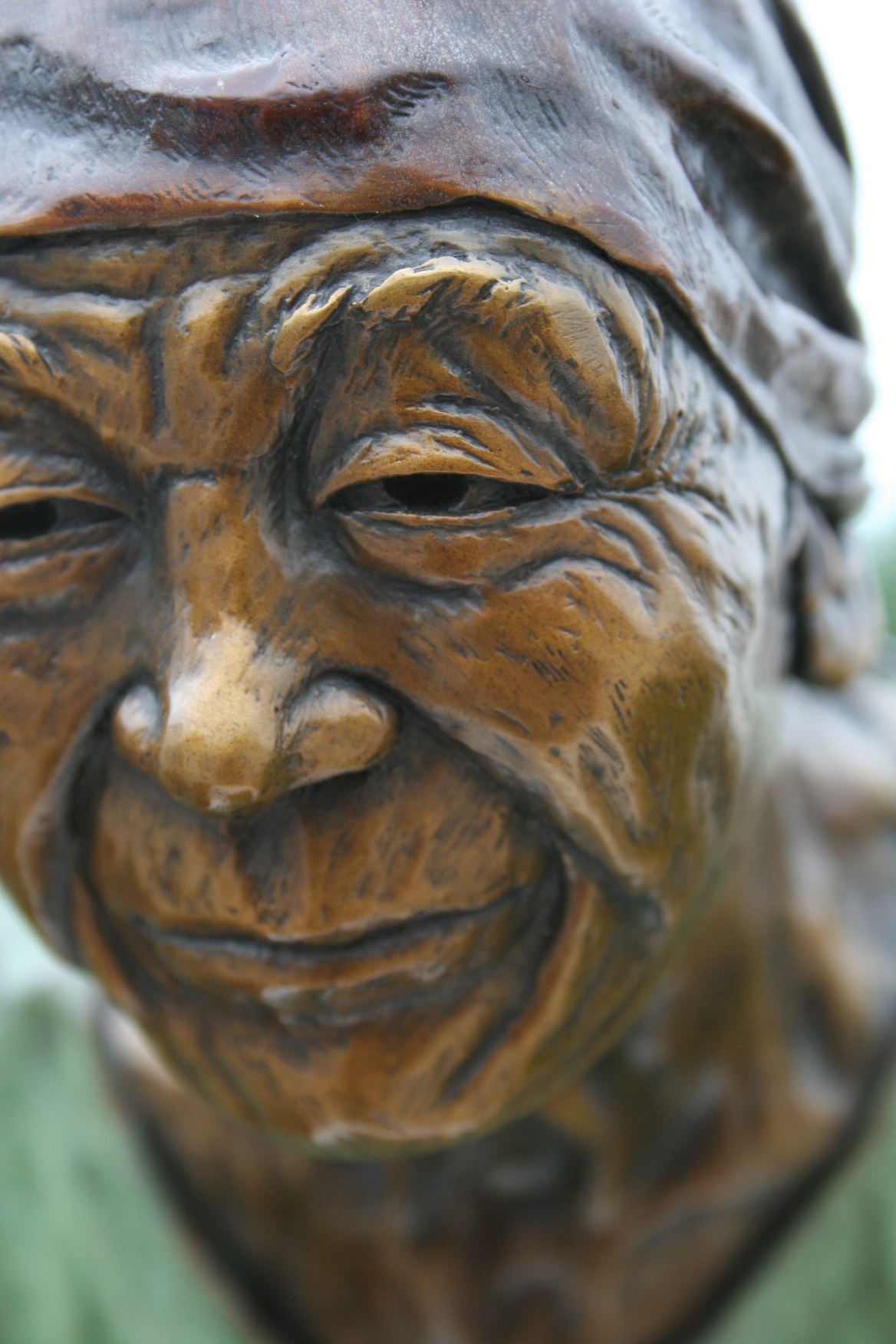
To fully appreciate these sculptures, you must notice the details, including the Korean woman clenching her walking stick in "The Farmer's Wife."

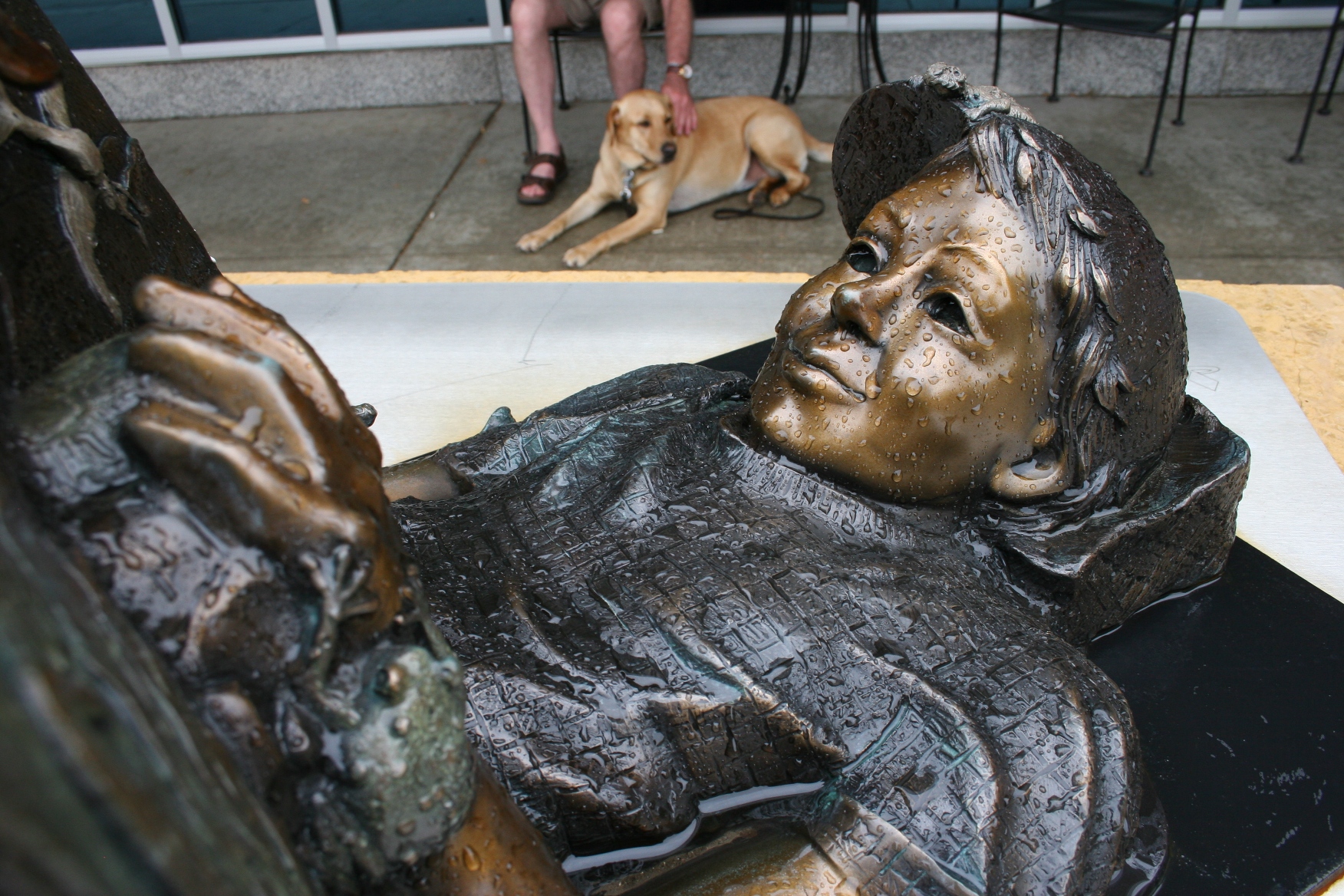
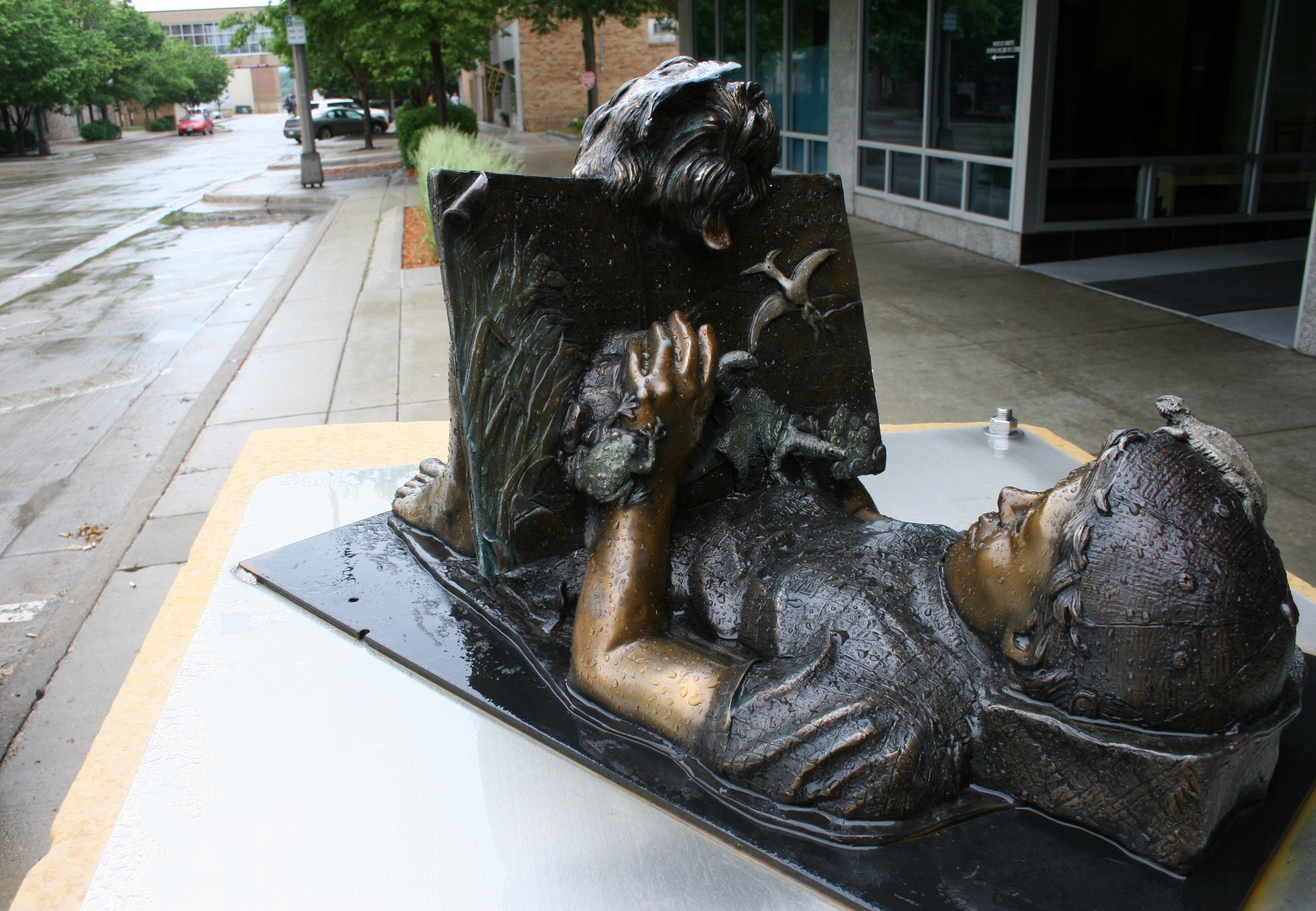
Details define "Reading Magic," a $8,500 bronze sculpture by Julie Jones of Fort Collins, Colorado.

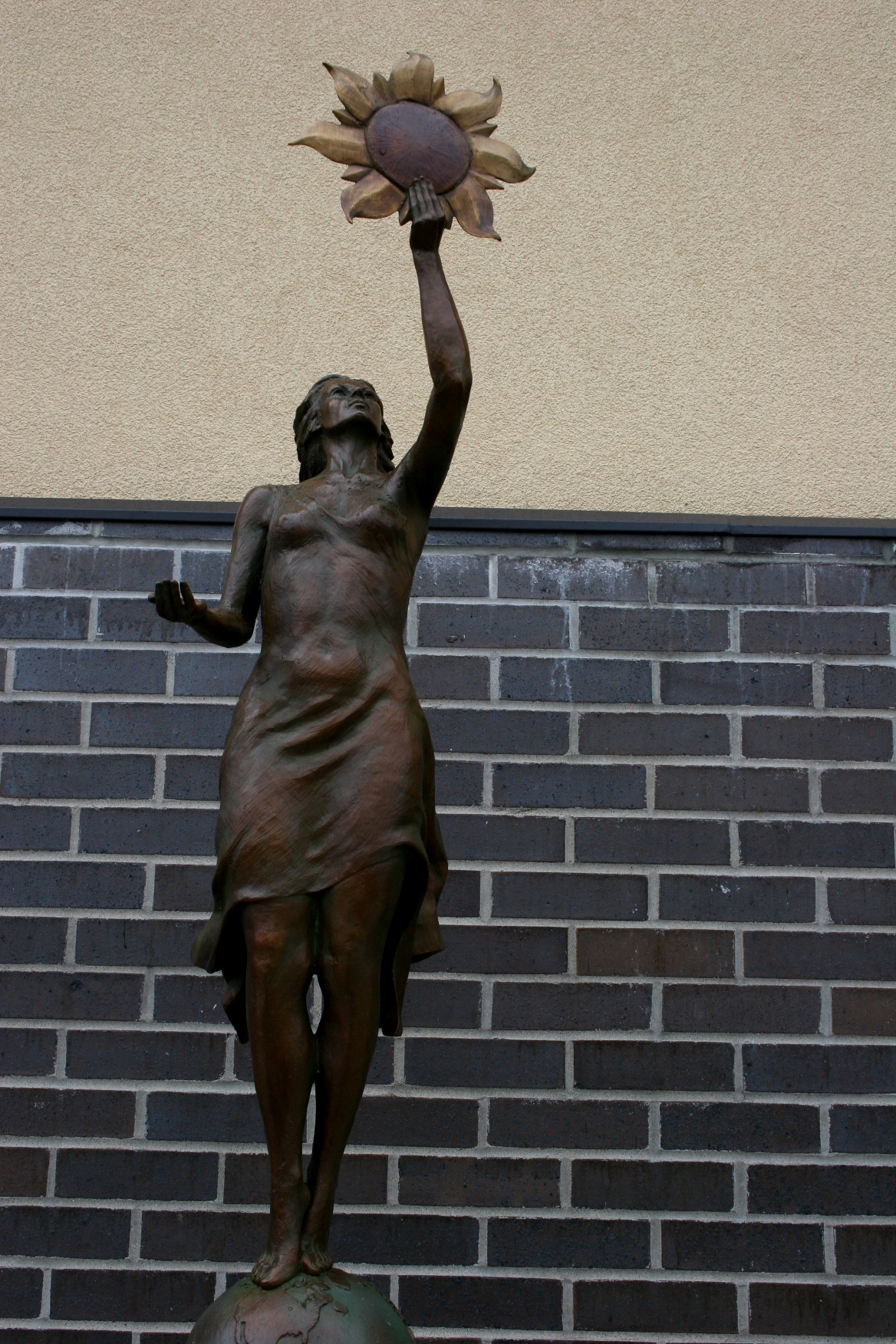
"Spirit of Energy," a $8,400 bronze by Karen Crain of LIttleton, Colorado, represents three renewable energy resources: sun, wind and water.

© Copyright 2011 Audrey Kletscher Helbling


The endearing smiley face June 29, 2011

Filed under: Uncategorized — Audrey Kletscher Helbling @ 7:39 AM
Tags: , , , , , , , , , ,

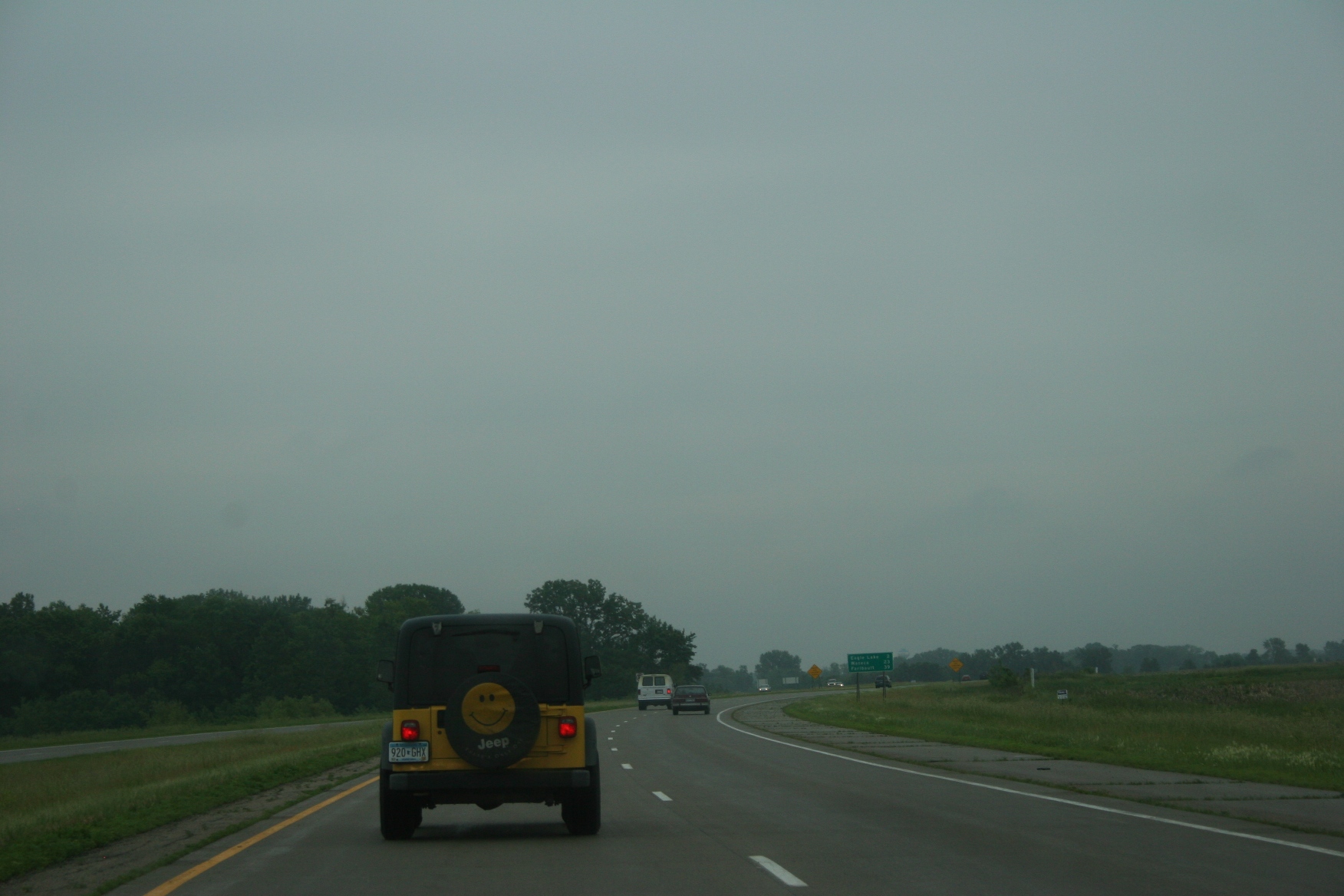
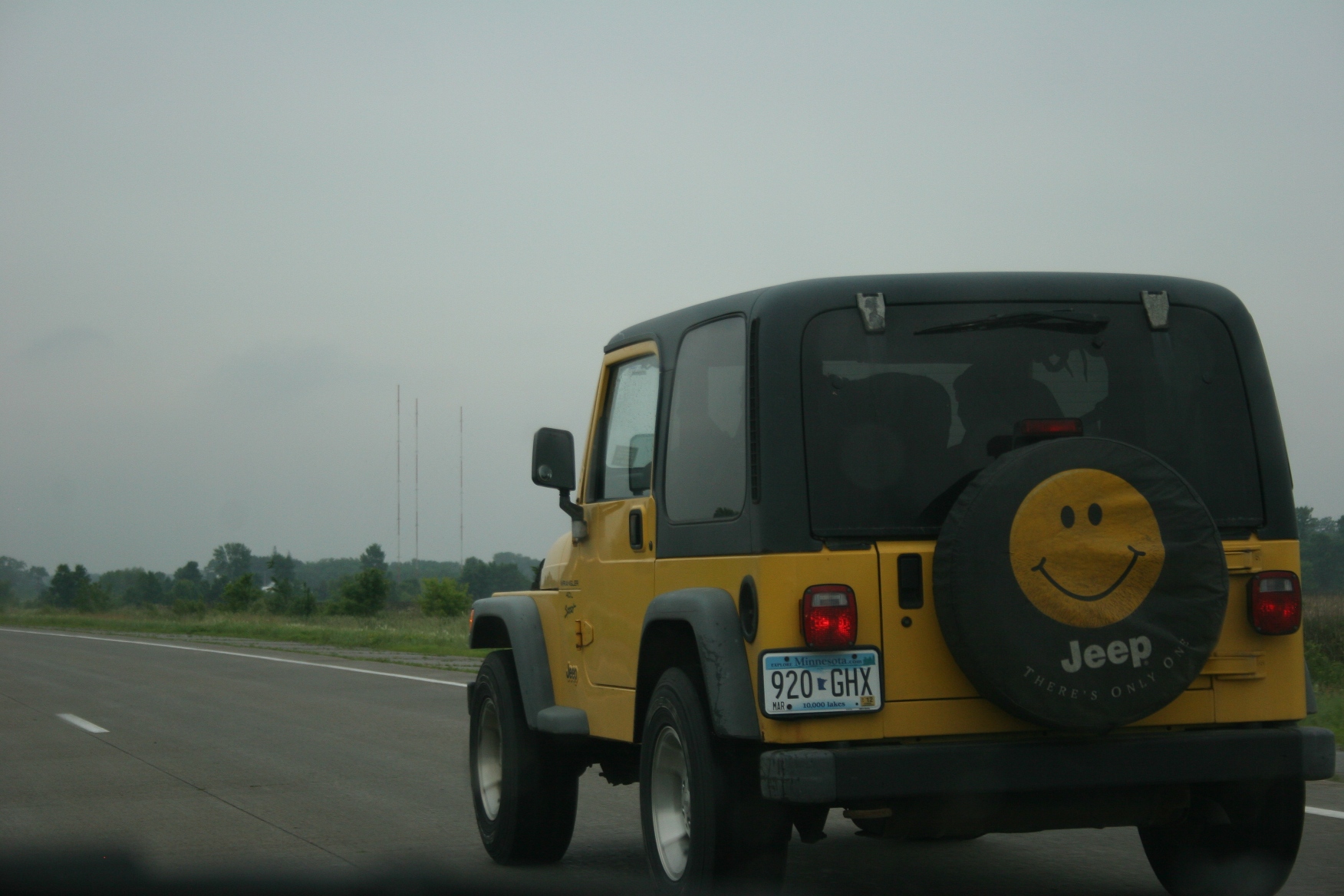
I URGED HIM to speed up, to catch up to that yellow jeep ahead of us.

“I want to take a picture,” I explained, and my husband obliged although he thought me a bit crazy.

And maybe I am sometimes. But that canary yellow jeep, the single visual jolt of brightness on yet another recent dreary weekend, tripped something in my brain.

If you live in Minnesota, I expect you’ll understand. I mean, honestly, weren’t you tired of all the cold and rain and gloom on the heels of a long and snowy winter? (Remind me of that tomorrow when the temperature is predicted to reach 100 degrees or higher.)

So, given that context, the yellow jeep with the smiley face wheel cover made me smile as we traveled on U.S. Highway 14 between Mankato and Eagle Lake recently.

Smiley faces, no matter where I spot them, always increase my happiness quotient.

My appreciation of smiley faces stretches back further than I’d like to admit these days. This happiness symbol popped up everywhere when I was in high school, which would be, yes, the 1970s. Oh, how I wish I still had my smiley face bulletin board and my smiley face button.

So there, that should explain why I wanted to photograph the yellow jeep on a drizzly Saturday afternoon along a Minnesota highway. The smiley face represents a link to my past, to those turbulent teen years when I needed a bright smile as much then as I sometimes still need one some four decades later.

I can’t think of another symbol with such upbeat universal appeal. Can you?

Do you, like me, have fond memories of the smiley face? I’d like to hear.

© Copyright 2011 Audrey Kletscher Helbling


At the WordWalk: Why I won’t eat tuna June 28, 2011

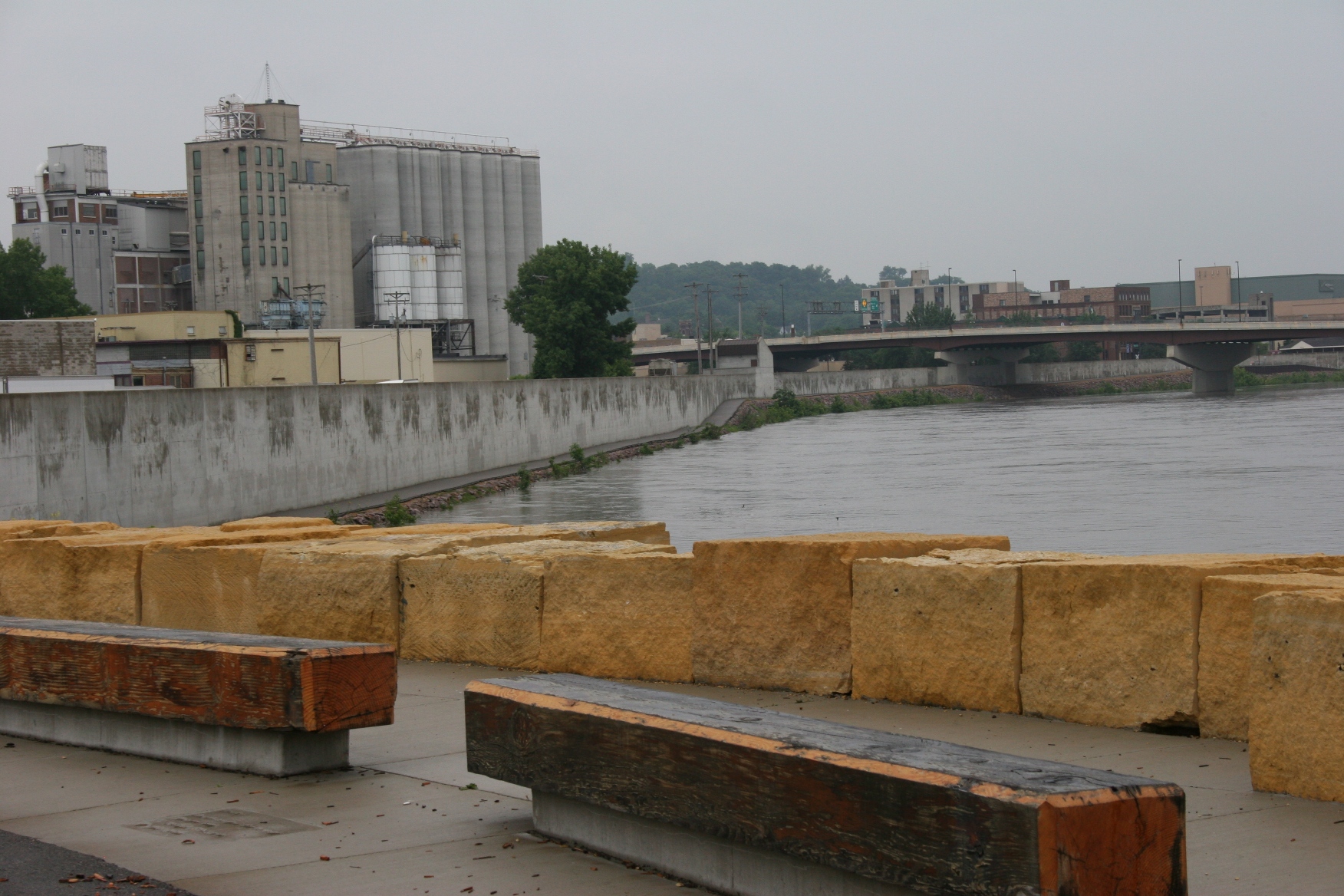
A view of the Minnesota River as seen from Riverfront Park, looking toward downtown Mankato.

THE MANKATO PARK SEEMS, in many ways, an ideal setting for poetry.

The usually playful Minnesota River bumps against the land here, acting on this Saturday afternoon like a willful, unruly child.

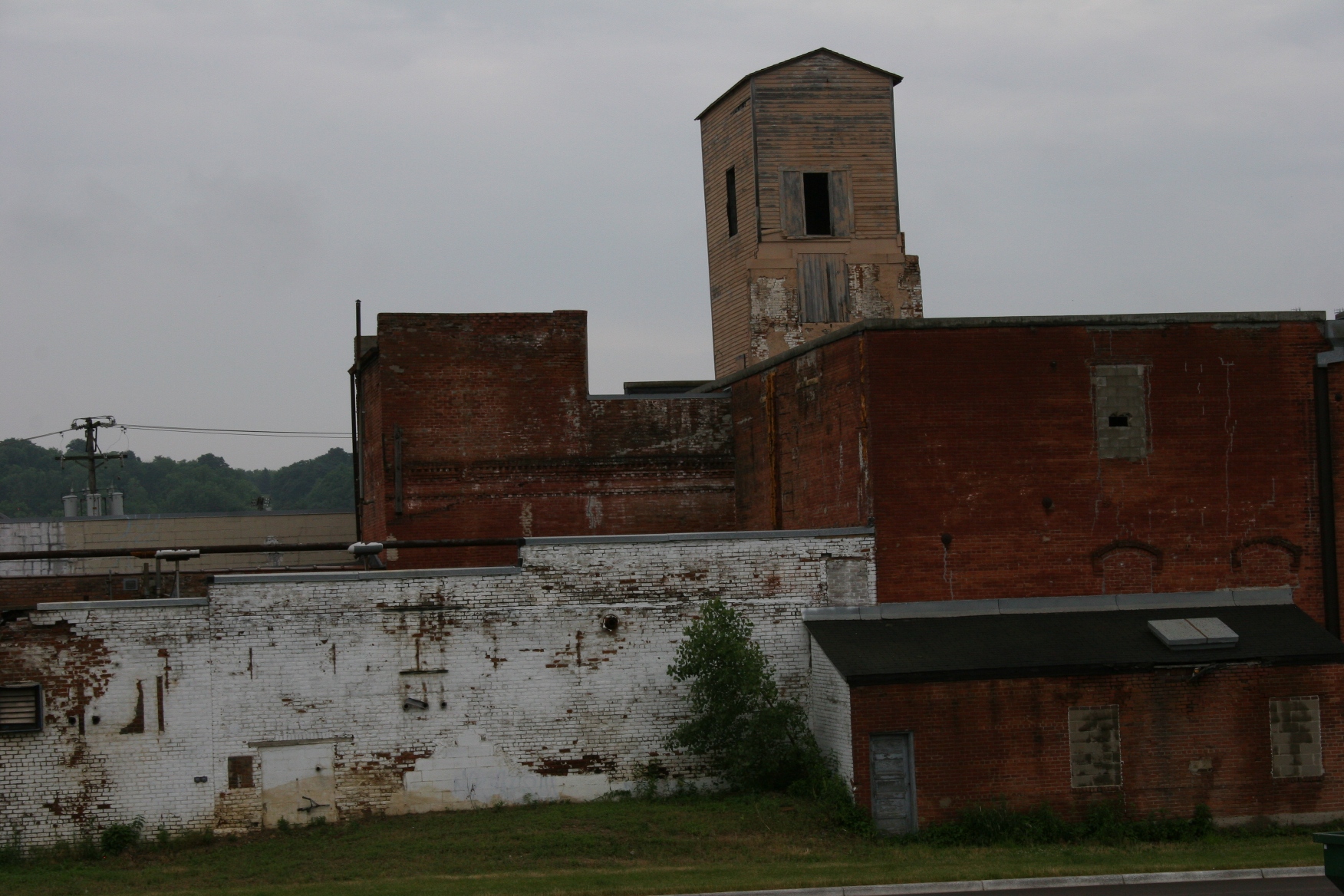
On the other side of Riverfront Park, across the tracks, historic buildings stand like forlorn children, neglected, waiting for someone to care.

Overhead, moody skies pout.

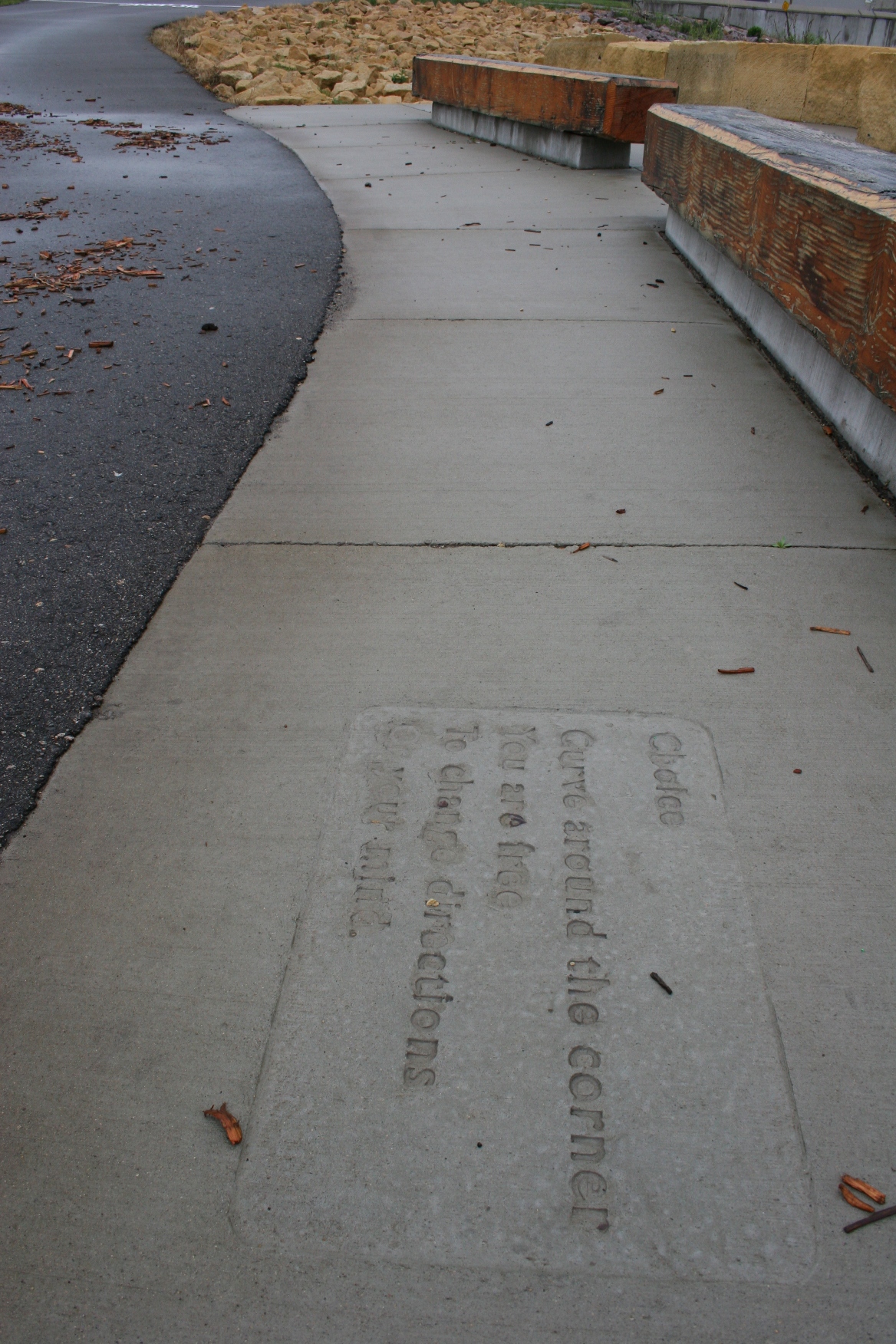
I have come here at this late afternoon hour to read the poetry imprinted upon cement. Occasionally the sky spits rain at me as I follow the gray sidewalk which mimics the gray day.

"Curve around the corner/You are free/To change directions/Or your mind," reads this poem by Marlys Neufeld of Hanska.

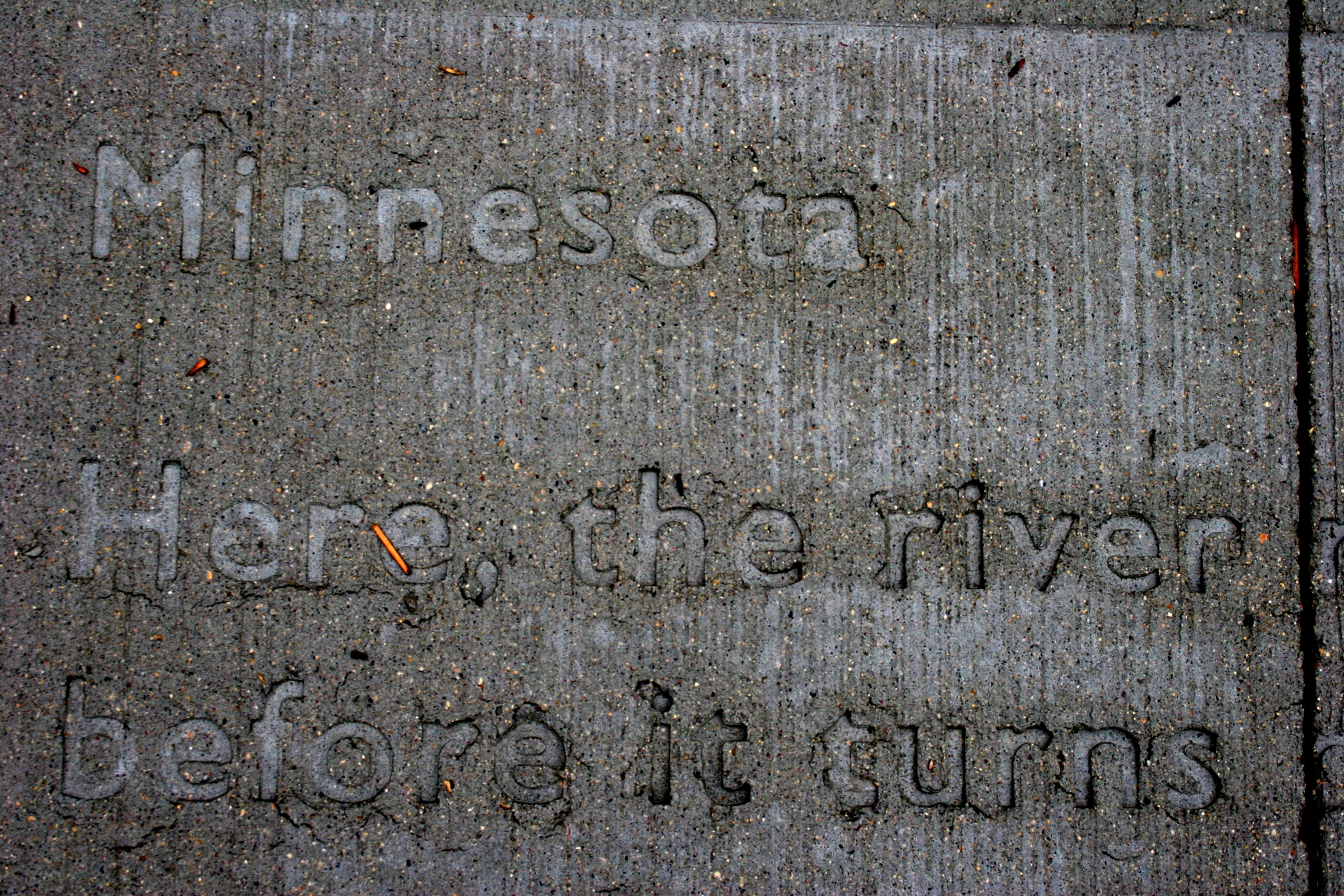
I read:

Minnesota

Here, the river rests its elbow

before it turns north to meet

the father of them all.

Here we made 38 mistakes

we now try very hard

not to forget.

A snippet of the poem, "Minnesota." I've edited this image so that you can better read the words. The poems are, unfortunately, a bit difficult to read because of a lack of color contrast between the letters and the cement.

The poem by Ikars Sarma of Mankato refers to the hanging of 38 Dakota here on December 26, 1862. A heavy thought to match the heaviness of the sky, the raging of the river, the anger that still simmers over this shameful moment in this city’s history.

I move on.

Susan Stevens Chambers of Good Thunder writes:

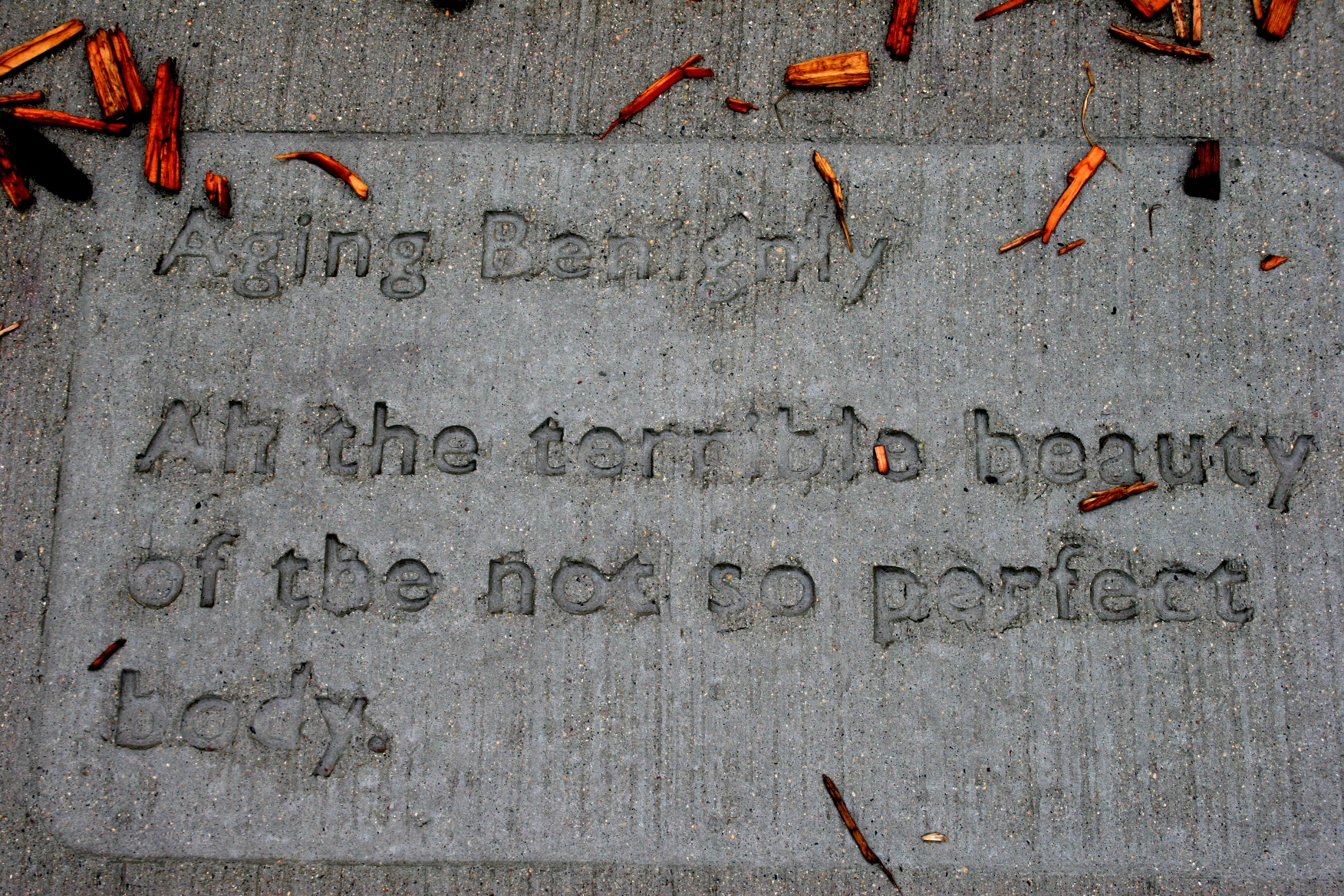
Aging Benignly

Ah the terrible beauty

of the not so perfect

body.

In this edited photo, read Susan Stevens Chambers' poem about aging.

Nearby kids scramble up a rock wall as I struggle to lift my aging bones from the sidewalk where I have bent close to read and photograph Chambers’ poem.

Then I laugh at the words penned by Mankato resident Yvonne Cariveau:

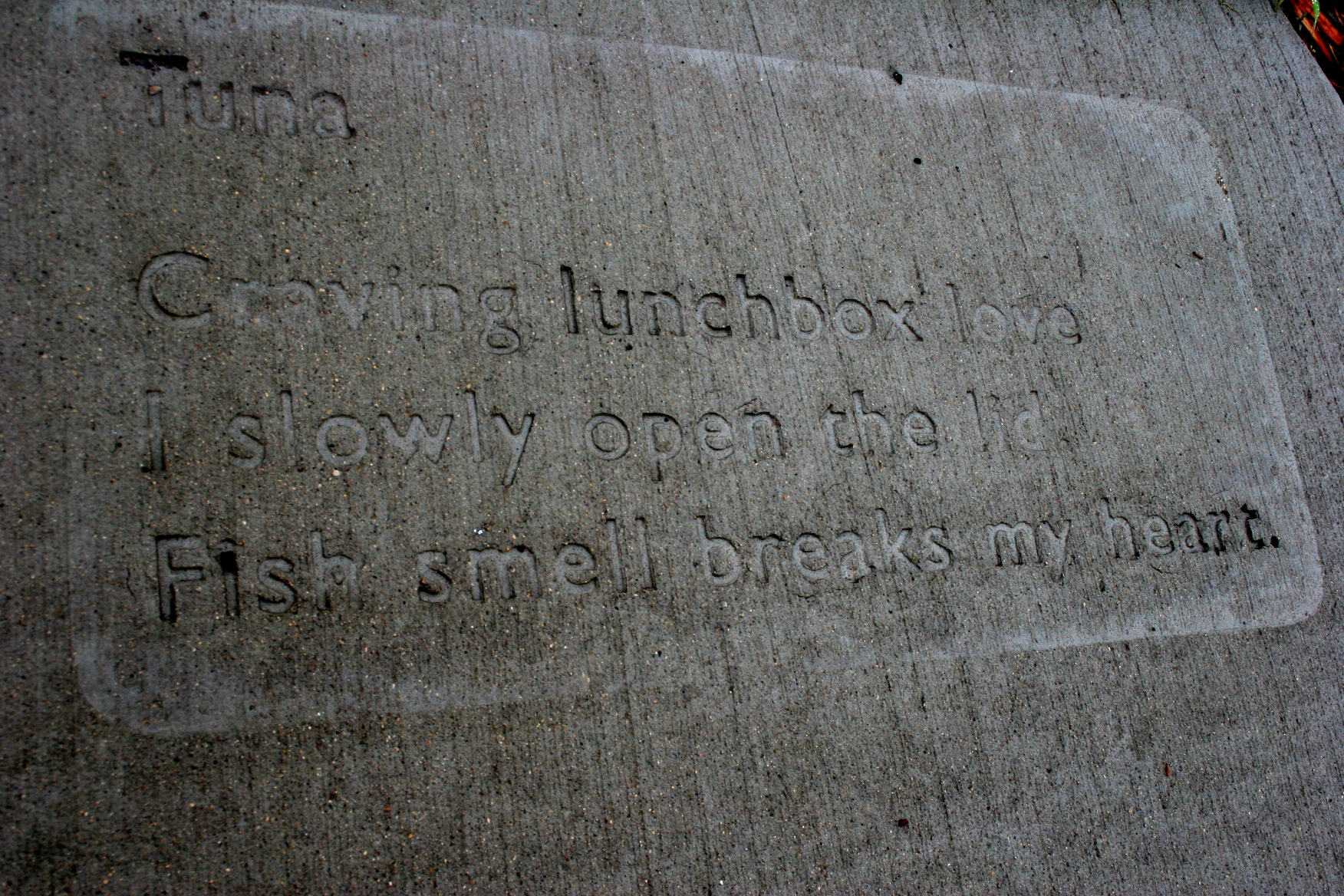
Tuna

Craving lunchbox love

I slowly open the lid.

Fish smell breaks my heart.

The poem that causes me to remember all the tuna I ate during my last two years of college.

Exactly. I ate too much tuna in this college town between 1976 and 1978. I could write my own poem about cramming tuna sandwiches while cranking out stories at the Mankato State University (I still can’t call it Minnesota State University, Mankato) student newspaper, The Reporter.

Deadlines and words.

Words and deadlines.

Tuna. Words. Deadlines.

Cariveau’s writing reminds me of those years so long ago when I was young and only beginning my journey into the poetry of life.

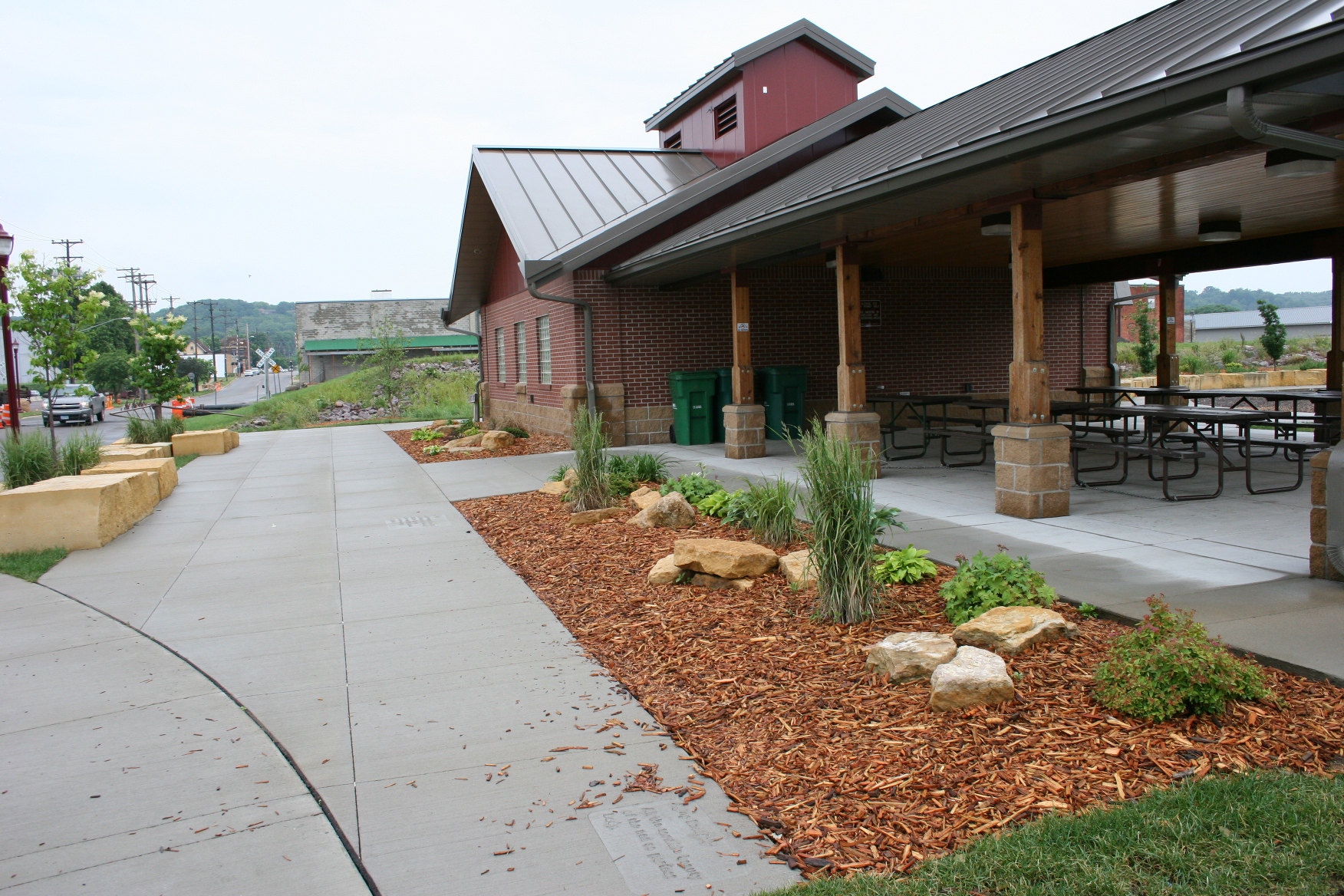
WordWalk poems are imprinted on the sidewalk circling this restroom/shelter facility at Riverfront Park in Mankato.

FOR MORE INFORMATION about Mankato’s public sidewalk poetry, WordWalk, click here and here. At least two other Minnesota cities, of which I am aware, have sidewalk poetry: St. Paul and now Northfield.

WHAT’S YOUR OPINION on sidewalk poetry? Do you like it, or not? Would you like to see more such public poetry in Minnesota communities? Why or why not?

© Copyright 2011 Audrey Kletscher Helbling


A historic bank and White Buffalo Calf Woman June 23, 2011

SET ME IN FRONT of an architecturally-stunning historic building and I’m in history heaven.

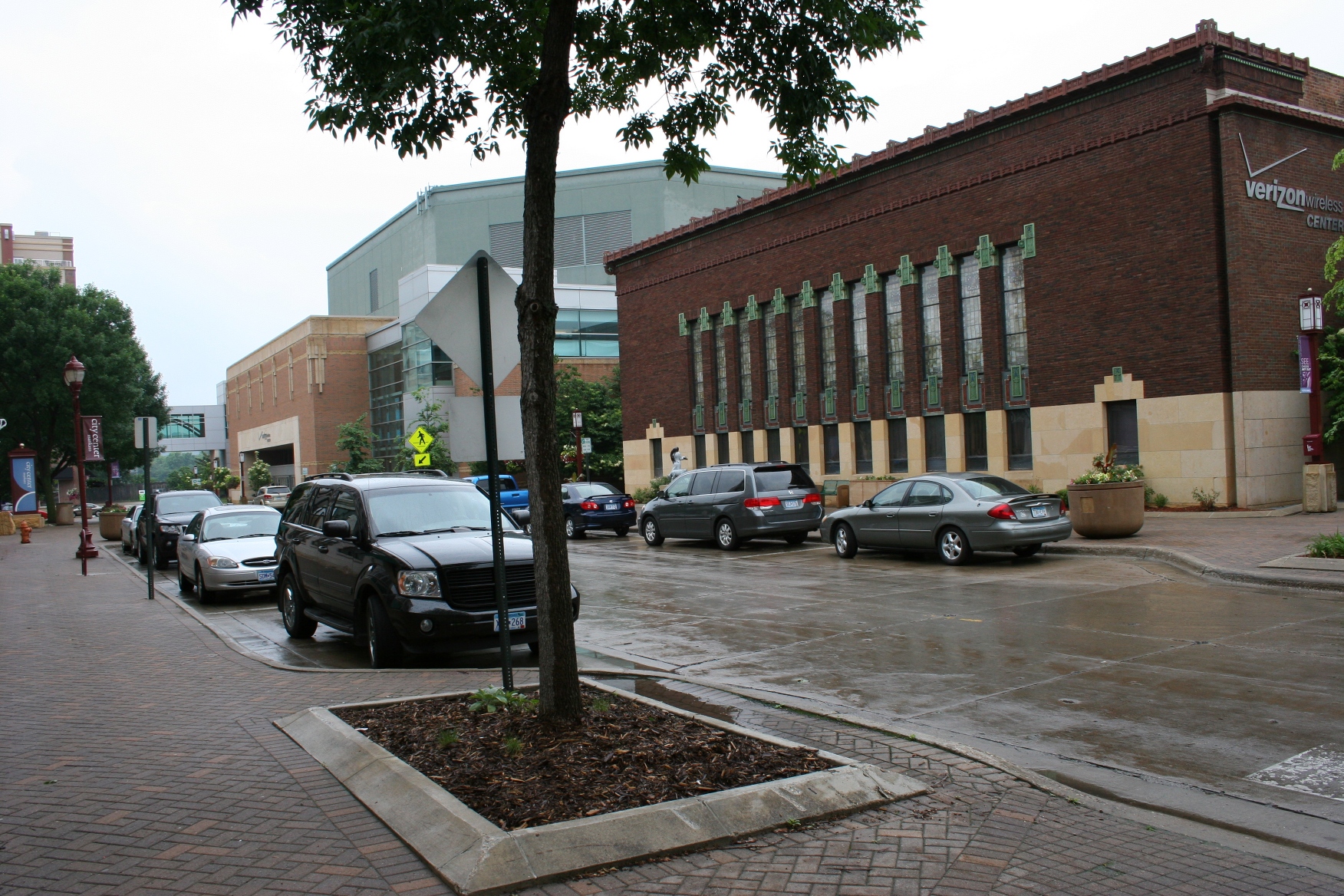
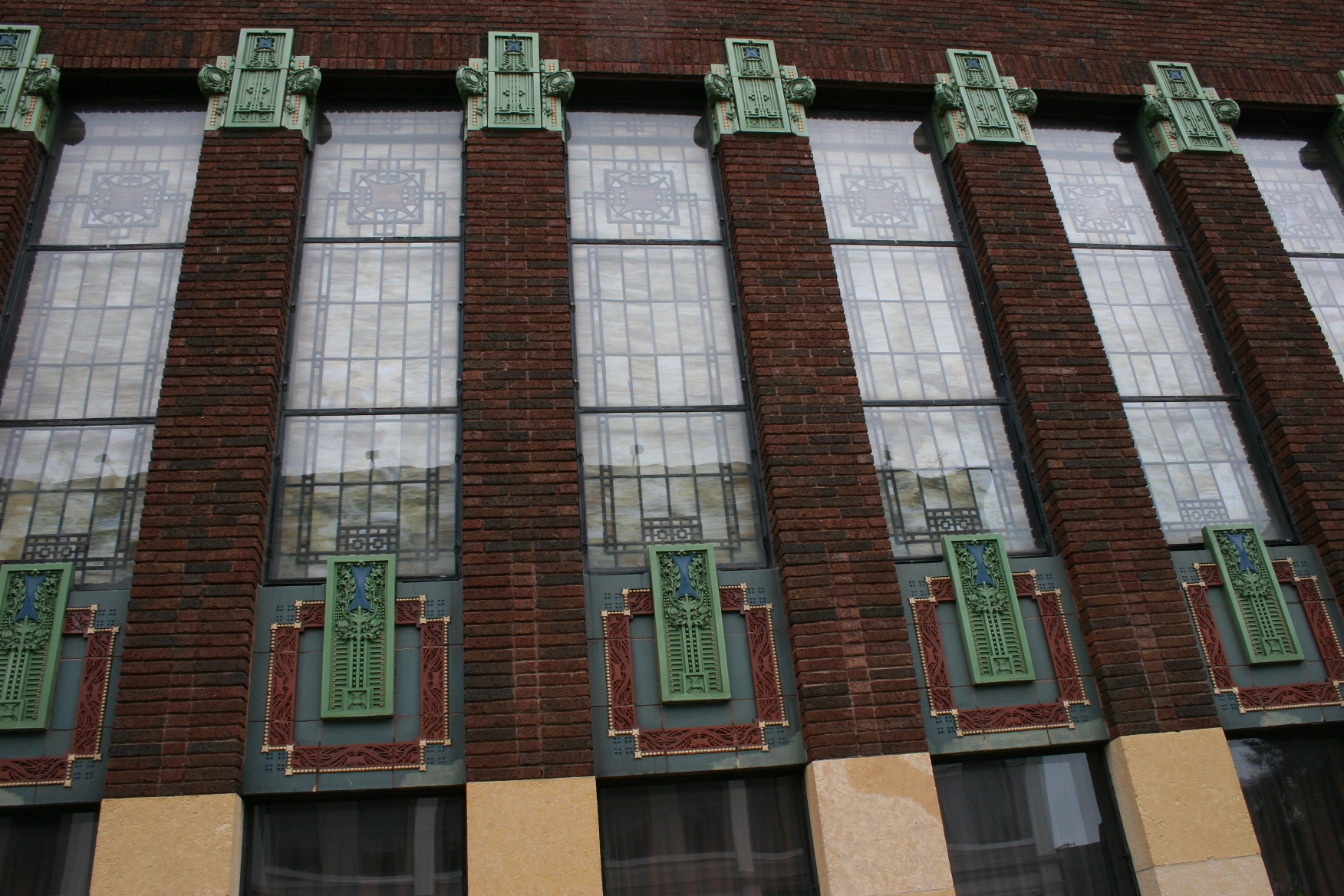
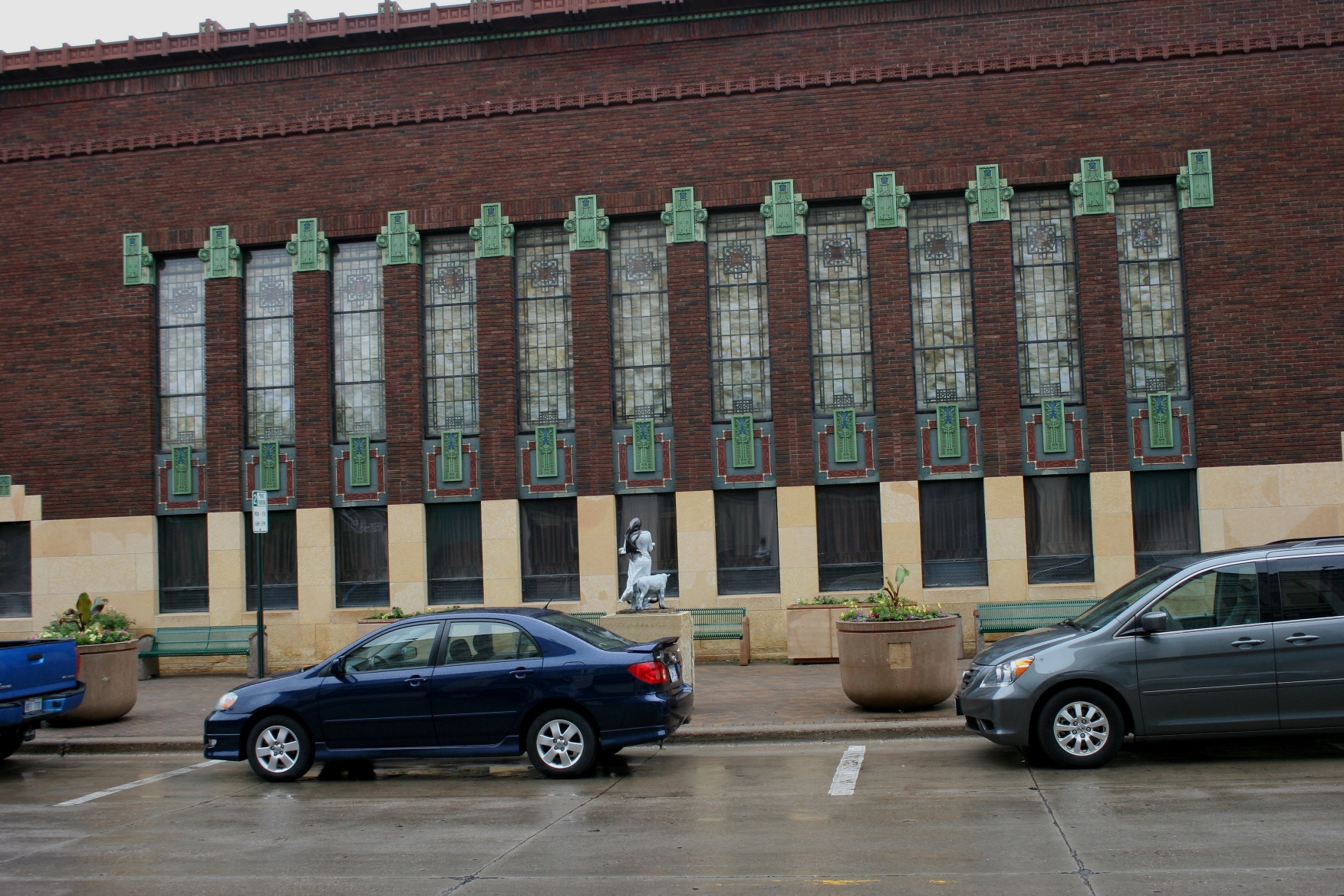
Just look at the lines, the colors, the window leading, the carvings…of the Old First National Bank of Mankato building, now a Verizon Wireless Center reception hall.

I didn’t step inside the former bank, didn’t even try a door. I was content last Saturday afternoon to view the exterior with its Prairie School style architecture.

“It’s like that bank in Owatonna,” my husband said as we gawked at the building built of brick, Mankato limestone and terra cotta along Civic Center Plaza in downtown Mankato.

He was, of course, referring to Chicago architect Louis Sullivan’s “jewel box,” National Farmer’s Bank in Owatonna, a brick building with terra cotta accents, splendid for its stained glass windows, arches and other architectural details.

The Mankato building features Frank Lloyd Wright-inspired stained glass and detailed ornamentation along the roof line.

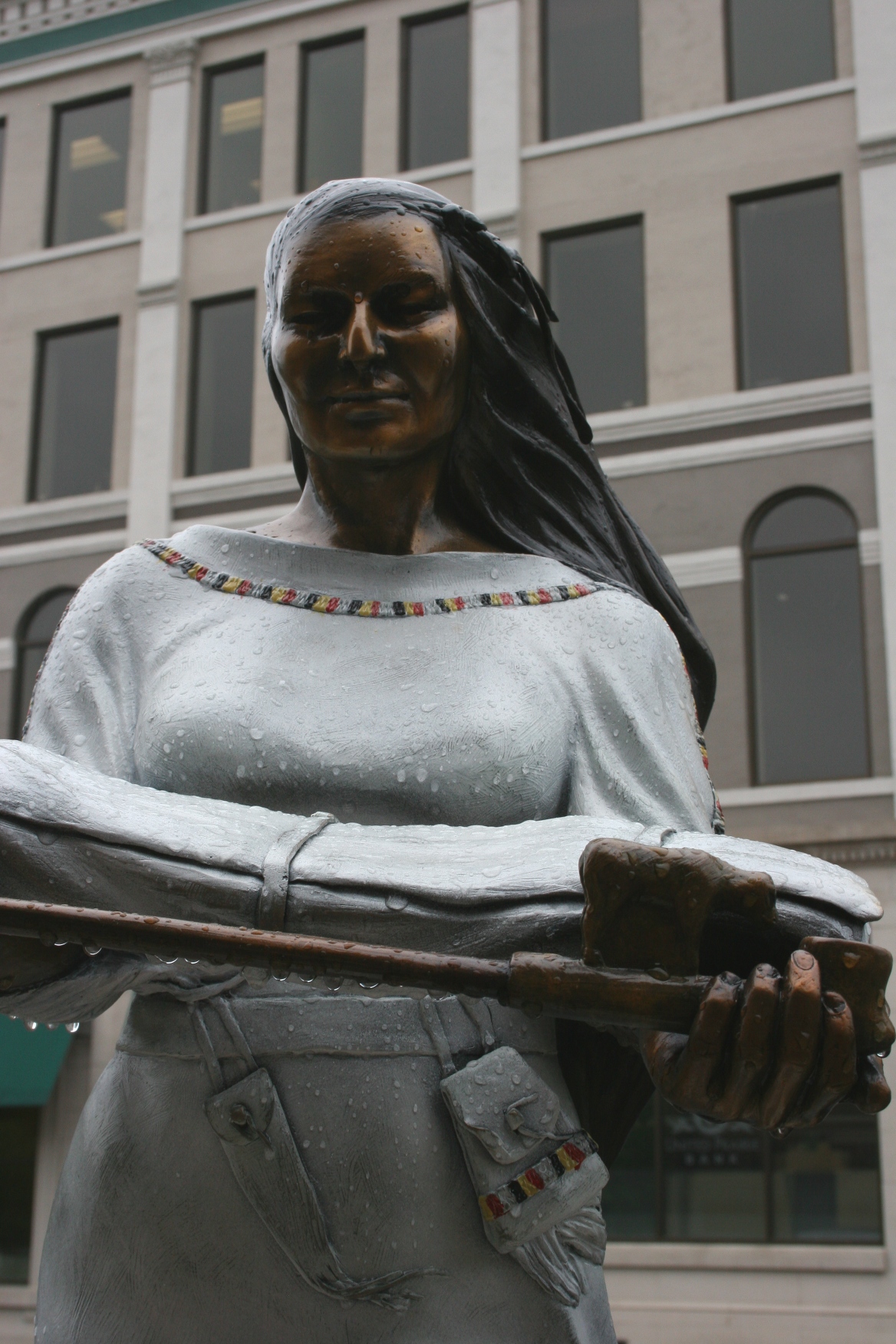
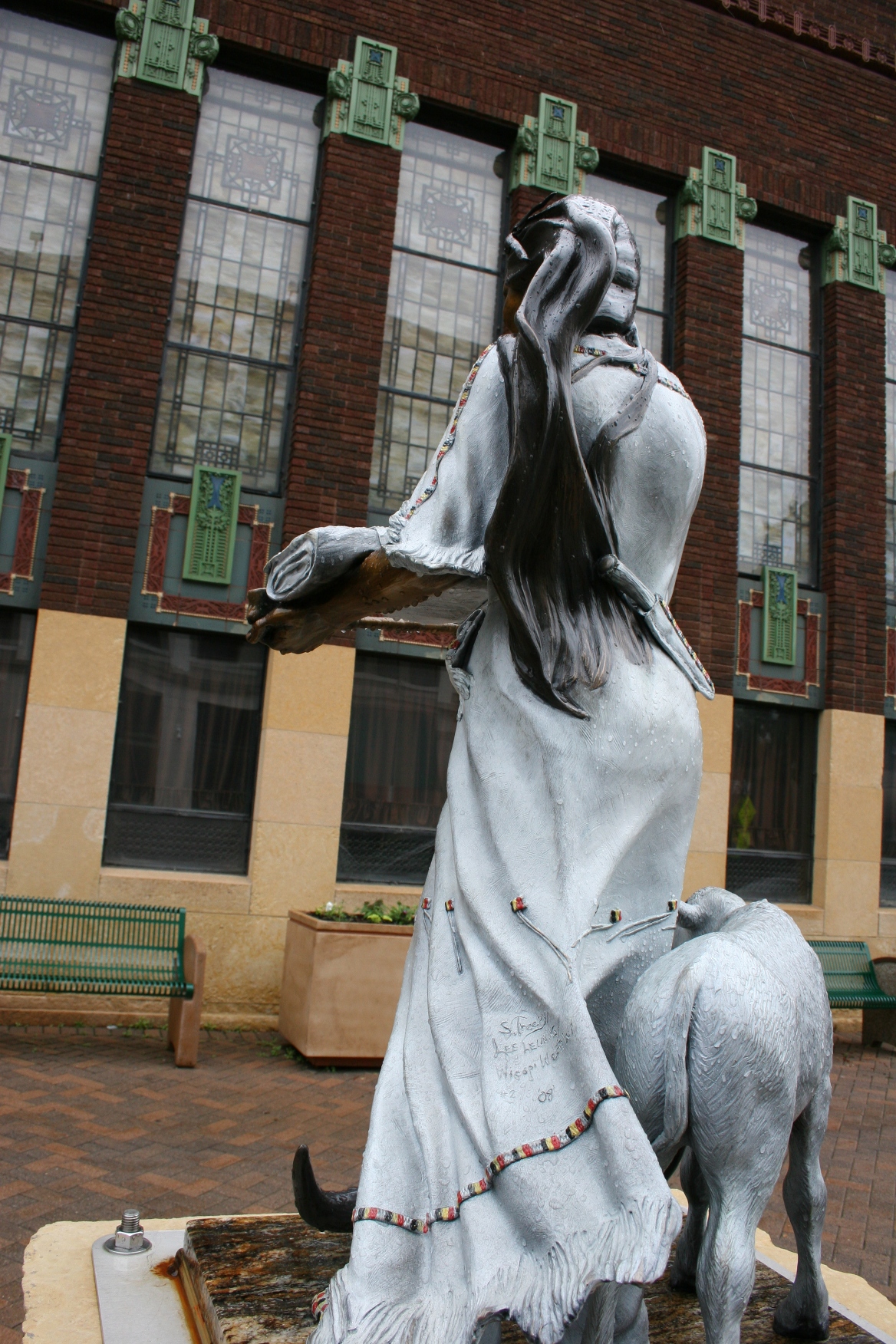
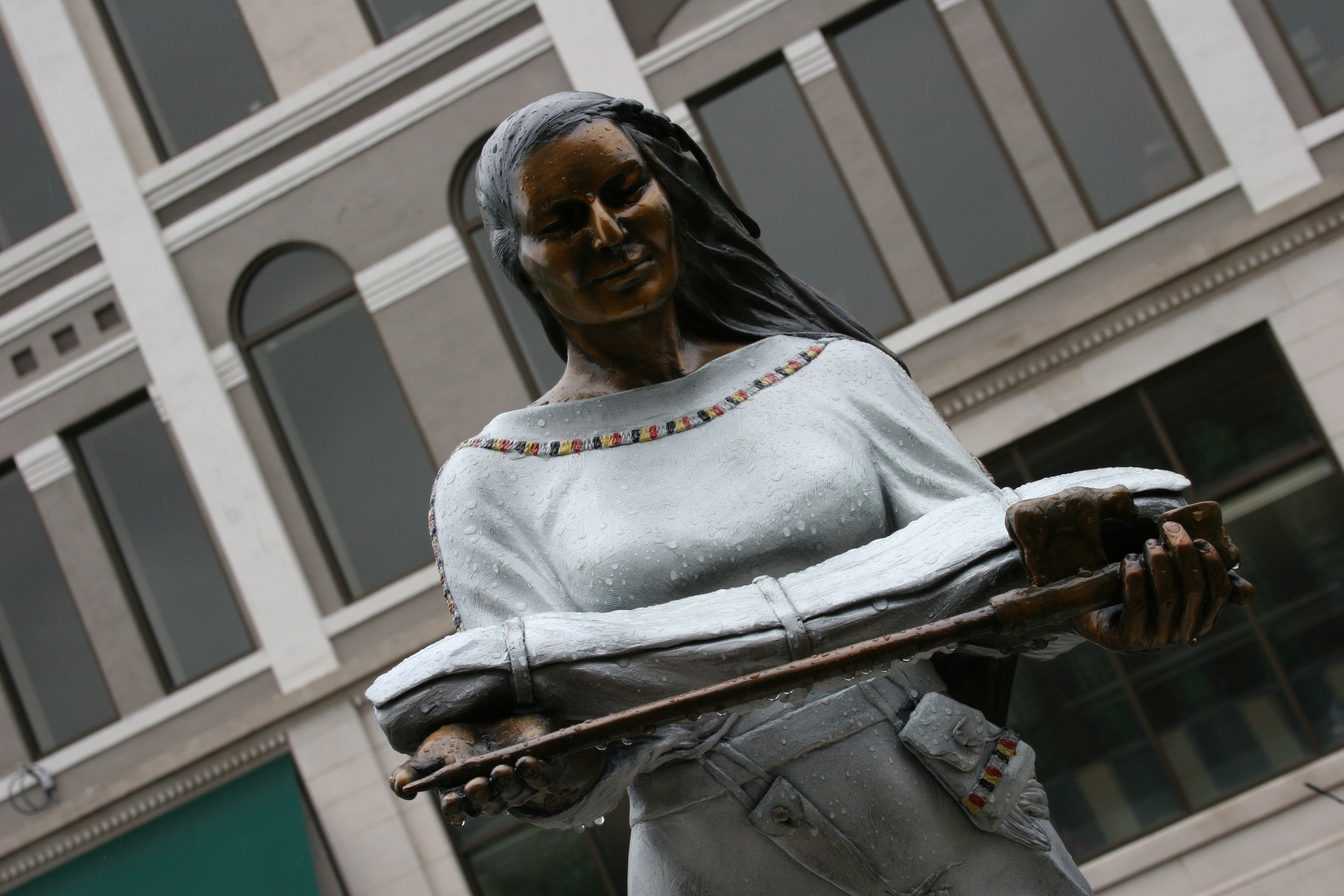
And now it also showcases a bronze sculpture of White Buffalo Calf Woman by South Dakota artists Lee Leuning and Sherri Treeby as part of Mankato’s City Art Walking Sculpture Tour.


If you peer at the woman’s face, examine her beaded moccasins and the trim on her buckskin dress and pouch, you’ll notice how the colors mimic those of the historic bank building. Whether this Native American sculpture’s placement was planned or accidental, I don’t know, but it fits seamlessly with the historical vibe of the locale, enhancing the whole art viewing experience.

The city of Mankato, apparently named after a varied translation of the Dakota word Mahkato, meaning “blue earth,” owns a place in Minnesota and national history for the mass hanging of 38 Dakota here on December 26, 1862. Three hundred warriors were accused of killing civilians and soldiers and of other crimes during the U.S.-Dakota Conflict. After a public outcry, President Abraham Lincoln commuted the sentences of all but 38. Certainly, Mankato is not proud of this moment in history. But efforts have been made to honor the Dakota at monuments in the city.

And now sculptures like White Buffalo Calf Woman also help heal and educate the public about the Native American culture. According to information on the sculpture placard, this prophetess is the only religious icon accepted by all Native American tribes. She “brings a message of healing, hope and peace among the races to all the people.”

More than just art, I also got a history lesson along a Mankato city street on a Saturday afternoon in June.

PLEASE VIEW MY JUNE 20 post for more photos and information about the Walking Sculpture Tour. Additional images will be forthcoming.

© Copyright 2011 Audrey Kletscher Helbling


Mankato brings art to the sidewalks with walking sculpture tour June 21, 2011

Martin Eichinger of Portland, Oregon, created this graceful "Bird in the Hand" bronze sculpture valued at $14,500 and posed near the City Center.
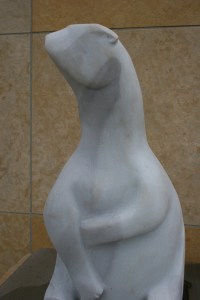
You'll find "Play Thing" by Ryszard, Denver, Colorado, and sculpted from Colorado marble, in North Mankato.

MAYBE IT’S BECAUSE I grew up without much art—no paintings, no piano, no library—that I so appreciate the visual, performing and literary arts.

I still can’t paint a painting or read a musical note. But I value those two art forms and words, which have always been a part of me, who I am.

Several years ago I walked the Bemidji Sculpture Walk and I quickly became enamored with the idea of placing sculptures in a community and then swapping them out a year later for new sculptures. The touring sculptures scattered primarily through-out Bemidji’s downtown impressed me as an ingenious way to get art before the general public.

Now I needn’t drive hours and hours and hours to view such public art. In 45 minutes I can reach downtown Mankato and view the 25 sculptures positioned there and in North Mankato as part of the City Art Walking Sculpture Tour. For free.

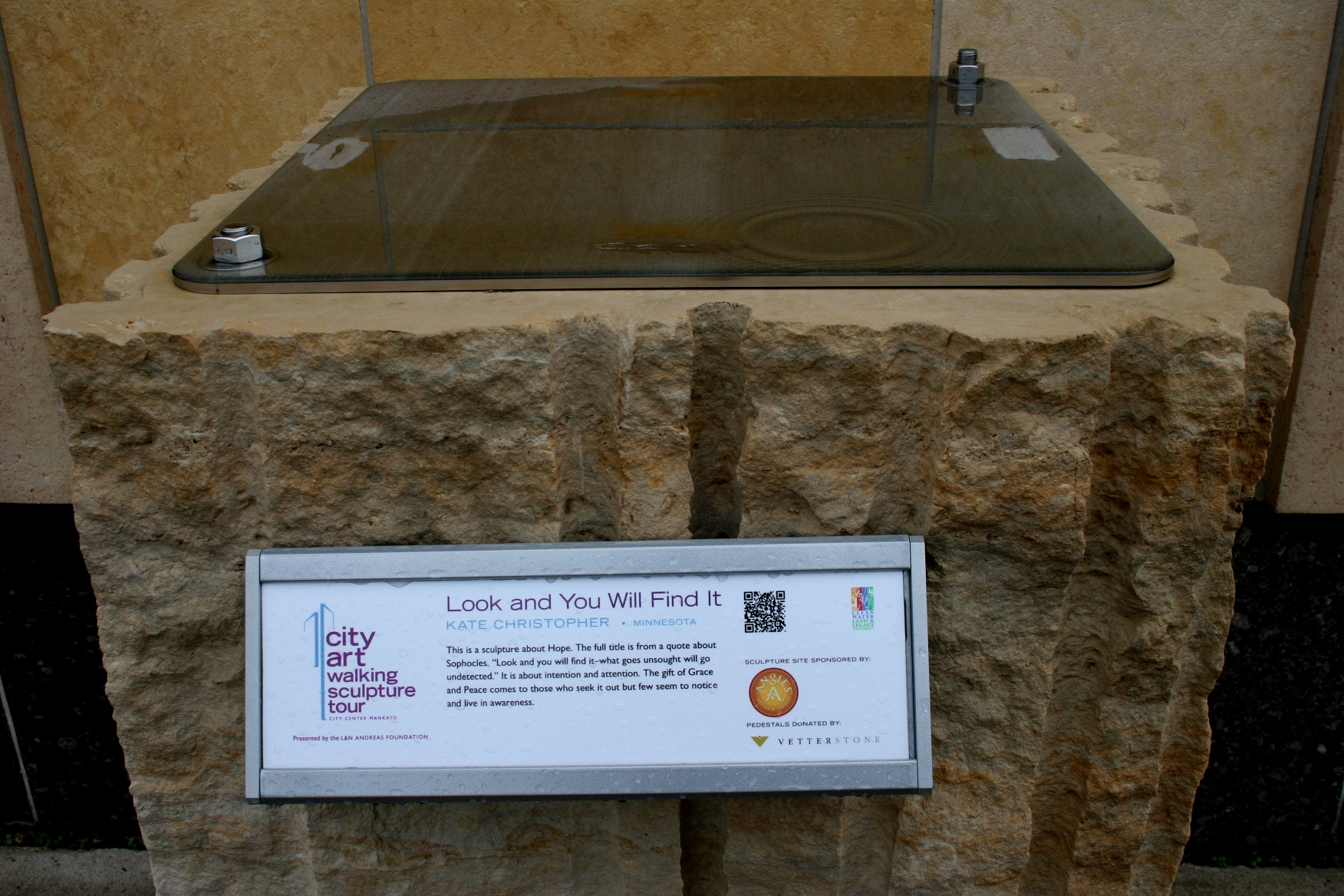
On Saturday, while in Mankato for a graduation reception, my husband and I made it a point of afterward checking out those sculptures. We missed seeing only a few of the art pieces, including one along Belgrade Avenue that was vandalized and, ironically, titled “Look and You Will Find.” We found only an empty block of Minnesota limestone, donated by Vetter Stone, where the sculpture once stood.
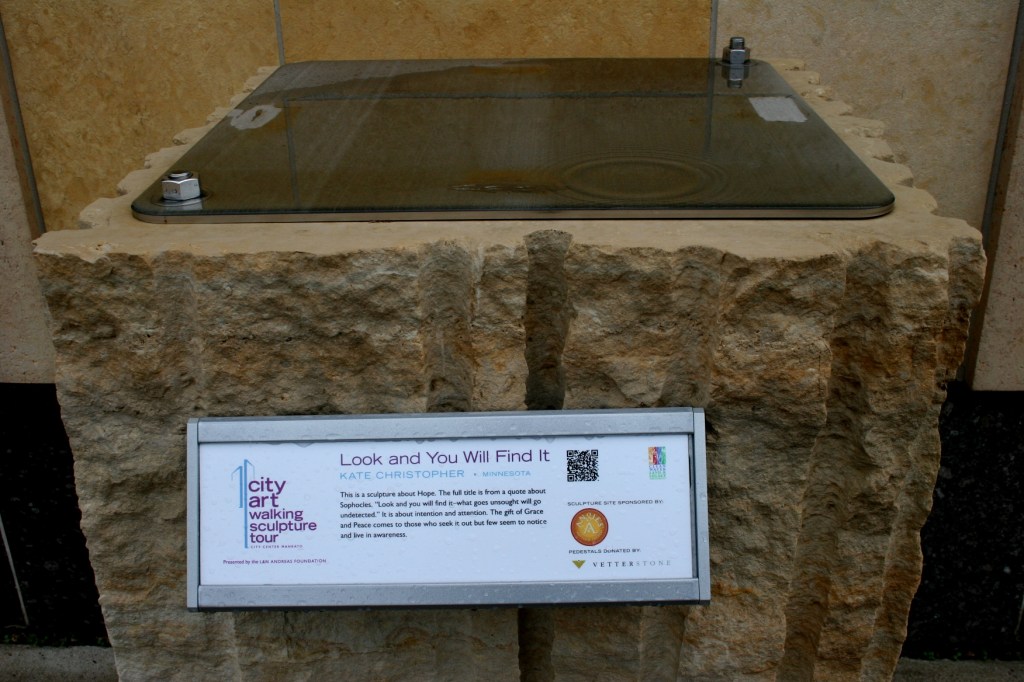
Mahtomedi artist Kate Christopher's $6,900 bronze sculpture, "Look and You Will Find It," was vandalized. The art piece symbolized HOPE.

I expected to find a bustling downtown Mankato. Obviously I have not been downtown for many years. Nearly all of the shopping has moved to the fringes of the city, into the malls and big box stores, and the downtown houses primarily office buildings, restaurants, bars, a hotel and the Verizon Wireless Center. Honestly, except for the sporadic motor traffic on Second Street and a few pedestrians, the place was basically deserted around mid-afternoon. Granted, the weather was less than ideal with on-again-off-again rain. We could park almost anywhere we wanted and walk to the sculptures within a several-block area.
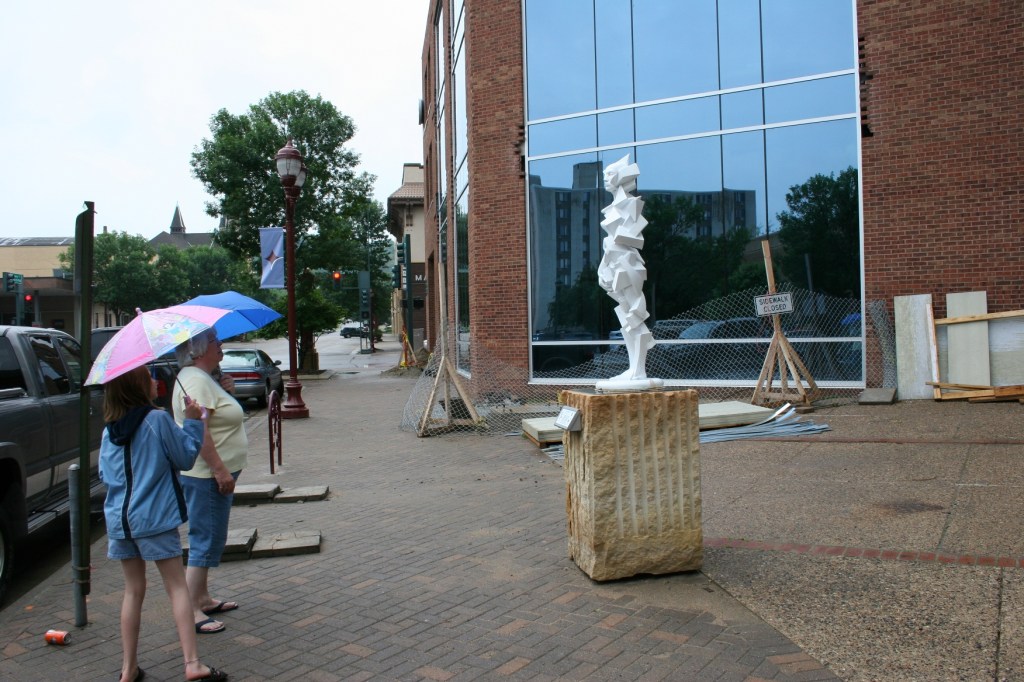
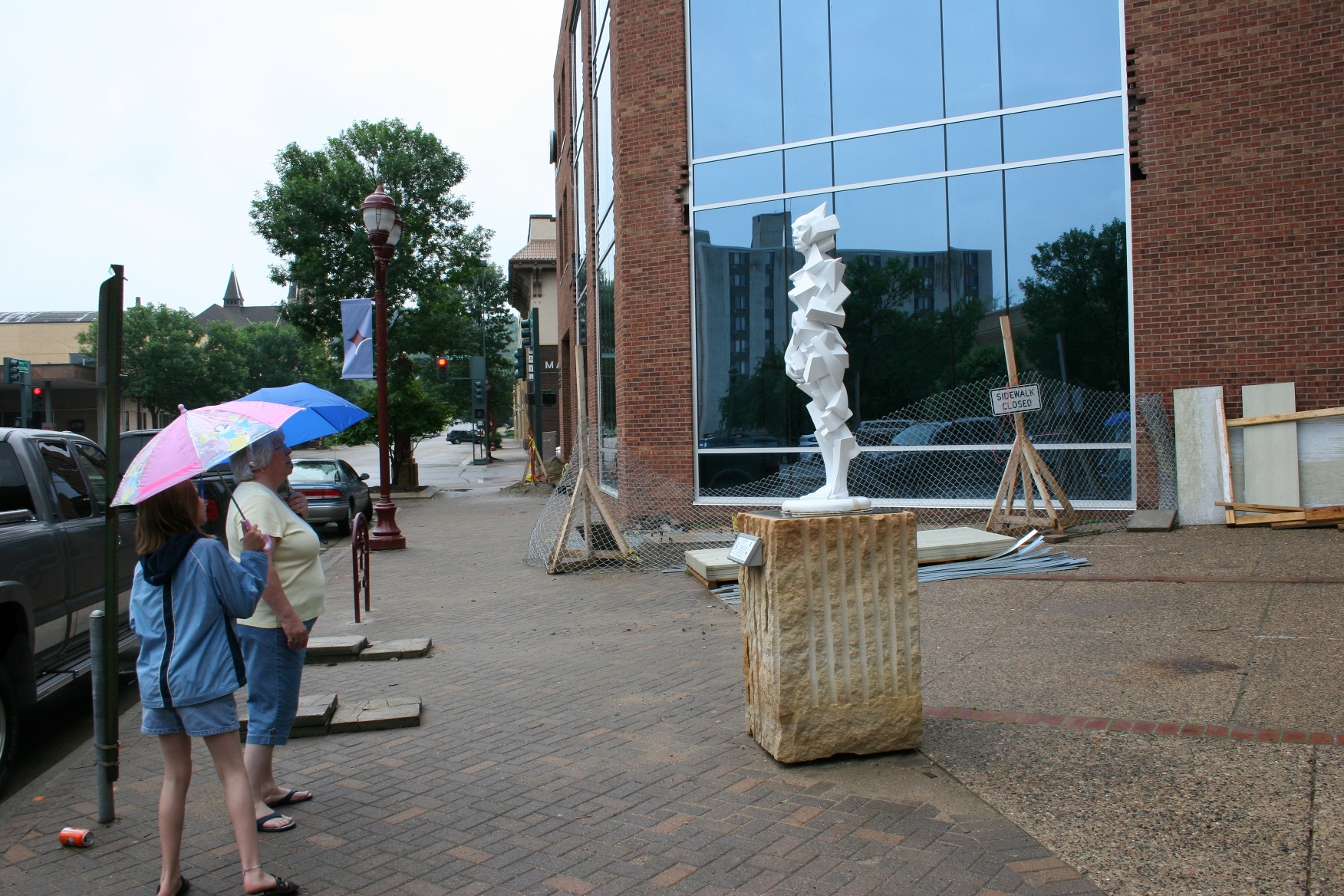
We spotted only two other individuals walking around viewing the sculptures. Dana Parlier of Brooklyn, New York, created this resin sculpture, "Cubist Woman." The man-made concrete canyons of New York City inspired this contemporary art, which seems to match the modern look of the building.

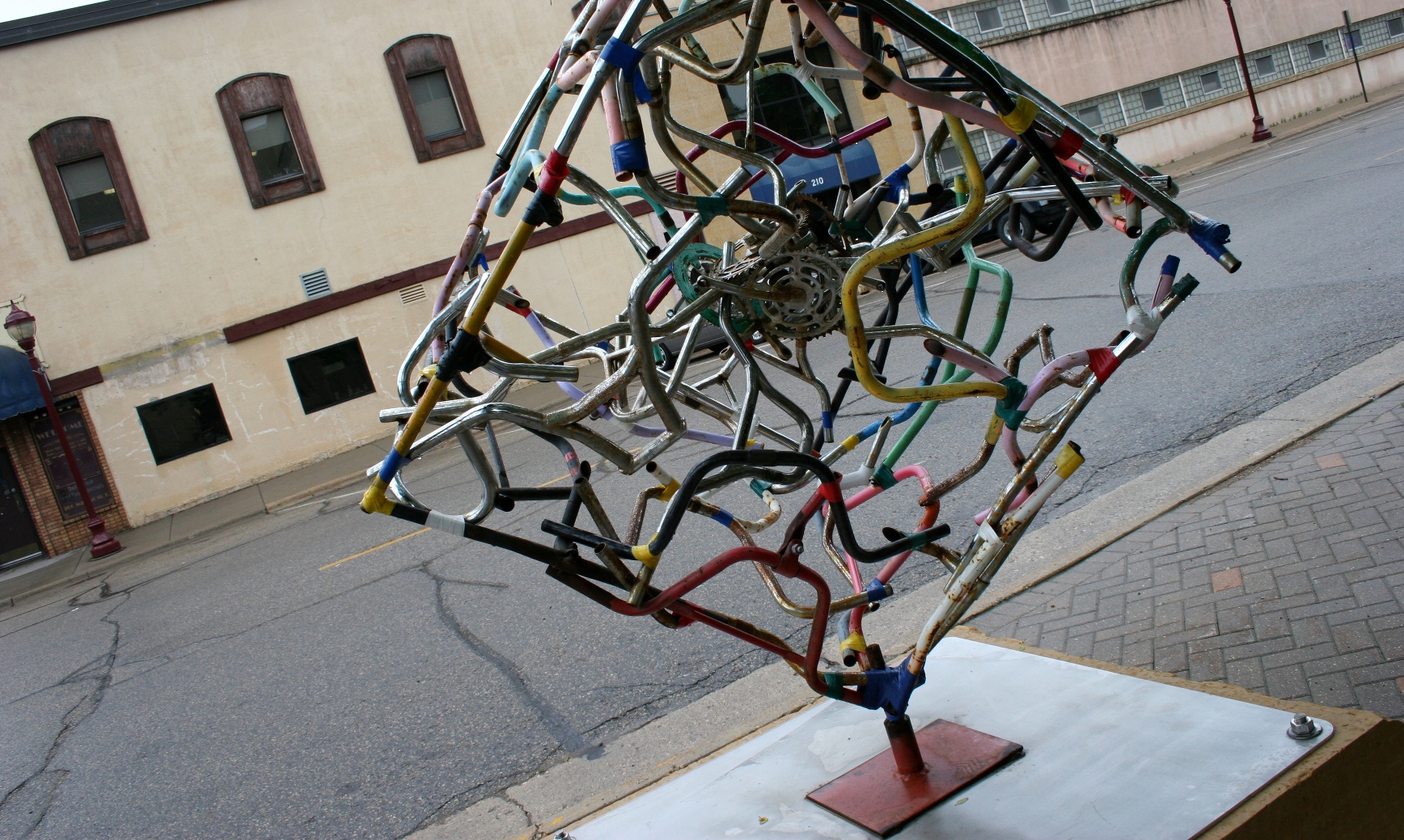
The art pieces certainly present a reason to visit downtown Mankato and then cross the Minnesota River to North Mankato to view several more sculptures. I’m not going to tell you I liked every sculpture, because I didn’t. But that’s OK; no one expects that. Sometimes first impressions change though. When I spotted “Twenty Seven (China)” from across the street, I honestly thought it looked like a mess of twisted junk. But up close, the steel sculpture of recycled bicycle parts—mostly handle bars—grew on me. Joe Forrest Sacke’s $3,500 conglomeration seemed modernish and hippyish and vintageish jumbled into one. Art will surprise you that way.
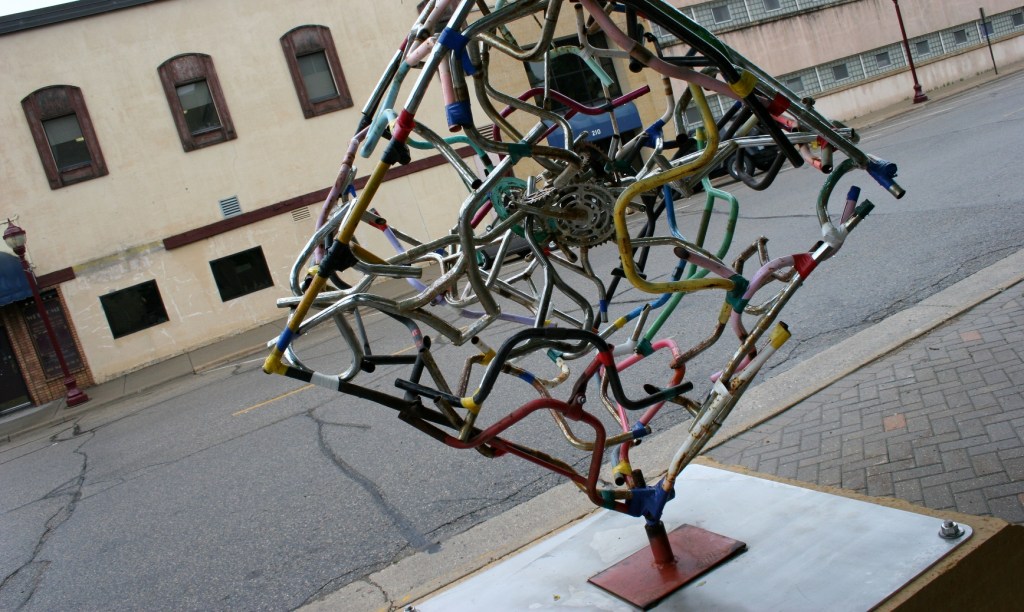
Joe Forrest Sacke's "Twenty Seven (China)."

You can vote for your favorite, for The People’s Choice Award. We didn’t, although I narrowed my favorites down to three. Voting booths are strategically located through-out the Walk area.
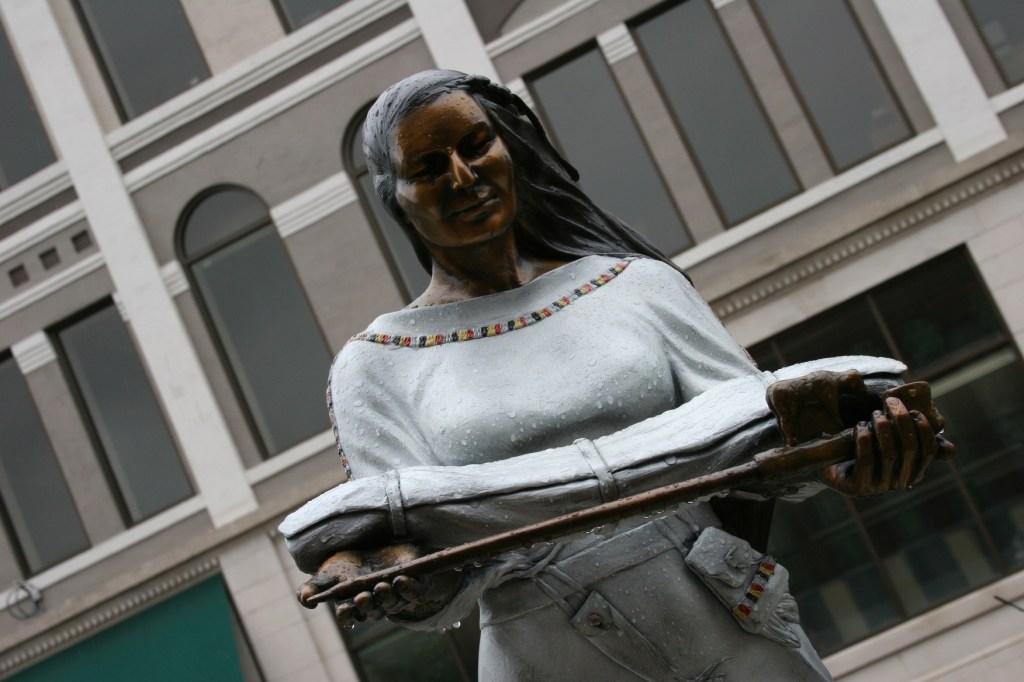
One of my three favorite sculptures, "White Buffalo Calf Woman," a bronze piece created by Aberdeen, South Dakota, artists Lee Leuning and Sherri Treeby. Notice how the dominant color in the sculpture blends with the building's color. Wait until you see the building on the other side of this Native American woman. You will be wowed. I'll share those images with you in another post.

This bronze piece, "The Farmer's Wife," by Dee Clements of Loveland, Colorado, is also among my three favorite sculptures. A photo Clements took in a Korean village inspired this art creation.
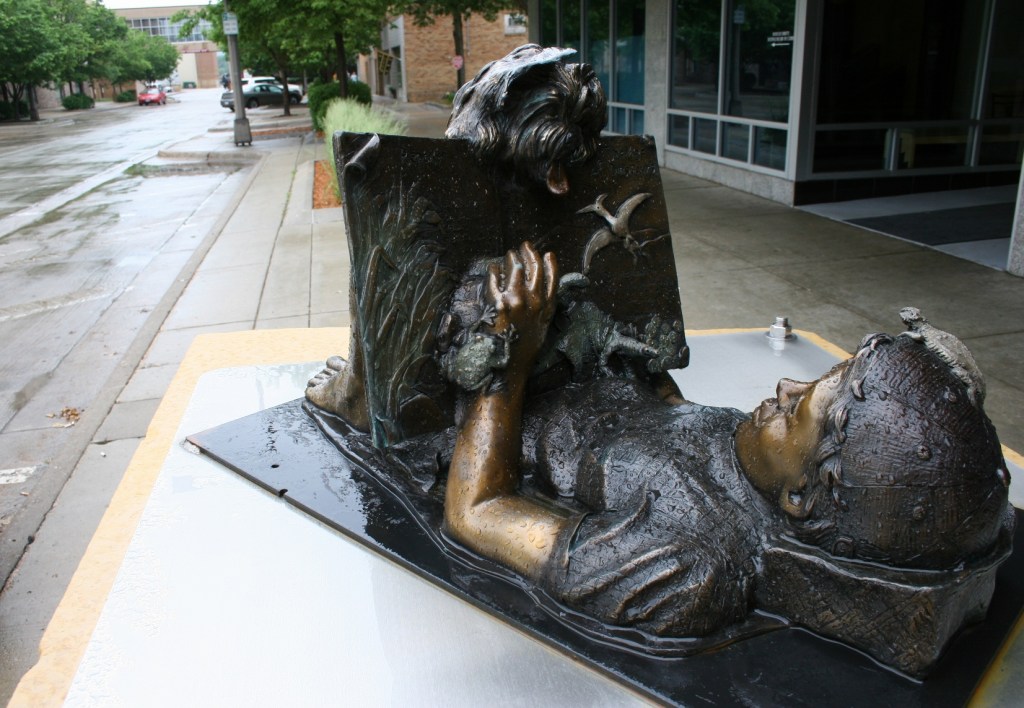
The detail in this bronze, "Reading Magic," by Julie Jones of Fort Collins, Colorado, appeals to me and makes it one of my top favorites among the 25 sculptures in the exhibit.
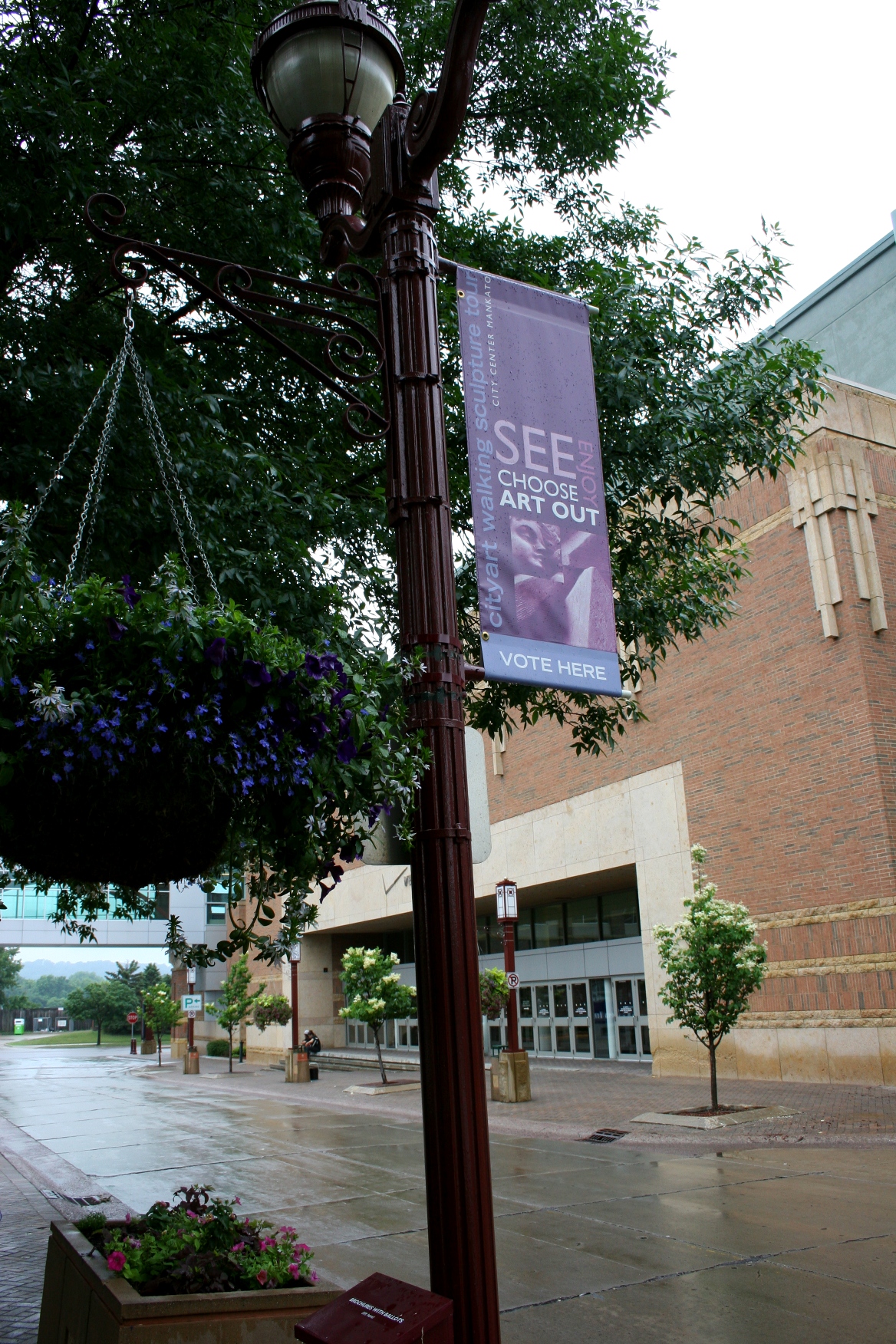
Banners draw visitors to the sculptures and to voting spots in downtown Mankato.

I also noticed, and I don’t know whether this was on purpose, but the sculptures often seemed to jive, architecturally and environmentally, with the buildings they were situated near.

Mankato is committed for the next five years to bringing these rotating sculptures into the community via a partnership with the Sioux Falls-based SculptureWalk program. Of course, this all costs money and with the help of a grant, business sponsorships, donations and more, Mankato has managed to bring this art directly to the people.

It’s a grand idea. I expect to return to Mankato to see next year’s art and perhaps other area attractions. Even though I attended college here for four years, I really didn’t appreciate the city. And so much has changed since 1978.

For someone like me, who doesn’t venture into Minneapolis to engage in the art scene there, mostly because I don’t like the congestion and busyness of the metro, outstate art opportunities like City Art in Mankato offer me culture at a quieter, more enjoyable (at least for me) pace.

#

SINCE I CAN’T POSSIBLY show you all of my photos in one post, I’ll bring you more images in future stories.

© Copyright 2011 Audrey Kletscher Helbling


The Ice Man and his dog June 20, 2011

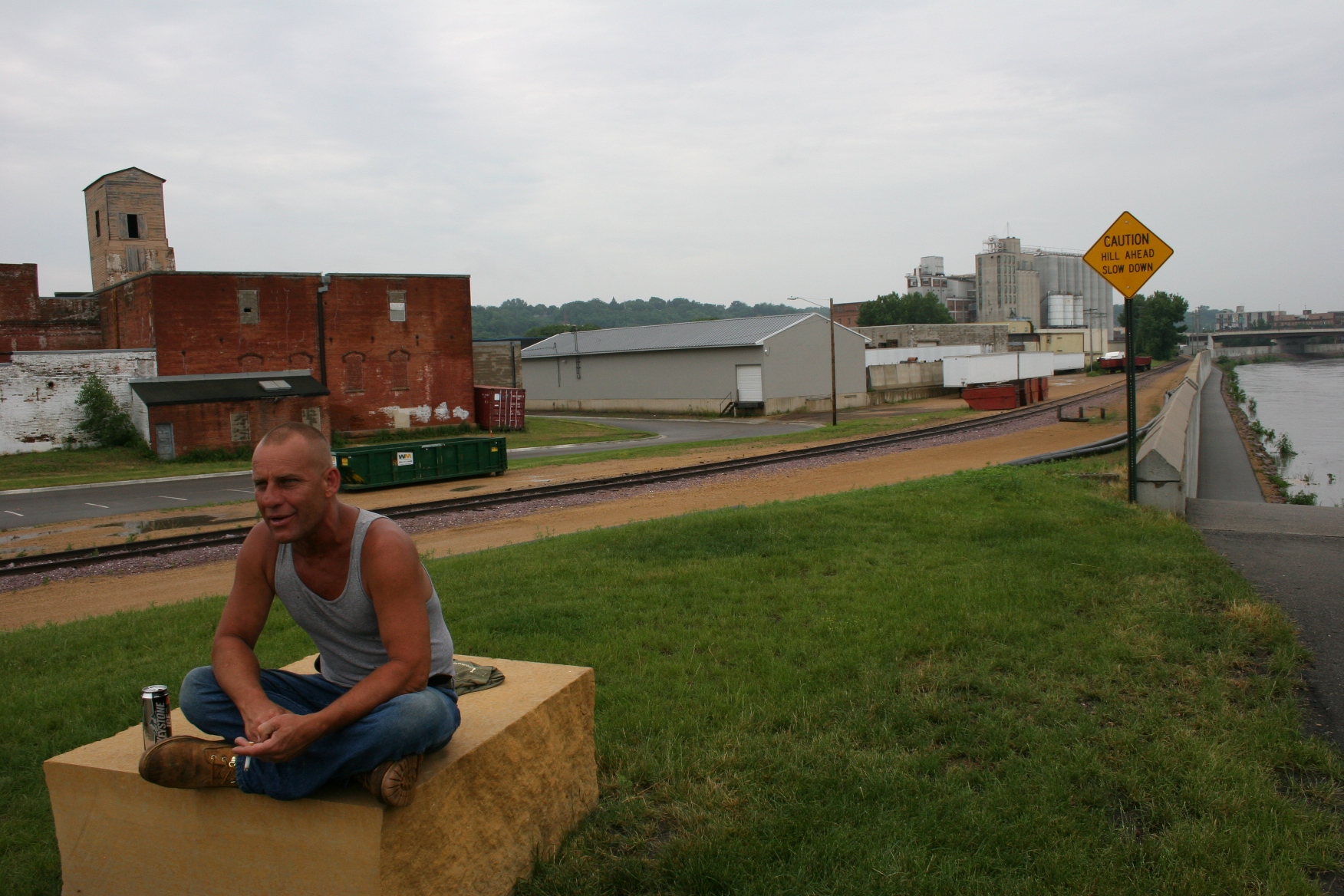
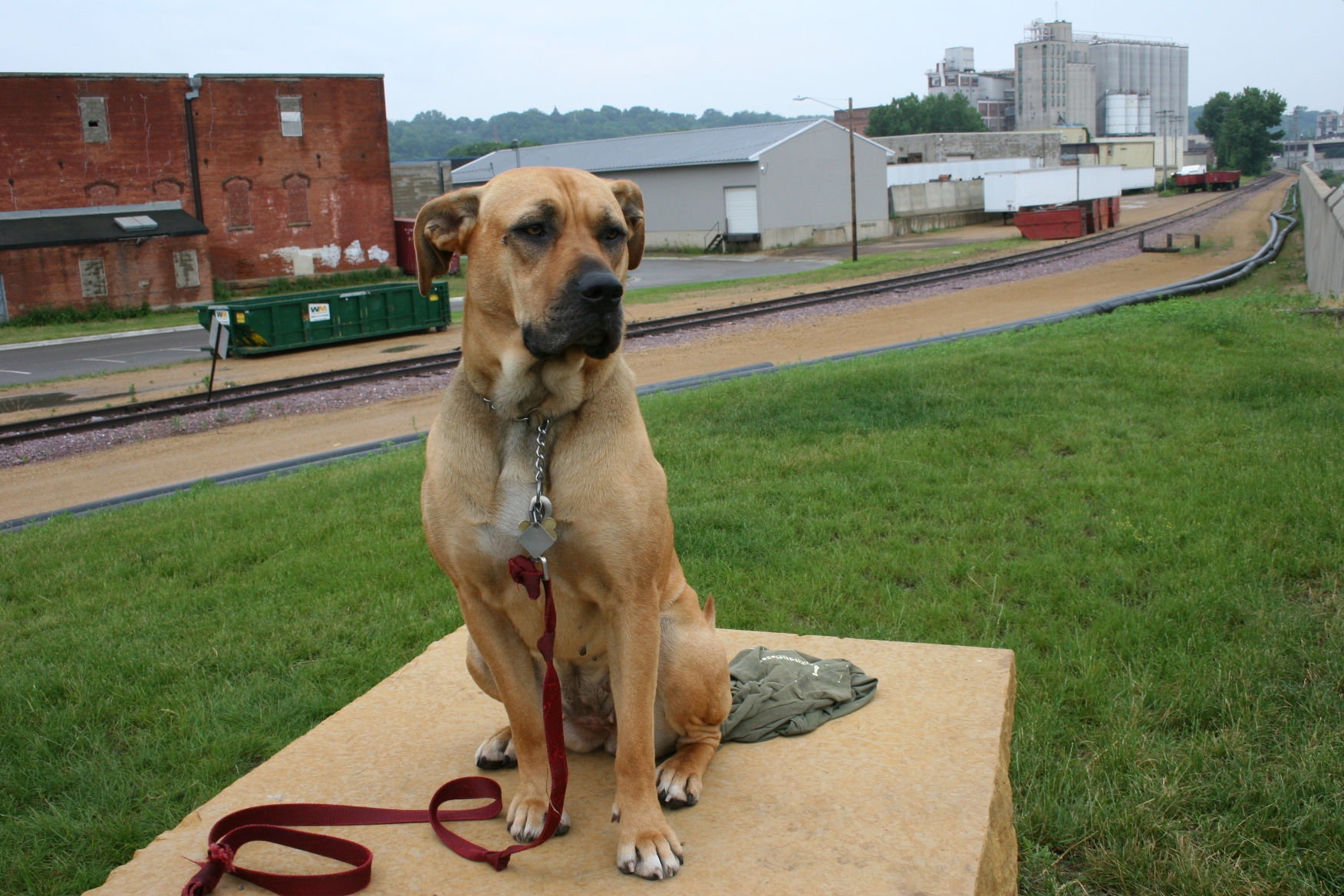
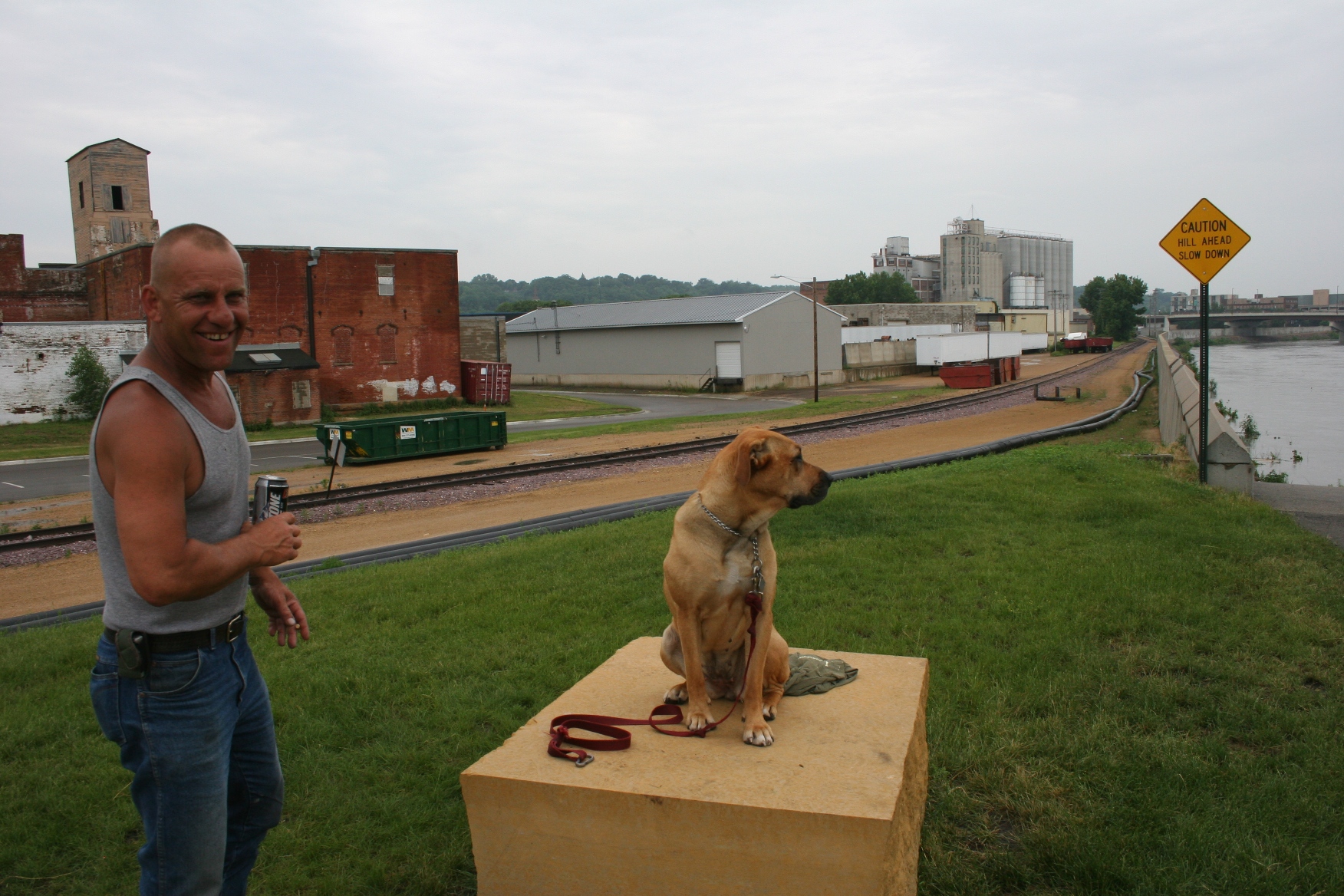
I’LL NEVER SEE THIS GUY again, this man in the muscle shirt with hair shaved scalp-close, fingers cradling a cigarette, a can of Keystone Ice nearly knocking at his knee as he slumps, cross-legged, on a block of Kasota stone by Riverfront Park in Mankato.

Lines harden his forehead. Shadows darken his eyes. Skin exposed to summer sun has already bronzed his face, his upper body, his muscular arms.

I wonder about his life, but don’t ask. Have he and his two buddies, passing the time nearby on their own blocks of hard, hard stone, had hard lives? I can almost see it in their eyes, imagine their lives. Jobs lost. Relationships broken. Regrets. Bars. Beer and cigarettes. Maybe whiskey and women.

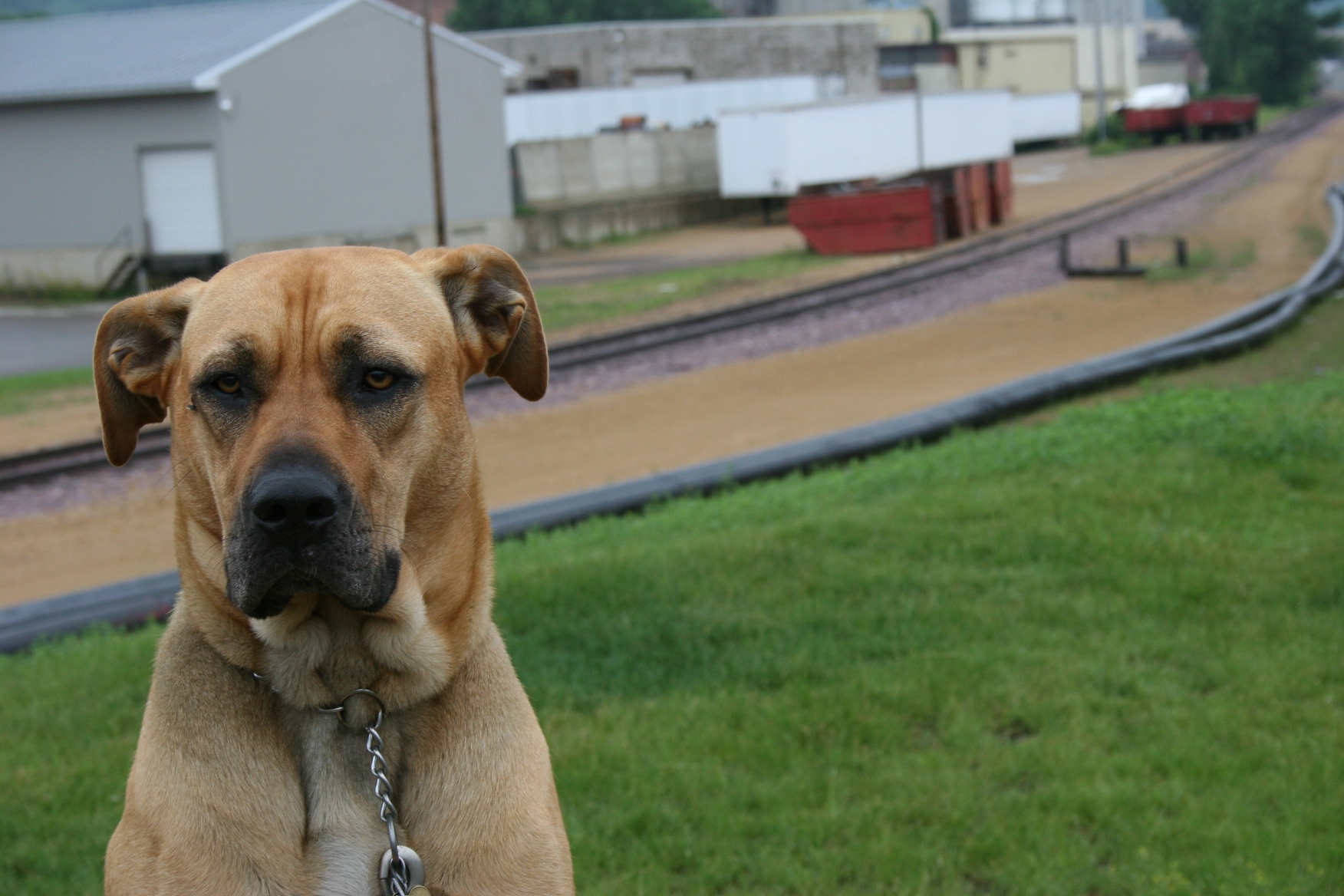
But I don’t pry, and only he—the guy with the Keystone Ice—volunteers any information, speaks to me after I approach the trio because I see a photo opportunity in a man and his dog, brick buildings and a riverside railroad track. My eyes sweep across the scene, pushing the view into the lens of my camera, into these images that tell a story.

Rugged life in a river town. A blue collar man’s grimy, steel-toed work shoes. Elevators. Train tracks leading away. Peeling paint. Boarded-up buildings which The Ice Man wishes were torn down and which I tell him should be refurbished.

We disagree. But he still smiles a smile as wide as the manic, muddy Minnesota River raging past the park.

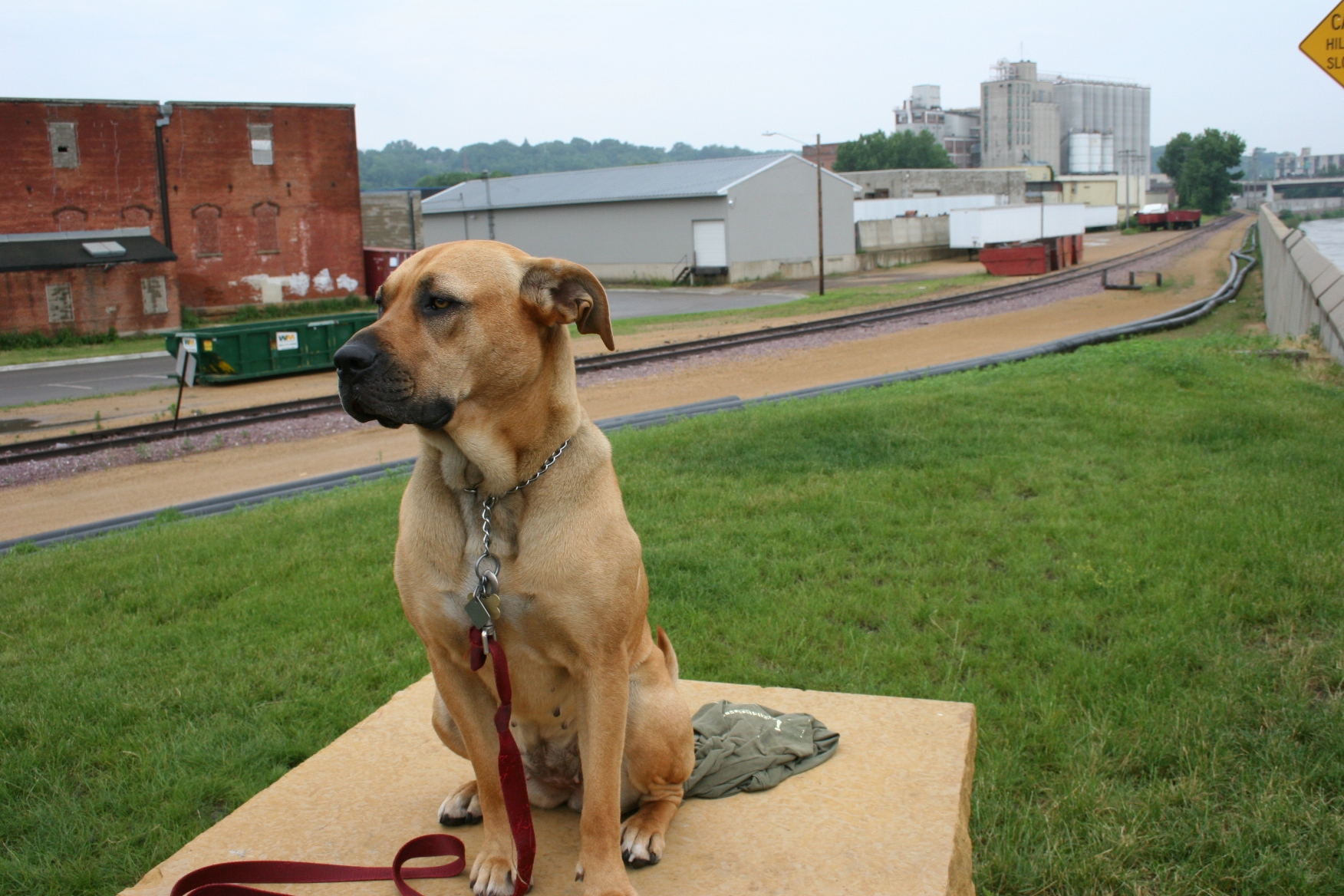
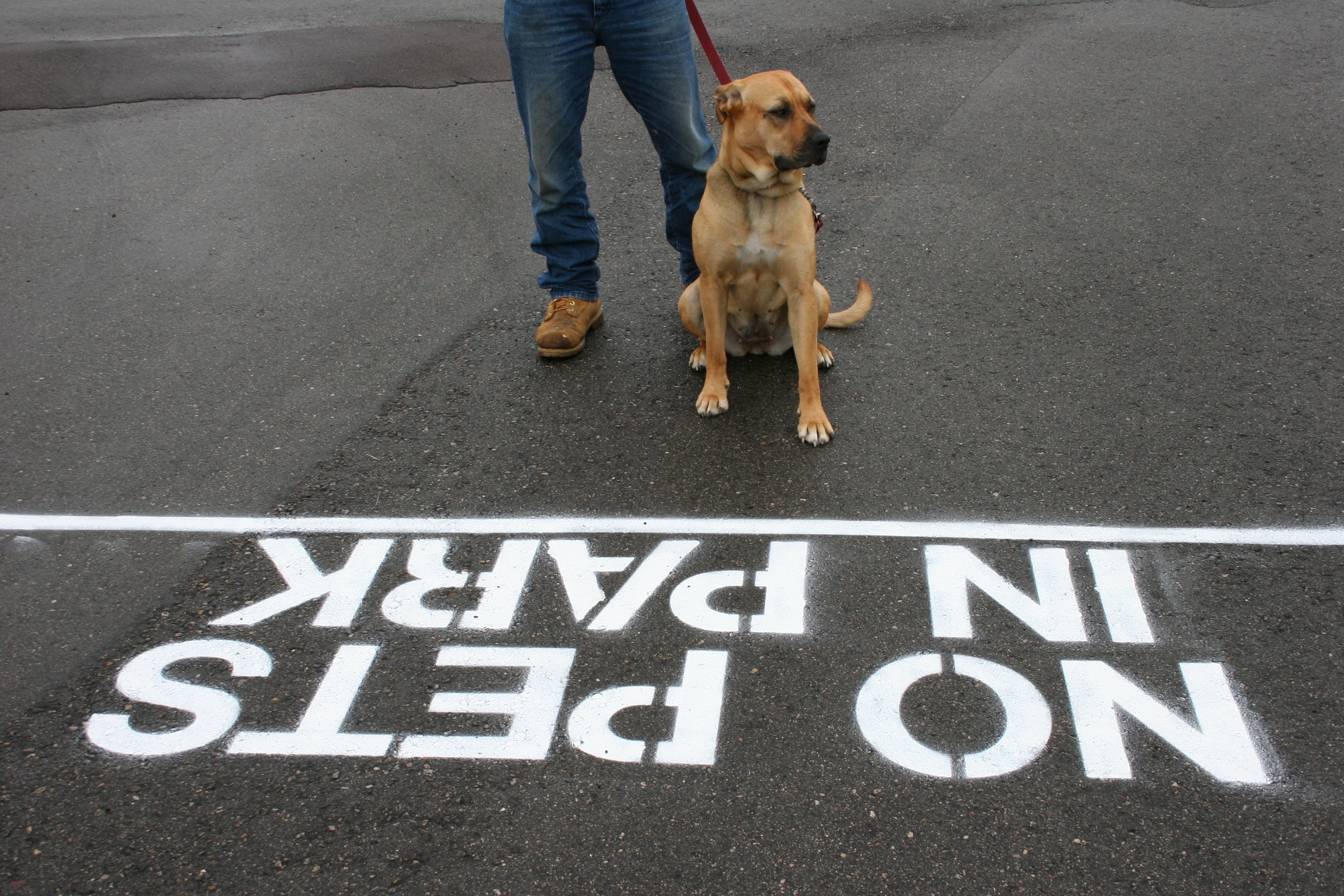
He tells me then, after I snap a series of photos, that he can’t take his dog—a service dog, he claims, and says he has the card to prove it—into Riverfront Park. Dogs are banned from some Mankato parks and this is one of them.

He suggests I photograph his dog next to the white line and words sprayed onto the tar: NO PETS IN PARK.

At first I balk, say, no, I won’t do that.

But then I reconsider, give The Ice Man his defiant moment. As his dog struggles to cross the line into the park, he tugs on the leash, holding her back. He’s already told me how, a day earlier, he hasn’t crossed the line to hear a $15 outdoor concert staged here. Instead, he’s followed the trail nearer the venue site, listened to the music from there. He’s clearly proud of his evasive, I’ve-outsmarted-them tactic.

Then we part ways. I continue reading poetry imprinted upon a sidewalk circling the park’s trail head building. He returns to his hard stone to swig his Keystone Ice beer and smoke his cigarettes.

His life is so different from mine. Yet, for five minutes we’ve connected and the poetry of his life shows in these images of The Ice Man and his dog.

© Copyright 2011 Audrey Kletscher Helbling
 

Beyond poetry anthologies May 21, 2011

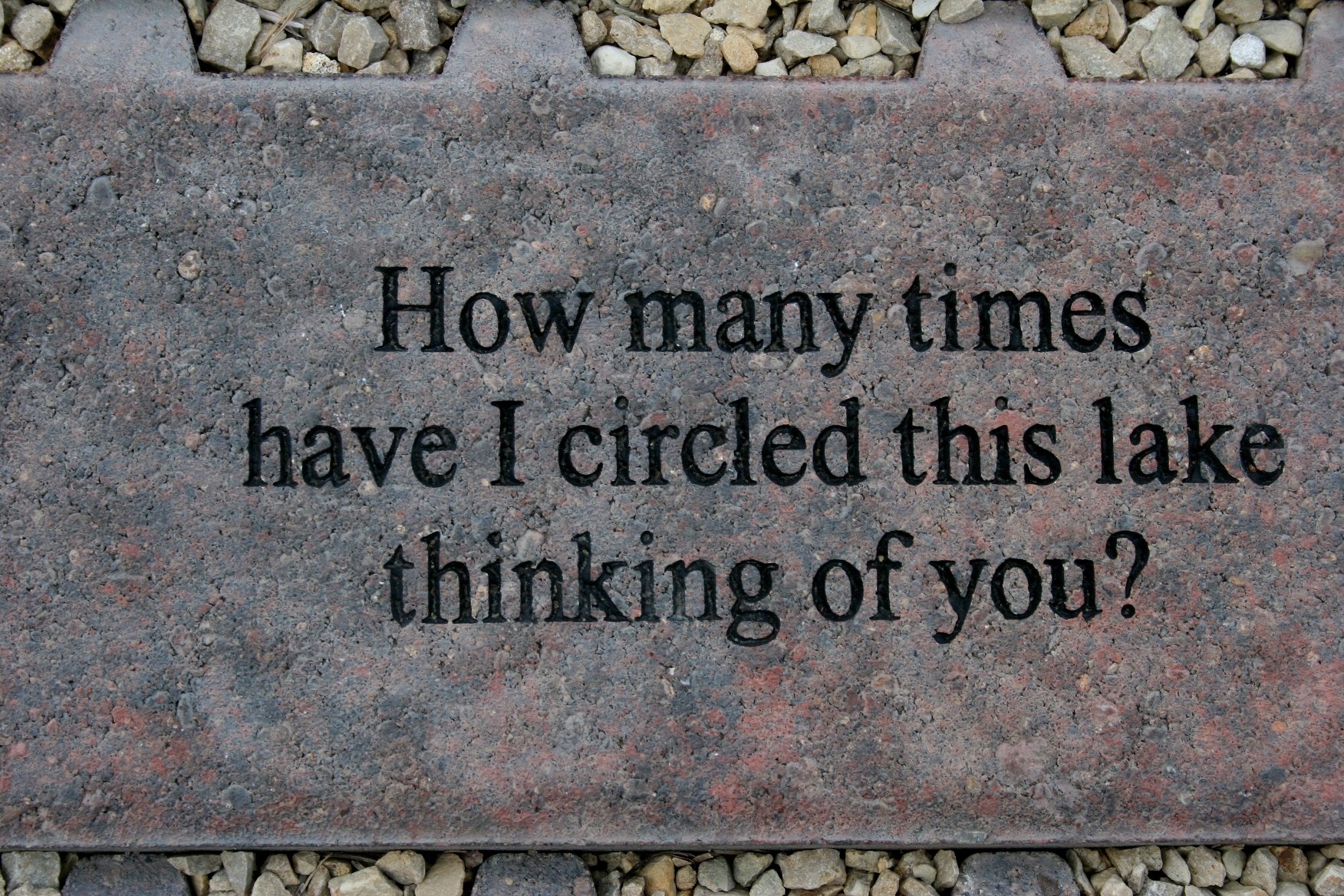
Poetic words imprinted upon a paver at the Lake Harriet bandshell in south Minneapolis.

WHAT AN EXCITING time to read, and write, poetry.

Yes.

Read on.

If you’re among those who consider poetry boring, unapproachable, complex and difficult to understand, then you’ve read only boring, unapproachable, complex and difficult to understand poems.

Yes, those types of poems exist.

But today, oh, today, poetry is pushing beyond simply words printed in anthologies to highly-public and engaging venues.

At least three Minnesota communities—St. Paul (Everyday Poems for City Sidewalk), Mankato (WordWalk) and now Northfield (Sidewalk Poetry Contest)—have embraced sidewalk poetry, poems imprinted upon sidewalks.

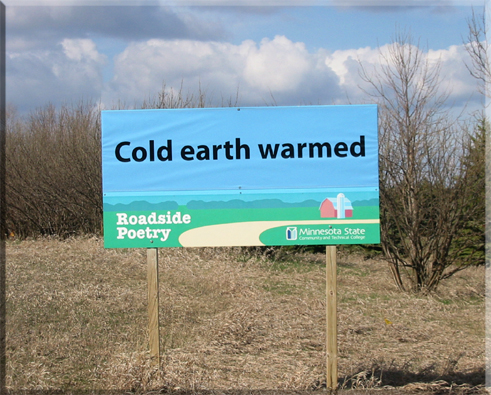
In Fergus Falls, the Fergus Area College Foundation sponsors a seasonal poetry contest and posts the winning poem on four Burma Shave style billboards. I won the spring Roadside Poetry Project competition. (Click here to read a story published today in The Marshall Independent about my writing and my Roadside Poetry poem.)

The first line in my spring poem posted on four billboards.

In Hackensack, as part of its annual summer Northwoods Art Festival and Book Fair, the Northwoods Art Council has invited Minnesota poets to submit poems for display. Attendees then read and vote for their favorite poems.

But the latest news in the poetry world comes from St. Paul poet Todd Boss and Minneapolis art director/animator/designer Angella Kassube, who have created “motionpoems.” The pair defines these poems as “a hybrid of poetry and film.”

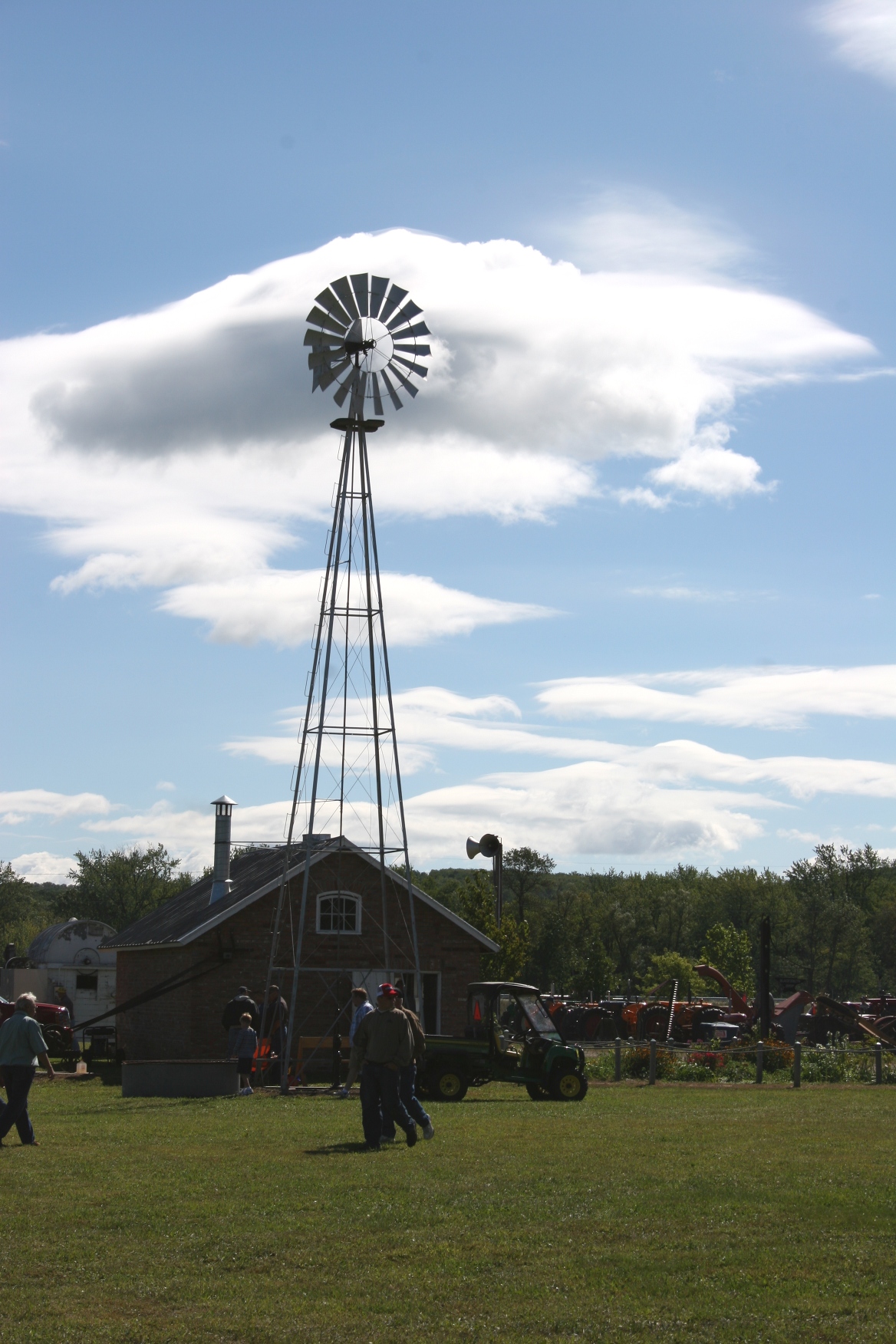
The windmill is the subject of a motionpoem written by Toss Boss. I took this photo at the Rice County Steam and Gas Engines grounds near Dundas last fall.

In short, they bring poems to life via animation. From what I’ve seen and heard online, this approach works, making poetry more accessible, understandable and, dare I say, exciting. But don’t take my word for it. Click here and view several motionpoems, including my favorite, Todd Boss’ THE GOD OF OUR FARM HAD BLADES.

The duo started this project two years ago, creating more than 20 poems. Now they are expanding, collaborating with New York publisher Scribner’s respected annual Best American Poetry anthology, 2011 volume, to produce 12 – 15 motionpoems. They’ll work with writers ranging from Pulitzer Prize winners to emerging writers. Eventually, the motionpoems will be accessible, for free, online.

I see great promise in these new approaches to poetry that reach beyond printed poems and poetry readings. I see the promise for reaching a wider, more receptive audience.

WHAT’S YOUR TAKE on sidewalk or billboard poetry and/or motionpoems? Would you be more likely to read these types of poems than traditionally-published poetry?

© Copyright 2011 Audrey Kletscher Helbling
Roadside Poetry Project photo courtesy of Paul Carney