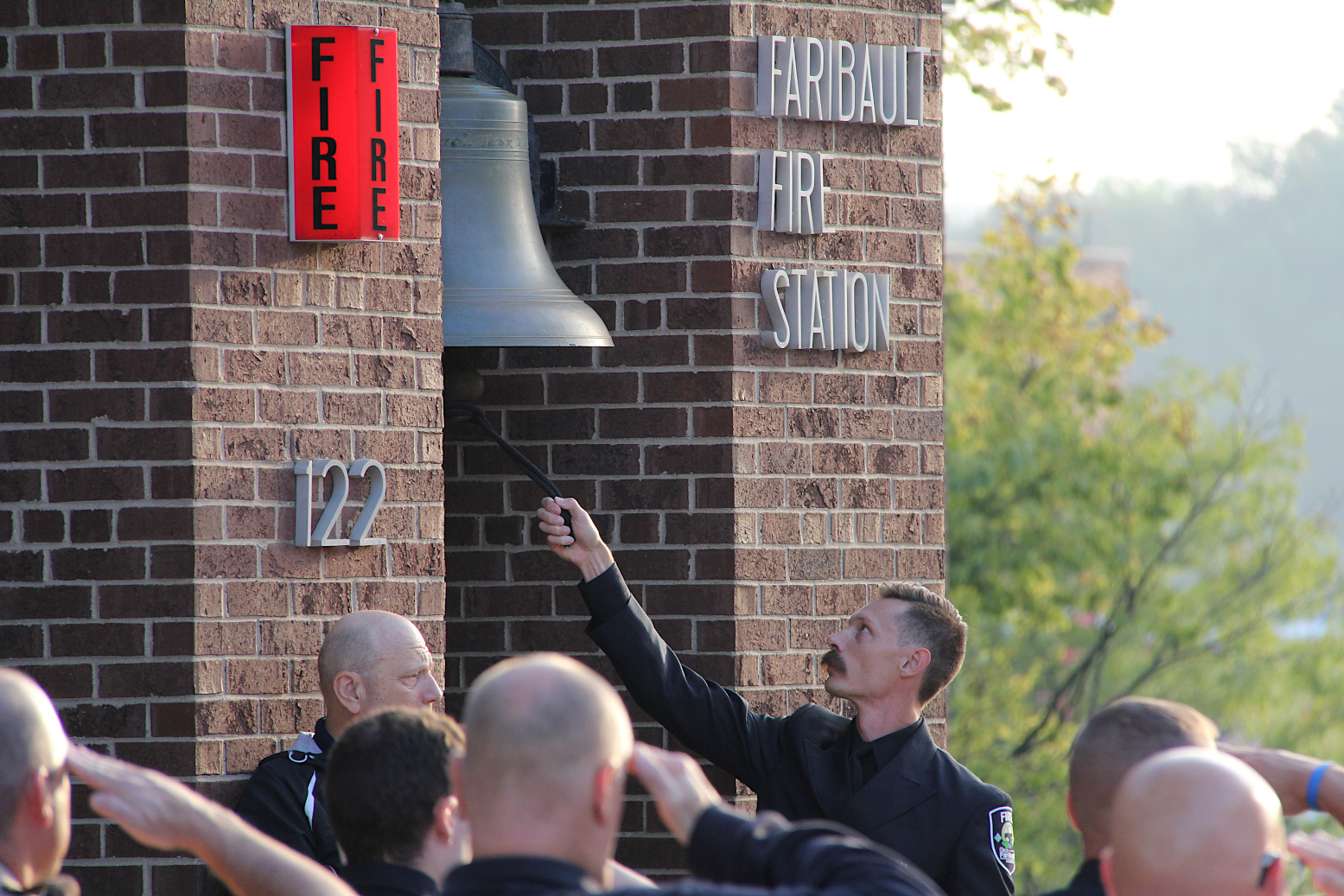
A firefighter rings a bell outside the Faribault Fire Hall during the 9/11 ceremony. (Minnesota Prairie Roots copyrighted photo September 2025)
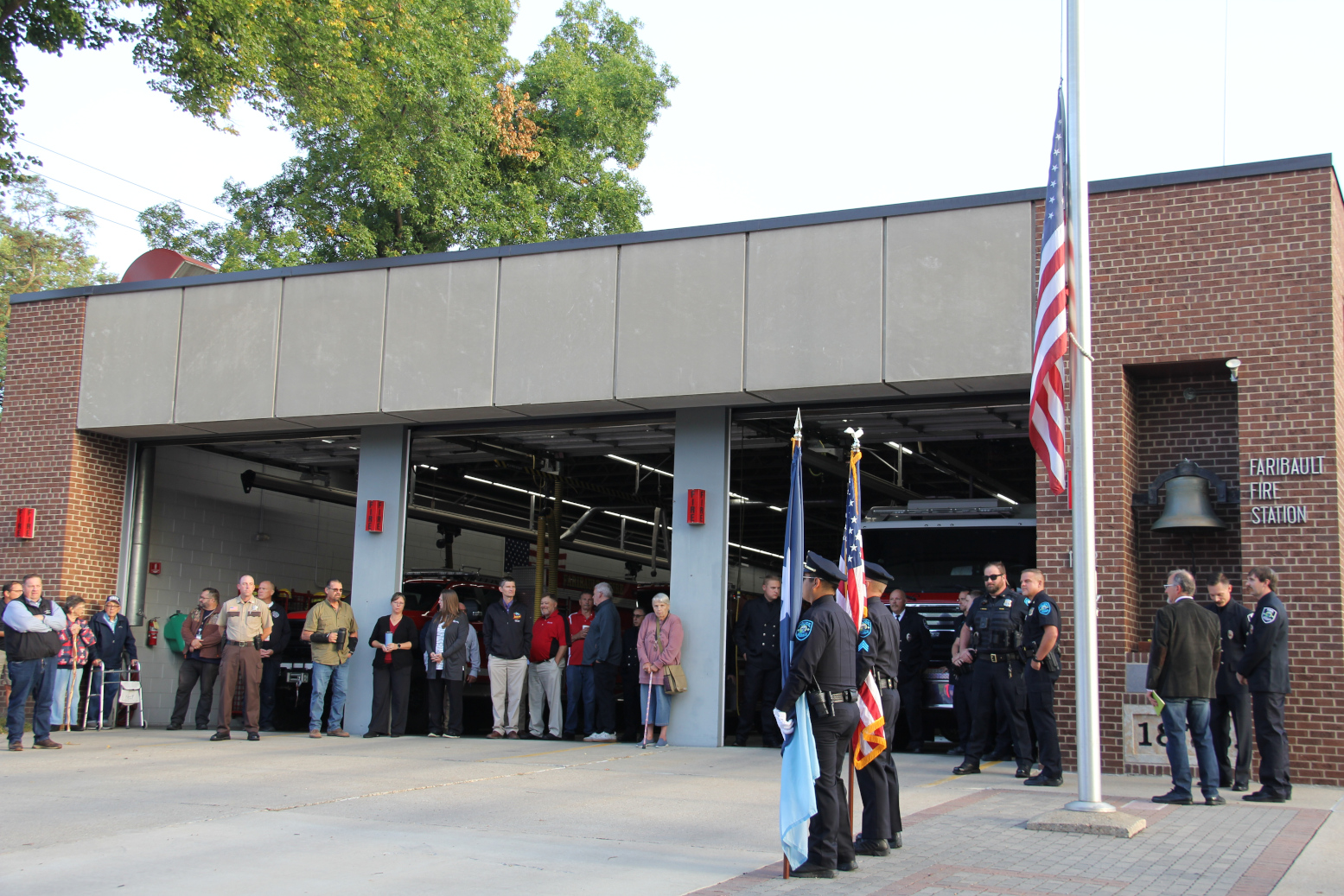
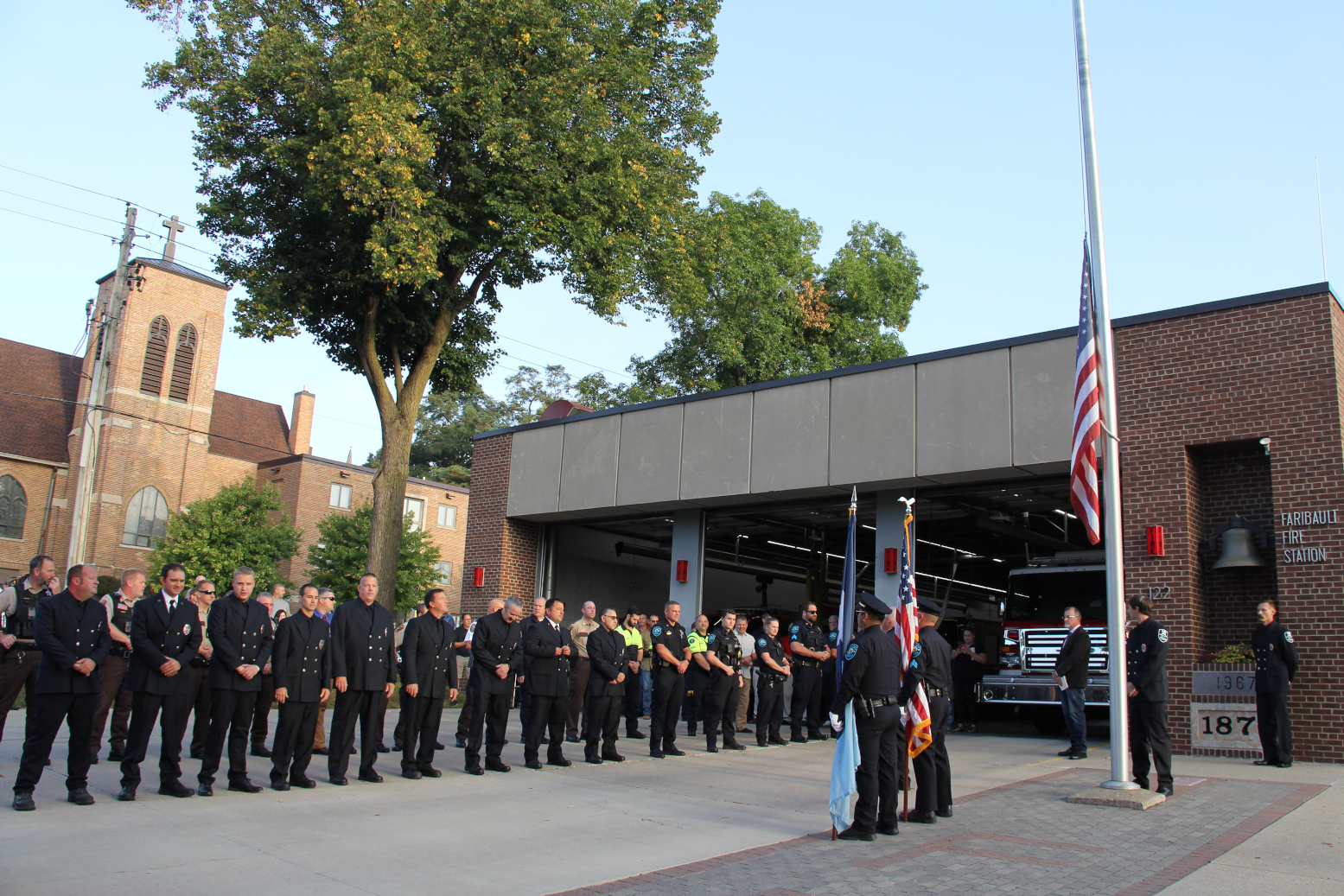
WE GATHERED THURSDAY MORNING at the Faribault Fire Hall as the sun beamed bright upon the crowd, as those in uniform stood in reverent respect, as engines idled, as the bell rang, as the American flag was raised and lowered, as heads bowed in prayer.
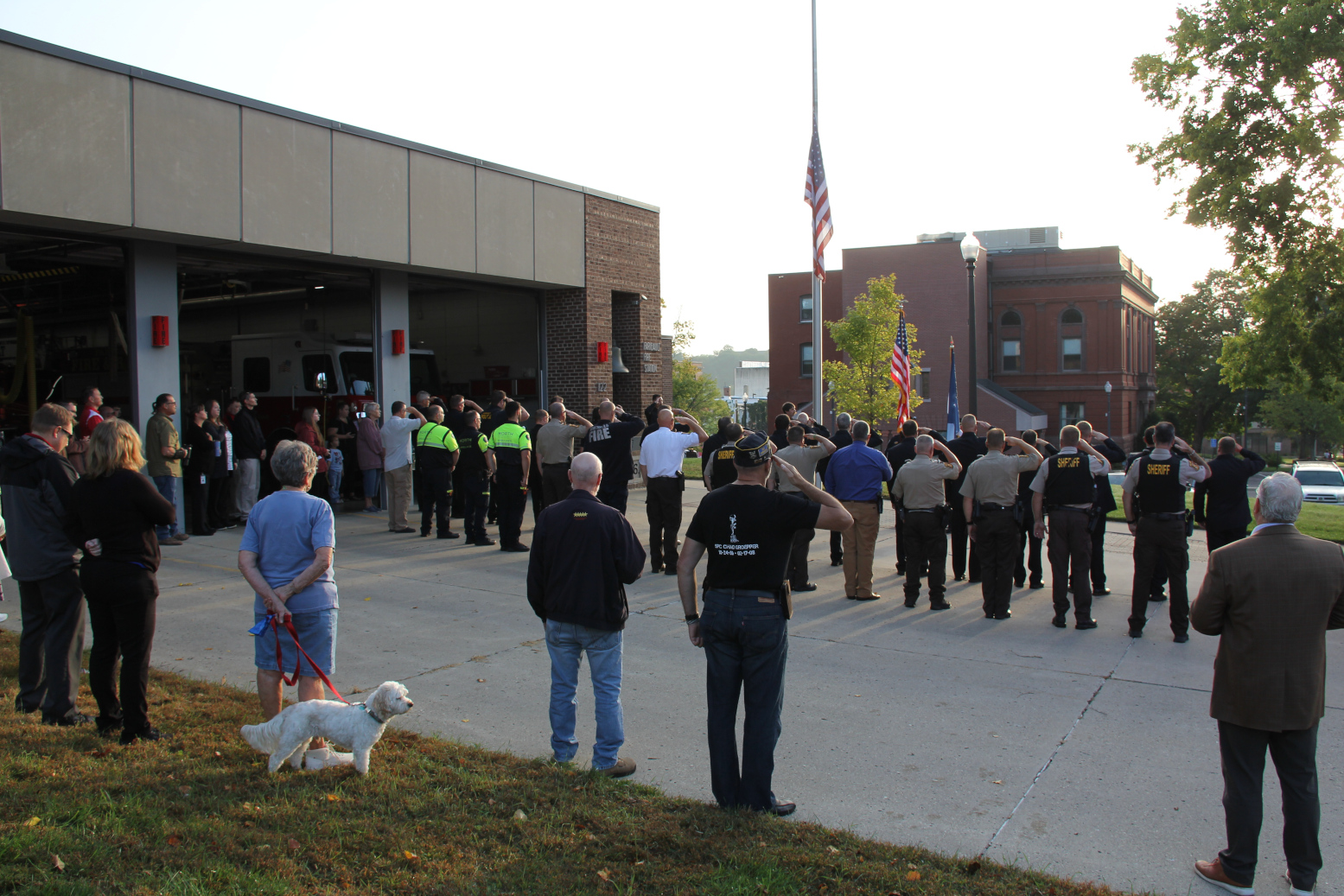
People gather inside and outside the fire hall before the commemoration began at 7:46 a.m. (Minnesota Prairie Roots copyrighted photo September 2025)
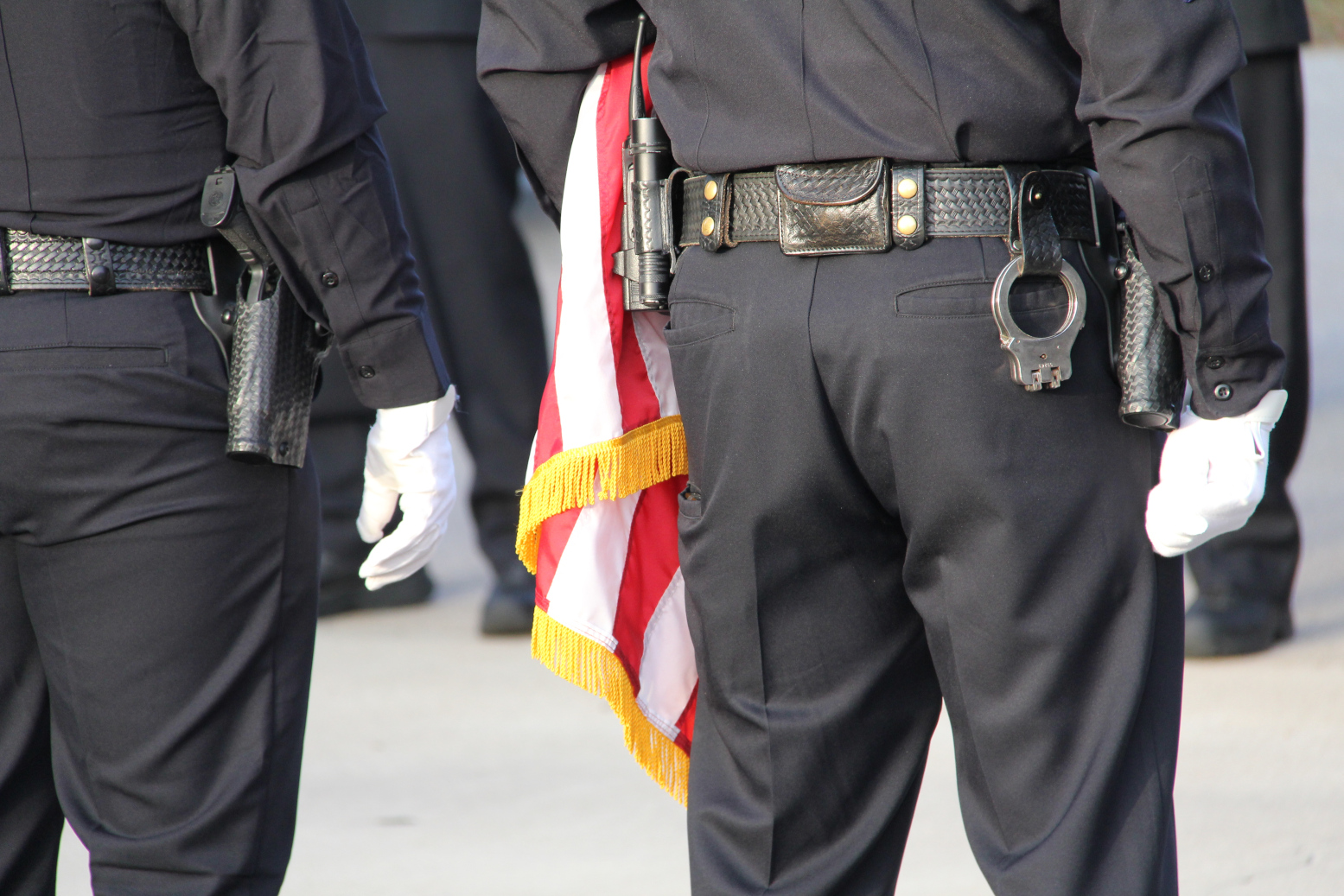
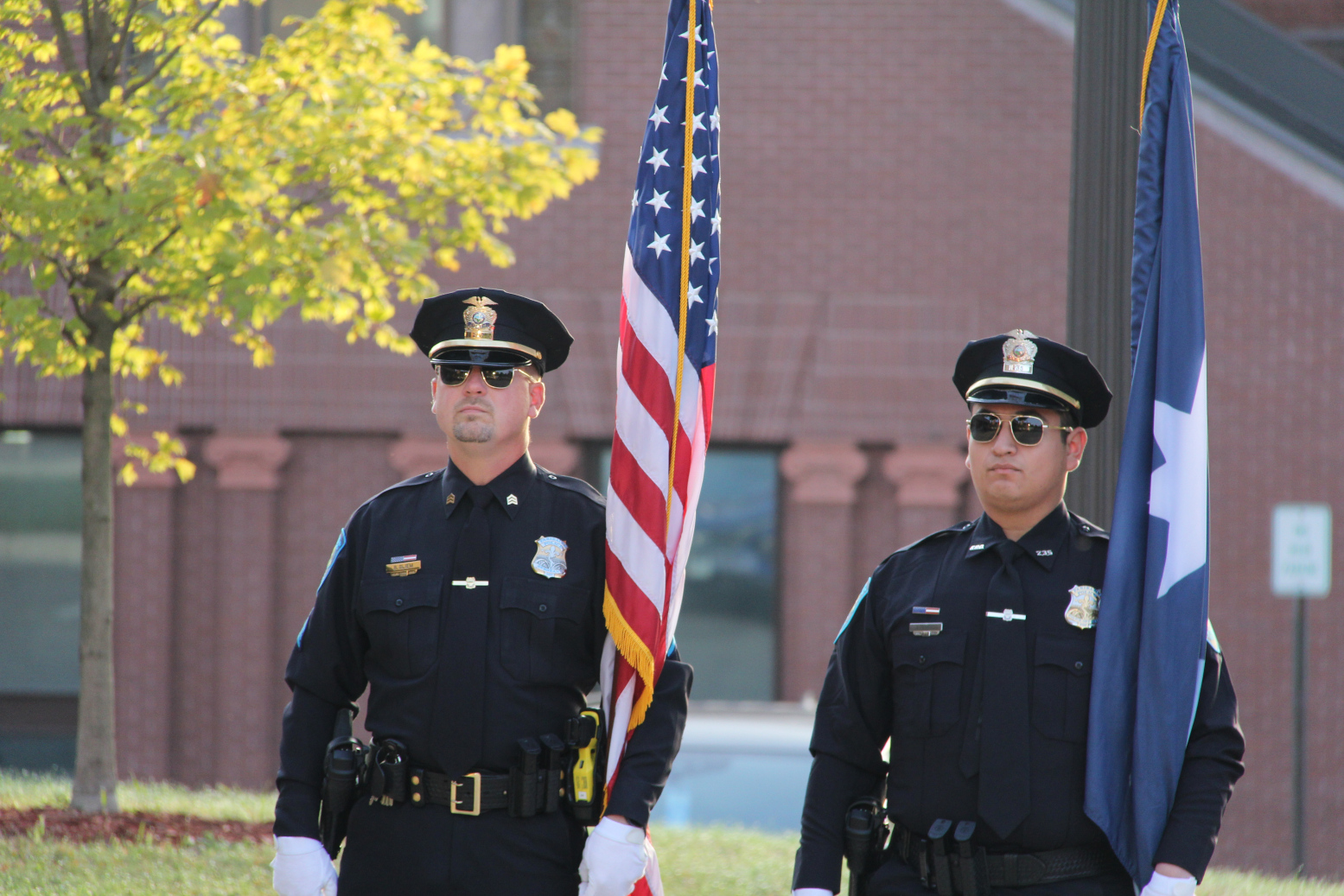
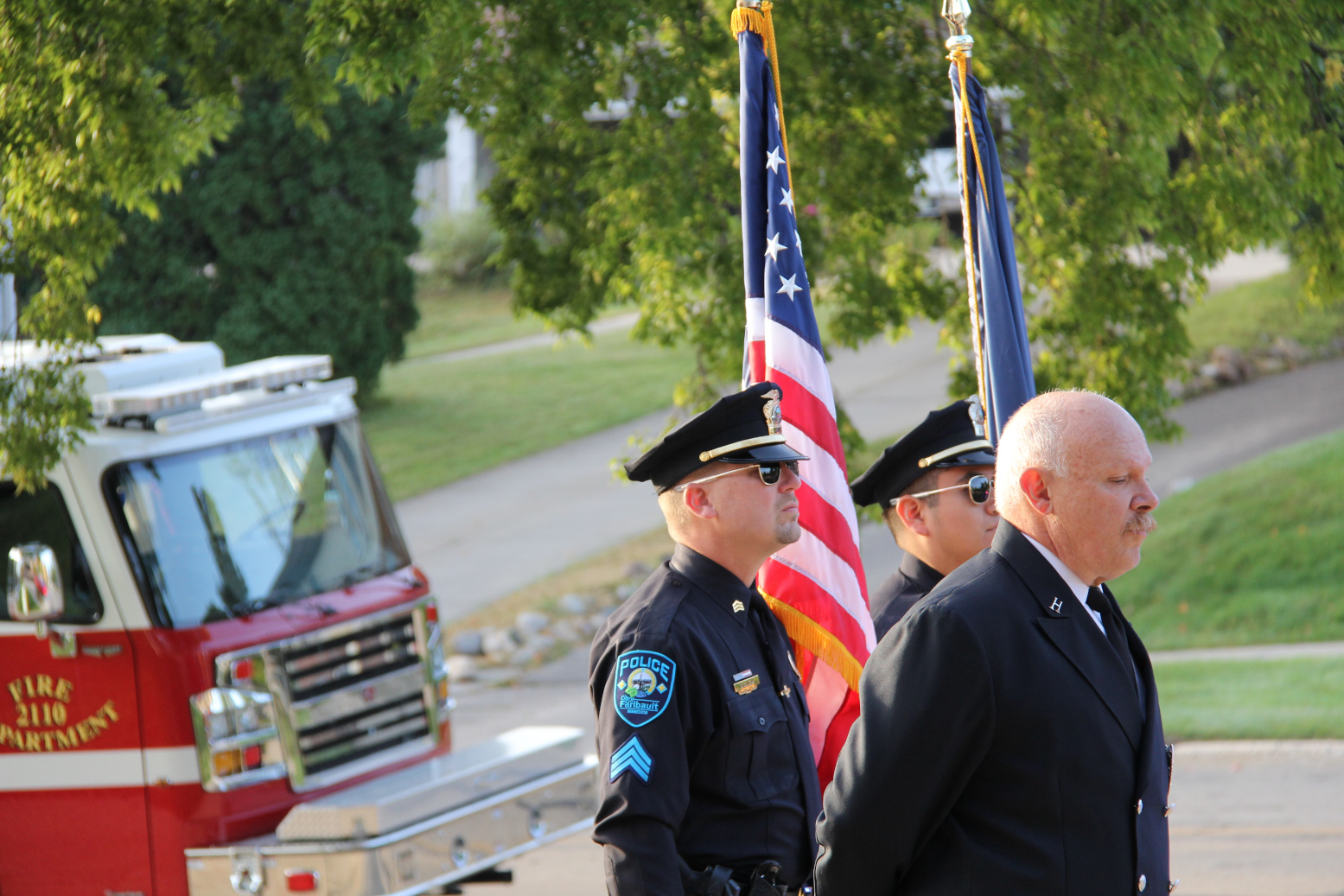
A Faribault police officer clutches an American flag. (Minnesota Prairie Roots copyrighted photo September 2025)
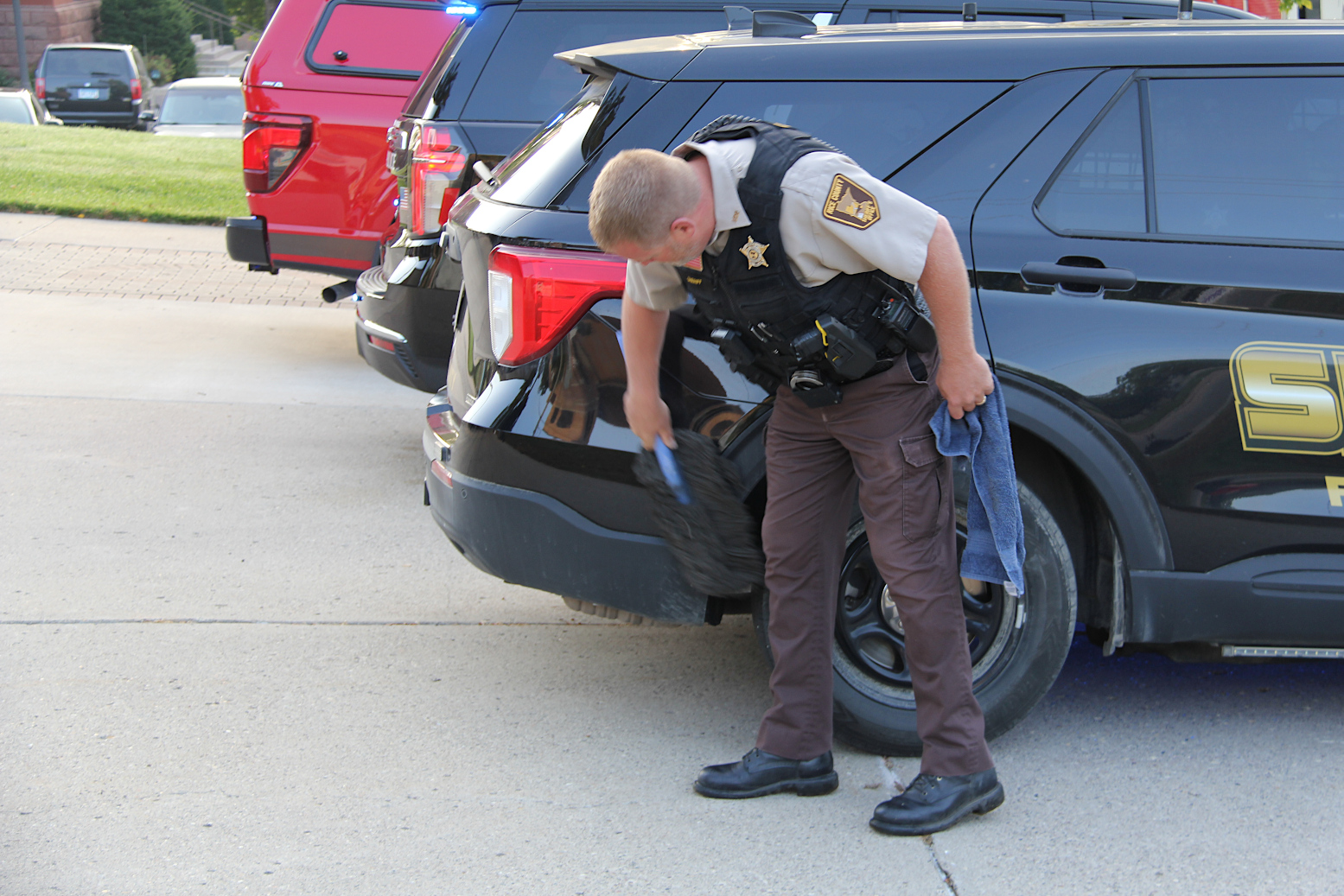
Cleaning a Rice County Sheriff’s Department vehicle before the ceremony. (Minnesota Prairie Roots copyrighted photo September 2025)
A short ceremony here marked the 24th anniversary of the September 11, 2001, terrorist attacks on America, an act of violence that initially claimed 2,977 lives. And many others in the years thereafter.
Flag bearing police officers participating in the memorial event. (Minnesota Prairie Roots copyrighted photo September 2025)
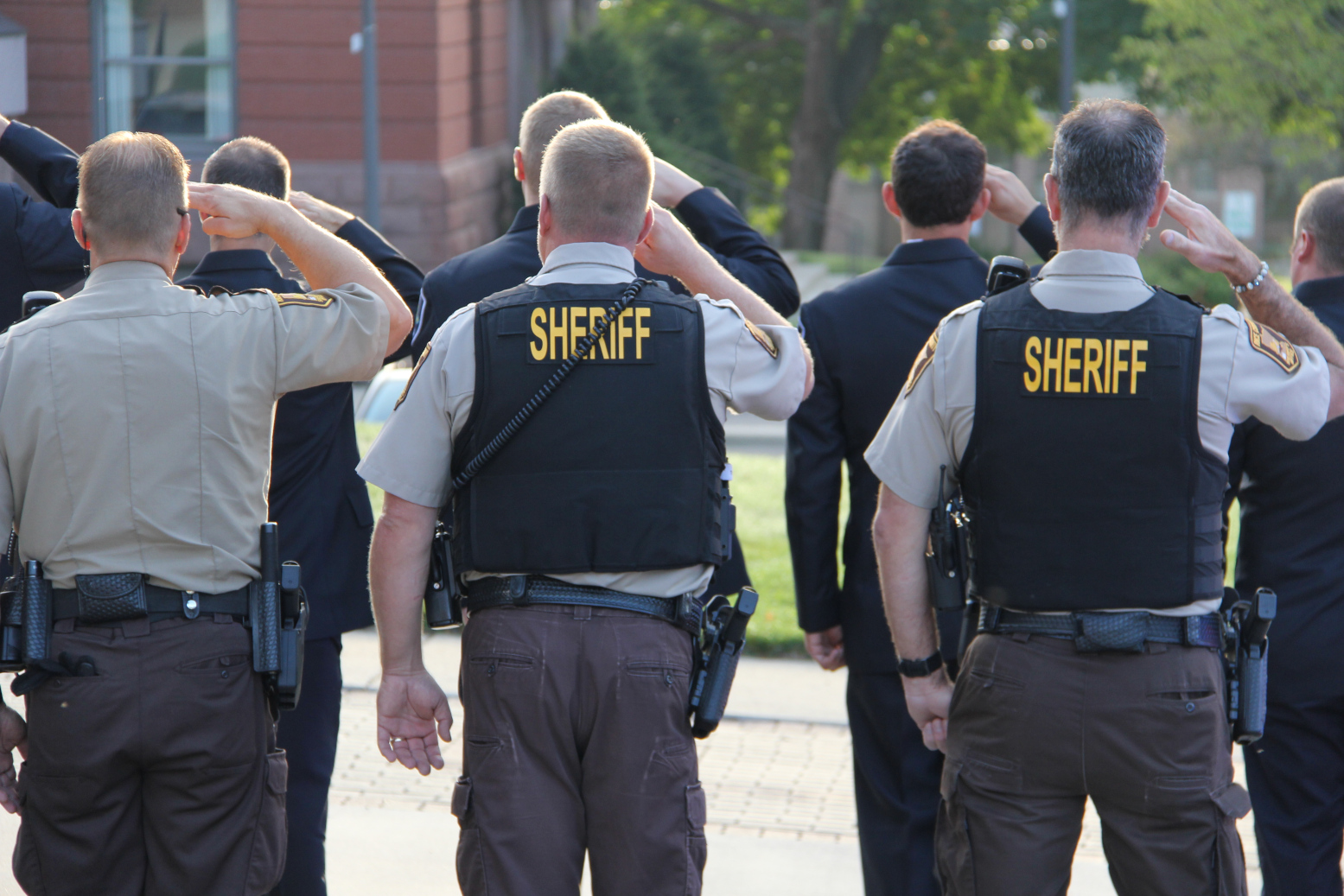
Saluting. (Minnesota Prairie Roots copyrighted photo September 2025)
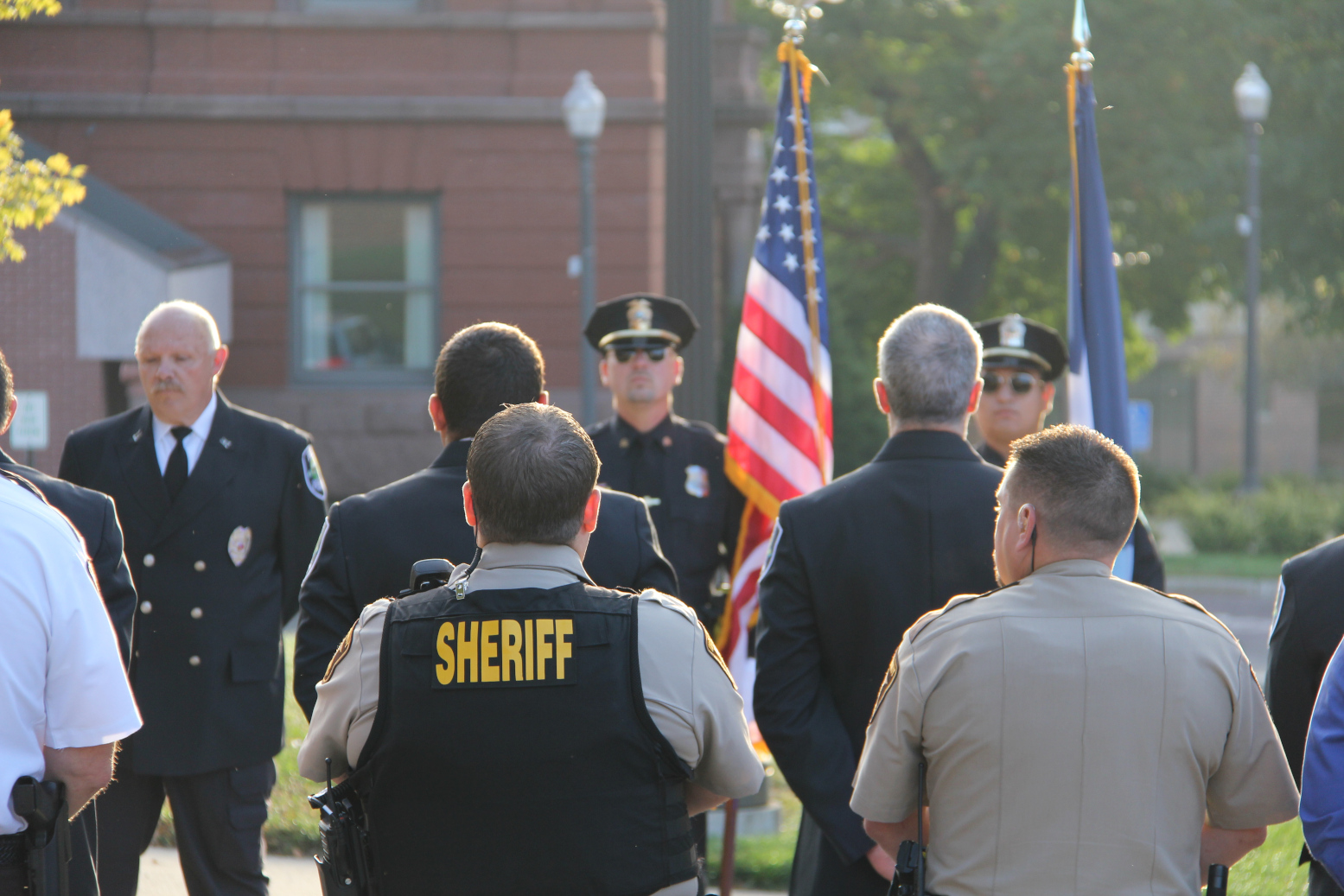
Members of the sheriff’s department and others salute. (Minnesota Prairie Roots copyrighted photo September 2025)
At 7:46 a.m., when the first plane, Flight 11, hit the first World Trade Center, the ceremony in Faribault began. I mostly wandered, watched, framed photos, struggled to hear speakers. But mostly, I heard the silence, felt the heaviness upon hearts, remembered.
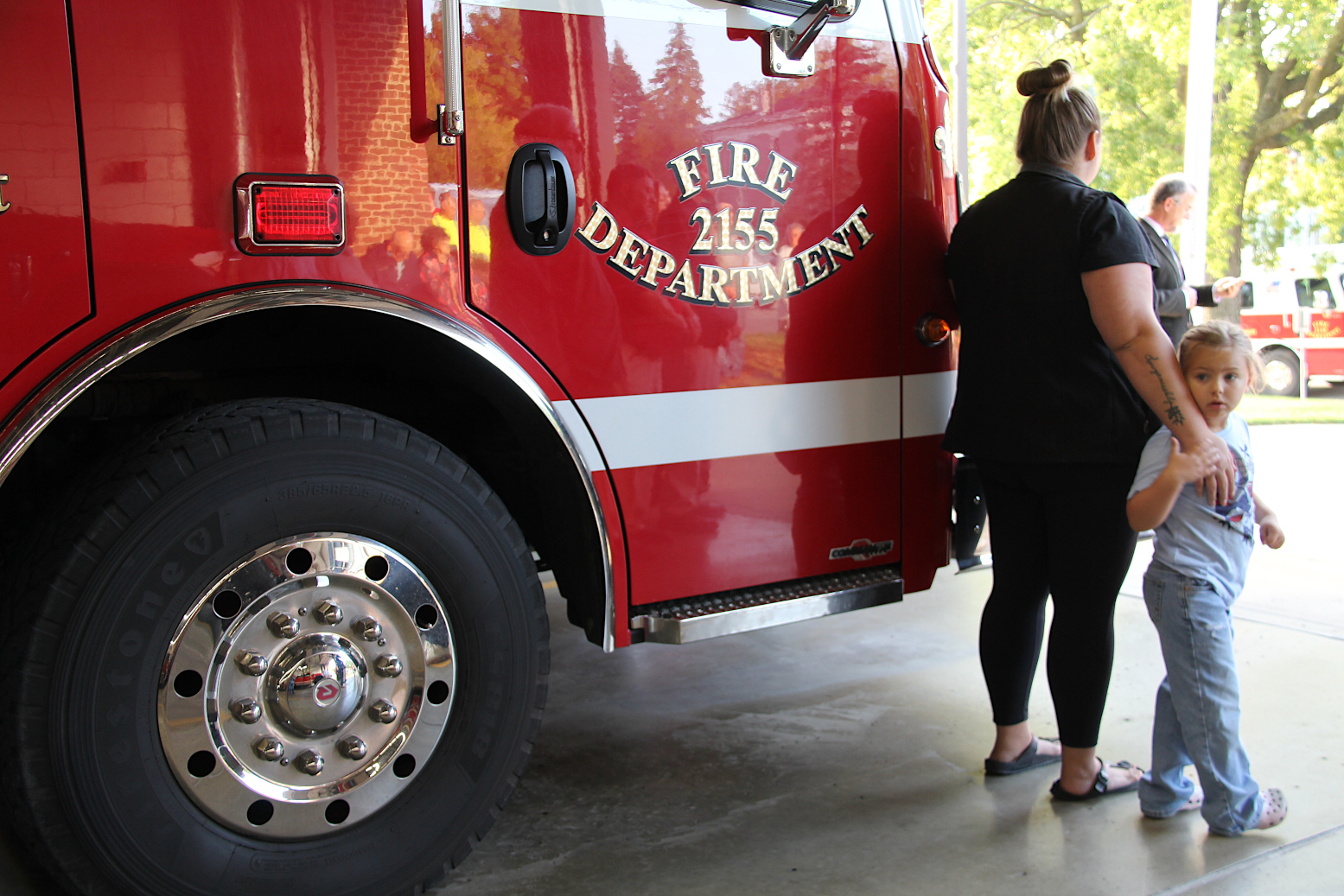
The youngest in attendance stands inside the fire hall. (Minnesota Prairie Roots copyrighted photo September 2025)
On that morning in 2001, I was caring for my 7-year-old son, who wasn’t feeling well, and his friend. I knew nothing of the attack until my husband called from work to inform me. As I scanned the crowd 24 years later, I wondered where all of them were when the unthinkable happened. Some were not yet born. Others, like Faribault’s communications director, was sitting in his seventh grade science class when he got the news. Many of us were just going about our normal day.
The line-up of firefighters, police officers and others was impressive. (Minnesota Prairie Roots copyrighted photo September 2025)
When I reflect on that day, I recall how profoundly different the world felt afterwards. The absence of airplanes in the sky following the attacks in New York City and at the Pentagon and then the crash of the fourth plane over a field in Pennsylvania was noticeable. I remember worrying, wondering if the Mall of America in Minnesota would be attacked in a symbolic act of terrorism. Everything felt different. Surreal. Scary.
Many firefighters were in attendance, as I would expect given how many of their brothers and sisters on the East Coast perished on 9/11. (Minnesota Prairie Roots copyrighted photo September 2025)
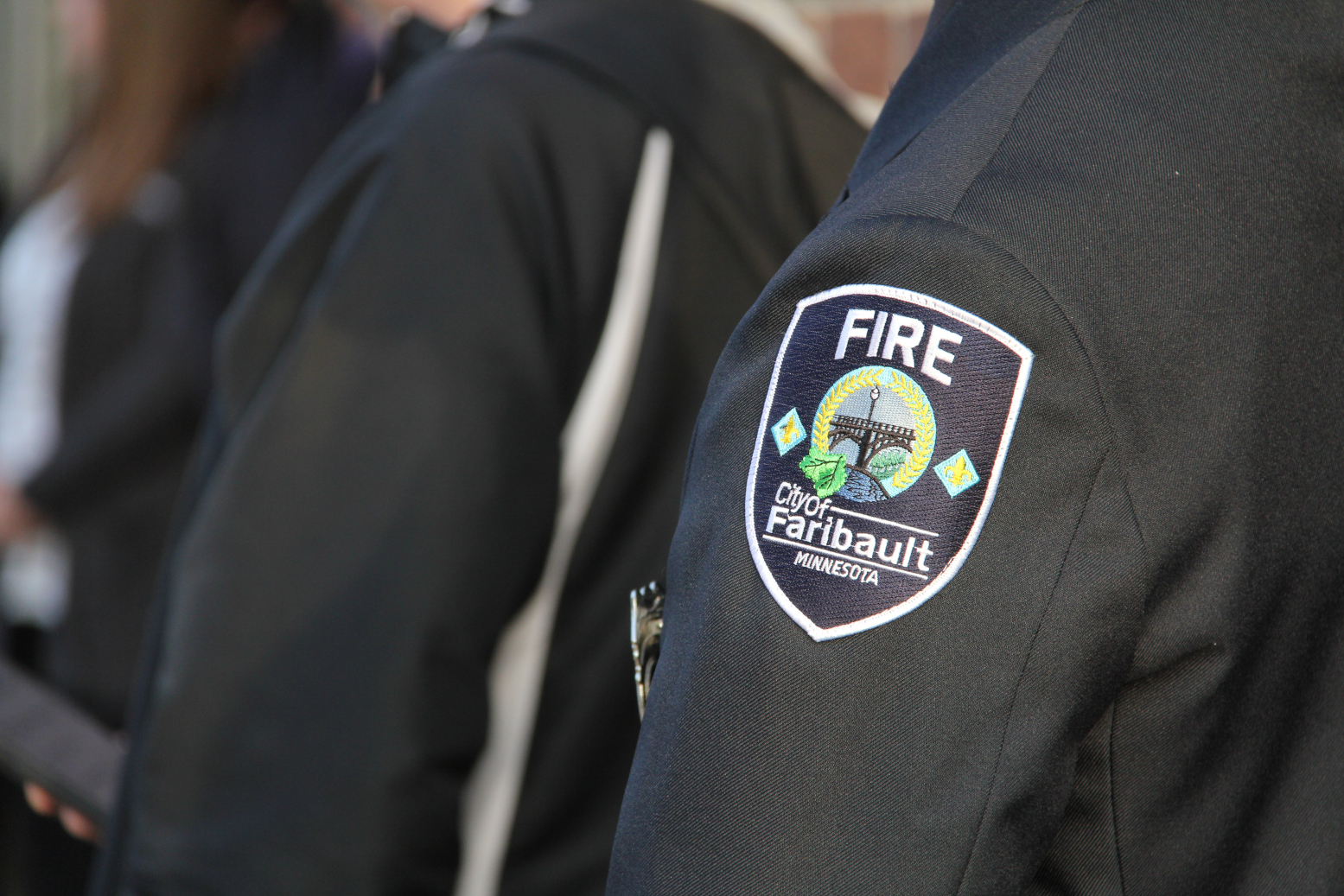
A Faribault fire fighter with two Faribault police officers. (Minnesota Prairie Roots copyrighted photo September 2025)
Time passes. Days, months, years, decades. And here I was, 24 years later, standing outside my local fire hall. Standing with firefighters, law enforcement, EMTs, an insurance agent, the former mayor, city employees, local media, a child, a veteran, an older woman and her dog…ordinary people remembering those lost on that tragic day in American history, 9/11.
Patriotism threaded through the event. (Minnesota Prairie Roots copyrighted photo September 2025)
TELL ME: What are your memories from September 11, 2001? How did you feel and how do you feel now?
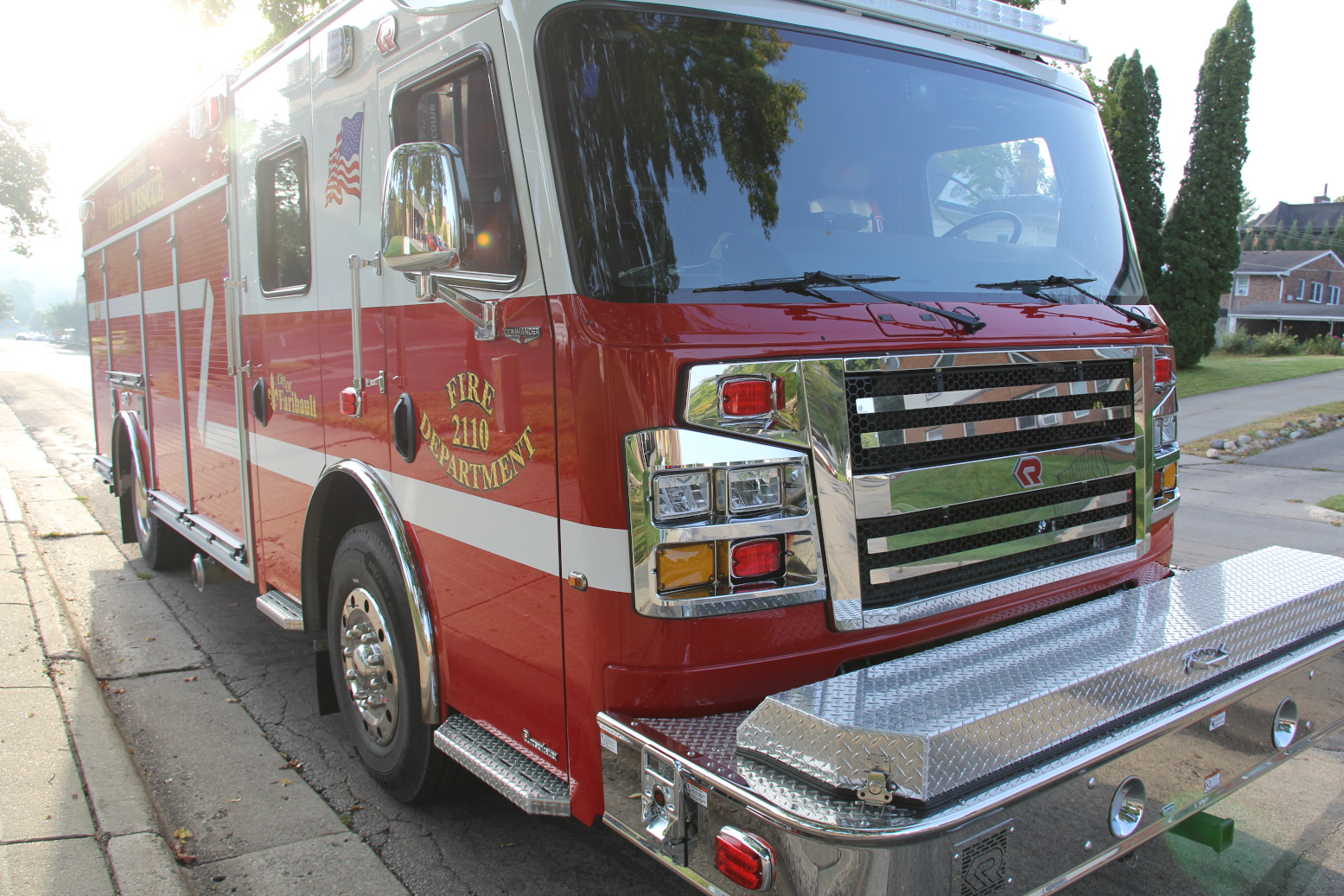
This Faribault fire truck was parked along the street by the fire hall. Other emergency vehicles were also parked either along the street or on the fire hall driveway. (Minnesota Prairie Roots copyrighted photo September 2025)
I took this photo of a young boy with a dinosaur painted on his face and imitating a dinosaur at the Virtues Trail Family Night in Faribault six years ago. (Minnesota Prairie Roots copyrighted file photo 2019)
“THE KIDS KNOW more about dinosaurs than me,” said my friend Larry Richie, retired Faribault area farmer, amateur archaeologist, historian, volunteer at Nerstrand Charter School and much more. He’s one of those guys who’s a wealth of knowledge accrued through years of living and caring about people, animals, the land and history. And he’s always willing to share his discoveries.
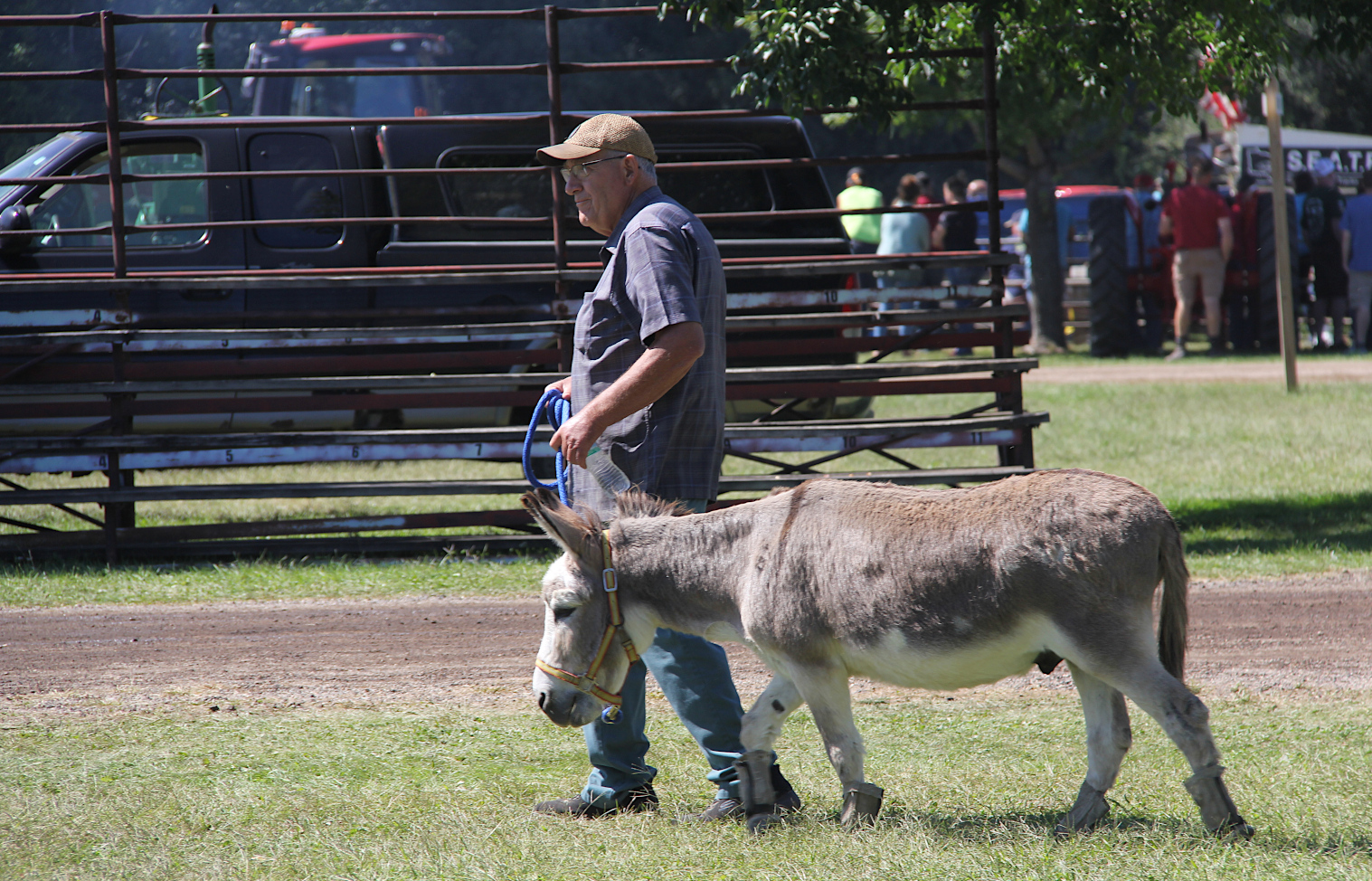
Larry Richie leads his donkey, Orville, around the Rice County Steam & Gas Engines grounds in 2024. He brought Orville to the fall show again this year along with a collection of fossils. (Minnesota Prairie Roots copyrighted file photo August 2024)
I ran into Larry recently at the Rice County Steam & Gas Engines Fall Show where he had set up tables with fossils uncovered during digs on property south of Faribault. I didn’t take notes, so I don’t recall everything my friend told me. But I left feeling pretty certain I’d just touched, picked up and photographed dinosaur bones.
Larry knows a heckuva lot more than I do about these plant and meat-eaters that roamed the earth long ago. But not as much as the kids, he laughed. I concur. My grandchildren certainly know more about dinosaurs, and Pokemon, than I do.
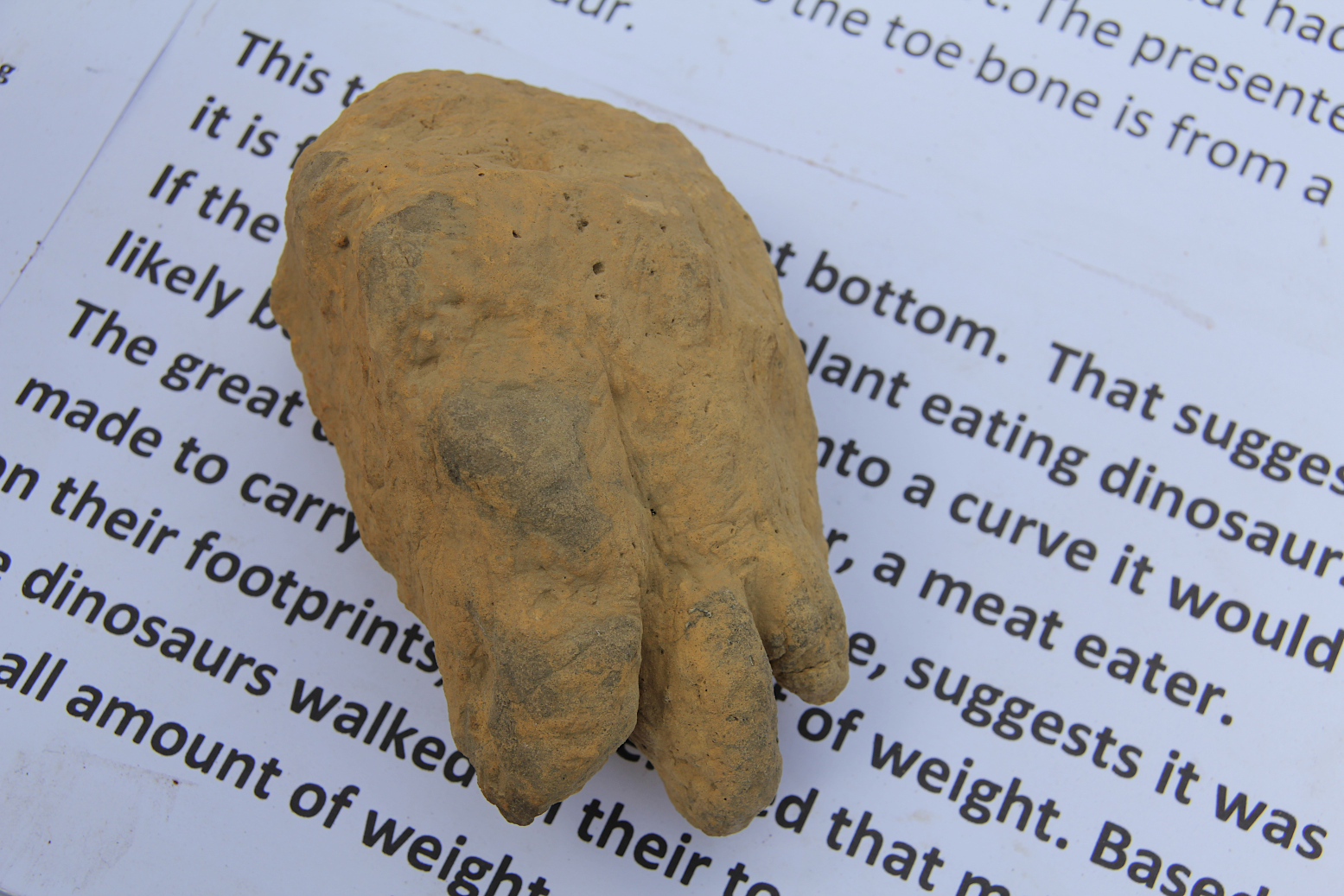
One of many fossils Larry brought to the Gas & Steam Engines Fall Show. Those would be toes on a dinosaur, according to Larry. (Minnesota Prairie Roots copyrighted photo August 2025)
As I listened to Larry, I thought, here’s a man with passion and determination. Although he’s, as yet, been unable to find anyone who will verify the authenticity of his dinosaur bones, I walked away a believer.
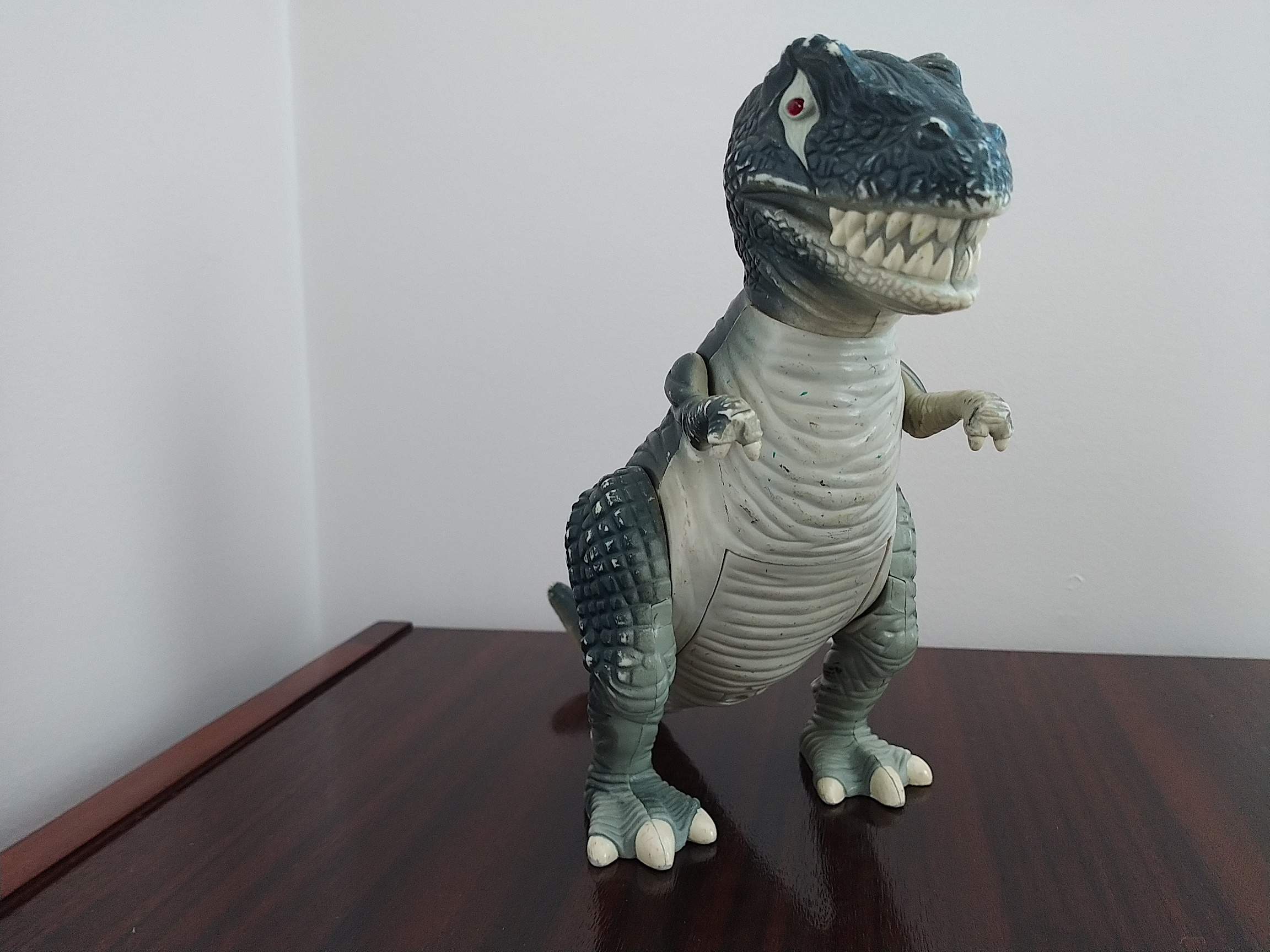
The battery-operated dinosaur roars, moves its head and arms, and flashes its eyes. (Minnesota Prairie Roots copyrighted file photo)
Dinosaurs are decidedly amazing creatures that fascinate all of us, no matter our age. I remember playing with plastic dinosaurs as a young child. If I was to dig around in an upstairs storage space, I’d likely find those vintage toys. And if I headed to the basement and opened a tote, I’d find several dinosaurs, including battery-operated ones, belonging to my now grown children. Those roaring dinos with flashing red eyes scared my grandkids as preschoolers.
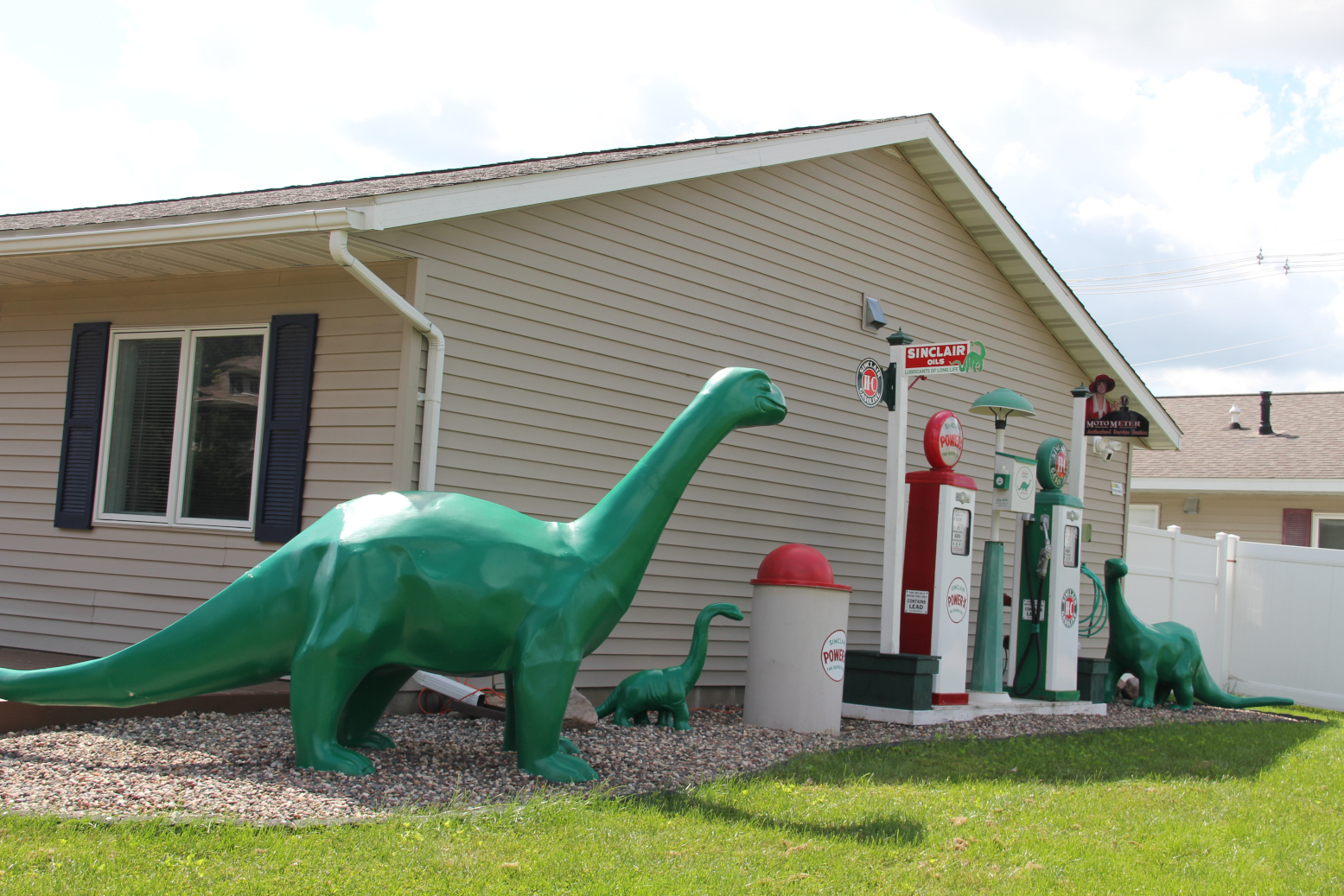
A tribute to Sinclair Oil and its dinosaur in a residential yard in Owatonna. (Minnesota Prairie Roots copyrighted photo September 2025)
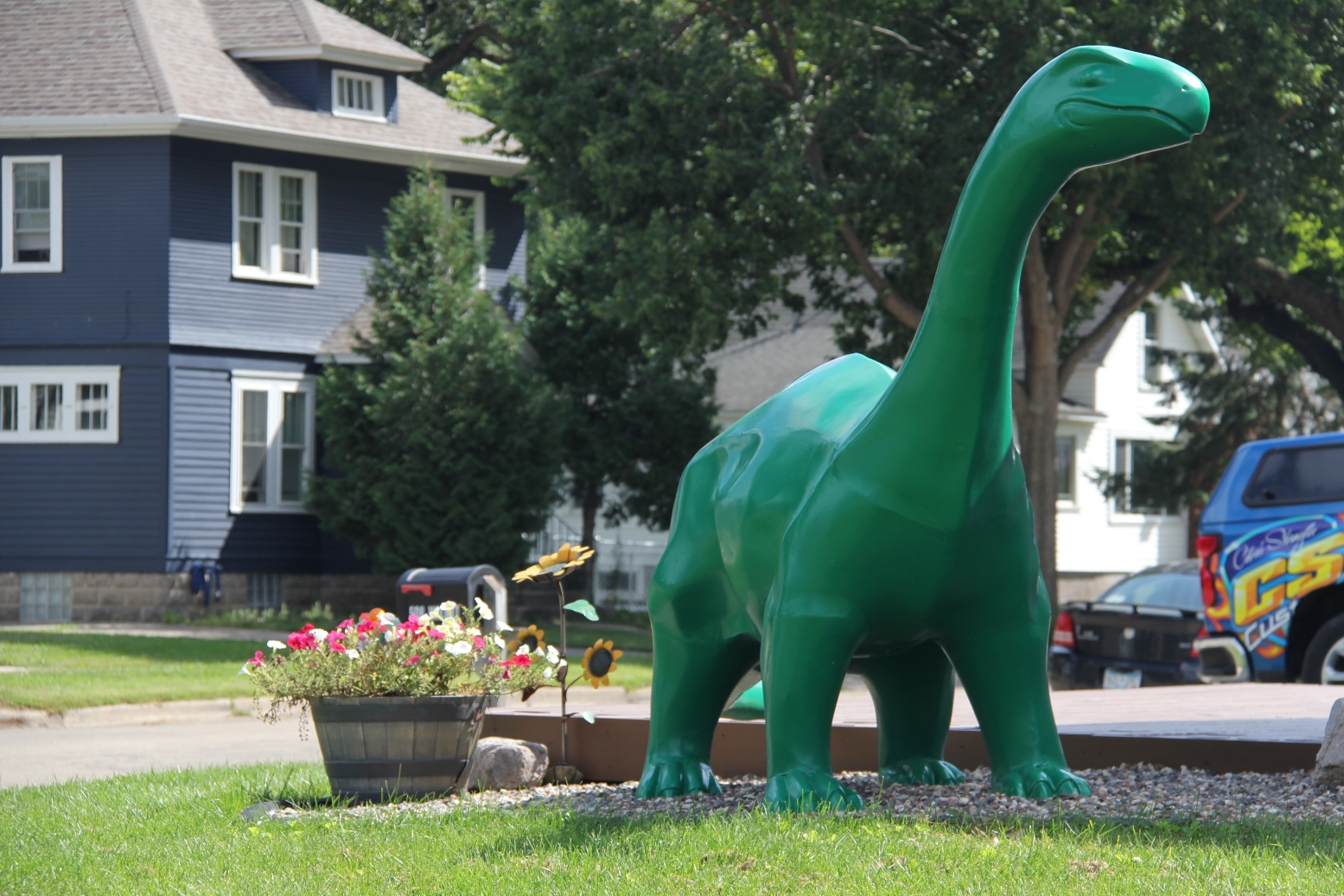
One dinosaur that never scares is DINO, the Apatosaurus of Sinclair Oil fame. I happened upon three multi-sized versions of DINO along a residential street near Morehouse Park in Owatonna recently. The trio was strategically placed on either side of Sinclair gas pumps, the scene like a work of art, a snapshot of marketing history.
The largest of the three DINOs in the Sinclair Oil Company display in Owatonna. (Minnesota Prairie Roots copyrighted photo September 2025)
Elvern and Arlene Kletscher with children, Audrey, Lanae, Brian and Monica, at Dinosaur Park in the summer of 1966. I’m the oldest sibling in this photo taken by my brother Doug.
There’s something about dinosaurs that is timeless, that appeals to generations. I hold fond memories of visiting Dinosaur Park in Rapid City, S.D. in 1966 on the only vacation our family ever took. It’s documented in a black-and-white photo pasted in my photo album. Those mammoth sculptures atop the hill made an impression.
Today I remain in awe of dinosaurs. Just like my friend Larry, my grandkids and countless other kids and adults. I expect we’d all feel a bit differently, though, if dinosaurs, especially meat-eaters, still roamed the earth.
An angler fishes in Horseshoe Lake, rural Merrifield, on an August evening. (Minnesota Prairie Roots copyrighted photo August 2025)
IN MID AUGUST, Randy and I headed nearly 200 miles north of Faribault for our second stay of the summer at a family member’s cabin in the Brainerd lakes area. This trip our eldest daughter and her family joined us for several days. There’s nothing quite like time with the grandkids at the lake. Time to play, to relax, to make memories. And that we did. I cherish our days together Up North.
We mostly hung out on the beach or in the cabin. Weather conditions were not ideal with cool temps and strong winds prevailing when all six of us were there together. Yet, we got outdoors—the kids running along the sandy beach, digging a hole along water’s edge, enjoying the placid water on a warm and sunny day before the weather changed.
Looking upward toward the pines from a lakeside hammock. (Minnesota Prairie Roots copyrighted photo August 2025)
MAKING MEMORIES
I led the 6 and 9-year-olds on a scavenger hunt. We searched for a feather, a mushroom, a nest…that which nature offers like a gift if only we pause to see and appreciate. Randy taught Isaac to play Marbles on a homemade wooden board. It’s a long-time favorite of the extended Helbling family. We played Yahtzee and Connect 4, on an over-sized outdoor board. The puzzlers among us (not me) pieced together a lemonade stand. We headed into town for massive scoops of ice cream, a cabin tradition. And one day we picked peas from our sister-in-law and brother-in-law’s plot in a community garden. Later I taught Isaac how to shell them. The kids delighted in a timed Ninja course at a Crosslake playground and posed for photos behind Paul Bunyan family cut-outs at another park. We devoured s’mores around the campfire.
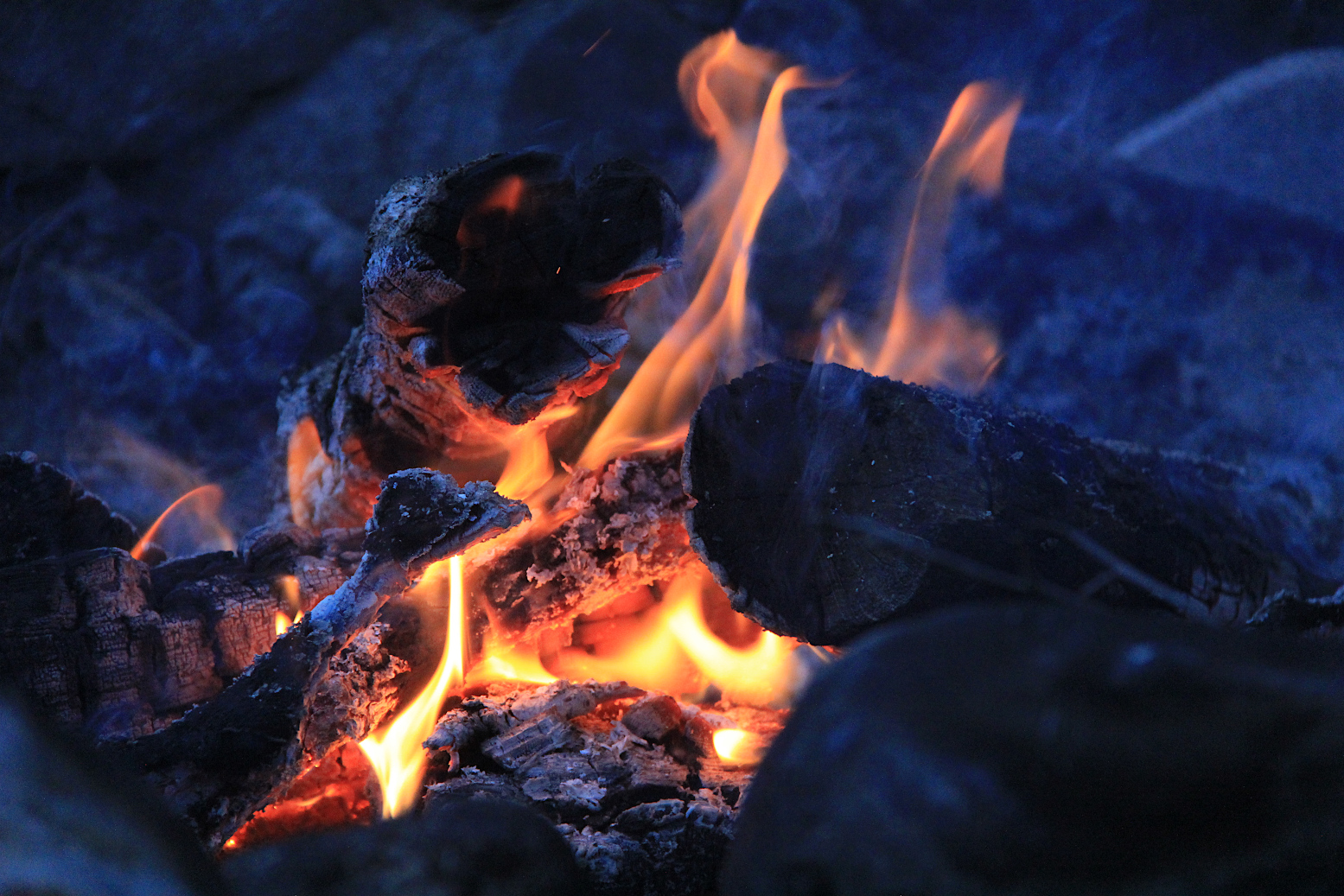
A campfire is the place to share stories, create memories. (Minnesota Prairie Roots copyrighted photo August 2025)
This is the stuff of memories. Simple. Uncomplicated. Mostly unplanned. Moments that connect us, deepen bonds.
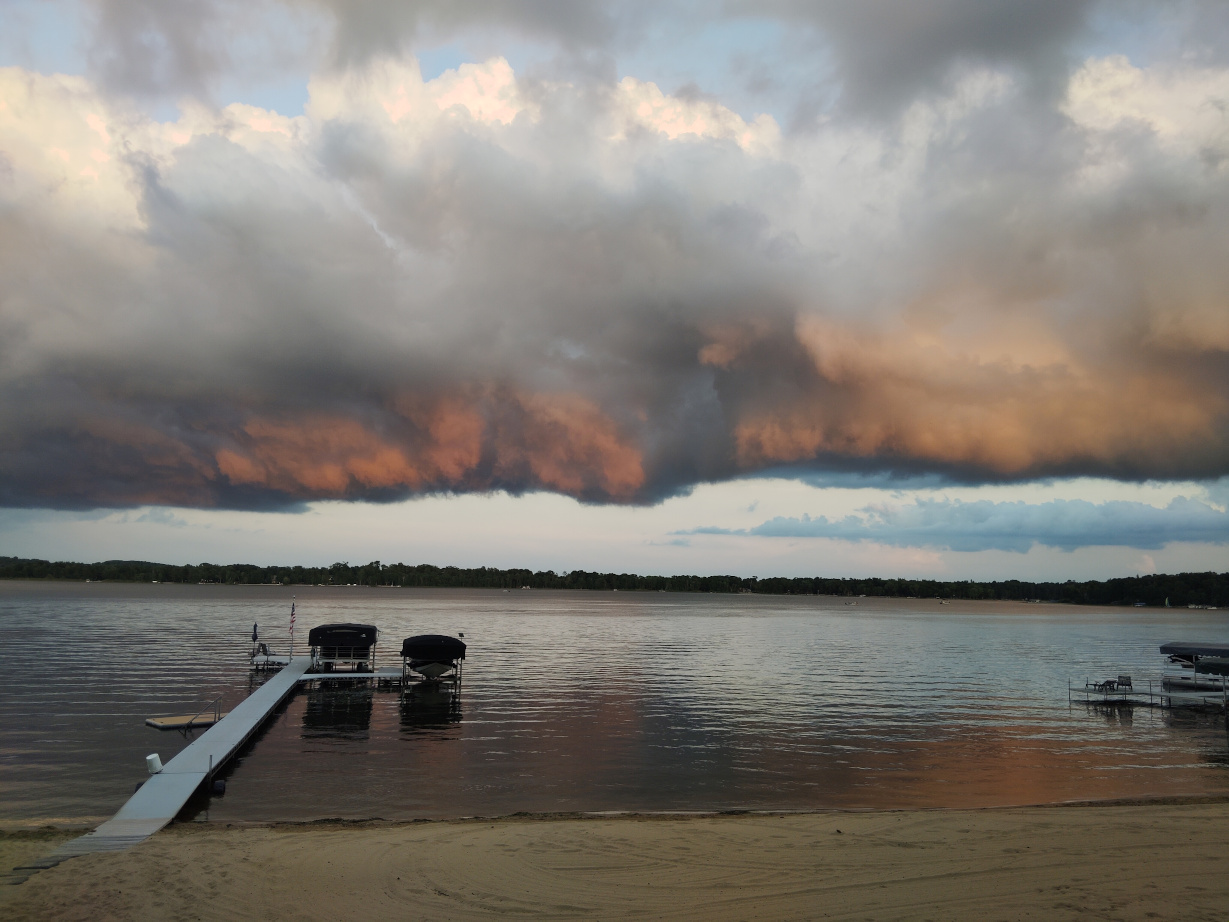
Moody clouds at sunset over Horseshoe Lake. (Minnesota Prairie Roots copyrighted photo August 2025)
Being outdoors, away from home and work and schedules and the demands of everyday life, opens us to the joys of vacationing. The haunting call of a loon and the sighting of a bald eagle perched atop a pine proved exhilarating. A bank of moody, pink-tinged clouds slung low in the evening sky drew all of us to focus on and admire the scene.
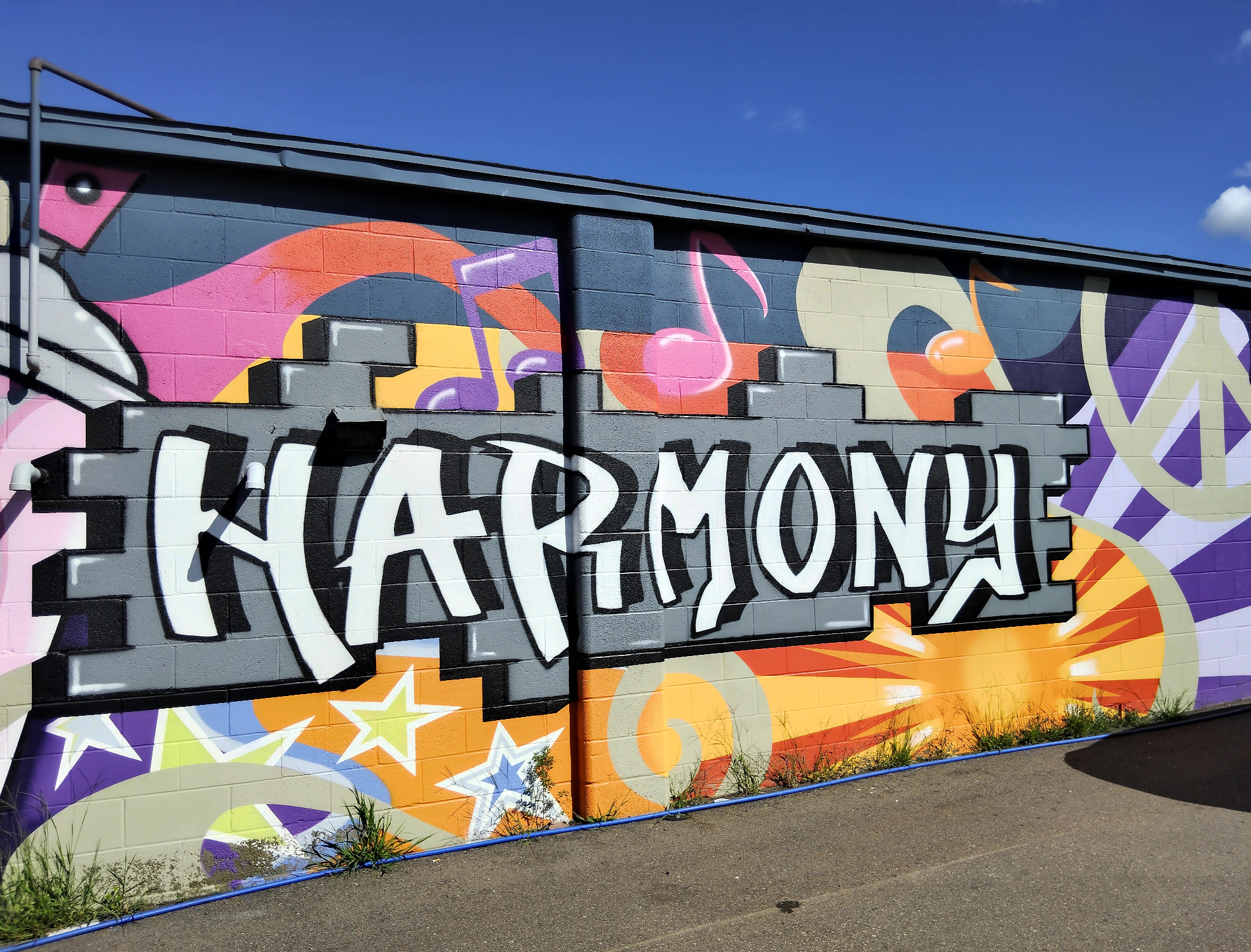
A mural in Crosby. (Minnesota Prairie Roots copyrighted photo August 2025)
MORE CHERISHED MOMENTS
When the grandkids and their parents left several days before us, our world seemed too quiet. No more kids scampering up and down the loft ladder. No more requests to go to the beach. No more…
But, sans kids, there were still moments to be cherished. Lakeside dining with friends at Breezy Point. Popping in to chat with a Faribault friend who lives in Nisswa now and works for the Chamber of Commerce. And then a chance encounter with adults with disabilities on an outing at Mission Park, rural Merrifield. I learned that visually-impaired Shannon, who uses a white cane and carries over-sized yellow sunglasses, likes to sing. I asked her to sing for me. And she did—to a movie soundtrack of ”My Heart Will Go On” by Celine Deon. I thought my heart would burst with joy as this young woman first mouthed the words, then sang them quietly and then louder as I encouraged her. It’s one of those moments I will forever treasure. Me nearly in tears and everyone inside that picnic shelter smiling during this impromptu weekday morning concert.
A mural by Adam Turman in downtown Crosby highlights recreational activities in the Cuyuna Lakes area. (Minnesota Prairie Roots copyrighted photo August 2025)
SOUTHERN MINNESOTA CONNECTIONS ON THE RANGE
On the way home, there were more delights during a stop in Crosby, an Iron Range community that is evolving into a destination with its many outdoor activities, shops and murals. I spotted a mural by Minneapolis artist Adam Turman, whose work can be found on murals in Northfield and on Faribault Mill products. He’s a favorite muralist of mine. I saw also, much to my delight, Faribault Mill blankets and Caves of Faribault cheeses in separate shops. I felt Faribault-proud seeing those wool blankets and exceptional cheeses for sale in Crosby.
ICE CREAM, GREEK STYLE
But it was the homemade ice cream—Rave Creamworks’ Super Premium—at Victual in Crosby that got rave reviews from me. Randy and I shared a large scoop of Baklava ice cream laced with flaky phyllo dough, chopped walnuts and honey. It is the shop’s bestseller among 24 choices, so said the teen behind the counter. I loved this creamy ice cream, which I expect my friend, Father Jim Zotalis at the Cathedral of Our Merciful Saviour in Faribault, would appreciate given his Greek heritage. Baklava is a Greek pastry. Even in that ice cream I felt a connection to southern Minnesota. We can leave home, but we never really do.
A monarch butterfly feeds on a milkweed flower. (Minnesota Prairie Roots copyrighted file photo)
ON A RECENT AFTERNOON, I looked up from washing dishes and out the kitchen window to see a solitary monarch butterfly flitting among milkweeds. Something as common as a butterfly remains, for me, one of summer’s simplest delights. Along with milkweeds and fireflies.
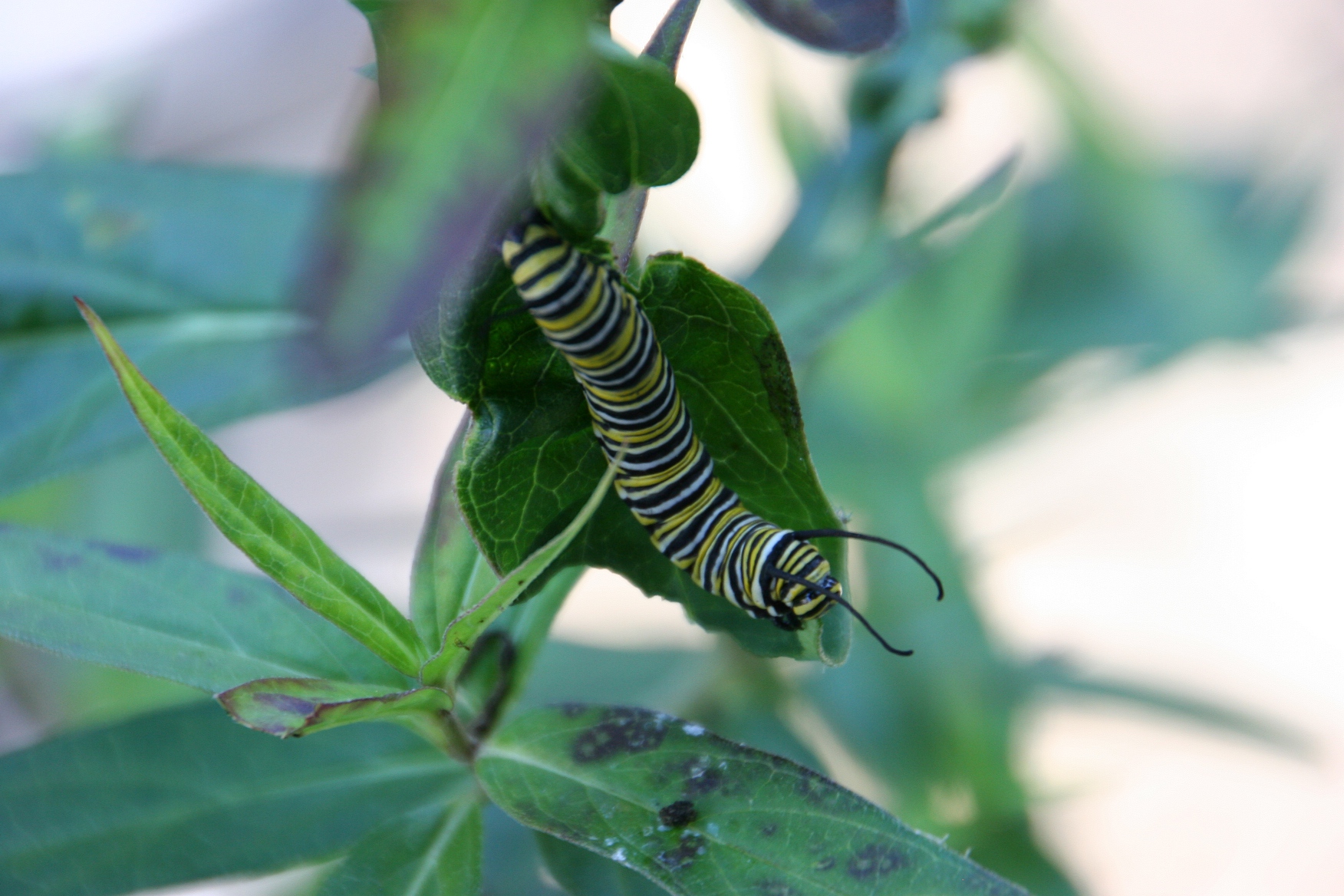
A monarch caterpillar on milkweed. (Minnesota Prairie Roots copyrighted file photo)
This year I have a bumper crop of milkweed plants growing in and along flowerbeds and retaining walls. I stopped counting at 24 plants. I have no idea why the surge in milkweeds. But I am happy about their abundance given monarchs need milkweed. It is the only plant upon which the monarch lays eggs and the sole source of food for monarch caterpillars.
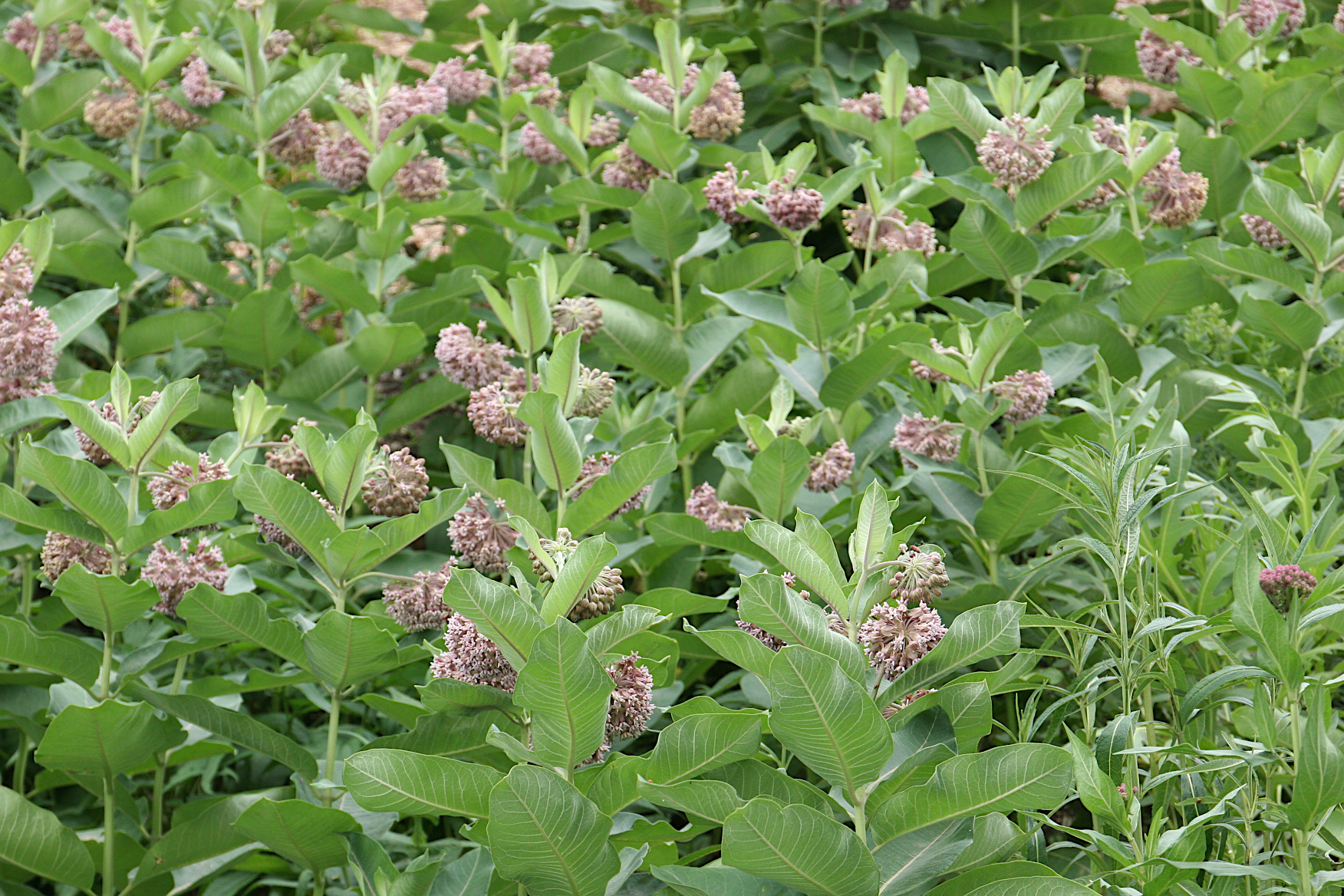
A crop of milkweeds in a public garden. (Minnesota Prairie Roots copyrighted file photo)
My farmer dad, if he was still alive, would likely offer a different opinion about milkweeds. As children, my siblings and I walked rows of soybean fields eradicating milkweeds, thistles and the notorious cocklebur. This was called “walking beans,” a job that we hated, but was necessary to keep fields mostly weed-free without the use of chemicals.
I never considered then that I might some day appreciate milkweeds, the “weed” I pulled from the rich dark soil of southwestern Minnesota. On many a hot and humid afternoon, sweat rolled off my forehead and dirt filtered through the holes of my canvas tennis shoes while hoeing and yanking unwanted plants from Dad’s soybean fields and on my cousin John’s farm.
Today I instruct my husband not to pull or mow any milkweed plants in our Faribault yard. Randy understands their value, even if he didn’t walk beans on his childhood farm. He more than made up for that lack of field work by picking way more rocks than I ever did. Morrison County in central Minnesota sprouts a bumper crop of rocks compared to my native Redwood County, where I also picked rocks.
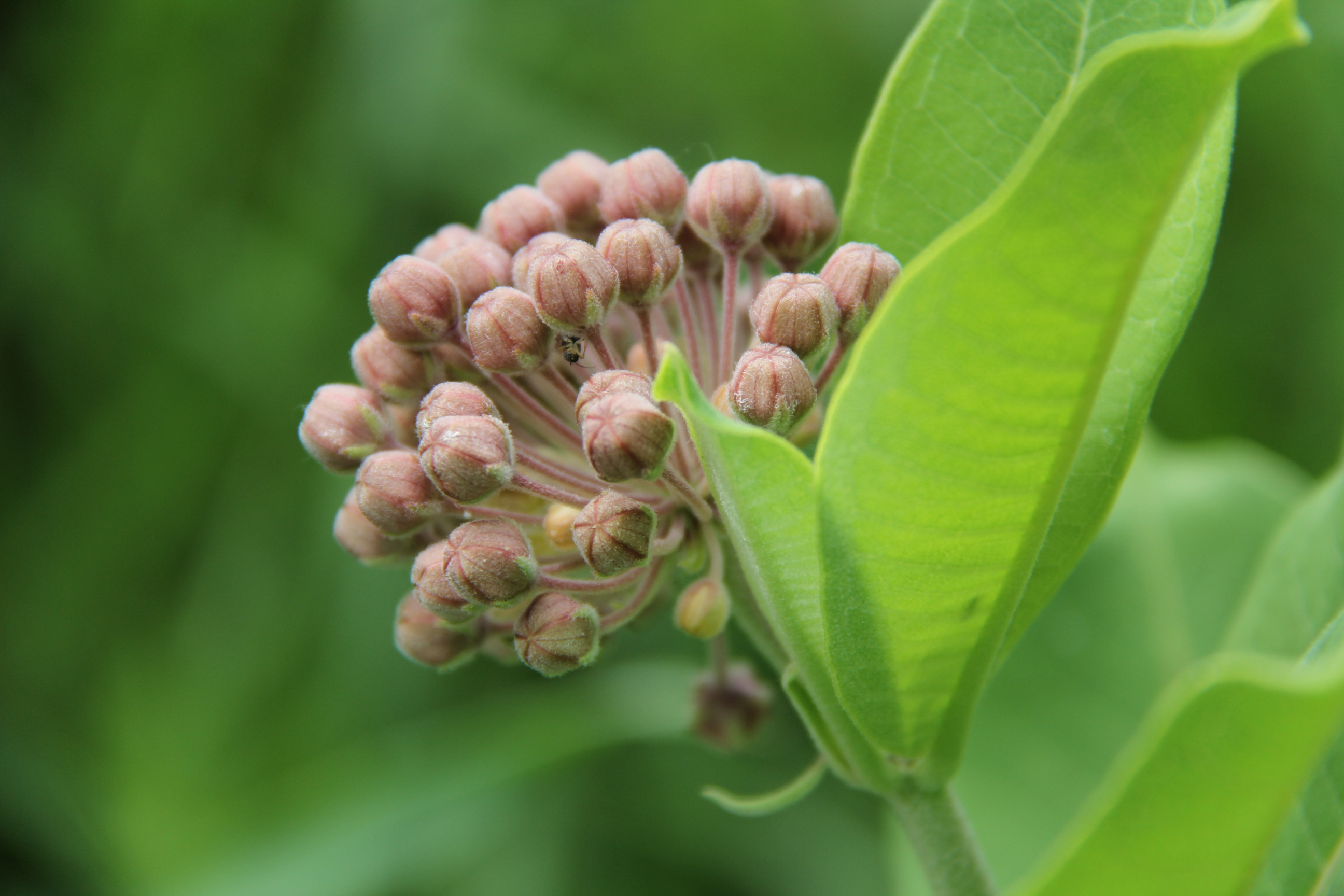
A milkweed about to open. (Minnesota Prairie Roots copyrighted file photo)
But back to milkweeds. I love the scent of the dusty rose-colored common milkweed. So if you drive by my Faribault home or walk through River Bend Nature Center or Central Park or past Buckham Memorial Library and see me dipping my nose into a cluster of milkweed flowers, that’s why.
As summer progresses, I’m curious to see how many monarchs soar among the milkweeds in the tangled messes of plants that define my untamed flowerbeds. Thankfully our next door neighbor appreciates milkweeds also and is OK if the wind carries seeds onto his property.
Fireflies glow in the garden art honoring my nephew Justin. (Minnesota Prairie Roots copyrighted file photo)
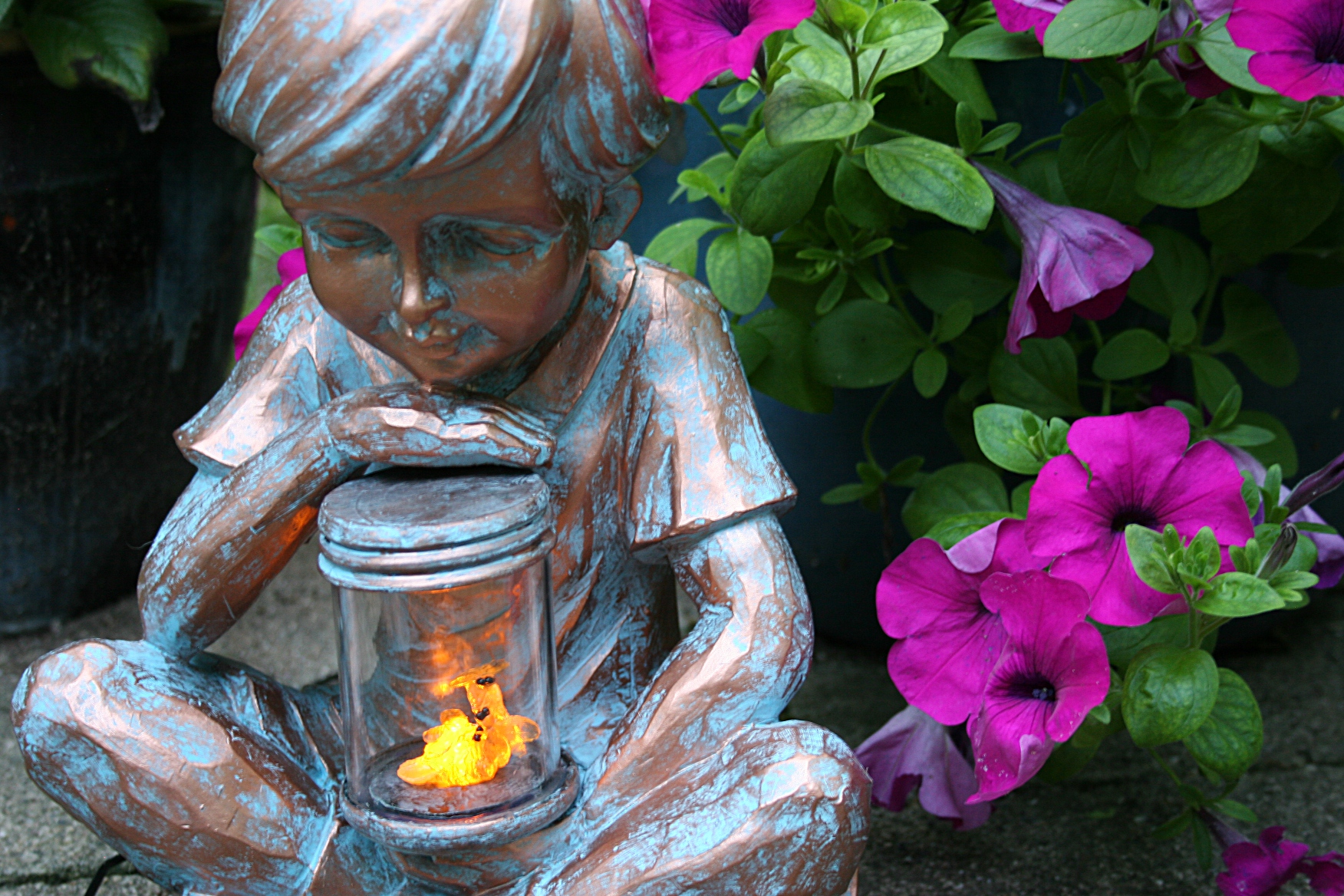
I’ve already seen fireflies aplenty in our backyard, which abuts a wooded hillside. And recently, while driving home in the early dark of a summer evening, Randy and I saw hundreds of fireflies lighting up grassy road ditches. It was truly magical, reminding me of childhood sightings and of Eric Carle’s children’s picture book, The Very Lonely Firefly. I had a copy for my kids, battery included to light up firefly illustrations. And, until it stopped working, I had a solar-powered firefly garden sculpture honoring my nephew Justin, who loved light and fireflies and died at age 19 in 2001 of Hodgkins disease.
Often what we love is about much more than simply whatever we love. I see, in writing this story, that my love of milkweeds, monarchs and fireflies connects to memories. Summer memories. Farm memories. Family memories. These are the stories we carry within us, that help define who we are, whether we consider a milkweed to be a weed, or a flower.
TELL ME: What simple summer things delight you and why?
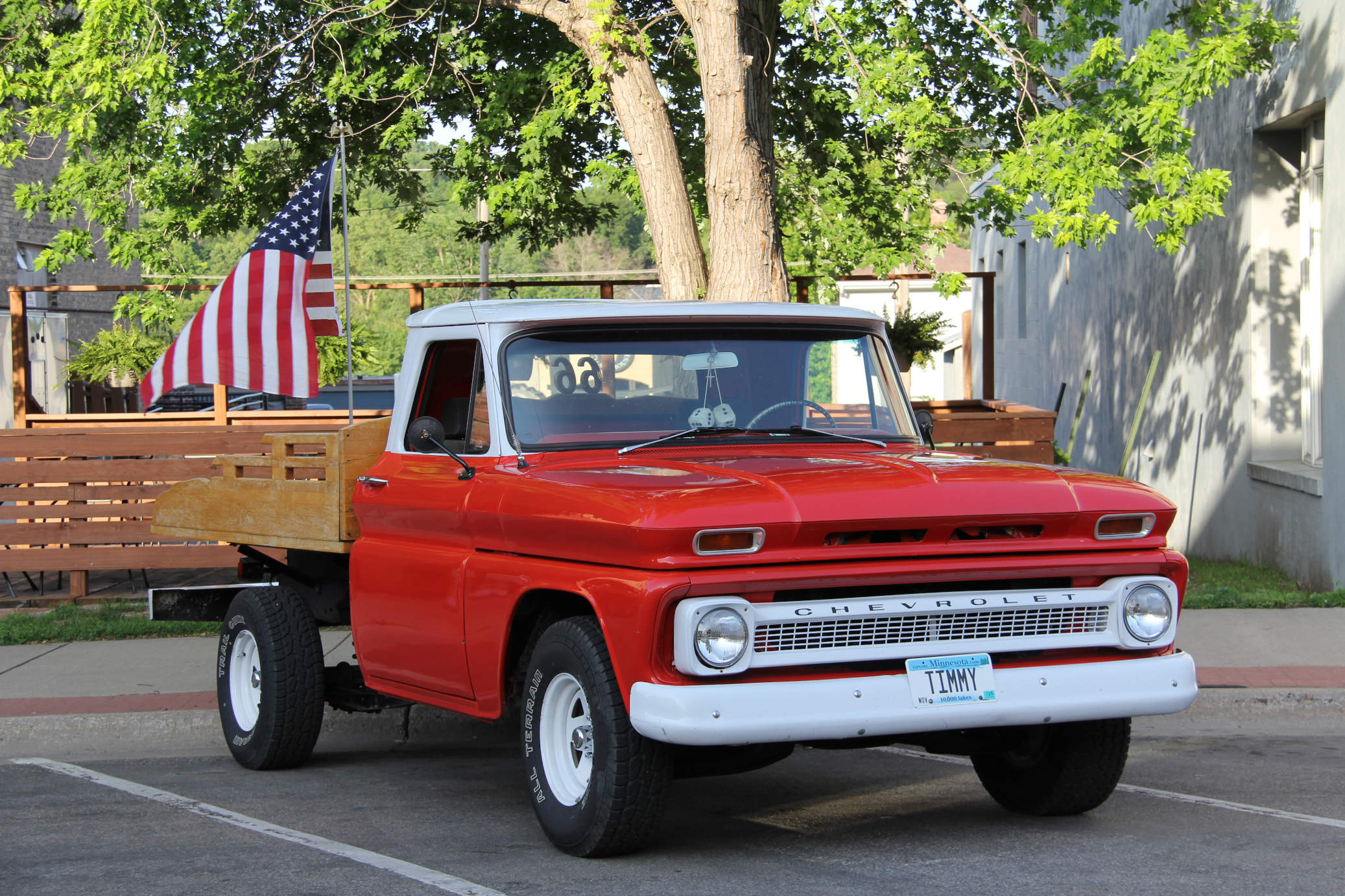
At a recent Faribault Car Cruise Night, I spotted several vehicles sporting American flags, including this Chevy pick-up truck. (Minnesota Prairie Roots copyrighted photo June 2025)
PARADES. GET TOGETHERS. FIREWORKS. All define the Fourth of July as we gather over the long holiday weekend to mark America’s 249th birthday. I hope, in the all of this, that we never lose focus of why we are celebrating. It is, in one word, “freedom.”
In light of that, I reread The Declaration of Independence, signed on July 4, 1776, declaring our independence from British rule. It’s worthy of annual review to remind us of the past and to warn us lest we stray back to that which oppressed and suppressed us.
This document is also about our rights to life, liberty and the pursuit of happiness. In fact, those are the words we most often recall when thinking about The Declaration of Independence. As an American, I value my freedoms as an individual and as a writer and photographer.
When I walk or drive through my community, I see a diversity of peoples. Those who grew up here and have deep roots in Faribault. Those who, like me, moved here from other parts of Minnesota (or the United States). And those who flew across an ocean or crossed a border for new opportunities and/or to escape war, violence, oppression and more in their homeland. I’ve talked to immigrants who have fled violence to settle in America, in my community. Their stories are heartbreaking. They just want better, safer lives for themselves and their families. What we all want.
(Minnesota Prairie Roots copyrighted file photo)
Decades ago while attending grade school during the Cold War, each day began with The Pledge of Allegiance. My classmates and I turned to the American flag hanging in the corner of our rural southwestern Minnesota classroom, placed our hands upon our hearts and recited, “I pledge allegiance to the flag of the United States of America and to the Republic for which it stands, one nation under God, indivisible, with liberty and justice for all.” I always wanted to end with “Amen.” The pledge felt like a prayer to me as we spoke in a unified, reverent voice.
But now, in adulthood, I recognize that the wording of the Pledge no longer truly fits America.
Still, I feel pride in the American flag, which flies on street corners in downtown Faribault, in parks, outside government buildings, outside the Legion, in residential yards and elsewhere throughout the city. It is a visual representation of our country. Fifty stars for 50 states. Thirteen red and white stripes representing the original 13 colonies. Even the colors stand for something—red for valor and bravery, white for purity and innocence, and blue for vigilance, perseverance and justice.
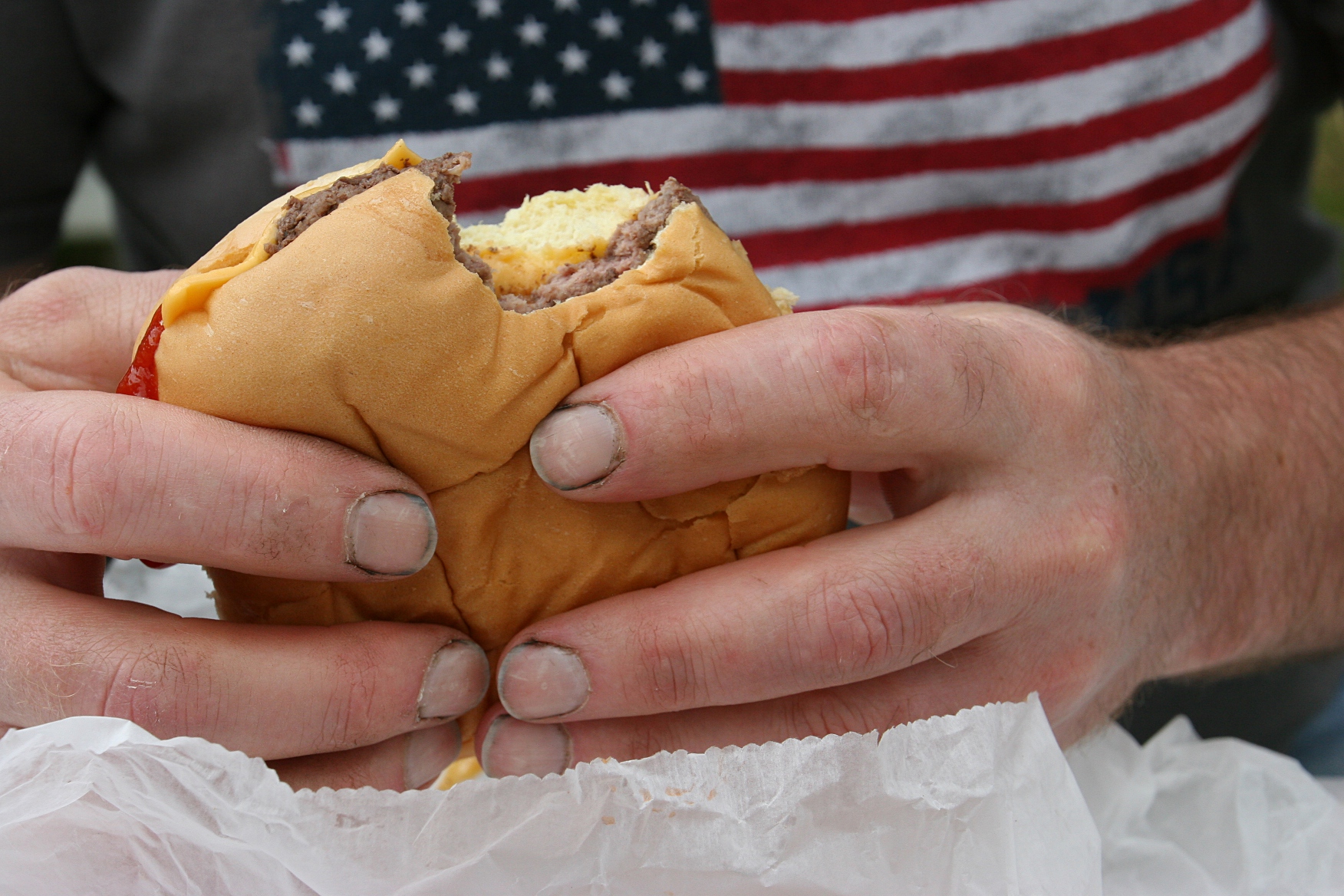
On the Fourth and throughout July and summer, an abundance of flags will fly “o’er the land of the free and the home of the brave.” On Independence Day and in the days thereafter, we’ll don red-white-and-blue attire before stepping out the door for a backyard picnic of grilled burgers and watermelon or heading to an out-of-town celebration or gathering with friends and family.
Among all the food, conversations, music and activities on and around the Fourth, we need to pause and reflect on the word “freedom.” We need to study the long ago words of The Declaration of Independence. Words worth rereading each July in honor of our independence, our freedom.
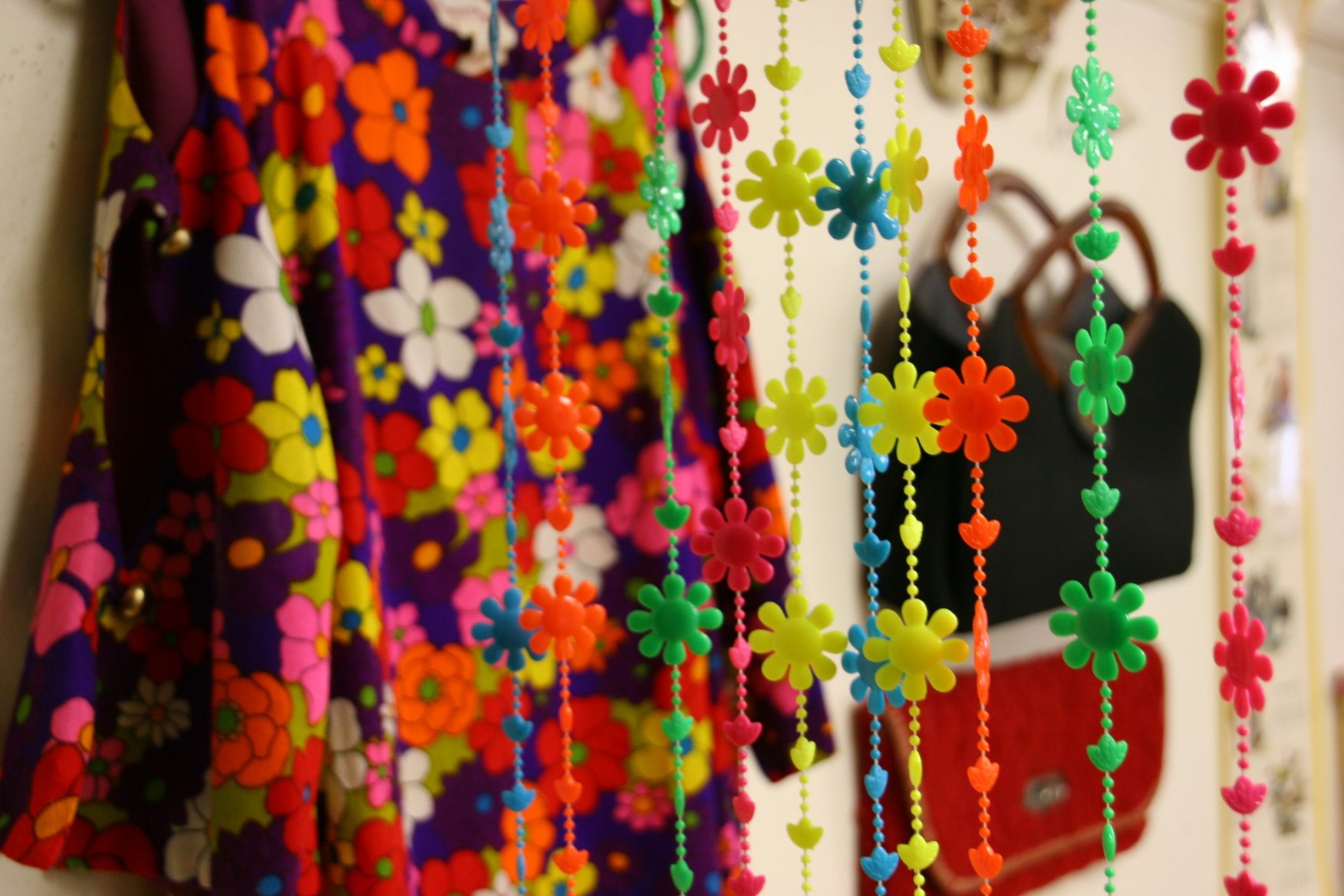
Dangling beads inside the doorway to “The 50’s and 60’s Room” at the West Concord Historical Society hearken to the era of Bobby Sherman.(Minnesota Prairie Roots copyrighted file photo 2015)
“JULIE, JULIE, DO YA love me?” Oh, how I wished it was, “Audrey, Audrey, do ya love me?” Such were my thoughts when Bobby Sherman sang that Billboard Hot 100 hit in 1970.
Sherman died this week at age 81, leaving behind a generation of Baby Boomers like me who were hopelessly, madly in love with the teen idol. He was charismatic, good-looking with his shaggy long hair, simply everything a smitten girl could want in a crush.
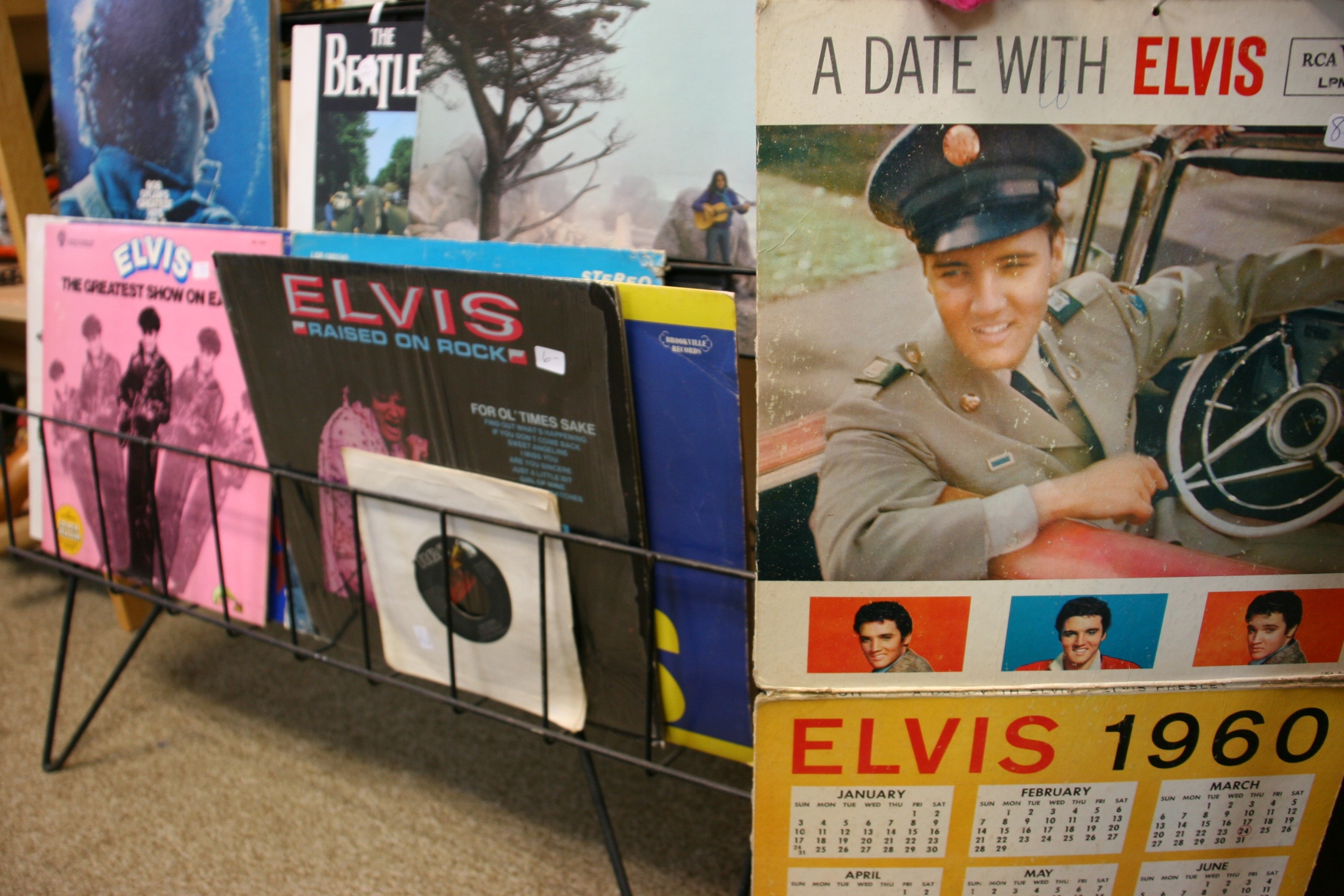
An Elvis display at a St. Charles antique shop, which I visited years ago. (Minnesota Prairie Roots copyrighted file photo)
And that’s exactly what our relationship was—puppy love. Like generations of teen girls before and after me, I fell in love with handsome heart throb singers. Others fell for Elvis, Donny Osmond, Justin Bieber… Ditto for boy bands.
But back in my day, in the 1960s and 1970s, the likes, looks and lyrics of Bobby Sherman and David Cassidy captured my heart. Sherman even made a guest appearance on Cassidy’s “The Partridge Family” TV show. Both were actors and musicians. And both often sang about unrequited love, as in Sherman’s performance of “Julie, Do Ya Love Me” by songwriter Tom Bahler.
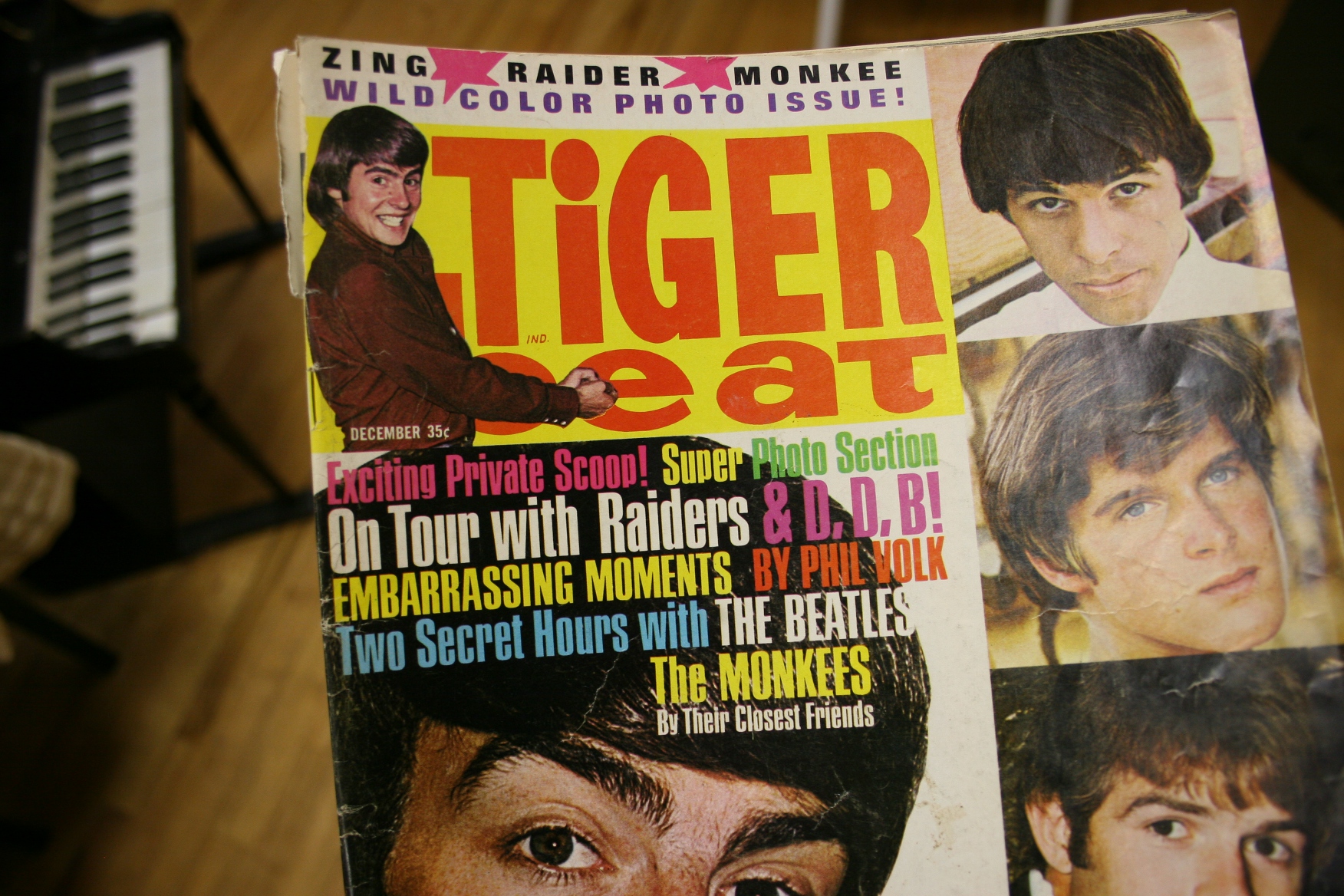
Tiger Beat magazine,photographed many years ago in a St. Peter antique shop. The magazine was in print publication from 1965-2018. (Minnesota Prairie Roots copyrighted file photo)
It’s interesting that, upon Sherman’s death, I could not think of a single song he sang. But when prompted with playbacks, I remembered. Mostly, though, I remember how my cousin Joyce and I paged through her copies of Tiger Beat magazine whenever my family visited hers. She would pull out her copies of this American teen fan publication and we would swoon over photos of our much-loved celebrities like Bobby Sherman. I don’t recall reading the stories, but we probably did. Photos, though, left a lasting impression. Sherman graced the cover of Tiger Beat and Sixteen magazines countless times. I can picture him still all feathered or shaggy hair, big smile and a choker around his neck.
Beyond Tiger Beat, my cousin also plastered her bedroom walls with teen idol posters. Joyce was much more tuned in to celebrity life than me. She had older sisters. I didn’t. Regardless, we shared a love of Bobby Sherman, who sang about Julie. Not about Audrey or Joyce, just two teenagers hanging out in a southwestern Minnesota farmhouse bedroom, dreaming of love while thumbing through Tiger Beat magazine.
TELL ME: Did you have a favorite heart throb singer or band? Maybe Bobby Sherman. Let’s hear. I also really like/liked Rod Stewart, Chicago, Bread, Lobo, The Carpenters, John Denver…
This book is also packed with candid and posed photos of the Miller family, adding to the text. (Book cover sourced online)
THIS COULD BE MY STORY or that of any other Baby Boomer who grew up in rural southern Minnesota. With one primary exception. None of us had 21 siblings. Yes, twenty-one. I had only five—three brothers and two sisters.
But Helen Miller had seven brothers and 14 sisters, all single births, all born to the same parents, Lucille and Alvin Miller of rural Waseca, over a span on 26 years. She’s chronicled the family’s life in a self-published memoir, 21 Siblings—Cheaper by the Two Dozen.
I happened upon this book, printed in 2018, after visiting the Waseca County History Center and seeing an exhibit about this unusually large family. I knew then that I needed to read this story by Helen, 13th in line. She’s just a bit older than me. I expected my farm upbringing during the late 50s through the 60s and into the early 70s would be similar in many ways. I was right.
WHITE RICE & PANCAKES
This book proved a stroll down memory lane. I remember meals of mostly meat and potatoes with a side vegetable given that was the preferred meal of my farmer father. He, like Alvin Miller, was quite content to eat those basics and didn’t care for any deviations. Large gardens were the norm, no matter family size. Lucille Miller canned fruits and vegetables, just like my mom, except a whole lot more. And, when food supplies ran low, both our mothers cooked a meal of white rice and cinnamon. I detested that and to this day still don’t like plain white rice.
I also do not much like pancakes, although I have no particular reason to explain that dislike. Helen Miller should. She writes of the family receiving boxes and boxes of pancake mix following a railroad accident. Except they didn’t get the pancake mix until months later…when weevils had infested the food. The Millers simply sifted out the bugs, prepared and ate the pancakes. They weren’t about to turn down free food.
Specific stories like these point to the challenges of feeding a mega family, even with their own garden produce, chicken, pork and eggs. With that many people to feed and to shelter, you can only imagine the logistics of running the household. Older siblings were responsible for younger siblings. Everyone pitched in with chores. They shared a lot—clothes, shoes, a singular cup for drinking water (same as my family), rooms, a love of music and a strong faith.
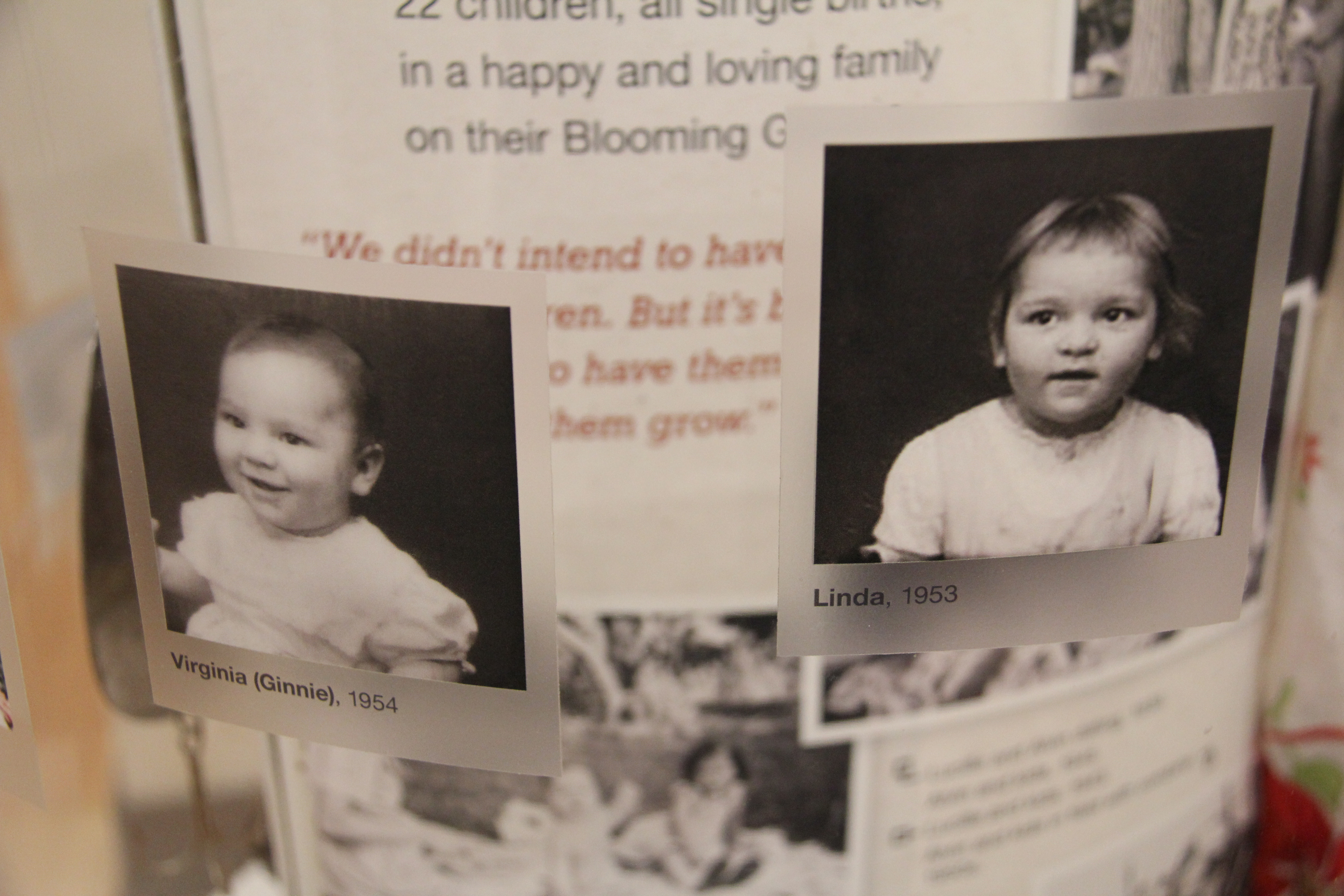
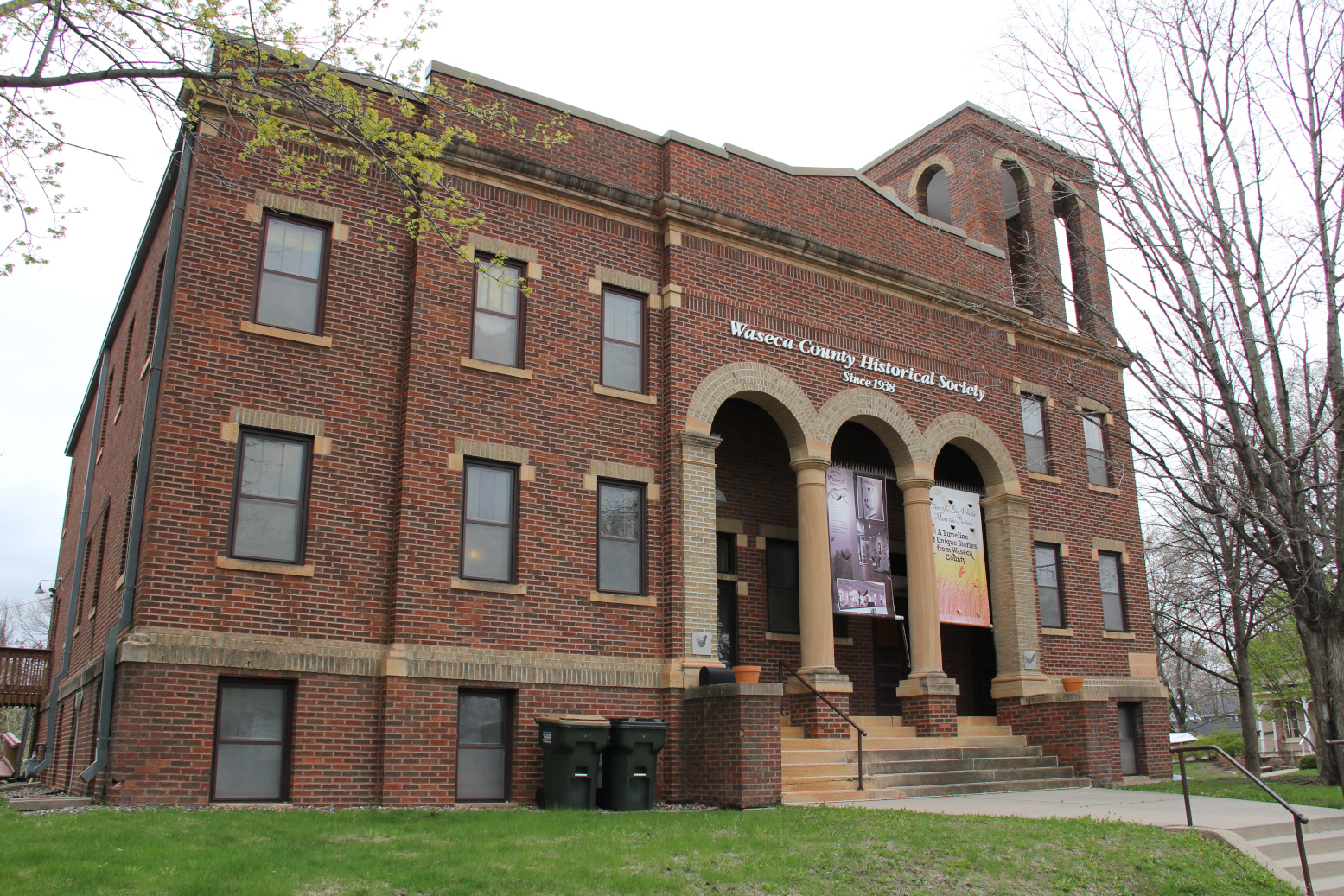
This shows part of the Miller family exhibit at the Waseca County History Center. (Minnesota Prairie Roots copyrighted file photo May 2025)
THE IMPORTANCE OF FAITH
The Millers’ Catholic faith centered their lives. Lutheranism centered mine. Faith carried the Millers through an especially tragic event—the deaths of their aunt, Irene Miller Zimmerman, and her six young children in 1959. An unseen train broadsided their station wagon just blocks from Sacred Heart School, the same school Helen and her siblings attended. She writes: It was under this veil of grief that I grew up a rather serious child. She was only four years old.
Amid the difficult moments, Helen documents light-hearted moments, too. One in particular caused me to burst into laughter. As a seven-year-old, Helen went to Confession for the first time, thinking she had not broken any of the Ten Commandments. But she had to confess something to the priest. Helen admitted to disobeying her parents twice, having false gods twice and then, and here’s the kicker, committing adultery three or four times. Now there’s nothing funny about that sin. But when an elementary-aged girl confesses to something she clearly doesn’t understand, well, I wonder how that priest kept from laughing aloud. He didn’t laugh, or correct her, according to Helen, who twice confessed to breaking the Sixth Commandment.
SEWING, FISHING & A WHOLE LOT OF PATIENCE
Story after story reveals a childhood upbringing that many times mimicked my own. Like Helen, I learned to sew because, if I wanted new clothes as a teen, I needed to stitch them. I babysat children for fifty cents an hour, just like Helen. I fished, occasionally, with my family. But the Millers fished often, usually at their rustic cabin along Reeds Lake a short drive from their farm. Vacations and dining out were not part of our youthful experiences. The list of similarities goes on and on among the many differences.
I can never fully relate to having 21 siblings. But this rural Waseca family managed and, by all accounts, well. With a whole lot of organization, love, strength and patience. And, Helen notes, with an eternally optimistic and patient mother. Just like my mom.
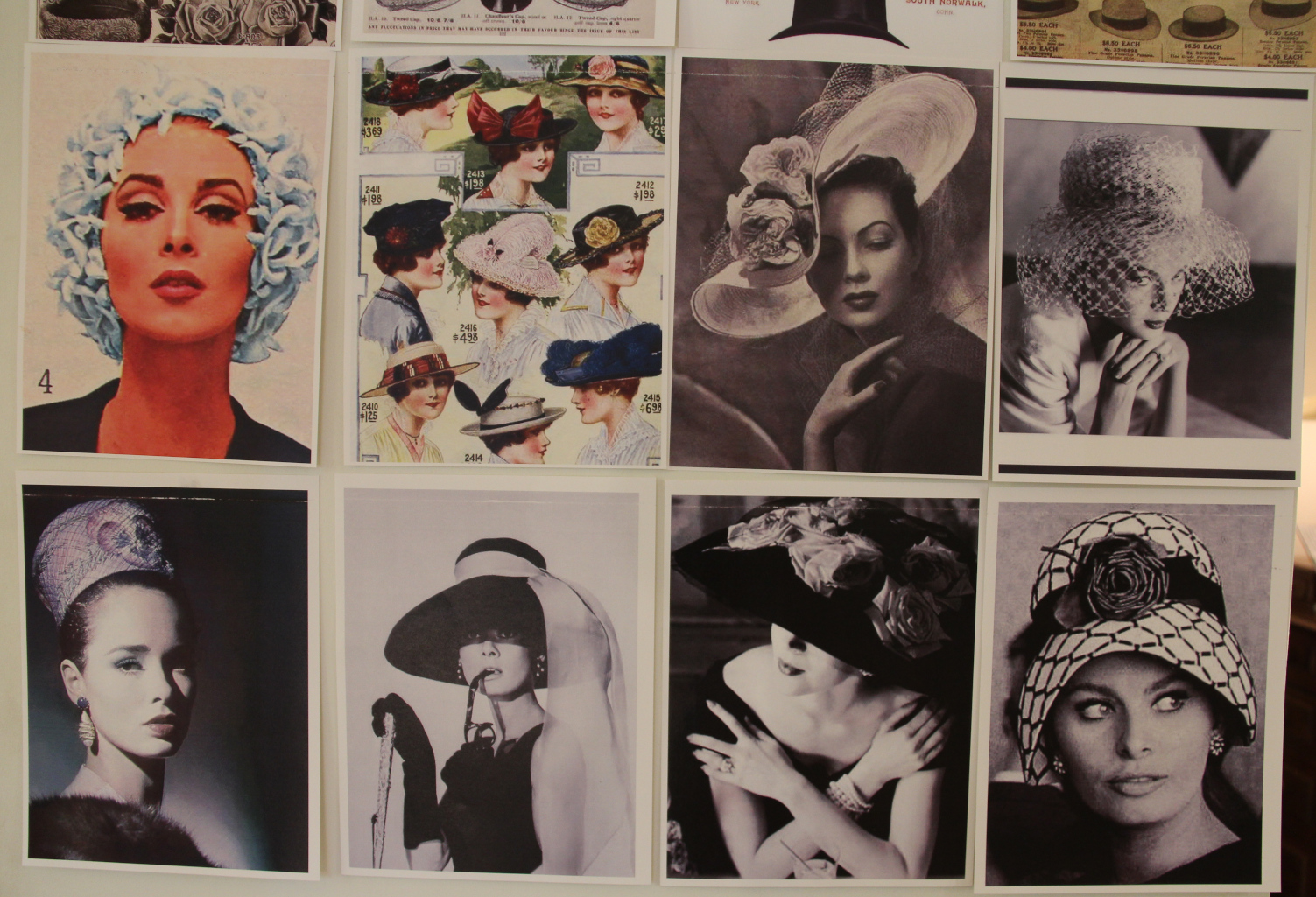
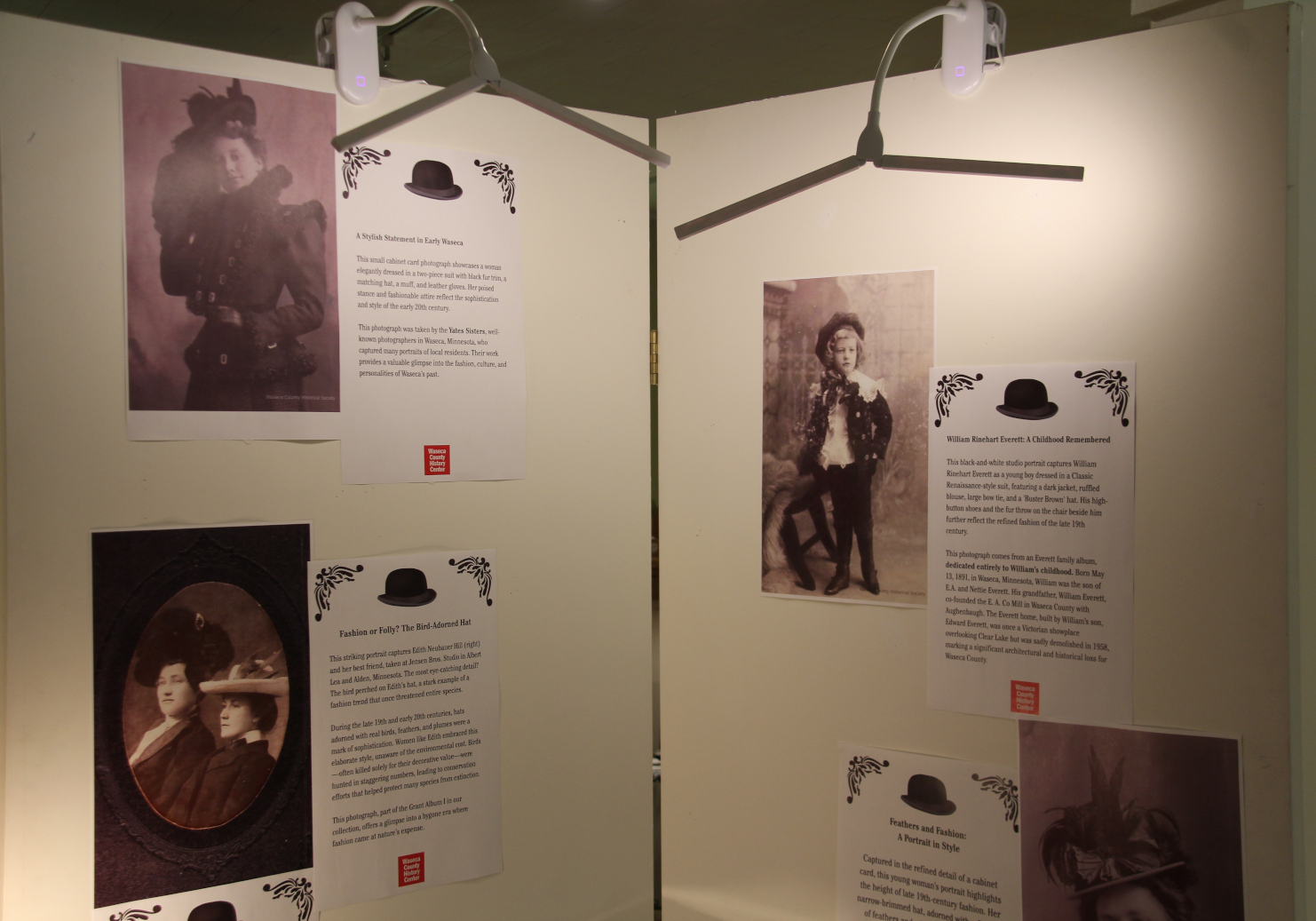
Photos of fashionable hats shown in the HATS exhibit in Waseca, Minnesota. (Minnesota Prairie Roots copyrighted photo May 2025)
WE’VE ALL WORN different hats. Personally. Socially. Professionally.
Panels of hat photos and information. (Minnesota Prairie Roots copyrighted photo May 2025)
I’ve worn the hats of daughter, wife, mother, grandma, friend, sister, aunt, student, intern, newspaper reporter, writer, editor, photographer, poet, volunteer and much more. Collectively, these multiple hats, or roles, helped shape me into the person I am today.
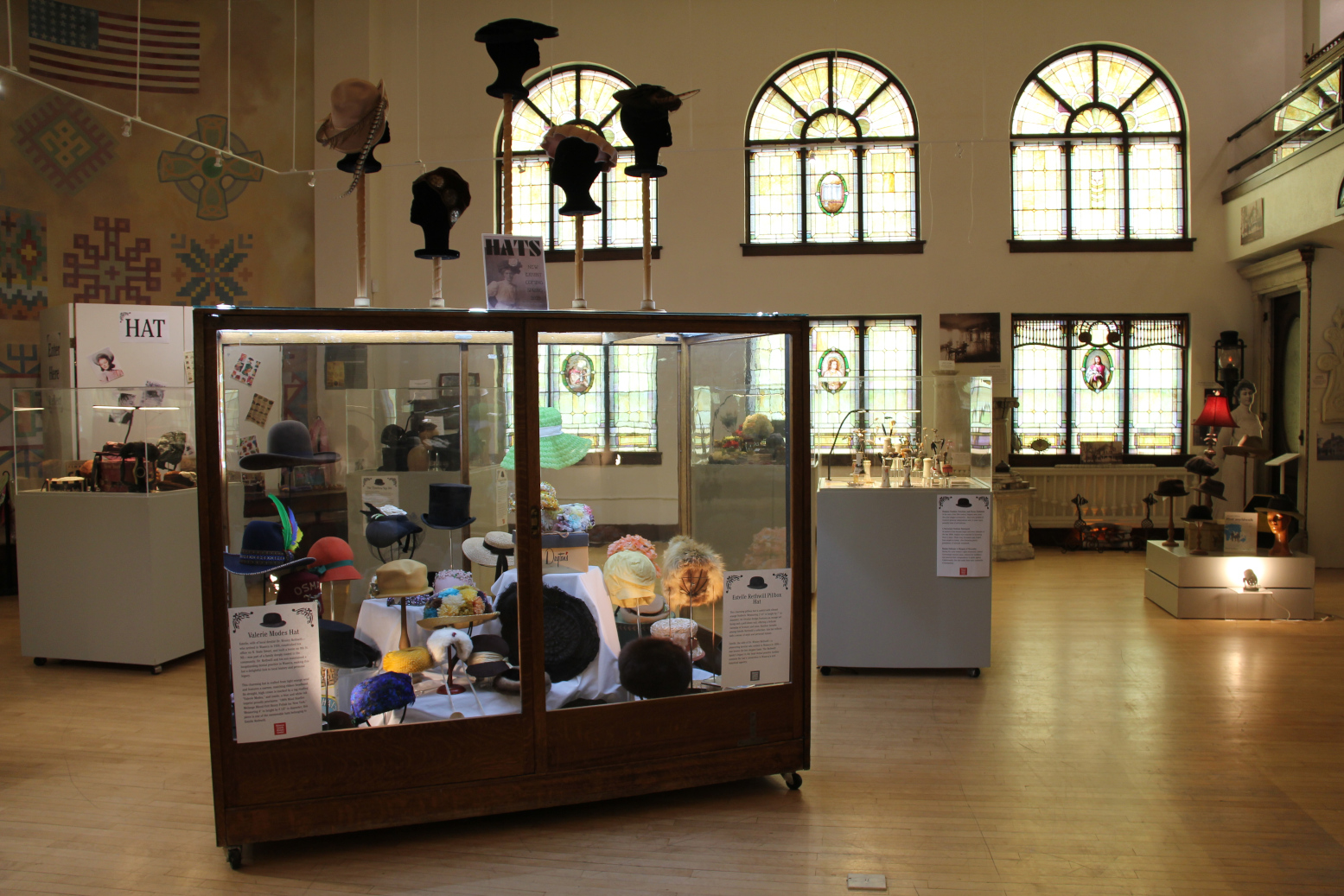
This shows a portion of the many hats in the exhibit. (Minnesota Prairie Roots copyrighted photo May 2025)
But what about actual hats, you know, the ones you place on your head? A fascinating exhibit at the Waseca County History Center, simply titled “HATS,” offers an historic glimpse of late 1800s to more current-day hats from the museum and personal collections. The display will be up until the end of June.
This display features classy men’s hats of yesteryear plus hatboxes. (Minnesota Prairie Roots copyrighted photo May 2025)
This ranks not only as an informative exhibit of hats, a few caps and related items, but also as a fun visual of fashion. From fancy hats with feathers and florals to all-business derbys and boaters to big floppy hats of the 1970s, the range of head-toppers evolves as time and styles change.
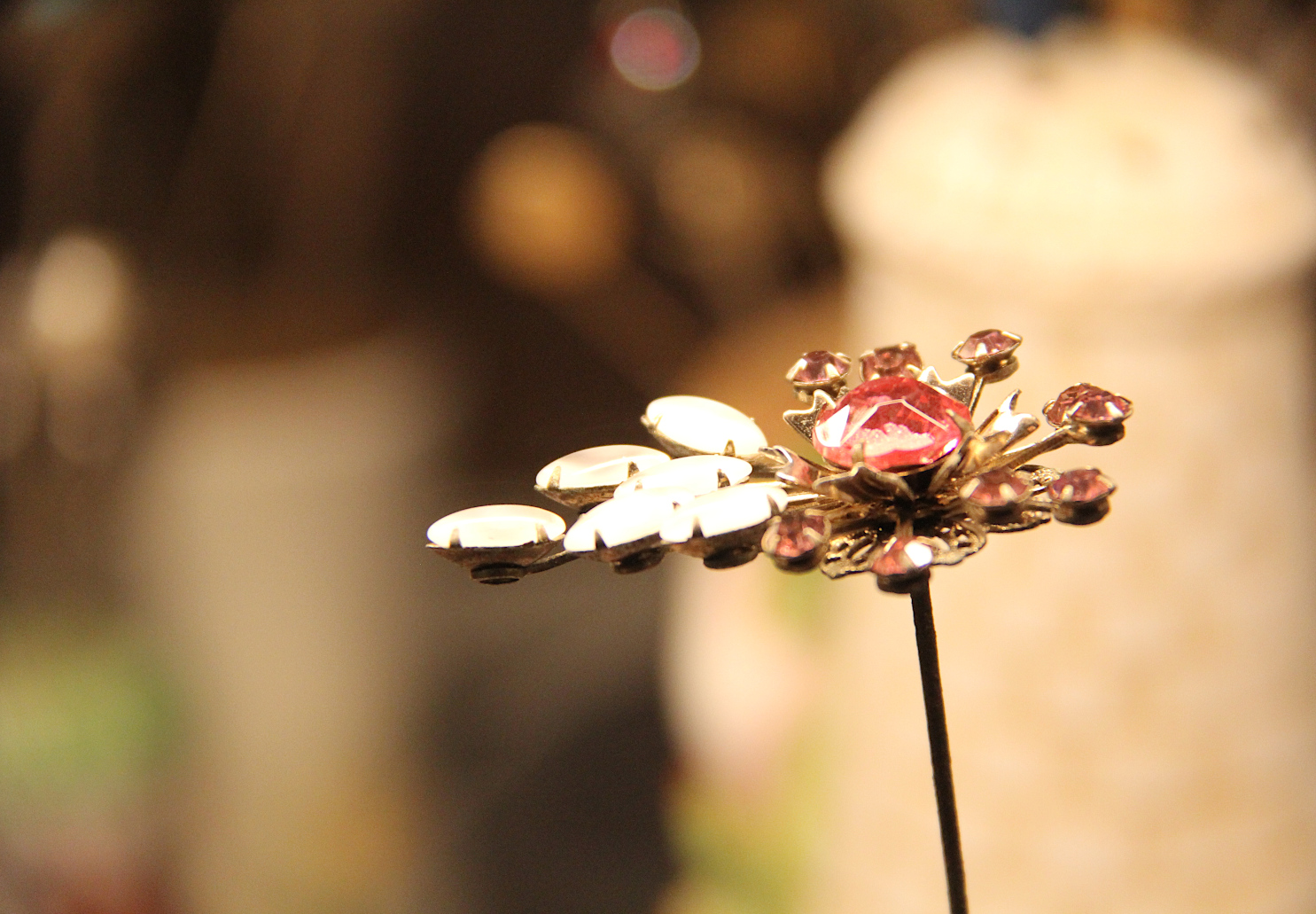
An entire glass case showcases vintage hatpins like this jeweled one. (Minnesota Prairie Roots copyrighted photo May 2025)
And then there are the lovely vintage hatpins, elegant yet practical. A woman of yesteryear could pull a hatpin to defend herself if necessary.
Vintage hatboxes are artfully displayed throughout the exhibit. (Minnesota Prairie Roots copyrighted photo May 2025)
Vintage hatboxes, too, are part of the display, adding an artful element. As someone who appreciates type and fonts, and art, I found myself drawn to the mostly-round hatboxes. They truly are works of art as well as containers to store and protect hats.
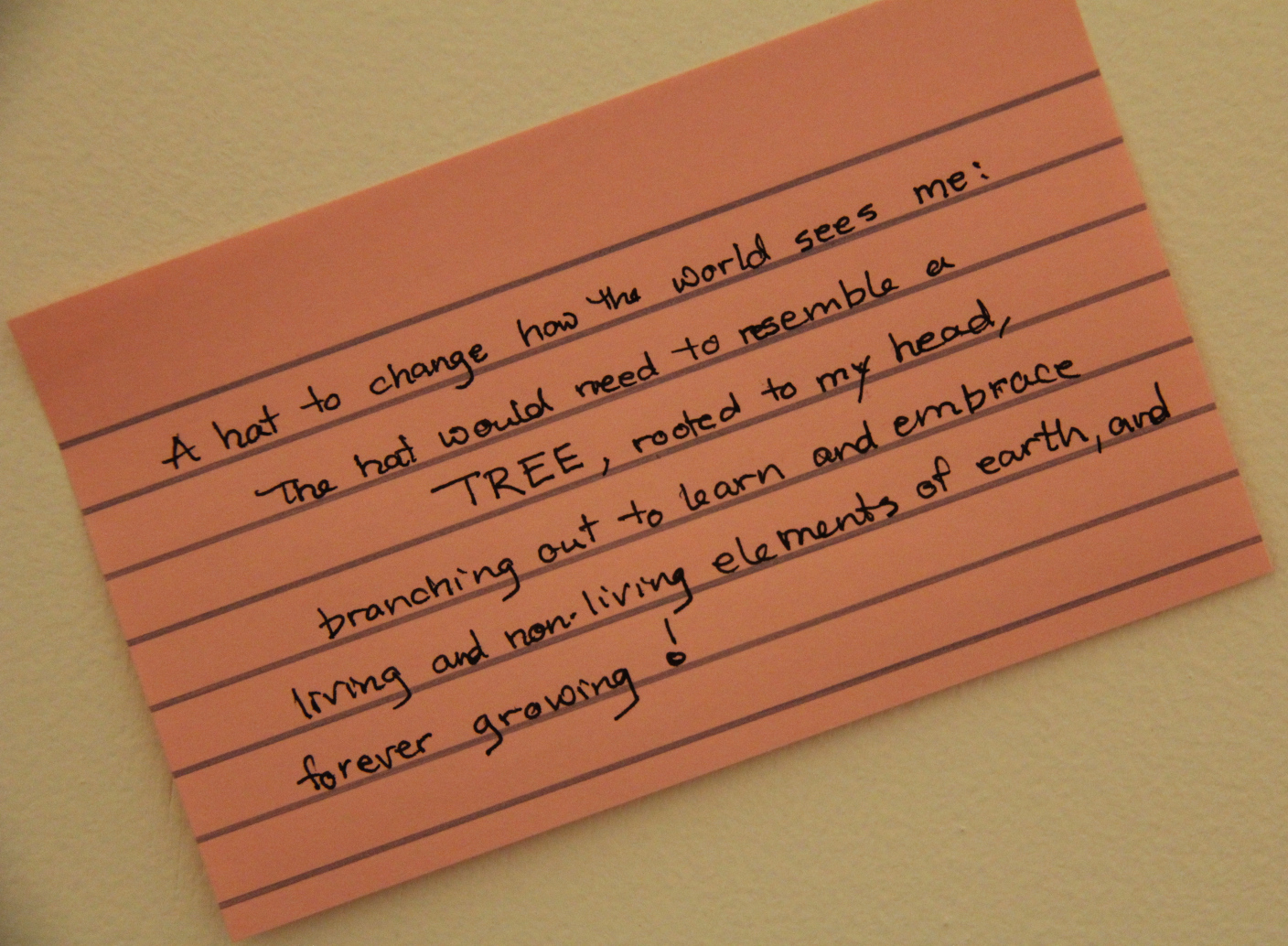
A reply to a writing prompt posted in the HATBOX. (Minnesota Prairie Roots copyrighted photo May 2025)
I especially liked the interactive HATBOX corner, a hidden space to sit, pull a writing prompt from a hatbox, think and reply to the prompt before anonymously posting it on a wall. That got me thinking about the many hats I’ve worn and still wear. Hats down, my most cherished hats are those of daughter, wife, mother and grandma. The others matter, too, but not as deeply, not as personally, as donning the hats of loving, caring for and supporting my closest family.
A fun cap in the exhibit. (Minnesota Prairie Roots copyrighted photo May 2025)
Actual, physical hats I’ve worn call for a bit more thought because I didn’t wear all that many. I had, still have, two childhood Easter bonnets. And then there’s the floppy lime green with white polka dots cotton hat I donned while detasseling corn. Perhaps I remember it best because I remember so well the experience of yanking tassels from cornstalks in the sweltering heat and humidity of July in southwestern Minnesota. Worst job ever, hats down, paying only $1.25/hour. Imagine dew rolling down your arms, corn leaves slicing your skin, the hot sun baking your body, no place to pee except between corn rows. A grimy band of sweat ringed that polka dot hat by day’s exhausting end.
The Waseca County History Center museum, 315 Second Ave. N.E., is open from 9 a.m. – 5 p.m. Tuesday through Friday.(Minnesota Prairie Roots copyrighted photo May 2025)
While I didn’t see any hats quite like mine in the Waseca exhibit, I saw some that were similar. But mostly I saw how the hats we wear, literally or metaphorically, identify and shape us. Hats change with time, as we grow, progress, move through life. This display documents that, causing me to pause, to reflect, to consider all the hats I’ve worn through the years.
TELL ME: What hats have you worn? Which matter to you most and why? Or which proved a defining moment in your life?
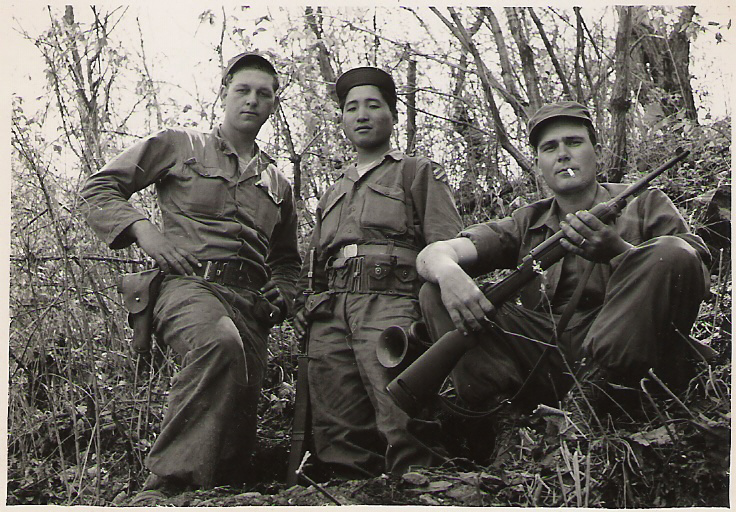
My father, Elvern Kletscher, left, with two of his soldier buddies in Korea.
WHEN MEMORIAL DAY ROLLS around each May, my thoughts shift to my dad, who served on the front lines during the Korean War. He survived, albeit with the emotional trauma that comes from killing and constant danger of being killed. His close buddy, though, did not survive. And that is the man I remember and honor today, along with others who’ve lost their lives in service to country.
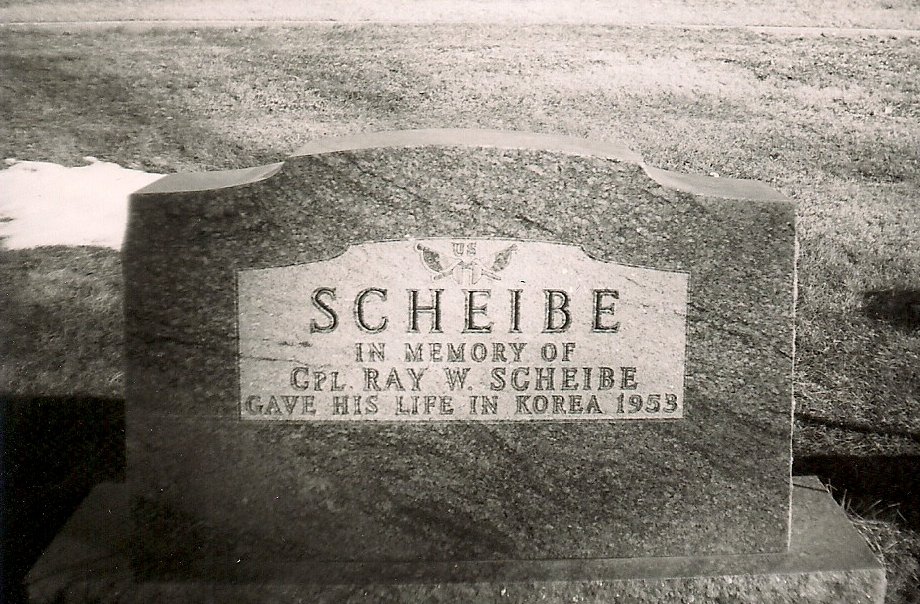
Sonny Nealon, Ray’s best friend in high school, sent me this photo of Ray’s gravestone. (Photo credit Sonny Nealon)
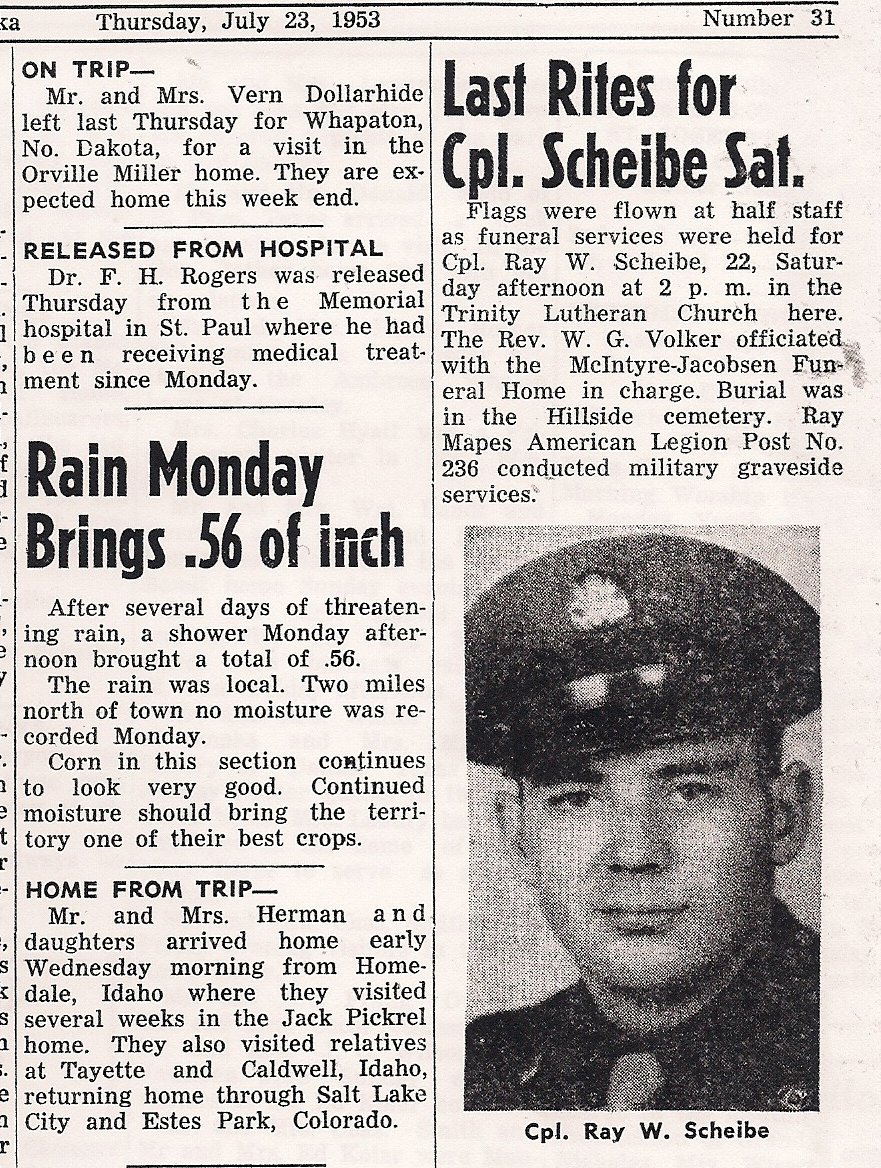
Corporal Ray W. Scheibe, 22, of Wolbach, Nebraska, died on June 2, 1953, blown apart by a mortar shell. My dad witnessed his horrific death, for war is nothing short of horrible. Ray was scheduled to leave Korea the next day, which makes his story even more tragic. He left behind grieving friends and family, including his wife, Marilyn, and 3-month-old daughter, Terri Rae, whom he had not yet seen. I’ve since found and connected with Terri in Iowa, but have yet to meet her.
A story about Cpl. Ray W. Scheibe, published in the July 23, 1953, issue of The Wolbach Messenger.
It is the individual stories of soldiers like Ray that take war to a personal level. A level that allows us to understand the meaning of the words “killed in action.” My father’s grief in losing Ray became, in some ways, my grief, too.
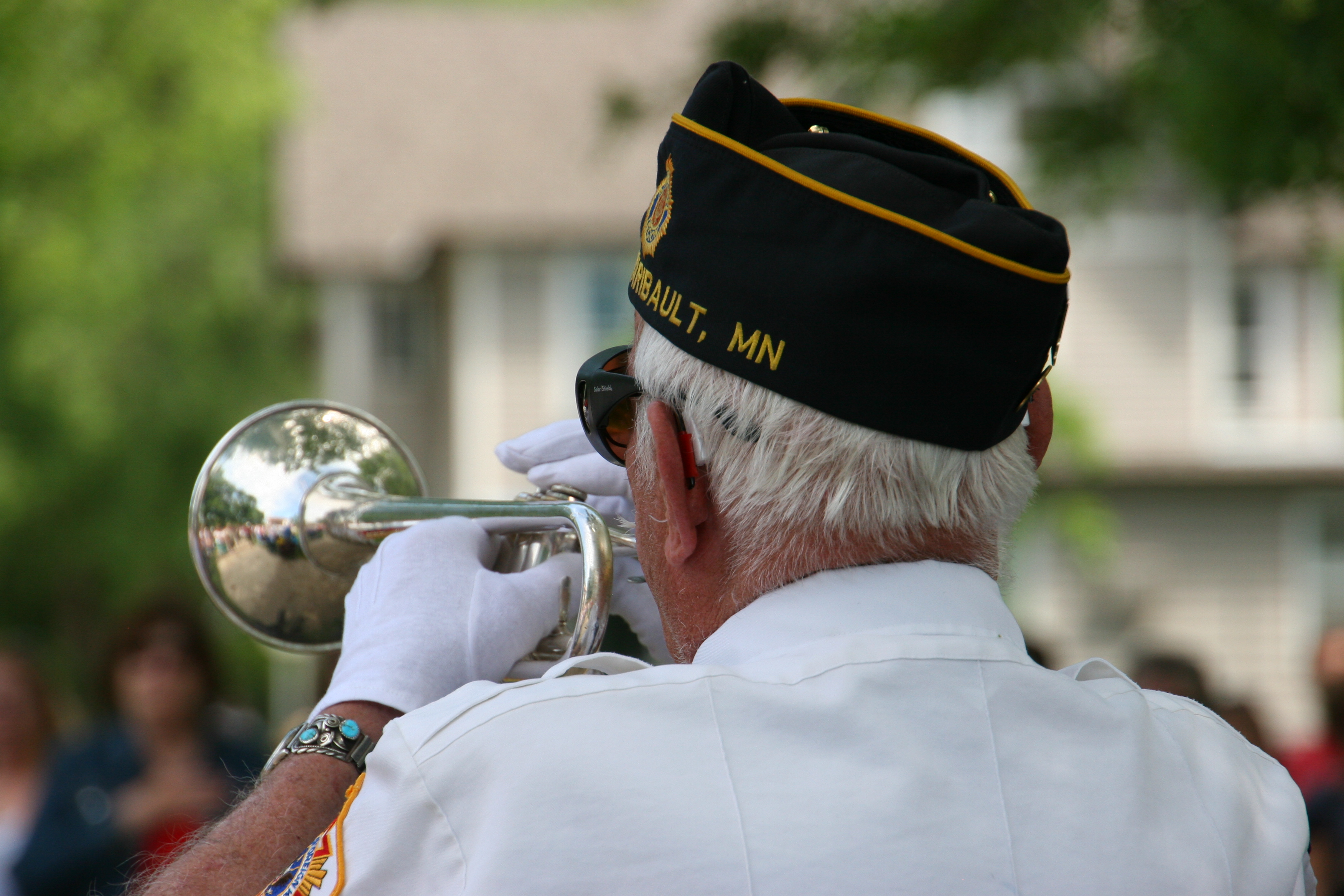
Playing taps at a past Memorial Day program in Faribault. (Minnesota Prairie Roots copyrighted file photo May 2016)
On Memorial Day we gather in collective grief to remember the many men and women who, like Ray, died while serving in the U.S. military. There will be parades and speeches, patriotic music and poetry, poppies and red-white-and-blue attire. Names read. Tears shed. Taps played. Guns fired. Flags carried. Graves visited.
In our hearts, in the silence of our thoughts, we reflect upon what it truly means to give up life for country as did Ray and 27 other men listed in a July 31, 1953, memorial service bulletin my dad carried home from Korea. Below those names are these words from Scripture: Greater love has no man than this, that a man lay down his life for his friends (John 15:13).
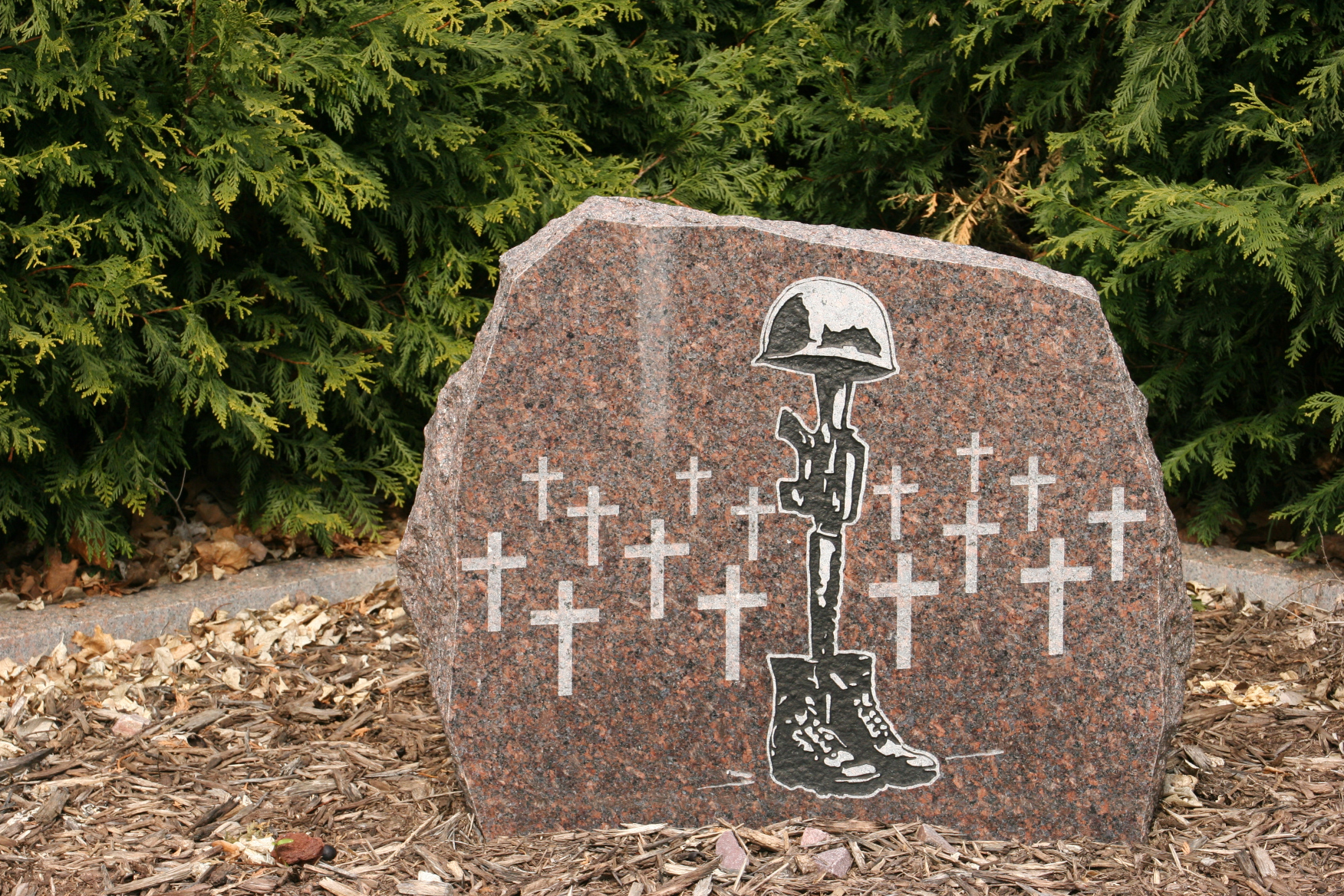
Honoring fallen soldiers with a special monument at the Rice County Veterans’ Memorial in Faribault. (Minnesota Prairie Roots copyrighted file photo)
I get emotional as I open the creased, soiled and yellowing 72-year-old memorial service program from Such’am-dong, Korea. I’ve tucked it into a shoebox with Dad’s other military papers, photos and belongings to pull out twice annually on Memorial and Veterans Days. I need to read the fading typewritten names, to recognize and honor these men who never made it home.
I reread the list of alphabetized names from Turrell Anderson to Vernie Zurn. Raymond W. Scheibe falls at number 24. The surviving men of the 2nd Battalion, 65th Infantry Regiment, who mourned the 28 on that July day in 1953, carried the heavy weight of grief as they prayed, stood in silence, sang “America the Beautiful” and “My Country, ‘Tis of Thee.” And then they carried that grief home.
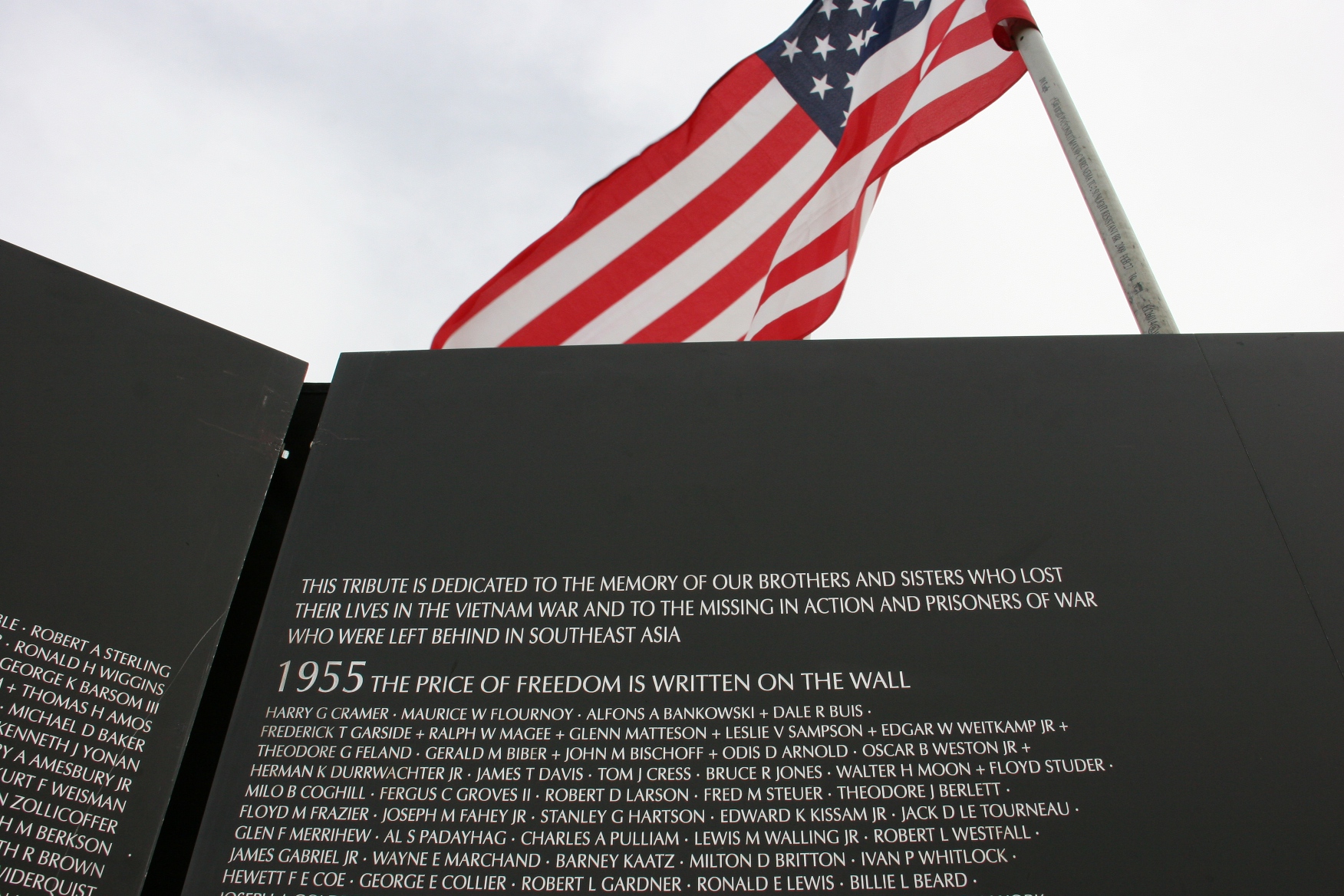
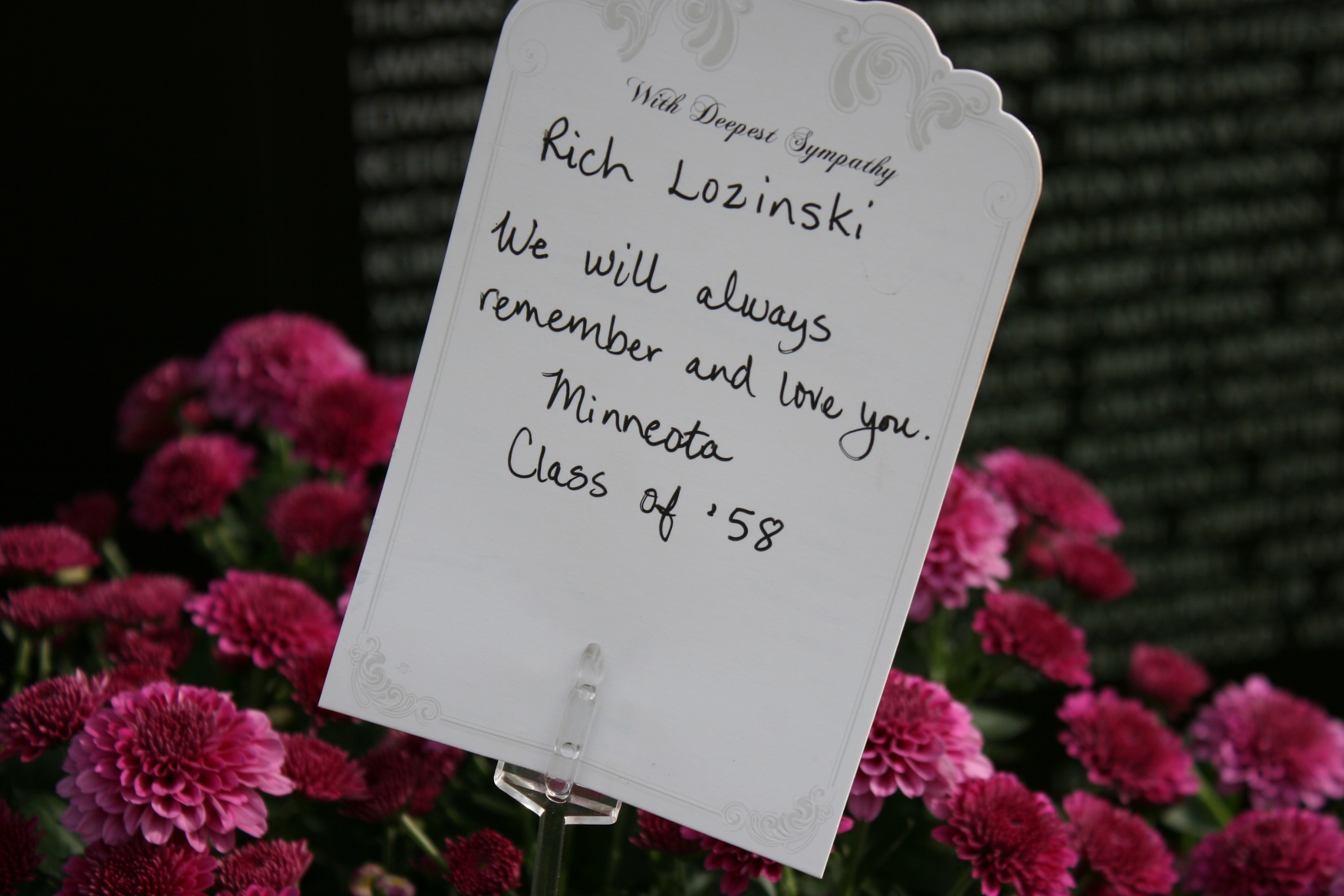
Grief in a note and mums left at the Traveling Vietnam Memorial Wall in Faribault. It honors Rich Lozinski, Class of 1958, Minneota, Minnesota. According to the online Wall list of those KIA, the name is spelled “Lozenski.” Rich was only 26 when he was killed in Quang Tri Province on May 19, 1967. (Minnesota Prairie Roots copyrighted file photo 2016)
Today, even decades after the death of a service member in war, grief carries through generations. It’s important to remember that, to respect that, to take time on Memorial Day for not only honoring, but also for grieving. In grief we begin to acknowledge and process loss. In grief we begin to heal. And in grief we begin to understand the ultimate sacrifice for country.
TELL ME: If you have a story to share about a service member who was killed in action, I’d like to hear. Who do you honor on this Memorial Day?
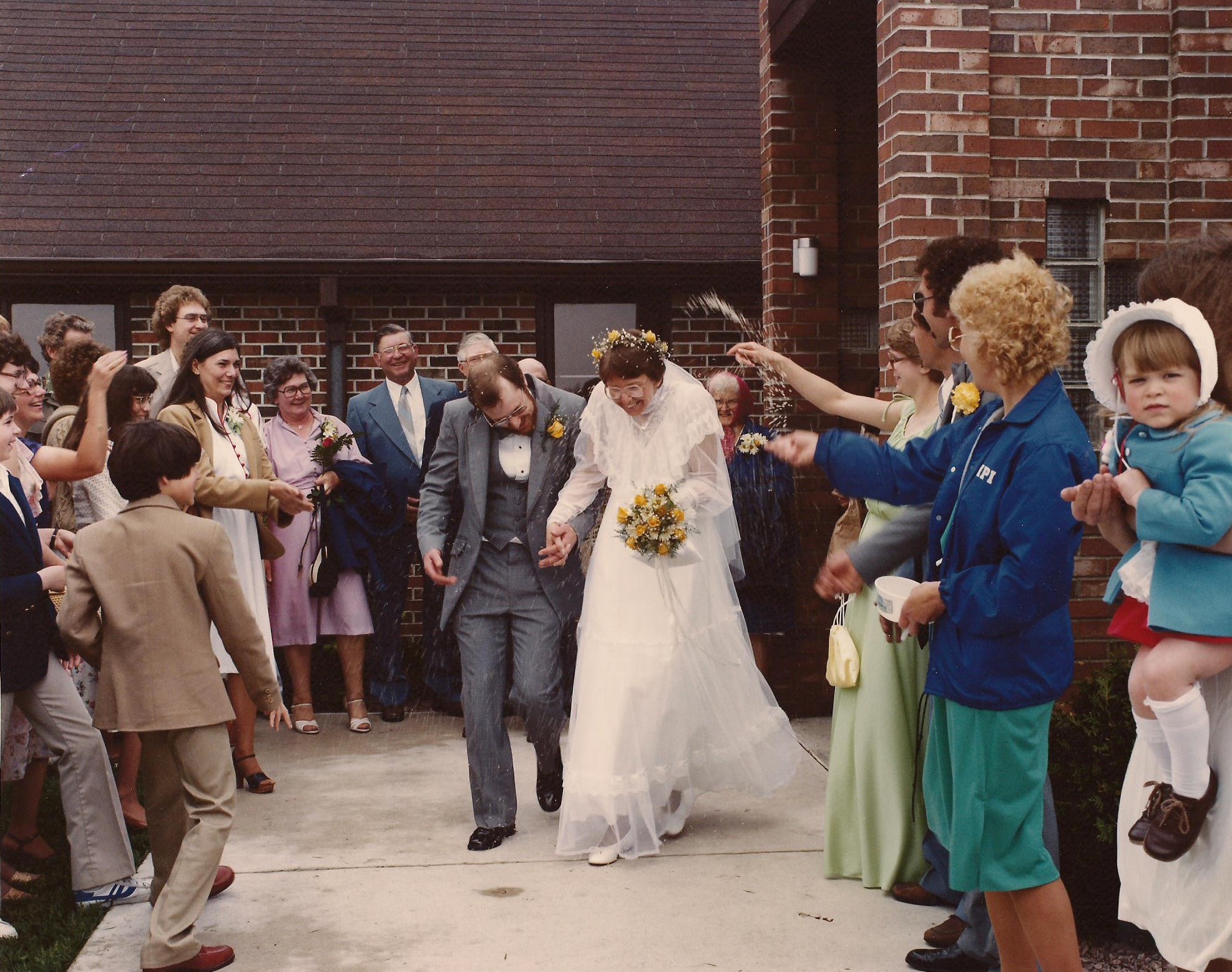
Randy and I exit St. John’s Lutheran Church in Vesta following our May 15, 1982, wedding. I cherish this image because it’s a journalistic-style photo in the day of portrait-only wedding photos. I also cherish it because it shows loved ones, including some who have since died. (Photo credit: Williams Studio, Redwood Falls, MN)
FORTY-THREE YEARS. Three children. Three grandchildren. Three seems the focus number today, the date I married Randy 43 years ago.
It hardly seems possible that so many years, so many decades, have passed since the two of us exchanged vows at St. John’s Lutheran Church in my hometown of Vesta. On the Saturday afternoon of Minnesota’s 1982 weekend fishing opener, we gathered with family and friends in the church on the edge of town a half mile from my childhood family farm.
In hindsight, May was not the best month to choose for a wedding, especially when your dad and most of your paternal relatives are farmers. My parents never said a word about our chosen date of May 8. But my florist sister protested. That was Mother’s Day weekend and she firmly stated that she would not attend our wedding. So we changed the date to a week later. I should have called her bluff.
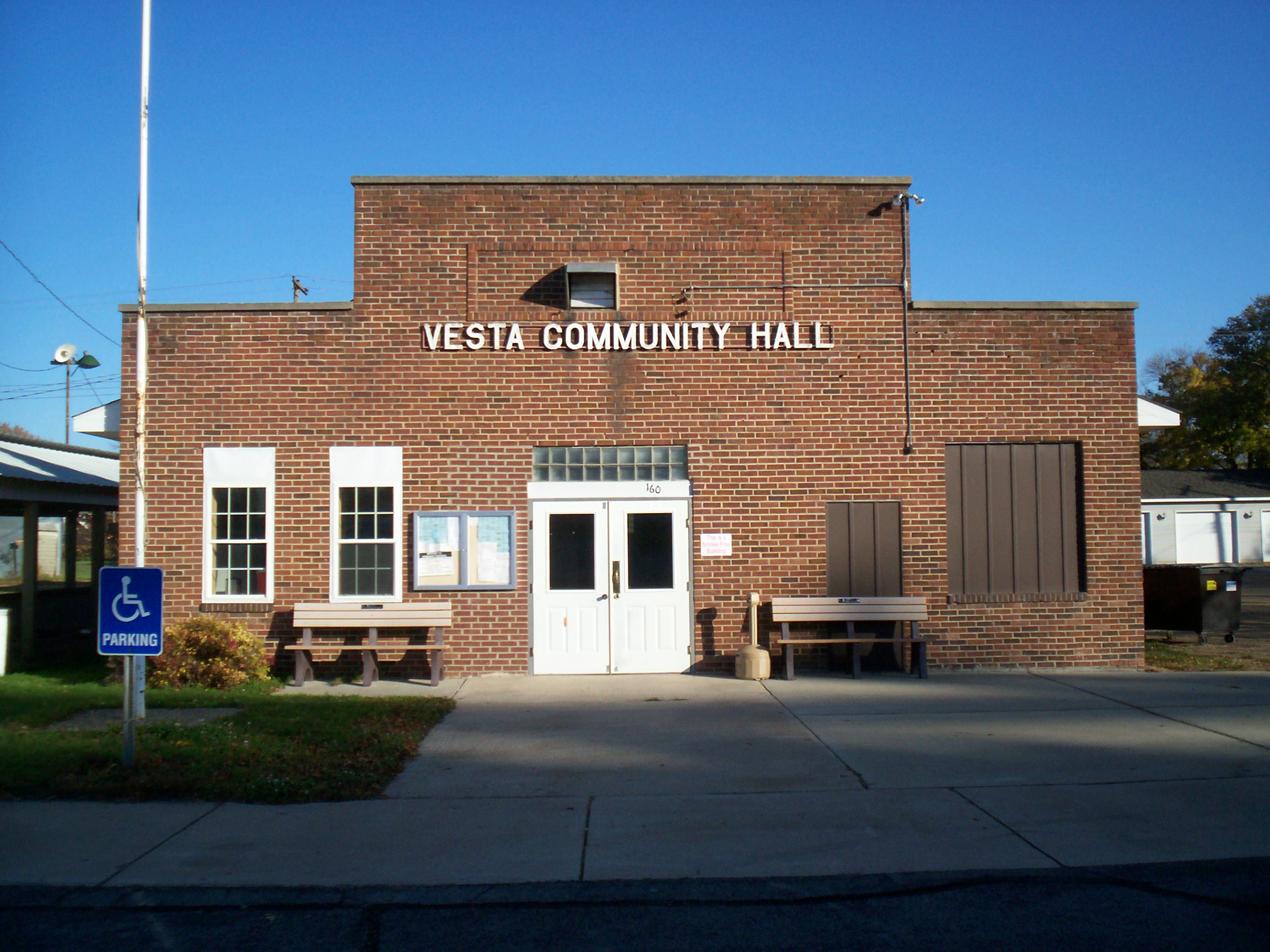
The Vesta Community Hall, site of our 1982 wedding reception and dance. I loved this building with its stage, wood floor and wood benches lining the edges of the dance floor. It’s no longer the community hall, sadly. (Minnesota Prairie Roots copyrighted file photo)
That aside, our May 15 wedding went on during spring planting season. Dad managed to take time away from the tractor to grill food for the groom’s dinner, to walk me down the aisle and to celebrate afterwards at the Vesta Community Hall. Some farmers missed our wedding to plant corn. And at least one angler opted to go fishing. Choices.
Life is all about choices. Randy and I chose to marry each other. And for that I am thankful. We’ve made a great team, facing life’s challenges and celebrating life’s joys together. I cannot imagine going through the difficult times alone, without Randy’s steady, calming presence. His laid-back, introverted personality balances my more extroverted emotional personality. Sometimes he frustrates me as I’m sure I do him. But it works, this balance.
Our similarities of background have proven a strength in our marriage. We both grew up on crop and dairy farms in families without much money, so we’ve always agreed on finances. At a young age, we were expected to pitch in and do farm chores. As the older among many siblings, we carried more responsibilities. We worked hard. We understood that our parents were counting on us. And when we talk about picking rock, we don’t need to ask, “What are you talking about?” I will say, though, that Randy picked a whole lot more rocks in rocky Morrison County than I did from my dad’s farm fields in Redwood County. But then again, Randy never worked an off-the-farm summer job detasseling corn.
Now here we are, 43 years later, Randy still working hard—full-time as an automotive machinist even though he supposedly retired several years ago. And me still writing and doing photography. But we make a conscious choice now to put our family before jobs. Or more like I “tell” Randy he needs to take off work so we can do whatever, such as travel four hours to Madison, Wisconsin, to see our four-month-old grandson. Oh, and Everett’s parents, too.
Audrey and Randy, May 15, 1982.(Photo credit: Williams Studio)
I love how Randy supports me in my writing, even attending the many poetry readings I’ve participated in through the years. I doubt my husband ever expected that he would be marrying a poet. Next week, at 6 p.m. on Thursday, May 22, I’m joining four other poets at Books on Central in Faribault to read poetry. Randy will be there in the chairs listening. I just need to “tell” him.
And I need to tell him this also. Happy 43rd anniversary, Randy! I love you! Thank you for being my partner in life.














 Minnesota Prairie Roots
Recent Comments