Minnesota Prairie Roots

Writing and photography by Audrey Kletscher Helbling

Remembering my mother-in-law, Betty October 18, 2013

Filed under: Uncategorized — Audrey Kletscher Helbling @ 6:00 AM
Tags: , , , , , , , ,
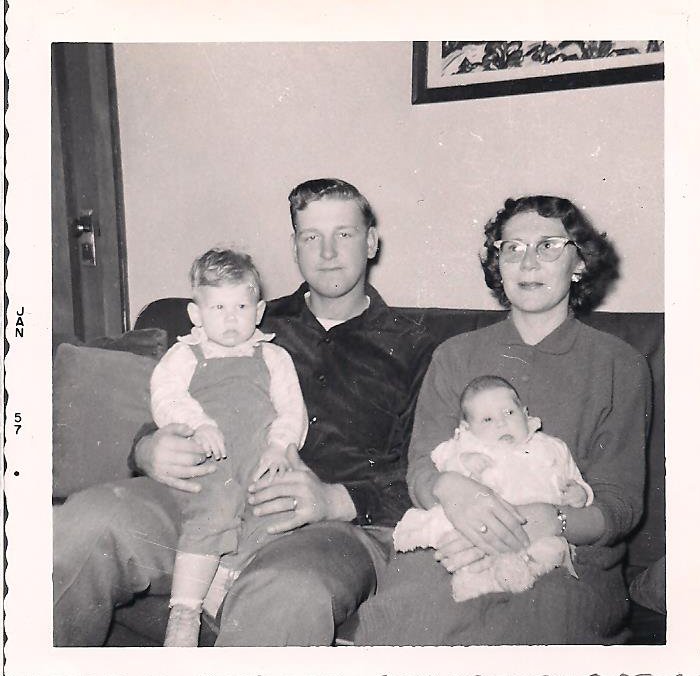
Tom and Betty

Tom and Betty in a vintage photo, date unknown.

YOU THINK YOU WILL ALWAYS REMEMBER.

But then the years, the decades, slip by and the memories begin to fade.

You can’t picture their smile, hear their voice, recall their mannerisms.

Twenty years ago on October 16, my mother-in-law, Betty Helbling, died after suffering a heart attack the previous evening. She was just weeks shy of turning sixty.

I still remember that phone call around 9 p.m. on a Friday. Not every detail. Not even who phoned with the devastating news that my husband’s mother was in the hospital. Alive. But not alert.

I remember the request that we drive northwest to Little Falls several hours away. But the hour was late, the fog as thick as the proverbial pea soup making travel impossible for my husband and me and our two daughters, ages seven and five.

To add to the concern, I was five months pregnant with our youngest, the baby Grandma Helbling hoped was a boy after a long string of granddaughters. I knew, for my unborn child’s sake, that I needed to remain as emotionally unstressed as possible, which was impossible given the situation.

It was a mostly sleepless night of tossing and turning, of prayer and worry. By morning we were making phone calls—me to my mother, another to a dear friend and my husband to the local Red Cross to get his brothers and a sister-in-law home from their respective military bases, one as far away as Germany.

We packed and left Faribault. By then, before our arrival, Betty had already passed.

Those next days on the family farm were a blur of grief and of condolences, phone calls and visits, food and family hugs. The wake and funeral and burial. I remember seeing my husband cry, for the first and only time. Ever.

Today, two decades later, I am thinking of my mother-in-law, of the woman who never saw the grandson I birthed in early February 1994. She would have loved my son, knitted him a baby blanket or a blue sweater or something equally adorable like she had for Caleb’s sisters. It saddens me to think that Betty never saw the grandson she so badly wanted to carry on the Helbling family name. It saddens me that my now 19-year-old never knew his paternal grandmother.

But I still have the memories, one occurring only weeks before her death, when we all gathered on the farm to celebrate the 40th wedding anniversary of my in-laws. I arose in the middle of the night to pee, descending the stairs to the first floor bathroom in the dark of a country night. I’d just settled onto the toilet when movement, that of a mouse, caught my eye. I hate mice, just hate them. And there I was, pregnant and stuck in a small bathroom with a mouse circling my feet. I could see no way out.

I calmed myself down between shrieks of fear, which I tried to hold in, not wanting to awaken the entire household. But apparently I was loud enough to rouse my mother-in-law. She simply thought I was in the bathroom with a sick child and did not investigate.

Eventually, after climbing onto the bathtub, I grabbed a pile of wet bath towels from the floor, tossed them onto the menacing mouse and fled up the stairs to my still sleeping husband.

That is the last memory I associate with my mother-in-law.

Tom and Betty. This may be from their 40th anniversary party, although I am not sure.

Tom and Betty. This may be from their 40th anniversary party, although I am not sure.

But there are other memories—that of a competitive Scrabble player who could beat me, the master of words. I loved the challenge of playing Scrabble with Betty, even if she usually won.

Cooking wasn’t her strength, but she made the best darned chicken and caramel rolls.

Once my husband, brother-in-law Neil and I rummaged through Betty’s cupboards while she was gone, seeking to spice up her bland hotdish baking in the oven. When a sister-in-law later praised the tastiness of the dish, we three could barely contain our laughter as Betty attributed the flavor to a dash of Mrs. Dash seasoning.

Four generations: Great Grandma Katherine Simon holding my daughter, Amber, with my mother-in-law behind them beside my husband, Randy. Photo taken in July 1986 at a family picnic, Pierz, Minnesota.

Four generations: Great Grandma Katherine Simon holding my daughter, Amber, with my mother-in-law, Betty, behind them beside my husband, Randy. Photo taken in July 1986 at a family picnic in Pierz, Minnesota.

I knew my mother-in-law for only 11 years. Not very long really. But long enough to know that she was a woman of deep faith who loved God and family. Above all.

On Thursday, October 16, 2013, twenty years after her death, Betty was joined in heaven by her brother, Steve.

Blessed be the memories of those we loved and those who loved us, sometimes even before we were born.

© Copyright 2013 Audrey Kletscher Helbling


Owatonna exhibit celebrates Steele County: Butter Capitol of the World October 8, 2013

MILK COURSES through my veins, for I am the daughter of a dairy farmer.

Inside the Wegners' barn, where dairy products come from.

Minnesota Prairie Roots file photo from Ron and Diane Wegner’s rural Faribault dairy barn.

Growing up, I labored in the barn beside my dad and siblings—feeding cows, bedding straw, lugging pails of milk to the bulk tank, washing milking machines, scraping manure and more.

I smelled of cow, watched bovines’ tails flick flies and rise to release streams of splashing hot pee into barn gutters.

Sandpaper rough tongues sometimes grated across my skin. Cold, wet noses dampened the sleeves of my chore coat.

I carried gallons of frothy fresh milk to the house for pasteurization and consumption.

The Princess Kay of the Milky Way competition is a part of Minnesota culture. The Steele County exhibit features  photos of past county dairy royalty, including 1978 princess Kari Schroht, left, and 1976 princess Kathy Zeman, right. Earlier carved butter heads from past princesses were displayed in borrowed glass door freezers at the history center.

The Princess Kay of the Milky Way competition is a part of Minnesota culture. A current exhibit at the Steele County History Center features photos of past county dairy royalty, including 1978 princess Kari Schroht, left, and 1976 princess Kathy Zeman, right. Earlier this year, carved butter heads from recent past princesses were displayed in borrowed glass door freezers at the history center.

I knew cows and milk and once competed for Redwood County, Minnesota, dairy princess, a title I coveted but could not win because I lacked the poise and confidence and beauty to represent the industry.

A banner welcomes visitors to the Steele County: Butter Capitol of the World exhibit at the Steele County History Center in Owatonna.

A banner welcomes visitors to the Steele County: Butter Capitol of the World exhibit at the Steele County History Center in Owatonna.

These memories flit through my mind as I consider a recent visit to the Steele County History Center in Owatonna to tour the featured exhibit, Steele County: Butter Capitol of the World.

The exhibit is interesting and educational.

The exhibit is interesting and educational.

It’s a must-see exhibit which will trigger memories for those who grew up on dairy farms and educate those who didn’t. And, even with my dairying background, I learned a lot about the history of dairy farming in Steele County.

A vintage sign promoting butter in Minnesota.

A vintage sign promoting butter in Minnesota.

For example, Steele County gained its world-wide Butter Capitol reputation after Owatonna Manufacturing Company invented the mechanized butter churn in 1893, revolutionizing the dairy industry.

But two decades prior, in 1873, the county was well on its way to establishing a strong dairy reputation with four local cheese factories producing 150,000 pounds of cheese, more than any other Minnesota county.

Information and artifacts from the days of bottled milk delivery.

Information and artifacts from the days of bottled milk delivery.

At one point, Steele County boasted two dozen-plus creameries.

Coveted butter

Hope Creamery, south of Owatonna, still produces coveted, award-winning Grade A butter in small batches. Butter boxes from Steele County creameries are displayed behind glass in the exhibit.

In December 1926, thieves stole 19 tubs of butter valued at $700 from the Steele Center Creamery.

Two Steele County women, Mina Holmes and Marianne McRostie, won numerous national awards for their hand-churned butter.

Photos of some spectacular Steele County barns are showcased.

Images of some spectacular Steele County barns are showcased.

Yes, so many accomplishments led to this southern Minnesota county holding the title of Butter Capitol of the World from 1898 – 1940, says Jerry Ganfield, who along with a committee of four women involved in the dairy industry, created this remarkable exhibit. Ganfield, holds a background in communications and marketing, grew up in Iowa and worked one summer during college as a milkhouse operator. Today he lives in a barn turned house near Bixsby and volunteers with the Steele County Historical Society, serving on its board of directors.

A portion of the expansive exhibit on Steele County's dairy industry.

A portion of the expansive exhibit on Steele County’s dairy industry.

Work on the Butter Capitol exhibit began in January with the historic display debuting in mid-July. It runs through November 10. Eventually, many of the items will be returned to the farm machinery building in the Village of Yesteryear (next to the Steele County History Center) where most were previously displayed.

Visitors can get down low and check out the udder on the model cow in the photo above.

Visitors can get down low and check out the udder on a model cow.

Perhaps I am a bit biased being a dairy farmer’s daughter and all. But this exhibit is one of the most impressive, thorough, detailed and interesting I’ve seen in a county history center.

Just another view of a portion of the exhibit.

Just another view of a portion of the exhibit.

Steele County: Butter Capitol of the World is well worth a drive to Owatonna to peruse.  Just give yourself two hours, minimum, to tour the display.

#

BONUS PHOTOS:

Vintage signs are abundant in the exhibit.

Vintage signs are abundant in the exhibit.

This tin toy barn, right, caught my eye. I've never seen one prior to this. The exhibit also features an incredible handcrafted replica of a barn.

This tin toy barn, right, caught my eye. The exhibit also features a handcrafted replica of a barn.

A familiar site to me, a cow in a stantion.

A familiar site to me, a cow in a stantion.

Also familiar, those Surger milkers in the background display.

Also familiar, those Surger milkers in this display. My dad used these before he installed a pipeline.

Indian Maid Feeds memorabilia is displayed in glass cases along with an impressive collection of butter molds and other items.

Indian Maid Feeds memorabilia is displayed in glass cases along with an impressive collection of butter molds and other items. Indian Maid Feeds was sold from the late 1950s – 1984 by Owatonna Elevator Company. The brand pictured an Indian maiden to recall the legend of Princess Owatonna, whose health was restored by drinking the mineral spring waters of the area. The exhibit also features a large wooden logo of the princess that once rested atop the elevator. You’ll need to visit the exhibit to see that vintage art.

FYI: To learn more about the Steele County History Center/Historical Society, housed in a fabulous new building opened in April 2012, click here.

The Steele County History Center encourages kids to join its Time Travelers Club and History Detectives. The detectives meet at 10:15 a.m. and the travelers at 6:30 p.m. the first Thursday of each month at the History Center, 1700 Austin Road, Owatonna.

Click here to read a Minnesota Public Radio story about Hope Creamery.

© Copyright 2013 Audrey Kletscher Helbling
 

A Minnesota family tradition: Honoring Dad by making horseradish October 7, 2013

Filed under: Uncategorized — Audrey Kletscher Helbling @ 6:00 AM
Tags: , , , , , , ,
Horseradish planted last year in my brother's garden and ready to harvest in a few years. This year's horseradish came from a patch near Sanborn.

Horseradish planted last year in my brother and sister-in-law’s garden and ready to harvest in a few years. This year’s horseradish came from a patch near Sanborn.

FOR MY EXTENDED FAMILY, making horseradish marks a time-honored tradition started by my father and my Uncle Mike decades ago.

Dad died 10 years ago, Uncle Mike before him, and, for awhile, so did the annual ritual of making horseradish. In his last years, Dad made horseradish with my sister Lanae and her husband, Dale.

Washing mud and dirt from the horseradish roots with the garden hose is the first step after digging.

Washing mud and dirt from the horseradish roots with the garden hose is the first step after digging.

Then, in recent years, Lanae and my brother Brian restarted this family tradition. The past two autumns, my husband and I have traveled the 120 miles to Brian’s rural Lamberton home to peel and slice, process and bottle horseradish. Mostly, I’ve documented the process with my camera although I’ve also assisted (some) with the actual making of this condiment.

To be honest, the horseradish isn’t the reason I’m there. It’s the cherished time with my mom (also known as “The Supervisor”) and extended family that draws me back to my native southwestern Minnesota prairie. We are building memories and honoring the memory of my farmer father.

Dad would delight in our gathering—in hearing the laughter and bullshit (sorry, I can’t think of a better word choice) and seeing us together. Dad was all about family.

Like our father before us, we give away our horseradish. My husband and I gathered a baker’s dozen jars to take back to Faribault for Mick and Mooch, Howard and Neal, and Dan, Steve and John, and a few others who appreciate a good taste of potent, eye-stinging, nostril-clearing horseradish.

#

THE STEP-BY-STEP PROCESS:

After the initial washing of the roots, the stems are trimmed away and the horseradish goes into a laundry bag for washing in the washing machine.

After the initial washing of the roots with a garden hose, the stems are trimmed away and the horseradish goes into a laundry bag for washing in the washing machine. Do NOT add laundry detergent.

The crew (not all shown) prepares to peel the brown outer layer from the roots. Remove all of the brown so the end product is a creamy white.

Part of the crew, left to right around the tables, Julie (a friend of my brother and his wife, and a newcomer) and family members Adrienne, Adam, Andy, Lanae and Tara, prepare to peel the brown outer layer from the roots. All of the brown is removed so the finished horseradish is a creamy and unblemished white.

Once peeled, the horseradish is dumped back into a laundry bag for a second wash in the washing machine. Do NOT add detergent.

Once peeled, the horseradish is dumped back into a laundry bag for a second wash in the washing machine. Do NOT add detergent.

Once out of the washing machine, the process of chopping the horseradish begins.

Once out of the washer, the horseradish is chopped.

Lots of horseradish to cut in to small pieces.

Lots of horseradish to cut in to small pieces.

Next, the horseradish pieces go into the food processor, operated here by my husband, Randy.

Next, the horseradish pieces go into the food processor, operated here by my husband, Randy.

Brian, left, and Lanae blend the horseradish with vinegar in blenders while Randy uses the food processor.

Brian, left, and Lanae blend the horseradish with vinegar in blenders while Randy uses the food processor.

Sometimes the powerful pungent fumes overpower the workers.

Sometimes the powerful pungent fumes overpower the workers.

Adrienne buried her nose in her sleeve and stepped out of the garage a few times when she couldn't handle the overwhelming sting of the horseradish.

Adrienne buries her nose in her sleeve and stepped out of the garage a few times when she couldn’t handle the overwhelming sting of the horseradish.

Once blended to just the right consistency with the correct amount of vinegar, the horseradish is poured into jars.

Once blended to just the right consistency with the correct amount of vinegar, the horseradish is poured into jars.

Lots and lots of jars of all sizes will hold the horseradish.

Lots and lots of jars of all sizes will hold the horseradish.

The Supervisor, aka my mom, Arlene, shows up to inspect.

“The Supervisor, ” aka my mom, Arlene, shows up to inspect.

After hours of labor, the beautiful results. Creamy white horseradish.

After hours of labor, the beautiful results. Creamy white horseradish.

As the final step, The Supervisor steps in to count the jars. My sister-in-law, Vicki, watches my mom at work.

The Supervisor counts the jars., 70 total ranging in size from baby food jars to around 12-ounce size. My sister-in-law, Vicki, watches my mom at work. At one point, when my brother suggested an easier method of counting, The Supervisor told him to “shut up.” We all cracked up. We know who’s boss, and it isn’t Brian.

The last step is to take the peelings and horseradish tops to the garden for planting. We want to assure that we will have horseradish for years to come, holding on to traditon, building memories.

The last step is to take the peelings and horseradish tops to the garden for planting. We want to assure that we have horseradish for years to come, holding on to tradition, building memories and honoring our dad.

CLICK HERE TO READ last year’s post about making horseradish.

© Copyright 2013 Audrey Kletscher Helbling
 

Remembering 9/11 from a mom’s perspective September 11, 2013

Filed under: Uncategorized — Audrey Kletscher Helbling @ 6:00 AM
Tags: , , , , , , , ,
I reconstructed a tower using the same blocks my son and his friend used on September 11, 2001, to duplicate what they saw on television. These are also the same airplanes they flew into the tower.

I reconstructed a tower using the same blocks my son and his friend used on September 11, 2001, to duplicate what they saw on television. These are also the same airplanes they flew into the tower. Minnesota Prairie Roots file photo.

THEY REPEATED THE ACTION: Build the towers. Fly the planes. Smash the towers. Build. Fly. Smash.

A dozen years ago today my then seven-year-old son, Caleb, not feeling well and home from school, played with his friend Sam.

I have never forgotten that scene unfolding on my living room floor. Two boys imitating what they saw on television. Me, shocked, unable to turn off the TV and shield them from the horrors of an attack on America.

What do you remember, from a personal perspective, of that day 12 years ago when so many innocent people lost their lives in the terrorist attacks on our country? What were you thinking? How did you feel?

© Copyright 2013 Audrey Kletscher Helbling
 

Thoughts on writing a winning poem August 19, 2013

EVERY TIME I PEN a poem, I wonder, will it inspire, touch, resonate with the reader? Is my poem worthy to be seen by others? Is the poem truly finished, ready to reveal? Or should I hold on to it longer, refine it, anguish over whether I’ve chosen the right word, the right phrase?

At some point I must tell myself, “You’re done.” I must make that leap of faith, overcome those self doubts and share what I’ve written.

For me that usually comes in entering a poetry competition. Even if I’m confident I’ve written a decent poem, it’s still scary to put yourself out there. But I have and I’ve discovered, in the process, that I can write poetry.

My award.

My most recent award. You can click on the “About” section of my blog to see the other honors I’ve garnered for my poetry. Photo courtesy of Sue Ready.

That was reaffirmed for me again this past Saturday when my poem, “Lilacs,” was selected as one of six Works of Merit in the sixth annual Poetry Recognition Event during the Northwoods Art and Book Festival in Hackensack.

Attendees at the Northwoods Art & Book Festival view showcased poems and then vote for their favorite in the Popular Choice awards.

Attendees at the Northwoods Art & Book Festival view showcased poems and then vote for their favorite in the Popular Choice awards. Photo courtesy of Sue Ready.

I’m in the company of other Minnesota poets, Louise Bottrell, Marlys Guimaraes, Miriam Kagol, Joanne Moren and Candace Simar, chosen by a poetry committee for the merit honor.

Lilac, close-up

Sweet lilacs.

As I often do, I turned to my past, to my memories of growing up on a southwestern Minnesota farm, to write “Lilacs.” I remembered the annual gathering of lilacs from the bush on my Uncle Mike’s farm, the next field over. And I connected that memory to today:

Lilacs

Breathing in the heady scent of lilacs each May,
I remember my bachelor uncle and the gnarled bushes,
heavy with purple blooms, that embraced his front porch
and held the promises of sweet love never experienced.

He invited his sister-in-law, my mother, to clip lilacs,
to enfold great sweeps of flowers into her arms,
to set a still life painting upon the Formica kitchen table,
romance perfuming our cow-scented farmhouse.

Such memories linger as my own love, decades later,
pulls a jackknife from the pocket of his stained jeans,
balances on the tips of his soiled Red Wing work shoes,
clips and gathers great sweeps of lilacs into his arms.

Plenty of lilacs to gather in the spring.

Plenty of lilacs to gather in the spring.

To read poems by two of the other merit winners, click here to reach the website of Poetry Committee Chair Sue Ready, herself a poet. The winning poems will also be published in Hackensack area newspapers.

I am grateful to those like Sue and others and to the Northwoods Arts Council, which sponsors events like that in Hackensack. Without these opportunities, I might still be that poet wondering if my poetry rates as good enough for anyone to read other than me.

Copyright 2013 Audrey Kletscher Helbling
 

Memories of the June 13, 1968, Tracy tornado: “Pain, anguish and blood…” June 12, 2013

HE DOESN’T RECALL the details like it was yesterday.

Yesterday, after all, was 45 years ago.

Eric Lantz, 16, of Walnut Grove, shot this award-winning photo of the Tracy tornado as it was leaving town. He often took photos for the Walnut Grove Tribune, owned by his uncle, Everett Lantz. This image by Eric was awarded third place in the 1968 National Newspaper Association contest for best news photo.

Eric Lantz, then 16, of Walnut Grove, shot this award-winning photo of the Tracy tornado as it was leaving town on the evening of June 13, 1968. He often took photos for the Walnut Grove Tribune, owned by his uncle, Everett Lantz. This image by Eric was awarded third place in the 1968 National Newspaper Association contest for best news photo. Copyrighted photo courtesy of Scott Thoma with original copyright retained by Eric Lantz.

But for Mankato resident Steve Ulmen, certain memories of the aftermath of the deadly Tracy tornado of June 13, 1968, stick with him.

He was only 22 then, a college student and a senior member of the Mankato Civil Air Patrol squadron dispatched on a search and rescue mission to Tracy 90 miles away in southwestern Minnesota. They were the first responders, handling crisis management until other local and state officials arrived.

A residential street, once covered in branches and debris, had to be plowed to allow vehicles to pass. Photo by The Tracy Headlight Herald and courtesy of Scott Thoma, Tracy native and author of Out of the Blue, a book about the Tracy tornado.

A residential street, once covered in branches and debris, had to be plowed to allow vehicles to pass. Photo by The Tracy Headlight Herald and courtesy of Scott Thoma, Tracy native and author of Out of the Blue, a book about the Tracy tornado.

Ulmen remembers entering Tracy, feeling overcome by the sheer devastation. The F5 tornado, with wind speeds surpassing 300 mph, killed nine and injured 125. Destruction was massive.

“It looked like we were driving into a dump site, or a burned out slum, or what I would imagine a bombed out city would have looked like after World War II,” Ulmen recalls.

With experience as a hospital orderly, he was assigned to the emergency room at the Tracy hospital—removing victims from ambulances and placing them on gurneys and moving others around.

Some of the injured at the Tracy Hospital. Photo by The Tracy Headlight Herald and courtesy of Scott Thoma.

Some of the injured at the Tracy Hospital. Photo by The Tracy Headlight Herald and courtesy of Scott Thoma.

“There were victims coming in and lying on stretchers even in the hallways, as it was a small hospital,” Ulmen remembers. “Some were suffering from fractures, some from cuts and scratches. All were in one degree of shock or another and needed assistance and someone to talk to them and try and calm them down.

“There was pain, anguish, and blood, that I remember. As long as casualties kept coming in, we stayed on duty.”

The CAP squadron, comprised of cadets (high school age, 18 and under) to supervising senior members, volunteered for several days in the ravaged community. Among other duties, the patrol established a communications system based out of “an old military surplus deuce and a half 4-wheel drive vehicle” equipped with “radios of every description.”

Surveying the destruction at Tracy Elementary School, which was destroyed. Photo by The Tracy Headlight Herald and courtesy of Scott Thoma.

Surveying the destruction at Tracy Elementary School, which was destroyed. Photo by The Tracy Headlight Herald and courtesy of Scott Thoma.

Ulmen remembers the satisfaction he felt in helping those in distress.

Among his memories, Ulmen recalls a particular incident, one he still wonders about now 45 years later. “I was driving either my vehicle or an emergency vehicle, I forget which, and I went through an intersection. The stop sign was bent and twisted from the tornado and wasn’t pointing at the street I was on; it looked like it was pointed at another street. Nevertheless, the local cop saw me run the stop sign, pulled me over, and gave me a ticket,” Ulmen says. “Some thanks for coming all the way from Mankato and volunteering my service to a community in distress. My superiors were not impressed with this either, but I ended up having to pay the ticket as I recall.

“It is funny what you remember from 45 years ago.”

FYI: The community of Tracy is marking the 45-year anniversary of the deadly tornado with special events on Thursday, June 13. Click here to learn more in a post published here several days ago.

To learn more about Steve Ulmen, who served with the CAP for 17 years until he was about 27, click here. Ulmen, who is retired after 34 years of working in the corrections field, is also a published writer. He’s written a western screenplay, later rewritten and published as his first western novel, Toby Ryker. He then published a sequel, Deadwood Days. His most recent works include a book of historical fiction, Blood on the Prairie—A Novel of the Sioux Uprising (actually the first book in the Toby Ryker trilogy), and Bad Moon Arising, a fictional story based on his experiences as the first probation officer in LeSueur County beginning in 1969.

Ulmen and his wife of 42 years, Ida Mae, live in Mankato, his hometown.

© Copyright 2013 Audrey Kletscher Helbling
 

Yes, I sent this to Jay Leno June 11, 2013

I HOPE THE SON of my long ago boss possesses a sense of humor. When I received my June 6 issue of The Gaylord Hub, a community newspaper in Gaylord in southern Minnesota, I chuckled at the in-house subscription renewal ad published on the classified ads page.

Fortunately, I am not about to expire. Or at least I hope not.

Published in the June 6 issue of The Gaylord Hub.

Read the ‘Hub’scription ad published in the June 6 issue of The Gaylord Hub.

And, yes, I mailed this to The Tonight Show with Jay Leno for consideration.

Now, please continue reading of my association with, and deep appreciation for, The Gaylord Hub in a letter addressed to the current publisher and editor, Joe Deis.

#

Dear Joe,

Thirty-five years have passed since I arrived at your dad’s weekly newspaper fresh out of college with a journalism degree ready to set the world afire. Or at least Gaylord, Minnesota.

Your father, Publisher and Editor Jim Deis, set up a corner office furnished with a desk and chair and equipped with a phone and a Remington manual typewriter. He also handed me a stash of thin yellow paper upon which to type my news stories. (Yes, I can hear the quips about yellow journalism.)

Being the first reporter ever hired to cover happenings in Gaylord, I came to The Gaylord Hub in 1978 as a bit of a shock to the locals. Here was this 21-year-old out-of-towner suddenly asking questions, quoting public officials and seeking out stories beyond the usual Legion Fish Fry.

I was particularly disliked by the school superintendent; by a certain teacher, whom I quoted (how dare you do that) at a school board meeting; and by a local realtor, whom I had also quoted at a city council meeting. I will never forget their anger—which to this day I find totally unsuited to men in these positions. When you speak at a public meeting, expect to be quoted.

Your dad, bless him, totally backed me up. On everything. He knew my standards, my dedication, my journalistic ethics in getting it right. Today I still hold to the highest standards in decency, fairness and accuracy.

For two years I covered news and events in Gaylord, transitioning from greenhand to experienced in all aspects of community journalism—reporting to photography to lay-out to overseeing the final product at the printing plant to delivering the bagged newspapers to the post office.

I covered major fires (church, school and chicken barn), wrote about tragic accidents, sat through endless public meetings, found local angles in national news stories, covered the controversy over chicken barns and more.

Joe, I shall be forever grateful for your dad’s guidance those first years as a reporter. Every newbie needs a mentor and Jim was mine.

All these decades after exiting Gaylord for work at another weekly newspaper and thereafter a southern Minnesota daily, I still get The Hub each week. I read the familiar names, sometimes in the obituaries now (including your dad). And I think back on those long ago years of entering journalism shortly after Watergate was exposed by Washington Post reporters Bob Woodward and Carl Bernstein.

The profession was wide open then; I had my pick of jobs.

So much has changed. While community newspapers like yours still exist, many papers today are owned by large media companies. With that often comes a loss of community connection and care. Not always. But finances, more and more, take precedence over the editorial side. The internet, certainly, has factored into the demise of the newspaper as we once knew it.

Times change. I got out of the newspaper profession decades ago, knowing the long and odd hours would not be conducive to raising a family. My family became my focus and I’ve never regretted that choice.

Yet, during those years away, I never lost my passion for writing and have returned to writing, although not at a newspaper. (Click here to read a list of the projects I’ve pursued in recent years.)

All of that said, I find it remarkable, Joe, that you are carrying on the tradition of community journalism established first by your grandfather, Frank “Chick” Deis, and then by your father, Jim. Three generations running a small town newspaper. Outstanding, from my perspective.

Warm regards,

Audrey, “The Cub from The Hub

© Copyright 2013 Audrey Kletscher Helbling

 

Remembering the June 13, 1968, killer tornado in Tracy, Minnesota June 10, 2013

Eric Lantz, 16, of Walnut Grove, shot this award-winning photo of the Tracy tornado as it was leaving town. He often took photos for the Walnut Grove Tribune, owned by his uncle, Everett Lantz. This image by Eric was awarded third place in the 1968 National Newspaper Association contest for best news photo.

Eric Lantz, then 16, of Walnut Grove, shot this award-winning photo of the Tracy tornado as it was leaving town on June 13, 1968. He often took photos for the Walnut Grove Tribune, owned by his uncle, Everett Lantz. This image by Lantz was awarded third place in the 1968 National Newspaper Association contest for best news photo. Copyrighted photo is courtesy of Scott Thoma with original copyright retained by Lantz.

TORNADO WARNING. Those two weather words, more than any other, cause me to panic. For good reason.

I was not quite twelve when an F5 tornado, with wind speeds surpassing 300 mph, struck the nearby community of Tracy on June 13, 1968. The twister left nine dead, 125 injured and buildings demolished.

I remember, a day or two afterward, our family piling into our Chevy for the 25-mile drive through southwestern Minnesota farm country to view the devastation. Twisted trees. Flattened homes and businesses. Boxcars haphazardly tossed.

This photo by the Tracy Headlight Herald shows a damaged boat and overturned car sitting atop the rubble after the Tracy tornado.

This photo by the Tracy Headlight Herald shows a damaged boat and overturned car sitting atop the rubble after the Tracy tornado. Photo courtesy of Scott Thoma.

A catastrophic scene like that impresses upon a young mind a deep fear and respect for the power of a tornado.

Added to the visual impact was my father’s spotting of the tornado from our farm those many miles to the north and east as he did the evening milking. He thought the twister was much nearer. Decades later, a less severe tornado would hit the farm place, and the community, where I grew up. Two summers ago, severe winds also ravaged my hometown of Vesta.

This Thursday, the residents of Tracy and others will gather to commemorate the 45th anniversary of the Tracy tornado touchdown.

The photo by Eric Lantz illustrates the cover of Scott Thoma's just-published book.

The photo by Eric Lantz illustrates the cover of Scott Thoma’s book.

Tracy native Scott Thoma of Willmar, who wrote Out of the Blue, a book about the Tracy tornado, is among those on the Tracy Tornado Memorial Committee and the coordinator for Thursday’s program. The June 13 event will feature an evening of remembrance and fundraising and a coming together of community.

At 7:03 p.m., the moment the killer twister touched down in Tracy, attendees will honor the nine who died with a moment of silence in Central Park. Thoma will read their names and a bell will toll for each: Ella Haney, 84; Mildred Harnden, 75; Barbara Holbrook, 50; Ellen Morgan, 75; Fred Pilatus, 71; Paul Swanson, 60; Walter Swanson, 47; Nancy Viahos, 2; and Otelia Werner, 75.

Longtime resident, the Rev. Homer Dobson, will “say a few words,” Thoma says.

A photographer for the Tracy Headlight Herald captured this scene at the demolished Tracy Elementary School.

A photographer for the Tracy Headlight Herald captured this scene at the demolished Tracy Elementary School. Photo courtesy of Scott Thoma.

I expect the commemoration will be an emotional event, and rightly so. Even with the passage of nearly five decades, grief lingers. And each time a tornado devastates a community and lives are lost, such as in Moore, Oklahoma (struck, like Tracy, by an F5), memories resurface, fear rises.

Besides remembering the nine, the community will continue raising funds for a new tornado memorial to replace the one falling into disrepair. Over $10,000 have been raised with about $5,000 more needed for the six-foot high black granite monument that will sit along U.S. Highway 14 near the “Tornado Tree” sculpture. That steel tree, built in 1989, replicates the original tornado tree, a gnarled elm that withstood the forces of the twister.

An artist's rendering of the tornado monument. The words on the bench will read "Tracy Tornado Monument" and an engraving of Eric Lantz's tornado photo will be etched below the clock and above the story. Image courtesy of Scott Thoma.

An artist’s rendering of the tornado monument. The words on the bench will read “Tracy Tornado Monument” and an engraving of Eric Lantz’s tornado photo will be etched below the clock and above the story. Image courtesy of Scott Thoma.

The new three-sided marker will feature the story of the tornado and a well-known photo by Eric Lantz etched on the front, according to Thoma. Names and ages of the tornado victims will be listed on another side. And on the back side, visitors will find a stone bench.

On all three sides, a clock will be etched into the stone, stopped at 7:03 p.m., the time the tornado reached the Tracy city limits.

The memorial is expected to be done this summer and unveiled during Boxcar Days, an annual community celebration, on September 2.

In the meantime, there’s still memorial money to be raised and Thoma is doing his part, donating $3 to the monument fund for every book sold. He is selling Out of the Blue from 11 a.m. – 3 p.m. Thursday at the Tornado Tree Memorial along Highway 14. Root beer floats will also be available with all proceeds directed to the memorial.

Thoma will talk about the tornado and his book at 4 p.m. at the Tracy Library. I read and reviewed Out of the Blue a year ago and you can read that review by clicking here.

As is customary with most small town events, there’s a meal involved in the Tracy tornado anniversary. Folks will gather at the fire hall from 5 p.m. – 8 p.m. for a “freewill donation potluck supper,” Thoma says. The Tracy Community Band plays at 7 p.m. across the street in Central Park. And at 8 p.m., somewhere in town, the Tracy Library will show the movie Twister.

If you’re interested in buying a copy of Out of the Blue and/or donating to the Tracy Tornado Memorial fund, email Thoma at scott@thomabooks.com or call (320) 894-6007.

You can also order his book online by clicking here.

If you lived through the Tracy tornado or have any stories to share about the storm, please submit a comment. I’d like to hear from you. Other comments are also welcome.

© Copyright 2013 Audrey Kletscher Helbling

 

Touring an historic mill in Morristown June 4, 2013

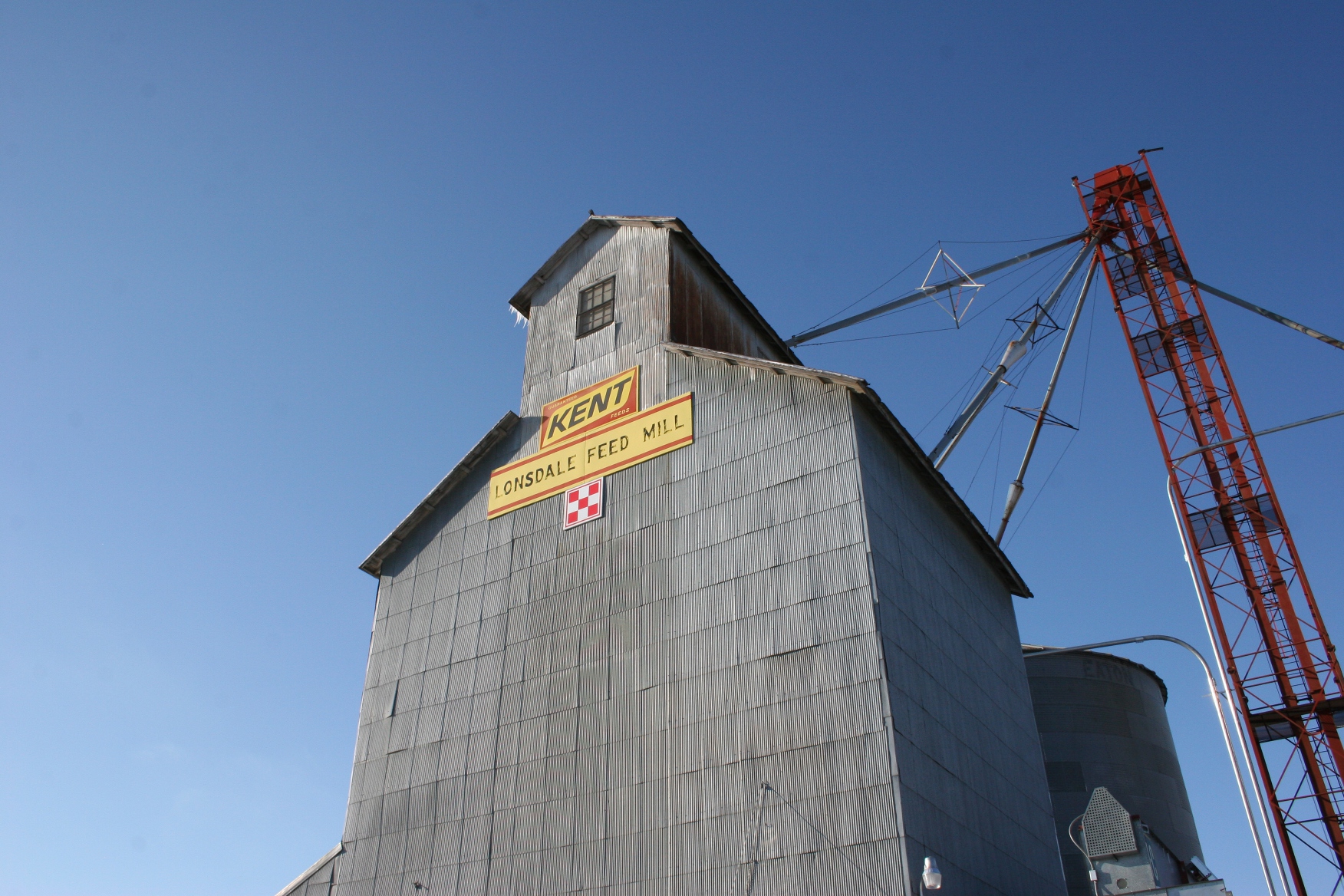
I WISH MY MEMORIES of the old feed mill were imprinted upon the pages of a book. Indelible ink. Words recorded so that I would always remember. The smell. The sound. The sights. The everything encompassing this agricultural business in my southwestern Minnesota prairie town.

I recall so little—the wooden steps leading to the feed mill; the ground feed residue lingering in the air and on surfaces; the ever-deafening grinding noise of machinery chomping grain; handsome operator Wally Anderson with his shock of white hair who lived in a well-kept corner house several blocks north; and the summer a ventriloquist sat in front of Vesta’s feed mill with a dummy perched on his knee.

The Morristown Feed Mill in Morristown, Minnesota.

The Morristown Feed Mill in Morristown, Minnesota.

Those faint wisps of recollection filtered through my thoughts on Saturday as I meandered through an historic 1860 grist mill along the banks of the Cannon River in Morristown. Once a year this rural southeastern Minnesota community opens the mill for tours and grinds wheat and corn.

A replica waterwheel built in 1997 by Theodore E. Sawle.

A replica waterwheel built in 1997 by Theodore E. Sawle.

I won’t even pretend to understand all I viewed and photographed at this mill once powered by a waterwheel, later by electricity.

A volunteer grinds wheat into flour in the old grist mill. Each time the waterwheel turns, it spins the millstone 17 times in the process of crushing grain between stones. The volunteer's wife bakes Communion bread for the local Methodist church.

A volunteer grinds wheat into flour in the old grist mill. Each time the waterwheel turns, it spins the millstone 17.5 times in the process of crushing grain between stones. The volunteer’s wife bakes Communion bread for the local Methodist church.

Initially, the mill opened in 1855 as a sawmill. But, within years, the business was replaced by Hershey Grist Mill, a mill for grinding grain into flour and livestock feed. On the afternoon I toured, a volunteer was grinding wheat into flour with the waterwheel powering the grinder. I had intended to buy a bag of the $2 wheat flour, but forgot in the midst of my photographic focus.

Guidelines for pig feed.

Guidelines for pig feed posted on a mixer.

The Morristown Historical Society today cares for the facility which closed in the 1970s as the Morristown Feed Mill, purveyor of livestock feed. For those like me, who grew up on a farm but have long ago left the land, such endeavors to preserve the rural past are deeply appreciated.

The conveyor belt powered by the waterwheel. This operates the grinder.

The waterwheel turns these pulleys and belts which operate the grinder.

While I walked the old wooden floor of the feed mill, descended stairs into the cluttered utility room where a dangerous conveyor belt cycled and afterward climbed stairs to the second floor, I reconnected with my rural roots.

The old feed mill is stocked with lots of vintage grinding equipment.

The old feed mill is stocked with lots of vintage mill equipment.

And it may not have been in the way you most likely would expect. For me, the experience was mostly about the dust—knowing I needed to protect my camera from the fine grain dust which permeates a place like this, layers on the skin, hovers in the air, filters into memories.

Inside the feed mill, where a volunteer stamps cloth bags with Morristown Feed Mill.

Inside the feed mill, a volunteer stamps cloth bags with Morristown Feed Mill. Behind the sign are two mixers.

An old fanning mill cleans the grain for planting.

An old fanning mill cleans the grain for planting.

When I heard mention of mice, I was a little nervous about going into the utility room.

When I heard mention of mice, I was a little nervous about going into the utility room.

The Cannon River dam right next to the mill.

The Cannon River dam right next to the mill.

FYI: As a side note, the mill sheltered several refugees from the U.S. – Dakota Conflict of 1862.  Check back for more mill photos.

© Copyright 2013 Audrey Kletscher Helbling
 

Touring a third-generation family print shop in Fergus Falls May 23, 2013
The Victor Lundeen Company, located in the 100 block of West Lincoln Avenue, downtown Fergus Falls.

The Victor Lundeen Company, located in the 100 block of West Lincoln Avenue, downtown Fergus Falls.

ON A RECENT IMPROMPTU TOUR of a third-generation family-owned print shop in Fergus Falls, I couldn’t contain my giddiness over drawers of aged logos/artwork, handcrafted stamps, stacks of paper, even the vintage cabinets and stools and carts.

I was just giddy over all this handcrafted vintage art tucked into drawers.

I was just giddy over all this handcrafted vintage art tucked into drawers.

The 99-year-old Victor Lundeen Company is the type of place that appeals to a writer like me, with ink flowing through my veins.
The 1960s Heidelberg offset presses, still used in the second floor print shop.
The 1960s Heidelberg offset presses, still used in the second floor print shop.

Ah, the ink. The smell of ink. I just stood there beside owner Paul Lundeen’s vintage 1960s Heidelberg offset presses, breathing in the distinct scent of ink imprinted upon my memory.

Cans of ink line shelves.

Cans of ink line shelves.

Decades ago, working at The Gaylord Hub as a young newspaper reporter and photographer fresh out of college, I first smelled that ink, heard the clack-clack-clack of ancient machines printing auction bills. I watched Frank “Chick” Deis set type on the old letterpress.

While digging through all that vintage art, we found this City of Fergus Falls Centennial Seal of an otter. The city is located  in Otter Tail County.

While digging through all that vintage art, we found this City of Fergus Falls Centennial Seal of an otter. The city is located in Otter Tail County. The Lundeens recently sold all but one letterpress.

Such memories endear me to places like Victor Lundeen Company, started in 1914 by Victor Lundeen, Sr., who bought out a Fargo print shop and moved the equipment to his hometown of Fergus Falls. Today the company is owned by Victor Lundeen, Jr., and his son, Paul Lundeen.

A portion of the print shop looking toward the bank of street-side windows.

A portion of the print shop looking toward the bank of street-side windows.

I find it especially impressive, in this advanced technological age, that printing businesses like the Lundeen Company can survive, even seemingly thrive. This Fergus Falls firm has apparently found its niche in focusing on agri-business needs primarily in Minnesota, the Dakotas and Montana, but also extending to grain elevator businesses nationwide.

That said, this family-owned print shop, which employs eight in production (30 total in all aspects of the company), also values the individual walk-in customer. Paul didn’t specifically tell me that during our tour. Rather, I surmised that when, for example, I noticed the corner area where employees engrave gold foil names onto bibles for Confirmation gifts. Just like my King James bible imprinted with my name and given to me by my parents on my Confirmation Day in 1970.

Tour guide Paul Lundeen inside his print shop.

Tour guide Paul Lundeen inside his print shop.

And then there’s Paul himself, who welcomed my husband and me on a Thursday evening like we were long-time friends rather than out-of-towners checking out his store and other downtown businesses during an overnight stay in Fergus Falls. I mean, what businessman shows you the original safe of the former First National Bank of Fergus Falls shortly after meeting you? Paul did just that.

The independent bookstore portion of Victor Lundeen Company on the first floor. Gifts and office supplies are also sold here.

The independent bookstore portion of Victor Lundeen Company on the first floor. Gifts and office supplies are also sold here. I even asked if the store carries Lake Region Review, a regional anthology in which I’ve been published. It does.

His office supply/bookstore/gift shop/printing business occupies two connected buildings, one of them the old bank, in the heart of this historic downtown.

History in the signage.

History in the signage.

Such hospitality reaffirms my belief that chain stores have nothing on businesses like Victor Lundeen Company, which clearly values the importance of outstanding customer service and friendliness.

You can bet, thanks to Paul Lundeen and to Pat Connelly, whom I met later that evening at Dairyland Drive In (that’s a forthcoming post), I left Fergus Falls the next morning with the warmest of feelings for this west central Minnesota community.

BONUS PHOTOS:

Paper packed near the presses.

Paper stacked near the presses.

A vintage stool caught my eye.

A vintage stool, between counters, caught my eye.

My husband noticed the wheels on a cart, made at the former Nutting Company in our community of Faribault.

My husband noticed the wheels on a cart made at the former Nutting Company in our community of Faribault.

I aimed my camera down to shoot this lovely old cabinet.

I aimed my camera down to shoot this lovely old cabinet.

The art of well-known Fergus Falls resident Charles Beck, noted for his woodcut prints, featured in two books printed by Victor Lundeen Company. The books are sold in the bookstore. Across the street, you can view Beck's art at the Kaddatz Galleries.

The art of well-known Fergus Falls resident Charles Beck, noted for his woodcut prints, featured in two books printed by Victor Lundeen Company. The books are sold in the bookstore. Across the street, you can view Beck’s art at the Kaddatz Galleries.

TO VIEW PREVIOUS posts from Fergus Falls, see yesterday’s post and check my mid-June 2011 archives. Watch for more stories from this delightful community.

© Copyright 2103 Audrey Kletscher Helbling