Minnesota Prairie Roots

Writing and photography by Audrey Kletscher Helbling

Christmas & beyond at Apple Creek Orchard December 2, 2021

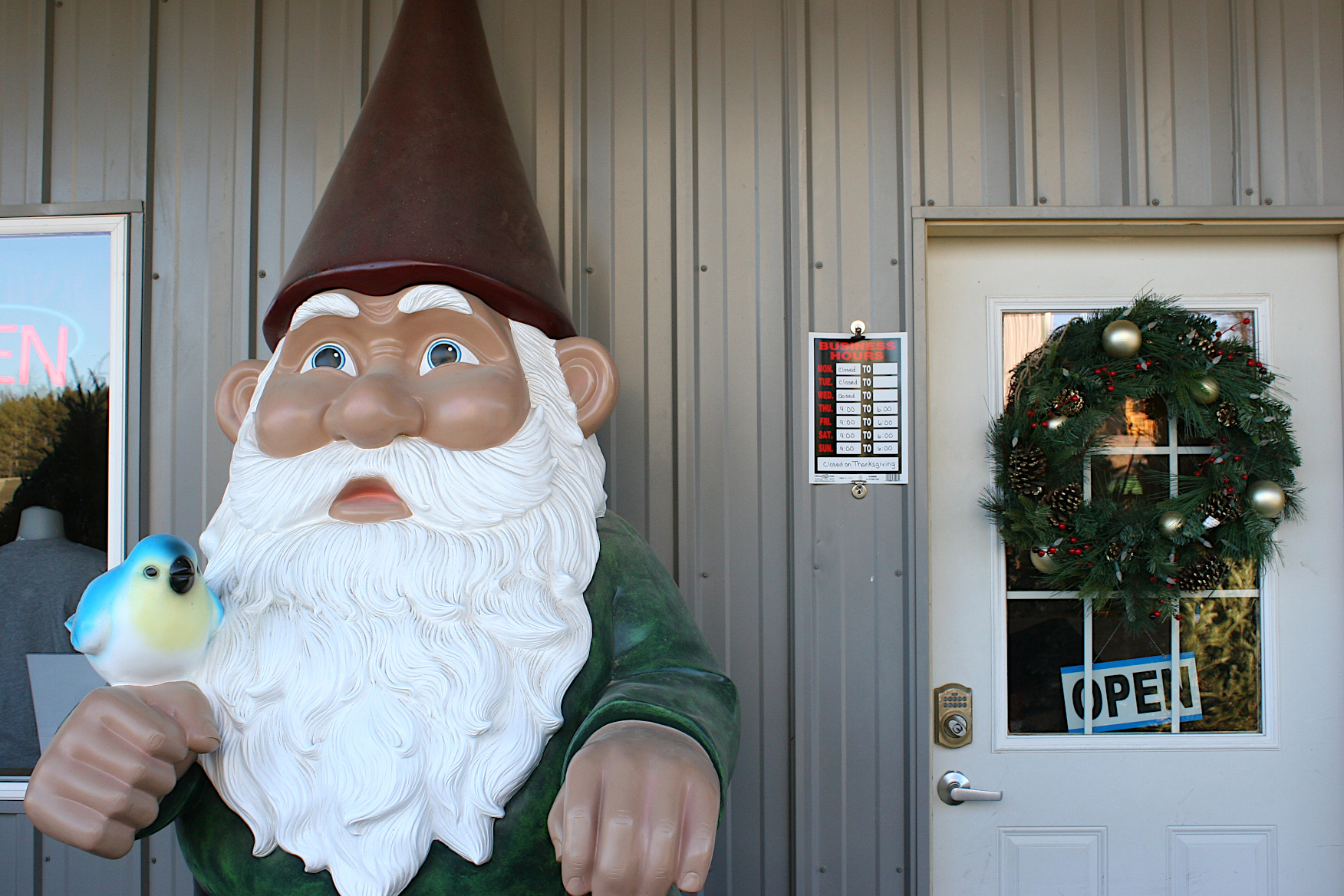
A gnome greets shoppers outside Apple Creek Boutique. (Minnesota Prairie Roots copyrighted photo)

TIS THE SEASON…to buy locally-grown apples.
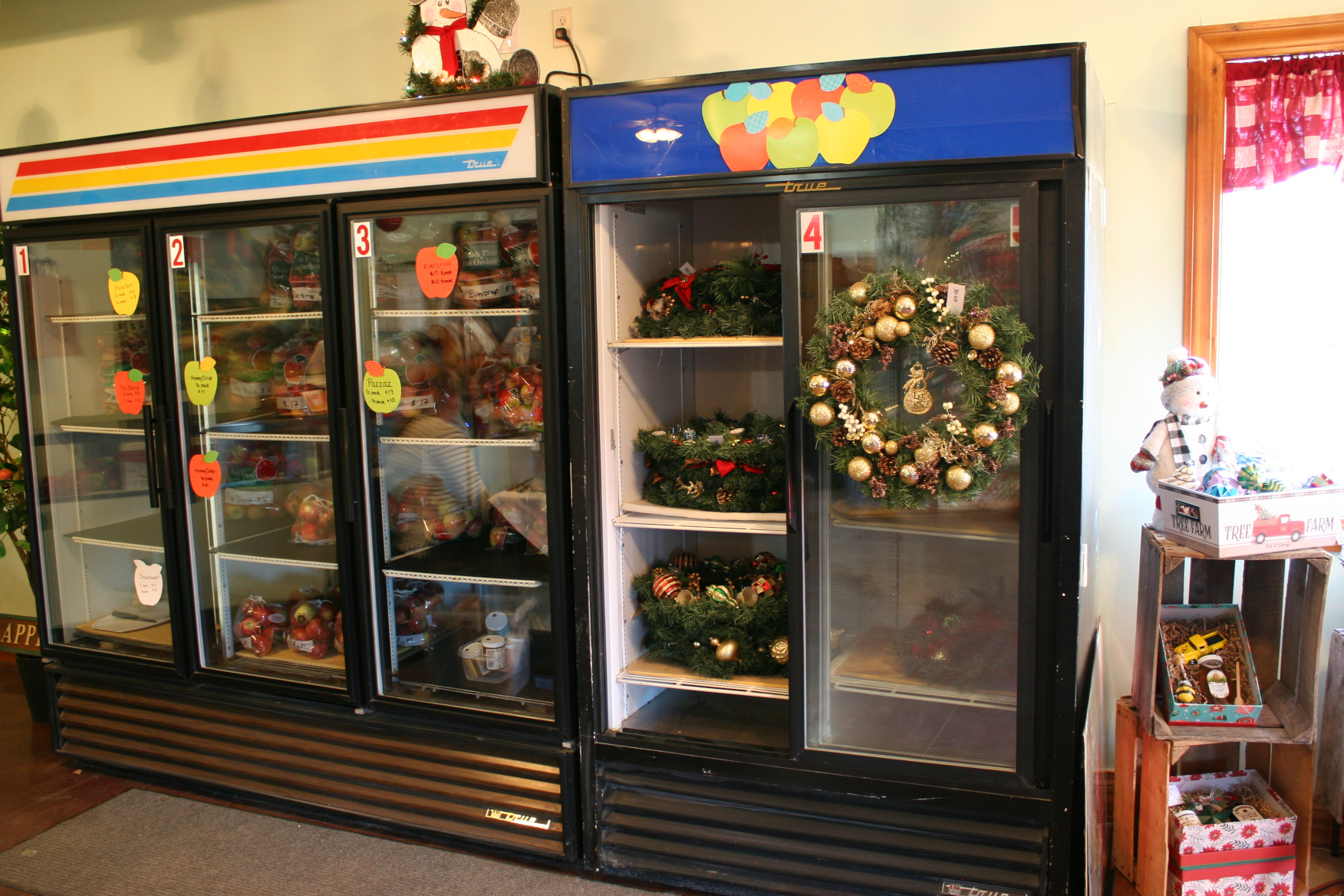
Apples and wreaths for sale. (Minnesota Prairie Roots copyrighted photo)

Saturday afternoon Randy and I aimed west out of Faribault to Apple Creek Orchard, 5524 185th Street West, for a bag of apples. But we found much more. We found Christmas and, more importantly, the Christmas spirit.
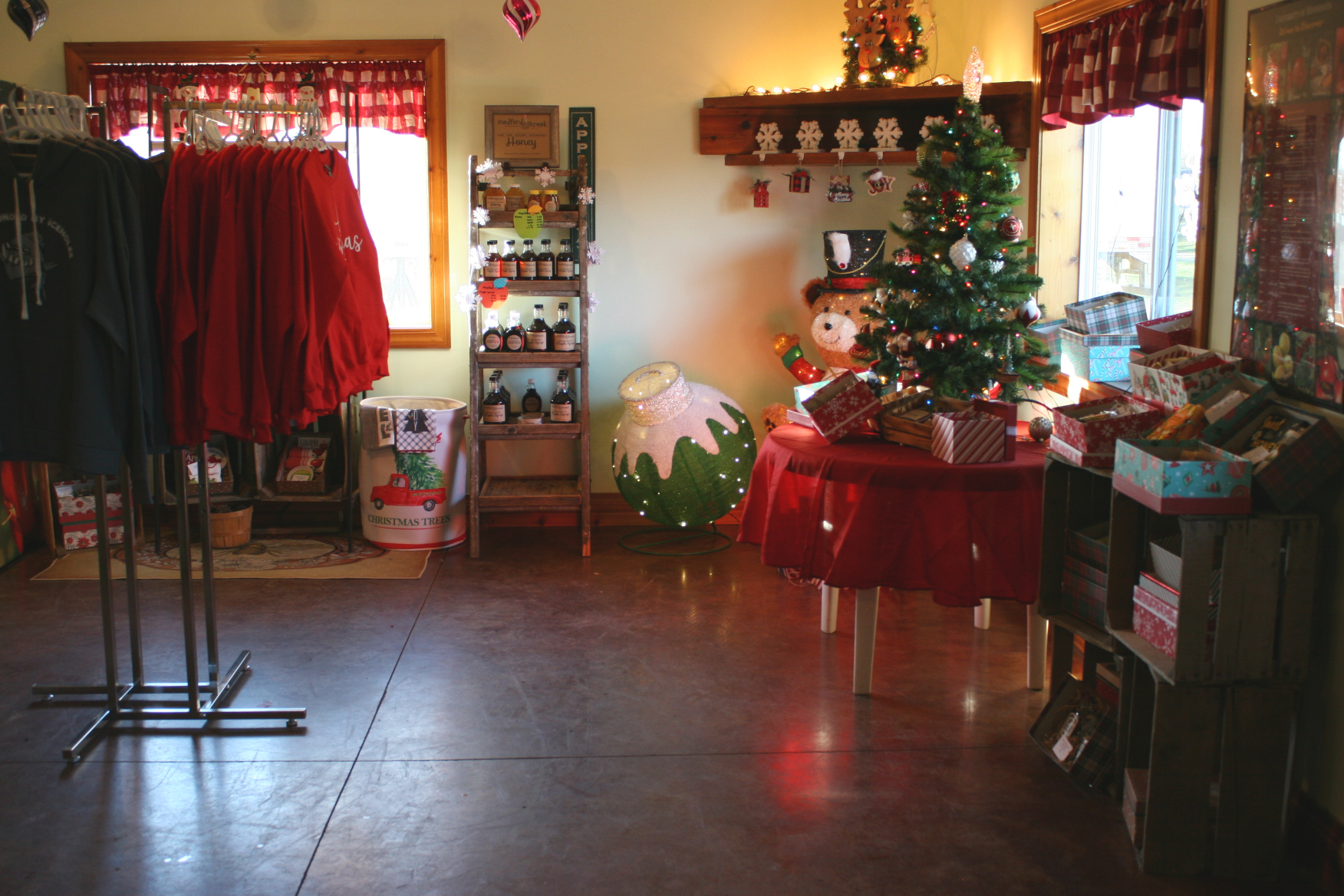
A snapshot of the boutique. (Minnesota Prairie Roots copyrighted photo)

This wasn’t just about picking up a bag of apples and then leaving. This was about lingering and engaging in a festive setting. This was about chatting with co-owner Tami Theis, who welcomed us with warmth. I felt like more than just a customer. I felt valued. Appreciated. As if I was talking to a friend. And that gives me reason to return (beyond just apples).
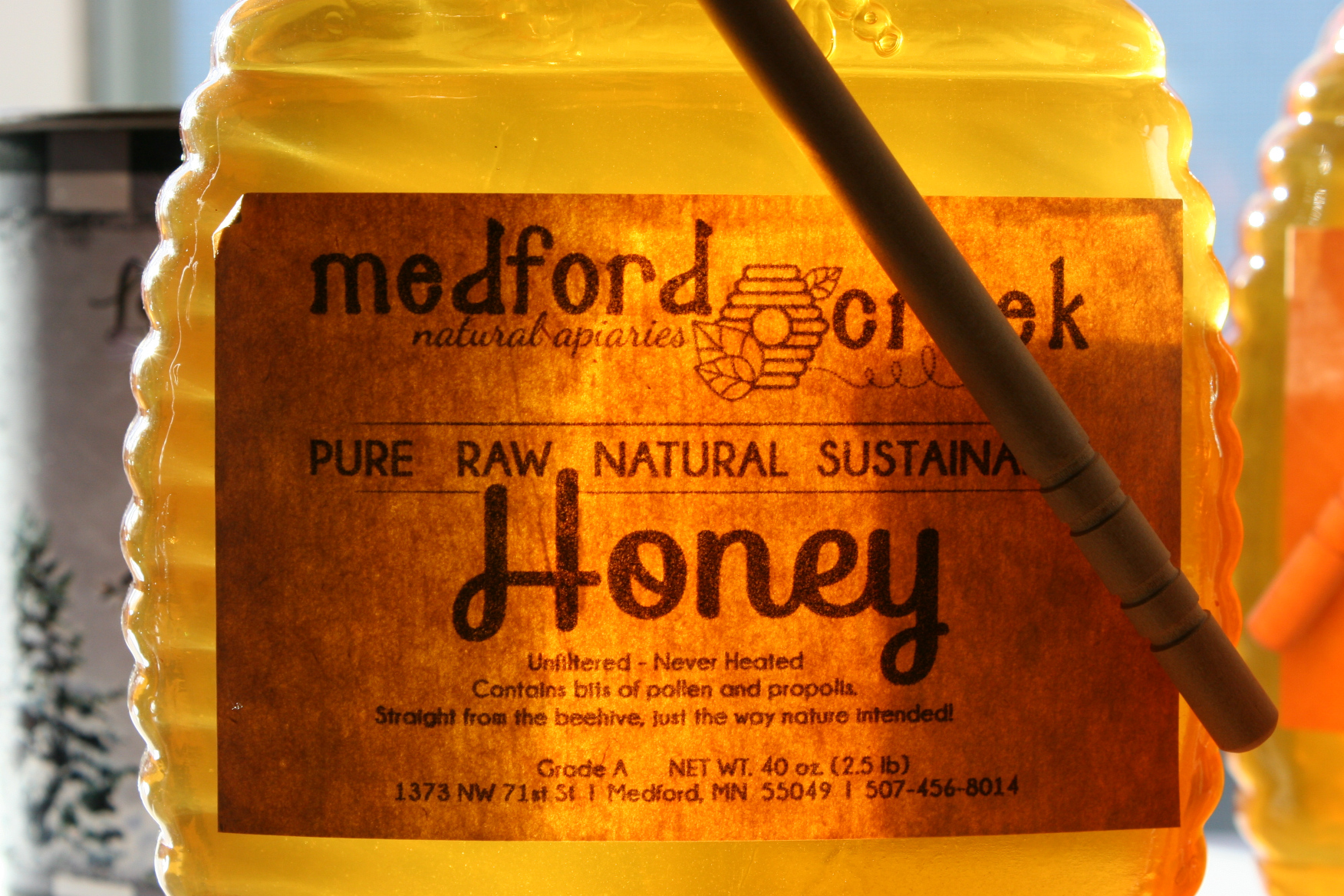
Honey (and maple syrup) from local producers is sold in the shop. (Minnesota Prairie Roots copyrighted photo)

Tami and her husband, Kevin, are new owners of the orchard purchased from Dan Ableman. During this visit and a previous one, Tami expressed her appreciation for Dan’s knowledge and help as they learn the ins and outs of operating an orchard.

Holiday wreaths for sale. (Minnesota Prairie Roots copyrighted photo)

But the couple is also infusing new ideas into a family-owned and operated agri-entertainment business. Wagon rides. Apple slinging. A corn maze. Photo props. All were a part of their fall offerings. And now they’ve transitioned to Christmas.
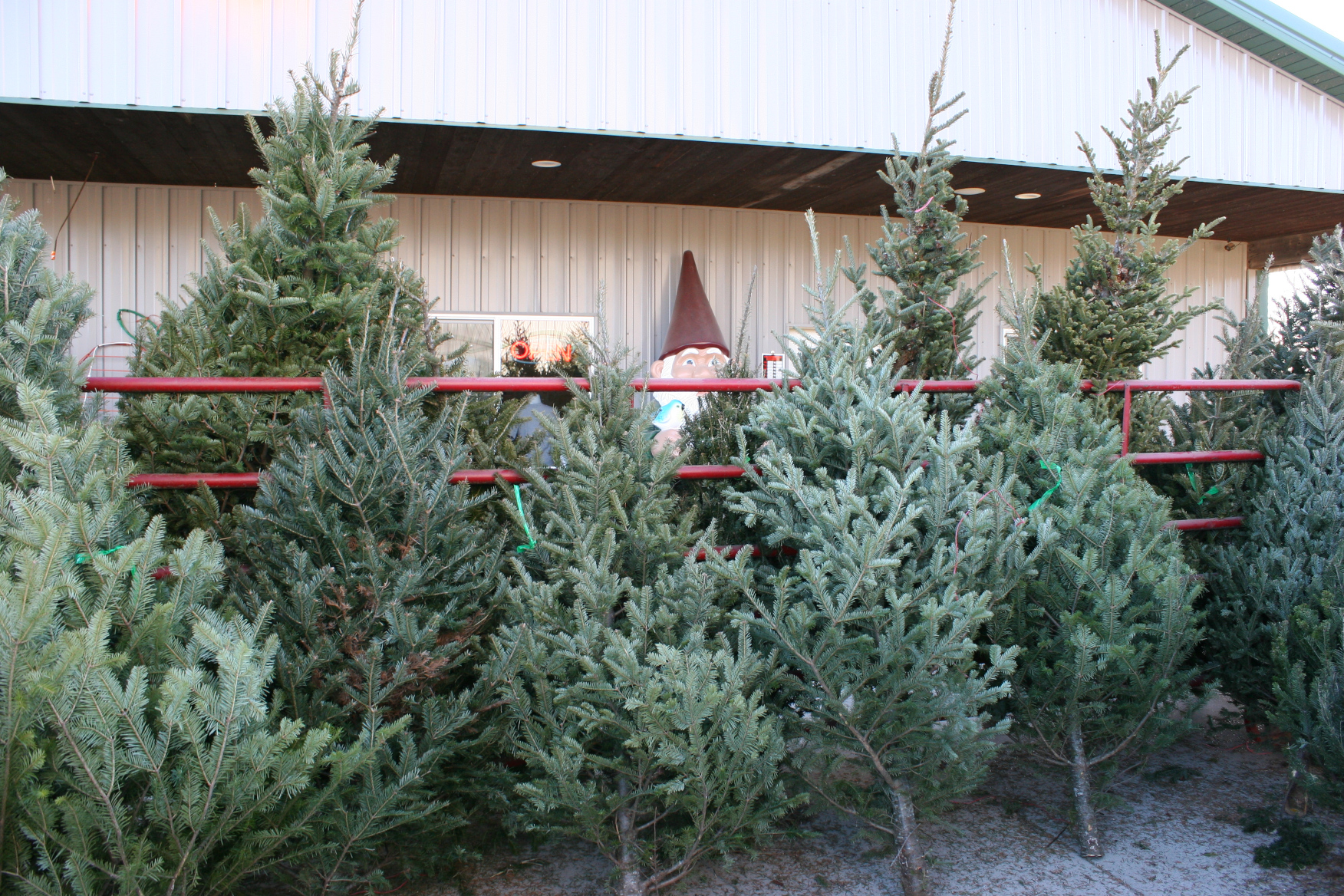
A gnome peeks from behind a row of Christmas trees at Apple Creek Orchard. (Minnesota Prairie Roots copyrighted photo)

As we entered the farmyard, I noticed immediately the Christmas trees fronting the poleshed style store. I had no idea Apple Creek sold trees. They do—Canadian fir at $10/foot—plus seasonal pots, wreaths and garlands.

An example of Geralyn Thelen’s beautiful fused glass art. (Minnesota Prairie Roots copyrighted photo)

And inside the boutique, which, yes, includes refrigeration units filled with bagged apples, there’s more. Clothing. Seasonal décor. Honey, Maple syrup. Gift boxes of local goods. And, on this Saturday, the fused glass art of Northfield artist Geralyn Thelen, who set up shop for the day. (She’s hosting a holiday open house from 10 am – 4 pm December 3-5 at her home studio, 2001 Lincoln Street South, Northfield. Guests are required to wear face masks. If you can’t attend, you are welcome to schedule an appointment. Call 507.581.1239.)
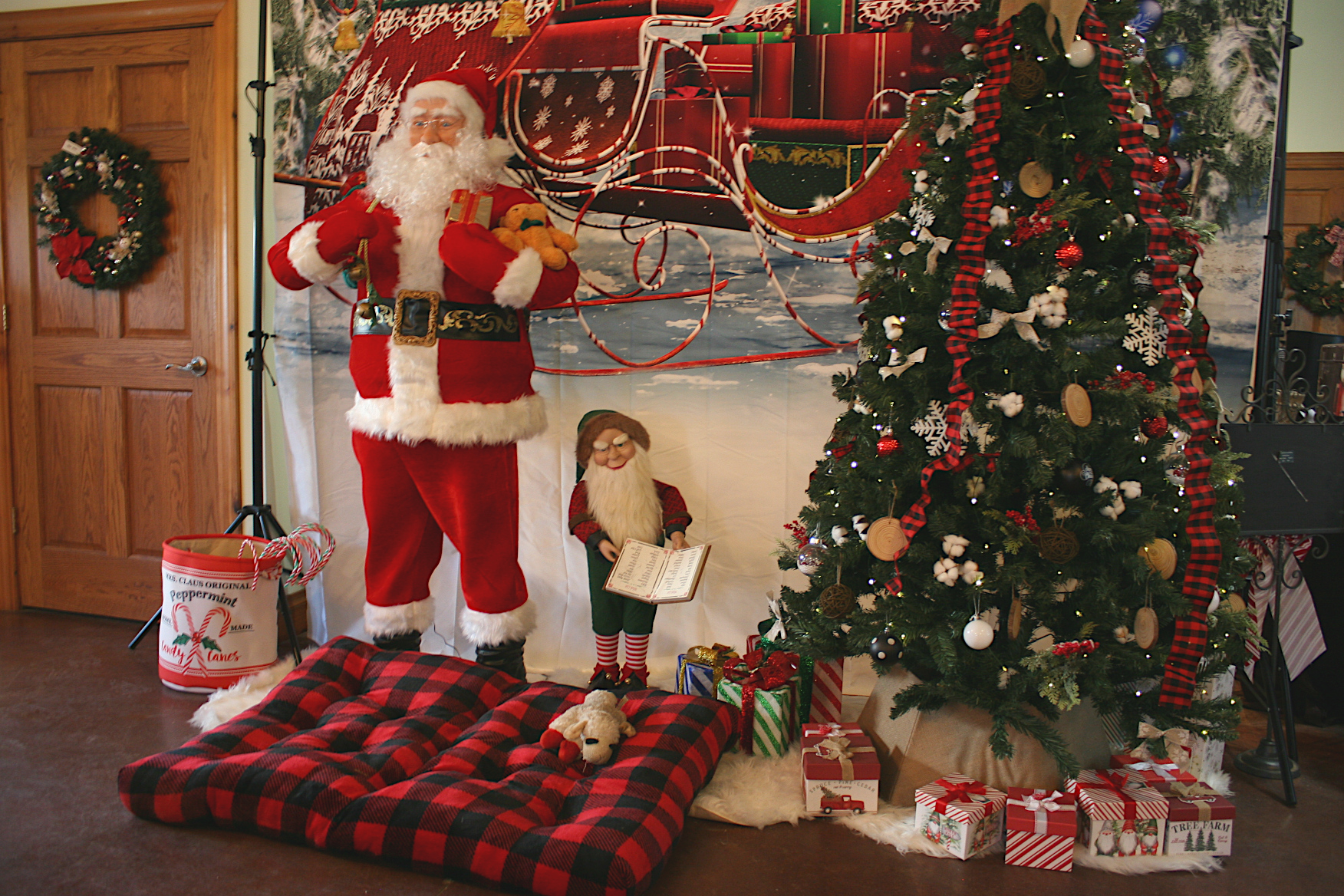
This Santa “talks” and moves. (Minnesota Prairie Roots copyrighted photo)

A life-sized animated Santa, standing near a Christmas tree and against a sleigh backdrop, adds to the holiday setting. The real Santa visits the orchard on Saturday, December 11, in a “Cocoa with Santa” by appointment event from 10 am – 4 pm. The cost is $20 for a 15-minute visit and photo with Santa. (Register on the website.)


Cider, coffee and cocoa are available from the beverage bar. (Minnesota Prairie Roots copyrighted photo)
I set my cider down to take photos outside. (Minnesota Prairie Roots copyrighted photo)

Tami set up a Hot Cocoa Bar inside the store, with offerings of not only cocoa, but also coffee and homemade apple cider. I highly-recommend the cider. I stepped outside to sip my beverage while perusing the trees corralled in portable fencing and seasonal décor staged among straw bales. The cider, hand-pressed at the orchard and made with Tami’s special recipe (cinnamon, nutmeg and oranges), was probably the best I’ve ever tasted. I stepped back inside to tell her that. Eventually, the Theises will sell their cider with Tami’s recipe included.
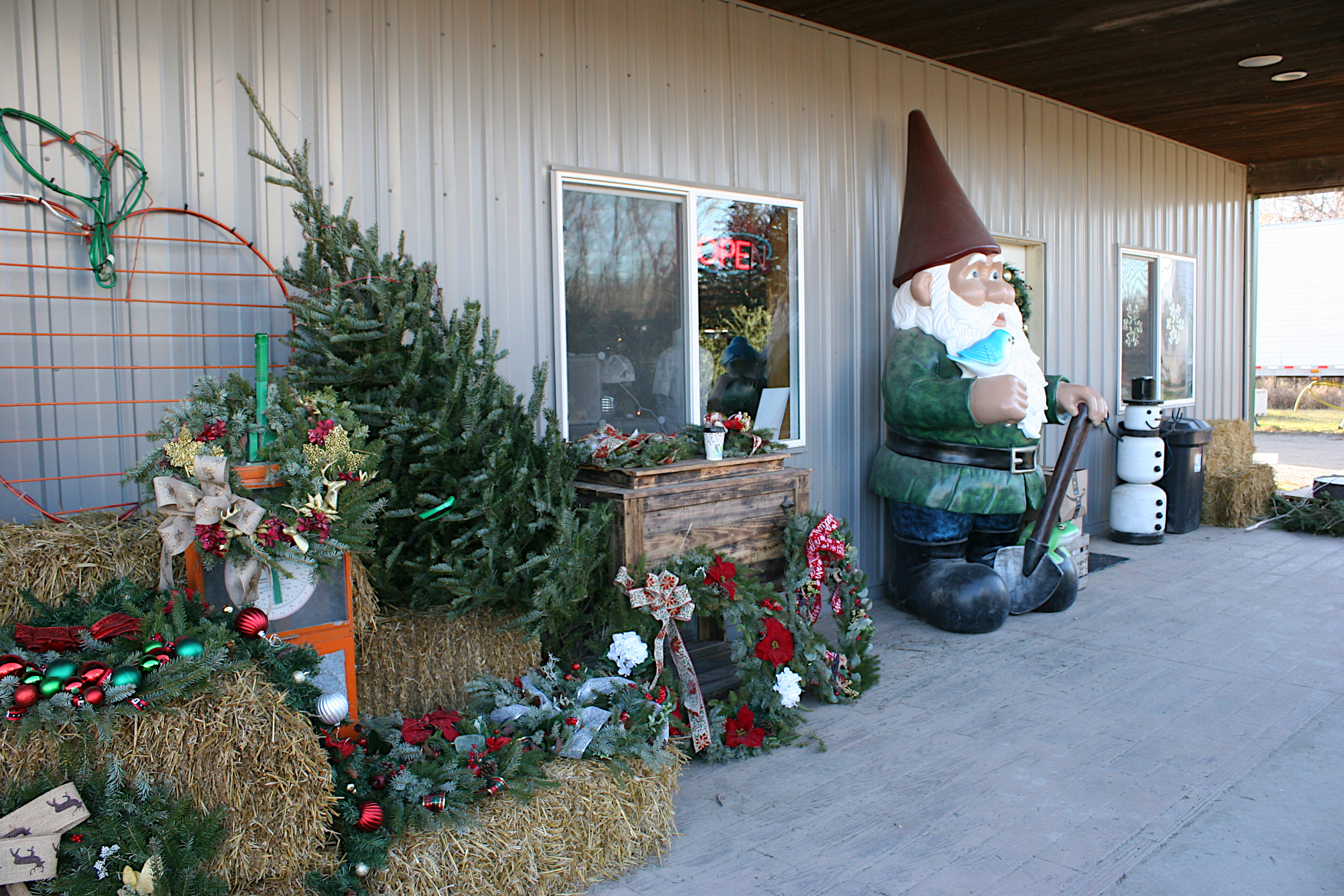
Fronting the store, holiday decor and that welcoming gnome. (Minnesota Prairie Roots copyrighted photo)

And come June 2022, if all goes as planned with contractors, the couple will open The Blossom event venue. A place for gatherings—wedding receptions, holiday parties, corporate events, graduation parties (two Theis kids will be the first) and other celebrations.

In keeping with their agri-entertainment goals, the Theises are also adding a wiffle ball field, which Tami says her husband is especially excited about. They’ll also offer homemade pizza, donuts, caramels and that cider I savored so much. I look forward to trying some or all. I fully expect the Theis family to succeed in their endeavor. They are a team. Committed. Enthusiastic. Hard-working. Friendly. They bring something new to the Faribault area. Already, Apple Creek Orchard is drawing customers from all over, including the metro. The Theis family is providing experiences, which create memories and bond families. All in a beautiful rural setting.

#

FYI: Apple Creek Orchard is currently open from 9 am – 6 pm Thursday-Sunday. Check the orchard Facebook page for updates.

© Copyright 2021 Audrey Kletscher Helbling


Reflecting on poet Robert Bly December 1, 2021

Books by Minnesota poet Robert Bly. (Minnesota Prairie Roots copyrighted photo)

AS A PUBLISHED POET, you might expect me to read a lot of poetry. I confess that I don’t. I should, because through reading and studying others who practice our crafts, we learn.

So I determined, upon hearing of the death of renowned Minnesota poet Robert Bly on November 21, that I would read more of his poetry. I’ve checked out every Bly book available at my local library: What Have I Ever Lost By Dying?, Talking into the Ear of a Donkey and Stealing Sugar from the Castle.

Interesting titles reveal likewise interesting poems crafted by an especially gifted writer.

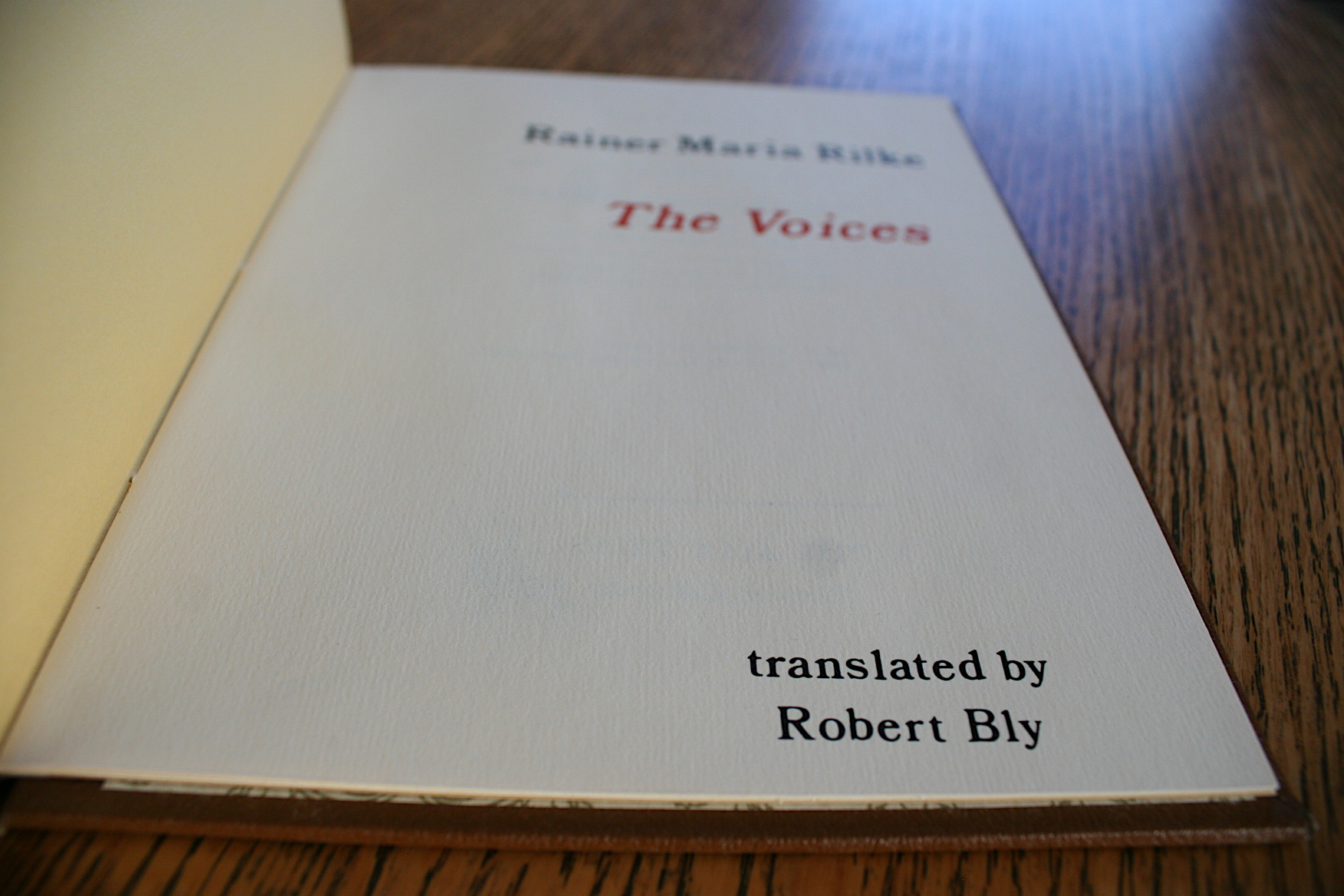
Robert Bly also translated poetry, here “The Voices” by Rainer Maria Rilke. (Minnesota Prairie Roots photo)

As I began to read Bly’s poems, I noticed the brevity. As any poet understands, each word in a poem must count. Bly seems especially adept at that. Poetry is perhaps the most difficult of writing genres.

I also see the influence of his upbringing on the southwestern Minnesota prairie. His roots are in Madison, near the South Dakota border. This small farming community is the self-proclaimed Lutefisk Capital of the US and home to a 25-foot-long fiberglass cod fish statue. Lutefisk is cod soaked in lye and a food of Norwegian heritage.

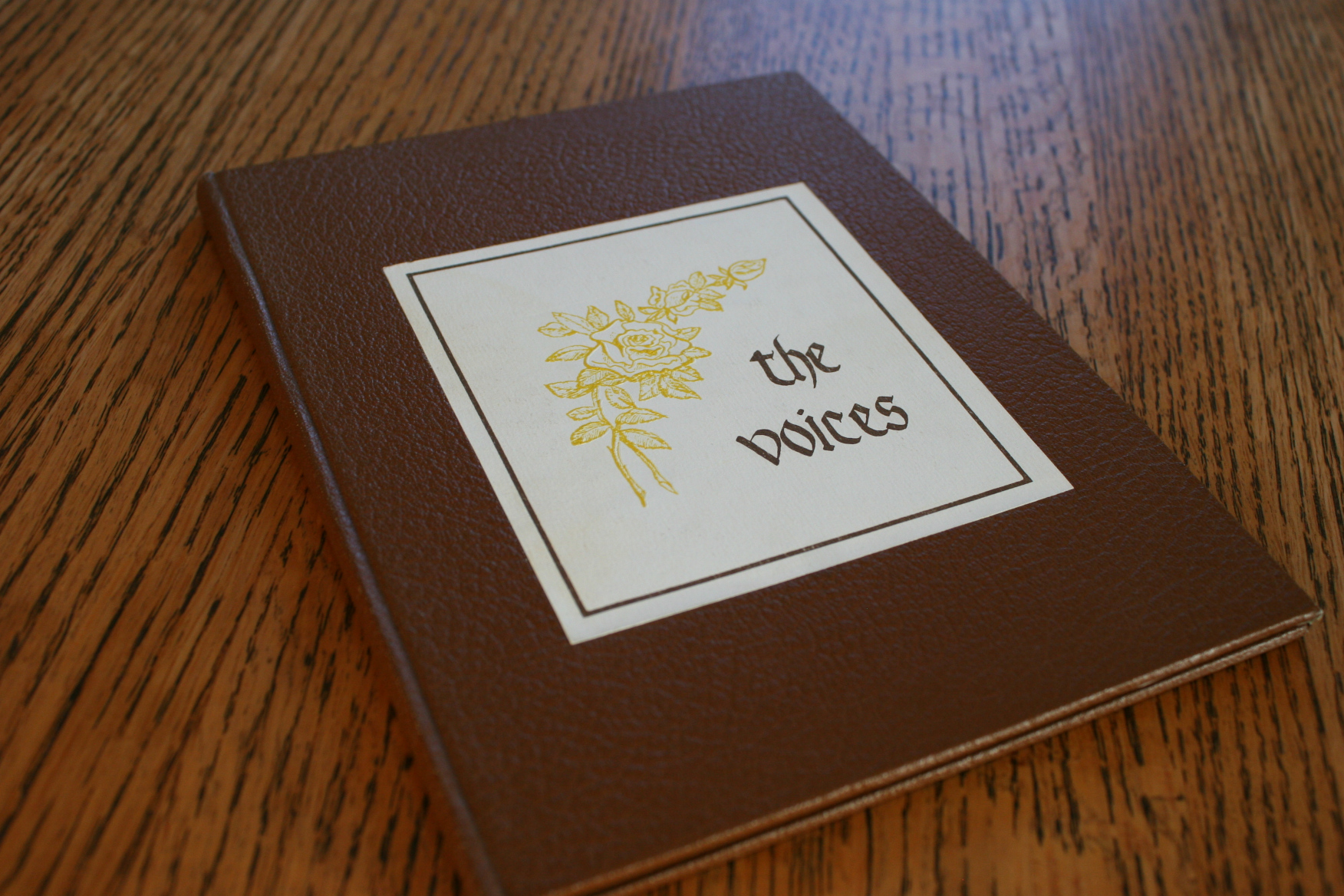
My copy of “The Voices,” translated by Robert Bly. (Minnesota Prairie Roots photo)

In Bly’s poetic voice, I hear rural reflected. From land to sky. Heritage strong. Faith interwoven. Solid work ethic. Agriculture defining small towns and occupations, threading through daily life. Bly writes with an awareness of his rural-ness, with a deep sense of place. I understand that given my roots on a southwestern Minnesota farm.

Yet, Bly’s writing isn’t defined solely by place. His world expanded when he joined the Navy after high school graduation, then attended St. Olaf College in Northfield for a year before transferring to Harvard. He pursued additional degrees. He was a prolific writer. A poet. An essayist. An activist.

While watching a public television documentary on Bly last week, I learned more about his activism. During the Vietnam War. In writing about men. He authored Iron John: A Book About Men, which remained on the New York Times Best Sellers List for 62 weeks. Sixty-two weeks. That’s saying something about Bly’s influence.

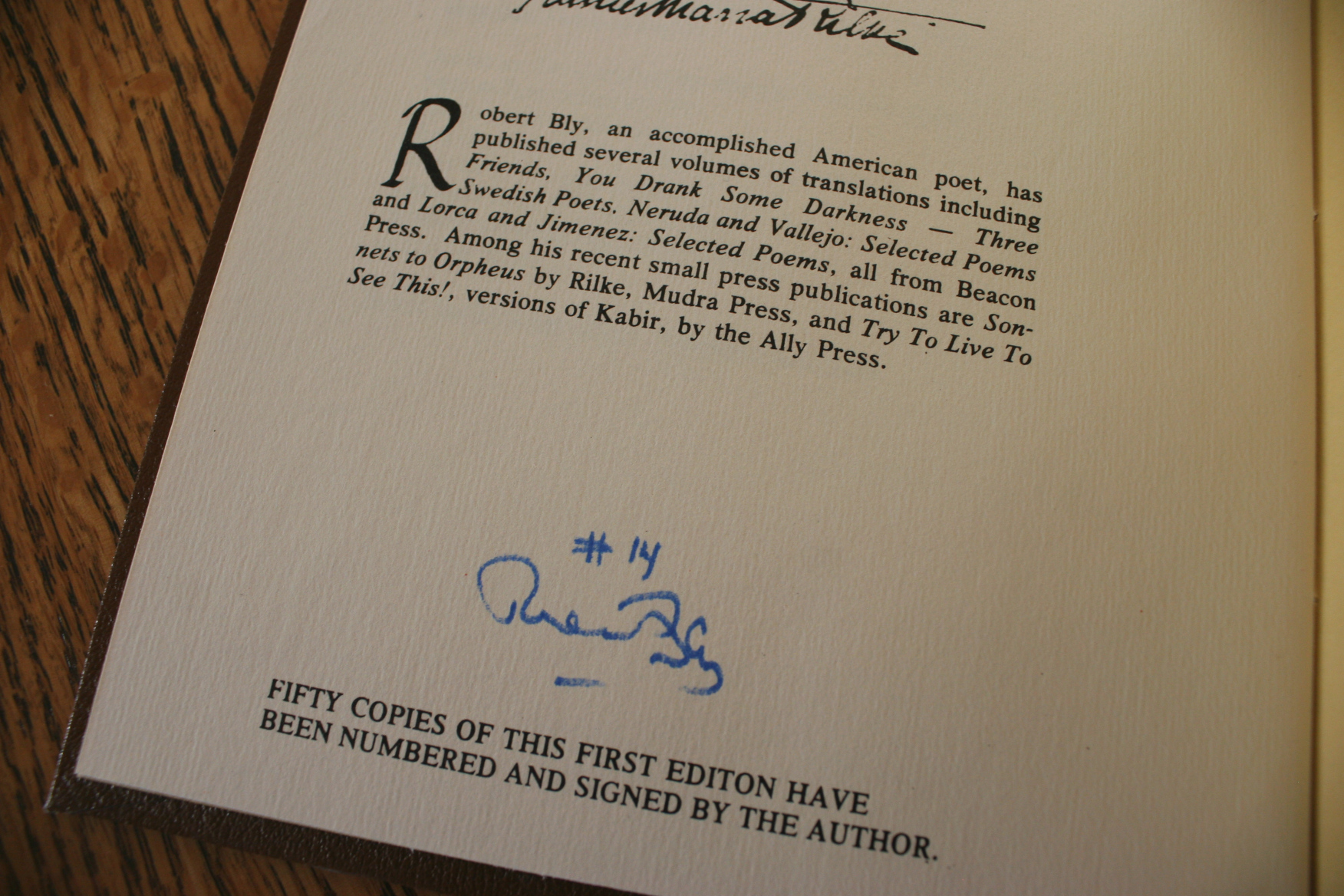
Robert Bly’s autograph in my first edition copy of “The Voices.” (Minnesota Prairie Roots photo)

He also translated the works of others, including Rainer Maria Rilke’s The Voices. It’s a slim volume of nine poems with a title poem. And I have a copy of that beautiful hardcover book, purchased several years back at a used book sale in Faribault. Mine is number 14 of 50 limited first edition copies published in 1977 by The Ally Press and autographed by Robert Bly. Now, upon the poet’s death, this collection holds even more significance. More value.

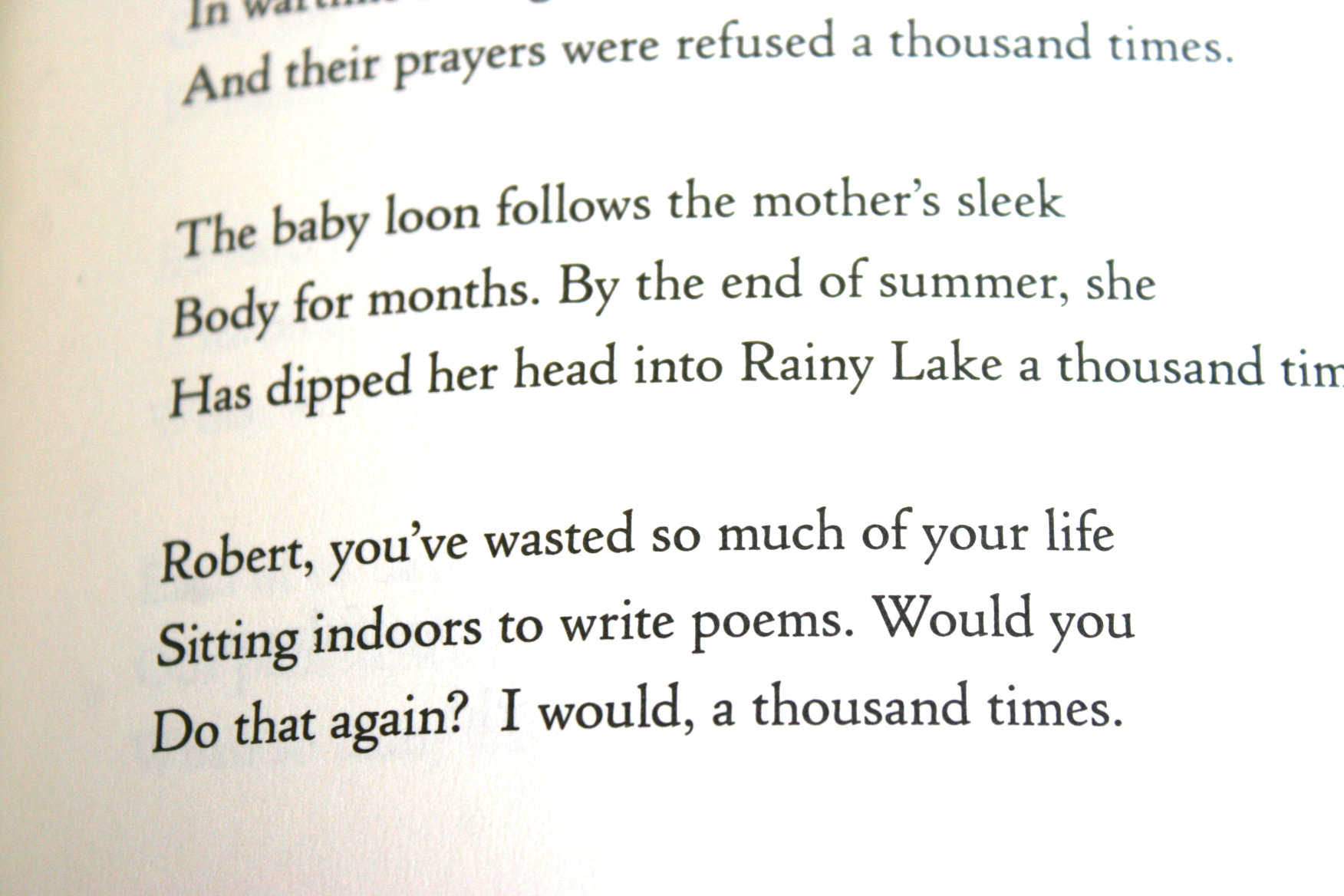
The final three lines in Bly’s poem, “Ravens Hiding in a Shoe,” summarize his passion for penning poetry. (Minnesota Prairie Roots photo)

Though Bly has passed at the age of 94, his legacy as a writer will endure. He scored many awards and accolades throughout his writing career. But I sense, even with that success, it was the craft of writing, the ability to pursue his passion for the written word, which he valued the most. That, too, I understand. For to write is to breathe.

#

FYI: To read another take on Bly, I direct you to gifted writer and poet Kathleen Cassen Mickelson, who blogs at One Minnesota Writer. She reflected on Bly in a post titled “Remembering Robert Bly.”

© Copyright 2021 Audrey Kletscher Helbling

 

Two men, two stories November 19, 2021

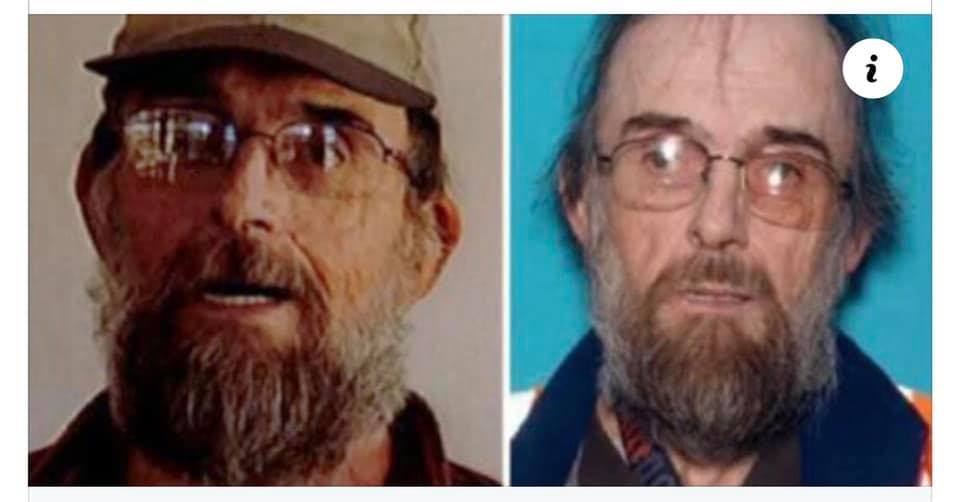
Missing: Daryl “Dice” Budenski (Photo credit: Search for Daryl Budenski Facebook Group)

HE’S BEEN MISSING since October 1. Daryl Budenski of Northfield, last seen at 3:30 pm near Koester Apartments, his home in Northfield.

This Saturday, November 20, his community will rally at Bridge Square at noon to raise awareness of the missing 71-year-old and to continue the search for “Dice,” as he is known. Northfield police term him an endangered missing person due to possible onset dementia.

The only clues in his disappearance are the discovery of his hat and money clip.

Law enforcement and volunteers have searched many areas in and around Northfield for Budenski, who is 5-foot 9-inches tall, weighs 145 pounds, with brown hair and brown eyes.

If you have any information about this missing man, contact Northfield police, the prime investigating unit, at 507-645-4477. Or if you can aid in the search on Saturday, show up at Bridge Square. Visit the search Facebook page for more information.

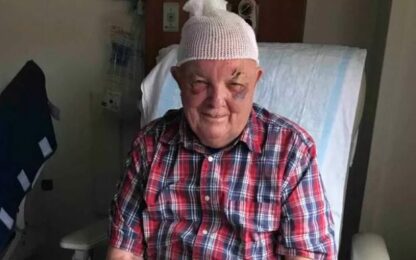
Arnie Lillo of rural Good Thunder (Photo credit: Go Fund Me page)

FROM THE EIFFEL TOWER to the Golden Gate Bridge. From Jesse James to Noah and his ark. From locomotive to Cinderella’s carriage. All are the creations of Minnesota artist Arnie Lillo of Timeless Images in Metal.

If this was a story about art, I would pen an endless list of this 83-year-old’s accomplishments. But this is not a story focused on Lillo’s sheet metal art. Rather, this is about a crime. He was the victim of a recent brutal attack.

On November 10, Lillo was attacked from behind and hit in the head with a hammer. He was able to drive to a neighbor’s home for help. A 34-year-old acquaintance is now charged in the crime which left the rural Good Thunder man hospitalized with serious injuries. Lillo is recovering, but in need of financial and emotional support.

A Go Fund Me page, “Arnie’s Angels,” has been set up with a goal of $10,000. I encourage you to contribute if you are able. I don’t know Lillo. But, from what I’ve read and viewed on his business website and Facebook page, I am impressed by his work and by how he has opened his rural property to anyone who wants to view his art. He finds great joy in sharing his creativity. And he is, clearly, much loved.

© Copyright 2021 Audrey Kletscher Helbling
 

More than just green fried tomatoes November 18, 2021

The vegetable garden outside Buckham Memorial Library, Faribault, Minnesota.(Minnesota Prairie Roots copyrighted file photo August 2020)

AT THE END of the growing season a few weeks back, I walked into Buckham Memorial Library and spotted a stash of green tomatoes free for the taking. To say that I reacted with joy might be an understatement.

I felt practically giddy at the thought of preparing green fries, a coveted food I haven’t eaten in years because…I don’t have a garden.

A green tomato in the library garden. (Minnesota Prairie Roots copyrighted photo August 2020)

But, back in the day, my mom planted a sprawling garden, growing vegetables to feed our farm family of eight. Green fries were a summer-time to harvest staple as were the tomatoes left to ripen on the vine.

Items grown in the library garden are free for the taking to the community. (Minnesota Prairie Roots copyrighted file photo August 2020)

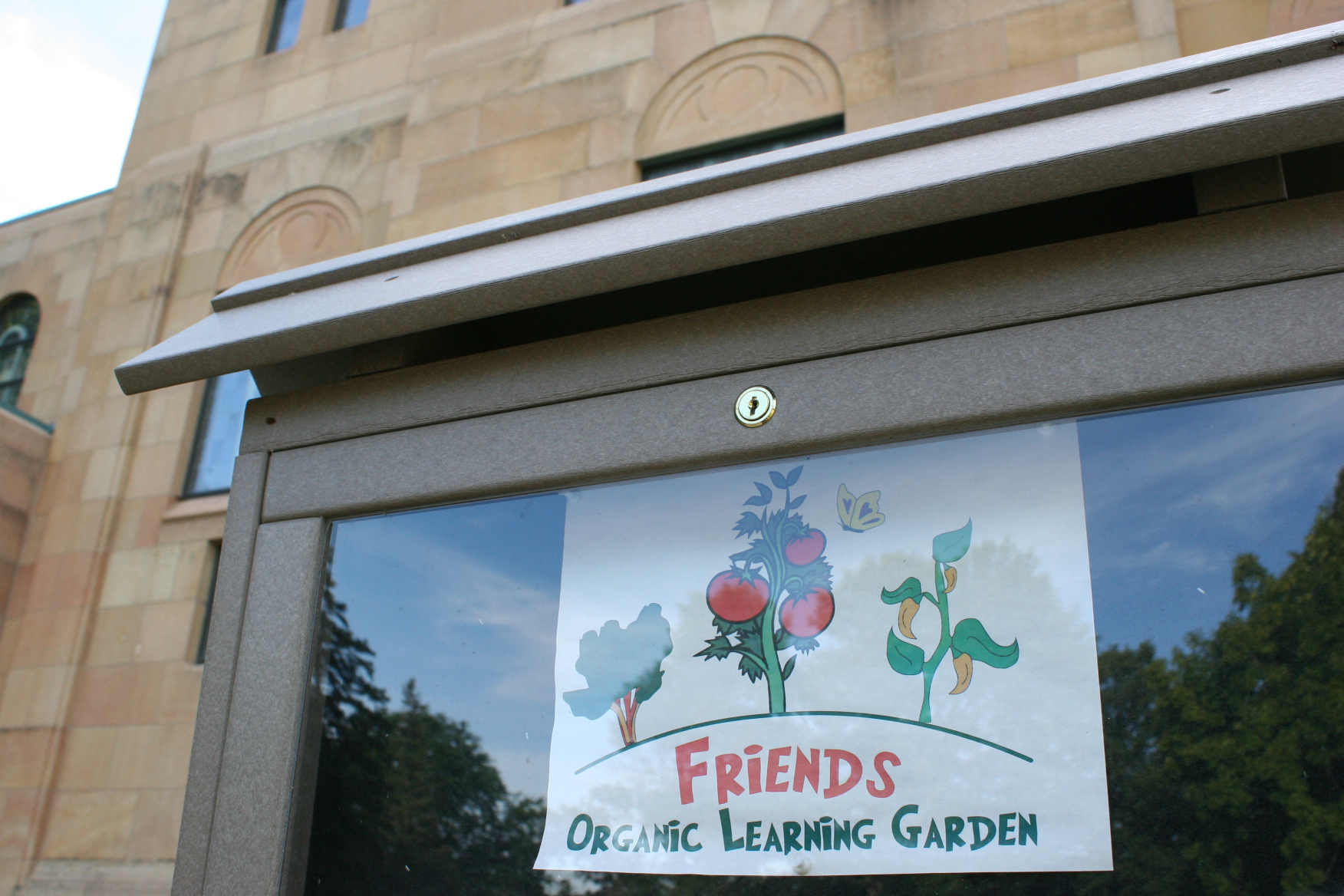
Earlier this summer and fall, when I stopped at The Friends Organic Learning Garden on the library’s east side to look for produce, I noticed choice green tomatoes. I was tempted to pick a few. Who would miss the green orbs? But my conscience prevailed and I walked away empty-handed.

Perfect for making green fries. (Minnesota Prairie Roots copyrighted photo October 2021)

So when those green tomatoes appeared inside the library, I quickly took four, reining in my greedy impulse to grab more.

Step one: Slice the tomatoes. (Minnesota Prairie Roots copyrighted photo October 2021)

The next day, I sliced two of those beautiful green tomatoes, dipped both sides in all-purpose white flour and laid the slices into a hefty cast iron skillet sizzling with butter. Lots of butter. I ground on fresh black pepper, sprinkled on salt and then waited for the slices to brown, flipping and seasoning and adding butter as needed.

Frying the tomatoes to golden brown. (Minnesota Prairie Roots copyrighted photo October 2021)

The result: golden circles of green-fried tomatoes that tasted of sun and sky and earth. And of yesterday’s garden.

As I forked into the savory rounds, I thought of Mom and how she spaced tomato plants evenly in the tilled soil and ringed each with a rusty tin can opened on both ends. The cans protected the tender plants from the prairie wind and cold. I remember pouring water into those cylinder reservoirs, overflow sometimes flooding the surrounding ground. When the plants edged over the cans, Mom removed the weather shields.

To me, green fries rate as much more than a food I enjoy. They are part of my culinary family history. A connection to my now 89-year-old mom who, though no master chef, did her best to feed her family with food sourced from our farm.

TELL ME: Do you have a favorite food tracing to your childhood and that you crave today? I’d like to hear. And, have you ever eaten, or made, green fried tomatoes?

© Copyright 2021 Audrey Kletscher Helbling
 

Thoughts & choices & frustrations during this pandemic November 17, 2021

Filed under: Uncategorized — Audrey Kletscher Helbling @ 5:00 AM
Tags: , , , , , , ,
I took this photo in downtown Faribault on May 15, 2020. It remains my personal most powerful early local documentation of the pandemic. (Minnesota Prairie Roots copyrighted file photo May 2020)

I DISLIKE CONFLICT. I prefer decency, kindness and respect. I’d rather we all just got along. Listened. Stopped all the political jockeying and spread of misinformation. Cared about one another. Really cared. That would be ideal.

But this is not Utopia, especially not now during a pandemic. I am beyond frustrated. We’ve risen to new levels of disagreement and disconnect that threaten our health and our relationships, even our democracy. I find myself faced with sometimes heartwrenching choices as I try to protect my health and that of those I love most.

WHOOPING COUGH WAS BAD ENOUGH

A severe viral infection, which my husband caught at work and then passed along to me in mid-August, showed just how vulnerable I am to respiratory infections. While this week-long-plus infection had all the marks of COVID-19, it was not. We both tested negative. (Yes, we were fully vaccinated and recently got our boosters.) Yet, this reminded me of my need to be careful. Sixteen years ago I developed a severe case of whooping cough that lasted for three months and required an inhaler and steroids to help me breathe. (Yes, I was vaccinated for pertussis, but that protection wears off, unbeknownst at the time to me. Staying current on vaccines is essential.)

When I asked my doctor back in 2005 where I could have contracted whooping cough, he replied, “You could have gotten it waiting in line at the grocery store.” I was his first adult diagnosed case in 30-plus years of practicing medicine. I never want to be that ill again.

PROTECTING MYSELF & OTHERS

I have made, and will continue to make, choices that best protect me and my closest family circle from COVID-19. With young grandchildren and also a mother in a long-term care center, I am not willing to take chances with their health or mine. Because of high COVID rates in Minnesota, I haven’t seen my mom since July.

In the past nearly two years, I’ve opted out of grad parties, family reunions and gatherings with friends that included unvaccinated and unmasked individuals. I also stopped attending in-person worship services earlier this summer for the second time during this pandemic. I don’t feel comfortable being in enclosed spaces (beyond brief passing) with people who may or may not be vaccinated and who are unmasked.

I’ve missed funerals, attending only one since this whole pandemic began. And that was my father-in-law’s in February, pre-vaccination. It was a horrible experience, trying to keep my distance from the half-maskers and unmasked, too often repeating that I wasn’t hugging or shaking hands because, um, we’re in a pandemic.

STRAINED RELATIONSHIPS

Already, family relationships feel strained as I struggle to understand why some extended family refuse to get vaccinated. And then feel it’s OK to attend family get-togethers. I expect to make some difficult choices soon about whether to attend upcoming holiday gatherings. If unvaccinated adults are in attendance, I likely won’t be. Not because I don’t trust the vaccine, but because there’s always some risk and it’s a matter of principle. I don’t want to, by choice, be around individuals I know to be unvaccinated.

CARE, COMMON SENSE & OUR CHILDREN

And then there are those daily life occurrences which trigger concern. Like the unmasked teenage grocery store cashier who ran her fingers around her mouth. Then checked out my groceries.

Early on in the pandemic, playgrounds were off-limits to kids, including this one at North Alexander Park in Faribault. (Minnesota Prairie Roots copyrighted photo March 2020)

Months ago at the playground, I watched my granddaughter run up and down a tunnel slide with another little girl. The whole time I wondered, should I allow her to do this? In the end, I did, mostly because they were outdoors and in constant motion. I find myself feeling especially protective of my two grandchildren. The day my 5-year-old granddaughter got her first vaccine dose, I felt incredible joy. I cannot wait for the nearly 3-year-old to become eligible for his COVID vaccine.

Week Day, 6, a first grader at Park Side Elementary School in Marshall, MN., died of COVID on April 25, 2021. Photo source: Hamilton Funeral Home.

It’s true that, generally, if kids get COVID, they experience milder cases. But some have also ended up severely ill in the hospital and others have died. I will take every preventative measure I can to keep my dear grandchildren healthy and safe.

I recognize we each have different comfort levels. I tend to believes the experts, to be a rule follower, to want to do my part to keep others safe via vaccination and mitigation. I trust health and science. If public health officials are recommending we wear masks indoors, regardless of vaccination status, I will do exactly that. Not that I need them advising this. Common sense and knowledge of the highly-contagious Delta variant are enough for me to mask up, keep my distance and more. I would never think of going into surgery (and I’ve had many surgeries in my life) with an unmasked healthcare team, pandemic or not.

OVERWHELMED IN MINNESOTA, A COVID HOTSPOT

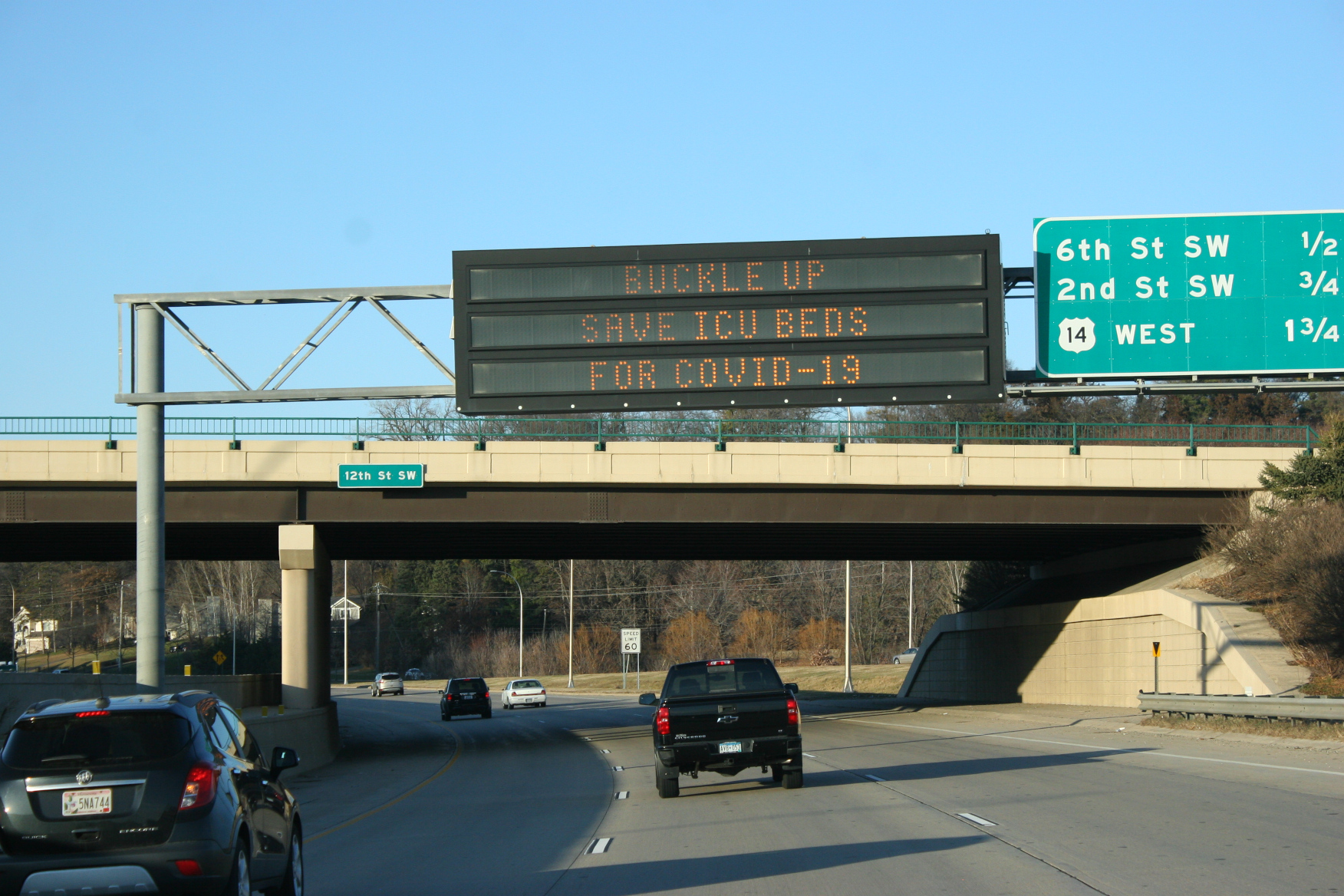
I photographed this from the passenger seat of our van as we drove through Rochester in November 2020. I’d like to see a message now stating, GET VACCINATED & save ICU beds for anyone who needs one. (Minnesota Prairie Roots copyrighted file photo November 2020)

Minnesota, for the past week up until Tuesday, had the distinction of experiencing the highest COVID infection rate in the country. Michigan now ranks first. Minnesota hospital beds are filling or are full with few ICU beds available. People continue to die at at an alarming rate from COVID. And it’s not just individuals in their 70s and older any more. COVID is killing those in their 60s, even 30s and 40s and younger. Sometimes even teens. Long-haul COVID is also afflicting many, too many.

Minnesota’s overwhelmed healthcare system concerns me as it affects anyone who needs care. Not just those with COVID. Despite all of this, too many Minnesotans are still refusing to get vaccinated.

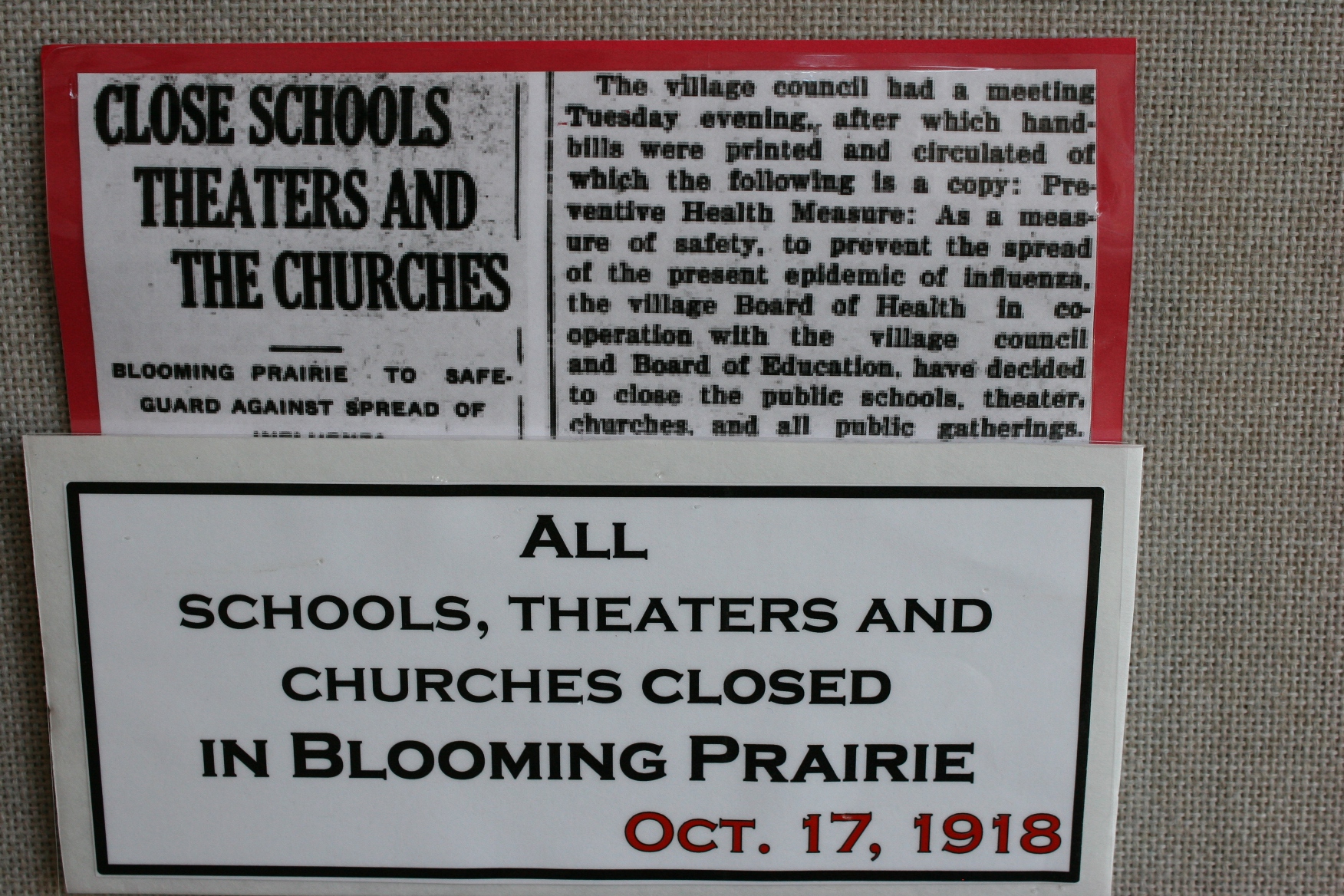
I want this pandemic to end. But right now I don’t foresee that happening any time soon…unless we start acting like we care about one another. How? Get vaccinated (and that includes boosters). Wear a face mask. Social distance. Stay home when sick. Practice other proven COVID mitigation measures. We have the power to stop COVID-19. This isn’t 1918. But sometimes it sure seems like 103 years ago, despite advances in science and knowledge and an understanding of how this virus spreads.

#

NOTE: I will not publish anti-vaccine or anti-masking comments on this, my personal blog. Likewise, I will not publish misinformation, etc. as it relates to COVID and vaccines.

© Copyright 2021 Audrey Kletscher Helbling
 

Sleuthing through “Mailbox Mysteries” crafted in Cannon Falls November 15, 2021

I used a magnifying glass to study this vintage Cannon Falls area map, among clues in the “Gangster’s Gold” mystery. (Minnesota Prairie Roots copyrighted photo November 2021)

THE “Mailbox Mysteries” SIGN POSTED in the front window of a downtown Cannon Falls insurance agency, drew my interest. I’ve always appreciated a good mystery and I wanted in.

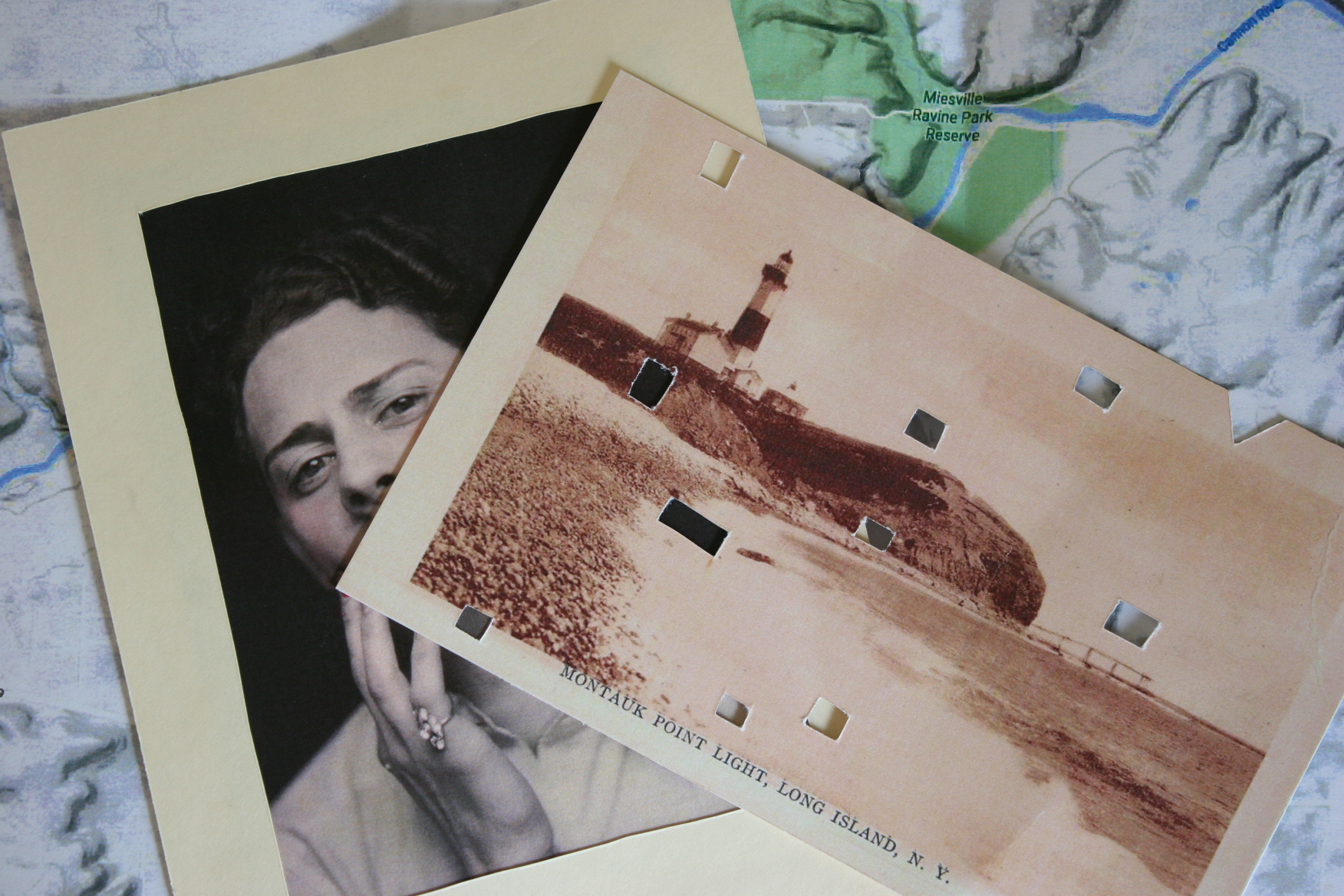
So I headed to the nearby library, home base for the mysteries, to inquire about the featured Gangster’s Gold mystery. Within a week I received an introductory letter about notorious gangster and bootlegger Dutch Schultz and his $50 million treasure hidden somewhere in the Cannon River Valley.

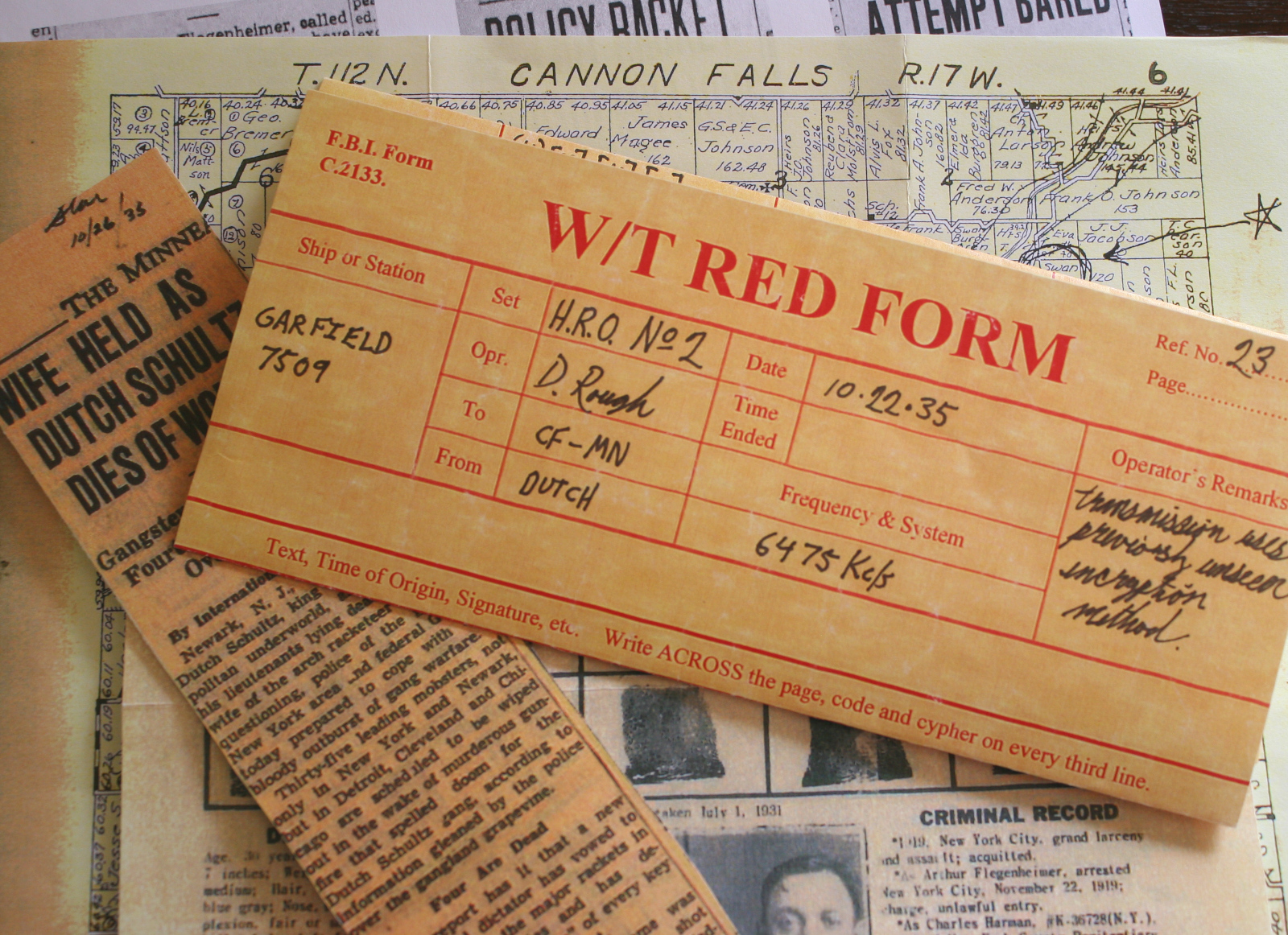
Background and clues. (Minnesota Prairie Roots copyrighted photo November 2021)

Channeling my inner Nancy Drew, I determined to locate that treasure. If only my sleuthing skills matched my enthusiasm. Right from the start, I couldn’t figure out how to fold, and then use, a Tri-Hexa-Flexa-Coder to de-code a secret message. I needed help. My friend Stephani, who once considered becoming a private investigator but stuck to family genealogy, solved the folding/coding problem.

I realized solving this mystery would not be easy. Exactly as “Mailbox Mysteries” creator Matthew Stelter, Teen and Adult Services Librarian in Cannon Falls, likely intended. He created this interactive mystery series last winter as an outreach program for library patrons stuck at home during COVID-19 and, as he said, “tired of a life lived entirely through a computer screen.” At that time, the library building was closed to visitors. All of the clues for his mysteries are sent via US mail to the home-based investigators.

Eventually, Stelter crafted six mysteries—five for adults and a math-based set, “Postcard Puzzles,” for kids 12 and under. A bit overwhelmed by managing all of those mysteries, Stelter has since tweaked and downsized the “Mailbox Mysteries” to three.

The final clues to locate the hidden treasure. (Minnesota Prairie Roots copyrighted photo November 2021)

His past experience developing escape rooms and murder mysteries shows in “Mailbox Mysteries.” I admire his ability to craft a fictional mystery rooted in facts with added local elements. He uses newspaper clippings, photos, letters, historical documents, maps, coded messages (he created the code for the challenging Hexa-Flexagon) and more in believable story lines.

A seemingly authentic newspaper article, for example, references the long-ago Fleckenstein Brewery in Faribault and a possible connection to the underworld. Turns out that story was pure fiction as is gangster and bootlegger Dutch Schultz’s connection to Minnesota. He never had ties here, although many gangsters did. Rather, he lived in New York, where his treasure is rumored to be hidden. Schultz died in a gang shoot-out.

So much to consider in solving “Gangster’s Gold.” (Minnesota Prairie Roots copyrighted photo November 2021)

In the end, I found the location of the $50 million treasure after hours of dissecting documents—yes, I became a bit obsessed—and using a magnifying glass to better view details on a map. Stelter rewarded me with a personalized Certificate of Commendation and advised me to bring a shovel to dig deep for the buried treasure.

These three items were in the first mailing of “Spy School” mystery. (Minnesota Prairie Roots copyrighted photo November 2021)

Now I’m on to the next “Mailbox Mysteries,” Spy School. I’ve received my introductory letter, a brochure for the Vera Atkins Spy Academy and an encoded note warning that the school is compromised.

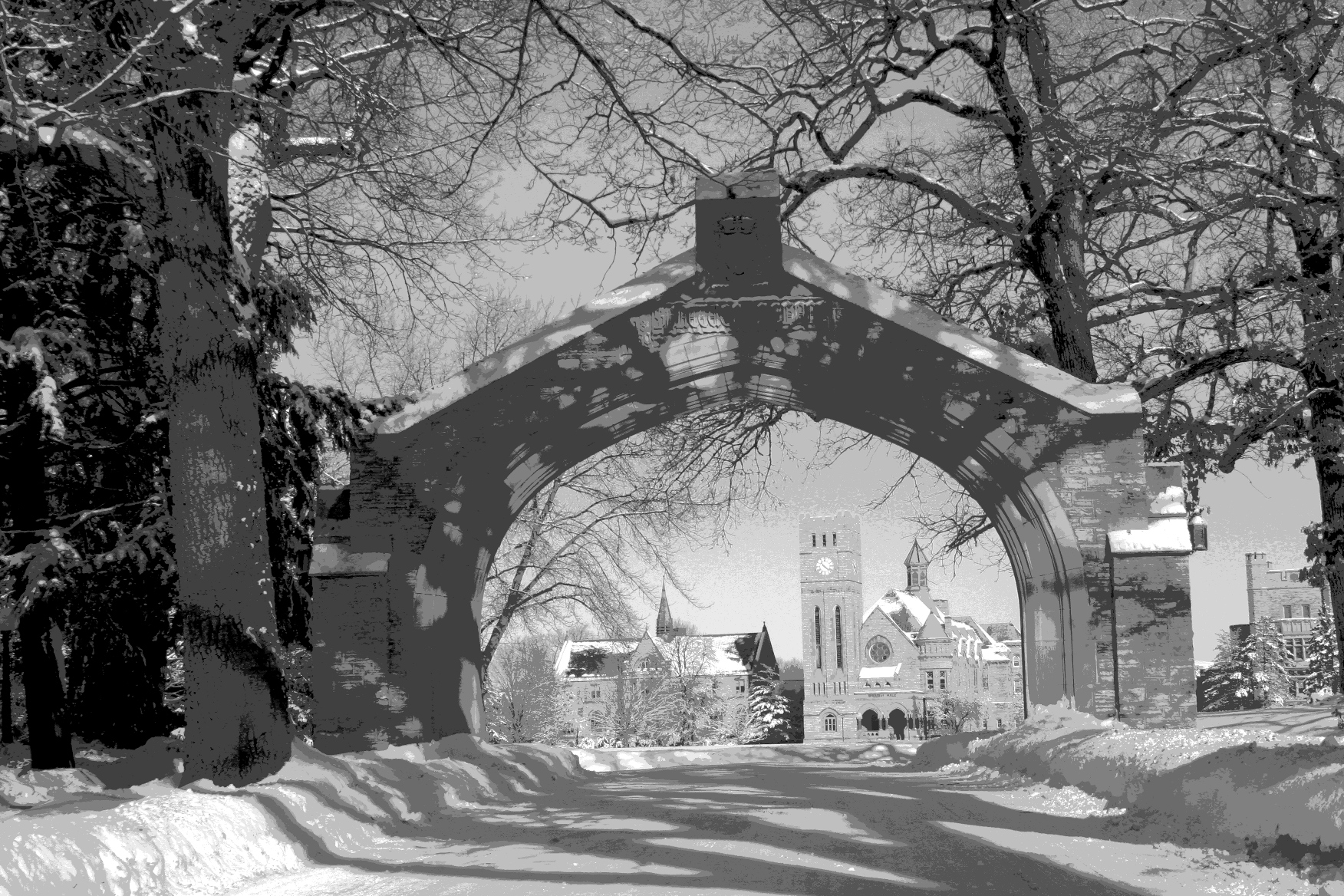
The arched entry to Shattuck-St. Mary’s School, upper campus, in Faribault. (Minnesota Prairie Roots copyrighted file photo)

VASA happens to be in Faribault, as printed in a brochure so professionally done that I would think the academy really existed if I didn’t recognize the photos of Shattuck-St. Mary’s School. Stelter lived at Shattuck for 10 years. I’m also semi-familiar with the campus so I’ll see if that familiarity helps in solving the mystery. As in Gangster’s Gold, I expect this mystery writer to weave more local details into the fictional story line.

While I await the next set of clues, I invite you to join the team of private investigators. Stelter welcomes all Nancy Drew, Hardy Boys, Sherlock Holmes types to register by November 30. Simply email your request for Spy School along with your name and complete snail mail address to: mstelter (at) selco (dot) info

Be forewarned, though, that these mysteries are challenging and time-consuming. Yet so worth the satisfaction of solving and of reaching into your mailbox to find, not a bill, but rather the efforts of a talented and creative librarian.

The third “Mailbox Mysteries,” Cypher Cabin, will be available starting December 1.

Good luck, sleuths.

© Copyright 2021 Audrey Kletscher Helbling
 

The journey November 12, 2021

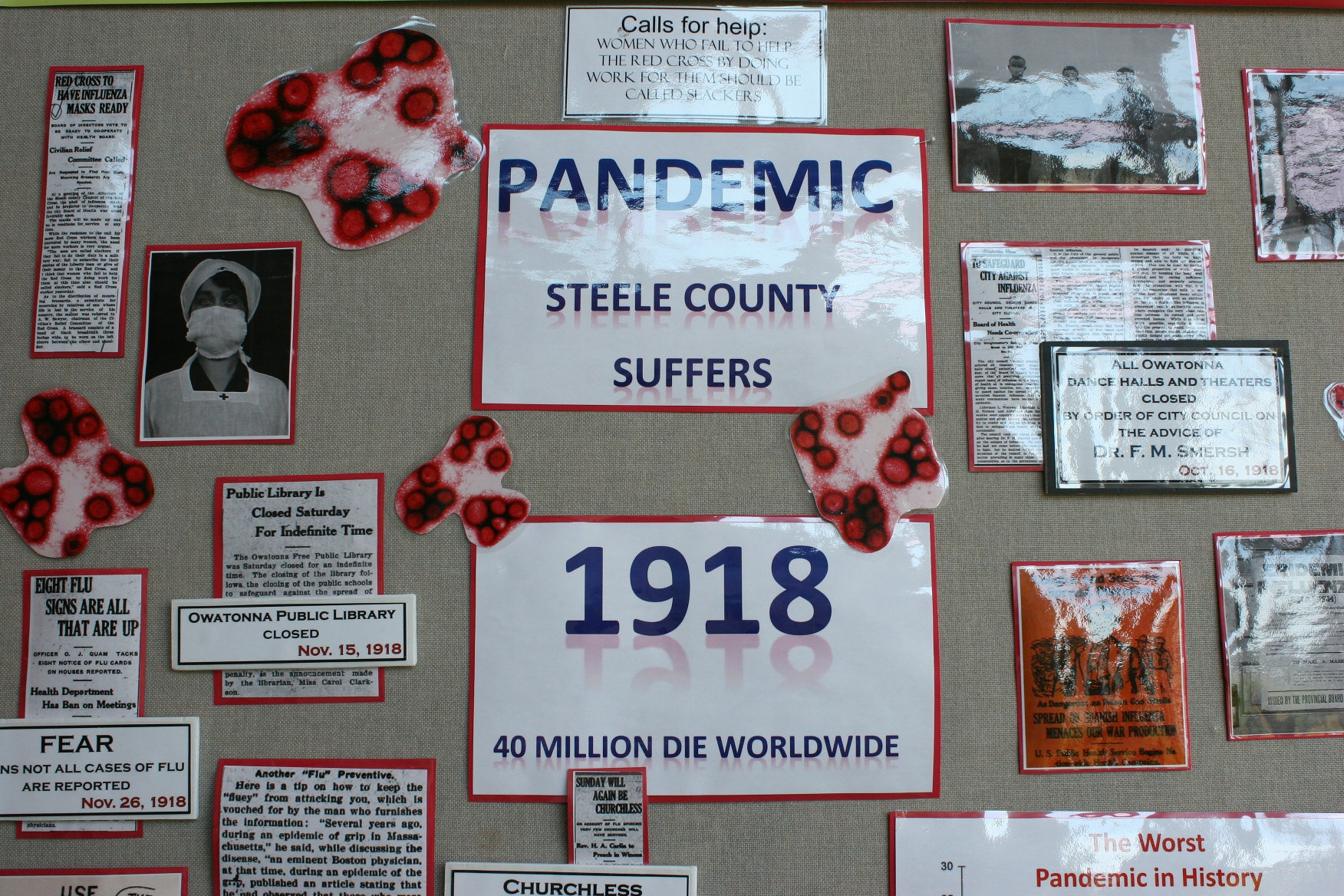
Featured in a 2016-2017 “Minnesota Disasters” exhibit at the Steele County History Center in Owatonna. (Minnesota Prairie Roots copyrighted file photo 2016)

ONCE UPON A TIME in The Land of Plenty, a waif of a girl and her mother wound through the packed dirt and cobblestone streets of their remote village.

Sometimes they walked side-by-side. Other times the wee girl trailed her mother. But when they reached the village square, where a raucous crowd had gathered, they clasped hands and quickened their pace. The pair wanted to avoid the angry villagers crowded around The Village Know-It-All. He stood high above the throng, encouraging them to resist all attempts by The Ministry of Health and other officials in a far away city to stop The Great Invader.

His voice boomed authority across the square. “Stand strong,” he urged. “There is no need to defend yourselves against The Great Invader. He poses no threat. Stories of his strength are greatly exaggerated. There is no need to arm yourselves with protective gear or to hide or to avoid each other. There is no need for a potion to keep you safe. That’s nonsense. Lies. No one can tell us what to do! No one!”

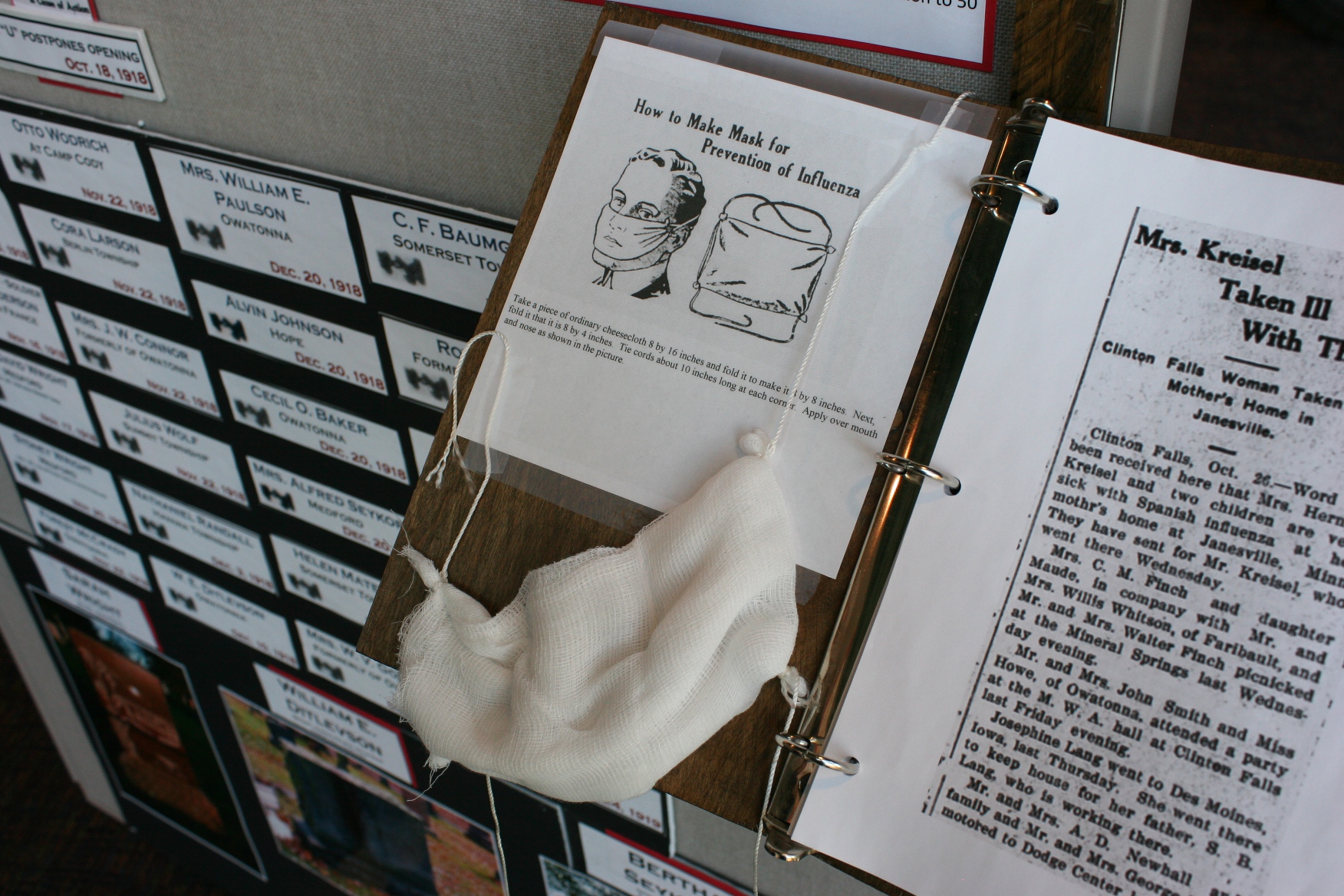
Masks, precautions and isolation helped protect against the flu epidemic. To the left in this photo are names of Steele County residents who died from the flu in 1918. (Minnesota Prairie Roots copyrighted file photo 2016)

DEATH & DENIAL ALL AROUND

As mother and daughter fled, reaffirming cheers created a deafening din. The two wanted nothing more than to escape the ire and untruths that raged.

Soon the pair passed The Village Center for Healing where an overflow of the sick and dying lay in cots along the street. While the ill-informed words of The Village Know-It-All droned on, echoing through the streets, the ill struggled with fits of coughing, gasping for breath. Fevers wracked their bodies and some lay stone still, perhaps already dead.

The mother shuddered in fear, clenching her daughter’s hand, distancing them as best she could along the narrow pathway.

They pressed on, passing the marketplace where vendors and villagers crowded among wagons heaped with grain, potatoes and overripe tomatoes. The mother had heard stories of villagers stealing the rotting tomatoes to lob at healers. She couldn’t understand why the healers—those who toiled endless days and nights to care for the sick—were now targeted, viewed as traitors. She could only trace that hatred to The Village Know-It-All and his followers who continued to spew misinformation about The Great Invader.

Activities that brought people together, including here in southern Minnesota, were suspended during the flu outbreak. (Minnesota Prairie Roots copyrighted file photo 2016)

INSIDE THE VILLAGE SCHOOL

Soon they reached the village school where children scratched sticks across the dirt yard. Inside, other students crammed onto benches in cramped, windowless rooms made of clay walls and dirt floors. After her daughter shared of the crowded conditions, of sick classmates and no efforts to keep The Great Invader out of school, the concerned mother kept her daughter home. She could not fathom risking her daughter’s health or life. Already a long-time elder educator had succumbed to The Great Invader and another, much younger teacher, lay gravely ill.

THE DARKNESS OF GRIEF, THE LIGHT OF HOPE

Just beyond the school on the outskirts of town, the duo passed by the graveyard. To their right, a cluster of villagers circled as the local gravedigger lowered a pine box into a dark hole. The heartbreaking wails of mourners pierced the air. The mother recognized many of the grieving for theirs was a small village. Sadness clenched her thoughts. She knew this much-loved elder had succumbed to The Great Invader, although his family and friends denied the truth. The Office of Truthfulness posted a daily record in the village square and she had seen the man’s name on that list before The Village Know-It-All ripped down the official death document.

Witnessing such grief and observing the cemetery grounds marked by countless rectangles of black, mounded dirt, the mother hurried on. Past a simple marker with a familiar name. She hoped to reach a distant, much larger, village by nightfall. There she would accept the preventative potion to protect her beloved child. Just as she had sought out for herself many months earlier. She’d waited for this day, through the grief of losing her husband to The Great Invader only weeks before the magical potion was created and distributed, then subsequently destroyed by The Village Know-It-All. She focused on the journey at hand, through her weariness and grief, determined, filled with hope.

#

NOTE: In every story exists truth, this one no exception. This story about The Great Invader (COVID-19) is part of an ongoing series on the topic. If you read my previous posts, you understand that I believe science and health. I support vaccines and other measures to keep us all safe.

Minnesota is currently in a precarious place with COVID-19 cases at a 2021 high, few ICU hospital beds available and deaths increasing.

I welcome comments, but will not give voice to anti-vaccine, anti-masking, etc. viewpoints and misinformation on this, my personal blog. I moderate all comments.

© Copyright 2021 Audrey Kletscher Helbling
 

A letter to Dad on Veterans Day November 11, 2021

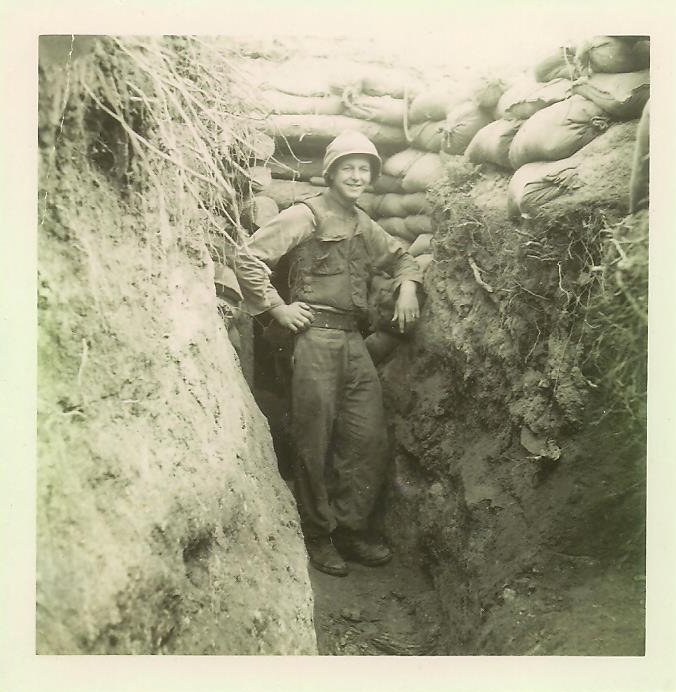
U.S. Army Cpl. Elvern Kletscher, my father, in the trenches in Korea. (From my father’s photo collection)

DEAR DAD,

I’m sorry.

I’m sorry I didn’t take the time to ask. And then to listen.

I’m sorry I didn’t recognize earlier that you were suffering.

I’m sorry I was too busy with my own life and family to realize that I could have, should have, tried to understand.

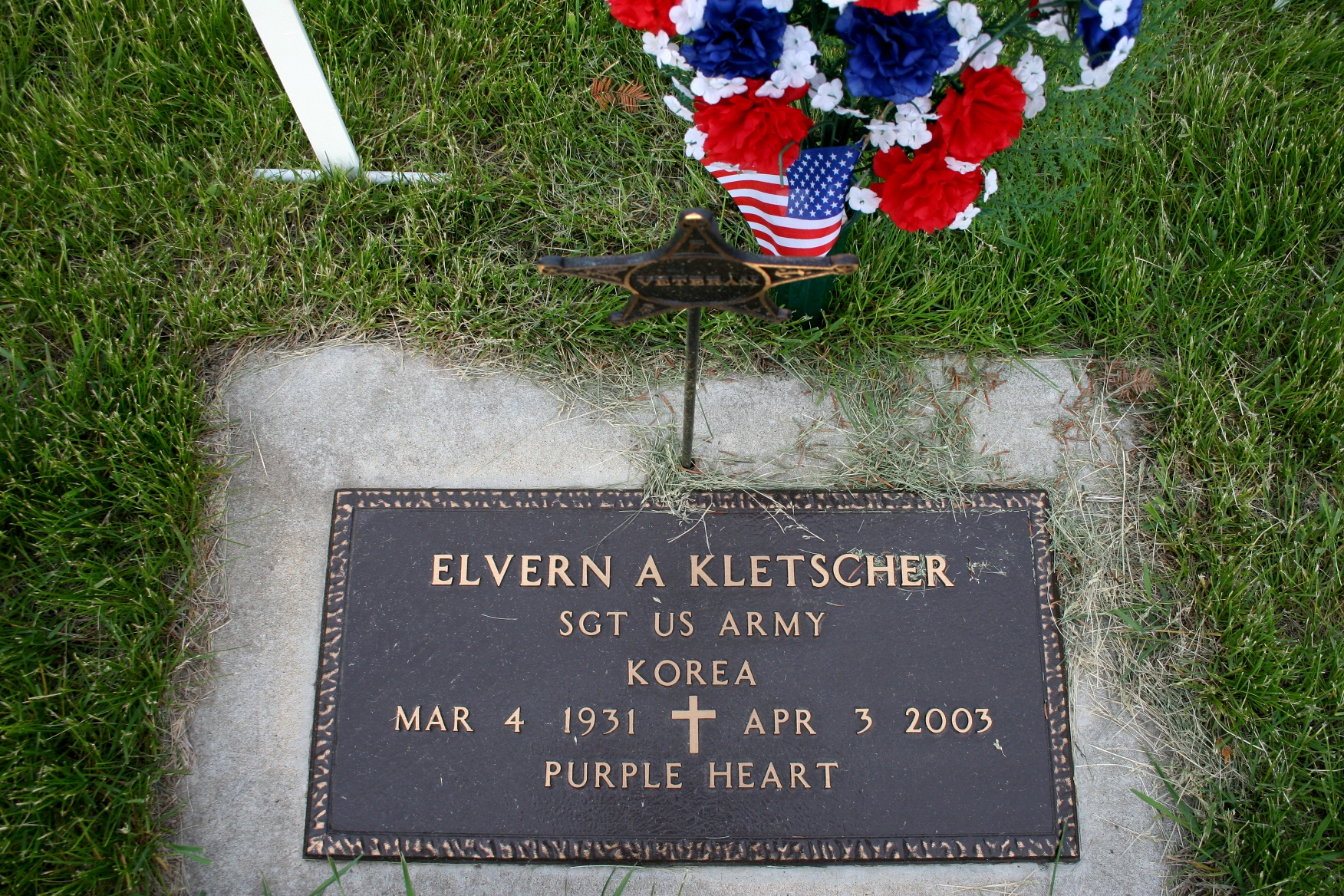
An in-ground marker honors my father, Elvern Kletscher, a Korean War veteran and recipient of the Purple Heart for wounds he suffered at Heartbreak Ridge in Korea while killing a sniper. (Minnesota Prairie Roots copyrighted file photo 2011)

Nearly 19 years have passed now since your burial, since that brutally cold early April day when I wrapped my arm around Mom in the wind-swept hilltop Vesta Cemetery. I felt her body shivering, shaking with grief as she accepted a folded American flag.

Moments like that imprint upon me as I remember you—husband, father, grandfather, son, brother…and veteran.

You were buried with military honors. The firing of guns. The mournful playing of taps. An in-ground military marker notes your final rank as a sergeant in the US Army. Awarded the Purple Heart, albeit 47 years after you were wounded on Heartbreak Ridge in Korea.

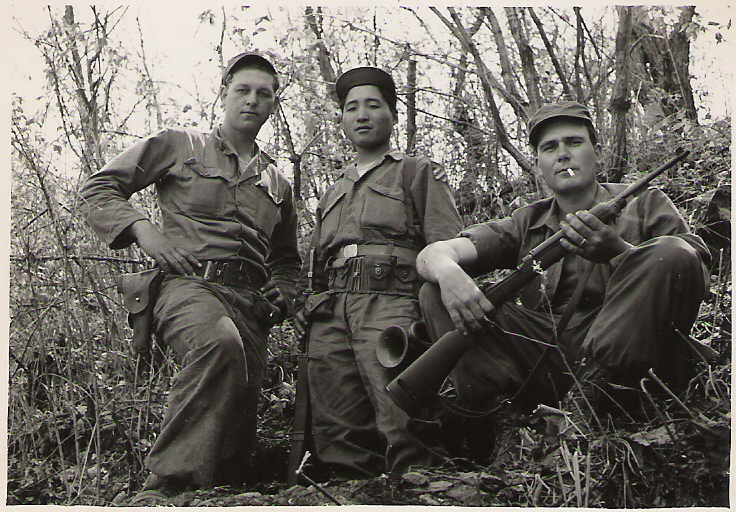
My father, Elvern Kletscher, left, with two of his soldier buddies in Korea. (From my father’s photo collection)

Today, on Veterans Day, I think of you. Honor you. And consider how fighting as a boots-on-the-ground combat soldier in the mountains of Korea forever changed you.

I recall the few stories you shared through the decades. You watched as a mortar killed your friend Ray, who was scheduled to leave Korea the next day. He left behind a wife and infant daughter. Dad, your grief led me to search for that “baby” two years after your death. I found Teri living in Iowa and with only minimal knowledge of her birth father. I have yet to meet her, but want to some day.

Some day. Days and weeks and months and years pass and then some day is too late. Now I hold a shoebox brimming with curled black-and-white photos and other items from your time in the Army. Your Selective Service System registration certificate. A well-worn mini black book of prayers, hymns and devotions from the Ladies Aid in Vesta. Faith and prayer carried you through many a hellish day and night in Korea.

On the back of this photo, my dad simply penned “a letter from home.” I appreciate this photo of my dad taken by an unknown buddy in Korea. (From my father’s photo collection)

In a letter to your parents, a copy tucked into a folder labeled “Korea” in my office file cabinet, you termed the war-torn Asian country a “hell hole.” Likewise, an over-sized embroidered decal declares “RETURNED FROM HELL.”

I have no doubt that war was hell for you. “Shoot or be shot,” I remember you saying. You spoke, too, of bitter cold, of hunger, of orphans begging for food across barbed wire fences. Of horrible war-time atrocities that I can’t bear to write here.

My dad carried this memorial service bulletin home from Korea. In the right column is listed the name of his fallen buddy, Raymond W. Scheibe. (From my father’s collection)

And then when you arrived home—bringing with you a folded memorial service bulletin from Sucham-dong, Korea, dated July 31, 1953, and including your buddy Ray’s name—the horror and grief you experienced remained. But few, if any, acknowledged your struggles back then. You were expected to resume life as usual, returning to rural Minnesota to farm the land, to milk cows, to marry and raise a family. Post traumatic stress disorder (PTSD) was not yet recognized.

I’m sorry, Dad. Sorry about the neighbor who laughed as you dove to the ground when a rifle fired during pheasant hunting.

I’m sorry, Dad, for the fear you felt when guns fired during a small town parade.

I’m sorry I wasn’t there for you like I should have been.

Near the end of your life, you found empathy and care in your veterans’ support group. That comforts me. Those men understood what you’d experienced. For that I am grateful. They provided the emotional support I failed to give you. I’m sorry, Dad. So sorry.

With love,

Audrey

© Copyright 2021 Audrey Kletscher Helbling
 

On the backroads of Sogn Valley November 9, 2021

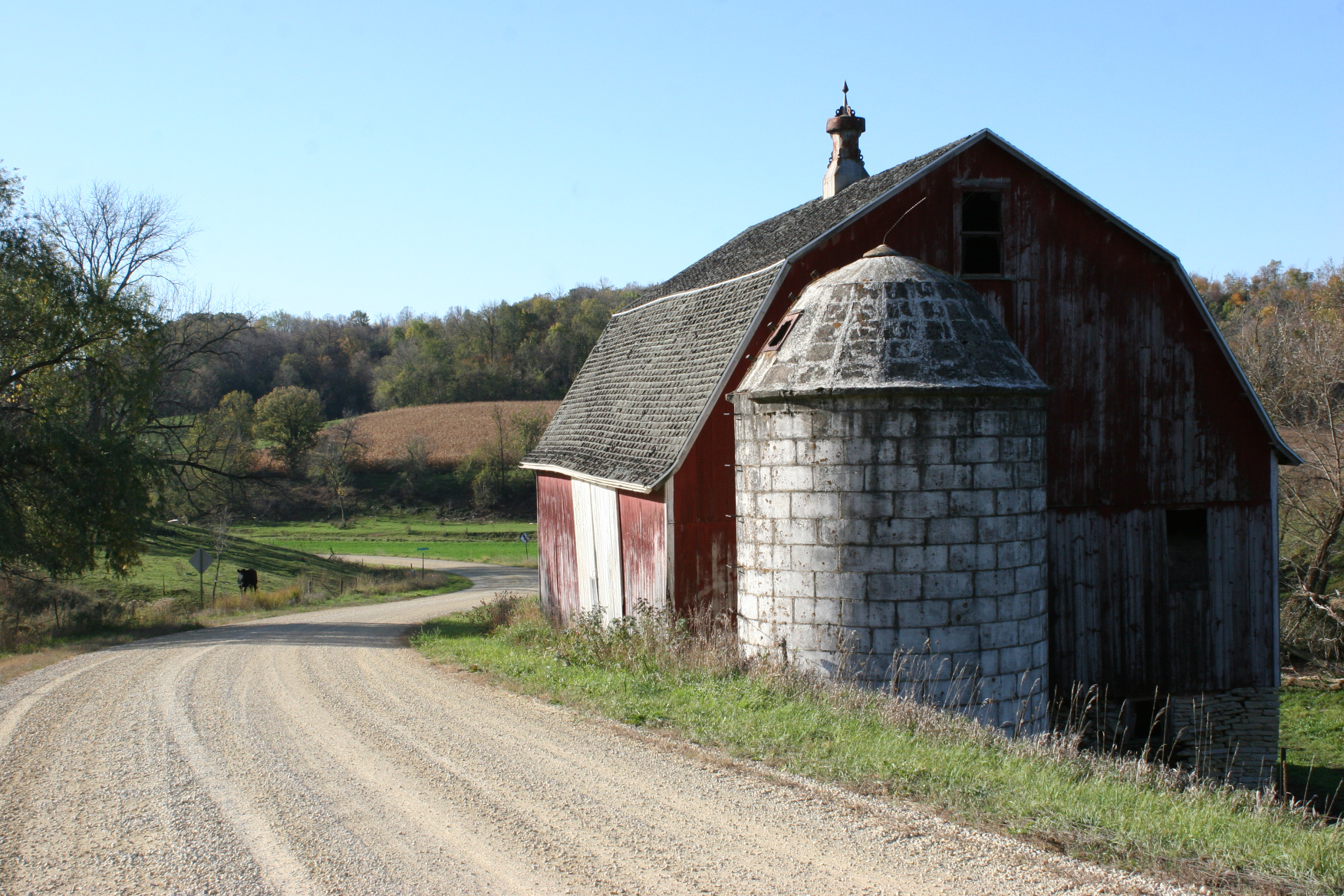
Along a backroad in the Sogn Valley, an aged barn and silo hug a curve on a gravel road. (Minnesota Prairie Roots copyrighted photo October 2021)

MINNESOTA’S DIVERSE LANDSCAPE inspires. From the vast prairie to the northwoods. From lakes to rivers. From hills to valleys. My home state, minus mountain ranges and ocean, is truly a beautiful place. We are so much more than cold and snow, as many non-residents equate with Minnesota.

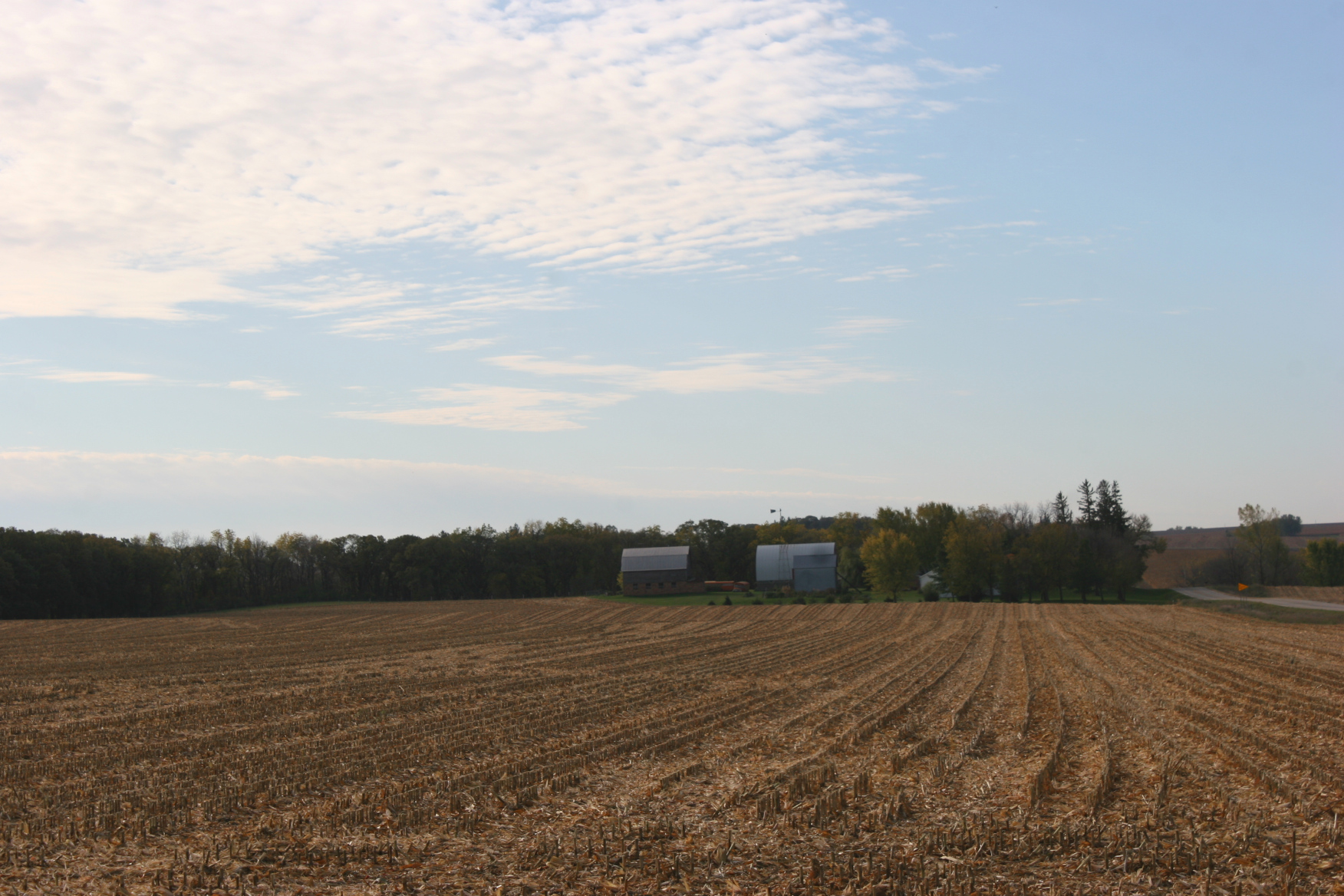
The countryside near Nerstrand, on our way to Sogn Valley. (Minnesota Prairie Roots copyrighted photo October 2021)

Autumn, especially, showcases Minnesota’s natural beauty. This fall, Randy and I took many rural drives to immerse ourselves in the countryside and the season. We chose road trips over staying home and doing chores on the weekends. Our priorities change as we age. The work can wait. We recognize, too, the approach of winter. We felt an urgency, a need, to hit the road before the snow flies.

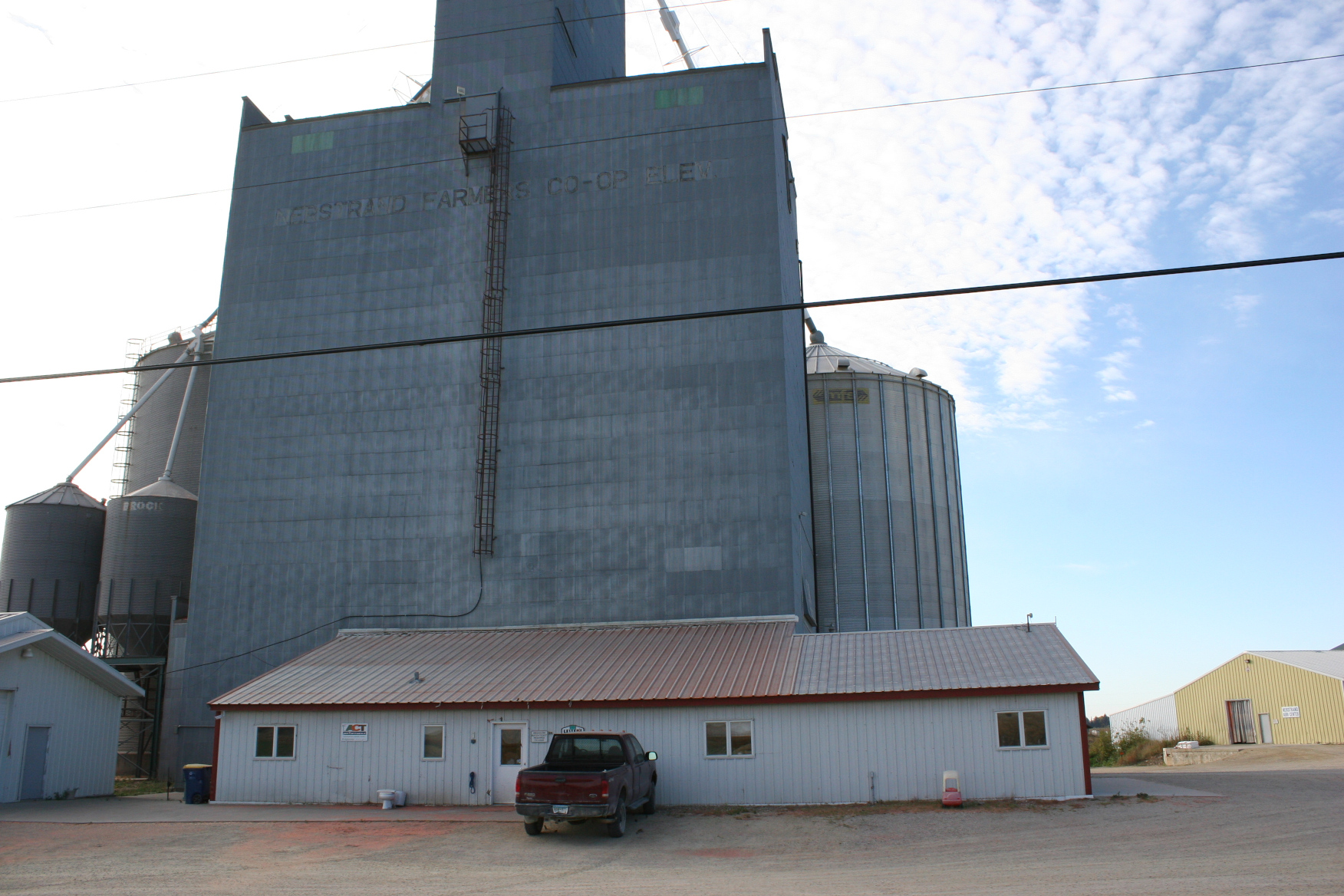
We drove through Nerstrand, past the grain elevator, on our way to the Sogn Valley. (Minnesota Prairie Roots copyrighted photo October 2021)

Often we choose a destination, this time Cannon Falls. But sometimes we simply head in a general direction, oversized Minnesota Atlas & Gazetteer available to guide us. We prefer paper maps to GPS. This trip, we aimed east toward Goodhue County, driving through the picturesque Sogn Valley.

The rolling countryside of the Sogn Valley provides a beautiful backdrop for farms. (Minnesota Prairie Roots copyrighted photo October 2021)

I love this rural region defined by farms and fields and winding gravel roads. Hills and river valleys and prairie intermingle and it’s all like poetry writing upon the land.

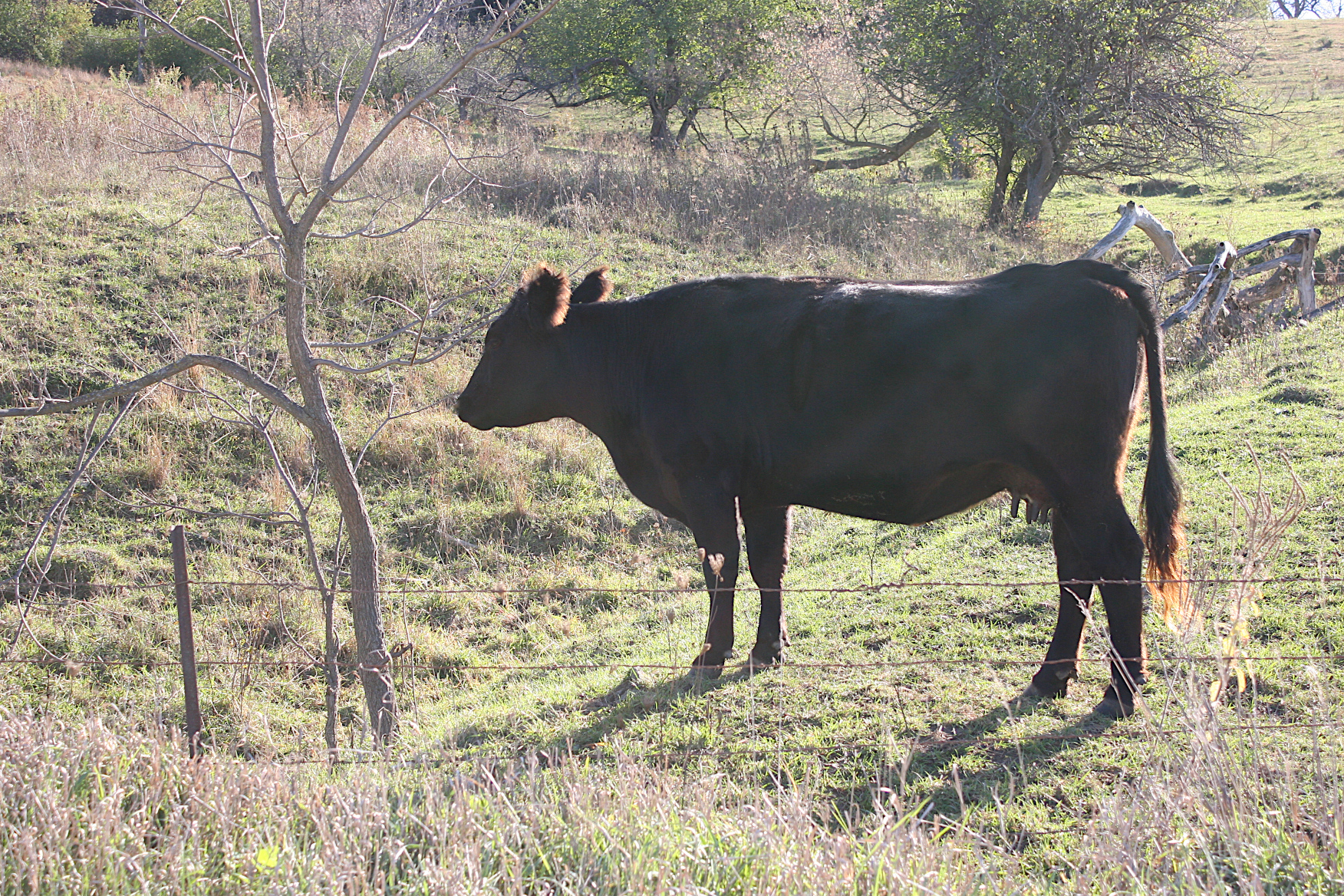
I delight in finding cows grazing deep in Sogn Valley. (Minnesota Prairie Roots copyrighted photo October 2021)

As a farmer’s daughter, I hold a fondness for aged barns, at one time the anchor of an agrarian life. I labored for years on my southwestern Minnesota childhood family dairy and crop farm, most of that time inside the barn. Or the silo.

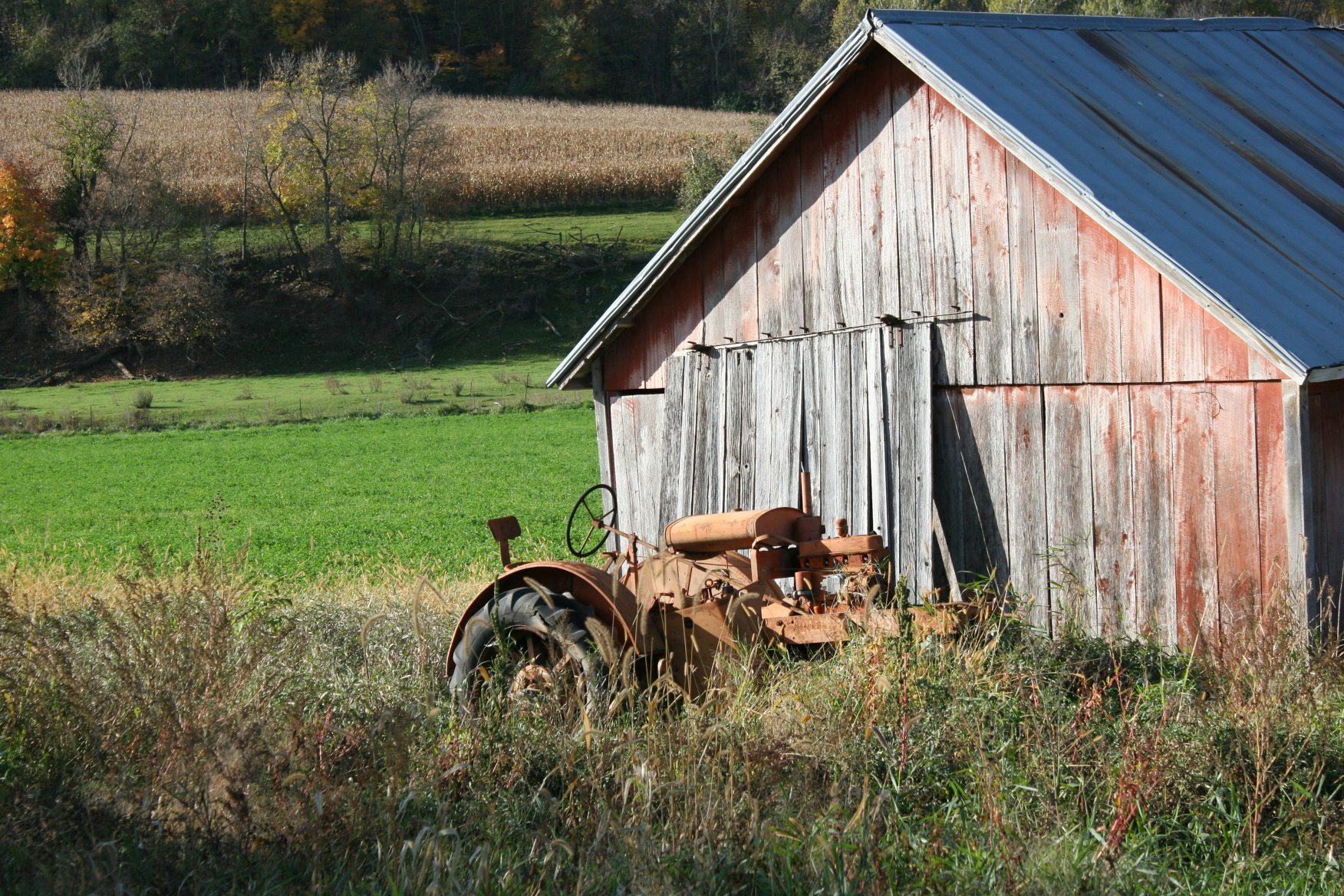
Abandoned building, abandoned tractor in the Sogn Valley. (Minnesota Prairie Roots copyrighted photo October 2021)

Now, when I pass by barns weathering in abandonment, I feel overcome by sadness. I recognize that a way of life is vanishing. I understand and appreciate advances in agriculture while simultaneously grieving the loss of farm life as I knew it.

I worry about all the barns we are losing. They hold history. Stories. Memories. And they are falling in heaps of rotted wood.

Eidsvold Norwegian Methodist Church, rural Goodhue County. (Minnesota Prairie Roots copyrighted photo October 2021)

But, on this drive through the Sogn Valley, we happened upon a small country church that uplifted my spirits. Country churches and adjoining cemeteries rate as another draw for me deep into rural Minnesota. They are historically, poetically, spiritually and artistically relevant.

Along 70th Street in Goodhue County, on a small plot of land ringed by a row of trees and set among cornfields, Eidsvold Norwegian Methodist Church rises. The last service was held here in 1949. Yet, the aged clapboard structure remains. Important to someone. And on this Friday morning in mid-October, appreciated by me.

PLEASE CHECK BACK tomorrow as I take you on a tour around, but not inside (it was locked), Eidsvold church.

© Copyright 2021 Audrey Kletscher Helbling
 

From Cannon Falls: How a library quilt inspires November 5, 2021

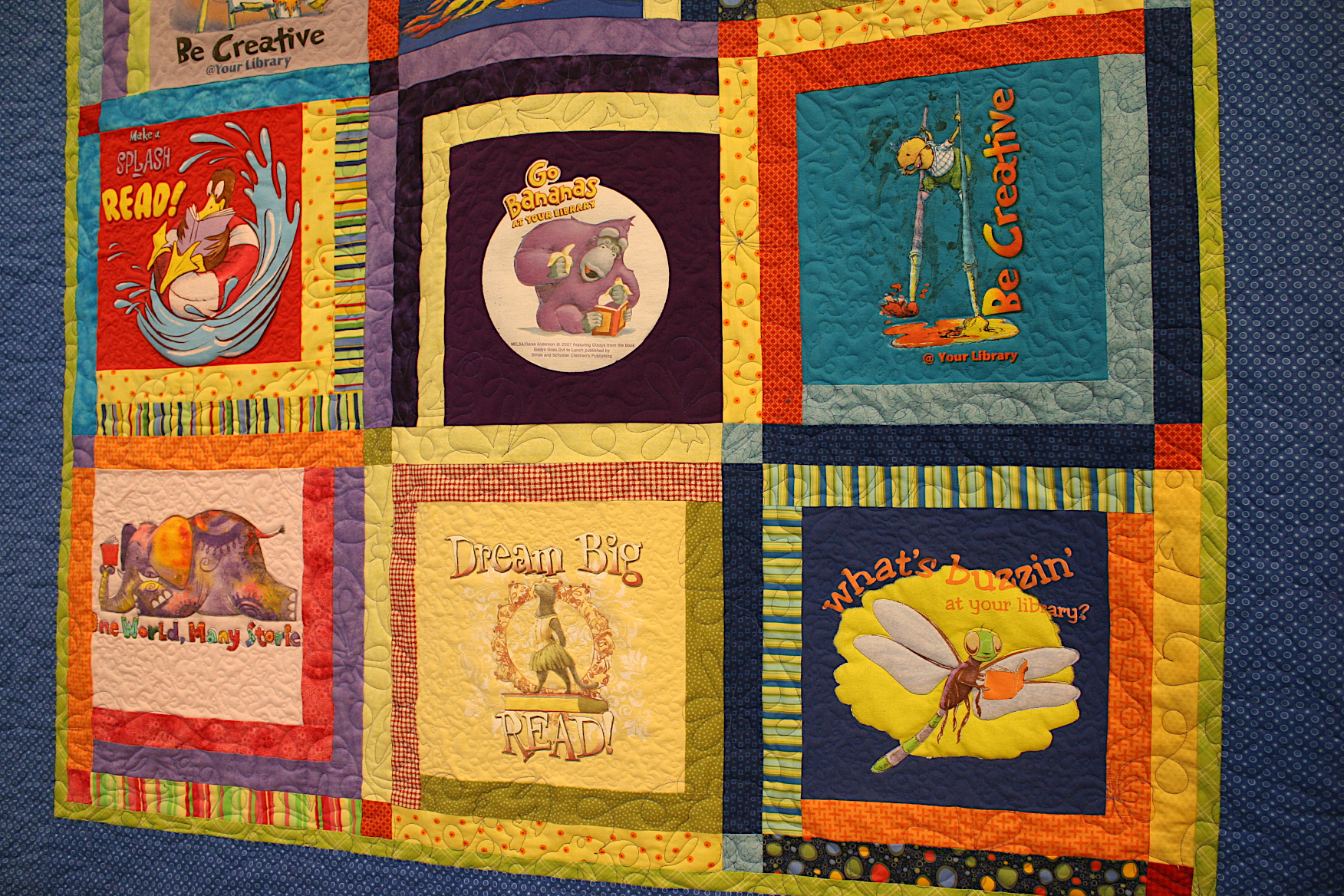
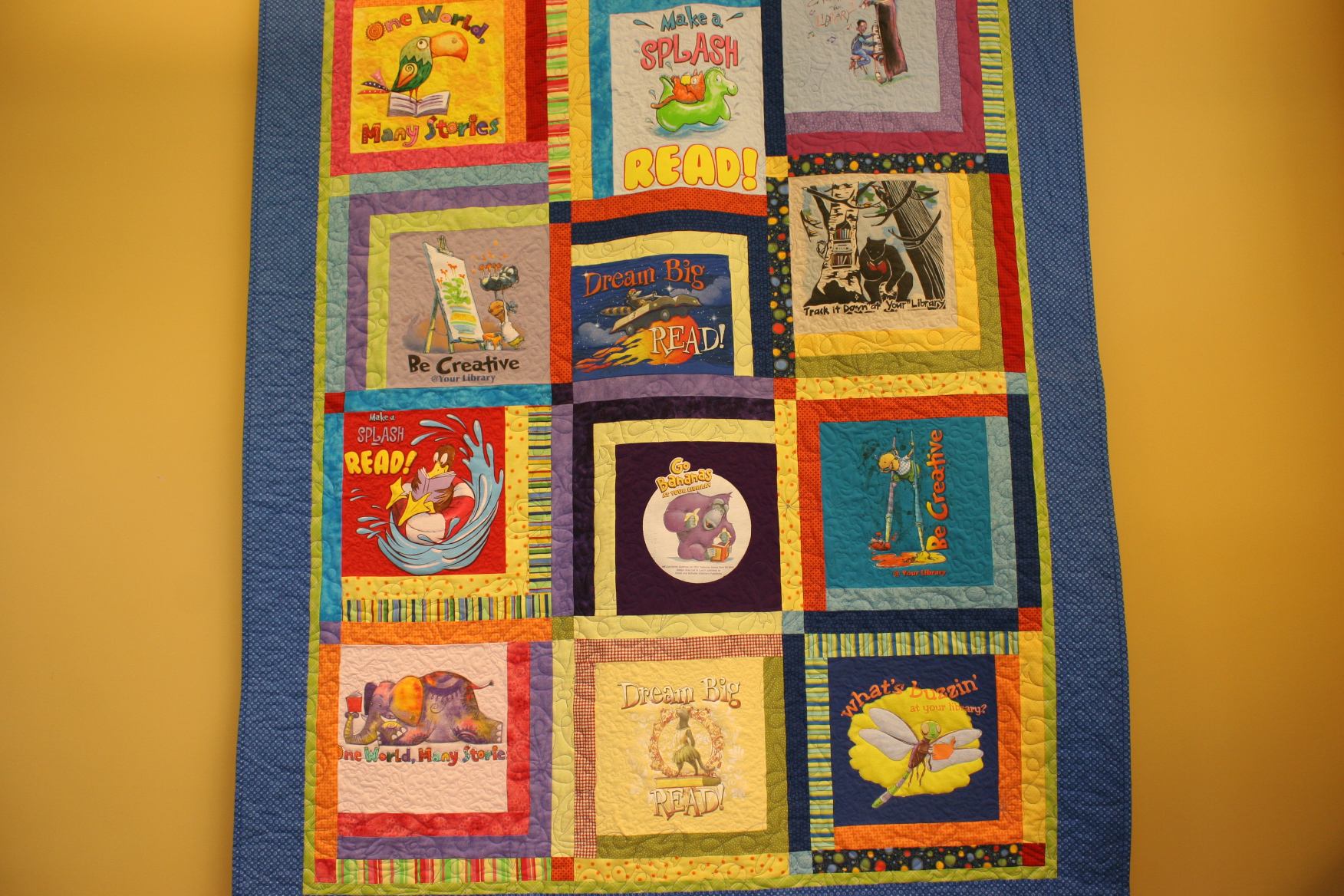
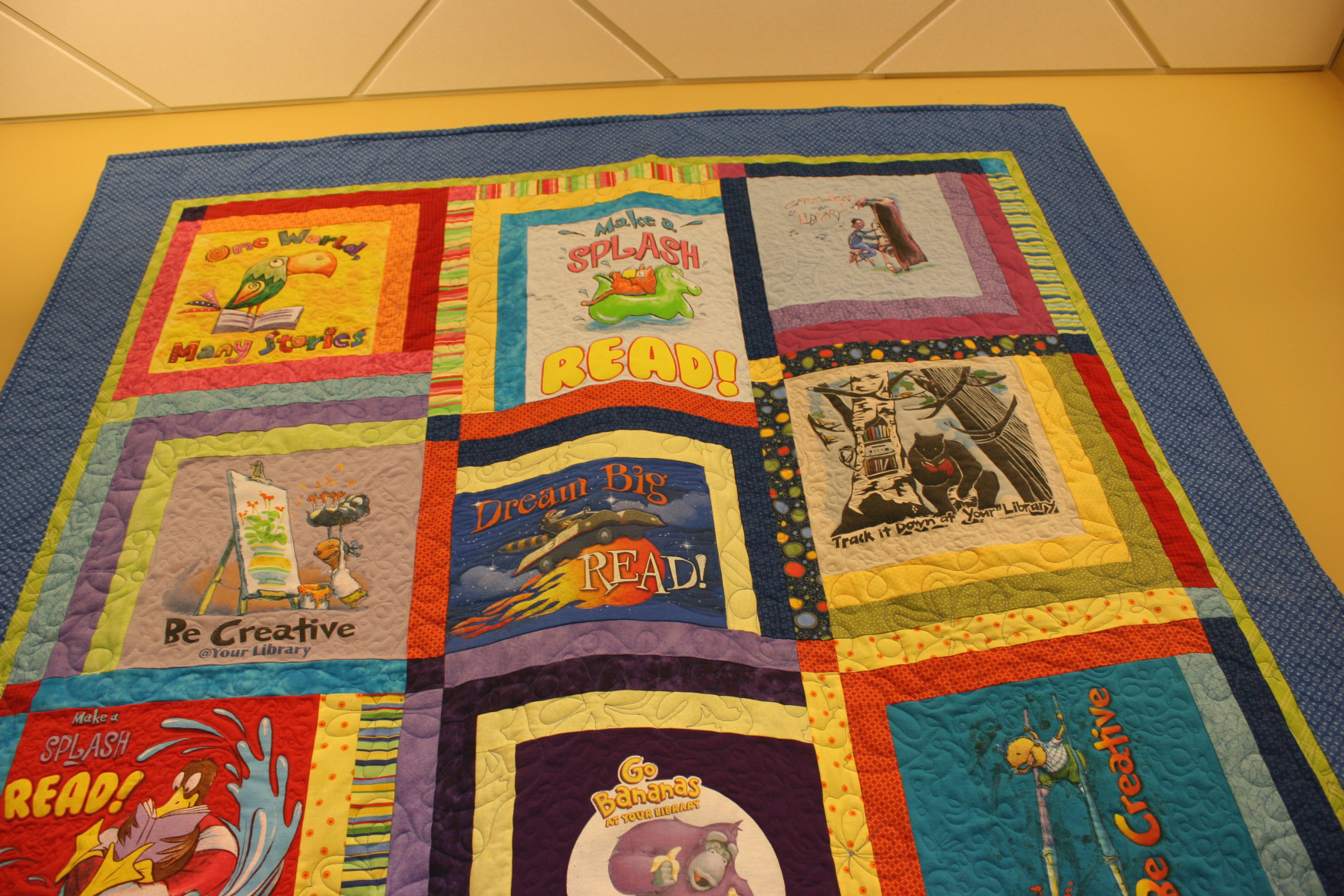
The inspiring quilt displayed at the Cannon Falls Library. (Minnesota Prairie Roots copyrighted photo October 2021)

DREAM BIG. Be Creative. One World, Many Stories. Make a Splash.

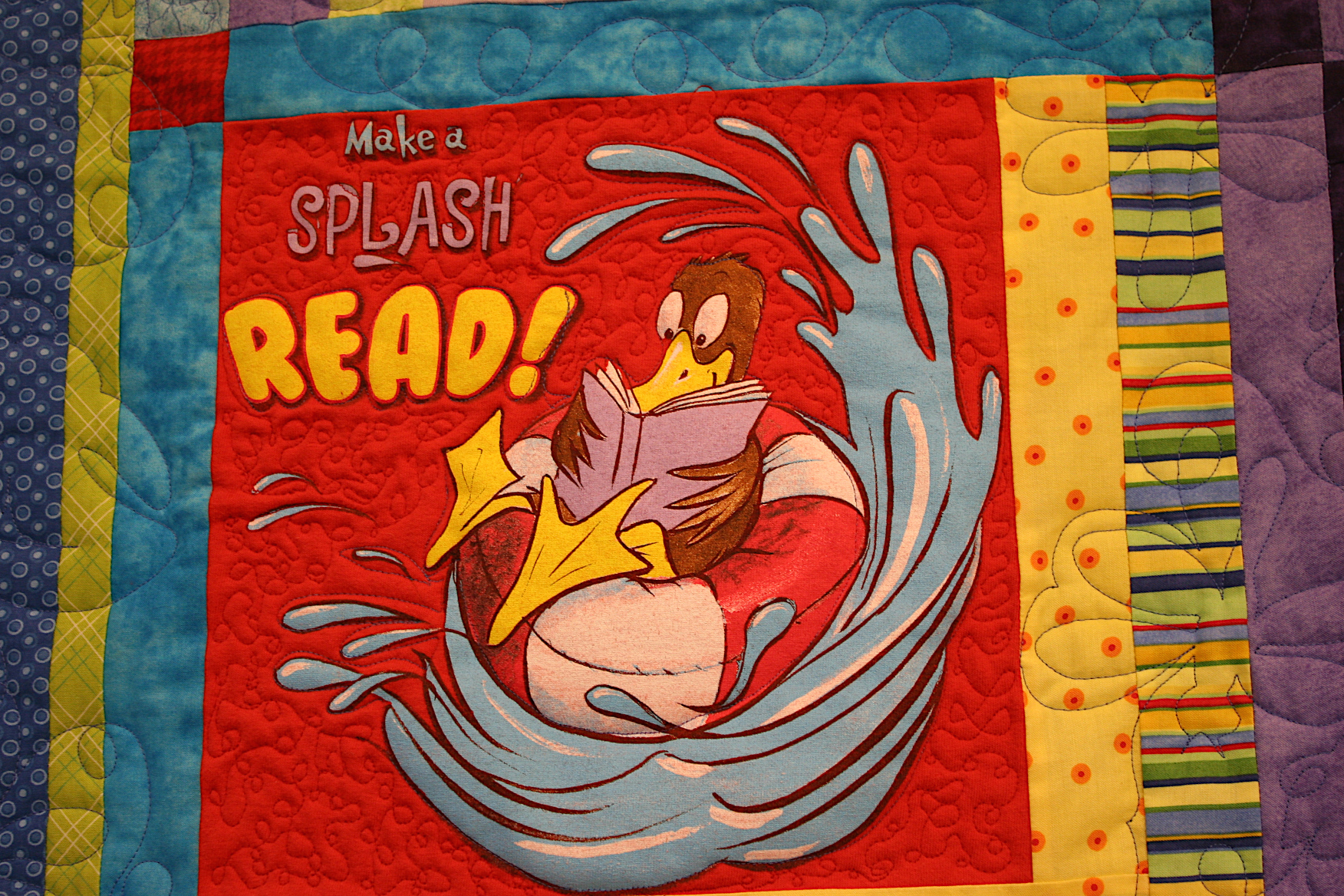
Make a Splash! applies to more than reading. (Minnesota Prairie Roots copyrighted photo October 2021)

Those phrases inspire. They push us to do our best. To pursue our passions. To make a difference. To tell our stories.

When I recently read those words on a colorful quilt gracing a wall in the Cannon Falls Library, I felt empowered.

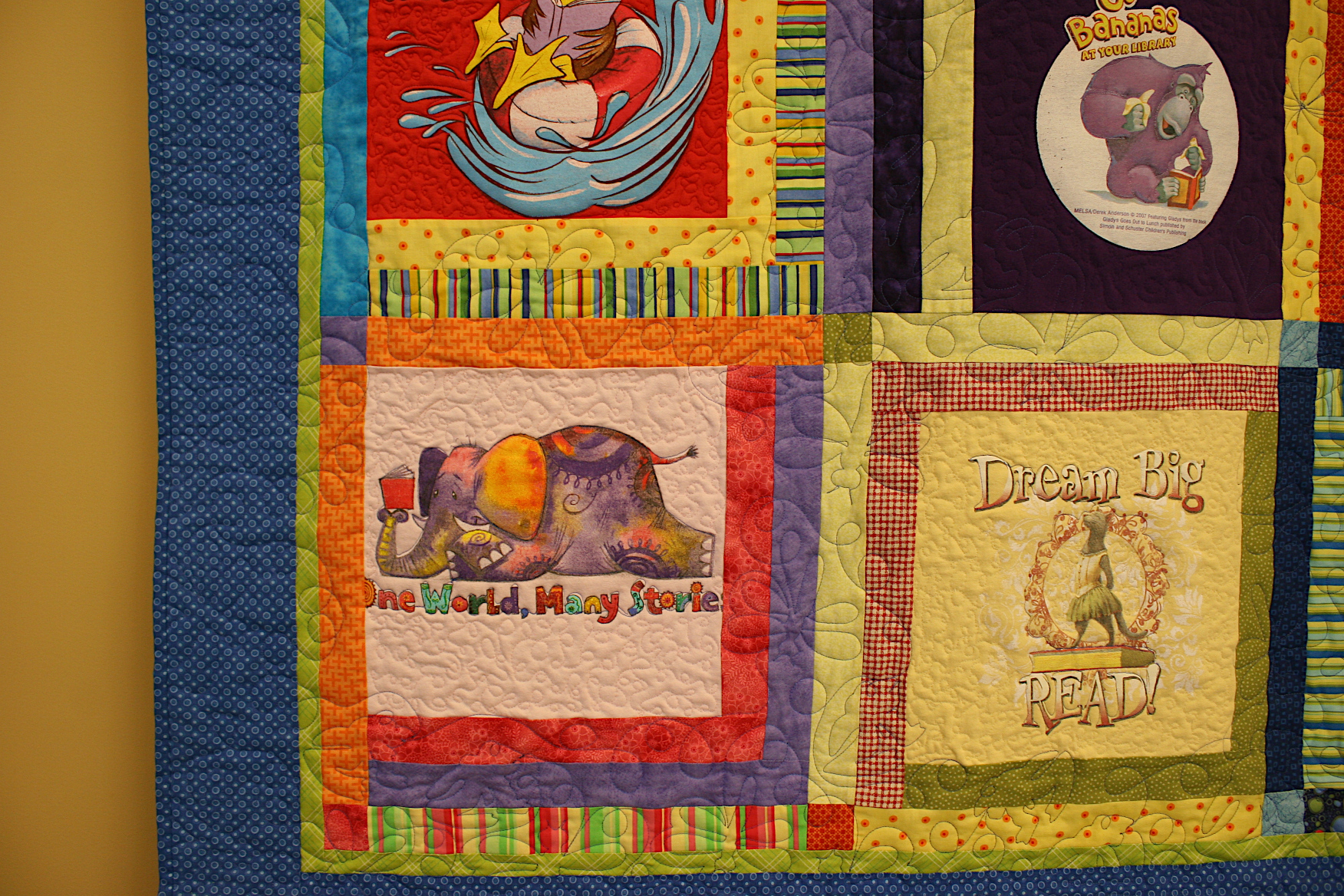
The library quilt as inspiring art. (Minnesota Prairie Roots copyrighted photo October 2021)

The messages have been part of Southeastern Libraries Cooperating summer promotionals to get kids into libraries and reading. They’re simple words and graphics. Kid-appealing. Eye-catching. Positive.

The top section of the quilt art. (Minnesota Prairie Roots copyrighted photo October 2021)

As someone who values books and libraries, and the arts, I appreciate the works of the seamstress who stitched this quilt. It’s a good visual reminder to each of us—whether child, teen or adult—of our talents and worth. I may be good with words. You may be good with numbers. I celebrate that difference in talent (especially come tax time when I hand my financial records over to my accountant).

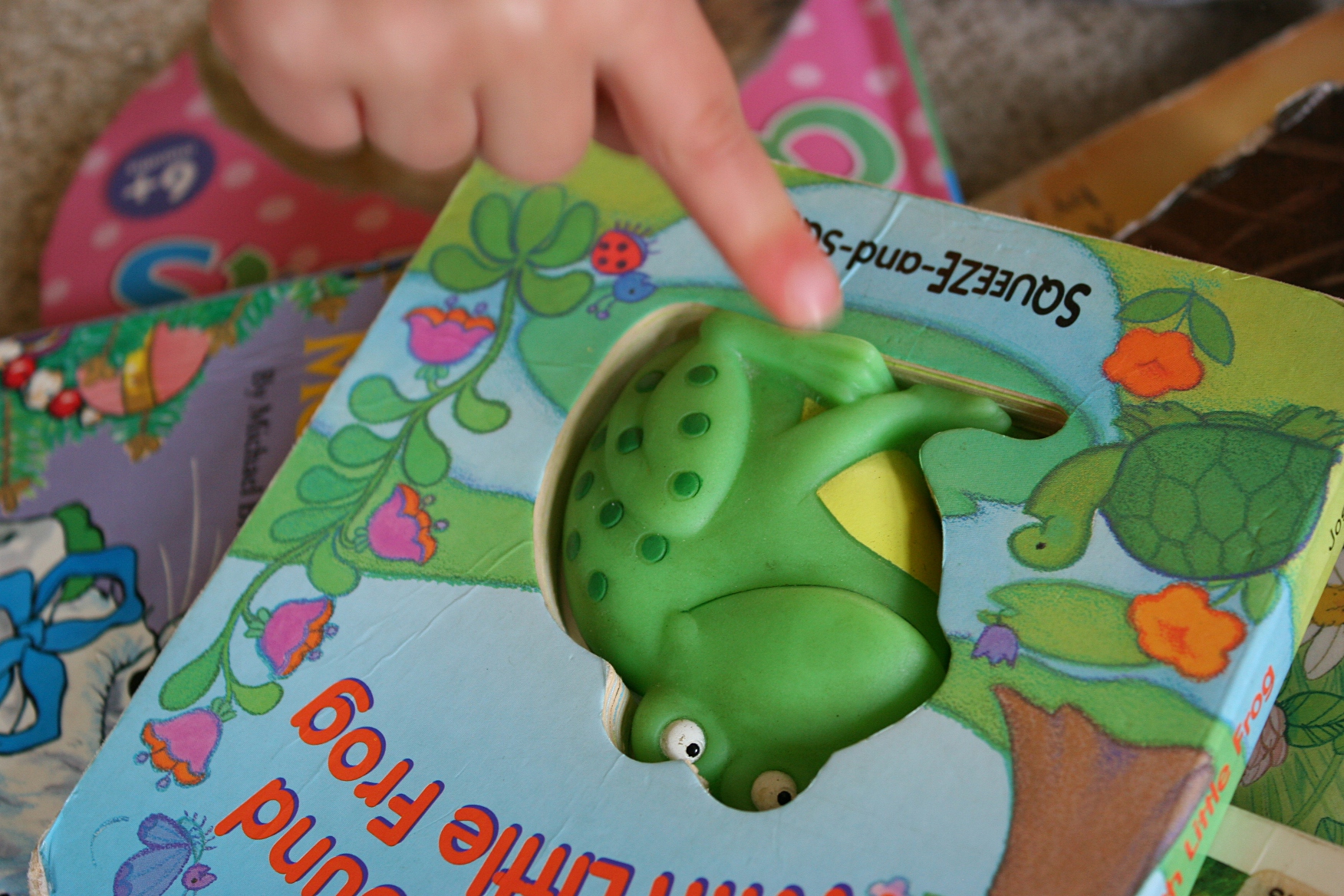
All Year Round With Little Frog was one of my granddaughter’s favorite books as a toddler. I would read and reread it to her whenever she visited, just as I did decades ago to her Uncle Caleb. (Minnesota Prairie Roots copyrighted file photo)

I’ve always loved books and now I have the joy of reading books to my grandchildren, ages nearly three and 5 ½. Books pack shelves in their toy room with more books from the library. Their parents value books.

The world of words is opening even wider to Isabelle, who is in kindergarten. During a recent visit, I would say a word and she would guess the starting letter. Her face lit with sheer delight in determining the correct letter. Her mind is beginning to connect—to understand that sounds define letters which form words and then sentences and stories. I can’t wait to hear her read.

One World, Many Stories… (Minnesota Prairie Roots copyrighted photo October 2021)

So when I read about dreaming big and being creative and making a splash in this world of many stories, I think of my precious grandchildren. And I hope that in some small way, I inspire them to be all they can be. And one way to do that is via books, art and modeling creativity.
© Copyright 2021 Audrey Kletscher Helbling