Minnesota Prairie Roots

Writing and photography by Audrey Kletscher Helbling

An almost-summer evening on the farm June 1, 2011

Filed under: Uncategorized — Audrey Kletscher Helbling @ 6:47 AM
Tags: , , , , , , , , , , ,

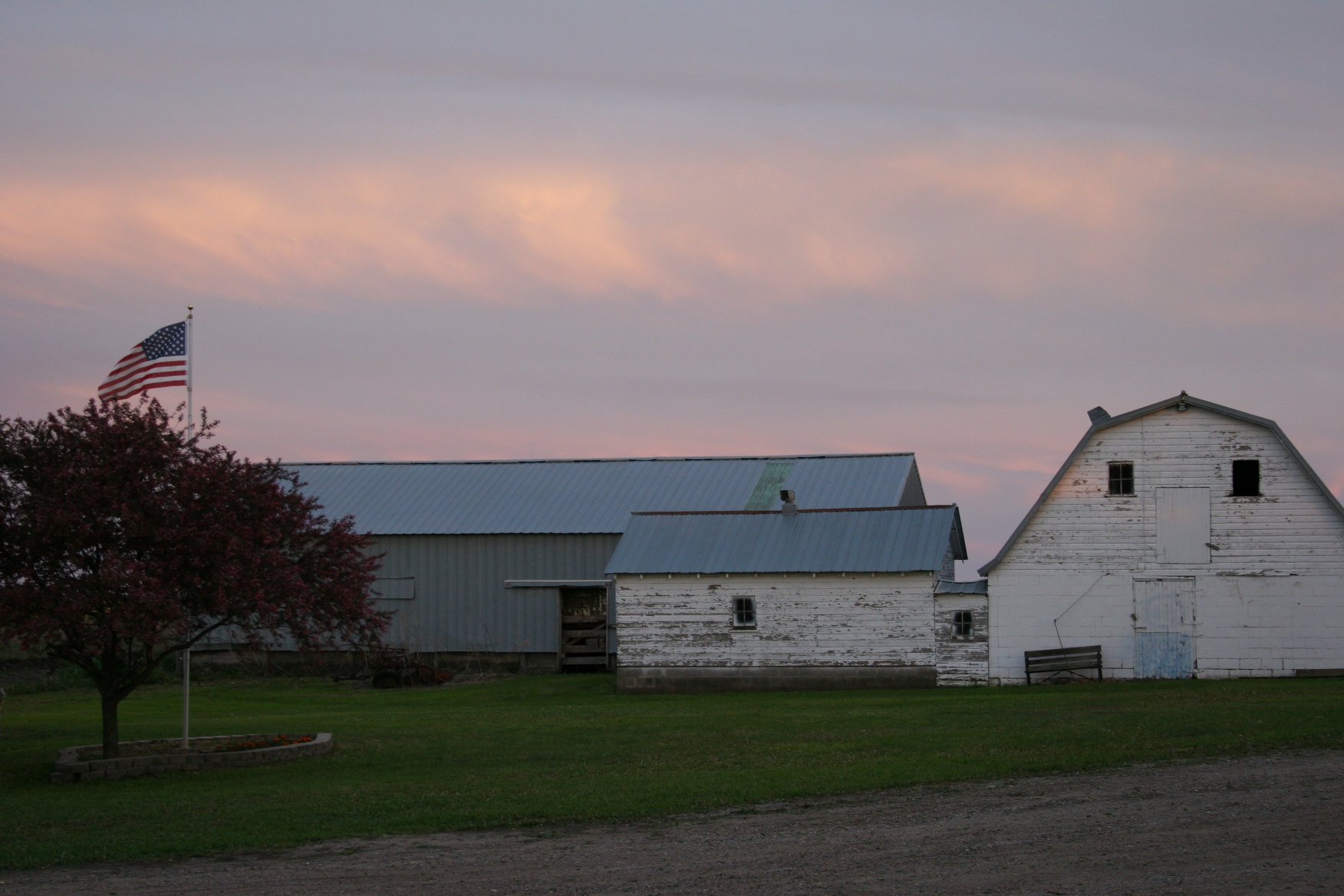
The sun sets on the farm site where I grew up in southwestern Minnesota.

OH, SWEET EVENING of almost-summer on my childhood farm. Daylight fades, washing the sky in the palest of prairie rose pink. Shadows sharpen before the last lingering rays of sunlight retire for the night.

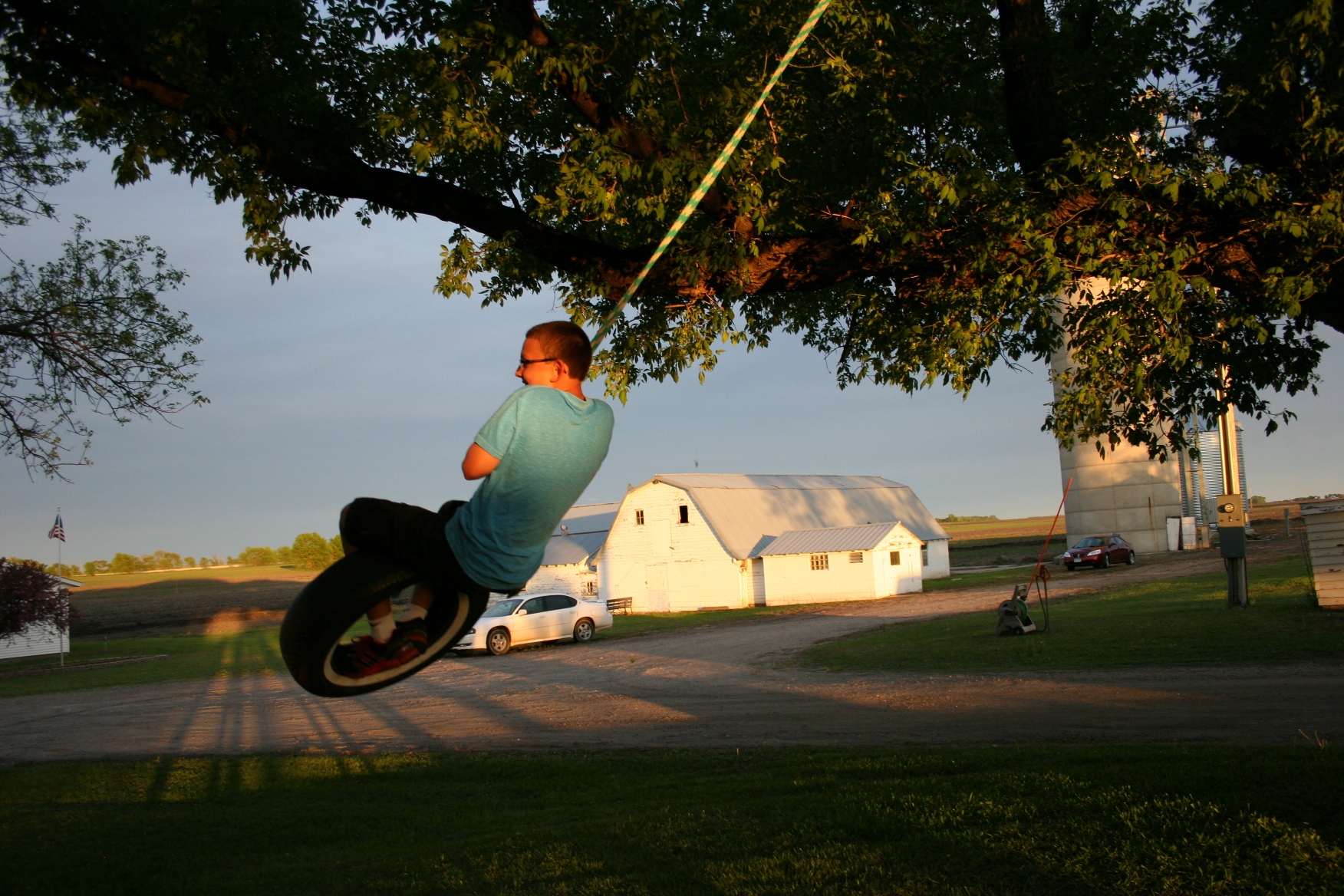
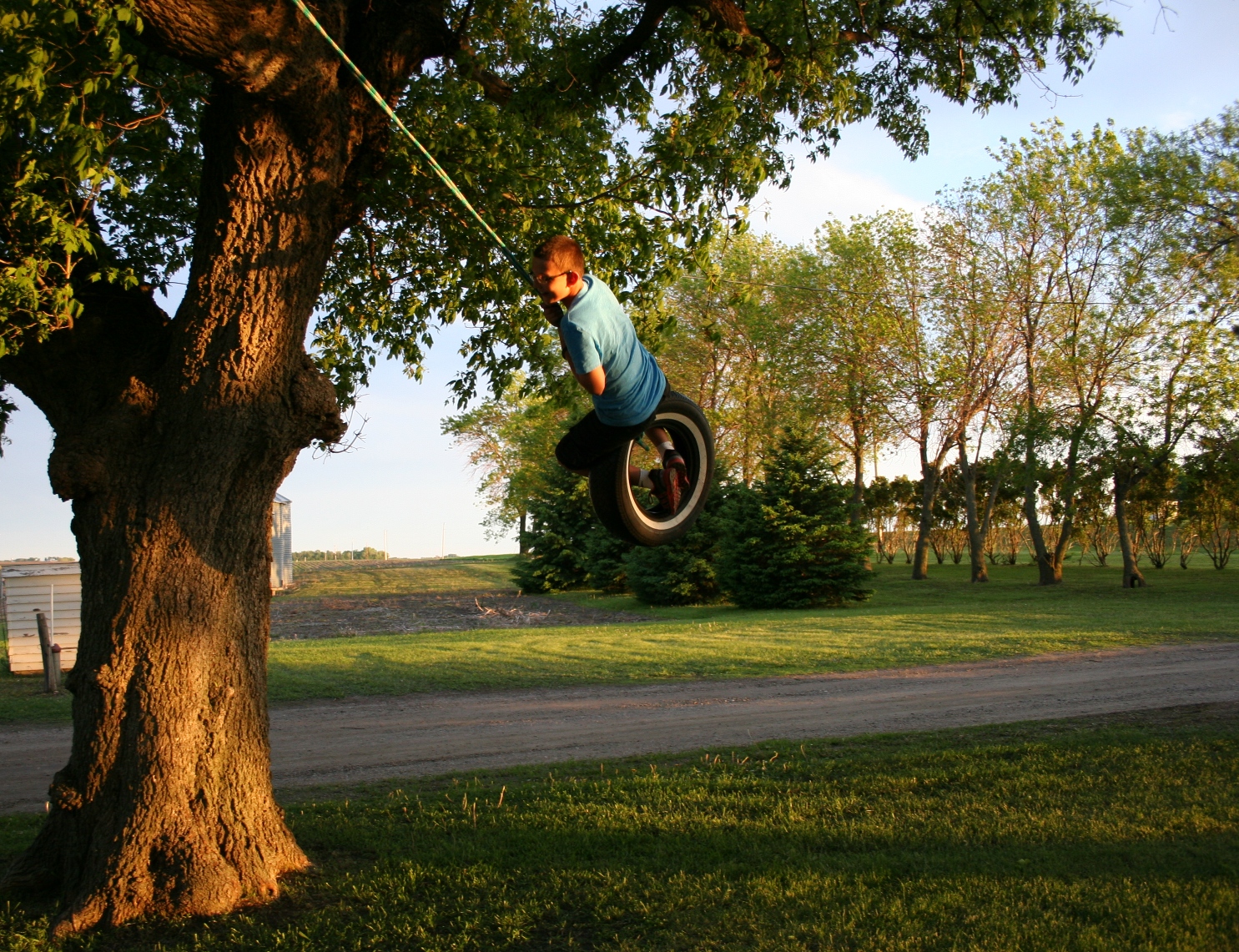
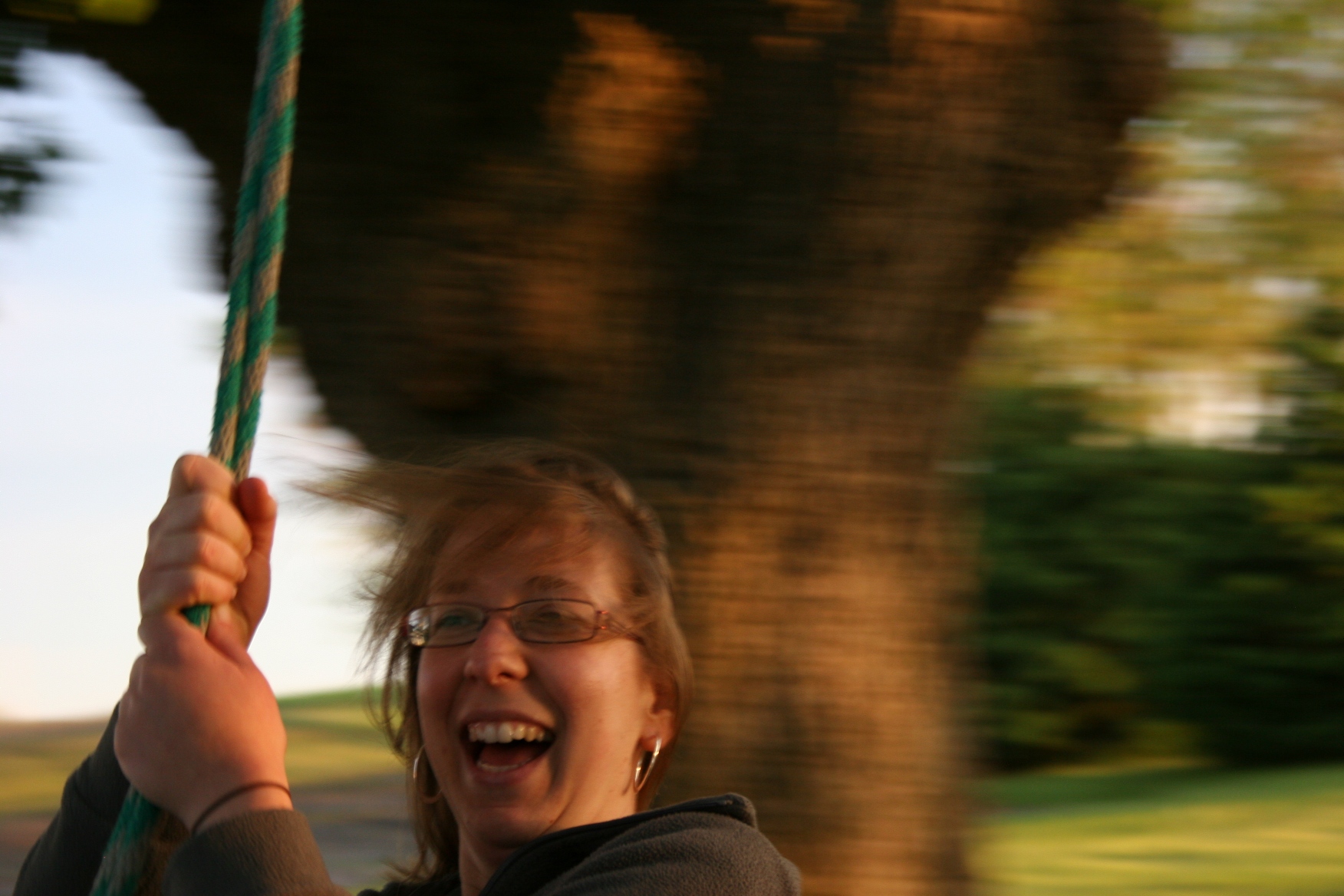
Underneath the branches of the sturdy old tree, which once sheltered a long-gone farmhouse and a tractor-tire sandbox, the cousins and siblings, ranging in age from 11 to 25, one-by-one grab double ropes, straddle a car tire and ask for a push.

My 11-year-old nephew and a tire swing...

And then they are swinging through the air, spinning nearly out of control, dodging danger in a tree trunk, wisps of hair flying, smiles as wide as the prairie sky, until, finally, they plead for someone, anyone, to stop the dizzy-inducing carnival ride.

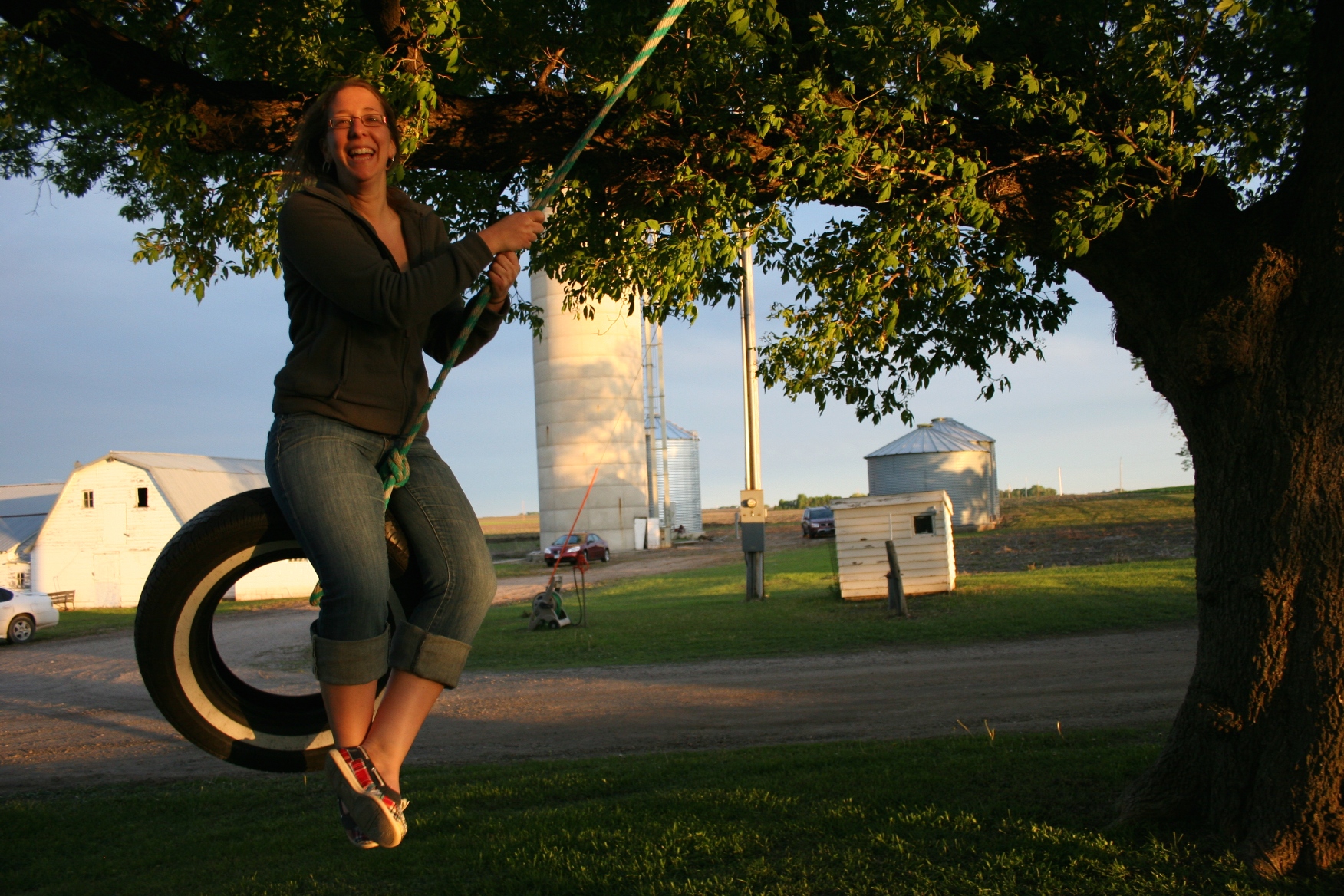
My oldest daughter...

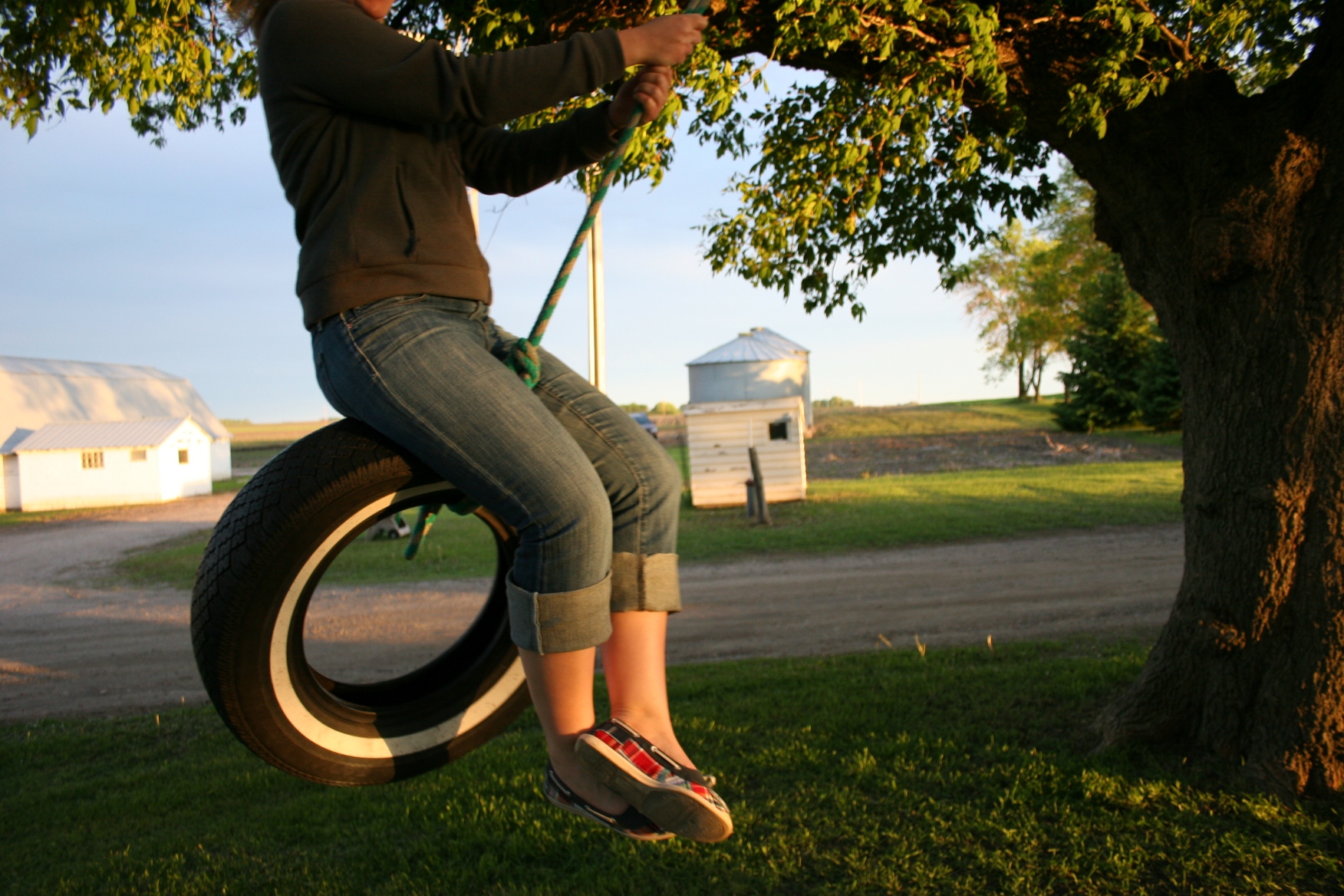
...discovers joy on a tire swing...

...far from her big city home, in the place she calls "the middle of nowhere..."

...and sometimes "nowhere" can be as much fun as Minneapolis on an almost-summer evening.

Oh, sweet evening of almost-summer on the farm, when I grip my camera, dodge the swaying tire to capture the moments, to vicariously relive the exuberance of tipping my head back, catching the wind as I ride the tire swing. I feel the twirling, dizzy oblivion through the lens of my camera, wishing I could grasp the ropes, straddle the tire, stretch my toes heavenward and tickle the belly of the sky.

© Copyright 2011 Audrey Kletscher Helbling


Snapshots of a small-town wedding day May 10, 2011

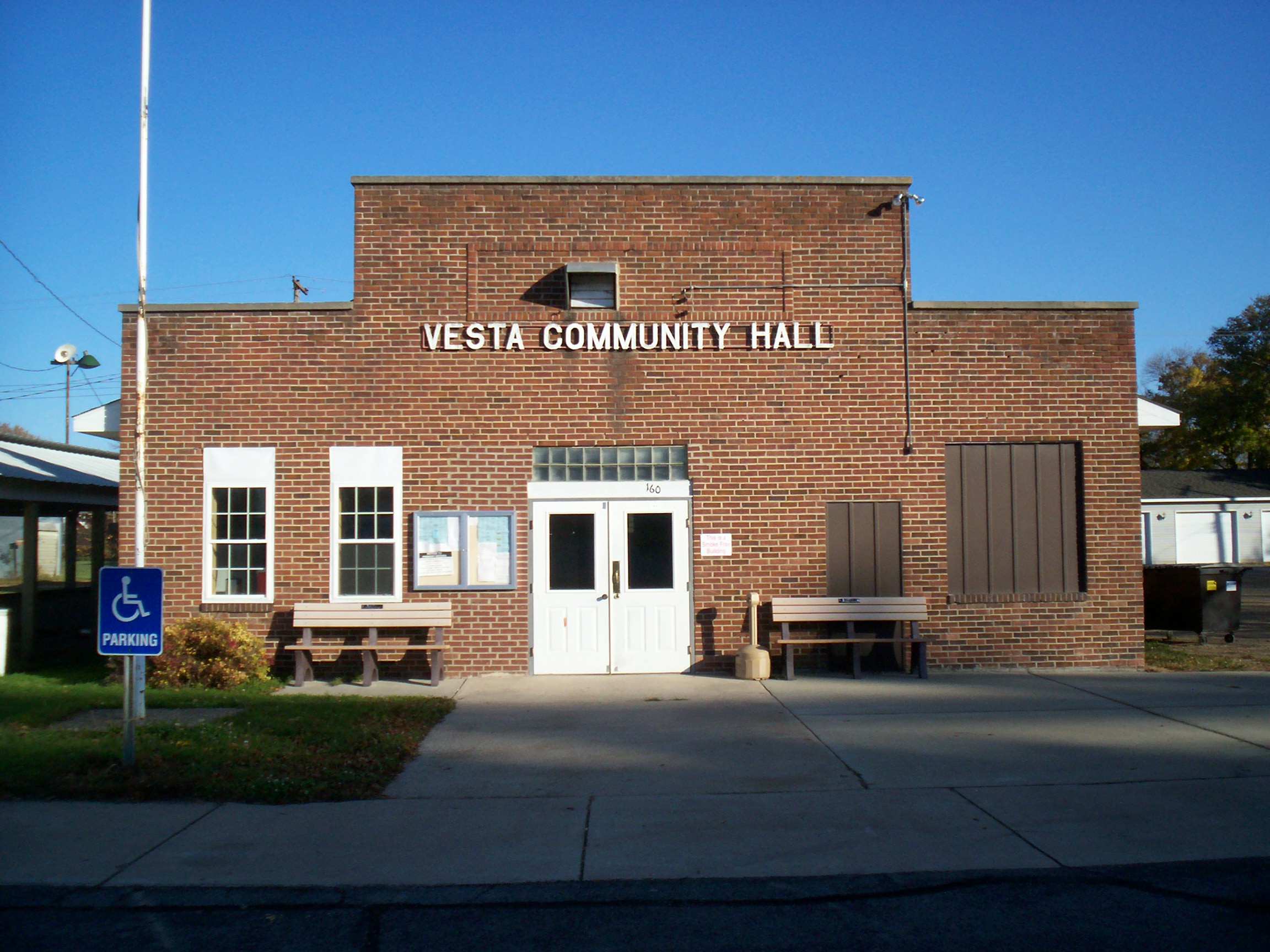
TWENTY-NINE YEARS ago this coming Sunday, my husband and I were married in my hometown of Vesta, a place marked, like so many other prairie towns, by grain elevators and the water tower and a one-block-long main street.

Our wedding reception was held at the community hall, an unassuming, nothing-fancy brick building with a stage, wood floors and military uniforms encased in glass. HyVee in Marshall, 20 miles away, catered a chicken dinner as wedding guests pulled up metal folding chairs to rectangular tables angled under crepe paper streamers and white tissue paper wedding bells.

Thoughts of our small-town wedding lingered this past weekend as our nephew Matt married Amber at Gustavus Adolphus Lutheran Church in Foley. The reception was held in Duelm, a cluster of homes, a church and a restaurant attached to a new event center, smack dab in the middle of the country about 10 miles to the south and west.

There were no crepe paper streamers here or folding chairs or military uniforms. We dined at round tables draped in white cloths and decorated with centerpieces of swimming goldfish and floating candles. (One fish, I should mention here, wiggled between the candle and the vase rim and leaped onto a table.)

While weddings and receptions have gotten much fancier than the simple rural weddings of decades past, some traditions remain unchanged.

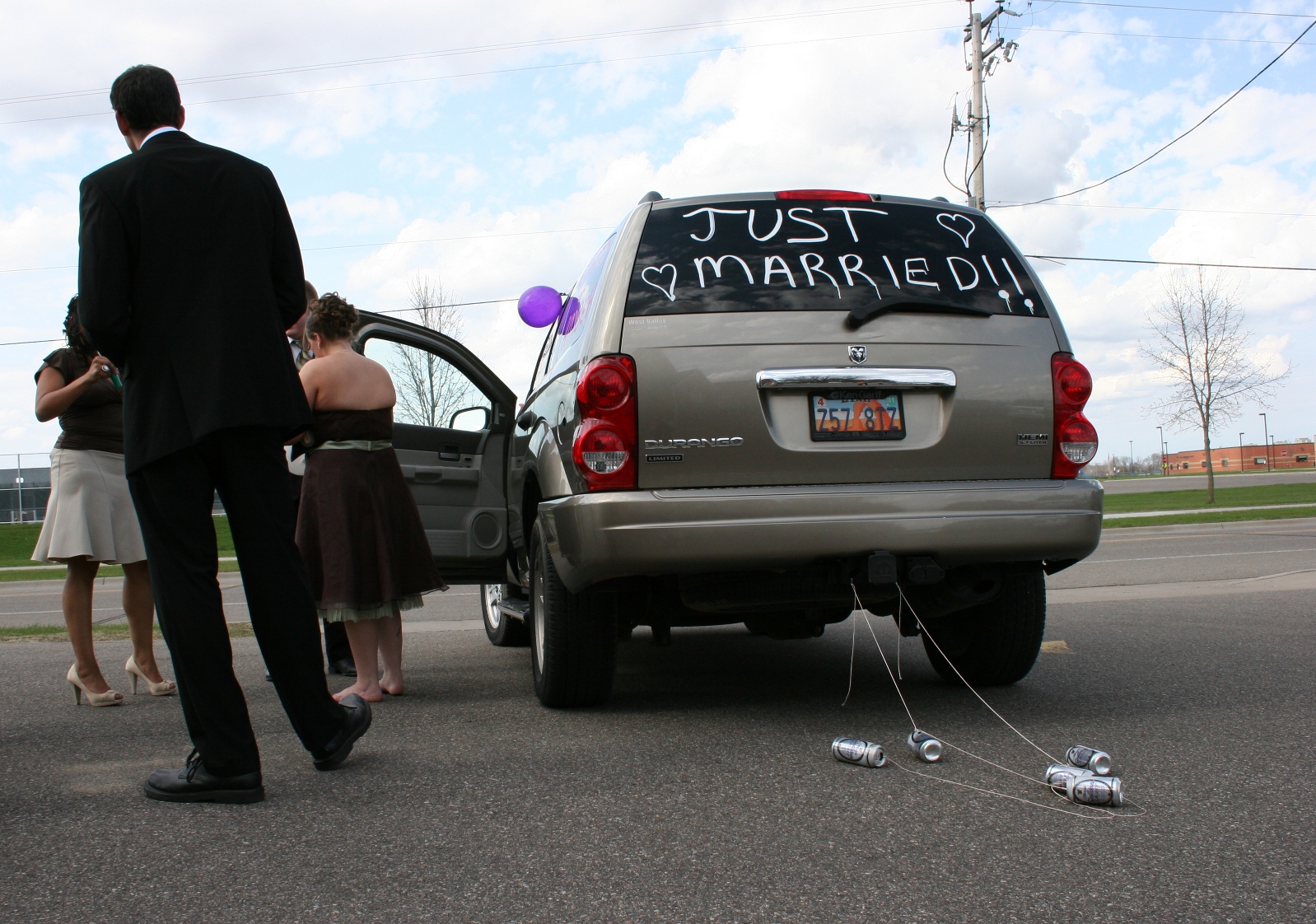
Members of the wedding party and guests still decorate the bridal vehicle. That is where I focused my attention Saturday after the wedding service and before the bridal couple emerged from the church.

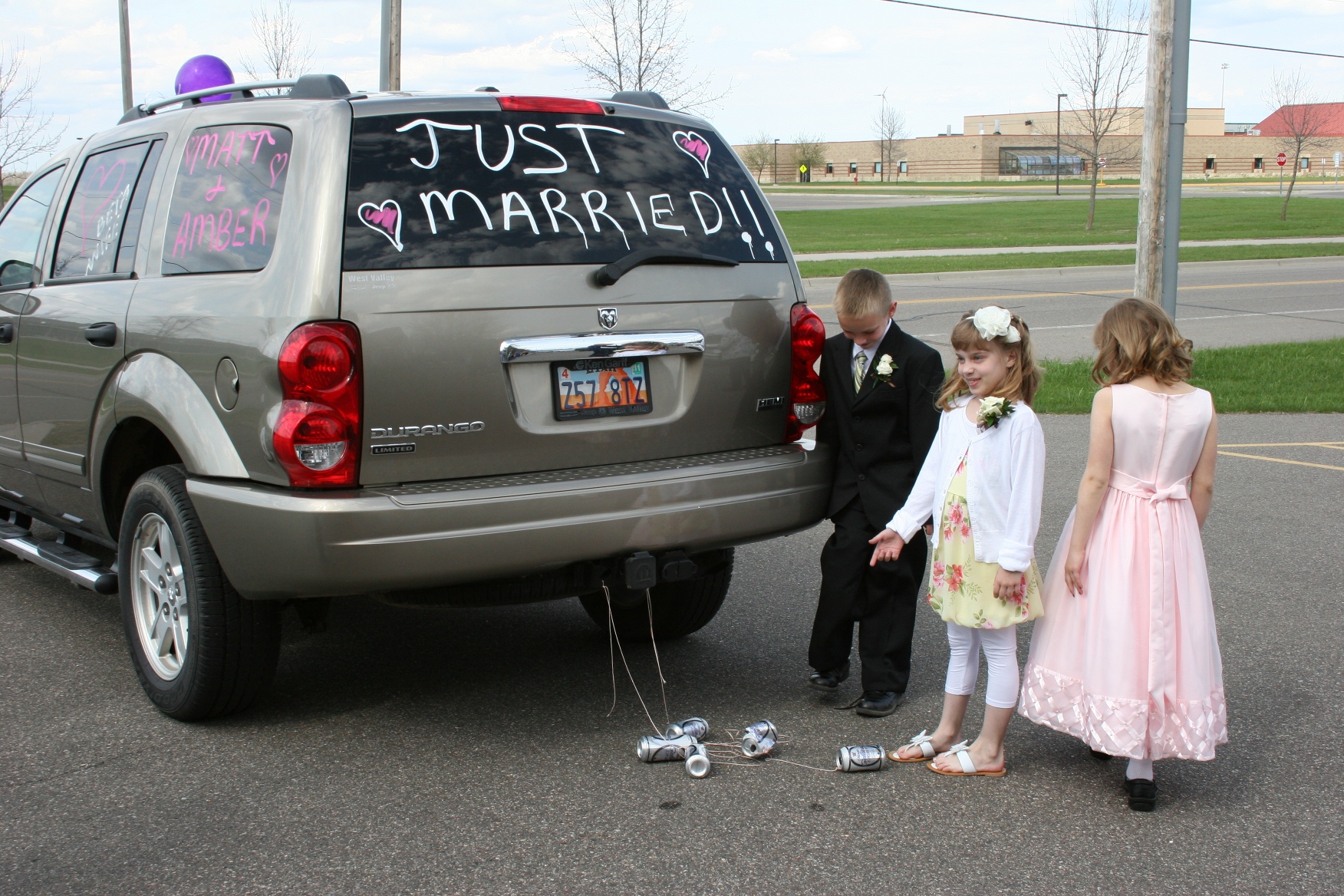
First I watched the attendants and others decorate the vehicle with words and balloons and beer cans.

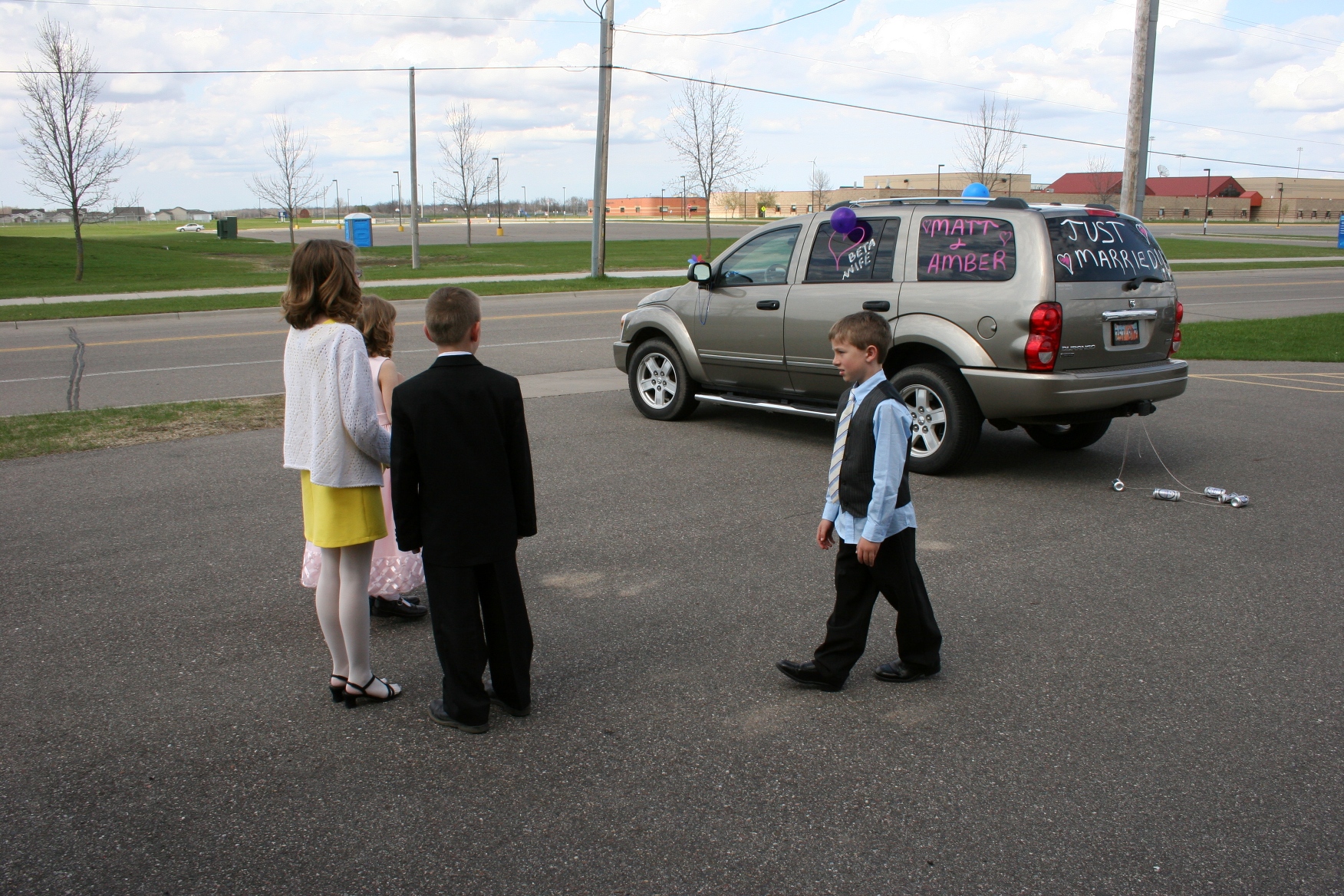
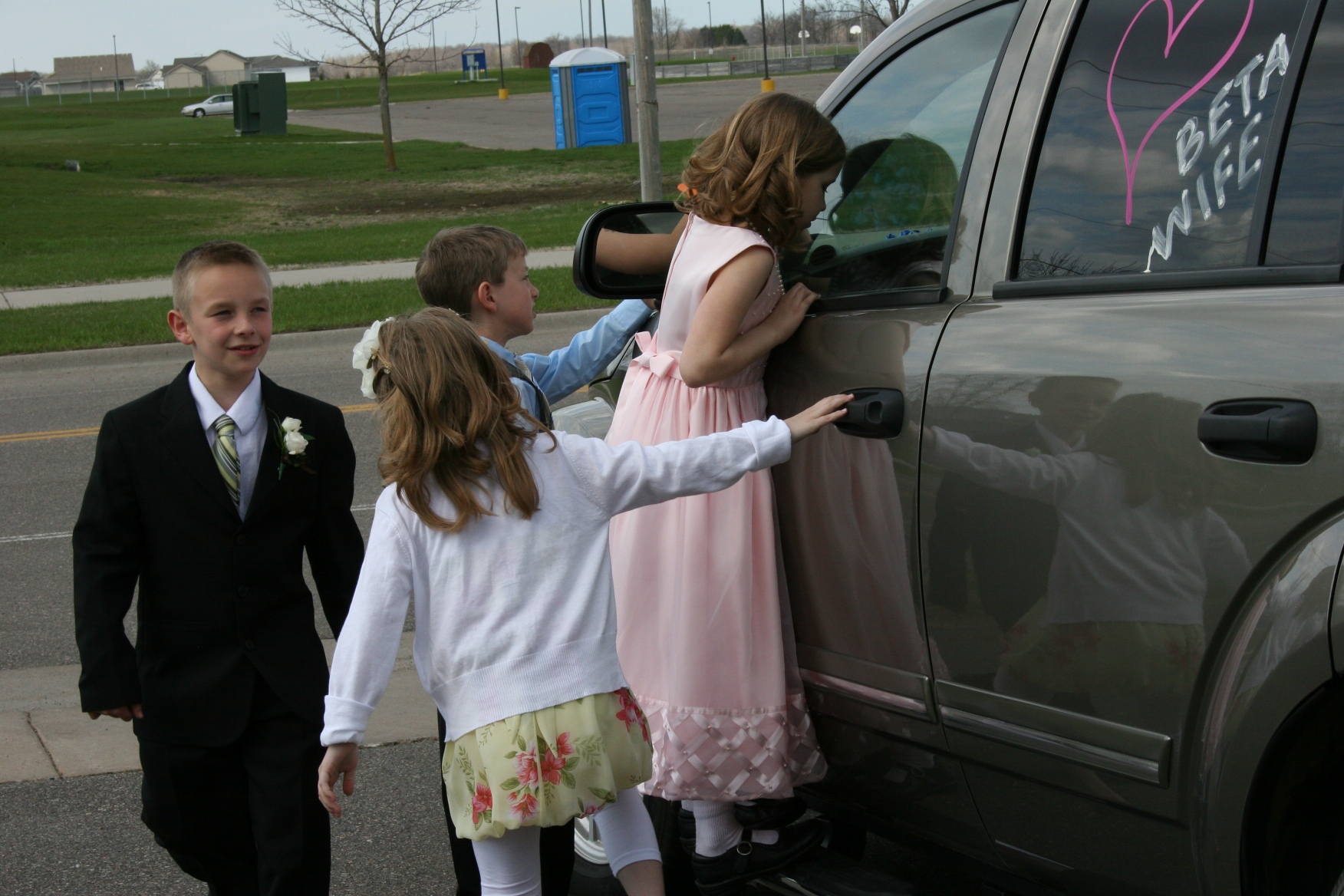
Then I watched the kids check out the Durango from afar…

move in close for a peek inside…

eye the Michelob Golden Draft Light beer cans tied to the vehicle rear…

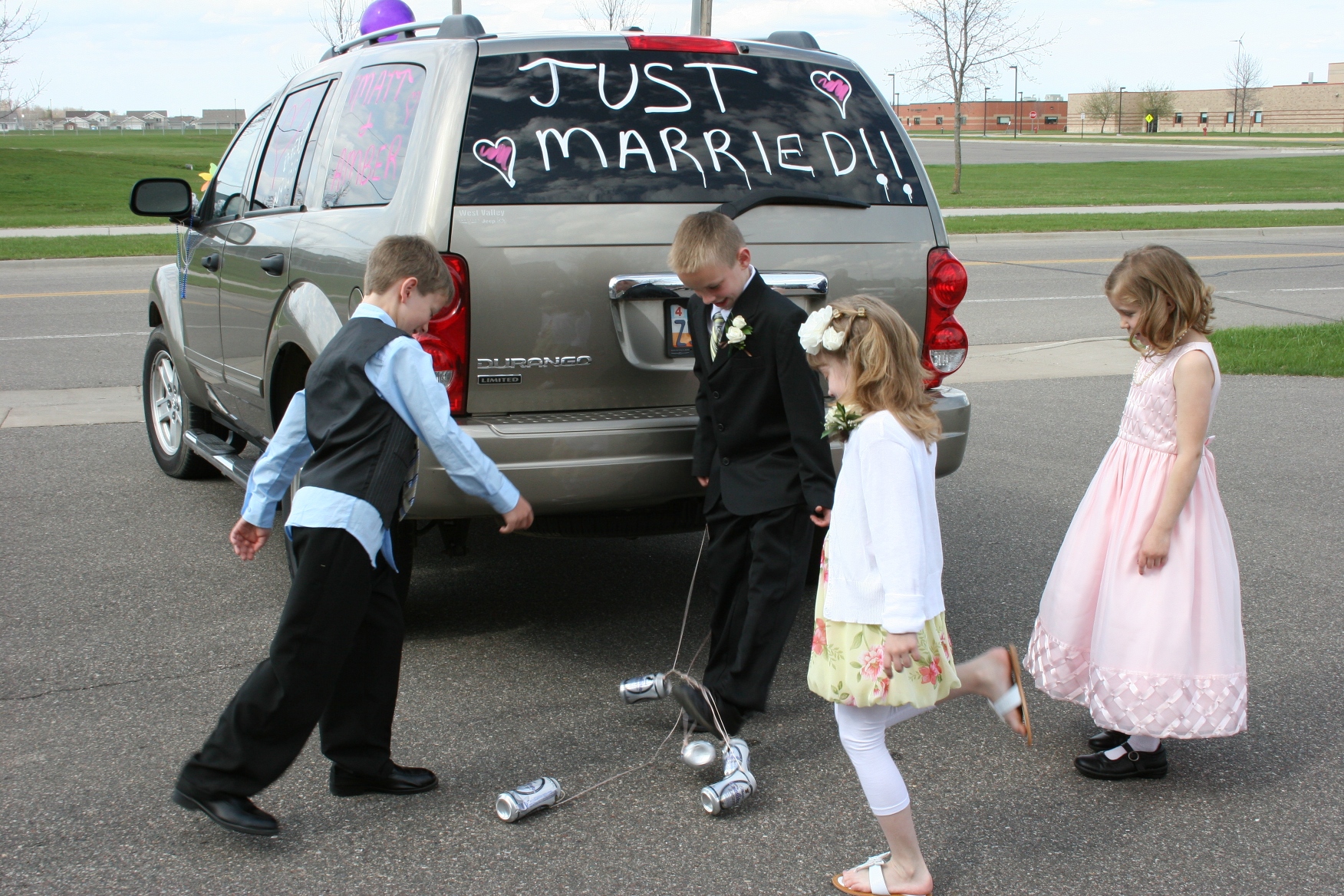
and, finally, enthusiastically, engage in a pick-up game of Kick the (beer) Can.

They had no idea I was photographing them in a perfect moment of childhood play and wedding tradition in a small, central Minnesota town.

© Copyright 2011 Audrey Kletscher Helbling
 

Tossing the Christmas tree and welcoming spring May 6, 2011

The remains of our dried up Christmas tree, now properly disposed of at the local composting pile.

ON WEDNESDAY EVENING we tossed the Christmas tree which has been buried under snow for, oh, about six months. Well, not quite, but winter seemed to linger into half a year.

I’m serious. As recently as this morning, we had temps in the 30s and several days ago wisps of snowflakes whirled in the sky.

But enough of that. With the official disposal of the Christmas tree at the finally-opened Faribault Compost Site, I can declare that spring has finally arrived here in southeastern Minnesota.

You don’t have to simply take my word for it. Join me on this photographic tour of my yard, where spring has clearly, finally (I hope) ousted winter.

Hostas push through the soil, unfurling bright green leaves. Why does green always seem brighter in the spring?

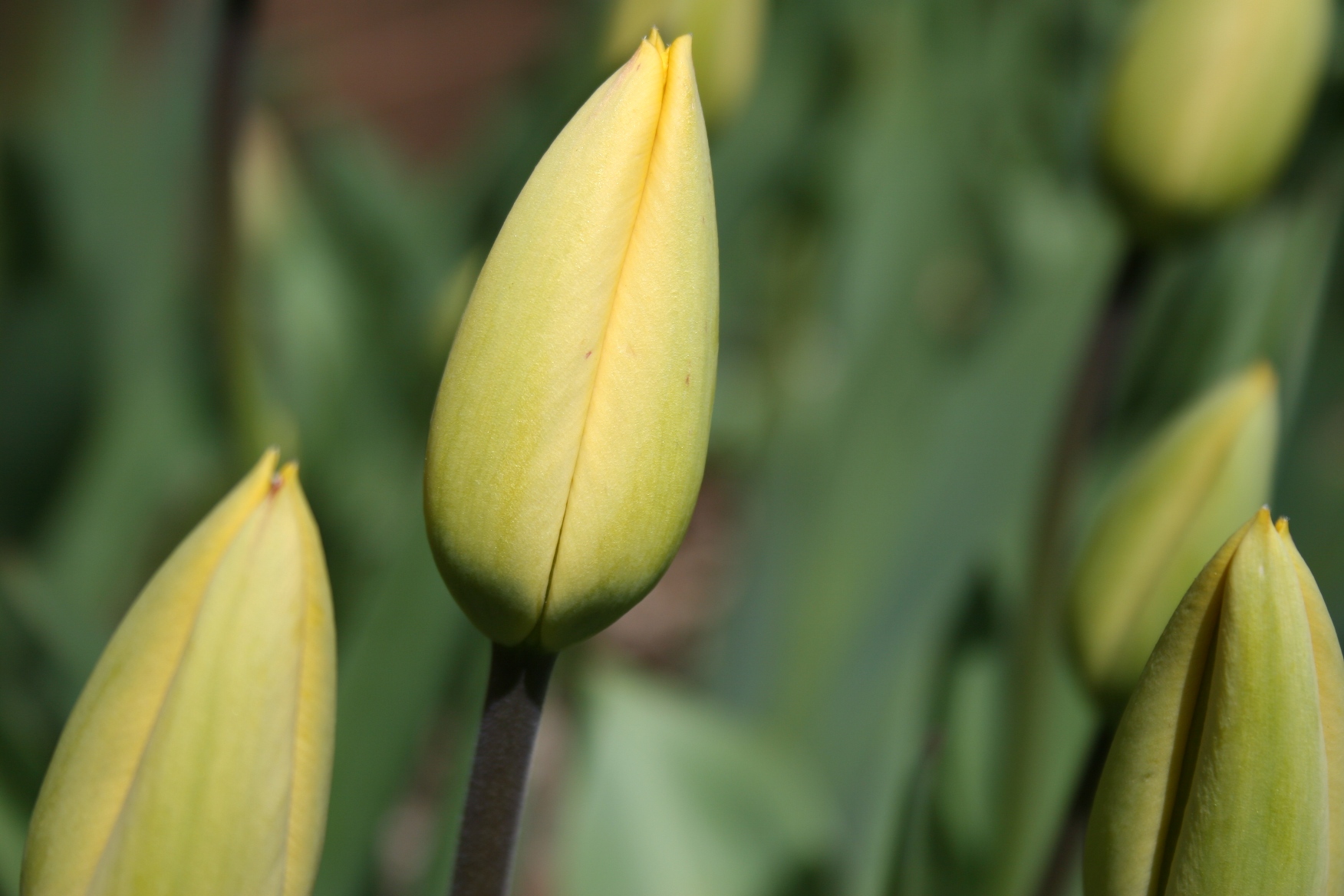
Most of my tulips are clasped shut yet, waiting for more sun and more warmth.

A plump red tulip about to burst into bloom.

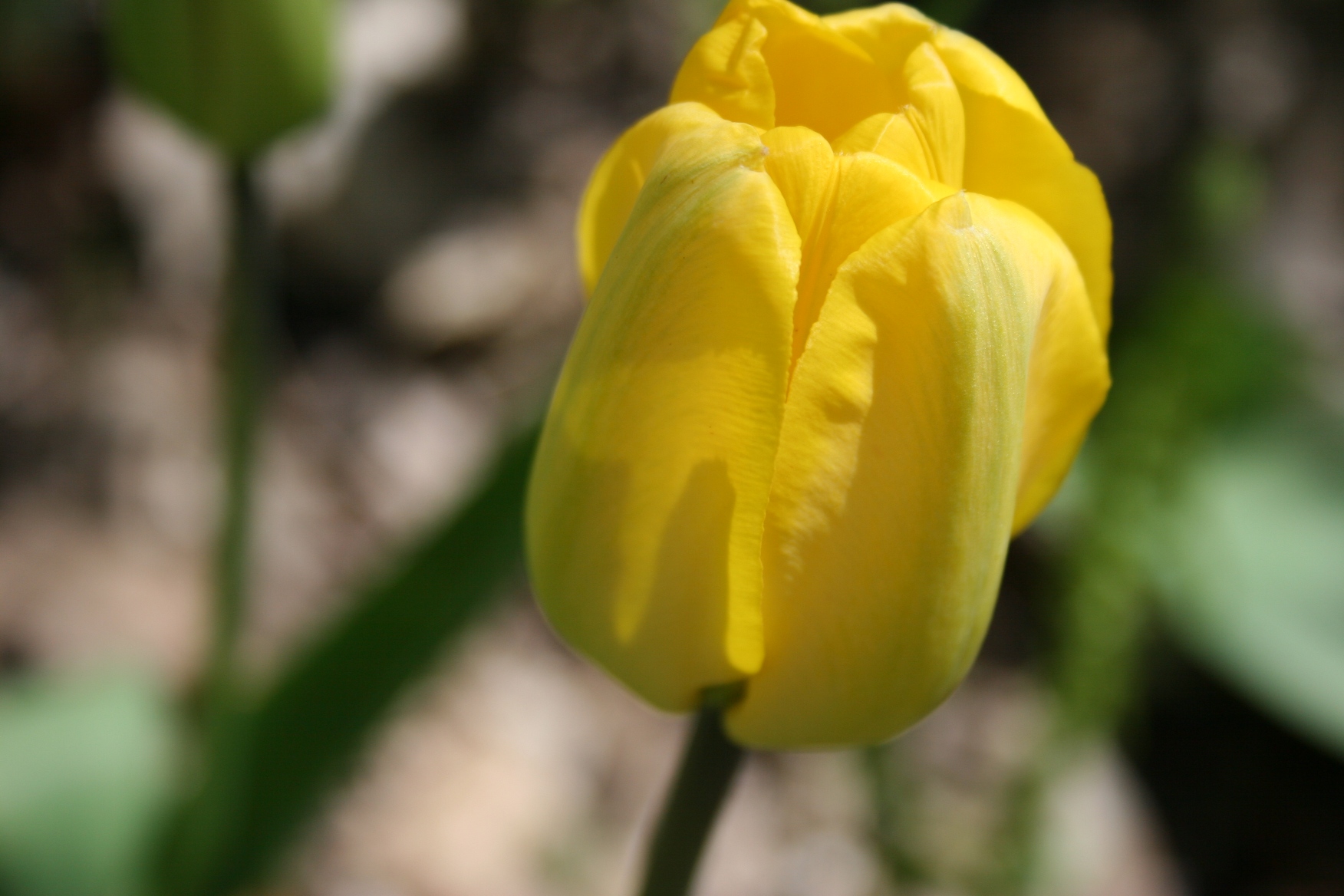
A yellow tulip edges ever closer to full blossom in the spring sunshine.

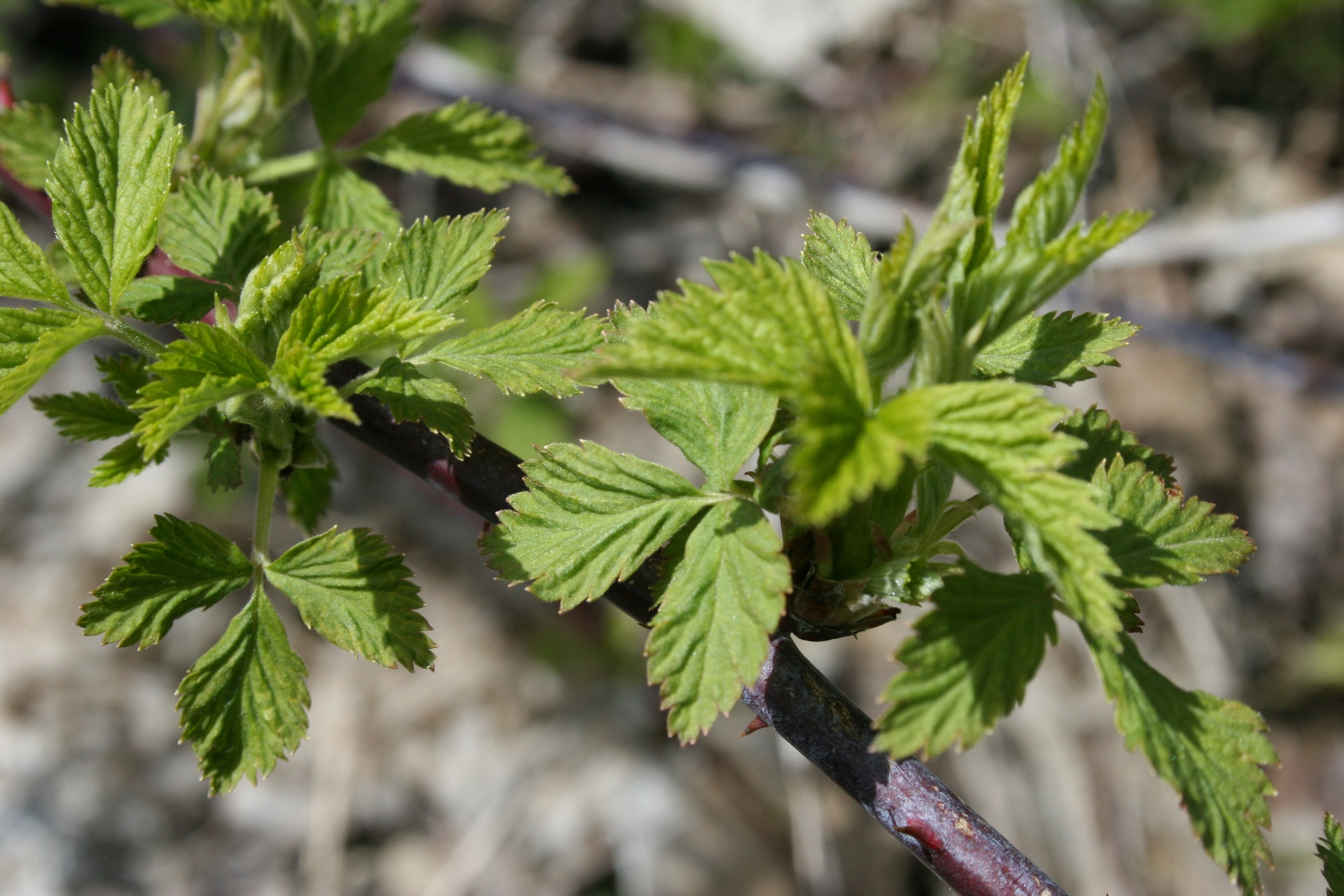
Unfurling wild raspberry leaves hold the promise of summer.

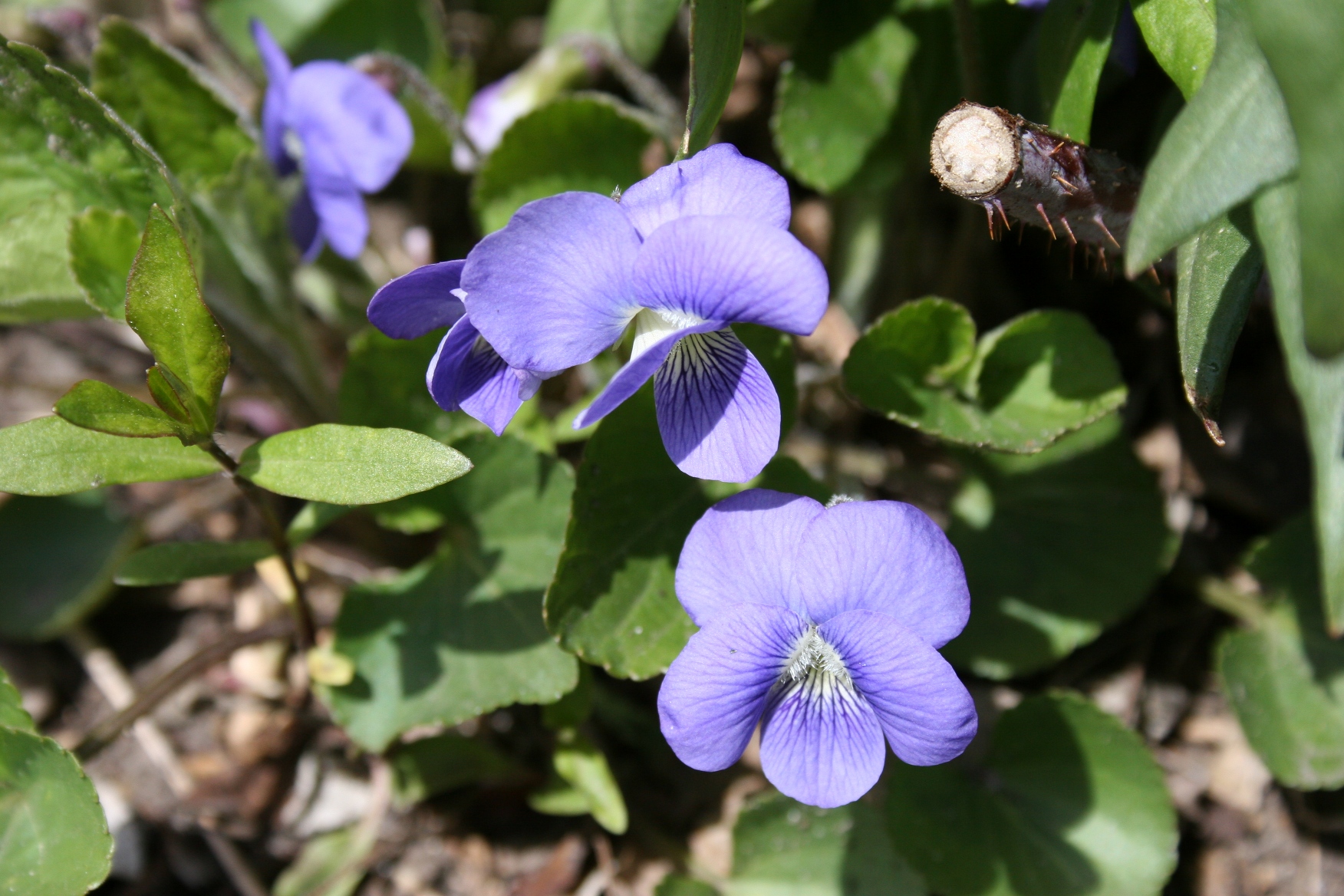
Dainty violets, so easy to overlook in the splendor of spring.

Copyright 2011 Audrey Kletscher Helbling
 

In pursuit of Bambi April 16, 2011

Filed under: Uncategorized — Audrey Kletscher Helbling @ 7:56 AM
Tags: , , , , , , , , ,

OH, FOR A TELEPHOTO lens on my camera…

Since that is not in the cards, the budget or the plan, I find myself often lamenting missed nature shots. It’s not like I can holler to Bambi, “Hey, hold still, will you, so I can take your picture! Move that way a little bit. Just one more shot.”

Nope, can’t do that.

So I shoot anyway, firing my camera in the hopes that once, maybe once, I’ll get something decent on my CF card.

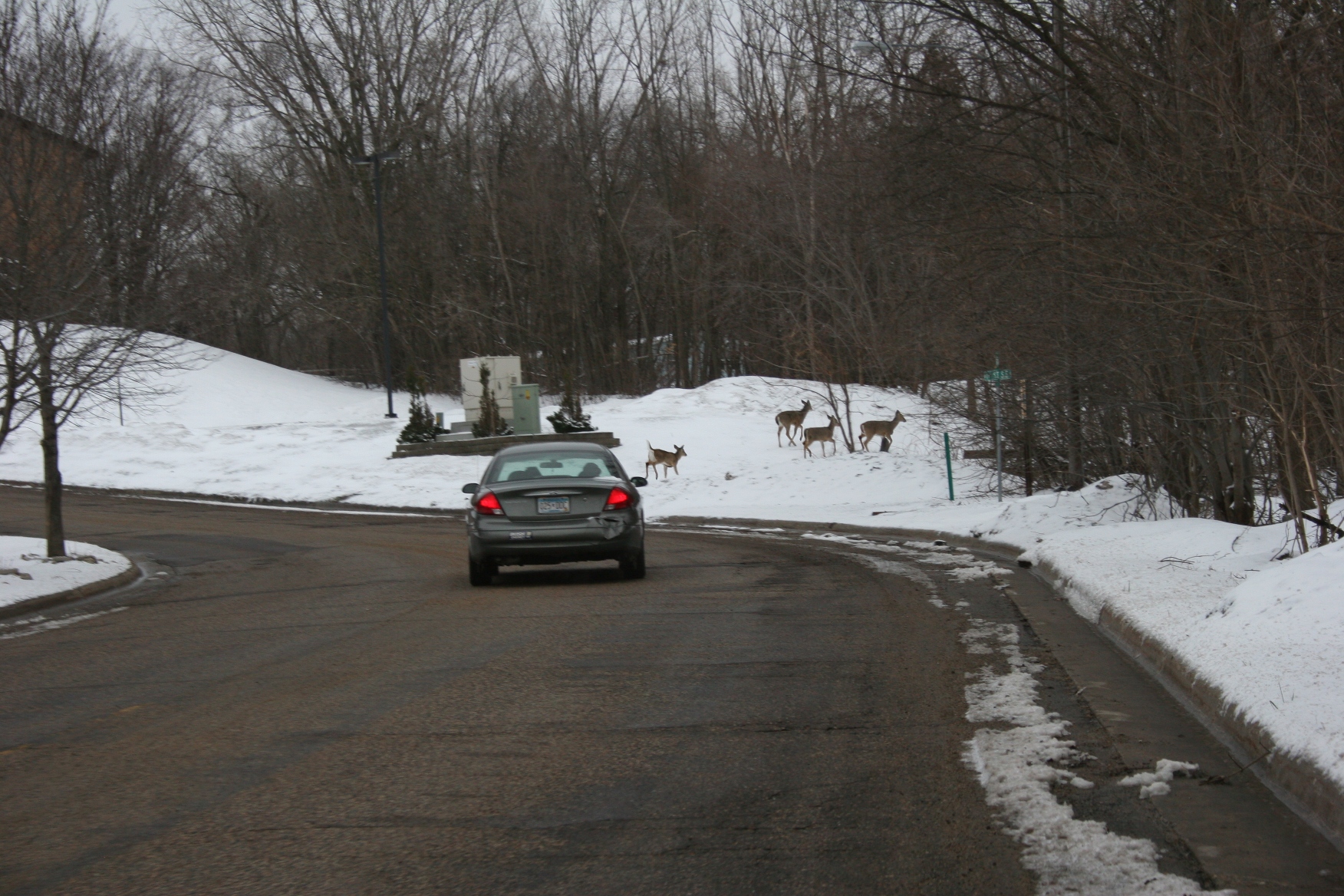
So…, Wednesday evening my husband and I are checking out the rivers in Faribault. We are driving toward Teepee Tonka Park from the viaduct that crosses the Straight River and railroad tracks. And there they are. Four deer. Standing. In a yard.

I am so excited. But already the deer are fleeing, alert to the danger of our approaching van and a car driving up the hill toward them. My only thought is to photograph this quartet.

But I am frustrated because the lollygagging car is in my way. Can’t the driver see that I have a camera? Probably not.

Oh, well, I try anyway, shooting seven frames through the van’s windshield.

And although the results are not stunning or fantastic or overly-impressive, I’ve managed to capture at least one photo that is good enough to show you. And that, folks, is all I can ask for without a telephoto lens to shoot Bambi.

EDITOR’S NOTE: Those of you who live in southeastern Minnesota are probably wondering, “How did she shoot these photos on Wednesday when we didn’t have snow on the ground?” You would be correct in questioning that.  I wrote this three weeks ago and forgot about it in my post drafts. However, since we got snow overnight here in Minnesota, I thought it appropriate to publish today.

© Copyright 2011 Audrey Kletscher Helbling
 

Minnesota Moments spring issue publishes April 13, 2011

Filed under: Uncategorized — Audrey Kletscher Helbling @ 7:54 AM
Tags: , , , , , ,

I’VE SEEN THE IMAGES so often they’re practically imprinted upon my brain. Ditto for the words. I’ve written, rewritten, edited, proofed and read them. I can nearly recite the stories.

Yet, when I see my photos and words in print rather than on my computer screen, I am still thrilled. Every time. Nothing compares to ink upon paper for me as a writer.

That said, check out the spring issue of Minnesota Moments, a magazine packed with my writing and photos.

I’ve written two major feature packages—one on places to view roses in Minnesota and another on two great southern Minnesota hamburger joints.

I’ve reviewed three Minnesota-authored books, on barns, aging in a small Minnesota town and nature.

I’ve pulled together stories about a WW I veteran and a recipe contest winner.

These are the kinds of stories that don’t make the headlines, but which I find the most interesting. They are the real, at the heart of Minnesota, stories.

In this issue you will read nearly 20 pages of my writing and see 23 of my photos.

Not to worry, there’s more to this issue than just my work. You’ll find six pages of stories and photos from entrants in the Pet Portrait Contest. I helped select the winning essay about a dog, Meeka, who saved her owner’s life. We can all appreciate a good animal tale and, thanks to our readers, there are plenty.

Several essays grace our “Moments in time” section, including one written by 89-year-old Ethelyn Pearson of Wadena. This octogenarian can write. Consider this description of her grandfather: “Wreathed in smiles, teetering on his toes, Grandpa would say around a wide smile…” Now, that’s writing. I’ve told my editor that Ethelyn would make a mighty fine feature story.

And because this is my blog and I can write whatever I wish, I will mention that my uncle and aunt, Merlin and Iylene Kletscher of rural New London are the subject of a short “Faces & Places” article. They have hiked through all of Minnesota’s 72 state parks. How many of us can say we’ve accomplished that? And, no, I did not write this piece.

But I did find the photographer, Harriet Traxler, whose cow photo highlights our “Picture this” page. I’ve reviewed her Barns of Sibley County in the book review section. I met Harriet this past weekend and she is every bit as down-to-earth and sister-friendly as I expected.

Down-to-earth. That best describes the content of Minnesota Moments, the Cold Spring-based magazine I’ve written for since 2004.

If you haven’t checked out the magazine, do. If you’re so inclined, subscribe. If you like what you read, consider sending Editor/Publisher Mike Nistler an e-mail at info@minnesotamoments.com. We always appreciate feedback. And, we appreciate (need) advertisers too.


Stop and smell the roses in a trio of stories I've written about places in Minnesota to view beautiful roses.

It's always fun to discover good down-home restaurants. Pick up a copy of the spring issue to see where you'll find the restaurant with this kitschy decor.

© Copyright 2011 Audrey Kletscher Helbling
 

Tips for on-the-road photography April 2, 2011

HOW OFTEN HAVE YOU been traveling along a roadway, saw a subject worth photographing but were in too much of a hurry to stop?

That’s happened to me more often than I wish. However, I’ve found a solution that’s worked well with some incredible photo results.

I’m issuing a disclaimer here, though. I’m not advocating photographing and driving. This photographic option should be used only when you are a passenger because you’ll be operating your camera while your vehicle is moving.

First, set your camera at a sports action shutter speed, place it on your lap, grip the camera body and be prepared to snap away at a moment’s notice.

Click. Click. Click. With a fast shutter speed, you can quickly fire off three frames before you’ve bypassed the intended subject.

OK, it’s not quite that easy. You must anticipate just the right moment to take your photos. That means paying attention to what lies ahead of you along the roadway. Click too soon and you miss the shot. Click too late and you miss the shot.

It’s partially luck, partially skill that will nail a great photo.

I’m always watching too for telephone and electric poles and roadside signs that can obstruct an otherwise good image.

I’m also always trying to balance my photos so they are well-composed.

All of this moving of the camera and adjusting the lens and framing the image must happen in a split-second. I can’t even begin to tell you how many shots I’ve missed because I’ve moved too slowly or failed to notice a photo op until it passed me by.

That’s the other part of successful on-the-road photography. You need a watchful eye for subjects that will make interesting and great photos. Too many people look, but don’t really see, what’s around them. Perhaps because I’ve grown so accustomed to viewing my world through a camera lens and because I’m a writer, I notice more than the average person.

Yet all of this effort will be wasted if you’re shooting through dirty vehicle windows. Clean your windows. If you live in a state like Minnesota, where road spray from sand and salt and melting snow is a problem, you may just have to abandon this traveling photo option in the winter.

Unless you’re traveling through a town, at low speeds, I don’t recommend opening your window. You risk getting dust or dirt into your camera sensor.

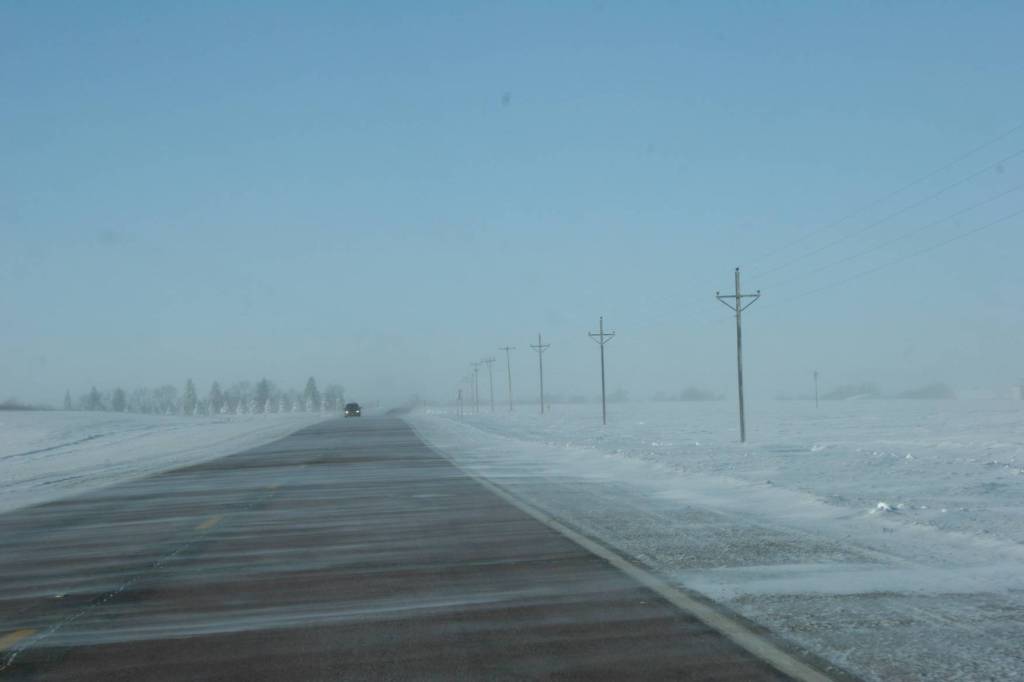
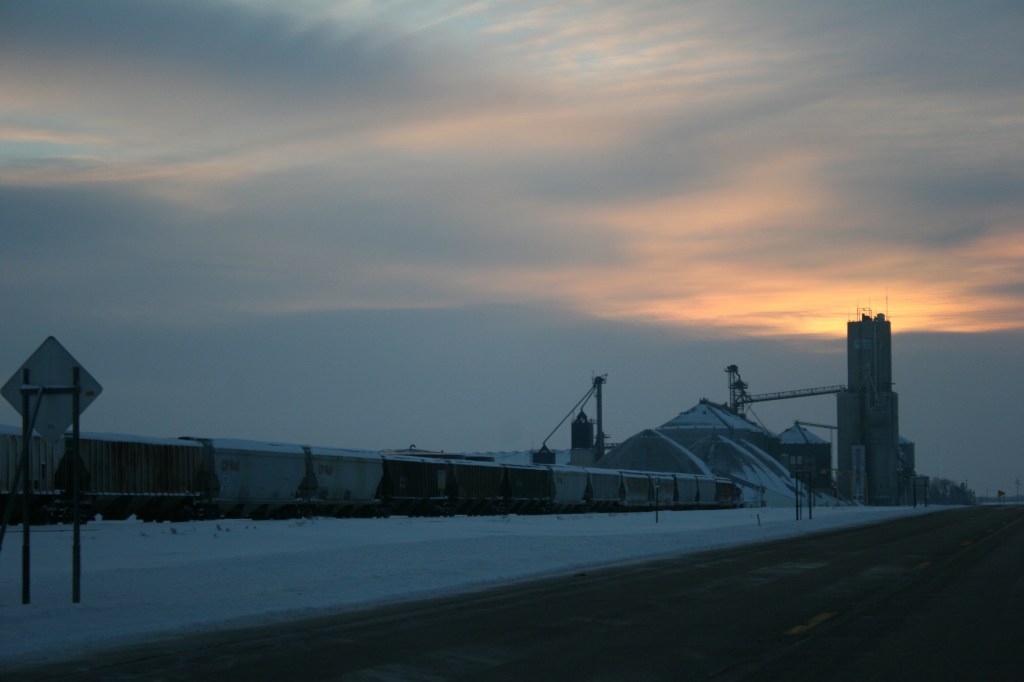
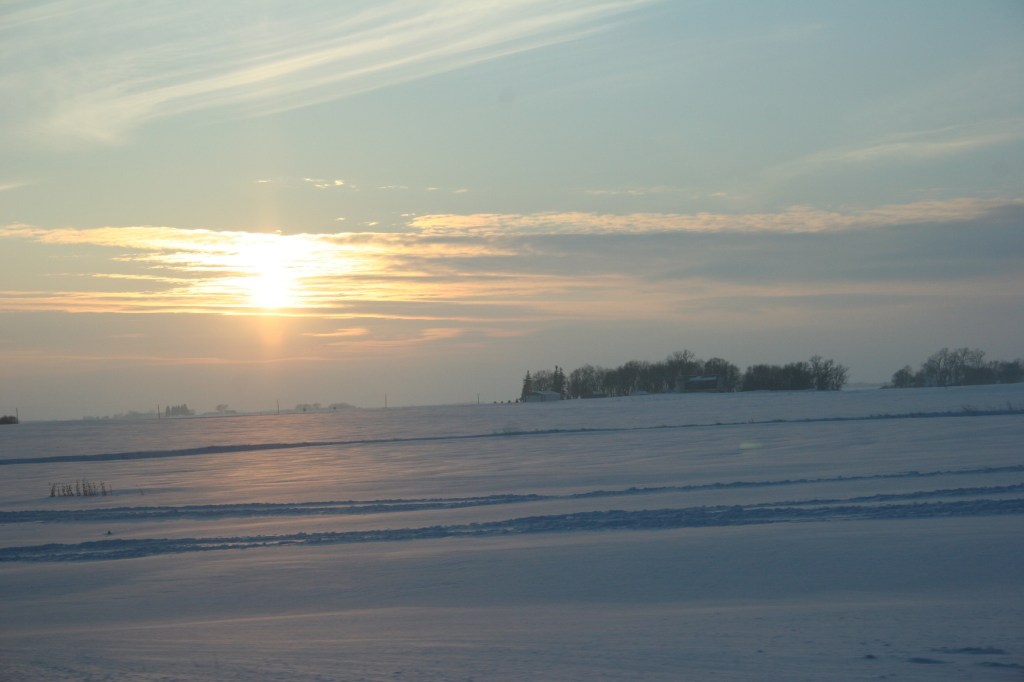
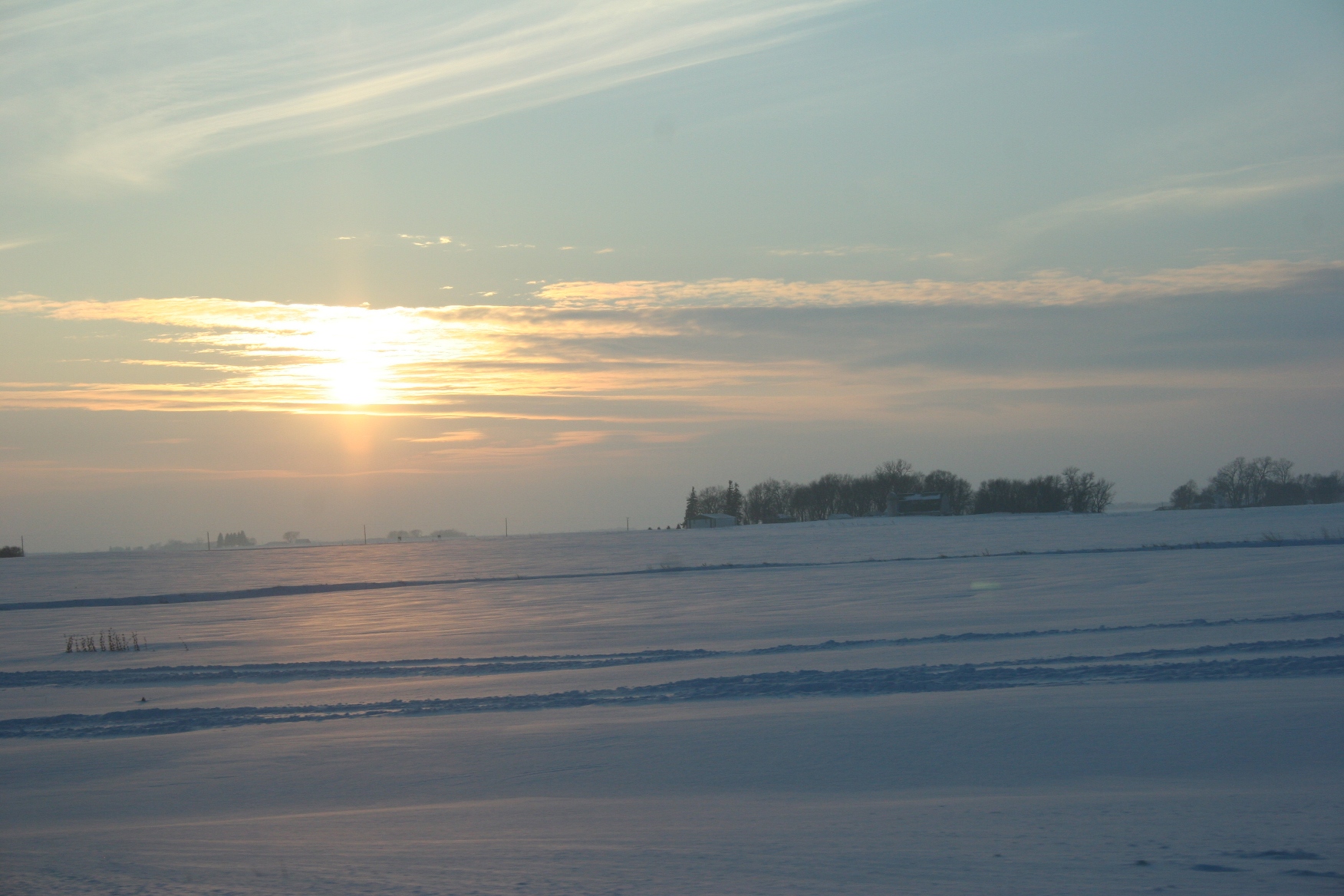
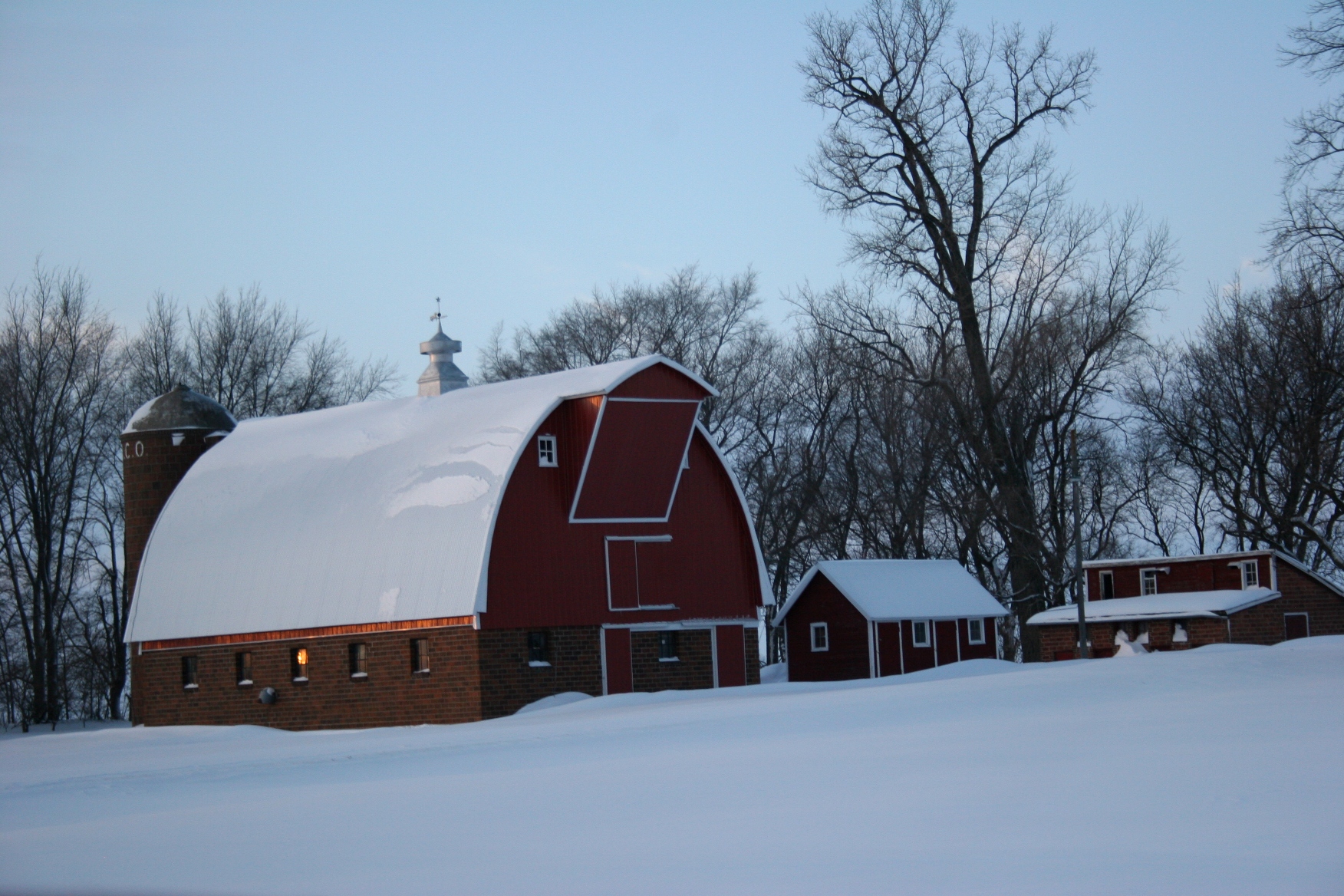
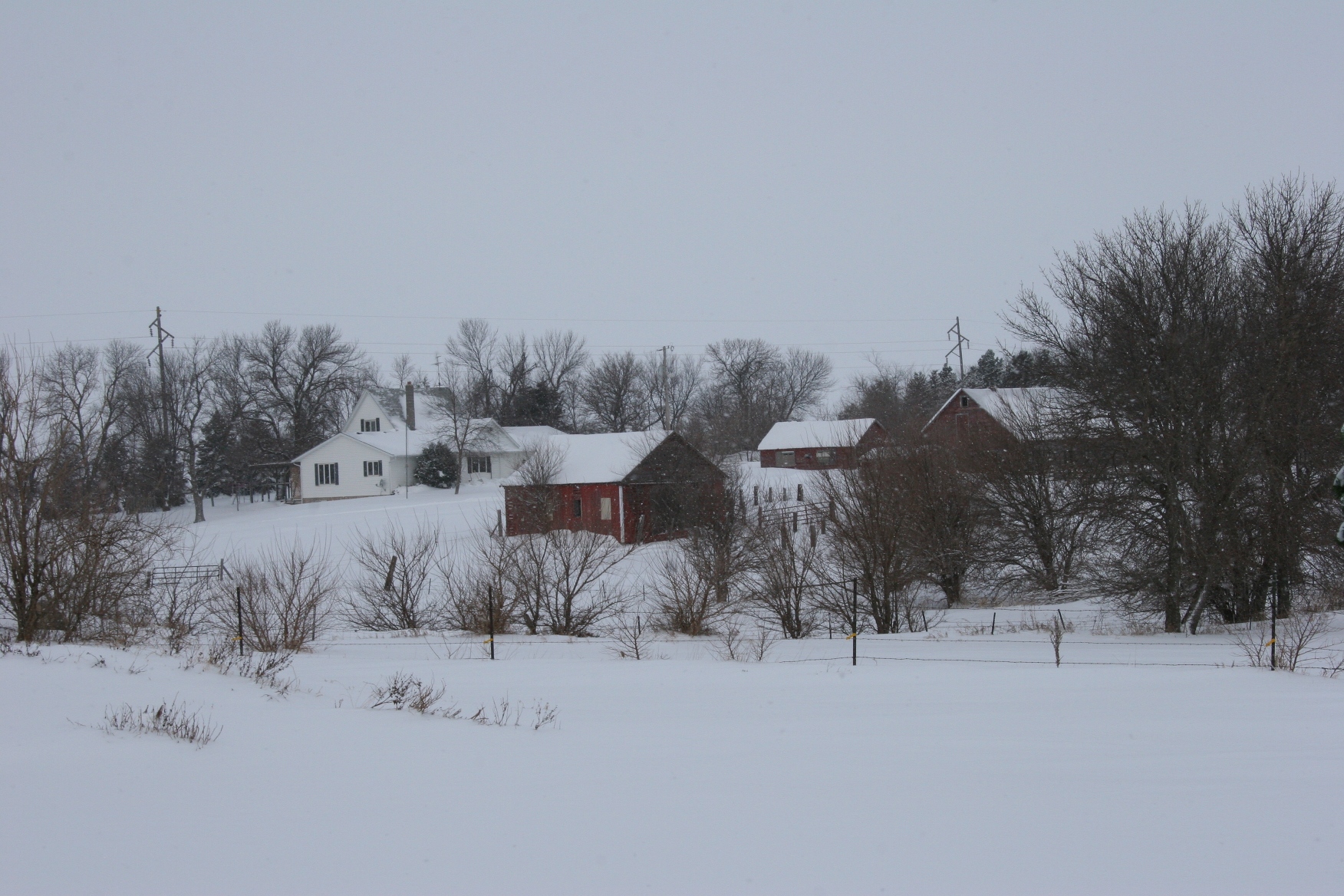
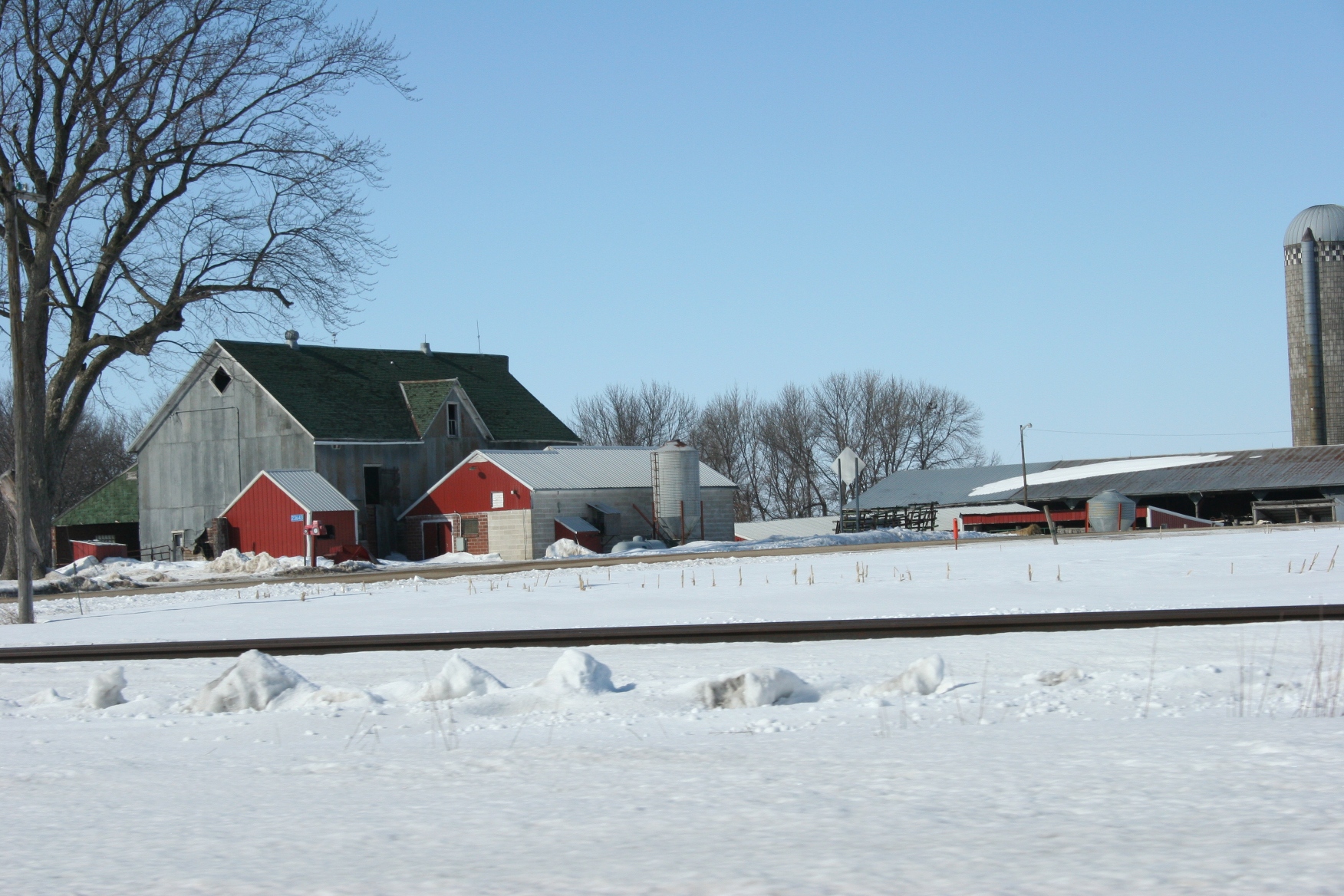
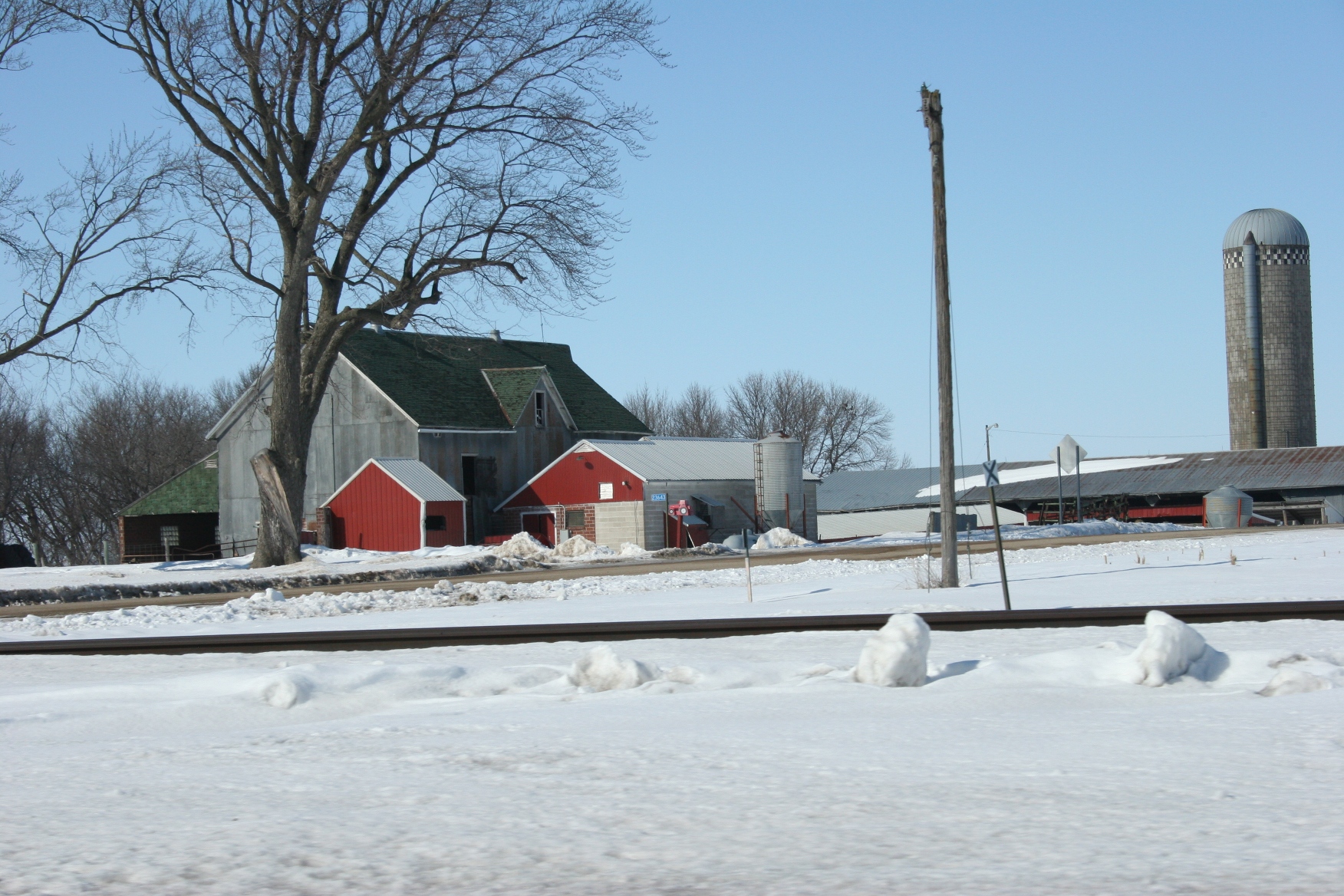
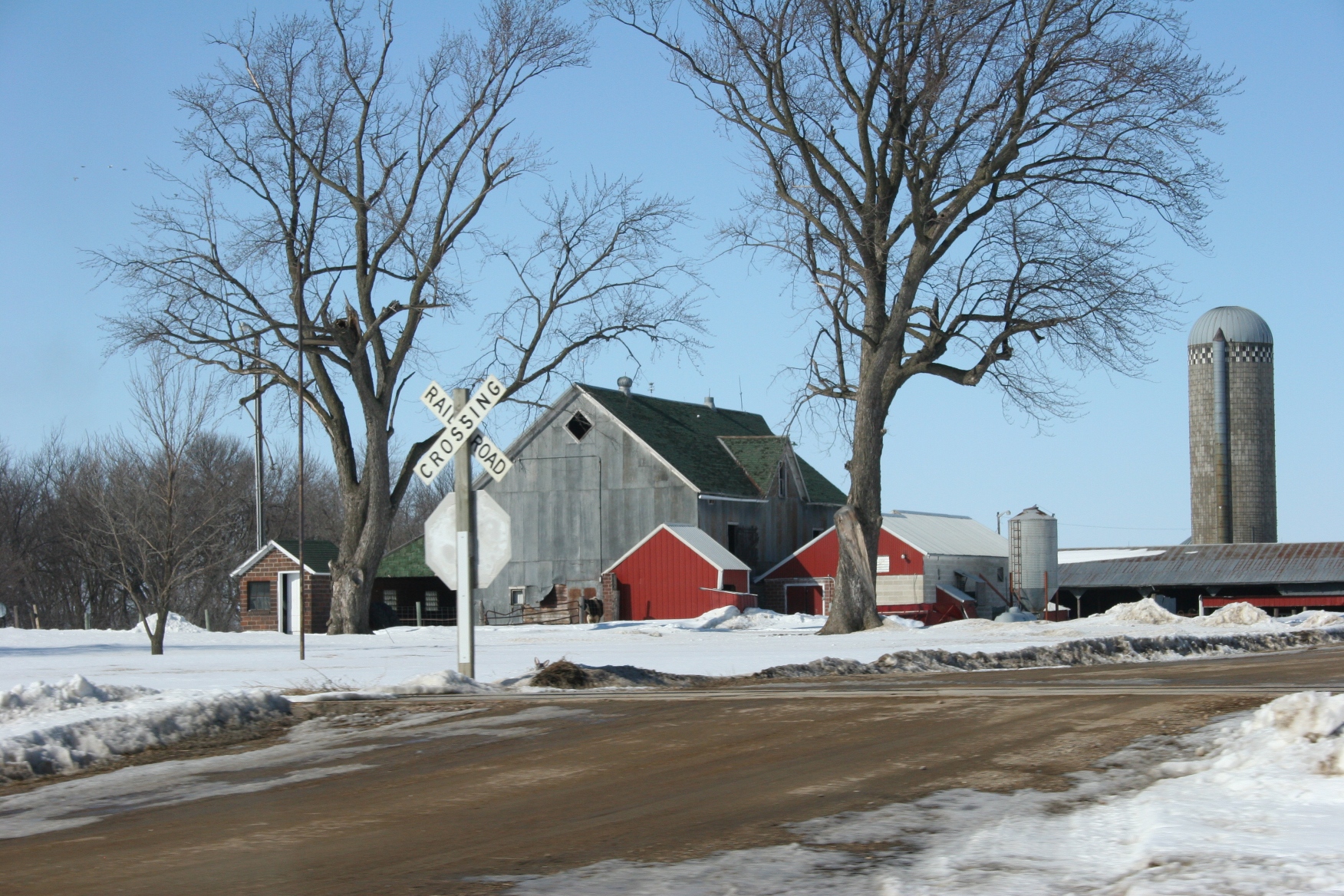
That said, here’s a trio of photos I shot in early March along U.S. Highway 14 between Essig and Sleepy Eye in southwestern Minnesota while traveling at 55 mph.

Other than downsizing these images, I’ve not edited them.

Here’s why these images are so good. The exposure is perfect. The photos are well-composed. The horizontal line of the railroad track in the first two frames sits at an eye-pleasing one-third position. The color contrasts of red against gray and blue make these photos pop. The subject is beautiful in its simplicity.

If you’re never tried traveling photography, give it a shot. You may be as pleasantly surprised as me with the results.

FYI: I shoot with a EOS 20D DSLR Canon camera. Yes, it’s a “fancy” digital camera, not a point-and-shoot. If you ever see a photo on Minnesota Prairie Roots that you are interested in purchasing, please contact me via a comment (won’t be published) or an e-mail.

© Copyright 2011 Audrey Kletscher Helbling
 

A glorious sunset at St. John the Baptist Church March 27, 2011

THAT I APPRECIATE country churches should come as no surprise to those of you who’ve followed Minnesota Prairie Roots. I value their beauty, architecture, history, reverence and connection to the land and its people.

Therefore, I photograph these rural sanctuaries whenever possible. If a church door is unlocked, I’ll take you inside for a photographic tour. If not, you’ll at least see the exterior.

Others, like rural Carver resident Harriet Traxler, share my interest in photography and all things country. So when Harriet emailed images of a local rural church, St. John the Baptist Catholic Church in Faxon Township some four miles northwest of Belle Plaine, I asked if I could share her photos with you.

Because I struggled to pick my favorite of the four, shot around sunset on Friday, I’m publishing three of Harriet’s photos.

I hope you’ll agree with me that even on a cold Minnesota March day, these gorgeous photos warm the heart, and the soul.


Built around 1870, St. John the Baptist Catholic Church still holds Sunday Masses and has many young parishioners.

In the summer, the church is surrounded by cornfields.

The sun sets the sky on fire behind St. John the Baptist Catholic Church, rural Belle Plaine, Minnesota.

FYI: Harriet has published a series of barn books featuring barn and other rural images from her native Sibley County, Minnesota. To view her work, click here. Some of Harriet’s work will be featured in the spring issue of Minnesota Moments magazine.

© Text copyright 2011 Audrey Kletscher Helbling
© Photos copyright 2011 Harriet Traxler


Traveling photo shoots March 26, 2011

BOY, WAS I HAPPY to meet photographer Loretta M. Verbout of Rochester during an opening night gallery reception recently at the Paradise Center for the Arts in downtown Faribault. She is among three photographers and a painter currently exhibiting at the center.

Although I enjoyed all of the art, I was particularly drawn to Loretta’s photos because she photographs the same types of subjects I like photographing. Flowers. Rural scenes. Everyday objects. Her images have a certain down-home quality that appeals to me.

I was especially drawn to her photo of a country church barely visible behind a field of ripened corn. I wanted to know more about the church and where it was located. I enjoy discovering rural churches, then photographing them.

“It’s somewhere between Dubuque and the Minnesota border,” Loretta said.

Then Loretta explained that she shot the image through the passenger window of a moving vehicle.

I didn’t expect that answer.


Loretta shot this rural church scene while driving roads along the Mississippi River somewhere between Dubuque, Iowa, and the Minnesota border. It's in her gallery exhibit at The Paradise.

Instantly, I bonded with this photographer. I do the exact same thing—set my EOS 20D SLR digital Canon camera on a fast shutter speed and click, click, click while traveling. Loretta also uses mainly Canons.

I called my husband over. He needed to hear this, to confirm that I’m not the only crazy photographer who shoots while riding shotgun.

But apparently I’m not to Loretta’s level of commitment yet. She’s worn out the motor on her vehicle’s automatic window. Typically, I shoot through the window given I don’t want to risk dust filtering into my camera and landing on my sensor, plus sometimes the weather is just too cold for an open car window.

Here are two more drive-by images from Loretta’s Mississippi River road drive:

FYI: Loretta’s gallery show, “The beauty in everyday things,” and exhibits by photographers Laura Schenck of Northfield and Catherine Michele Adams of St. Paul will run through April 23 at the Paradise’s Carlander Family Gallery, 321 Central Avenue, in downtown Faribault. Minneapolis artisit Lauren S. Strom’s paintings are also on display in the Lois Vranesh Boardroom Gallery. Paradise hours are 10 a.m. – 5 p.m. Tuesday – Friday and from noon to 5 p.m. on Saturday.

CHECK BACK for a trio of on-the-road farm place photos I shot recently while traveling through southwestern Minnesota.

© Copyright 2011 Audrey Kletscher Helbling
 

Drive-by barn photo shoot February 28, 2011

Filed under: Uncategorized — Audrey Kletscher Helbling @ 11:14 AM
Tags: , , , , , , , ,

EVERY TIME I TRAVEL Interstate 35 north to the Twin Cities, I think, I need to photograph “that barn.”

That would be the red barn near the Elko/New Market exit with the “Sugardale” lettering painted on the end.

So Sunday afternoon, en route back to Faribault from Burnsville, where I had picked up my camera at National Camera Exchange, I was ready. My fingers were itching to snap more than a few photos since I’d been without my Canon for a week. I had the sensor cleaned.

Anyway, I set a fast shutter speed and hoped for the best as I shot two images through the passenger side window at an interstate speed of 70 mph. That’s all I got before the barn moved out of lens range. My husband asked if I wanted to detour and get a closer shot, but I declined. I was tired and not really dressed for a winter-time photo shoot, meaning I wasn’t wearing boots.

I was pleasantly surprised by the results given I was shooting through a grimy window, at a distance further than I preferred and on a gloomy afternoon.

Here are the results.

Photo one of the "Sugardale" barn.

Photo number two of the "Sugardale" barn. I like how both photos define the starkness of the land on an overcast winter afternoon in Minnesota.

I fully intend to return and shoot the barn close-up. Yeah, I’ve been saying that for years.

In the meantime, does anyone know anything about the history of this barn or Sugardale?

© Copyright 2011 Audrey Kletscher Helbling


Why some of us appreciate abandoned buildings February 25, 2011


Harriet Traxler photographed this abandoned building along U.S. Highway 14 near Waseca several years ago. She's a hobbyist photographer specializing in nature and rural photography. This photo placed in a photo contest Harriet entered. "It is one of my favorites because of what it doesn't tell you," Harriet says.

SOMETIMES I’M SURPRISED by readers’ reactions to my posts. Usually, the stories and photos I least expect will interest readers, do.

Take my post on abandoned buildings. Last fall, I photographed a dilapidated building in the middle of nowhere along a gravel road near Kasota. I can’t give you the exact location because I don’t know quite where I was on that autumn day.

When I published that photo and wrote about my fascination with abandoned buildings in rural landscapes earlier this week, readers from Oregon, Arkansas and Minnesota responded. Seems I’m not alone in my appreciation of abandoned buildings and the history, memories and stories they hold.

Harriet Traxler, a hobbyist photographer from rural Belle Plaine and the publisher of a book series featuring photos of Sibley County, Minnesota, barns, emailed two photos of abandoned buildings. She is graciously allowing me to share her images and thoughts.

“I, too, am drawn to photographing old, abandoned buildings and then find myself staring at the pictures and trying to imagine who the people were that built and lived in these homes or worked in these barns that now stand empty,” Harriet says. “And the memories of the hard work, the laughter, the troubles; everything that went towards making it a home or farm are now gone forever.

Oftentimes when I would be out photographing the barns in Sibley County or even on a cross country trip, I would see a windmill or a silo or a small grove of trees standing alone in the middle of a field and wonder about the farm that stood there too.

What happened to the family that lived there once not too long ago? Were they happy? Were there children who played and worked alongside their family? Was there a tragedy that occurred that drove the family from the farm?

We often romanticize farm life, but that life was one of the hardest to live. If it was a dairy farm, like most were in rural Minnesota, then it was long days, seven days a week, and children after growing up on this type of farm, learning good work ethics, seldom wanted to spend the rest of their lives doing the work their parents had done for years and years. When they left the farms for those good ‘city jobs,’ that is when farm life began to disappear and those abandoned buildings really began to appear.”

I COULDN’T HAVE said it any better, Harriet. I am one of those kids who left the (dairy) farm.

Harriet, too, grew up on a farm, in Sibley County, on her uncle’s place, that looks nothing like the home of her youth.


The old granary on the farm where Harriet grew up.

“All that remains standing is this old granary that also always smelled of rats and dusty bins of oats,” Harriet says. “It had a lean-to attached to it that was used as a garage for my uncle’s car. I remember every inch of that farm because I loved to explore every inch of it.

I didn’t have to work nearly as hard on that farm as most children had to on the farms they grew up on so maybe that is why I loved it so much.

The freedom to be me was always there and I have often gone back to my ‘roots’ and those memories…the better memories seem to always remain pushing other memories that were not so much fun to the far corners of the mind.”

© Text copyright 2011 by Audrey Kletscher Helbling
© Photo copyright by Harriet Traxler