Minnesota Prairie Roots

Writing and photography by Audrey Kletscher Helbling

West of Mankato August 23, 2017

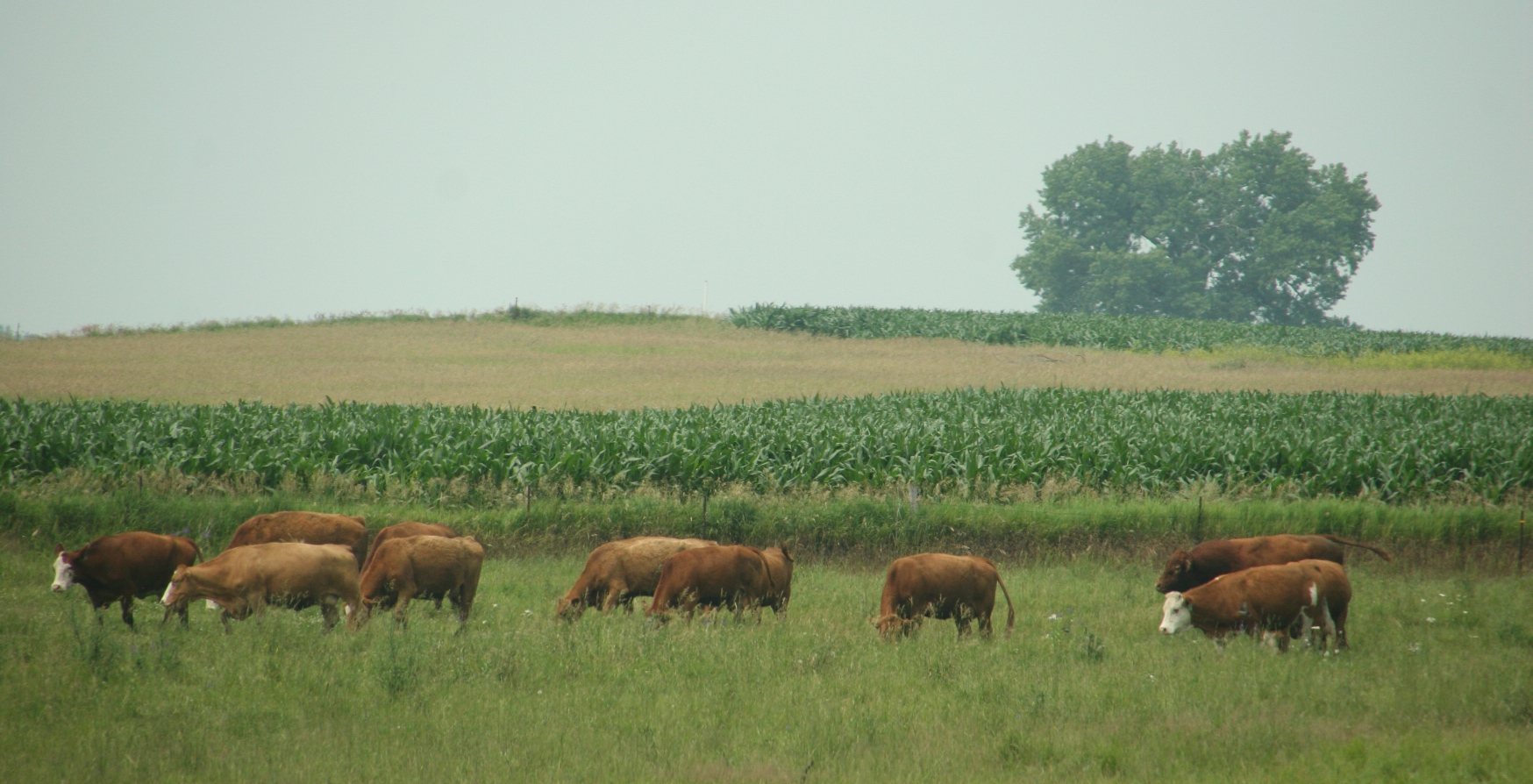
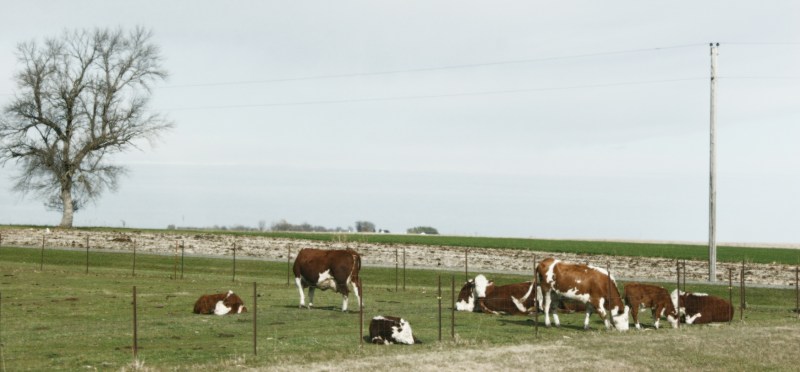
Cattle graze in a pasture along U.S. Highway 14.

Cattle graze in a pasture along U.S. Highway 14.


WHEN I TELL FELLOW MINNESOTANS I grew up on the southwestern Minnesota prairie, specifically near the small town of Vesta, I typically get a blank stare. So, when “Vesta” doesn’t register with them, I mention Marshall to the west and Redwood Falls to the east of my hometown. Both are county seats and fair-sized communities, in my opinion.
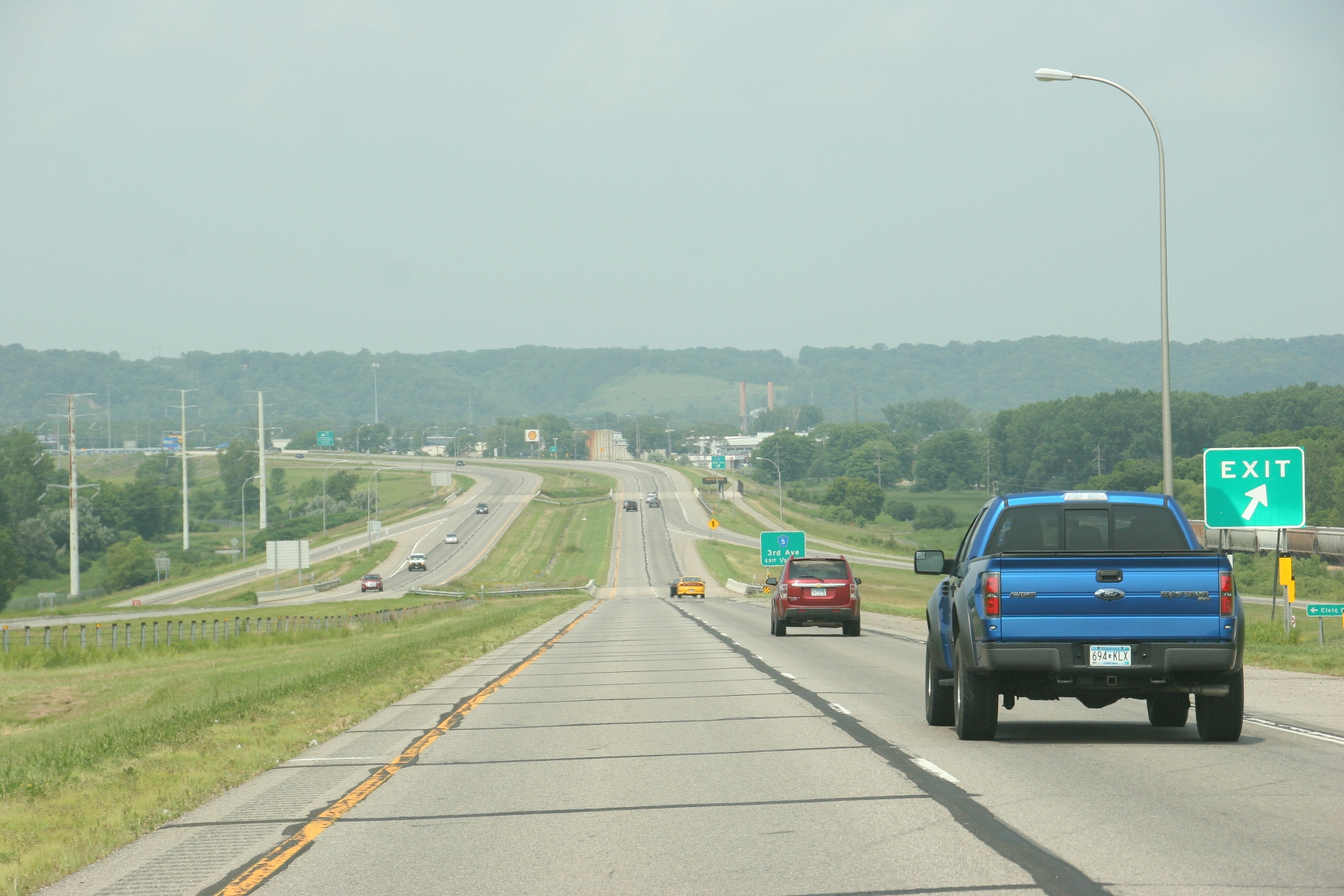
 

Driving on U.S. Highway 14 around Mankato traveling to southwestern Minnesota.

Driving on U.S. Highway 14 around Mankato traveling through southern Minnesota toward the prairie.


Even after dropping those two names, I still often get that quizzical look. It’s as if they have no idea there’s anything west of Mankato.


This barn along U.S. Highway 14 west of Sleepy Eye always catches my eye.

Gotta love this barn between Sleepy Eye and Springfield.
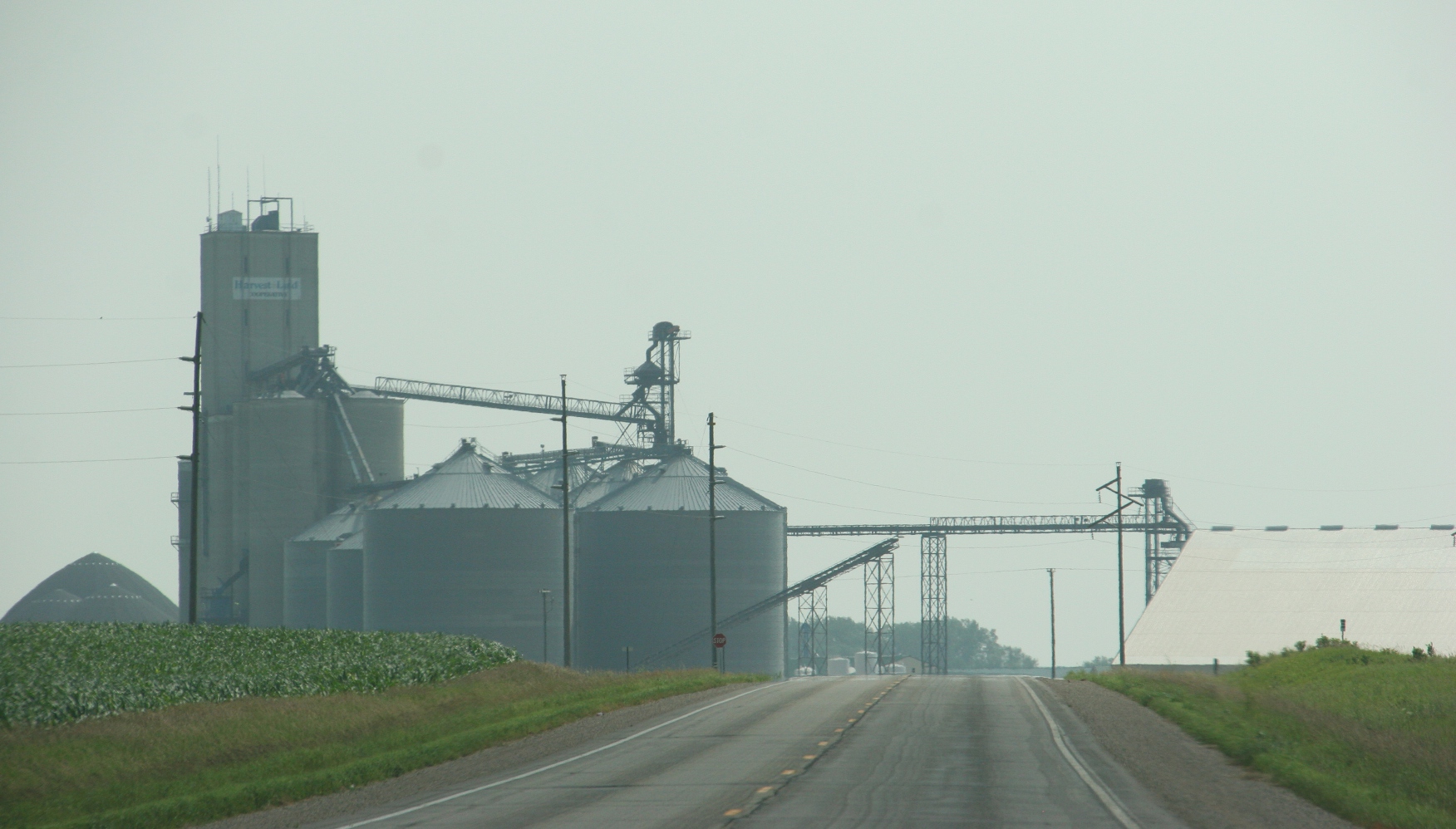
 

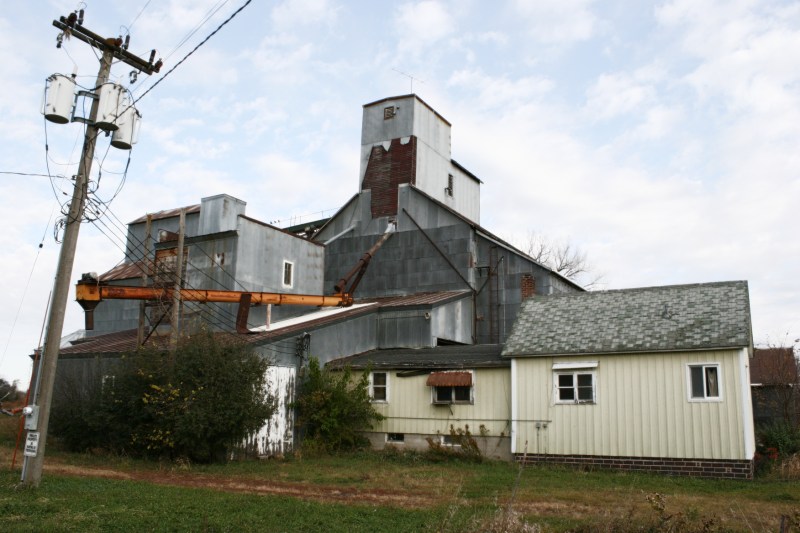
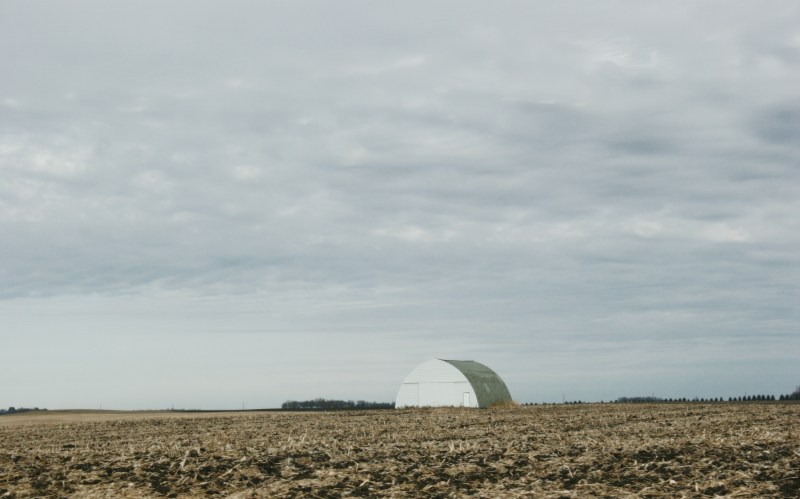
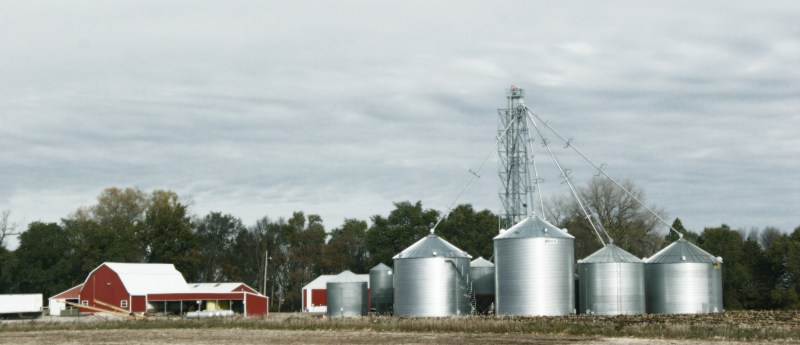
Grain storage along U.S. Highway 14.
Grain storage along U.S. Highway 14.


But there is. Lots. Land and sky and small towns and oddities and grain elevators, and corn and soybean fields stretching into forever. There are pitch-black skies perfect for star-gazing and sunsets so bold I sometimes wonder why I ever left this land.


There are so many well-kept barns along U.S. Highway 14, this one between Mankato and Nicollet.

There are so many beautiful old barns along U.S. Highway 14, this one between Mankato and Nicollet.


I understand beauty is in the eye of the beholder. I simply want others to see that this corner of Minnesota, just like the lakes and woods to the north and the rolling hills and rivers to the south and the Twin Cities metro, is lovely and quirky and interesting in a peaceful prairie way.


BONUS PHOTOS:

U.S. Highway 14 passes through many small towns, like Sleepy Eye where these guys were shopping for a car.

Shopping for cars in Sleepy Eye, one of many small towns along U.S. Highway 14 in southwestern Minnesota.
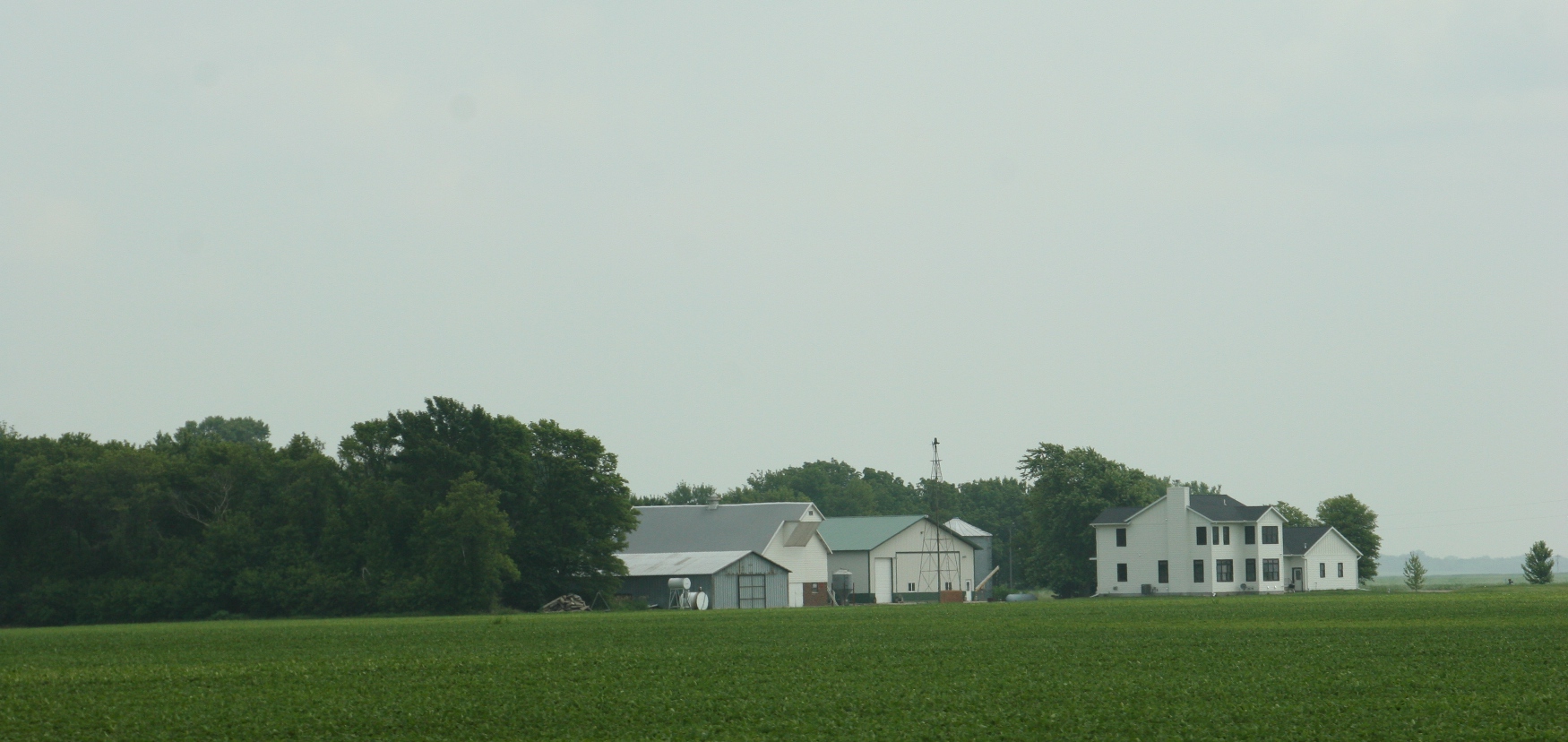
 

A farm site between Mankato and Nicollet.
A farm site between Mankato and Nicollet.


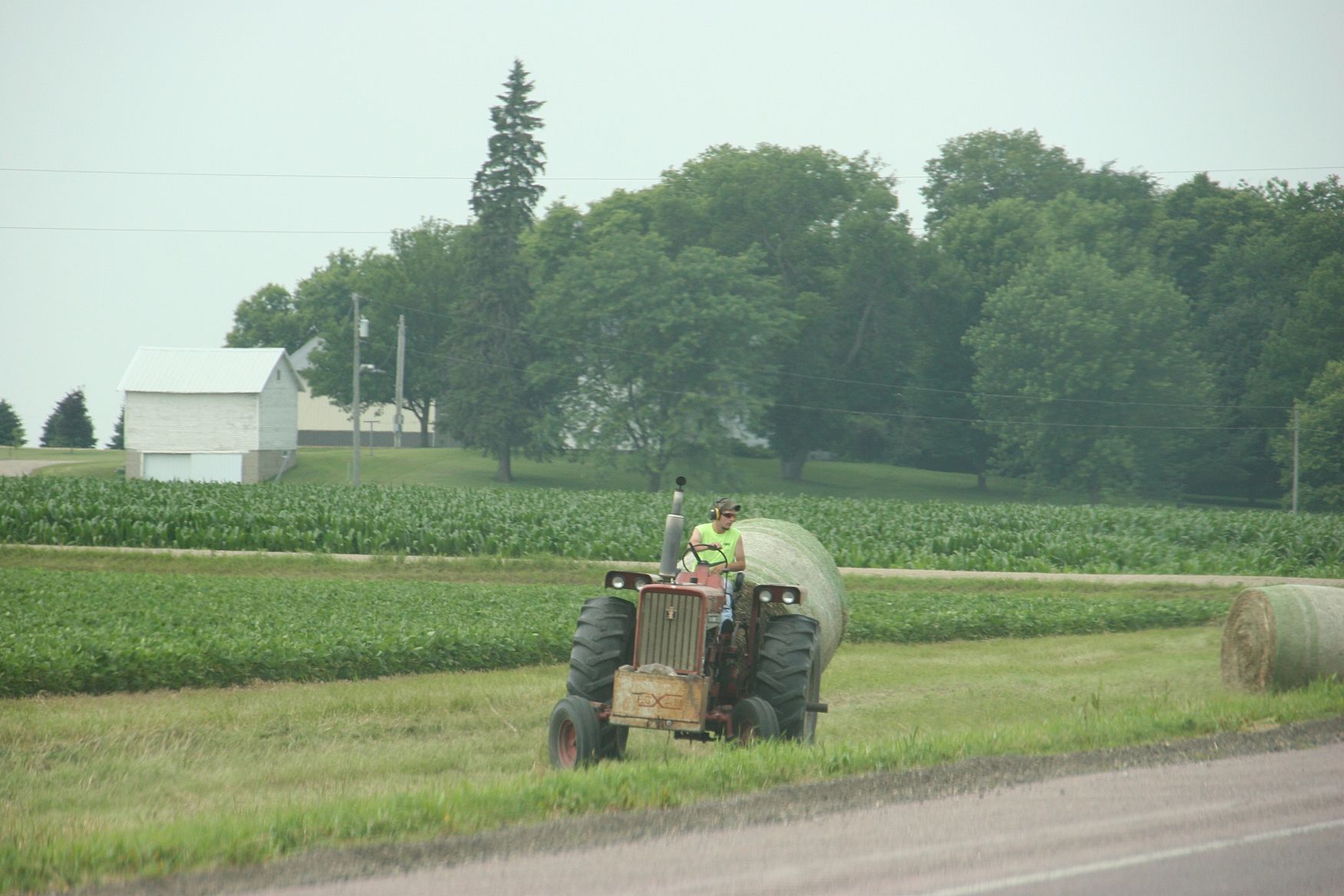
Baling the road ditch between Mankato and New Ulm.

Baling the road ditch between Mankato and New Ulm.


If you appreciate barns, this area of Minnesota offers plenty of barn gazing.

If you appreciate barns, this area of Minnesota offers plenty of barn gazing.


FYI: All of these photos are from my files and were taken along U.S. Highway 14 between Mankato and Lamberton. That would be west of Mankato.

© Copyright 2017 Audrey Kletscher Helbling


Two Minnesota towns July 27, 2017

Fields and sky envelope a farm building just west of Wabasso in my native Redwood County. Minnesota Prairie Roots file photo 2015.


I GREW UP ON THE PRAIRIE, a place of earth and sky and wind. Land and sky stretch into forever there, broken only by farm sites and the grain elevators and water towers that define small towns.


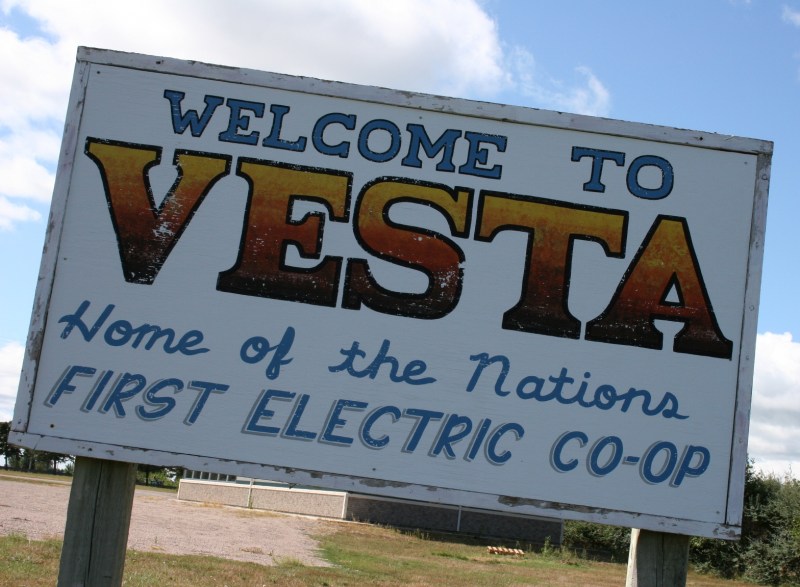
Along Minnesota Highway 19, this sign once marked my hometown. That sign has since been replaced. Minnesota Prairie Roots file photo.


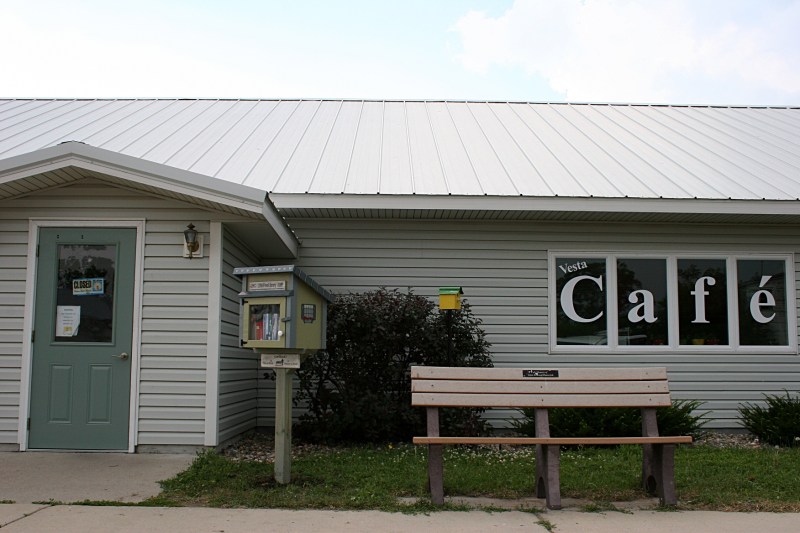
My hometown of Vesta in Redwood County once bustled with businesses—a lumberyard, feed mill, hardware stores, grocers, cafes, a blacksmith… Now the one-block center of town is mostly empty, vacant lots replacing wood-frame buildings that once housed local shops. Time, economics and abandonment rotted the structures into decay and eventual collapse or demolition.


One of the few businesses remaining downtown, the Vesta Cafe. Minnesota Prairie Roots file photo.


Why do I tell you all of this? The back story of my prairie hometown, where buildings were built mostly of wood rather than brick or stone, led me to a deep respect and appreciation for communities that have retained buildings of yesteryear. Cities like Cannon Falls, founded in 1854. By comparison, Vesta was founded in 1900.


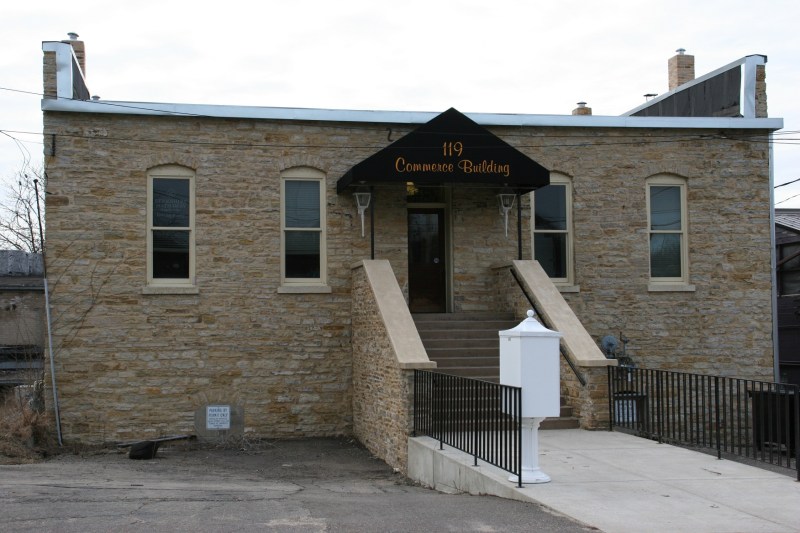
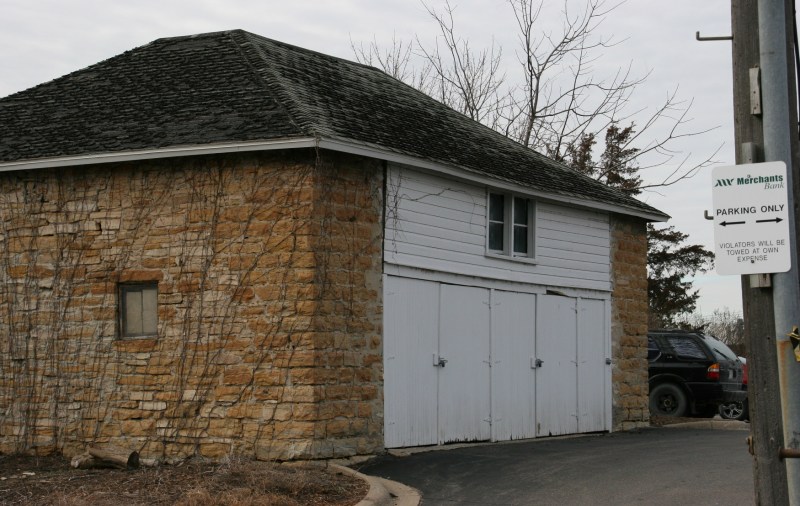
The rear of an historic stone building in the heart of downtown Cannon Falls. Minnesota Prairie Roots file photo March 2017.


Cannon Falls still has a thriving downtown landmarked by 29 properties in a Commercial Historic District. It’s population of around 4,000 and location between Rochester and the metro contrast sharply with Vesta’s population of 300 in the much more rural southwestern corner of Minnesota.


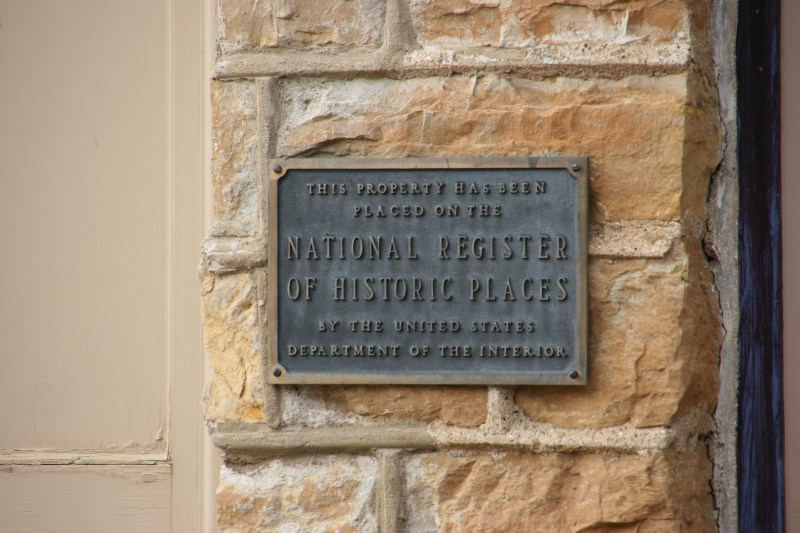
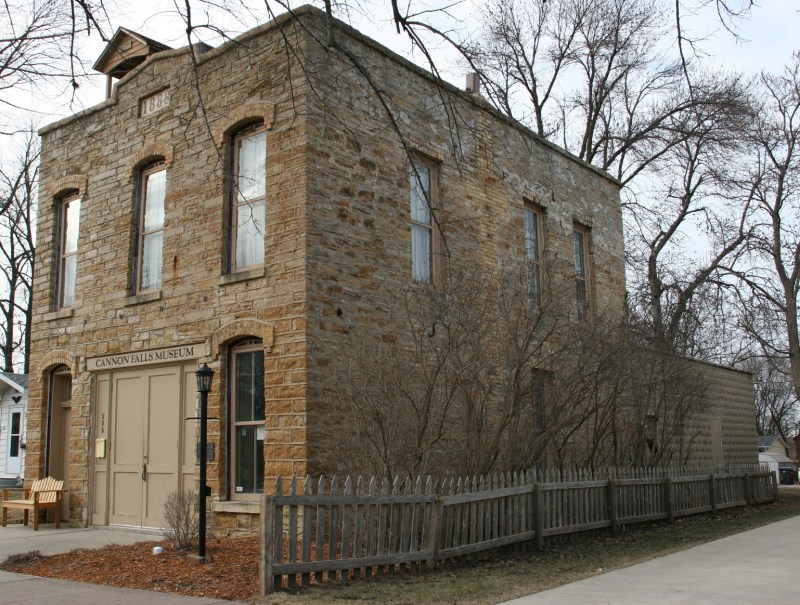
This sign marks the aged former Firemen’s Hall, now the Cannon Falls Museum, pictured below. Minnesota Prairie Roots file photo March 2017.


The Cannon Falls Museum. Minnesota Prairie Roots file photo March 2017.


Drive through Cannon Falls neighborhoods and you will see history still standing. In Vesta, history comes in photos and memories. It’s sad really. But that is reality.


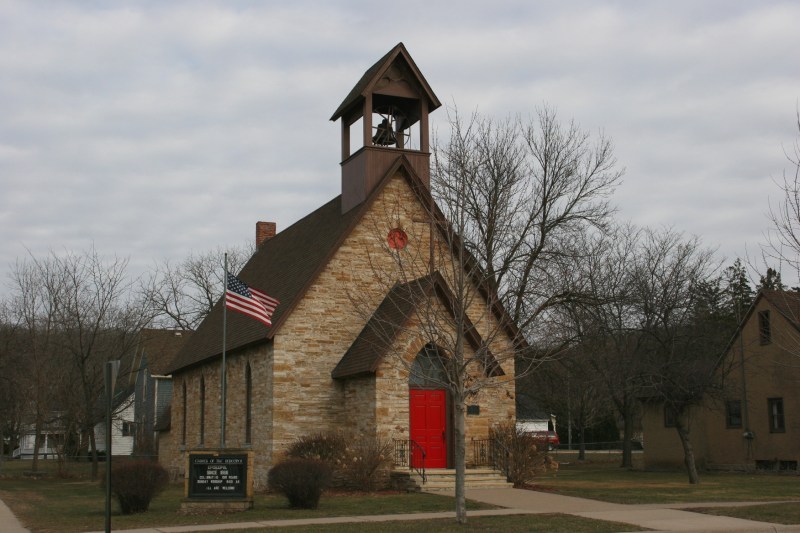
The Church of the Redeemer, an Episcopal congregation founded in Cannon Falls in 1866. Minnesota Prairie Roots file photo March 2017.


Because I grew up without solid stone buildings in a place that unsettles many for its breadth of sky and land, I am drawn to stone structures. They portray a strength and permanency that defies time and change. Yet I expect both masons and carpenters shared the same dreams of a better life, of prosperity and success.


Another lovely stone building photographed behind downtown Cannon Falls buildings. Minnesota Prairie Roots file photo March 2017.


That’s the underlying truth. Even if the buildings and businesses in my hometown have mostly vanished, the ground upon which they stood represents something. The land remains—the same earth upon which early settlers planted their boots and stood with hope in their hearts.

© Copyright 2017 Audrey Kletscher Helbling
 

Southwestern Minnesota: The place of my heart, in images & words December 6, 2016

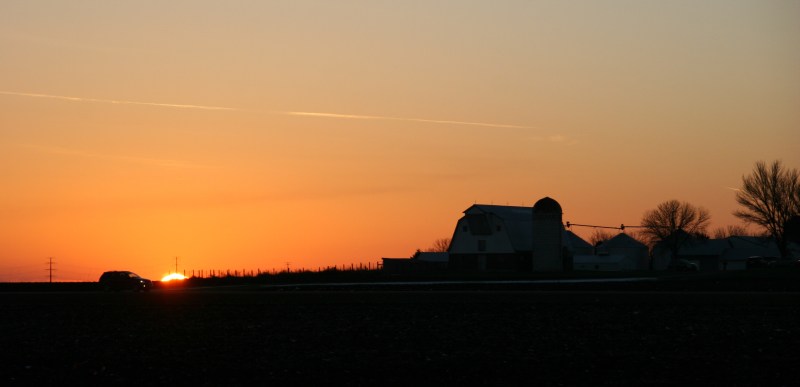
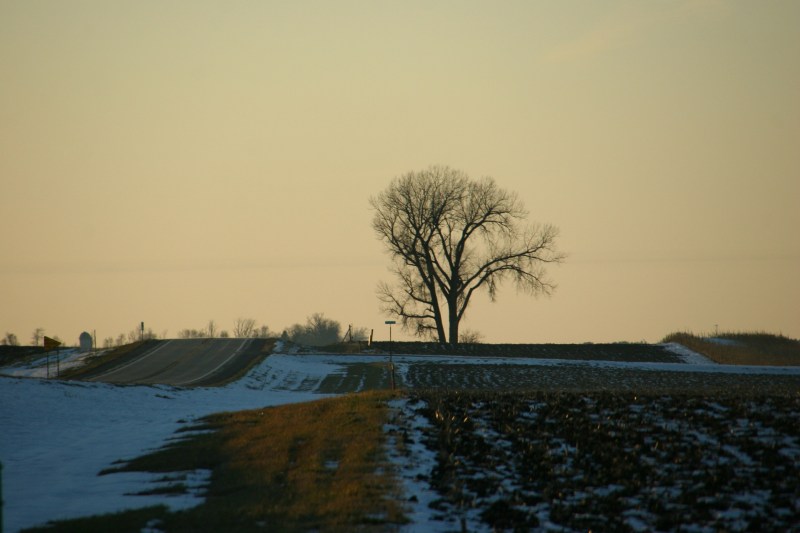
I shot this rural farmsite/sunset scene while traveling along Minnesota State Highway 67 between Redwood Falls and Morgan.

I shot this rural farmsite/sunset scene while traveling along Minnesota State Highway 67 between Redwood Falls and Morgan.

OFTENTIMES IT TAKES LEAVING a place to appreciate it.

A farmhouse along Minnesota State Highway 19 in Redwood County near my hometown of Vesta.

A farmhouse along Minnesota State Highway 19 in Redwood County near my hometown of Vesta.

There are days when I miss my native southwestern Minnesota prairie with an ache that lingers. I long for wide open space and forever skies,

The grain elevator in Morgan.

The grain elevator in Morgan in eastern Redwood County.

for farm fields and familiar grain elevators,

This gravel road connects to Minnesota State Highway 19 between Vesta and Redwood Falls.

This gravel road connects to Minnesota State Highway 19 between Vesta and Redwood Falls.

for gridded gravel roads

A prairie sunset photographed from Minnesota State Highway 67 between Redwood Falls and Morgan.

A prairie sunset photographed from Minnesota State Highway 67 between Redwood Falls and Morgan.

and flaming sunsets. And quiet.

Sure, I could drive into the country here in southeastern Minnesota and see similar sites. But it’s not the same. This is not my native home, the place that shaped me. Although decades removed, I shall always call the prairie my home.

Minnesota State Highway 67, one of the roadways leading "home."

Minnesota State Highway 67, one of the roadways leading “home.”

With family still living in southwestern Minnesota, I return there occasionally. And that, for now, is enough. I drink in the scenery like gulping a glass of cold well water tasting of iron and earth. I am refreshed, renewed, restored.

This lone tree along Minnesota State Highway 19 near the Belview corner has been here as long as I can remember.

This lone tree along Minnesota State Highway 19 near the Belview corner has been here as long as I can remember.

I need to view the prairie, to walk the soil, to reclaim my roots. I need to see the sunsets, to breathe in the scent of freshly-mown alfalfa, to watch corn swaying in the breeze, to observe snow drifting across rural roadways, to feel the bitter cold bite of a prairie wind.

A farmer guides his John Deere tractor along Minnesota State Highway 67 near Morgan.

A farmer guides his John Deere tractor along Minnesota State Highway 67 near Morgan.

There are those who dismiss this region as the middle-of-nowhere. It’s not. It’s a place of community, of good hardworking people, of Saturday night BINGO and Sunday morning worship services. It’s lines at the grain elevator and fans packing bleachers at a high school basketball game. It’s acres of corn and soybeans in the season of growth and tilled black fields in the time between. This place is somewhere to those who live here. And to those of us who were raised here.

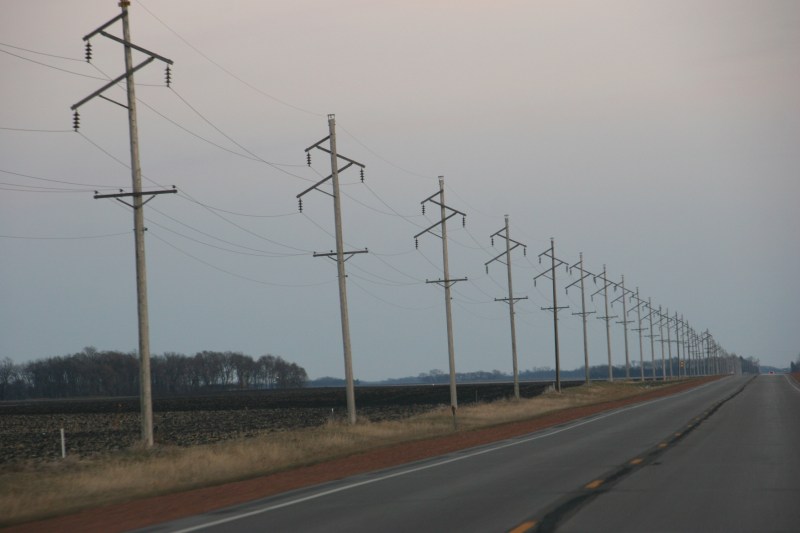
Every trip back along Minnesota State Highway 67, I am drawn to photograph the electrical lines that stretch seemingly into forever.

Every trip back along Minnesota State Highway 67, I am drawn to photograph the electrical lines that stretch seemingly into forever.

For me, this land, this prairie, shall always be home.

© Copyright 2106 Audrey Kletscher Helbling


A May evening at River Bend Nature Center in Faribault May 6, 2016

Filed under: Uncategorized — Audrey Kletscher Helbling @ 5:00 AM
Tags: , , , , , , , , ,

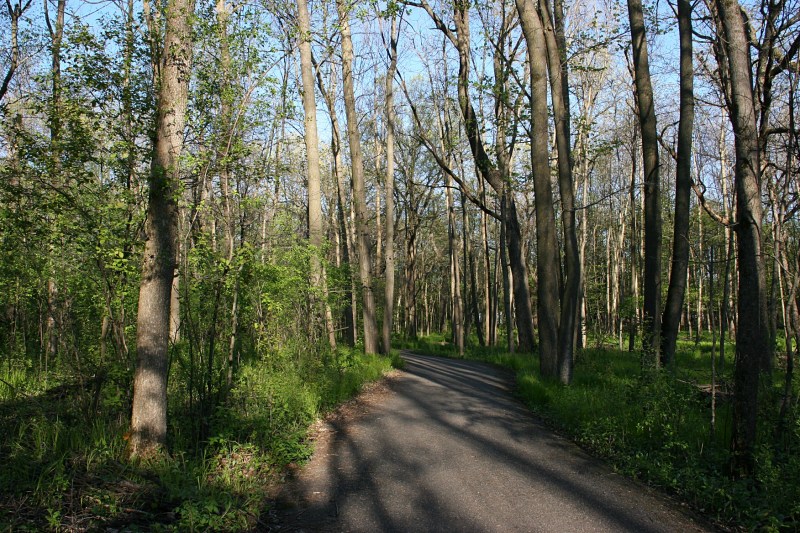
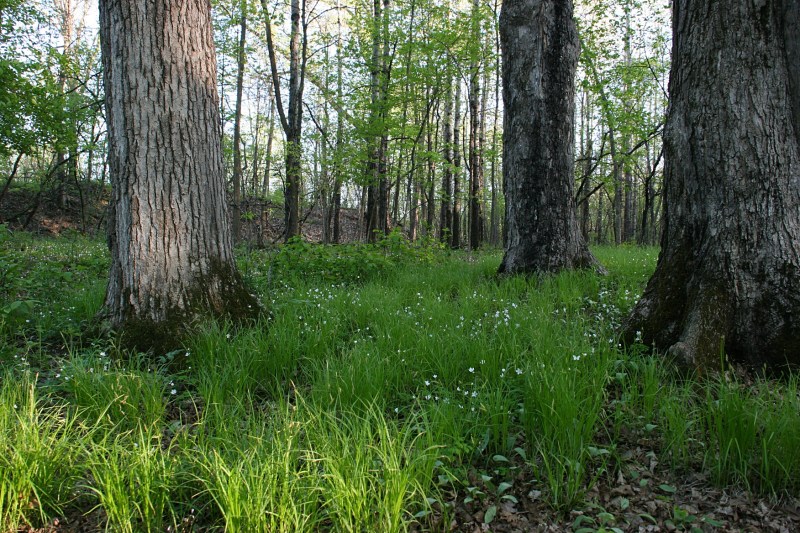
River Bend Nature Center, 27 trail through woods


SUNLIGHT FILTERED THROUGH THE WOODS, cutting sharp angles across trails, spotlighting wildflower blossoms, gloaming with an ethereal quality.


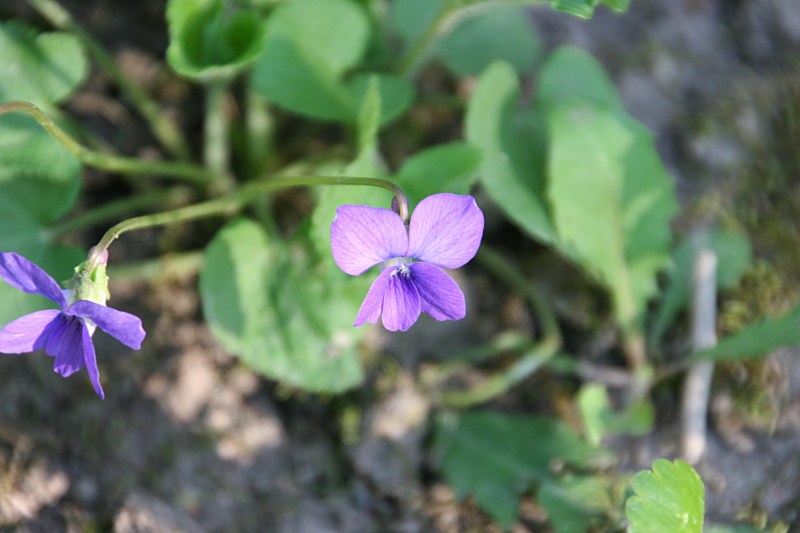
River Bend Nature Center, 42 violet


The end of the day was nearing as my husband and I walked the trails of River Bend Nature Center in Faribault, first at a fast pace to raise our heart rates. That didn’t last long.


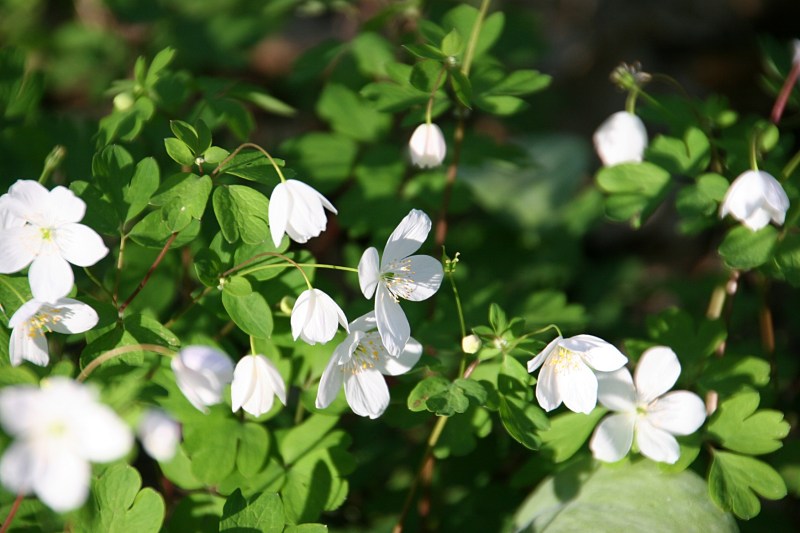
River Bend Nature Center, 29 white wildflowers close-up


Soon I unslung my camera from my shoulder, stopped to photograph wildflowers carpeting the woods lush with green growth. Green always seems incredibly vivid in the spring. I often wonder if that’s because it is or because we Minnesotans haven’t seen a green landscape in way too long.


River Bend Nature Center, 34 white wildflowers in woods


It doesn’t matter. I am thankful for spring’s early arrival, with winter but a memory now, although Randy mentioned the white wildflowers looked a lot like snow blanketing the ground.


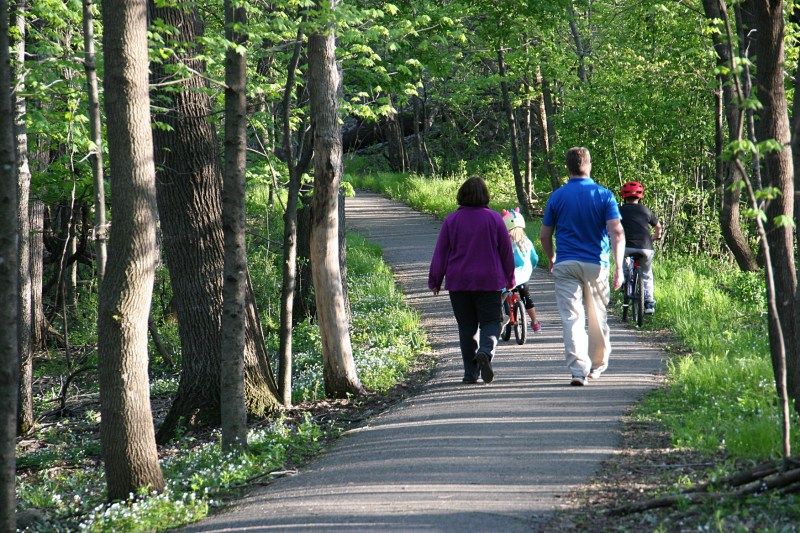
River Bend Nature Center, 36 family on trail


Walkers and bikers, solo and with family or pets, traversed the nature center. We paused occasionally, wondering about the history of this place, about the pockets of limestone clearly quarried, about the Faribault Regional Center residents who once worked this land and tended livestock here, about the land before then.


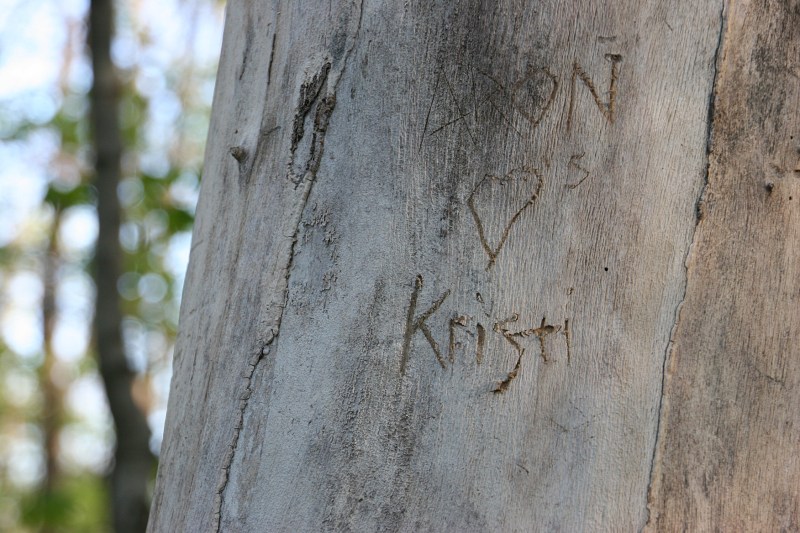
River Bend Nature Center, 35 names carved in tree


I wondered, too, about Aron and Kristi who carved their names into the soft wood of a trail-side tree.

As we emerged from the woods, I scanned the vista of sky and prairie. I am most comfortable in a place where my eyes can wander, where I am not visually hemmed in by trees. The imprint of my rural southwestern Minnesota upbringing remains strong even forty years removed from the prairie.

Crossing the prairie, I watched my steps on the uneven grass trail and thought about ticks. I felt a bump on the left side of my head, my fingers drawing blood as I scratched. There was no tick, Randy assured me.


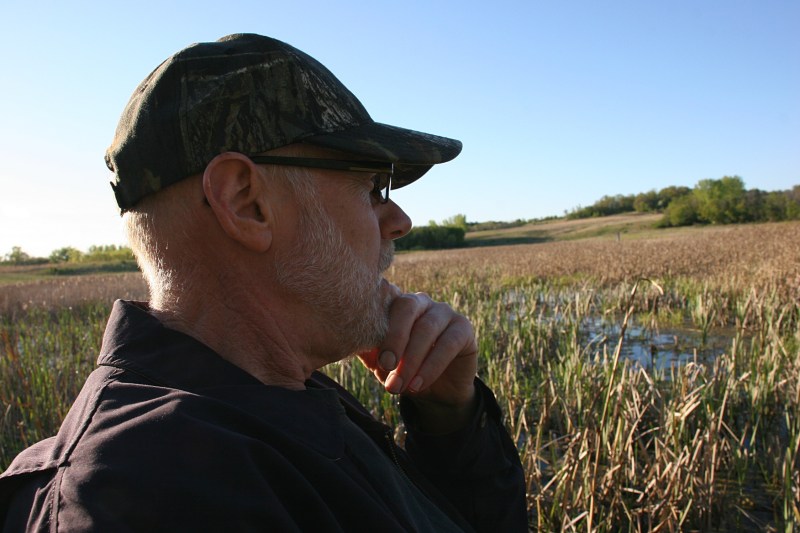
River Bend Nature Center, 50 Randy sitting by pond


We soon settled onto a bench next to the prairie pond and listened to the trill of red-winged blackbirds.


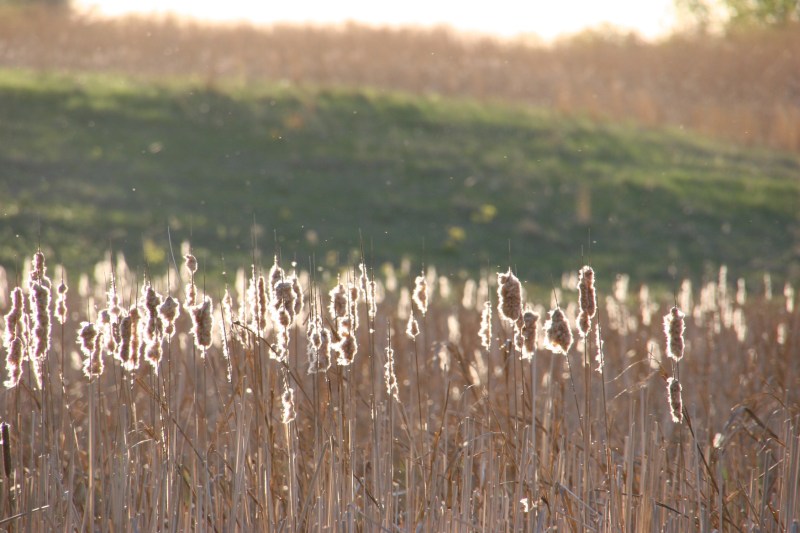
River Bend Nature Center, 55 cattails at twilight


Dried cattails plumed in the lovely light. I felt comfortably at peace.


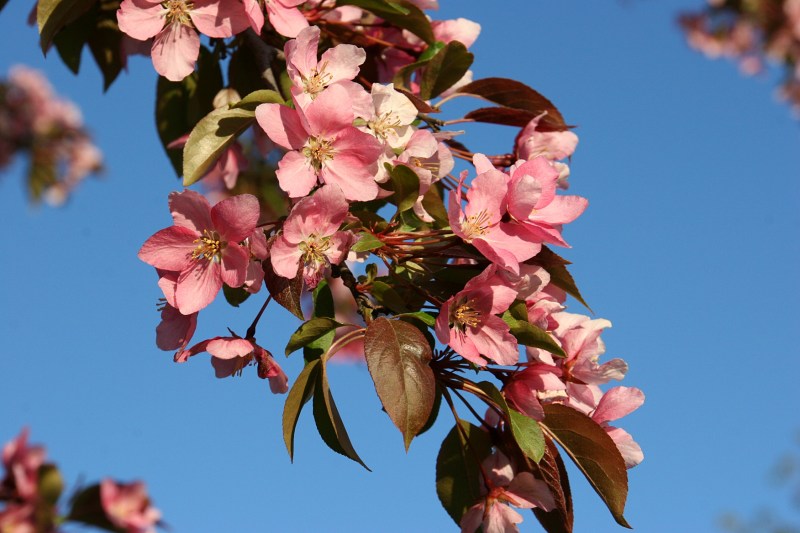
River Bend Nature Center, 62 crab apple blossoms


After awhile we aimed back toward the parking lot, where I paused to photograph pink blossoms against deep blue sky.


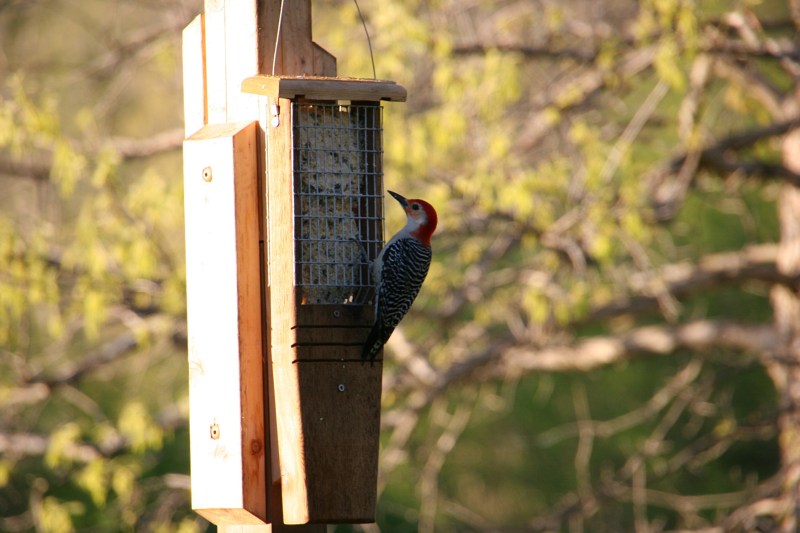
River Bend Nature Center, 67 red-headed woodpecker


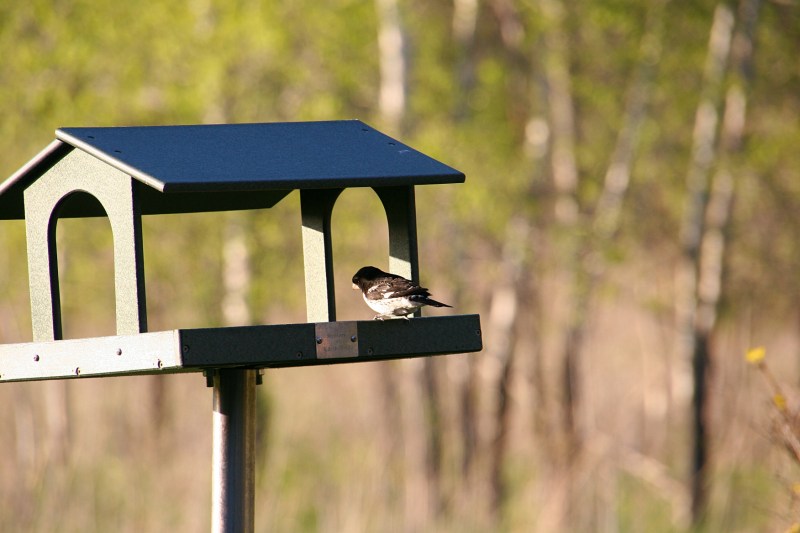
River Bend Nature Center, 77 bird at feeder


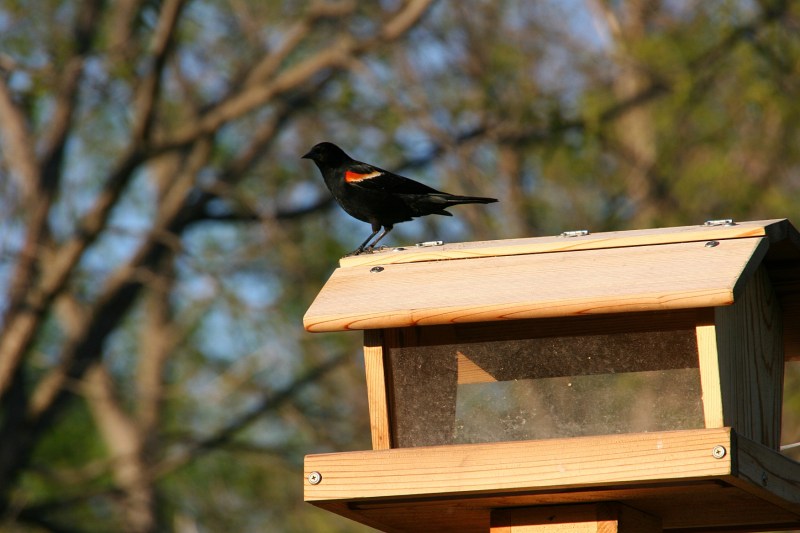
River Bend Nature Center, 80 red-winged blackbird


I diverted to bird feeders behind the nature center interpretative center. The birds scattered, wary of my presence. But soon they returned and I photographed them, admiring splashes of red on heads, wings and breasts. I’m not particularly fond of winged creatures up close. But from afar, I can appreciate them.


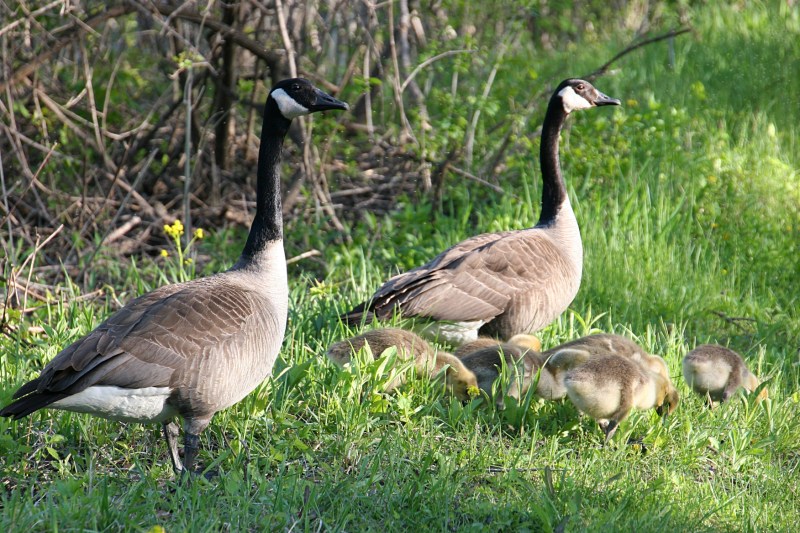
River Bend Nature Center, 18 geese


According to Randy, I should have kept my distance upon photographing a pair of geese and seven goslings earlier. It’s interesting how a camera can create confidence that perhaps we shouldn’t always have when encountering nature.

On this stunning May evening in Minnesota, all felt right in my world. And all it took was a walk in the woods and across the prairie of River Bend Nature Center.


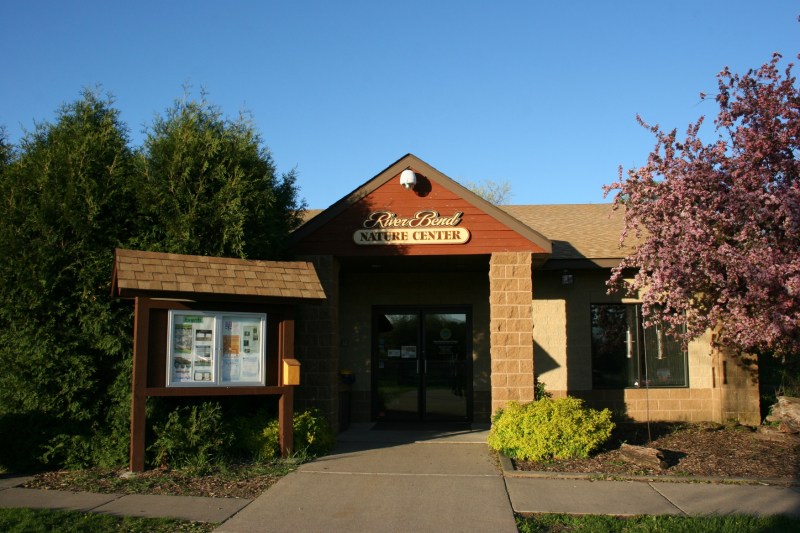
River Bend Nature Center, 59 interpretative center


TELL ME, WHAT’S YOUR go-to place to escape into nature?

© Copyright 2016 Audrey Kletscher Helbling
 

The prairie part of Minnesota December 9, 2015

Filed under: Uncategorized — Audrey Kletscher Helbling @ 5:00 AM
Tags: , , , , , , ,
The grain elevator in Seaforth, in Redwood County, Minnesota, closed long ago.

The grain elevator in Seaforth, in Redwood County, Minnesota, closed long ago.

MINNESOTA IS MORE than the Twin Cities, St. Cloud, Rochester and Duluth. It’s also farms and small towns like Vesta, Sleepy Eye, Gaylord and St. James. I’ve lived in all of those rural areas and, for the past 33 years, in Faribault.

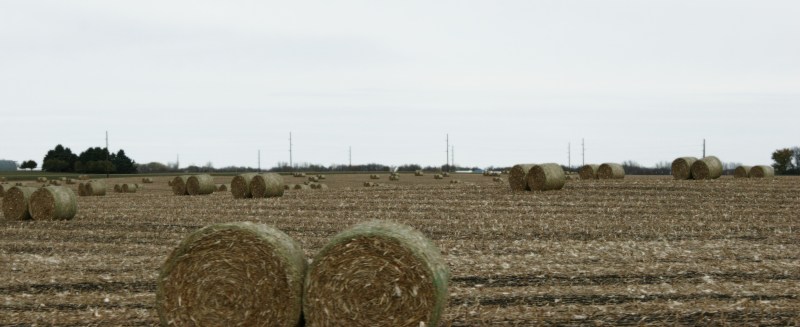
Cornstalk bales litter fields between Redwood Falls and Morgan.

Cornstalk bales litter fields between Redwood Falls and Morgan.

My husband was raised on a farm near Buckman in central Minnesota. Heard of it? Few people have. Likewise, not all that many Minnesotans know of Vesta, my hometown. Both communities are small—several hundred residents.

A vintage car travels eastbound along U.S. Highway 14 toward Nicollet.

A vintage car travels eastbound along U.S. Highway 14 toward Nicollet.

When folks ask where I grew up, I typically respond Vesta, bookmarked by “between Redwood Falls and Marshall.” If I get a blank look, I add “west of New Ulm.” If the geographic location still remains a mystery, I continue with “west of Mankato.” Then I usually see a flicker of recognition.

Occasionally you'll see cattle in a pasture. But mostly, farm land in southwestern Minnesota is used for crops like corn and soybeans.

Occasionally you’ll see cattle in a pasture. But mostly, farm land in southwestern Minnesota is used for crops like corn and soybeans.

My native southwestern Minnesota seems unappreciated by many who dismiss it as that boring prairie landscape en route to some place like Sioux Falls or the more distant destination of the Black Hills.

Fields and sky envelope a farm building just west of Wabasso.

Fields and sky envelope a farm building just west of Wabasso.

Appreciating the prairie, if you aren’t a native, takes a bit of effort. Wide skies and unhindered vistas can, I suppose, leave a landlocked city or hemmed-in by trees dweller feeling unsettled, untethered. There’s a sense of vulnerability and isolation on the prairie.

This farm site sits north of Lamberton in Redwood County.

This farm site sits north of Lamberton in Redwood County.

Land and sky overwhelm. Wind dominates. And for non-natives, that feeling of powerlessness within a landscape pushes away any thought of liking the prairie. Hurry. Power through the place. It’s just a bunch of farms and small towns and endless fields. But it isn’t. It is farm homes and red barns, grain elevators and water towers, corn and soybeans. Someone’s home. Someone’s land. Someone’s life. Someone’s livelihood. The prairie part of Minnesota. The place that shaped me as a person, a poet, a writer, a photographer. For that, I am grateful.

#

Note: All images were taken during my last visit “back home” in October and were edited to add a soft quality to the scenes.

© Copyright 2015 Audrey Kletscher Helbling
 

Delhi: Little town on the Minnesota prairie June 4, 2014

UNLESS YOU’RE A LOCAL or a native, you likely bypass the small towns which sit off county roads, tucked away from trafficked highways that take time-pressed travelers from destination to destination.

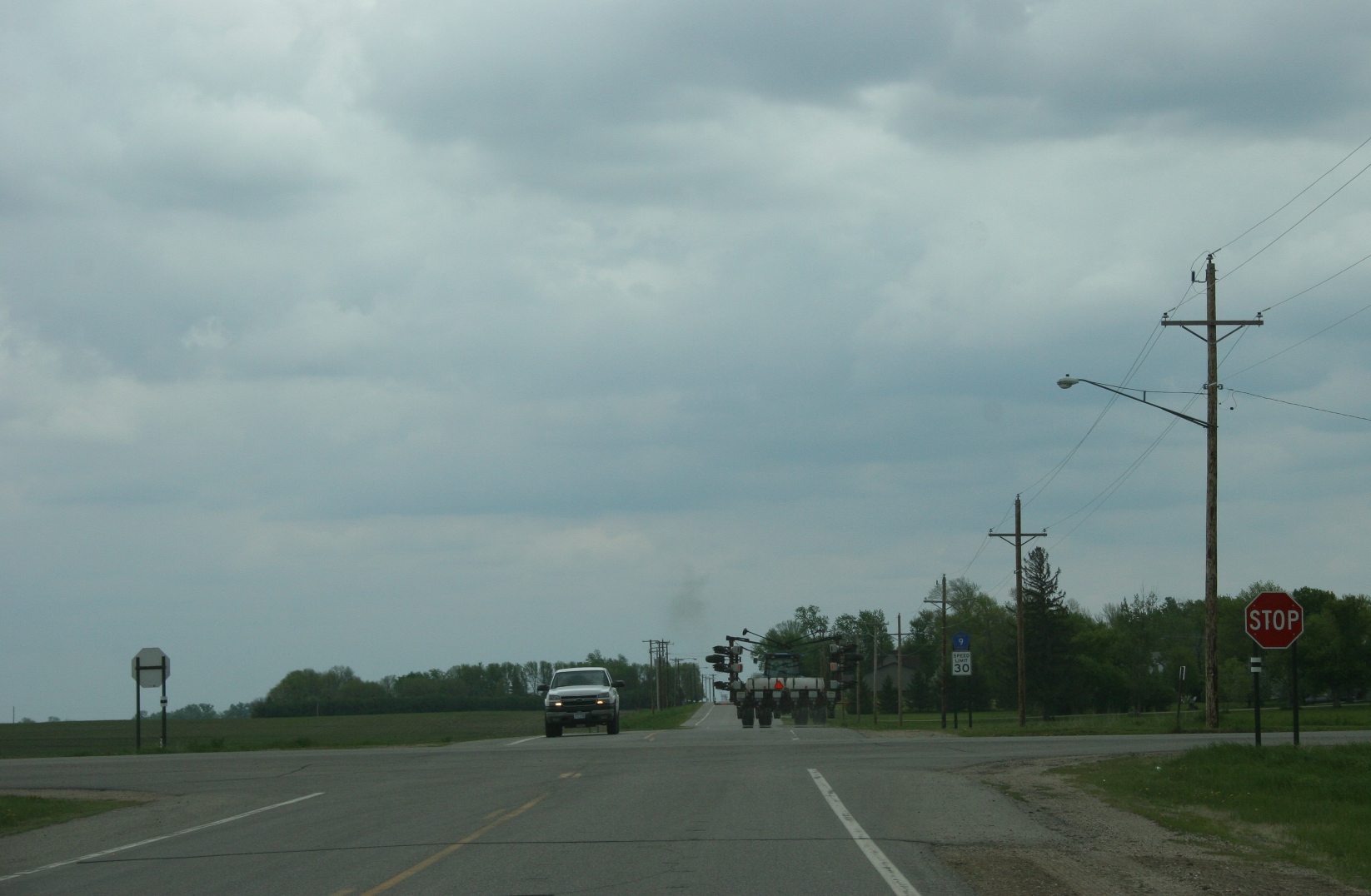
Nearing Delhi at the intersections of Redwood County Road 9 and 6.

Nearing Delhi at the intersections of Redwood County Road 9 and 6.

On a recent trip back to my native southwestern Minnesota prairie, my husband and I sidetracked off our usual route along State Highway 19 between Belview and Redwood Falls to follow Redwood County Road 9 to Delhi.

Decades have passed since I visited Delhi, at the intersection of county roads 9 and 6.

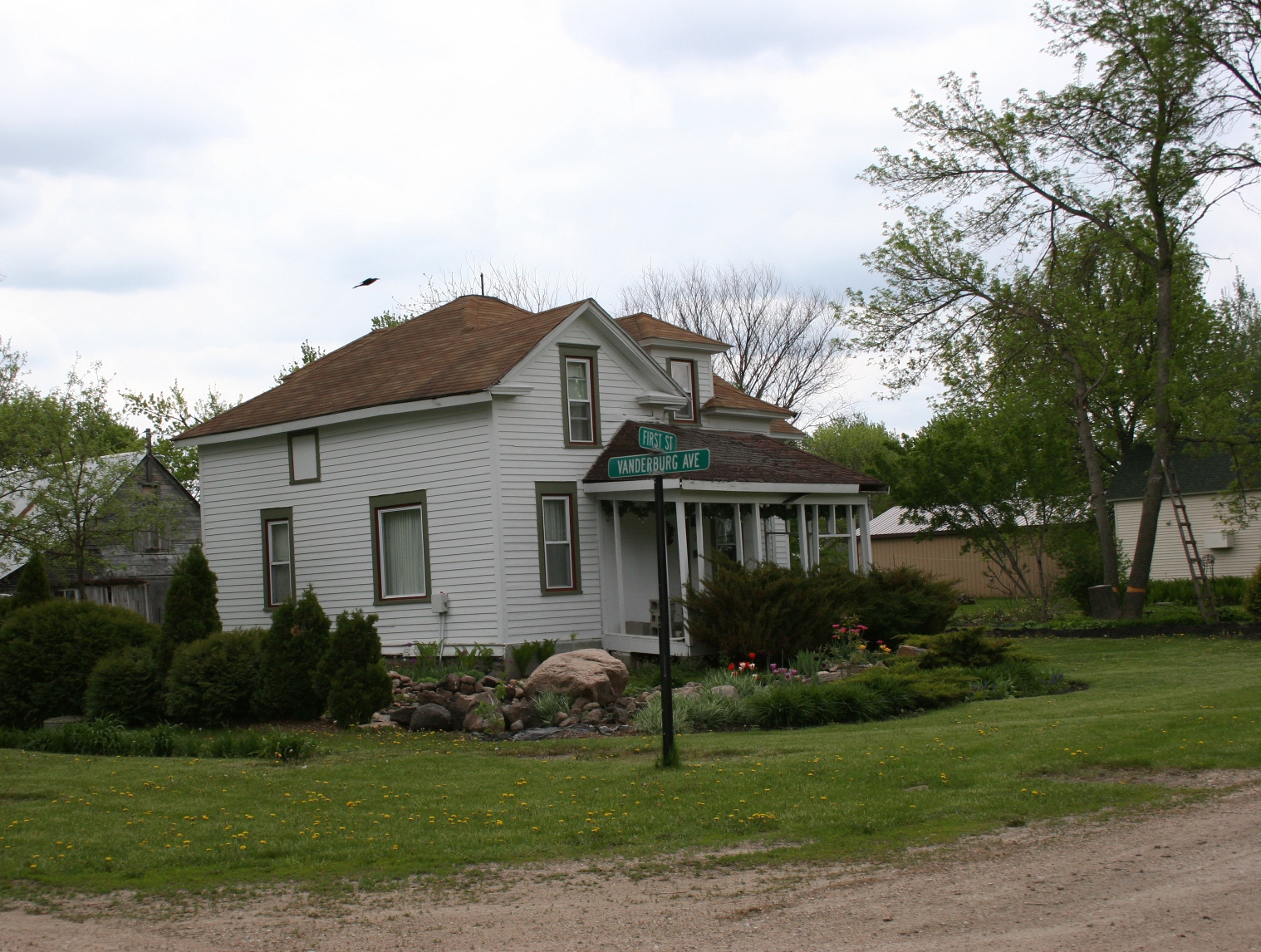
A sweet, well-cared for home in Delhi.

A sweet, well-cared for home in Delhi.

Most would surmise there’s not much in Delhi. That is until you look and consider that some 70 folks call this rural farming community home.

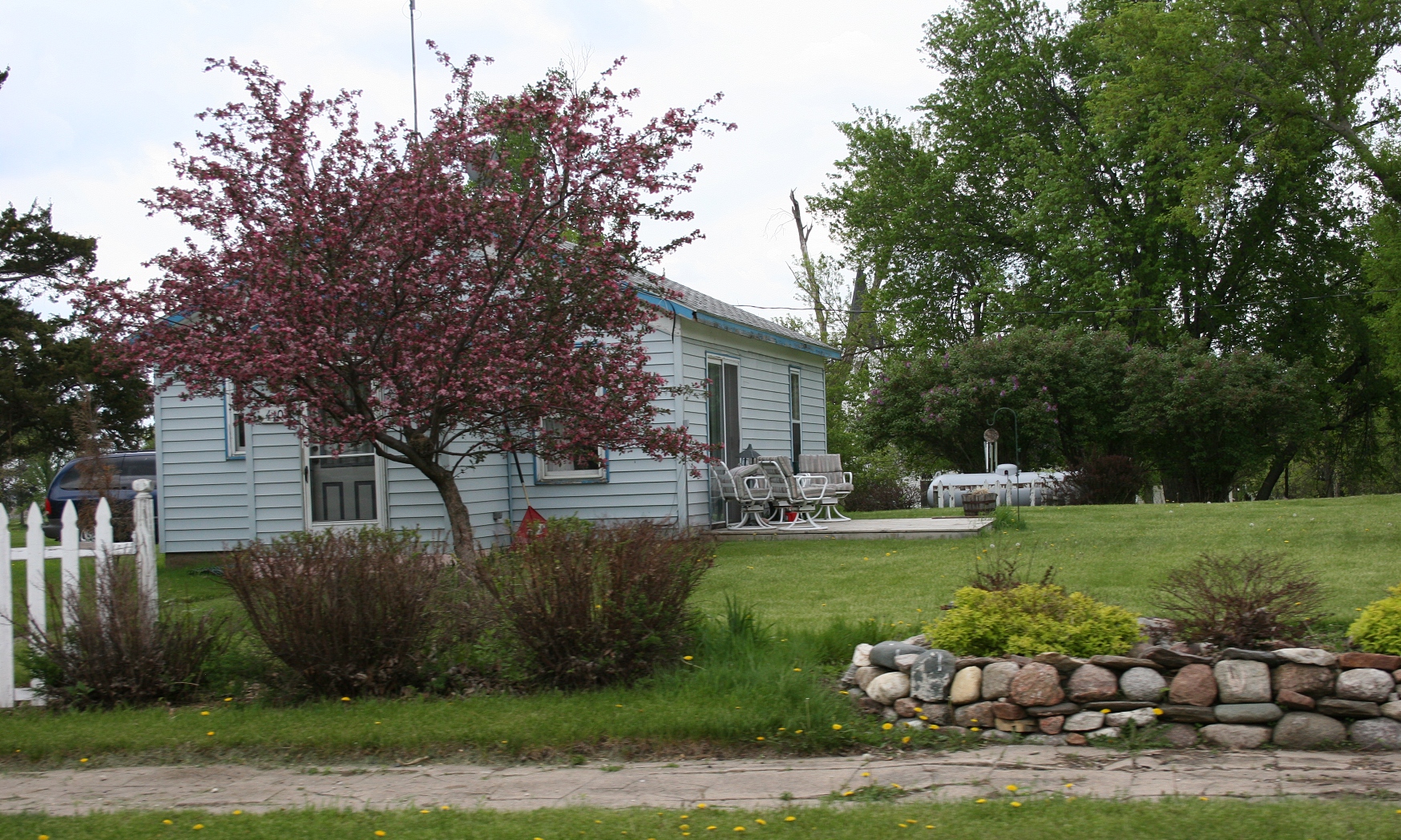
Another beautiful home with a lovely landscaping that includes field rocks.

Another cute home with lovely landscaping that includes field rocks.

Home.

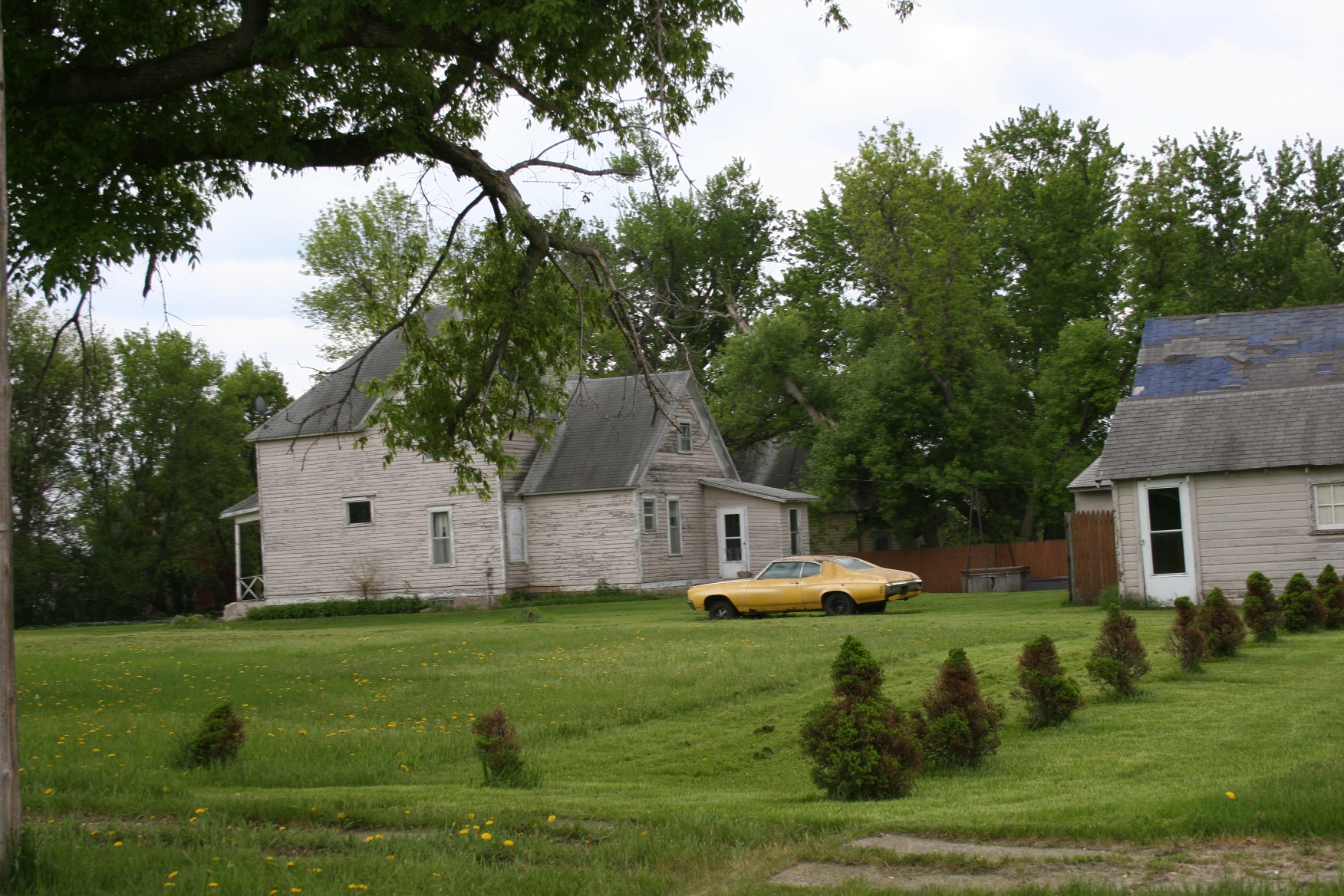
In need of a little TLC, both home and car.

In need of a little TLC, both home and car.

While some residents care about their properties with well-tended houses, others show less interest in maintenance. That is not uncommon in small towns. Or perhaps such neglect is more noticeable with fewer houses.

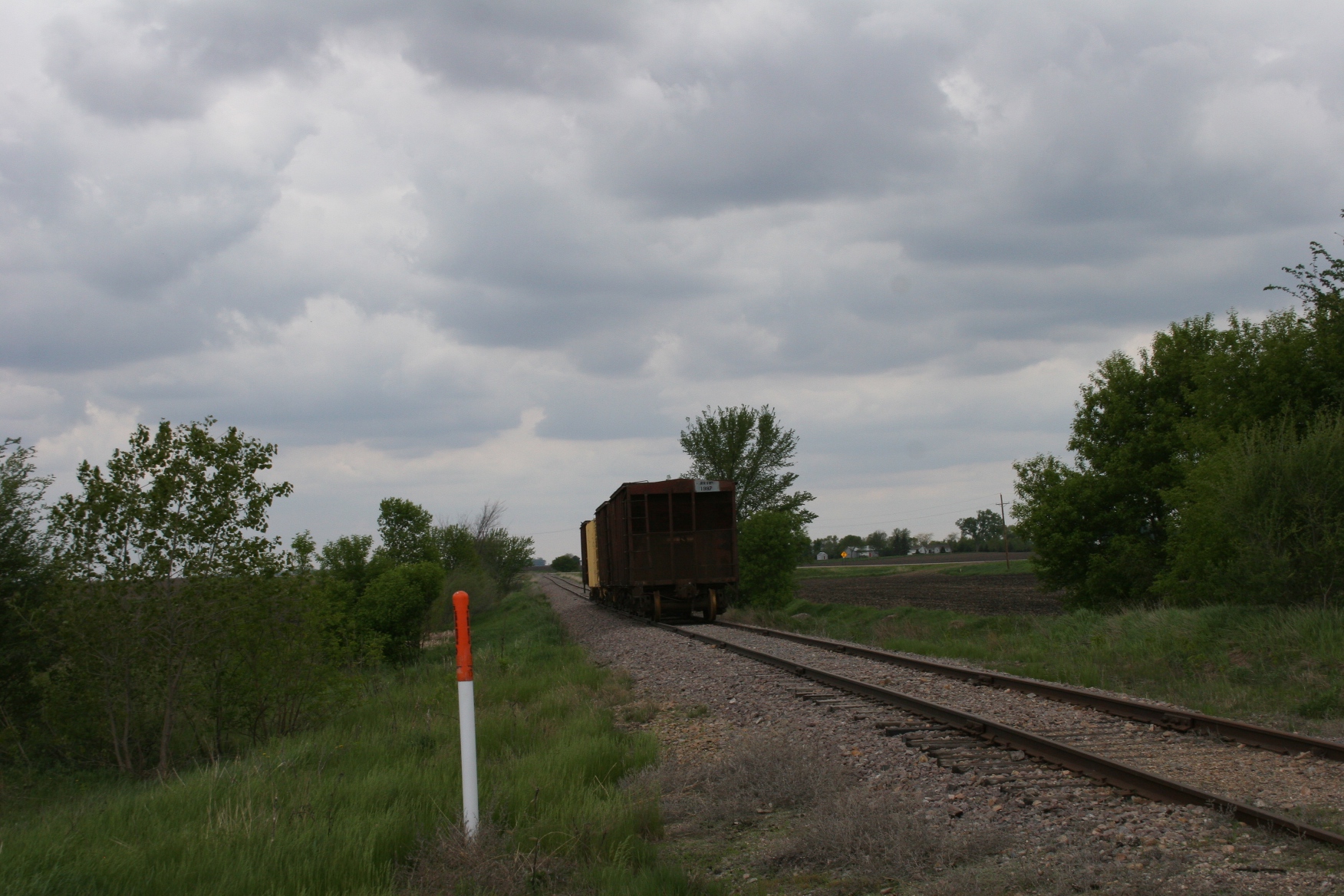
Parked along the tracks just off Redwood County Road 6 west of Delhi.

Parked along the tracks just off Redwood County Road 6 west of Delhi.

Like so many small towns along the railroad line, this settlement once boomed. Information published in The History of Redwood County, Volume 1, states that Delhi was platted in 1884, shortly after the railroad came through the area. Alfred M. Cook, a builder and owner of a flour mill in neighboring Redwood Falls, named Delhi, according to Minnesota place name info on the Minnesota Historical Society website.  He came to the area from Delhi, Ohio.

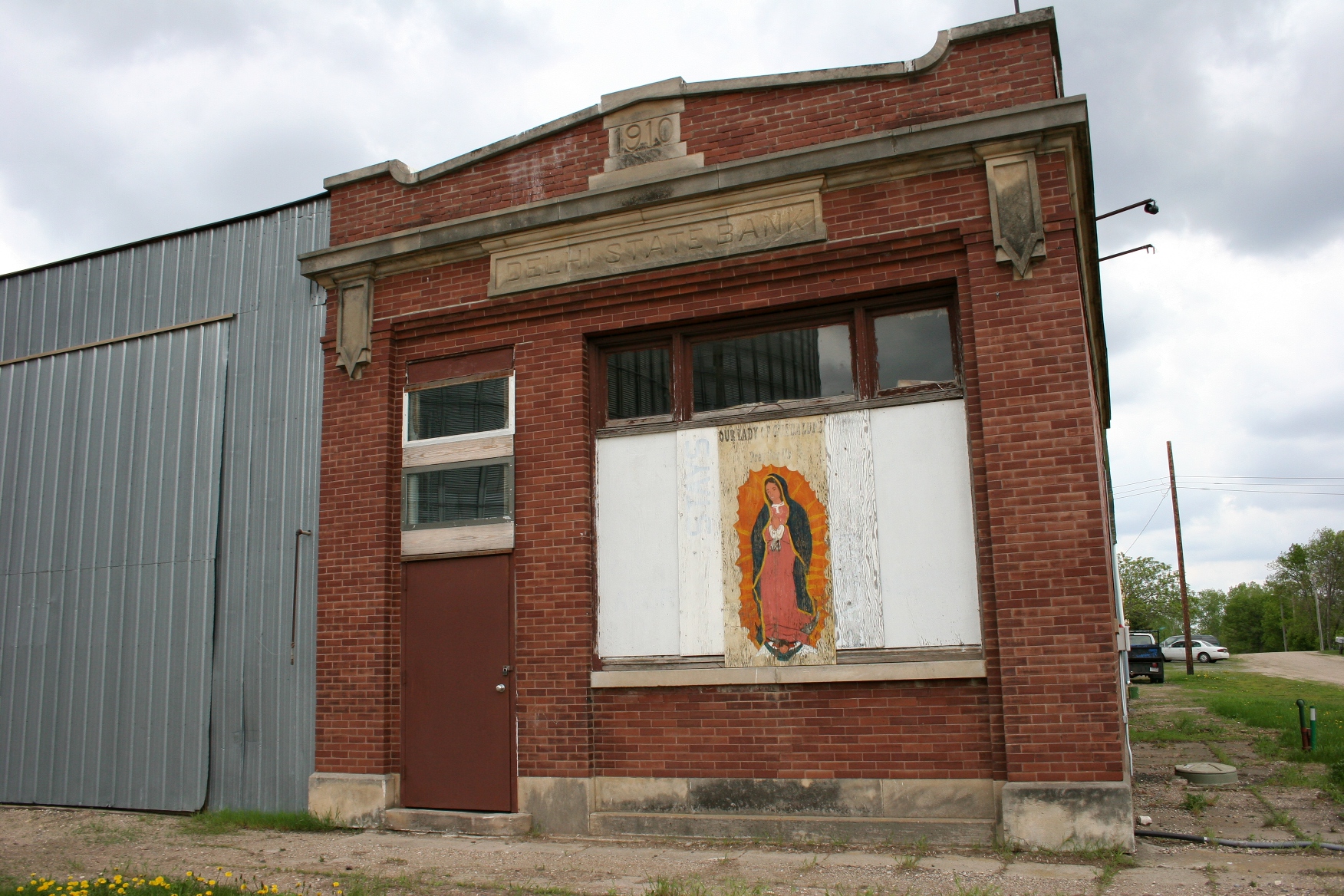
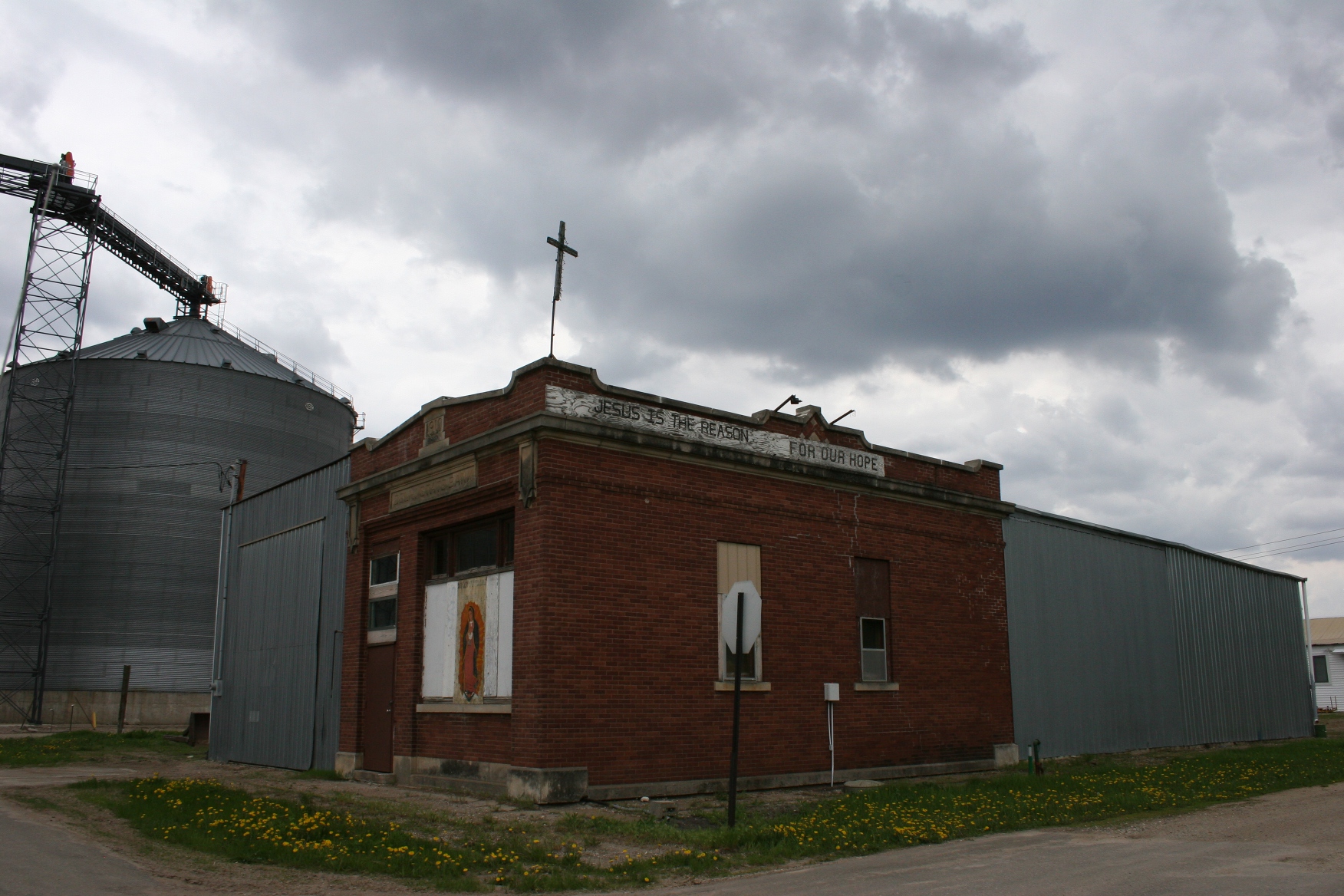
The front window of the 1910 Delhi State Bank is now mostly boarded with a painting of Our Lady of Guadalupe.

The front window of the 1910 Delhi State Bank is now mostly boarded with a painting of Our Lady of Guadalupe.

The Delhi State Bank, built of brick in 1910, and now abandoned and apparently last used as a church, shows me that folks once believed in this place.

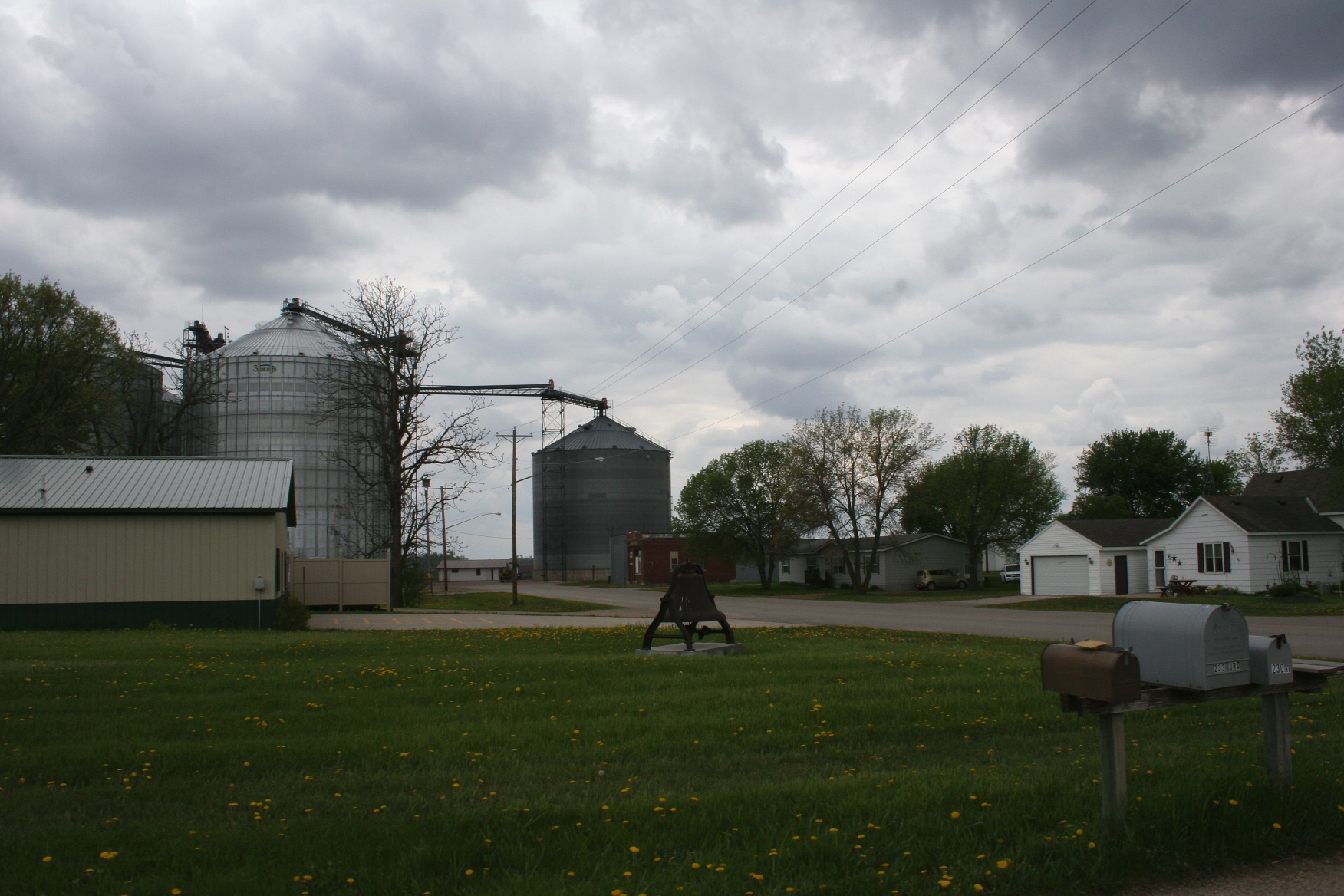
Driving toward downtown.

Driving toward downtown.

Not that they don’t anymore. But like all too many prairie communities, Delhi has mostly withered away.

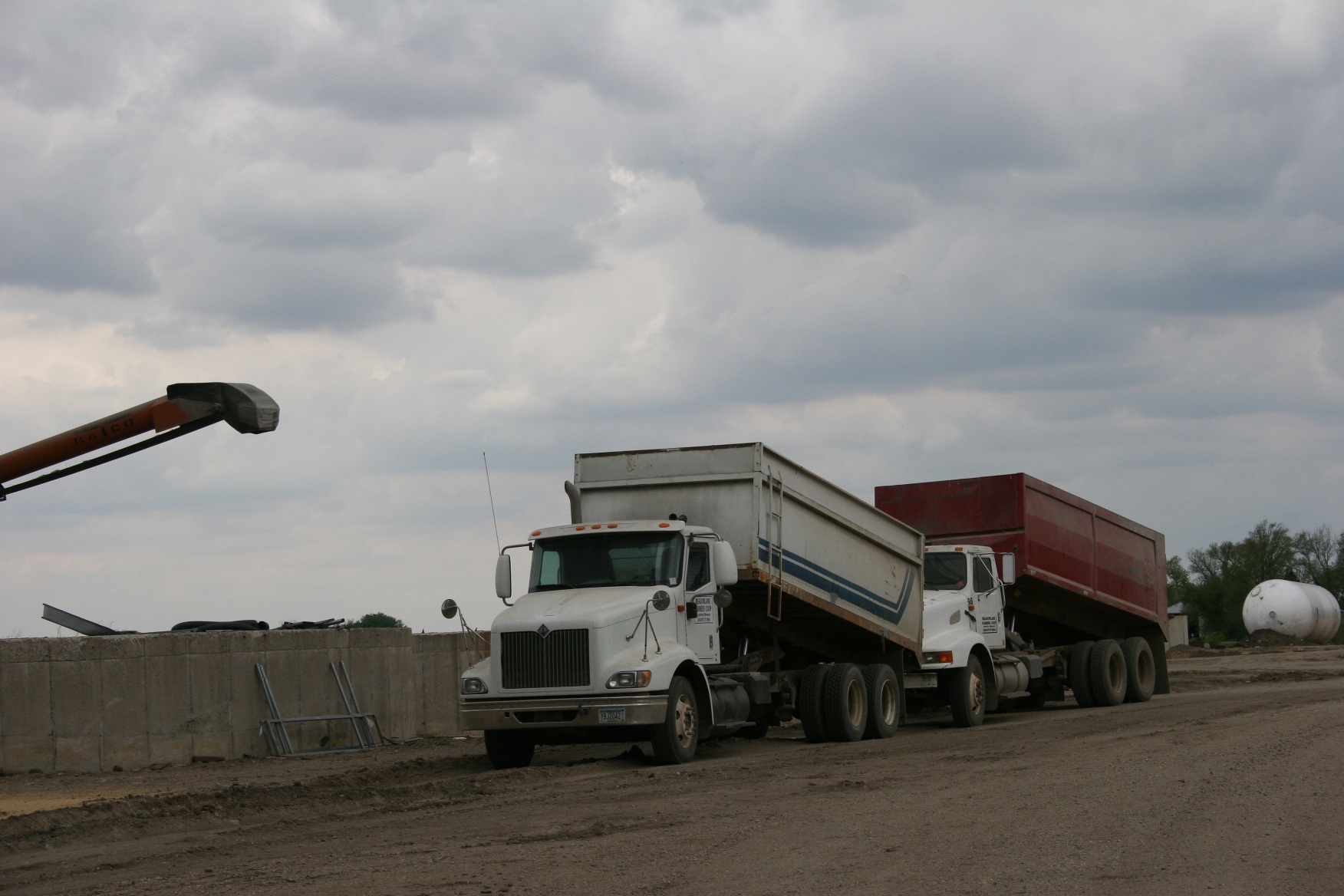
Grain trucks parked near the grain bins.

Grain trucks parked near the grain bins.

Many other businesses once operated here, but they are no more, with the noticeable exception of a grain business. Delhi, in the late 1800s, housed general, drug, hardware and lumber stores, a hotel, a railroad and telegraph agent, a feed mill, a blacksmith shop, a farm implement business and more.

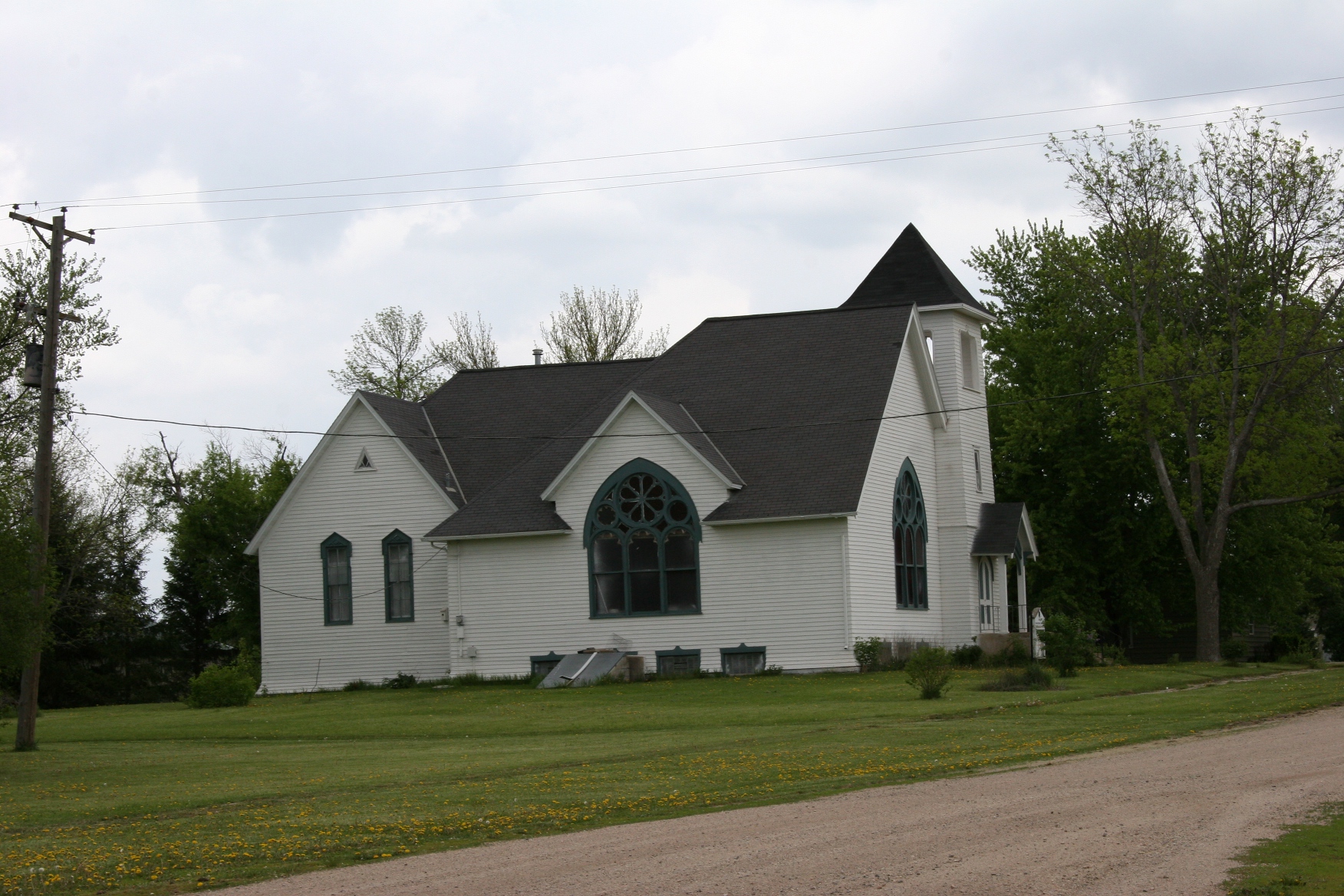
What a lovely church this must be inside as evidenced from the exterior.

What a lovely church this must be (or once was) inside as evidenced from the exterior.

The Presbyterian church today appears shuttered.

Evidence of faith in bank and bin.

Evidence of faith in former bank and bin.

Despite all of this and the inclination to despair, I cannot help but admire the determination of Delhi to cling to the land. Prairie roots run deep.

© Copyright 2014 Audrey Kletscher Helbling
 

I’m not a tree hugger, but… June 2, 2014

Filed under: Uncategorized — Audrey Kletscher Helbling @ 6:00 AM
Tags: , , , , , ,

MY AUNT JEANETTE has been duly informed.

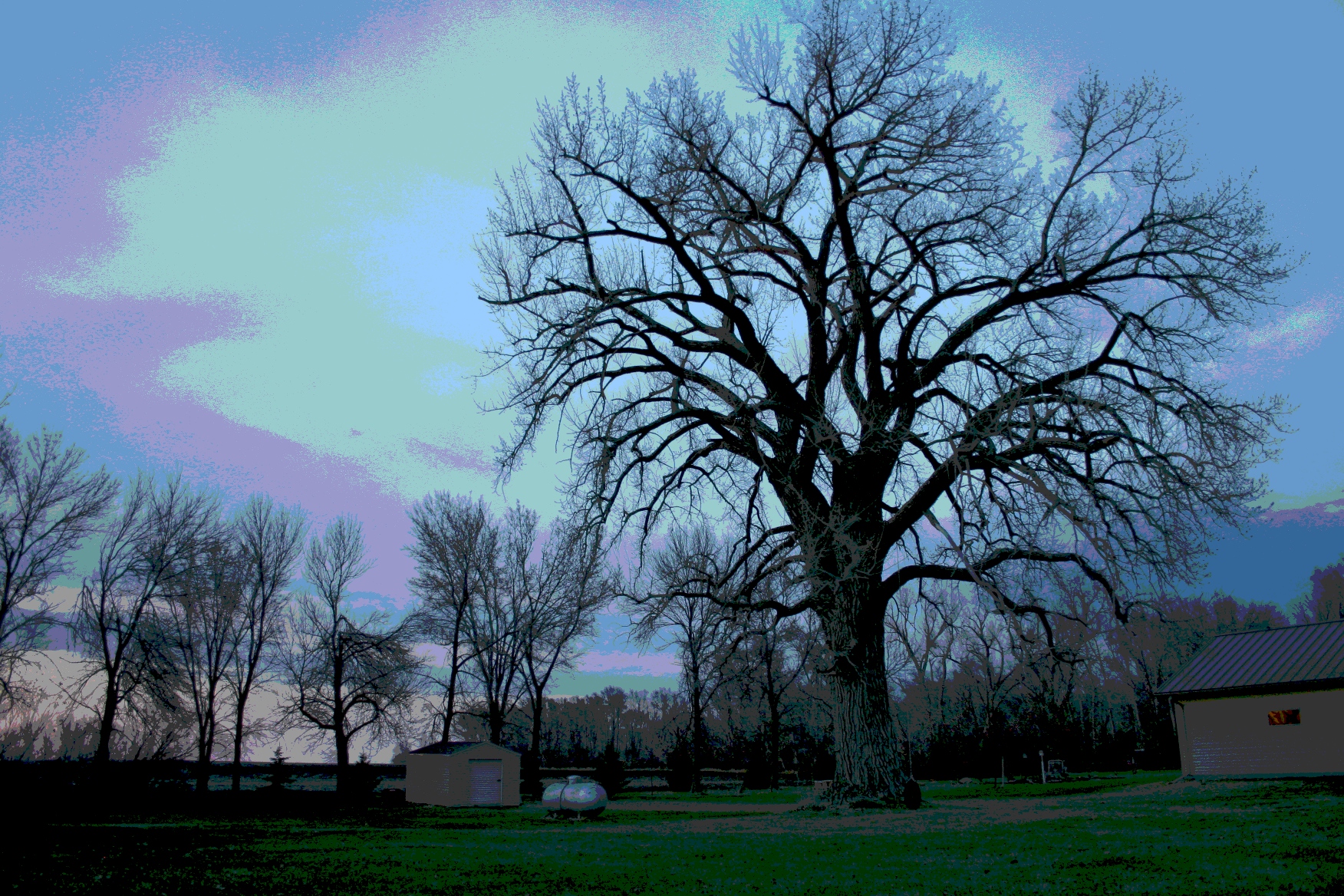
The ancient cottonwood stands on the north edge of Vesta, Minnesota.

The ancient cottonwood stands on the north edge of Vesta.

If she ever attempts to have the massive/towering/gigantic cottonwood in her yard cut down, I will be right there hugging that tree.

Now I am not a tree hugger in the true definition of a tree hugger. I would not scamper onto the limb of a tree to prevent its removal. For one thing, I am not agile like a squirrel. Secondly, I am not an outspoken, protesting type person, at least not in public.

But I did protest privately to my aunt when she mentioned cutting down that beautiful sprawling cottonwood gracing her yard.

The tree is messy, she explained, wondering then if I’d like to clean up the cottony seeds and sticky bud capsules dropped onto her lawn.

Point taken.

Yet, this cottonwood deserves special consideration given it’s likely the oldest tree in my southwestern Minnesota prairie hometown. It’s certainly the biggest in girth and the tallest tree in this community of some 320.

I can imagine the early settlers arriving in this mostly treeless land, wind-bent prairie grasses stretching for miles before them. And then, in the distance, the shimmering leaves of a cottonwood.

Or perhaps one of them brought a cottonwood seedling here, planted it on the north edge of this new prairie town.

Decades later, a tire swing looped by a rope to a limb, the sturdy cottonwood still stands strong against the vast prairie sky in my beloved hometown.

© Copyright 2014 Audrey Kletscher Helbling
 

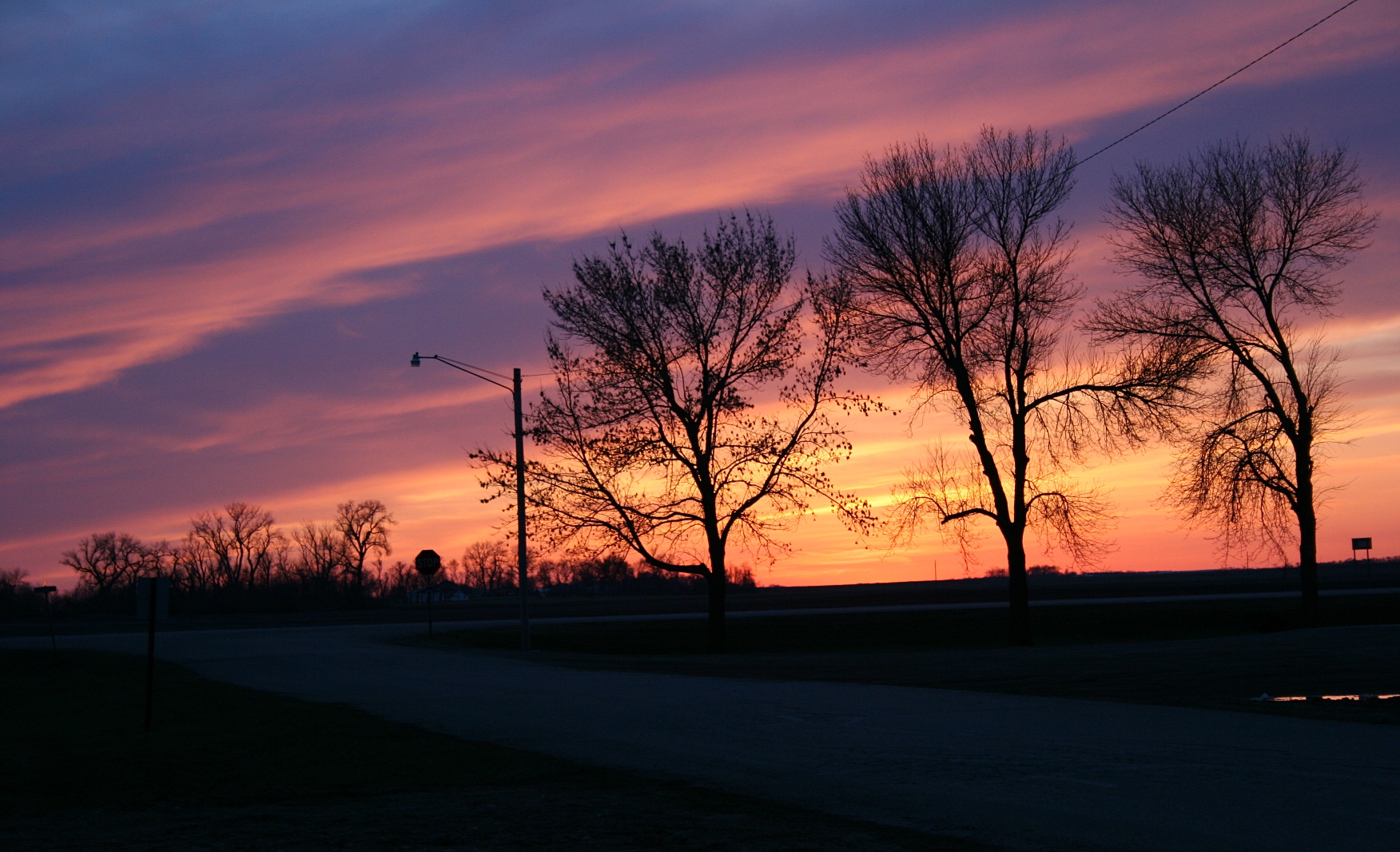
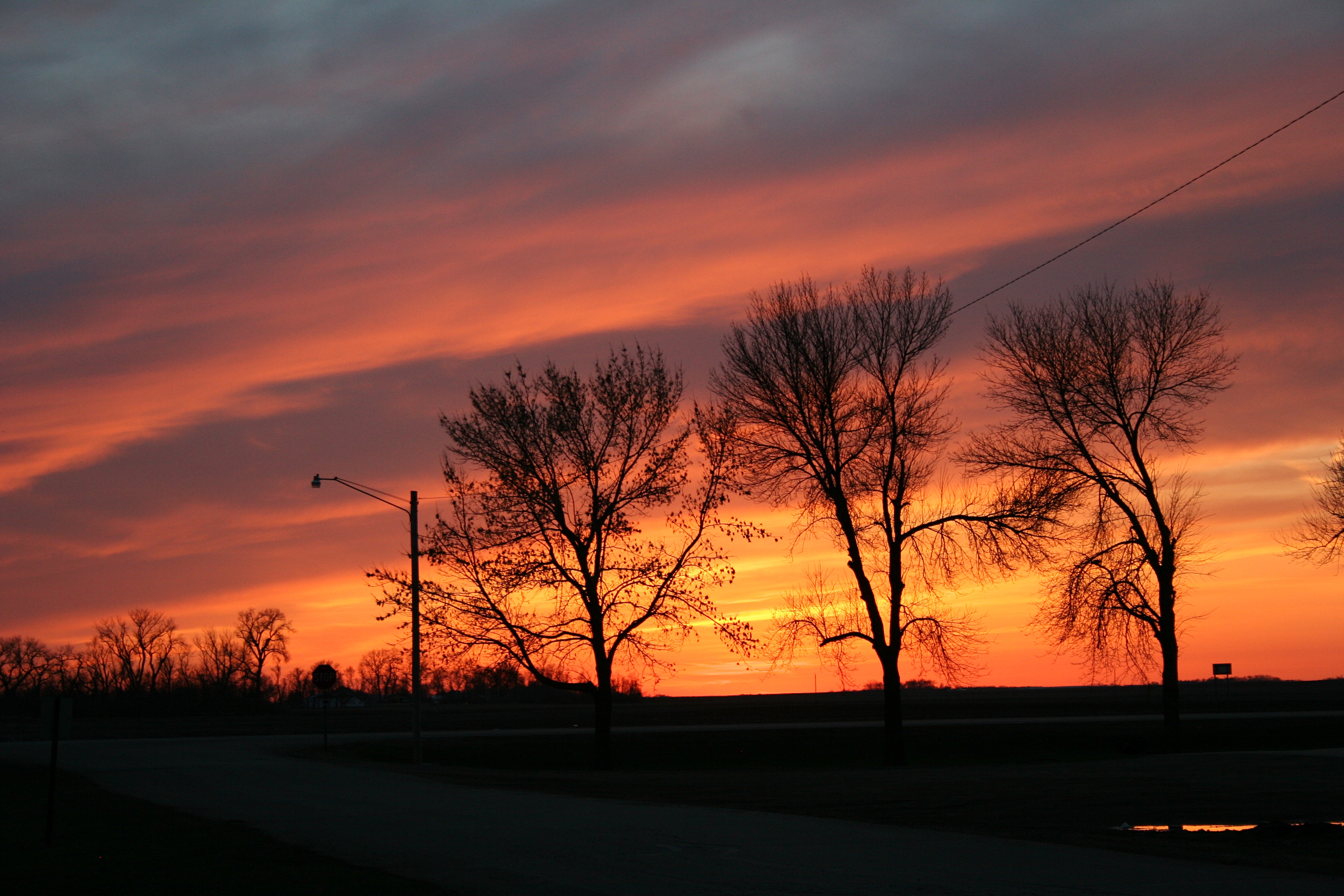
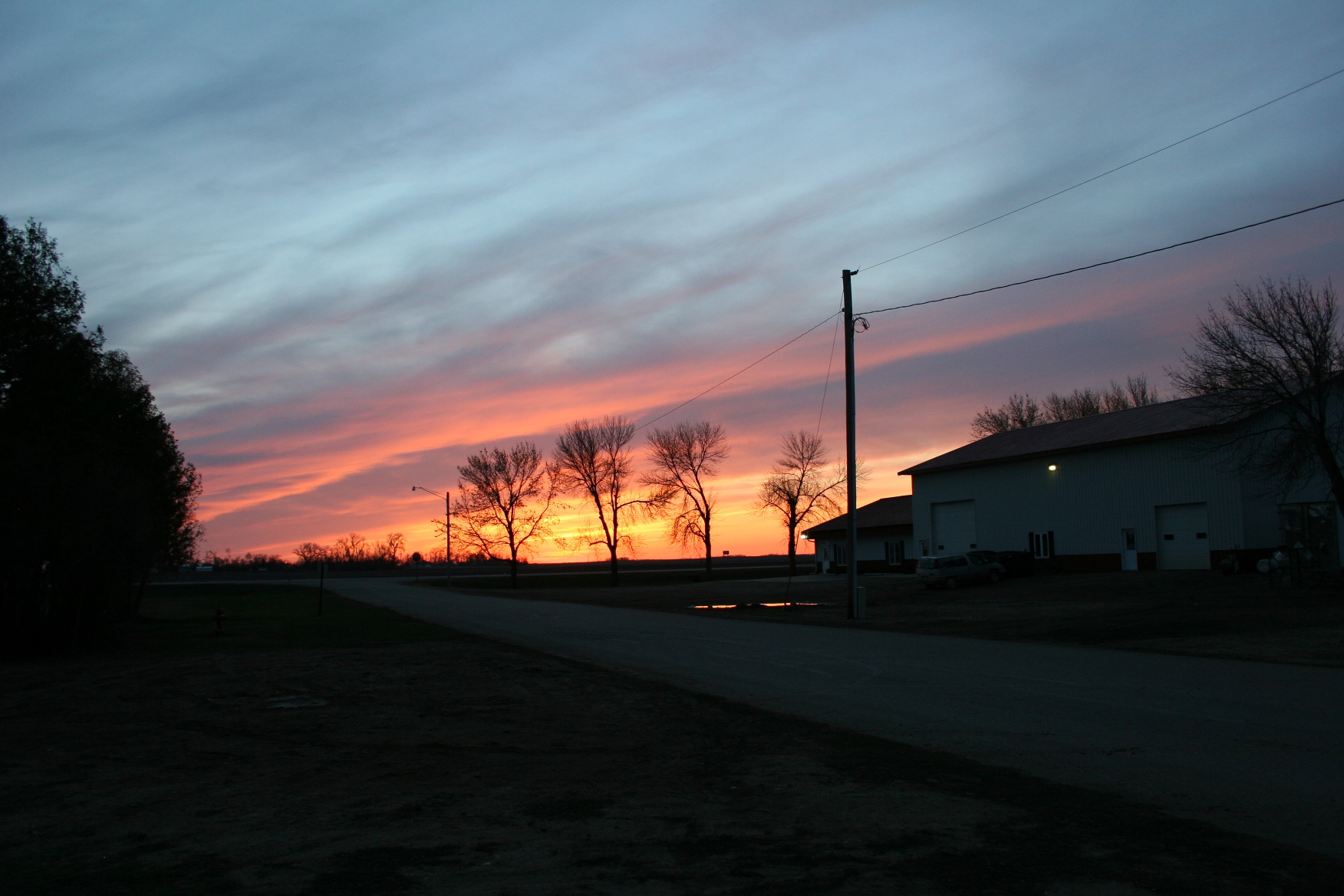
A Minnesota prairie sunset May 5, 2014

Filed under: Uncategorized — Audrey Kletscher Helbling @ 6:00 AM
Tags: , , , , ,

MY HUSBAND SCURRIED back to my mother’s house, told me to grab my camera and hurry.

And hasten we did.  Between her house and the neighbors, along the grass alley a block. Turn west at my uncle and aunt’s house. Fast-walk another block.


Prairie sunset 52


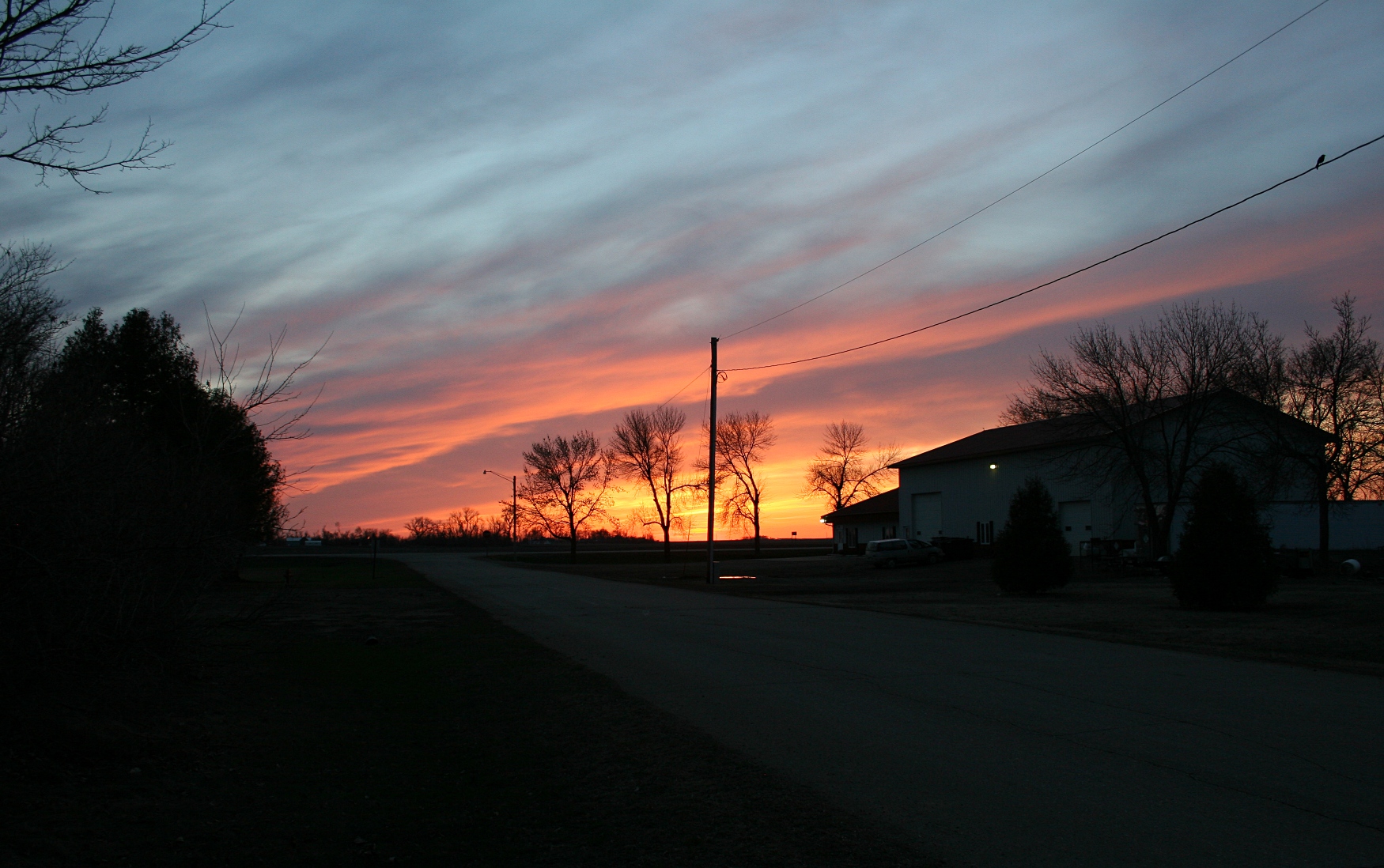
Focus on the setting sun, the sky colored in layered shades of orange and yellow, pink and purple.


Prairie sunset 54


Oh, how I love the sunset on my beloved prairie in my hometown of Vesta, Minnesota.


Prairie sunset 55


I can never get enough of it.


Prairie sunset 56


This moment when day transitions into evening with beauty unequal on a land that stretches flat into forever.

Spectacular sunset, like poetry sweeping across the prairie sky.

Copyright 2014 Audrey Kletscher Helbling


A prairie island October 6, 2013

Filed under: Uncategorized — Audrey Kletscher Helbling @ 10:06 AM
Tags: , , , , , , , ,

Rural, farm behind corn field

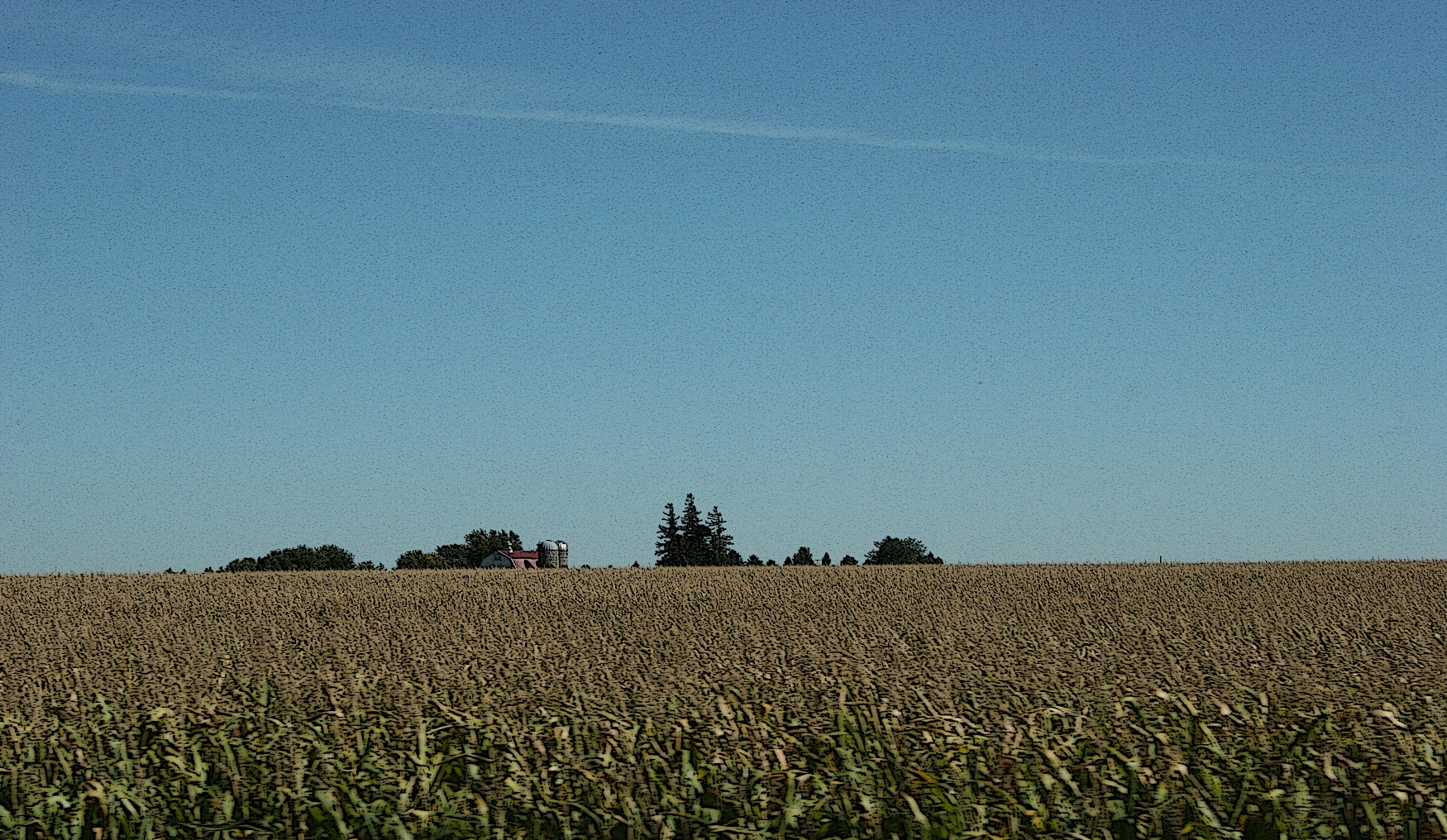
IN THE SEA OF CORN which defines southwestern Minnesota, an island emerges.

Copyright 2013 Audrey Kletscher Helbling
 

On the cusp of harvest in southwestern Minnesota October 4, 2013

Grey skies and rain create a moody scene along U.S. Highway 14 between Sleepy Eye and Lamberton.

Grey skies and rain create a moody scene along U.S. Highway 14 between Sleepy Eye and Lamberton.

RAIN DRIZZLES, SOMETIMES SPLATTERS, across the windshield of our van as my husband and I aim toward the southwestern Minnesota prairie, driving toward Lamberton for a day of making horseradish with my extended family. It is a time-honored tradition, started by my father, dead 10 years now.

For me, this 120-mile trip from our Faribault home is not as much about the horseradish as it is about family and memories and spending a weekend in my beloved native prairie, the place that shaped me in to the person/writer/photographer I’ve become.

This section of U.S. Highway 14 between Sleepy Eye and Lamberton features many stately and well-kept barns like this brick one.

This section of U.S. Highway 14 between Sleepy Eye and Lamberton features many stately and well-kept barns like this brick one.

Even after 40 years away from this place of big skies and flat open spaces, of small towns and family farms, of corn and soybean fields stretching into forever, I still miss this land.

Especially at harvest time.

A cheery smile on a barn off U.S. Highway 14 serves as a backdrop to a ripened soybean field on a grey Saturday morning.

A cheery smile on a barn off U.S. Highway 14 serves as a backdrop to a ripened soybean field on a grey Saturday morning.

As we journey, my head pivots toward the corn and the beans, ripened mostly to muted gold.

I can almost hear the corn leaves rustling in the bendy wind under moody grey skies.

I can almost smell the intoxicating scent of earth that prevails only at harvest time.

I can almost hear the chomping combines and rumbling grain trucks, the roaring tractors and the lumbering grain wagons, parked and silent now as rain sweeps across the acres.

A serene country scene just north of Lamberton in southern Redwood County.

A serene country scene just north of Lamberton in southern Redwood County.

Later that day, after we’ve reached our rural destination and dug, washed, peeled, chopped, blended and bottled the horseradish, the heaviest of the clouds lift and shift east.

The skies have cleared along Redwood County Road 6 north of Lamberton where corn fields await harvest.

The skies have cleared along Redwood County Road 6 north of Lamberton where corn fields await harvest.

By Sunday morning we awaken to the clear and crisp skies of autumn in rural Minnesota.

Driving U.S. Highway 14 back to Faribault Sunday morning.

Driving U.S. Highway 14 back to Faribault Sunday morning.

It’s a perfect morning.

Barns and ripening crops define the landscape of southwestern Minnesota this time of year.

Barns and ripening crops define the landscape of southwestern Minnesota this time of year.

Sunshine upon fields.

Grain bins await the harvest on a southwestern Minnesota farm.

Grain bins await the harvest on a southwestern Minnesota farm.

Sunshine pooling upon my lap as we aim east, past bins and barns and bountiful fields, back home.
Rounding the curve eastbound into Sleepy Eye.
Rounding the curve eastbound into Sleepy Eye.
Past the ripening crops. Through the small towns, like Lamberton and Springfield and Sleepy Eye.
And when we reach the western outskirts of New Ulm, I feel as if we’ve crossed a line. Menards and Walmart loom to the left. U.S. Highway 14, the Laura Ingalls Wilder Historic Highway, is now a four-lane through this German community, busy with traffic and drivers racing to get ahead before the roadway once again narrows to two lanes en route to Mankato.

Barns, like this one, rise above the soon-to-be-harvested corn fields.

Barns, like this one, rise above the soon-to-be-harvested corn fields.

My mood shifts. I’ve left the peace of the prairie, the one place on this earth that holds my soul in solace.

FYI: This post was previously published on streets.mn. The above photos were taken on Saturday, September 28, and Sunday, September 29. Conditions change rapidly during harvest time, so I expect harvest is well underway, although delayed now due to the rain.

A post will be forthcoming on making horseradish.

Copyright 2013 Audrey Kletscher Helbling