THE 2022 PLANTING SEASON has proven exceedingly challenging for Minnesota farmers. A late spring with unseasonably cold temps, coupled with too much rain, has delayed seeding of corn and soybeans.
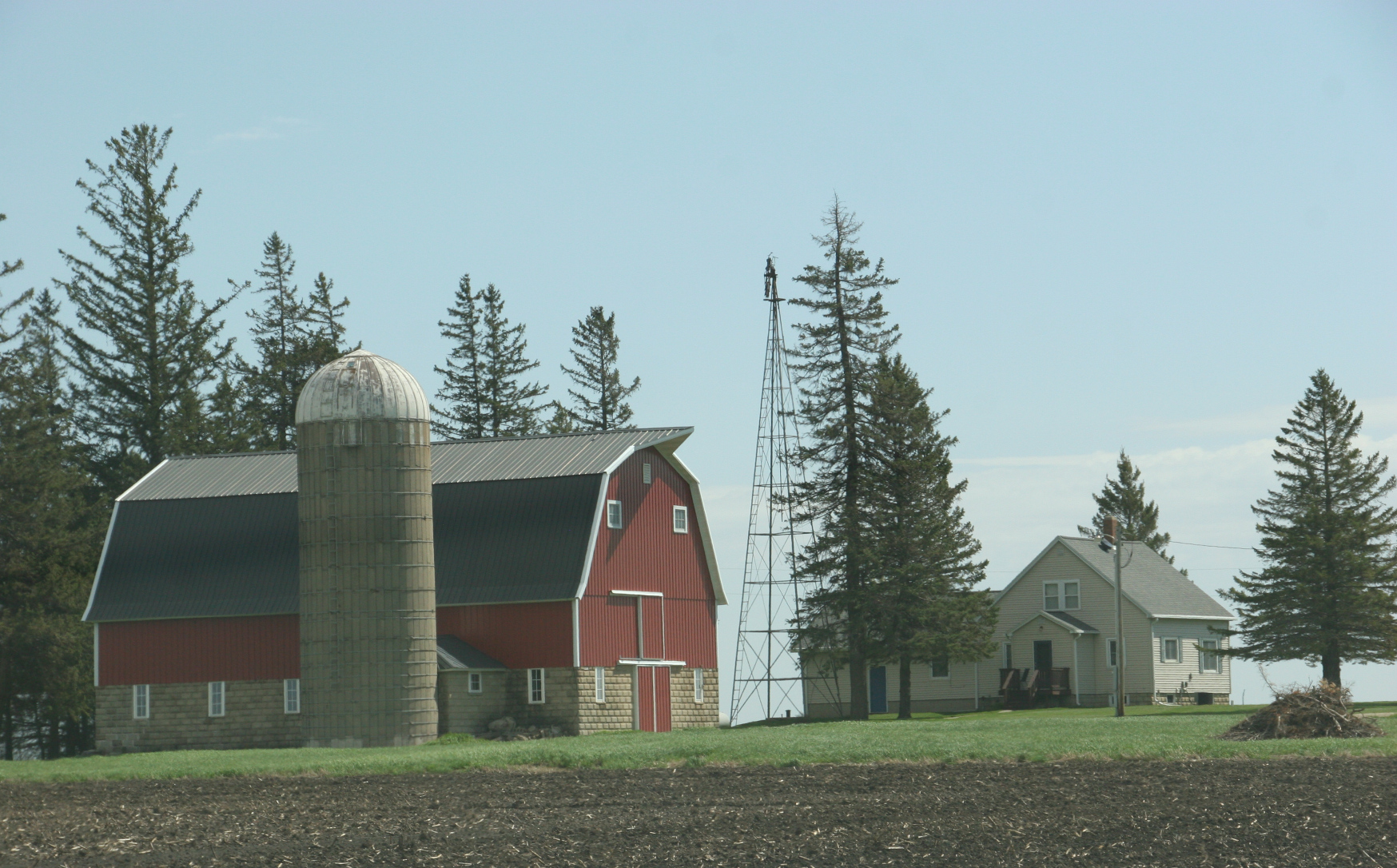
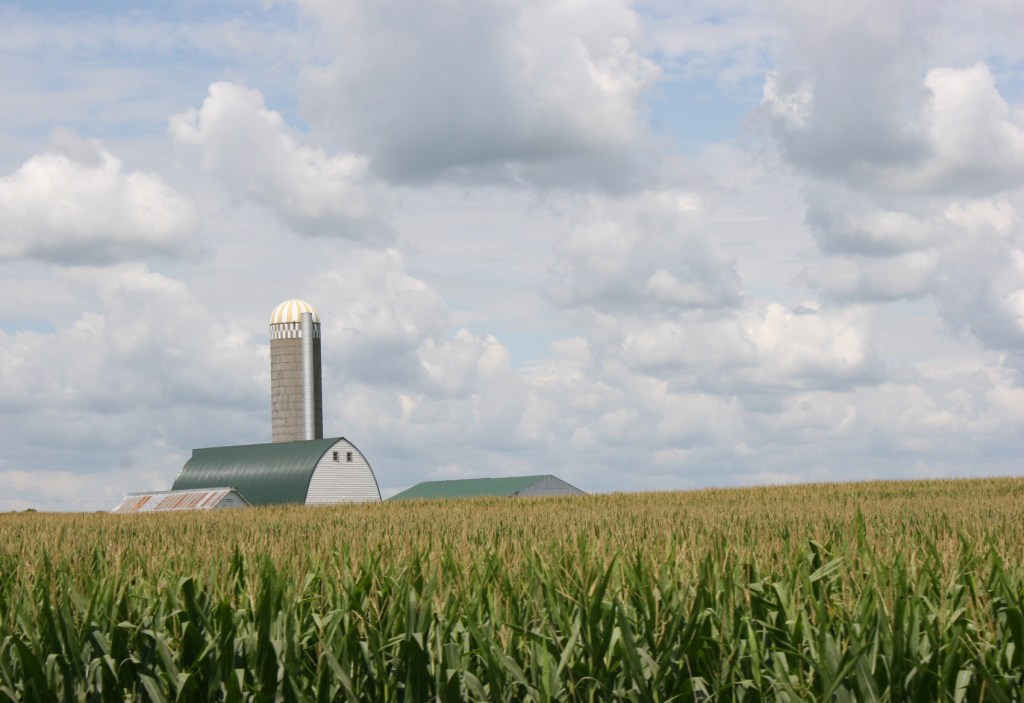
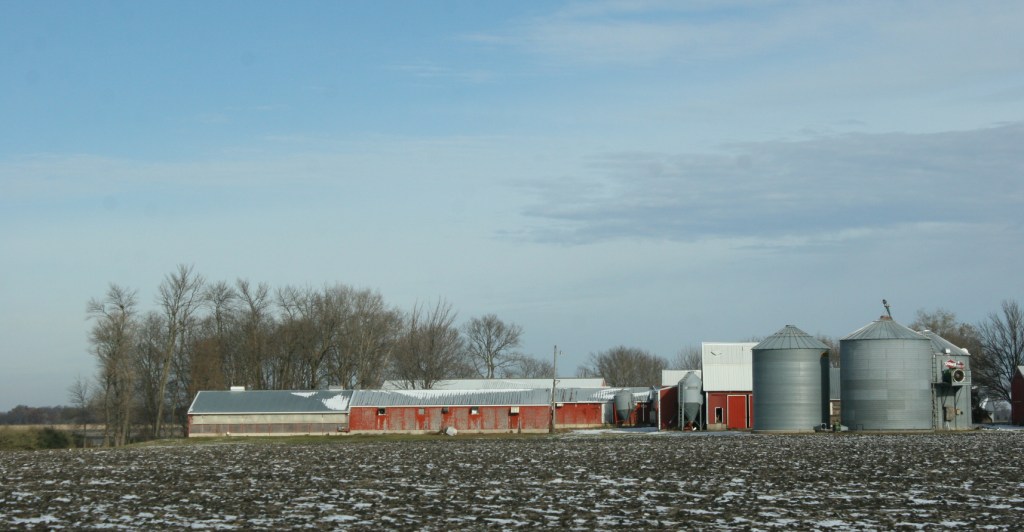
A picturesque farm site in southern Minnesota, field in the foreground. (Minnesota Prairie Roots copyrighted photo May 2022)
Some areas of our state have experienced widespread flooding, creating muddy conditions and lakes. Not exactly what farmers need in May. To add to that, destructive storms damaged or destroyed farm buildings and equipment, especially in the western region of Minnesota.
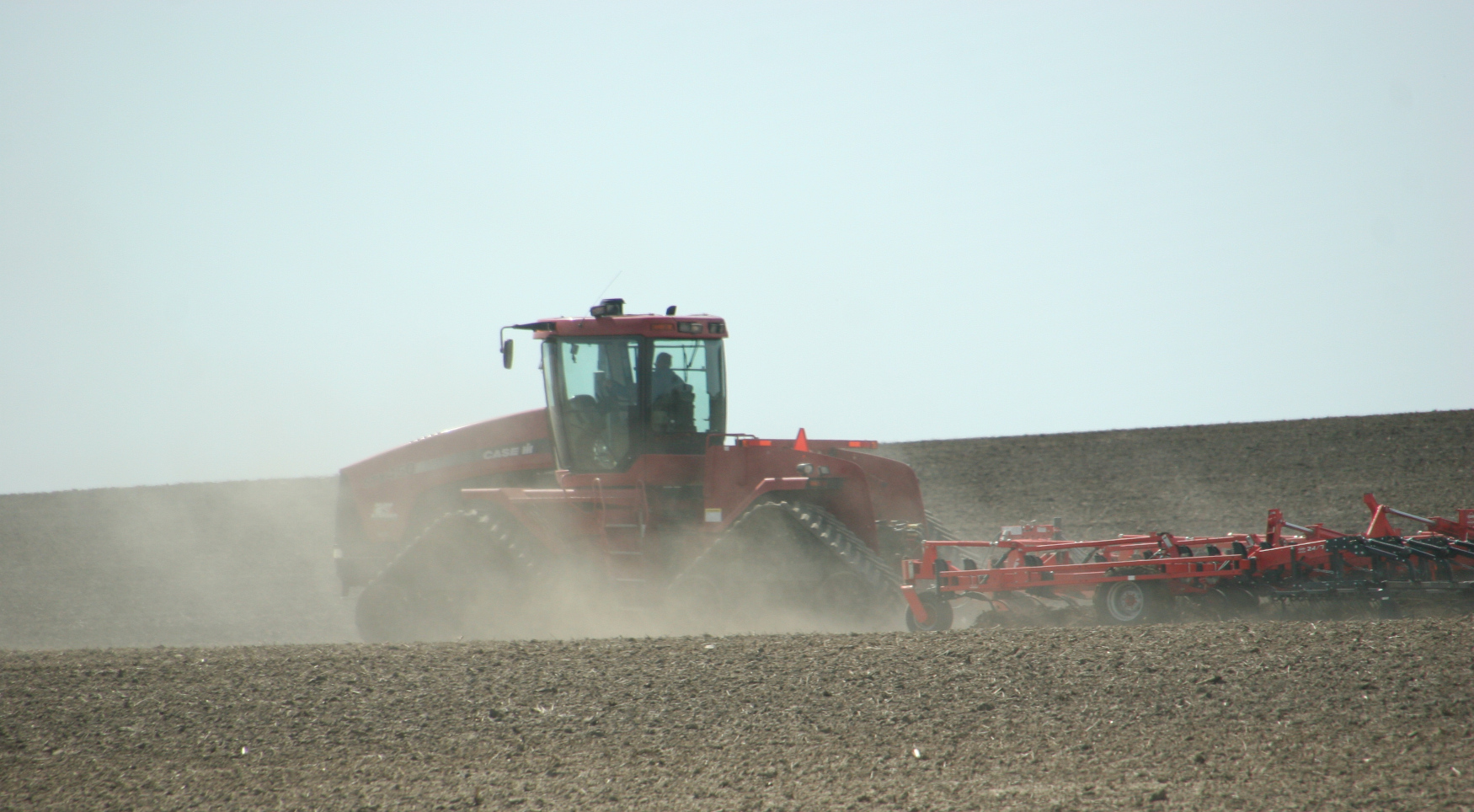
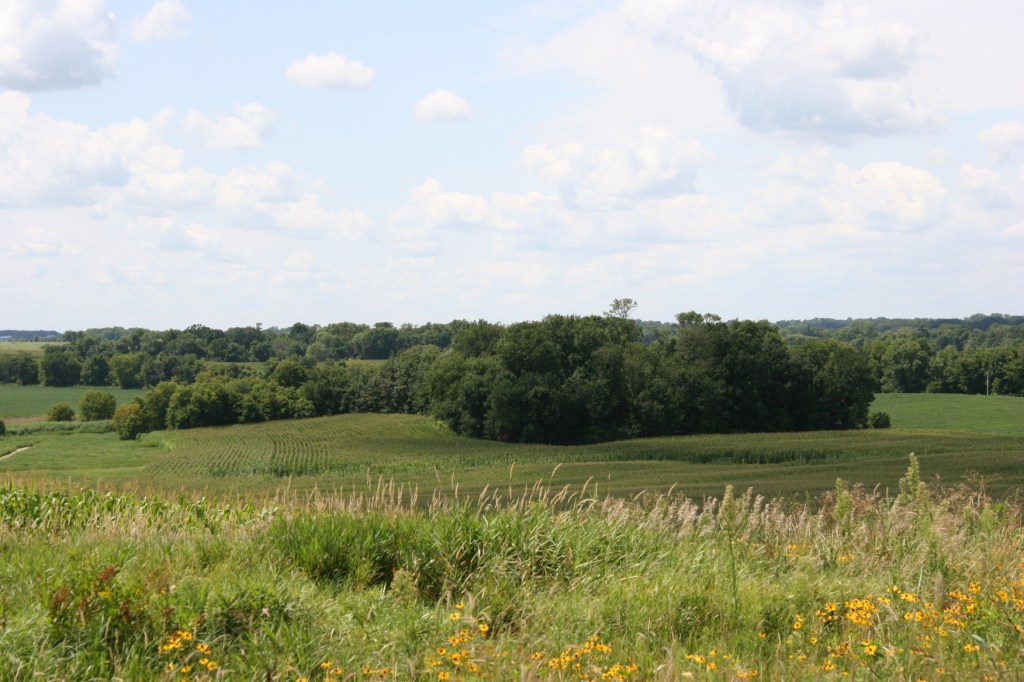
Soil type and topography (here on a hillside) affect tilling and planting, along with the biggest factor, weather. (Minnesota Prairie Roots copyrighted photo May 2022)
Corn planting data from the United States Department of Agriculture (updated every Monday) shows below average planting progress throughout the Midwest, West and in some states east of Illinois. In Minnesota, only 60 percent of the corn was planted as of May 23. That compares to 98 percent last year and a 5-year average of 86 percent. That puts into perspective the 2022 planting delays.
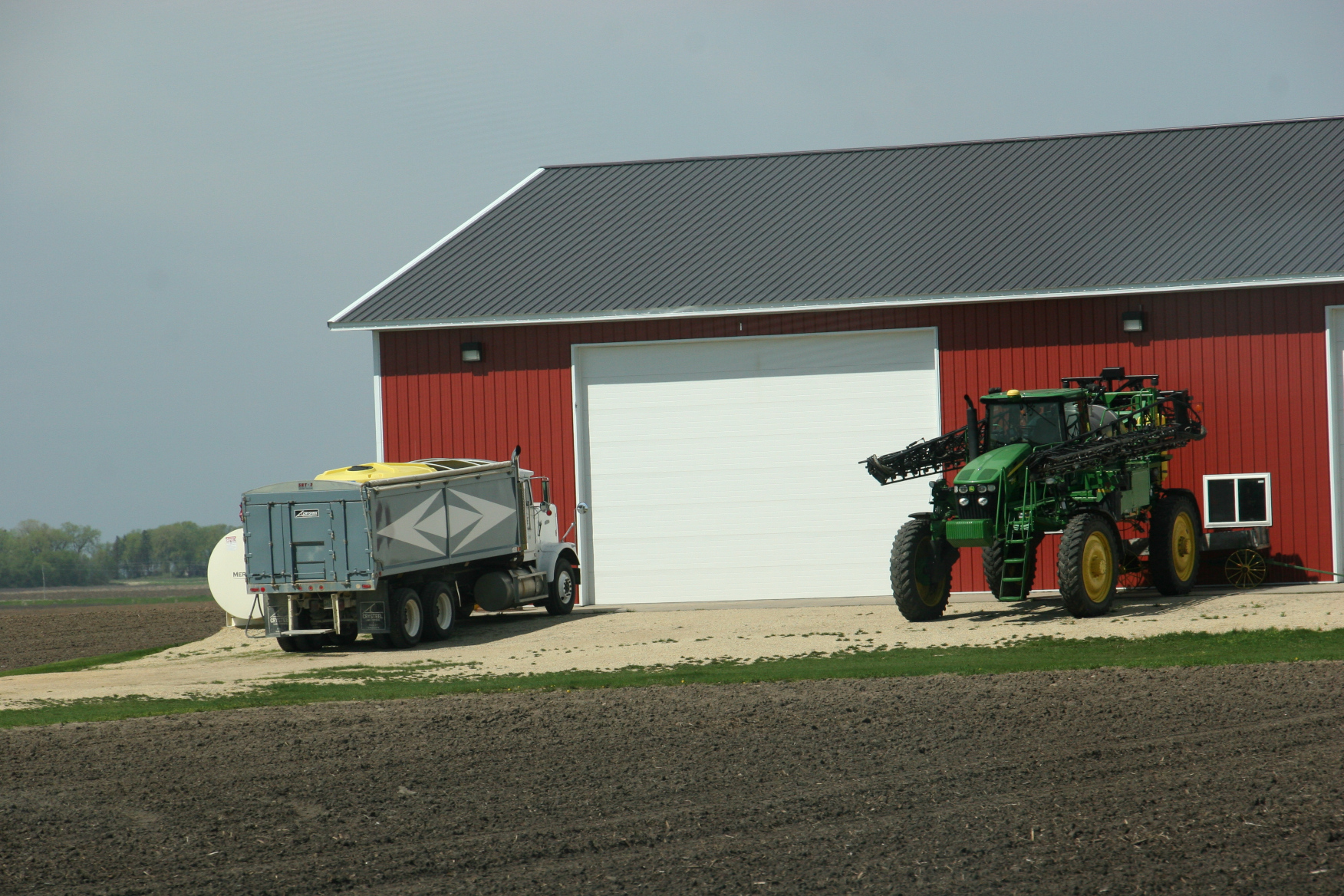
Equipment, outside a farm outbuilding, ready for spring field work. (Minnesota Prairie Roots copyrighted photo May 2022)
Yet, if you farm, you realize a stretch of good weather can quickly change everything for the good. Time will tell how this all plays out.
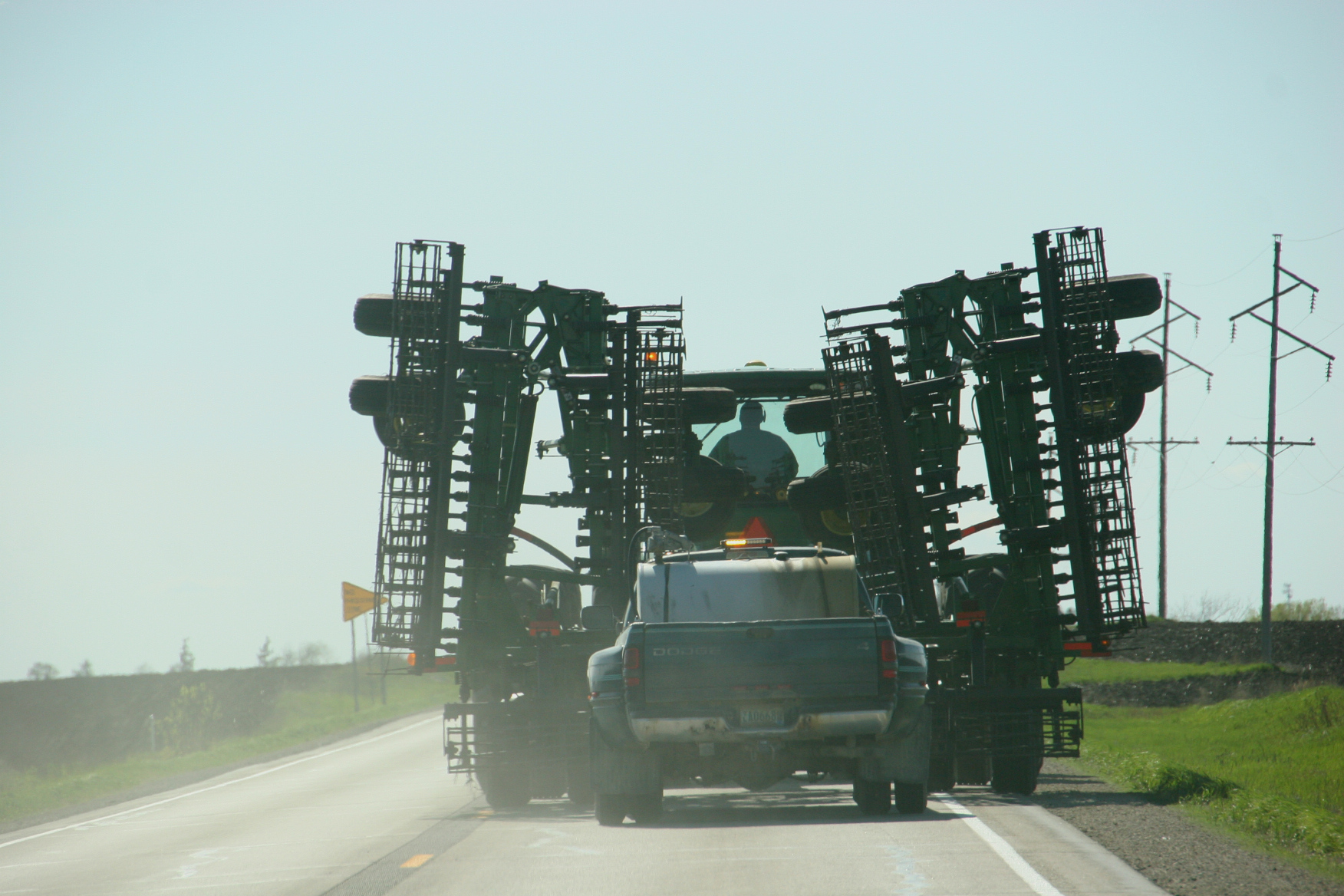
Following farm equipment on Minnesota State Highway 60. This is a common sight in spring which requires patience and caution by motorists. (Minnesota Prairie Roots copyrighted photo May 2022)
I find it interesting that, nearly 50 years removed from the farm, I still pay attention to spring planting, and, later, harvest. I have friends who farm. But, more than that, farming is part of my history, part of who I am, even as an adult decades distanced from living on the land. I am proud of my rural heritage. It shaped me. It grew me. I see that rural influence in my writing, my photography, in the places I value and, I suppose, even in the way I live my life.
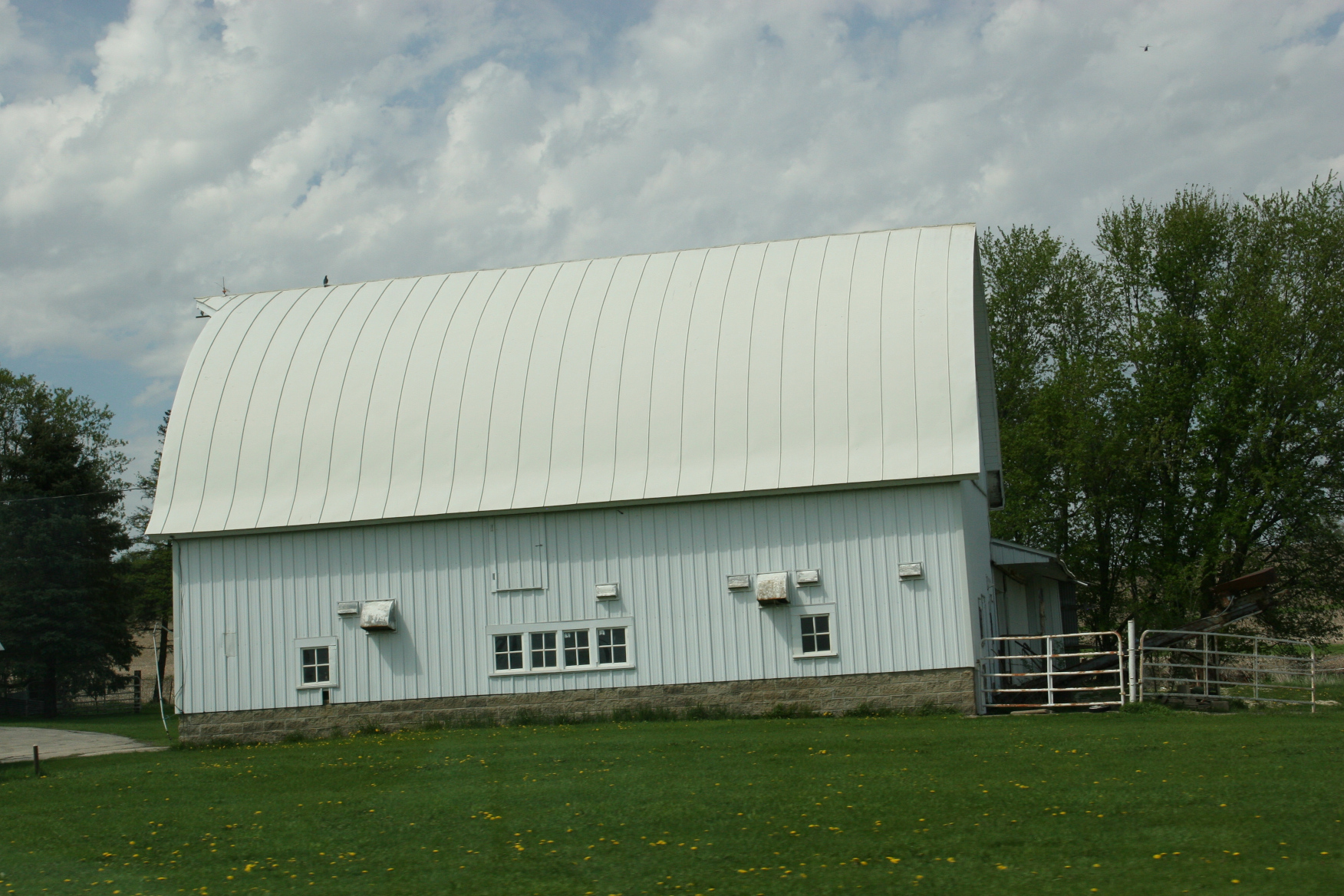
A well-kept barn in southern Minnesota. (Minnesota Prairie Roots copyrighted photo May 2022)
I am, and always shall be, honored to call myself a farm girl.
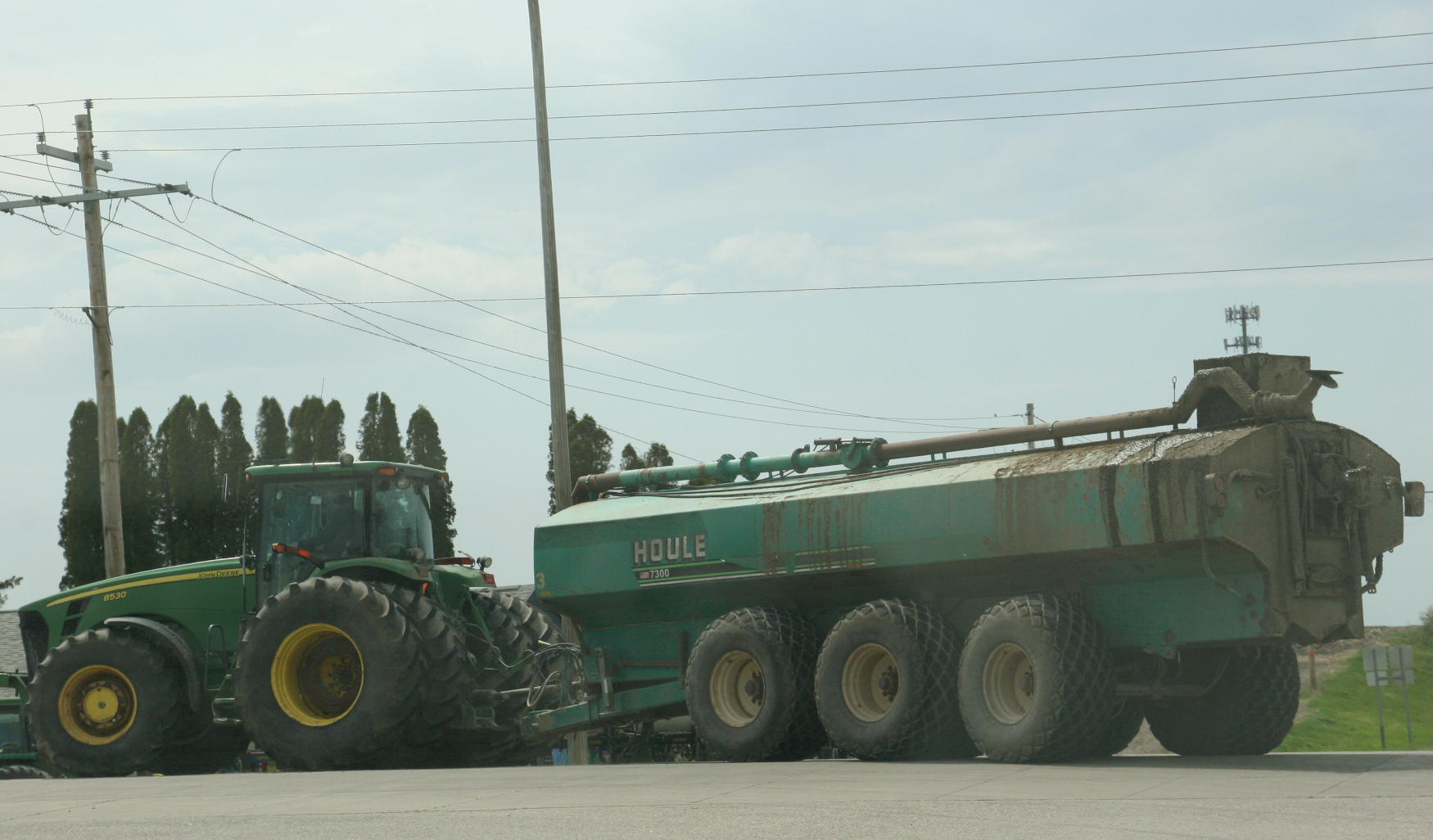
Another common sight on Minnesota roadways in the spring–a farmer hauling liquid manure to spread on fields. Not really anything you want to follow and I was thankful when the tractor turned. (Minnesota Prairie Roots copyrighted photo May 2022)
HOW ABOUT YOU? Did place shape you? I’d like to hear.
NOTE: I took these photos on May 14 in Goodhue, Olmsted, Rice and Wabasha counties in southeastern Minnesota.All images were taken through the passenger side windshield or side window while traveling on the roadway.
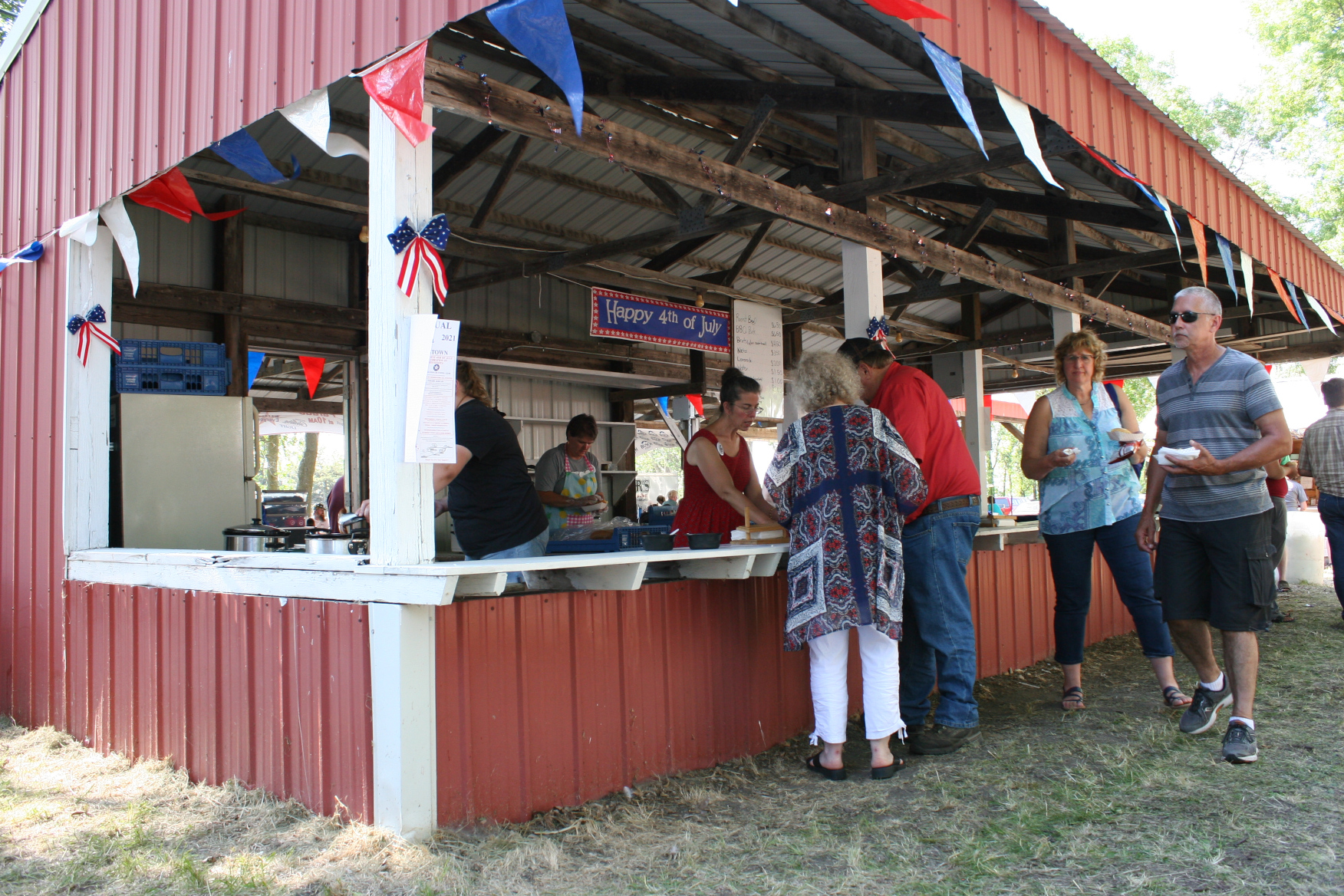
Pork and roast beef sandwiches were sold at this stand along with beverages. Minnesota Prairie Roots photo.
NORTH MORRISTOWN on the Fourth of July suits me and my rural roots. Not that I’m rooted to this place in the middle of farm country in southwestern Rice County. But the down-to-earth basics of this nearly 130-year-old Independence Day celebration appeal to the raised-on-a-Redwood-County-farm girl in me.
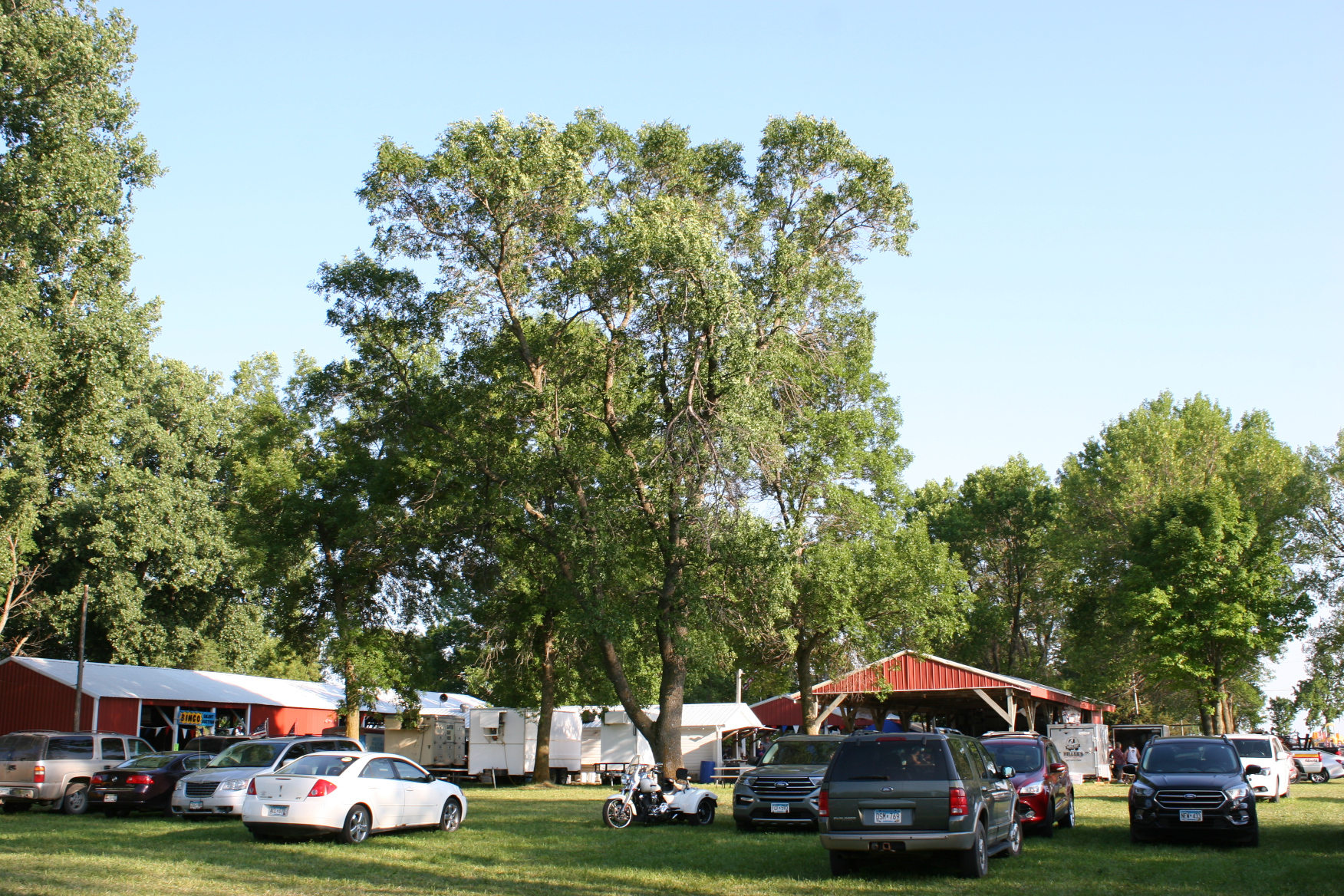
A look toward the fest grounds from the parking area early Sunday evening. Minnesota Prairie Roots photo.
I appreciate how this event, held annually on festival grounds in a rural Minnesota landscape, remains basically unchanged. Just like North Morristown, which is not a town, but rather farm sites, fields, a Lutheran church and school, and the grassy, shaded celebration site.
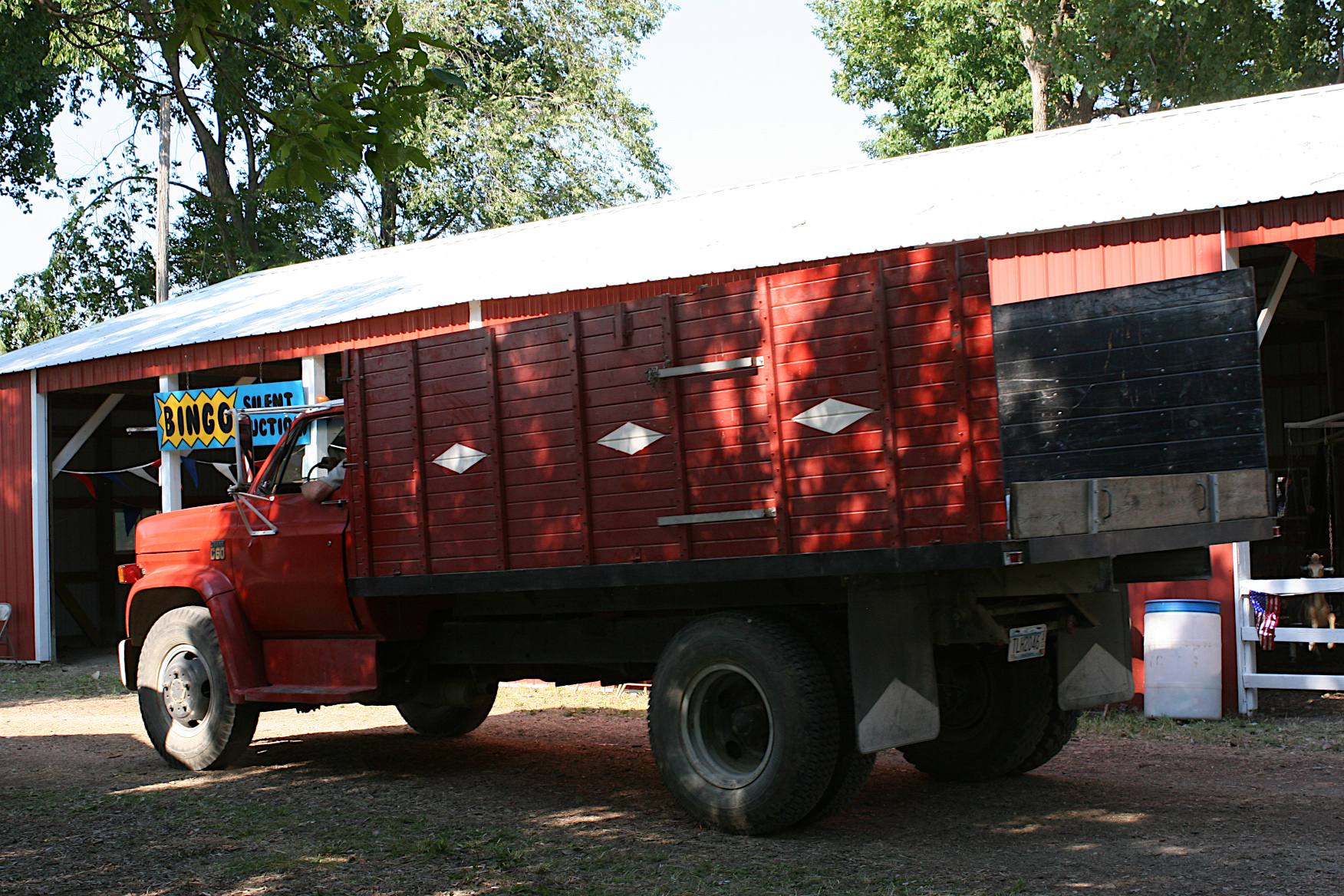
A grain truck drives through the festival grounds, I believe to pick up garbage. Minnesota Prairie Roots photo.
The rural character of July Fourth here prevails. In tractors and grain trucks. In barns, machine sheds and farmhouses. But it stretches beyond that to the people, to families rooted in North Morristown for generations. In many ways, Independence Day here is as much a celebration of our nation’s birthday as it is one big family reunion. With guests, like me, welcomed.
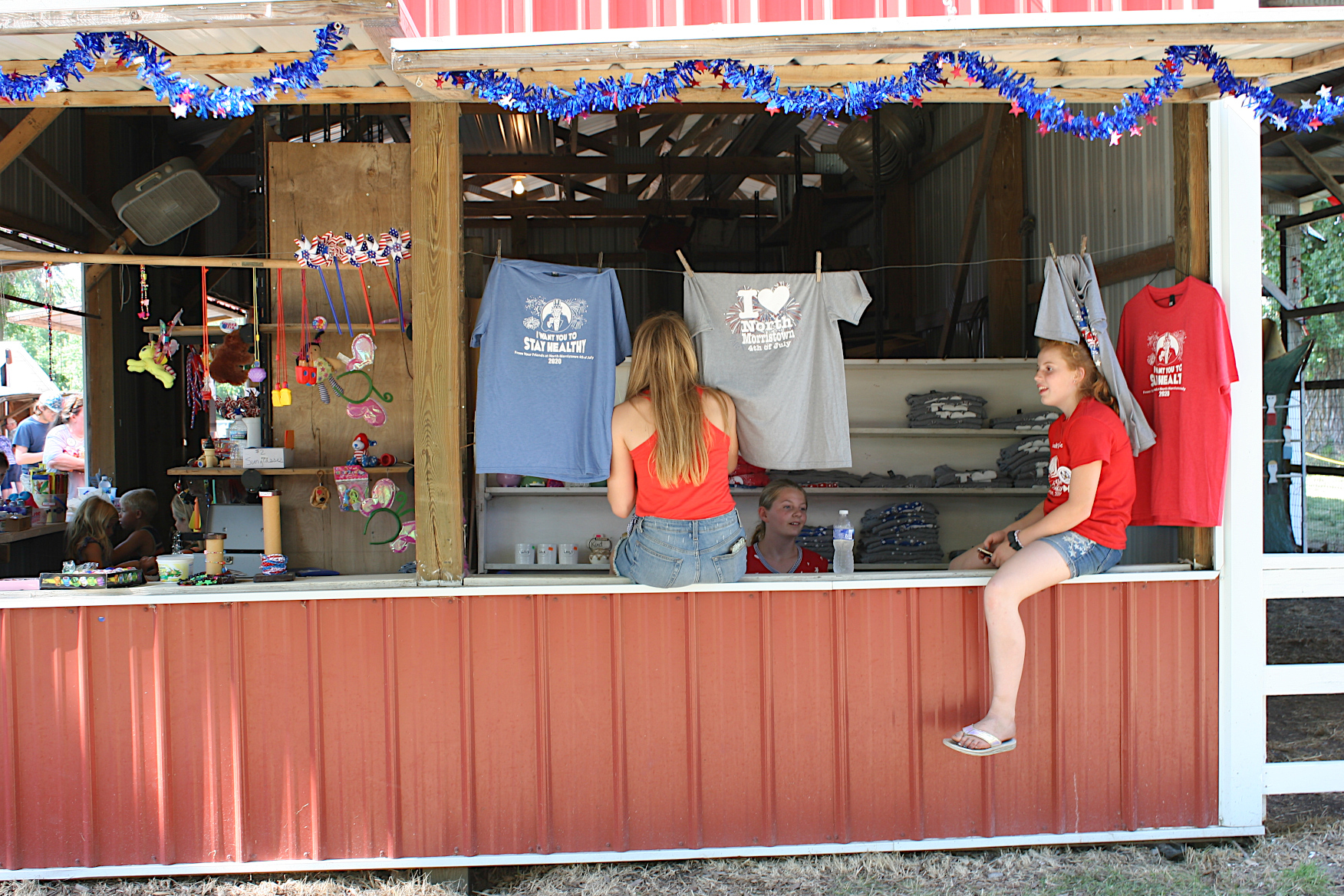
The next generation sells tees in the novelty shop. Minnesota Prairie Roots photo.
The event feels friendly and comfortably homey. I recognize that doesn’t come without a lot of planning, time, effort and hard work on the part of volunteers. I’ve coordinated and led events much smaller than this and fully realize the work and commitment.
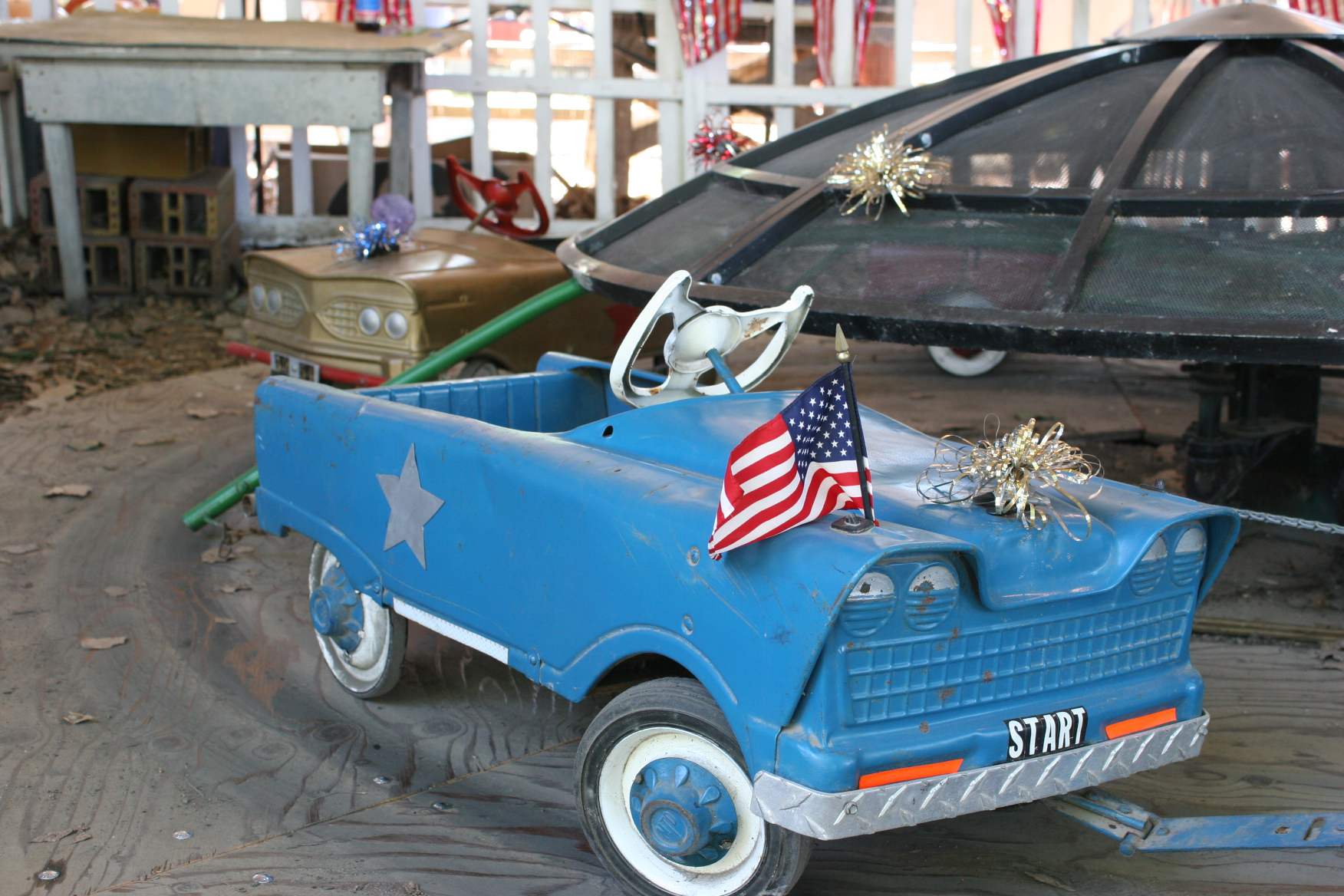
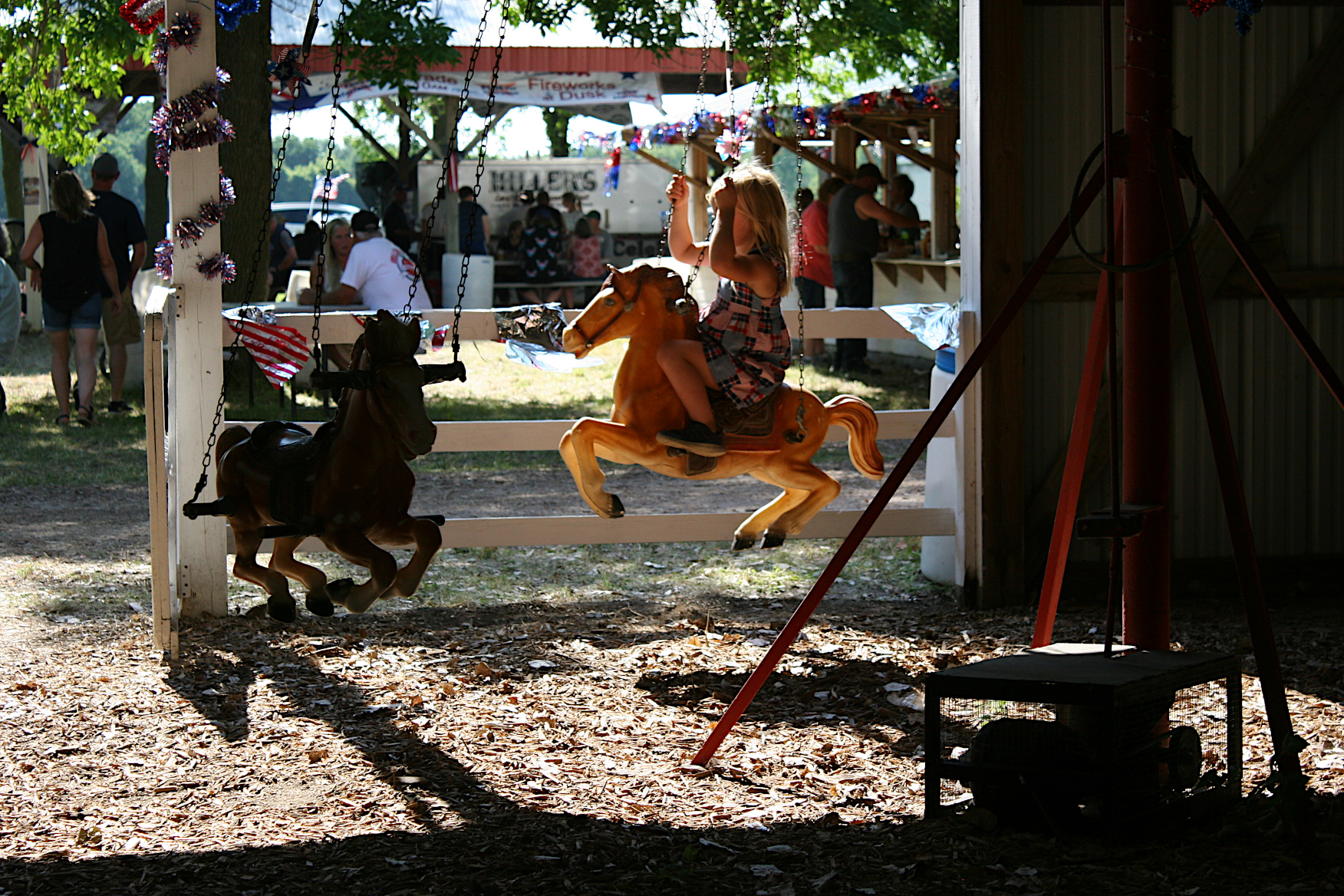
There’s nothing high tech about the vintage rides. Minnesota Prairie Roots photo.
So to those who spearheaded this year’s Fourth of July in North Morristown, thank you. And to those who have led in the past, thank you also. You are bringing joy to a lot of people. You are preserving the past. You are bringing people of all ages together from all over, this year from as far away as the Philippines. You are strengthening families and building memories. You are offering an alternative to high tech everything.
One of the many vintage kiddie rides. Minnesota Prairie Roots photo.
In a fast-paced world, we need a place and event like North Morristown on the Fourth to remind us to slow down, to sit for a spell. To listen to the music. To savor a slice of homemade pie or a pork sandwich. To visit with friends and family and strangers. To watch babies toddle in bare feet and kids climb onto vintage horses. To play BINGO or hunt for a hidden medallion. To feel grateful for faith and family and health and country.
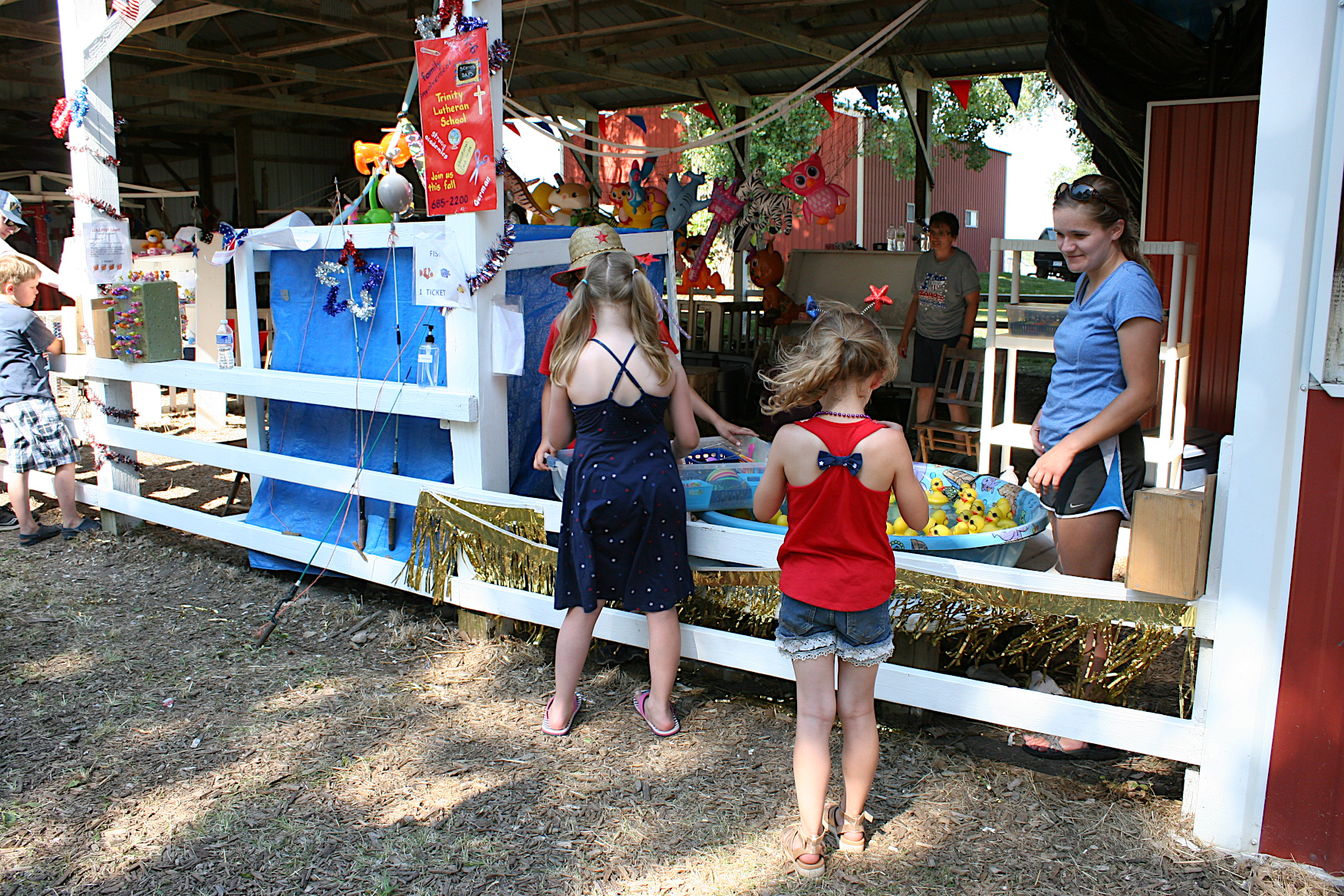
The kiddie games are simple, like the duck pond. Minnesota Prairie Roots photo.
At its core, North Morristown on the Fourth represents so many things I hold dear. I expect others feel the same.
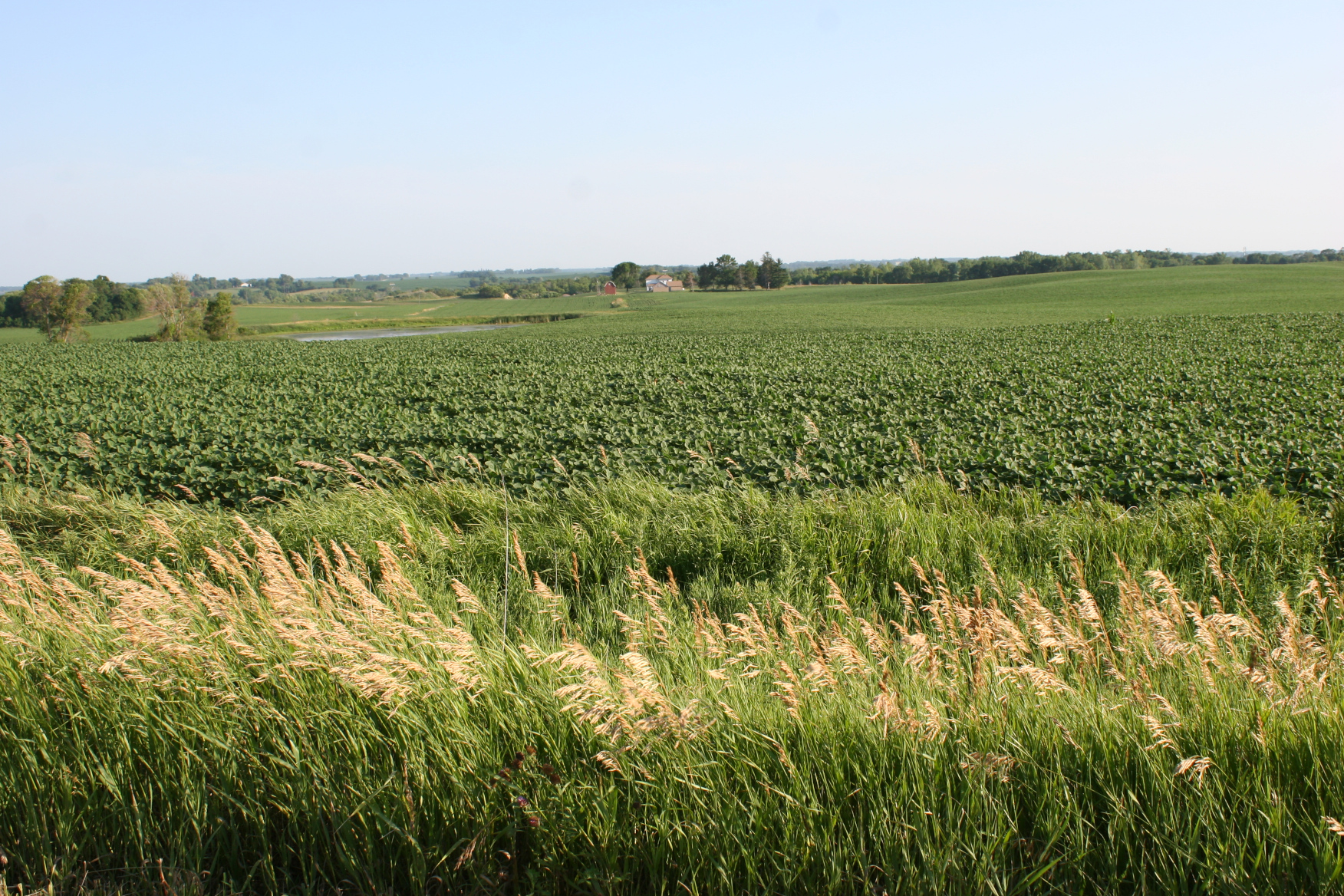
The countryside near North Morristown. Minnesota Prairie Roots photo.
TELL ME: Did you attend the North Morristown July 4 celebration or one similar? I’d like to hear.
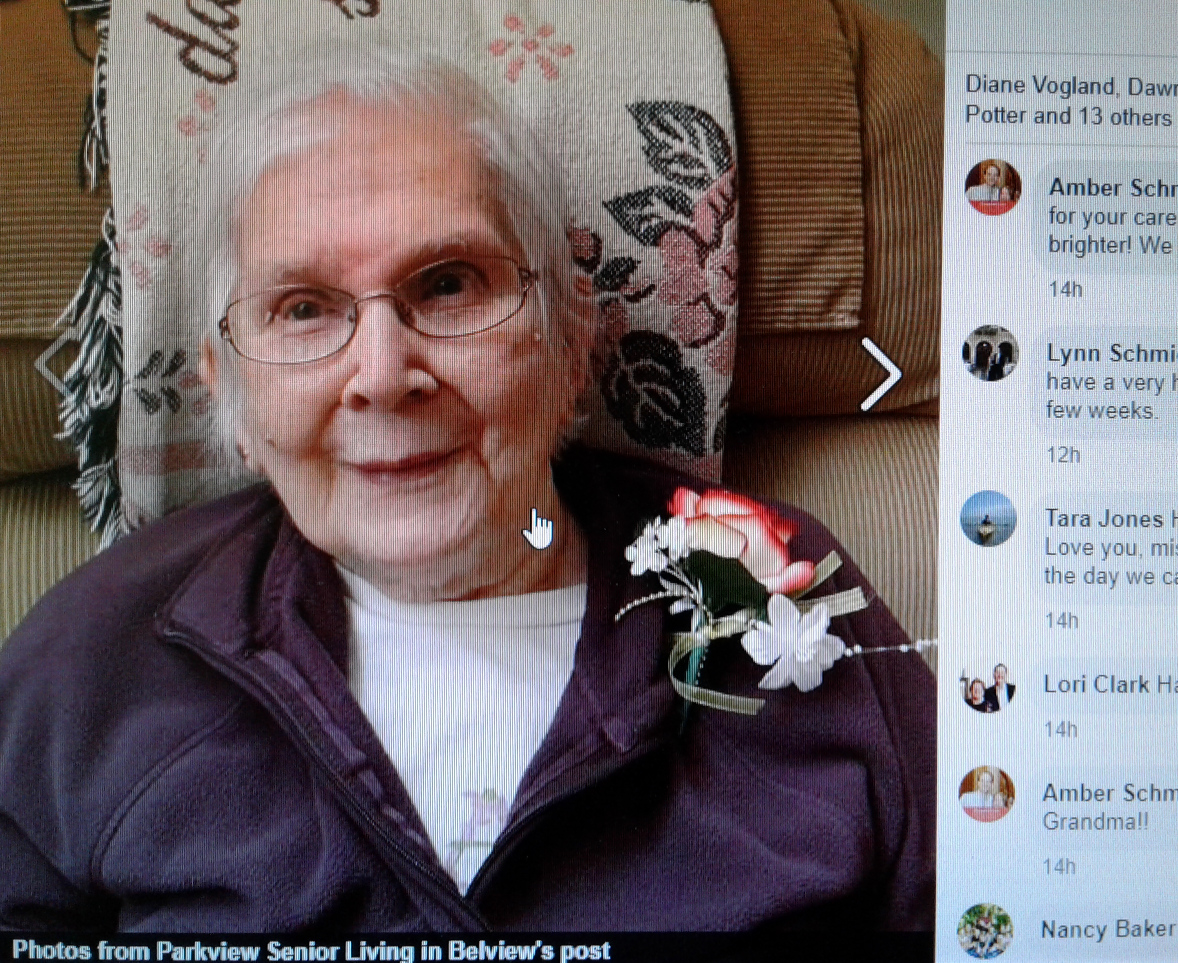
My sweet mom, featured on the Parkview Facebook page in May 2020.
THIS POST CELEBRATES my mom, who turns 80-something today. She likely will never read this. She can’t see well enough to read nor would she likely fully comprehend. But, none-the-less, I feel compelled to honor her with my words.
She’s proven such an inspiration to me. In my writing. In the way I live my life. In who I am. Her name, Arlene, is even part of my identity as her first-born daughter.
I recognize that, as time passes, our memories often skew and we see loved ones through rose-colored glasses. But my view of my mom remains consistent, unchanged. She is the definition of kindness. Of the mindset, “if you don’t have anything good to say about someone, then don’t say it.” Those weren’t just empty words. She followed them and advised us, her six children, to do the same.
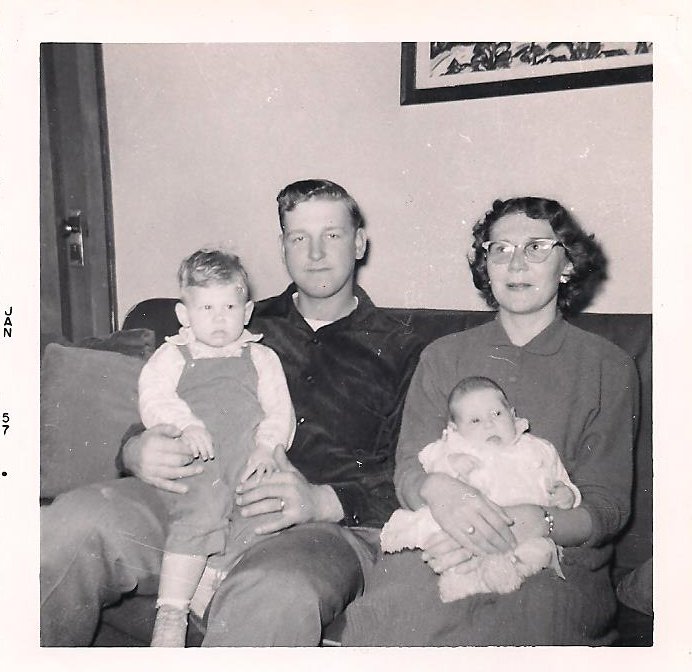
The only photo I have of my mom holding me. My dad is holding my brother, Doug.
Mom, as busy as she was with raising three sons and three daughters on the farm, always found time to serve. In church. In the American Legion Auxiliary. At Red Cross blood drives. Wherever she was needed. Her selflessness is admirable.
I sometimes wonder what dreams she gave up. She attended business college in Mankato and worked for awhile before marrying and then settling into her role as farm wife and mother. I know the six of us occasionally tested her patience. I know she worked hard—washing clothes in a Maytag wringer washer, tending a large garden, preserving food, endless cooking and baking…
The old farmhouse to the left, with the “new house” in the background. That’s my sister Lanae standing on the front steps.
And I also know of one particular dream which became reality for my mom in 1967. For years I watched as she paged through house-building plans printed in booklets procured from the local lumberyard. She dreamed of more space for her growing family. Space expanding beyond the 1 ½-story wood-frame farmhouse with three small bedrooms, an oil-burning stove in the middle of the living room, a dirt cellar and no bathroom. Eventually, my parents built a new house and I can only imagine my mom’s relief and gratitude.
It’s not that Mom really cared all that much about material possessions. But having more room and something like an indoor bathroom made life easier. More comfortable.
The birthday cake booklet from which we chose animal cake designs. This copy was gifted to me by a friend.
Today, as I reflect on my childhood, I feel a deep sense of gratitude for my mother and how she raised me to value faith and family. To respect others. To speak kindly. To serve.
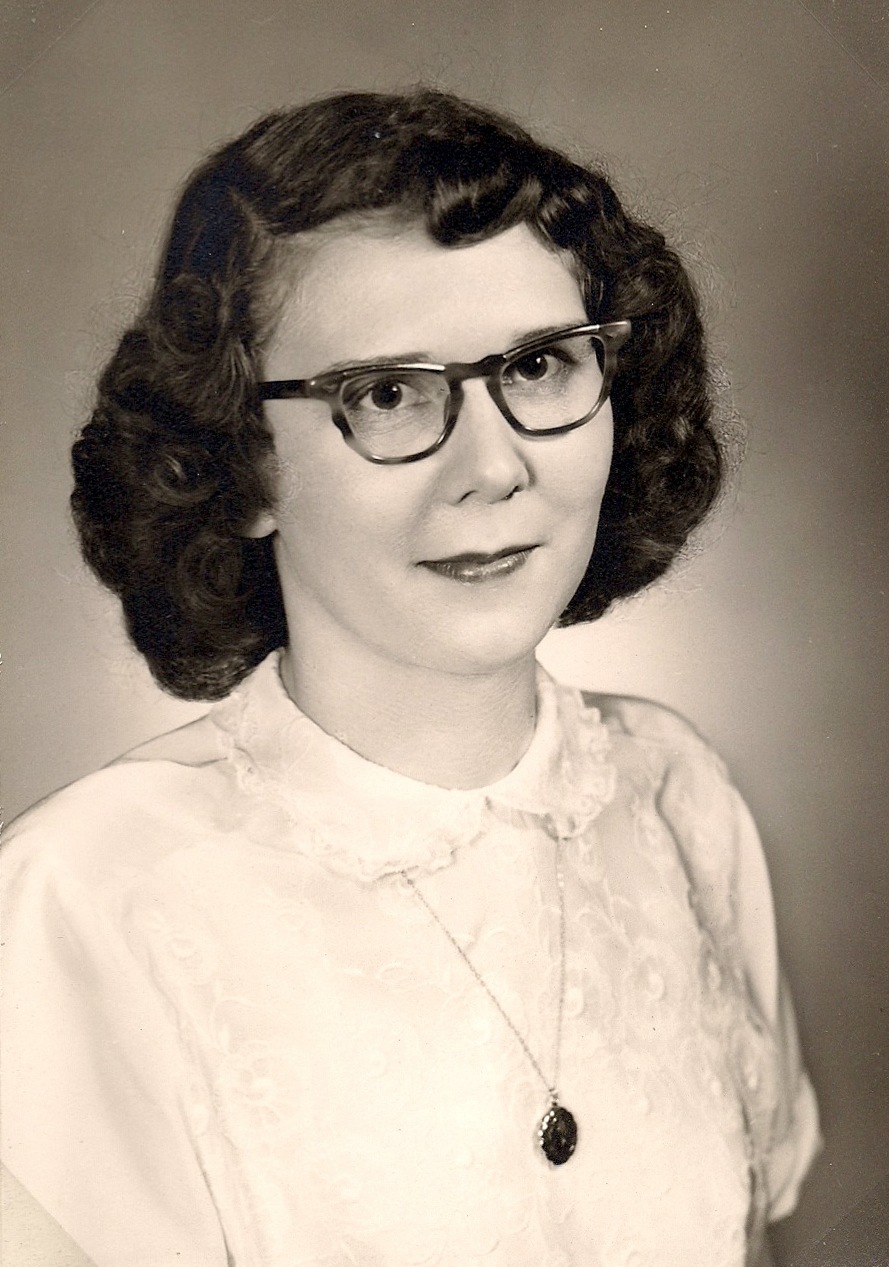
Arlene’s 1951 Wabasso High School graduation portrait.
I feel grateful to still have her in this world, even as aging and health have changed her. Many times, beginning with a viral infection of the heart nearly 40 years ago, followed by open heart surgery, we wondered if she would make it. Too many times we, her family, were called to her bedside when she was not expected to survive. During uncontrollable bleeding, pneumonia, a fall that broke her neck and landed her in a trauma unit. I recall her comment after one hospital stay. “I guess God wasn’t ready for this stubborn old lady yet.” She was right. There’s a reason Mom is still here, even while wheelchair bound, tethered to oxygen, fading before our eyes.
She is still here to love. To cherish. And, on this her birthday, to honor with words of gratitude.
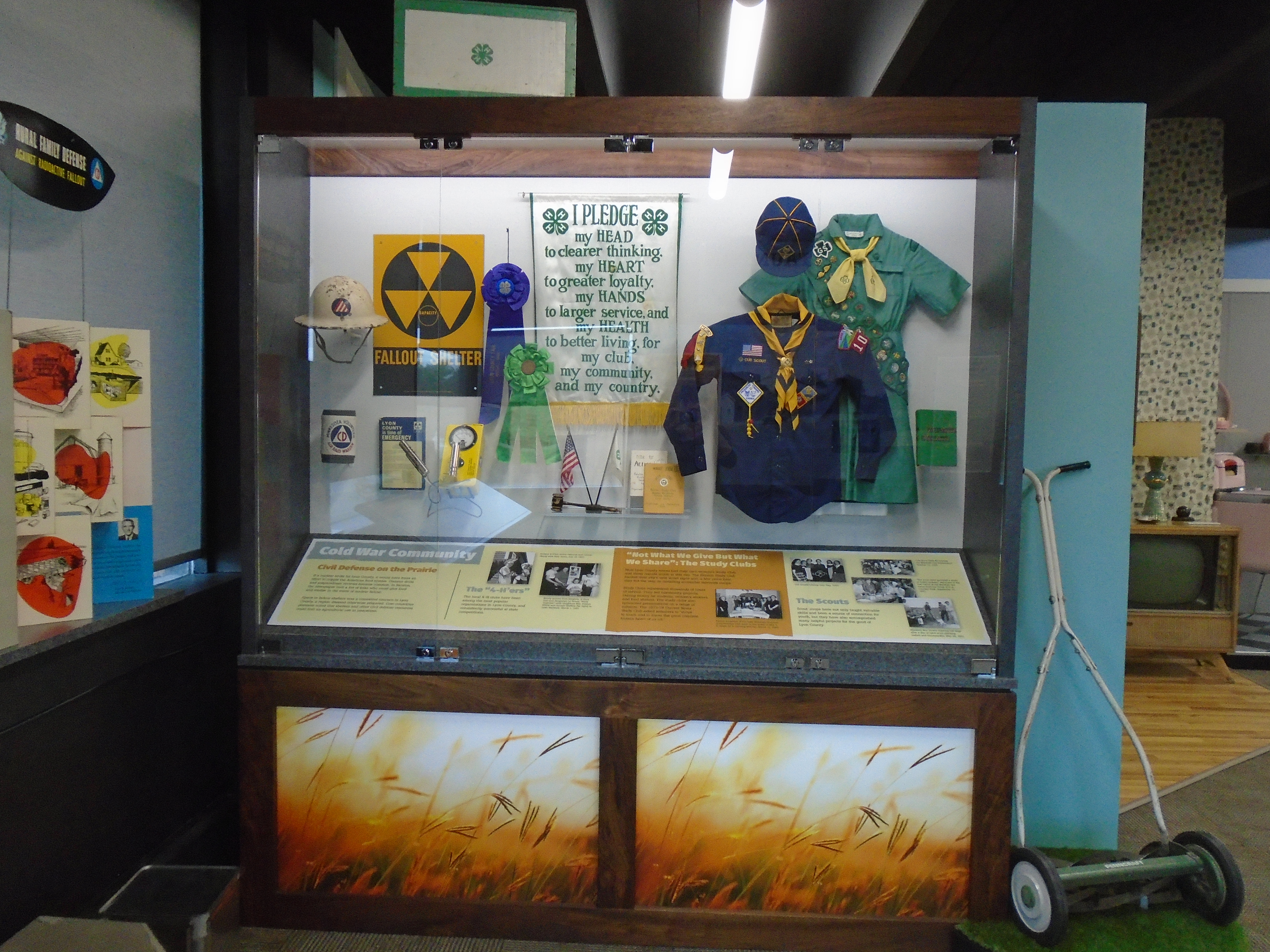
A portion of the “Making Lyon County Home” exhibit focuses on 4-H and more. Photo courtesy of the LCHS.
Museology Museum Services of Minneapolis also deserves recognition as lead contractor for the project. I was first contacted by Museology in January 2020 about inclusion of my rural-themed poem in this exhibit focusing on Lyon County and also reflective of the surrounding area in southwestern Minnesota. I feel incredibly honored to be part of an award-winning exhibit that connects people to the history of this rural region.
MALHM awards were also given to historical societies in Anoka, Carver and St. Louis counties and to the Minnesota African American Heritage Museum and Gallery. Susan Garwood, director of the Rice County Historical Society in Faribault (RCHS), earned the 2020 Lifetime Achievement Award for 30-plus years of service to organizations across Minnesota, including the RCHS, Northfield Historical Society and the MALHM. The award recognizes individuals who have made outstanding contributions and demonstrated leadership to Minnesota’s history community on a broad scale.
The state-wide Alliance serves some 500-plus local history groups throughout Minnesota with a basic mission “of connecting people to nearby history.” It also provides peer-to-peer support and aims “to raise the quality of work in the local history field in Minnesota.”
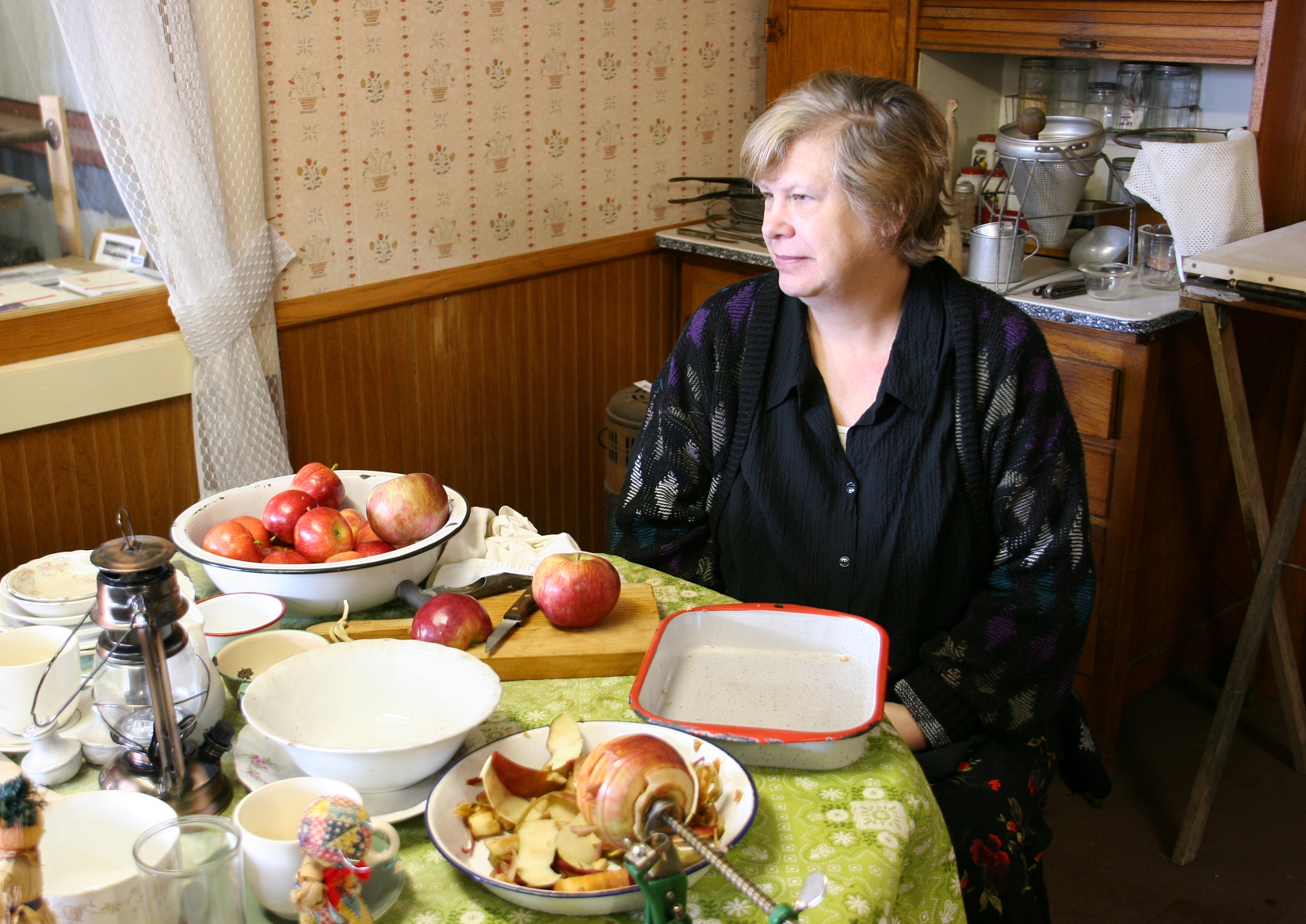
Mrs. Morris takes a break from making applesauce during A Night at the Museum at the Rice County Historical Society. This is an example of local living history. Minnesota Prairie Roots file photo October 2015.
A time existed when I didn’t appreciate history or history centers like I do now. My shift in appreciating history came when museum exhibits changed. When they became more personal and interactive. When an artifact was not just something encased in glass, but an object with meaning, purpose, depth. When living history became a standard. When stories became part of the story.
I photographed this abandoned farmhouse along Minnesota State Highway 19 east of Vesta (my hometown) on the southwestern Minnesota prairie in 2012. The house is no longer there. But it looks similar to the one in which I lived during the first 10-plus years of my life. This is the landscape of my upbringing and the place which shaped me. Minnesota Prairie Roots file photo.
That brings me back to my “Ode to My Farm Wife Mother.” After I posted on Tuesday about the poem’s inclusion in the Lyon County exhibit, my cousin Diane emailed a 1958 photo of my parents. And while I’m not sharing that image here, I will tell you that I was overjoyed to see a different side of my parents other than as, well, simply parents. They were young and clearly blissfully, joyfully in love. Diane also shared that her parents and mine would often attend dances together, leaving the kids with Grandma. As one of the oldest, Diane helped look after the babies, including me. I’d never heard that story or seen that black-and-white snapshot. To receive both now—with my dad long gone and my mom in failing health—was a gift. Such a gift.
I hope my poem, inspired by my mom, yet representative of all the hardworking farm women of the 1950s and 1960s, is also a gift to those who read it. I hope those who read my words, who view the accompanying photos, will reflect and feel gratitude for these strong rural women.
I shall forever feel grateful to my mom and to the rural region which shaped me and continues to inspire me today in my writing and photography.
FYI: If you didn’t see my back story on “Ode to My Farm Wife Mother,” please click here to read that initial post. The post includes my poem and more info about the new Lyon County exhibit.
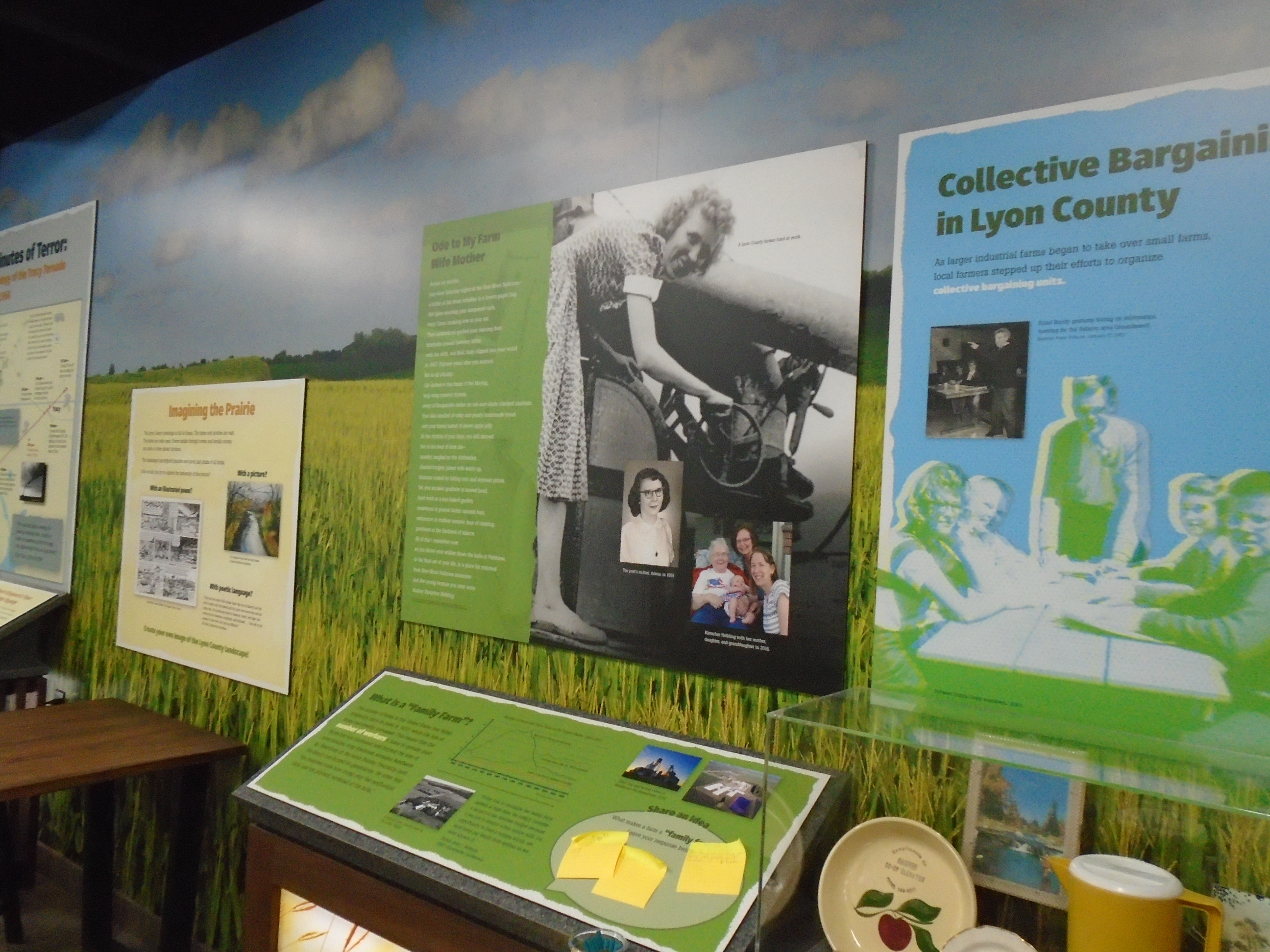
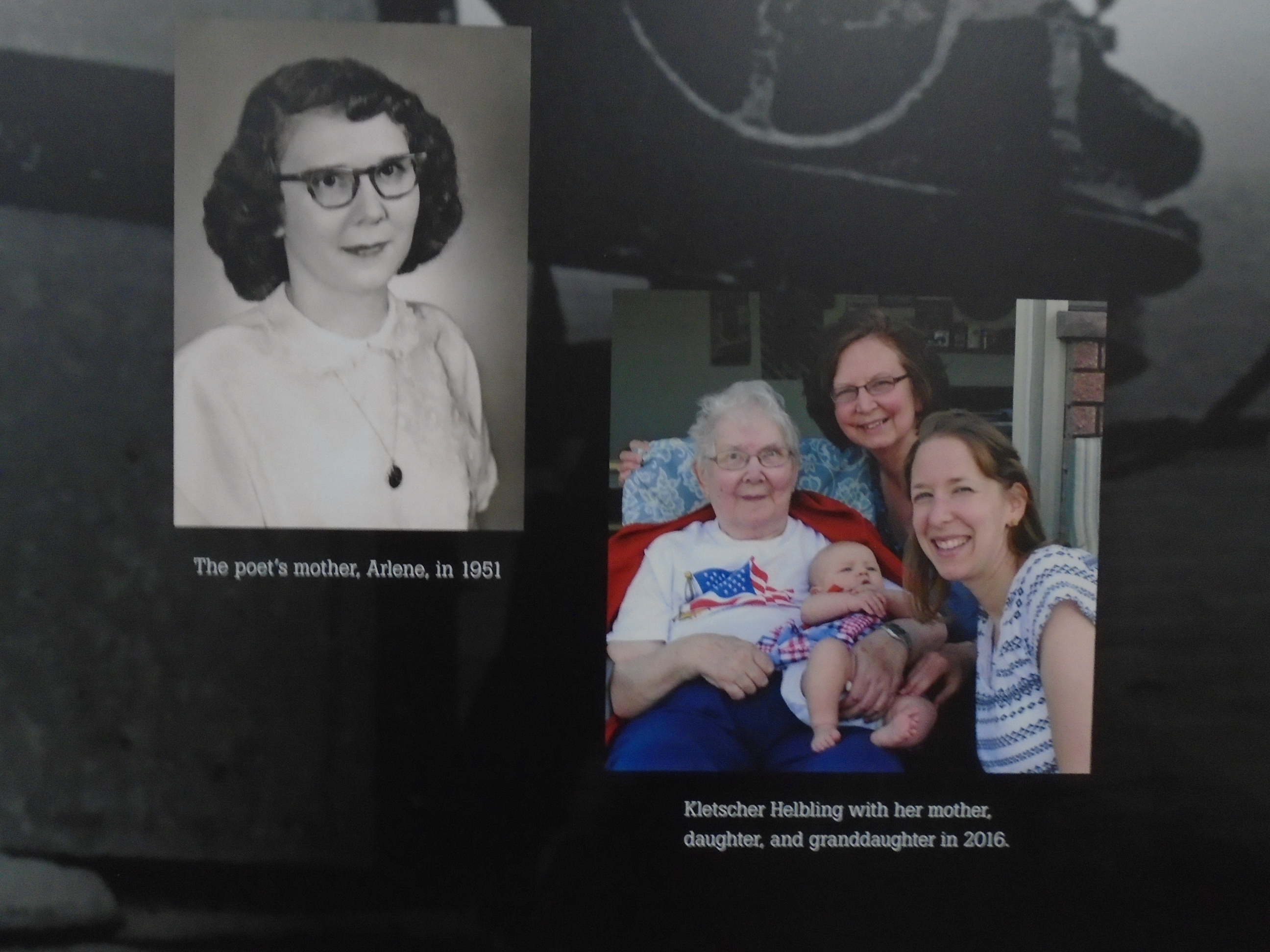
My poem (to the left of the woman in the dress), my mom’s high school graduation photo and a four-generation family photo of me, my mom, eldest daughter and granddaughter are included in a museum exhibit in southwestern Minnesota. Photo courtesy of the Lyon County Historical Society Museum.
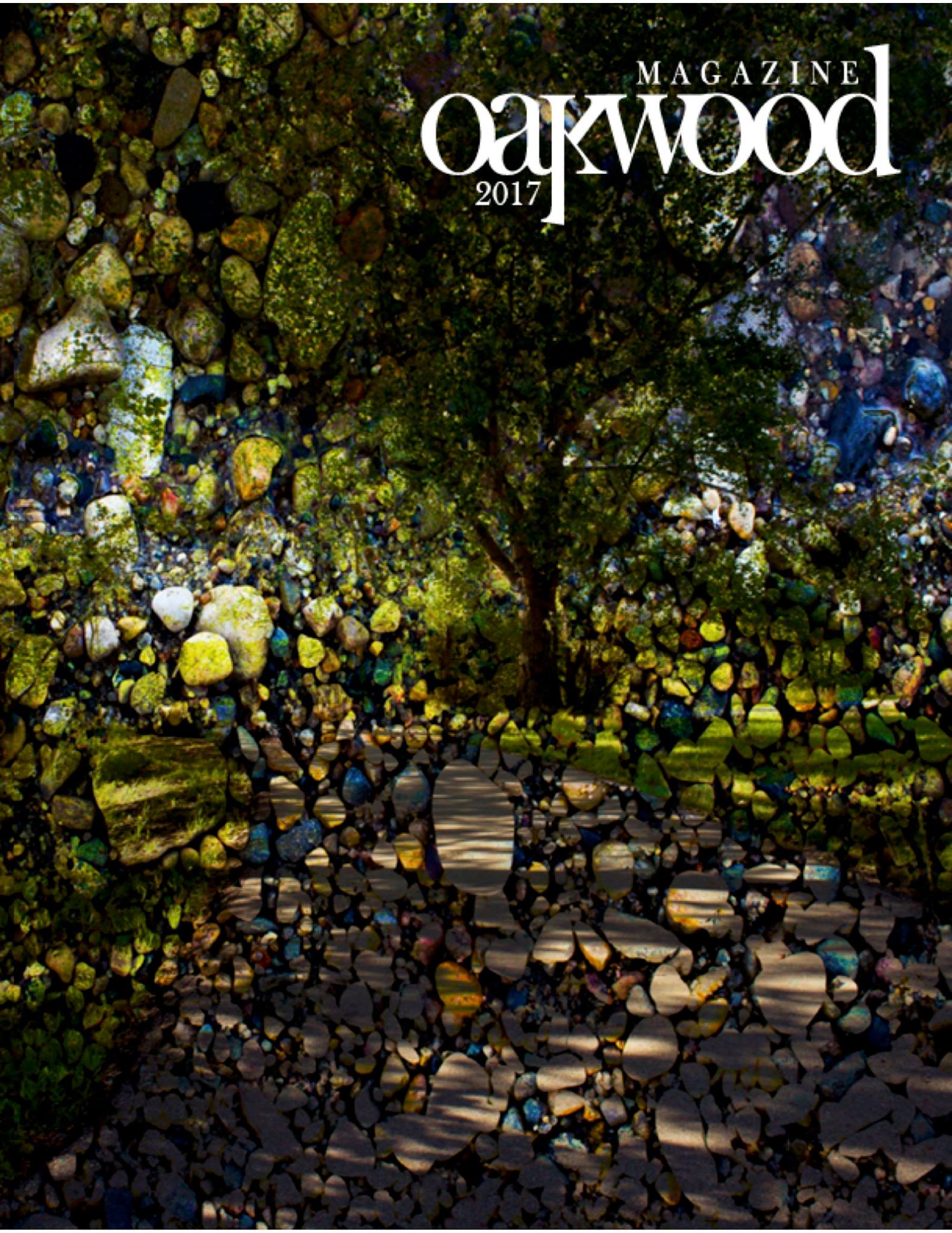
My poem first published in South Dakota State’s Oakwood literary magazine.
I feel humbled and honored to have my poem, inspired by memories of my hardworking farm wife mother, in the Lyon County Historical Society Museum’s newest semi-permanent exhibit, “Making Lyon County Home.” The exhibit opened in January. Its purpose, according to Executive Director Jennifer Andries, is “to share stories, artifacts, and photographs from Lyon County after World War II and to inspire residents and visitors to share their memories and experiences of growing up and living in Lyon County and the region.”
4-H and more are featured in this section of “Making Lyon County Home.” Photo courtesy of the Lyon County Historical Society Museum.
I grew up in this prime agricultural region, some 20 miles to the west on a dairy and crop farm near Vesta in Redwood County. I knew Marshall well back then as a shopping destination. A place to buy clothes, shoes and other essentials. But even more, I understood rural life decades ago because I lived it. I witnessed, too, how my mom worked hard to raise six children on our family farm. Before marriage, she attended Mankato Commercial College and then returned to her home area to work an office job in Marshall. Like most women of the 1950s, once she married, she stopped working off the farm.
These family photos complement my poem. Photo courtesy of the Lyon County Historical Society Museum.
My poem honors her in a poetic snapshot timeline of life beginning shortly before she married my farmer father. Saturday evening dances. Then rocking babies. Everyday life on the farm. Challenges. And finally, the final verse of Mom shoving her walker down the hallways of Parkview.
Whenever I write poetry, especially about life in rural Minnesota, I find myself deep within memory. Visualizing, tasting, smelling, hearing, even feeling. Although I took some creative license in penning “Ode to My Farm Wife Mother” (I don’t know that Mom ever drank whiskey or danced at the Blue Moon Ballroom in Marshall), it is primarily true. She met my dad at a dance in southwestern Minnesota. She washed laundry in a Maytag, baked bread every week, made the best peanut butter oatmeal bars…
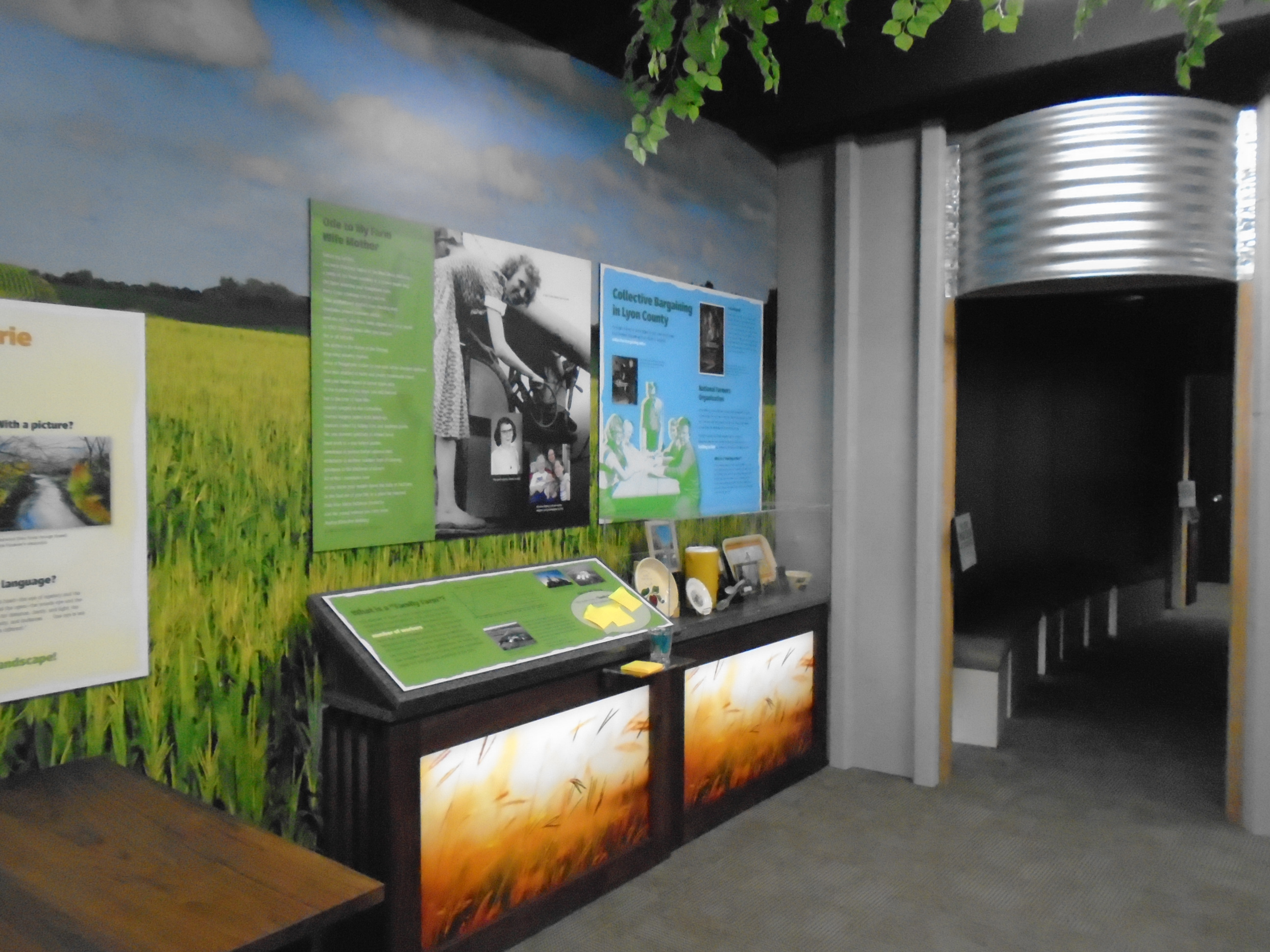
An overview of the exhibit space featuring my poem and family photos. Photo courtesy of Lyon County Historical Society Museum.
I expect many who lived in this rural region in the 1950s-1970s can relate. Says LCHS Director Andries of my poem: “It is a good fit for the exhibit and fits with the agriculture section and the role of farm wives and mothers. The poem itself goes beyond just the agriculture area. I feel many people can resonate with the poem with the sense of being carefree while we are young but at some point we all have responsibilities but that doesn’t mean we lose our carefree spirit.”
Exactly.
Those sentiments were echoed by Tom Church, former managing director of Minneapolis-based Museology Museum Services, lead contractor for the “Making Lyon County Home” exhibit. Church first contacted me more than a year ago about using my poem. He said then that the poem “offers a nice snapshot of the era and setting we’re trying to evoke in several places within the exhibit and will fit well with our story.”
A 1950s era kitchen, left, is part of the “Making Lyon County Home” exhibit. Photo courtesy of the Lyon County Historical Society Museum.
I appreciate stories rooted in a strong sense of place. The new exhibit features themes of natural landscape, agriculture, education, industry and community. For example, the devastating and deadly June 13, 1968, F5 tornado in Tracy centers a display with information and oral histories. How well I remember that disaster. The 1980s farm crisis focuses another section. A late 1950s era kitchen fits the beginning time period of my poem.
Although I have yet to view the exhibit, I hope to do so this summer. And even more, I want my mom to know how she, and other farm women of the era, are honored via my poem. I want them to see themselves in my words, to understand the depth to which I value them. My mom, through her selflessness, her hard work, her kindness, her love, her faith, helped shape me. Today, as Mom lives out her final days in hospice, her memory and cognition diminished, I feel a deep sense of loss, of grief. But I hold onto the memories of a mother who read nursery rhymes, gardened, and, before I was born, enjoyed carefree Saturday evenings out with friends. Dancing. Laughing, Delighting in life.
FYI: The Lyon County Historical Society Museum, 301 West Lyon Street, Marshall, is open from 11 am – 4 pm Monday – Friday and from noon – 4 pm Saturdays. The “Making Lyon County Home” exhibit was partially funded by a Minnesota Historical and Cultural Heritage grant. The exhibit is semi-permanent, meaning artifacts and stories can be rotated to fit within the themes.
Ode to My Farm Wife Mother
Before my brother,
you were Saturday nights at the Blue Moon Ballroom—
a bottle of Jim Beam whiskey in a brown paper bag,
Old Spice scenting your dampened curls,
Perry Como crooning love in your ear.
Then motherhood quelled your dancing duet.
Interludes passed between births
until the sixth, and final, baby slipped into your world
in 1967. Thirteen years after you married.
Not at all unlucky.
Life shifted to the thrum of the Maytag,
sing-song nursery rhymes,
sway of Naugahyde rocker on red-and-white checked linoleum.
Your skin smelled of baby and yeasty homemade bread
and your kisses tasted of sweet apple jelly.
In the rhythm of your days, you still danced,
but to the beat of farm life—
laundry tangled on the clothesline,
charred burgers jazzed with ketch-up,
finances rocked by falling corn and soybean prices.
Yet, you showed gratitude in bowed head,
hard work in a sun-baked garden,
sweetness in peanut butter oatmeal bars,
endurance in endless summer days of canning,
goodness in the kindness of silence.
All of this I remember now
as you shove your walker down the halls of Parkview.
in the final set of your life, in a place far removed
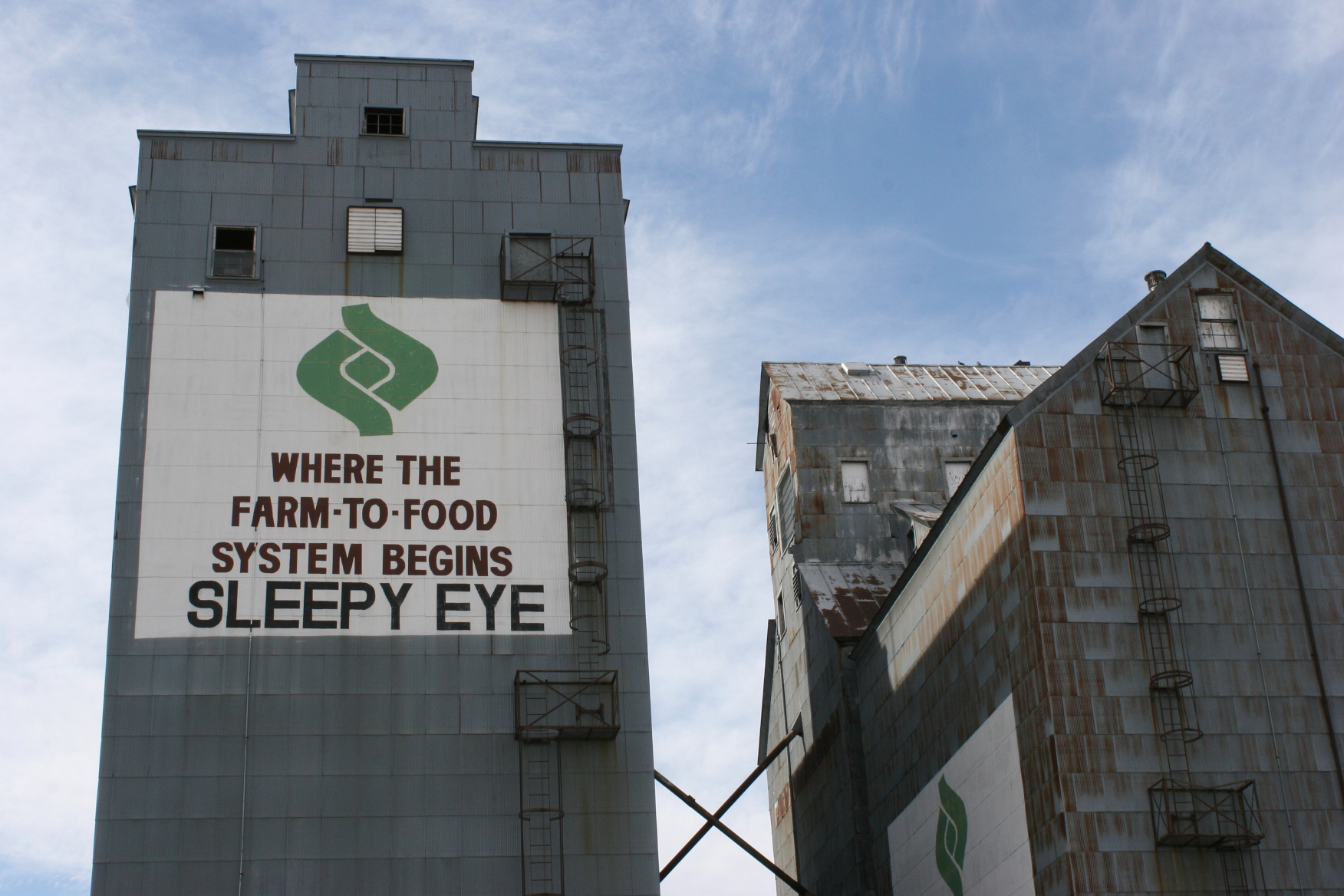
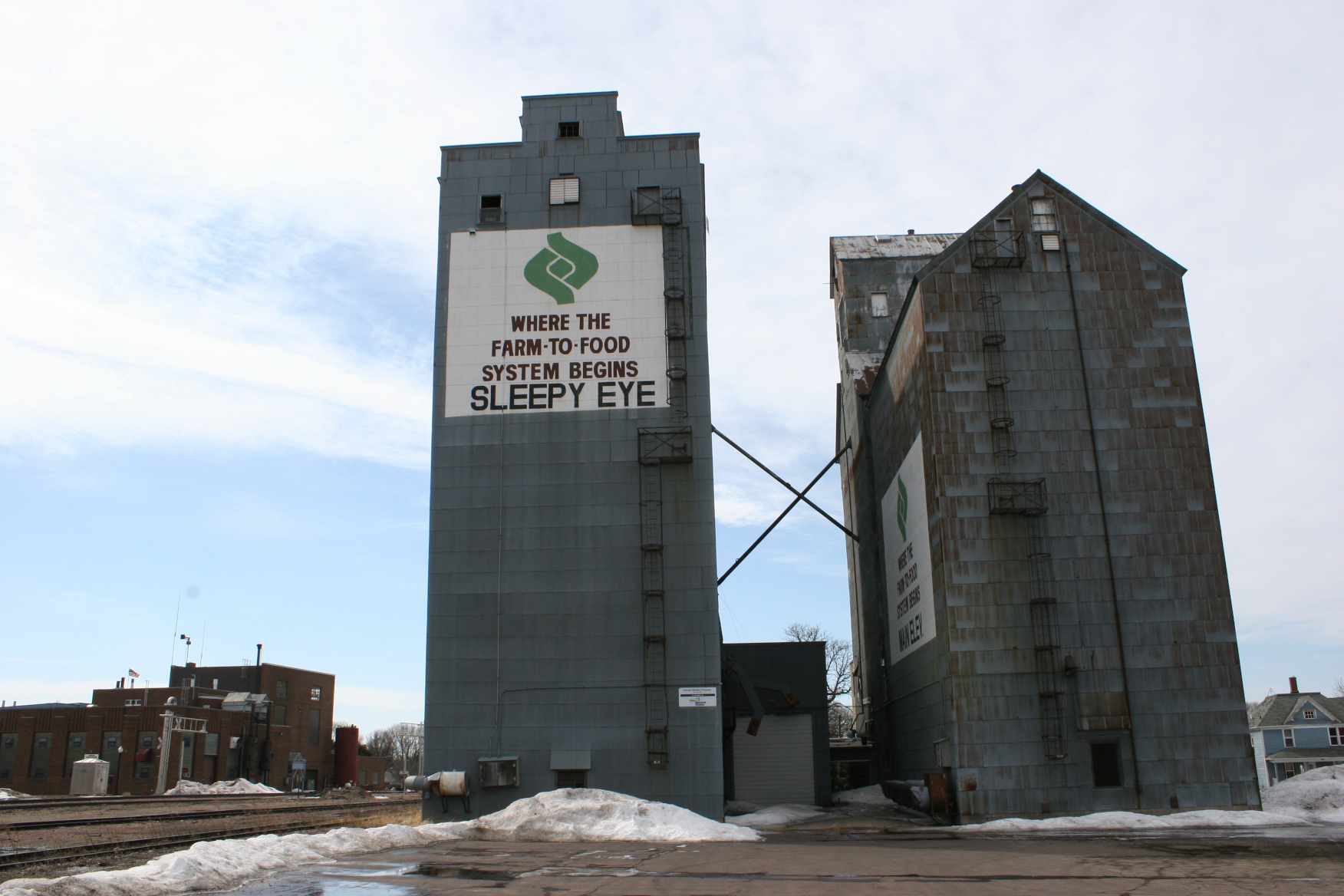
Twin grain elevators mark the skyline of Sleepy Eye. Minnesota Prairie Roots file photo March 2020.
EXACTLY ONE YEAR AGO, Randy and I rolled into Sleepy Eye, a small ag-based community along U.S. Highway 14 in Brown County in southwestern Minnesota. I lived and worked there briefly as a newspaper reporter decades ago. So I’m familiar with the town, although much has changed. In recent years, we’ve stopped at Sleepy Eye Stained Glass for stained glass. Randy occasionally creates and repairs stained glass art.
But on this stop, we’d just come from neighboring Redwood County, where we saw my mom in the nursing home. We didn’t know it then, but this would be our last in-person visit before COVID-19 closed care center doors to visitors and changed everything.
By the time we reached Sleepy Eye well past the noon hour, I was hungry. It’s a running joke in our family that I need to eat on time or I get crabby. It’s the truth, not a joke.
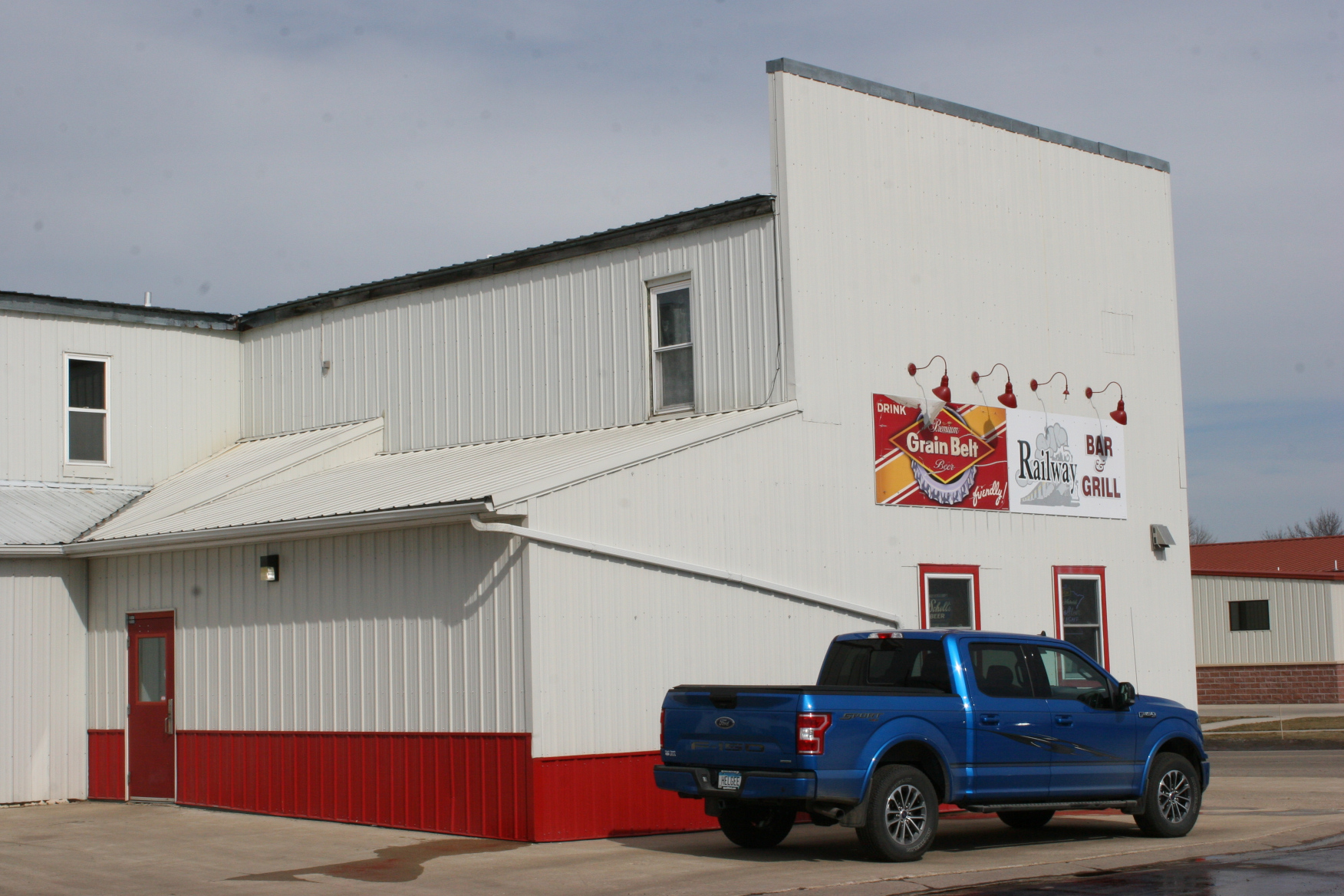
A side view of the Railway Bar & Grill. Minnesota Prairie Roots file photo March 2020.
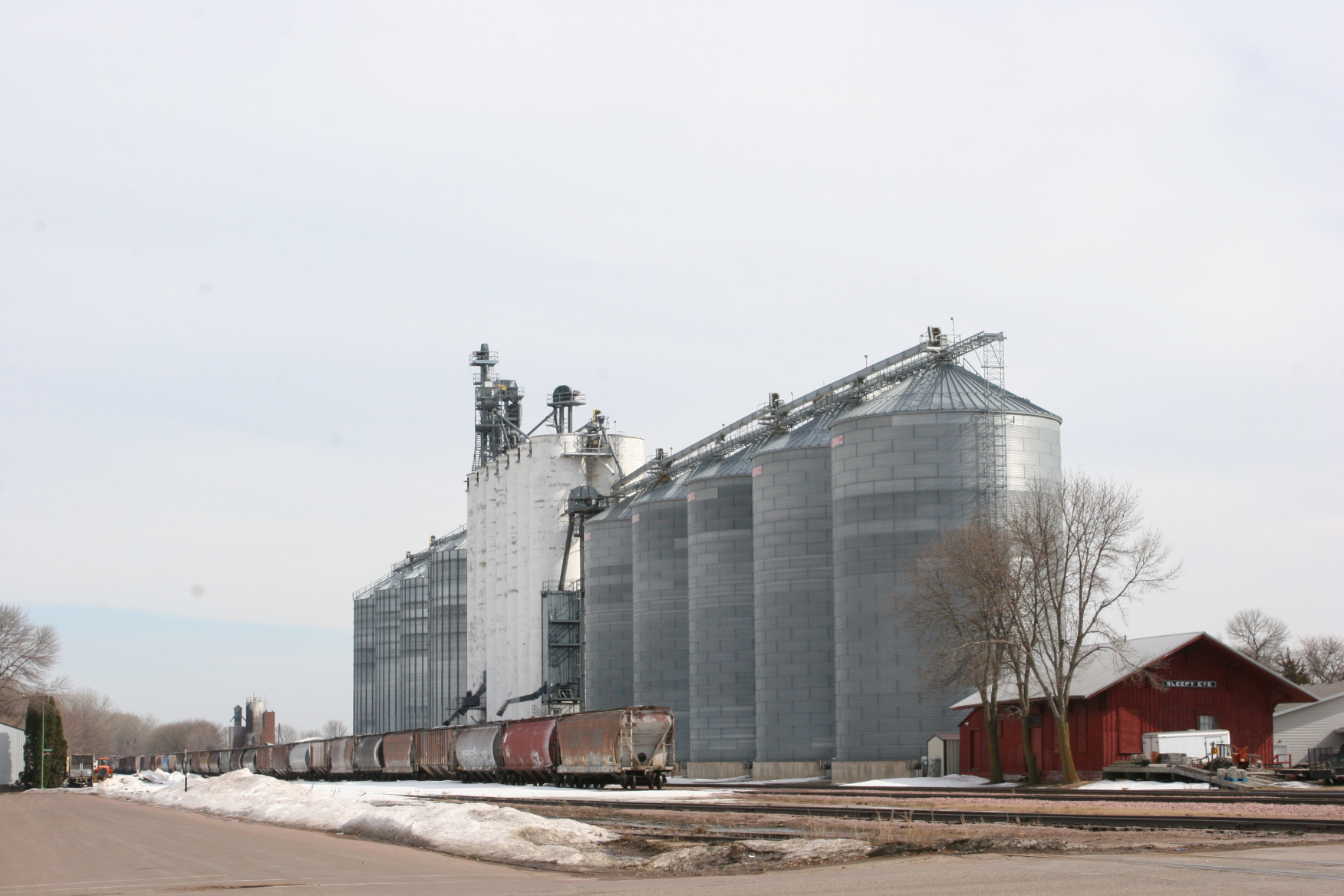
Across the street from the bar and grill, train tracks and grain bins. Minnesota Prairie Roots file photo March 2020.
Those beautiful vintage grain elevators… Minnesota Prairie Roots file photo March 2020.
We ended up at The Railway Bar & Grill, appropriately named given its location near the train tracks. Next to the grain elevator. I don’t recall what I ordered other than a sandwich. Nothing memorable, but sustenance.
The condiment holder on our table. These always reveal insights into local tastes. Minnesota Prairie Roots file photo March 2020.
In a pandemic year that’s been especially difficult for bars and restaurants, The Railway apparently struggled. The business—complete with bar, two dining areas, private conference room, an outdoor patio, 12 tappers and more—is now for sale. For $165,000.
A sign posted inside The Railway Bar & Grill shows community involvement. Minnesota Prairie Roots file photo March 2020.
I’m not familiar with dining options in Sleepy Eye. But I know one thing about small towns—cafes and bars and grills are community gathering places. Spots to meet with family and friends. After a ball game. On a Saturday night. To shoot the breeze. To celebrate. To get out of the house on a cold winter evening. To BS over a beer or two. From all indications, The Railway filled that need in Sleepy Eye.
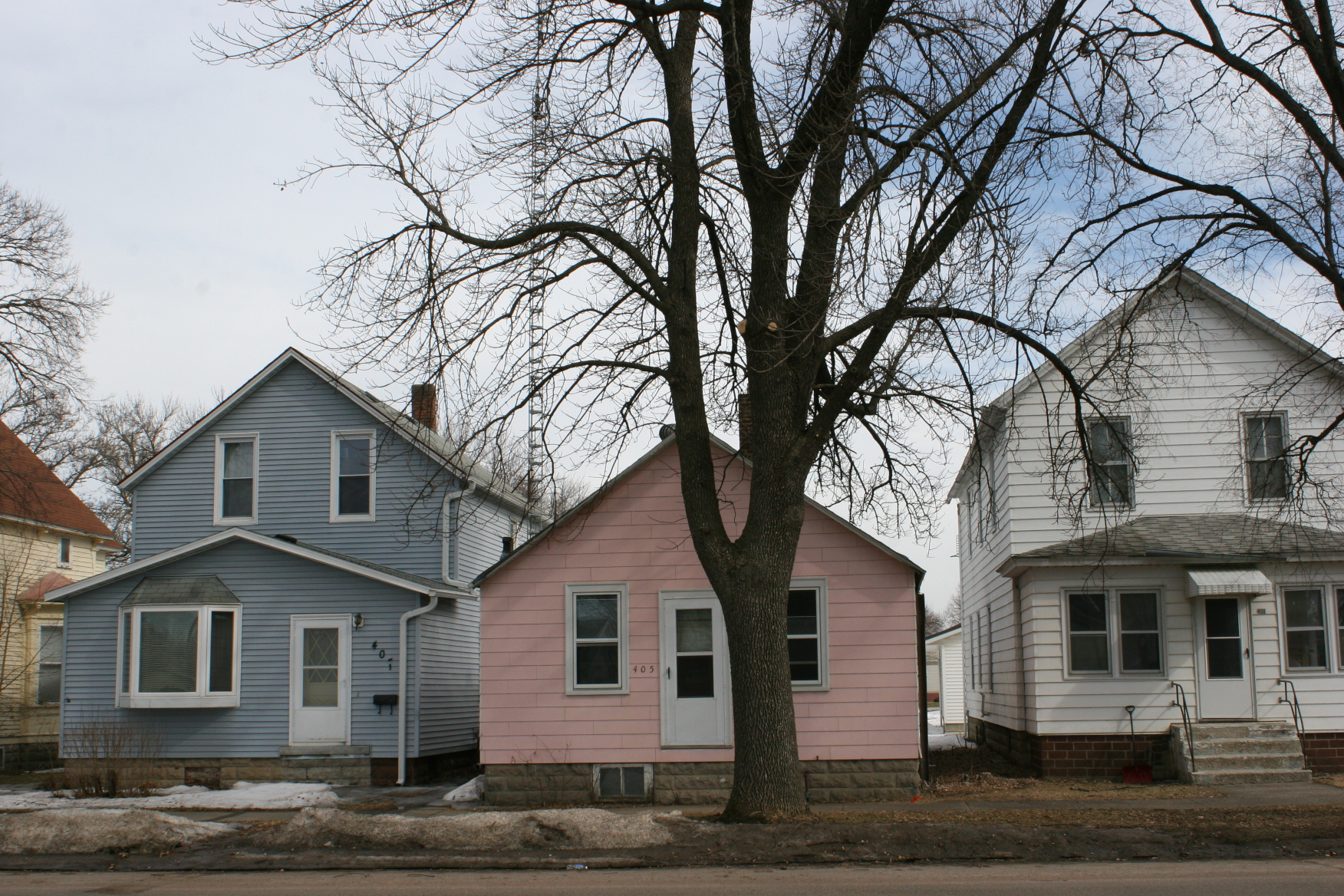
Small houses cram together in the neighborhood by the grain elevators and The Railway Bar & Grill. Minnesota Prairie Roots file photo March 2020.
When Randy and I finished our sandwiches on that early March Saturday afternoon in 2020, I stepped outside to photograph the neighborhood while he paid the bill. I focused my lens on three houses crammed together.
The grain elevators, next to the train tracks in Sleepy Eye, dwarf neighboring buildings. Minnesota Prairie Roots file photo March 2020.
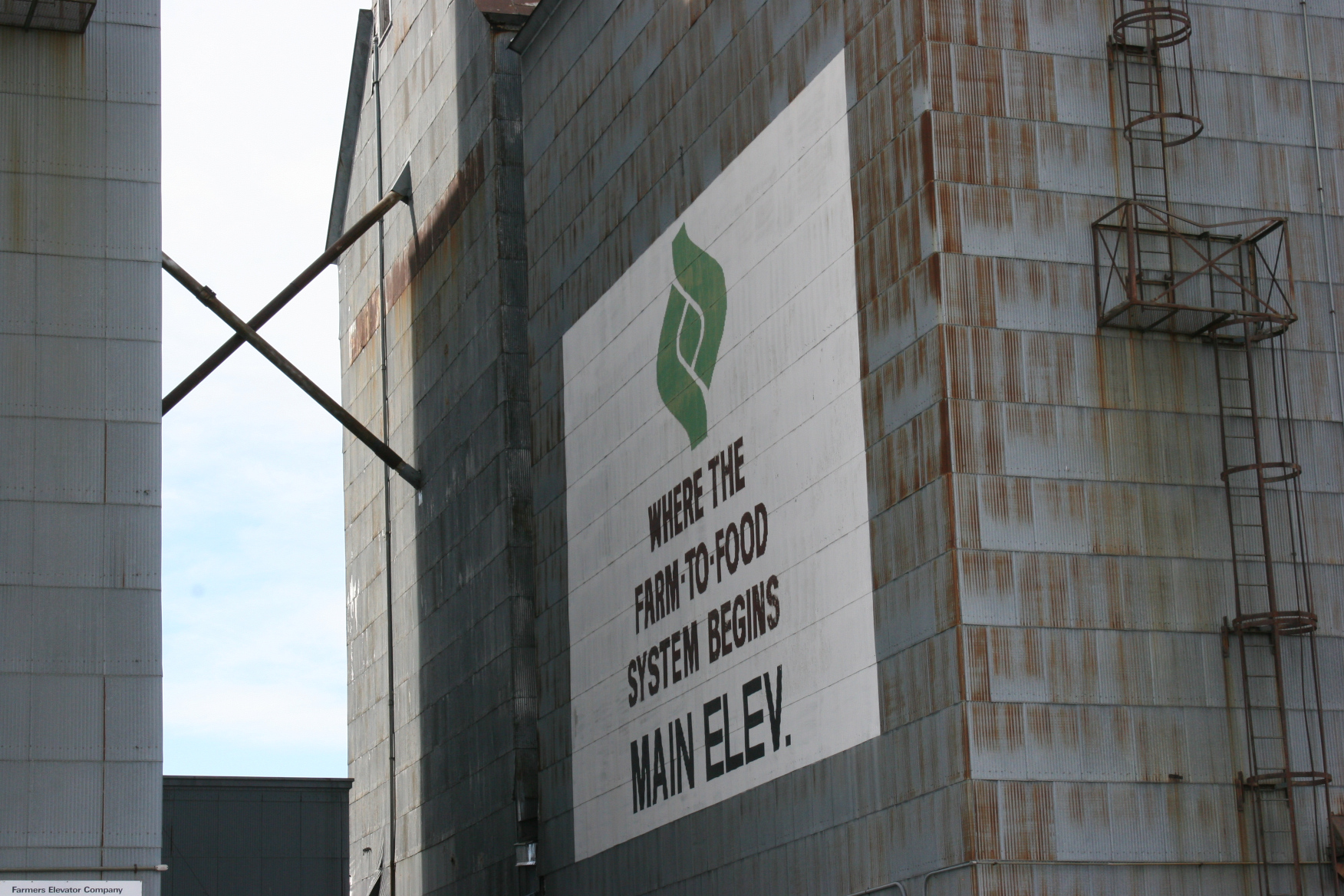
And then I aimed toward the towering grain elevators next to the bar & grill. Vintage elevators always draw my eye for their architectural interest (as cathedrals of the prairie), historical importance and connection to my farming past. Silo style grain storage units will never hold the same appeal as these rectangular grey elevators soaring high above small towns. Too many of these have vanished, including in my hometown of Vesta where a local farmer moved the elevators onto his farm.
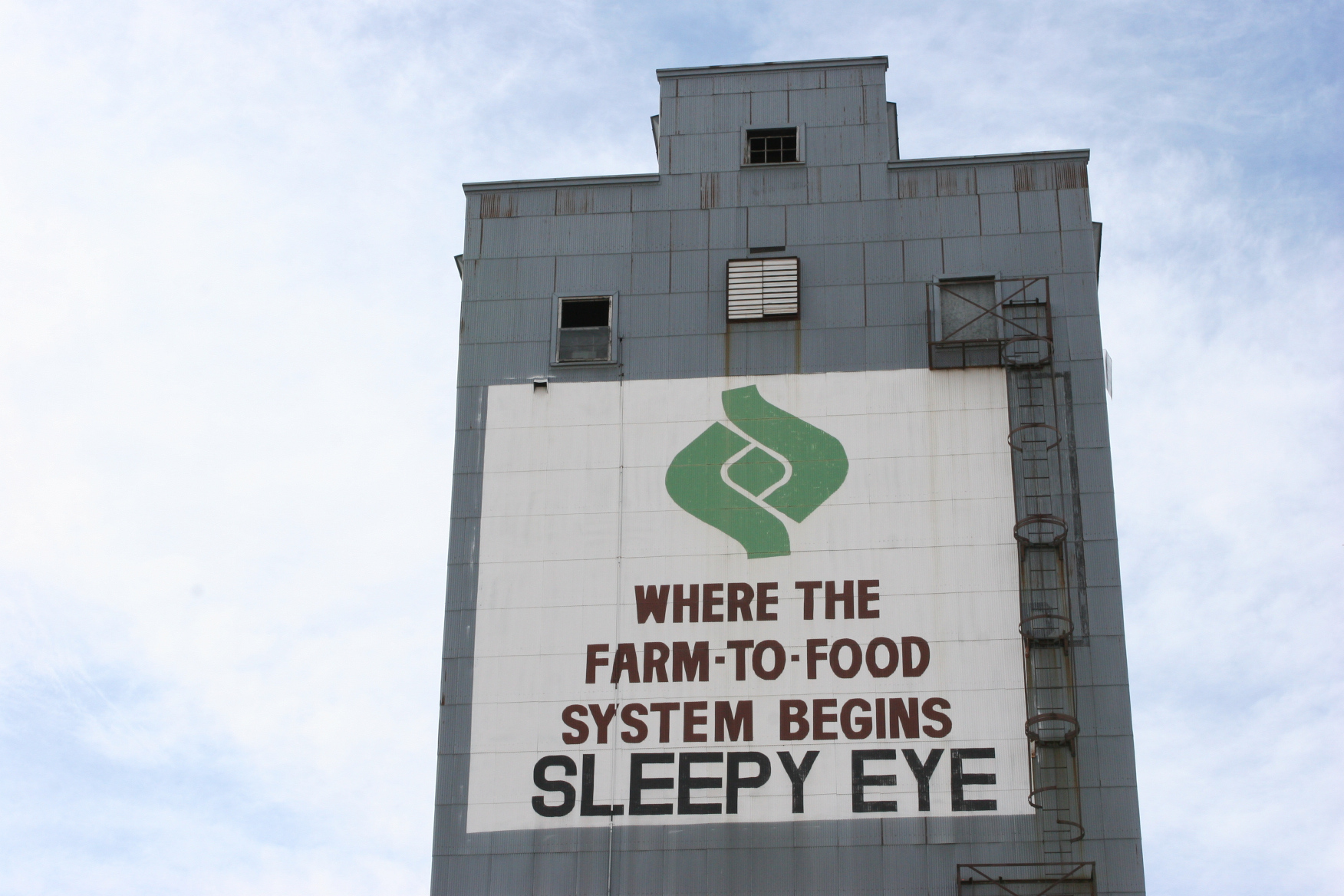
A strong message adds to the visual appeal of the Sleepy Eye grain elevators. Minnesota Prairie Roots file photo March 2020.
On this Saturday, I delighted in reconnecting with my rural roots outside The Railway. In my memory, I heard the rumble of a train, saw grain trucks lining up at the elevator, smelled the earthy scent of harvest…
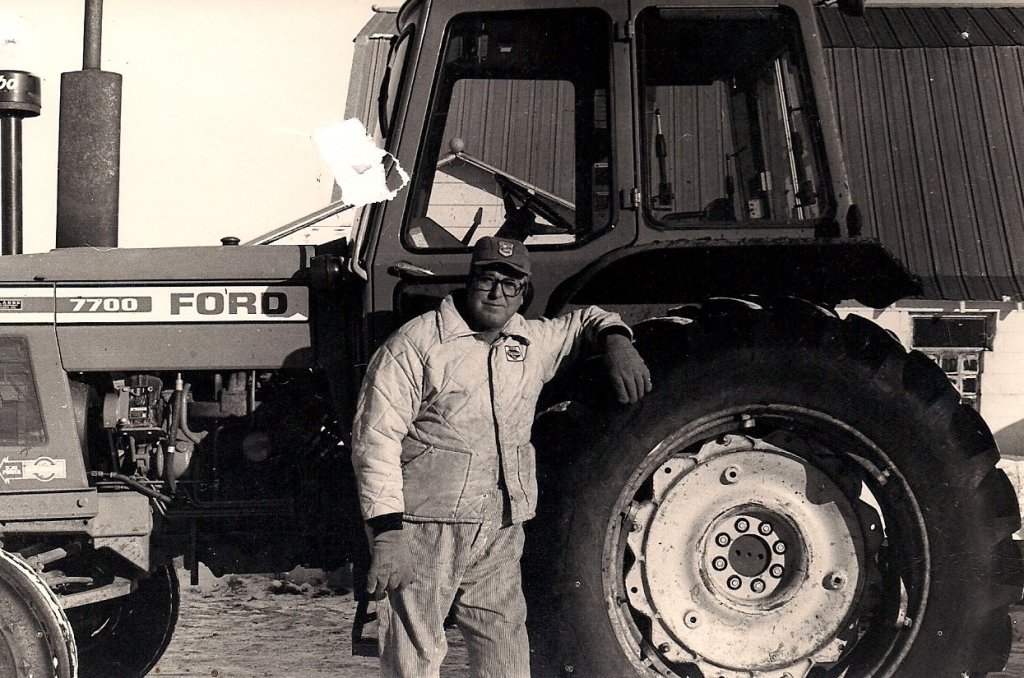
A photo of my dad, Elvern Kletscher, taken in 1980. He died in 2003.
MY DAD WORKED HARD. Really hard. He was a farmer, beginning back in the day when farming was incredibly labor intensive. Pitching manure. Throwing hay bales. Milking cows by hand. Cultivating corn. He worked from the rising of the sun to beyond sunset. Hours and hours in the barn. Long days in the field. Few, if any, days off.
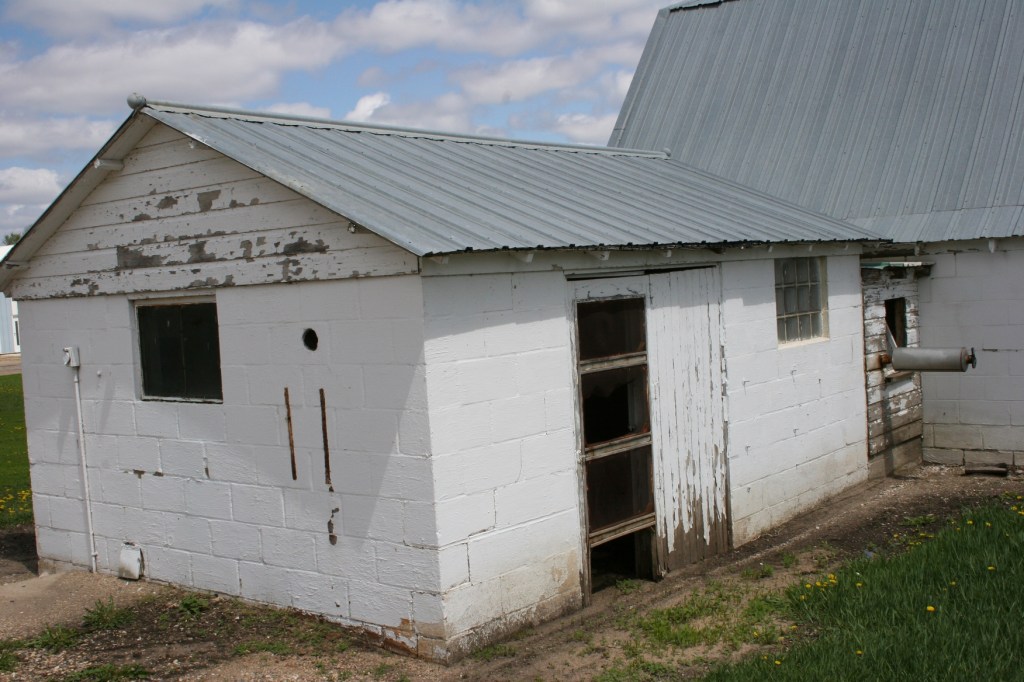
The milkhouse, attached to the barn on the farm where I grew up just outside of Vesta, MN. I spent a lot of time in these two buildings. Minnesota Prairie Roots file photo.
It was a life he knew from childhood, as the son of a southwestern Minnesota farmer. Dad quit school after eighth grade to work on his family’s farm in the 1940s. And when he grew into adulthood, he served on the frontlines during the Korean War, then returned to farm just down the road from the home place. There he worked his own land, milked cows and raised (along with my mom) his family of six children.
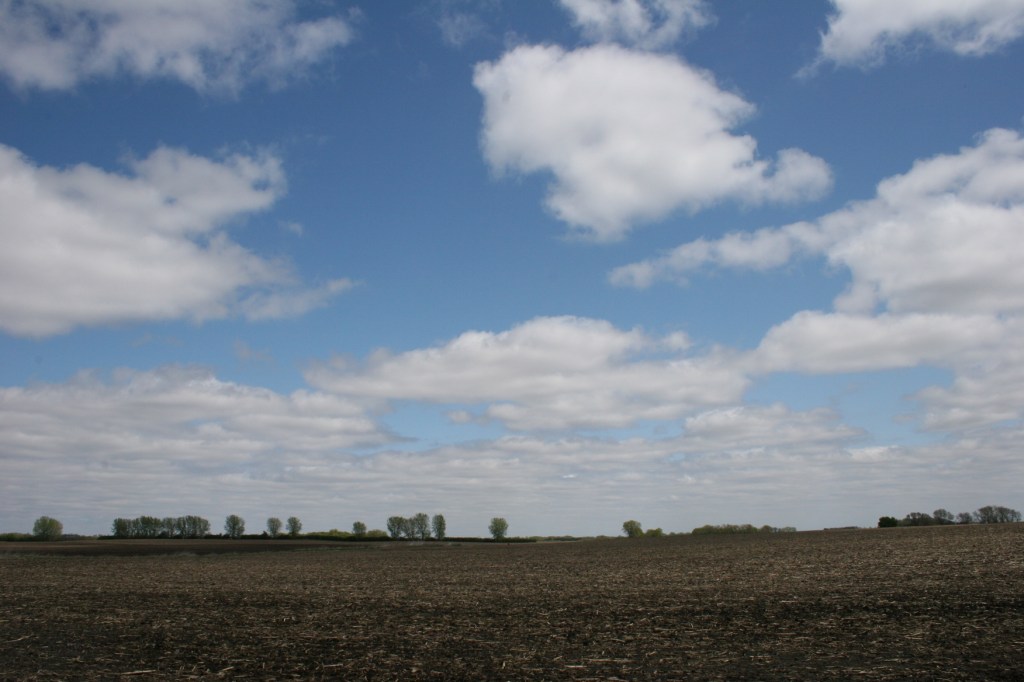
Some of the acreage my dad farmed in Redwood County, Minnesota. Minnesota Prairie Roots file photo.
Like my father, I grew up with a strong work ethic rooted in the land. Walking bean fields to pull unwanted weeds. Picking rock. Throwing hay bales into feed bunks for the Holsteins. Carrying buckets of milk replacer to thirsty calves. Climbing up the silo and forking smelly silage down the chute. The work never ended. And the next day we repeated the process.
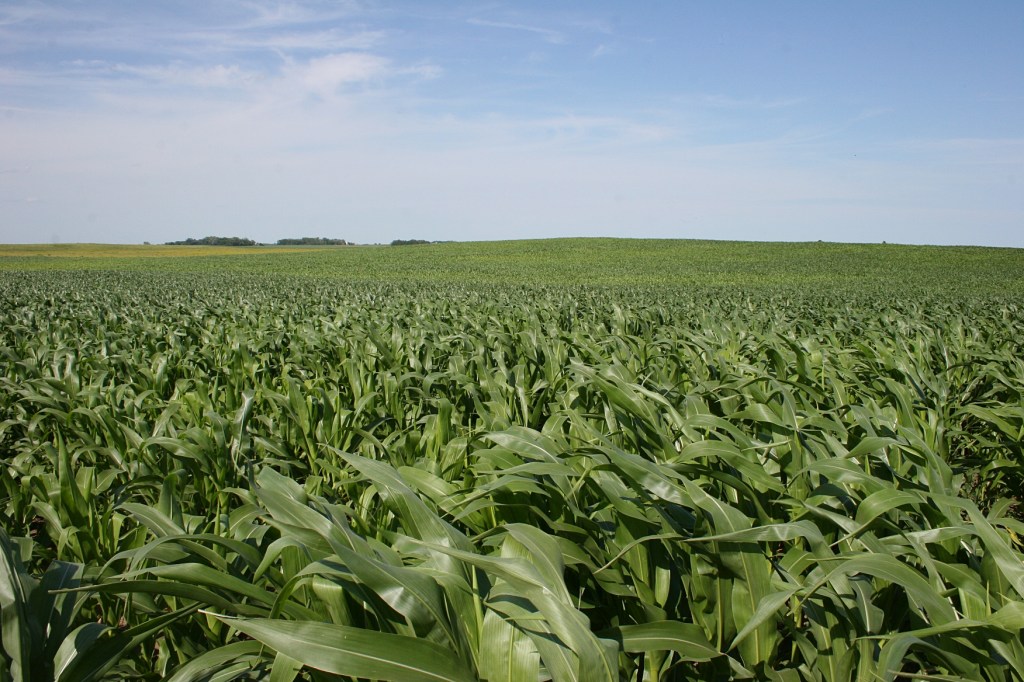
But it was, in many ways, a good life. Time together. Time outdoors. Time to reflect. Time to learn and grow and stretch, just like the corn stretching toward the sky.
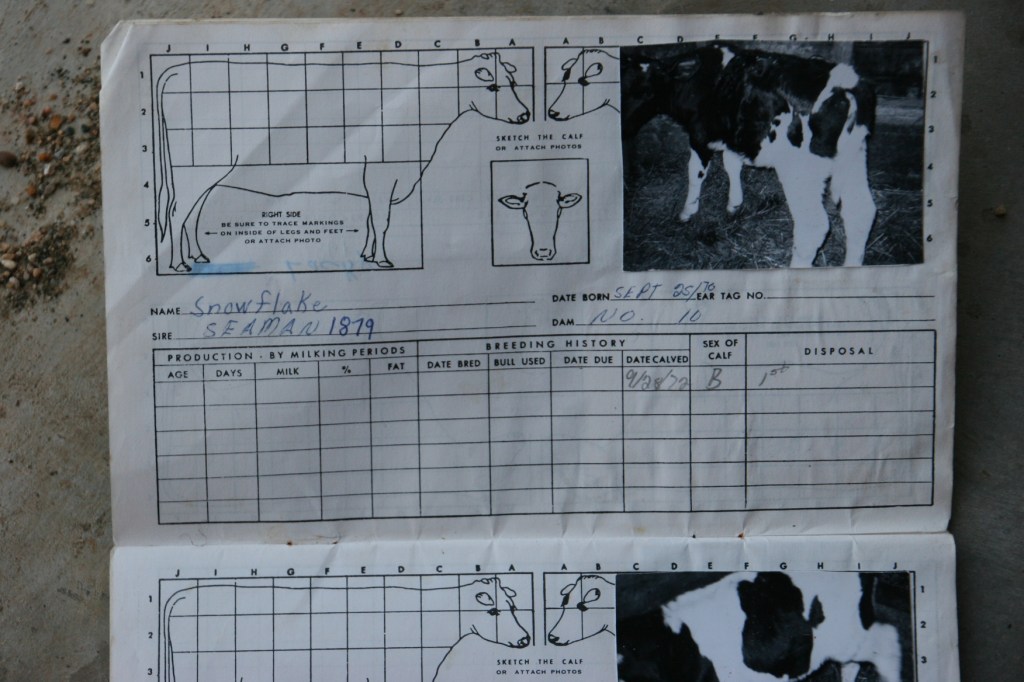
Growing up on our crop and dairy farm, my eldest brother, Doug, photographed the cows and recorded details about them. My middle brother treasures this compilation of information from our farm. And so do I. Memories… Minnesota Prairie Roots file photo.
Working on the farm made me strong and resilient and fostered a sense of independence. I have always been a self-starter, preferring to work on my own. I trace that to the spirit of independence I observed in my farmer dad, who stood up for what he believed. I remember him dumping milk down the drain as the National Farmers Organization aimed to get better prices. I possess a streak of that feistiness, especially when it comes to those who are bullied/oppressed/looked down upon. I do what I can, with the talents I have, to make a positive difference. To uplift and encourage. And to really listen rather than talk.
I always told my dad I wanted to be a farmer when I grew up. He didn’t encourage that thought. None of my five siblings farm, although two work in ag-related businesses. It’s a credit to my parents that each of us pursued diverse careers as a partsman (and part owner) at an implement dealership, as a writer and photographer, a florist, CEO of an ethanol plant, teacher and lawyer. That’s a wide range of occupations among siblings. Our parents did not tell us what to do, and for that I shall always be grateful.
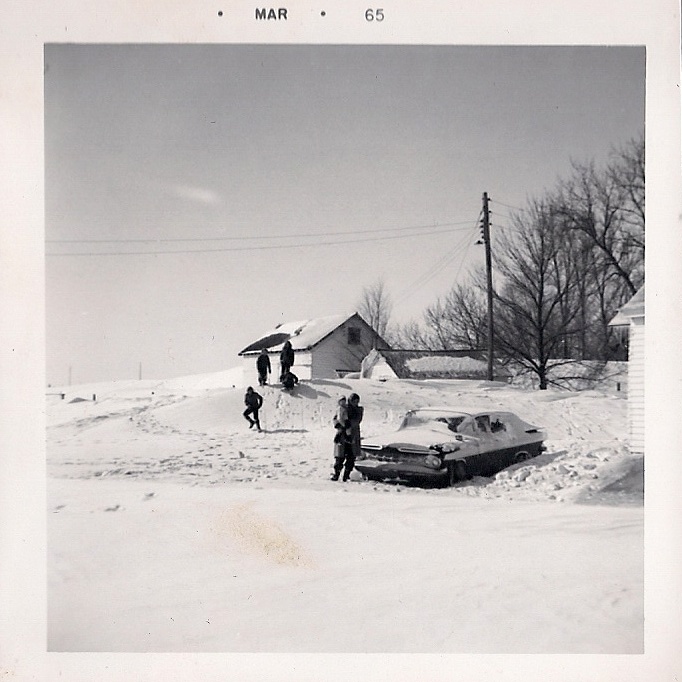
Our southwestern Minnesota farmyard is buried in snowdrifts in this March 1965 image. My mom is holding my youngest sister as she stands by the car parked next to the house. My other sister and two brothers and I race down the snowdrifts.
We were not a perfect family. Still aren’t. There were, and are, struggles. Financial and other. We were poor as in outhouse poor and no gifts for birthdays poor and wearing hand-me-downs poor and only rice for dinner poor. And only two vacations my entire childhood—one at age four to Duluth and one to the Black Hills at around age 12. Yet, I never felt like we were missing anything. We had enough. Food. Shelter. Clothes. And hardworking parents—for my mom worked equally as hard as my dad—who loved and provided for us.
My parents may not have hugged us or told us they loved us. But they showed their love by their care, their provision, their raising us in the faith. Their efforts, from parenting to farming, were a labor of love. And I shall always feel gratitude for that.
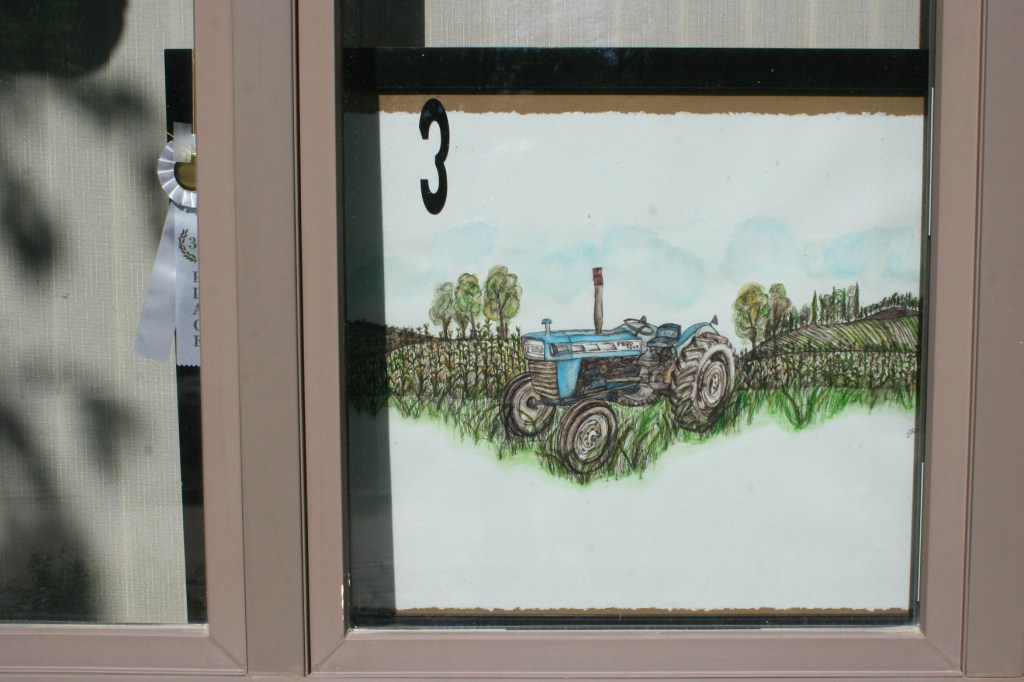
“Stop to Remember,” a pen and watercolor by Cami Vargo, was awarded third place in the show by judges Dale and Gale Looft. The art depicts her Great Grandpa Orville Richter’s 1965 Ford tractor.
THEIR ARTIST STATEMENTS are as compelling as their art.
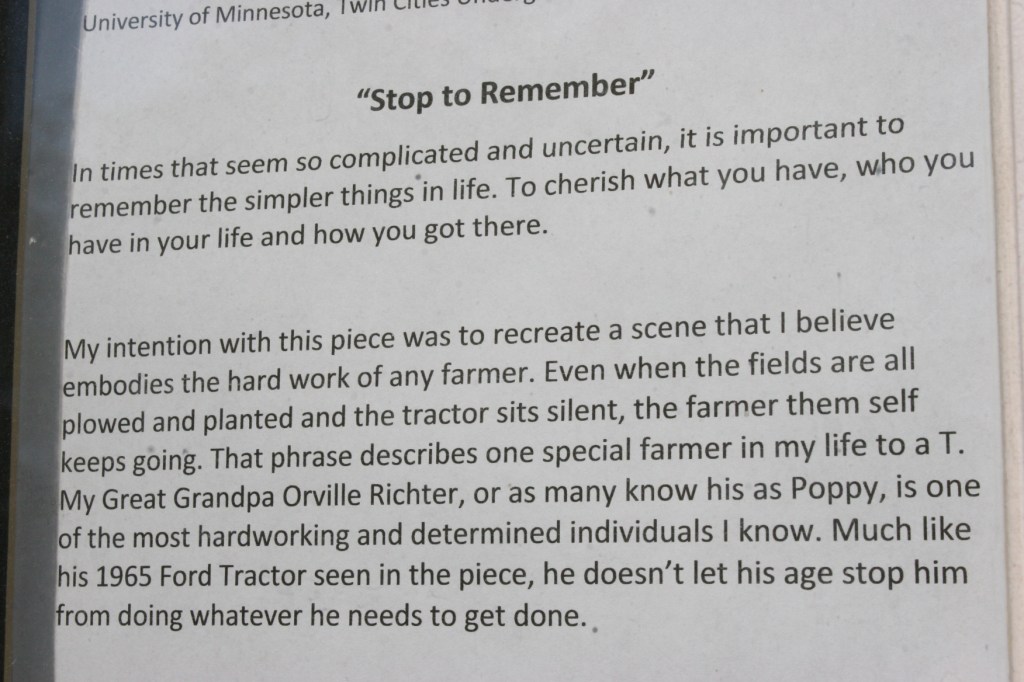
Cami Vargo’s artist statement about her tractor art.
In a new exhibit, “Celebrating Farmers and Agriculture,” coordinated by the Montgomery Arts & Heritage Center, 15 artists share their deep love and appreciation for all things rural. Recently I viewed the 22 pieces of art displayed in the front windows of the arts center and businesses in the heart of this small Minnesota town.
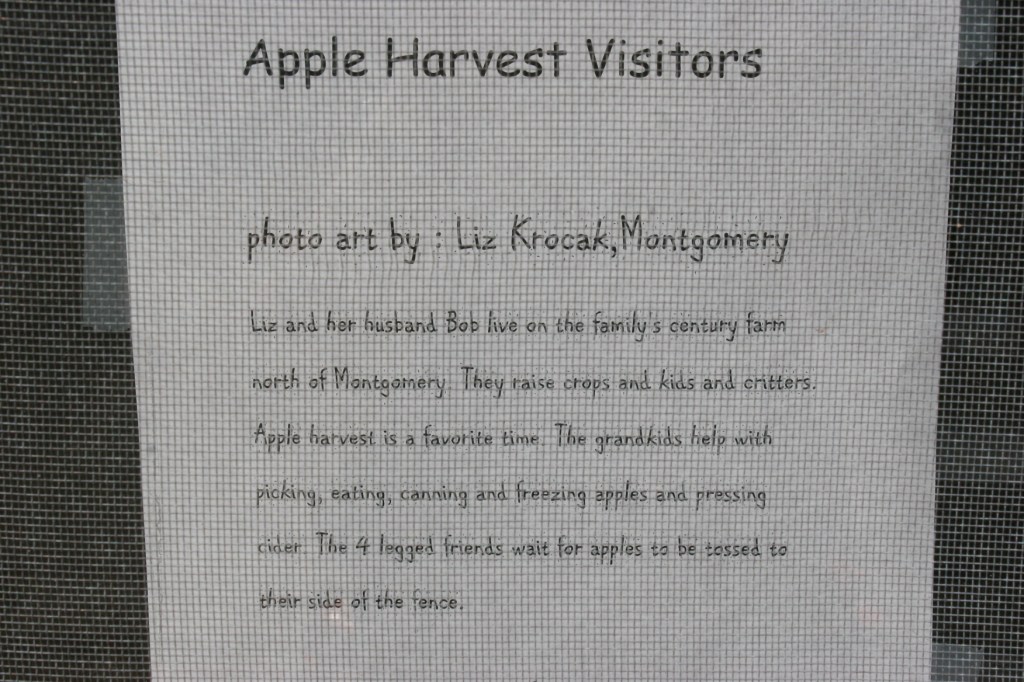
One of two photos by Liz Krocak, this one titled “Apple Harvest Visitors.”
Through the screen window, you can read this artist statement by Liz Krocak.
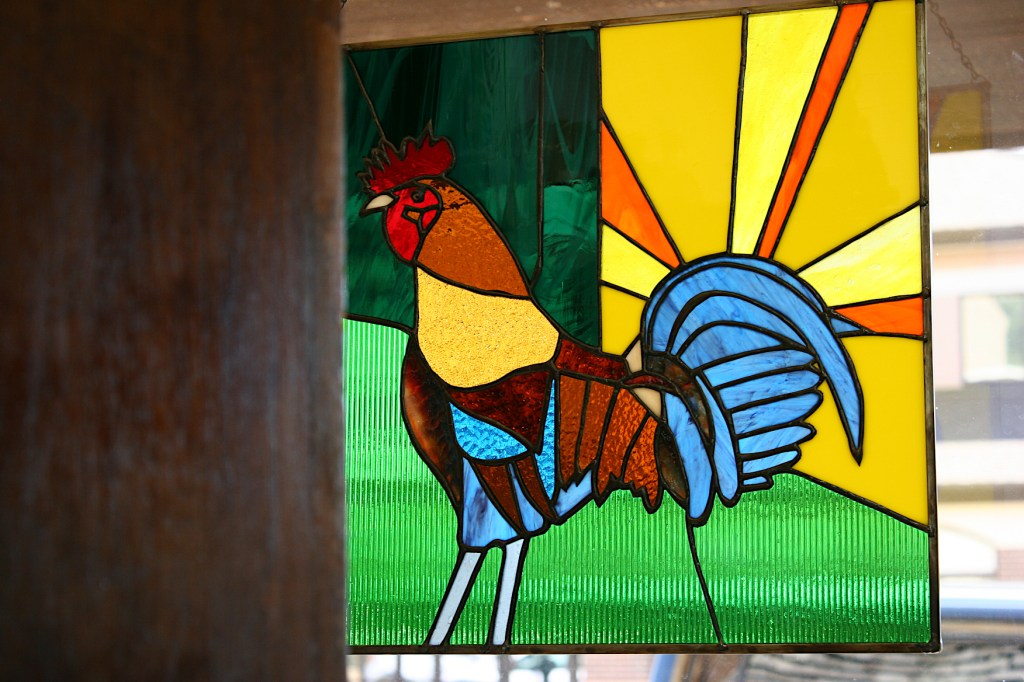
Bold and beautiful stained glass art by Annette Stavos hangs in a window of Hermann Thrifty White Pharmacy. If the drugstore is open, go inside and view the art to see the sun shining through it. Another stained glass creation by Mona Grimm hangs in a window of Montgomery Chiropractic and was awarded second place in the show.
From cows to a rooster to a farm dog, from tractors to windmills, from barns to country scenes, the art showcases important aspects of rural life.
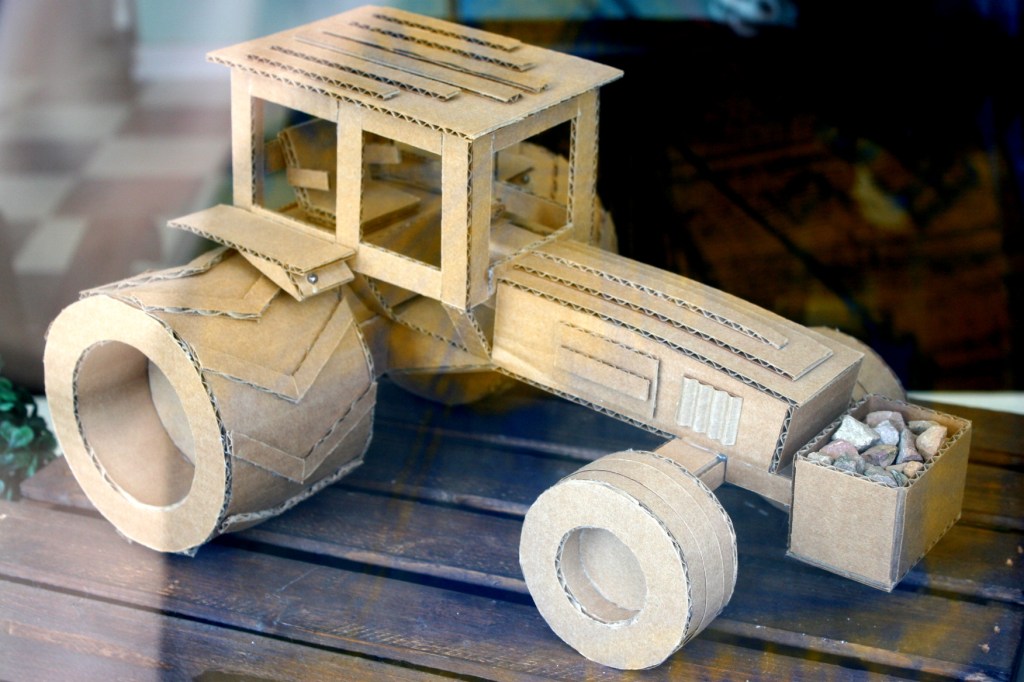
Constructed from cardboard by Brian Prchal, this is a replica of a modified 4020 John Deere.
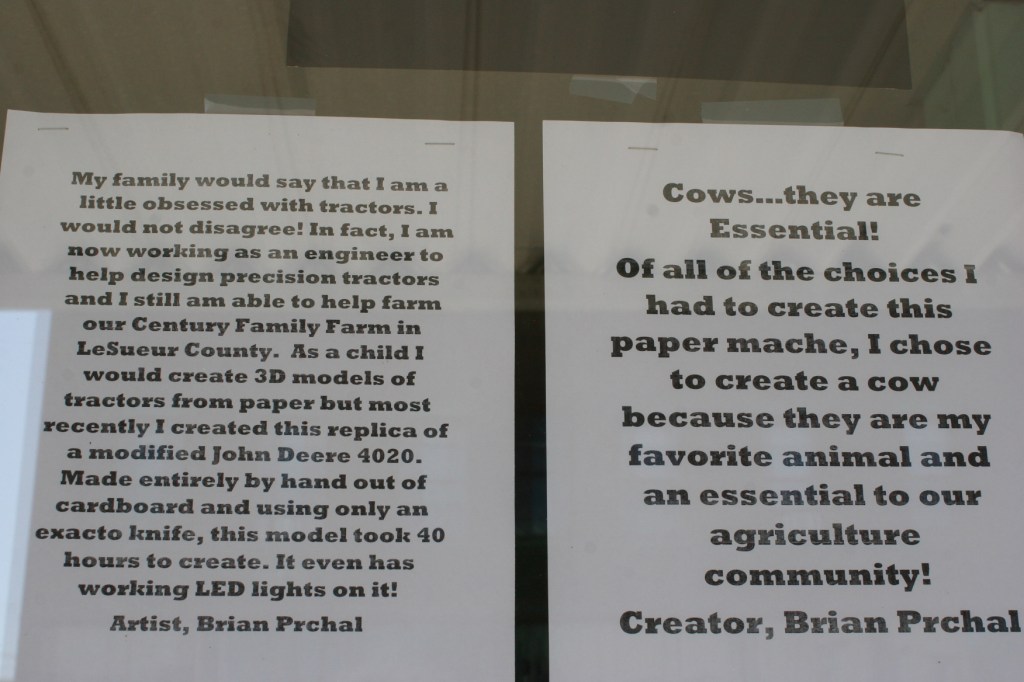
Brian Prchal shares the stories behind his two art pieces.
And the stories that accompany that art are often deeply personal. Rooted in the land.
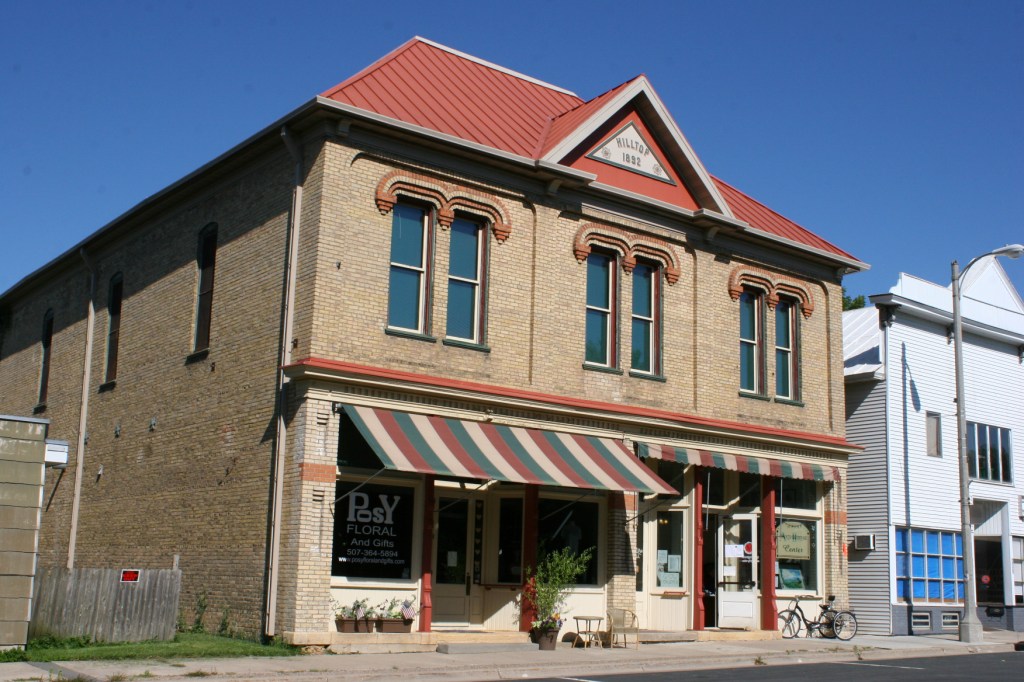
The Montgomery Arts & Heritage Center (right side of building), 206 First Street North on the north end of downtown.
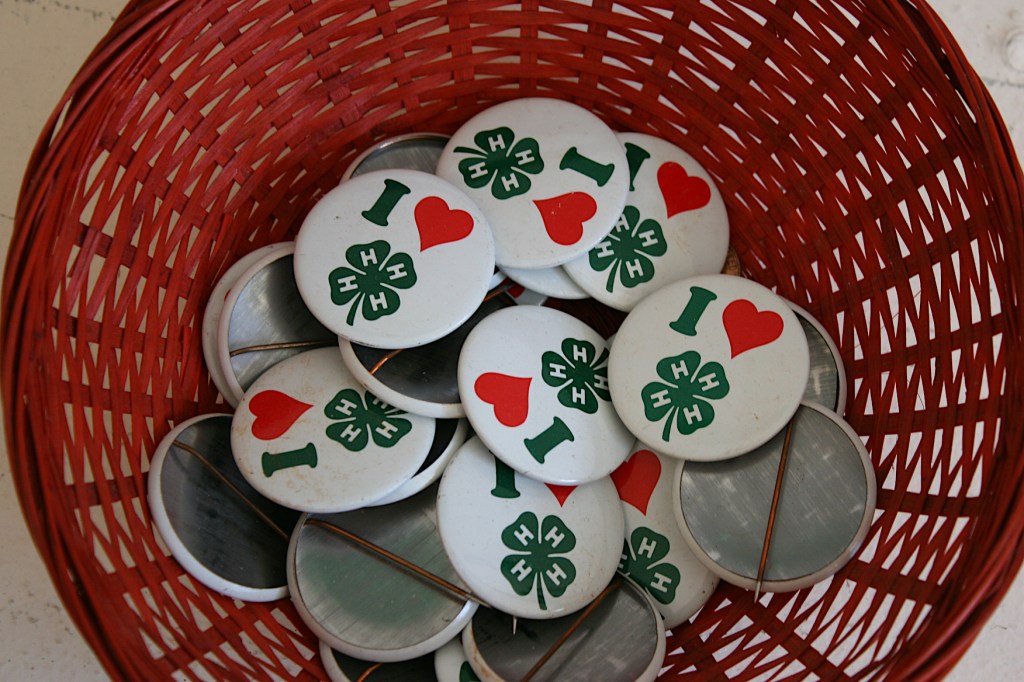
In the ag display, 4-H buttons.
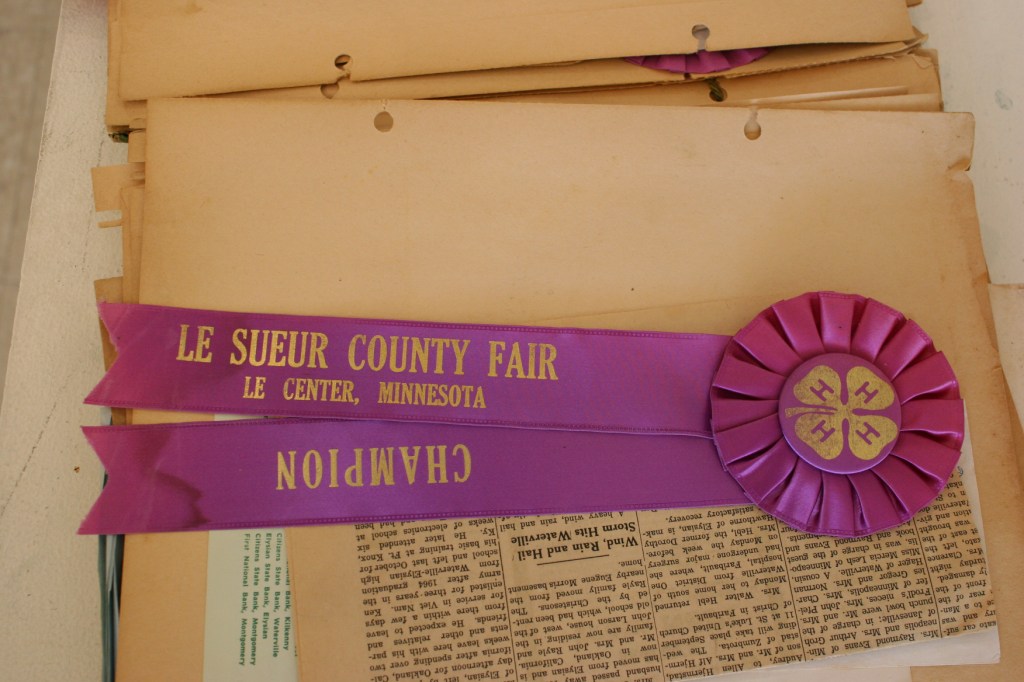
County fairs are an important part of rural life.
Before beginning my tour, I stopped first at the arts and heritage center to pick up a map and to view an exhibit of local ag-related memorabilia showing the importance of agriculture in this community.
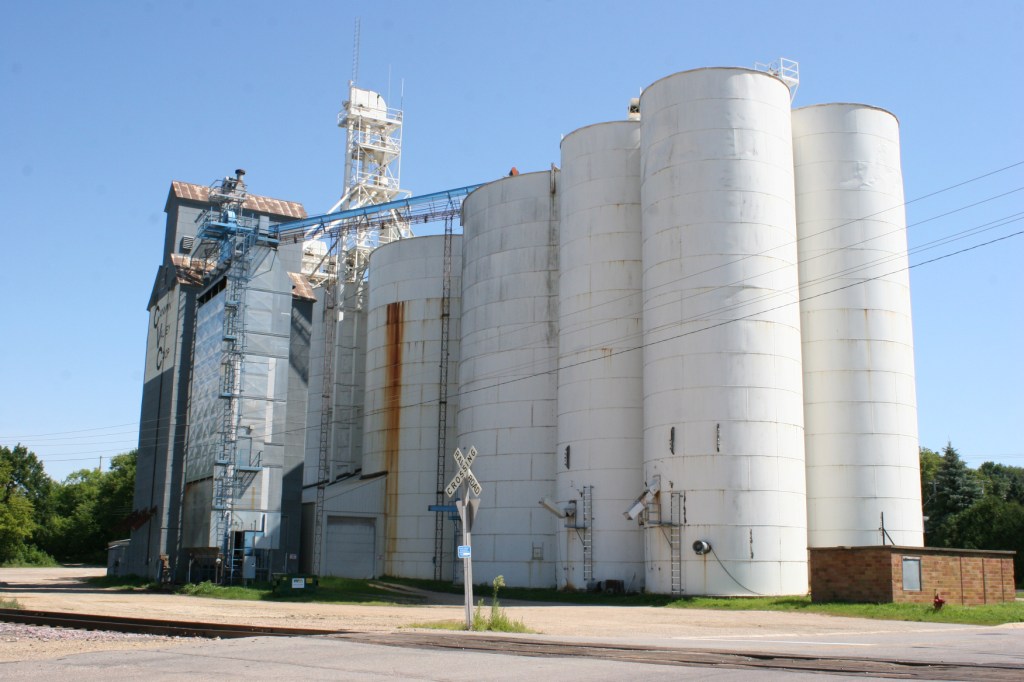
The grain elevator complex in Montgomery.
Just down the hill from the arts center, grain elevators loom, a strong visual of ag’s local economic value. On the opposite end of town, the canning company processes sweetcorn. And on every border of town, homes or businesses adjoin farm fields.
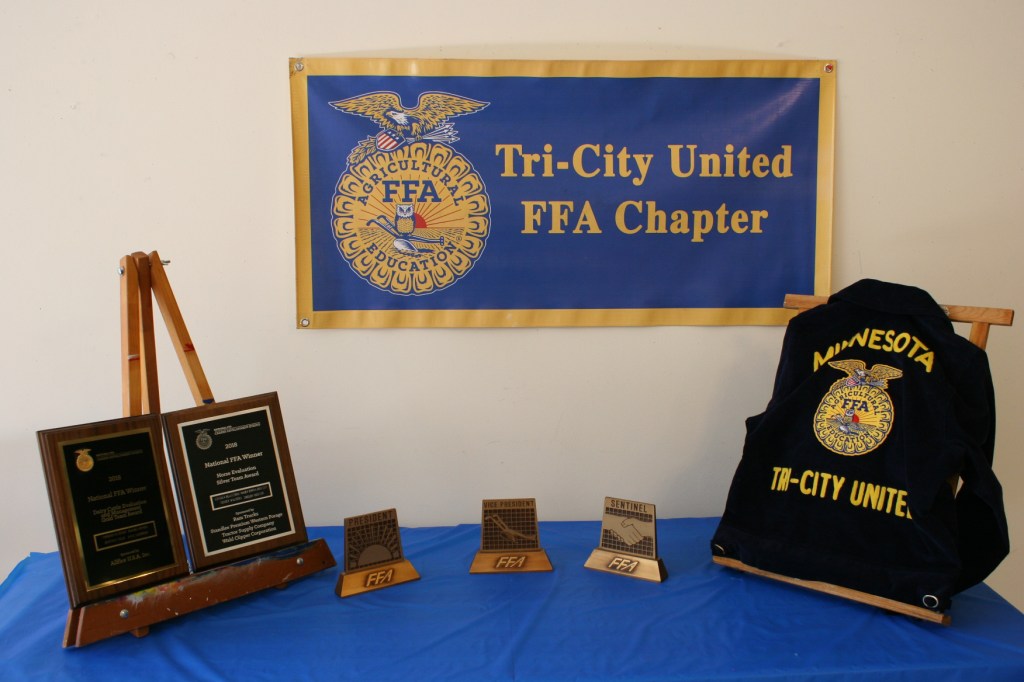
Future Farmers of America, based at the local high school.
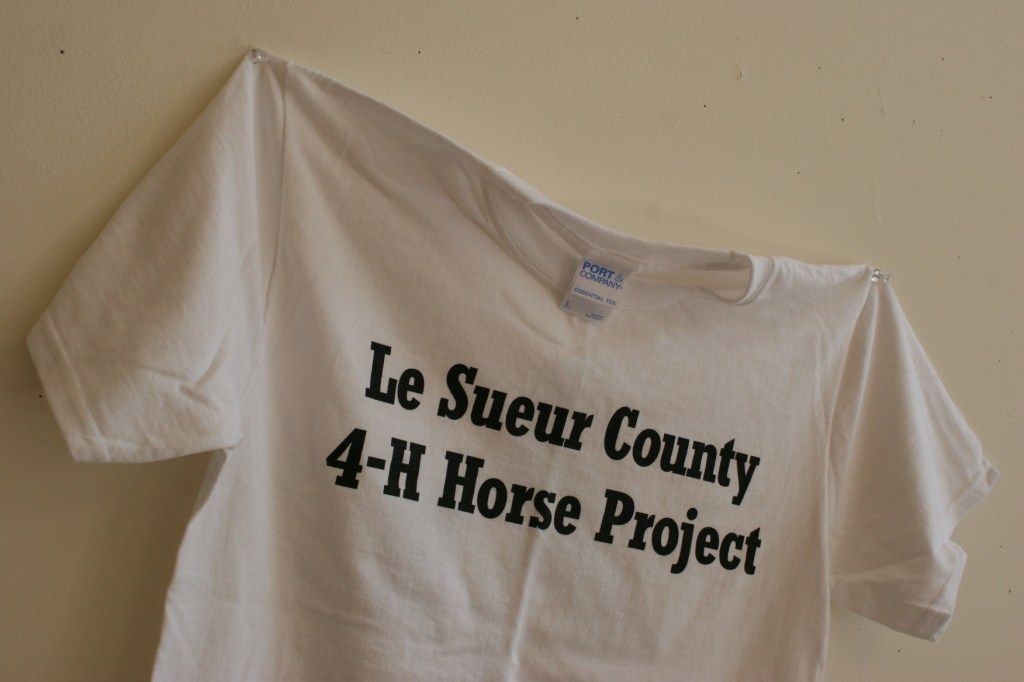
Recognizing 4-H in Le Sueur County.
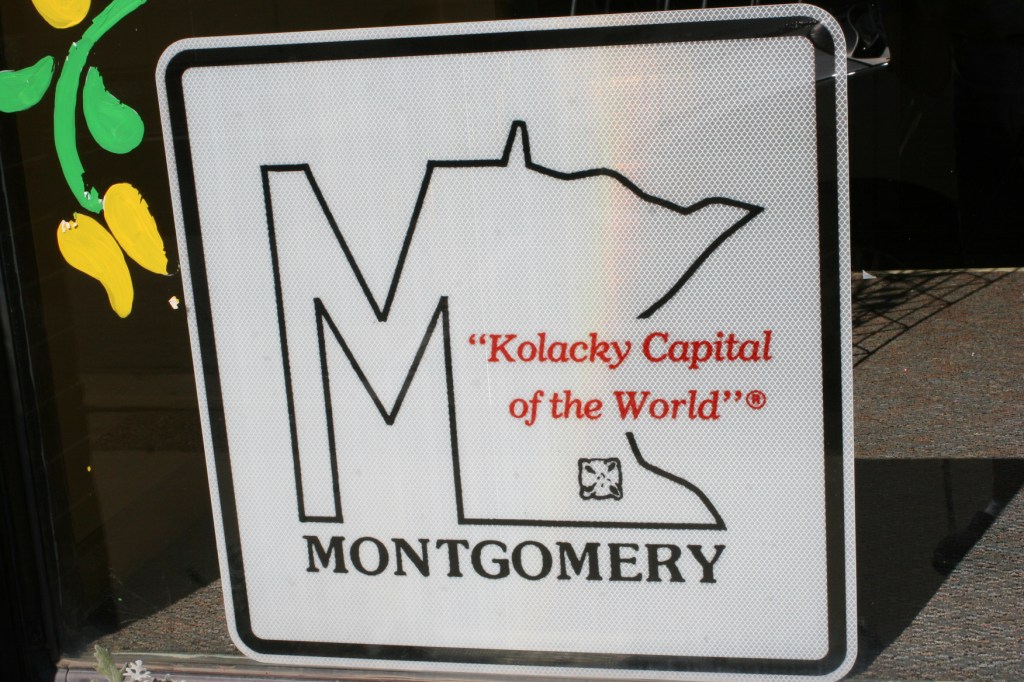
Lots of signs downtown celebrate kolacky, a Czech pastry sold at Franke’s Bakery and Mackenthune’s Fine Foods.
Montgomery centers on agriculture and its Czech heritage as the self-proclaimed Kolacky Capital of the World. So it seems particularly fitting that the arts center would focus its new exhibit on farmers and agriculture. The project was funded with a Prairie Lakes Regional Arts Council grant and donations from the Bob and Mary Jo Loftus Foundation and Compeer Financial.
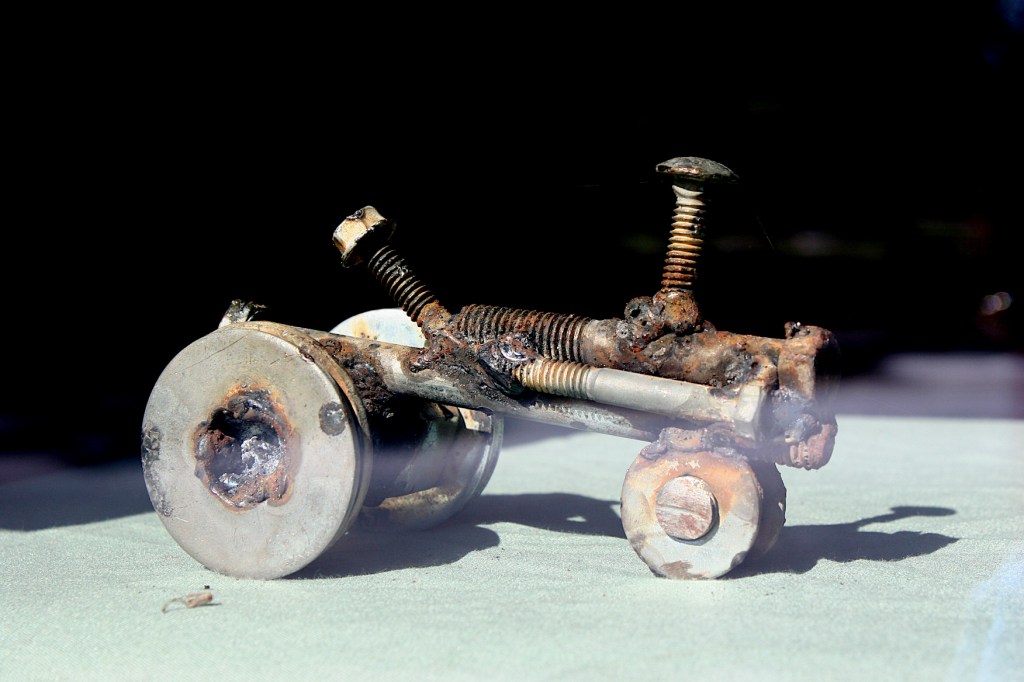
“The Nuts & Bolts of Farming” fits this tractor art crafted by Tyler Fromm.
Area artists clearly enjoyed the challenge of creating ag-themed art. I saw that in tractor art drawn, formed from string and nails, cut and crafted from cardboard, welded from nuts and bolts.
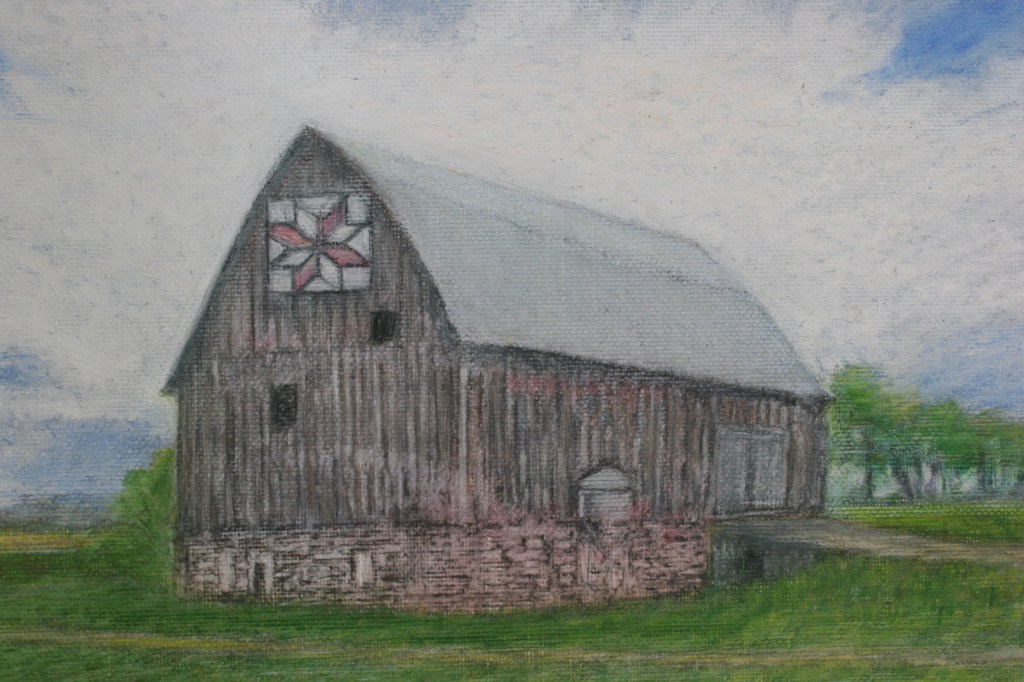
Pat Preble won first place for “Old Barn” and “Cows in the Field.” She incorporated a “Star of Heaven” quilt block into her barn art in honor of her mom, a quilter.
Stained glass. Batik. Wood. Photos. Quilts. So many different tools and styles and ways of creating art add to the interest.
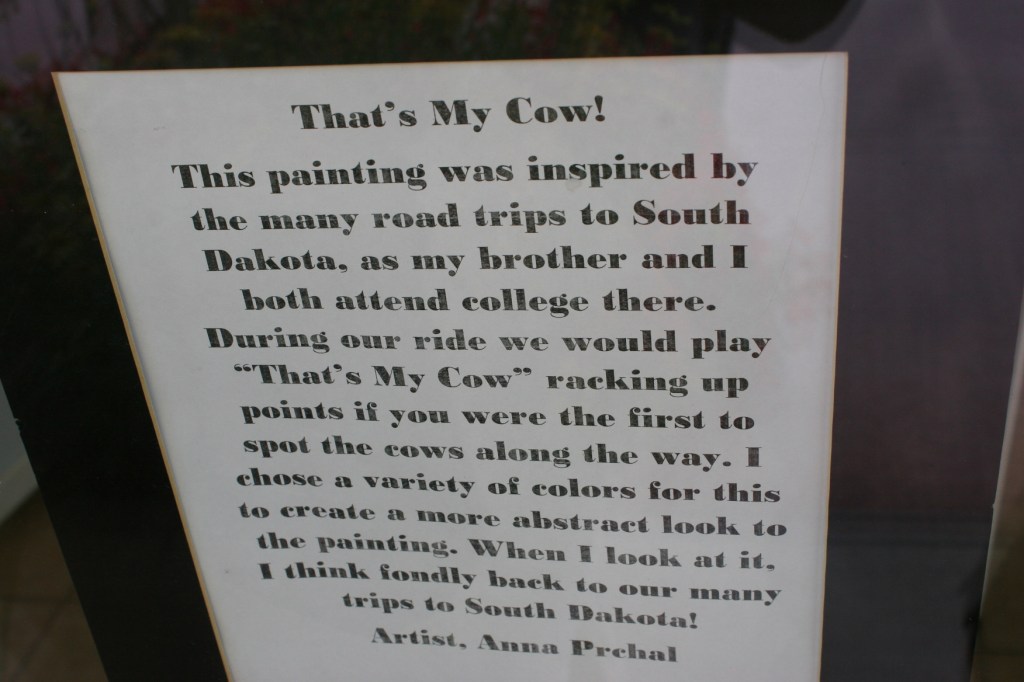
This artist statement made me laugh out loud. Because of glare, I was unable to photograph Anna’s cow art.
The art honors pioneer women who pieced quilts, an uncle, farm wives… Liz Krocak writes in her artist’s statement, “Behind every good farmer is his wife, rolling her eyes.” Yes, humor even infuses some of the artist statements.
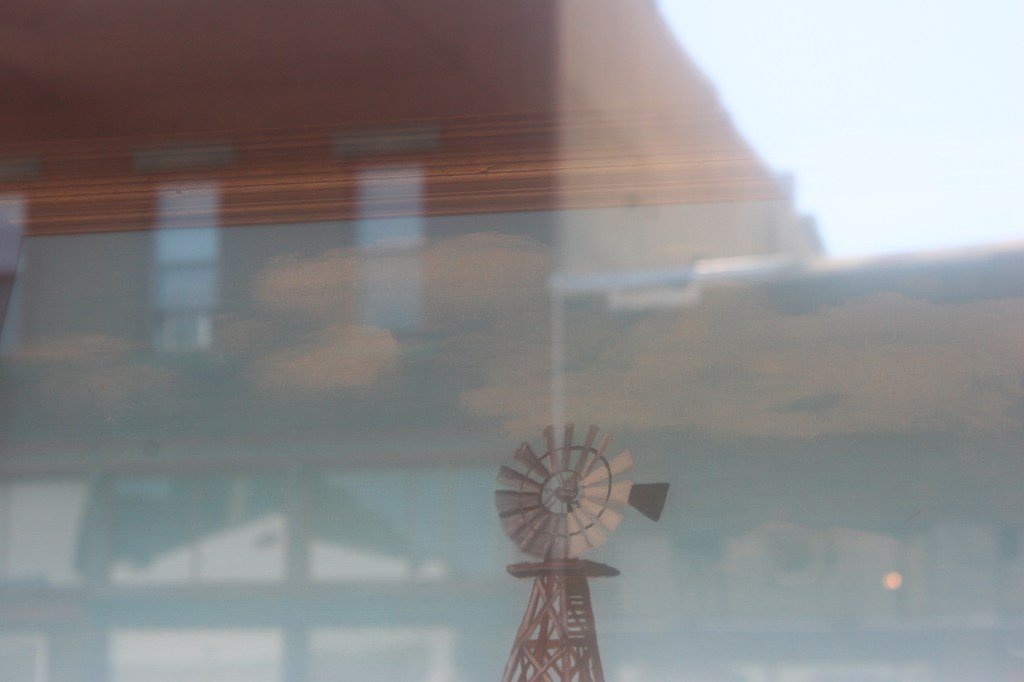
Glare made it really challenging to photograph Carol Ehrhardt’s entire cattle and windmill art. But I decided I like this image showing only the top of the windmill and the reflection of an aged building. Ehrhardt was awarded third place in the show.
Annette Stavos, who grew up on a hobby farm, honors her uncle. “My uncle was the real farmer and we helped him pick rocks and bale hay.”
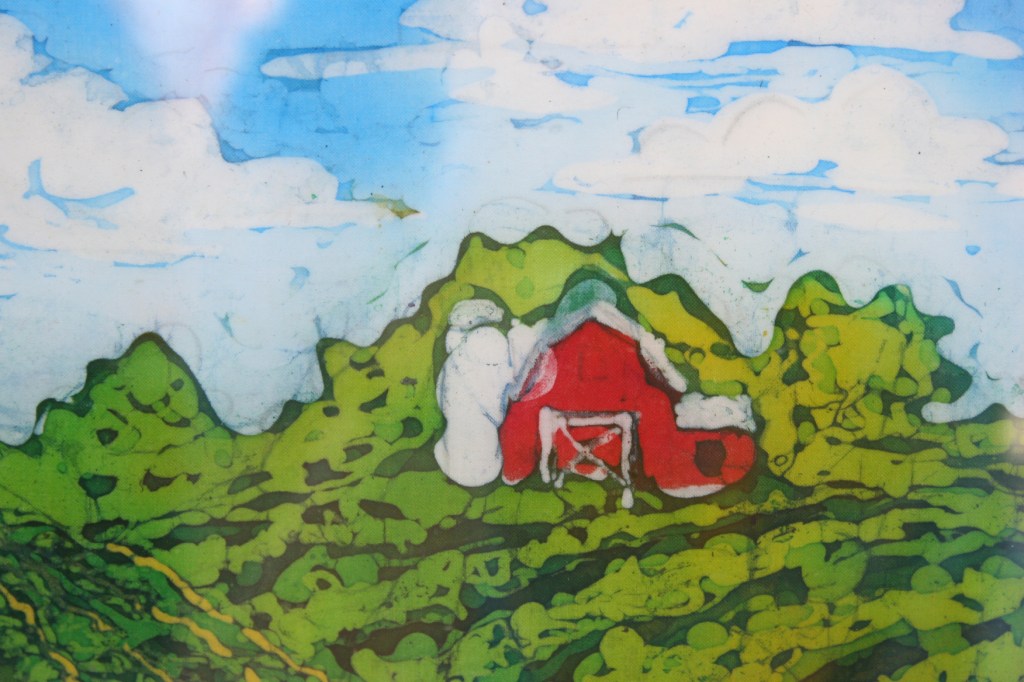
A close-up of Susan Hayes batik art titled “Summer Fields.”
Susan Hayes, a city girl who married a farmer, writes. “…I’ve had first hand experience with agriculture and life on a small farm. It’s not easy getting up before 5 am to milk the cows or baling hay in 100 degree weather. She created a beautiful batik piece, “Summer Fields.”
A farm in the Montgomery area.
Anna Prchal expresses her love of rural life in these words: “The fresh air, hard work ethic and never having a dull moment there are the things I love most about the farm.”
The countryside near Montgomery.
For Kimmie Loranger, who once traveled with the carnival, worked as a nanny and waitress, and who was at one time homeless, living in rural Montgomery and now creating art “is the happiest I’ve ever been in my whole life.”
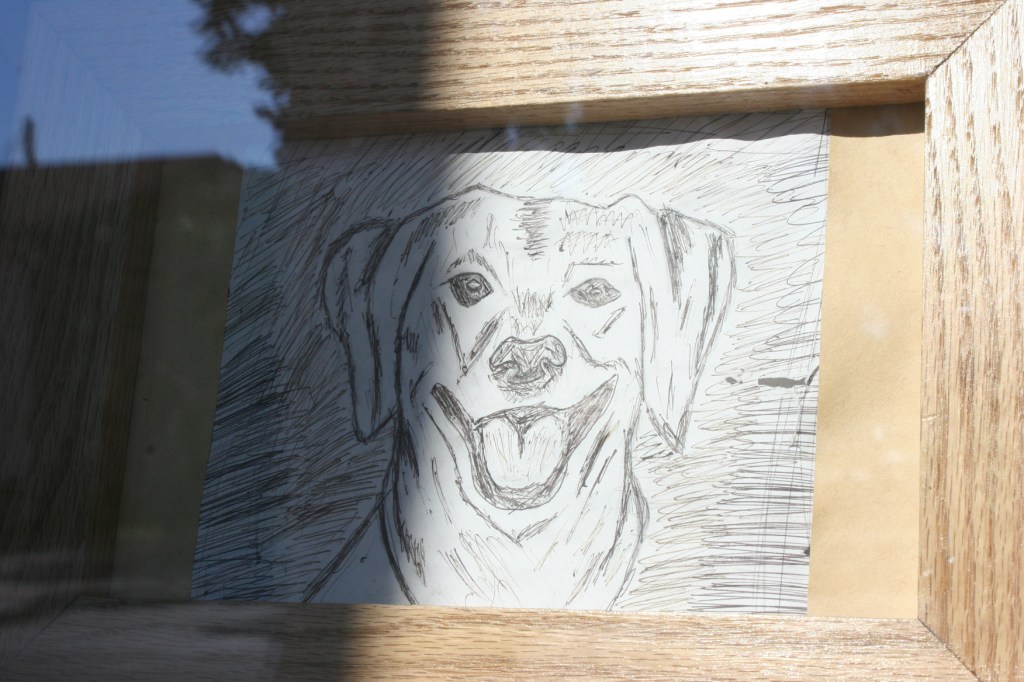
Tyler Fromm drew this picture of his “beloved farm dog, Buddy.” Oak siding from the corn crib on his family’s century old farm frames the art.
These are the stories that make this exhibit especially meaningful, especially touching, especially impressionable. This isn’t just another art show, but rather an expression of emotions with a rural perspective. Written. And showcased in art.
FYI: You can view this exhibit any time during the day as the art is visible from outdoors in front windows. Note that glare and reflections sometimes make seeing the art a challenge. The Arts & Heritage Center, however, is open limited hours from 2-5 pm Thursday and Friday and from 9 am to noon Saturdays. The exhibit runs until the end of November. Maps to the art locations are available from several downtown Montgomery businesses in addition to the arts center. Be sure to vote for your favorite for the People’s Choice Award. This blog post represents only a sampling of art in the exhibit.
Please check back next week for additional posts from my visit to Montgomery.
I CALL IT THE BACK ROAD to Morristown, Rice County Road 15 south of Faribault and running west to Morristown. The more-traveled main route follows Minnesota State Highway 60.
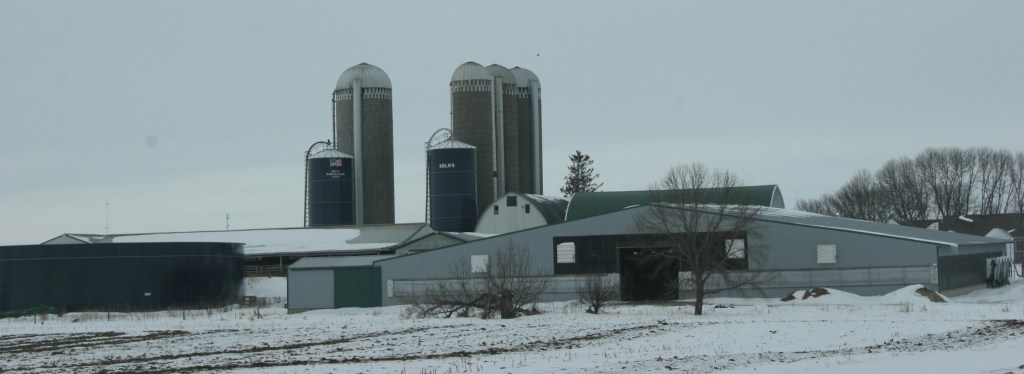
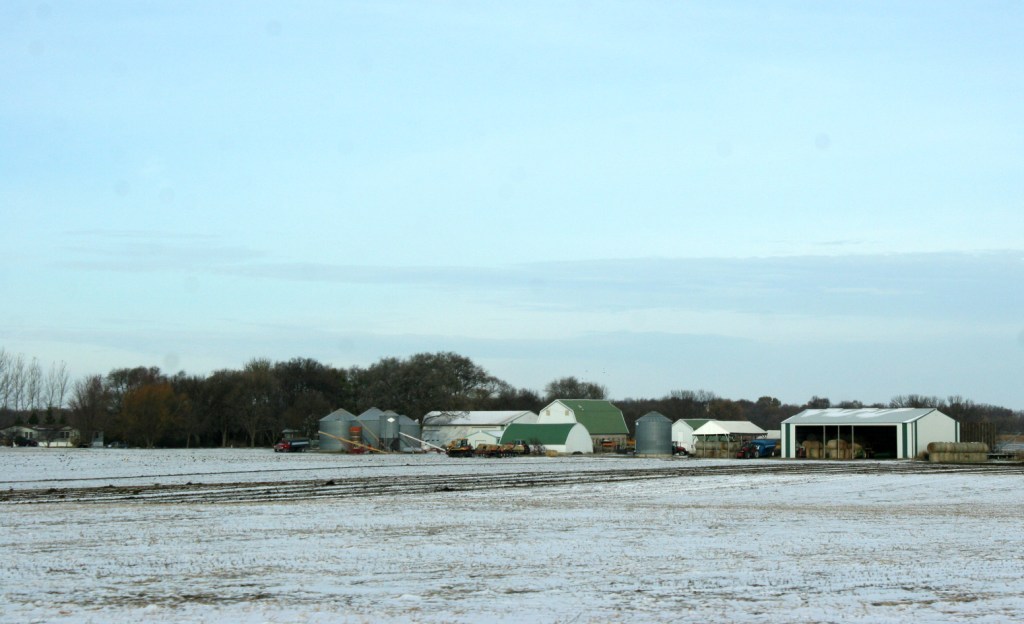
But, I prefer the back way, which takes me past farm sites hugging the county road.
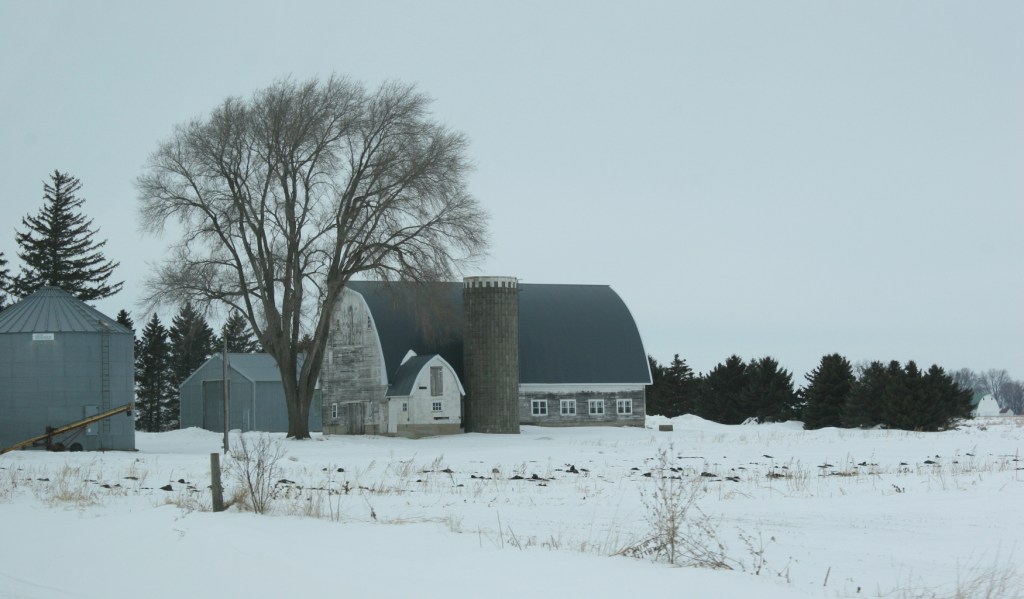
Looking across a snowy field along Rice County Road 15 near CR 45.
Here I feel immersed in the rural setting with less traffic, open land spreading wide under an equally wide sky.
I know some of the people who live along this road. They are salt-of-the-earth folks, hardworking, caring… Dairy farmers. Retired pig and crop farmer. A farmer who balances crop farming with a full-time job in town. Families raised on the land, with only one son among those I know along CR 15 continuing in farming. One son’s moved to Nashville, where he’s finding success as a professional oboist. I’m working on a story about him for a regional arts and entertainment magazine.
The times they are a changin’.
But then agriculture has always been evolving. I think back to my great grandparents and my grandparents who broke the land and farmed with horses in an especially labor-intensive way of life. And then machinery replaced horse power for my dad and his farmer brothers. And my middle brother, who no longer farms, saw even more advances in mechanization and technology. I barely recognize the farms of today.
I’d like to think, though, that those who still work the land do so because they love and value the land. In recent years I’ve observed a shift in attitudes toward a deepening respect of the soil, of using less chemicals (or even none), of adapting innovative erosion control practices, of protecting waterways…
I recognize the challenges of balancing the need to earn a living from the land, getting the highest yields possible, with decisions about farming practices. It’s not easy. Public perception and government regulations and weather and fluctuating markets add to the stress. It’s not easy being a farmer today. This is not our grandparents’ farm. Nor even our parents.
To those who choose to live on and work the land, I admire your stamina and determination. While I miss the peace and solitude of living in the country on land where the nearest neighbor lives more than a driveway width away, I realize I never would have made it as a farmer. I don’t have the guts or the fortitude or adaptability necessary to farm.
Along U.S. Highway 14 west of Mankato. I grew up some 80 miles west of here.
ALTHOUGH I’VE LIVED IN TOWN longer than in the country, I still feel most at home in the familiar surroundings of endless land and vast sky. Southwestern Minnesota. It is the place of my roots, the place of my heart, the place where I feel overwhelmingly comfortable.
Farms edge U.S. Highway 14 in this region of Minnesota.
I expect most people connect to a geographic location. Do you?
Another farm along Highway 14 west of Mankato.
Every time I’m back home, because, yes, I still call this rural region back home, I sweep my eyes across the landscape, noticing always how small I feel in this setting. The sky and land overtake every aspect of this place, dwarfing farm sites and farm machinery and people. Only grain elevators seem to hold any sort of visual power.
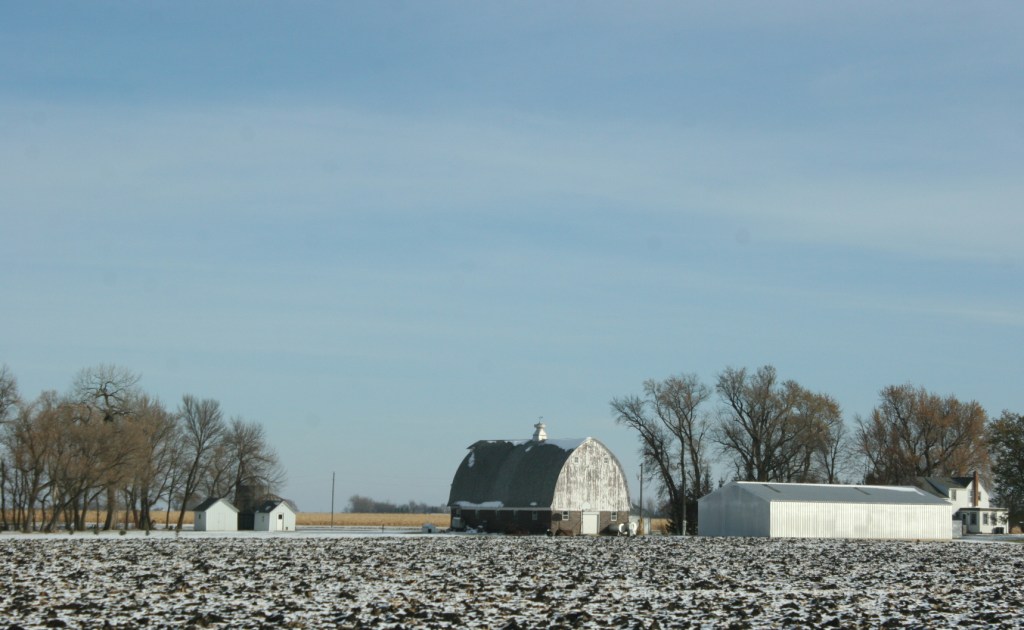
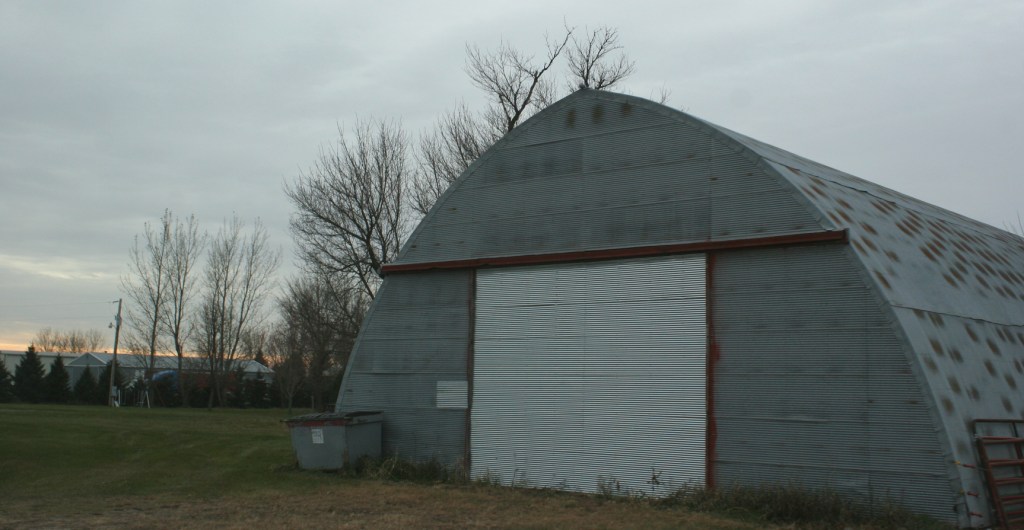
An old-style machine shed in southwestern Minnesota.
As I travel through this farming region, I study building sites, pleased by sturdy, maintained barns, dismayed by those with roofs caving. Too many barns are vacant of animals, an almost certain start of their demise.
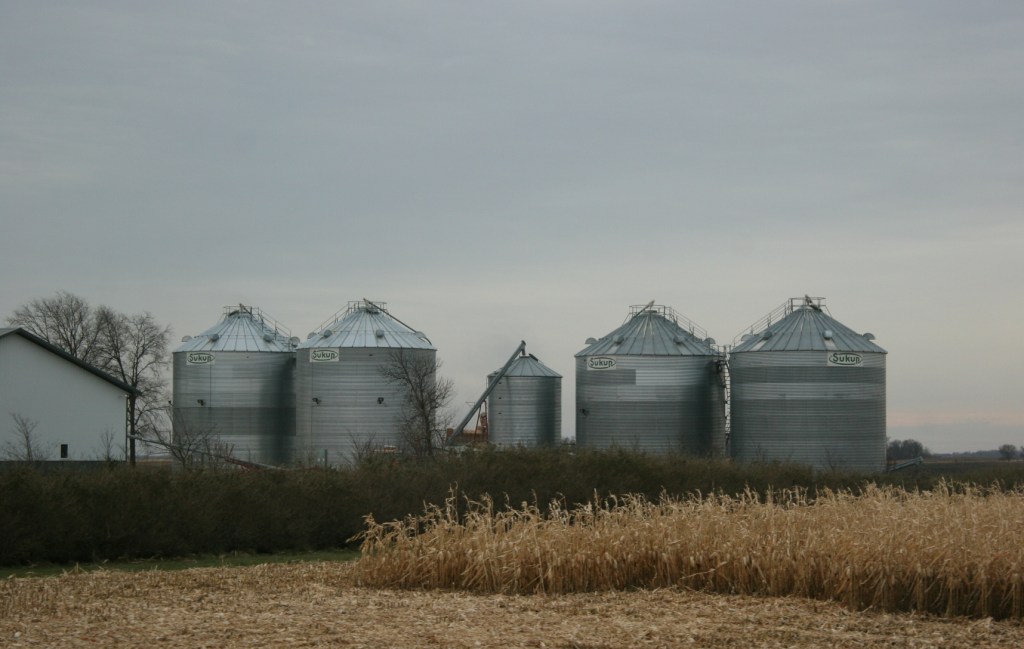
Grain bins define a farm site near Delhi, Minnesota, in my native Redwood County.
Like the farmer’s daughter I am, I notice the status of crops from spring planting to harvest. It’s in my DNA, this natural instinct to focus on corn and soybean fields, to assess the growing season, to care about the weather.
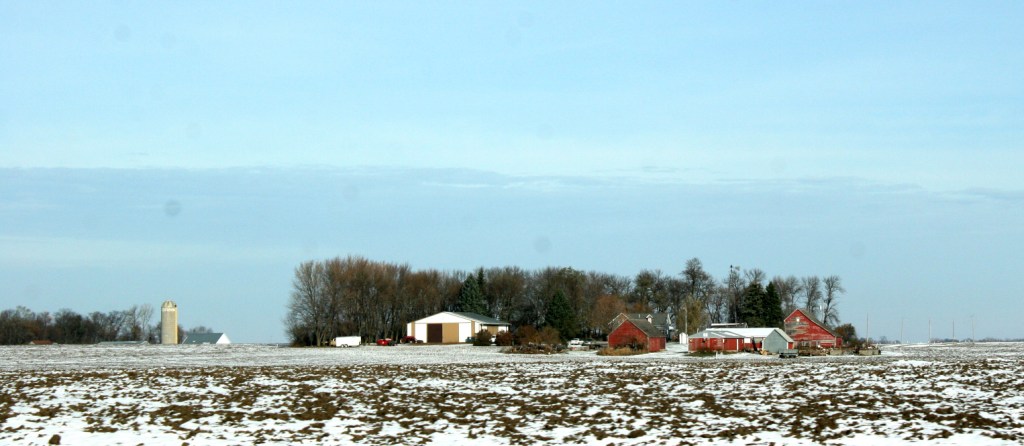
A farm site west of New Ulm, Minnesota.
Although I’ve left this land of my youth, I remain grateful for the earth, the sky, the wind, the communities, the schools, the churches and peoples of southwestern Minnesota. All influenced and shaped me. And still do.










 Minnesota Prairie Roots
Recent Comments