
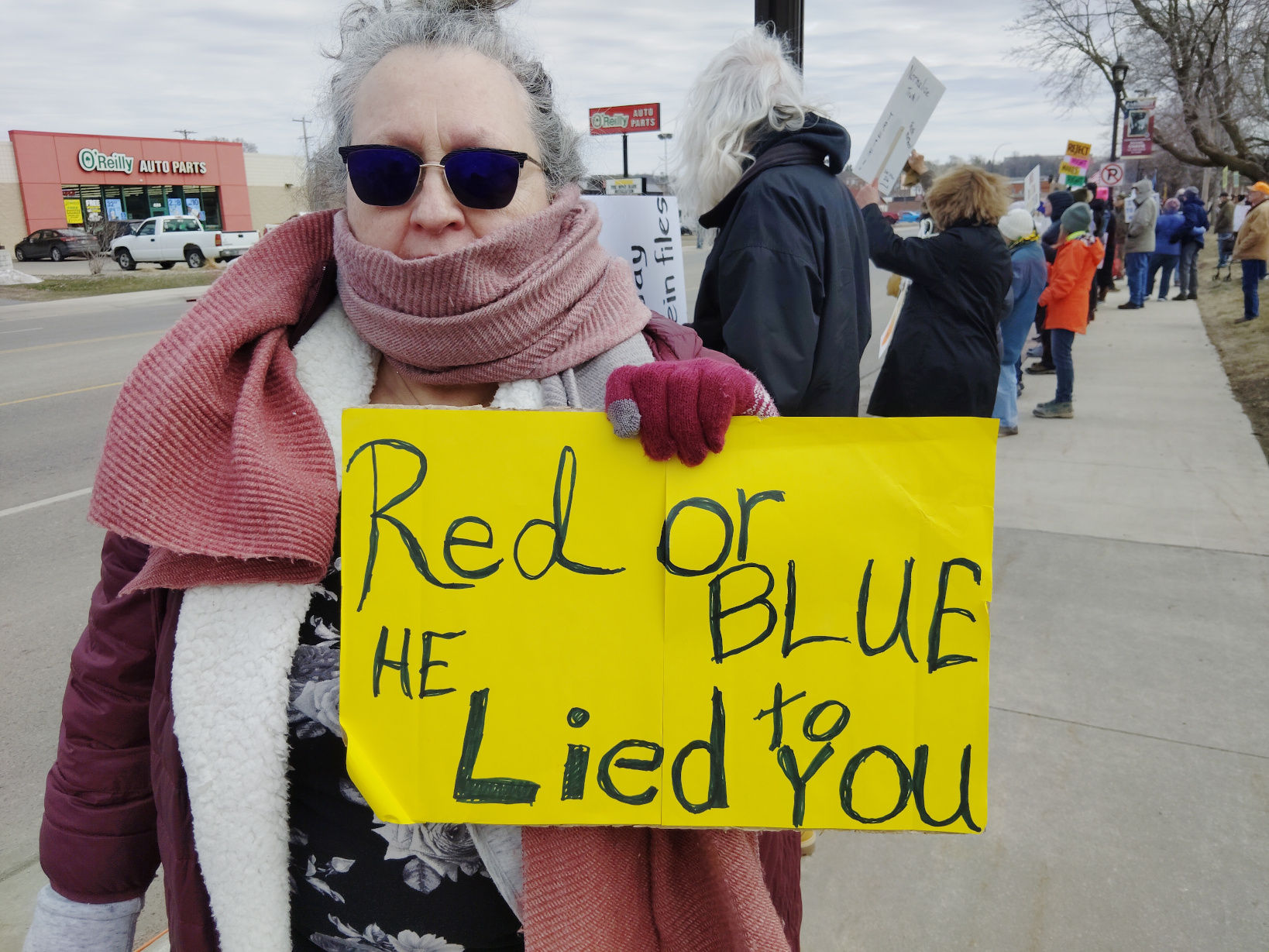
WE GATHERED, 175 STRONG, in Faribault on Saturday morning for the third nationwide No Kings Day protest. In a city which is decidedly red, this number impresses. This marked a record turn-out, far surpassing our top participation of eighty. I saw many new faces. And a few new dogs.
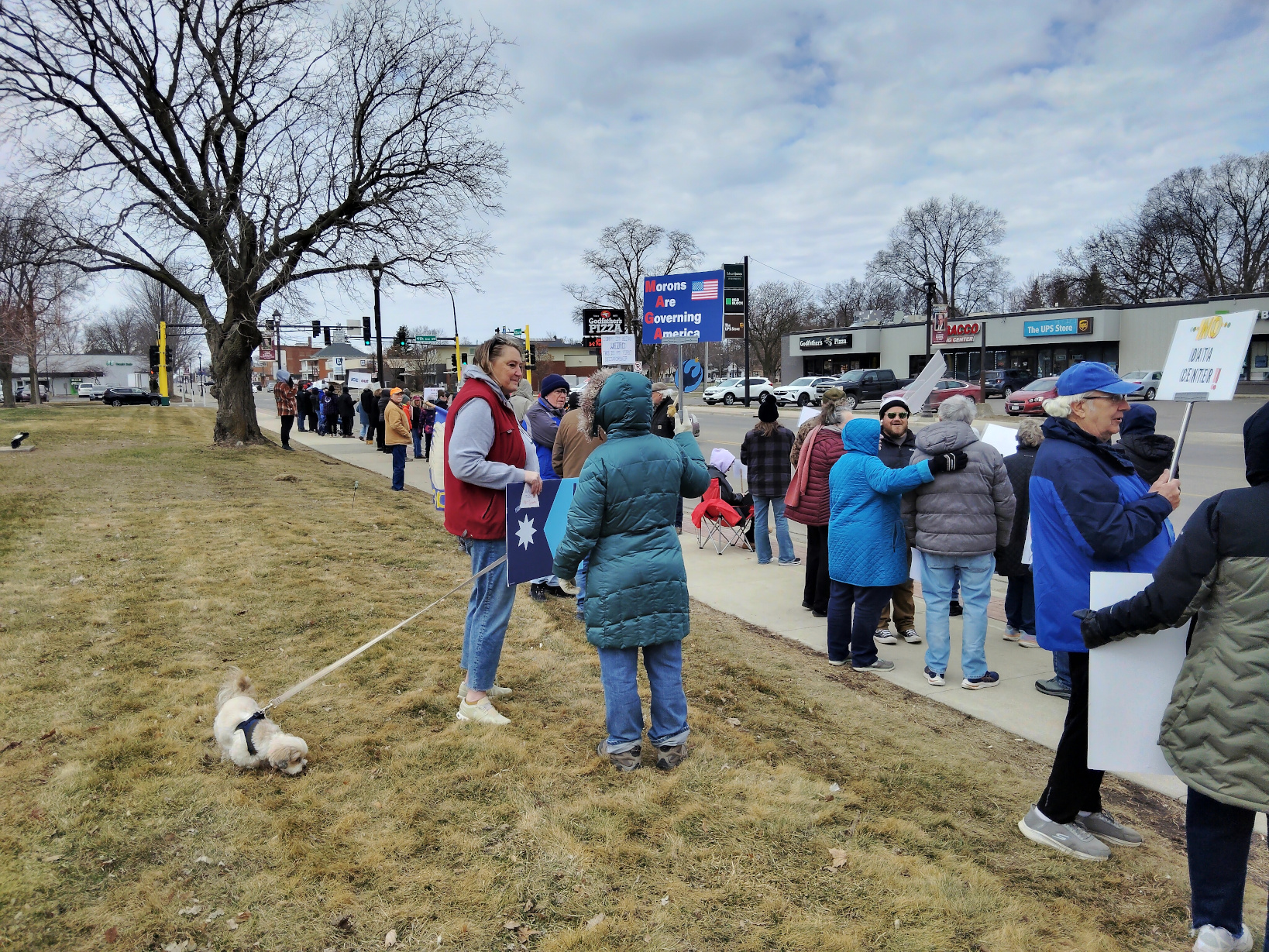
From a preschooler, who plastered stickers onto a cardboard sign and held his mom’s hand, to a first-time protester in her eighties, and all ages in between, we came.
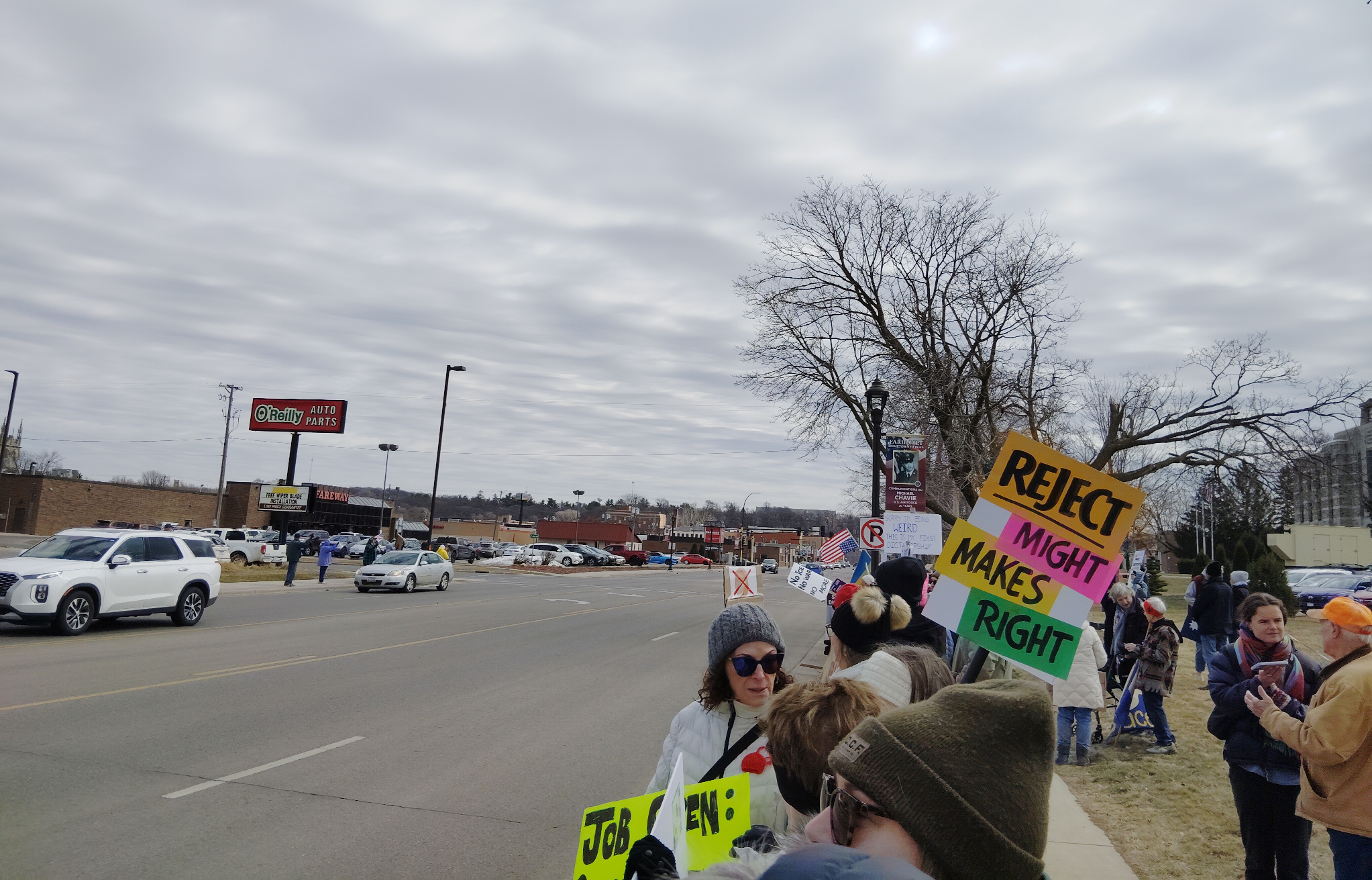
We stood along Minnesota State Highway 60 in this city of 25,000 an hour south of the Twin Cities to raise our voices. We care about this country enough to step up and speak out. And not a single one of us was paid to protest, as some erroneously claim.
We came with hope and energy and enthusiasm.
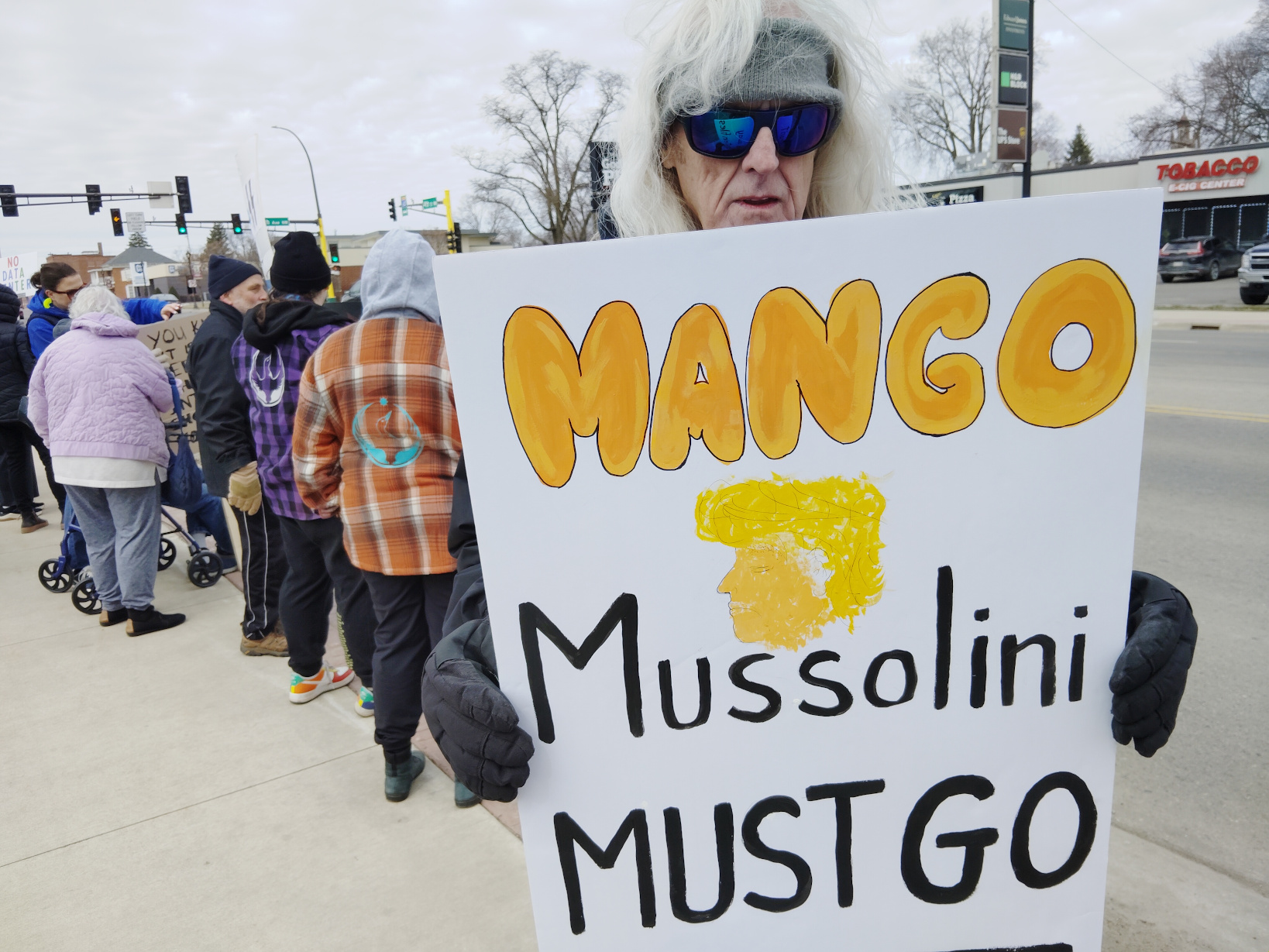
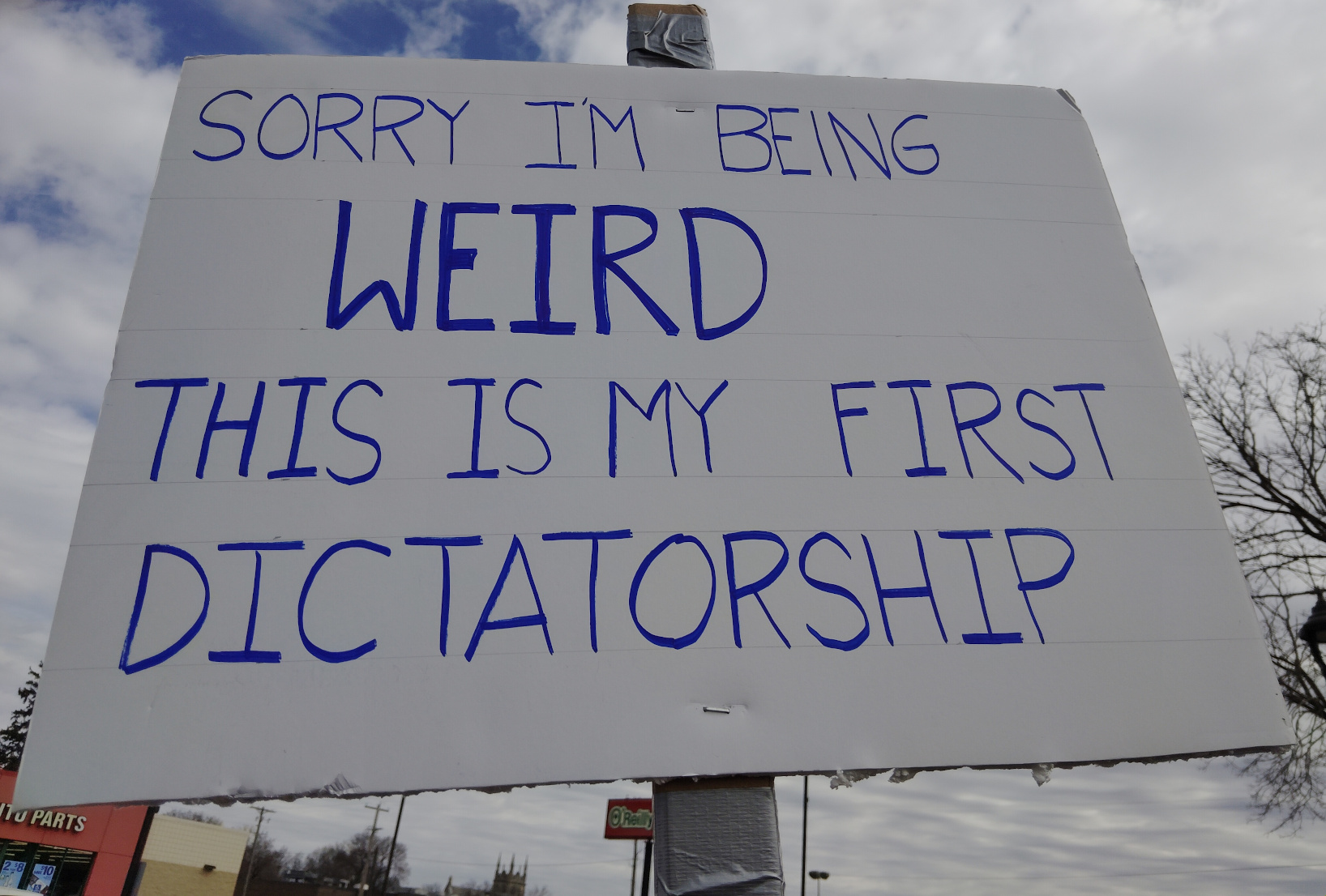
We came, too, with our signs. Grievances. Concerns. Demands. Strong statements in support of freedom, democracy, voting rights, immigrants… Strong statements against the leadership in this country, immigration enforcement, the war in Iran. Strong statements about the state of the nation, the economy, whatever worries us.
When I saw several protesters without signs, I offered extras I brought. Pulling the signs from the back of the van, I asked them to put the signs back before they left. They did.
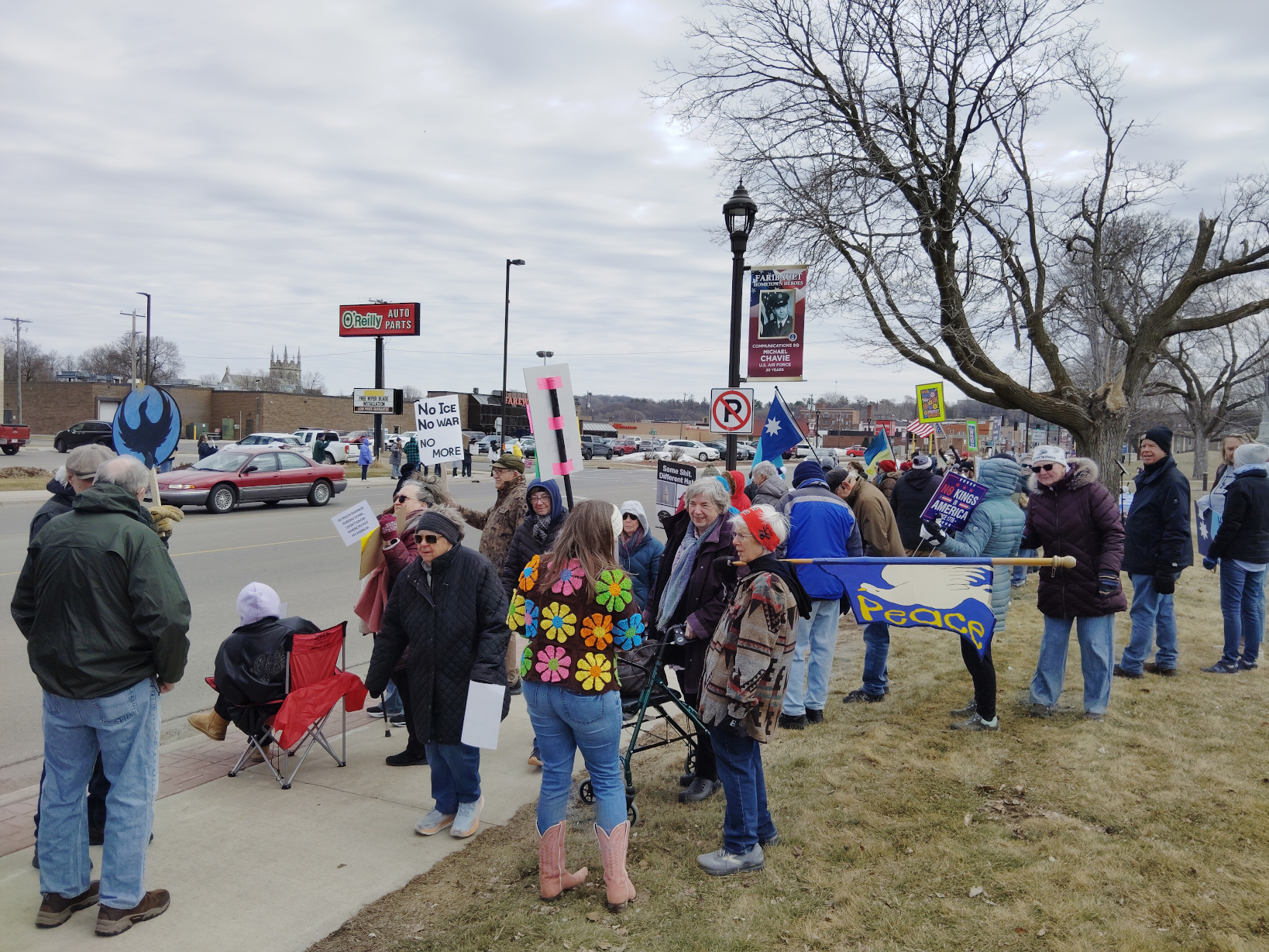
We came in our red Norwegian resistance hats and our handcrafted flower power sweaters and our Rebel Loon shirts.
We came, too, with our music, a guitarist and a bagpipe player adding a celebratory tone to the event. This was, after all, also a rally for like-minded folks who care about each other, their neighbors, this community, this state and America.
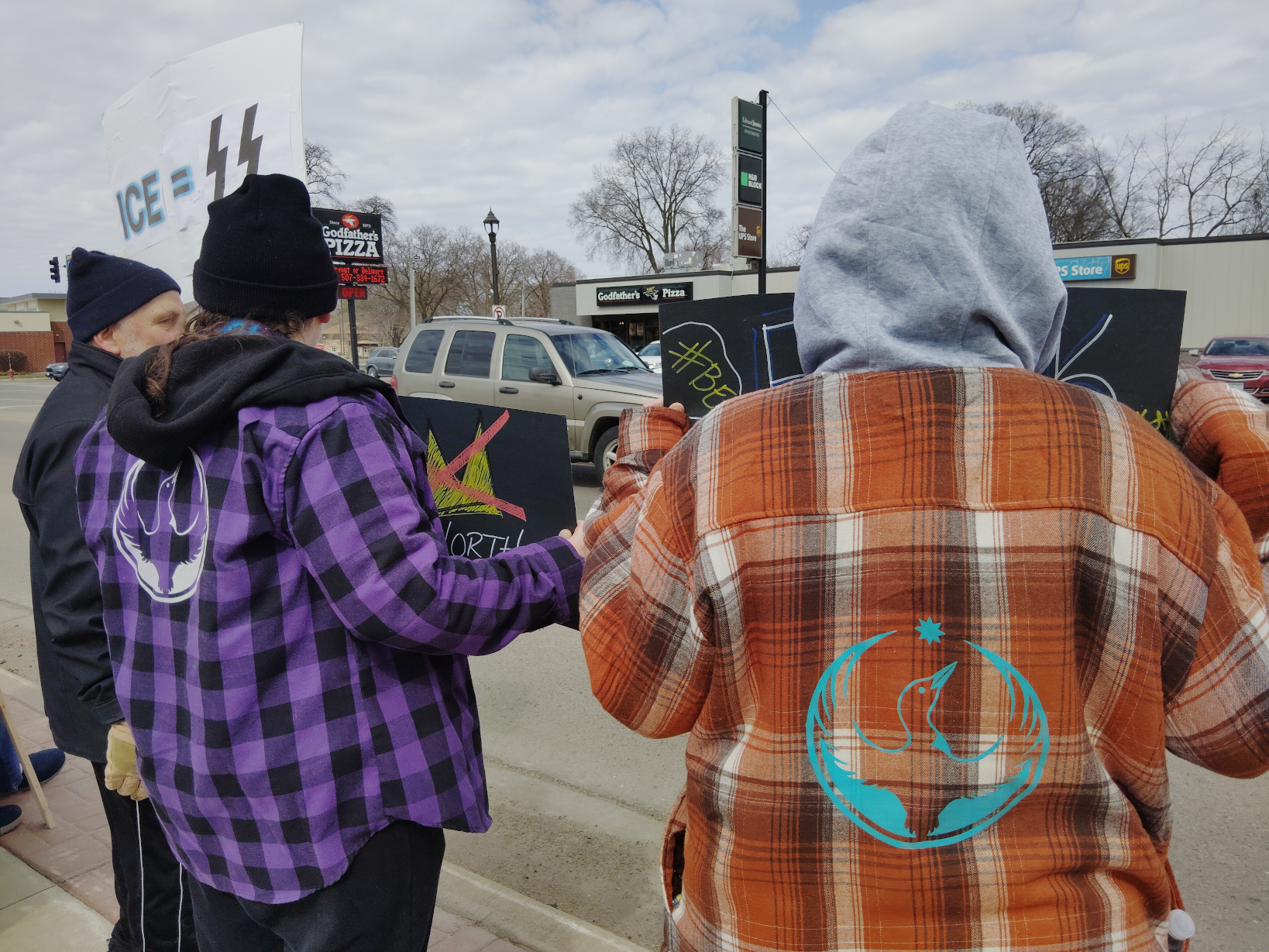
It felt good to stand in solidarity, to talk and smile and lift each other up. To not feel so alone in one’s beliefs in a mostly Republican town.
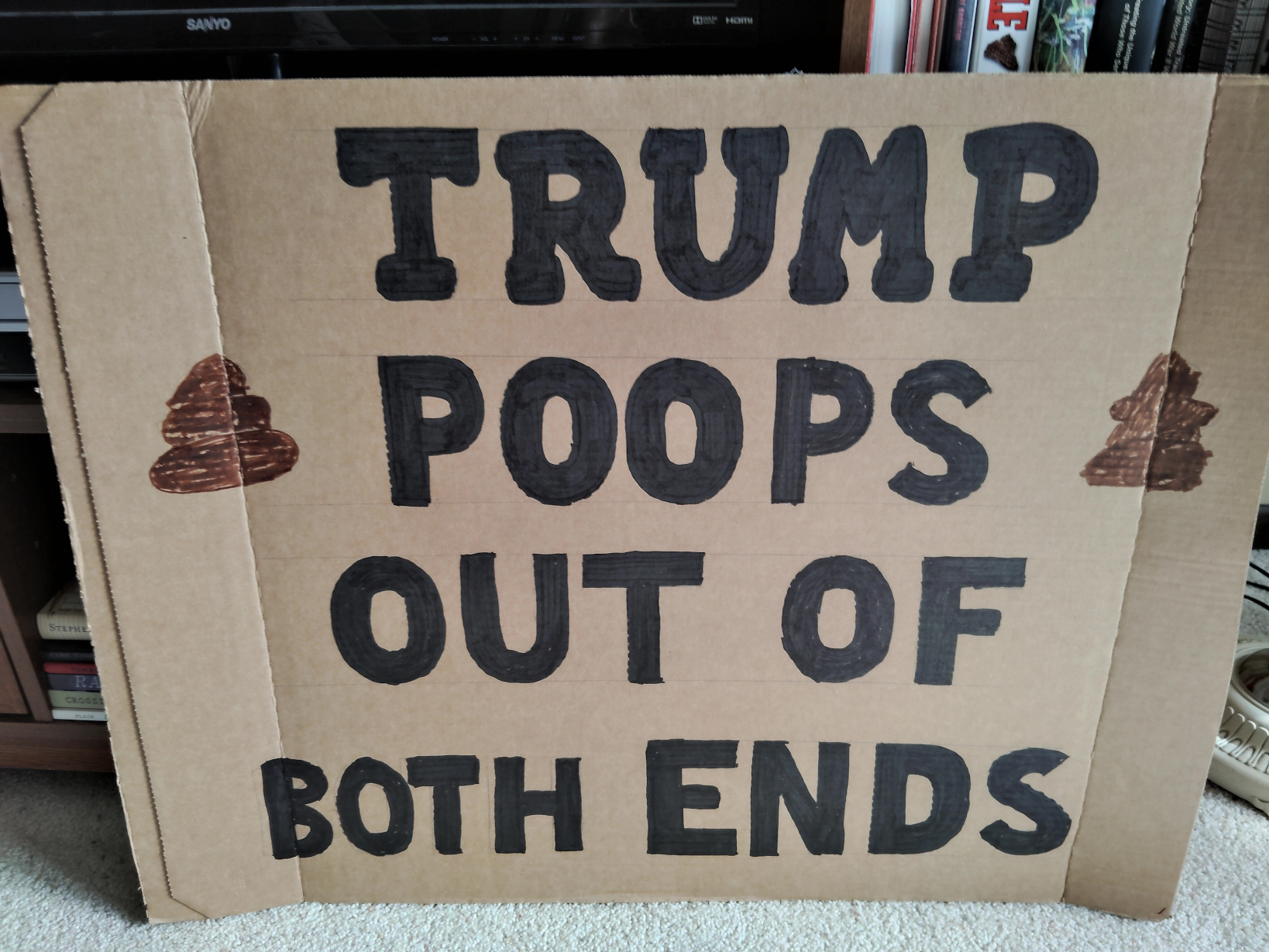
It felt good also to laugh at humorous signs. To compliment those who made especially creative signs. To recognize that every person lining the sidewalk on both sides of the highway had a vested interest in publicly standing up for what is right and good and decent.
I walked the protest line, welcoming protesters, looking at their signs, thanking them for coming, encouraging them to return next Saturday from 11 a.m. to noon.
This is not done. This resistance.
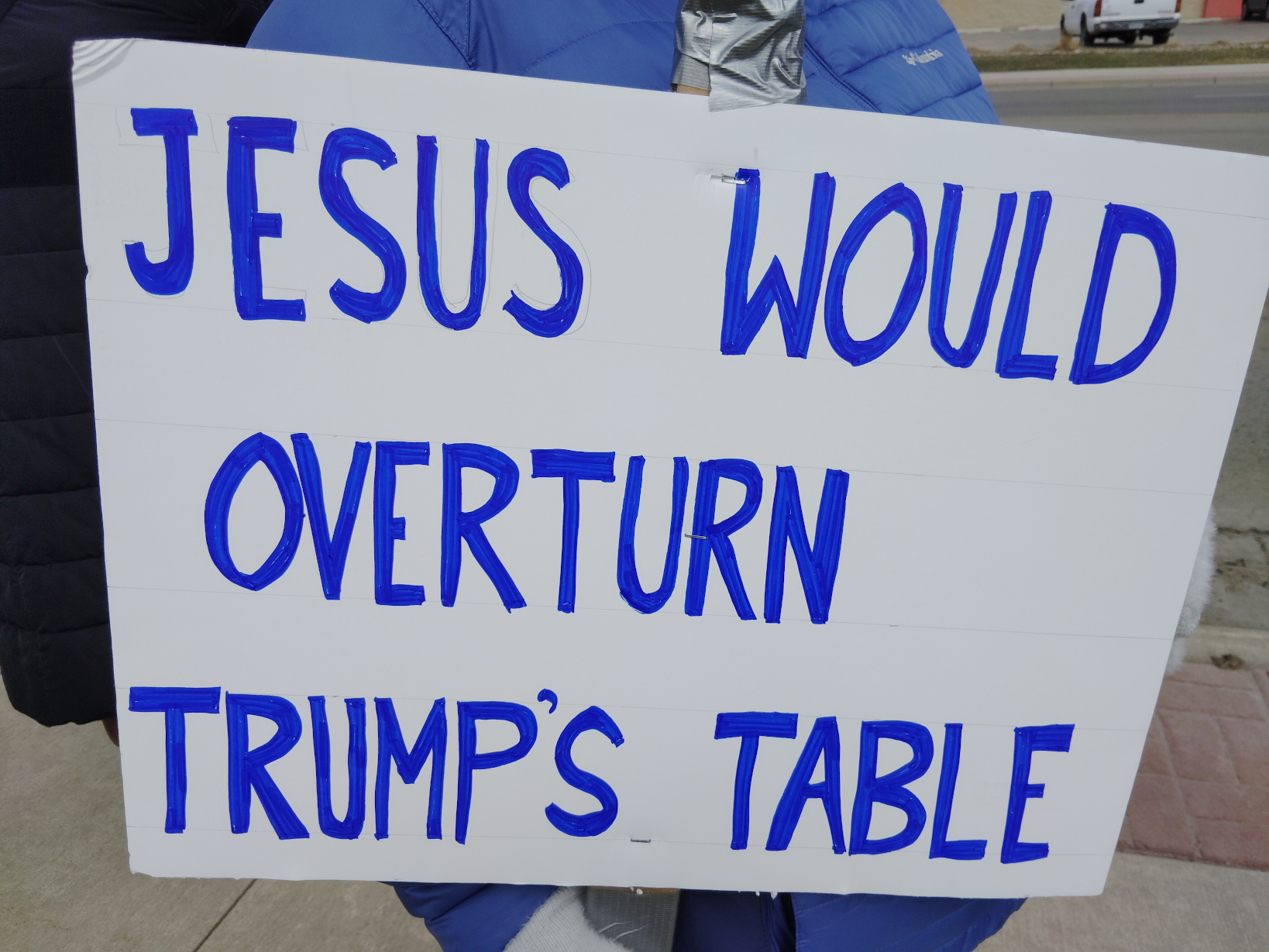
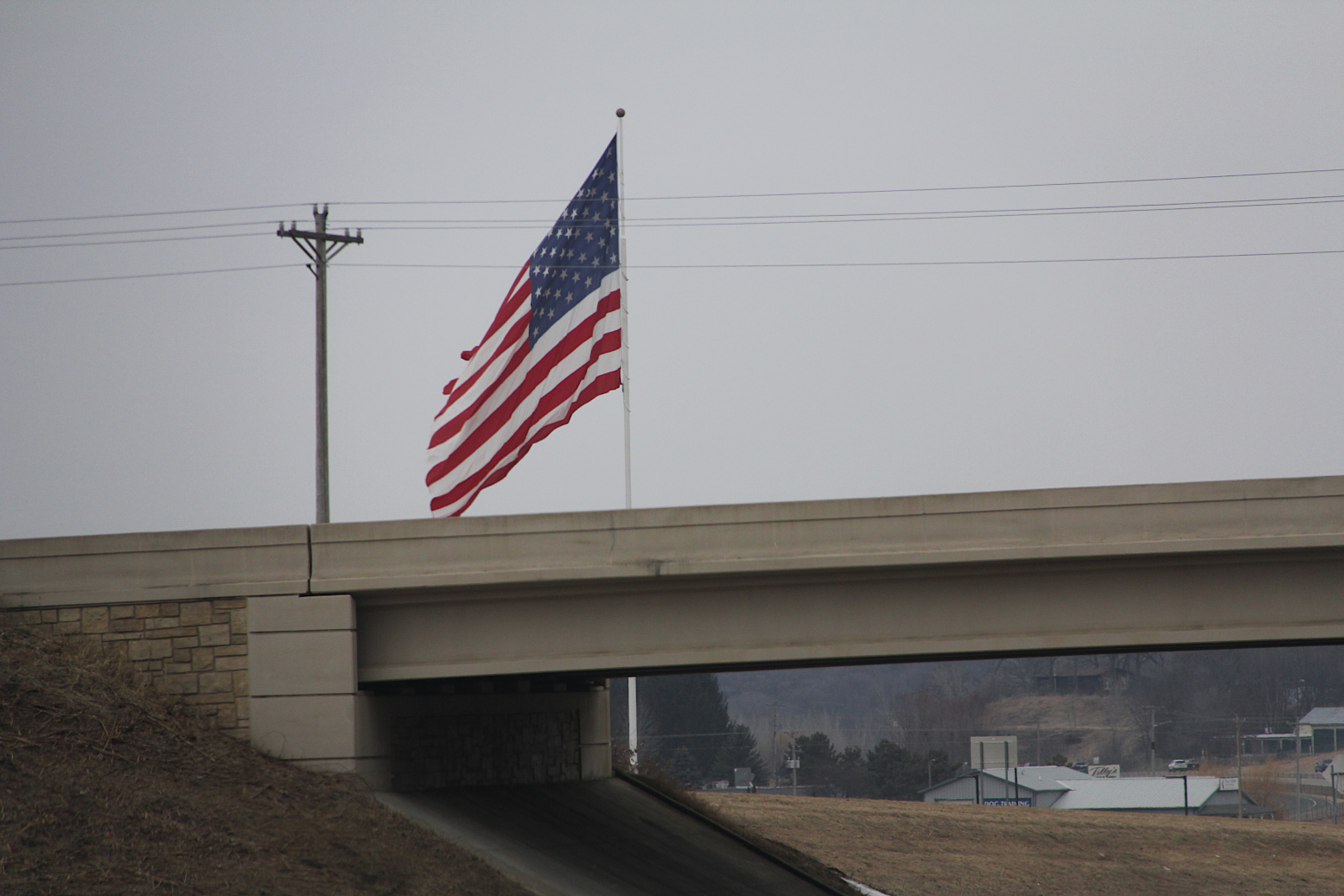
We will continue to come with our signs. We will come with our peace and Minnesota state and American flags. We will come with our stories and our words and our voices.
We will come in the spirit of peaceful resistance. In the spirit of resilience and strength and compassion. We are, and remain, Minnesota Strong.
#
THANK YOU to everyone who participated in the No Kings Day protests at 3,100 sites across this nation today. A special thanks to those who showed up in Faribault. To those I invited, those I met, those I knew from past protests, know how much I value you and your voice. To the estimated 100,000 who attended the flagship event at the Minnesota state capitol in St. Paul, thank you for showing the world the strength of Minnesotans. To protesters who gathered in other countries, this American is grateful for your support. Continue to stand strong in solidarity for freedom. We must. We will.
© Copyright 2026 Audrey Kletscher Helbling










 Minnesota Prairie Roots
In appreciation of those protesting in rural areas on No Kings Day March 27, 2026
Tags: Minnesota, small towns, rural Minnesota, opinion, democracy, commentary, protests, protesting, No Kings Day, resistance
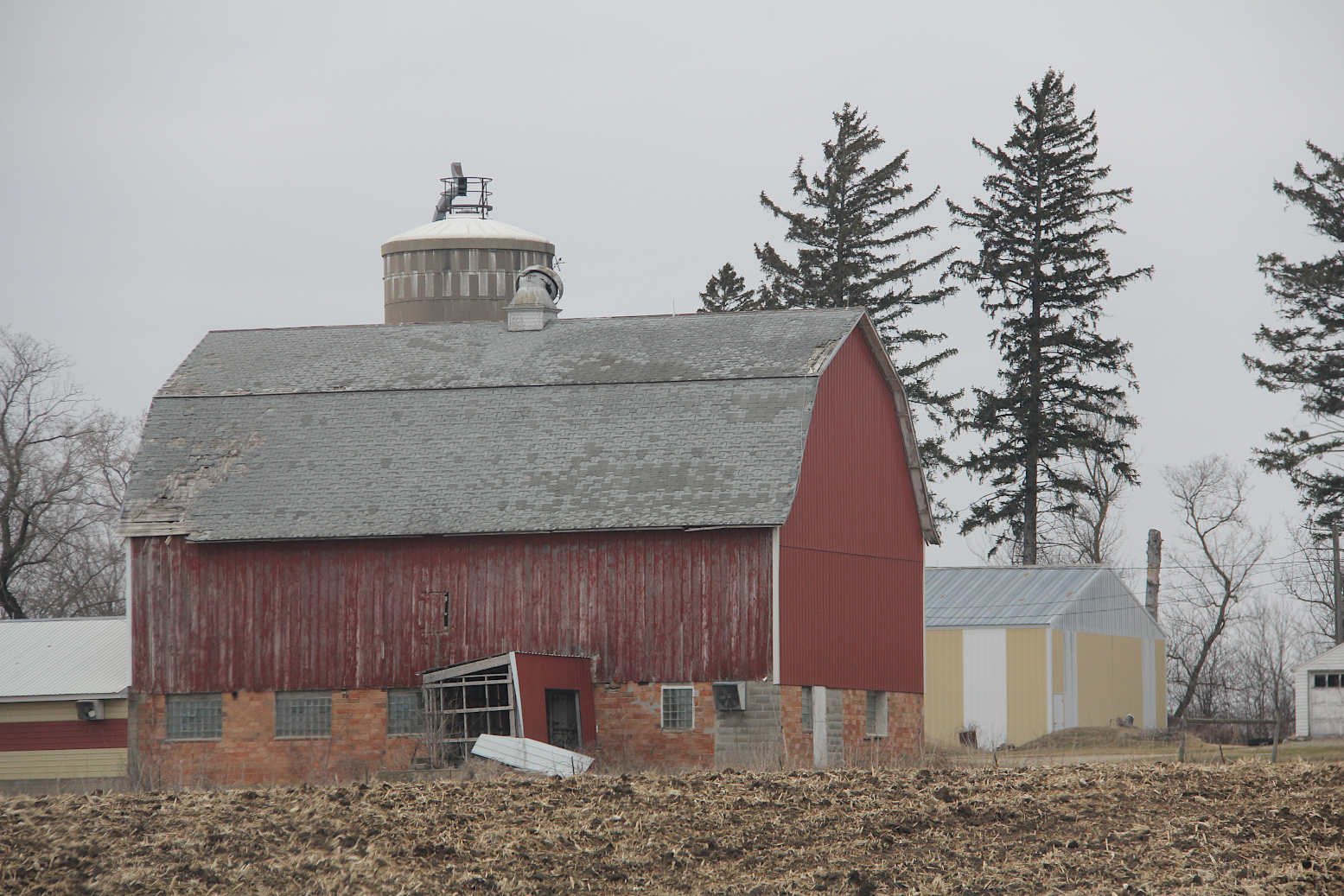
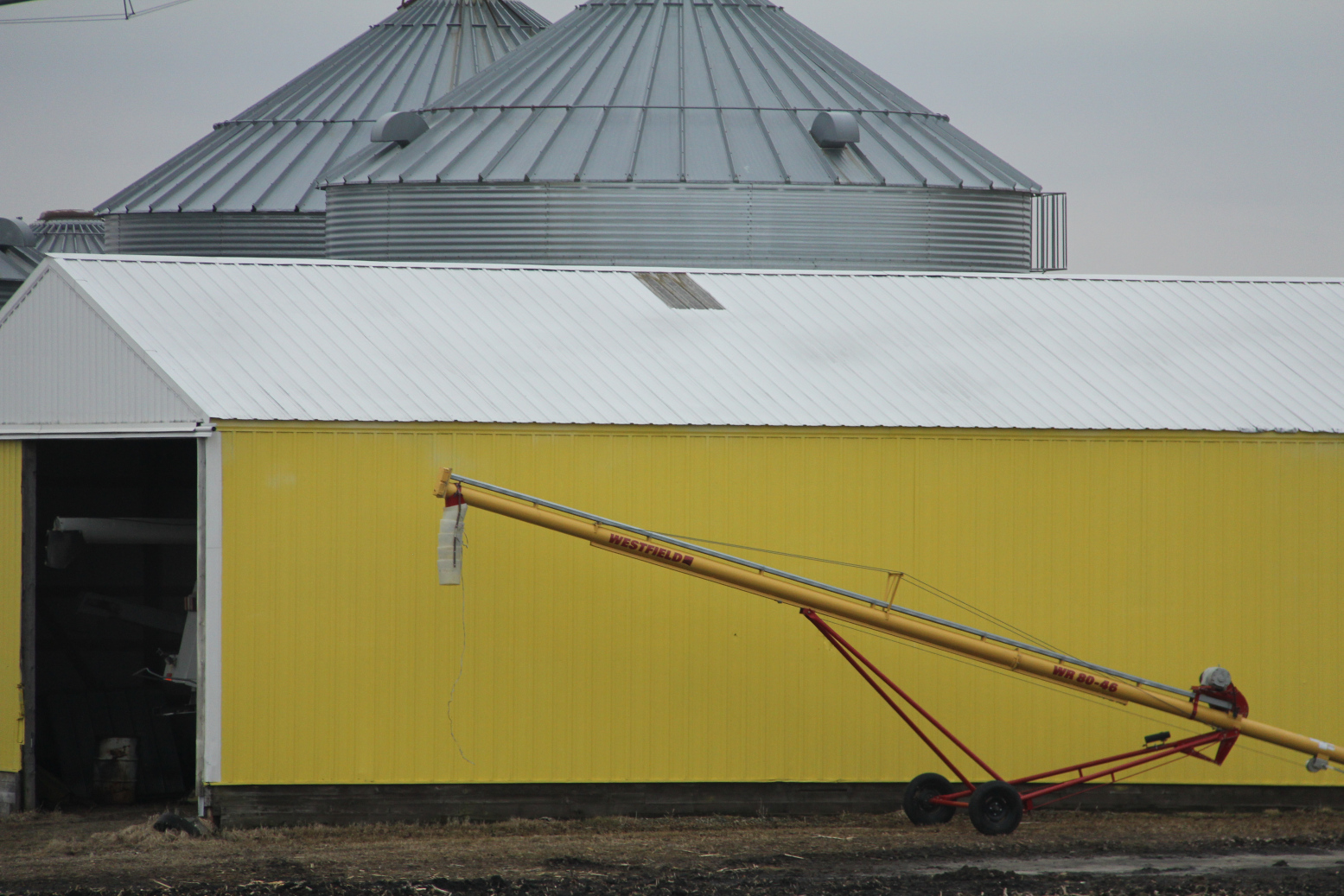
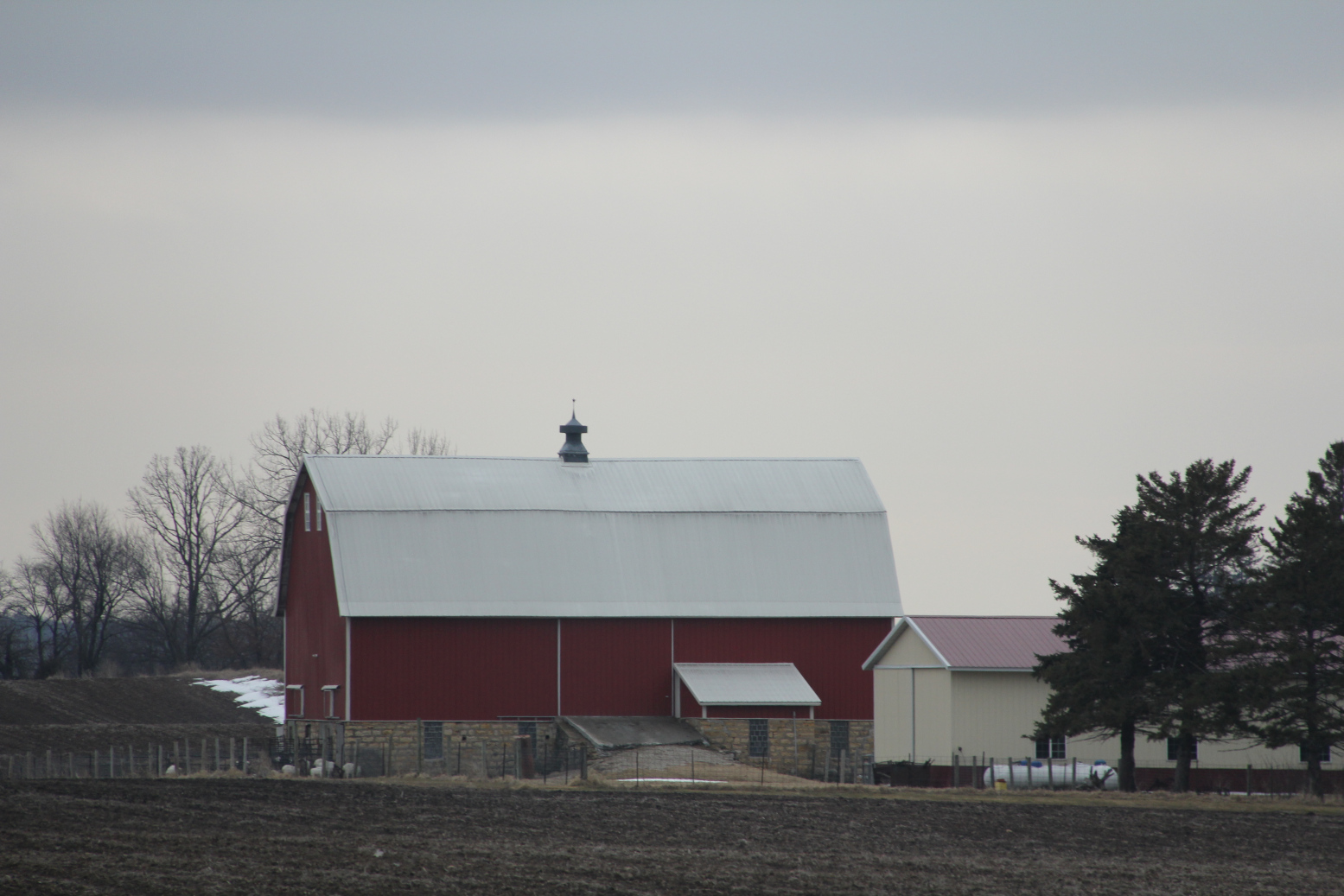
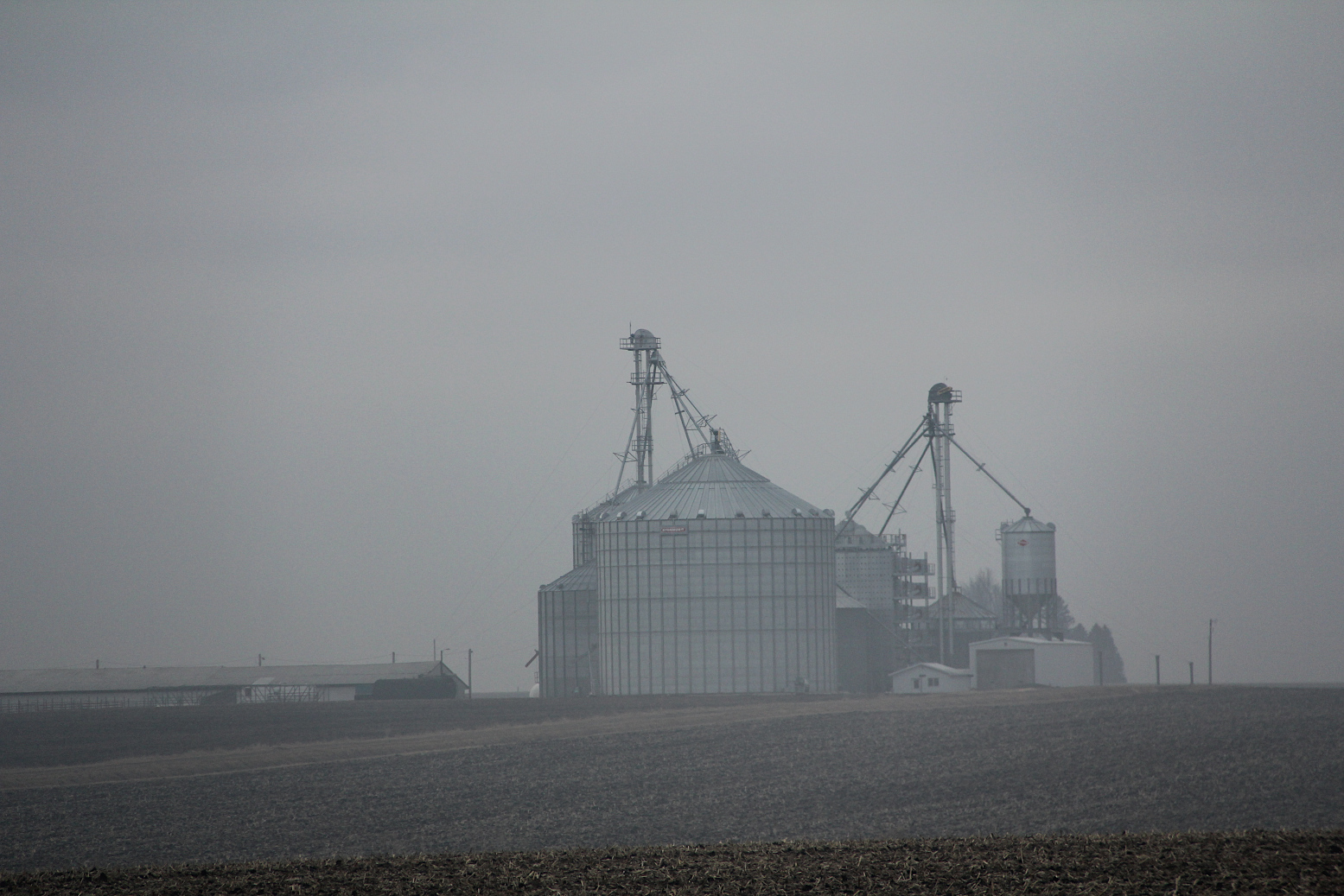
ON THIS, THE DAY before nationwide No Kings Day protests, I want to pause and thank the many people in small towns, in the most rural of regions, who are standing up for democracy. Media attention tomorrow will focus on protests in big cities. That coverage is expected. But equally as important are the rallies in communities of a couple hundred or several thousand deep in red territory.
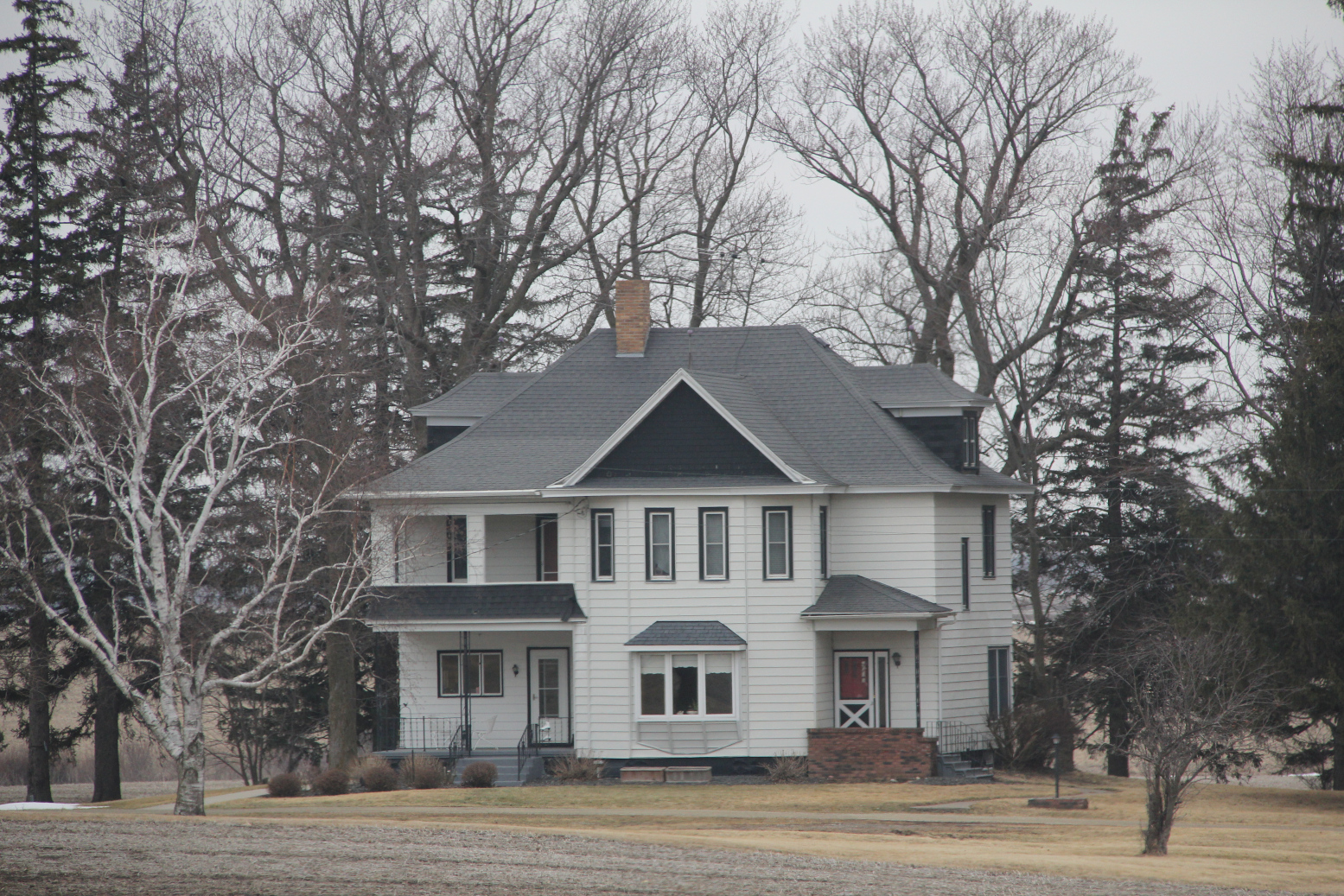
In these places, publicly standing against the Trump administration takes, simply put, guts. Everyone knows everyone in small towns and it’s not necessarily easy to be politically at odds with one another. These are the people you see at the post office, worship with, meet for coffee, work beside, live next door to, do business with.
When those who oppose Trump, his administration and policies protest in rural Republican strongholds, they expose themselves as “the other.” Yet, it is this very public act of defiance and resistance which can get people thinking, start conversations, open doors to change. Now, more than ever, it’s important to fearlessly oppose tyranny. It’s important to stand up for freedom, voting rights, immigrants, justice, due process… It’s important to express concerns about the economy, the war in Iran, the overall state of this country.
Upon looking at a map of all the No Kings Day protest sites in Minnesota, I found many in rural areas. From Madison, population 1,500 and the self-proclaimed “Lutefisk Capital of the USA” near the South Dakota border, to Baudette, population 1,100 and the “Walleye Capital of the World” near the Canadian border, Minnesotans will gather. Even in my deeply red home county of Redwood in southwestern Minnesota, a protest is planned in the county seat of Redwood Falls.
In St. James, also in southwestern Minnesota and a town where I once lived and worked as a regional news reporter for the Mankato Free Press, a No Kings Day event is set. The community of 4,800 is home to many Hispanics and Latinos and was targeted by federal immigration enforcement agents during Operation Metro Surge.
Even Hackensack, in Paul Bunyan’s northern Minnesota lake country, is on the Saturday protest map. That town has a population of just under 300 as does Cyrus, near Morris in far western Minnesota, also holding a No Kings Day protest.
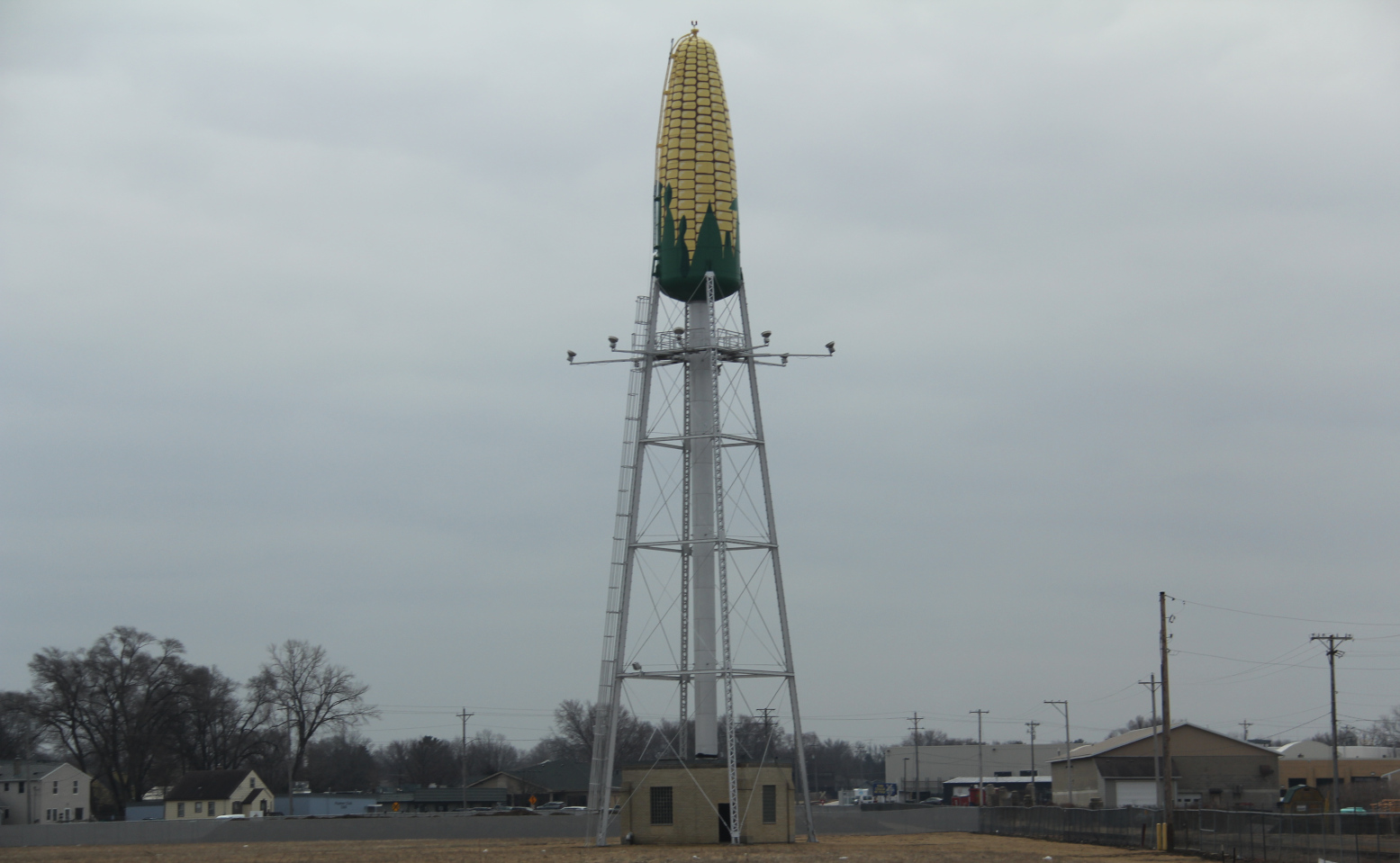
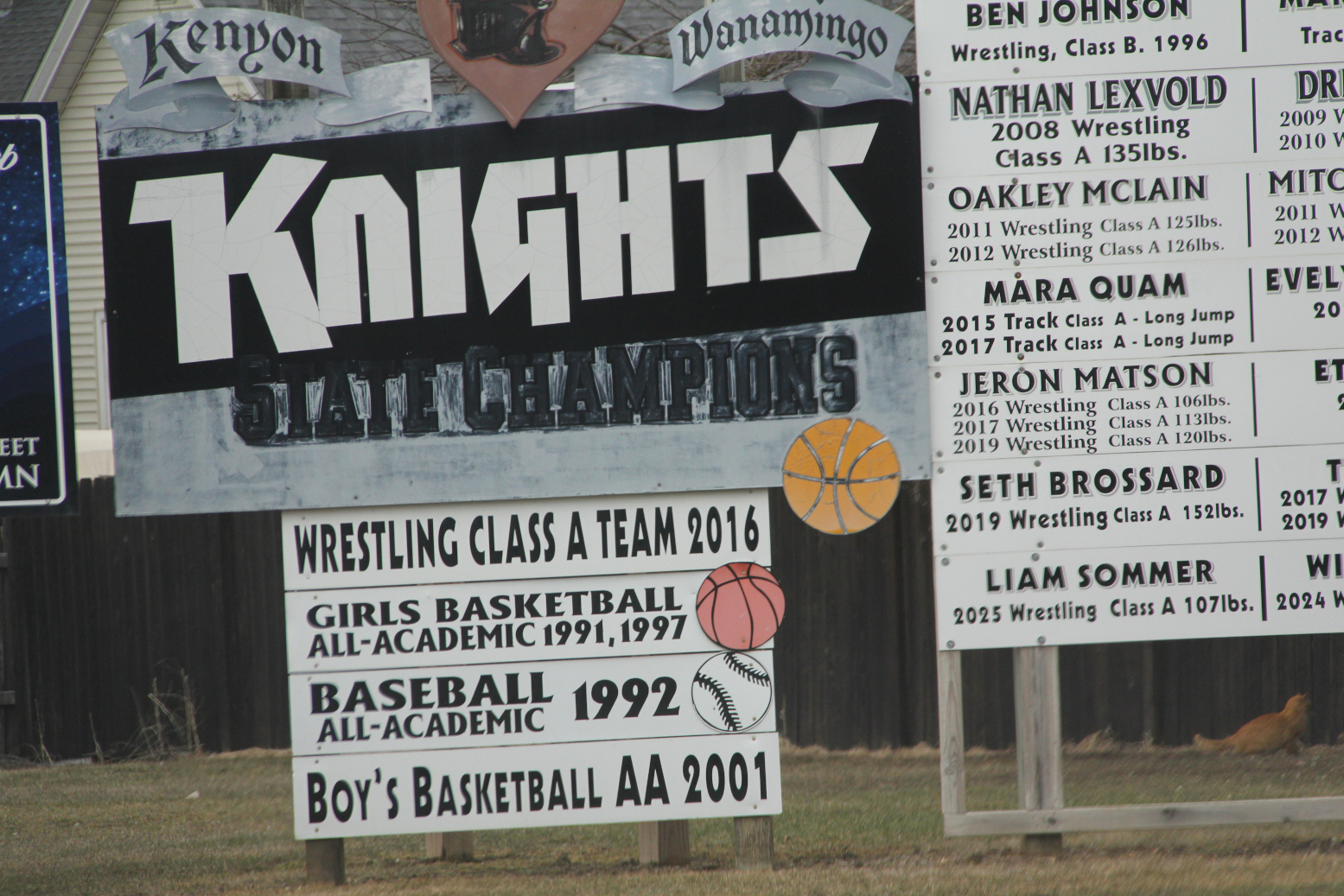
From my community of Faribault, with a population of around 25,000, to Kenyon to the east with some 1,800 residents, to the small towns of Rushford, St. Charles, Spring Grove and Preston in the far southeastern corner of Minnesota, and many small towns and cities across the state, people will gather in protest on Saturday.
In St. Paul, organizers are expecting up to 100,000 to rally at the state capitol. Those are some impressive numbers. Yet, if even five people show up in a small town to protest, that’s impressive, too.
Every voice of resistance matters, wherever you live, rural, suburban or urban.
FYI: The Faribault No Kings Day protest is from 11 a.m.-noon March 28 (and every Saturday) by the Rice County government services building along Minnesota State Highway 60.
© Copyright 2026 Audrey Kletscher Helbling