Minnesota Prairie Roots

Writing and photography by Audrey Kletscher Helbling

My observations about masking in rural Minnesota March 8, 2021

A sign posted at the Steele County History Center in Owatonna. Minnesota Prairie Roots file photo June 2020.

TODAY MY COUNTY OF RICE reported its 92nd COVID-related death. That saddens me. I don’t know the identity of this latest individual to die from the virus. But that matters not. What matters is that, to family and friends, this is the loss of a loved one.

That’s something we all need to remember. Ninety-two represents much more than a number added to the growing statistics. It represents a life.

With that said, I need to vent. And if you’re weary of reading about anything COVID-related, then stop reading right now. But I’m frustrated, beyond frustrated.

On Saturday, Randy and I headed to two small towns south of Owatonna. Just to get out of town for a bit. We’ve previously toured both, but several years ago. Driving into rural Minnesota, parking on Main Street and then walking to see what we can find is an adventure.

WHAT MASKS?

Our day trip into these two rural Steele County communities on Saturday proved to be an adventure alright. What we found was absolutely, totally, disheartening. Compliance to Minnesota’s state mask mandate is pretty much non-existent. That left me exiting several businesses—a hardware store and boutiques—before the doors had barely closed behind me. And we’re not talking just customers here without masks. We’re talking owners and employees.

Never mind the signs posted outside these businesses stating that “masks are required.” Why bother? Oh, because the state requires posting of these signs, apparently.

FEELING DISRESPECTED

Here’s how I felt when I saw those business owners and employees without masks. I felt disrespected. I felt unsafe. I felt unwelcome. I felt frustrated. I felt angry. I felt like they didn’t really want my business. And, as much as I wanted to say something to them about my feelings, I didn’t. You never know who’s carrying a gun these days and may harm you if you speak up. So I walked out.

And the thing is, several of those small town boutiques, especially, were inviting little shops filled with merchandise that may have interested me. But I felt uncomfortable from the moment the unmasked shopkeepers greeted me and I turned to make a hasty exit.

BUSINESSES LEAD BY EXAMPLE

Interestingly enough, while Randy was shopping at a popular family-owned meat market in the town a mile off the interstate, he found full mask mandate compliance and even a plexi-glass shield separating cashiers from customers. Plus hand sanitizer. So kudos to that meat market and the local grocery store owner, who was also masked. I observed a woman I’d previously seen, unmasked at the boutique, walk into the meat market wearing a mask. Interesting, huh? A business sets the tone for customer compliance.

This masking issue isn’t a problem unique to small towns. When we returned to Faribault and stopped to pick up a few groceries, I spotted mask-less customers. They are increasing in number. The non-maskers and half-maskers. But at least I don’t see business owners and employees without masks in my community (except at the farm implement dealer). That’s the difference. In the two small towns in Steele County, business owners and employees were without masks. I don’t get it. I just don’t get it. Masks are a scientifically-proven way to prevent spread of COVID-19. Why risk the health of customers? This, what I perceive as selfish and uncaring behavior, left me with a really negative perspective of these two towns. And that’s something no business, no community, needs, especially now.

© Copyright 2021 Audrey Kletscher Helbling


The Railway Bar & Grill, next to the tracks in Sleepy Eye March 5, 2021

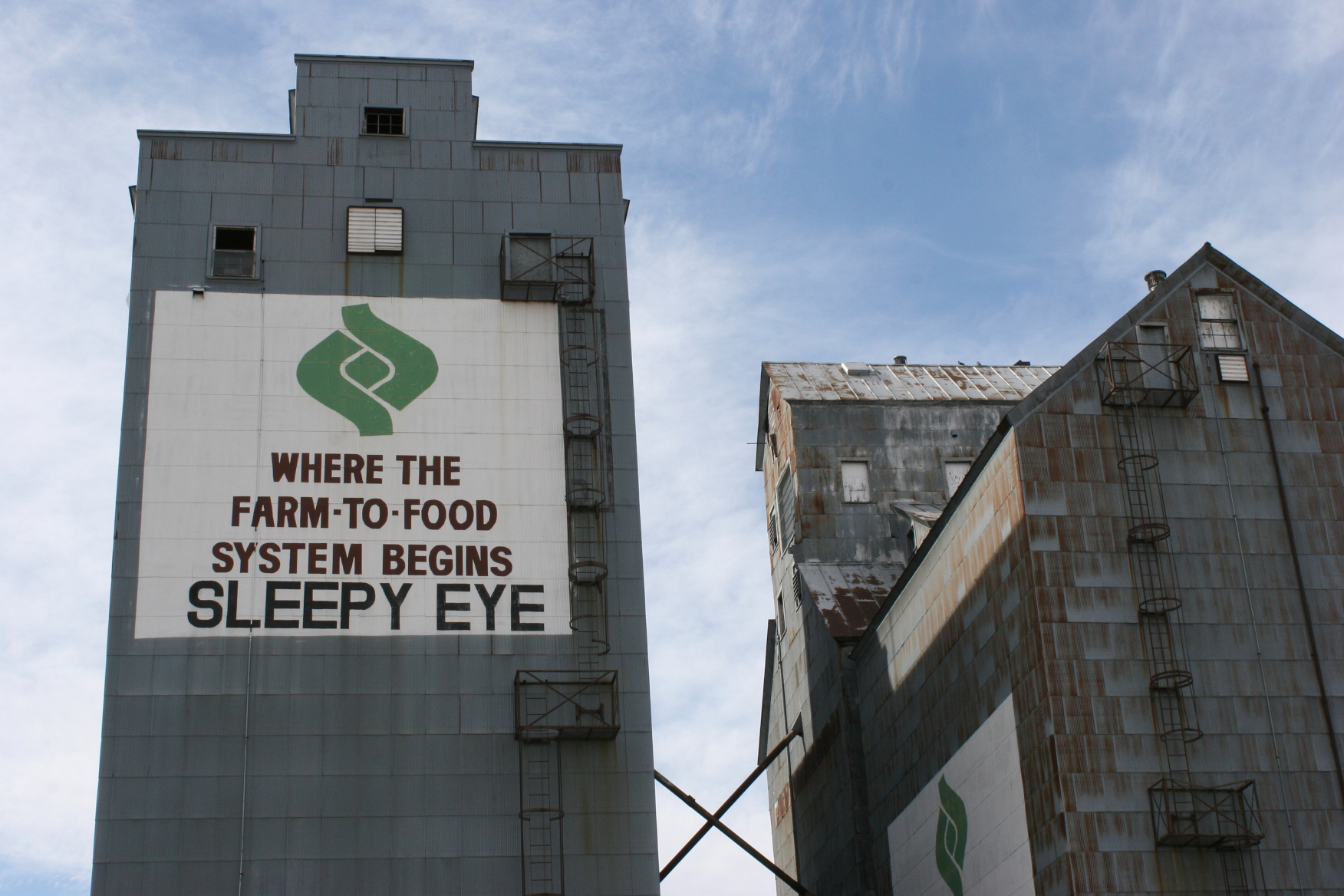
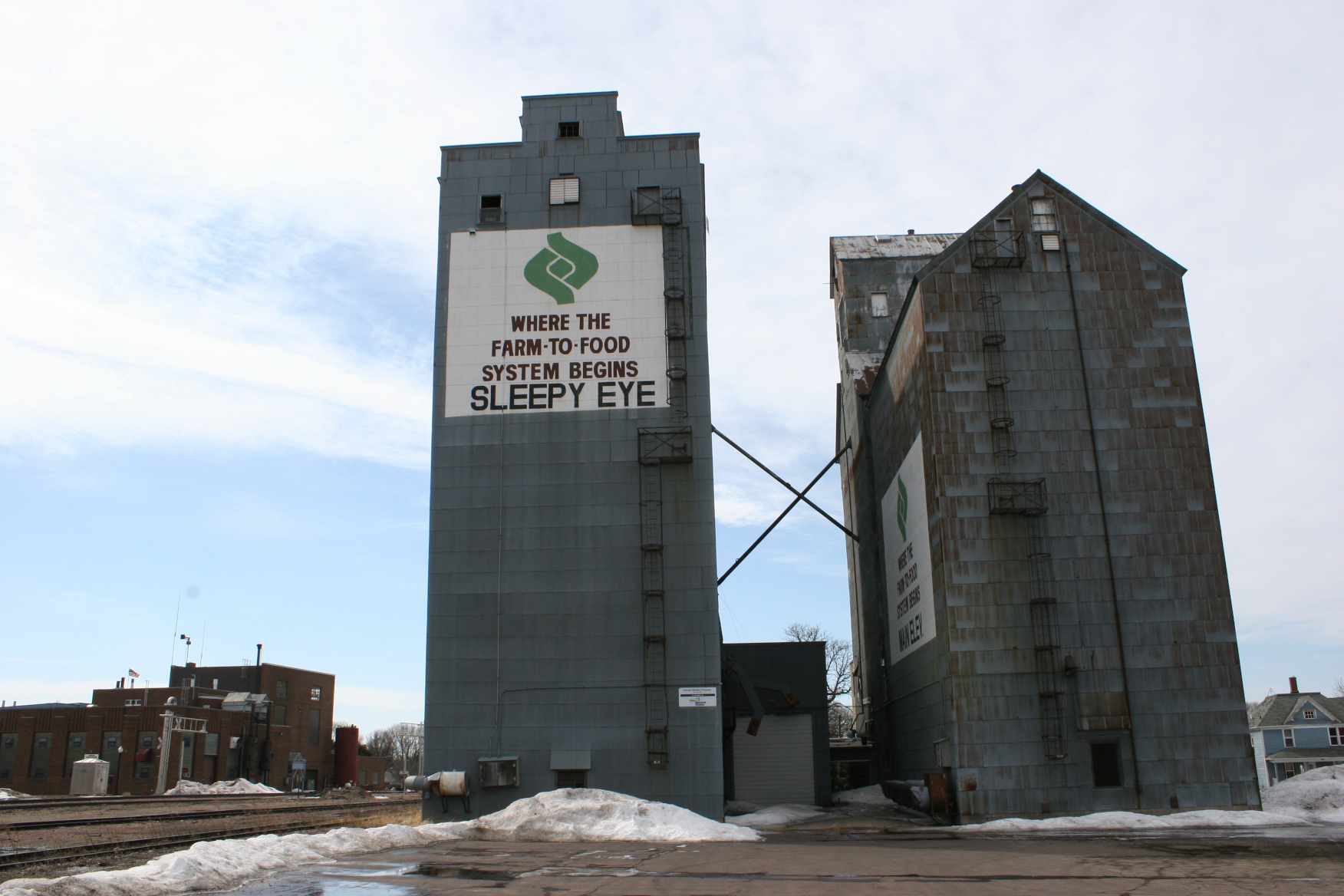
Twin grain elevators mark the skyline of Sleepy Eye. Minnesota Prairie Roots file photo March 2020.

EXACTLY ONE YEAR AGO, Randy and I rolled into Sleepy Eye, a small ag-based community along U.S. Highway 14 in Brown County in southwestern Minnesota. I lived and worked there briefly as a newspaper reporter decades ago. So I’m familiar with the town, although much has changed. In recent years, we’ve stopped at Sleepy Eye Stained Glass for stained glass. Randy occasionally creates and repairs stained glass art.

But on this stop, we’d just come from neighboring Redwood County, where we saw my mom in the nursing home. We didn’t know it then, but this would be our last in-person visit before COVID-19 closed care center doors to visitors and changed everything.

By the time we reached Sleepy Eye well past the noon hour, I was hungry. It’s a running joke in our family that I need to eat on time or I get crabby. It’s the truth, not a joke.

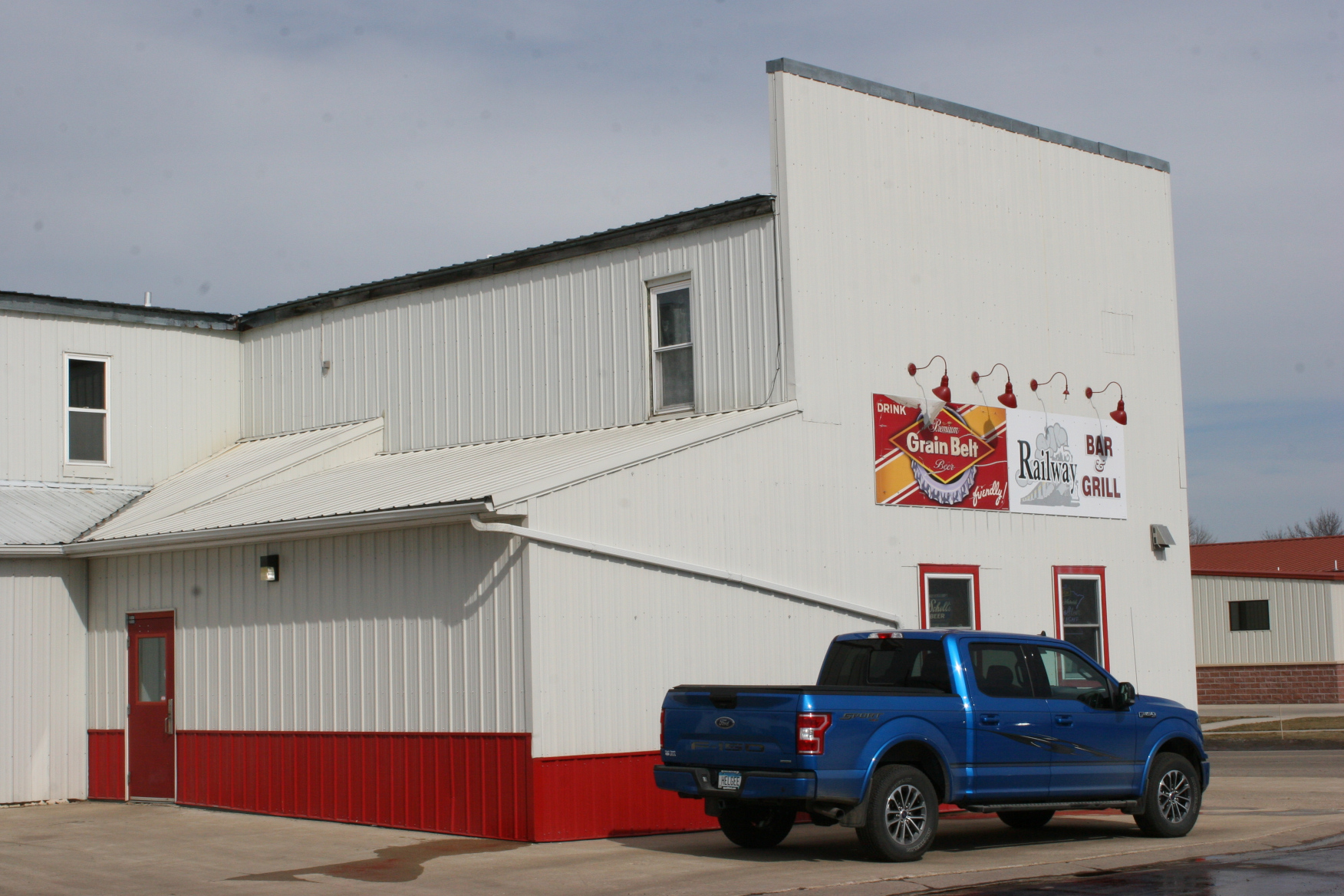
A side view of the Railway Bar & Grill. Minnesota Prairie Roots file photo March 2020.
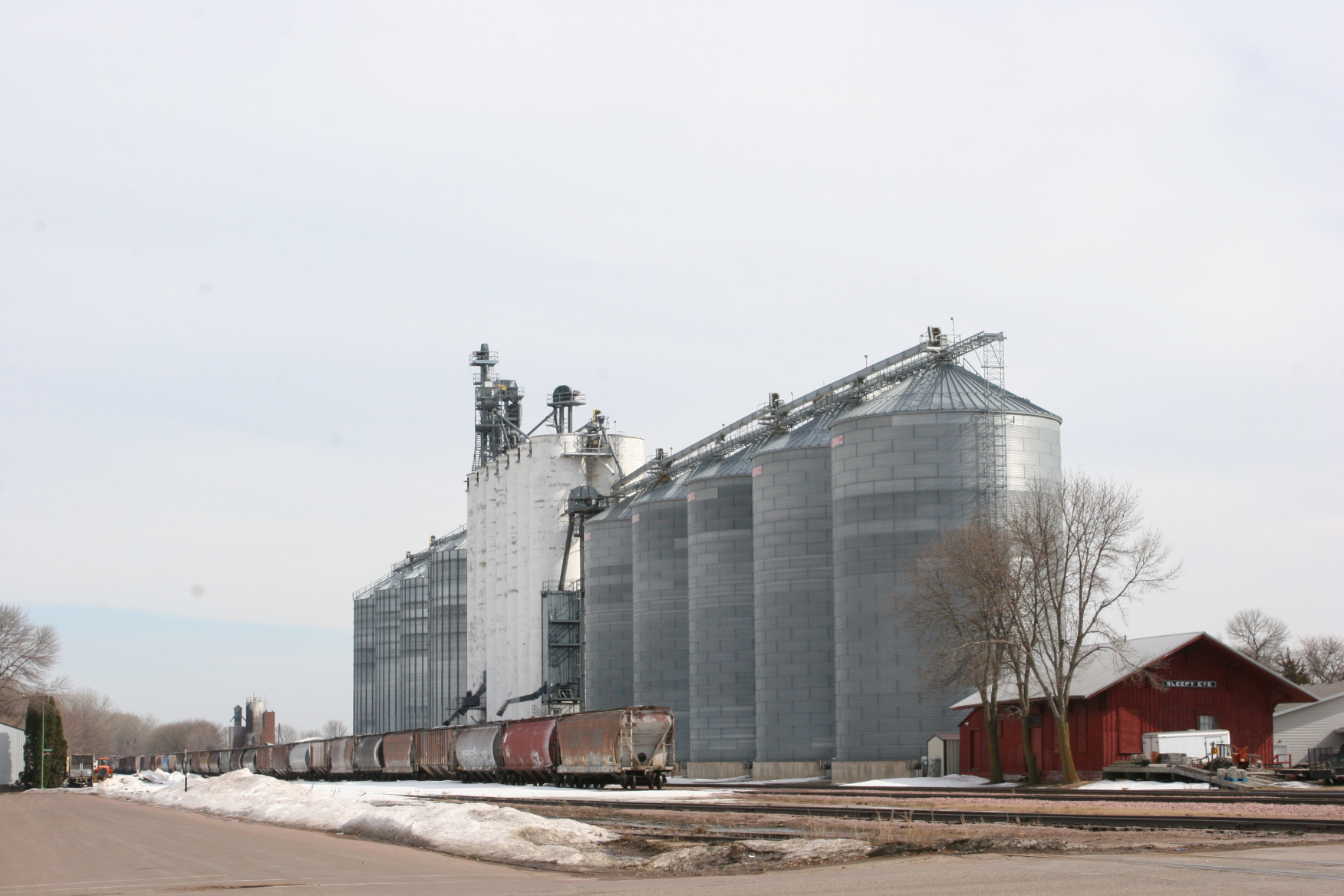
Across the street from the bar and grill, train tracks and grain bins. Minnesota Prairie Roots file photo March 2020.
Those beautiful vintage grain elevators… Minnesota Prairie Roots file photo March 2020.

We ended up at The Railway Bar & Grill, appropriately named given its location near the train tracks. Next to the grain elevator. I don’t recall what I ordered other than a sandwich. Nothing memorable, but sustenance.

The condiment holder on our table. These always reveal insights into local tastes. Minnesota Prairie Roots file photo March 2020.

In a pandemic year that’s been especially difficult for bars and restaurants, The Railway apparently struggled. The business—complete with bar, two dining areas, private conference room, an outdoor patio, 12 tappers and more—is now for sale. For $165,000.

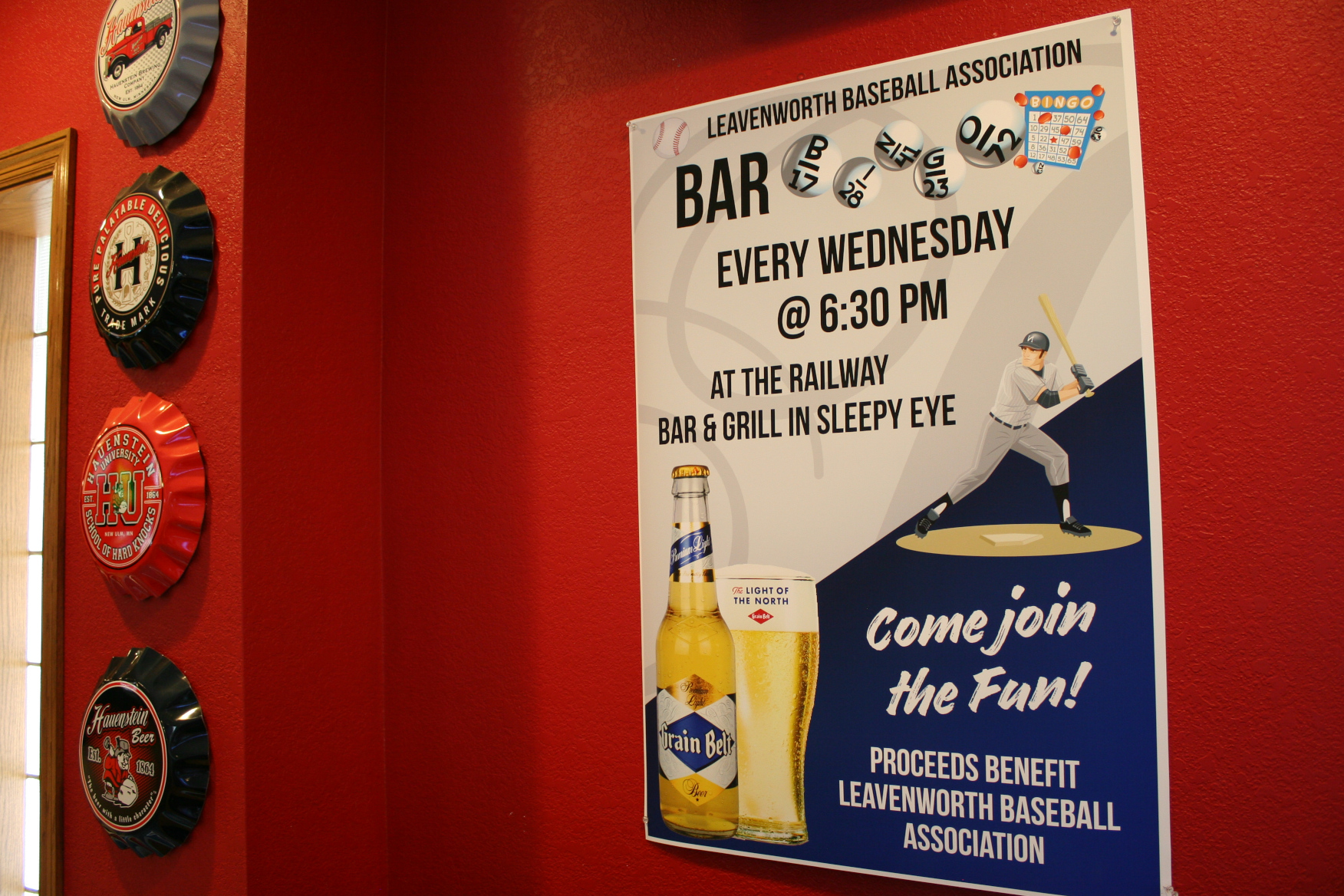
A sign posted inside The Railway Bar & Grill shows community involvement. Minnesota Prairie Roots file photo March 2020.

I’m not familiar with dining options in Sleepy Eye. But I know one thing about small towns—cafes and bars and grills are community gathering places. Spots to meet with family and friends. After a ball game. On a Saturday night. To shoot the breeze. To celebrate. To get out of the house on a cold winter evening. To BS over a beer or two. From all indications, The Railway filled that need in Sleepy Eye.

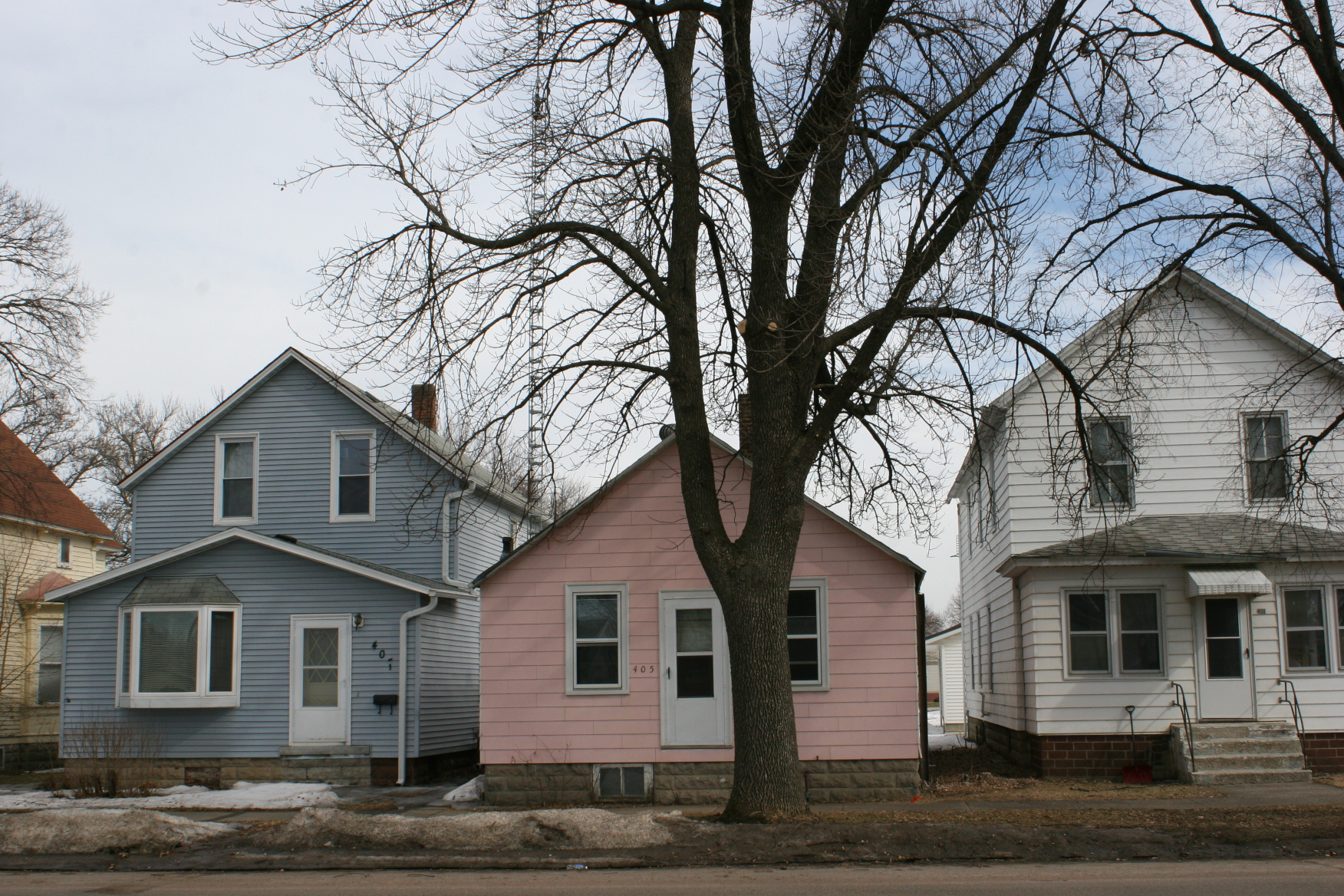
Small houses cram together in the neighborhood by the grain elevators and The Railway Bar & Grill. Minnesota Prairie Roots file photo March 2020.

When Randy and I finished our sandwiches on that early March Saturday afternoon in 2020, I stepped outside to photograph the neighborhood while he paid the bill. I focused my lens on three houses crammed together.

The grain elevators, next to the train tracks in Sleepy Eye, dwarf neighboring buildings. Minnesota Prairie Roots file photo March 2020.

And then I aimed toward the towering grain elevators next to the bar & grill. Vintage elevators always draw my eye for their architectural interest (as cathedrals of the prairie), historical importance and connection to my farming past. Silo style grain storage units will never hold the same appeal as these rectangular grey elevators soaring high above small towns. Too many of these have vanished, including in my hometown of Vesta where a local farmer moved the elevators onto his farm.

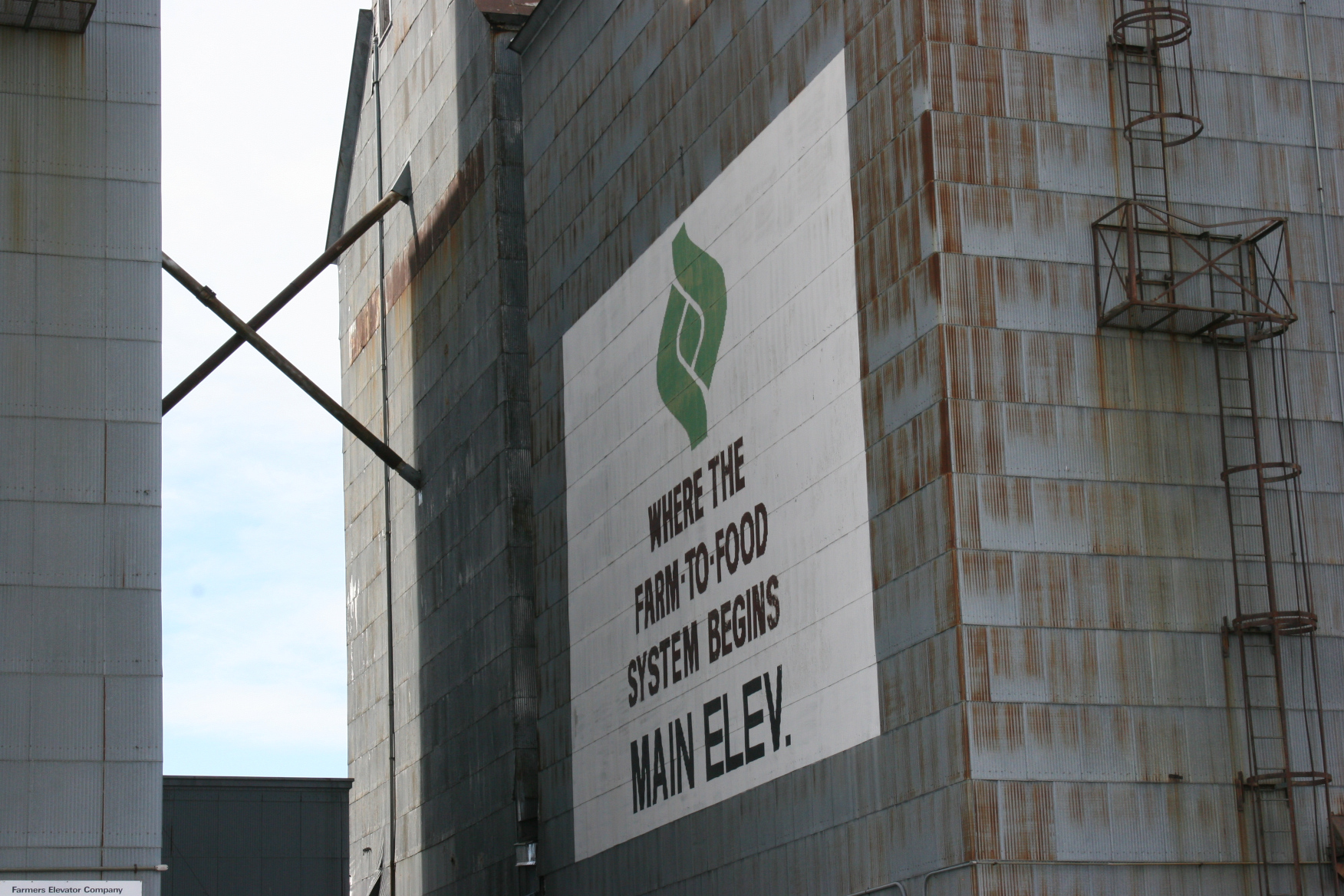
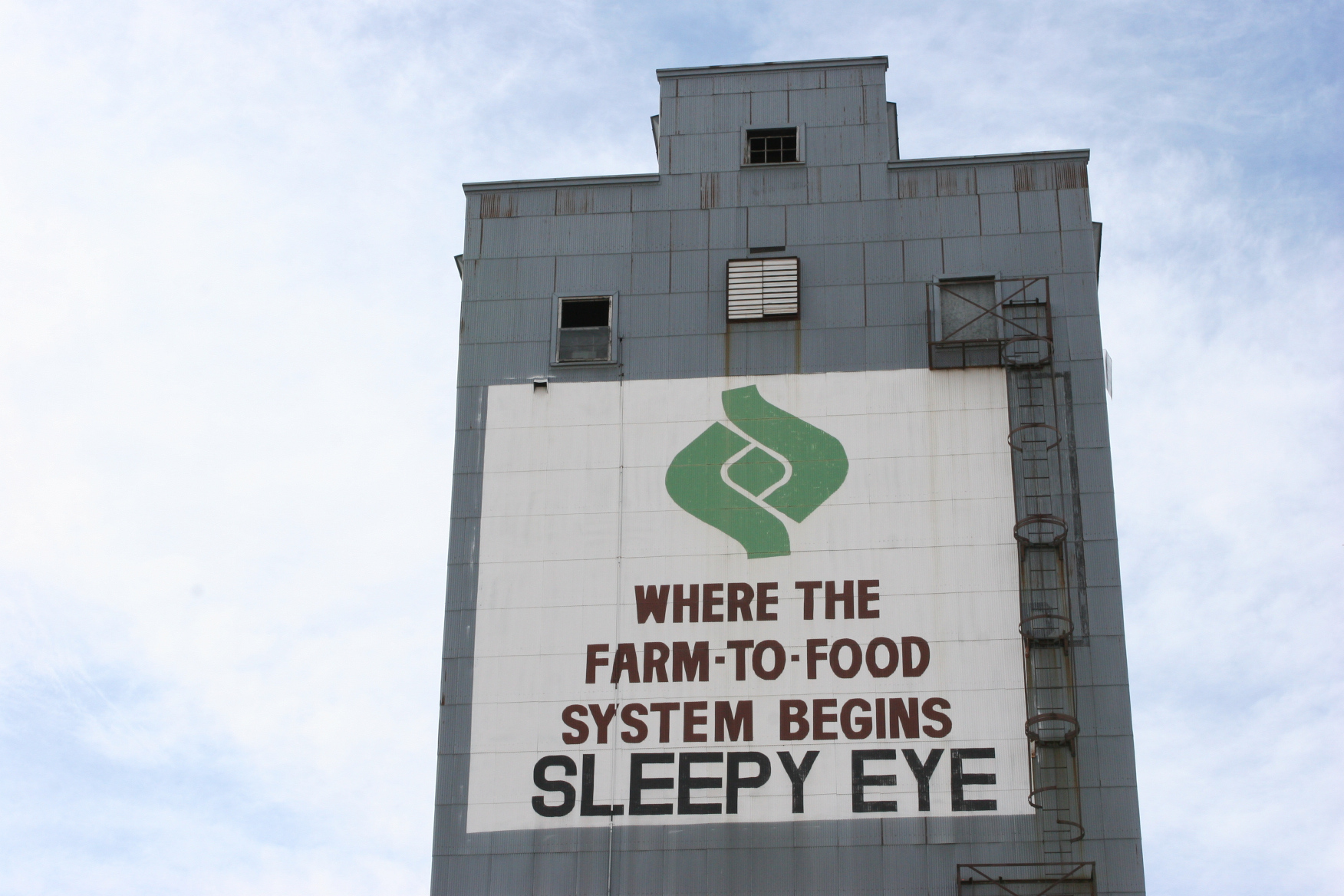
A strong message adds to the visual appeal of the Sleepy Eye grain elevators. Minnesota Prairie Roots file photo March 2020.

On this Saturday, I delighted in reconnecting with my rural roots outside The Railway. In my memory, I heard the rumble of a train, saw grain trucks lining up at the elevator, smelled the earthy scent of harvest…

© Copyright 2021 Audrey Kletscher Helbling
 

From Minnesota: Reflecting on small towns January 29, 2021

Buckman, Minnesota. Minnesota Prairie Roots file photo September 2020.

RURAL MINNESOTA. For Randy and me, that represents our upbringing, the place of our roots, the land that is part of our personal geography.

A road grader grades the gravel road near Randy’s childhood farm southeast of Buckman. We pulled off the narrow road to allow the grader to safely pass by our van. Minnesota Prairie Roots file photo September 2020.
A farm place between Buckman and Gilman. Minnesota Prairie Roots file photo September 2020.
In the small town of Gilman. Minnesota Prairie Roots file photo September 2020.

We both grew up on farms, in large families—his three kids larger than mine at nine. We both picked rock—he more than me as Morrison County in central Minnesota sprouts more rocks than Redwood County. We each labored in fields and barns and understood the value of hard work and our importance in the farming operation. Even at a young age. That carries through in our strong work ethics and our strong link to the land.

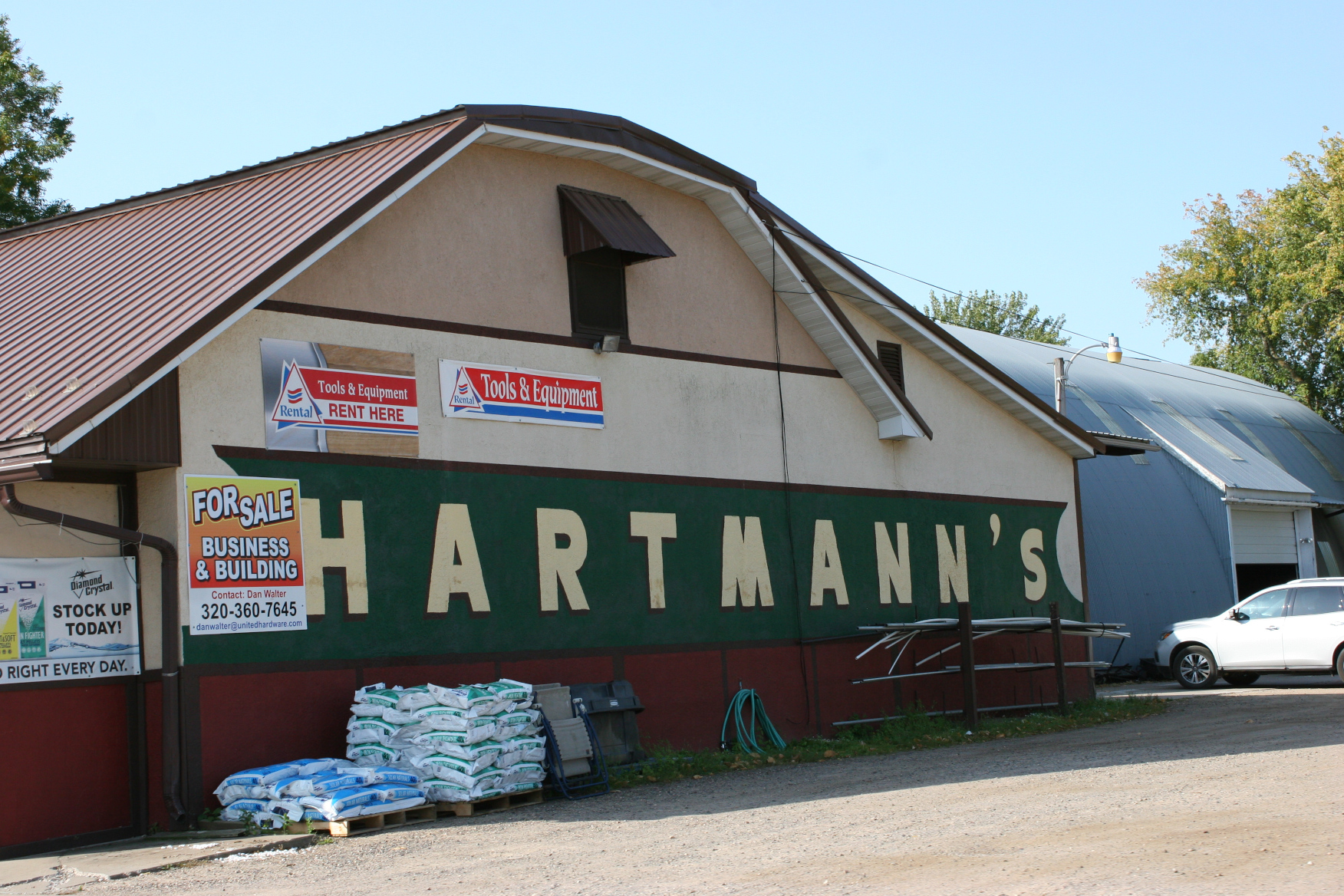
Pierz, a small town to the north of Buckman and bigger than Buckman, still has a hardware store. Randy attended junior and senior high school in Pierz. Minnesota Prairie Roots file photo September 2020.
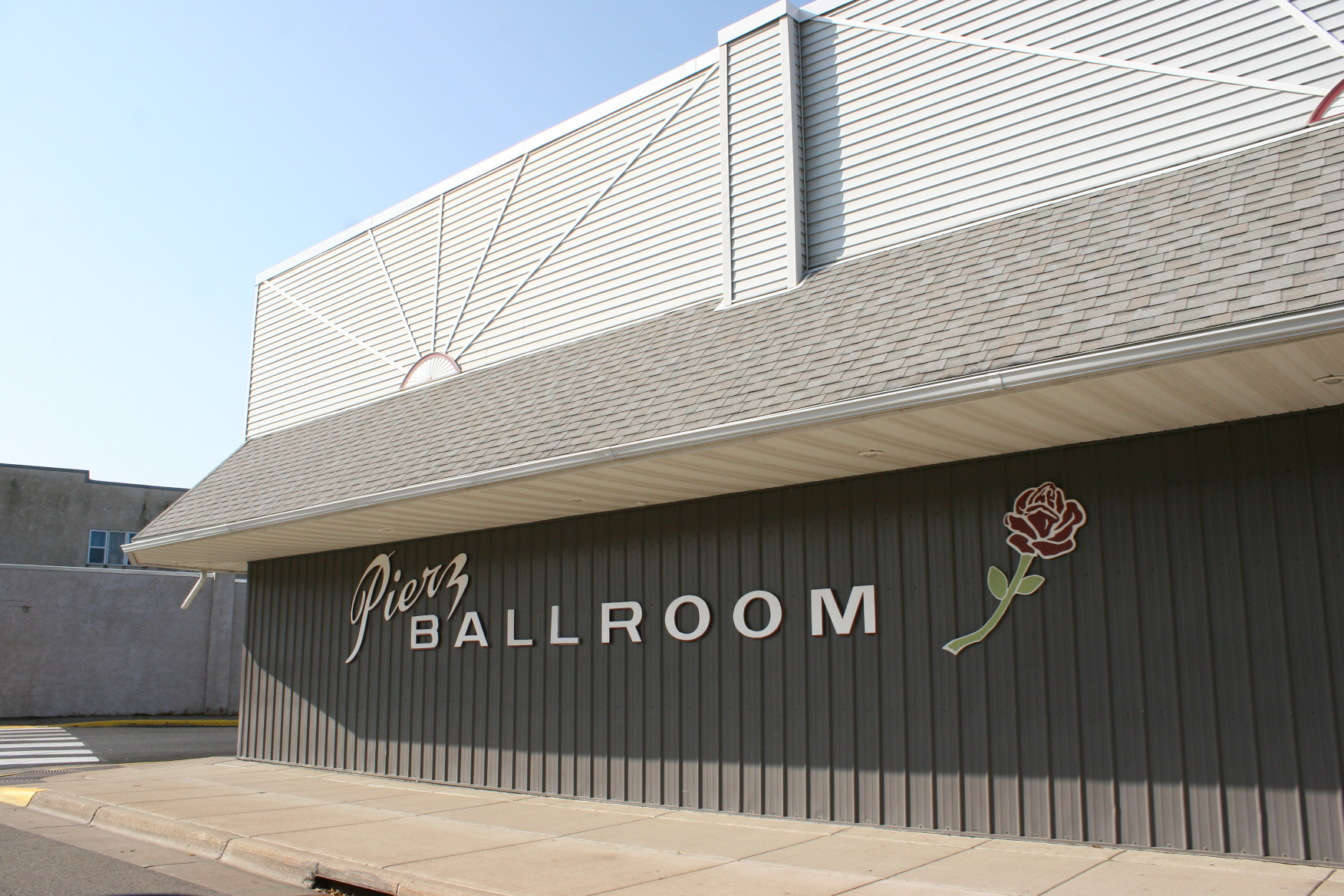
As we passed through Pierz, I photographed this updated community gathering spot. Minnesota Prairie Roots file photo September 2020.
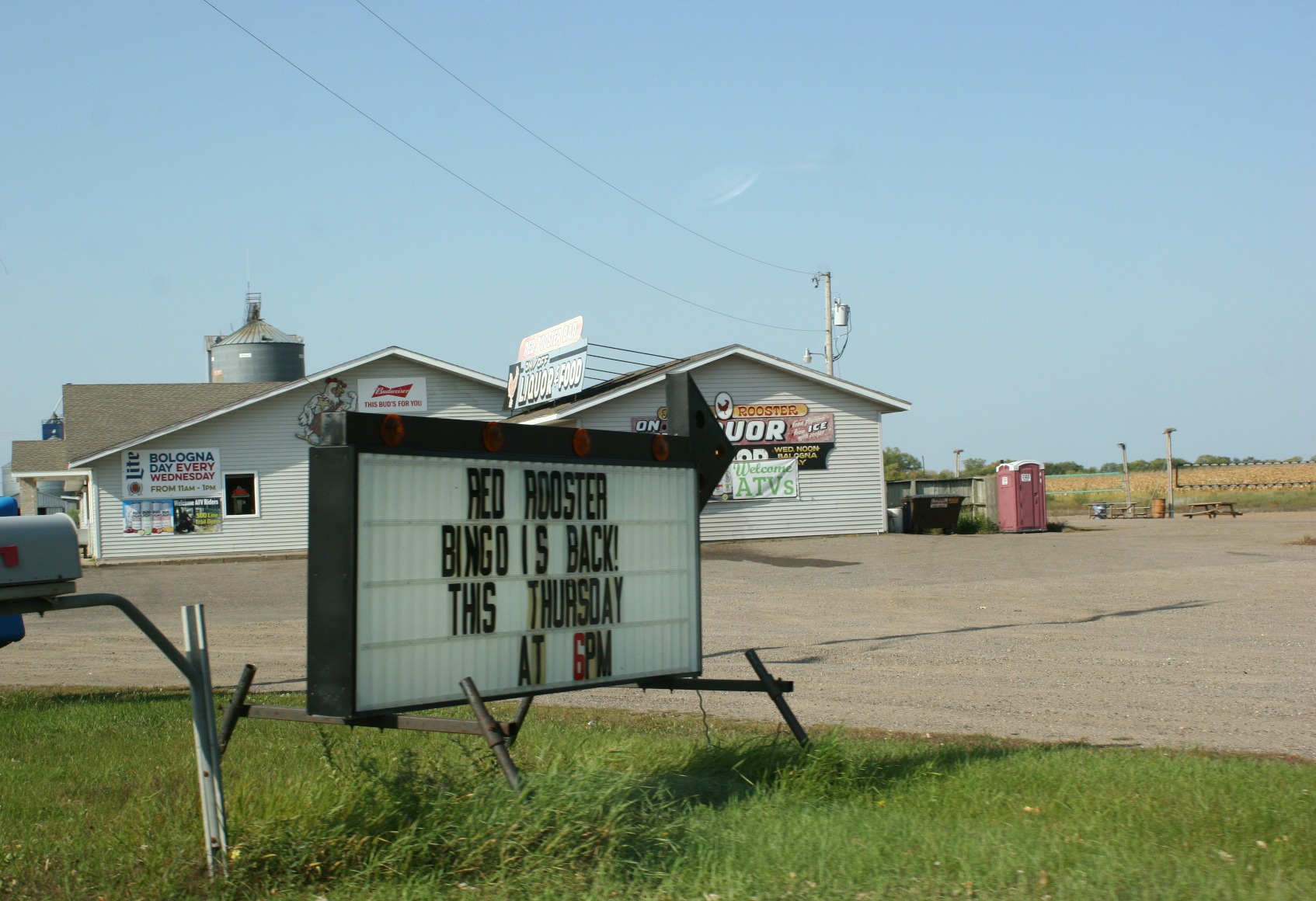
Genola, just to the south of Pierz, is home to the Red Rooster. BINGO is big in this part of rural Minnesota as is weekly Bologna Day (as noted in the banner on the building). Minnesota Prairie Roots file photo September 2020.

And, though we left our rural communities at age 17, we still hold dear the small towns—Buckman and Vesta—that were such an important part of our upbringing. Both have changed with familiar businesses long gone. Society changed and locals began driving farther for groceries and other necessities.

A nod to this area’s rich agricultural base outside Sev’s Food & Liquor in Buckman. Minnesota Prairie Roots file photo September 2020.

It’s easy to get caught in the memories, of the back then, of wishing nothing had changed. But it has and it does. And life goes on.

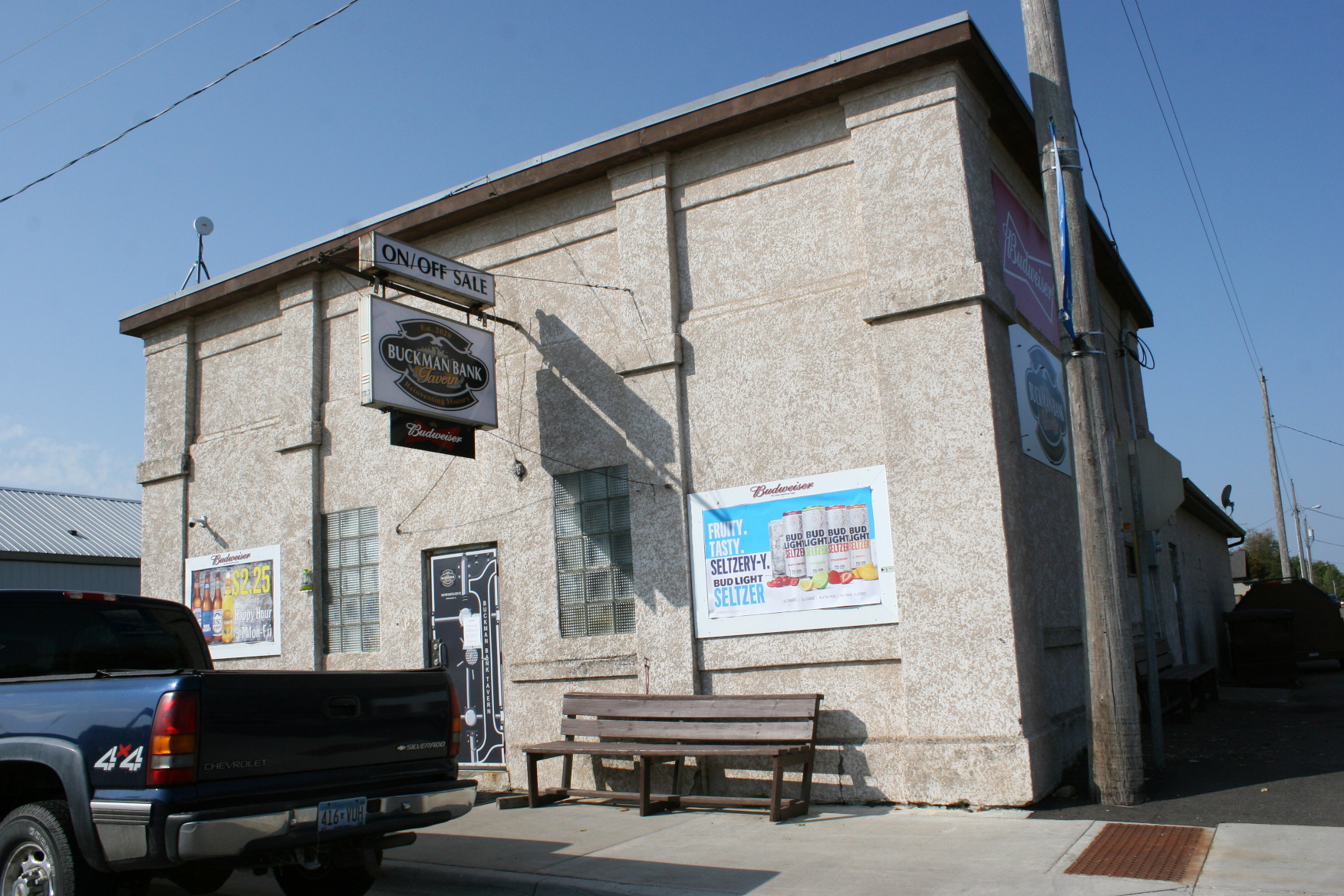
Housed in the old bank building, the Buckman Bank Tavern. Minnesota Prairie Roots file photo September 2020.
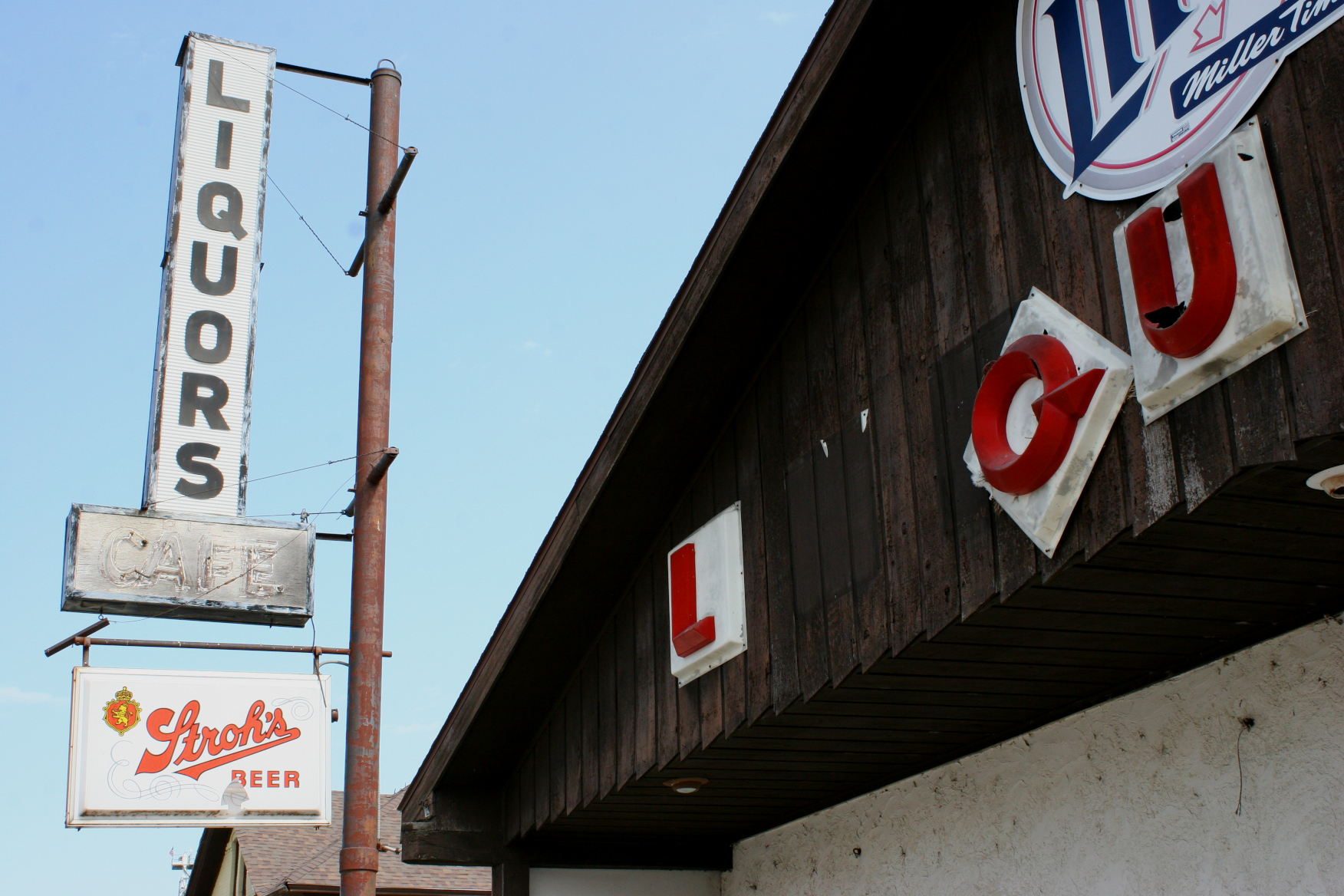
Signs on Sev’s in Buckman. Minnesota Prairie Roots file photo September 2020.
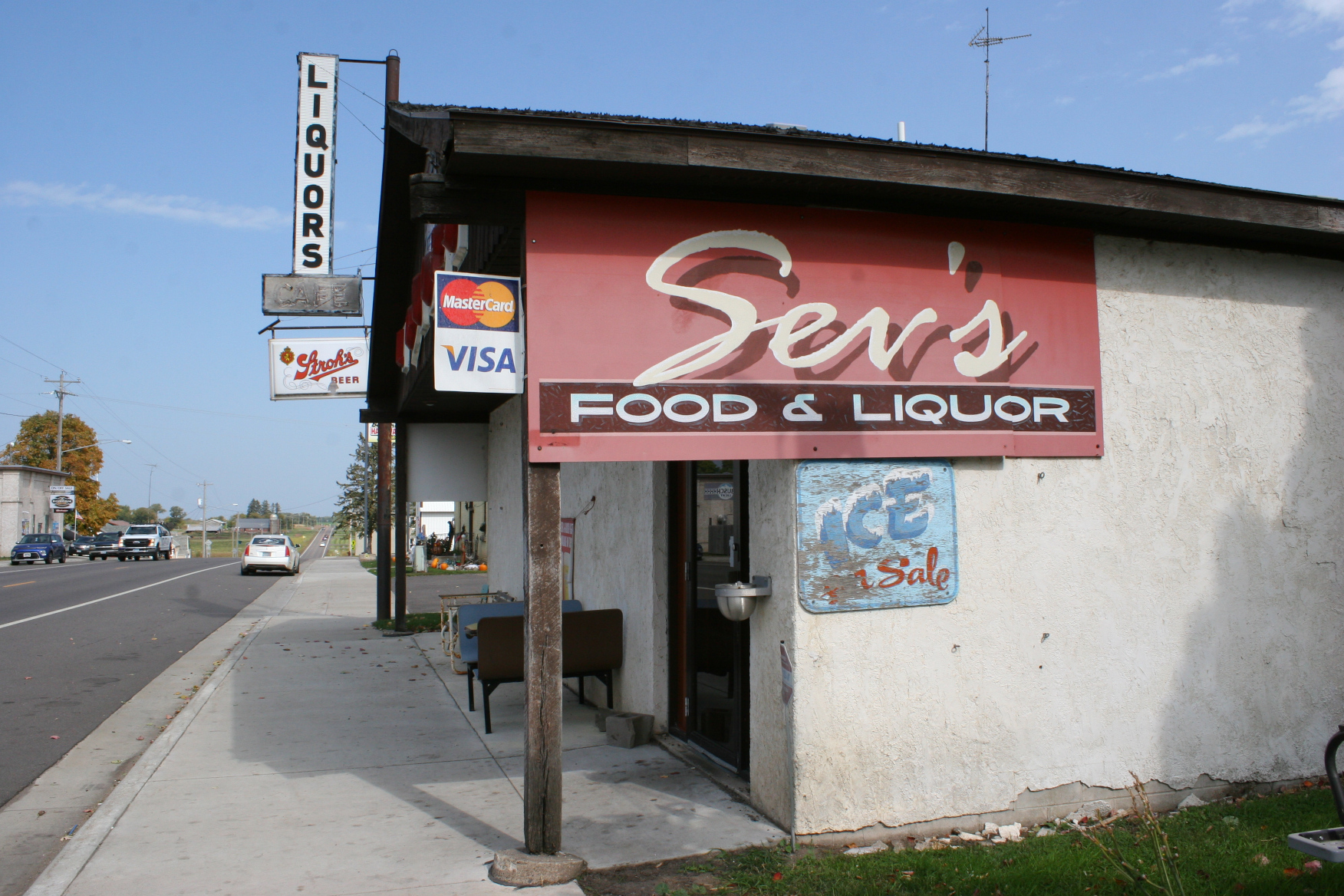
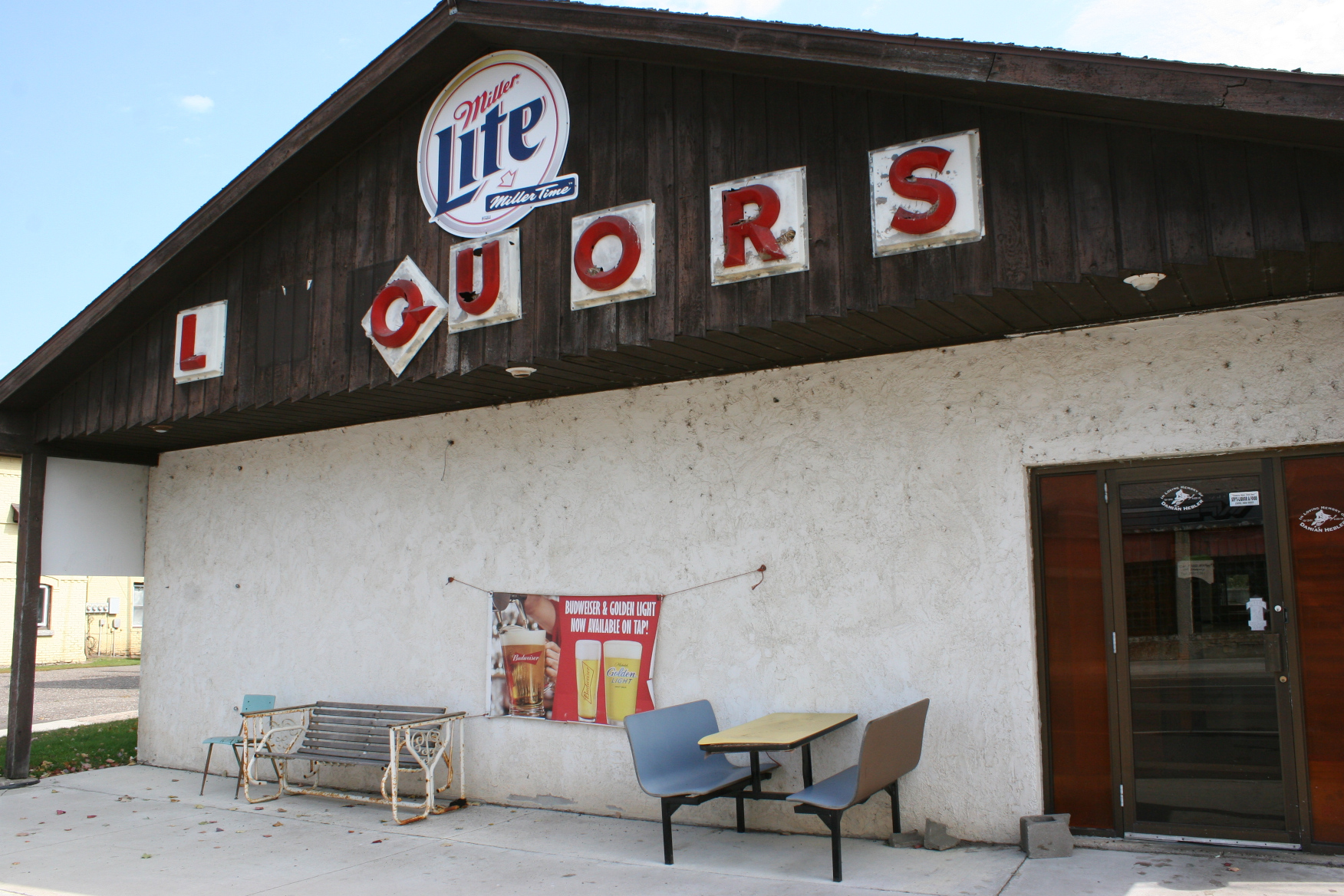
Sev’s Food & Liquor along Buckman’s main street. Minnesota Prairie Roots file photo September 2020.

Returning to our hometowns, our home areas, causes me to reflect while simultaneously appreciating that which remains. Cafes and churches and hardware stores. Post offices and bars and grain elevators. These are the community gathering spots that still mark many of Minnesota’s smallest communities, those towns that span only blocks from east to west, north to south.

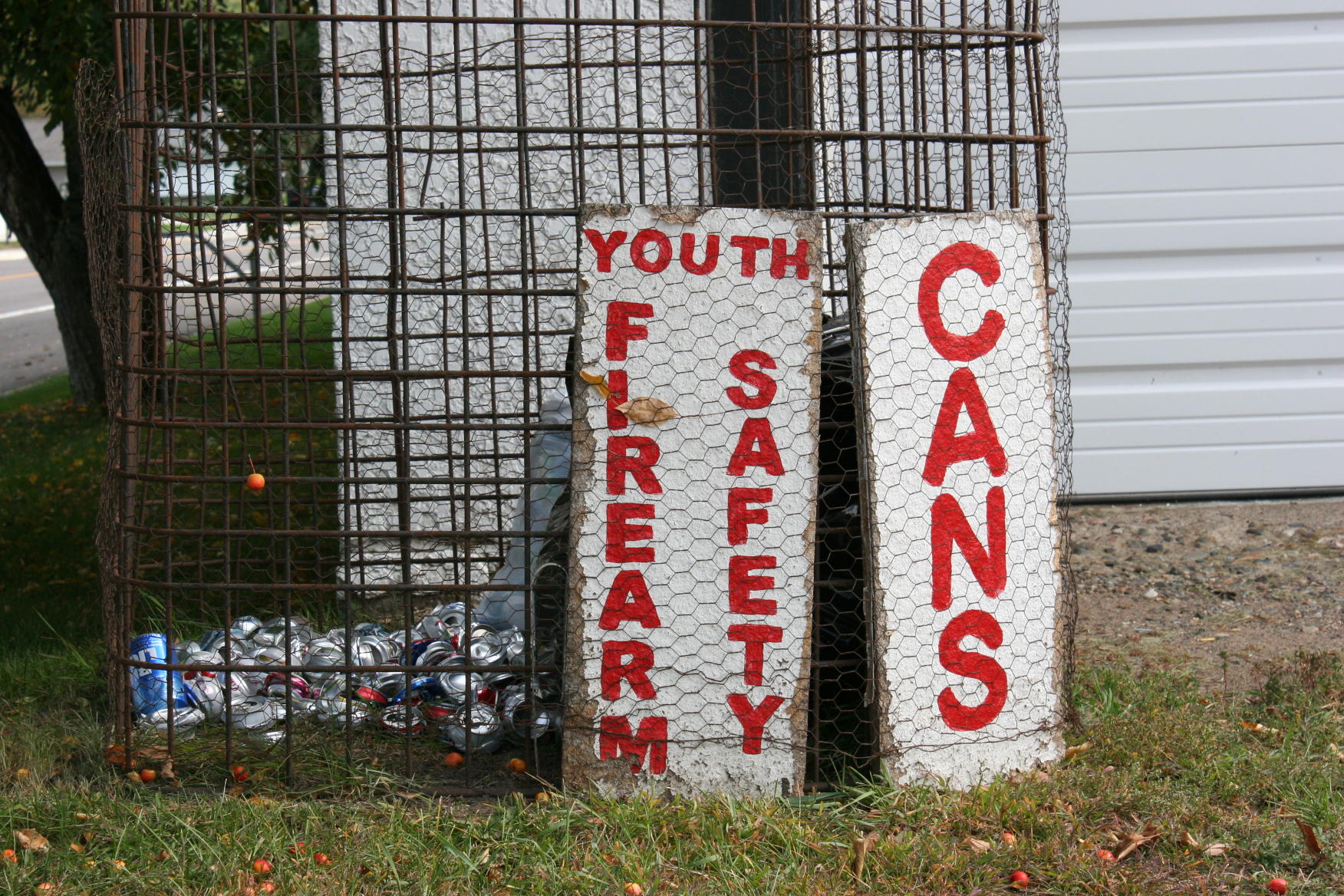
I often see can collection sites in small towns, like this one in Buckman. They offer insights into a community. Minnesota Prairie Roots file photo September 2020.
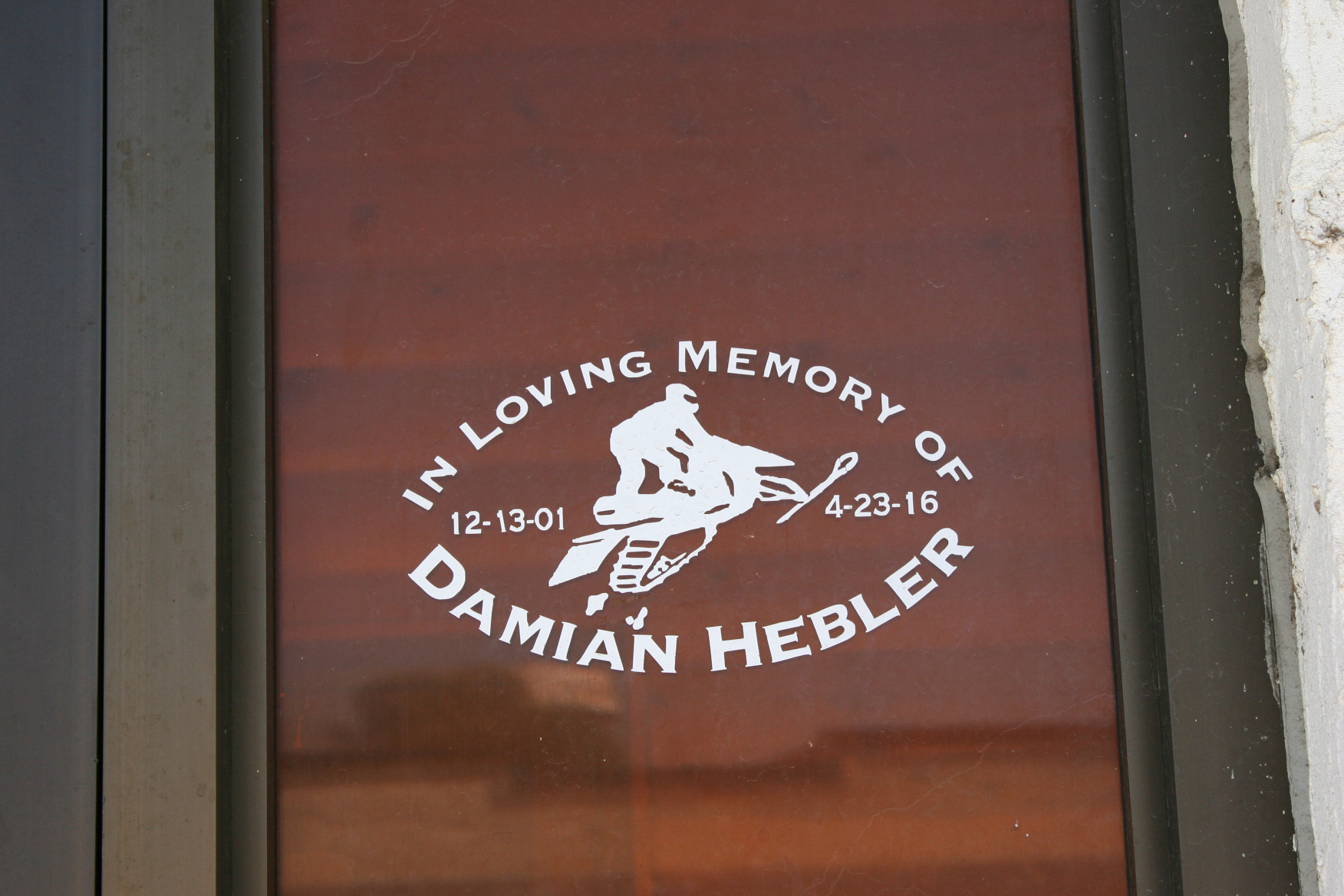
On the door of a Buckman bar, a young man remembered. Minnesota Prairie Roots file photo September 2020.
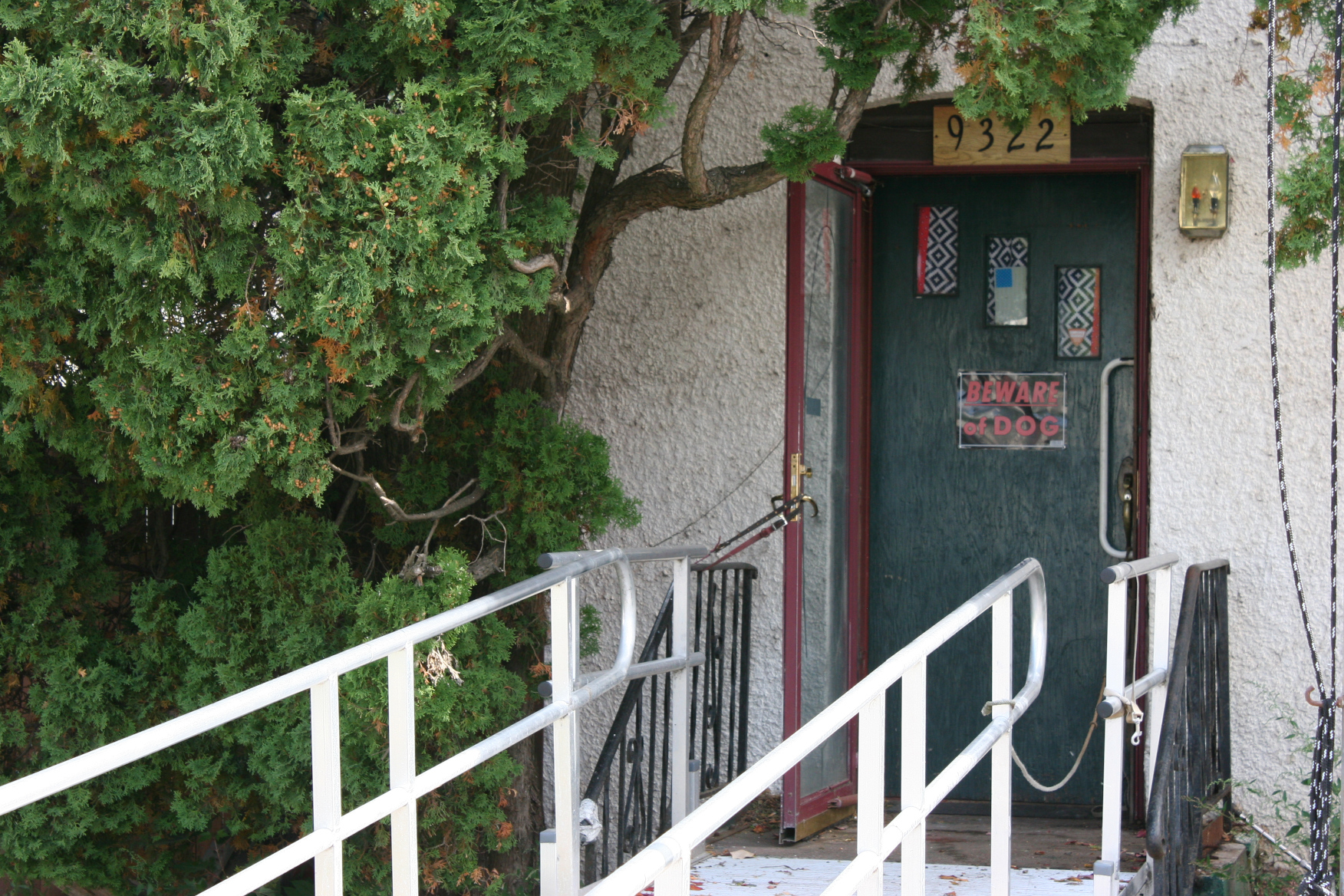
A warning sign posted on a house in Buckman. Minnesota Prairie Roots file photo September 2020.

But more than buildings, people form community. Even in Faribault, where Randy and I have lived since 1982, we’ve found our small town in a city of around 25,000. That’s in our faith family at Trinity Lutheran Church, the “town” that centers our lives. An uncle and I discussed this recently. He lives in Minneapolis. His neighborhood is his community, his small town.

A place to gather outside Sev’s Food & Liquor in Buckman. Minnesota Prairie Roots file photo September 2020.

No matter where you live, whether in rural Minnesota or New York City, the mountains of Idaho or the plains of Nebraska, I hope you’ve found your community and place of joy.

© Copyright 2021 Audrey Kletscher Helbling
 

Embracing winter in Minnesota January 6, 2021

Filed under: Uncategorized — Audrey Kletscher Helbling @ 5:00 AM
Tags: , , , , , , , ,
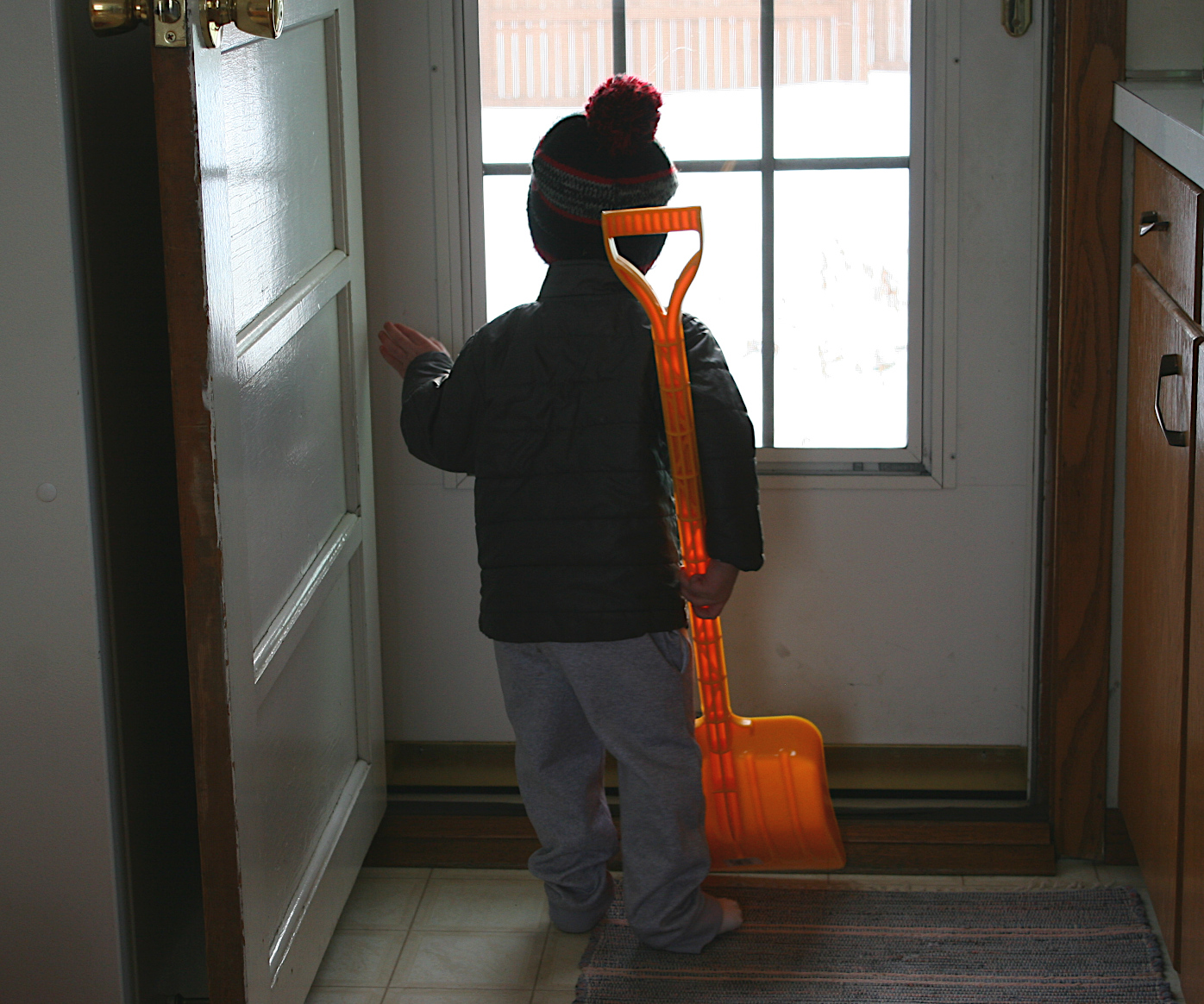
My two-year-old grandson with his new snow shovel.

WHEN YOU LIVE IN A NORTHERN state like Minnesota, where winter defines at least half the year, preparation for cold and snowy weather is a necessity, not an option.

It’s a lesson taught from early on. Snowsuit, waterproof mittens and snow boots for the kids. Check. Check. Check. Sled. Check. Snow shovel. Check.

No matter your age, dressing properly to protect from the elements and then having the right tools to deal with the snow are essentials. So we’ve equipped our grandchildren, Isabelle and Isaac, with snow shovels and sleds. Izzy got her mama’s childhood snow shovel and Lion King sled. Isaac got a new shovel purchased at the local hardware store. And we bought bright new sleds for both at a regional retailer.

Then it’s up to the parents, or the grandparents, to bundle the kids and get them outdoors. It’s a process. But important in teaching the little people that winter can be fun.

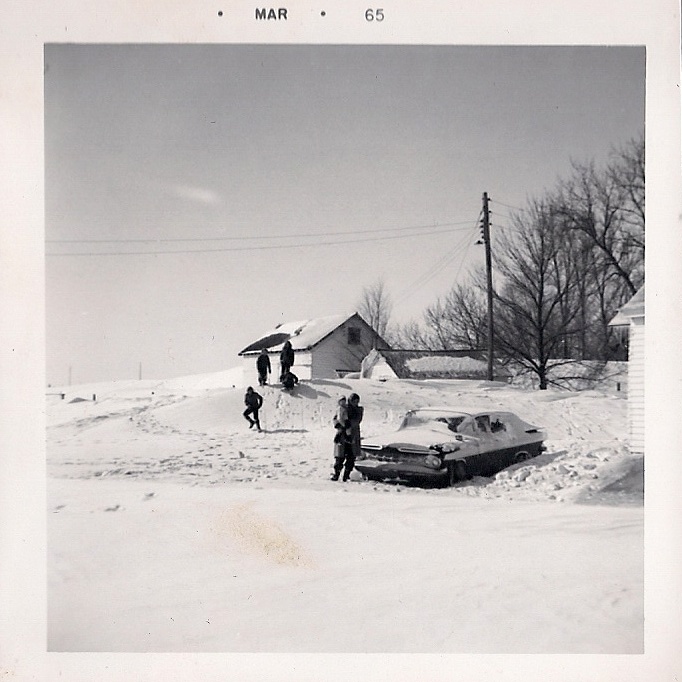
Our southwestern Minnesota farmyard is buried in snowdrifts in this March 1965 image. My mom is holding my youngest sister as she stands by the car parked next to the house. My other sister and two brothers and I race down the snowdrifts.

I loved winter as a child growing up on the wind-swept southwestern Minnesota prairie. There snow drifted into rock-hard mountains around the house and farm outbuildings. There Dad shoved snow with the John Deere tractor and loader into more mountains, where my siblings and I played for endless hours. We carved out snow caves and raced on a vintage runner sled. Such is the stuff of memories. And of winter in Minnesota.

This huge, hard-as-rock snowdrift blocked our farm driveway in this March 1965 photo, rural Vesta, Minnesota. My uncle drove over from a neighboring farm to help open the drive so the milk truck could reach the milkhouse.

While my grandchildren’s memories will be different—they live in a new housing development in the south metro—I hope they continue to embrace winter with joy and enthusiasm. Just as their mom (Dad grew up in warm and sunny California) and maternal grandparents did before them.

© Copyright 2021 Audrey Kletscher Helbling
 

An architecturally historic bridge in Waterford Township November 9, 2020

NOTE: This post features photos from a mid-August stop at the historic Waterford bridge near Northfield, Minnesota.

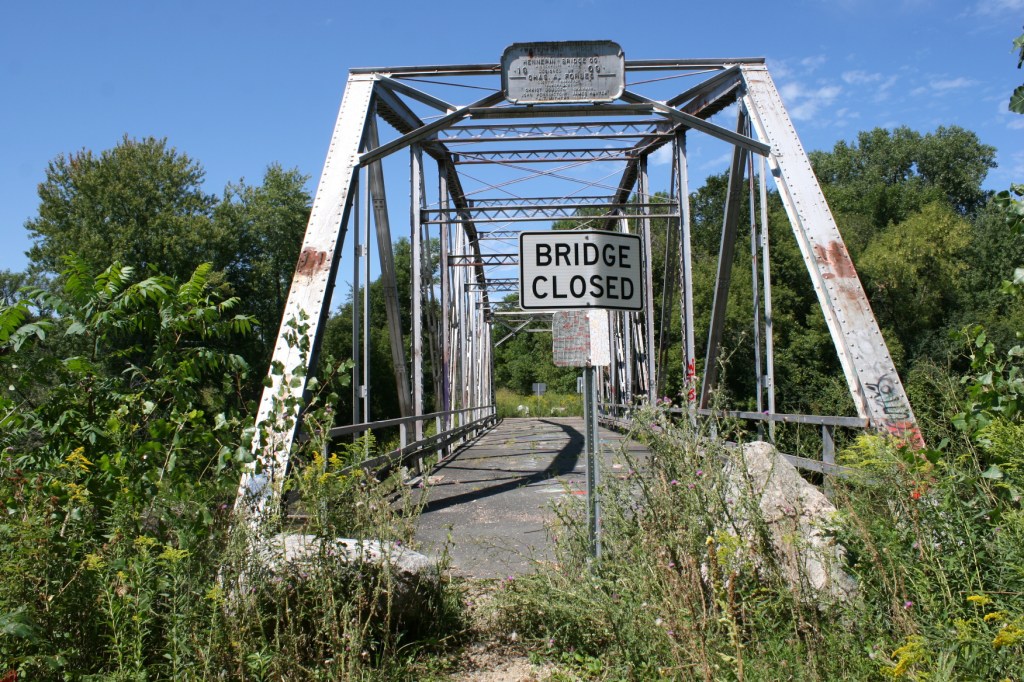
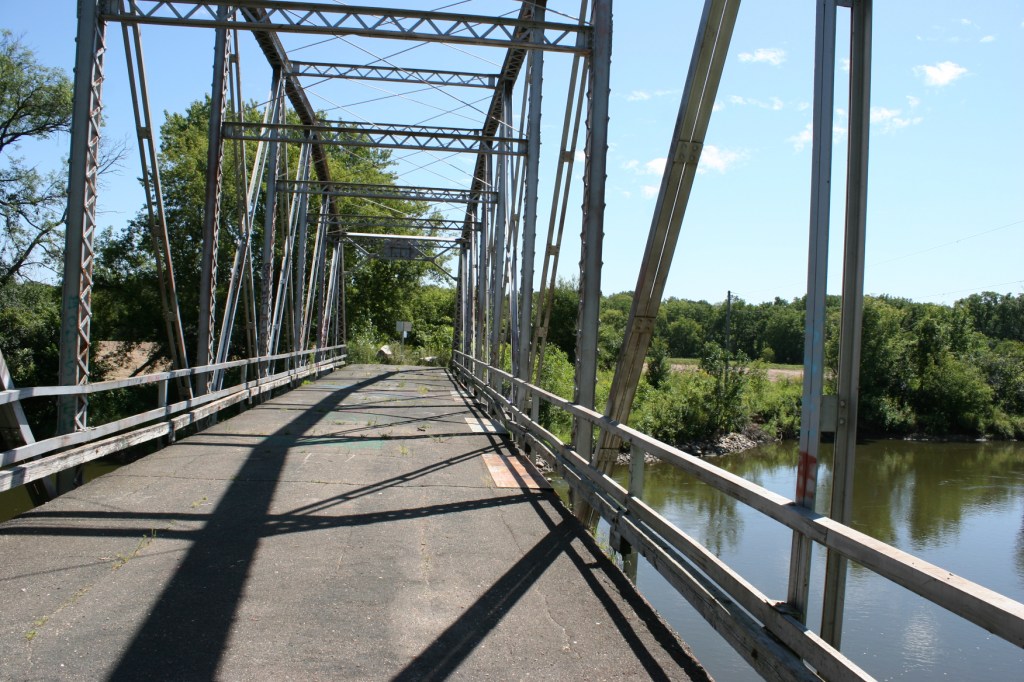
The historic Waterford Bridge, located in Waterford Township in Dakota County, Minnesota.


TO THE MINNESOTA DEPARTMENT of Transportation, the historic Waterford Bridge some two miles northeast of Northfield is tagged as bridge number L3275. I suppose bridges, like roads, require such numerical identifiers.


This is truly an artful and unique bridge in southern Minnesota.


Much more than a name or number, this “140-foot, steel, riveted and bolted, Camelback through truss on concrete abutments” bridge, according to MnDOT, stands as an historic bridge spanning the Cannon River.


The new plain-looking bridge.


Rare in design here in Minnesota, the 1909 bridge closed to vehicle traffic in 2009 and was rehabilitated in 2014. A new, non-descript modern bridge replaced it.


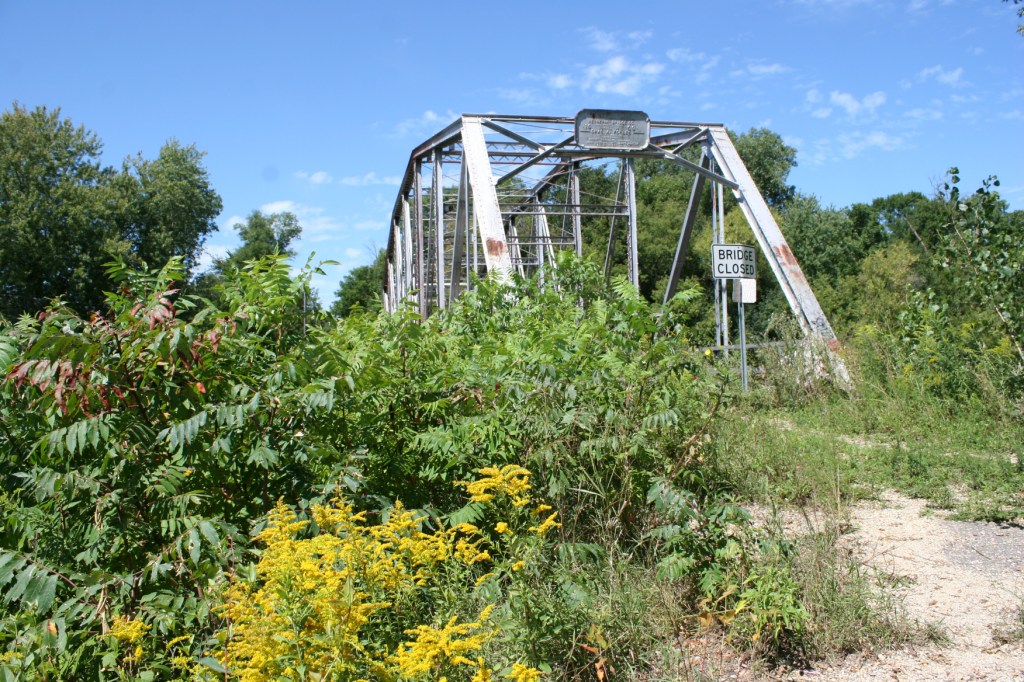
Weeds, wildflowers and other plant growth surround the bridge.


I’ve long wanted to see the old bridge in Waterford Township as it reminds me of a similar truss bridge from my childhood. That bridge took US Highway 71/Minnesota State Highway 19 traffic across the Minnesota River near Morton. When my dad drove our family Chevy across the bridge en route to Minneapolis once a year to visit relatives, my siblings and I pounded on the interior roof to scare any trolls lurking underneath at water’s edge. That all seems silly now, reflecting as an adult. But, back then, it was great fun.


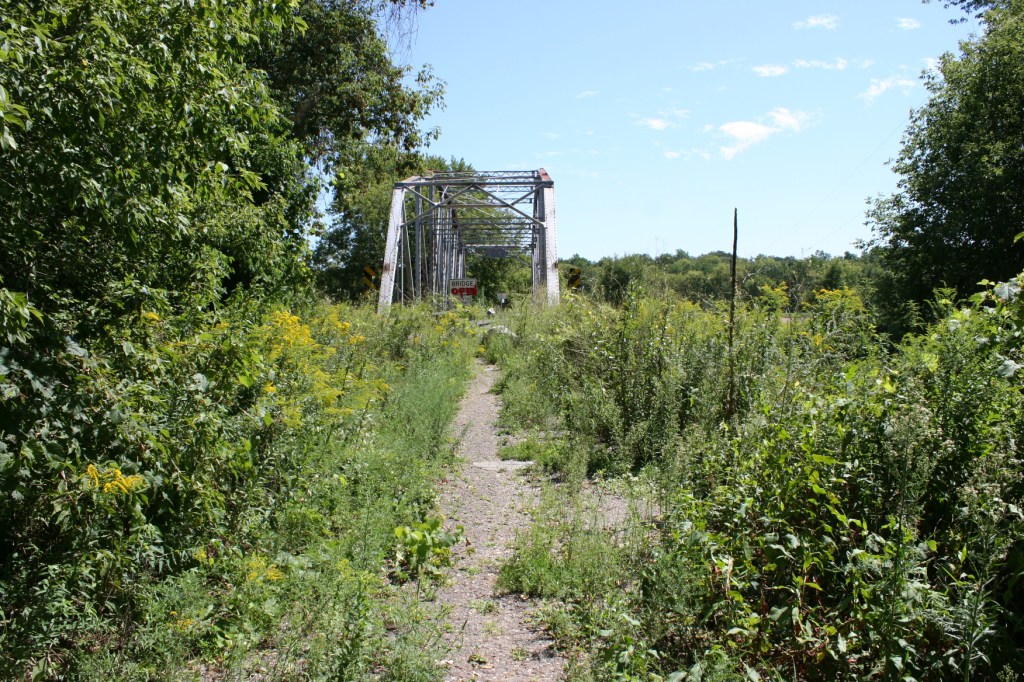
The narrow path to the bridge.


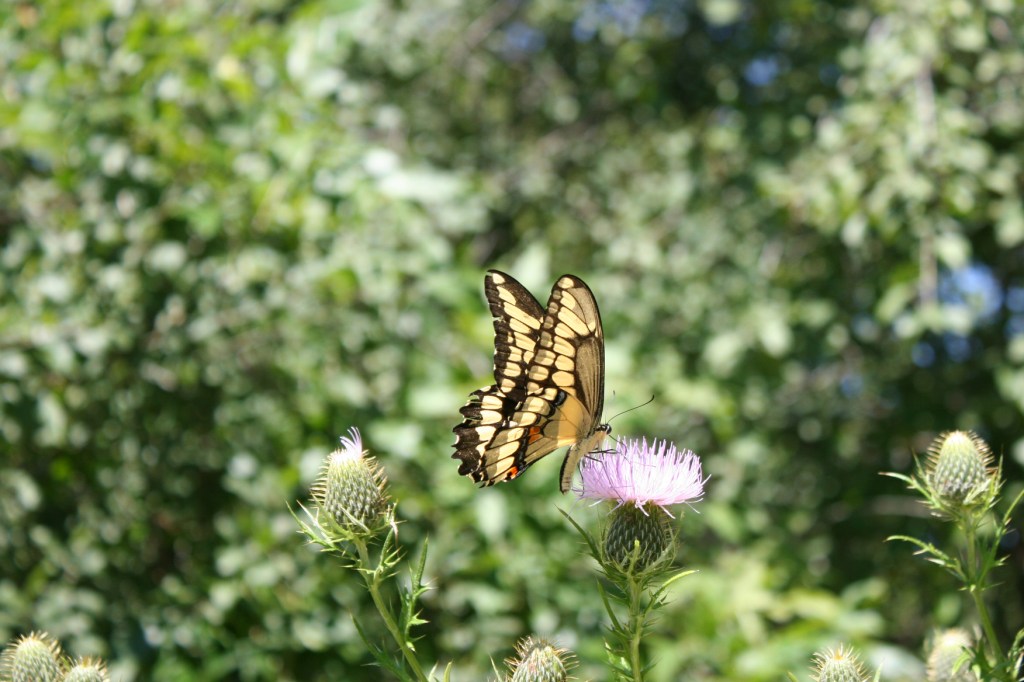
I stopped along the path to photograph a butterfly atop a thistle. I saw multiple butterflies.


Fast forward to today and my desire to see a similar-in-design bridge. Randy had actually driven across the Waterford Bridge at one time while doing some automotive repair work for a farmer in the area. So he easily found it. After parking, we set out to reach the bridge, weaving through a narrow pathway bordered by trees, thistles, goldenrod, wildflowers and other plants. Boulders blocked the deteriorating paved trail to motor vehicle traffic.


I hesitated, but only for a moment.


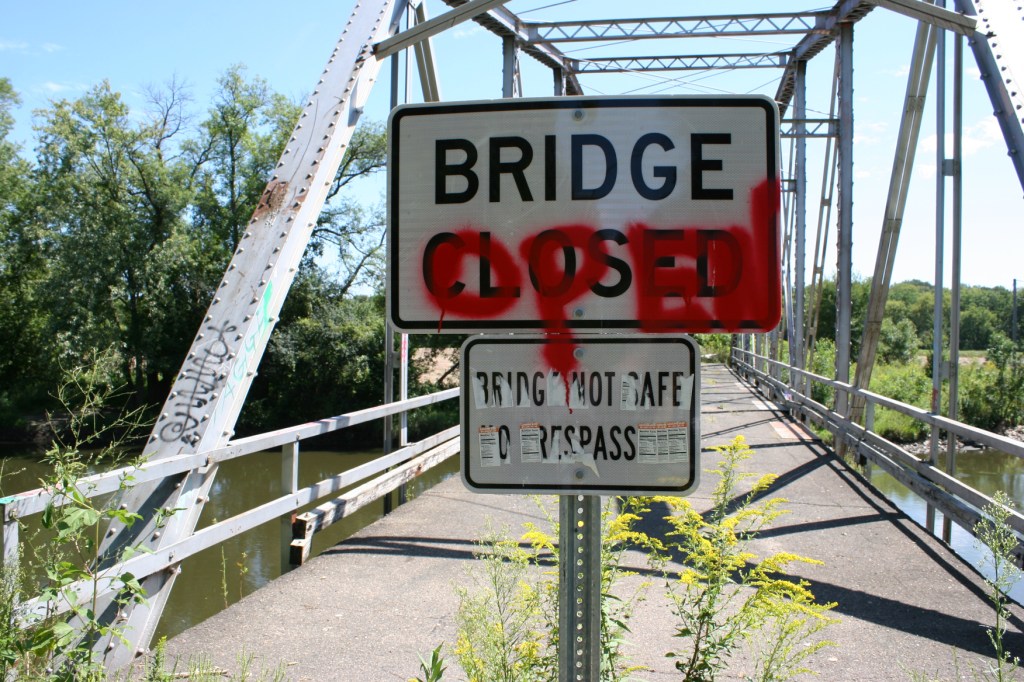
Upon reaching the bridge, I wondered if we should even venture onto it given the BRIDGE CLOSED—BRIDGE NOT SAFE NO TRESPASSING signage. But the deck looked safe…and many others had obviously been here before us.


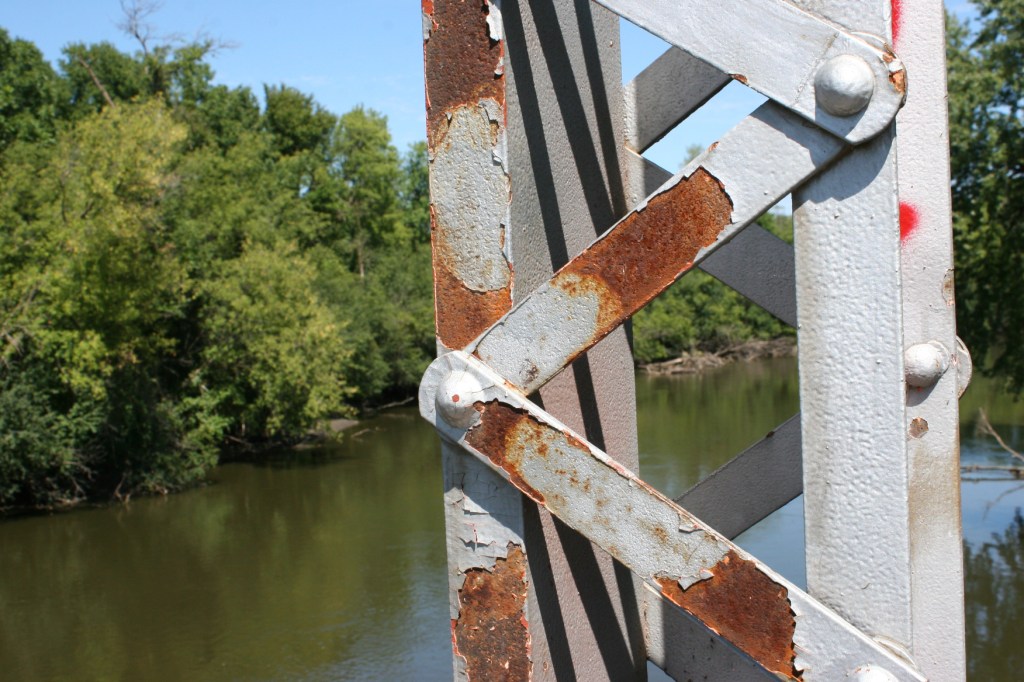
In need of paint, or perhaps replacement.


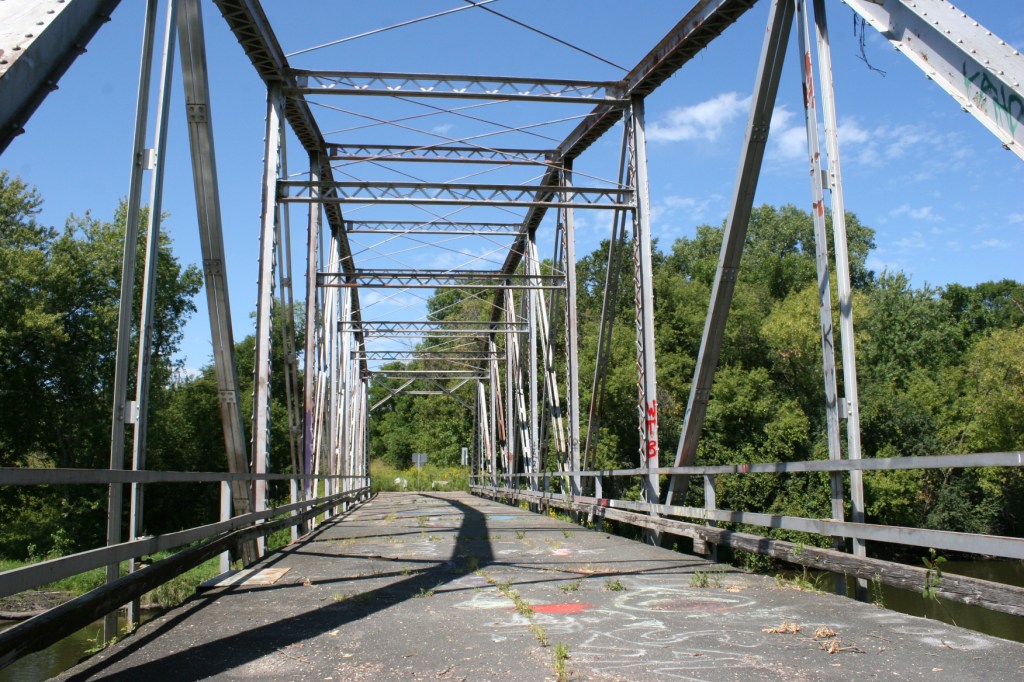
The Waterford Bridge spans the Cannon River.


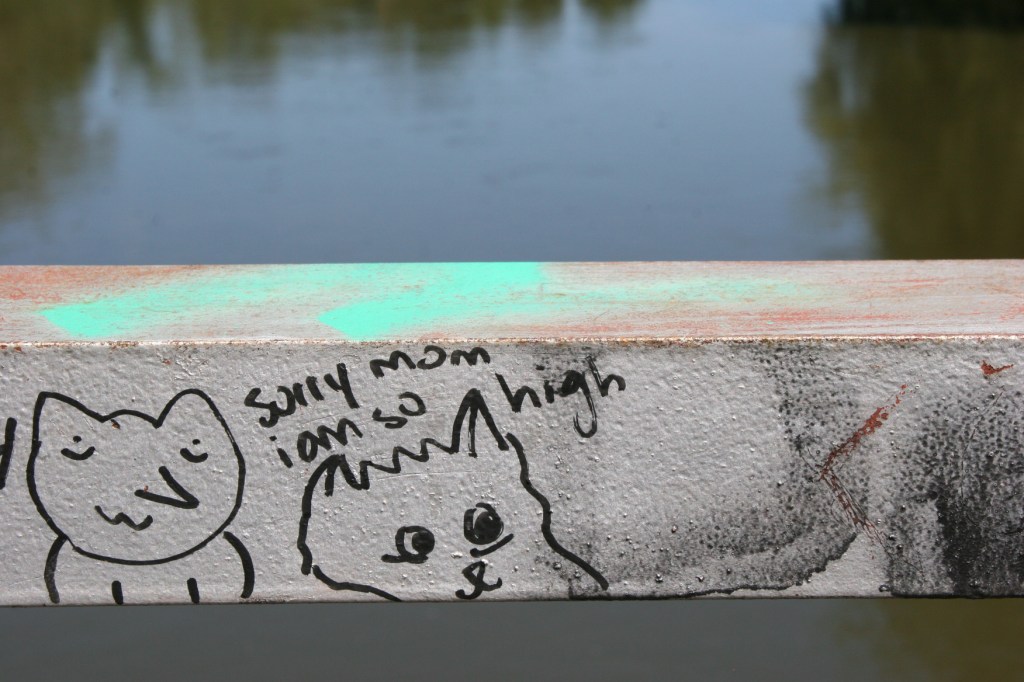
There’s lots of graffiti on the bridge.


Once on the bridge, I was surprised at its condition. Rusting metal. Flaking paint. Weathered boards. Graffiti. Vandalized signage. Cracked pavement.


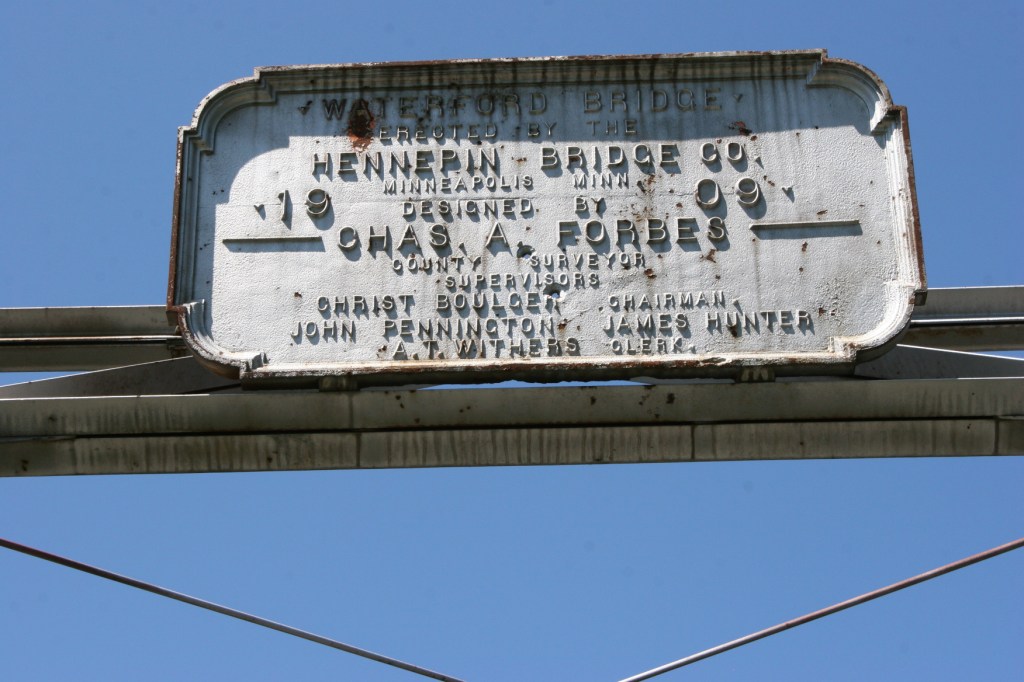
Historical details on a sign posted high above the bridge deck.


As I walked, dodging dog poop, I considered the condition of the bridge built by the Hennepin Bridge Company with Dakota County Surveyor Charles A. Forbes leading the project design. His name and that of other government officials are listed on a plaque atop one end of the bridge which now appears abandoned to the elements. The bridge is also on the National Register of Historic Places.


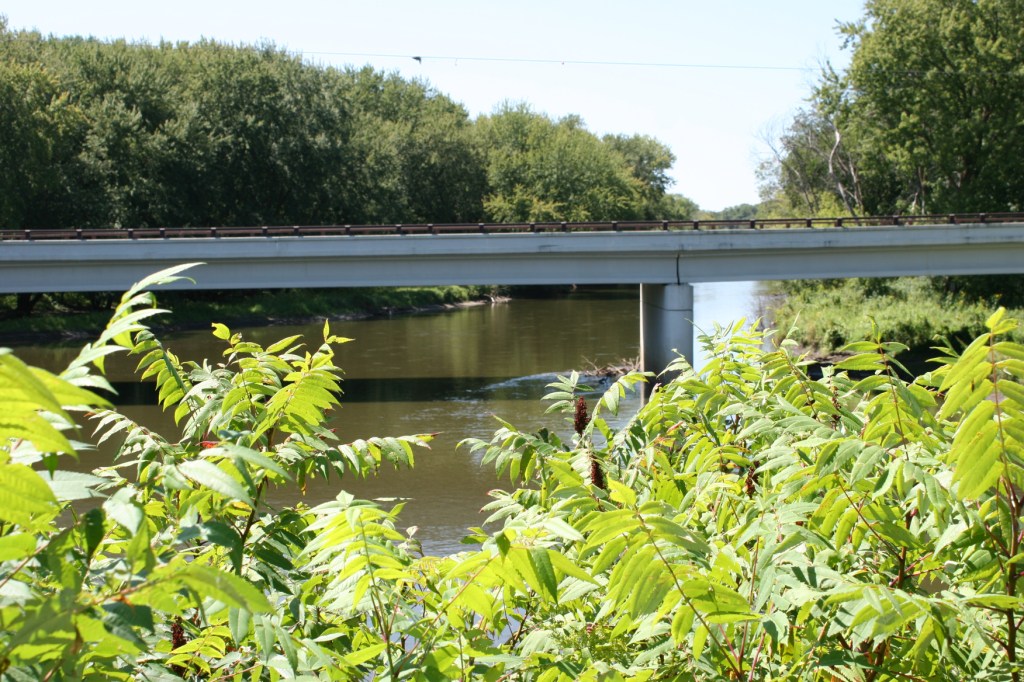
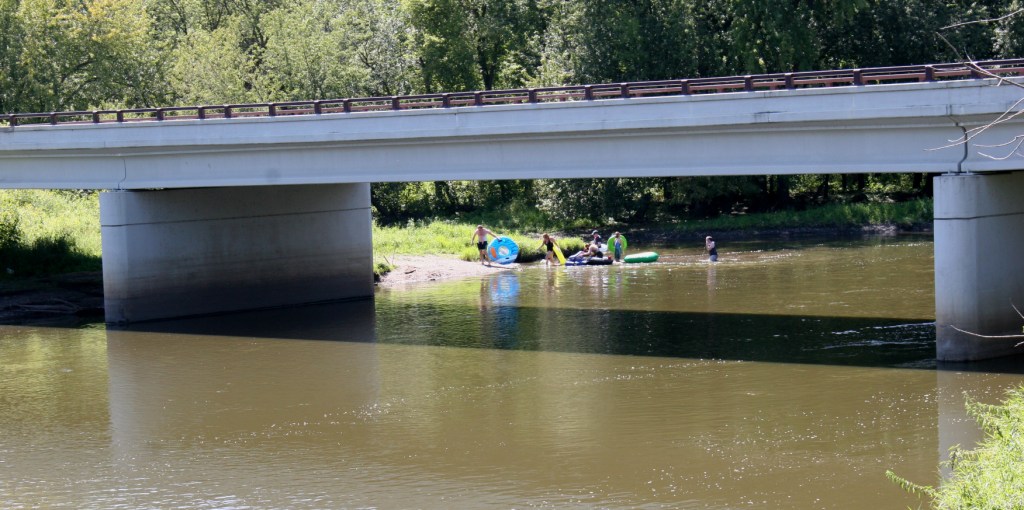
Tubers exit the Cannon River near the new Waterford Bridge.


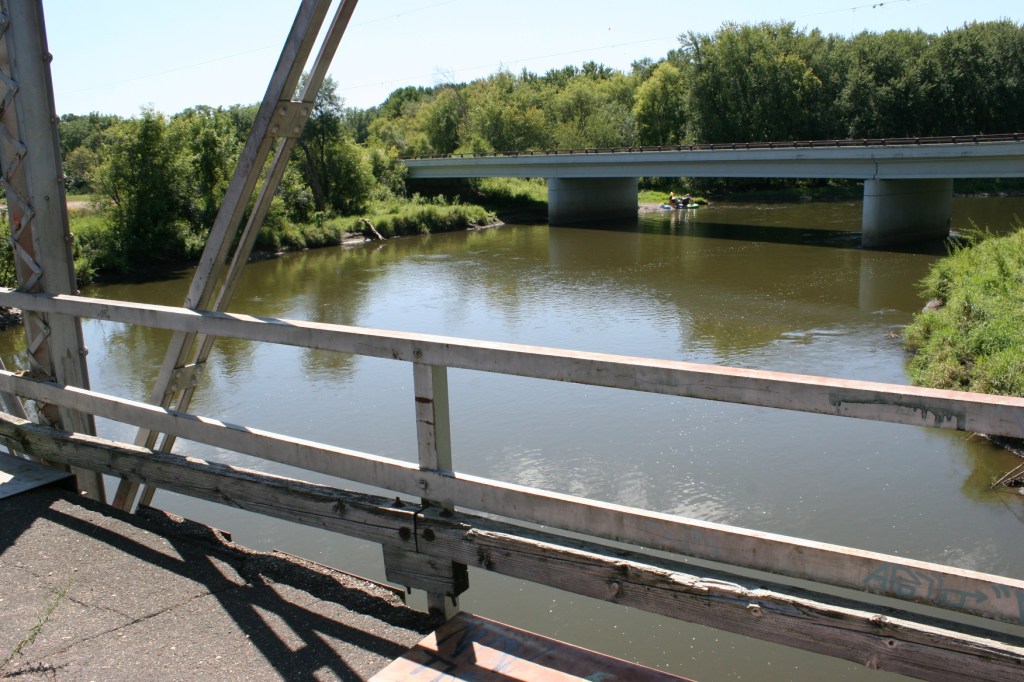
The new Waterford Bridge photographed from the old bridge with tubers in the distance at river’s edge.


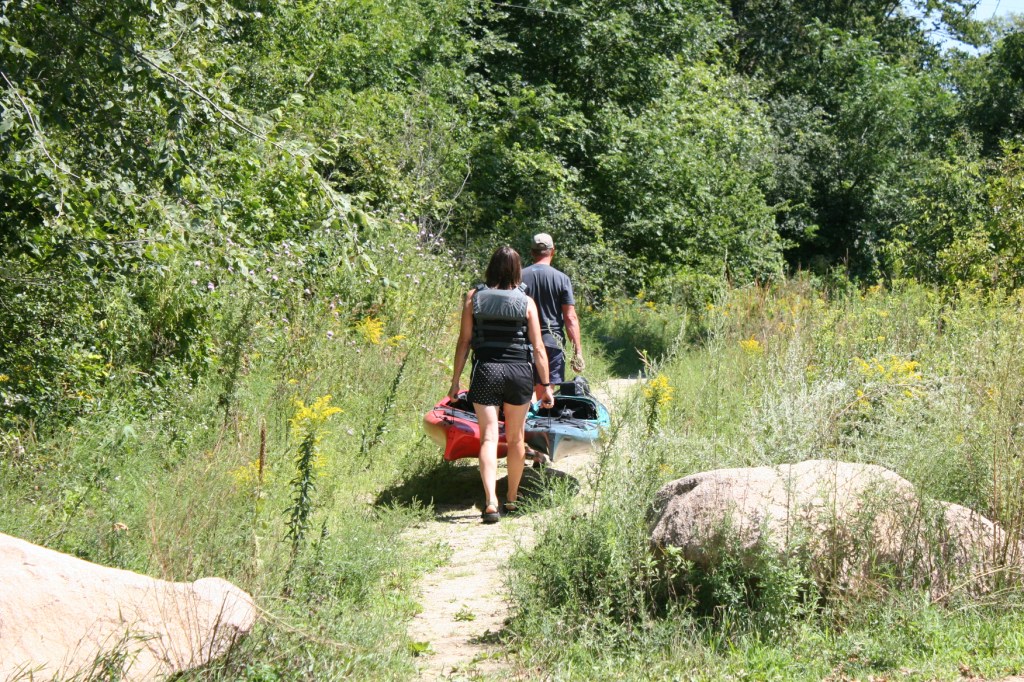
A couple carries their kayaks along the narrow path leading to the historic Waterford Bridge.


Under that bridge, the Cannon River flows, muddy and brown, carrying tubers, canoeists and kayakers—we met two of them, saw others—to places eastward. We watched as one couple carried their kayaks along the narrow path to the bridge with plans to travel eight miles to Randolph, a journey they expected to take three hours.


The muddy Cannon River, a popular waterway for water sport enthusiasts.


It was a lovely summer day to be on the water. Or, like us, to walk across an historic bridge that, for me, bridges past to present via childhood memories.

© Copyright 2020 Audrey Kletscher Helbling


Autumn in rural southern Minnesota, before the snow October 29, 2020

Following a back road between Zumbrota and Mazeppa on October 18, before our recent snowfall here in southeastern Minnesota.

AS I VIEW THE LANDSCAPE layered in snow and consider the unseasonably cold temp of 12 degrees, I reflect that only 11 days ago, southern Minnesota looked and felt much different. Like the season of autumn rather than winter.

Grain trucks parked in Kenyon.

Today I take you back to October 18, to photos from a Sunday drive that started in Faribault and continued east through Kenyon, Zumbrota, Mazeppa, Oronoco and Pine Island, then back home.

An aged silo between Zumbrota and Mazeppa.
Cattle graze in pastureland between Kenyon and Wanamingo.
On October 18, the day of our drive, farmers were busy harvesting, here in a cornfield between Zumbrota and Mazeppa.

As farm-raised kids, Randy and I enjoy these rural drives that transport us back in time and also give us a much-needed break from the realities of COVID-19, of politics, of life stressors. I never tire of seeing cornfields and farm sites, especially during the harvest.

Farmers on the road were a common site, here on Minnesota State Highway 60 west of Zumbrota.

There’s something about immersing myself in the countryside, about simply being in a rural landscape, that comforts me. That soothes and calms. I need that now more than ever.

The Zumbro River Valley stretches before us between Zumbrota and Mazeppa.

We all have, I think, those places which offer us such a respite. Perhaps yours is a room in your house, a place in nature, maybe even within the pages of a book. I’ve been reading a lot lately and highly-recommend Susan Meissner’s A Fall of Marigolds.

Following another farmer, just outside Zumbrota.

Fall. It’s my favorite season, cut too short this year by an early significant snowfall. I’m not happy about it and I doubt many Minnesotans are. We often boast about our hardiness. Yet, we grow weary, too, of our long, cold winters. Most of us, anyway.

A farm site atop a hill between Zumbrota and Mazeppa.

Yet, we choose to live here. This is home. And always will be for me. No matter the season.

© Copyright 2020 Audrey Kletscher Helbling
 

Destination: Monkey Valley October 22, 2020

On Sunday afternoon, the landscape near Kenyon looked very much like autumn.

JUST DAYS AGO, the southern Minnesota landscape looked like autumn. But, after a record-breaking early snowstorm of up to nine inches of snow on Tuesday, this place I call home looks like winter.

Prairieville United Methodist Church, located along Minnesota State Highway 60 east of Faribault, is no longer an active congregation and opens only for special occasions.

Still, I need to share with you the last remnants of autumn, photographed during a Sunday afternoon drive east of Faribault and eventually into the Zumbro River Valley between Zumbrota and Oronoco. Randy and I felt the urge, the need, to take this final drive of the season, although we were really about two weeks late to see the fall colors. Yet, we found much to appreciate.

These grain bins are located along Minnesota State Highway 60 between Faribault and Kenyon.

As usual, I collected photo stories. Drives into the countryside and into small towns yield many such stories that often go untold. Had the day been warmer than about 35 degrees, we would have stopped more than twice to walk in these small communities. Our plans to eat a picnic lunch at a park ended with us parked outside the Zumbrota Public Library eating our ham sandwiches, grapes and protein bars in the van.

Harvesting corn Sunday afternoon east of Faribault along Minnesota State Highway 60.

I filled my camera with images as we began out eastward drive along Minnesota State Highway 60. I found myself focused on documenting the harvest. Farmers were out in full force on Sunday, sweeping across acres of cornfields to bring in the crop.

A common site, and reason to slow down, during the harvest season.

Countless times, we encountered farm machinery on the highway, which led to Randy reciting this sound bite: Farmer on the road! That became a familiar refrain each time we slowed behind or met a tractor or combine and attempted to safely pass.

We’ve traveled highway 60 so many times that I struggle to find something new and interesting to photograph. So I suggested exiting onto a gravel road southwest of Kenyon into Monkey Valley.

Beautiful Monkey Valley.

The name itself intrigues me. As legend goes, the area was named such after a monkey escaped a traveling circus many many years ago. True? I don’t know. But I like the story.

The gravel road winding through Monkey Valley.
Grain wagons parked next to a grain bin in Monkey Valley.
A semi truck awaits the harvesting of corn in a Monkey Valley field.

And I also like this rural route, Monkey Valley Hollow, a gravel road which twists and turns through the woods past farm sites and fields and the Old Stone Church (which I didn’t photograph this time).

A lone grain wagon, my final photo before leaving Monkey Valley.

After completing this leg of our day trip, we aimed north for Kenyon. I always find something interesting in this small town, even though I’ve been here many times. Check back for those photo stories tomorrow as I show you my discoveries.

© Copyright 2020 Audrey Kletscher Helbling
 

Thoughts during this season of autumn in Minnesota October 20, 2020

Filed under: Uncategorized — Audrey Kletscher Helbling @ 5:00 AM
Tags: , , , , , , , , , ,
A cornfield fronts a farm site between Faribault and Dundas in rural Rice County, Minnesota.

LIVING IN SOUTHERN MINNESOTA, as I have for my entire life, I feel a strong connection to the land rooted in my rural upbringing.

A barn roof is barely visible over a cornfield, rural Rice County.

Each autumn, I reflect on this time of bringing in the crops. Of gathering the last of the garden produce. Of harvesting corn and soybeans from the acres of fields that define rural areas. I miss the sights and sounds and scents of farming this time of year. Once-green fields muting to shades of brown, Combines roaring down field rows. The air smelling of drying leaves and of earth.

A back country road north of Faribault, heading to Dundas.

For those reasons, I always appreciate a drive through the countryside, especially along gravel roads. The pace is decidedly slower than traveling on a paved surface.

A grain truck awaits the harvesting of corn in rural Dundas.

Although farming has changed considerably with bigger machinery and bigger farms and bigger yields, the basic connection to the land remains. At least for me. It’s part of my creative spirit, of my being.

Grain bins define a farm site along a back gravel road in rural Rice County, Minnesota.

Yes, it’s easy to get nostalgic about rural life. I offer no apologies for that because I shall always feel grateful for the 17 years I lived on a farm. I learned the value of hard work, of living with minimal material possessions, of working together, of recognizing that inner strength and fortitude and resilience are important as are honesty and good character.

Country roads intersect near Cannon City.

I am thankful I used an outhouse during my childhood, pitched manure, picked rocks, walked beans, fed cows and calves, pulled weeds, didn’t get birthday gifts… There’s something to be said for having grown up in such a setting, in a way of life that by necessity requires significant physical labor and living within your means.

Harvest finished in rural Rice County.
A grain truck parked in Northfield.
Corn stalk bales line a Rice County field.

In the winter, my hands cracked and bled from exposure to water and the elements. In the spring, when I picked rocks from fields, dirt sifted into holes in my canvas tennis shoes. In the summer, the hot sun blistered my skin as I pulled cockleburrs. (We didn’t have sunscreen.)

Pumpkins and squash for sale from a wagon parked at a farm site along Rice County Road 1 west of Dundas.
A house in Dundas decorated for Halloween.
A seasonal display anchors a corner of a downtown Northfield floral shop.

And so these are my thoughts as I immerse myself in the season of harvest via a country drive. A drive that takes me from the countryside into town, to seasonal displays and thoughts of Halloween and Thanksgiving and the winter ahead.

The road ahead may not be easy…

I fully recognize that the forthcoming winter will challenge all of us. I am determined to stay the course during this ongoing global pandemic. To mask up, to social distance, to wash my hands, to connect only with my small family circle, to try and stay as healthy as possible, to care about others…to tap into my can-do farm girl attitude of strength, common sense and resilience. For this is but a season of life, one which requires each of us to think beyond ourselves, understanding that our choices matter now, more than ever to the health and safety of all.

© Copyright 2020 Audrey Kletscher Helbling
 

Following the backroads of Rice County into autumn October 2, 2020

Filed under: Uncategorized — Audrey Kletscher Helbling @ 5:00 AM
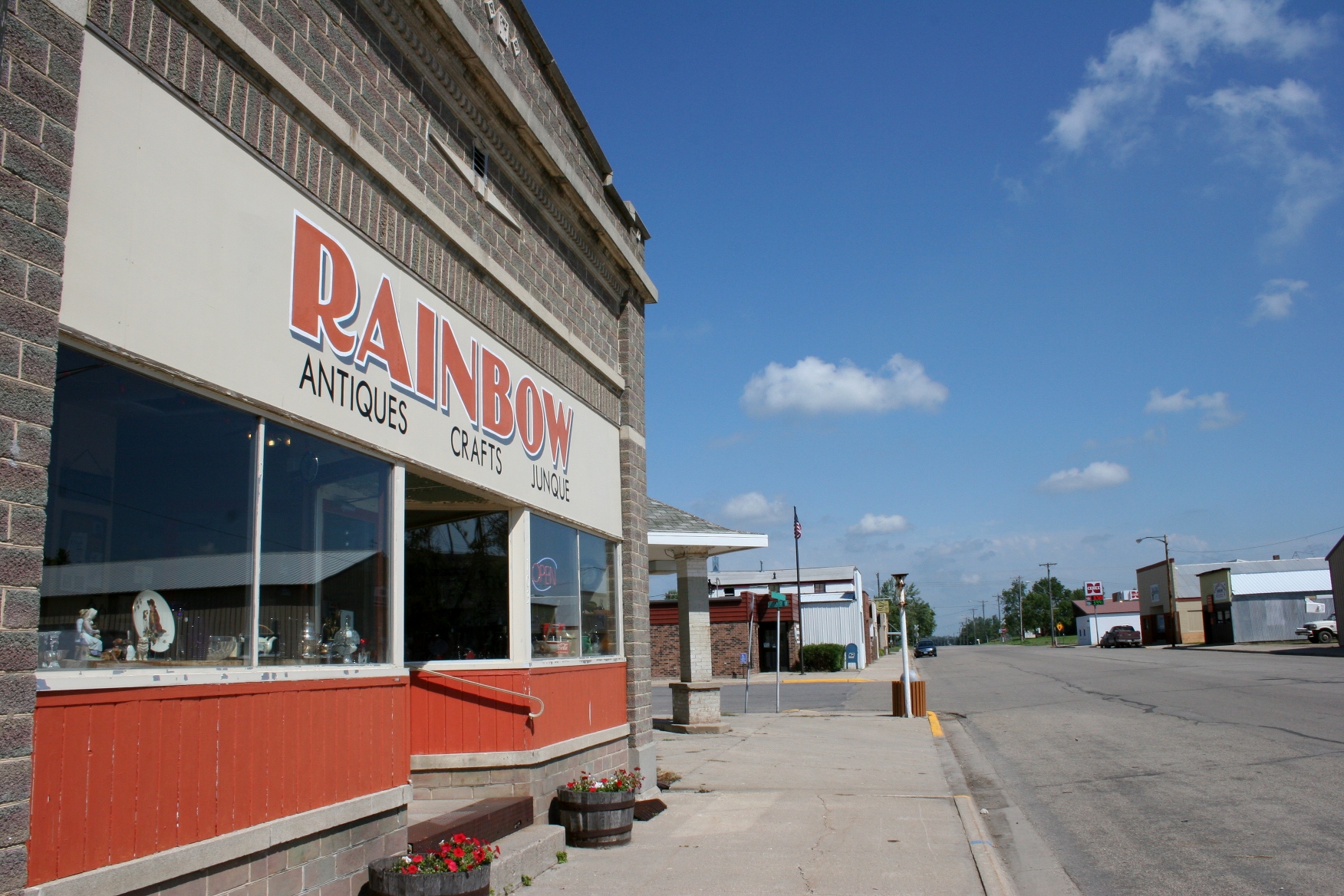
Tags: , , , , , , , , , ,

Fall colors as photographed in rural Rice County, Minnesota, on September 26.


THIS AUTUMN FEELS especially fleeting, as if the days are slipping too quickly into the cold and dark of winter’s grip. The sun now rises shortly after 7 a.m. and sets just before 7 p.m. The darkness is closing in and I feel it.


Ripening corn and soybean fields surround this farm site in Rice County.


This year, more than ever, I feel an urgency to get outdoors, to delight in every single moment of autumnal beauty, of semi warm temps, of days without snow.


Heading uphill on the backroads of Rice County last Saturday.


And I feel this way due to COVID-19. The reality is that the winter ahead will prove challenging as we hunker down indoors, limiting our contact with others as we attempt to stay healthy and protect others. At least that’s my plan, Randy’s plan.


Cornfields ripen, awaiting the harvest. I feel like we’re all waiting. Just waiting in this season of COVID.


We’ve already managed seven months of this cautiousness, this recognition that we hold a responsibility to do our part. For ourselves. And for our friends, family and neighbors. I’m particularly worried these days about the upsurge in cases in Wisconsin, where our daughter and her husband and our son live. But I worry, too, about Randy facing potential COVID exposure daily at work because of a failure among others to mask, mask properly or to follow other safety/health regulations. I am beyond frustrated, as I’ve stated here in previous posts.


Another Rice County farm site. COVID knows no differences between rural and urban. We’re seeing that now in Minnesota, where cases of the virus in rural counties are spiking.


We’re weary of it all. Truly weary. Who isn’t experiencing COVID fatigue? But, as our health officials have advised, this is no time to let down our guard, to give up, to live our lives like there’s no pandemic. Because Randy and I are trying to be careful, we gravitate outdoors, whether on countryside drives or hiking. Nature and time outdoors provide a peaceful and uplifting escape.


Driving down Rice County’s backroads to view the ripening crops and fall colors.


Last Saturday took us onto backroads in our county of Rice, where we’ve found fall colors to be especially lovely. And mostly undiscovered. We had no particular destination and I can’t even tell you where we drove. But we drive and turn and turn and drive and follow whatever roads seem interesting.


Farm sites prove interesting to me on these rural drives.


The overcast day wasn’t especially beautiful for leaf-viewing. But, this time of year, you take what you get and enjoy whatever appears before you.


Color tints treelines in rural Rice County.


I encourage each of you, especially if you live in the Rice County area or other parts of Minnesota, to take a fall color drive this weekend. These days are fleeting as leaves change colors and fall, moving us closer and closer to the long winter ahead.


TELL ME: Do you have a recommendation for a great place to view fall colors?

© Copyright 2020 Audrey Kletscher Helbling


Anything but prune & much more in Montgomery August 17, 2020
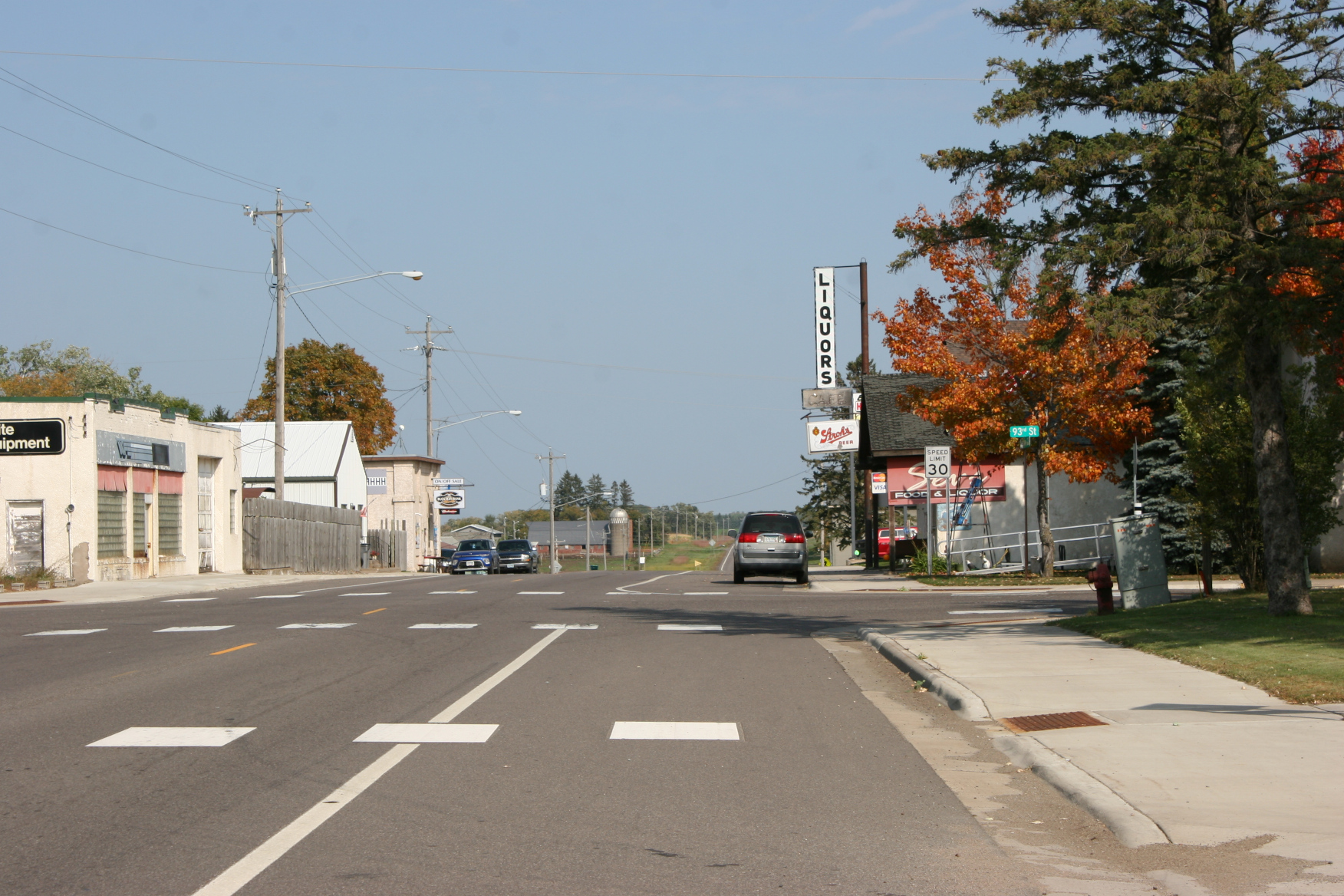
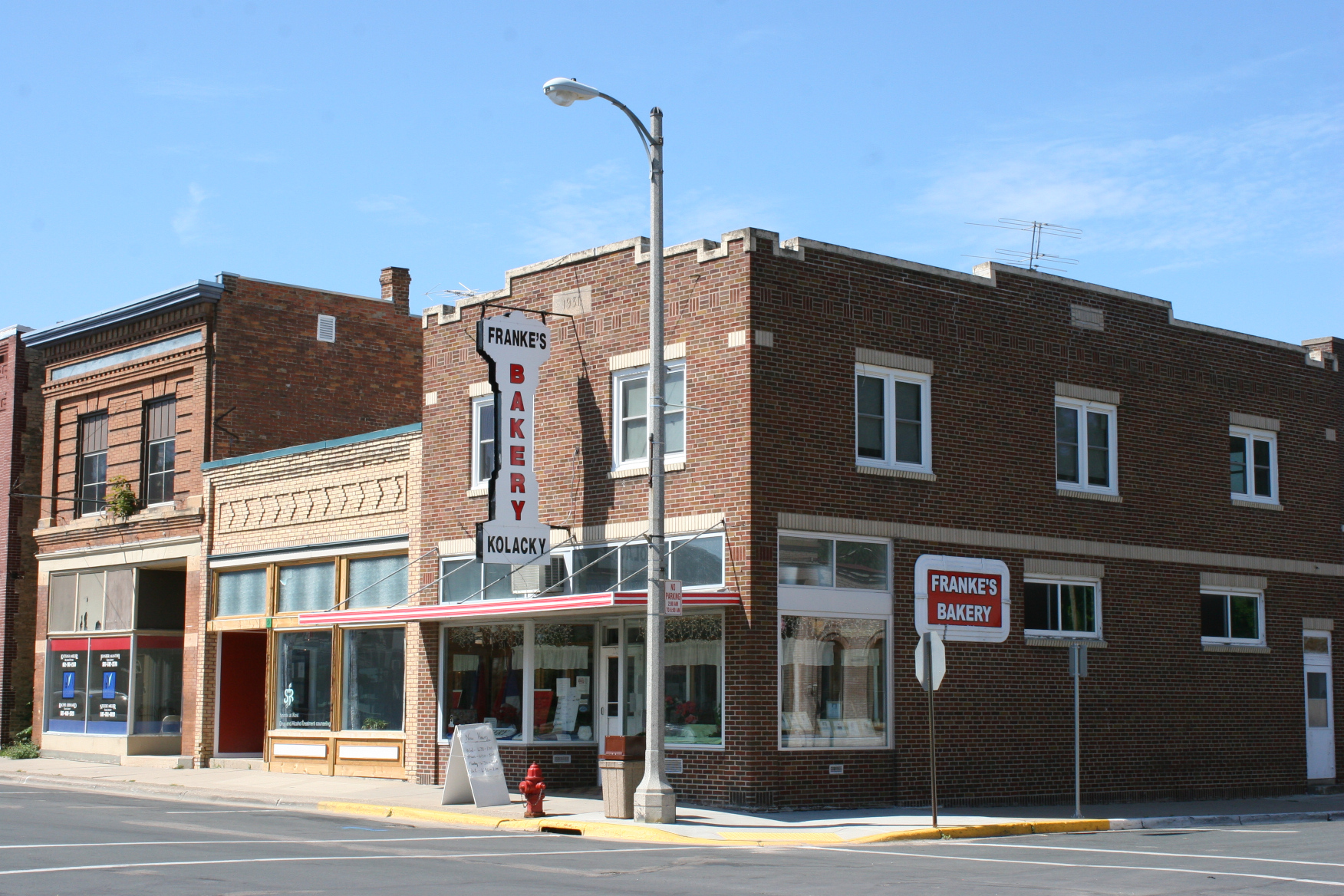
Popular Franke’s Bakery anchors a corner in downtown Montgomery, Minnesota.


SMALL TOWN MINNESOTA. What is it about our rural communities that holds my heart? Surely, my upbringing on a crop and dairy farm in the southwestern region of our state influences how I feel about rural places.
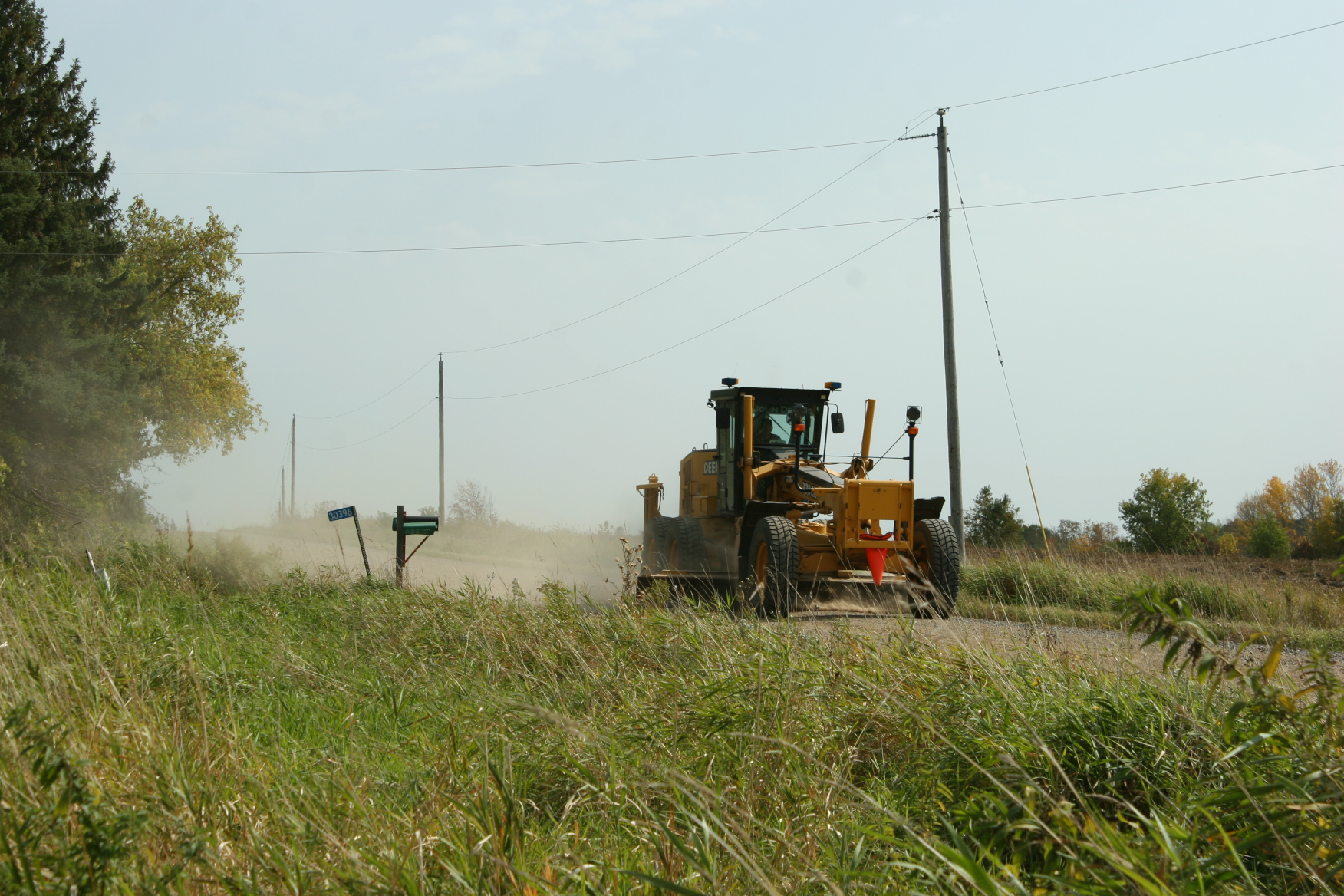
 

Farms and fields surround Montgomery.


But it’s more than that. I see in these communities, like Montgomery in Le Sueur County, a distinct character, a connection of people, an appreciation for the quieter life afforded to those who live in this ag-based area.


Art in downtown business windows showcases the town’s annual Kolacky Days celebration.


Fresh-baked kolacky are always available at Franke’s Bakery.


One of my favorite signs in Montgomery banners the 106-year-old bakery.


I’ve written about and photographed Montgomery many times. Each visit I notice the details that define this self-proclaimed Kolacky Capital of the World with its strong Czech heritage. Kolacky are a fruit-filled (sometimes poppyseed, too) Czech pastry, available at the century-plus-old Franke’s Bakery and elsewhere.
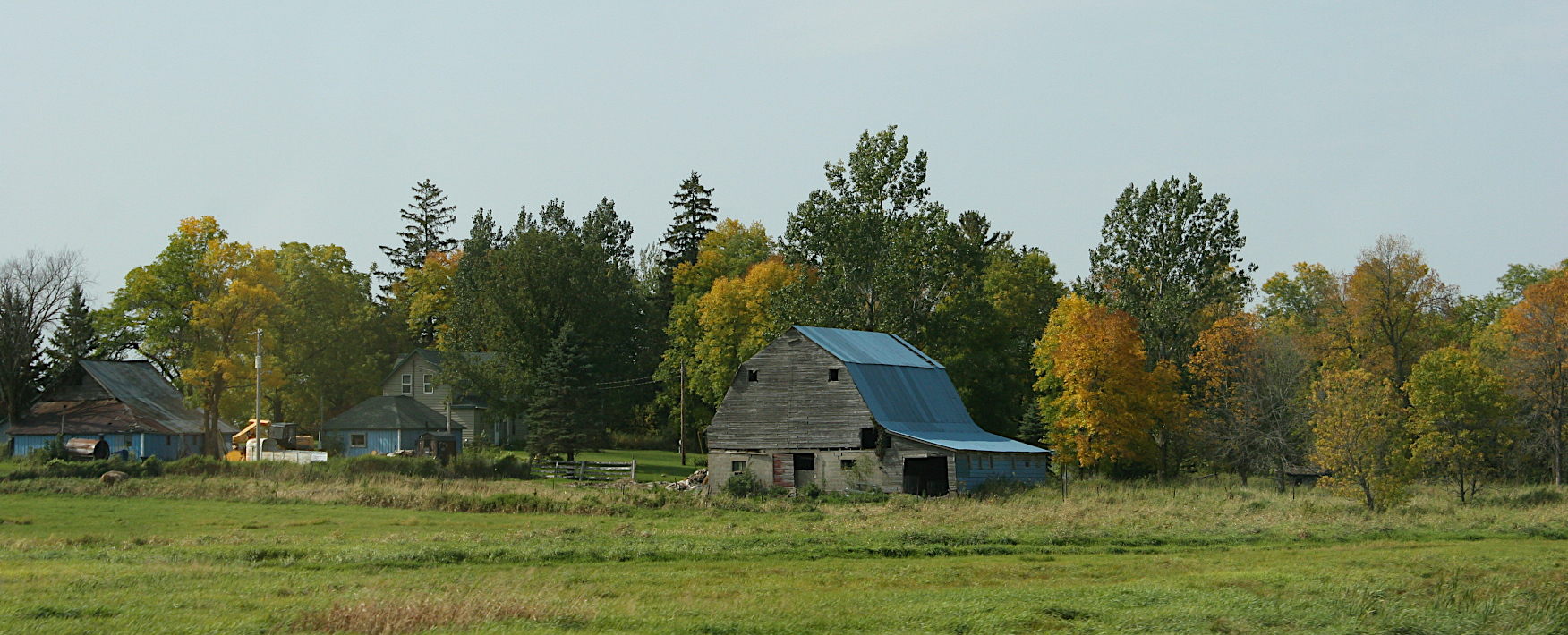
 

A quilt adorns an historic downtown building.


When I walk along First Street, the main street through the downtown business district, I always notice the historic buildings.


And the home-grown businesses, including multiple meat markets.


The Monty Bar is missing its corner signage, which I loved.


And, like many small towns, multiple bars. Montgomery also has a craft brewery, Montgomery Brewing.


Signs plaster the front of the Monty Bar, including this one.


But I also notice the signage that is distinctly Montgomery. Like the best place to buy Jell-O shots (the Monty Bar).


An historic building houses the Happy Hour Bar & Grill.


The Happy Hour lunch special on the day of my visit.


Or the lunch-time Sloppy Joe special at the Happy Hour Bar & Grill.


Signage marks the Rustic Farmer.


The inviting dining space in front of the Rustic Farmer along Montgomery’s main street.


It is this type of signage that reveals much about a town and its people. When I spot the event space, Rustic Farmer on Main, and later sit there at a patio table to enjoy a custard-filled sweet treat from Franke’s, I think on that name. Rustic Farmer. It fits this rural community.


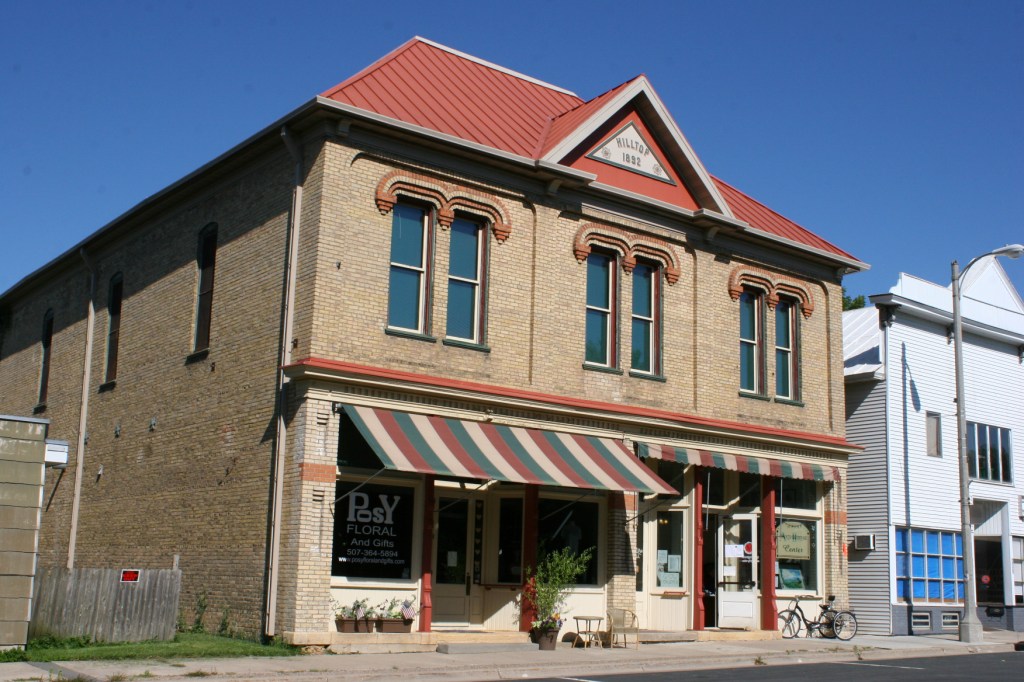
Hilltop Hall is on the National Register of Historic Places.


The same goes for Hilltop Hall, an historic building perched atop a hill on the north end of downtown. It’s home to Posy Floral & Gifts and the Montgomery Arts & Heritage Center.


I photographed this puzzle at Herrmann Drug, where it’s available for purchase.


That center houses a small gift shop and heritage displays, including Kolacky Days celebration buttons. Photographer Sarah Dolejs designed a 513-piece jigsaw puzzle featuring a photo of a button collection. The puzzle is available in local businesses and online. Recently, organizers of this year’s virtual Kolacky Days held a “Jigsaw Puzzle Competition from Your Kitchen Table” to see who could assemble the puzzle the fastest. The winning time was 67 minutes by Team Sherman. They beat out Anything but Prune (a reference to prune kolacky) by a mere minute. The Poppyseed Posse (another reference to kolacky) and the Laughing Polka Ladies didn’t even come close to winning.


The town’s water tower is located near the Montgomery National Golf Club.


I love those creative names. They reveal a sense of humor, a sense of pride, a sense of appreciation for heritage and all that defines this town. This Montgomery, Minnesota.

#

A section of downtown Montgomery, including the popular eatery, Pizzeria 201, on the left. It’s located in the historic Westermann Lumber Office & House.


Please check back as I continue my series of posts from Montgomery. Upcoming posts will feature the community’s redone mural and a downtown coffee shop.

© Copyright 2020 Audrey Kletscher Helbling