Minnesota Prairie Roots

Writing and photography by Audrey Kletscher Helbling

Of gravel roads, barns & cornfields August 3, 2020

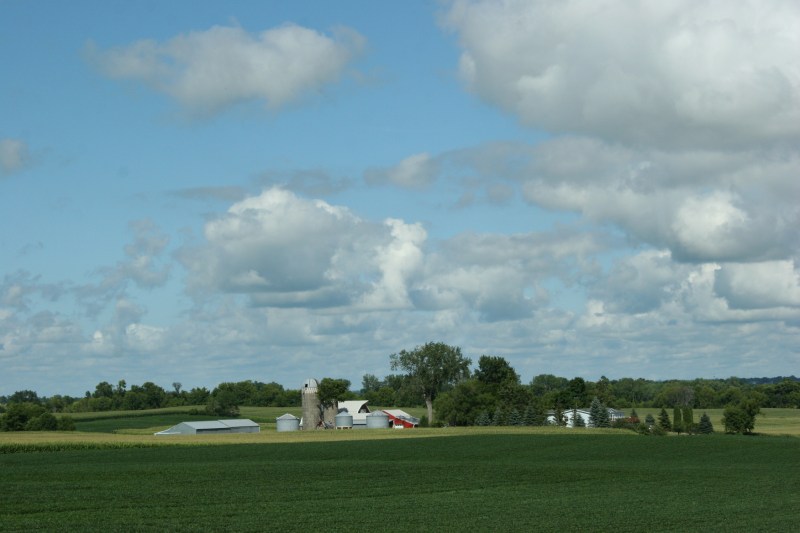
Rural Rice County, west of Faribault, Minnesota.


ON A SULTRY SUNDAY SUMMER AFTERNOON of oppressive heat and humidity, I needed to get out of the house. Away. Into the country. On a drive. It was too hot to walk, to do anything outside of air conditioning.


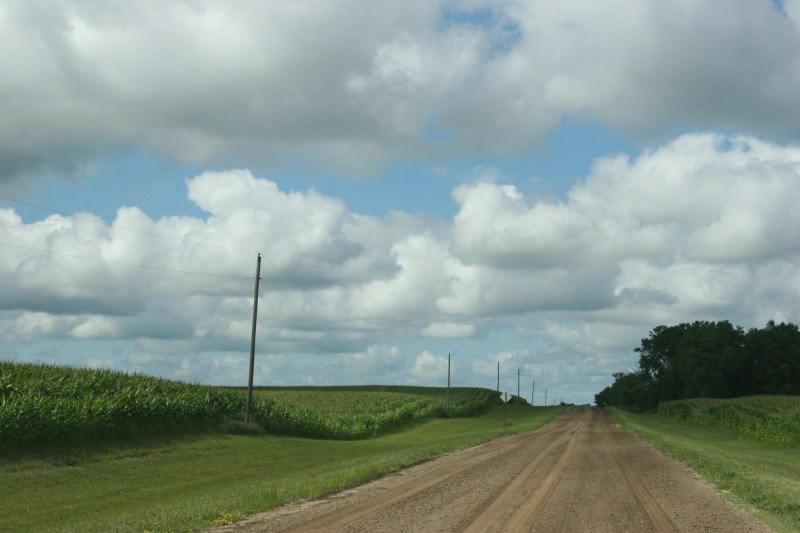
Steady rain the night before kept the dust down on gravel roads we drove.


Following back county and township roads in and around Faribault, Randy and I got the rural fix we needed. For me, the crunch of gravel upon tires and the washboard vibration of a road in need of grading.


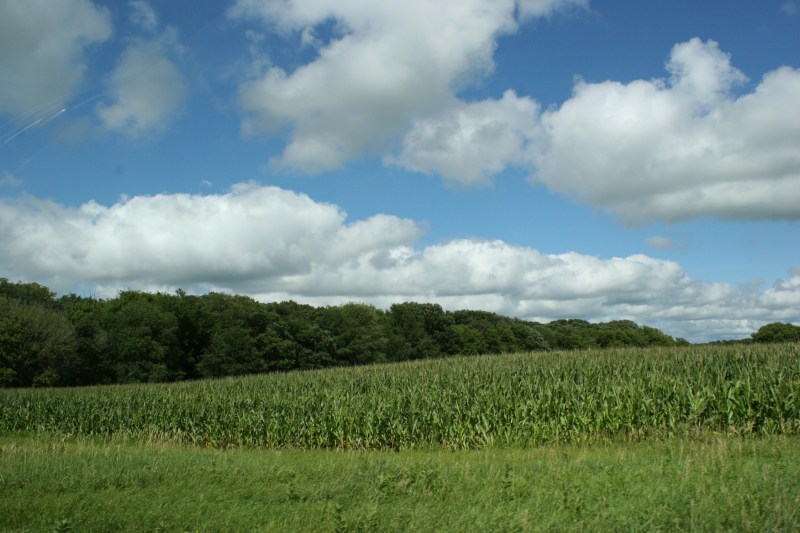
The corn crop around here looks good.


I needed, too, to see cornfields stretching across the land, tassels flagging fields. My heart aches at the sight, for the missing of living in the country. Memories still root me there.


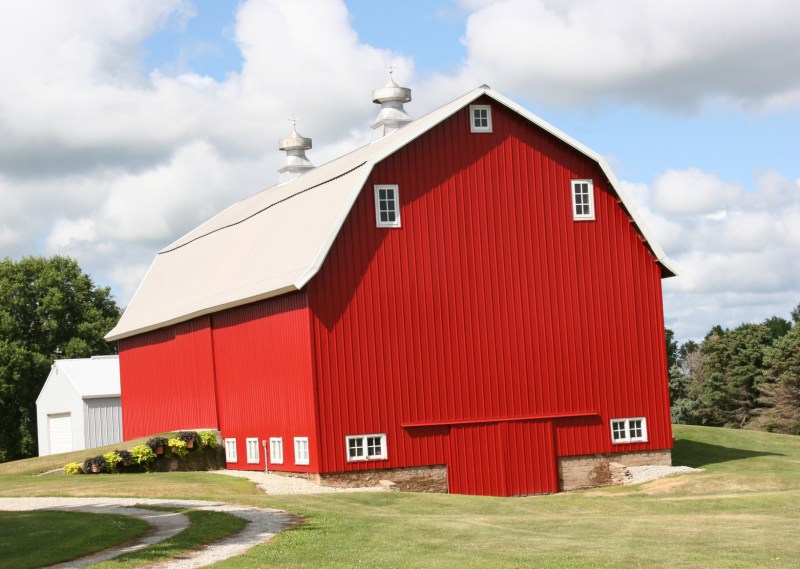
And then I spotted a barn flashing bold red into the landscape on the edge of Warsaw. I’ve long admired that well-kept barn.


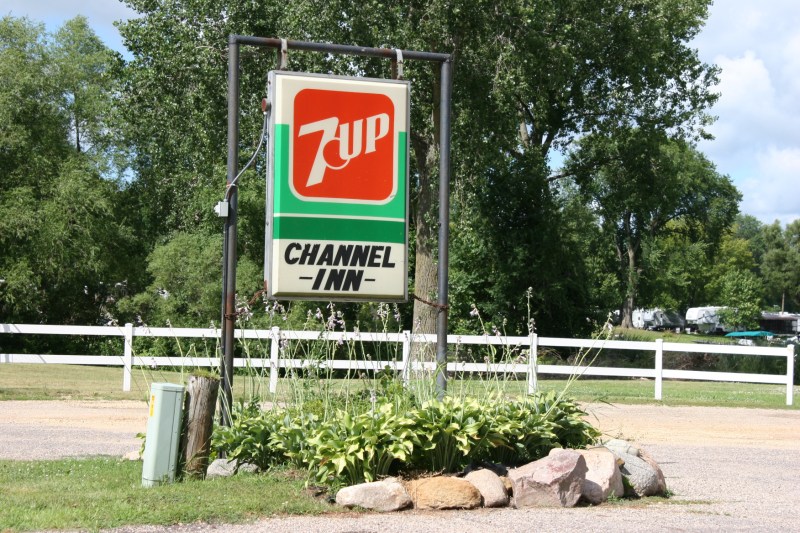
Weaving through Warsaw, Randy reminisced about living there decades ago as we passed his former rental place. At the Channel Inn in Warsaw, we paused only long enough for a photo of the vintage signage.


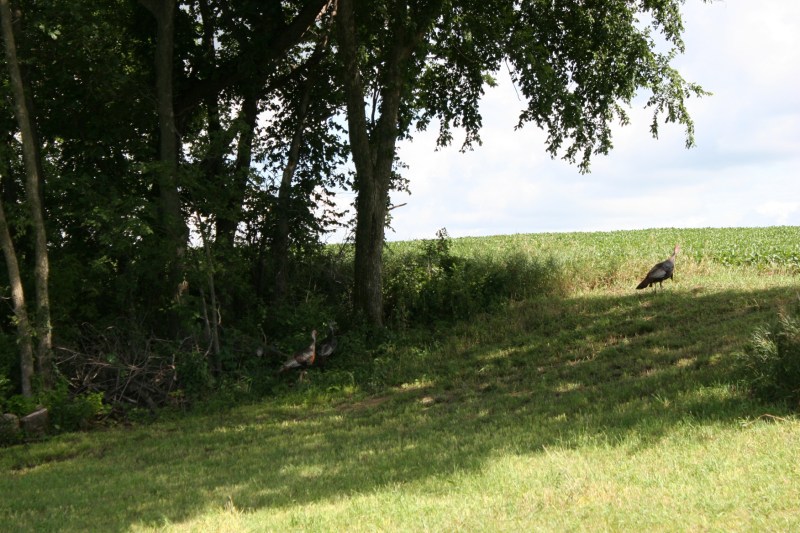
Without my telephoto lens on my camera, I couldn’t get a good shot of these turkeys. But you can make out two along the treeline and one by the field. The rest went the other direction.


And then we followed more gravel roads, routes not previously taken, but which revealed a PIG HOTEL sign on a house. I missed that photo op, but I promise to return. I almost missed the wild turkeys edging the woods.


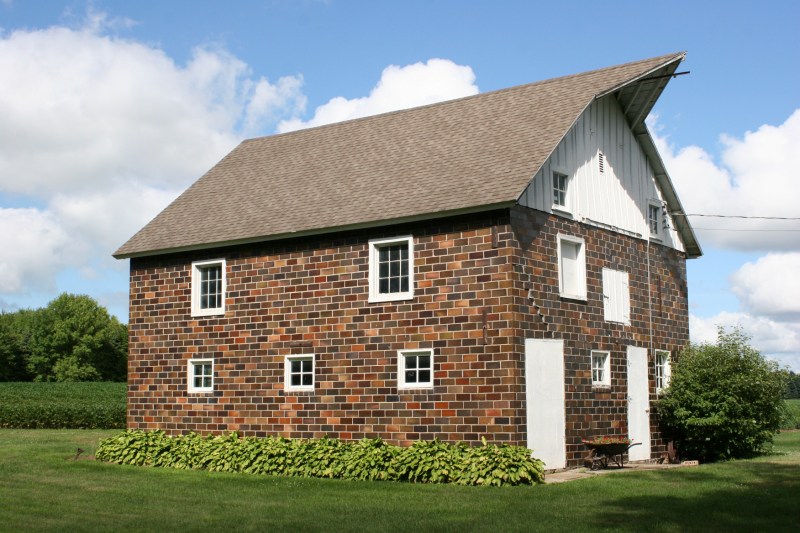
A bit further, I saw the cutest little brick barn. Solid. As good as new. Beautifully poetic in its construction.


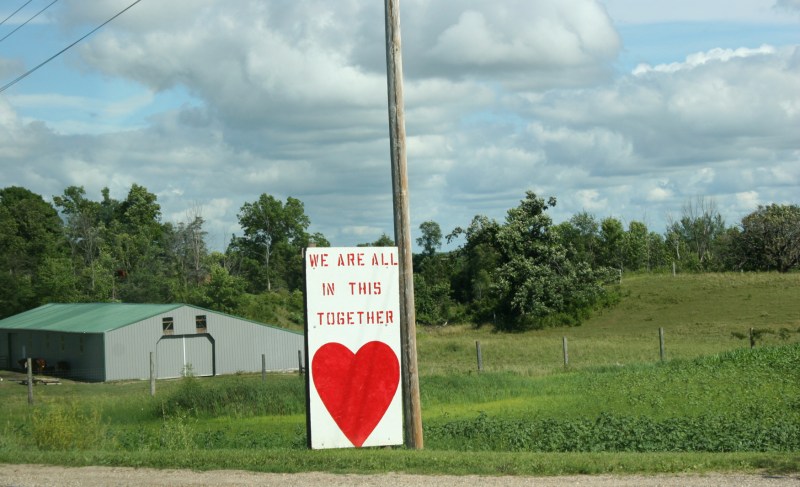
Past a gravel pit and an unknown lake and farm sites set among fields on rolling land, we aimed back toward town. Past Ableman’s Apple Creek Orchard, a favorite, and a roadside sign reminding us that we are not alone. Ever.


© Copyright 2020 Audrey Kletscher Helbling


Don’t be an outlaw in Northfield: Protect the herd August 2, 2020

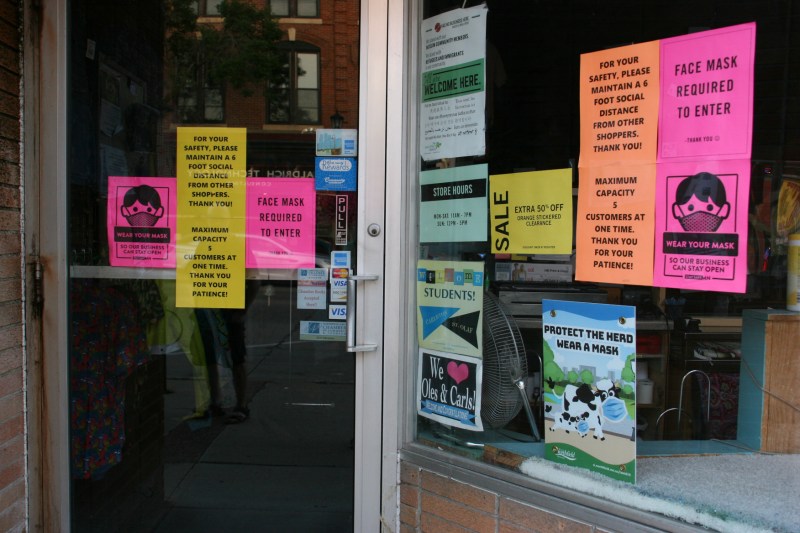
In the front display window of a downtown Northfield, Minnesota, business.


SUPERHEROES mask up.


The image represents the James-Younger Gang.


As do outlaws.


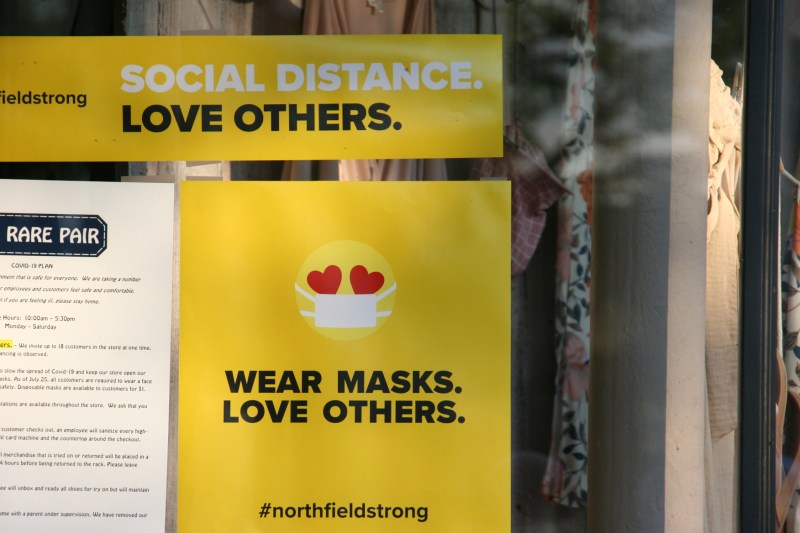
The reason the Rare Pair gives for wearing face masks.


And those who love others.


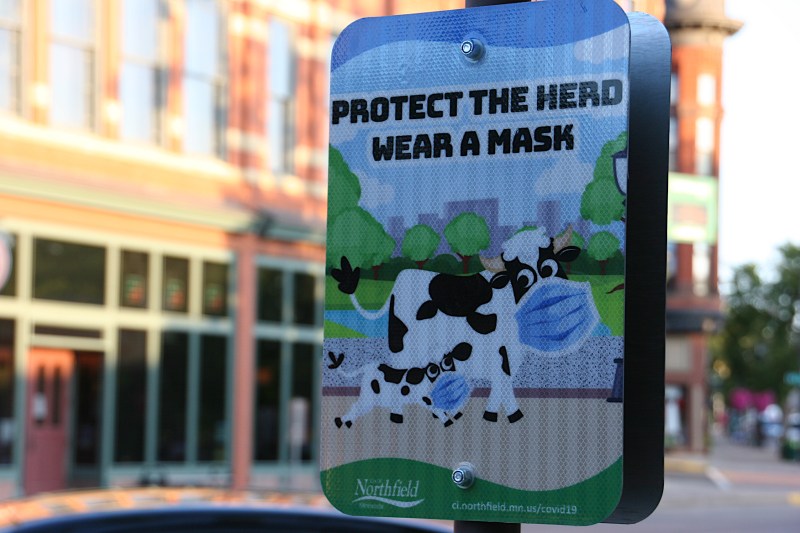
“Protect the herd” plays off the city’s “Cows, Colleges and Contentment” slogan. Northfield is home to Carleton and St. Olaf Colleges.


When I walked through downtown Northfield—the place of Cows, Colleges and Contentment—on Friday evening, I intentionally looked for signage on Minnesota’s new face mask mandate. This college city did not disappoint. I found signs ranging from serious to humorous.


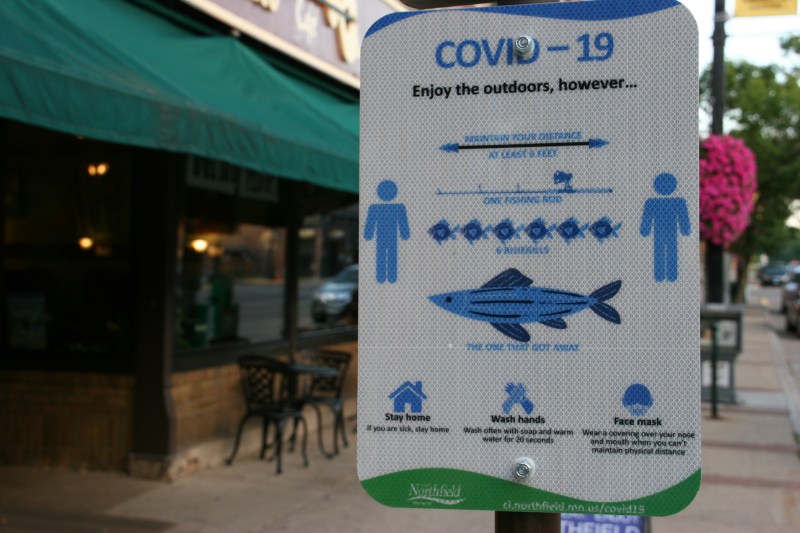
More humor in a COVID-19 sign that relates to safe practices outdoors.


I especially welcomed those that made me laugh, something we all need in these days of living with COVID-19, when even leaving our homes sometimes seems like venturing into the Wild Wild West.


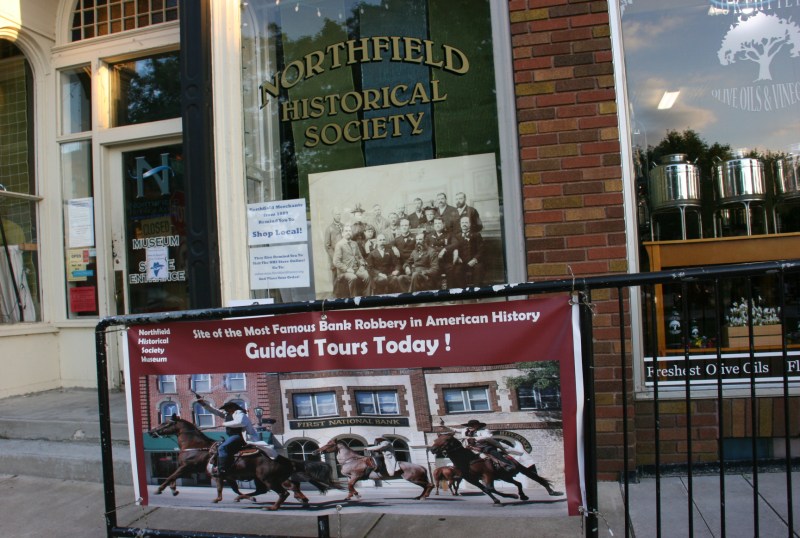
Site of the famous bank raid, now a museum.


Tour the museum and learn the story of the bank raid.


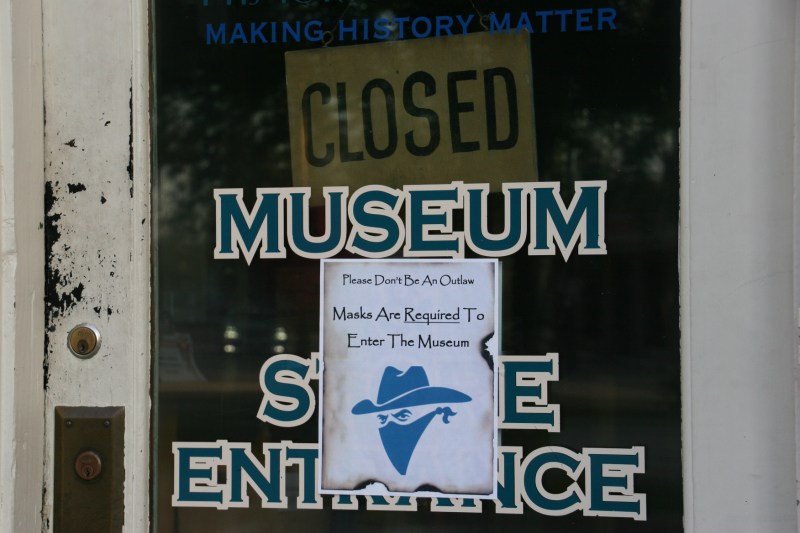
Northfield Historical Society face mask humor..


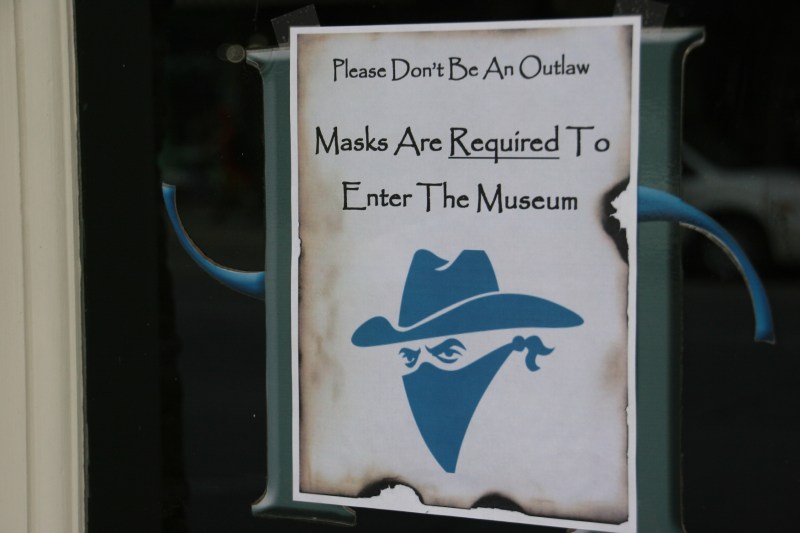
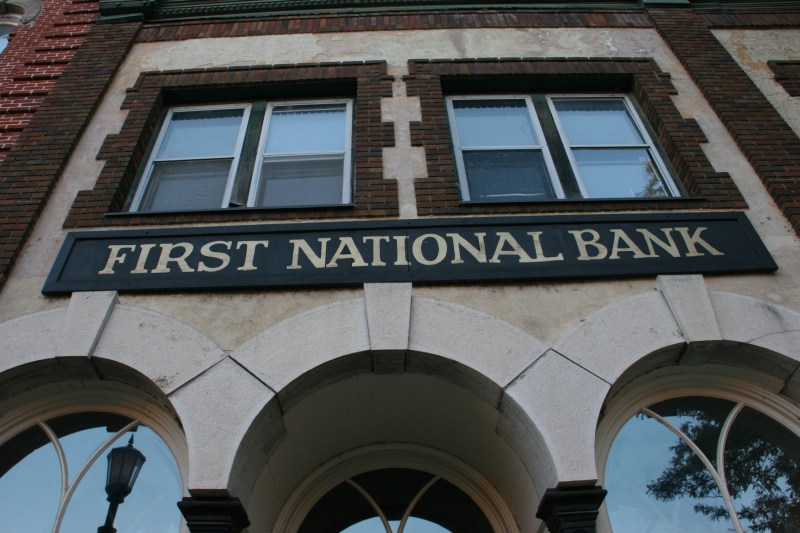
At the Northfield Historical Society, the historians draw on Northfield’s claim to fame—the defeat of the James-Younger Gang during an 1876 robbery of the First National Bank—to get across the mask mandate message. Please Don’t Be an Outlaw, states the message on museum doors.


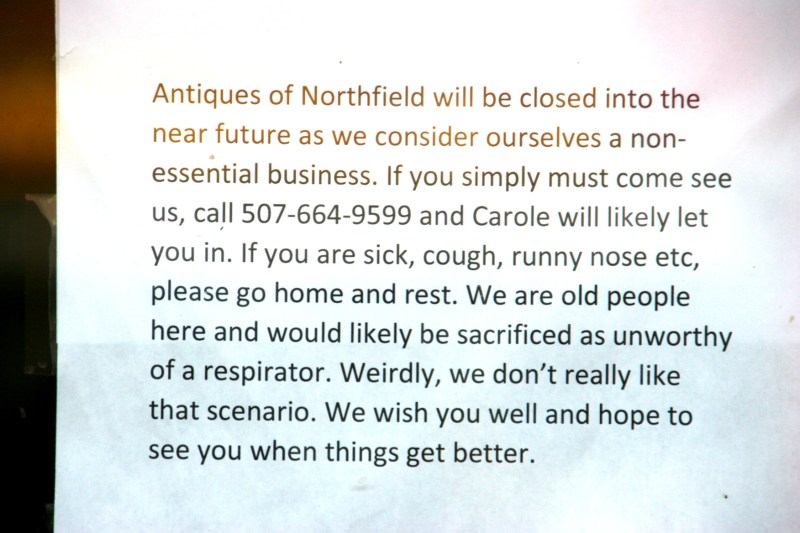
A message posted on the front door of Antiques of Northfield.


At Antiques of Northfield, a personal note from Carole about the store’s temporary closure made me simultaneously laugh at her comment and then reflect. Too many of our seniors have died as a result of contracting COVID-19.


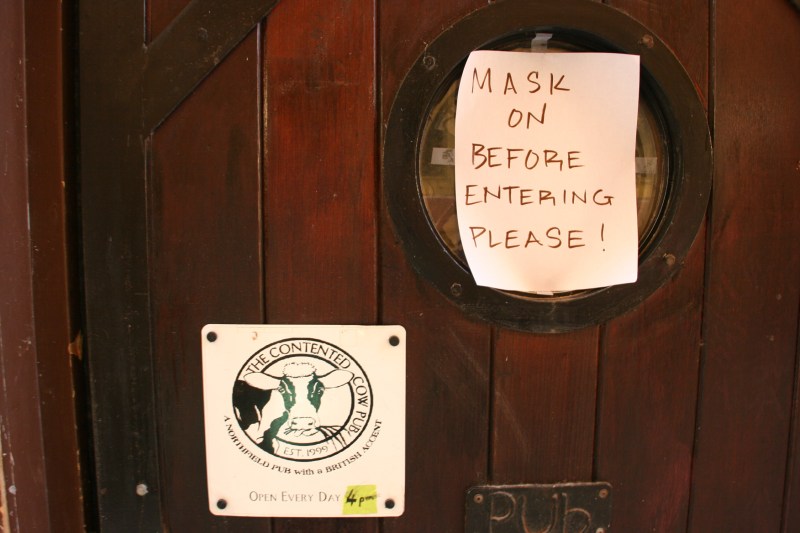
The sign on the door of The Contented Cow, a British style pub in downtown Northfield.


Some mask signs are more straightforward, like at The Contented Cow, with a please added to the request.


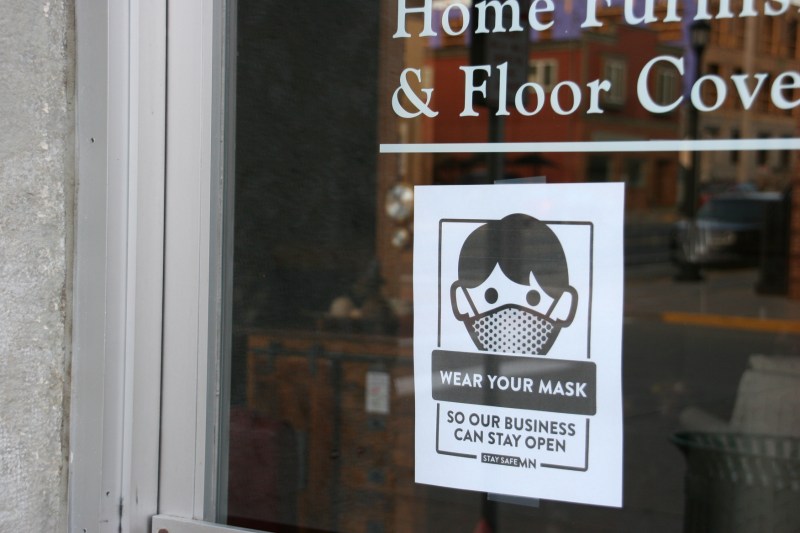
This Northfield business wants to stay open.


At a home furnishings and floor covering store, they want customers to mask up so businesses can stay open, as good a reason as any for masks.


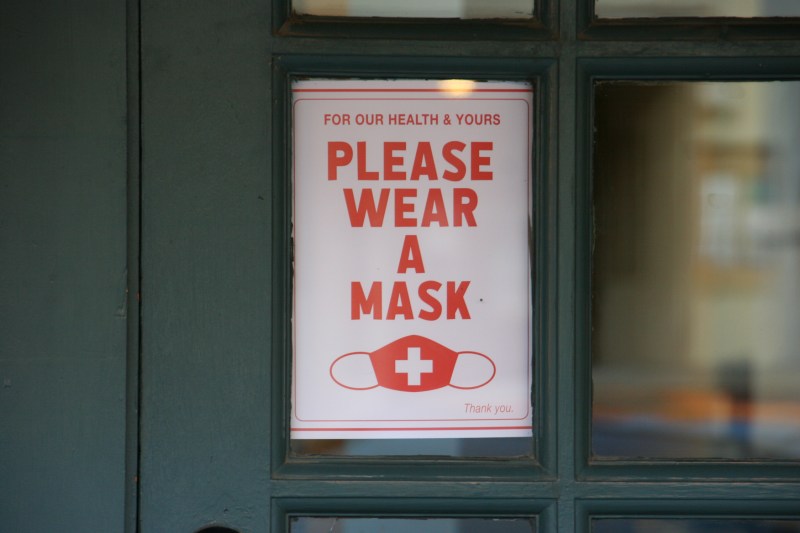
The #1 reason to mask up.


I appreciate, too, the signage that states the clear and obvious scientific reason for wearing a face mask during a global pandemic: for our health & yours.


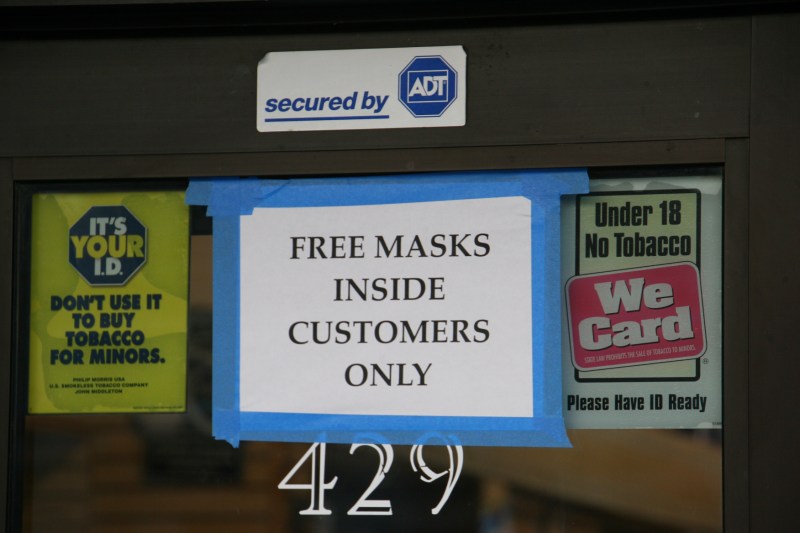
For those who forgot their masks… Note that a new Minnesota state law went into effect on August 1, raising the age to buy tobacco to 21. These signs were photographed on July 31.


At the tobacco shop, customers can even get a free mask inside the store.


Customers can’t possibly miss all the signage at this Northfield business.


Whatever it takes. We all need to get the message loud and clear that masks help stop the spread of this virus. Yeah, they’re uncomfortable and hot and diminish social interaction. But we can manage those minor inconveniences because, you know, this is something simple we can do to show our care for others and protect each other.


Just do it. Wearing a mask is required in indoor public places in Minnesota.


And masks are mandatory in Minnesota, along with 32 others states (as of this writing).


© Copyright 2020 Audrey Kletscher Helbling
 

Signs: Wear a mask, don’t drink… July 31, 2020

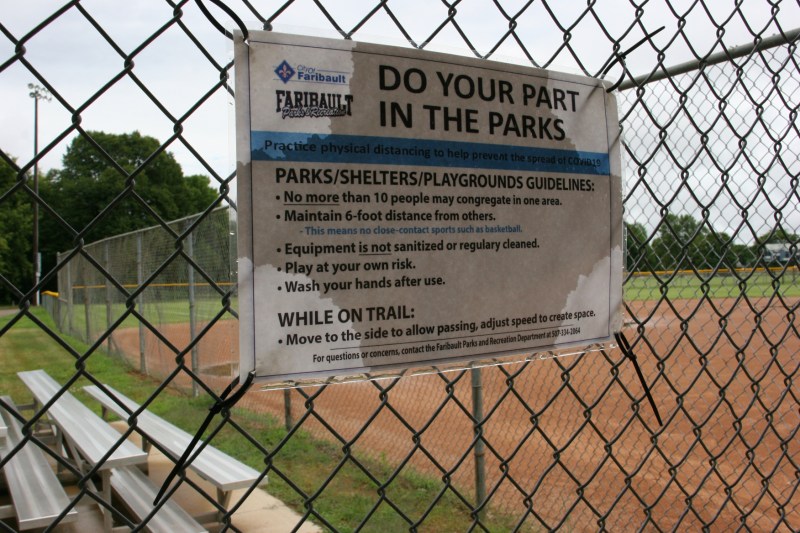
Posted on a softball diamond fence in North Alexander Park, but applicable to all Faribault city parks.


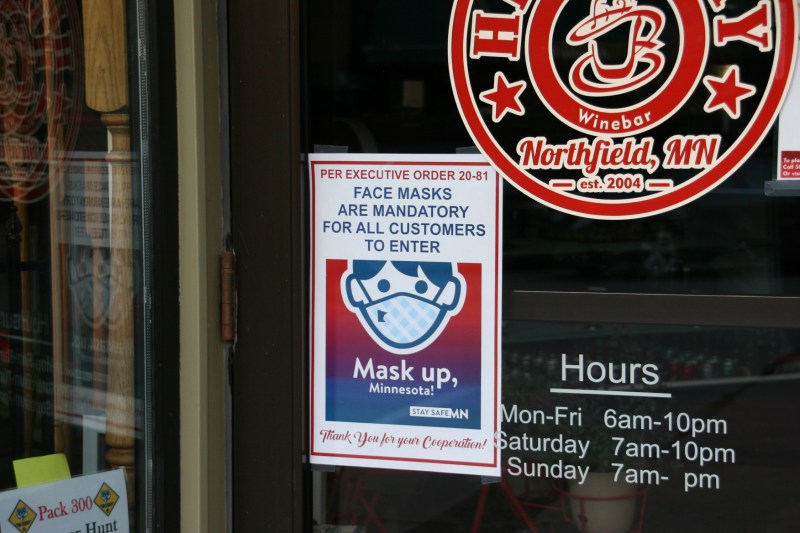
SIGNS, OR PERHAPS more accurately notices, are posted seemingly everywhere these days. Mostly to inform us about COVID-19 related issues. They are necessary reminders and sometimes required by executive mandates, like the new order in Minnesota requiring face masks to be worn in indoor public places.


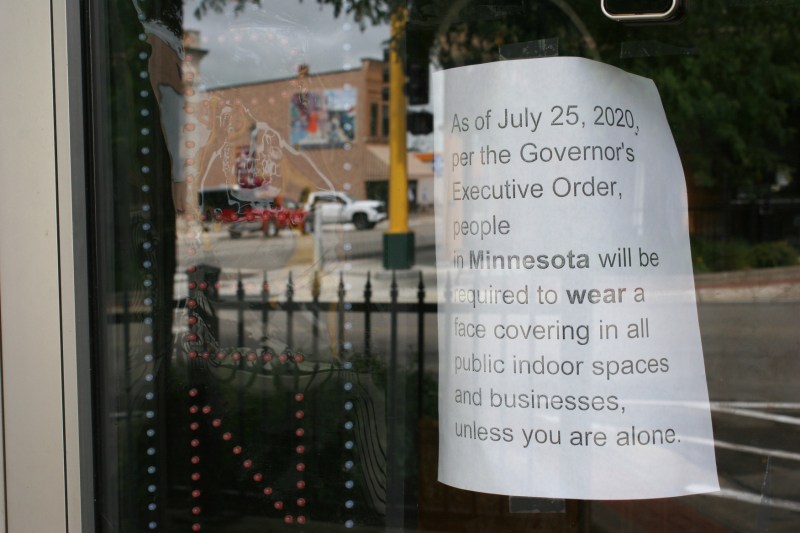
Businesses and other public places are required by the new Minnesota executive order to post signage requiring masks. This is posted on the door of a downtown Faribault business.


Minnesota’s mask mandate went into effect July 25. I’m happy to report that when I went grocery shopping last Saturday morning, I saw only one unmasked person—an elderly man. At the Faribault Farmers’ Market, some vendors and customers wore masks. Others didn’t. Masks are not required outdoors if you can safely social distance.


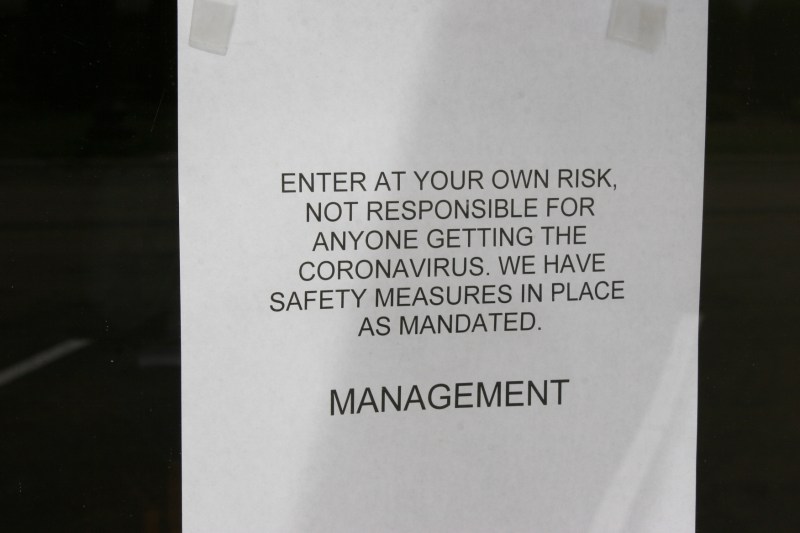
I found this strong warning on a notice attached to a side door along a side street in downtown Faribault.


We’re off to a good start, Faribault. It took an executive order from Minnesota Governor Tim Walz to do what we should have done along for the health of all. Thank you for complying. And for those of you who have been masking up prior, thank you for long ago recognizing the importance of this simple preventative measure.


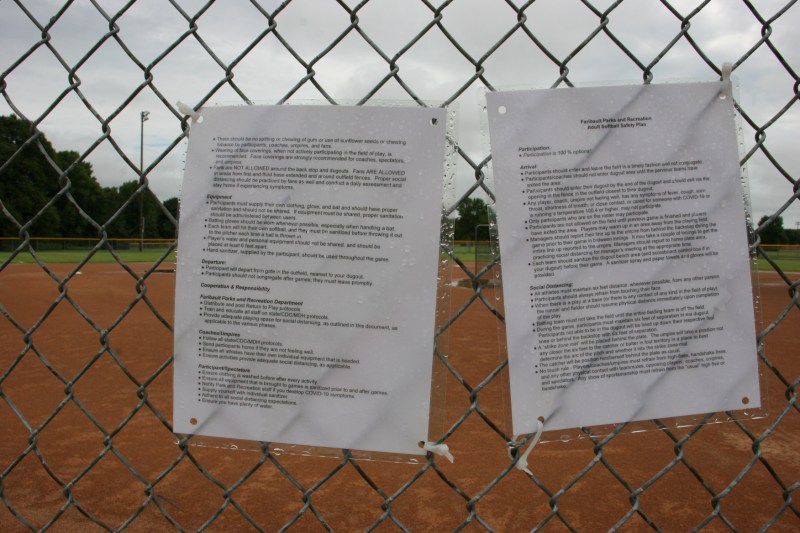
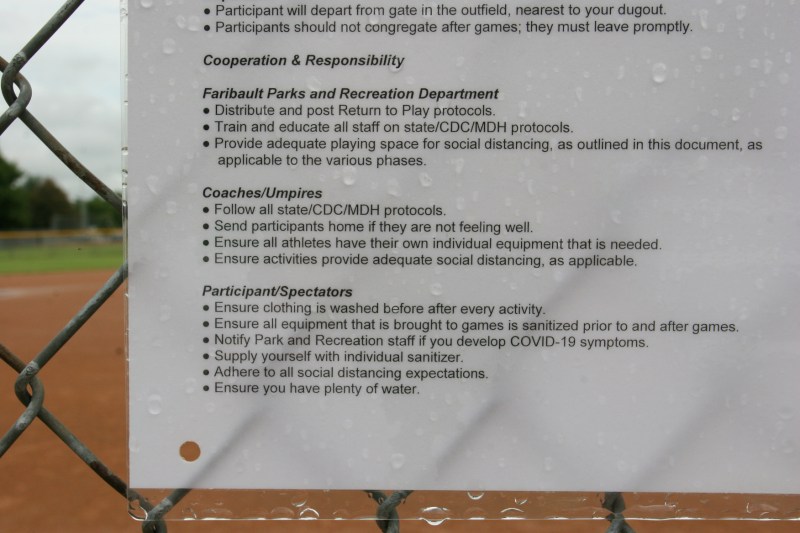
The two-page Adult Softball Safety Plan hung on the fence behind home plate and in front of the bleachers.


Page one of the safety plan.


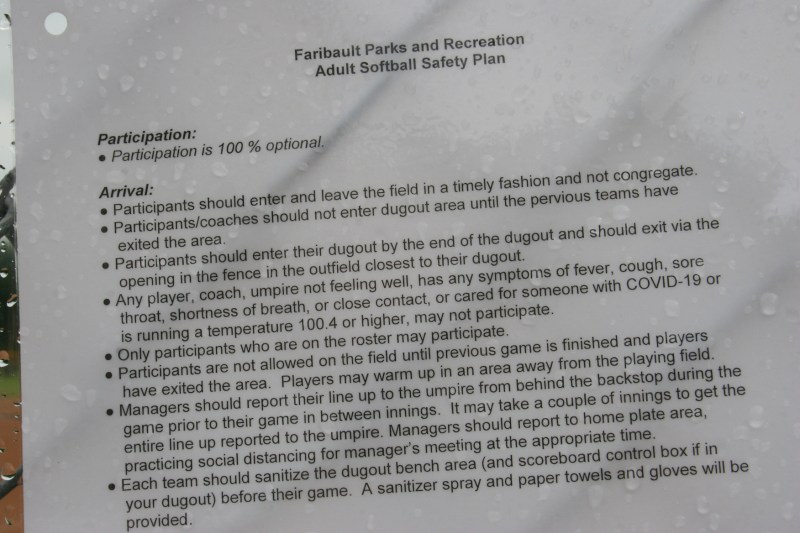
A close-up of the safety plan document, page 2.


While out and about last Sunday, including a morning walk in North Alexander Park, I spotted an abundance of signage posted on fences at a softball diamond. I paused to read messages like the two-page Faribault Parks and Recreation Adult Softball Safety Plan, which focuses on health and safety as it relates to COVID-19.


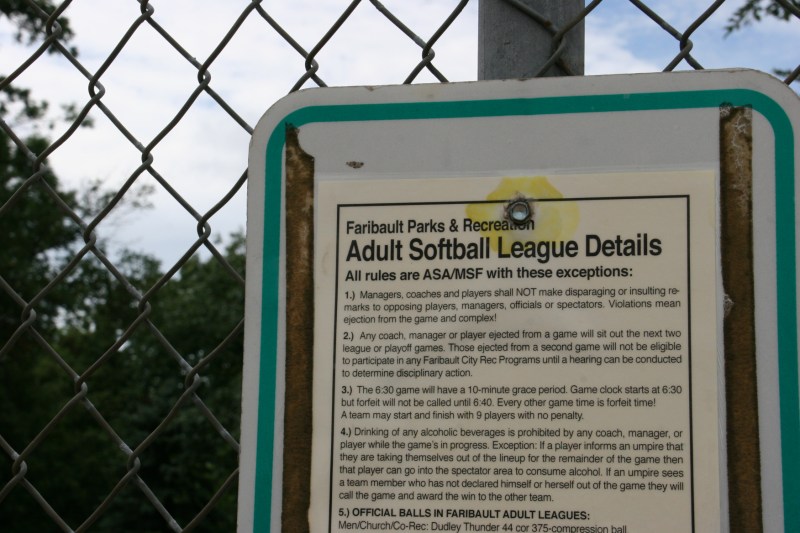
Softball league rules.


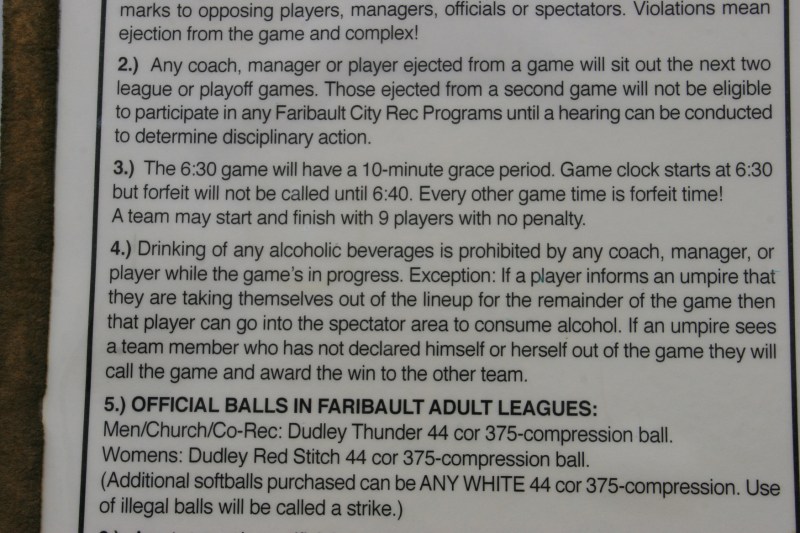
The alcohol ban is noted in rule #4.


But then I found another sign—Adult Softball League Details—which has likely been here for some time and is posted inside the fence behind home plate. Of special interest was rule #4: Drinking of any alcoholic beverage is prohibited by any coach, manager or player while the game’s in progress. An exception allows a player to drink alcohol if he takes himself out of the game and goes to the spectator area.


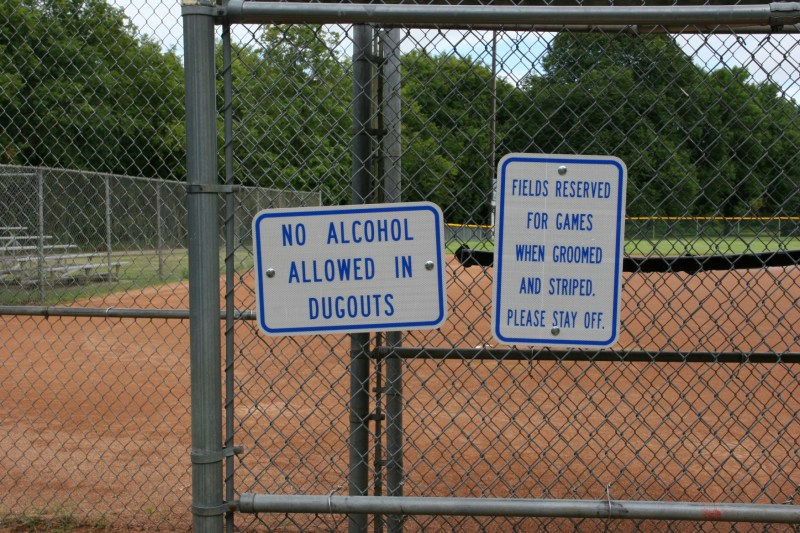
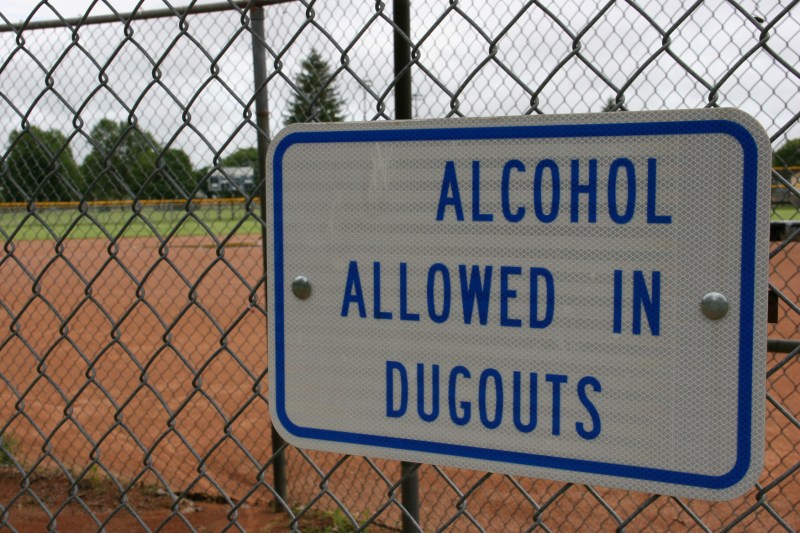
This dugout sign prohibits alcohol consumption.


Yet, when I saw signs on the exterior of fences surrounding the dugouts I noticed a discrepancy. One read: NO ALCOHOL ALLOWED IN DUGOUTS. The other read: ALCOHOL ALLOWED IN DUGOUTS. So which is it?


But the sign at the other dugout supposedly allows alcohol.


I was momentarily baffled until Randy pointed out that someone had vandalized the sign to remove the word NO. Upon closer inspection, I agreed with that observation.

I expect those involved with softball in Faribault know the no drinking rule. It’s common sense that if you’re actively playing a sport, consuming alcohol seems a bad idea. Just like going mask-less and/or congregating at a bar during a global pandemic are really bad ideas. Minneapolis Mayor Jacob Frey this week issued an emergency order, effective Saturday evening, which limits service in bars. Patrons can no longer order or drink at the bar/counter. Now all drinks must be served while patrons are seated at tables. The reason: Nearly 400 cases of COVID-19 linked to people going to bars in Minneapolis.

Let’s continue to mask up. Social distance. Wash/sanitize your hands. Avoid gatherings. And, in general, use common sense.

Think of others, not just yourself. Be safe. Stay healthy.

© Copyright 2020 Audrey Kletscher Helbling
 

Close-up in the Atwood Neighborhood of Madison July 22, 2020

Filed under: Uncategorized — Audrey Kletscher Helbling @ 5:00 AM
Tags: , , , , , ,

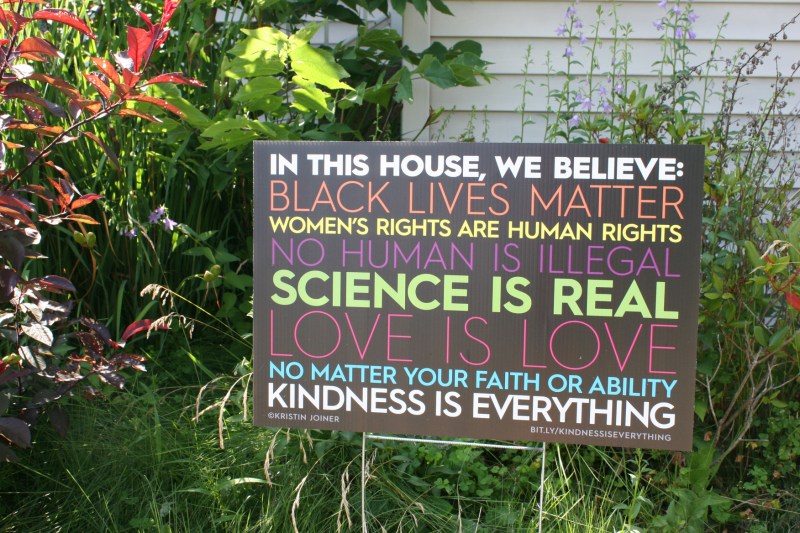
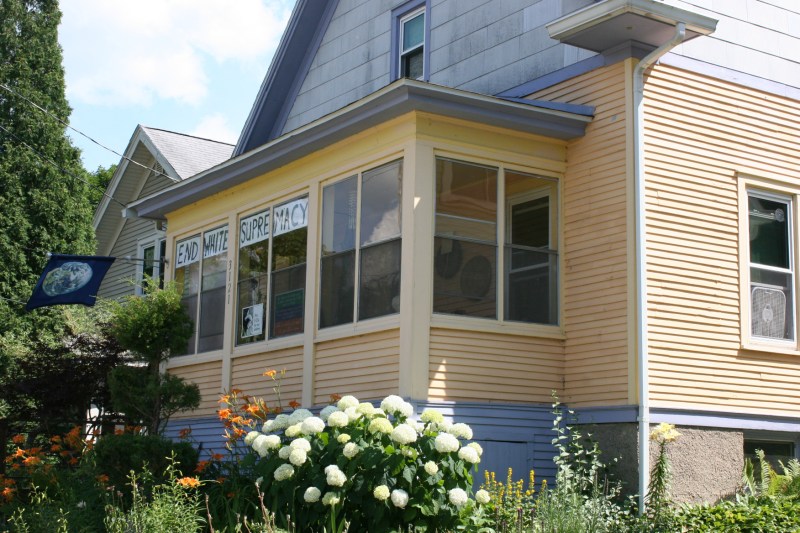
One of the many inspiring signs posted in the residential neighborhood where I walked a square block.


THE MESSAGES ARE STRONG. Powerful. Statements that express the beliefs of those who live here. In a section of the Atwood Neighborhood in Wisconsin’s capital city.


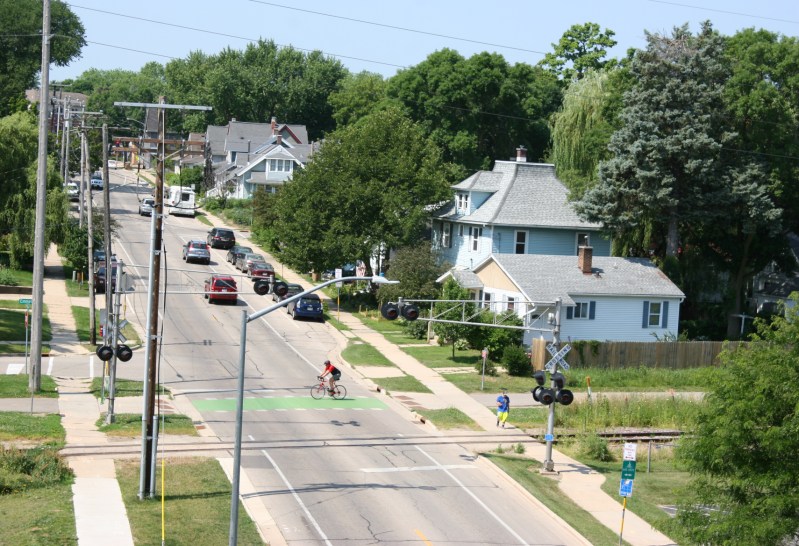
A view of the Atwood neighborhood, including the bike trail that crosses this busy street. The residential neighborhood photographed for this post is to the left (and unseen) in this image.


On a recent trip to Madison to visit our second daughter and her husband and our son, I walked a block-square residential area near the son’s apartment building on the east side. I chose that over following the bike trail since I suffer a hearing loss and often don’t hear bikers fast-approaching from behind. Madison has a great system of recreational routes. But strolling sidewalks feels safer for me as I take in my surroundings, sometimes pausing to take photos.


Charming homes and yards…with powerful messages posted.


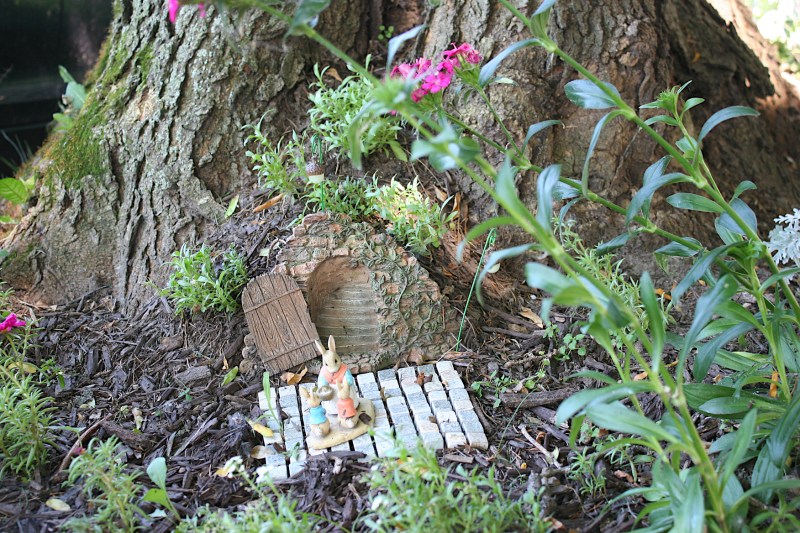
I was delighted to find fairy gardens in one yard.


Vegetables grow in a watering tank along the boulevard.


In the block I walked near the trail, also near Olbrich Botanical Gardens and Lake Monona, I found plenty to photograph. This is a well-kept area of older homes snugged together. Most front yards overflow with flowers, including in one, sweet fairy gardens. Inviting front porches, decks and entries define these homes that truly fit the definition of charming.


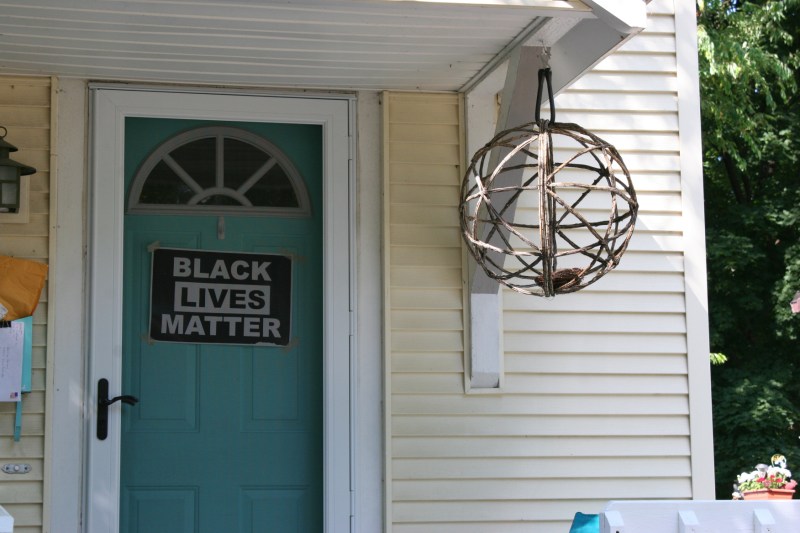
A bold door carries a strong message.


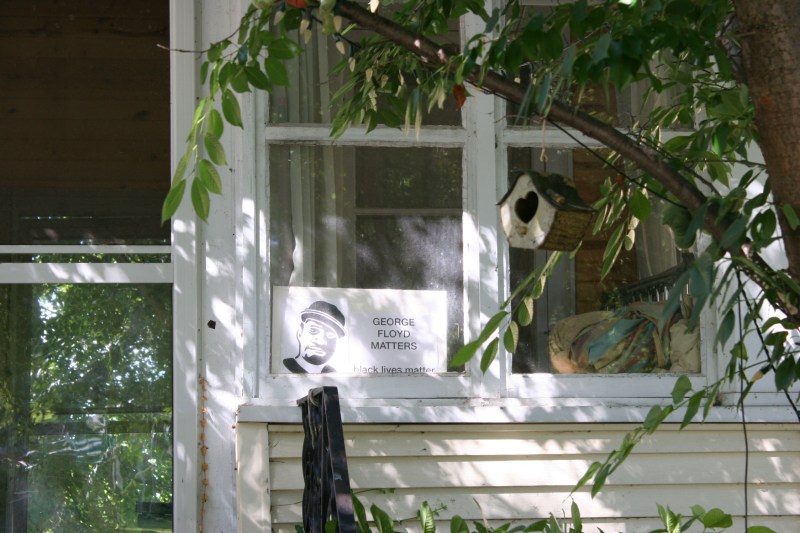
This sign references the death of George Floyd in Minneapolis on Memorial Day, which prompted a movement.


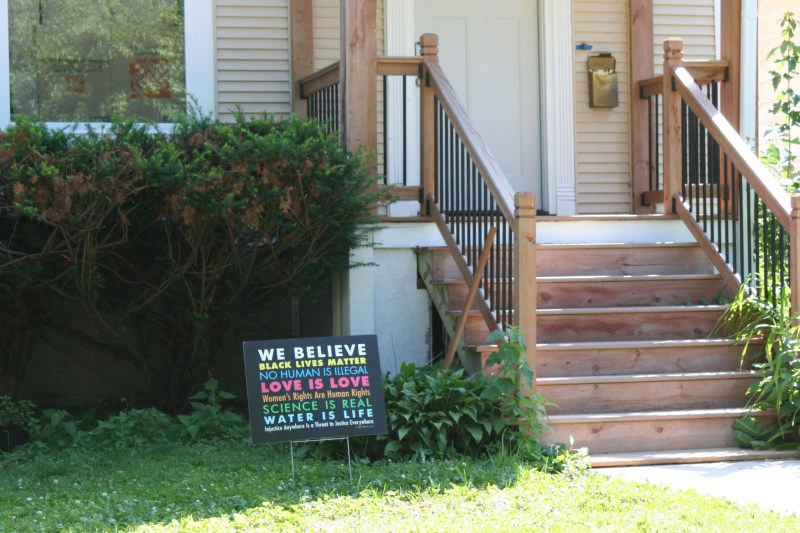
A statement of beliefs outside another Atwood home.


In these mostly lawn-less properties, there seems a cohesiveness of pride and of people who care about others, about issues, about this place they call home. And beyond. I saw that in the many posted signs addressing current-day concerns.


Bowling balls make for interesting garden art.


Lilies burst color into one of many front yard gardens.


This typewriter garden art intrigued me. I wished I could roll a piece of paper into the typewriter and leave a message.


Among the lilies and the outdoor art—including a rusting vintage typewriter—I experienced a sense of neighborhood that expands into home-grown businesses like Monty’s Blue Plate Diner, Michael’s Frozen Custard, the Barrymore Theatre


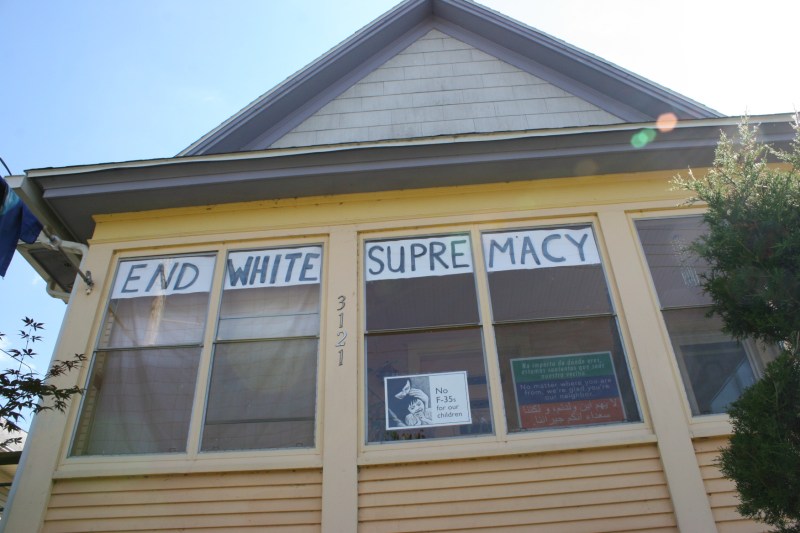
In this photo, the message I quote below is posted in the sign to the far right, bottom.


And I heard, too, this overall general message: No matter where you are from, we’re glad you’re our neighbor.

© Copyright 2020 Audrey Kletscher Helbling
 

From southern Minnesota: Signs of the times March 19, 2020

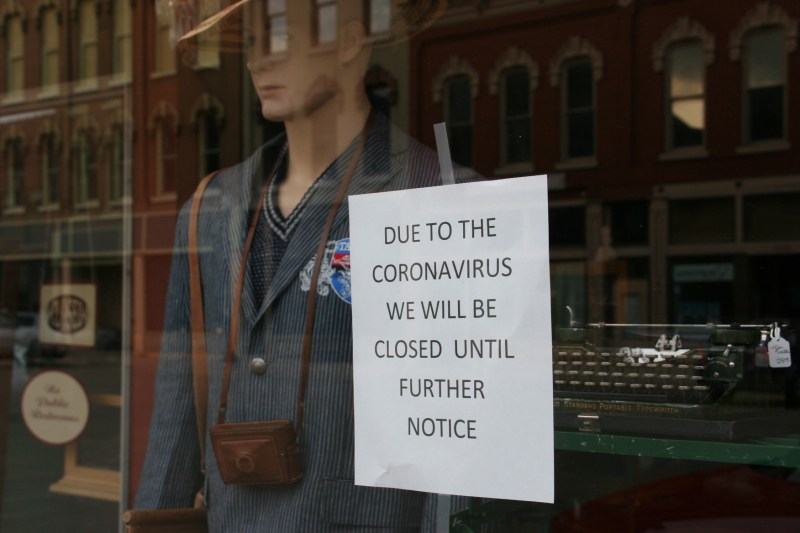
Posted in the window of Keepers Antiques, downtown Faribault, Minnesota.


LIFE FEELS ALMOST SURREAL. Like we’re living in a science fiction film. Or a horror movie.


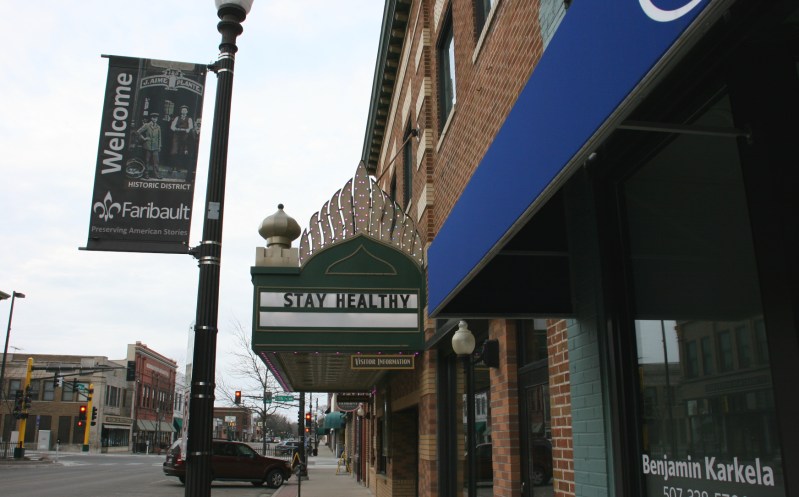
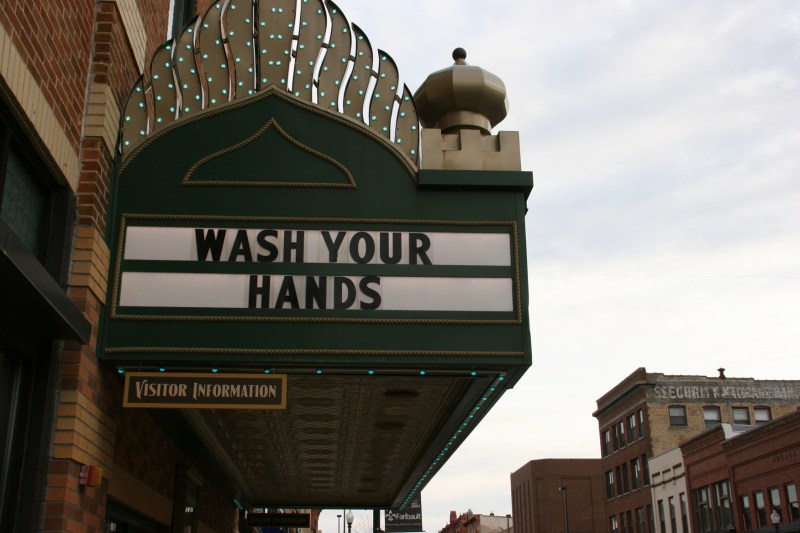
The Paradise Center for the Arts in downtown Faribault is closed until April (or longer). Messages like “STAY HEALTHY” mark the PCA marquee.


Each day brings more bad news as COVID-19 spreads and more restrictions are put in place. The anxiety is almost palpable. No matter where we live—from rural to suburban to urban—we are affected.


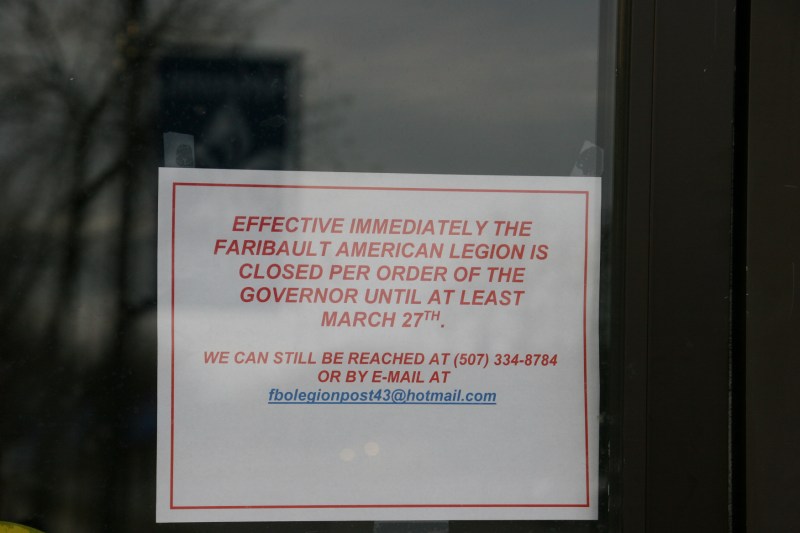
Posted on the door of the local American Legion, which serves food and beverages and is also an event center.


Tuesday evening, on the day the Governor of Minnesota ordered all bars and restaurants and other social gathering places like bowling alleys, theaters and museums to close by 5 pm, I grabbed my camera to document this order. In signs posted in my southern Minnesota community.


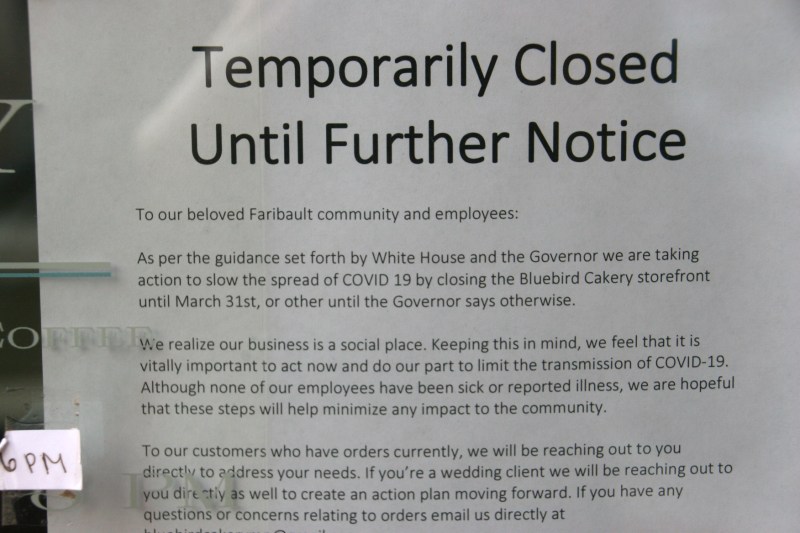
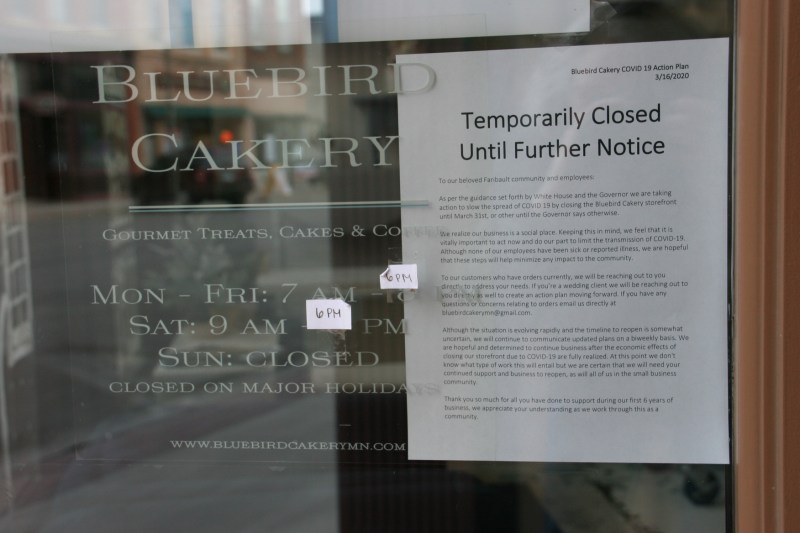
Posted at Bluebird Cakery.


Most messages are simple. But the sign displayed in the window of Bluebird Cakery carries an emotional tone, beginning with these words: To our beloved Faribault community and employees…


Bluerbird Cakery is a popular gathering spot in the heart of downtown Faribault.


Beloved. That’s such a powerful heart-touching word, especially in these difficult times.


A helpful reminder posted on the Paradise Center for the Arts marquee.


If we can all remember that we are beloved to one another, then we will have brought something beautiful out of this crisis. That is my hope. That we will care more deeply for one another. That we will grow in compassion and love. That we appreciate and value one another more. That we can rise above that which separates us to that which brings us together. And for now, together means standing unified in our efforts to stop the spread of the coronavirus.


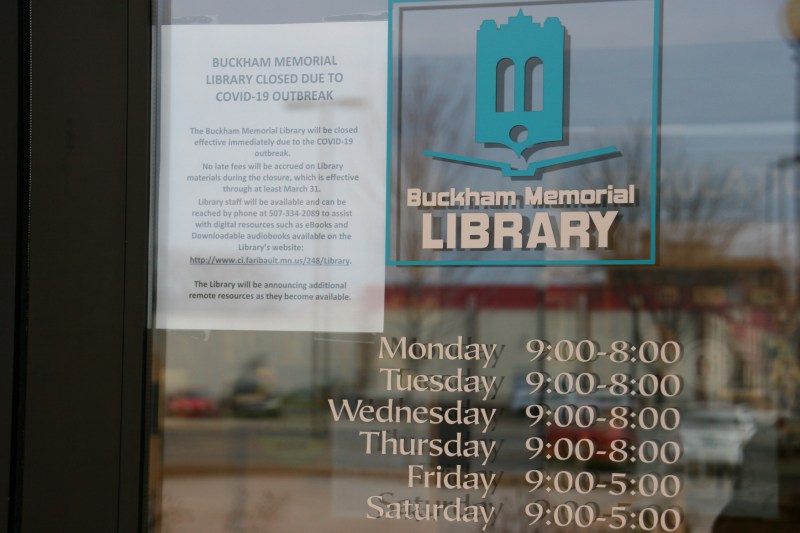
Our local library closed on Monday.


PLEASE FEEL FREE to share in the comments section specifics on what’s happening in your part of the world as it relates to COVID-19.

© Copyright 2020 Audrey Kletscher Helbling
 

Sample billboards along Interstate 90 in Wisconsin February 19, 2020

Filed under: Uncategorized — Audrey Kletscher Helbling @ 5:00 AM
Tags: , , , , , , , ,

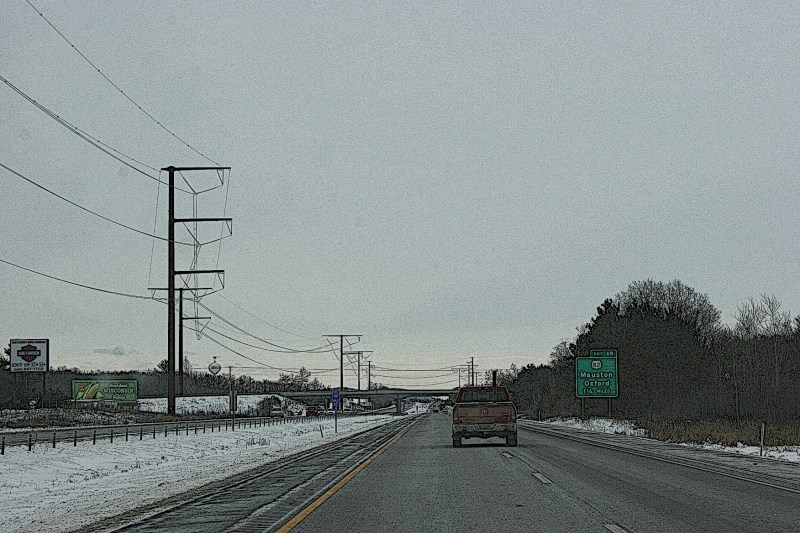
Drive Interstate 90 between La Crosse and Madison, Wisconsin, and you’ll see lots of billboards around the larger cities and in the area by the Dells. Edited Minnesota Prairie Roots photo.


BILLBOARDS CAN CLUTTER the landscape. Too many words. Too many materialistic messages. Too much visual imprint when I’d rather see the natural surroundings.


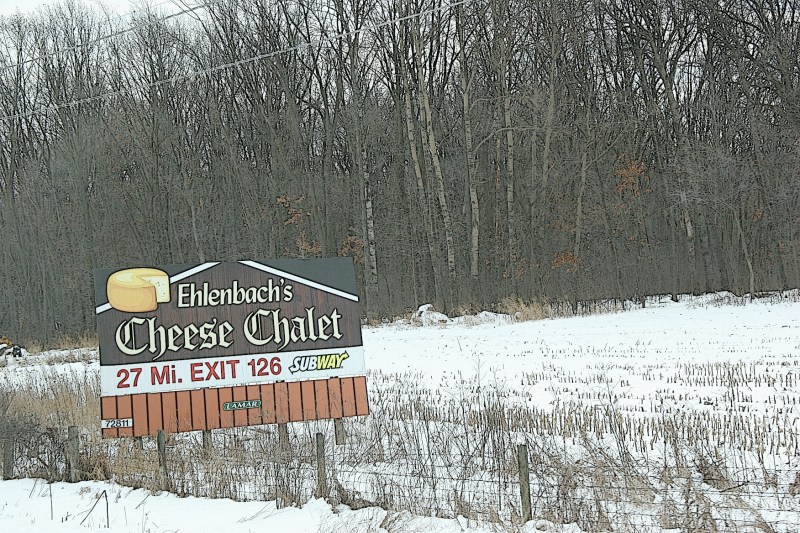
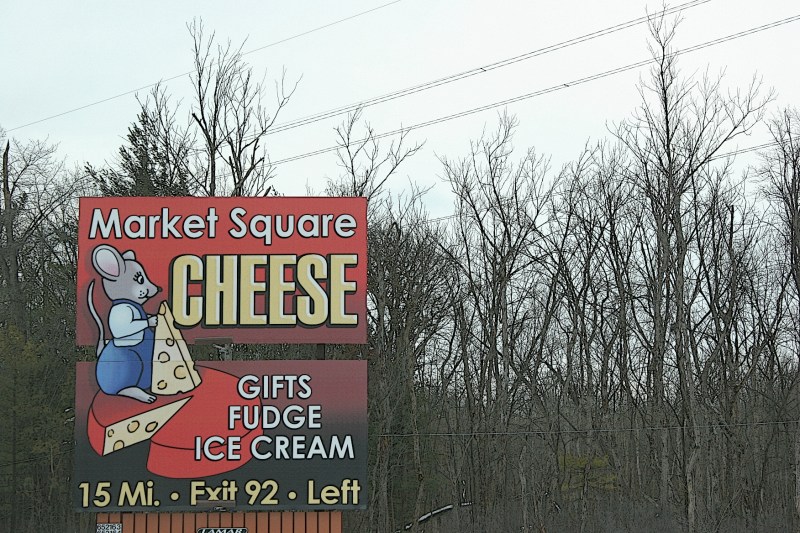
As you would expect in Wisconsin, there are lots of signs for cheese places along I-90. Edited photo by Minnesota Prairie Roots.


But I understand the value of signs, large or small, in drawing people into businesses, to destinations, to detour off the interstate. That said, I noticed a lot of vacant billboard real estate while traveling Interstate 90 from La Crosse to Madison, Wisconsin, this past weekend. I can only speculate that in a tech driven world, this form of marketing to the masses is declining.


Edited photo by Minnesota Prairie Roots. Anyone know the story behind this billboard?


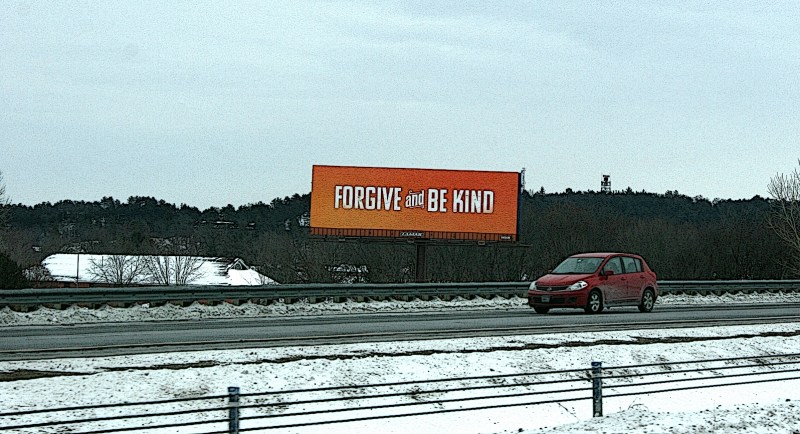
Still, I pay attention to roadside signage and noticed a billboard with a simple and profound message: FORGIVE and BE KIND. I photographed the sign within 10 minutes of Exit 69, the road to Mauston and Oxford. A LAMAR Advertising credit runs along the bottom.

FORGIVE and BE KIND. The words are simple enough. But forgiveness and the added directive to “be kind” can prove a struggle when the pain and hurt run deep. Yet, both can be achieved. It takes work. Time. Healing.


Another cheese sign along I-90 in south central Wisconsin. Edited photo by Minnesota Prairie Roots.


I’d like to hear your thoughts on the FORGIVE and BE KIND billboard and/or on billboards in general.

© Copyright 2020 Audrey Kletscher Helbling
 

Mixed message December 3, 2019

Filed under: Uncategorized — Audrey Kletscher Helbling @ 5:00 AM
Tags: , , , , ,


AS A WORDSMITH, I’m especially drawn to signage, including this one spotted Sunday afternoon along Division Street in downtown Northfield.

I laughed given the falling snow, the snow banked on the front of the pick-up truck parked curbside and the mixed message sent.

Cacti are not warm and fuzzy, although the environment in which they grow is warm, even hot. I suppose that was the idea—to get us Minnesotans thinking about warmer places like Little Joy Coffee with its hot brew.

While the words and art seem especially mismatched to me, I noticed, photographed and remembered them. Thus, marketing accomplished.

WHAT ARE YOUR THOUGHTS?

© Copyright 2019 Audrey Kletscher Helbling
 

Downtown Sleepy Eye: A glimpse of small town character August 20, 2019

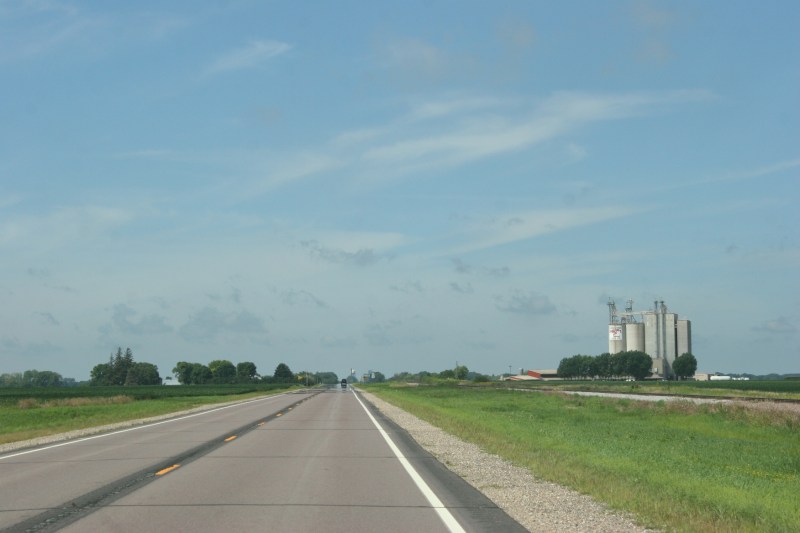
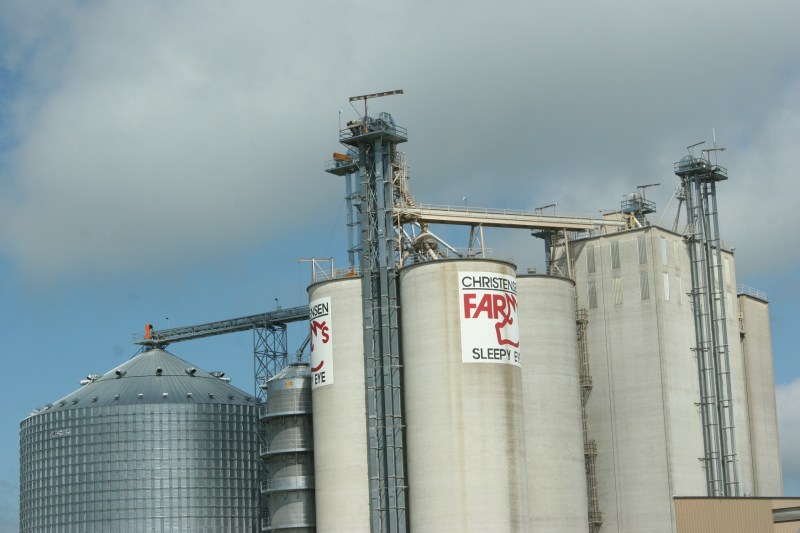
Just east of Sleepy Eye on U.S. Highway 14. That’s Christensen Farms headquarters to the right.


SMALL TOWNS, like cities, possess character. Each is unique. No matter how many rural communities I visit or how often I tour the same town, I discover something new. It takes more than a precursory glance to truly appreciate a community. Too often people dismiss small towns as places to simply pass through when traveling from Point A to Point B. But these communities are much more. And to see that requires pulling off the highway, parking your vehicle and exploring.


Agriculture anchors the small towns of southwestern Minnesota.


On a recent drive to southwestern Minnesota, Randy and I stopped in Sleepy Eye, which is west of New Ulm which is west of Mankato. I am forever pointing out to folks that civilization exists west of Mankato. I am proud to have grown up on the southwestern Minnesota prairie in rural Redwood County. I once lived and worked for the newspaper in Sleepy Eye, located in Brown County next to my county of origin.


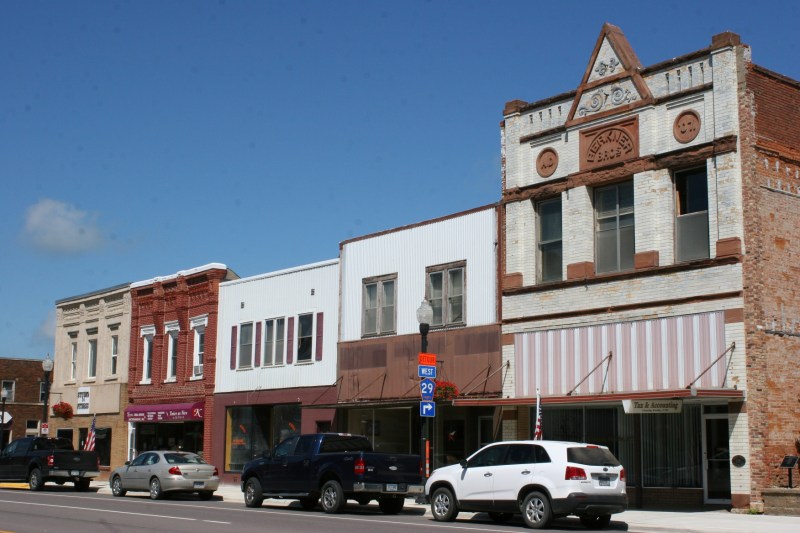
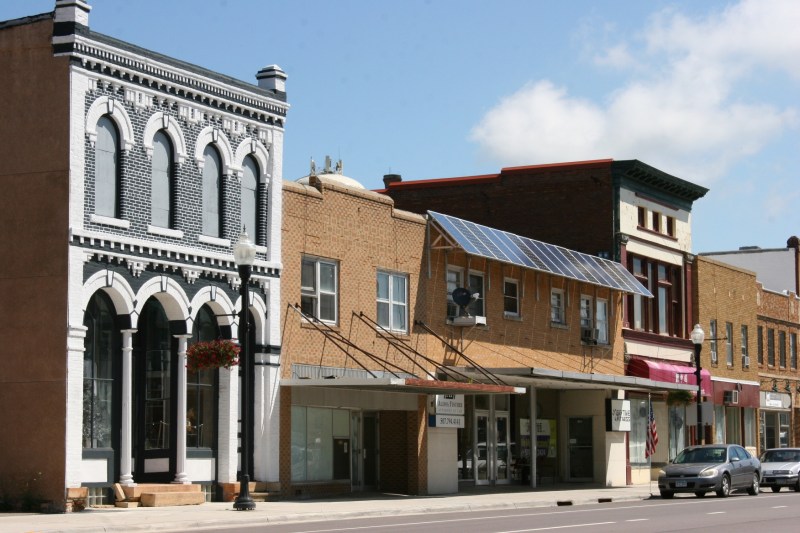
A snippet of downtown Sleepy Eye.


Sleepy Eye, like so many other small towns, has felt the impact of a more mobile society, of technology and more. Businesses I remember—a bakery, a department store—have long closed.


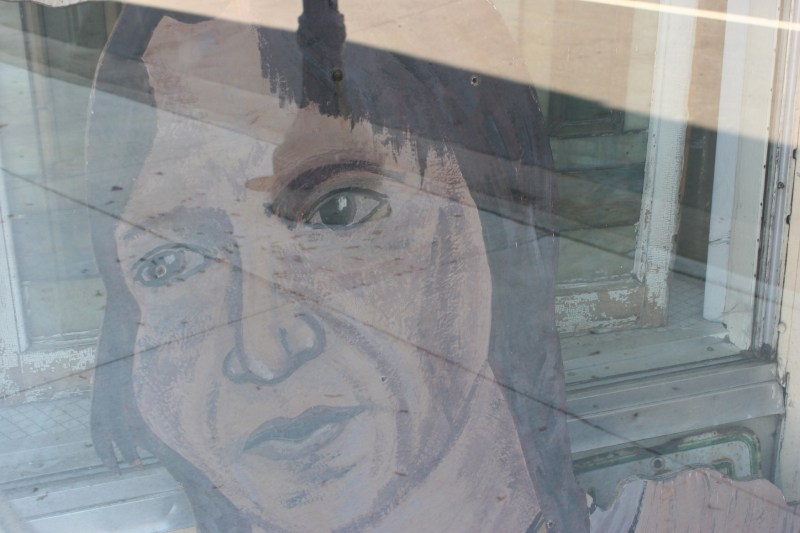
A wooden cut-out of Chief Sleepy Eye as photographed through an antique shop window. The town is named after this Dakota leader.


Photographed inside the entry of Sleepy Eye Stained Glass.


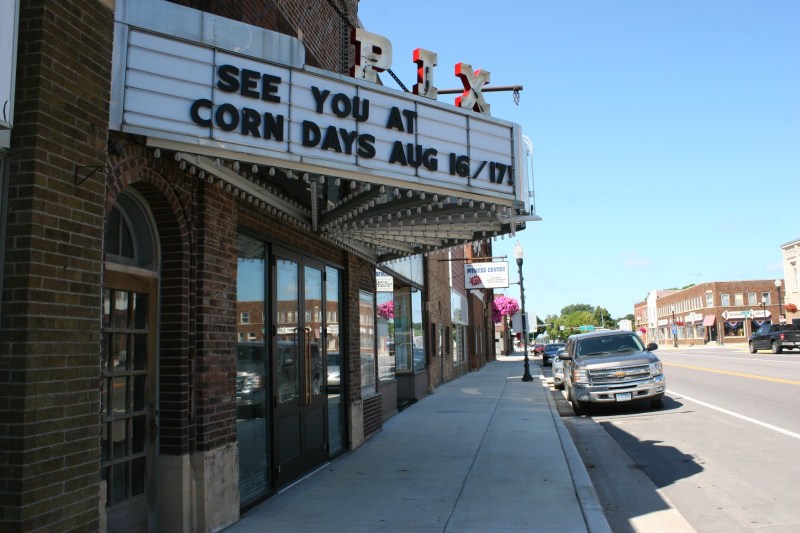
This refurbished marquee at the PIX Theatre marks the site of a forthcoming brewery and coffee shop.


But new businesses have opened in the decades since I left. Antique shops. Sleepy Eye Stained Glass, the reason for our stop. And the soon-to-open Sleepy Eye Brewing and Coffee Company.


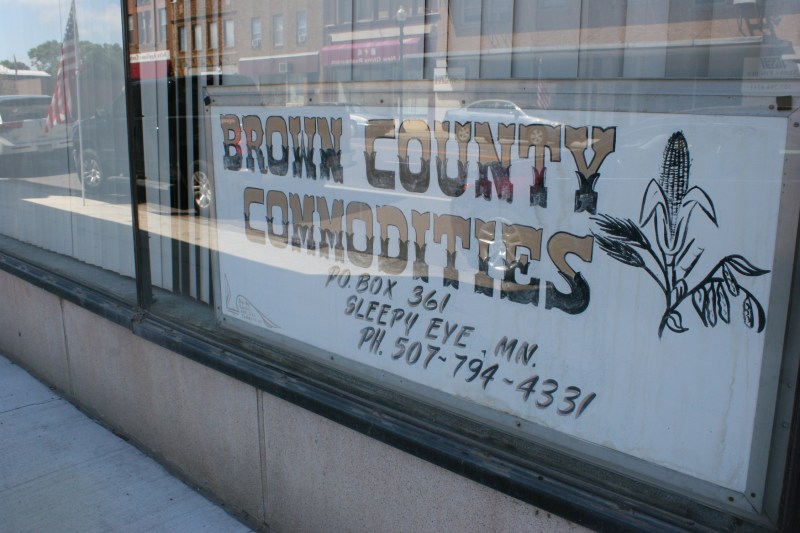
Agriculture centers these small towns as evidenced in this storefront signage.


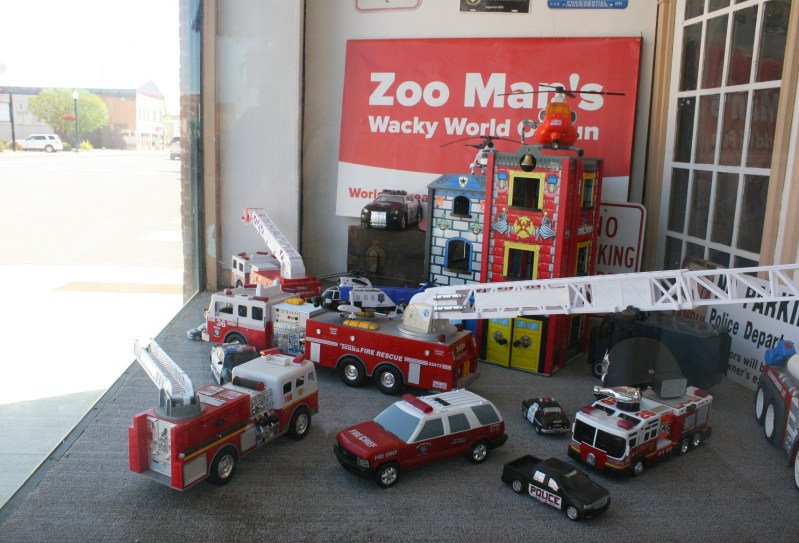
A display window at Zooman’s Wacky World of Fun drew my interest. I would like to explore this space open to the public (on weekends) for birthday and other parties. It was closed when I was in Sleepy Eye.


Another section of downtown Sleepy Eye.


While Randy searched for stained glass, I grabbed my camera and meandered through a short stretch of the business district along busy U.S. Highway 14. I found myself wishing the second stoplight had not been removed during recent road reconstruction. The downtown is much less pedestrian friendly now. It’s a difficult roadway to safely cross.


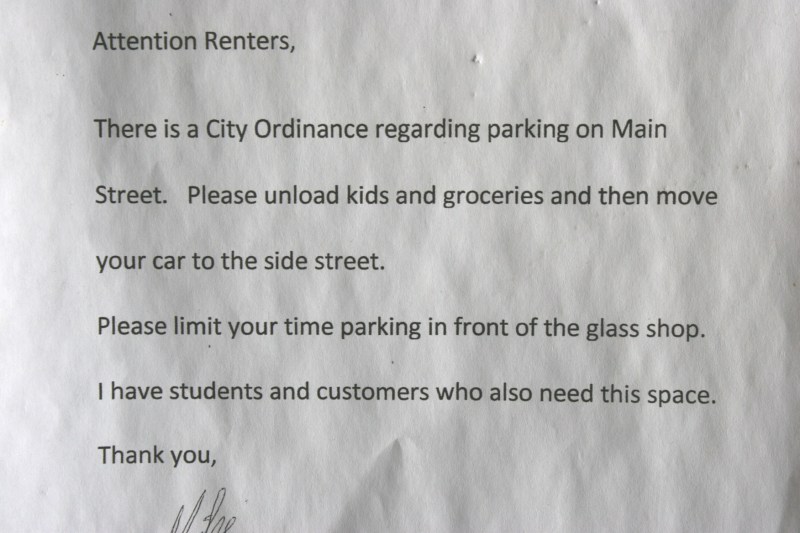
Posted on a door at the bottom of a stairway leading to upstairs apartments by Sleepy Eye Stained Glass. I love discovering signage like this.


That aside, I managed and took some photos that show the unique character of Sleepy Eye. Enjoy. And check back for more posts from this southwestern Minnesota community.

© Copyright 2019 Audrey Kletscher Helbling
 

Signs of Christmas linger in Minnesota into March March 28, 2019

Filed under: Uncategorized — Audrey Kletscher Helbling @ 5:00 AM
Tags: , , , , , ,


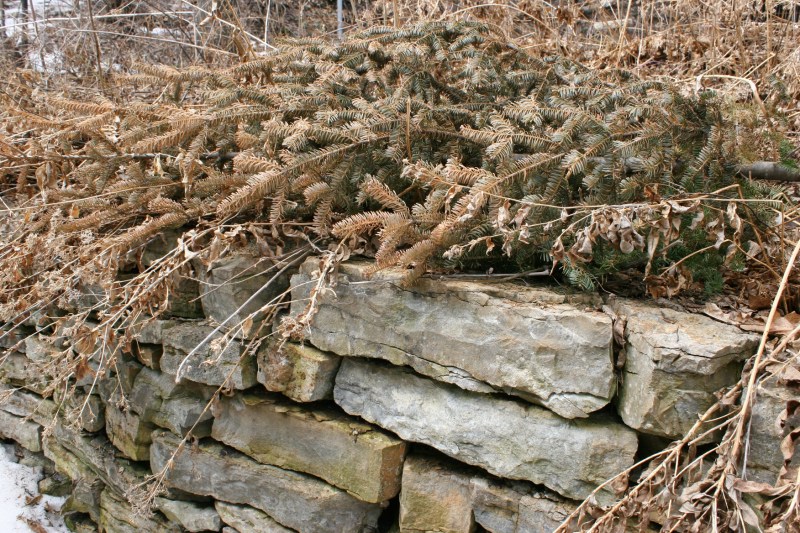
ACROSS THE STREET, on my neighbor’s front door, a faded Christmas wreath hangs. Needles dried and dropping. Decorative ribbon faded. In my own side yard, our dried Christmas tree, once buried under snow, lies atop a flowerbed.


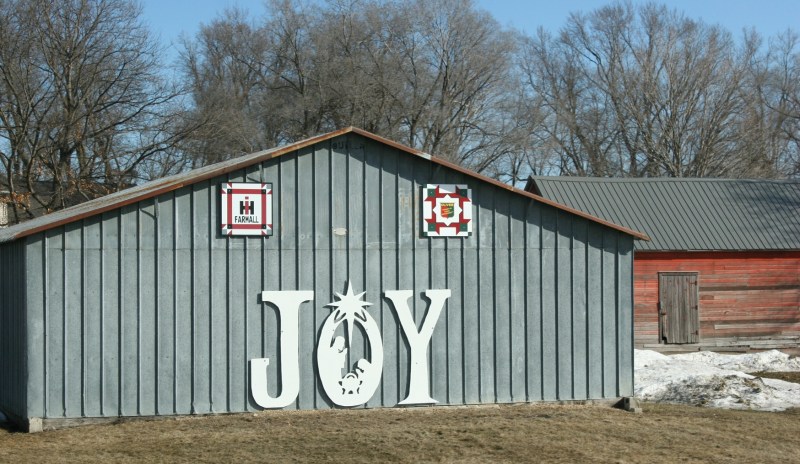
Christmas greetings on an outbuilding on a farm site just west of Mankato along U.S. Highway 14 photographed on Saturday.


It’s not uncommon here in Minnesota to see outdoor Christmas decorations up well into spring. Whatever the reason. I suppose the cold and snow hinder removal, especially this winter.


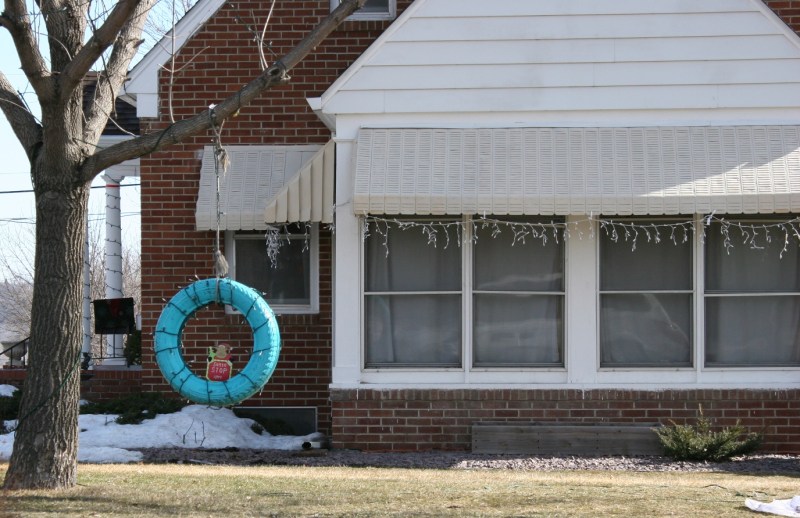
In a New Ulm yard, a sign on a tire swing says, “Santa stop here.” Christmas lights also wrap an entry column on the left. Photographed on Saturday, March 23.


Or, after awhile, we simply don’t notice whatever we pass by on a daily basis. That explains, for example, why cardboard covers a section of wall in my dining room. We removed a brick chimney about 10 years ago with plans to add a mini pantry. Such is the stuff of plans detoured by finances. Now I don’t think about that plan much anymore, unless a first-time visitor stops by and I find myself explaining why we have a cardboard wall. But I digress.


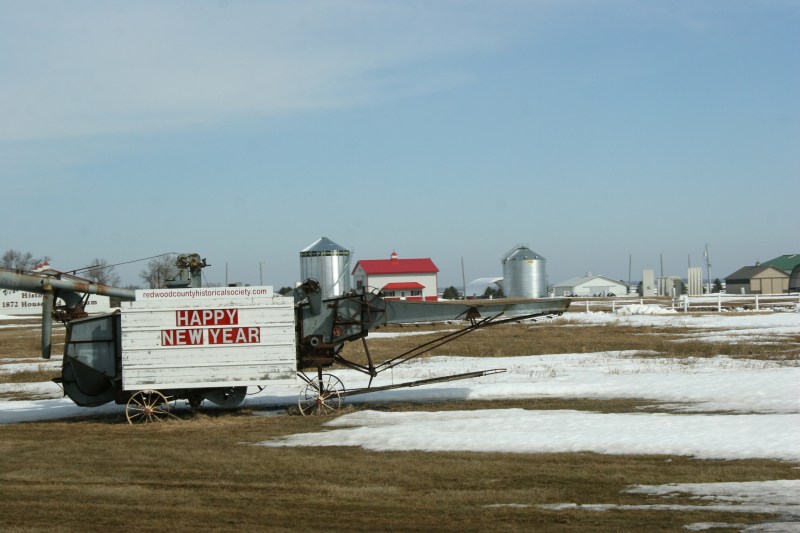
At the site of Farm Fest and the Gilfillan Estate, the Redwood County Historical Society wishes motorists a Happy New Year.


Back to that holiday décor. I photographed several examples of Christmas greetings still in place while traveling back to my native southwestern Minnesota this past Saturday. Hopefully soon spring and/or Easter themed décor replaces signs of Christmas.


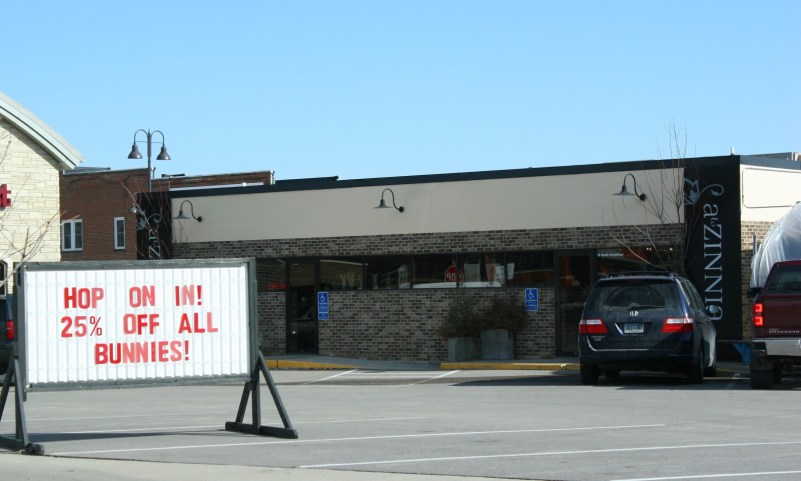
At least one New Ulm business, A to Zinnias Florals & Gifts, recognizes the seasonal change to spring by offering 25 percent off on all bunnies. That would be home decorating bunnies. Not real.


Rudolph in a farmyard along Brown County Road 29 west of New Ulm about half way to Morgan.


TELL ME: Is it common in your area for seasonal Christmas decorations to stay up too long? Or what defines “too long?”

© Copyright 2019 Audrey Kletscher Helbling
 

From Ulen: Ole & Lena would feel right at home in this Minnesota town November 8, 2018

The ethnicity of Ulen displayed on a business sign. I absolutely love the artistry of this signage.


I’D NEVER BEEN TO ULEN, a decidedly Norwegian-American community of some 600 in northwestern Minnesota. But it was on our route from Hendrum back to Detroit Lakes last week Thursday.


Ulen looks like many other small towns in this remote agricultural region. There’s a school, a grain elevator, a few businesses downtown. Typical.


Approaching the grain elevator complex, we notice the rising dust.
 

But then Randy and I observed something not so typical—the demolition of an aged grain elevator. Back in their heyday, these rectangular buildings rose like cathedrals on the prairie, visible for miles. They centered communities, held the harvest. Now many sit empty, replaced by massive grain bins and towering grain silos that hold no aesthetic appeal.

I don’t know the story behind the removal of the vintage elevator in Ulen. I can speculate. But speculation isn’t truth.


I know only that I felt a sense of sadness as Randy and I sat in our van watching the dust fly while demolition equipment chomped away chunks of this historic building. We missed seeing the elevator in-tact given our late arrival.


After a bit we drove back through town, past the Ulen Museum, formerly the Viking Sword Museum (the Viking sword found near Ulen has been proven a legend, not truth), then past the Top Hat Theatre.


When we spotted a vintage house for sale on a corner lot, Randy stopped to pick up a flier. He asked me to guess the price. “$47,000,” I said. Oh, how wrong that guess. The five-bedroom, two-bath house of 3,088 square feet and with four garage stalls is priced at $179,900. No, we’re not interested in living in Ulen, home to a Turkey BBQ going on its 58th year.


As we exited town, a plain green poleshed caught my eye. Lena’s Lefse, the sign thereon read. Now I know a lot of people who love lefse, who make lefse each holiday season. I’ll eat it just to be polite. I’m convinced the appeal of lefse is more about family tradition and heritage than taste. But then I’m not Norwegian. And I’m not from Ulen. Nor do I know a good Ole and Lena joke to share right now.

© Copyright 2018 Audrey Kletscher Helbling