Minnesota Prairie Roots

Writing and photography by Audrey Kletscher Helbling

The Lucan Community Band: A photo essay August 6, 2011

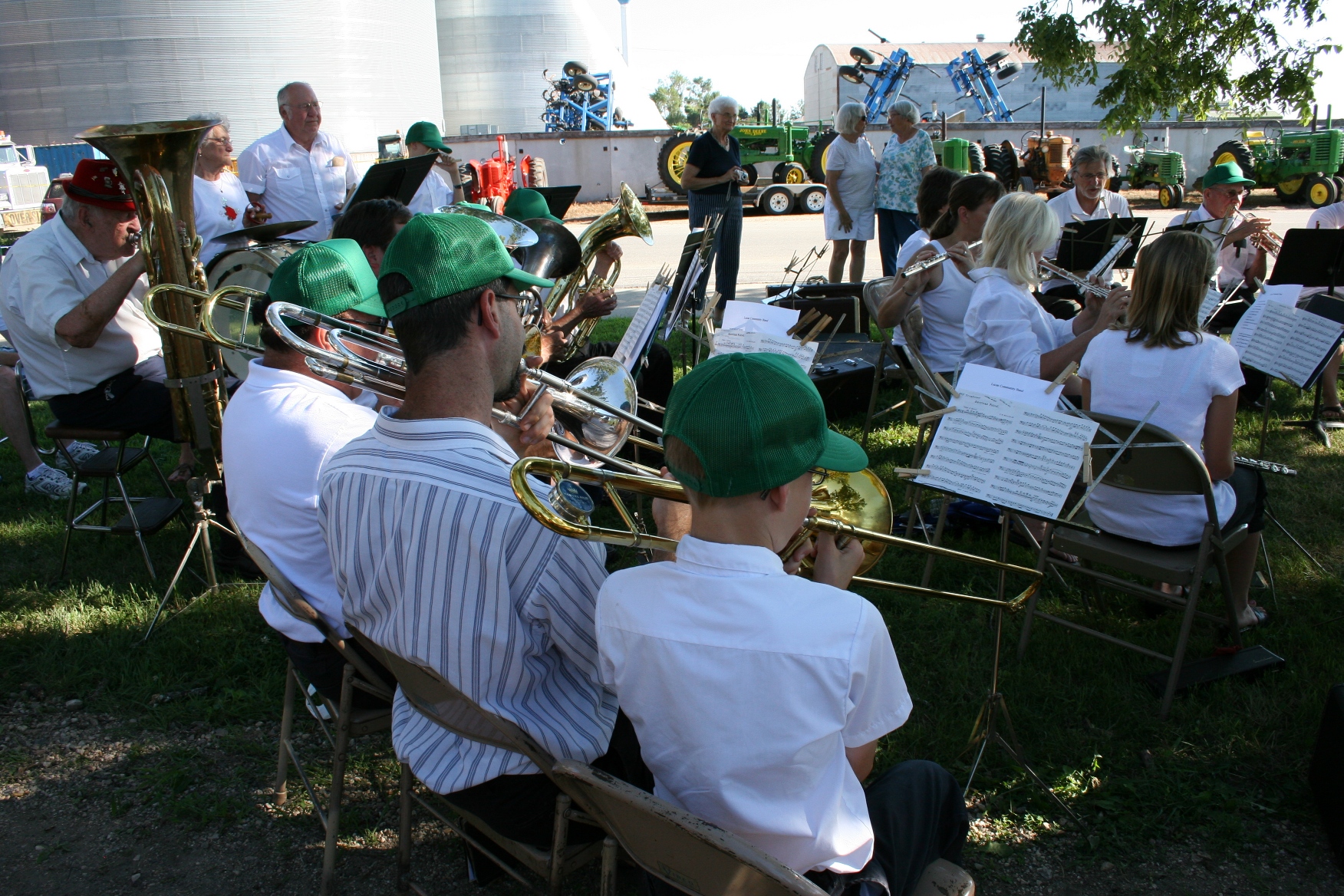
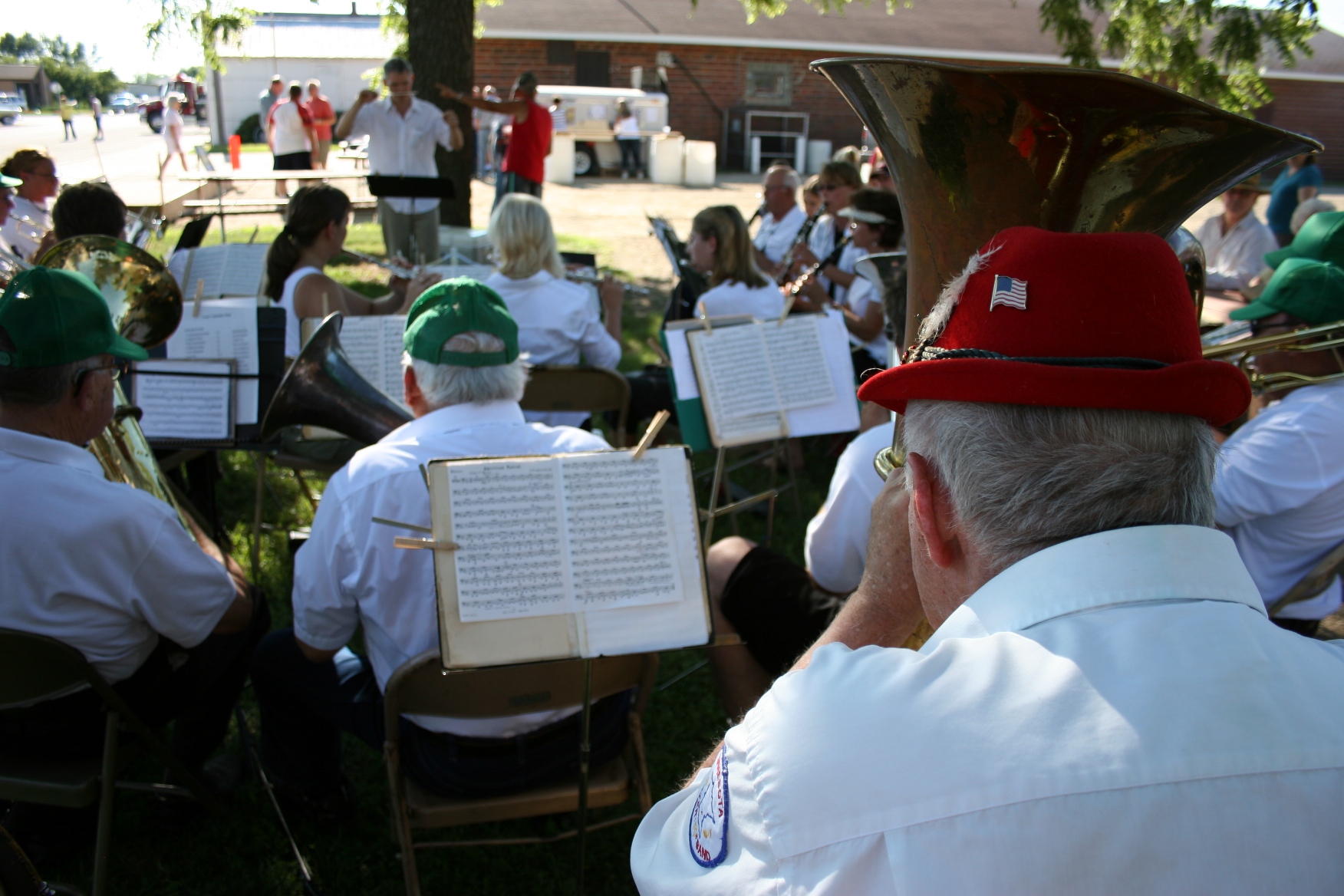
The Lucan Community Band performs outside the Vesta Community Hall during V-Esta Daze.

IF I WOULD HAVE BEEN less concerned about sinking my teeth into grilled chicken at my hometown’s community celebration on a recent Friday evening, I’d know more about the Lucan Community Band.

The band performed from 5:30 p.m. – 6:30 p.m. under the shade trees outside the Vesta Community Hall, where diners lined up inside for a sumptuous meal of chicken, potato salad, beans and a dinner roll.

I wiggled my way right into the band section for some close-up photos and even inquired, between selections, about the vintage band music, before going indoors for that chicken dinner.

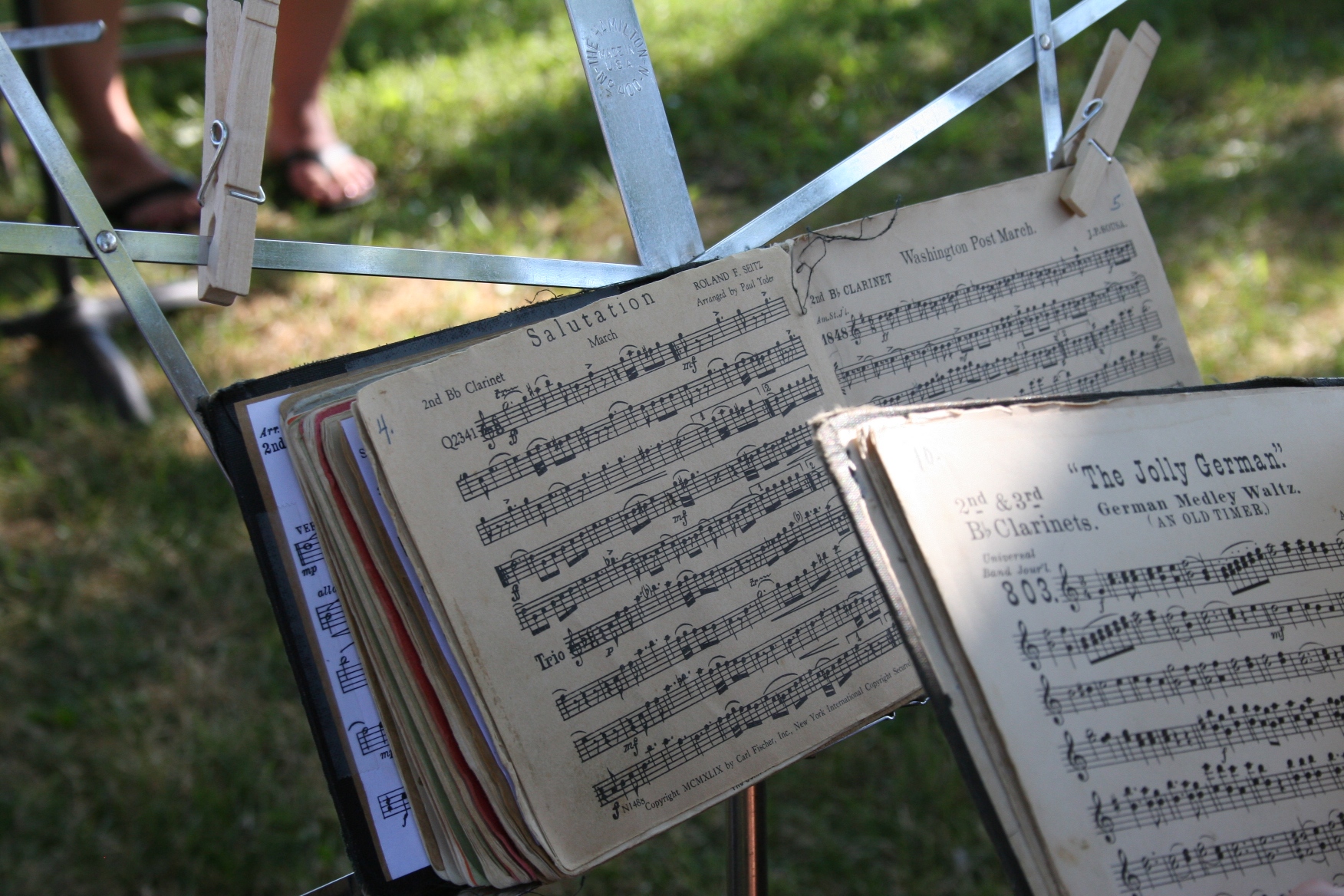
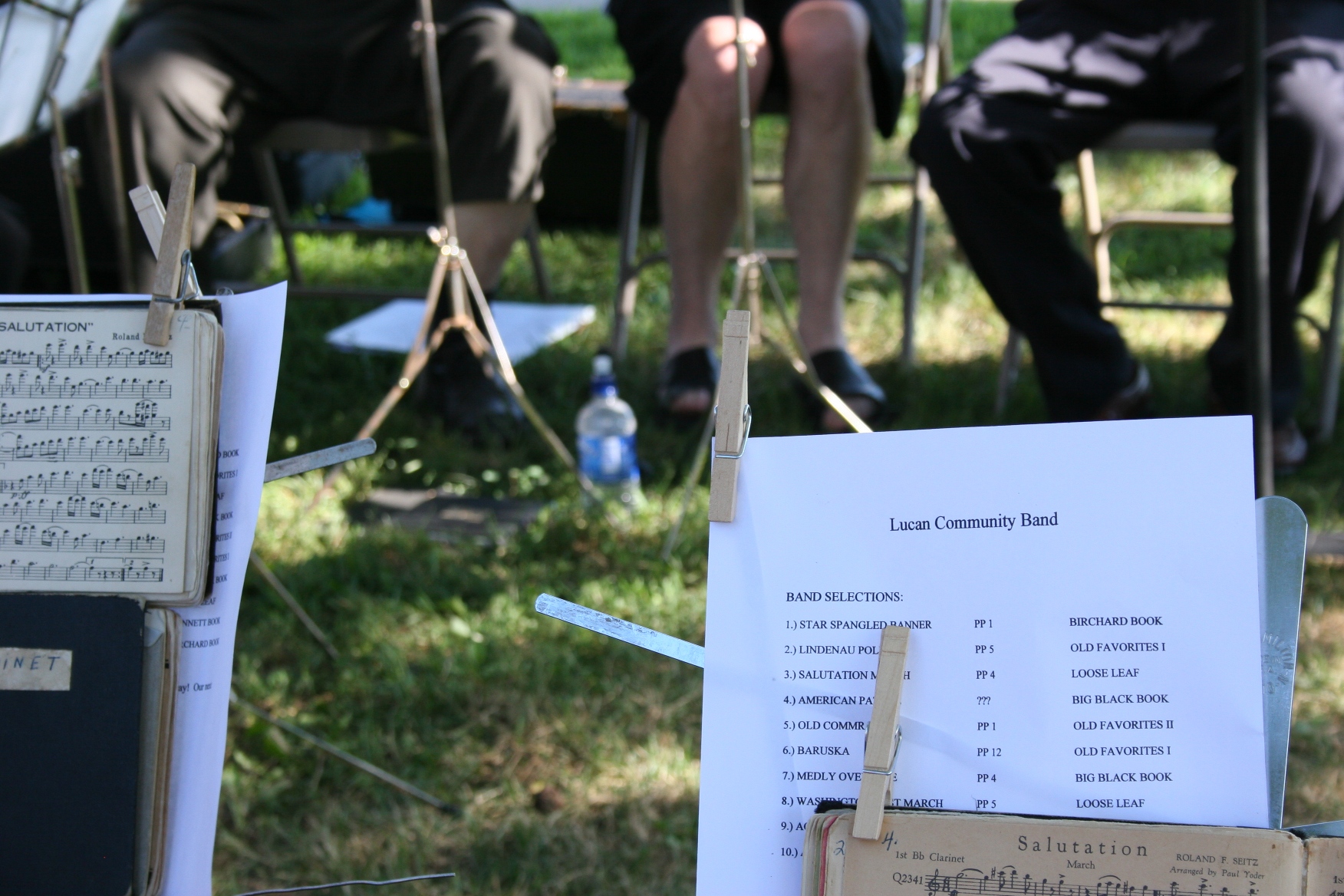
The music book on the left had a 1939 copyright.

Some of the music comes from the Chatfield Brass Band and Music Lending Library in Chatfield, a band member informed me.

The Lucan Community Band is based in Lucan, seven miles south of Vesta along Redwood County Highway 10. Not all of the band members hail from this town of 220, which is also home to Brau Brothers Brewing. (Check out their beer; Strawberry Wheat is my favorite.)

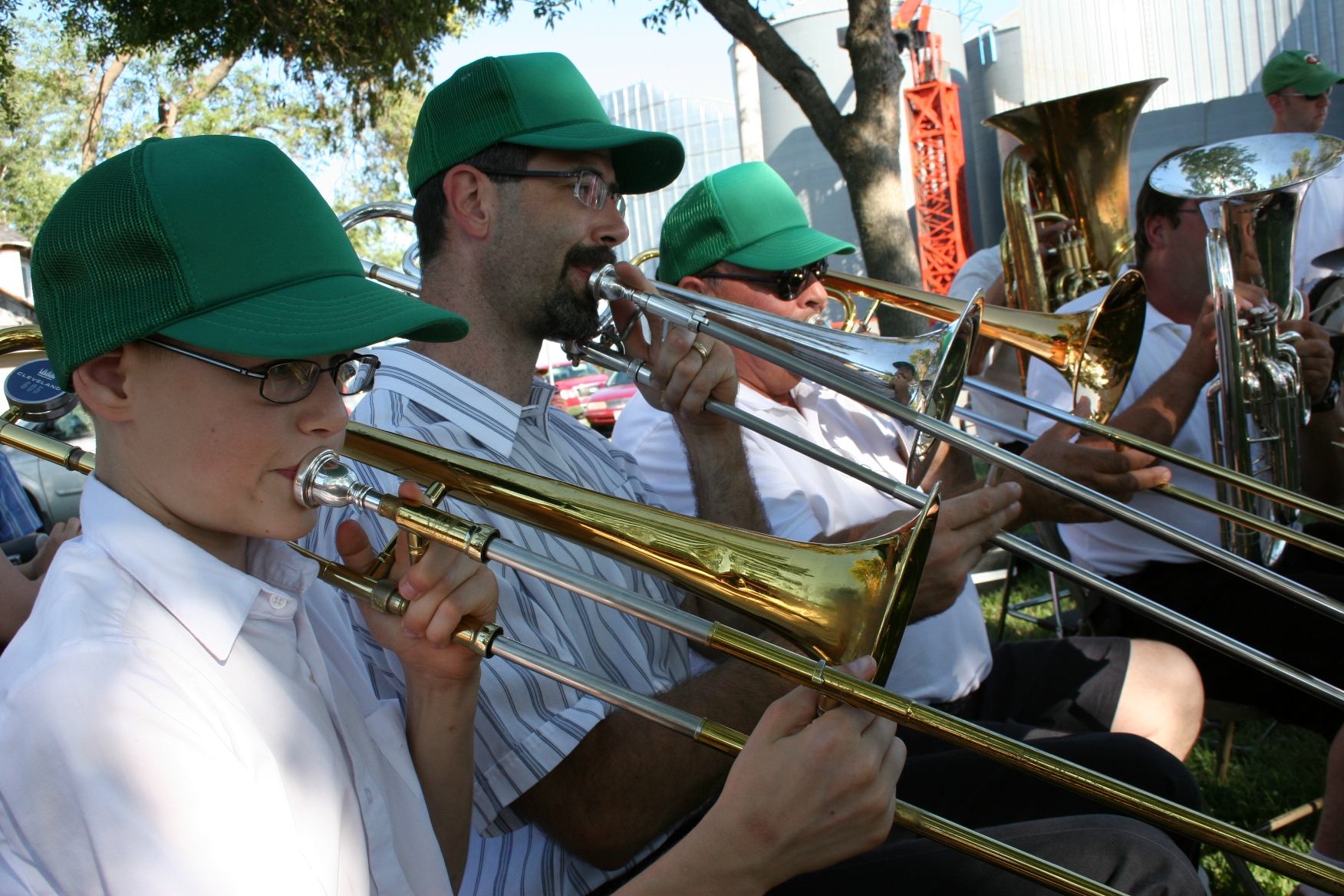
At least one, Tom Schmid, the tuba player who drew my attention with his German style red hat that differed from all the green caps, hails from Springfield. I snuck in a quick question to Tom. He’s been playing the tuba for only about 10 years, but has been playing an instrument since he was in high school in the 1940s. That’s all the information I got before he planted his lips back on that tuba mouthpiece and I headed into the hall to eat.

Tuba player Tom Schmid, also a member of the Minnesota Over 60 Band.

Schmid's hand on the tuba.

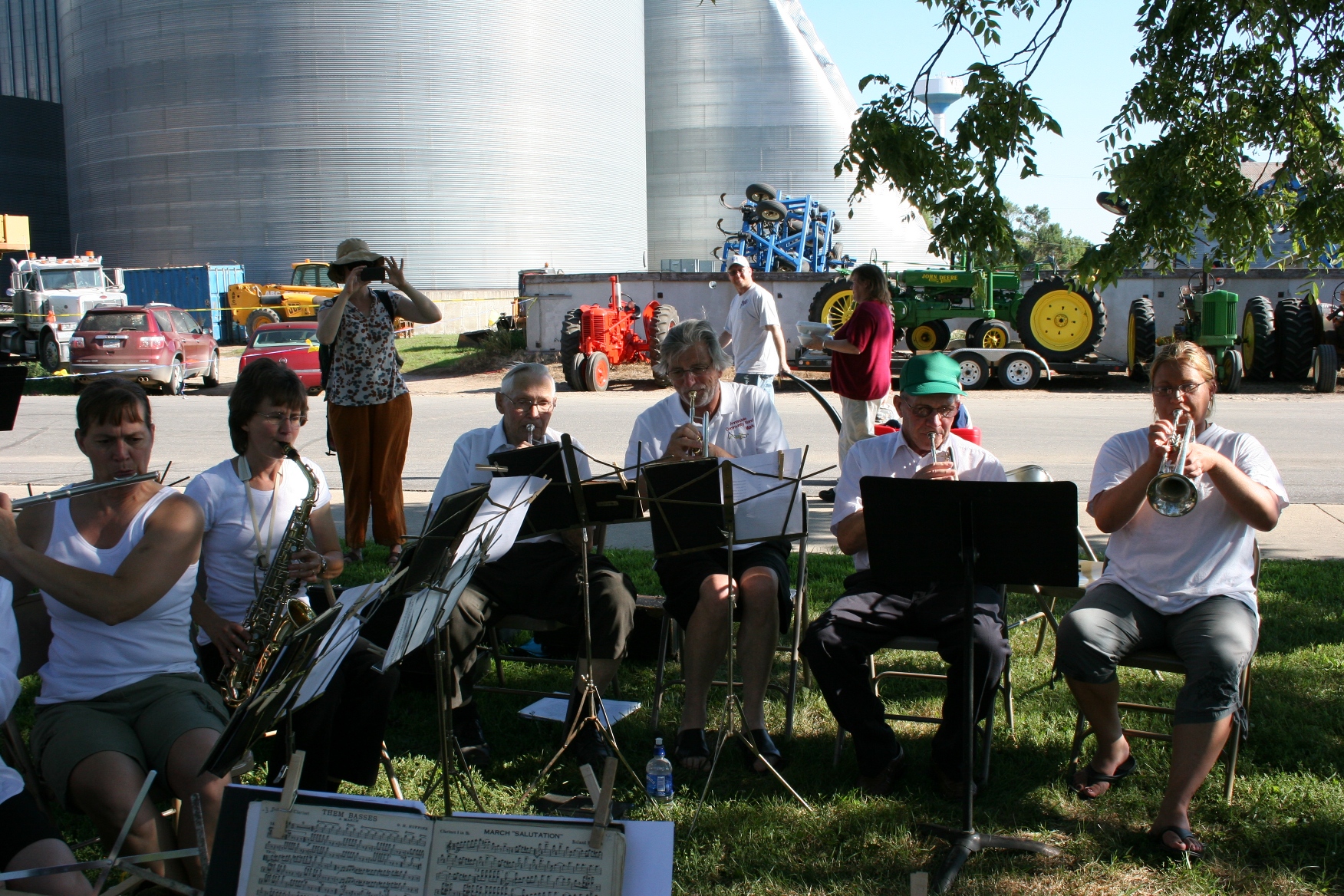
Lucan Community Band members play against a back drop of grain bins damaged in a July 1 windstorm in Vesta. Tractors line the street for the antique tractor show.

The band's play list for their one-hour concert at V-Esta Daze.

Green caps are part of the male band members' attire. Musicians' ages range from the young to senior citizens.

IF YOU KNOW ANYTHING about the history of the Lucan Community Band, its members, how often and where the group performs, submit a comment. I’d like to learn more about the band.

© Copyright 2011 Audrey Kletscher Helbling


It takes a strong man or woman to farm August 2, 2011

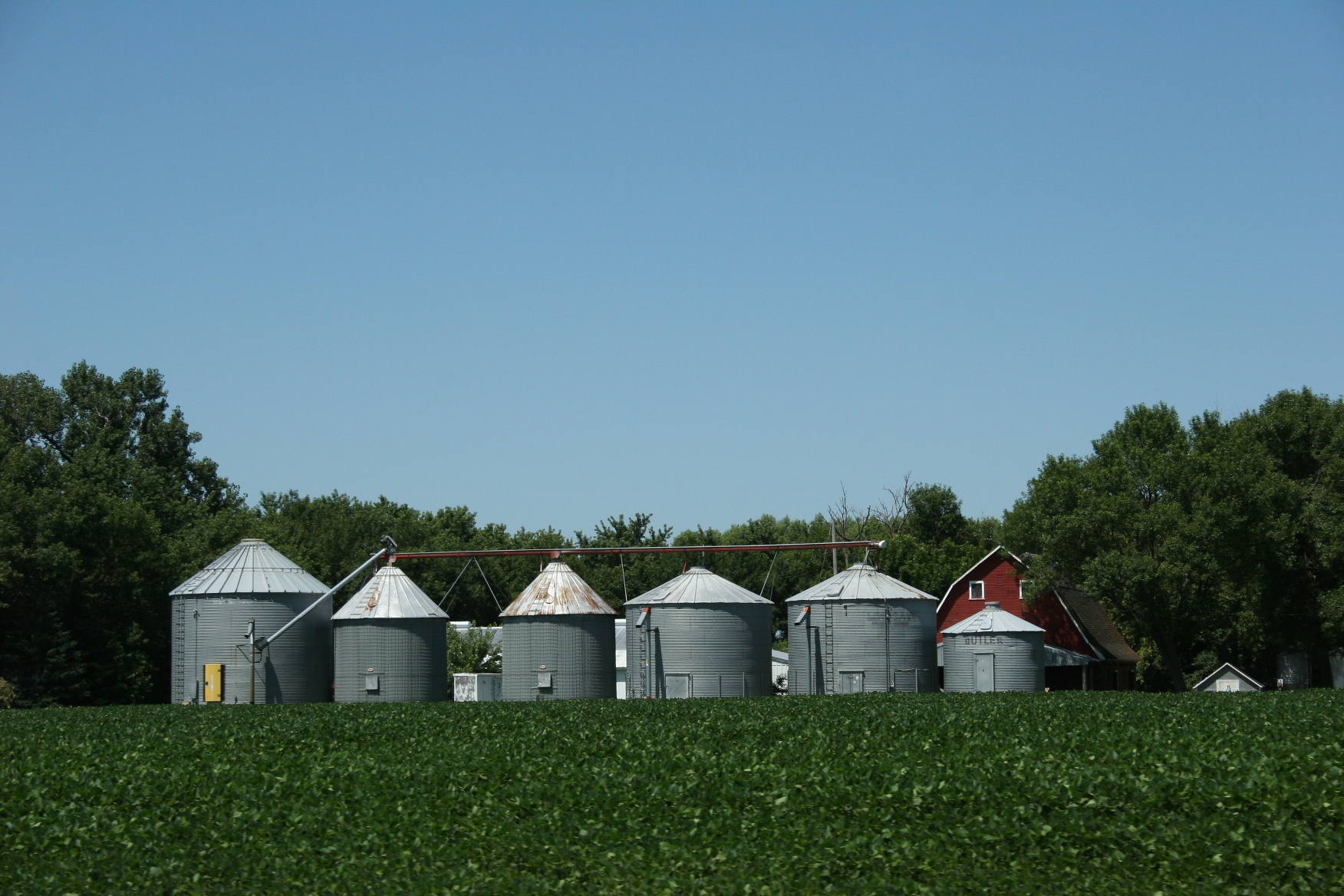
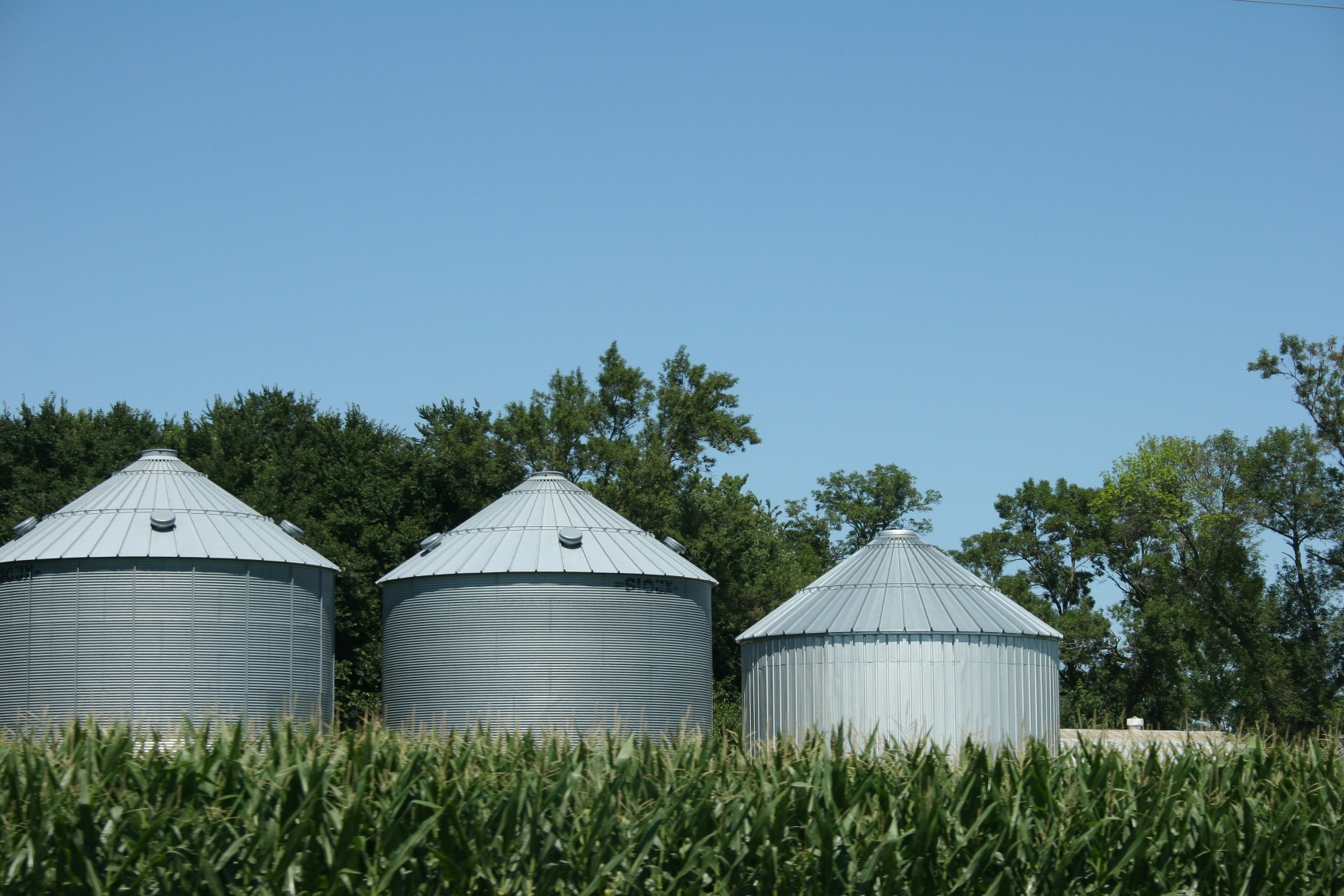
Bins on a farm place somewhere along the back roads between New Ulm and Morgan.

“I COULD NEVER BE MARRIED to a farmer or be a farmer,” I told my cousin Kevin as we stood outside the Vesta Community Hall Friday evening discussing the July 1 windstorms and tornadoes that ravaged my native southwestern Minnesota.

Kevin farms south of Echo, where he lost three grain bins, trees, and, if I remember correctly, an auger, to high winds. He’s looking at replacement and upgrade costs of more than $140,000. And a good chunk of that will not be covered by insurance. Investing so much money in his farm now, at near 60 years old, doesn’t come easily for him, he claims. But he doesn’t have an option if he is to continue farming.

As he was sharing his story, he said, “I told the wife I need to…” Kevin, 56, got married late in life (six years ago), so I still have to remember sometimes that he’s with Kris, a wonderful woman.

It takes a strong man or woman to live a life of farming. As much as I love the farm, I couldn’t farm. I couldn’t handle the financial stress, the “I told the wife I need to” replace the grain bins or I need to borrow money for a new tractor or the beans were hailed out…

I’d stress over borrowing all that money and over the financial risks inherent in farming.  Will commodity prices be up or down when I want to sell the corn and beans? Should I sign a contract now or wait? Should I buy that piece of equipment, build that machine shed? Will I get a decent crop? I’m not a gambler or a risk taker, even though I grew up on a crop and dairy farm.

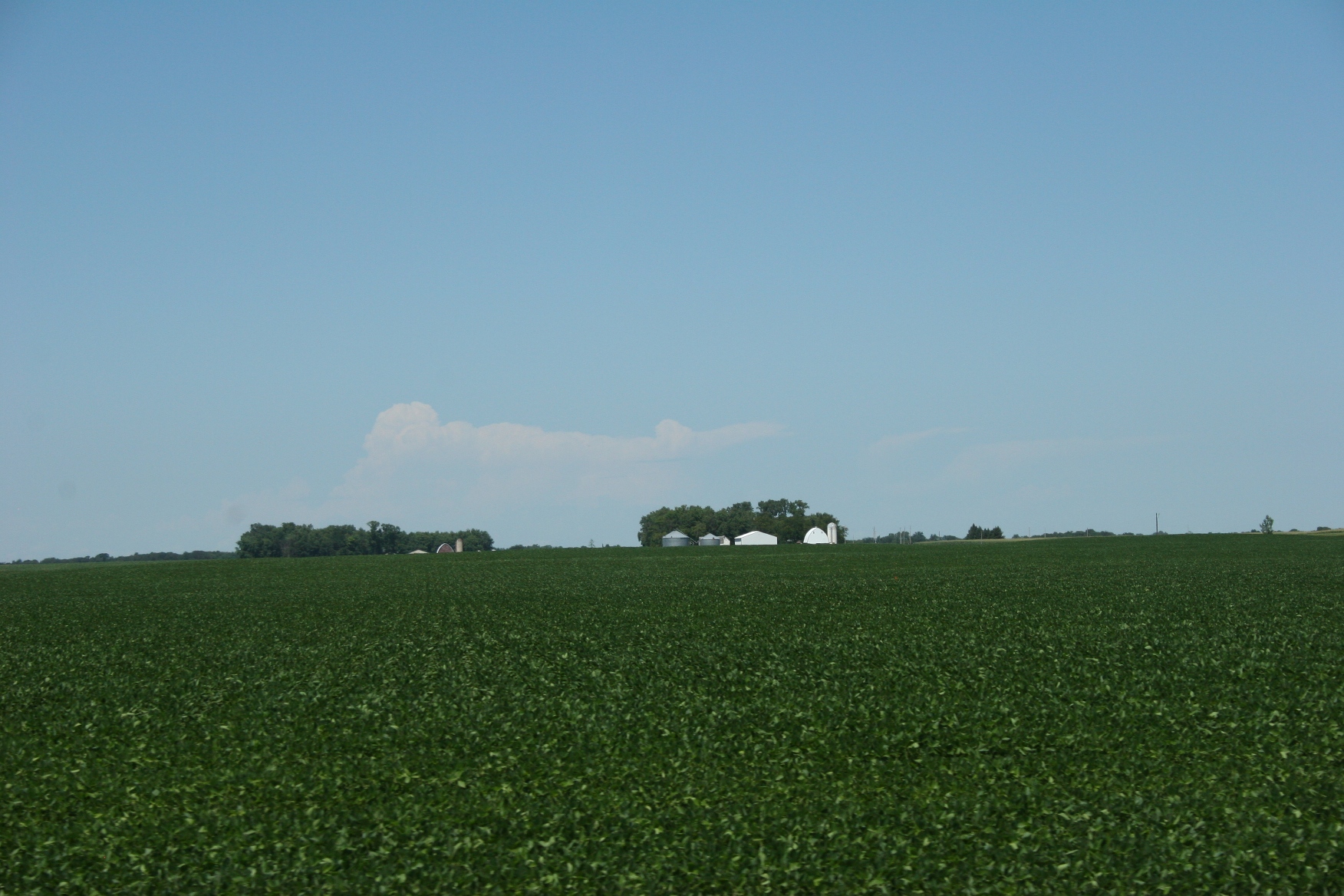
Soybean and corn fields stretch into forever in southwestern Minnesota. I shot this image on Friday between New Ulm and Morgan.

For many Minnesota farmers, this year has been especially challenging. Crops were planted late due to wet field conditions. Then the heavy rains fell, drowning out entire sections of fields. Next, strong winds and hail devastated beans and corn.

For the first time that I can ever recall, I saw black fields near my hometown of Vesta. My cousin told me the fields had been replanted and then the storms came when it was too late to replant again.

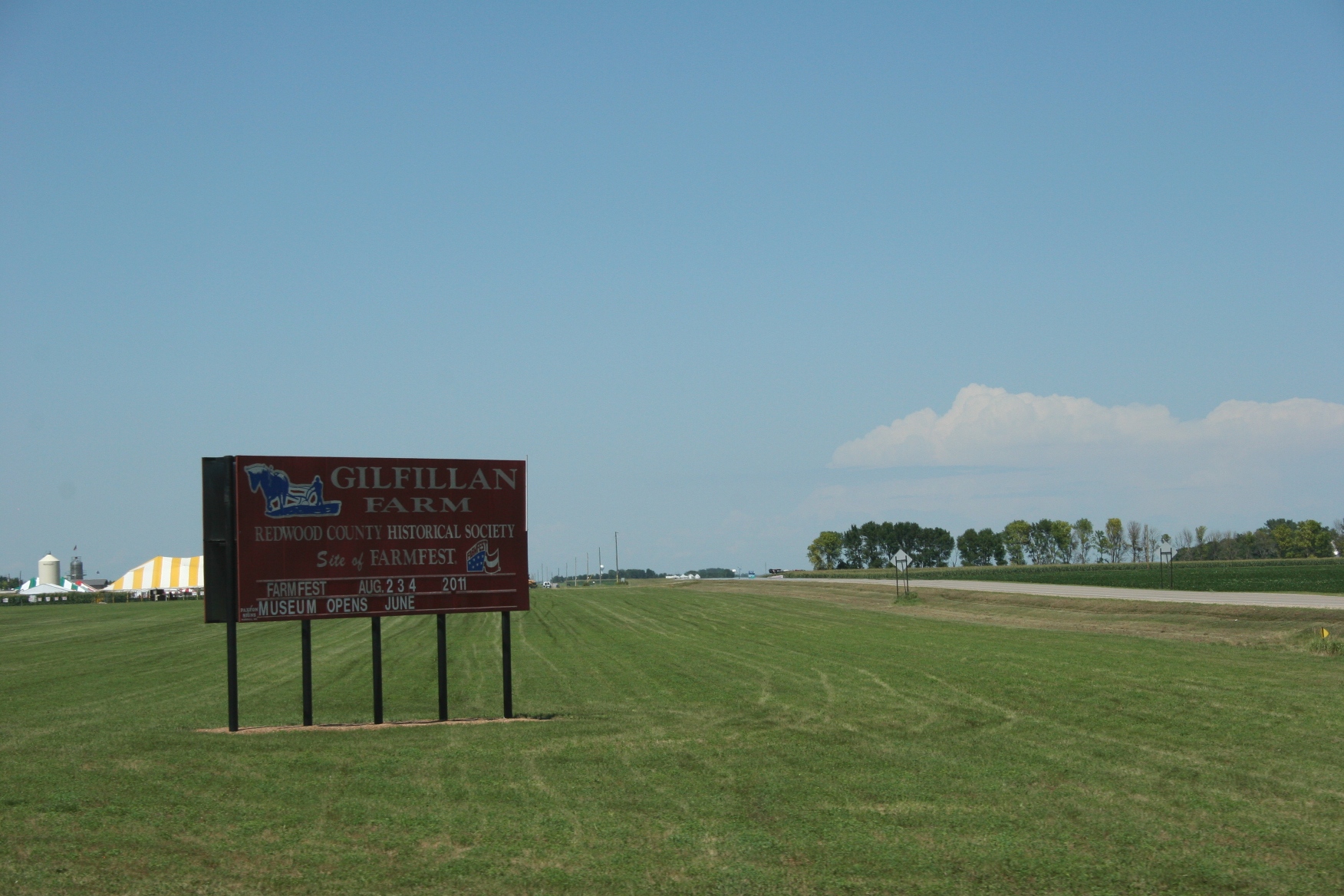
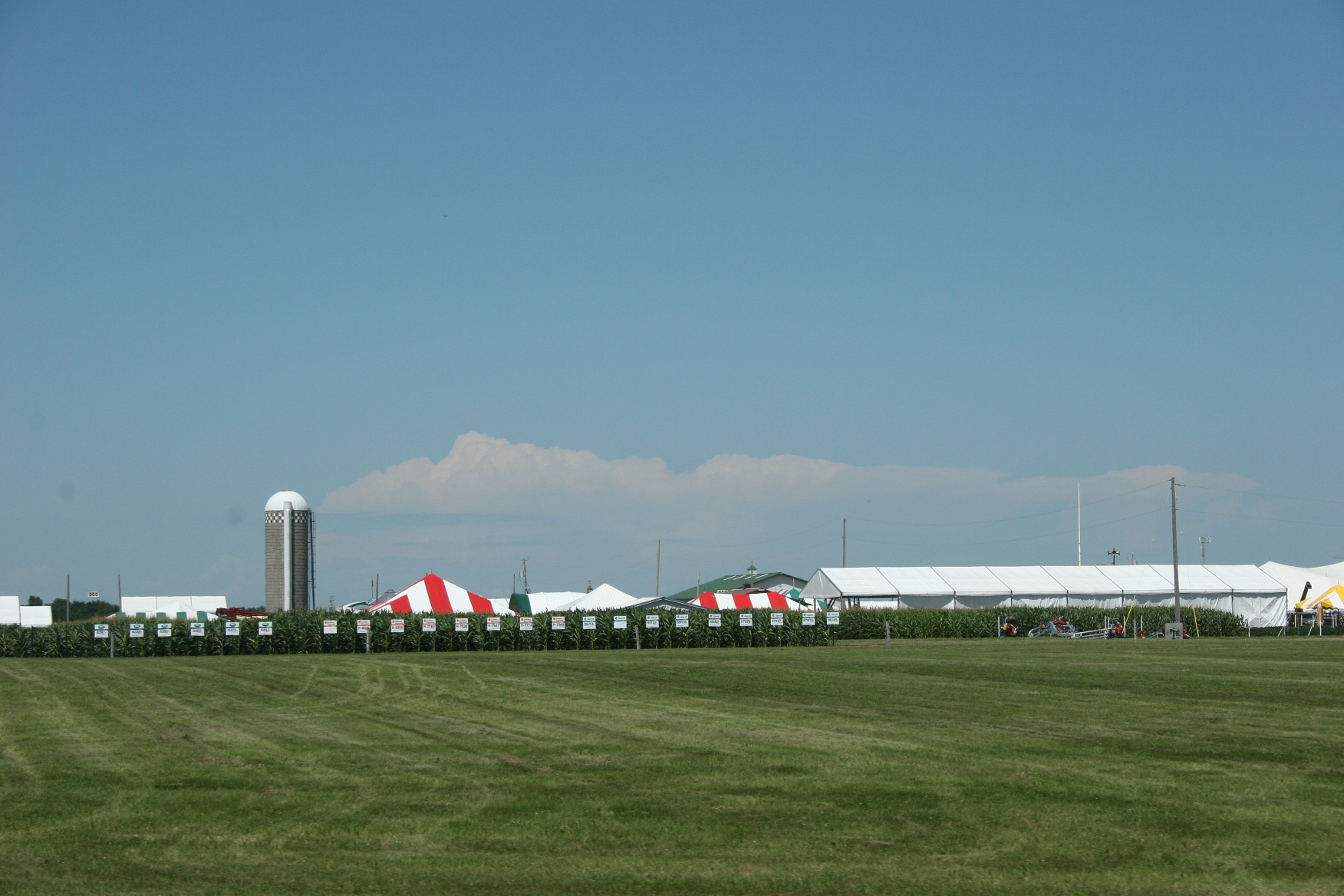
Three days this week, beginning today, farmers, agri-business reps and others will gather at the historic Gilfillan Farm between Morgan and Redwood Falls for Farmfest. There, in the heart of Minnesota’s farm country, I bet if you eavesdropped on a conversation or two or ten, you’d hear some farmer say, “I told the wife I need to…”

I spotted this damage to a building on a farm just north of Belview, which was hit by a July 1 tornado.

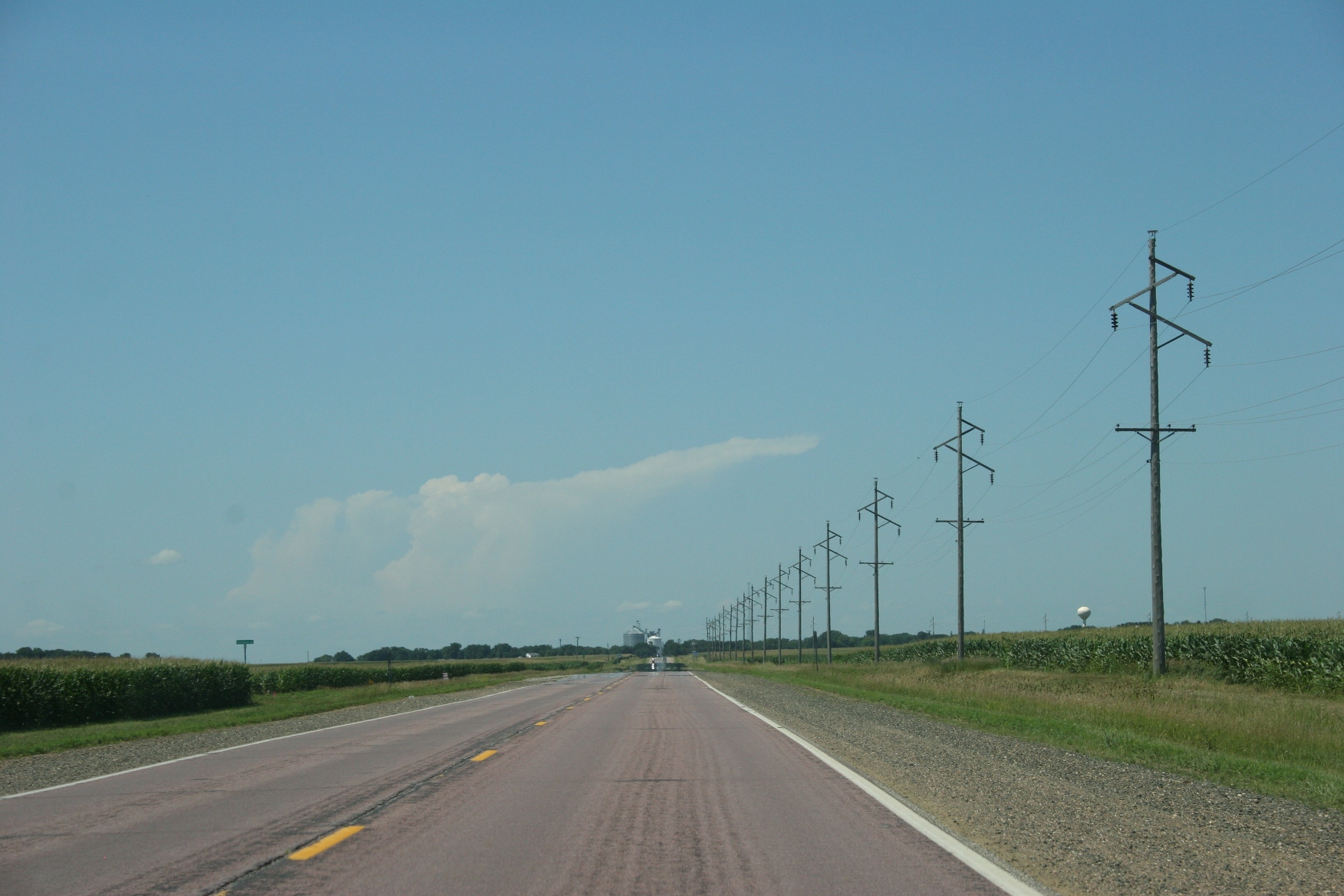
I took this shot traveling Minnesota Highway 67 west toward Morgan Friday afternoon. Follow this road and you'll end up at Farmfest. You can see Morgan's water tower and grain elevator complex in the distance.

Farmfest at the historic Gilfillan Farm runs today through Thursday.

When I drove by the Farmfest grounds Friday afternoon, tents were already in place for the event.

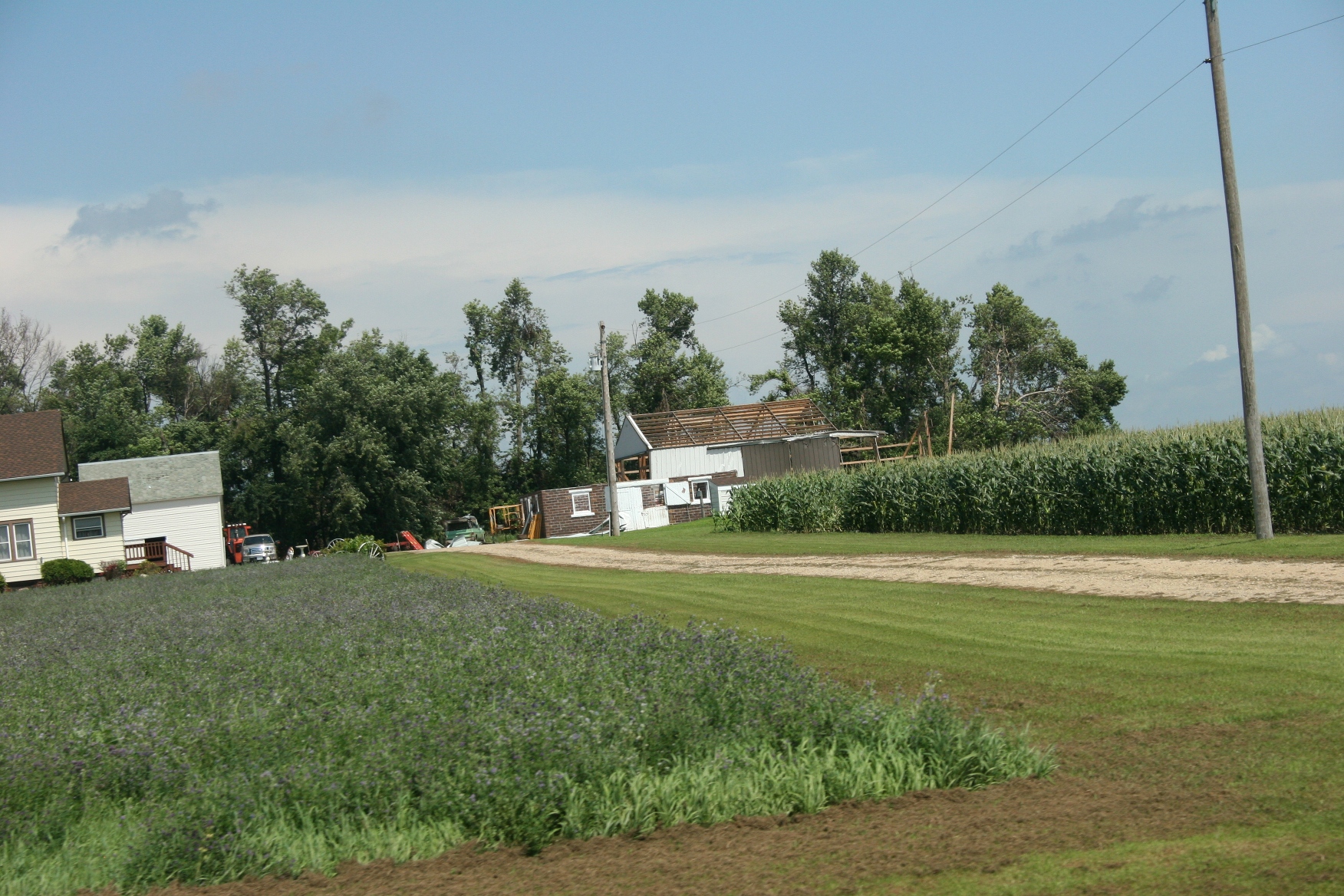
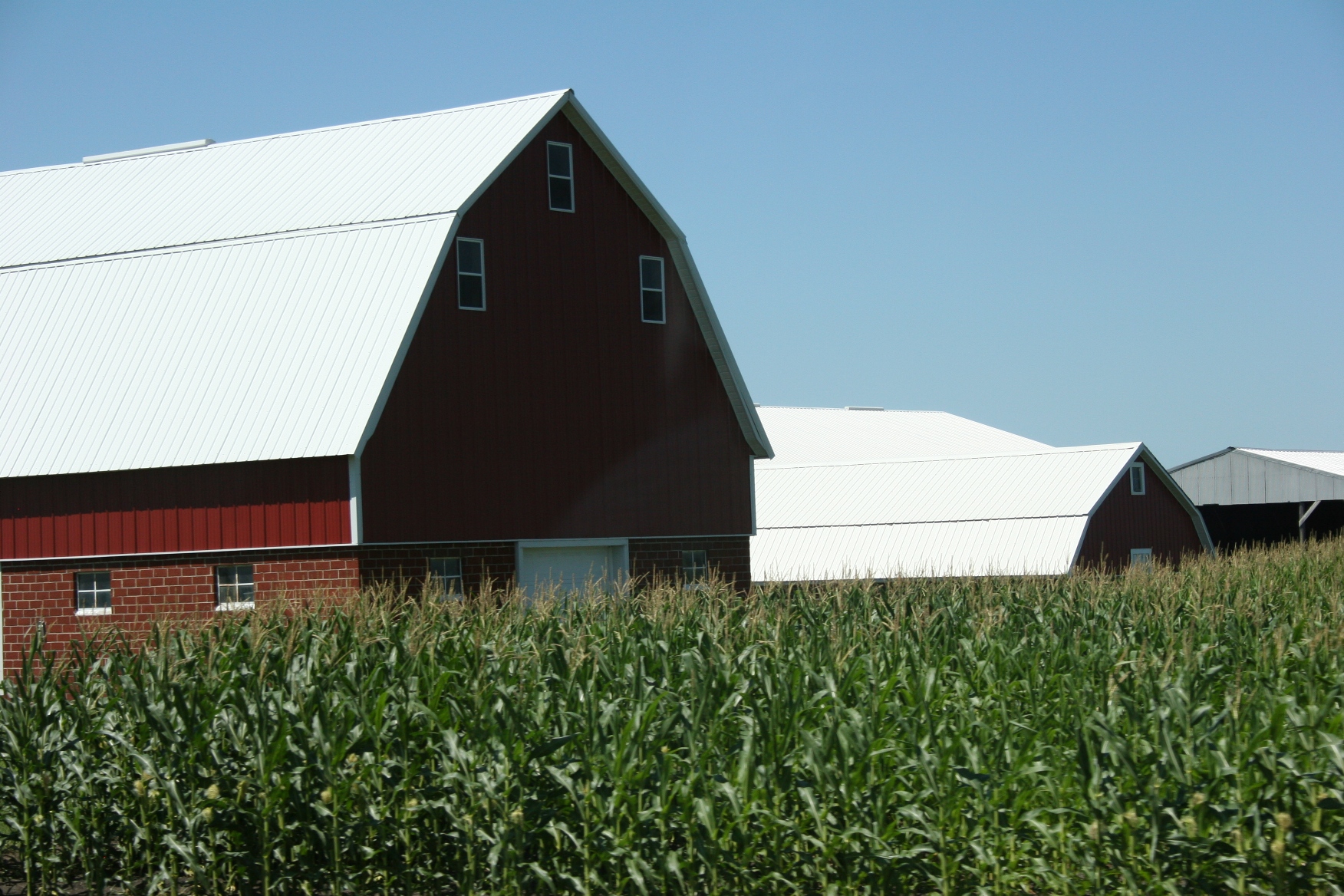
A barn, outbuildings and a corn field between New Ulm and Morgan.

Bins on a farm site along the back road between New Ulm and Morgan.

© Copyright 2011 Audrey Kletscher Helbling
 

Celebrating summer in small-town southwestern Minnesota August 1, 2011

Filed under: Uncategorized — Audrey Kletscher Helbling @ 11:26 AM
Tags: , , , , , , , ,

A chicken meal has been served for decades at V-Esta Daze.

Milt Marquardt

IF YOU GREW UP in a rural area, you likely also grew up with an annual small-town summer celebration.

A chicken/pork/burger/corn (whatever) feed, carnival, kids’ games, car show, crowning of Miss Small-Town, water fights between neighboring fire departments, softball tournaments, a parade…

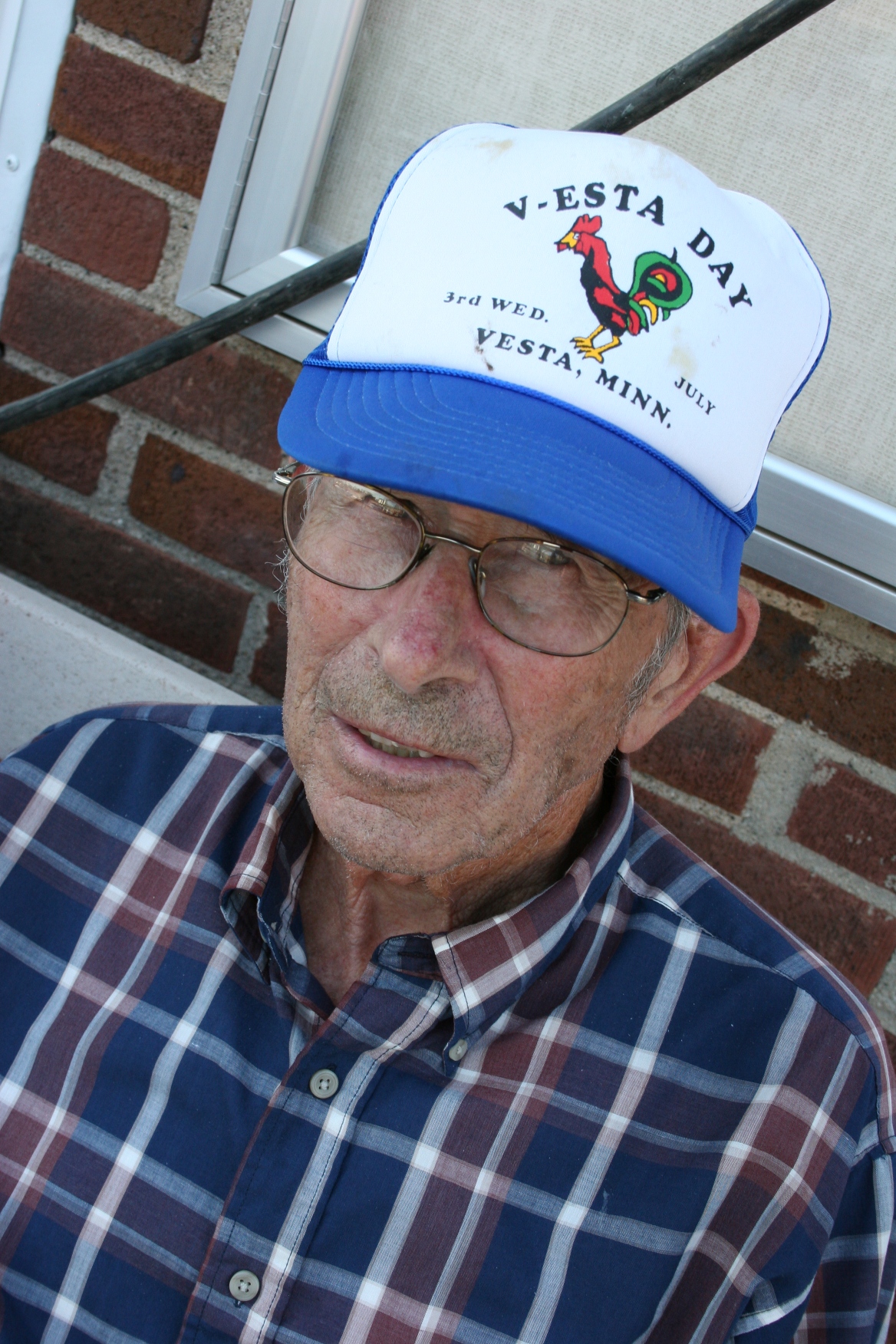
My hometown of Vesta in southwestern Minnesota has, for decades, celebrated V-Esta Daze. The town name is pronounced “Vest-a,” but for the celebration, the pronunciation rhymes with “fiesta.” Don’t ask me why. We’re mostly a bunch of Germans.

Anyway, heritage and linguistics don’t matter so much as the decades-long tradition of serving Vesta’s famous chicken. Guys like Milt Marquardt, my neighbor back when I was growing up on a dairy and crop farm, have been grilling chicken so long they can’t remember. Suffice to say that’s been more than four decades.

Milt and the crew grilled 280 pieces of chicken for the crowd that lined up in the Vesta Community Hall Friday evening for quarter or chicken halves, potato salad, beans, rolls, pickles and beverages. A few things have changed about the meal—the potato salad is no longer prepared by local women and the plastic-ware isn’t wrapped in a napkin (you grab your own). But you’ll still find my Aunt Marilyn monitoring the beverage station, the same job she’s held for some 40 years.

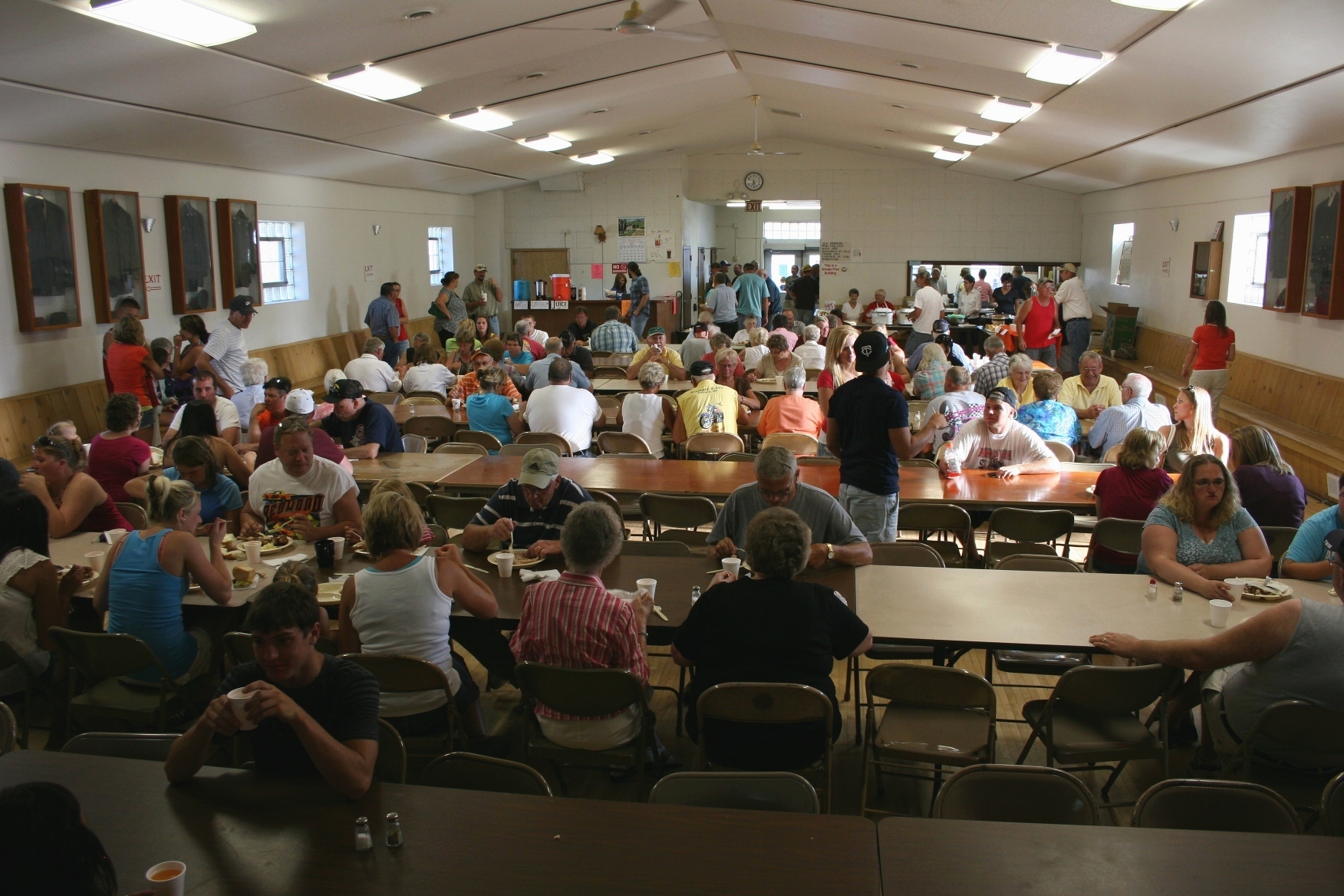
Diners still settle onto folding chairs pulled up to long tables in the old hall. Glass encased military uniforms and built-in wooden benches flank the sides of the hall anchored by a stage on one end. Little has changed in this building (except the addition of a kitchen), which has long been Vesta’s celebration-central—the place to celebrate weddings and anniversaries and the coming together of community.

The same sign goes up every year inside the Vesta Hall. The price is updated when necessary.

Diners eat in the Vesta Community Hall, where military uniforms hang on the walls.

This year the V-Esta Daze celebration was moved from a week night to a Friday night. Thank you, organizers. That happened to coincide with the annual Kletscher family reunion weekend. So I was there, lining up for that famous chicken and reconnecting with people I haven’t seen in years (and trying to remember their names).

Gone are the carnival, softball games and water fights between neighboring fire departments that were part of the event when I was growing up. Instead, there were pony rides and bean bag tourneys, an antique tractor and car show, a putting green, pie eating contest, water fight for kids, street dance and entertainment by the Lucan Community Band and the required beer served from the beer truck.

The Lucan Community Band played under the shade trees outside the community hall and across the street from the elevator around meal-time. Lucan is a town of about 200 seven miles south of Vesta.

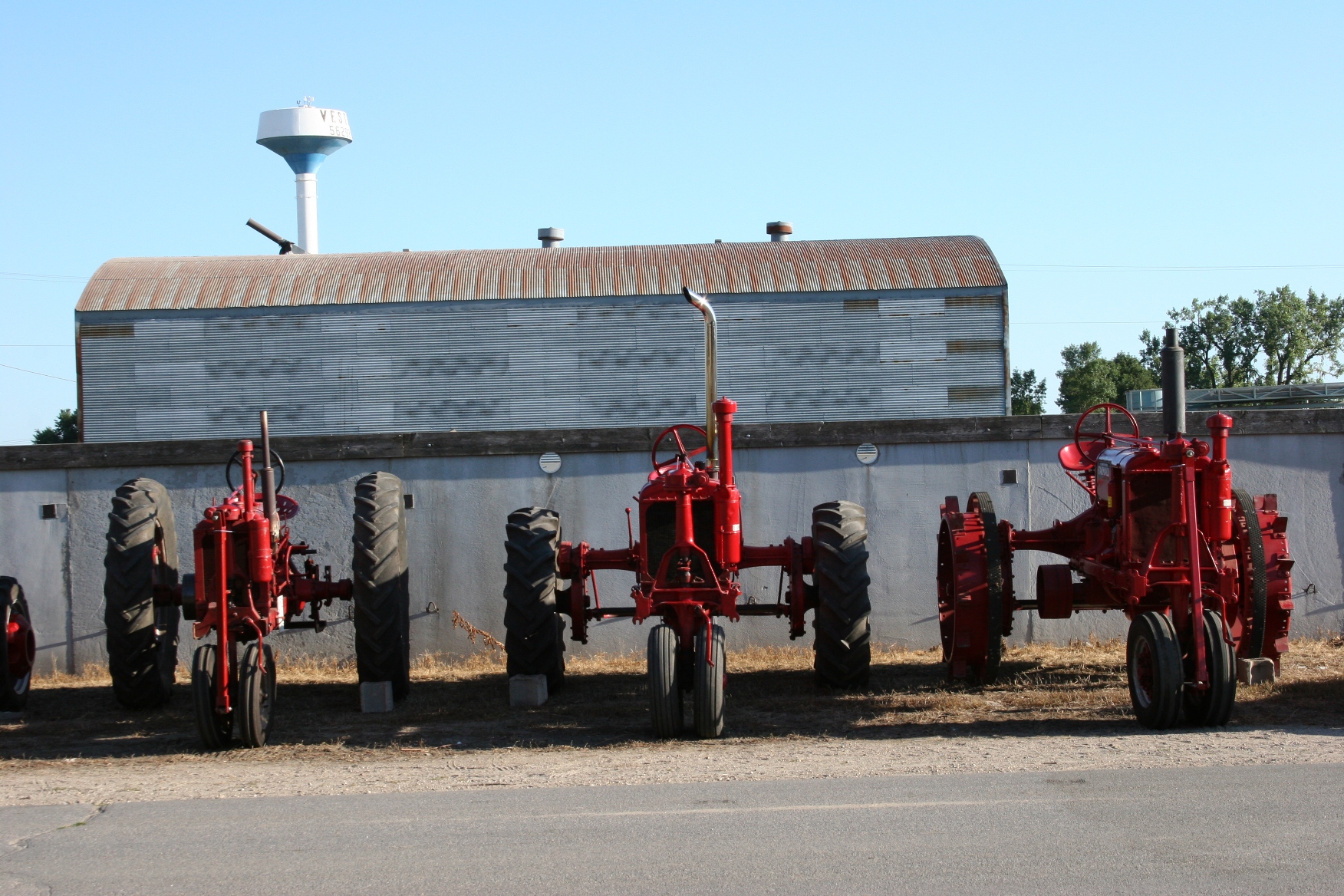
Area residents brought their old tractors to town for a tractor and car show.

My cousin Dawn's son, Kegan, enjoyed a pony ride.

A view of the dashboard in a 1960 pick-up truck, looking toward some of the entries in the antique car show.

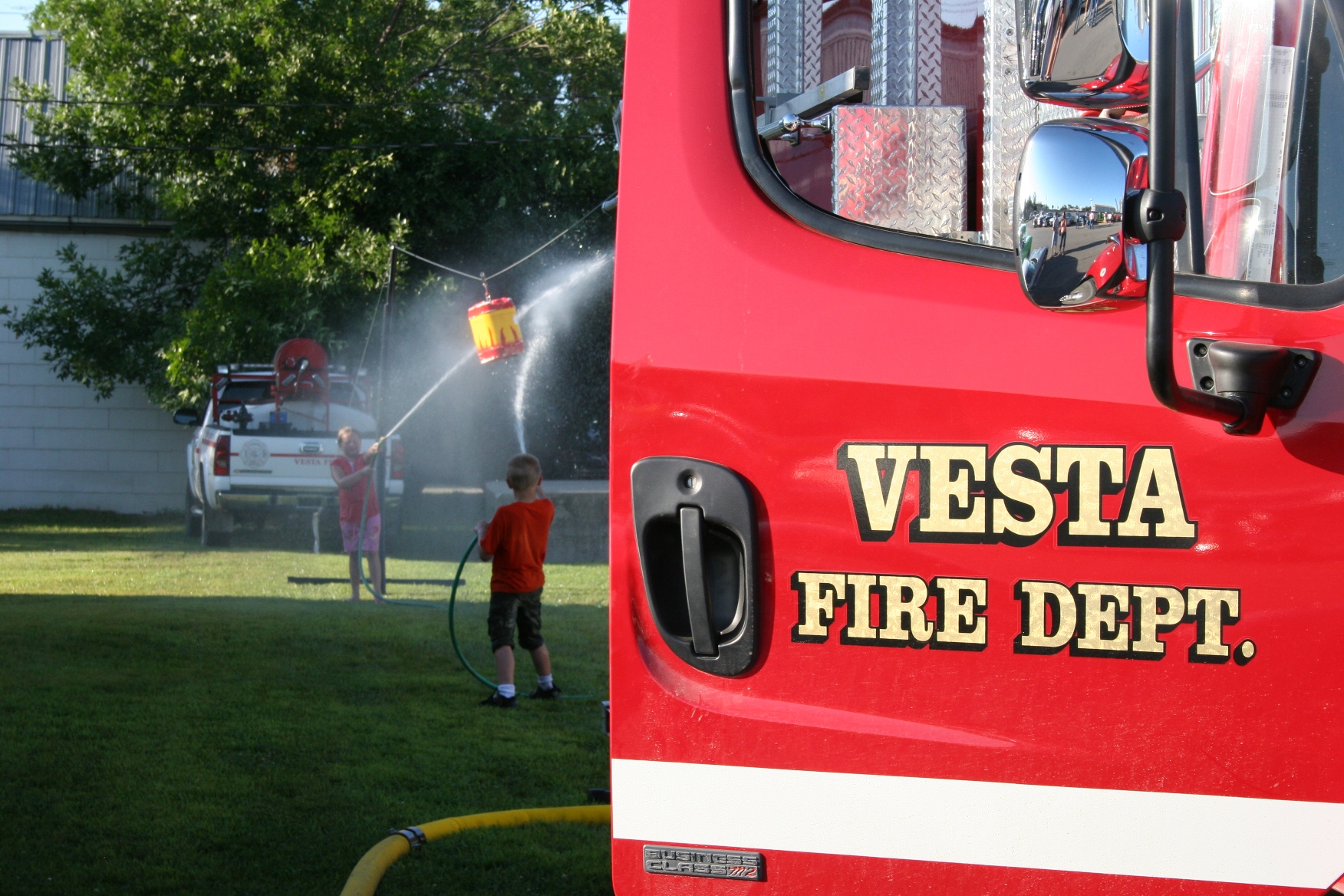
When I was growing up, members of Vesta's volunteer fire department engaged in water fights with departments from neighboring communities. Now the kids, not adults, participate in water fights.

I didn’t take in all of the events. I skipped the pie eating, bean bag toss and street dance. But I heard the band playing loud and clear a few blocks away when I left my Aunt Jeanette and Uncle Milan’s house around midnight Friday for my mom’s house a block away. Yeah, everything in Vesta, population around 300, is just a few blocks away.

HOW ABOUT YOU AND YOUR COMMUNITY? Do you have an annual summer celebration or return to your hometown for one? Submit a comment. I’d like to hear about these small-town gatherings.

© Copyright 2011 Audrey Kletscher Helbling
 

Starry, starry night July 21, 2011

THE HOUR HAD SLIPPED well past midnight when I joined my sister Lanae and my son on the patio.

“Is there a place for me to sit?” I asked, as I stood still, waiting for my eyes to adjust to the blackness of the night.

“There’s a lawn chair next to me. Caleb’s lying on the patio.”

And so he was and she was and now I was—the three of us clustered under a sky filled with more stars than I’ve seen since my last visit to the southwestern Minnesota prairie.

I gazed skyward, quickly finding the Big Dipper.

“Do you see the Milky Way,” my astronomy-loving 17-year-old asked. I pivoted my head to the right and pointed.

We sat in silence, for minutes, simply staring at the immense sky studded with all those stars.

“This is what I miss about this place,” my sister said, finally breaking the contemplative silence. “The stars.”

And she is right. It is one of many things I miss about my native southwestern Minnesota. Only in rural areas like this, mostly untouched by light pollution, can you view the night sky as it is meant to be seen.

“Did you see that?” my boy enthused, eying the same falling star I had just seen shooting a trail of light across the dark.

“This is better than that place we went to in St. Cloud,” he said. He was referring to a high school astronomy class field trip last summer to the St. Cloud State University planetarium. I remember his visit there, how unimpressed he was with the whole thing and how he disliked being caught in Twin Cities rush hour traffic on the drive home.

No doubt experiencing the night sky here at my brother’s place just north of Lamberton—where only rural yard lights and small-town lights in the distance punctuate the darkness—would outshine any planetarium any night.

And, for sure, traffic jams are not an issue.

© Copyright 2011 Audrey Kletscher Helbling

 

Summer showers in the sweltering heat July 19, 2011

A hose was for more than watering the garden or cattle when I was growing up on the farm. Read on.

WITH THE CURRENT HEAT WAVE we’re experiencing in Minnesota, I’ve been thinking a lot about the weather of yesteryear. And here’s what I’ve concluded. Unless the weather impacted some major event in my life or ranked as exceptional, I really can’t specifically remember one summer to the next or one winter to the next. Fall and spring sort of get lost in the mix of seasons.

That is the reality of my long-term memory.

For me, the summers of my youth on a southwestern Minnesota crop and dairy farm were defined, not by the weather, but by playing “cowboys and Indians” (yes, I realize that is not politically correct today, but it was the reality of the 1960s), by after-chores softball games on the gravel farmyard and by evening showers with a garden hose.

Let me explain that last one. I lived for the first dozen years of my life in a cramped 1 ½-story wood-frame farmhouse with my farmer-father, my housewife-mother and four siblings. The third brother was born later, after we moved into the new house.

The old house didn’t have a bathroom. That meant we took a bath once a week, on Saturday night, in an oblong tin bath tub that my dad lugged into the kitchen. Yes, we shared bath water. And now that I consider it, given we labored in the barn daily, we must have really stunk by Saturday night.

Sometimes in the summer, when the weather was especially hot and humid, we showered. After my dad finished milking cows, he would thread the green garden hose through an open porch window outside to the east side of the house. Then, with one of us “standing guard” where the driveway forked, within a stone’s throw of the tar road, we began the process of showering.

One-by-one we took our turn standing naked on the grass, soap bar in one hand, garden hose in the other, scrubbing away the sweat and animal stench, the bits of ground feed and hay and silage, the dirt that clung between our toes.

And all the while we showered, we worried that a relative or a neighbor might turn into the farmyard or an airplane might fly overhead, as if a pilot could see us from high in the prairie sky.

So during a hot stretch like we’re experiencing right now in Minnesota, I remember those primitive summer showers on the farm. I recall, too, the single turquoise box fan we owned—the one reserved for my hardworking farmer-father who endured heat and flies as he bent to wash another udder, to attach another milking machine, all to earn money to feed his growing family.

And I think, as I sit here at my computer in my air-conditioned office just around the corner from the bathroom with the combination bathtub and shower that I have it good, darned good.

Growing up on the farm, we had one box fan similar to this one.

DO YOU HAVE summer memories like mine, or another weather-related story? Submit a comment and share.

Copyright 2011 Audrey Kletscher Helbling

 

An update from storm-damaged Belview July 13, 2011

Entering Belview from Sacred Heart at 9 a.m. on July 2, the morning after the tornado. Photo courtesy of Merlin and Iylene Kletscher.

LESS THAN TWO WEEKS after an EF-1 tornado ravaged the small town of Belview in southwestern Minnesota, I emailed City Clerk/Treasurer Lori Ryer for an update.

I know she’s busy dealing with issues in the aftermath of the July 1 storm, so I asked only for a brief summary, with a specific request for information about Parkview Home. The nursing home, according to Ryer, received major roof damage that resulted in flooding of the building. Initially, 25 residents were evacuated and taken to care centers in nearby Wabasso, Olivia and Redwood Falls.

Since then, Parkview has closed for repairs, residents have been discharged and admitted to new nursing homes, and staff has been laid off.

When the nursing home will reopen remains uncertain as assessments are still being made. But Ryer anticipates, after talking to staff on Tuesday, that Parkview will be closed for at least several months.

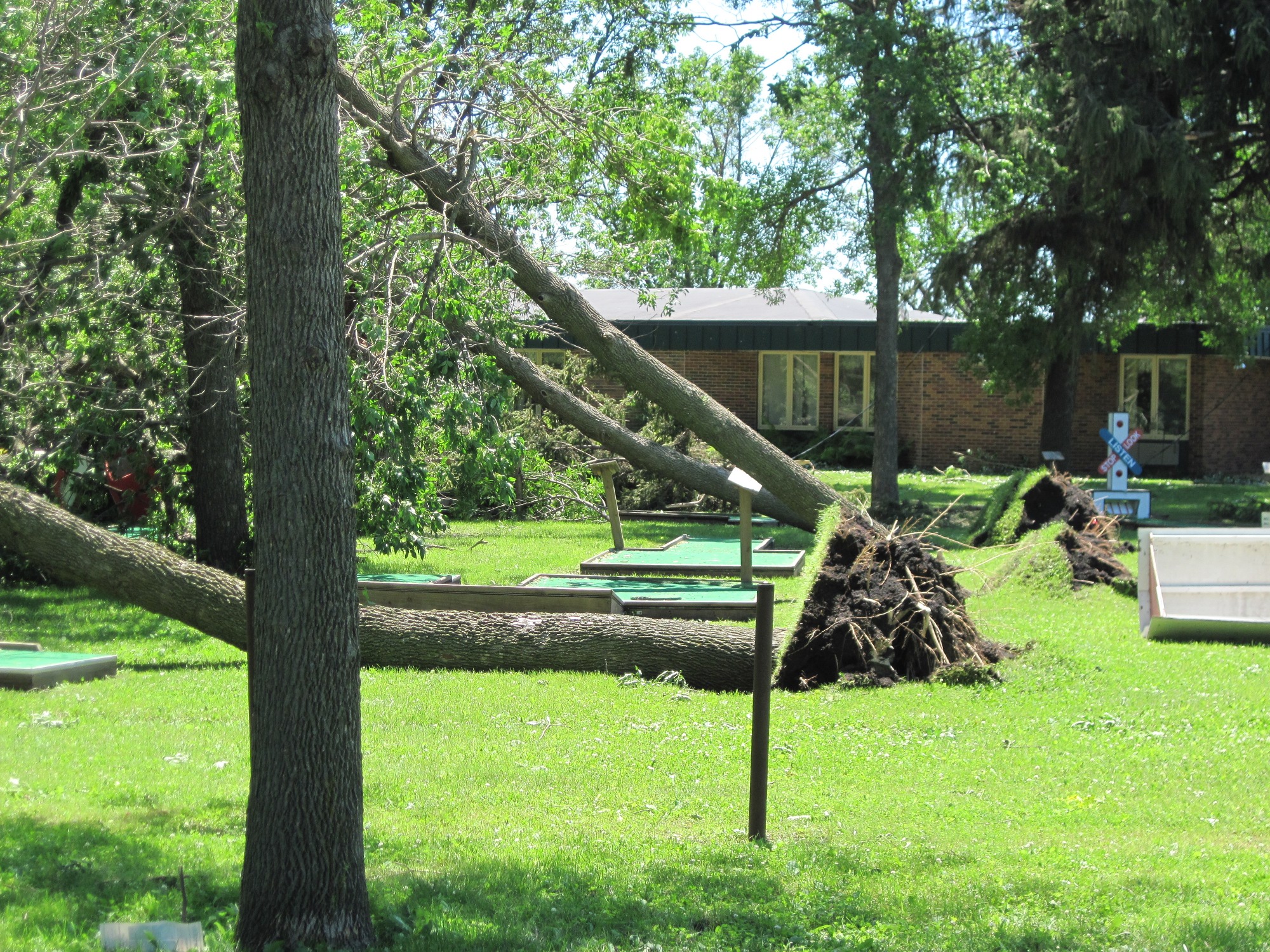
This photo shows Parkview Home and mini golf in the park. Photo courtesy of Merlin and Iylene Kletscher.

Parkwood Apartments, which is attached to the nursing home, was not damaged, but was without power from Friday afternoon, July 1, until the following Monday evening. Some apartment residents left to stay with family members briefly, but everyone has now returned, Ryer says.

Bridgewood Assisted Living was not damaged, but was without power also.

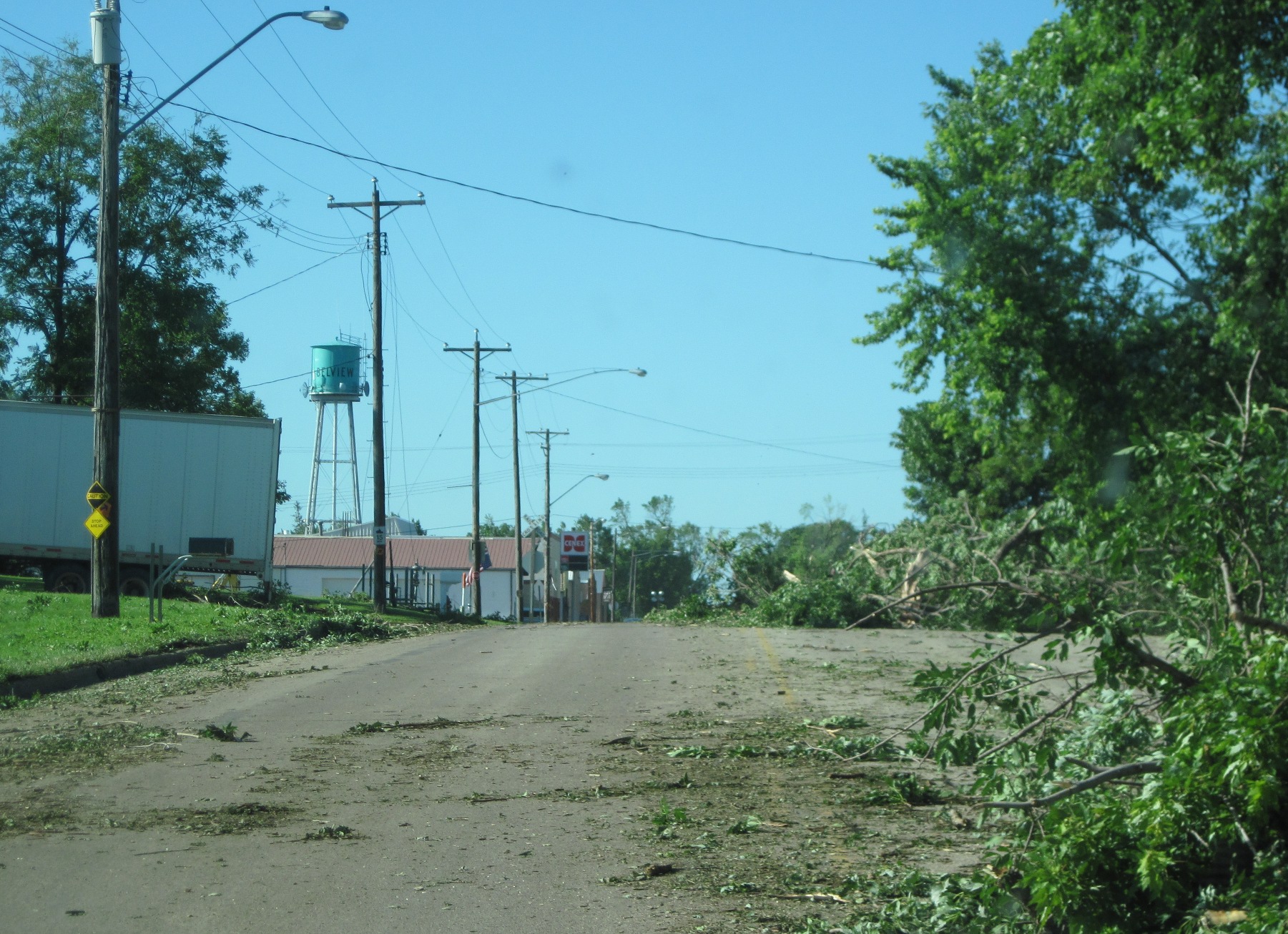
Damage along South Main Street in Belview. Photo courtesy of Merlin and Iylene Kletscher.

Throughout the rest of this community of 375 residents, many home and business owners are still awaiting insurance adjusters. Many homes received minor damage, several moderate, and a few major, damage from results of the 95 – 105 mph tornadic winds, Ryer says.

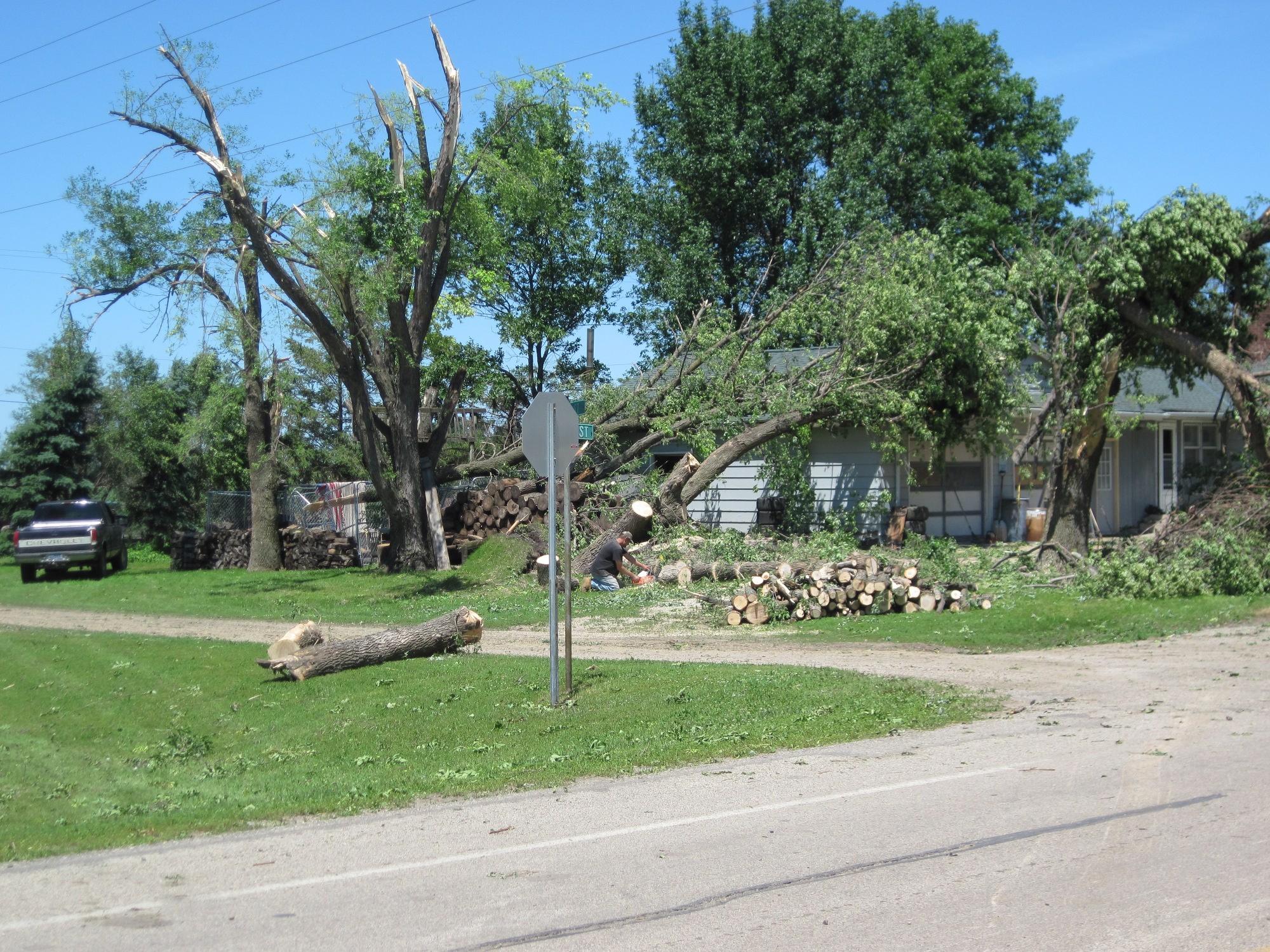
Many garages and sheds were destroyed and quite a number of cars totaled due to trees falling on them, the city clerk continues.

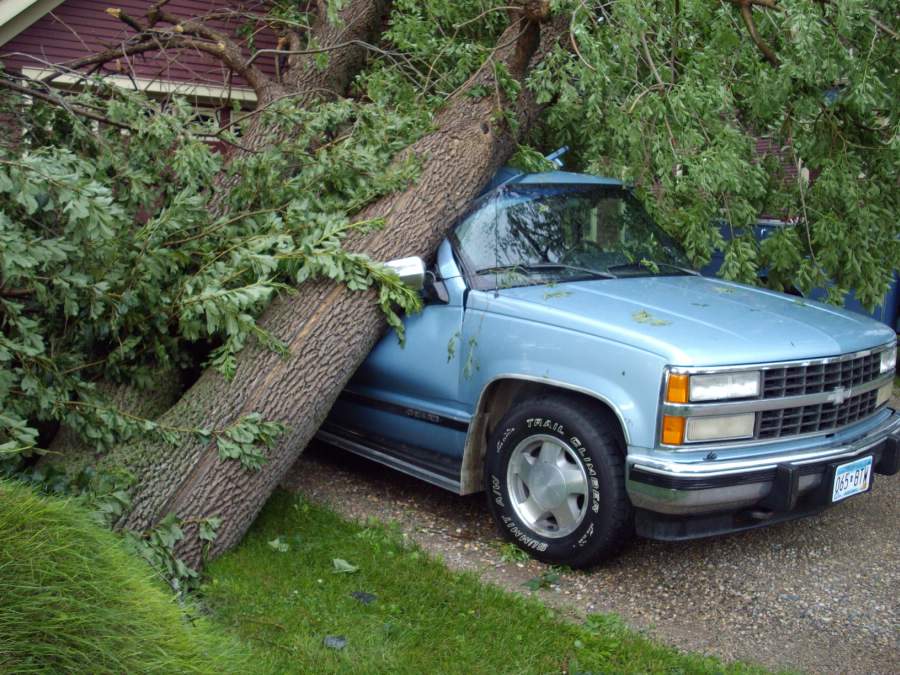
Tom Johnson's SUV was totaled when a tree fell onto it during the Belview tornado. Photo courtesy of Tom and DeLores Johnson.

The Belview school building received major damage, resulting in relocation of the Belview Learning Center summer program. Ryer hopes that program will be up and running in the Belview school building before the new school year begins.

Despite the destruction in her community, Ryer manages to remain positive: “With all that being said, I still marvel at the fact that we had no injuries during the storm or in the days of clean-up afterwards.”

LIKE RYER, I, TOO, marvel that no one was injured or killed by this storm which swept across Minnesota into Wisconsin July 1. My hometown of Vesta, just down the road from Belview, was hit by a series of downbursts with wind speeds of 90 – 100 mph.

I have many family members living in areas affected by the storms. Damage was minimal to their properties, but most lost trees. A cousin living near Wood Lake, however, saw substantial damage to the family’s farm. My home church, St. John’s Lutheran in Vesta, had half the roof ripped off.

St. John's Evangelical Lutheran Church in Vesta with the roof half missing. Photo courtesy of Brian Kletscher.

In a few weeks I’m returning to my hometown for the annual Kletscher family reunion. I’m trying to prepare myself for what I’ll see—my little prairie town with fewer trees, the church where I was married now temporarily closed. I always look forward to worshiping there with my mom when I return home.

I expect it will be the trees, though, that I will miss the most. A friend recently told me that the small towns of southwestern Minnesota are like oasises in a land mostly devoid of trees, except for the trees in those towns and the groves that shelter farm sites. He is right.

The communities of Belview and Vesta lost many trees in the July 1 storms. This photo is along a Belview street north of the city park. Photo courtesy of Merlin and Iylene Kletscher.

But those of us who grew up on this land, and those who live there, appreciate the wide open spaces, the big sky, the fields of corn and beans and those small towns.

Prairie people are strong, caring, determined folks who come together in time of need. I’ve seen that over and over again in the stories I’ve heard and the comments I’ve received on my blog posts while covering the recent storm damage.

To the residents of Belview and Vesta, Tyler and Ruthton, and all the farm places in between, I know you’ll make it through these challenging days. Your roots reach deep into the prairie and no storm can rip away what you have—each other.

© Copyright 2011 Audrey Kletscher Helbling
 

Couple grateful to survive Belview tornado July 8, 2011

TOM AND DeLORES JOHNSON never reached their storm shelter late Friday afternoon, July 1, when an EF-1 tornado blew into Belview. They didn’t have time.

But for the Johnsons, that turned out to be a good thing.

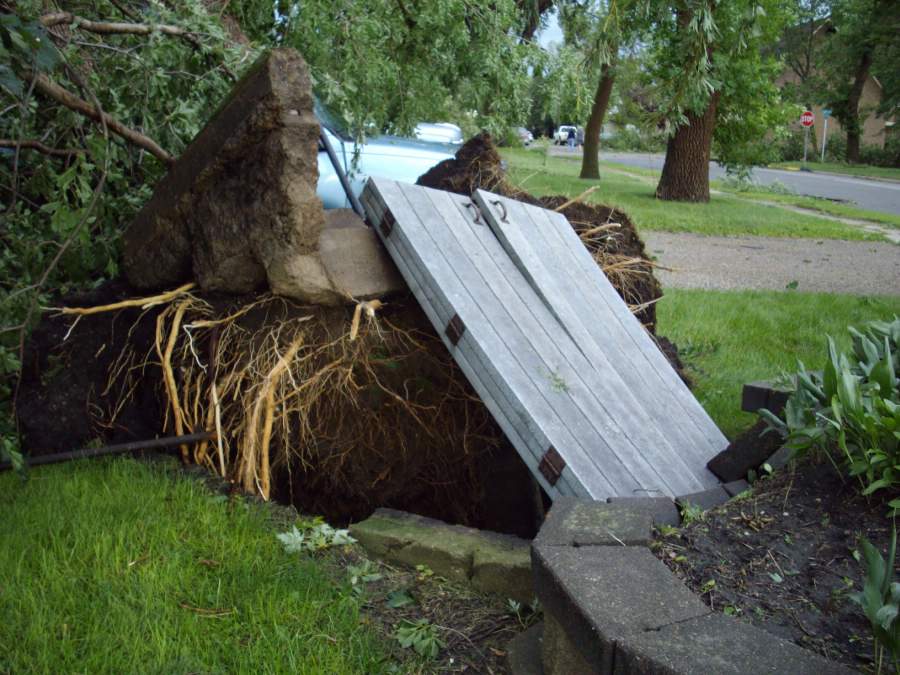
“The storm shelter was ripped up by the big tree that stood next to it…we would have been injured or possibly killed if we would have been in it,” DeLores surmises. Instead, they managed to seek protection in the basement of their 1898 home.

The storm cellar where the Johnsons would have sought protection had they had time to reach it.

“We are grateful to be alive,” DeLores says, a statement likely echoed by other rural and small-town residents in southwestern Minnesota where a wide-spread July 1 storm spawned four EF-1 tornadoes and a more powerful EF-2 twister. Belview was among the communities hardest hit when the tornado, with winds of 95 – 105 mph, ravaged this town of 375.

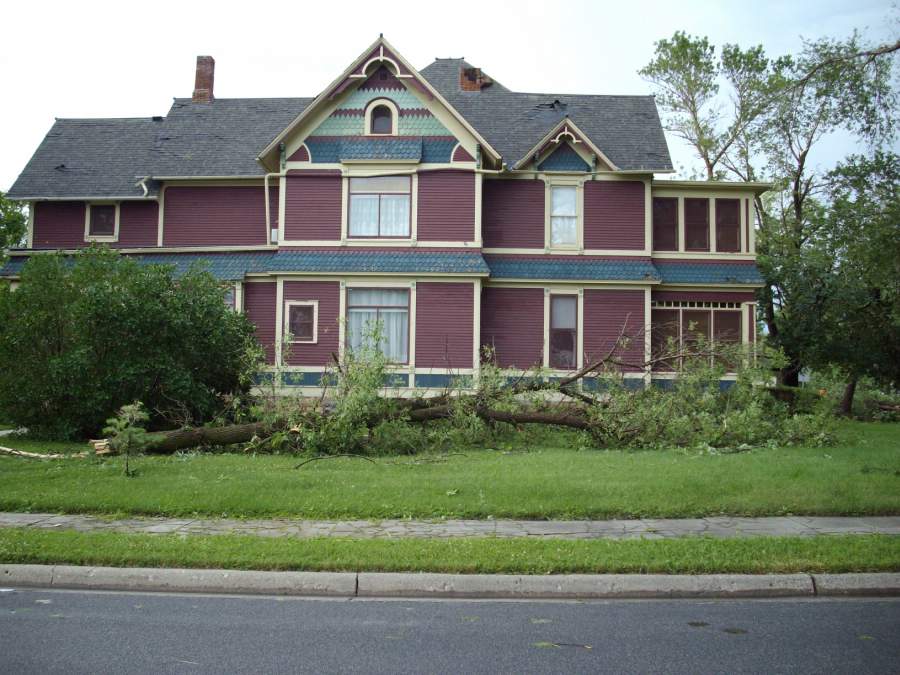
The Johnsons are in the process of cleaning up, dealing with insurance adjusters and gathering estimates so they can begin repairs on the 113-year-old house they’ve lived in since 1988. The list of damages to their home is extensive:

  • chimney blown down
  • rafters broken in the attic
  • shingles missing
  • paint blown off house
  • broken window
  • water damage to walls, ceilings, maple floors and carpet
  • roofs on two porches damaged and in need of replacement

The Johnsons' 1898 house was damaged inside and out by last Friday's tornado. DeLores offered to take photos of the interior for me, but I figured she had enough to do without adding this to her list.

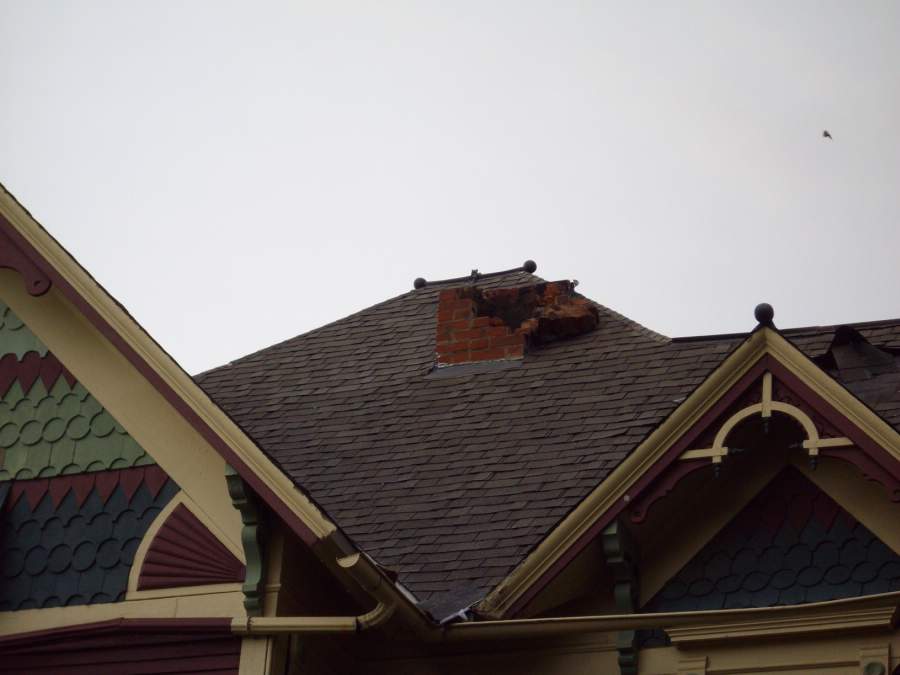
A view of the house roof where the chimney was ripped off by the tornado.

DeLores shares some interesting details about the storm. “The wind blew water through the air conditioner in the bedroom upstairs and blew the water so it ran across the hall into another bedroom. It soaked up the carpet in the hallway and that in turn ran down into our living room.

“Upstairs in my office, water also blew through the air conditioner there. The shade has ground-up leaves stuck into it as does the shade in the bedroom.”

And that’s just the house.

The garage received structural damage when a tree toppled onto it and onto Tom’s  SUV. His vehicle was totaled.

A tree fell onto the garage and Tom's SUV, which was totaled.

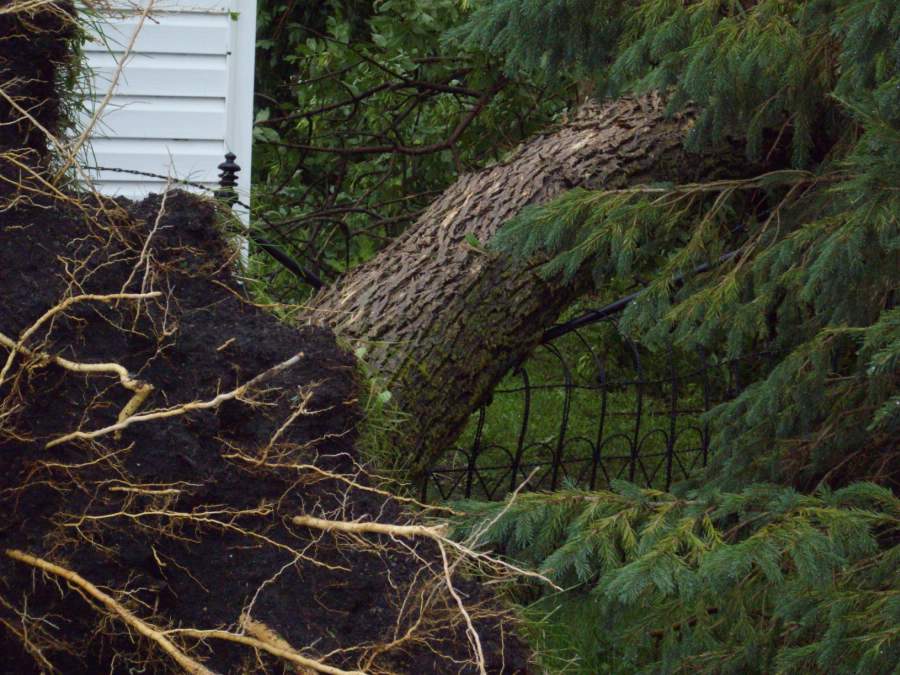
The Johnsons lost nine trees, some of which fell onto a 100-year-old fence that DeLores says they’ve lovingly protected for years.

One of several trees that landed on the 100-year-old fence.

One of numerous downed trees.

Despite the severe damage to home and property, DeLores is grateful that they survived the storm.

She is also appreciative of all the help from family members and others. “Men from Belgrade, Long Prairie and Sauk Centre came and sawed up trees for us and helped to clean up. They were volunteers who we had never seen.”

NEARBY ON A WOOD LAKE area farm, my cousin, Marilyn Schmidt, expressed similar sentiments in an email I received at noon Thursday. “Lucky no loss of life. Fortunately, we were not home.”

Marilyn and her husband, Dan, had just arrived at a west-central Minnesota lake for the July Fourth weekend when an EF-1 tornado hit their Redwood County farm one week ago today.

Since then, with the help of family and residents from Cottonwood, the Schmidts are cleaning up. Click here to read a previous post about the storm damage at their place.

Their son, Matt, was at the farm with a crew on Thursday when Marilyn emailed.

She tells me that all of their neighbors to the south and east and some north and some west had major damage to their properties. The Schmidts’ insurance adjuster already had gotten 1,500 claims by Tuesday night.

Marilyn closed her brief email with this sentence: “Gotta go—men to feed!!!”

IN VESTA, WHERE A SERIES OF DOWNBURSTS with wind speeds of 90 – 100 mph caused significant damage and downed trees, members of St. John’s Lutheran Church are planning to repair their church. The south half of the church roof was lifted off and slammed against the bell tower, according to my uncle, Milan Stage, a church member. The tower was cracked at the base and will need to be taken down, he says.

St. John's Evangelical Lutheran Church in Vesta with the roof half ripped off by strong winds during the Friday afternoon storm. Photo courtesy of Brian Kletscher.

Everything has been removed from the sanctuary into the attached social hall. The congregation is awaiting reports from an insurance adjuster and two contractors who have been on-site.

Milan says the west end and sides of St. John’s appear to be alright, but that “It will be a slow process getting the church back in use.” The church council met Wednesday evening and decided, if funds are available, to remodel the church along with repairing it. In the meantime, congregational members will worship at their sister church, Peace, in nearby Echo.

Across town at Uncle Milan and Aunt Jeanette’s home, the high winds wrecked eave troughs and a deck railing. A branch went through the railing, taking half of the railing and the grill with it, Milan says. Tops were snapped from some ash trees in the Stages’ back yard. Branches from their big cottonwood tree were strewn across the lawn.

JUST A BLOCK TO THE SOUTH my 79-year-old mom, Arlene Kletscher, never made it to the basement during the storm. She was sitting in her living room sorting through papers and wanted to complete the task. In her closed-up, air conditioned house, she never heard the warning sirens. By the time she realized the severity of the situation, it was already too late to seek safety.

This marks the second time my mom has not gotten to safety during a severe storm. Thirty some years ago a tornado hit our home farm, where she was living at the time. Then a silo was downed, wagons strewn across the field, among other destruction.

I am thankful, again, that she is OK.

My mom’s Vesta home was apparently unscathed. However, she lost one tree and her yard was littered with branches and other debris.

READERS, THANK YOU for following my series of storm stories which began last Saturday. Yesterday Minnesota Prairie Roots’ views reached an all-time daily high of 1,443. That indicates to me a continued strong interest in the storms of southwestern Minnesota.

I know several of you have posted links to my blogs on Facebook. Thank you for doing that and also thanks to those who have shared their stories and photos. If you’re reading this and have a storm-related story to share, please submit a comment.

If you missed my earlier storm posts, check my archives. Many of those stories include links to more storm information and images.

PHOTOS COURTESY of DeLores and Tom Johnson

© Copyright 2011 Audrey Kletscher Helbling
 

National Weather Service confirms July 1 tornadoes in southwestern Minnesota July 7, 2011

THE NATIONAL WEATHER SERVICE confirms what many Minnesotans had already figured out. Several tornadoes touched down during a massive storm system that began near the South Dakota/Minnesota border late Friday afternoon, July 1, and swept as far east as northwestern Wisconsin.

In my home area of Redwood County, two tornadoes were confirmed—both in the northwestern section of the county.

According to the NWS Chanhassen office, an EF-1 tornado with maximum winds of 95 – 105 mph began approximately six miles west of Vesta and continued for some 21 miles to the northeast. The maximum half-mile wide twister moved across Belview, which saw the most widespread tree damage in the surveyed area. The tornado then crossed the Minnesota River and ended two miles into eastern Renville County. Click here to read my previous post on the storm damage in Belview.


Trees blocked the street north of the Belview City Park following the tornado that passed through this Redwood County community of 375. Photo courtesy of Merlin and Iylene Kletscher.

The second EF-1 Redwood County tornado just nipped the northwestern corner of the county traveling a 2 ½-mile path. The tornado hit the farm of my cousin, Marilyn Schmidt, and her husband, Dan. To see the damage there, click on this post published yesterday on Minnesota Prairie Roots.


This tractor rigged with chains holds up a wall of a shop on Dan and Marilyn Schmidt's Wood Lake area farm. The building was severely damaged by Friday's twister. I'm showing this photo specifically for the reader who yesterday questioned how a tractor could hold up a wall. Photo courtesy of Heather Rokeh.

Three other tornadoes were confirmed in southwestern Minnesota—the most-damaging an EF-2 in Tyler with winds estimated at 115 mph. Check out the storm assessment of this 3-mile long tornado in Lincoln County near the South Dakota border by clicking here onto the NWS Sioux Falls website.

You’ll also find information there on an EF-1 twister that struck the Ruthton area in Pipestone County with wind speeds of 100 – 110 mph.

Strong winds, not a tornado, apparently caused the damage in my hometown of Vesta. The Chanhassen office of the NWS lists the storm there as “a series of downbursts” with wind speeds of 90 – 100 mph. Destruction in Vesta included dozens of downed trees, a roof partially-lifted from St. John’s Lutheran Church (my home church), smashed grain bins, damage to the elevator and more. To learn more about the damage in Vesta, read my previous blog post by clicking here or click here to read a story published in The Redwood Gazette.

St. John's Evangelical Lutheran Church in Vesta with the roof half ripped off by strong winds during the Friday afternoon storm. Photo courtesy of Brian Kletscher.

The NWS also determined that an EF-1 tornado with wind speeds of 100 – 110 mph cut a 300-yard-wide, 2 1/2 –mile swath northeast of Danube, lifting much of the roof from at least one home.

Check out the two NWS websites for maps, photos and more detailed information on the storms and the resulting damage.

Also visit the Belview Blue Jays Facebook page, where you’ll find photos of storm damage and other information from Belview.

IF YOU HAVE INFORMATION and photos you would like to share of storm damage, please submit a comment and I will follow-up with an email to you.

Based on my blog readership yesterday and Tuesday, interest in the southwestern Minnesota storms remains high. Yesterday Minnesota Prairie Roots blog views totaled 1,129, my highest daily total since launching this blog. On an average day, I get around 400 views.


Sprinkler gymnastics on the Fourth and more family fun

Filed under: Uncategorized — Audrey Kletscher Helbling @ 6:57 AM
Tags: , , , , , , , , , , ,

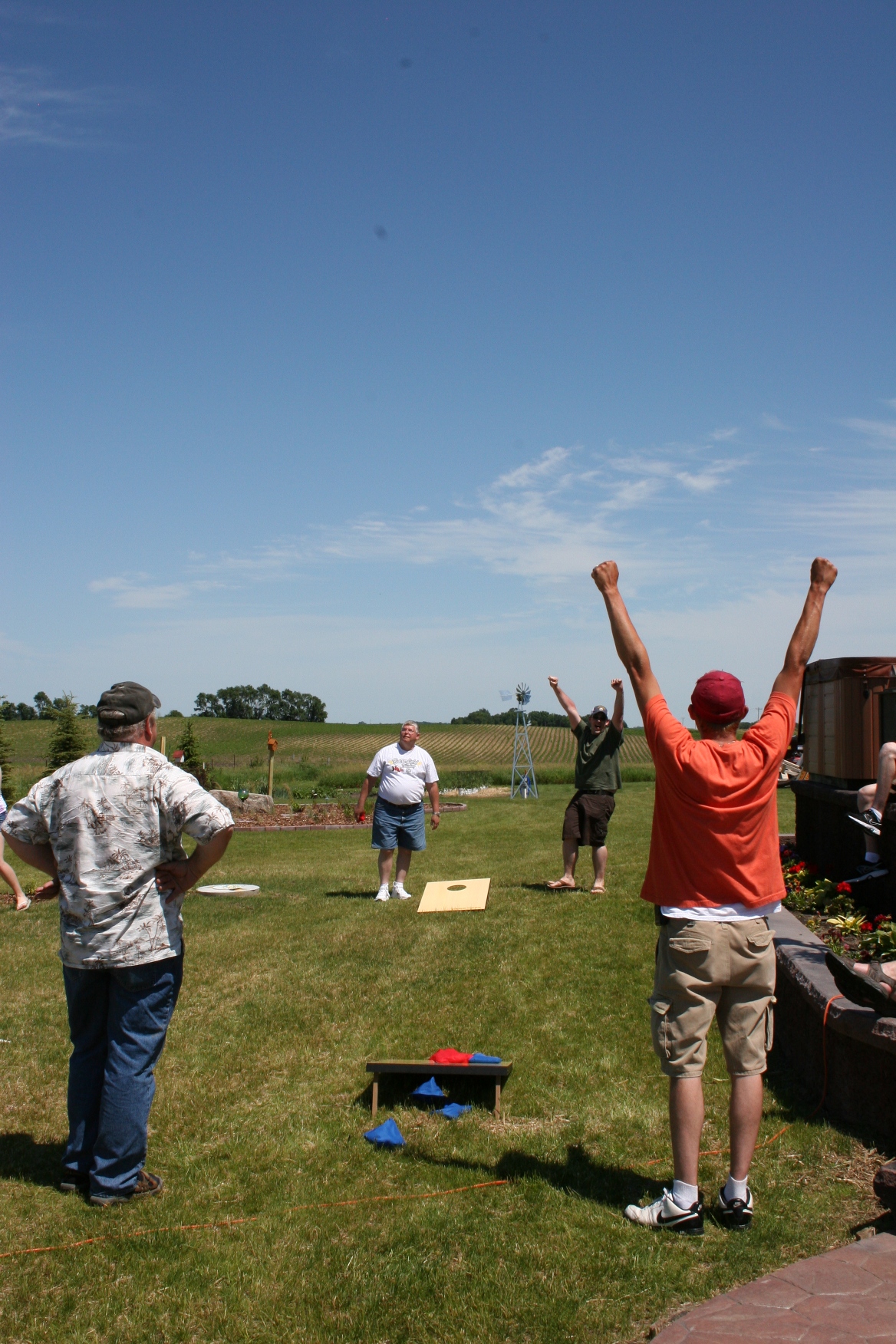
The winning team in the bean bag toss is quite obvious.

NAME SOMETHING PEOPLE save money for.

How many times does your mom have to tell you to do something before it gets done?

Name something you write down to remember.

If you know the answers (see below) to those Family Feud style questions, then you should have been at my middle brother’s home in southwestern Minnesota on Sunday. We sparred in a brief version of this television game show with young family members competing against old, “old” being anyone 50 or older.

Settled onto our lawn chairs on the driveway in front of the garage, one member of each team stepped up to a cooler, introduced themselves and then poised with hands behind backs awaiting the question. Lacking a buzzer to buzz, we substituted a plastic gallon of cheese balls plopped upon a cooler. Slap the cheese ball lid cover first and your team plays first.

If I hadn’t been so intent on winning this game, I may have thought to take pictures of the cheese ball container slapping contestants.

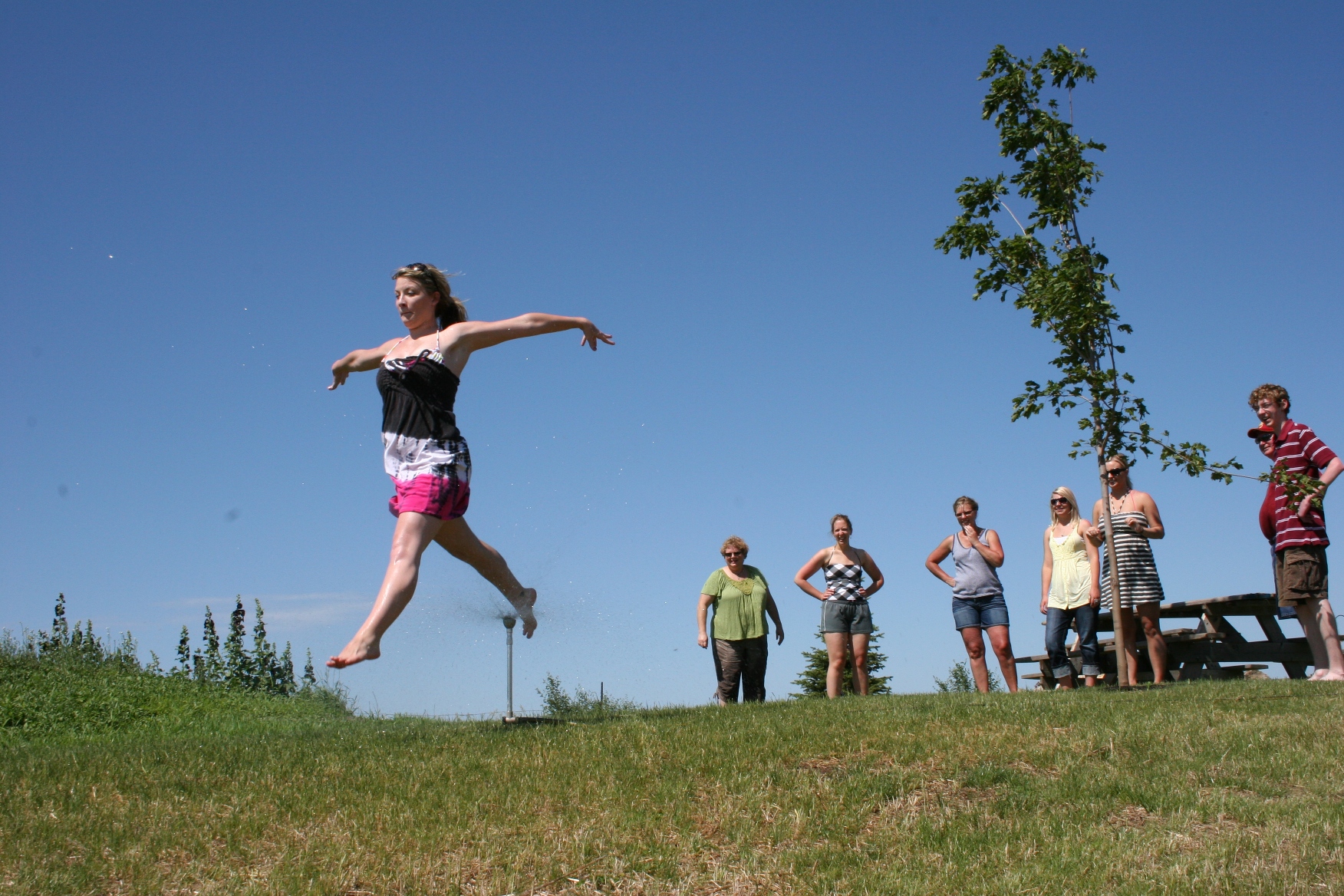
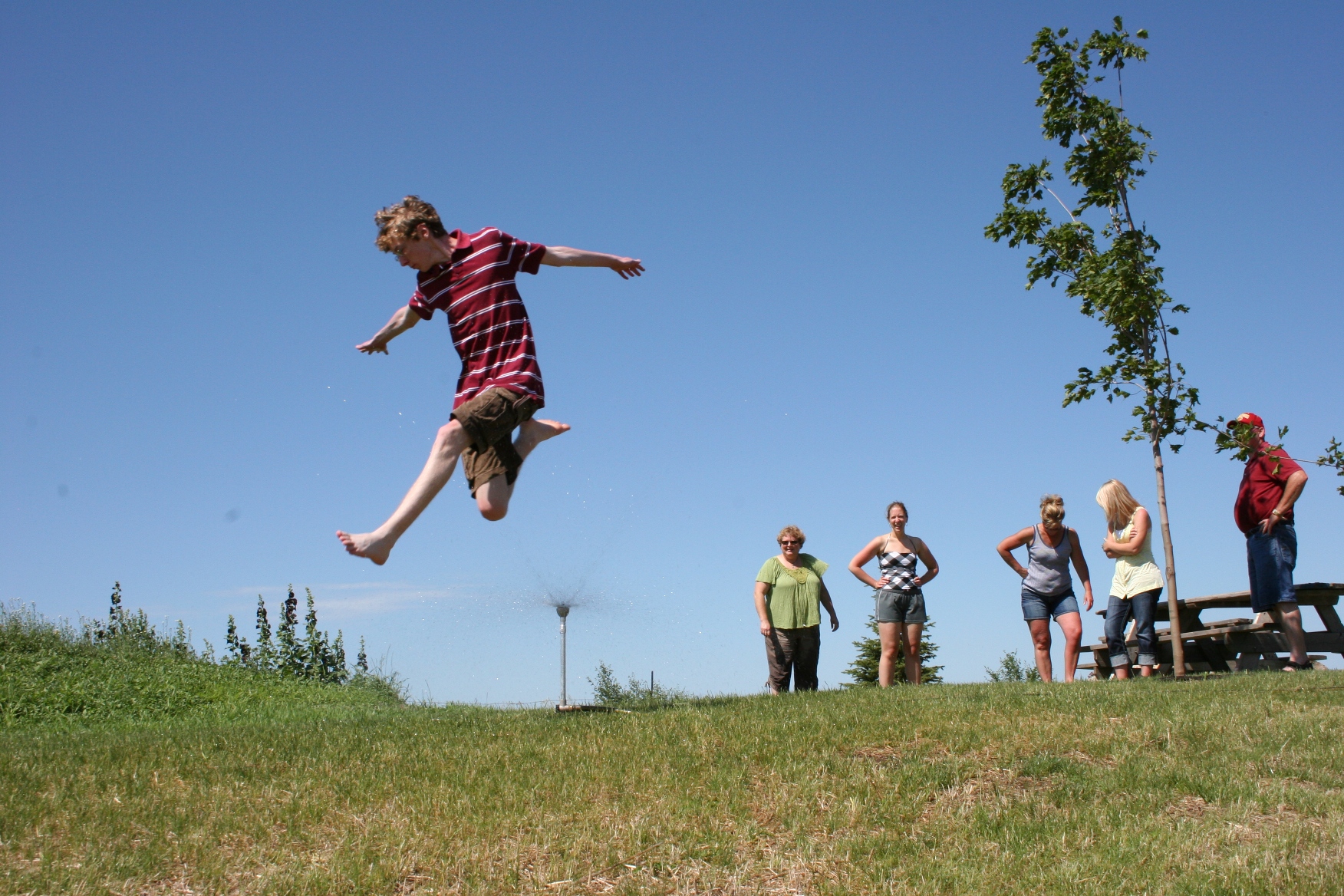
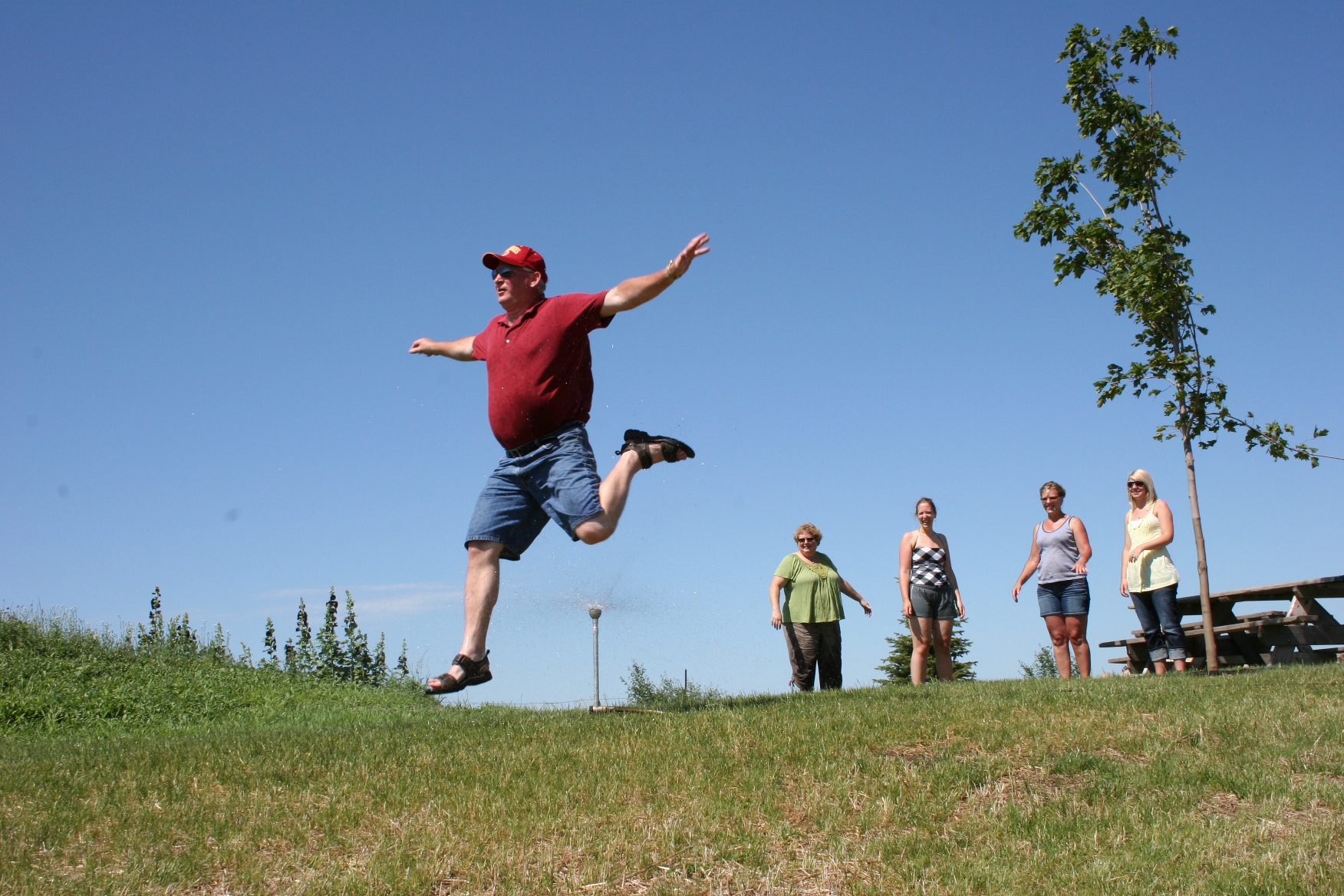
However, I took plenty of photos of the earlier sprinkler gymnastics. I refrained from that activity until later, at the exact moment one gymnast grabbed the sprinkler and ran onto the patio spraying all non-participants, including my 79-year-old mom. Just before that happened, I had decided to join the sprinkler crew. Timing is everything.

When you view these sprinkler gymnastics images, you will understand why I hesitated initially to join the group. I did not want to risk a leap onto water-slicked grass. Nor did I want to appear too foolish in that YouTube video my nephew-in-law was filming.

My extended family doesn't just nilly willy run through a sprinkler. Oh, no. We make it into a game. In this case, follow the leader. Whatever the leader does, you do.

From the youngest participant at age 17 to...

...one of the oldest sprinkler gymnasts at age 50.

Ah, my extended family loves to have fun.

Later, not long after the sun set on the Minnesota prairie, out came the sparklers. More fun. More laughter. More memories.

Sparkler fun for the younger ones.

Combine sparklers and a slow shutter speed and you get some interesting images.

I can’t think of anywhere else I would rather celebrate Independence Day than with my extended family on the land I love most, southwestern Minnesota.

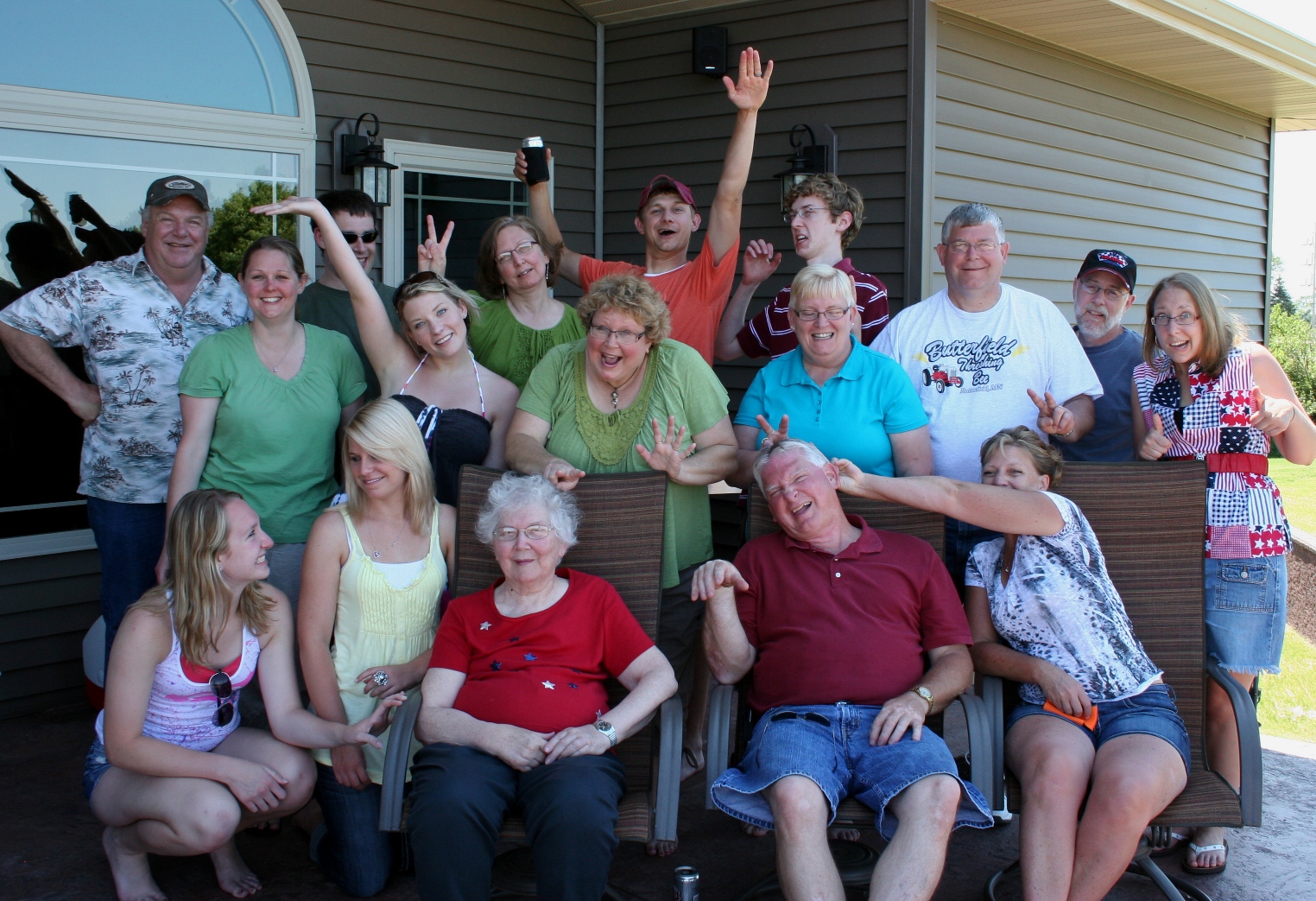
After we shoot "nice" photos, we always like to do a fun photo. I am in the back row in the grass green shirt. Can you tell which of us were teens in the 1970s? (Hint: See the symbol we're making with two fingers. You would think we could be more creative.) All family members, except me, shall remain unidentified.

HOW DID YOU CELEBRATE your Fourth of July?

HERE ARE THE TOP answers to the three questions posed at the beginning of this post:

Vacation, two times and phone numbers.

© Copyright 2011 Audrey Kletscher Helbling
 

Damage suggests tornado hit Wood Lake farm July 6, 2011

DAN AND MARILYN SCHMIDT had just arrived for the July Fourth holiday weekend at a west central Minnesota lake when they got the phone call from their daughter, Heather Rokeh. She was calling from Marshall with news that a storm had swept through town. It was late Friday afternoon, July 1.
Dan asked about their farm 20 miles northeast of Marshall. Heather suggested that “it wouldn’t be a bad idea to have someone check it out.”

And so Heather’s sister, Amy St. Pierre, and Amy’s husband and daughter went to the farm, surveyed the damage, then called the Schmidts. The couple returned that night to inspect their Wood Lake area farm.

Every building had been damaged. Hail pounded holes in the siding on the house, where shingles and an antenna were blown off. The door of the Quonset building had been ripped away with part of the board trim speared into the ground.
Half the roof was blown off the shop, collapsing an interior wall. That wall is now being held up by two chains and a tractor until items inside can be removed and the building demolished.

Another view of the caved-in shop wall.

The exposed interior of the shop.

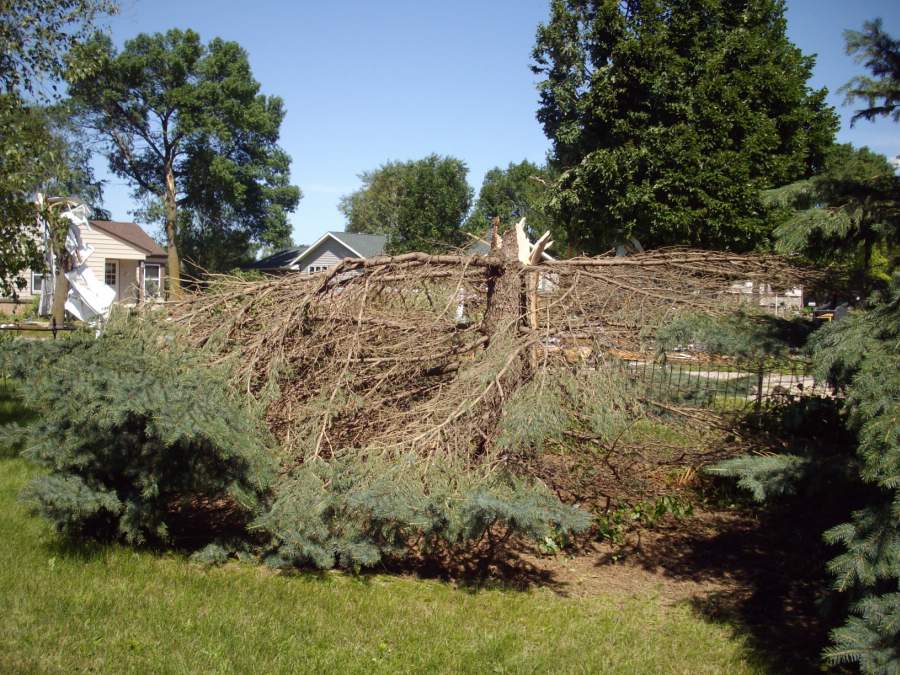
Trees were down or uprooted. Branches littered the farmyard. On one of the two houses on the farm site, the garage was pulled away from the house, leaving a visible gap.

Here you see light shining through the space where an attached garage was separated from the house during Friday's storm.

“A lot of these things spelled out tornado for us,” says Heather. “The twisting of the trees, things stuck in the ground and the twisted buildings all suggest tornado to us.”

Whether straight-line winds or tornado, Heather remains grateful: “We are so thankful no one was injured.”

This lean-to, connected to a hog barn, was lifted up, twisted and set back down on top of a stock chopper. The hog barn was OK, but the lean-to was deemed unsafe and removed on Saturday.

This photo shows a portion of the lean-to that was lifted and dropped onto the stock chopper pictured here.

This grain dryer was moved and it is now sitting crooked on its foundation. The cement slab foundation was cracked and cement blocks are now sitting at an angle.

IF YOUR FARM, HOME or community was damaged during the July 1 storm in southwestern Minnesota, I’d like to hear from you. Submit a comment summarizing your storm experience, the damage to your property or town, and progress toward recovery. If you have photos to share, like those above from my cousin Heather, let me know and I’ll be in touch.

Also check out my previous posts on storm damage in my hometown of Vesta and in neighboring Belview.

PHOTOS BY HEATHER ROKEH Copyright 2011

Text copyright 2011 Audrey Kletscher Helbling