Minnesota Prairie Roots

Writing and photography by Audrey Kletscher Helbling

A must-see: The beauty of autumn in rural Rice County October 7, 2021

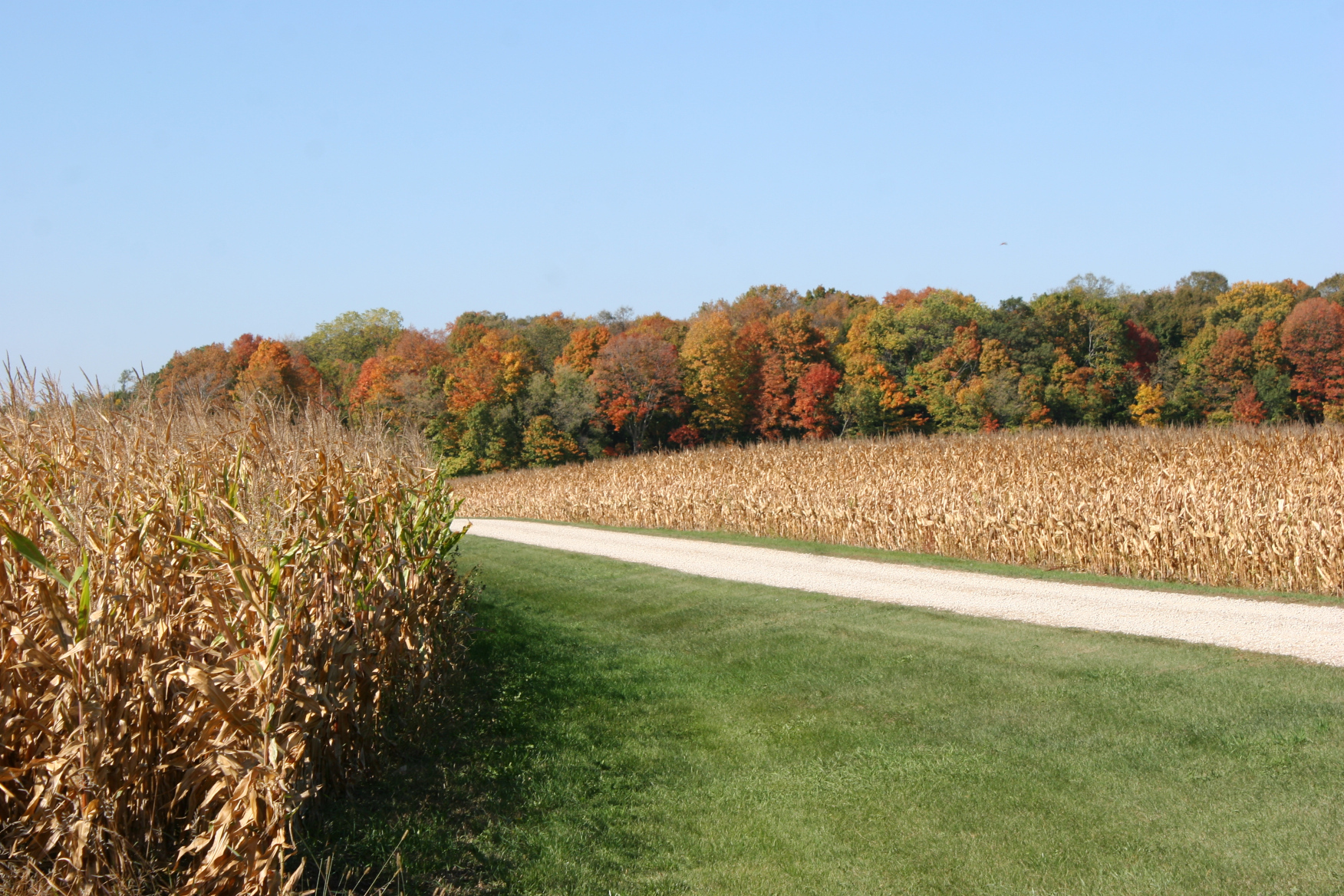
Just days ago color tinted trees edging a cornfield in rural Rice County. Minnesota Prairie Roots copyrighted photo October 2021.

THE MUTED AND VIBRANT HUES of autumn mix in the rural Rice County landscape, creating stunning seasonal scenes. If you crave color and harvest, this is your moment to get out for an afternoon country drive.

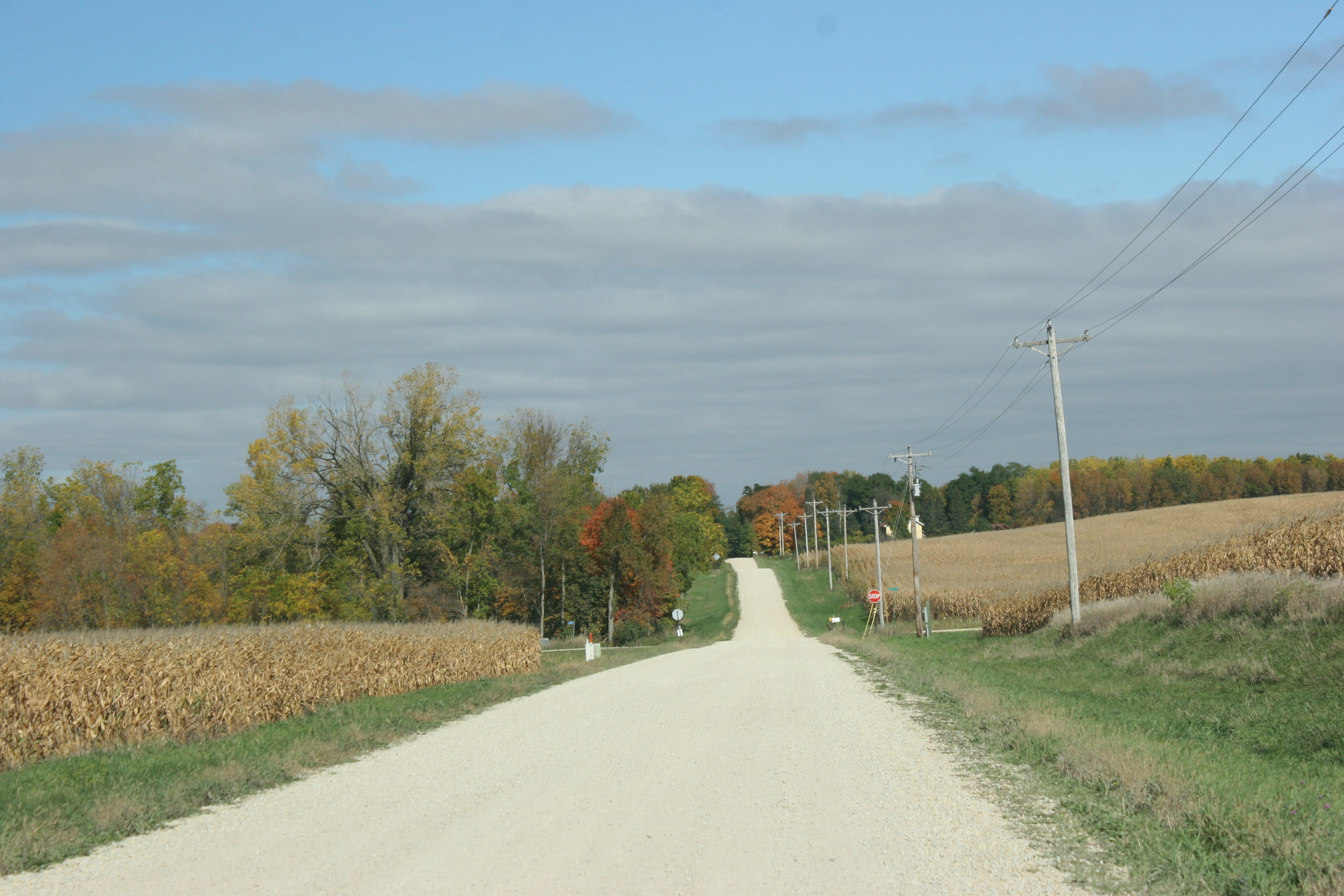
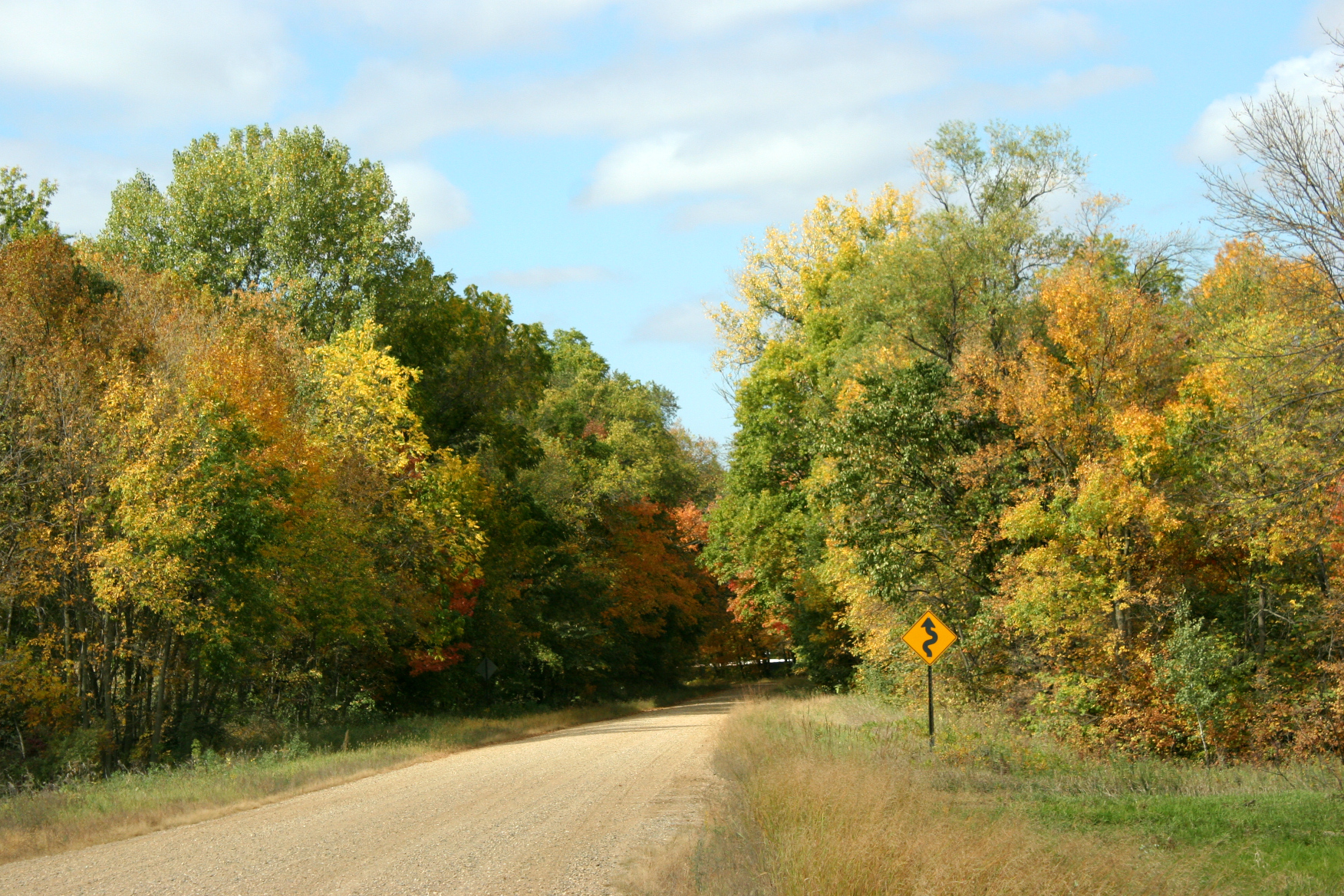
Choose a gravel road, any gravel road, and see where it leads you, here past fields and trees turning color. Minnesota Prairie Roots copyrighted photo October 2021.

Randy and I consider our county a best-kept-secret-place to view fall colors. Last weekend we traveled mostly gravel and county roads from Faribault to the Nerstrand area and back and then west to Kelly Lake. In between, we stopped for a hike at Caron Park, a picnic lunch at the hilltop Valley Grove churches and then for apples at Apple Creek Orchard.

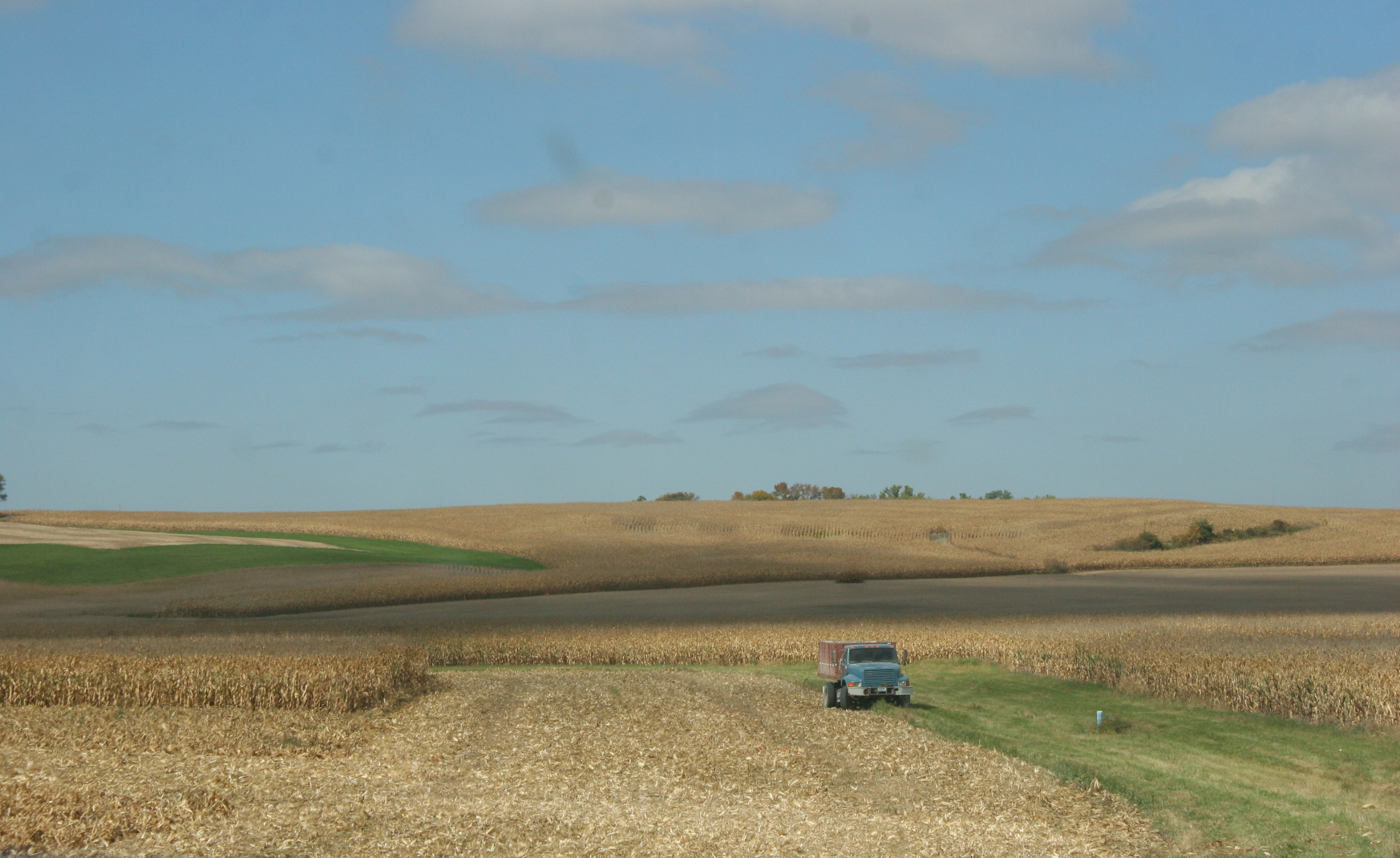
Harvest is well underway in Rice County. Minnesota Prairie Roots copyrighted photo October 2021.

As farm-raised kids—me in southwestern Minnesota and Randy in central Minnesota—we find ourselves drawn to the countryside, especially during spring planting and then again during fall harvest. Our weekend drives updated us on harvest progress as we passed fields of corn and soybeans. Some picked. Some still drying under the intermittent autumn sun.

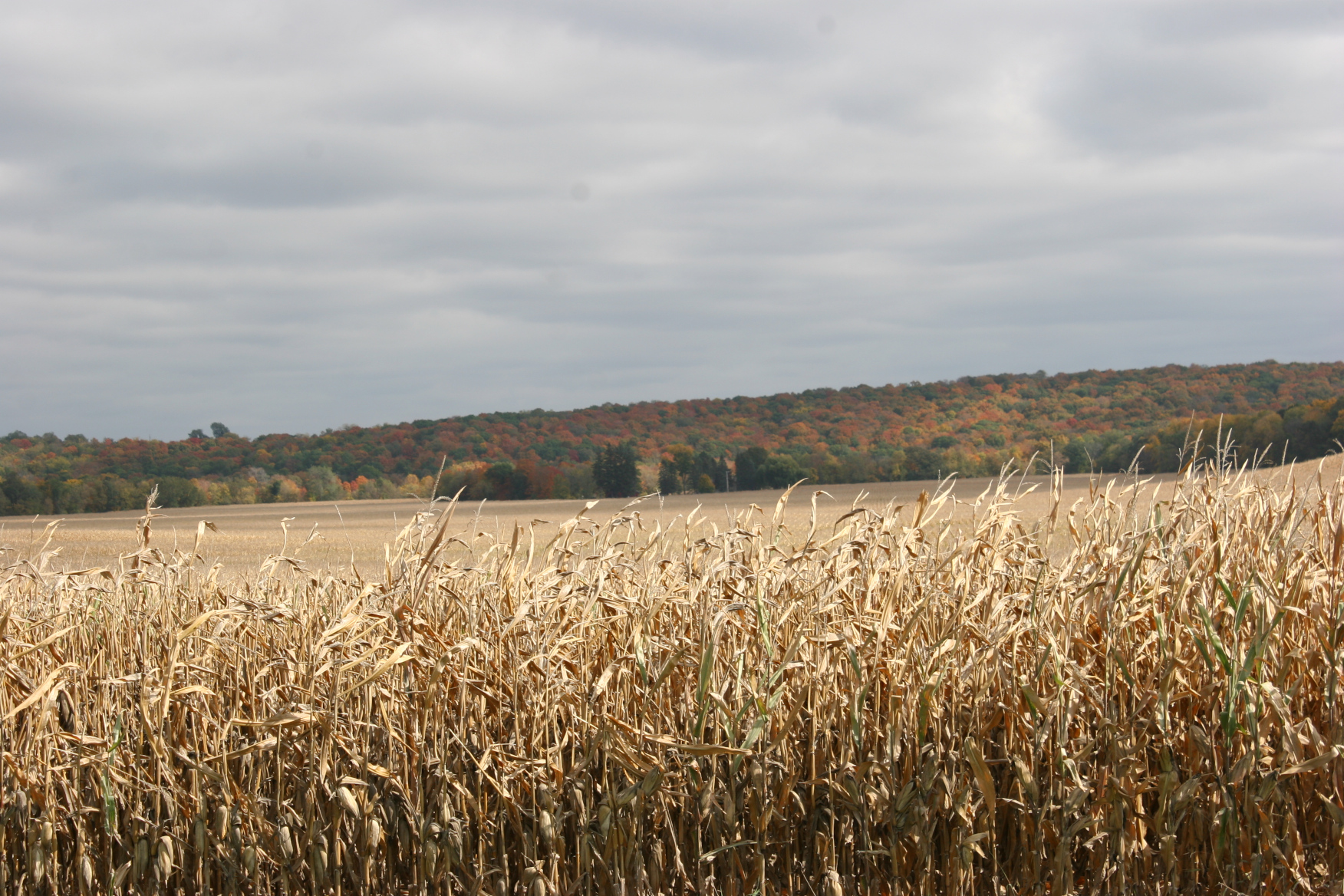
Even under partly sunny skies, the colored hillside of trees were beautiful. This is on a gravel road (Falk Avenue) off Rice County Road 20 northeast of Cannon City. Minnesota Prairie Roots copyrighted photo October 2021.

Across an expanse of cornfield on County Road 84/Falk Avenue (just off County Road 20 between Cannon City and Northfield), we paused to admire a treeline in the distance. We return here each year to simply stop and appreciate the hillside aflame with the hues of autumn.

Entering the woods on Farmers Trail. Minnesota Prairie Roots copyrighted photo October 2021.

Likewise, we also follow nearby Farmers Trail, a remote gravel road (off Falk Avenue) which winds through woods. Primarily maples as evidenced by the colors and by the blue maple syrup tube collection system that weaves through the trees.

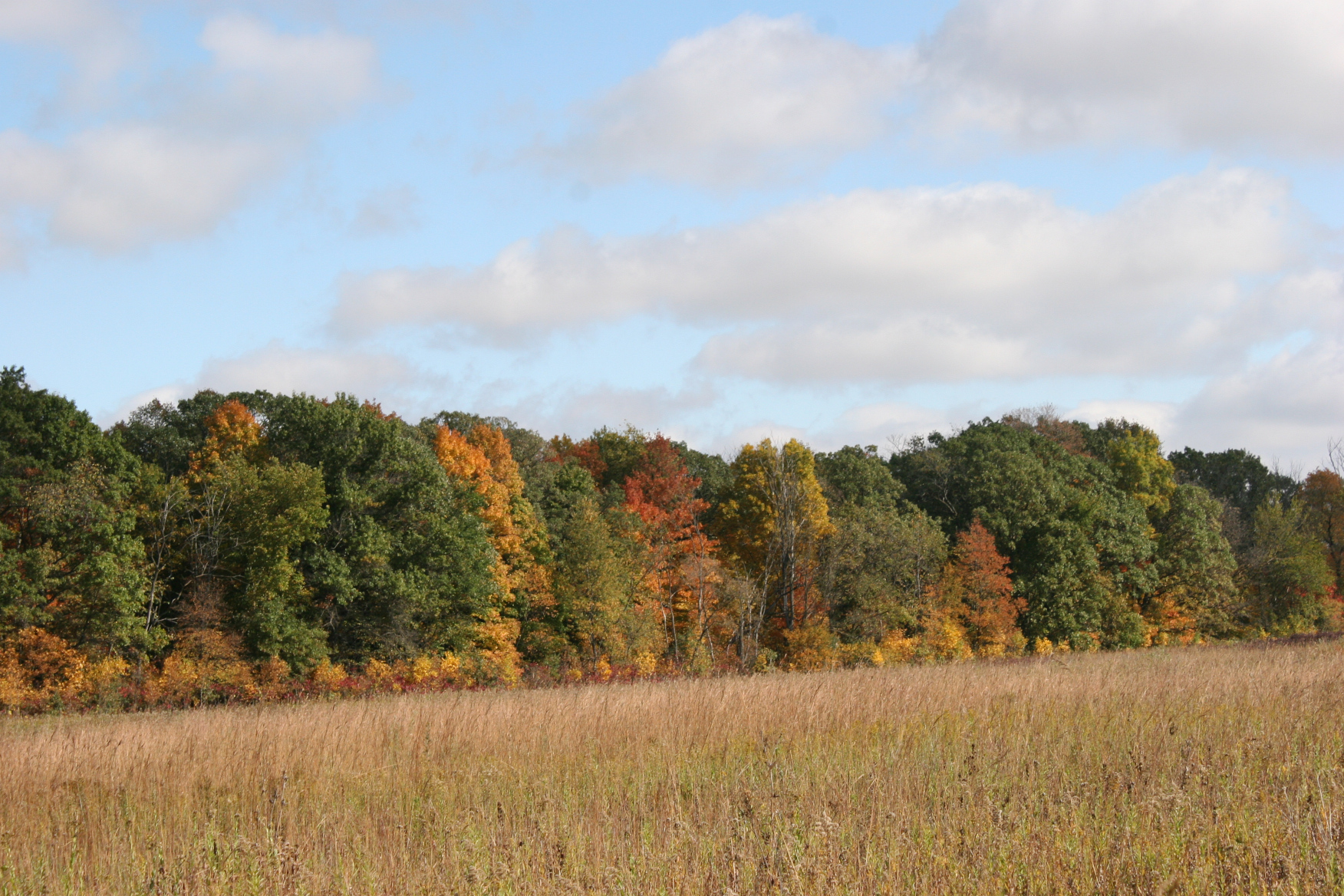
The beautiful treeline at Caron Park. Minnesota Prairie Roots copyrighted photo October 2021.

Caron Park, too, draws us to stop and hike into the woods. It’s a less-crowded option than the nearby popular Nerstrand Big Woods State Park. The treeline at Caron Park, behind an open field of muted, dried grasses, is particularly stunning.

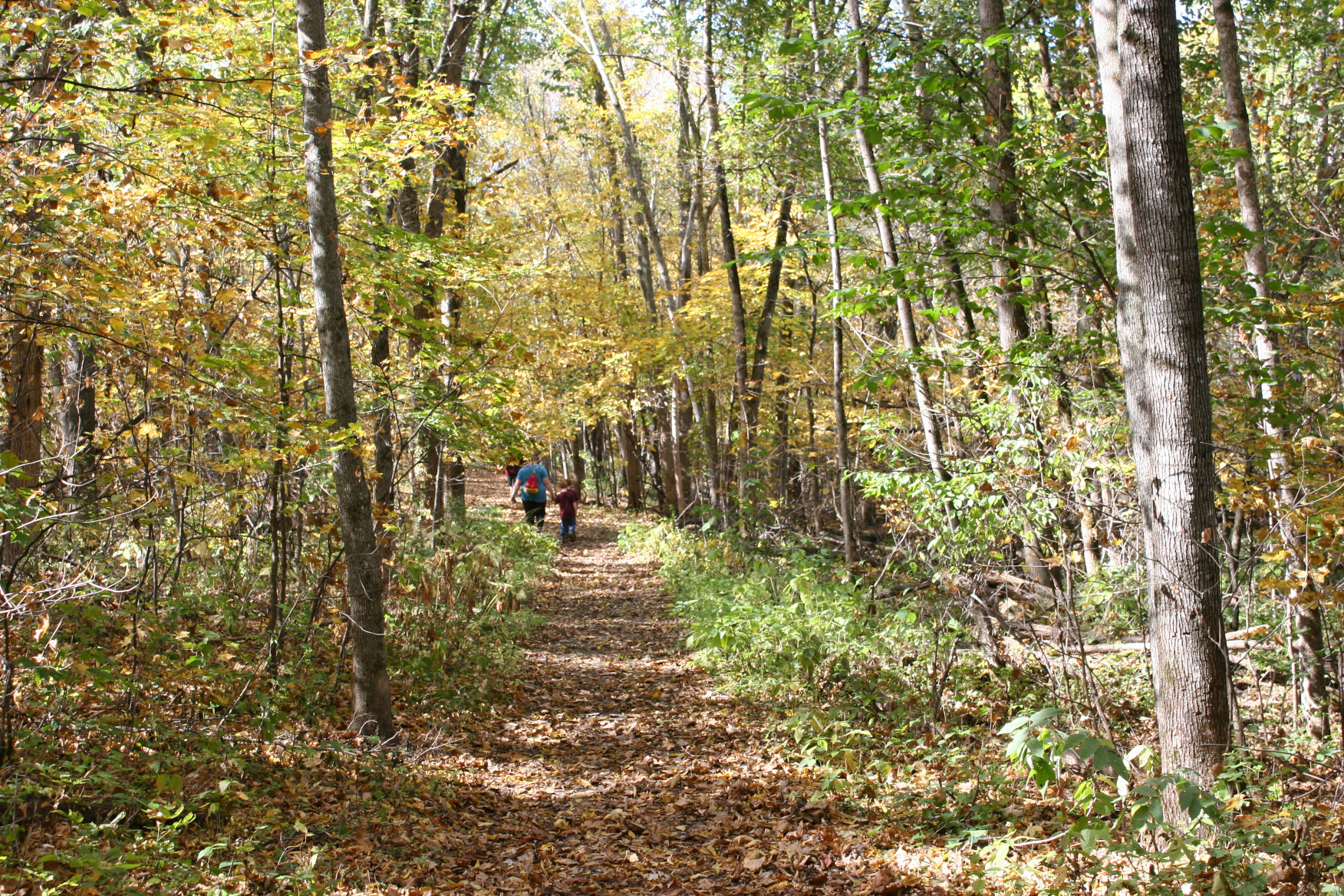
A family walks through the woods at Caron Park. Minnesota Prairie Roots copyrighted photo October 2021.

We walked into the woods, following a leaf-covered, eroded dirt trail that made me uncomfortable and unsure of my footing. Tree roots presented potential tripping obstacles. I focused more on staying upright than anything. Yet, despite that, I enjoyed the quiet and beauty of the woods. As did others, mostly young families.

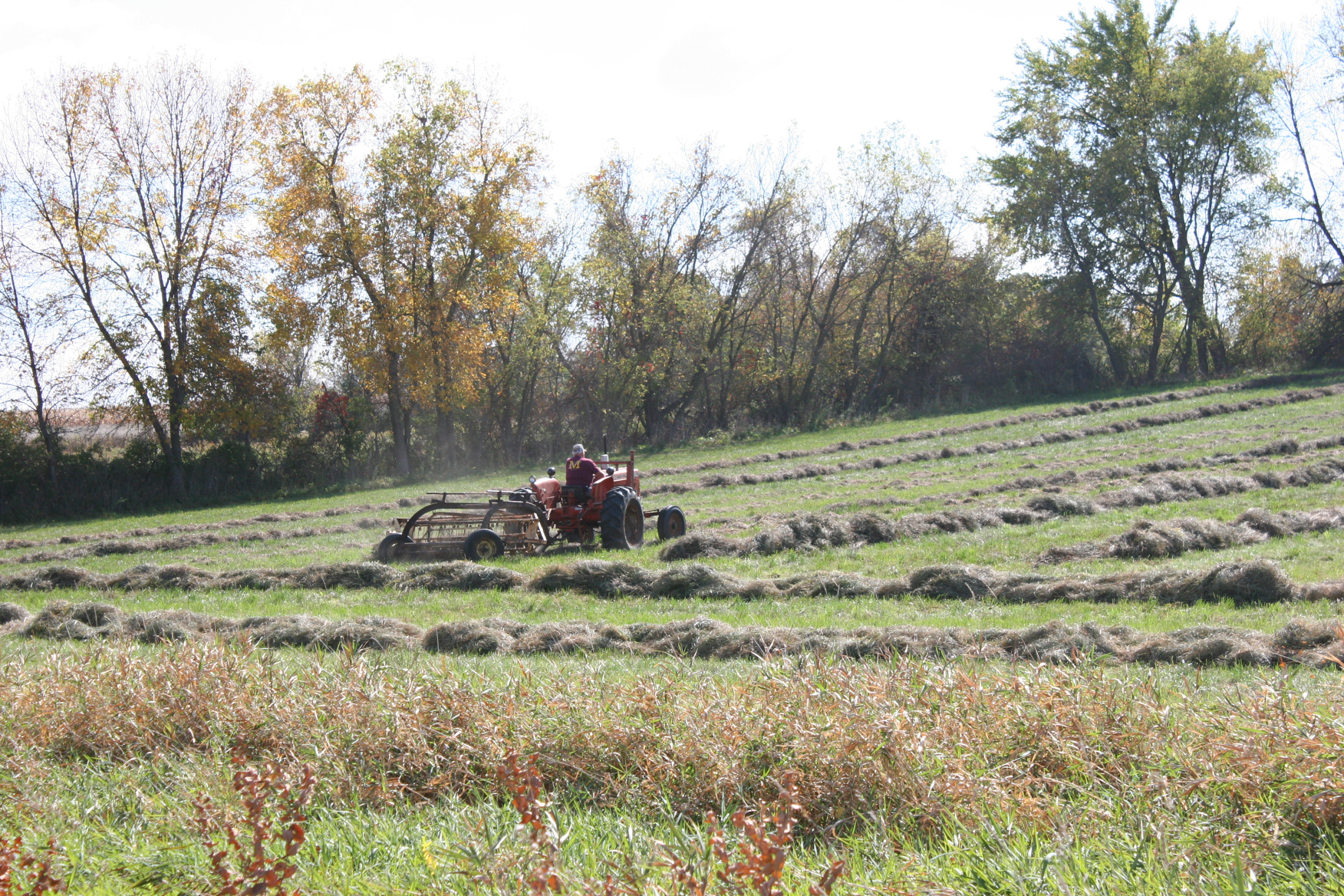
We came across this farmer raking hay, like a scene from the past. Minnesota Prairie Roots copyrighted photo October 2021.

As we continued to follow country gravel roads, we sometimes drove in clouds of dust trailing pick-up trucks. That, too, reminds me of my agrarian upbringing. Yes, nostalgia often seeps into our view and our conversations. Once a farm girl/boy, always a farm girl/boy. Even if we’re decades removed from the farm.

Beauty in autumn ruralness. Minnesota Prairie Roots copyrighted photo October 2021.

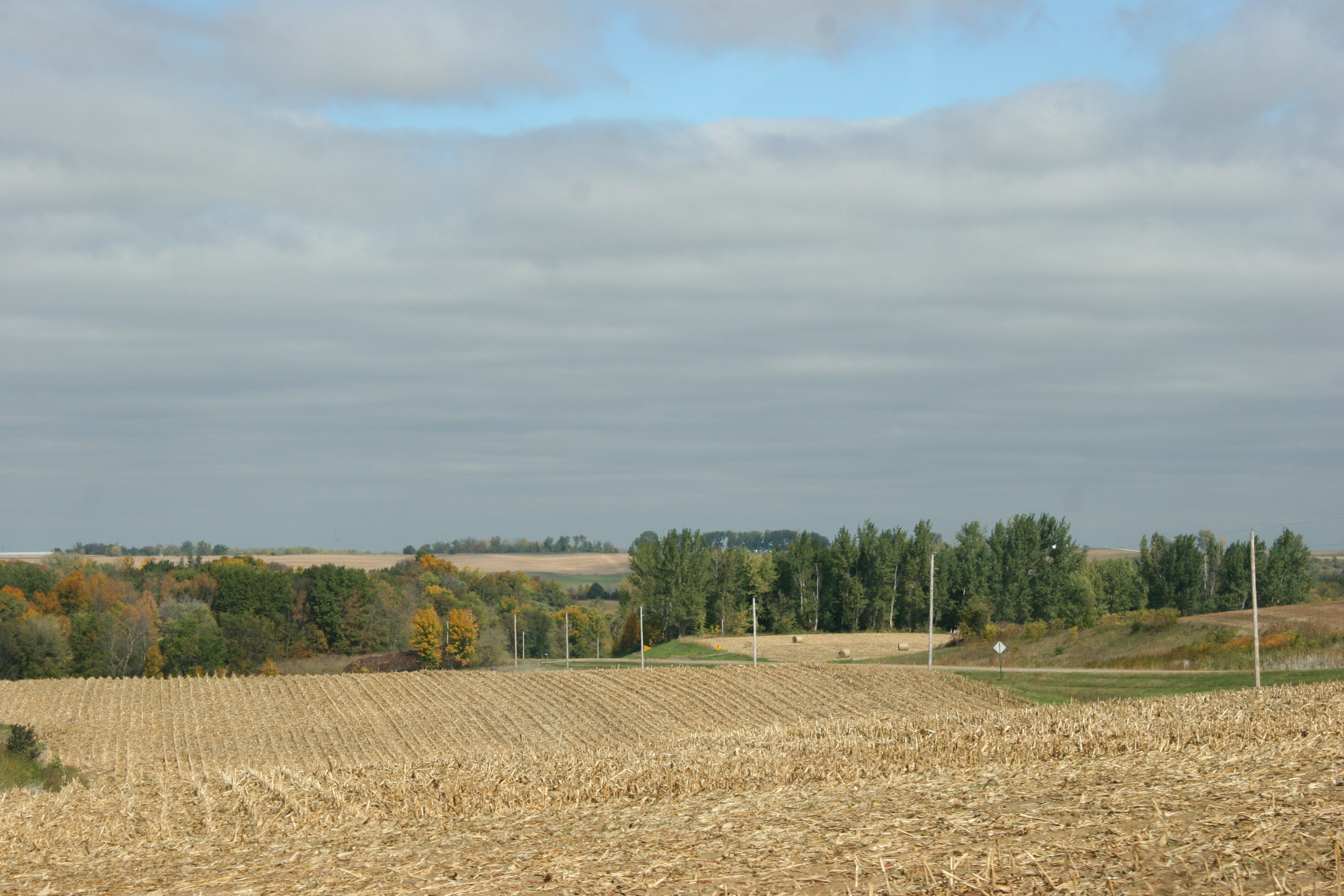
I love how the rural countryside of Rice County often sweeps in valleys and hills, providing incredible vistas. Of farmland. Of wooded and open hillsides. Of land and sky connecting. All connected by gravel roads. This rural setting rates as particularly stunning in autumn.

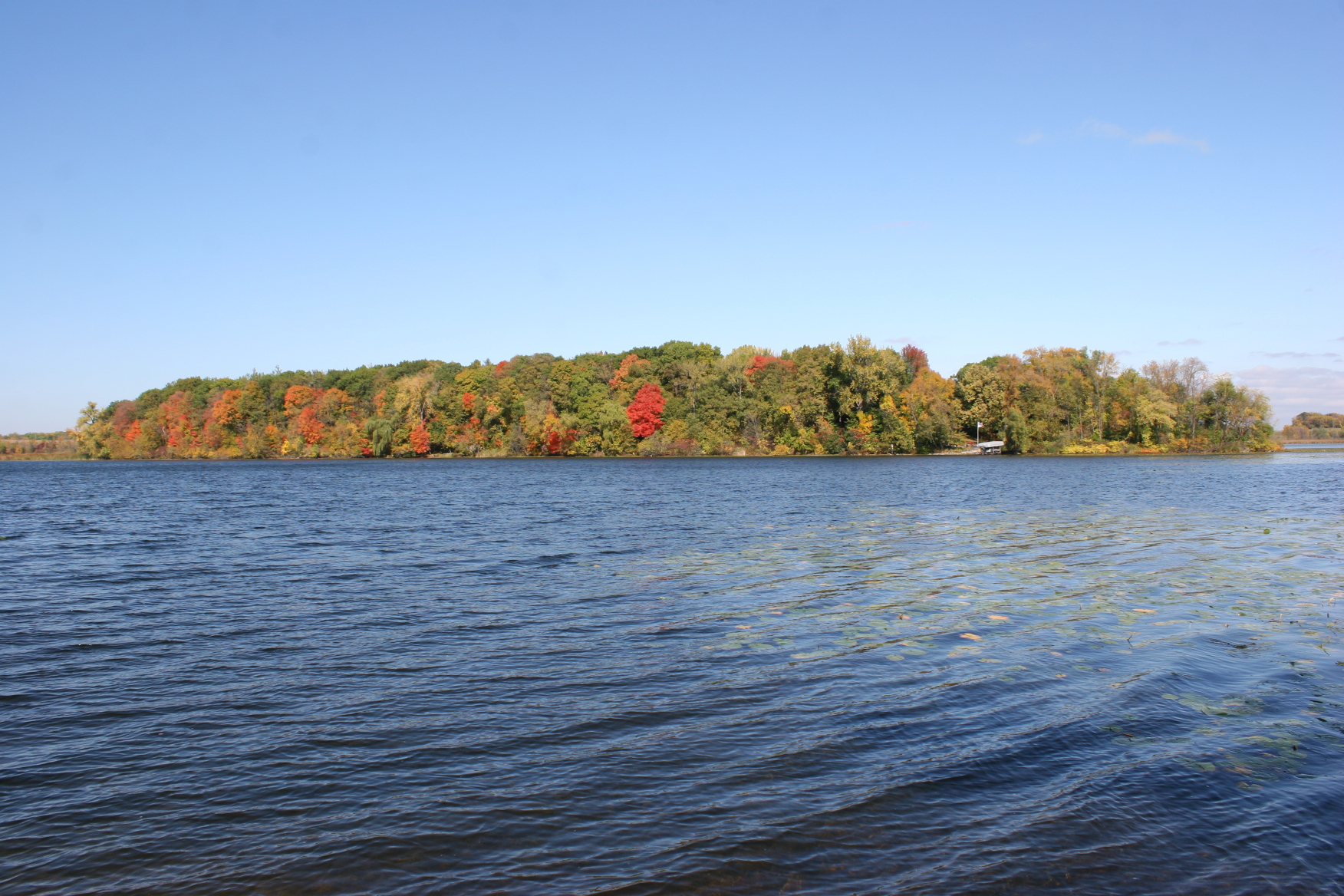
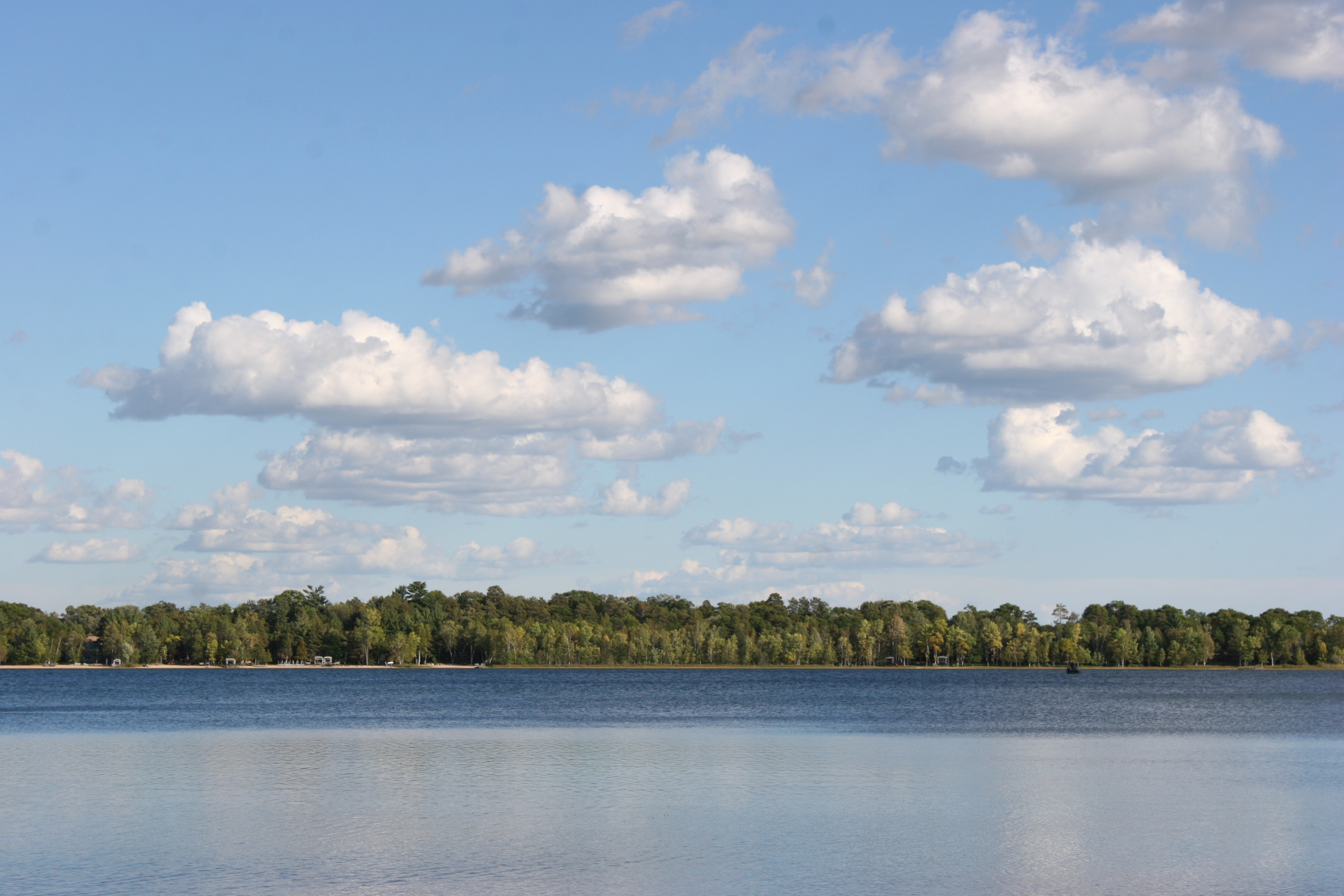
The treeline across Kelly Lake is particularly beautiful in autumn. It should be even prettier than this soon. Minnesota Prairie Roots copyrighted photo October 2021.

We ended our drive at another favorite fall destination, the public boat landing at Kelly Lake northwest of Faribault. The view of the treeline across the water—which was unusually clear—always looks particularly lovely, although the colors were not at their peak yet during out stop. Soon.

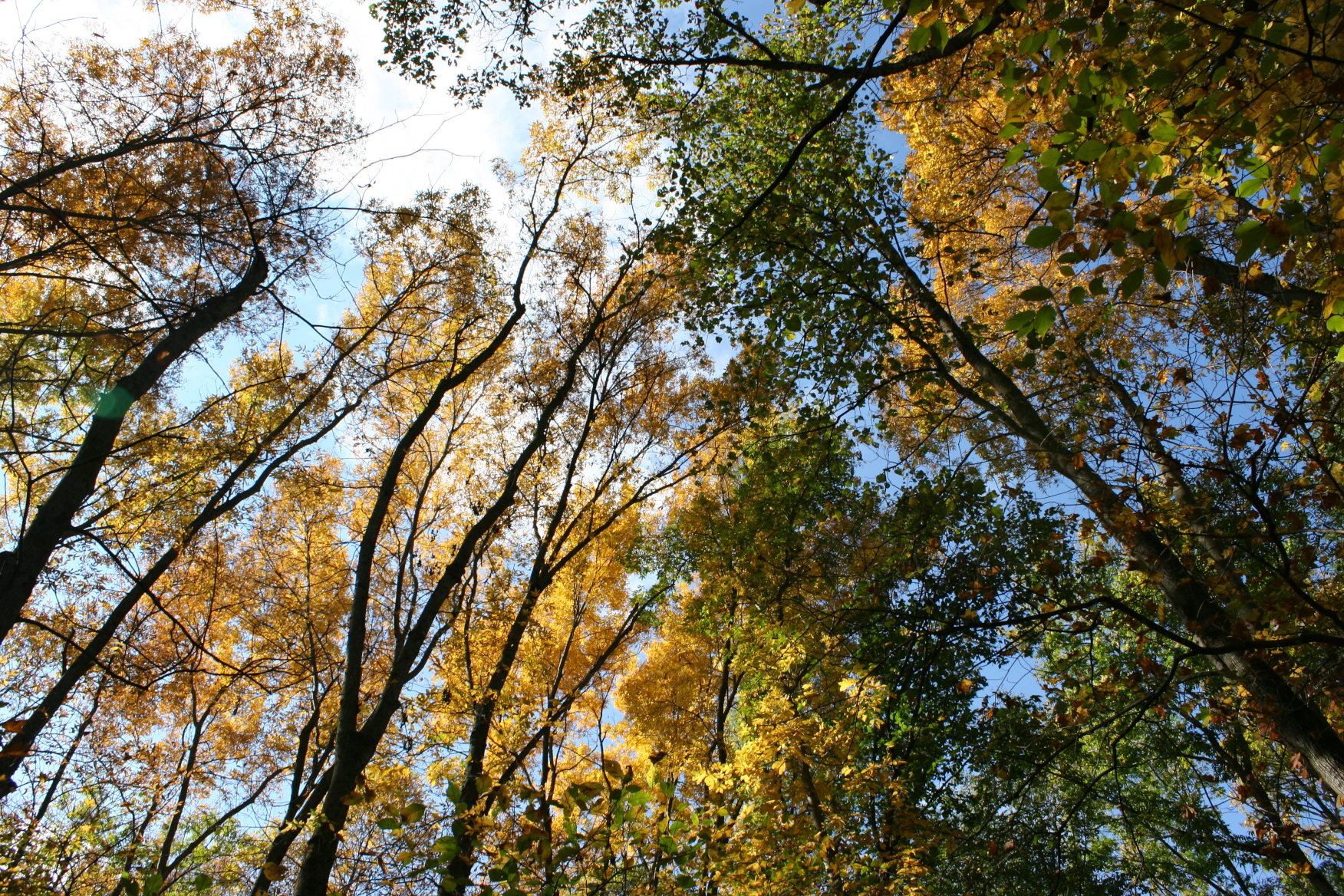
Appreciating the trees overhead while hiking in Caron Park. Minnesota Prairie Roots copyrighted photo October 2021.

Heading back into Faribault toward home, I admired, too, how beautiful the trees in my community. Seventh Street. Second Avenue. There’s much to be said for looking in your own backyard for autumn’s glory. And I’ve found it. Right here, in Rice County.

FYI: Please check back for more photos from our country drive and for separate posts on Valley Grove churches and Apple Creek Orchard.

© Copyright 2021 Audrey Kletscher Helbling


A Minnesota northwoods experience: Climbing a fire tower (or not) October 6, 2021

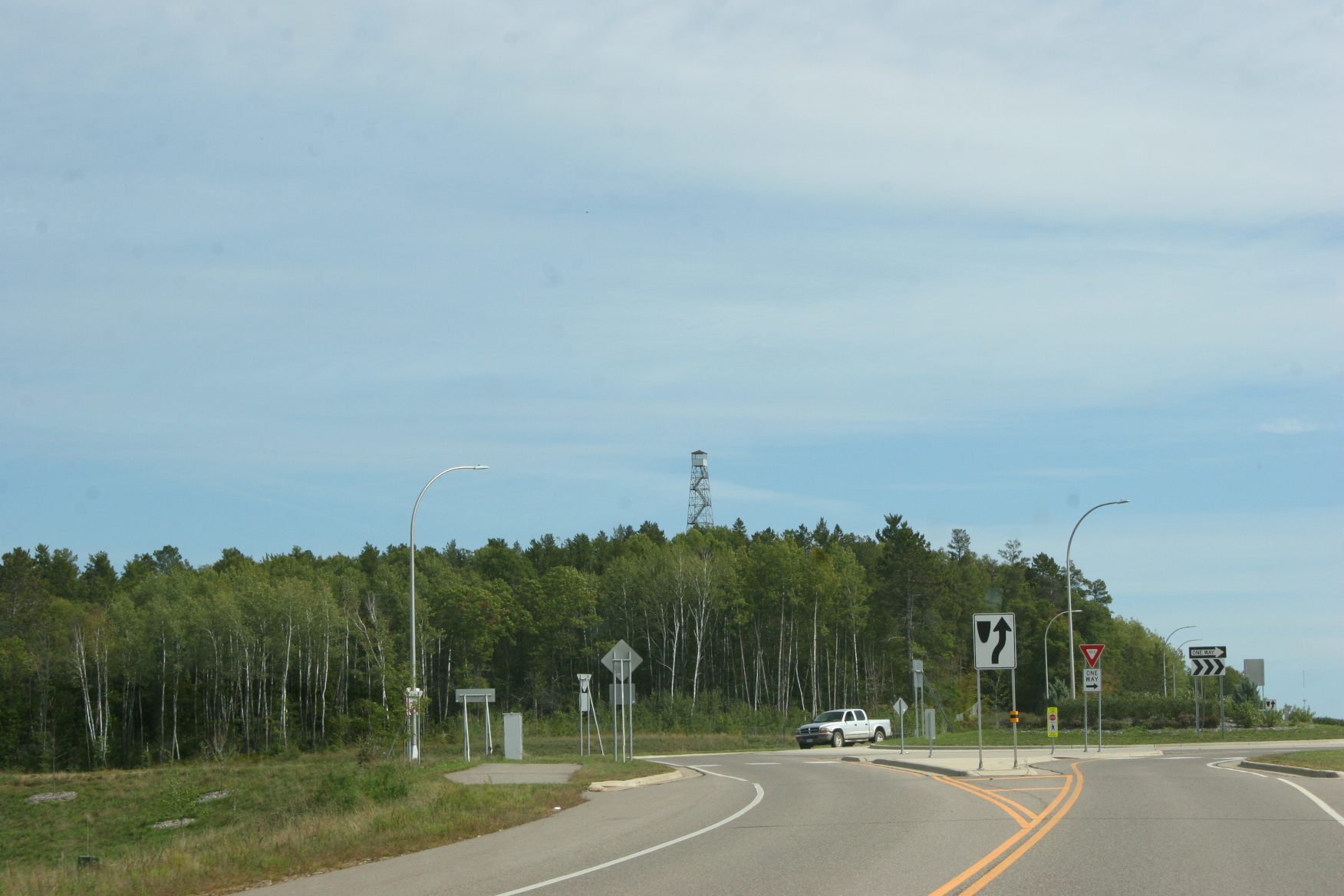
Just a short distance from this roundabout by Pequot Lakes, you can see the Paul M. Thiede Fire Tower peeking through the treetops. Minnesota Prairie Roots copyrighted photo September 2021.

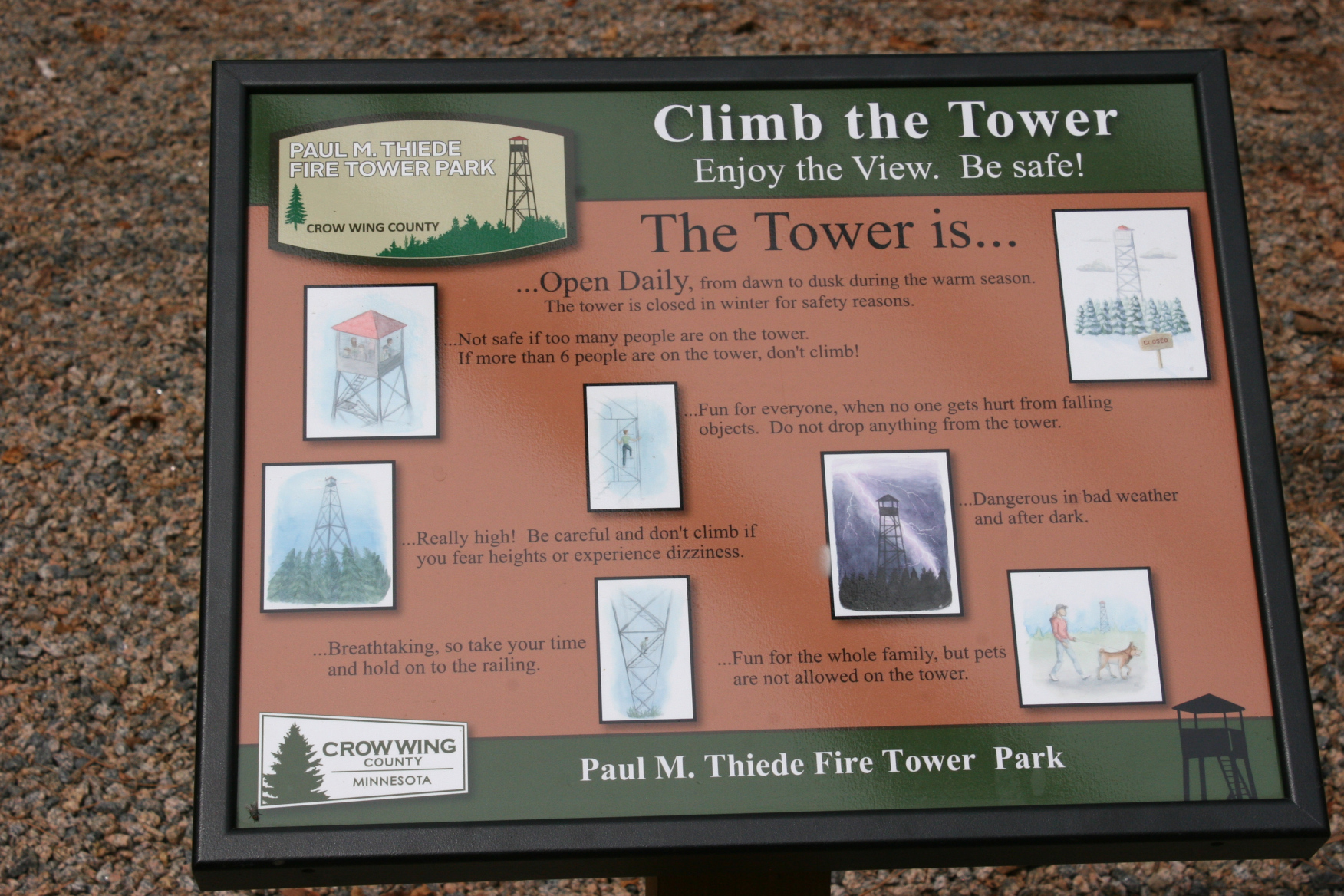
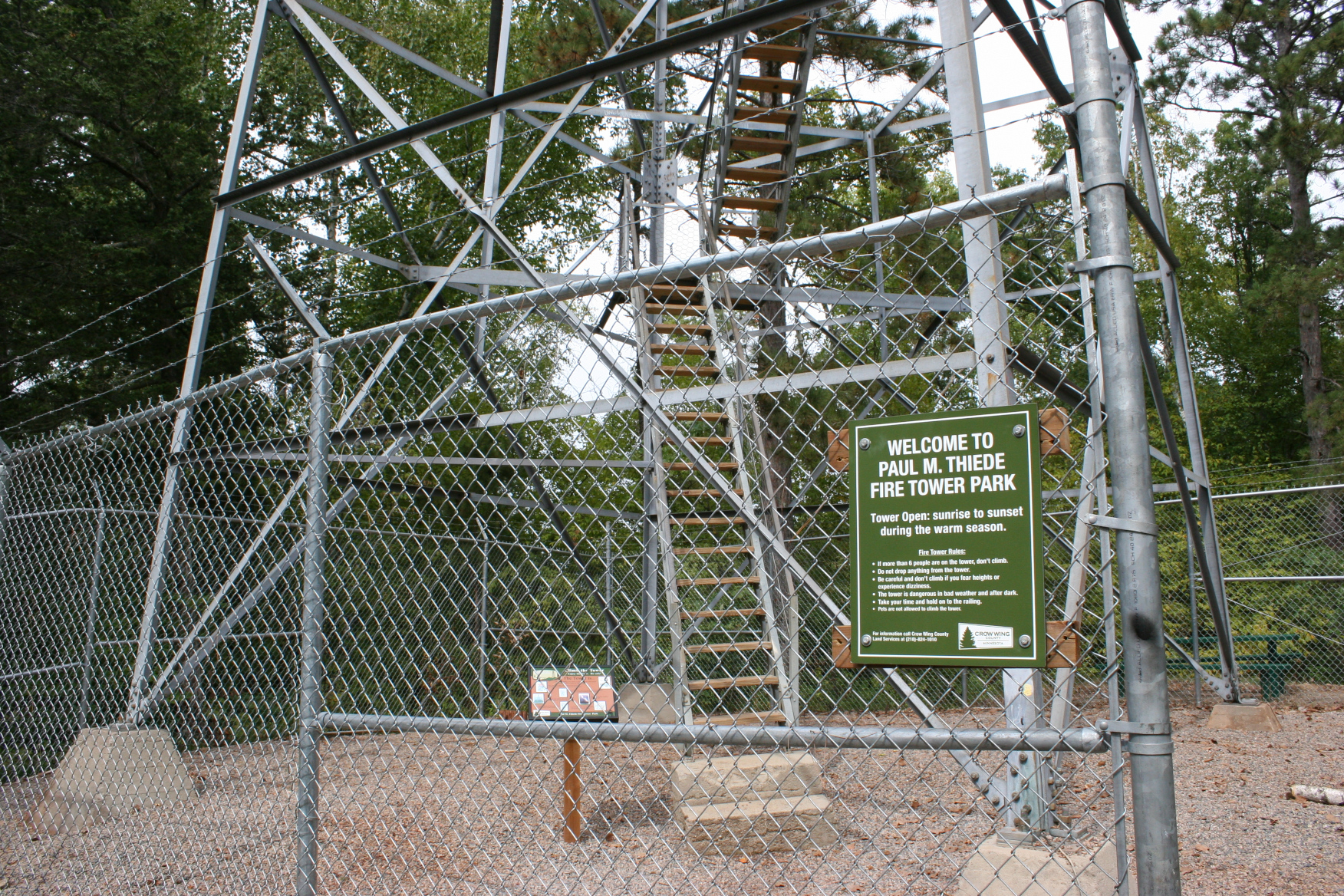
Really high! Be careful and don’t climb if you fear heights or experience dizziness.

The warning sign and rules posted at the base of the fire tower. Minnesota Prairie Roots copyrighted photo September 2021.

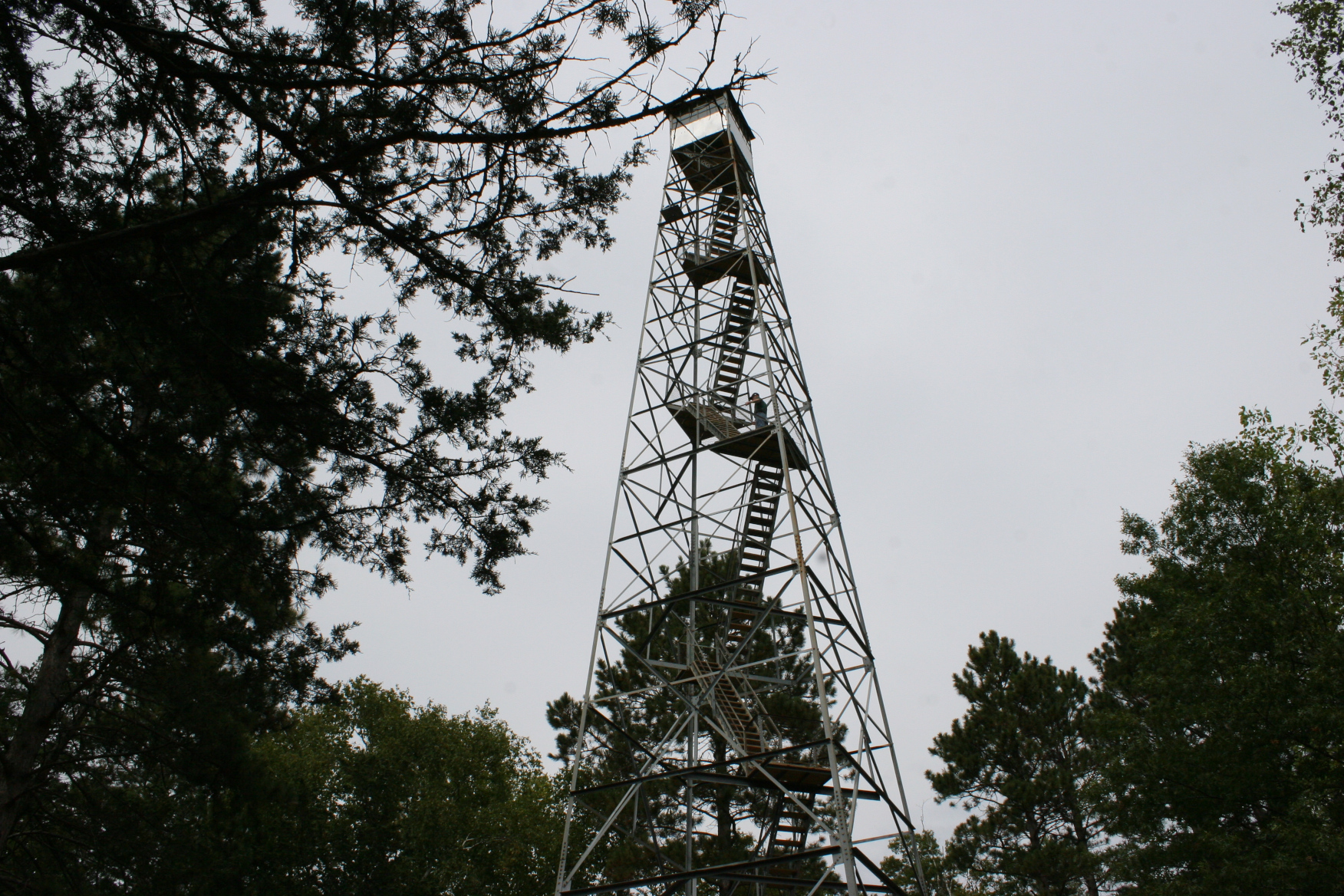
I heeded the warning and stayed put. Feet on the ground. Camera aimed skyward. Toward the 100-foot high Paul M. Thiede Fire Tower just outside Pequot Lakes in the central Minnesota lakes region. The top of the tower pokes through the trees, barely visible from State Highway 371. Turn off that arterial road onto Crow Wing County Road 11, turn left, and you’ve reached the fire tower park.

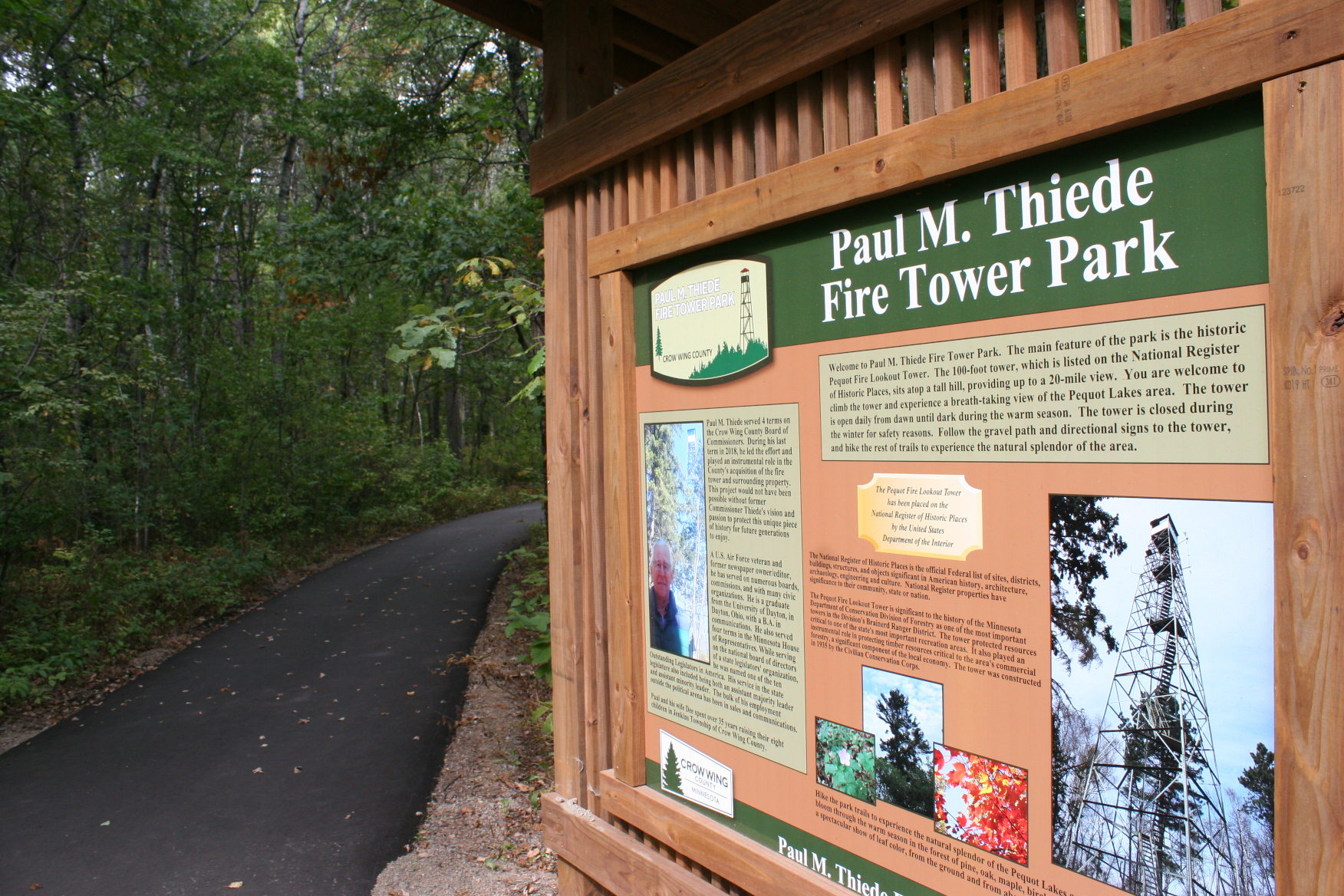
A little background on the park. Minnesota Prairie Roots copyrighted photo September 2021.

The Paul M. Thiede Fire Tower Park (named after the county commissioner instrumental in developing this 40-acre park) offers visitors an opportunity to hike to, and then climb, the historic tower built in 1935 by the Civilian Conservation Corps. As one who prefers low to high, I was up for the 0.3 mile hike, but not the climb.

Lots of info packs signs in the outdoor interpretative area. Minnesota Prairie Roots copyrighted photo September 2021.
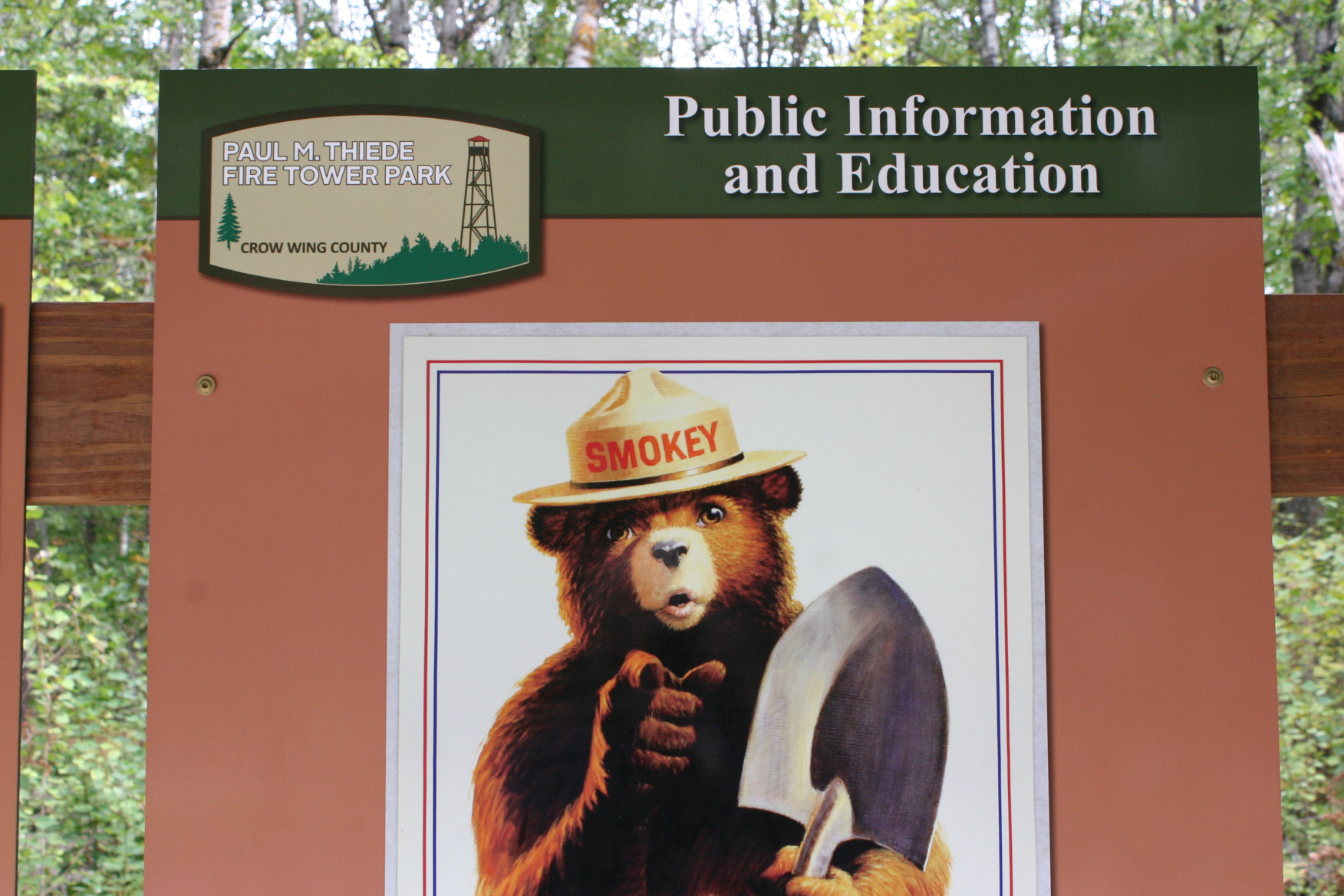
The iconic Smokey the Bear reminds us that we can prevent forest fires. Minnesota Prairie Roots copyrighted photo September 2021.
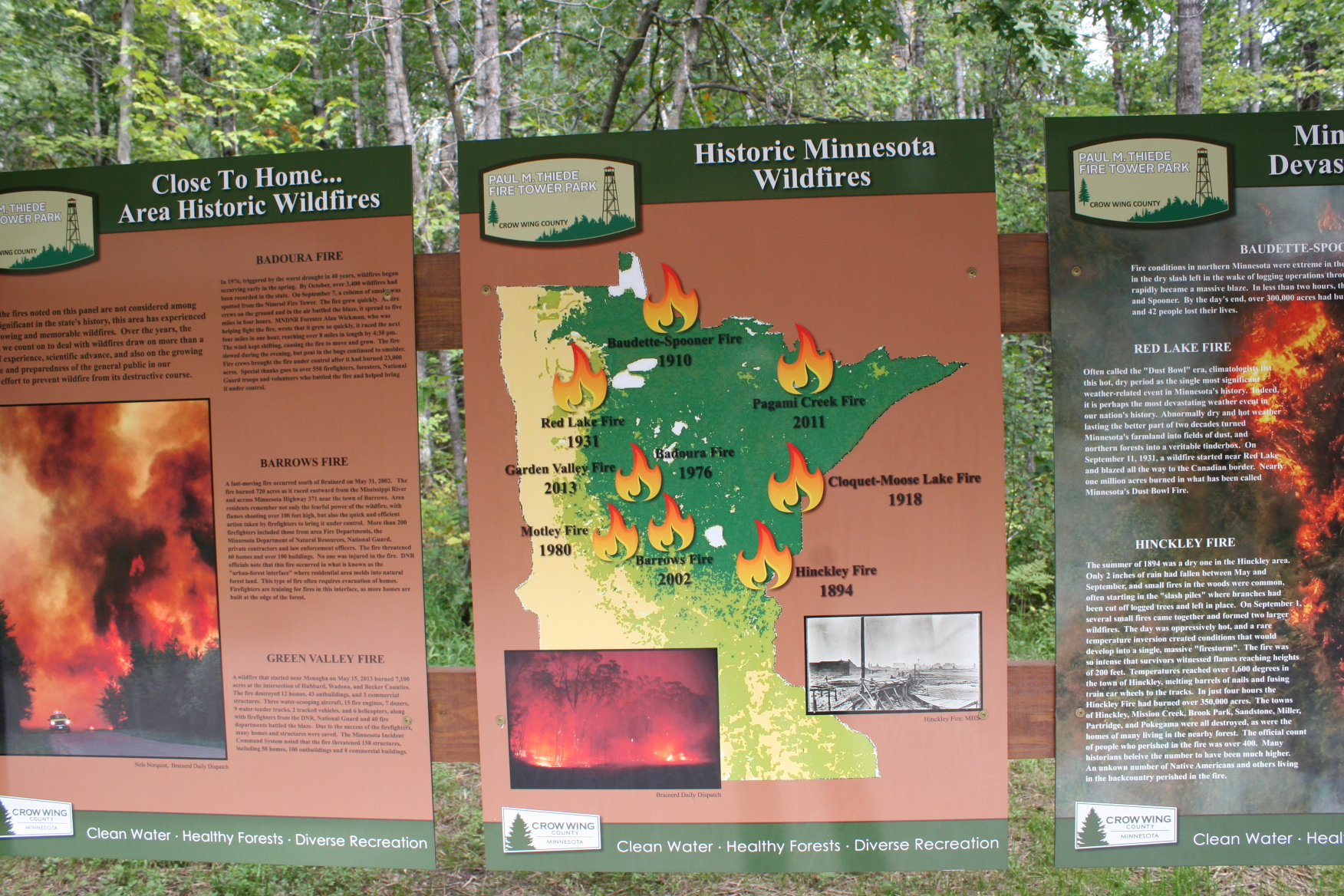
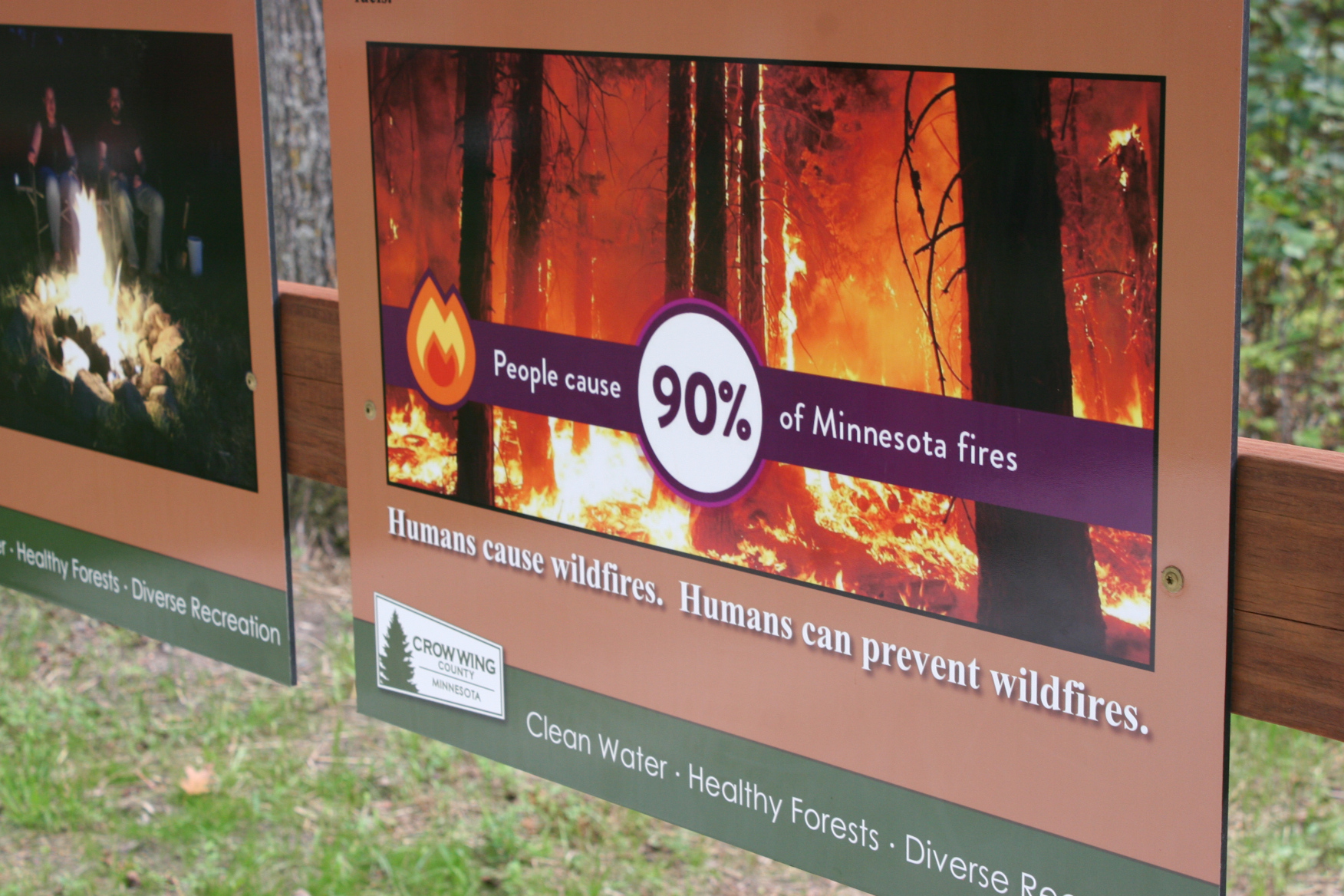
We are to blame for nearly all of Minnesota’s wildfires, according to this park sign. Minnesota Prairie Roots copyrighted photo September 2021.

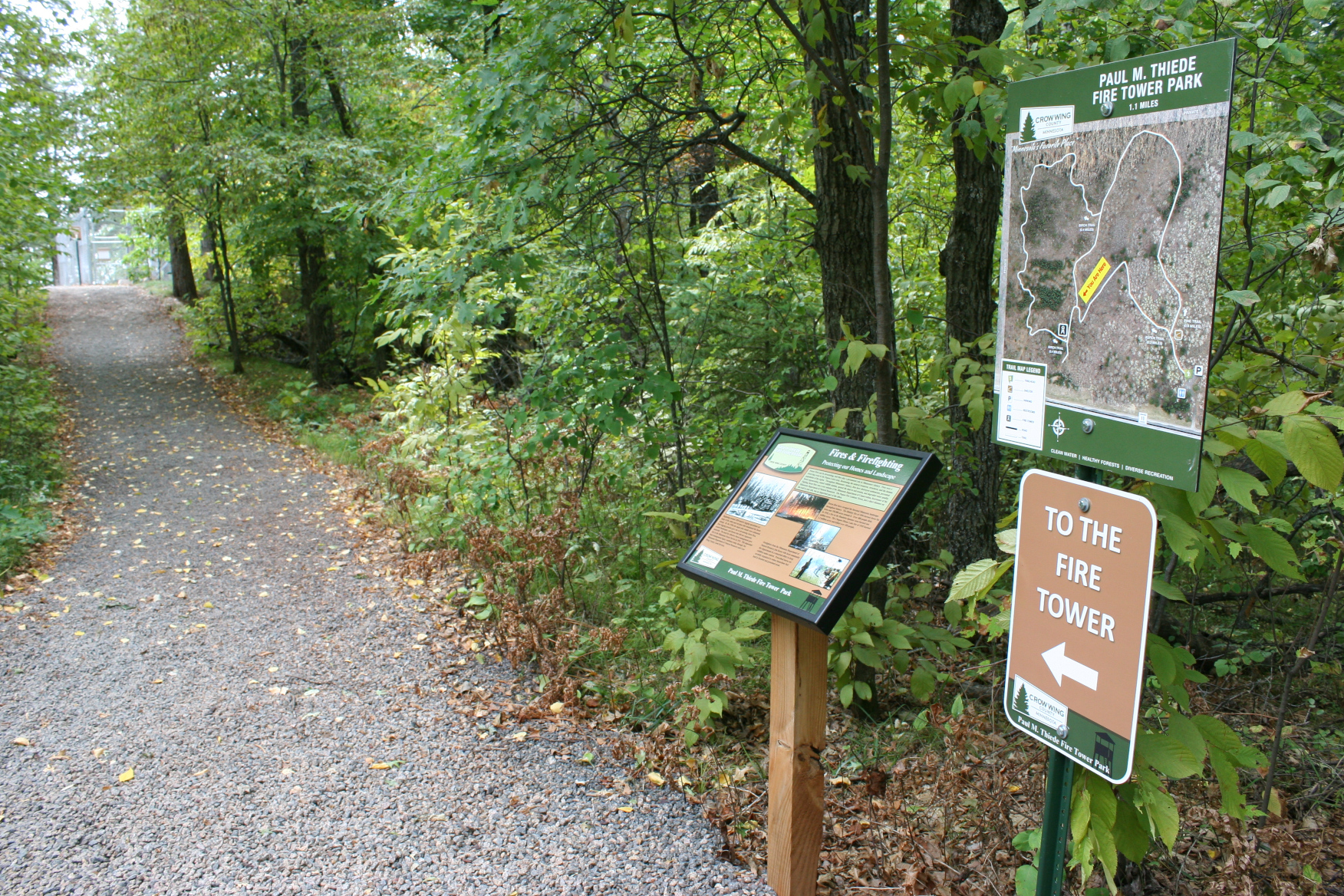
Before Randy and I headed onto the trail, though, we read the interpretative signage featuring information on the tower (which is on the National Register of Historic Places), Minnesota wildfires and other notable fire facts. This summer marked an especially busy fire season in the northern Minnesota wilderness. Those of us living in the southern part of the state felt the effects also with smoke drifting from the north (including Canada) and from the west (California). That created hazy skies and unhealthy air some days, unlike anything I’ve ever experienced.

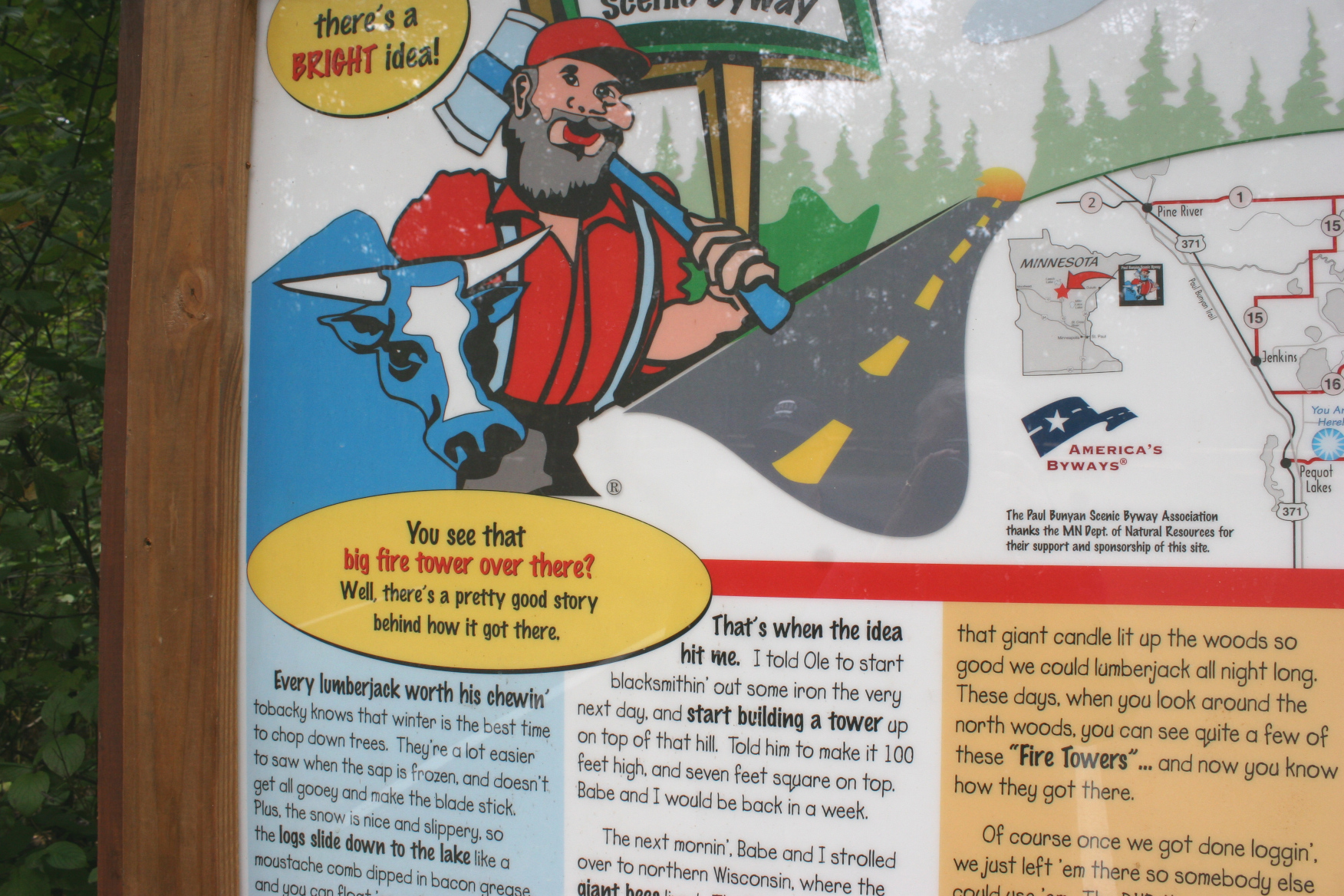
Lots to read here, including Paul Bunyan’s fire tower story. Minnesota Prairie Roots copyrighted photo September 2021.

We also read a bit of Paul Bunyan lore, a fun addition to the park located in the Paul Bunyan Scenic Byway area. This region of Minnesota is big on lumberjack stories about Paul and his sidekick, Babe the Blue Ox. The Pequot Lakes water tower is even shaped like Paul’s over-sized fishing bobber.

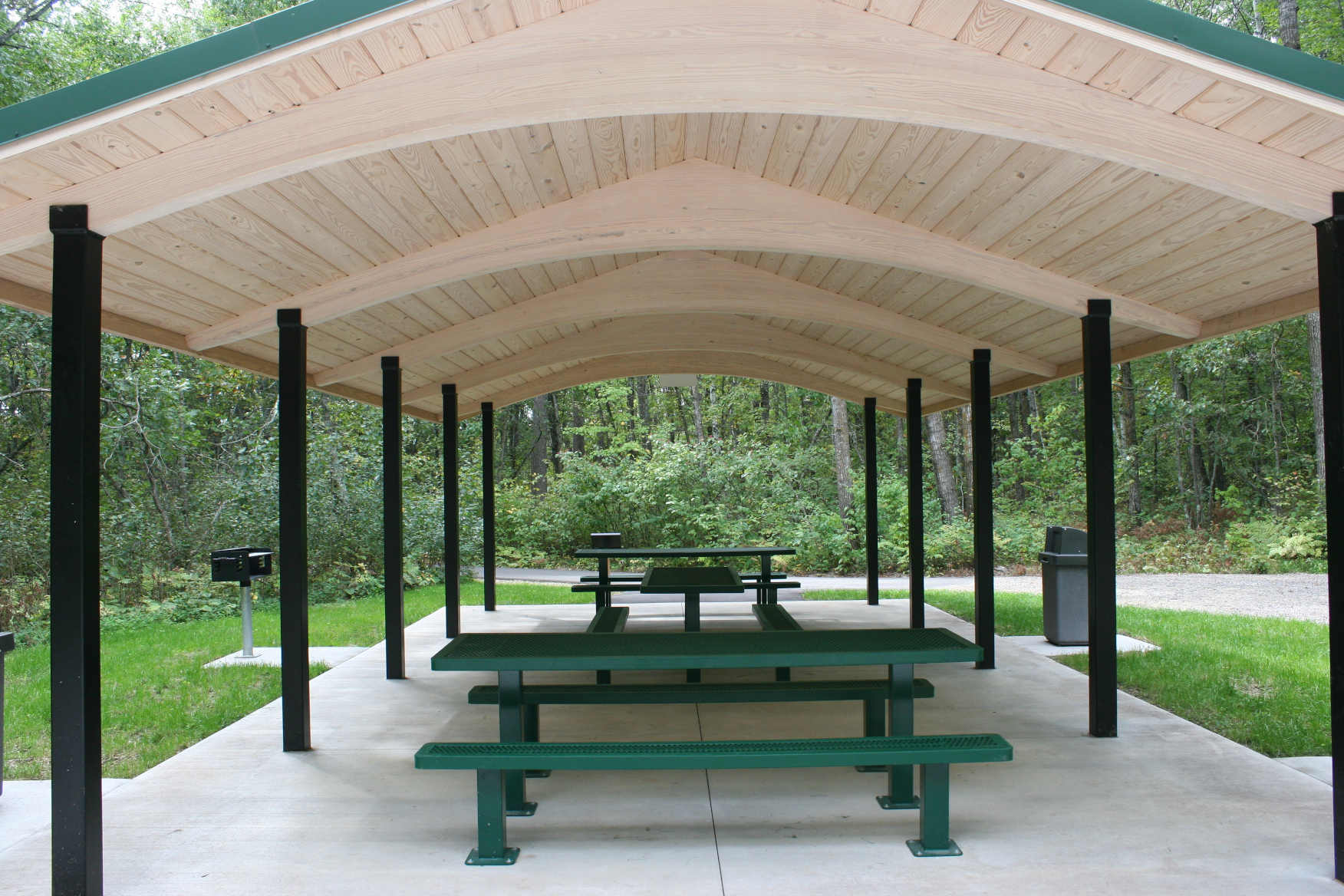
The pristine picnic shelter. Minnesota Prairie Roots copyrighted photo September 2021.
Signs point the way to the fire tower trail. Minnesota Prairie Roots copyrighted photo September 2021.
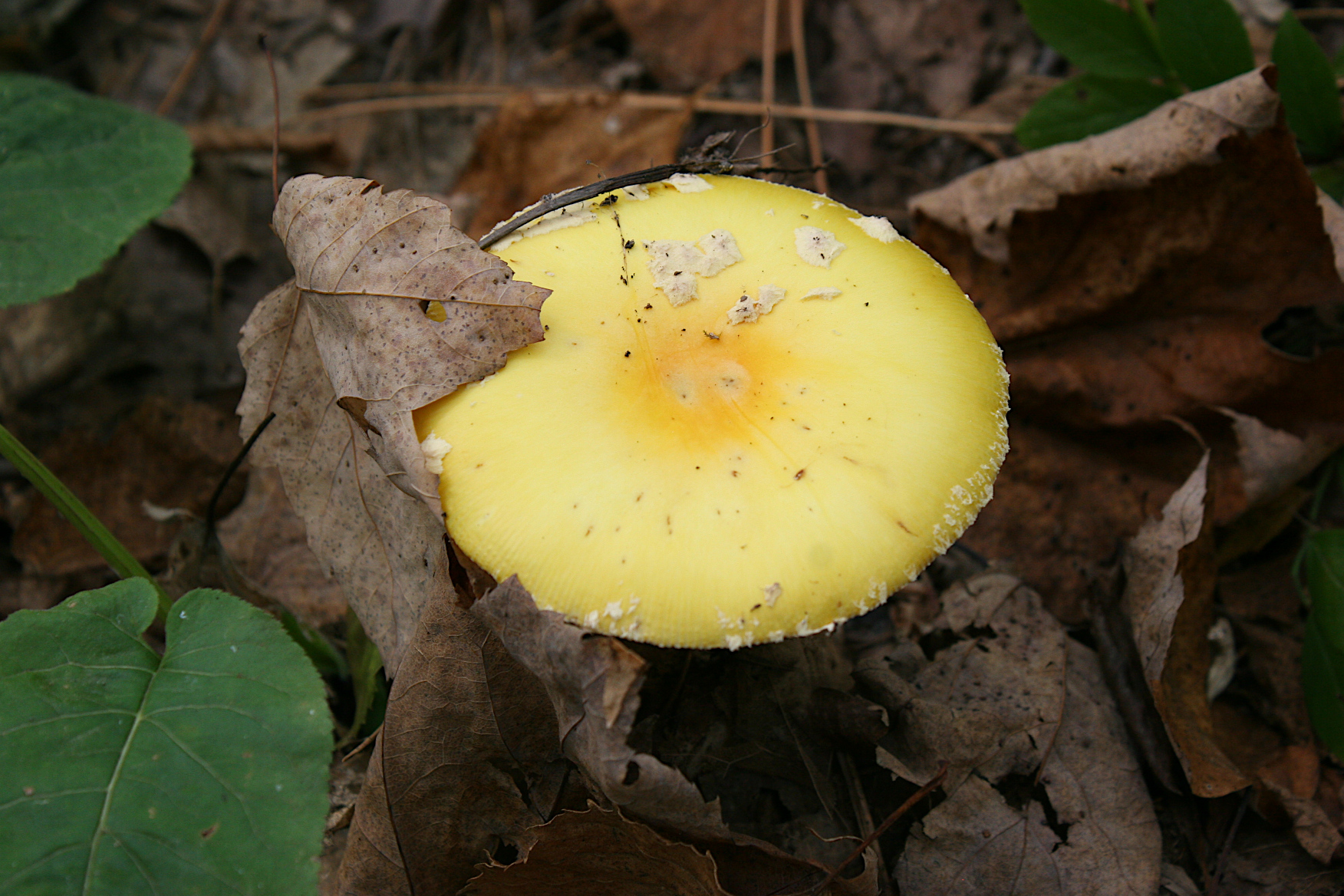
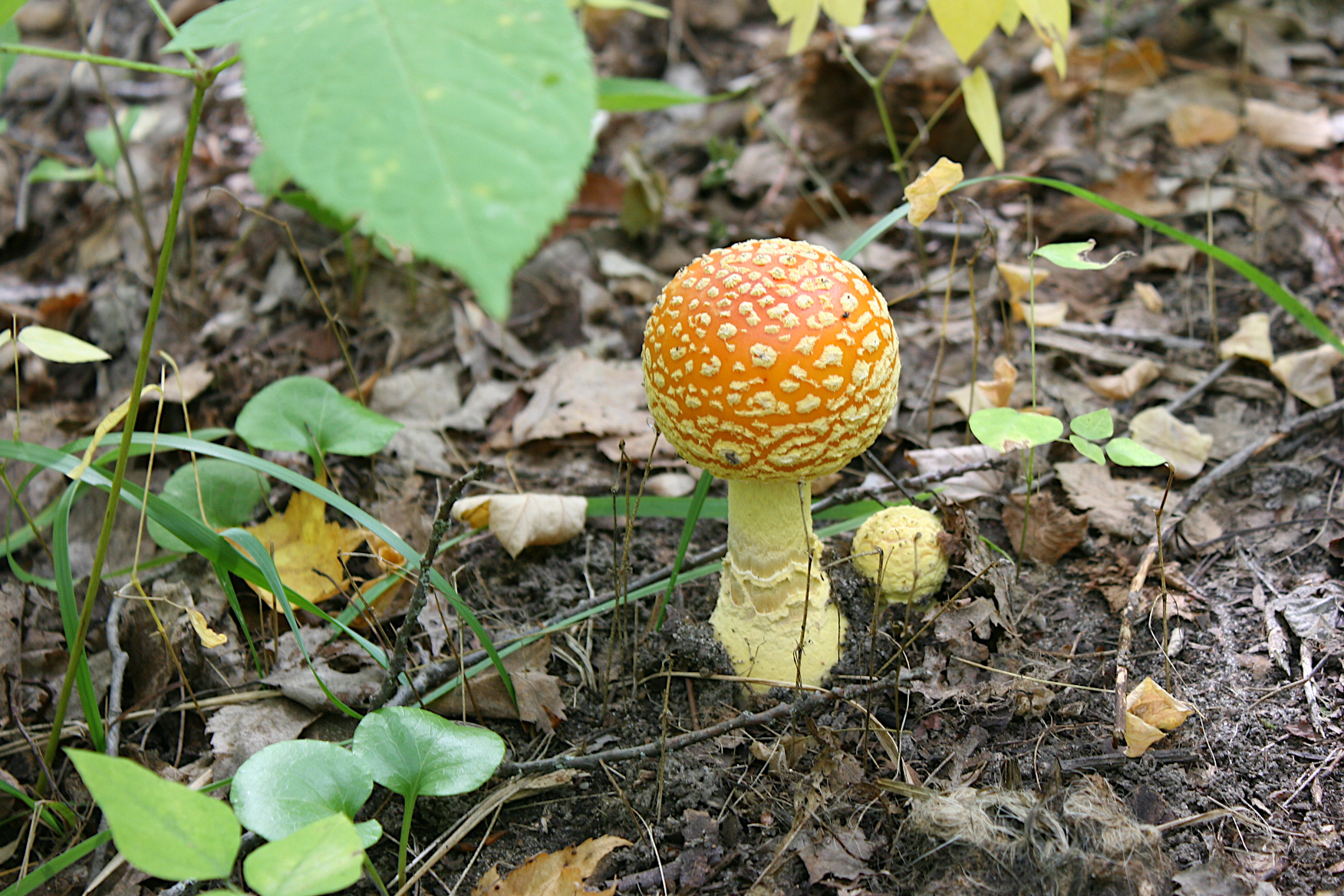
On the way to the tower, this large yellow mushroom temporarily distracted me. Minnesota Prairie Roots copyrighted photo September 2021.

Once we’d finished reading, and then admiring the beautiful new picnic shelter, we started off on the pea rock-covered trail through the woods and toward the tower. Up. Up. Up.

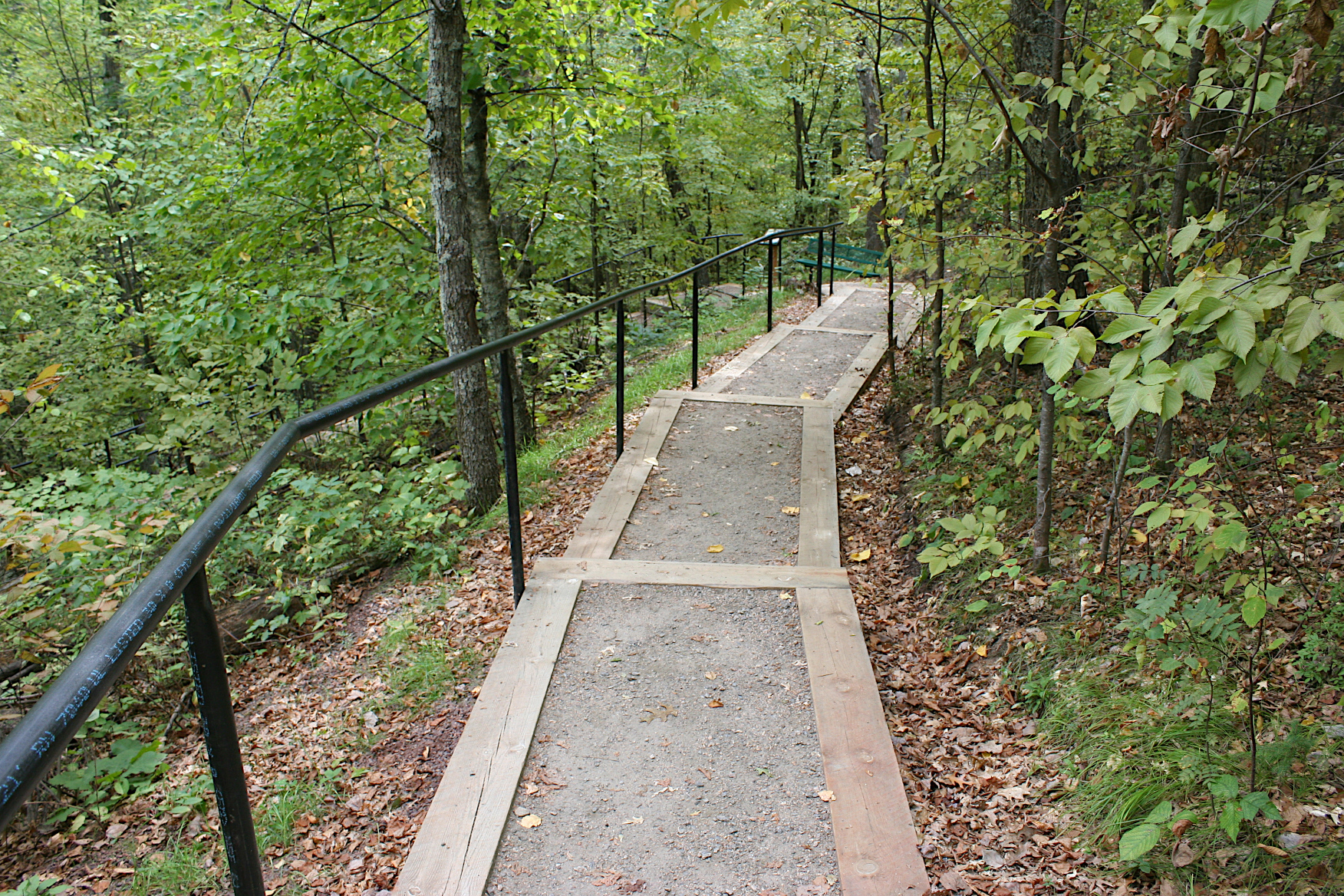
When the trail gets especially steep, steps aid in the climb. I took this photo on the descent. Minnesota Prairie Roots copyrighted photo September 2021.

After awhile, I began to tire, to wonder, how much farther? And just as I was about to declare myself done climbing steps, Randy assured me the tower was just around the bend. Yes.

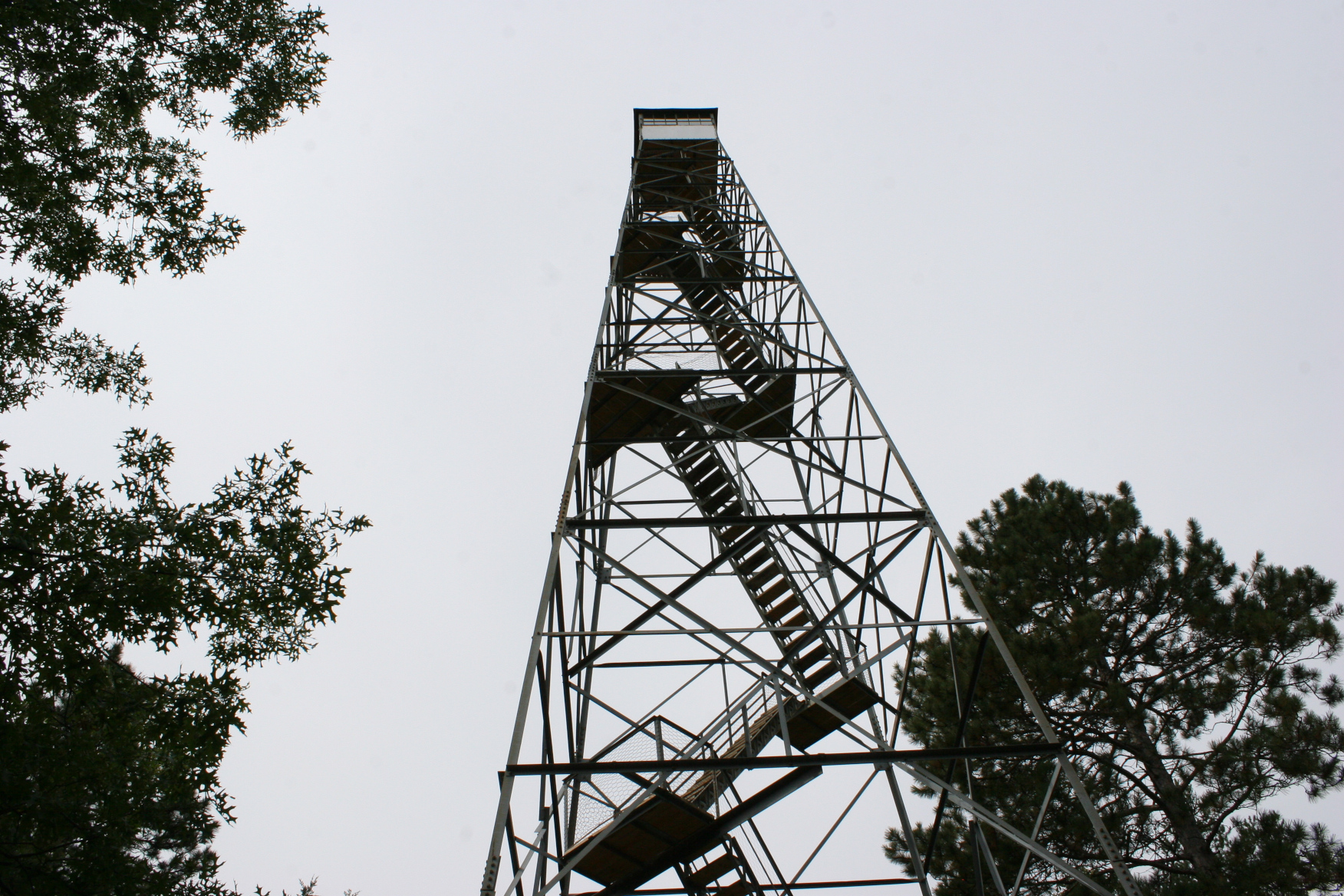
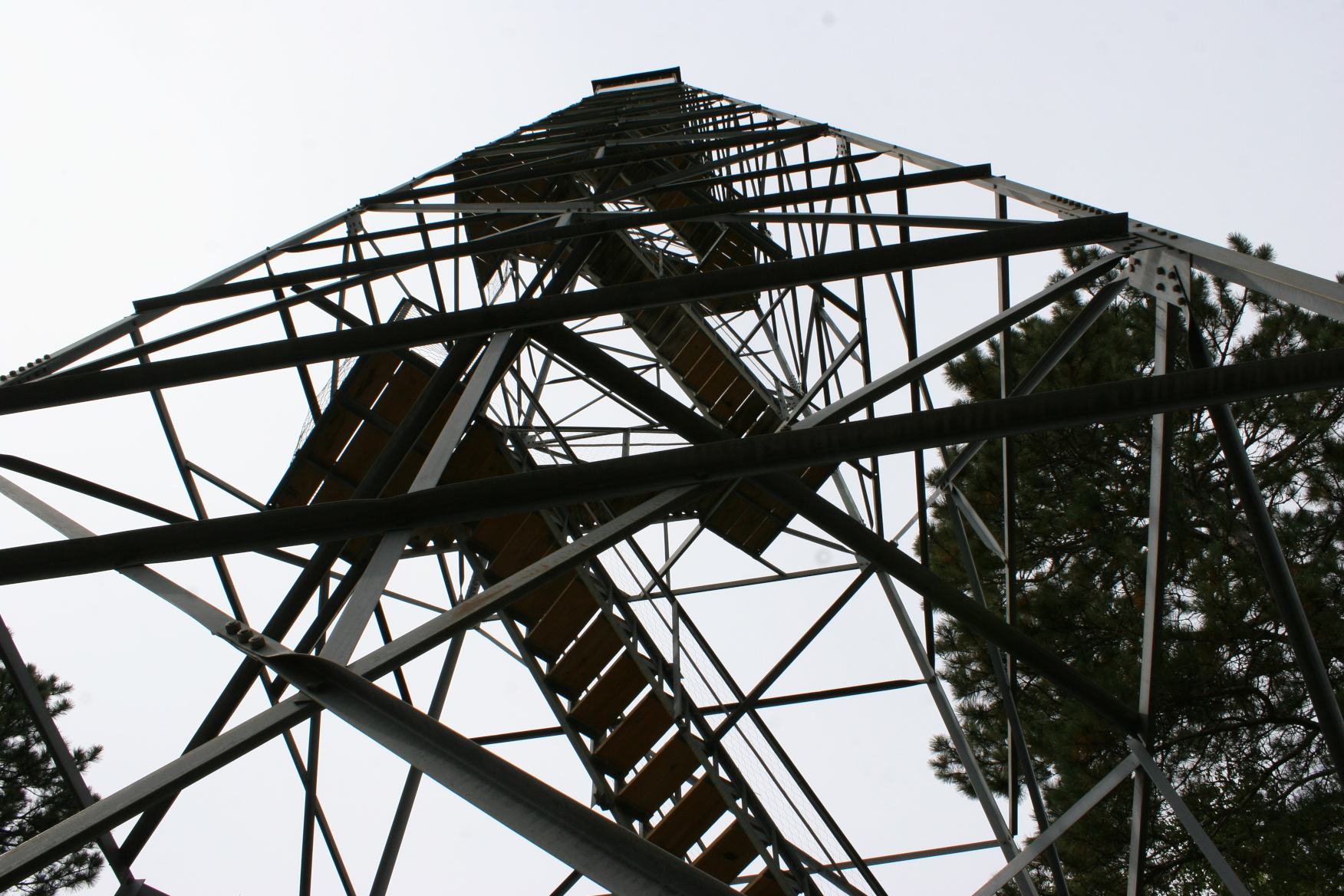
Looking up at the tower, all of which I couldn’t fit in a photo, I determined I was not climbing that high. Minnesota Prairie Roots copyrighted photo September 2021.

Once there, I stood at the base of the tower, reading the rules and warnings. I decided I best admire the ironwork from below. And I did. There’s a lot to be said for the 1930s workmanship of skilled craftsmen.

The underside of the tower shows layers of stairs. Minnesota Prairie Roots copyrighted photo September 2021.

Randy, though, started up the layered steps leading to a seven-foot square enclosed look-out space at the top of the tower. At that height, fire watchers could see for 20 miles.

If you look closely, you can see Randy with only a few more flights to reach the top. At this point, he decided not to go any farther. Minnesota Prairie Roots copyrighted photo September 2021.

As I watched, Randy climbed. Steady at first, but soon slowing, pausing to rest. “You don’t have to go all the way to the top,” I shouted from below. He continued, to just above treetop level, and then stopped. He had reached his comfort height level.

The tower is fenced at the base. Minnesota Prairie Roots copyrighted photo September 2021.

I can only imagine how spectacular the view this time of year, in this season of autumn when the woods fire with color. We visited in mid-September, when color was just beginning to tinge trees.

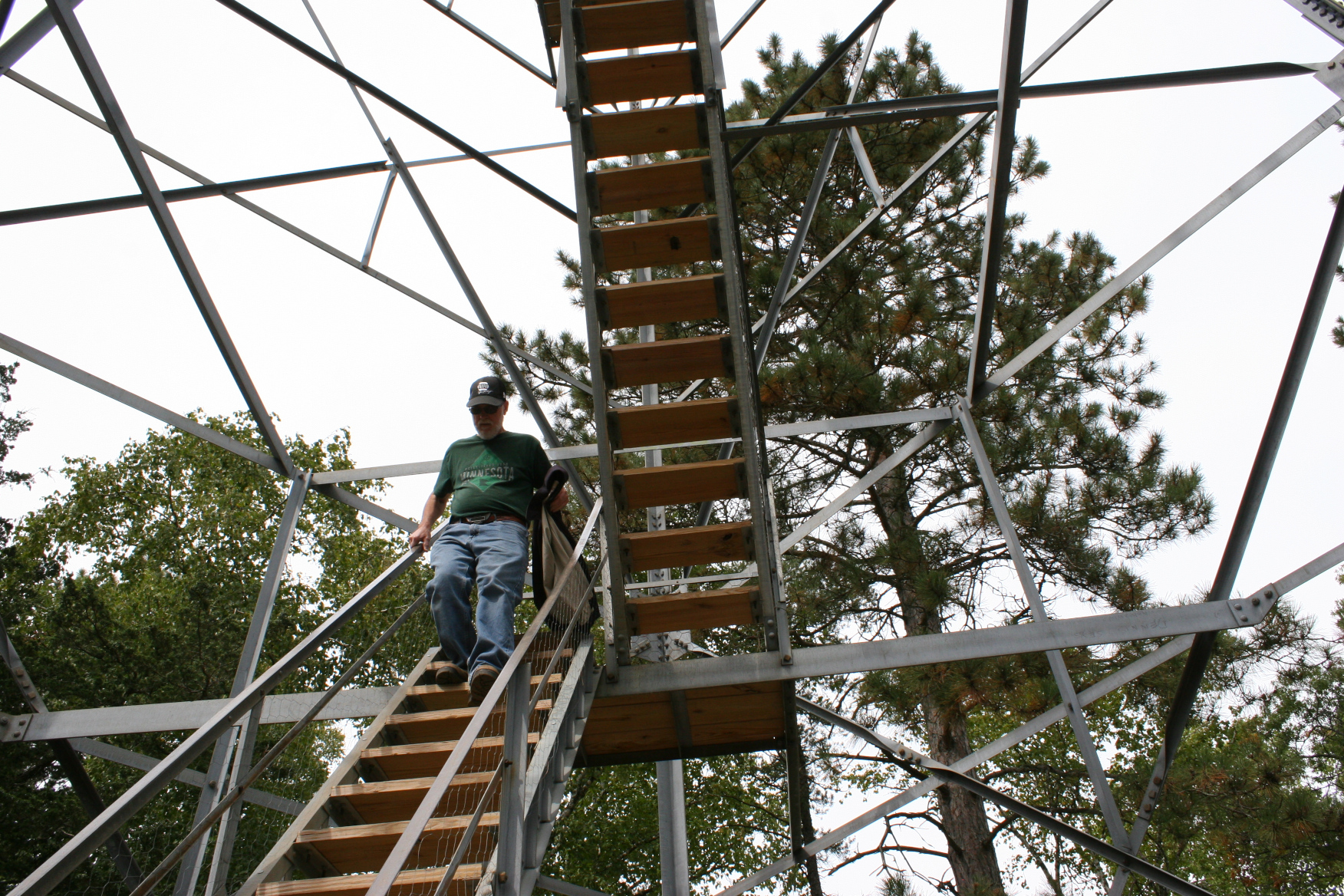
Randy exits the tower, several flights short of reaching the top. Minnesota Prairie Roots copyrighted photo September 2021.

Eventually, we began our retreat down the trail, much easier than ascending.

An incredibly vibrant mushroom thrives trailside. Minnesota Prairie Roots copyrighted photo September 2021.

Occasionally I stopped to photograph scenery, including species of orange and yellow mushrooms. Simply stunning fungi.

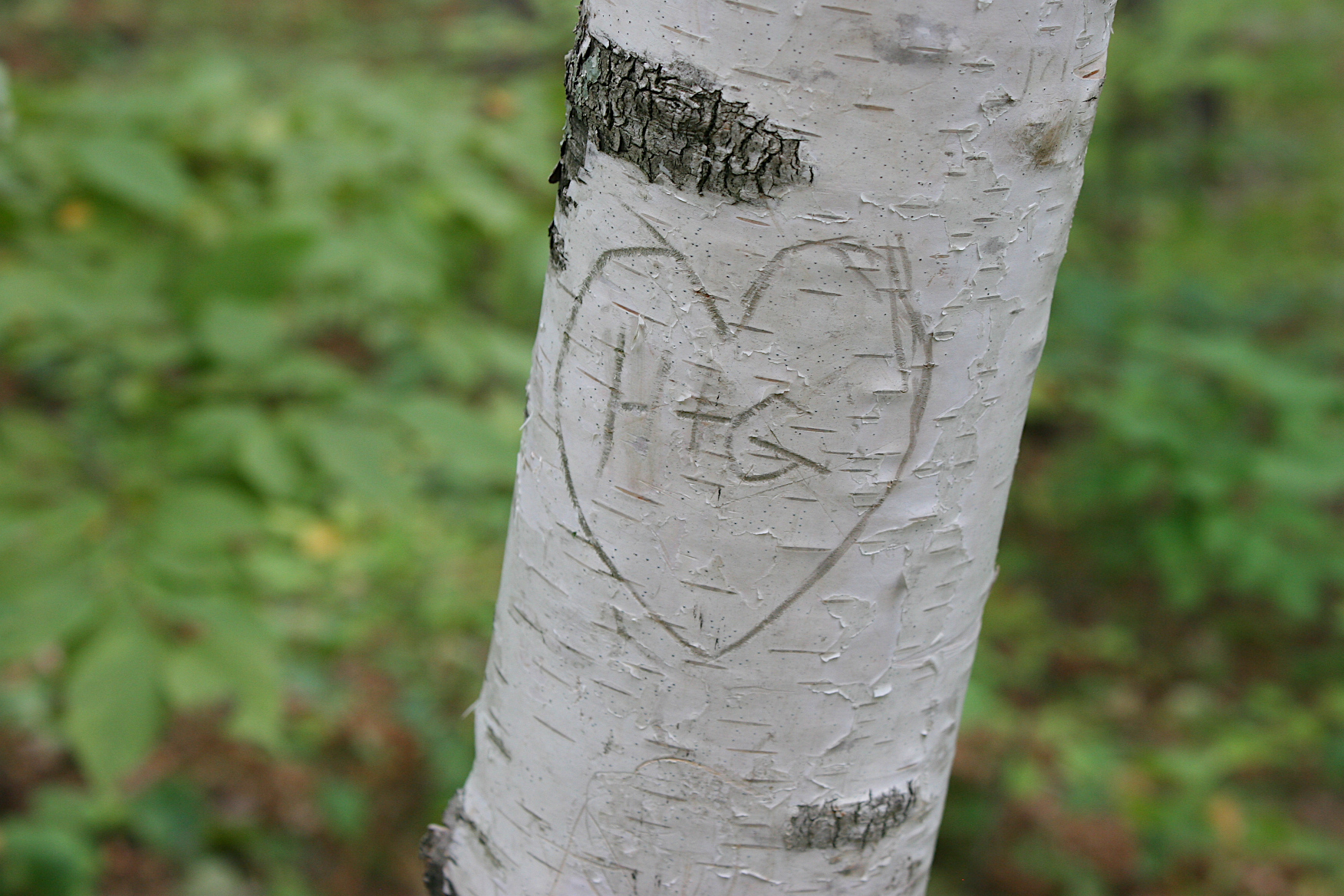
Sadly…a carving on a birch tree along the trail. Minnesota Prairie Roots copyrighted photo September 2021.

We also paused to visit with a retired couple on their way to the tower. They have a generational lake home in the area, like so many who vacation here. While we chatted, a young runner passed us. I admired her stamina and figured she’d face no physical challenges climbing the 100-foot tower.

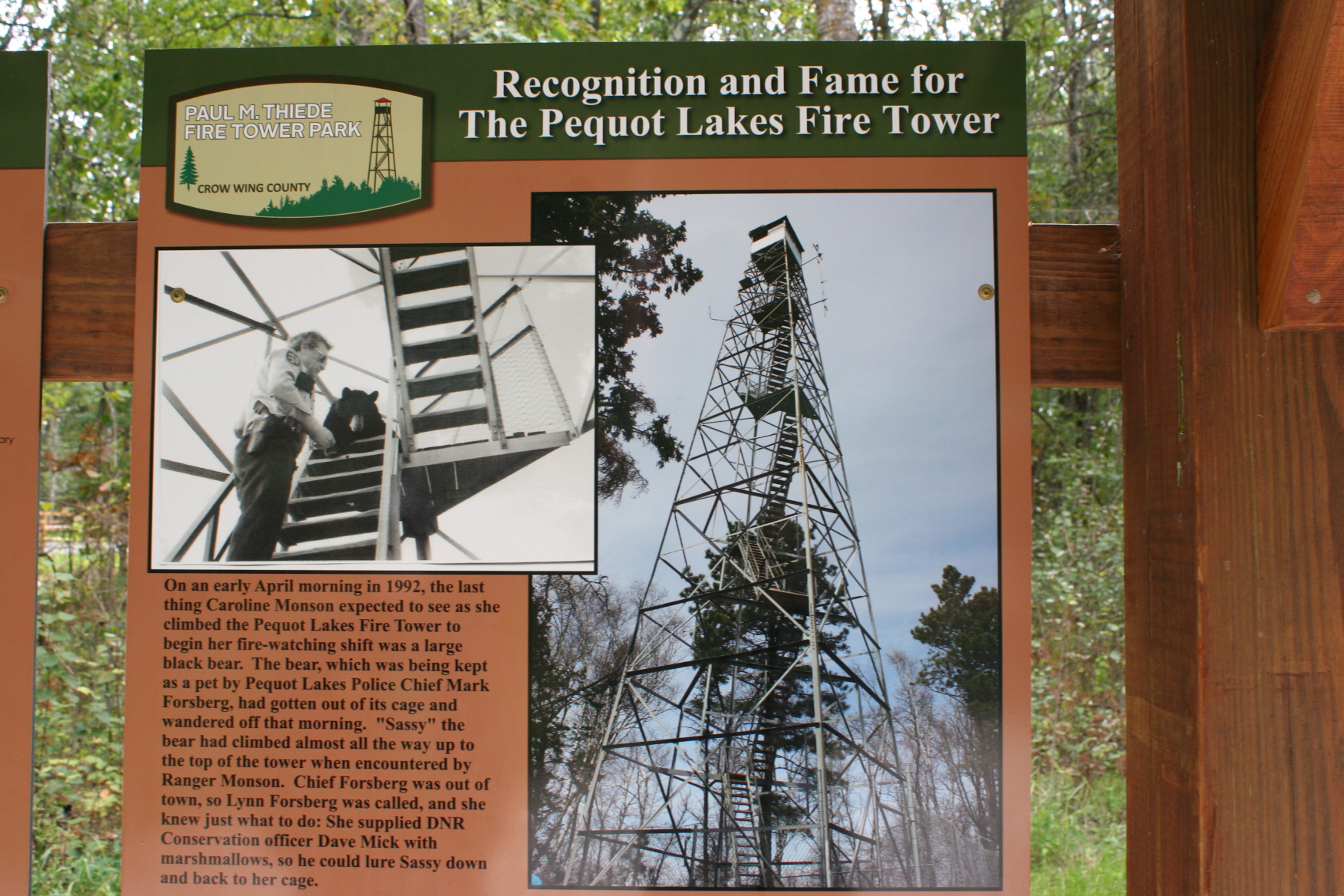
The story of Sassy the bear is included in the interpretative area. Minnesota Prairie Roots copyrighted photo September 2021.

Just like a domesticated black bear that once escaped and scampered up the tower. A ranger lured him down with a bag of marshmallows. That is not the stuff of Paul Bunyan lore, but of life in the Minnesota northwoods. This historic fire tower, which once provided a jungle gym for a bear and a place to scout for wildfires, now offers a unique spot to view the surrounding woods and lakes and towns. If you don’t fear heights or experience dizziness.

FYI: The Paul M. Thiede Fire Tower is open from dawn to dusk during the warm season, meaning not during Minnesota winters. Heed the rules. And be advised that getting to the tower is a work-out.

Right now should be a really good time to catch a spectacular view of the fall colors from the fire tower.

© Copyright 2021 Audrey Kletscher Helbling
 

Up North at the cabin, verse three October 4, 2021

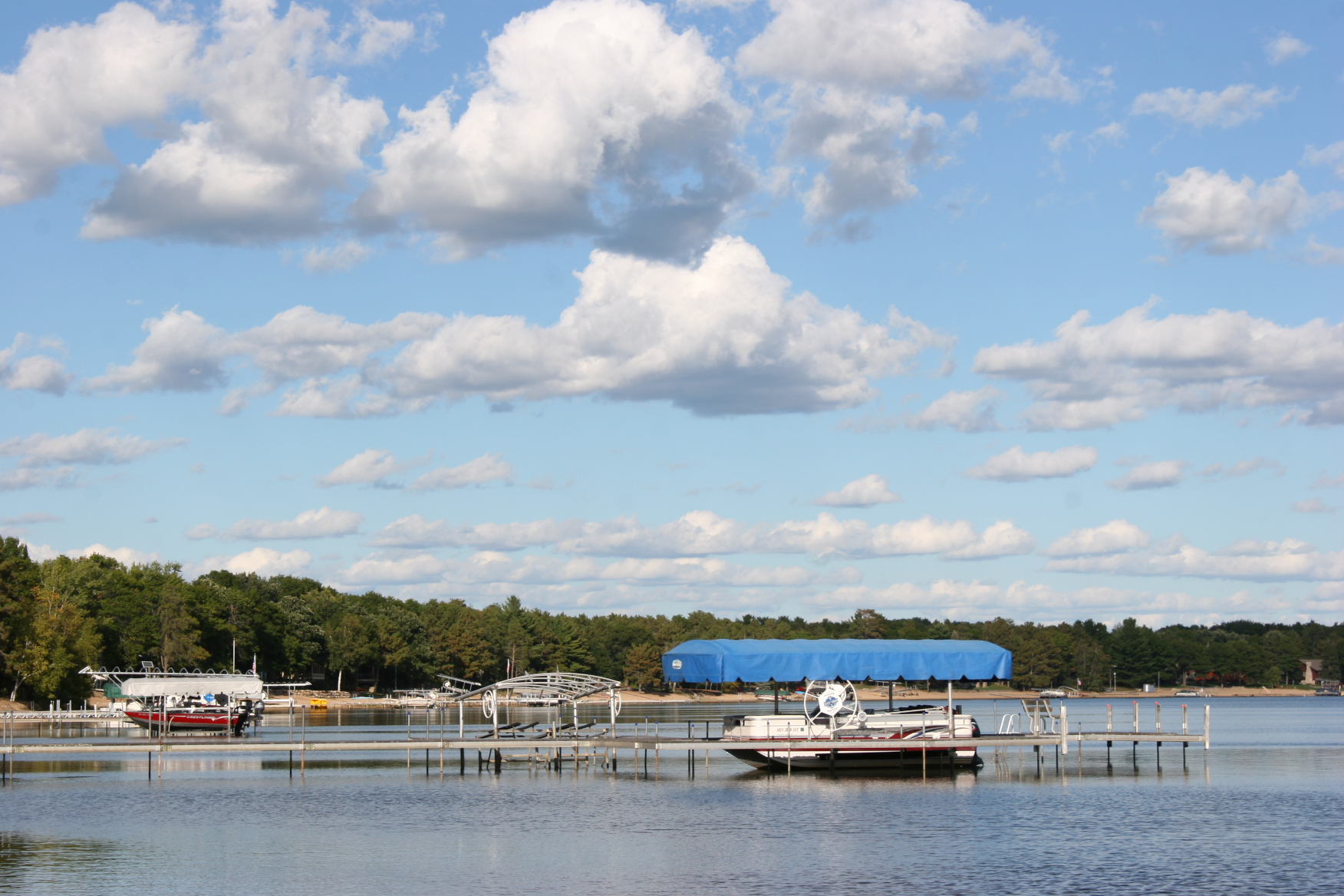
Horseshoe Lake in the central Minnesota lakes region in mid-September. Minnesota Prairie Roots copyrighted photo September 2021.

I NEVER EXPECTED to be one of those Minnesotans who would, each summer, go Up North to the cabin. But, thanks to the generosity of in-laws with lake property including a guest cabin, that is now part of my experience.

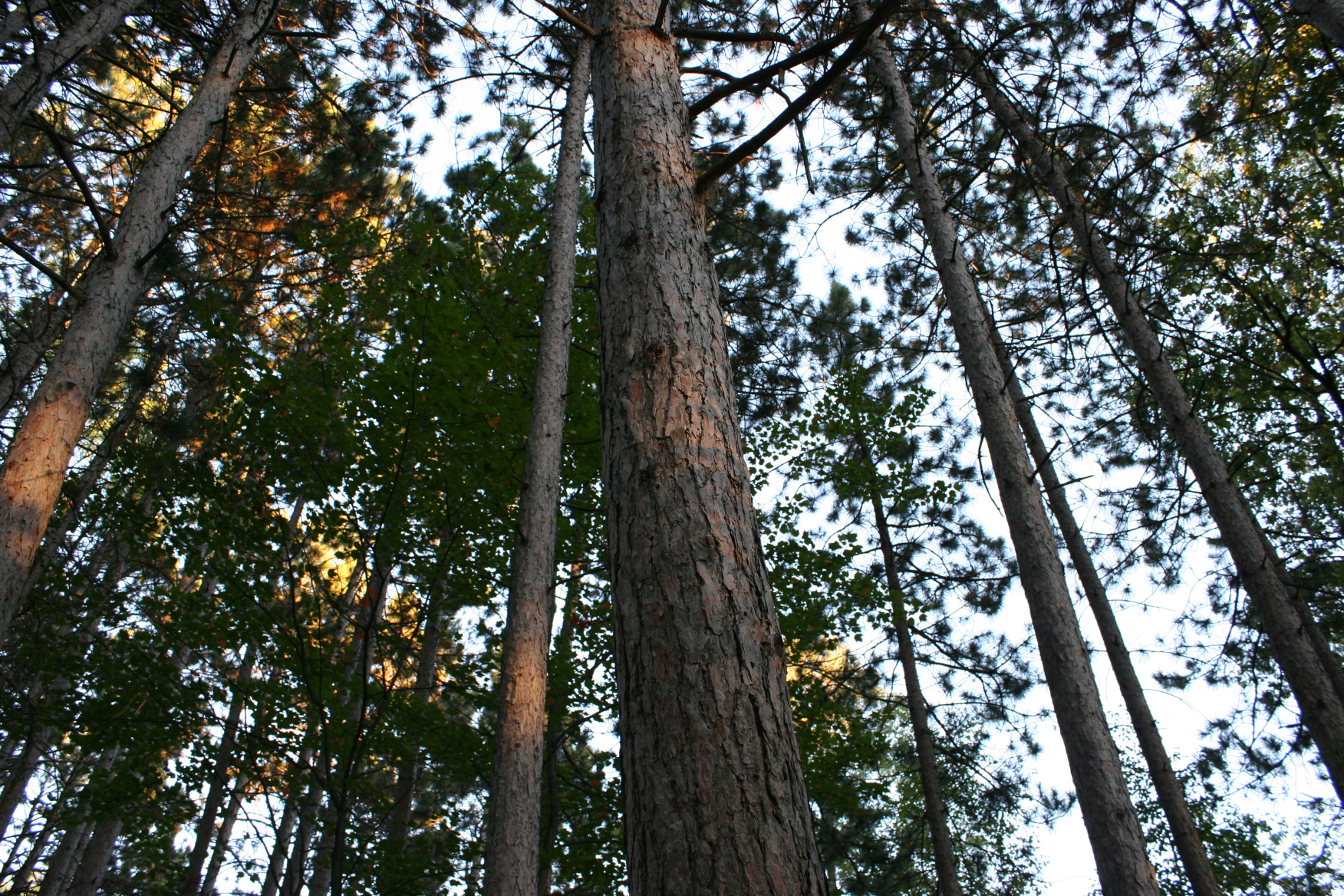
Looking up into the towering pines which populate this region of Minnesota. Minnesota Prairie Roots copyrighted photo September 2021.

Thrice since May, Randy and I have headed Up North to the cabin, most recently in mid-September. Each visit leaves me feeling at peace. Relaxed. Content. Refreshed. Thankful for this place of solitude and natural northwoods beauty.

The view through the pines as the sun edges down. Minnesota Prairie Roots copyrighted photo September 2021.

As soon as the van swings onto the jackpine-edged drive leading to the cabin, I feel like I’m entering another world. Those slim, tightly-packed evergreens set the scene, defining for me the essence of Up North. I especially delight in walking the lane at sunset, golden light filtering through the stand of pines.

Gently lapping water pushes aquatic plants onto the beach. Minnesota Prairie Roots copyrighted photo September 2021.

And then there’s the lake. Horseshoe Lake. Water mesmerizes me. The stillness. Or the lap of gentle waves against shoreline.

The warm September days proved ideal for relaxing on the beach. Minnesota Prairie Roots copyrighted photo September 2021.

While I don’t like being on water and will only enter to shoulder depth, I like being near water. Lounging on the beach, the sun heating the sand and warming my skin. Book in hand. Beverage nearby.

Sky and water merge… Minnesota Prairie Roots copyrighted photo September 2021.

It’s as if time ceases here. Here, where the sky and the water meet and loons cry and an eagle traces the shoreline.

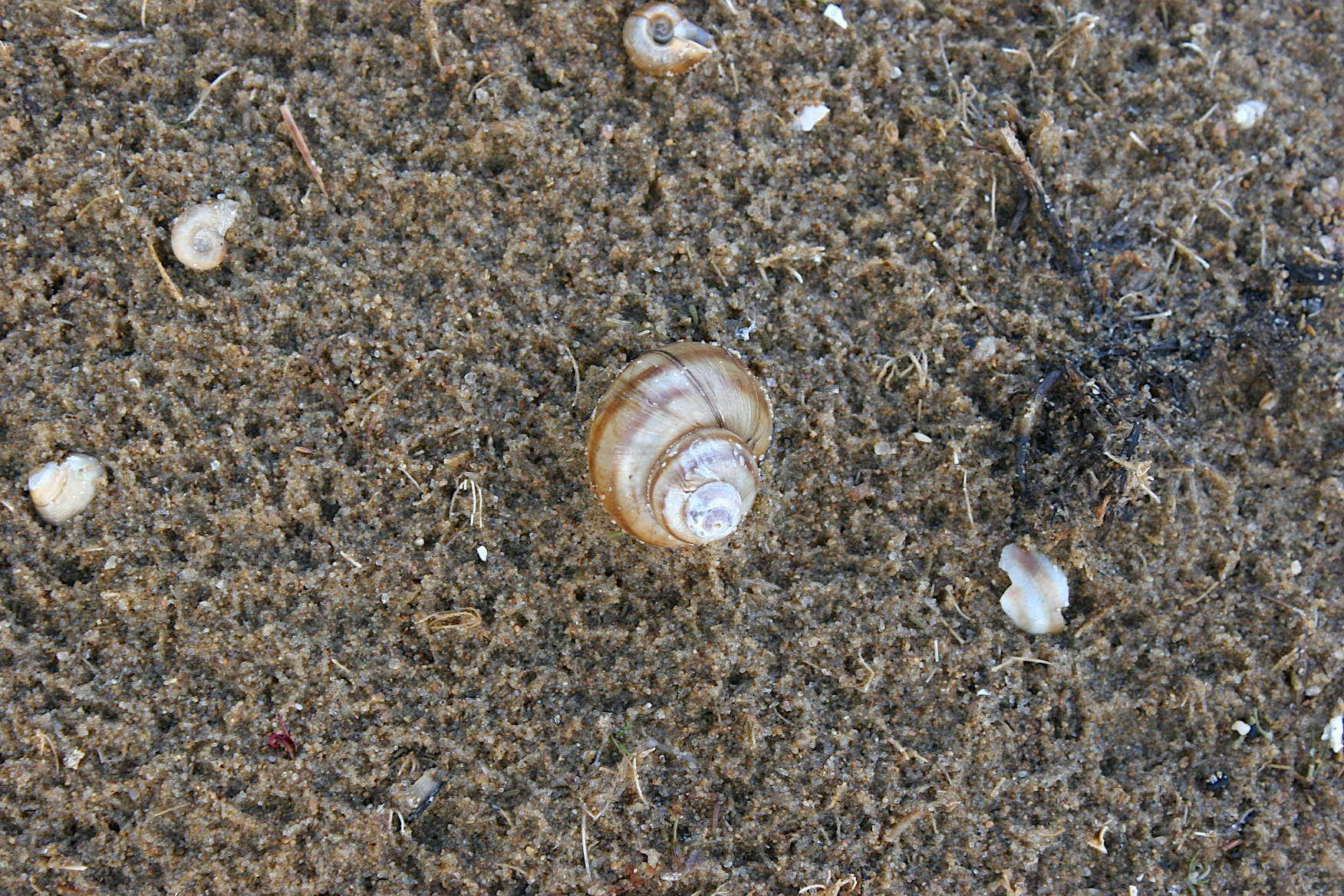
I love collecting shells, although this trip I didn’t gather any. Minnesota Prairie Roots copyrighted photo September 2021.

Here, where only months earlier I gathered shells with my 5-year-old granddaughter and waded into the lake and lay on a hammock with my two grandchildren cozied beside me.

The dock was already removed from the lake, but a child’s slide remained. Minnesota Prairie Roots copyrighted photo September 2021.

This lake place holds memories now of half-moons and pink skies and star-filled darkness. Of campfires and s’mores. Of little feet pounding the dock and sandy toes. Of waking up to a sunrise that writes poetry across the water, into the day, into Up North at the cabin.

TELL ME: Do you have cabin memories? I’d like to hear.

© Copyright 2021 Audrey Kletscher Helbling
 

Minnesota mining disaster up close & personal at Milford Mine Memorial Park September 2, 2021

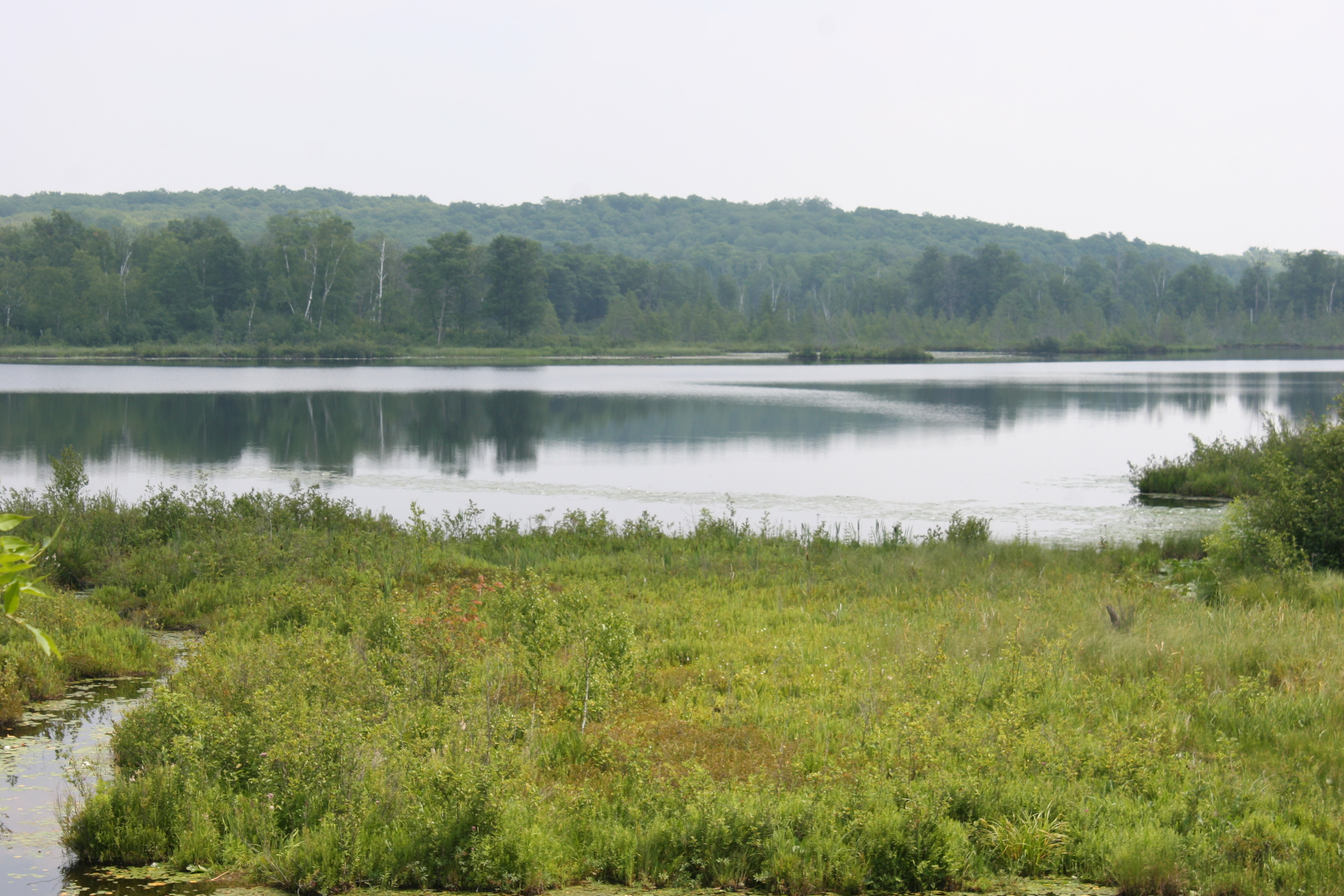
A peaceful and lovely scene at Milford Mine Memorial Park on a hazy July afternoon, rural Crosby. Minnesota Prairie Roots copyrighted file photo July 2021.

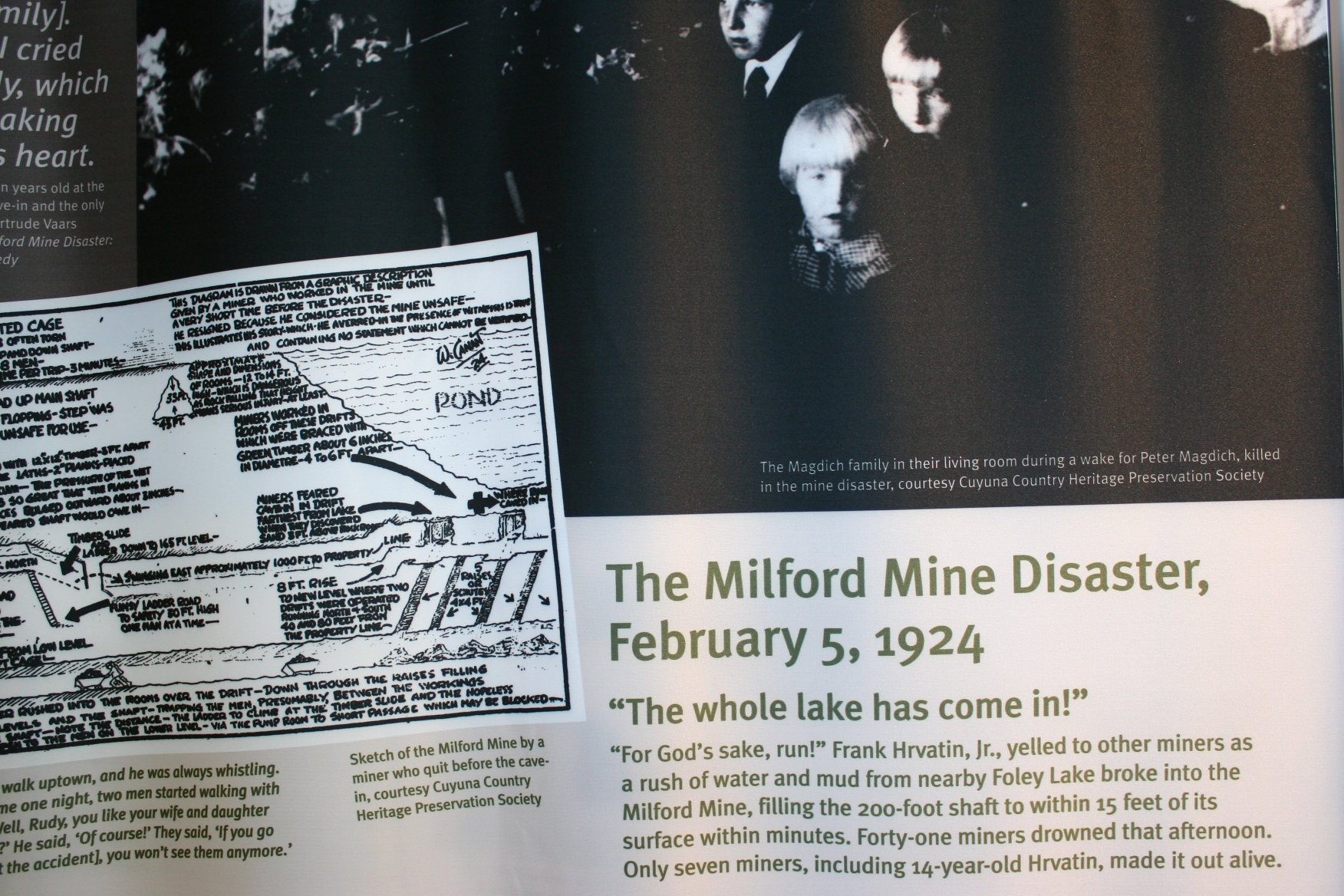
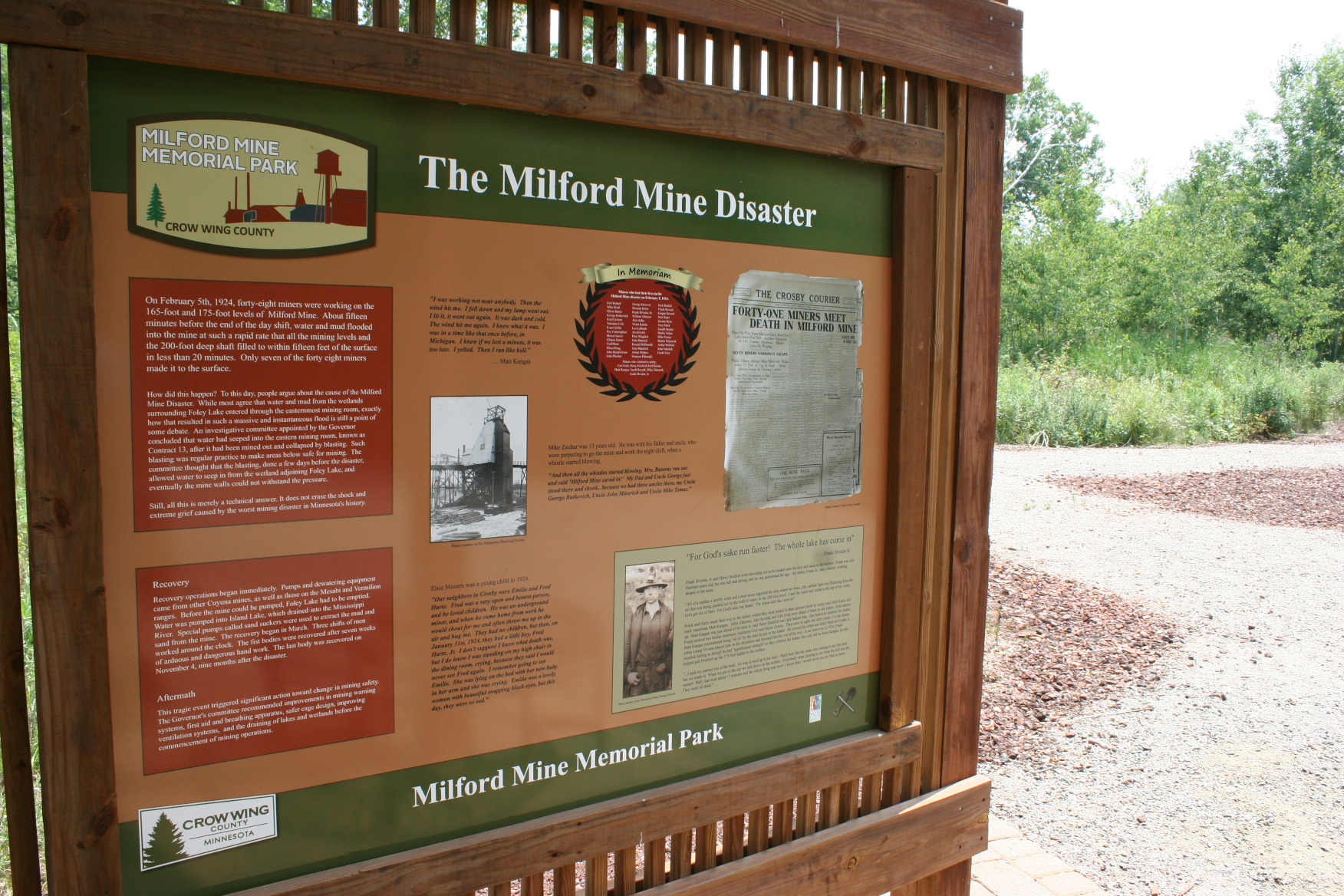
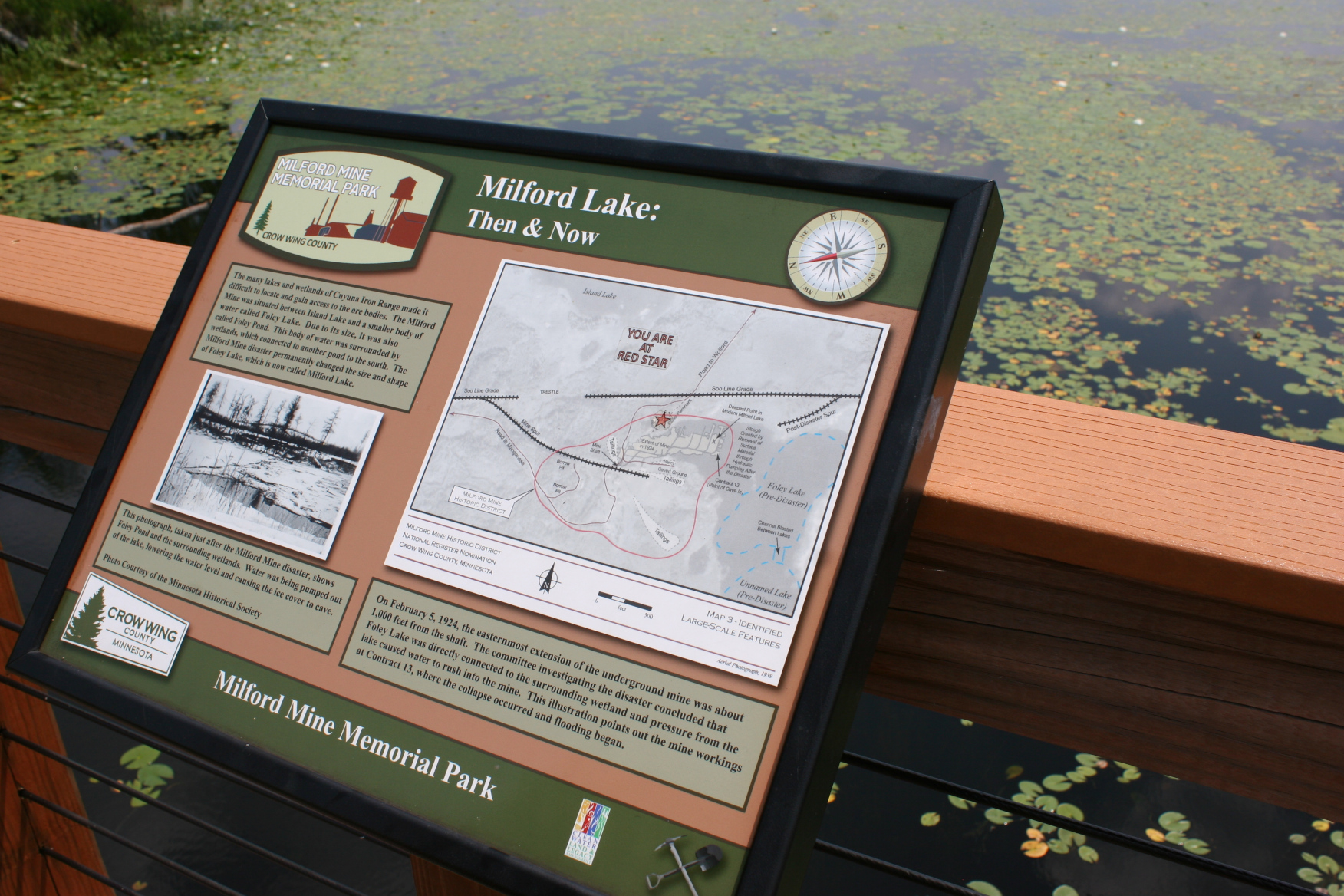
IN A BEAUTIFUL NATURAL SETTING, among the woods and water and wetlands, an American tragedy unfolded nearly 100 years ago on the Cuyuna Iron Range. In the late afternoon of February 5, 1924, water seeped into and then flooded the Milford Mine near Crosby, killing 41 miners in Minnesota’s worst mining disaster.

Information about the mine disaster is included in a traveling exhibit from the Minnesota Historical Society. I photographed this at the Steele County History Center in Owatonna several years ago. Minnesota Prairie Roots file photo.

Their deaths left 38 women without husbands. And 83 children without fathers.

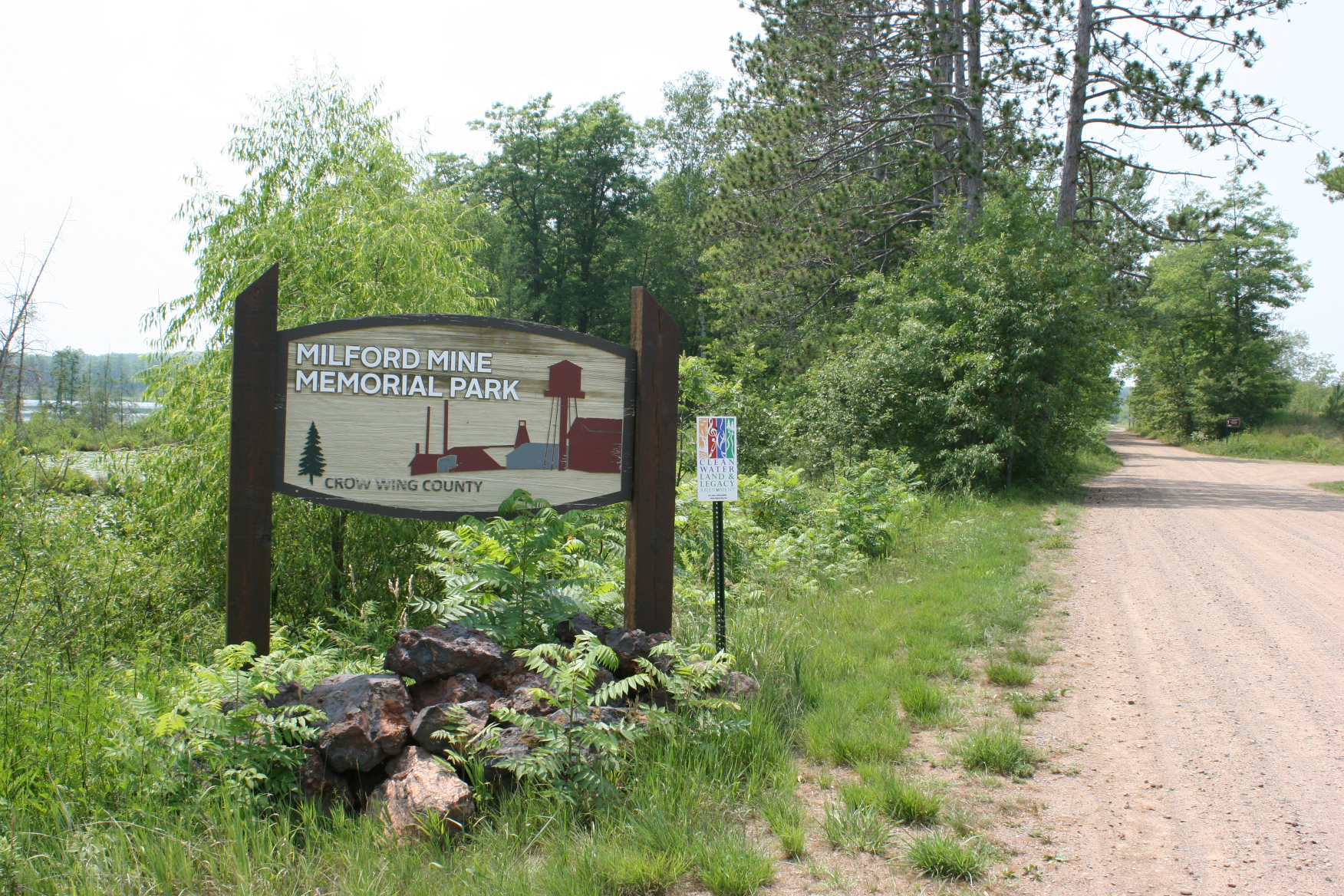
This sign marks the gravel road entry to the memorial park. Minnesota Prairie Roots copyrighted file photo July 2021.

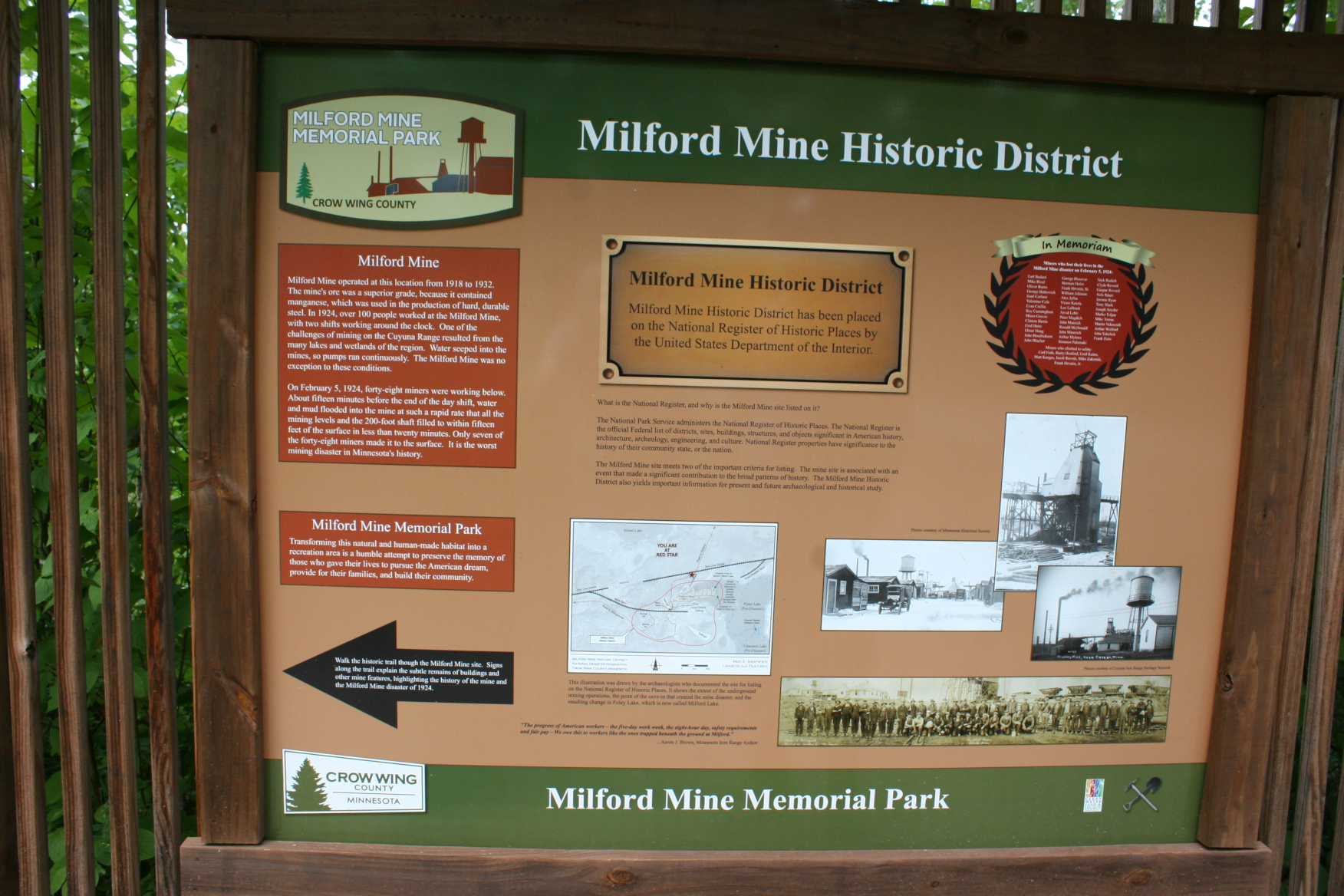
Today the memories of those 41 hardworking iron ore miners, and the seven who survived the mine collapse, are honored at Milford Mine Memorial Park. The Crow Wing County Park is located four miles north of Crosby, just off County Road 30. The Milford Mine Historic District is on the National Register of Historic Places, so important is this to the region’s mining history.

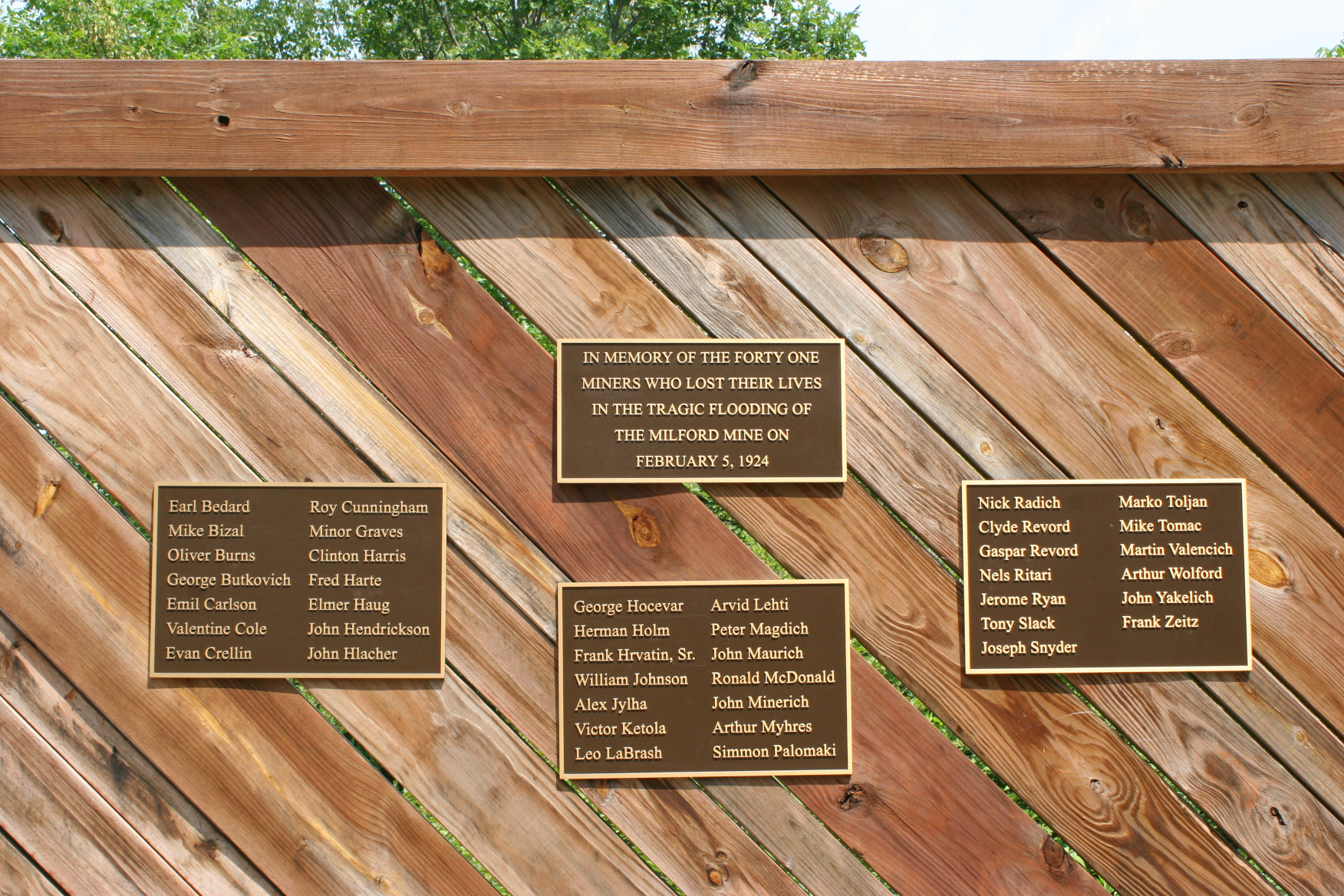
Those who died in the mine. Minnesota Prairie Roots copyrighted file photo July 2021.
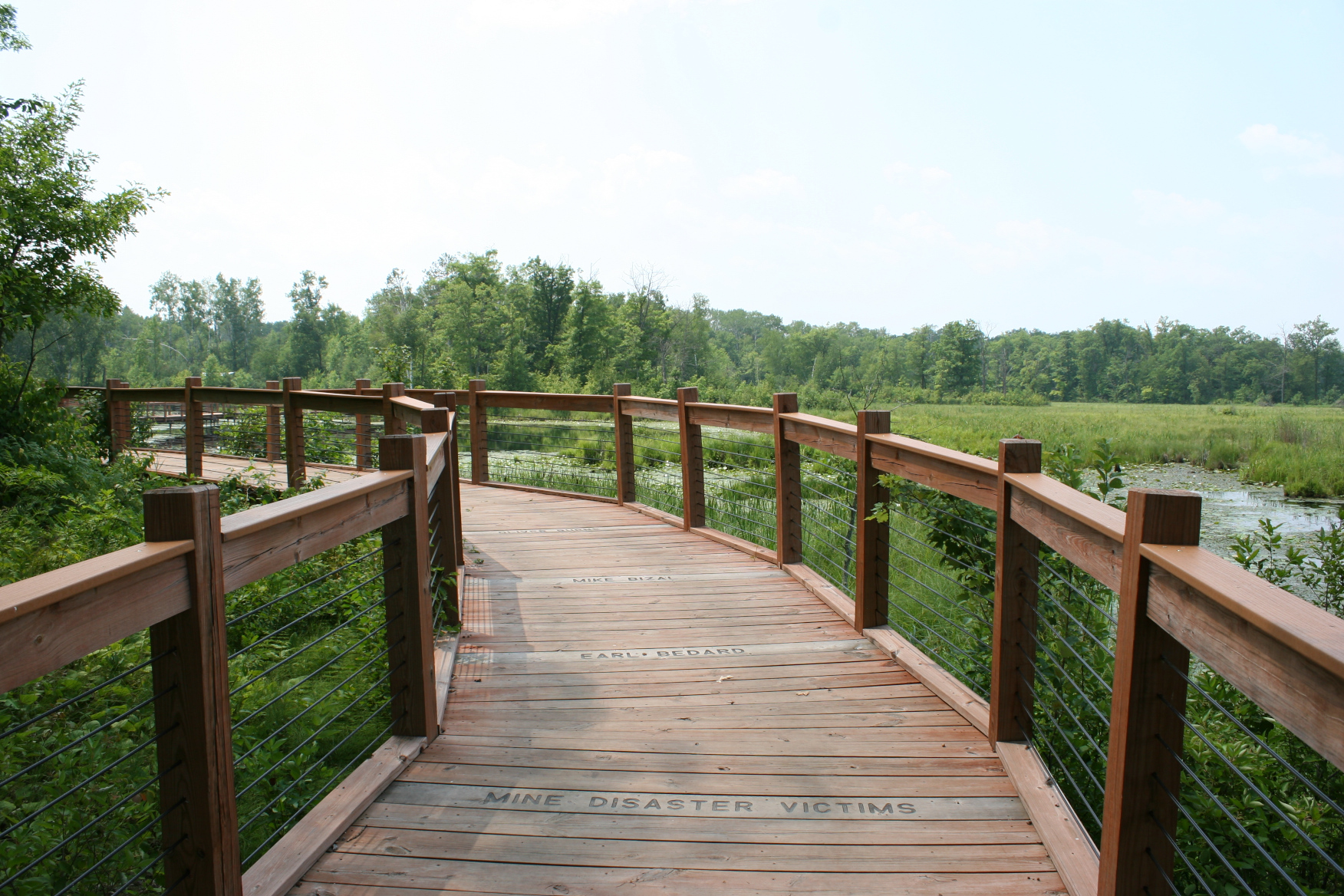
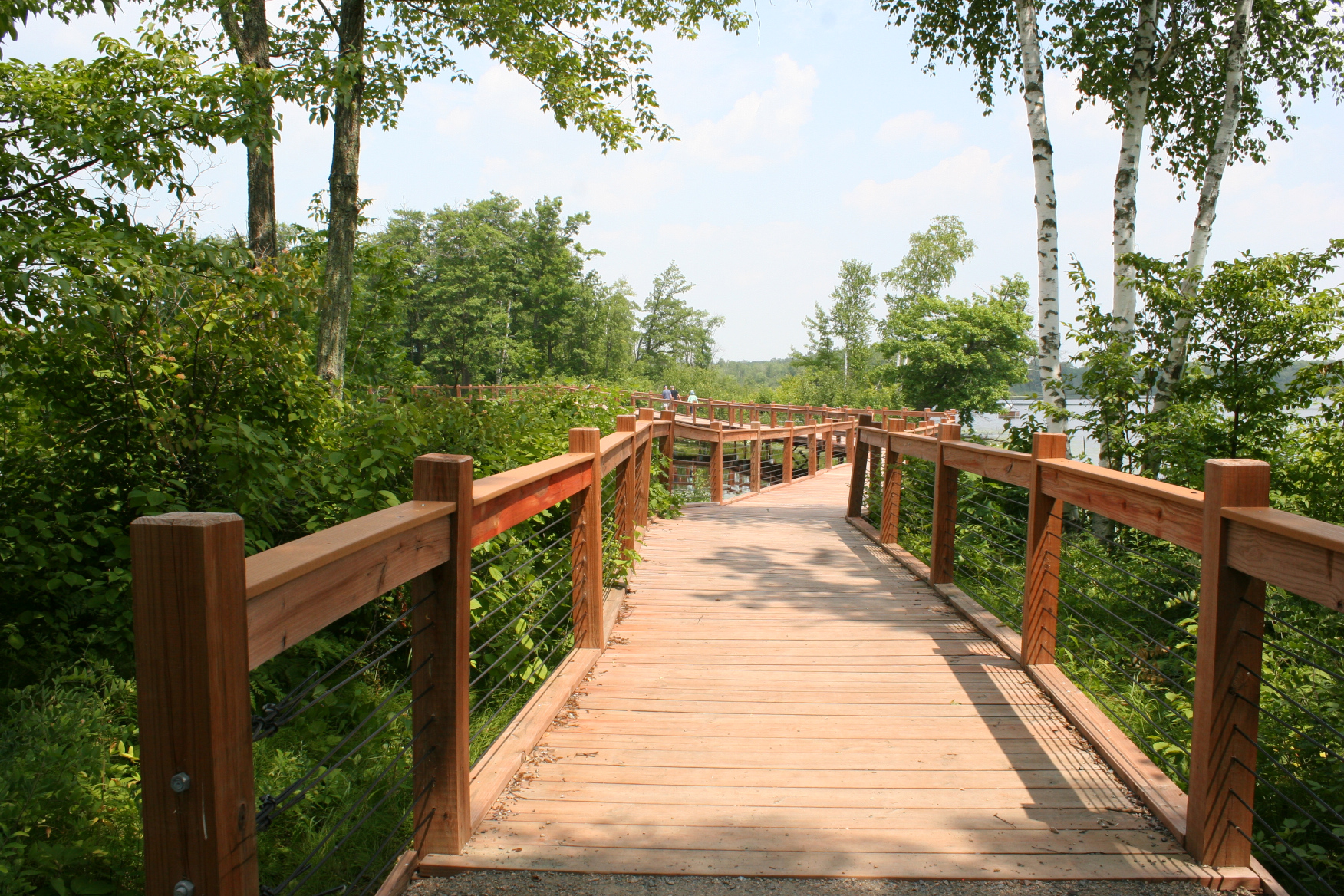
The first boardwalk lists the victims’ names, spaced along the path. Minnesota Prairie Roots copyrighted file photo July 2021.
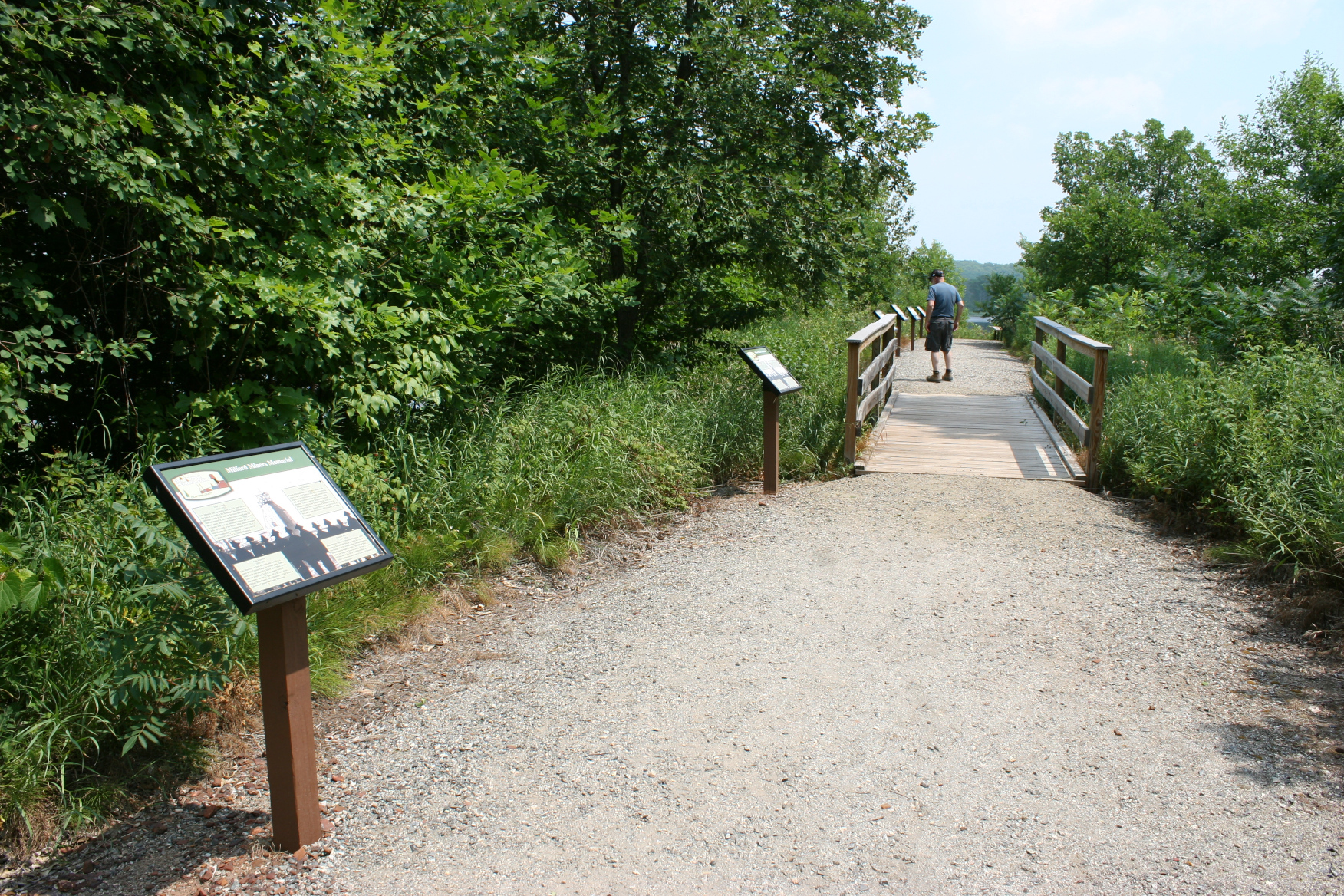
Signs along the trail honor each miner. Minnesota Prairie Roots copyrighted file photo July 2021.

This is truly a remarkable park that covers the history of this event in a deeply personal way. Through names on boardwalks and brief bios on signs, this park moves this disaster beyond statistics. Only then do we begin to understand, to feel the loss.

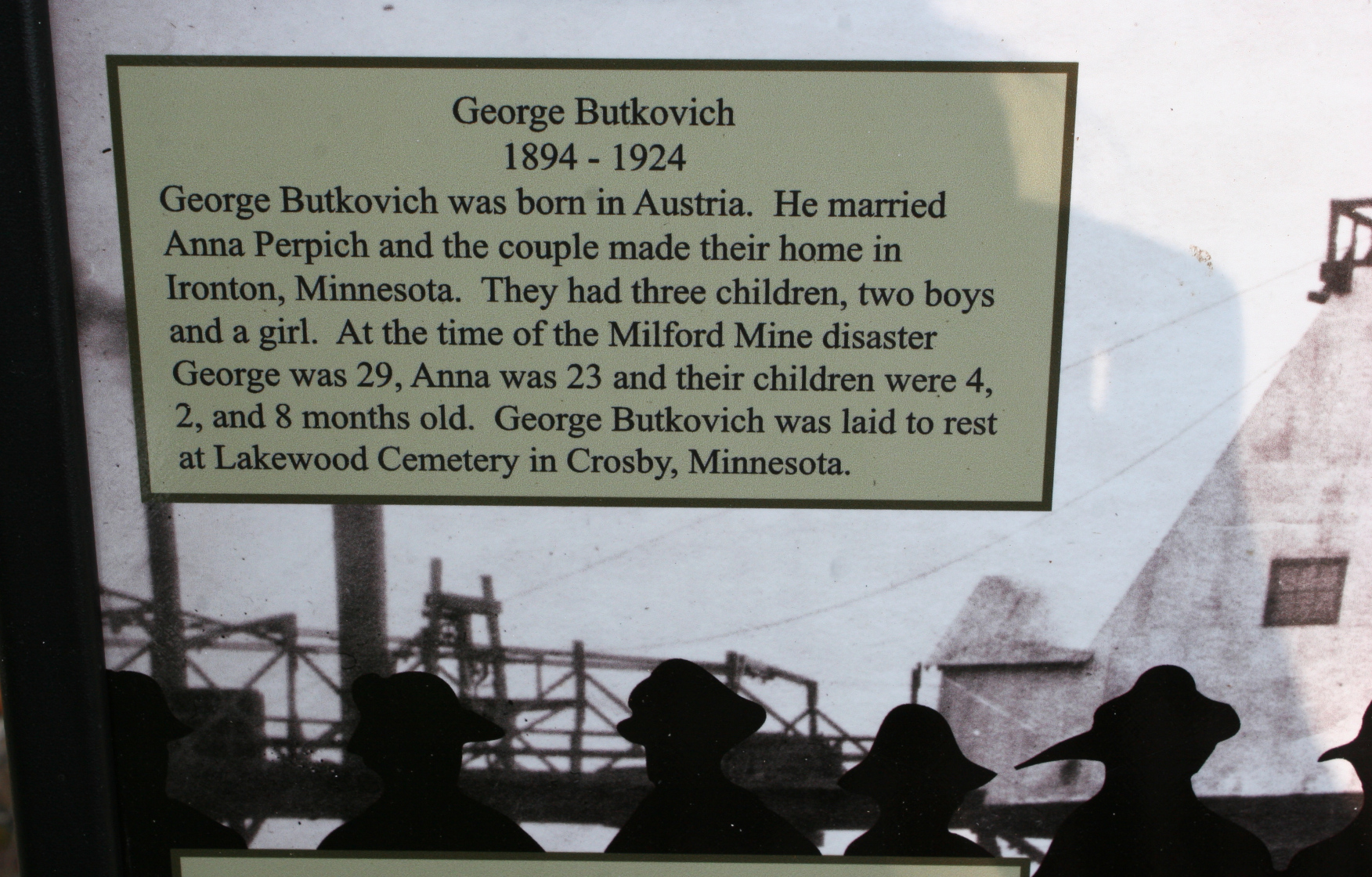
Honoring George Butkovich. Minnesota Prairie Roots copyrighted file photo July 2021.

George Butkovich, 29, an Austrian immigrant married to Anna Perpich (a well-known name to Minnesotans who remember our 34th and 36th governor, Rudy Perpich, a native of the Iron Range) died in the mine. He lived with Anna and their three children in Ironton.

A summary of the disaster. Minnesota Prairie Roots copyrighted file photo July 2021.

Emil A. Carlson, 29, from Finland, was the father of four and married to Elma. They lived in Crosby.

The bios of four who died in the mine. Minnesota Prairie Roots copyrighted file photo July 2021.

Nels R. Pitari, 37, also a Finnish immigrant, was married to Hilda. They lived in Brainerd and had four children, one only five months old at the time of his father’s death.

The park is not only a great place to learn about history, but also a great place to hike and enjoy nature.
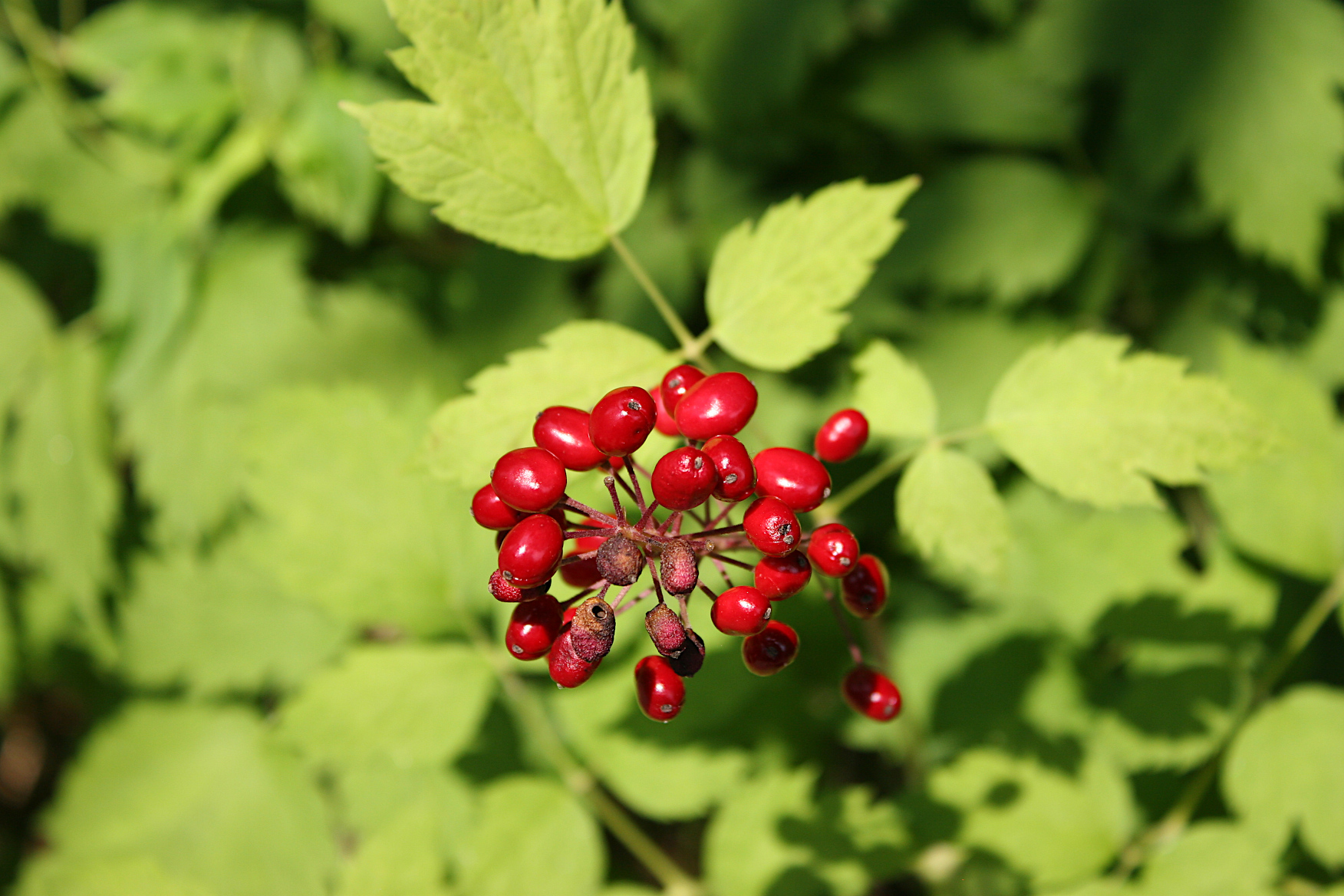
Bold berries pop alongside the trail. Minnesota Prairie Roots copyrighted file photo July 2021.
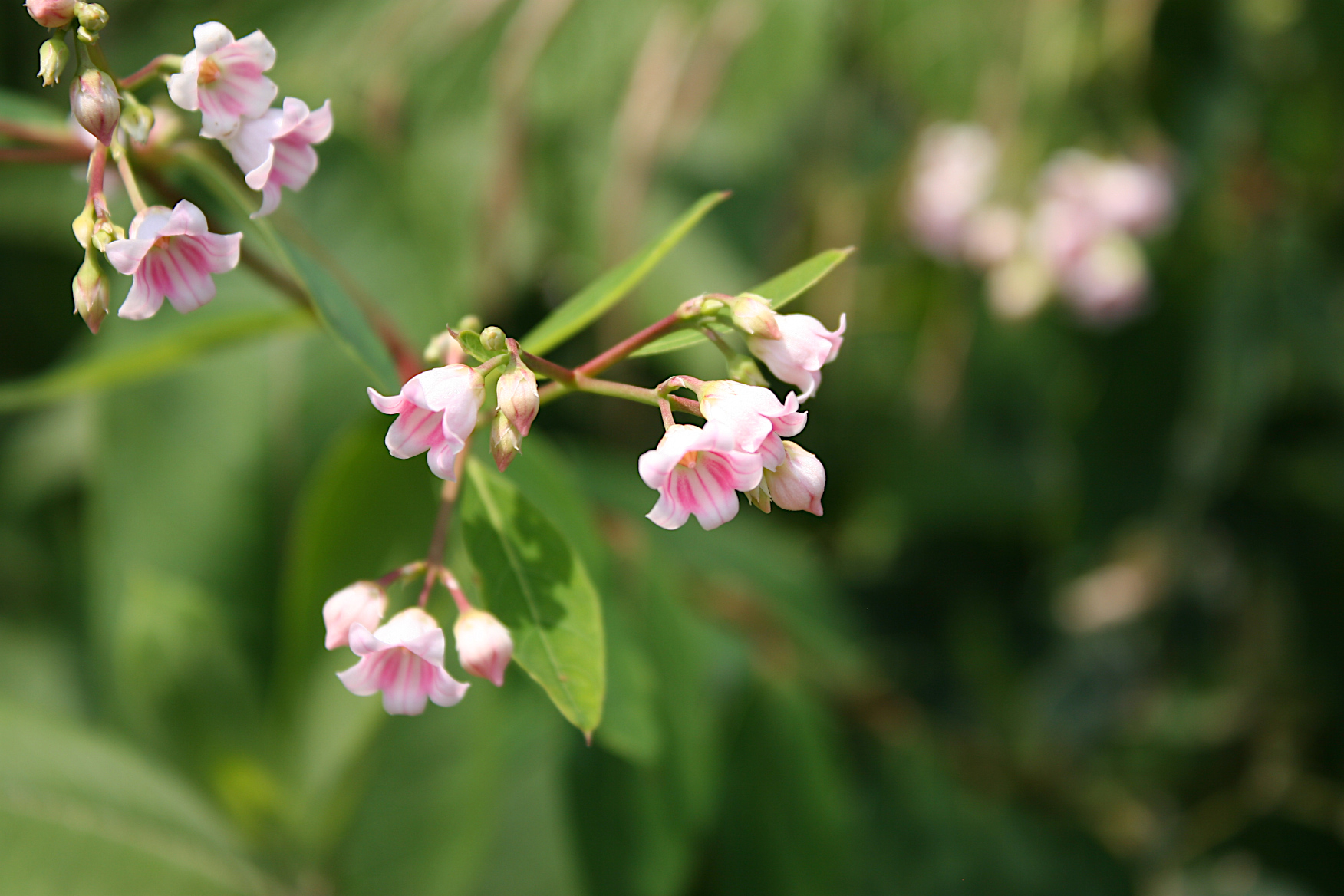
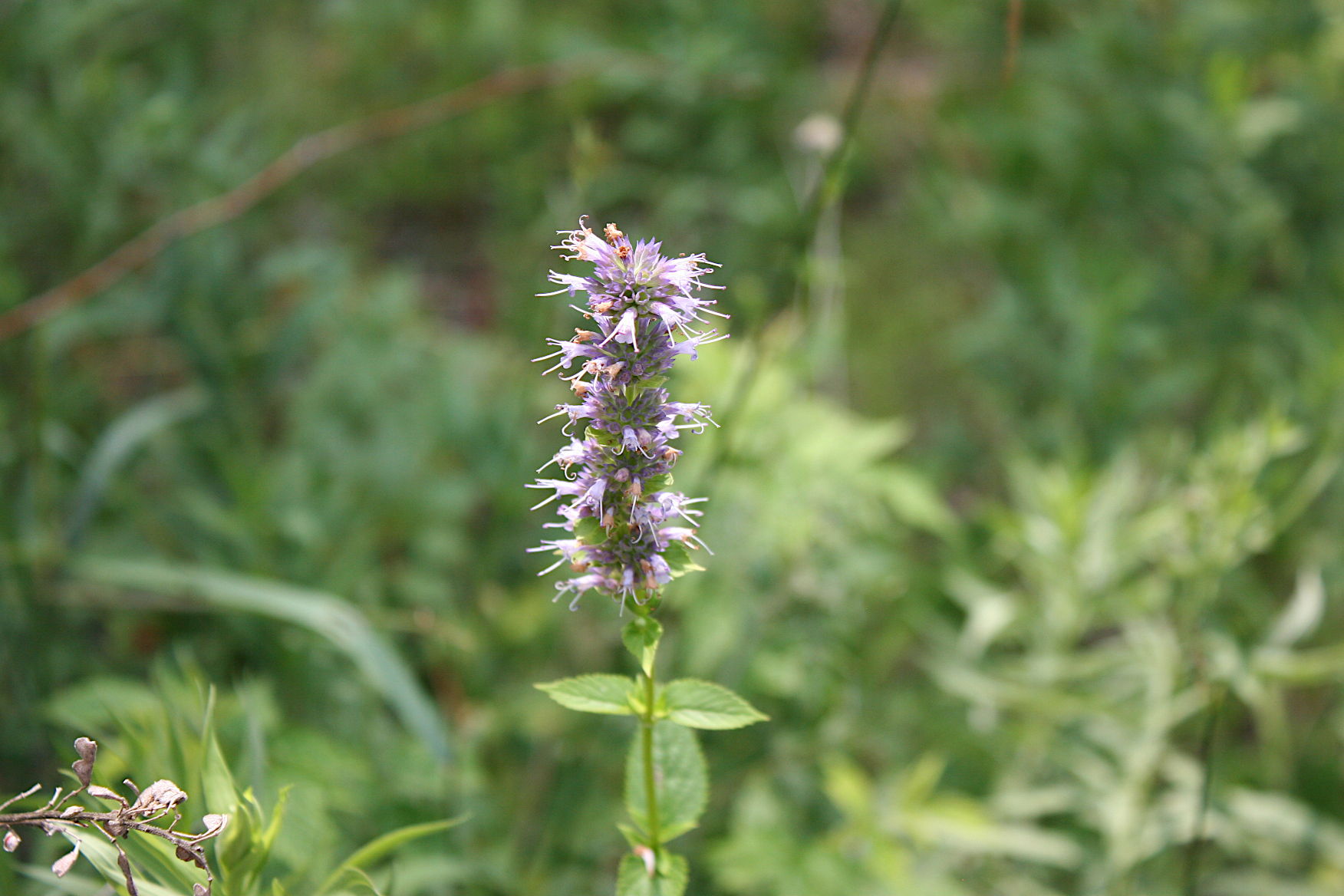
Not to be missed, the many wildflowers gracing this park. Minnesota Prairie Roots copyrighted file photo July 2021.

According to signage at Milford Memorial Park, the park “is an attempt to preserve the memory of those who gave their lives to pursue the American dream, provide for their families and build their community.” That’s necessary to understand given the importance of iron ore mining in this region. The high grade ore from the Milford Mine was used in the production of steel. This region of Minnesota was built around iron ore mining.

History honored and shared… Minnesota Prairie Roots copyrighted file photo July 2021.

Many who came to this area arrived from across the US, Canada and the European continent. They were a diverse group, looking to better their lives, to raise their families in a new place, to build strong communities.

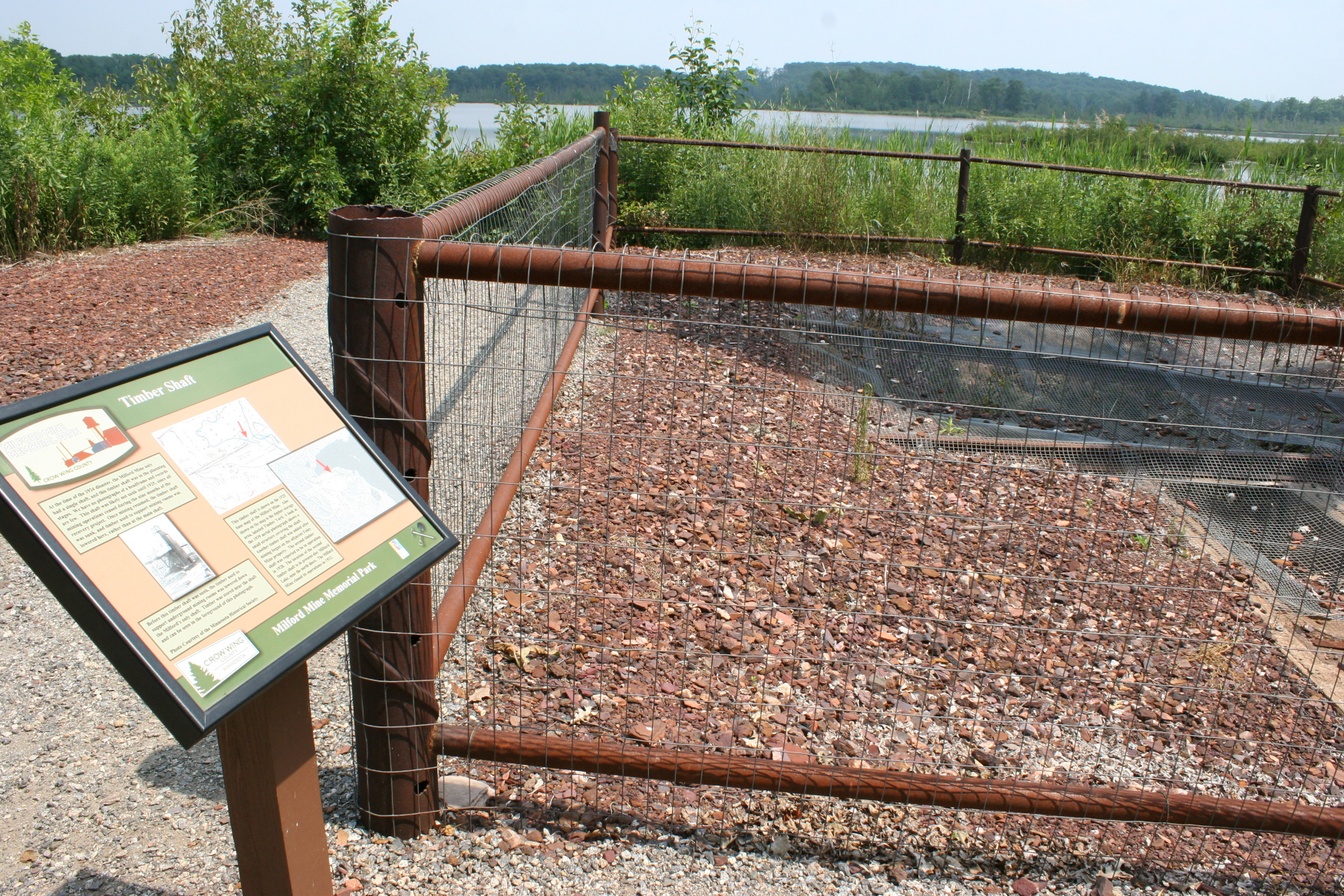
Site of the timber shaft. Minnesota Prairie Roots copyrighted file photo July 2021.
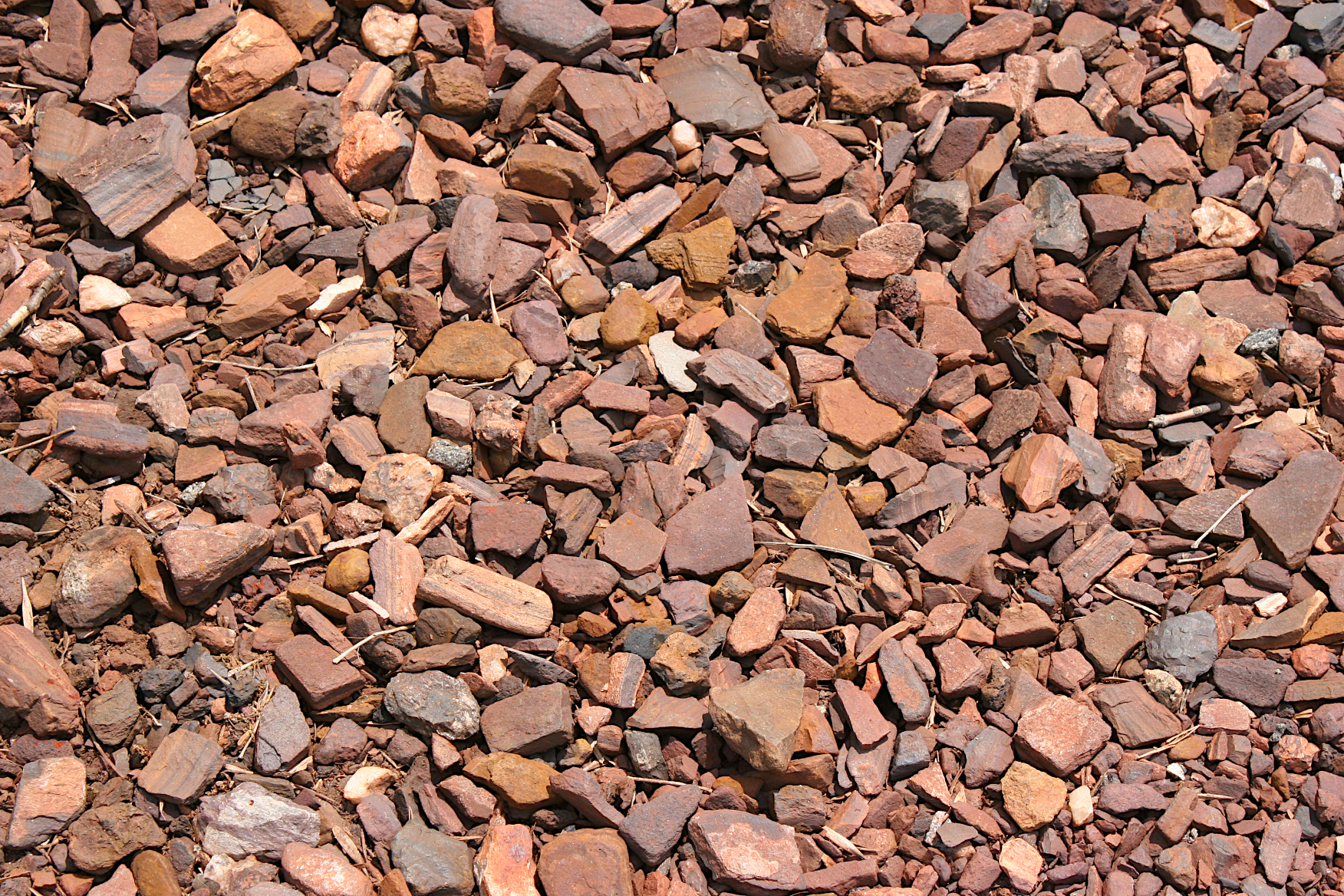
What I presume to be iron ore. Minnesota Prairie Roots copyrighted file photo July 2021.
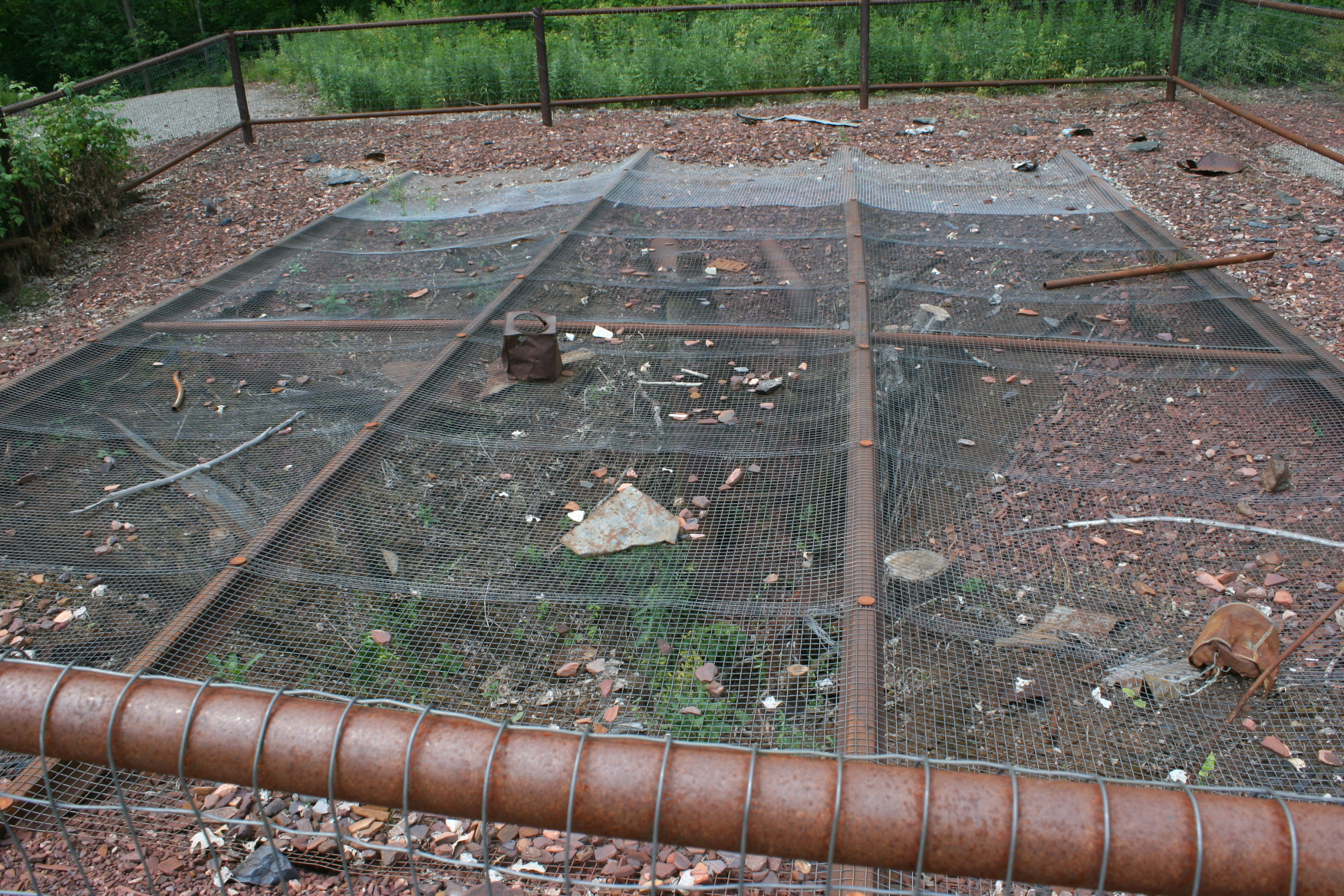
The entry to the mine shaft is fenced around and over. Minnesota Prairie Roots copyrighted file photo July 2021.

In walking through the park, pausing often to read the history of this place and to view marked sites like the machine and blacksmith shops and the mine and timber shafts, I felt a sense of reverence, a sense of understanding of the loss connected to this land.

Originally named Lake Foley, the lake has since been renamed Milford Lake. Minnesota Prairie Roots copyrighted file photo July 2021.
Water lilies in Milford Lake, Minnesota Prairie Roots copyrighted file photo July 2021.
A flower brightens woods’ edge near the lake. Minnesota Prairie Roots copyrighted file photo July 2021.

Investigators determined that pressure from Lake Foley, connected to adjoining wetlands, caused water to rush into the mine resulting in the collapse of the mine’s walls. Within 20 minutes of that occurrence, the 200-foot deep mine shaft filled to within 15 feet of the surface. That allowed only minimal time for the miners to attempt an escape. Only seven got out. They, too, are recognized at the memorial park on a survivors’ boardwalk: Carl Frals, Harry Hosford, Mike Zakotnik…

Lengthy memorial boardwalks curve into the park. Minnesota Prairie Roots copyrighted file photo July 2021.

As I walked the boardwalks and trails, I felt sometimes overwhelmed by the sheer tragedy of the Milford Mine Disaster. So much loss. So much grief and pain. So many father-less children. And it is that, perhaps, which touched me the most.

NOTE: Milford Mine Memorial Park is open daily from sunrise to sunset. I encourage you to visit, to experience this important part of Minnesota history.

© Copyright 2021 Audrey Kletscher Helbling
 

Learning about Minnesota’s worst mining disaster September 1, 2021

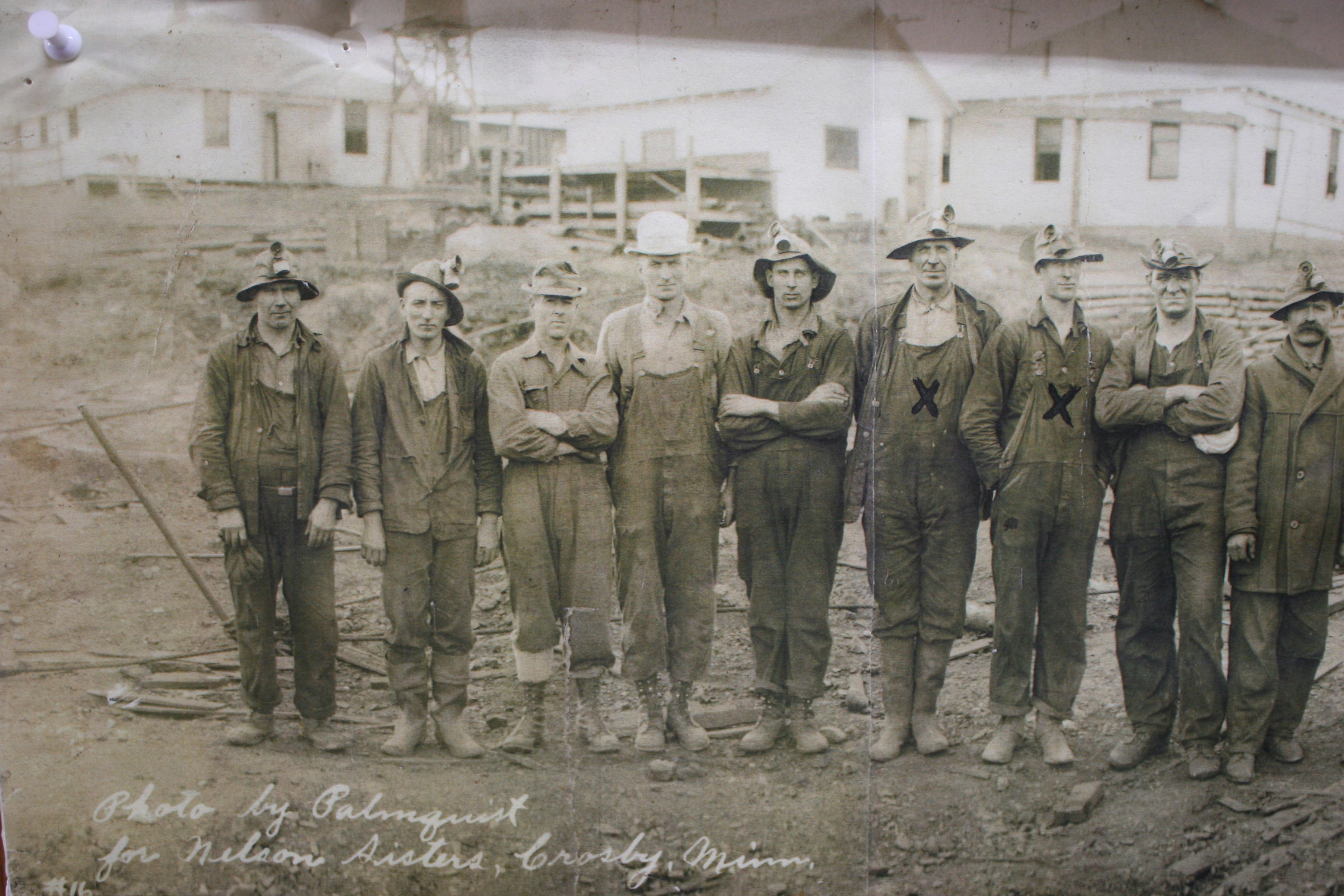
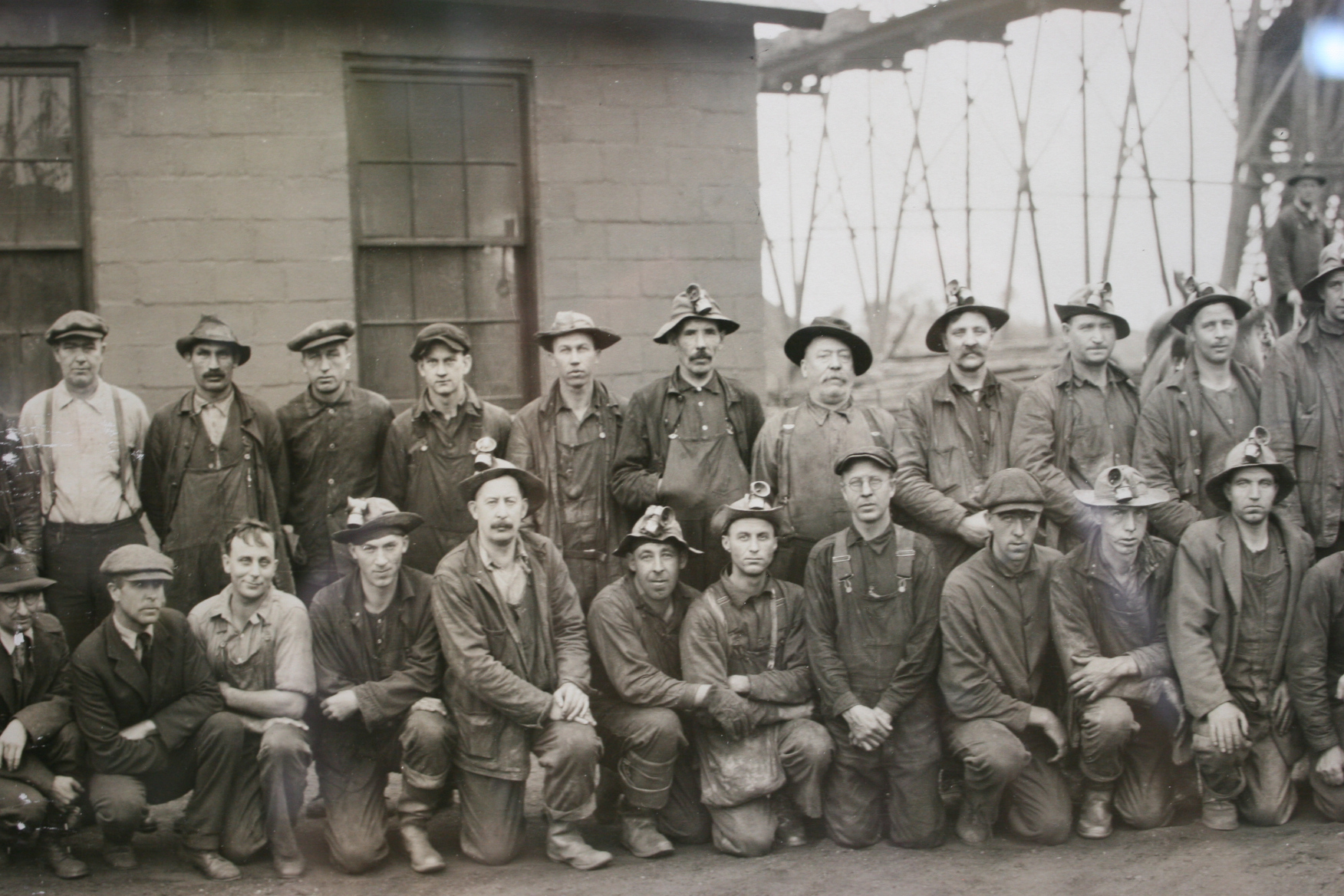
A photo of iron ore miners displayed at the Soo Line Depot Museum in Crosby, Minnesota. Minnesota Prairie Roots photo July 2021.

I CANNOT IMAGINE WORKING as a miner. Underground. Enclosed in tight spaces. Enveloping darkness. Fear and danger and sometimes unsafe working conditions. I couldn’t do the job. I need light and air and space. To feel free, not trapped.

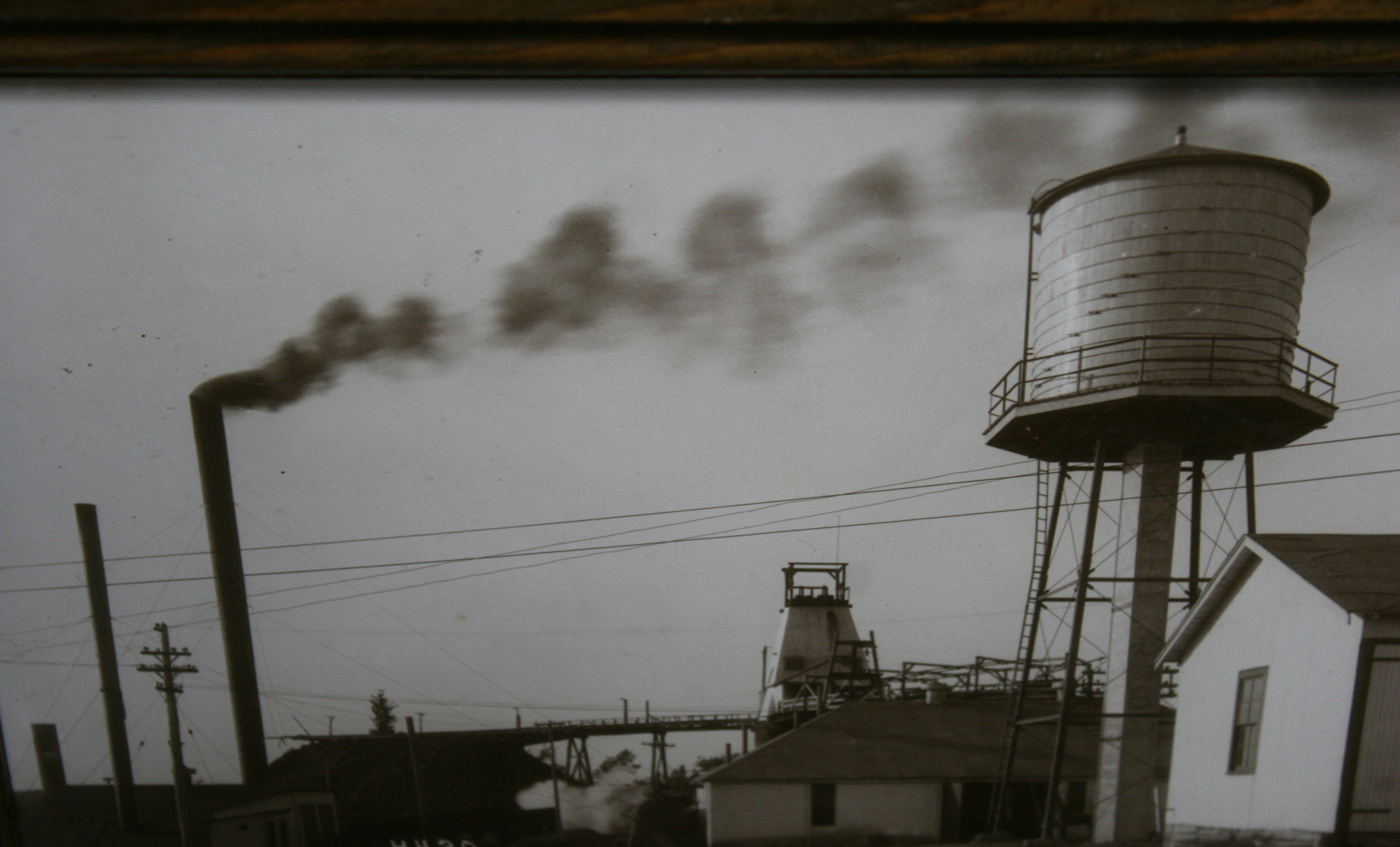
A photo of the Milford Mine displayed at the Crosby museum. Minnesota Prairie Roots photo July 2021.

On February 5, 1924, nearly 50 men mining iron ore in the Milford Mine on the Cuyuna Iron Range in central Minnesota faced their greatest fear. Death. They were only 15 minutes from the end of their shift when the unthinkable happened at 3:45 pm on a Tuesday. When mud, water and quicksand from Foley Lake flooded the shaft. Only seven of the 48 miners escaped.

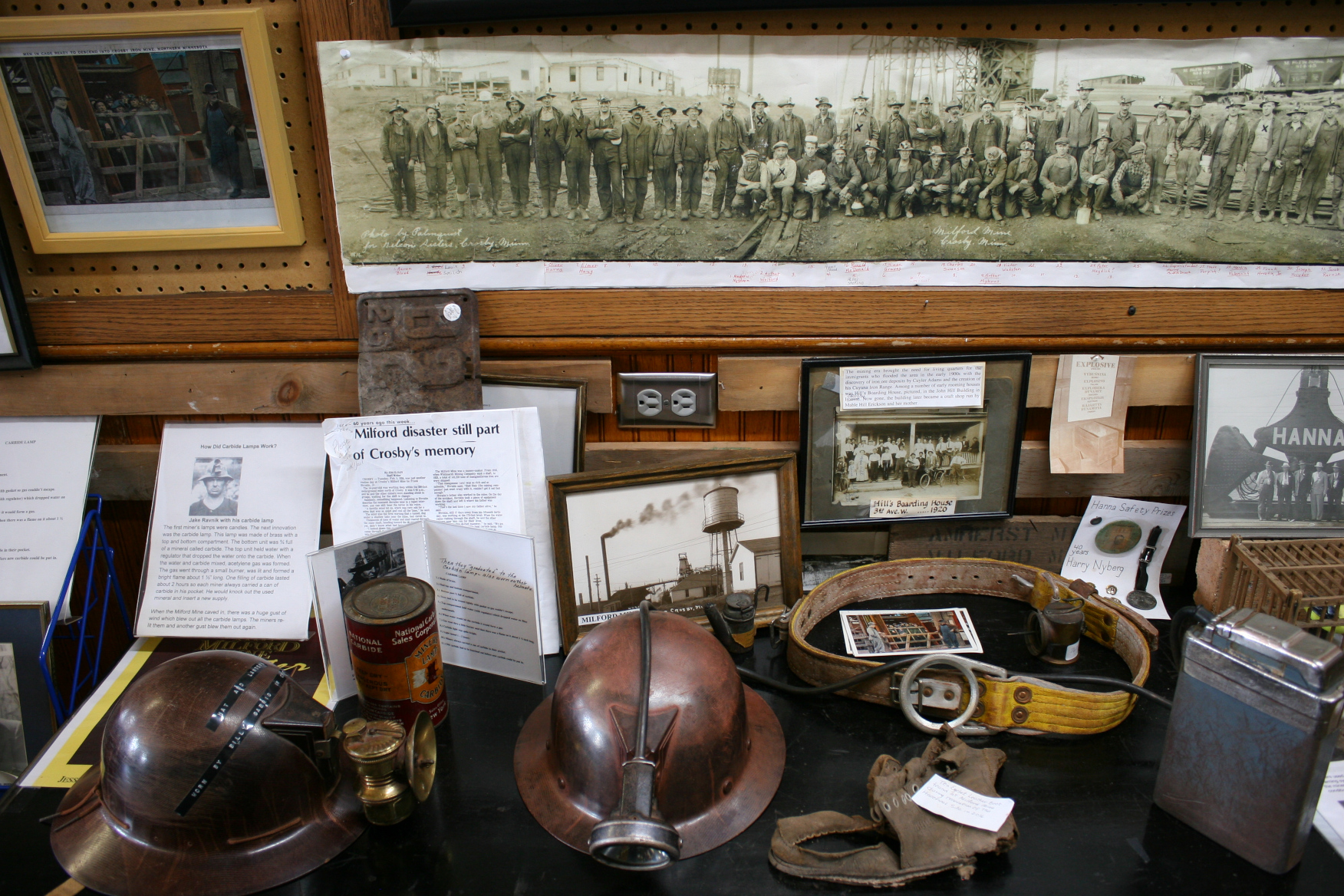
Mining photos and equipment are part of the museum display. Minnesota Prairie Roots copyrighted photo July 2021.

I cannot imagine the horrible scene which unfolded in that mine as these hardworking men struggled to get out. To survive. To return to their families. To see the light of day. To breathe.

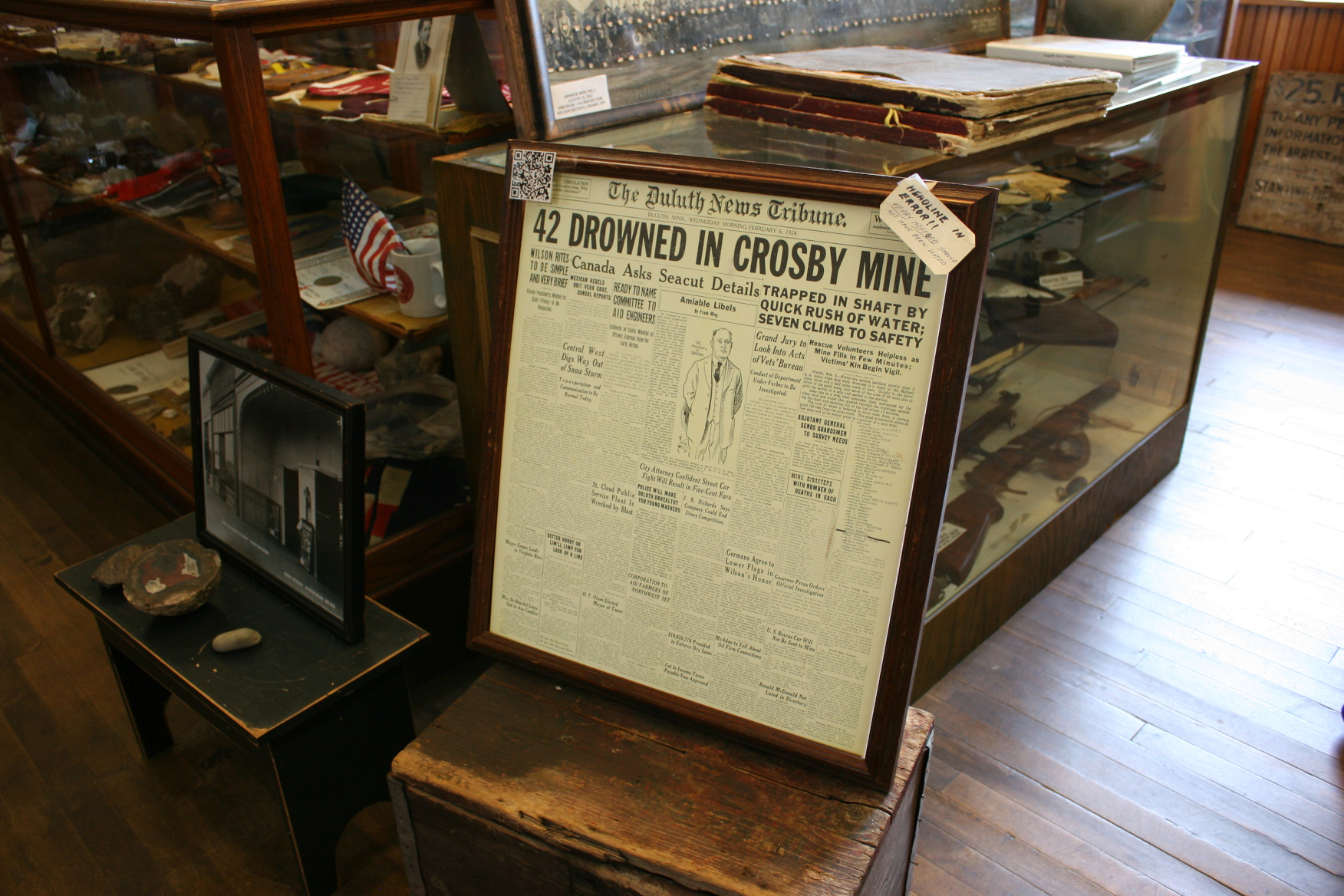
The headline in the Duluth newspaper erroneously reports that 42 (not 41) miners drowned. Minnesota Prairie Roots copyrighted file photo July 2021.

Forty-one men died as the 200-foot deep mine shaft filled with water to within 15 feet of the surface in just 20 minutes. That’s not much time to scramble up a ladder to safety.

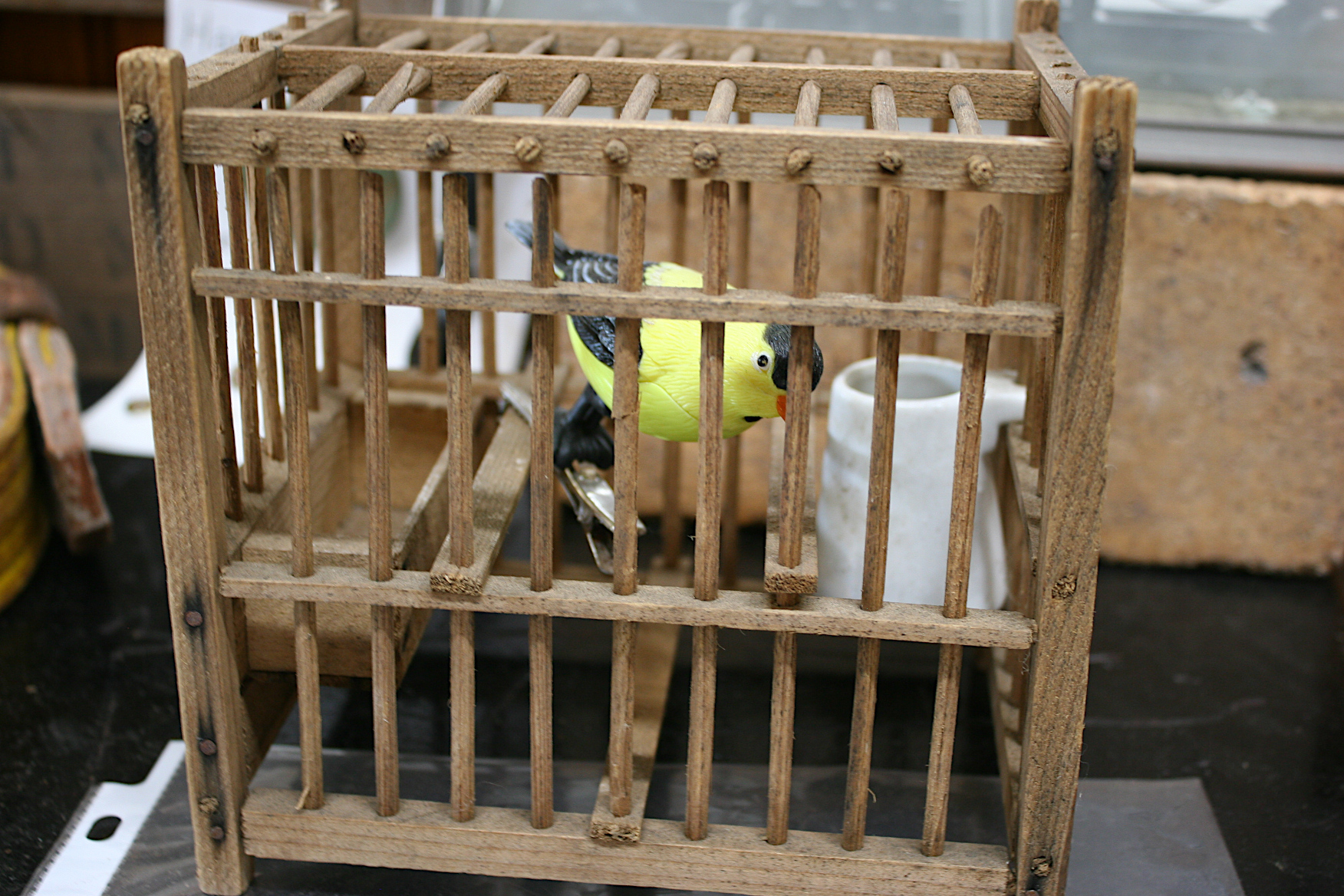
Canaries really were used to detect gas levels in mines, as replicated at the museum. Minnesota Prairie Roots copyrighted file photo July 2021.

Until two months ago, my knowledge of Minnesota’s worst mining disaster was limited to just that—an awareness that this tragedy happened. Beyond that, I was uninformed. I don’t recall ever hearing of this disaster in any history classes.

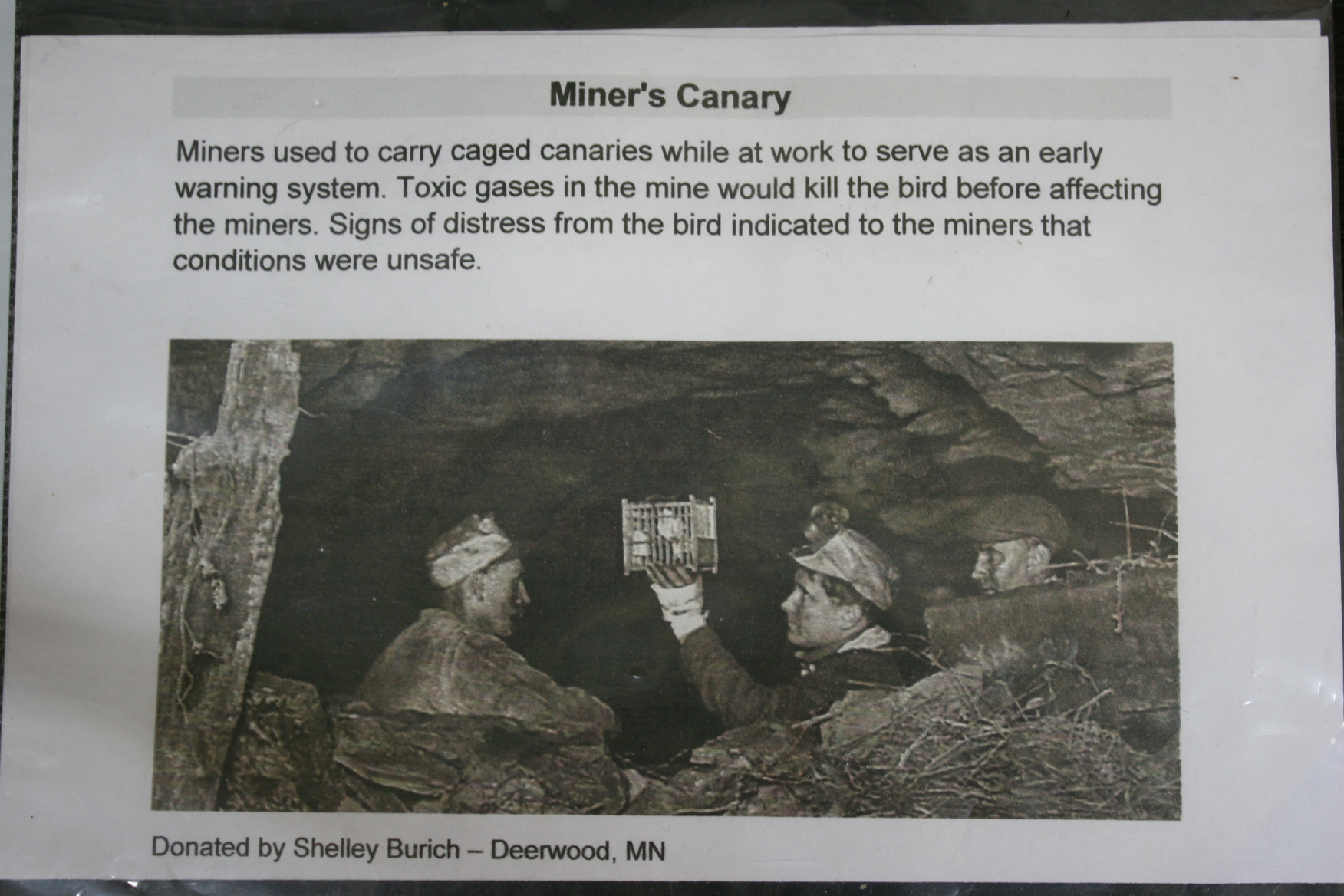
Info on use of caged canaries is included in the museum exhibit. Minnesota Prairie Roots copyrighted file photo July 2021.

Yet, this event, this substantial loss of life in a single horrific tragedy, needs to be taught and remembered. It’s an important part of our state’s mining history and of the families who lost loved ones in the Milford Mine. I expect many a family in the Crosby area—the mine was located just miles from town—can trace genealogy back to the disaster.

The Soo Line Depot Museum. Minnesota Prairie Roots copyrighted file photo July 2021.

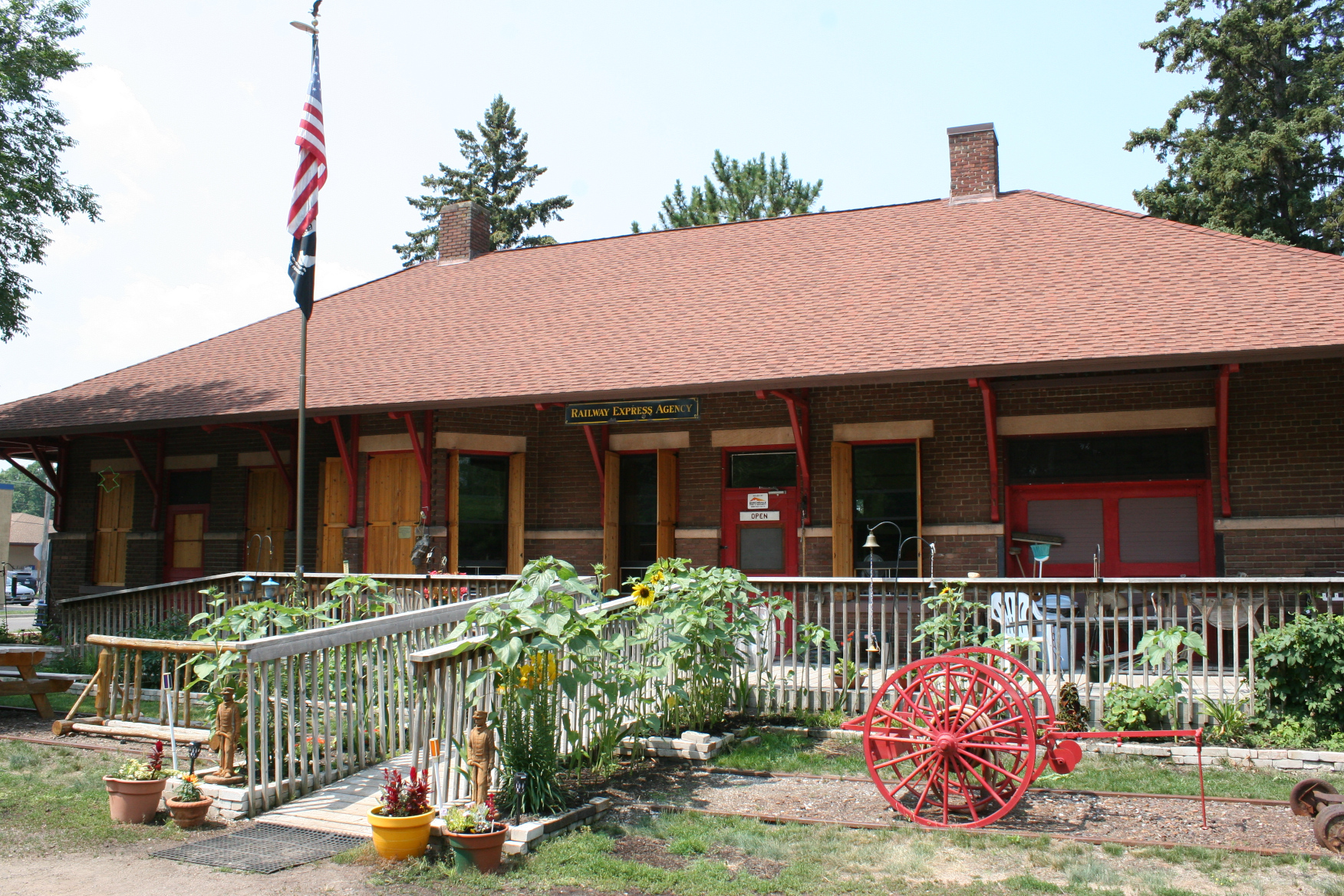
In Crosby, the Soo Line Depot Museum, 101 1st St. NE, features a display on iron ore mining with an emphasis on the mining disaster at Milford. The displays heightened my interest, my desire to learn more. And I did by visiting Milford Mine Memorial Park located some four miles north of Crosby on Milford Lake Drive, just off Crow Wing County Road 30, just off Minnesota State Highway 6.

Miners pose for a photo in this image displayed in the Soo Line Depot Museum. Minnesota Prairie Roots photo July 2021.

I’ll take you to that memorial park, which personalizes this tragedy and honors the men who died and those who survived. It’s a remarkable park in volume of historical information and setting—on-site of the disaster. Boardwalks and hiking trails lead visitors into the woods, across marshland and along a mining lake. In a beautiful natural setting, where, 97 years ago, 41 miners died, trapped underground.

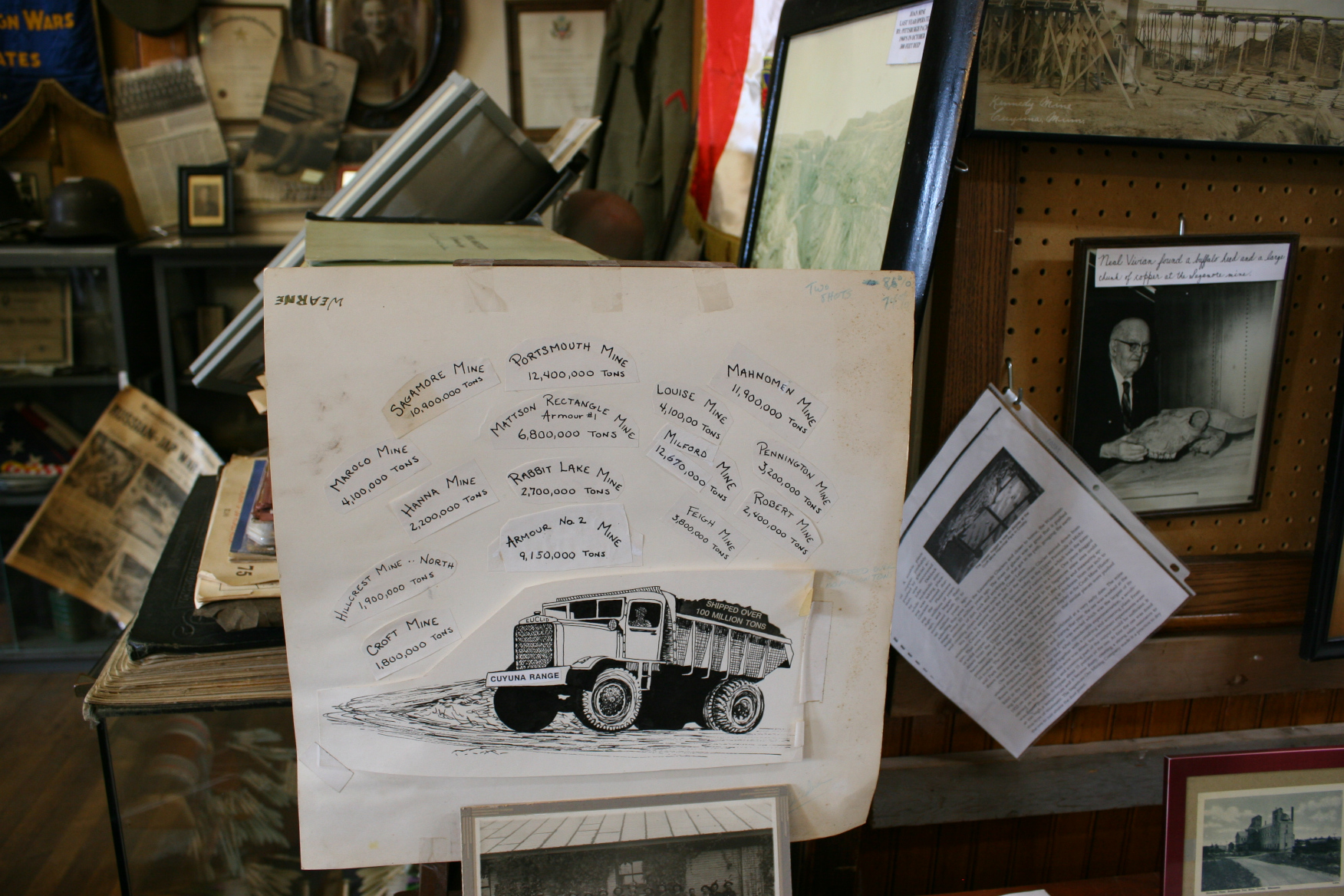
A list of mines on the Cuyuna Range shown at the museum. Minnesota Prairie Roots copyrighted file photo July 2021.

NOTE: The Soo Line Depot Museum closes for the season on Labor Day weekend and reopens Memorial Day weekend. Milford Mine Memorial Park is open daily from sunrise to sunset.

© Copyright 2021 Audrey Kletscher Helbling
 

Promoting kindness in Deerwood August 31, 2021

Filed under: Uncategorized — Audrey Kletscher Helbling @ 5:00 AM
Tags: , , , , ,
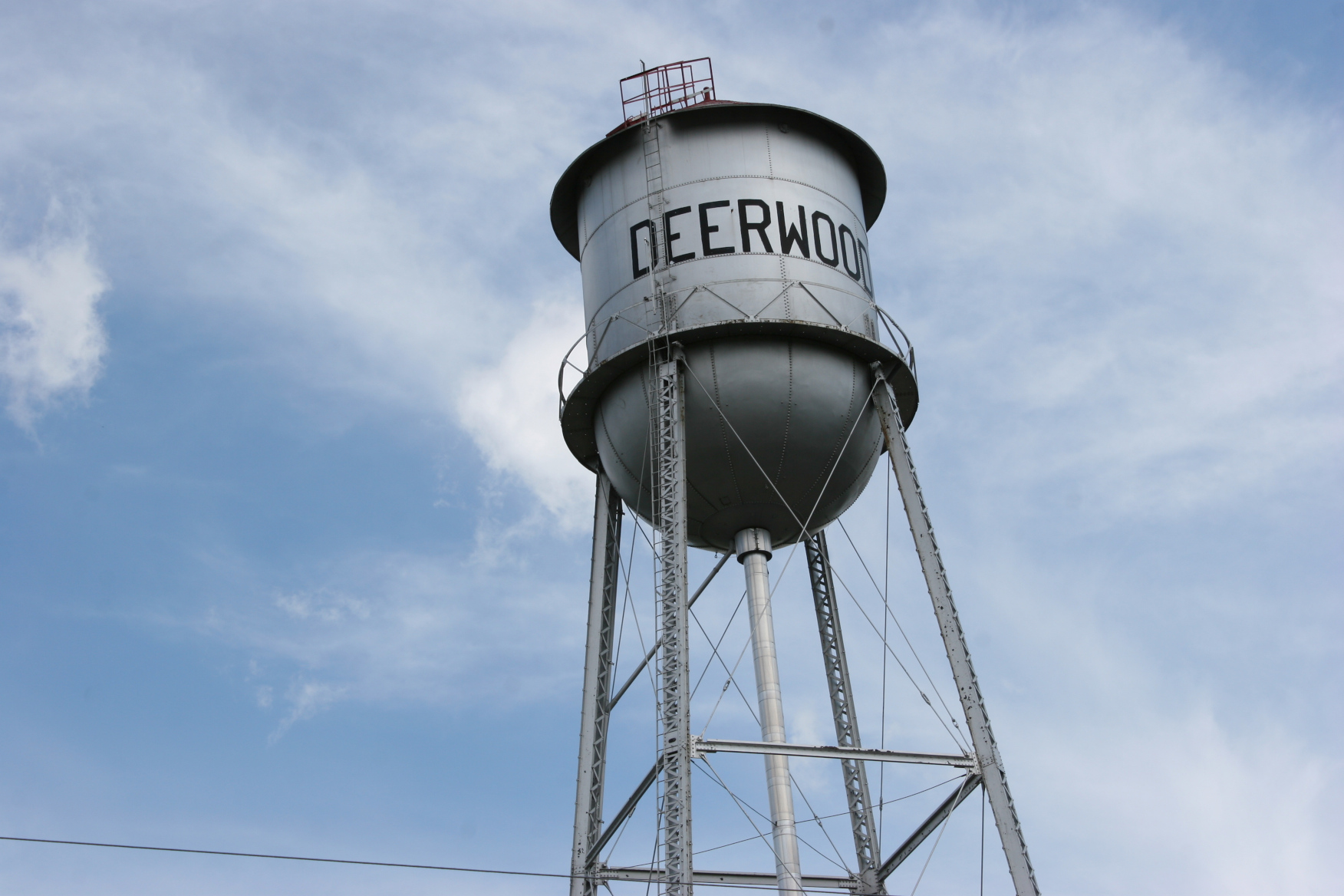
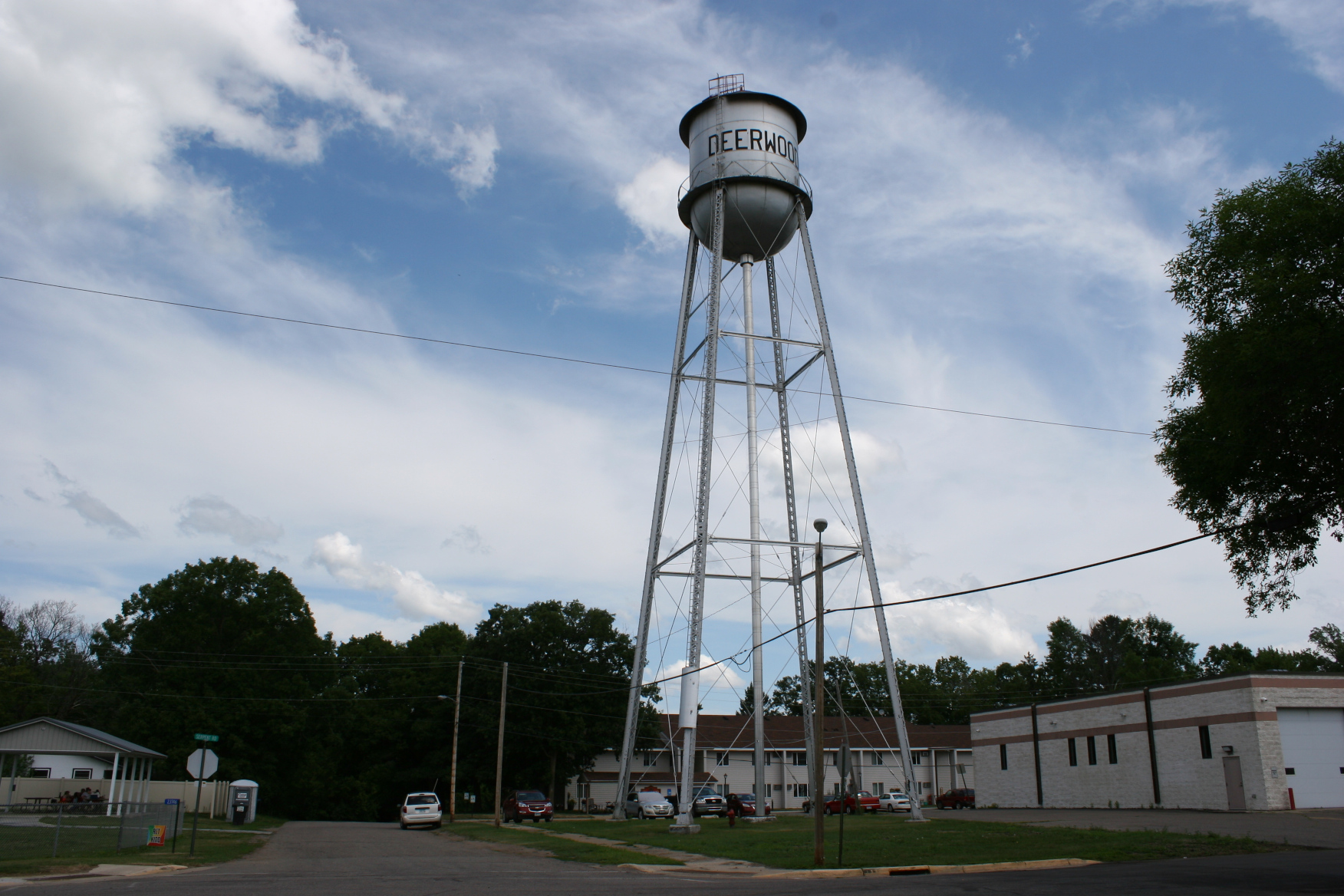
Deerwood’s historic water tower. Minnesota Prairie Roots copyrighted file photo July 2021.

IN RECENT POSTS, I’ve highlighted several points of interest—an historic water tower and auditorium and a roadside deer sculpture—in Deerwood, a small town in the central Minnesota lakes region.

Kindness promoted in Deerwood. Minnesota Prairie Roots copyrighted file photo July 2021.

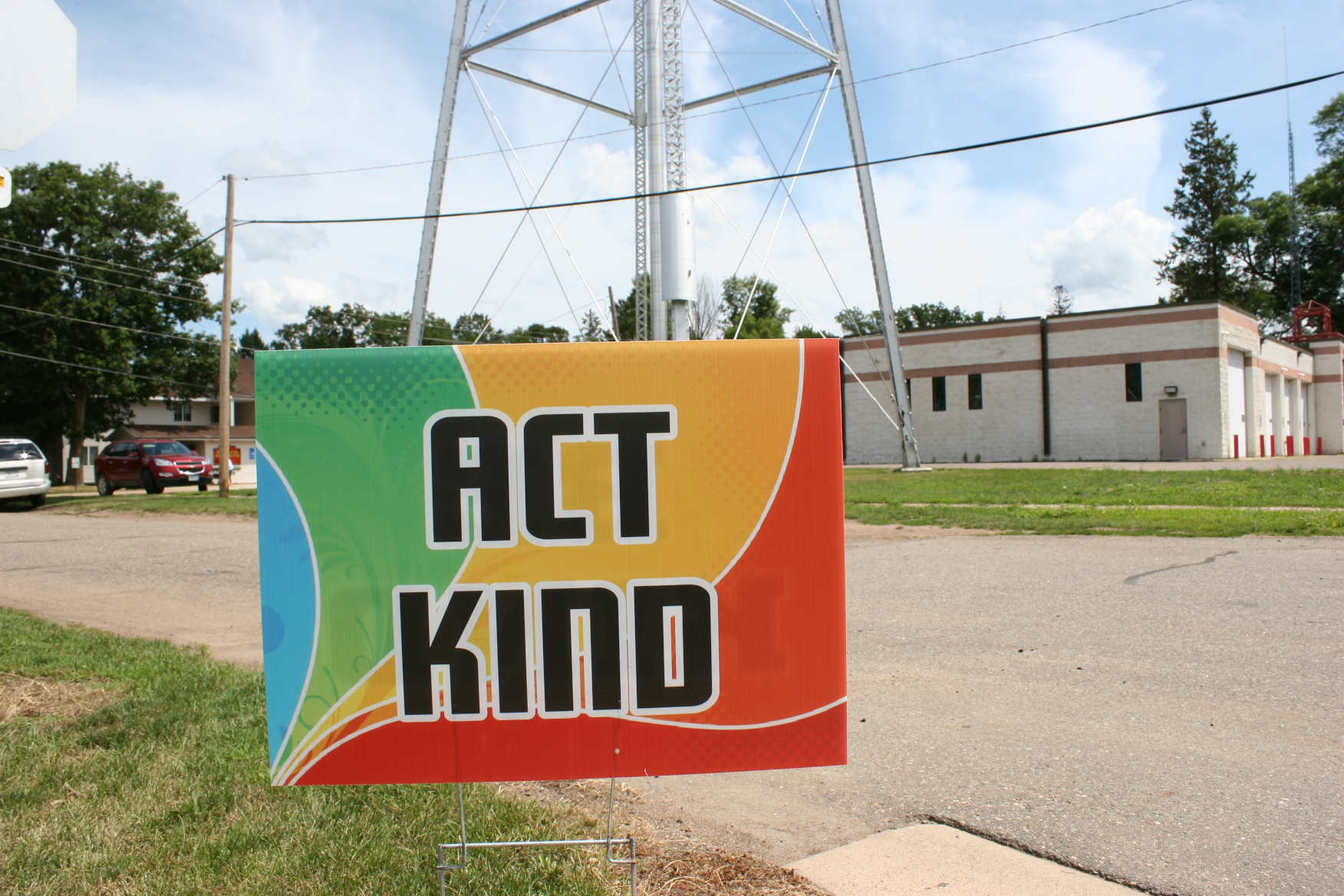
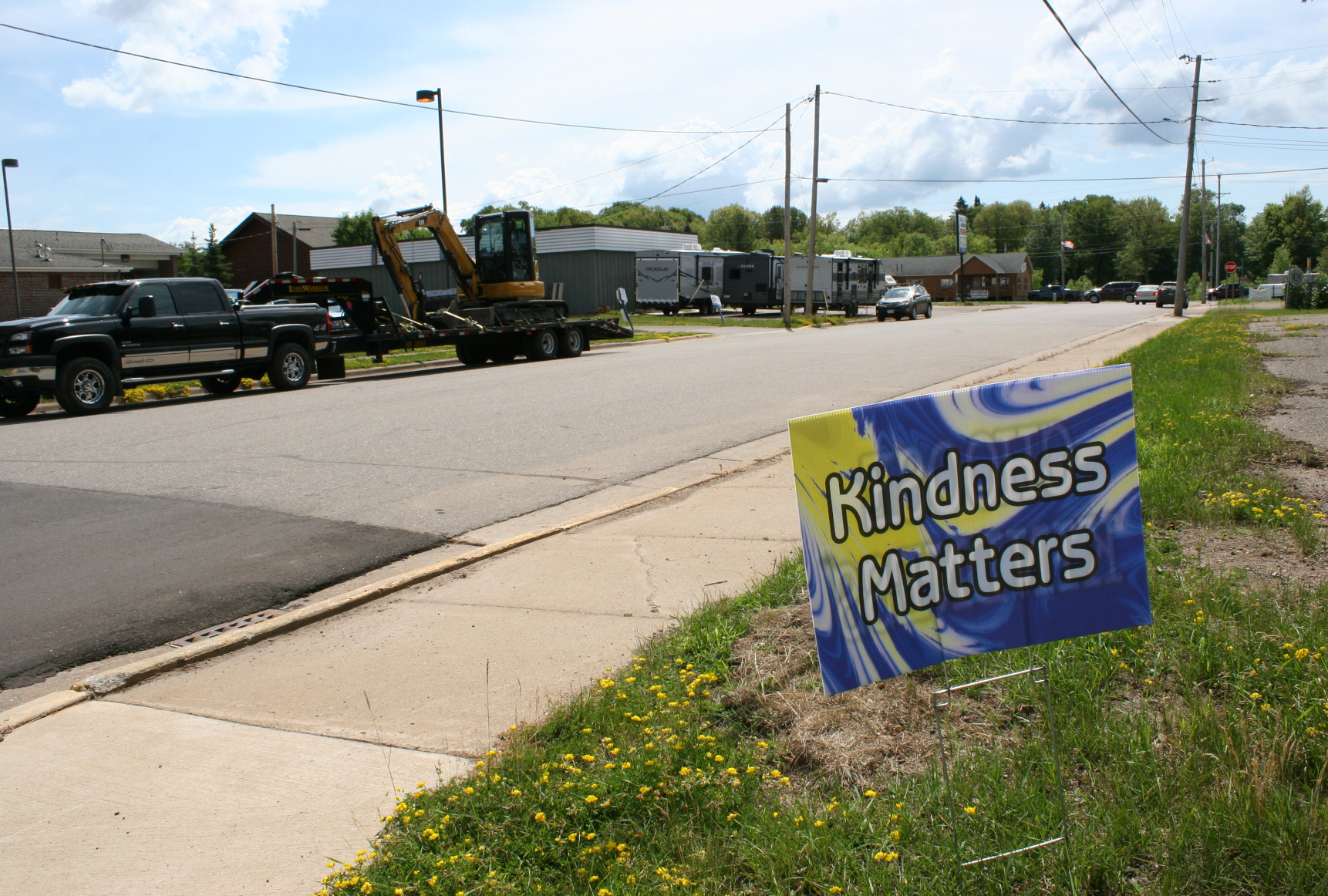
But I need to include one more discovery. That’s the posting of kindness messages on several street corners. I have no idea who posted them or how long they have been in place. But I appreciate them. They gave me a really good impression of this Crow Wing County community on the Cuyuna Iron Range.

Perhaps more are displayed around town. Even if not, this trio was enough to uplift, encourage and give me pause. Now, more than ever, kindness needs promoting. That seems a bit ridiculous to even write. Kindness should come naturally. Sadly, in today’s ever divisive world, kindness is elusive to many.

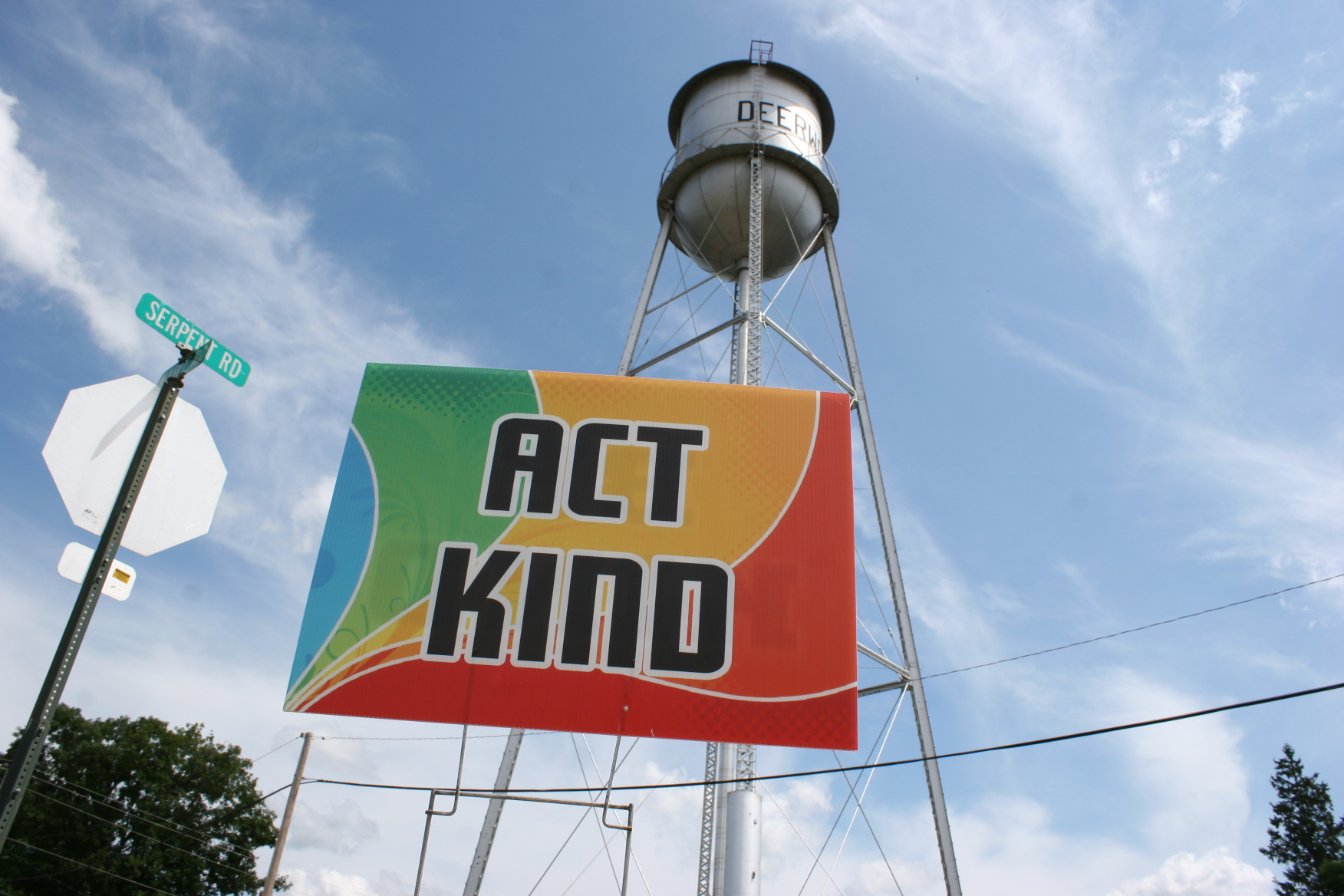
Kindness is also an “act,” not simply words. This was posted near Deerwood’s water tower. Minnesota Prairie Roots copyrighted file photo July 2021.

So what exactly is kindness? It’s being nice. You know. Using nice words. Doing nice things. Smiling. Caring. Listening, especially listening. Putting others before yourself, eliminating the me-centered thinking which pervades too much of society.

Kindness, too, is thinking before you speak or post something mean or untrue or uncaring on social media.

Kindness is empathy and understanding and compassion. It is all that is good and lovely and wonderful.

Kindness matters today more than ever. Minnesota Prairie Roots copyrighted file photo July 2021.

I can’t help but think that, if we could reclaim kindness, we could overcome this pandemic. That’s simplifying the situation, of course. An article I read recently on MPR about a Texas pastor who nearly died from COVID-19 really resonates with me and fits this kindness topic. I encourage you to click here and read what Pastor Danny Reeves has to say about “what it really means to love our neighbor.” It’s a powerful story that summarizes kindness in a deeply personal way.

To the good people of Deerwood who posted these kindness signs, thank you for the positive messages. I appreciate you and your efforts.

TELL ME: If you’ve seen similar upbeat signage, please share. I’d like to hear what you’ve seen and where. Also feel free to share your definition of kindness.

© Copyright 2021 Audrey Kletscher Helbling
 

In Deerwood: Water tower on the range August 30, 2021

An historic 1914 water tower in Deerwood, Minnesota. Minnesota Prairie Roots copyrighted file photo July 2021.

A TIME EXISTED WHEN I PAID minimal attention to water towers. They all looked the same. Simple silver metal structures rising on leggy supports above prairie towns, dwarfed only by grain elevators.

Through the decades, those standard water towers have mostly vanished, replaced by more modern holding tanks. I understand the need to upgrade, to improve, to advance. Communities grow. Needs change. My city of Faribault is currently planning a new water tower, which will be visible from Interstate 35. If Faribault ever housed a simple metal tower, it was long before I moved here.

Community identifier. Minnesota Prairie Roots copyrighted file photo July 2021.

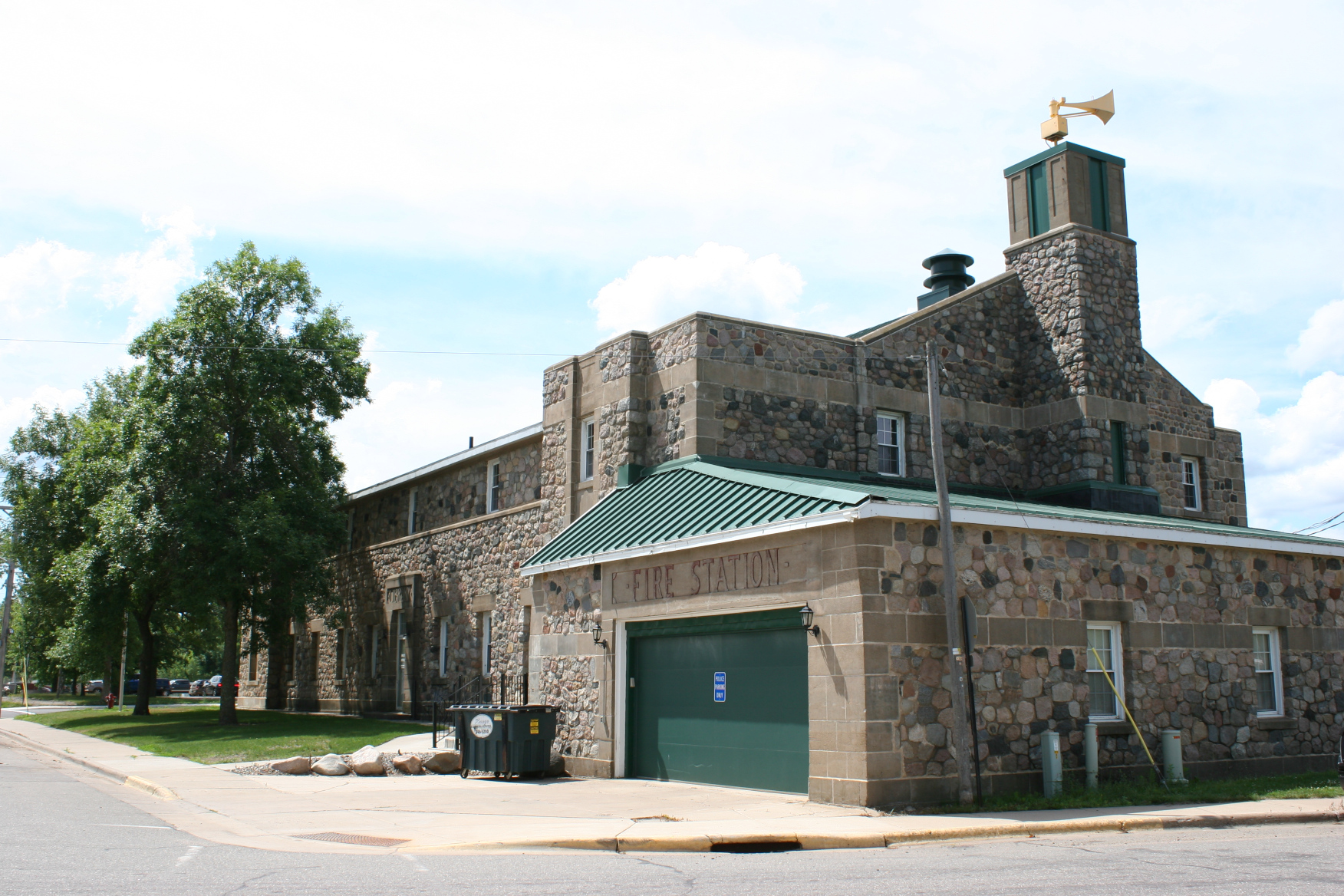
But in the small town of Deerwood in Crow Wing County, a vintage water tower still stands, by a city park with picnic shelter and splash pad, near an apartment complex, next to the fire station and across the street from the historic Deerwood Auditorium (city hall and police department).

Randy and I discovered the 1914 water tower when we stopped for a picnic lunch en route to a family lake cabin on a Saturday afternoon in July. Previous drives north, we drove right through Deerwood without pause. In a hurry to get to our destination.

That’s problematic. That word, hurry. By hurrying, we too often miss simple delights. Like the historic Deerwood water tower.

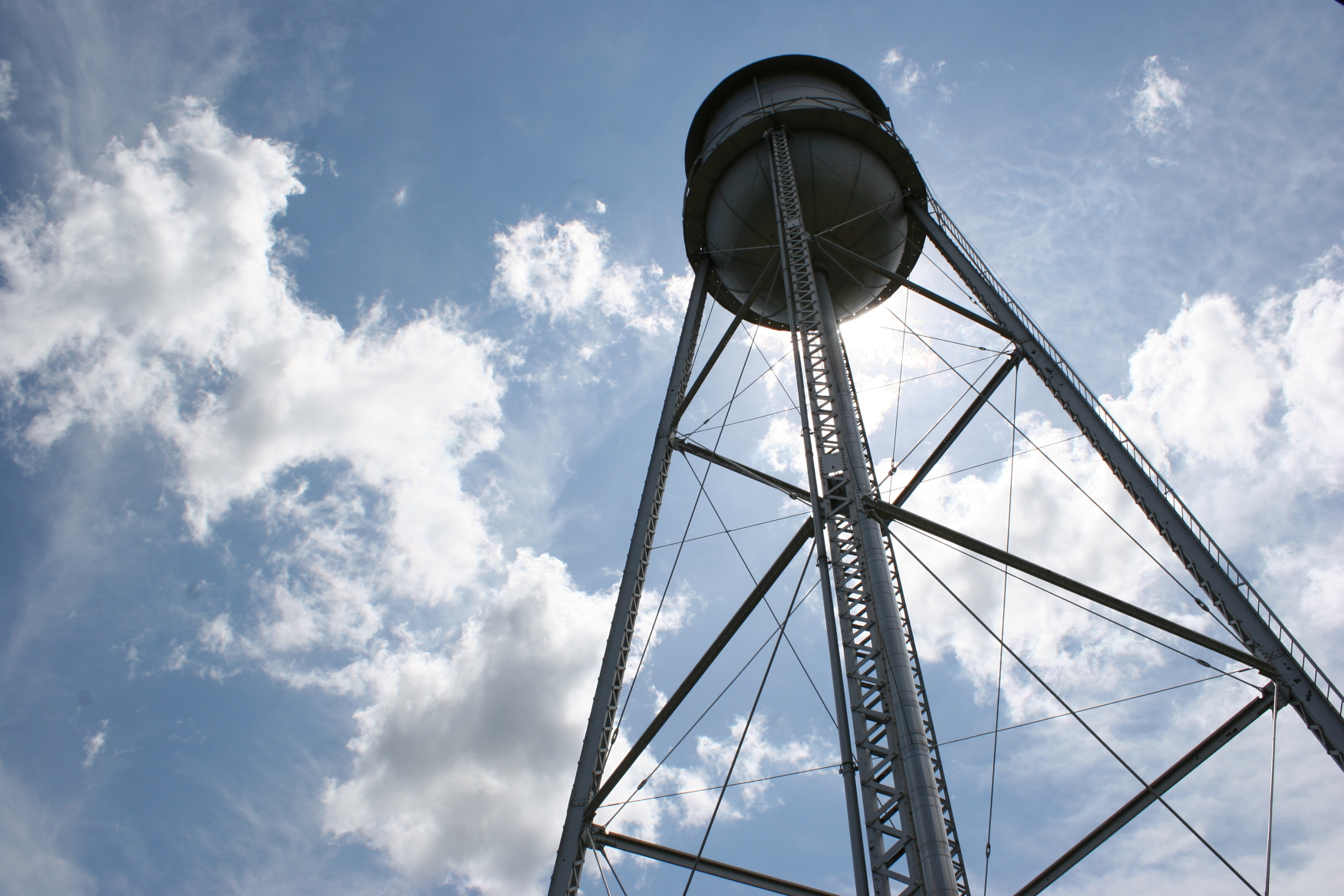
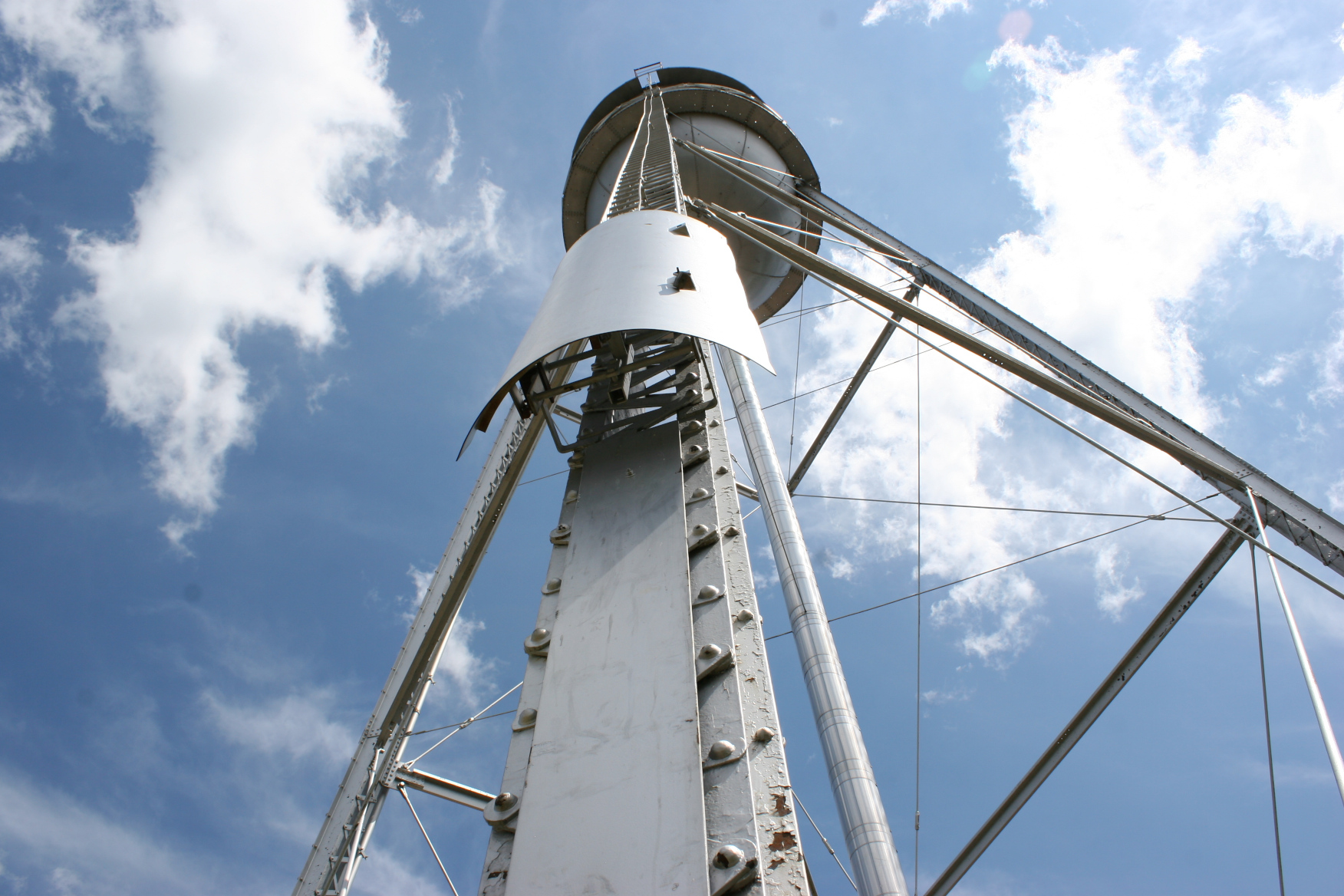
Looking up at the tower offers artistic and architectural angles. Minnesota Prairie Roots copyrighted file photo July 2021.

I grabbed my camera to photograph the tower, attempting to document it from multiple perspectives. Architecturally. Artistically. Historically.

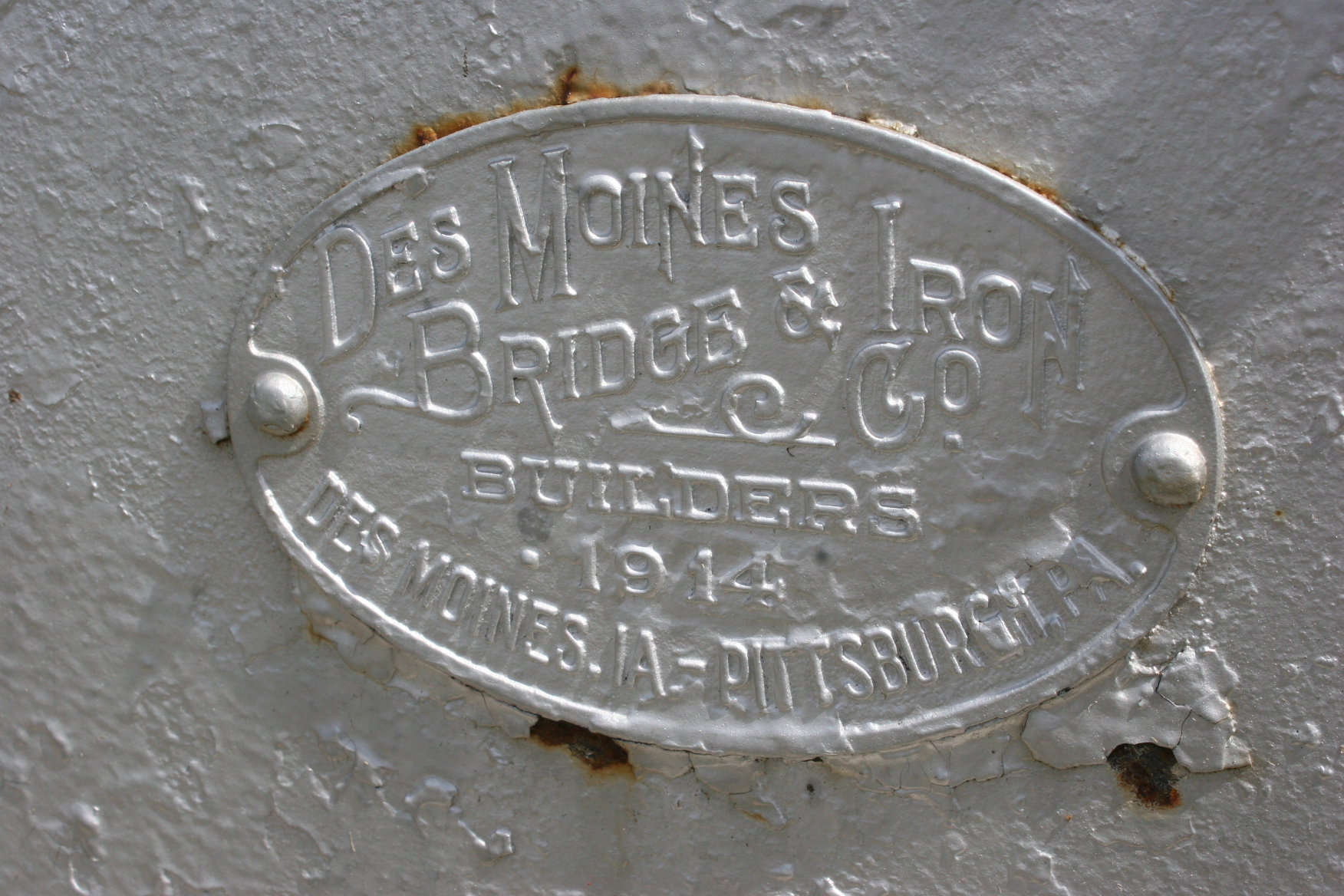
Identifying construction information at the base of the Deerwood water tower. Minnesota Prairie Roots copyrighted file photo July 2021.

Upon later researching the Deerwood water tower, built by the Des Moines Bridge & Iron Co., I learned it is one of five such Cuyuna Iron Range water towers on the National Register of Historic Places. Added in 1980, the other towers are located in Crosby, Cuyuna, Ironton and Trommaid. They are known collectively as the “Cuyuna Range Municipally-Owned Elevated Metal Water Tanks.”

Just another underneath view. Minnesota Prairie Roots copyrighted file photo July 2021.

The towers, erected between 1912-1918, were of historical importance in development of the Cuyuna Iron Range. Tax revenue generated from the iron ore mines funded their construction.

Posted on a street corner by the water tower, a positive message. Minnesota Prairie Roots copyrighted file photo July 2021.

I appreciate that these five towns on the iron range valued their aged water towers enough to pursue and acquire historical designation. The water towers represent a time in Minnesota history. They represent, too, the architecture and art of yesteryear.

TELL ME: I’d like to hear of vintage water towers you’ve noticed and appreciate. Tell me, too, why you value them.

Please click here to read my previous post about the historic Deerwood Auditorium. And click here to read my post about the town’s deer sculpture in Elmer Park.

© Copyright 2021 Audrey Kletscher Helbling
 

About that auditorium in Deerwood August 27, 2021

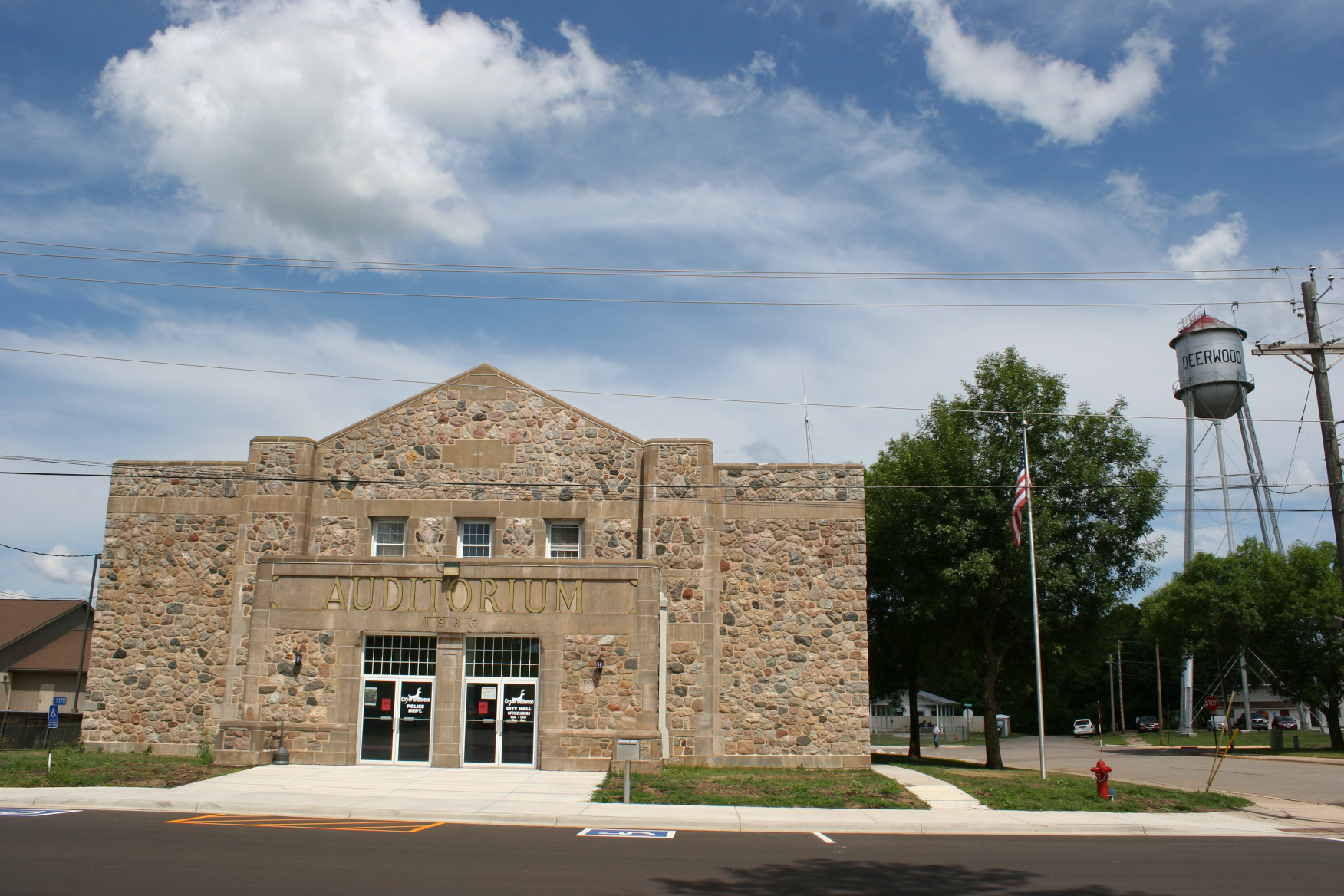
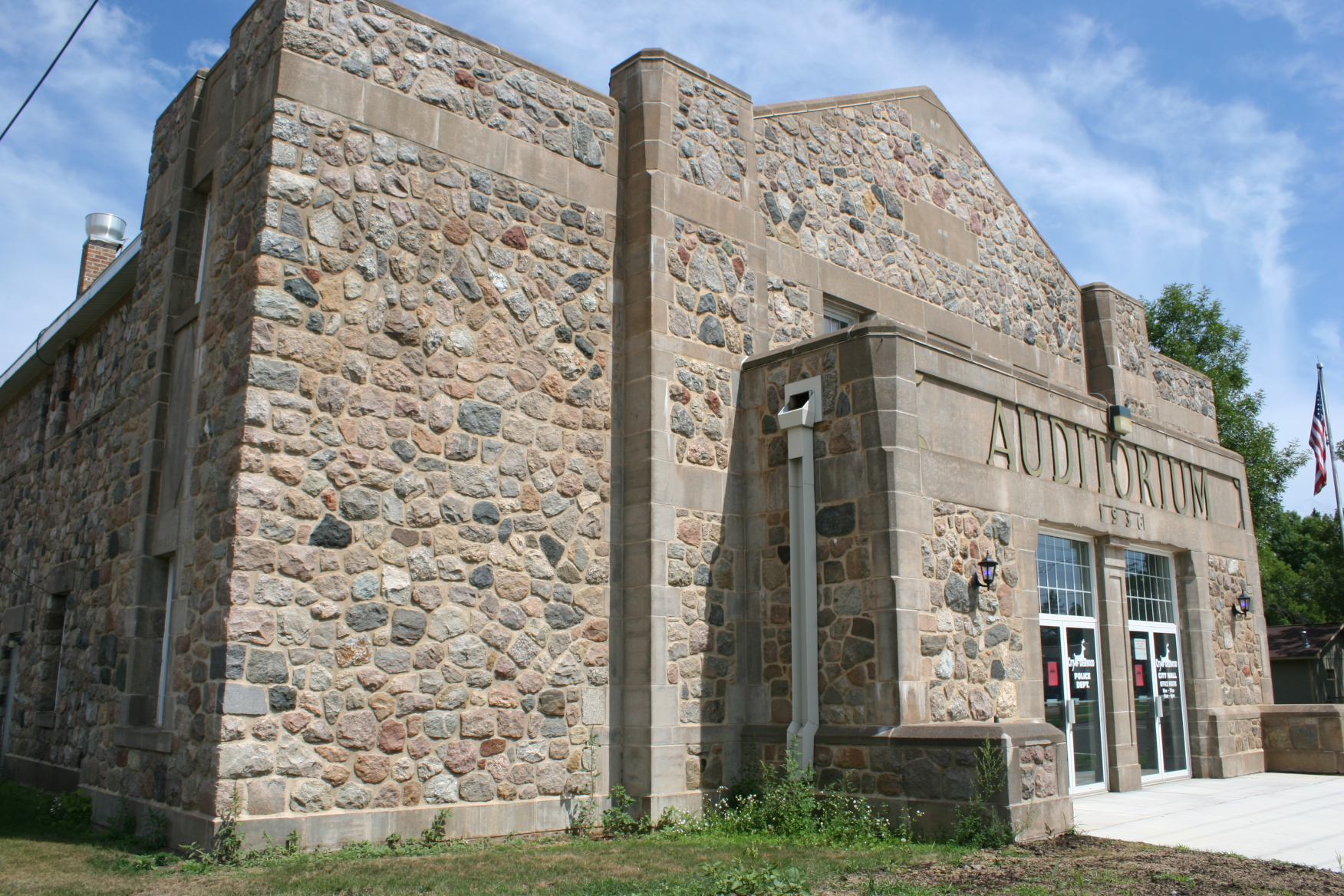
Deerwood Auditorium, located a block from the water tower. Minnesota Prairie Roots copyrighted file photo July 2021.

THE STURDY STONE STRUCTURE anchoring a corner in Deerwood drew my photographic and historic interest during a recent stop in this central Minnesota community in Crow Wing County.

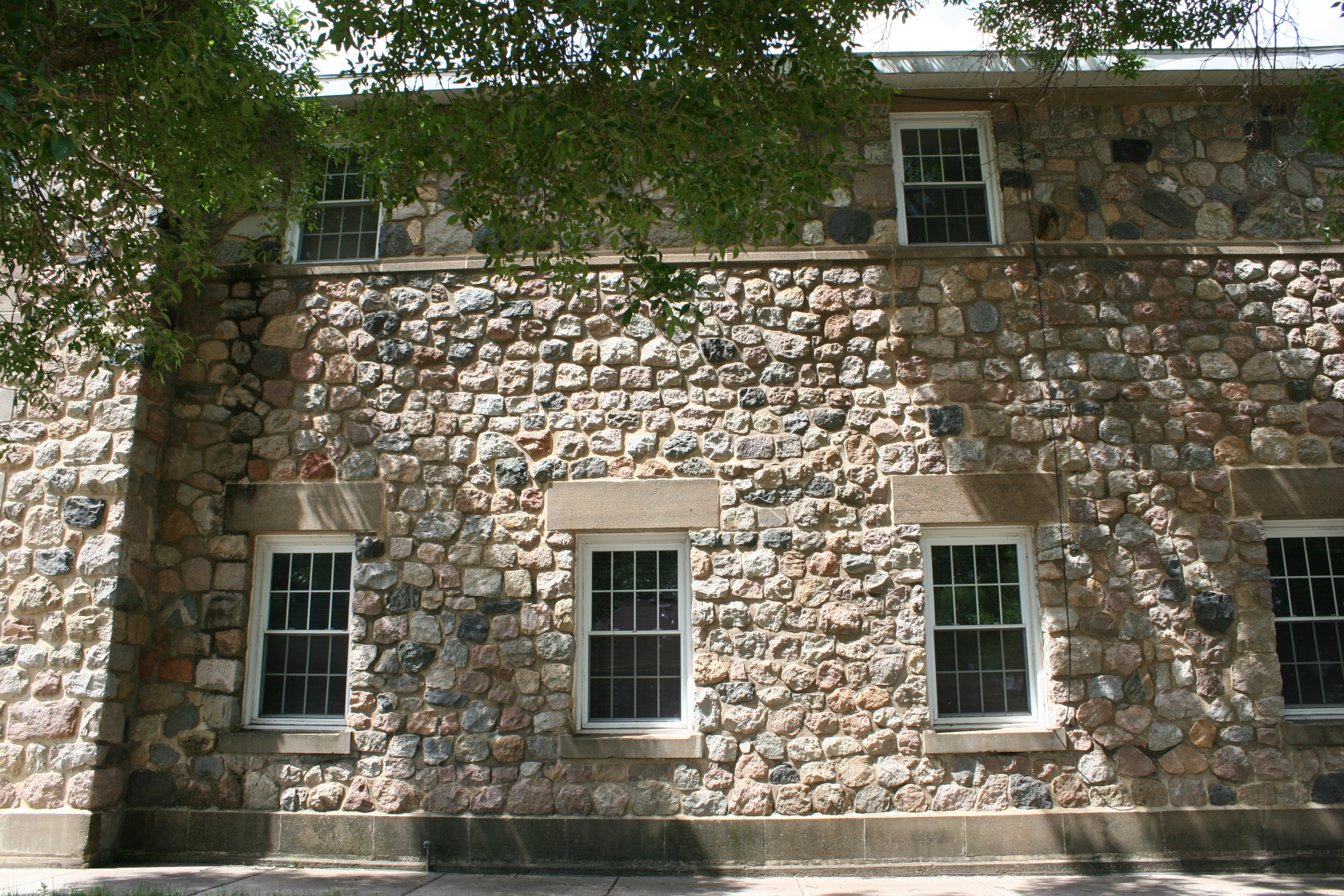
What craftsmanship in this stone-faced building. Minnesota Prairie Roots copyrighted file photo July 2021.

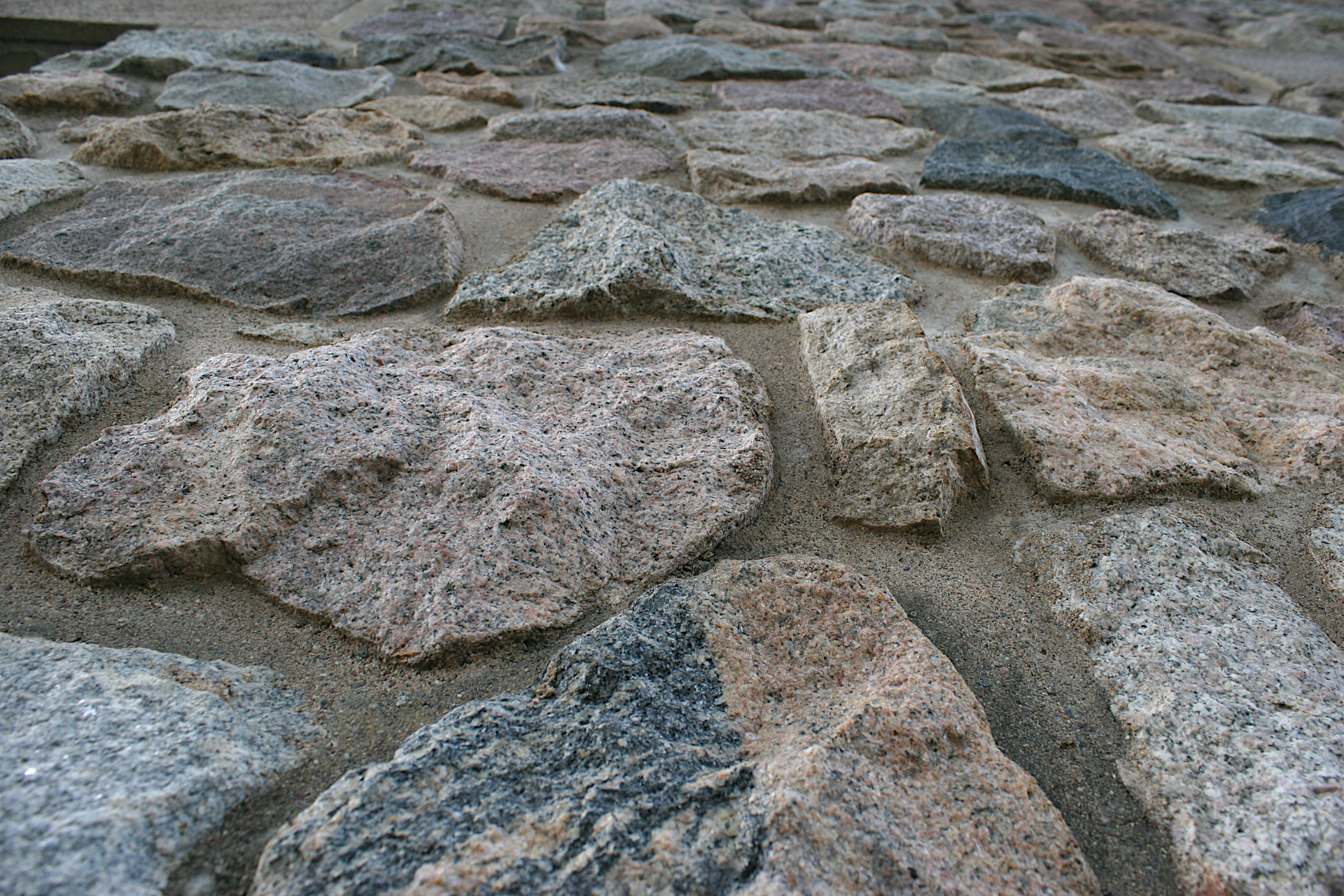
How could it not? Buildings like this with a fieldstone facing hearken from a bygone era, from days when intense hands-on labor factored in to construction. Workers hauled 800 tons of fieldstones from the site of the Cuyuna Country Club to build the Deerwood Auditorium between 1935-1936.

So many fieldstones harvested and used in construction of the auditorium. Minnesota Prairie Roots copyrighted file photo July 2021.

That’s a lot of rocks. I understand, not because I ever hauled that much stone anywhere. But, as a child, I spent many a summer plucking rocks from farm fields in southwestern Minnesota and tossing them into a wagon. Picking rock is hard work. Darn hard.

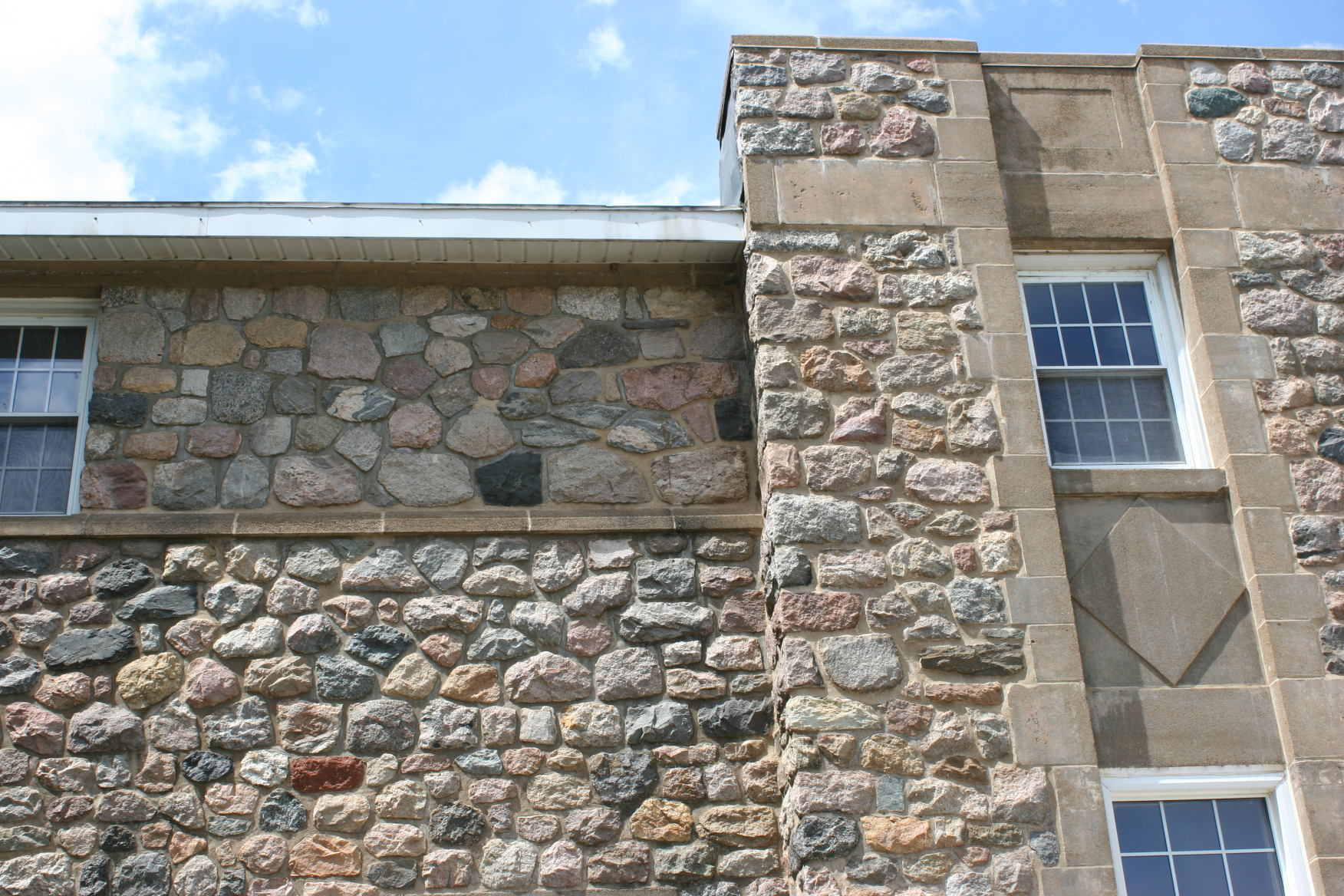
Imagine the time, labor and effort involved in constructing these walls. Minnesota Prairie Roots copyrighted file photo July 2021.

I admire the tenacity, determination and ingenuity of our forefathers. They relied on local natural resources to build buildings. And, in the case of the Deerwood Auditorium, materials also from the old Meacham Mine machine building to incorporate into the structure.

The building is listed on the National Register of Historic Places. Minnesota Prairie Roots copyrighted file photo July 2021.

Donations and Works Progress Administration funding and labor were also part of this project.

A side and rear view of the building. Minnesota Prairie Roots copyrighted file photo July 2021.

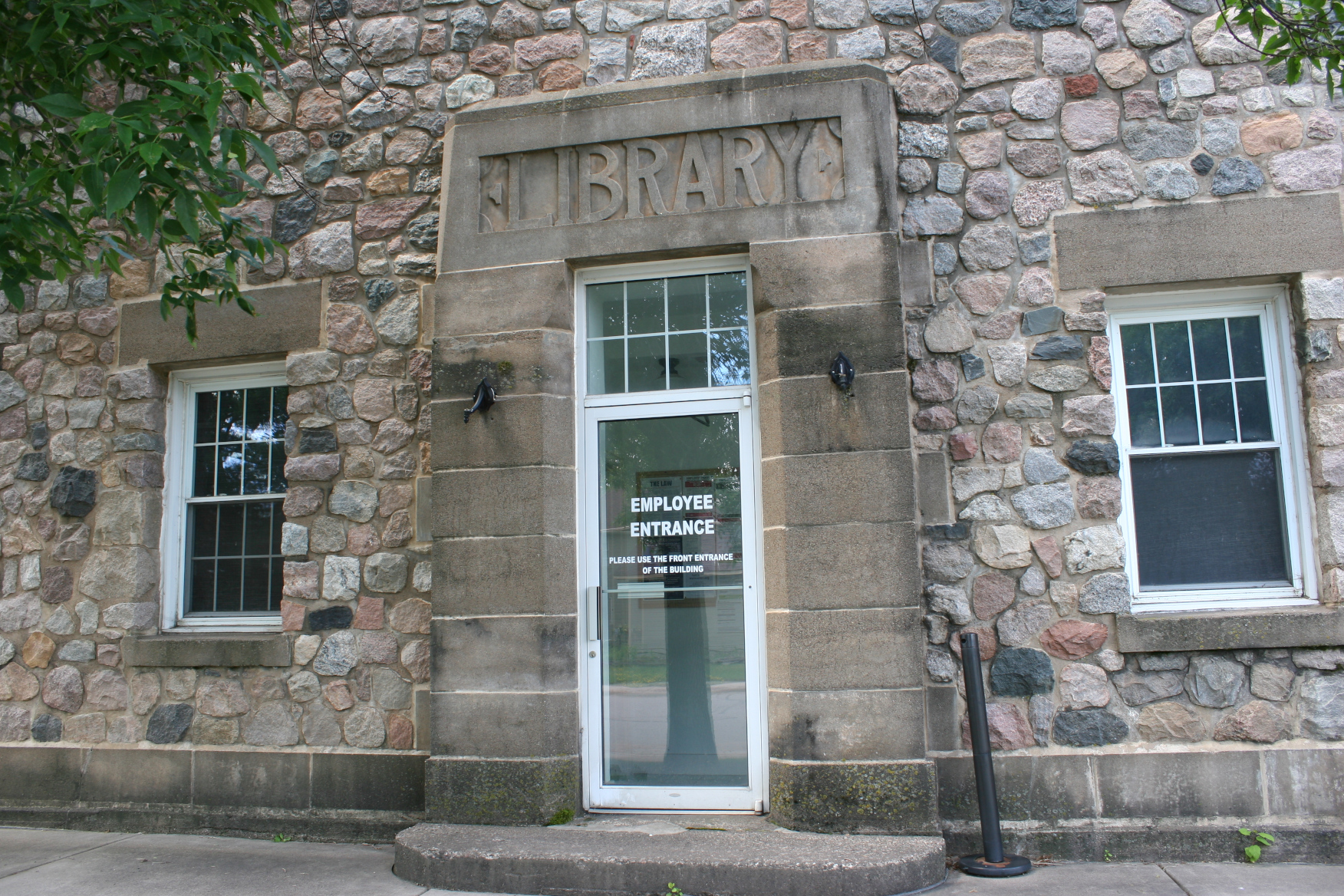
The completed building included village council chambers, a kitchen, locker rooms, library, space for fire fighting equipment and that all-purpose 38 x 80-foot gym with overlooking second floor balconies. Today the auditorium, on the National Register of Historic Places, serves as a community center and gathering spot for celebrations like weddings, birthdays and family reunions.

Another side view of the historic Deerwood Auditorium. Minnesota Prairie Roots copyrighted file photo July 2021.

Back during construction, locals aimed to have the building finished in time for the community’s annual fall lutefisk dinner. It was completed for the event, which drew an estimated 1,000 diners to feast on the lye-soaked cod of Norwegian culinary delight.

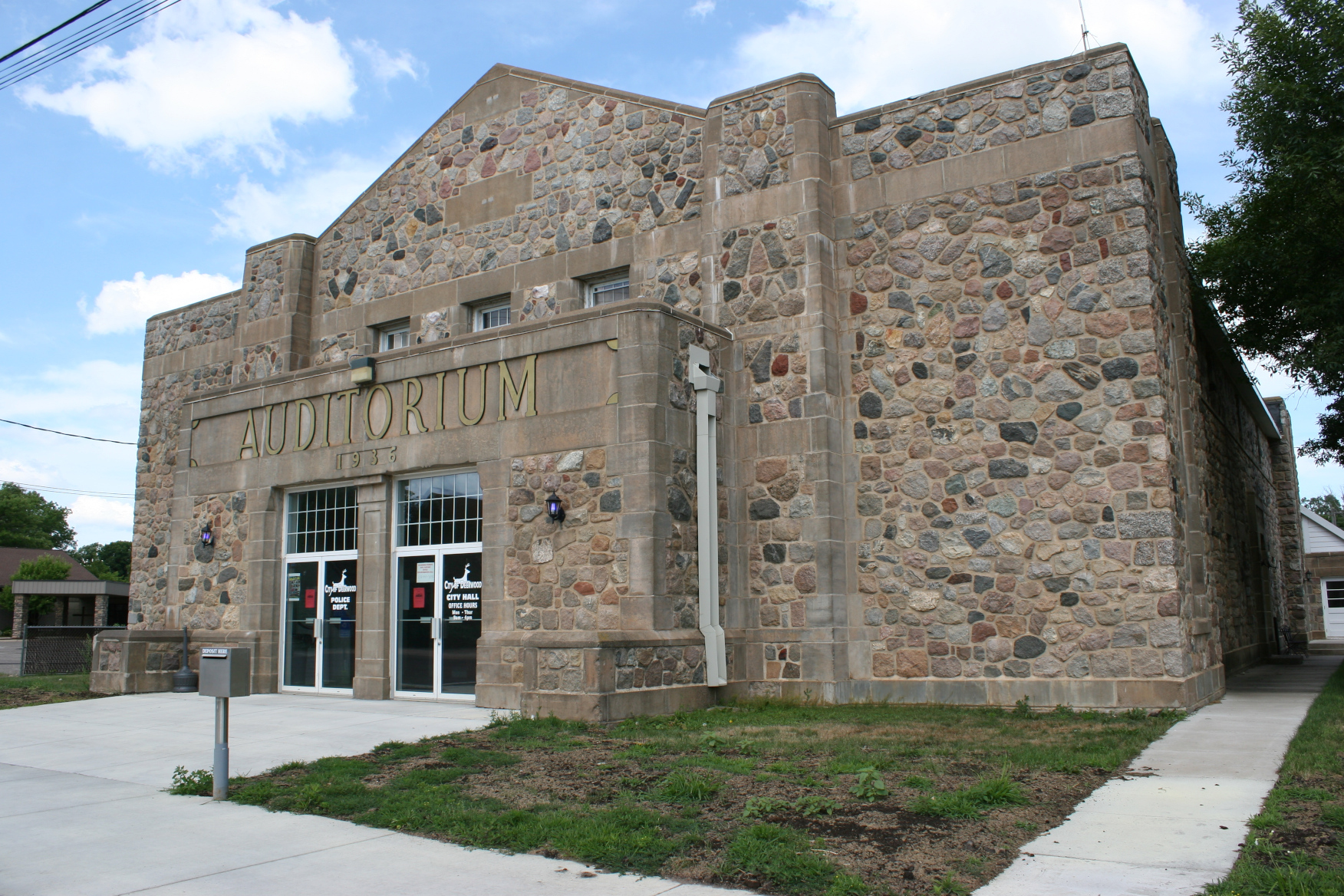
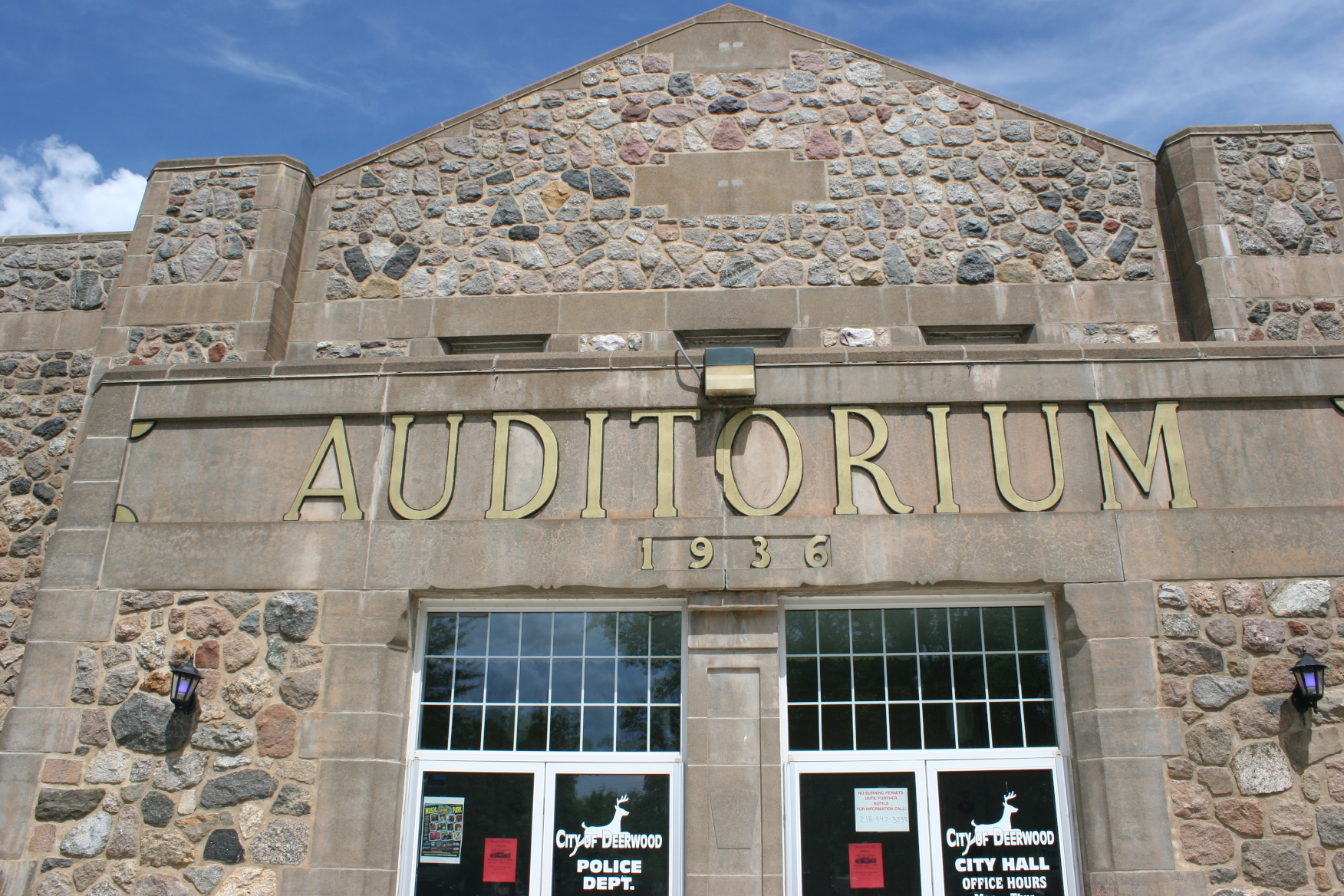
The front entry with identifying usage information. Minnesota Prairie Roots copyrighted file photo July 2021.

On the July Saturday I paused to photograph this WPA building, I knew none of these historical details. I couldn’t get inside the Deerwood Auditorium, today home to city hall, the police department and community center. Oh, how I wish I could step inside. To take in the history of this place. To imagine locals packed shoulder to shoulder forking down slippery, smelly lutefisk, their conversations creating a deafening din.

Once the library entry… Minnesota Prairie Roots copyrighted file photo July 2021.

I settled instead for appreciating the exterior workmanship, the talent and strength required to build this remarkable building. The craftsmanship. The hours and hours of labor. That shows in a structure that exudes strength, that honors those who work with their hands, for their work endures.

Please check back next week for one final (of three) post from Deerwood.

© Copyright 2021 Audrey Kletscher Helbling
 

The leaping deer of Deerwood August 24, 2021

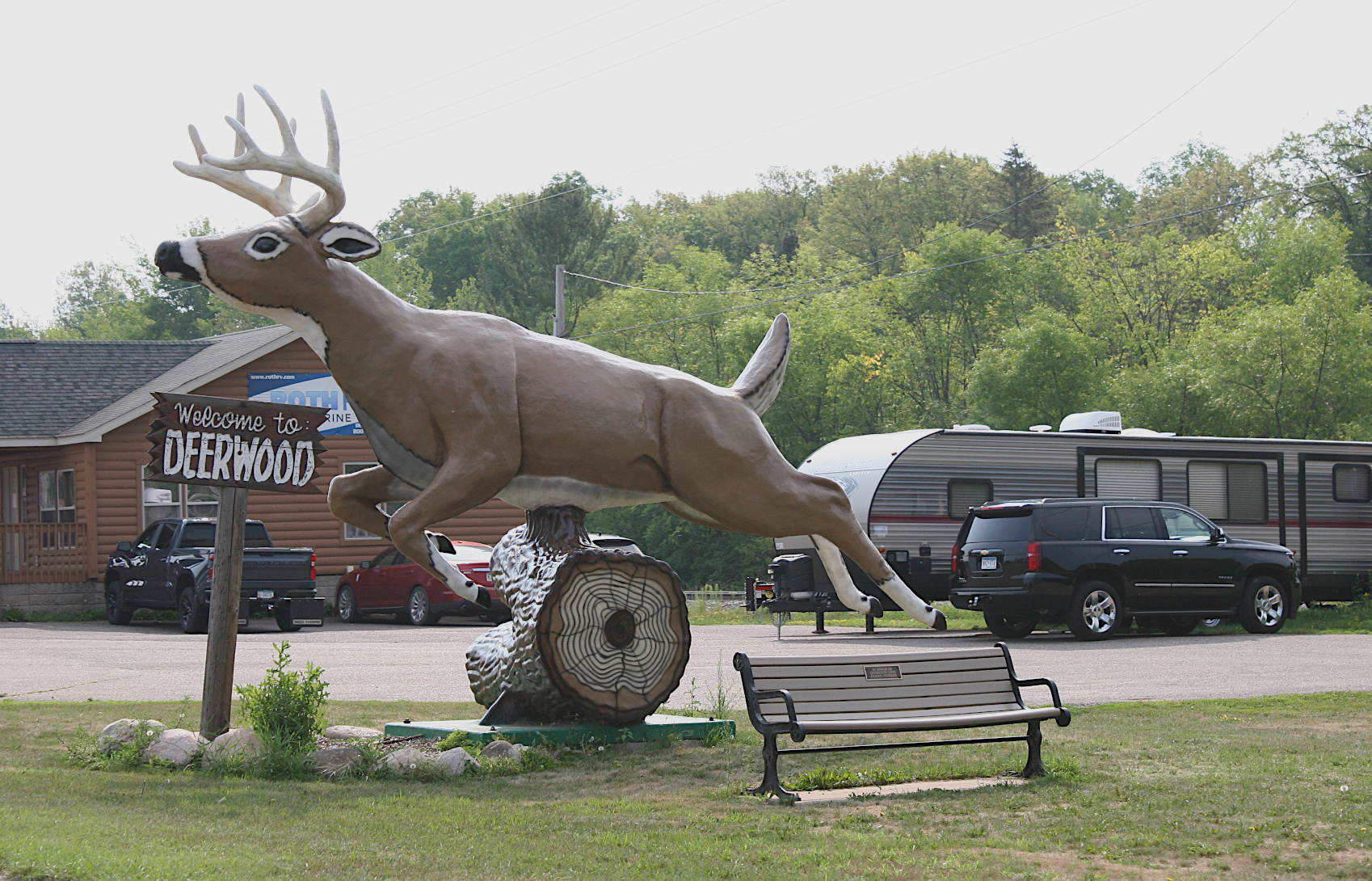
Leaping whitetail deer art in Deerwood, Minnesota. Minnesota Prairie Roots copyrighted file photo July 2021.

I APPRECIATE OUTDOOR public art. That includes kitschy roadside sculptures that define communities. The walleye in Garrison. The prairie chicken in Rothsay. The otter in Fergus Falls. Babe the Blue Ox in countless Up North Minnesota towns.

And in Deerwood, a Crow Wing County community of around 550, a leaping whitetail deer. The jumping deer, located in Elmer Park, is visible from Highway 6. I snapped a shot of it from the road last trip through this town in mid-July.

A little poking around online revealed that Deerwood was originally known as Withington. But, after being too often confused with Worthington in the southwestern corner of Minnesota, it was officially named Deerwood. That makes sense given its location among the lakes and hardwoods of central Minnesota where deer abound.

I learned a bit more history. Cuyler Adams of Deerwood discovered the iron ore which led to mining in this region. Thus the name Cuyuna Range—a combination of Adams’ first name and the name of his dog, Una.

Oh, the things you learn upon seeing, and photographing, a memorable deer sculpture next to a roadway.

TELL ME: Do you have a favorite roadside sculpture? I’d like to hear.

© Copyright 2021 Audrey Kletscher Helbling
 

Racing woodticks in Cuyuna August 3, 2021
The Woodtick Inn in Cuyuna. Minnesota Prairie Roots copyrighted photo July 2021.

I GET GIDDY UPON discovering something totally odd and quirky or whatever word fits a place like the Woodtick Inn, host to the annual Woodtick Races in Cuyuna.
Cuyuna City Hall. Minnesota Prairie Roots copyrighted photo July 2021.

During a recent cabin stay in the Brainerd lakes region, Randy and I routed through Cuyuna on our way to Crosby some four miles to the south. We often follow the road less traveled because doing so can lead to fascinating finds.

Woodtick Races scoreboards posted on the side of the Woodtick Inn. Minnesota Prairie Roots copyrighted photo July 2021.

And for us on this day, it was the woodtick-dubbed bar and grill and, of all things, Woodtick Races. The Inn hosts the races annually on the second Saturday of June.

An artist’s rendition of a woodtick hangs on the bar’s exterior. Minnesota Prairie Roots copyrighted photo July 2021.

But let’s back up a minute. What, exactly, is a woodtick? It’s a parasitic arachnid. Yup, a nasty bug that will latch into your skin and suck your blood. Many varieties of woodticks exist. But those raced in Cuyuna are the common American Dog Tick. And, yes, these ticks will find a host in a dog.

The sign which first caught my eye when entering Cuyuna. Minnesota Prairie Roots copyrighted photo July 2021.

Many years have passed since a woodtick determined I would be a good feeding source. But, as a child, I often found ticks stuck to my skin after playing outdoors. And, yes, they can spread diseases. And, no, I don’t like them. Not one bit.

The Woodtick Inn also welcomes anglers in this big fishing region. Minnesota Prairie Roots copyrighted photo July 2021.

But I can embrace Woodtick Races. What a novel event that puts Cuyuna, a former iron ore mining town in Crow Wing County, on the map. Or at least on our map. Cuyuna, a community of about 350, sits on the Cuyuna Iron Range. While the local mine closed long ago, going from boom to bust between 1907-1925, the mine lakes left behind now draw vacationers into the region.

There’s plenty of outdoor space for racing woodticks. Minnesota Prairie Roots copyrighted photo July 2021.

And I expect the annual Woodtick Races also draw plenty of participants and curious observers. This year, the 42nd annual event, the top three cash prizes ranged from $224-$560. That’s a good chunk of change for a race with a $5 entry fee and an additional $1 if you buy a “caught” tick rather than bring your own.

Lots of original signage identifies the Woodtick Inn. Minnesota Prairie Roots copyrighted photo July 2021.

I wondered aloud how event organizers gather woodticks for the races. “Send a kid into the woods,” Randy joked.

Meat raffles are a draw at the Woodtick Inn also. Minnesota Prairie Roots copyrighted photo July 2021.

However those ticks are gathered, the rules call for racers to place their woodticks in the middle of a circle on a table. Whichever tick reaches the outside of the circle first wins. And, yes, referees oversee the races.

In 2021, Gopher Tackle, based in Cuyuna for 40 years, was sold and relocated to Milford, Iowa. Minnesota Prairie Roots copyrighted photo July 2021.

Some day I hope to witness these races at the Woodtick Inn in Cuyuna. And I need to further explore the spread-out town named after surveyor Cuyler Adams and his Saint Bernard, Una. The Cuyuna I saw is vastly different from a boom town that once housed a hospital, high school, theater, hotels, saloons, grocery stores and much more. A town once teeming with iron ore miners and their families. And today, woodticks.

© Copyright 2021 Audrey Kletscher Helbling