Minnesota Prairie Roots

Writing and photography by Audrey Kletscher Helbling

Inside the Hamilton Wood Type Museum & the Target connection August 17, 2011

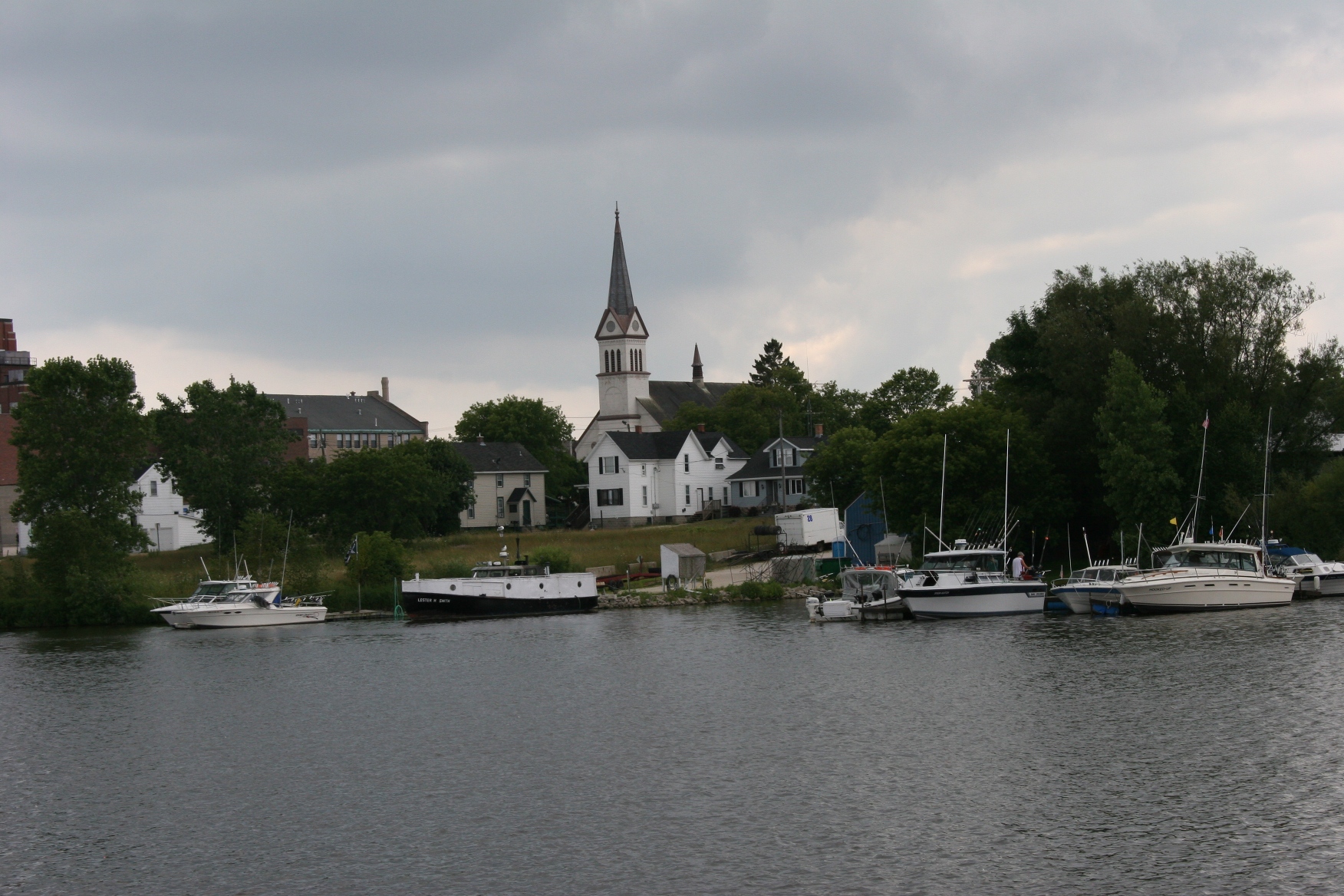
A picturesque view of Two Rivers, Wisconsin, as seen from the historic Rogers Street Fishing Village.

We treated ourselves to ice cream sundaes after the museum visit.

IF NOT FOR MY SECOND DAUGHTER’S neighbor mentioning a day trip to Two Rivers, Wisconsin, I might never have discovered the Hamilton Wood Type & Printing Museum or its connection to Minnesota-based Target.

The retailing giant collaborated with the museum on a recently-released fall Vintage Varsity collection promoted as “Cool Never Fades.”

With vintage so in vogue right now, Target definitely found the right place for designers to authenticate this new line. Hamilton made wood type from 1880-1985 and boasts a collection of 1.5 million pieces, the largest in the world. Target dipped into that collection to create graphics for the Vintage Varsity line.

The Target connection, however, wasn’t my reason for visiting Two Rivers, a city of 13,000 just south of Door County. Rather, Lake Michigan drew me here on a recent Sunday when my husband, son and I were visiting our daughter Miranda at her Appleton home 50 miles to the west.

My family can assure you that fashion wouldn’t draw me anywhere. But wood type would.

So, when I planned our day trip from Appleton to Two Rivers, Hamilton Wood Type ranked high on my must-see list, right after Lake Michigan. A promise to the teenage son of ice cream afterward at the historic Washington House, just across the street from the museum, kept him from complaining too much about my museum meandering. Interestingly enough, the sundae originated in Two Rivers in 1881.

Had I opted to take the official Hamilton tour, I likely would have learned much more about Hamilton Manufacturing Company and the museum, which also includes a collection of 1930s – 1970s advertising cuts, wood type and Linotype equipment, tools and more. The manufacturing company, which once made medical office furniture, appliances and more, is still in business today producing steel lab equipment.
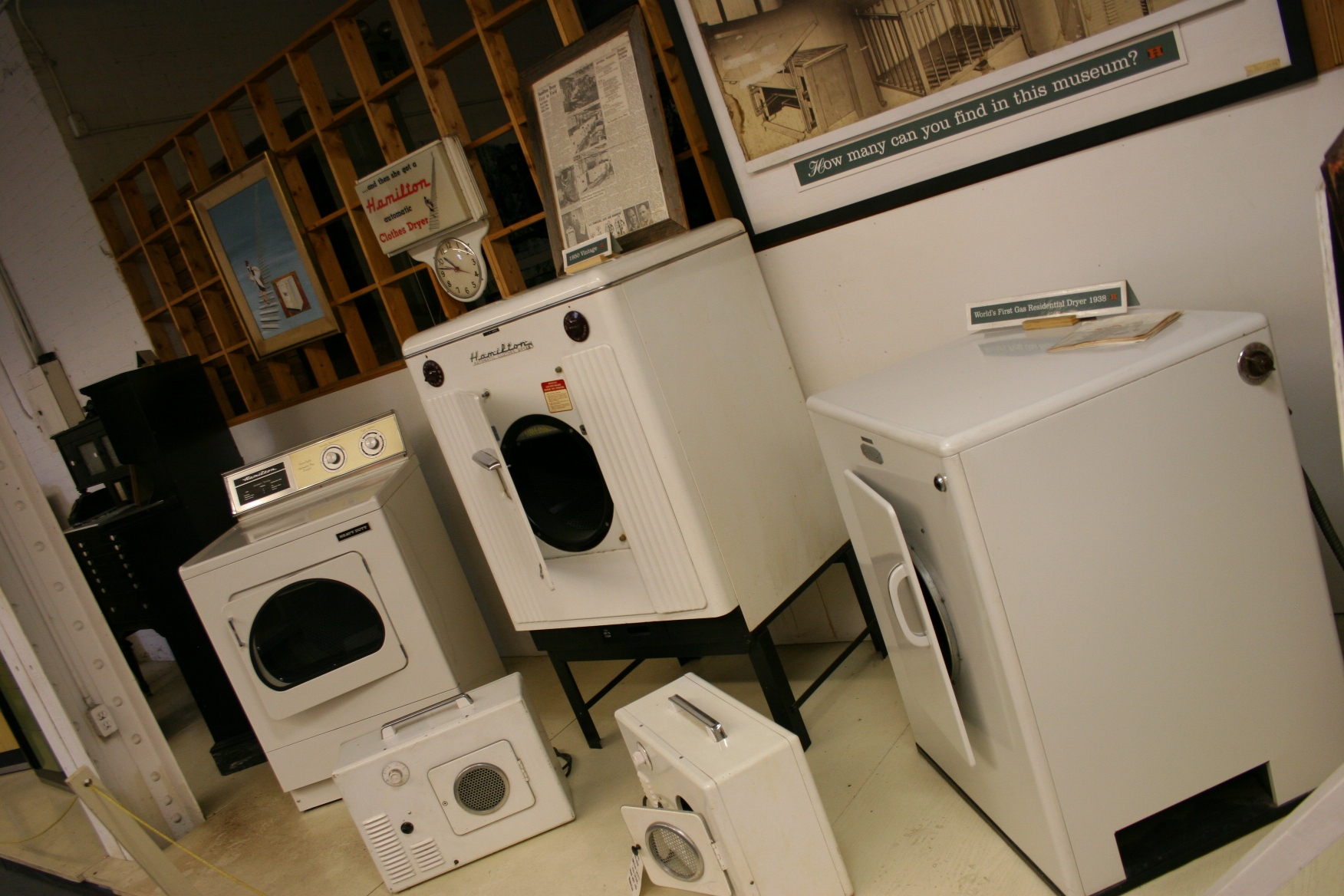
Hamilton manufactured the first gas-powered clothes dryers.

The museum is a self-supporting, working museum where artists and designers and others get hands-on experience in wood type printing and where custom printing is done, according to a Minneapolis woman who was printing at the museum on the day I visited.

In all honesty, Hamilton’s historical details didn’t interest me. Rather, I was here because of my decades-earlier connection to Linotype and because of my profession. During my first job out of college in 1978, I worked as a reporter at The Gaylord Hub, a small-town weekly newspaper that still used hot metal type to create auction bills and other custom printing. At the time, I failed to appreciate this fading art. Rather, I found the constant clack-clack-clack of the vintage machines bothersome, especially when conducting phone interviews.

Today my attitude has changed. I appreciate printing as an art. I took that perspective to the Hamilton Wood Type & Printing Museum and knew, even before I stepped inside the 1927 building, that my focus would be visual.
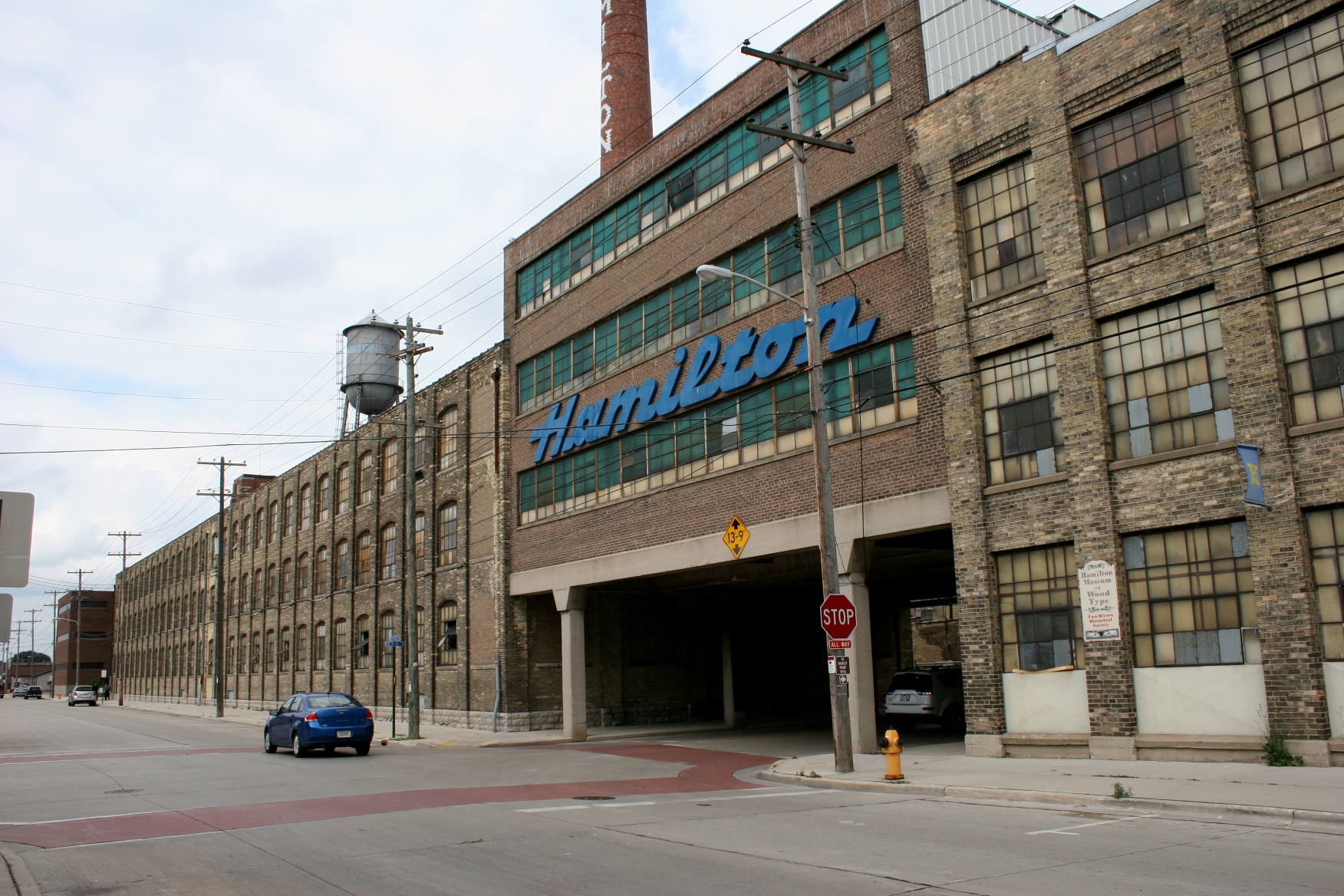
The Hamilton complex of buildings covers blocks.
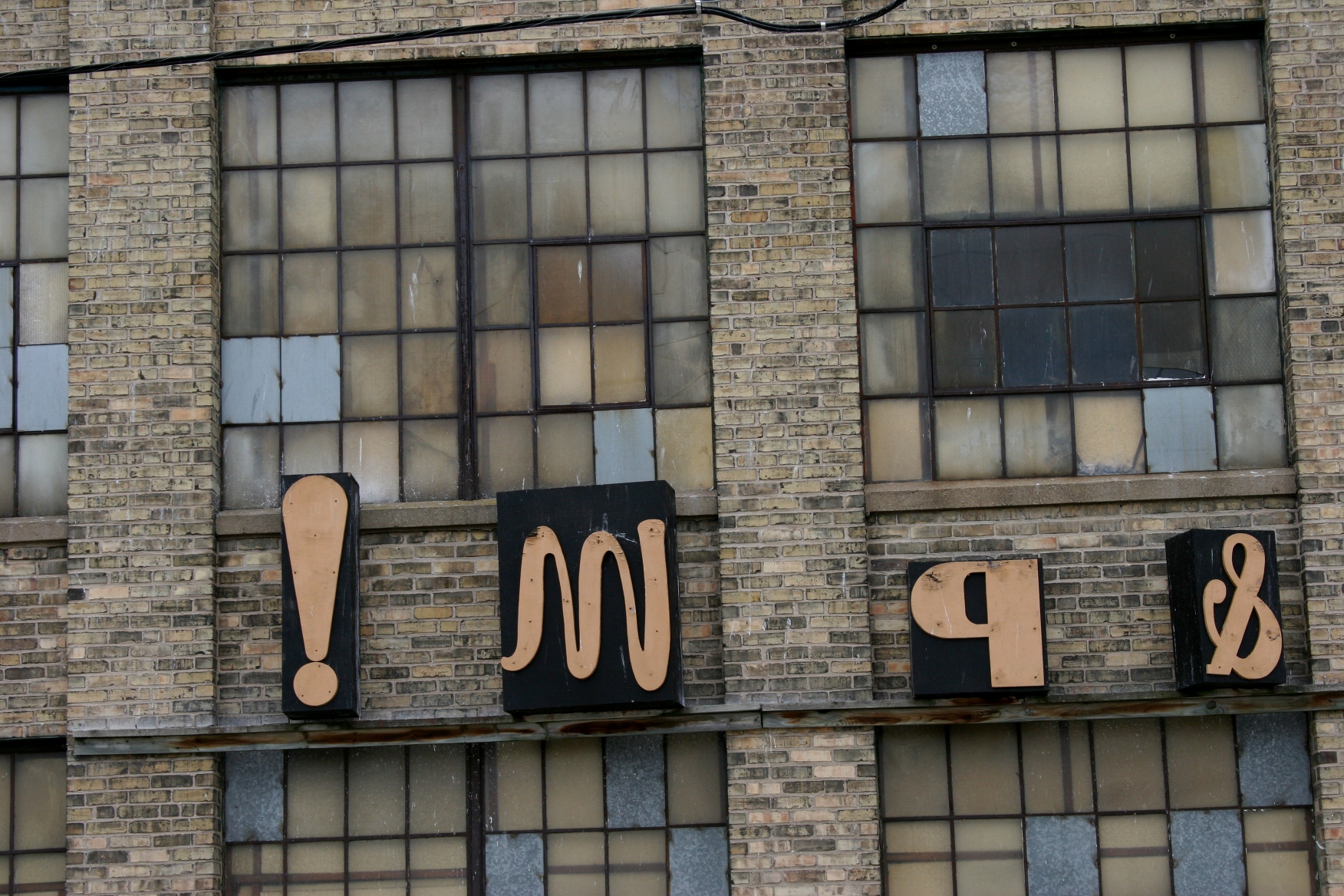
The building exterior features aesthetically appealing letters and punctuation.

My eyes swept across the nothing-fancy, industrial space filled with letters in more fonts and sizes than I could ever imagine. Posters. Colors. Graphics. Drawers upon drawers upon drawers that I wished I could pull open. Machines. Cement floors and brick walls. Jumbled pieces of wood and smeared paint cans, and brushes hung on walls.

I felt almost overwhelmed by the photographic possibilities, the kaleidoscope of colors and shapes that changed as I circled the room.
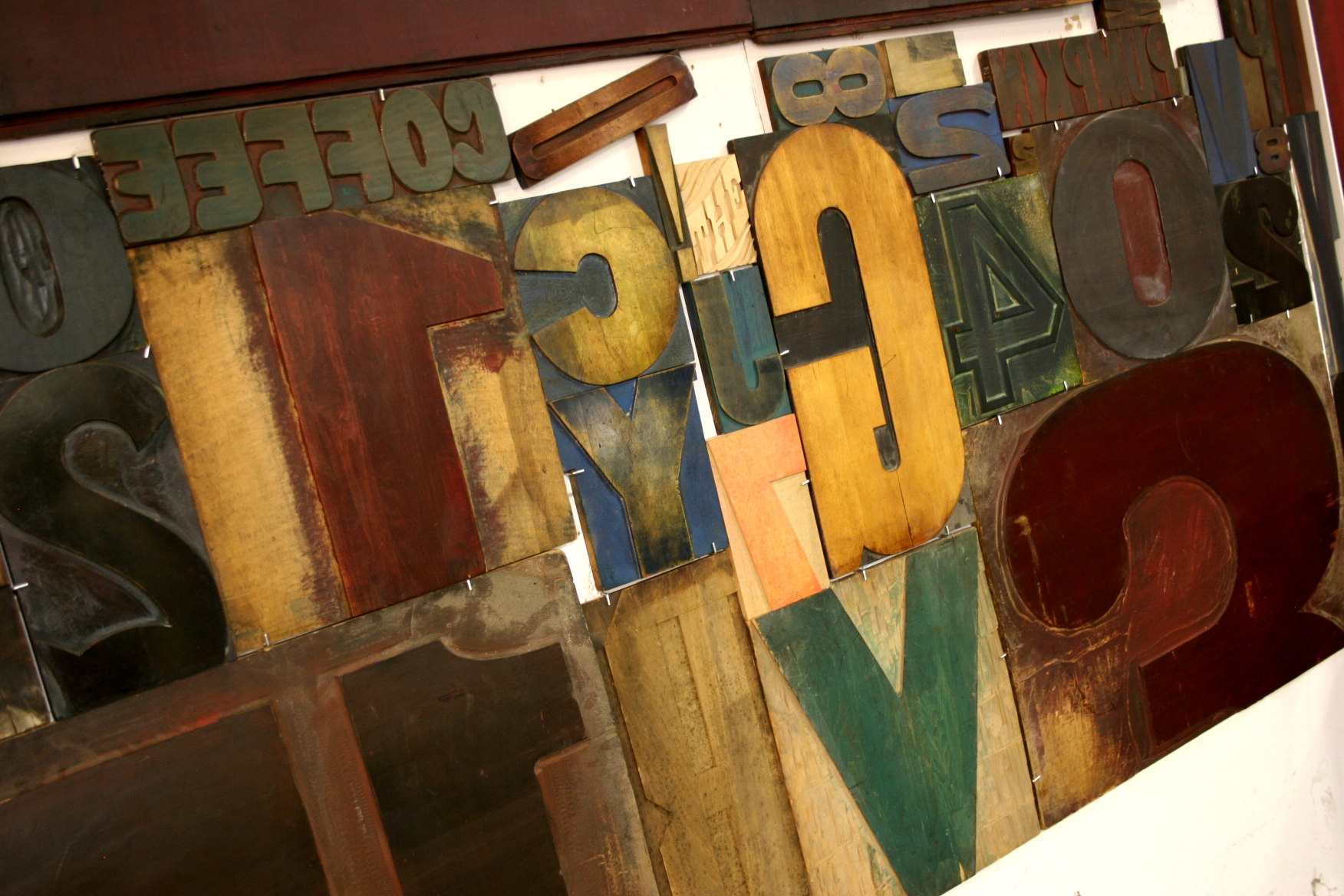
Everywhere you'll see letters and numbers in differing sizes and fonts, a visual delight.
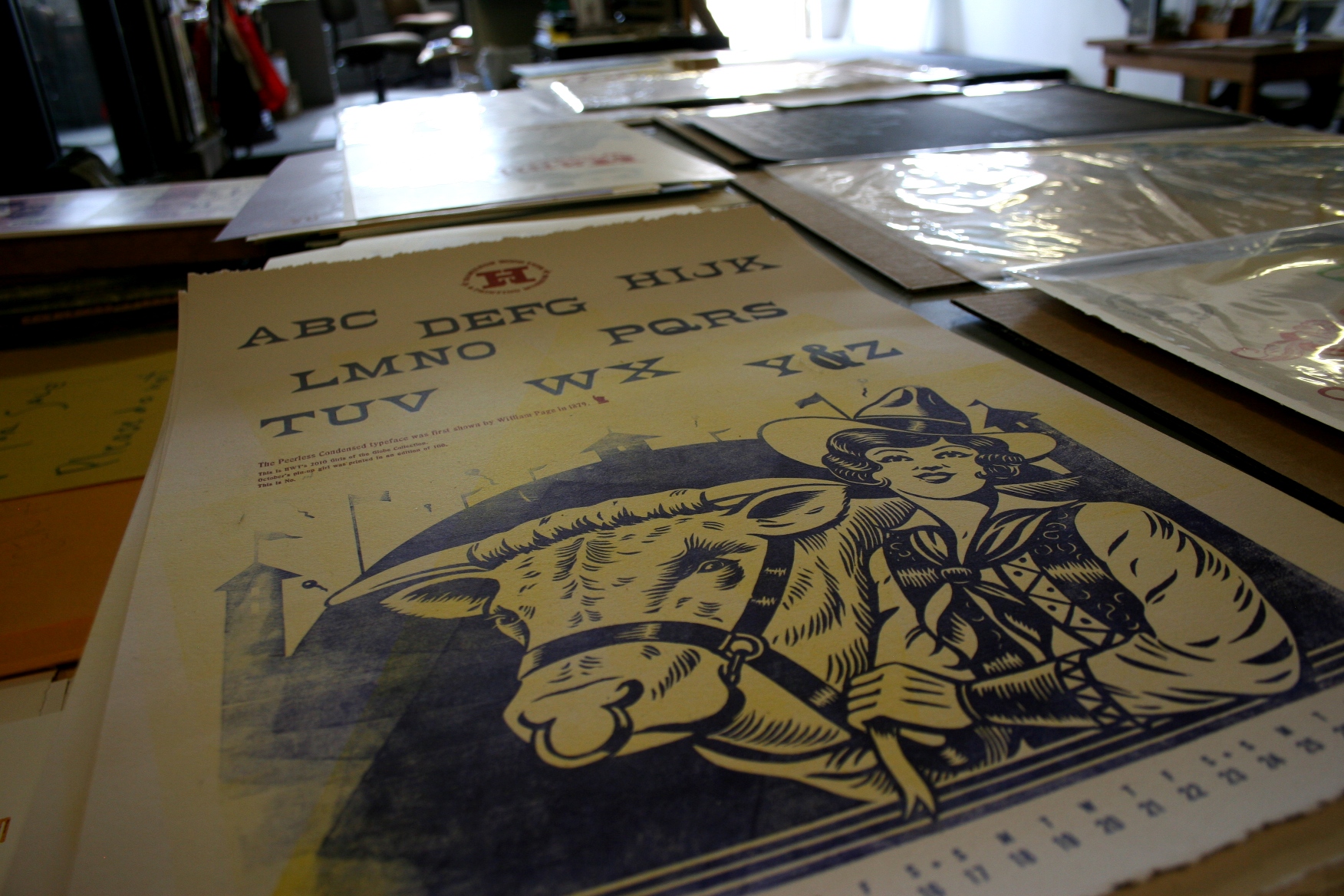
One of the many vintage prints you'll see in the museum.
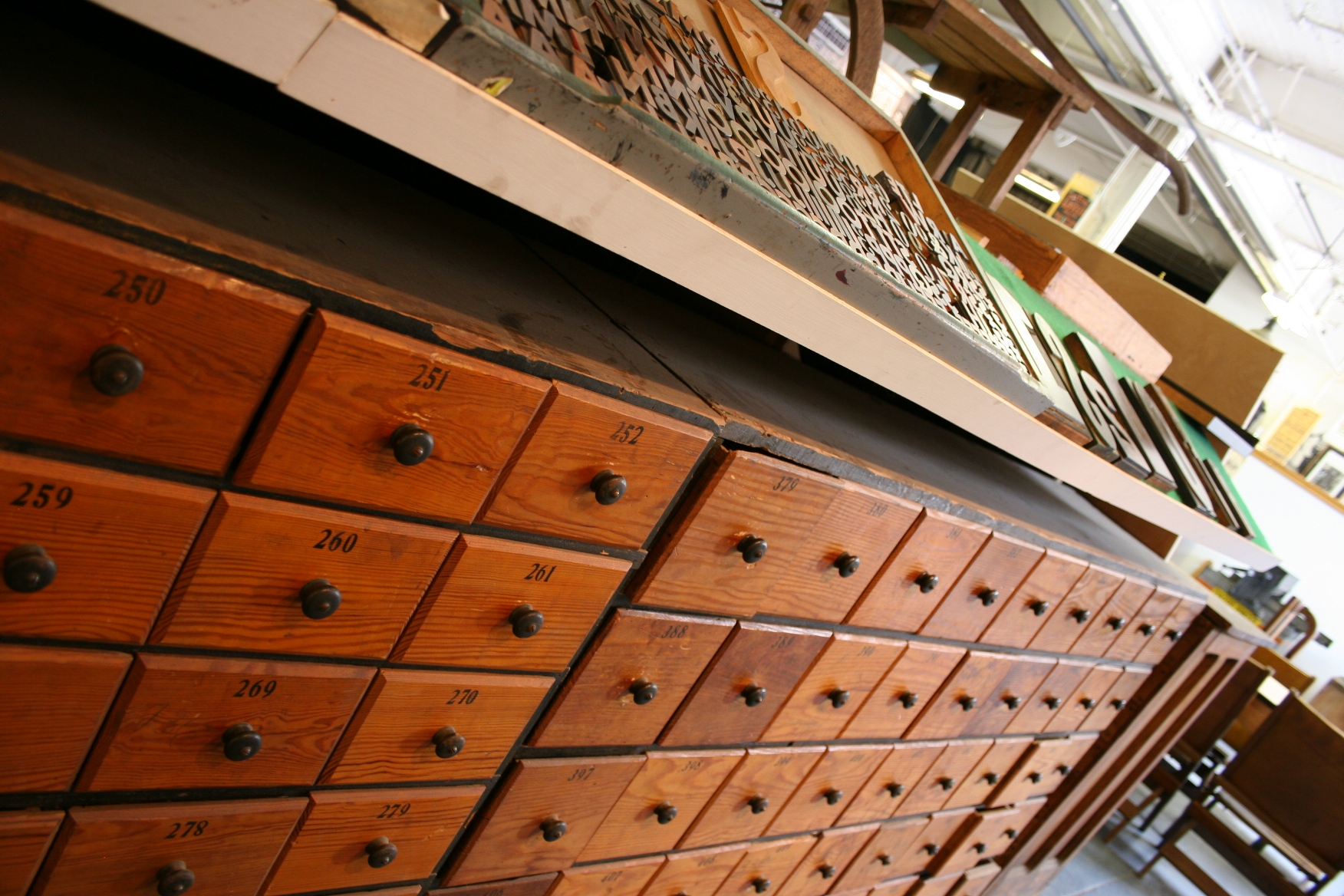
Rows upon rows of tempting drawers, presumably filled with wood type.
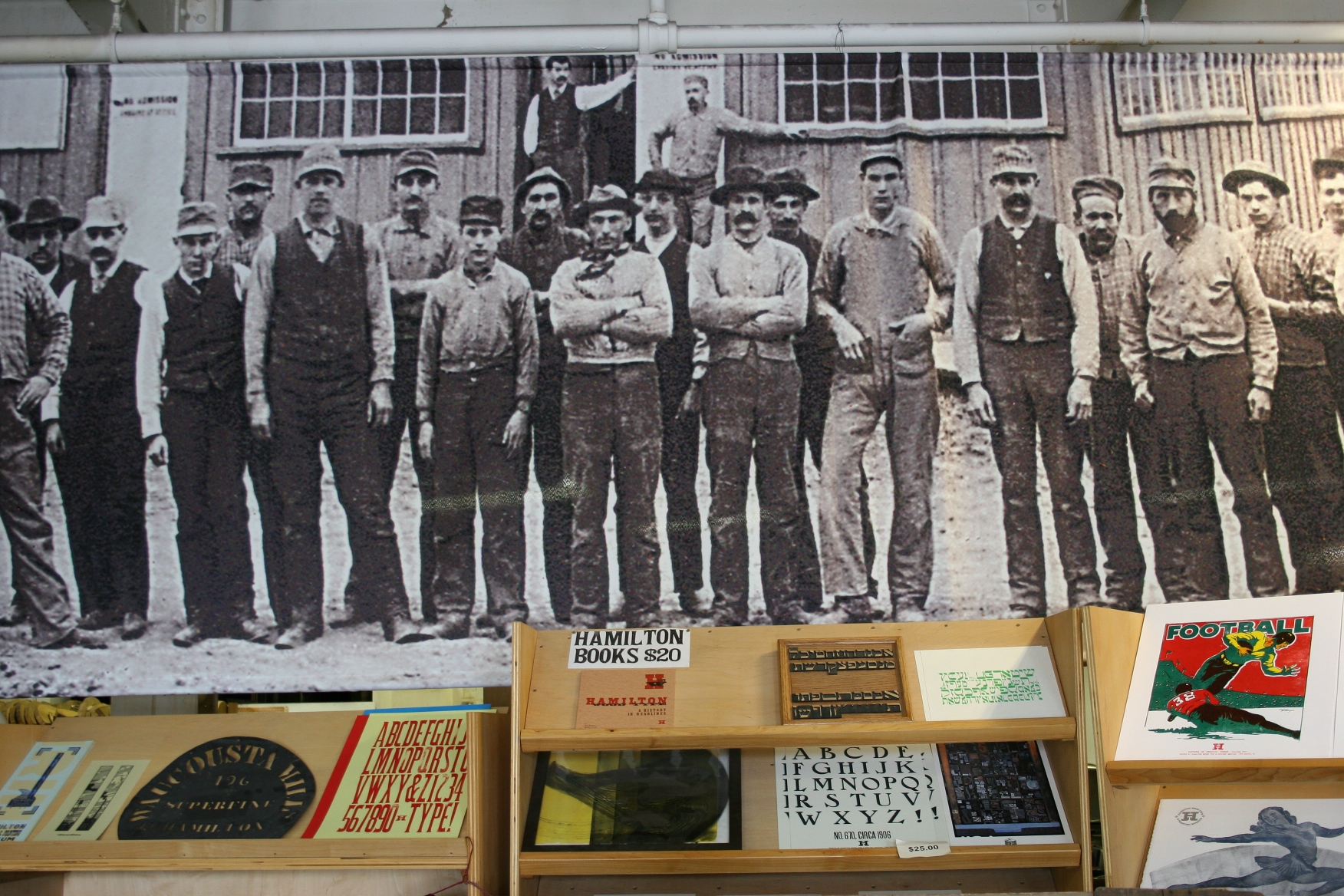
An oversized vintage photo anchors the wall you first see upon entering the museum.
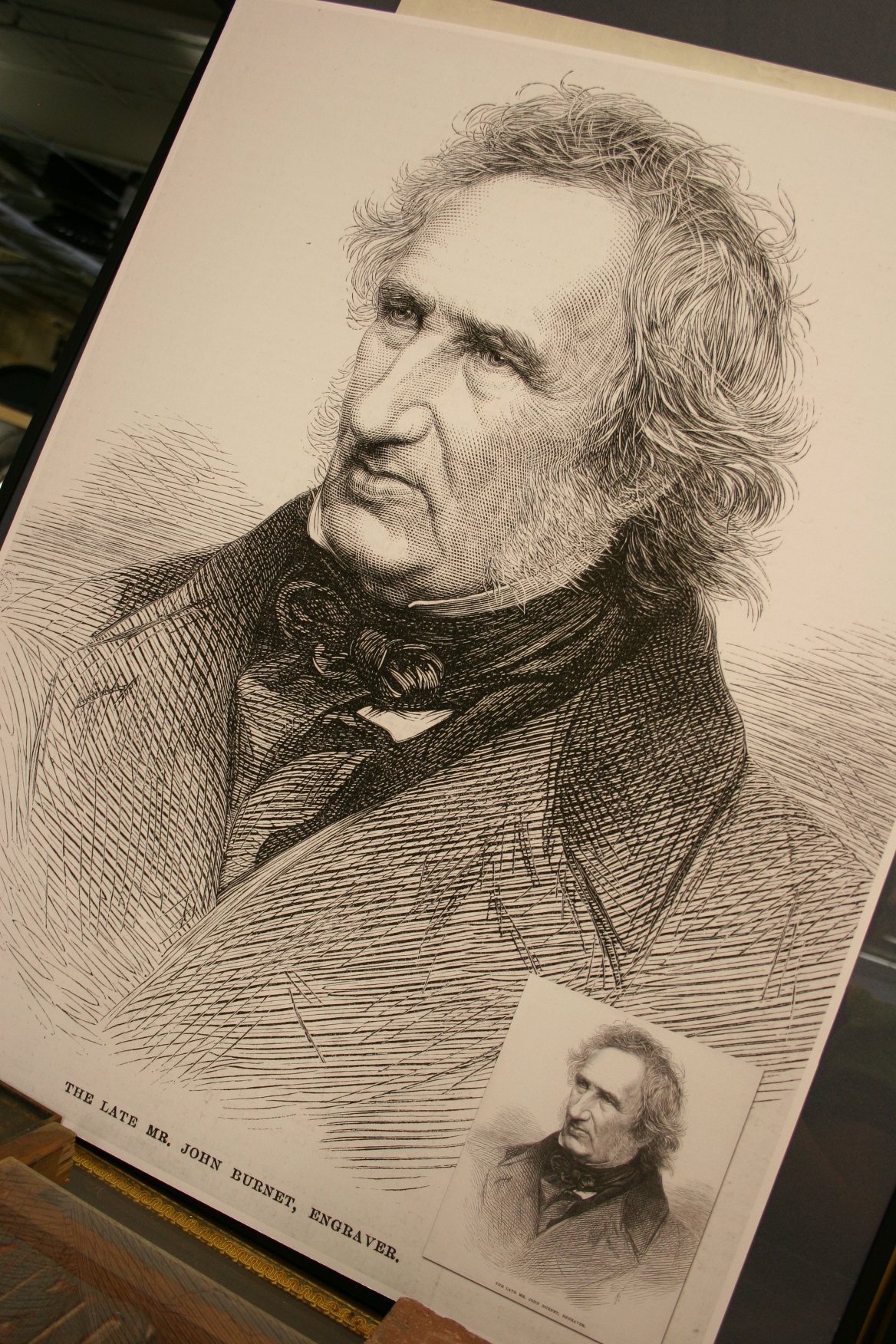
John Burnet, an early engraver at Hamilton.
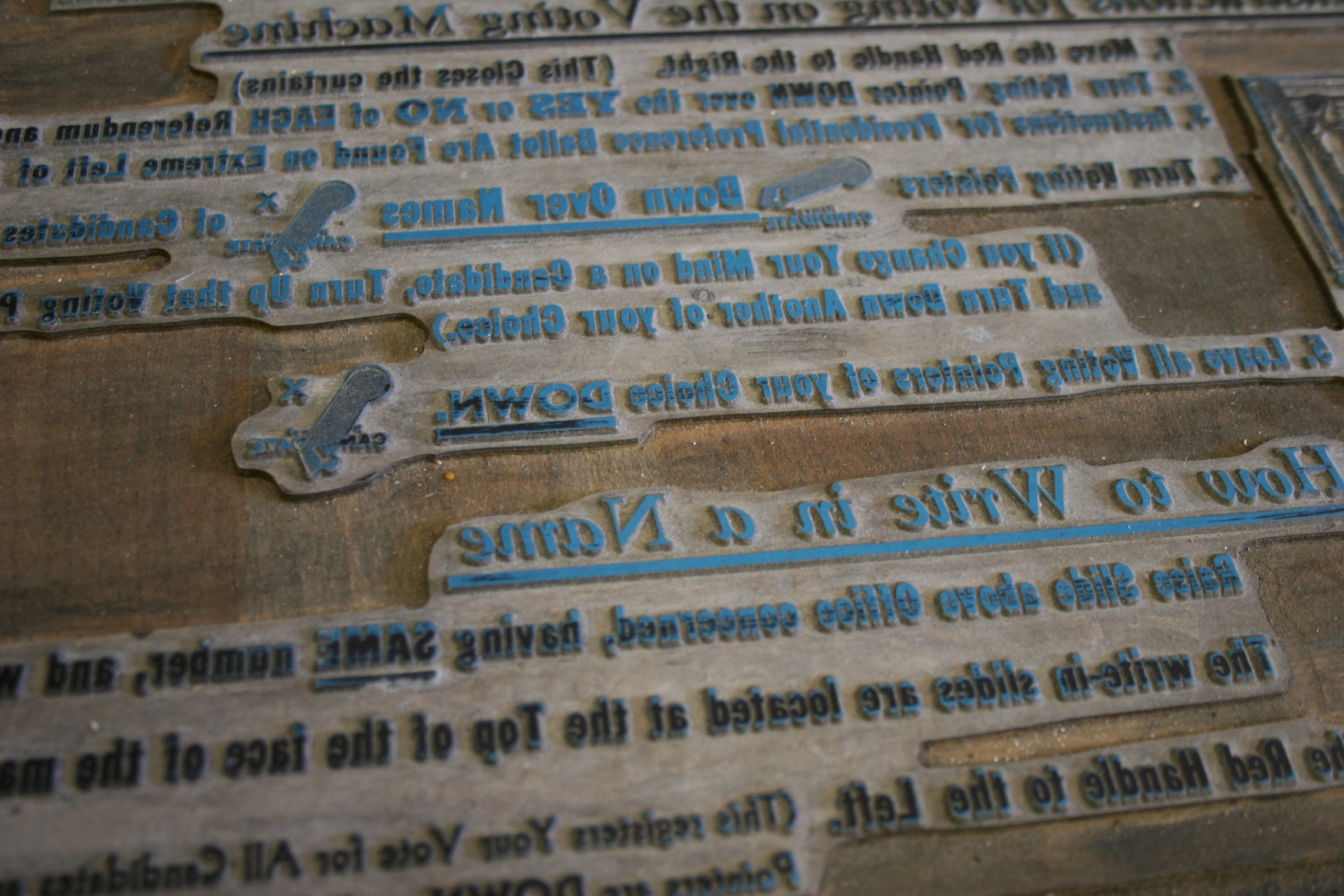
Lines of type.
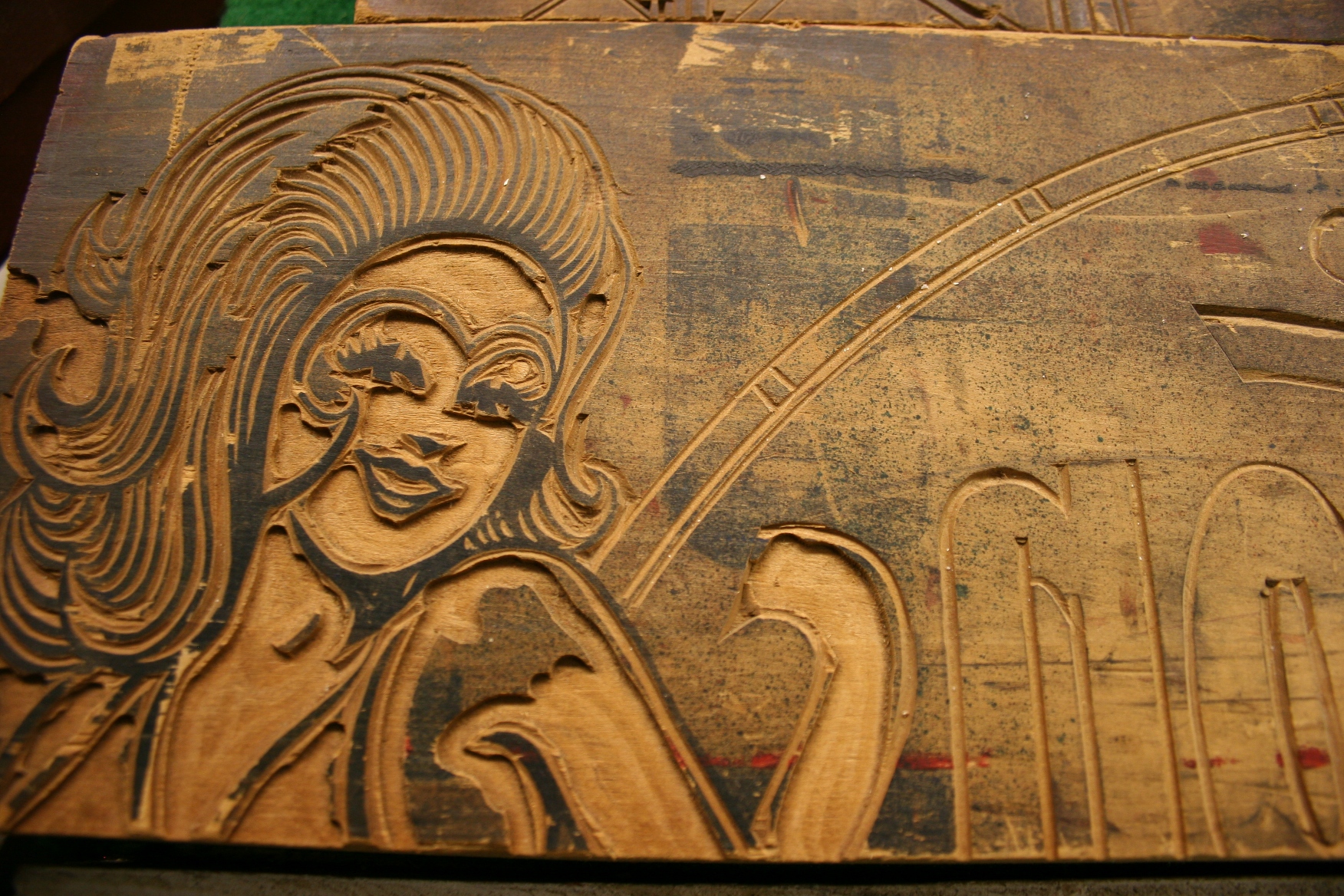
One of the many graphic cuts you'll see in the museum.

Only when I was in a back room, where the Minneapolis artist was printing and the museum manager/tour guide chastised me for taking his photo without asking, did I think about the Target collection. I had passed by a clothing rack earlier, hadn’t even looked. But then the Minnesotan mentioned Target. So on my way out the door I paused, shot a quick photo and then joined the impatient teen for an ice cream sundae across the street.
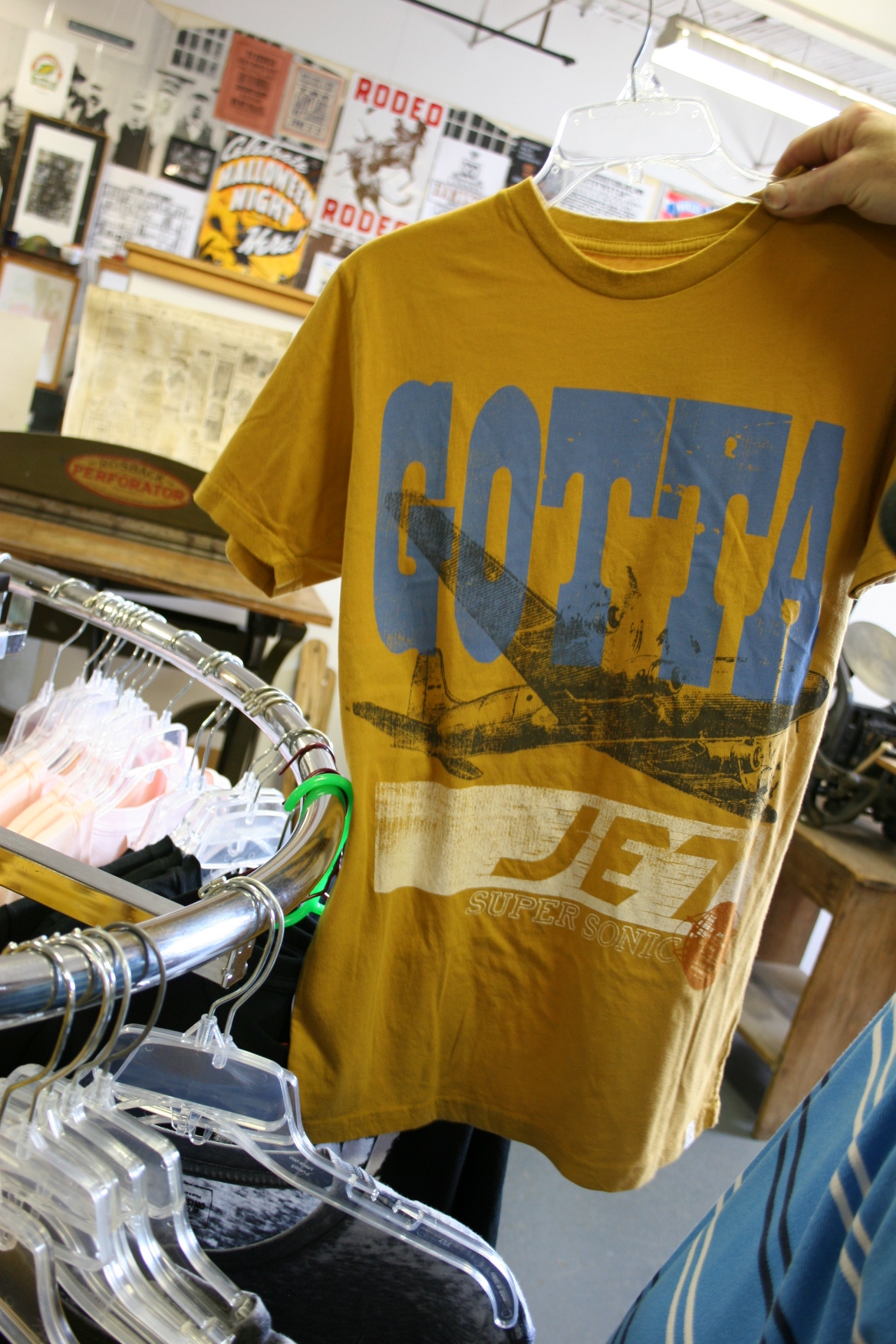
A t-shirt I pulled from the rack of clothing at the museum. I don't know whether this is from the Target collection, because I didn't check.
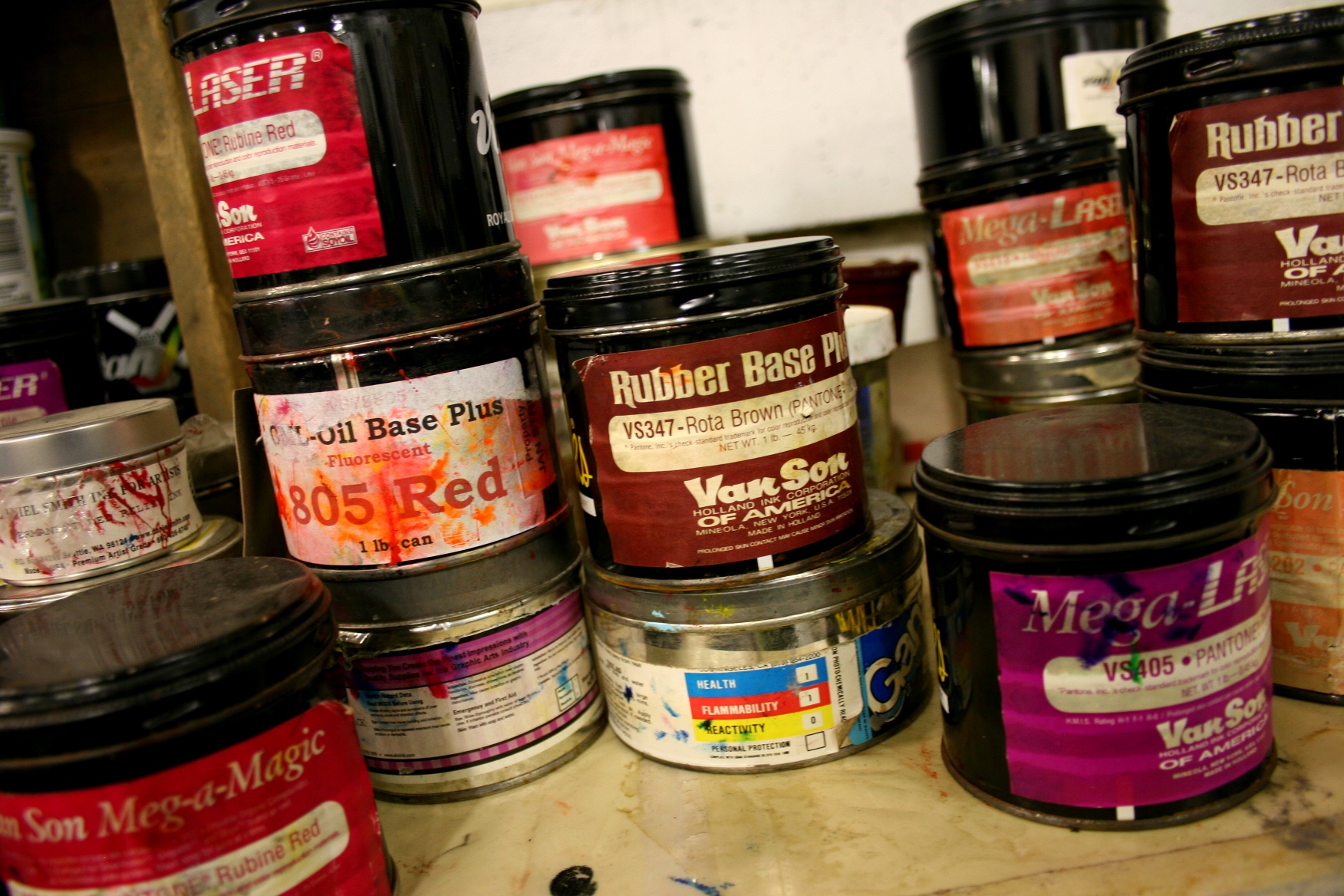
Stacks of paint cans clue you in that this is a working museum.
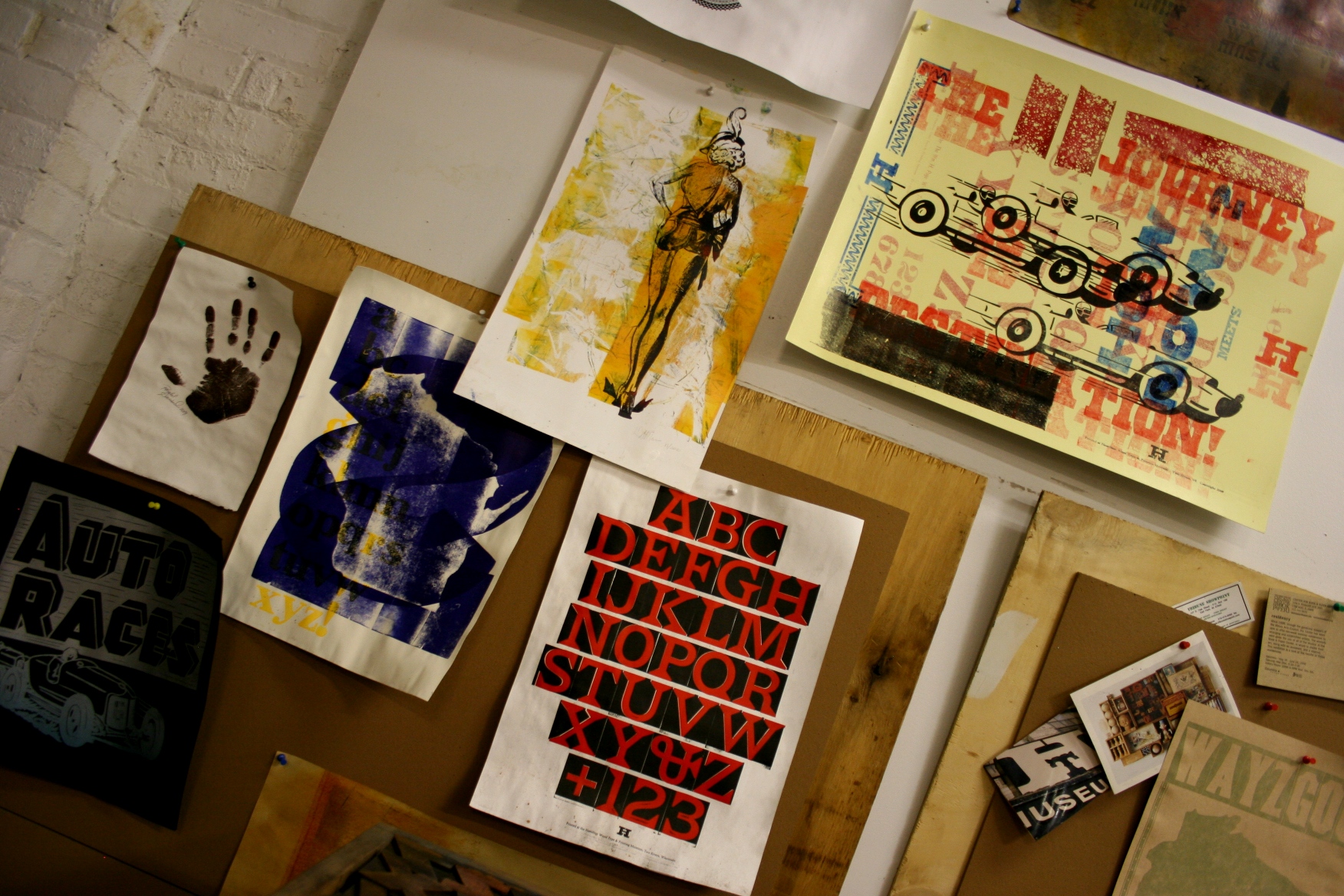
Prints hang on a wall in one of the back rooms.
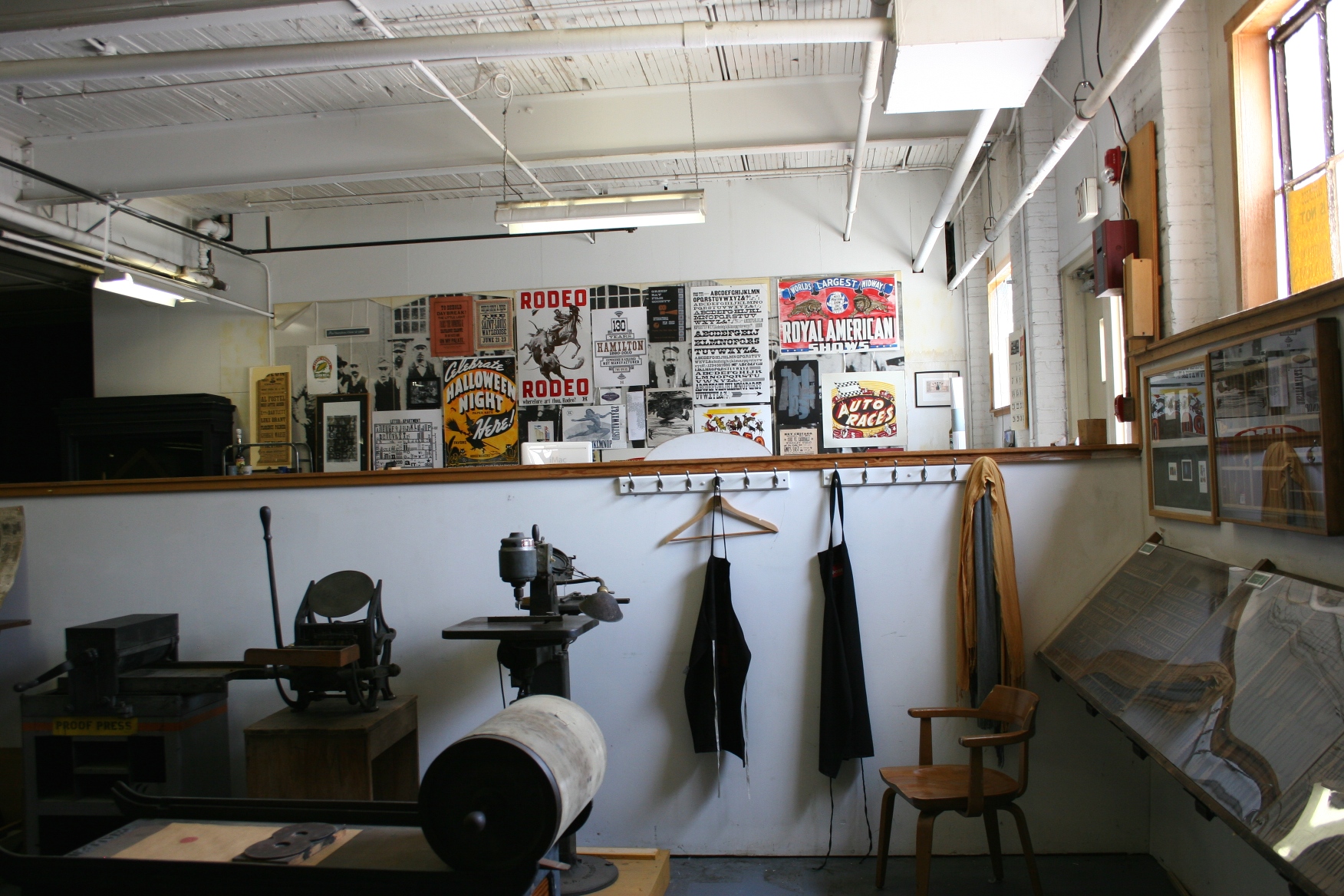
This photo shows printers' aprons and, to the back, the wall just inside the museum entry.
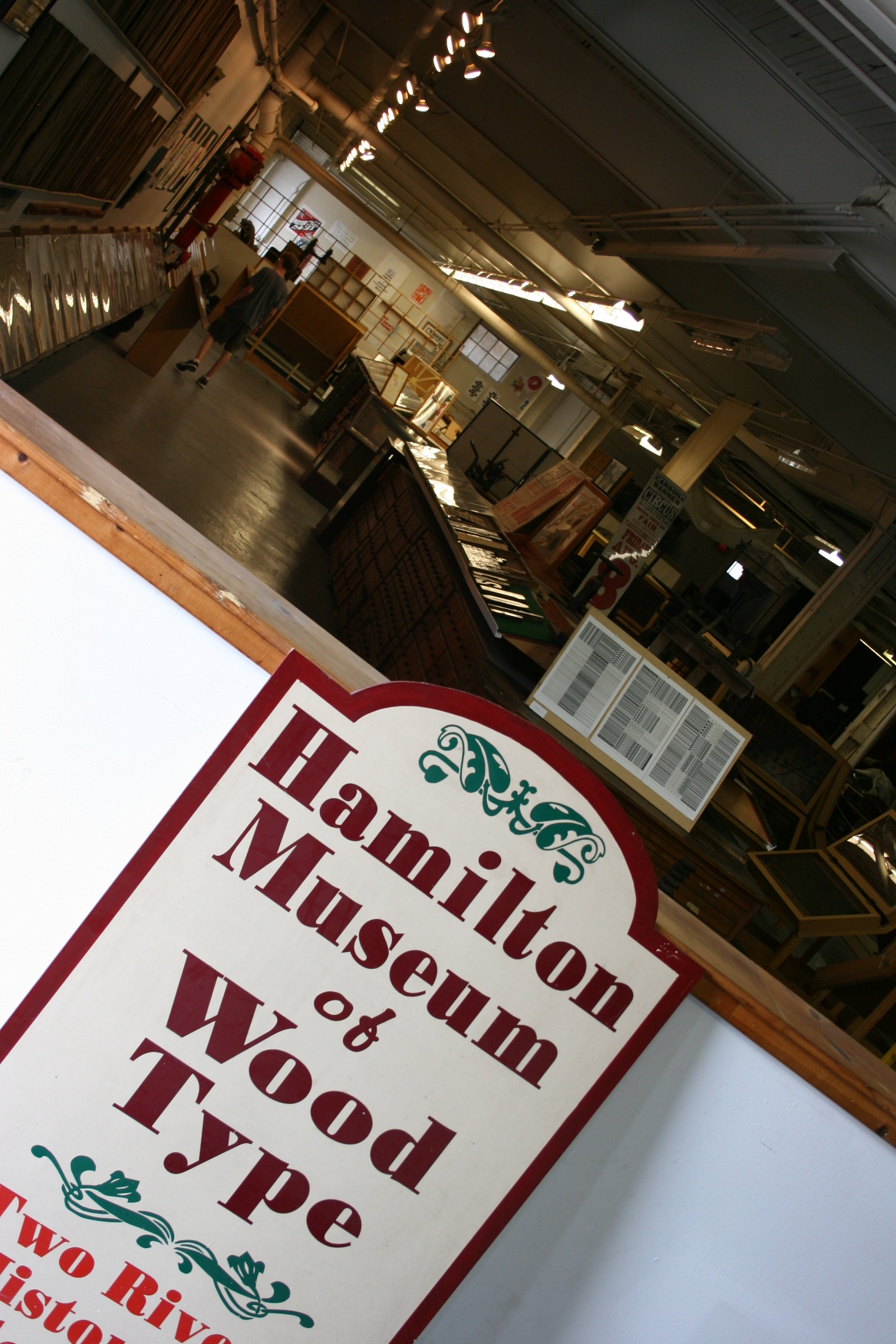
The entry provides a sweeping view of the museum.

FYI: For more information about the Hamilton Wood Type & Printing Museum, click here. The museum is open from1 p.m. – 5 p.m. on Sunday and from 9 a.m. – 5 p.m. Tuesday – Saturday from May 1 to October 31. Winter hours are from noon – 5 p.m. Tuesday – Friday and Saturday by appointment. Admission is free, but donations are accepted.

© Copyright 2011 Audrey Kletscher Helbling


Sweeping the steps on a Monday morning August 12, 2011

Filed under: Uncategorized — Audrey Kletscher Helbling @ 8:08 AM
Tags: , , , , , ,

WHILE ON A FOUR-DAY vacation in Wisconsin and southeastern Minnesota earlier this week, I took nearly 500 photos.

Posed pictures. Landscapes. Carefully framed frames. And then photo after photo after photo that I shot from the passenger side of the car as my husband, son and I traveled along interstates, state highways and winding, narrow back country roads.

Taking photos from a car traveling at highway speeds can be difficult. But I enjoy the challenge of trying to capture a good, even great, image while on the move. Let’s just say I’m never bored because I’m constantly seeking photo ops.

That means looking ahead, anticipating and clicking the shutter button at just the right moment. Too soon and I miss the shot. Too late and I miss the shot. I can’t even begin to tell you how many pictures I’ve failed to get because I’ve had the camera switched to OFF or I’m not quick enough.

But the more I practice this method of photography, the better I become. I’ve managed to snap some of my favorite photos through the windows of a car. Yes, I keep the windows closed unless the car is traveling at 30 mph or less. I don’t want to risk dirt/dust flying into my camera and landing on the sensor.

And it goes unsaid that clean windows are a must, but not always possible. I don’t let dirty glass stop me from taking photographs.

All that said, here’s my favorite car-shot image from this trip.

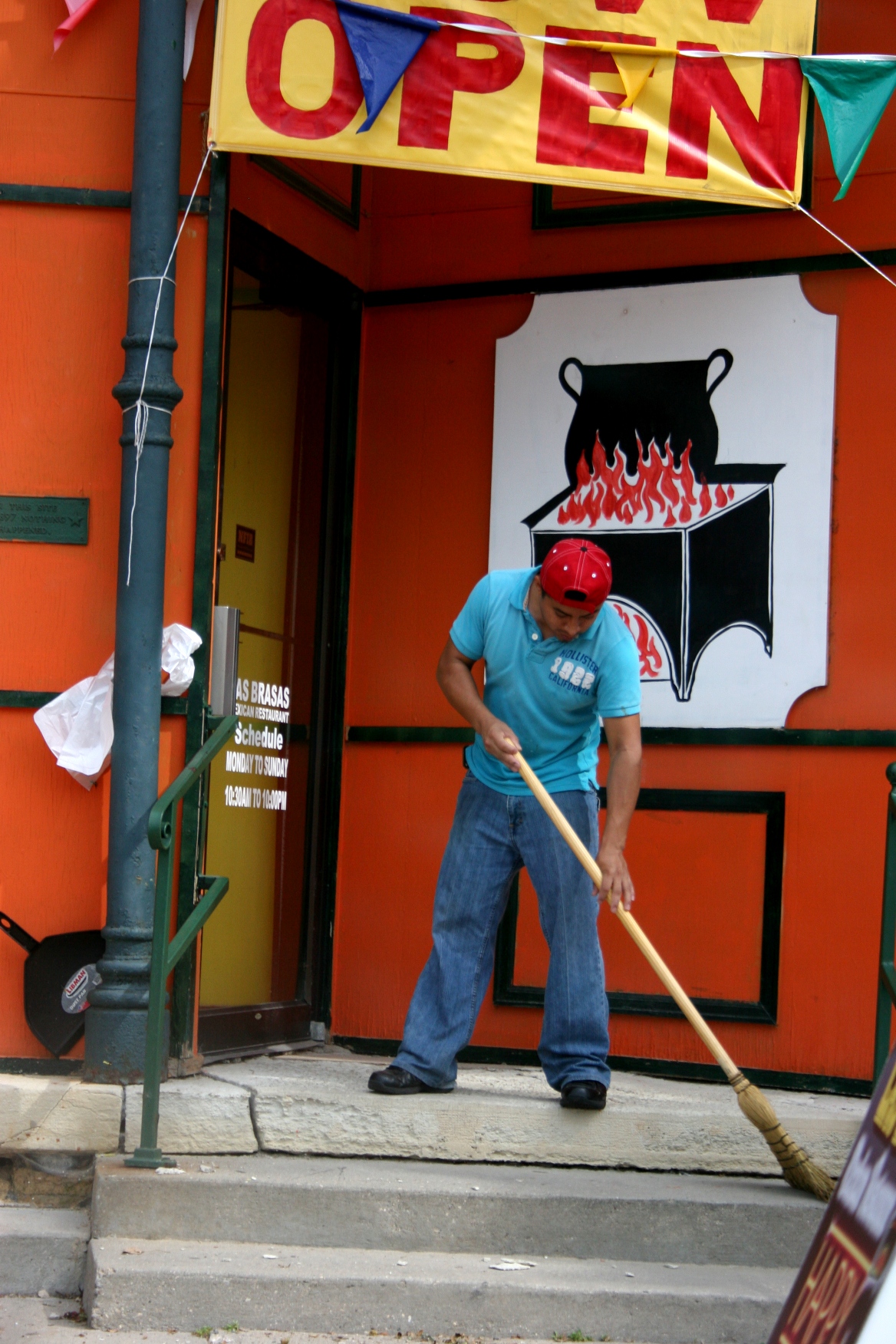
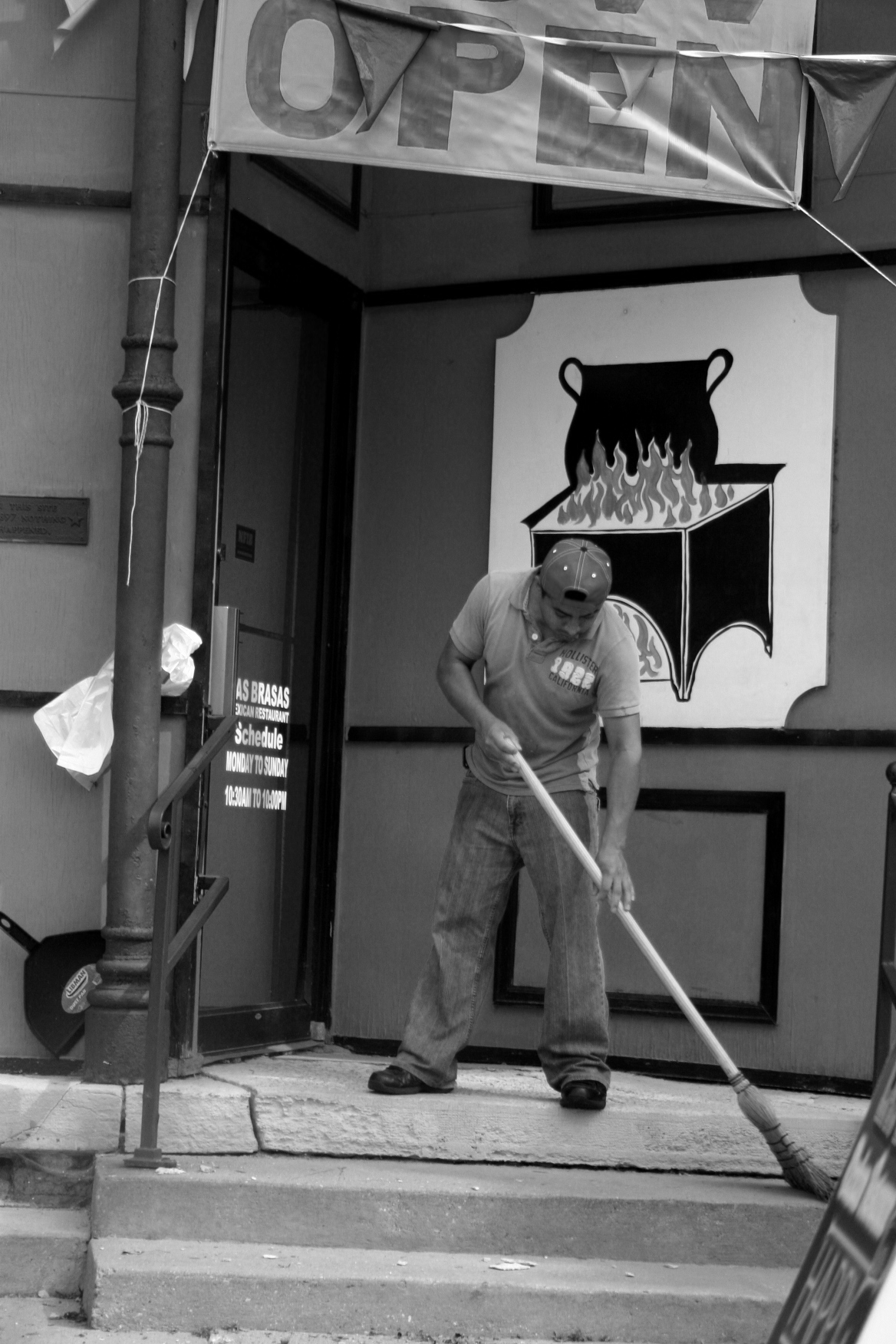
My favorite image from this road trip: "Sweeping the steps on a Monday morning at a Mexican restaurant in Omro, Wisconsin."

Let me tell you a little about the subject. On our way to Appleton, Wisconsin, on Saturday, we drove through Omro, a small town just west of Oshkosh on State Highway 21. I saw this vivid orange Mexican restaurant, but wasn’t in a position to photograph it.

However, on the return trip through Omro on Monday morning, I had my camera ready and, when I saw the man sweeping the front steps of the restaurant, I fired off two quick frames and got what I consider a pretty darned good photo.

The vivid colors and composition make this, in my opinion, a good photo.

But the image excels to excellent when you consider the subject—a man sweeping the steps. Ordinary becomes extraordinary for the everyday story told. As a photographer, I strive to photograph regular, everyday life. When I manage to photograph a scene like this one, I am pleased, mighty pleased.

Even in black-and-white, the image remains a strong photo.

© Copyright 2011 Audrey Kletscher Helbling
 

Take time to stop and appreciate small towns August 11, 2011

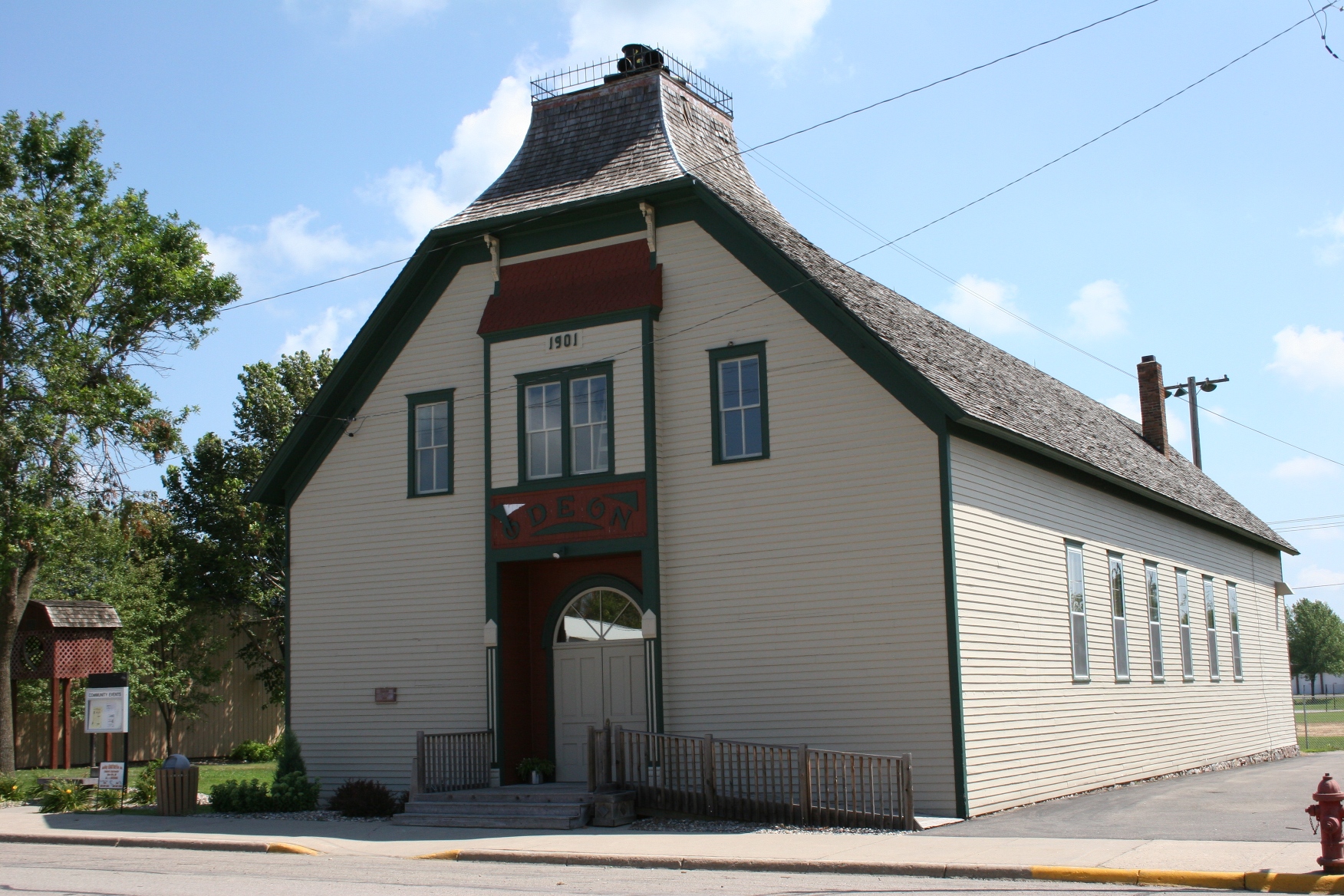
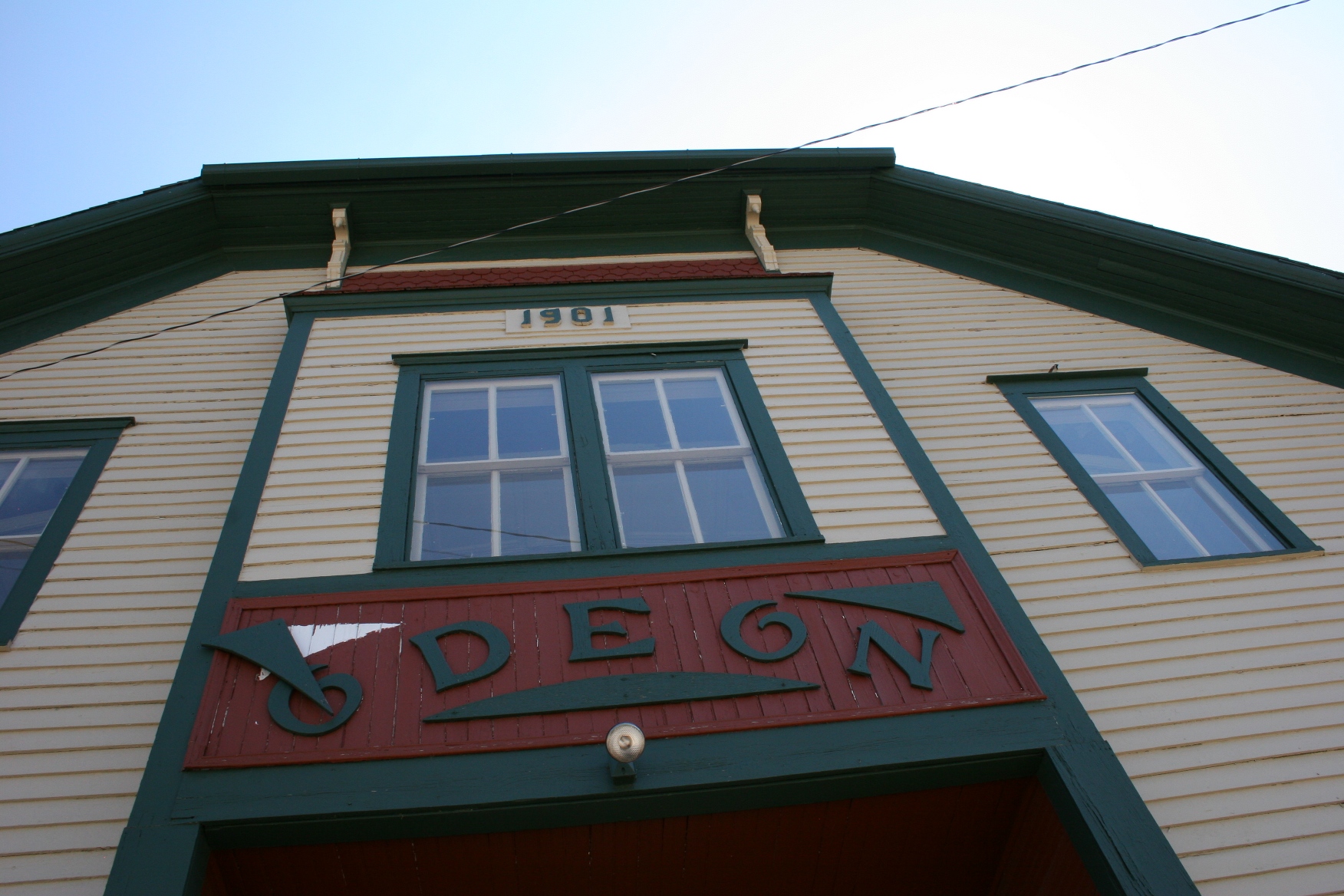
In tiny Belview, you'll find the 1901 Odeon Hall. Listed on the National Register of Historic Places, this Queen Anne style building features a barrel-vault ceiling. Still in use today for wedding receptions and community events, etc., Odeon Hall once also featured vaudeville shows, motion pictures, concerts and more.

I WANT TO THROW a challenge out there. The next time you’re driving through/near small-town Minnesota, or small-town wherever, stop. Pull off the highway and drive along Main Street. Park your vehicle. Get out. Walk. Look. See.

Notice the buildings, the architecture, the signage, the history. Consider what centers the town: the café, the post office, the grain elevator, the churches, the school—if there is a school.

Families, retirees and even single people choose to live, to work, to worship together, to celebrate, to mourn, to live their lives here. This is their home, not just some town in the middle of nowhere that you must pass through to get from destination A to destination B.

I have, in recent years, begun to appreciate the small towns and rural areas of Minnesota more than ever. I grew up on a dairy and crop farm in southwestern Minnesota, which is about as rural as you can get. But I haven’t always valued that upbringing like I should.

As I’ve gotten into the art of photography, I’ve begun to view these towns with a fresh perspective. I notice what, in the past, I’ve overlooked or taken for granted because of my rural roots.

Let me show you some photos I took recently in and near Belview, a community of 375 located four miles north of State Highway 19 in northwestern Redwood County. Belview lies about 10 miles from my hometown of Vesta, another one of those small towns that motorists zip by without a second thought. I bet you didn’t know that Vesta is the home of the nation’s first electric cooperative. I thought so.

That’s the thing about small towns. If you stop and walk and look and see, and I emphasize the word, see, you will discover more than just a place to drive through when getting from point A to point B. You will discover the heart and soul of community.

Move in close to view the details, like the front of Odeon Hall. I attended a cousin's wedding dance here decades ago. Imagine the celebrations inside this historic building.

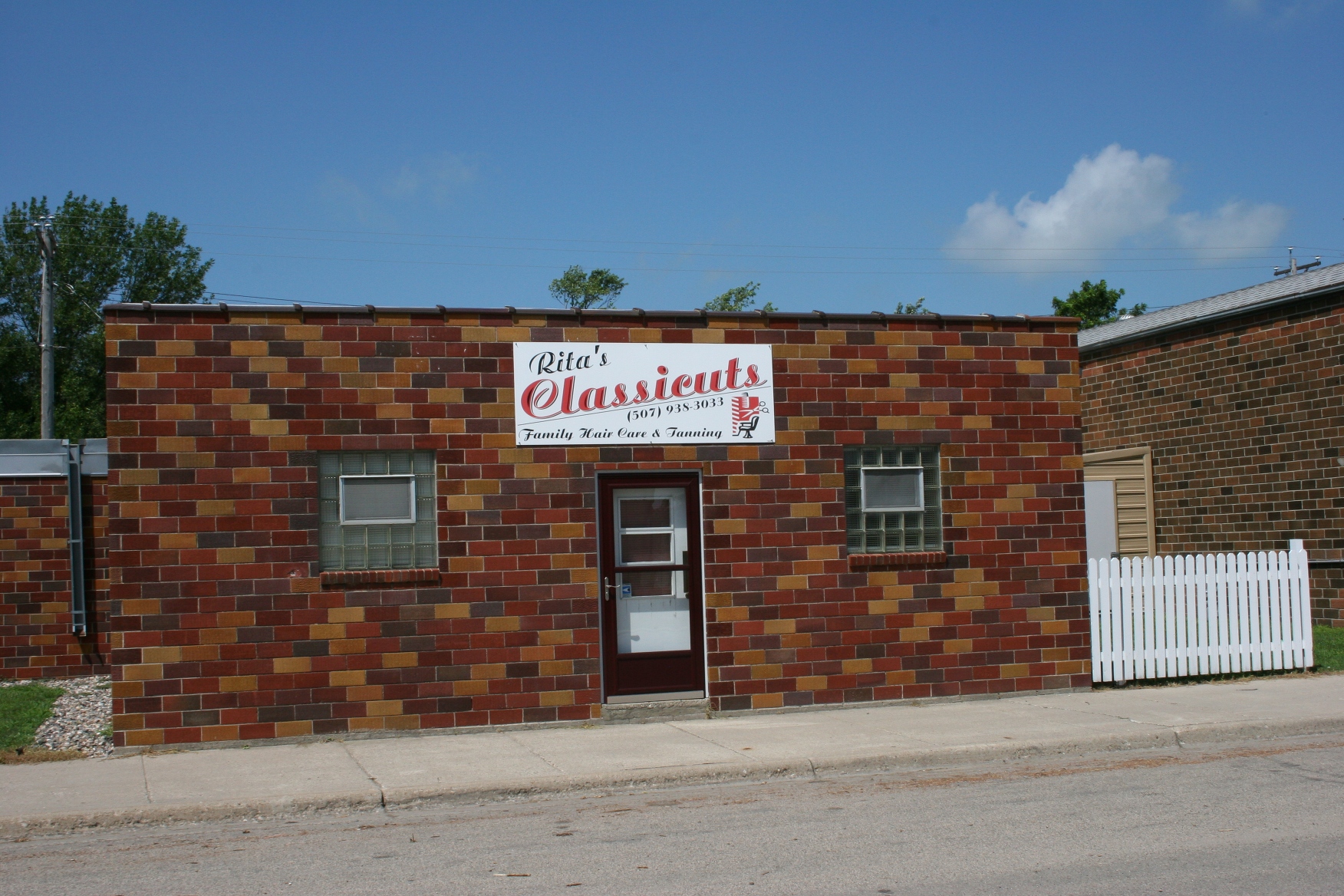
Most small towns, like Belview, are fortunate to still have a place where you can get your hair cut and styled. I appreciate the simple lines of this brick building located along Main Street.

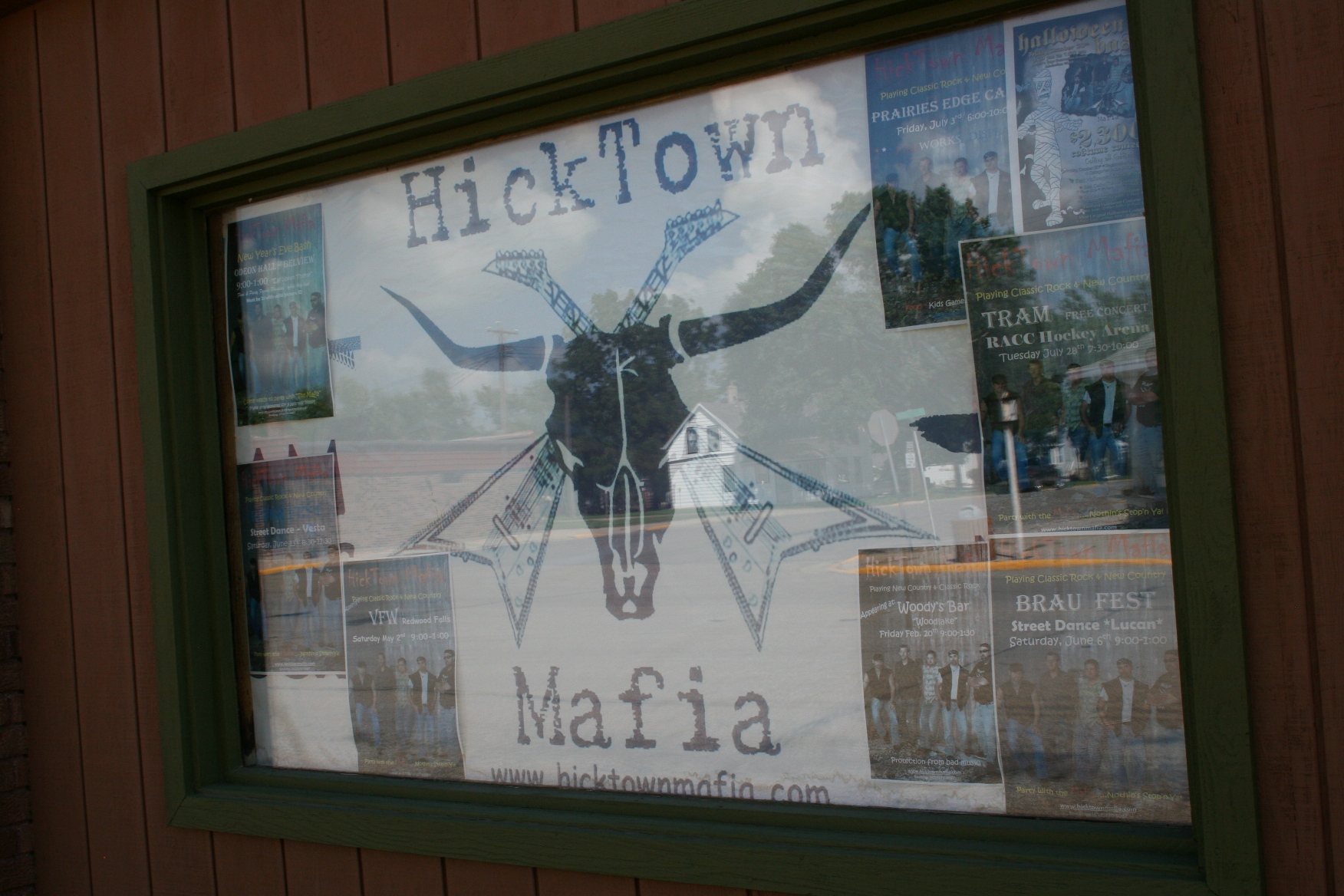
I discovered this poster in the window of a Main Street building advertising a local band, HickTown Mafia. The band plays "country with a kick, rock with an attitude," according to the group's website.

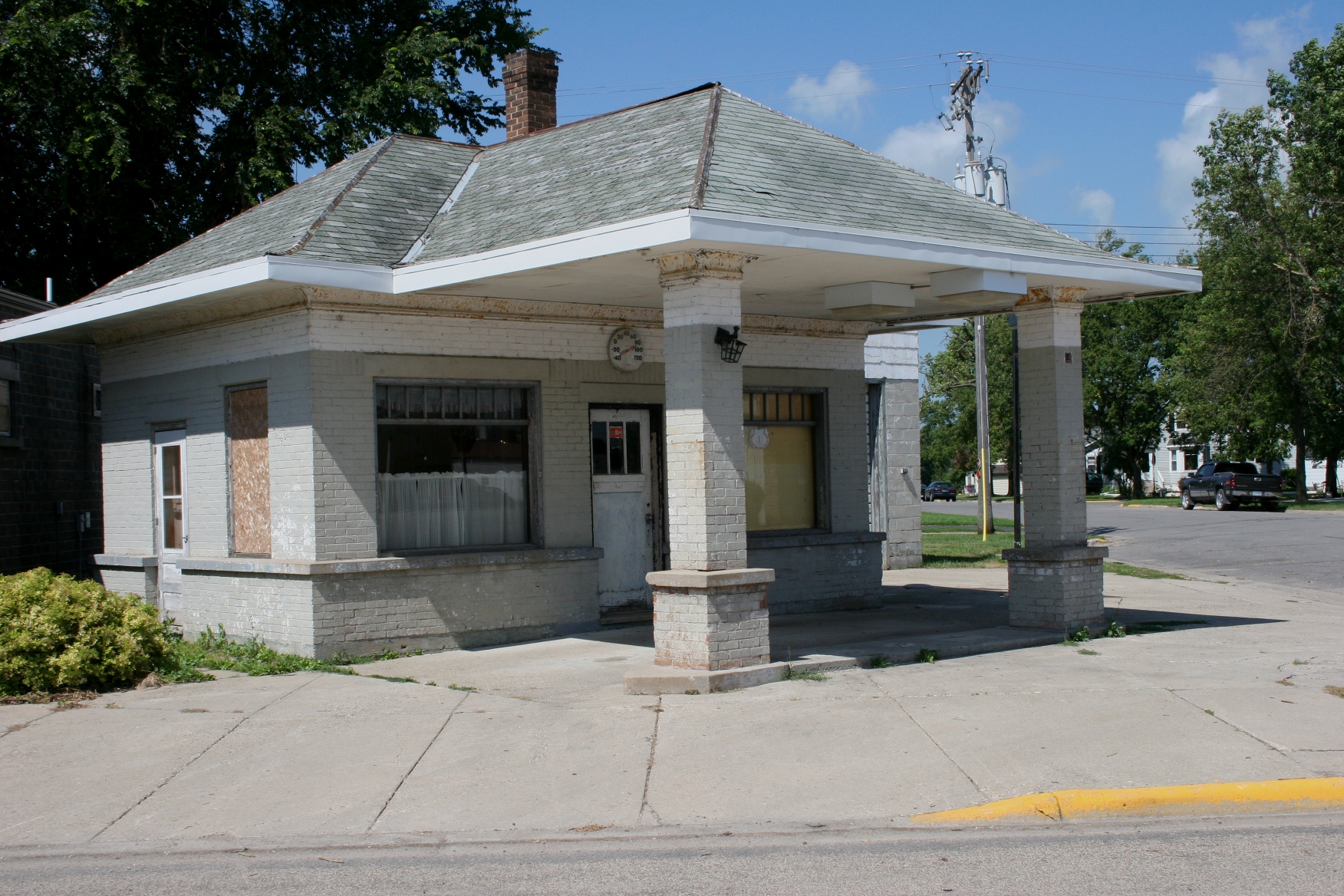
I found this abandoned former gas station (I think) on a downtown corner. This charming building practically shouts for someone to reopen it as a bakery, coffee shop, antique store or some other such venue. Perhaps the two local wineries/vineyards and other area vendors could market their products here.

The Parkview Home, a Belview nursing home, was once home to my maternal grandfather and to other extended aging family members. I've been here often to visit relatives and, during high school, to sing Christmas carols with the Luther League. The building was damaged in a July 1 tornado (note the blue tarp on the roof) and residents have been temporarily displaced.

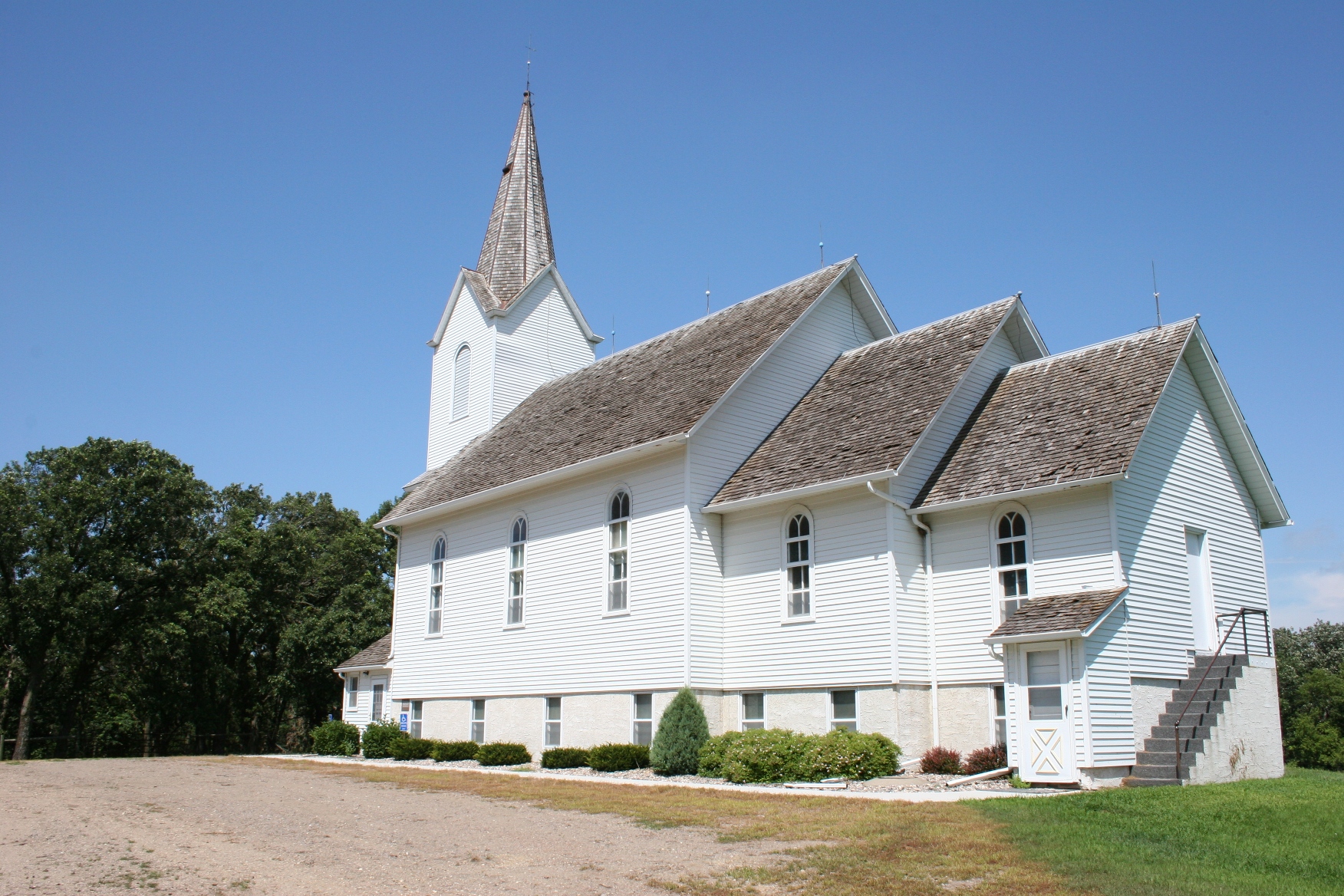
Northwest of Belview, you'll find picturesque Rock Dell Lutheran Church. My Uncle Merlin and Aunt Iylene Kletscher were married here in November 1964, the last time I was inside the church.

A side view of Rock Dell.

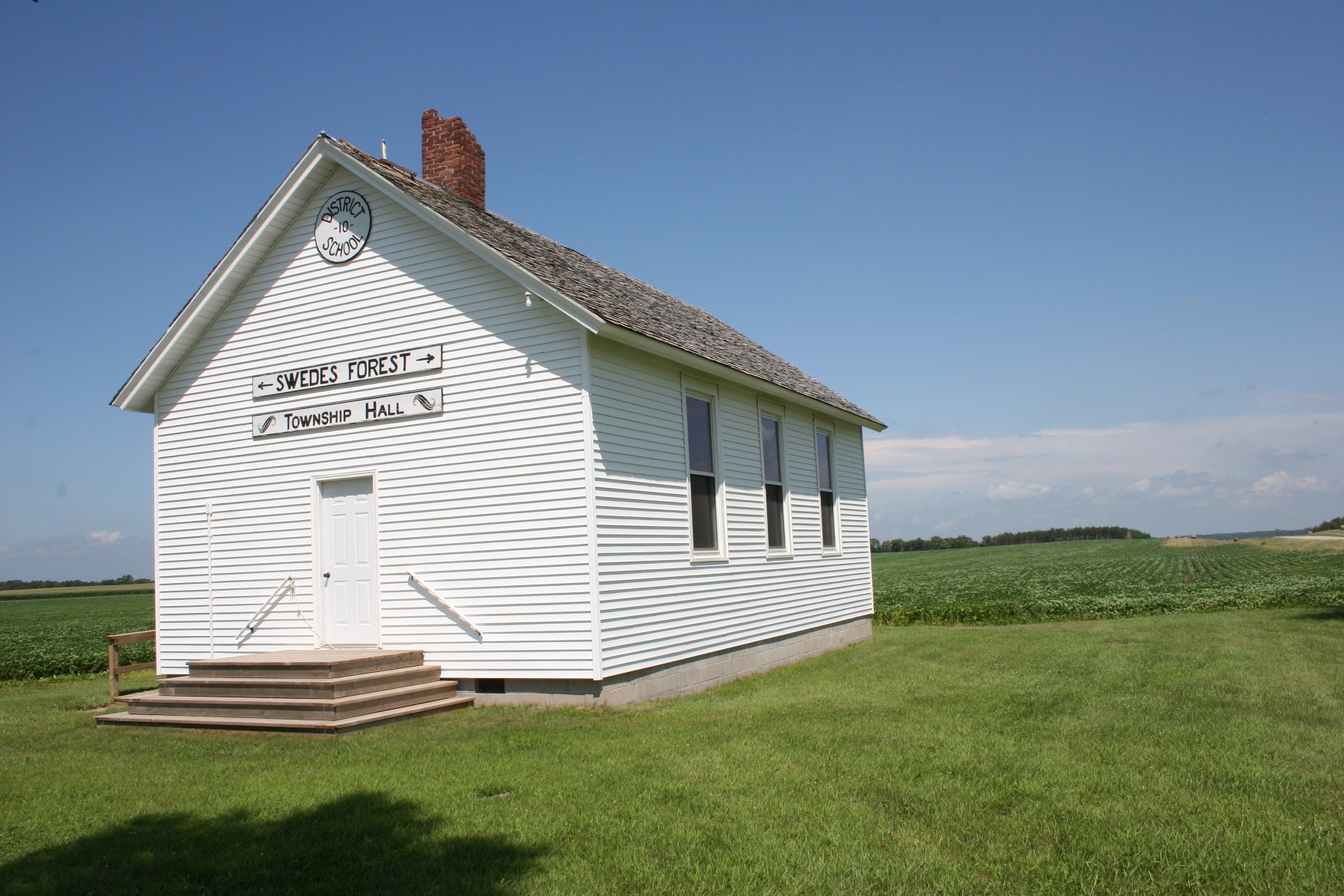
Near Rock Dell you'll find Swedes Forest Township Hall in the middle of corn and soybean fields.

FOR MORE INFORMATION about Belview, click here and here. Also read my previous post about Rainbow Antiques, Crafts and Junque in Belview by clicking here.

TAKE MY CHALLENGE and report back to me on the treasures you discover in a small town or rural area.

© Copyright 2011 Audrey Kletscher Helbling
 

Follow the rainbow to a charming antique store in Belview August 9, 2011

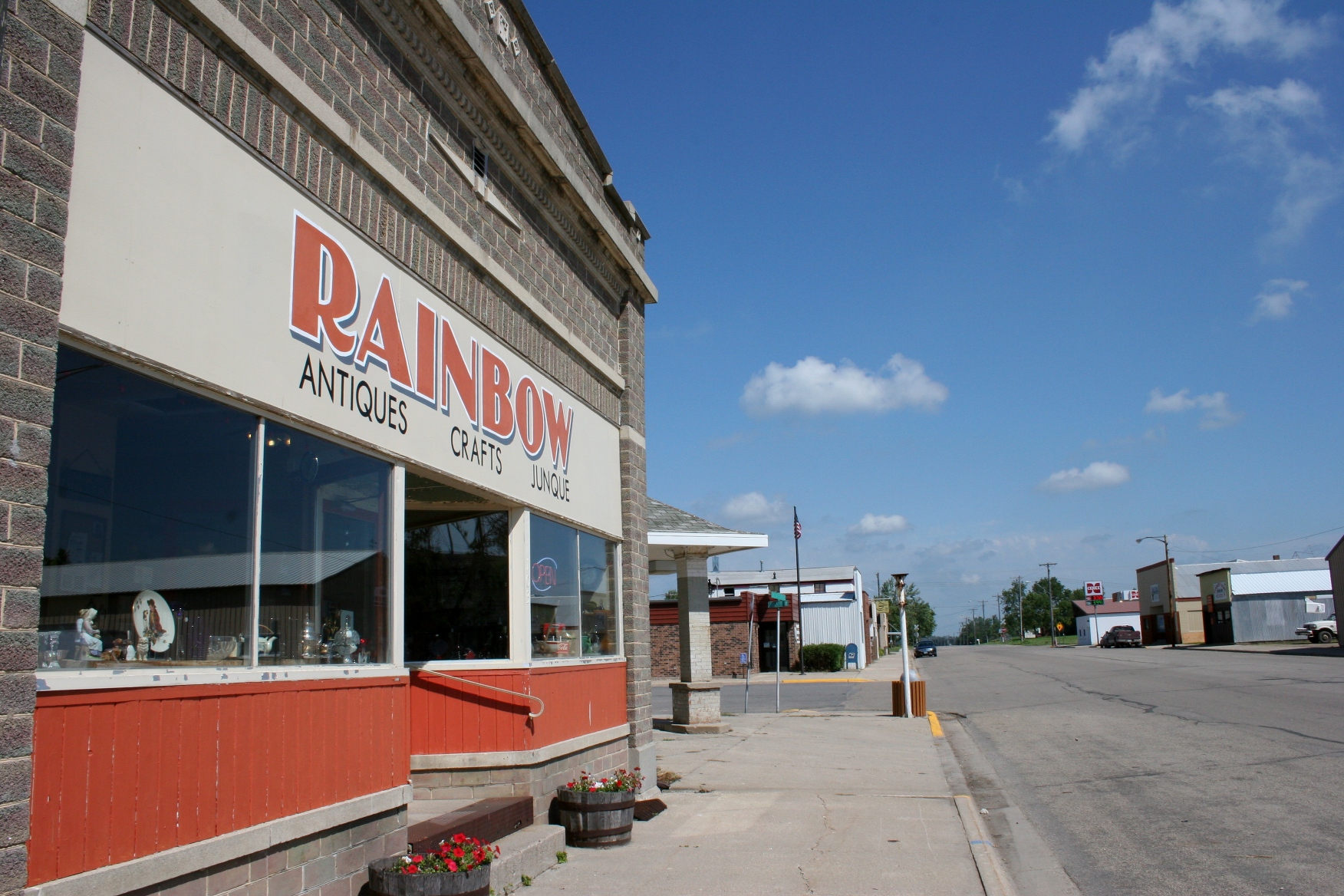
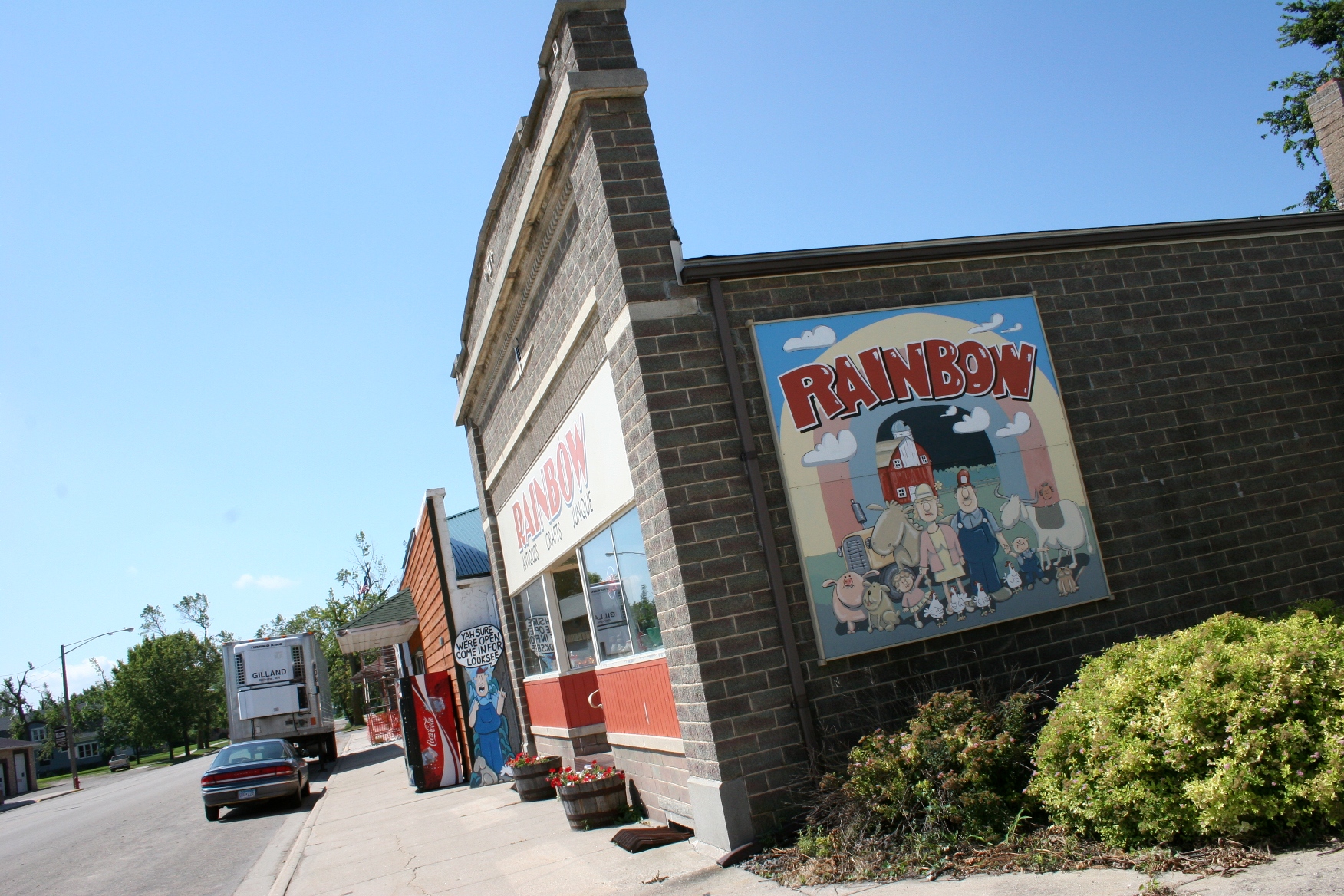
Driving north into Belview, you can't miss Rainbow Antiques, Crafts & Junque.

IF YOU’RE INTO ANTIQUING or architecture or small towns, you’ll want to visit Belview, population 375, four miles off State Highway 19 in southwestern Minnesota.

My husband, Mom and I drove to Belview on a recent Saturday morning to see my Uncle Merlin and Aunt Iylene’s “new” old home along the main drag. We also toured the town, checking out the damage from a July 1 EF-1 tornado. And, lucky us, we happened to be in this Redwood County community on the one day a week that Rainbow Antiques, Crafts & Junque is open.

And let me tell you, Don Gunelson runs one heckuva an antique store with the flair of an artist.

You’ll notice the building right away when you drive or walk Main Street. It’s built of beautiful rainbow brick which, in itself, is worth a stop. I know of at least two other rainbow brick buildings in Redwood County—one in Walnut Grove and the other on a corner in nearby downtown Redwood Falls.

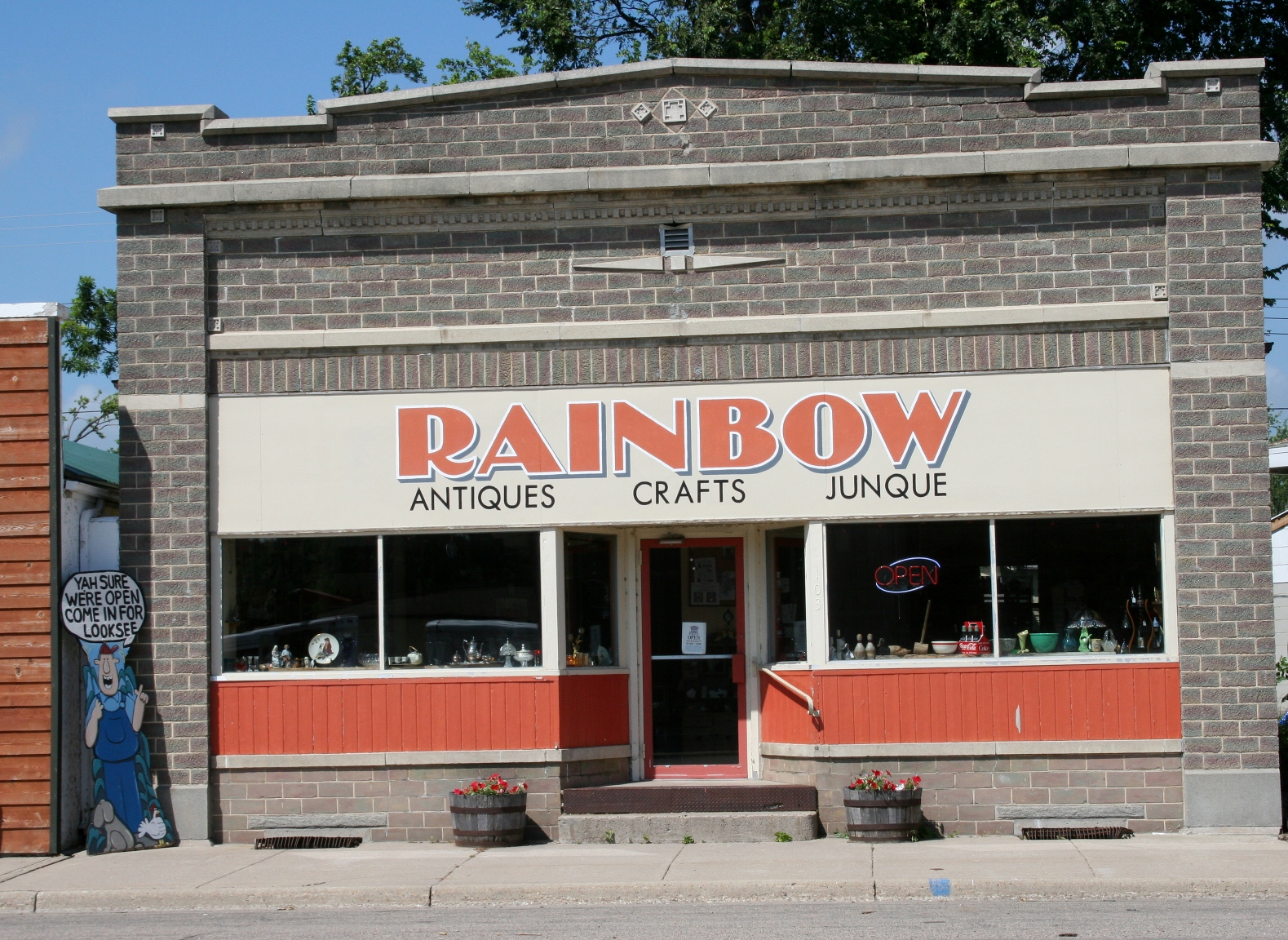
Colorful rainbow bricks comprise the antique shop.

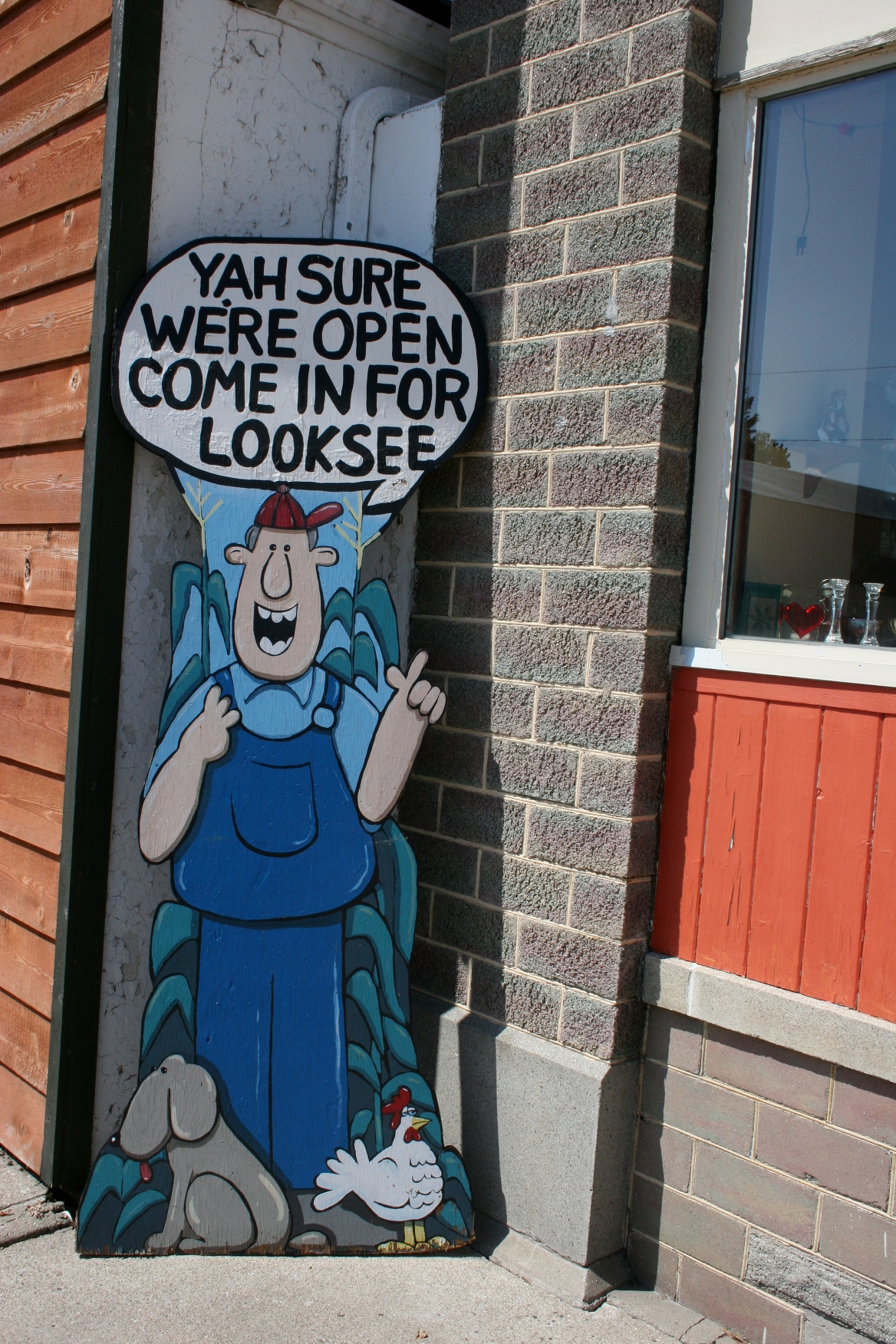
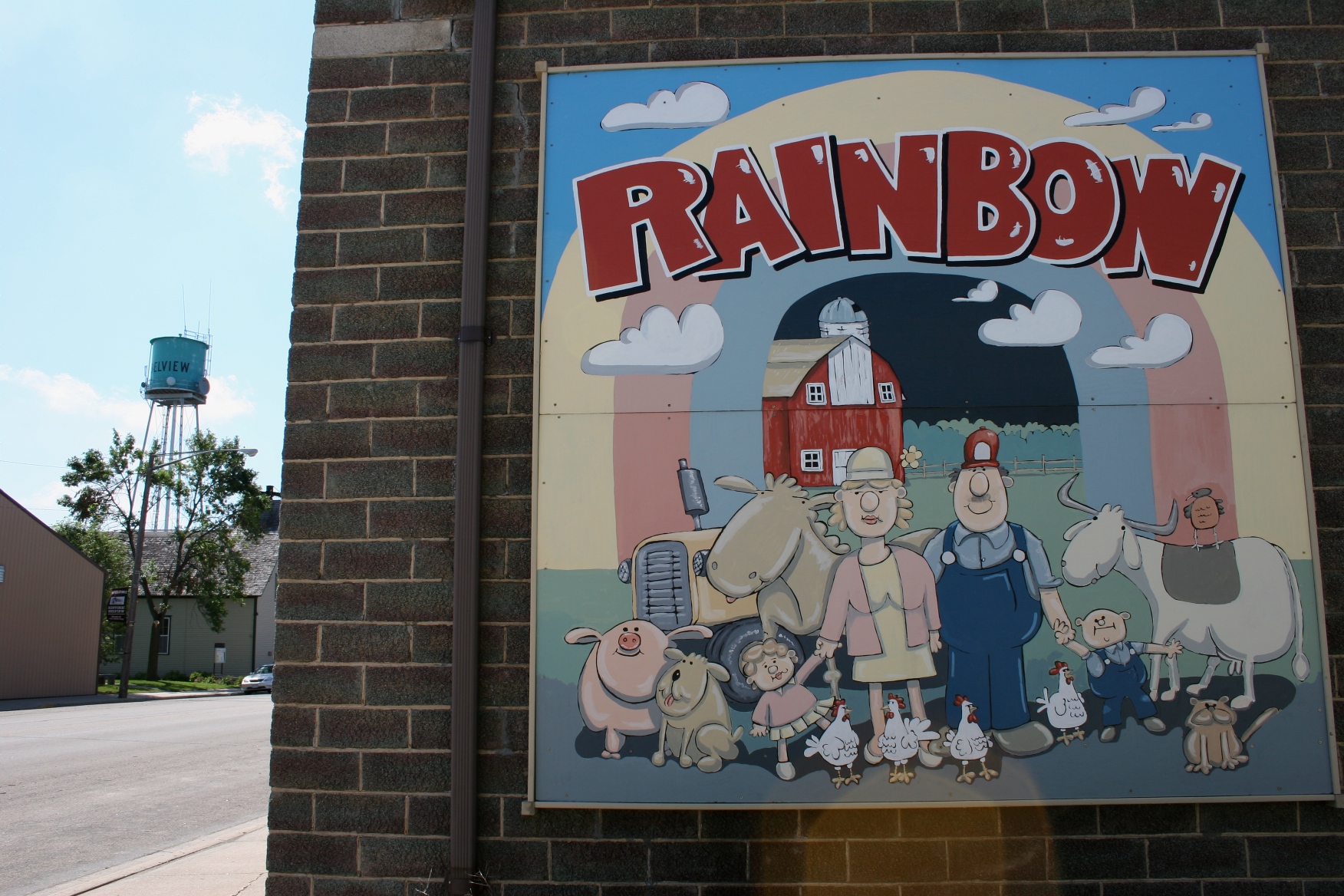
Don directs customers to his store with nicely-done folksy signage. I didn’t ask Don if he created the artwork, but he worked as a graphic designer for a construction magazine before returning to his native Belview from the metro some 10 years ago. He also works part-time at the Belview Post Office.

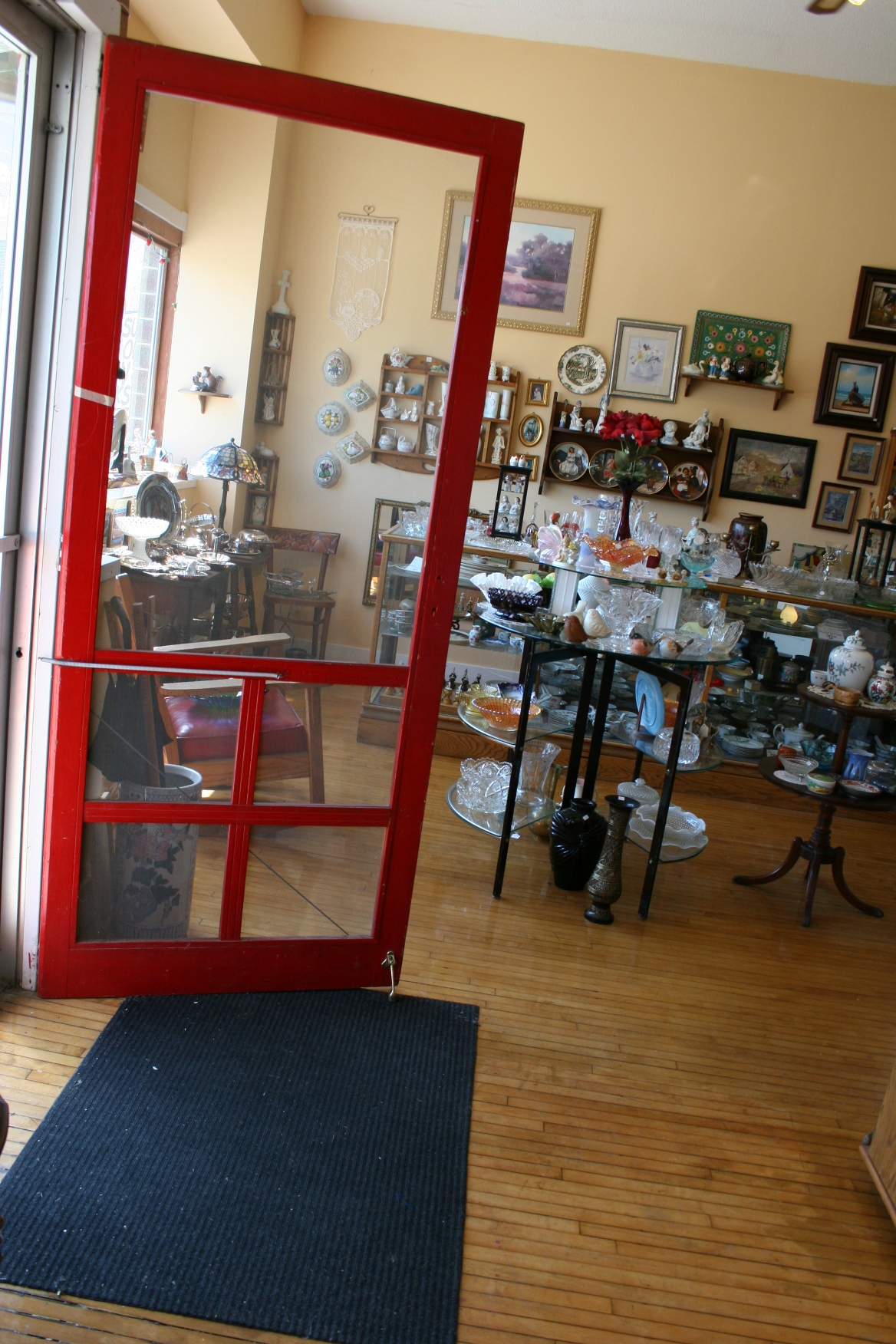
No matter, the friendly painted farmer in the bib overalls who beckons you inside for a “looksee” will already have you smiling before you stroll through the red doors and plant your feet upon the vintage tongue-and-groove floors in a room the color of butter.

Immediately I noticed the old-style screen door painted a vivid red. It’s a perfect fit for setting the mood of this place. I’ve been in a lot of antique shops in my day, and this one, by far, rates as one of the most inviting with plenty of light streaming in the east-facing windows, merchandise displayed in a way that isn’t cluttered and a down-home atmosphere that makes you feel comfortably at ease.

I poked around for awhile, not as long as I would have liked, though, since my mom was waiting for me back at the aunt and uncle’s house. My husband explored, too, and determined the prices to be reasonable—not too high and not too low.

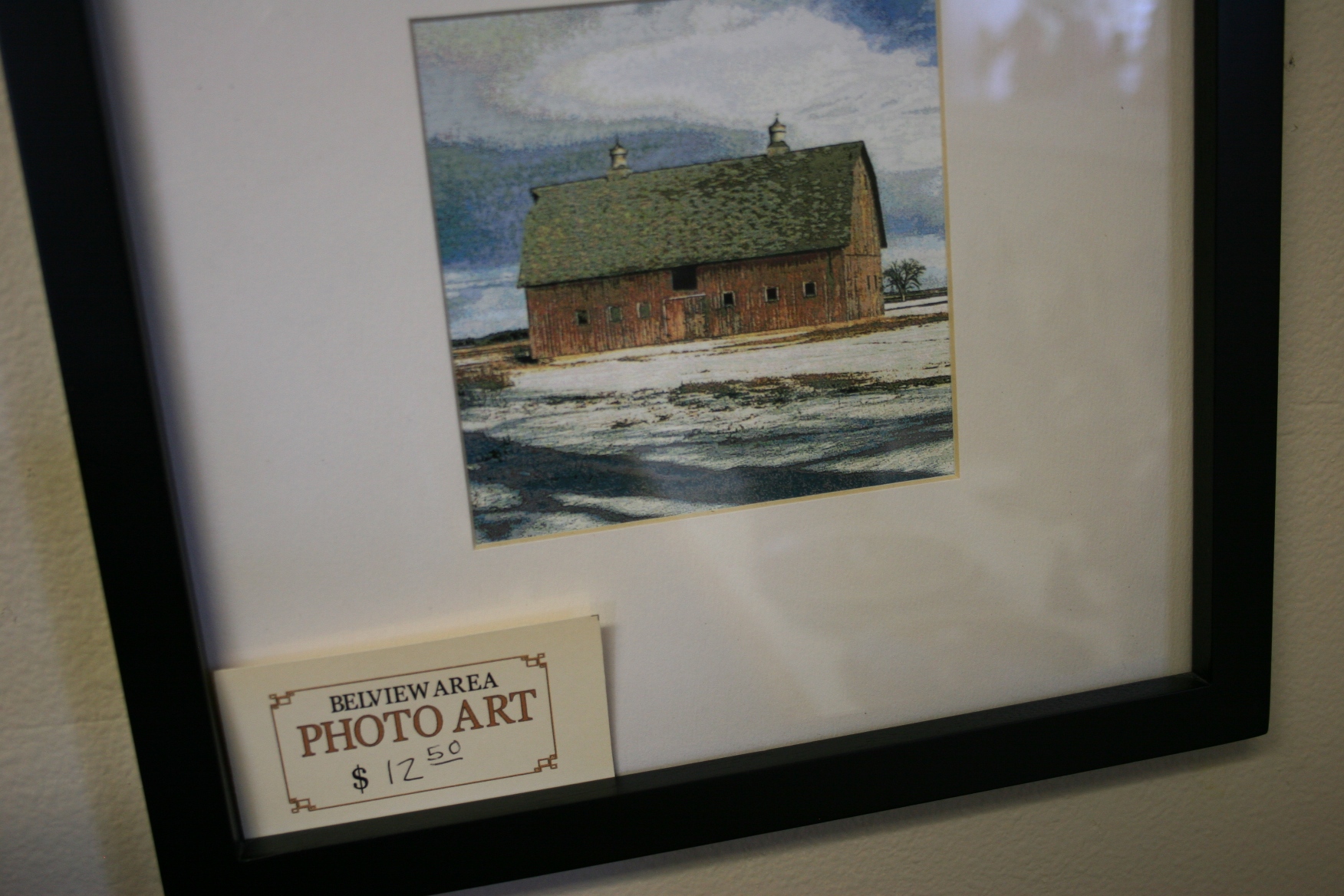
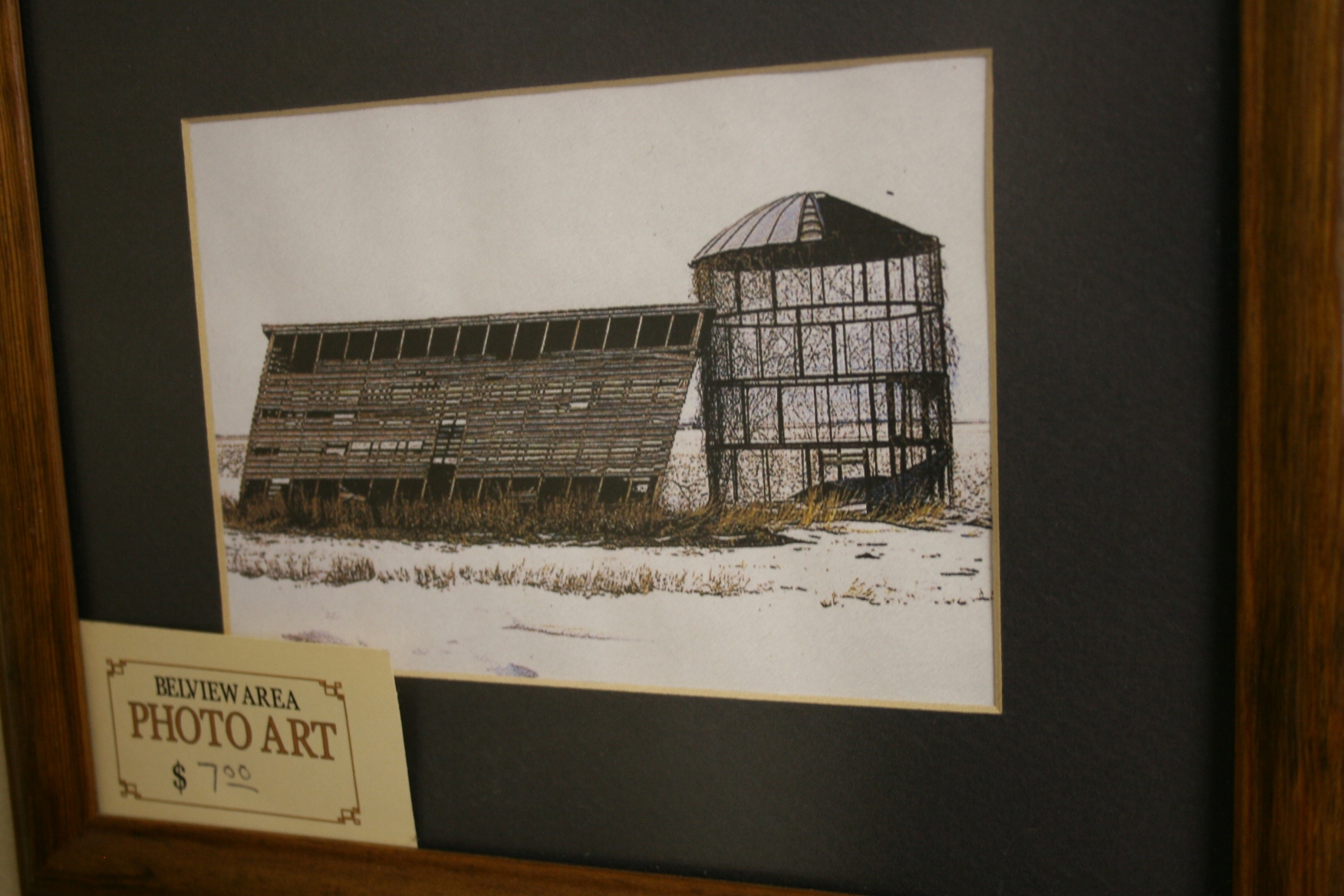
When I got to the back room, I made the discovery of the day, at least in my opinion. And it wasn’t an antique, collectible or junque. I found Don Gunelson’s “Belview Area Photo Art” displayed on the rear wall. I knew from the signage that I was viewing photos, but they sure didn’t look like photos. So I asked Don to explain.

He takes images of area subjects with an inexpensive camera—the fewer pixels the better—edits the photos on his computer and then prints them on watercolor paper with an ink that is more dye than ink. The result is photo art that resembles watercolor paintings.

I gushed over his creations and told him he needs to get these into a gallery—do an exhibit of his “Belview Area Photo Art.”

Now I’m kicking myself for not buying one of Don’s matted and framed creations because, with prices ranging from $7 to $12.50, they’re a steal.

So there you have it, a charming antique store in downtown Belview with an artist running the place.

FYI: Rainbow Antiques, Crafts & Junque, 103 S. Main, is open from 10 a.m. – 3 p.m. Saturdays. Call (507) 938-4476. Maybe Don will open up the shop if you’re in town on a day other than Saturday.

Ruby red glassware is displayed in a front window. To the right in this photo is the blue Belview water tower.

An example of Don Gunelson's Belview Area Photo Art, an area barn.

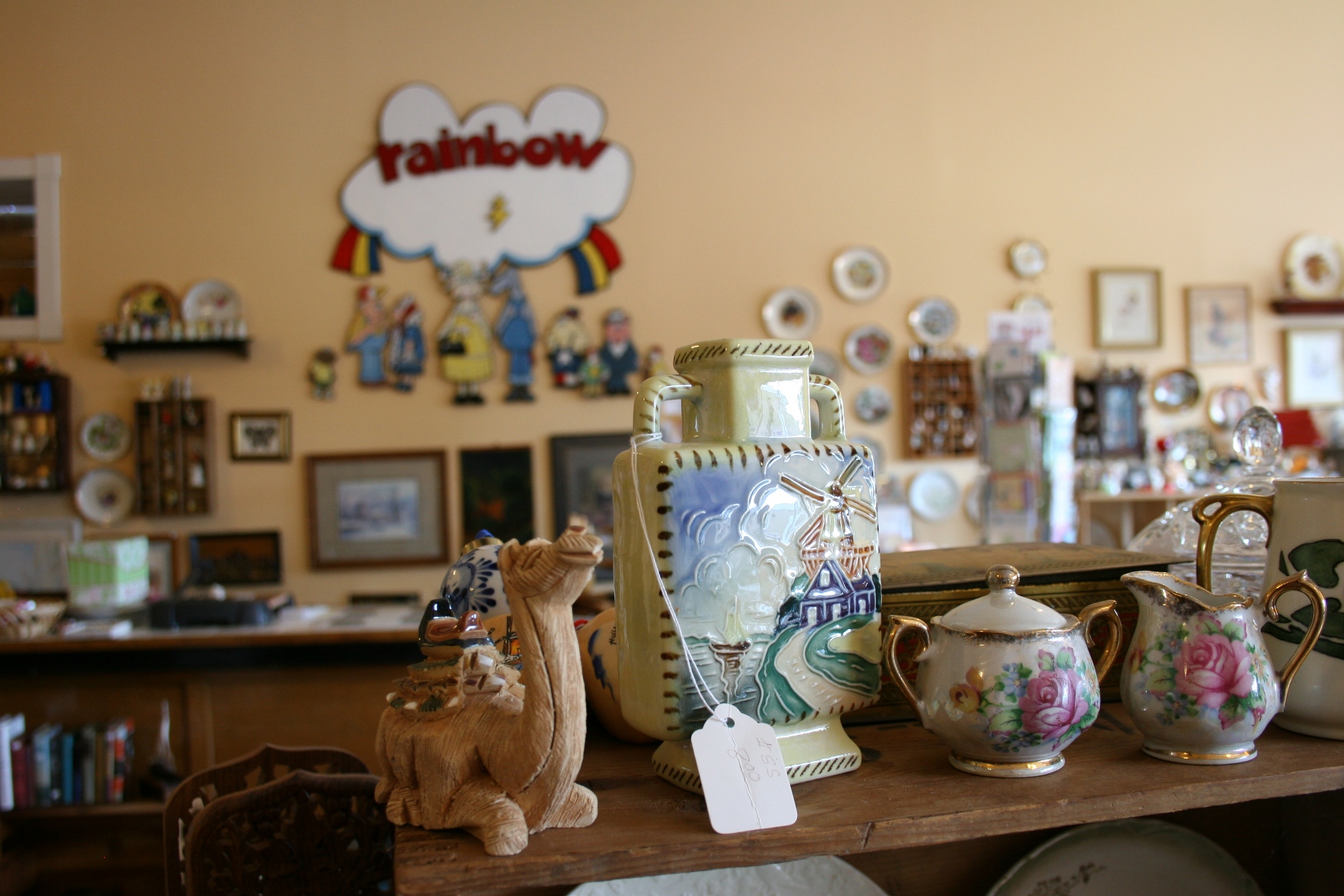
Some of the merchandise displayed in the main part of the antique store.

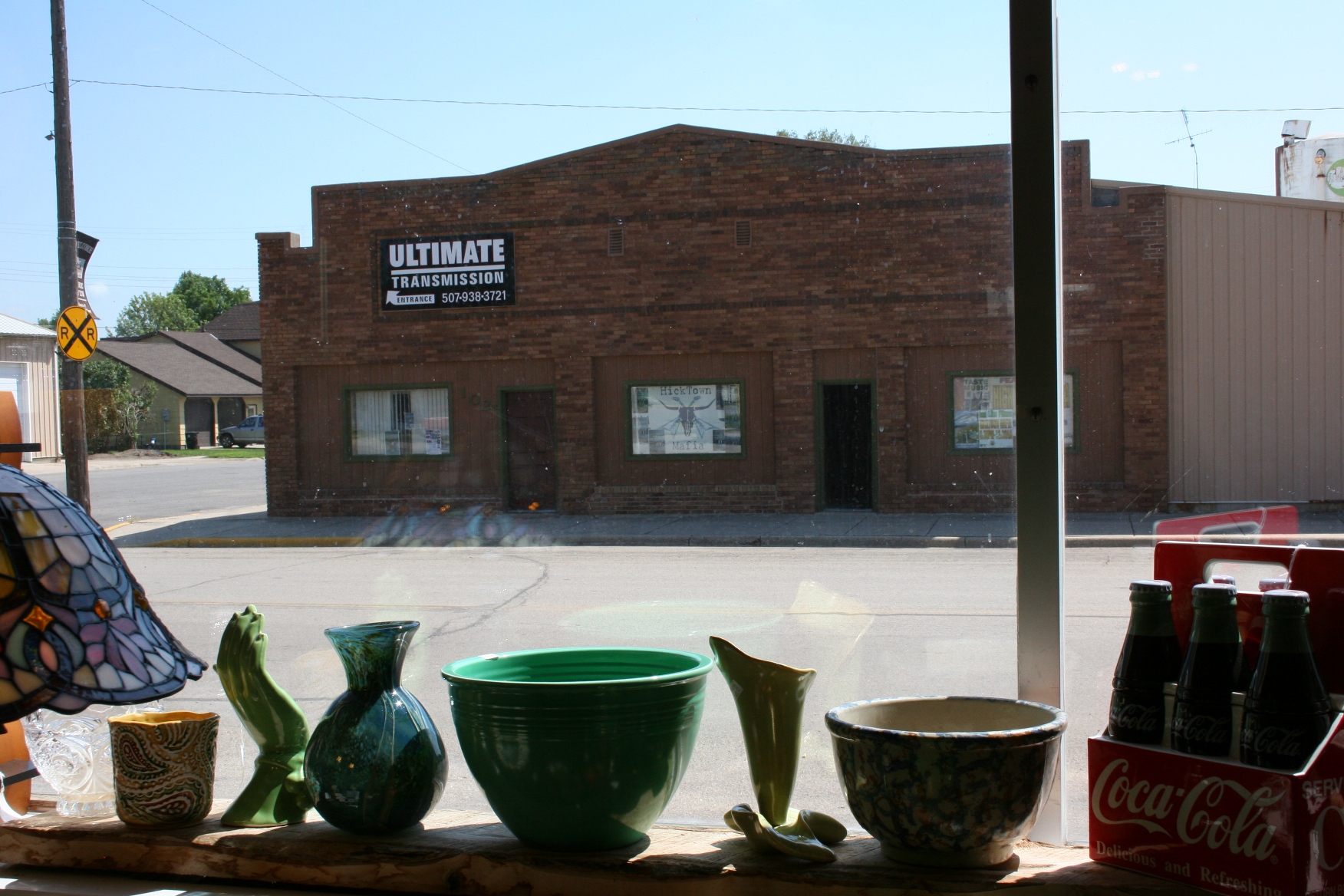
A view across the street through one of the large front windows at Rainbow Antiques.

More Belview Area Photo Art by Don Gunelson.

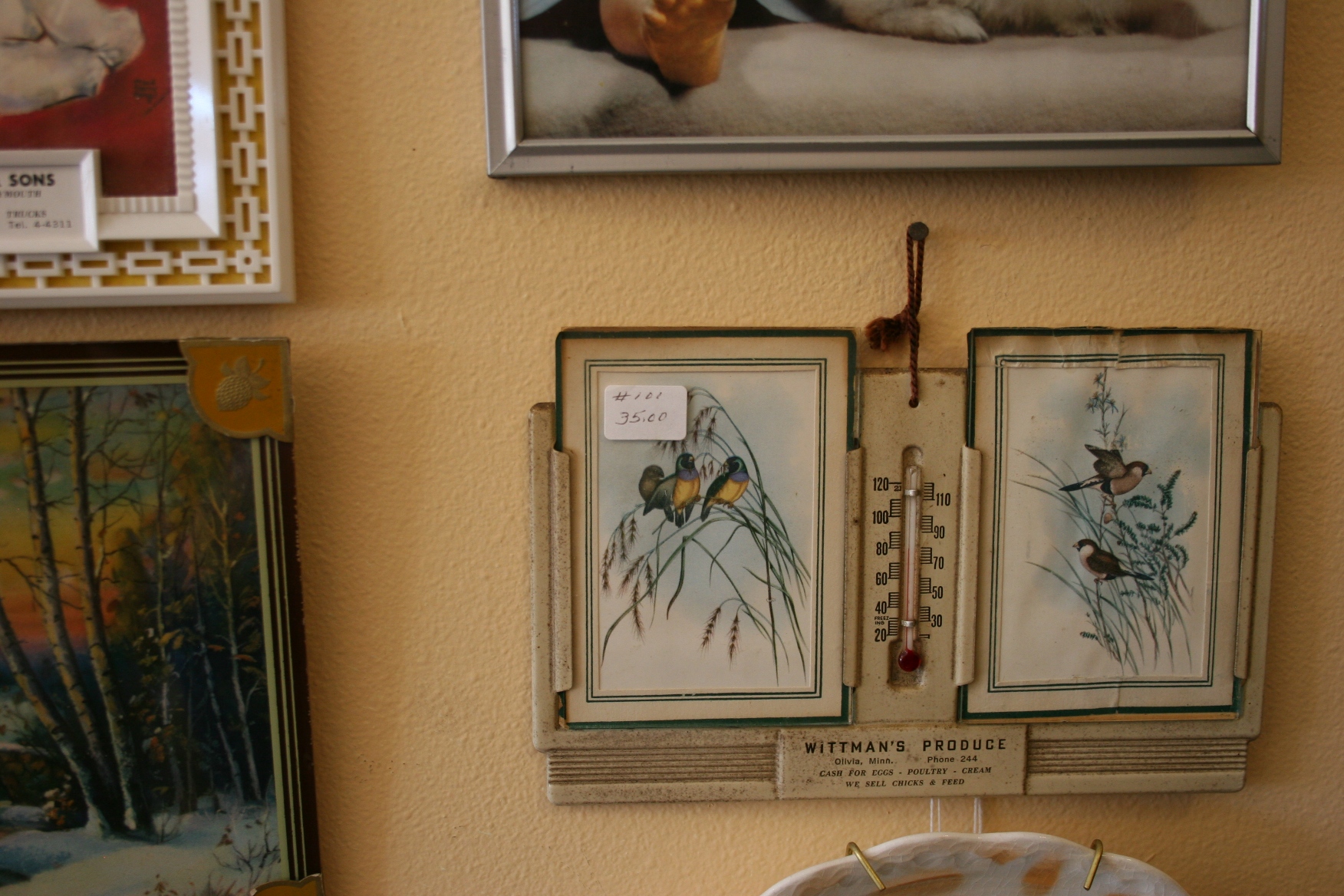
You'll find plenty of collectibles from the area, including this bird thermometer from Olivia.

This colorful folksy farm family graces the north wall of Rainbow Antiques. This photo was shot looking south on Main Street toward Belview's water tower.

Another view of Rainbow Antiques and Main Street Belview looking south.

Check back for more reasons to visit Belview in a future post.

© Copyright 2011 Audrey Kletscher Helbling
 

Celebrating summer in small-town southwestern Minnesota August 1, 2011

Filed under: Uncategorized — Audrey Kletscher Helbling @ 11:26 AM
Tags: , , , , , , , ,

A chicken meal has been served for decades at V-Esta Daze.

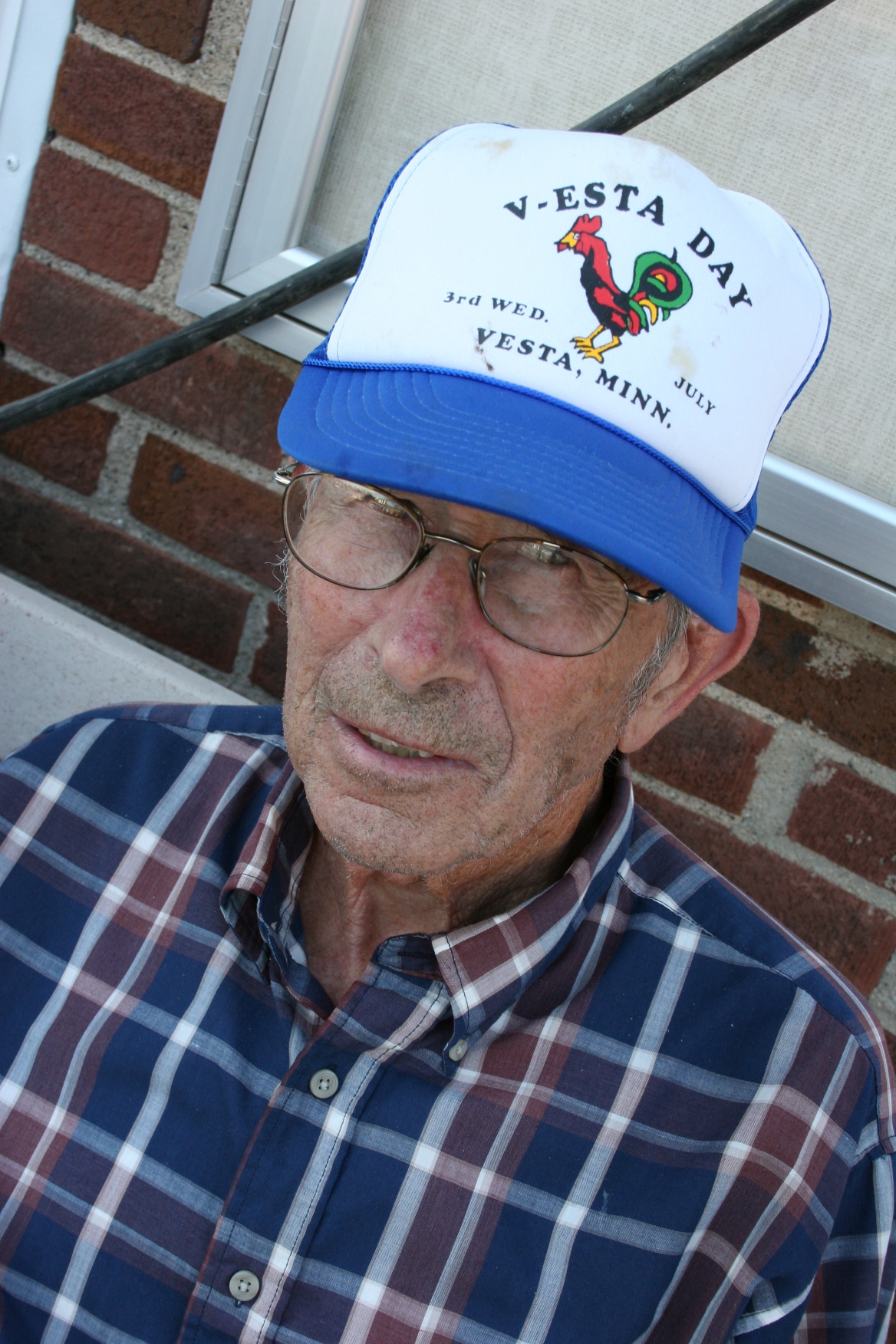
Milt Marquardt

IF YOU GREW UP in a rural area, you likely also grew up with an annual small-town summer celebration.

A chicken/pork/burger/corn (whatever) feed, carnival, kids’ games, car show, crowning of Miss Small-Town, water fights between neighboring fire departments, softball tournaments, a parade…

My hometown of Vesta in southwestern Minnesota has, for decades, celebrated V-Esta Daze. The town name is pronounced “Vest-a,” but for the celebration, the pronunciation rhymes with “fiesta.” Don’t ask me why. We’re mostly a bunch of Germans.

Anyway, heritage and linguistics don’t matter so much as the decades-long tradition of serving Vesta’s famous chicken. Guys like Milt Marquardt, my neighbor back when I was growing up on a dairy and crop farm, have been grilling chicken so long they can’t remember. Suffice to say that’s been more than four decades.

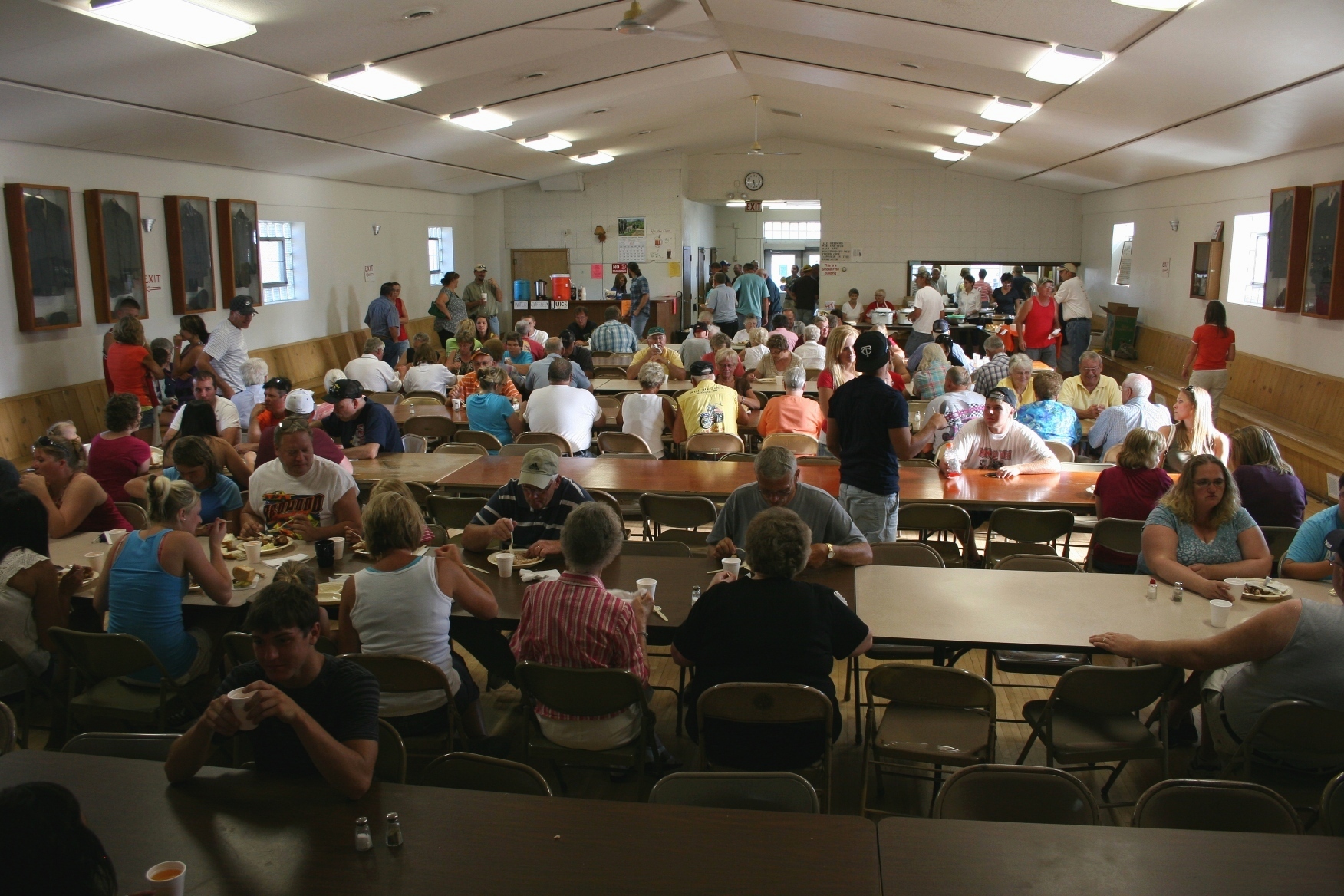
Milt and the crew grilled 280 pieces of chicken for the crowd that lined up in the Vesta Community Hall Friday evening for quarter or chicken halves, potato salad, beans, rolls, pickles and beverages. A few things have changed about the meal—the potato salad is no longer prepared by local women and the plastic-ware isn’t wrapped in a napkin (you grab your own). But you’ll still find my Aunt Marilyn monitoring the beverage station, the same job she’s held for some 40 years.

Diners still settle onto folding chairs pulled up to long tables in the old hall. Glass encased military uniforms and built-in wooden benches flank the sides of the hall anchored by a stage on one end. Little has changed in this building (except the addition of a kitchen), which has long been Vesta’s celebration-central—the place to celebrate weddings and anniversaries and the coming together of community.

The same sign goes up every year inside the Vesta Hall. The price is updated when necessary.

Diners eat in the Vesta Community Hall, where military uniforms hang on the walls.

This year the V-Esta Daze celebration was moved from a week night to a Friday night. Thank you, organizers. That happened to coincide with the annual Kletscher family reunion weekend. So I was there, lining up for that famous chicken and reconnecting with people I haven’t seen in years (and trying to remember their names).

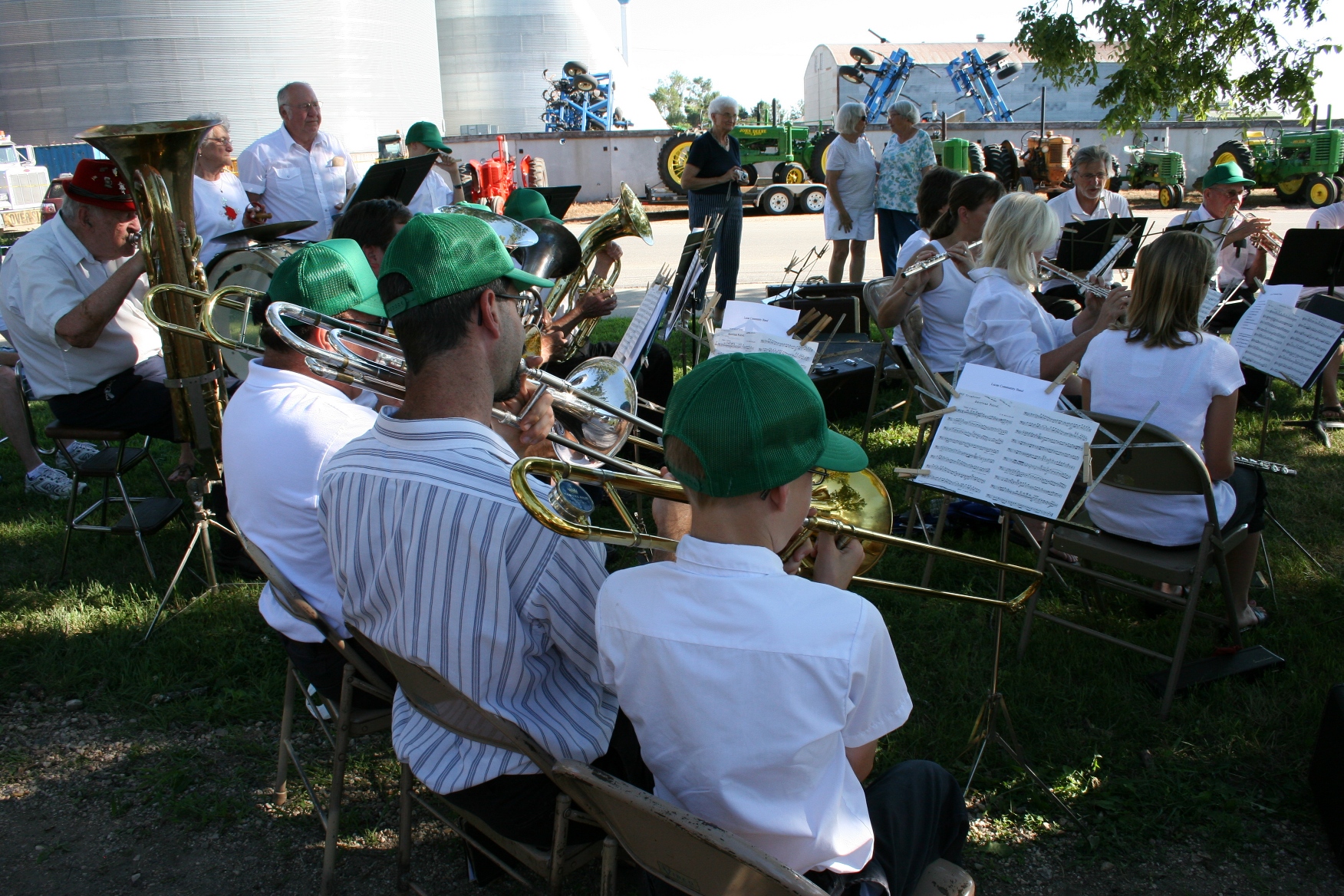
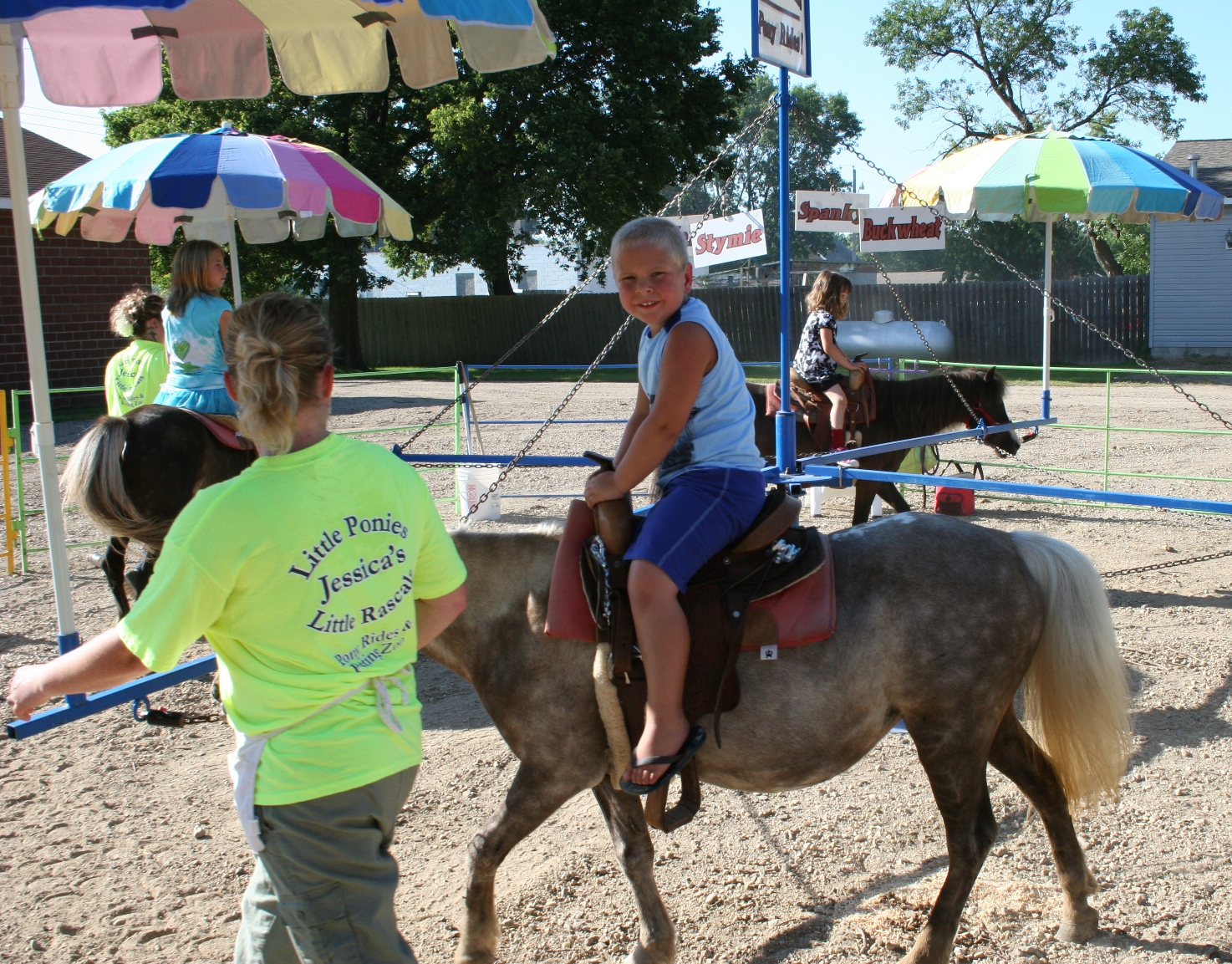
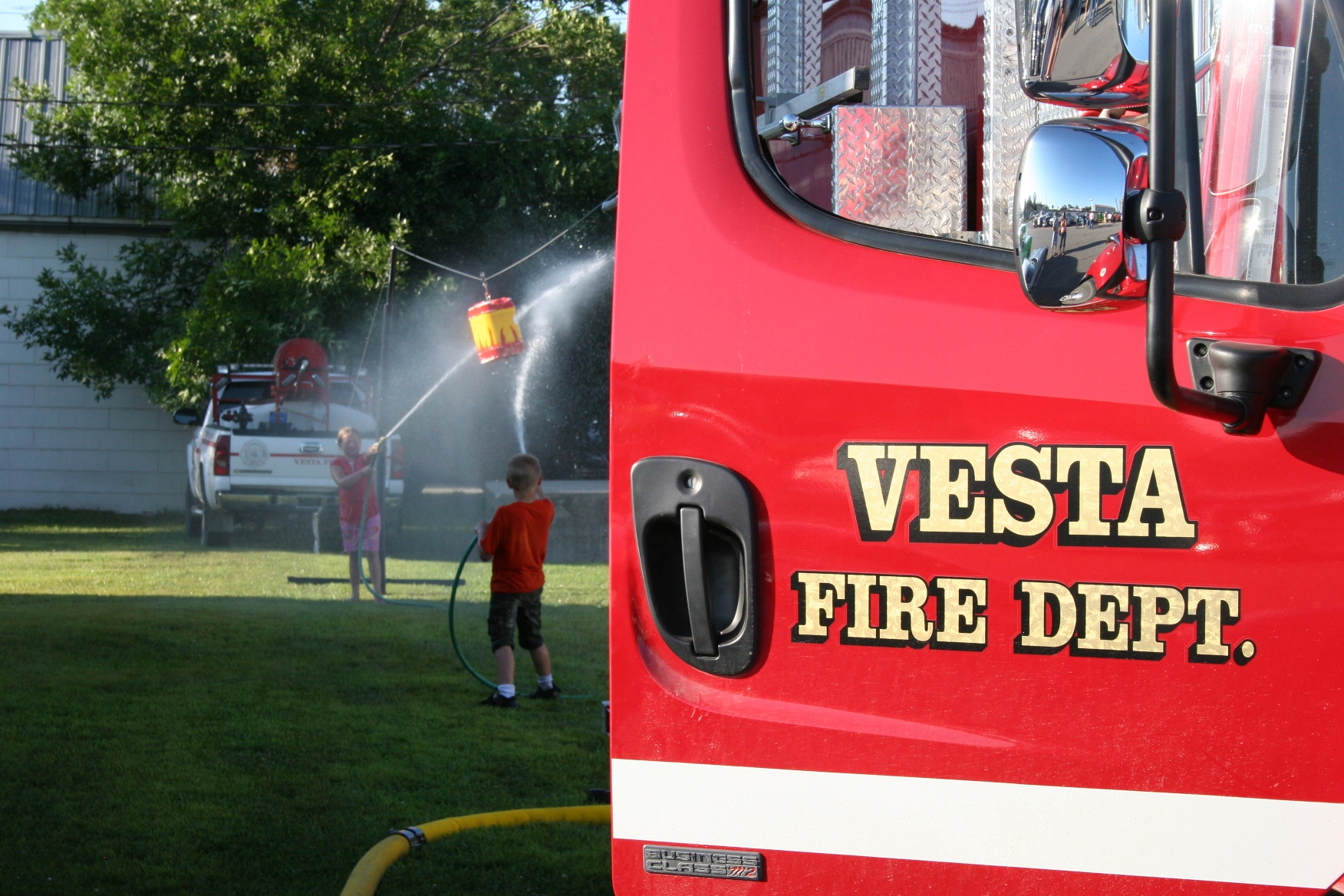
Gone are the carnival, softball games and water fights between neighboring fire departments that were part of the event when I was growing up. Instead, there were pony rides and bean bag tourneys, an antique tractor and car show, a putting green, pie eating contest, water fight for kids, street dance and entertainment by the Lucan Community Band and the required beer served from the beer truck.

The Lucan Community Band played under the shade trees outside the community hall and across the street from the elevator around meal-time. Lucan is a town of about 200 seven miles south of Vesta.

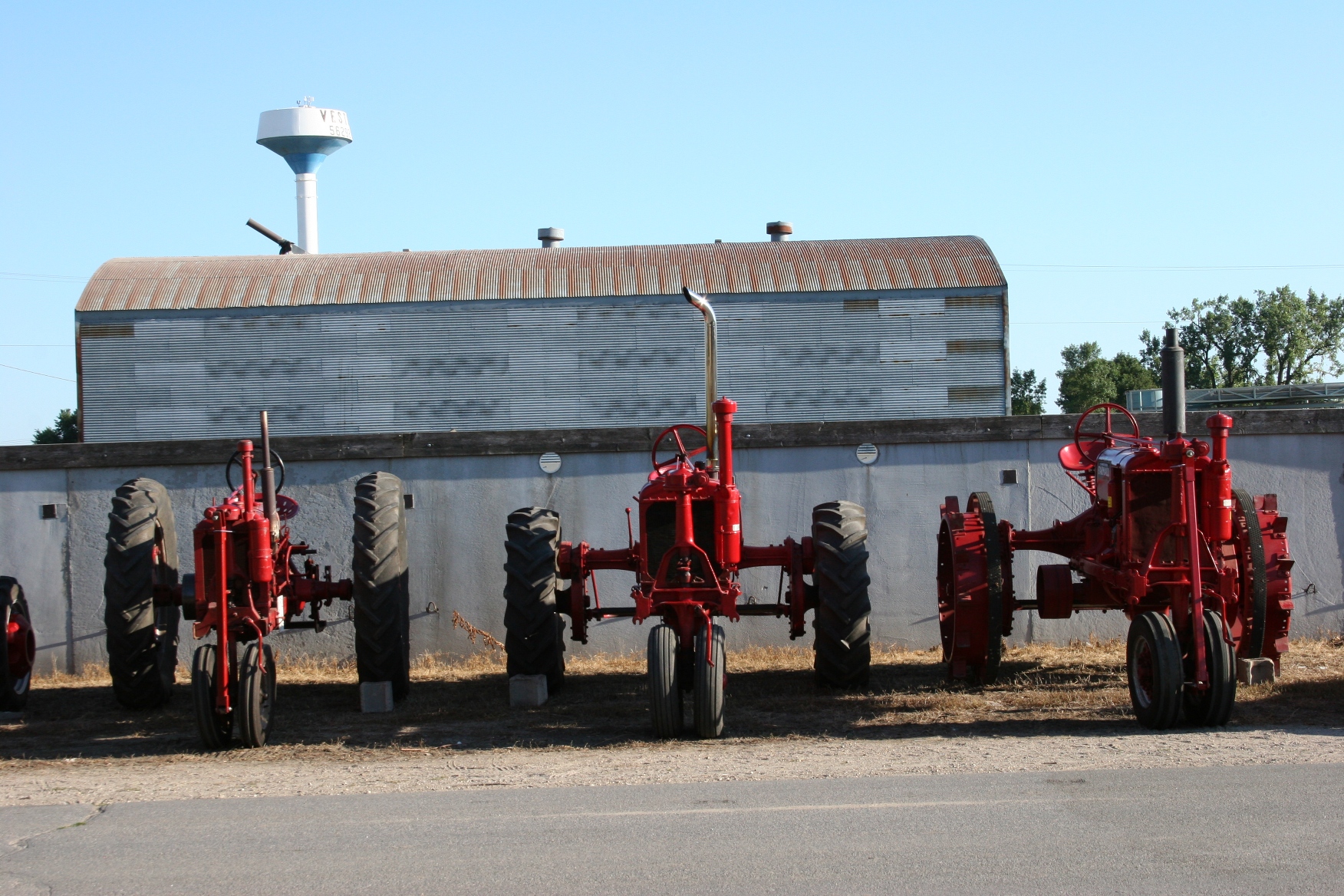
Area residents brought their old tractors to town for a tractor and car show.

My cousin Dawn's son, Kegan, enjoyed a pony ride.

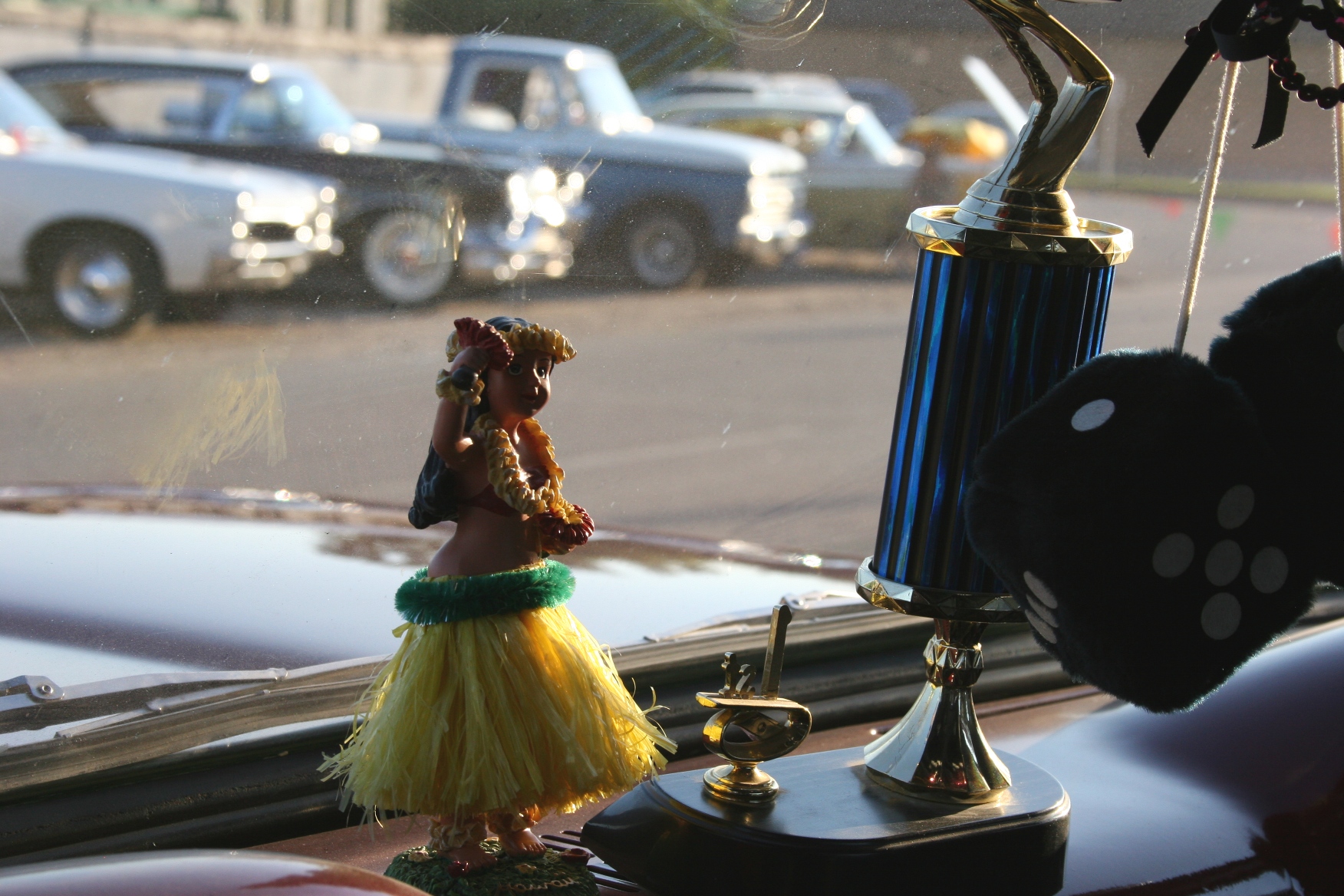
A view of the dashboard in a 1960 pick-up truck, looking toward some of the entries in the antique car show.

When I was growing up, members of Vesta's volunteer fire department engaged in water fights with departments from neighboring communities. Now the kids, not adults, participate in water fights.

I didn’t take in all of the events. I skipped the pie eating, bean bag toss and street dance. But I heard the band playing loud and clear a few blocks away when I left my Aunt Jeanette and Uncle Milan’s house around midnight Friday for my mom’s house a block away. Yeah, everything in Vesta, population around 300, is just a few blocks away.

HOW ABOUT YOU AND YOUR COMMUNITY? Do you have an annual summer celebration or return to your hometown for one? Submit a comment. I’d like to hear about these small-town gatherings.

© Copyright 2011 Audrey Kletscher Helbling
 

A Sunday morning with The Hope Feline Patrol July 31, 2011

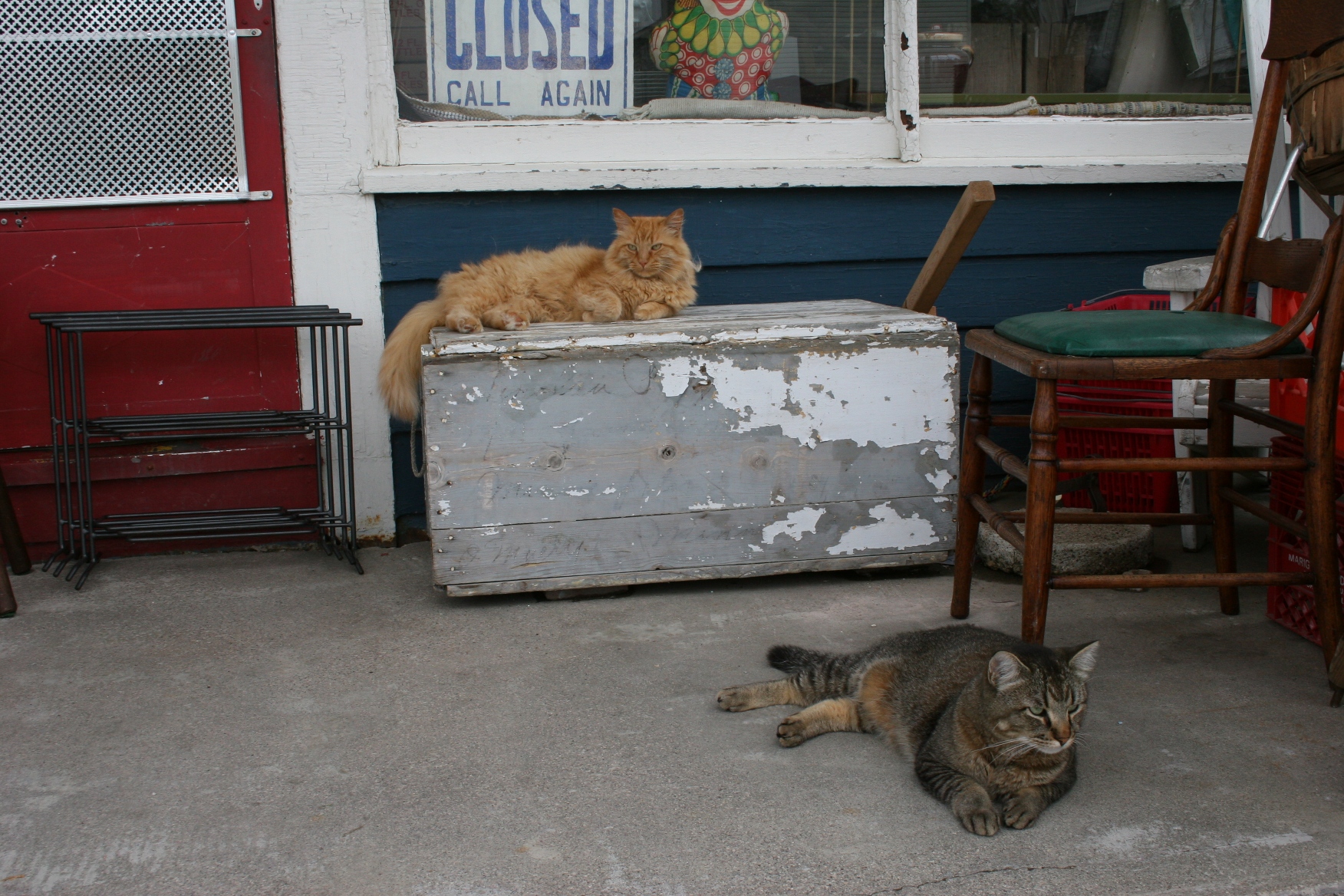
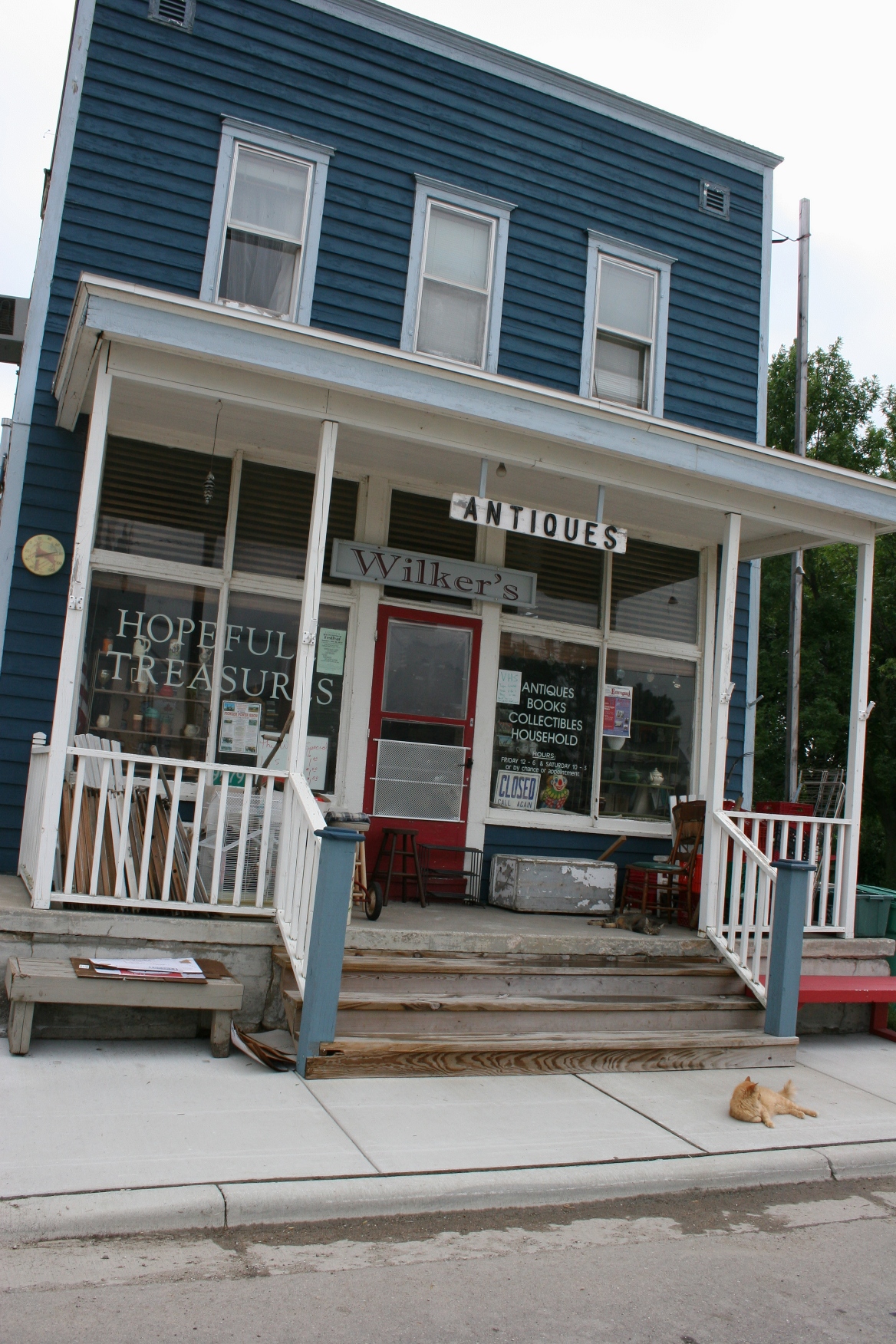
The Hope Feline Patrol lounges on the porch of Hopefull Treasures.

VISIT HOPE, MINNESOTA, late on a Sunday morning and you might feel like you’re in a ghost town. Except for the cats. The Hope Feline Patrol, I’ve dubbed them.

When my husband and I pulled into this Steele County town because that’s what we sometimes do on Sundays after church—hop in the car and drive to places we haven’t been to before—not a soul was in sight save those two cats.

They lounged on the porch of Hopefull Treasures, aka Wilker’s Antiques, all stretched out as if they had not a care in the world. Until I appeared.

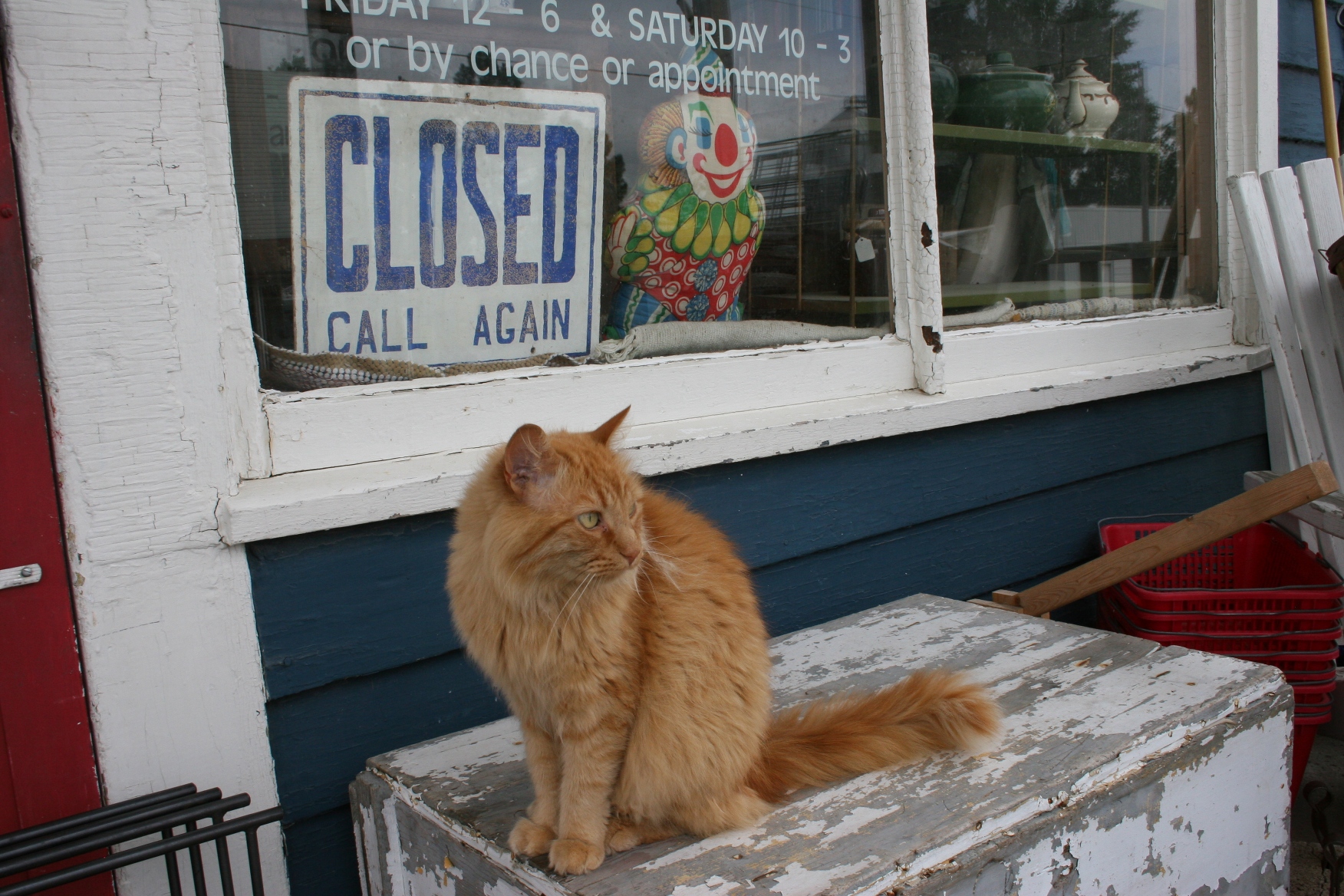
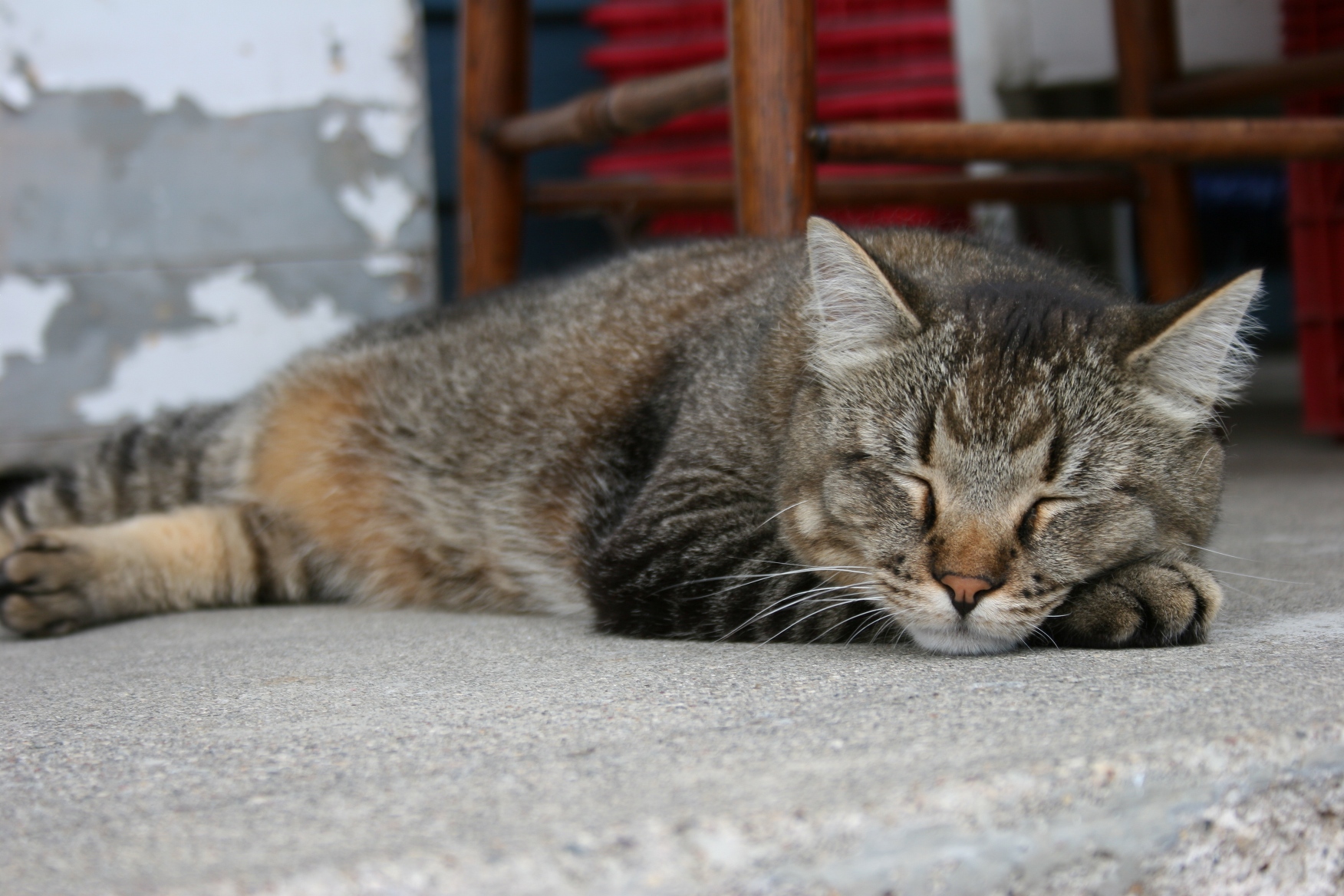
The long-haired orange cat stirred, on alert, jumped off a weathered wooden box and wound around my leg. The tabby stayed put, flicking eyes toward me, then, satisfied that I presented no threat, resumed cat napping.

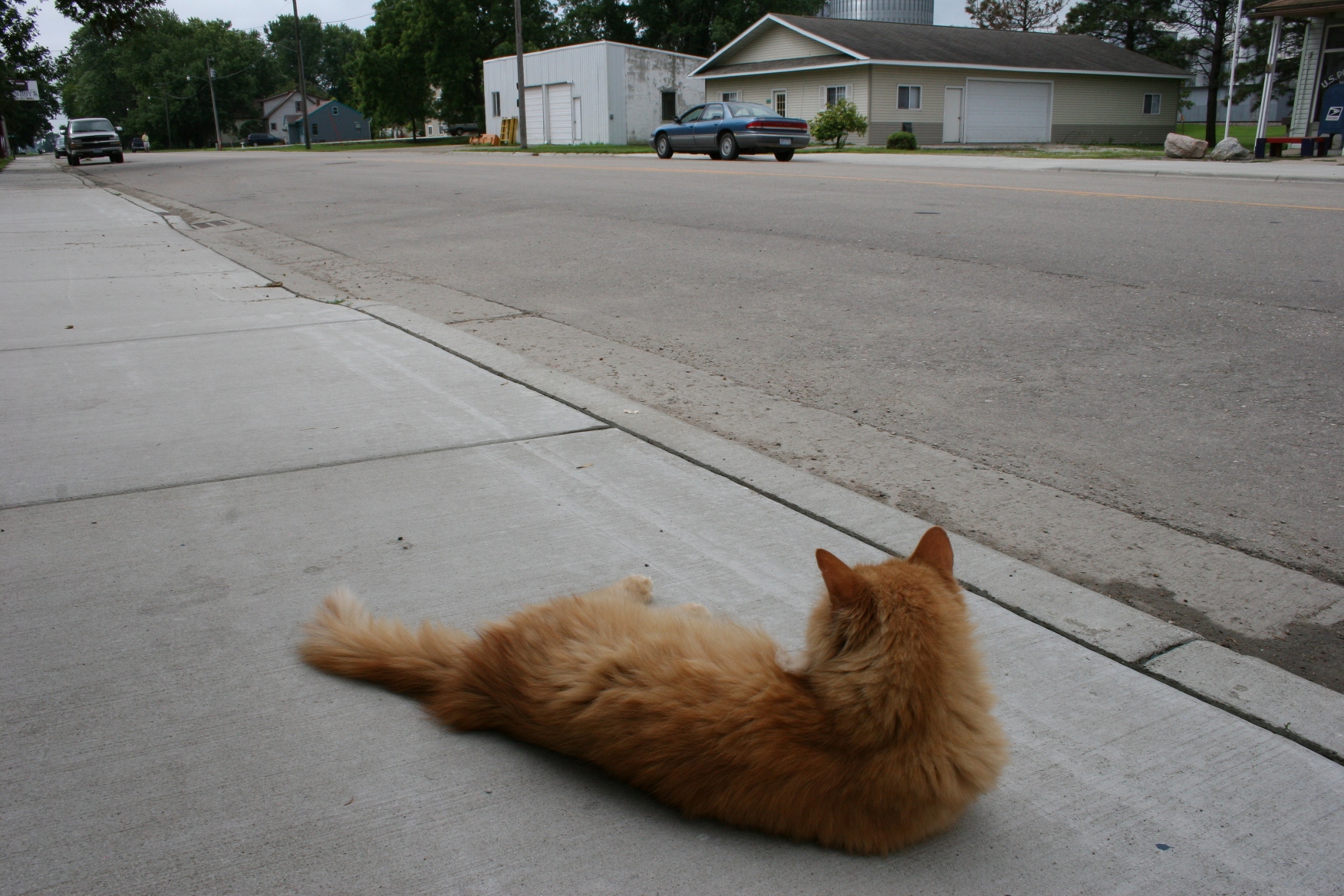
The orange cat, however, plopped down on the sidewalk in front of the antique store, rolled around for awhile and then assumed a leisurely pose with a watchful eye on the single main route through this town of 120 residents.

The orange cat almost immediately sat up and assessed the situation when I arrived.

The napping tabby left patrol duties primarily to the orange cat.

Hopefull Treasure's orange cat keeps an eye on the single road that runs through Hope.

All the while I kept taking pictures of the cats and the antique store I wished was unlocked. It’s open only from noon to 6 p.m. on Fridays, from 10 a.m. to 3 p.m. Saturdays or by chance or appointment. Apparently I wasn’t drawing a chance card on this day.

I knew I’d love poking around inside this place, scrounging for more story and photo treasures, plus antique and collectible treasures.

Every place, every person, every animal, every thing holds a story. And at Hopefull Treasures I’d found my story in The Hope Feline Patrol.

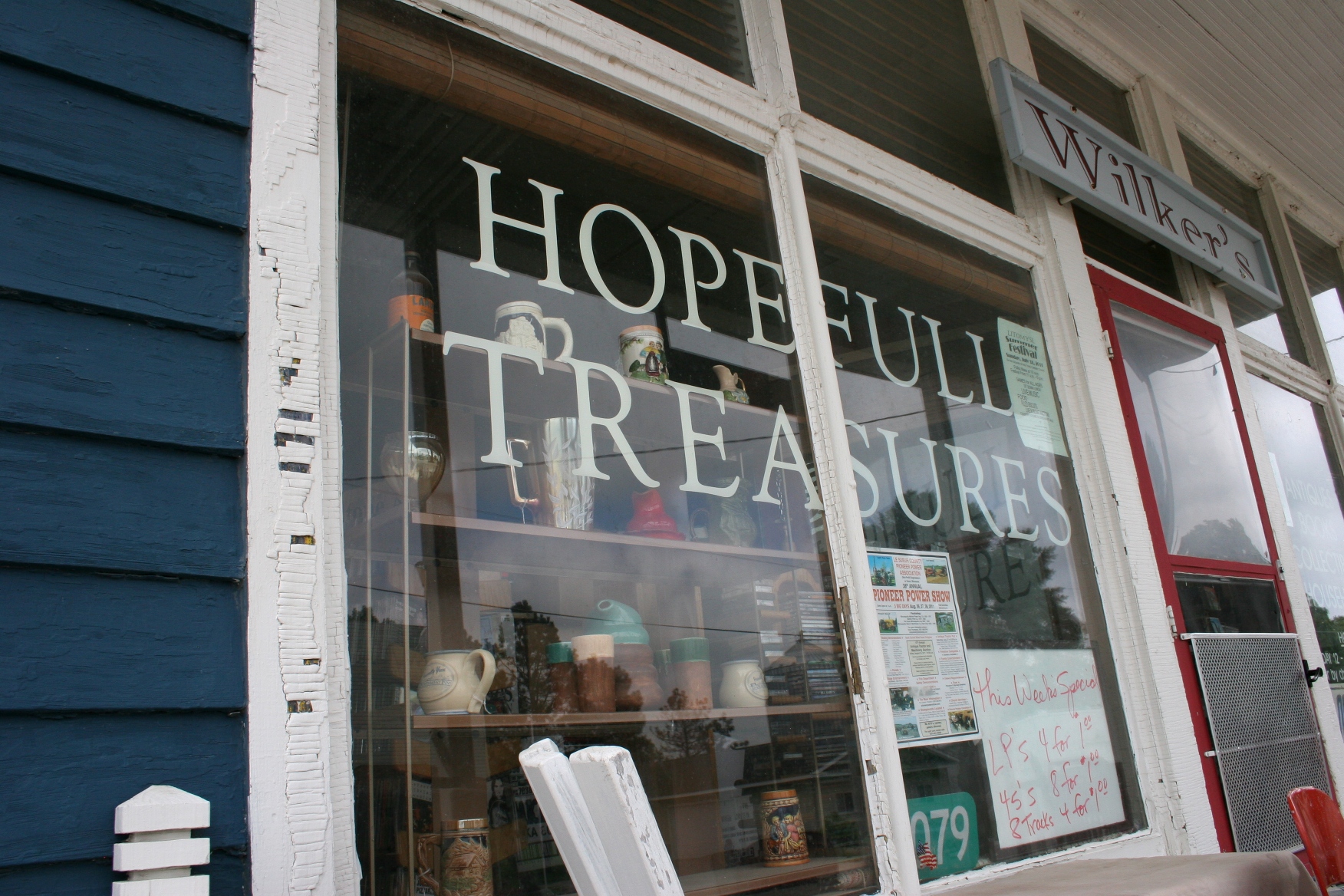
I had to peer into the windows of the closed antique store to check out the treasures.

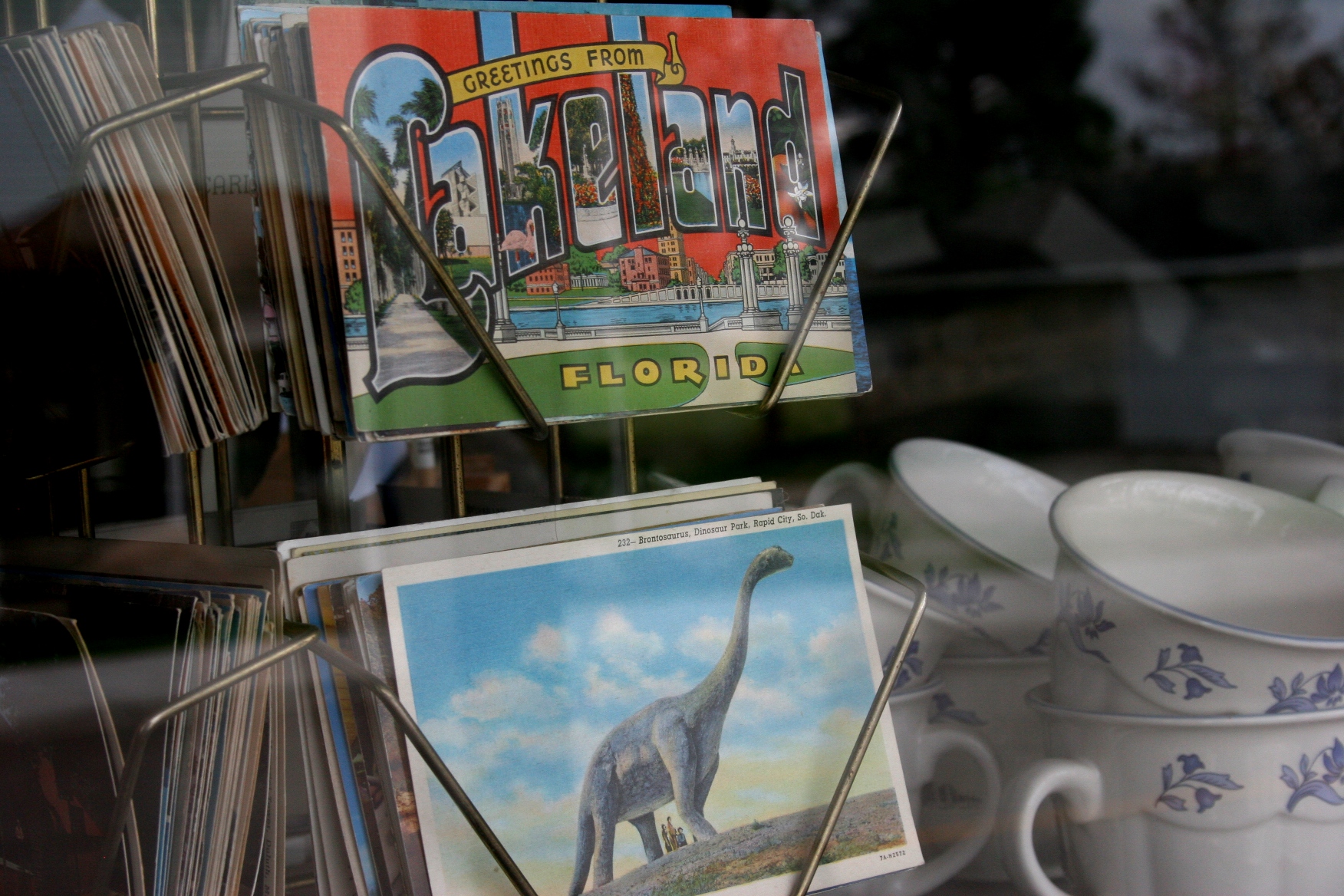
Vintage postcards and coffee cups I spotted through the front window of Hopefull Treasures.

When I moved on down the street, the orange cat was still lying on the sidewalk in front of Hopefull Treasures.

© Copyright 2011 Audrey Kletscher Helbling
 

Guess the pig’s weight and other farm stories from New Richland July 29, 2011

VENTURE INTO RURAL MINNESOTA—and we’re talking the small farming communities here, not what metro folks call “Greater Minnesota” or “outstate Minnesota”—and you’ll connect to our state’s agrarian roots in some interesting ways.

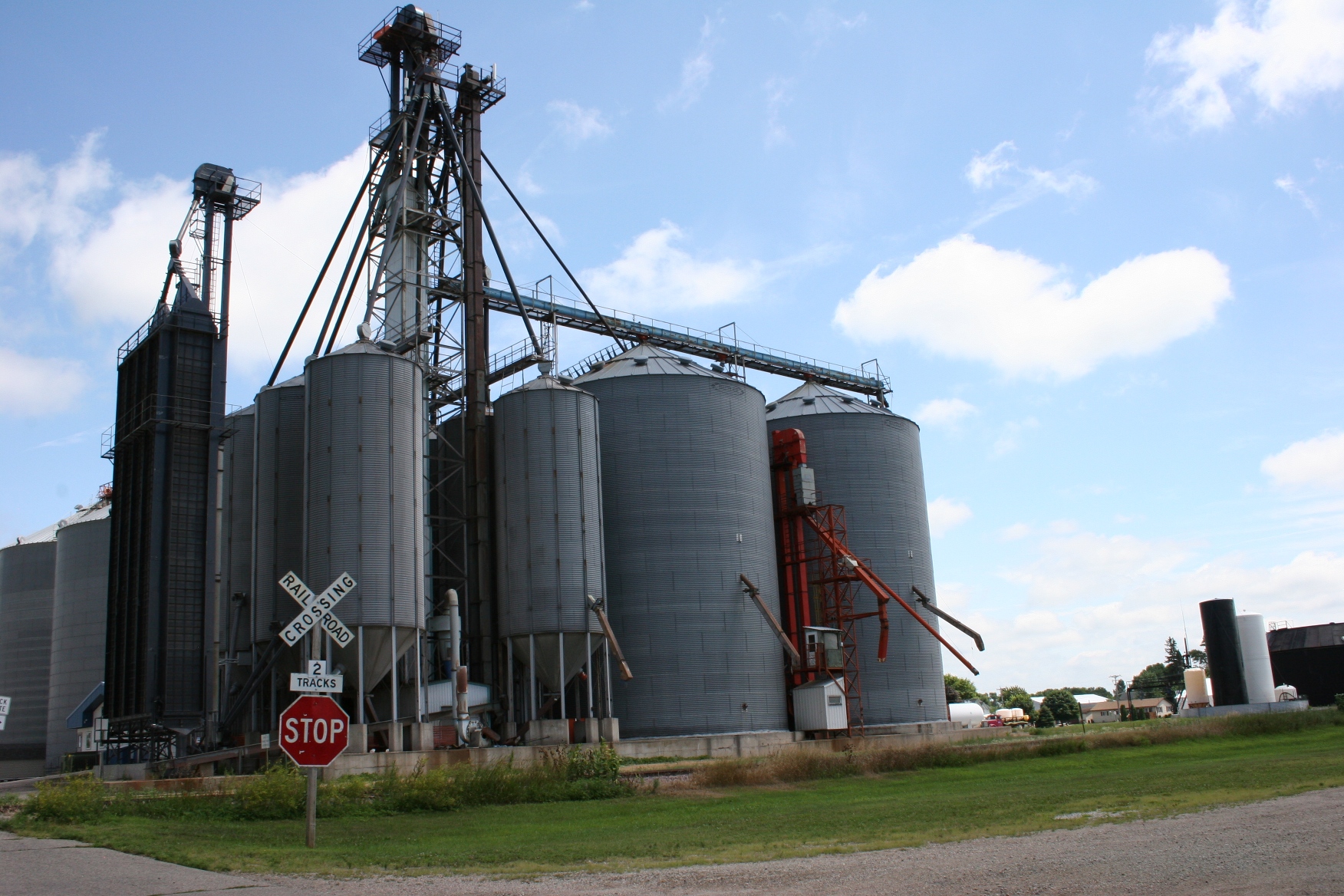
Take New Richland, for example, a town of 1,200 in southeastern Waseca County. Drive into town and you’ll see the usual grain bins and elevator and other farm-related businesses you would expect in an agricultural community.

A cluster of grain bins in the heart of New Richland.

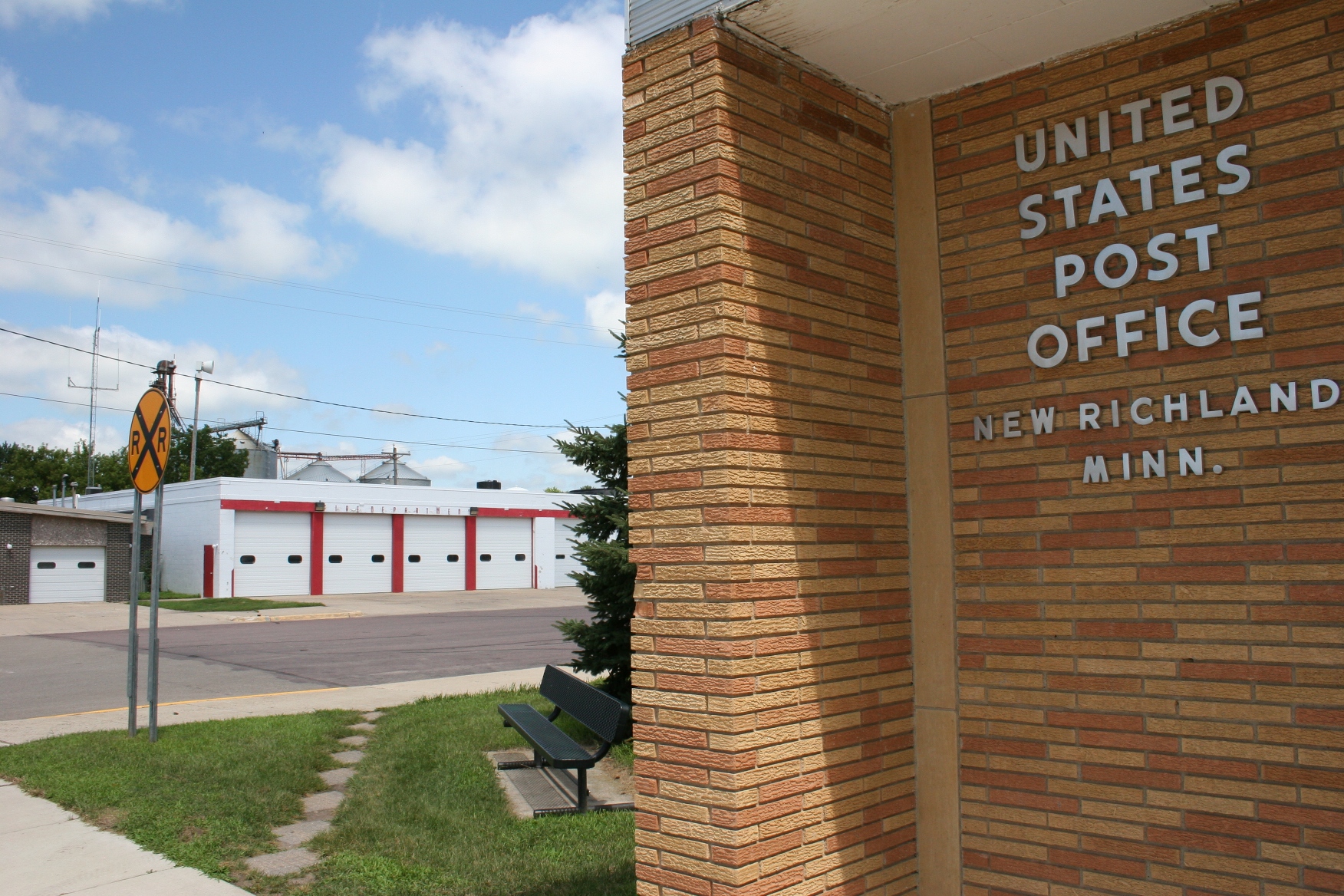
But then explore a little more and you’ll discover just how much this town values its agricultural heritage. Take the post office. Peek around the corner…

A corner of the New Richland Post Office. Note the grain bins a few blocks away.

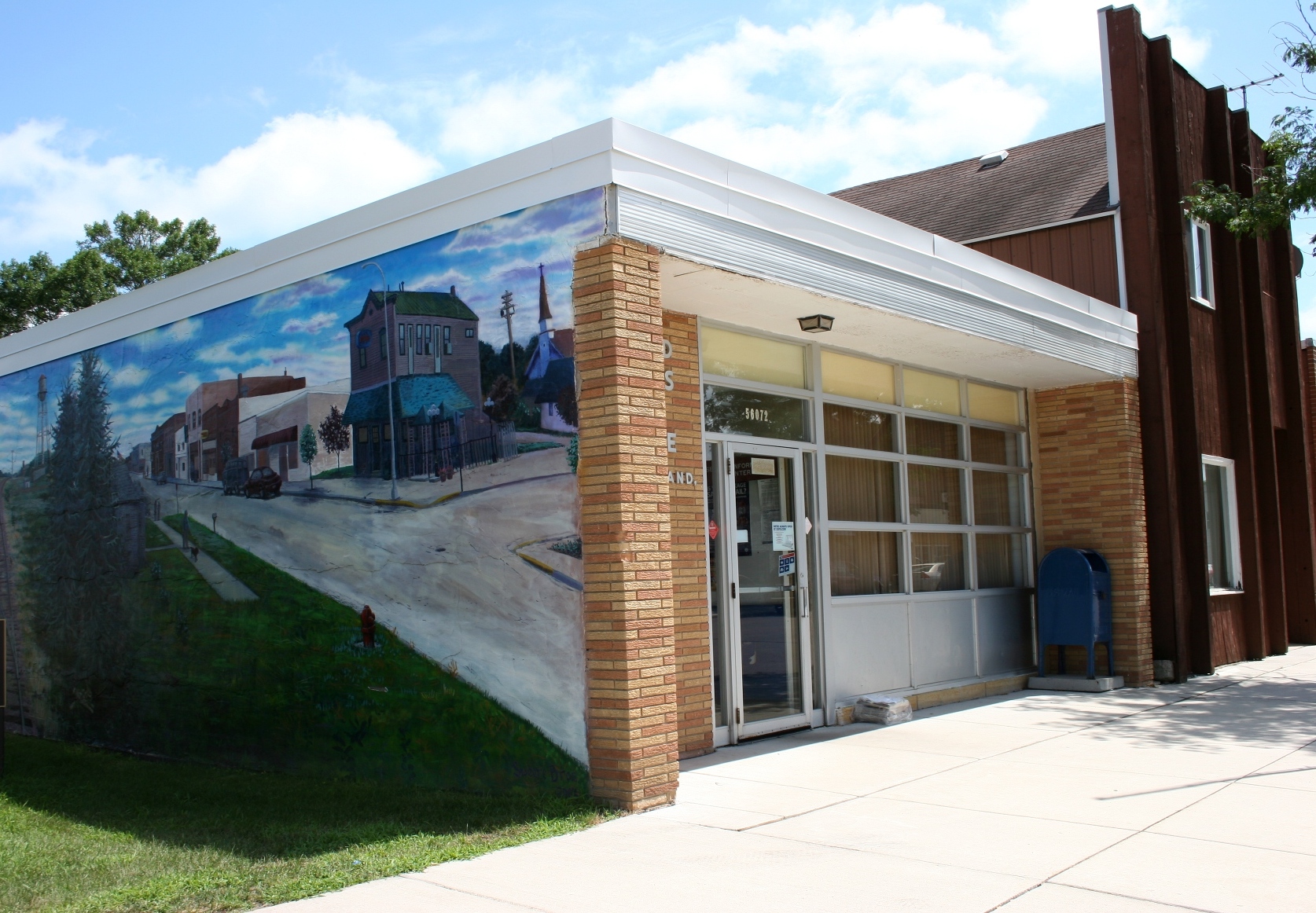
Around the post office corner you'll find this mural which reflects the connection between city and country.

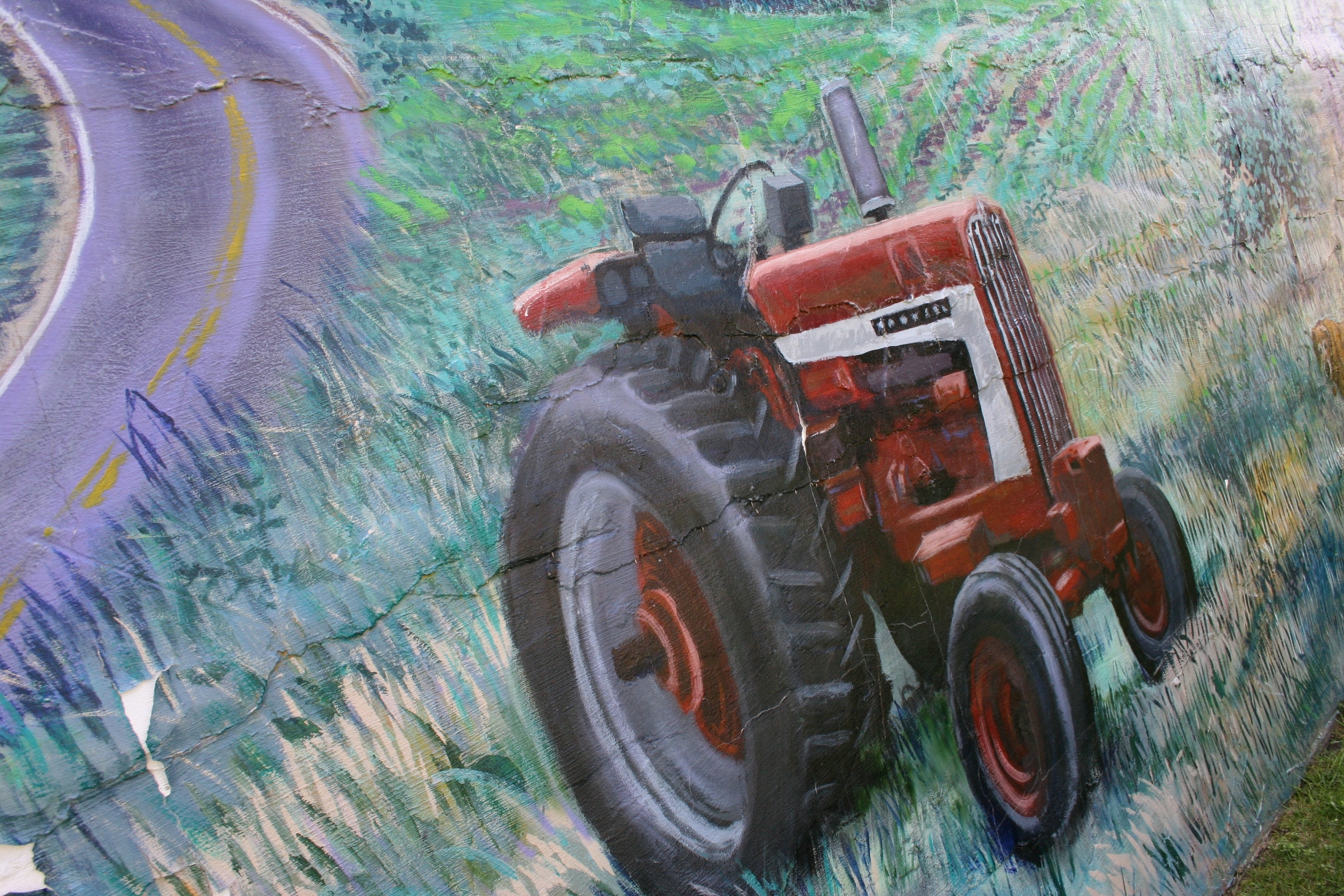
A snippet of the country portion of the mural. I wonder how the artist decided what type of tractor to feature?

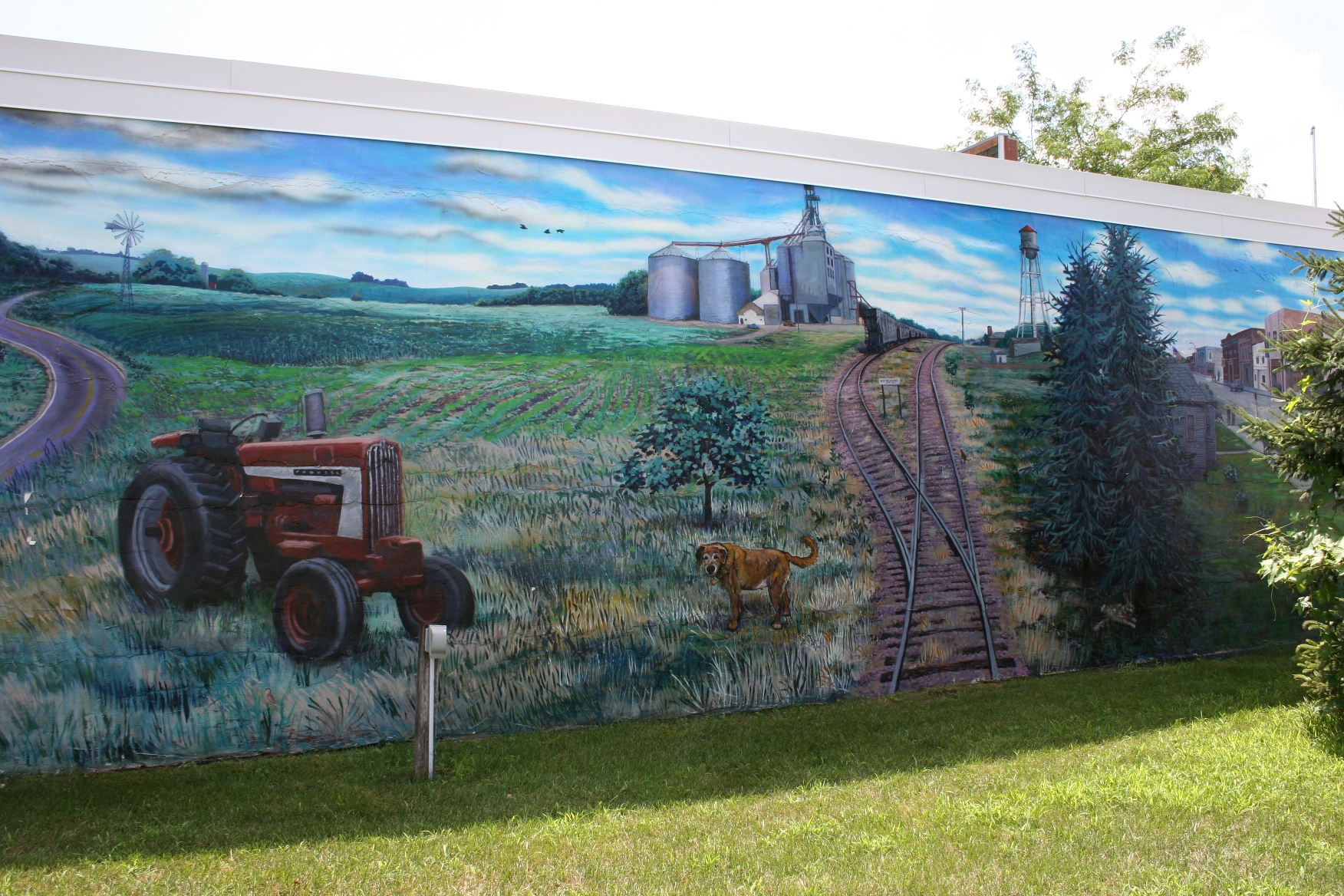
Country connects to city in this detailed mural.

and you’ll find a mural depicting farm and city.

Now I’ve seen many a mural in my day, and I’d rate this as among the best. I wish I knew who to credit for this detailed artwork that draws the eye along the winding country road, down the train tracks to the grain elevator or along city streets to downtown. But I couldn’t find any information about the mural in a quick online search.

However, I did learn more about New Richland and the pride this community takes in its agricultural roots. Just a few weeks ago the town celebrated its 28th annual Farm & City Days. Events included the usual parade, street dance, bingo, antique car show, medallion hunt and such.

But I found a few activities that definitely say country through and through.

Teams of two competed in the  second annual Chore Boy Race. (Just for the record, girls can participate, too; the winners were Molly Flor and Brandon Mullenbach). Anyway, it’s a contest that involves eggs, milk, hay, grain and wheelbarrows. You can learn more about the competition by clicking here and reading this story in the local newspaper, The Star Eagle.

I found a Chore Boy Race contestant application online and one Farm & City Days Facebook page photo and these rules (some in boldface):  “You must wear all your chore clothes at all times. This includes but is not limited to Boots, Hat, Bibs & Gloves.”

OK then, got that?

If you’d rather use your brain than your brawn, Farm & City Days offers a “Guess the weight of the pig” contest at $1 a guess. The person with the closest guess wins the pig and processing at Morgan’s Meat Market. This year two entrants correctly guessed the exact weight of 208 pounds and agreed to split the hog, according to the Farm & City Days Facebook page.

If you didn’t win the pig, you could still eat pork by buying a pork sandwich meal from the Waseca County Pork Producers at the city park.

Two other agricultural-themed activities included a kids’ tractor pull and a Farm vs. City 3-person Scramble at a golf course.

I’m disappointed I missed Farm & City Days because it sounds like one heckuva good time, as small-town celebrations typically are. But I wouldn’t even have known about this annual farm-city event if I hadn’t been poking around New Richland last Sunday, spotted that mural on the side of the post office and then gone online to learn more about it, which I didn’t, but I did.

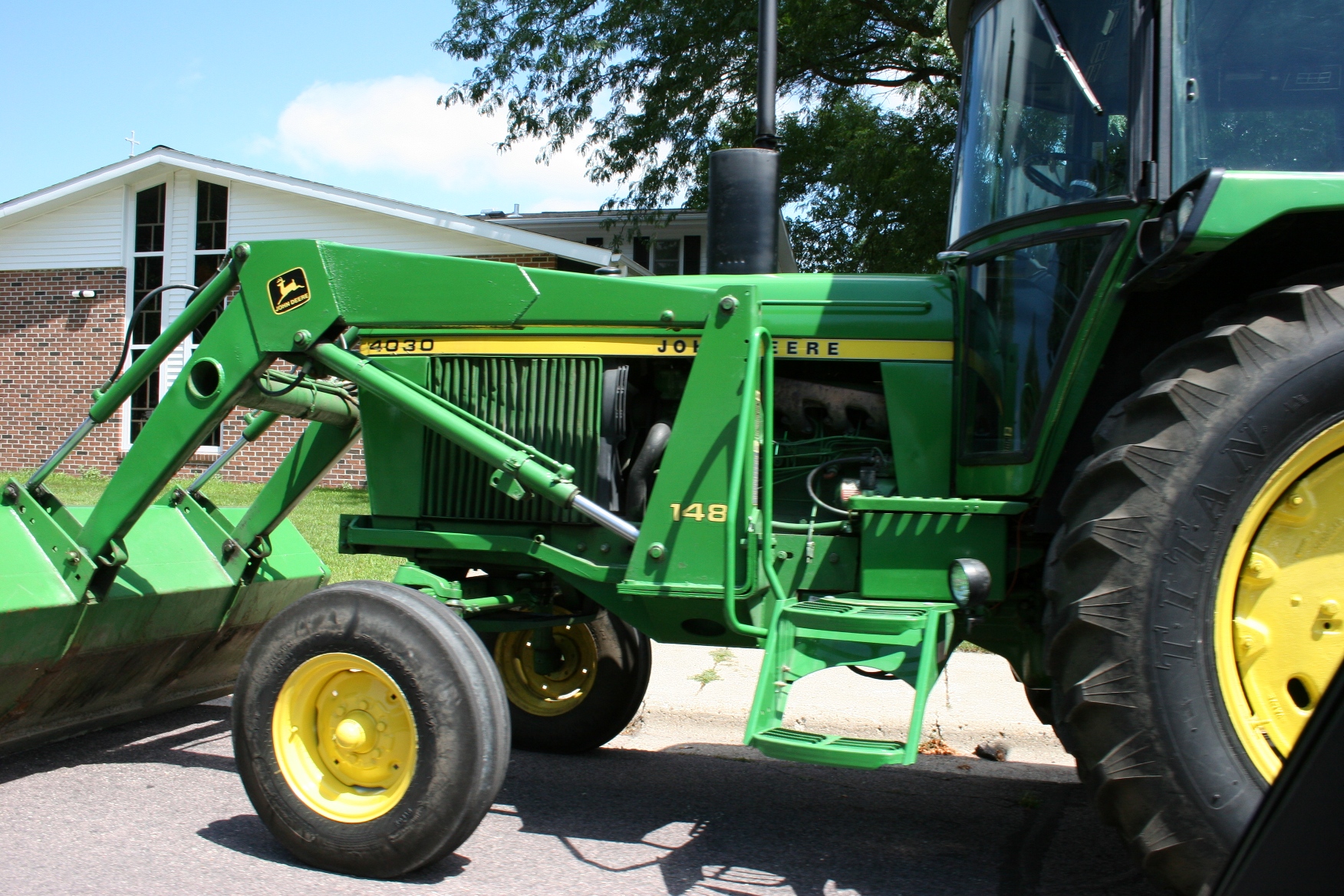
This John Deere tractor was parked outside the funeral home in New Richland on Sunday afternoon.

My husband and I stopped in New Richland while on a recent Sunday afternoon drive. Check out my July 24 blog post from this community and watch for future stories and photos from New Richland.

© Copyright 2011 Audrey Kletscher Helbling
 

Zip code 56046 July 26, 2011

THE NEXT TIME YOU’RE traveling Interstate 35 south of Owatonna, instead of whipping by the Hope exit at 70 mph, pull off the freeway and check out this unincorporated community of 120 residents, probably best-known outside of Steele County for Hope Creamery butter.

Unless my husband and I missed the signage, we never saw a sign marking the creamery and simply guessed that the butter-making operation is housed in an old brick creamery on the edge of town next to a farm.

But we discovered several other places of interest after parking our car along the one main road that cuts through Hope. Yes, you need to park your vehicle, get out and walk, rather than simply driving through town thinking, “There’s nothing here.”

You would be wrong, oh, so wrong.

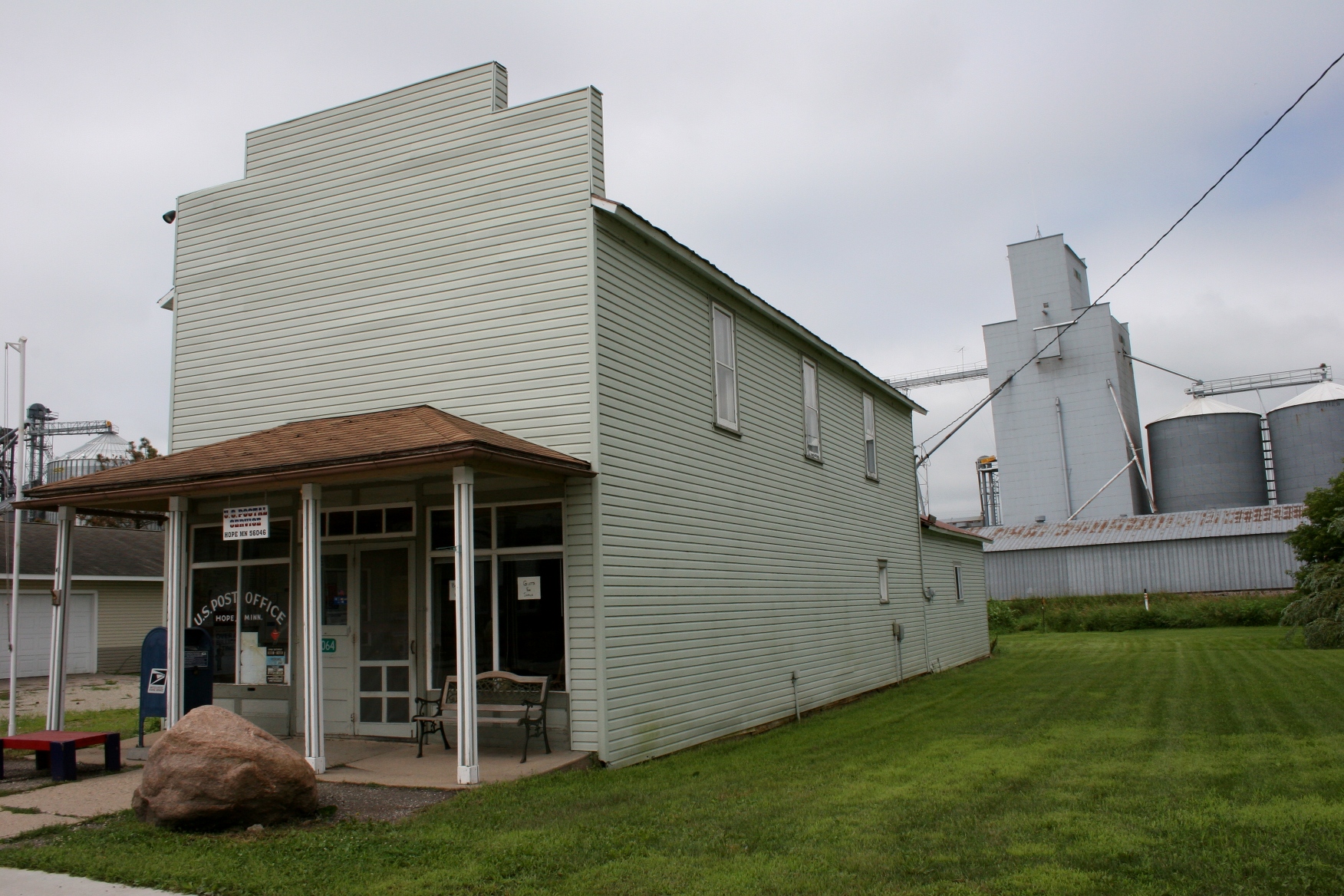
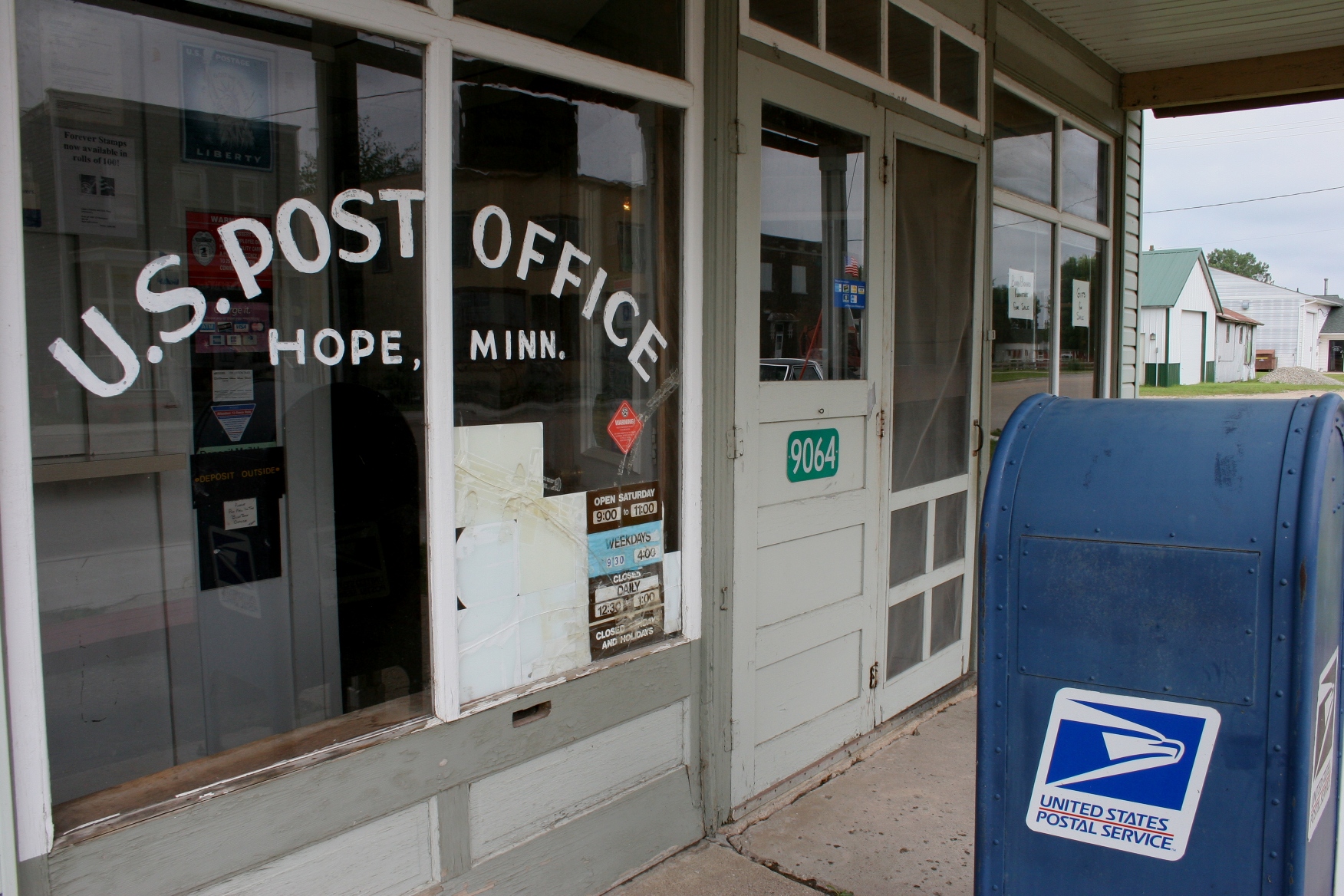
First point of interest: 56046. That would be the Hope Post Office. With a street front facade resembling the general stores of yesteryear or perhaps a building from a western movie set, this old-style structure charms.

The Hope Post Office sits along Main Street. The elevator complex in the background is just across the train tracks.

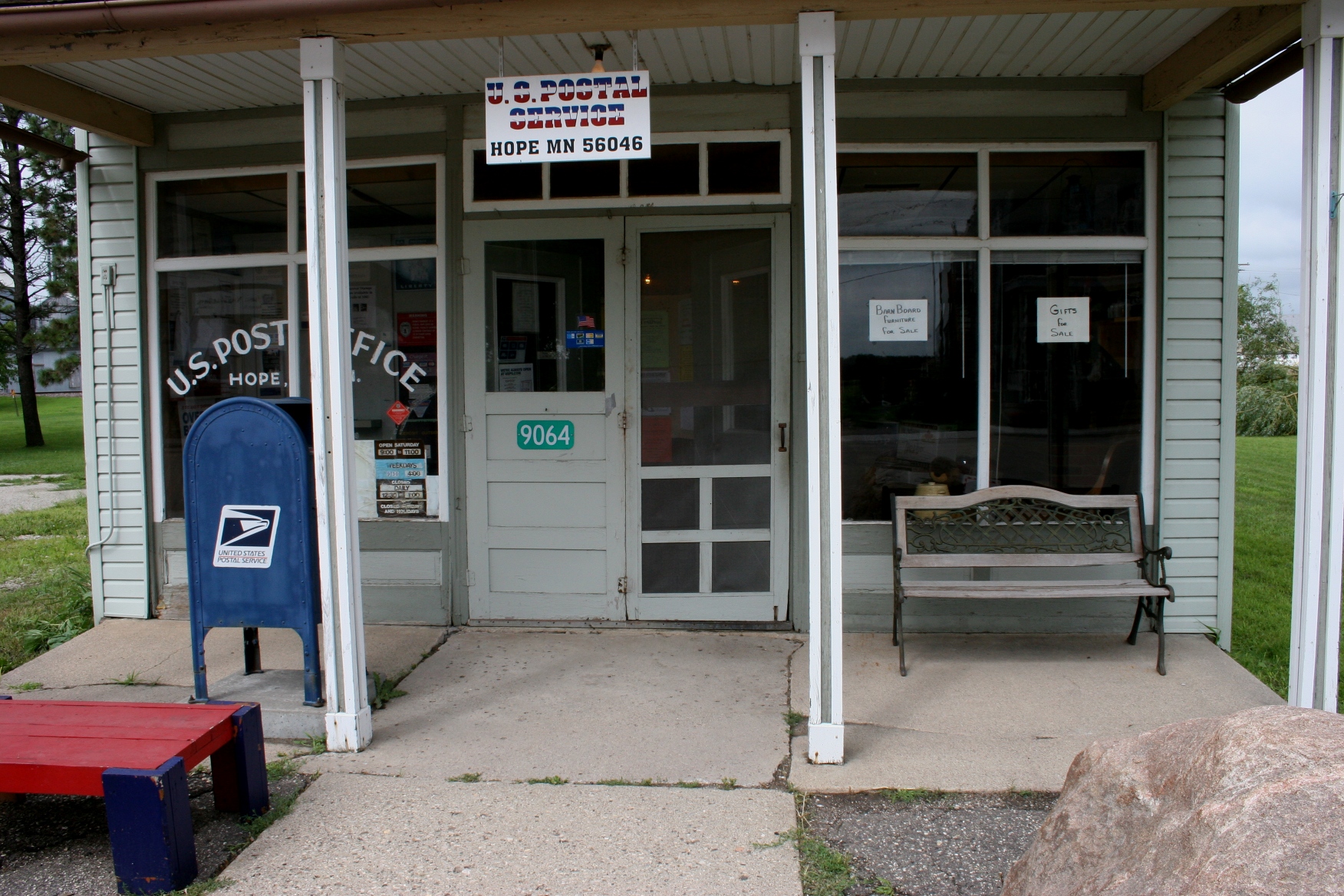
Take in the details: the red and blue bench, the double front doors, the rock out front, the welcoming porch...

Even the lettering on the front window has old-style charm.

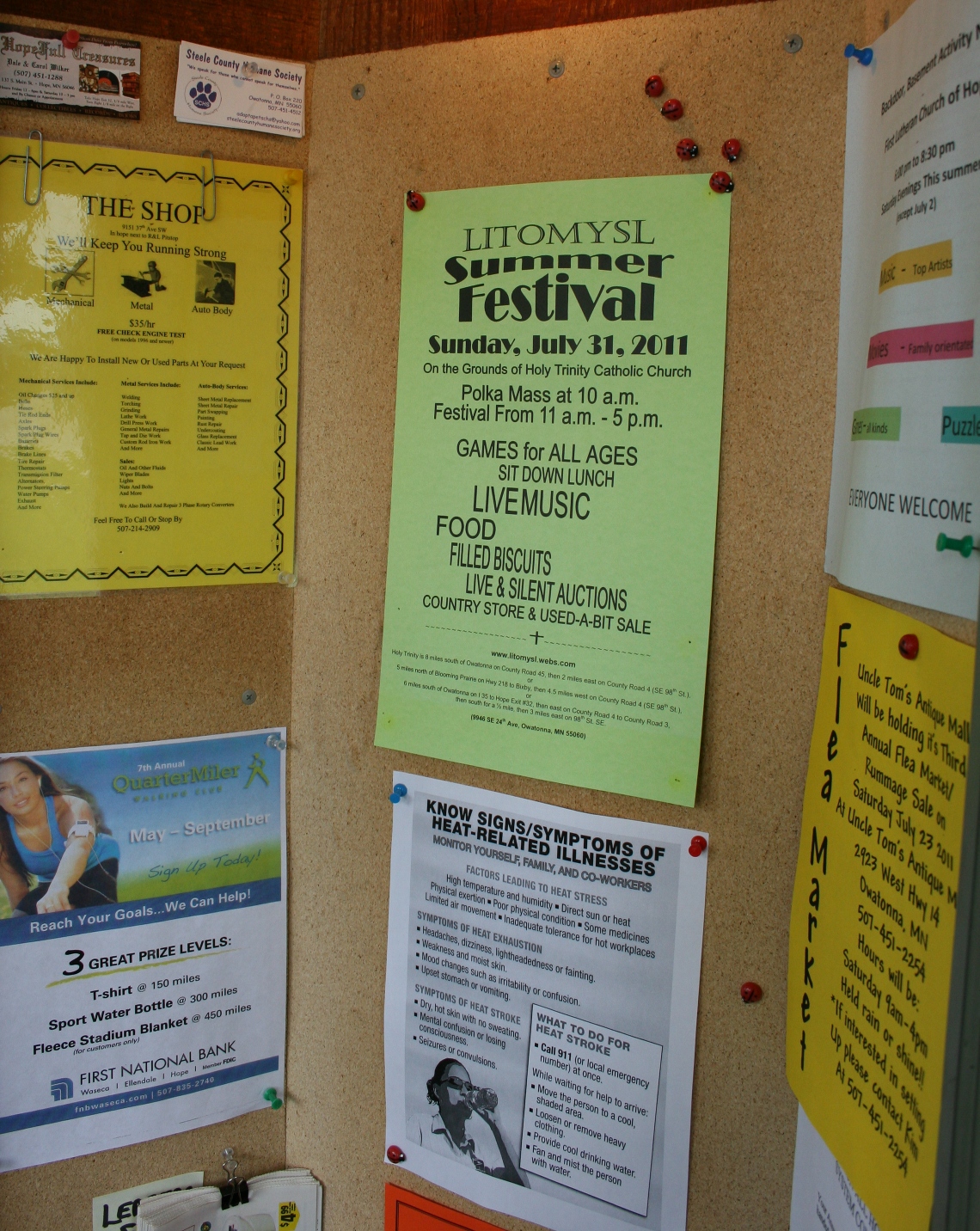
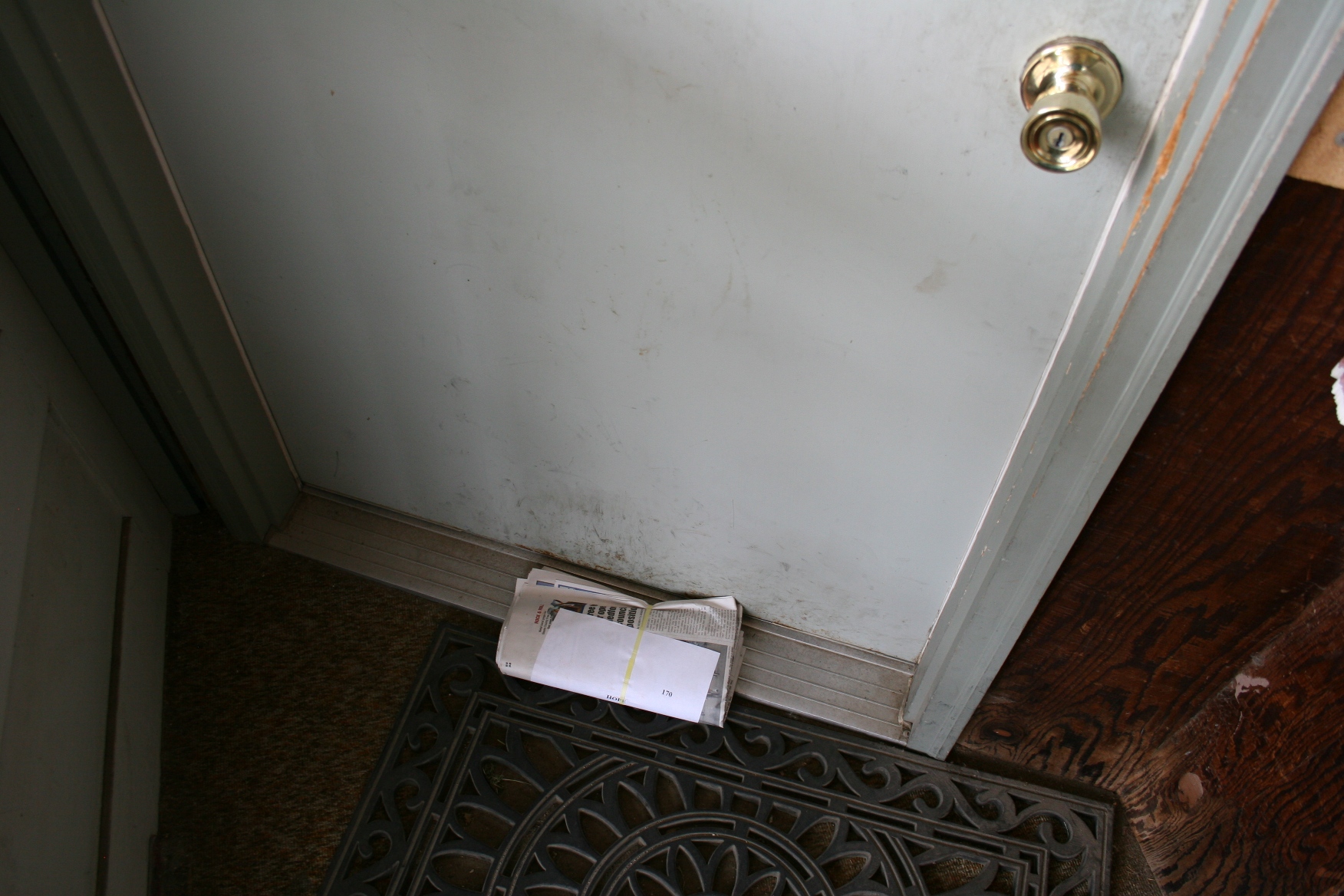
Maybe it doesn’t take much to impress me, but I appreciate buildings with character. I quickly determined that the post office serves as Hope’s community hub. I pulled open the screen door and stepped inside a closet of an entry, the door to the post office to my left, the door to a gift shop to my right. Smack in front of me, I found business cards and signs, church festival notices and other information tacked onto a bulletin board. A clutch of rubber-banded newspapers lay on the floor in front of the post office door.

The community bulletin board inside the post office entry.

A clutch of bundled newspapers outside the locked interior post office door.

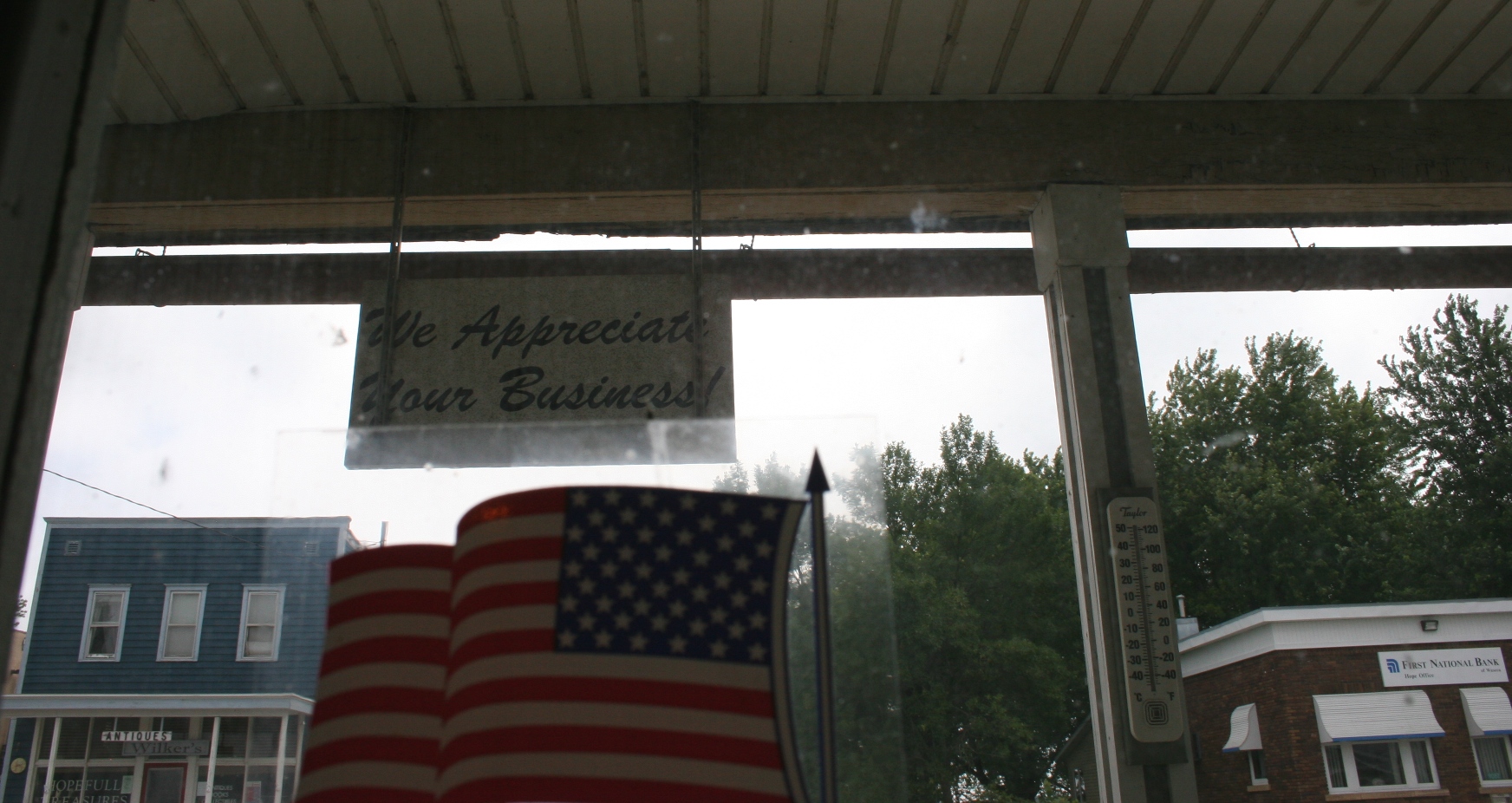
From inside the post office entry, a view across the street of the bank and an antique store.

Since I was there on a Sunday afternoon, I had to settle for standing outside, peering through the large, cracked and taped front windows to view the customer service area that is smaller than most bathrooms. But it serves the purpose and I’m sure Hope folks are happy to still have their post office.

I always figure once a community loses its school, its post office and its bank, well then, you may as well close up the town. So far, Hope has only lost its school.

Today the U.S. Postal Service releases a list of 3,600-plus post offices under consideration for possible closure in a cost-cutting effort. I hope Hope is not among them.

Post office hours are listed on a cracked and taped front window.

CHECK BACK FOR MORE posts out of Hope and other area communities I recently visited while on a Sunday afternoon drive. It’s my philosophy that most of us are missing out on the treasures of small-town U.S.A. because we fail to get off the freeways, park our vehicles on Main Street and explore. Either that or we’re “too busy” to slow down and notice the details worth noticing in our small towns.

If anyone knows about the history of the Hope Post Office, submit a comment. I would like to learn more about this building.

© Copyright 2011 Audrey Kletscher Helbling
 

Canning jars and funeral info at the hardware store July 24, 2011

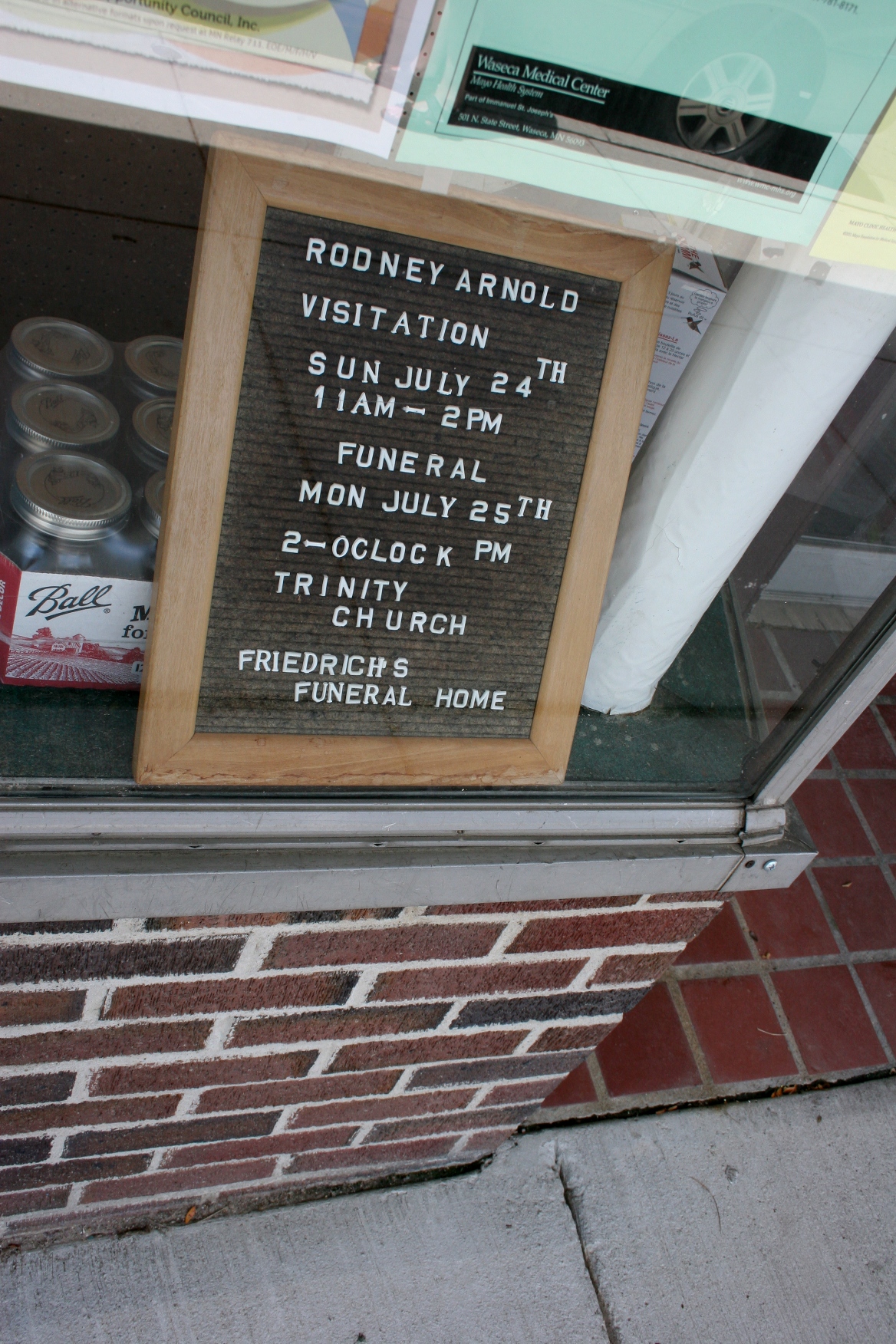
A sign in the Gambles' hardware store window gives updated visitation and funeral information to the residents of the New Richland area.

SHE PULLED UP ALONGSIDE the curb Sunday afternoon, leaned toward the semi-open window on the passenger side of her van and asked if my husband or I knew why Rodney had died. “He seemed so young,” she said.

“We’re not from here,” I answered. “I have no idea.”

But I had a question for her: “Why is his funeral information in the Gambles’ window?”

She didn’t exactly have a response for me—not one I can publicly share anyway—so I took this as one of those small-town oddities.

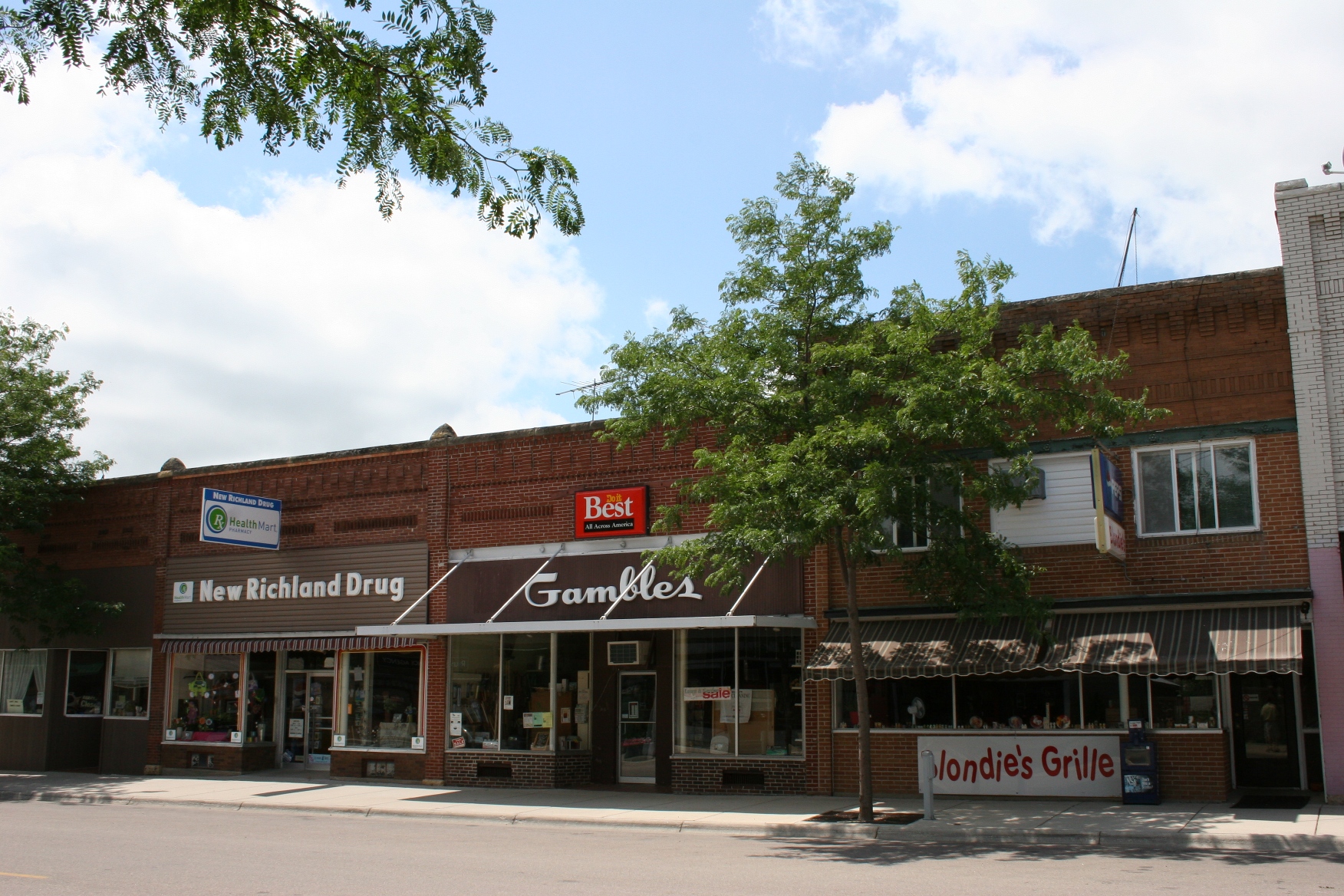
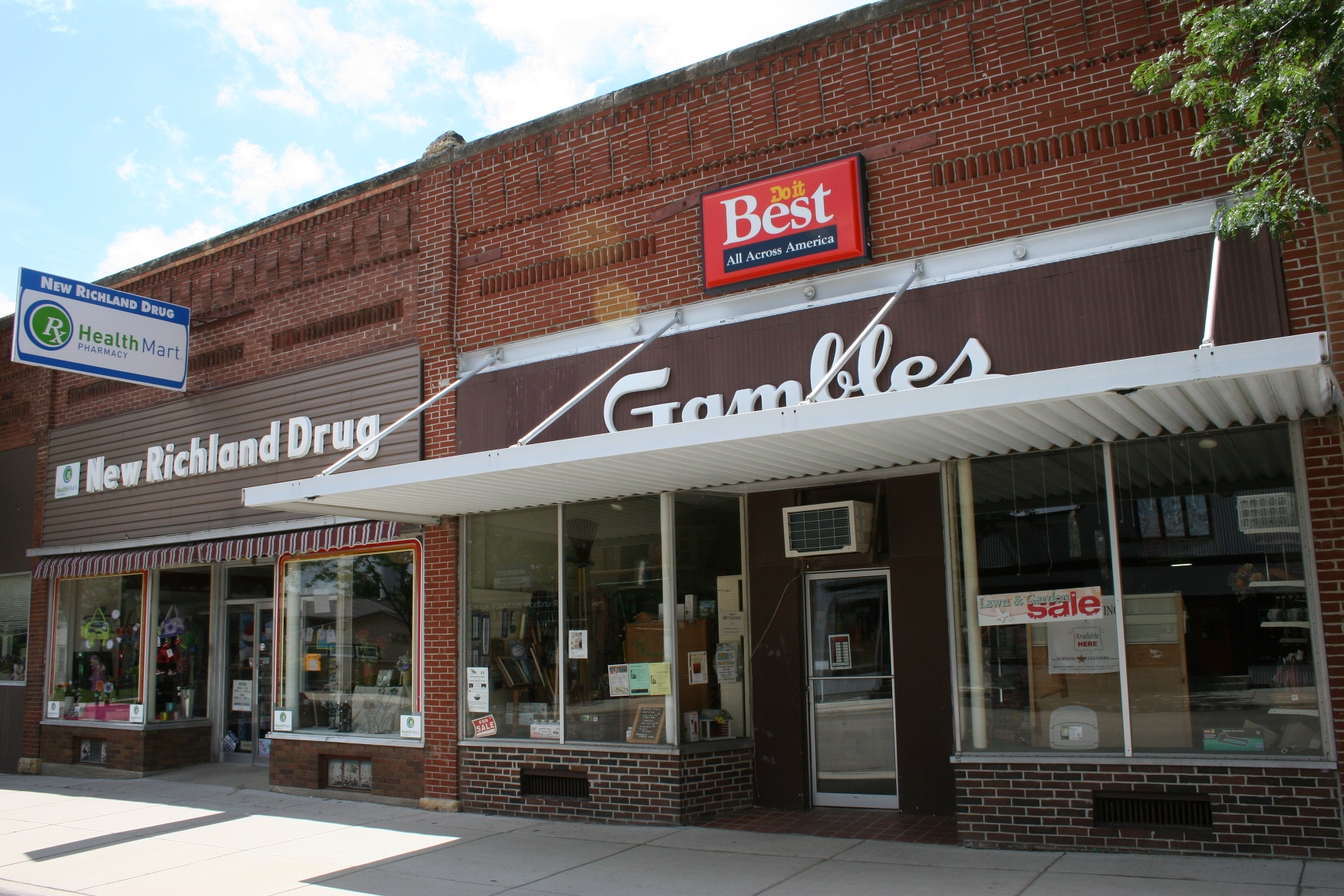
Even finding a Gambles hardware store in New Richland, population around 1,200, seemed an oddity. But there it was, sandwiched between New Richland Drug and Blondie’s Grill, along a main drag in this Waseca County community. These hardware stores were common when Randy and I were growing up in the 1960s, but not so much now.

Gambles stores, like this one in New Richland, were once common in Minnesota small towns. From 1925 - 1928, Gamble-Skogmo was headquartered in Fergus Falls and then moved to Minneapolis.

As surprised and delighted as we were to find the Gambles store, we were even more surprised to see that funeral and visitation information posted in the front window next to the canning jars.

But apparently this business place public posting is a usual practice in New Richland since the elderly van driver pulled up in front of Gambles for the sole purpose of checking out the information about Rodney Arnold.

Randy, wanting to know how she defined “seemed so young,” inquired while I snapped photos of that seemingly out-of-place sign in the hardware store window.

“He was maybe in his early 60s,” the woman, probably in her late 70s or early 80s, guessed, then drove off.

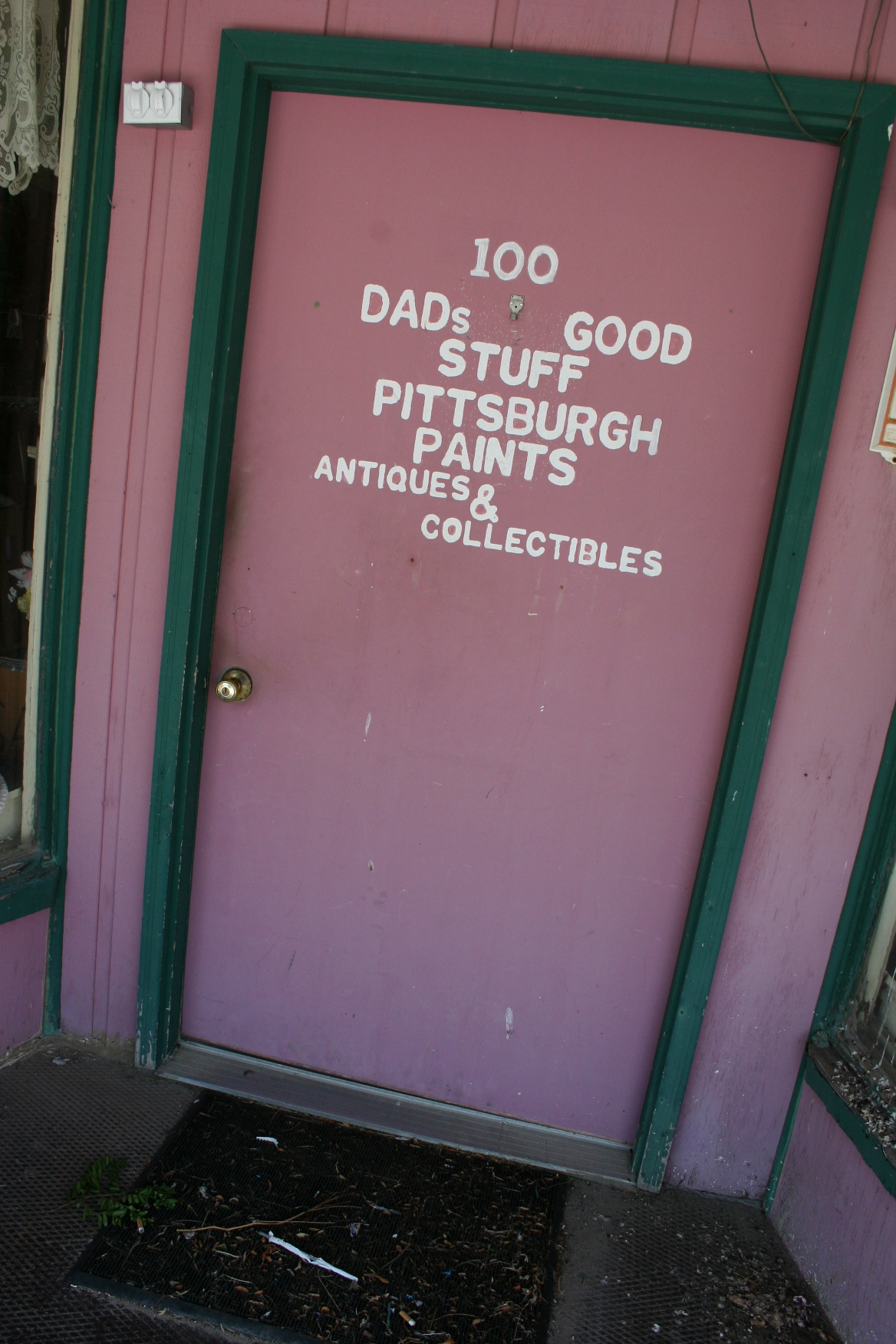
For the record, Rodney Arnold was 62. Upon our return home, I went online to Friedrichs Funeral Home and checked. I also learned that this self-employed dry wall installer met his friends every morning for coffee at Dads Good Stuff, just a few doors down from Gambles.

The things you learn if you simply take the time to stop along a small-town Minnesota Main Street…to read the latest funeral information.

The flashy front door of Dads Good Stuff.

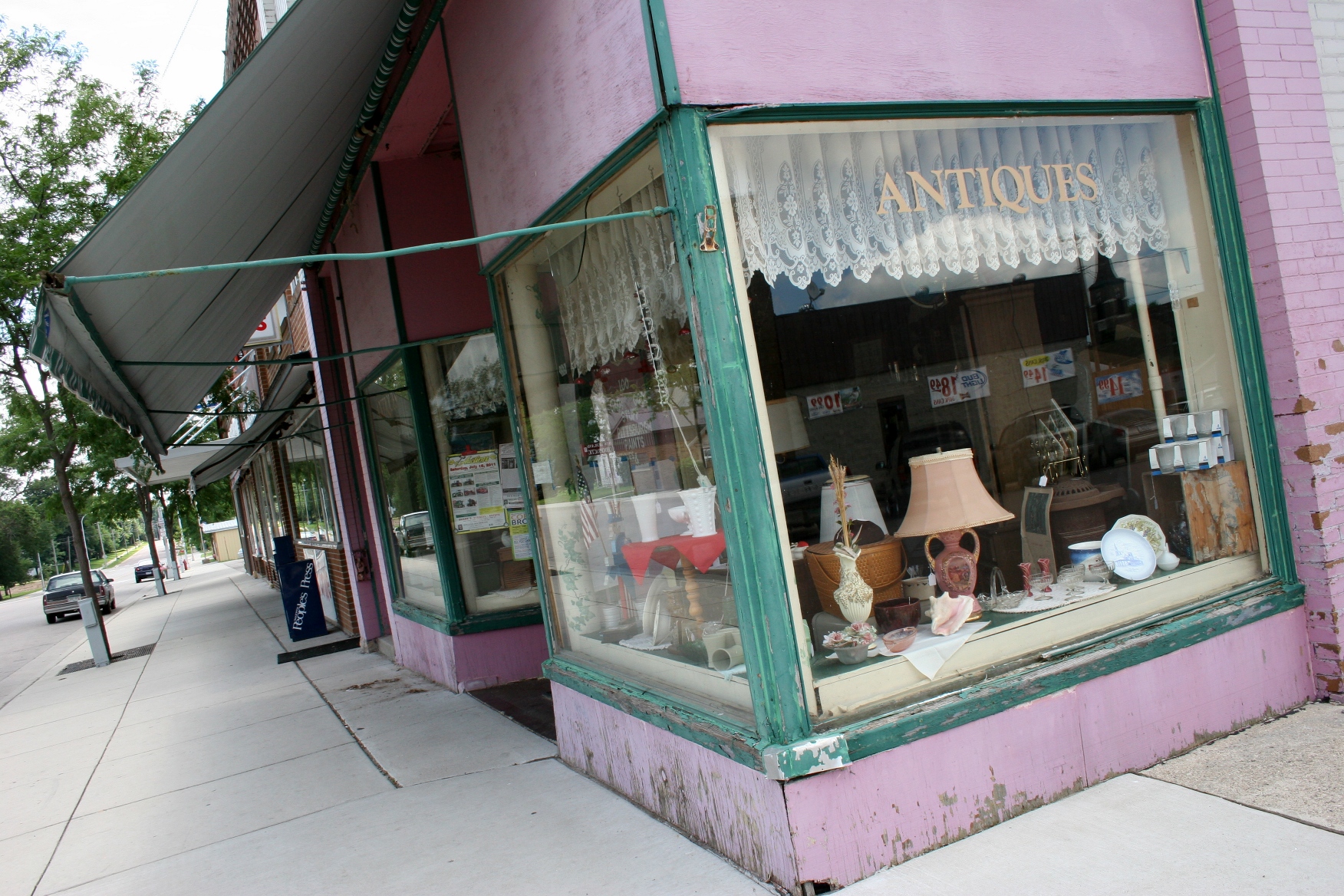
Unfortunately, Dads Good Stuff antique, etc., store was closed when we were in New Richland Sunday afternoon.

Just a close-up shot of New Richland's Gambles store, which was closed when we were in town.

READERS: This is the first of many posts I’ll publish this week about a Sunday afternoon drive south to Hope, west to Ellendale and New Richland, north to Otisco and Waseca, and then back home to Faribault, with two country church stops in between.

© Copyright 2011 Audrey Kletscher Helbling


The story behind a travel writer July 22, 2011

Filed under: Uncategorized — Audrey Kletscher Helbling @ 7:57 AM
Tags: , , , , , , ,

EDITOR’S NOTE: Several months ago I told my daughter I would plug her writing. So I am, in this post. But I’ll also tell you about her as a person, because the person you are shapes the writer you become.

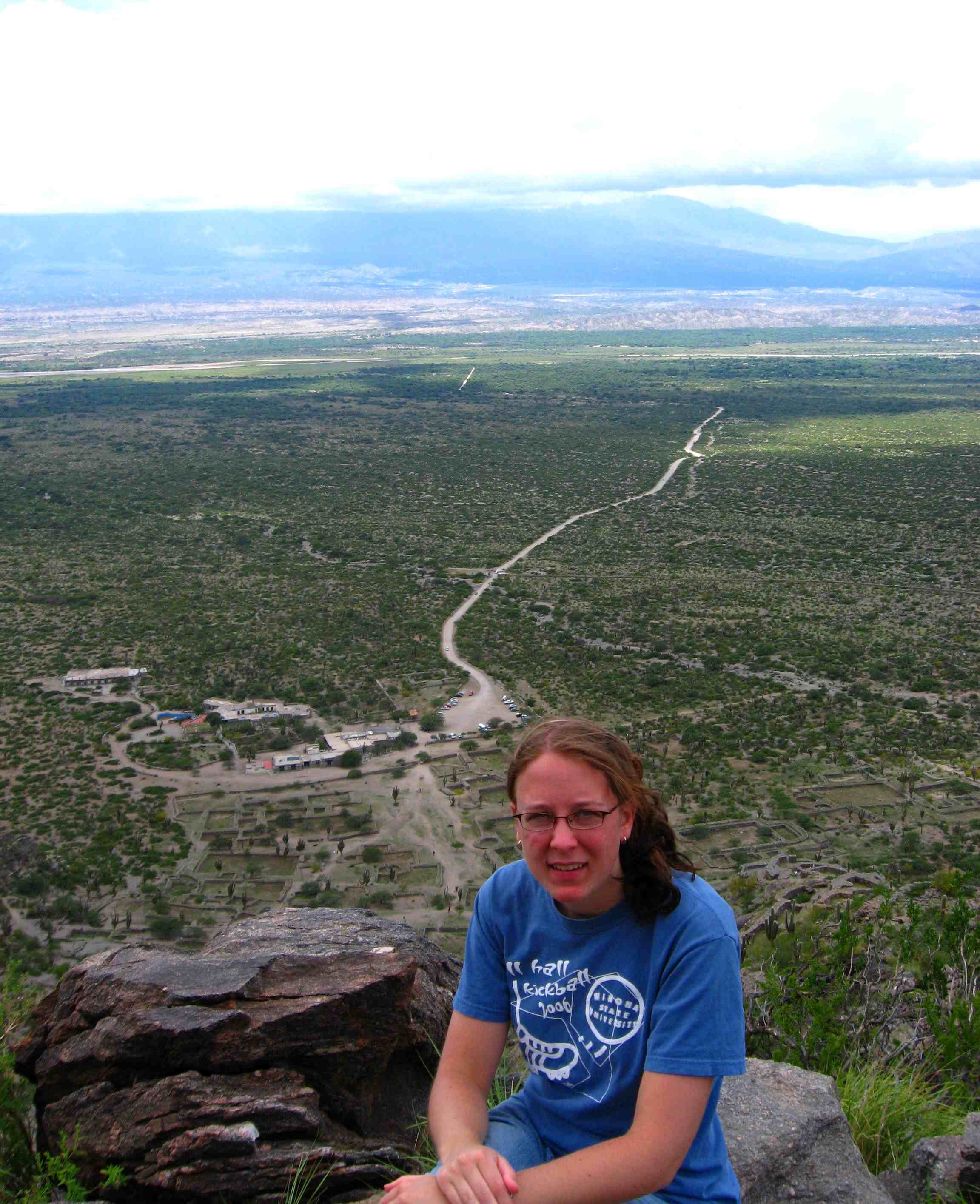
Miranda at the Las Ruinas de Quilmes (Quilmes Ruins) in the Tucuman province of northwestern Argentina.

MY DAUGHTER MIRANDA could work as a full-time professional travel writer. She’s that good. And I’m not just saying this because I’m her mom. You can decide for yourself by clicking here, to examiner.com St. Paul.

Miranda has written some two dozen articles about Argentina, where she traveled twice to study, do mission work and intern. Today she’s back in the U.S., working as a Spanish medical interpreter in eastern Wisconsin.

If she had her druthers—meaning no need for a steady job to repay college loans—Miranda likely would be living in Buenos Aires right now. She loves the city, Argentine culture and food, and Argentineans that much. That shows in her writing.

Yet, even though my daughter isn’t living in the place where she’d probably prefer to be, she’s at least working in a profession that allows her to follow her passion—Spanish. There’s much to be said for that. All too many people go through life working jobs they dislike simply to pay the bills. That is an unfortunate reality.

I understand her love of language. I graduated from high school with a plan to pursue a German degree in college. But I quickly realized that, because I didn’t want to teach, the idea wouldn’t fly. So I followed my other passion—writing. I majored in journalism and minored in English.

I sometimes wonder how things might have been different for me if I had gotten that German degree and had been willing to leave Minnesota. Unlike my fearless daughter, I prefer not to travel. I purposely raised her, though, to love adventure.

From little on, Miranda has been her own person. She ran, not walked, everywhere as a preschooler. One winter, when she was about four, she insisted on wearing a skirt every day. Often she would close herself in the cramped toy room, now my office, and play for hours by herself. She would tell me to “go away.” She was a strong-willed child, still is as an adult, and that serves her well.

For a long stretch, she was fixated on horses. She drew horses, played with toy horses and checked out every horse book she could in the regional library system. She thrilled in riding roller coasters.

When Miranda was diagnosed with scoliosis and had to wear a full torso back brace 24/7 for a year (or maybe two, I’ve forgotten exactly how long) during high school, she drew on her inner strength and determination. She seldom complained, although this couldn’t have been easy.

She is brave and independent and strong. The last time Miranda boarded a plane for Argentina, she didn’t even have a place to permanently stay for the duration of her internship. And when she was mugged in northern Argentina, she handled the situation with maturity and composure that exuded confidence. I was the one back home struggling with the attack.

I tell you all of this because I am proud of my kind, caring, compassionate daughter. As an interpreter, she works in a profession that allows her to directly help others.

As a sometime-travel writer, Miranda continues with an interest that began in high school and continued through her studies at the University of Wisconsin, La Crosse. Communications Studies compliments her other minor, International Studies, and her major, Spanish.

Already in her Wisconsin home of eight months, my daughter has found a church and embraced a wide circle of friends. Two Hispanic families in her apartment building have “adopted” her, inviting her to family celebrations and dinner and now, she says, Christmas. (Just to clarify, if she’s not on call, I expect her back in Minnesota for that holiday.)

She’s got a good life in Wisconsin. And even though I wish she lived closer than 5 ½ hours away, at least she is not 6,000 miles away in Argentina. For now Miranda seems content to simply write about her previous life in South America, when she’s not too busy with her new life back in the Midwest.

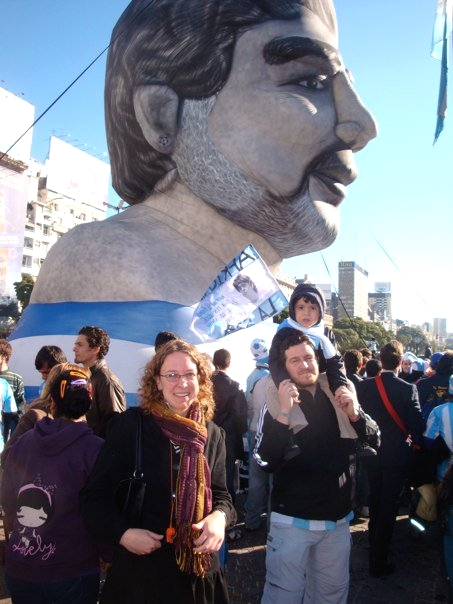
Miranda celebrates the Argentine World Cup soccer victory at Plaza de la Republica in Buenos Aires. The balloon is soccer legend Diego Maradona, at that time the coach of Argentina's national team.

© Copyright 2011 Audrey Kletscher Helbling
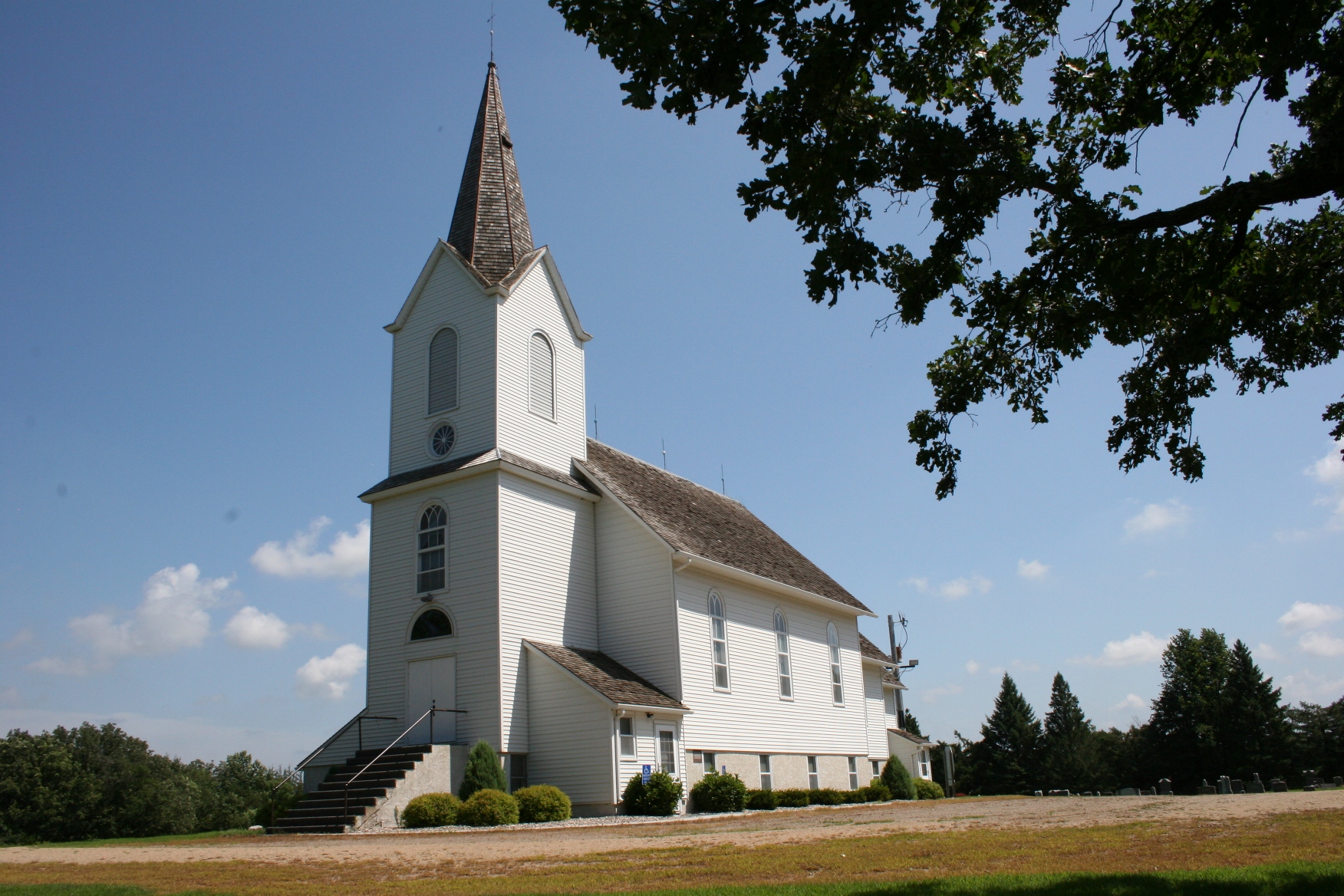
Photo courtesy of Miranda Helbling