Minnesota Prairie Roots

Writing and photography by Audrey Kletscher Helbling

Edna who? April 25, 2014

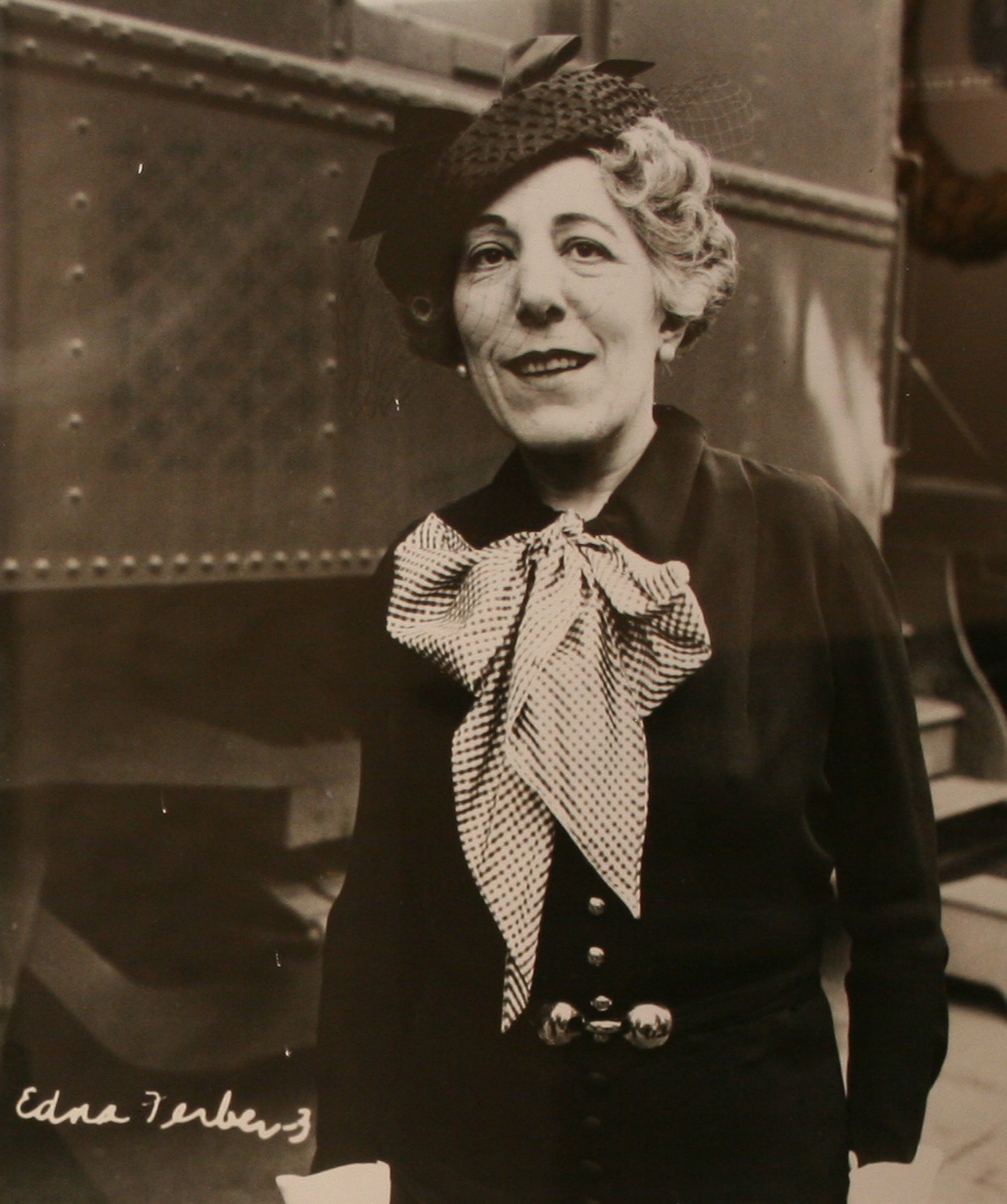
Edna Ferber portrait displayed at the History Museum at the Castle.

Edna Ferber portrait, photographed from a display at the History Museum at the Castle.

WHO IS EDNA FERBER?

Do you know?

I should. I’m a writer.

But I didn’t. Although now I do.

Thanks to an exhibit at the History Museum at the Castle in Appleton, Wisconsin, followed by additional online research, I now know some basic facts about this Pulitzer Prize winning author. In 1925, Ferber won a Pulitzer for her novel, So Big. Set in turn-of-the-century Chicago, the book tells the story of widowed Selina DeJong and her struggles to support herself and her son. That novel is now on my must-read list.

I think I would appreciate the writing of a woman “hailed for sensitively portraying working Americans, for calling attention to women’s roles in American history, and for writing with a journalist’s knack for precise vocabulary and vivid description,” according to info posted in the museum exhibit.

She sounds like one strong woman.

At age 17, Ferber became the first woman reporter for the Appleton Daily Crescent. Seventeen. Her work as editor of her Appleton high school newspaper apparently impressed the Crescent editor.

Over a 50-year span, this prolific writer would pen a dozen novels, 11 short story collections, six major plays and two autobiographies.

Wow.

Her best known works include Show Boat, made into the celebrated musical in 1927; Cimarron, adapted into the 1931 film which won an Academy Award for Best Picture; Giant, a 1956 Hollywood movie; and that Pulitzer novel, So Big.

According to info on the History Museum at the Castle website, Ferber is known for her “wit and perspectives on growing up in a small Midwestern town.”

Now that I can really appreciate.

READERS, have any of you read Ferber’s work or seen the films inspired by her writing?

Click here to read Ferber’s biography published on the Appleton Public Library website.

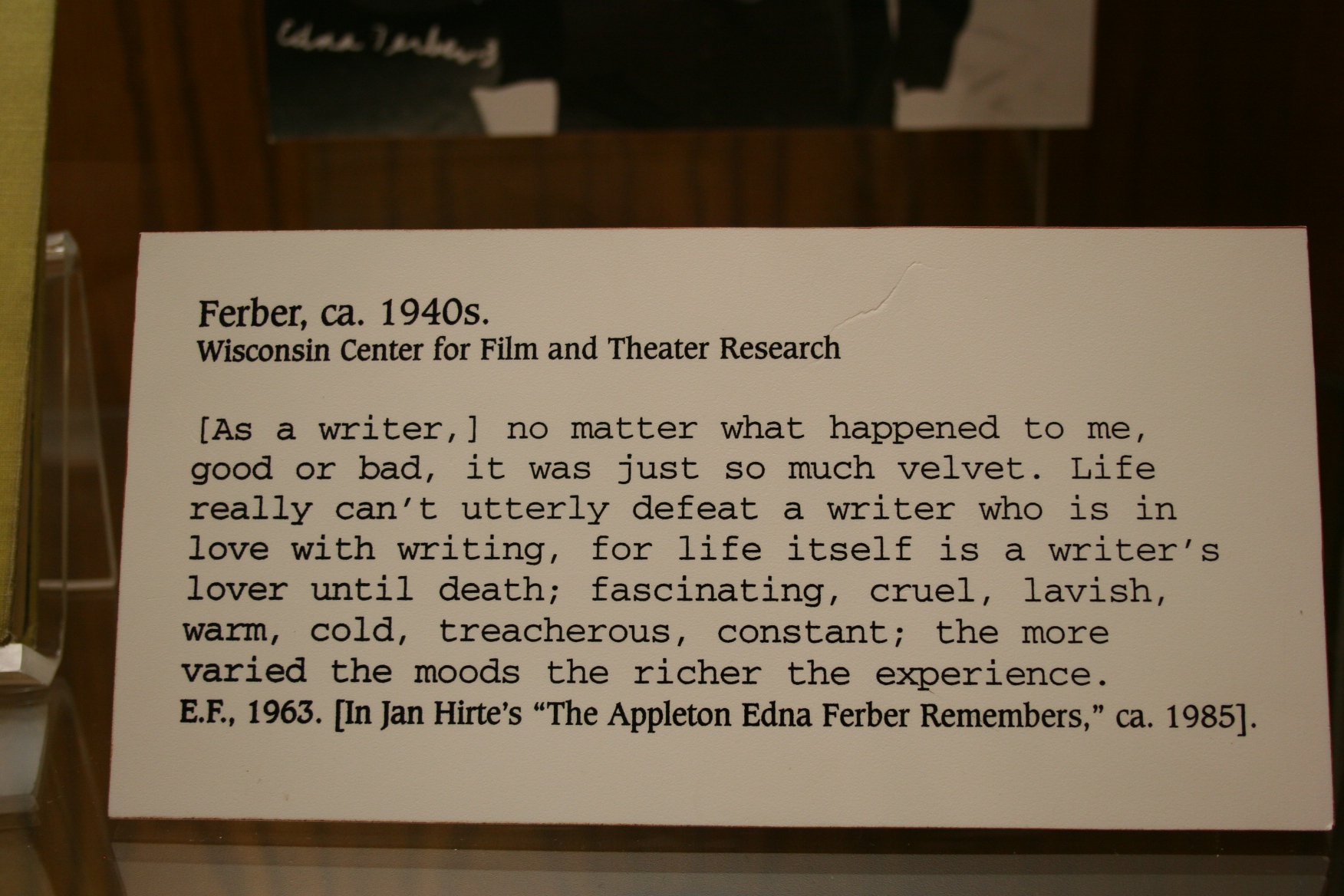
This quote, showcased in the History Museum at the Castle display, rings true for me as a writer.

This quote, showcased in the History Museum at the Castle display, rings true for me as a writer, too.

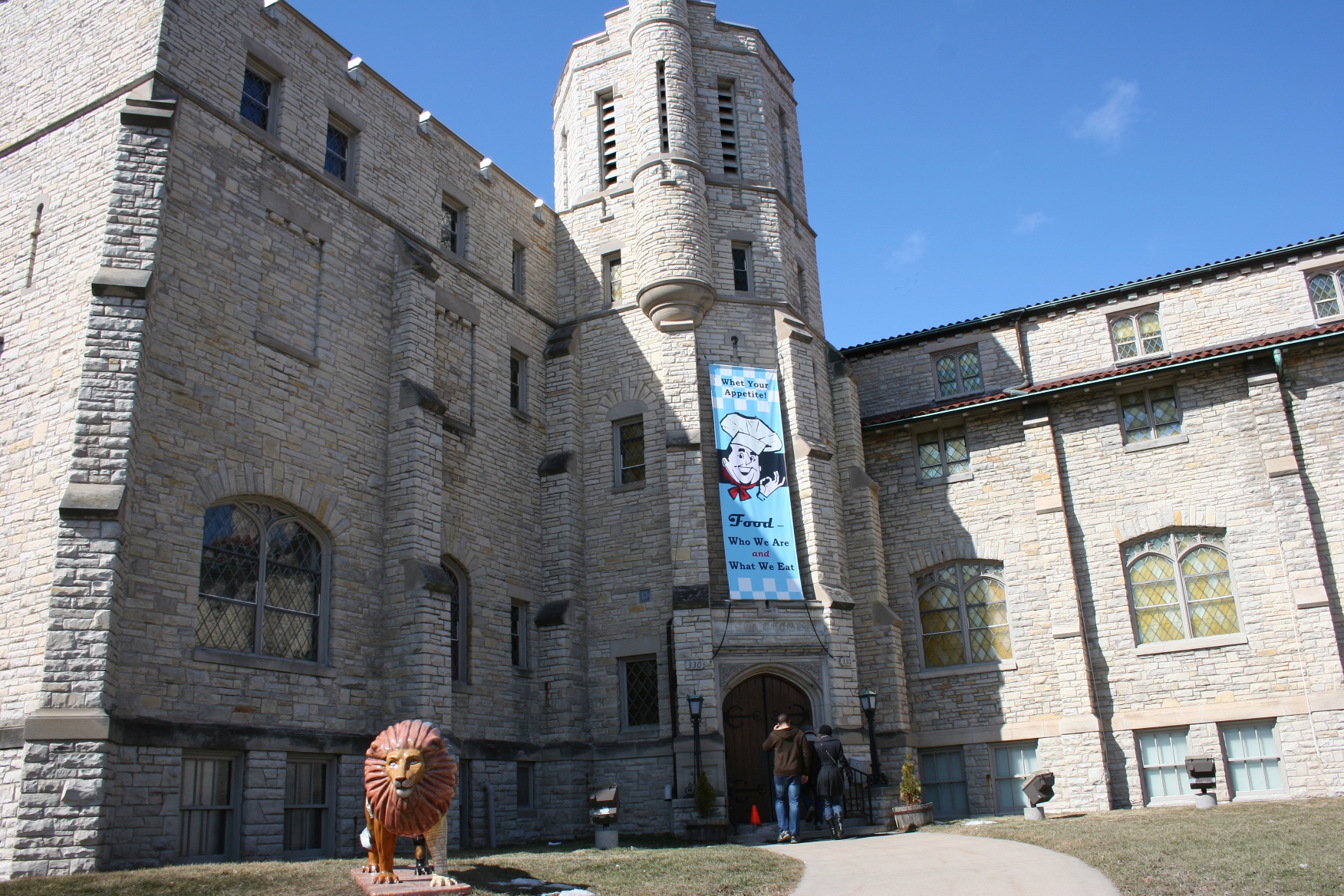
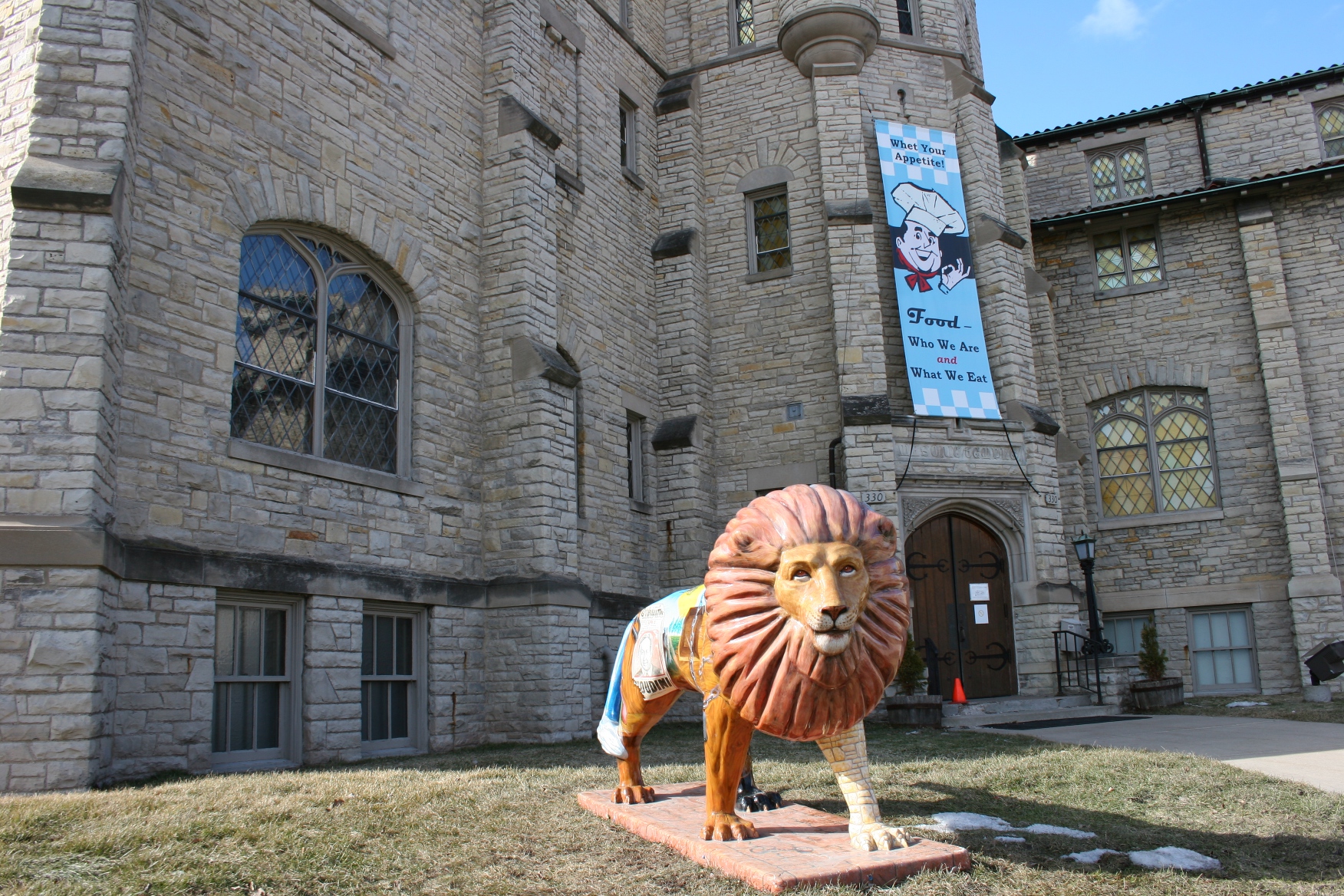
History Museum at the Castle, 330 East College Avenue, Appleton, Wisconsin, is housed in an historic former Masonic Temple.

History Museum at the Castle, 330 East College Avenue, Appleton, Wisconsin, is housed in an historic former Masonic Temple.

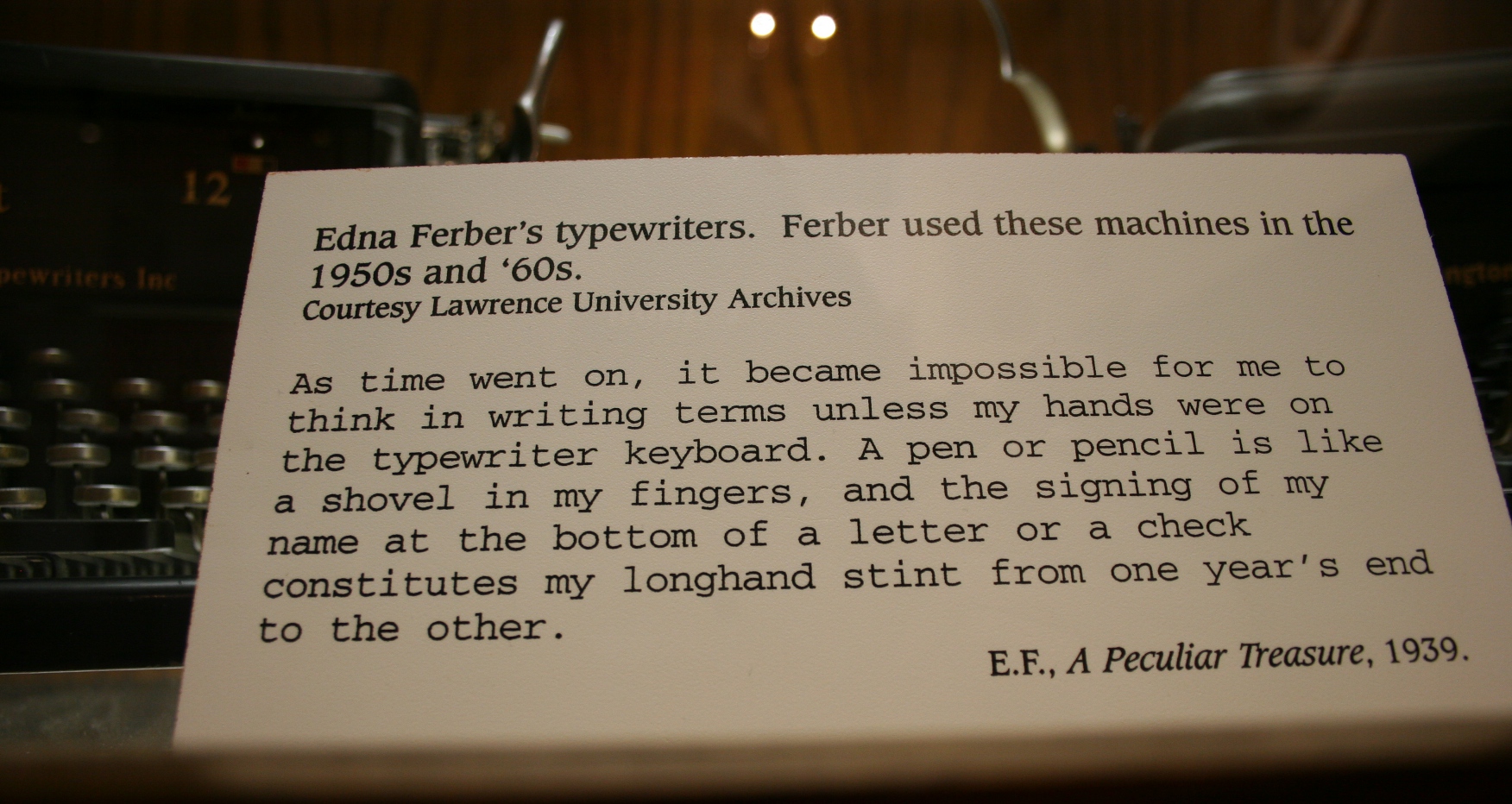
At my first reporting job out of college, I wrote my stories on a Royal manual typewriter. Like Ferber, I don't write my stories on paper.

At my first reporting job out of college, I wrote my stories on a Royal manual typewriter. In this quote from Ferber, today I’d replace “computer” with “typewriter” when referencing my writing.

CLICK HERE to read a previous post about a Wisconsin food exhibit at the History Museum at the Castle. And check back for more posts from Wisconsin, coming soon.

© Copyright 2014 Audrey Kletscher Helbling


If you think Wisconsinites love beer, brats & cheese, you’d be right April 24, 2014

IN THREE YEARS of exploring Wisconsin, I’ve learned a few things:

Wisconsinites are crazy about their Packers.

Wisconsinites love their brats.

Cheese is, indeed, big in Wisconsin.

And, finally, Wisconsin residents love their beer.

Not necessarily in that order.

I base this on observations such as green and gold brat buns sold at an Appleton grocery store where staff wear Packer attire on game day; liquor stores directly connected to grocery stores, walk-in beer coolers at convenience stores and an abundance of bars everywhere, seemingly packed on game day; a decrease in highway traffic during Packers games; frequent homemade roadside signs advertising brat fries; and busy specialty shops focused on selling cheese.

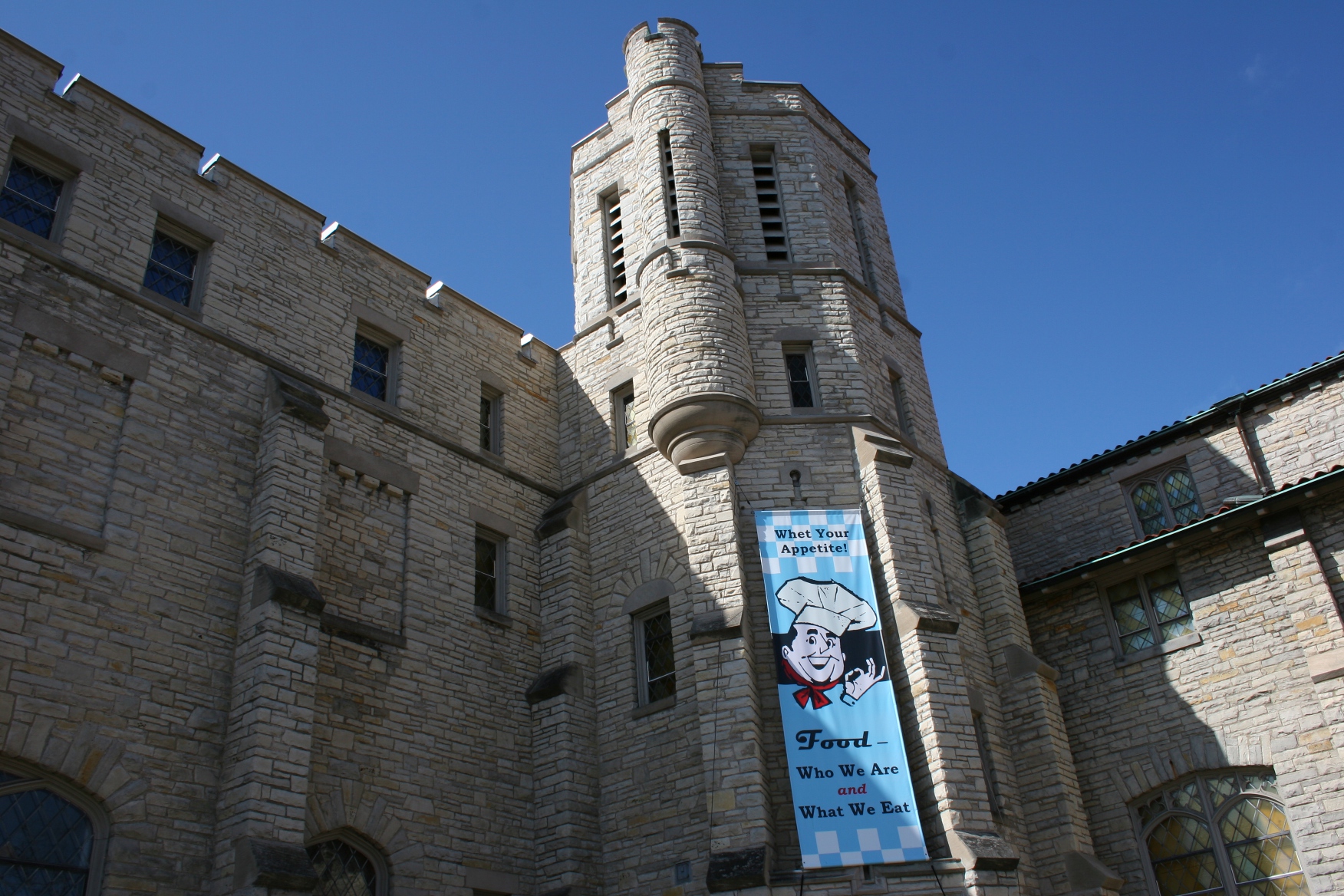
A banner welcomes visitors to the featured exhibit on food at the History Museum at the Castle, 330 East College Avenue, Appleton, Wisconsin.

A banner welcomes visitors to the featured exhibit on food at the History Museum at the Castle, 330 East College Avenue, Appleton, Wisconsin.

Now an exhibit, “Food: Who We Are and What We Eat,” at the History Museum at the Castle in downtown Appleton (that’s in eastern Wisconsin south of Green Bay) confirms my observations and conclusions about Wisconsin.

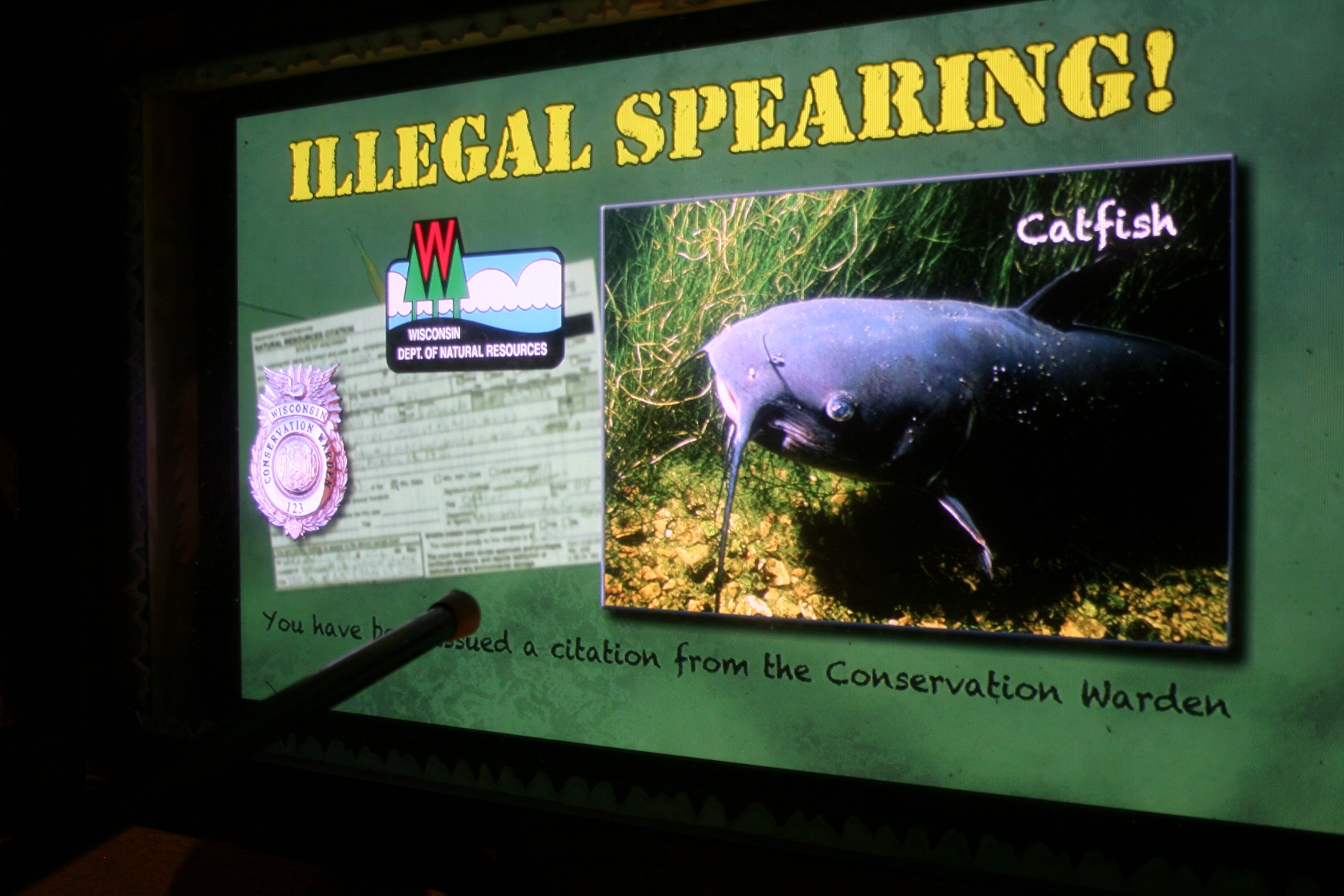
In an interactive portion of the exhibit, in a fish house, visitors can try spearing a sturgeon. In this case, my daughter "speared" a catfish instead.

In an interactive portion of the exhibit, in a fish house, visitors can try spearing a sturgeon. In this case, my daughter “speared” a catfish instead by thrusting a “spear” at the shadowy fish lurking below the water’s surface. You best know your fish.

The informative and interactive exhibit—try spearing a sturgeon—explores the origins of iconic Wisconsin food traditions.

foods

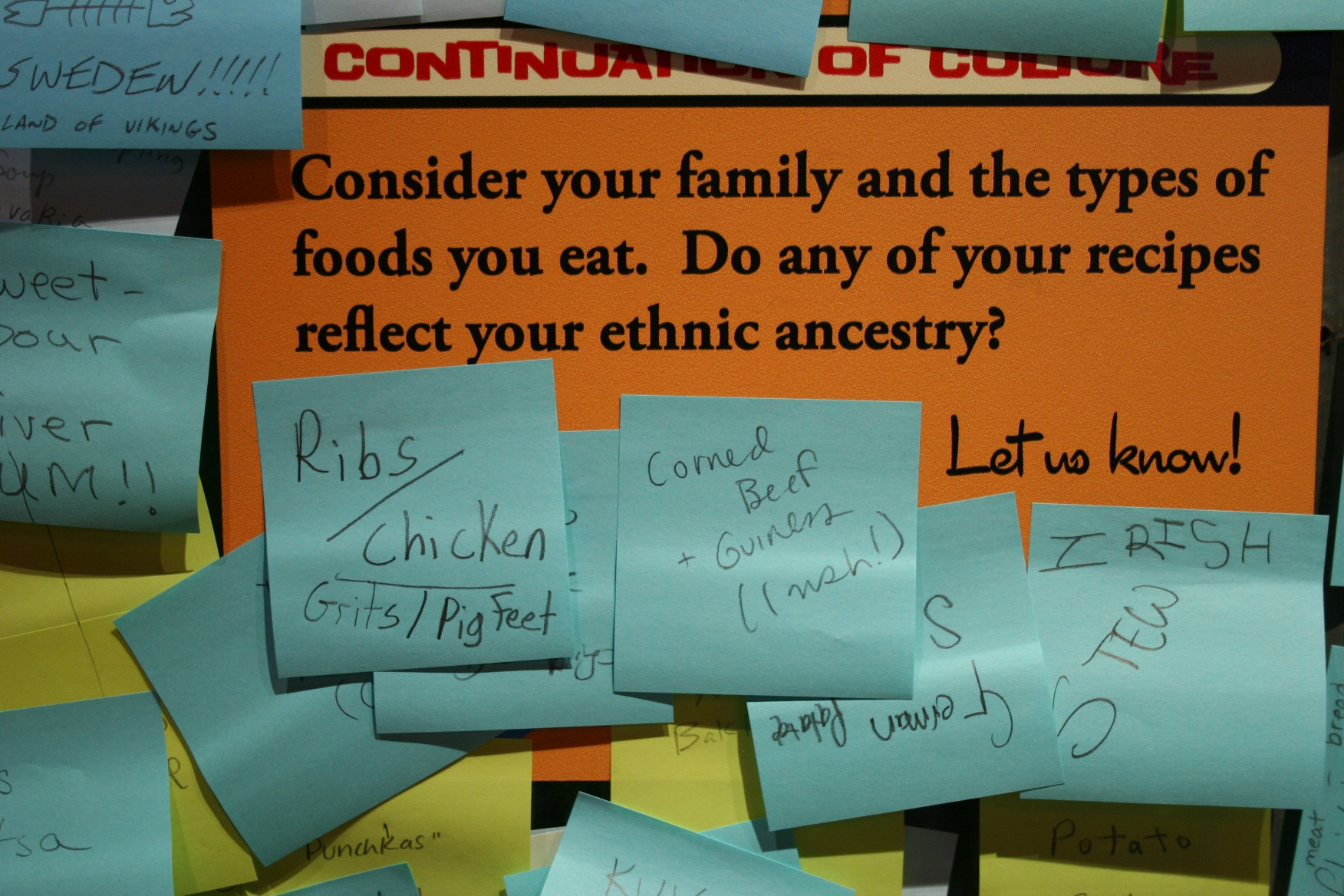
Visitors uses post-it notes to list favorite foods reflecting their ethnicity.

“From sauerkraut to egg rolls, each food has a story to tell about our regional values and community-making,” so notes a line in the wealth of exhibit information. I’ll admit that I didn’t read all of the info. I am more a visual and interactive learner in a museum setting. But I appreciate the depth of research summarized here.

A snippet of the expansive food exhibit.

A snippet of the expansive food exhibit.

That said, join me on this photographic tour of “Food.”

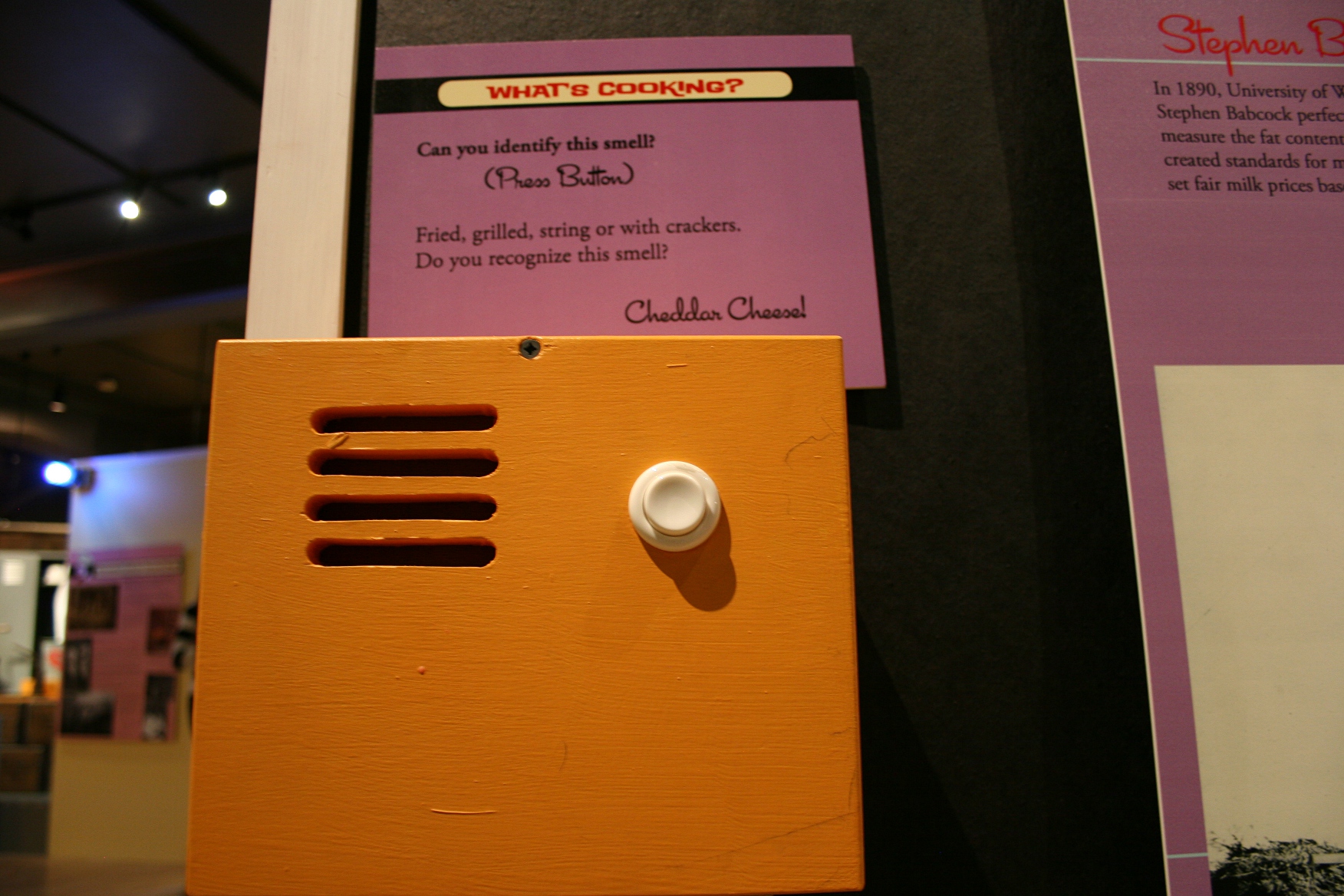
Via museum magic, you can actually press the button and smell cheddar cheese wafting from the golden box.

Via museum magic, you can press the button and smell cheddar cheese wafting from the golden box.


Smell the cheese.

Test your cow knowledge on this interactive computer screen. Wisconsin is, after all, termed "The Dairyland State."

Test your cow knowledge on this interactive screen. Wisconsin is, after all, termed “America’s Dairyland.”


Test your knowledge of cows.

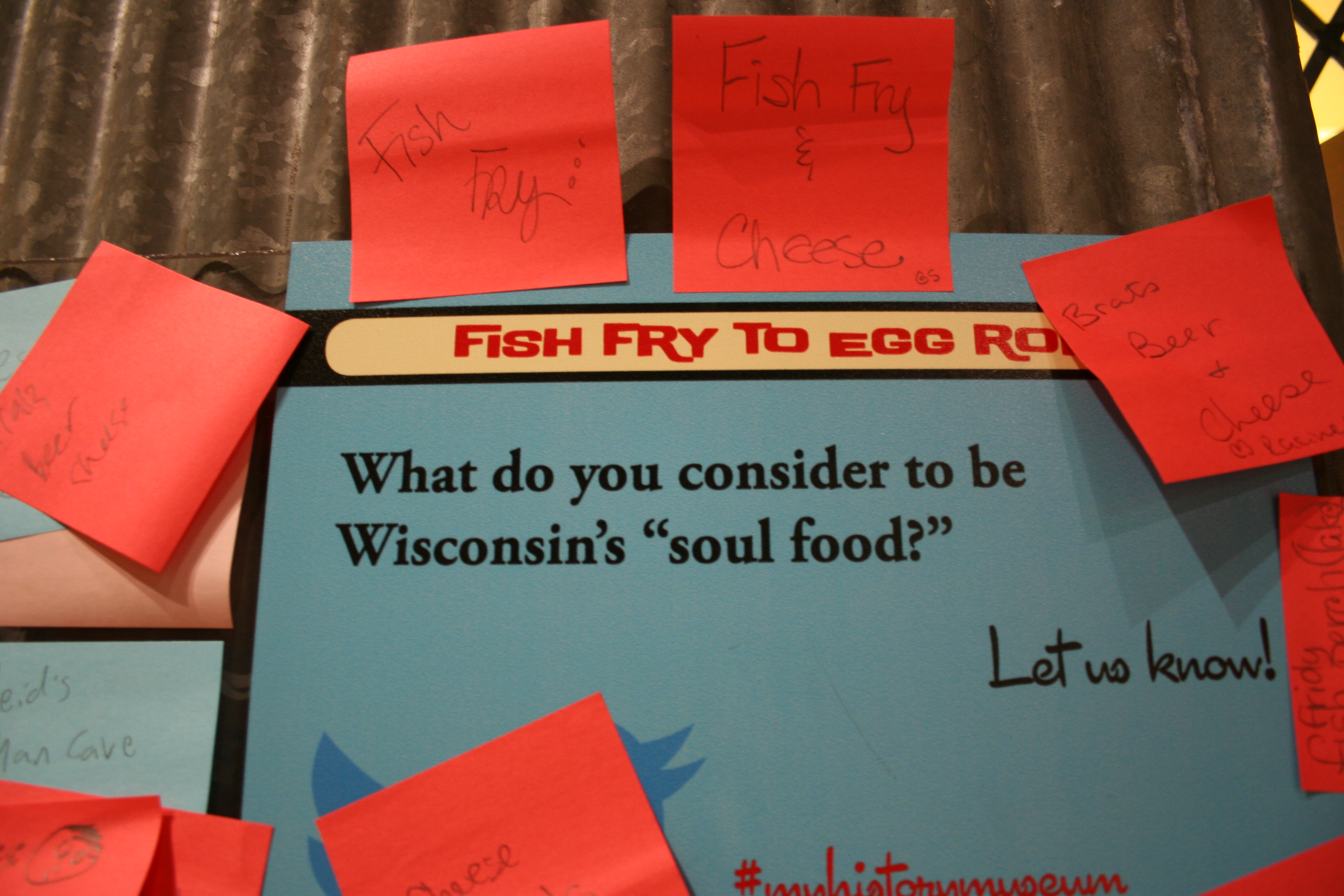
See how visitors answered this question about Wisconsin's "soul food." lots of cheese, brats and beer answers.

See how visitors answered this question about Wisconsin’s “soul food.” Cheese, brats, beer, fish fry… Add your own answer.

Define Wisconsin “soul food.”

Another overview

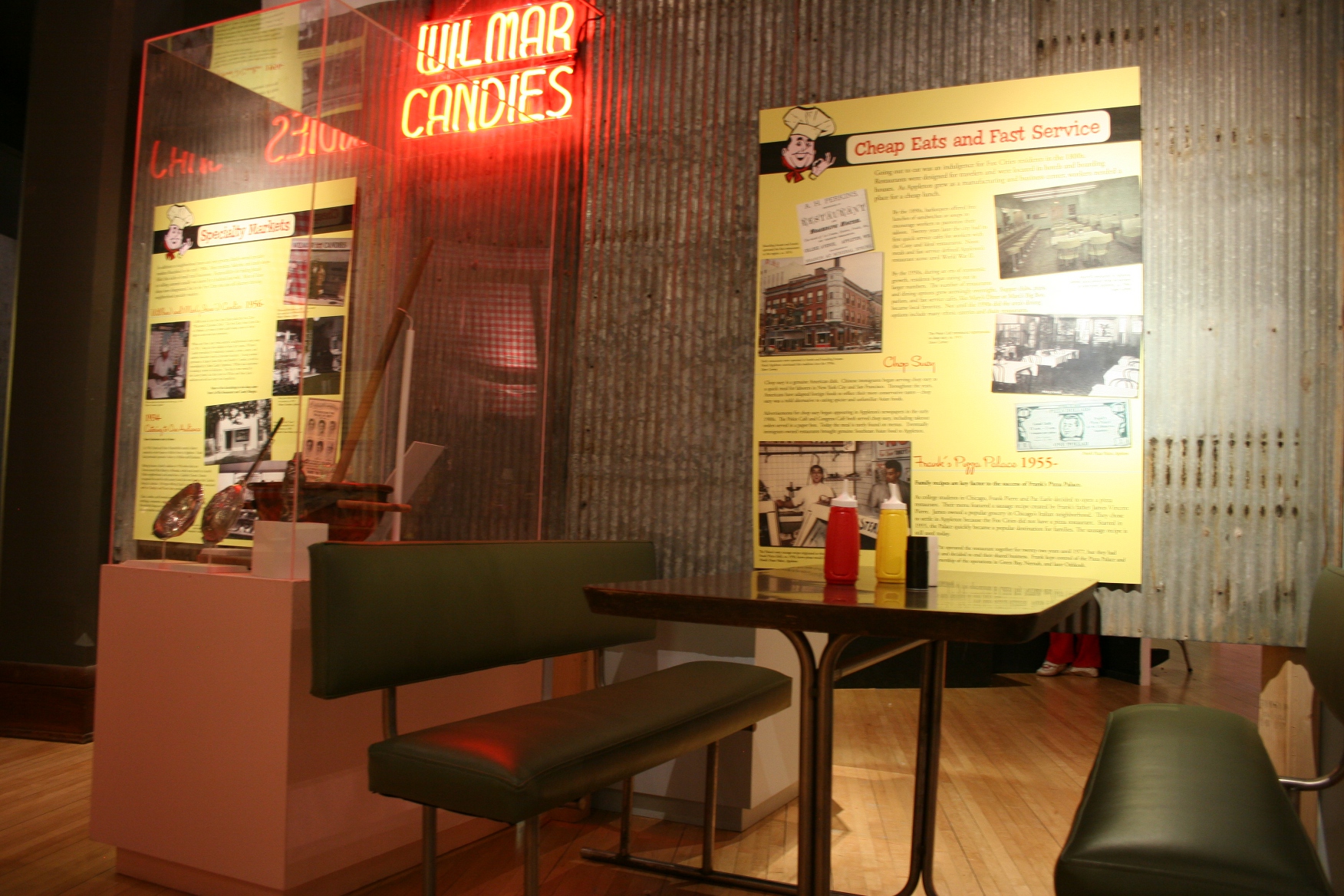
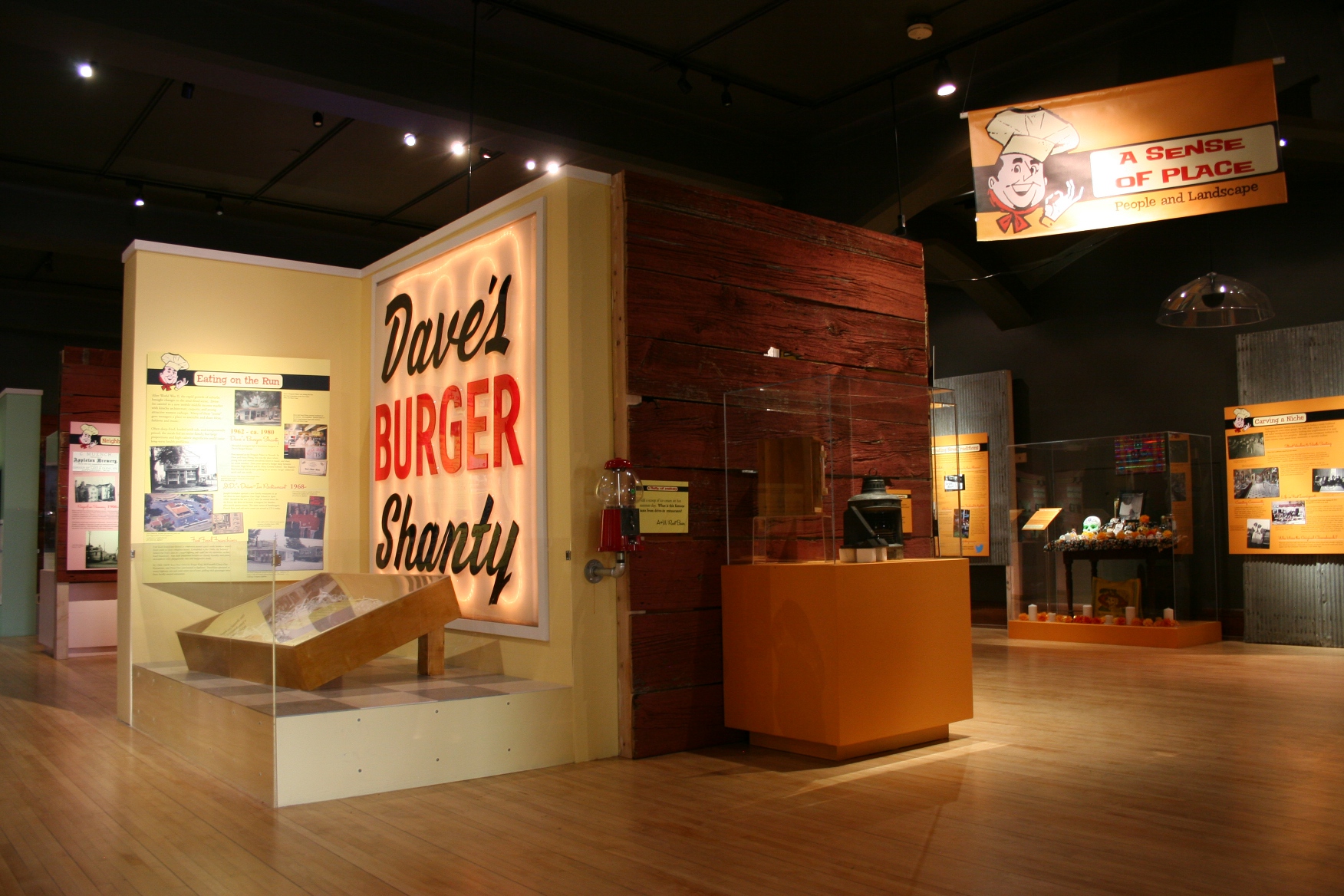
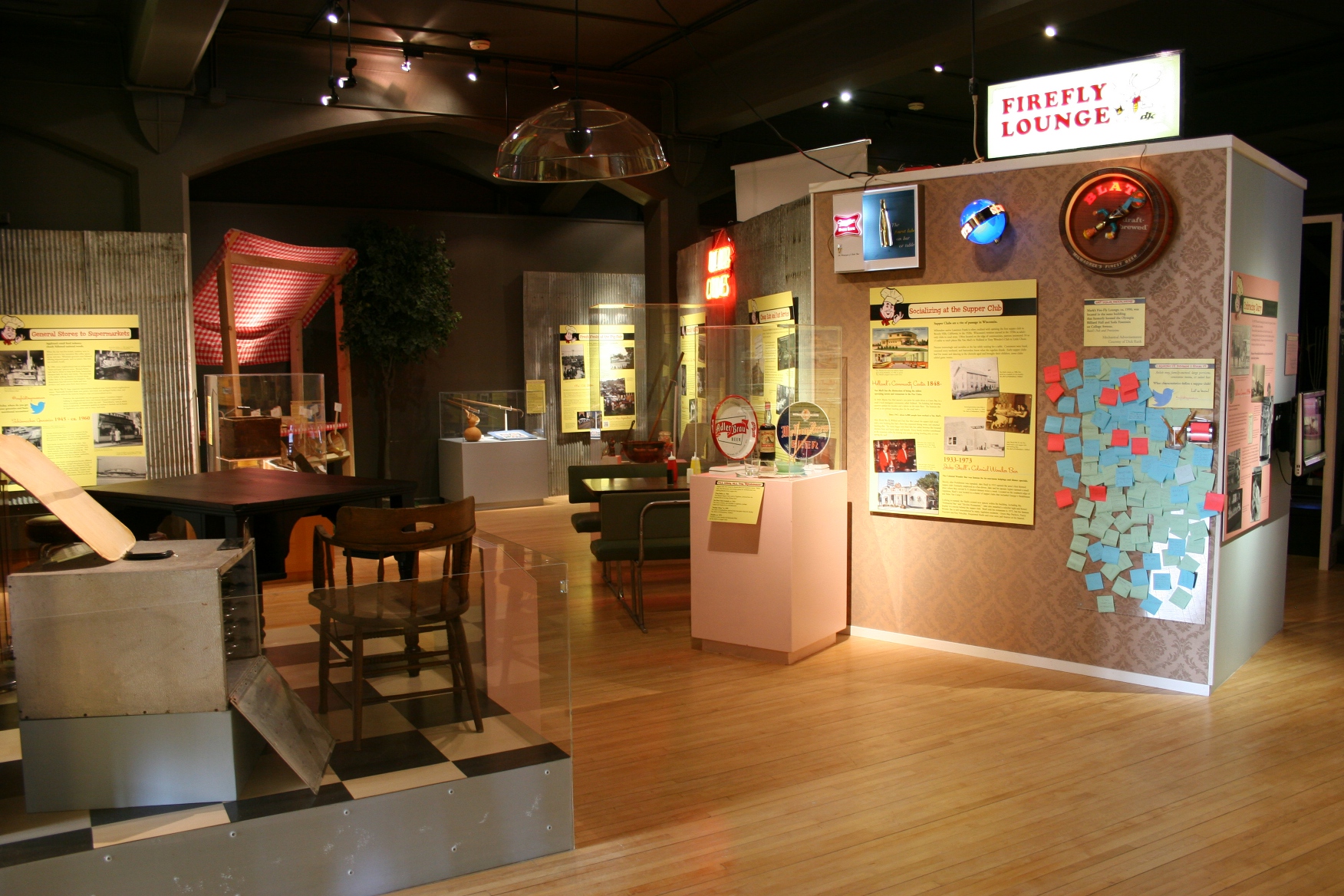
A portion of the exhibit focuses on place, like burger joints and supper clubs, etc.

Reminisce about supper clubs and burger stands.

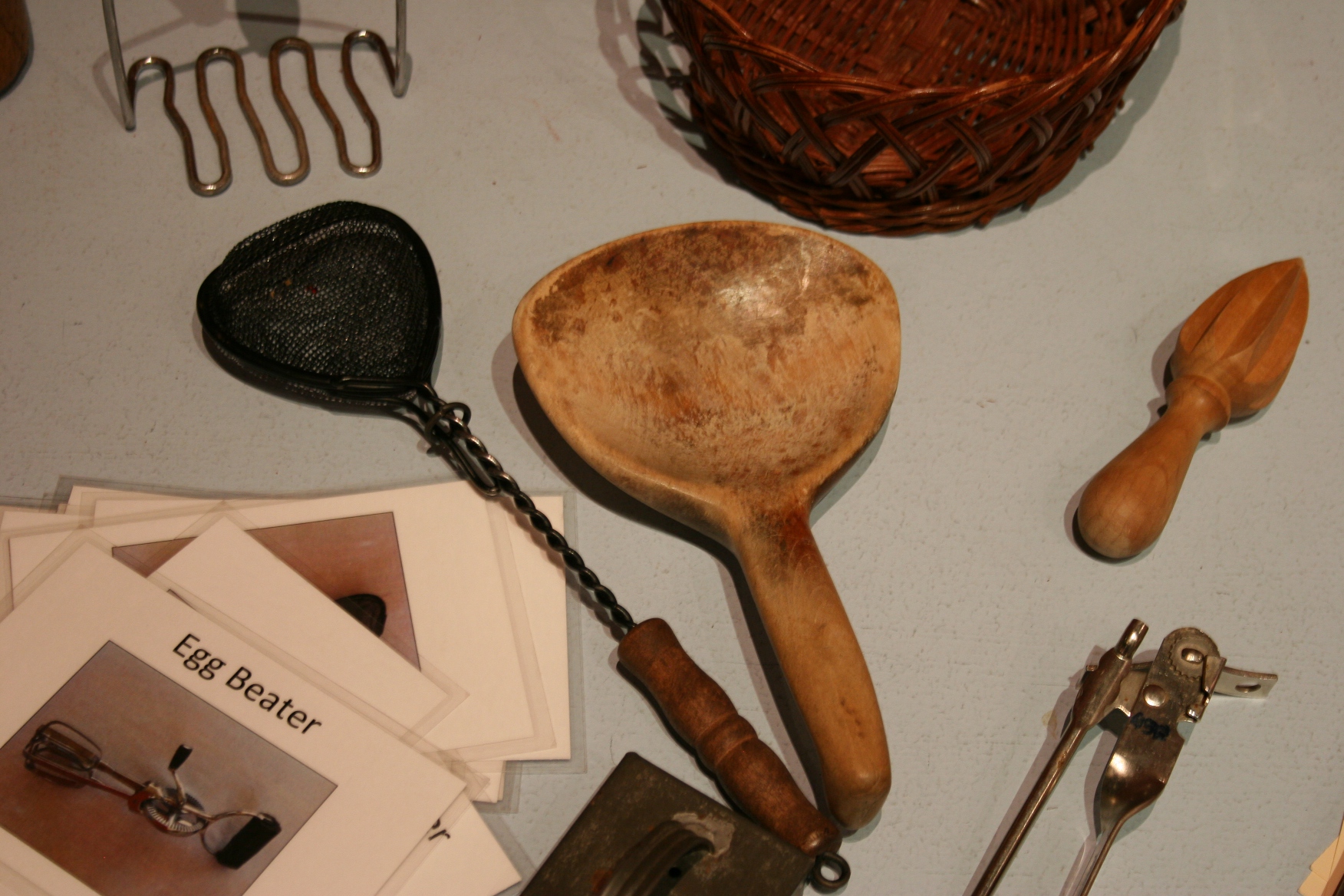
Old kitchen utensils for visitors to identify.

Old kitchen utensils for visitors to identify.

Identify old kitchen tools…

Celebrate the food traditions of Wisconsin:

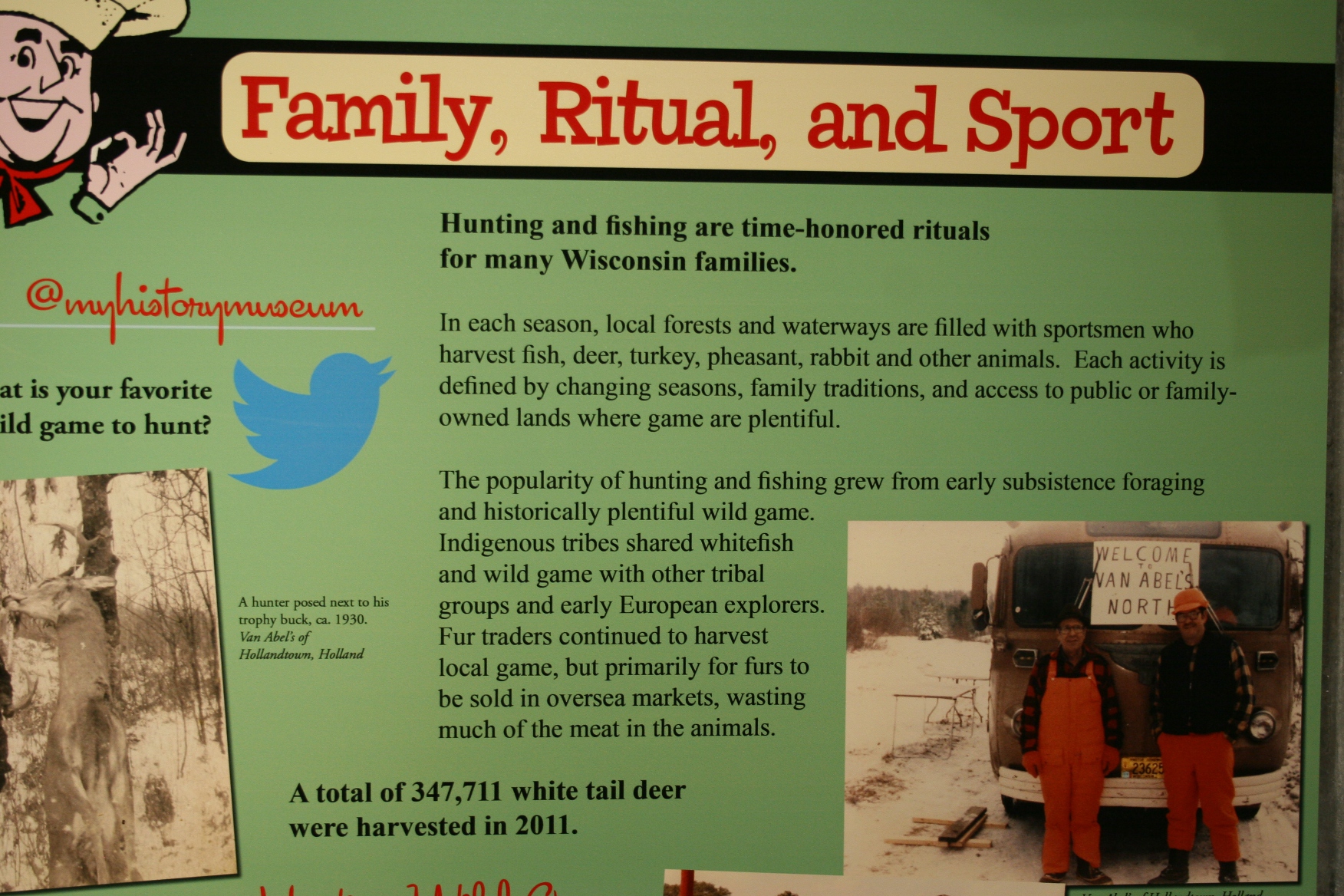
Hunting and fishing are a major part of sports and food culture in Wisconsin.

Hunting and fishing are a major part of sports and food culture in Wisconsin.


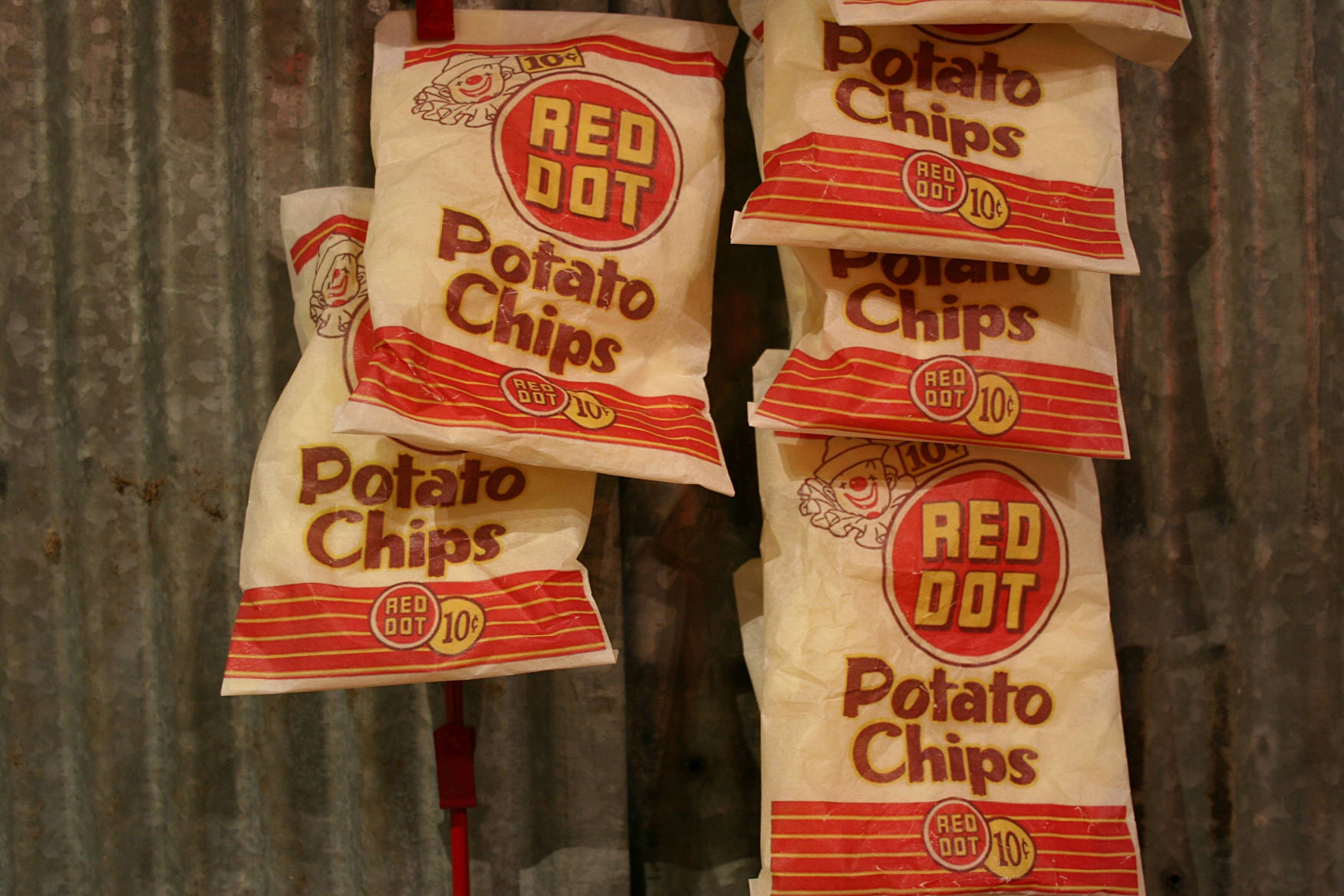
Red Dot potato chips

Red Dot potato chips were produced by Red Dot Foods of Madison, Wisconsin, and were once a top potato chip brand.

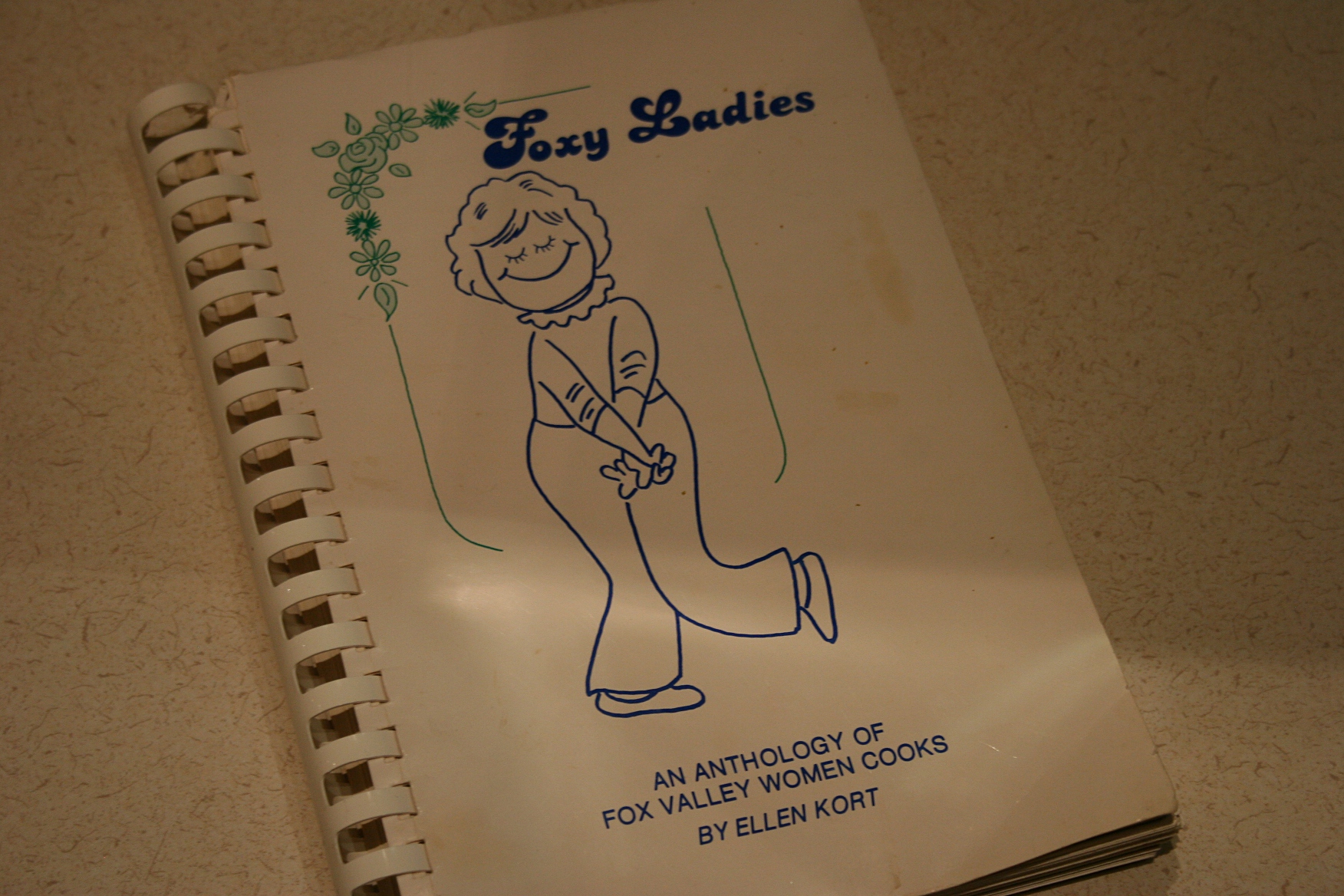
Cookbooks are on display and vintage recipes available for the taking at the exhibit. The Appleton, Wisconsin, area is known as the Fox Valley after the Fox River which runs through the area.

Cookbooks are on display and vintage recipes available for the taking at the exhibit. The Appleton, Wisconsin, region is known as the Fox Valley after the Fox River which runs through the area.

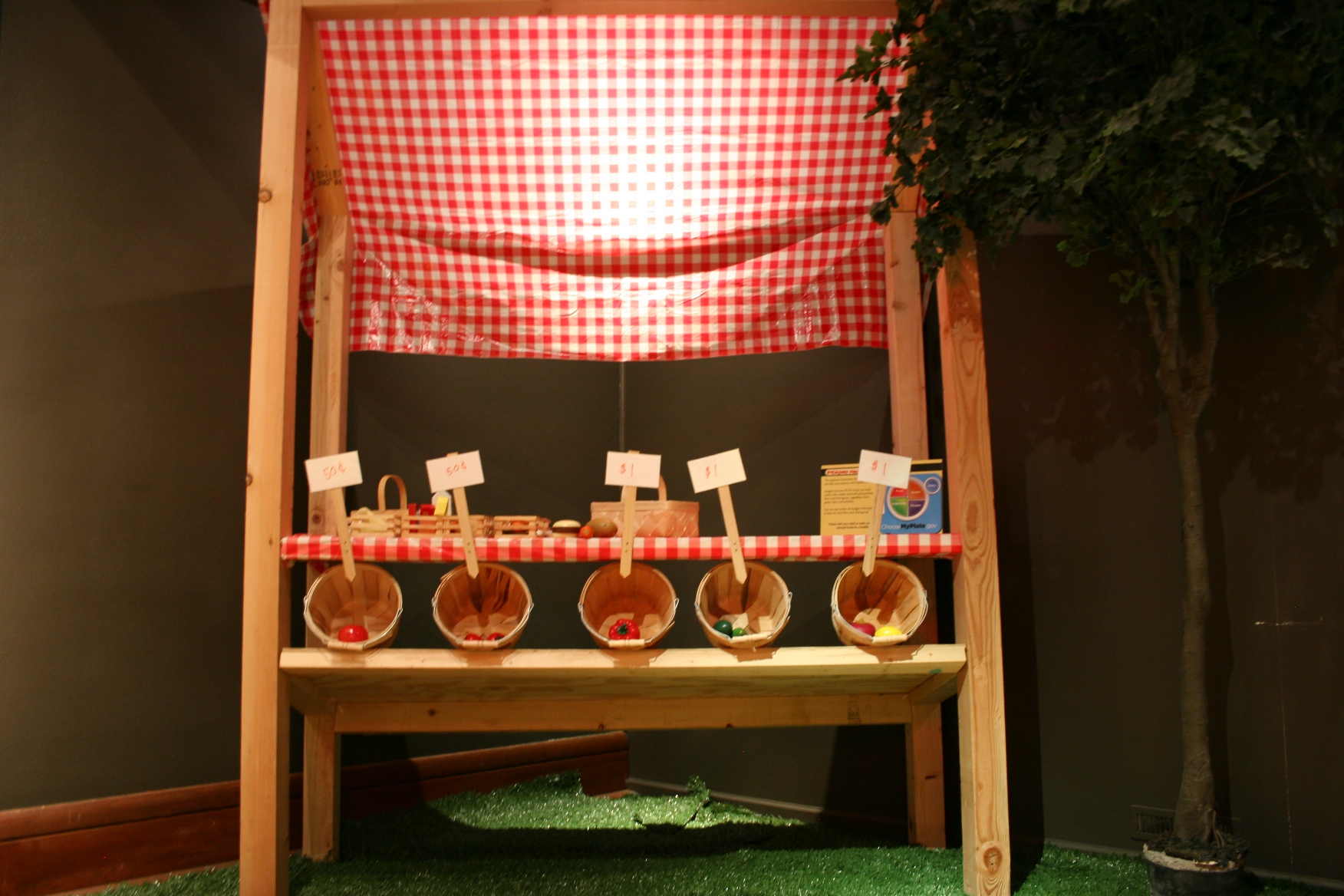
In the Marketplace, visitors are encouraged to choose healthy fresh foods.

In the Marketplace, visitors are encouraged to choose healthy fresh foods.

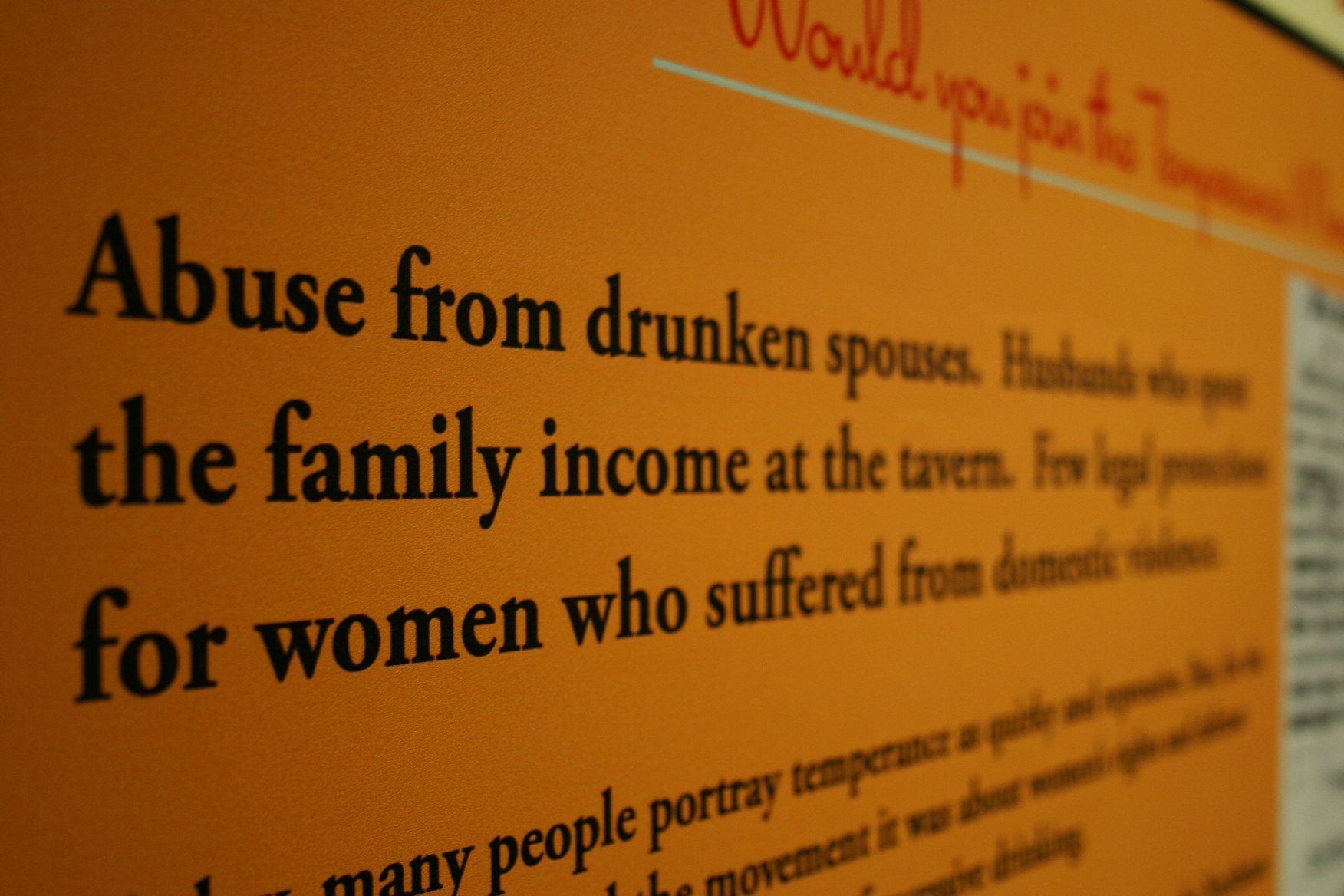
Another display focuses on the empowerment of women via the Temperance Movement.

Another display focuses on the empowerment of women via the Temperance Movement. One of the Appleton Police Department’s major objectives in 2014 is to combat domestic violence.

Another

The exhibit on the right focuses on supper clubs. Visitors are invited to write characteristics defining a supper club. Answers included, among many others, pickled beets and herring at salad bar; dim lighting; cocktail hour; tavern in front, buffet in back; and old fashion jukeboxes.

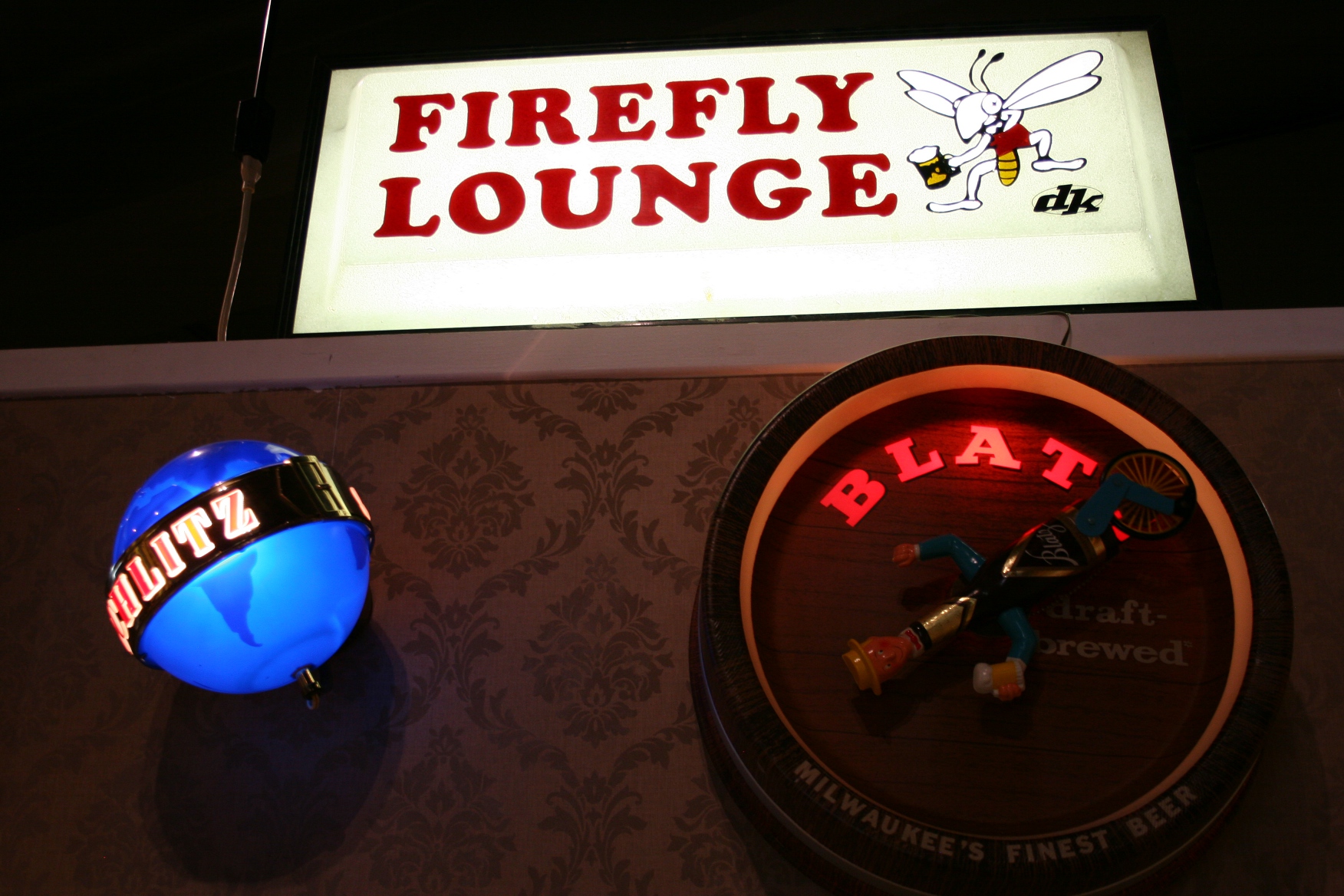
Supper club signage close-ups.

Supper club/bar signage close-ups.

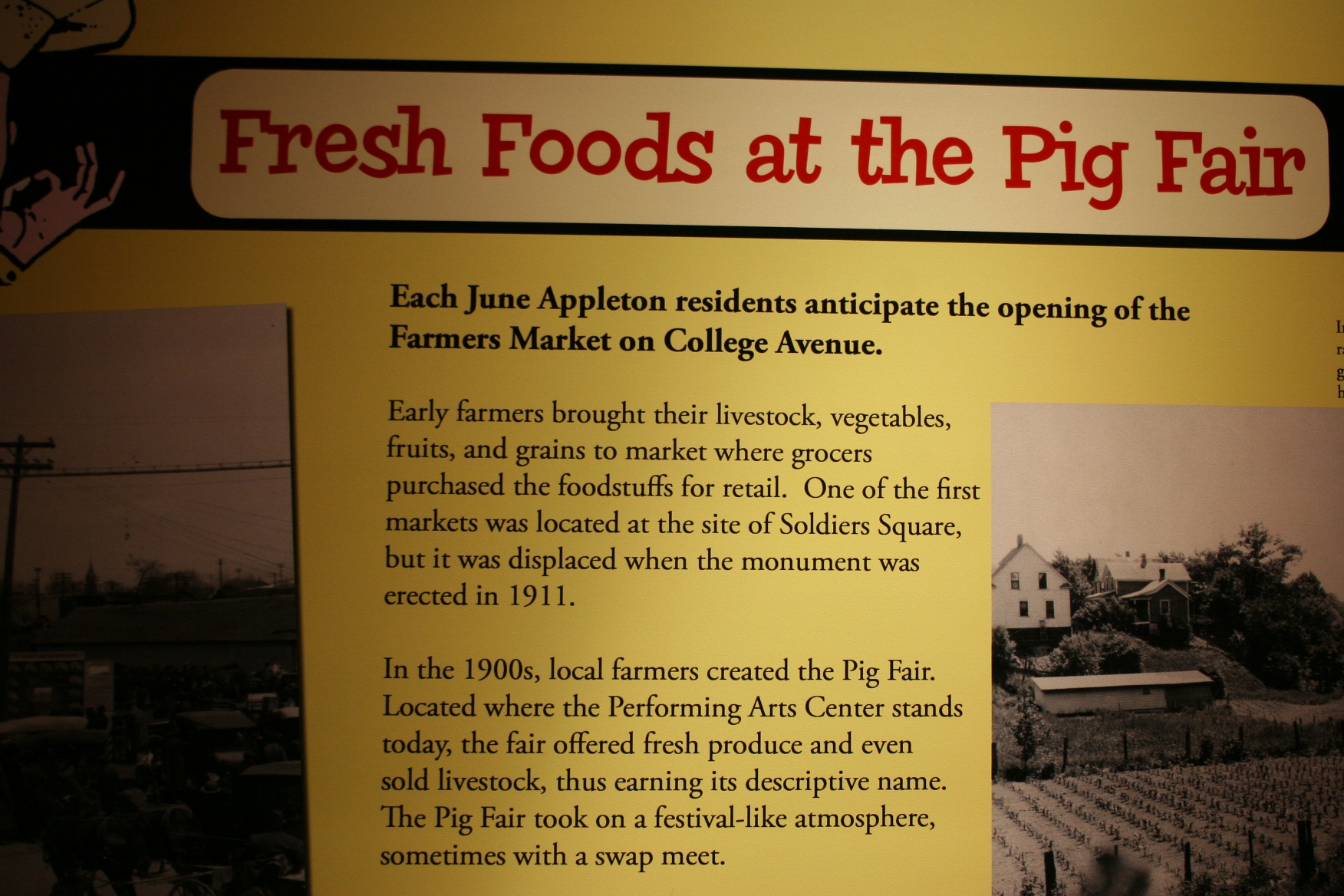
The Pig Fair...

The Pig Fair…

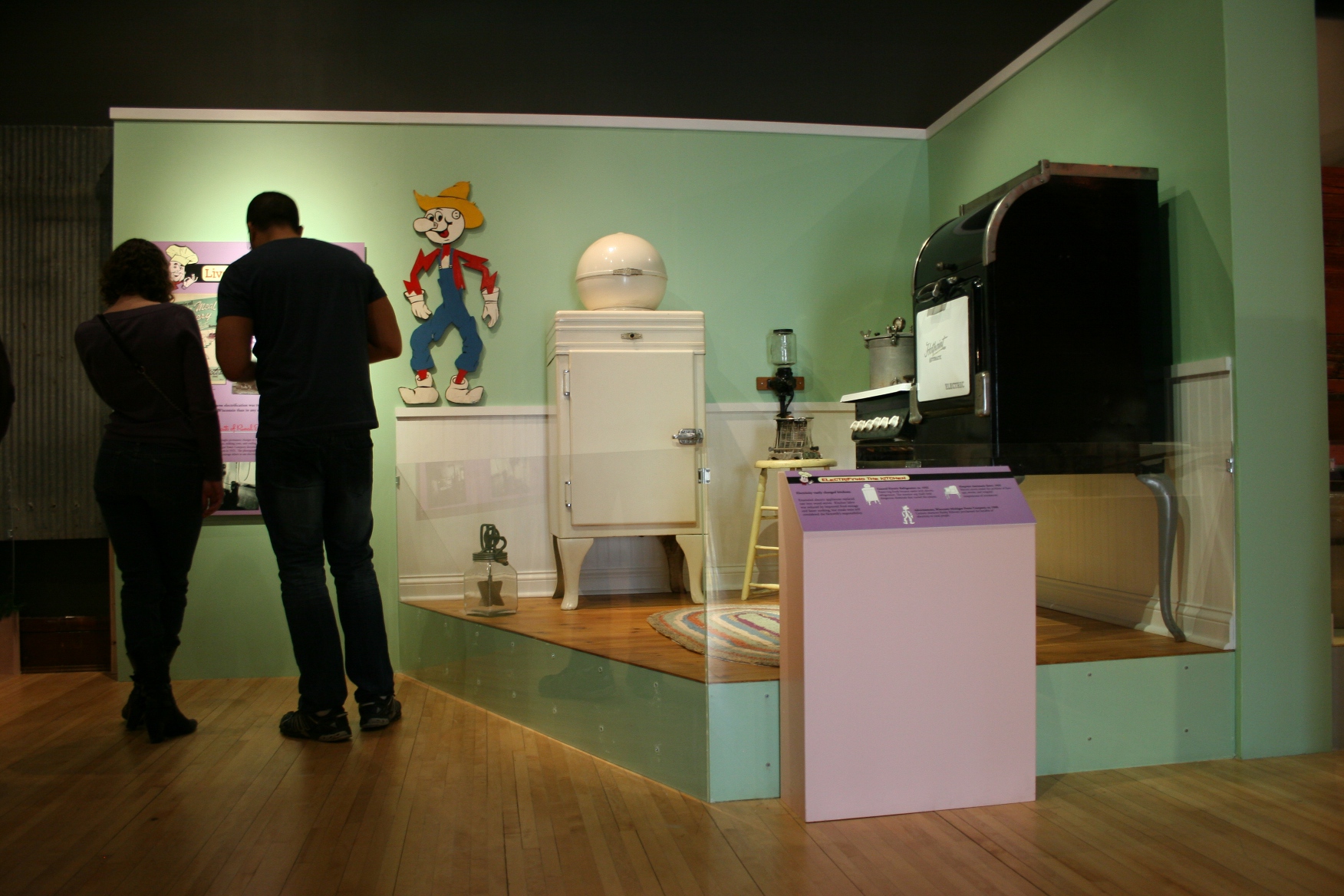
A section on electricity highlights Appleton as having the first home electrified by water power in 1882. And, yes, that's Reddi Kilowatt there on the wall.

A section on electricity highlights Appleton as having the first home electrified by water power in 1882. And, yes, that’s Reddy Kilowatt there on the wall.

And then afterward, grab a cold one. It seems only fitting to honor Wisconsin’s love of brats, beer, cheese and Packers. Cheers.

History Museum at the Castle, 330 East College Avenue, Appleton, Wisconsin.

The impressive and historic History Museum at the Castle.

FYI: The “Food: Who We Are and What We Eat” exhibit continues through the fall of 2014 at the Castle. There’s much more to see here, including exhibits on local history and a permanent Harry Houdini exhibit. Houdini claims Appleton as his hometown.

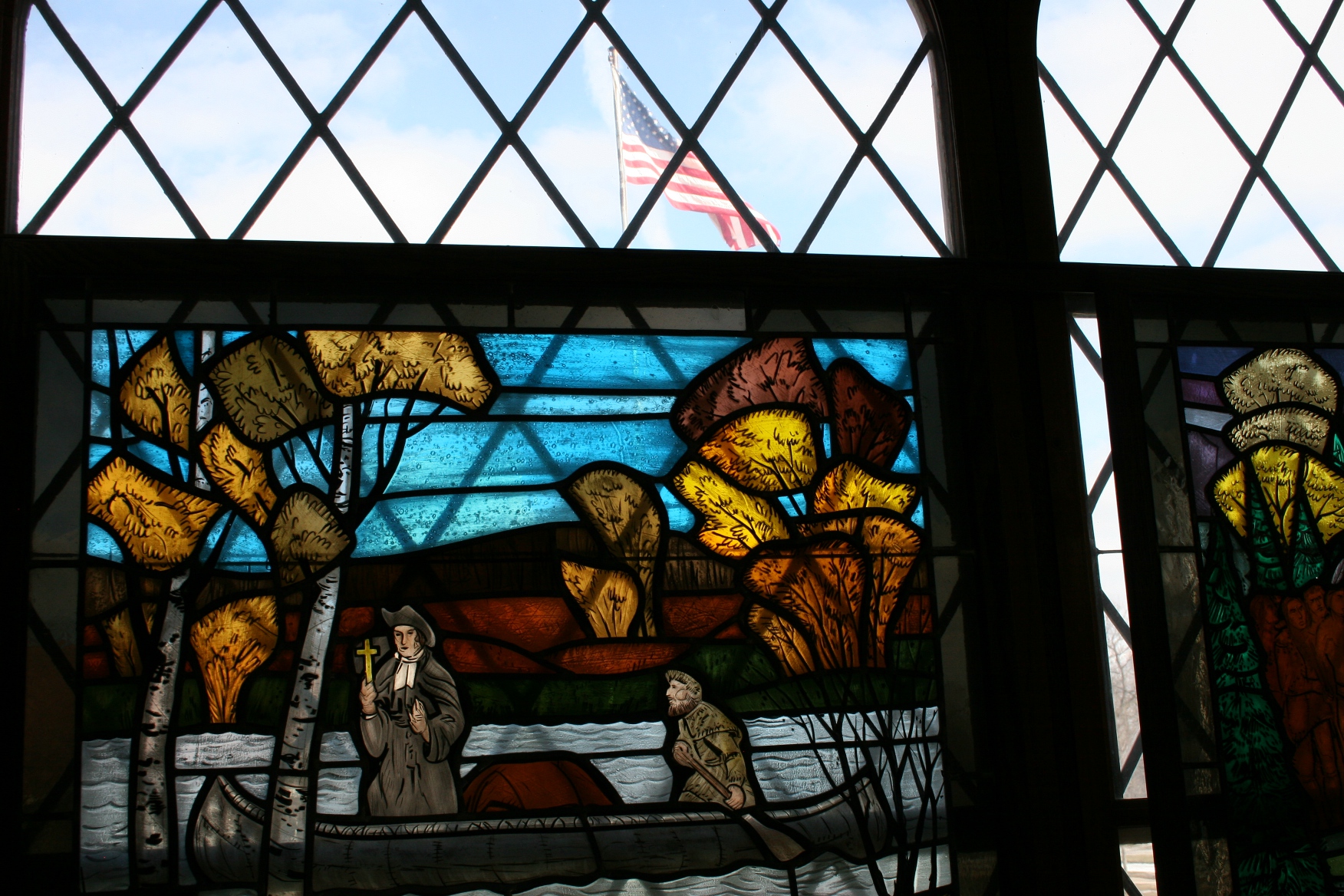
Don't miss the incredible stained glass windows in the Siekman Room.

Don’t miss the incredible stained glass windows in the Siekman Room.

The castle itself is a lovely complex built in 1923 as a Masonic temple and today is on the National Register of Historic Places. Click here to learn more about the History Museum at the Castle.

© Copyright 2014 Audrey Kletscher Helbling
 

On the road along Wisconsin Highway 21 April 21, 2014

Filed under: Uncategorized — Audrey Kletscher Helbling @ 6:00 AM
Tags: , , , , , , , , ,

TRAVELING THE 100 MILES or so between Tomah and Oshkosh, Wisconsin, can get downright tedious.

My husband and I have driven that stretch of narrow Wisconsin State Highway 21 numerous times in the past three years en route to and from Appleton, where our second eldest daughter lives.

With lots of small towns to filter through—and you know how much I appreciate small towns, unless I’m on a schedule, which we typically are—and a roadway that rates as heavily traveled and usually impossible to pass slow moving vehicles, this section of the trip is often taxing.

So we divert ourselves by trying to appreciate the sites around us, although not always pleasant. The shoulders and ditches of Highway 21 are often littered with deer carcases. Better a dead deer than one walking/running into the path of our van.

Sometimes we play a game, seeing how many dead deer we can spot. Yes, I know. Whatever works to pass the time.

I typically rest my camera in my lap, too, ready to capture whatever I find intriguing, in other words potential blog material.

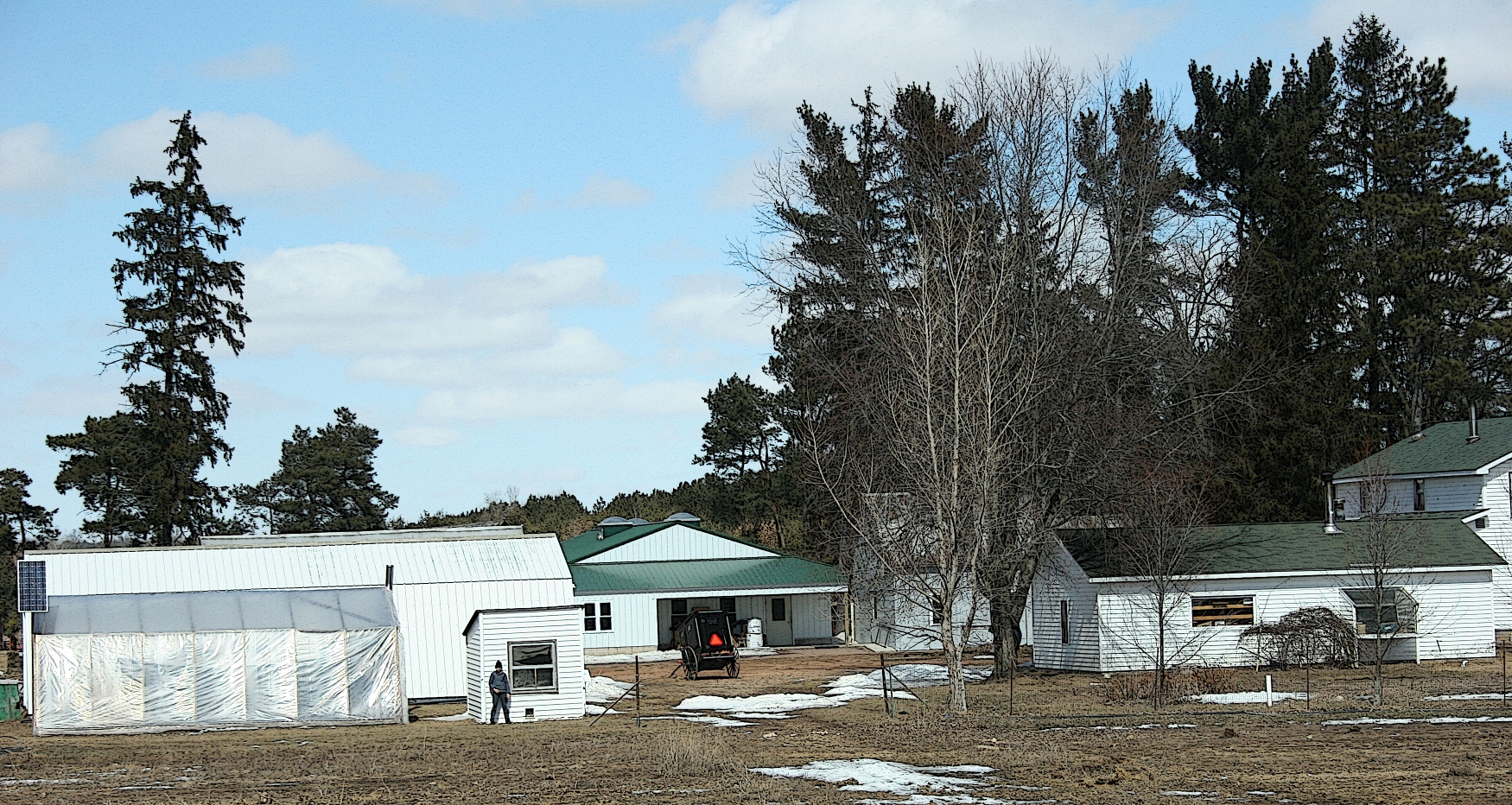
My single Wisconsin Amish photo during our most recent trip shows and Amish buggy in a farmyard and an Amish teen standing next to a small outbuilding.

My single Wisconsin Amish photo during our most recent trip shows an Amish buggy in a farmyard and an Amish teen standing next to a small outbuilding.

Typically I am on shutter button alert around the Coloma area, home to many Amish.

But anything out of the ordinary can cause me to raise my camera and shoot.

Photographed just east of Coloma.

Photographed just east of Coloma.

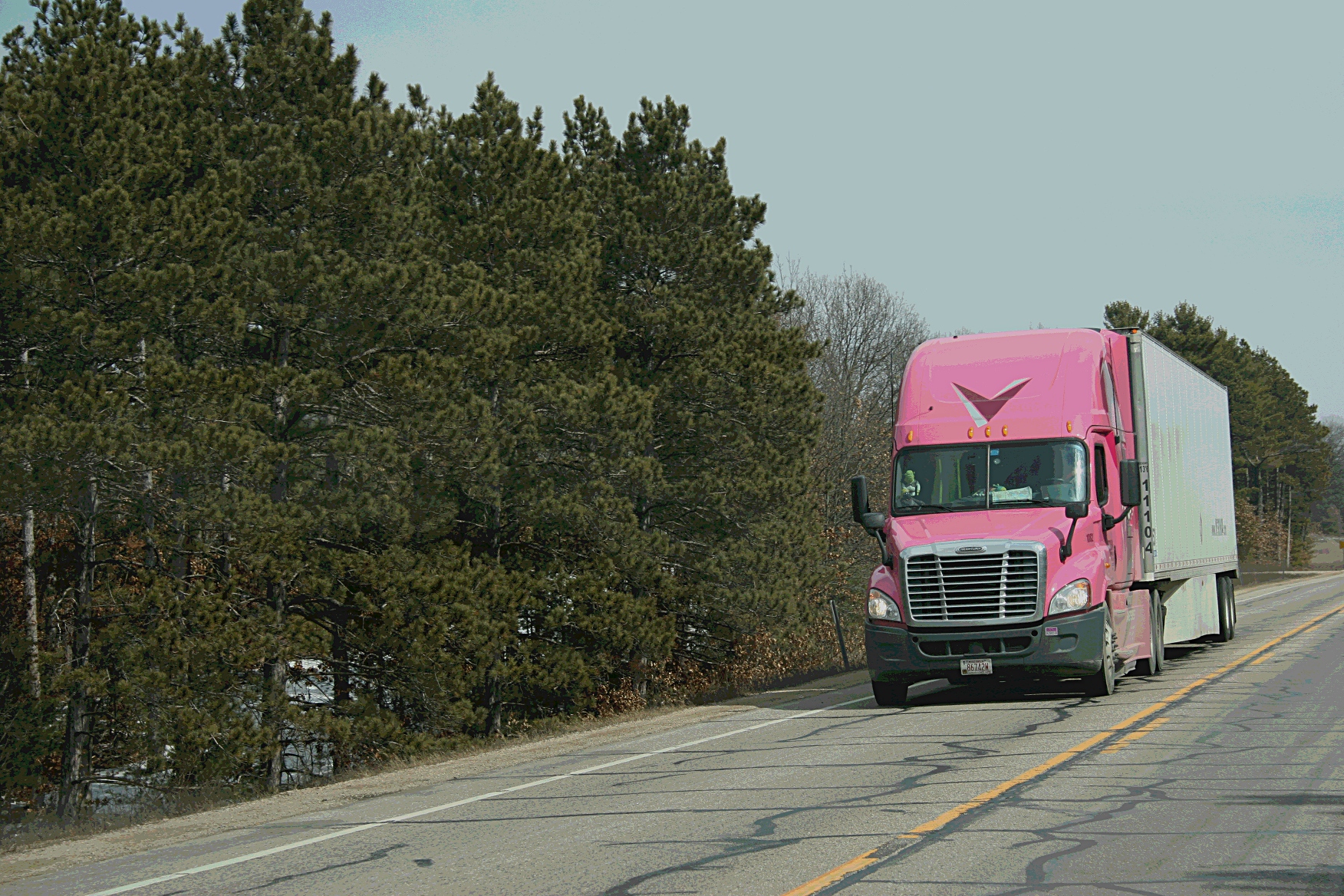
How often do you see a pink semi cab?

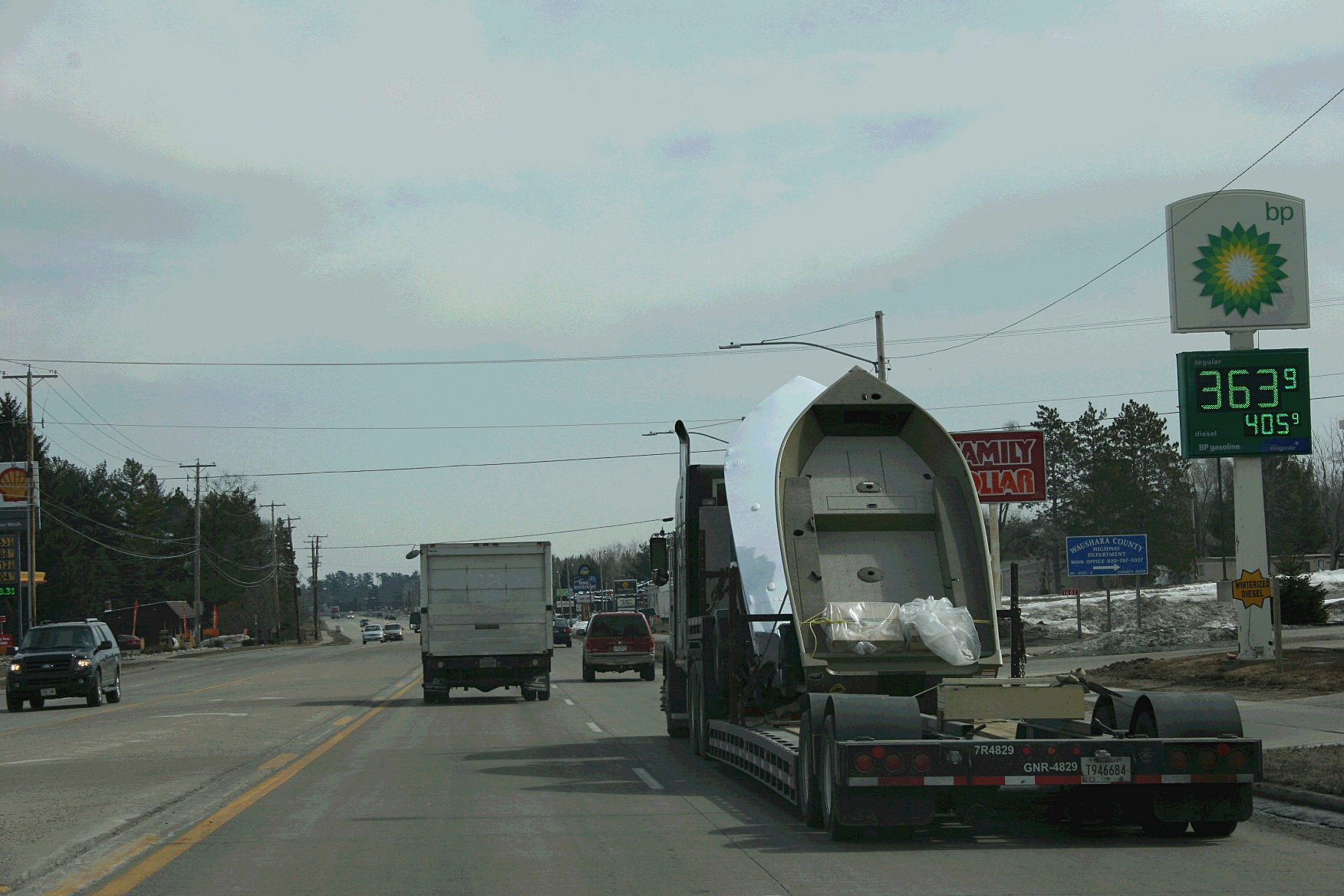
The weaving truck in Wautoma.

The weaving truck, right, in Wautoma.

Or a truck with boats aboard weaving through traffic in Wautoma like some some speed boat on an area lake?

I really should have photographed the crazy multi-lane roundabouts near Oshkosh. The Wisconsin Department of Transportation seems to fancy these traffic intersectors with more than 200 constructed in the state, many in the Fox Valley area where we travel. In contrast, Minnesota has about 120.

While I understand how roundabouts enhance safety, that does not make them any less scary, especially during rush hour. Suffice to say, you best know which lane you need to be in, something not in the knowledge bank of out-of-state drivers like us encountering a particular roundabout for the first time.

In summary, though Highway 21 proves a long drive through central Wisconsin, I manage to keep it semi interesting by scouting for blog material.

FYI: These photos were shot during a March trip, thus the snow you see in some of the images. Check back for additional posts this week from that visit to eastern Wisconsin.

© Copyright 2014 Audrey Kletscher Helbling
 

Quintessential Wisconsin April 4, 2014

Filed under: Uncategorized — Audrey Kletscher Helbling @ 6:00 AM
Tags: , , , ,

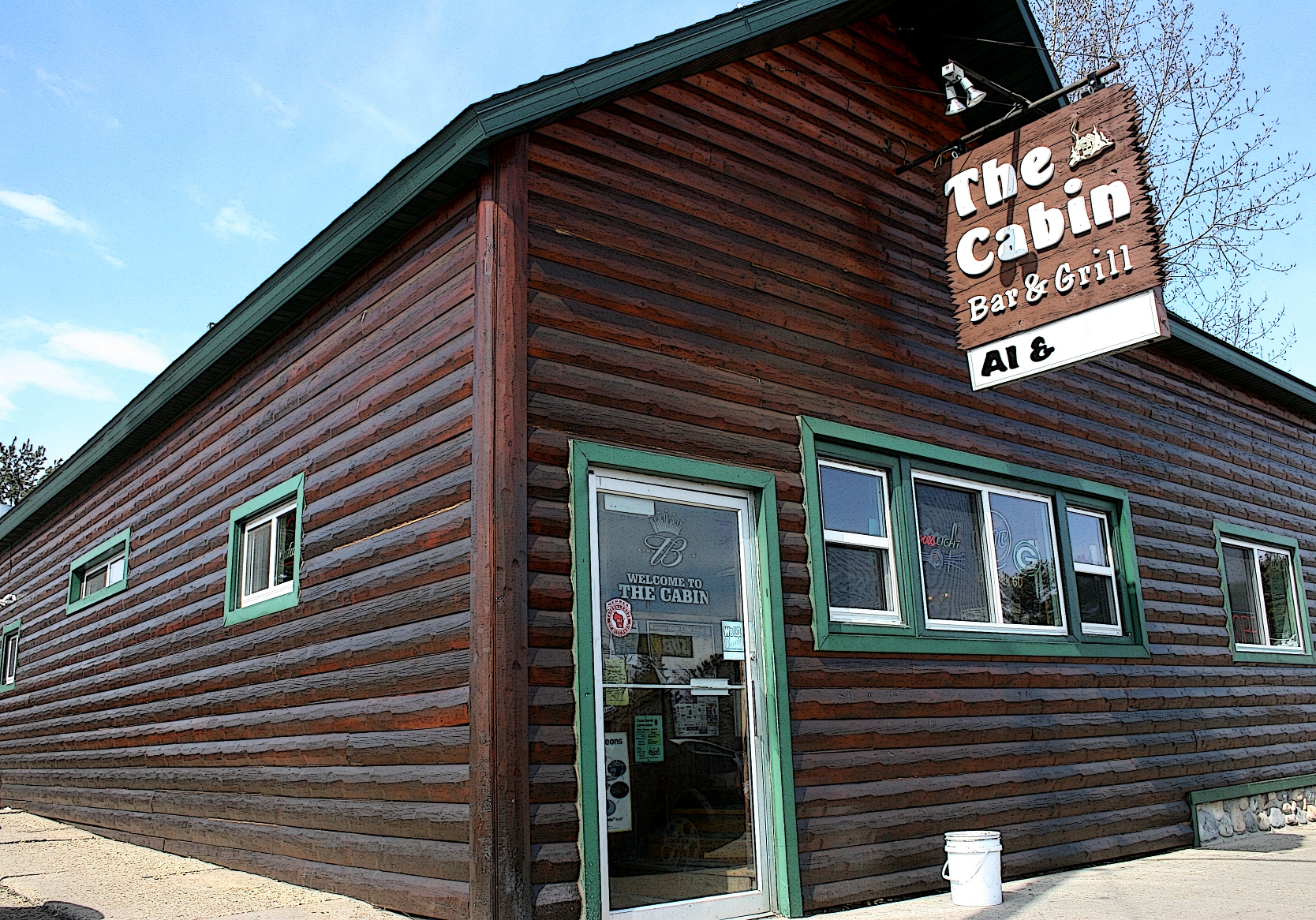
Cabin Bar and Grill, Coloma

The Cabin Bar & Grill in Coloma, Wisconsin.

Copyright 2014 Audrey Kletscher Helbling
 

Dining at the Red Hill Royal Cafe April 3, 2014

Filed under: Uncategorized — Audrey Kletscher Helbling @ 6:00 AM
Tags: , , , , , ,
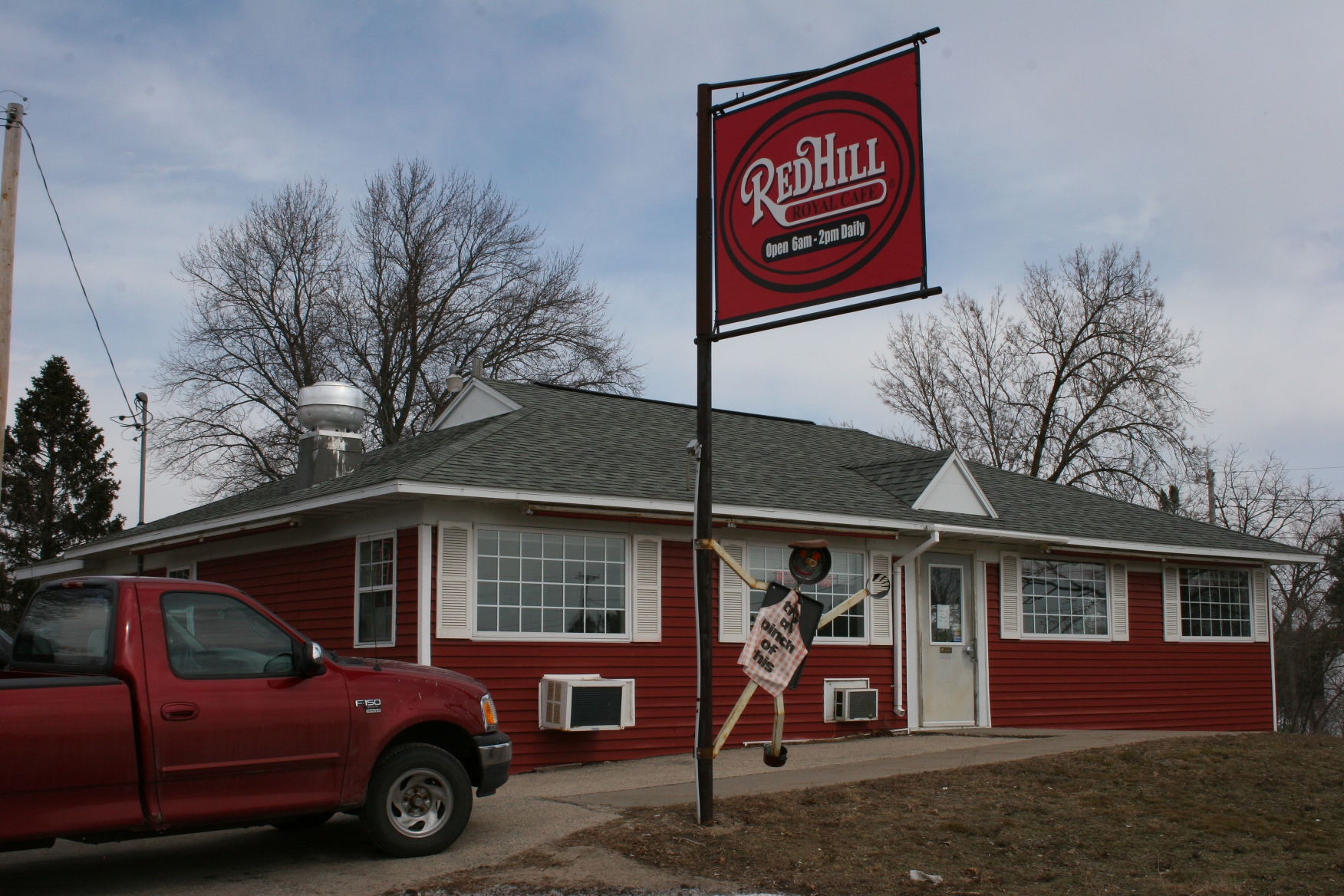
The Red Hill Royal Cafe sits along Wisconsin State Highway 21 in Coloma.

The Red Hill Royal Cafe sits along Wisconsin State Highway 21 in Coloma.

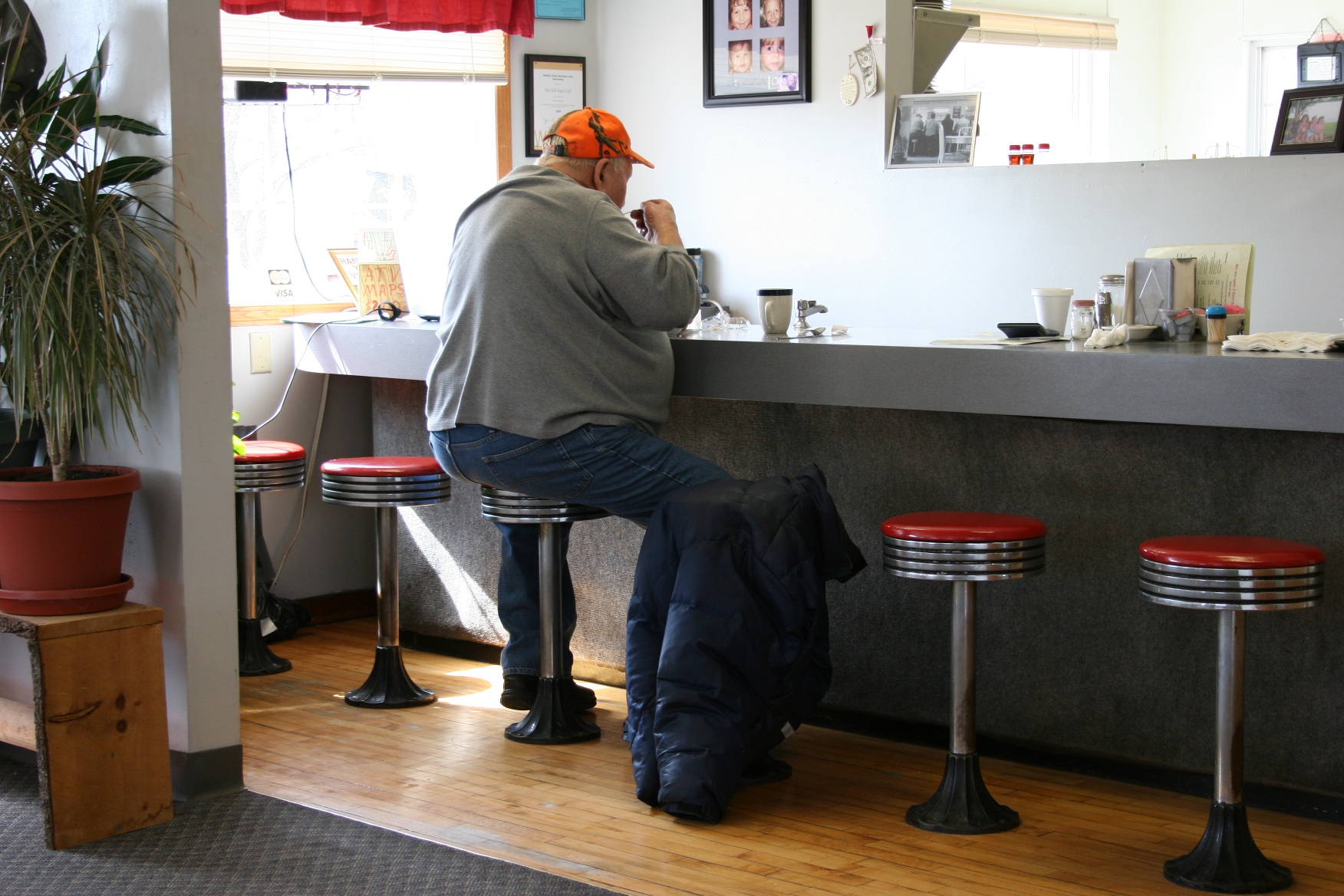
MY HUSBAND AND I EXCHANGE  glances as we enter the Red Hill Royal Cafe in Coloma, Wisconsin, around noon on a Friday.

The charming lunch counter. Three other customers arrive at the diner after us.

Dining at the charming lunch counter. Three other customers arrive at the diner after us.

Except for a couple seated in the main dining area and a man at the lunch counter, the place is empty. Usually not a good sign.

We may have turned around and walked out if not for my hunger and my desire to eat at a local restaurant rather than the chain across the street.

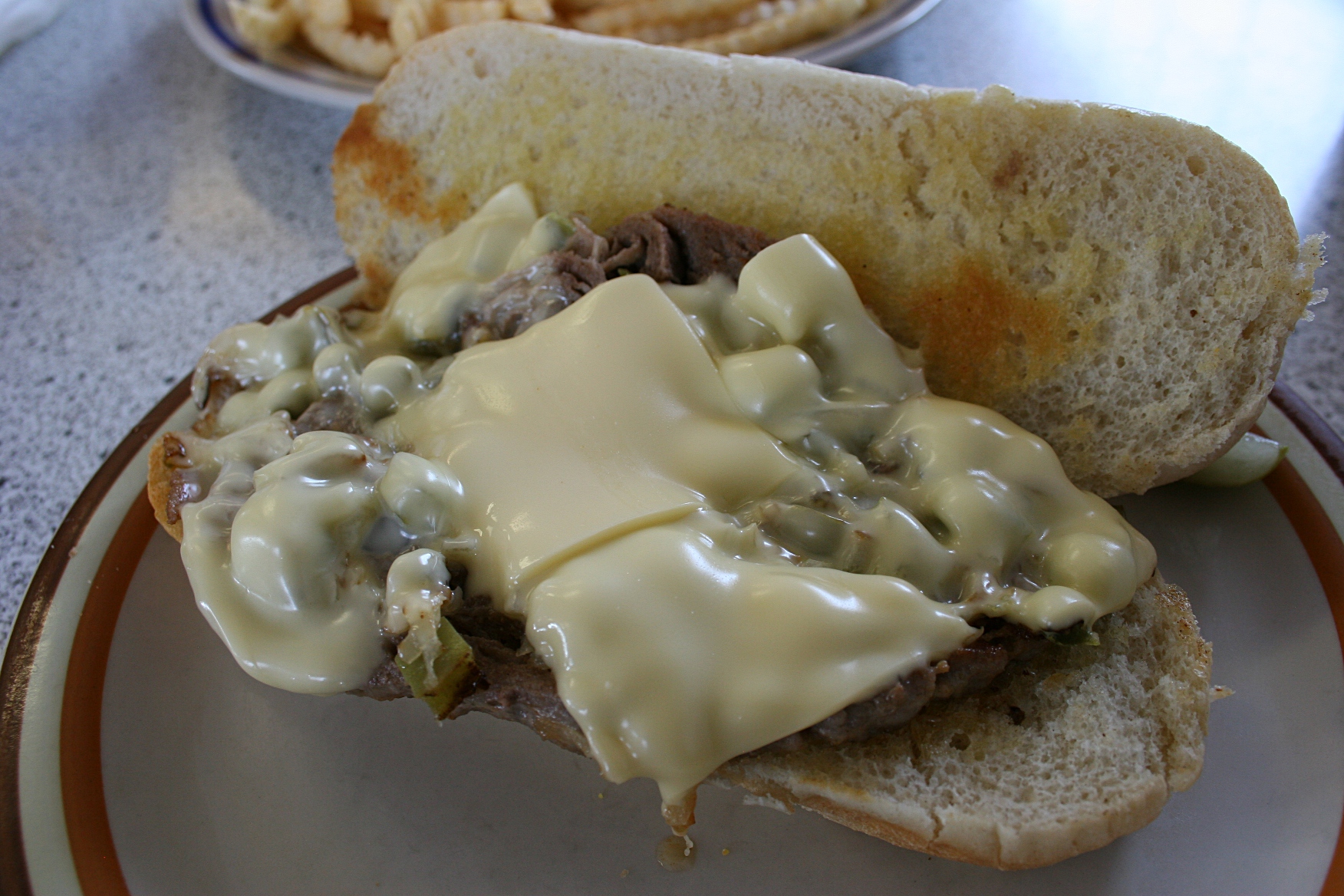
My Philly steak sandwich.

My Philly steak sandwich smothered in cheese.

So we stay. I order a Philly steak sandwich. Randy chooses a cheeseburger and fries.

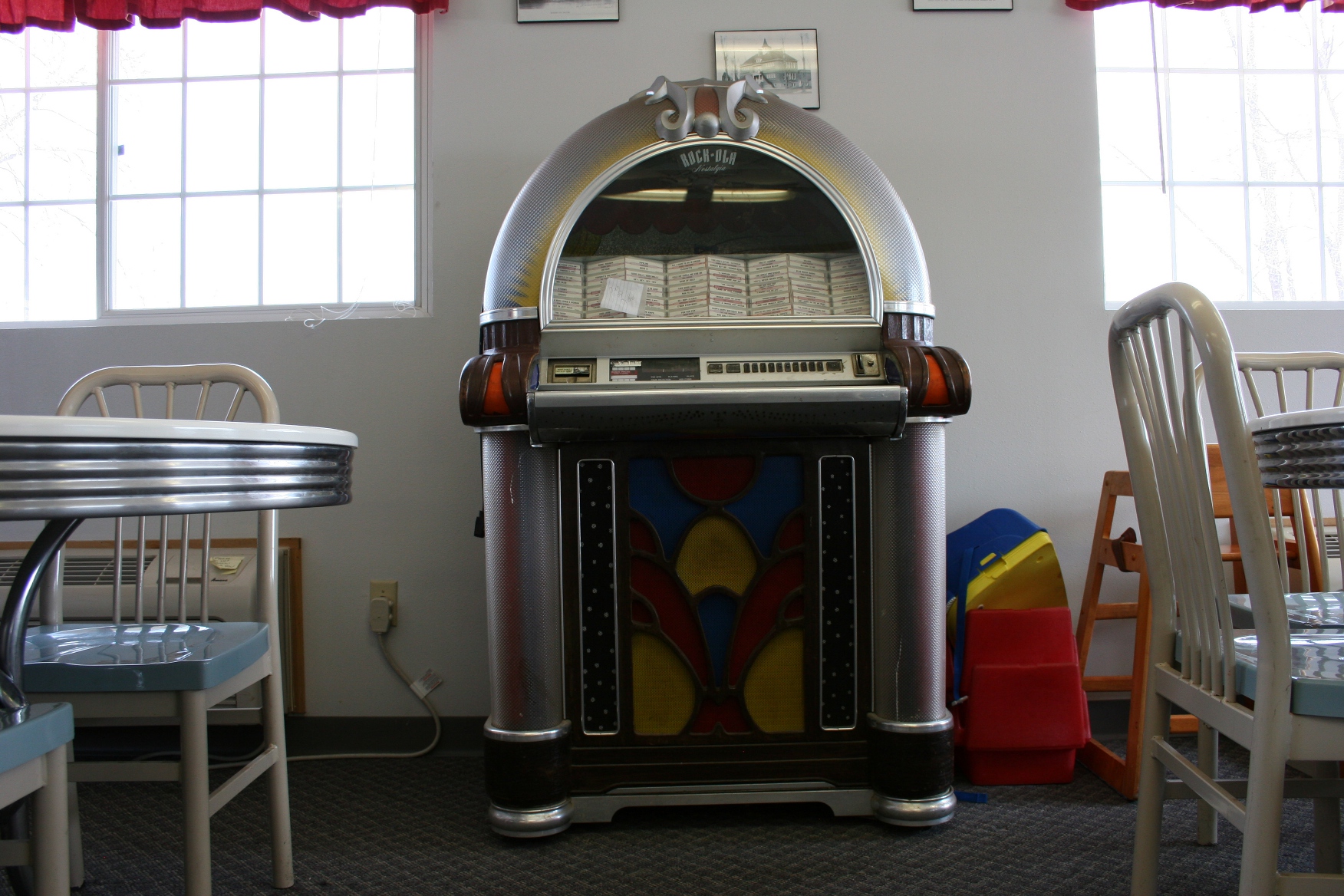
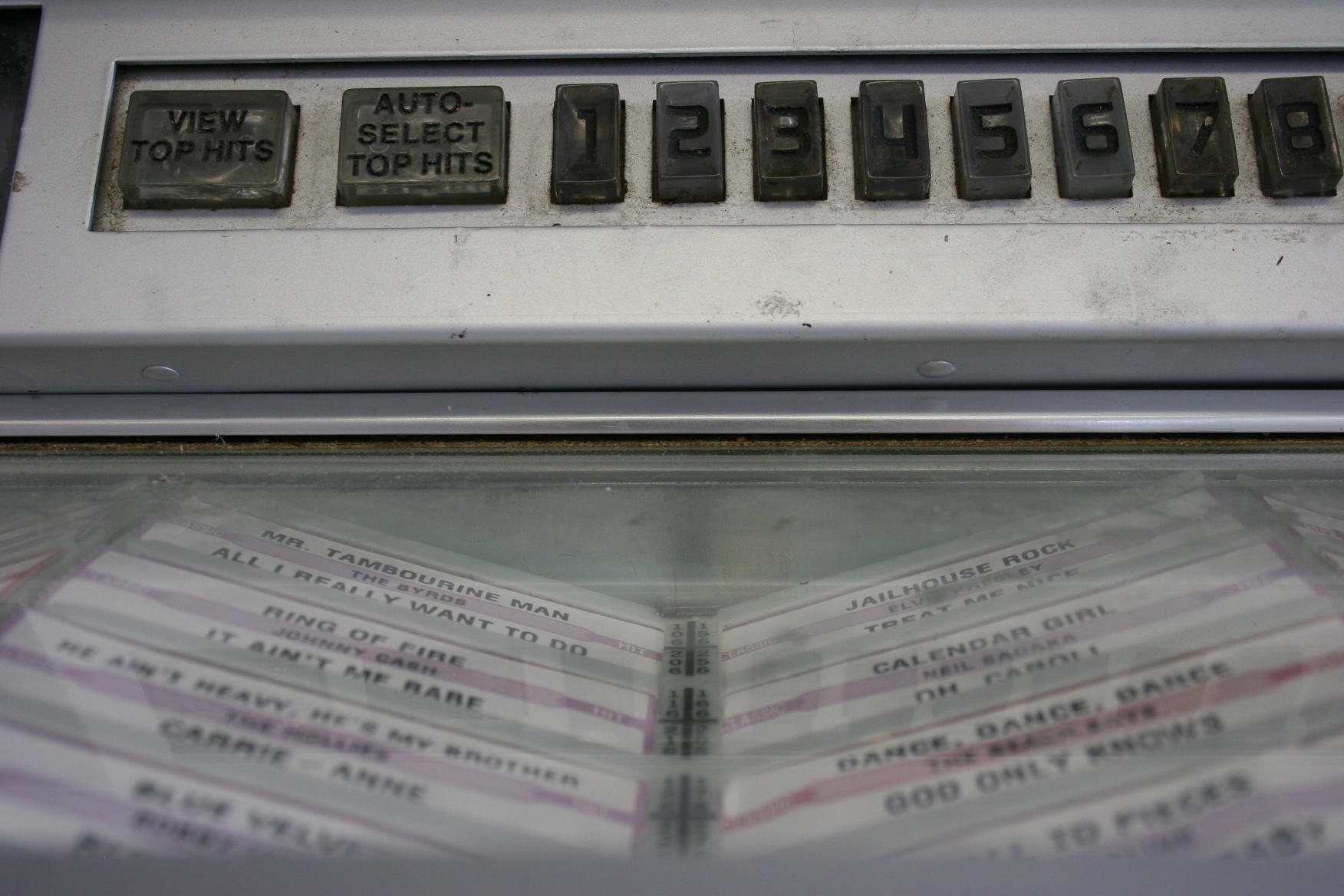
The jukebox brings back memories.

The jukebox brings back memories.

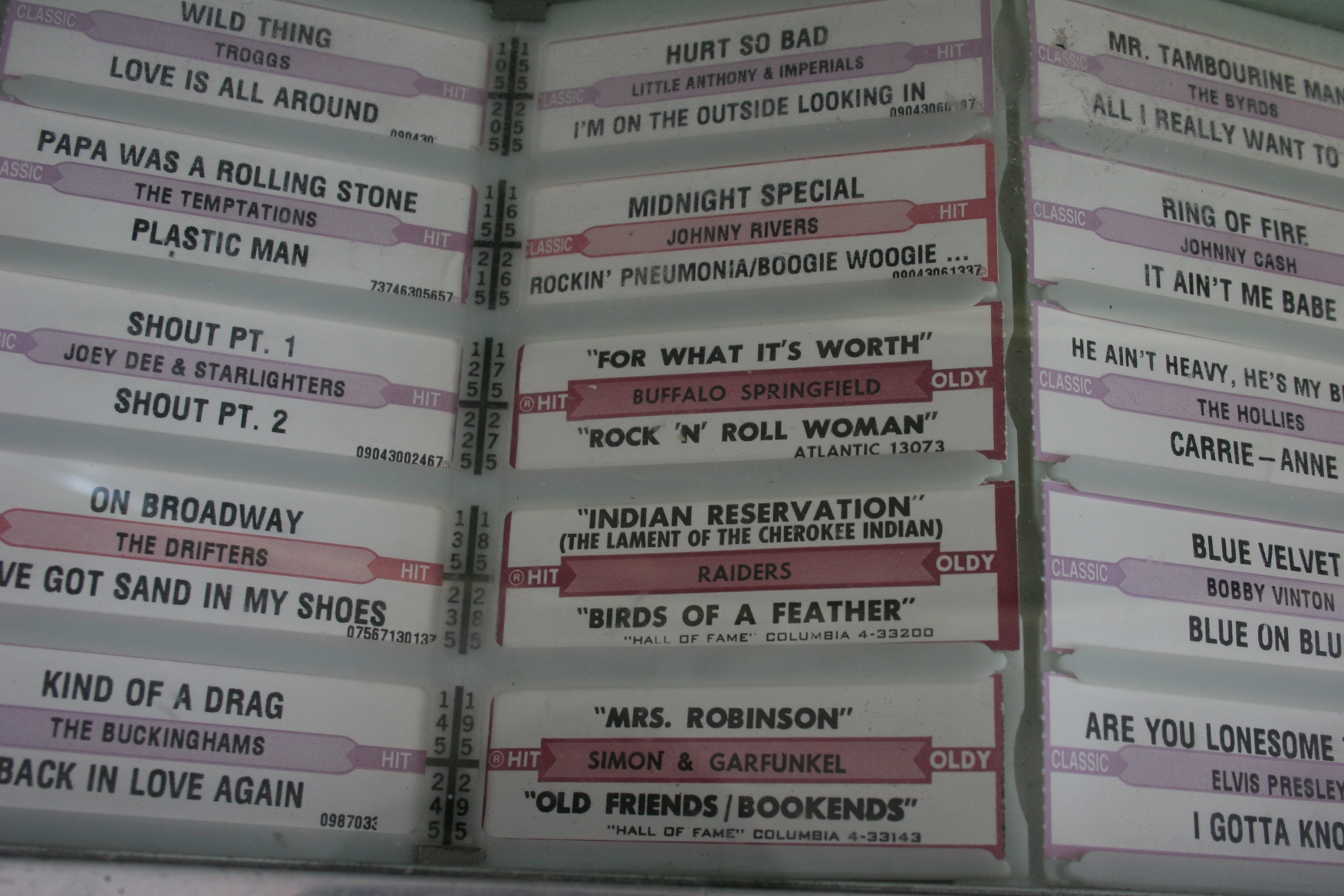
As you would expect, lots of familiar oldies.

As you would expect, lots of familiar oldies.

If the jukebox had been working, I would have selected a song.

If the jukebox had been working, I would have selected a song.

While waiting, we reminisce over the non-functioning jukebox, 45 rpm records visible inside.

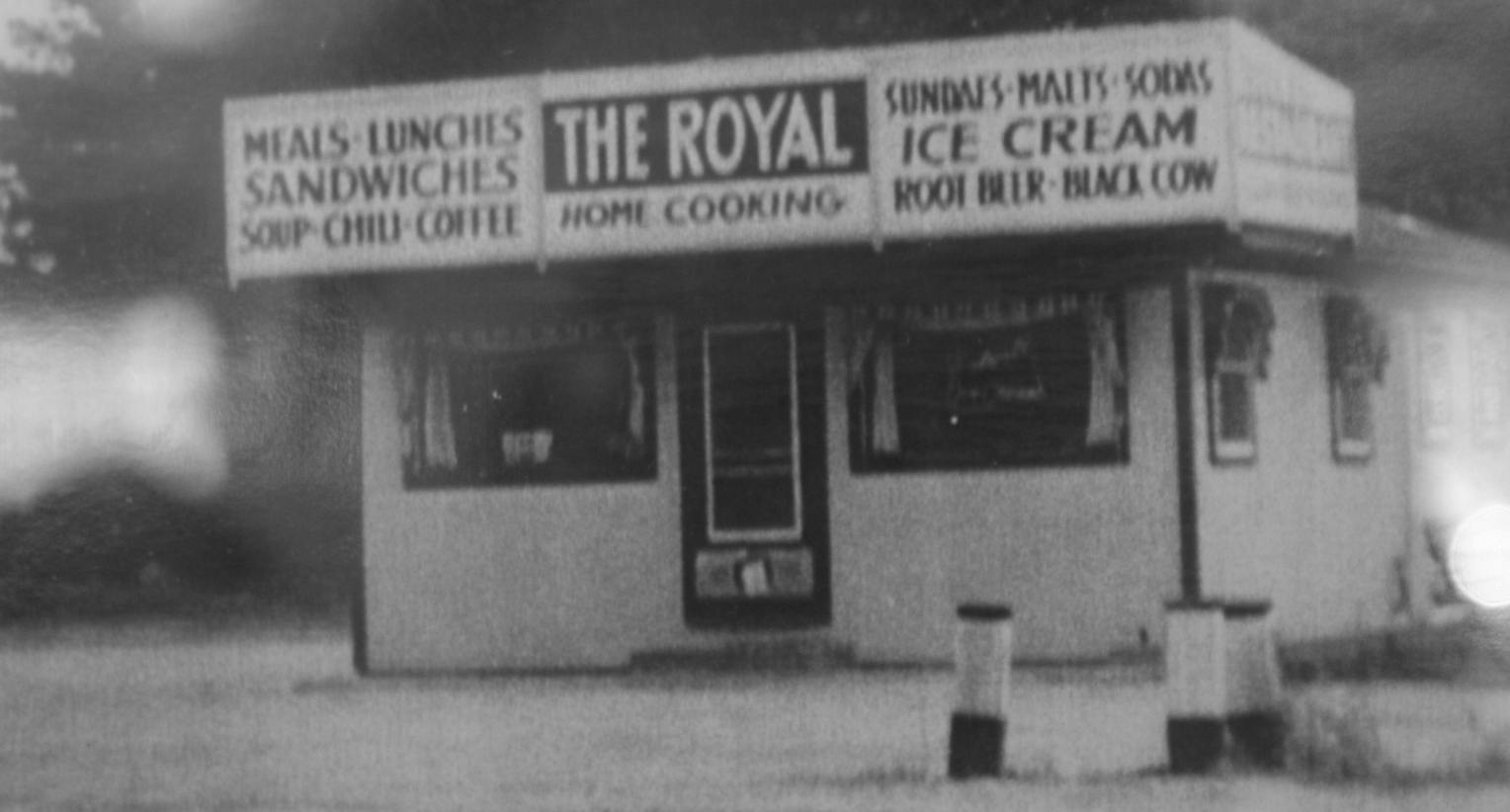
A photo of a photo showing The Royal as it once appeared.

A photo of a photo (shooting through glass, so excuse the quality) showing The Royal as it once appeared.

We also study historic photos and information on the wall. The Royal Cafe building was relocated to this hilltop spot from downtown in July 1987 after Wisconsin State Highway 21 was rebuilt on the edge of Coloma.

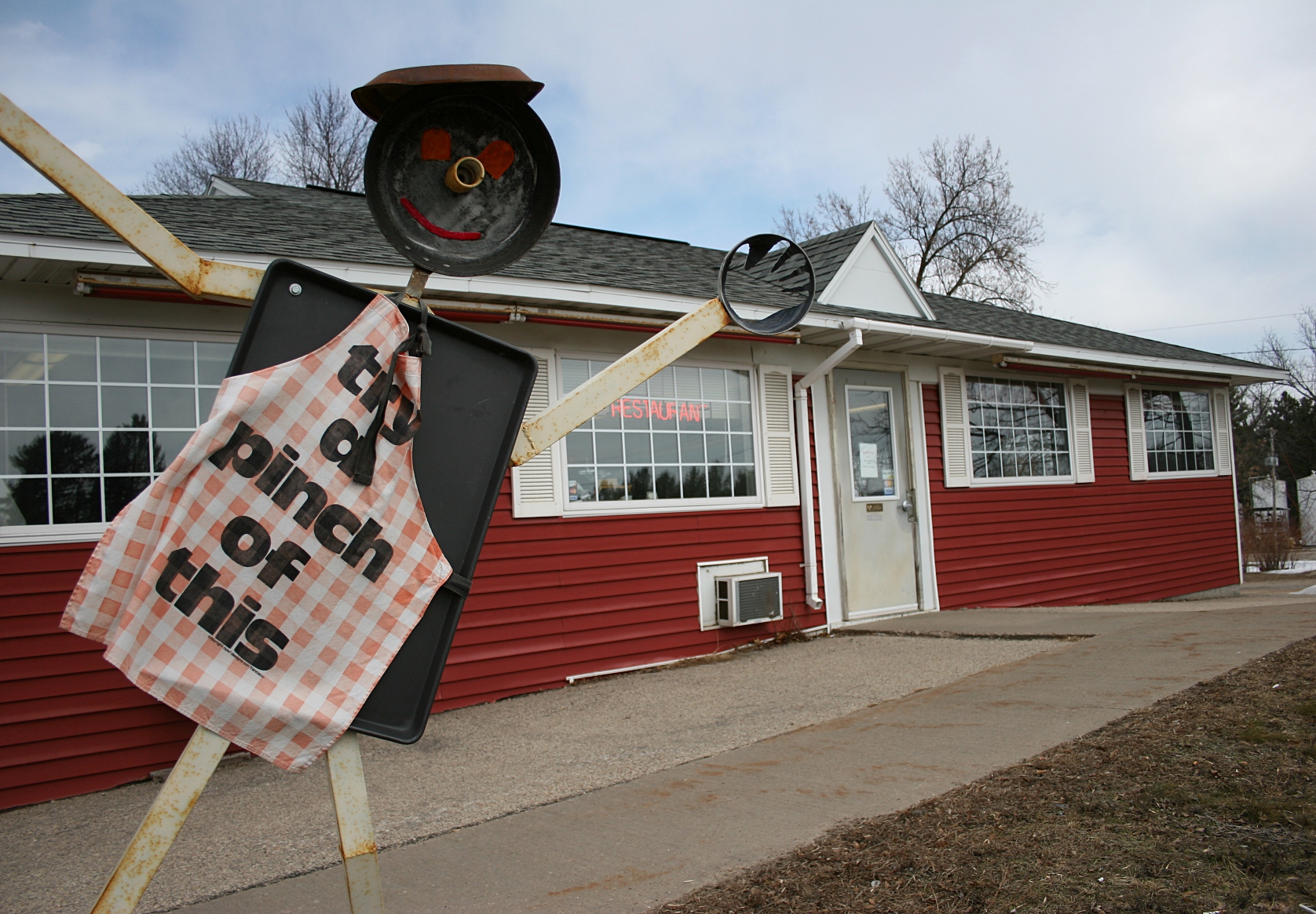
Quirky yard art outside the cafe.

Quirky yard art outside the cafe.

But on this Friday nearly three decades later, not even the location along this busy highway that cuts across central Wisconsin from Tomah to Oshkosh draws in diners.

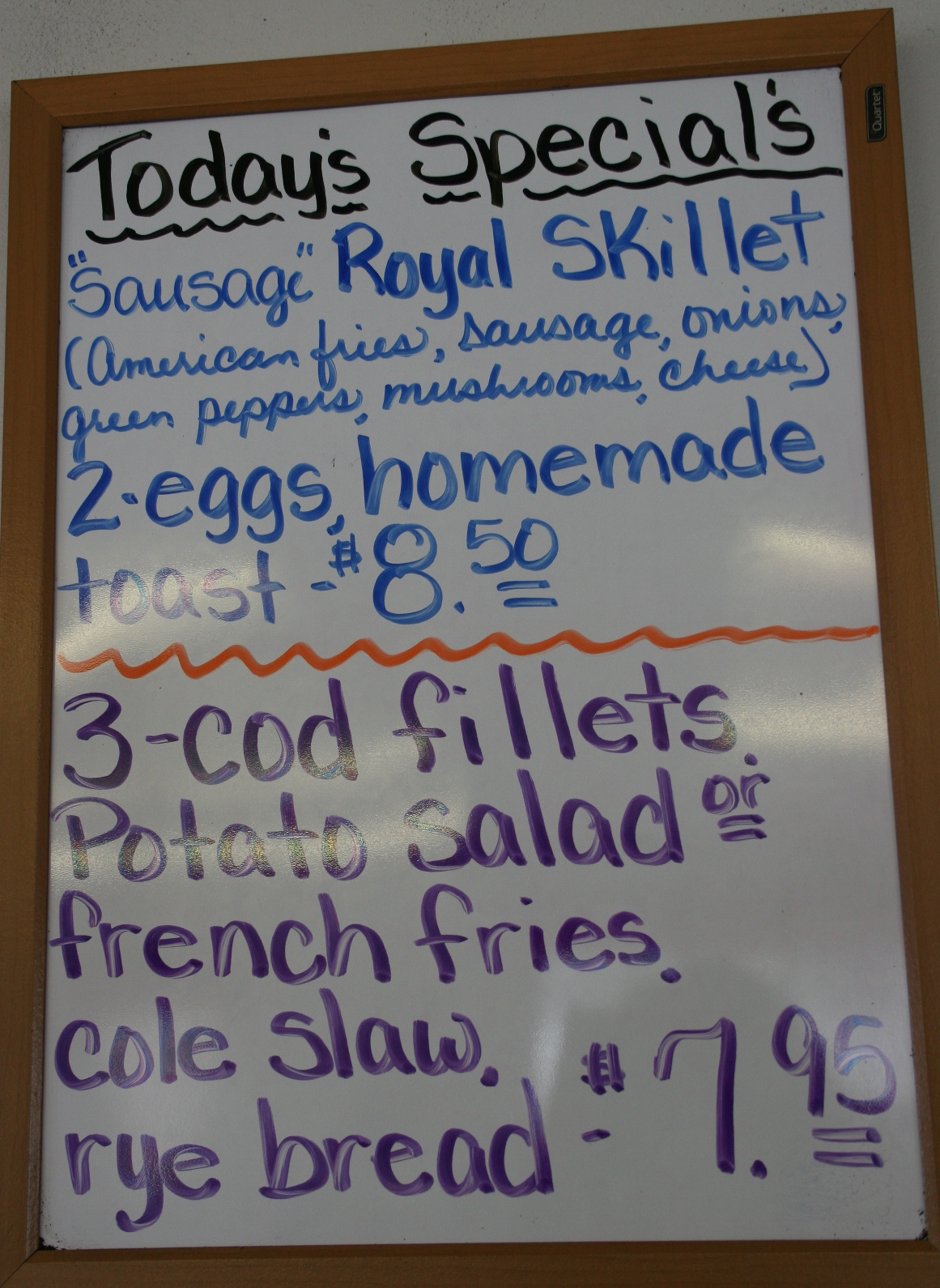
Friday specials.

Friday specials.

Business has been slow all winter, the waitress tells us. And not just here, but everywhere. Been too cold, she explains. That I can understand after arriving here from cold, and much snowier, Minnesota.

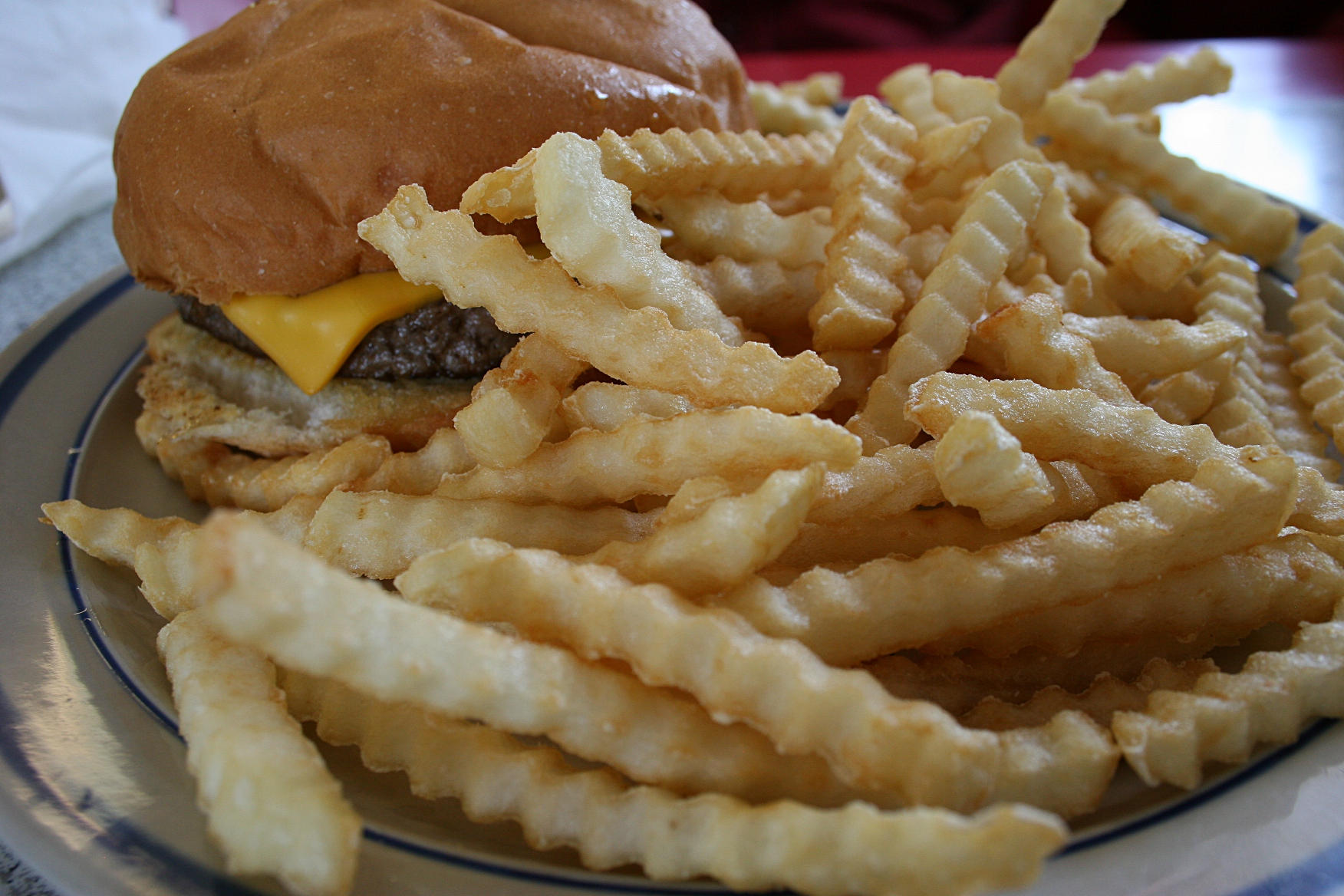
A generous portion of fries served with a cheeseburger, which Randy termed good, but "a little greasy."

A generous portion of fries served with a cheeseburger, which Randy termed good, but “a little greasy.”

To our satisfaction, we find the Red Hill Royal Cafe’s food to our liking. I’m no food critic, but my tasty Philly steak arrives piping hot on a toasted bun. Ditto for Randy’s burger. He shares his generous portion of fries.

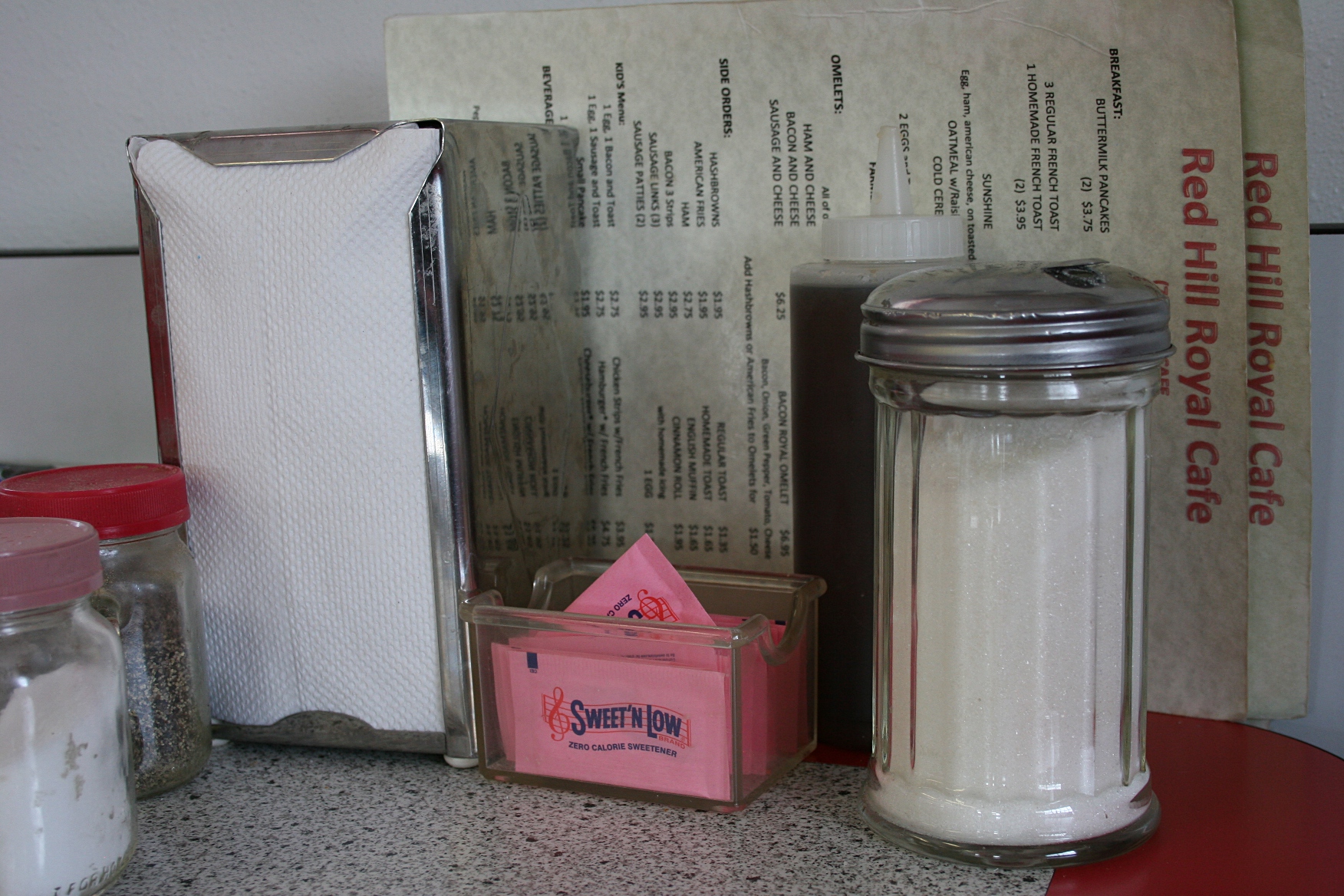
A tabletop scene.

A tabletop scene.

I limit my fry intake as I want  a slice of homemade pie. Rarely do I order dessert out, but I decide to treat myself.

That is not to be. Although pie is listed on the menu, it’s a seasonal item reserved for the busier warmer months when folks are drawn to the region’s lakes, the waitress shares.

I am disappointed.

But there’s always next time. And next time should be pie season.

© Copyright 2014 Audrey Kletscher Helbling
 

Bluff ice art March 31, 2014

Filed under: Uncategorized — Audrey Kletscher Helbling @ 6:00 AM
Tags: , , , , , , , ,

PERHAPS I AM too easily impressed.

But I have not visited the ice caves at Apostle Islands National Lakeshore in northern Bayfield County, Wisconsin.

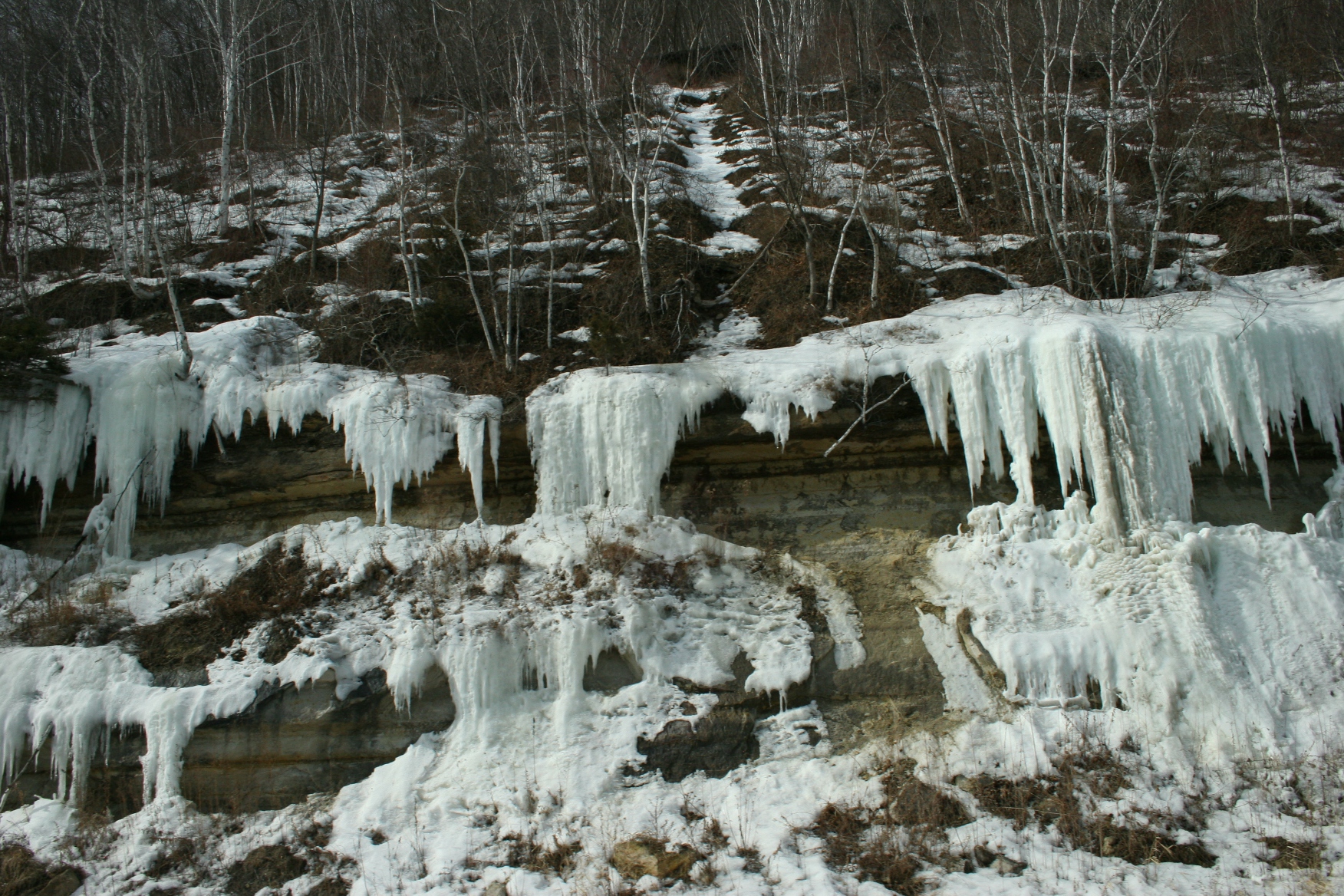
Ice formations by La Crosse 1

Thus the ice formations gracing the Mississippi River bluffs along Interstate 90 on the Minnesota side near La Crosse, Wisconsin, impress me.

Ice formations by La Crosse 2

There is no stopping along I-90 to view or photograph this natural ice art up close. Rather, I rely on the rapid fire of my camera to capture the scene for later study.

Ice formations by La Crosse 3

Every time I see this water frozen in the icebox of winter, I marvel at its beauty.

I remember, too, how once upon a time I snapped icicles from the milkhouse roofline to engage in sword fight battles with my siblings.

Ice formations by La Crosse 4

The flip side of my mind views the ice formations as powdered sugar icing dripping down the sides of a homemade chocolate birthday cake baked by my mother.

That’s the thing about art—man-made or natural. It’s always open to interpretation.

FYI: These photos were taken 10 days ago. Since then, the weather has warmed to around 60 degrees in southern Minnesota, meaning these formations are likely disappearing.

© Copyright 2014 Audrey Kletscher Helbling
 

Fish Fry Fridays March 28, 2014

GROWING UP LUTHERAN, I knew Catholics couldn’t eat meat on Fridays during Lent. They ate fish. I never understood that because I consider fish to be meat.

But, still Lutheran today, I respect the Catholic Friday Fish Fry tradition.

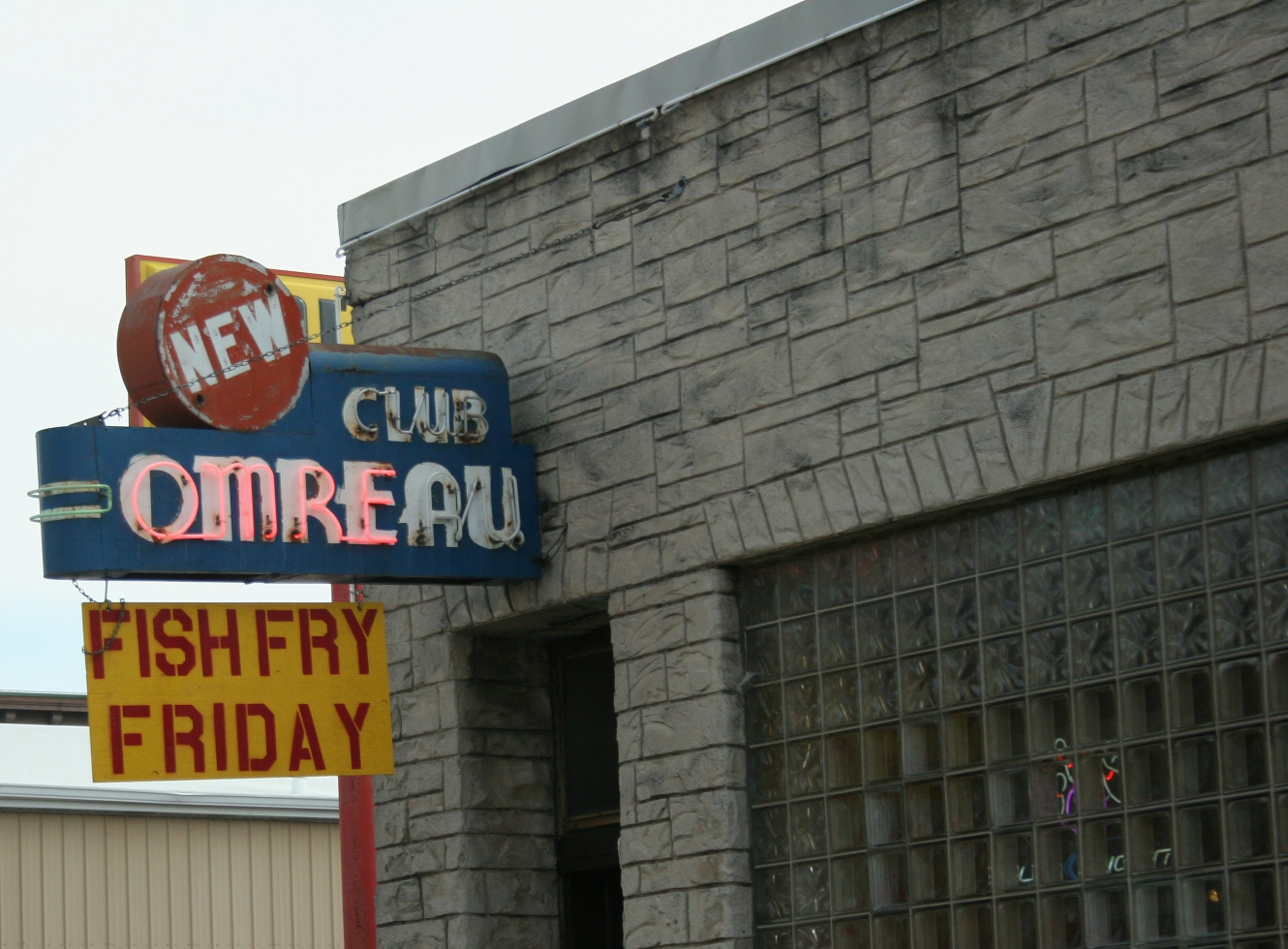
Photographed in Omro, Wisconsin, eight miles west of Oshkosh along the Fox River.

Photographed in Omro, Wisconsin, eight miles west of Oshkosh along the Fox River.

This time of year, you’ll see advertisements and signs galore calling the faithful to feast on fish on Fridays.

These weekly Lenten fish fries should also remind believers of their calling to be, like Jesus’ disciples, fishers of men (and women and children). If I remember my bible facts correctly, Andrew, Peter, James and John were fishermen by profession and fishermen by discipleship.

Throughout scripture, you will find numerous references to fish, beginning with the beginning. In Genesis 1:26, God says:

“Let us make man in our image, in our likeness, and let them rule over the fish of the sea and the birds of the air, over the livestock, over all the earth, and over all the creatures that move along the ground.”

What a great responsibility.

Then there’s the story of Jonah being swallowed by a great fish. I remember as a child reading Sunday School bible lessons and how impressed I was by this. To think that the prophet Jonah would be swallowed by a whale, remain in the whale’s belly for three days and then be spit out alive seemed pretty miraculous to me.

And that’s exactly as it should have seemed. The apostle Matthew writes in the gospel of Matthew, chapter 12:40:

For as Jonah was three days and three nights in the belly of a huge fish, so the Son of Man will be three days and three nights in the heart of the earth.

Jonah’s experience connects to Christ’s resurrection from the dead after the third day, as explained by Matthew.

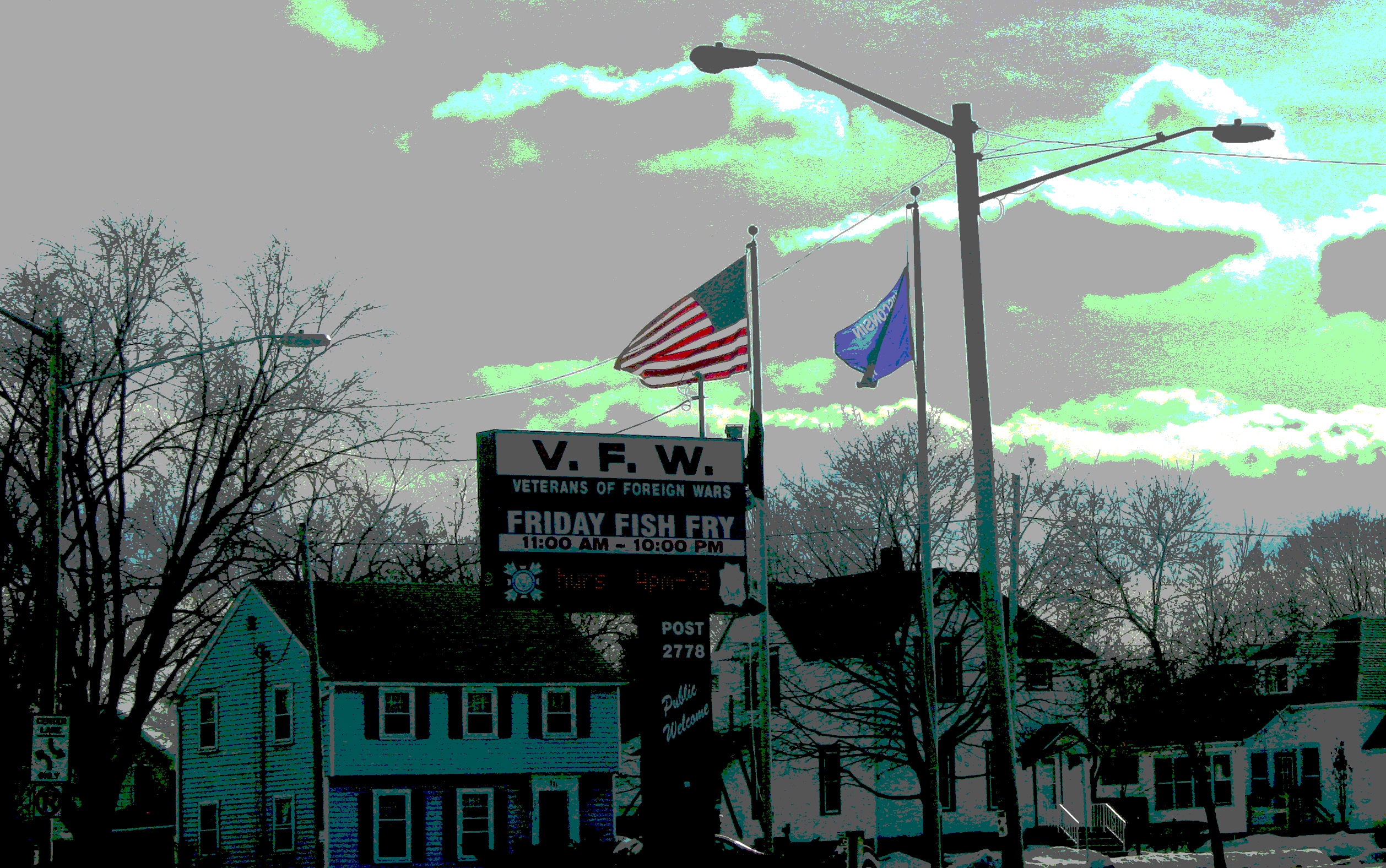
At VFW Post 2778 in Appleton, Wisconsin, they apparently attempt to feed the masses as the Friday Fish Fry runs from 11 a.m. - 10 p.m.

At VFW Post 2778 in Appleton, WI., they apparently attempt to feed the masses as the Friday Fish Fry runs from 11 a.m. – 10 p.m.

Finally, the other significant mention of fish imprinted upon my memory comes in the feeding of the 4,000 and the 5,000 plus. On both occasions, Jesus multiplied miniscule portions of bread and fish to feed the masses:

Taking the five loaves and the two fish and looking up to heaven, he gave thanks and broke the loaves. Then he gave them to the people. They all ate and were satisfied, and the disciples picked up twelve basketfuls of broken pieces that were left over. The number of those who ate was about five thousand men, besides women and children. (Matthew 14: 19-21)

I think Jesus would have appreciated a Friday Fish Fry.

© Copyright 2014 Audrey Kletscher Helbling
 

Gorilla marketing March 26, 2014

Filed under: Uncategorized — Audrey Kletscher Helbling @ 6:00 AM
Tags: , , , , , ,

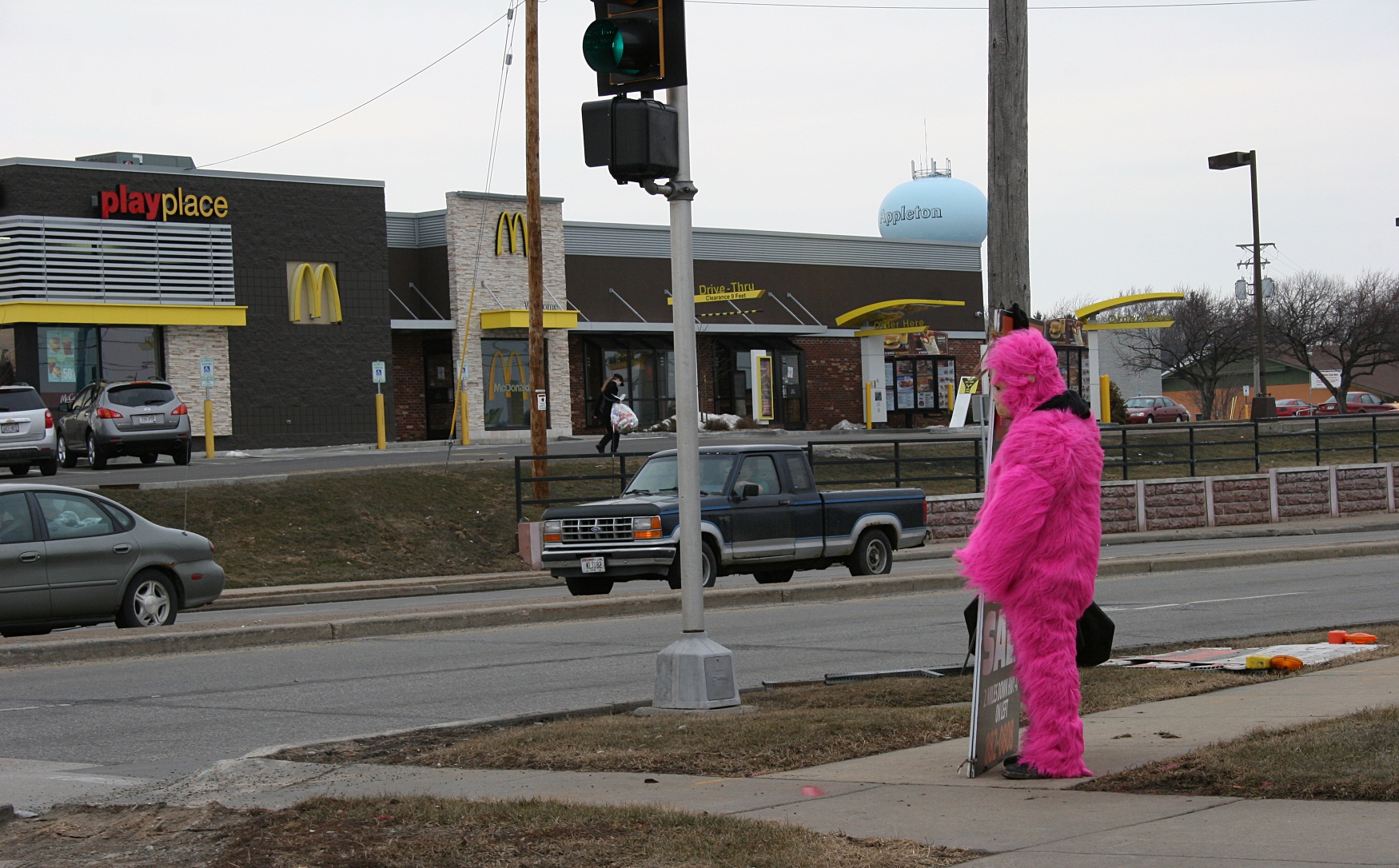
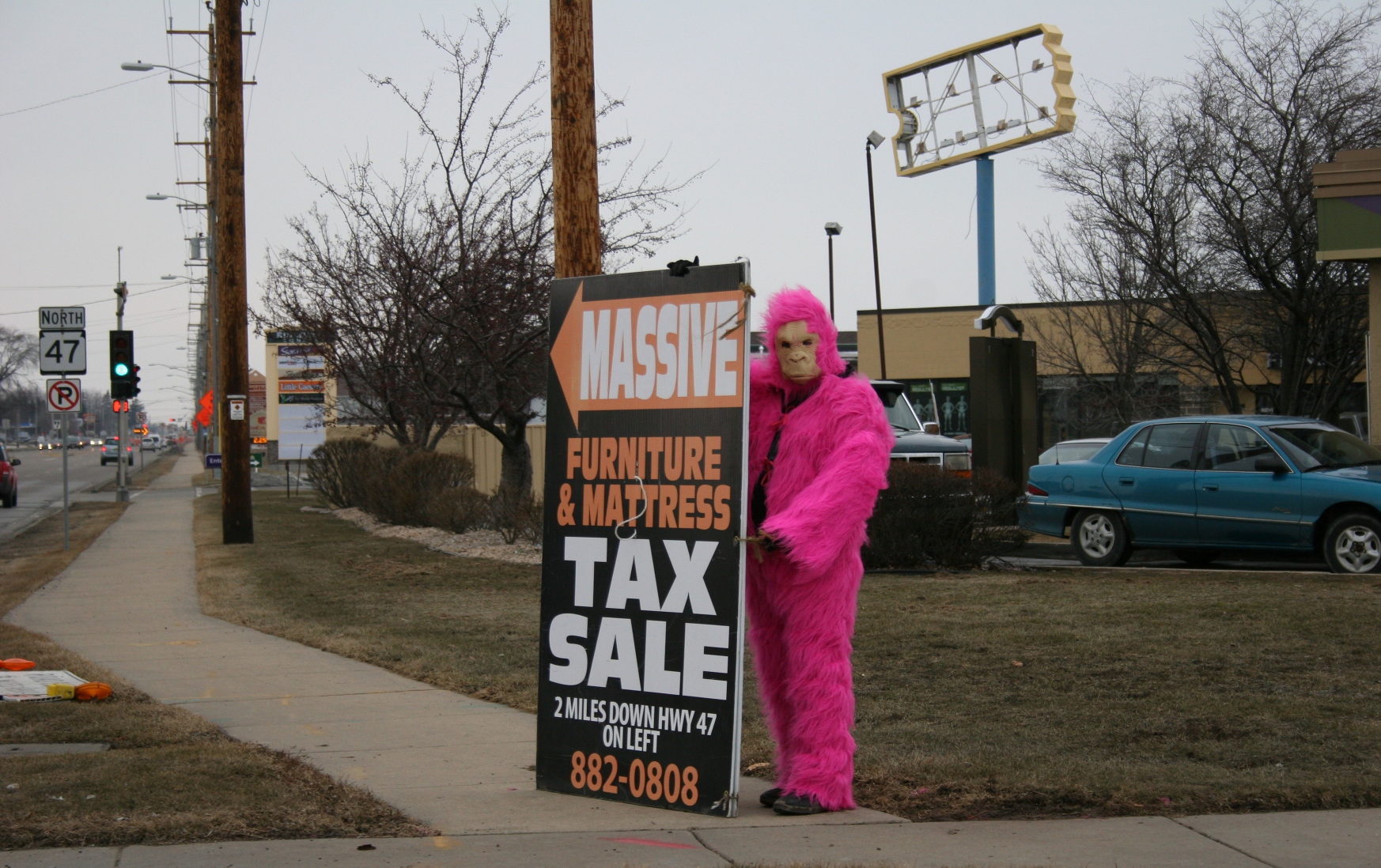
FORGET BILLBOARDS to push furniture and mattresses in Appleton, Wisconsin.

Pink gorilla in Appleton, side view

Instead, try guerrilla gorilla marketing.

Pink gorilla in Appleton, front view

Hire someone to dress in a hot pink gorilla costume. Station the ape at the corner of a crazy busy intersection (Northland Avenue and North 47) and you’re good to go.

Tell me, does this type of gimmick really work?

Copyright 2014 Audrey Kletscher Helbling


Antiquing in Wisconsin: Mixing machining & merchandising in Redgranite December 2, 2013

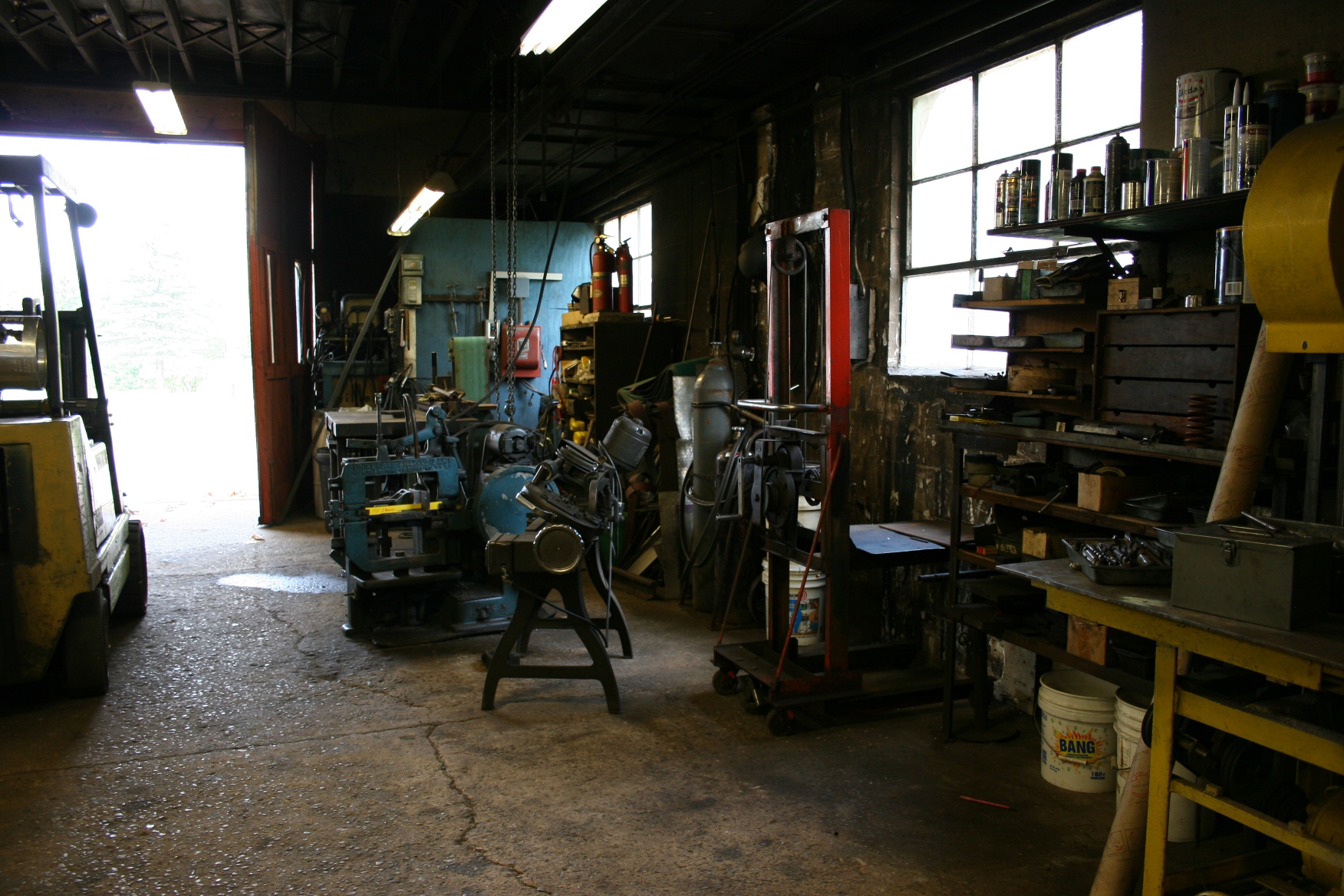
I RECOGNIZE THE SMELL. Grease and oil and dirt mingled. The odor hangs heavy inside Mike Schwochert’s machine shop along State Highway 21 in Redgranite, Wisconsin.

Inside Old Time Machine Inc.

Inside Old Time Machine Inc.

The shop smells of history and hard labor and of hours standing upon this cracked cement floor spotted with oil stains.

This place reminds me of the work my husband does as an automotive machinist, although Mike pursues a different type of machining, producing machined parts. He does drilling, boring, tapping, milling, tool and die production, welding and fabrication, and more.

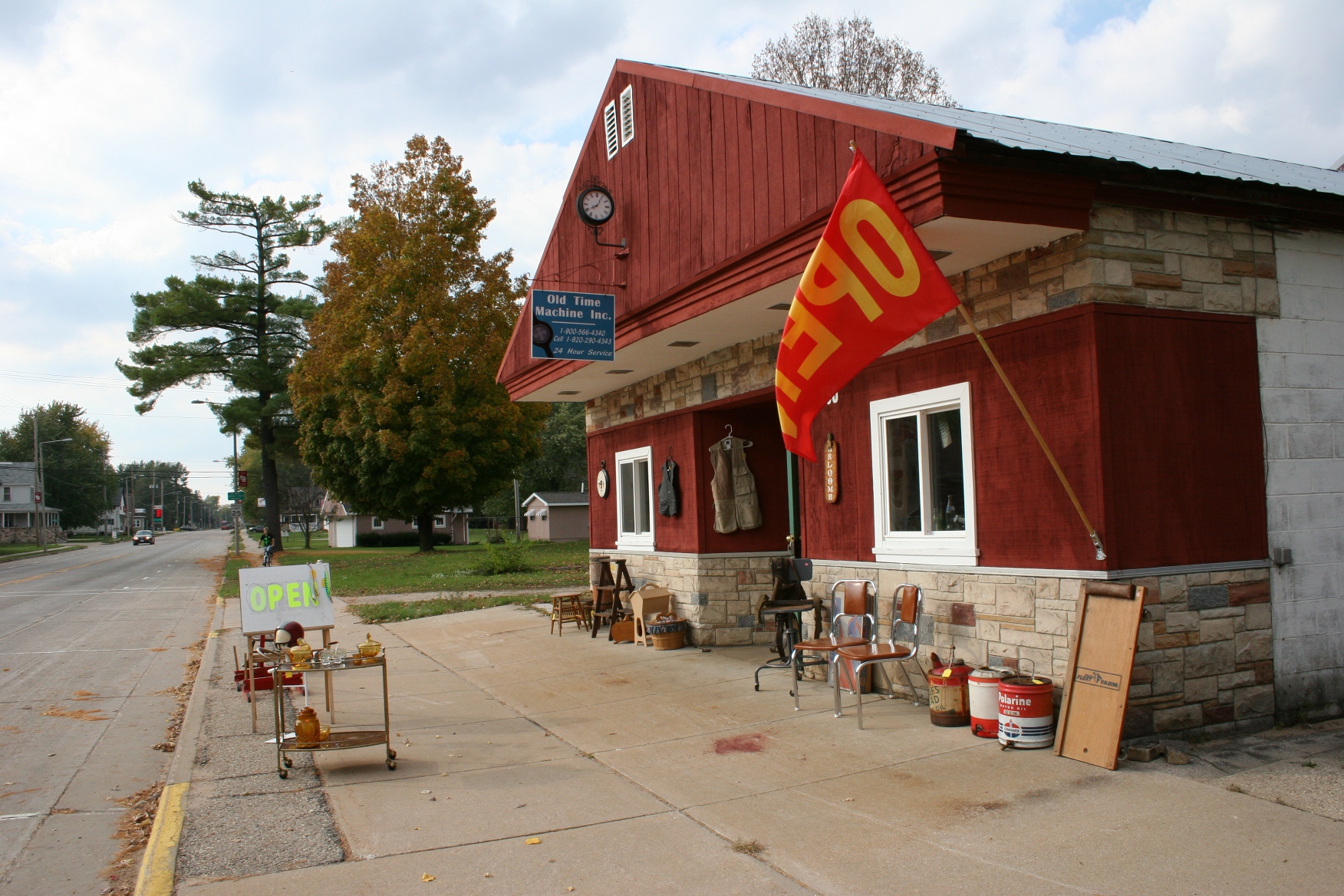
The setting that drew me into the machine and antique shop scene.

The setting that drew me into the machine and antique shop scene.

It is the name of Mike’s business—Old Time Machine Inc—and the neon marker OPEN sign and the hodgepodge of furniture, glassware, gas cans and other items displayed outside the building that initially draw Randy and me here on a Friday afternoon in mid-October en route to Appleton to visit our daughter.

We backtrack, turn off the highway and skirt the backs of downtown Redgranite businesses to reach Old Time Machine because we’ve driven past it. Highway 21 is a crazy busy route through central Wisconsin, meaning it’s safer to do a turn-around rather than slam on the brakes.

Another view of Mike's machine shop.

Another view of Mike’s machine shop.

Inside this building, constructed in 1953, we meet Mike, the kind of guy who, just looking at him, you know will greet you with a welcoming warmth and friendliness that shows in his face, in his smile. It’s no surprise that he promises “excellence and precision in every job,” offers 24-hour emergency repair and works a second job in Appleton.

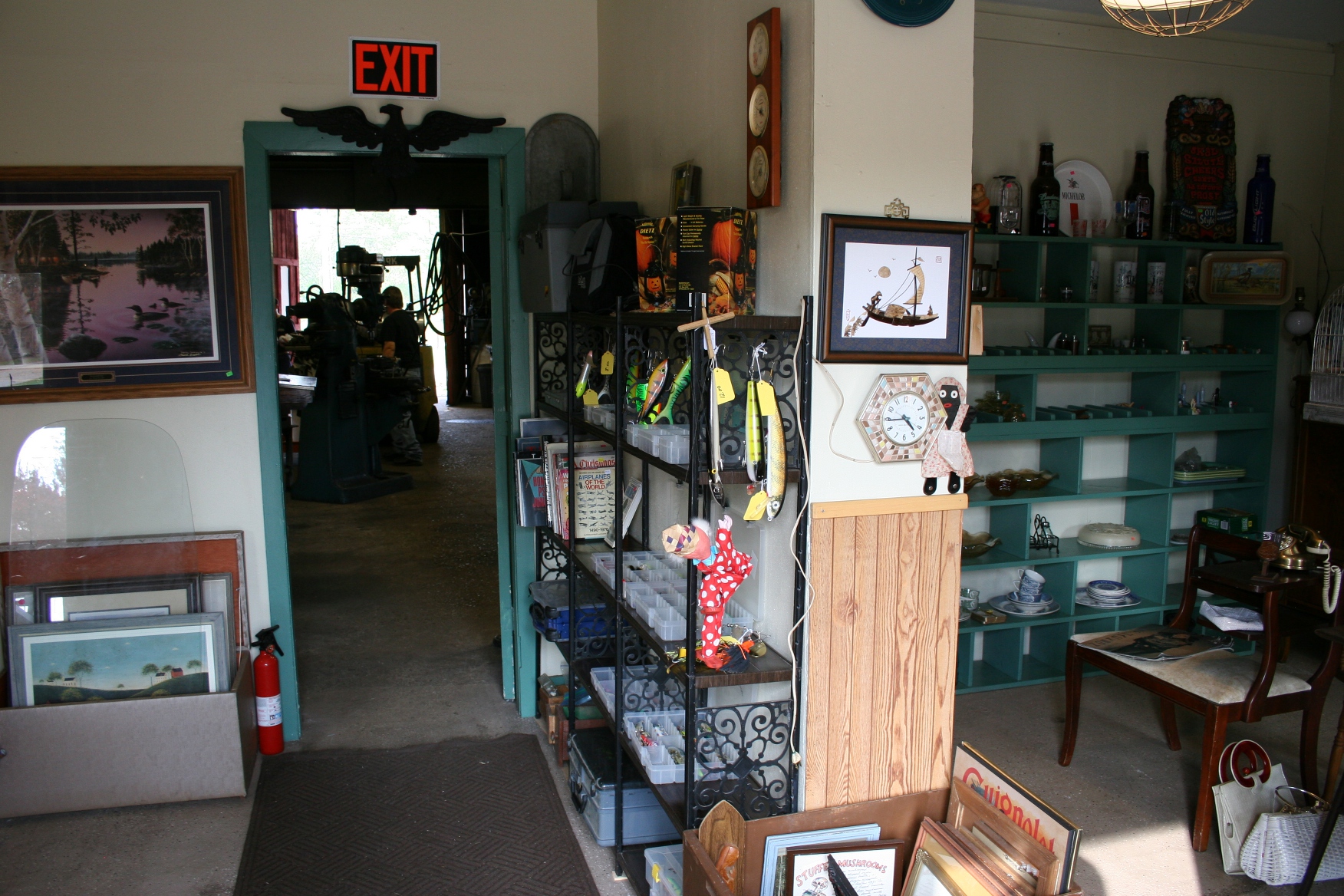
Madre's Antiques is in the front of the building and Mike's machine shop through the doorway into the larger back space.

Madre’s Antiques is in the front of the building and Mike’s machine shop (that’s Mike back there working) through the doorway into the larger back space.

And you might add third. On this afternoon, Mike is also manning Madre’s Antiques, his wife Christina Tsacudakis’ shop. She took over the former office, a small area at the front of the building that now holds an array of antiques and vintage collectibles.

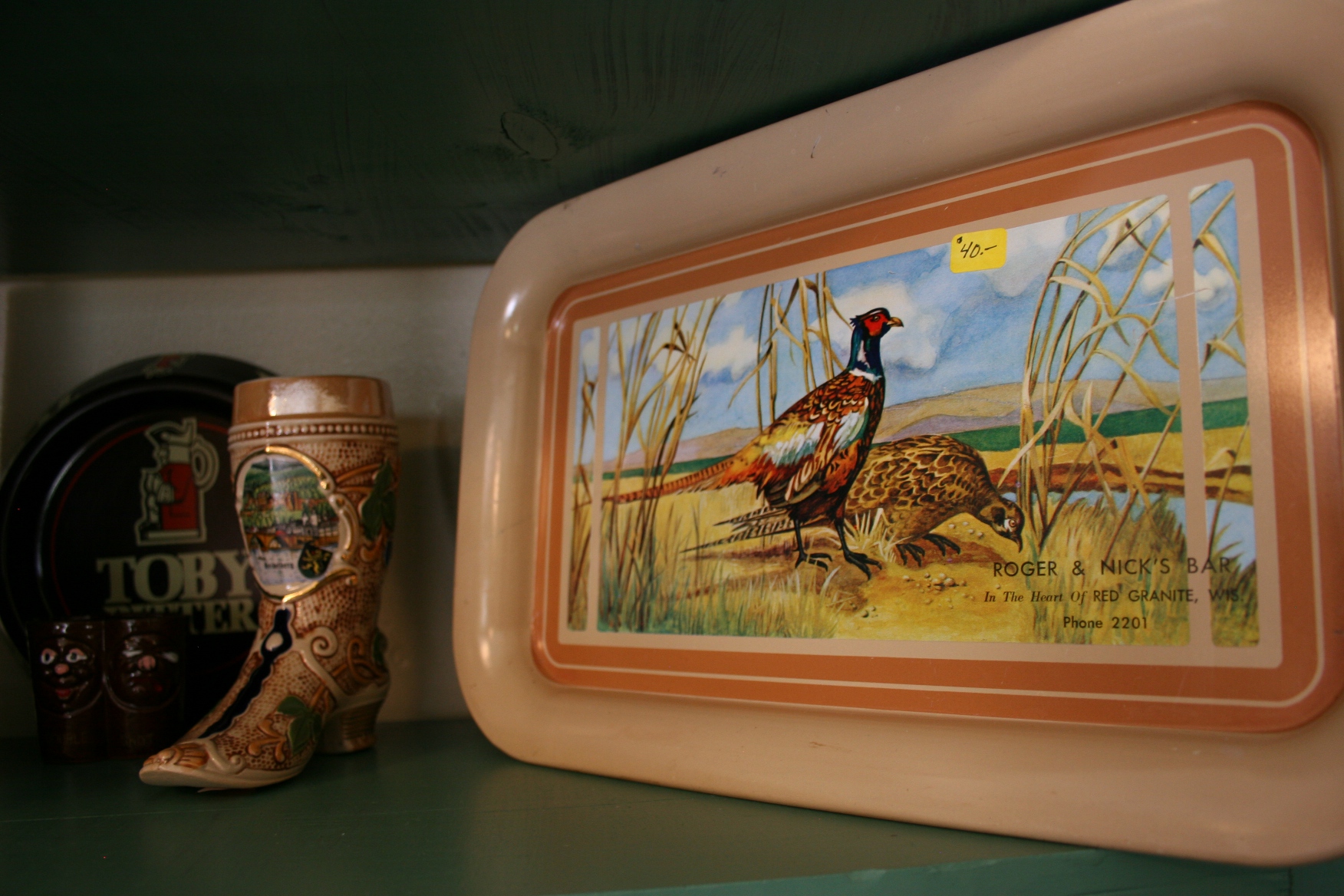
A local collectible is among the offerings.

A Redgranite collectible is among the offerings.

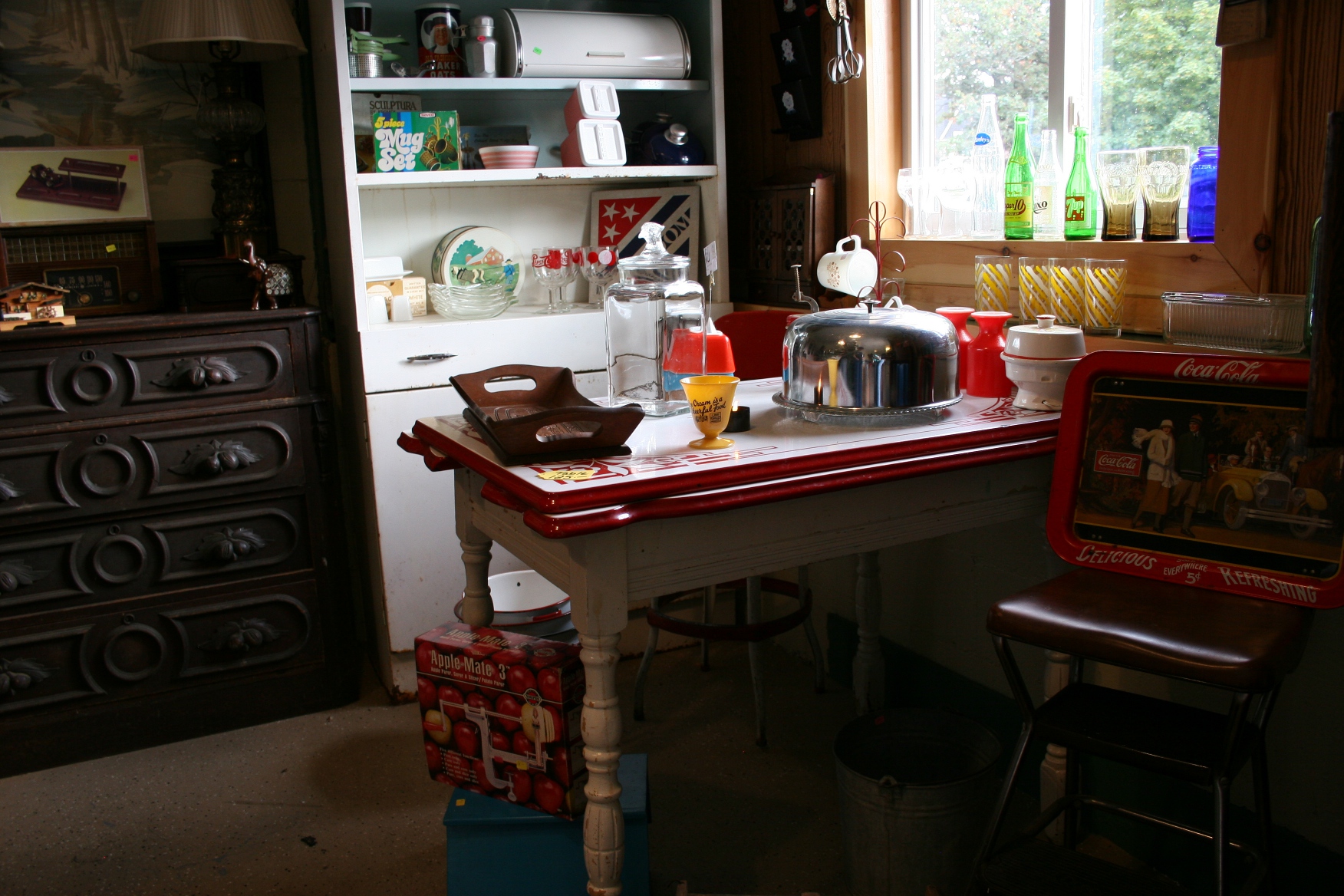
I find plenty here that interests me such as vintage drinking glasses, a pheasant tray collectible my middle brother would appreciate and a gorgeous red and white enamel kitchen table.

In the white cupboard behind the table sits the small striped Pyrex bowl I purchased.

In the white cupboard behind the table the small striped Pyrex bowl I purchased sits on the second shelf.

I need none of these, But I scoop up a small unpriced striped Pyrex mixing bowl because, well, I collect and use old bowls.

When I ask Mike the price, he admits that he sometimes gets in trouble for underselling his wife’s unmarked merchandise. I buy the bowl for $2. I expect he will be reprimanded.

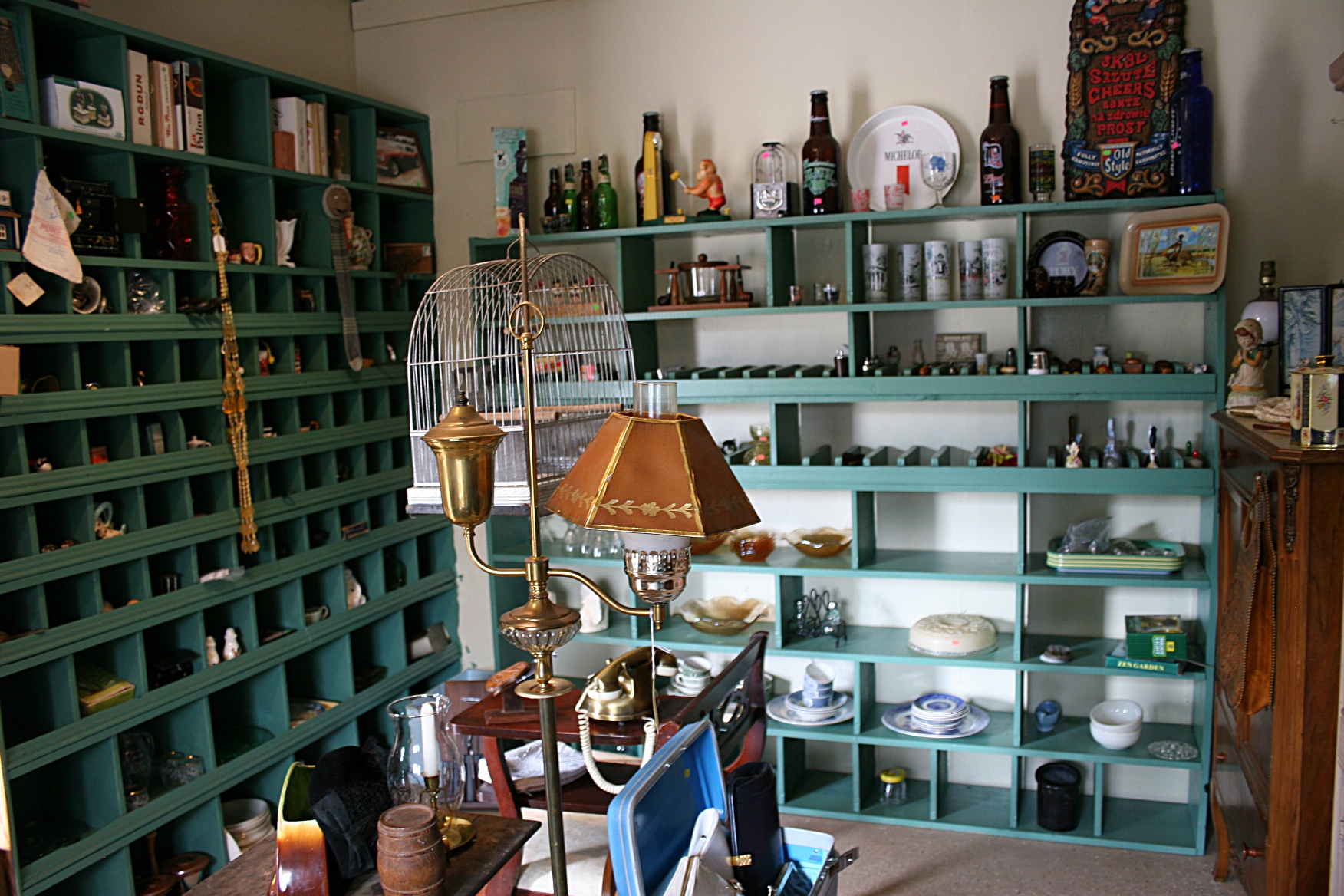
The fabulous reclaimed parts bins now hold antiques and collectibles.

The fabulous reclaimed parts bin, left, from the machine shop now holds antiques and collectibles.

It’s a charming spot, this cozy antiques store with a back shop parts cubby emptied, cleaned, repainted aqua marine and repurposed to hold merchandise. Small treasures tucked inside multi-sized cubes. Perfectly fitting for this place.

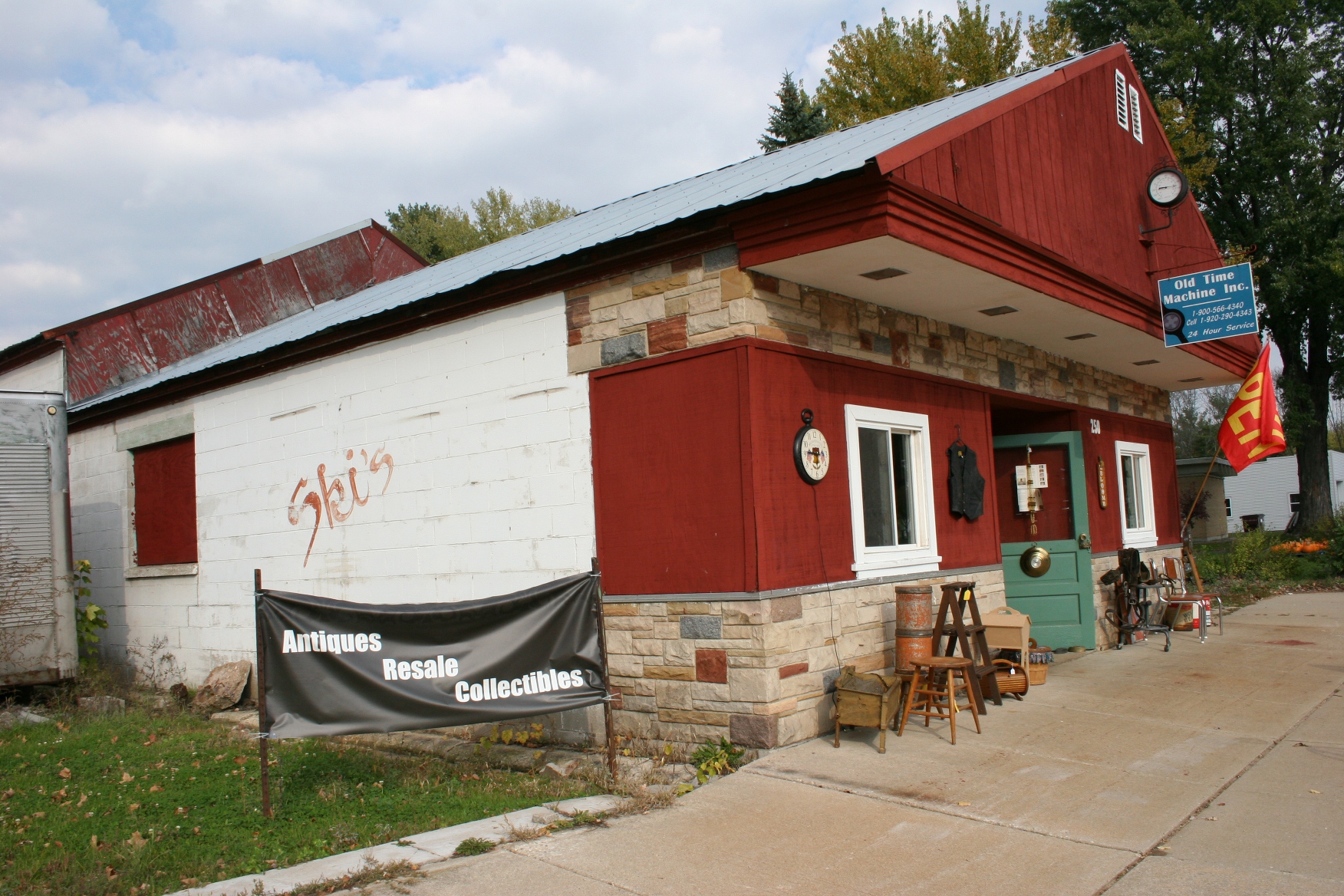
My first view of the shop as we approached from the west.

My first view of the shop, 250 W. Bannerman Ave., as we approached from the west.

Unlike many antique shops, I don’t feel overwhelmed here, but rather at home. Comfortable with the limited offerings, the lingering odors of oil and grease and grime, and the sense of small town history that prevails in this long-time machine shop, purchased in recent years by Mike.

© Copyright 2013 Audrey Kletscher Helbling
 

An essay of barn photos & memories November 25, 2013

Filed under: Uncategorized — Audrey Kletscher Helbling @ 6:00 AM
Tags: , , , , , , , ,
Near Poy Sippi, Wisconsin.

Near Poy Sippi, Wisconsin.

MY FONDNESS FOR BARNS, for photographing them, never wanes.
Along Wisconsin State Highway 21.
Along Wisconsin State Highway 21.
When I fit my eye to the viewfinder, swing my camera lens toward a barn and click, it’s as if I’m clicking my heels together and flying into my past.

Also along Wisconsin Highway 21.

Also along Wisconsin Highway 21.

I am trudging down the barn aisle, leaning into the wheelbarrow heaped with ground corn. I am scooping that feed by the shovelful to top silage pitched from the silo and parceled before the Holsteins’ empty stanchions.

Near Poy Sippi, Wisconsin.

Near Poy Sippi, Wisconsin.

Later, as milk pulsates into milking machines and Dad has poured the milk into a tall thin pail, I am lugging the precious liquid to the milkhouse, handle biting into my chore-gloved hand.

Another farm near Poy Sippi.

Another farm near Poy Sippi.

Memories come into focus—the golden booming radio voices from ‘CCO, the slap of a cow’s tail, hot urine splattering into gutters, cats swarming around a battered hubcap, the stench of manure, taut twine snapped with my yellow jackknife and prickly alfalfa itching my exposed wrists.

An old-fashioned farm along Wisconsin Highway 21.

An old-fashioned farm along Wisconsin Highway 21.

But, mostly, I see my farmer dad in those barns I photograph.

© Copyright 2013 Audrey Kletscher Helbling