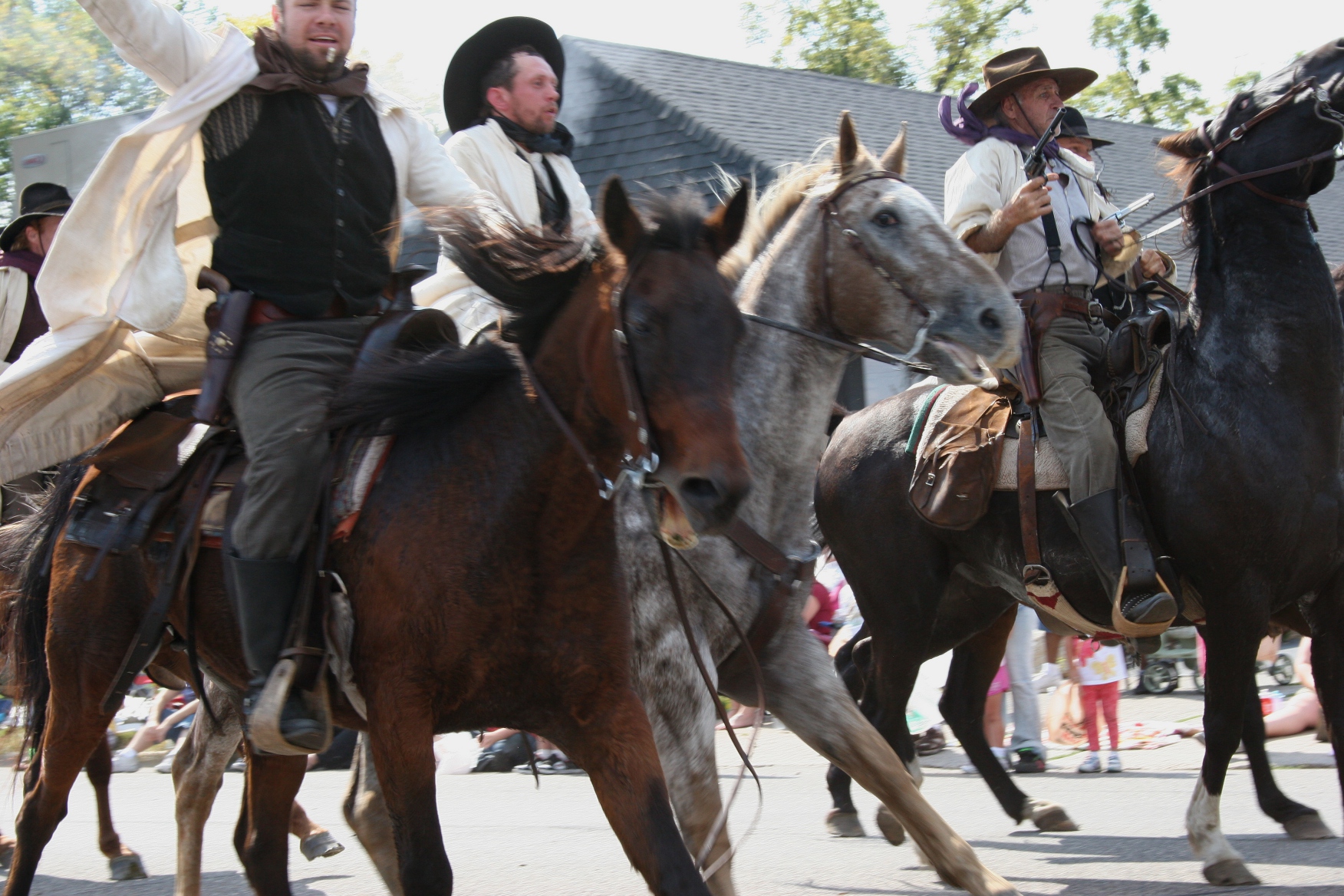
The James-Younger Gang shooting it out during a past Defeat of Jesse James Days parade. (Minnesota Prairie Roots copyrighted file photo)
NORTHFIELD, MINNESOTA is best-known as the community that, on September 7, 1876, thwarted plans by the James-Younger Gang to rob the First National Bank. Townspeople stood their ground against the outlaws, ending in the deaths of the acting bank cashier, a Swedish immigrant and two of the robbers before the gang fled. Northfield marks the failed bank robbery each September with a Defeat of Jesse James Days celebration. That draws 100,000-plus to this city of some 21,000.
Books I’ve purchased at a used book sale, not in Northfield, but in Faribault. (Minnesota Prairie Roots copyrighted file photo)
This week the masses will once again descend on this riverside college town, not for a historical occasion, but rather for one of Minnesota’s biggest used book sales, the Great Northfield Minnesota Book Fair. Certainly, crowds will not swell to levels gathered for the historical event in September. But they will be large, as I can attest from shopping past book fairs, although not recently.
The sale, sponsored by the Northfield Hospital Auxiliary, features an estimated 70,000 donated books, musical recordings, games and puzzles filling tables inside the Northfield Ice Arena. The goal is to raise $100,000 “to enhance healthcare in the Northfield Area.” That means funding special projects at the local hospital and clinics, supporting local health organizations and offering health education scholarships. The book fair began in 1961 and in 2018 hit $1 million in total sales.
Doors for this year’s sale open at 5 p.m. Tuesday, April 22, closing for the day at 9 p.m.. The fair continues until Saturday, April 26, with the following hours: 9 a.m.-9 p.m. Wednesday-Friday and from 8 a.m.-3 p.m. Saturday. Friday is half-price day. Saturday is $5 bag day until 12:30 p.m. From 1-3 p.m. Saturday everything is free. Yes, free.
Puzzles will also be sold at the Book Fair in Northfield. (Minnesota Prairie Roots copyrighted file photo)
Shopping this book fair almost leaves you feeling like you’re robbing the bank given the reasonable prices. Base prices for paperbacks are $1 and for hardcovers, $2, according to the Book Fair website. Of course, some are priced higher depending on rarity or newness. Musical offerings will cost a few bucks. Puzzles and games are priced around $5.
I’ve never shopped the first, or even the second or third, day of the sale. I suppose I’ve missed out by waiting, especially when looking for children’s books. But, hey, with a starting inventory of 70,000, it takes a while for the supply to diminish. There’s still plenty for people to haul out (and they do, by the wagon and box loads) during Saturday’s two-hour freebie close-out.
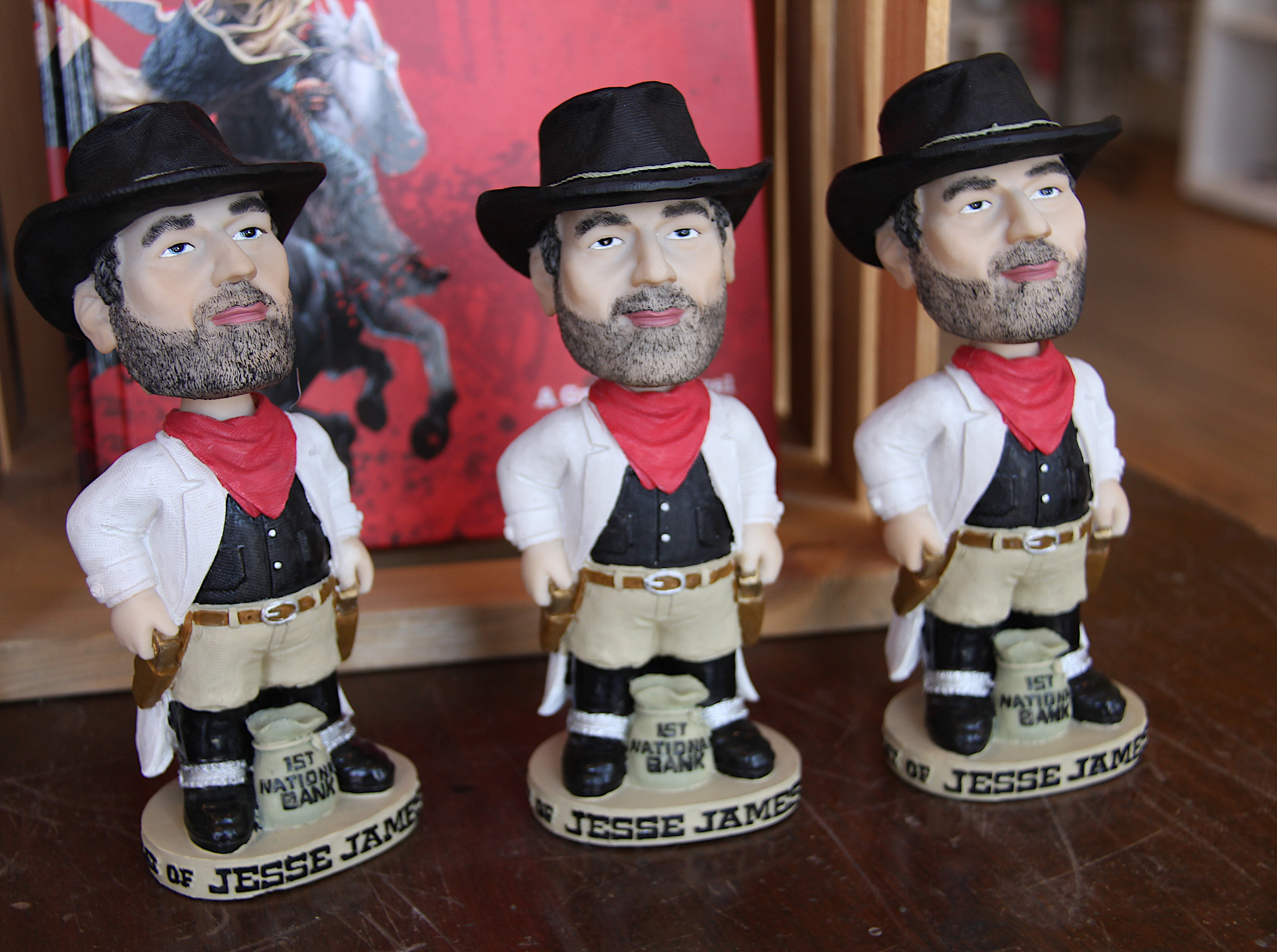
Defeat of Jesse James Days bobbleheads for sale at the Northfield History Center. (Minnesota Prairie Roots copyrighted photo April 2025)
Some 300 volunteers sort through donations, set up and run the sale in the sprawling ice arena with books separated into more than two dozen categories. The organization and efficiency are truly something to behold. The sheer size of this book fair is overwhelming. But then again, Northfield is a city that values books, knowledge and learning, as evidenced by its two liberal arts colleges, an independent bookstore, an engaged public library and an active writing community, especially of poets. That Northfield hosts one of Minnesota’s biggest book fairs should come as no surprise. This is a community which embraces books, and stands up to bank robbers.
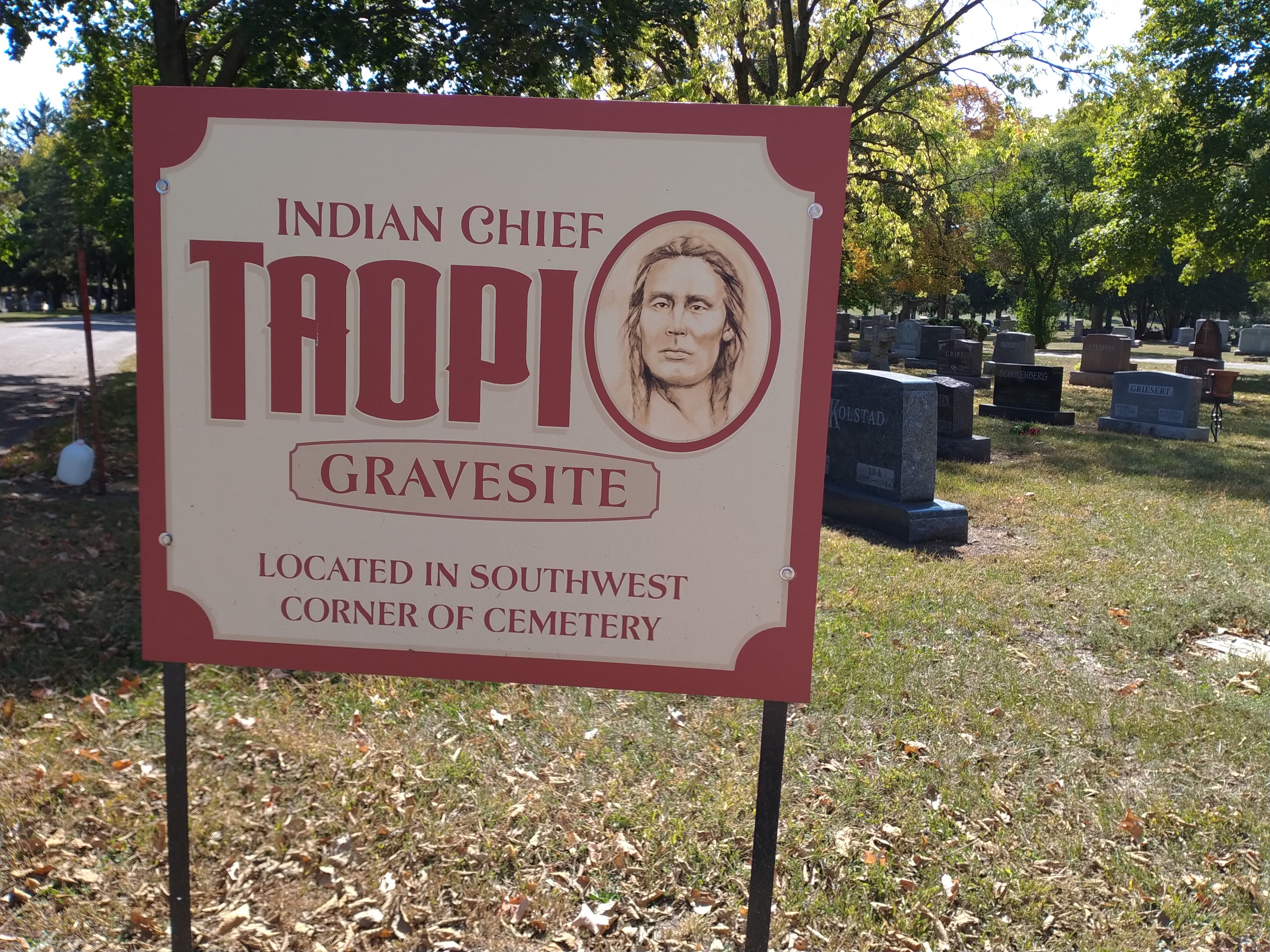
Prominent signage at Maple Lawn Cemetery directs visitors to the gravesite of Chief Taopi, “Wounded Man.” He was wounded in a battle with the Ojibwe. (Minnesota Prairie Roots copyrighted file photo)
HE FOUND HIMSELF AT ODDS with his own people. A “Farmer Indian” among “Blanket Indians.” A peace promoter among those who favored war. He was Chief Taopi, a member of the Little Crow Band of the Mdewakanton Dakota. He’s buried in Faribault, at Maple Lawn Cemetery.
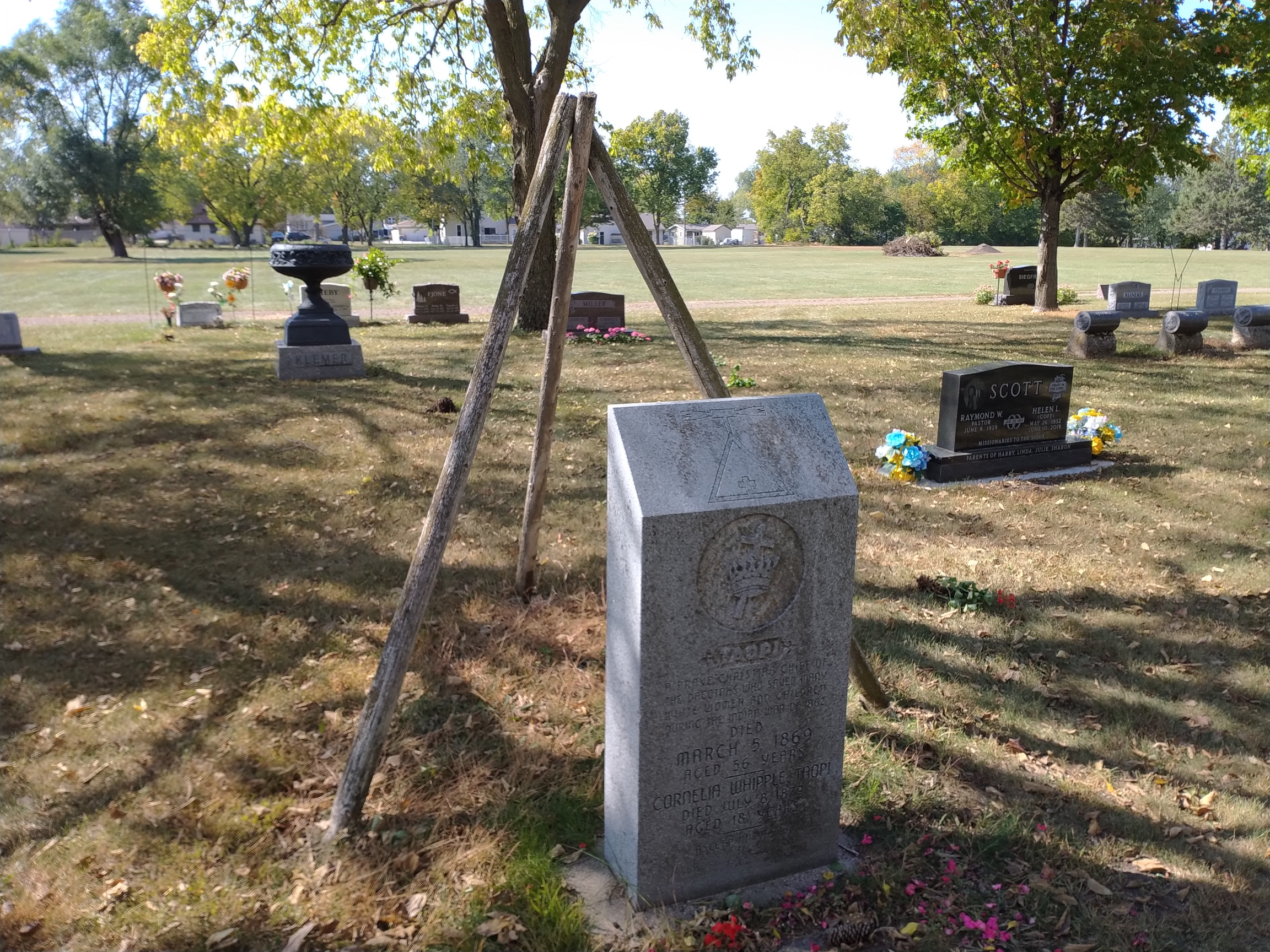
A tipi formation easily identifies the burial site of Taopi and his daughter, Cornelia Whipple Taopi. She died at age 18. He died at 56. (Minnesota Prairie Roots copyrighted file photo)
Recently, I attended a presentation about Taopi by Rice County Historical Society Executive Director Dave Nichols. It’s not the first time I’ve listened to local talks on the history of Native Americans in Minnesota, focused on those who called Faribault home. Each time I learn something new.
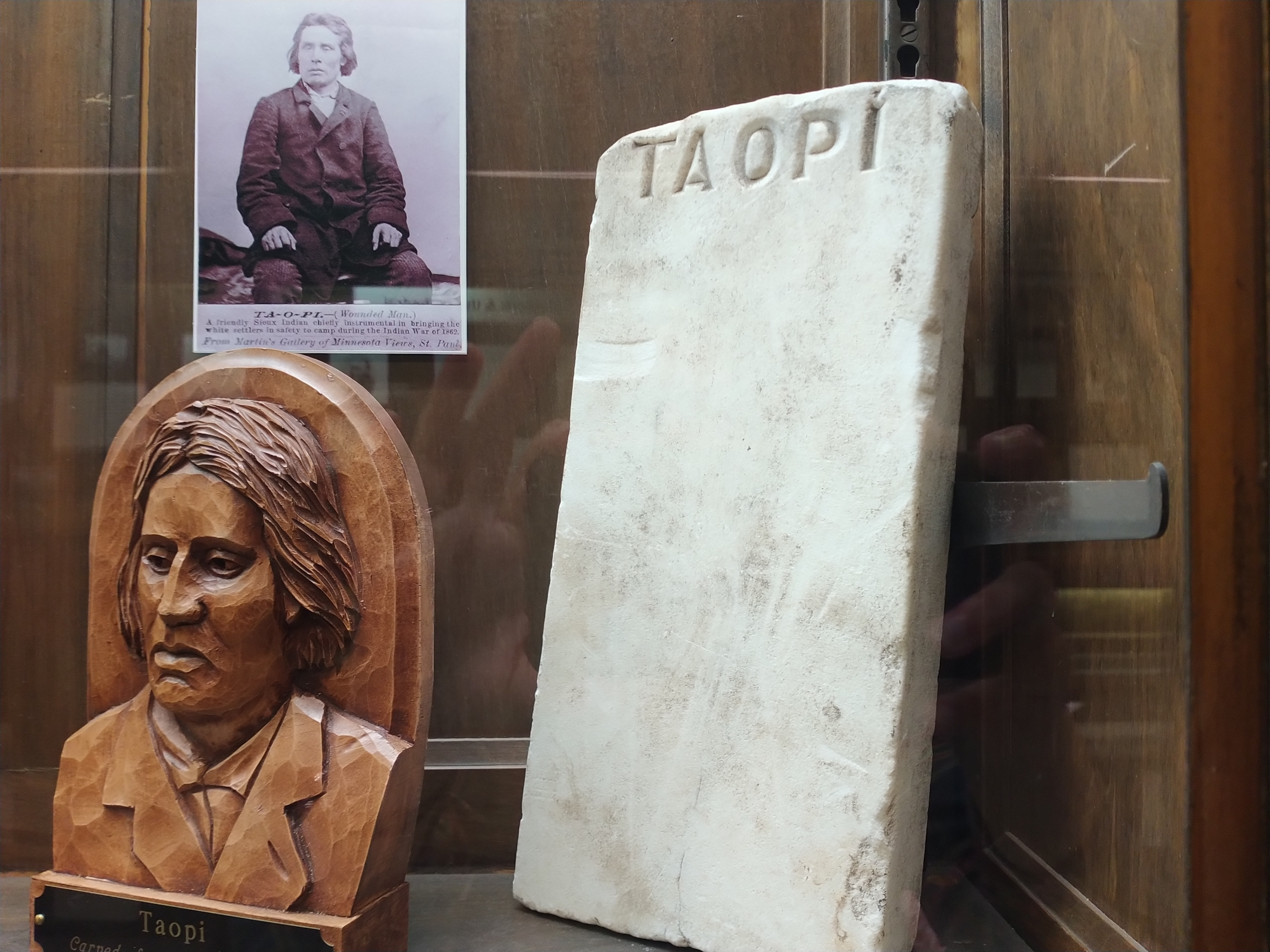
A Taopi exhibit at the Rice County Historical Society. The carving (by Ivan Whillock) and photo show Taopi with short hair as a “Farmer Indian.” (Minnesota Prairie Roots copyrighted file photo)
During his talk, Nichols called Taopi “a poster child for what an assimilated Dakota looks like.” And he didn’t mean that in a negative way. “You either assimilated or you would be destroyed,” Nichols said, qualifying that he wasn’t saying assimilation was right. Understood.
As settlers moved into Minnesota, pushing onto Native lands, the Dakota found themselves facing many challenges. Some, like Taopi, gave up their culture and adopted European ways, believing that was the only way to survive. That included learning to farm as the White man farmed. Taopi was considered the leader of the “Farmer Indians,” a term assigned during the U.S. Census. Dakota who continued in traditional cultural ways were labeled “Blanket Indians.”
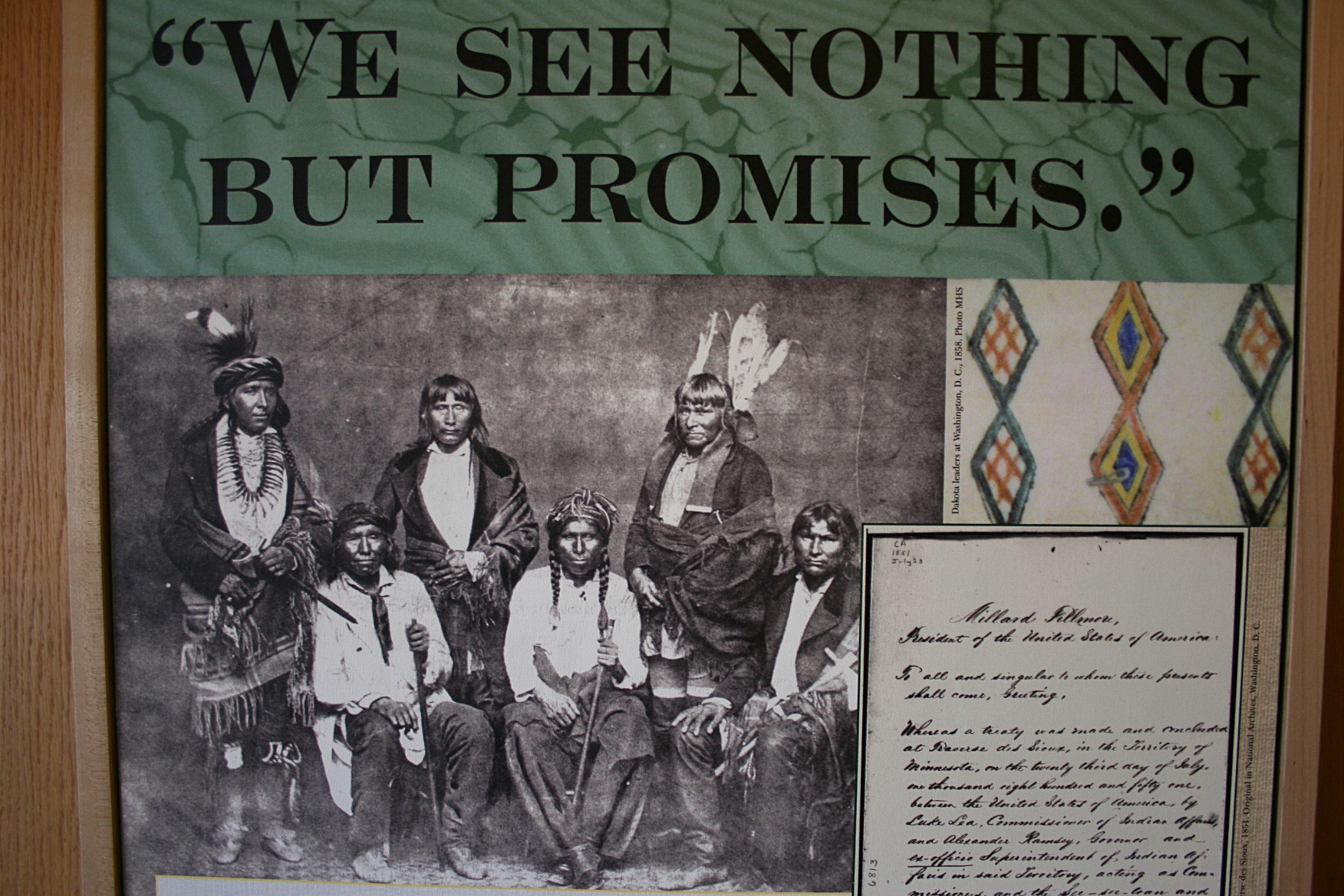
A photo panel at the Traverse des Sioux Treaty Center in St. Peter shows Dakota leaders photographed in Washington D.C. in 1858. The photo is from the Minnesota Historical Society. The war followed broken treaties. (Minnesota Prairie Roots copyrighted file photo)
Taopi farmed and established a school and mission, Hazelwood Republic, with chiefs Wabasha and Good Thunder on the Lower Sioux Reservation along the Minnesota River in southwestern Minnesota, Nichols shared. Because I grew up in that region, I’ve always been particularly interested in the Indigenous Peoples who were original inhabitants of the land, including Redwood and Brown counties. The region became the epicenter of the U.S.-Dakota War of 1862, which centered around issues of land, hunger and broken promises.
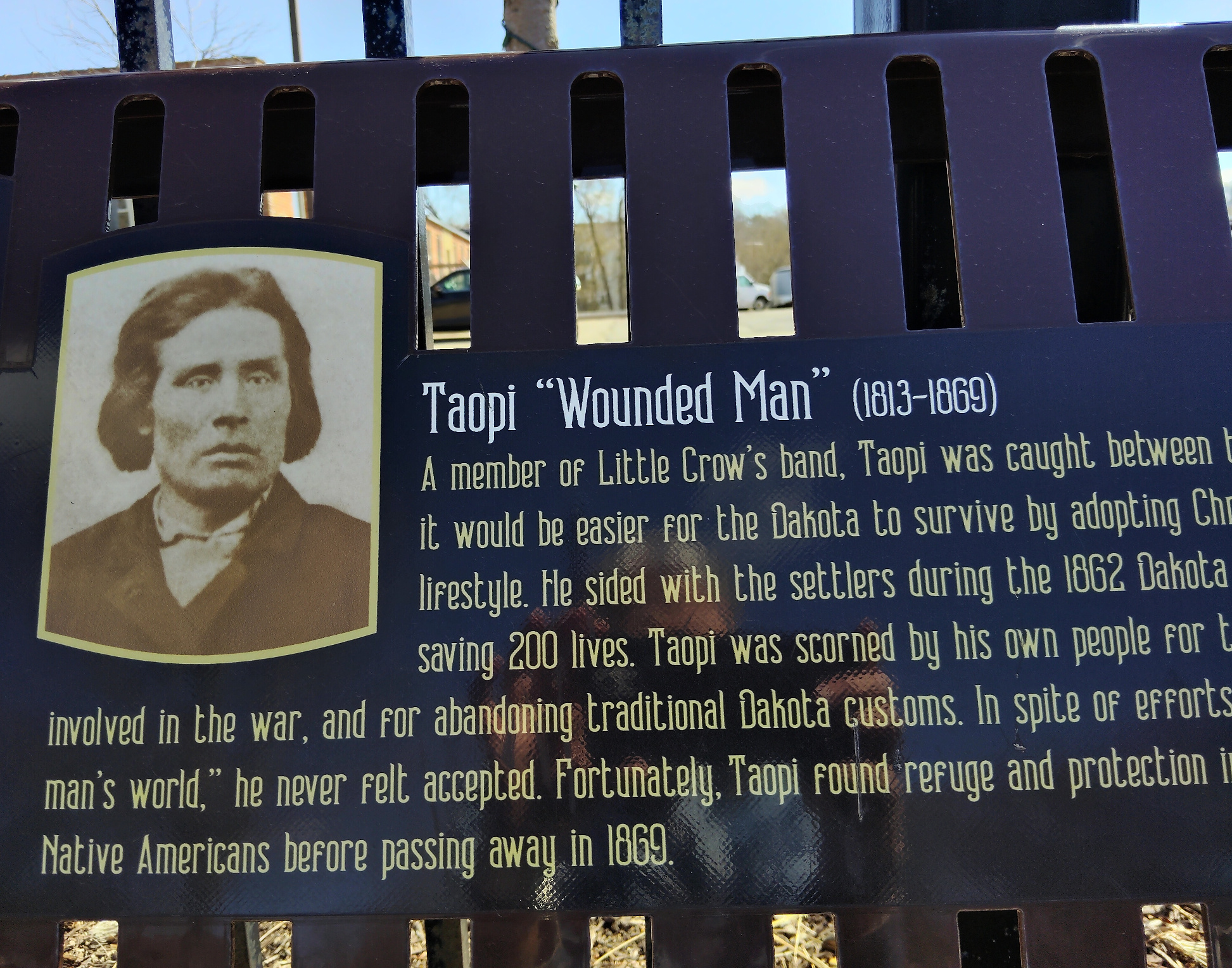
An historic-themed bench on the corner of Central Avenue and Sixth Street in Faribault highlights Taopi. (Minnesota Prairie Roots copyrighted photo April 2025)
That war facilitated the banishment of most Native Americans from Minnesota. If Taopi and other Dakota would have had their way, that war may not have happened. He led the Peace Party opposed to war, while his cousin, Little Crow, led the War Party, Nichols said. Taopi protected White settlers during the short war which claimed countless lives on both sides.
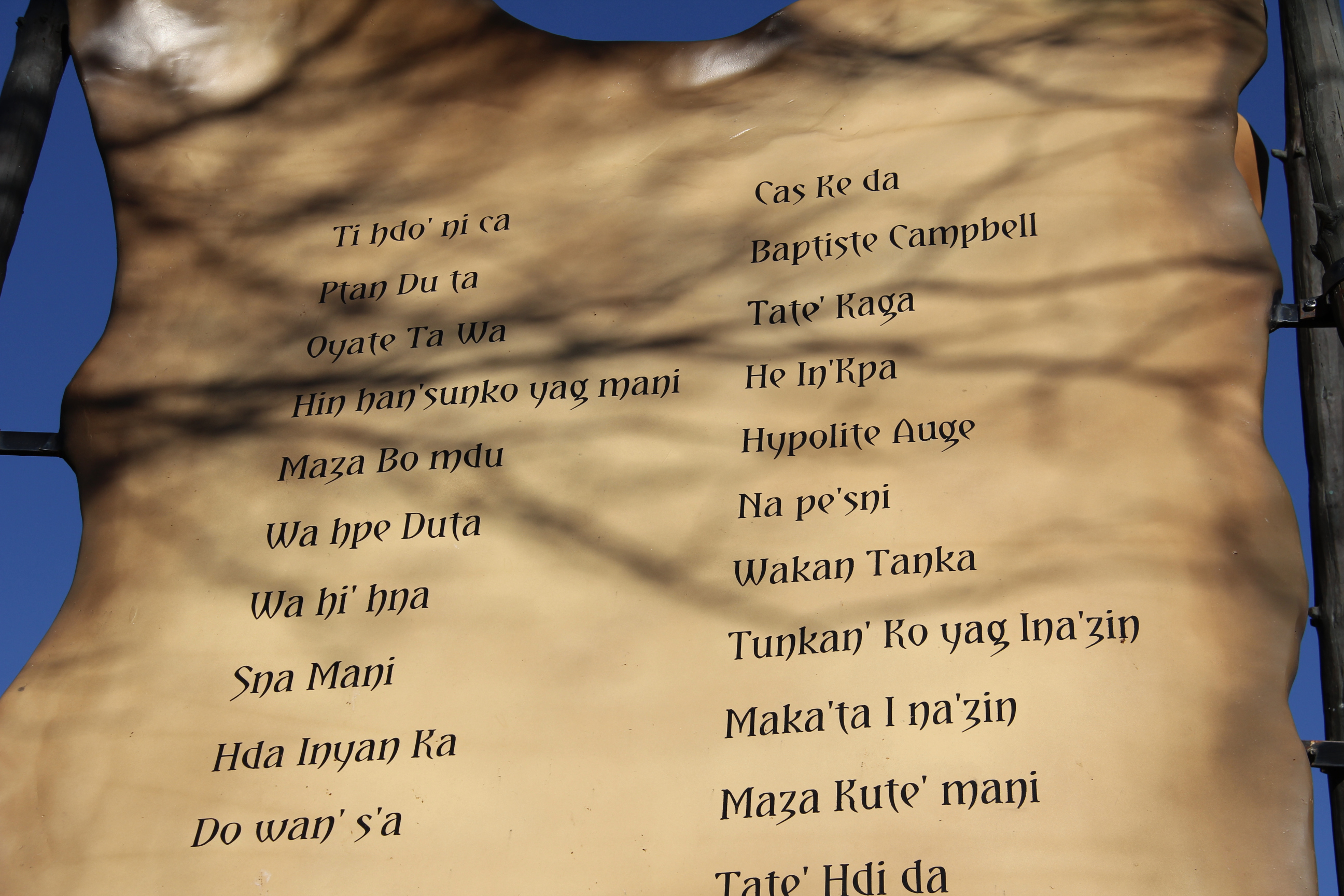
The names of the Dakota who were hung are listed at Reconciliation Park in Mankato. (Minnesota Prairie Roots copyrighted file photo)
Post-war, though, it mattered not to the U.S. government whether you were a Dakota person who opposed the war or who engaged in war, according to Nichols. All were considered guilty, imprisoned and eventually exiled from Minnesota (although not the Mdewakanton). Thirty-eight Dakota men were hung on December 26, 1862, in Mankato (40 miles from my community) during the largest mass execution ever in the U.S. It’s truly a tragic event in Minnesota history. But what multiples the awfulness is that 1,600 Dakota prisoners were marched to Mankato to watch the hangings before being marched back to Fort Snelling. That was new information I had not previously heard and it troubles me greatly.
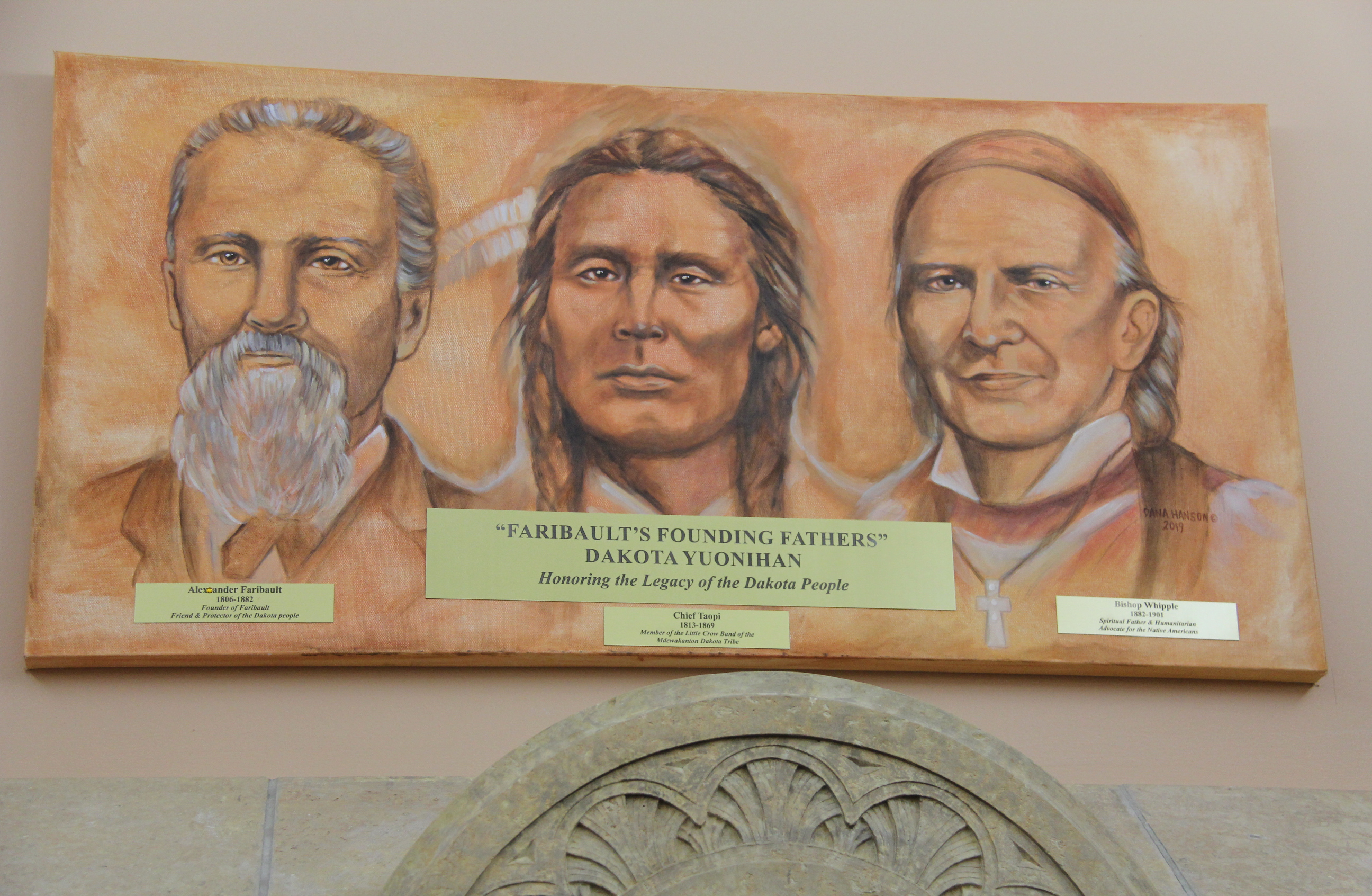
These portraits by Dana Hanson of Faribault’s Founding Fathers, Alexander Faribault (left to right), Taopi and Bishop Henry Whipple, hang in Buckham Memorial Library. (Minnesota Prairie Roots copyrighted file photo)
Taopi avoided prosecution and banishment, eventually landing in Faribault with 180 other Mdewakanton. About 80 were family members, according to Nichols. It was his friendship with Bishop Henry Whipple, who had long worked with and advocated for Native Peoples, that brought Taopi here. Town founder Alexander Faribault housed “the Peacefuls,” as the 180 were considered, on his land. They lived in tipis and lodges.
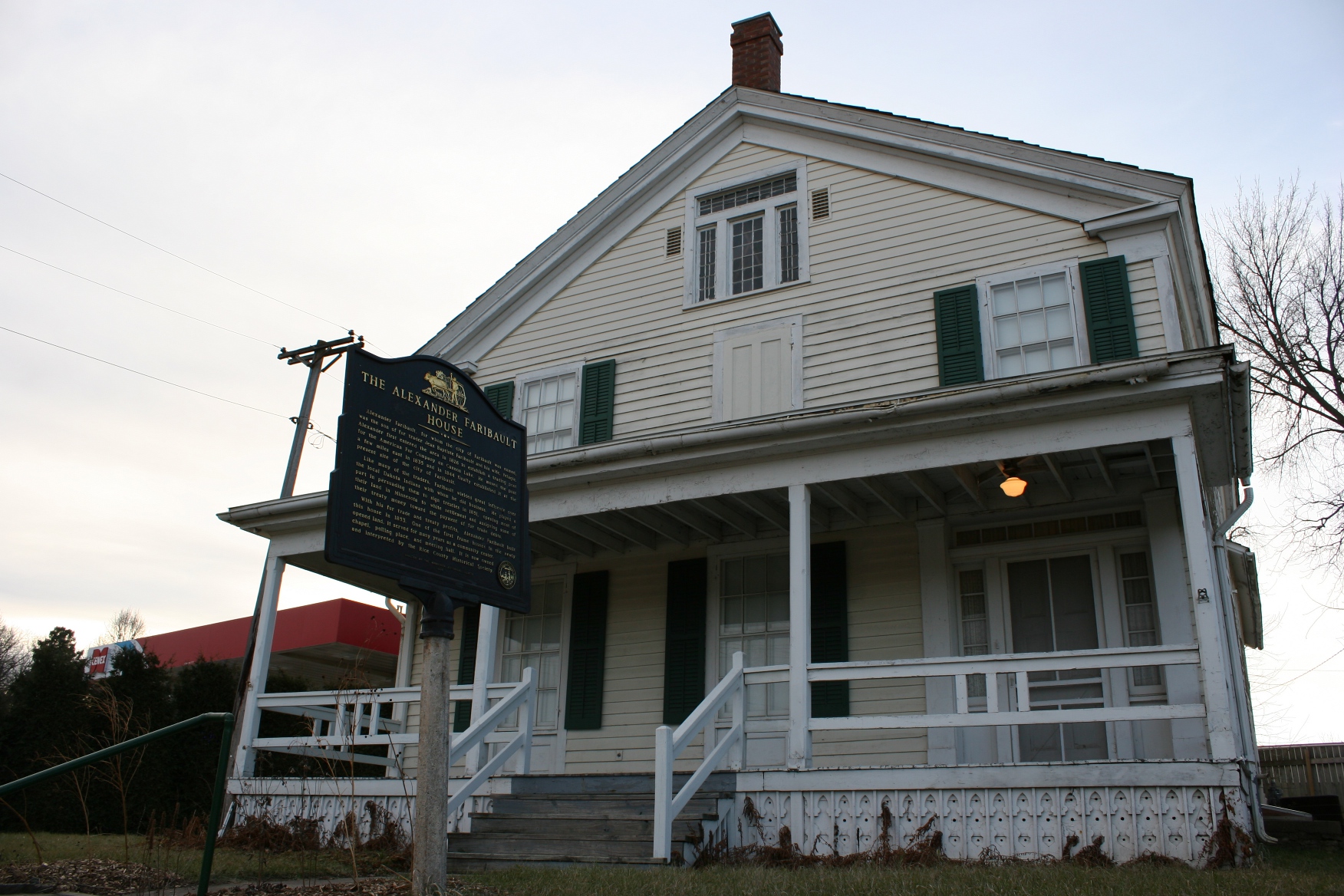
The home of fur trader and town founder Alexander Faribault. (Minnesota Prairie Roots copyrighted file photo 2017)
As you might rightly guess, not everyone in Faribault liked the Mdewakanton living among them. A wall was built in the area around Alexander Faribault’s house to protect them. Taopi became a community leader, said Nichols. As such he represented his people and mediated when necessary.
By the time of Taopi’s 1869 death, 90 of the 180 Mdewakanton who settled in Faribault had already left. But they left behind an imprint upon the land, not necessarily seen or appreciated even today. Yet, efforts are underway to change that with The Faribault Dakota Project. Nichols couldn’t speak specifically to that, only to say that local historian Jeff Jarvis has been working with the Dakota community on how to memorialize and honor the Indigenous Peoples of Faribault. That also includes the Wahpekute Dakota.
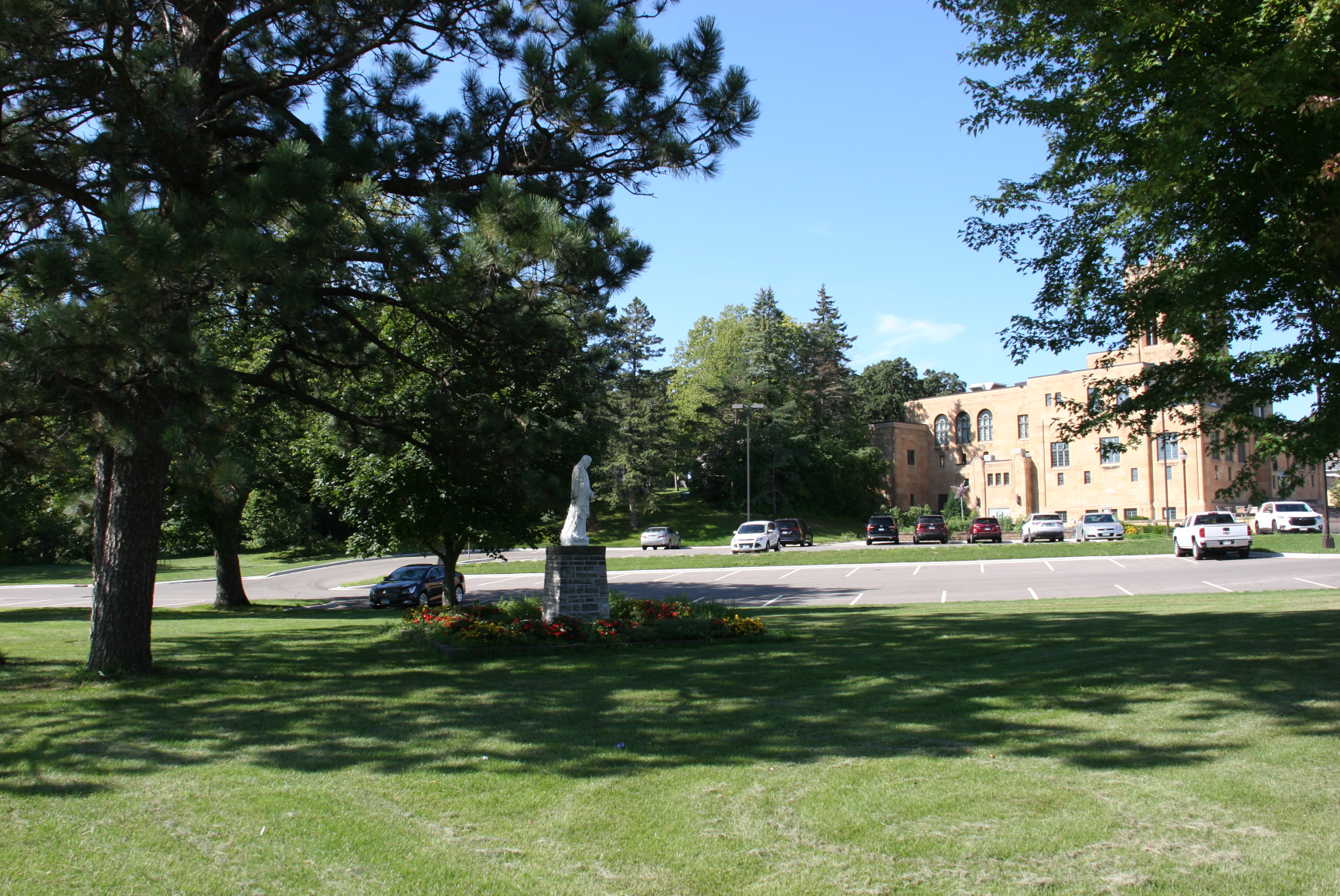
Peace Park, a protected Dakota burial site (but unmarked as such) next to the parking lot of Buckham Memorial Library. (Minnesota Prairie Roots copyrighted file photo)
Among the locales discussed by those attending Nichols’ talk was Peace Park, a triangle-shaped slice of property near Buckham Memorial Library. Alexander Faribault donated the land to the city with the stipulation that it never be developed. According to Nichols, the park is a protected burial site, where at least two Dakota are buried. Their bones were unintentionally uncovered in 1874 and then reburied. Today nothing marks that land as a cemetery. Rather a faith-based WWII monument stands in Peace Park. There is no reference to the Dakota. Perhaps some day this will be righted and the land publicly recognized as sacred ground. That is my hope as I continue to learn about the Dakota who once called Faribault home. I am grateful for every opportunity to grow my knowledge of them and their importance in local and state history.
#
FYI: Here are some suggested Dakota-connected places to visit in Faribault: the Rice County Historical Society Museum, Maple Lawn and Calvary cemeteries, the Cathedral of Our Merciful Saviour, a mural on the Central Park Bandshell and information on an historic-themed bench along Central Avenue.
Two fun facts:A small southeastern Minnesota town in Mower County near the Iowa border is called Taopi, named after the Mdewakanton Dakota chief. It suffered a devastating tornado in April 2022. The town celebrates its 150th birthday this year.
A woman attending Dave Nichols’ talk named her horse Taopi after Chief Taopi.
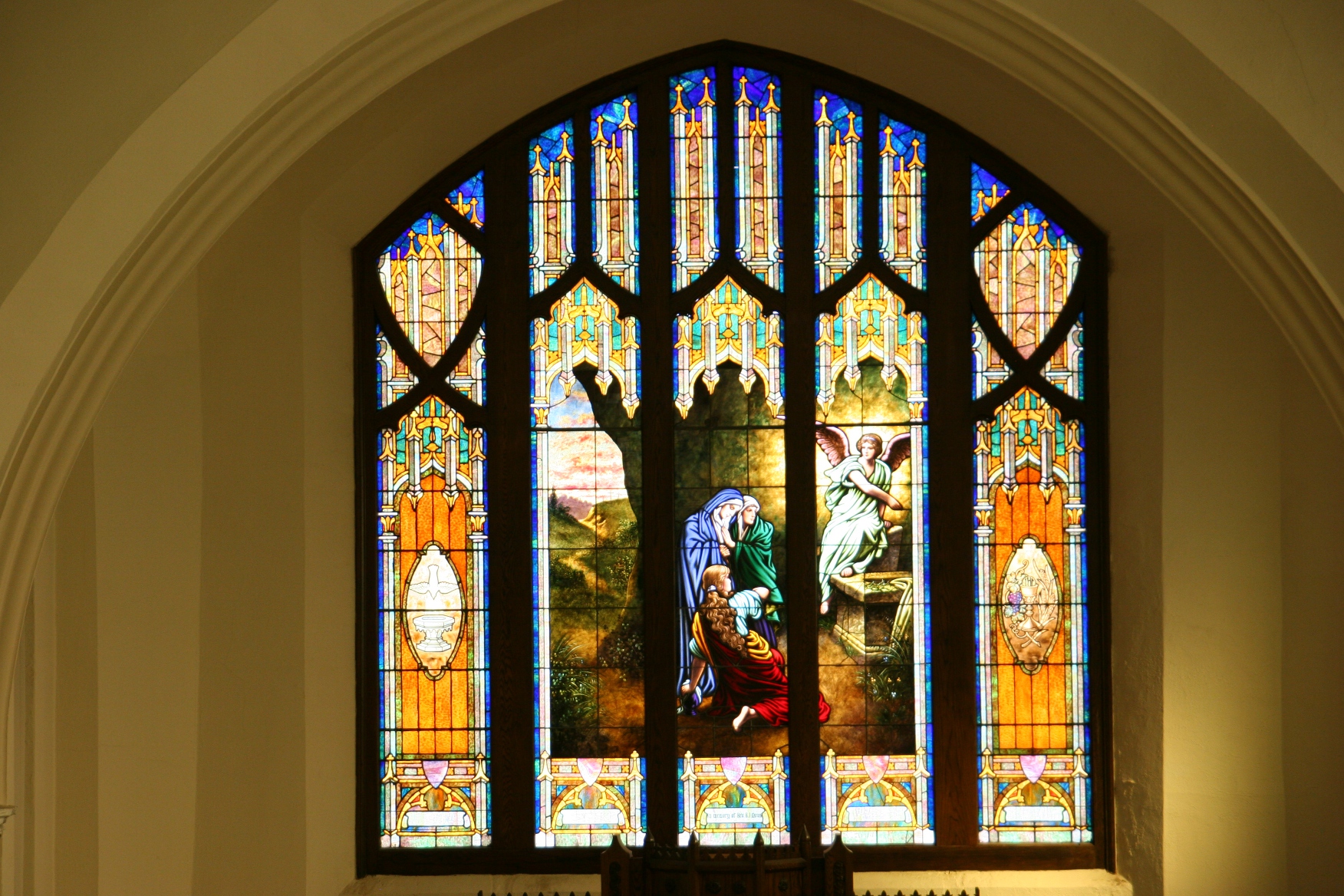
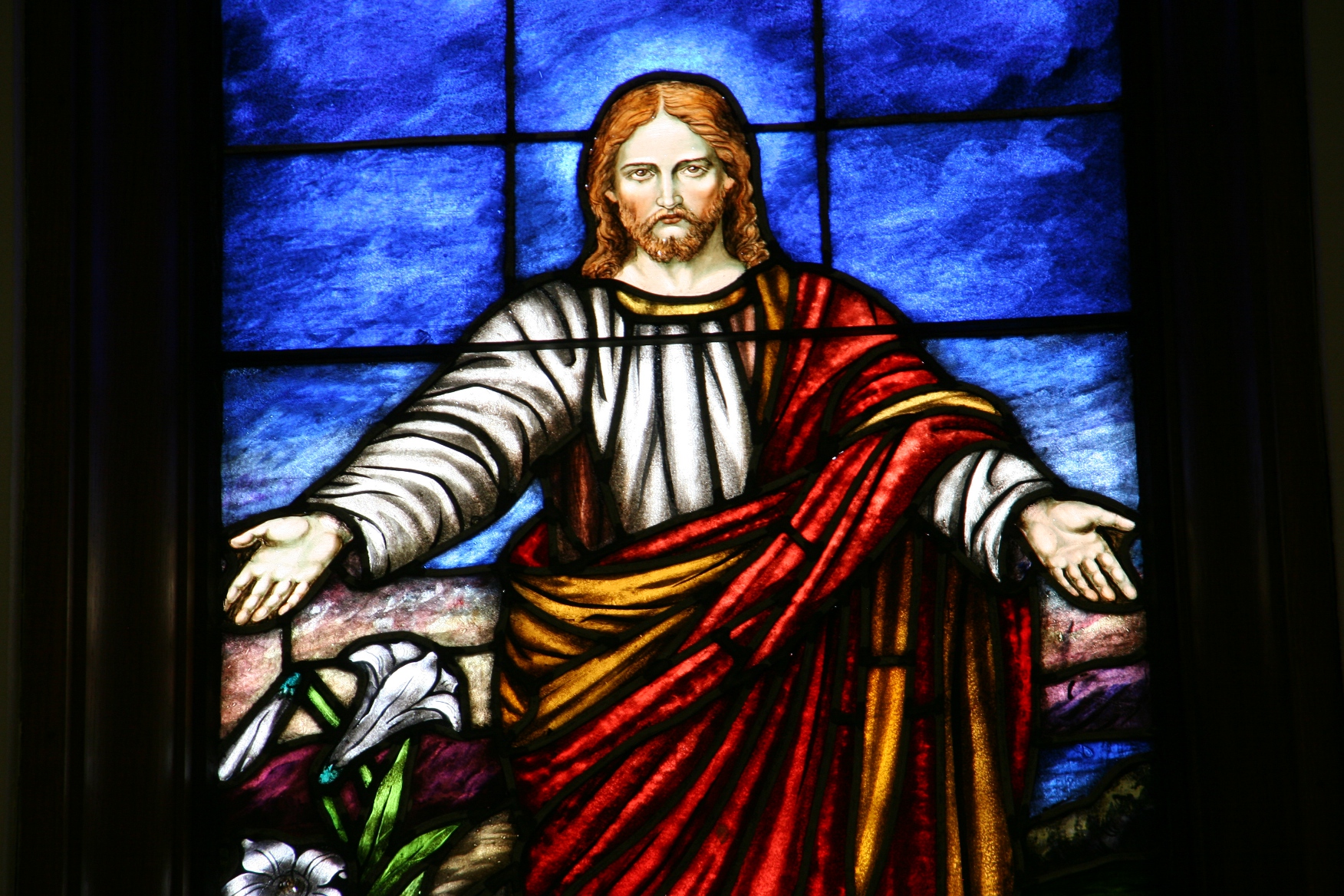
This stained glass window of the women at Jesus’ empty tomb rises above the altar at Holden Lutheran Church, rural Kenyon, Minnesota.(Minnesota Prairie Roots copyrighted file photo)
EASTER SUNDAY MARKS a day of celebration among Christians as we rejoice in the resurrection of Jesus and the promise of eternal life.
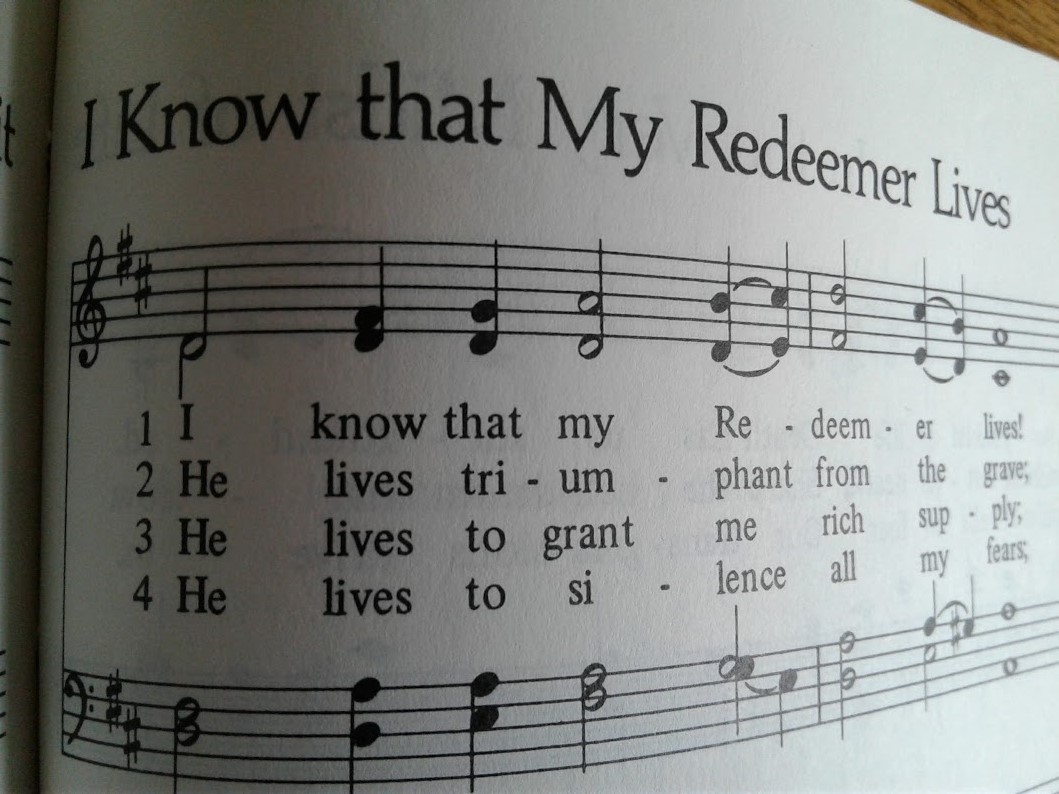
My favorite Easter hymn. (Minnesota Prairie Roots copyrighted file photo)
It is a day of joyful song, of prayerful gratitude, of alleluias.
Eggs dyed with my mom many years ago.(Minnesota Prairie Roots copyrighted file photo)
It is a day, too, to gather with family over brunch or a ham dinner. It is a day to find Easter baskets and hidden eggs.
It is a day of memories made and memories remembered. It is a day of missing those loved ones no longer with us, but loving on those who are near or far.
The risen Lord centers the trio of stained glass windows above the altar at Trinity Lutheran Church, Wanamingo. (Minnesota Prairie Roots copyrighted file photo)
It is a day when the sun rises on a struggling world, where hope is needed now more than ever.
Have a blessed and joy-filled Easter, dear friends!
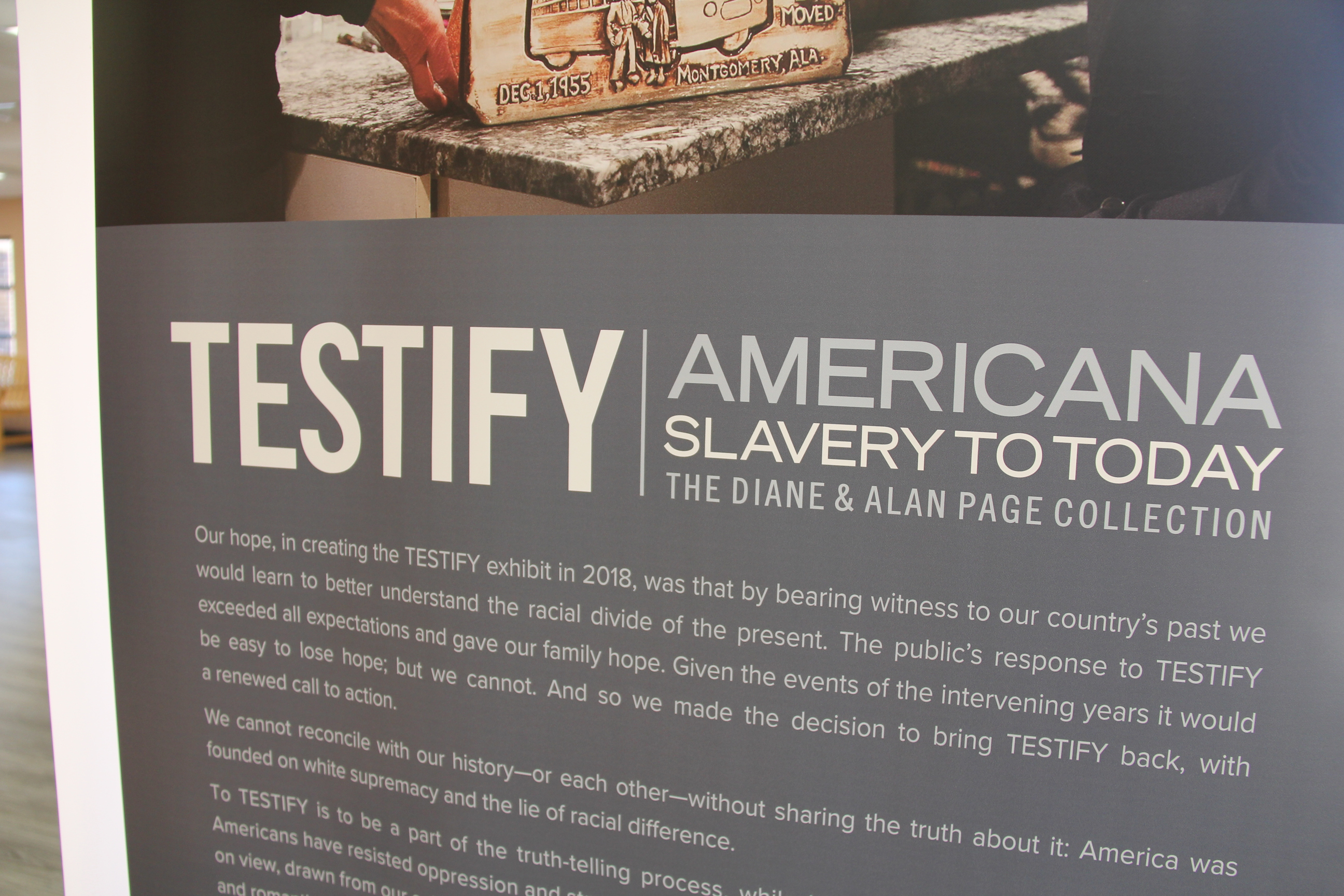
The first panel explains the “Testify” exhibit. (Minnesota Prairie Roots copyrighted photo April 2025)
THE IMAGES AND WORDS left me feeling simultaneously unsettled, uncomfortable, disturbed, enlightened, impressed, angry and incredibly sad. My emotional reaction is not surprising after viewing the traveling exhibit, “Testify—Americana Slavery to Today,” at my local public library.
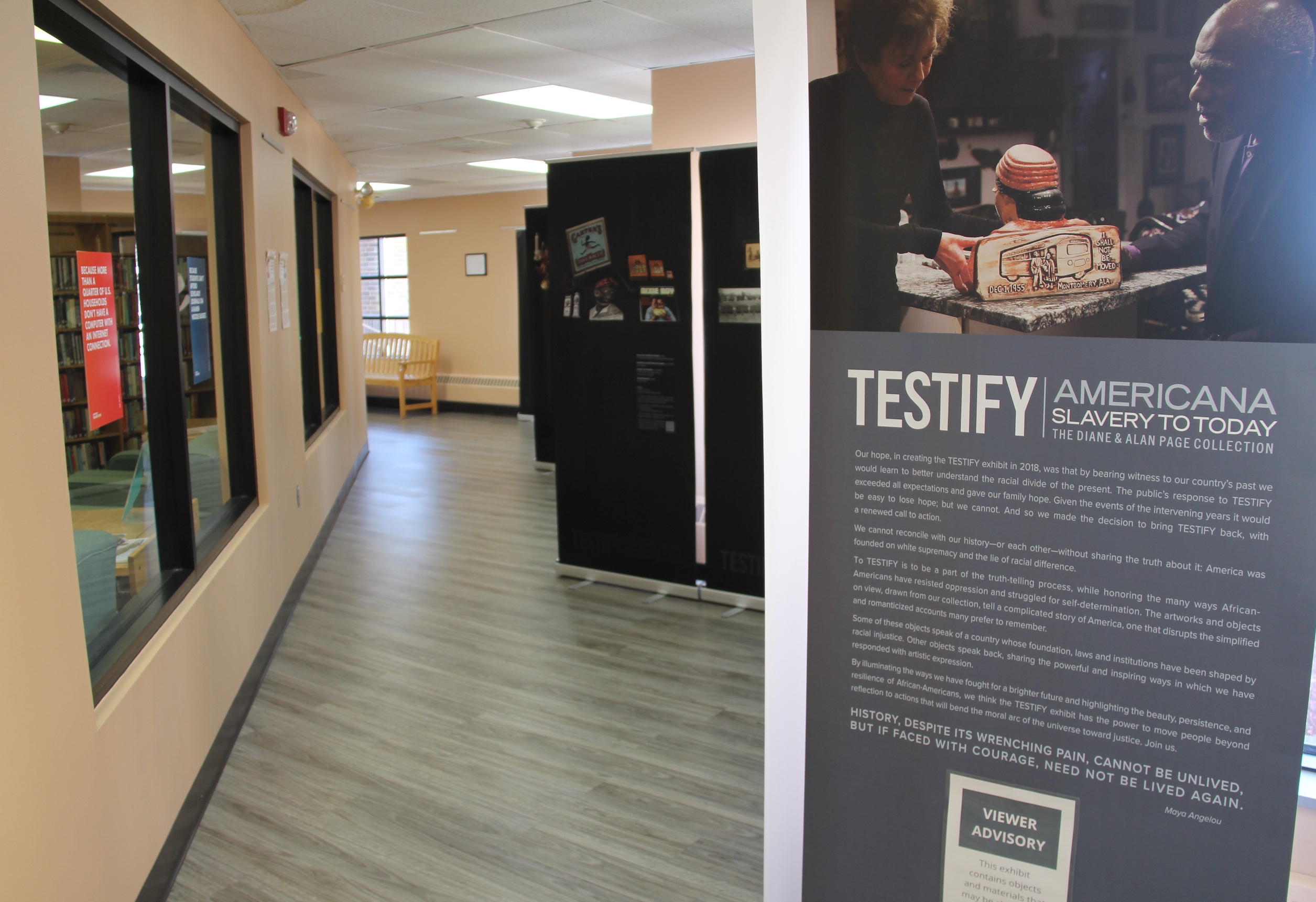
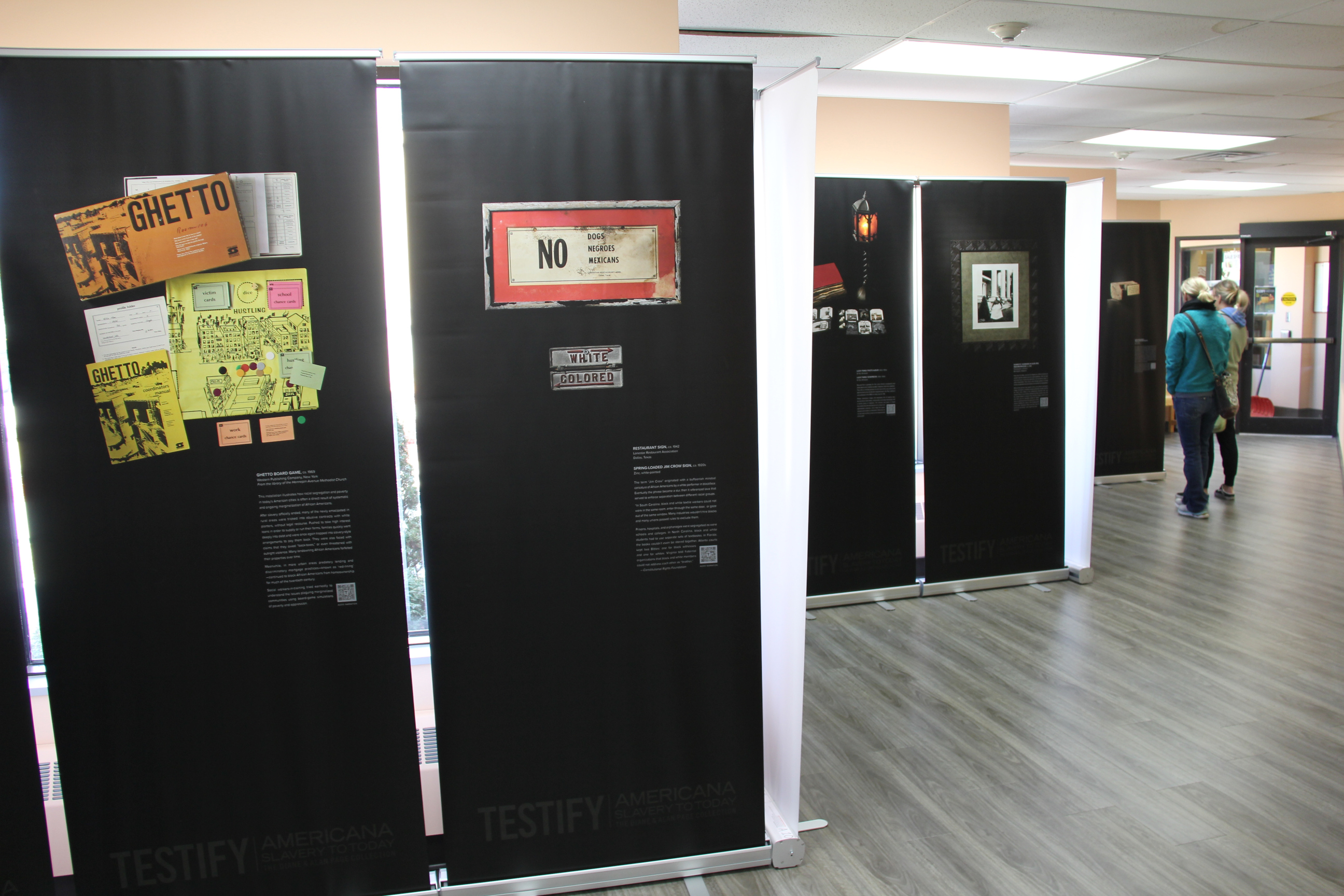
The 16 “Testify” panels stretch along the hallway connecting the library and community center in Faribault. (Minnesota Prairie Roots copyrighted photo April 2025)
The exhibit features photos of select African American art and artifacts from The Diane and Alan Page Collection. Alan Page, who is Black, was a Minnesota Supreme Court justice and, in the 1970s, a defensive lineman for the Minnesota Vikings. He’s in the NFL Hall of Fame. Diane, who was White, worked in marketing and was a businesswoman and notable philanthropist. She led the way in securing the art and artifacts in the couple’s collection.
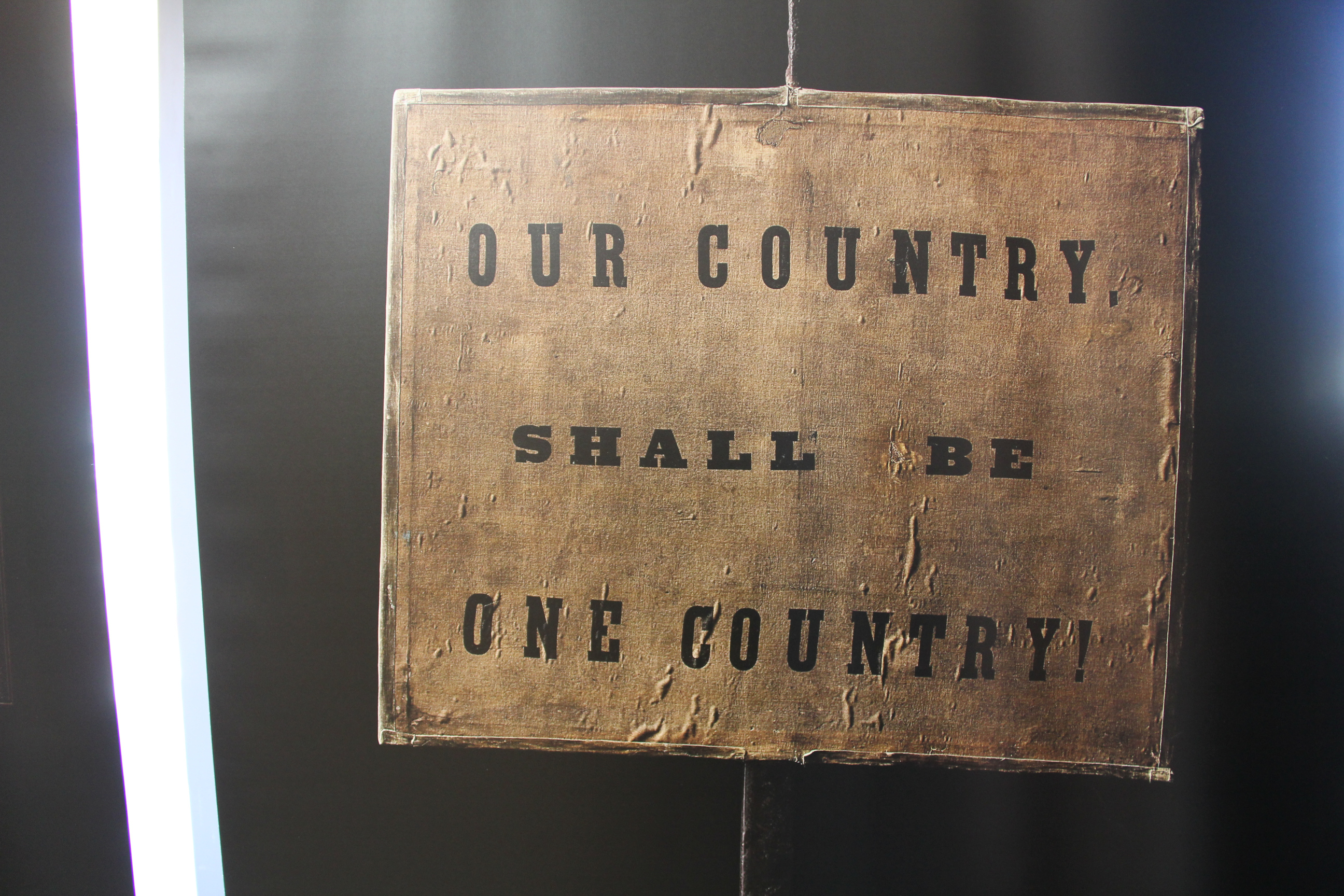
This 1864 banner may have been carried by freedmen at a rally or march. During the 1864 election of Abraham Lincoln, both political parties came together to reject slavery. (Minnesota Prairie Roots copyrighted photo April 2025)
I’m grateful Buckham Memorial Library (through SELCO, the regional library system) brought this exhibit to Faribault for the public to see. We can all learn from history, deepening our understanding. We begin to recognize perspectives and biases and can then move toward change and healing.
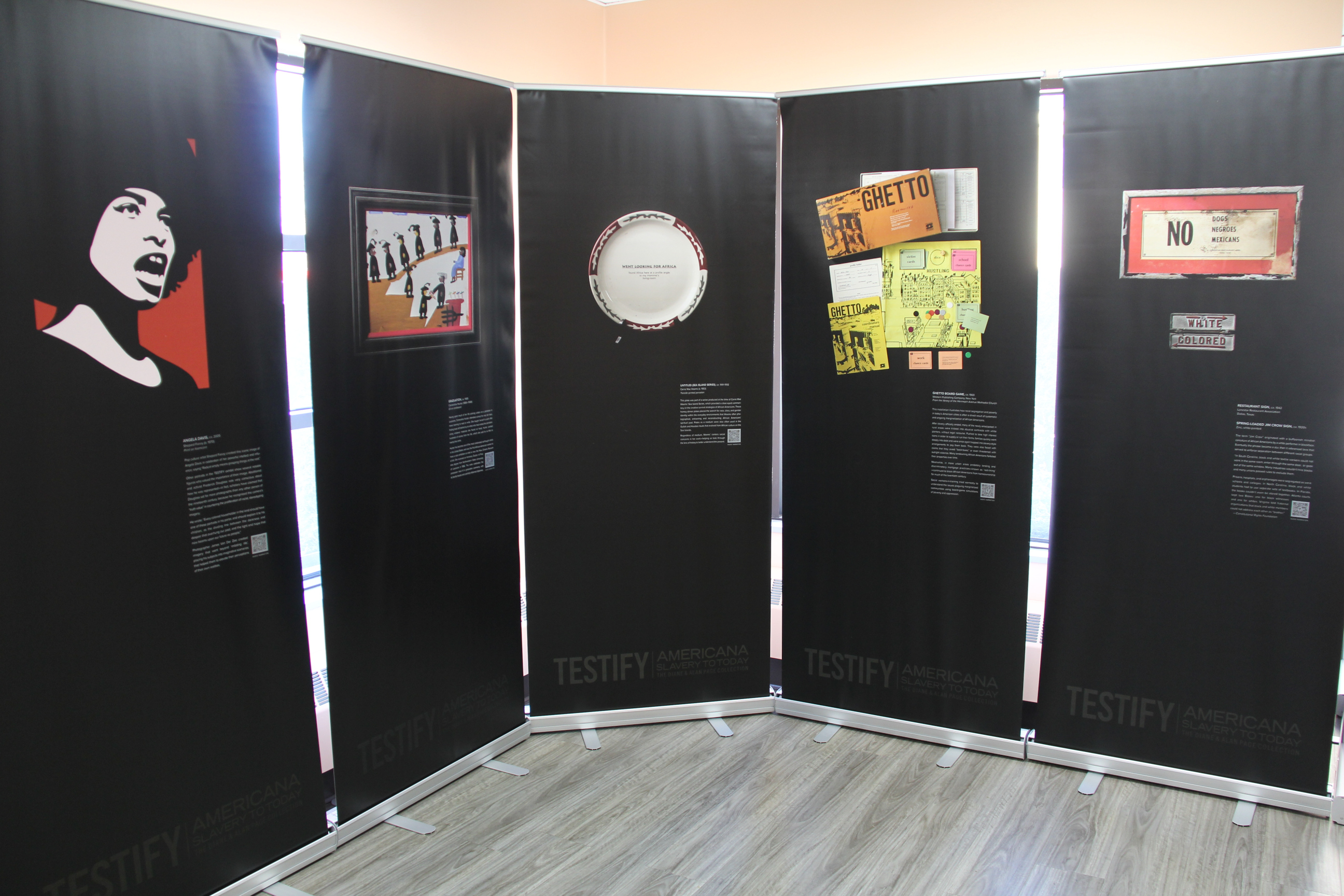
The last five panels cover a span of topics. (Minnesota Prairie Roots copyrighted photo April 2025)
As I walked my way along the 16 towering photo panels paired with text, I began to more fully appreciate the suffering, the abuse, but also the fortitude, of African Americans. Despite everything, they retained strength and resilience.
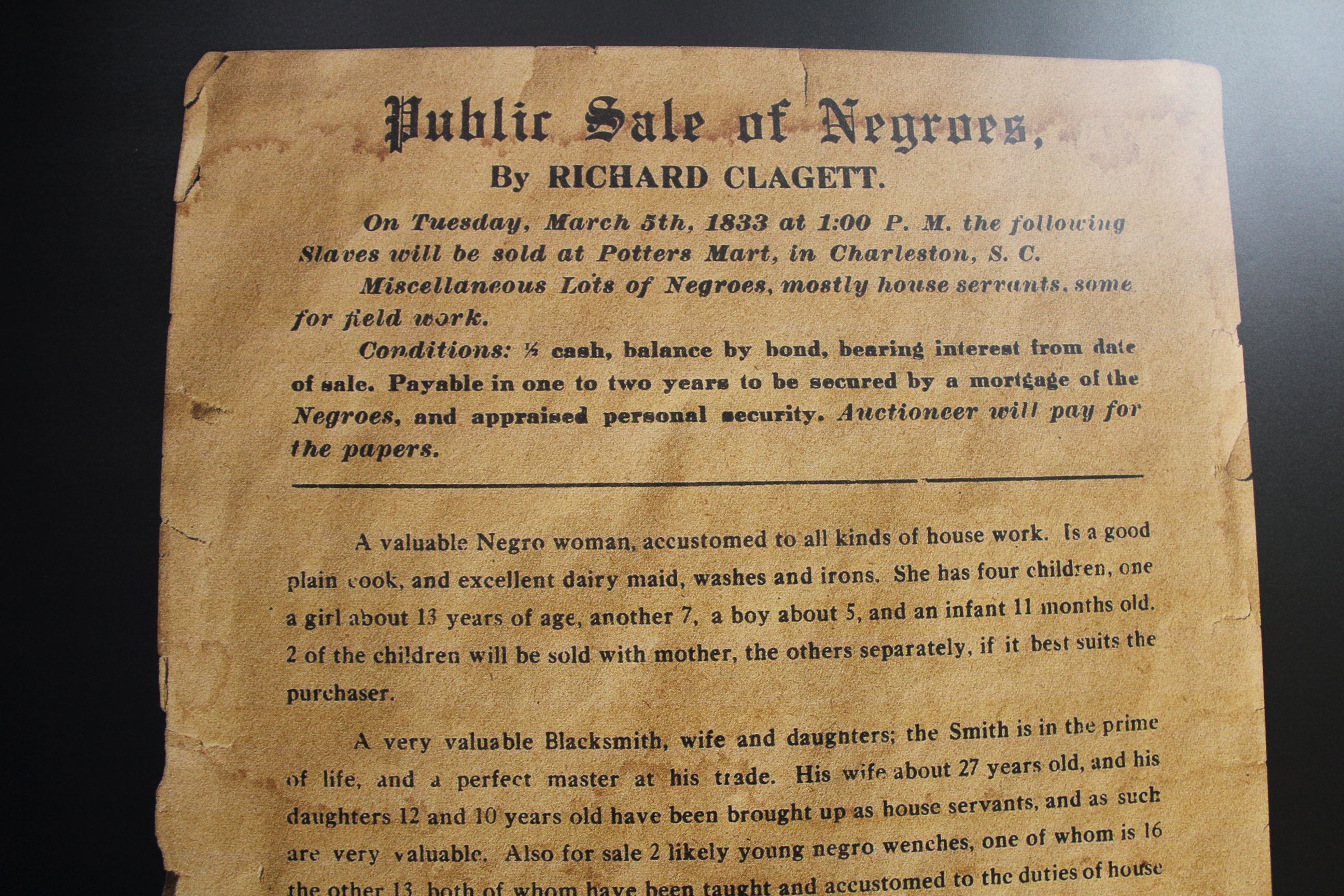
Notice of an 1833 slave auction in Charleston, South Carolina. (Minnesota Prairie Roots copyrighted photo April 2025)
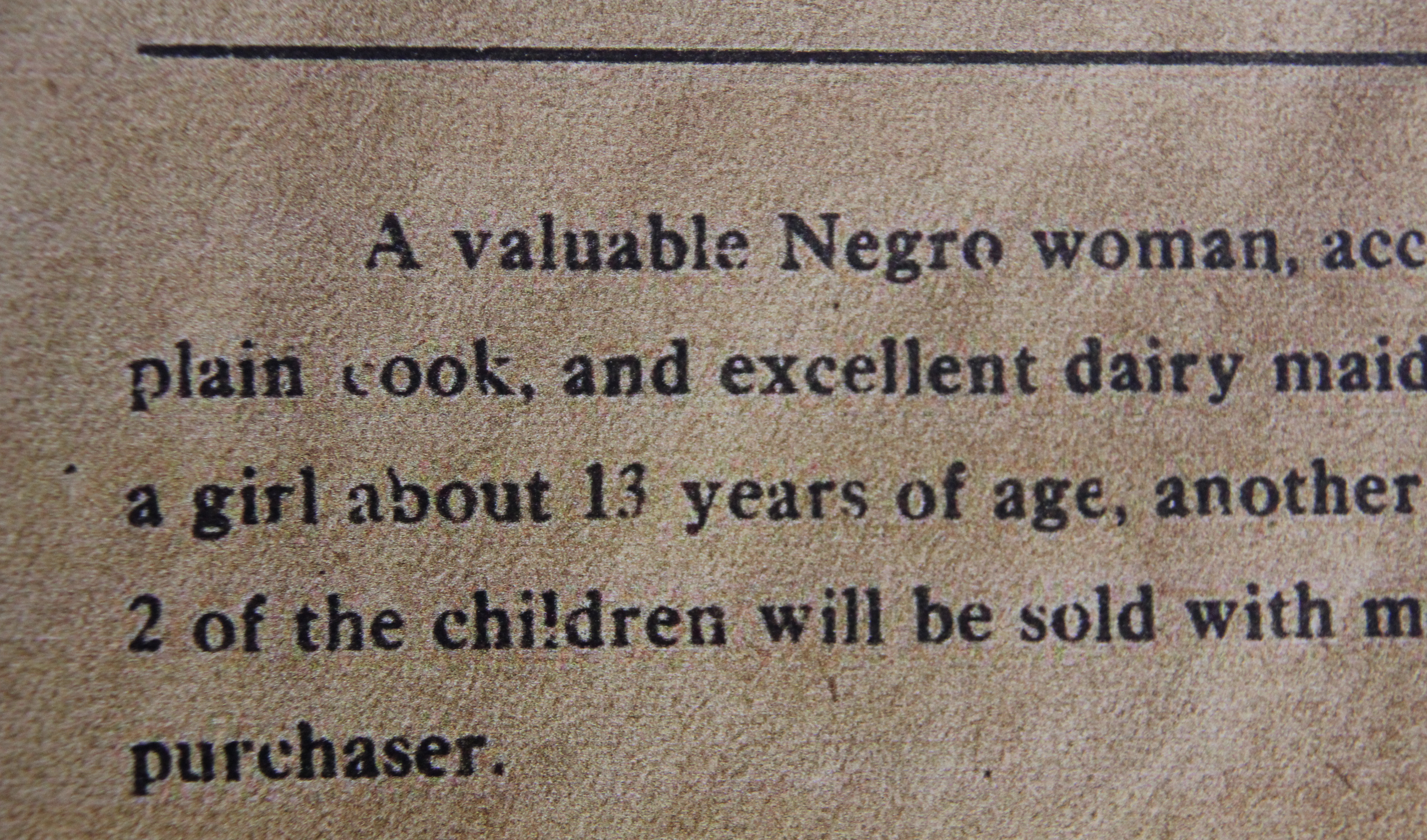
Yet, how hard it must have been at times to hold hope, especially from slavery to the time of Jim Crow laws. When I read a Public Sale of Negroes notice from 1833, I read words of degradation. I cannot imagine being that “valuable Negro woman,” that “very valuable blacksmith,” the slaves in “miscellaneous lots of Negroes” who were auctioned off like so much property. What humanity does to one another seems unimaginable, unfathomable. Yet, it still happens today, just in different ways.
A description of a slave to be sold at the 1833 auction. (Minnesota Prairie Roots copyrighted photo April 2025)
As disturbing as that slave bill of sale was, a group photo of nine unclothed Black toddlers in a professional studio portrait titled “Alligator Bait” proved profoundly disturbing to me. So much so that I can’t bear to show this 1897 image to you. The accompanying text states that historians researched whether hunters actually used African American children as alligator bait. Results were inconclusive, which is telling.
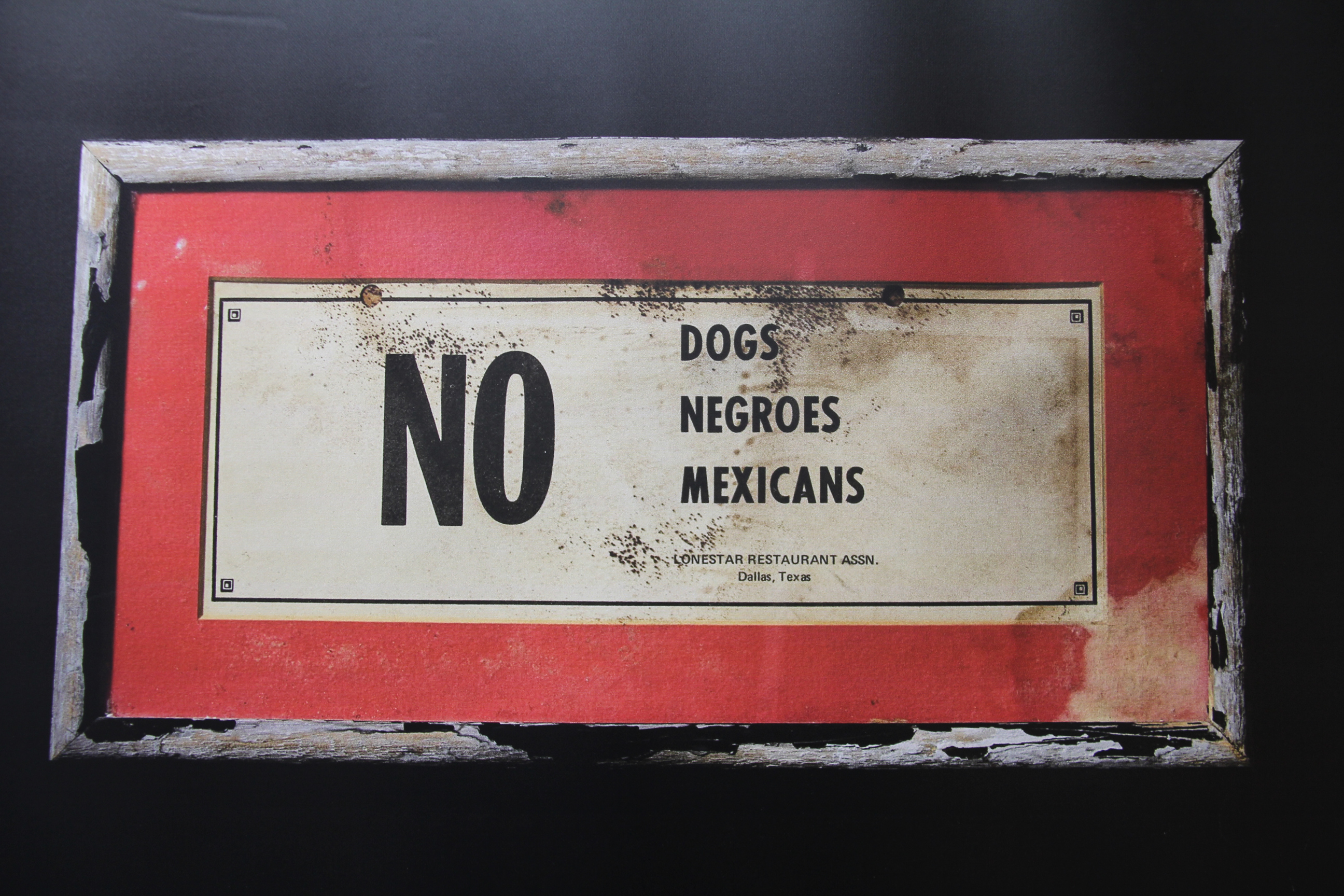
An unwelcoming 1942 sign from the Lonestar Restaurant Association in Dallas, Texas. (Minnesota Prairie Roots copyrighted photo April 2025)
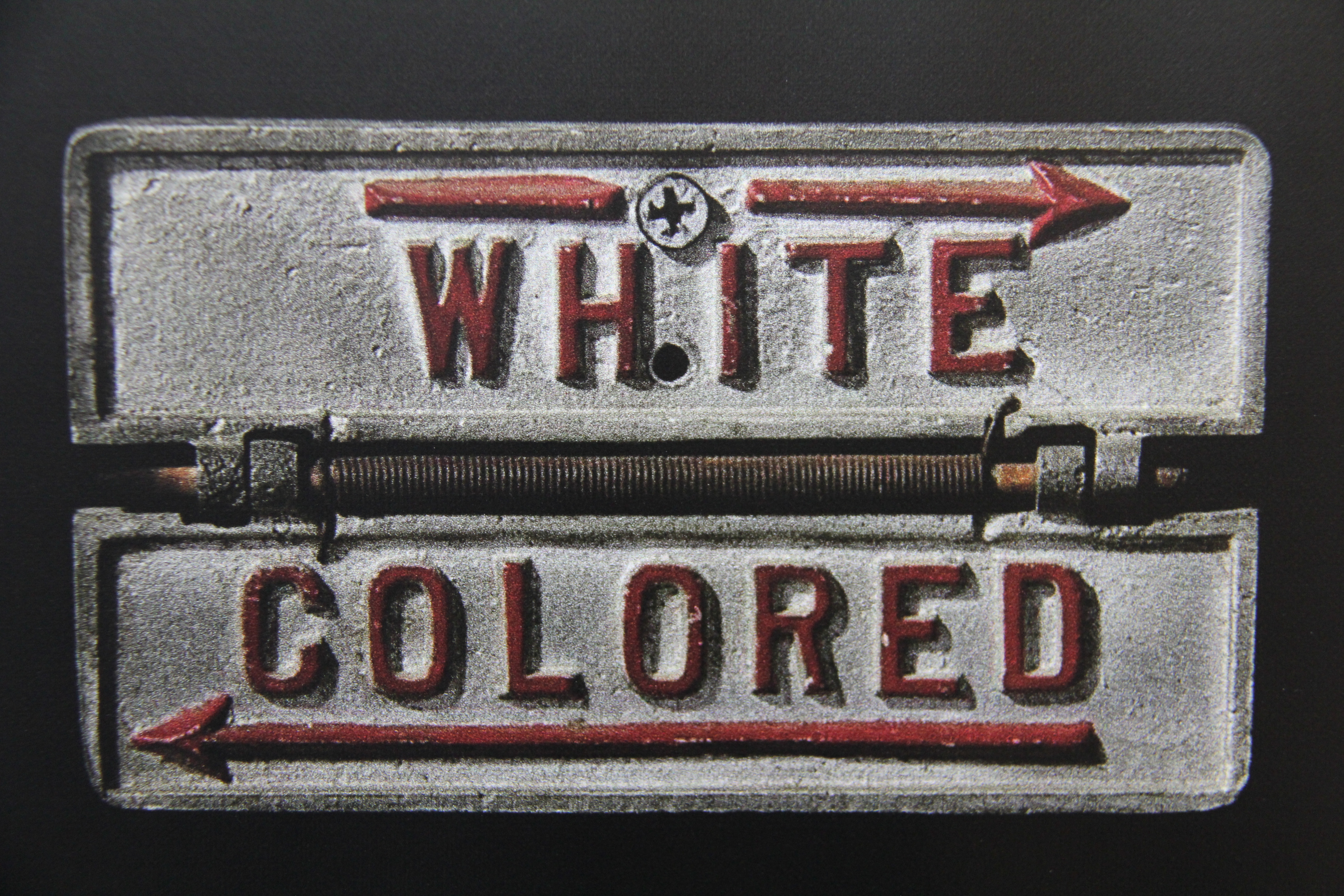
A 1920s spring-loaded Jim Crow sign. (Minnesota Prairie Roots copyrighted photo April 2025)
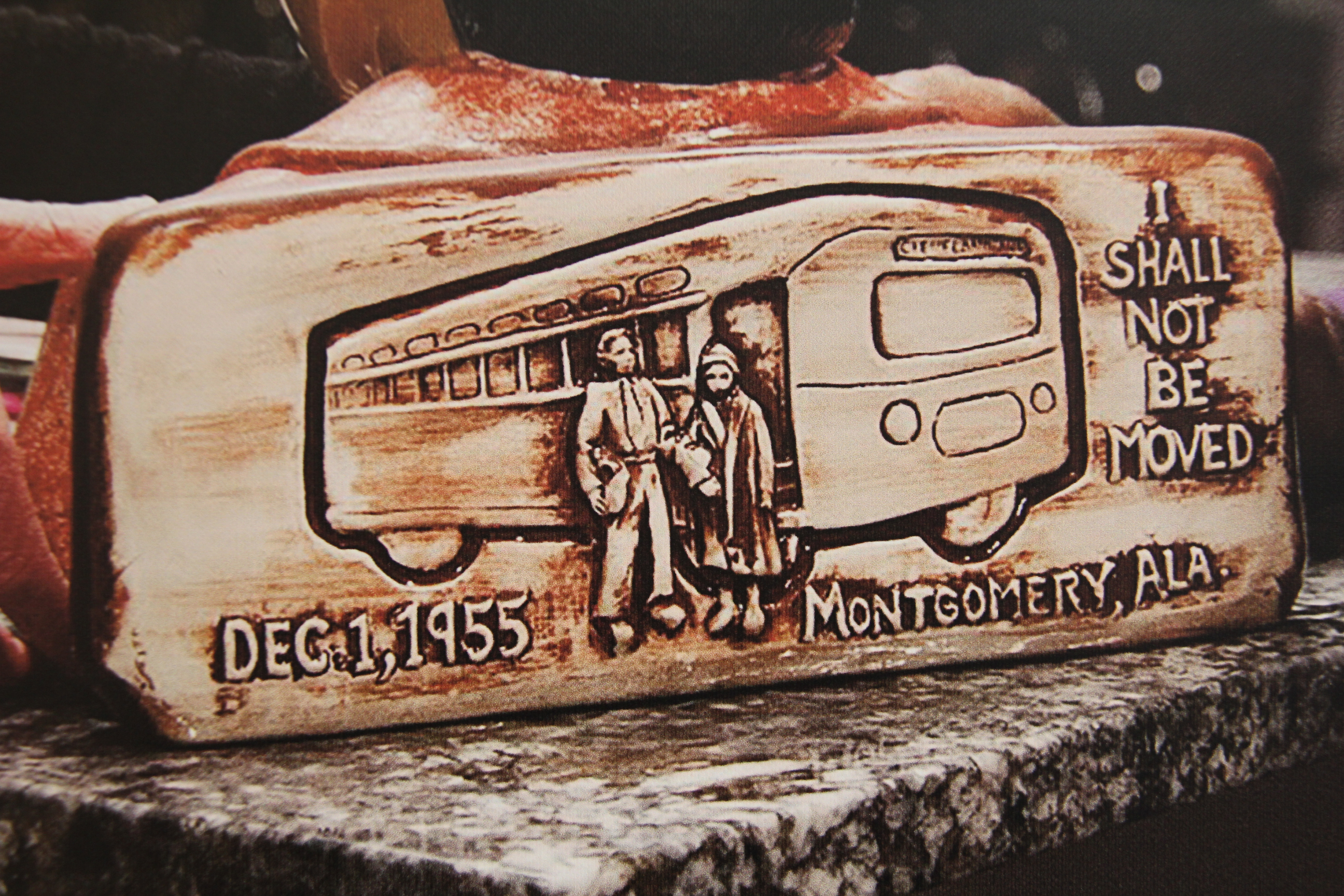
Protest art from the Civil Rights Movement. (Minnesota Prairie Roots copyrighted photo April 2025)
A sign banning “dogs, Negroes and Mexicans” and another pointing Whites one way and “Colored” people the other prompted thoughts of, well, things have not changed all that much. Of course, they have, but not really if you dig deep or, conversely, read today’s headlines.
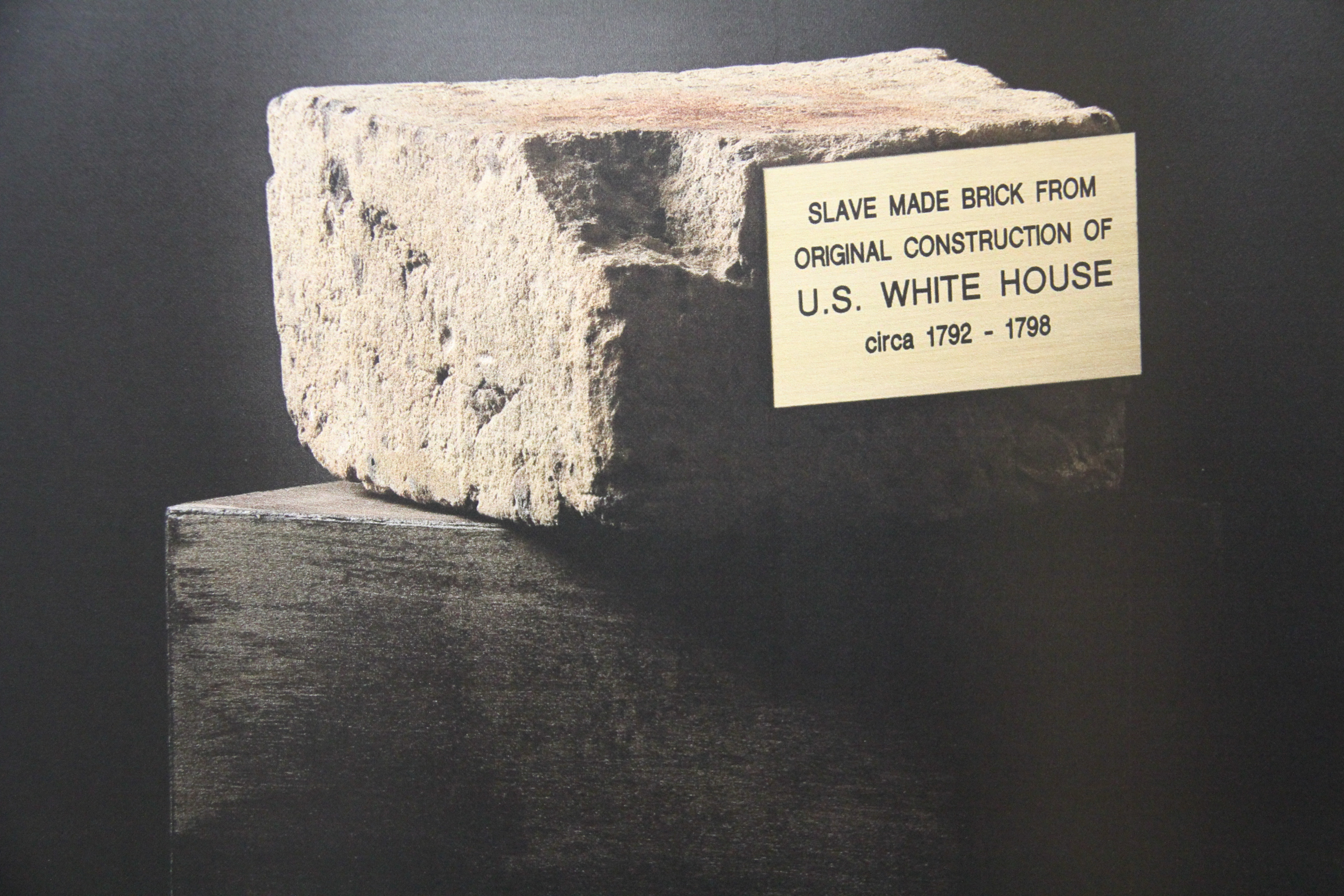
A brick crafted by slaves for the White House. (Minnesota Prairie Roots copyrighted photo April 2025)
I want to backtrack for a minute to the first photo I saw in the exhibit. It was of a single brick, circa 1792-1798. This singular object drove home the point that this country was built on the backs of slaves, like those who molded and laid the bricks for government buildings in Washington DC. That includes the White House and many U.S. Capitol buildings, according to the exhibit text. Unpaid slave labor. Think about that for a minute or ten.
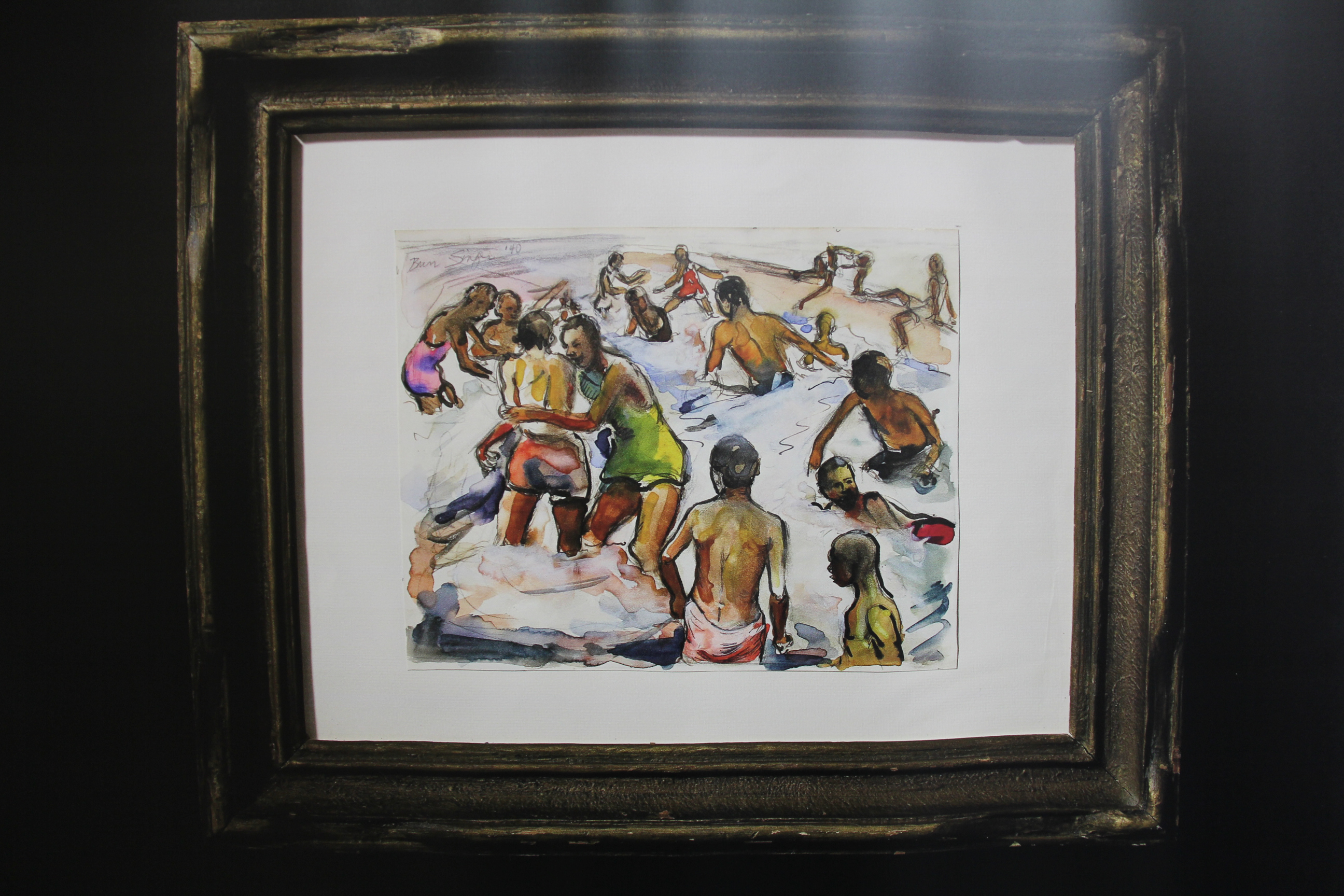
“Only on Thursdays,” a 1940 painting by Burr Singer. (Minnesota Prairie Roots copyrighted photo April 2025)
There’s lots to contemplate in the “Testify” exhibit. That includes the watercolor art of Burr Singer titled “Only on Thursdays.” If you just looked at the art without the title and context, you might think it was simply a depiction of African Americans swimming. But it’s not. Thursday was the only day Blacks could use the Pasadena public pool. This painting makes a statement.
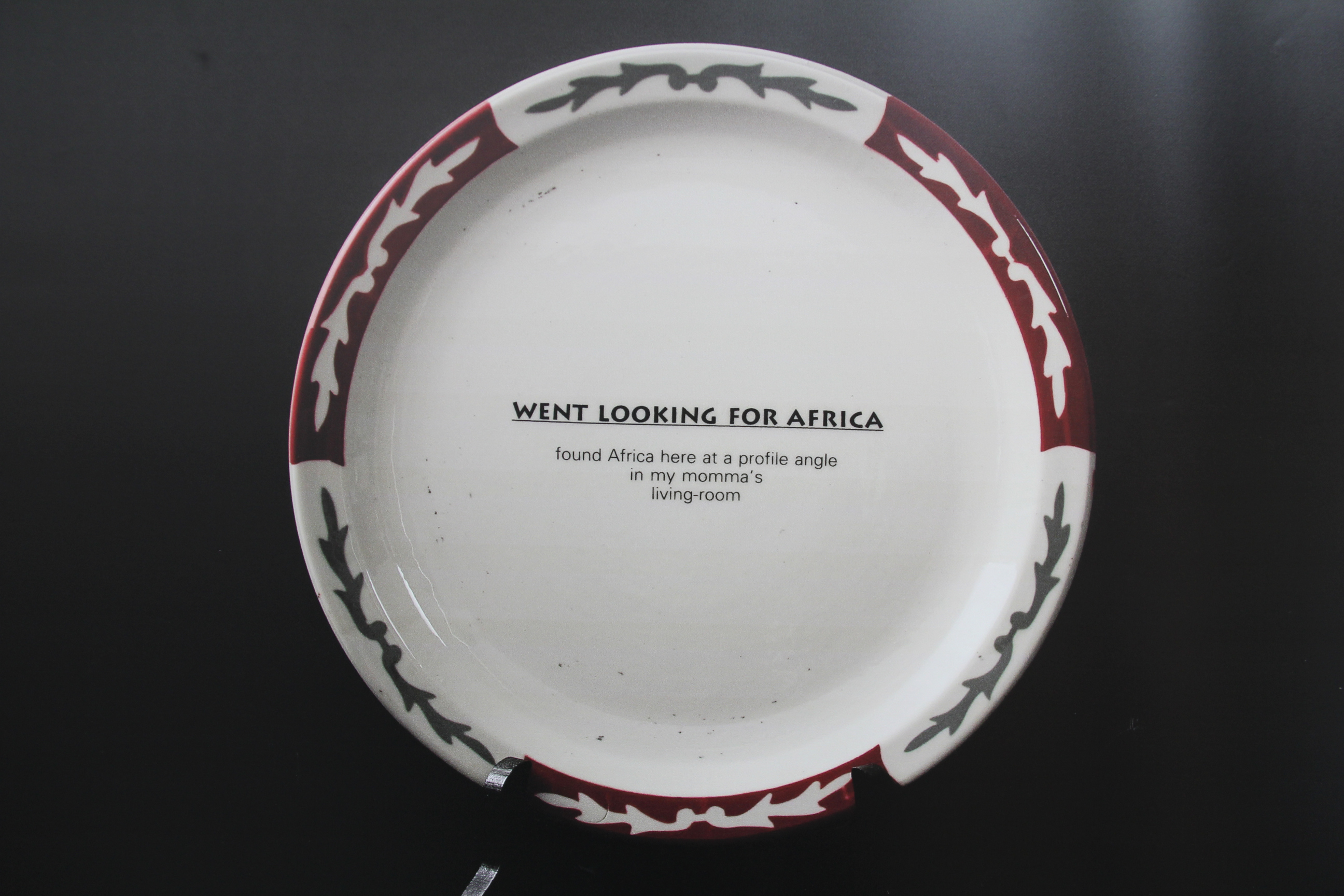
This 1991-1992 plate in Carrie Mae Weems’ Sea Island Series honors the creative survival strategies of African Americans. (Minnesota Prairie Roots copyrighted photo April 2025)
This exhibit makes a statement. Through images and words, it shines a light on the past, on Black history, on the atrocities of slavery and segregation and racism (both subtle and overt). Through “Testify,” truth-telling emerges for all to view and contemplate.
The panel to the far left shows a photo of the board game GHETTO. Social workers in training used the game to understand issues facing marginalized communities. (Minnesota Prairie Roots copyrighted photo April 2025)
FYI: “Testify—Americana Slavery to Today” is on display until April 23 in the corridor linking Buckham Memorial Library to the Faribault Community Center.The photos and information included in this story are only a sampling of what you will see in the exhibit.The Mabel Public Library hosts the exhibit from April 25-May 7.
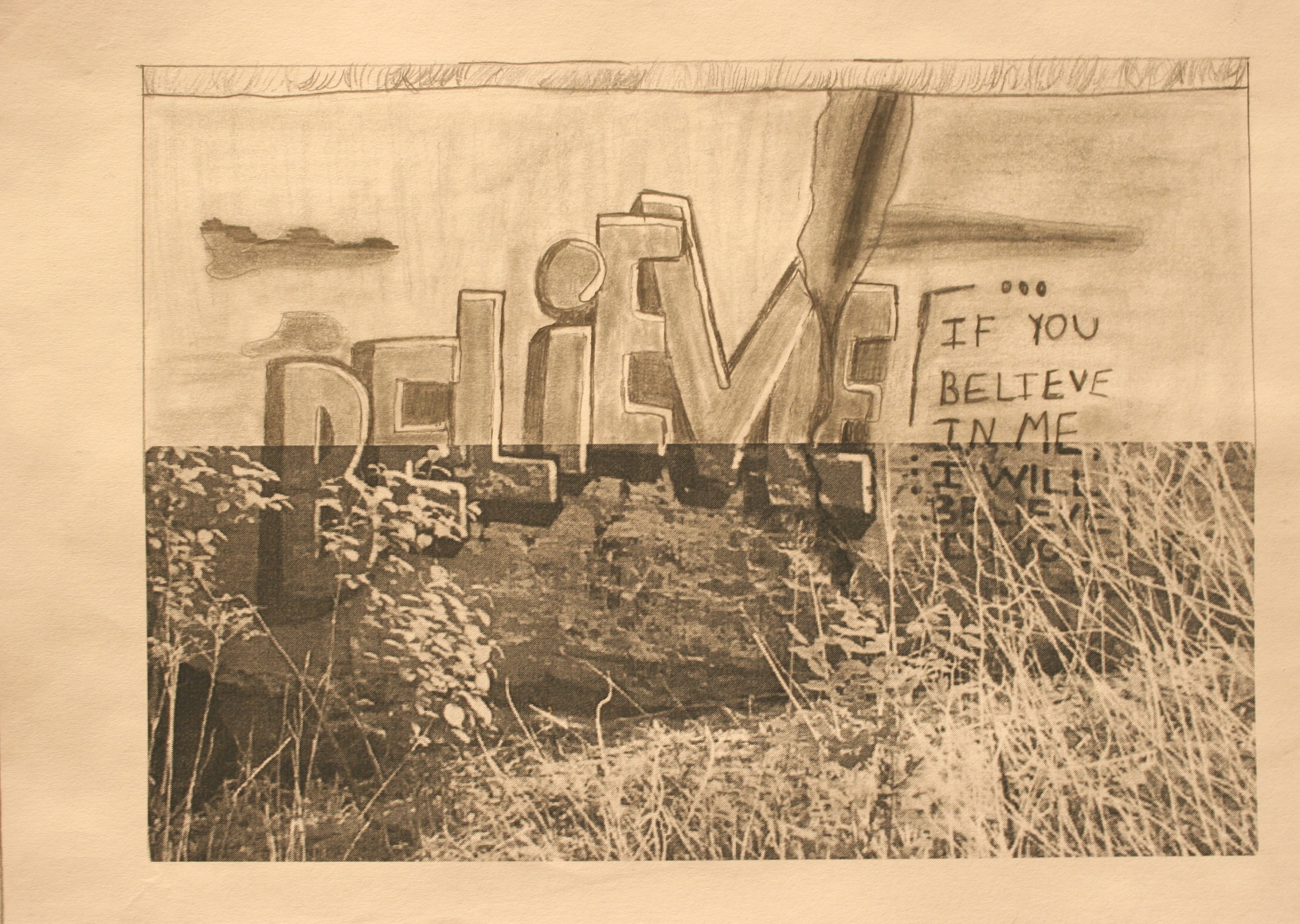
“Believe” by Mackenzie Miner, a then eighth grader at Faribault Middle School, was exhibited at a past student art show at the Paradise Center for the Arts. (Minnesota Prairie Roots copyrighted file photo)
DURING THE PAST SEVERAL DAYS, I’ve thought a lot about how to craft an Easter message about living my Christian faith against the backdrop of what’s happening in our country today. It’s tough, really tough, to feel positive and joyful. But I must believe that things will get better. Eventually.
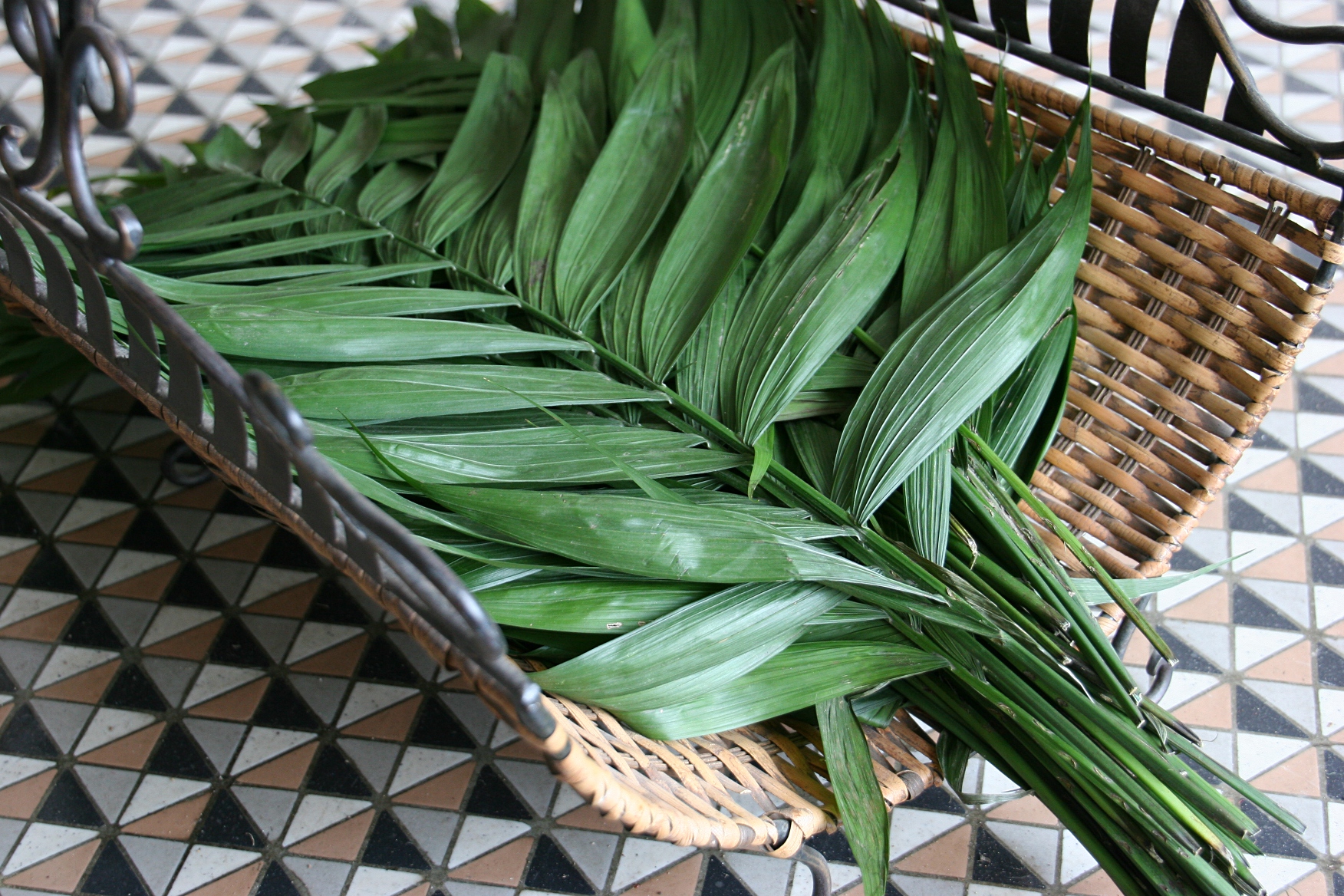
Rather than dwell on the totality of everything negative, I decided to focus on messages I heard during a Palm Sunday worship service at my eldest daughter’s Lakeville church. Randy and I were there for a pancake breakfast fundraiser and then to listen to our grandchildren sing. We—kids and adults alike—sang the traditional processional hymn, “All Glory, Laud and Honor,” as we waved palm branches. It was an uplifting, praise-filled, reverent experience, reminding me of Jesus’ triumphant entry into Jerusalem among a joyful crowd waving palm branches and shouting, “Hosanna!” Jesus rode in on a donkey, symbolic of his humility and humanity. Days later, the people would turn on Jesus and he would die an agonizing death upon a cross.
That journey to the cross, followed by the resurrection of Jesus on Easter morning, started on Palm Sunday, the beginning of Holy Week and a time of reflection. The service at St. John’s started with a blessing of the palms. That blessing set the tone for worship, at least for me. The palm branches we held represented celebration, justice and comfort. These are the words that most resonated with me:Bless these protest palms, O God of Justice…may they make us bold and brave to stand up against injustice.
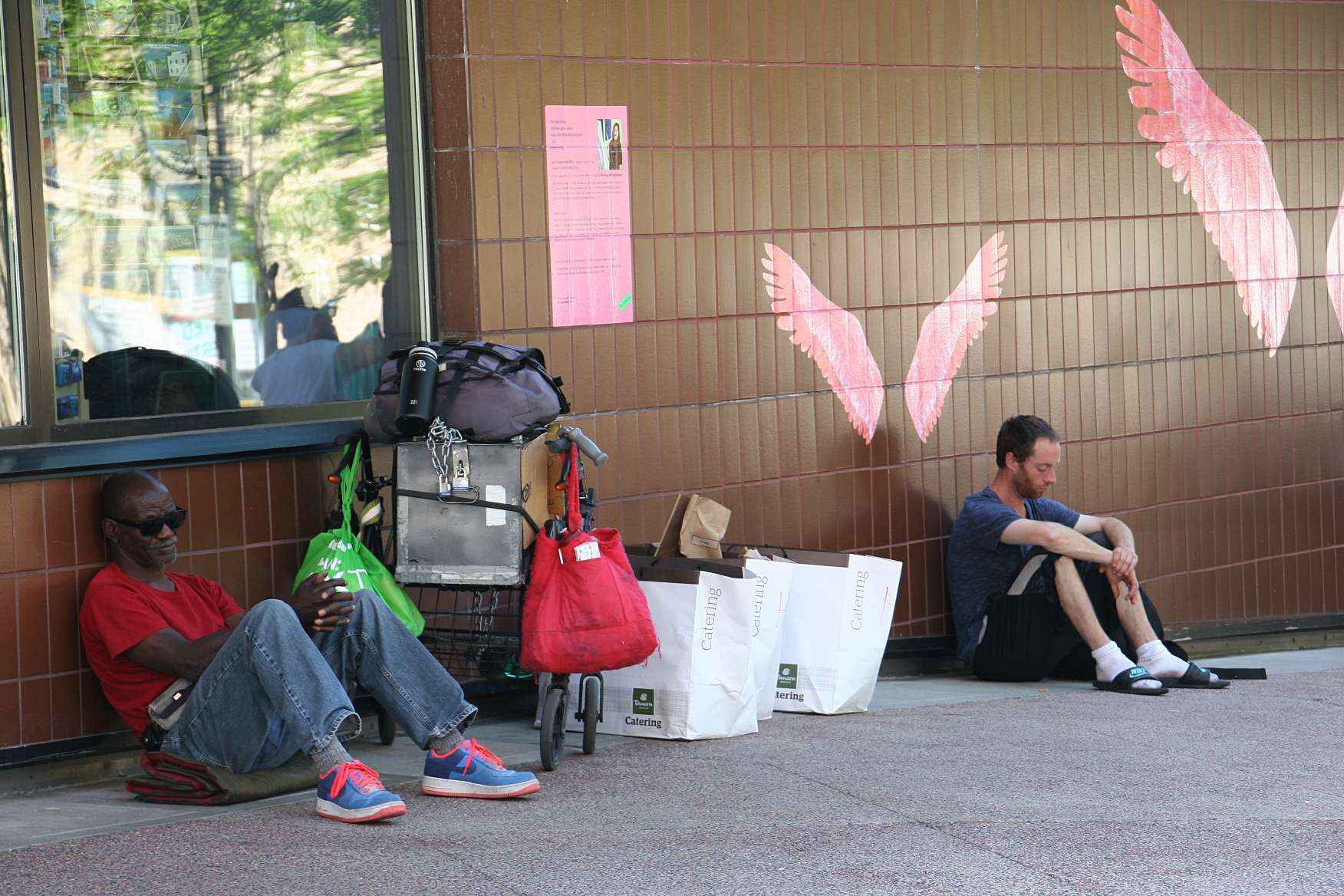
The unsheltered, photographed in downtown Madison, Wisconsin, in June 2018 near the state capitol. (Minnesota Prairie Roots copyrighted file photo)
So, as I stood at the back of the church, I waved my palm frond high like a protest sign, thoughts of injustices racing through my mind. I’ve done some protesting lately with my words. I felt encouraged and empowered to stand bold and brave against injustices. Jesus did. He called people out. He got mad. He chastised. He advocated for and helped those who suffered the most. The outcasts. The lonely. The poor and hungry. He showed compassion and love. He provided. He forgave.
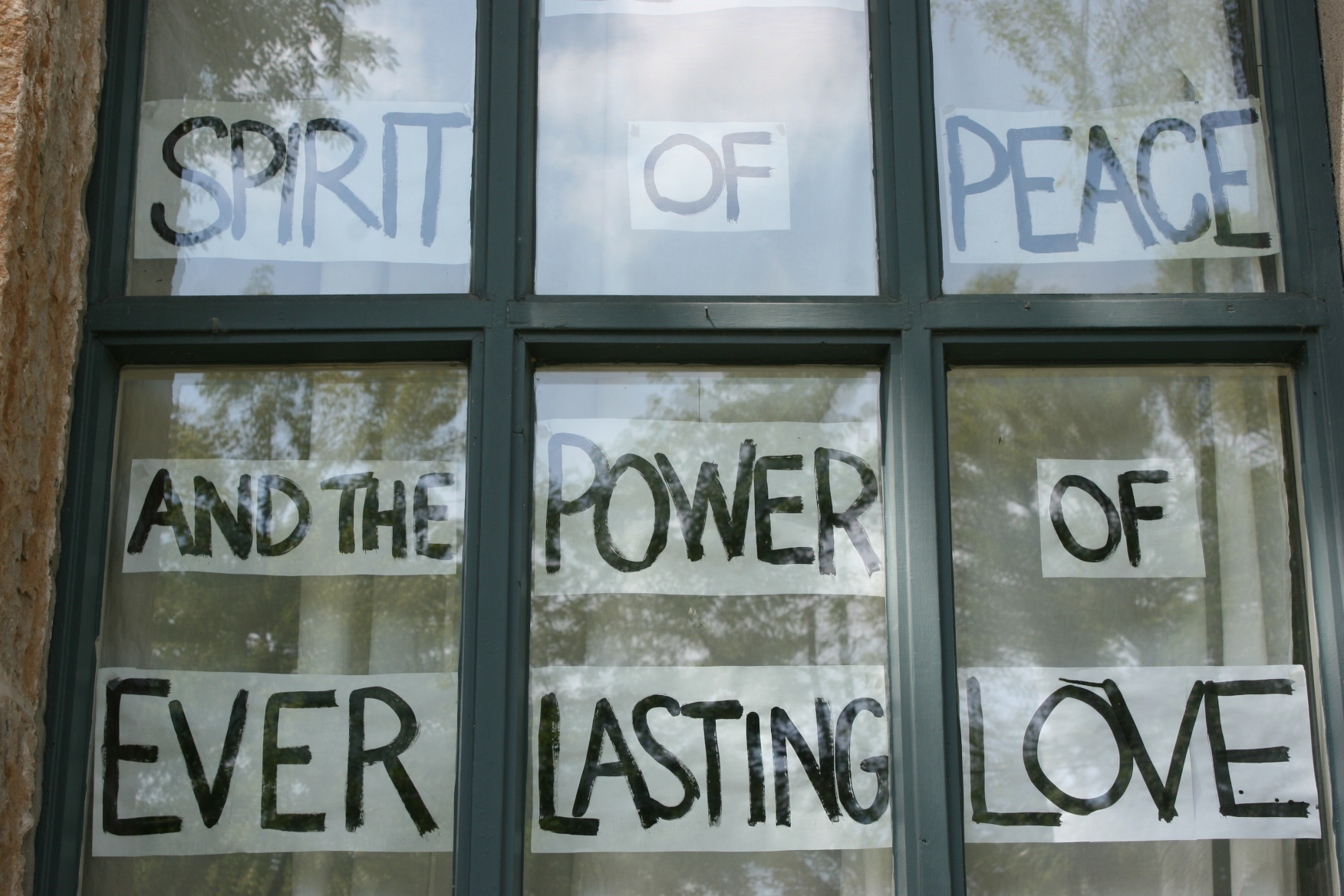
A portion of a quote by John Lewis posted in the window of a Dundas, MN., home. (Minnesota Prairie Roots copyrighted file photo)
Remember the once popular WWJD/What Would Jesus Do slogan? I think Jesus would be more than a little ticked off about the injustices today, how people are treating one another, how those in positions of leadership are abusing their power. Jesus did, after all, overturn the tables in the temple when it became a noisy marketplace for greedy vendors focused on making money rather than allowing people easy access inside for spiritual reasons.
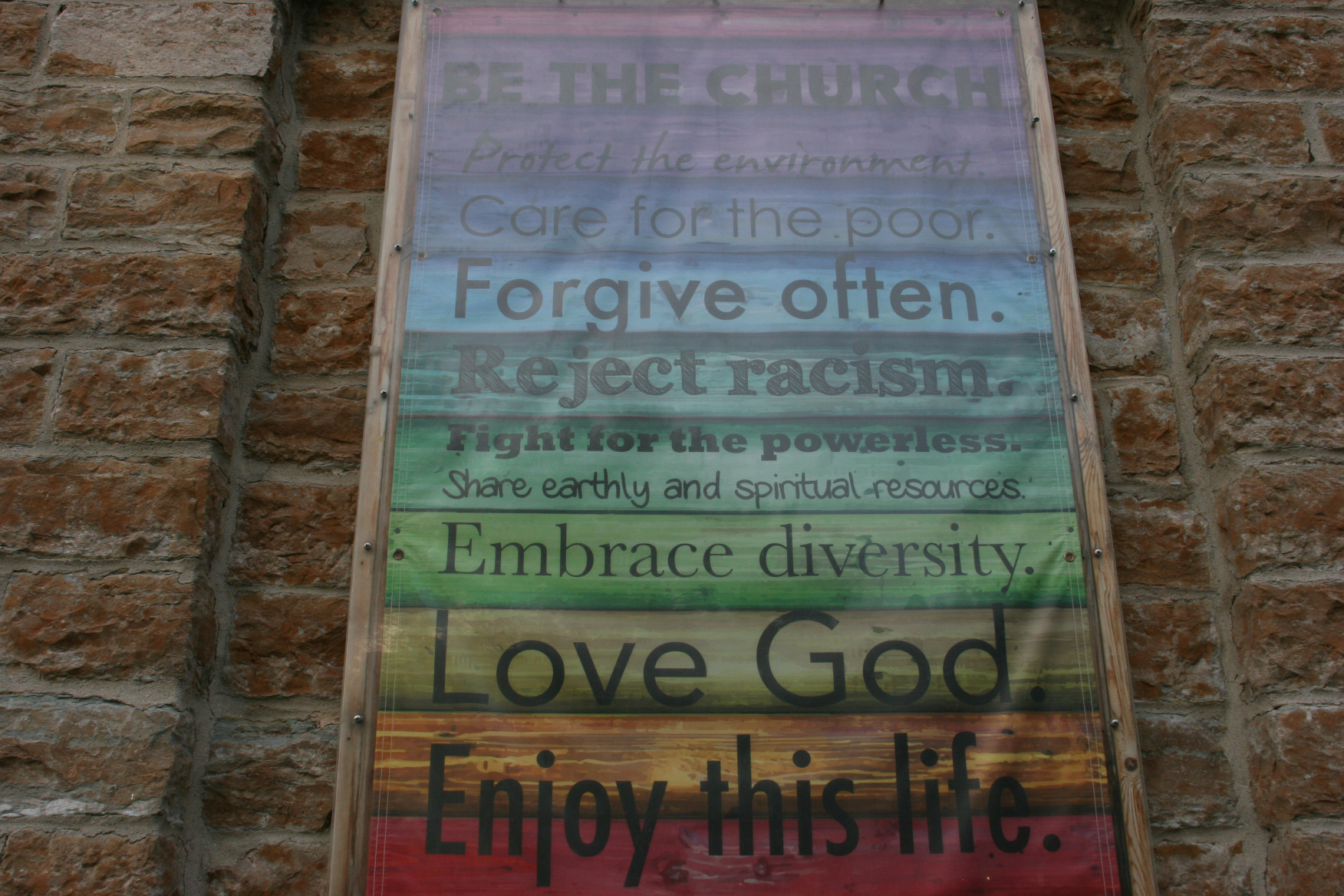
Posted on the exterior of the Congregational Church of Faribault United Church of Christ. (Minnesota Prairie Roots copyrighted file photo)
I’d like to think that Jesus wants every single one of us tobe bold and brave in our words and actions. It’s easy enough to sit quietly and do nothing. Just pretend all is well with everyone when, in reality, it’s not. People are struggling. In relationships. With unexpected and unnecessary job loss. Financially. Mentally. In ways I would never have thought possible in this country—suppression, oppression, ongoing discrimination, intimidation, imprisonment… Injustices run rampant.
A loving message posted along a bike trail in Madison, WI. (Minnesota Prairie Roots copyrighted file photo)
We each have the power to do something about those injustices. Volunteer. Encourage. Donate money to charitable organizations or to individuals in and outside your circle who may need a little extra help right now. Smile. Be respectful. Extend small acts of kindness. Simply be a kind, decent, compassionate and loving person.
A message on a tombstone at Valley Grove Cemetery, rural Nerstrand. (Minnesota Prairie Roots copyrighted file photo)
But also don’t hesitate to bebold and brave to stand up against injustice, to wave your protest palm branch high, then higher still.
NOT EVERYONE LIKES THEM. Rabbits, that is. They can be a nuisance, nibbling, even devouring, garden flowers and vegetables. I understand that justified dislike. My oldest daughter, who has been trying to establish a flowerbed in front of her Lakeville home, battles rabbits every year. They win, mostly.
There will be no chocolate bunnies purchased by me this Easter. (Minnesota Prairie Roots copyrighted file photo)
But this week, rabbits are in good favor. Or should I say at least one rabbit is welcomed. That would be the Easter Bunny, bearer of candy. I will like him a whole lot if he drops a delivery of Reese’s pieces eggs (peanut butter candy in a crunchy shell) off at my house…because I limited my Easter candy purchase to one bag. I bought Robin eggs, which are malted milk candy in a crunchy shell, for Randy as they are his favorite. And they were reasonably priced at $2.48 for a 9-ounce bag. Cost—around $5 for most bags of candy—kept more candy out of my shopping cart. Not even the grandkids or my two out-of-town adult children will get chocolate bunnies from me this year. They’ll have to hope the Easter Bunny comes through.
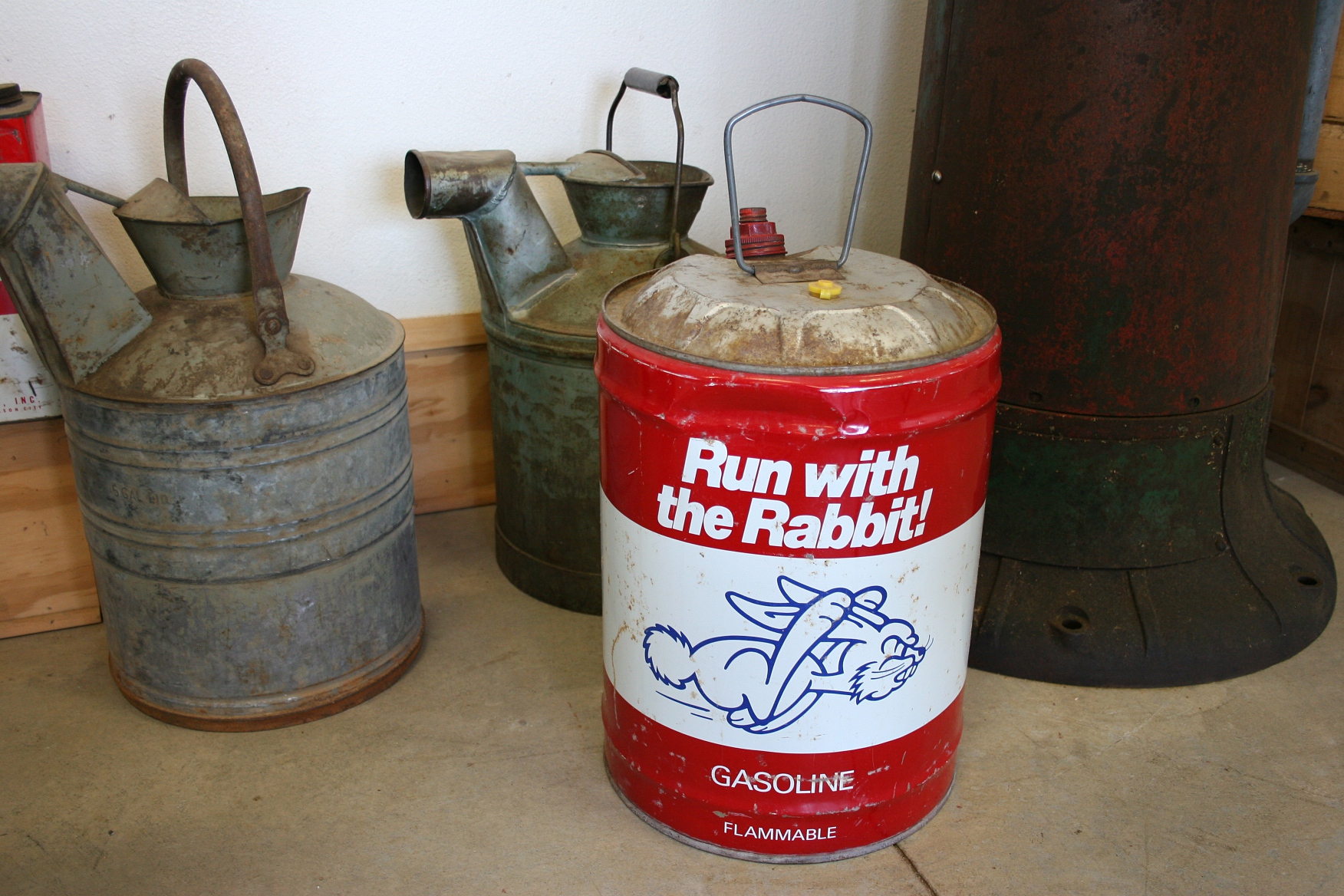
Among the many gas cans my middle brother collects is this Rabbit-themed one, which I love. (Minnesota Prairie Roots copyrighted file photo)
Ah, Rabbits. I really do like them. I’m amazed at their swiftness, hopping across yards, including mine, at seemingly record-breaking speed. Yet, they can also sit statue still and commence a stare-down.
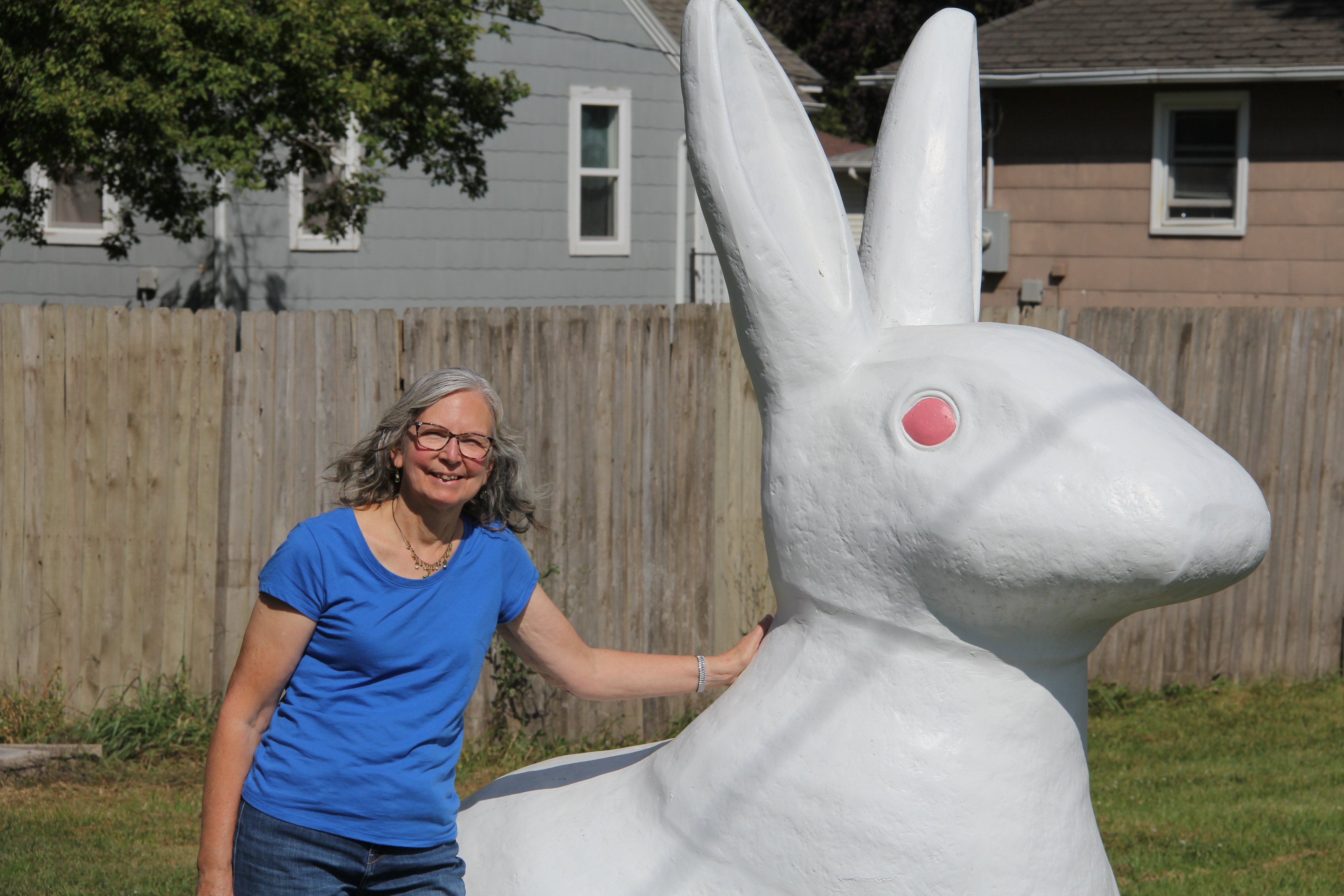
Me, posing with the rabbit statue in Wabasso when I was back in town for my 50th high school class reunion in September 2024. (Minnesota Prairie Roots copyrighted file photo by Randy Helbling)
That brings me to the mammoth rabbit statue which sits along Minnesota State Highway 68 in Wabasso in southwestern Minnesota. I attended high school in this rural community named after a Native American word meaning “white rabbit.” Our school mascot was Thumper. No jokes, please. I heard plenty of bunny jokes decades ago. I am forever proud to be a Wabasso Rabbit. I mean, who has a school mascot that interesting and unique? A name that actually connects to history and place and is found in Henry Wadsworth Longfellow’s poem, “The Song of Hiawatha.”
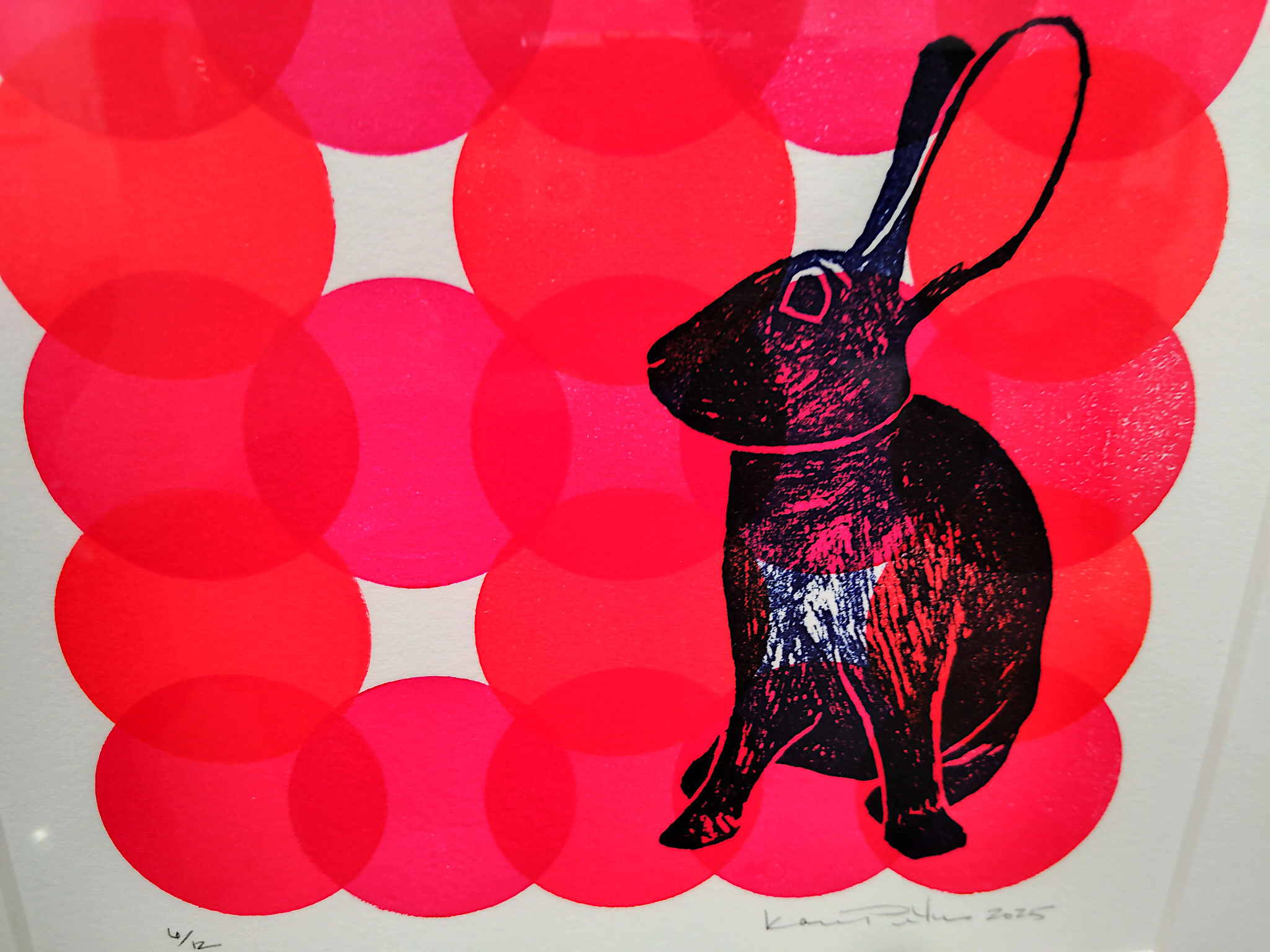
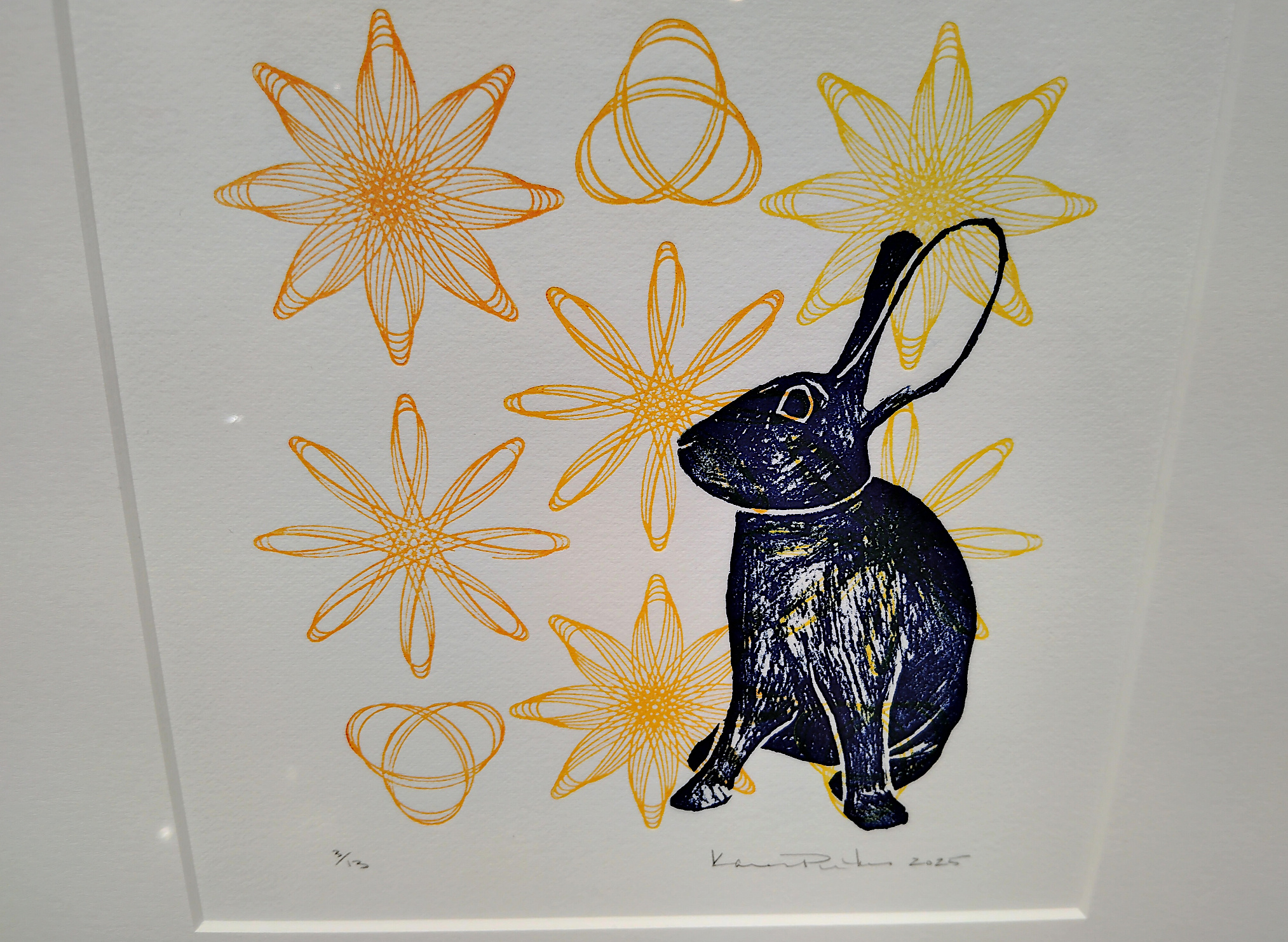
This shows part of a relief print, “Neon Love Rabbit,” by Karen Peters. (Minnesota Prairie Roots copyrighted photo April 2025)
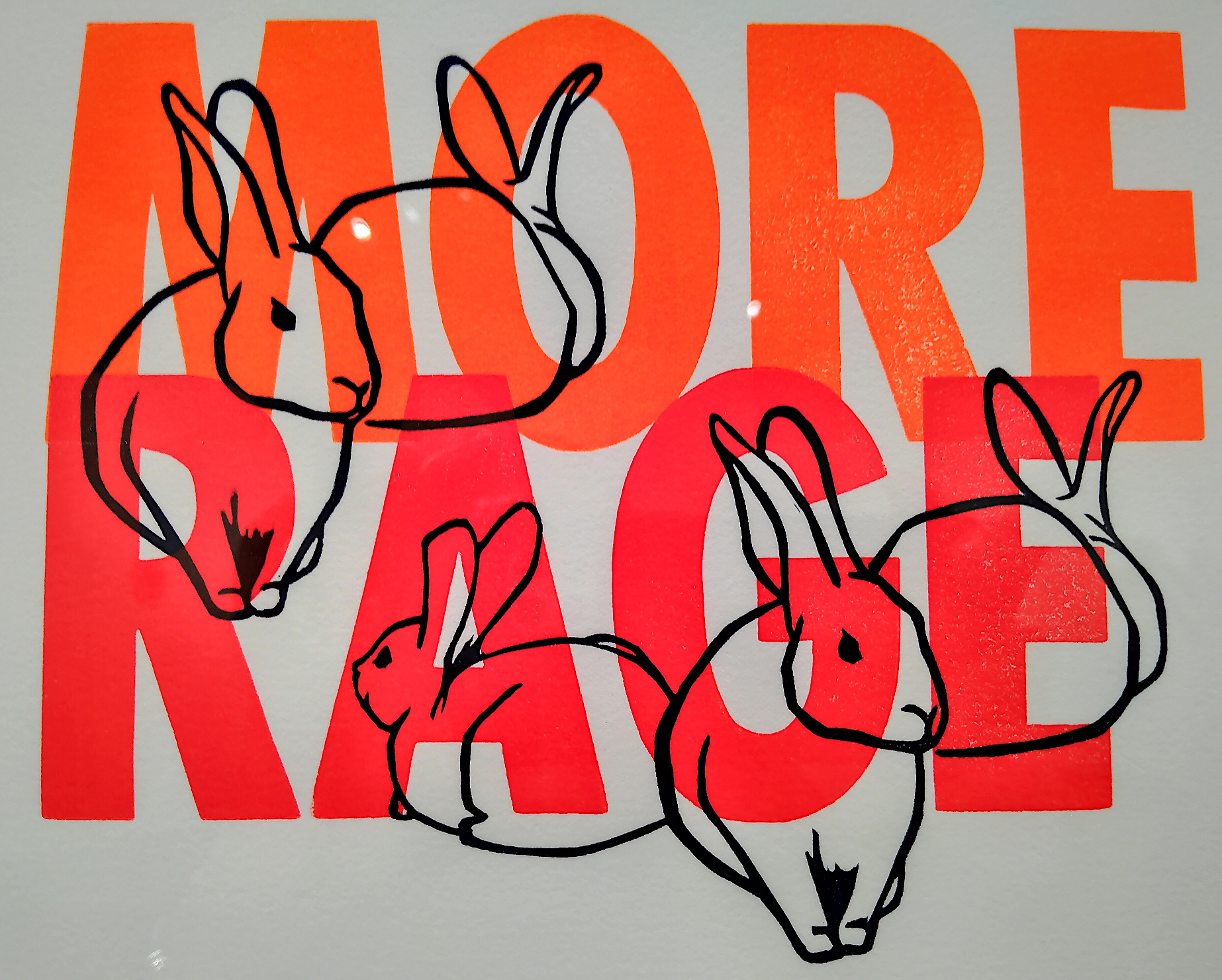
Just the other evening I saw some unique rabbit art at the Paradise Center for the Arts. I was sitting at the annual PCA membership meeting when I spotted this art in the gallery. When the meeting concluded, I hopped (well, not quite, but the word fits here) over to look at the work of Minneapolis artist Karen Peters. She explores color through printmaking, creating relief prints. Rabbits are among the subjects of her prints.
Now I expect my eldest daughter, given her dislike of rabbits, would probably favor Peters’ “More Rage” print. Amber has raged more than once about invasive rabbits and their path of destruction.
“Spiro rabbit,” a relief print by Karen Peters. (Minnesota Prairie Roots copyrighted photo April 2025)
Me? I rather like Peters’ “Spiro rabbit” print with its contrast of black rabbit lurking among yellow flowers created with a Spirograph. The last time the grandkids stayed overnight, I pulled out the Spirograph, a geometric drawing device that has been around since 1965, way back when I was a kid. That Peters used this popular art tool to bloom flowers into her rabbit print shows out-of-the-box creative thinking.
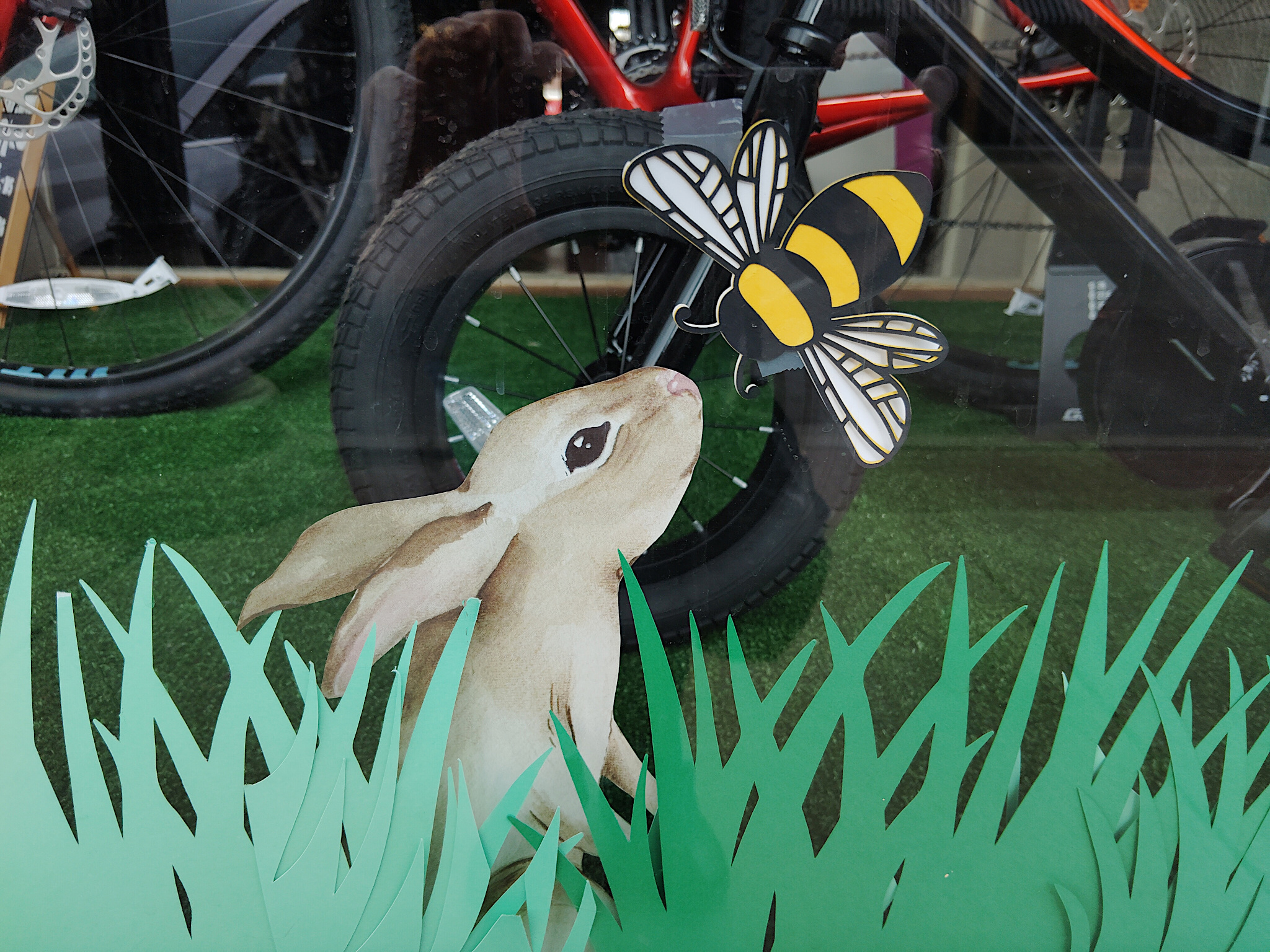
A spring scene set against a backdrop of bikes in the front window of Mill Town Cycles. (Minnesota Prairie Roots copyrighted photo April 2025)
Upon leaving the Paradise, I passed by Mill Town Cycles, glancing at the window display to see more creativity. You guessed it. There was another rabbit, this one poking through the grass to sniff a bee. It was a cute scene, perfect for spring, perfect for Easter.
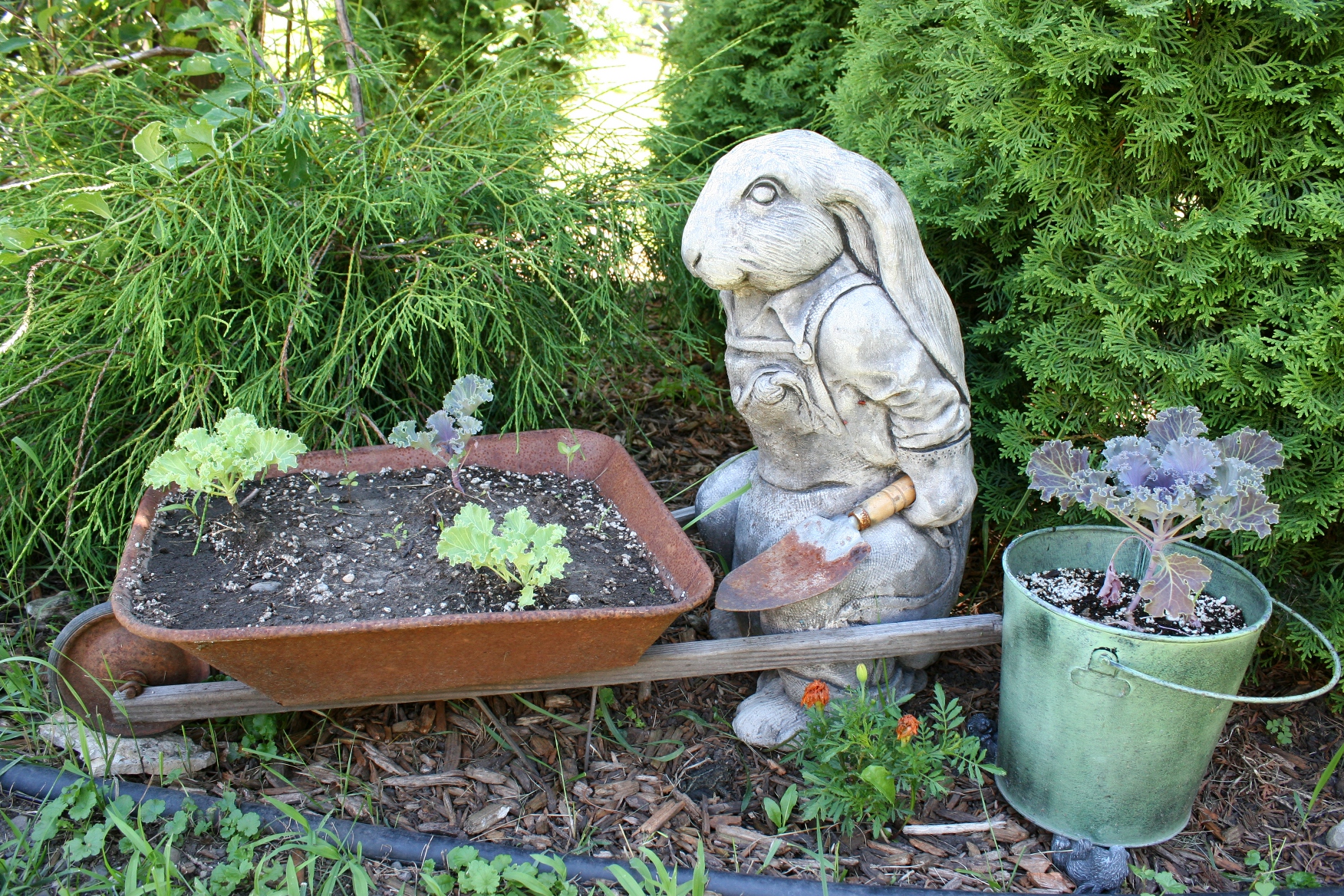
Garden art of a rabbit gardening. (Minnesota Prairie Roots copyrighted file photo)
Whether you like rabbits or not, universally-speaking, the Easter Bunny seems like a rabbit we can all love. As long as he stays out of the garden. And brings lots of candy.
#
FYI: The art of Karen Peters, Justin Peters, Clayton Hubert, Scott Maggart, Gail Gaits, Sushila Anderson and Bethlehem Academy students will be on display until May 10 at the Paradise Center for the Arts in historic downtown Faribault.I photographed the art of Karen Peters with permission of the PCA. The white spots in my photos of her framed art are unavoidable glare on the glass.
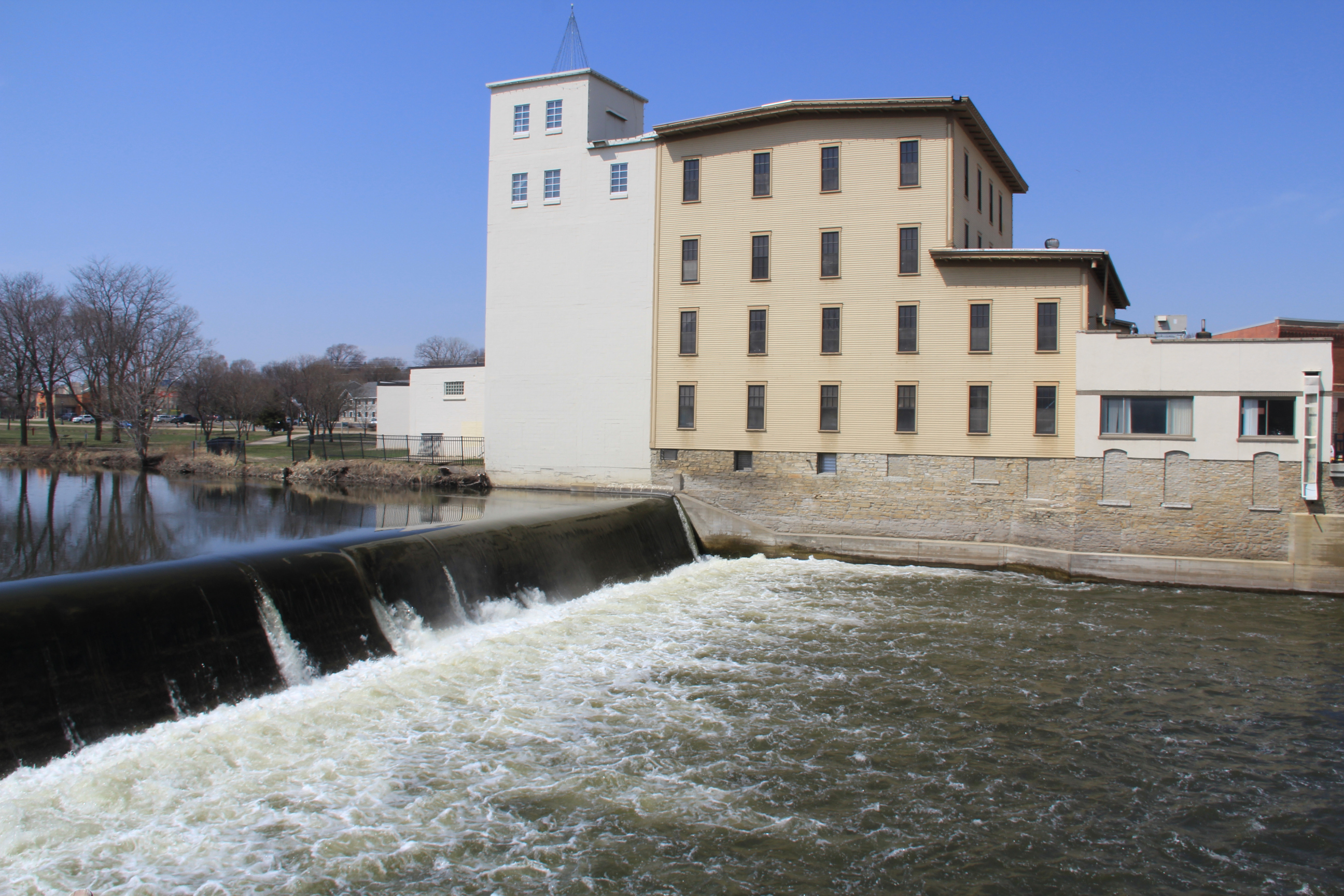
The Cannon River spills over the dam by the historic Ames Mill. (Minnesota Prairie Roots copyrighted photo April 2025)
WE COME TO THE RIVER. The Cannon River, spilling over the dam by the Ames Mill. Roaring. Churning. Then flowing under the bridge and between the walls of the Riverwalk in downtown Northfield.
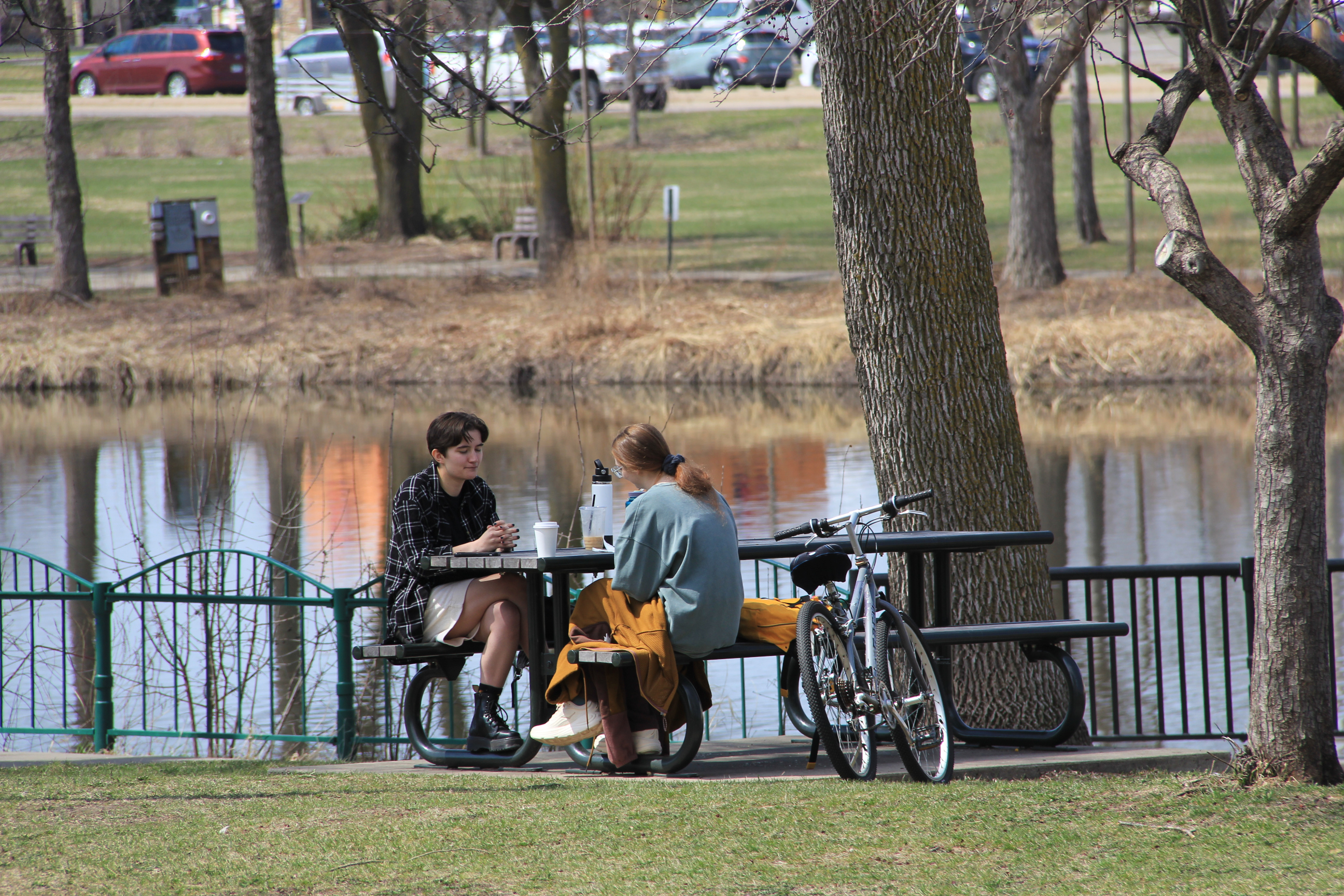
Enjoying beverages and time together beside the Cannon River in Bridge Square. (Minnesota Prairie Roots copyrighted photo April 2025)
We come here on a Sunday afternoon, on an April day of temps pushing into the sixties, the sun beaming warmth upon us, upon the land, upon the river. To sit. To walk. To lean toward the river. To simply be outdoors on an exceptionally lovely spring day in southern Minnesota.
The mood feels anticipatory, joyful, as we walk ourselves, and some their dogs, along the riverside path.
Historic buildings hug the Cannon River (and Division Street) in Northfield’s quaint downtown. (Minnesota Prairie Roots copyrighted photo April 2025)
I come with my Canon camera in hand. An observer. An appreciator of the sun, the sky, the warmth, the river, the historic buildings, the people and activities happening around me. In some ways, the scene seems Norman Rockwell-ish, Busy, yet tranquil. A slice of small town Americana. Everyday people enjoying each other, nature, the outdoors. Life.
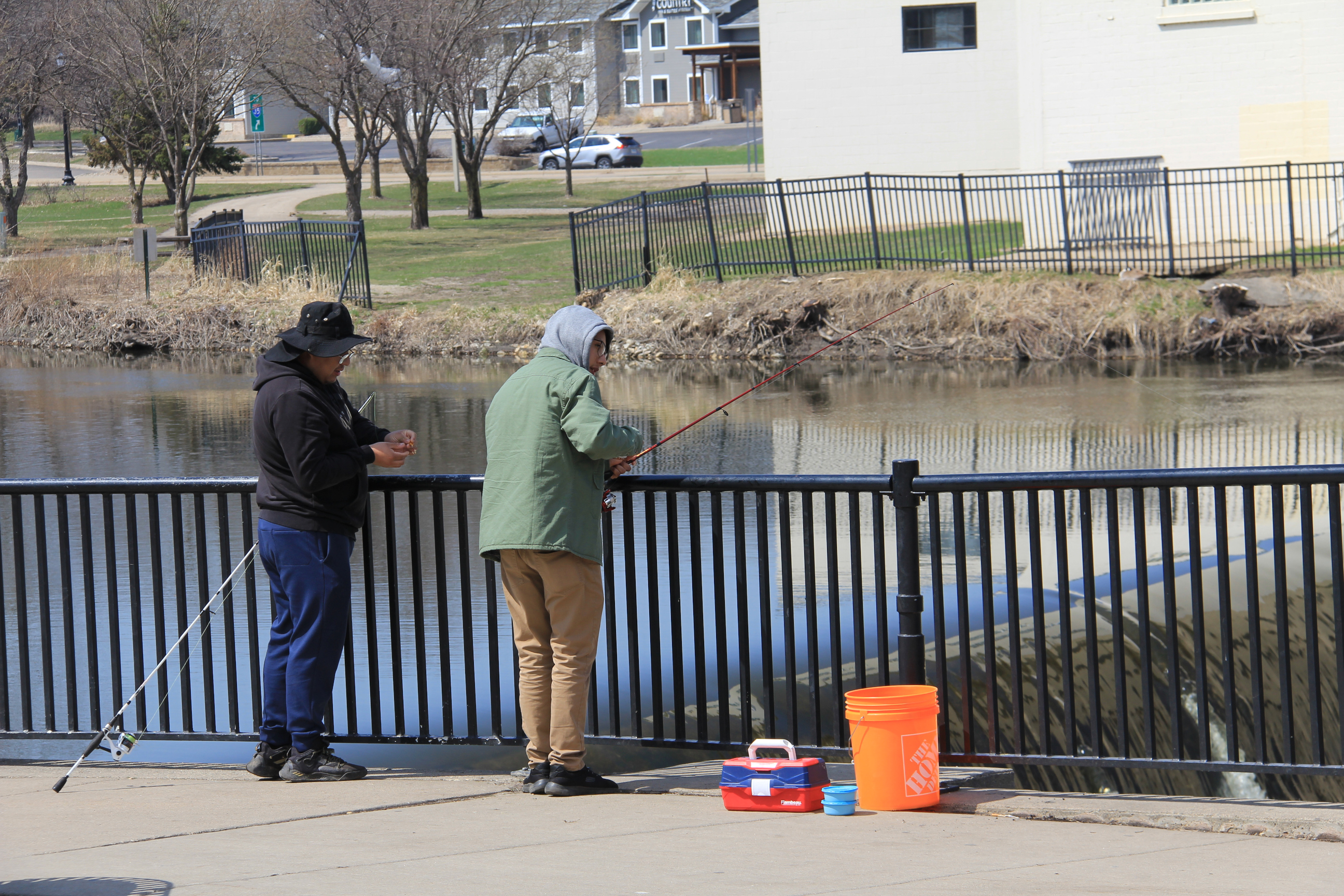
Fishing by the Ames Mill dam. (Minnesota Prairie Roots copyrighted photo April 2025)
Many carry fishing poles, tackle boxes, containers of bait. Anglers press against the riverside railing, dropping lines into the water far below.
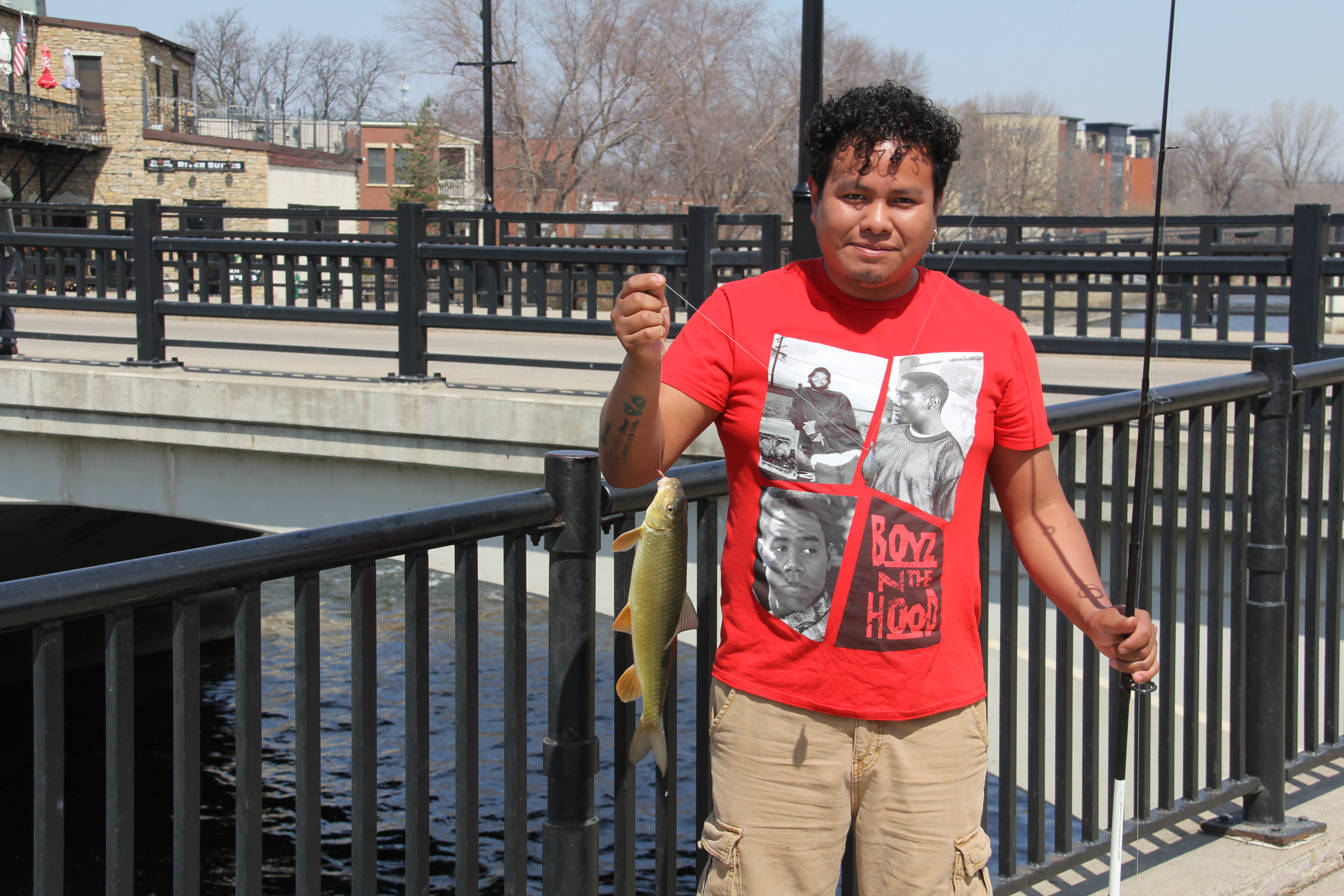
Caught in the Cannon, a sucker fish. (Minnesota Prairie Roots copyrighted photo April 2025)
I watch as a young man pulls in an unidentifiable-to-me fish (later identified as a white sucker by my husband). His friend snaps a photo of the proud angler and his first catch of the day.
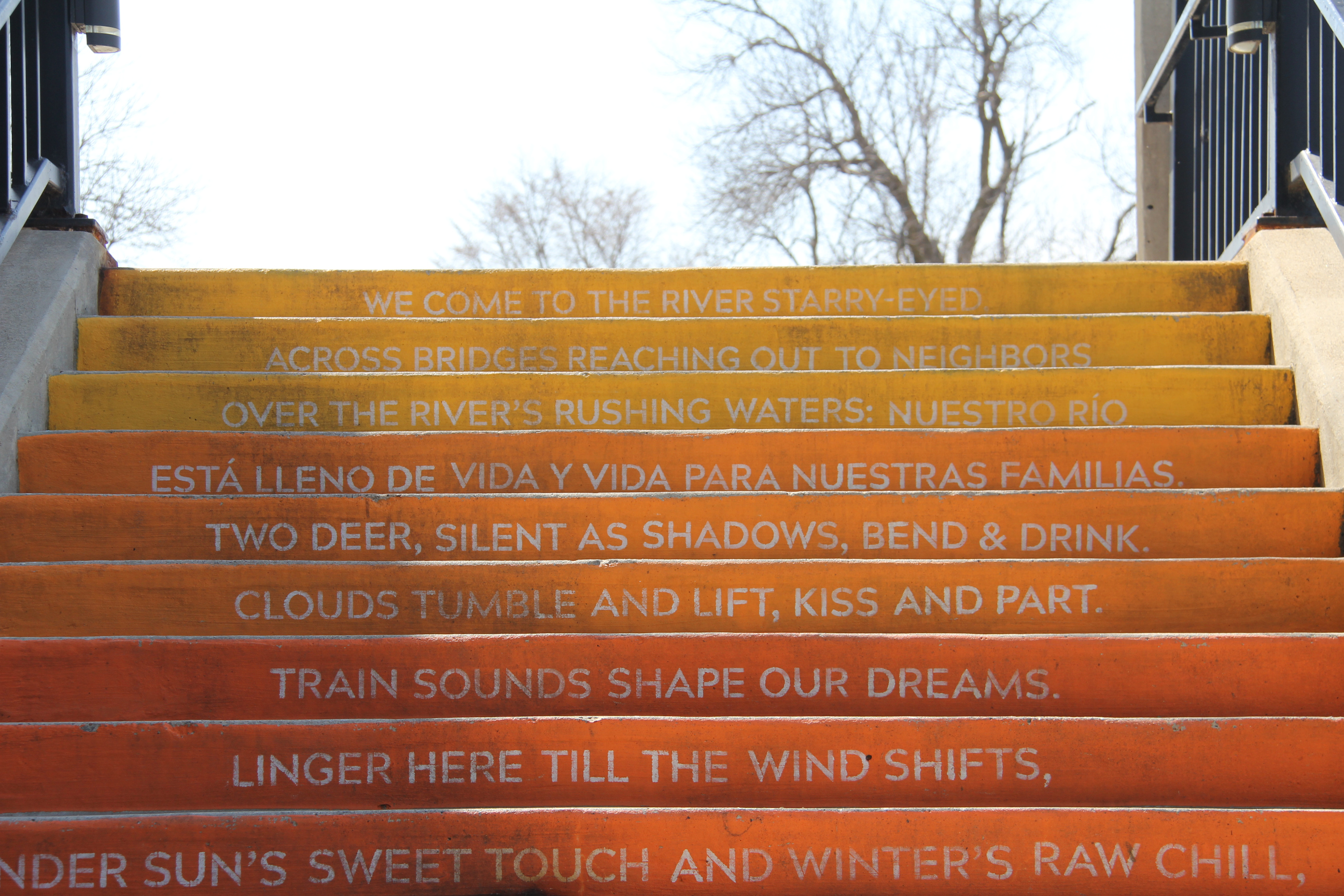
The top section of the Riverwalk Poetry Steps. (Minnesota Prairie Roots copyrighted photo April 2025)
After hanging around the river by Bridge Square for a bit, I descend the colorful Riverwalk Poetry Steps, a river poem crafted by a collaboration of 17 poets. We come to the river starry-eyed/across bridges reaching out to neighbors/over the river’s rushing waters…
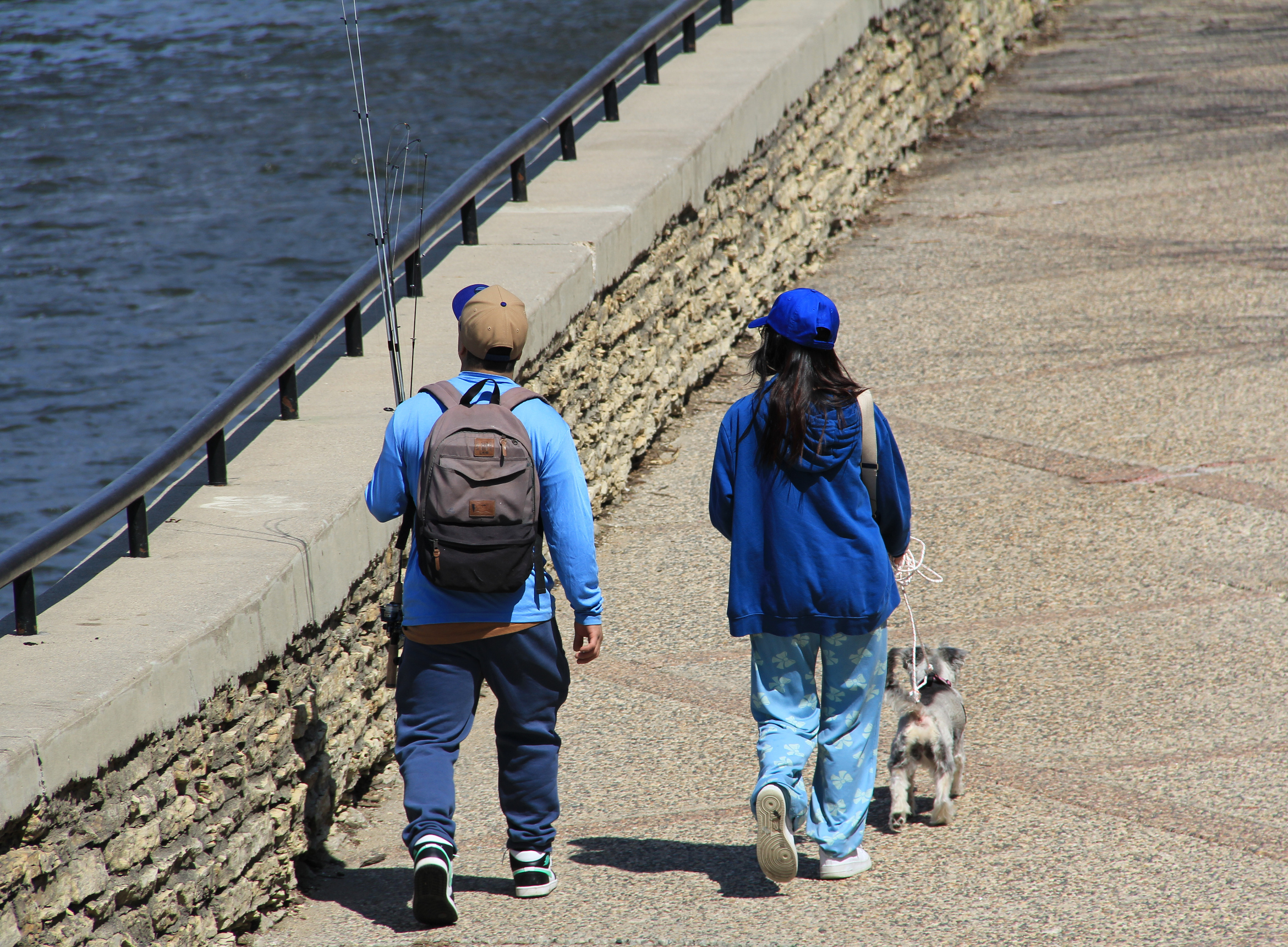
Following the Riverwalk to find a fishing spot along the Cannon River. (Minnesota Prairie Roots copyrighted photo April 2025)
I trail behind a couple, a family, a dog, another family, all of us connected by the water, by this place, on this spring day. I’m the only one to pause and read the poetry.
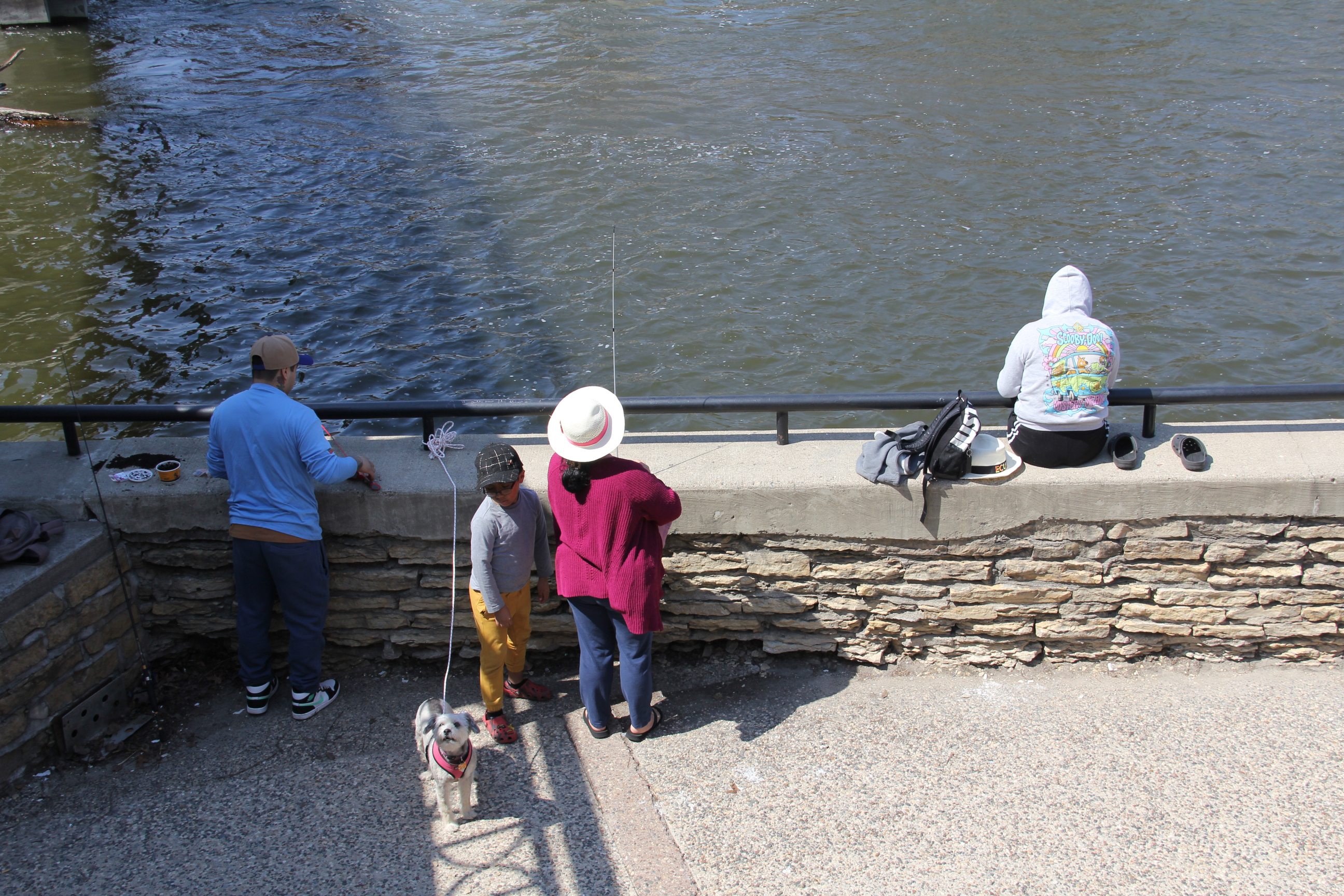
A family fishes the Cannon. (Minnesota Prairie Roots copyrighted photo April 2025)
Atop the river wall, young women sit, sans shoes, while they fish. We all watch the river flow. Bobbers bob. A pair of ducks—one pure white—flies low, skimming the water before landing upon the surface of the Cannon.
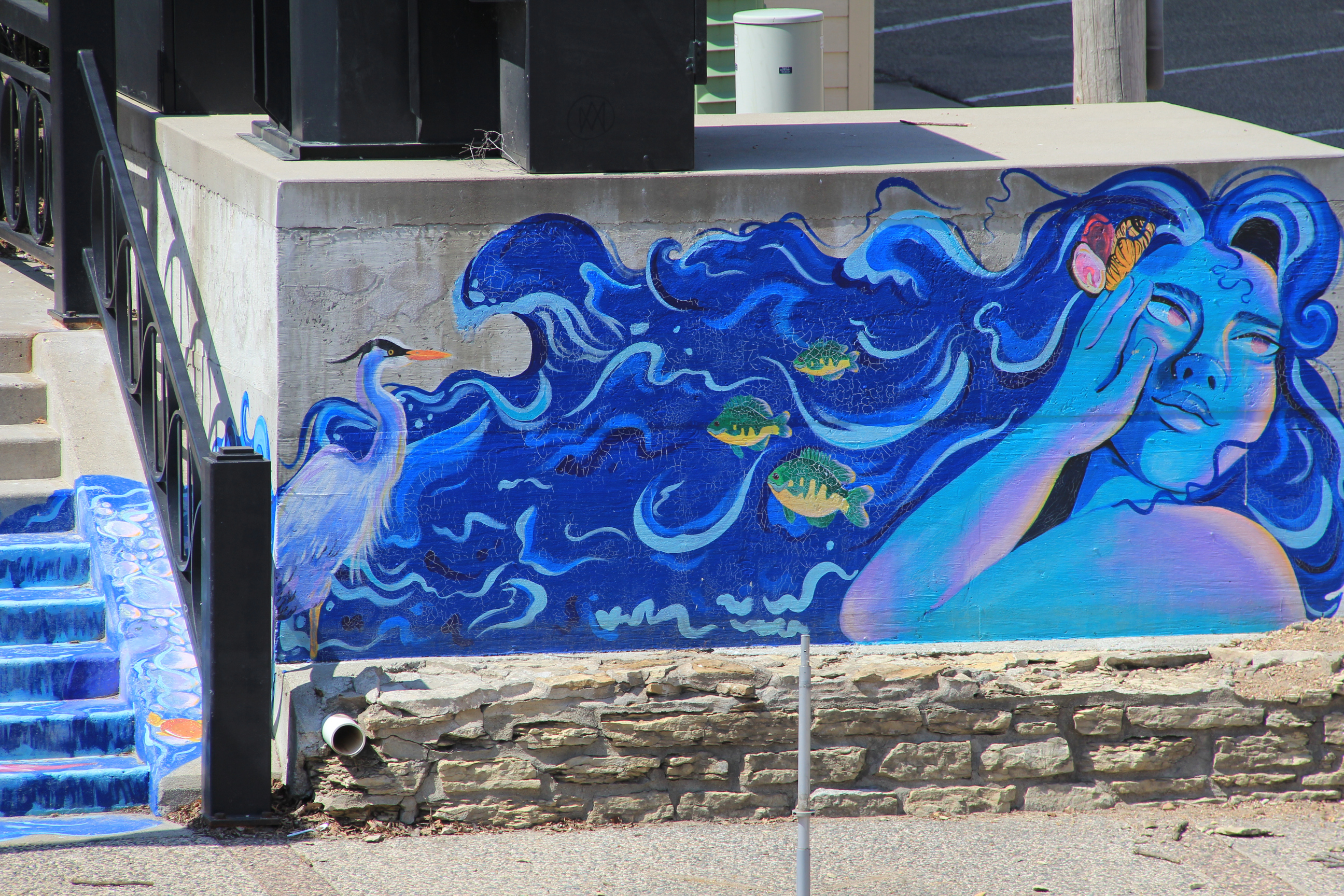
“Lady Cannon,” a riverside mural by Maya Kenney and Raquel Santamaria. (Minnesota Prairie Roots copyrighted photo April 2025)
Across the river, Lady Cannon watches. Fish swim in her tangled waves of locks, flowing like water down steps toward the river. She is the art of the Cannon.
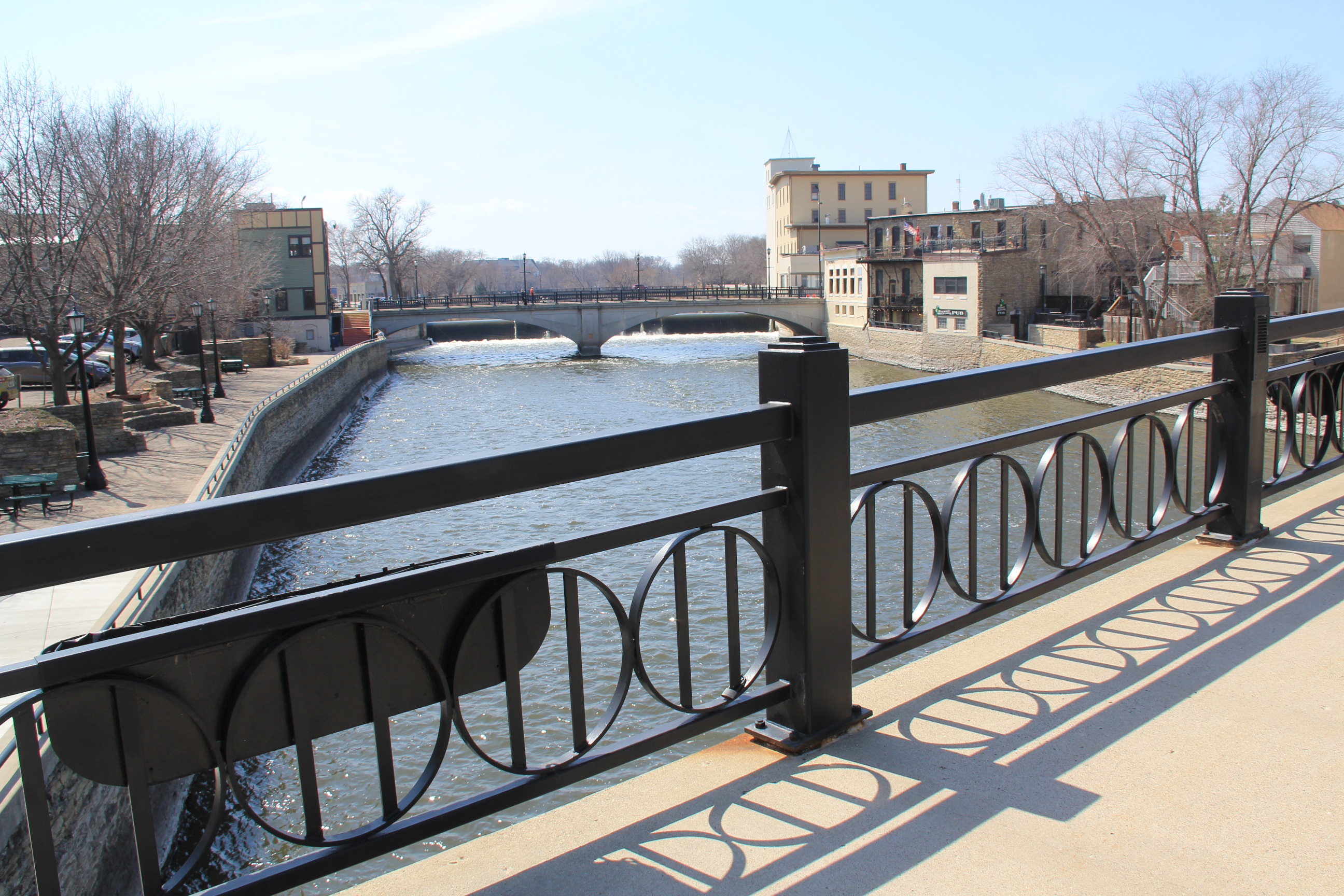
On the pedestrian bridge looking toward the Cannon and the Ames Mill, right in the distance. (Minnesota Prairie Roots copyrighted photo April 2025)
I see art, too, in a railing shadowed upon the pedestrian bridge. I linger, mesmerized by the moving water, the riverside historic flour mill a block away.
There’s so much to take in here. So much that connects us. The sun, the sky, the land. And the river that flows beside and below us.
This photo, taken during a car show in downtown Faribault, shows the diversity of my community. (Minnesota Prairie Roots copyrighted file photo)
WALK THROUGH THE HEART of downtown Faribault and you’ll see diversity. Diversity in businesses. Diversity in the people who live here. It’s a beautiful thing, at least to me.
A banner in Faribault’s historic district features a vintage photo outside a local business. (Minnesota Prairie Roots copyrighted file photo)
We need only look back to the founding of Faribault to understand the diversity which existed from the very beginning. Immigrants from around the world settled here, set up shop, engaged in business and grew this community. The shoemakers. The brewers. The furniture builders. The general store proprietors. The barbers. And on and on. They were as diverse as their skills. They shaped this place.
Faribault is the richer for those individuals and families who left their homelands, crossed the ocean, bringing their hopes and dreams to America. With the exception of Indigenous Peoples, we can mostly all trace our ancestry to a land a long ship ride away.
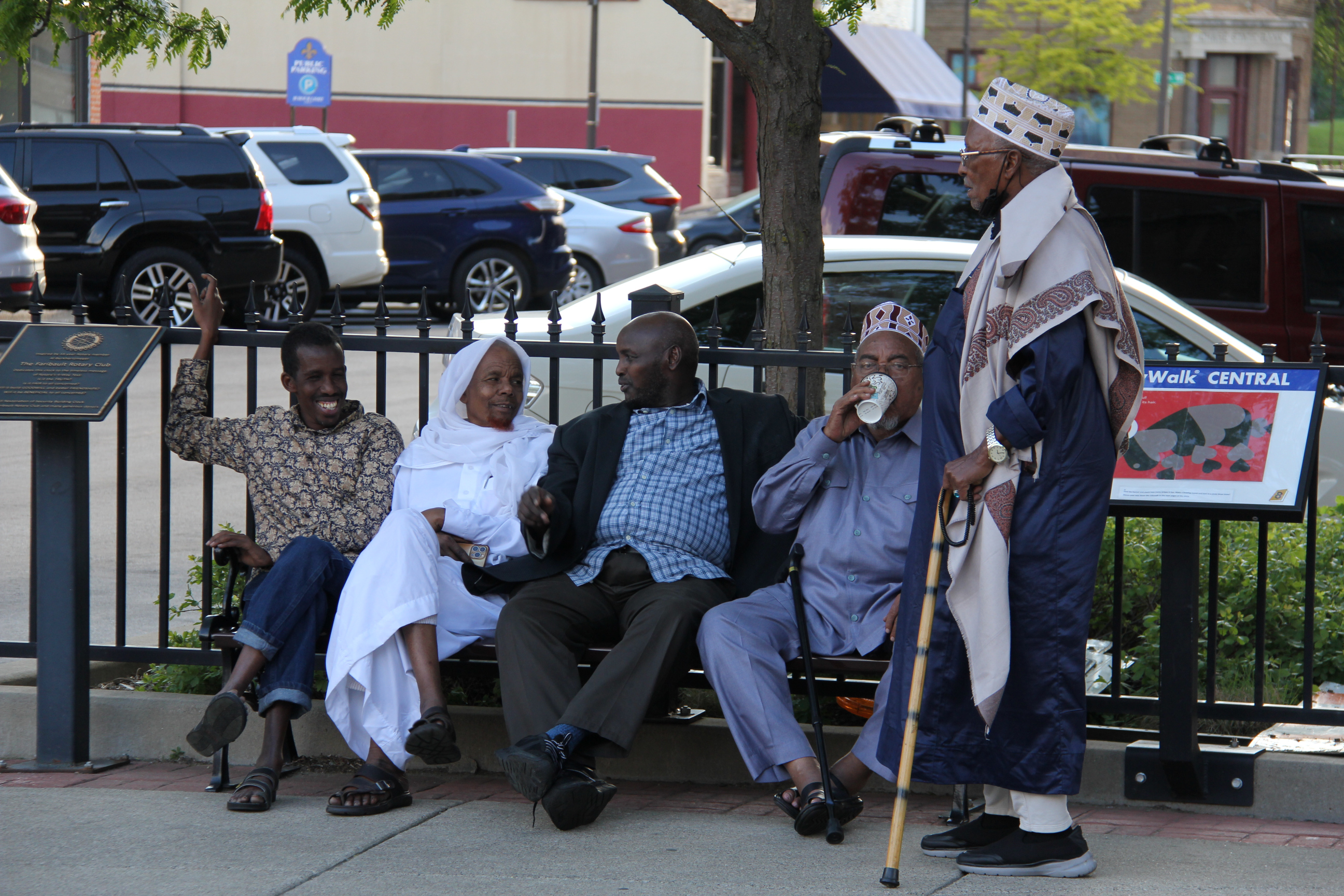
Somali men visit in downtown Faribault. My community is home to a sizeable Somali population, some of whom live downtown. (Minnesota Prairie Roots copyrighted file photo 2024)
Today our newest Faribault residents arrive mostly by plane. From Somalia. From Sudan. From Venezuela. From Mexico. And elsewhere. Many have fled worn-torn countries. Unimaginable atrocities. Their losses, their heartache, their pain is beyond what anyone should have to endure. But they have managed. They settle in, set up shop in our community, work in our local factories gutting turkeys and more, shingle our houses, cook and serve us their delicious cuisine… They work hard to rebuild their lives here in southern Minnesota. And I am glad to have them here as an integral part of my community.
Among the colorful merchandise at Mercado Local. (Minnesota Prairie Roots copyrighted file photo 2024)
In neighboring Northfield, a downtown shop, Mercado Local, vends the art, crafts and more of artisans from Latin America and Hispanic backgrounds. Under the umbrella of Rice County Neighbors United, a nonprofit supporting the immigrant and refugee communities of Northfield, Mercado Local has flourished, serving as a marketplace, arts center (I’ve read poetry here) and community gathering space.
(Promo courtesy of Mercado Local)
From 4-6 p.m. Tuesday, April 15, Mercado Local is hosting a fundraiser for this nonprofit which aims to “empower immigrant entrepreneurs to thrive.” There will be updates, raffles, promotions, Loteria (like BINGO) and, of course, Mexican food. Even if you can’t make the event, I encourage you to pop into the marketplace. Just being inside this small space with all its colorful art and wares makes me happy. That’s one of the things I appreciate about Hispanic and Latino culture—the vivid colors. And I rather like the food, too.
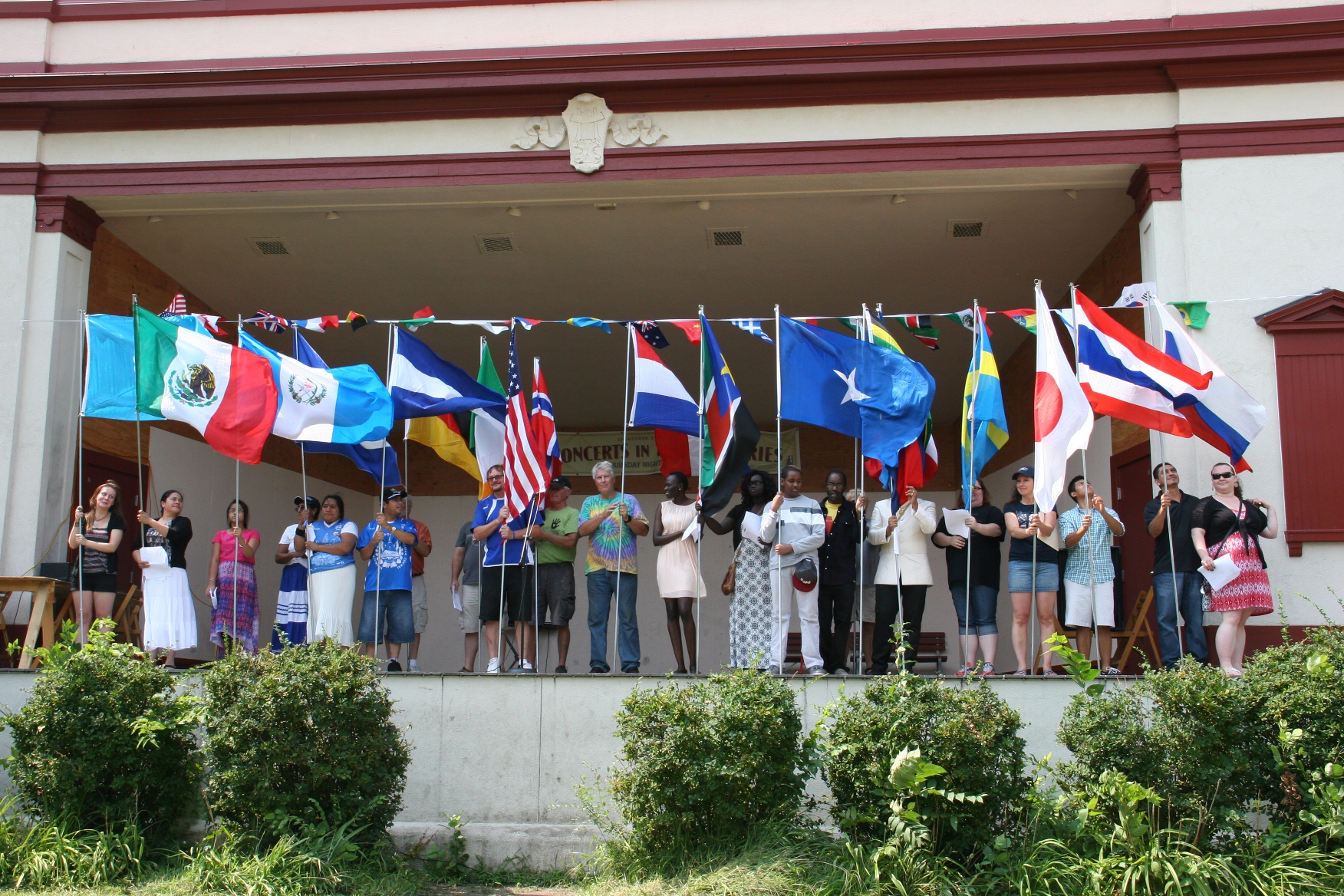
A flag ceremony at a past International Festival in Faribault featured national anthems and information about some of the countries from which Faribault residents have originated. (Minnesota Prairie Roots copyrighted file photo)
To have a diverse community is to experience the world up close, to widen our circle and understanding of others. Yet, no matter our skin color, our language, our customs, our dress, our roots, we are all just people. Individuals who laugh and cry and love and live. Now, together, we are growing our communities in new, exciting and diverse ways, just like those who crossed the ocean all those years ago to settle in America.
Ten years ago I photographed this polaroid picture and comment at an exhibit on voting rights at St. Olaf College in Northfield. This seems applicable to today. (Minnesota Prairie Roots copyrighted file photo 2015)
IN THE 1970s, students at my alma mater, Minnesota State University, Mankato, protested the Vietnam War. Today MSU students are protesting the detainment of an international student and the revocation of visas for five others who attend this southern Minnesota college where I studied journalism.
US Immigration and Customs Enforcement (ICE) has also detained a student from Riverland Community College in Austin, Minnesota, and from the University of Minnesota in the Twin Cities. Other international students from colleges across the state have also had their visas revoked. The same is happening at college campuses throughout the country. Students snatched off the street, from their apartments, by ICE. Pffff, gone, just like that with no explanation and no initial access to their friends, families and legal assistance. This does not sound like the United States of America I’ve called home my entire life.
I’m not privy to specifics on why particular international students were targeted. But I have read and heard enough reliable media reports to recognize that these are likely not individuals committing terrible crimes, if any crime. In most cases they have done nothing more than voice their opinions whether at a protest or via social media. College campuses have always been a place for students to speak up, to exercise freedom of speech, to be heard. To protest.
I photographed this inside my local public library, not recently, but not all that long ago. (Minnesota Prairie Roots copyrighted file photo)
I’m grateful that student journalists at The Reporter, the Mankato State student newspaper where I worked while in college, are aggressively covering this issue. In particular, I reference the article “SCARED TO LEAVE MY HOUSE’—Mavericks react to ICE-detained student, what’s being done by Emma Johnson. She interviews international students who, for their own protection, chose to remain anonymous. It’s chilling to read their words. Words of fear. Words of disbelief and disappointment in a country where they once felt safe and free. The place where they chose to pursue their education, jumping through all the necessary legal hoops to do so. And now they fear speaking up and are asking their American classmates and others to do so for them. So I am.
We’ve always been a nation that welcomed international students. (Minnesota Prairie Roots copyrighted file photo)
I photographed this sign on an American Legion post building in a small southeastern Minnesota community. It’s a reminder that veterans have fought for our freedom, including freedom of speech, and that we have always been a welcoming country. (Minnesota Prairie Roots copyrighted file photo)
These are troubling times. In my life-time, this has always been a nation where we’ve been able to freely express ourselves, where that freedom has been valued. We can agree to disagree. Respectfully. Without name-calling. Without the fear of suppression, retaliation and/or imprisonment. But I see that changing. Daily. And that, my friends, is cause for deep concern.
#
NOTE: I welcome respectful conversation. That said, this is my personal blog and I moderate and screen all comments.
RECENTLY, I WANDERED the aisles of a Big Box retailer searching for Pokemon cards. I needed a birthday gift for my granddaughter, who collects these popular trading and game cards. After walking aisle after aisle without success, I was about to give up. But then I spotted and flagged down a store employee who directed me toward the book section to the Pokemon and other cards.
I stood in front of the display scanning the packets, my eyes never landing on the word Pokemon. My frustration level was growing. I just wanted to be done with this seemingly fruitless search. I even asked a middle schooler to help me as he, too, perused the card merch. He directed me back to the toy aisles. Long story short, I eventually found the location of those coveted Pokemon cards on an end cap. The shelf was empty. There would be no new Pokemon cards for Izzy to add to her collection.
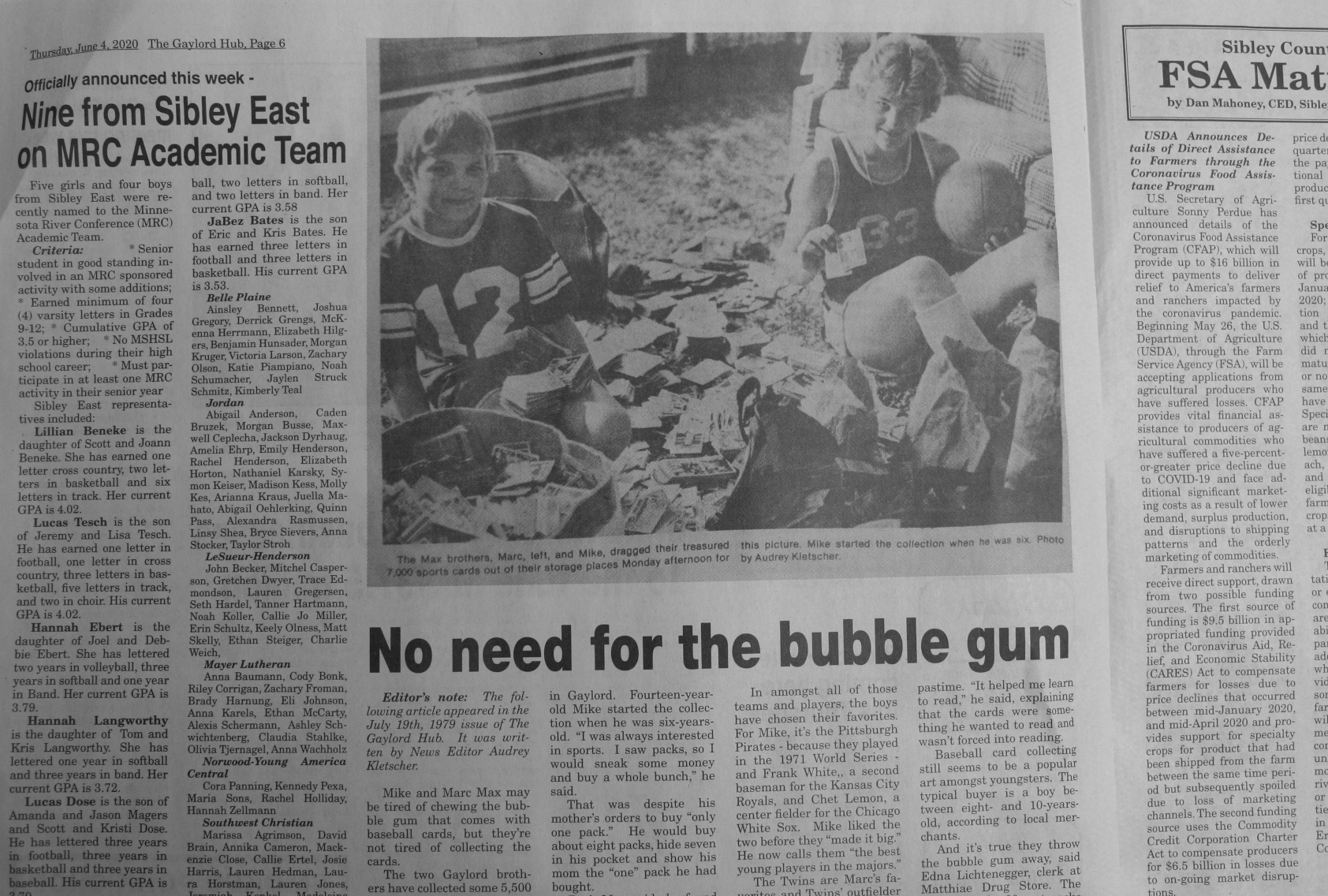
A feature I wrote in 1979 about brothers Mike and Marc Max and their collection of 7,000 sports cards was republished in the June 4, 2020, issue of The Gaylord Hub. I worked there as a newspaper reporter. Mike Max went on to become the sports director and anchor at WCCO-TV. (Minnesota Prairie Roots copyrighted file photo)
Kids have been collecting forever. Maybe not Pokemon cards, but something. Rocks. Beanie Babies. Stickers. Back in the 1960s, I collected “Lost in Space” trading cards featuring the popular sci-fi TV show. I have a few of them tucked away somewhere.
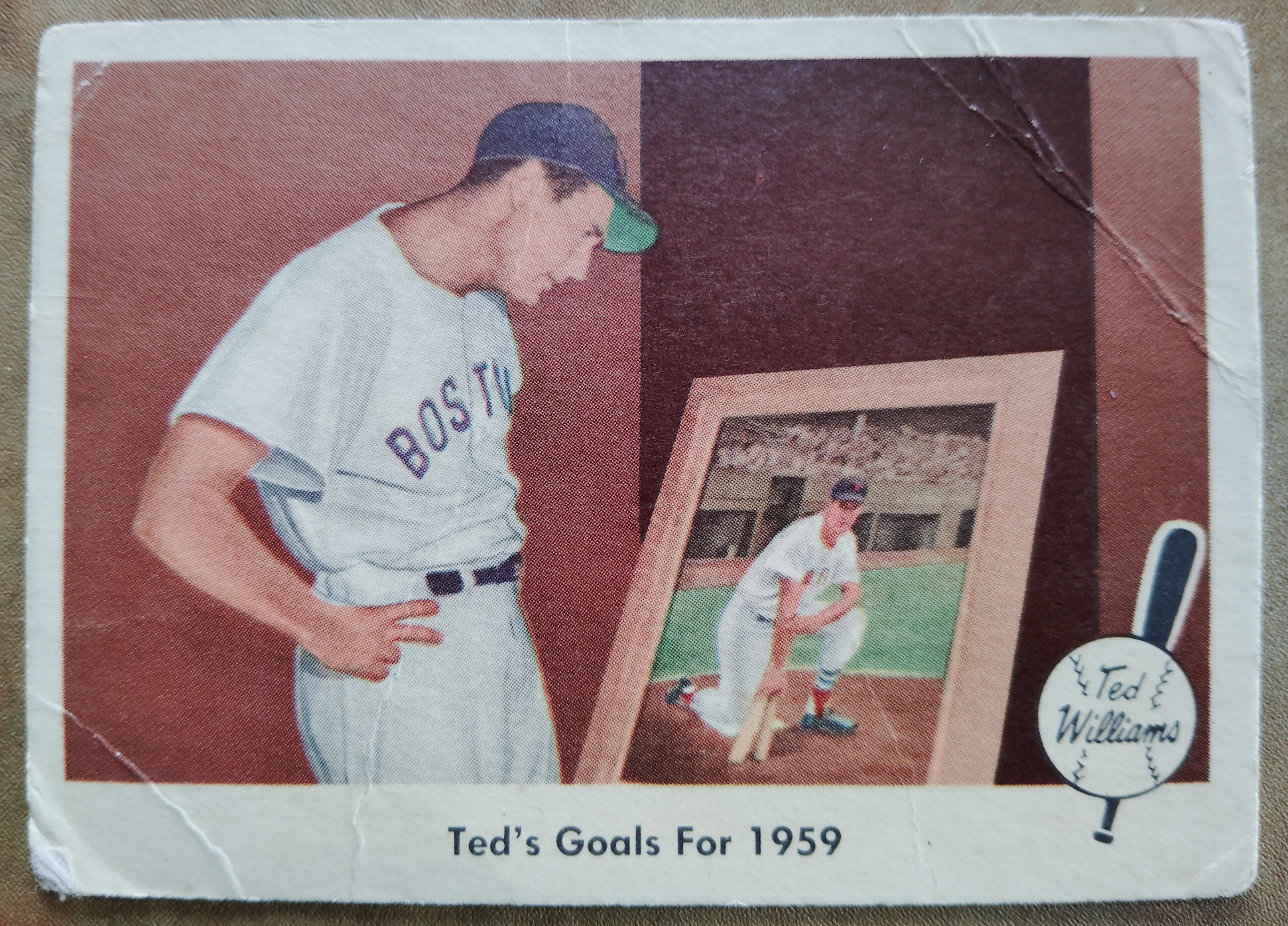
My 1959 Ted Williams baseball trading card, #80. (Minnesota Prairie Roots copyrighted photo April 2025)
My brothers, though, collected baseball trading cards, which were once packaged with bubblegum. They valued the cards more than the gum. I have a baseball card, too. A 1959 Ted Williams, card #80 of 80. He was a left fielder for the Boston Red Sox and 1966 Baseball Hall of Fame inductee. I checked its value with a top end price of $89. But with creased corners, my Williams card is nowhere near that valuable.
(Promo courtesy of The Cathedral of Our Merciful Saviour)
Some cards are, though. And if you’re a collector, you know. This weekend, there’s an opportunity to source sports cards and memorabilia locally at the 2nd annual Sports Card Show from 9 a.m.-4 p.m. Saturday, April 12, at the Cathedral of Our Merciful Saviour, 515 Second Ave. N.W., Faribault. The towering historic Cathedral is easy to find near downtown and across from Central Park.
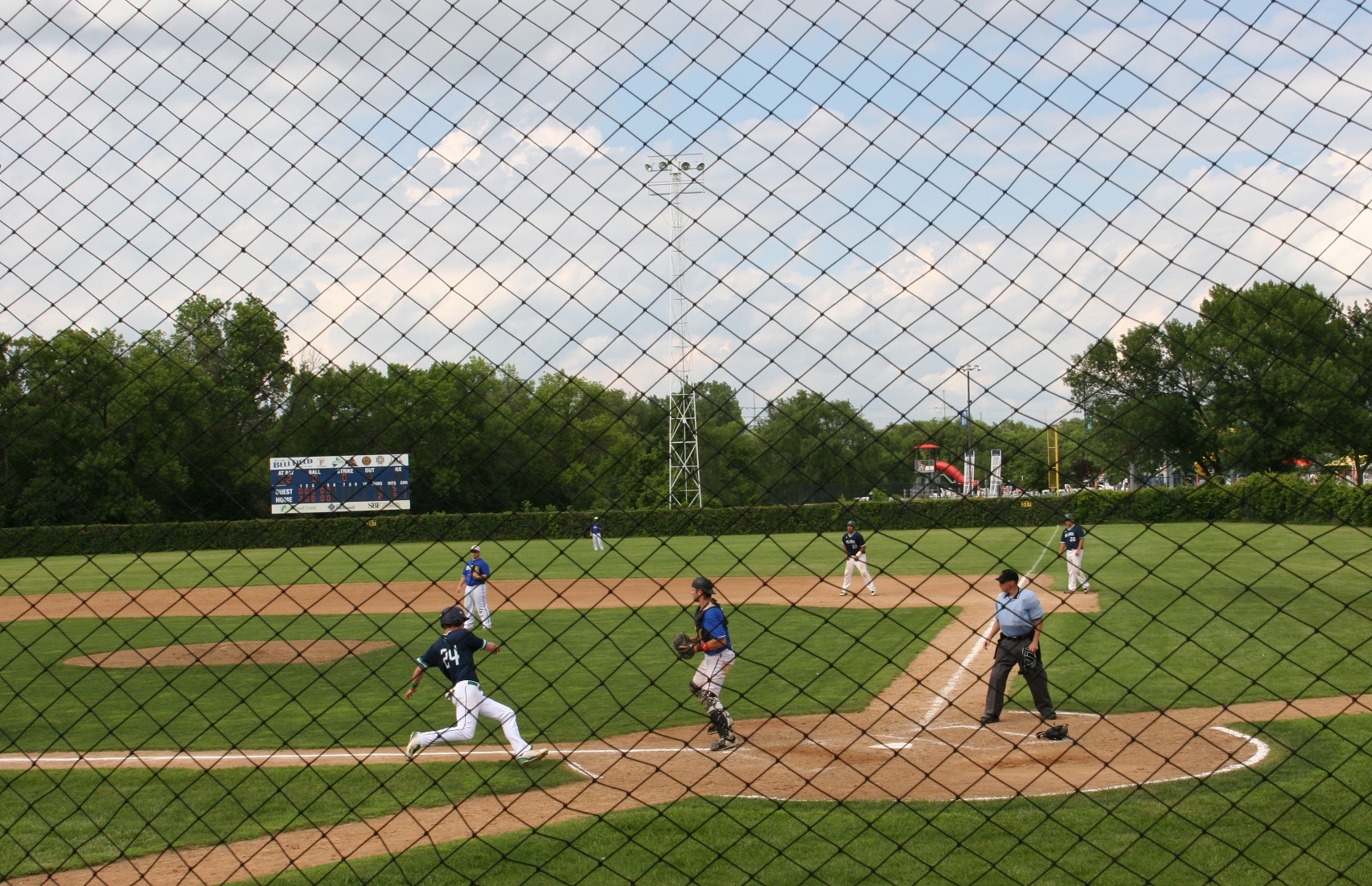
A Montgomery Mallard races toward home plate during a baseball game at Bell Field, Faribault. (Minnesota Prairie Roots copyrighted file photo)
Vendors will be setting up shop for the public to browse, trade and/or buy sports collectibles and memorabilia, according to show organizers. That’s from vintage to modern and includes autographed collectibles. I expect there to be a good turnout at the event as interest in sports and in sports merchandise remains as high as ever.
Ball and glove. (Minnesota Prairie Roots copyrighted file photo)
How well I remember my older brother, Doug, listening to Minnesota Twins games on his transistor radio back in the sixties. How well I remember playing softball in the farmyard on summer evenings after the chores were done, used disc blades serving as bases. Doug always insisted on being Harmon Killebrew or Tony Oliva. There was no arguing with him. How well I remember the play-by-play action my brothers gave of our games. How well I remember the mini wooden souvenir baseball bat that lay atop Doug’s dresser. There was no touching that collectible.
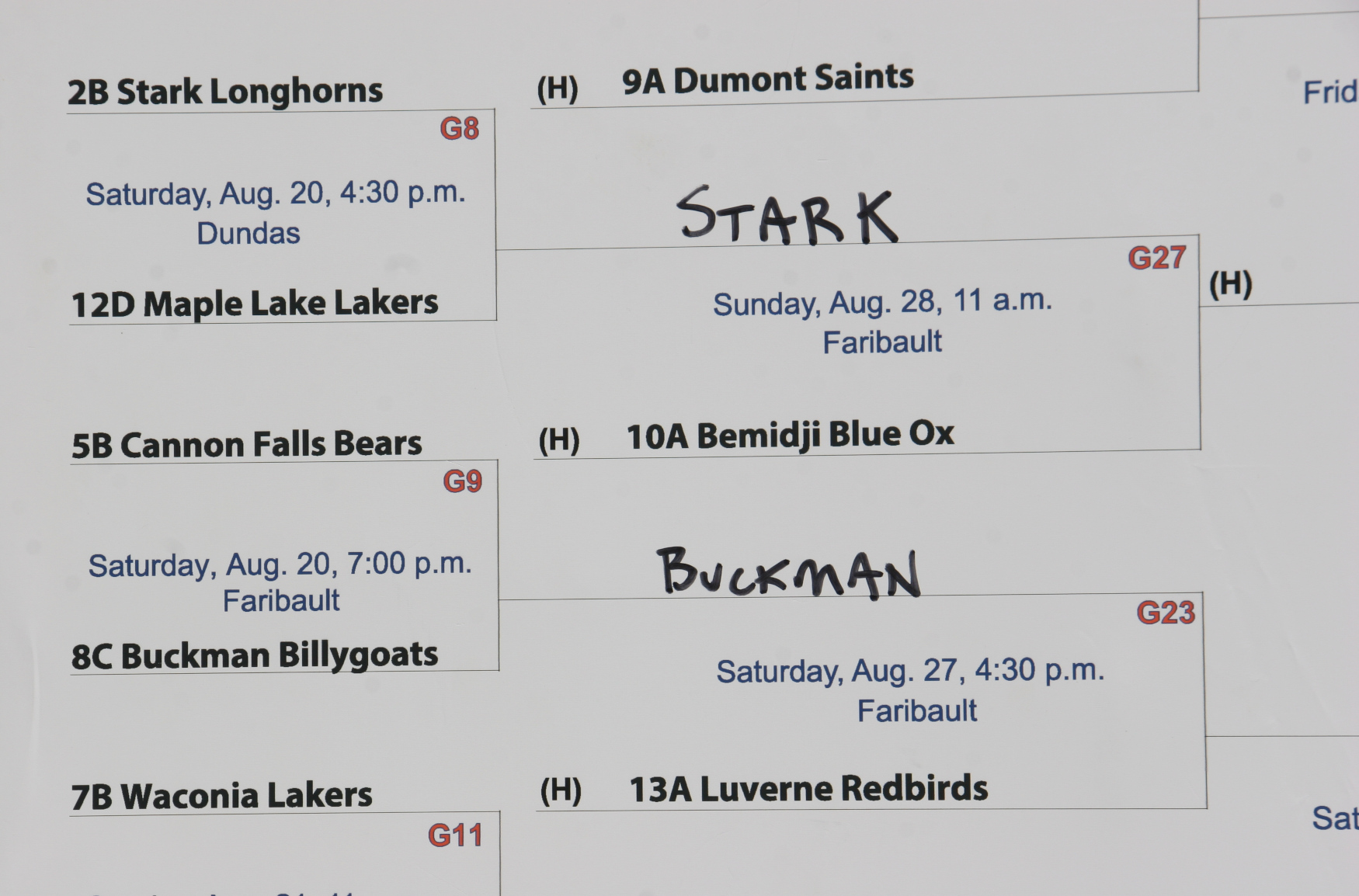
Brackets posted at Bell Field, when Faribault hosted the state amateur baseball tournament in 2022. (Minnesota Prairie Roots copyrighted file photo 2022)
All these decades later, I have minimal interest in baseball (except when my husband’s hometown ball team, the Buckman Billygoats, played in the state amateur baseball tournament). Many people, though, enjoy America’s favorite past-time and all that comes with it—like card collecting. Now, if you had a “Lost in Space” trading card, I’d be interested.















 Minnesota Prairie Roots
Commentary: No longer free to speak, to… April 11, 2025
Tags: college campuses, commentary, detained students, Freeborn County, freedom of speech, international students, Mankato, Minnesota, Minnesota State University Mankato, opinion, protests, student newspaper, The Reporter, visa revoked
IN THE 1970s, students at my alma mater, Minnesota State University, Mankato, protested the Vietnam War. Today MSU students are protesting the detainment of an international student and the revocation of visas for five others who attend this southern Minnesota college where I studied journalism.
US Immigration and Customs Enforcement (ICE) has also detained a student from Riverland Community College in Austin, Minnesota, and from the University of Minnesota in the Twin Cities. Other international students from colleges across the state have also had their visas revoked. The same is happening at college campuses throughout the country. Students snatched off the street, from their apartments, by ICE. Pffff, gone, just like that with no explanation and no initial access to their friends, families and legal assistance. This does not sound like the United States of America I’ve called home my entire life.
I’m not privy to specifics on why particular international students were targeted. But I have read and heard enough reliable media reports to recognize that these are likely not individuals committing terrible crimes, if any crime. In most cases they have done nothing more than voice their opinions whether at a protest or via social media. College campuses have always been a place for students to speak up, to exercise freedom of speech, to be heard. To protest.
Secretary of State Marco Rubio has labeled students with revoked visas as “lunatics.” Really? Name-calling doesn’t impress me. Nor do actions to intimidate, instill fear and silence voices.
I’m grateful that student journalists at The Reporter, the Mankato State student newspaper where I worked while in college, are aggressively covering this issue. In particular, I reference the article “SCARED TO LEAVE MY HOUSE’—Mavericks react to ICE-detained student, what’s being done by Emma Johnson. She interviews international students who, for their own protection, chose to remain anonymous. It’s chilling to read their words. Words of fear. Words of disbelief and disappointment in a country where they once felt safe and free. The place where they chose to pursue their education, jumping through all the necessary legal hoops to do so. And now they fear speaking up and are asking their American classmates and others to do so for them. So I am.
MSU students, staff and community members have rallied to support their international community and to voice their opposition to ICE’s action. In neighboring Albert Lea, where the MSU student is being held in the Freeborn County Jail, a crowd gathered on Thursday to protest ICE action against international students. Of course, not everyone agrees with the protesters and it is their choice to disagree. They can. They are not international students here on visas.
I should note that the sheriffs in Freeborn County and four other Minnesota counties—Cass, Crow Wing, Itasca and Jackson—this week signed agreements to cooperate with ICE.
These are troubling times. In my life-time, this has always been a nation where we’ve been able to freely express ourselves, where that freedom has been valued. We can agree to disagree. Respectfully. Without name-calling. Without the fear of suppression, retaliation and/or imprisonment. But I see that changing. Daily. And that, my friends, is cause for deep concern.
#
NOTE: I welcome respectful conversation. That said, this is my personal blog and I moderate and screen all comments.
© Copyright 2025 Audrey Kletscher Helbling