Minnesota Prairie Roots

Writing and photography by Audrey Kletscher Helbling

Call us crazy, but we really do drive vehicles onto lakes in Minnesota February 4, 2013

HOW WOULD YOU REACT if you read this warning on a website:

Winsted Lake closed to motor vehicle traffic

Now, if you are a native of say California or Texas, Hawaii or Florida, you might react with an incredulous expression and/or a follow-up question:

What do you mean, motor vehicle traffic on a lake?

But, if you reside say in Wisconsin, the Dakotas or Minnesota, you’d understand motor vehicles on a lake and the ban issued by the Minnesota Department of Natural Resources on January 25:

Winsted Lake in McLeod County has been temporarily closed to motor vehicle traffic due to deteriorating ice conditions…

The DNR urges the public to exercise extreme caution if using the lake, especially in the area near the aeration system. Ice thicknesses in that area may be less predictable than in other parts of the lake.

This is expected to be a temporary closure. Once ice thicknesses have stabilized, the lake will be reopened to motor vehicle traffic.

A recent ice fishing scene from Lake Mazaska west of Faribault in Shieldsville.

A recent ice fishing scene from Lake Mazaska west of Faribault in Shieldsville shows a cluster of fish houses and vehicles on the lake.

Yes, in Minnesota we drive cars, trucks and other vehicles onto frozen lakes to access ice fishing houses or open-air fishing spots. Sounds crazy, I know. But ice fishing, in which a hole is drilled into the ice to fish, is a big sport here. For example, some 5,500 fish houses are set up each winter on Mille Lacs Lake, probably our state’s most popular winter fishing destination. Roads are even plowed, bridges placed, across Mille Lacs to allow easier access to houses outfitted with kitchens, beds and other comfy accommodations.

Decades have passed since I ice fished on Roberds and Cannon lakes near Faribault with my husband, in the days before children. We’d fish, drink a little beer, play cards and, maybe, catch a few fish. That was all good and fun, until the first time I heard the ice crack. Let me tell you, that sharp crack and the sudden realization that ice can give way (duh) unsettled me. Not that I stopped ice fishing. But I thought more about the vast cold lake beneath me and how I couldn’t swim, as if swimming would be of any value anyway in icy water.

Those long forgotten worries crossed my mind the other day when my husband and I drove through Shieldsville, past Mazaska Lake where nomad fishermen (and perhaps some women, too) have set up a temporary village on the ice. Randy asked if I wanted to go onto the lake, as in our car. My answer was an emphatic no.

Simply put, I put faith in the DNR’s warning:

There is no such thing as 100 percent safe ice.

A slightly different version of the scene above. "What's that, a penguin walking across the lake?" my husband laughed.

A slightly different version of the scene above. “What’s that, a penguin waddling across the lake?” my husband laughed.

HAVE YOU EVER GONE ice fishing? What are your thoughts on the sport and/or driving onto a frozen lake?

FOR ANOTHER TAKE on ice fishing, check out Gretchen O’Donnell’s blog post, “Ice Fishing is for Real,” at A fine day for an epiphany by clicking here.

Or visit Gary Sankary’s humorous Old and in the Way blog to read about ice fishing in Wisconsin in “Blake Lake Report where I ask–What the hell?’ by clicking here. And then follow-up by clicking here to read his second post, “Ice Fishing–Answering the question “why?”, a persuasive “speech” on the merits of fishing on a frozen lake.

Did you know a production crew was in the Mille Lacs Lake area recently filming for a possible truTV show on ice fishing, according to the St. Cloud Times?

© Copyright 2013 Audrey Kletscher Helbling


Learning about my new neighbor, from the Minnesota Department of Corrections February 2, 2013

WE AREN’T EXACTLY ROLLING OUT the welcome mat in my Faribault neighborhood for our soon-to-be newest neighbor.

Phillip Louis Davis, after all, isn’t the type of neighbor any of us would want. But he’s served his prison time and now he’s free to go. Sort of. He’ll be under correctional supervision until his sentence expires in November 2018.  And he must register as a predatory offender for the next 10 years.

Thursday evening I attended a community notification meeting to learn more from Michéle Murphy of the Minnesota Department of Corrections about 54-year-old Davis who received a 98-month prison sentence in 2005 for first degree criminal sexual conduct with a 4-year-old. He had previously been charged with third degree criminal sexual conduct involving a 15-year-old at a hotel swimming pool. And, Davis has a history of exposing himself to adult females.

As Murphy began her presentation to about a dozen residents, she noted her goal—to help achieve “reduced anxiety” among those in attendance.

I don’t know that any of us left feeling less anxious. But we certainly exited the meeting more informed.

Informational sheets distributed at Thursday's community notification meeting.

Informational sheets distributed at Thursday’s community notification meeting.

That brings me back to Davis’ freedom. Although he’s free of prison walls, he’ll be under intensive supervised release. This is nothing I didn’t already know, having attended at least three previous community notification meetings involving other Level 3 predatory offenders scheduled for release into my neighborhood. But a review of conditions is always valuable information to carry in your pocket.

Davis, among other requirements, will be on GPS for the first 60-90 days (or longer); can be checked on at any time; must make daily phone contact with his supervising agent; must complete sex offender programming; cannot use the internet or any device with internet capabilities (and, yes, that includes a cell phone); and cannot have contact with minors.

In defining “contact with minors,” Murphy noted, for instance, that Davis can’t even wave at a child or, when he’s at the grocery store, ask, “Where’s the bread?”

That is good to know, especially since this predatory offender is moving into a neighborhood filled with children (15 within eyesight from my front yard) and about a stone’s throw from a school bus stop.

I worry about the children. I was particularly disappointed that the parents of neighborhood children and representatives of Faribault schools and the local school bus company did not attend the community notification meeting.

BUT AT LEAST ONE FARIBAULT FATHER, whose daughter was the victim of another Level 3 predatory offender, was there to raise questions and voice his concerns. You could feel his frustration, hear his anger, especially when he stated that he expects Davis to re-offend. For the sake of my community, I hope he is wrong.

The father also muttered something about wishing he could take matters into his own hands. At that point a representative of the Rice County attorney’s office and Faribault Police Chief Andy Bohlen warned the audience that vigilantism will not be tolerated, that Davis has served his time and is free to live within our community. They were correct to lecture us. But in that moment, my heart truly went out to that father who has walked through hell.

I struggled, too, at one point to curb my emotions when I asked why these Level 3 predatory offenders keep choosing my neighborhood, the same two blocks of Willow Street (four times now, maybe five, I’ve lost exact count). I got the same answer a police department spokesman gave me several days ago: Some property owners are just willing to rent to offenders.

When I pressed for information on how predatory offenders are getting these property owners’ names, I didn’t really get an answer. I don’t think they are sitting in prison reading the classifieds in the Faribault Daily News searching for an apartment to rent. Nor did I get an answer as to where Davis had been imprisoned or whether he had completed sex offender treatment while incarcerated.

DOC rep Murphy did add that offenders sometimes have friends and family in the neighborhood, which I don’t believe to be the case with Davis. (His offenses against the 4-year-old and 15-year-old did occur in Rice County.) Living arrangements are approved by the supervising agent.

SO HOW MANY LEVEL 1, 2 and 3 registered predatory offenders live in Faribault? Seventy. That number excludes those incarcerated at the Minnesota Correctional Facility, Faribault. Thirty-two more live in other parts of Rice County.

In the entire state of Minnesota, there are approximately 17,400 registered predatory offenders, Murphy said. Of those, 287 are classified as Level 3 “higher risk” predatory offenders, like Davis, for whom community notification is required by state law.

Minnesota, unlike some other states, does not have residence restrictions such as restricting predatory offenders from living near schools, daycares, parks, etc., Murphy said. Cases and statistics show, she said, “It’s not where someone lives, but the relationships they are engaging in (which determine who is victimized).” In Davis’ case, he knew his victims.

Ninety percent of sexually-abused children are abused by someone they know or trust, Murphy said.

Armed with that and other information, we were advised not to engage or approach Davis should we suspect/observe him violating conditions of his release. Rather, we should contact police immediately.

You can bet not a single person at that meeting would hesitate, not for a second, to inform law enforcement of suspected violations. We will be watching—for the sake of our children.

FYI: To learn more about Davis, the Level 3 predatory offender moving into the 300 block of Willow Street on February 7, click here to reach the Minnesota Department of Corrections offender information page.

© Copyright 2013 Audrey Kletscher Helbling
 

Photo art magic February 1, 2013

IF THERE’S ONE THING I’ve learned about photography, it’s that you never stop learning.

Take, for example, my recent discovery that even not-so-good bad images can be salvaged via the magic of digital editing.

Well, you’re probably thinking right about now, “Duh, Audrey, everyone knows that.”

Sure I am aware photos can be cropped, sharpened, contrast changed, etc. I’ve used all of those basic editing tools.

But how about transforming a ho-hum, out-of-focus and/or low-light photo into a work of art? It can be done with minimal effort. I basically just play around with artistic and other editing tools until I achieve results which please my eyes and fit whatever mood or effect I’m trying to achieve.

Most important, I approach my photos from an artistic, rather than a purely photojournalistic, perspective.

Now I know everyone is not going to like artsy photos. When I gushed to my husband about the images I’d edited, he viewed the “before” and “after” and stated emphatically that he preferred the originals. I wasn’t about to sway his opinion. He was clear on that.

That said, here are some original and reworked photos from Louie’s Toy Box Farm Toy Show held recently in St. Peter. I aimed primarily for a more vintage look, in most instances, given the subjects are vintage collectibles. With other photos, I emphasized strong lines and colors, or lack thereof, for a more modern art approach.

BEFORE:

Problem: Focus and glare issues.

Problem: Not bad, but some focus and glare issues.

AFTER:

Solution: Apply cartoon tool to reduce glare and lend a more vintage look.

Solution: Apply cartoon tool to reduce glare and lend a more vintage look. (That’s a rotary lawnmower, BTW.)

BEFORE:

Problem: Out-of-focus and boring photo.

Problem: Out-of-focus and boring.

AFTER:

Solution: Simplify by converting to black-and-white and then apply the posterize tool. This emphasizes the element  of strong lines.

Solution: Simplify by converting to black-and-white and then applying the posterize tool. This emphasizes the element of strong lines without the distraction of color.

BEFORE:

Problem: Totally out of focus and in need of cropping.

Problem: Totally out of focus and in need of cropping.

AFTER:

Solution: Apply the posterize tool to divert the eyes from focus problems, thus emphasizing the interesting lines and strong colors in this image. Also crop.

Solution: Apply the posterize tool to divert the eyes from focus problems, thus emphasizing the interesting lines and strong colors in this image. Also crop.

BEFORE:

Problem: This photo of a child's Gilbert Chemistry Experiment Lab does not have issues and could be published unedited.

Problem: This photo of a child’s Gilbert Chemistry Experiment Lab does not have issues and could be published unedited. But I wanted to give it a more vintage look.

AFTER:

Solution: With the cartoon tool application, I added a subtle vintage vibe to the image.

Solution: With the cartoon tool application, I added a subtle vintage artsy vibe to the image.

Now if I was particularly tech savvy, which I am not, I’d be capable of producing even more creative photo art. But I’ve much to learn still and that keeps photography interesting.

THOUGHTS?

© Copyright 2013 Audrey Kletscher Helbling
 

Where the men & boys shop: At a rural Minnesota farm toy show January 31, 2013

OH, TO BE A FARM KID again, steering toy tractors through imaginary fields, corralling cattle into a replica barn, pretending to be a farmer just like Dad.

A trio of brothers dressed in John Deere attired waited while their dad signed up for a Massey Harris tractor raffle from Rice County Steam & Gas Engines, Inc.

A trio of brothers dressed in John Deere attire wait while their dad signs up for a Massey Harris tractor raffle from Rice County Steam & Gas Engines, Inc. The youngest was camera shy.

I imagine many of the kids tagging along with Grandpa or Dad to Louie’s Toy Box Farm Toy Show at the Nicollet County Fairgrounds in St. Peter last weekend were farm kids wishing for a new toy tractor or other piece of farm equipment to role-play their futures, or their ancestral pasts.

Masses of shoppers among a mass of merchandise.

Masses of shoppers among a mass of merchandise.

Shouldering my way through packed aisles Saturday morning, I couldn’t determine who seemed more excited—the men or the boys. And they had every reason to thrill in the mass of ag-related merchandise displayed by 43 vendors from Minnesota, South Dakota, Wisconsin, Iowa and Illinois.

Johnson Hall, site of Louies' Toy Box Farm Toy Show.

Johnson Hall, site of Louie’s Toy Box Farm Toy Show.

I didn’t know quite what to expect when I entered the unassuming pole-shed style Johnson Hall at the fairgrounds. But I didn’t expect to find so many people (an estimated 2,000 weekend attendees), so many vendors and so much merchandise crammed into such a tight space. This venue is definitely too uncomfortably small for a toy show of this size.

Vending John Deere toy tractors.

Vending toy John Deere tractors.

That aside, I managed to wiggle my way through mostly throngs of men sporting caps and sweatshirts advertising ag companies. John Deere, which marked its 175th anniversary in 2012, showed a dominating presence in apparel.

But when it came to merchandise, I expect every line was represented.

My first look at the farm toy show left me feeling overwhelmed.

My first look at the farm toy show left me feeling overwhelmed.

Upon first entering the toy show, I just stood there, overwhelmed by the stacks and stacks and stacks of boxed tractors and other toys stretching out before me. Honestly, I thought I’d made a mistake suggesting to my husband that we come here. I may have played with toy farm equipment as a kid, but it doesn’t especially interest me as an adult.

Maneuvering the aisles proved challenging.

Maneuvering the aisles proved challenging, especially with a camera bag on my hip and a camera in hand.

I wandered for awhile like a lost sheep, wondering where to focus, how to best work my way through the crowd. Arrows taped to the floor to direct traffic flow would have helped. But eventually I figured it out and backtracked the other direction, easing into the line of shoppers (which did include some women and girls).

An edited photo of vintage matchbooks. Love those graphics.

An edited photo of vintage matchbooks. Love those graphics.

Another edited photo, of a 1950 calendar.

Another edited photo, of a 1950 calendar.

Eventually I found my niche, not in the toys, but in graphics gracing vintage matchbooks, calendars, literature and other advertising items. When I examined a 1950s vintage calendar and balked aloud at the $98 price tag, the vendor informed me that 10 years ago he would have asked even more. I couldn’t bring myself to shell out that kind of money or even $10 for a teeny tiny matchbook. I’d need to be a serious collector to justify such expenditures.

Shortly thereafter I met a serious collector, Wendell Bakker of Renville, whom I observed filing through stacks of magazines, about a half-dozen notebooks stuffed in a back pants pocket and another open notebook in his hand. Because I’m nosy, and I admitted that to Wendell, I initiated a conversation. This former crop, dairy and hog farmer and recently-retired field rep for the Minnesota Farmers Union has been collecting issues of the Allis Chalmers Landhandler and other farm magazines for 50 years.

One of Wendell's notebooks, noting which magazines he already has in his collection.

One of Wendell’s notebooks, noting which magazines he already has in his collection.

“Everybody has a bad habit,” Wendell surmised, not that I would term collecting magazines a bad habit.

I didn’t question any of the other shoppers about their reasons for attending the farm toy show. But, based on the bulging bags most carried out of Johnson Hall, I’d guess many are collectors. As for me, I didn’t purchase anything, just added 94 images to my photo collection in 1 ½ hours. Total cost: the $3 admittance fee.

BONUS PHOTOS:

Toys, sign

A vendor’s sign.

A vendor in training.

A vendor in training.

I don't smoke and don't like smoking. But I sure do I like vintage ash trays like this one from my husband's birthplace.

I don’t smoke and don’t like smoking. But I sure do I like vintage ash trays like this one from my husband’s town of birth.

We were tempted to buy this lighter from Faribault, for a business we'd not heard of, but the $18 price was more than we wanted to pay.

We were tempted to buy this lighter from Faribault, for a business we’d not heard of, but the $18 price was more than we wanted to pay.

FOR MORE INFORMATION about show organizer, Louie’s Toy Box, click here.

Check back for more photos from the toy show.

© Copyright 2013 Audrey Kletscher Helbling


How would you feel if your neighborhood was repeatedly picked for post prison placement of predatory offenders? January 30, 2013

SERIOUSLY, NOT AGAIN, I thought to myself upon hearing that a Level 3 sex offender is moving into my neighborhood.

This marks the fourth, perhaps fifth, time in recent years (I’ve lost track) that I’ve had to worry about a predatory offender settling within blocks of my Faribault home.

I am not happy. Not happy at all. Who would be?

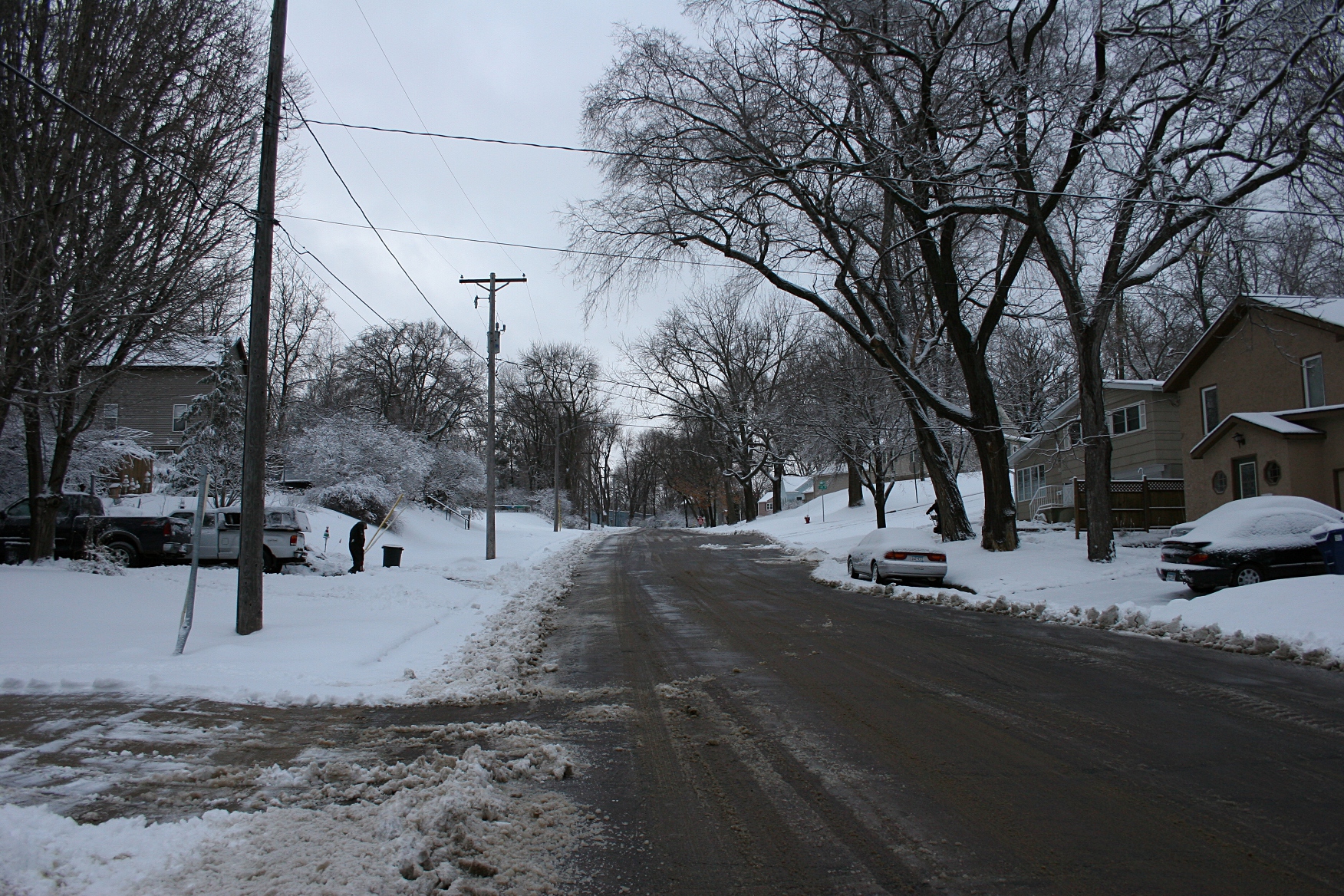
A city of Faribault snow plow spreading salt and sand onto the street past my house on Monday.

This shows a portion of my Willow Street neighborhood, but not the block in which the offender will be living. Minnesota Prairie Roots file photo, January 2012.

I wondered why these particular criminals, those most likely to re-offend, keep choosing my neighborhood. So I posed that question to Faribault Police Chief Andy Bohlen in an e-mail. Captain Neal Pederson of the FPD responded on Bohlen’s behalf:

As to why they often locate on Willow – when offenders are released from prison they work with their supervision agents to find housing. Some owners have fewer qualms about who they rent to than others.

Alright then. Let me ask this to the supervising agents and the accommodating property owners: Would you want to live next door to, or within two blocks of (like me), a man who has served time for criminal sexual contact with male and female victims between the ages of two and 15?

I would be surprised if you answered “yes.”

I know. The man has done his time. But…put yourself in my position and that of my neighbors, many with children in this offender’s target age group. I can count 15 children living within eyesight of my front yard.

Put yourselves in the shoes of the children who will walk past this predator’s home on the way to their Willow Street bus stop (practically within a stone’s throw of the offender’s doorstep) or to the public library or community center just blocks away. How would you feel if you were their parents?

Put yourselves in my neighborhood, in this defined section of Willow Street, which repeatedly has been chosen to house predatory offenders. How would you feel? I bet you’d feel as frustrated and upset as me and my neighbors that your neighborhood is continually singled out for post prison placement of predatory offenders.

I realize my neighbors and I can’t do anything to keep this offender from moving onto our street upon his February 7 release from prison. But we can voice our opinions and concerns and gather information at a community notification meeting slated for 6 p.m. Thursday, January 31, at the Faribault Police Department.

Police department spokesman Pederson assured me that local media, schools and the nearby community center have been notified of the offender’s pending release. The FPD has posted information on its website.

On Monday I received a community alert phone call advising me of the situation and community notification meeting. My neighbor directly across the street did not. I hope my other neighbors got the message. Somehow. I’ll be knocking on a few doors. We as a neighborhood and others in Faribault, including representatives of the bus company, need to attend that meeting with the Minnesota Department of Corrections and local police. We need to become informed.

That is seemingly all we have right now—the power to arm ourselves with information to protect ourselves and our children.

FOR DETAILED INFORMATION on the predatory offender moving into the 300 block of Willow Street in Faribault on February 7, click here to the Minnesota Department of Corrections website.

TO READ A POST about a community notification meeting I attended just two years ago, click here.

© Copyright 2013 Audrey Kletscher Helbling
 

Saint Peter’s version of the Super Bowl January 29, 2013

IN THIS WEEK of Super Bowl XLVII, at least one Minnesota community has already tapped into the super sporting event hype to benefit the local arts community. And that happened in a way you likely would not expect, via Souper Bowl VII.

The hand-thrown pottery bowl I chose at the Souper Bowl for my chicken wild rice soup.

The hand-thrown pottery bowl I chose at the Souper Bowl for my chicken wild rice soup.

Saturday afternoon, my husband and I joined arts-loving diners at the St. Peter Community Center for soup served in hand-thrown pottery bowls. And the bowls were ours to keep at a cost of $12 each (or $8 per kid) for the art and the meal.

Six local potters gave of their time and talents to create 240 soup bowls for the luncheon of donated breads and soups—tomato basil, chicken wild rice and chili—cookies and beverages.

Joel Moline and Thalia Taylor kneading clay during a visit to the Clay Center in March 2012..

Joel Moline and Thalia Taylor kneading clay during a visit to the Clay Center in March 2012..

While I really do like soup, a lot, I appreciate even more the whole Souper Bowl concept. What a creative way to expose the arts to the general public while raising monies for the Arts Center of Saint Peter Clay Center programming. (Read a previous post about the Clay Center by clicking here.) The goal is to keep arts center activities “accessible, affordable and vibrant to the St. Peter community and surrounding region,” according to promotional information.

The selection of bowls remaining when we arrived at noon, an hour after doors opened.

The selection of bowls remaining when we arrived at noon, an hour after doors opened.

Choosing a bowl added a fun  element to the event. Here’s how the process worked for me: I narrowed my selection to my favorite color, green. But with only a few green bowls on the table and the hue I liked best in the hands of a debating diner, I faced a dilemma. Should I pick my second favorite green bowl or wait for this woman to decide between the two bowls she balanced in her hands?

A few green bowls sat among the mostly brown and blue ones.

A few green bowls sat among the mostly brown and blue ones.

I opted to wait, to hover, but not so close as to call attention to my interest in the green bowl. My game plan paid off when the woman finally set the green bowl down and walked away. I moved in for the fumble, snatching up the coveted prize. Touchdown.

Diners line up for soup or chili. Seconds could be had for a freewill donation.

Diners line up for soup or chili. Seconds could be had for a freewill donation.

My ever patient spouse waited nearby as I took a few photos before we entered the dining area and washed our bowls which were then filled, his with chili, mine with chicken wild rice. A volunteer behind the serving counter even heated my soup in the microwave when I told her it wasn’t hot enough. How’s that for Saint Peter nice? And Randy was invited to return for more soup since his bowl was somewhat small; he tried tasty tomato basil in the second quarter.

A soup server heated my soup in the microwave and then placed the hot bowl on a plate.

A soup server heated my soup in the microwave and then placed the hot bowl on a plate.

A few more photos later and we were dining, in the fine company of arts center board member Harry Hunt and his wife, Bonnie. Harry, who works in financial services, shared that he isn’t an artist, seeming even a bit apologetic about his lack of artistic talent. But I was quick to tell him he could certainly contribute to the arts board with his financial expertise.

The Arts Center of Saint Peter, 315 South Minnesota Avenue, St. Peter, Minnesota.

The arts center in downtown St. Peter, photographed on a visit there in March 2012.

Eventually, I turned our table talk to the March 1998 tornado in St. Peter which caused an estimated $300 million in property damage and claimed one life. I wanted to know if the Hunts had been affected by the tornado.

Bonnie recalled how they had been visiting family in the metro when they learned of the bad weather in southern Minnesota. “Well, let’s see if we have a home left,” she joked as the couple drove back toward St. Peter, unaware that a tornado had ravaged their community. They arrived to find their home on the edge of town destroyed. The Hunts rebuilt.

Today they laugh at an incident shortly after the disaster. Harry was working in the basement of their destroyed home when someone called down to announce the arrival of then Minnesota Governor Arne Carlson. Harry emerged from the basement and greeted the Governor: “Welcome to our open house.”

You can bet Randy and I appreciated the winning company and humor of the Hunts as much as the soup and the hand-thrown pottery bowls we took home from Saint Peter’s Souper Bowl.

Potter Missy Wood created this teapot for the Souper Bowl silent auction.

Potter Missy Wood created this teapot for the Souper Bowl silent auction.

HAVE YOU ATTENDED a fundraiser like this? Please share your experiences, thoughts and ideas. We can all learn from one another.

© Copyright 2013 Audrey Kletscher Helbling


The art of healing at a Minnesota hospital January 28, 2013

TWO YEARS AGO this month, my then 92-year-old artist friend, Rhody Yule, opened his first-ever gallery exhibit at the Paradise Center for the Arts in Faribault.

Six months later, he died.

But Rhody, and his art, live on, this time in a Paradise Center Healing Arts Program Exhibit at District One Hospital in Faribault. The arts center and hospital are partnering on the program.

Thursday evening I attended a reception for that show which features 70 pieces of art created by eight outstanding artists, each of them definitively different: Faribault artists Jody Hanscom, Jorge Ponticas, Pearl Tait and Rhody Yule; Marcus Moller of Morristown; Faribault native Tom Fakler, now living in Basel, Switzerland; Jane Strauss of Minneapolis; and Cynthia Ali of St. Paul.

As Healing Arts Coordinator Elizabeth Jacobs led my husband and me through the maze of hallways and centers that comprise the hospital complex, I thought how Rhody would have felt honored to be part of an exhibit designed to comfort patients and make their hospital experiences more pleasant.

The art selected by a committee of hospital staff fits the program’s criteria as “healing art,” meaning it must be calming, happy and a positive piece of work, Jacobs says.

Three of Jody Hanscom's horse portraits.

Three of Jody Hanscom’s horse portraits.

And you’ll see that, almost experience that positivity, from the minute you walk in the front doors of the hospital to view Jody Hanscom’s sizable horse portraits in the lobby waiting areas. Jody’s oil paintings capture both the gentleness and free spirit of horses, a combination that simultaneously calms and uplifts.

Tucked into a corner by the elevators, the fourth of Hanscom's horse oil paintings.

Tucked into a corner by the elevators, the fourth of Hanscom’s horses.

Just down the hallway, five oil paintings by Jorge Ponticas brighten the walls with vivid scenes from his native Chile and elsewhere. His art evokes happy thoughts. What can I say? I can’t resist the sweet face of a llama.

Pearl Tait's "Aubergine Drift I."

Pearl Tait’s “Aubergine Drift I.”

Moving along to the emergency room lobby, I find Pearl Tait’s moody mixed medium art the ideal choice for a setting often filled with emotion and uncertainty. Her work, which features textures like sand and tape incorporated into a painting, reflects, in my opinion, the intense layers of feelings that come with any visit to the ER.

A photo in a cozy private waiting room fronts Tom Fakler's Swiss Alps photos.

A sofa in a cozy private waiting room fronts Tom Fakler’s trio of Swiss Alps photos.

Around the corner inside a cozy ER room where families are taken to hear bad news (so says Jacobs), the mood totally changes with the soothing photography of Tom Fakler. His black-and-white canvas prints of the Swiss Alps offer a natural world escape during a particularly difficult time for patients’ families.

Likewise, the photography of Jane Strauss in the surgery center reflects that same sort of escapism, especially in panoramic landscape scenes. Jacobs notes that Strauss is autistic, meaning her approach to photography focuses on qualities like texture and detail, aspects others might not consider in photographing a scene.

Faribault native Cynthia Ali's floral pastels are not for sale. Ali, of St. Paul, is primarily a jewelry artist.

Faribault native Cynthia Ali’s floral pastels are not for sale. Ali, of St. Paul, is primarily a jewelry artist.

Also in the surgery center, Cynthia Ali infuses a soft natural beauty with her floral pastels. You can almost smell the heady perfume of her beautiful roses.

Marcus Moller's "Madison Lake Bait Shop" in watercolor.

Marcus Moller’s “Madison Lake Bait Shop” in watercolor. Moller’s art (mostly pastels) hangs in the surgery center waiting area, a place frequented by children. Thus his art is hung quite high, which made photographing it difficult.

Marcus Moller works in pastels, too, and watercolors, covering a variety of subjects from autumn landscapes to a bold rooster to my favorite, “Madison Lake Bait Shop.” Those of you who’ve traveled Minnesota Highway 60 will recognize the kitschy red building backed by the Madison Lake water tower. I cannot even begin to count how many times I’ve considered photographing that building. Moller’s bait shop painting is nudging me to actually stop and take that photo.

Twenty-five of Rhody Yule's oils grace the hall and patient rooms in the cancer center.

Twenty-five of Rhody Yule’s oils grace the hall and patient rooms in the cancer center.

Finally, my open house tour ended in a hallway outside the District One Cancer Center with the oil paintings of my friend, Rhody Yule. I’d seen nearly every one of Rhody’s hundreds of paintings when I worked with his family and friends on the 2011 Paradise exhibit. But, still, it was as if I was viewing his pieces for the first time, appreciating the landscapes, many of them winter scenes in this show, and the other art he created through decades of painting. Rhody was a kind, gentle man with a heart full of goodness, and I remembered that, too.

Examples of Rhody Yules art close-up.

Examples of Rhody Yule’s art close-up.

Most of the artwork in the Healing Arts Exhibit, but not all, is available for sale. (Artwork not featured in photos here is because I did not have permission to photograph it.)  A portion of any proceeds from the sale of Yule’s work will go to the local hospice, per the family’s request.

If you wish to tour the winter installment of the Healing Arts Exhibit, check in at the main desk, 200 State Avenue, during hospital business hours. All areas of the exhibit may not be accessible for viewing at all times. The current show runs through February 28.

If you are an artist interested in being featured in a Healing Arts Exhibit, contact Jacobs at the Paradise Center for the Arts. You will find details and contact information by clicking here.

The Healing Arts program is sponsored by the District One Hospital Auxiliary, which initially proposed the concept.

To view information on the artists with an online presence, click on their highlighted names.

WHAT ARE YOUR THOUGHTS on art as a “healing” tool? Have you seen similar exhibits? Please share.

© Copyright 2013 Audrey Kletscher Helbling
 

Pizza & beer on a Saturday night in Kilkenny January 26, 2013

Filed under: Uncategorized — Audrey Kletscher Helbling @ 9:52 PM
Tags: , , , , , , , , , ,

I SUGGESTED WE STOP for directions at the corner gas station.

“How hard can it be to find this place in Kilkenny?” my husband responded.

He was right. Kilkenny, population around 150, in Le Sueur County, runs only a few blocks in all directions. Surely we could find “the bar on top of the hill with the really good pizza,” per our friend LeAnn’s recommendation.

Atop the hill in Kilkenny by the water tower, we found the Liquor Hole.

Atop the hill in Kilkenny by the water tower, we found the Liquor Hole.

Just up the road from Bud’s Service, we found the Liquor Hole.

I expect in warm weather, the front patio is a popular dining and drinking spot at the Hole.

I expect in warm weather, the front patio is a popular dining and drinking spot at the Hole.

We arrived Saturday evening as the last wisps of daylight faded, enough time for me to snap a few outdoor shots before entering the Hole.

Inside we found your typical small town restaurant/bar—pool table in the corner, stools ringing a horseshoe bar, neon beer lights blazing, televisions blaring, opened pull tabs littering the bar top, smokers stepping out to light up a smoke…

A section of the dining area.

A section of the Liquor Hole.

No pool players yet early on a Saturday evening.

No pool players yet early on a Saturday evening.

Be sure to follow the bar's pool rules.

Be sure to follow the bar’s pool rules.

Lots of neon beer signs.

Lots of neon beer signs.

But there were a few surprises, like the homemade wood sign announcing Kilkenny’s inability to afford a town drunk and a fat-bottomed girl print I refused to photograph.

Kilkenny bar humor posted below the Bud Light sign.

Kilkenny bar humor posted below the Bud Light sign.

And when Randy asked for a Schell’s FireBrick beer, the bartender/owner looked at him and said, “Come on, this is Kilkenny.”

Alright then. We both ordered a Nordeast to go with our $11 House pizza topped with sausage, pepperoni, Canadian bacon, onion, mushrooms, green pepper and green olives. And just for the record, the pizza is not entirely homemade. The crust is pre-made. I asked.

The Liquor Hole's House pizza.

The Liquor Hole’s House pizza.

None-the-less, the pizza was thick and tasty, loaded with cheese and was delivered on a cardboard round with several small paper plates, plastic forks and a half-inch thick stack of napkins, most of which we used.

“Cuts down on the dishes,” Randy joked as he observed the disposable tableware.

But we didn’t mind. After all, in the bartender’s words, “This is Kilkenny.”

A last shot of the Liquor Hole before we got into the car and drove 15 miles back east to Faribault.

A last shot of the Liquor Hole before we got into the car and drove 15 miles back east to Faribault.

© Copyright 2013 Audrey Kletscher Helbling
 

Honoring Minnesota Civil War soldiers via history lessons & a puzzle January 25, 2013

Attendees, including Linda Karkhoff (whom you read about below) chat at a recent Cannon Valley Civil War Roundtable meeting in Faribault.

Attendees, including Linda Karkhoff (whom you will read about below) chat at a recent Cannon Valley Civil War Roundtable meeting in Faribault. And, yes, the guy on the right is wearing a Union cap. The display shows Karkhoff’s Civil War puzzle package.

MEMBERS OF THE CANNON VALLEY Civil War Roundtable, I’ve discovered, really know their history. They rattle off battlefields and battles, dates and names and other facts with convincing authority.

To be honest, I’m a bit intimidated by their knowledge. And I’ve told them so, even called them fanatics in a joking, but not unkind, way. That didn’t stop the club president from encouraging me to return to their monthly meetings. I’ve attended thrice during the past several years—when guest speakers’ topics especially interested me.

An 1840 Philadelphia Derringer, like the pistol used to assassinate President Abraham Lincoln.

An 1840 Philadelphia Derringer, like the pistol used to assassinate President Abraham Lincoln, belongs to an area collector of Lincoln memorabilia.

First-time around, I listened to an area collector talk about some of the pieces in his collection of Abraham Lincoln memorabilia. That was in 2009 and I posted about it here. He asked for anonymity given the value of his collection. I thought it wise to honor his request.

Dean Urdahl has written the trilogy of Uprising, Retribution and Pursuit.

Dean Urdahl has written the trilogy of Uprising, Retribution and Pursuit.

This past May, I heard Minnesota State Representative Dean Urdahl, a retired American history teacher, writer and co-chair of the Minnesota Civil War Commemoration Task Force, speak about the U.S. Dakota-War of 1862 and his trilogy of historical fiction novels. (Click here to read a post from that event.)

And just recently, educational consultant Quintin Pettigrew read excerpts from A Personal Narrative of Indian Massacres 1862, the diary of Lake Shetek Massacre survivor Lavina Eastlick. I’ve since acquired a copy of that survivor’s diary and will post about it at a later date.

Before Pettigrew took the floor at the recent Cannon Valley Civil War Roundtable meeting, Owatonna resident Linda Karkhoff spoke briefly about a Civil War related project she’s undertaken. She’s created a 550-piece limited edition (1,000) commemorative jigsaw puzzle honoring the 2nd Regiment, Minnesota Volunteer Infantry.

A close-up of the 2nd Minnesota Civil War puzzle, made to commemorate Wasioja Civil War Days.

The photo shows the design of the puzzle Linda Karkhoff created as a commemorative piece for Wasioja Civil War Days. The puzzle honors the 2nd Minnesota Regiment, comprised of soldiers from southeastern Minnsota. Just note that lighting conditions were not good and I could not avoid glare reflected on the framed piece.

The 18 x 24-inch puzzle features, along with a U.S. map tracking the movement of the 2nd Minnesota, an imprint of a flag given to the regiment by the Loyal Ladies of the Louisville Soldiers Association.

Intrigued, I found an online copy of a letter presented to the Minnesotans along with that flag. Nanette B. Smith, president of the Loyal Ladies wrote:

Louisville Ky Feb 17th 1862

To Col Van Cleve 2nd Minnesota Regt

Sir I transmit to you a Flag to be presented in the name of the Loyal Ladies of the Louisville Soldiers Association, to your Regiment, designed to commemorate the battle of Mill Spring 19th January, and as a testimonial of our appreciation of the participation of yourself and those under your command in the glorious victory of that day.

Each Regiment is equally entitled to like honor; but the gallant conduct of those who come from a distant State to unite in subduing our rebel invaders excite the warmest emotions of our hearts.

I offer to you our congratulations and my individual acknowledgements of the important service rendered to our State by your command.

Very Respectfully Nannette B. Smith Prest L.S.R.A.

Now puzzle designer Karkhoff, who is a carpenter by trade, did not read that letter to attendees at the Cannon Valley Civil War Roundtable meeting. But she did summarize that the Loyal Ladies’ flag was a thank you to the soldiers for pushing the Confederates out of Kentucky, thus saving Kentucky as a Union state.

She also shared that members of the 2nd Minnesota, comprised of soldiers from southeastern Minnesota, marched 6,000 miles—that’s walking—in four years. The unit’s drummer boy, she said, kept a diary, and survived the war. Such survival, she explained, was unheard of given drummer boys figurativley marched with targets on their backs.

This cloth bag holds the puzzle pieces and informational sheets.

This cloth bag holds the puzzle pieces and informational sheets.

You’ll find more information about the 2nd Minnesota, life as a Civil War soldier and the puzzle itself on informational sheets tucked inside the cloth bag holding Karkhoff’s puzzle. Even the bag is significant, similar to what a Civil War soldier would have carried for his tobacco and writing utensils, Karkhoff said.

A history buff, Karkhoff came up with the puzzle idea after she and several traveling friends discovered a lack of commemorative puzzles specific to an area or site they visited. She eventually formed Puzzled@ LLC and designed the 2nd Regiment puzzle.

The puzzle, she said, teaches history and geography and encourages teamwork, making it both educational and fun.

Now I’m one of those people who doesn’t care for puzzles. I’m too easily frustrated, don’t have the patience and, well, would rather read or write than puzzle over a jigsaw.

But for those of you who enjoy puzzles and/or are Civil War fanatics, and I mean that in a kind way, check out Puzzled@ by clicking here.

Puzzles may be purchased directly from Karkhoff (contact info is on her website; tell her I sent you); at Little Professor Book Center or the Steele County History Center in Owatonna; or at the Rice County Historical Society or Paradise Center for the Arts in Faribault.

BONUS: An exhibit, “Minnesota and the Civil War,” opens March 2 at the Minnesota History Center in St. Paul. Click here to learn more about this.

© Copyright 2013 Audrey Kletscher Helbling
 

The challenges of winter photography & a new perspective on art January 24, 2013

Filed under: Uncategorized — Audrey Kletscher Helbling @ 8:15 AM
Tags: , , , , , , , , ,

FOR A BLOGGER like me who incorporates so many photos into her posts, blogging in winter in Minnesota presents special challenges, the primary obstacle being the weather.

Simply put, I don’t like freezing my fingers, navigating icy surfaces, dodging snowflakes or battling frigid winds to get a photo. And when you live in Minnesota, you just can’t escape the cold, ice, snow and wind, especially not this week.
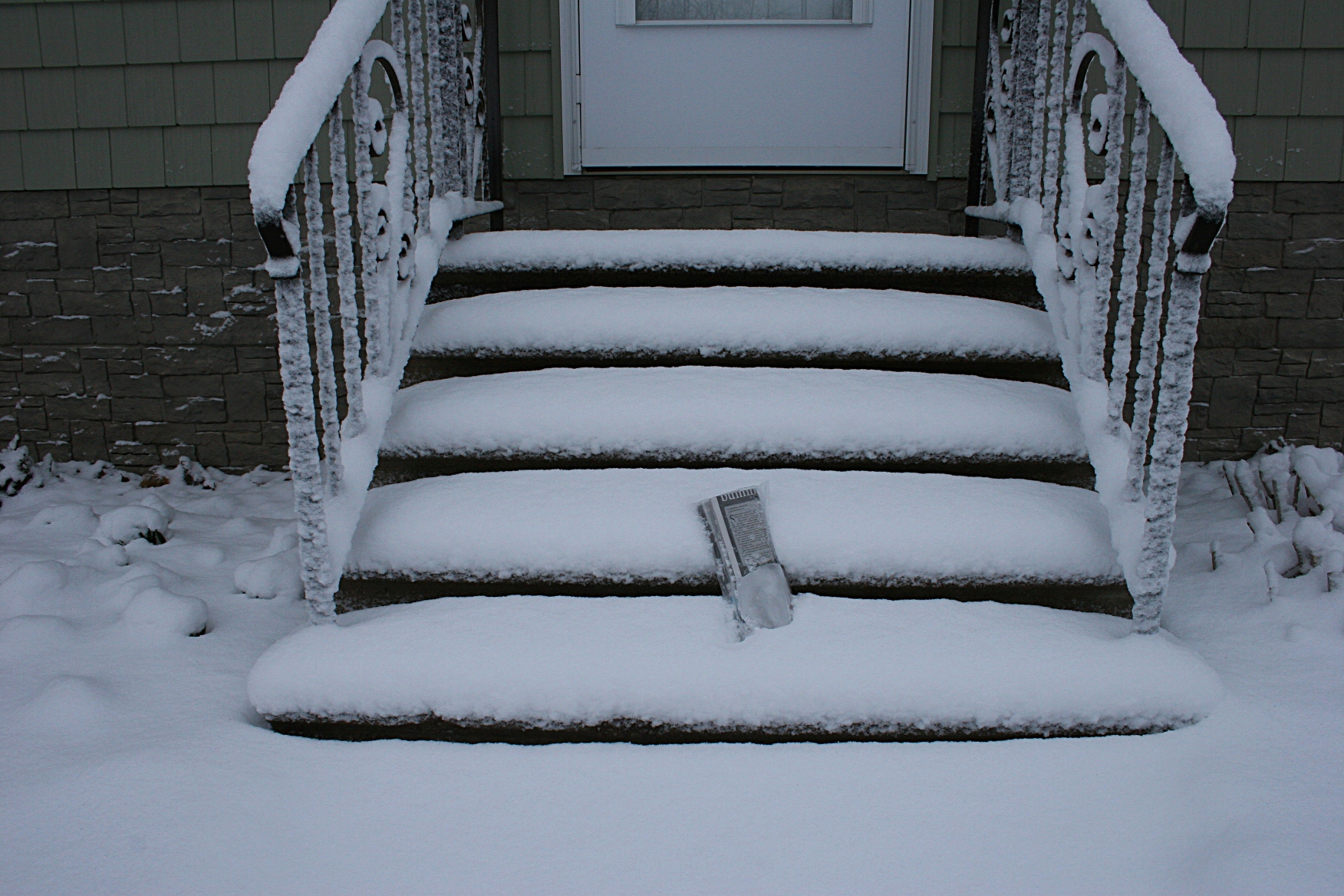
Yesterday I glanced outside to see a fresh dusting of snow sparkling like fairy dust in an enchanting scene. For a moment, as I slipped half my body outside to retrieve the morning paper, I considered bundling up to photograph the magic. But thoughts did not transform into action.

Later, though, after lunch, that fairy dust still danced in my brain so I zipped my fleece and stepped onto the patio to photograph the snow. I didn’t expect fantastic results; heck, the results rated as immediately deletable:

The original sparkling snow image, unedited except for down-sizing.

The original sparkling snow image, unedited except for down-sizing.

But then I worked my magic, trying several editing tools—sparkle effect, colorizing, cartoonifying and changing the contrast—to transform a blah image into an abstract work of art:

Sparkling snow in my backyard transformed into abstract art with photo editing tools.

Sparkling snow in my backyard transformed into abstract art with photo editing tools.

What’s really interesting about this entire process is that I’ve never been a fan of abstract art. I’ve always been inclined to view an abstract work and then blurt, “I could do that” or “That looks like the work of a kindergartner.”

I doubt I’ll ever quite stop thinking that.

But, through this digital editing process, I’ve discovered a part of me appreciates abstract photo art and the process of creating it. Temporary brain freeze perhaps?

WHAT ARE YOUR THOUGHTS on cold climate photography (as in Minnesota cold), abstract art, digital photo editing or anything along that line? (And don’t feel you have to like my abstract photo art.)

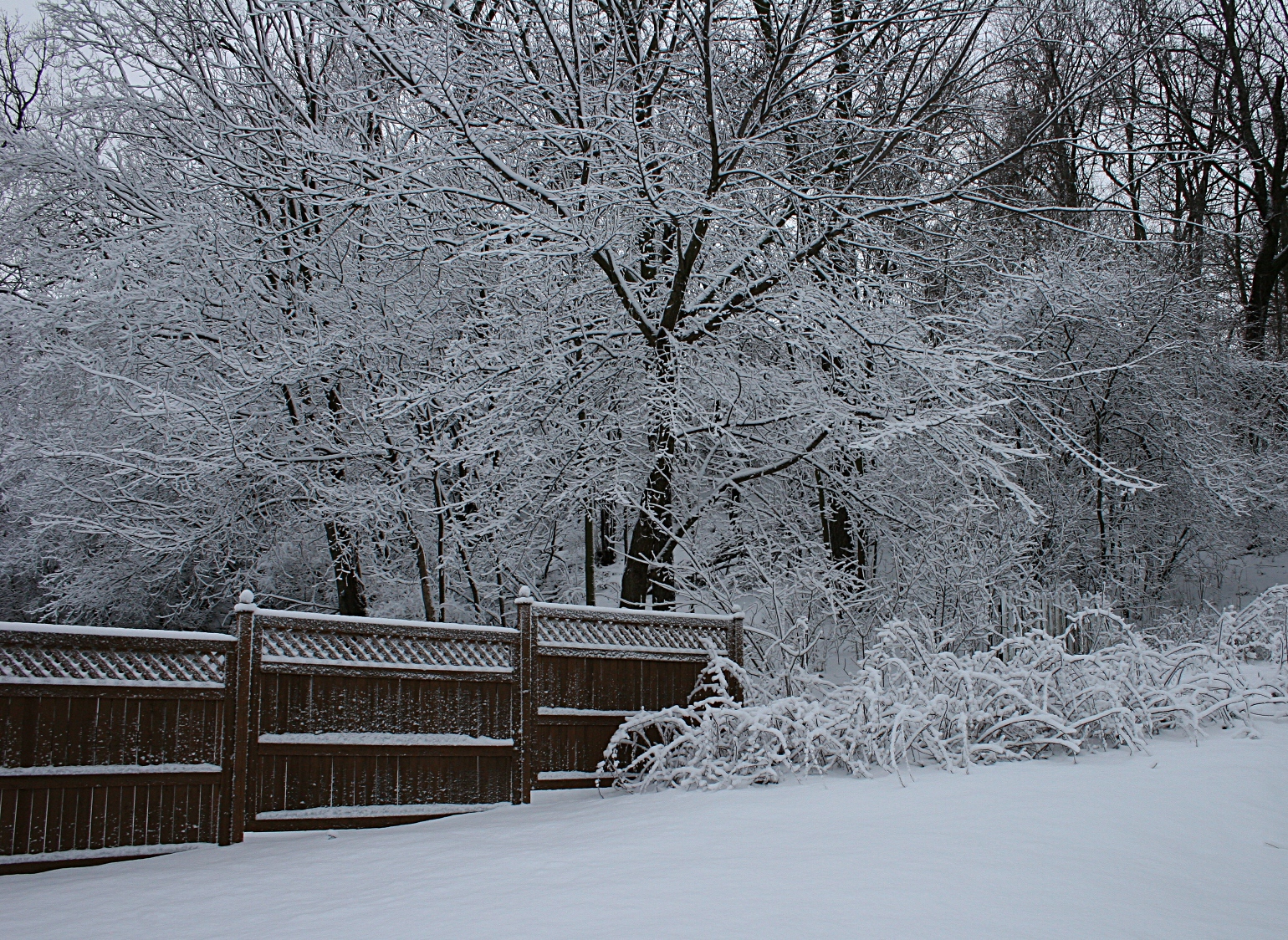
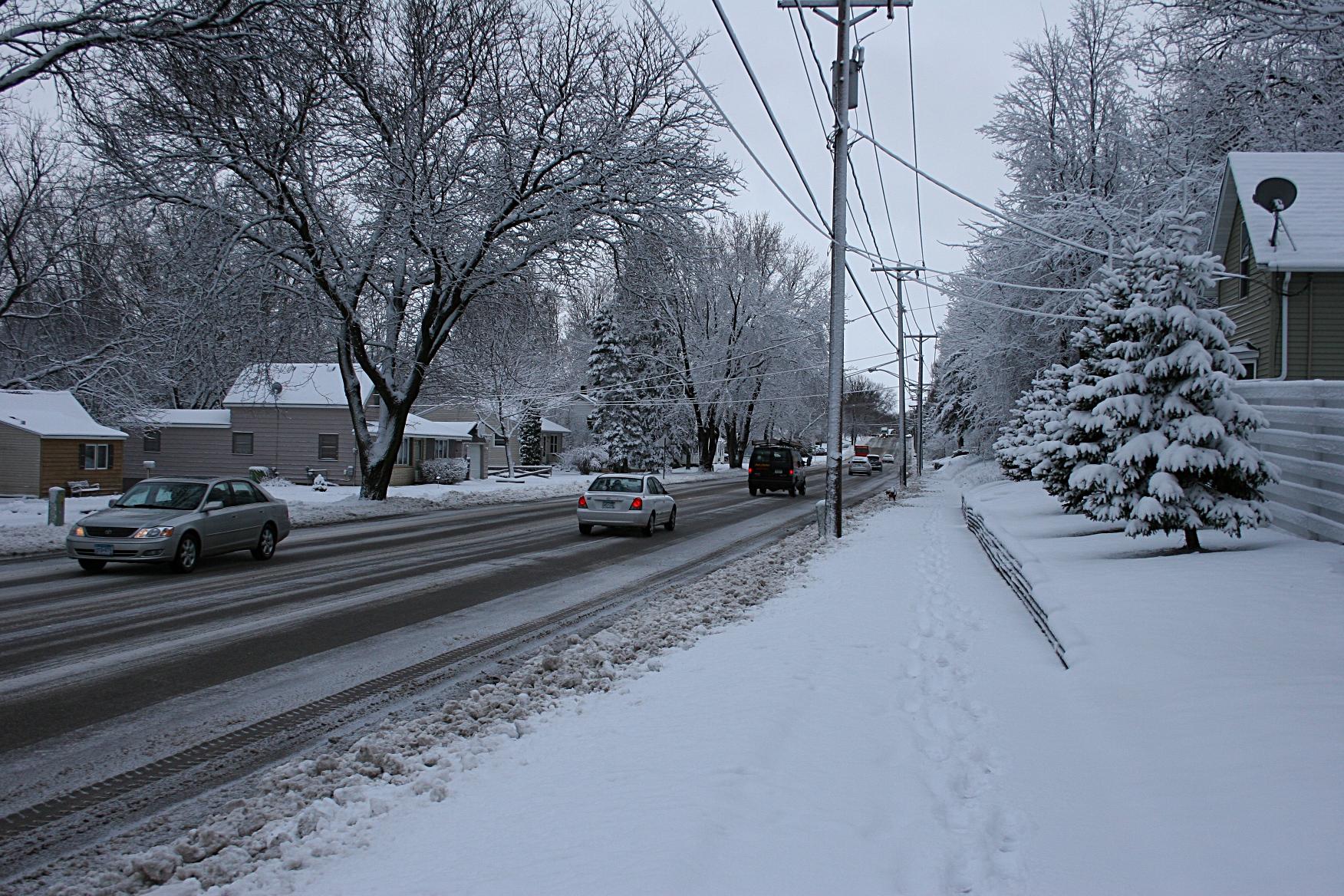
I prefer to shoot winter photos from the comfort of a building or a vehicle, as evidenced in these images I shot in March 2012:

I converted this image to black-and-white and upped the brightness. This was shot on the Minnesota Highway 19 curve just north of Vesta, my southwestern Minnesota hometown.

I converted this image to black-and-white and upped the brightness. This was shot on the Minnesota Highway 19 curve just north of Vesta, my southwestern Minnesota hometown.

I used the same photo editing techniques on this scene captured on the same date just south of Echo, which would be north of Vesta. We were on our way to church.

I used the same photo editing techniques on this scene captured on the same date just south of Echo, which would be north of Vesta. We were on our way to church.

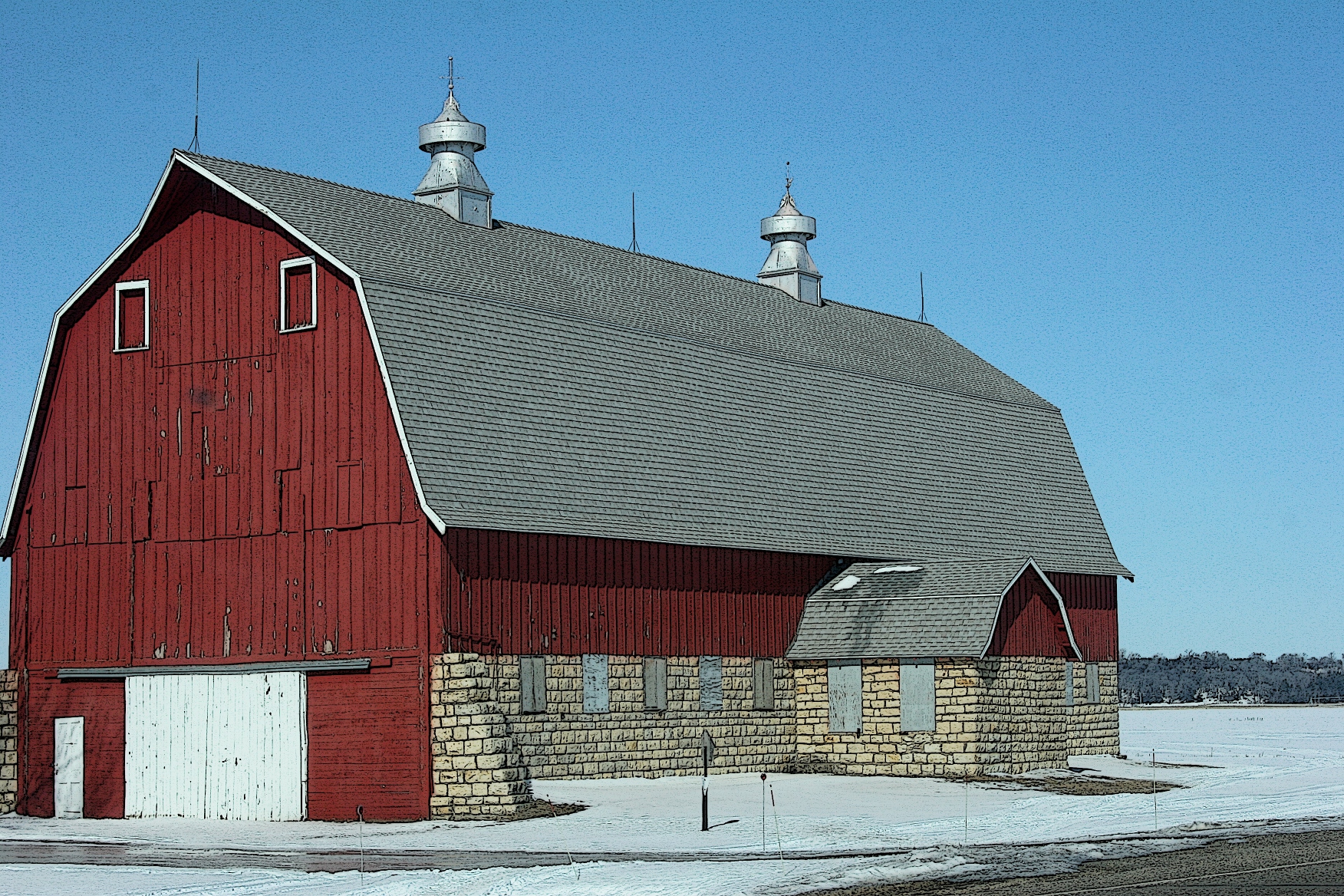
The day prior, en route to Vesta, I photographed this barn between New Ulm and Morgan.

The day prior, en route to Vesta, I photographed this farmyard between New Ulm and Morgan.

To the east, also en route to my hometown, I photographed this rural scene just west of Waterville along Minnesota Highway 60.

To the east, also en route to my hometown, I photographed this rural scene just west of Waterville along Minnesota Highway 60.

© Copyright 2013 Audrey Kletscher Helbling