Minnesota Prairie Roots

Writing and photography by Audrey Kletscher Helbling

Missing in Minnesota May 7, 2018


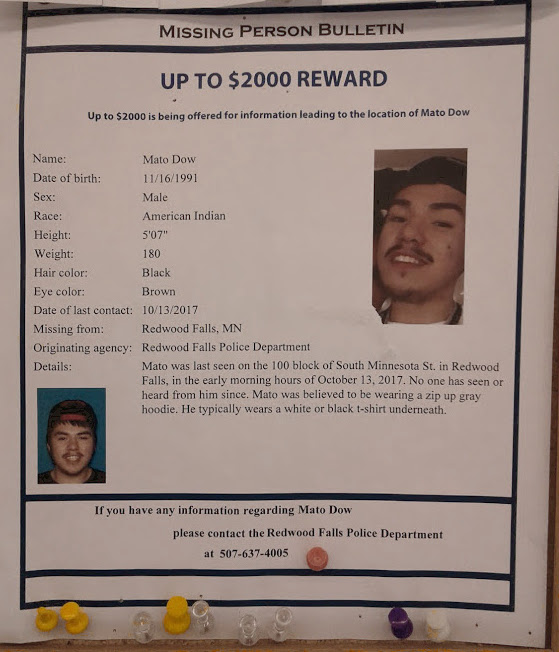
DURING A RECENT RESTROOM stop at a Redwood Falls convenience store, I paused to read notices tacked onto a bulletin board. There I saw a missing persons bulletin for Mato Dow. The 26-year-old was last seen in the early morning hours of October 13, 2017, in this southwestern Minnesota community. A quick online search showed he remains missing. (Correct me if I’m wrong.)

That led me to wonder how many other Minnesotans are missing. The number shocked me. Eight-three. That’s according to information published on the Minnesota Department of Public Safety website. In the Minnesota Missing and Unidentified Persons Clearinghouse section, the missing are snapshot profiled via photos, places and dates of disappearances, and current ages. (Click on individual names for more details.) Dow, for whatever reason, is not among those listed.

But familiar names from high profile missing persons cases are on that list. Cases I remember.

  • Corrine Erstad, missing from Inver Grove Heights in June 1992, current age 31
  • Georgia Smith, missing from Champlin in June 1999, current age 95
  • Josh Guimond, missing from Collegeville in November 2002, current age 35
  • Leanna Warner, missing from Chisholm in June 2003, current age 20
  • Brandon Swanson, missing from Marshall in May 2008, current age 29.

The body of Jacob Wetterling, Minnesota’s most high profile missing person, was found in September 2016, his killer then apprehended and imprisoned. Jacob’s case did much to raise awareness. I am thankful the Wetterling family finally got answers about their son. I only wish the results had been different.

But for 83 other missing persons, family and friends still don’t have those answers. That includes the oldest case listed, that of brothers Daniel, David and Kenneth Klein. The three left their home on November 10, 1951, for Fairview Park in Minneapolis, never to be seen again. Can you imagine? I can’t. Those “boys” would now be in their seventies.

The most recent entry (as of Friday, May 4) is for Tawhna Pringle, 31, who disappeared from the Babbitt area on January 11, 2018.

From every corner of Minnesota—from Worthington to Winona to Warren to Chisholm and places in between—people have vanished. Disappeared. Gone. The list also includes several gone missing in other states.

Eighty-three. Kids. Teens. Adults.

To not know what happened to your loved one has to be the most unimaginable pain. I’d encourage you to take the time today to click here and scroll through those 83 missing persons profiles. Even if you live outside Minnesota. All it takes is one person somewhere to share information that could help solve a case and provide answers for loved ones.


© Copyright 2018 Audrey Kletscher Helbling


Embracing Shattuck-St. Mary’s outreach into the Faribault community May 4, 2018

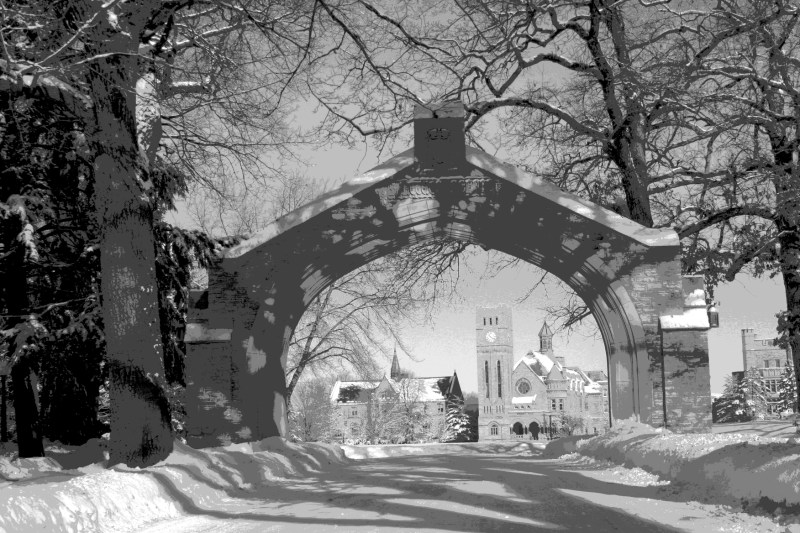
An arch frames Shattuck-St. Mary’s School in Faribault, Minnesota. Minnesota Prairie Roots file photo.


THURSDAY EVENING I ATTENDED a free concert by the Minnesota Sinfonia. At Shattuck-St. Mary’s School in Faribault.

This evening, if I choose, I can attend “The Wizard of Oz on Ice.” Again, at no charge and on the campus of Shattuck, a prestigious private prep school in Faribault. The Shattuck-St. Mary’s Figure Skating Club show begins at 7 p.m. in the SSM Sports Complex.


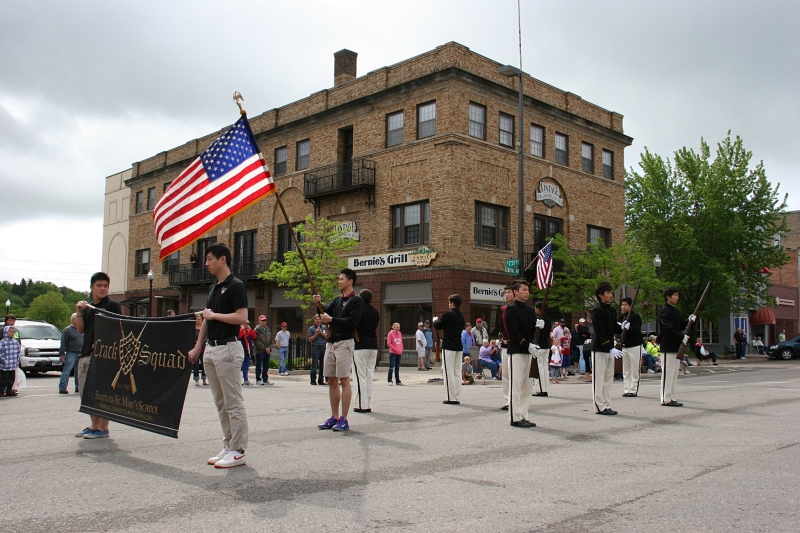
The Shattuck-St. Mary’s Crack Squad performs in the 2015 Faribault Memorial Day parade. Minnesota Prairie Roots file photo.


Then, at 1 p.m. Sunday, I can attend a Town Drill. Again, at no charge, at Shattuck and at 1 p.m. in Johnson Gym. The Wooden Soldiers Drill Team, celebrating its 100th anniversary, performs along with The Crack Squad. That precision drill squad first performed in 1882.


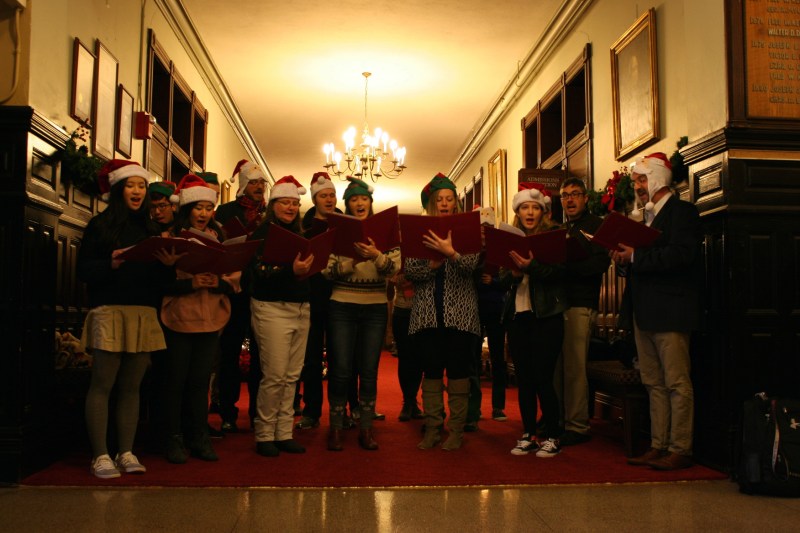
In the Shumway Hall entry hall, carolers sing for Christmas Walk guests. Minnesota Prairie Roots file photo.


I appreciate how Shattuck continues to open its doors to the community through free events like these and the annual Campus Christmas Walk and community Easter Egg Hunt. And I appreciate, too, the Fesler-Lampert and Acoustic Roots Performing Arts Series which brings musicians, theatre and more to this historic campus. I attended the St. Paul-based History Theatre’s “Sweet Land the musical” here in October. Had Shattuck not brought the production to Faribault, I never would have seen this show based on one of my favorite movies.


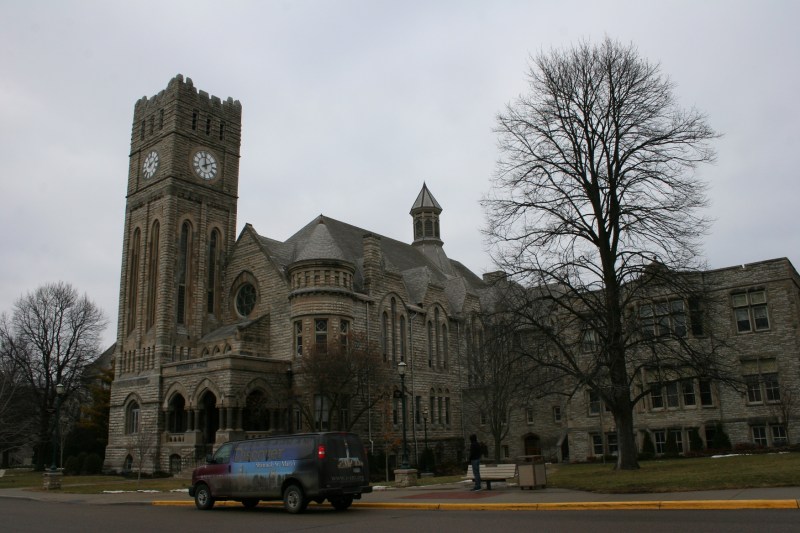
The Shattuck-St. Mary’s campus features beautiful stone buildings constructed in the 1800s, including Shumway Hall with its landmark bell tower. Minnesota Prairie Roots file photo.


While the arts series events are typically pay-for shows, the Sinfonia concert on Thursday was free, as are all concerts by this Twin Cities-based orchestra. For someone like me who has only been to an orchestra concert several times in her life, this is an absolute gift. To listen to music ranging from soothing to barn dance raucous by professional musicians in such an historic theatre simply made me happy. Several times I tipped my head back to take in the wood-wrapped walls and ceiling, then turned to view sunlight streaming colors through clustered narrow stained glass windows. The cool of the evening wafted through open windows as did the chimes of the Shumway Hall clock tower bell. Musicians, in a quirky interruption, paused to let the chimes ring before continuing their concert.


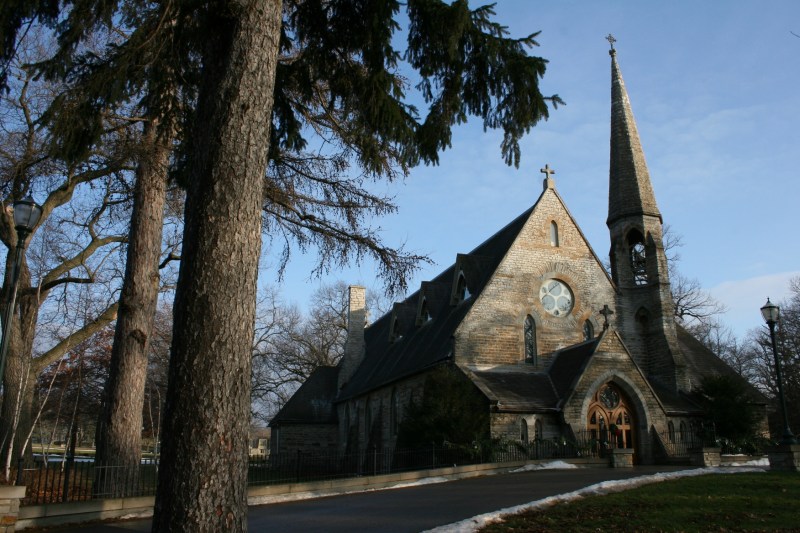
The Chapel of the Good Shepherd on the Shattuck campus. Minnesota Prairie Roots file photo.


As the Sinfonia director noted, Shattuck could be a setting for a Harry Potter movie. I agree. This place of massive, aged stone buildings has that look. It feels more like a college campus than a prep school excelling in academics, the arts and sports. I am grateful for its presence in Faribault. And I am grateful for a school that welcomes the community onto its campus.

If you’ve never been to Shattuck, I’d encourage you to attend an event there, to take in the historic beauty of this place on Faribault’s east side.

© Copyright 2018 Audrey Kletscher Helbling


Road trip stories: You can’t beat the pre-season price & peacefulness at this lakeside Indiana inn

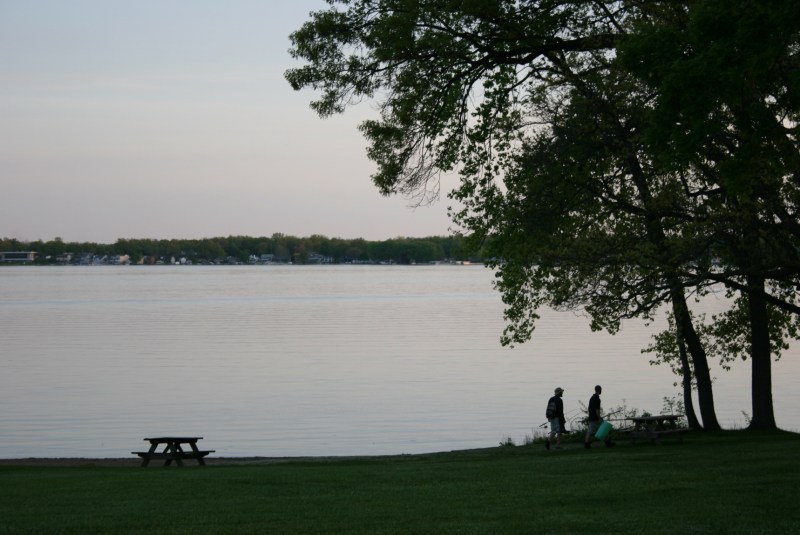
A sunset view of Lake James in Pokagon State Park, Angola, Indiana.

A sunset view of Lake James in Pokagon State Park, Angola, Indiana.


I’VE ALWAYS WANTED TO STAY in a lakeside resort or cabin. And you’d think, as a life-long Minnesotan, that would be part of my vacation history. Yet, the opportunity to stay lakeside never presented itself. Until May 2016.
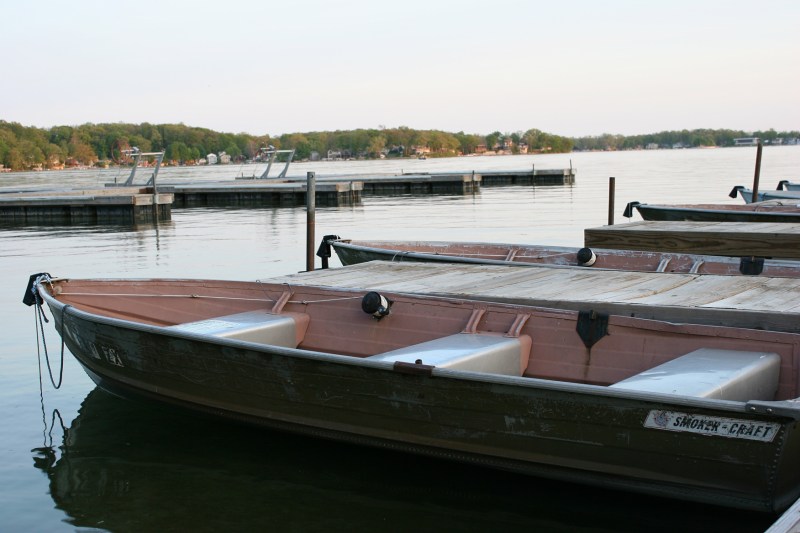
 

Docked at Lake James in Pokagon State Park.

Docked at Lake James in Pokagon State Park.


And it happened not in the Land of 10,000 Lakes, but rather in the extreme northeastern corner of Indiana. Because my husband made a wrong turn, we ended up at the Potawatomi Inn Resort & Conference Center while en route from Minnesota to Massachusetts for our son’s college graduation.
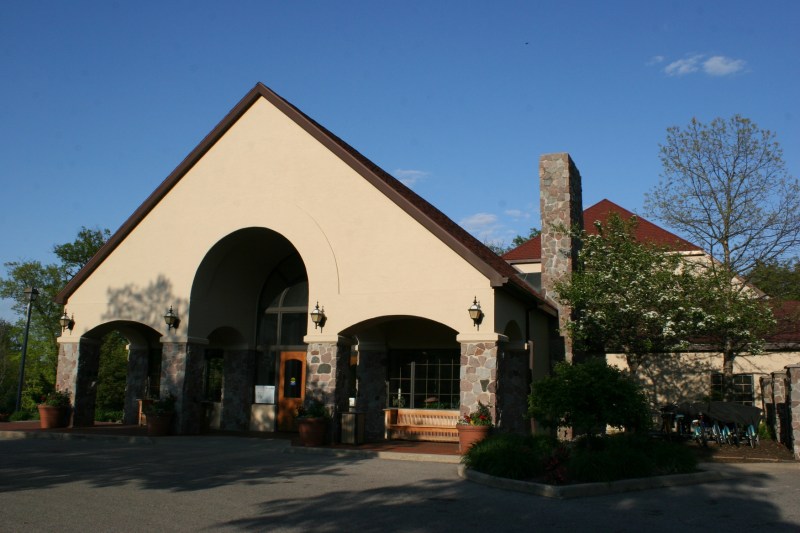
 

The newer section of the Potawatomi Inn, opened in 1995.

The newer section of the Potawatomi Inn, opened in 1995.


Prior to departure, we’d plotted the location of our first day stopping point—some 600 miles away in Angola, Indiana. I’d researched lodging options, including a weekday pre-season special of $59 a night at the Potawatomi Inn. I mentioned the deal to Randy, who muttered something like “What are you going to get for $60?” So I scrapped the idea and resigned myself to staying at a non-descript chain hotel along Interstate 80/90.
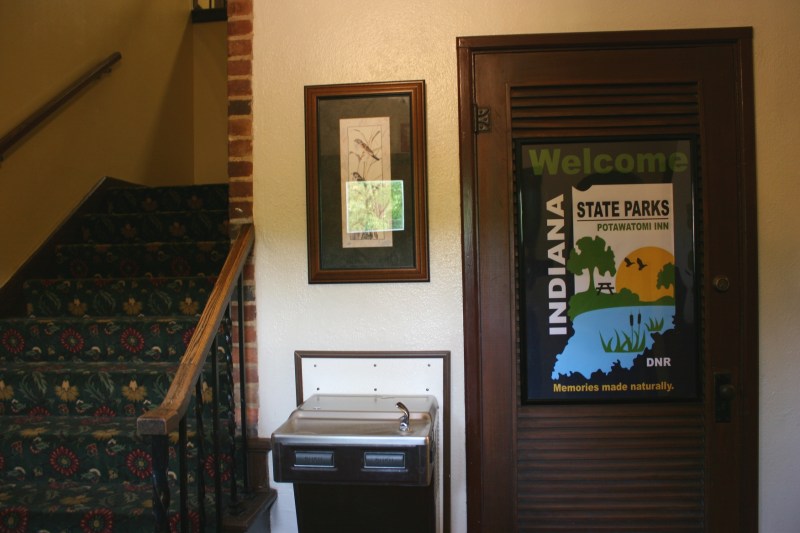
 

Lovely framed signage inside the entry to the historic section of the inn complex

Lovely framed signage inside the entry to the historic section of the inn complex promotes Indiana state parks as “memories made naturally.”


Then came that wrong turn and we ended up directly in front of the entrance to Pokagon State Park, wherein the Inn is located. “It won’t hurt to look since we’re right here,” I suggested. “We can always leave if we don’t like it.” Randy agreed and steered the van along the tree-lined road into the park. After explaining our mission to the park ranger, we continued toward the Inn, our expectations low.


This is the original 1920s section of the historic inn with a dining room and lounge on the first floor and hotel rooms on the second level.

This is the original 1920s section of the historic inn with a dining room and lounge on the first floor and guest rooms on the second level.


We couldn’t have been more surprised. Rounding a turn, before us sprawled a complex of buildings perched atop a hill and edged by manicured plantings of trees, flowers and shrubs. It was beautiful to behold.
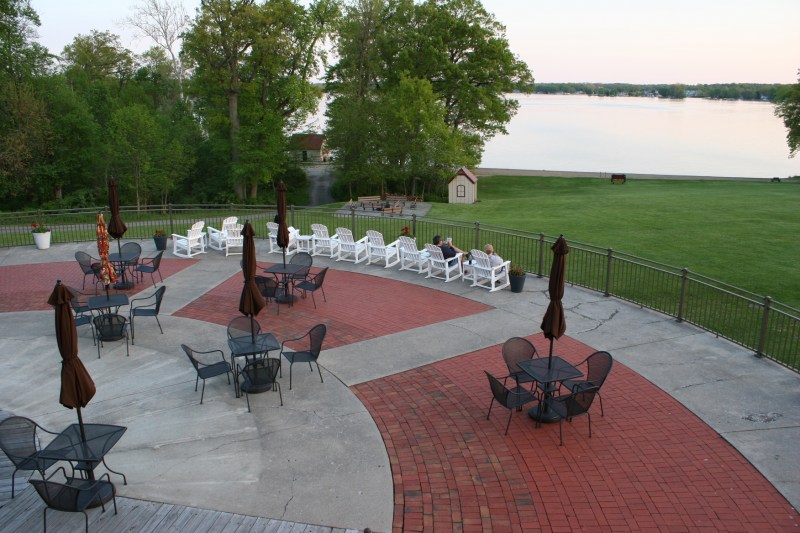
 

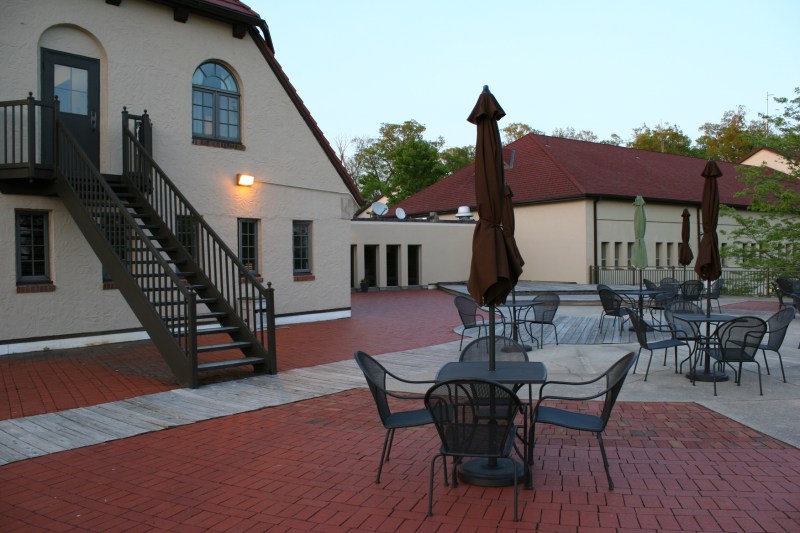
This massive sun deck overlooks Lake James.

This massive sun deck overlooks Lake James, the boat rental house and the public campfire pit.
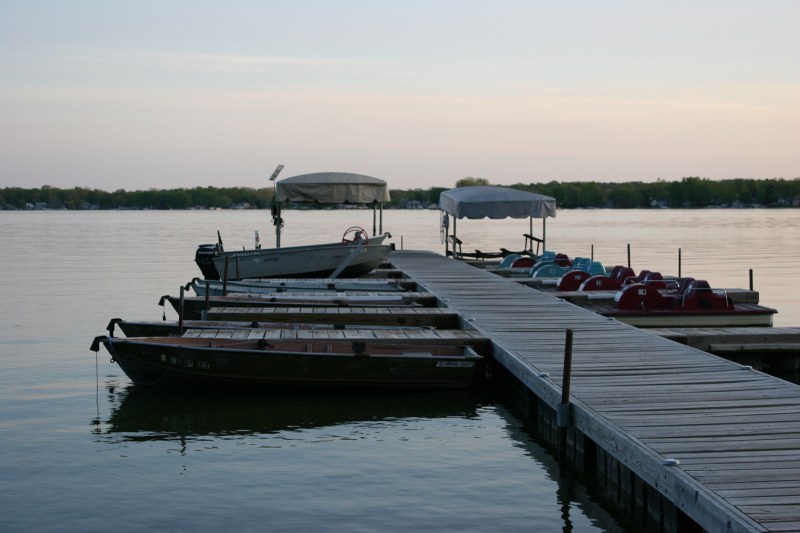
 

The Lake James dock at sunset.
The Lake James dock at sunset.


The lovely sun deck up close as daylight fades.

The lovely sun deck up close as daylight fades.


And below, across a wide expanse of lawn, lay Lake James. The setting appeared like paradise to two weary travelers.
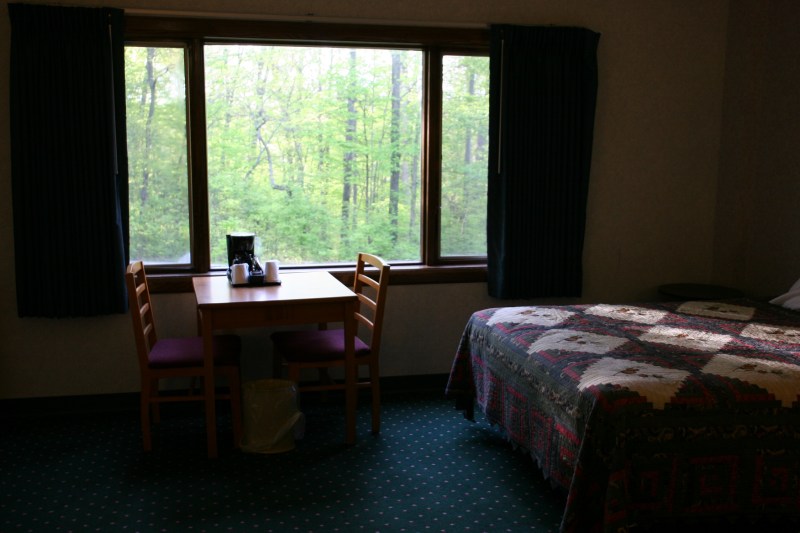
 

The decor is a bit dated and the bedspread showing wear. But the room was clean, the bed comfortable, the setting beautiful and the

The decor is a bit dated and the bedspread showing wear. But the room was clean, the bed comfortable, the wooded setting beautiful and the location quiet. Our room was located in the new part of the inn, opened in 1995.


Still, I wasn’t convinced. How could a place this lovely, at least from the exterior, cost only $59/night? Time to check out the interior. The front desk clerk, whose name eludes me, but whose husband is a native of Delano, Minnesota, greeted us with Hoosier hospitality and suggested that, since we were from Minnesota, we should have a lake view room. Perfect. It was a nice gesture. But the room was much too cramped, the promised lake view from a small, high window. We returned to the front desk, landing in a much more spacious room with windows overlooking woods. Perfect.
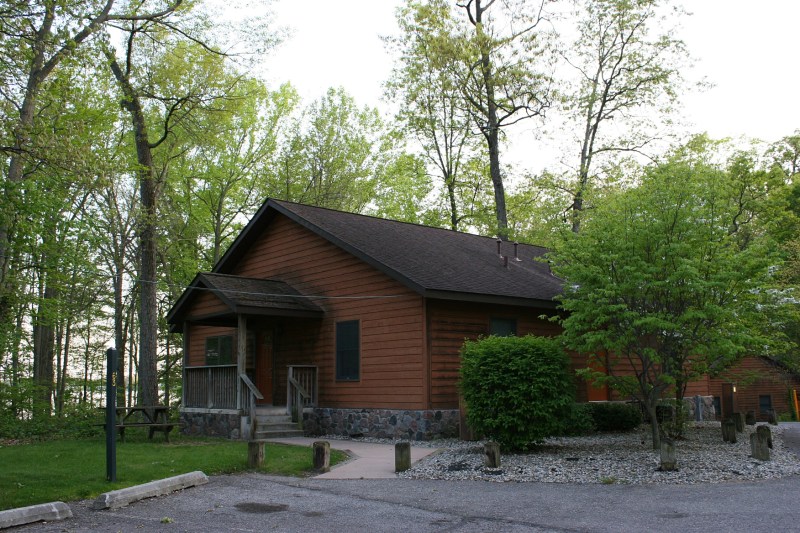
 

Cabins in the woods are also available for rent.

Cabins in the woods are also available for rent.


After being on the road for 10 hours, the Potawatomi Inn was precisely where we needed to stay. Away from the Interstate in a peaceful natural setting.
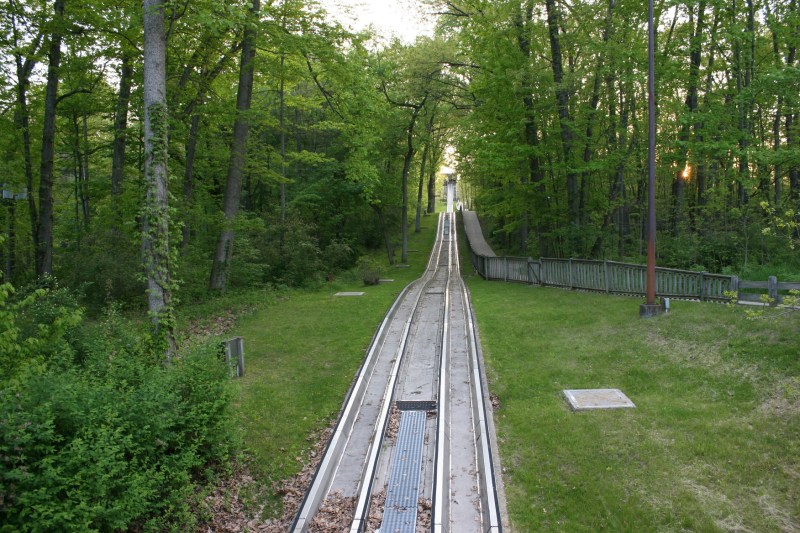
 

The Civilian Conservation Corps built the original wooden toboggan run in 1935. It was updated through the years to a refrigerated slide.

The Civilian Conservation Corps built the original wooden toboggan run in 1935. It was updated through the years to a refrigerated slide.


We walked to the lake and then followed a trail to the park’s historic toboggan run.
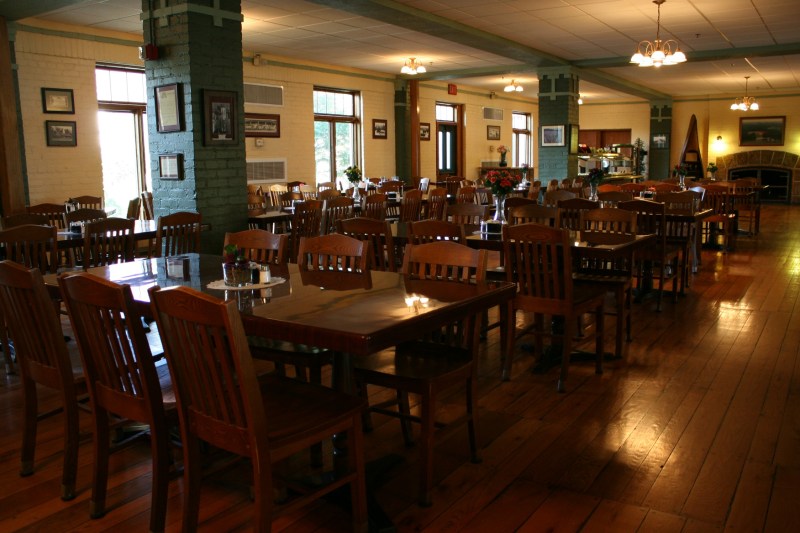
 

The historic dining room, nearing closing time, was a quiet place to dine on a weekday evening in late May.
The historic dining room, nearing closing time, was a quiet place to dine on a weekday evening in late May.


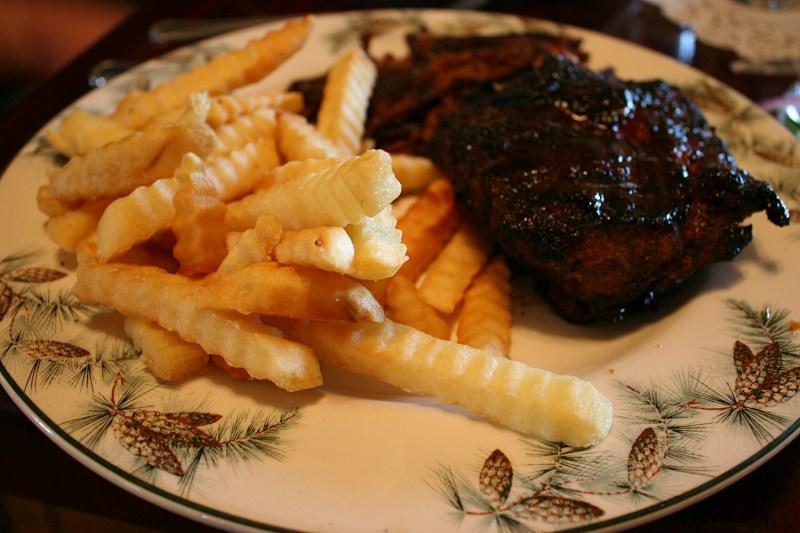
We shared a dinner of barbecued ribs with enough for both of us plus left-overs. I love the pine cone design on the over-sized plates.
We shared a dinner of barbecued ribs with enough for both of us plus left-overs. I love the pine cone design on the over-sized plates.


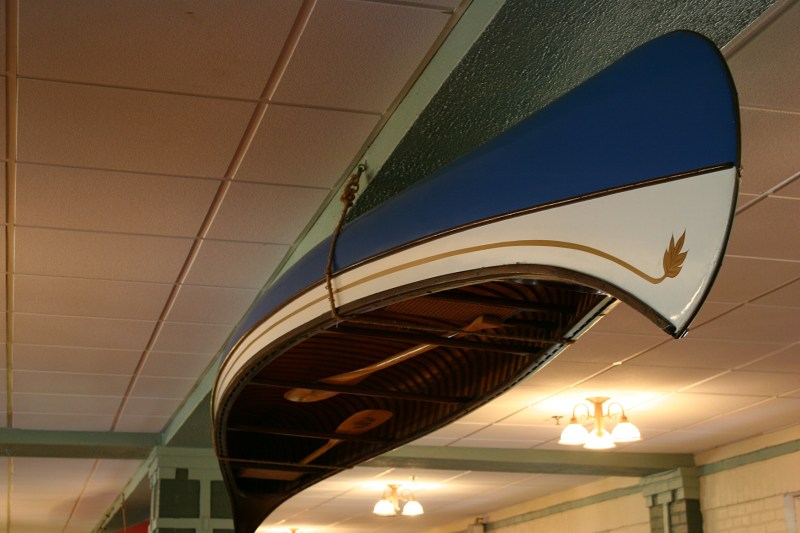
Suspended from the dining room ceiling.

Suspended from the dining room ceiling.


We explored the buildings, dined in an historic dining hall. And then, when evening faded to dark, we joined a young couple around a campfire. From Elkhart, an hour to the west, they, too, were Hoosier friendly. As we talked, we learned what brought them to the Potawatomi Inn. Cancer. Tyler was taking a break from chemotherapy, his treatment set to resume four days later. He and Kelsey—ironically once an oncology nurse now working in labor and delivery—inspired us with their upbeat attitudes, their thankfulness for the good prognosis, a 95 percent cure rate for Tyler’s cancer.
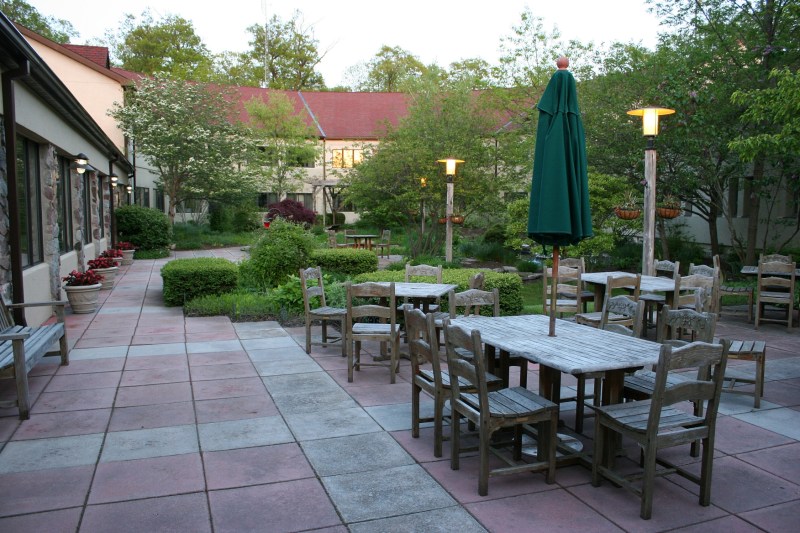
 

A lovely courtyard filled with plants and with a water feature offers a lovely place to dine outside the Courtyard Cafe.

A courtyard filled with greenery and with a water feature offers a lovely place to dine outside the Courtyard Cafe.


Now, as I reflect on the wrong turn that led us to the Potawatomi Inn, I am especially grateful. We spent our first night on the road in a tranquil setting. We met some truly wonderful Hoosiers. And I fulfilled my wish to stay at a lakeside resort.
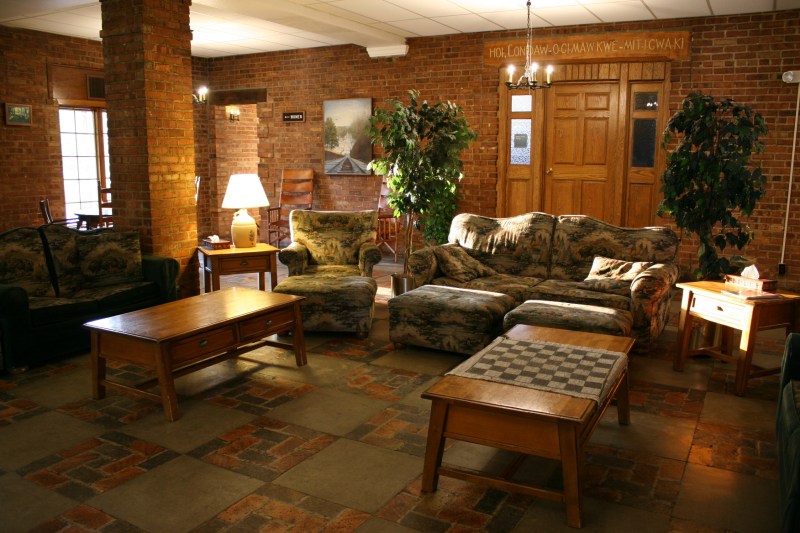
 

The Lonidaw Lounge just outside the historic dining room.

The Lonidaw Lounge just outside the historic dining room.


But what really clinched my appreciation for this resort was my husband’s response to a question asked by a friend about a favorite part of our Minnesota to Massachusetts trip. “The Potawatomi Inn,” Randy answered. I agree.
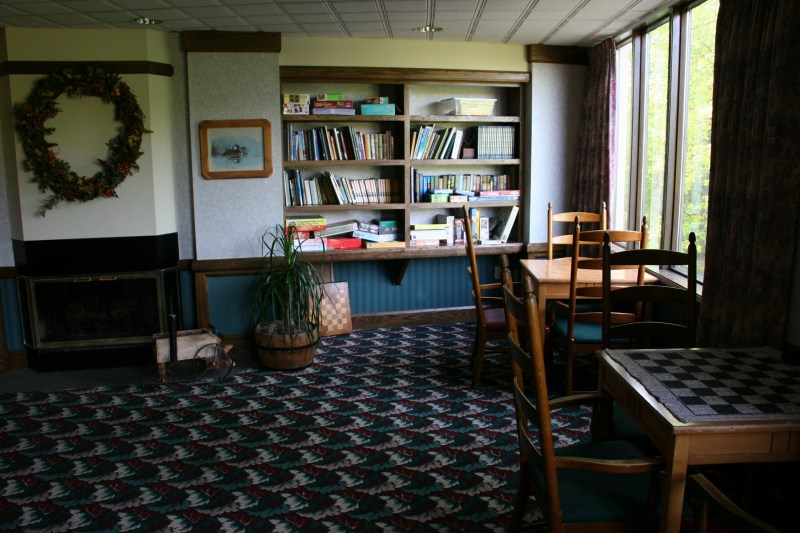
 

The library is well-stocked with books, board games and puzzles. You'll also find a pool, spa and sauna; activity, exercise, video and game rooms; and a gift shop on-site.

The library is well-stocked with books, board games and puzzles. You’ll also find a pool, spa and sauna; activity, exercise, video and game rooms; a conference room; and a gift shop on-site.


FYI: The low rate we got in May 2016 was a pre-season weekday special. Don’t expect a deal this good during the busy summer months. And since this rate is from two years ago, expect that rates have likely increased. I’d highly recommend staying here. It was a great option to a chain hotel and in the most peaceful of settings.

© Copyright 2016 Audrey Kletscher Helbling


Doggie out the window May 3, 2018

Filed under: Uncategorized — Audrey Kletscher Helbling @ 5:00 AM

Tags: , , , , ,


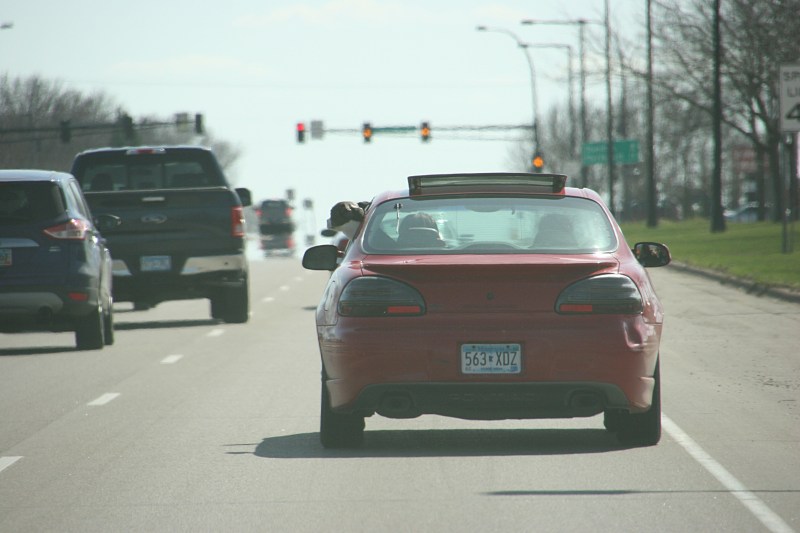
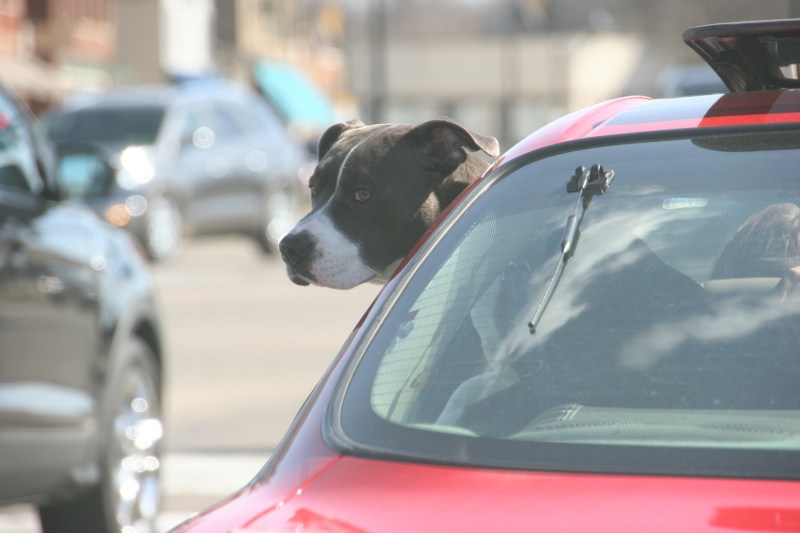
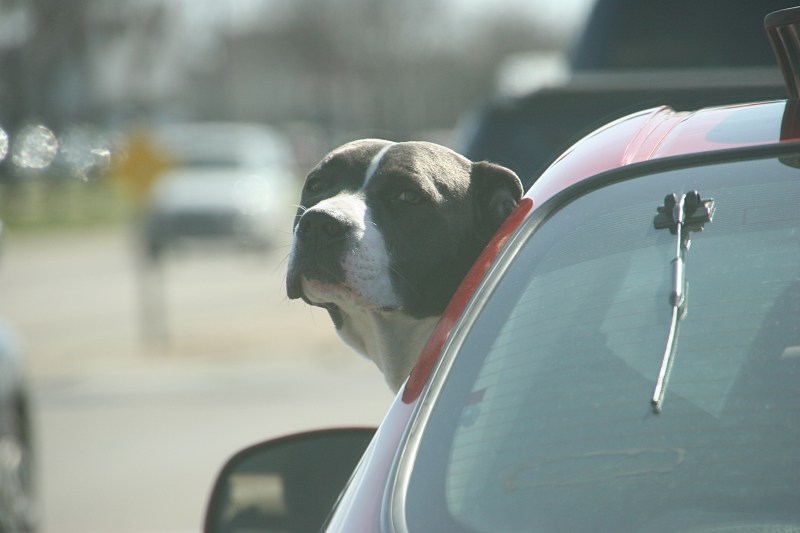
I’M ALWAYS INTRIGUED by dogs hanging their heads out vehicle windows.


Are they smelling something?

Do they delight in the wind blowing through their fur?

Or are they simply enjoying the warmth of the day, the carefree joy akin to riding with the convertible top down?


Whatever the reason, I smile whenever I spot a dog with its head hanging out the window, nose pointed, eyeing me, me him/her…


Photographed through the windshield of our van late Saturday afternoon along Minnesota State Highway 3 in Northfield, Minnesota.

© Copyright 2018 Audrey Kletscher Helbling

 

How two Faribault businesses made me smile with great customer service May 2, 2018

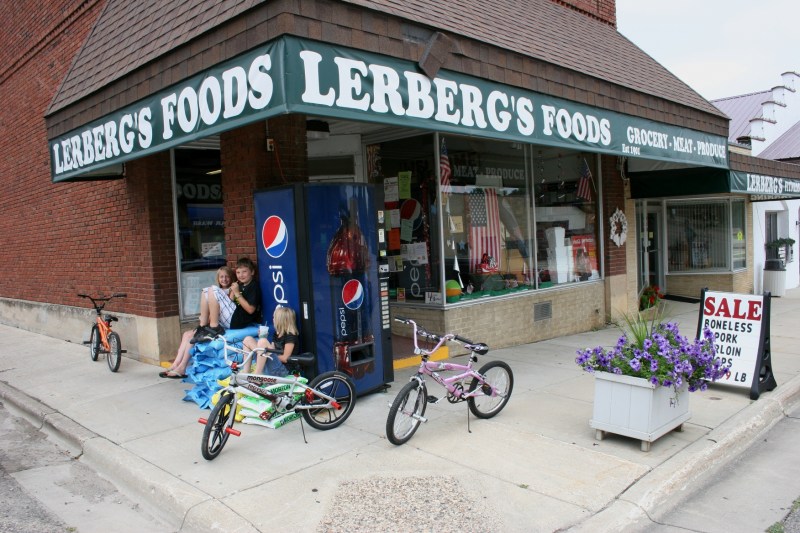
In the small town of Ellendale, kids bike to Lerberg’s Foods for groceries and the occasional slushie. Here two sisters and a friend slurp their slushies while sitting on bags of water softener pellets next to the pop machine. This is one of my favorite images of a small town local business. I took this photo in August 2011. Lerberg’s Foods is still in business.


I VALUE GREAT CUSTOMER service. It can be the deciding factor in whether I patronize a business. If I have a bad experience, I’ll think twice about returning. If I have a great experience, you bet I’ll give that business my business.

Now more than ever, customer service holds significant value along our main streets. It is one way local businesses can compete with online shopping. Not that that is a personal concern for me; I seldom shop online. But most people do. So our local shopkeepers need to go that extra mile to create a welcoming experience that meets customers’ needs.

What comprises great customer service? For me, it starts with a smile. The minute I walk in the door, I should be greeted, valued. I don’t need a clerk or store owner who hovers, but I appreciate someone who is subtly attentive. Help me if I appear overwhelmed, uncertain or can’t seem to find whatever. Listen. Offer choices. Answer questions. And then listen some more. Or leave me alone if I’m sending body language signals that I’d rather be left to browse.

I expect it’s not always easy to determine how to best serve a customer. But a shopkeeper can’t go wrong by simply being nice. And helpful.


I cite two recent examples from my community of Faribault where two grocery store employees showed exceptional customer service. Both on the same day. While at Hy-Vee, I was approached by an employee who apparently noticed me filtering for too long through clamshells of strawberries special-priced at $1.28/pound. I couldn’t find any berries that weren’t over-ripe and/or rotting. Even at a bargain, I won’t pay for bad produce and dislike when a grocer tries to sell food that should be tossed.

But this employee decided he wanted a satisfied customer. He offered to go to the back storeroom and find a pack of acceptable berries. Two if I wanted two, although I pointed out the “Limit one to a customer” sign. He would bring two, he said. I waited until he returned. With only one pack. But that was OK. He also promised to have those over-ripe berries cleared from the shelves.

At my next grocery store stop, I experienced exceptional customer service in the bakery department of Fareway Meat & Grocery. I was on a mission to find a smiley face cookie for my two-year-old granddaughter. Typically those cookies are sold at Hy-Vee. But on this Saturday they weren’t immediately available. I didn’t have time to wait an hour so headed to Fareway hoping for the coveted cookie.


I found smiley face cookies, six to a package. But I didn’t want six. I wanted one. Perhaps, I thought, I could buy a single cookie from the pick-your-own selections. Turns out the cookies aren’t sold individually. I explained my dilemma to the baker, how I had hoped to buy one cookie for Izzy for her second birthday because her mama loved smiley face cookies when she was a little girl. The baker smiled, then told me to pull a package from the shelves. I could have one, she said. At no charge.

You can bet my mouth curved as wide as the blue smile on that cookie. My joy in that simple gesture of kindness shone as bright as the yellow frosting. Granted, giving away that cookie didn’t cost Fareway much money. But it was priceless in terms of exceptional customer service.

That’s what I’m talking about as we celebrate Small Business Month in Minnesota during May and National Small Business Week from now until May 5. Hy-Vee and Fareway may not classify as small businesses. But two employees at their Faribault stores exemplified outstanding customer service to me. And that, my friends, is how Main Street can compete in today’s global online marketplace.

TELL ME: What’s your definition of great customer service? Give me an example. Do you shop local or mostly online?


© Copyright 2018 Audrey Kletscher Helbling
 

Launching the Boomerang Bags movement in Faribault May 1, 2018


A May Day basket I received from a young family several years ago. Minnesota Prairie Roots file photo.


MAY DAY BRINGS thoughts of baskets hung on doorknobs or set on doorsteps. A gift to a friend, a family member, a neighbor. A little love on the first day of May.


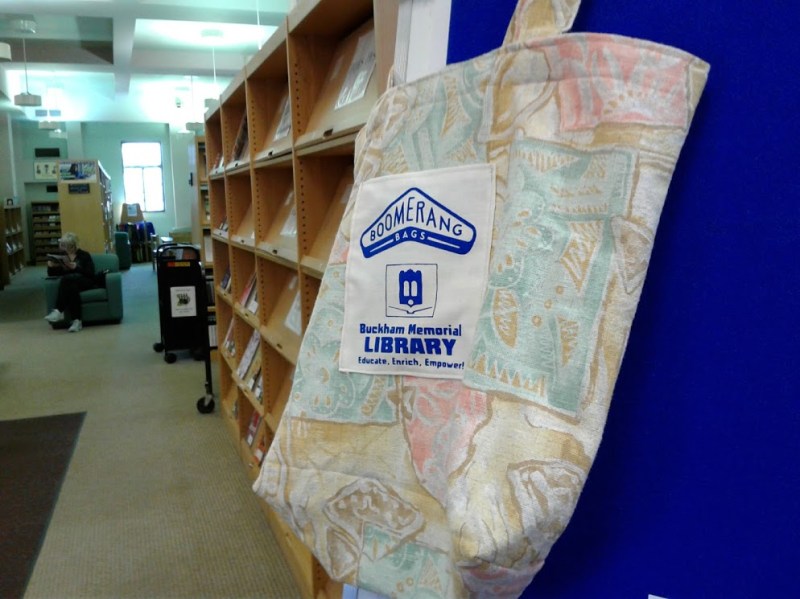
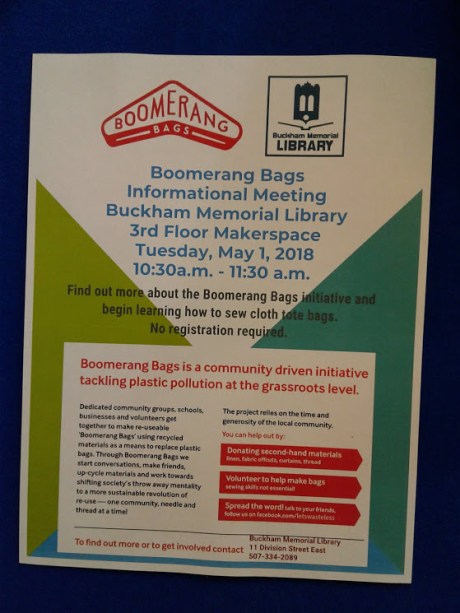
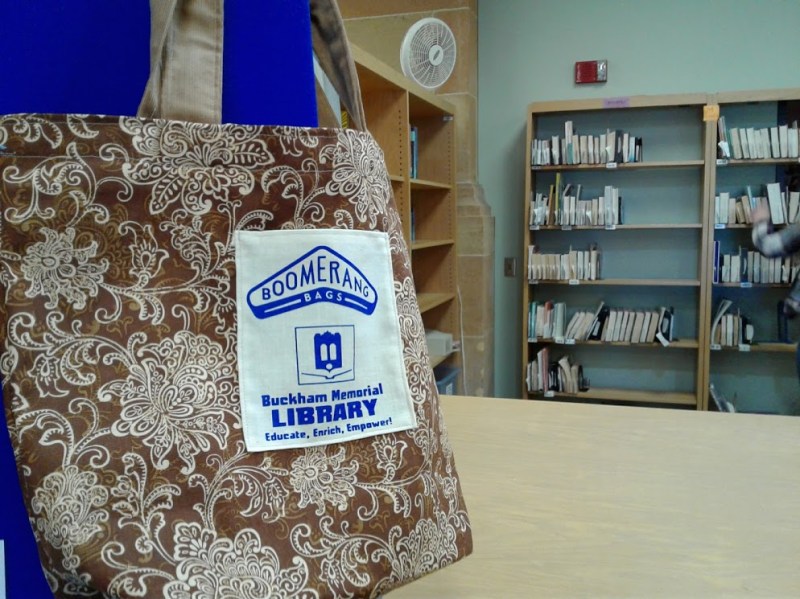
Today in Faribault, the focus is not on baskets, but on bags. Cloth bags crafted from recycled materials to replace plastic bags. It’s part of the worldwide Boomerang Bags movement being launched locally at Buckham Memorial Library.


I read about this effort recently in the Faribault paper, then saw samples of the cloth bags at the library along with a notice about an informational meeting slated for 10:30 a.m. today in the library’s third floor Makerspace.


I like the concept of choosing cloth over plastic, of making these bags and then passing them along to people in the community. The boomerang effect.

All of this I considered while I checked out books and magazines at the library on Saturday, then waited while the front desk aide slipped my reading materials into a Southeastern Libraries Cooperating bag. Made of plastic.

TELL ME: What are your thoughts on the Boomerang Bags project? Have you heard of it? Do you already use cloth bags when shopping, etc.?

© Copyright 2018 Audrey Kletscher Helbling
 

Spring flooding in my home county of Redwood April 30, 2018

Filed under: Uncategorized — Audrey Kletscher Helbling @ 9:57 AM
Tags: , , , , , , , , , , ,

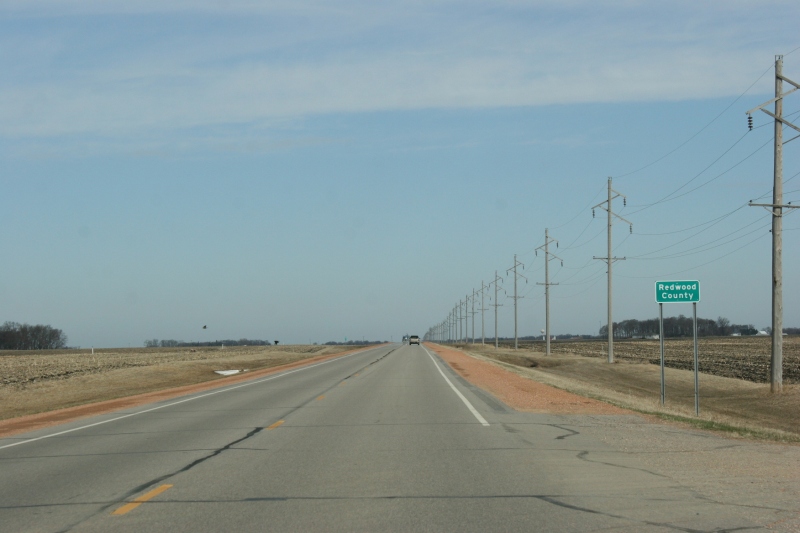
Entering my home county of Redwood along Minnesota State Highway 68 southeast of Morgan.


SEVERAL DAYS AGO, traveling back to my hometown of Vesta, I noted snow sculpted in some road ditches. This late in April, the scene was unexpected. But then a blizzard raged across southern Minnesota only weeks earlier. And that road ditch snow, hard-packed by prairie winds, had yet to melt in the then 60-degree temps.


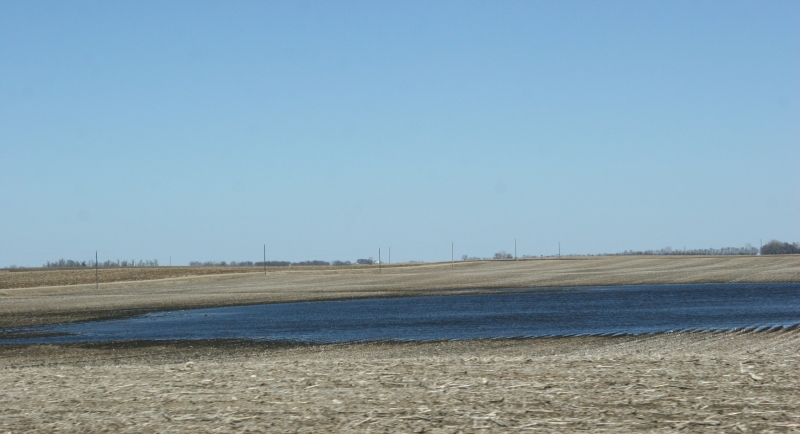
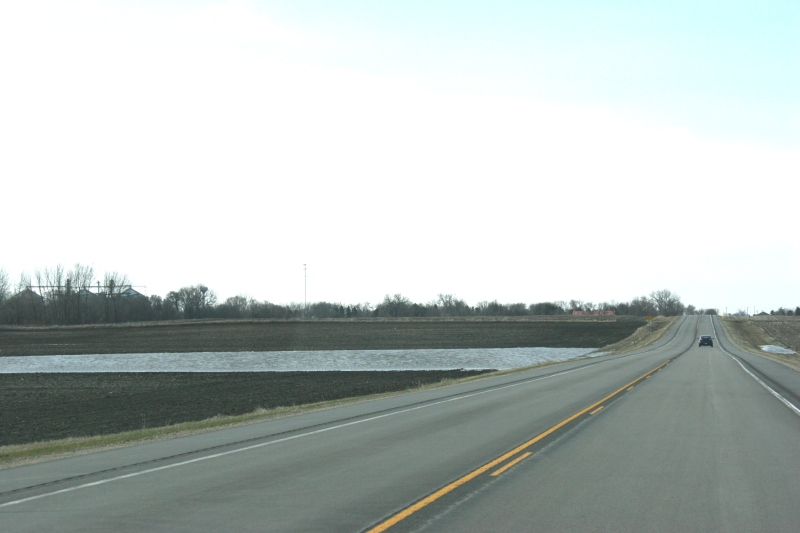
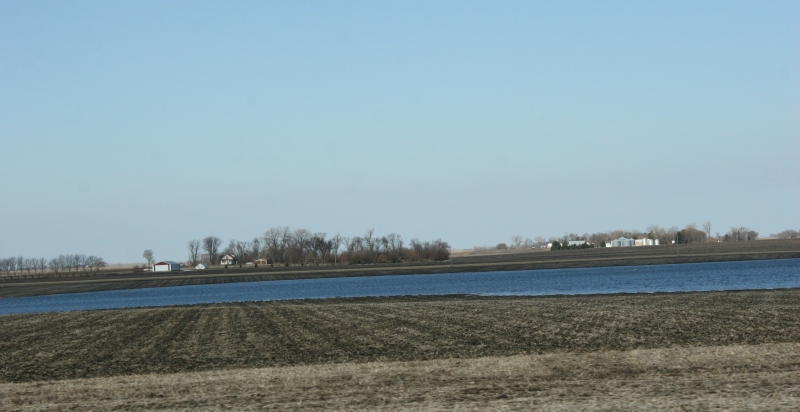
Nearing Vesta (left in photo) along Minnesota State Highway 19, I saw more and more flooding of farm fields.


A view of the flooding from Highway 19 just northwest of Vesta.


And just across the highway, more flooding.


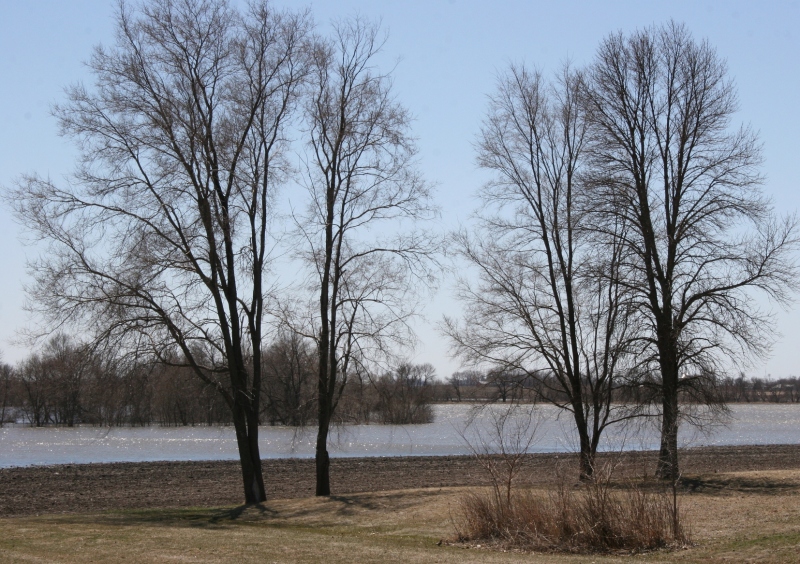
Beyond the snow, though, I noticed water setting in farm fields. The late significant snowfalls and plugged culverts and tiles likely contributed to the collection of snow melt water in many low-lying areas. It would be awhile, I surmised, before farmers would be working this land.


The deep blue of those temporary ponds appeals to the poet in me. I see lines of poetry in splashes of blue across an otherwise drab landscape stubbled by remnants of last year’s harvest.


The Redwood River, flooded over its banks, along Redwood County Road 10 heading south out of Vesta. That’s my home farm in the distance. There have been times when the river flooded across the roadway.


A temporary lake of floodwaters borders my hometown of Vesta.


Flooded farmland along the Redwood River on the edge of Vesta.


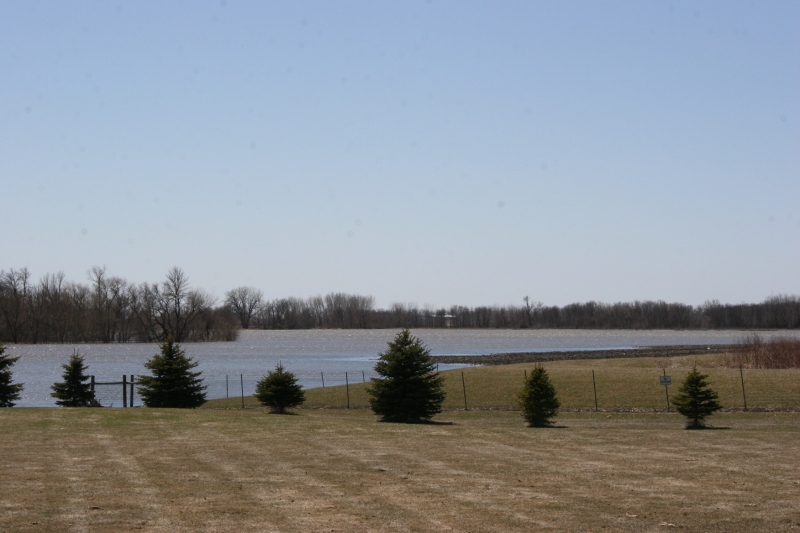
On the south edge of Vesta, within view of the Redwood River, a lake formed as the river overflowed its banks and flooded surrounding farm land. The town itself was in no danger with a hill—rare as they are on the prairie—bordering that end of town.


Water spreads easily across the almost tabletop flat landscape, here just north of Vesta.


There’s something about floodwaters that draws my appreciation, causes me to stand and just look at the river and recognize its power.


These grain bins sit a gravel road and short stretch of land away from the floodwaters of the Redwood River in Vesta.


I realize that soon (maybe even as I write) this flooding will be another memory as farmers ready for planting and, in several months, the harvest.


© Copyright 2018 Audrey Kletscher Helbling
 

From small town Minnesota: Comfort on a day of mourning April 28, 2018

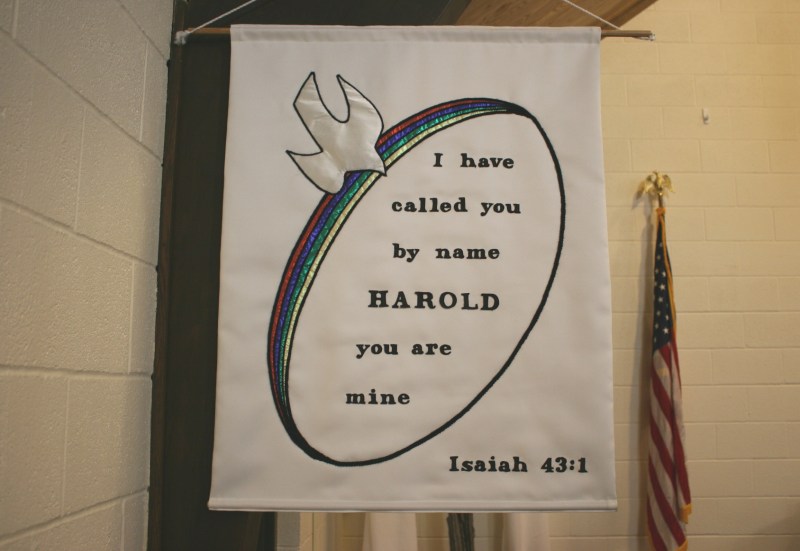
This banner hung in the sanctuary at my Uncle Harold’s funeral.


COMFORT IN SONG. Comfort in words. Comfort in family. Comfort in food. Comfort in a sense of community.


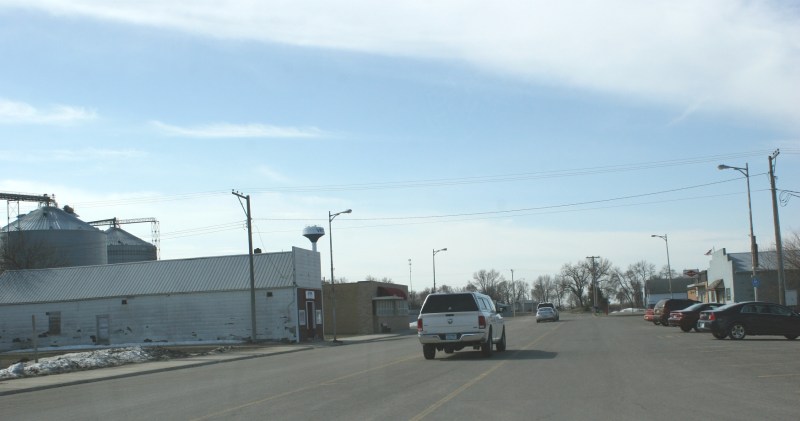
The one-block Main Street of downtown Vesta, Minnesota.


I felt comforted as I gathered with extended family and my hometown community on Thursday to mourn, and remember, my beloved Uncle Harold.


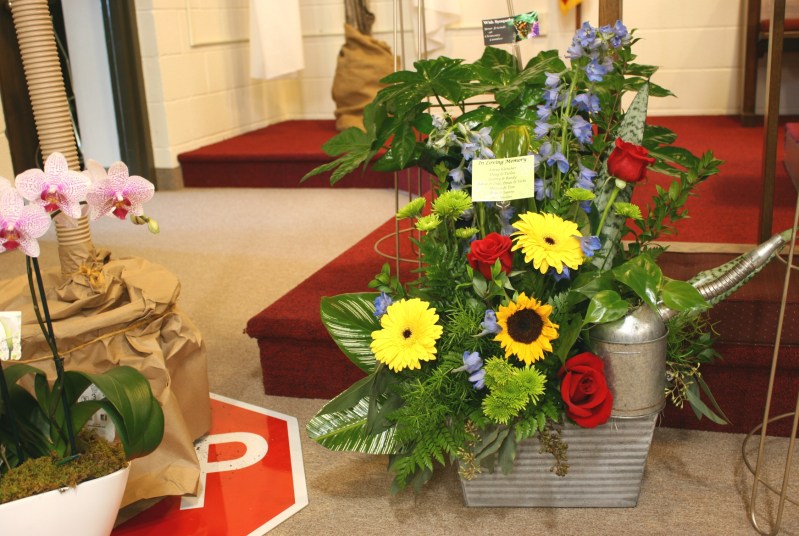
Floral arrangements, plants and other memorials filled the front of the church. These flowers, with an oil can incorporated, were given by my siblings and our families. The oil can recognizes Harold’s previous occupation as the owner of Harold’s Service (a gas station and garage).


I felt blessed, too, to congregate here in a small town church overflowing with people. It is the songs, always the songs, that touch my emotions, that bring me to tears. I struggled to sing the words to “How Great Thou Art” as row upon row upon row of extended family, including me, joined the immediate family in walking in together, behind the casket, to fill St. John’s Lutheran Church.


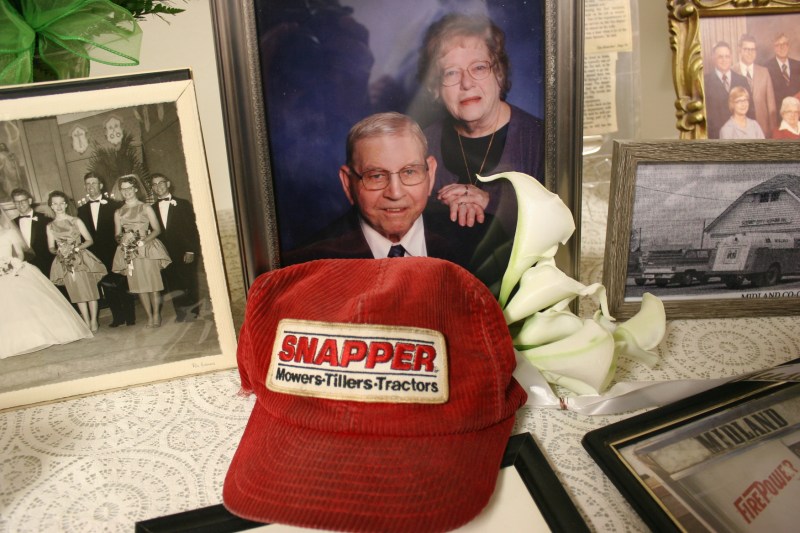
Many family photos, including one of Harold and his wife, Marilyn, graced the table as did Harold’s (presumably favorite) cap.


I observed that the undertakers seemed surprised at the sheer volume of Kletscher relatives. We are a large lot and we come together in times of need. Only a few of my 30-plus cousins were missing. Family is important to us. Always has been. Always will be.


Vesta is a close-knit farming community of about 330 in Redwood County, Minnesota.


As I sat in a folding chair at the end of a pew, pressed to the wall, I felt the closeness of this family and community that I love. Our voices swelled, loud, to sing “Amazing Grace” and, later, “Go My Children, With My Blessing.” In those moments of song, I felt especially moved by the legacy of my forefathers who helped found this congregation. There’s something about singing traditional hymns of old that comforts me and connects me to those who went before me—on this day my uncle.


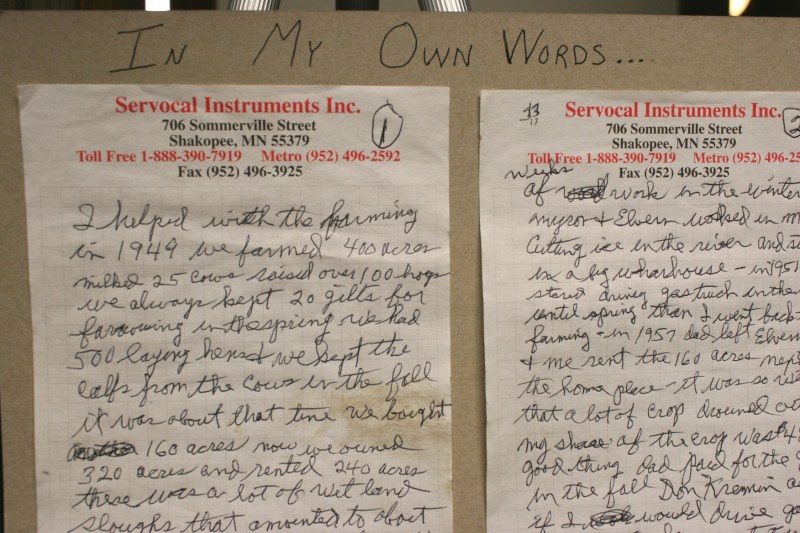
A snippet of the life summary Harold wrote for his family.


Harold left a gift for his family in the form of his life’s story scrawled onto four pages of notepad paper. The notes were found in the barn/shed behind his home after his death. I didn’t have time to completely read the life summary given the crowd and busyness of funeral day. But Harold’s youngest son has promised to send me the stories, which also mention my dad.


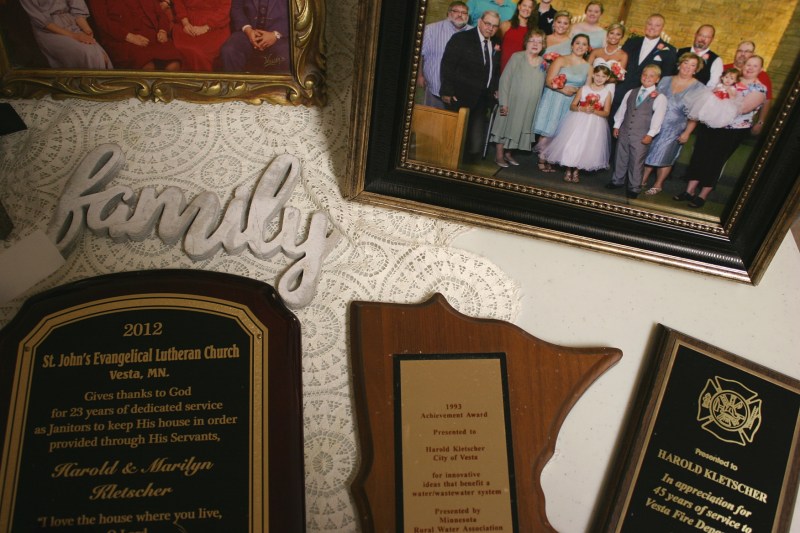
The display table showcased some of the honors Harold has garnered through the years for his service to church and to community.


The two brothers now lie buried near each other on a cemetery just north of Vesta. The city fire truck led the long processional from the church to the burial grounds as an honor to Harold, a volunteer fireman of 45 years. On the hilltop cemetery, we said our final goodbyes, our final prayers, as the wind whipped and the sun shone. Standing there, I felt a sense of comfort not only in the closeness of family but in a sense of place. This is my land. These are my people. Even though I left Vesta decades ago, this still feels most like home.

When the graveside ceremony ended, I lingered with family, my heart heavy, yet my heart free. I paused at my father’s gravestone, too, and remembered him—dead 15 years now.

Back at the church, the celebration—and I intentionally choose to call this a celebration—continued with a lunch of scalloped potatoes and ham, coleslaw, slices of bread, homemade dill pickles and cupcakes served with lemonade and coffee. No Funeral Hotdish #1 or Funeral Hotdish #2, as I refer to the Reception Committee hotdishes published in the St. John’s Anniversary Cookbook of 1985. I scooped only small servings of food onto my paper plate, cognizant of the crowd to feed, and not necessarily expecting Jesus to multiply the scalloped potatoes like the fishes and loaves.


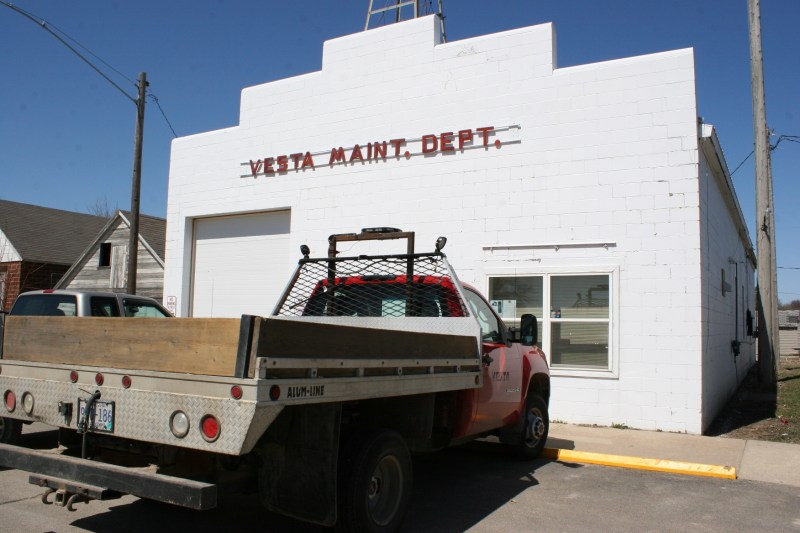
Harold worked as the city of Vesta maintenance engineer for many years before retiring at age 70.


Food and conversation comforted me on this Thursday, Harold’s burial day. He would have been overwhelmed by the outpouring of love—by the vehicles overflowing onto the county road beside the church, by the lines waiting to comfort his wife and children, by the raised voices singing, Then sings my soul, my Saviour God, to Thee. How great Thou art, how great Thou art.


© Copyright 2018 Audrey Kletscher Helbling
 

What’s the deal with all the flies at Valley Grove? April 27, 2018


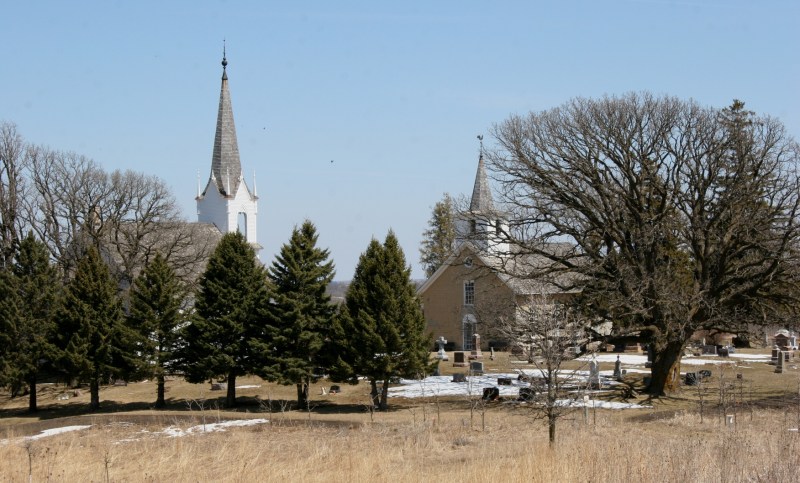
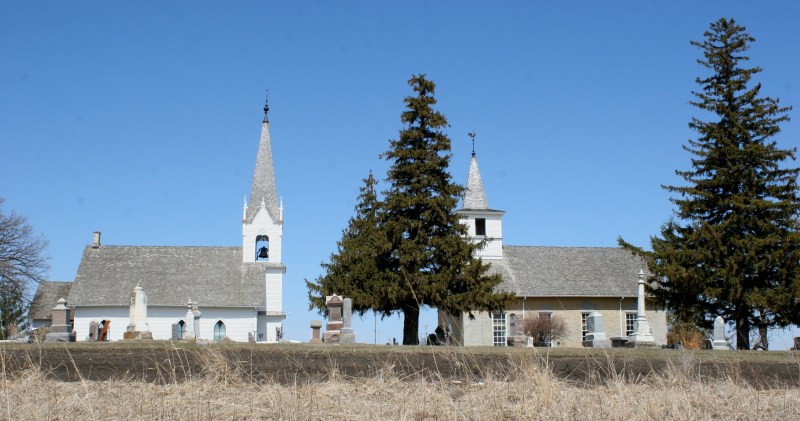
The historic Valley Grove Churches, rural Nerstrand, Minnesota.


ALL YOU SCIENTIST, ENTOMOLOGY, biology types out there, I need your input to solve a mystery. I suppose I could google the topic, but I’d rather read your theories or fact-based conclusions.


The buzzing started once we stepped inside the front gate and onto the grass between the two churches.


Last Sunday afternoon while walking on the grounds of Valley Grove Church, rural Nerstrand, I heard a buzzing. Like a zillion bees. At first I thought I was hearing things because, when I would stop, the droning also stopped.

I questioned whether I could be suffering from tinnitus, an occasional issue given my hearing loss. I’m nearly deaf in the my right ear which causes all sorts of problems in determining sound sources and in hearing in general.


But this buzzing seemed real. I risked asking my husband if he heard what I heard. He did. We paused on the dormant dried grass. No buzzing. Then we took a few steps and the irritating hum resumed. Then my observant husband, with the way better vision than me, saw the flies. Everywhere. Infinite numbers settled on the grass as if sunning themselves. I strained to see the camouflaged flies and then photograph them. I managed one image of a single fly. Whenever either of us moved, they, too, moved. It was the craziest thing.


One of several birdhouses located on the grassland hiking area.


I’m a woman who has a history with flies. They were part of my growing up environment on a southwestern Minnesota dairy farm. A fly swatter was always at the ready. Sticky fly traps dangled from ceilings in our farmhouse; one even hung over the kitchen table. Not at all appealing. But I’d rather see a dead fly than have one land on my dinner plate. In the barn, biting, swarming flies were a constant problem. For cows. And for humans.


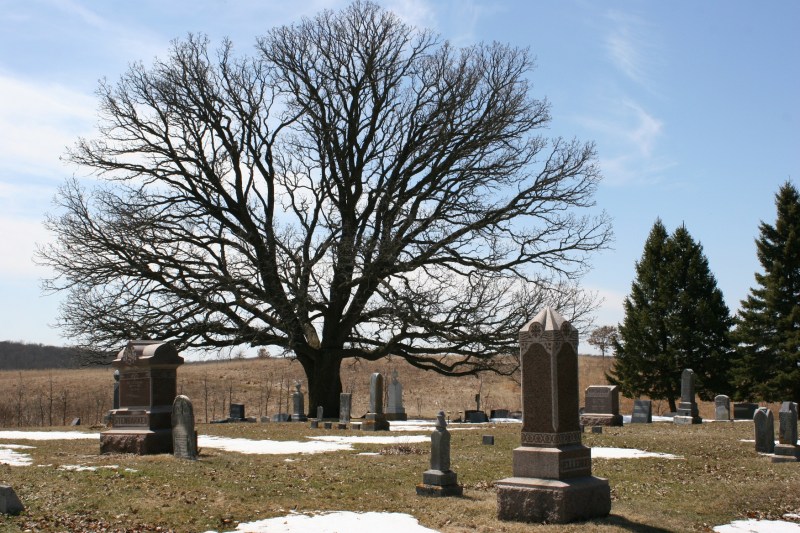
This aged, massive oak is a focal point in the corner of the cemetery.


But why were these thousands (maybe even millions) of flies here, on these church and cemetery grounds on a sunny late April afternoon, the first warm weekend of the season in Minnesota? There were no cattle (although the occasional piles of deer and other animal poop). There was no food.


The insects didn’t swarm the entire grounds—mostly just the area between the two historic church buildings and along the edge of the adjoining cemetery.


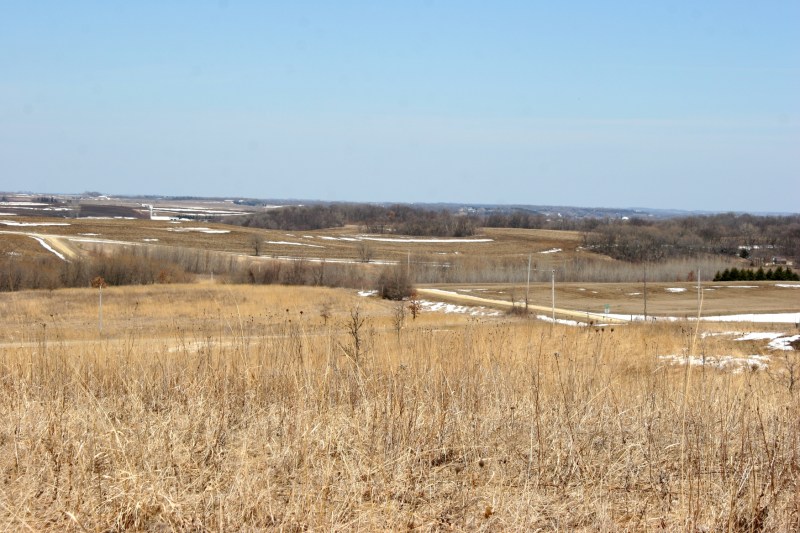
Once I got past the fly territory, I enjoyed my time at Valley Grove. It’s a beautiful place of quiet, of peace, set high atop a hill with lovely rural vistas. There are hiking trails and history in the cemetery (and churches when they are open). Generations of families are buried here. And there are oak trees, including one held together by thick chains in the corner of the cemetery.

This place holds stories. And now it holds one more story—the mystery of the fly invasion.


© Copyright 2018 Audrey Kletscher Helbling
 

The faith of our fathers still flourishes in a long-time Faribault radio ministry April 26, 2018

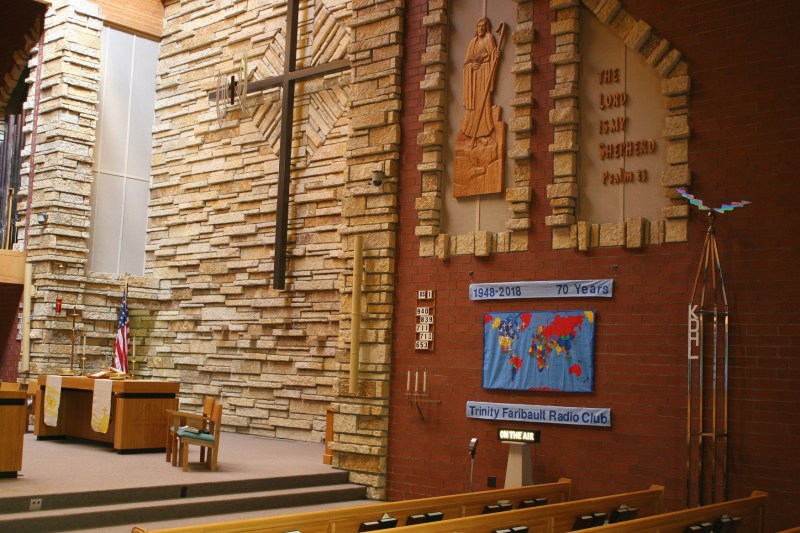
A temporary display in the sanctuary of Trinity Lutheran Church celebrates the radio and video ministry.


FROM MINNESOTA to Sweden to Saudi Arabia, people are listening to worship services from Trinity Lutheran Church, Faribault.


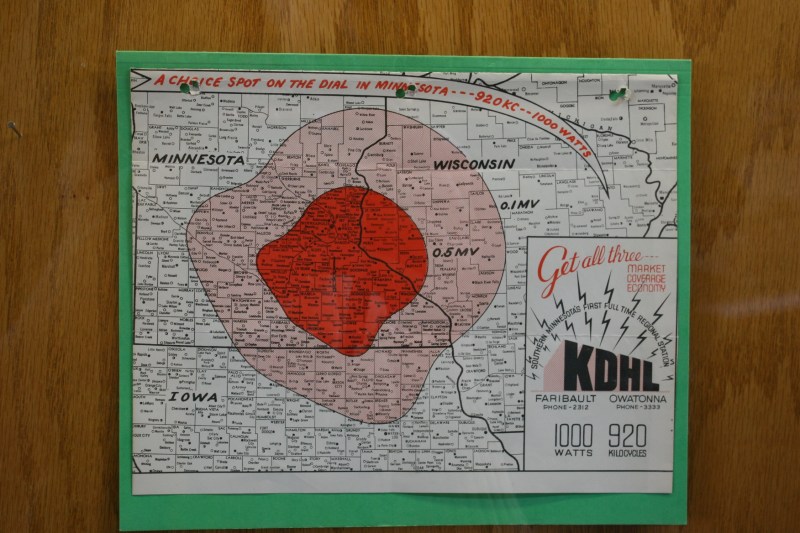
That may not seem remarkable in this technological age. But the longevity of this Minnesota-based ministry—seventy years—and its basic beginnings are remarkable. In April 1948, a group of men founded the Trinity Radio Council with the goal of broadcasting services on KDHL radio in Faribault. Just three months after that station formed and weeks after the Council initially met, the first Trinity worship service aired at 8 a.m. on April 25, 1948.
 

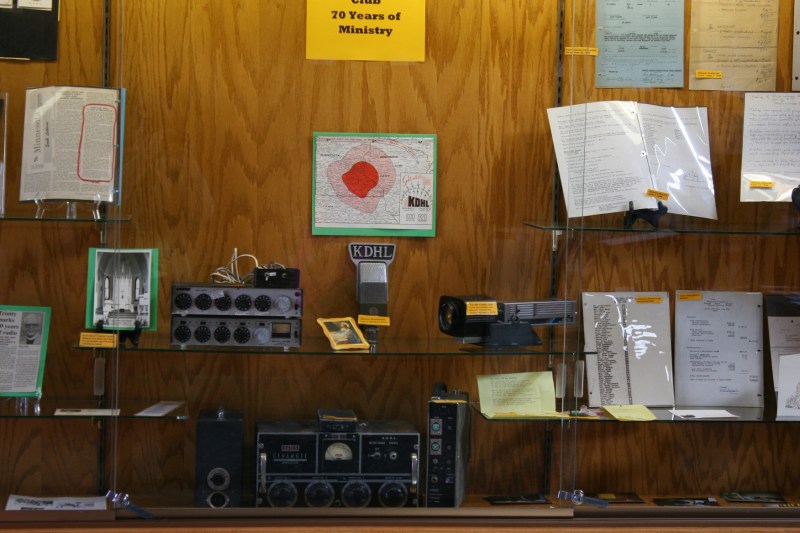
The original coverage area for KDHL radio.


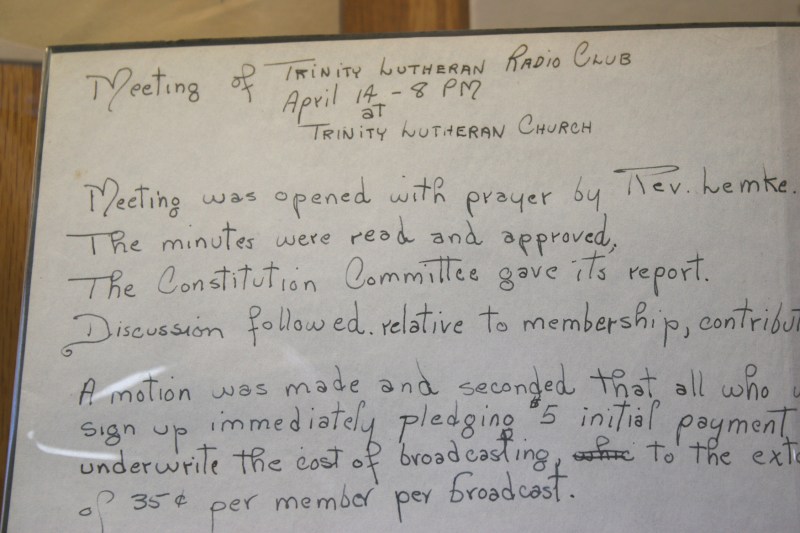
With promised payments of 35 cents per broadcast per Council member, this ministry into the southern regions of Minnesota, western Wisconsin and northern Iowa launched. Today those live radio broadcasts cost $175, but reach a much wider audience. And well beyond radio.


Worship services (at 8 a.m. Sundays and on other special church days) are also live-streamed, available for online viewing, aired on the local community cable channel and shared with care center residents.


The original microphone used in 1948.


The transmitter.


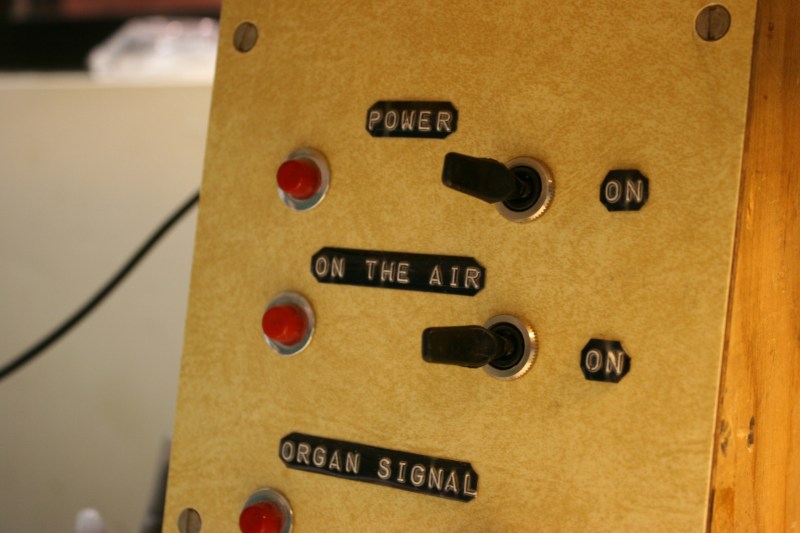
From a simple RCA microphone, a basic switchboard and a transmitter, broadcasting has advanced to high tech with multiple cameras, computers and more.

 

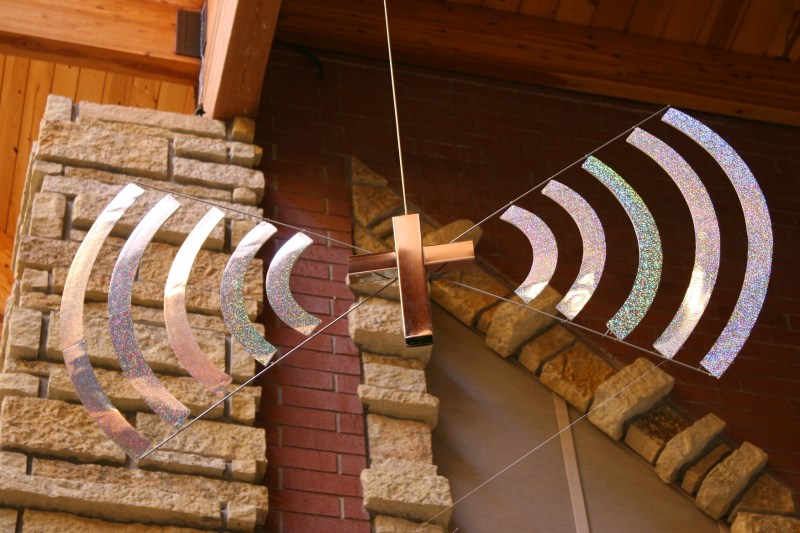
Art suspended in the sanctuary denotes radio waves and the focus of the radio ministry.


Yet, the purpose of sharing these worship services remains unchanged. And that is to bring Christ to the nations, to spread the good news of salvation. In a recent sermon, Trinity Senior Pastor, the Rev. Dr. Michael Nirva, referenced Romans 10:17 as he noted the Trinity Faribault Radio Club’s 70th anniversary: So then faith comes by hearing, and hearing by the word of God.


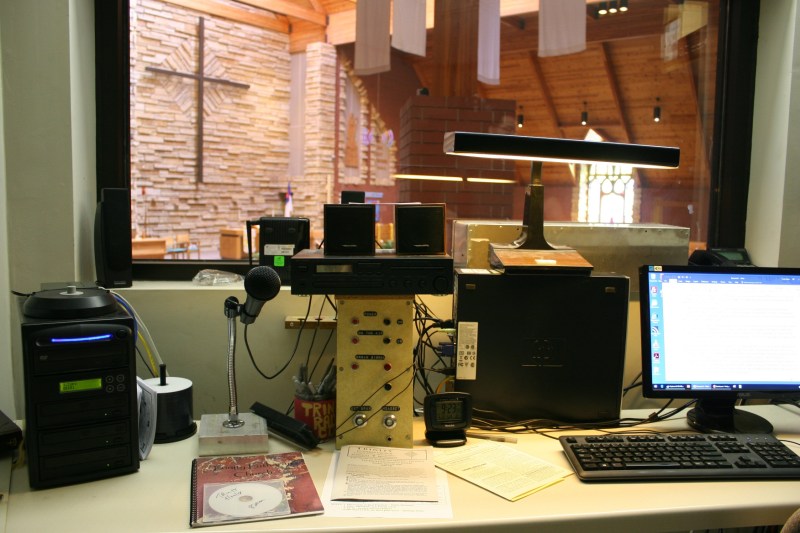
A view inside the studio and overlooking the sanctuary through the studio window.


Vintage radio room art, currently in the historical display case.


That word of God centers worship at Trinity. And that’s visible in the radio room angled into a corner of the sanctuary. Todd Voge, who today leads the radio and video ministry, gave me a quick tour. While Todd showed me the brains of the operation condensed on a computer screen, pointed out the transmitter and more, I noticed two bibles sandwiched between a telephone directory, song books and devotionals. In a cramped room filled with all sorts of high tech stuff, the printed bible still holds a place of importance.


This ministry remains important to Trinity with generations of families involved and committed to its continuance. Within my family, my husband once a month takes a DVD of the morning’s worship service to a local care center and shows it to residents. And when my son was in high school, he volunteered in the radio room. While I’m not a volunteer—the computer aspect is enough to scare me—I’ve occasionally listened to worship services on KDHL when I couldn’t make it to church.


Original meeting minutes are currently displayed in the narthex history case.


I am grateful to the original Trinity Radio Council members for having the foresight and the faith to start this ministry. They saw the potential in radio, in a ministry which has endured for 70 years. And expanded well beyond what they ever imagined.


An overview of the historical display.


FYI: To learn more about the Trinity Faribault Radio Club and/or to listen to/watch worship services, click here.

© Copyright 2018 Audrey Kletscher Helbling