

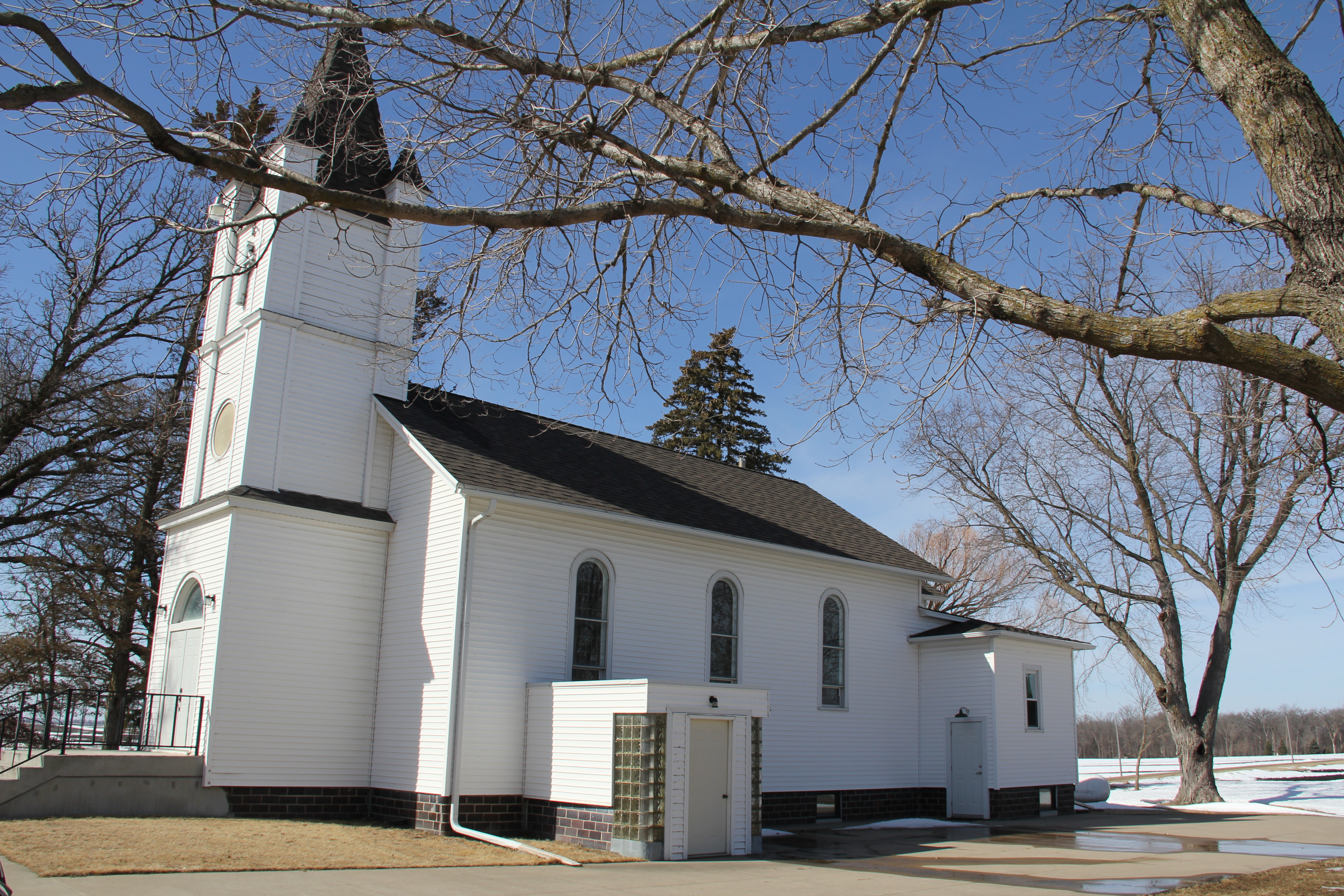
I’M TRYING TO RECALL when I first began walking through cemeteries while out and about. But I think it started with my interest in old country churches. Cemeteries typically embrace historic countryside houses of worship. Baptized, confirmed, married and buried often defines those rooted in these rural churches. There’s a lot of history to uncover in a graveyard.

But it’s not just the history that interests me. It’s the art. And the stories, many of which remain unknown, unless you’re familiar with the deceased or connected in some way. Sometimes you can piece stories together by looking at dates, names and inscriptions.
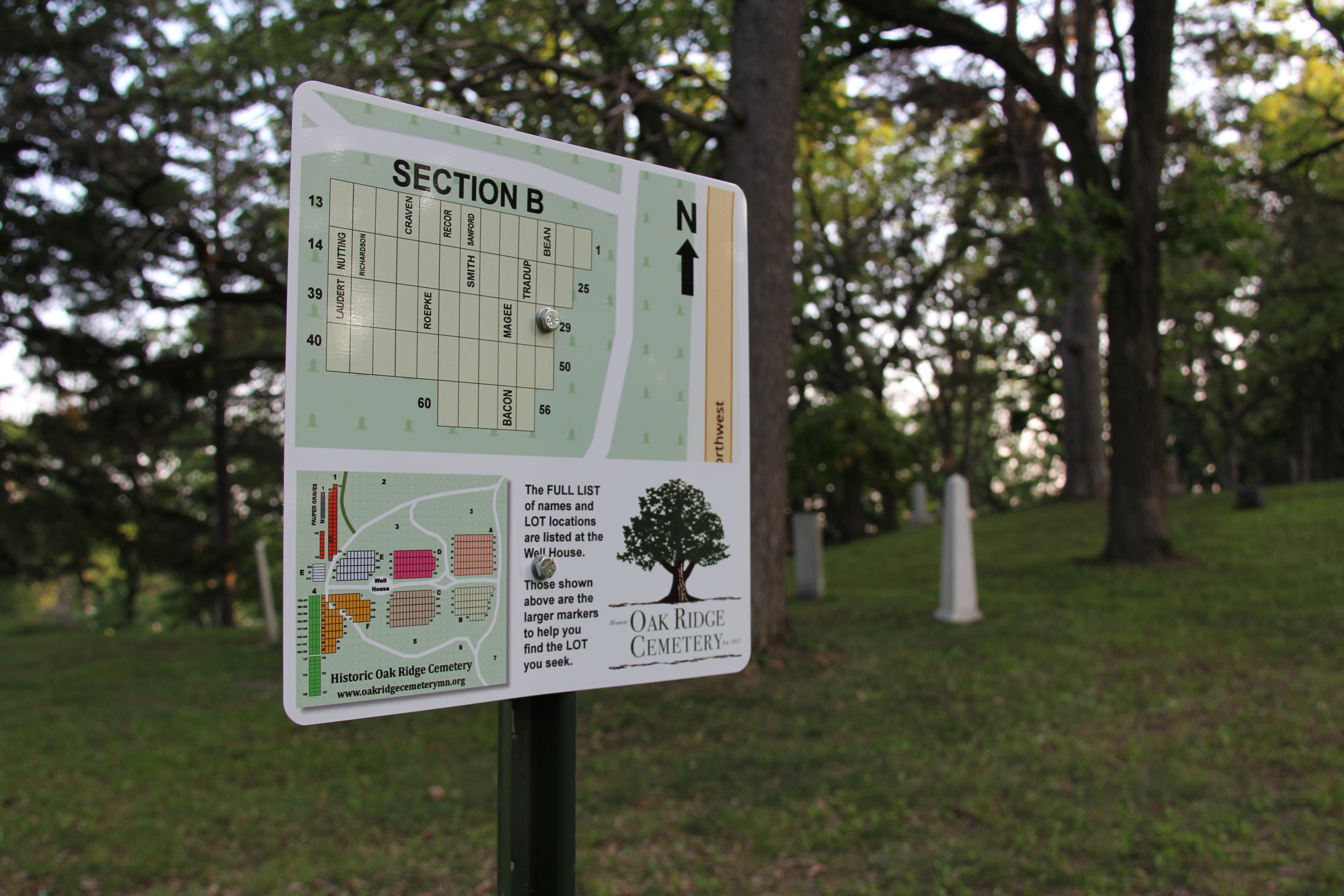
As a creative, I’ve always been particularly interested in the artistic side of a cemetery, specifically the art of tombstones. Aged grave markers, most made of marble, feature images and words hand-chiseled by local stone masons. It is those long ago tombstones that focused a recent talk, “Understanding Gravestone Symbols and Icons,” by Oak Ridge Cemetery Association board member Tom Rent. An avid volunteer in the upkeep, preservation and restoration of the cemetery, Rent previously talked at the Rice County Historical Society about preserving Faribault’s oldest cemetery, one of 61 in the county.
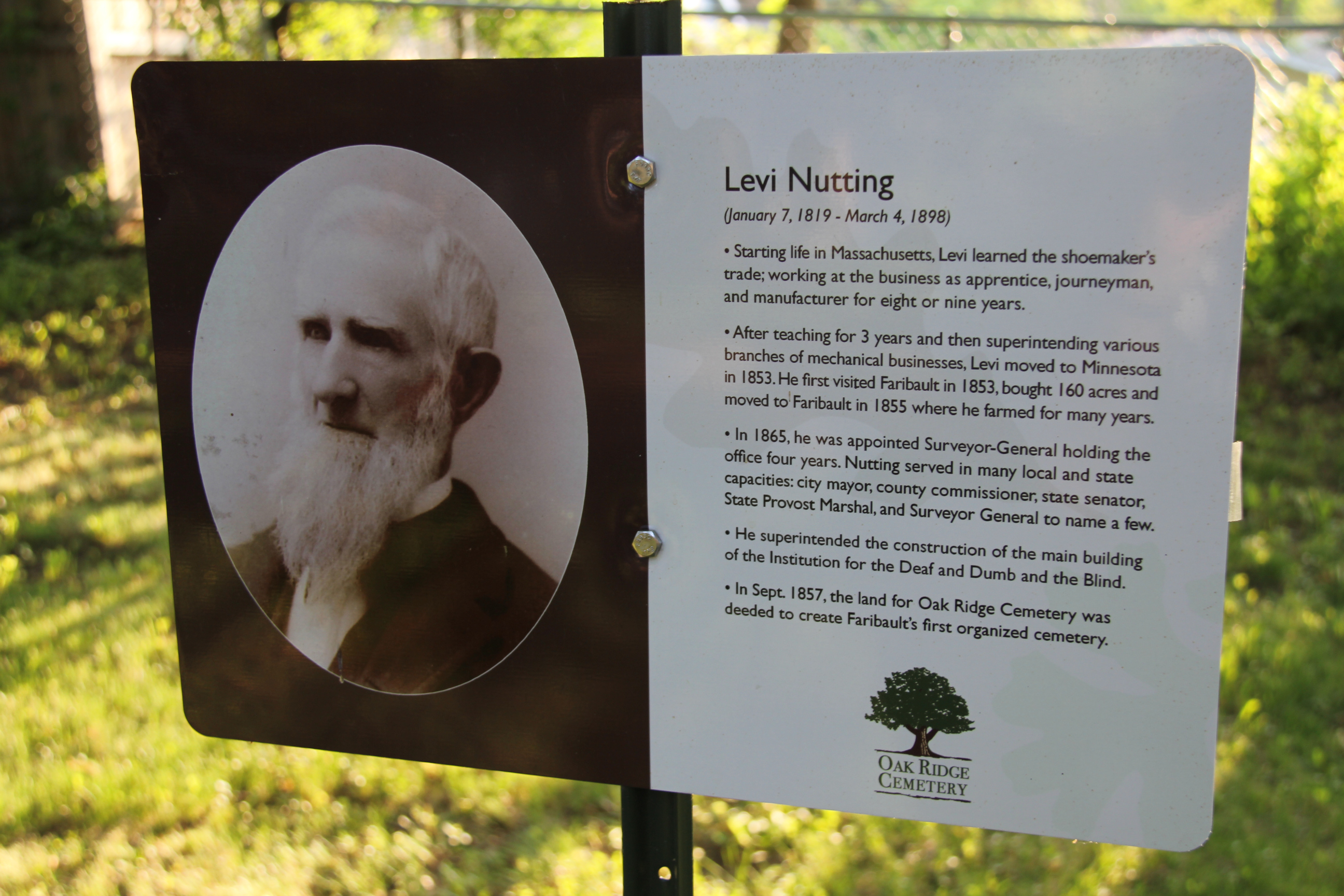
Oak Ridge Cemetery, founded in 1857 on land donated by Levi Nutting, encompasses 10 acres, features 371 family names and is the burial site for 111 veterans, according to Rent. Rebecca Lougee, 29, who died of tuberculosis, was the first to be buried in the incorporated hilltop cemetery in October 1857. Earlier burials occurred before Oak Ridge officially became a cemetery. Many recognizable names from the early days of the Faribault area grace gravestones here: Andrews, Batchelder, Mott, Nutting, Roberds, Sheffield…
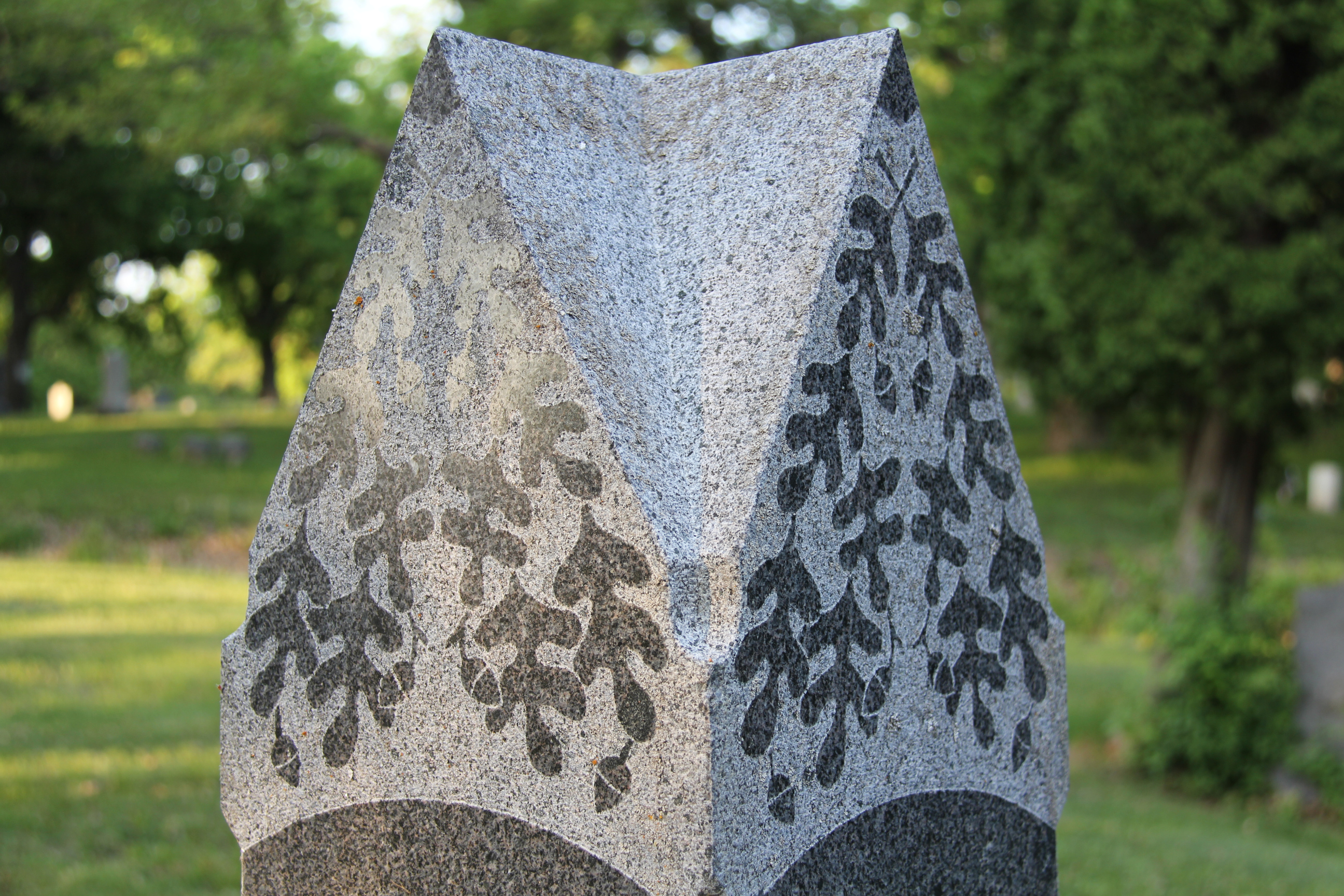
And on many of those tombstones, you will find symbols, a common way of communicating messages back in the day. I’d never really thought much about the meaning of the art I’ve seen on hundreds of aged tombstones beyond recognizing that lambs are on children’s grave markers. That Rent shared his knowledge and passion has opened a deeper understanding and appreciation of cemeteries for me.
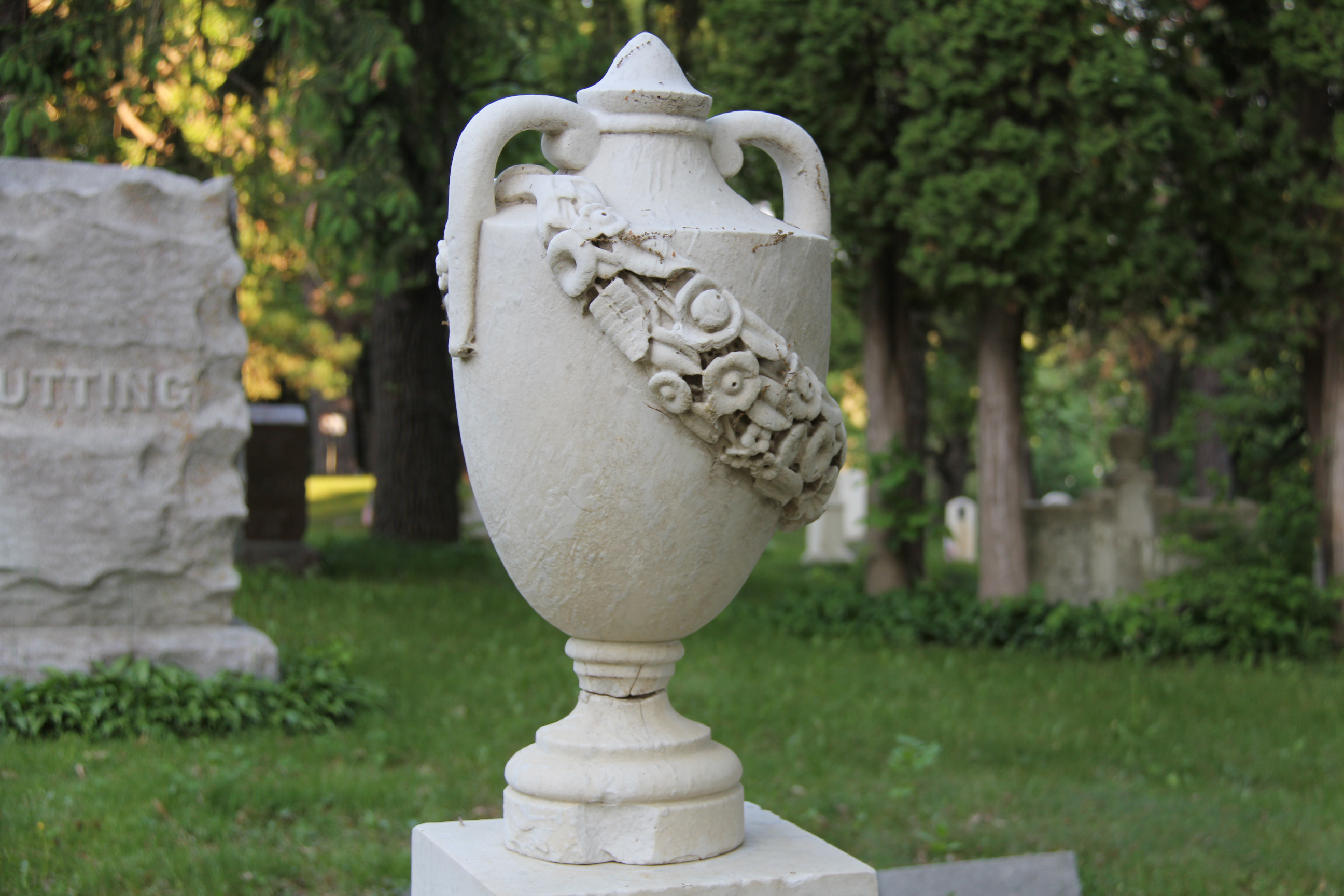
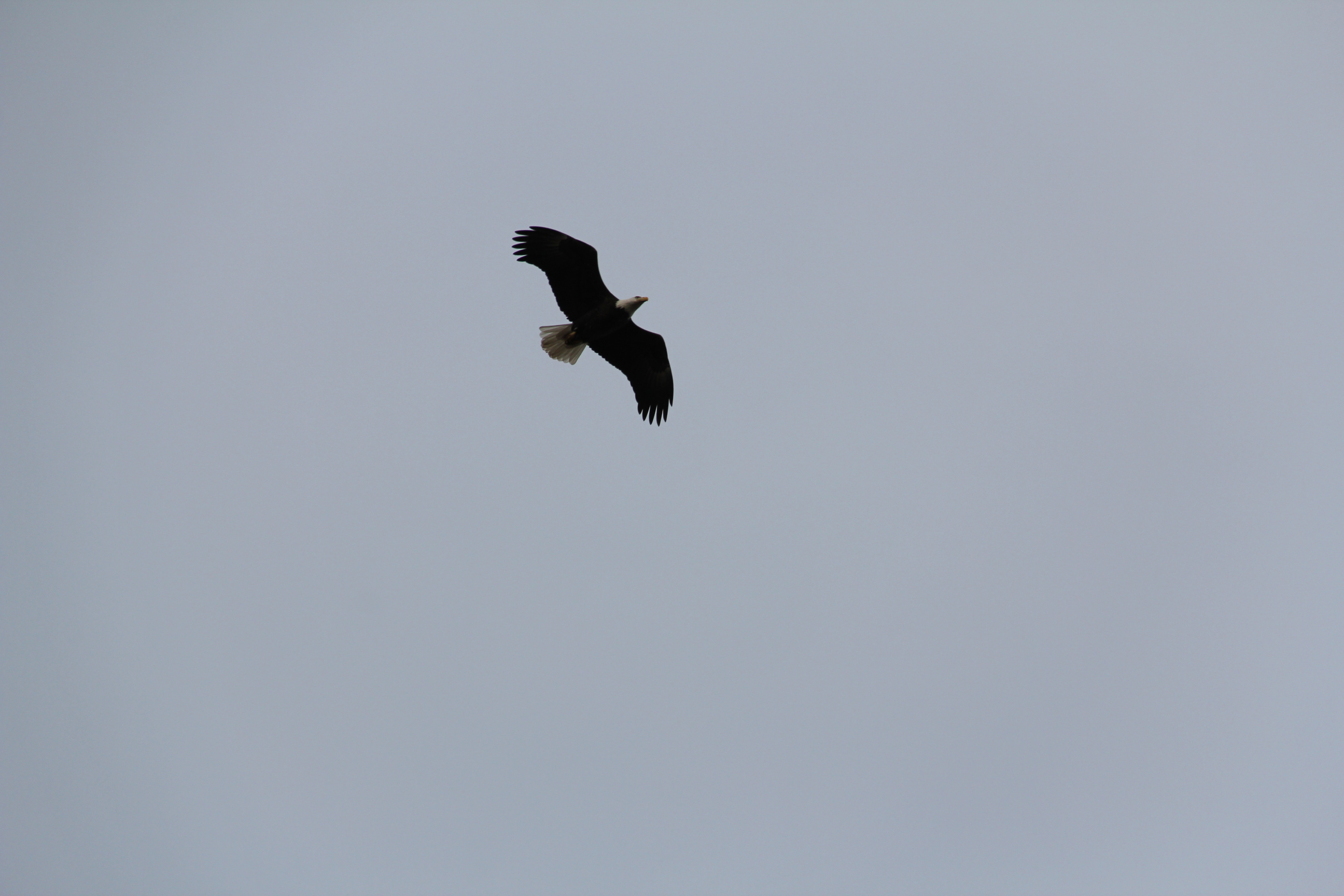
He introduced his points about gravestone symbology simply by stating that symbols are something to which we have an emotional connection. For example, an eagle, a rose, a cross, are all symbols we can understand as representing freedom, love and faith. That makes sense to me.
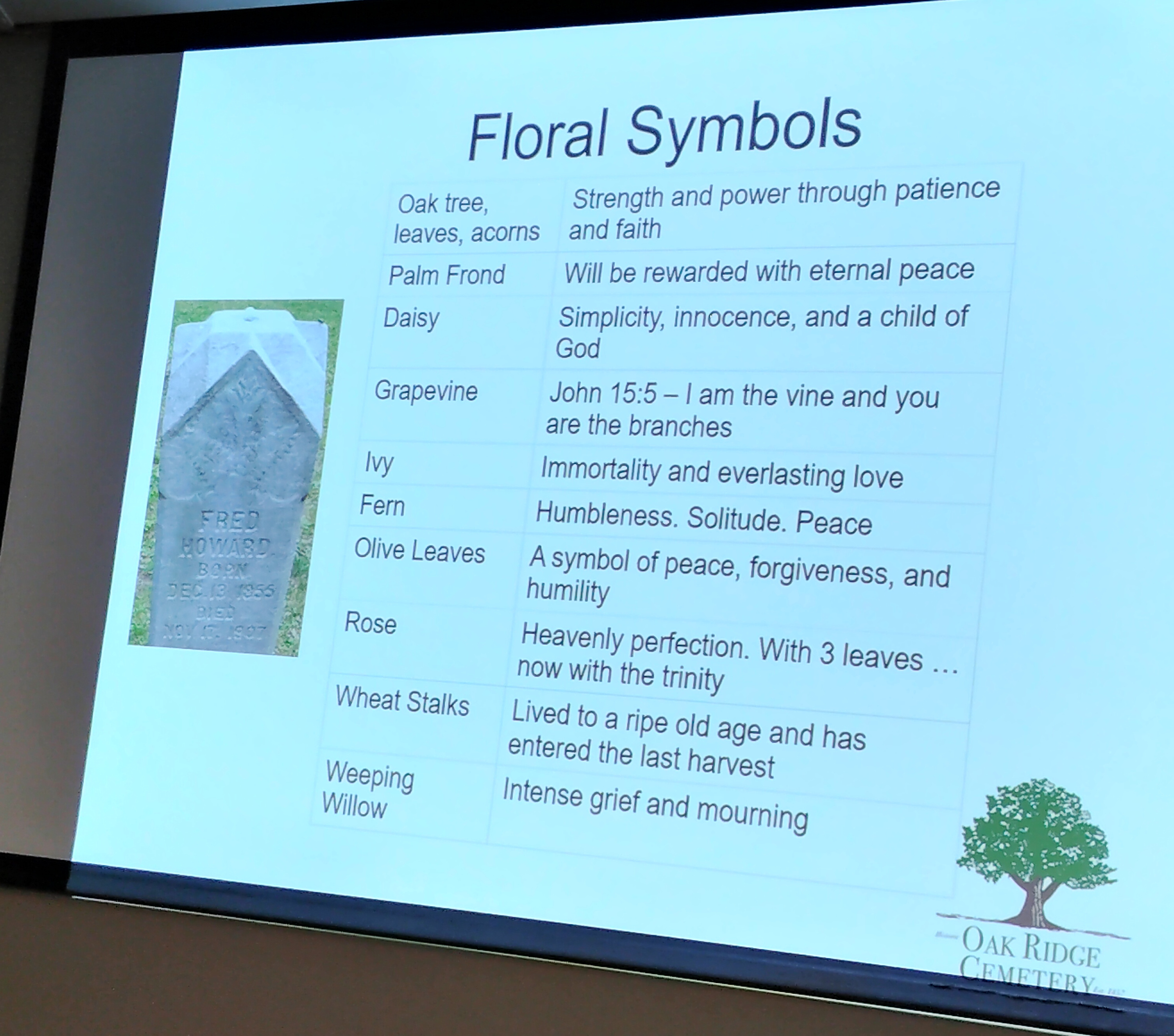
And then Rent broke it down further—into floral, hand and animal symbols. I found this particularly revealing. For example, ivy, which symbolizes immortality and everlasting love, is very popular on aged tombstones, according to Rent. So are weeping willows, although I don’t recall ever seeing one chiseled into stone. The willow, indicating intense grief and mourning, is often carved onto the gravestone of someone who has died unexpectedly, he said. He referenced the long ago drowning of a young boy in Faribault’s mill pond. A rose, which is difficult to carve, symbolizes heavenly perfection. An unopened rose bud implies a person died way too young.
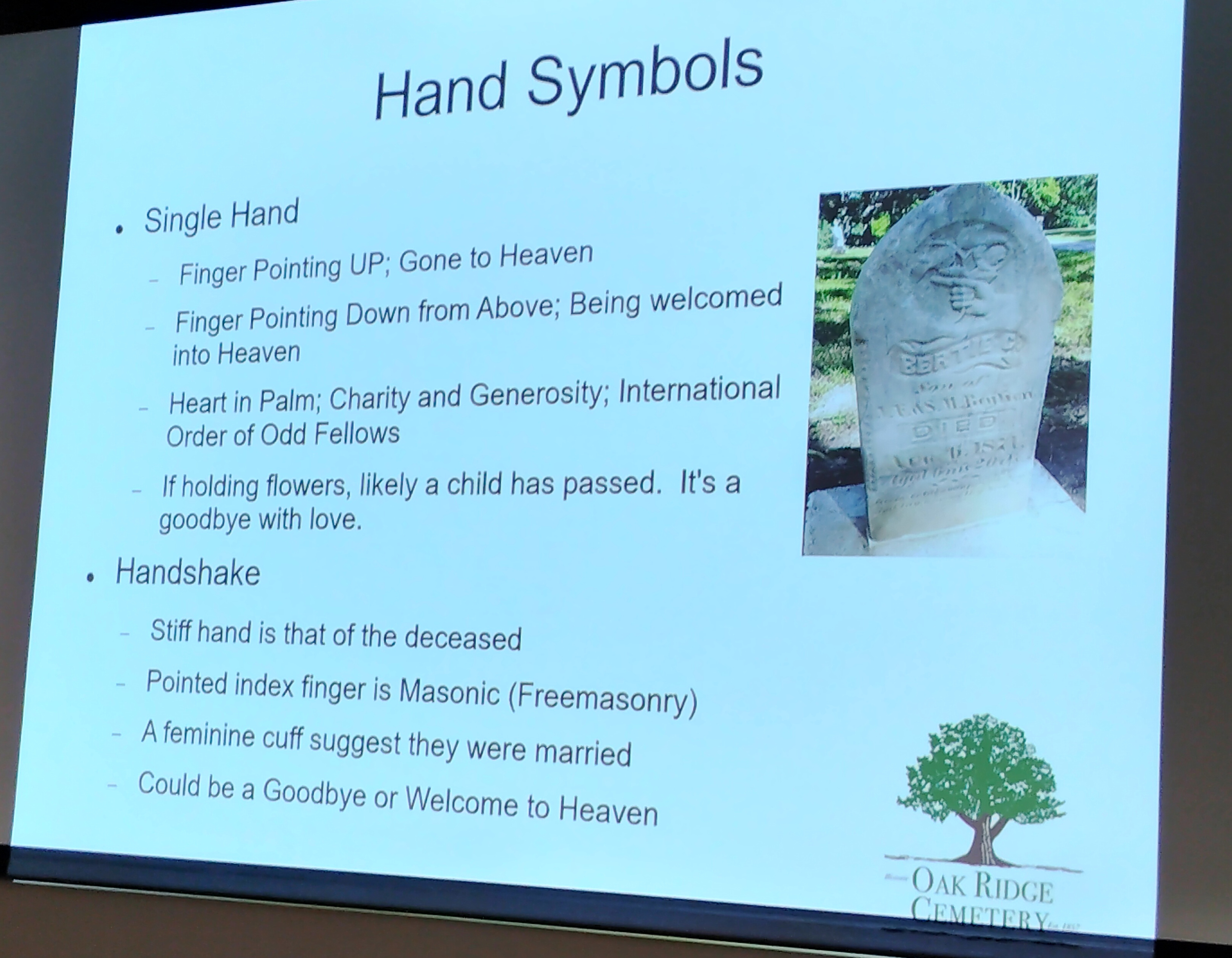
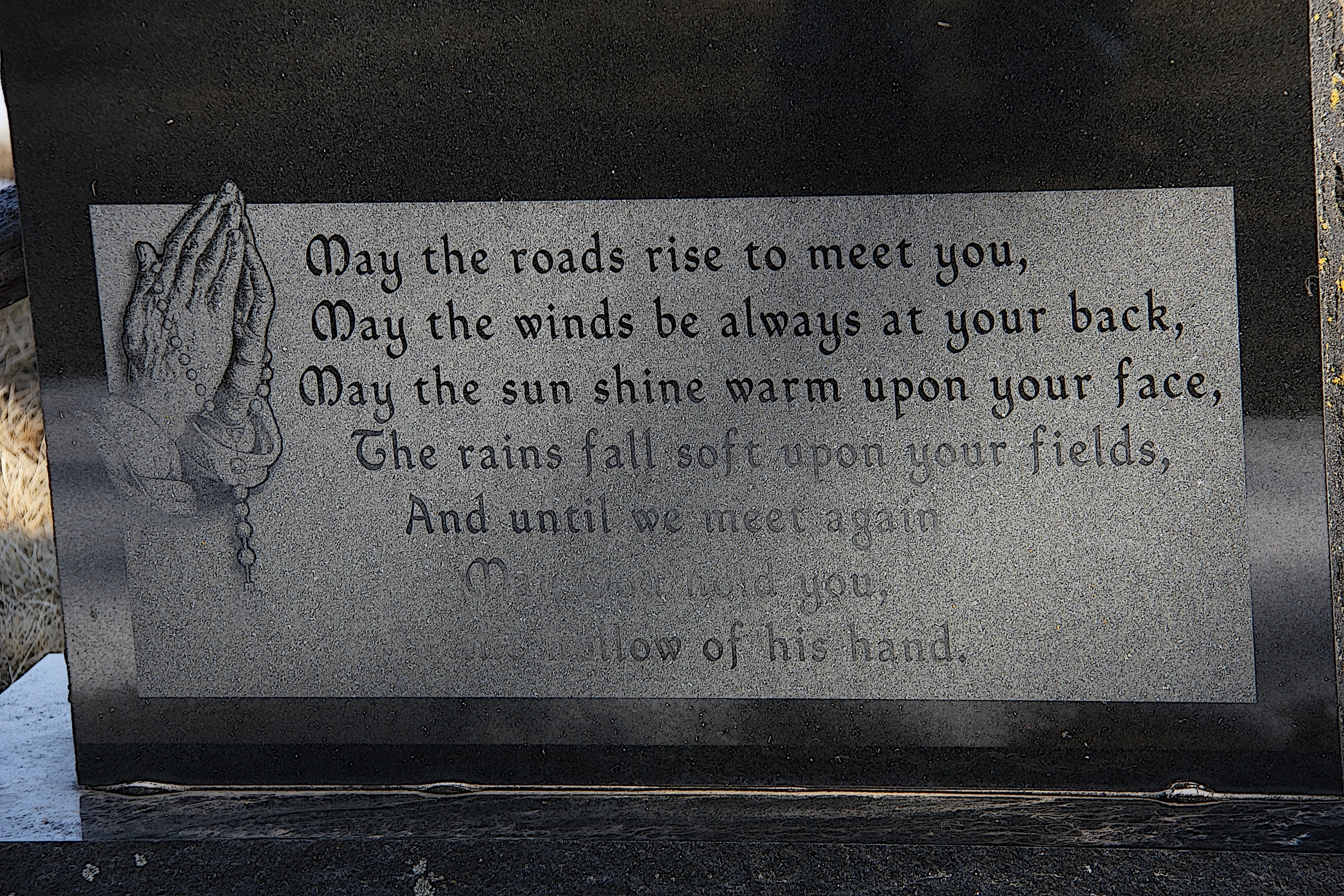
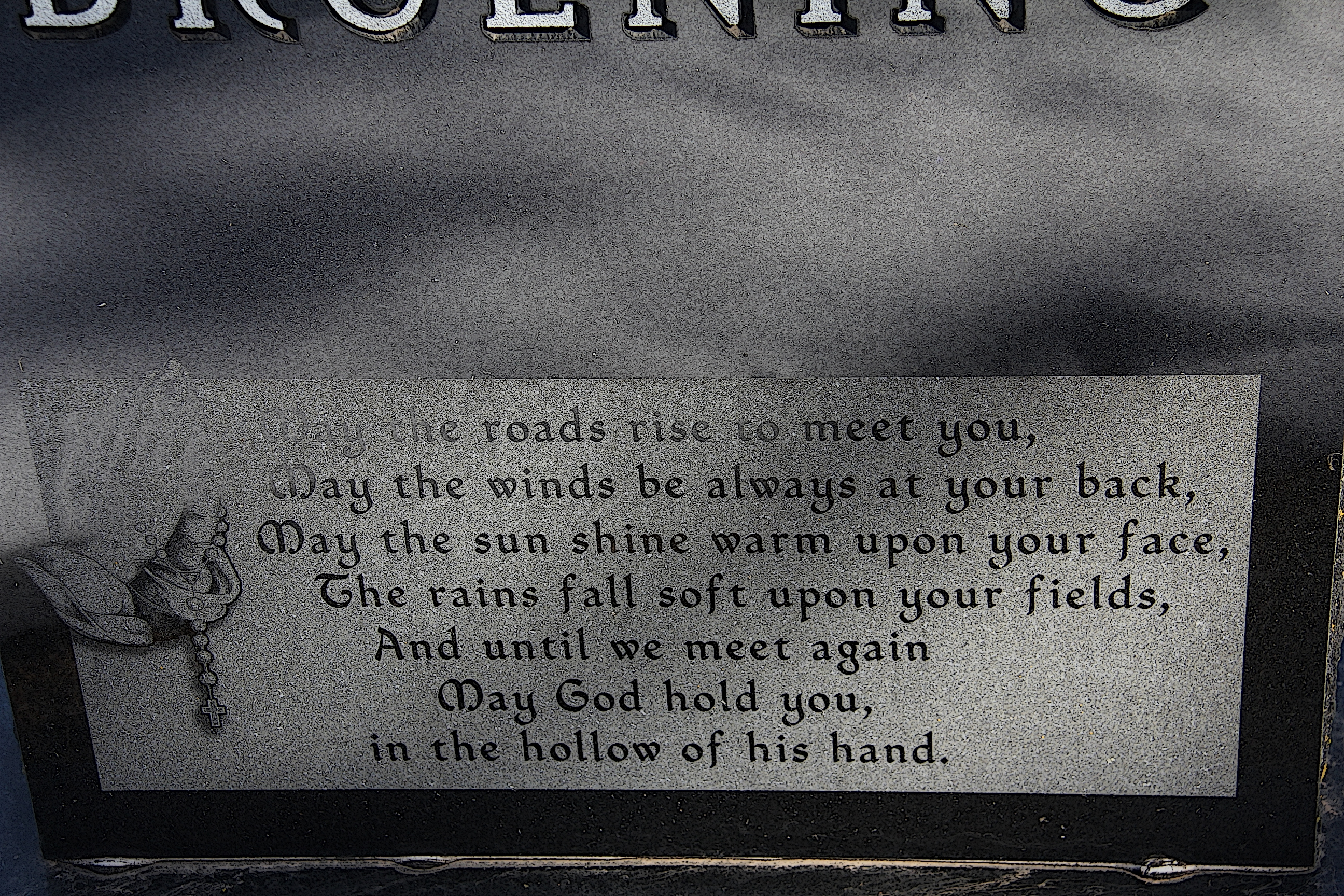
And then there are those hands, all those hands I’ve seen chiseled into marble tablet gravestones. The hand symbology traces back to Masonic handshakes mostly. Some are single hands, others handshakes, and all hold meaning. Rent shared that a heart on the palm of an open hand indicates charity and generosity. One such symbol decorates the Oak Ridge grave marker of Faribault police officer Henry Kaepernick, accidentally shot to death by a guard at the Faribault jail where the Younger brothers were held following a failed bank robbery in nearby Northfield on September 7, 1876.
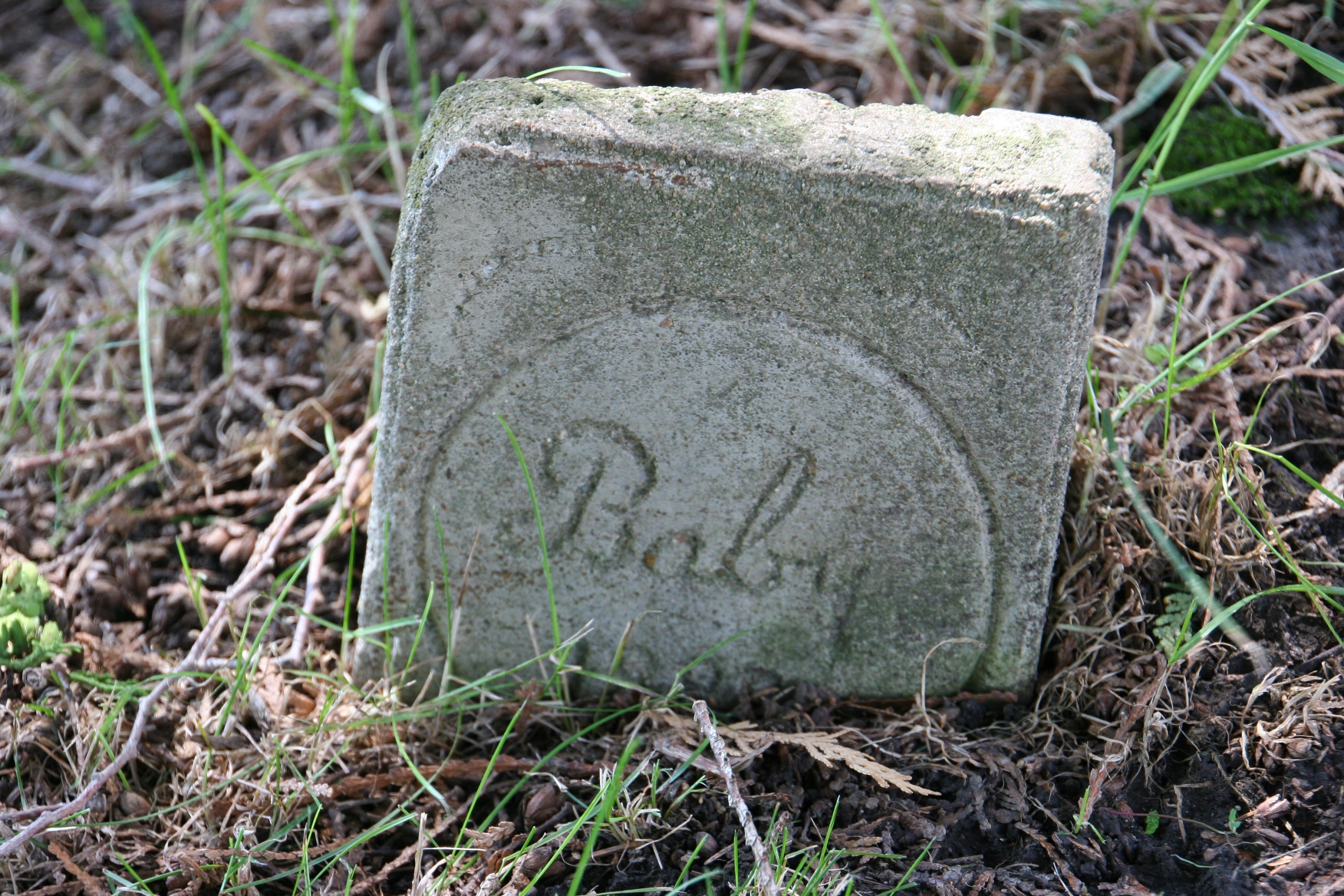
Finally, Rent talked about animal symbols, reserved for children’s gravestones. He named lambs, sheep and doves, symbols of innocence and peace.

Of course, Rent shared much more in his hour-long presentation. But these are highlights, information I will take with me the next time I walk through the gates of a cemetery, symbolic of a threshold into the afterlife. I will no longer see just a daisy or a rose, a hand with a finger pointing heavenward, a sheep atop a child’s grave. Rather, I will see the emotional connections in the symbology. The choices made for gravestone art and messages, past and present, hold deep meaning, if only we pause to see, consider and honor.
© Copyright 2025 Audrey Kletscher Helbling















 Minnesota Prairie Roots
Town hall talk, a commentary March 20, 2025
Tags: 1st Congressional District, Americans, commentary, concerns, democracy, DFL Senate District 19, education, Faribault, farming, federal government, Minnesota, opinion, Representative Brad Finstad, social issues, town hall meeting, veterans
I DEBATED FOR SEVERAL DAYS whether I should write this post, because it could be misconstrued as purely political. It is not. Rather this is a story about a grassroots gathering of people sharing information, ideas and opinions. Democracy at its core. This story is about us as Americans—listening, learning, agreeing or disagreeing, and letting our voices be heard.
Tuesday evening I attended a town hall meeting in Faribault hosted by DFL Senate District 19. It was open to everyone, regardless of political affiliation. But the crowd was decidedly Democrat, as you would expect given the hosting group. Republican Brad Finstad, who represents the 1st Congressional District in Minnesota, was invited, but did not attend. His district includes parts of Goodhue, Rice (where I live), Steele and Waseca counties in rural southern Minnesota.
Some 300 constituents packed the space, overflowing into adjacent rooms. Yes. Even I was surprised by the turn out. That tells me a whole lot of people have concerns about what is currently happening at the federal level and how government action is, or will, impact them. I expect not a single American will be untouched, whether directly or indirectly, by slashes in government personnel and funding and/or by changes in domestic and foreign policies.
Town hall organizers lined up speakers to address topics covering a broad range of subjects affecting a whole lot of people and programs—farmers, education, healthcare, seniors, veterans, those with disabilities, communication, nonprofits and much more. I was impressed by how well prepared these speakers were with facts and statistics. I learned a lot.
I’m not going to give you a detailed report of what each speaker said. Rather, I want to share several messages or phrases which really resonated with me and which should resonate with every American, no matter who they voted for. The phrase “we the people” was repeated by one speaker and embraced by the crowd. “We the people” means us. Americans, not members of one political party or the other. And, yes, I’m well aware of how those words from the preamble to the Constitution are being used politically as a mantra of sorts. But in this context, “we the people” references our right to speak up, to be heard, to tell our elected officials what we think and what we would like them to do as our representatives in Washington DC. That can be done by attending town halls like this; the meeting was video taped and will be sent to Representative Finstad. We can be heard via phone calls, emails and letters. We the people have power in our voices, in our votes, whether Democrat, Republican or Independent.
Secondly, a local educator asked the crowd and Finstad to ask themselves this question: “How are the children?” So, yes, how are the children, when many live in poverty, when federal funding for education is in imminent danger of being mostly cut, when…fill in the blank here? I think we can all agree that children are our future and we ought to care about their health, happiness, education and much more.
Third, one of the speakers shared that, as someone of the Catholic faith, he is called upon to help others. He called upon Representative Finstad, who is also Catholic, to do the same. That means feeding the hungry (funding USAID, for example), protecting Medicaid and Social Security, etc. all of those ways and places we help one another as human beings in this country and abroad. Now I’m not Catholic; I’m Lutheran. Doesn’t matter. My faith compels me to show love, compassion and care for others, especially those in need. America once did that as a country. Generously. But that is changing. We have bounty and resources we can share to help starving children, to provide medical care, to help others in any way we can. It is the right thing to do as a nation blessed with great bounty.
Fourth, a local farmer spoke about $3.2 million in contracts with farmers in our district which have now been broken by the U.S. government. The consequences will be devastating to those farmers who have already invested those federal monies in their operations. Trust has been broken, she said. I think we can all agree that when a legal contract is broken, it’s a breach of trust.
There’s so much more I could share from that town hall session. But I want to conclude with this. I encourage you, if you have the opportunity to do so, attend a town hall meeting. Listen. Learn. Engage. Let your voice be heard. Remind your elected officials, too, that they need to listen, learn and engage.
FYI: A second Town Hall Meeting hosted by DFL Senate District 19 is set for 6 p.m. Sunday, April 6, at Mineral Springs Brewery, 210 N. Oak Ave., Suite 1, in Owatonna. It will follow the same format as the Faribault Town Hall with a moderator, speakers and an open mic. Representative Brad Finstad has been invited.
© Copyright 2025 Audrey Kletscher Helbling