
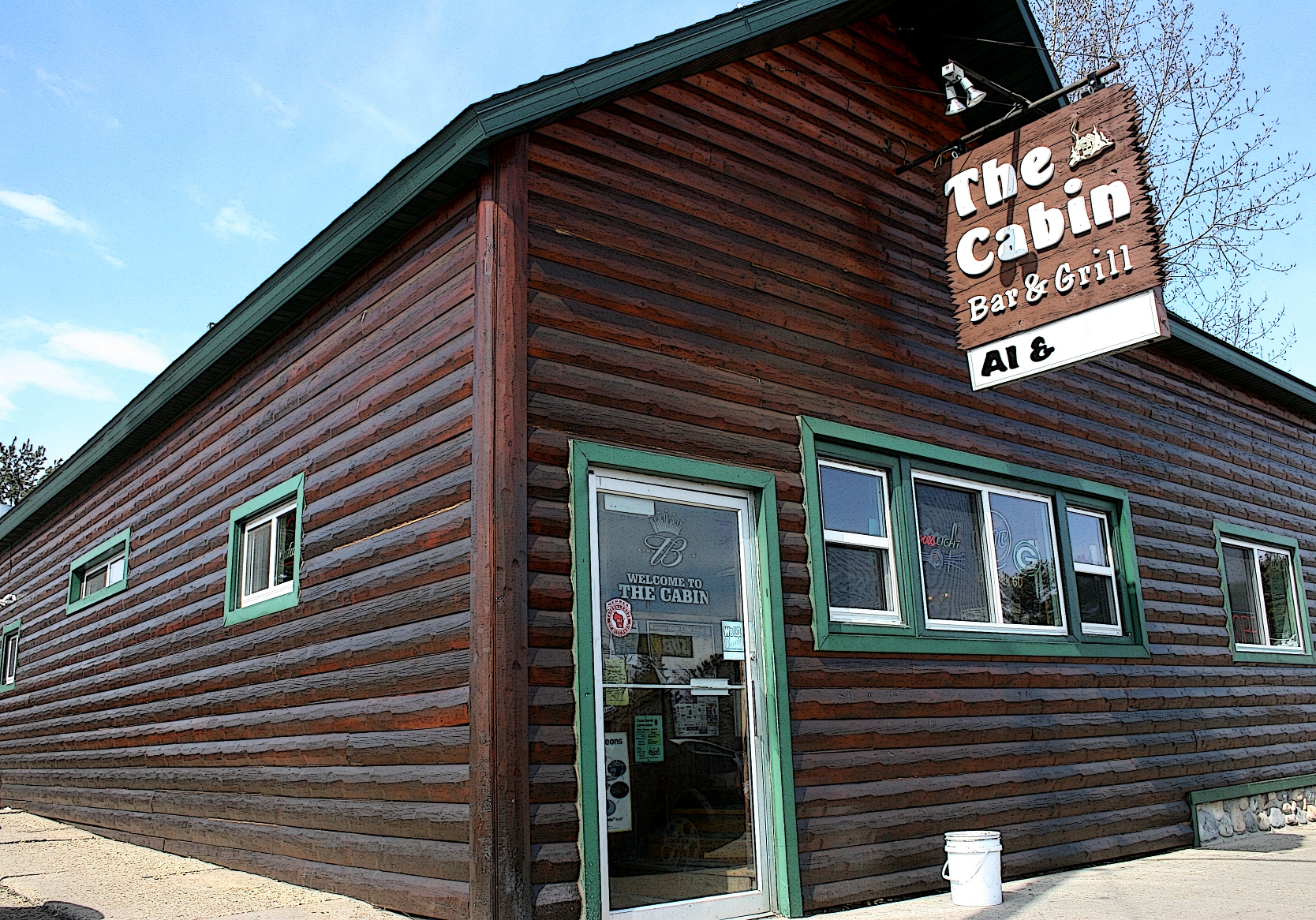
The Cabin Bar & Grill in Coloma, Wisconsin.
Copyright 2014 Audrey Kletscher Helbling
The Cabin Bar & Grill in Coloma, Wisconsin.
Copyright 2014 Audrey Kletscher Helbling
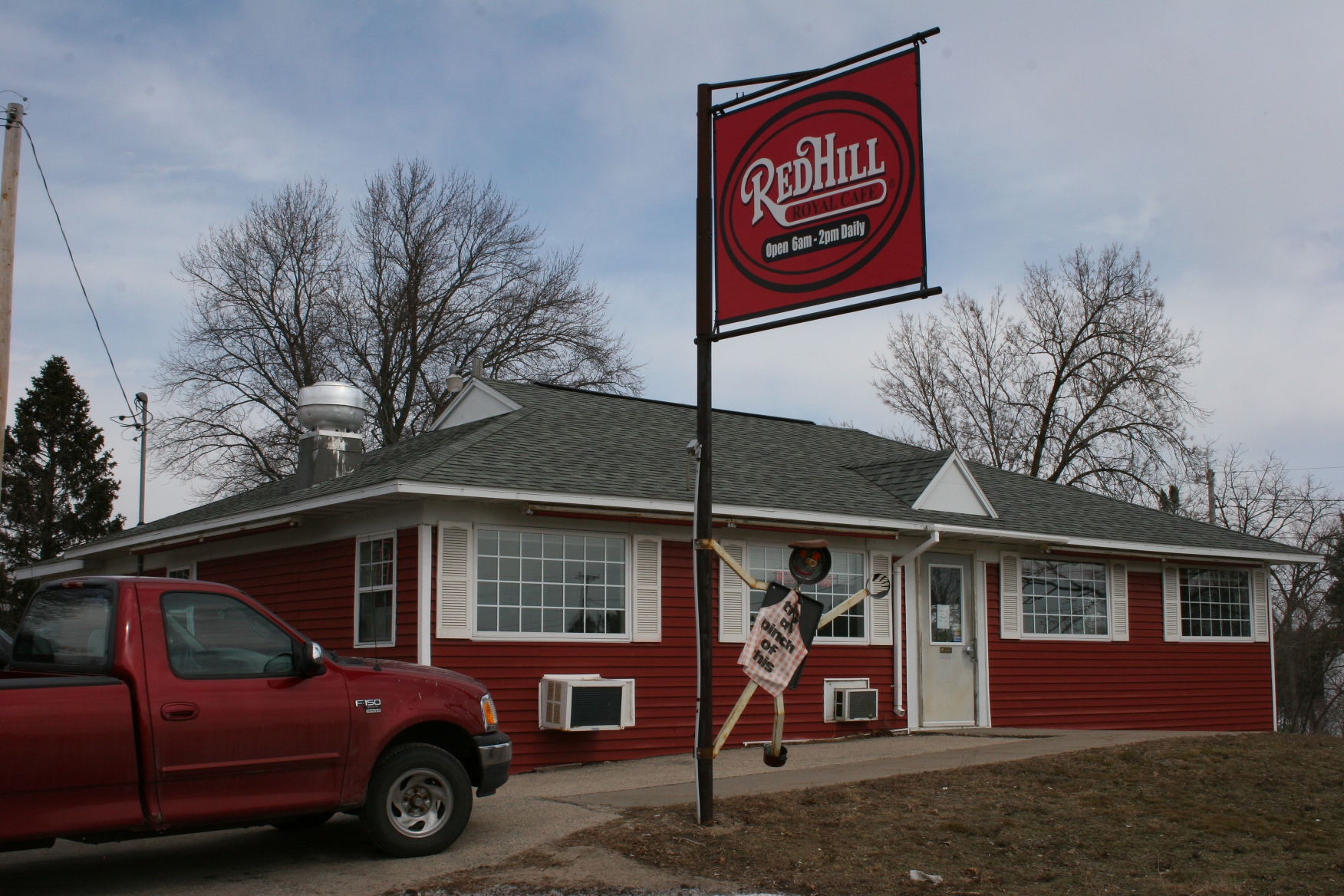
The Red Hill Royal Cafe sits along Wisconsin State Highway 21 in Coloma.
MY HUSBAND AND I EXCHANGE glances as we enter the Red Hill Royal Cafe in Coloma, Wisconsin, around noon on a Friday.
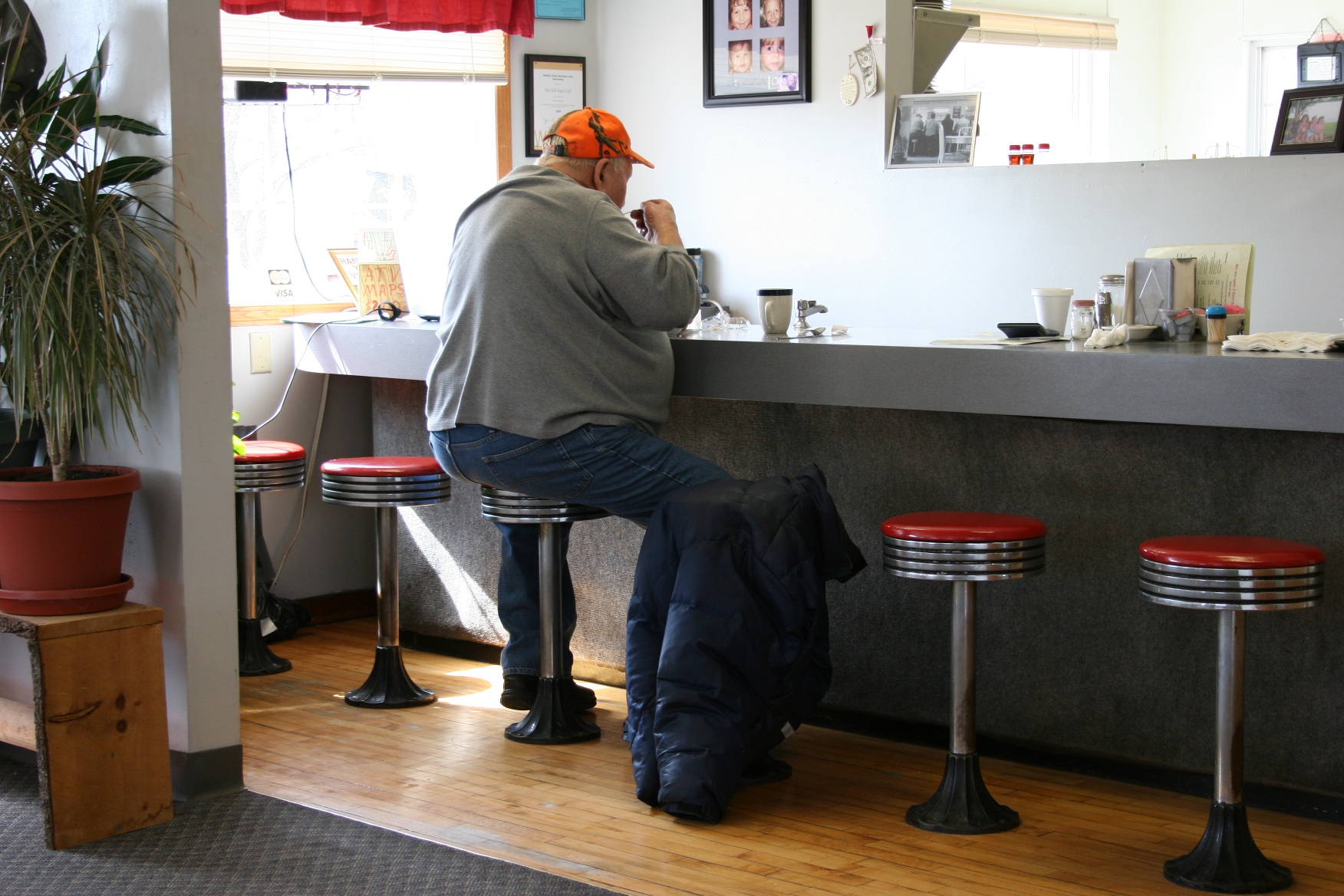
Dining at the charming lunch counter. Three other customers arrive at the diner after us.
Except for a couple seated in the main dining area and a man at the lunch counter, the place is empty. Usually not a good sign.
We may have turned around and walked out if not for my hunger and my desire to eat at a local restaurant rather than the chain across the street.
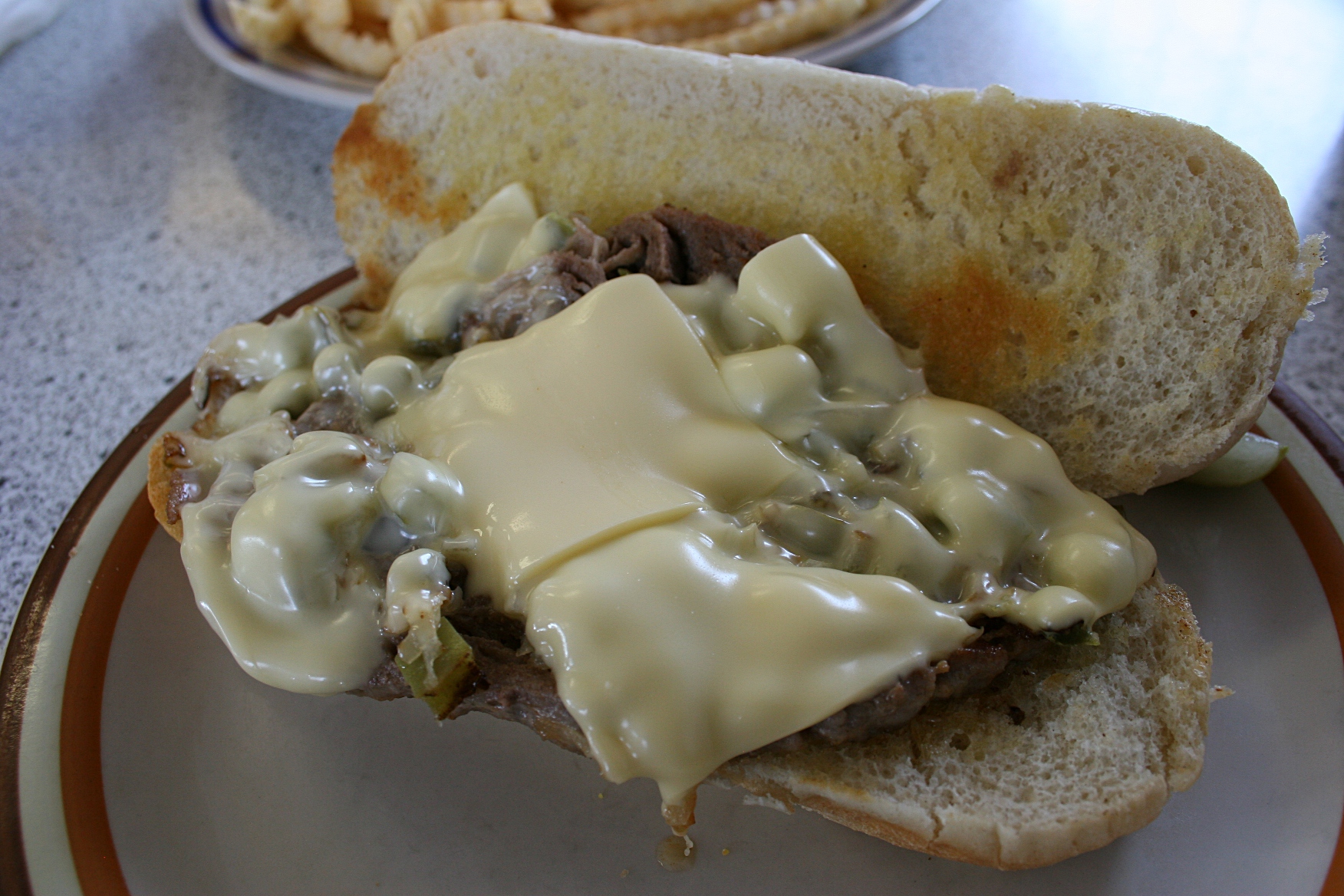
My Philly steak sandwich smothered in cheese.
So we stay. I order a Philly steak sandwich. Randy chooses a cheeseburger and fries.
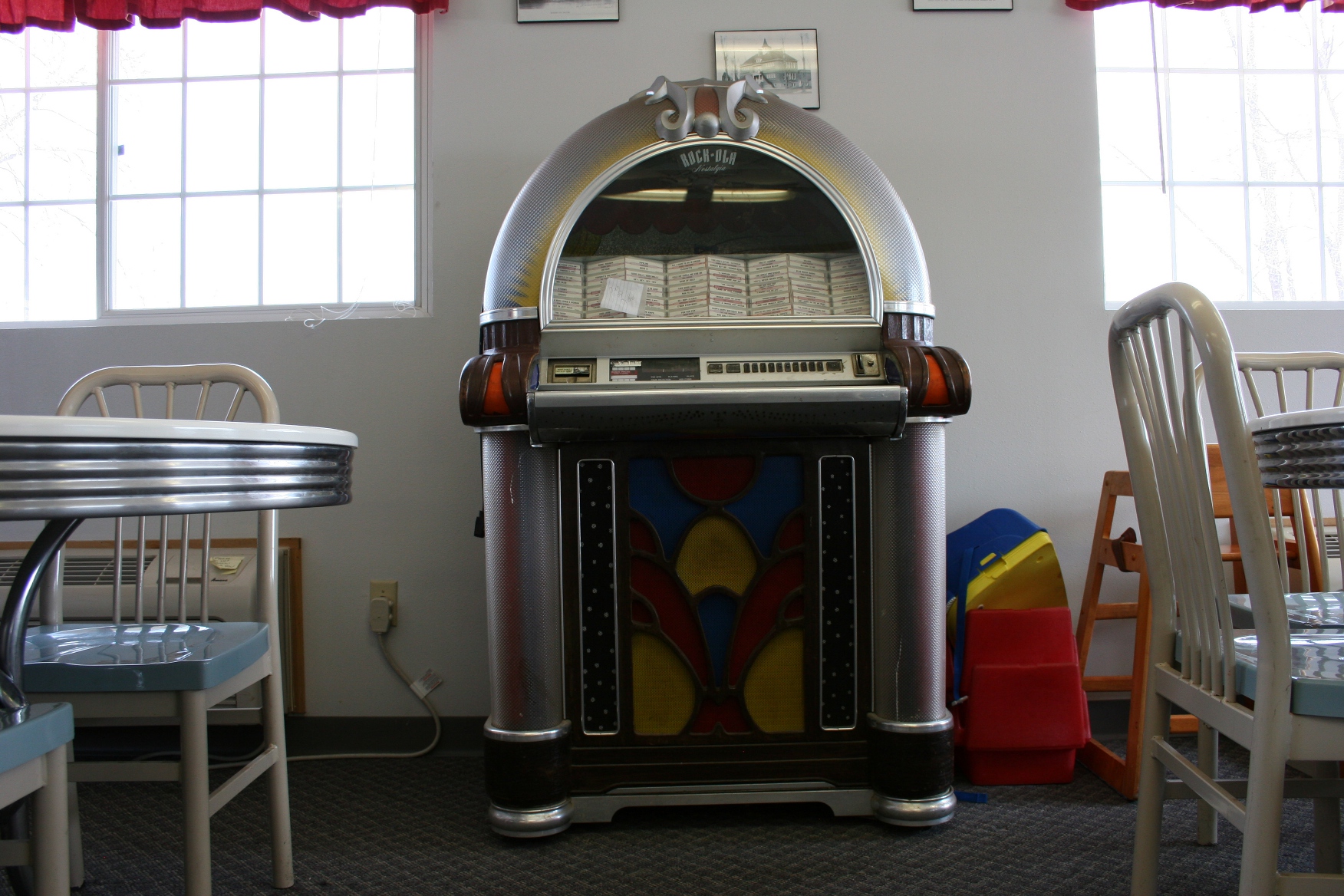
The jukebox brings back memories.
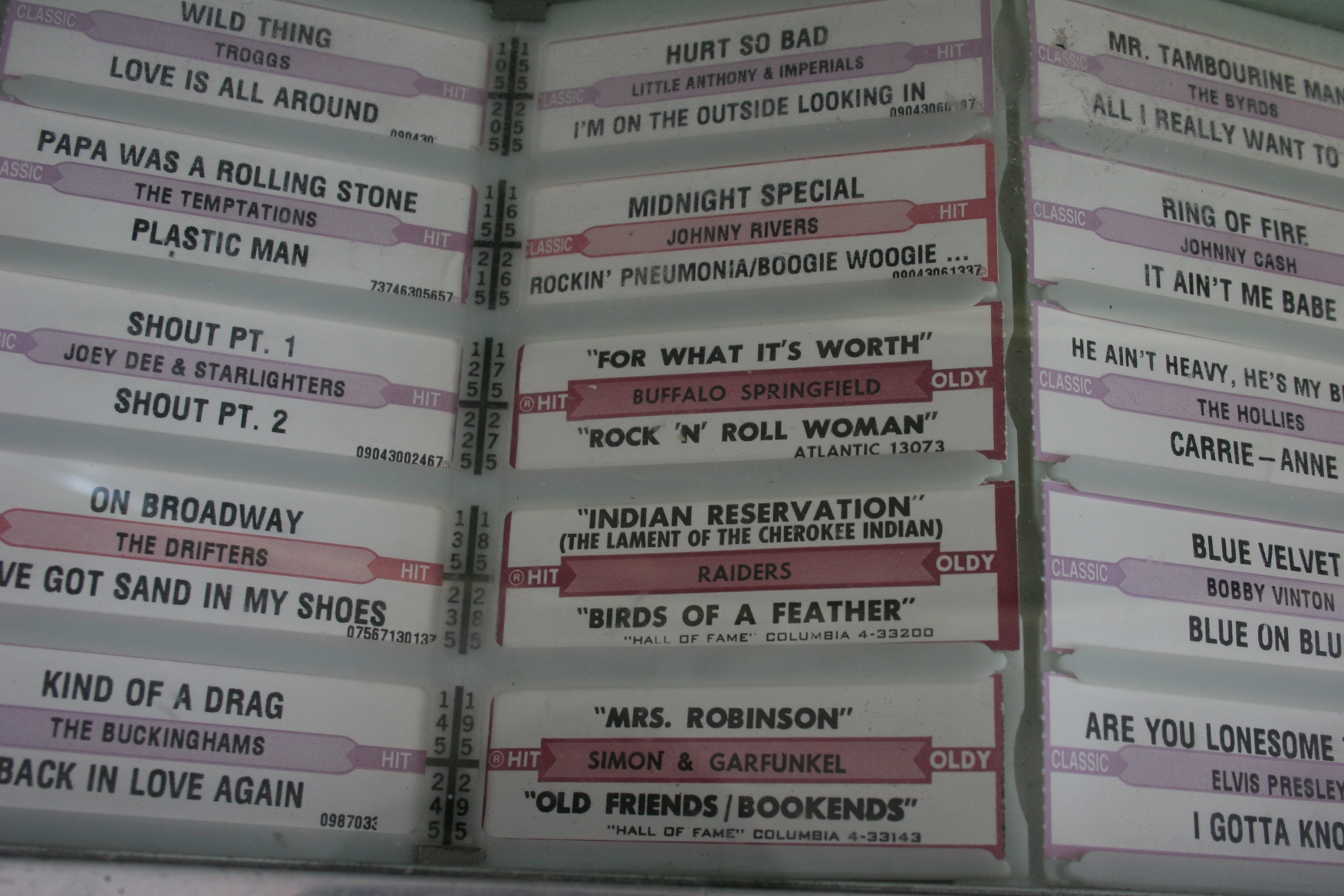
As you would expect, lots of familiar oldies.
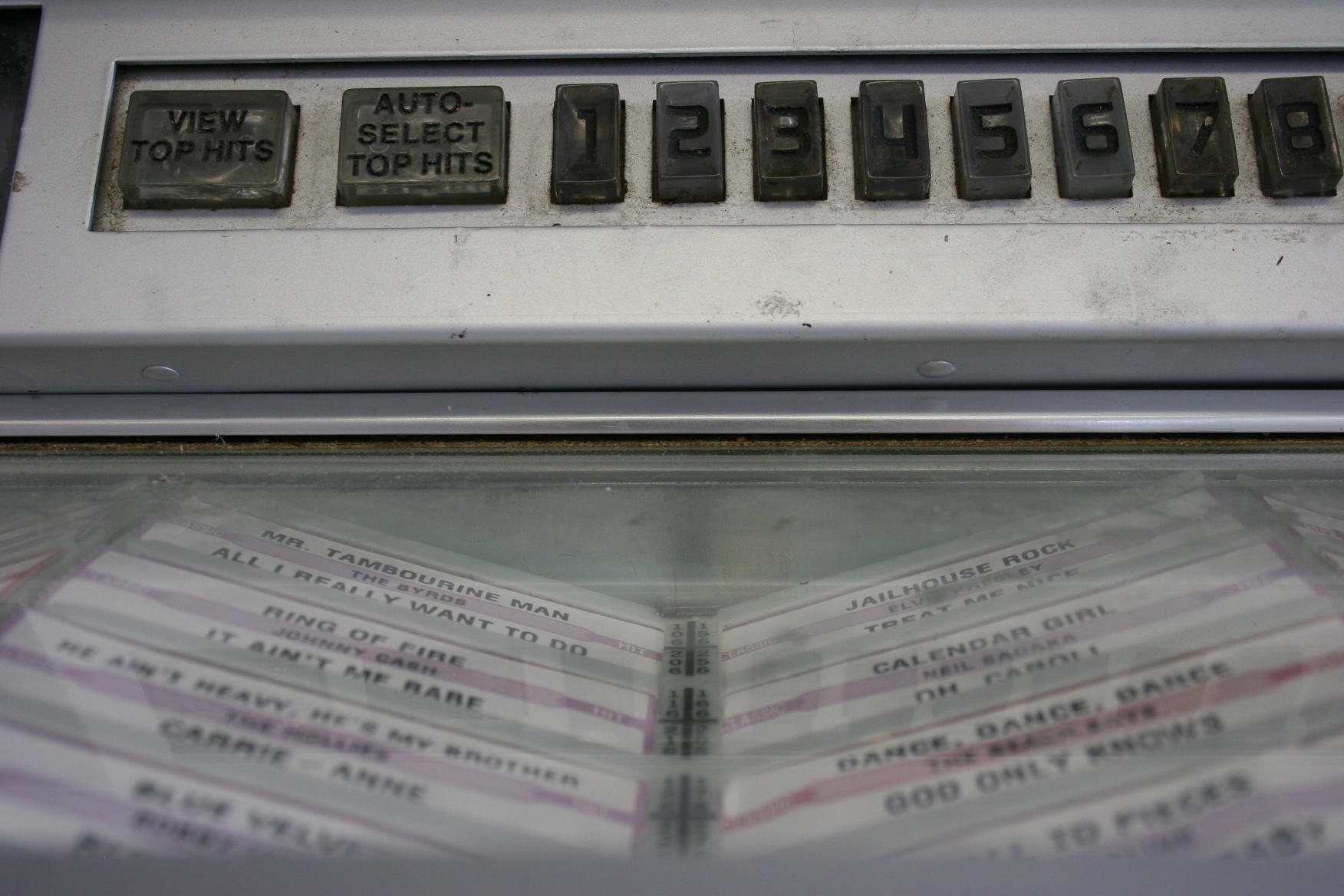
If the jukebox had been working, I would have selected a song.
While waiting, we reminisce over the non-functioning jukebox, 45 rpm records visible inside.
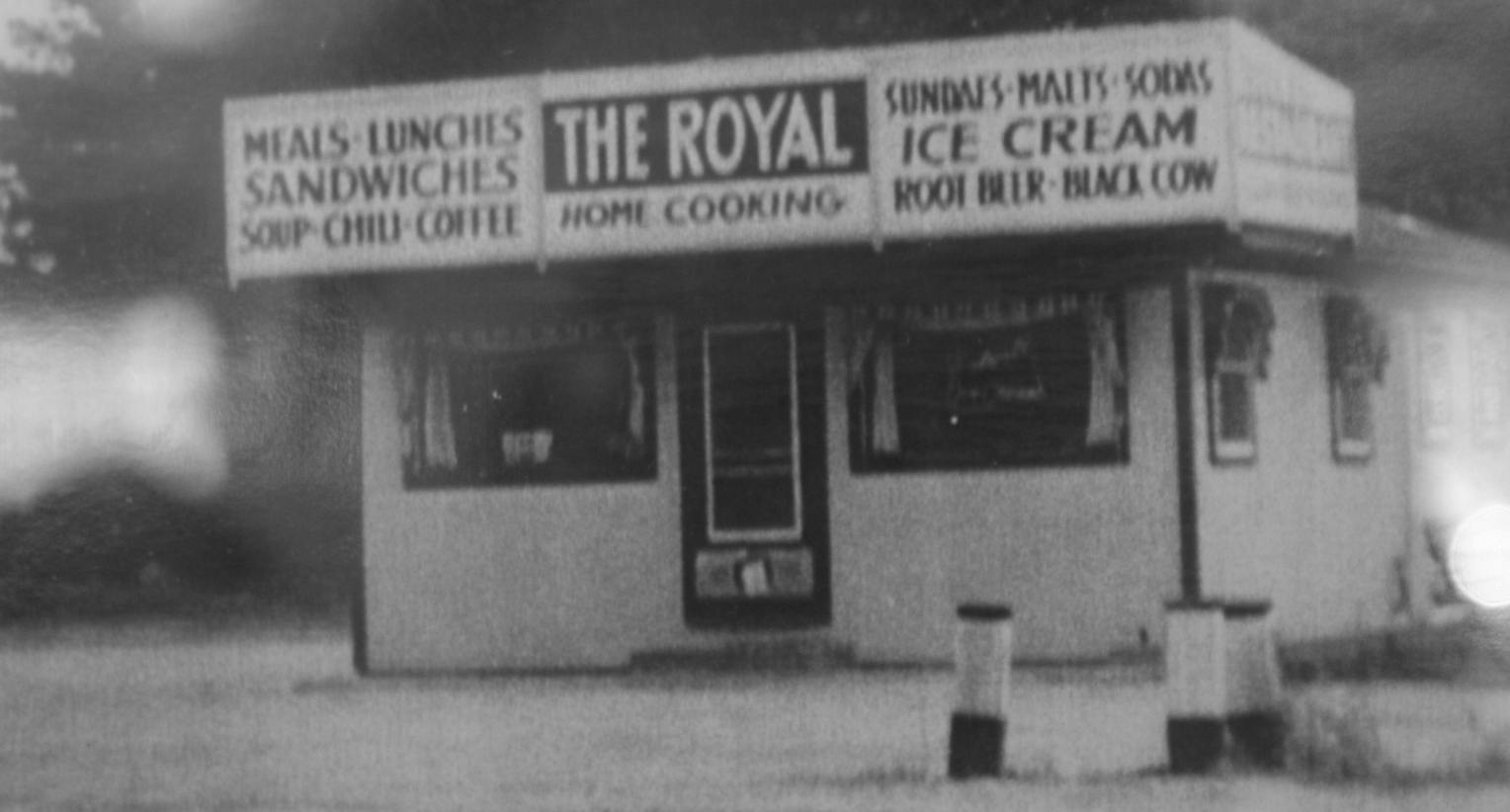
A photo of a photo (shooting through glass, so excuse the quality) showing The Royal as it once appeared.
We also study historic photos and information on the wall. The Royal Cafe building was relocated to this hilltop spot from downtown in July 1987 after Wisconsin State Highway 21 was rebuilt on the edge of Coloma.
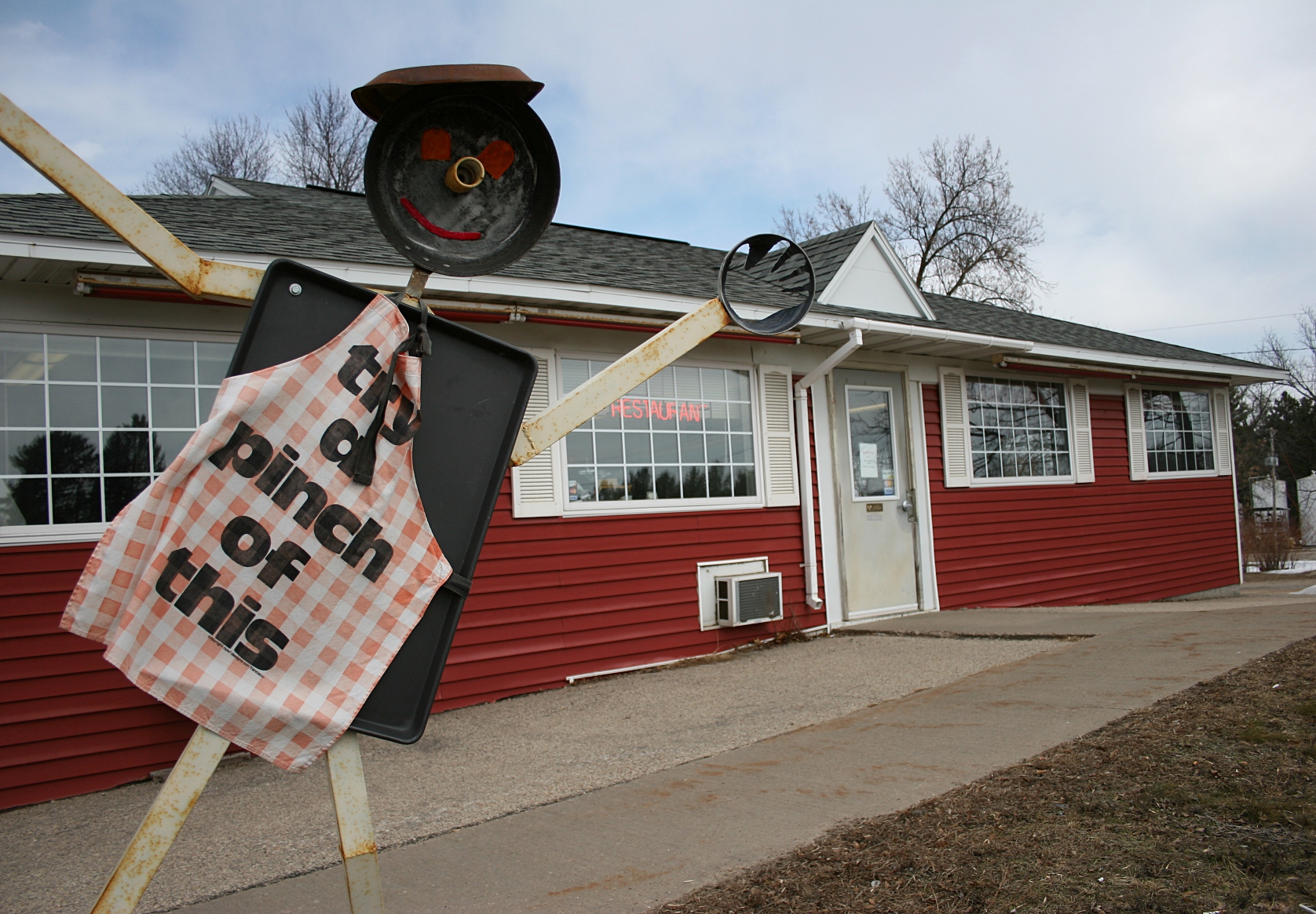
Quirky yard art outside the cafe.
But on this Friday nearly three decades later, not even the location along this busy highway that cuts across central Wisconsin from Tomah to Oshkosh draws in diners.
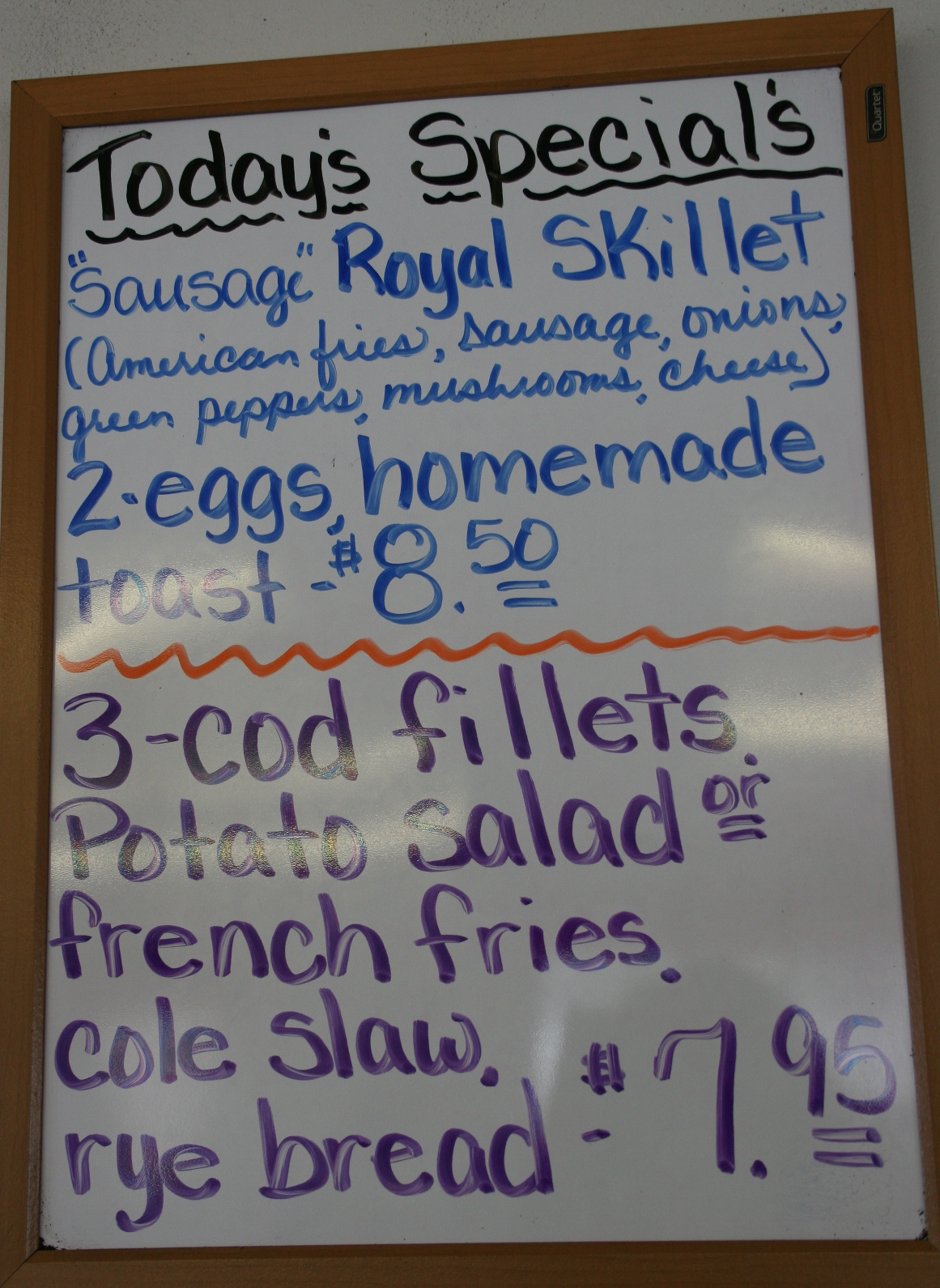
Friday specials.
Business has been slow all winter, the waitress tells us. And not just here, but everywhere. Been too cold, she explains. That I can understand after arriving here from cold, and much snowier, Minnesota.
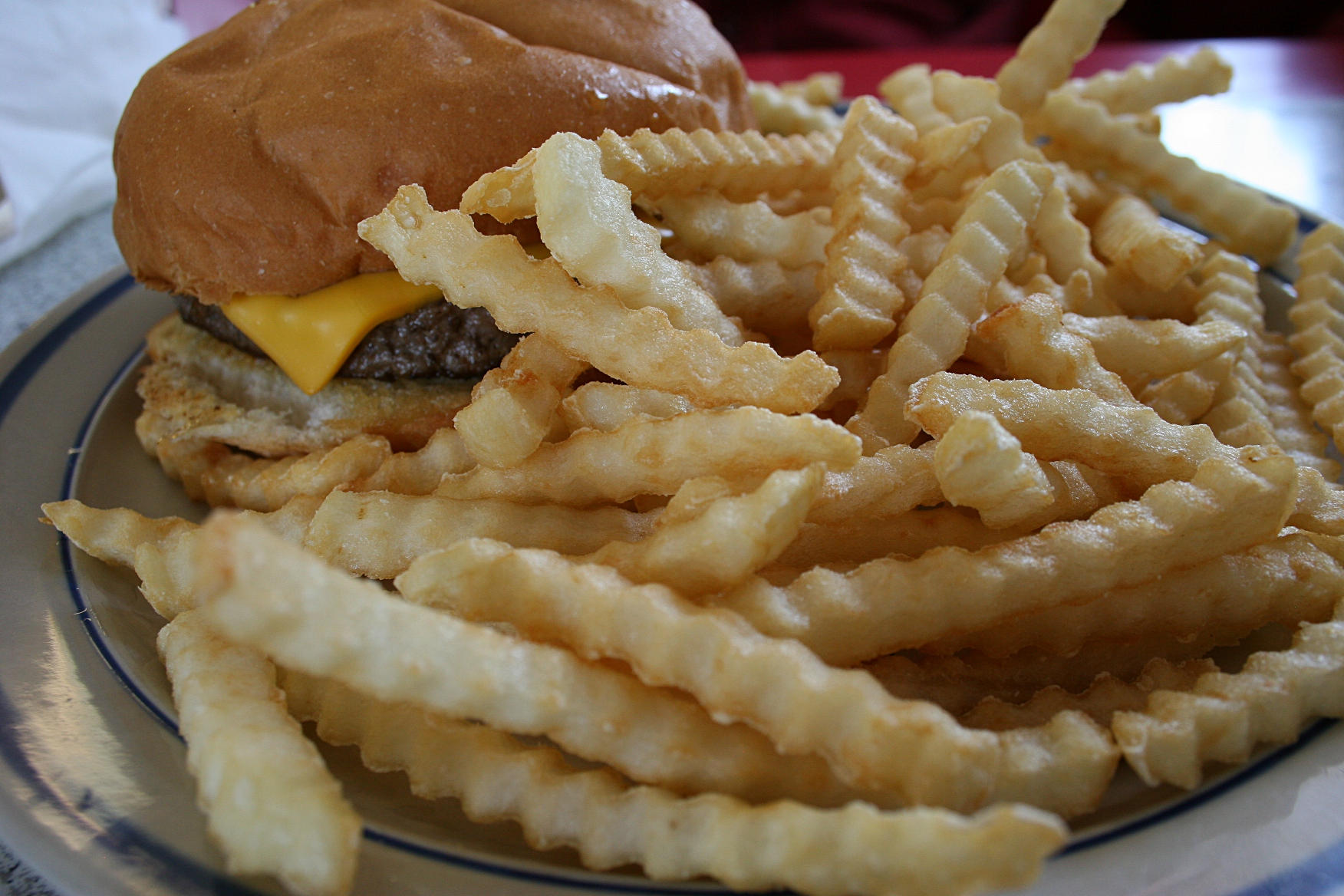
A generous portion of fries served with a cheeseburger, which Randy termed good, but “a little greasy.”
To our satisfaction, we find the Red Hill Royal Cafe’s food to our liking. I’m no food critic, but my tasty Philly steak arrives piping hot on a toasted bun. Ditto for Randy’s burger. He shares his generous portion of fries.
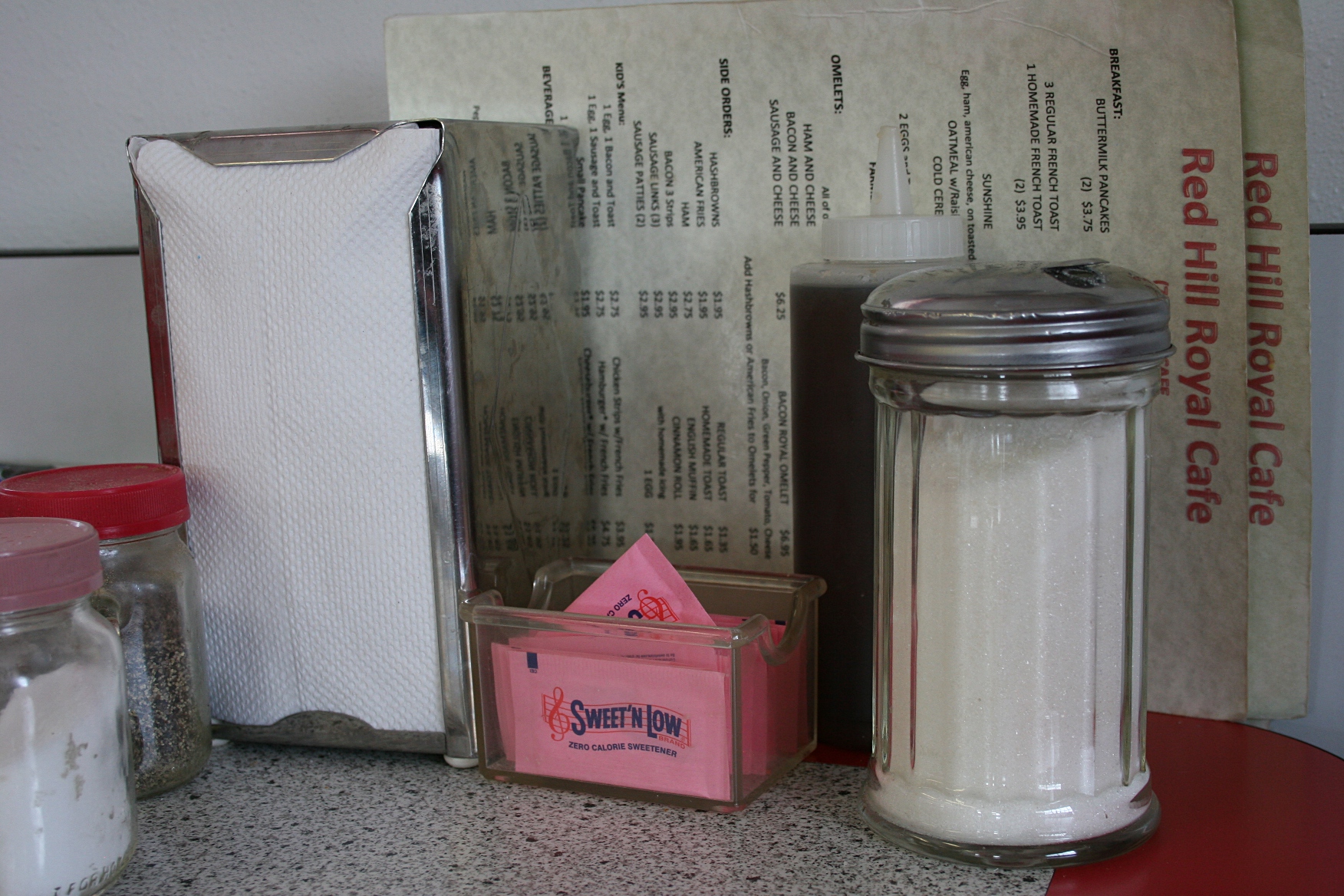
A tabletop scene.
I limit my fry intake as I want a slice of homemade pie. Rarely do I order dessert out, but I decide to treat myself.
That is not to be. Although pie is listed on the menu, it’s a seasonal item reserved for the busier warmer months when folks are drawn to the region’s lakes, the waitress shares.
I am disappointed.
But there’s always next time. And next time should be pie season.
© Copyright 2014 Audrey Kletscher Helbling
WHAT IS IT ABOUT POETRY?
Do you embrace or shun it? Write it or read it? Do you even care?
April marks National Poetry Month, a full thirty days initially established by the Academy of American Poets in 1996 to focus on poetry.
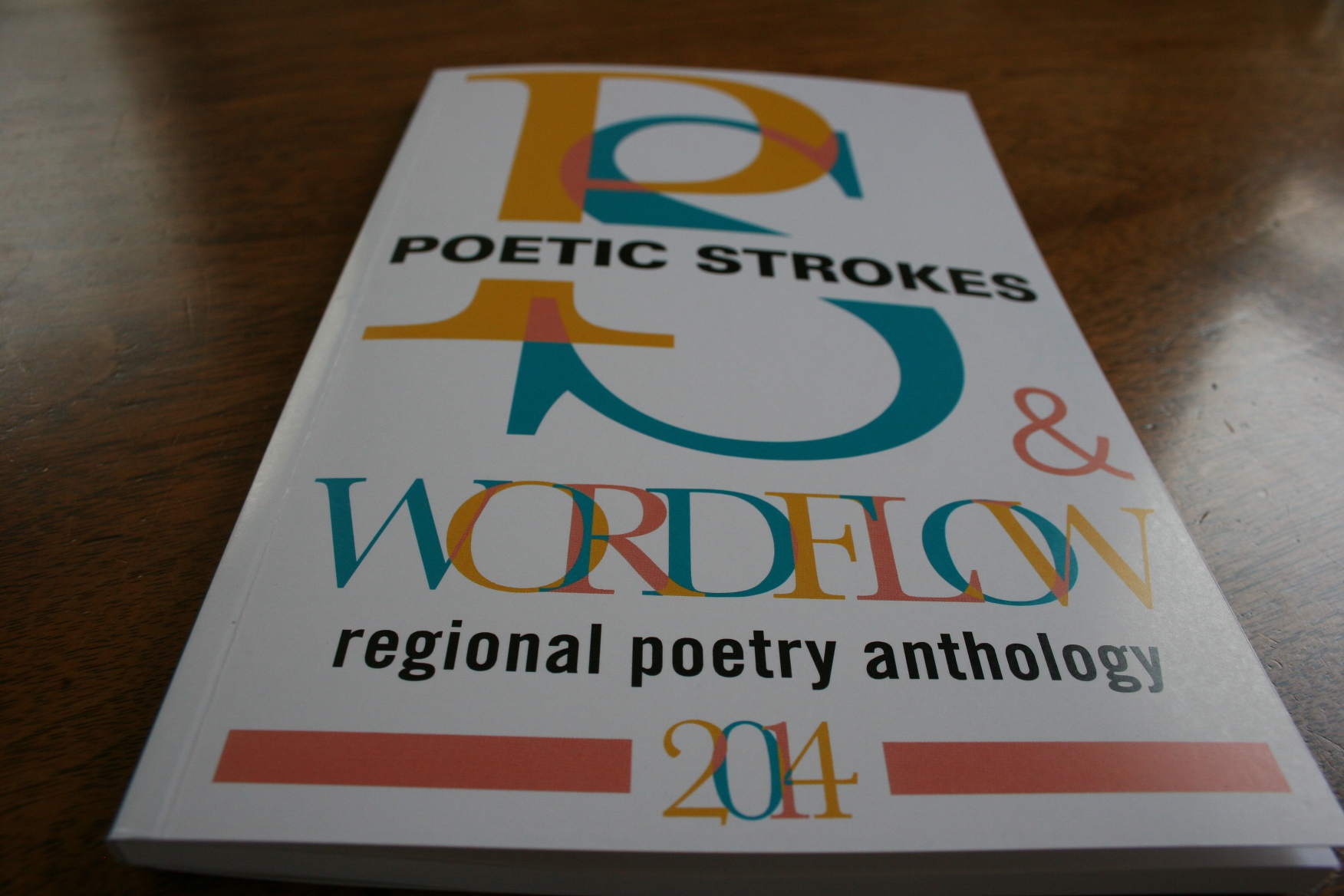
My most recent poem, “The Farmer’s Wife, Circa 1960,” has been printed in Poetic Strokes, an anthology published by Southeastern Libraries Cooperating. My poem was one of 23 selected from 196 submissions. The anthology should soon be available for check-out by library patrons in the SELCO system.
If you haven’t read poetry in years, I’d suggest you revisit poetry. Long gone, mostly, are rhymed verses.
Instead, you will find poets penning free verse that correlates to an abbreviated form of storytelling or a spilling of emotions or a harmony of detailed observations and more.
Despite differences in subject matter and style, poets share a common love of language. Alliterations. Personification. Similes and metaphors. Strong verbs.
Poetry, though it may appear easy to write, is not.
Details matter. Each word matters. The sound of a poem read aloud matters.

A poem I wrote about my mother, just published in Poetic Strokes 2014, A Regional Anthology of Poetry from Southeastern Minnesota.
Every poet possesses a style. I’d define mine as rooted in my native southwestern Minnesota prairie. That stark land shaped me as a writer. My poems convey a strong sense of place, words wheeling like a prairie fire across the landscape of a page.
With so few distractions, the prairie presents an ideal environment to notice details—the grate of the wind, the lean of an outbuilding, the weathered grey of an abandoned farmhouse, the isolation, the calloused hands of a farmer, green corn leaves unfurling against rich black soil, the horizontal grid of township gravel roads, power lines stretching into infinity…
Those who’ve never lived on the prairie often fail to understand its beauty, dismissing it as the middle of nowhere.
But this land holds my heart and memories and continues to inspire me. Not all of my verse. But much of it.
Some of my prairie-inspired poetry includes:
Perhaps it’s time to consider compiling those poems and others into a collection. Thoughts?
© Copyright 2014 Audrey Kletscher Helbling
THEY THRONGED TO RIVER BEND Nature Center Sunday afternoon.
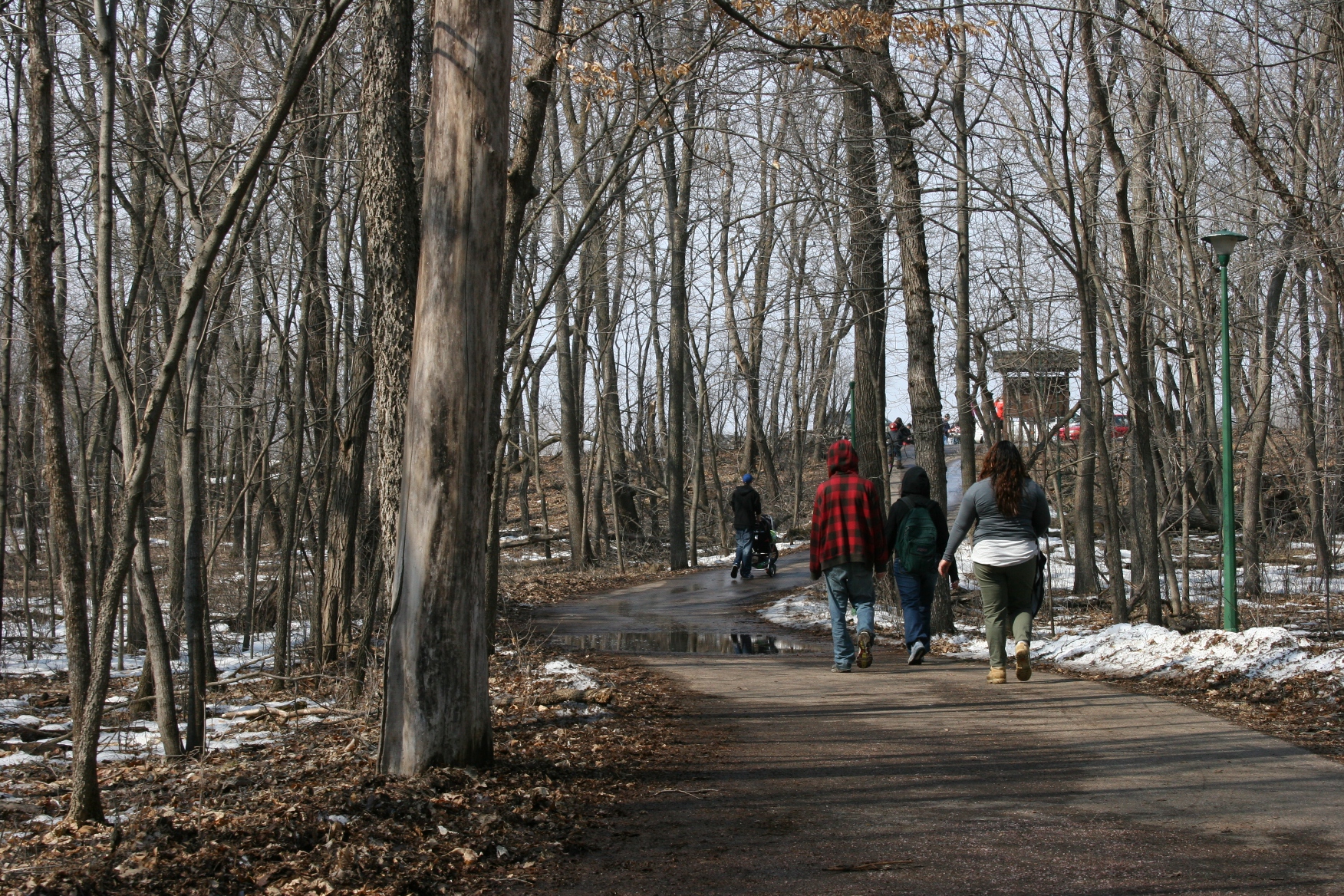
Walking the trails, this a rare one that wasn’t snow-covered and icy.
More warm weather outdoor enthusiasts than I’ve ever seen at this nearly 750-acres of woods, prairie and water on Faribault’s east side.
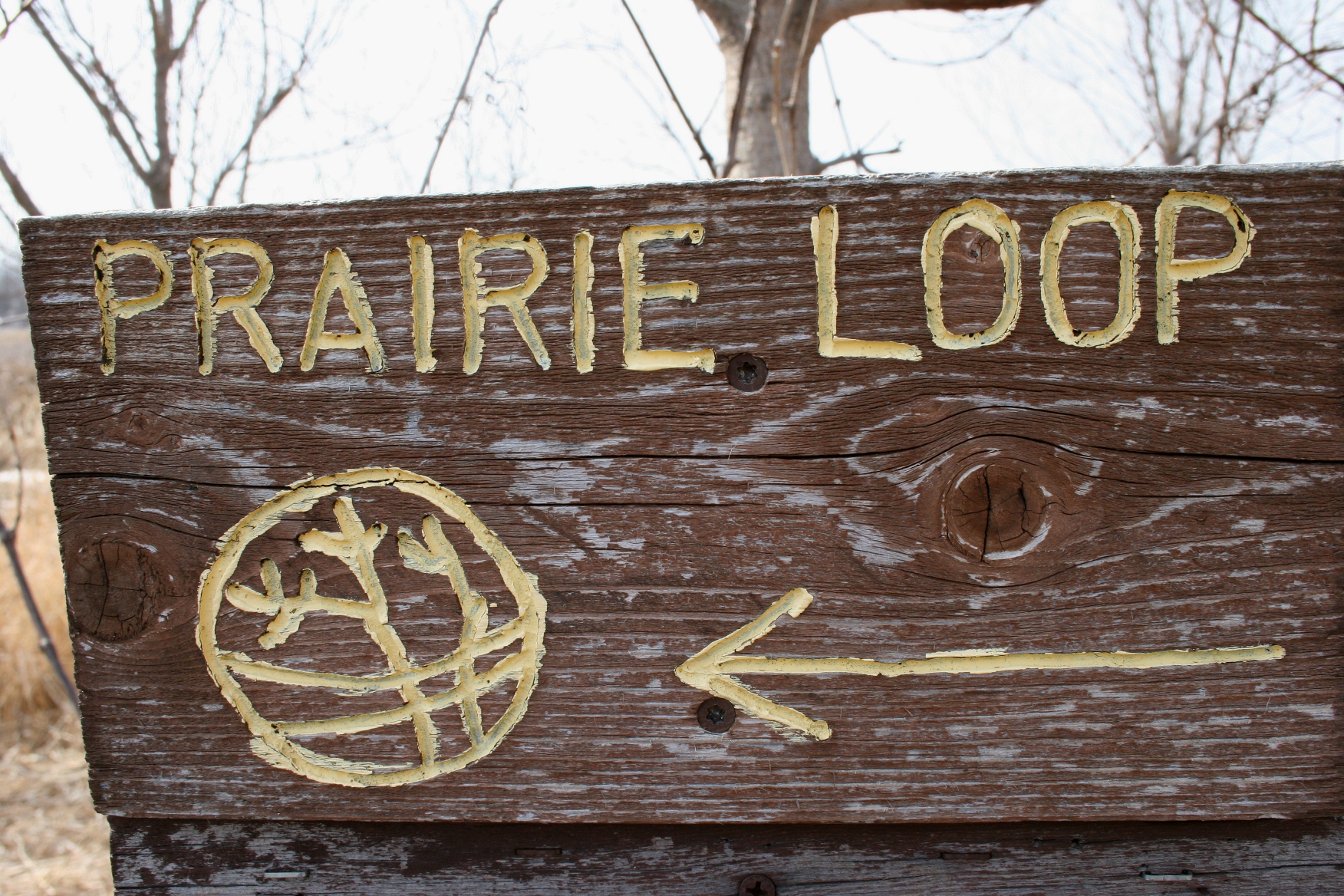
Handcrafted signs guide visitors along trails.
Bare-headed baby tucked in mother’s arms. Elementary-aged boy in helmet zipping his scooter down a tarred path. Elderly couple snugged on a bench.
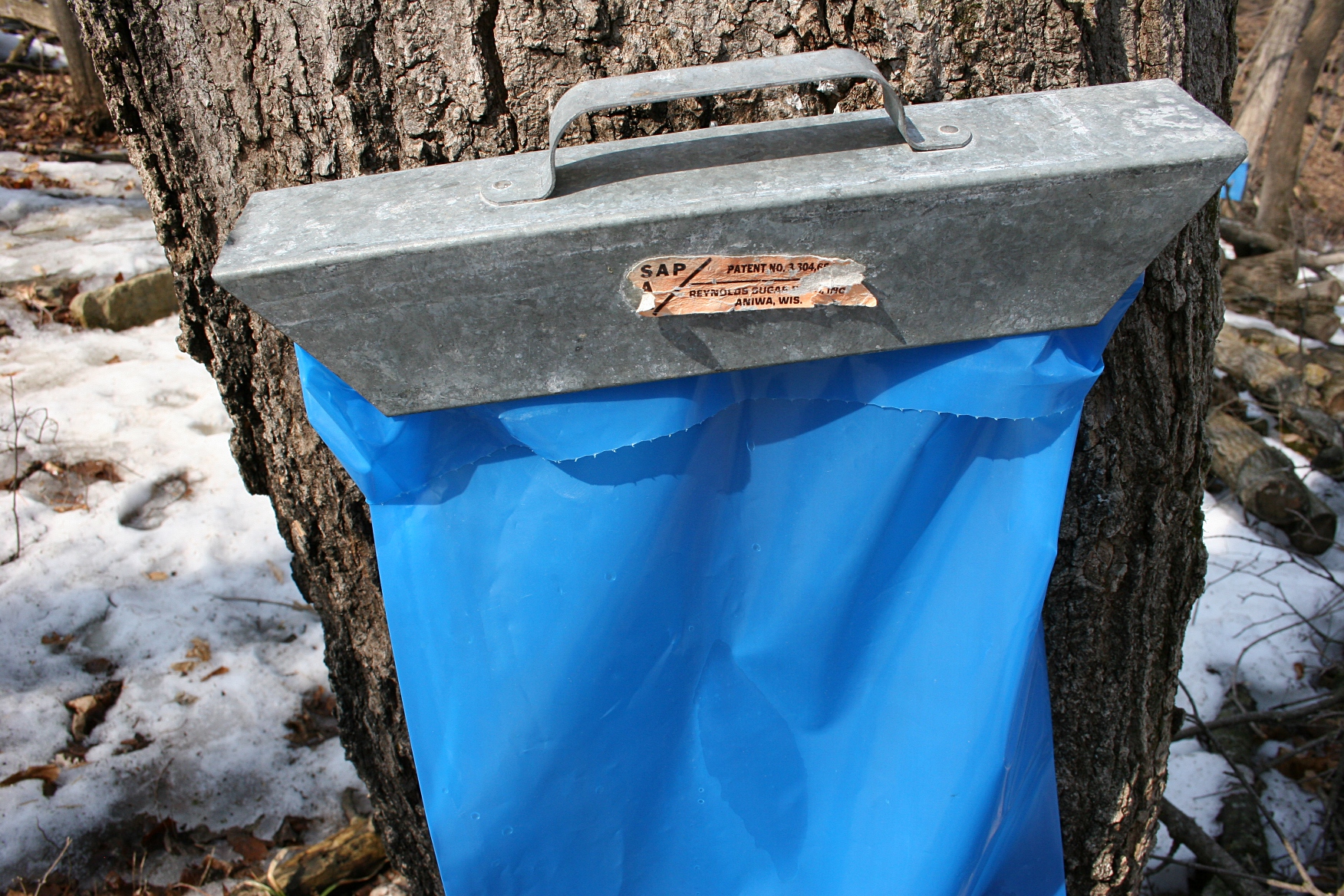
Trees tapped to collect sap in bags.
Folks clustered around an evaporator that cooked freshly tapped maple syrup.
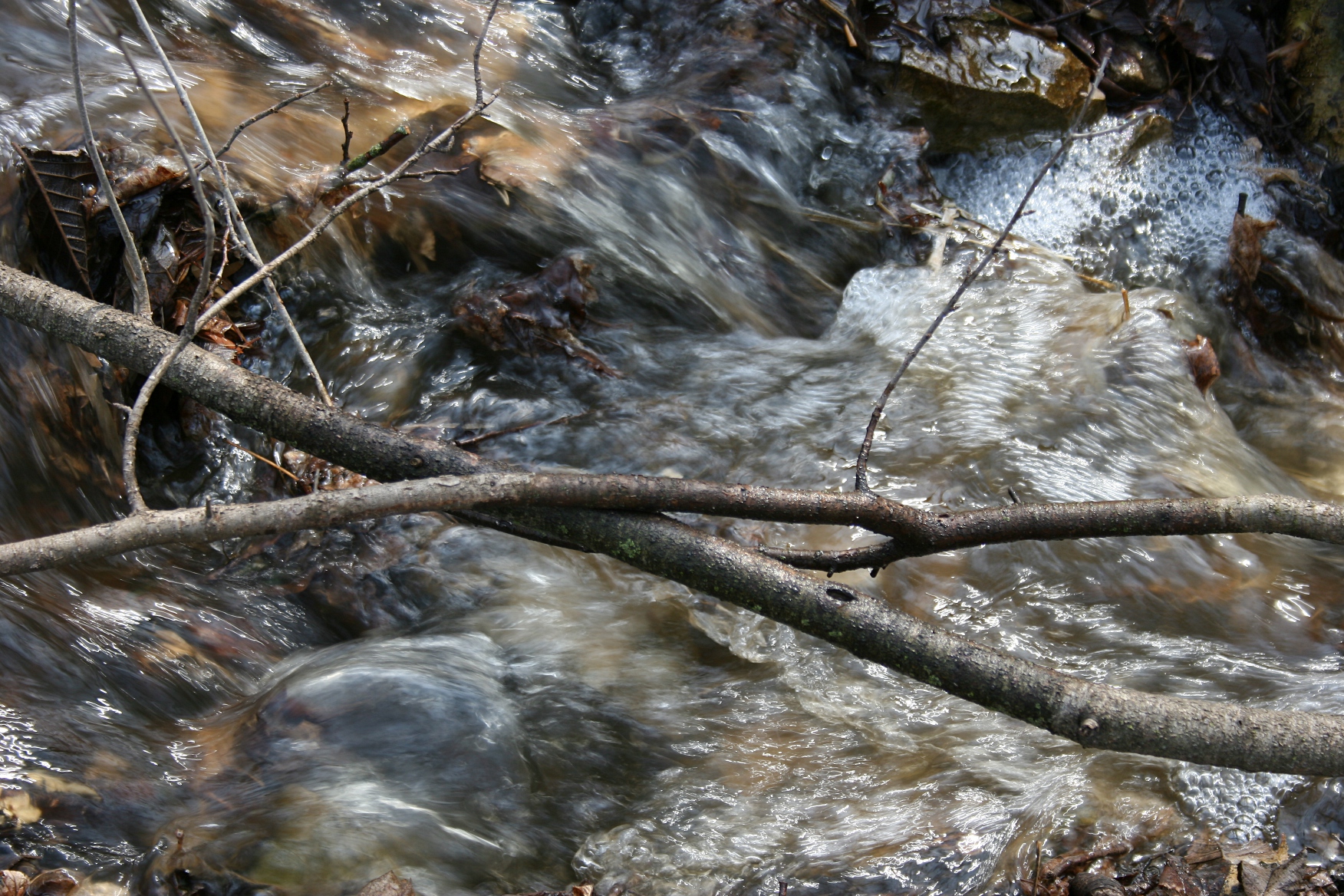
Kids played in water with sticks similar to this scene.
A trio of kids crossing a stick bridged across a rush of water.
A family picnicking.
Guy in shorts; boy in snowpants.
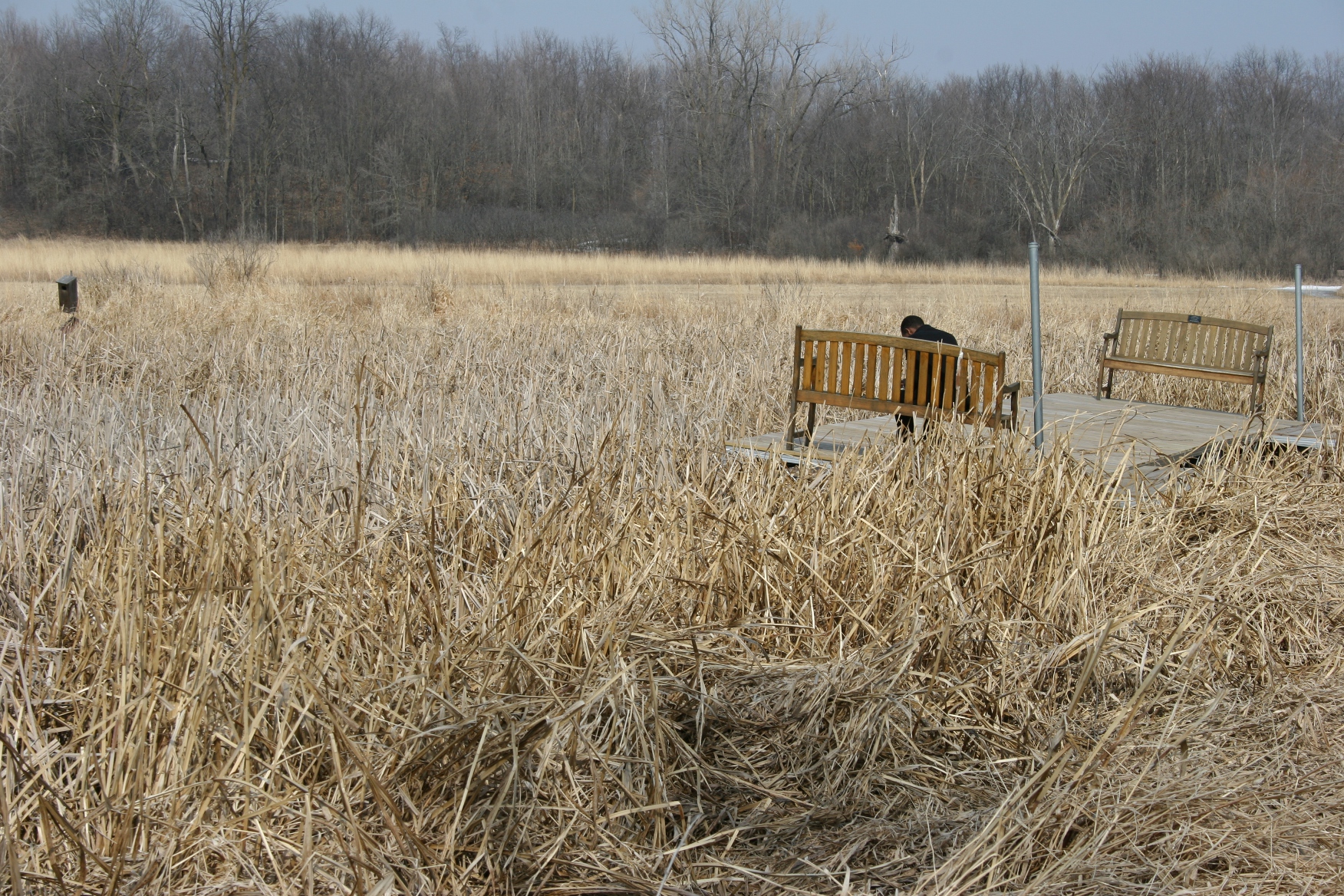
Abdi studies by the swamp.
Abdi, a native of Ethiopia, benched by the swamp/pond studying for his medical lab class in the quiet of nature, away from his noisy apartment building.
A 20-something teaching archery to kids just outside the interpretive center.
And us, threading our way along still icy trails, slushing through melting snow. Me, grabbing my husband’s hand to keep from slipping, his snow boots gripping the ice, mine not.
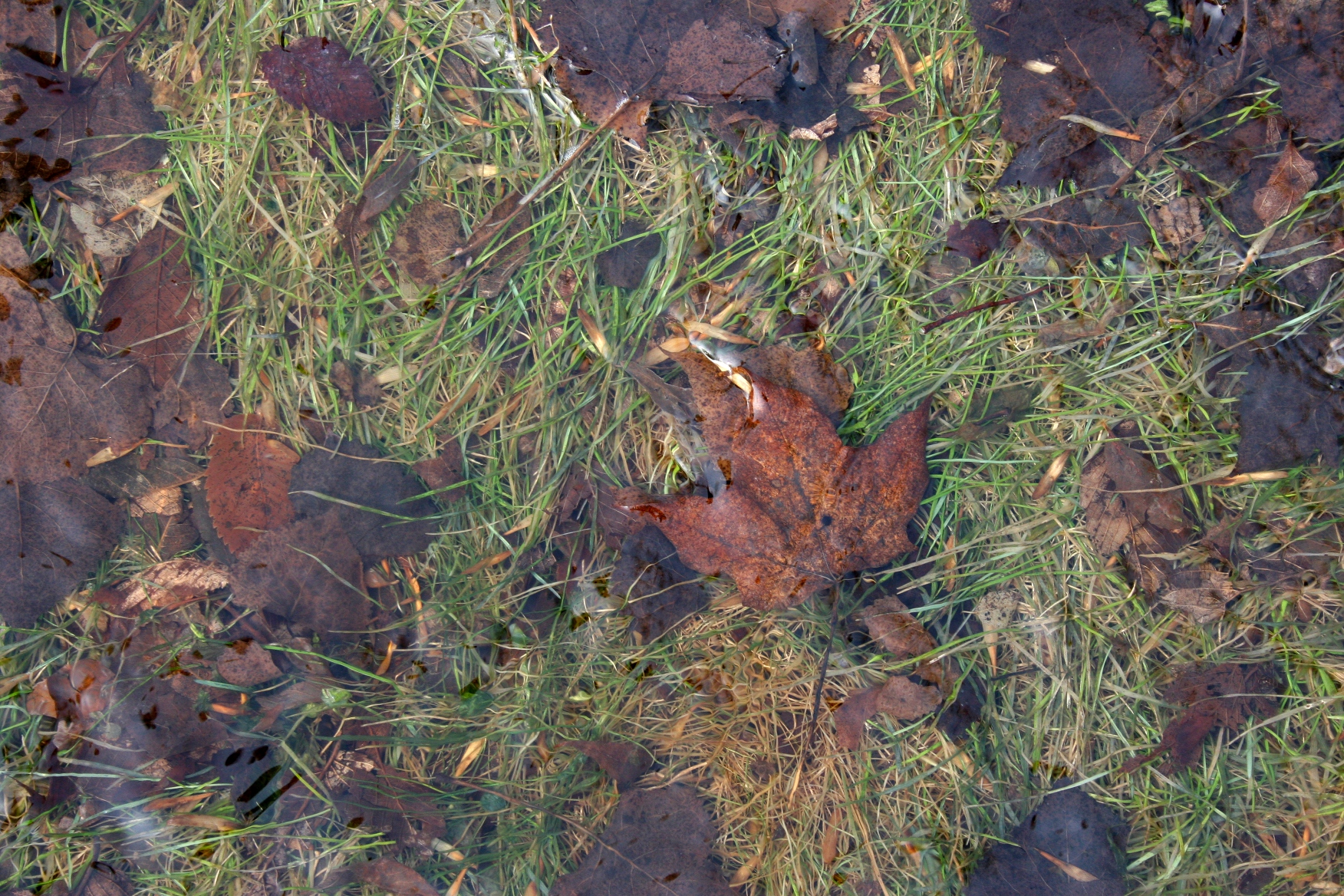
Patches of green grass mingle under water with dead leaves.
My eyes grasping for green and finding it in patches of emerging grass.
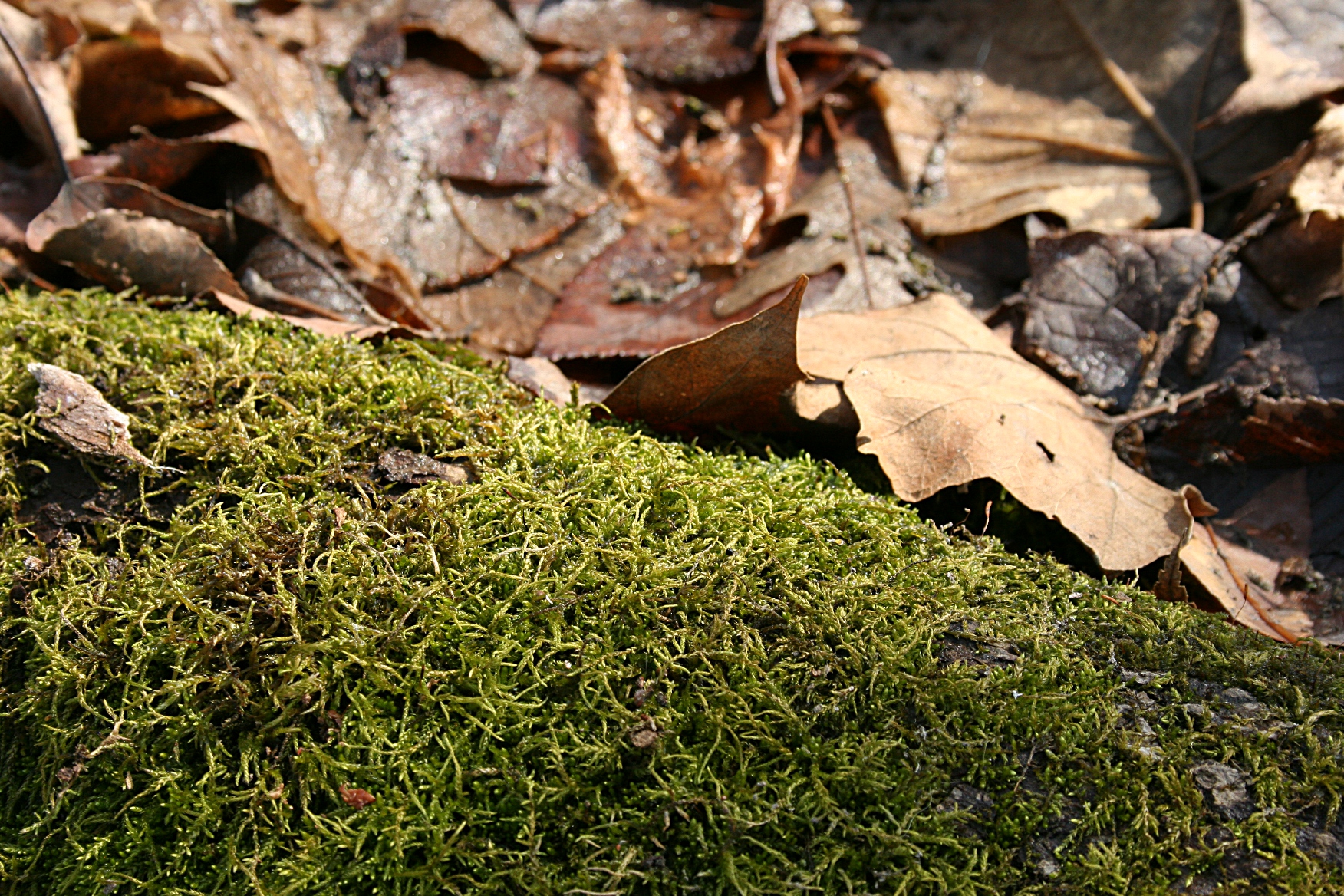
The brightest green discovered–moss on a log.
Green moss on dead logs.
The tiniest of green plants poking through the dormant prairie grass.
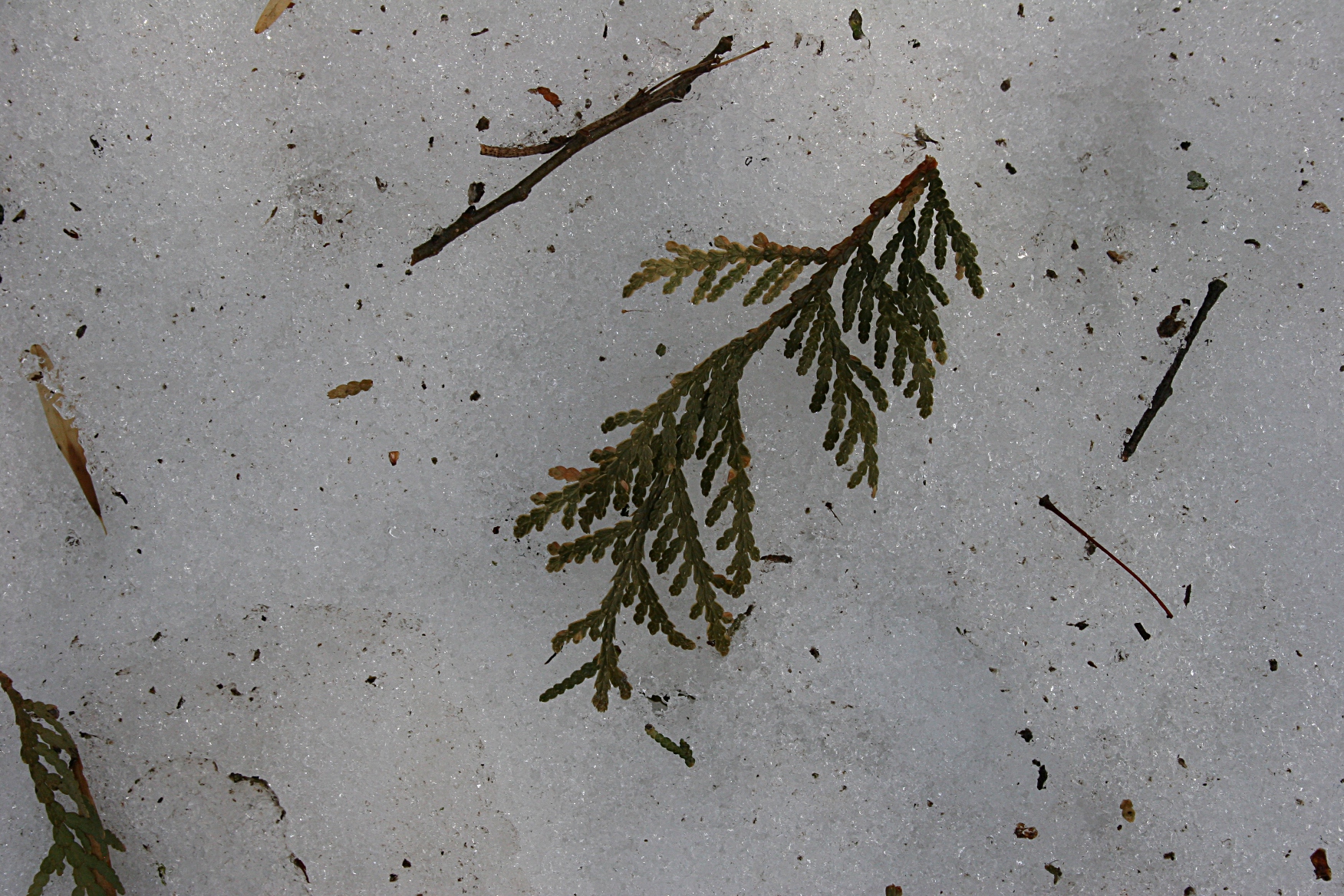
A snippet of green cedar upon snow.
Searching for signs of spring.

Trees reflected in a “lake” of water from the snow melt.
Finding it in watercolor paintings.
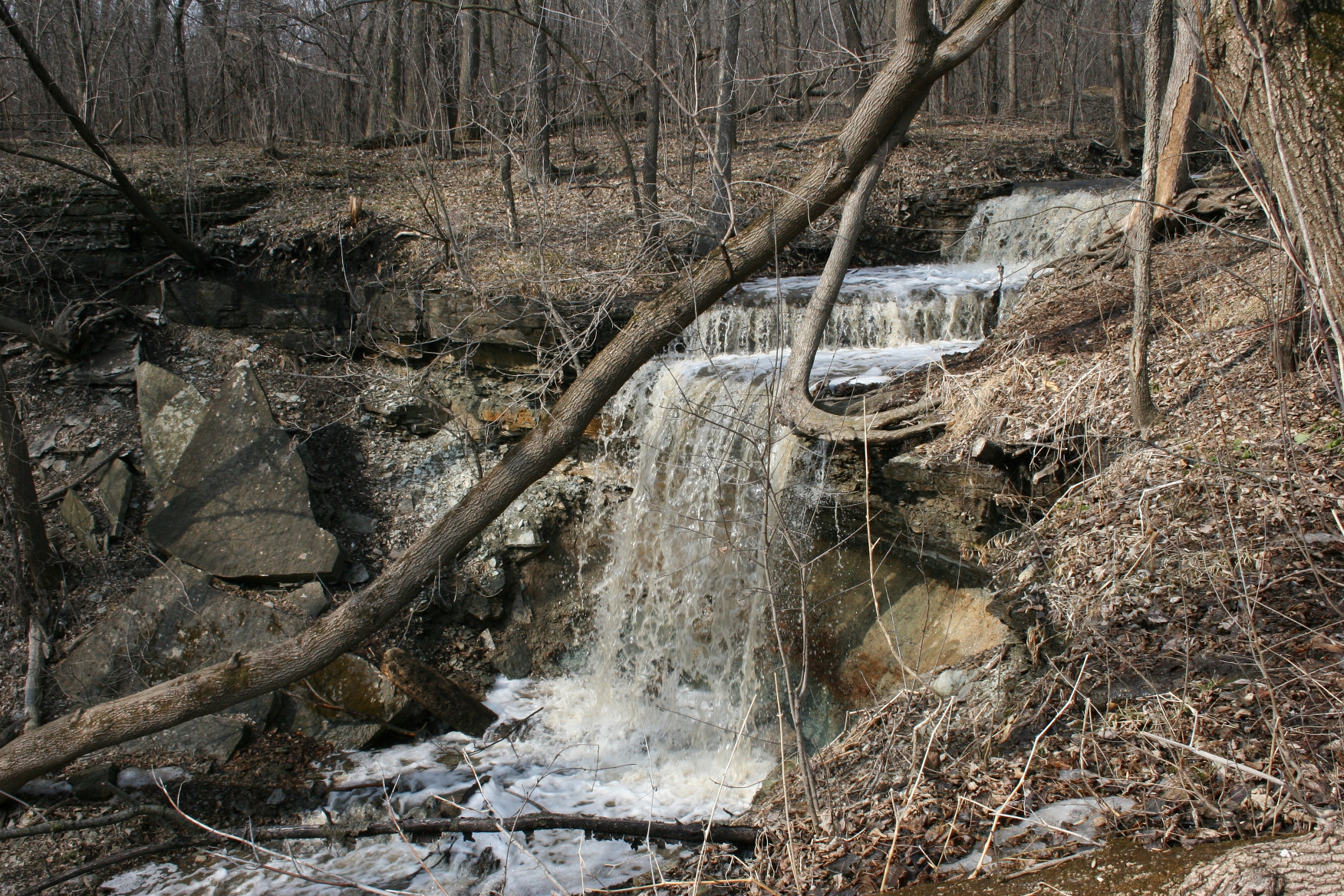
I’ve never seen this much water roaring over the nature center waterfall.
Water roaring over limestone in a three-tied waterfall.
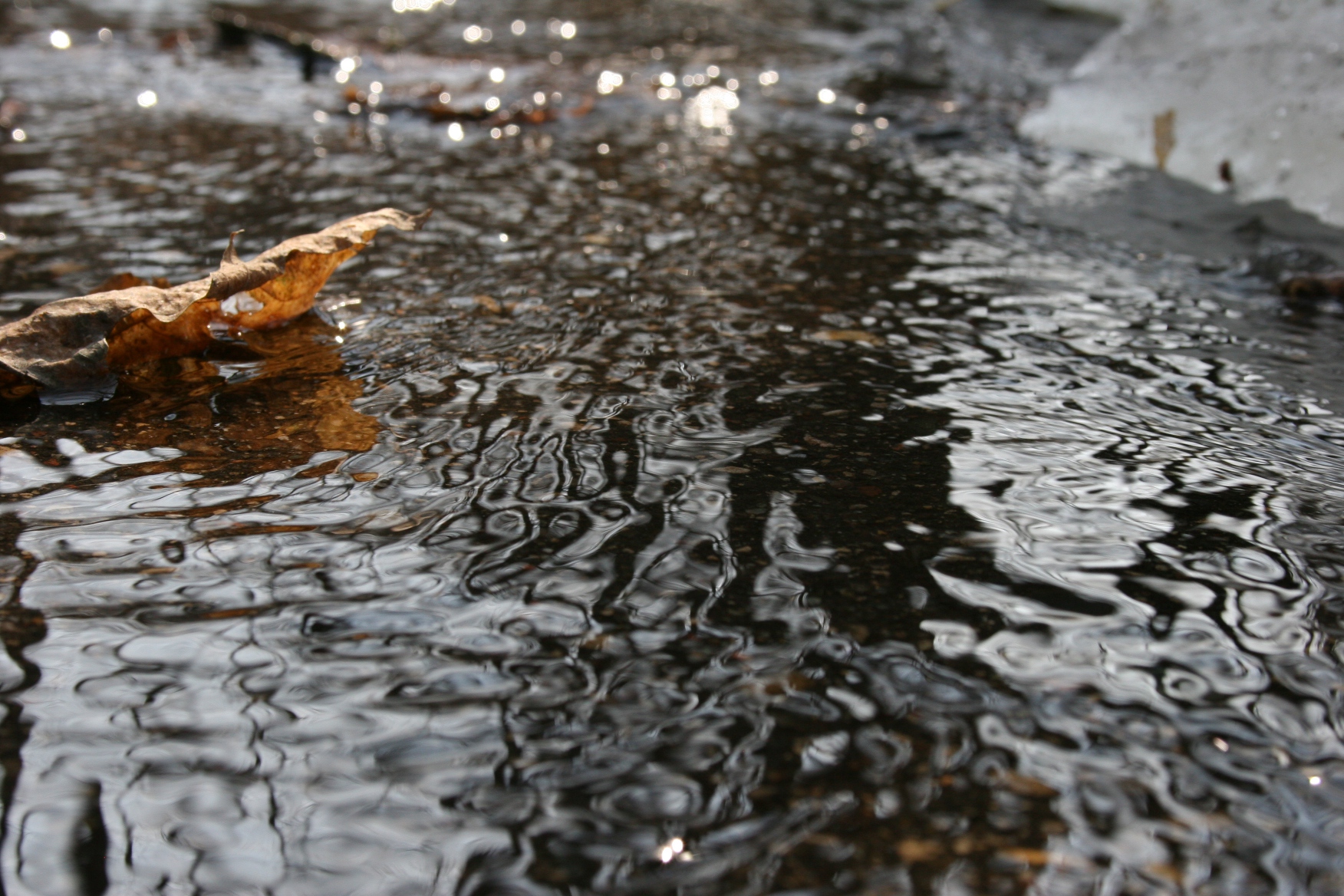
Water rushes down a trail.
Slogging through water, with grass and dead leaves squishing beneath our boots.
Sunday and sixty degrees. Glorious. Spring.
And then came blizzards (northern Minnesota) and tornadoes (southwestern Minnesota) on Monday with temps plunging into the 20s and 30s overnight. A wind advisory remains in effect until 10 a.m. today for a portion of Minnesota sweeping from southwest/central to southeast with sustained winds of 25 – 35 mph topping at 50 mph, according to the National Weather Service.
No April Fool’s.
FYI: According to an article in The Marshall Independent, a twister was sited near Taunton Monday afternoon with structural damage from the storm reported five miles north of Minneota. On Monday, a tornado warning and a blizzard warning were issued simultaneously for a portion of southwestern Minnesota.
In Yellow Medicine County, the West Central Tribune of Willmar reports structural damage from a tornado at three farm sites southeast of St. Leo.
© Copyright 2014 Audrey Kletscher Helbling
PERHAPS I AM too easily impressed.
But I have not visited the ice caves at Apostle Islands National Lakeshore in northern Bayfield County, Wisconsin.

Thus the ice formations gracing the Mississippi River bluffs along Interstate 90 on the Minnesota side near La Crosse, Wisconsin, impress me.

There is no stopping along I-90 to view or photograph this natural ice art up close. Rather, I rely on the rapid fire of my camera to capture the scene for later study.
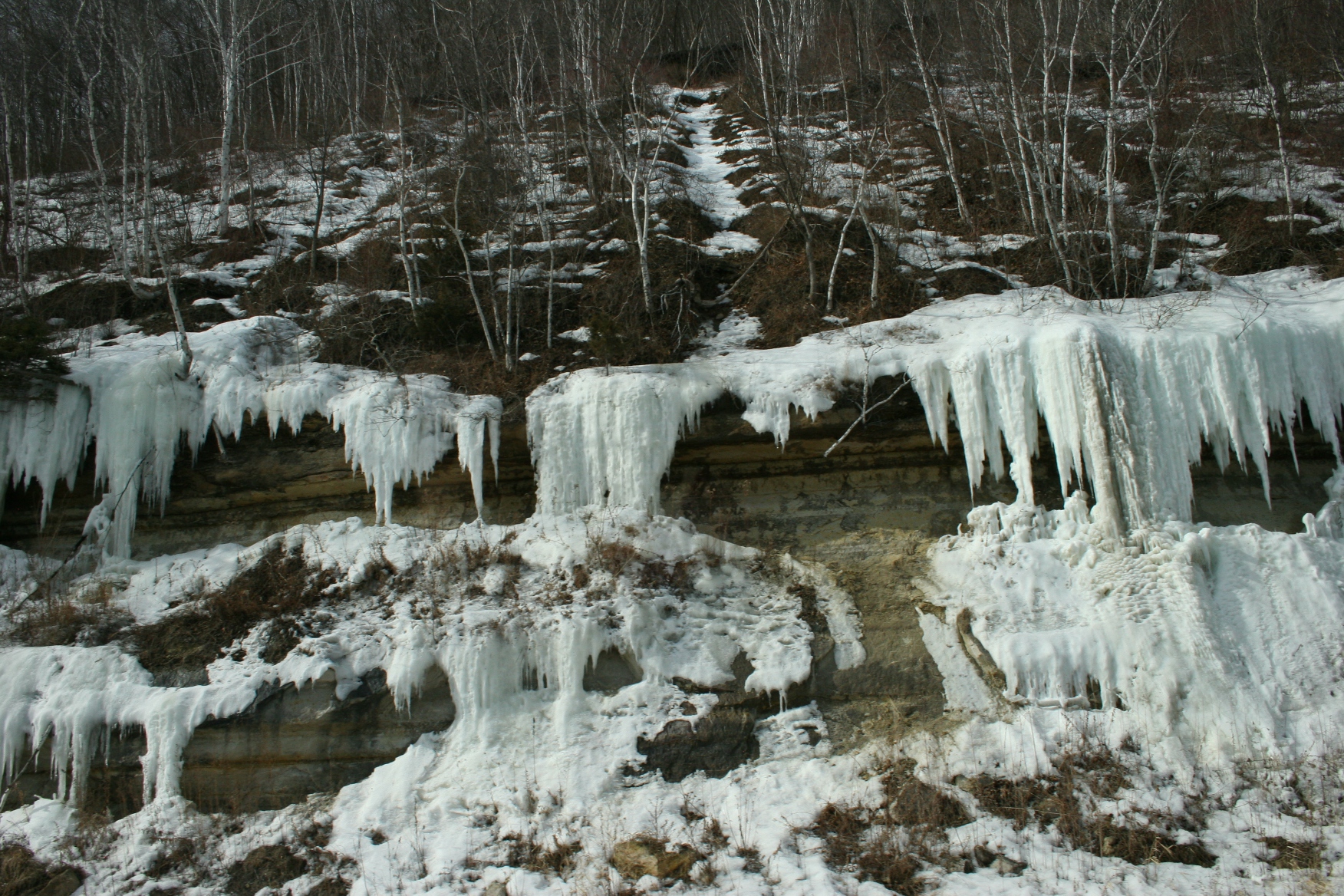
Every time I see this water frozen in the icebox of winter, I marvel at its beauty.
I remember, too, how once upon a time I snapped icicles from the milkhouse roofline to engage in sword fight battles with my siblings.

The flip side of my mind views the ice formations as powdered sugar icing dripping down the sides of a homemade chocolate birthday cake baked by my mother.
That’s the thing about art—man-made or natural. It’s always open to interpretation.
FYI: These photos were taken 10 days ago. Since then, the weather has warmed to around 60 degrees in southern Minnesota, meaning these formations are likely disappearing.
© Copyright 2014 Audrey Kletscher Helbling
GROWING UP LUTHERAN, I knew Catholics couldn’t eat meat on Fridays during Lent. They ate fish. I never understood that because I consider fish to be meat.
But, still Lutheran today, I respect the Catholic Friday Fish Fry tradition.
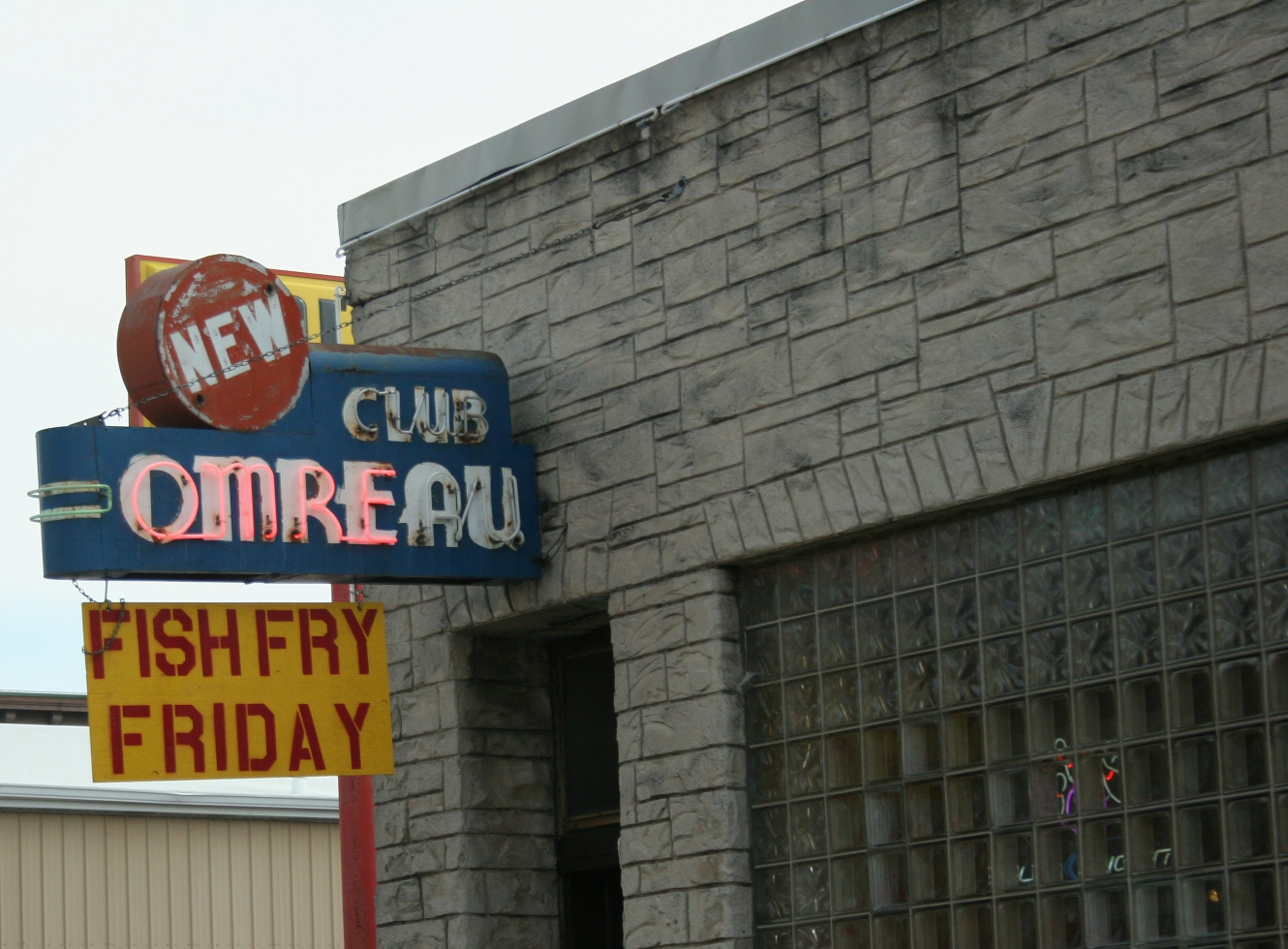
Photographed in Omro, Wisconsin, eight miles west of Oshkosh along the Fox River.
This time of year, you’ll see advertisements and signs galore calling the faithful to feast on fish on Fridays.
These weekly Lenten fish fries should also remind believers of their calling to be, like Jesus’ disciples, fishers of men (and women and children). If I remember my bible facts correctly, Andrew, Peter, James and John were fishermen by profession and fishermen by discipleship.
Throughout scripture, you will find numerous references to fish, beginning with the beginning. In Genesis 1:26, God says:
“Let us make man in our image, in our likeness, and let them rule over the fish of the sea and the birds of the air, over the livestock, over all the earth, and over all the creatures that move along the ground.”
What a great responsibility.
Then there’s the story of Jonah being swallowed by a great fish. I remember as a child reading Sunday School bible lessons and how impressed I was by this. To think that the prophet Jonah would be swallowed by a whale, remain in the whale’s belly for three days and then be spit out alive seemed pretty miraculous to me.
And that’s exactly as it should have seemed. The apostle Matthew writes in the gospel of Matthew, chapter 12:40:
For as Jonah was three days and three nights in the belly of a huge fish, so the Son of Man will be three days and three nights in the heart of the earth.
Jonah’s experience connects to Christ’s resurrection from the dead after the third day, as explained by Matthew.
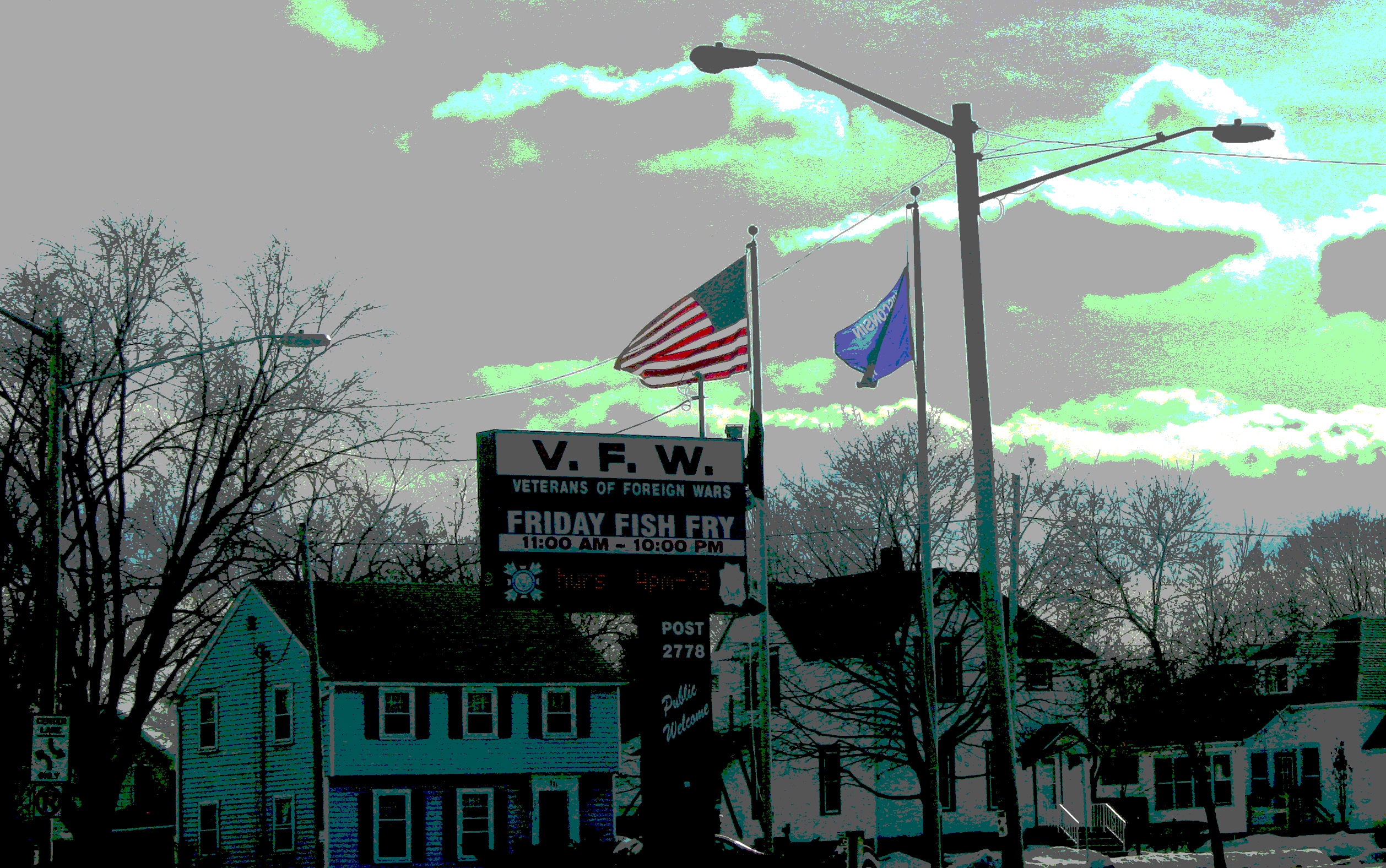
At VFW Post 2778 in Appleton, WI., they apparently attempt to feed the masses as the Friday Fish Fry runs from 11 a.m. – 10 p.m.
Finally, the other significant mention of fish imprinted upon my memory comes in the feeding of the 4,000 and the 5,000 plus. On both occasions, Jesus multiplied miniscule portions of bread and fish to feed the masses:
Taking the five loaves and the two fish and looking up to heaven, he gave thanks and broke the loaves. Then he gave them to the people. They all ate and were satisfied, and the disciples picked up twelve basketfuls of broken pieces that were left over. The number of those who ate was about five thousand men, besides women and children. (Matthew 14: 19-21)
I think Jesus would have appreciated a Friday Fish Fry.
© Copyright 2014 Audrey Kletscher Helbling
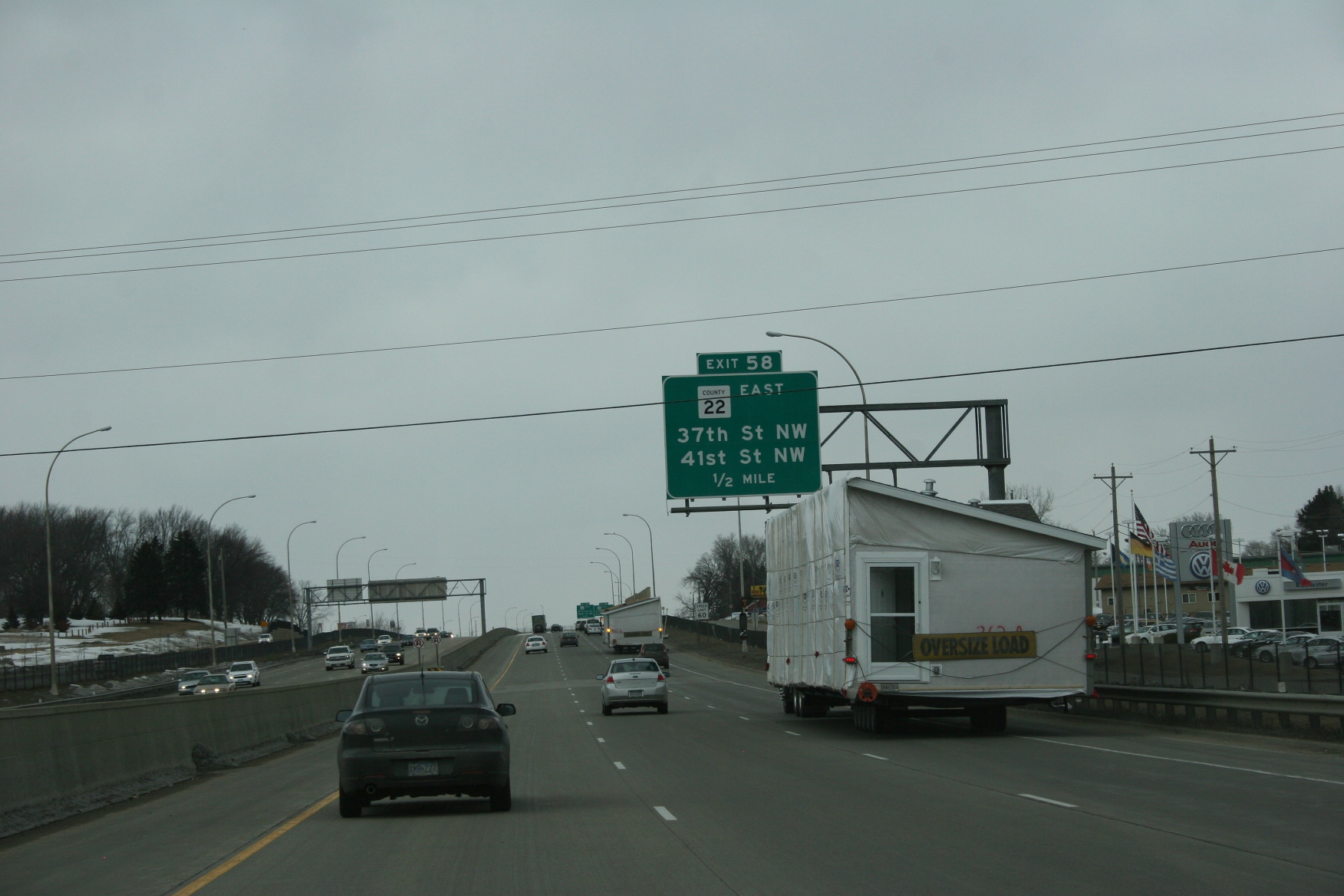
Photographed along U.S. Highway 52 in Rochester, Minnesota.
I thought I did.
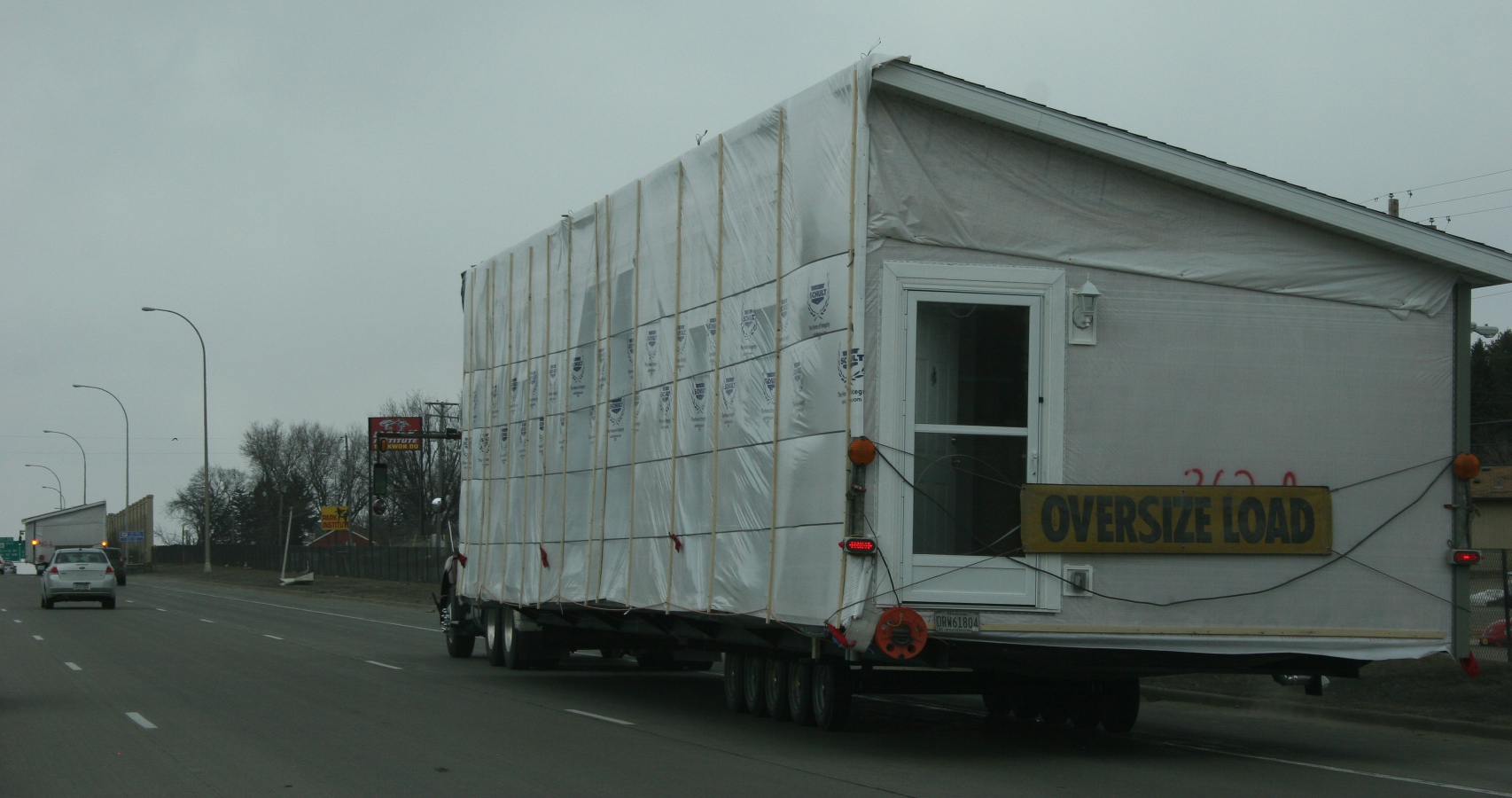
But apparently not.
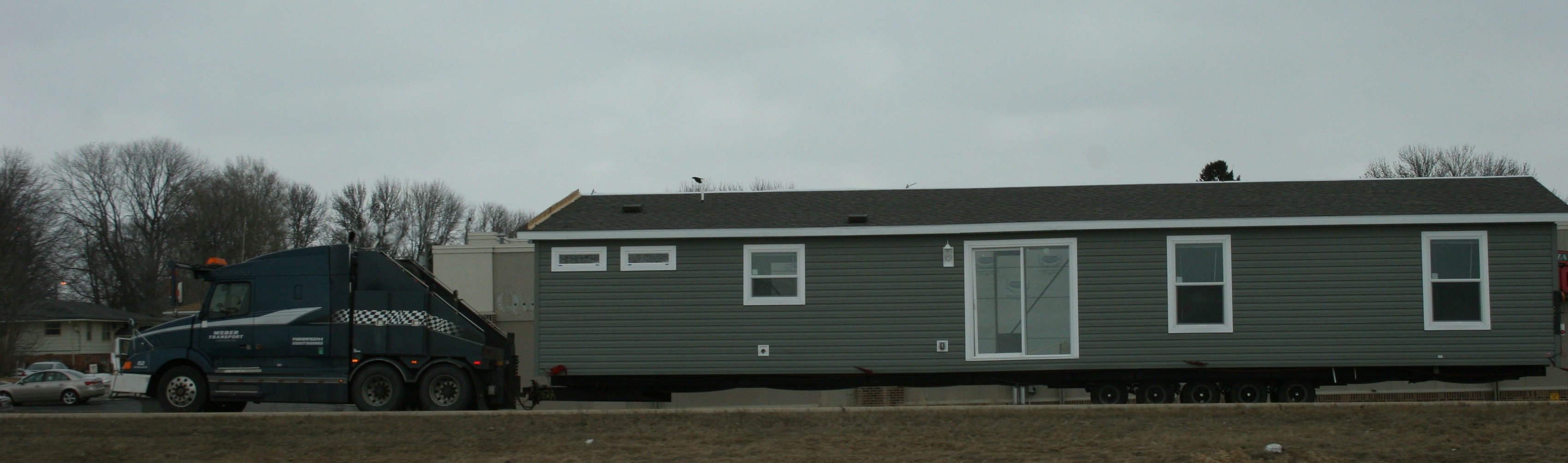
Copyright 2014 Audrey Kletscher Helbling
FORGET BILLBOARDS to push furniture and mattresses in Appleton, Wisconsin.
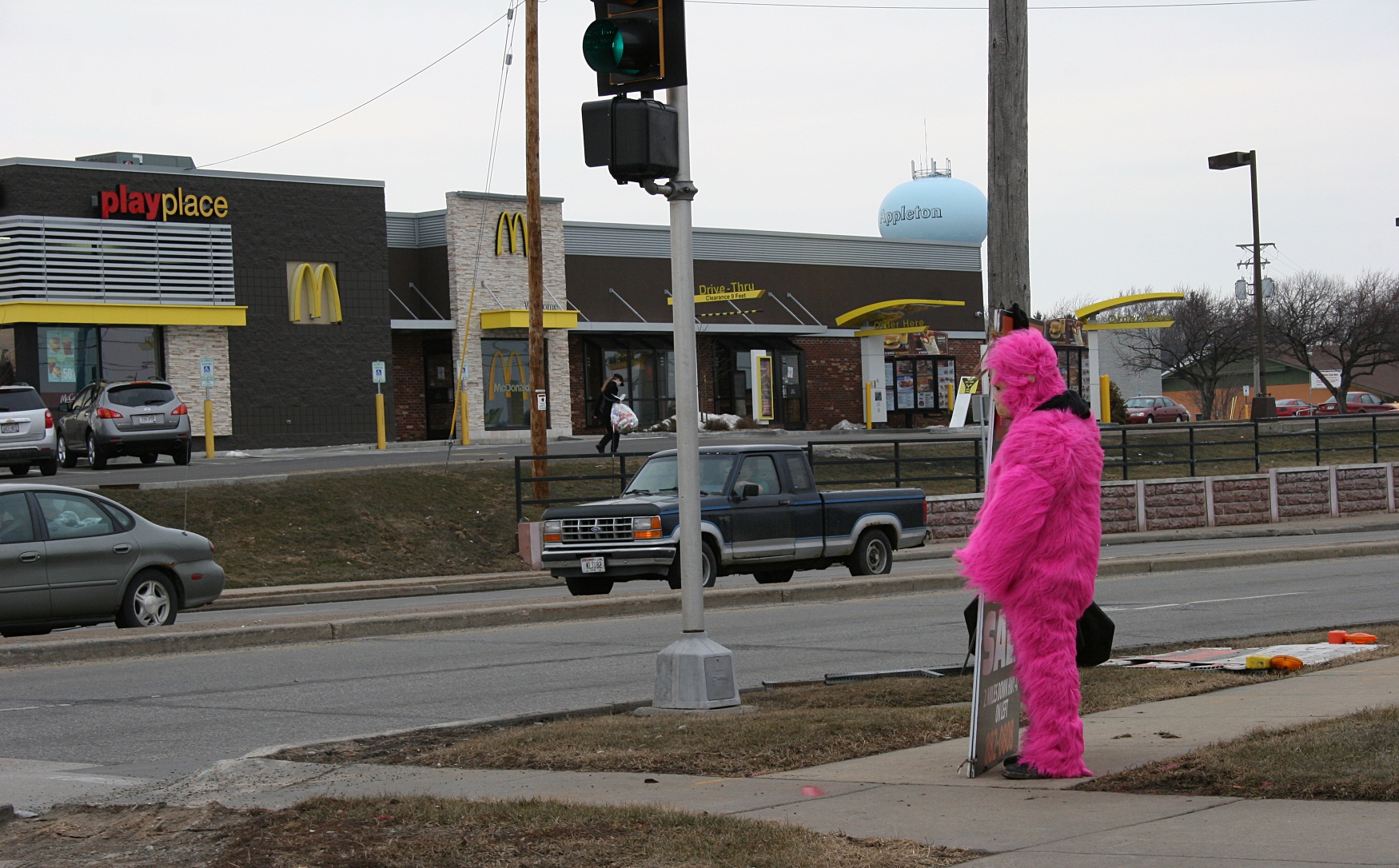
Instead, try guerrilla gorilla marketing.

Hire someone to dress in a hot pink gorilla costume. Station the ape at the corner of a crazy busy intersection (Northland Avenue and North 47) and you’re good to go.
Tell me, does this type of gimmick really work?
Copyright 2014 Audrey Kletscher Helbling
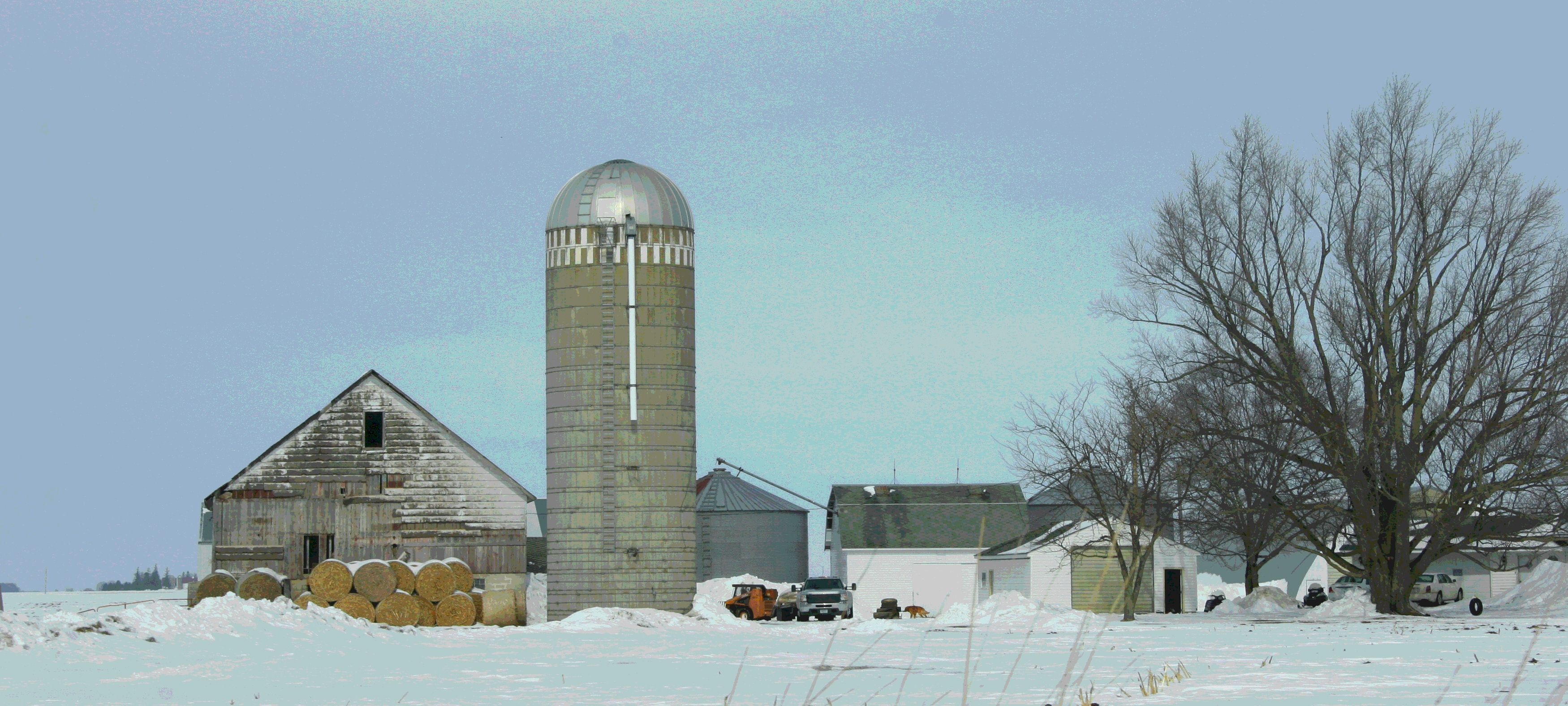
IN A FLASH, I’ve passed the farm site along Minnesota State Highway 60 between Faribault and Kenyon.
But I’ve clicked the shutter button, preserving this rural scene, a moment frozen in time. Many times, for whatever reason, I have photographed this place.
Later, viewing this most recent image on a computer screen, I notice the details that escaped my eyes during that drive-by. And I wonder how, all too often, we miss the details.
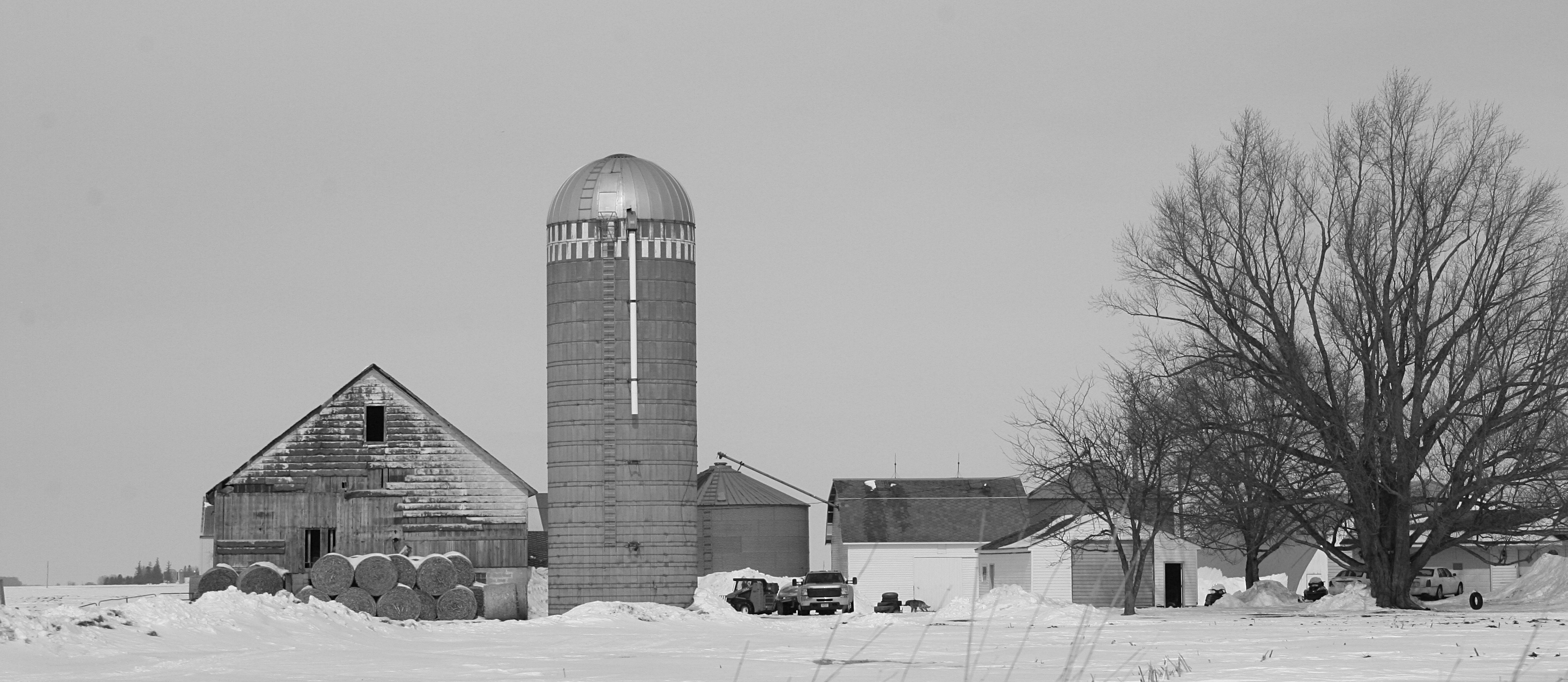
Details comprise the whole, define our lives in ways we never realize. A look. An intonation. A reflex. Puzzle them together and you have life.
A snapshot. An album. A collection of minutes, hours and days that collectively become weeks and months and years. And suddenly you are, like me, past middle age, a generation away from death.
You wonder about the details, whether you’ve noticed and embraced and lived them.
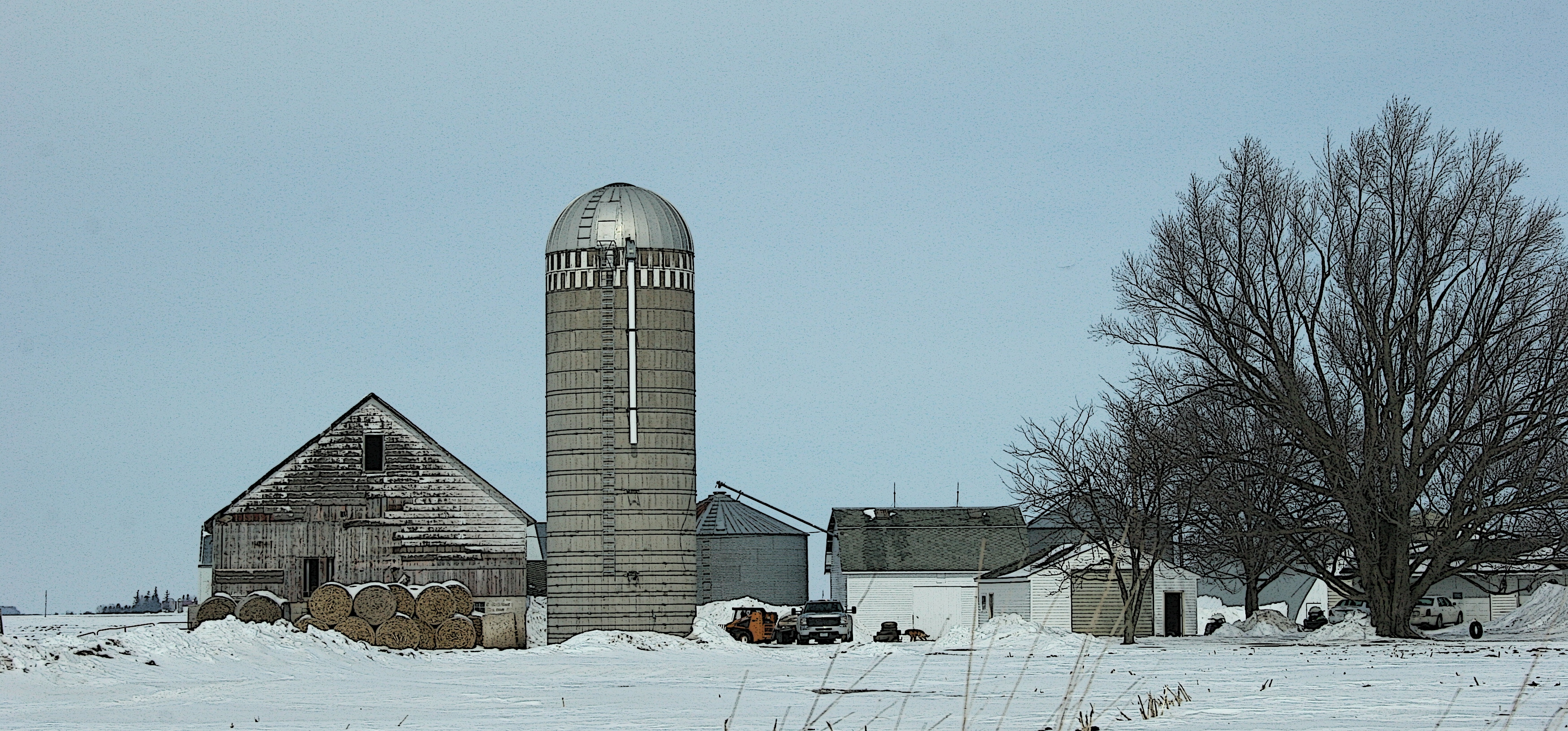
Have you swung in a tire swing?
Or have you simply viewed tires as a necessity to carry you along the highway of life? Too busy to notice details.
© Copyright 2014 Audrey Kletscher Helbling
BRICK, A BENCH, A RIVER…
Each provides a canvas or backdrop for art in Wabasha, an historic Mississippi River town of 2,500 in southeastern Minnesota.
On a recent visit here to the National Eagle Center, where art abounds inside, I also noticed art integrated into the downtown.
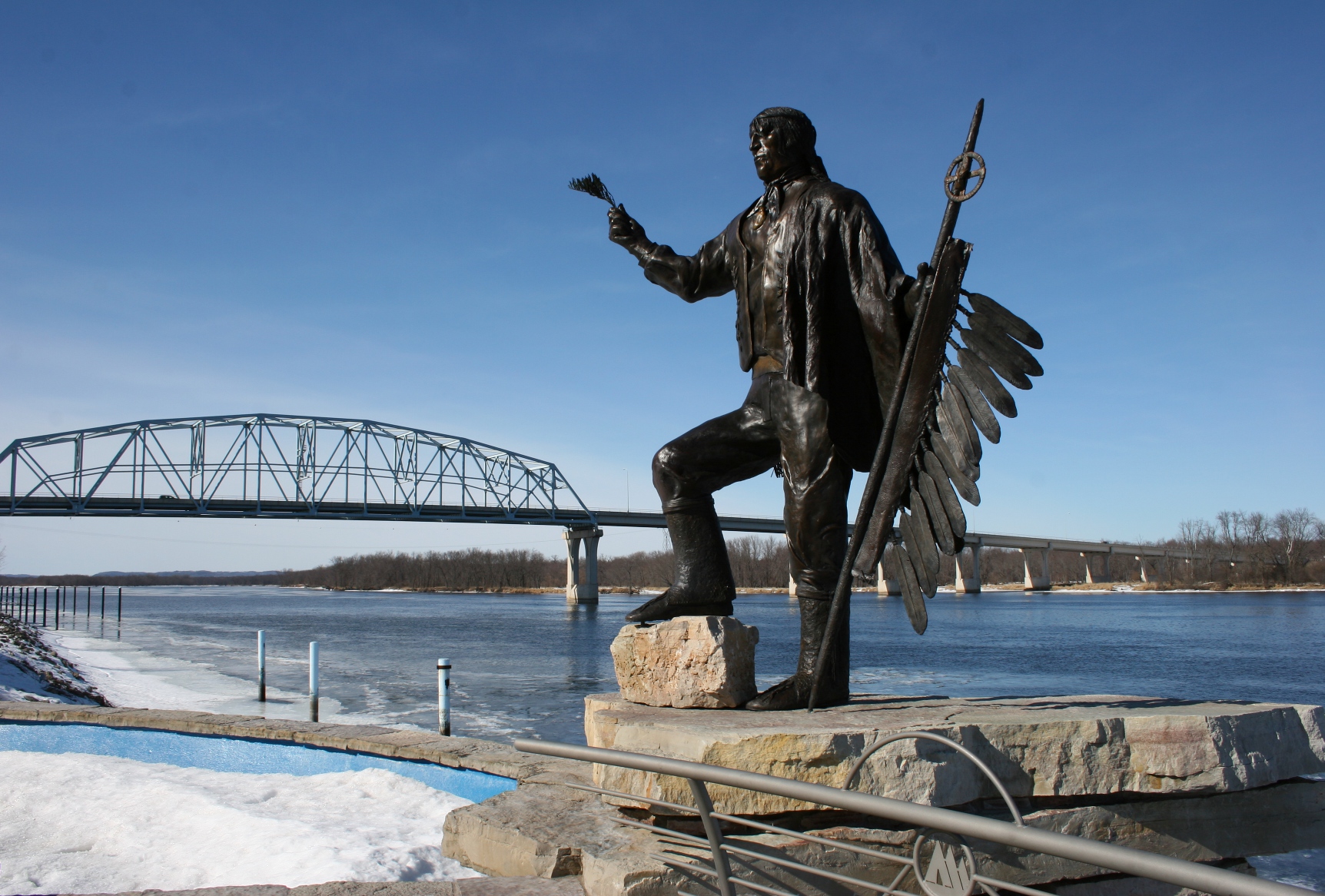
A 10-foot tall bronze sculpture of Wapahasha II, a Native American after whom the city of Wabasha is named, stands atop a fountain next to the riverside eagle center.
If you shift your eyes a bit, you’ll notice a bridge in the distance. I view that 26-year-old link between Minnesota and Wisconsin as art given the overhead span of trusses.
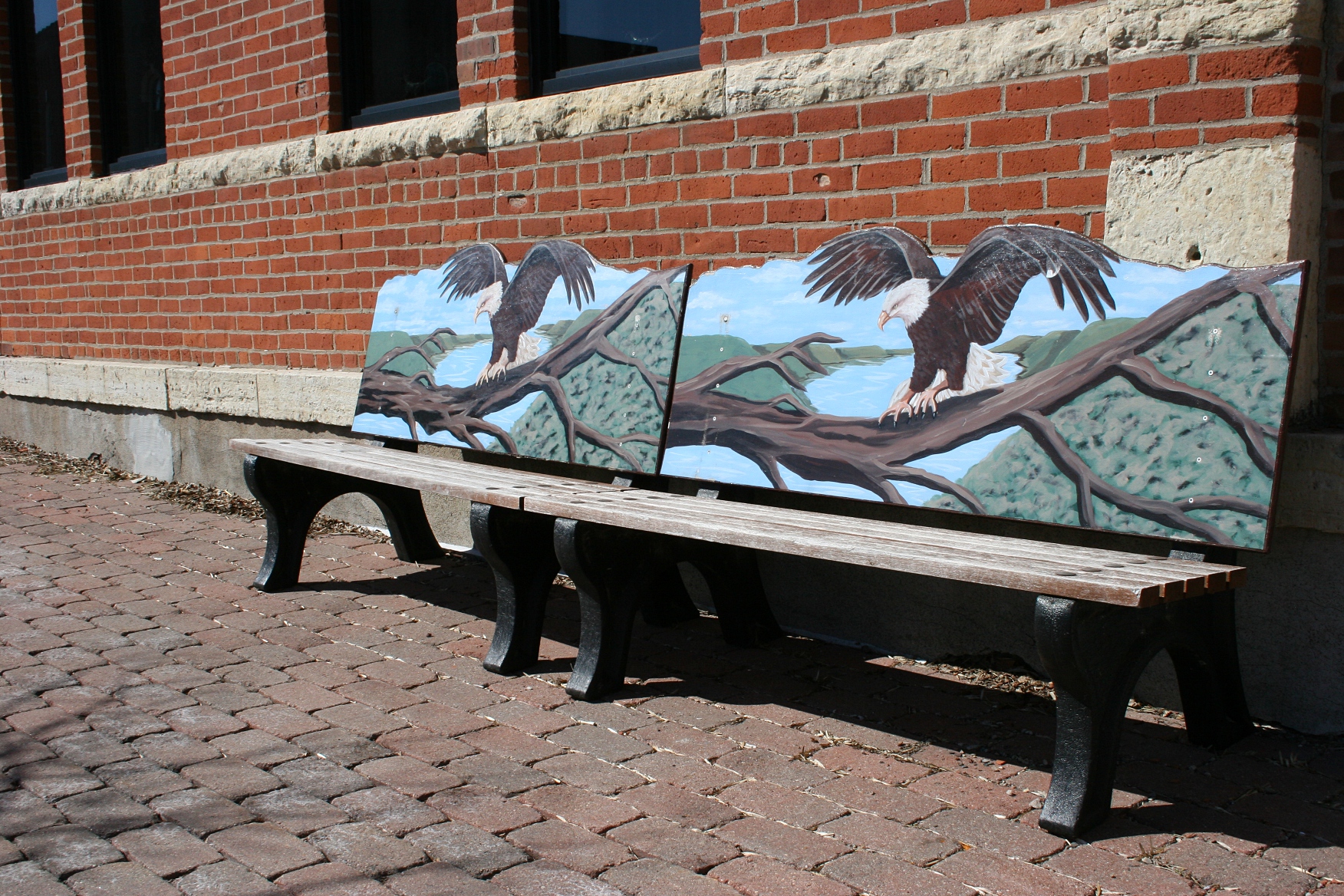
Just up the street, set atop brick pavers, co-joined park benches have become artwork, too, with eagle paintings backing the benches. It’s a nice touch, emphasizing Wabasha’s eagles and the reason many visitors come here.
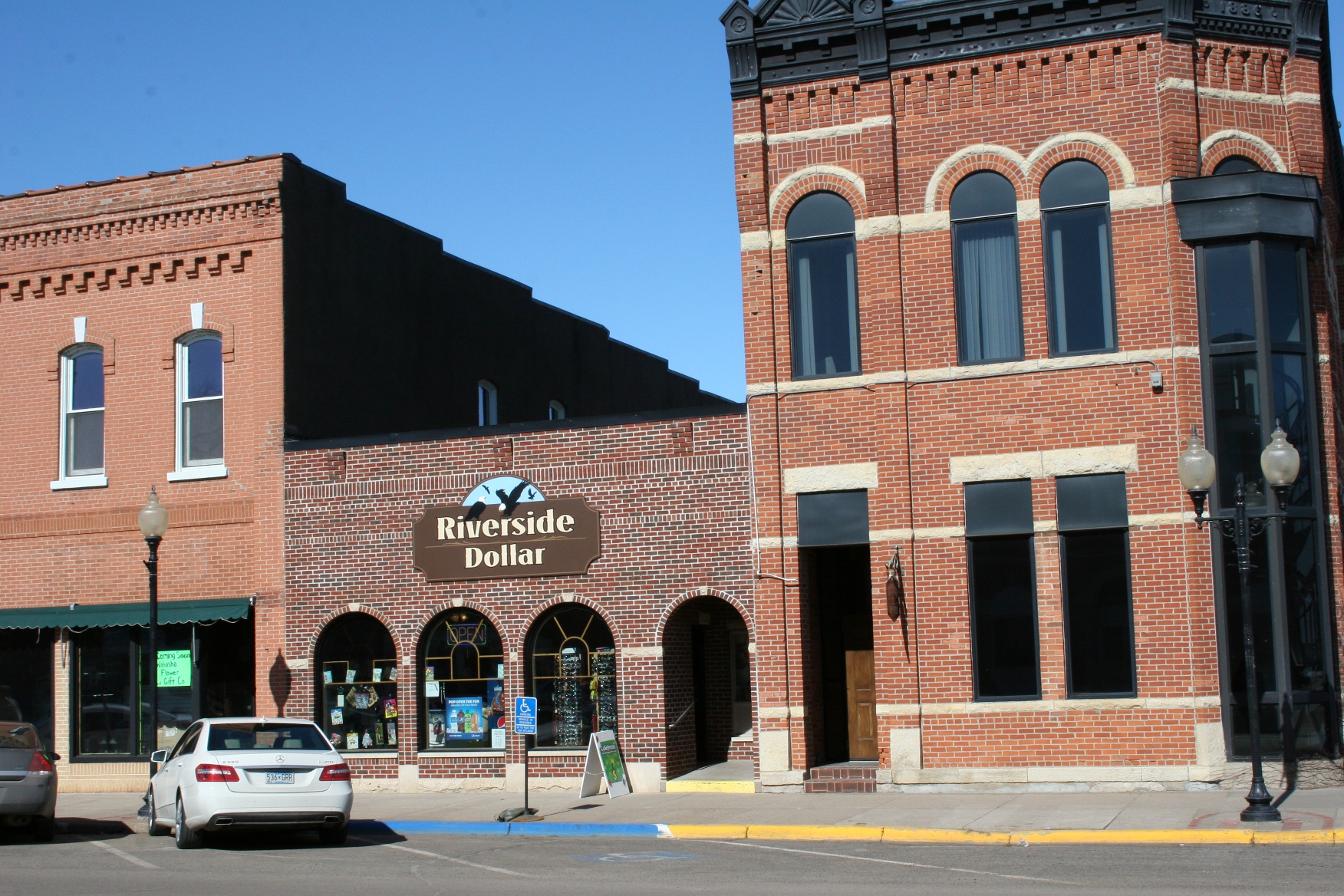
Around the corner, Riverside Dollar also incorporates eagles into its signage on a cozy building tucked between taller historic buildings. Fifty properties in Wabasha are on the National Register of Historic Places, another reason I appreciate this community. The buildings, in and of themselves, are works of art with ornate details that showcase the craftsmanship of another era.
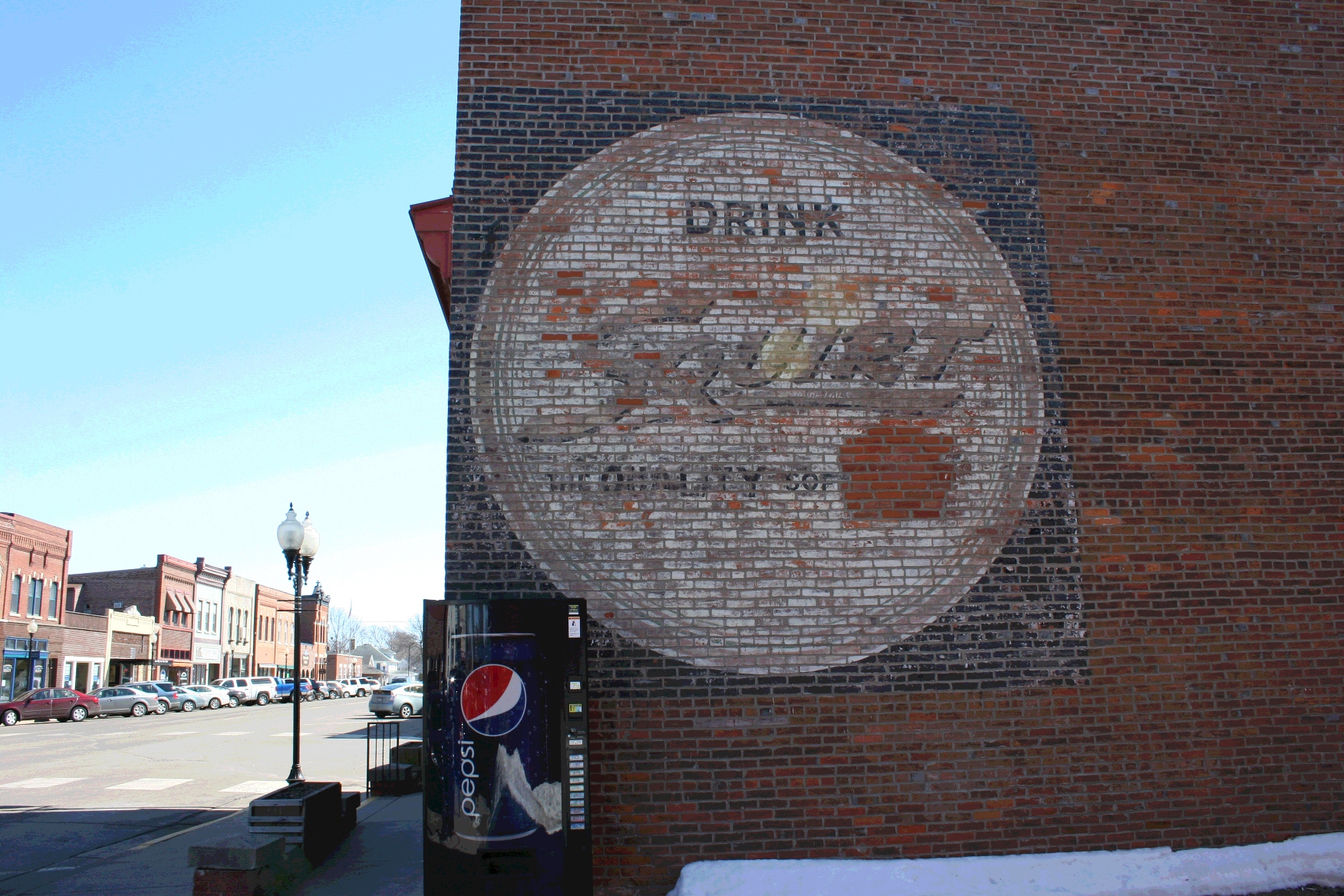
A block away, a faded vintage Squirt sign painted onto the side of a brick building contrasts with a sleek and shiny Pepsi vending machine. That amuses me.
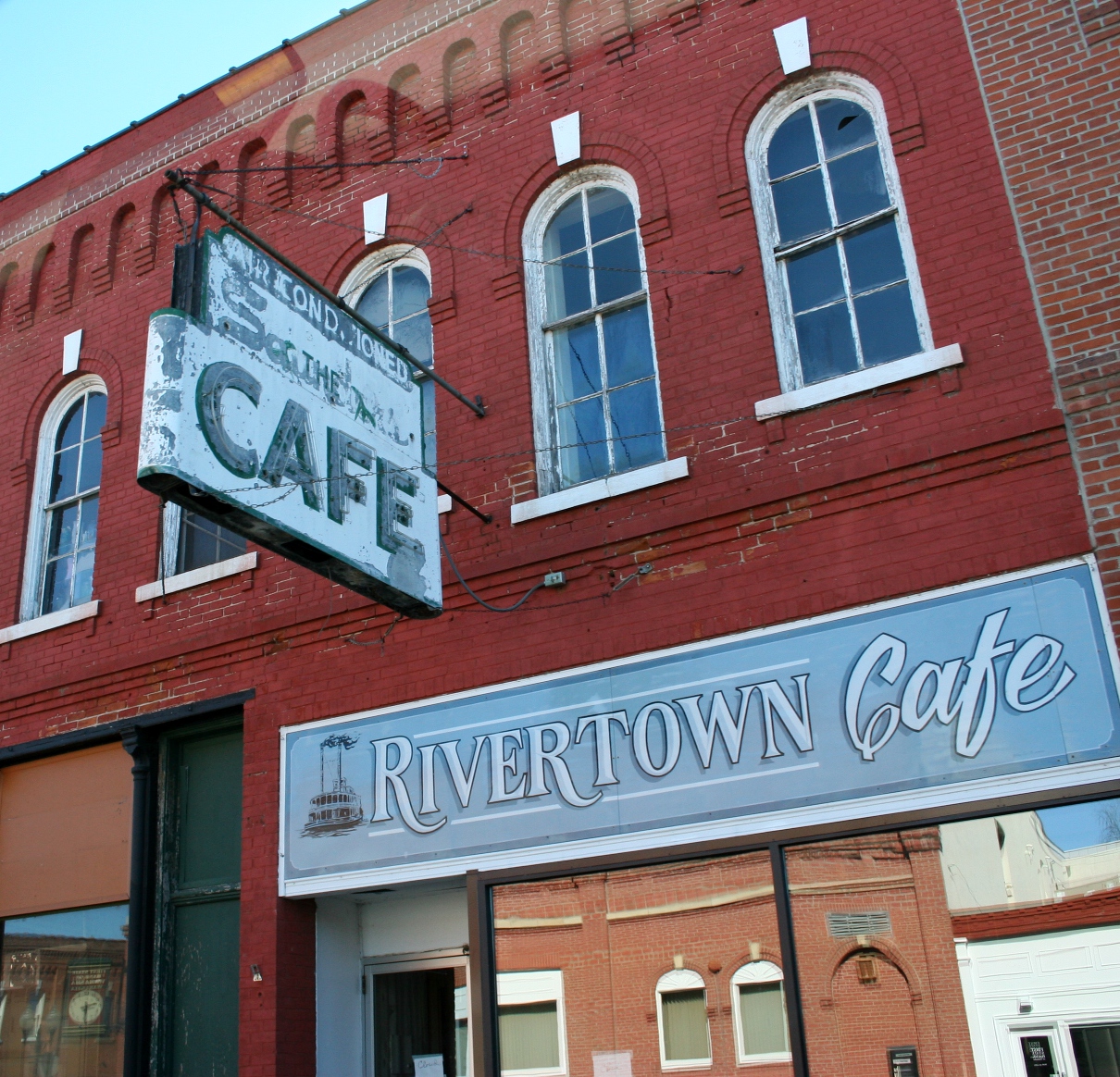
At the Rivertown Cafe, I appreciate the aging signage suspended from the second level. It adds a certain charm to the exterior and directs the eye toward the business.
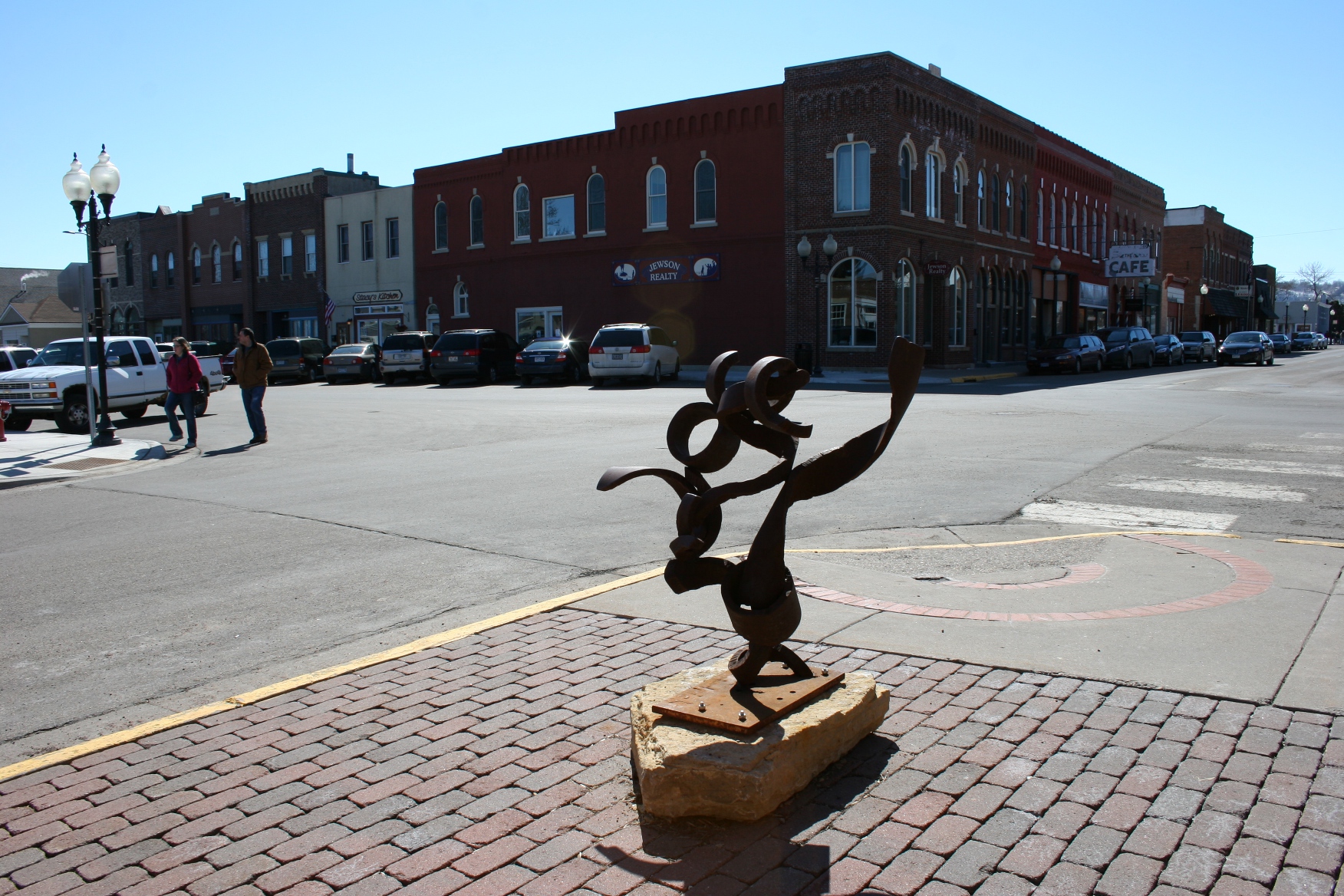
A stone’s throw away, a modern sculpture graces a street corner.
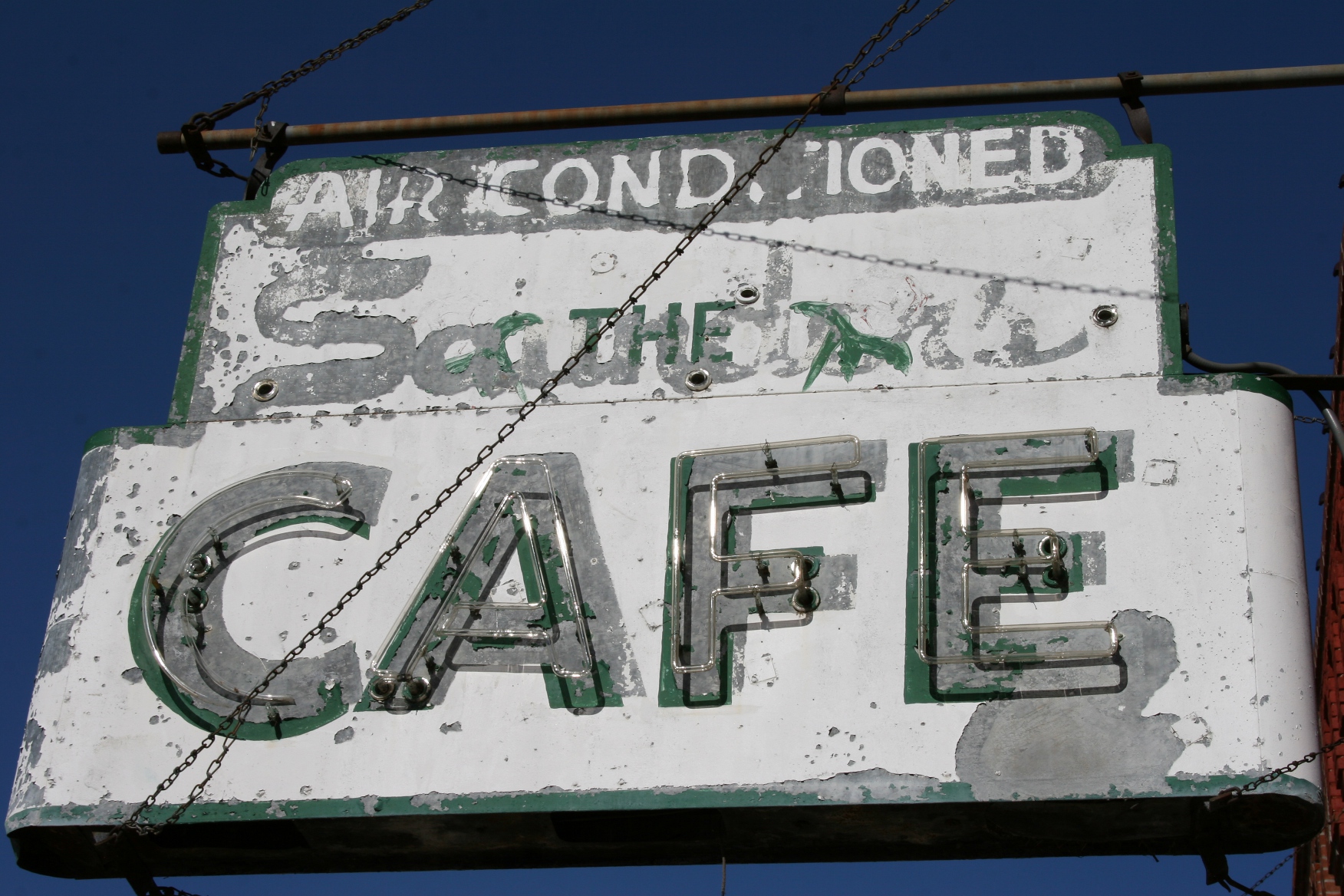
Certainly, Wabasha features more art; I had time to photograph only this sampling this trip.
#
CLICK HERE TO READ my previous post about art inside the National Eagle Center.
© Copyright 2014 Audrey Kletscher Helbling


 Minnesota Prairie Roots
Recent Comments