Minnesota Prairie Roots

Writing and photography by Audrey Kletscher Helbling

On ARTour: A peek inside Kip O’Krongly’s studio & art October 25, 2013

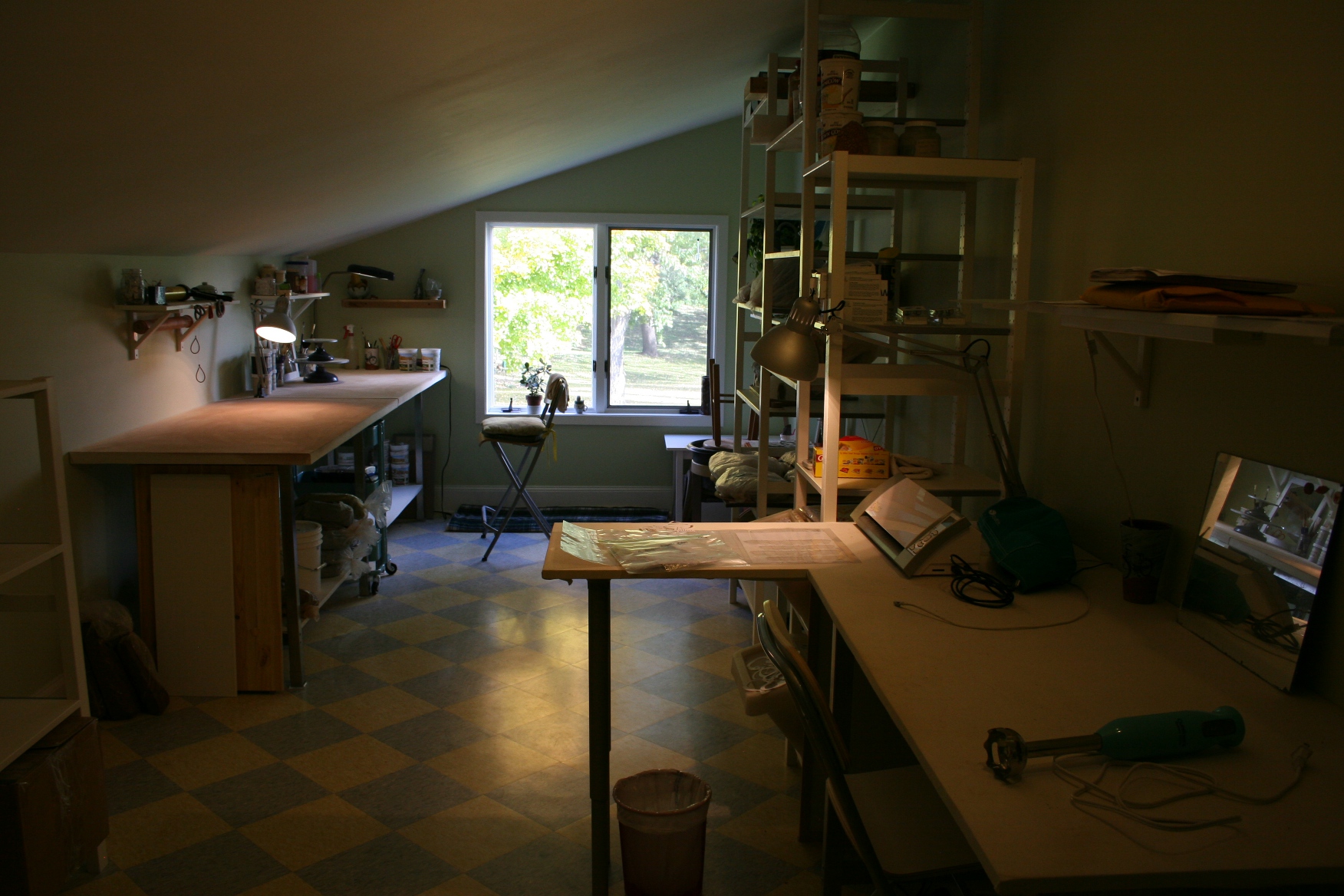
Cerarmic artist's Kip O'Krongly's second floor studio.

Ceramic artist Kip O’Krongly’s second floor studio.

HER ART STUDIO POSSESSES an almost industrial, spartan look. Clean lines. Tidy. Labels. Schedules. Everything just so.
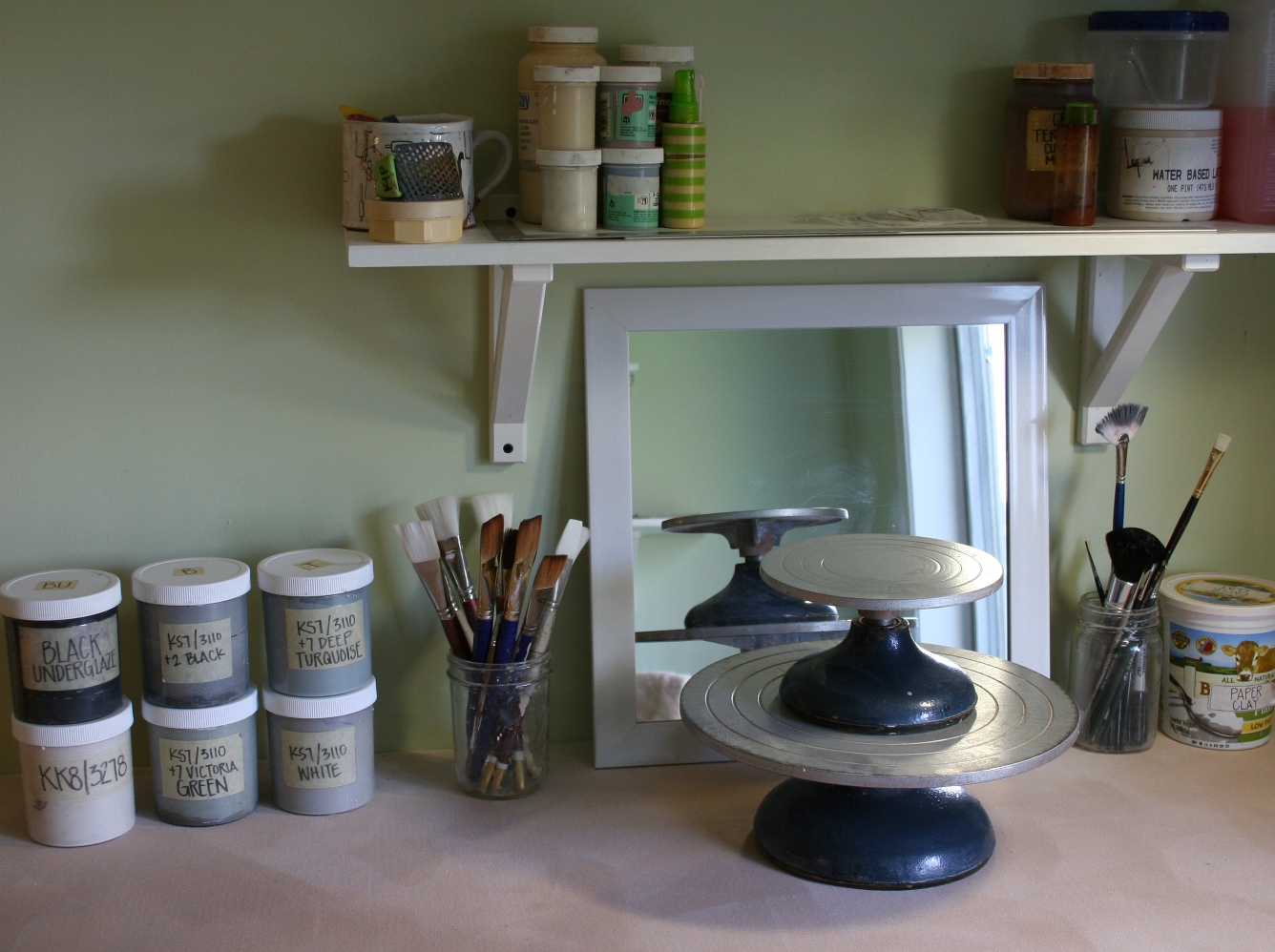
Supplies and tools, all in their place.

Supplies and tools, all in their place.

Kip O’Krongly freely admits to her need for orderliness in the second floor ceramics studio of her Northfield home.
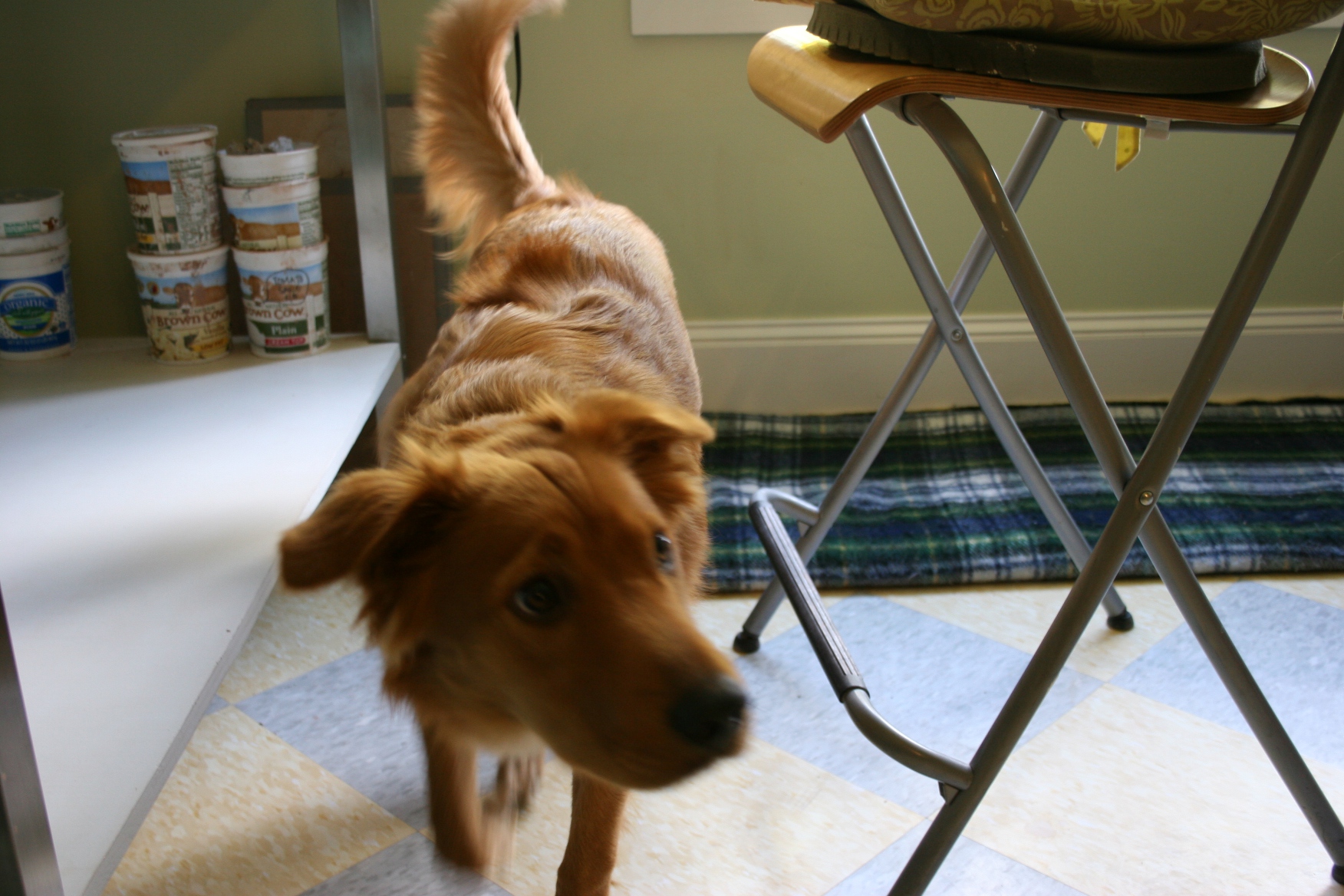
Gertie rises from her spot beneath the windows.

Gertie rises from her spot beneath the windows.

Here, in this slanted ceiling room with the tile floor she laid and with sunlight streaming in, Kip’s dog, Gertie, rests briefly on a blue and green plaid blanket below double windows. A short respite from visitors, like me, who have filtered into Kip’s studio and home during the South Central Minnesota Studio ARTour.

During this (last) weekend open house, I am visiting the studios of select artists I have not seen on past tours.

Cows also grace one of Kip's plates.

Art Kip creates on her ceramic plates sometimes makes statements about social issues, like the piece on the right.

I am drawn to Kip’s place by the tractors, wind turbines and corn I’ve seen showcased online on her ceramics.
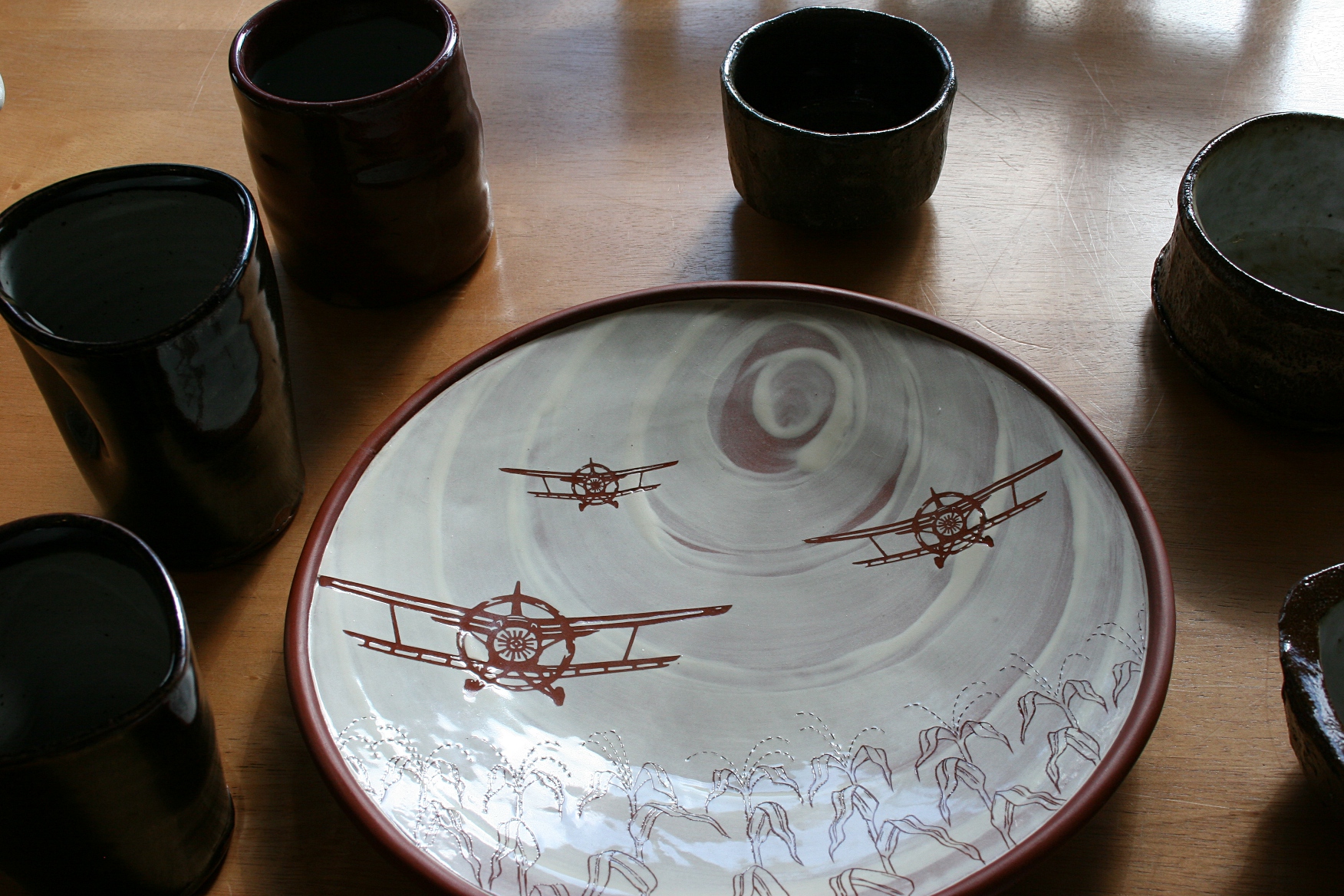
Definitely a transportation themed piece going here.

Definitely a transportation themed piece going here.

She tells me that themes of food, transportation and energy run through her work. Once she points that out, I ask whether she was raised on a farm. No. Alaska.

We don’t get into details about the themes, but I mention that I grew up on the southwestern Minnesota prairie and am visually troubled by the wind turbines that populate the landscape, ruining, in my opinion, the aesthetics of the prairie.
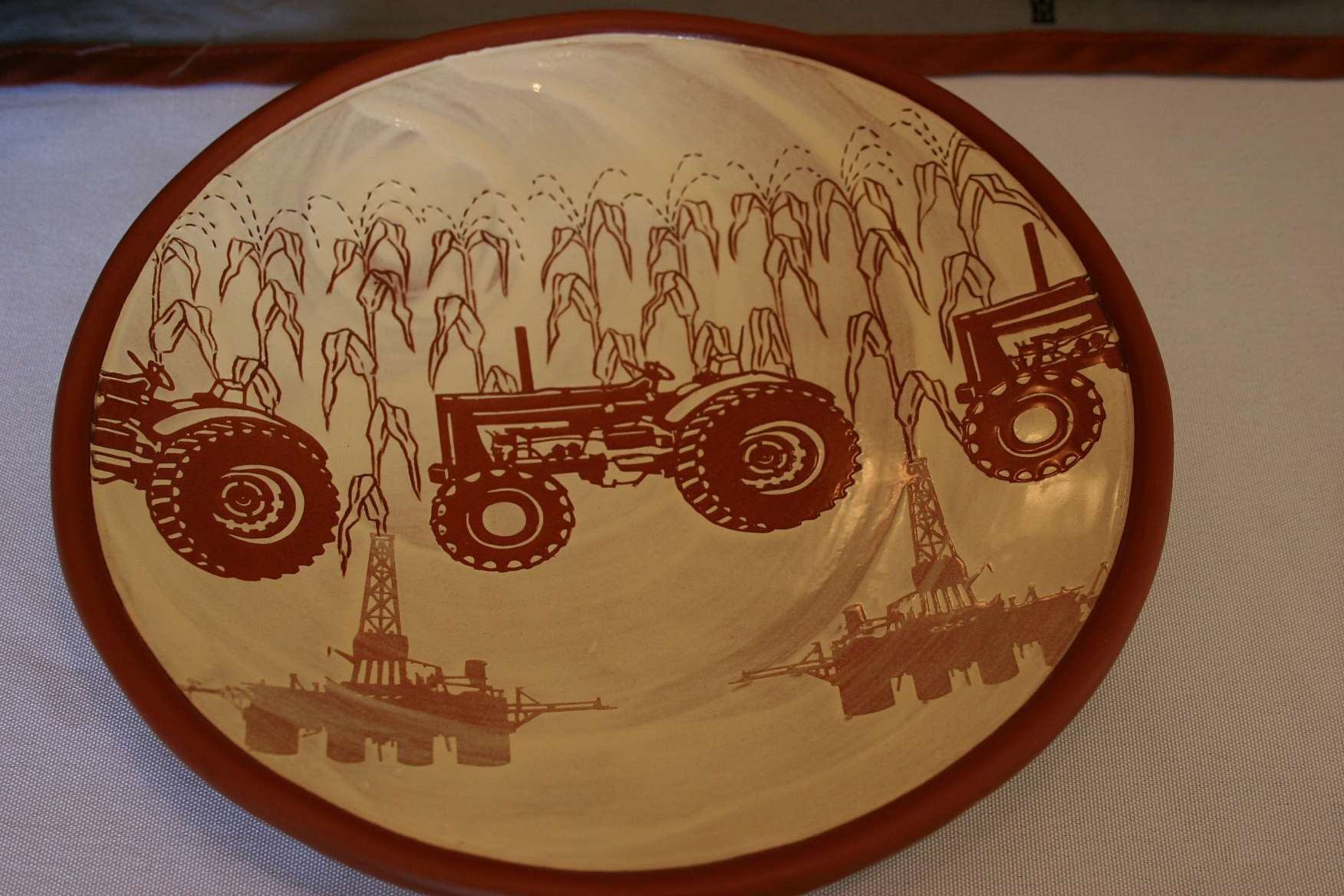
More than tractors and corn...

More than tractors and corn… Corn grows from oil rigs.

Kip says she welcomes how her art opens up dialogue and the opportunity to hear differing opinions on social issues. And I sense her sincerity in stating that.
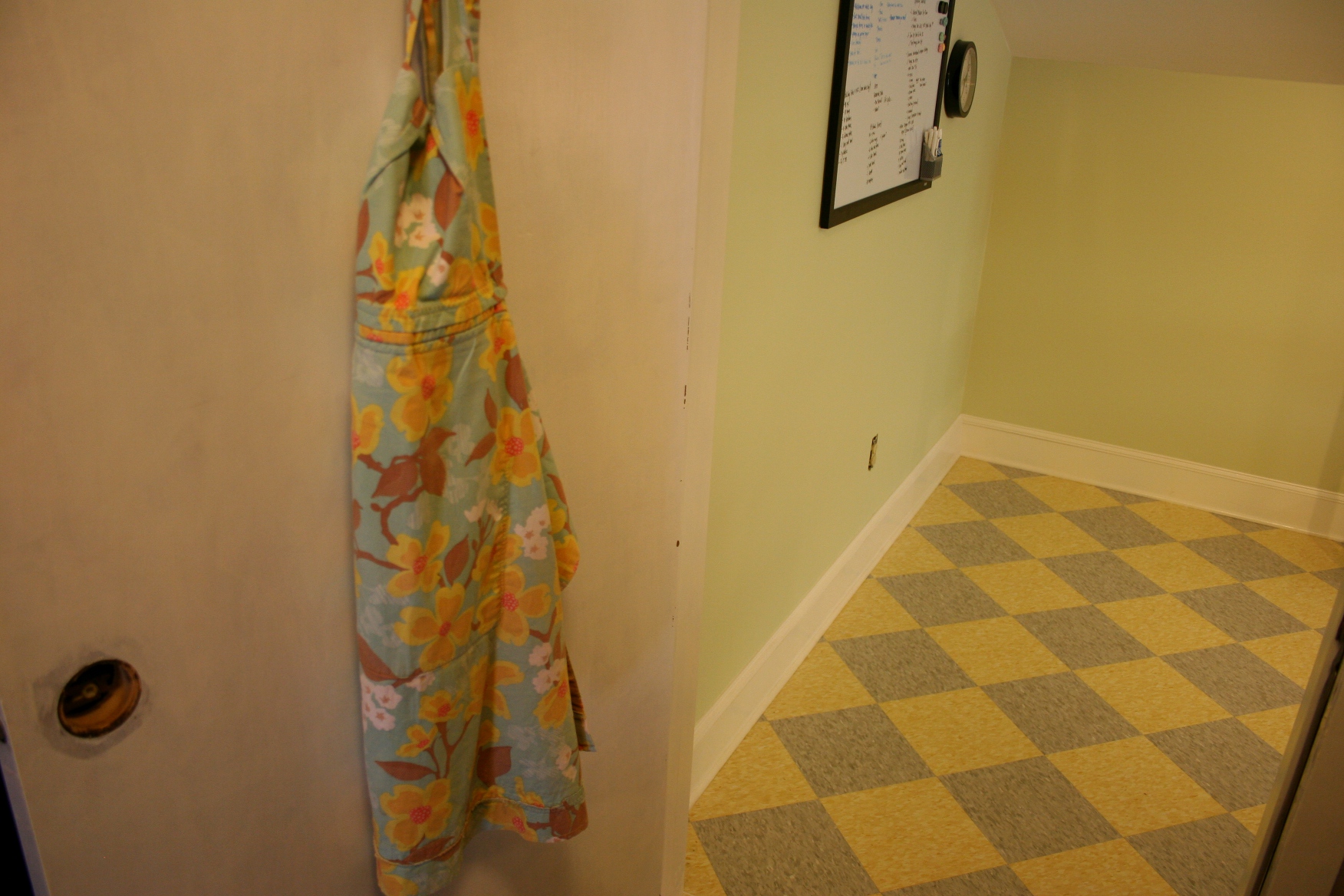
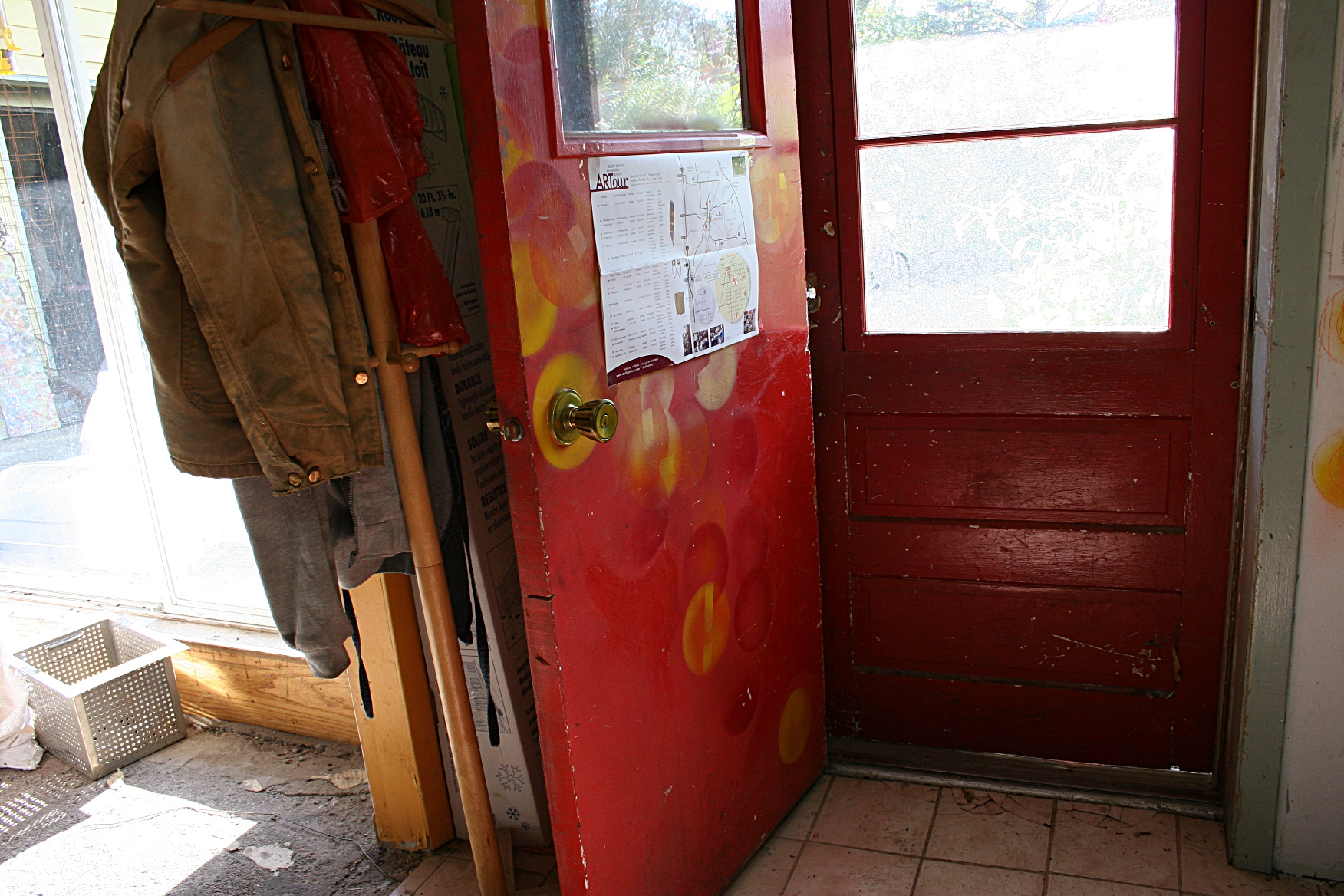
The door opens into Kip's studio.

The door opens into Kip’s studio.

I am intrigued, too, by her name. Kip O’Krongly. It possess a certain snap, a certain strength, a certain ruggedness. I never ask. But I don’t need to. Her work, talent and confidence as an artist define Kip O’Krongly.

FYI: The works of two other ceramics artists, Joel Froehle and Juliane Shibata, were also showcased in Kip’s home. However, they were not in-house when I visited.

Please click here and then here to read previous posts from the South Central Minnesota Studio ARTour. And check back for more posts in this five-part series.

© Copyright 2013 Audrey Kletscher Helbling


Rural signage: Steer me to Pumpkinland October 24, 2013

Filed under: Uncategorized — Audrey Kletscher Helbling @ 6:00 AM
Tags: , , , , , , ,

WHEN TRAVELING THROUGH RURAL MINNESOTA, and anywhere for that matter, my husband and I rely on good old paper maps and atlases to navigate in unfamiliar territory. Yes, we are old-fashioned that way, without GPS or smart phones.

We also count on signage to get us to specific destinations. Rural areas offer creative home-spun signs so I’m always scouting for eye-catching signage worthy of photographing.

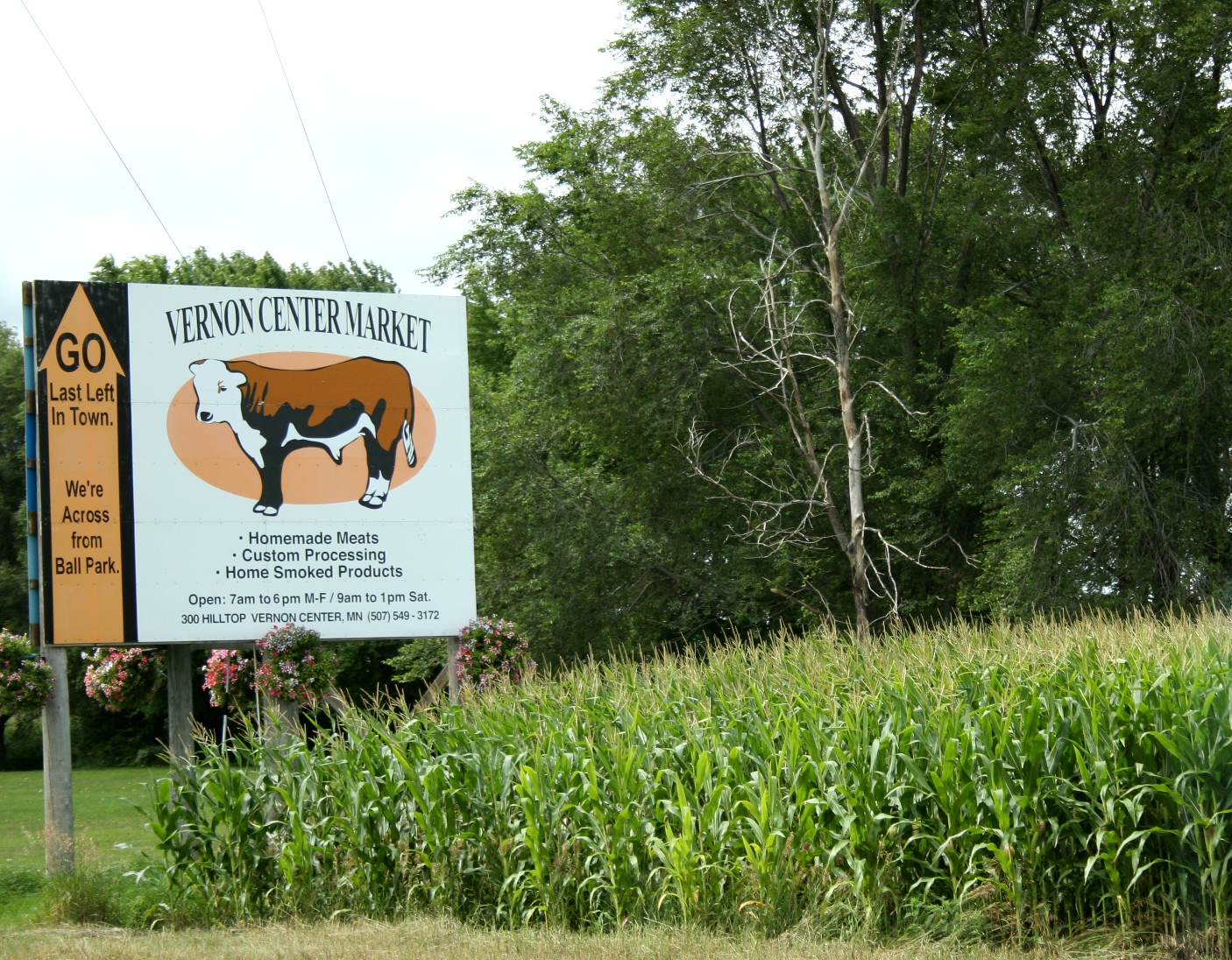
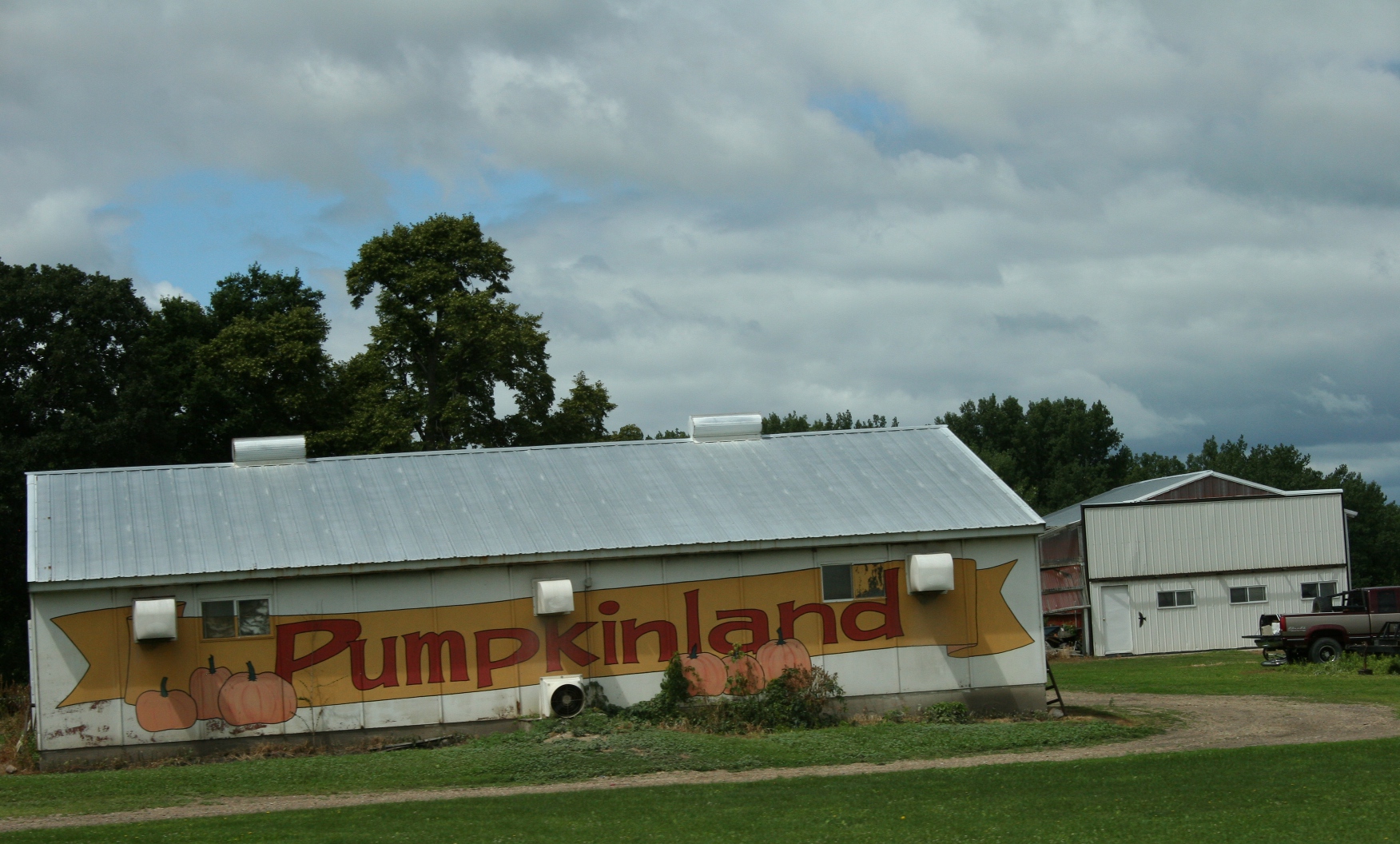
En route to extreme southwestern Minnesota this past summer, I spotted signage for two businesses in the Vernon Center area, along Highway 169 south of Mankato.

First, the Vernon Center Market:

Photographed a month ago near Vernon Center.

Photographed this summer near Vernon Center.

There are several reasons I like this sign. Right off, the steer graphic catches my eye and tells me, without reading a single word, that this advertises a meat market. Second, the arrow tells me exactly where I’ll find the Vernon Center Market. Across from the Ball Park. Perfect. So small-townish. I also appreciate that business hours are listed, although I doubt a motorist would catch that while driving by.

And then there’s Pumpkinland, also near Vernon Center:

Pumpkinland near Vernon Center.

Pumpkinland near Vernon Center.

You can’t miss the sprawling sign, painted in a readable font. And the graphics are limited to pumpkins. Simple. Clutter-free. Quick to get the necessary business information out there.

And great for a passing photographer to photograph from the passenger side of a moving van.

© Copyright 2013 Audrey Kletscher Helbling
 

On ARTour: Inside an old milkhouse October 23, 2013

I FEEL COMFORTABLY AT HOME in the old milkhouse, Kittens underfoot. The smokey scent of a wood burning stove warming a kettle of apple cider. Pipelines, that once carried fresh milk, poking through the wall.

Some of Lessing's ceramics displayed outside The Milkhouse Studio.

Some of Glynnis Lessing’s ceramics displayed outside The Milkhouse Studio.

This is the studio of ceramics artist Glynnis Lessing. This weathered building forked off a circular farm drive along Minnesota Highway 3 just north of Northfield. This land the artist’s home since relocating from Chicago with her family about a year ago.

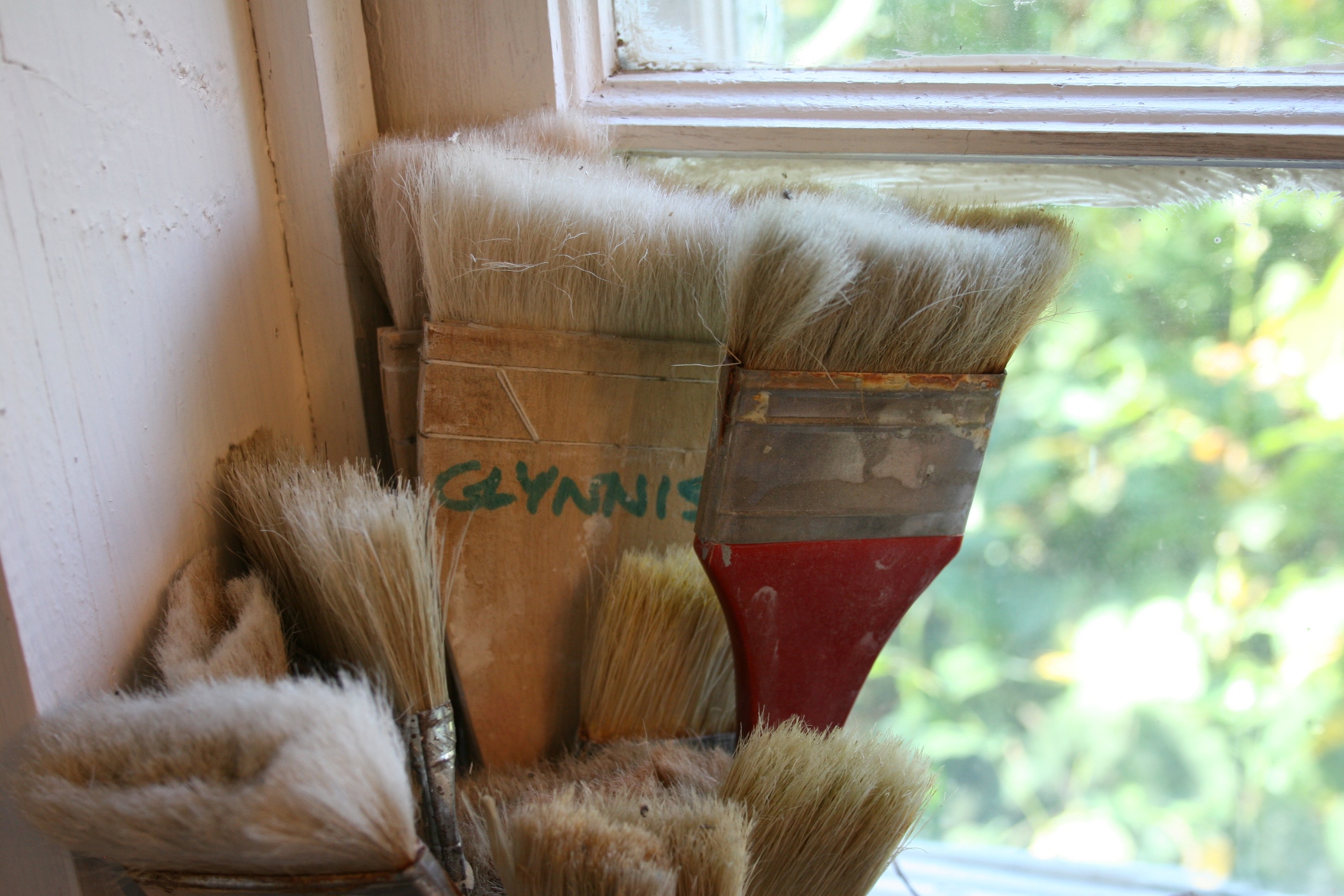
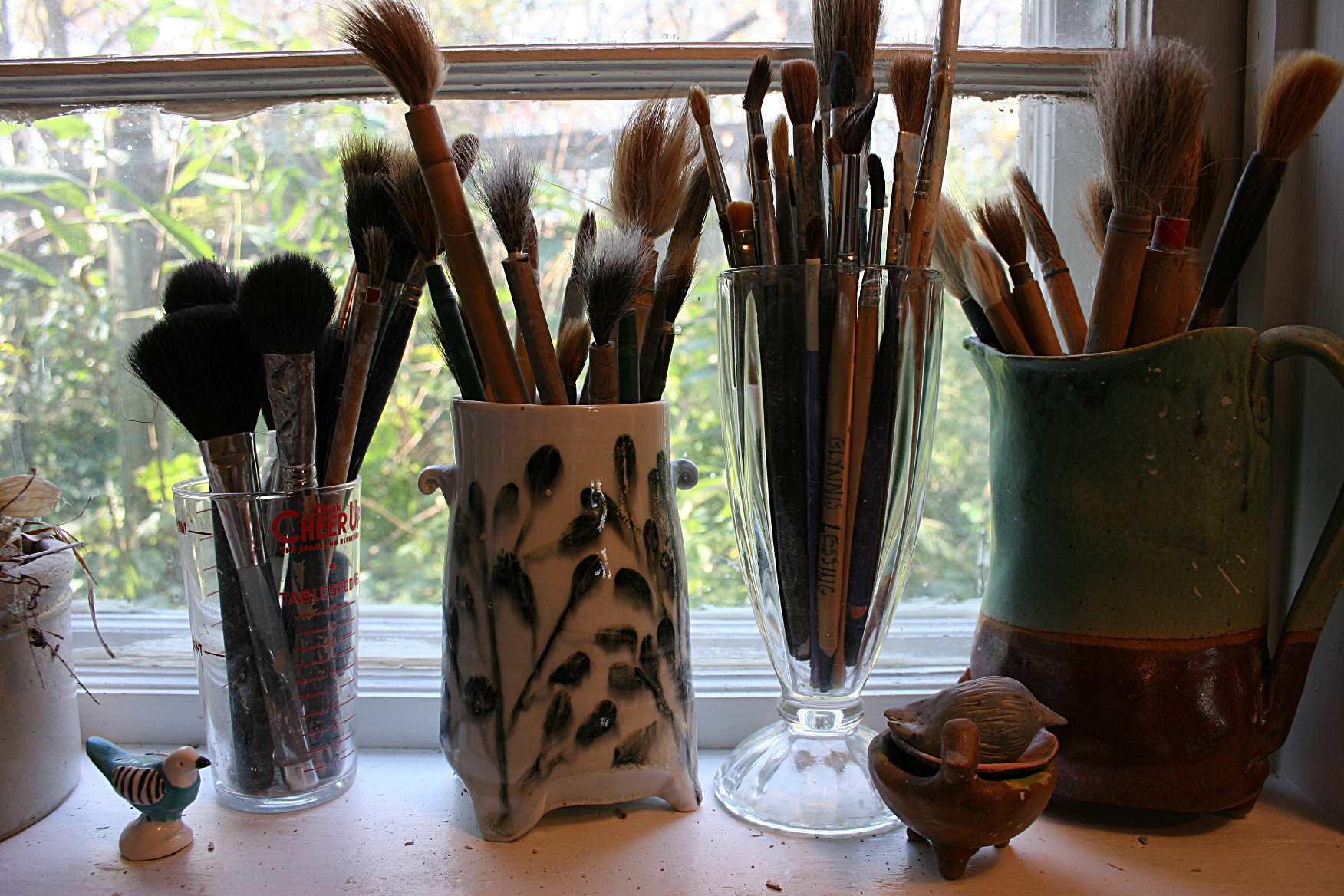
Tools of the trade on a milkhouse windowsill.

Tools of the trade on a milkhouse windowsill.

I have come here, to The Milkhouse Studio, on a Sunday afternoon for the South Central Minnesota Studio ARTour, a once-a-year opportunity to meet local artists where they create.

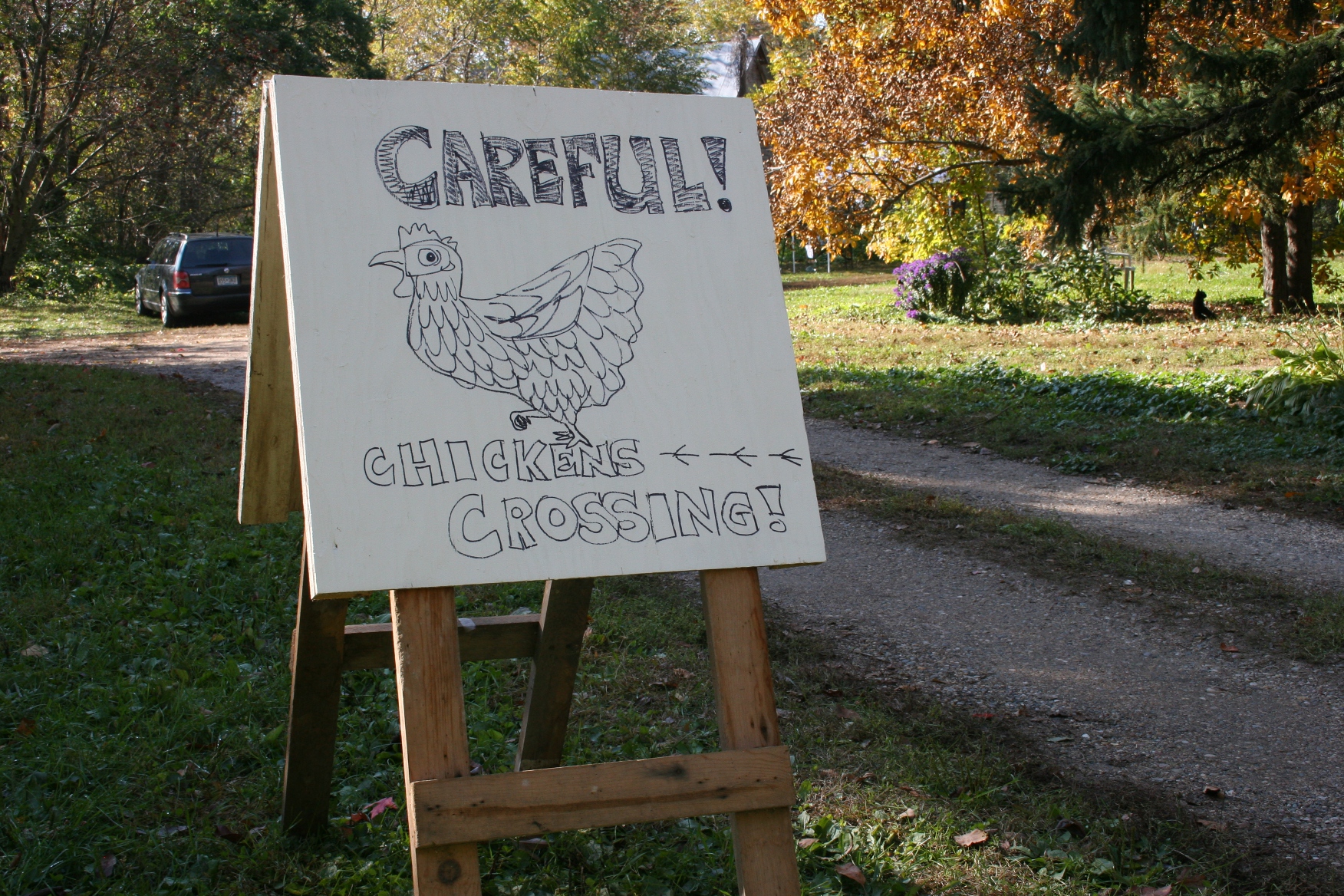
A sign advises visitors of chickens on the farm.

A sign advises visitors of chickens on the farm.

This rural setting reminds me of my childhood, growing up on a southwestern Minnesota dairy farm where I labored many hours in the milkhouse and barn.

Milking equipment remains in the milkhouse.

Milking equipment, right, remains in the milkhouse next to Lessing’s creations.

Although I never imagined a milkhouse as an artist’s studio, for Lessing it seems the perfect fit—creating in this place where her grandfather milked cows in the adjoining barn. Worked with his hands, just like her. In these aged buildings, on the land.

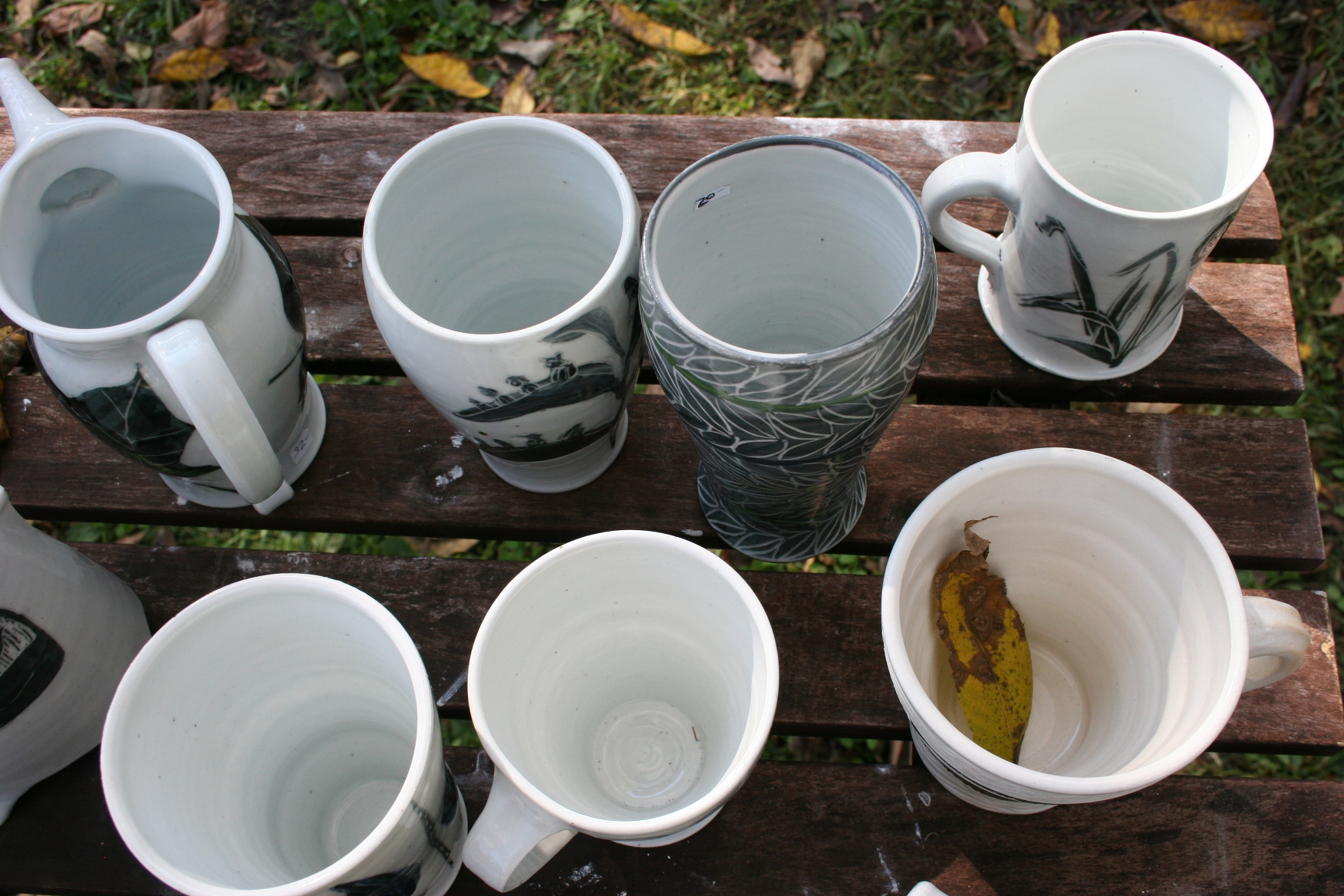
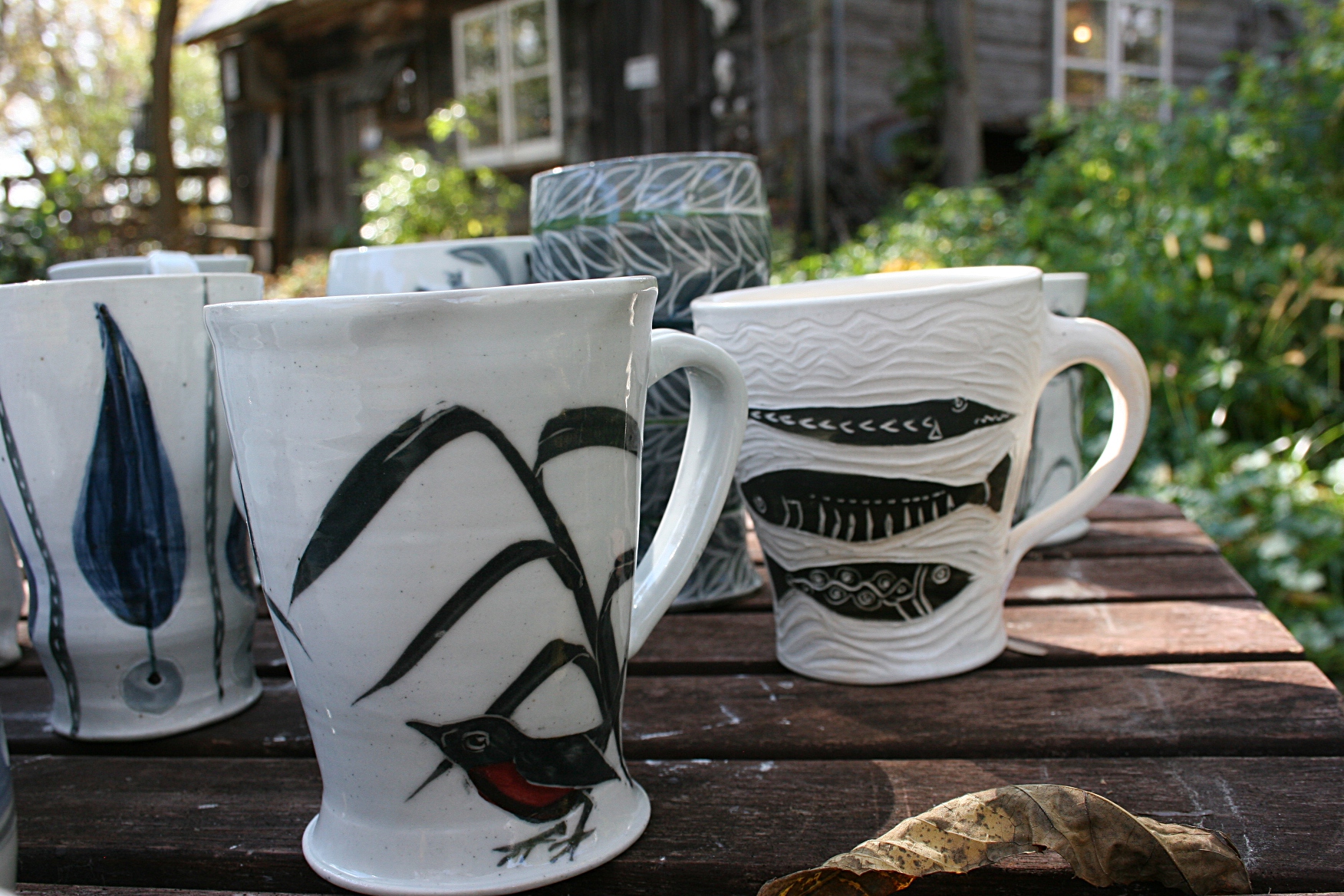
Love these nature-themed mugs.

Love these nature-themed mugs.

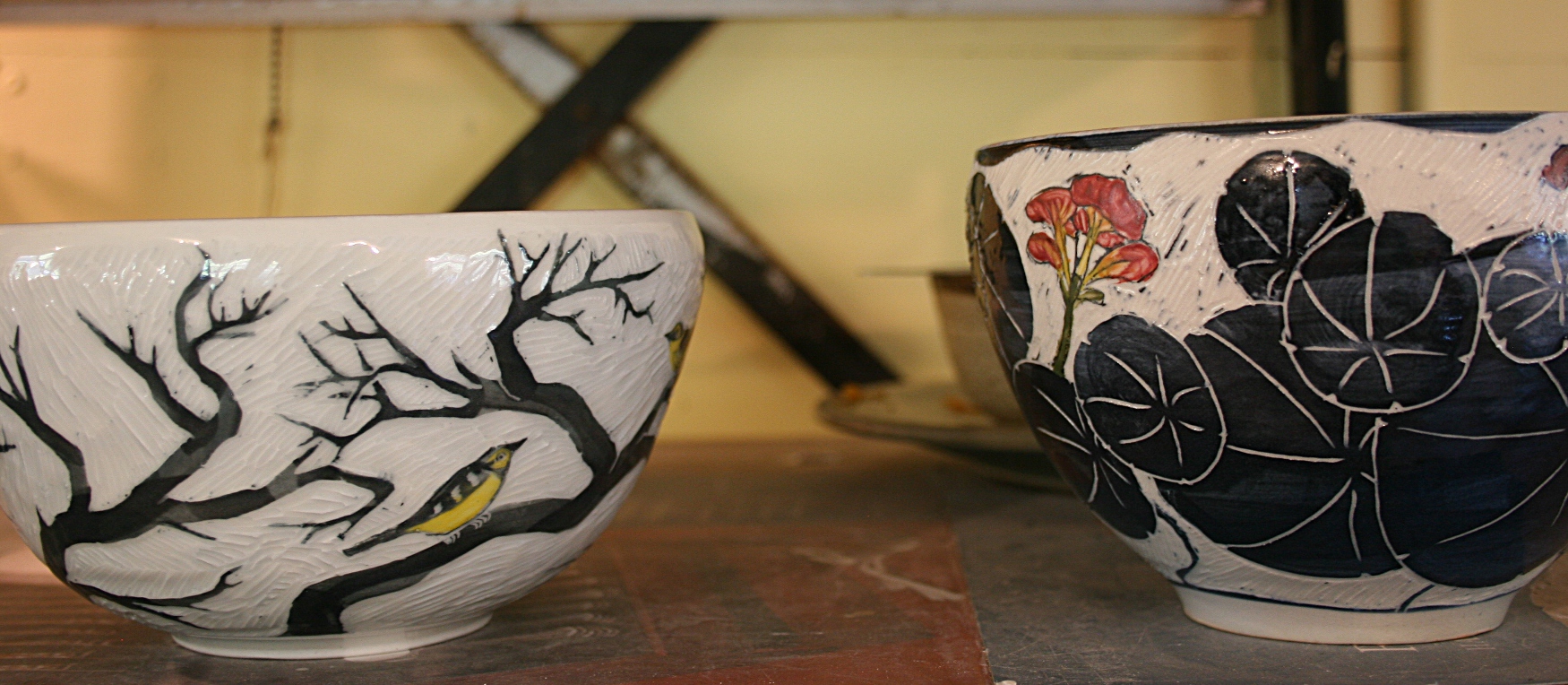
Love these bowls, too.

Love these bowls, too.

And then I noticed the leaf that had settled inside the mug. So fitting.

And then I noticed the leaf that had settled inside the mug. So fitting.

I can see the influence of rural life in Lessing’s pieces. Branches and birds. Leaves and blades of grass. An earthy quality that appeals to me and causes me to reflect on my rural roots.

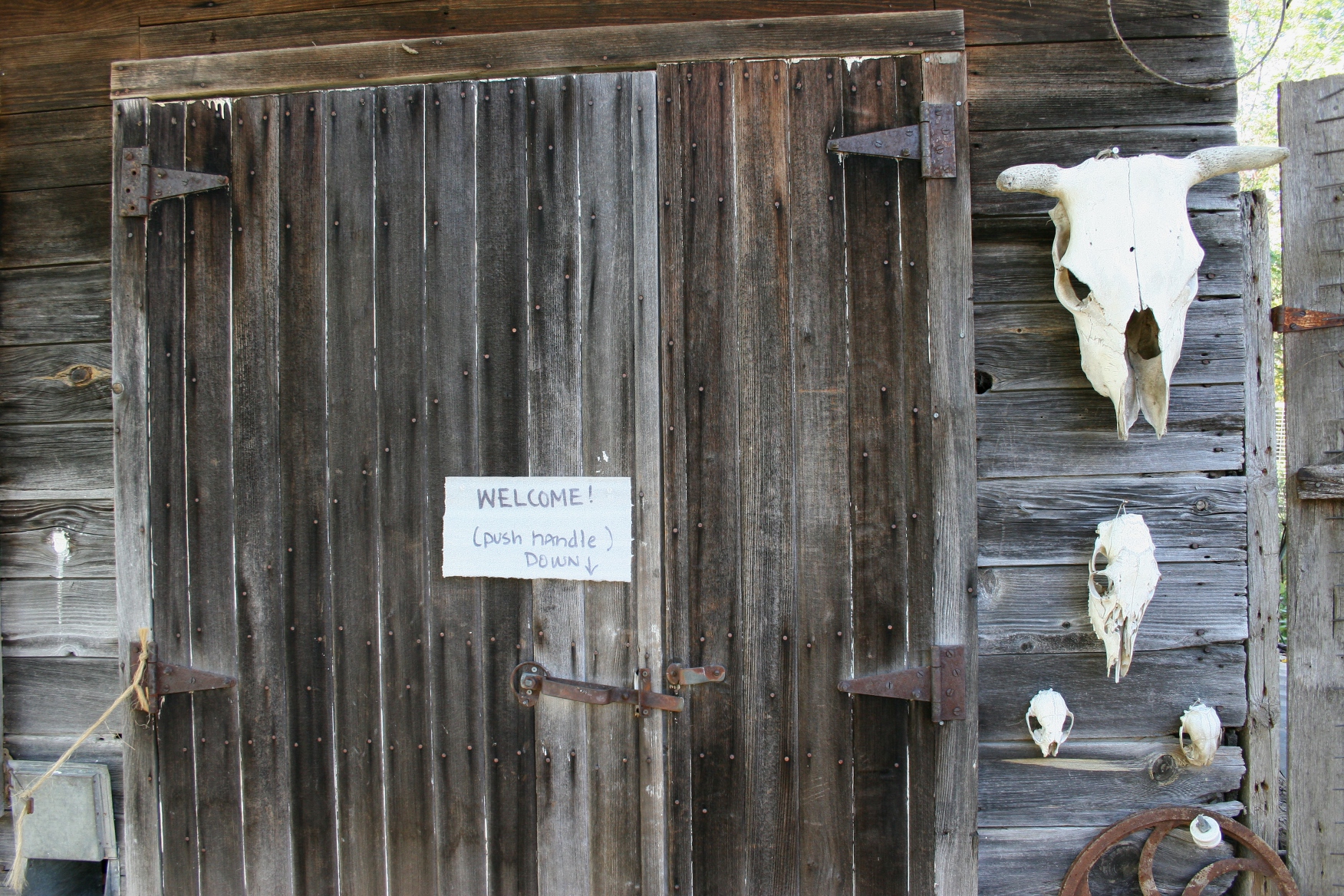
The Milkhouse Studio front door. Lots of history and memories here.

The Milkhouse Studio front door. Lots of history and memories here.

My memories: Felines circling around a battered hubcap to lap warm milk fresh from the cows. Frothy milk dumped, through a strainer, into the bulk tank. Sudsy water swished inside a milk bucket with a stiff brush. Yellow chore gloves drying atop an oil burning stove in the milkhouse…

Tucked into a corner of a milkhouse windowsill.

Tucked into a corner of a milkhouse windowsill.

FYI: To learn more about the history of the old milkhouse, click here to read Lessing’s blog post on the subject.

And for more info about Lessing the artist, click here.

To read my first post about the South Central Minnesota Studio ARTour, click here. Please check back for more posts from artists’ studios.

© Copyright 2013 Audrey Kletscher Helbling
 

Exploring Wisconsin’s High Cliff State Park & a disappointing discovery October 22, 2013

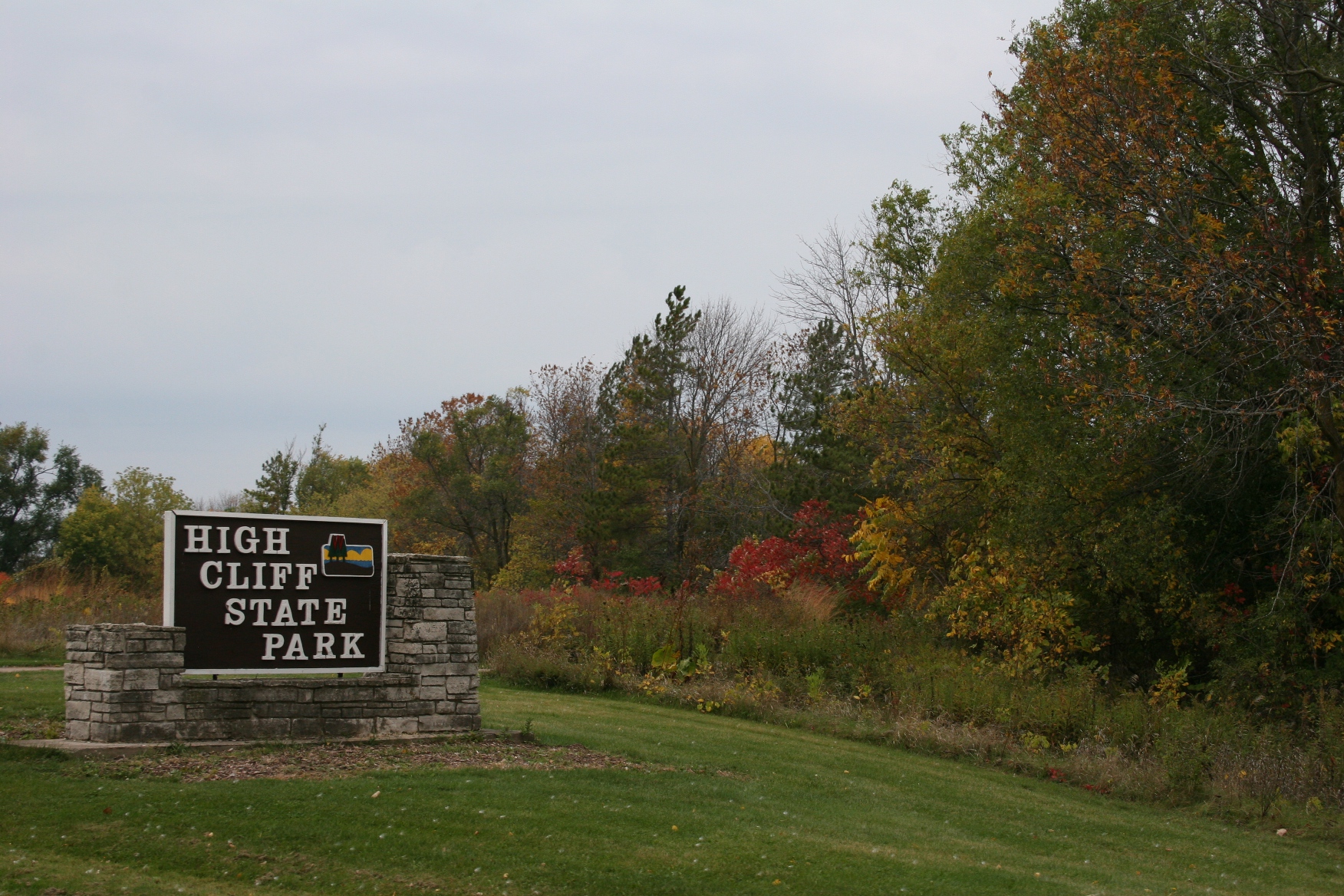
Entering the park.

Entering the park.

AN AUTUMN AFTERNOON in High Cliff State Park in east central Wisconsin, even with grey skies and the occasional spurt of drizzle, is magnificent.

On a recent Saturday, my daughter who lives in nearby Appleton, husband and I explored this sprawling park near Sherwood along the banks of Wisconsin’s largest inland body of water, Lake Winnebago.

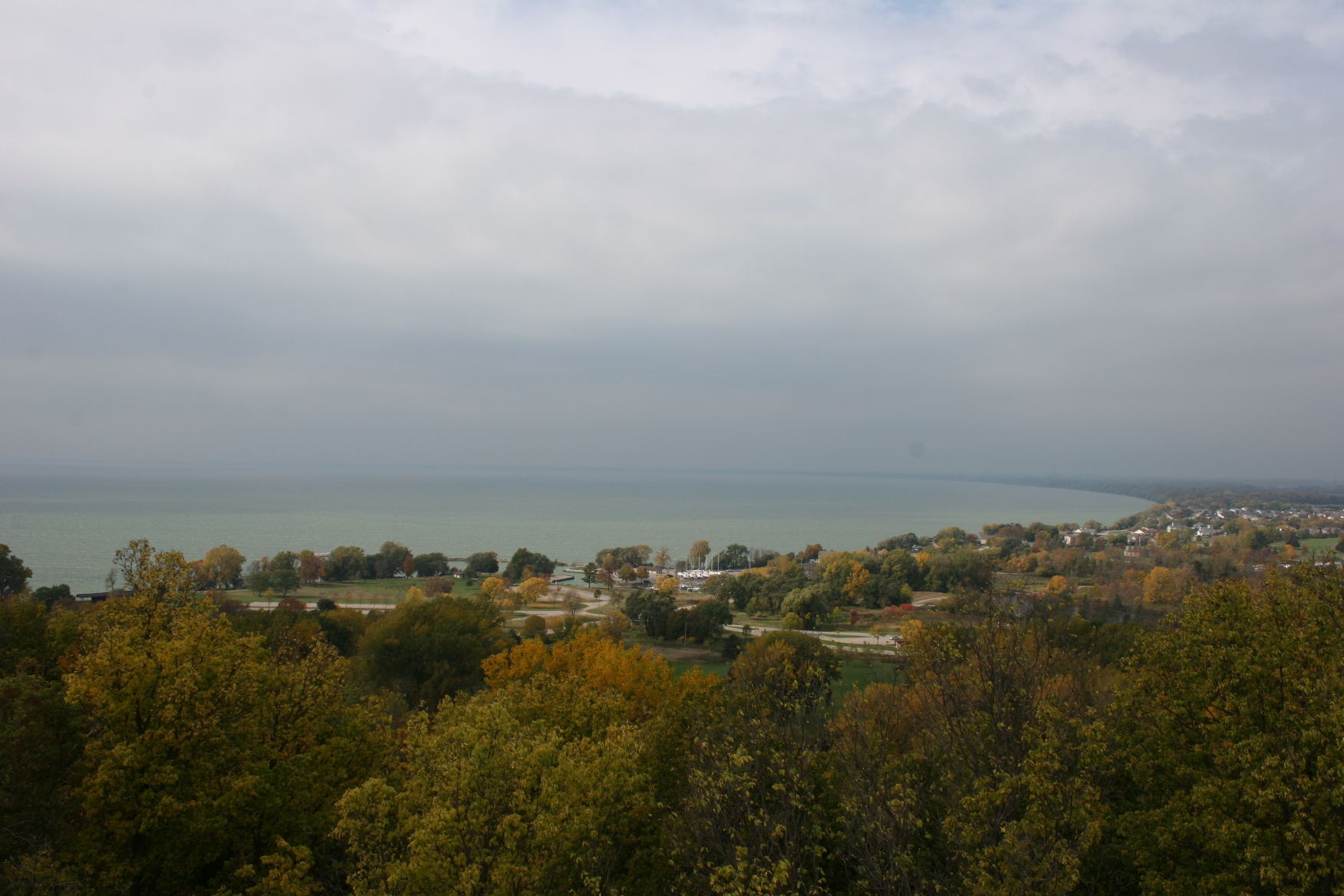
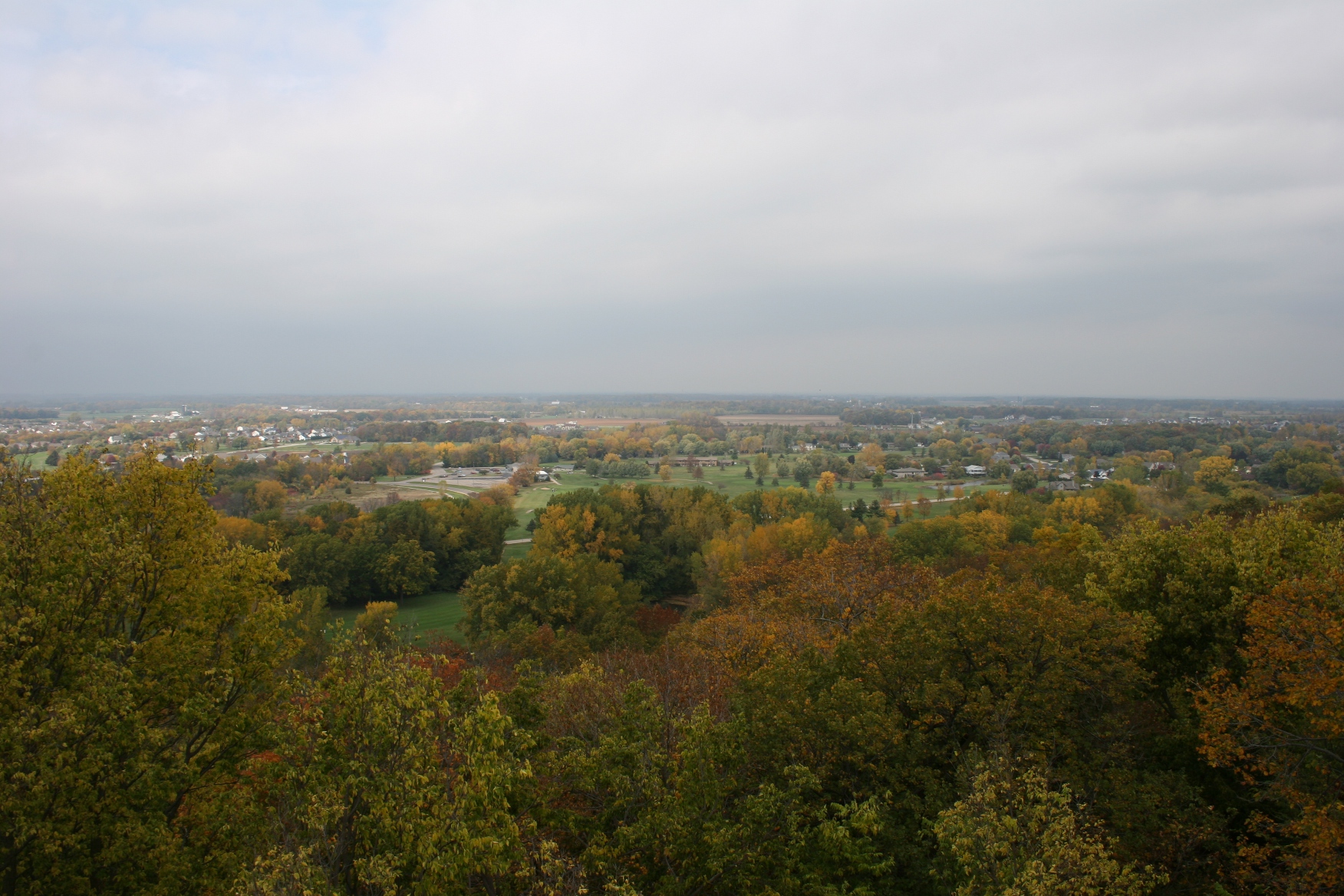
Sky and lake and land meld in this photo taken from atop a tower in High Cliff State Park. Photo by Miranda Helbling.

Sky and lake and land meld in this photo taken from atop a tower in High Cliff State Park. Photo by Miranda Helbling.

But it was not the lake—more on that later—which impressed as much as the view of the valley from high atop the park. To see acres and acres and acres of trees below, buffeted by the lake on one side, transitioning into the golden, russet and reddish hues of the season is something to behold.

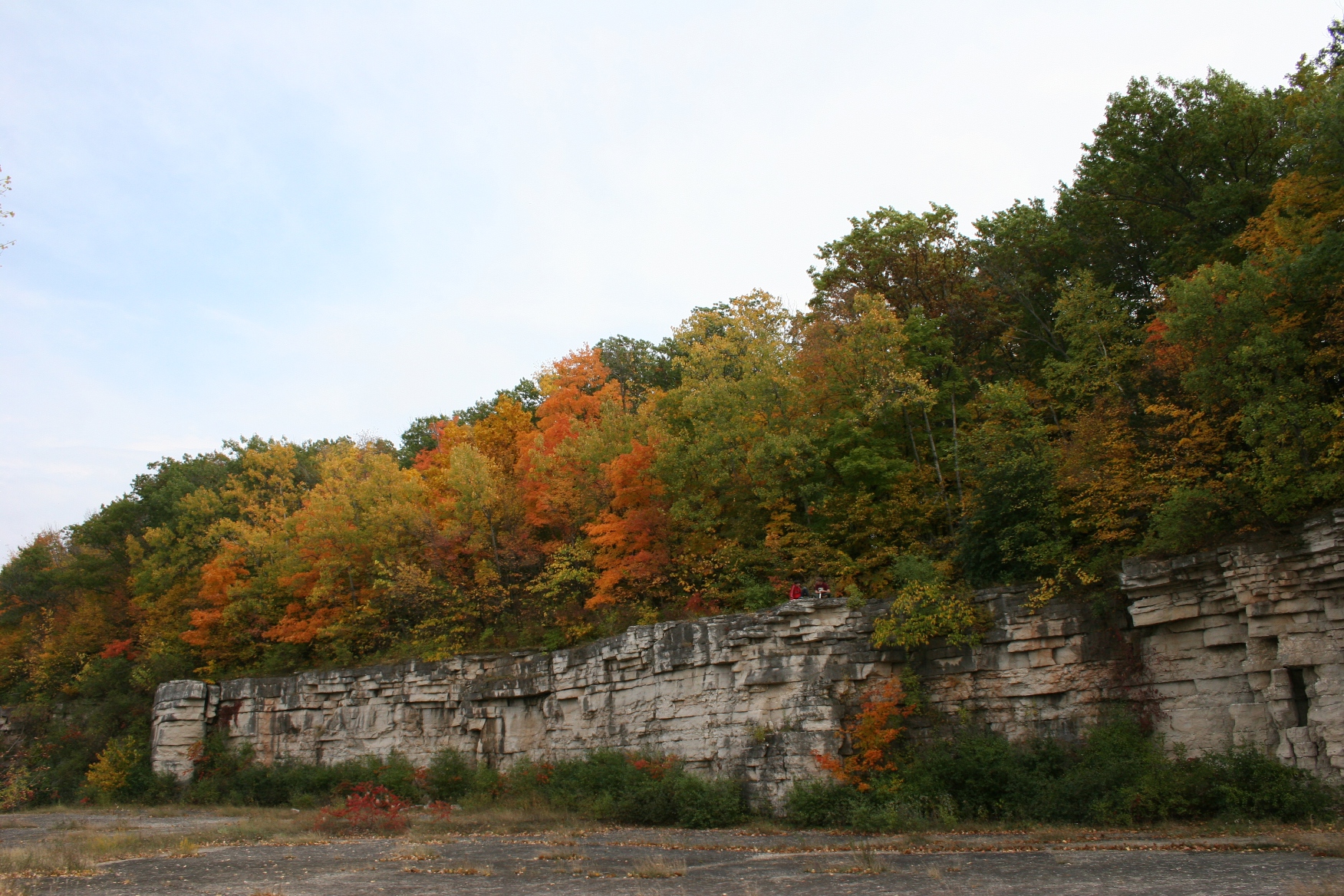
Old limestone quarry walls below a hillside of trees.

Old limestone quarry walls below a hillside of trees.

Likewise, limestone walls, remaining from the days when this stone was quarried from this land, provide a neutral backdrop to flaming maples and other trees bursting with color on hillsides.

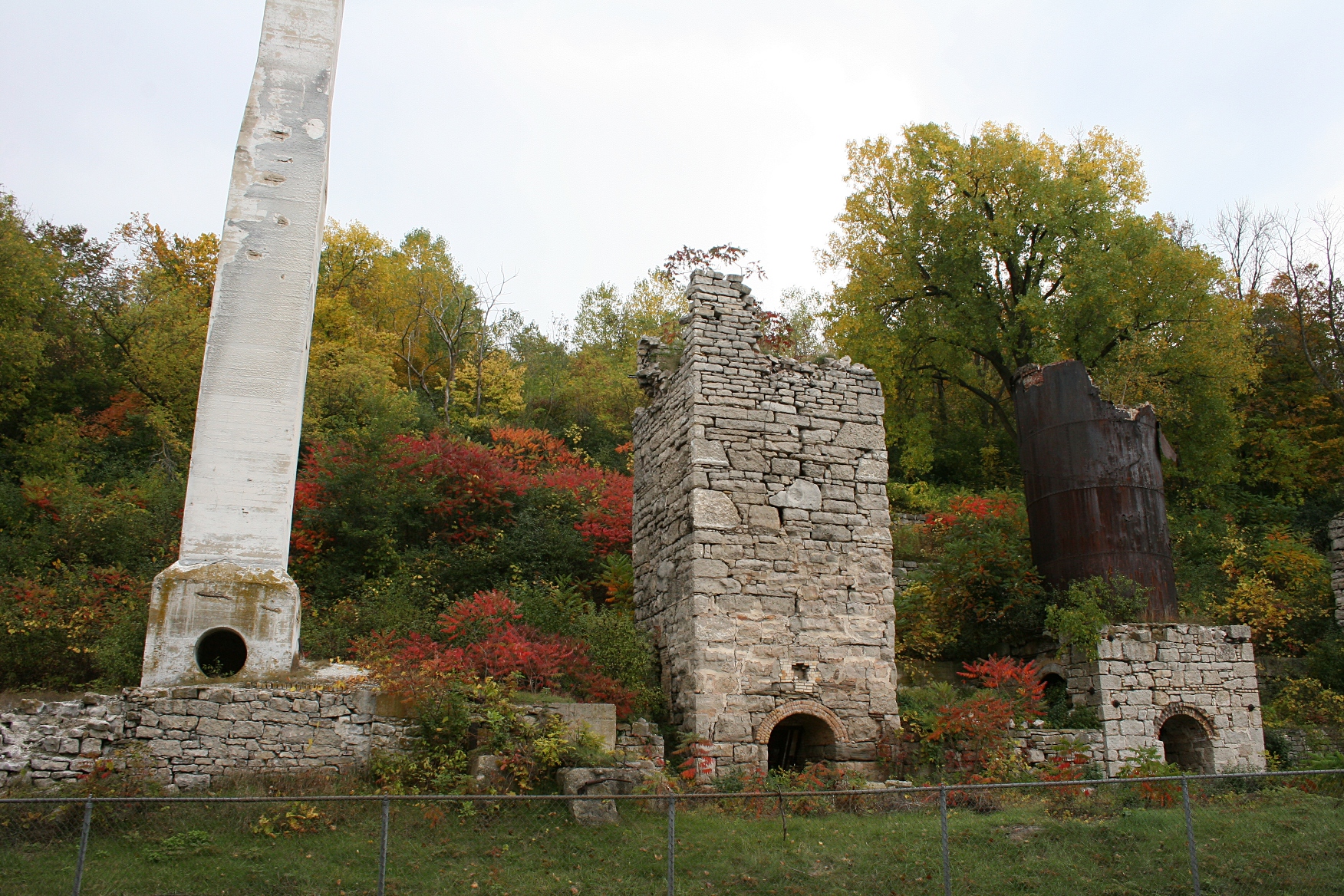
Kiln ruins.

Kiln ruins.

And then there are the old kilns, once used to create quick lime for use in plaster and cement and for agricultural purposes. I’m thankful mining operations here ceased in 1956. To totally decimate this place of natural beauty would have been a tragedy.

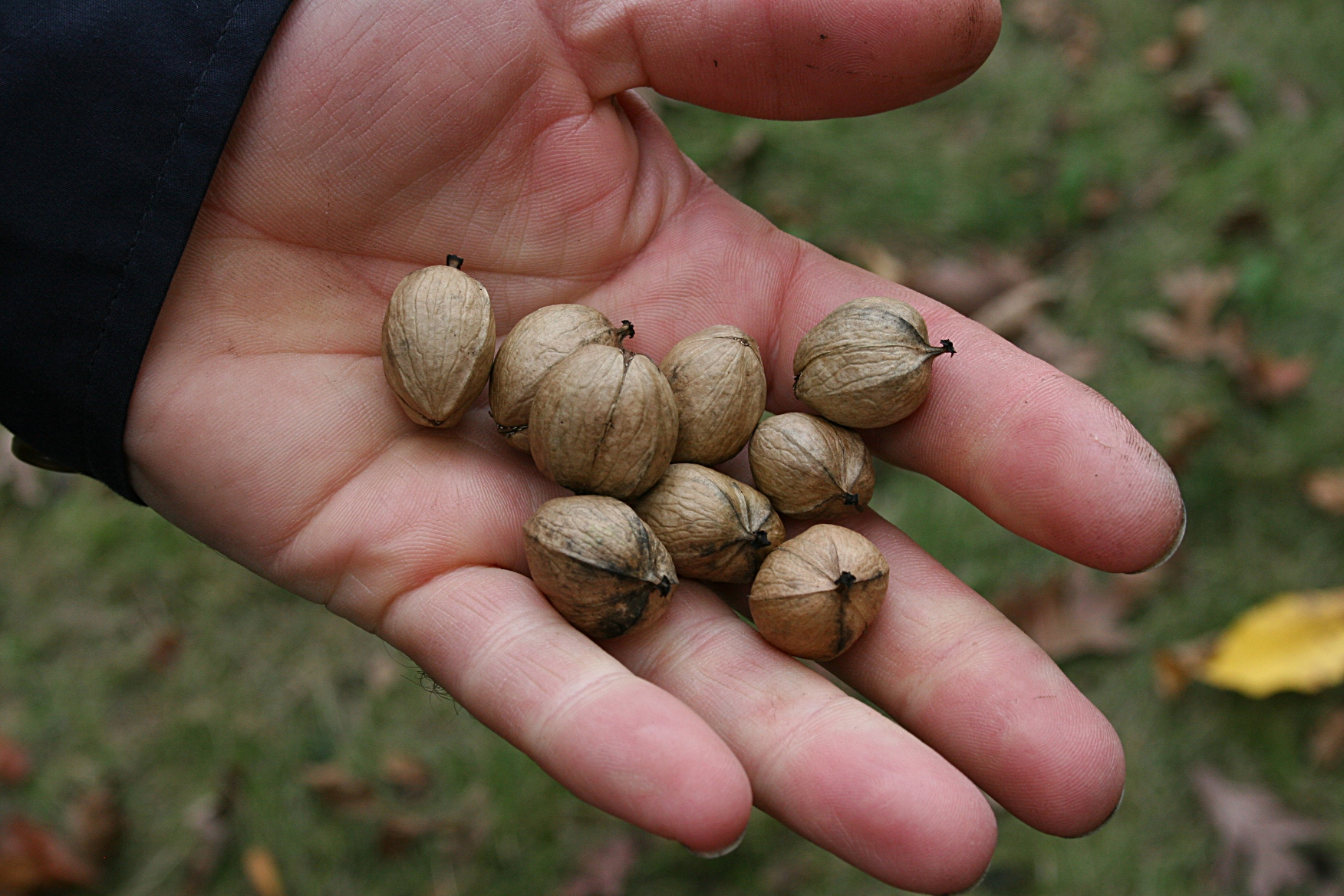
When we discovered what other park visitors were gathering, Randy began harvesting hickory nuts too and stuffing them into his jacket pockets.

When we discovered other park visitors gathering nuts, Randy began squirreling away hickory nuts, too, stuffing them into his jacket pockets.

For this beautiful park proves a lovely spot to picnic on a Saturday—a place where families pluck coveted hickory nuts from the ground to dry and crack and later eat plain or in cakes or cookies.

Here a family prepares to celebrate a wedding, placing burlap runners upon picnic tables covered with white plastic tablecloths inside the park shelter.

The tower...

The tower…

and the view from the tower. Photo by Miranda Helbling.

and the view from the tower. Photo by Miranda Helbling.

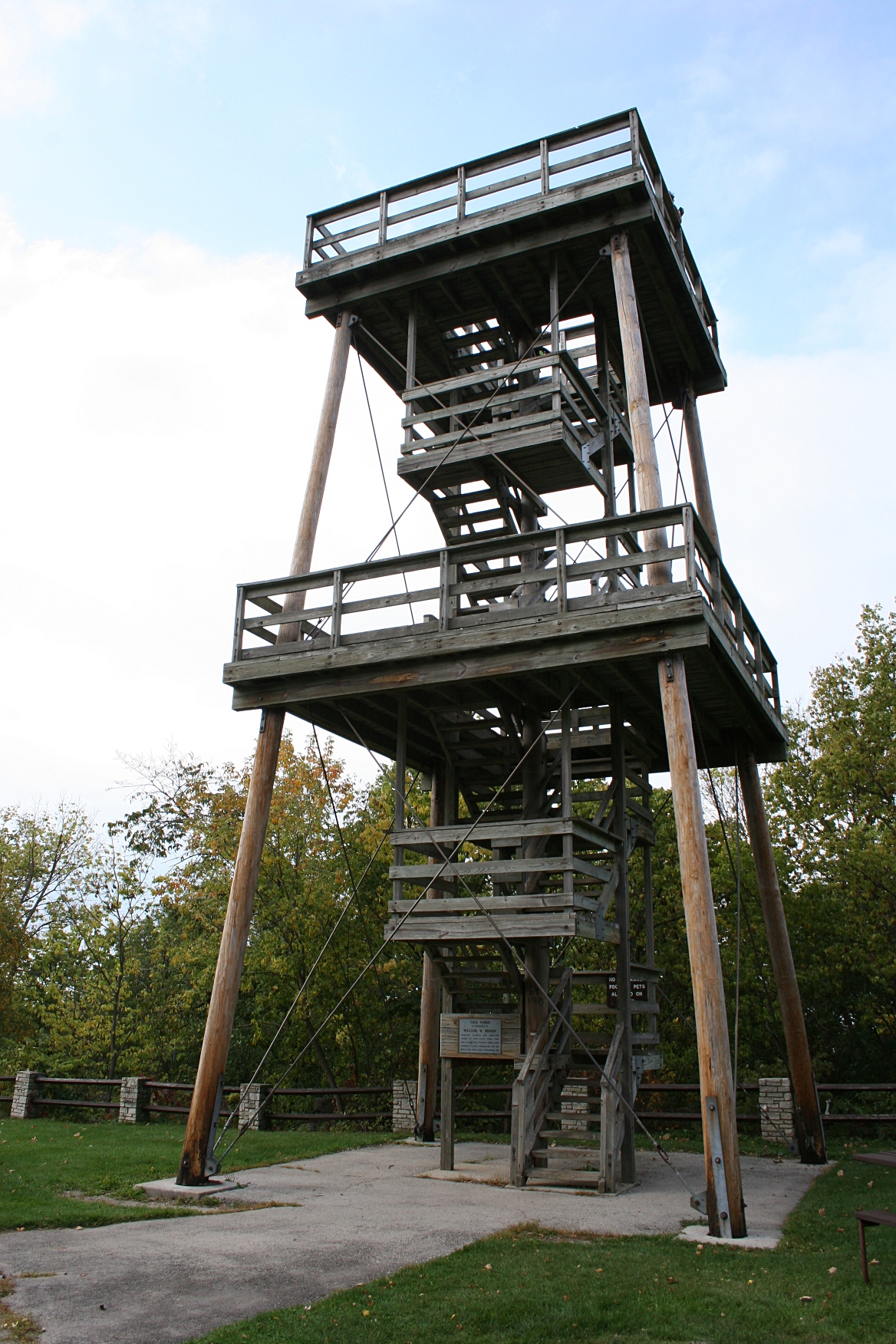
Couples and families climb 64 steps to the top of a wooden tower for a spectacular view of the valley. I keep my feet firmly planted on the ground, neck craned, waving to my husband and daughter high above me.

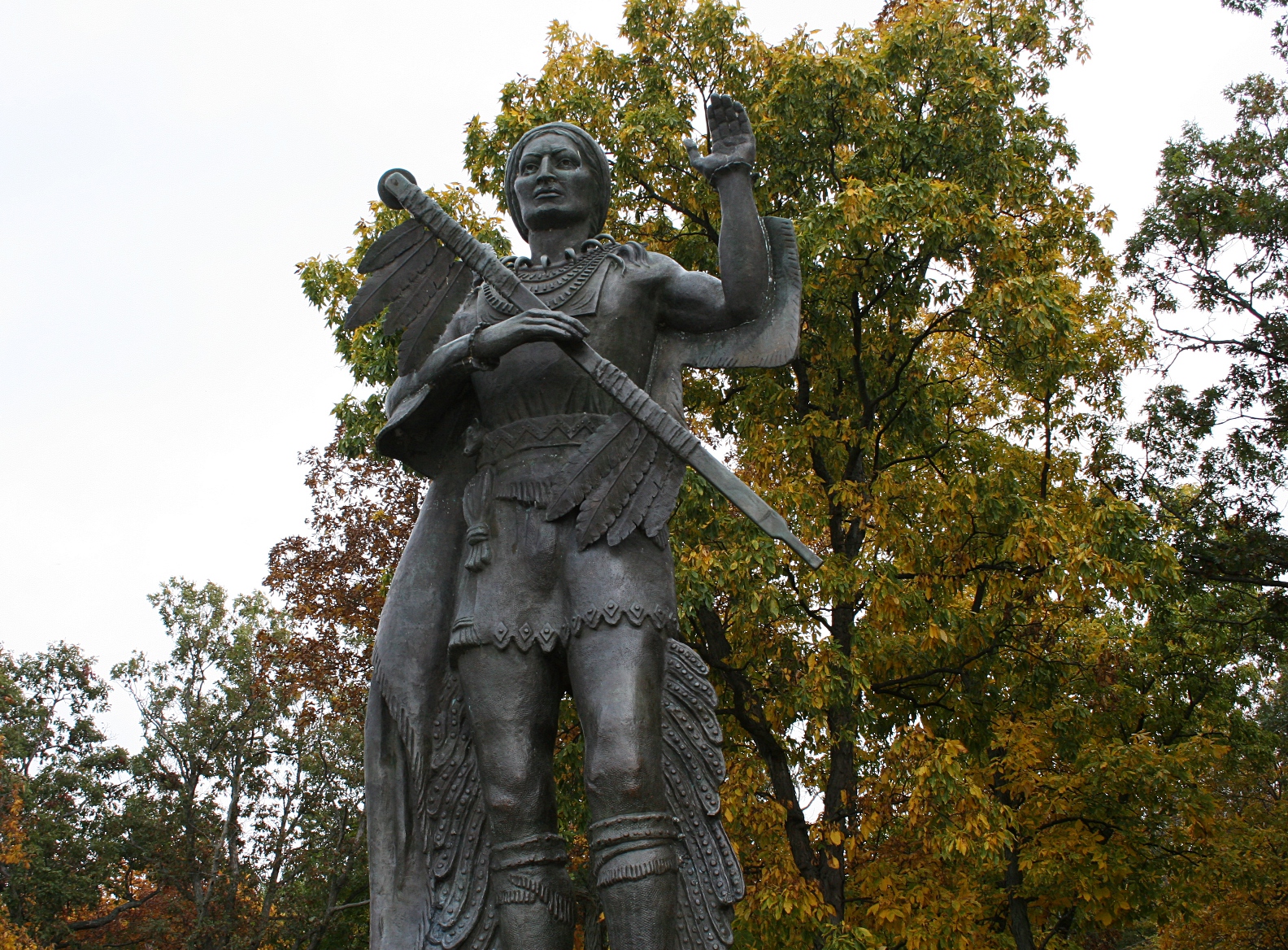
Red Bird, Chief of the Winnebago.

Red Bird, Chief of the Winnebago.

A 20-something man squats on a fence for a photo; only his balance keeps him from tumbling off and over the cliff. Nearby a statue of Red Bird, chief of the Winnebago, stands, sure and solid atop a rock.

Winnebago. It is also the name of the 131,939* acre lake which borders the western edge of High Cliff State Park and runs 28 miles long and eight miles wide near the towns of Fond du Lac, Oshkosh, Neenah and Menasha.

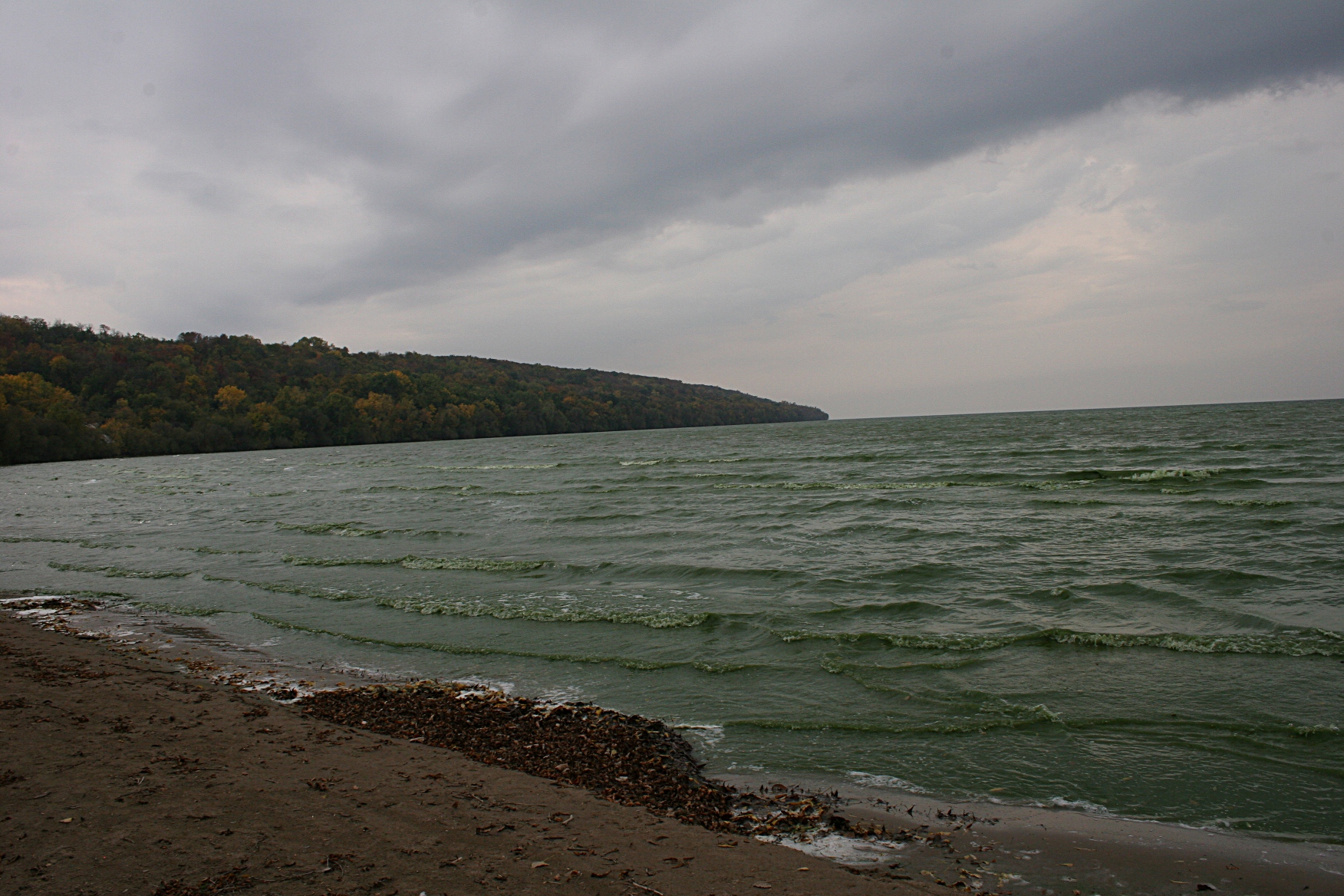
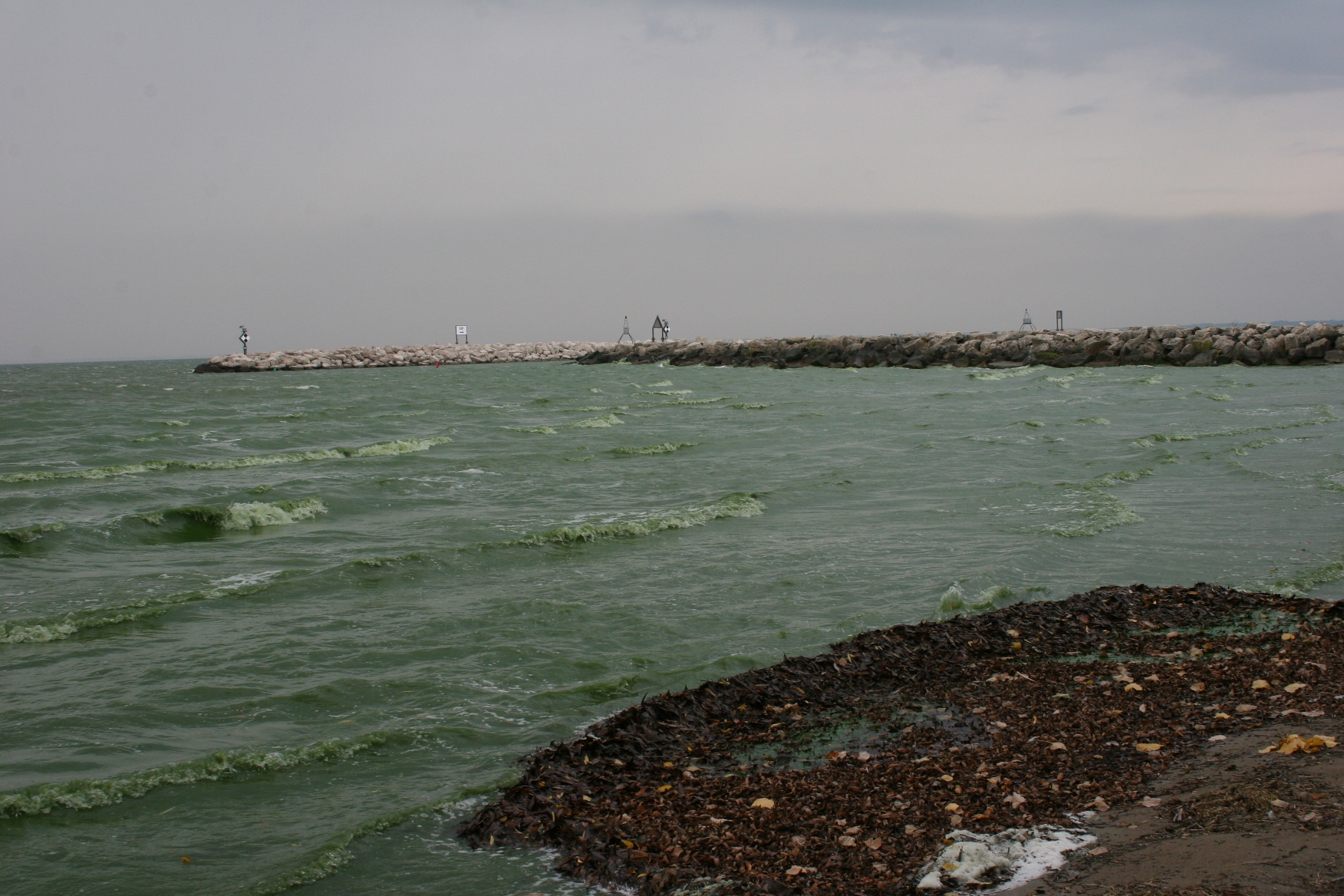
Blue-green Lake Winnebago as photographed from the beach at High Cliff State Park.

Blue-green Lake Winnebago as photographed from the beach at High Cliff State Park.

While impressive in size and fierceness—this day churning and roiling and rolling in waves—Lake Winnebago disappoints me.

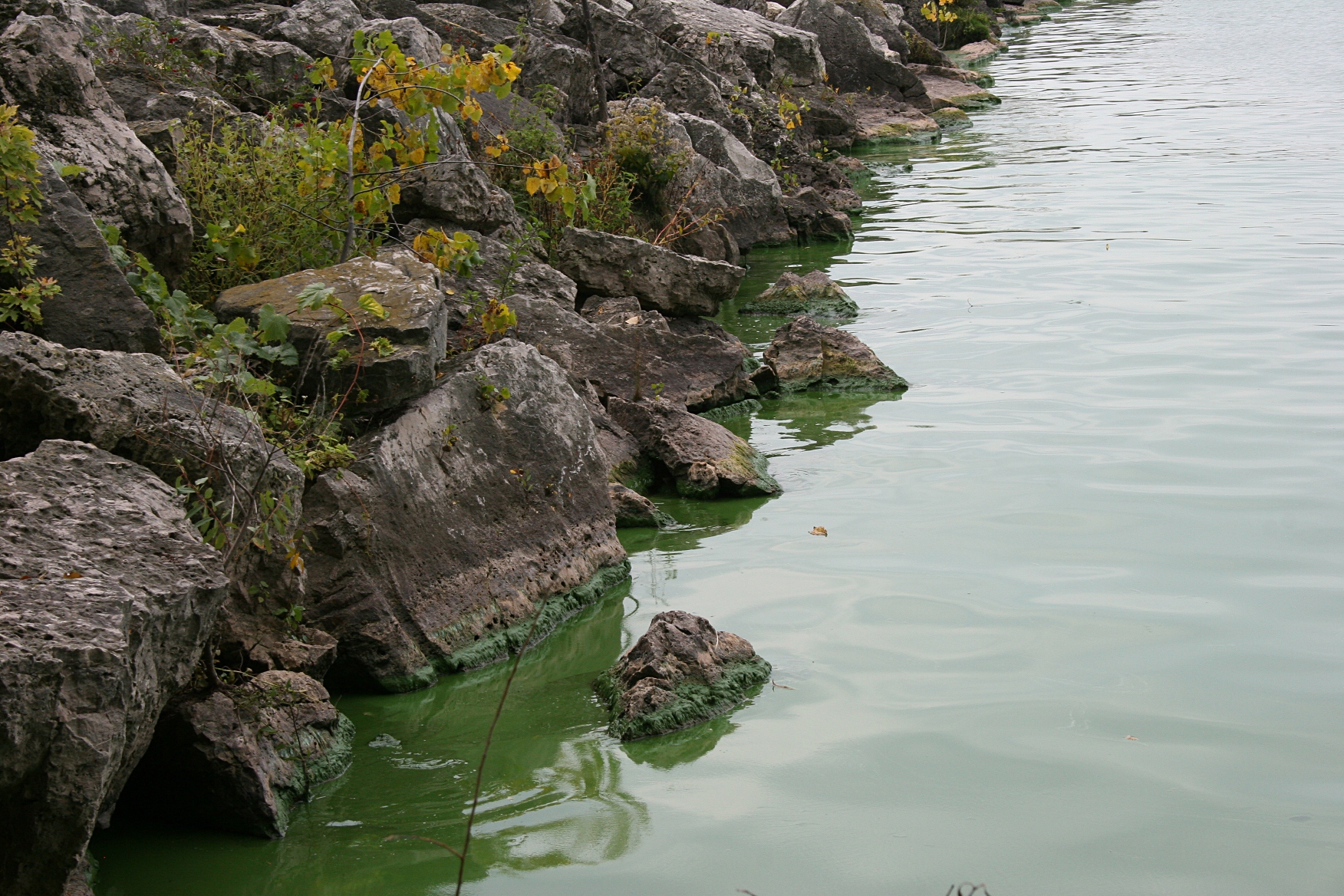
A close-up of the lake. No photo editing of the blue-green color.

A close-up of the lake. No photo editing done of the water’s hue.

I do not expect to see a lake that is green, as in it appears someone dyed the water green for a St. Patrick’s Day celebration. Why, I wonder, is a body of water this massive so overgrown apparently with blue-green algae? I am no scientist. But I suspect run-off (of chemicals) from lawns and farm fields into waterways that flow into Lake Winnebago, has created the problem.

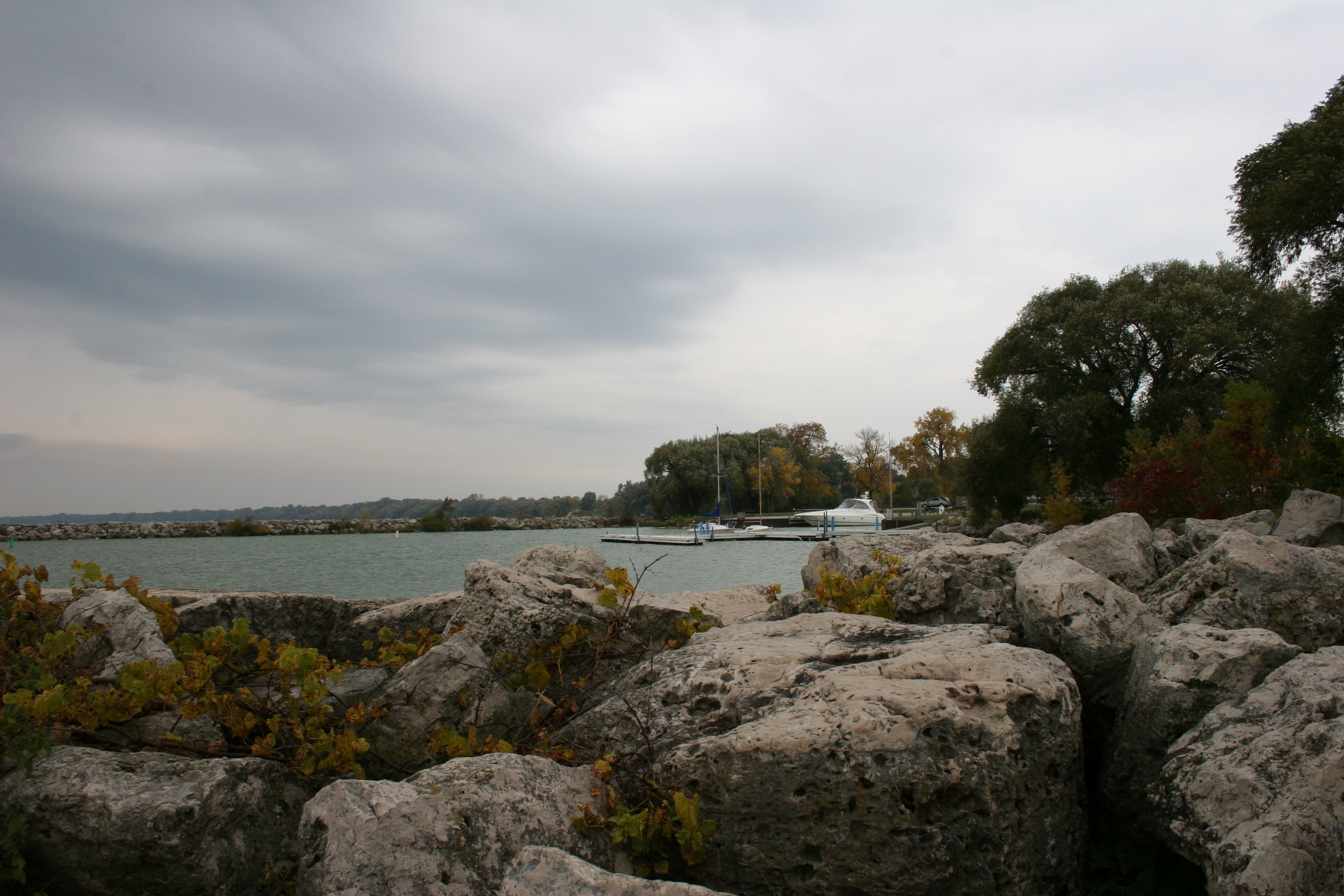
Looking from the rock wall toward the marina.

Looking from the rock wall toward the marina.

Honestly, I would never swim in this water, or even dip my toes into this lake. My daughter shares that a friend swam in Lake Winnebago this past summer and broke out in a rash.

Just another view of the lake and the area where boats slip into shore.

Just another view of the lake and the area where boats slip into shore.

Researchers from the University of Wisconsin-Milwaukee are currently studying the lake, hoping to learn more about dangerous toxins produced by the blue-green algae, according to an article published in the Milwaukee, Wisconsin Journal-Sentinel. Drinking water for four area cities, including Appleton, comes from Lake Winnebago. The water is treated, of course, but it still concerns me to think this lake, in this condition, is a source of drinking water.

This lake is a popular fishing spot, too.

After viewing the lake’s poor water quality, I’m thankful these researchers have secured a $750,000 five-year grant from the National Institution of Environmental Health Sciences and the National Science Foundation to study the lake.

The quality of this lake water scares and saddens me and, truly, detracted from my experience at High Cliff State Park, an otherwise lovely place of exceptional natural beauty.

* NOTE: Various sources cite different sizes for Lake Winnebago. The Wisconsin Department of Natural Resources lists the lake at 131,939 acres, about the same acreage size of Mille Lacs Lake in Minnesota.

#

BONUS PHOTOS:

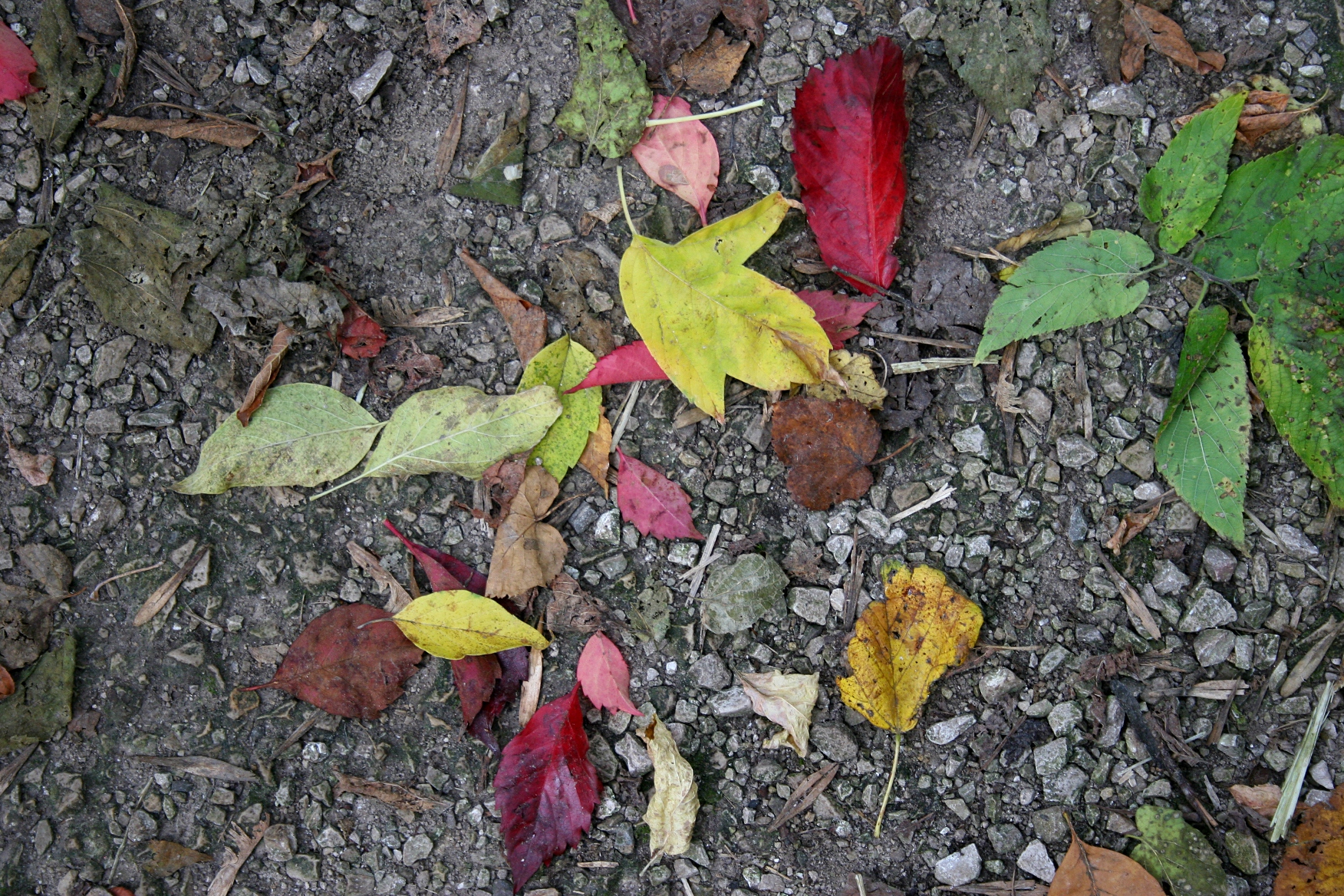
A colorful collage of leaves on a trail near the kiln ruins.

A colorful collage of leaves on a trail near the kiln ruins.

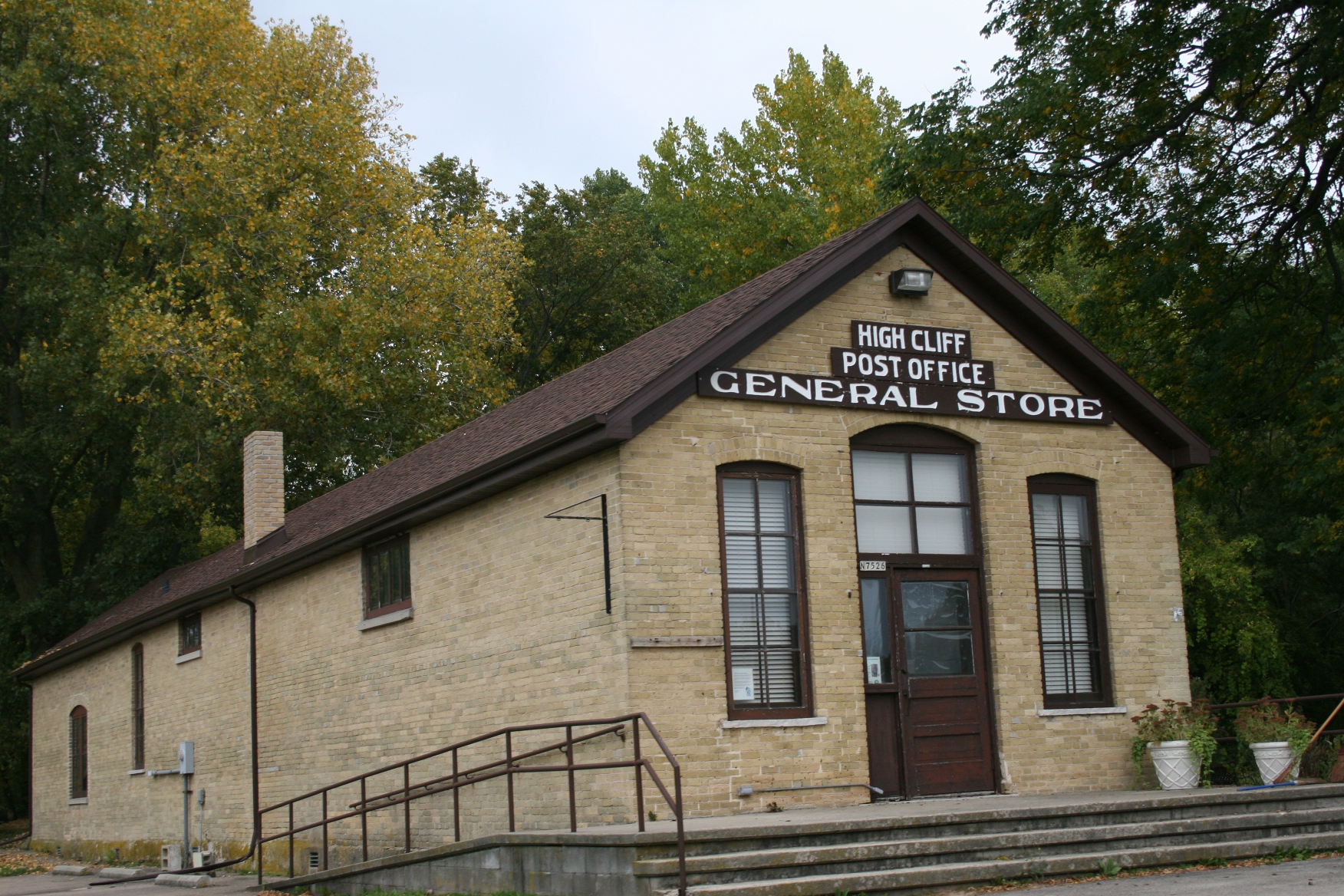
The only remaining building in

The only remaining building on the former site of Clifton, a town which existed here until the quarries closed. This 1800s building is now a museum and interpretative center, but was not open on the day we were at the park. Efforts are currently underway to save the structure from demolition, according to information on the Friends of High Cliff website. I have no idea why anyone would want to destroy this historic store.

A scenic view shot from near the lake.

A scenic view shot from near the lake.

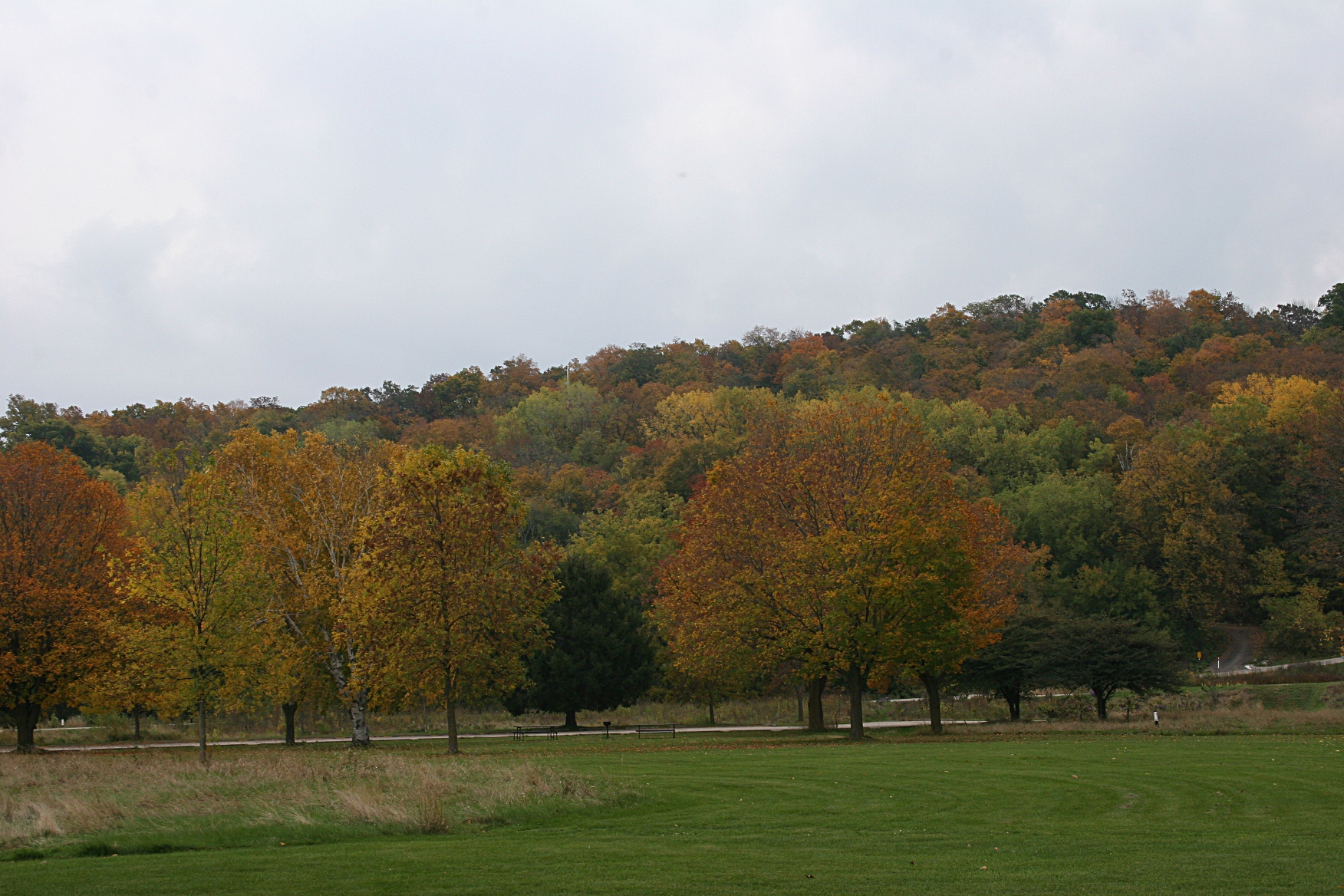
Autumn in the picnic grounds of High Cliff.

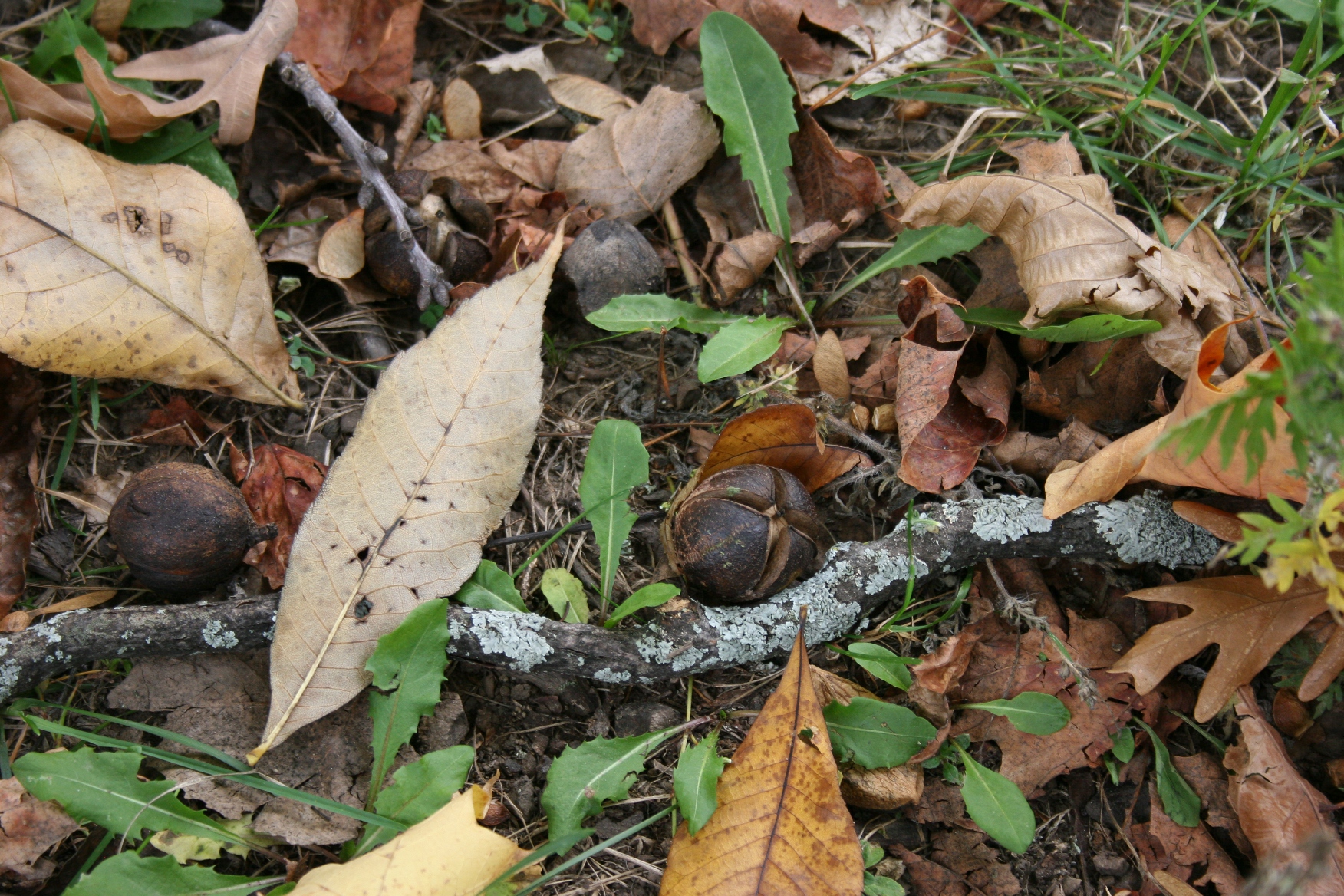
Hickory nuts, in their protective outer shell, litter the picnic grounds.

© Copyright 2013 Audrey Kletscher Helbling


On ARTour: The passion of southern Minnesota artists October 21, 2013

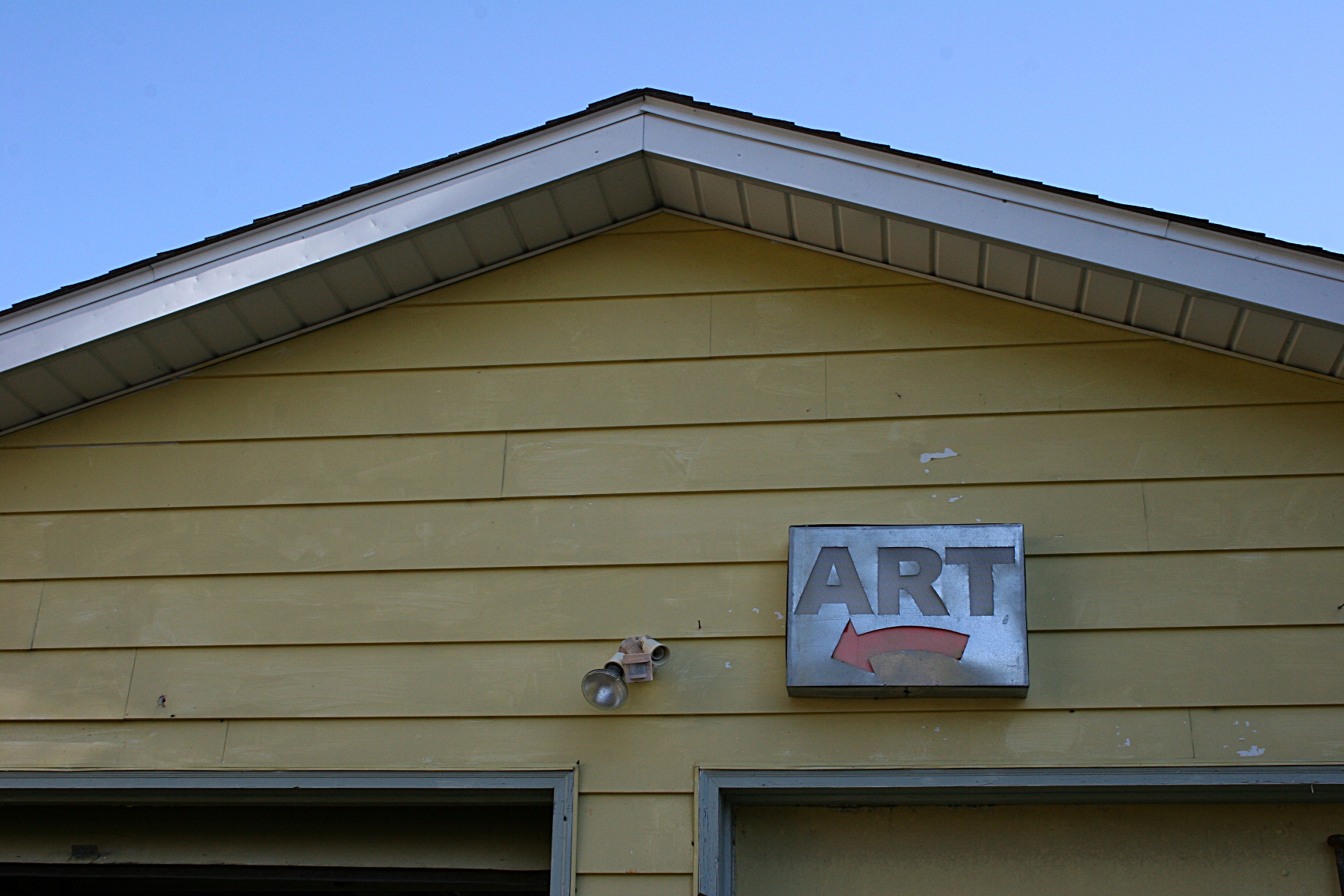
An art sign hangs above metal artist Julie Wolcott's garage-shop, rural Northfield.

An art sign hangs above metal artist Jennifer Wolcott’s garage-shop, rural Northfield.

THE TOUR ENERGIZES ME.

And I’m more art appreciator than artist in the sense of how the general public would define an artist.

Sure I create art with my words and my photos. But not at the level of the 44 artists featured in this past weekend’s South Central Minnesota Studio ARTour based in the Northfield/Faribault/Cannon Falls area.

Yet, no matter the scope of artistic endeavor, I can relate to these artists and their need to create. I could hear it. I could see it. I could feel it. That passion which drives those of us who are creative types to do what we do.

The entry to Wolcott Art.

The entry to Wolcott Art studio.

Like Jennifer Wolcott, recently voted southern Minnesota’s Best Local Artist (through Southern Minn Scene). I visited the metal artist’s studio, just north of Northfield off Minnesota State Highway 3, among a select number I toured during the ARTour. I focused on studios I hadn’t seen during past tours.

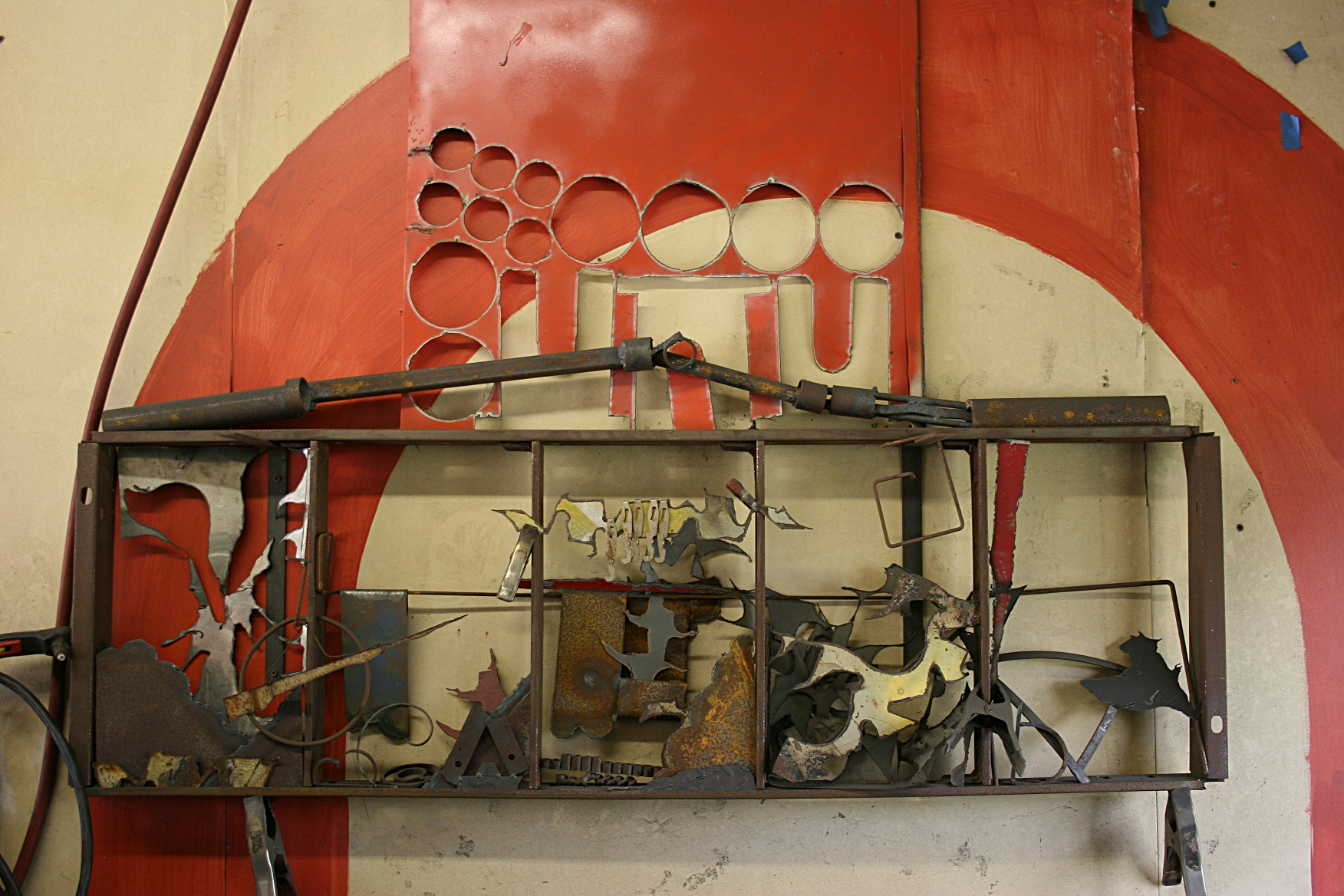
Wolcott's political statement art sectioned like a cartoon.

Wolcott’s political statement art sectioned like a cartoon.

Wolcott shapes and welds steel into substantial sculptures, but also crafts smaller more whimsical pieces from old filing cabinets and such. As she explained the significance of a political statement art piece that hangs in her garage-shop, I could visualize the fire which fuels her creativity.

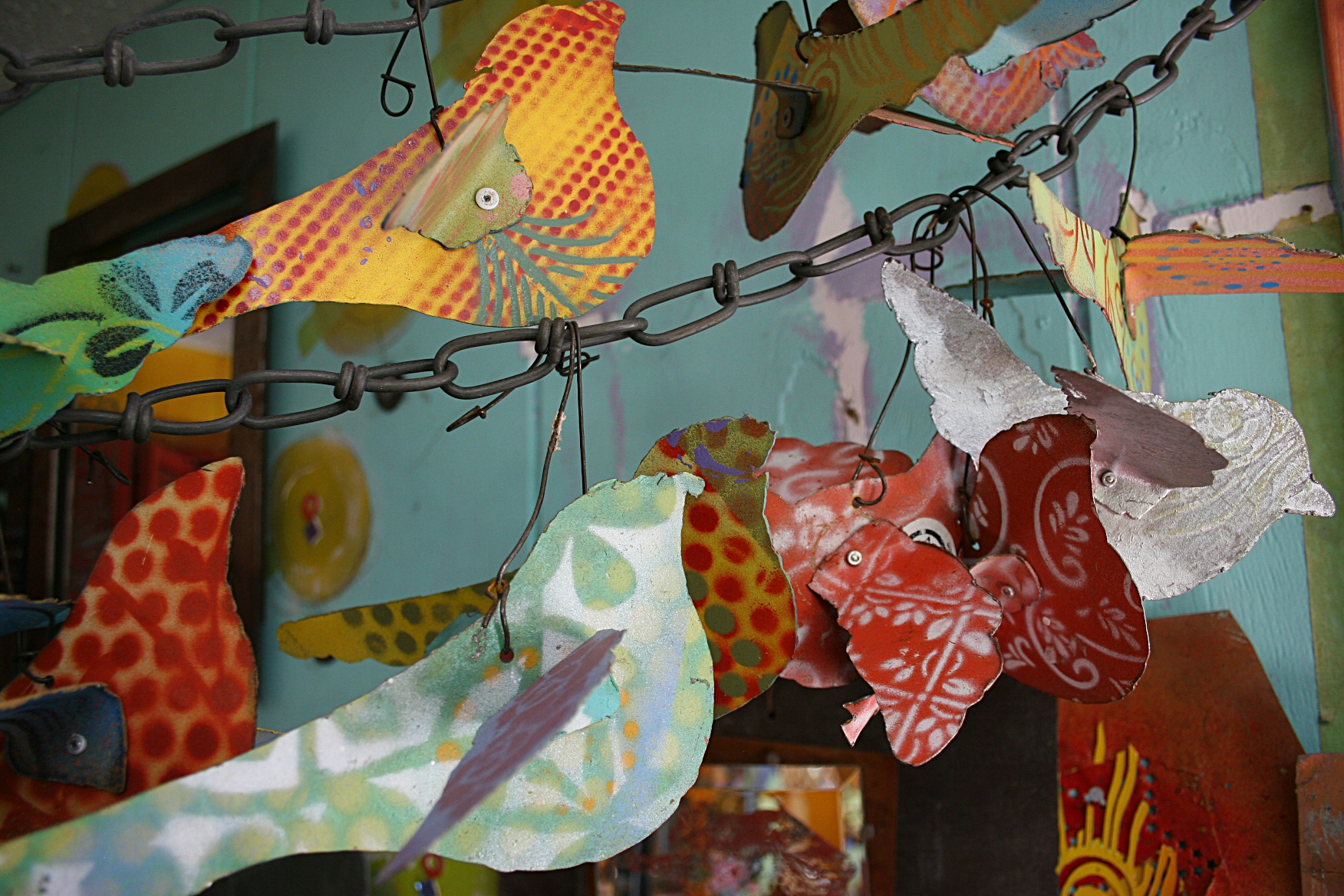
Birds cut from a filing cabinet and spray painted.

Birds cut from a filing cabinet and spray painted.

It is that fire of passion which flamed throughout the ARTour.

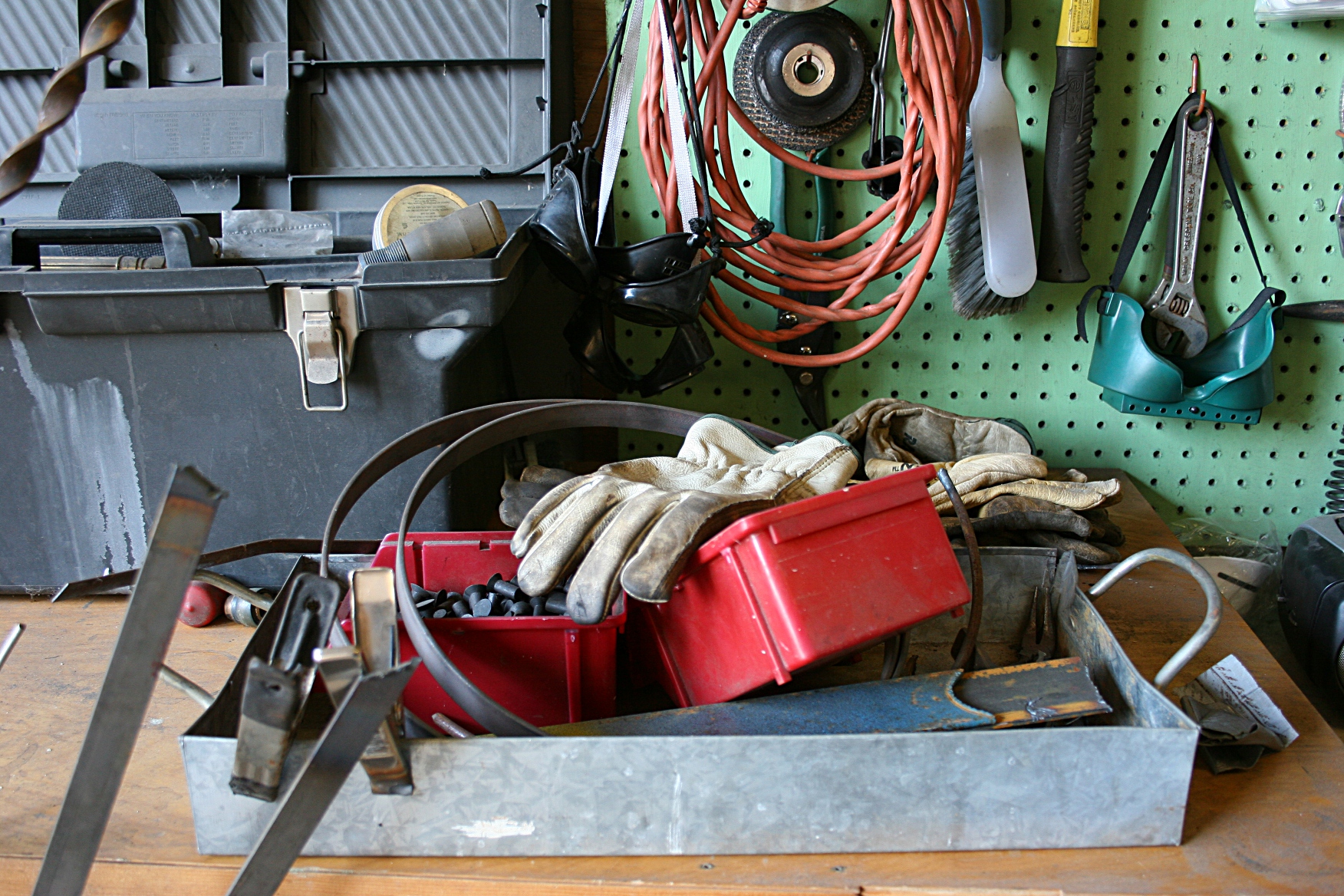
Tools of a metal artist.

Tools of a metal artist.

And, in my opinion, if you are not fueled by passion, then you cannot call yourself an artist.

Basking in the sunshine inside the Wolcott Art studio.

Basking in the sunshine inside the Wolcott Art studio.

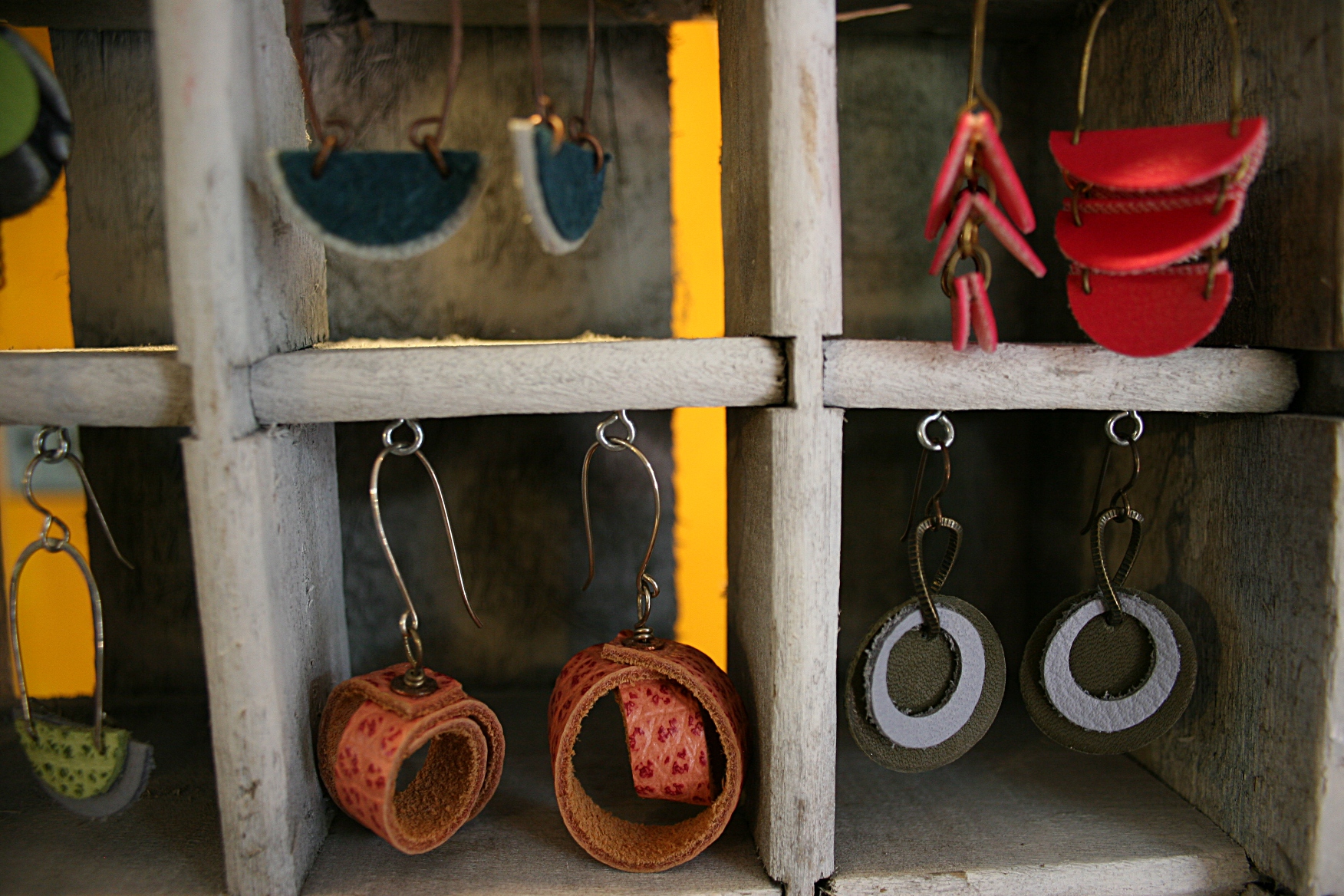
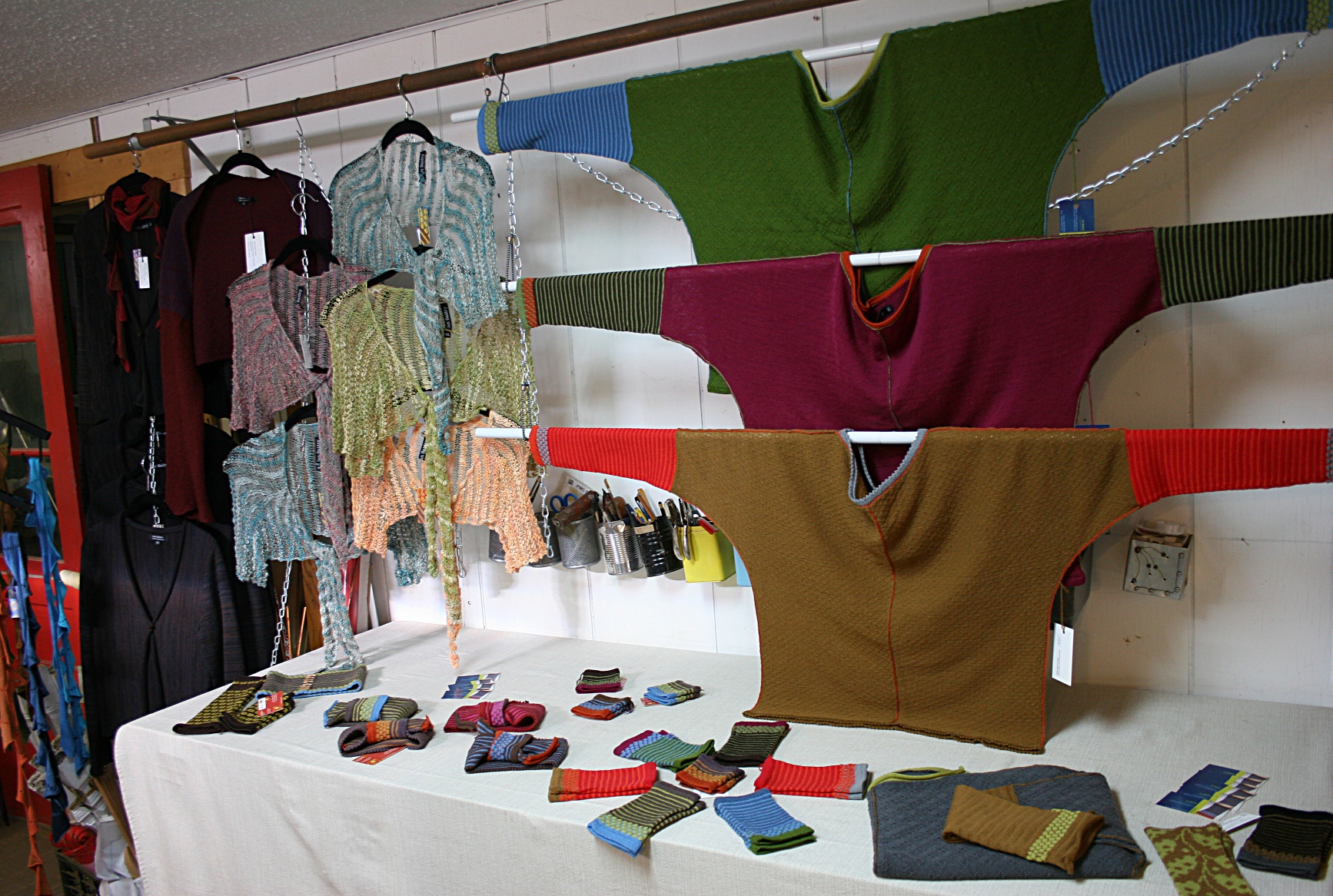
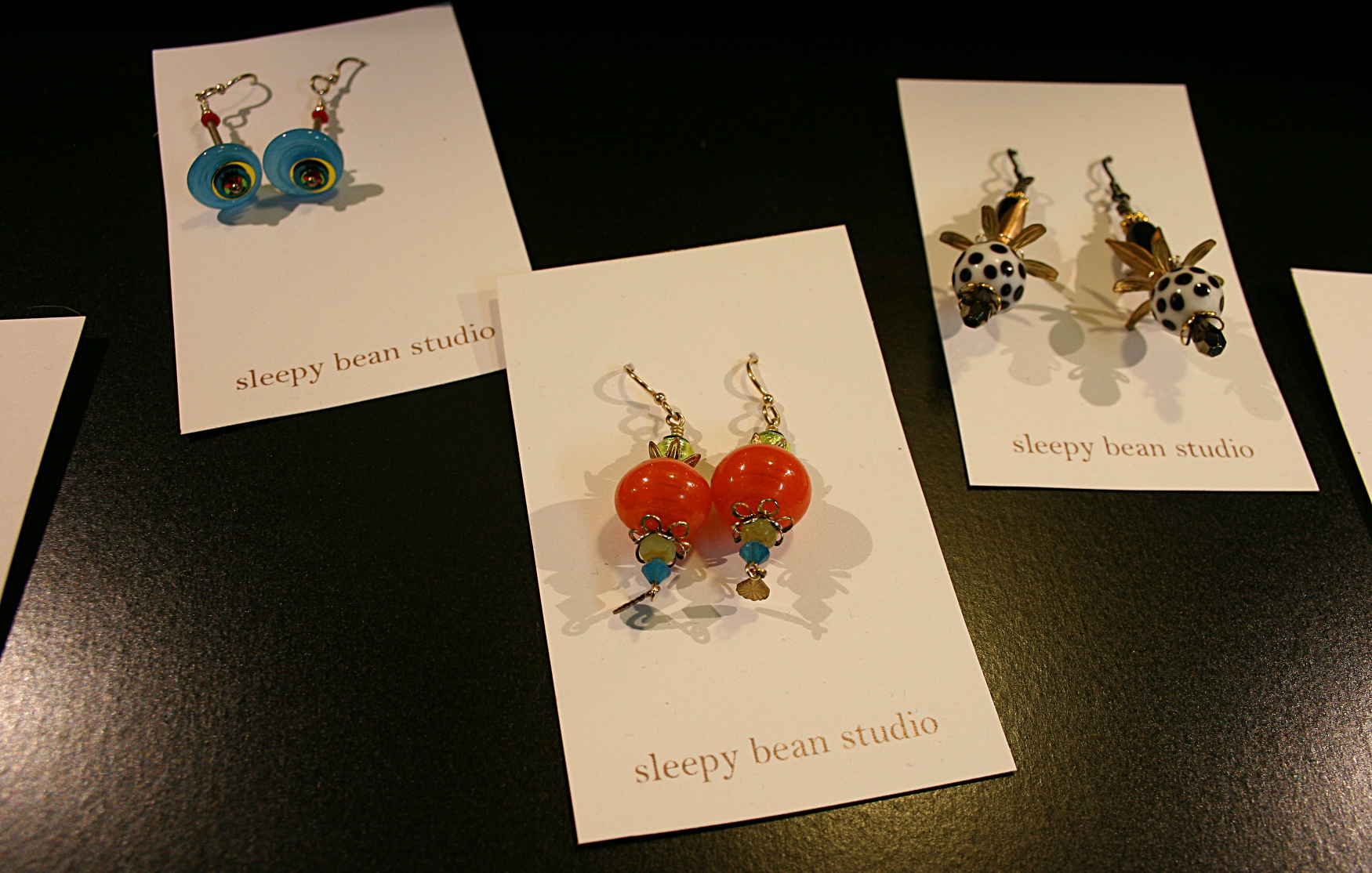
THREE OTHER ARTISTS SHOWCASED their work at Wolcott Art. They—Heather Lawrenz of Lawrenz Jewelry, Annie Larson of Sleepy Bean Studio and Ian Baldry of Ian Baldry Knitwear—have found their niches in the art world by crafting jewelry and knitting textiles.

Heather Lawrenz upcycled leather belts into earrings.

Heather Lawrenz of Northfield upcycled leather belts into earrings.

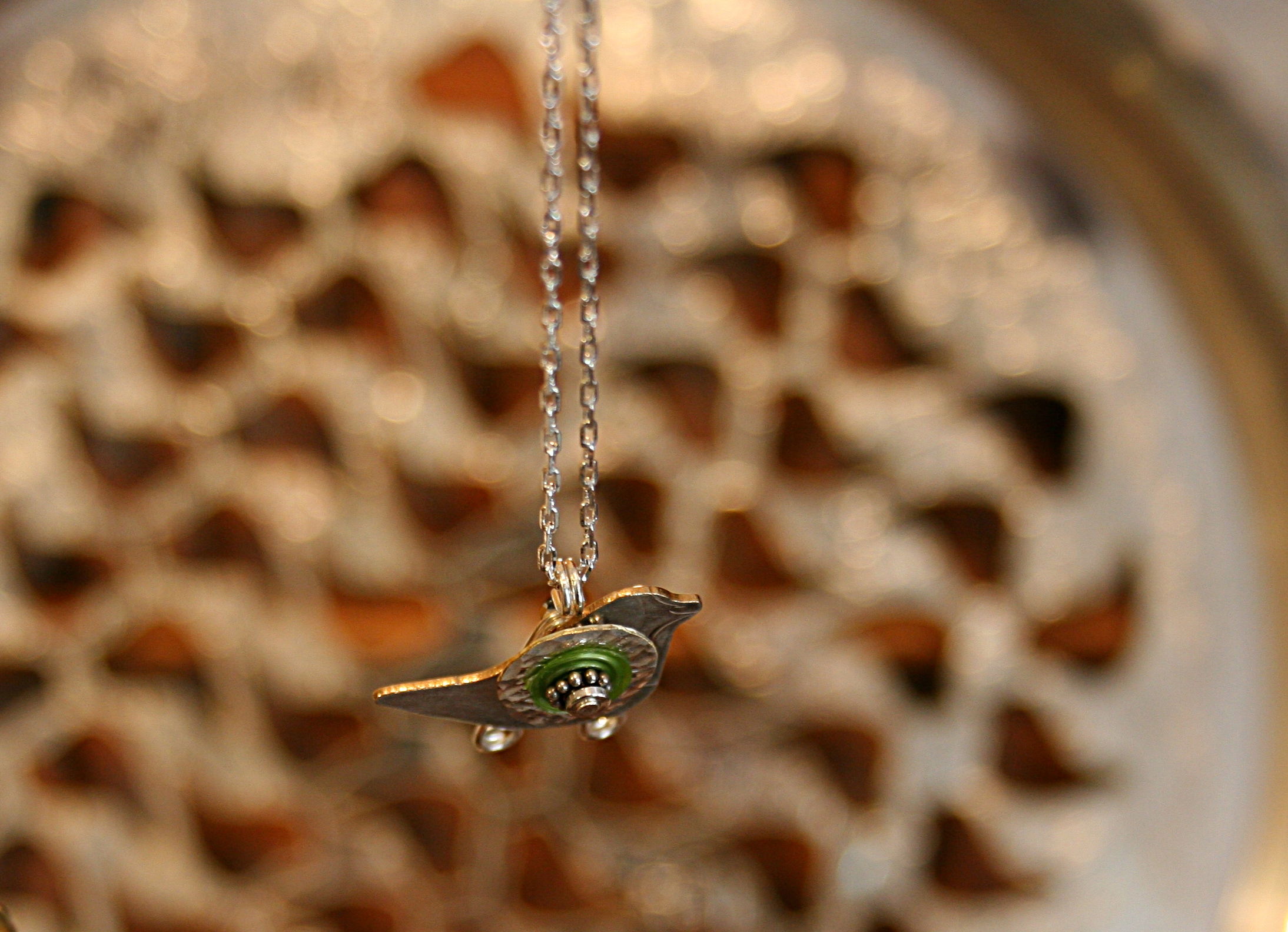
And here Lawrenz creates bird necklaces punched from cast off silver trays (faded in the background in this image).

And here Lawrenz created a bird necklace punched from a cast off silver tray (faded in the background in this image).

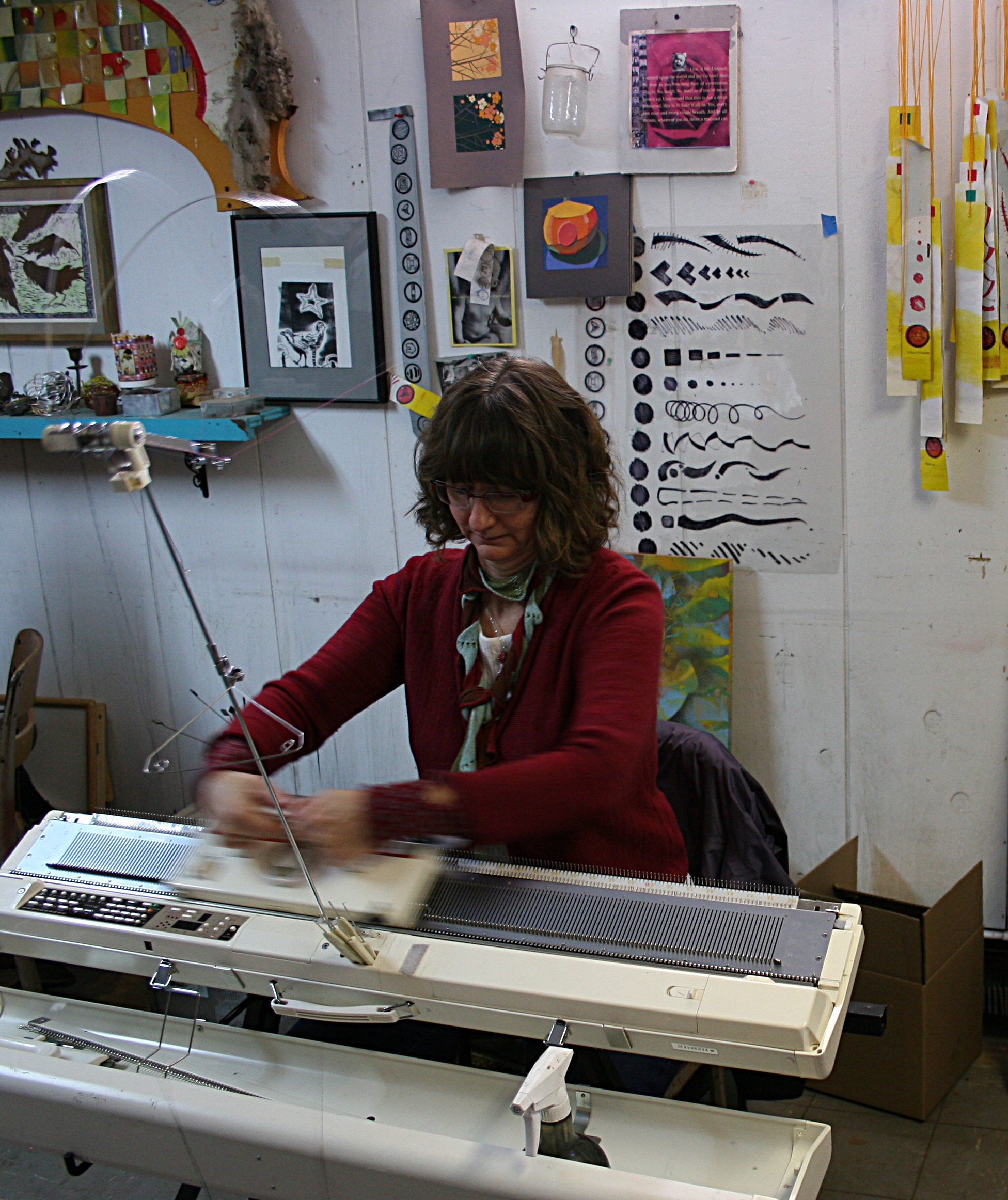
Artist Ian Baldry of St. Louis Park creates a scarf on her knitting machine.

Artist Ian Baldry of St. Louis Park creates a scarf on her knitting machine with bamboo yarn.

Samples of Baldry's knitted textiles.

Samples of Baldry’s knitted textiles.

Earrings, featuring handcrafted beads, created by Annie Larson of Sleepy Bean Studio.

Earrings, featuring handcrafted beads, created by Annie Larson of Sleepy Bean Studio.

FYI: Check back for more photos from the South Central Minnesota Studio ARTour.

© Copyright 2013 Audrey Kletscher Helbling
 

On the road in Wisconsin: Duo country churches near Shennington October 20, 2013

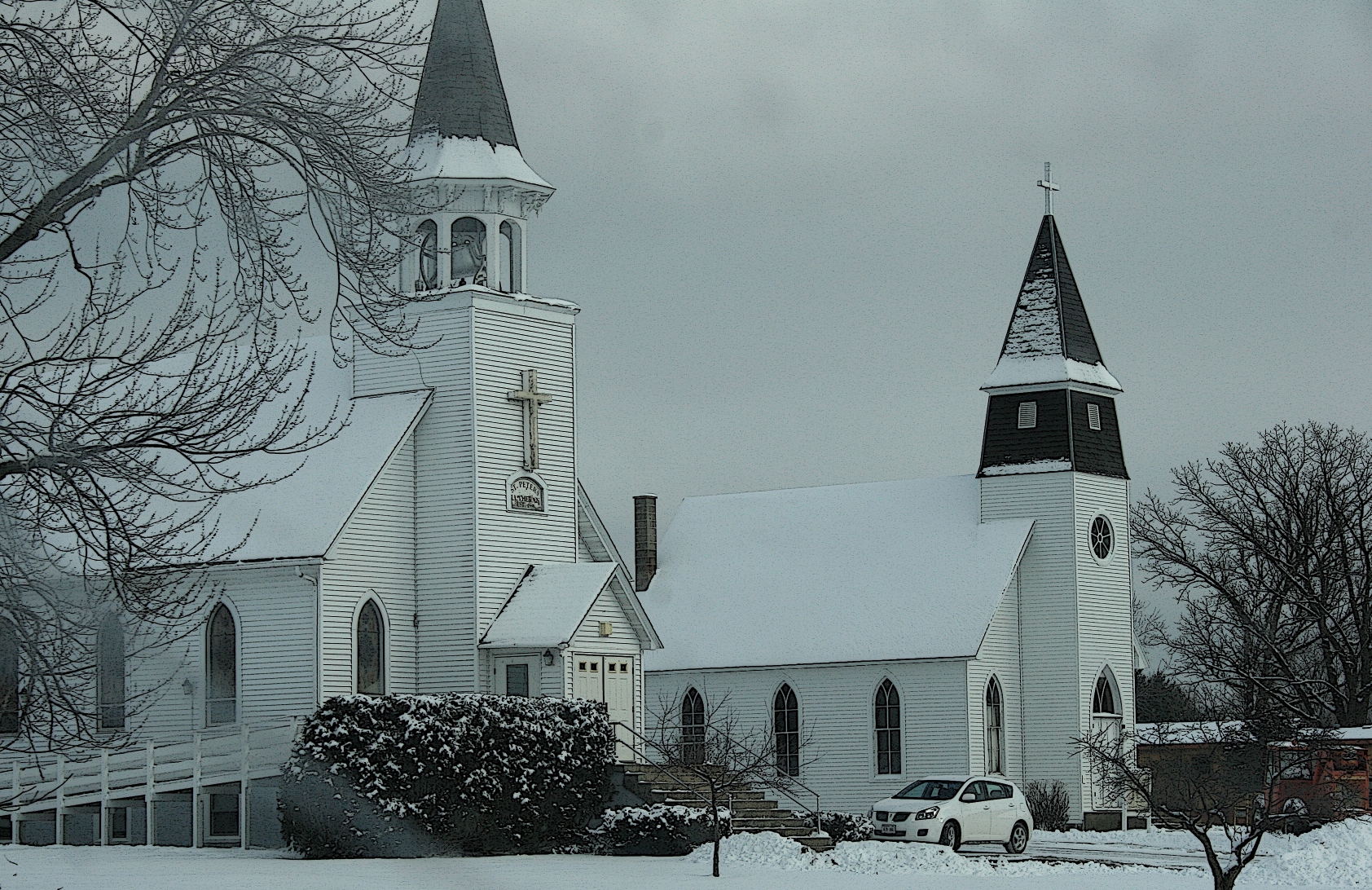
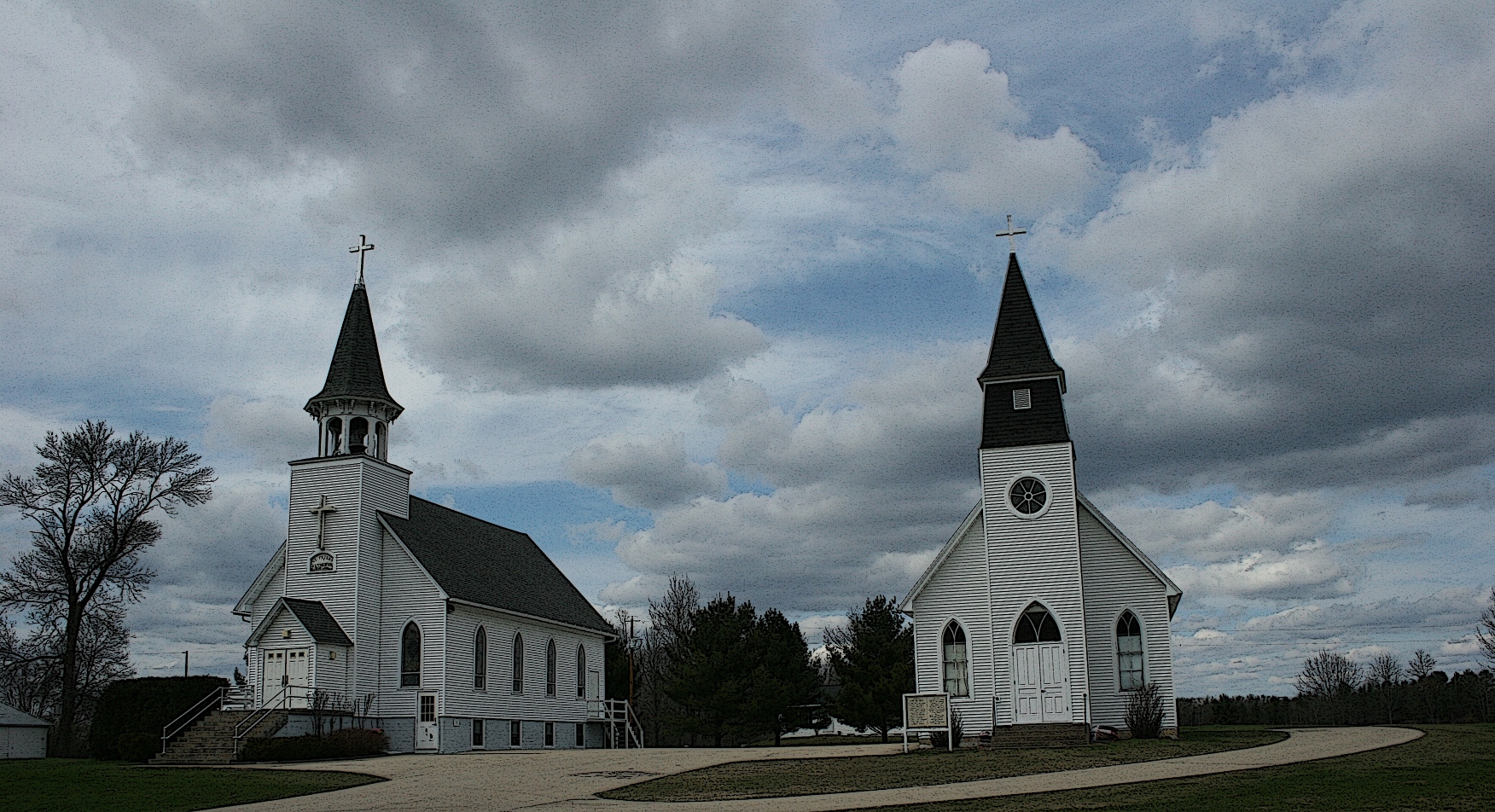
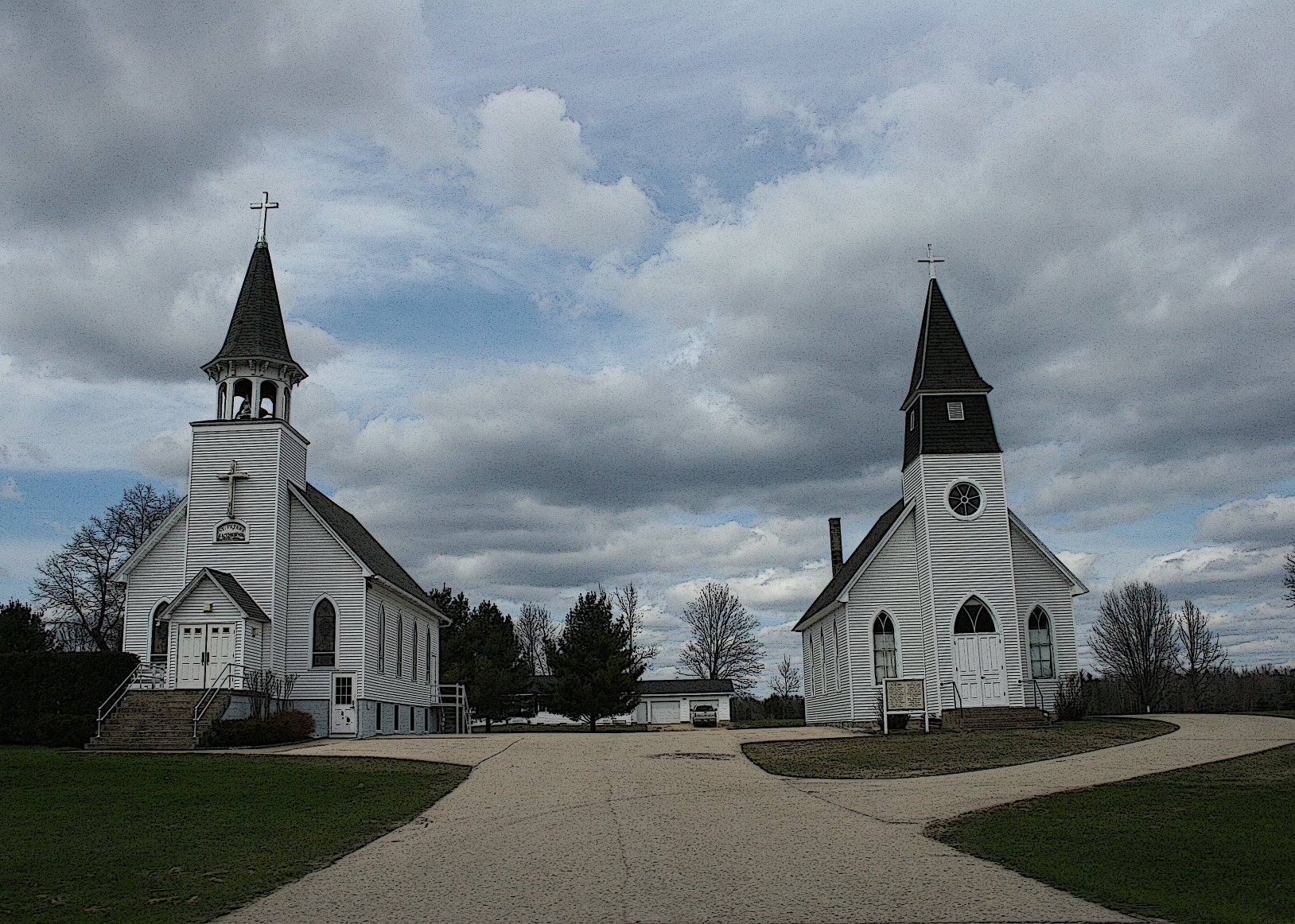
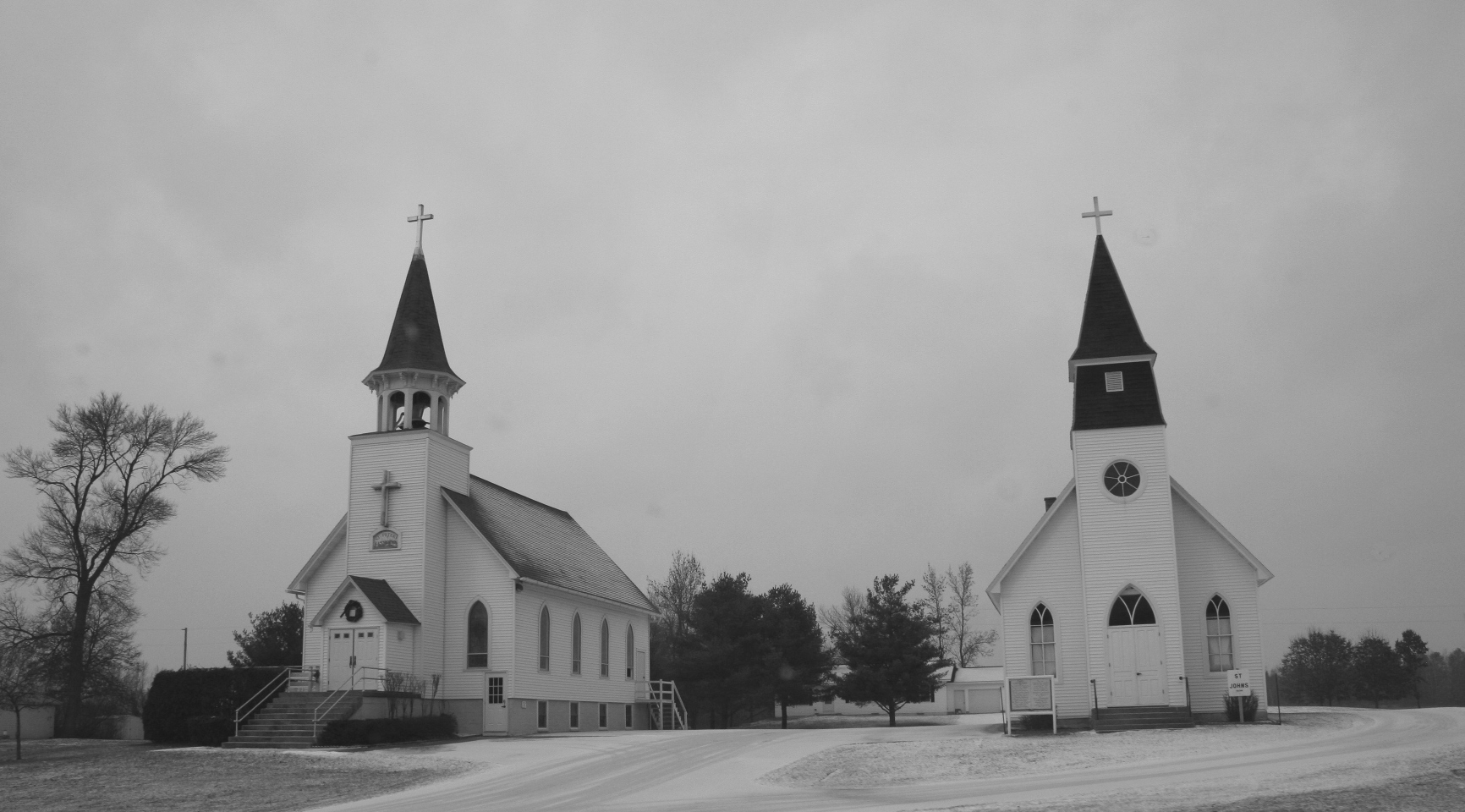
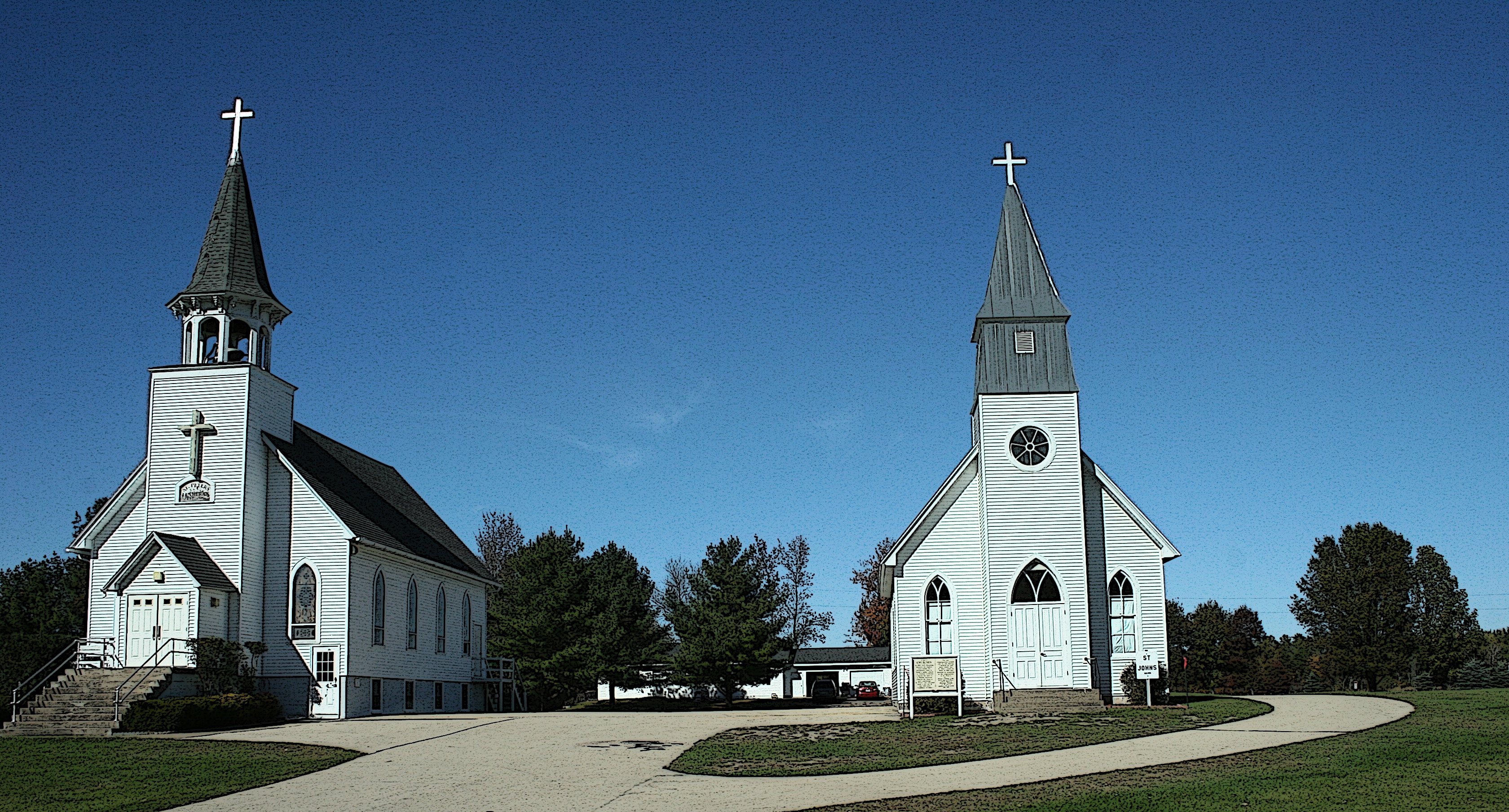
NUMEROUS TIMES I’VE PHOTOGRAPHED these side-by-side country churches along Wisconsin State Highway 21 just west of Shennington:

Photographed while driving by in the winter of 2010.

Photographed while driving by in the winter of 2010.

Photographed while traveling by in the spring of 2011.

Photographed while traveling by in the spring of 2011.

Another shot of the two churches taken in spring 2011.

Another shot of the two churches taken in spring 2011.

Several months later, in December 2011, I snapped this image.

Several months later, in December 2011, I snapped this image.

My most recent photo, shot on Sunday afternoon, October 13, 2013.

My most recent photo, shot on Sunday afternoon, October 13, 2013.

Beautiful, aren’t they? St. John’s and St. Peter’s Lutheran. German and Danish.

Not once have I stopped to investigate why two houses of worship, seemingly from the same time period, are separated only by a cement parking lot.

I should stop, shouldn’t I?

For now, though, I must rely on information published on Waymarking.com. Because that info is copyrighted, you’ll need to click here to read what I learned.

Every place has a story.

If you know anything about these two churches, please submit a comment so that we can all learn more. I’m certain there are stories to be told.

© Copyright 2013 Audrey Kletscher Helbling
 

Remembering my mother-in-law, Betty October 18, 2013

Filed under: Uncategorized — Audrey Kletscher Helbling @ 6:00 AM
Tags: , , , , , , , ,
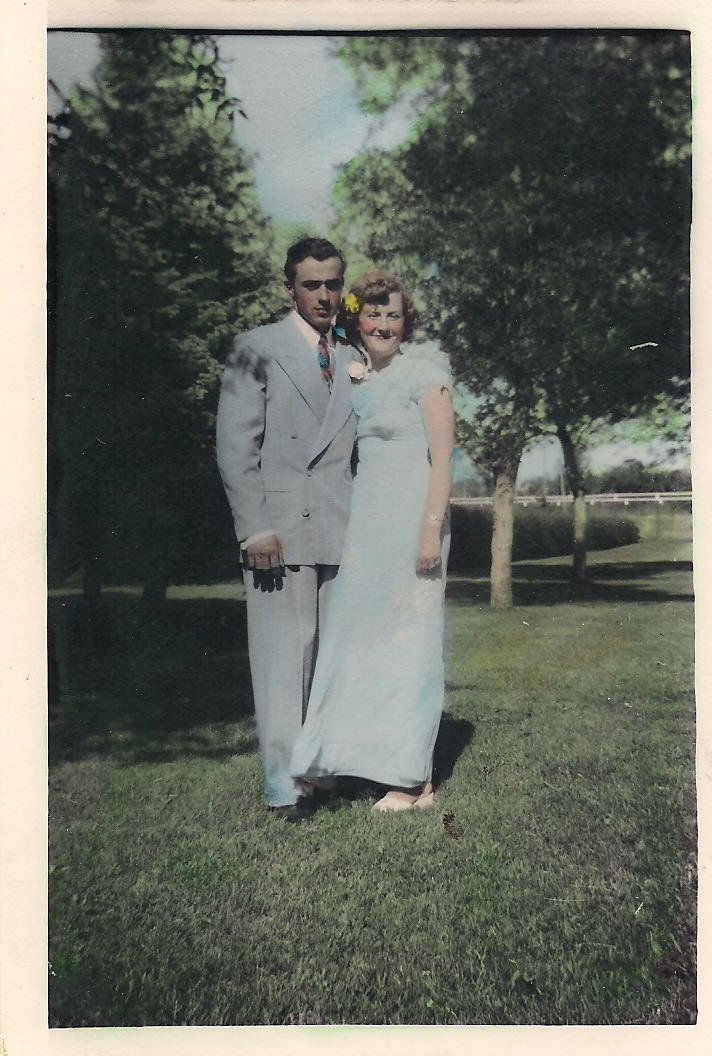
Tom and Betty

Tom and Betty in a vintage photo, date unknown.

YOU THINK YOU WILL ALWAYS REMEMBER.

But then the years, the decades, slip by and the memories begin to fade.

You can’t picture their smile, hear their voice, recall their mannerisms.

Twenty years ago on October 16, my mother-in-law, Betty Helbling, died after suffering a heart attack the previous evening. She was just weeks shy of turning sixty.

I still remember that phone call around 9 p.m. on a Friday. Not every detail. Not even who phoned with the devastating news that my husband’s mother was in the hospital. Alive. But not alert.

I remember the request that we drive northwest to Little Falls several hours away. But the hour was late, the fog as thick as the proverbial pea soup making travel impossible for my husband and me and our two daughters, ages seven and five.

To add to the concern, I was five months pregnant with our youngest, the baby Grandma Helbling hoped was a boy after a long string of granddaughters. I knew, for my unborn child’s sake, that I needed to remain as emotionally unstressed as possible, which was impossible given the situation.

It was a mostly sleepless night of tossing and turning, of prayer and worry. By morning we were making phone calls—me to my mother, another to a dear friend and my husband to the local Red Cross to get his brothers and a sister-in-law home from their respective military bases, one as far away as Germany.

We packed and left Faribault. By then, before our arrival, Betty had already passed.

Those next days on the family farm were a blur of grief and of condolences, phone calls and visits, food and family hugs. The wake and funeral and burial. I remember seeing my husband cry, for the first and only time. Ever.

Today, two decades later, I am thinking of my mother-in-law, of the woman who never saw the grandson I birthed in early February 1994. She would have loved my son, knitted him a baby blanket or a blue sweater or something equally adorable like she had for Caleb’s sisters. It saddens me to think that Betty never saw the grandson she so badly wanted to carry on the Helbling family name. It saddens me that my now 19-year-old never knew his paternal grandmother.

But I still have the memories, one occurring only weeks before her death, when we all gathered on the farm to celebrate the 40th wedding anniversary of my in-laws. I arose in the middle of the night to pee, descending the stairs to the first floor bathroom in the dark of a country night. I’d just settled onto the toilet when movement, that of a mouse, caught my eye. I hate mice, just hate them. And there I was, pregnant and stuck in a small bathroom with a mouse circling my feet. I could see no way out.

I calmed myself down between shrieks of fear, which I tried to hold in, not wanting to awaken the entire household. But apparently I was loud enough to rouse my mother-in-law. She simply thought I was in the bathroom with a sick child and did not investigate.

Eventually, after climbing onto the bathtub, I grabbed a pile of wet bath towels from the floor, tossed them onto the menacing mouse and fled up the stairs to my still sleeping husband.

That is the last memory I associate with my mother-in-law.

Tom and Betty. This may be from their 40th anniversary party, although I am not sure.

Tom and Betty. This may be from their 40th anniversary party, although I am not sure.

But there are other memories—that of a competitive Scrabble player who could beat me, the master of words. I loved the challenge of playing Scrabble with Betty, even if she usually won.

Cooking wasn’t her strength, but she made the best darned chicken and caramel rolls.

Once my husband, brother-in-law Neil and I rummaged through Betty’s cupboards while she was gone, seeking to spice up her bland hotdish baking in the oven. When a sister-in-law later praised the tastiness of the dish, we three could barely contain our laughter as Betty attributed the flavor to a dash of Mrs. Dash seasoning.

Four generations: Great Grandma Katherine Simon holding my daughter, Amber, with my mother-in-law behind them beside my husband, Randy. Photo taken in July 1986 at a family picnic, Pierz, Minnesota.

Four generations: Great Grandma Katherine Simon holding my daughter, Amber, with my mother-in-law, Betty, behind them beside my husband, Randy. Photo taken in July 1986 at a family picnic in Pierz, Minnesota.

I knew my mother-in-law for only 11 years. Not very long really. But long enough to know that she was a woman of deep faith who loved God and family. Above all.

On Thursday, October 16, 2013, twenty years after her death, Betty was joined in heaven by her brother, Steve.

Blessed be the memories of those we loved and those who loved us, sometimes even before we were born.

© Copyright 2013 Audrey Kletscher Helbling


In Wisconsin: A quick stop at a Tomah cranberry farm October 17, 2013

Filed under: Uncategorized — Audrey Kletscher Helbling @ 6:00 AM
Tags: , , , , , , , , ,
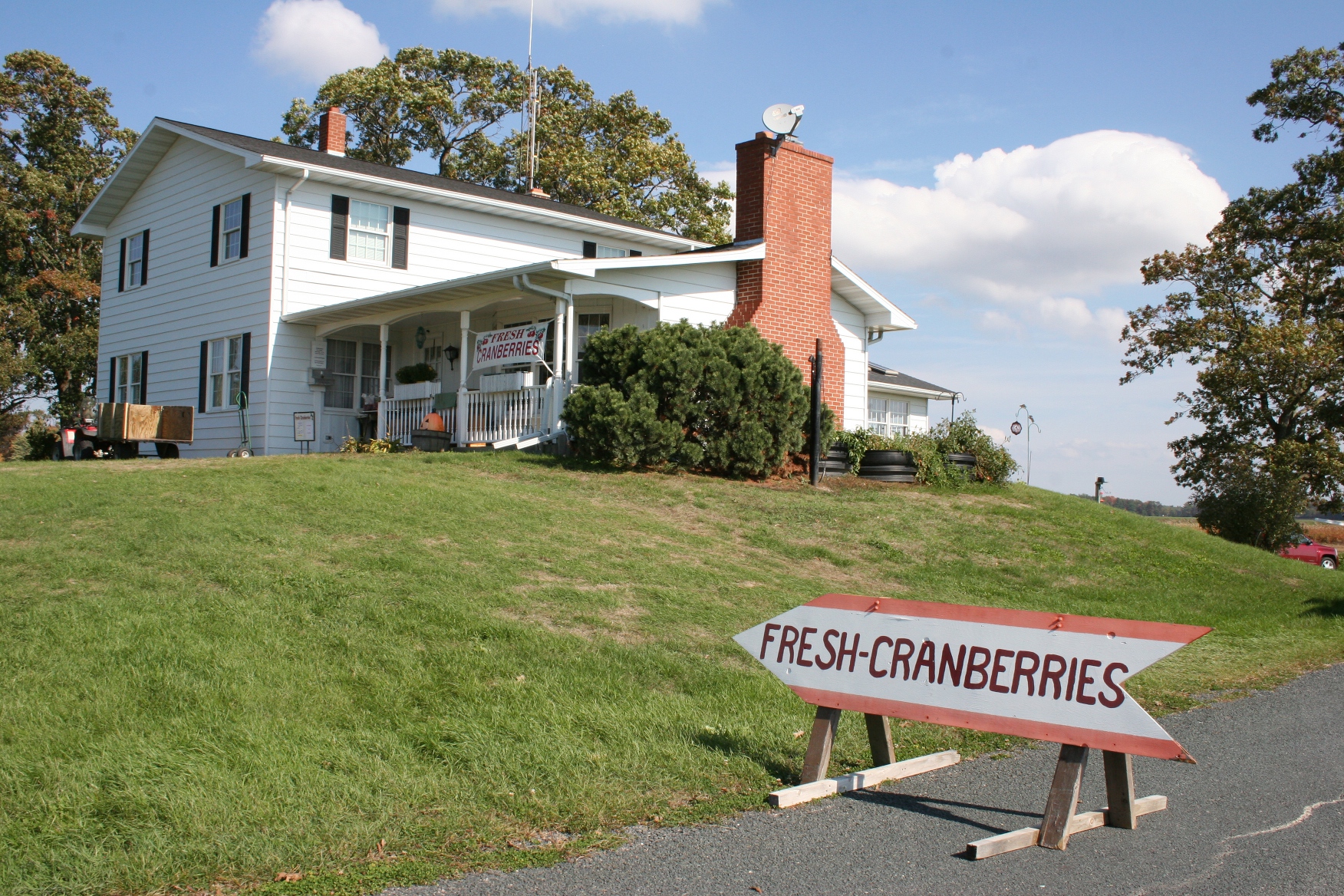
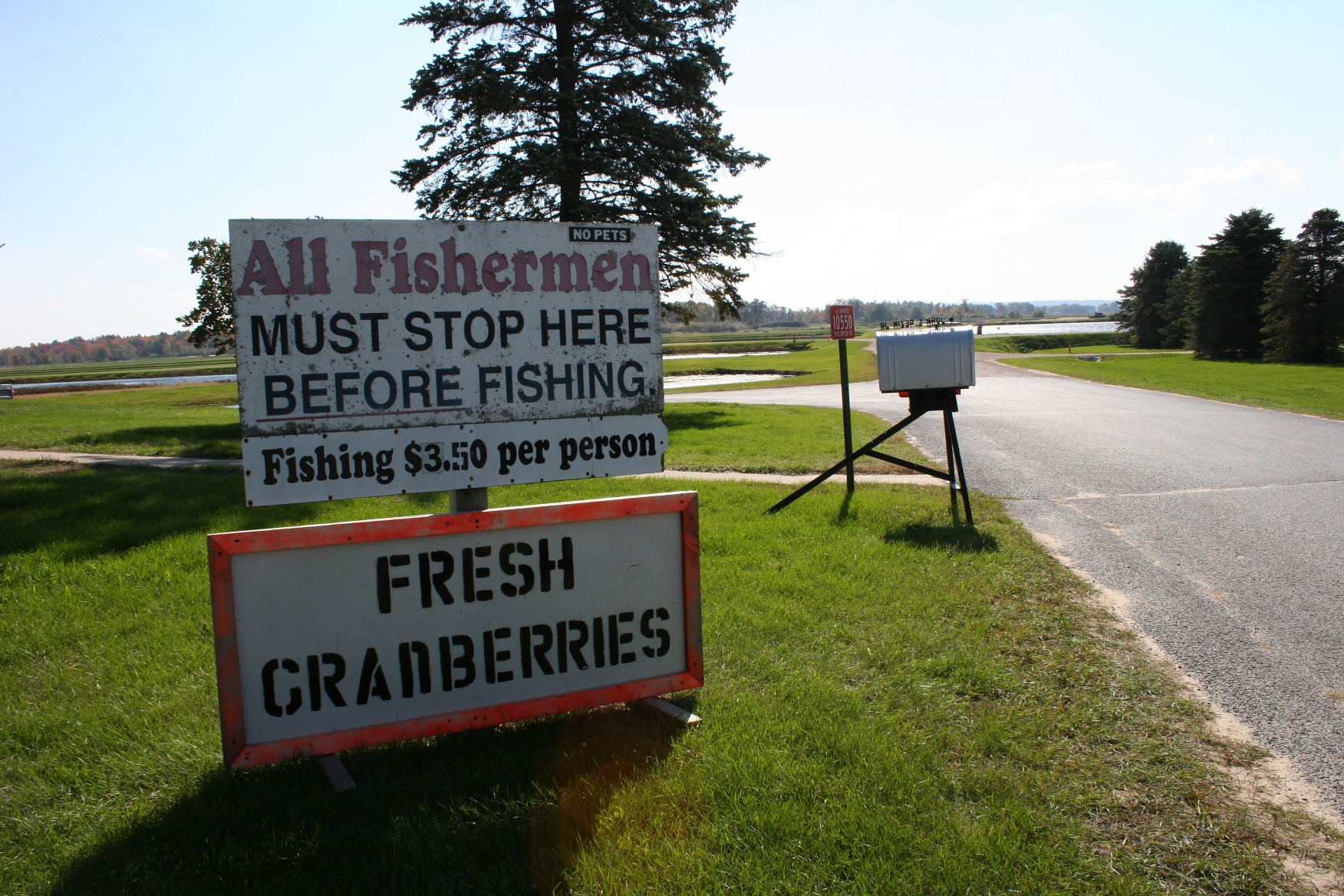
A sign at the Rezin farm points to the cranberries on the porch.

At the end of the road, a sign points to cranberries on the porch at the Rezin farm.

THE “FRESH CRANBERRIES” SIGN grabbed our attention along State Highway 21 just east of Tomah in the heart of Wisconsin cranberry country.

So my husband slowed the van in a flash and turned onto a side road to North Tomah Cranberry Co. operated by John Rezin & Sons. Randy loves cranberries. Me, too. As juice or in pie. You won’t see me scooping cranberries onto my plate at Thanksgiving.

We’d never been on a cranberry farm nor purchased just harvested cranberries. So we were excited—or at least I was to photograph a true Wisconsin cranberry farm.

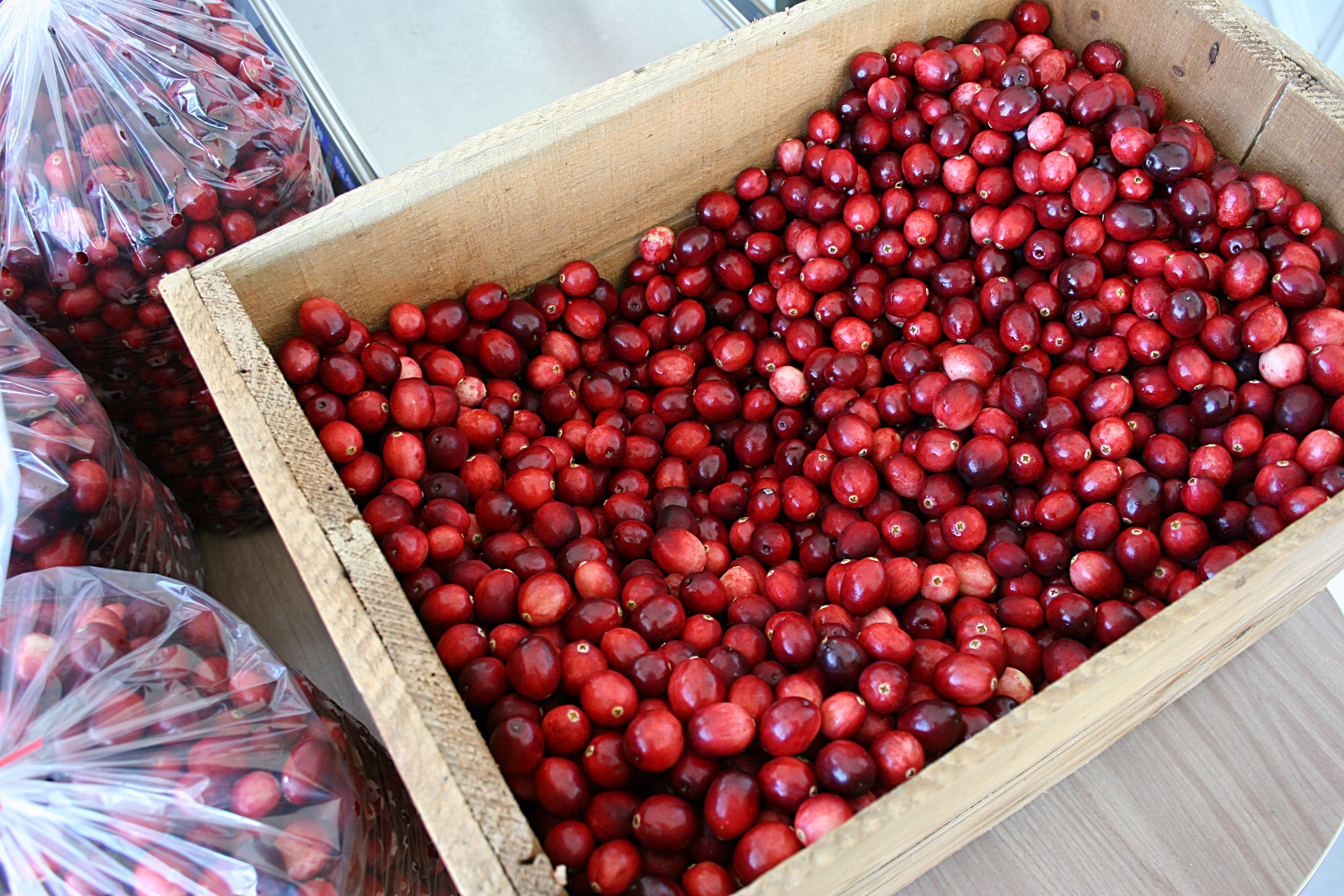
Fresh cranberries direct from the bogs.

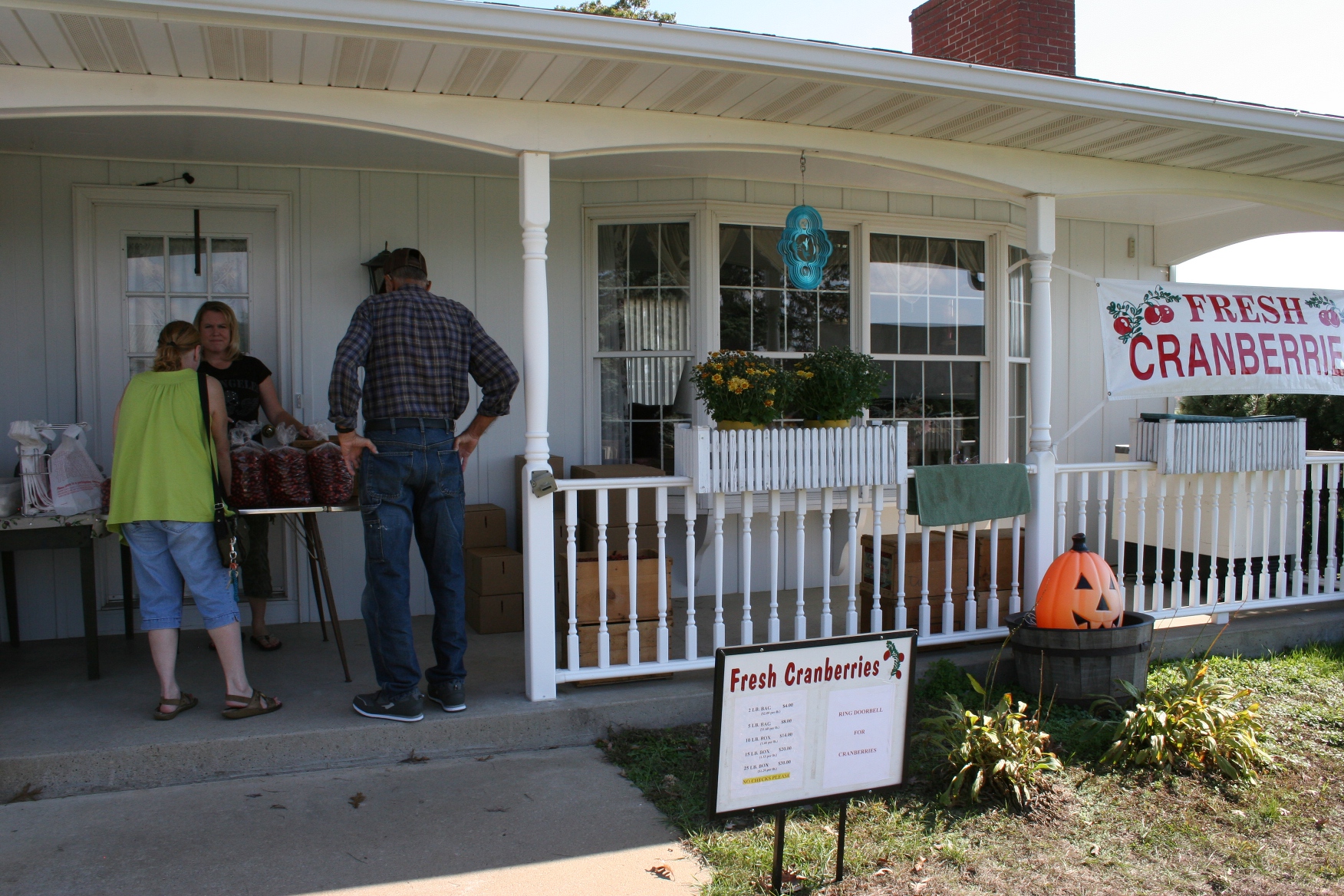
Farm fresh cranberry pricing

Teresa Rezin waits on customers.

Teresa Rezin waits on customers.

Teresa Rezin met us on the farmhouse side porch before we could follow the “RING DOORBELL FOR CRANBERRIES” signage.

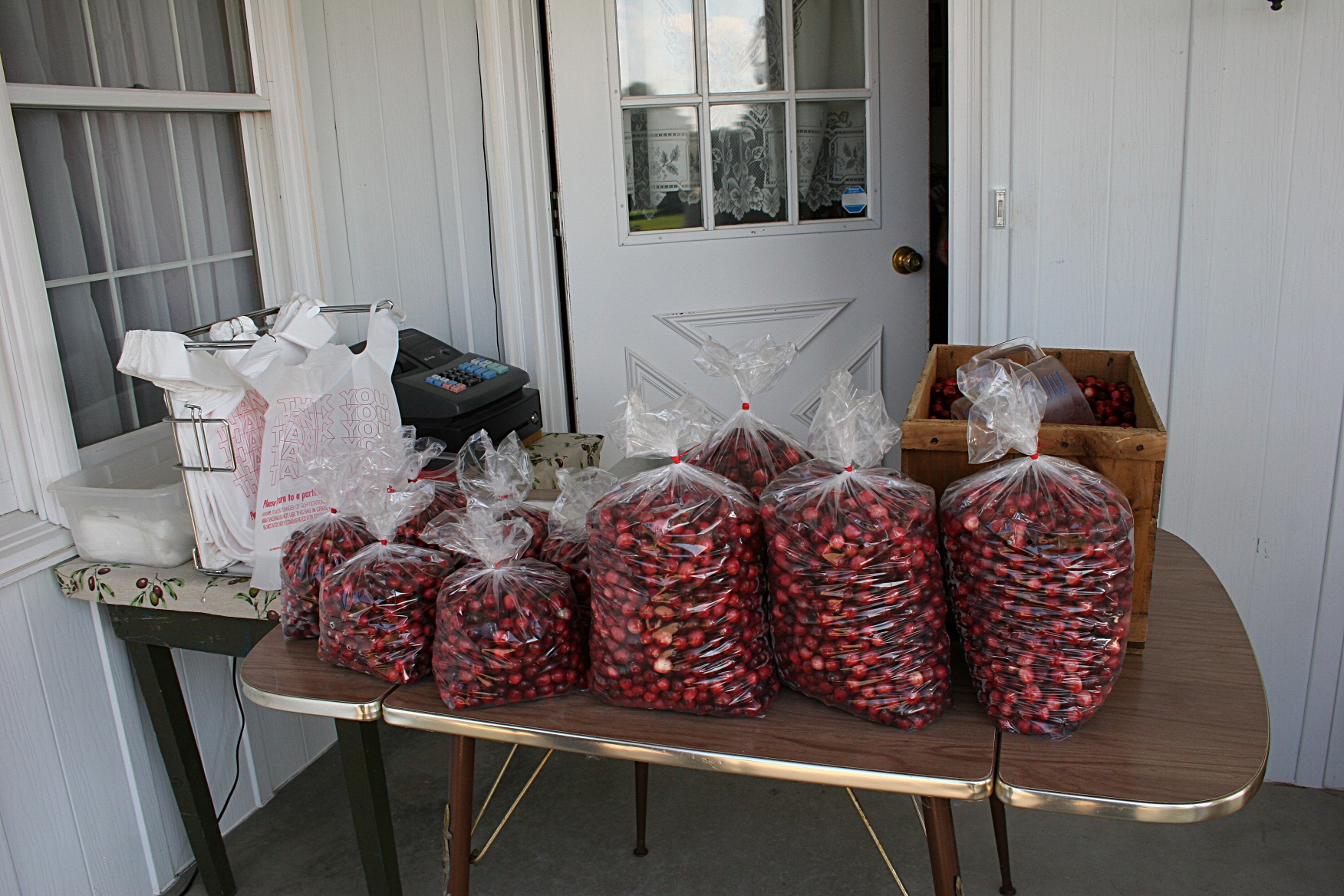
Cranberries bagged in various sizes await purchase.

Cranberries bagged in various sizes await purchase.

Randy snapped up two pounds of berries for $4, later wishing he’d bought five.

Beautiful fresh cranberries for sale.

Beautiful fresh cranberries for sale.

The next customer purchased 30 pounds—for cranberry wine. I wish I could have followed that woman home to learn about cranberry wine making. I’ve sipped and savored cranberry wine from Wisconsin.

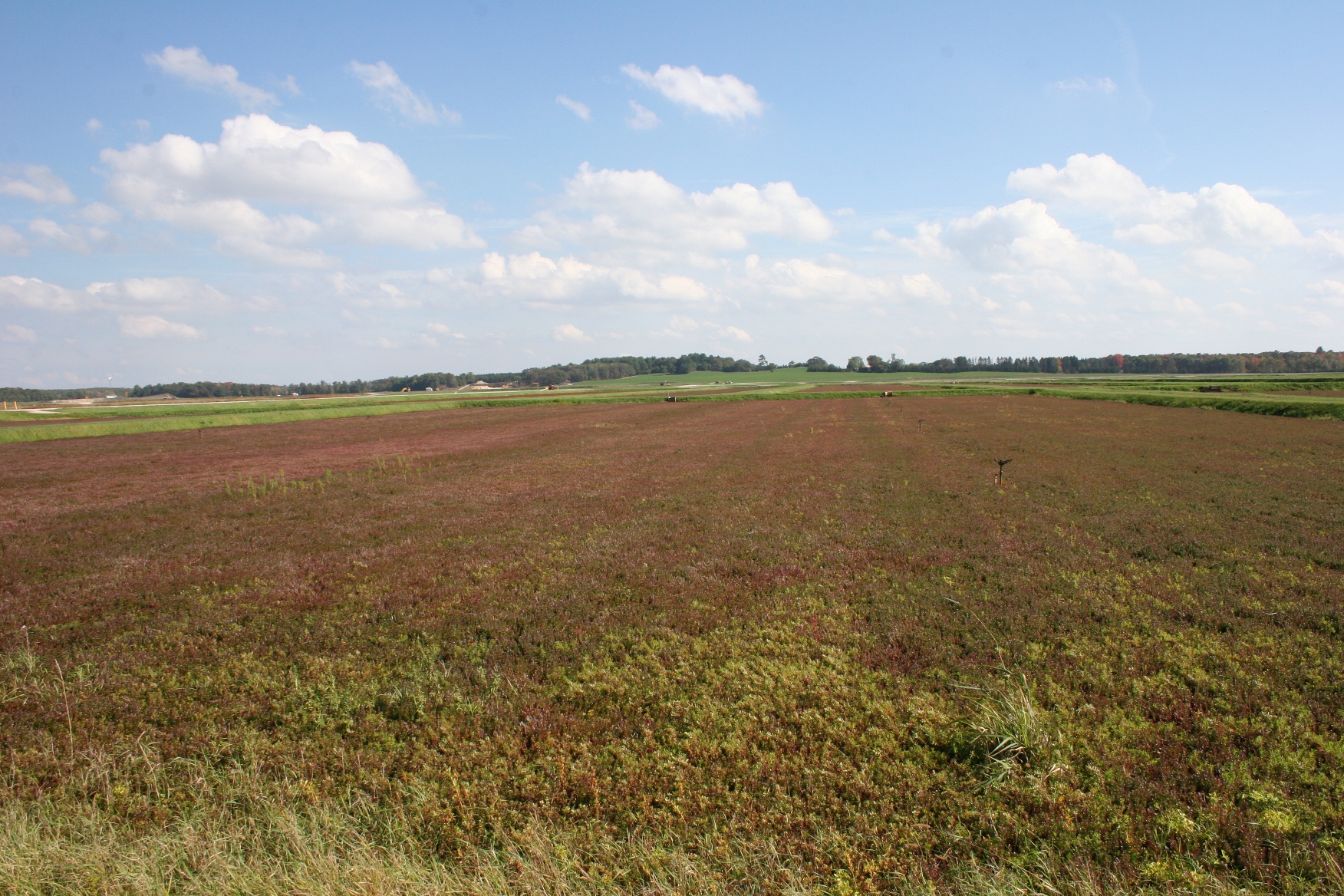
One of the many cranberry fields.

One of the many cranberry fields.

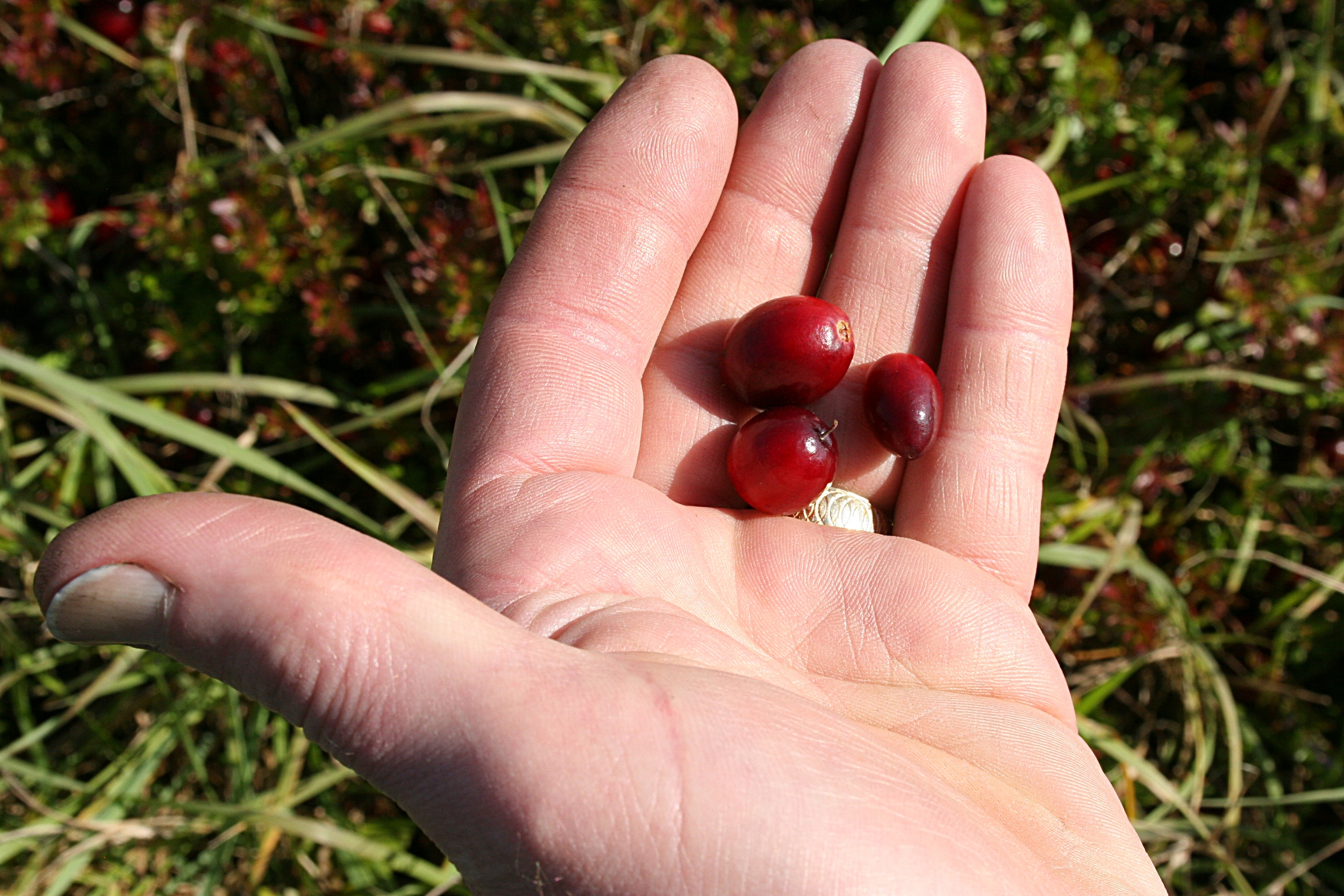
Randy pushes aside leaves and stems to reveal the cranberries on the low-lying plants.

Randy pushes aside leaves and stems to reveal the cranberries on the low-lying plants.

Just-picked cranberries.

Just-picked cranberries.

Instead, under Teresa’s direction and welcome, Randy and I headed over to the cranberry fields for a quick look at how cranberries grow. I had no idea. None. I expected waist high bushes ripe with red orbs. Instead, we discovered cranberries clinging to earth-hugging plants.

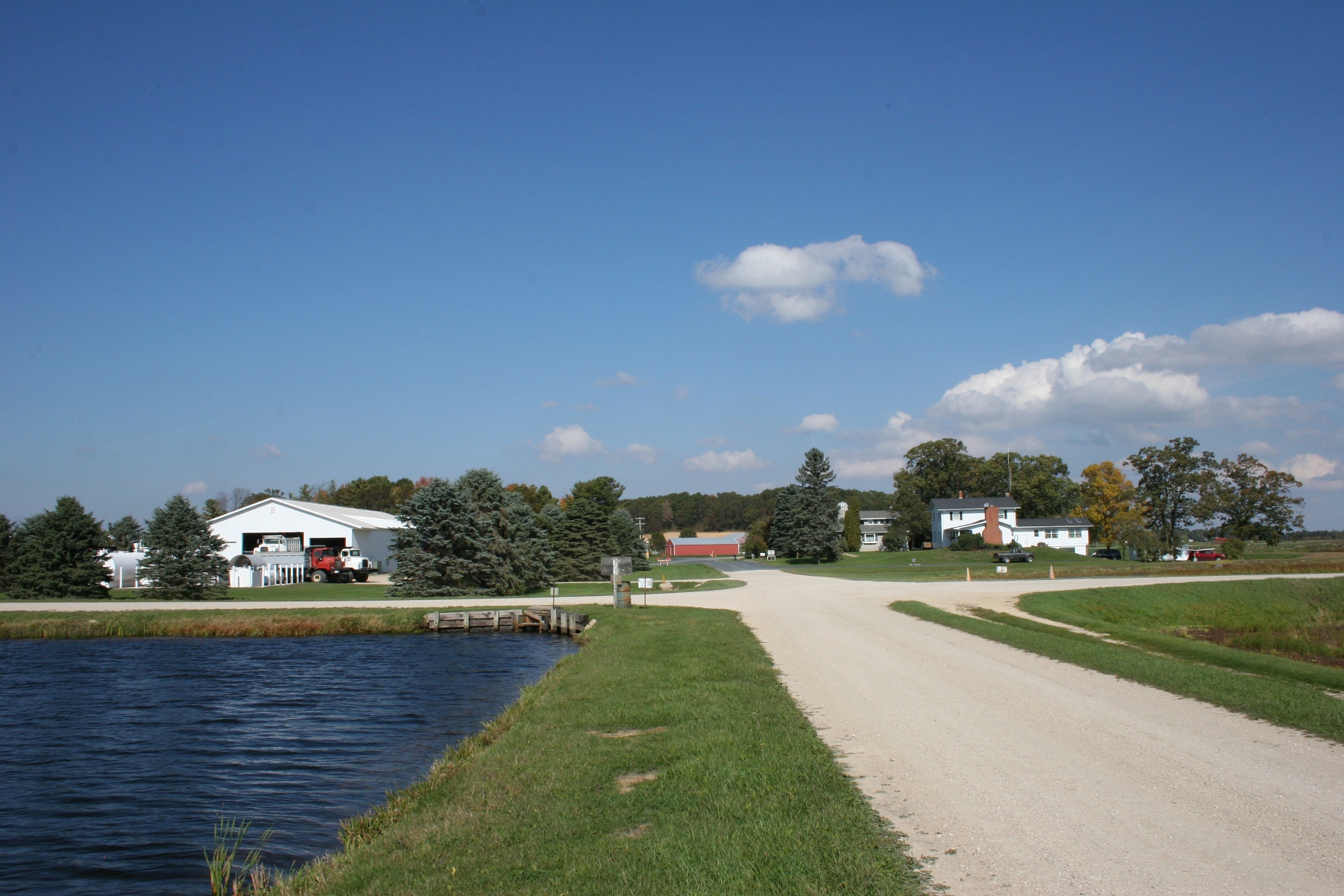
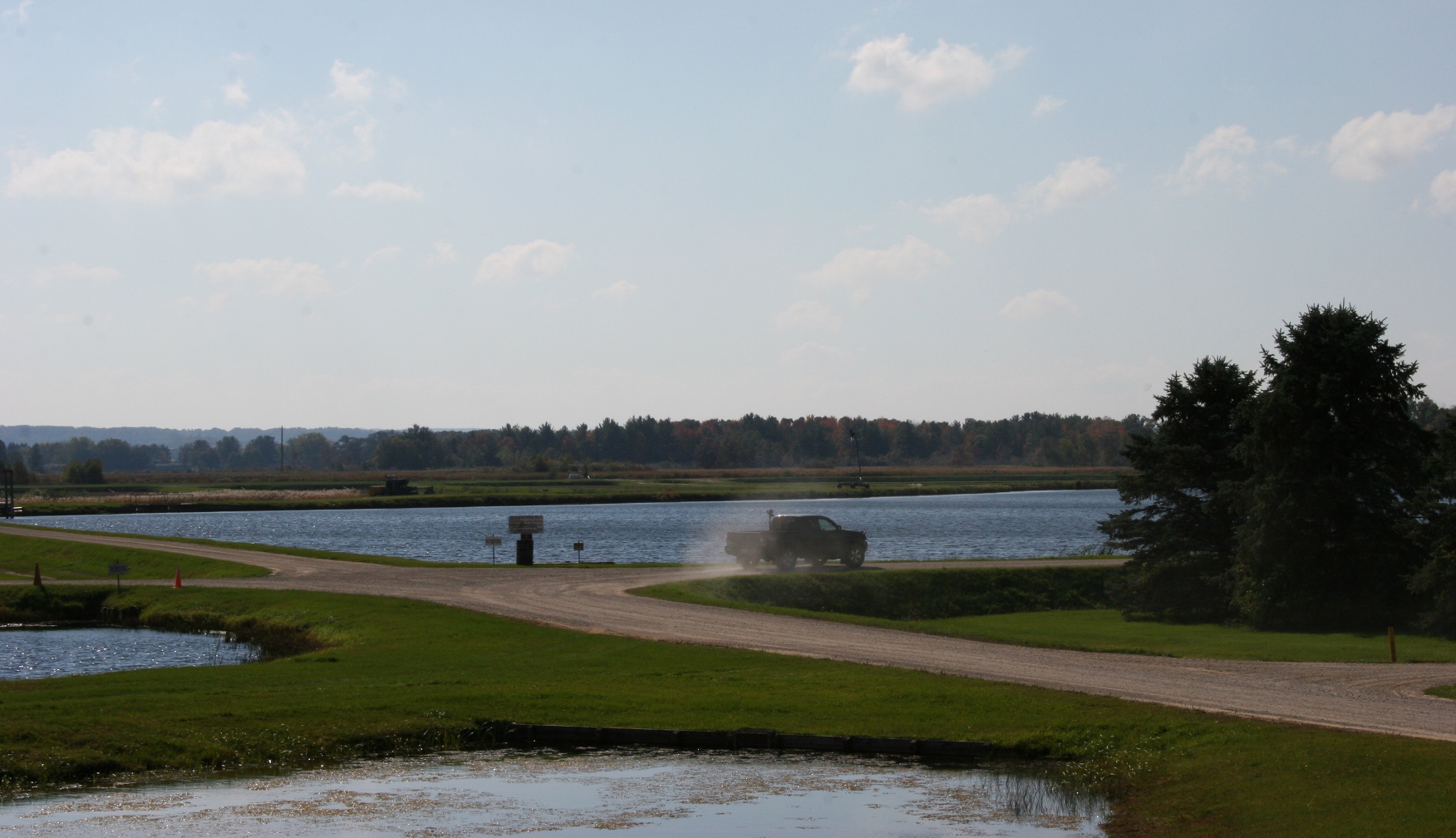
In the distance lies the farm site; to the right the cranberry fields; and to the left, the lake/water for flooding the fields.

In the distance lies the farm site; to the right the cranberry fields; and to the left, the lake/water for flooding the fields.

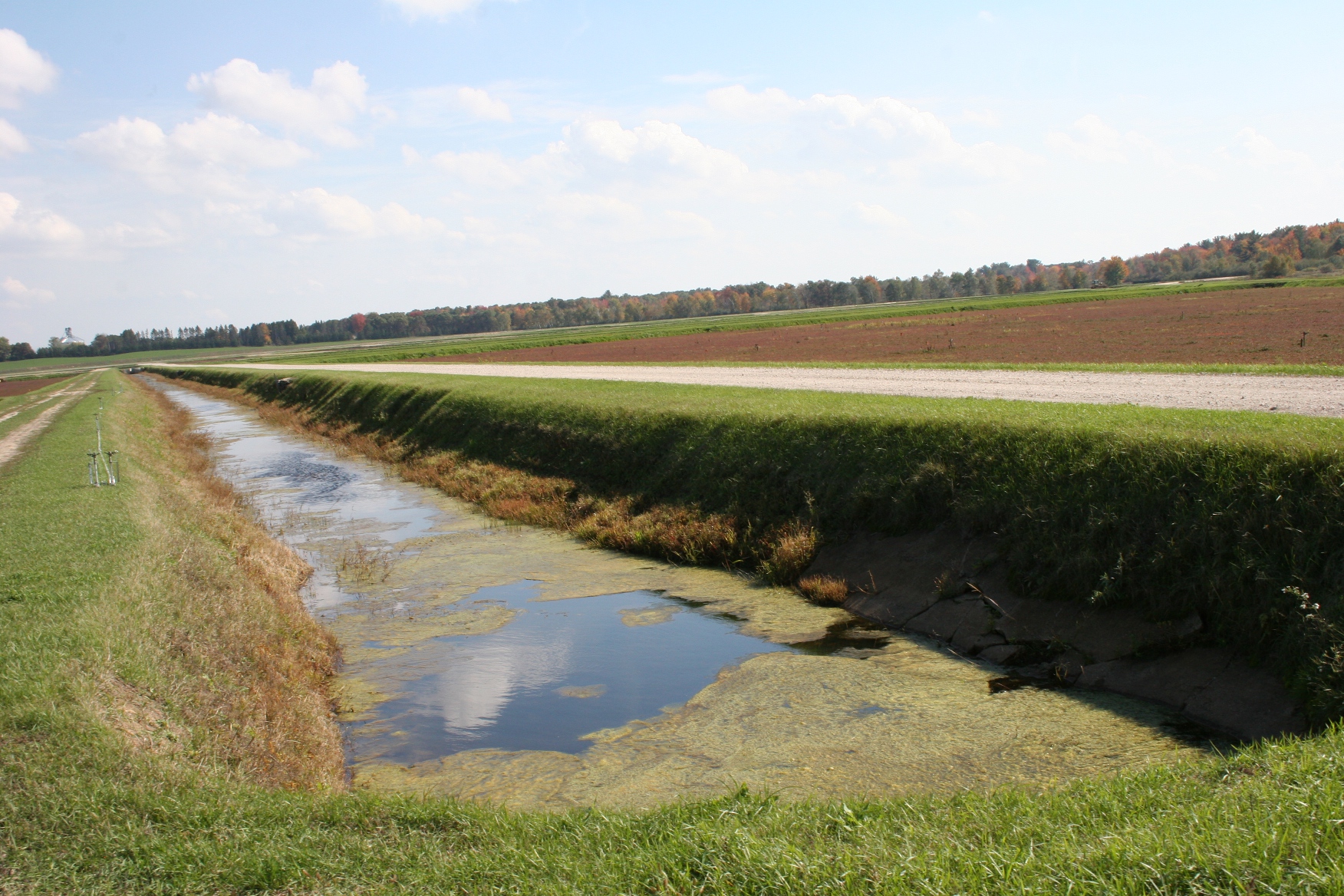
A water channel.

A water channel and cranberry fields to the right.

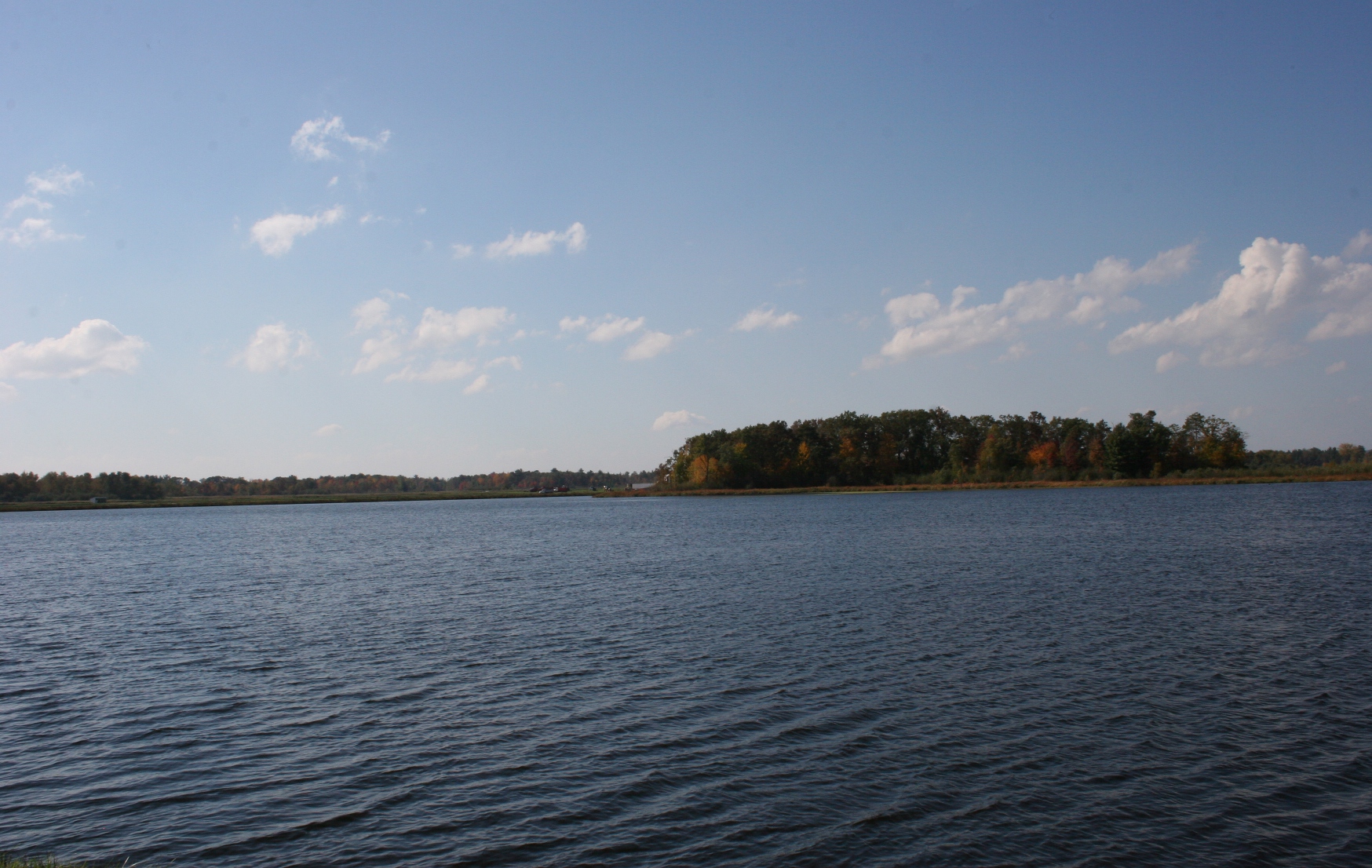
The "lake" across the road from the cranberry fields.

The “lake” across the road from the cranberry fields.

A gravel road separated the cranberry field from a small lake size body of water used to flood the cranberries at harvest. This we deduced on our self-guided quick tour.

Cranberries and fish.

Cranberries and fish.

For $3.50 a day, fishermen/women can fish here, too. Northerns and bass, maybe more. I didn’t ask. What a smart dual usage of water.

We didn’t press Teresa for an educational tour. So our knowledge of how a cranberry farm operates is still minimal.

But at least now I know cranberry plants grow close to the ground.

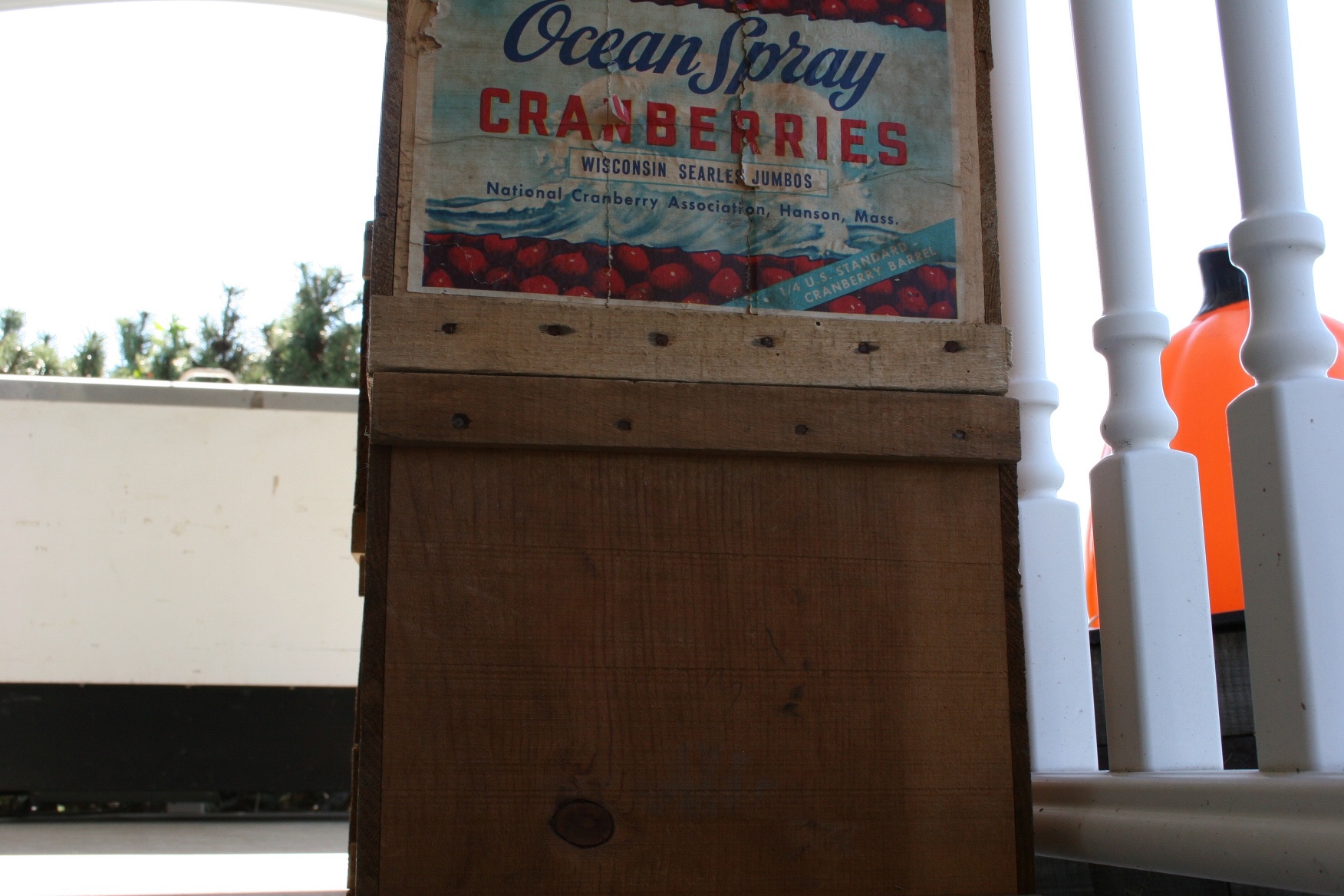
Loved these cranberry crates on the farmhouse porch.

Loved these cranberry crates on the farmhouse porch.

FYI: North Tomah Cranberry Co. berries go to grower-owned Ocean Spray, located just down the highway from the farm. The Tomah processing plant produces 31 million pounds of sweetened dried cranberries and concentrate annually, according to Ocean Spray.

BONUS PHOTOS:

The direction Teresa pointed us for our brief tour.

The direction Teresa pointed us for our brief tour.

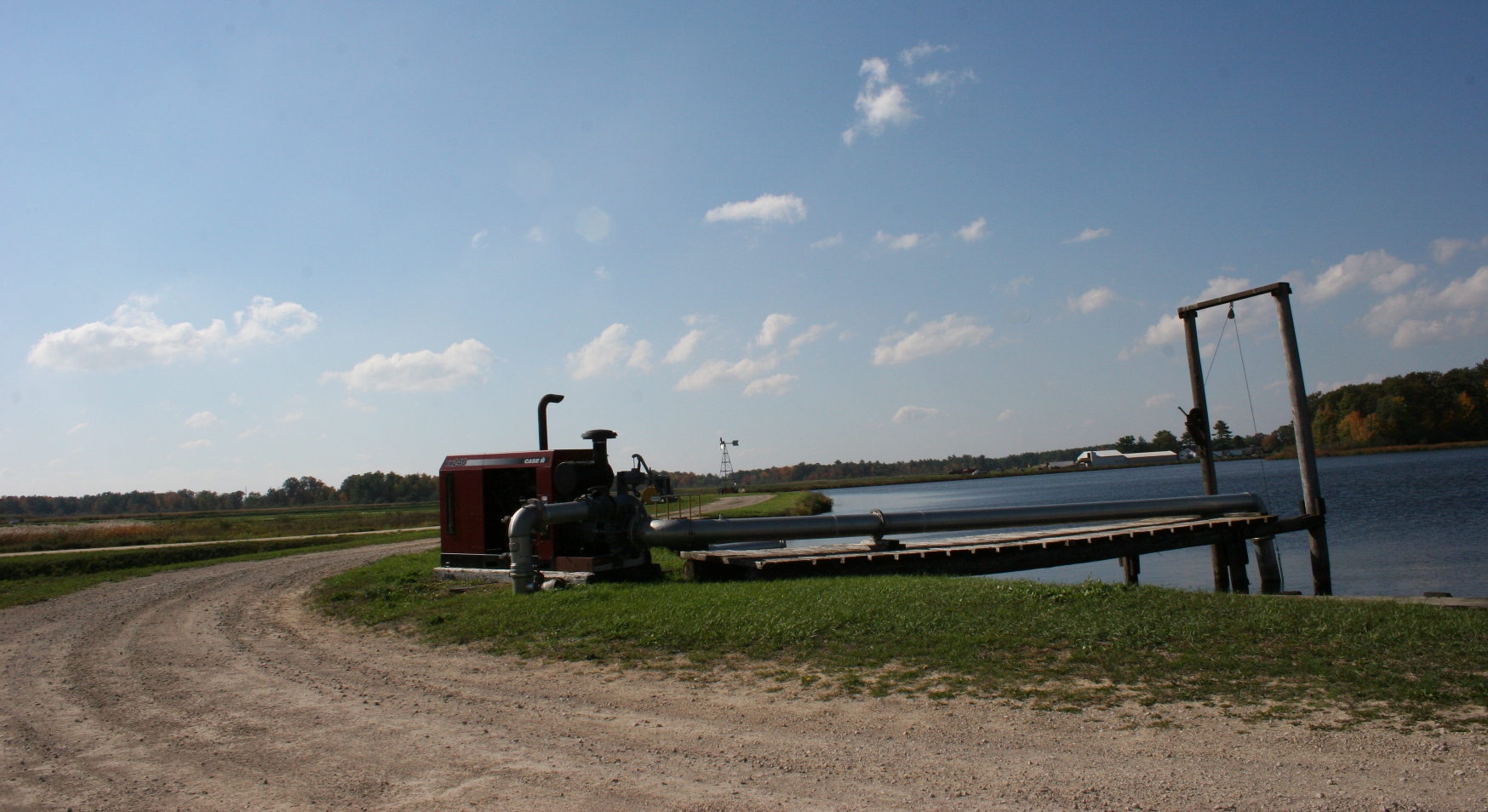
A water pump.

A water pump.

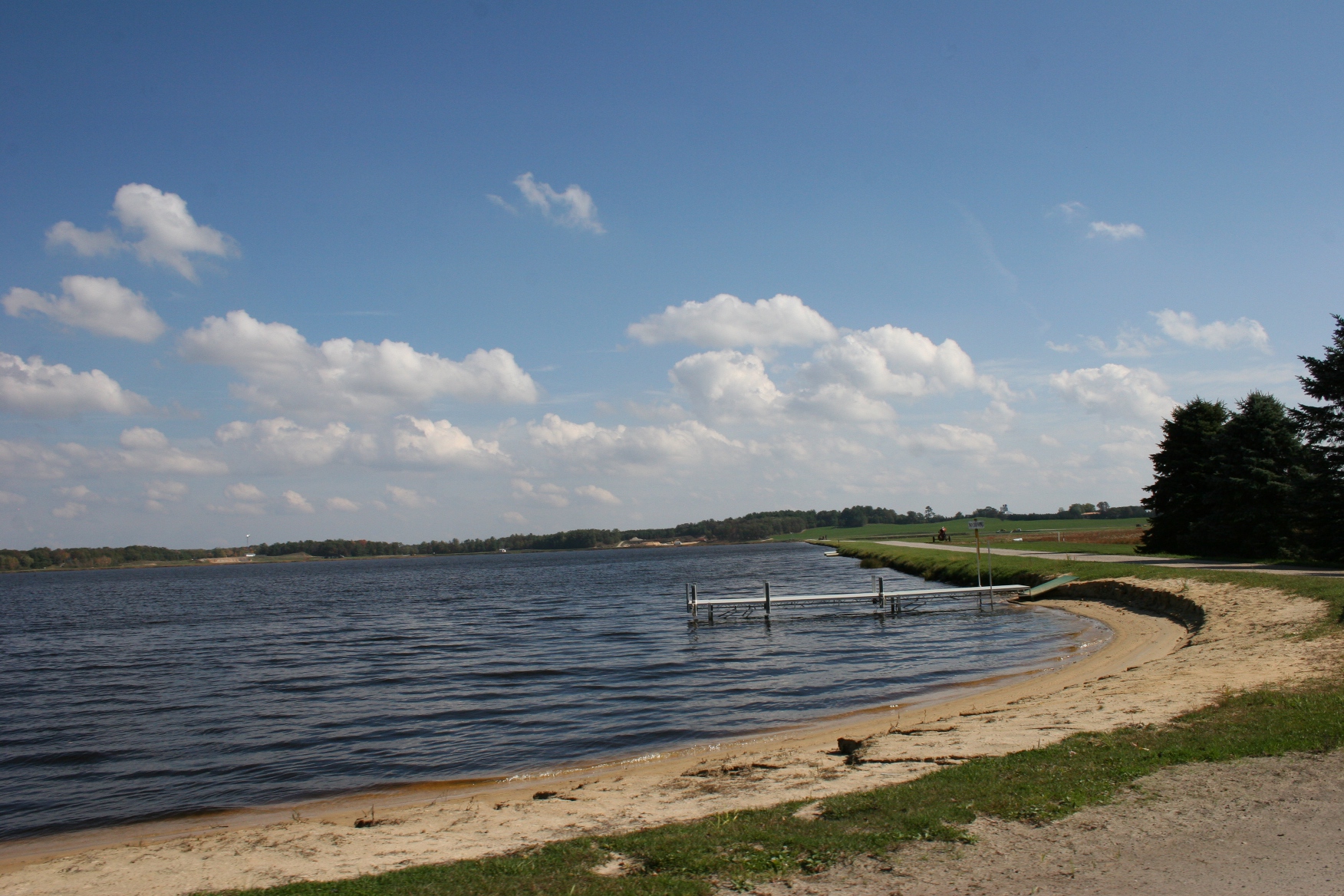
Another "lake," this one with a beach.

Another “lake” by the cranberry farm, this one with a beach.

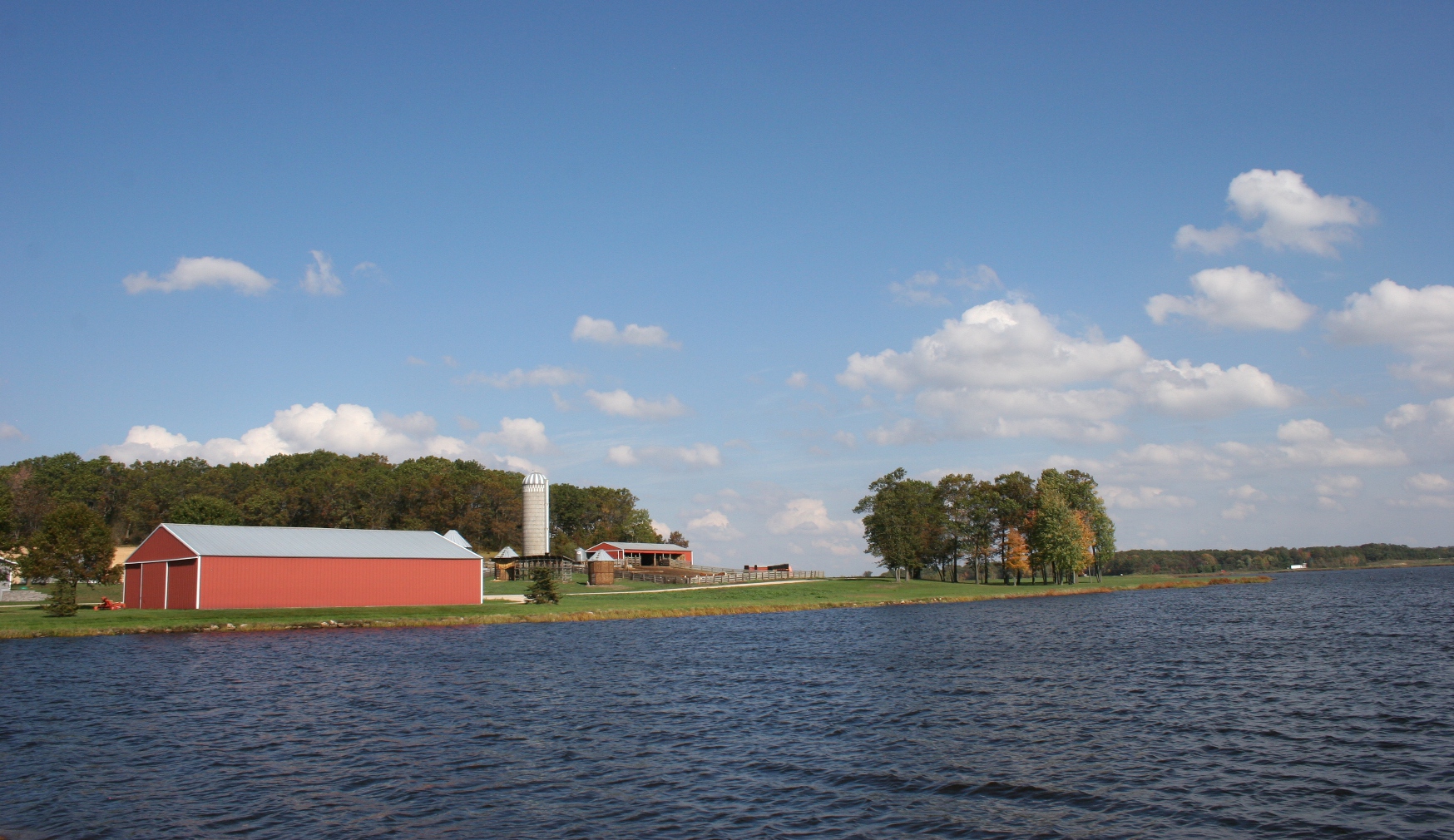
The farm site just to the north of the "lake" pictured above.

The farm site just to the north of the “lake” pictured above.

© Copyright 2013 Audrey Kletscher Helbling
 

Harvesting photo ops in rural Minnesota and rural Wisconsin October 16, 2013

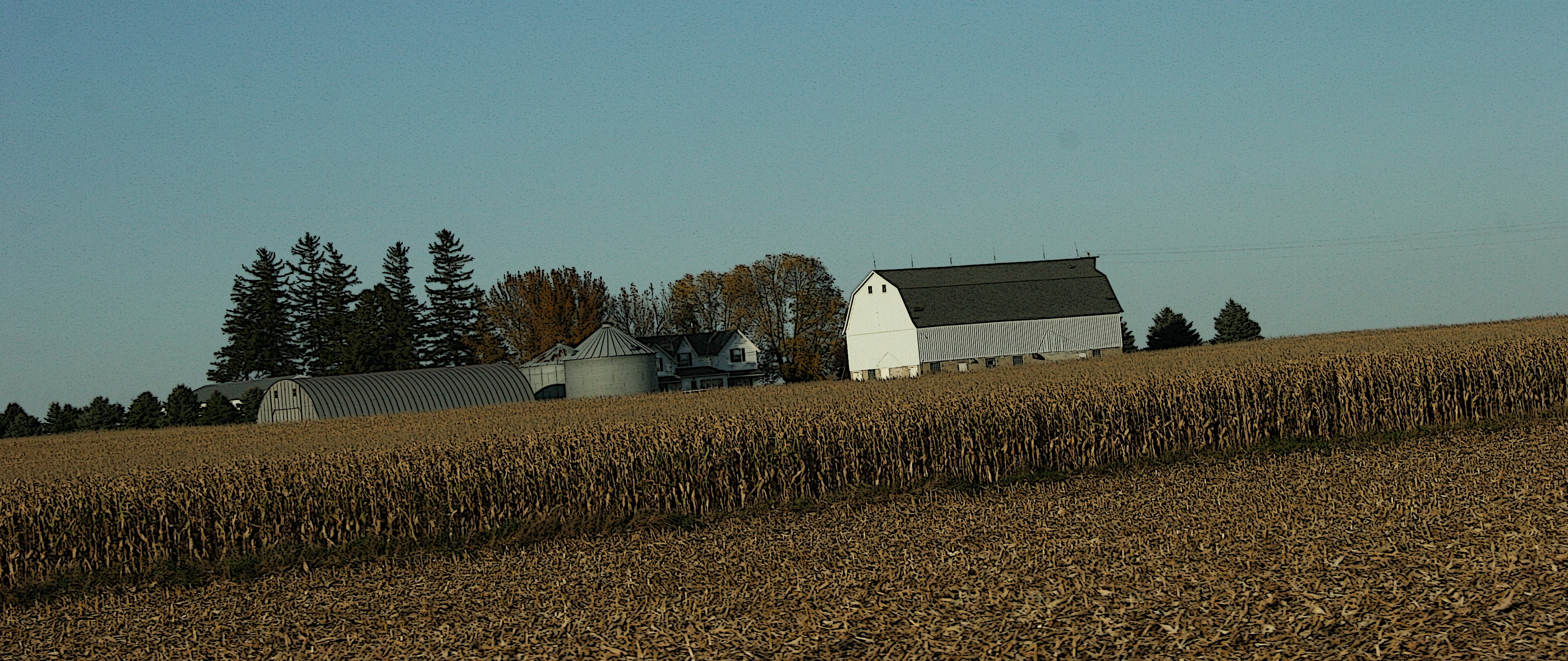
A rural scene along Minnesota State Highway 60 between Faribault and Zumbrota.

A cornfield awaits complete harvest along Minnesota State Highway 60 between Faribault and Zumbrota, Minnesota.

IT IS THE FORMER FARM GIRL that drives me to turn my camera toward the fields this time of year, to the harvest of corn and soybeans.

Harvest in progress near U.S. Highway 10 east of Appleton, Wisconsin.

Harvest in progress along U.S. Highway 10 east of Appleton, Wisconsin.

This past weekend provided the perfect opportunity to scope out the harvest on a 600-mile round trip through southeastern Minnesota across central Wisconsin to Appleton (just south of Green Bay) and back. Lots of windshield time with the husband. And lots of time to observe rural Wisconsin and rural Minnesota and capture those scenes with the quick click of my shutter button while passing by at highway speeds.

A scenic

A cornfield awaits harvest along Interstate 90 in southeastern Minnesota.

In most areas, corn fields have faded from green to a golden hue. Soybean fields likewise are transforming to the muted browns of autumn.

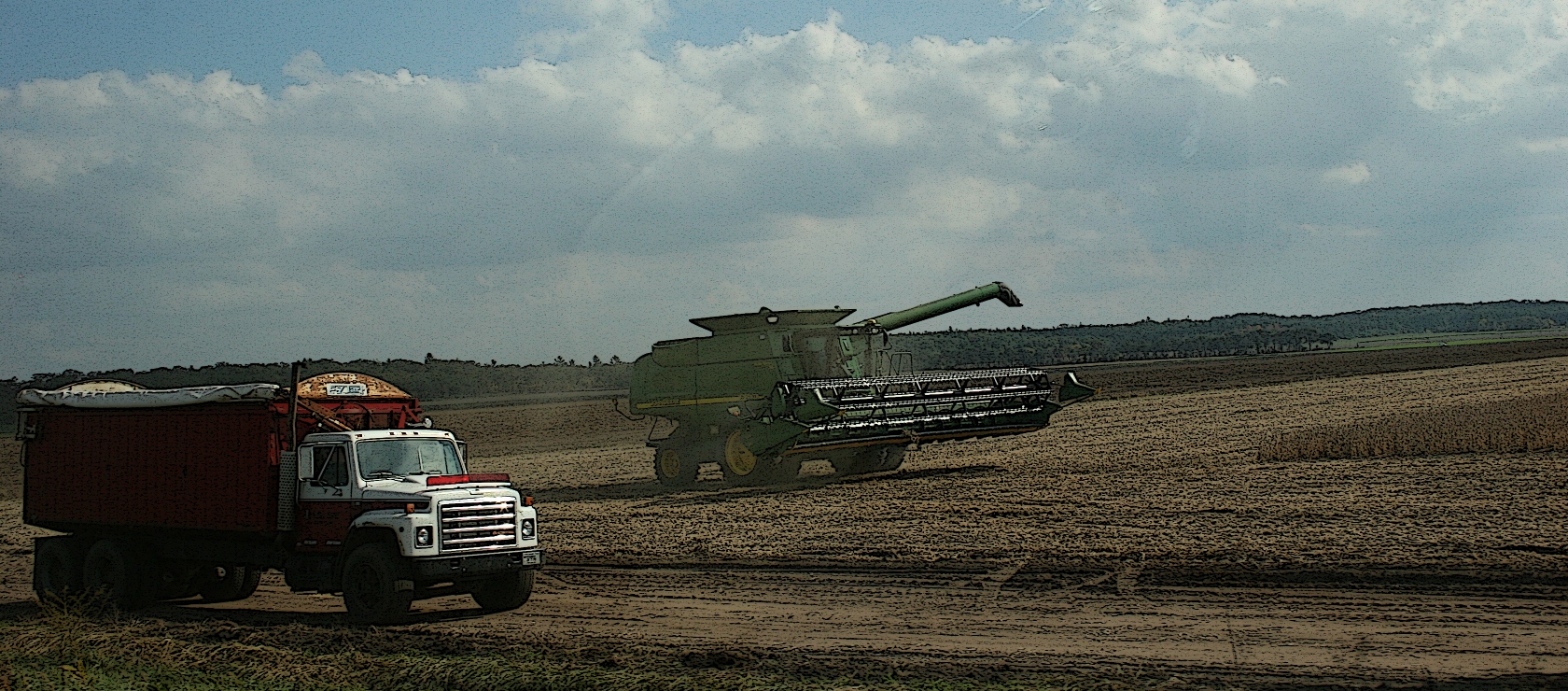
A combine works the land along U.S. Highway 52 north of Rochester.

A combine works the land along U.S. Highway 52 north of Rochester, Minnesota.

Combines kick up dust.

A vintage grain truck rolled out of storage and parked along side a southeastern Minnesota field.

A vintage grain truck parked along side a southeastern Minnesota field.

Grain trucks rumble out of storage.

Lots of pumpkins harvested also and for sale, these along Wisconsin State Highway 21.

Lots of pumpkins harvested also and for sale, these along Wisconsin State Highway 21.

Hurry hangs heavy.

Bringing in the crop along Wisconsin State Highway 21.

Bringing in the crop along Wisconsin State Highway 21.

There’s that anticipation, that sense of urgency, that hustle to get the crop out. Before the snow flies.

FYI: Here are a few photo tips for all you on-the-road wannabe photographers out there: Clean your vehicle windows. Make sure you are the passenger and not the driver; safety first. Set your camera at a fast shutter speed. Anticipate. Watch the glare on your windows. Then shoot, shoot, shoot.

If results are not perfect, and they likely will not be due to bugs, sun, and a myriad of other issues, use photo editing tools. Crop. Change the contrast. Sharpen if necessary. Get creative as I did here with usage of the artistic “cartoonify” editing tool. And, if all else fails to produce a pleasing image with the impact you desire, hover and delete.

PLEASE CHECK BACK tomorrow, when I take you on a tour of a Tomah, Wisconsin, cranberry farm.

© Copyright 2013 Audrey Kletscher Helbling
 

Up close with an Amish family in southeastern Minnesota October 15, 2013

HIS NAME SURPRISES ME. Dennis. “It is not,” I insist to my husband, “in The Book of Amish.”

Not that a Book of Amish exists. I have made that up. But in my mind, this trim Amish carpenter with the dark beard, suspenders criss-crossing his back and a tape measure hooked on his black pants, should bear a biblical name like Samuel, Jacob or Daniel.

Dennis sounds too Englisch.

His surname of Hershberger, however, seems appropriate although the German in me would like to insert a “c” and make that Herschberger.

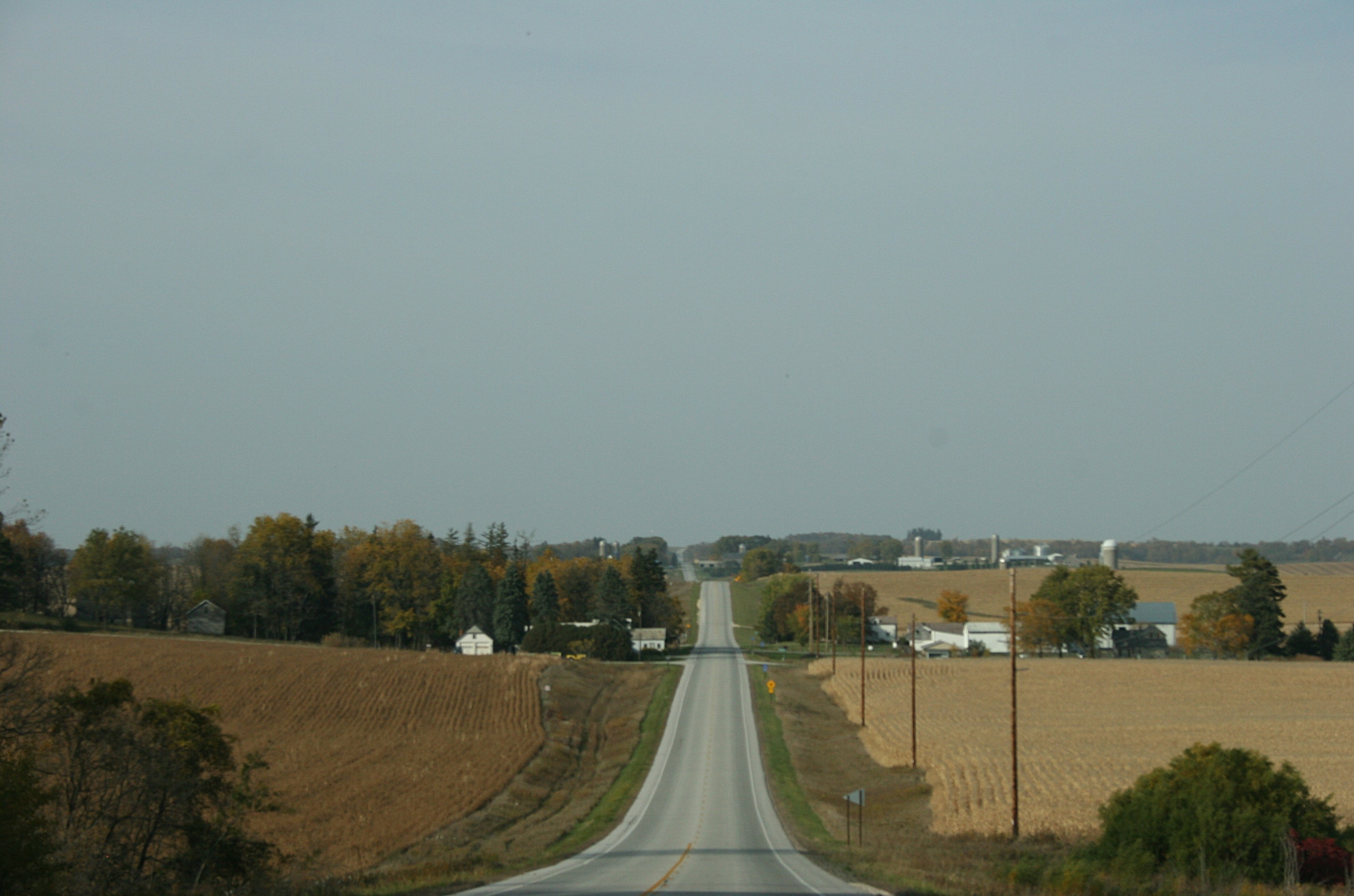
Driving Fillmore County Road 21 north of Canton toward Henrytown then west to Dennis and Mary Hershberger’s farm in early October 2012. This is deep in Minnesota Amish country.

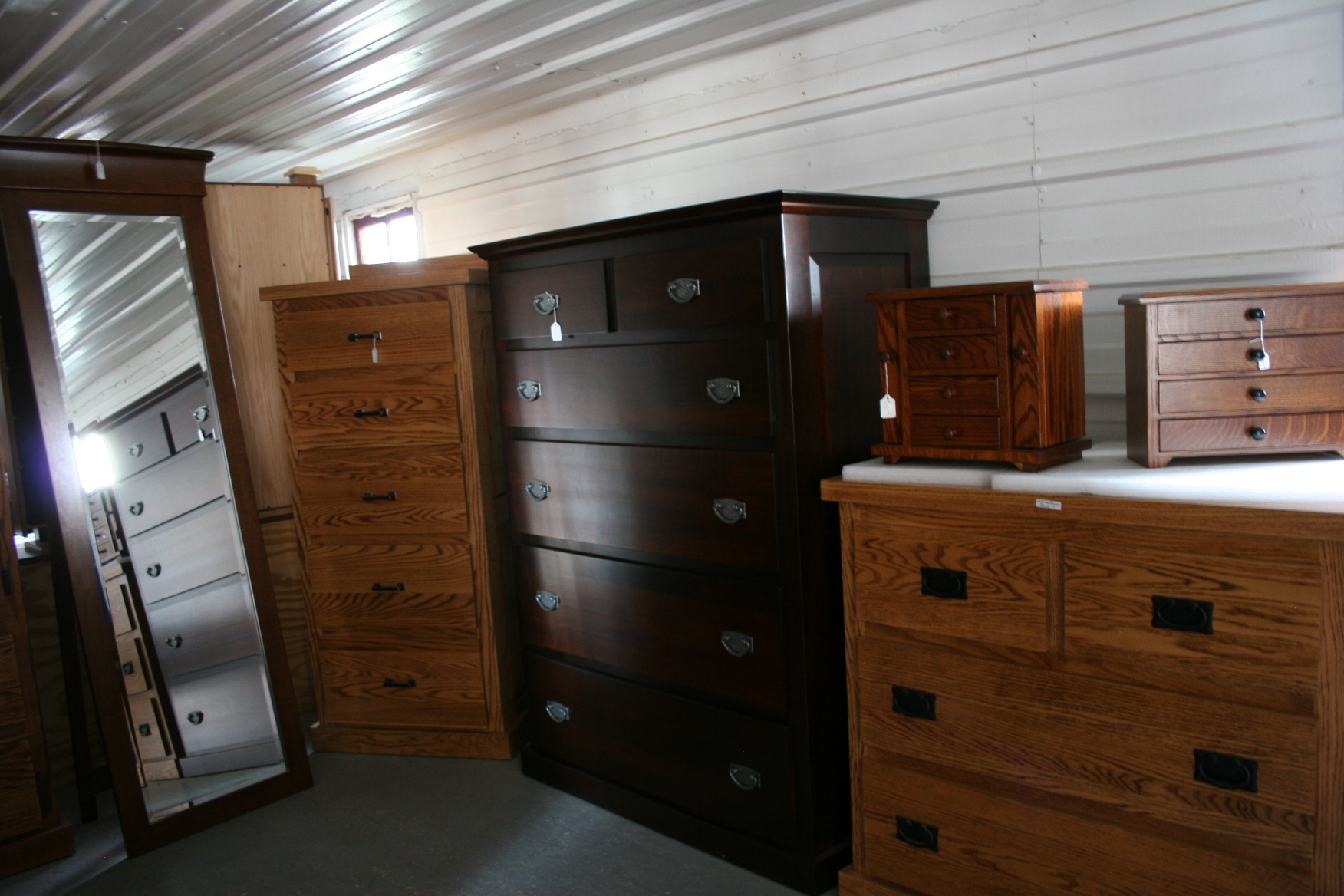
The photographer in me would also like very much to photograph this young Amish father who crafts the most beautiful, gleaming furniture you can imagine on his farm north of Canton and west of Henrytown in southeastern Minnesota. But I know that to photograph him would violate his trust and hinder my welcome to Countryside Furniture.

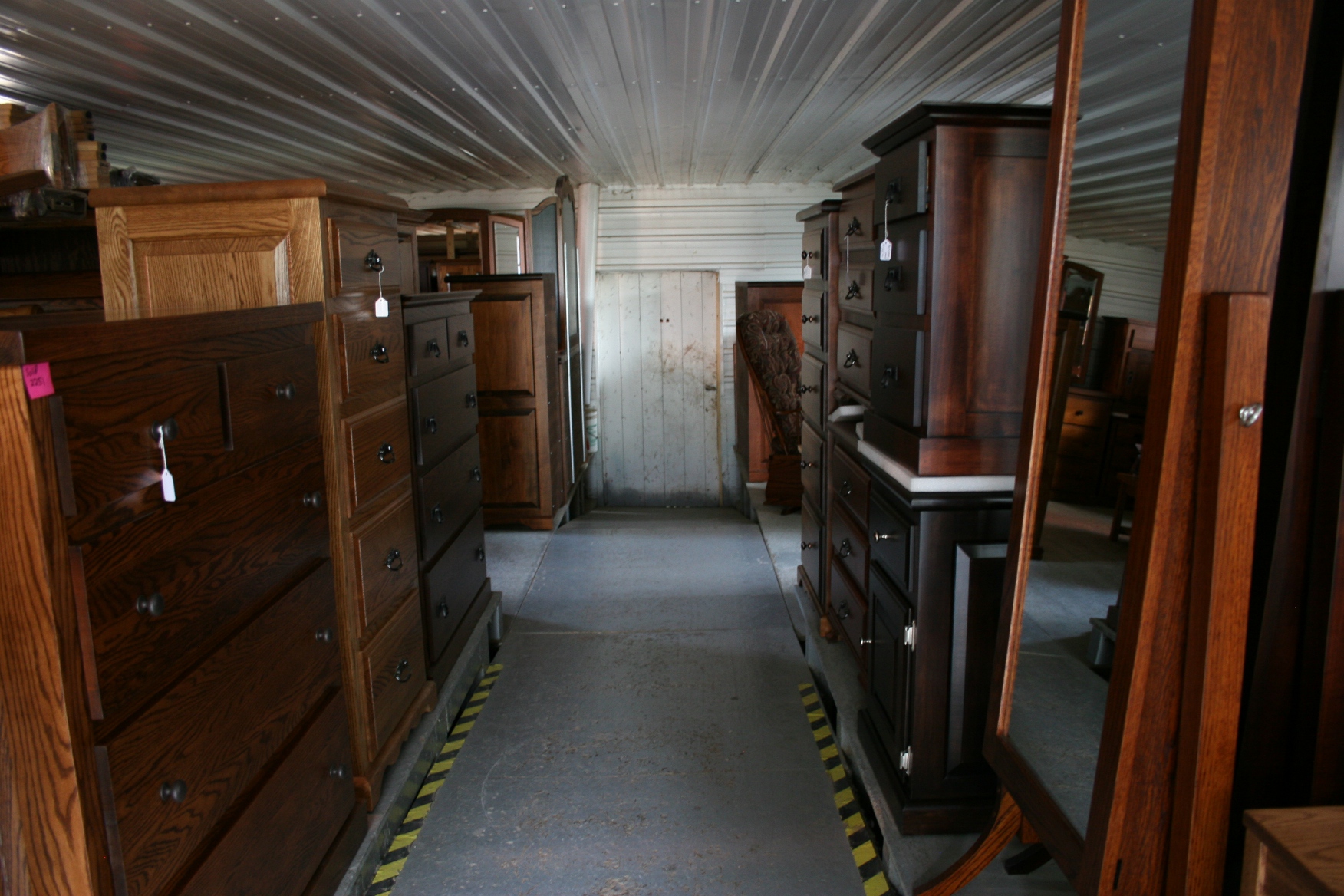
Inside Countryside Furniture, with furniture crafted by Dennis and crew.

So I keep my camera low, tugging it to my side as I watch the Hershberger children, 17-month-old Simon and his 3-year-old sister, whose name I never do learn, wheel a faded red wagon. I am mostly intrigued by Simon in the plain handcrafted blue dress that skims his ankles above pudgy bare feet hardened to the stones and rough grass underfoot. His face is still edged with the softness of a baby, but emerging into that of a little boy. Straight cut bangs ride high on his forehead with wisps of hair tickling his ears in a bowl cut hair style.
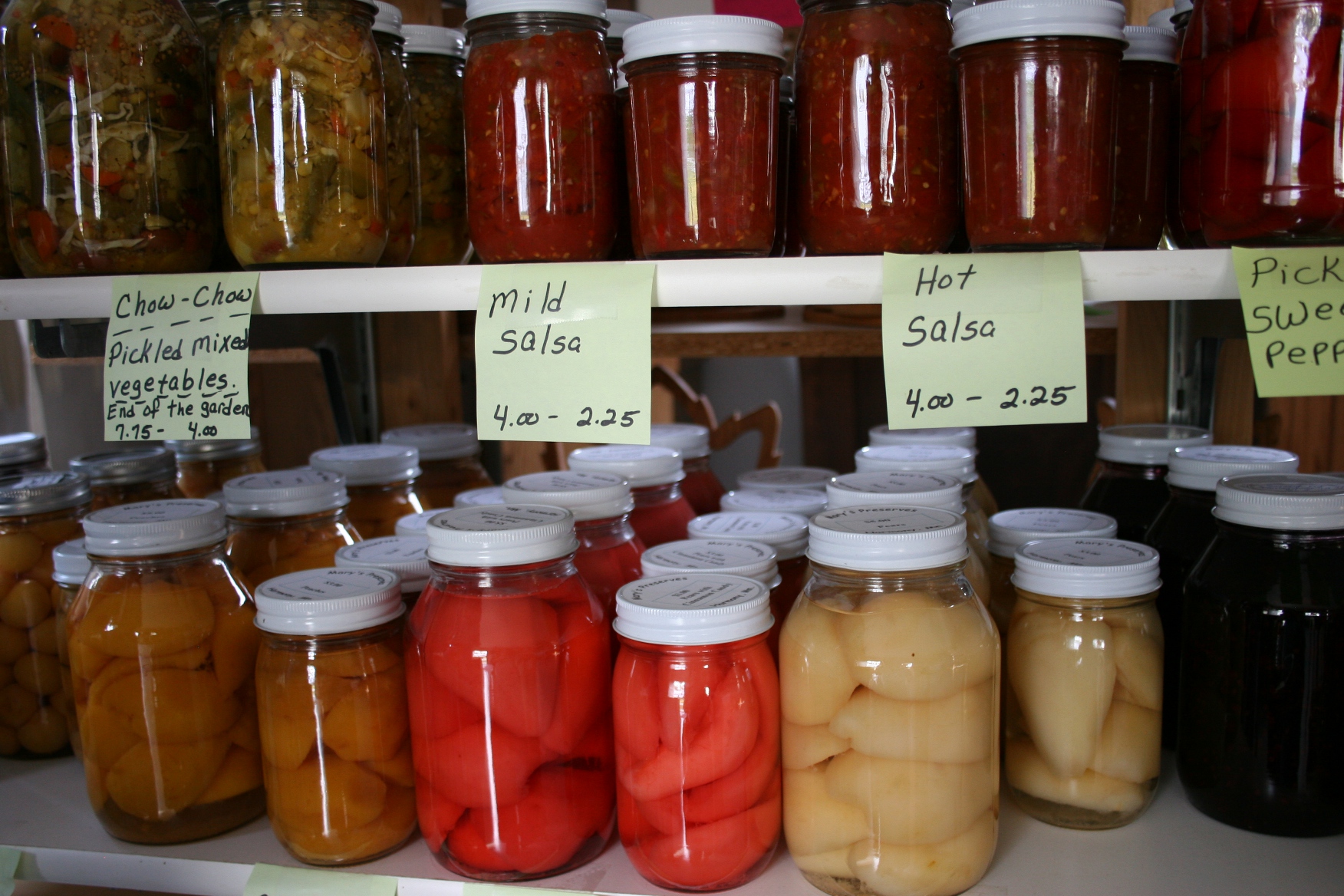
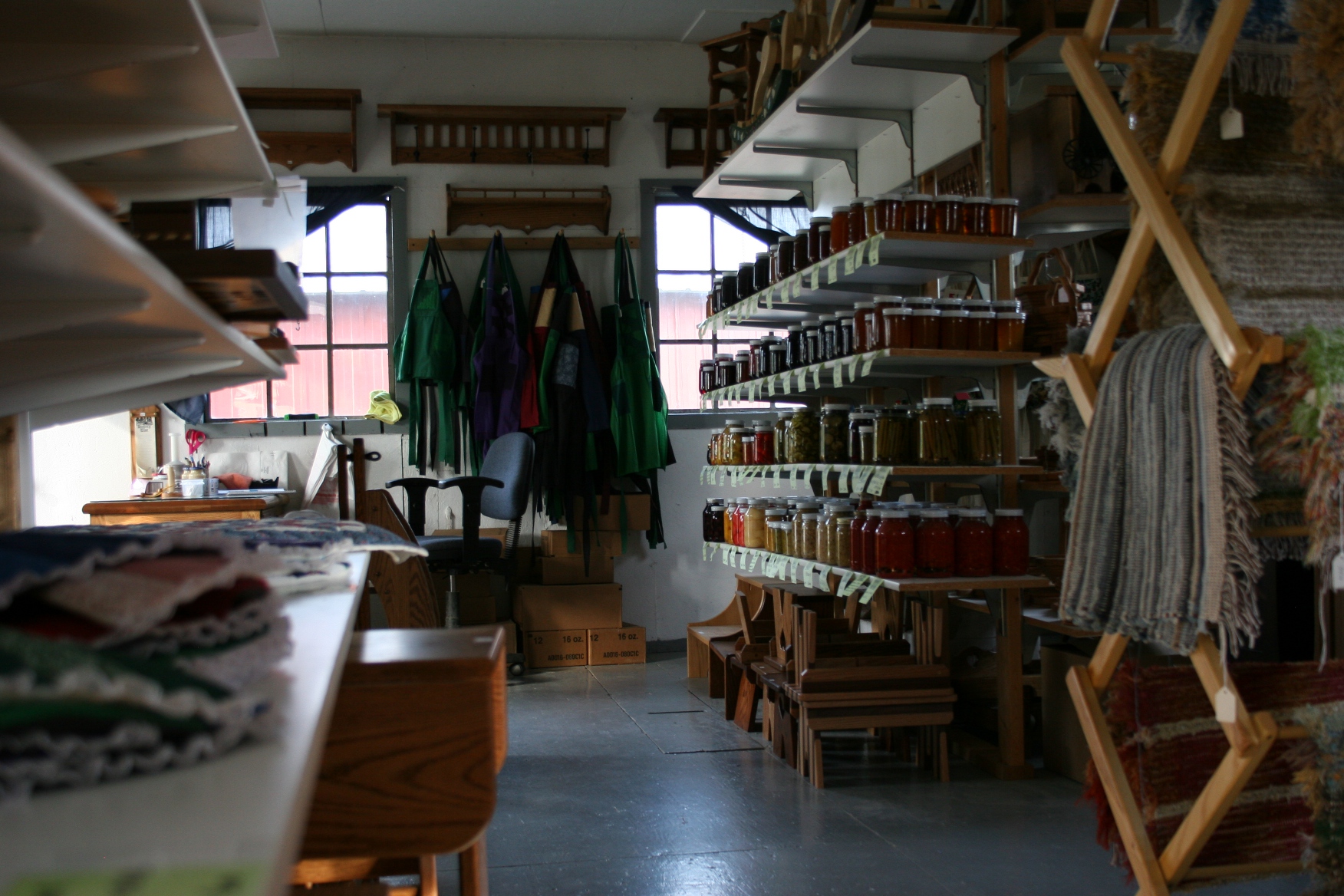
Jars of canned goods line the shelves in Mary’s shop.

When I amble next door, the siblings follow me into their mother’s shop, rattling round and round with the wagon like a car on a racetrack.
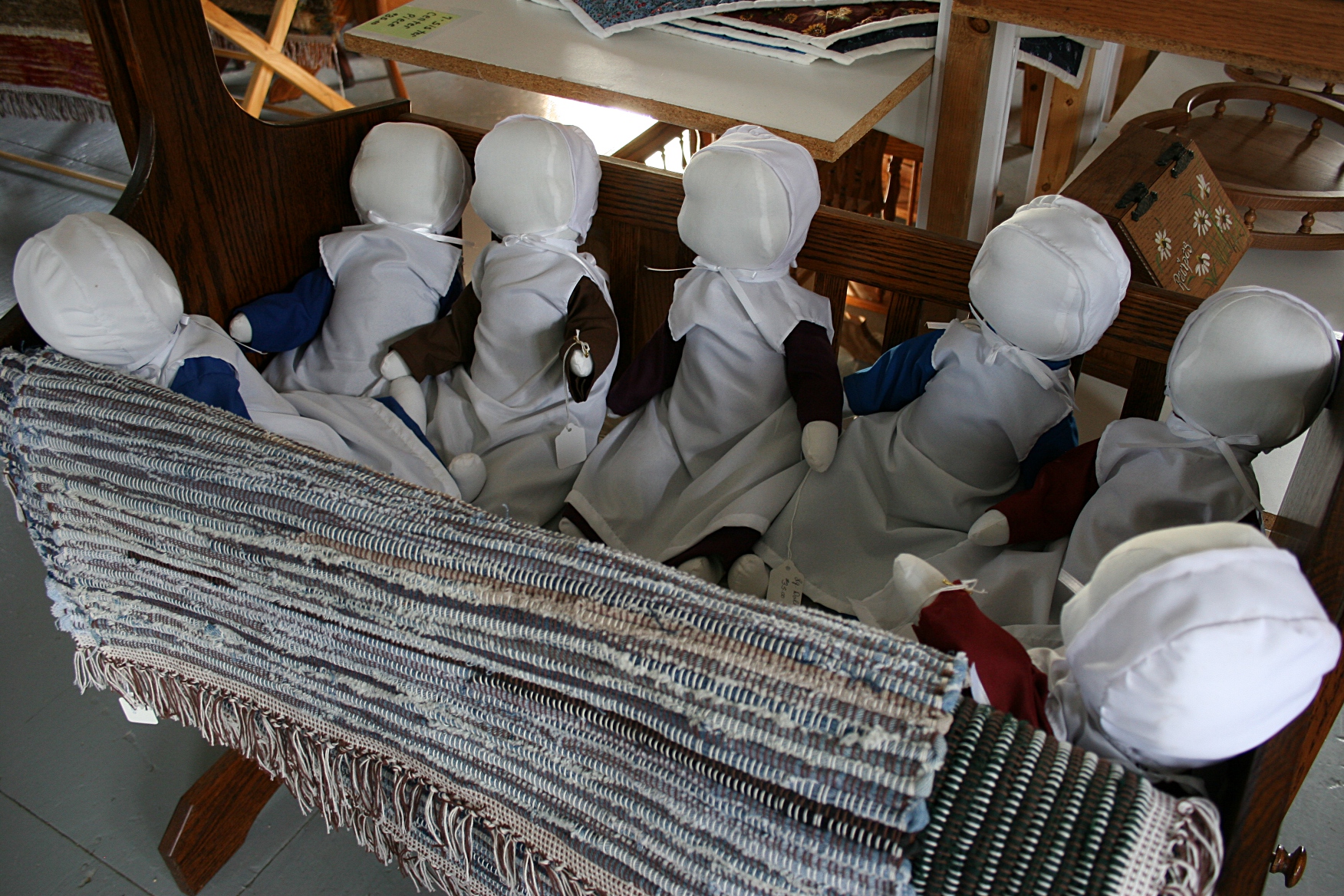
I admire the rows of canned produce (bright orange carrots, golden nuggets of corn, jade spears of dill pickles), the faceless Amish dolls snug in a cradle, the tight weave of cotton rag rugs…

Faceless handcrafted Amish dolls in a handcrafted cradle.

I lift bars of homemade soap and breathe in their perfumed scent.

A pathway in the crafts store where Simon and his sister circled their wagon.

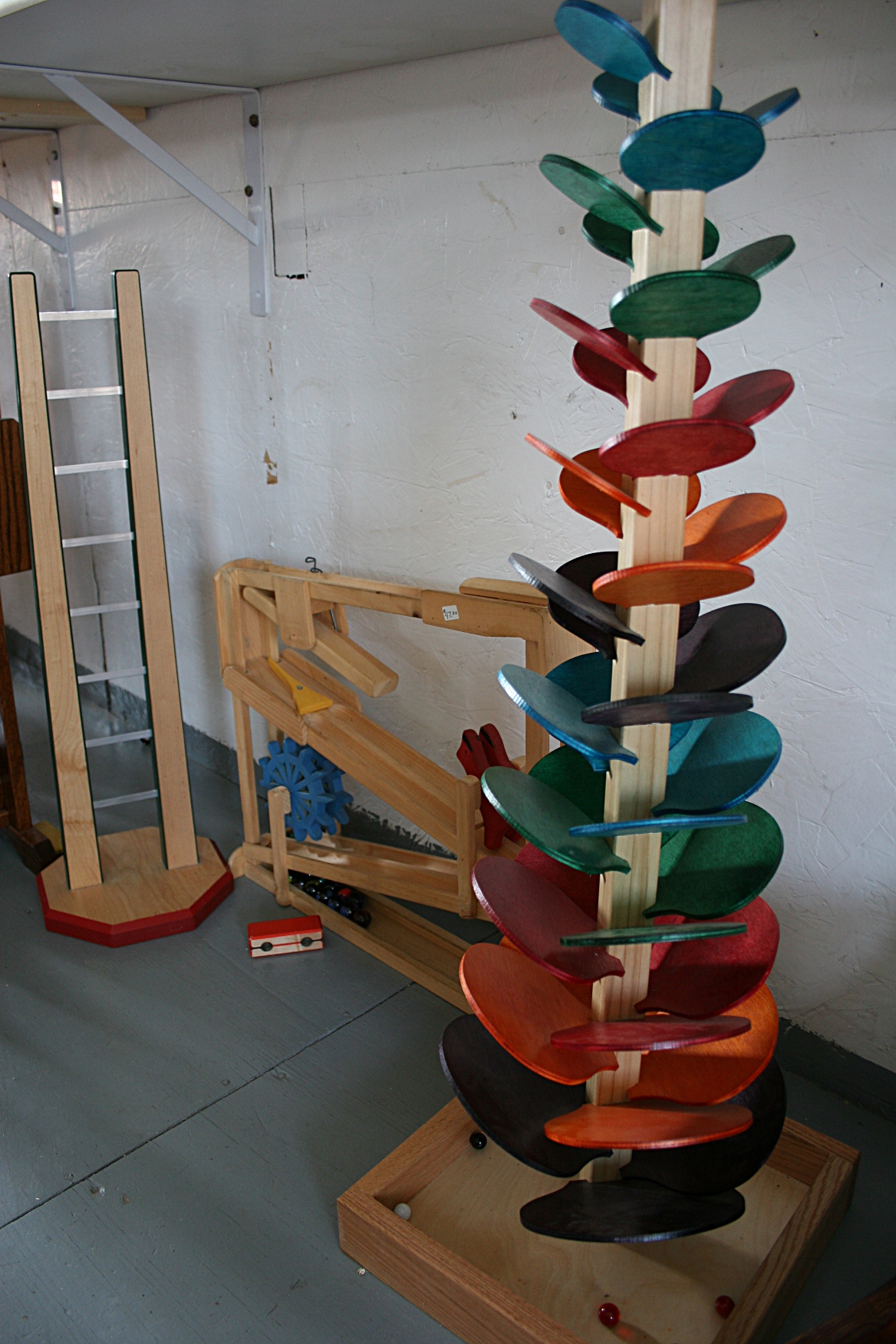
Then my attention turns again toward little Simon and his sister as they drop marbles onto a colorful tower before darting outside. Clack, clack, clack.
The siblings dropped marbles down the colorful tower on the right.

Through the open shop door, I watch a horse and buggy wheel into the farmyard, steering toward the weathered red barn. A boy, perhaps 10 years old, strolls toward the farmhouse and I lift my right hand to wave. He hesitates, then returns my greeting.
I turn my attention back to Mary’s merchandise. We must choose something to purchase now. It is expected. So Randy picks two jars of Mary’s Preserves. We head back to the furniture showroom, a small outbuilding with white walls and a low ceiling, with two jars of strawberry and tripleberry jams.

We make small talk. Dennis asks where we’ve come from. “Faribault,” I tell him.

“Along Interstate 35,” he notes, then tells us of a good customer from our community.

A close-up of the furniture Dennis and his crew craft.

I ask Dennis’ permission to photograph his fine furniture and he gives his OK. Then we return, with Simon still tugging that wagon, to Mary’s shop. As we walk, Dennis lifts his son off the ground, snugs the boy against his right hip, then speaks to him in a language I can only assume is a German dialect. I expect Simon may be getting a gentle admonition about taking the wagon inside his mother’s shop.

Randy pays $4.50 for the jam. We thank Dennis for the gracious welcome to his farm.

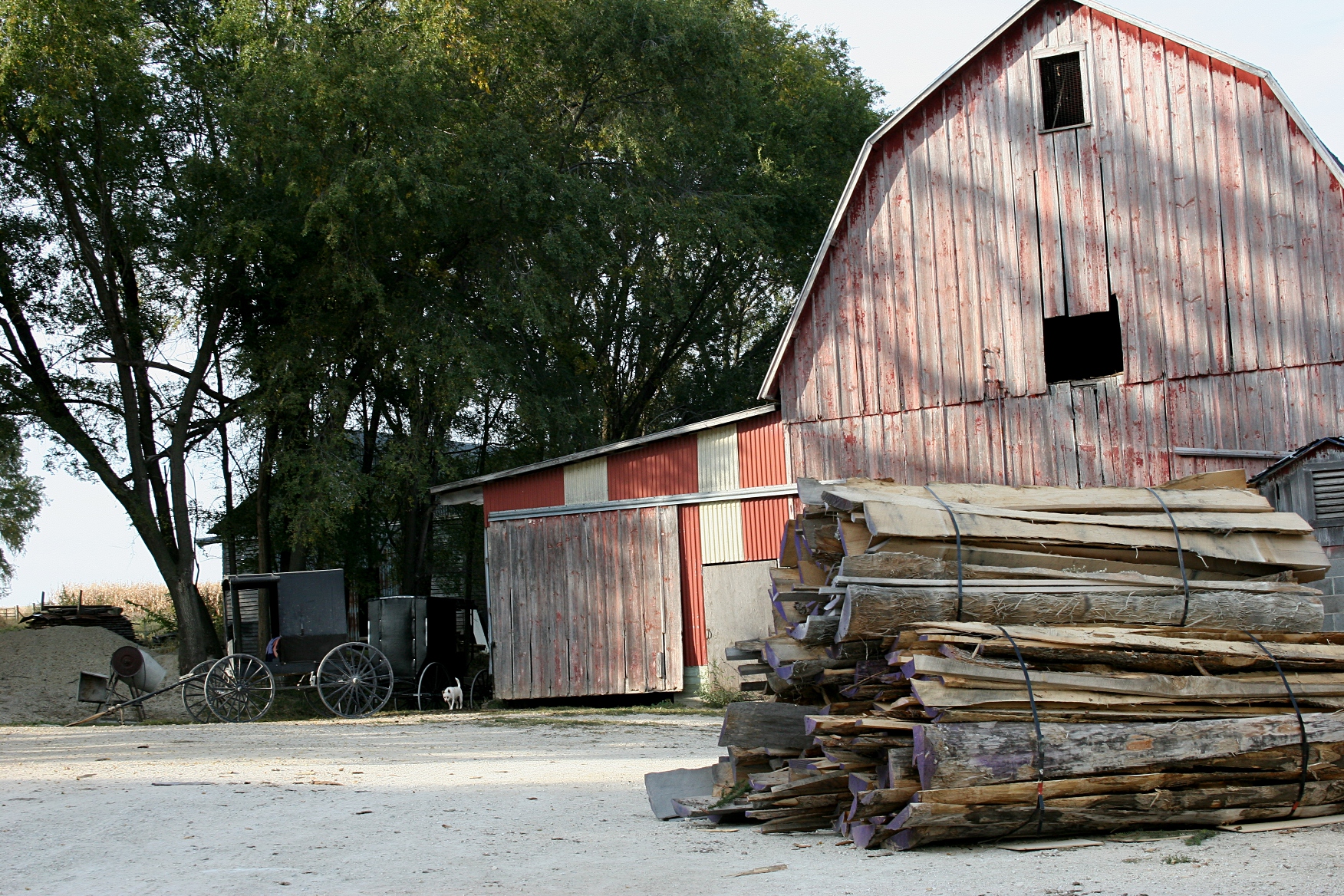
My final shot of the Hershberger farmyard: the barn, the buggies, the stack of wood.

As we head to the car, I photograph the red barn, the two buggies parked next to it and the rough-hewn lengths of stacked wood which Dennis and his helpers will soon craft into fine furniture.

Even though I couldn’t photograph the Hershbergers, the visuals of this place, of this Amish family, of this experience, have imprinted upon my memory. And sometimes that is better than a photo.

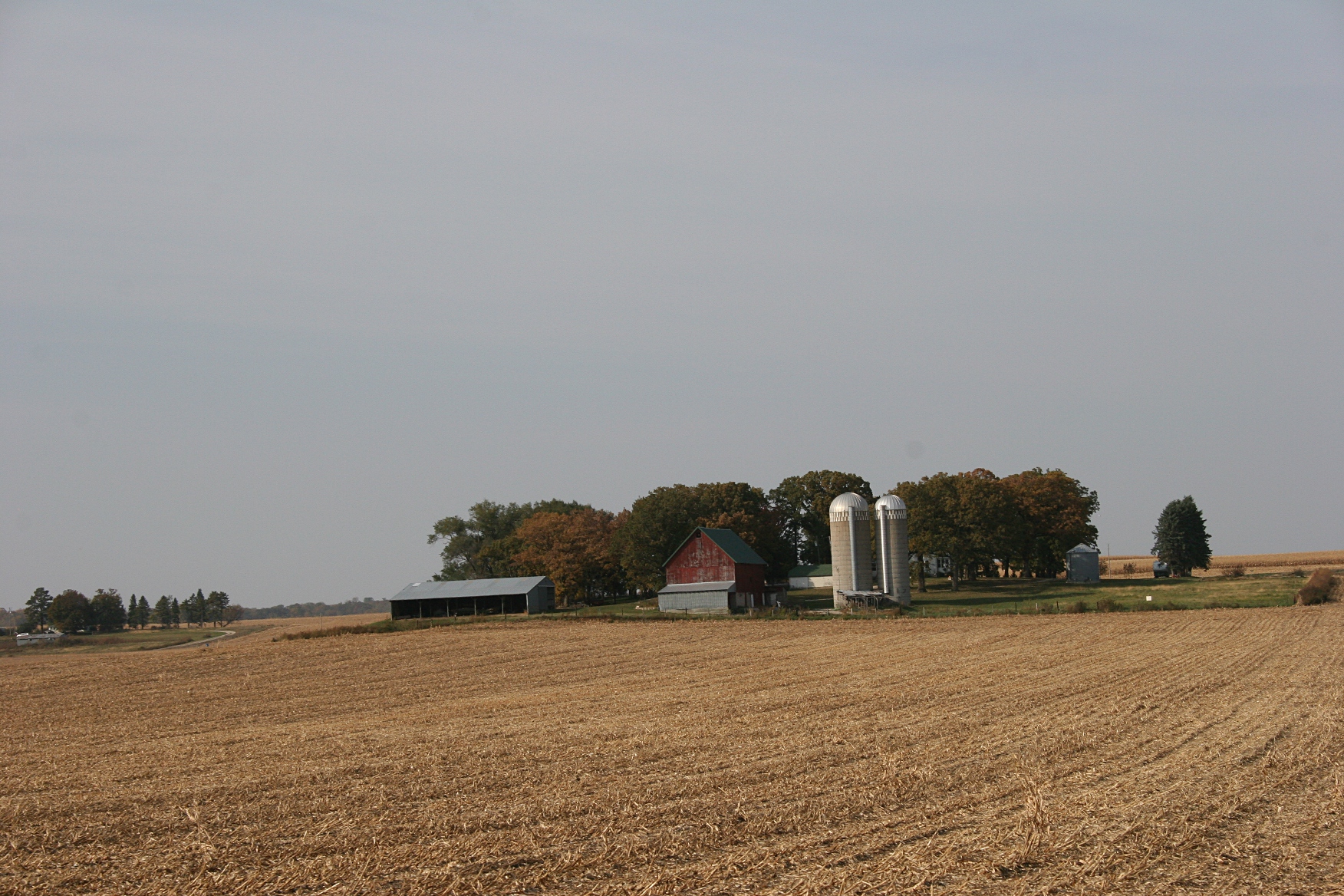
A picturesque farm near the Hershberger place, rural Fillmore County, Minnesota, taken in early October 2012.

FYI: Dennis Hershberger also sells his furniture at Countryside Furniture, located at Old Crow Antiques in Canton, at the intersection of U.S. Highway 52 and Fillmore County Road 21. The Hershberger farm is about five miles northwest of that intersection.

Old Crow Antiques is a great place to stop for information on local Amish farms.

This story and these images are from an October 2012 visit to the Hershberger farm.

© Copyright 2013 Audrey Kletscher Helbling