Minnesota Prairie Roots

Writing and photography by Audrey Kletscher Helbling

The little brick house in Waterville September 14, 2012

Filed under: Uncategorized — Audrey Kletscher Helbling @ 7:14 AM
Tags: , , , , , ,

YOUR HOUSE NEEDN’T BE a mansion to impress me.

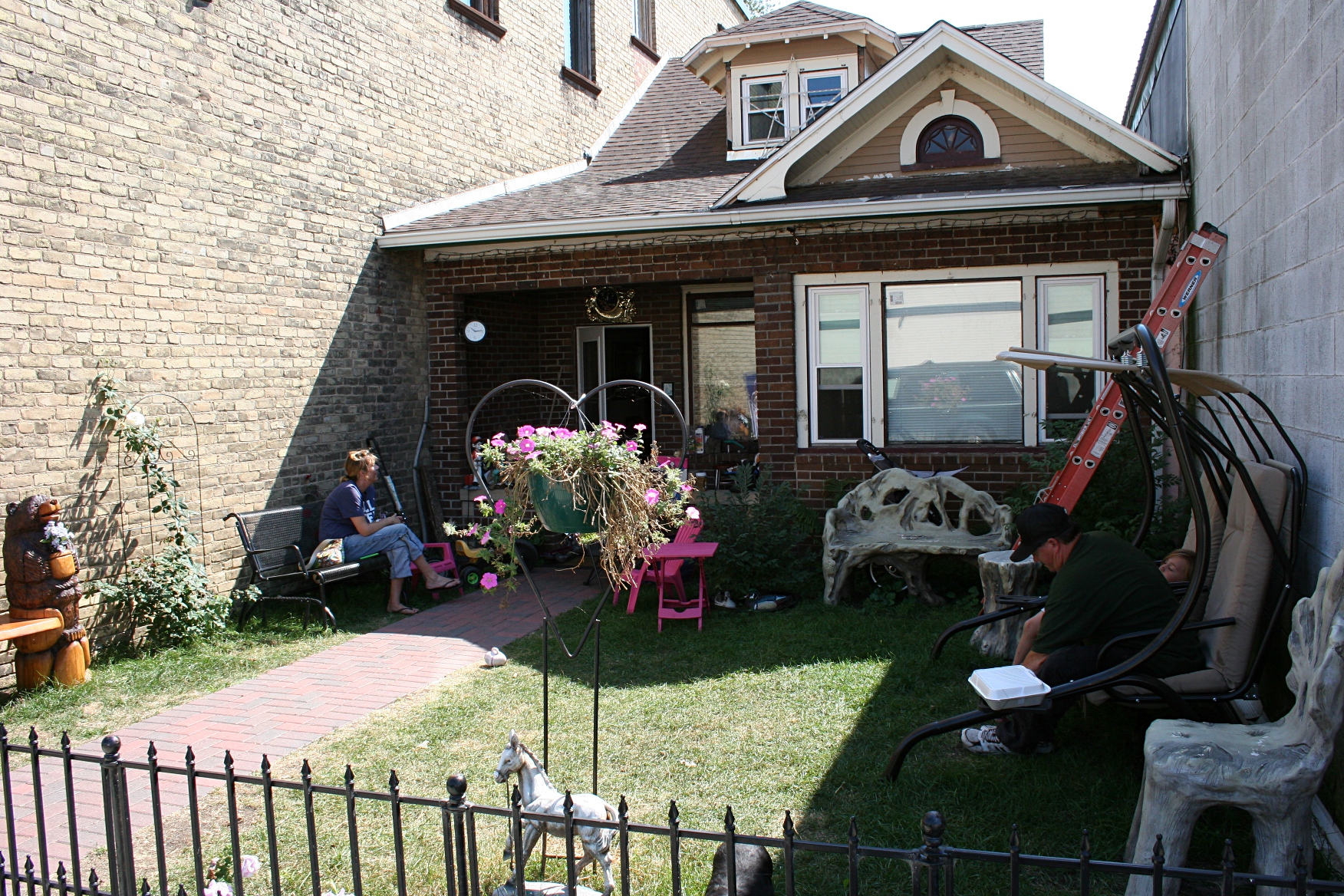
Just look at this sweet little brick house along Main Street in downtown Waterville.

I’ve never seen a house sandwiched like this, wall-to-wall, between two buildings and tucked into a totally unexpected place.

The owner ducked out of the scene just before I shot this single photo. She loves her home, she said, and that was about it. I didn’t want to overstay my “Can I take a picture of your house?” welcome since she clearly was entertaining guests.

But I really wanted to walk around the fence, right up the brick path and through the front door, just so I could see if the little brick house is as quaint inside as it is outside. And how dark, or light, is it inside that house anyway?

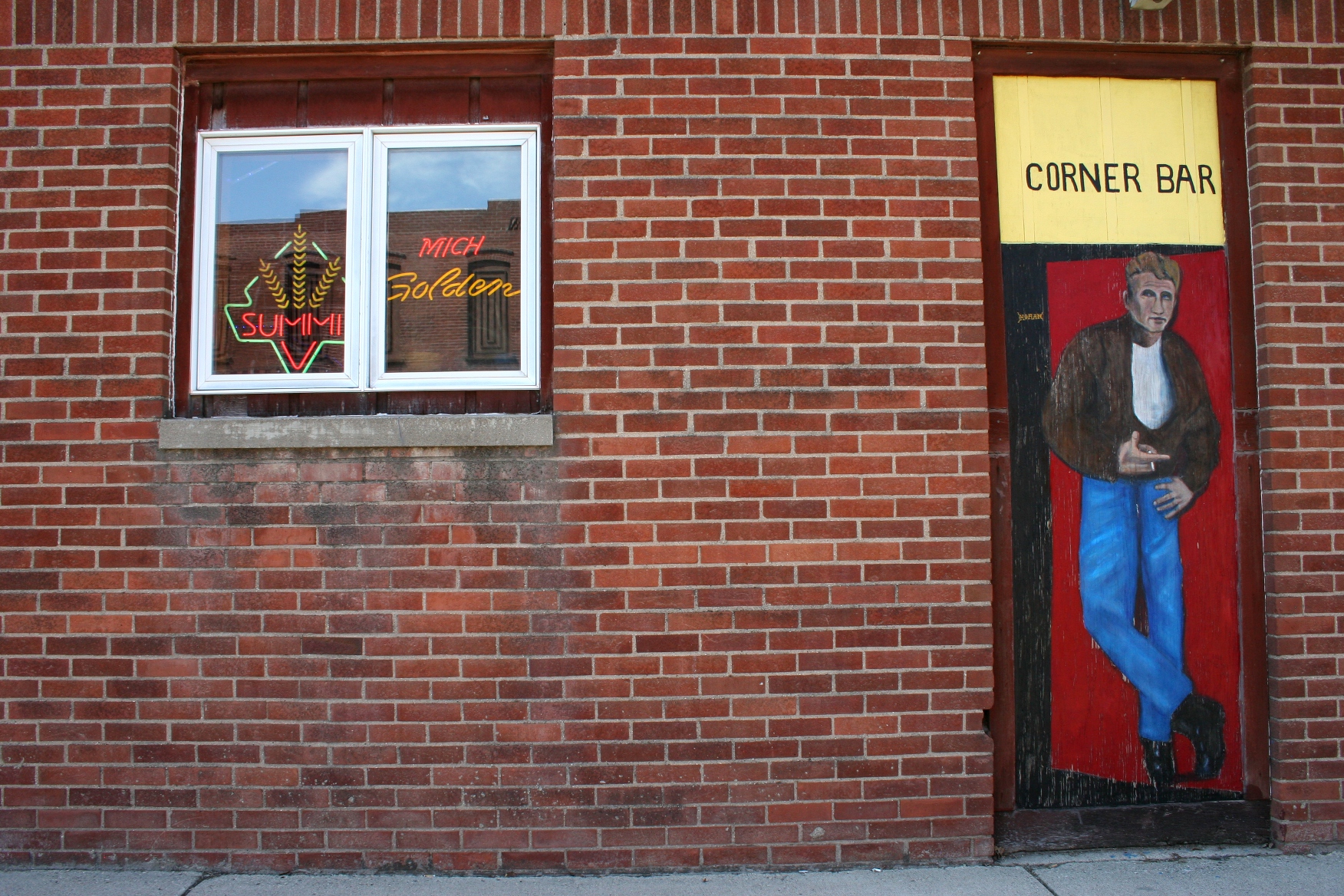
I counted at least four benches where I could sit a spell and chat. Maybe ask about that horse by the fence, the bear bench by the brick wall, how this house came to be, if patrons from the neighboring Corner Bar and Main Street Lounge ever cause problems. You know, stuff like that.

#

FYI: This ends, for now, my stories from Waterville. To read my first post about this southern Minnesota lakeside community, click here.

To read my second post about a quaint coffee shop, which also serves as a place for local artisans to sell their creations, click here.

© Copyright 2012 Audrey Kletscher Helbling


A maple bacon sundae & other delights at a Waterville coffee shop September 13, 2012

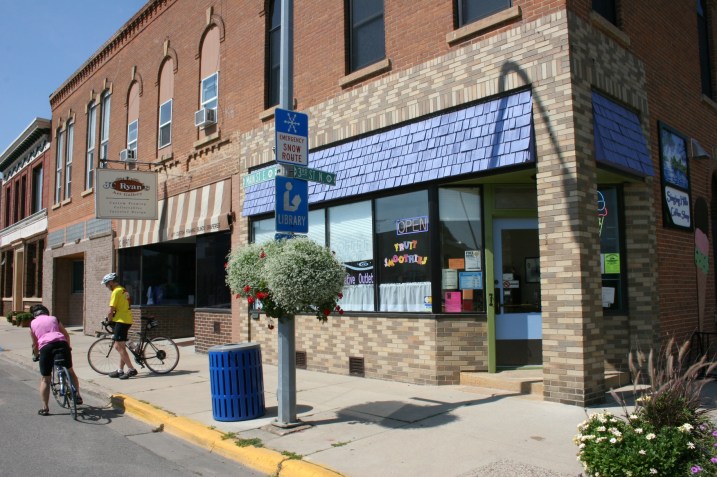
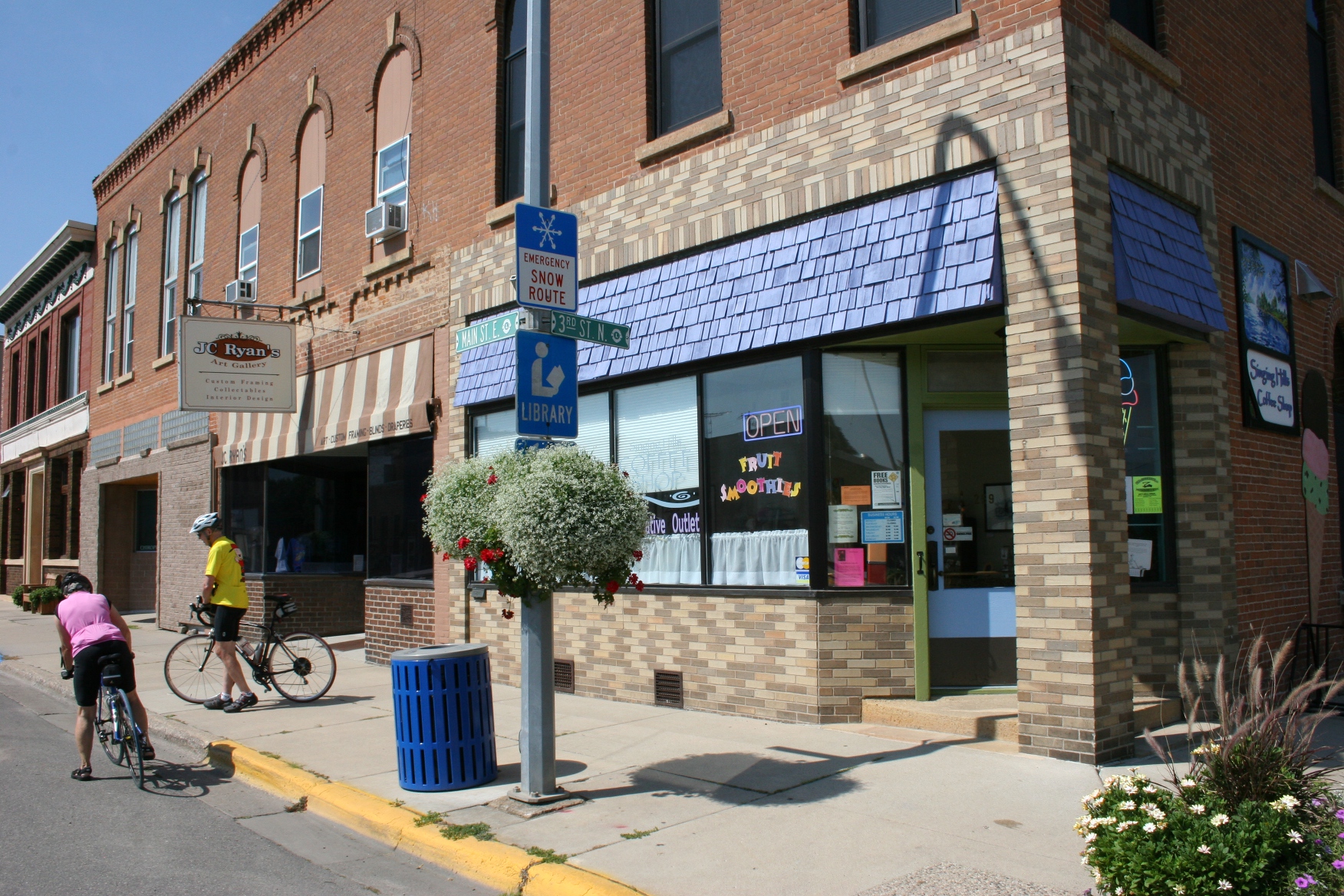
Singing Hills Coffee Shop, at the corner of Main and Third Streets in downtown Waterville in southern Minnesota.

KATHY GREW UP in Detroit, worked 20 years as a deck officer on a freighter for the Merchant Marine, met her husband at a Halloween party, birthed two daughters in her 40s and then, with no business experience, opened a coffee shop in December 2010.

That’s the life synopsis of the woman behind Singing Hills Coffee Shop in the southern Minnesota lakeside community of Waterville, best known for its bullheads and Buccaneers—as in the local high school champion football and basketball teams.

Inviting outside dining at the Singing Hills Coffee Shop.

One-third of a stately, anchor brick building on a corner of Waterville’s Main Street houses the coffee shop. It’s as inviting on the outside—with bistro tables and a bench and window baskets popping with hot pink petunias and luscious ivy spilling from pots—as it is inside.

The bright, cozy dining area of the coffee shop with local arts and crafts displayed on shelves to the right and on walls.

Kathy’s daughter, Marina, waits on customers.

On an early Sunday afternoon, 45 minutes before the 2 p.m. closing, Kathy hustles to prepare sandwiches and ice cream treats while her 10-year-old daughter, Marina (yes, her name is a nod to Kathy’s time on the water), takes orders, accepts payment and makes change.

Kathy hurries back to the kitchen to prepare orders while customer and friend, Kari, relaxes in a back coffee shop corner. Tim Foster’s “American lures” painting (oil paint, oil pastels and graphite on canvas) anchors the wall. It was inspired, he says, by old fishing lures. Kathy would like to purchase the $450 painting as a permanent installment in her shop. I suggested she collect tips to help her buy it. Foster sells his mostly abstract and surreal paintings through his website and studio, at Hogan Brothers in Northfield and via art shows. Kathy saw “American lures” at the 2012 Sakatah Arts Experience in Waterville and invited Foster to bring his painting to her coffee shop.

In a comfy corner chair, Kathy’s friend, Kari, is reading her bible, seeking comfort at the recent, unexpected loss of her 36-year-old cousin. Light floods the homey space warmed by walls the hue of honey on two sides and a contrasting robin’s egg blue on the other.

A printed sign on a slim spot between two towering windows reads:

Conduct Code—Love your neighbor as yourself. Treat other people the way you want to be treated!

Owatonna resident John Muellerleile’s fine art photography on display and for sale.

Kathy welcomes customers and artists here, into this corner haven in a town that thrives on summer-time business from resort guests, cabin dwellers and users of the recreational Sakatah Singing Hills State Trail.

Her customers come here for the ever-popular smoothies and the favorite turkey avocado sandwich, for the coffee and the espressos and other beverages, for the breakfast and soup and sandwiches and salads and baked goods and ice cream treats.

On this Sunday, my husband and I have driven 15 miles for an ice cream treat upon the recommendation of our friend, Joy, who raves about the maple bacon sundae.

As Randy places our order with Marina, I chat with Kari in the corner, take photos and admire a focal point, 6-foot by 4-foot oil painting by Tim Foster of Northfield. His fish-themed art piece, titled “American lures,” is “so Watervillian,” Kathy tells me later, fitting this lakeside town which celebrates bullheads at an annual June festival. There’s a deeper meaning to the painting in which words like “love” and “prove it” and “Federal Reserve Bank” are hidden, Kathy says, but we don’t get into details.

An example of the handcrafted work of local artisans for sale in the coffee shop.

Kathy works with the nonprofit Waterville Local Cooperative Outlet to provide a marketplace for some 8-10 local artisans and crafters. Their creations—from woodcrafts to crocheted caps, paintings, photos and more—are displayed on walls and on shelves through-out the coffee shop.

Donald Kelm of Waterville, a custom woodworker, created this mug.

Engaging the arts community exemplifies Kathy’s efforts at community development. That extends to the food aspect of her business, too. She wanted, she says, more dining options than bar food burgers and fries for the town she and her family now call home. And Kathy offers that with a sandwich menu which doesn’t include a single burger. The closest thing to fries are the chips accompanying sandwich orders.

On her sandwich menu, you’ll find choices like egg salad on a croissant; veggie wrap with hummus, provolone, red onion, red pepper and spinach; and cherrywood smoke ham with garlic cheddar, tomato and mustard sauce. You can build your own sandwich, order a cup of soup.

Hungry for a bakery treat? Kathy has selections from cupcakes to pie to traditional Upper Peninsula style pasties, a tribute to her native Michigan.

Singing Hills Coffee Shop’s delicious maple bacon sundae.

But, on this Sunday, I’ve come only to sample the maple bacon sundae with spicy maple-glazed pecans, homemade maple caramel and bacon, yes, bacon, on vanilla ice cream. My husband questions my choice. I don’t, and find the sweet and salty mix a perfect complement to the ice cream. I’d give the maple bacon sundae a five-star recommendation.

An equally tasty blueberry sundae.

My less daring spouse orders a blueberry sundae and is equally pleased with his selection.
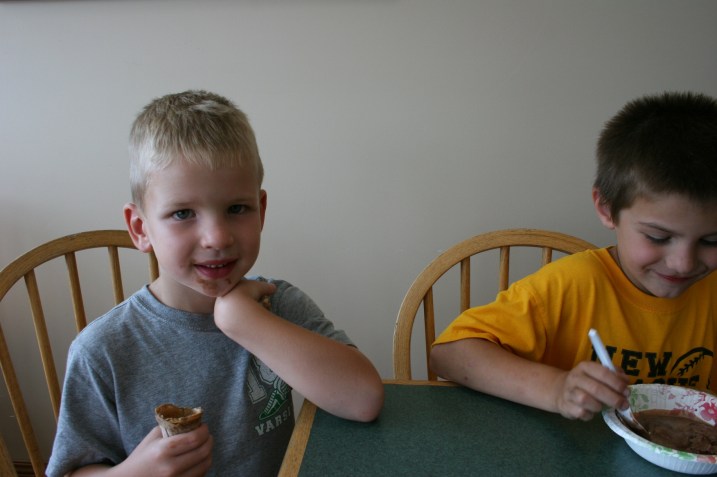
These two boys came with their moms, and a sister of one, for ice cream treats. The boy on the right told the boy on the left that he had a mustache. Then I told the boy on the right that he had an ice cream mustache, too.

A retired couple who spend their summers at a Waterville resort rave about the sandwiches while two moms ordering ice cream for themselves and their kids endorse the ice cream.

Kathy, though, admits that business growth was slow during her first year and that she’s still learning, given her inexperience as a businesswoman. With summer winding down, she’s cutting back on hours. Singing Hills Coffee Shop is closed now on Mondays and Tuesdays, but open from 8 a.m. – 5 p.m. Wednesday – Saturday and from 8 a.m. – 2 p.m. on Sunday.

On October 14, the coffee shop will close for the season and then reopen in mid-April.

So, if you want to try that maple bacon sundae…

FYI: For more information about Singing Hills Coffee Shop in Waterville, click here to reach the shop’s website.

To learn more about the arts scene in Waterville, specifically the annual Sakatah Arts Experience, click here.

For more info about Northfield artist T. Andrew Foster, click here to visit his Creative Space Art Studio website. 

Copyright 2012 Audrey Kletscher Helbling


A Sunday afternoon drive to Waterville, Minnesota, Bullhead Capital of the World September 12, 2012

Filed under: Uncategorized — Audrey Kletscher Helbling @ 6:55 AM
Tags: , , , , , , ,

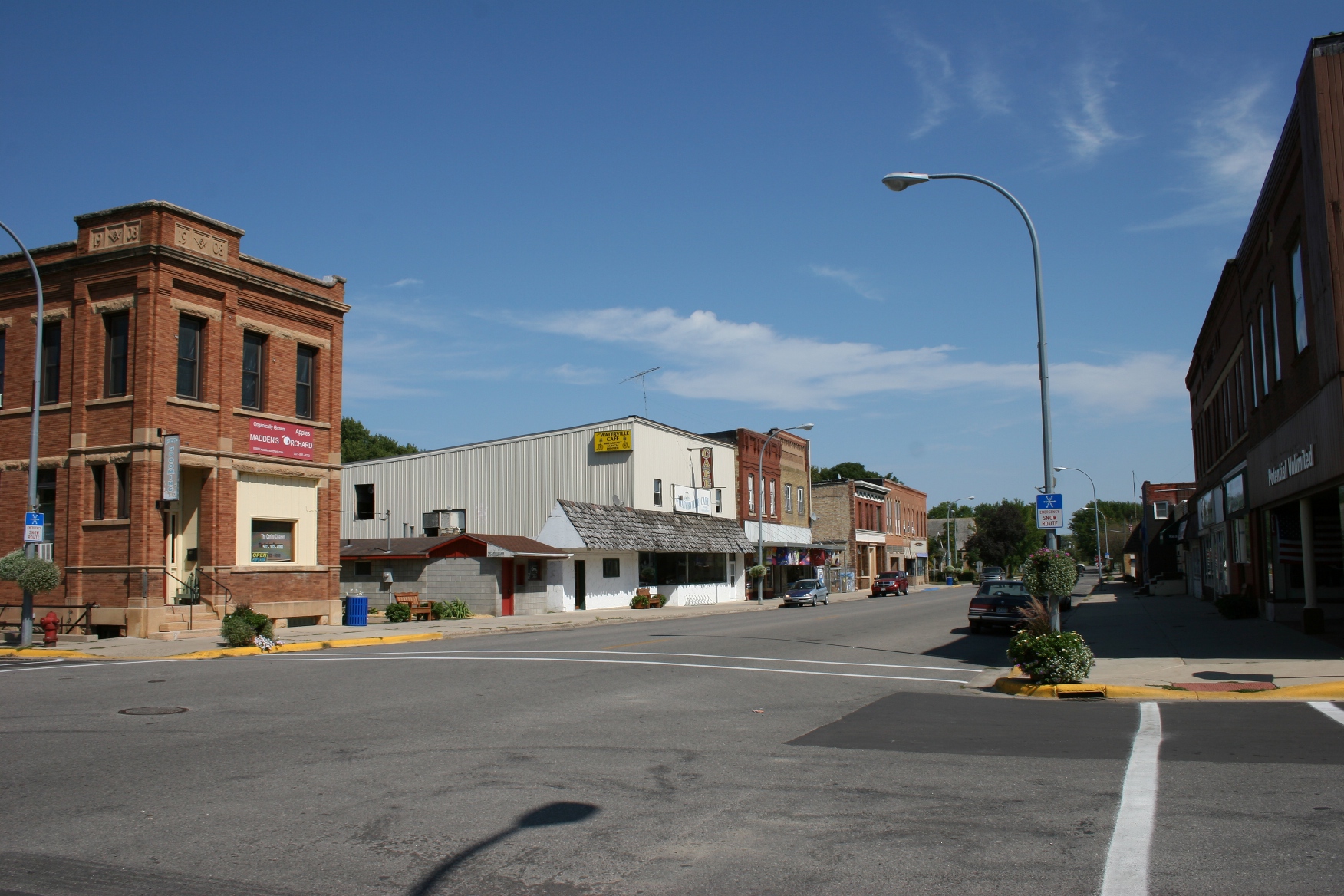
Main Street Waterville, Minnesota, on a Sunday afternoon in September.

THE THING ABOUT SMALL TOWNS is this. They’re not boring cookie cutter places with chain stores and look-alike subdivision houses occupying space in the middle of nowhere. I know, I know, you likely disagree about that “boring and middle of nowhere” if you live in a sizable city.

But these small towns possess individuality and character. And by small town, I mean a community of 5,000 or fewer residents. Just want to be clear on the definition.

Exploring small towns is something I enjoy, probably because I grew up on a dairy and crop farm near Vesta, current population around 330 or so, among the corn and soybean fields of southwestern Minnesota.

I’m intrigued by these communities which are most often ignored as simply, sigh, another place to slow us down as we rush from one destination to the next. I’m as guilty as the next traveler in feeling that way.

But sometimes I intentionally slow down. In recent years my husband and I have embraced Sunday afternoon drives, not unlike the Sunday drives of my youth. Dad would guide the family car along the washboard gravel roads of Redwood County, sometimes venturing into neighboring Yellow Medicine County, so we could look at the crops.

While Randy and I sometimes take gravel roads, our ultimate destination is typically Main Street.  We meander to a nearby small town, park our vehicle, get out and walk. It is then that we discover the quirks, the character, the feeling of community and closeness which define a given town.

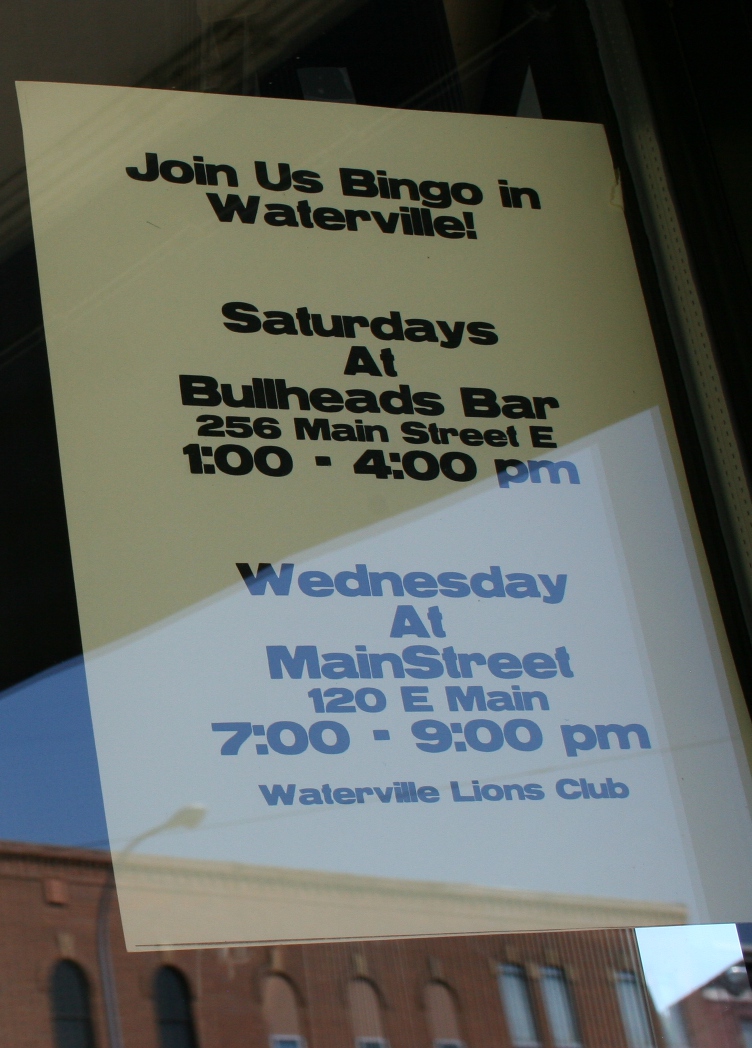
Our most recent Sunday jaunt took us to Waterville, only 15 miles from Faribault. I’ve been into this lakeside town of nearly 1,900 perhaps half a dozen times, just to drive through it, tour Ron’s Hardware (a story in itself, but it was closed the Sunday we were there), enjoy an ice cream treat and, many years ago, to grab a burger and beer at the Corner Bar.

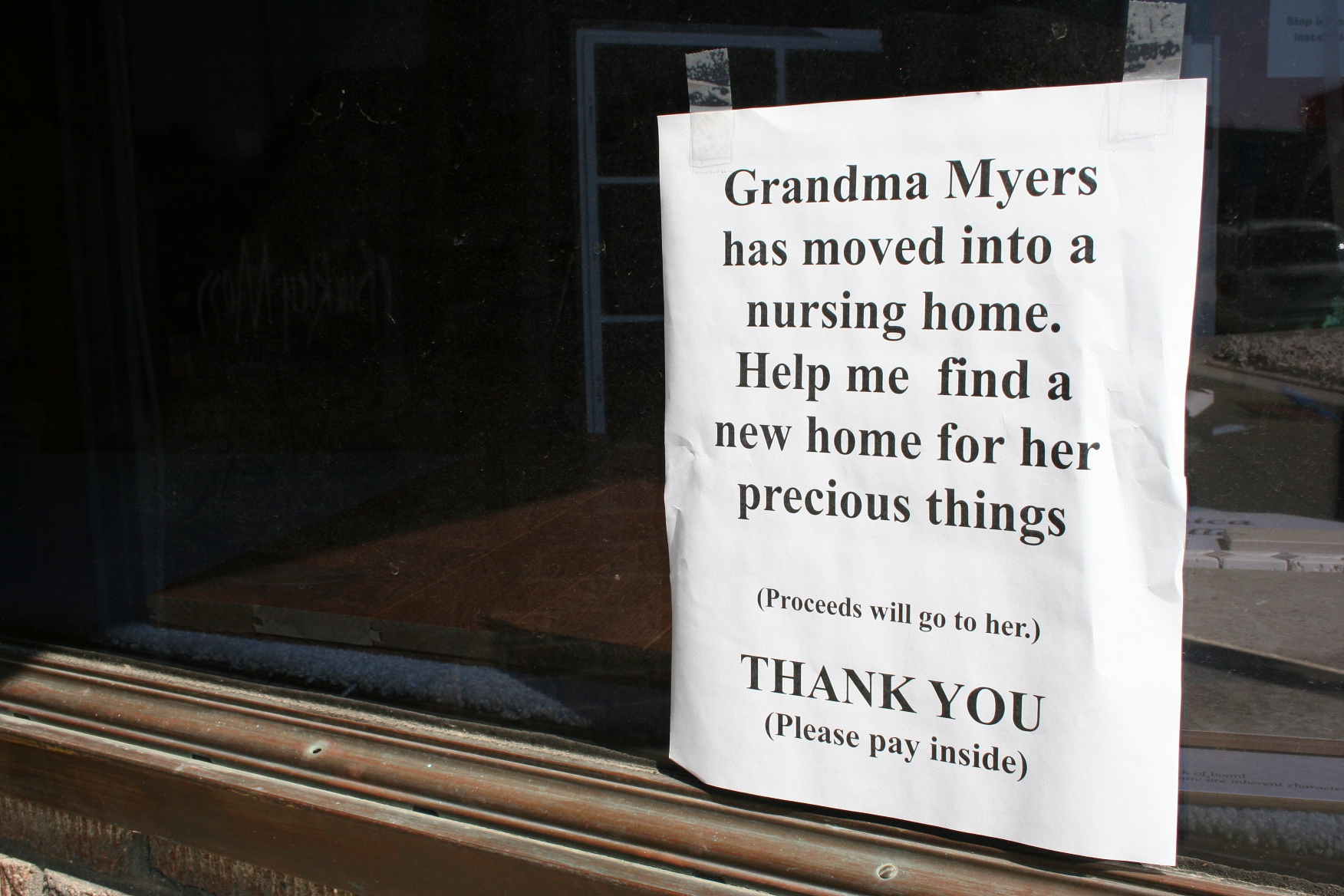
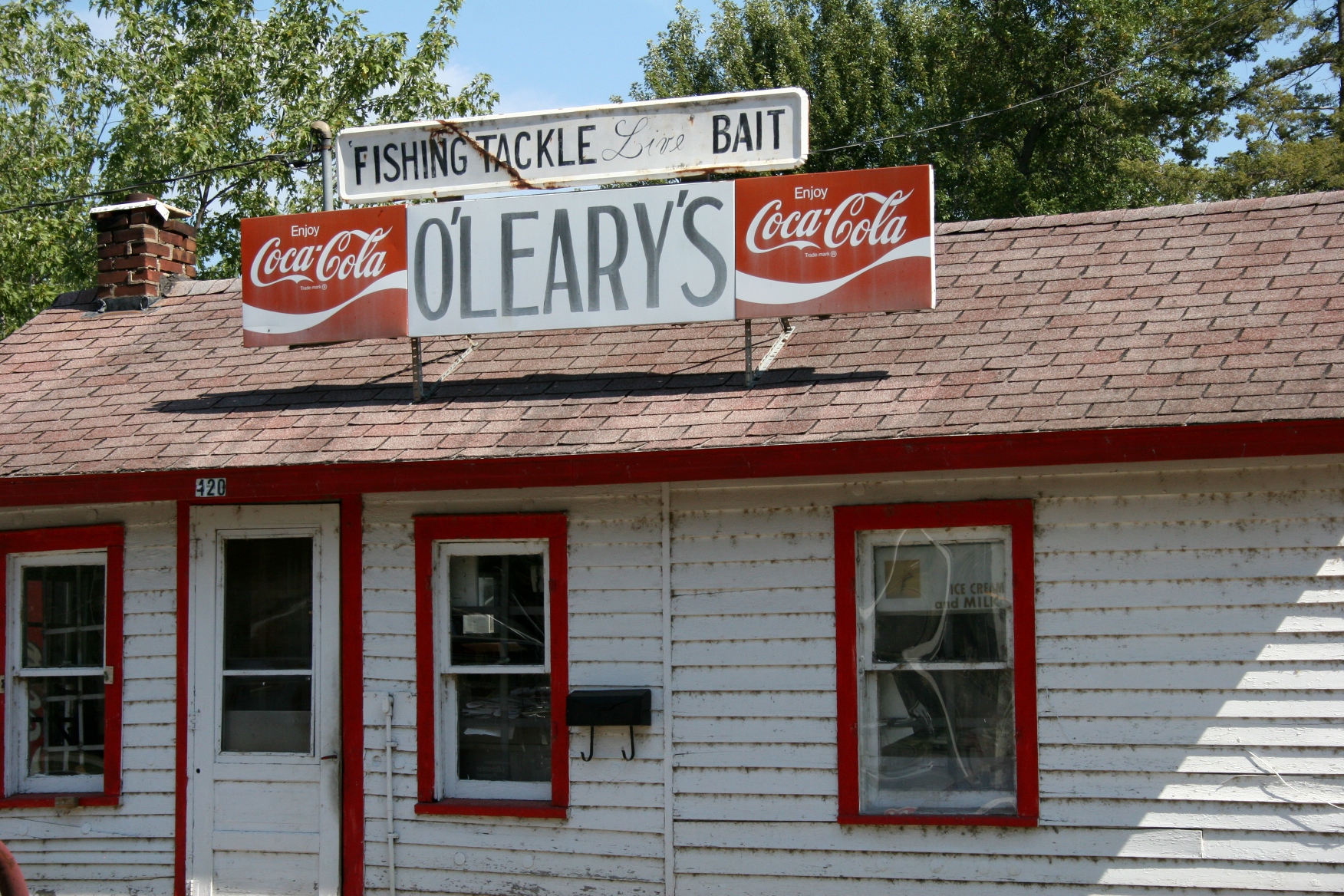
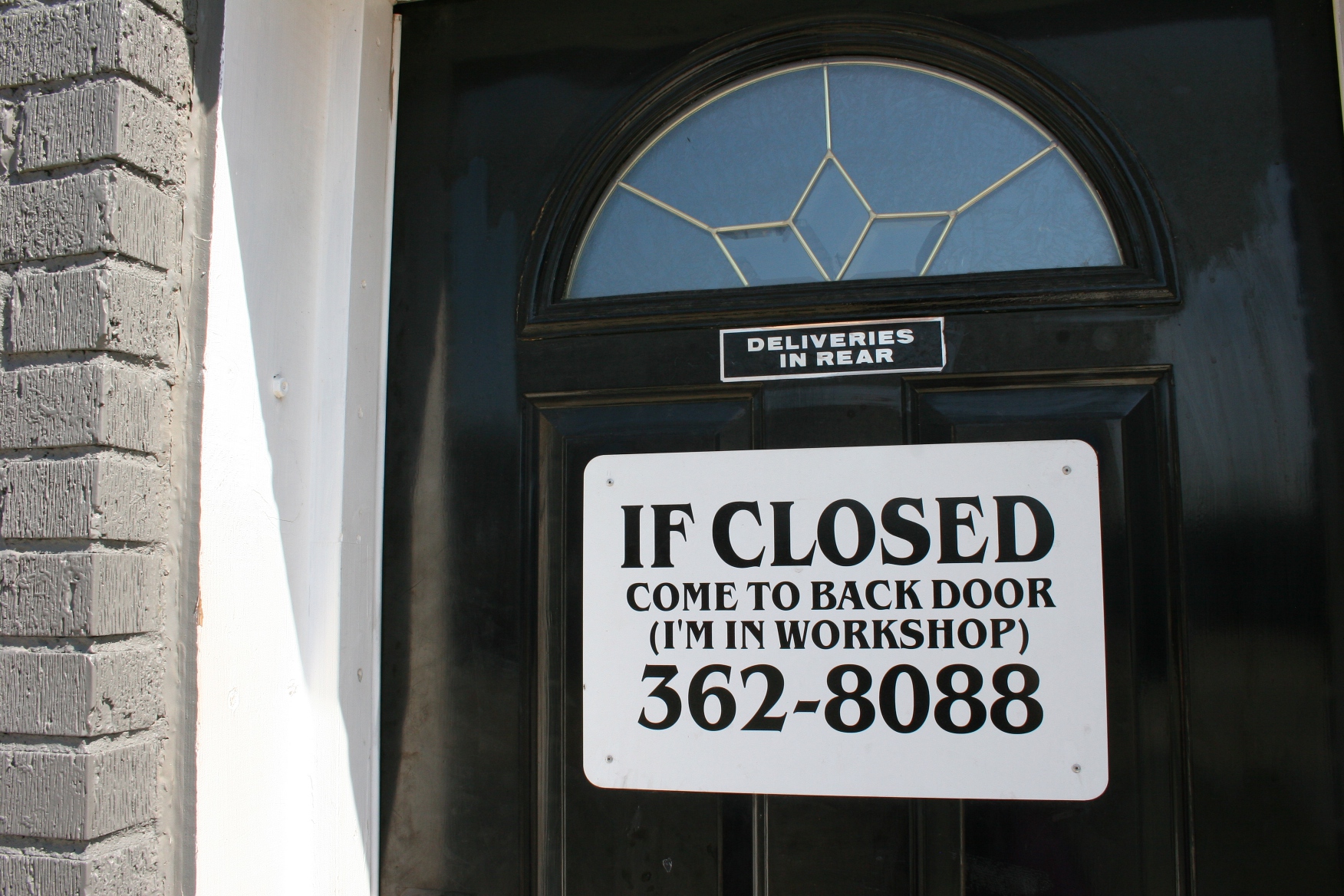
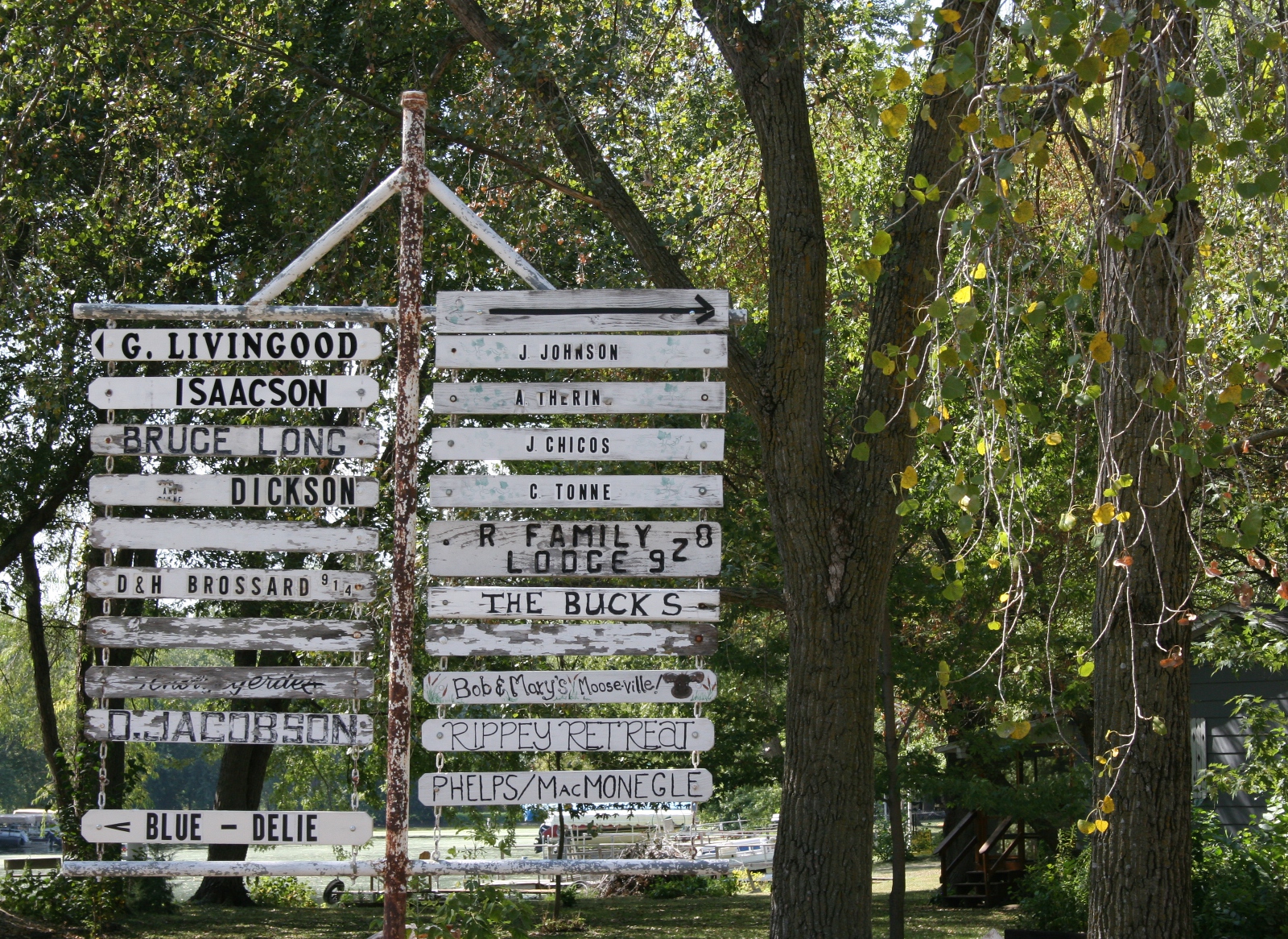
Mostly, though, Waterville has been a town my family zips past along Minnesota Highway 60 en route west. By doing that, I’ve missed out, missed out on the defining details. And the easiest way to notice those details, when Main Street businesses are mostly closed on a Sunday, is to check out the signage.

Welcome to Waterville, Minnesota, Bullhead Capital of the World, where signs hint at this community’s individuality and character.

CHECK BACK FOR A FUTURE post featuring one of Waterville’s newest businesses.

© Copyright 2012 Audrey Kletscher Helbling
 

Reflecting on 9/11, eleven years later September 11, 2012

Filed under: Uncategorized — Audrey Kletscher Helbling @ 6:52 AM
Tags: , , , , , ,

My then 8-year-old son drew this picture of a plane aimed for the twin towers a year after 9/11 for a school religion assignment. He was a third grader in a Christian school at the time and needed to think of a time when it was hard to trust God by drawing a photo illustrating that time. To this day, this drawing by my boy illustrates to me how deeply 9/11 impacted even the youngest among us.

IF I WAS IN MY HOMETOWN today I would visit the cemetery just outside of Vesta, to the north along the gravel road and atop the lone hill which rises ever so slightly in a sea of ripening corn and soybean fields.

I’d walk the rows until I found the gravestones of the Kletschers, mostly clumped together, close still even in death.

I’d pause at the tombstones of my paternal great grandparents and grandparents, my father and then, finally, my Uncle Mike, the bachelor uncle who was like a second father to me and my five siblings. He lived the next farm over, farmed with our father and joined us for everyday meals and holidays. His inherent curiosity is a trait I possess.

Uncle Mike died on September 5, 2011, and was buried just days before 9/11.

Today thousands will visit graves of those who lost their lives on that horrific day 11 years ago when our nation was attacked by terrorists.

My uncle had never, as far as I know, been to New York or Washington D.C. or Pennsylvania, never traveled much. He stuck close to the prairie, close to the farm, close to the land he cherished with the depth of love only a farmer can possess.

I miss him and grieve his death with a depth of grief that comes only from loving someone deeply.

Today, on this the 11th anniversary of 9/11, countless family and friends and co-workers and others will grieve with a depth that comes from loving deeply. They may grieve privately or at public ceremonies marking the date nearly 3,000 innocent individuals lost their lives.

Some will travel to that field in Stonycreek Township in Somerset County, Pennsylvania, where the passengers of Flight 93 fought back against those who would terrorize this nation.

It is the one place I can most relate to in the whole horribleness of this American tragedy because my roots reach deep into the land. Flight 93 crashed in a field near Shanksville, a rural community of 250 in the Laurel Mountains of western Pennsylvania with a population 100 less than my Minnesota hometown.

None of this diminishes the significant impact made upon me by the terrorist-directed planes slamming into the twin towers or the destruction wreaked upon the Pentagon in urban settings.

But big cities—even though I’ve been to New York once in my life many decades ago while in college—are unfamiliar terrain, skyscrapers as foreign to me as a silo to a city-dweller.

A lone plane crashing into a field, plowing into the earth, that I understand.

© Copyright 2012 Audrey Kletscher Helbling


Meet Bob, the opinionated farmer from Madelia September 10, 2012

Filed under: Uncategorized — Audrey Kletscher Helbling @ 6:46 AM
Tags: , , , , , , ,

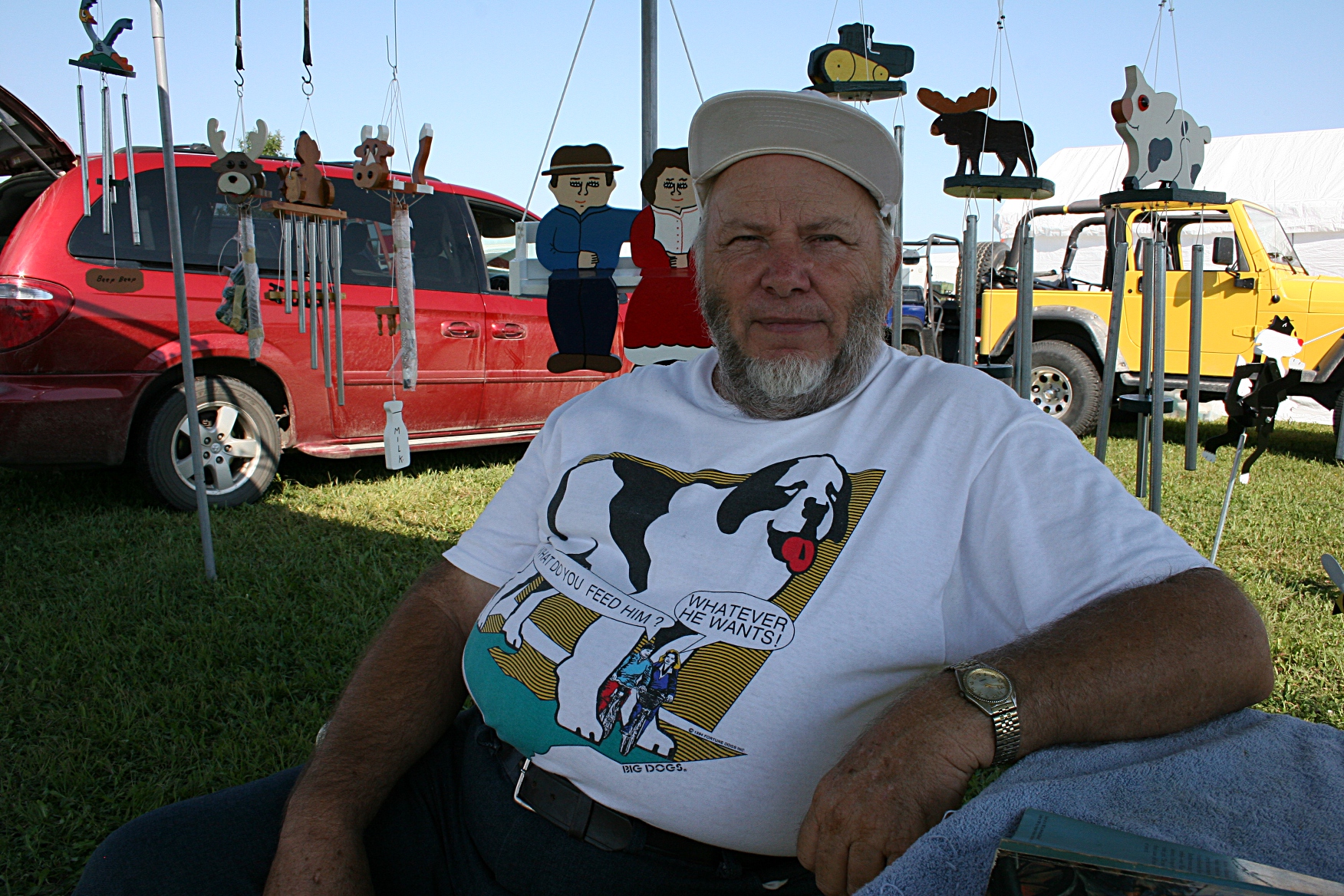
I met Bob Michniewicz  and his wife, Judy, selling their woodcrafts at the recent Rice County Steam and Gas Engine Show. He wouldn’t allow me to photograph his art, except for a single sign and a single cow, not wanting others to steal his ideas. However, a few other crafts got into the photo when Bob obliged my request for a portrait.

OCCASIONALLY YOU MEET a character, and you know it just looking at the person, before lips even part to utter a single syllable.

I knew, just knew, Bob Michniewicz was a character when I saw him and his set-up at the Rice County Steam and Gas Engine Show in rural Dundas. With kitschy wooden lawn ornaments—you know the kind—and wind chimes and eye-catching messages defining his space, Bob was bound to be interesting.

Just look at the poster Bob leaned front and center against a support post for the tent under which he and his wife of 50 years, Judy, were peddling their wares.

Bob was gauging interest in this sign with plans to print it on vinyl and sell it should interest run high.

Naturally, I asked Bob about that message. Seems he’s a bit worked up about all the non-farm folks moving onto farms in his area and then complaining about noise or smell or dust and such from working farms.

“Farmers were here first,” he emphasizes. And that, in this retired farmer’s opinion, should settle any matters of dispute.

All around him, Bob views the ever-changing rural Minnesota landscape. Within a three-mile radius of his farm (the home place) 3 ½ miles from Madelia, only four farmers remain. The rest are people living on the building sites.

Therein, according to Bob, lies the problem. “People don’t know where farm stuff comes from.” I’m not sure I understand what he means, but I think I do and Bob doesn’t allow me to interrupt this rather one-sided conversation.

Bob just steamrolls forward, asking if I know that potatoes in stores are sprayed to keep them from sprouting. (I don’t know this and check later to see if Bob, who is a gardener, is right, and apparently he is, although I’m not saying all potato growers, all stores, follow this practice.)

He looks me directly in the eye and says: “Next time you eat mashed potatoes, you may as well take a shot glass of Round-up with a beer chaser.”

Like I said, Bob’s a character, and an outspoken one at that.

Bob certainly possesses a sense of humor, as seen in this bovine lawn art.

© Copyright 2012 Audrey Kletscher Helbling
 

The winter whisperers September 8, 2012

Filed under: Uncategorized — Audrey Kletscher Helbling @ 8:13 AM
Tags: , , , , , , ,

I CAN HEAR THEM. The whisperers.

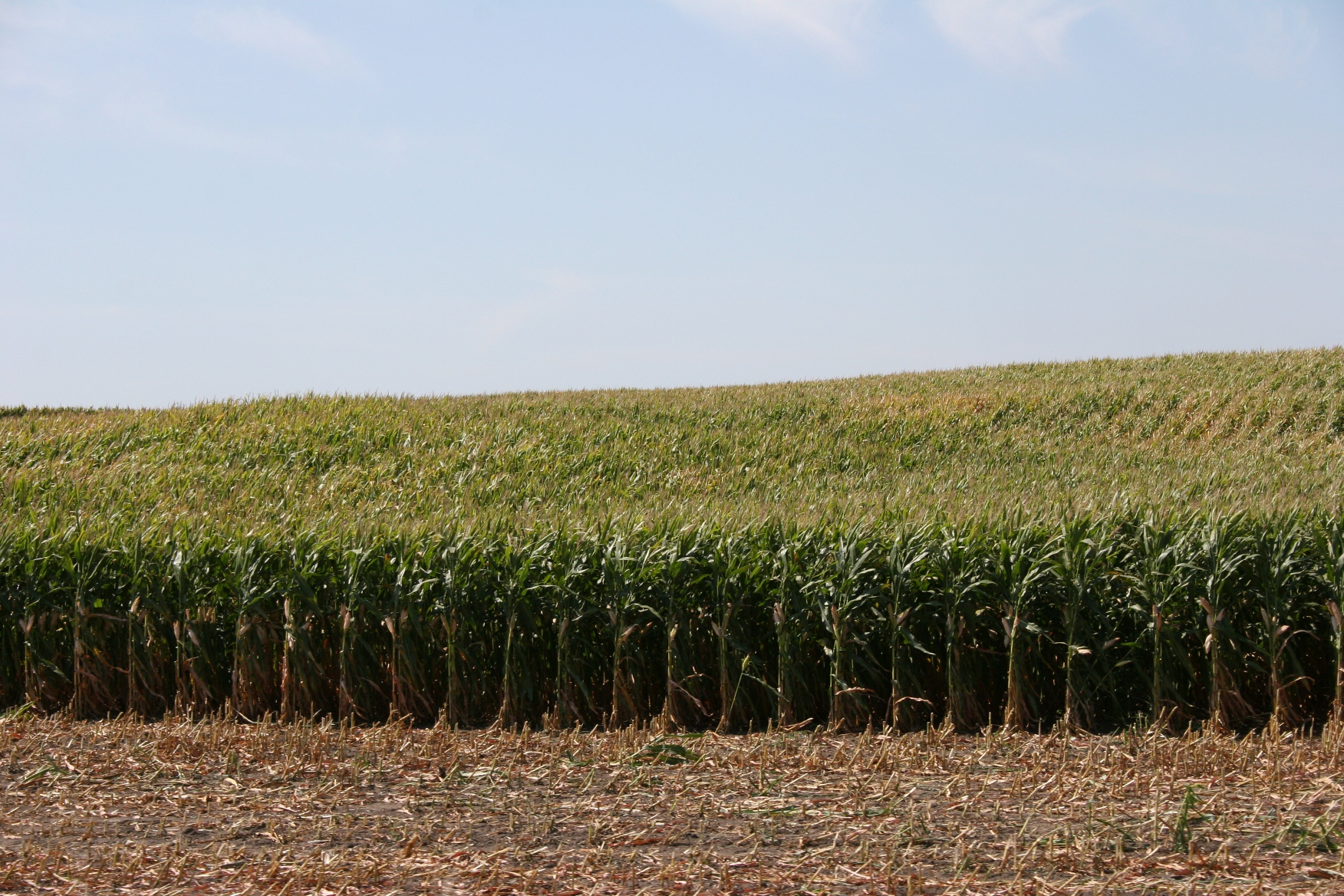
They rustle through the cornfields, fingertips brushing brittle leaves.

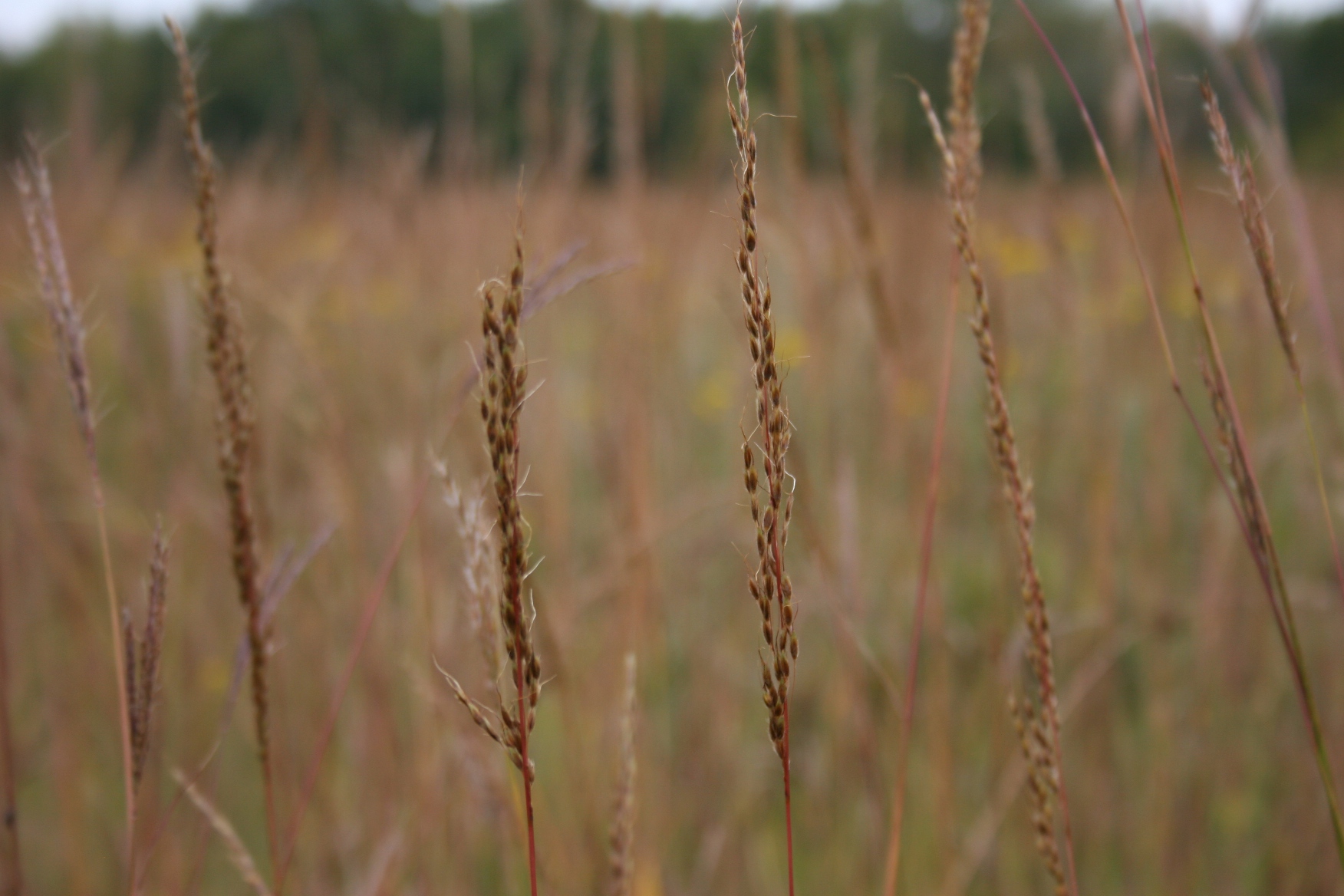
They swish through the tall prairie grasses, hips not just swaying, but sashaying, in the bending breeze.

Their voices drone like a billion buzzing busy bees.

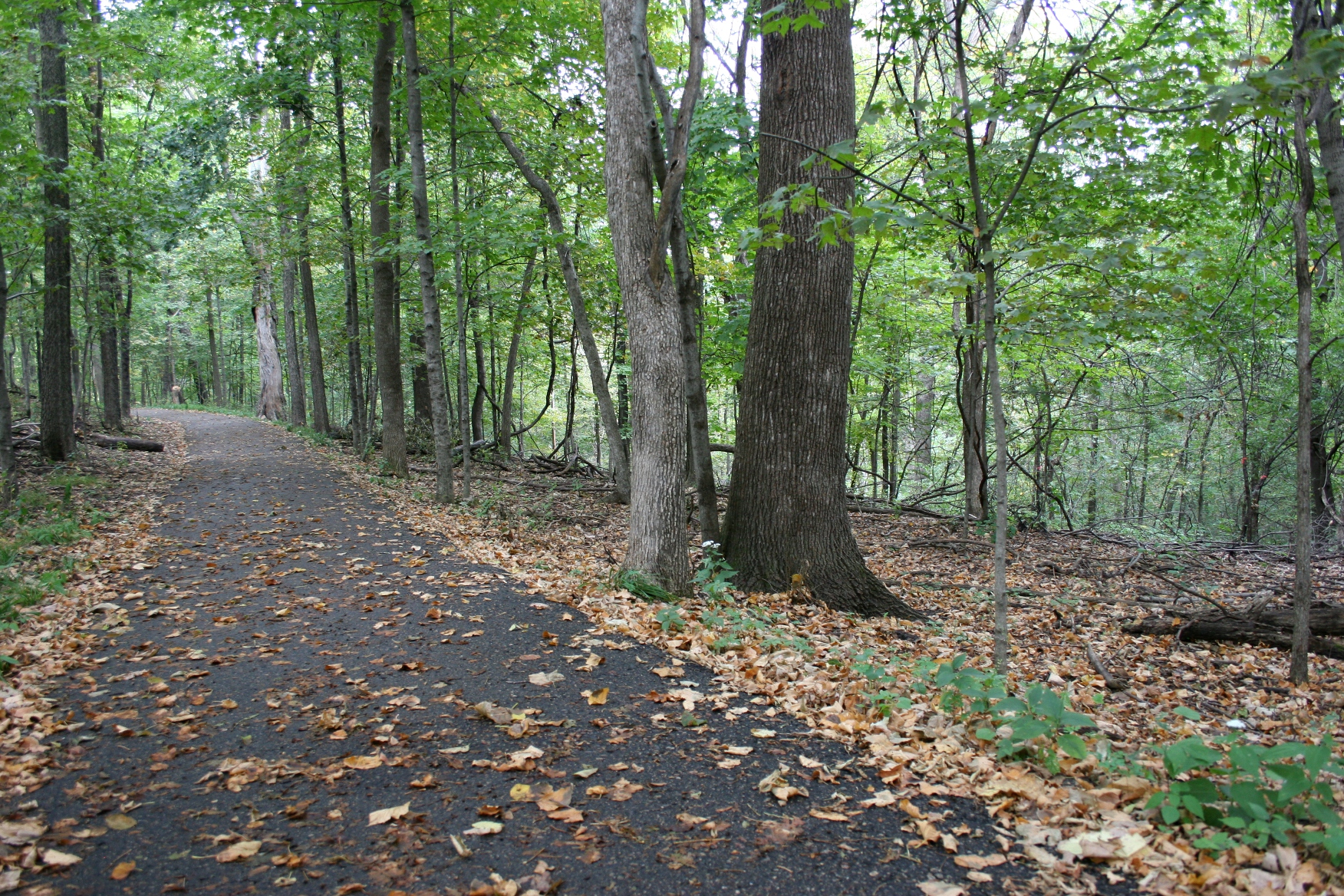
In the woods, I strain to hear them as my flip flops crunch leaves strewn upon the path. I know they are there, hiding among the trees.

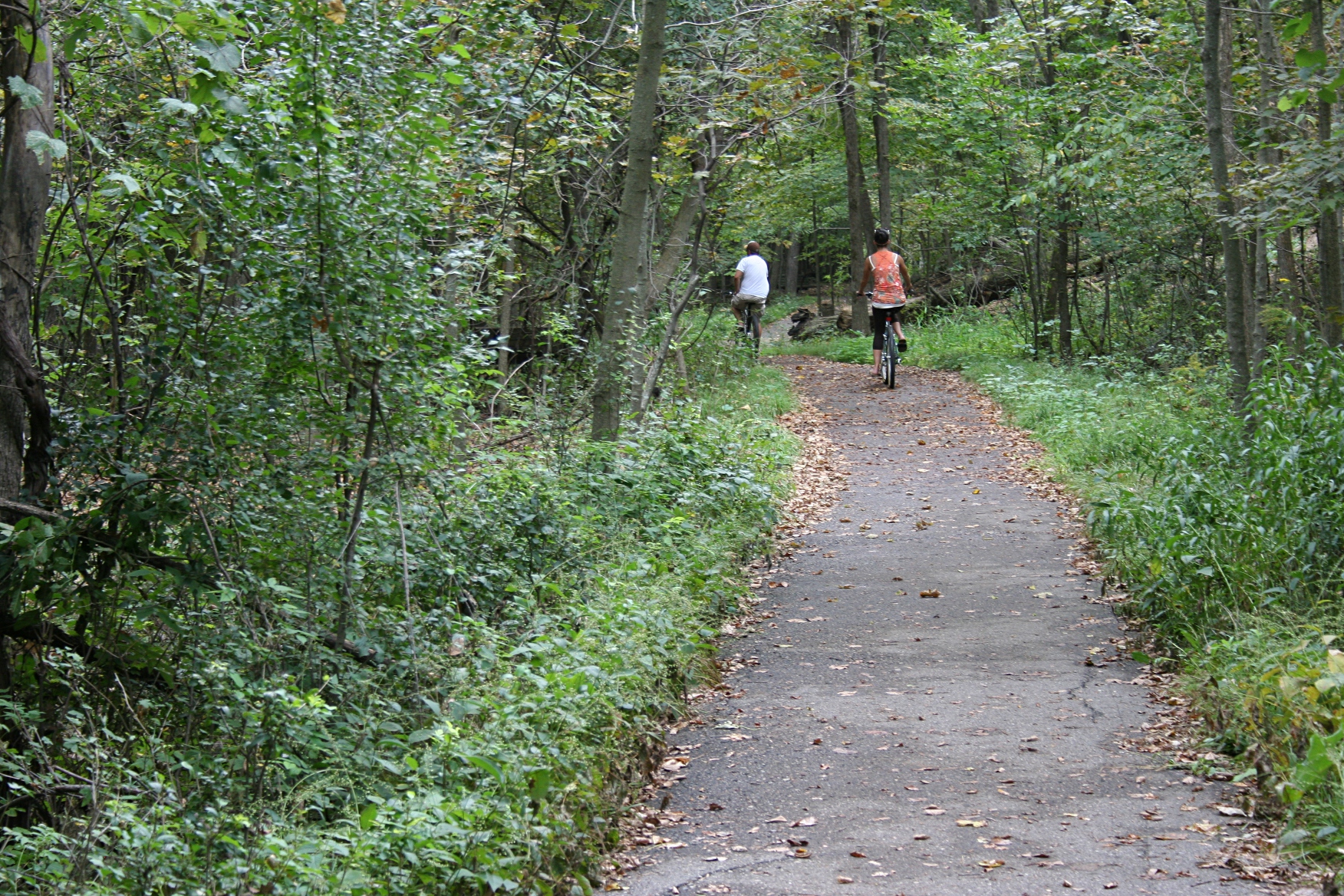
When two bikers pedal past me, the whisperers think I cannot hear them whispering. But I can.

At 4:28 in the morning, when the owl’s hoot awakens me from sleep, I cannot hear the whisperers. But I feel their chilling presence slide through the open bedroom window, brushing my bare shoulders with icy fingers.

They cloak themselves in glorious golden robes…

hide among the grasses…

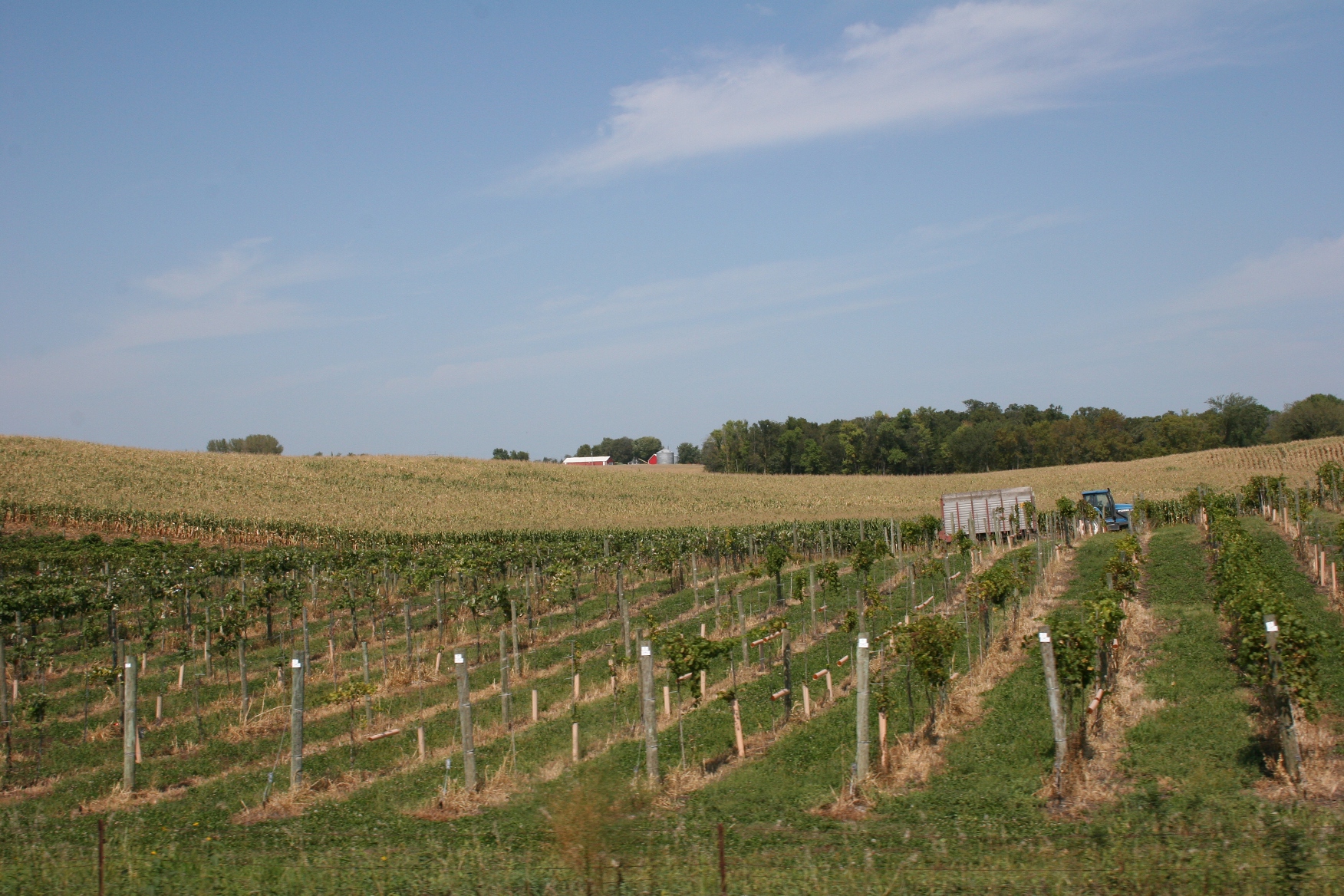
tempt me with wine.

Their distractions and disguises don’t fool me. I hear them whispering of winter in these early days of autumn.

FYI: All of these photos, except the vineyard and the cornfield, were taken at the River Bend Nature Center in Faribault on Monday, September 3. The other two were shot a day earlier east of Waterville.

© Copyright 2012 Audrey Kletscher Helbling

 

A short photo essay of a tractor parade, rural Dundas, Minnesota September 7, 2012

The Oliver was the featured tractor in this year’s Rice County Steam and Gas Engines Show, rural Dundas, Minnesota.

They start ’em driving tractors young. Not to worry; an adult was on the tractor, too.

And younger…

And as young as six weeks old. Doesn’t baby Kelly/Kelli (not sure on the spelling) look just like her dad?

Tractor buffs of all ages, and with all types of tractors, join the parade.

The parade of tractors and other vehicles just goes on and on.

Copyright 2012 Audrey Kletscher Helbling

 

Warning: I am about to ride in a parade September 6, 2012

MY HUSBAND WOULD HAVE jumped on the invitation without hesitation.

But I held back, reluctant to accept Harold Martin’s offer to ride in the Rice County Steam and Gas Engines Show parade. You see, I’ve never ridden in a parade and I feel more comfortable on the audience side where I can blend into the crowd, hidden behind my camera.

So, initially, Randy and I declined and told Harold we’d catch up with him if we changed our minds.

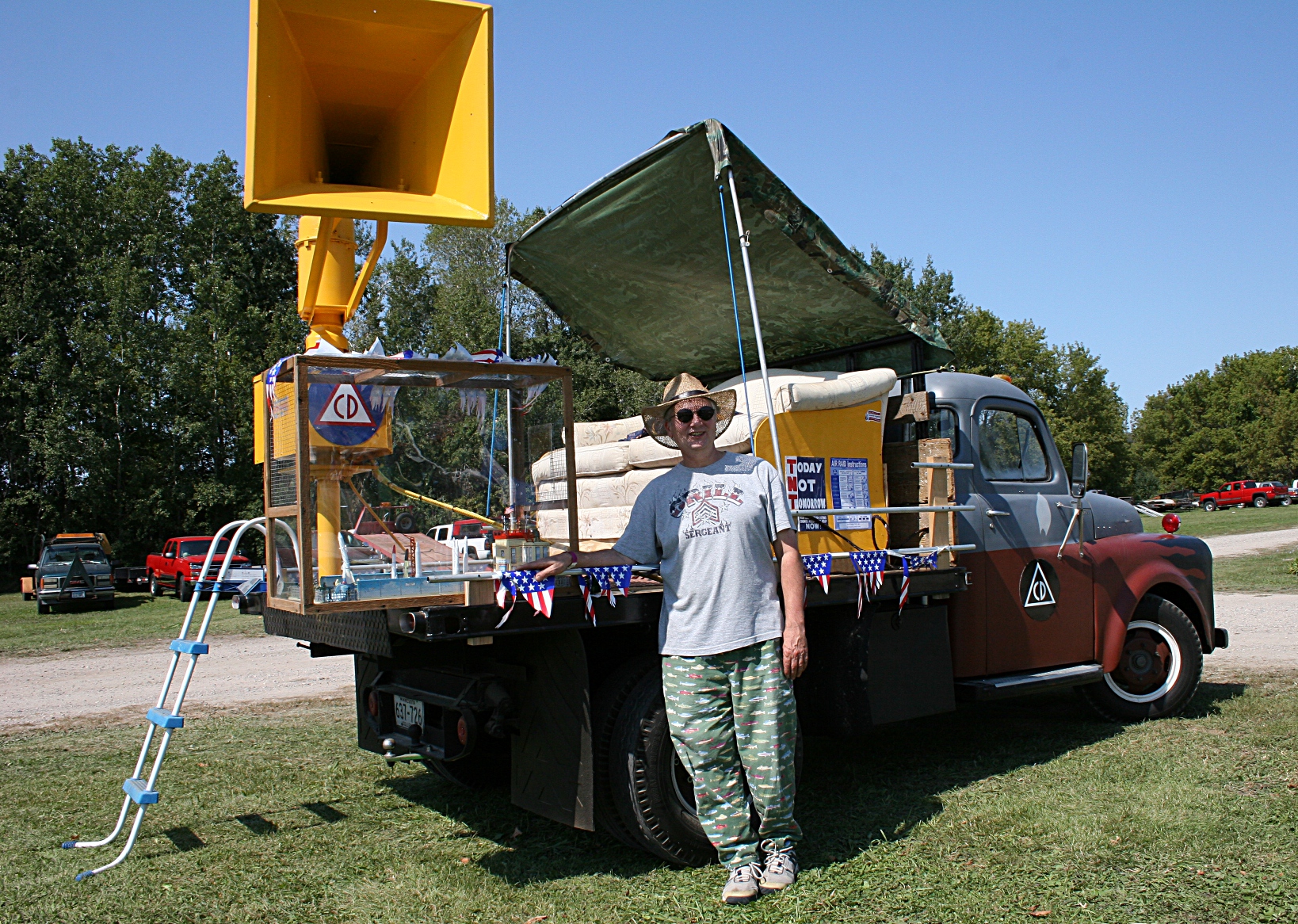
Harold Martin of rural Northfield with his 1948 Dodge truck outfitted with a 1960 Civil Defense siren.

“I don’t want to do it,” I reiterated after Harold and his friend, Gabe, drove off in Harold’s 1948 Dodge truck with a 1960 Civil Defense siren mounted on the back and a rescued-from-the-side-of-the-road sofa planted behind the cab.

That would be our parade spot, on that cream-colored, canopied couch.

I just couldn’t picture myself up there, acting like I was the queen of something or other.

But then Randy said, “Let’s do it.”

And just like that I caved to peer pressure and we headed down the dusty gravel road behind and between tractors, pulled the swimming pool ladder from the back of Harold’s truck, scampered up (well, not quite scampered) and began our tour along the parade route.

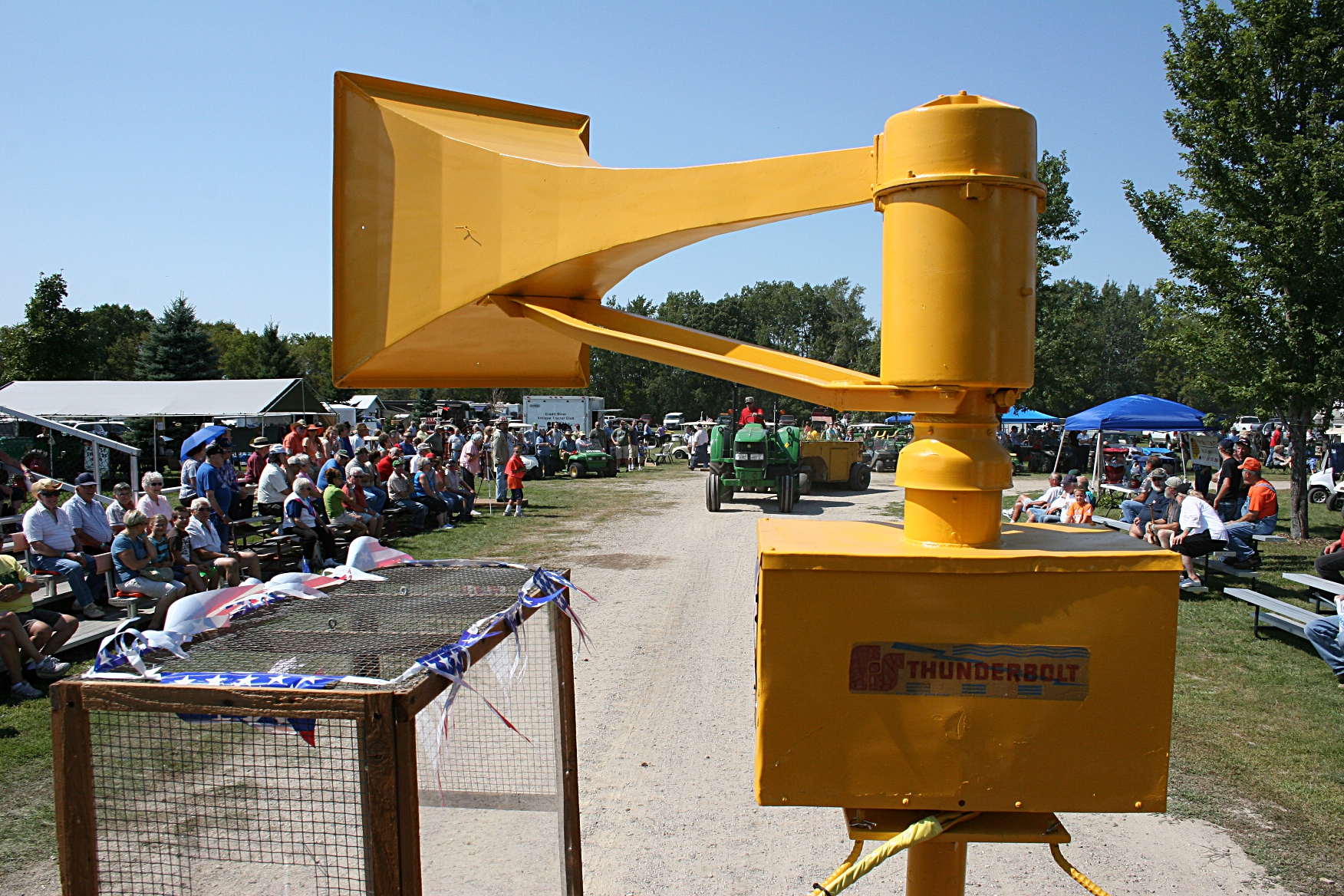
My sofa seat view of the parade route as the Civil Defense siren swings my way. I covered my left ear (I’m deaf in my right) every time the siren passed by my face. These warning sirens were used from 1952-1970, Harold tells me.

And you know what. Except for the rotating and screaming air raid siren swinging uncomfortably close to us on the couch, the whole experience was simply a hoot. I shot photos and watched the faces of audience members who mostly smiled, finding the humor in Harold’s quirky, movable warning system.

About that Harold. He calls himself an opportunist, not only scooping up the freebie couch, but also saving the outdated and scrapped 1960 Civil Defense siren. His nephew was about to toss it.

“Somebody should keep one of these,” he remembers thinking before doing just that, then repairing the siren and mounting it on the back of his vintage Dodge. He showed me a photo from 1952 of a siren, like his, attached to a truck. The portable warning system was used in Seattle and had a range of eight miles.

Harold’s siren, obviously, doesn’t have that range or volume.

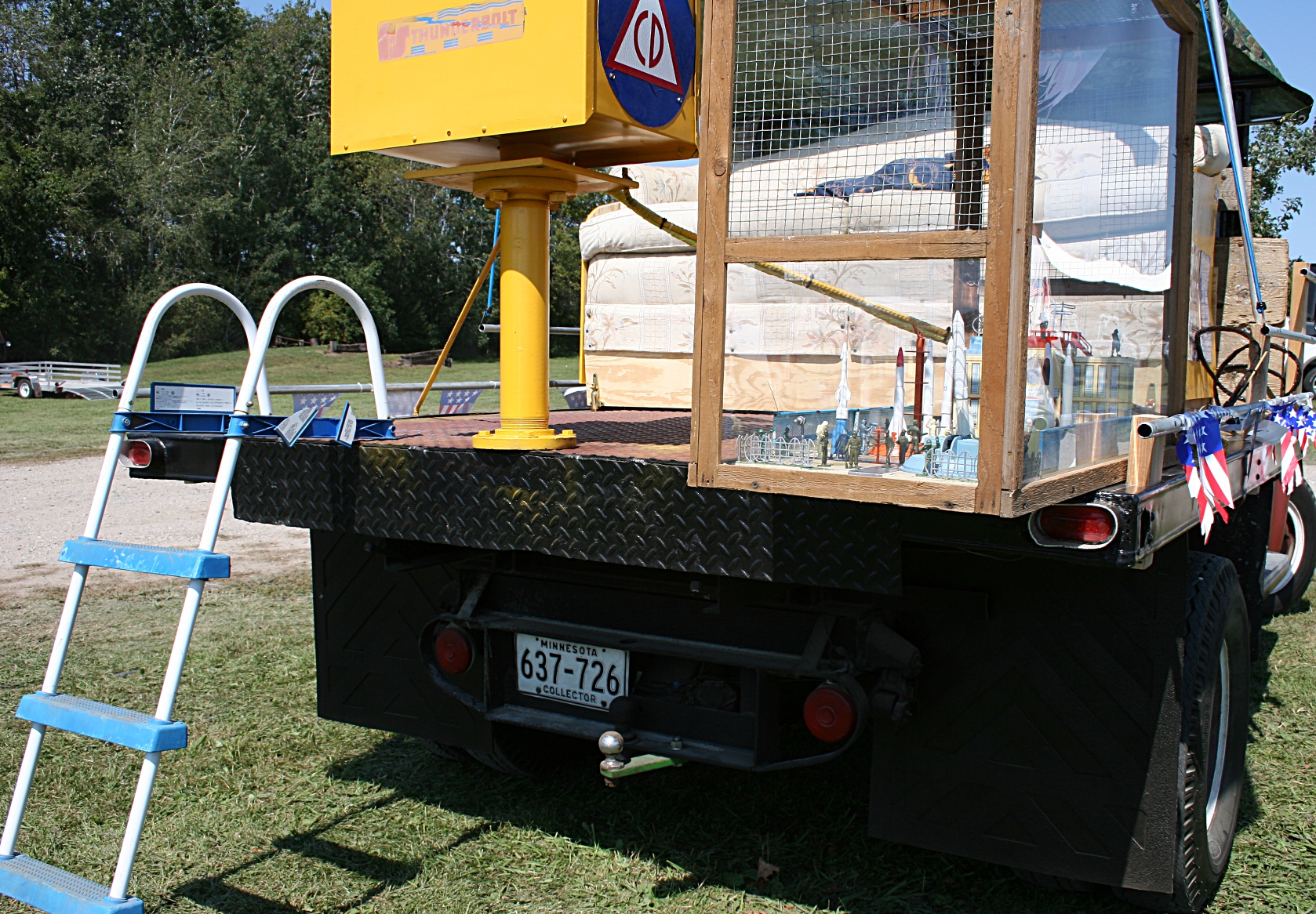
The U.S. Air Force Missile Test Center replica is housed in the box, right. And there’s the pool ladder Randy and I used to climb onto the back of the truck.

He does have, though, a missile warning system in place. Or, more accurately, he has a U.S. Air Force Missile Test Center, purchased on e-Bay for $50, attached to the rear of the flatbed. The 1963 Marx toy set shows a guarded scene of U.S. missiles ready to launch against the Soviet Union.

Remember the Cold War school drills of hiding under your desk and covering your head with your hands? Pretty silly, huh?

But then so is settling onto a recycled couch and riding on a make-shift Civil Defense truck in a rural Minnesota parade. Who cares, though? Apparently not me.

© Copyright 2012 Audrey Kletscher Helbling

 

In Faribault: Scholar to address Lincoln’s response to the U.S.-Dakota War of 1862 September 5, 2012

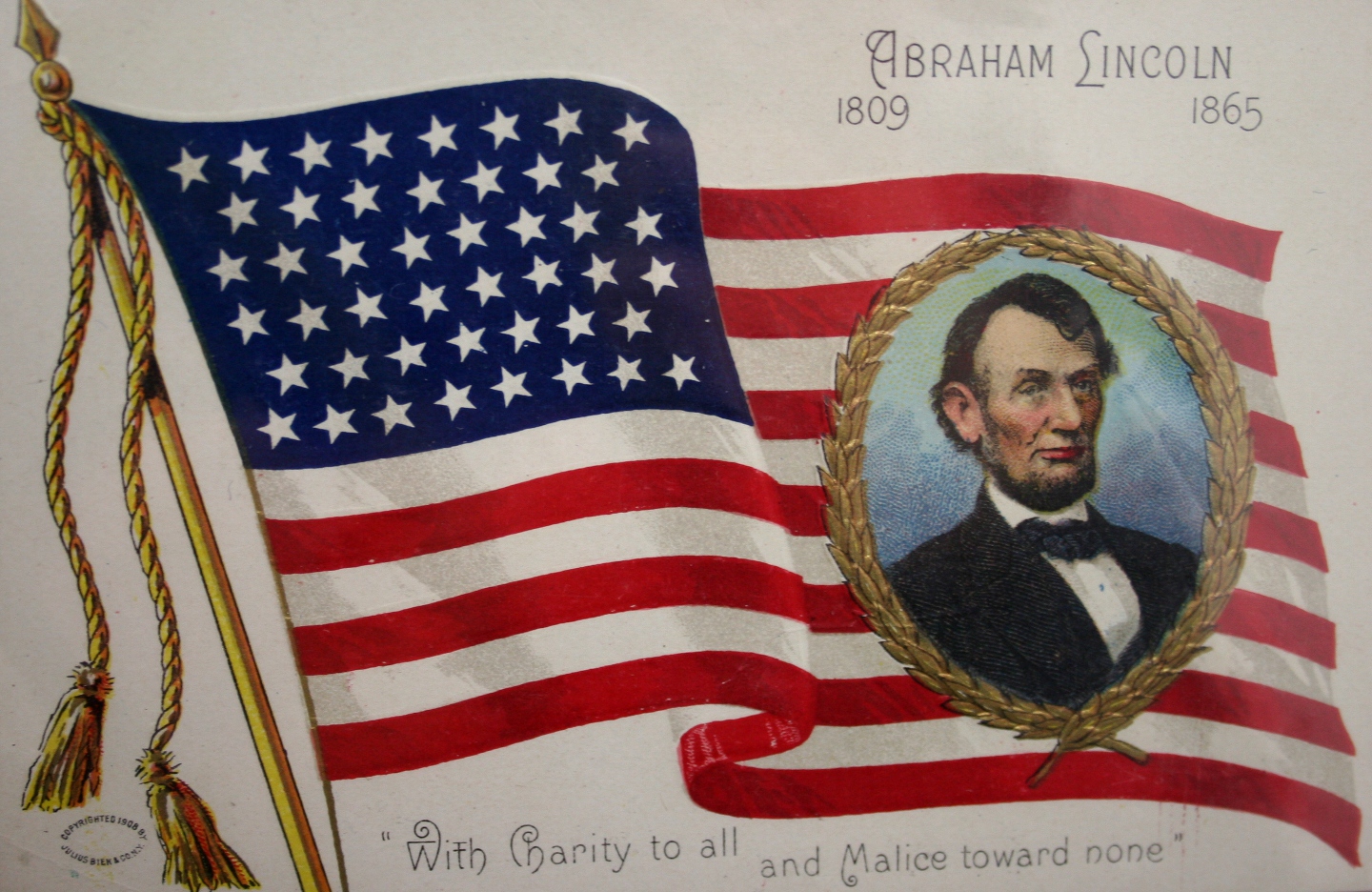
A Lincoln postcard which a collector brought to a Cannon Valley Civil War Roundtable meeting several years ago.

THE FIRST TIME I ATTENDED a Cannon Valley Civil War Roundtable meeting nearly three years ago, I arrived expecting to view slave documents. The presenter, however, left the papers at home and brought, instead, memorabilia specifically related to Abraham Lincoln.

He did not disappoint. I viewed vintage postcards and original photos of Lincoln, Civil War buttons and replicas of Mary Todd Lincoln’s White House china, among many other items.

An 1840 Philadelphia Derringer, like the pistol used to assassinate President Abraham Lincoln.

What impressed me the most, however, was the collector’s 1840 Philadelphia Derringer, exactly like the pistol with which John Wilkes Booth assassinated Lincoln. The weapon was nearly small enough to hide in the palm of my hand.

Visuals like that teach me more about history than any textbook ever will. So do guest speakers. They address the monthly meetings of the Roundtable whose 25 members are interested in preserving and interpreting the Civil War.

Now the Faribault-based Cannon Valley Civil War Roundtable is bringing in a scholar of Abraham Lincoln to kick off its eighth year as an organization. You needn’t be a Roundtable member to attend; I’m not.

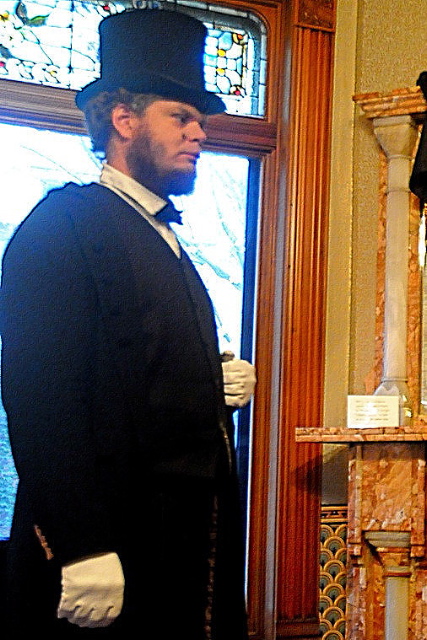
Bryce Stenzel of Mankato portraying President Abraham Lincoln. Stenzel, among other things, directs Lincoln’s Traveling Troupe, a group of students and community actors who bring Lincoln’s life and legacy to life via a dramatic, living history portrayal and authentic re-enactment.

Bryce Stenzel of Mankato, who developed a first-person portrayal of Abraham Lincoln in 1989 and since has traveled around the country presenting, will present “1862: Lincoln Trials by Fire” at 7:30 p.m. Thursday, September 20, at the Faribault American Legion, 112 Fifth St. N.E.

He will address, Stenzel says, “the ‘State of the Union’ as it existed in 1862 and Lincoln’s response to the U.S.- Dakota War, against the backdrop of the American Civil War and the issuance of the Preliminary Emancipation Proclamation on September 22, 1862.”

It’s a timely topic given this year marks the 150th anniversary of the U.S. – Dakota War.

Specifically, Stenzel details, his upcoming program “is a means for Faribault to acknowledge its unique connection to the U.S. – Dakota War by paying homage to its native son, Bishop Henry Whipple. Even though no fighting took place in Faribault, your community played an active role in influencing the final outcome.”

This historian, who has authored eight books on local historical and Lincoln-related topics, possesses an advanced history degree and has taught social studies/history at all levels, including college, has long taken a personal interest in the U.S. – Dakota War. His great-great grandmother and her two-year-old daughter escaped a band of Dakota warriors by hiding in tall prairie grasses. And his great-great grandfather served with the Fifth Minnesota Regiment and fought in the decisive Battle of Nashville in 1864.

Stenzel grew up in Mankato, where 38 Dakota were hung in the largest mass execution in U.S. history. President Lincoln commuted the death sentences of 265 Dakota.

Says Stenzel:

The central question of my presentation is why did Lincoln feel compelled to intervene at all, when he didn’t have to? In fact, from a political standpoint, Lincoln committed political suicide—most Minnesotans at the time believed it was both right and necessary to hang the Indians as a means of preventing such a tragedy from ever happening again. It is useful for the modern audience to consider that what was “politically correct” in the 19th century, is no longer. Historical interpretation changes with time.

Dan Peterson, a member of the Cannon Valley Civil War Roundtable who has heard Stenzel speak, fully endorses him: “(Stenzel)) reminds me of my love for Abraham Lincoln just to be in his audience or close to him. Lincoln is on our money, our named streets, one state capitol, highways, buildings, businesses, cars and more. You just cannot get away from him.”

FYI: Tickets to the dinner and program are on sale now at the Rice County Historical Society in Faribault or from Chuck Peterson (507-301-2470), Jan Stevens (507-244-0500) or Dan Peterson (507-459-3140). Cost is $22 for non-members and $20 for paid-up members of the Cannon Valley Civil War Roundtable.

Tickets for the meal of pork ribs with trimmings must be purchased by Saturday, September 8. The event begins at 5 p.m. on September 20 with a social and then dinner at 6 p.m.

If you want to attend just the Lincoln presentation by Stenzel, the cost is $10 for adults, $5 for students 16 and older, and free for those under 16. The program begins at 7:30 p.m.

The Cannon Valley Civil War Roundtable meets the third Thursday of each month at 7 p.m. at the Faribault Senior Center with a speaker at each meeting. In October, the topic will be the New Ulm raid as part of the U.S. – Dakota War; in November, the Antietam Battlefield; and in December, the annual Civil War food potluck (probably with possum soup, hardtack and more, Peterson promises).

© Copyright 2012 Audrey Kletscher Helbling

Bryce Stenzel photo courtesy of Bryce Stenzel


Threshing oats at the Rice County Steam & Gas Engine Show September 4, 2012

Filed under: Uncategorized — Audrey Kletscher Helbling @ 6:42 AM

Tags: , , , , , , , ,

Grayden Moorhouse of Randolph holds freshly-threshed oats.

GRAYDEN MOORHOUSE unfurls his palm, revealing some two dozen oat kernels before dropping several into my hand.

He wants me to try them, to separate the meat from the hull with my teeth and spit the shell onto the ground.

I try, without success, and then he hands me a single kernel already hulled.

All the while I am thinking this:

I shoveled plenty of oats in my day growing up on a dairy and crop farm. And why would I want to eat raw oats, which I associate with cattle feed?
But Grayden is one of those guys who seems convincing and I like the strong sound of his name and, heck, what’s life without trying something new occasionally?

So I eat the single oat kernel and that is enough for me. I’d rather eat my oats in oatmeal.

Now that I’ve ended that introductory narrative, let’s follow the path of how those oat kernels ended up in Grayden’s hand via this photo essay from the Rice County Steam and Gas Engine Show this past weekend in rural Dundas.

Shoveling the raw oats into the conveyor system.

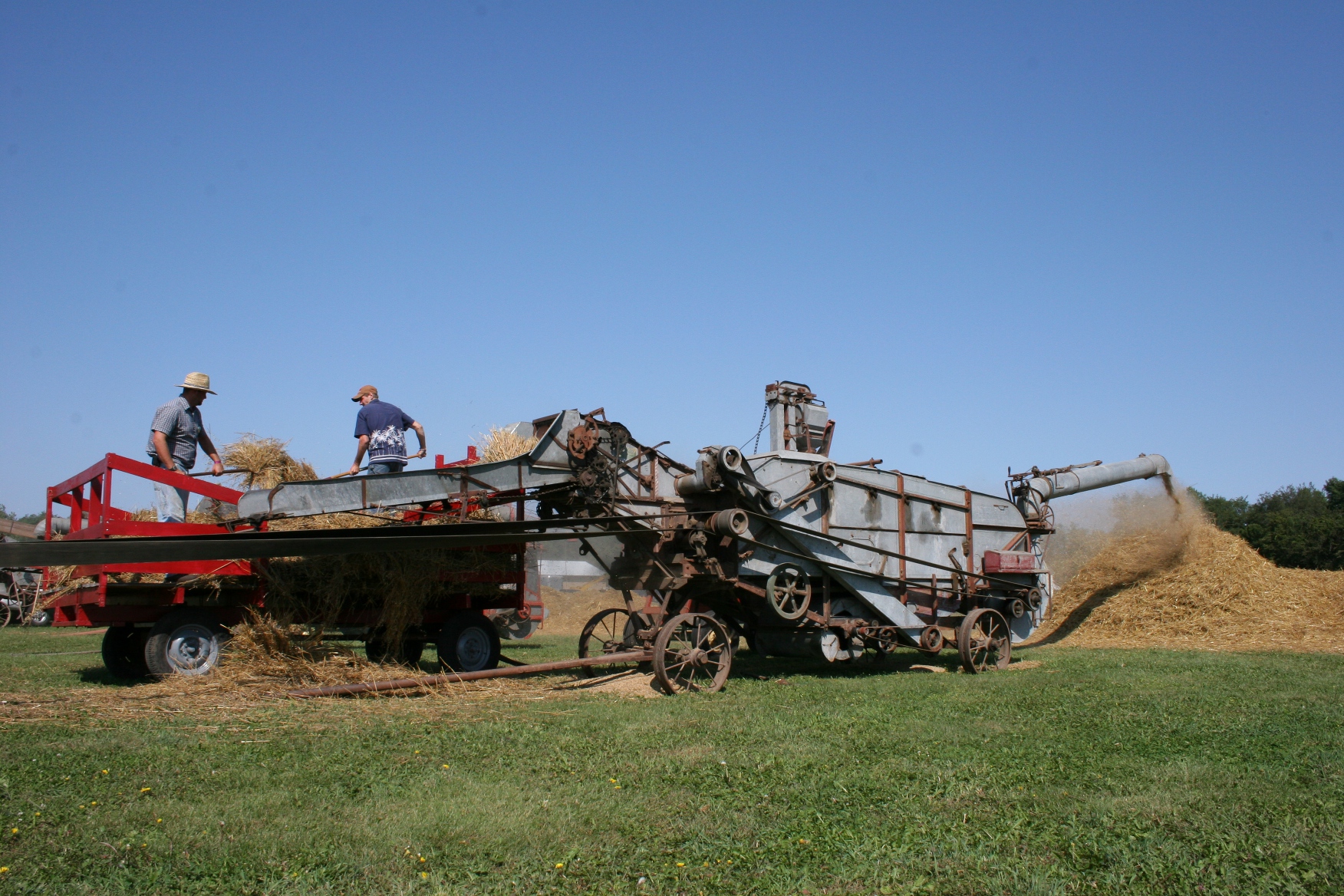
An overview of the threshing equipment and process of separating the oats kernels from the stem.

Bill Becker of rural Northfield mans the Minneapolis Moline which powers the threshing operation.

More shoveling of oat bundles, a dusty, dirty job.

The dust flies as men and machine work.

Plenty of farmers and retired farmers watch, remembering…

While horses plow a nearby field (left), the threshing crew continues working.

And the straw pile grows.

Finally, meet Grayden Moorhouse, whose strong name, it seems to me, belongs in a western.

FYI: Please check back for more posts from the steam and gas engine show. You’ll meet one interesting character and an incredible teen, plus ride along with me on the back of a truck.

© Copyright 2012 Audrey Kletscher Helbling