Minnesota Prairie Roots

Writing and photography by Audrey Kletscher Helbling

In Kenyon: More than just a bus service October 23, 2020

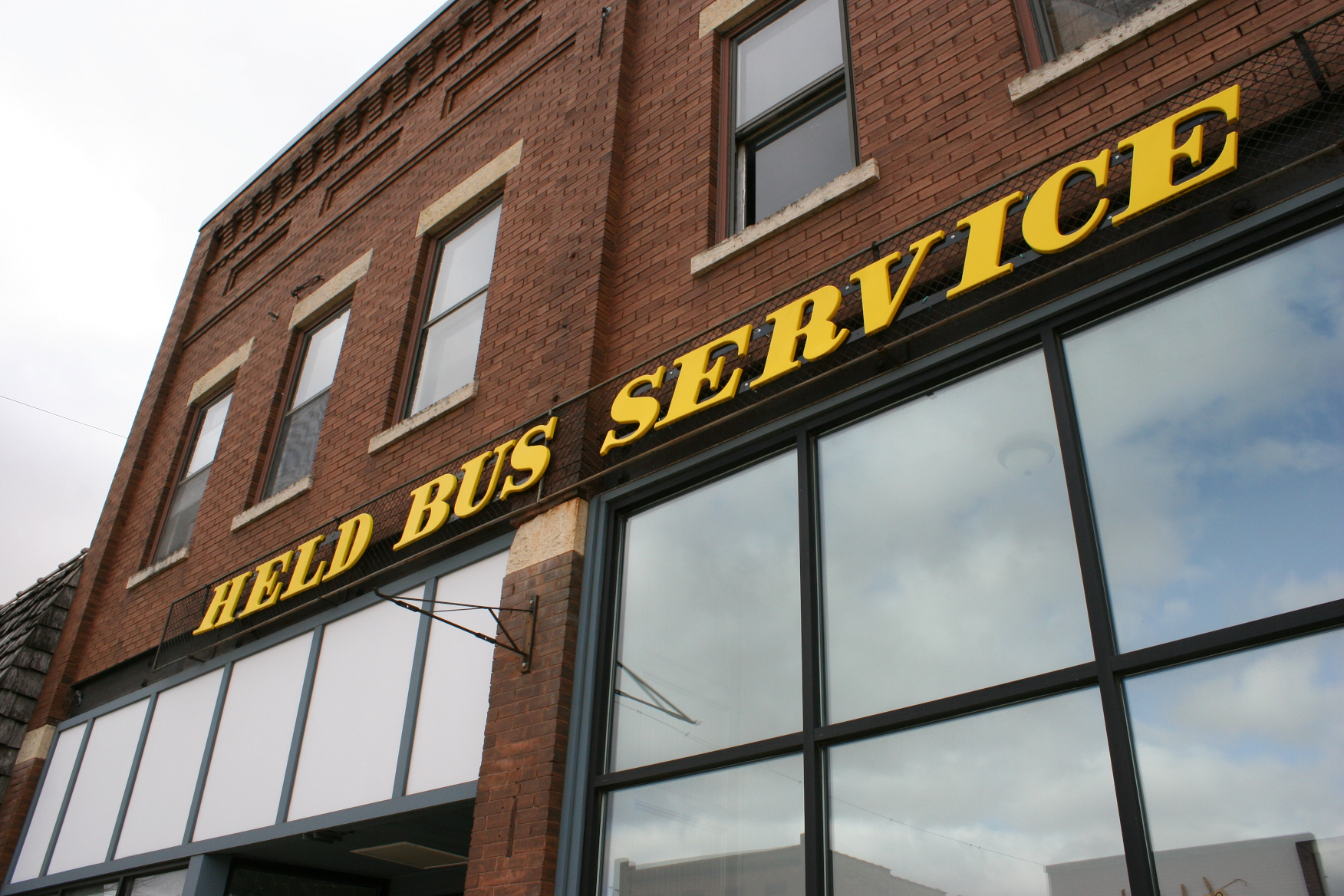
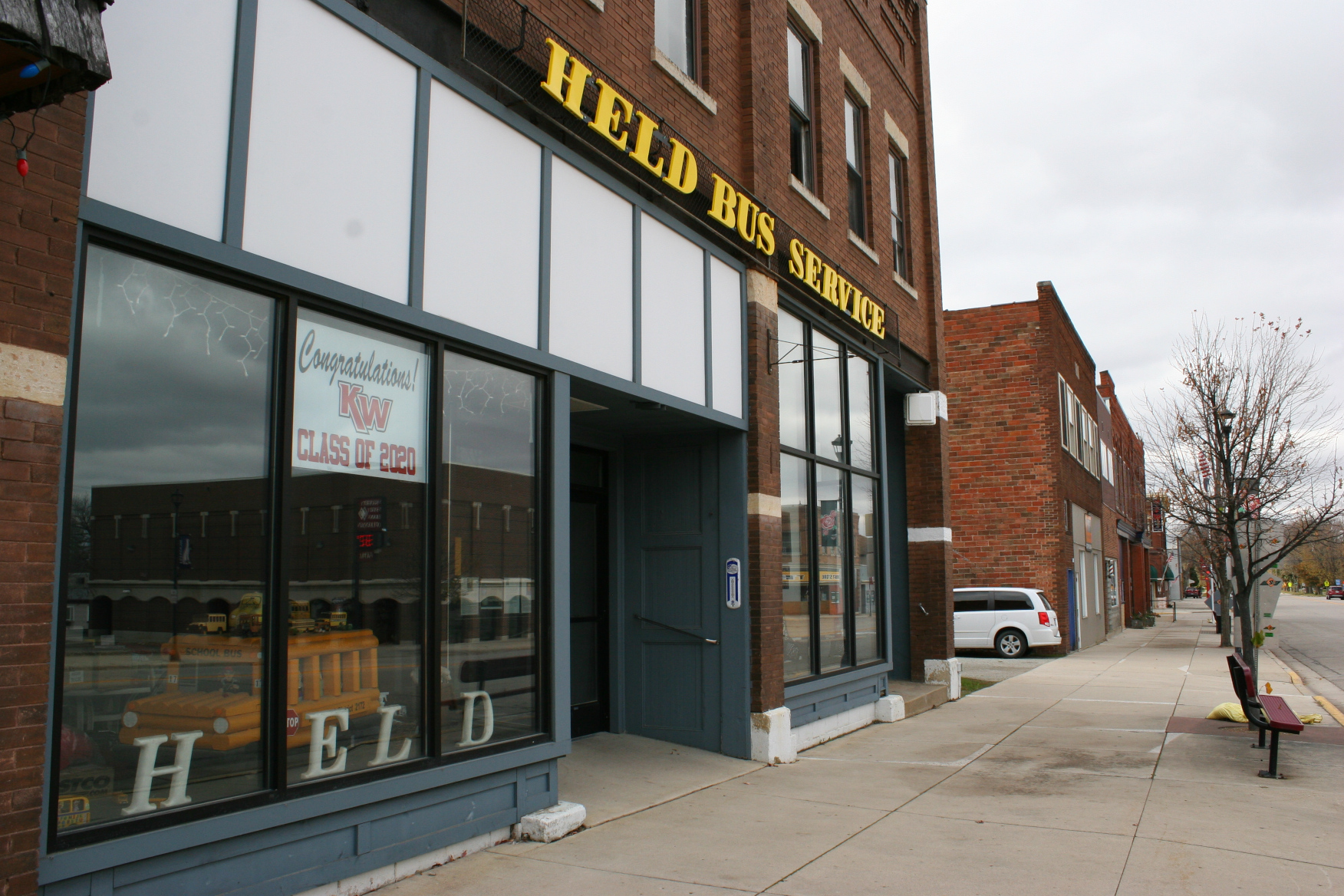
Held Bus Service in downtown Kenyon, Minnesota.

MANY TIMES I’VE PASSED through Kenyon, usually en route to visit family in Madison, Wisconsin, four hours distant. But many times also, this town of some 1,800 about a half hour east of Faribault has been my specific destination. Last Sunday afternoon on a drive to view the harvest and fall colors (before an unexpected snowstorm changed the landscape to winter), Randy aimed our van north out of Monkey Valley toward Kenyon just a few miles away.

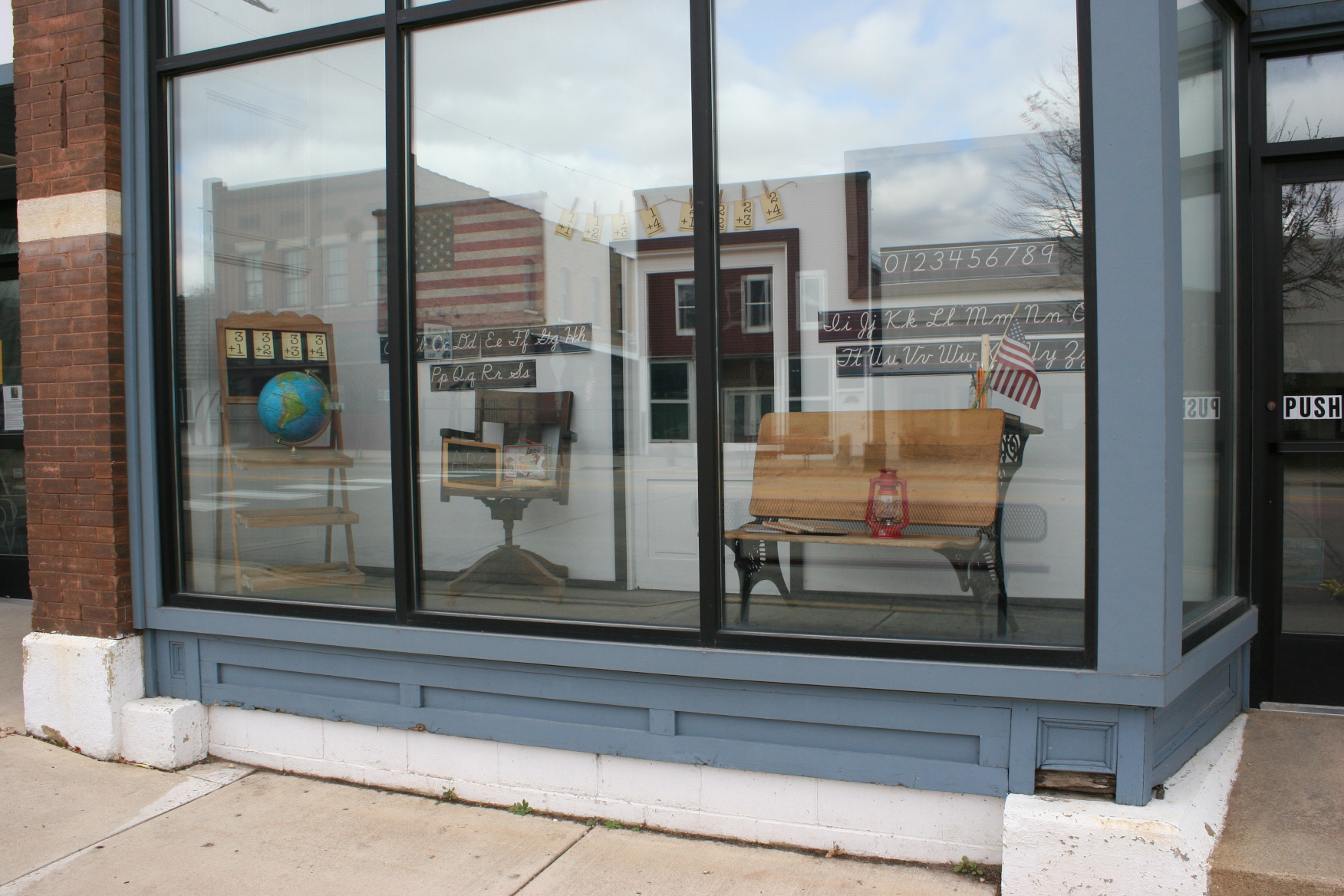
This window features a classroom of yesteryear.
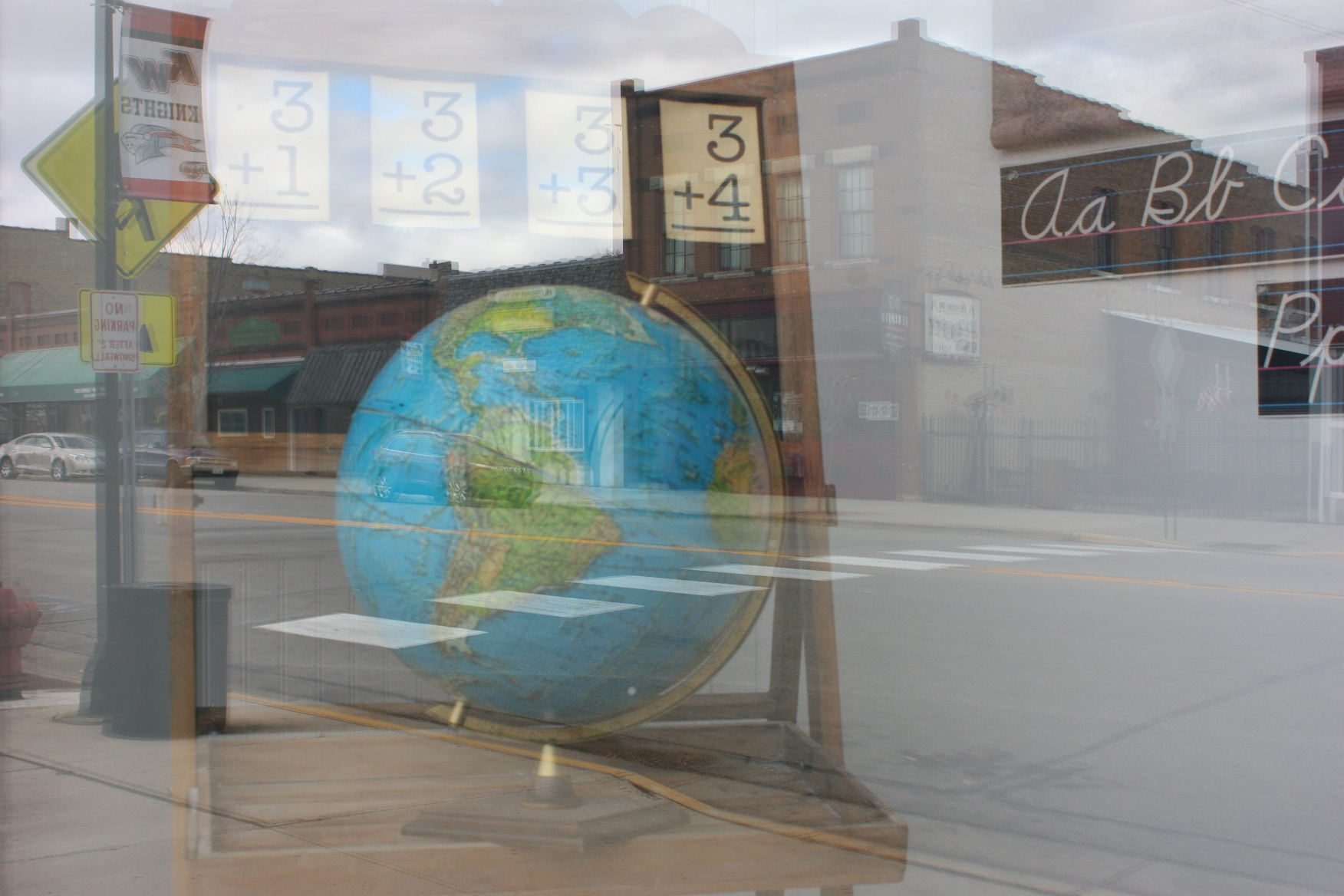
A close-up of a focal globe in the classroom display.
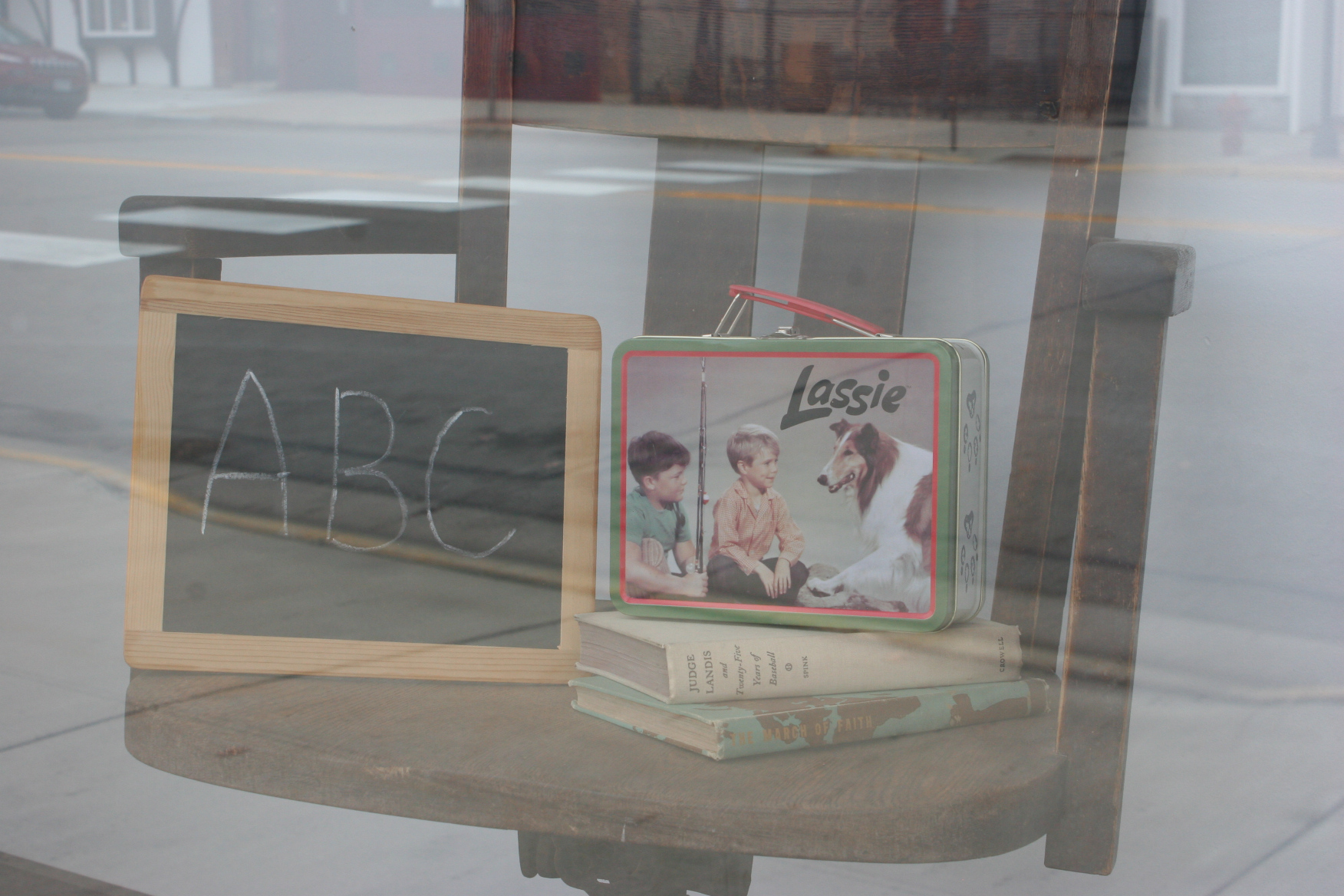
More details from the past…

We had no intention of stopping in Kenyon. But the passenger side window needed cleaning so Randy pulled into a corner service station and washed the glass. (He’s thoughtful like that.) Then we continued down Minnesota State Highway 60, which runs through the heart of the business district. As luck would have it, I happened to look, just at the right time, at the Held Bus Service building. And there, in the front windows, I spotted a school-themed display. Photo-worthy, I thought, as I asked Randy to swing around the block and return to the bus building. He even pulled ahead so the van wouldn’t reflect in the glass. (He’s thoughtful like that.)

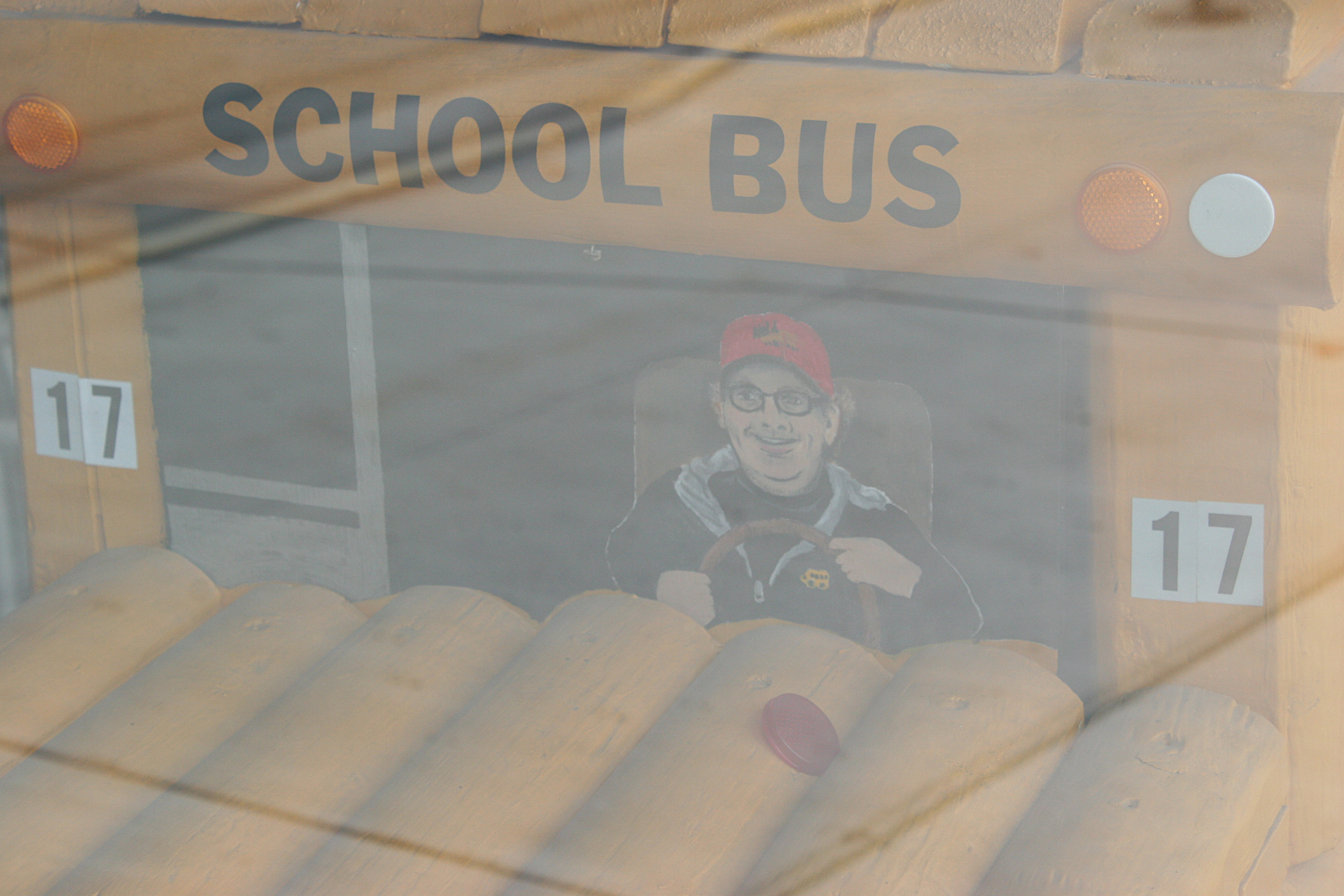
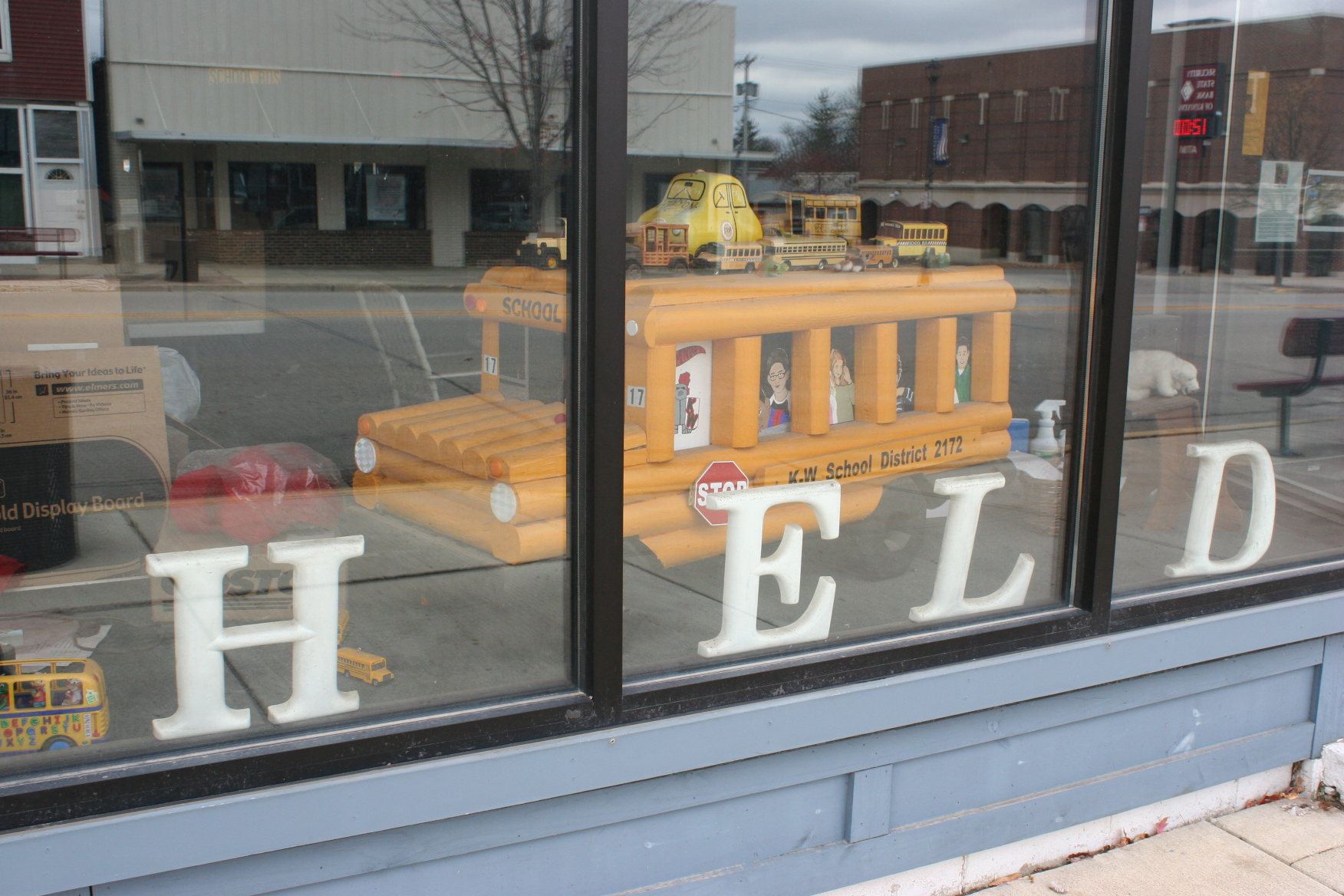
Look at this bus-themed window display with the apparently handcrafted bus.

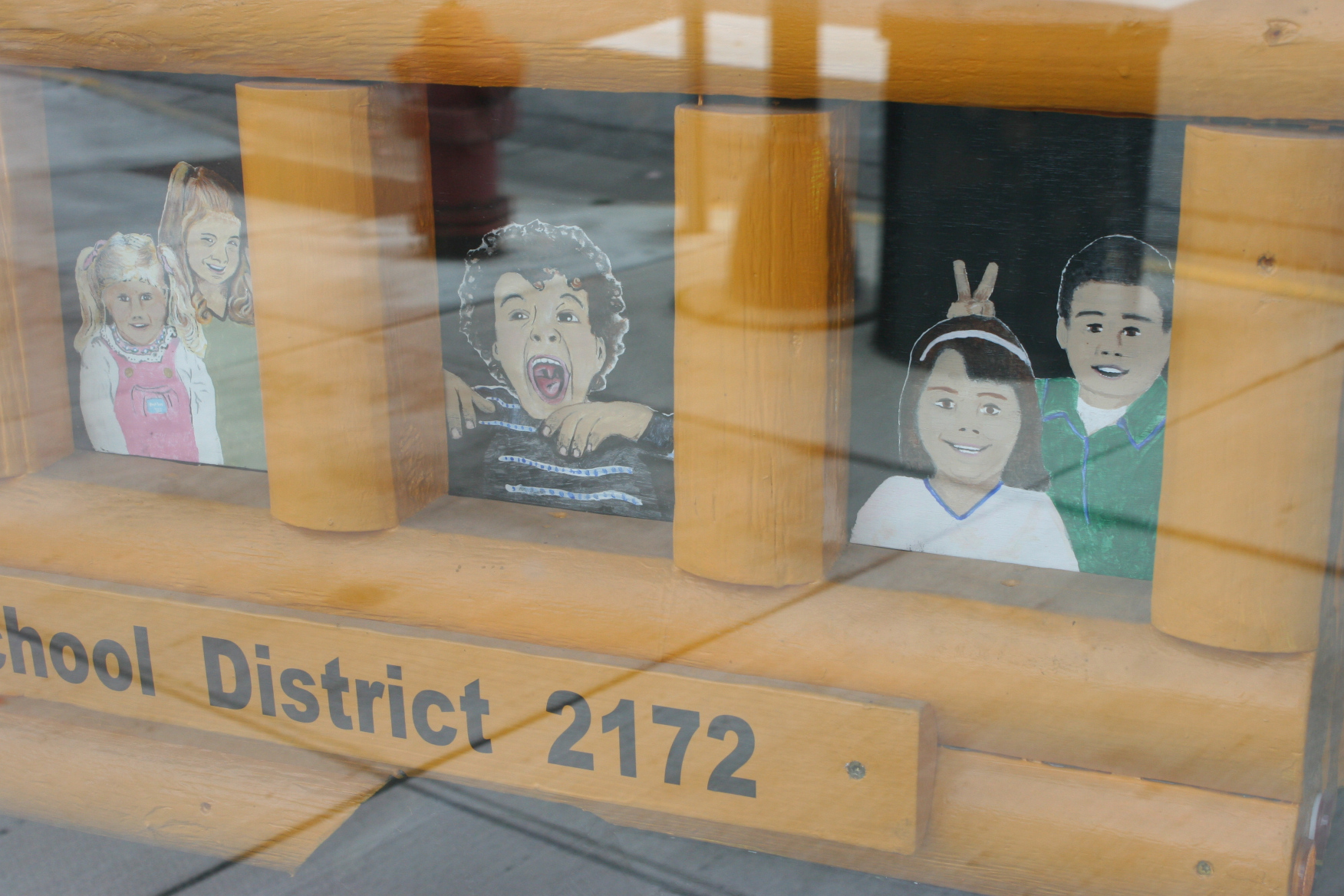
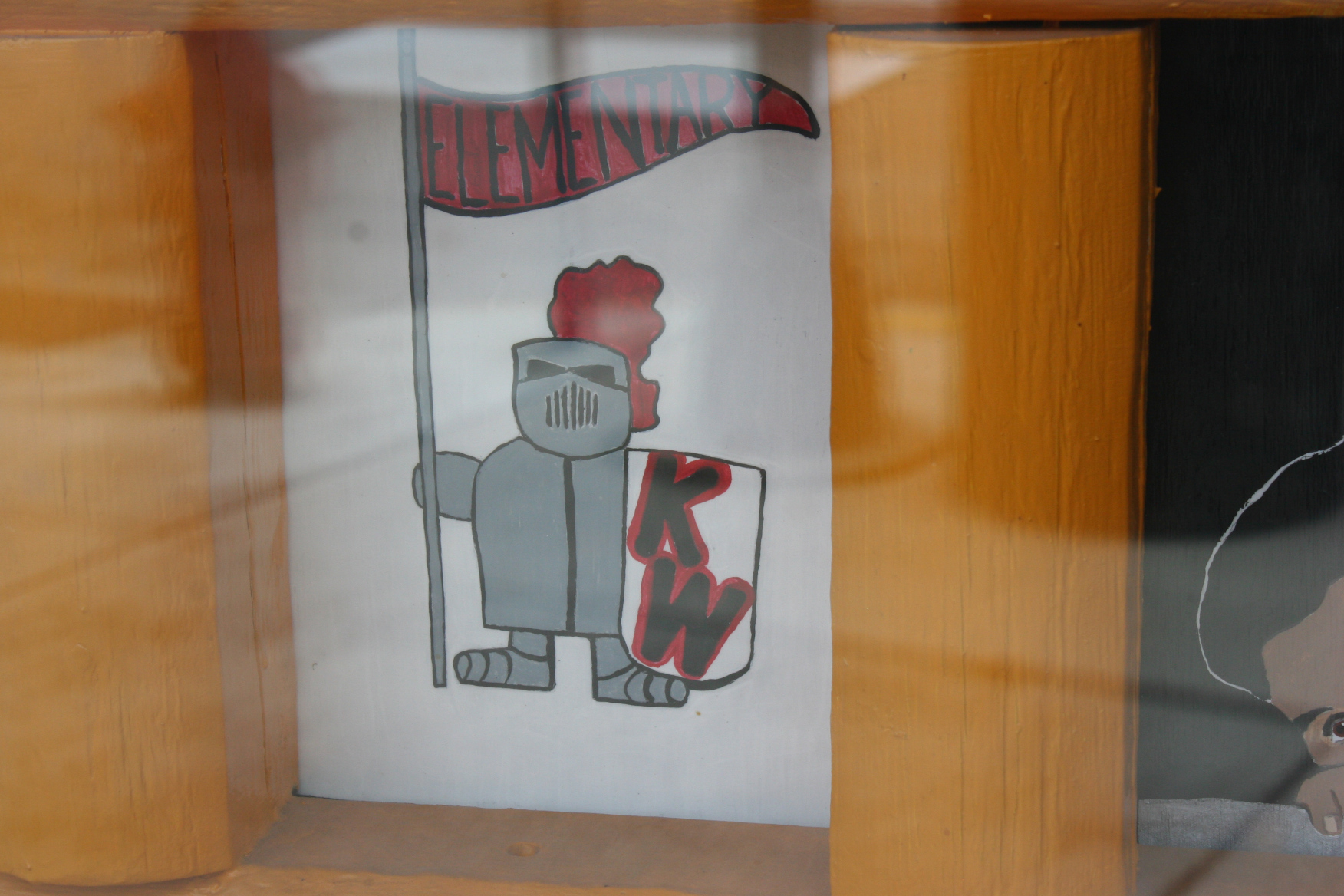
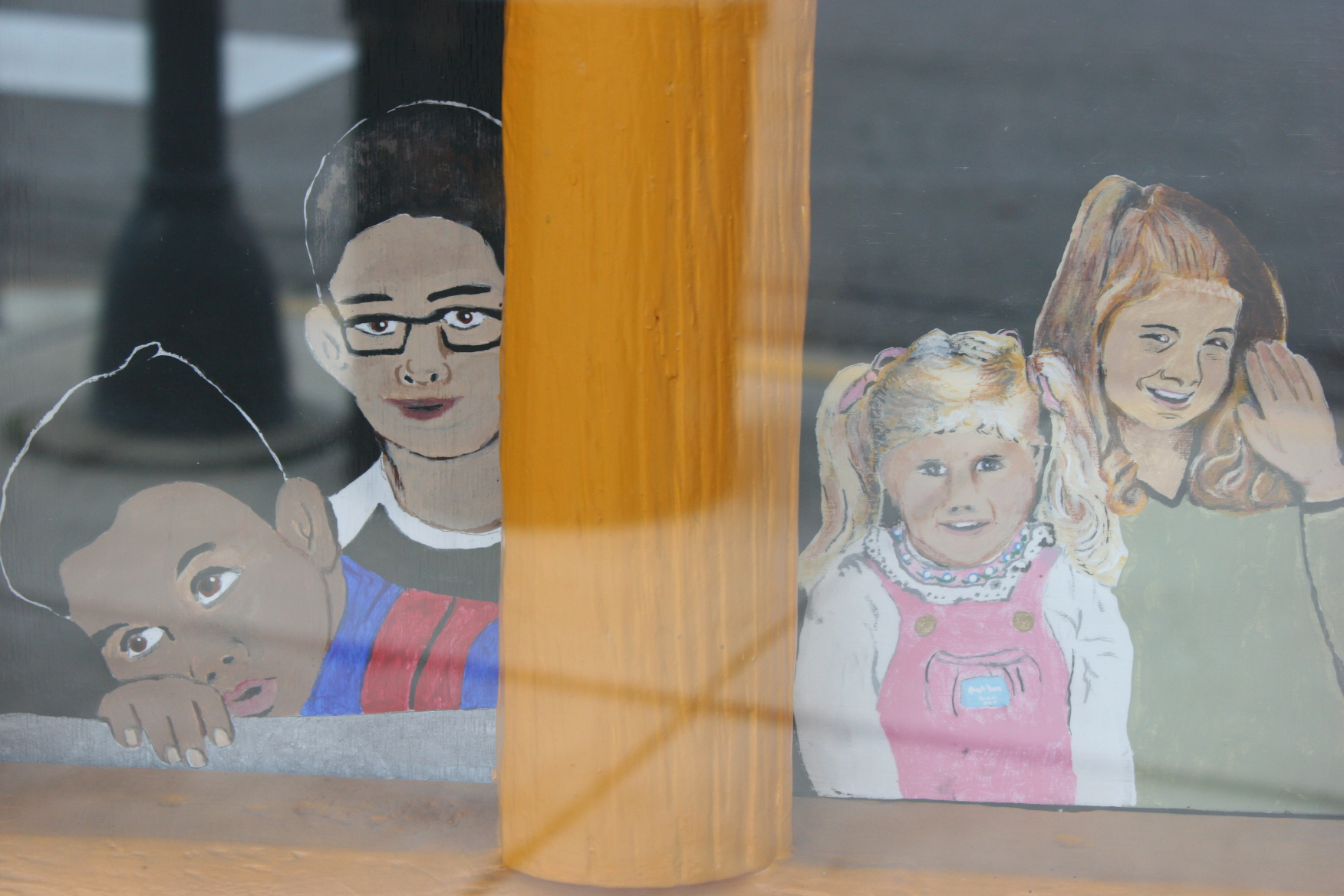
Photographing the window art proved challenging given the reflections. But I was determined to do my best. Someone worked hard to craft and create these educational-themed displays that show the importance of the Kenyon-Wanamingo School in this community—right down to the Knights mascot, the happy bus driver in the red cap and the smiling students. Yes, by that time I’d noticed two separate window displays, one an historic classroom and the other themed to school buses.

Love these portraits of students on the bus.
The school mascot even gets a place of honor.
More KW students riding the bus.

As someone who grew up riding the bus for 12 years to schools in southwestern Minnesota, I understand the importance of bus drivers. Mine were Jeff and Harley. Great guys. Friendly. Kind. Competent. It’s not easy driving on rural roads during a Minnesota winter. Nor is it necessarily easy dealing with a bus full of kids.

Presumably Jon Held behind the wheel of the bus.

But Jon Held, owner of Held Bus Service, loves kids. According to a 2016 KARE 11 TV feature on him, he is well-loved, too. He knows kids by name, greeting them daily before and after school (pre-COVID), often with hugs. He keeps a candy stash and one year even handed out his company’s signature red caps to some happy students.

The business is housed in an historic building which was damaged in an August 2016 fire. You can’t tell by looking at it now.

That’s a snapshot of the backstory framing these window displays. These are the stories that define small towns like Kenyon as caring communities, more than simply some place to pass through en route to somewhere else.

Please check back for more photos from Kenyon.

© Copyright 2020 Audrey Kletscher Helbling


Focus on Minnesota Nice (Enough) October 19, 2020

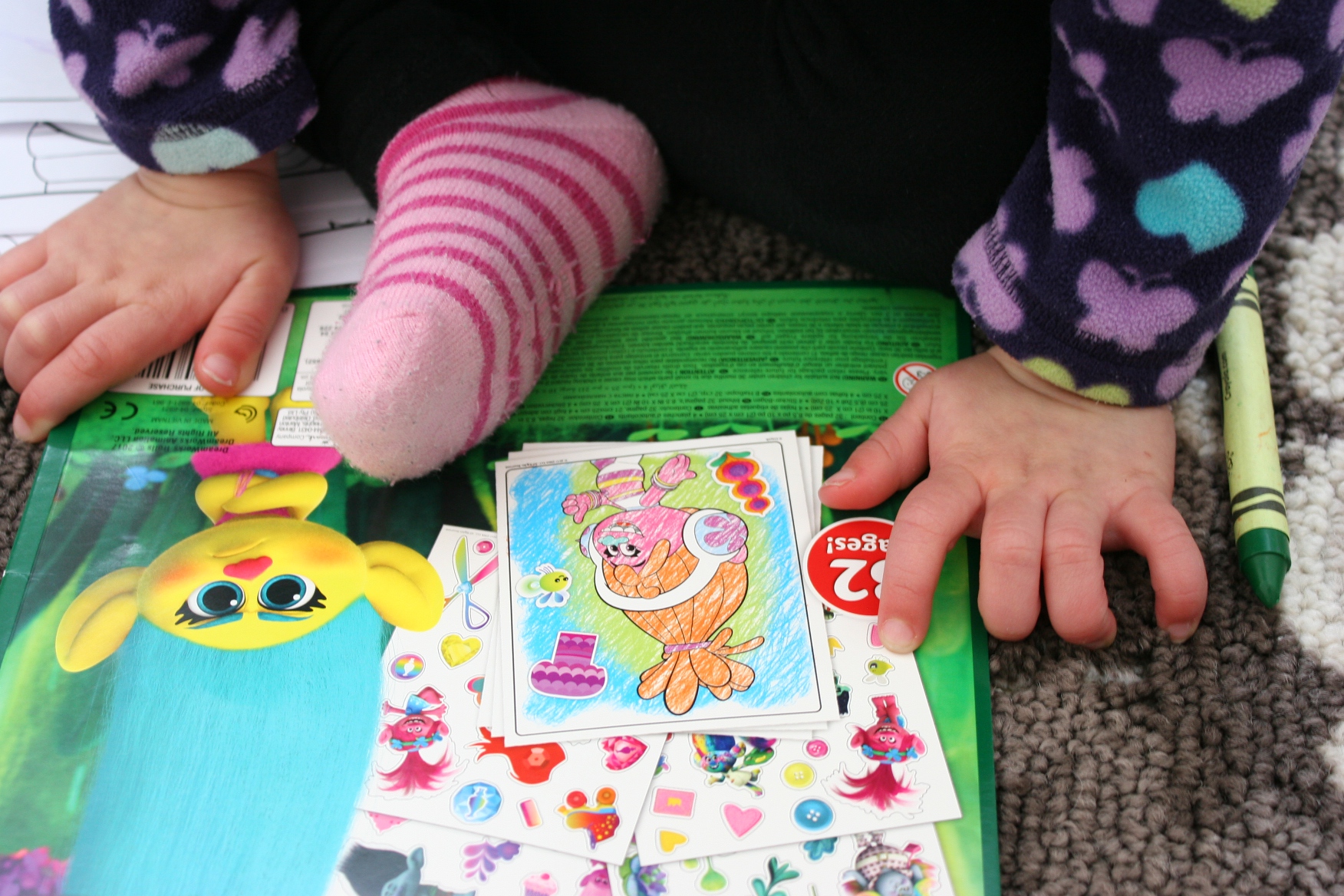
Stickers span generations. Here my granddaughter, then two, looks at her Poppy stickers. Minnesota Prairie Roots file photo April 2018.

WHEN MY GIRLS, now in their early 30s, were growing up, sticker books were all the rage. They filled mini books with stickers. Peel stickers from sheets of glossy paper and adhere them to blank pages. Horses. Kitties. And much more. Cute and bold Lisa Frank designs mostly in a vivid rainbow of hues, strong on pinks and purples.

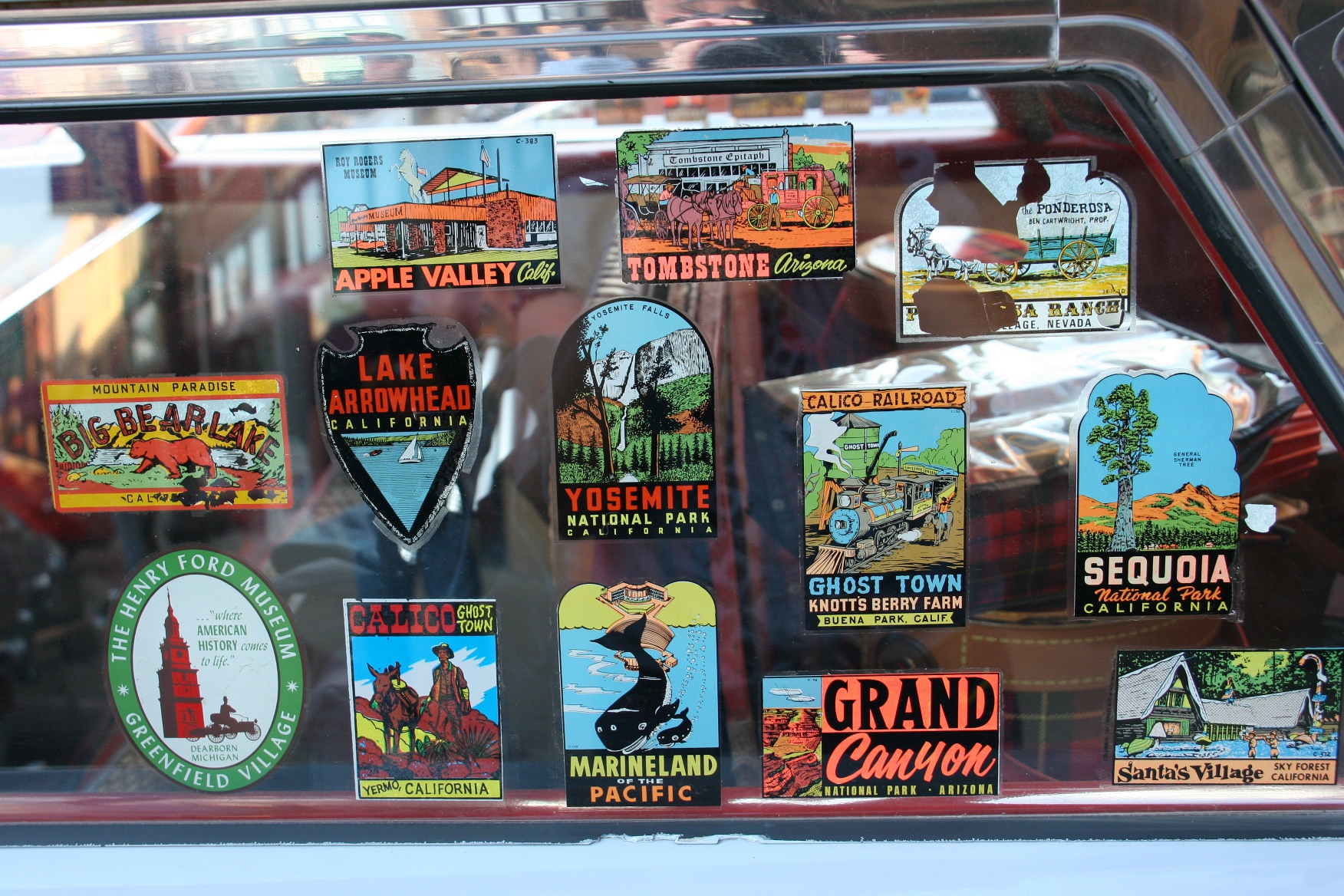
Park and other stickers grace the window of a 1959 Edsel Village Wagon at a Faribault Car Cruise Night, proving that even adults value stickers. Minnesota Prairie Roots file photo July 2016.

My daughters loved paging through their sticker books. Stickers still hold universal appeal. For all ages. (The stickers of my era were lick-and-stick to scenes printed on pages of a sticker book.)

That segues to Minnesota Nice Enough, a Nisswa-based company that crafts weatherproof vinyl stickers that are not your kids’ mass-produced outsourced stickers. These are promoted as “made by real people who care about quality, art, beer, bicycles & dogs.” Now that appeals to me.

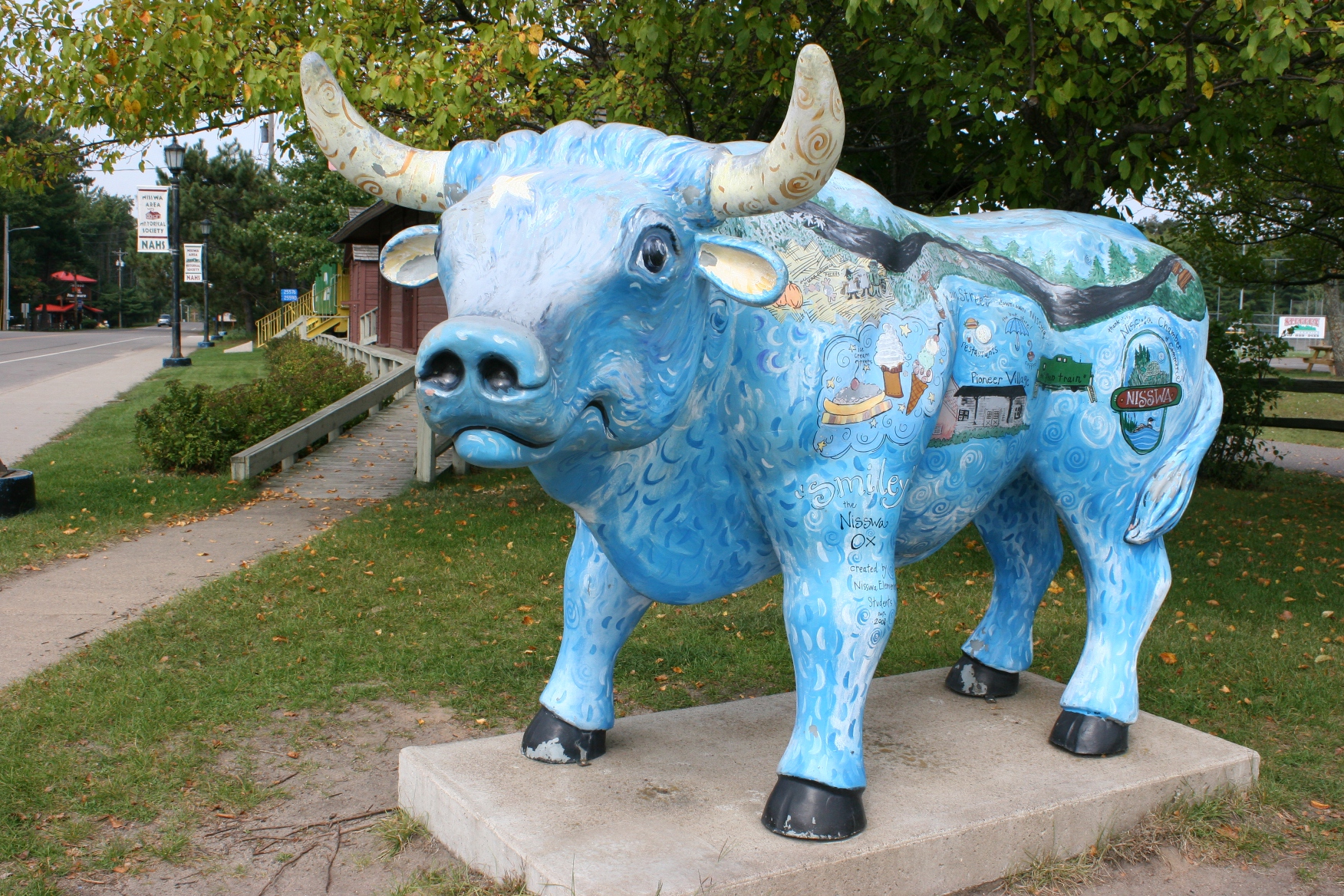
Babe the Blue Ox sculpture in Nisswa. Minnesota Prairie Roots file photo September 2017.

I first learned about this company during a September visit to Nisswa, a small tourist town located in Minnesota’s central lakes region. Randy and I were in the area, staying at a family member’s guest lake cabin. One day, we ventured into nearby Nisswa to check out the many shops that define this town. Those businesses include Zaiser’s Gift Shop, billing itself as “serving the Nisswa lakes area since 1947 with the most kick-ass products this side of the Milky Way!”

Small grassroots shops line downtown Nisswa.

Already I like this business. Humor and creativity rate high with me. And Biff Ulm, MN Nice Enough creative head who also owns the family retail boutique, obviously possesses both. One need only scroll through the sticker offerings (also sold on etsy) to confirm that. (The business also sells mugs.)

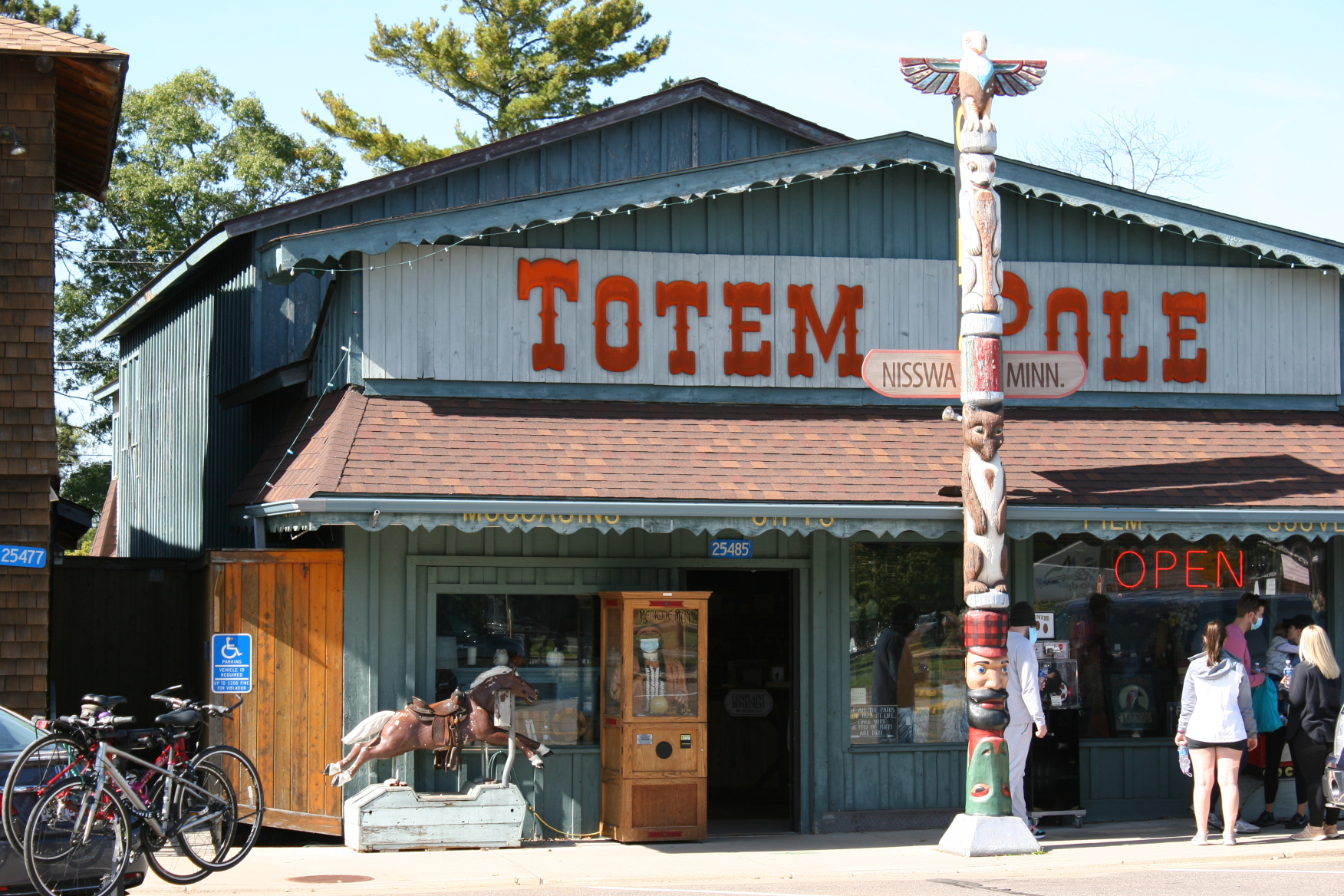
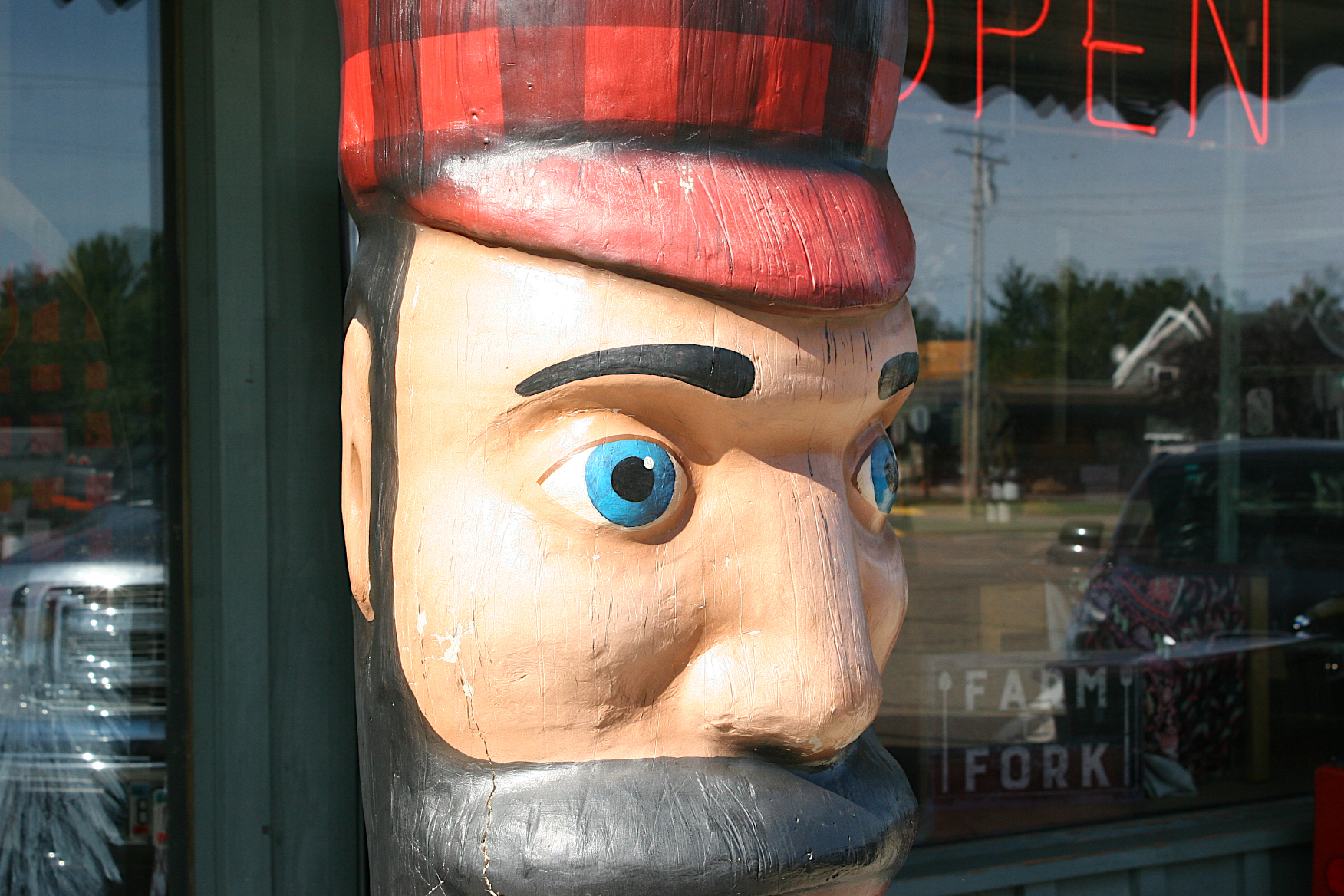
Paul Bunyan, carved into a totem pole at the Totem Pole shop in Nisswa.

Many stickers feature a decidedly northwoods Minnesota theme with buffalo plaid, Paul Bunyan, moose, pines, loons, canoes… Others highlight Minnesotans’ idiosyncrasies like calling pop “pop,” not soda. And calling hotdish “hotdish,” not casserole. And, as promised, beer gets some love in several stickers, including Minnesota and Wisconsin-shaped beer mugs. Yes, Wisconsin also gets lots of love from Minnesota Nice Enough. And, yes, you can purchase a Minnesota Nice Enough sticker, too.

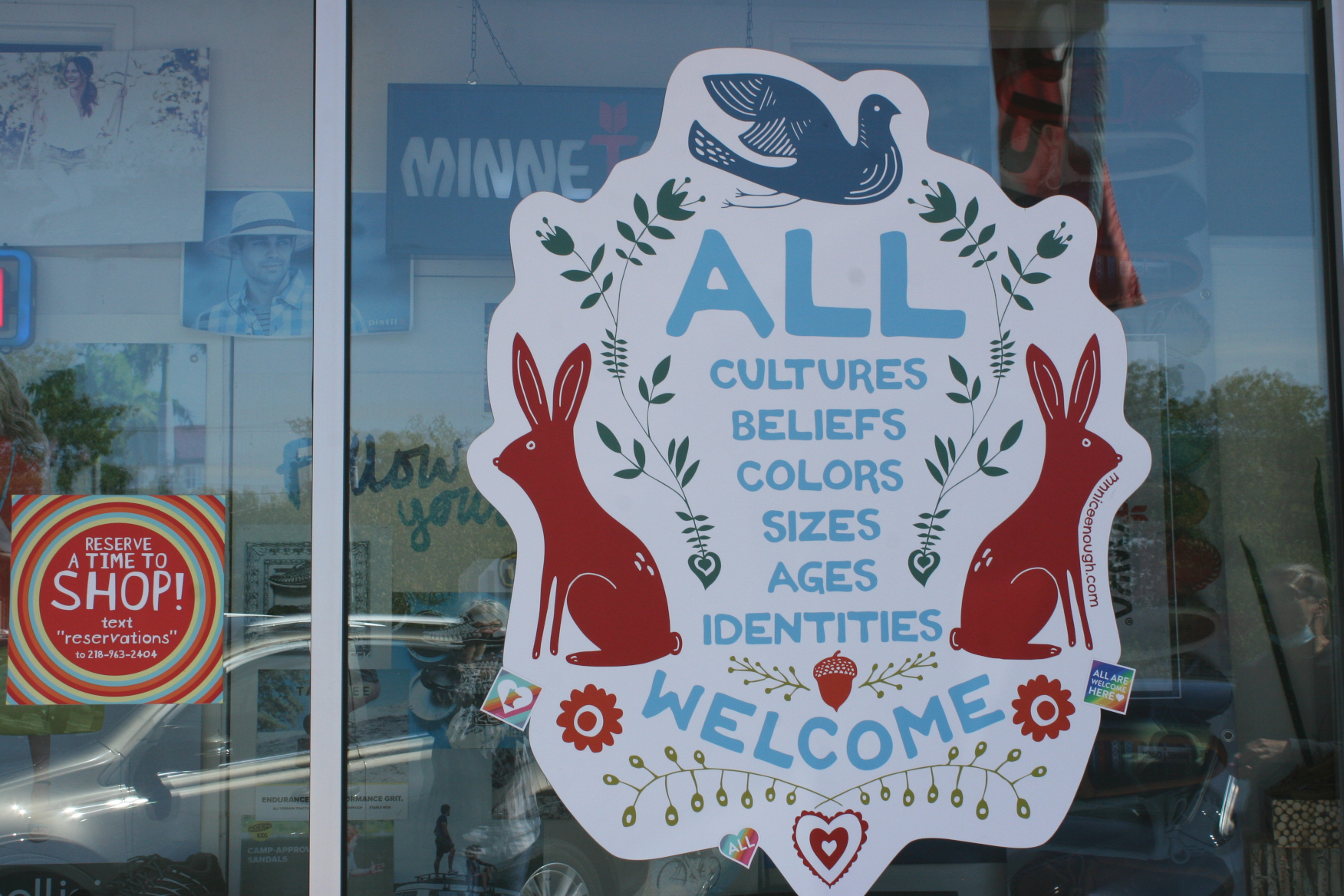
The sticker that initially grabbed my attention.

But it was the oversized ALL WELCOME sticker in the front window of Zaiser’s that first grabbed my attention and led me to learn more about Minnesota Nice Enough (which also features products for adult, not kids’, eyes). That spotlight sticker proclaims that all are welcome. All cultures, beliefs, colors, sizes, ages and identities. And at a time when our nation is so divided, so filled with animosity toward one another, I appreciate this message. It gives me hope, uplifts and encourages me. Thank you, Minnesota Nice Enough.

© Copyright 2020 Audrey Kletscher Helbling
 

Weekend events celebrate art, diversity & food October 8, 2020

The pottery of Tom Willis, displayed at a past Studio ARTour. He will be among six artists at Studio #7, 10754 Farrel Avenue, Northfield. Minnesota Prairie Roots file photo.

ART, FOOD, FUN and more food. All will focus events in the Faribault area this weekend. And even though I’m uncertain yet whether I will attend any—because of my COVID-19 comfort level—I want to pass along this community information. These are all worthy events which I’ve attended in past years.

First up is the annual south central Minnesota Studio ARTour, featuring the work of 16 regional artists either in studios or, in Faribault, also at the Paradise Center for the Arts. Some of those studios will be open from 4-8 pm Friday in addition to weekend hours that start at 10 am and continue until 6 pm on Saturday and until 5 pm on Sunday.

The tour is scaled back from previous years, but still includes a variety of artists who paint, shape clay into pottery, practice the Norwegian art of rosemaling, engage in fiber art, design jewelry, create with photography and more. I’ve always appreciated the opportunity to meet these artists, to view their work and where they work.

Promotional info for the tour emphasizes that health and safety come first and that participants—yes, that includes everyone—must wear a mask and that hand sanitizer will be used. Some artists will set up outdoors.

A previous flag ceremony featured national anthems and information about the countries from which Faribault residents have originated. Minnesota Prairie Roots file photo.

Likewise, the Faribault Diversity Coalition, organizers of the 15th annual International Festival Faribault, promises plenty of safety protocol during the 10 am – 4 pm Saturday fest at Faribault’s Central Park. If you’re comfortable attending, I’d encourage you to do so. It’s a great opportunity to learn more about the diverse people who call Faribault home. The fest is aptly billed as “Neighbor Meeting Neighbor.”

This celebration of our cultural diversity includes a full day of entertainment from Native American, Guatemalan and Aztec dancers to Guatemalan and Hispanic singers and more. Other highlights include a Naturalization Ceremony and a Flag Ceremony, both in the early afternoon.

And there’s more—arts and crafts, kids’ activities, informational booths and food. Let’s not forget the food. Food from around the world. The fest offers a great opportunity to try ethnic foods.

My plate full of food from a past Trinity harvest dinner. Not all foods served are on this plate. Minnesota Prairie Roots file photo.

Food centers the final local event I want to highlight. That’s the annual Trinity North Morristown Harvest Dinner from 11 am – 1 pm Sunday. I’ve attended this annual church dinner many times and highly-recommend it for the outstanding food. For only $10, you’ll get a meal of turkey, ham and all the trimmings that tastes like it came directly from Grandma’s kitchen.

This year the meal is take-out only with tickets sold on the adjacent Fourth of July picnic grounds and meals then handed out via drive-through on the south side of this rural church. I’ve always enjoyed the dining-in experience of cramming inside the church basement for good food and conversation among this friendly crowd. But, because of COVID, there will be none of that nor will there be a craft or bake sale.

Life goes on, pandemic or not. Just, please, if you attend any of these events, mask up (whether indoors or out), social distance and keep your hands clean. If you’re sick or have COVID symptoms or have been exposed to anyone with COVID or COVID symptoms, stay home.

© Copyright 2020 Audrey Kletscher Helbling
 

In praise of the art, gardens & messages in an Atwood Neighborhood September 24, 2020

Filed under: Uncategorized — Audrey Kletscher Helbling @ 5:00 AM
Tags: , , , , , , , ,


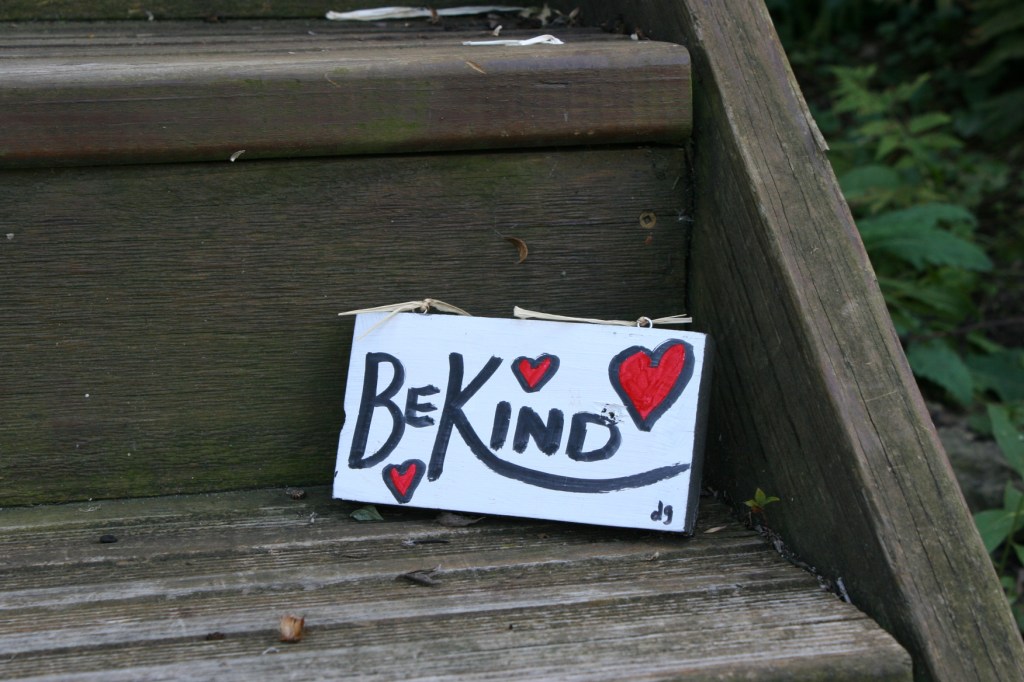
BE KIND.

Two simple words painted, along with three red hearts, onto a block of wood. And then set on the front steps of a home in the Atwood Neighborhood of Madison, Wisconsin.


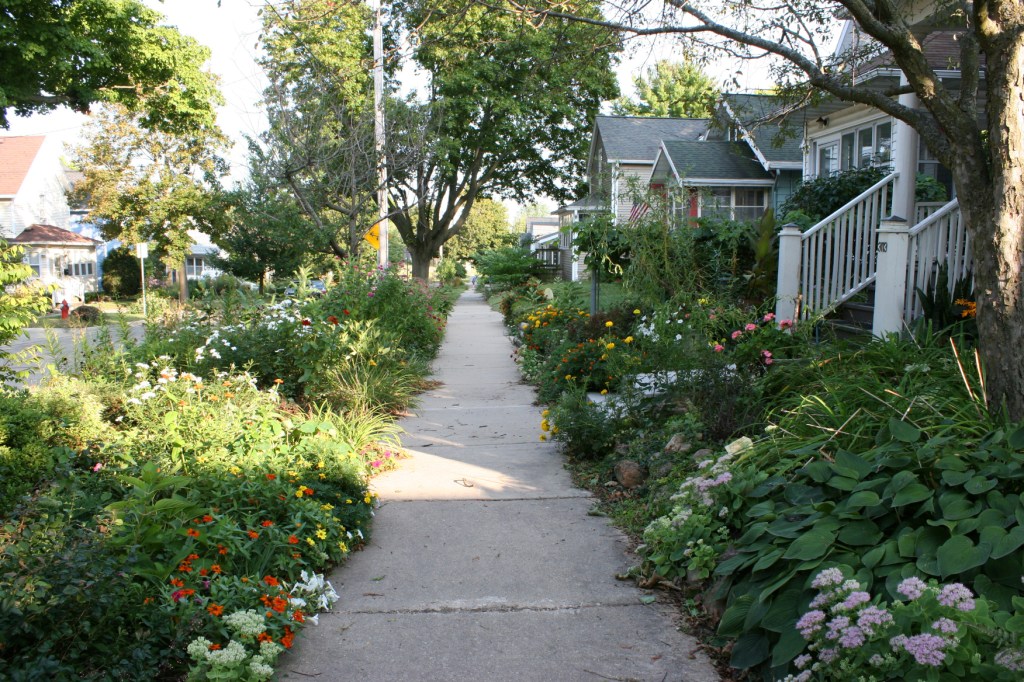
A section of the Atwood Neighborhood I walked.


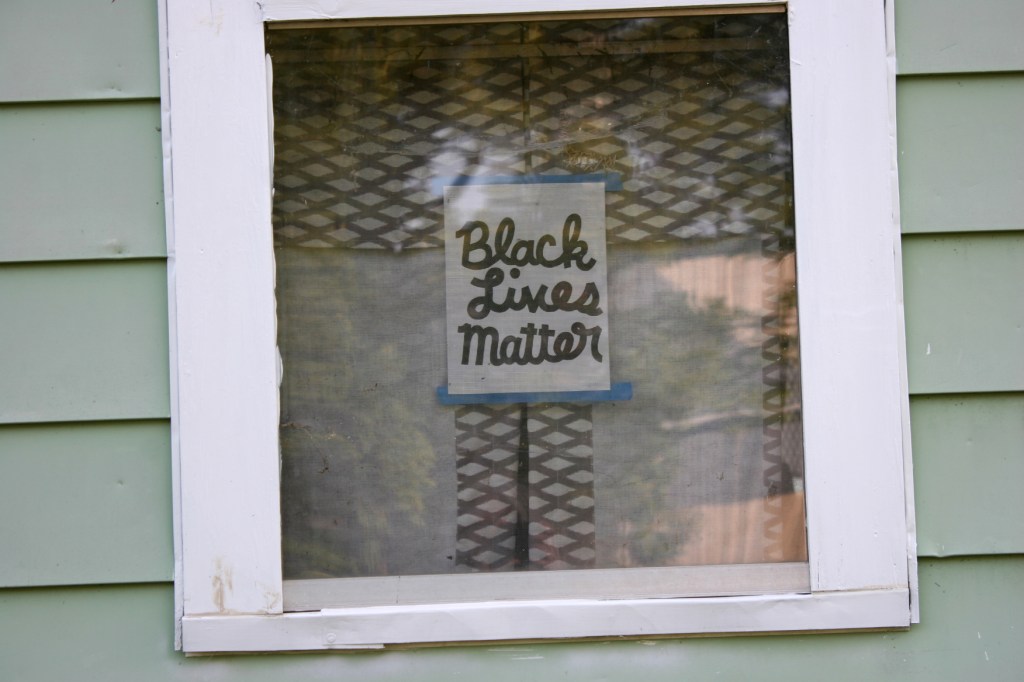
On a recent trip to Wisconsin’s state capital, I retraced a route I previously walked through this east side neighborhood near my son’s apartment. I found in that residential area many uplifting and positive messages that show those who live here care. Deeply. About others. About issues.


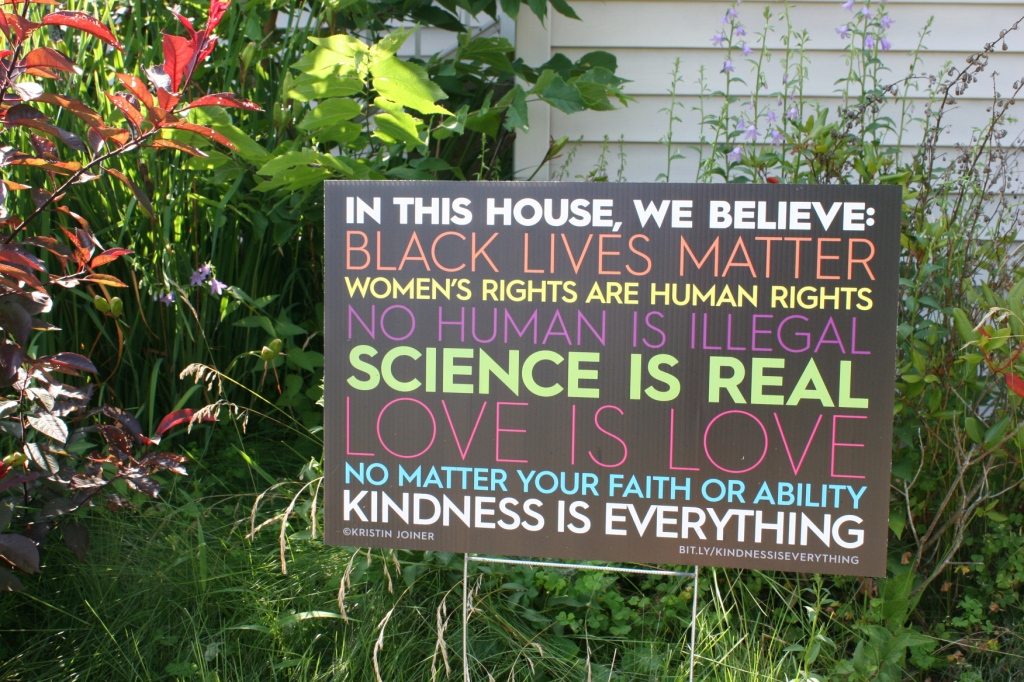
One of the many inspiring signs posted in the residential neighborhood where I walked a square block. Minnesota Prairie Roots file photo.


And, in times like this with such chaos and turmoil and hatred in our country, I need to immerse myself in positive and hopeful words that uplift, rather than anger or sadden me.


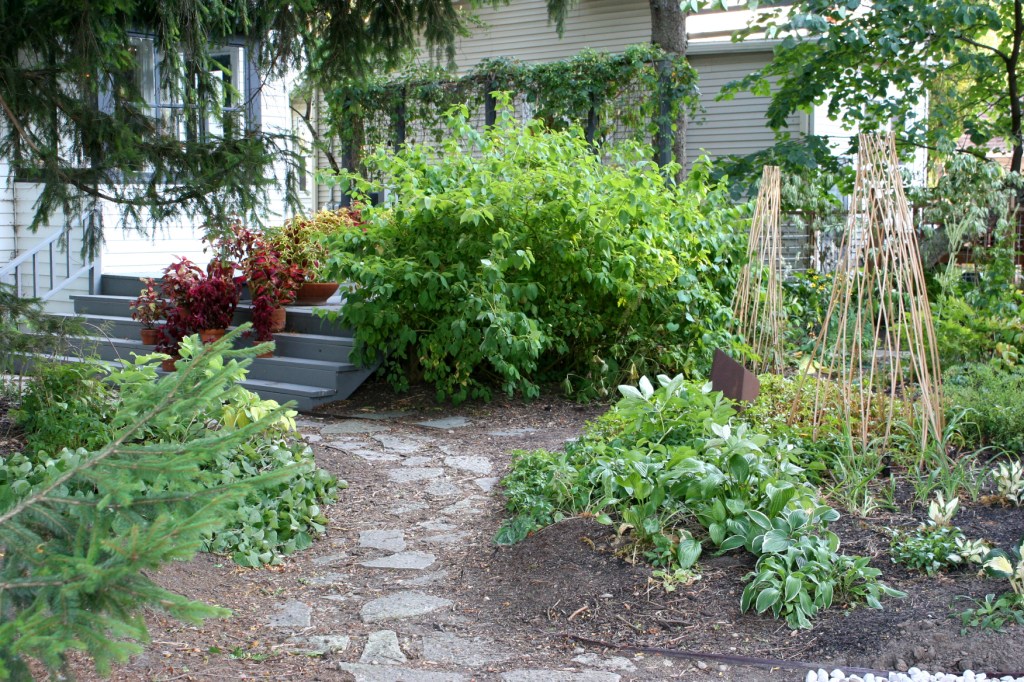
An example of a front yard mixing plants and art.


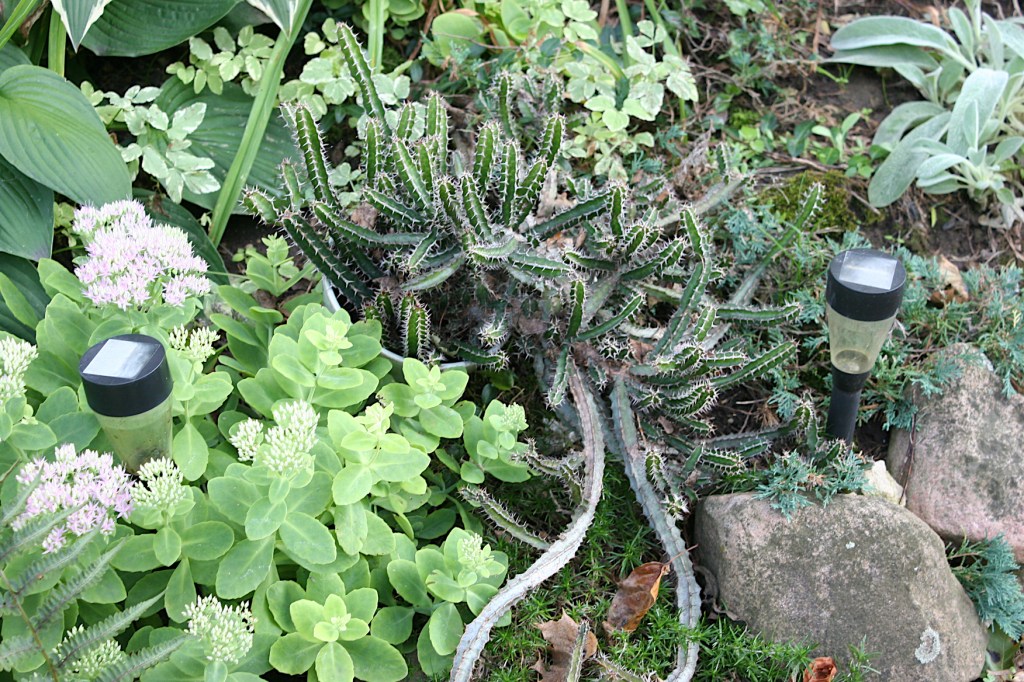
Up close in a front yard I spotted this sprawling cactus which adds interest to the landscape.


Besides the messages, I appreciate the art placed in front yards overflowing with plants, including flowers. Not manicured lawns. I welcome that alternative to grass. It’s lovelier and better for the environment.


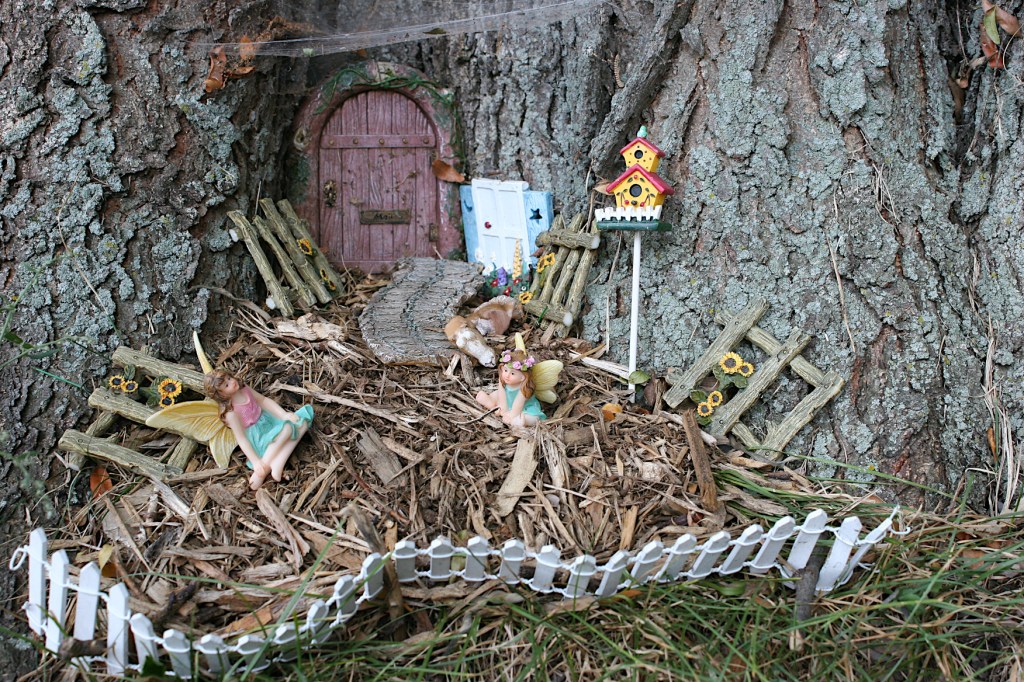
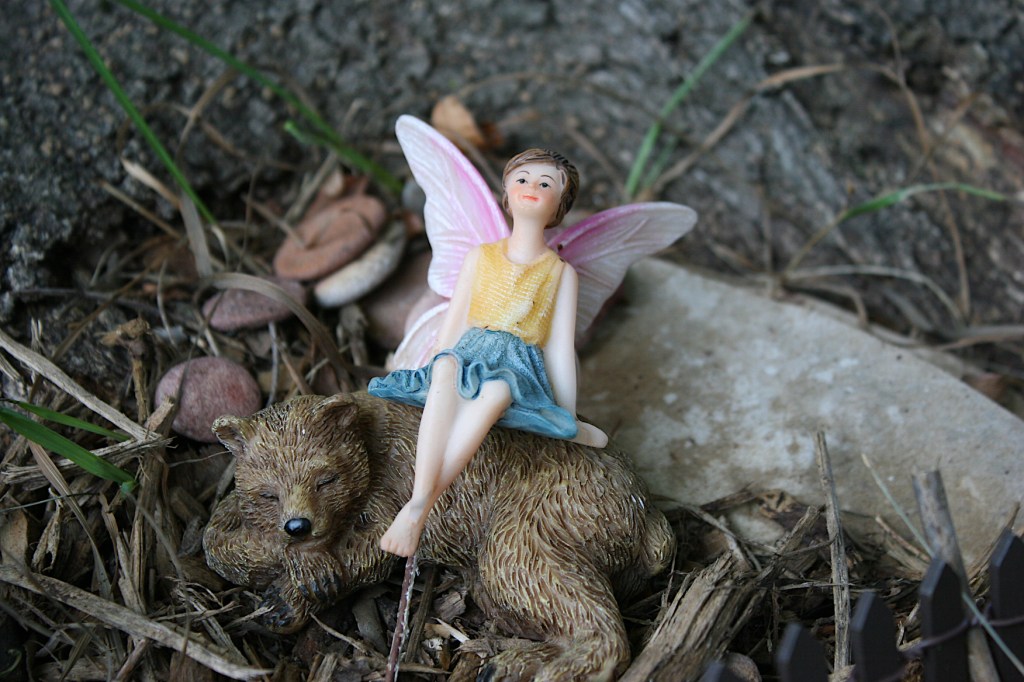
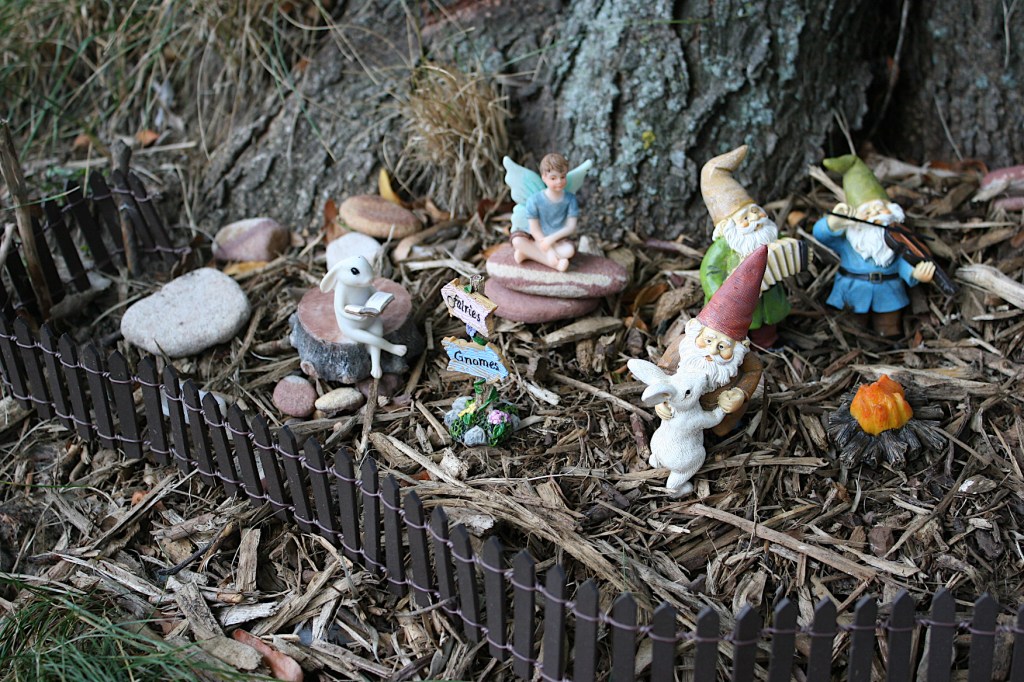
And in one yard, by a boulevard tree, I once again found a mini garden, a magical world of fairies and rabbits and gnomes. Making music. Dancing, Reading. Waiting.


I paused to photograph the scenes, inwardly praising the efforts of the homeowner who created this fantasy world for passersby to enjoy.


This offers, too, a momentary escape from reality. Something I need now, more than ever.


© Copyright 2020 Audrey Kletscher Helbling
 

Portraits honor laborers on Madison’s East Side September 22, 2020

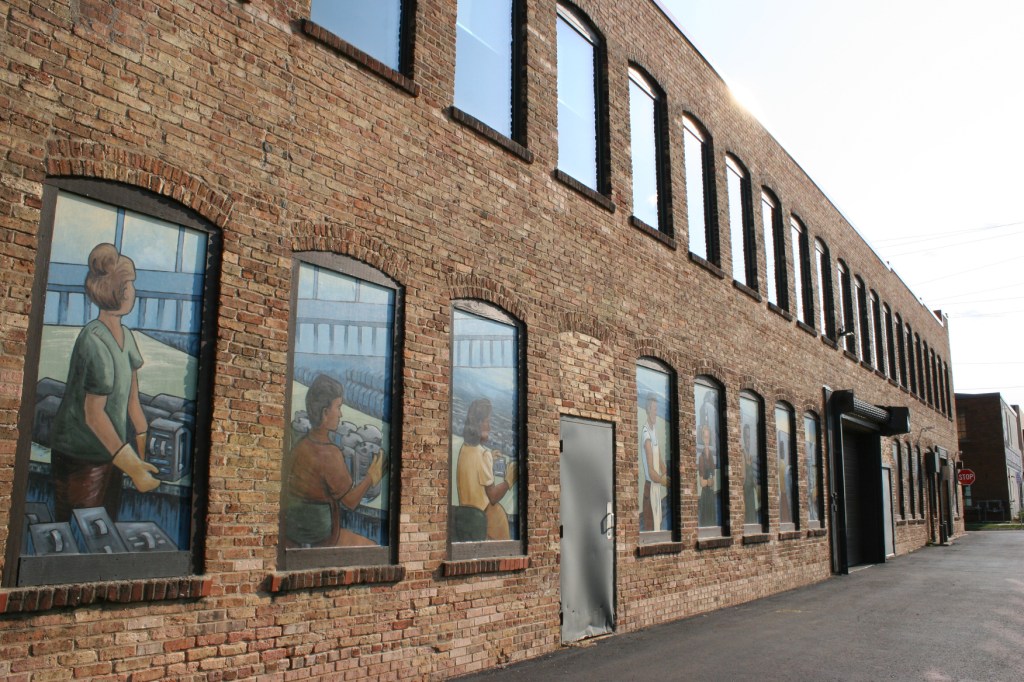
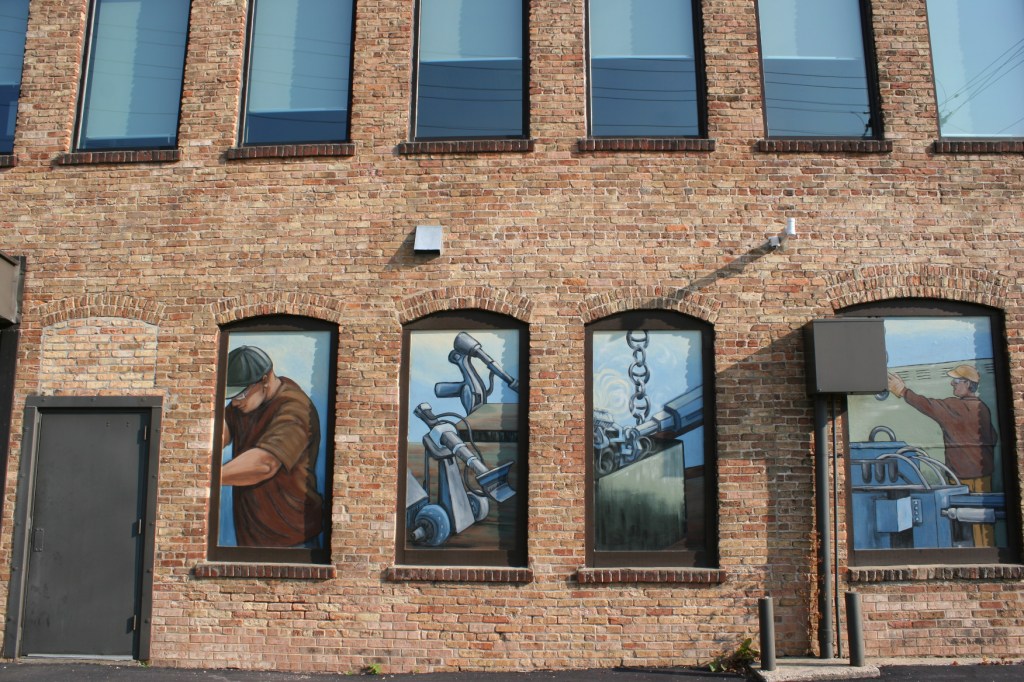
Portraits grace window spaces of Madison-Kipp Corporation, founded in 1898, and located in the Atwood Neighborhood of Madison, Wisconsin. The company produces precision machined aluminum die castings and subassemblies for the transportation, lawn and garden, and industrial markets, according to its website.


WHEN I VIEWED PORTRAITS set into former window spaces in an aged industrial brick building on Madison’s East Side, I saw strength.


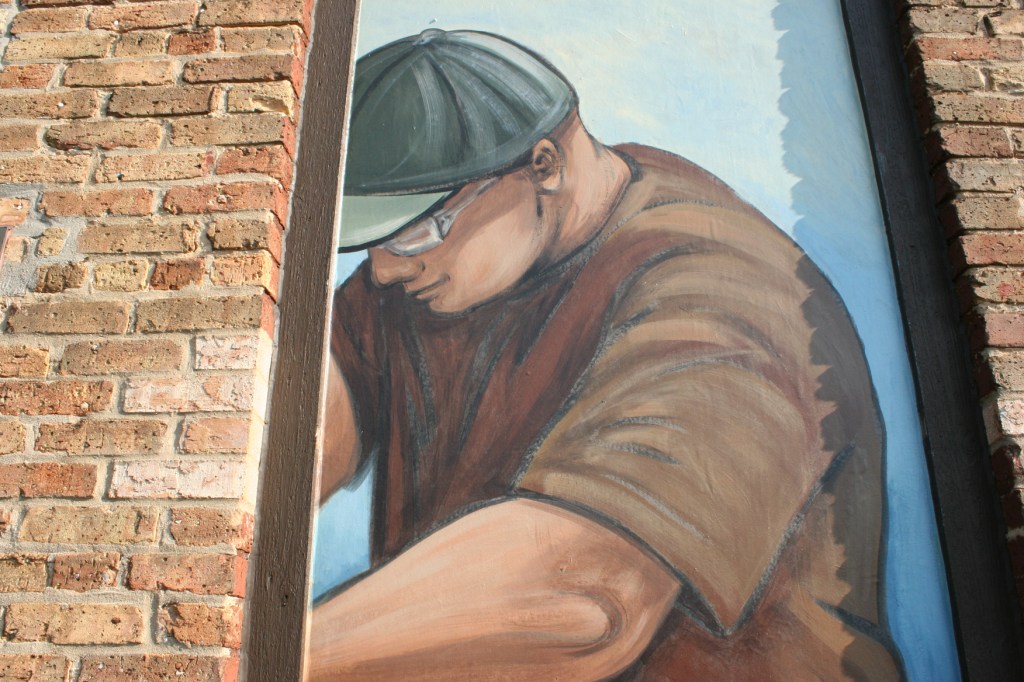
This portrait exudes strength.


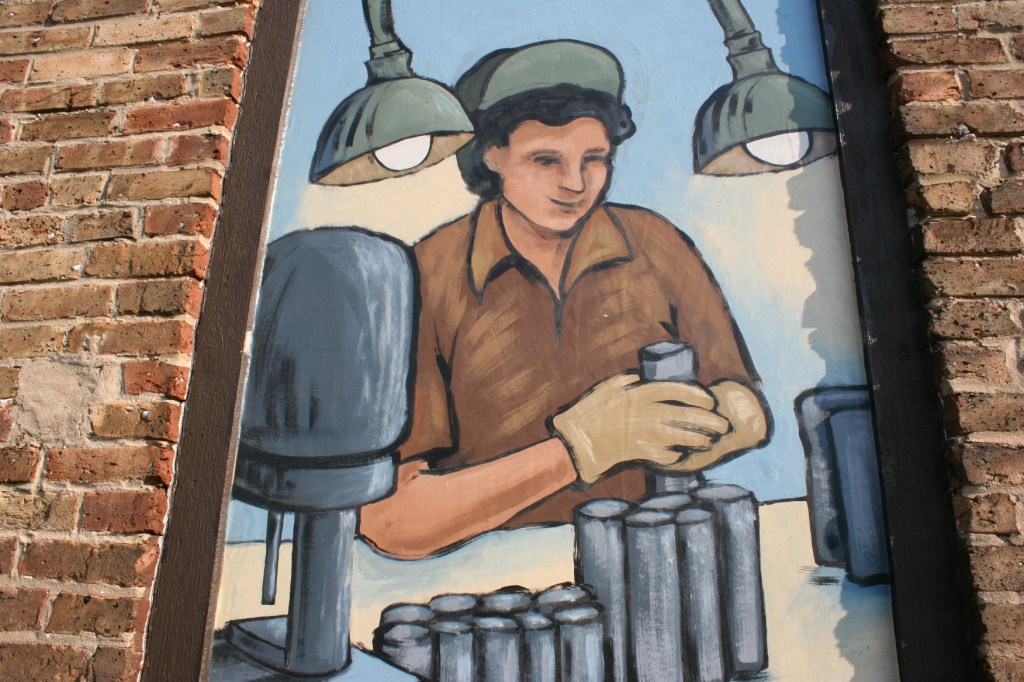
Strength in the bulk of bodies. Strength in the machines depicted. Strength in the hands and arms and faces of those who labored inside. Strength of work ethic and determination and skill.


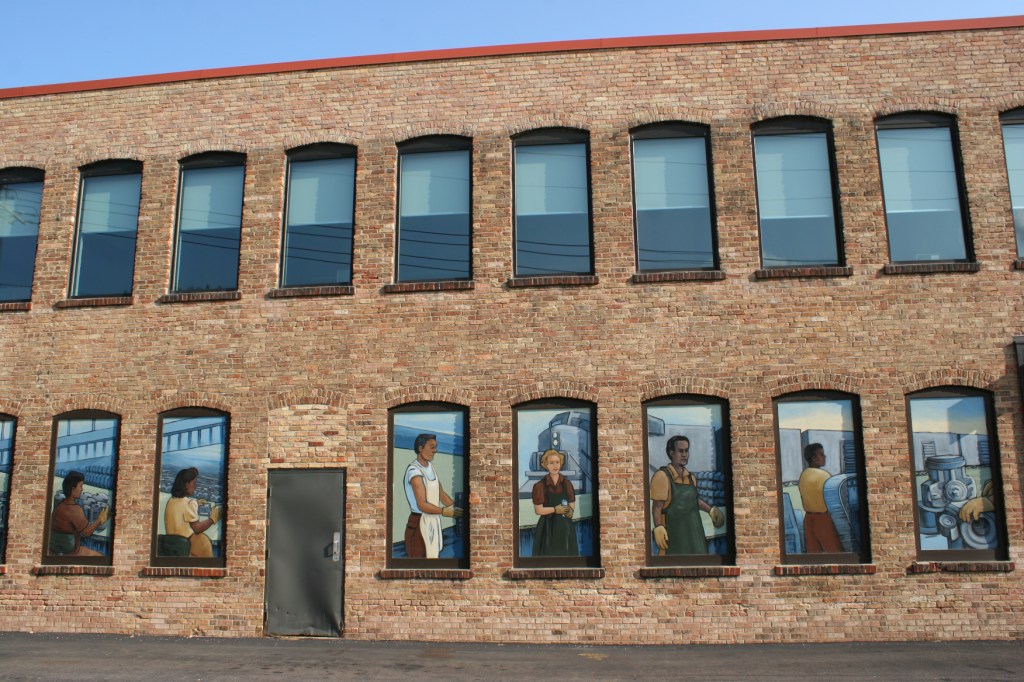
Portraits of industrial workers stretch along the building.


Pride surged, not because of a personal connection to those employed by Madison-Kipp Corporation, but because of the blue collar connection. Too often, society dismisses as secondary those who put hands to machines, hands to tools, hands to steering wheels…


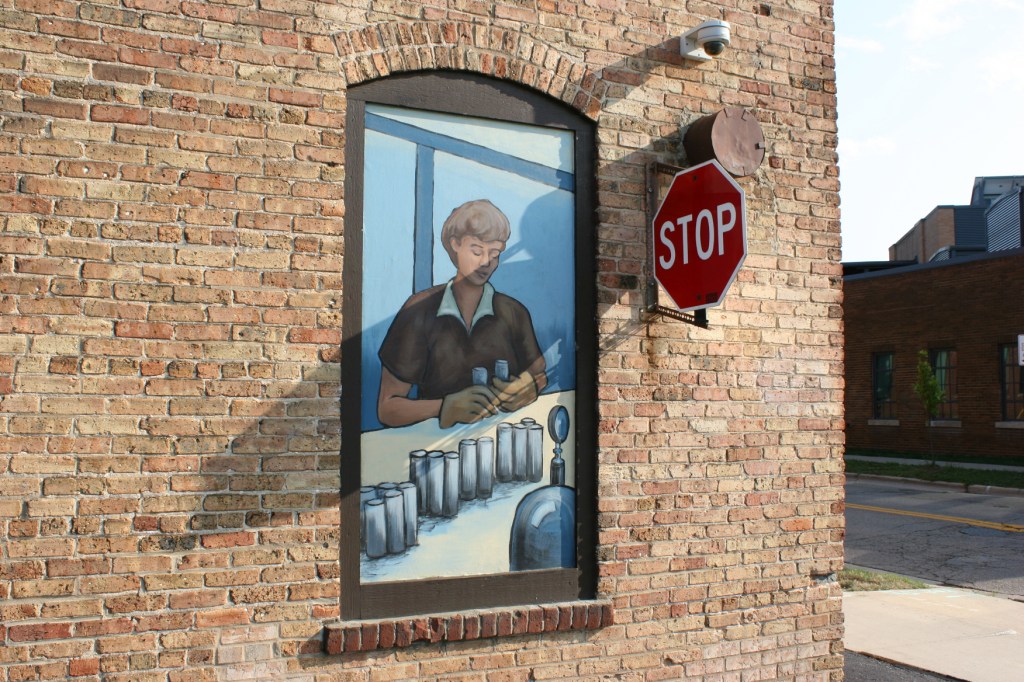
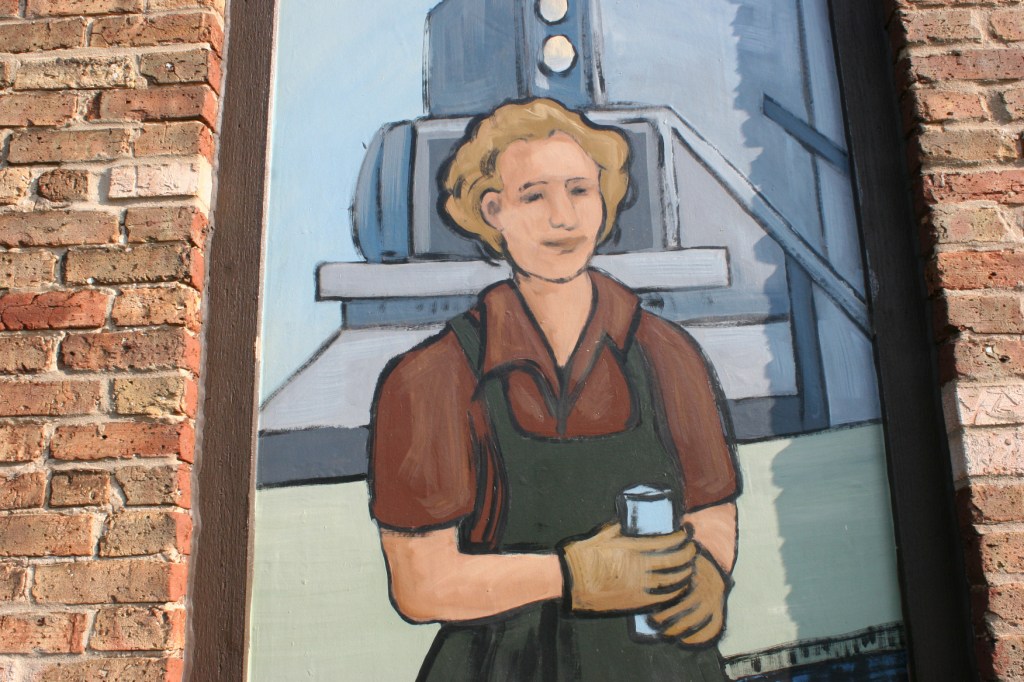
That each mural focuses on one worker highlights their individual value to the company.


But I recognize their value, for my father and his father before him and the generation prior worked the land. Farming. To feed their families. To feed others. Dirt and grease and backbreaking hard work defined their days. So I honor these men in the history of my life, including my husband, Randy, an automotive machinist for 40-plus years. A customer recently called him “an institution.” That seems fitting given his career longevity and the rarity of his skill set. I have no idea what Randy’s customers will do when he retires because no apprentice waits in the wings.


It takes the hands and skills of many to run a company and produce product.


Even with a renewed interest in the need for hands-on skilled workers, I don’t expect young people to necessarily embrace these jobs. The four-year college degree mindset has been too long embedded in our psyche. Yet, the need for mechanics, carpenters, electricians, plumbers, factory workers, etc., will only grow as Baby Boomers retire.


I appreciate that women are among those featured in this public art.


I am grateful for those who work with their hands. They keep our vehicles running, our houses repaired, our grocery store shelves stocked, our factories running…


Strong, determined, skilled…


When I studied the portraits on the Kipp building along the Capital City State Trail, I noticed, too, the drab shades of brown, grey, blue, green, no single person standing out in flashy colors. Too often those employed by manufacturers, warehouses and more go unnoticed, blending into the landscape of our lives.


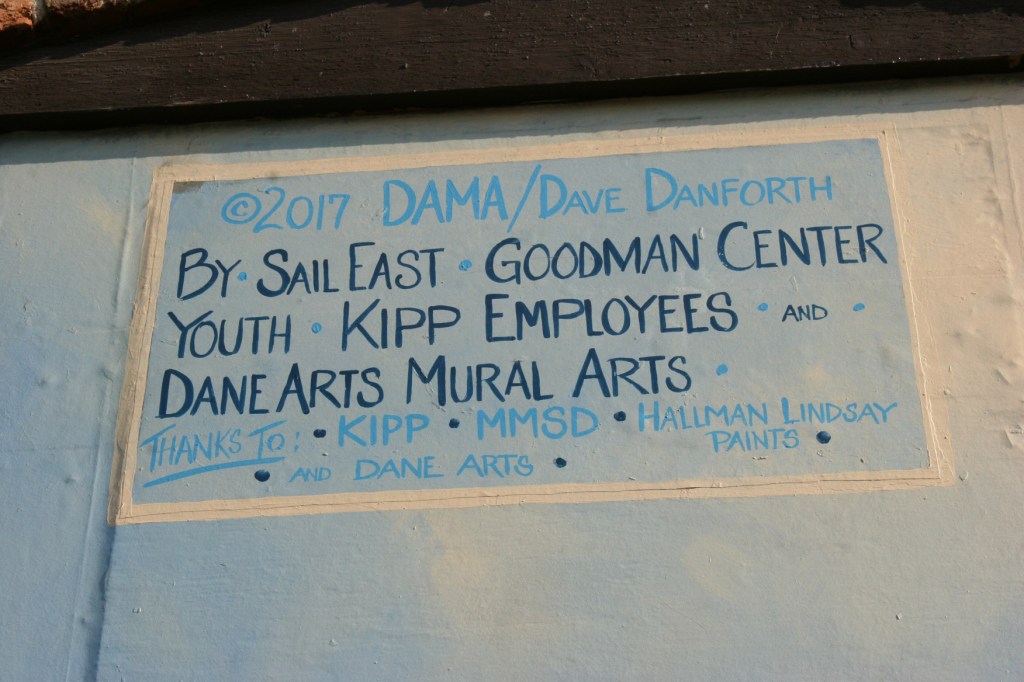
Credit goes to these groups.


So to see this art, this very public art, recognize the often unrecognized pleases me. I value these men and women and the work they do. And now this art which honors them.


© Copyright 2020 Audrey Kletscher Helbling
 

LOVE blooms in Northfield mural September 18, 2020

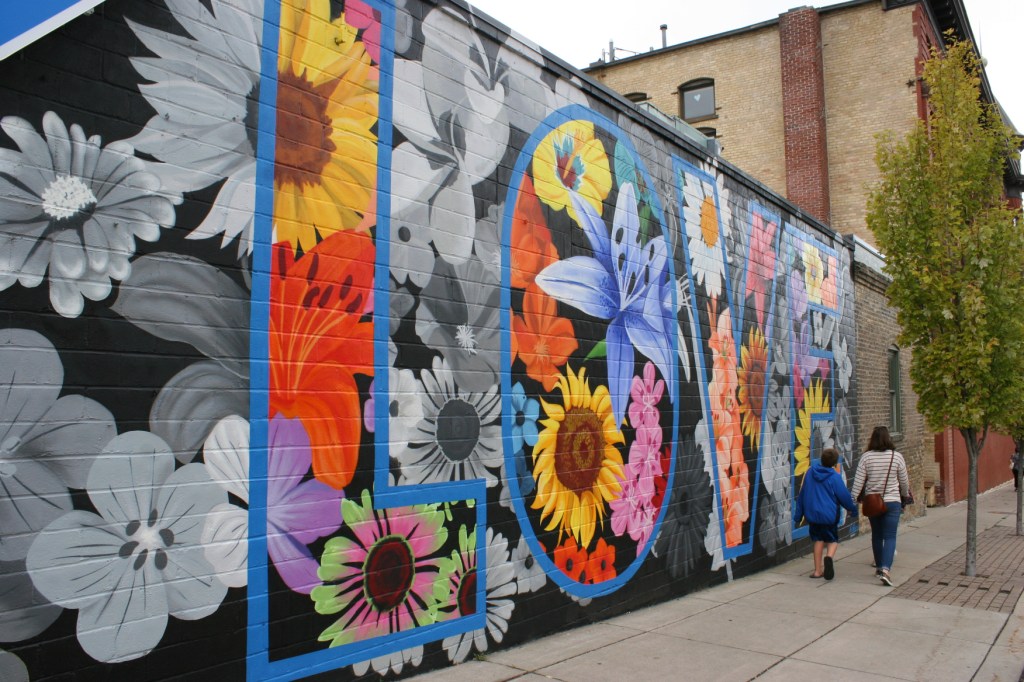
The Northfield Arts and Culture Commission awarded $3,000 toward this mural project.


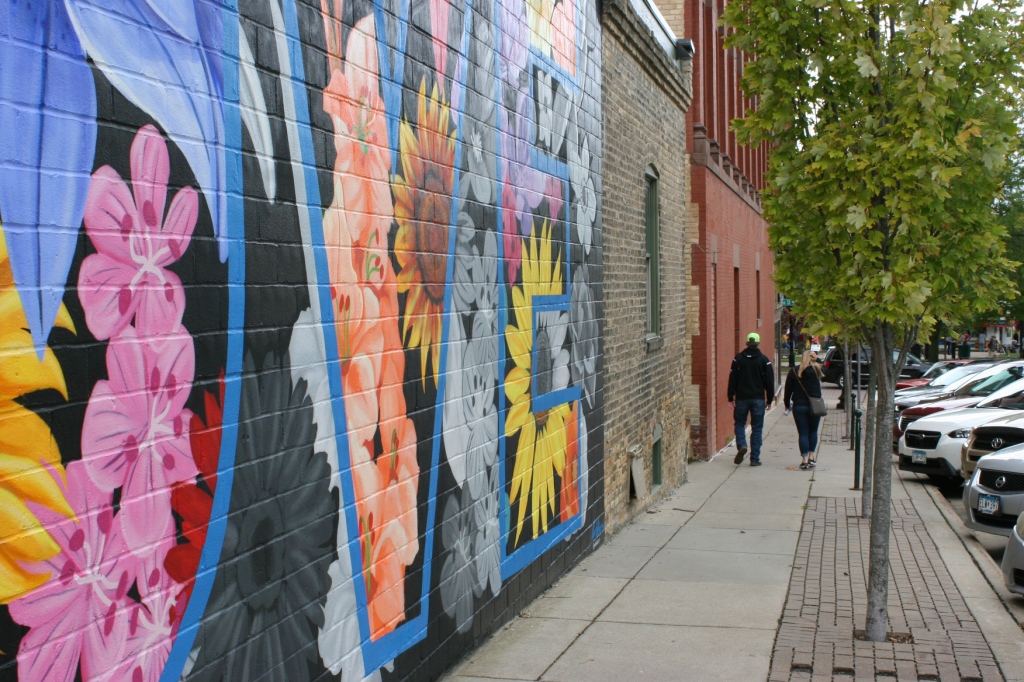
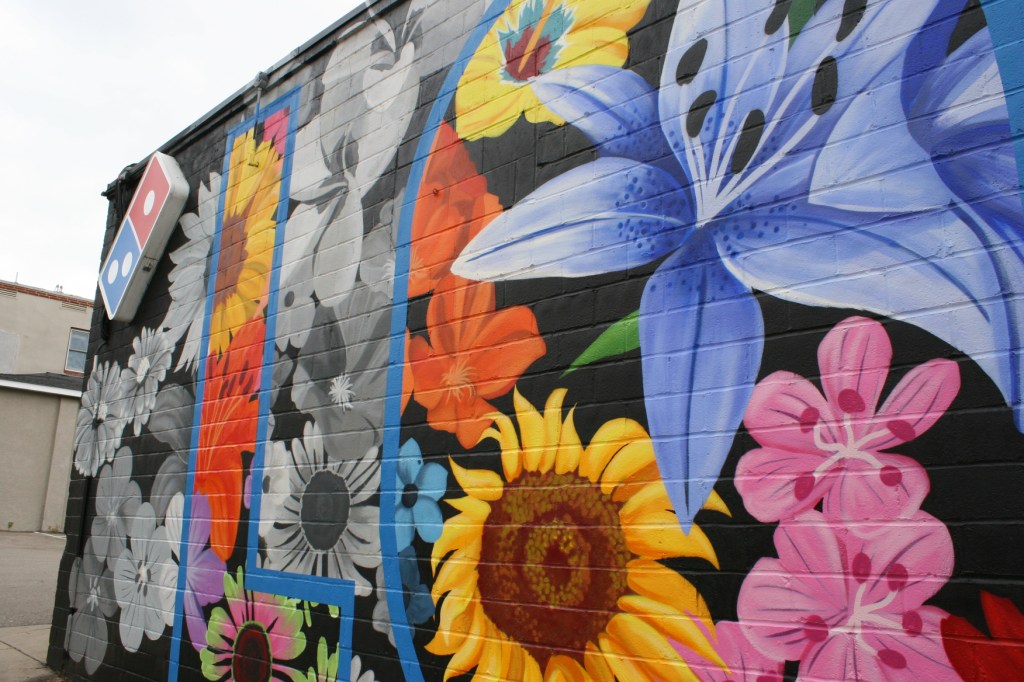
SUNFLOWERS. LILIES. DAISIES.


I love the bold hues of this mural mixed with grey and black.


Flowers bloom in bold colors painted onto an exterior block wall in the heart of downtown Northfield.


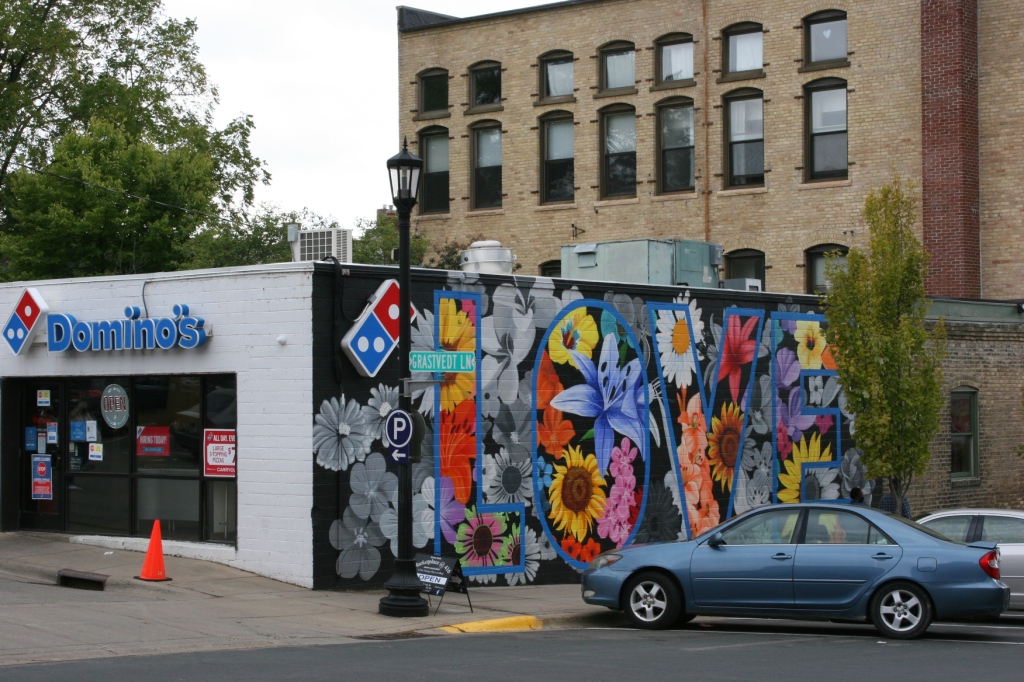
Mural on the Domino’s building.


Just a half block off Division Street, up the hill from Bridge Square, on the building housing Domino’s Pizza, a colorful mural stretches, drawing appreciative onlookers. Including me. During Northfield’s The Defeat of Jesse James Days celebration last Saturday, many a passerby posed for photos against the colorful and inspiring backdrop.


Outlined in blue, the word LOVE.


This mural commissioned by the owner of the building and created by Illinois artist Brett Whitacre features more than vibrant flowers. It highlights a single word: LOVE.


The signature of mural artist Brett Whitacre on a corner of the mural.


And perhaps that is the unconscious draw. We all need LOVE. More than ever right now. These are difficult days of dealing with a relentless and deadly virus, social unrest and injustices, and a country in turmoil.


I expect the LOVE mural will continue to be a popular photo backdrop, especially for couples holding their wedding receptions at The Grand Event Center just across the street.


To pause for a moment in the chaos and appreciate this beautiful example of uplifting public art is to take a respite. To choose for a moment to embrace LOVE. That one emotion we all need. That connects us. If we allow it to do so.

THOUGHTS?

© Copyright 2020 Audrey Kletscher Helbling
 

From Northfield: Snapshots of an abbreviated Defeat of Jesse James Days September 17, 2020

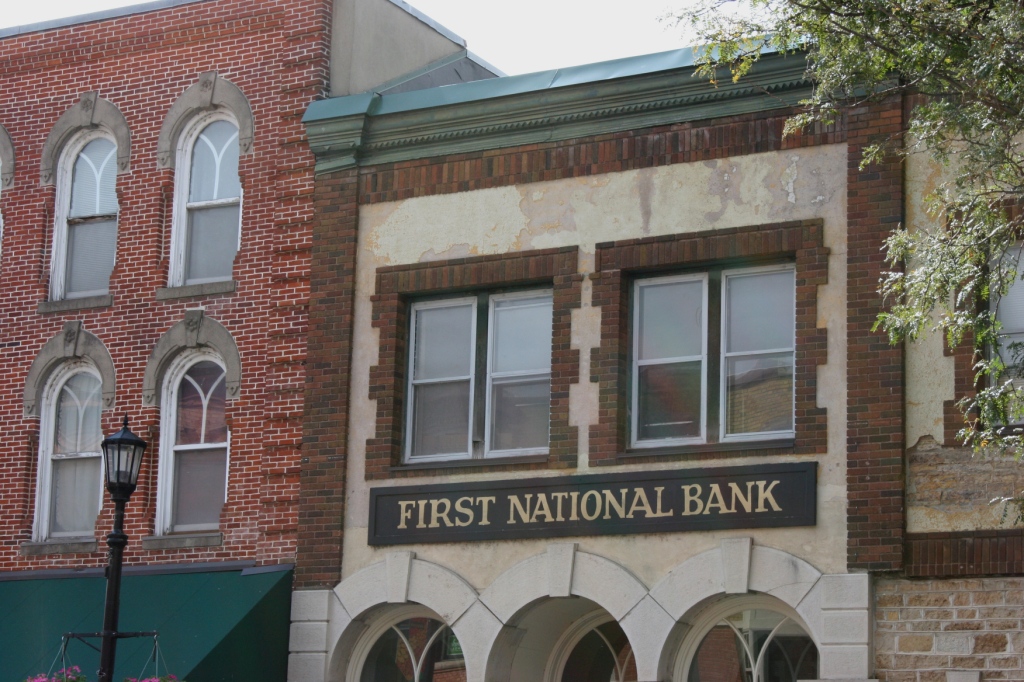
The site of the 1876 attempted bank robbery, now the Northfield Historical Society.


TYPICALLY, THE DEFEAT OF JESSE JAMES DAYS in Northfield finds Randy and me avoiding this college town only 20 minutes from Faribault. Crowds and congestion keep us away as thousands converge on this southeastern Minnesota community to celebrate the defeat of the James-Younger Gang in a September 7, 1876, attempted robbery of the First National Bank.


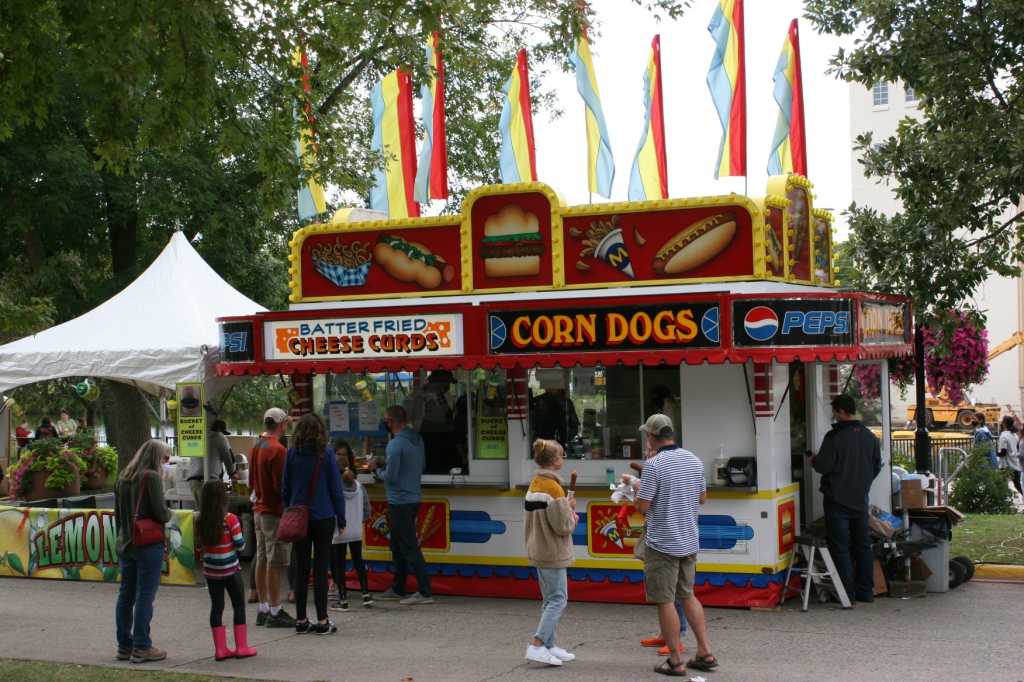
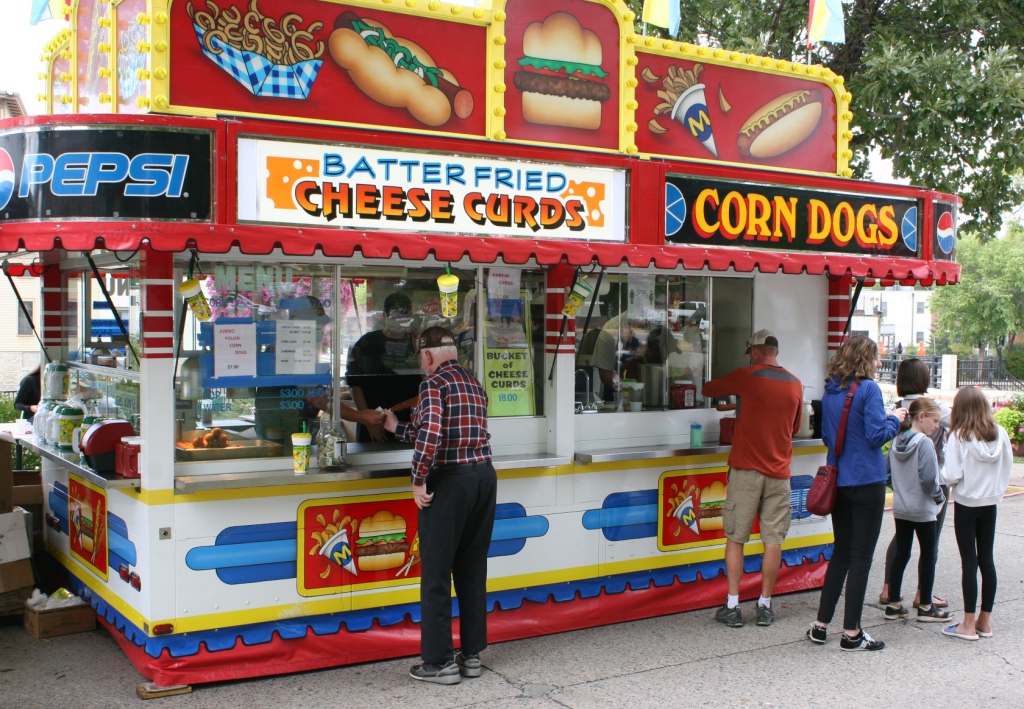
Waiting for fair food at one of several stands.


But this year, because of COVID-19, the mega celebration scaled back, leaving Northfield busy, but not packed. And so we walked around downtown for a bit on Saturday afternoon, after we replenished our book supply at the local public library—our original reason for being in Northfield.


The LOVE mural painted on a pizza place in Northfield drew lots of fans taking photos, including me.


On our way to Bridge Square, a riverside community gathering spot in the heart of this historic downtown, I paused to photograph the latest public art project here—a floral mural painted on the side of the Domino’s Pizza building by Illinois artist Brett Whitacre. (More info and photos on that tomorrow.)


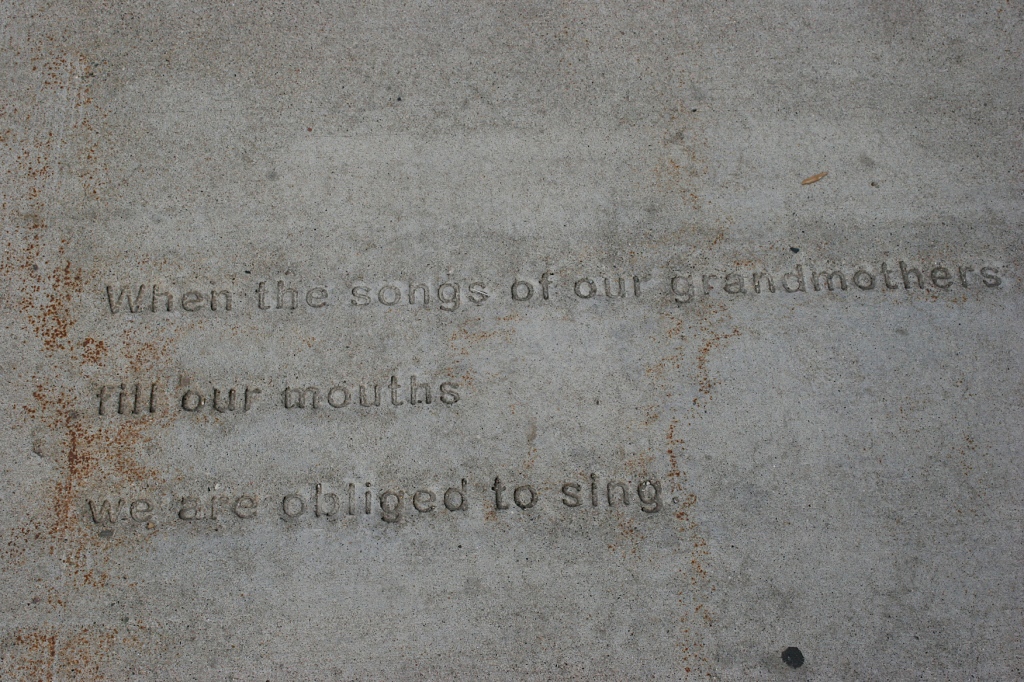
One of the many Sidewalk Poetry poems imprinted into cement in downtown Northfield.


Northfield’s appreciation of the arts—from visual to literary to performing—is one of the qualities I most value about this community. As a poet, I especially enjoy the poetry imprinted upon sidewalks.


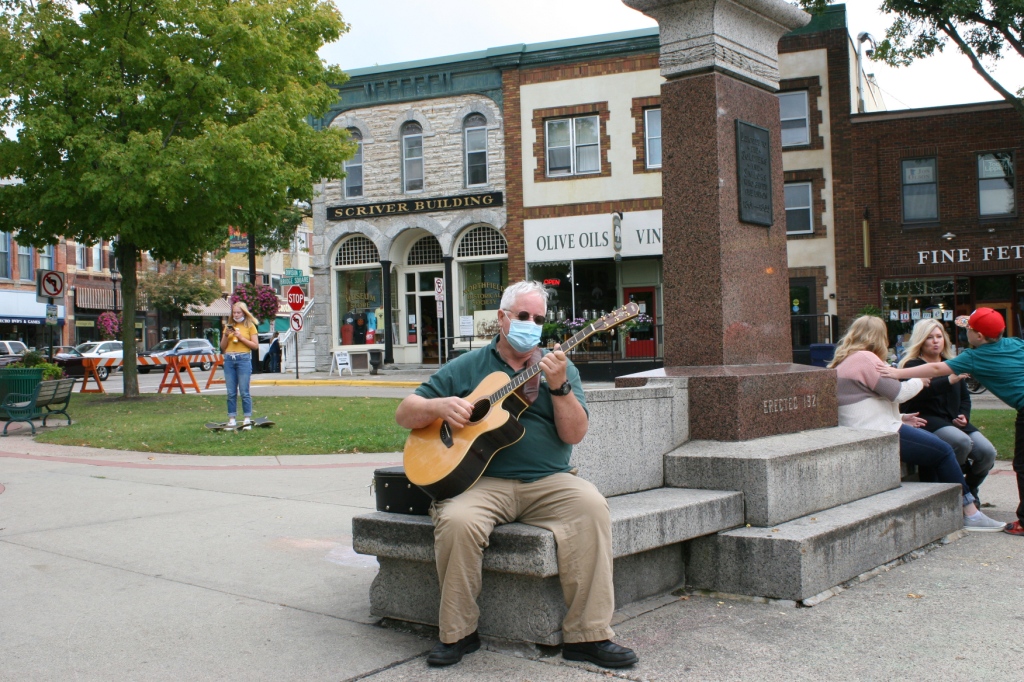
An impromptu concert in Bridge Square.


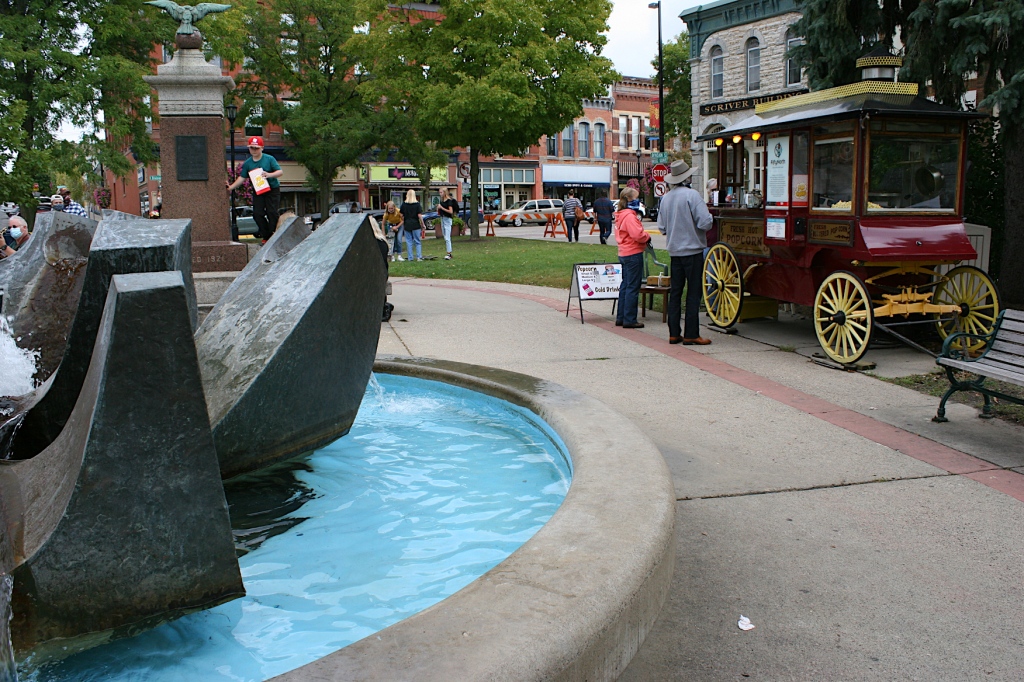
A fountain, monument and the iconic popcorn wagon define Bridge Square in the warmer weather season.


Buying a corn dog…


I was delighted also to see and hear a guitarist quietly strumming music in the town square while people walked by, stopped at the iconic popcorn wagon or waited in line for corn dogs and cheese curds. Several food vendors lined a street by the park.


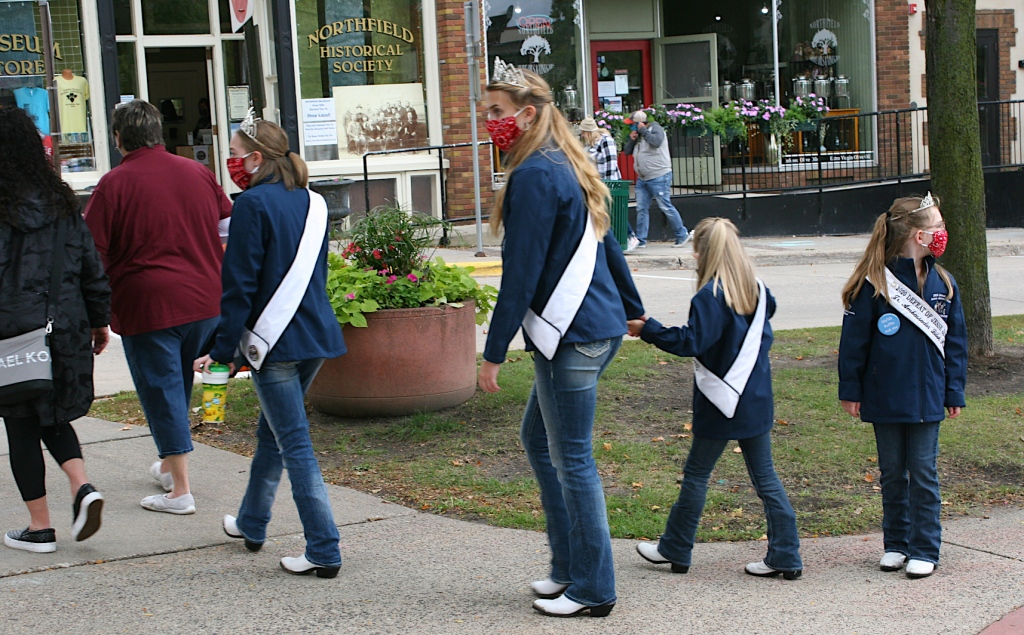
The Defeat of Jesse James Days royalty out and about.


Among fest-goers I spotted Defeat of Jesse James royalty in their denim attire, red bandanna masks, crowns and boots, the masks a reminder not of outlaws but of COVID-19.


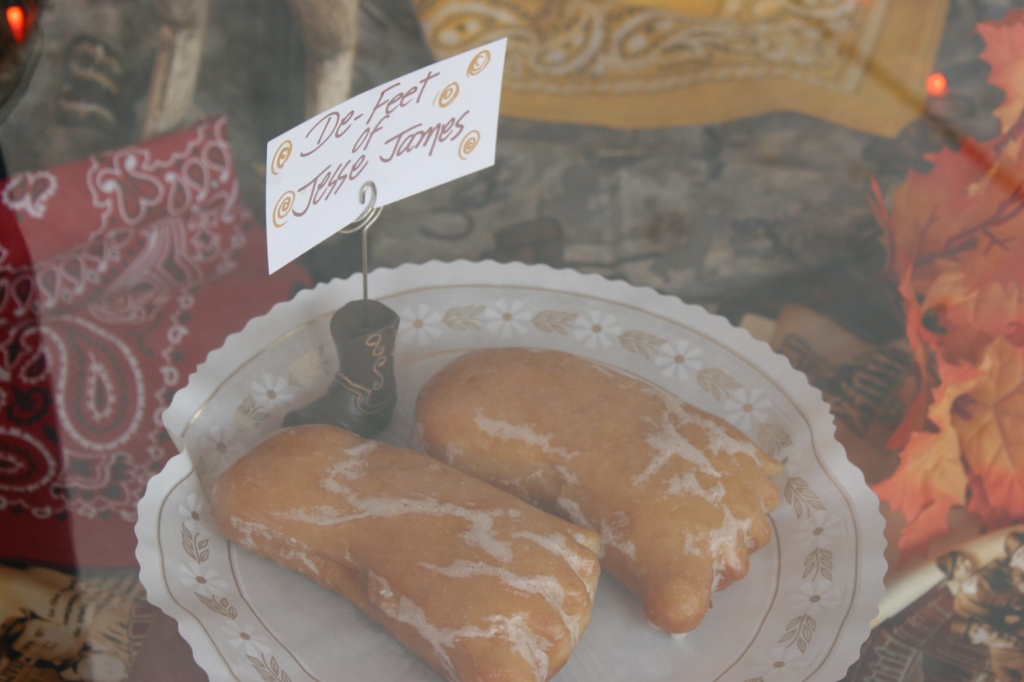
Photographed through the bakery’s front window, the feet-shaped pastries.


Yet, in the throes of a global pandemic, some aspects of the celebration remained unchanged. At Quality Bakery a half a block away from Bridge Square, the western-themed window displays featured the bakery’s signature celebration pastry—De-Feet of Jesse James.


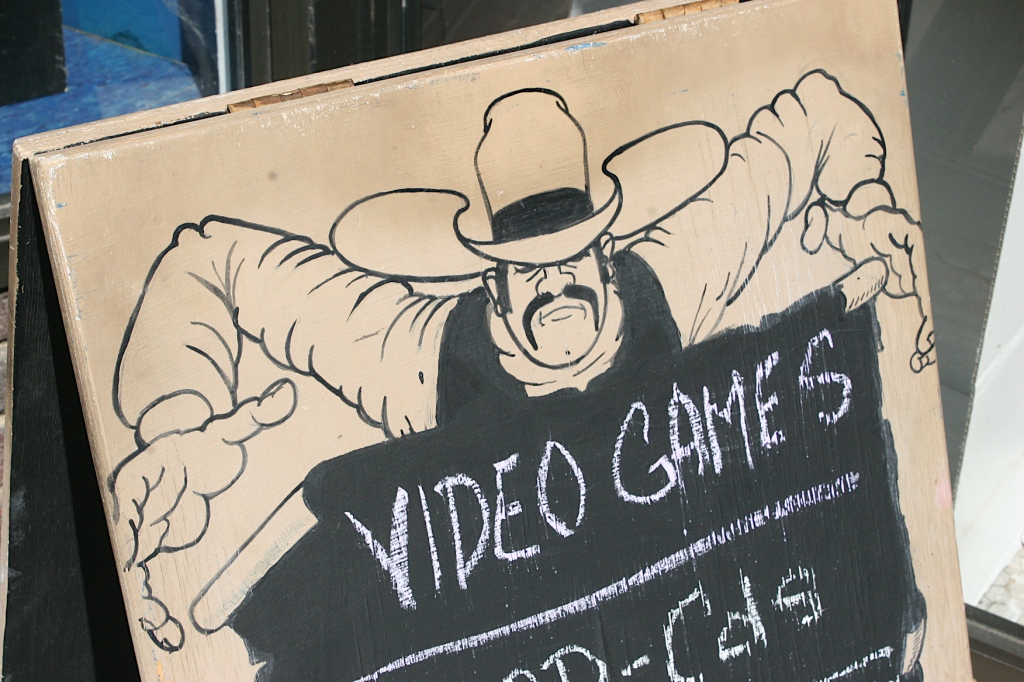
A sign outside a Division Street business fits the theme of the celebration.


For a bit of this Saturday, it felt good to embrace this long-running event, to experience a sense of community, to celebrate the defeat of the bad guys.


© Copyright 2020 Audrey Kletscher Helbling
 

Up close in the Atwood Neighborhood of Madison, Part II September 16, 2020


PLACE REVEALS ITSELF in the details.


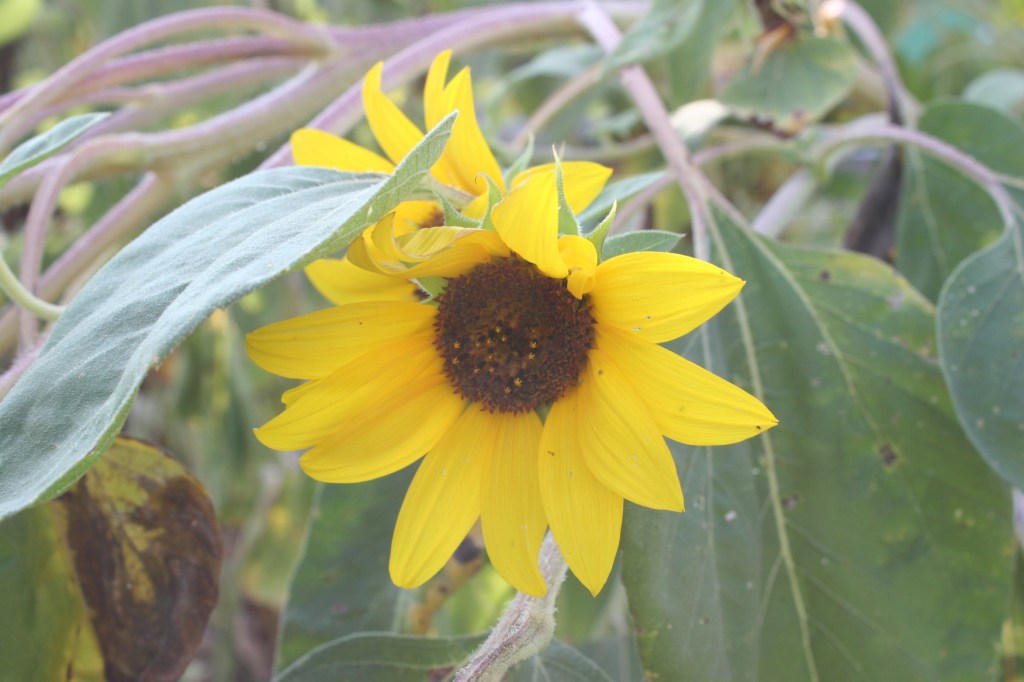
Sunflowers brighten the Atwood Community Gardens.


Put me in a location, like the Atwood Neighborhood on the east side of Madison, Wisconsin, and I will focus on the nuances. The seemingly little things that, when connected, define this as a neighborhood rooted in art, in the outdoors, in a genuine care for one another.


This is one busy bike path, frequented by all ages.


All of this I surmised simply by walking along Atwood area residential streets and past businesses and by following the Capital City State Trail for several blocks.


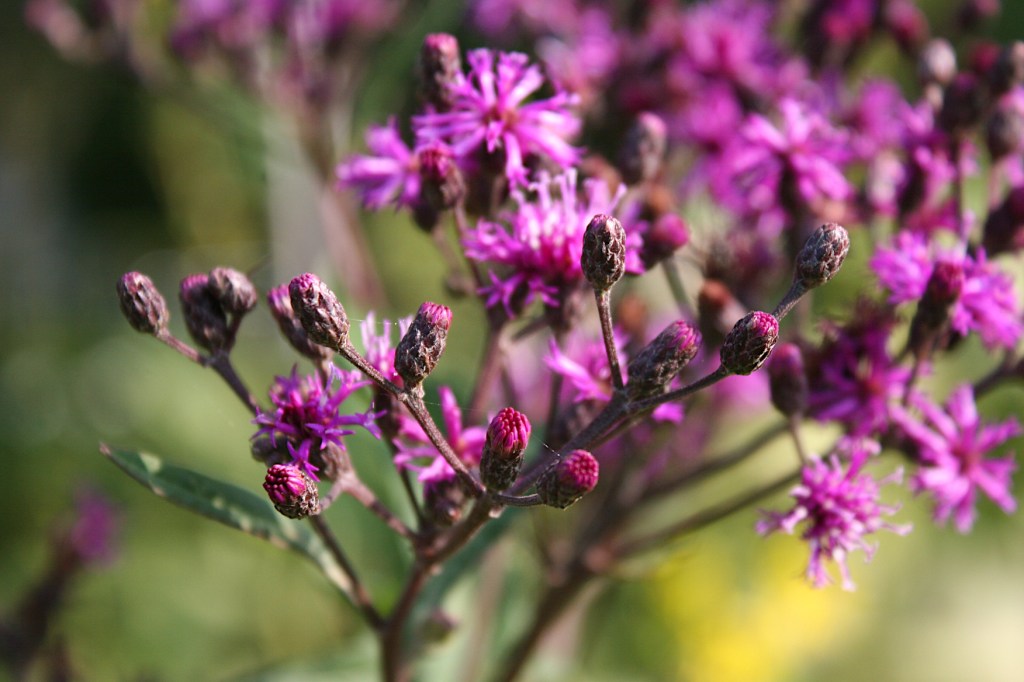
Flowers, oh, so many flowers…


My post today takes you back to the bike path, to those details that caused me to pause with my camera as bikers zipped past me. To photograph the flowers.


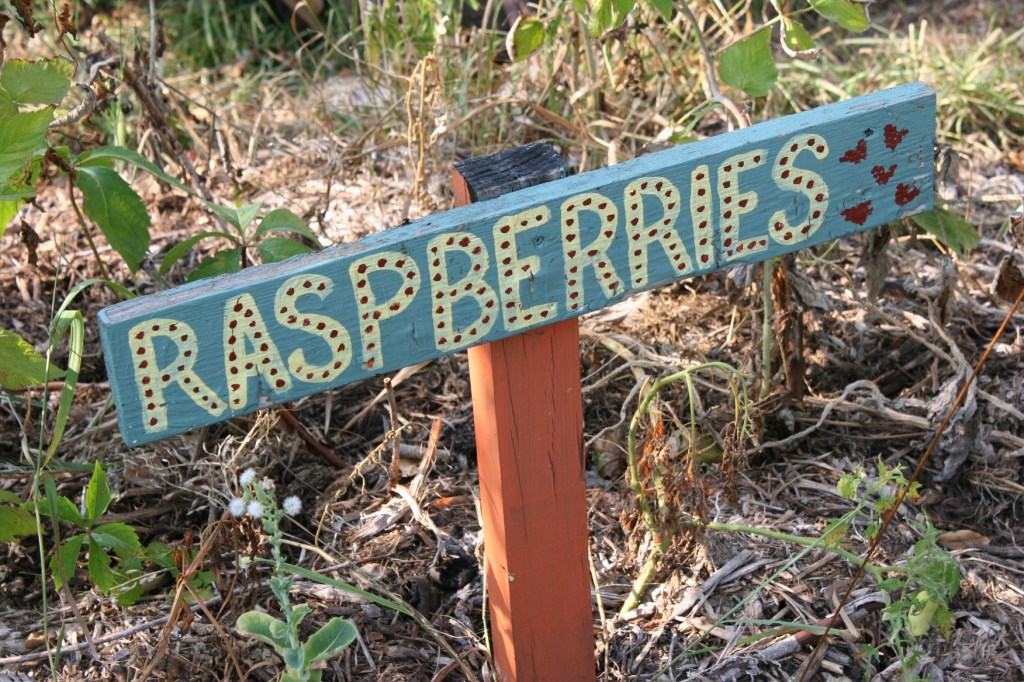
An artsy sign in the community garden.


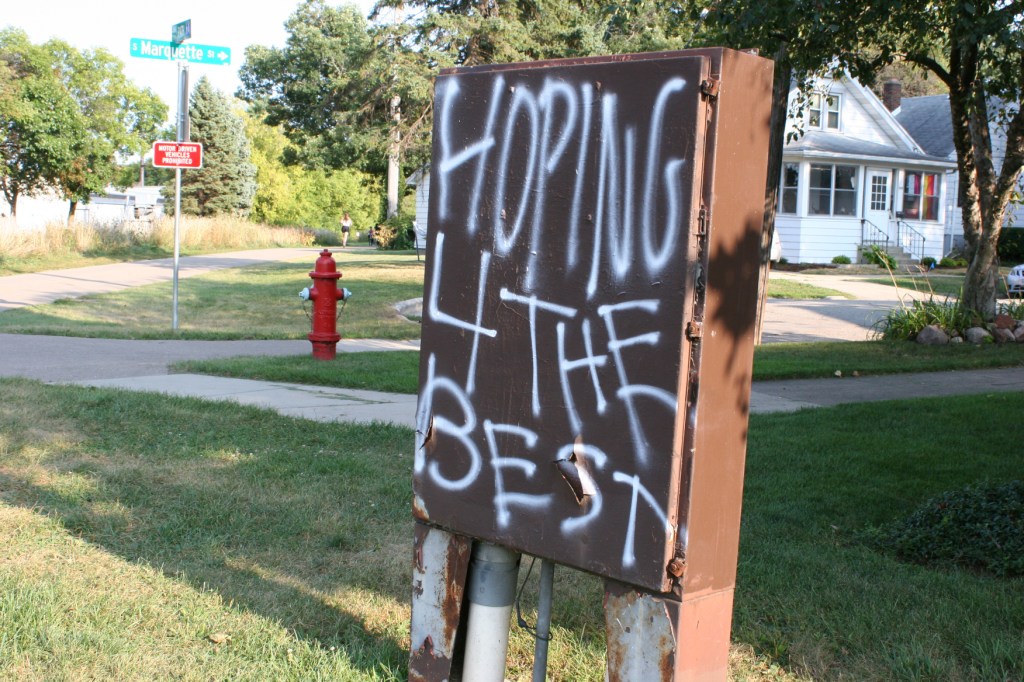
Inspiring graffiti.


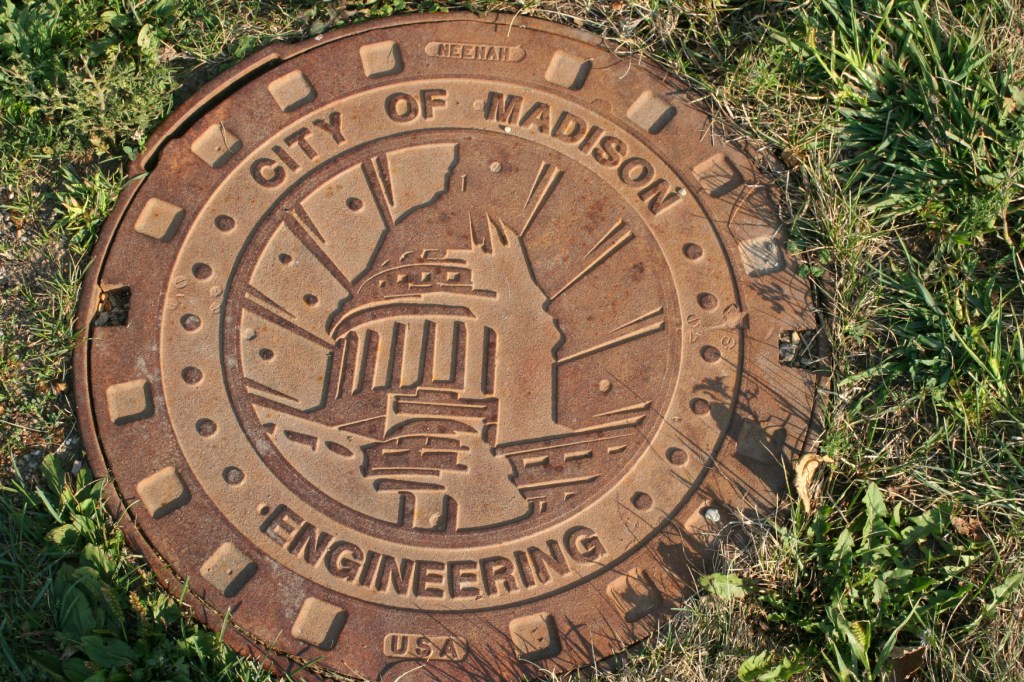
Madison’s capitol is depicted in this manhole cover art.


And the signs—always the signs, the aged brick buildings and, yes, even the manhole covers.


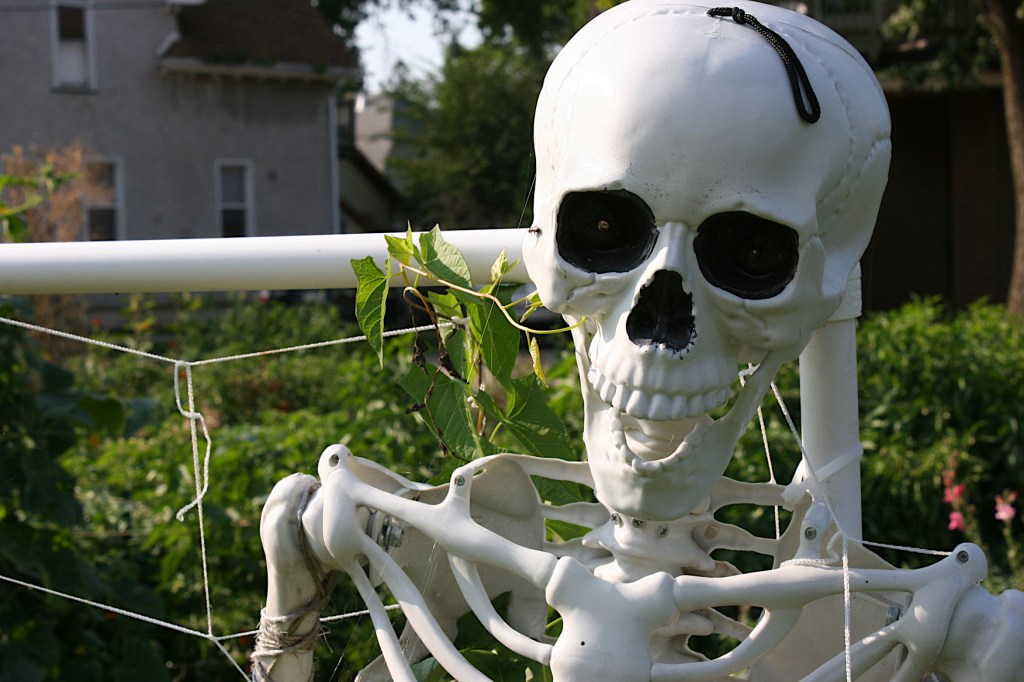
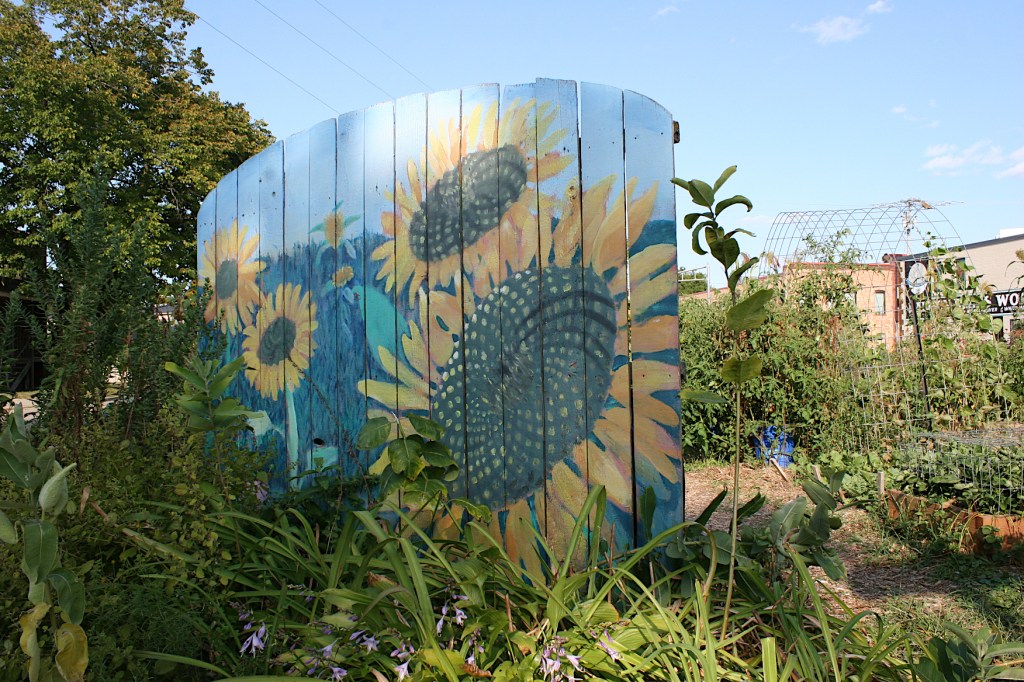
A little seasonal fun added to the Atwood Community Gardens.


And resident garden skeleton.


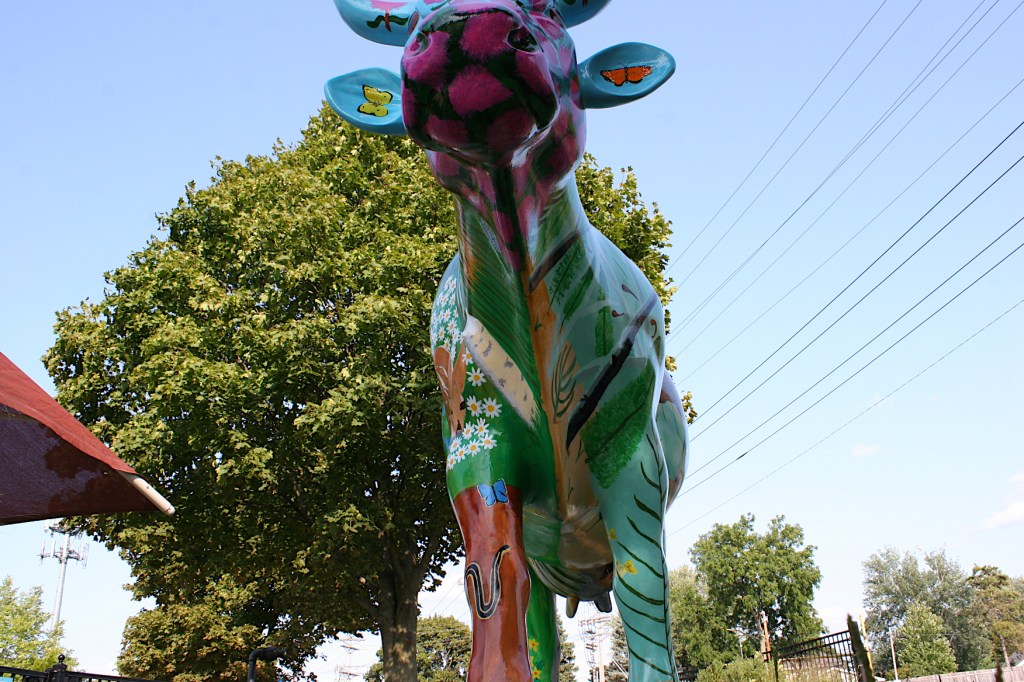
Cow art by the Goodman Community Center and right next to the bike trail.


What I observed pleases me as a creative, as an appreciator of aged architecture, as a nature lover and as a human being who values respect for others.


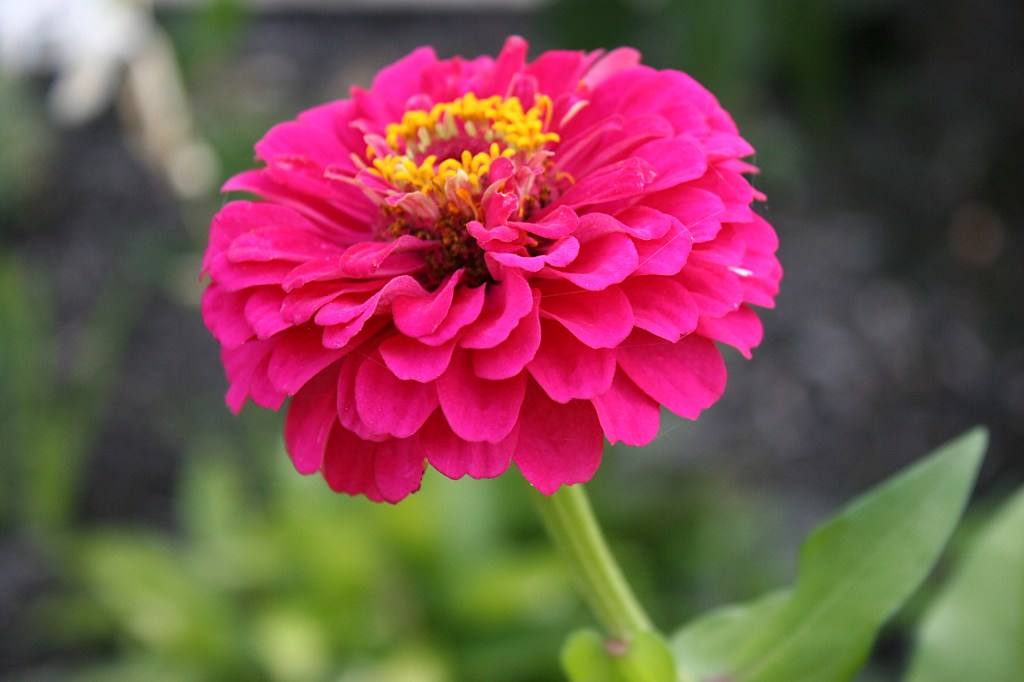
Colorful flowers thrive, including this zinnia.


The natural beauty of the Atwood Neighborhood appeals to me.


Spotted in a window of a residence along the bike trail.


The spirit of the Atwood Neighborhood appeals to me, too. With its earthiness. Its embracing of differences. Its sense of neighborhood pride. Its art. I feel comfortable here. Welcome. And that, my friends, is more important than ever in these times of upheaval, discontent, frustration and disconnect.

#

Note: Like anywhere, no place is utopia, and that includes the East Side of Madison. While visiting my son, who lives in the Atwood Neighborhood, I learned of a recent daytime “shots fired” along his street. He didn’t tell me about this, of course, not wanting to worry his mom. There have been other similar incidents. Does this concern me? Yes. But then I think of my neighborhood in Faribault, considered small town to many, but not to me. In the 36 years I’ve lived here, my section of town has seen violence also. In 1999, a young man was stabbed to death within blocks of my home. We’ve also experienced drive-by shootings only blocks away. Not recently. No matter where you live, no place is fully safe. But, of one thing I am certain. We each have within us the capacity to shine lights of hope in our neighborhoods, to be decent and kind and caring.

Please check back soon for more posts from this section of Madison, Wisconsin.

© Copyright 2020 Audrey Kletscher Helbling
 

Exploring Madison’s Atwood Neighborhood via the bike trail, minus the bike, Part I September 15, 2020

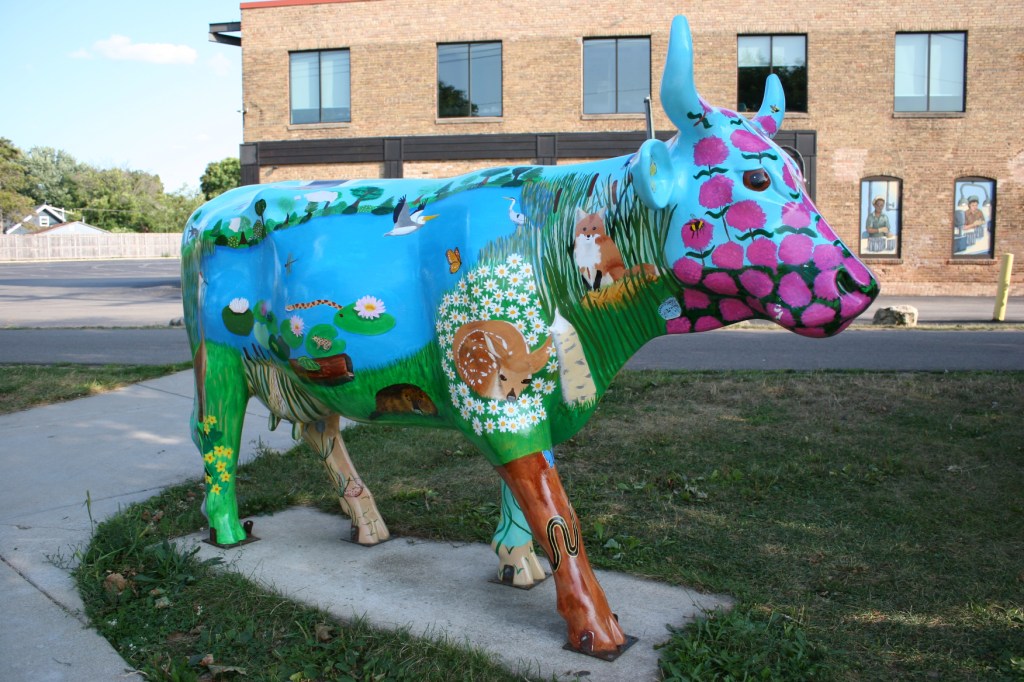
A colorful cow sculpture stands next to the bike trail by the Goodman Community Center in the Atwood Neighbohood of Madison, Wisconsin.


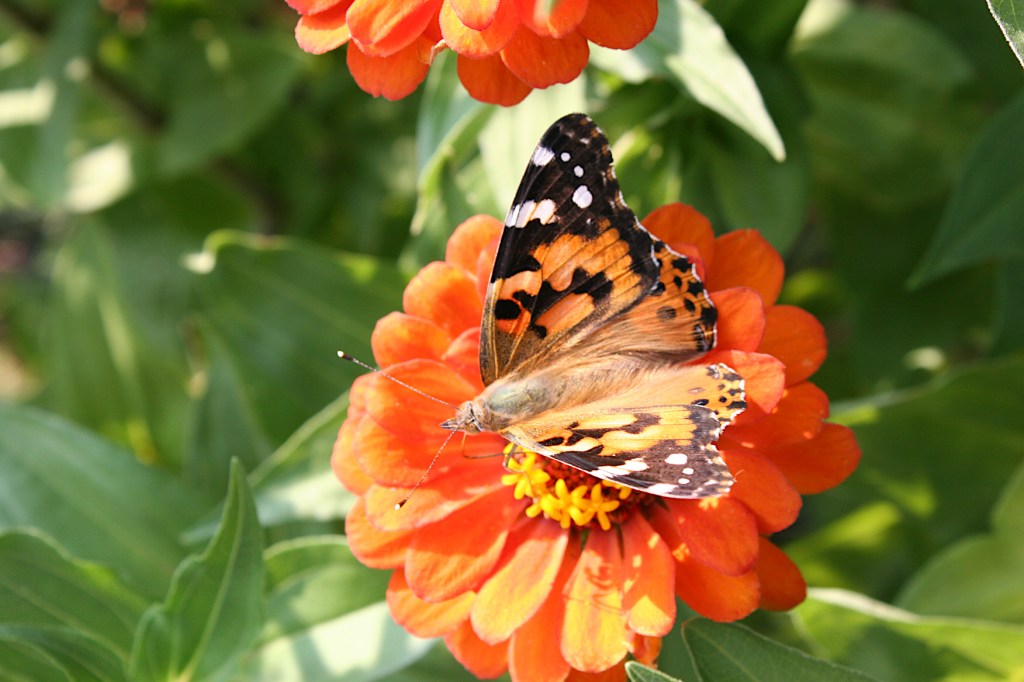
BUTTERFLIES. BOOKS. BIKES. Even a bovine. And a sign for burgers and brats.


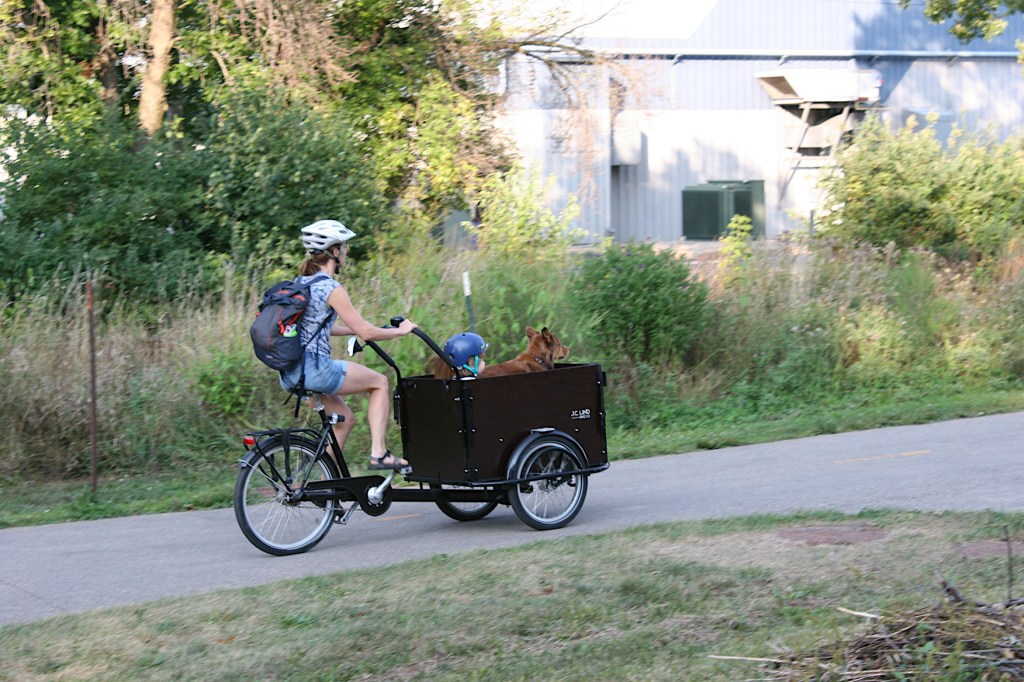
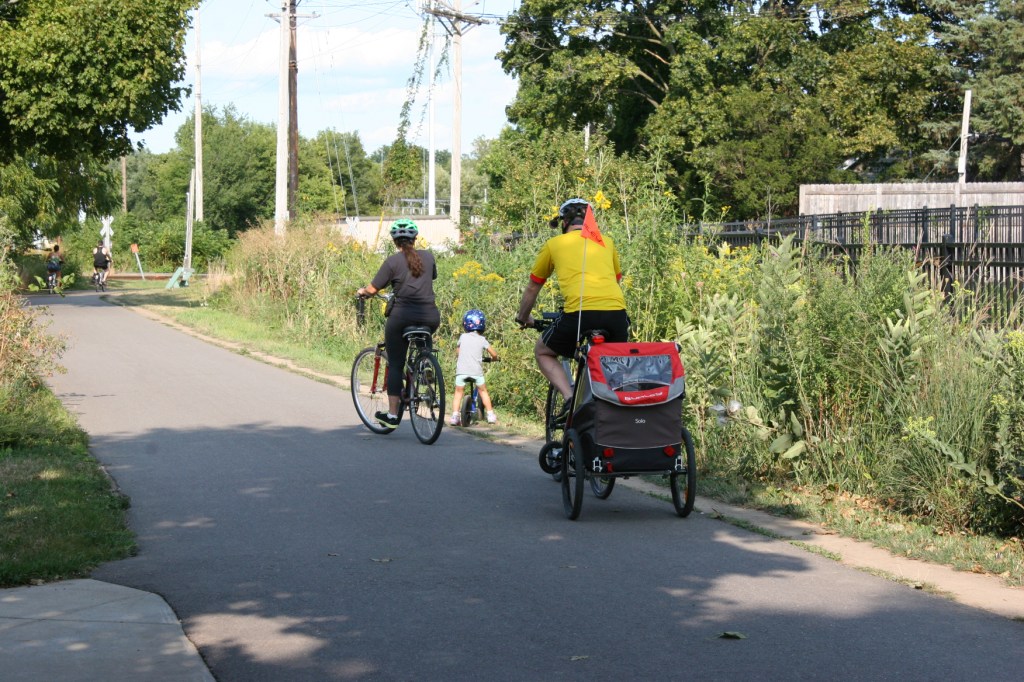
The bike path teems with bikers of all ages, and some walkers.


All defined a Labor Day weekend walk along the Capital City State Trail on Madison’s east side while visiting family. This Wisconsin state capital fully embraces biking via a city-wide system of connecting trails. Walk the paved pathways rather than wheel them and you best remain vigilant. And to the side. Most bikers zoom by.


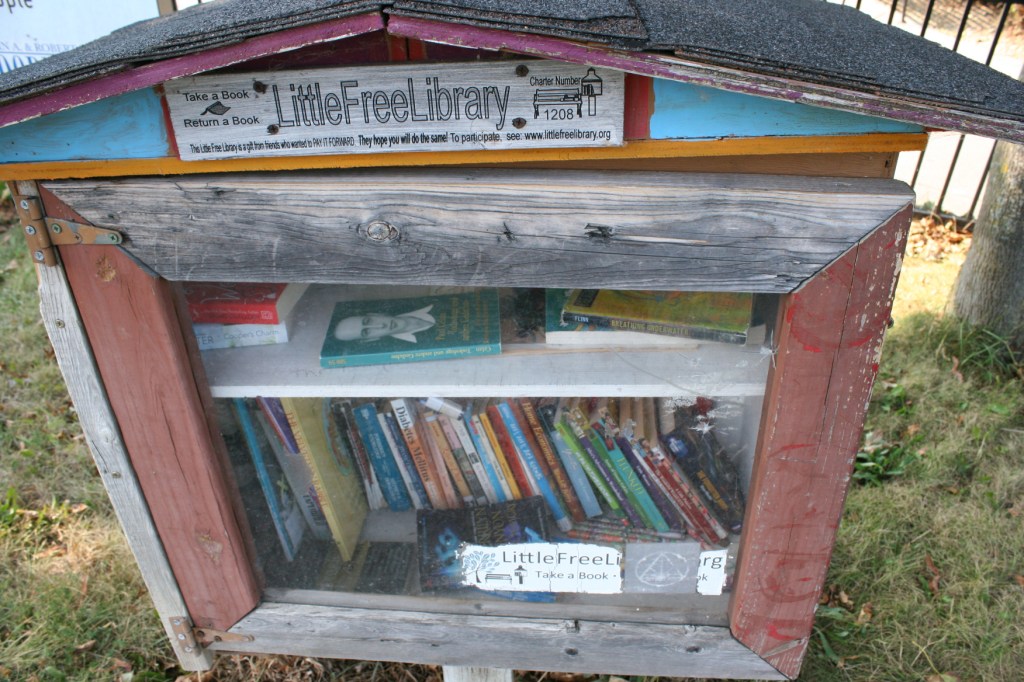
By the community center, a Little Free Library sits right next to the bike trail.


With that awareness, I fully enjoyed this opportunity to see more of the thriving and vibrant Atwood Neighborhood.


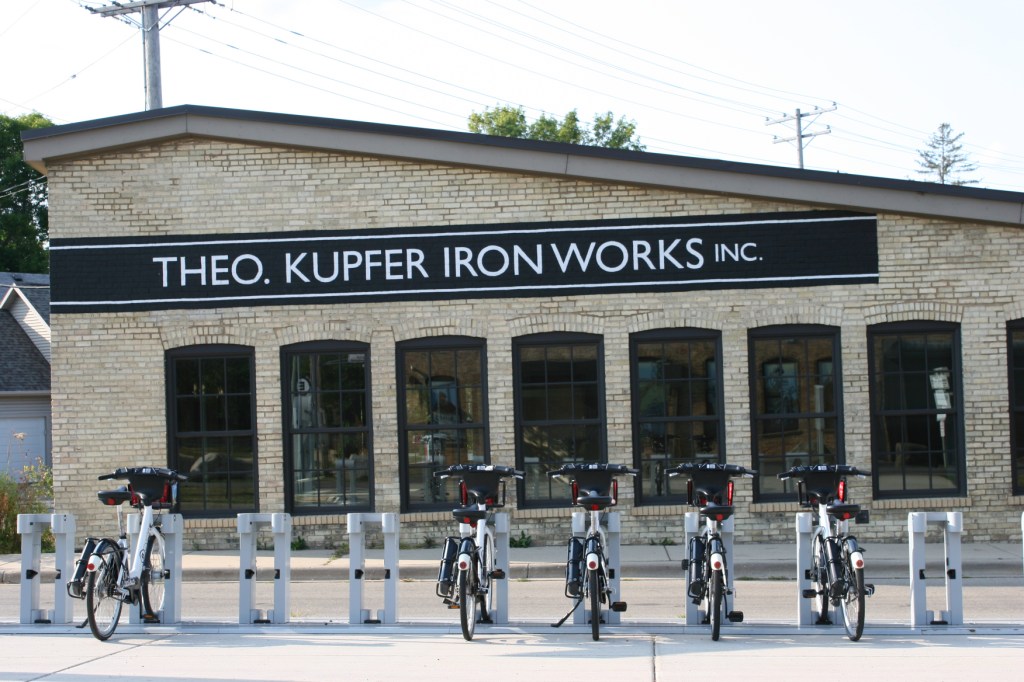
Next to the trail, an electric bike rental station.


I almost wished I had a bike, though, and I suppose I could have rented an electric one from a rental station positioned along the trail, just another way to get those without bikes out, moving and exploring.


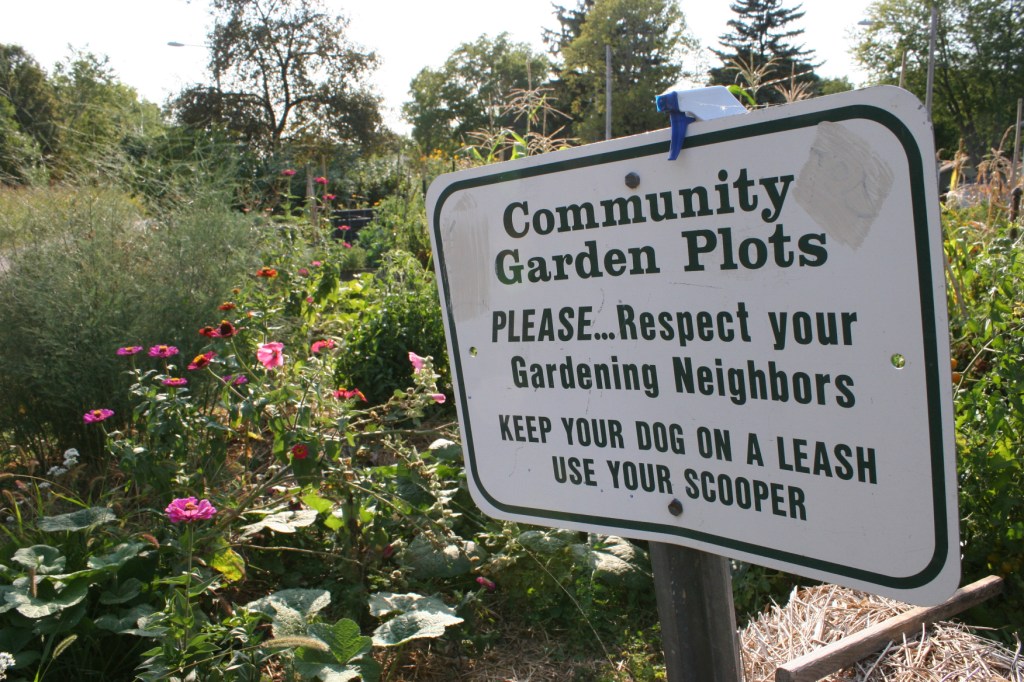
Flowers fill yards and sections of community garden plots.


But, given I had my DSLR camera, walking worked better. I could stop when I wanted—which was often—to document my surroundings. My walking companions—the husband and the son—often paced yards ahead and I finally told them to continue without me. They did. And later returned with an ice cream treat from a trail-side shop.


The community gardens are popular and filled with fruit, vegetables and flowers.


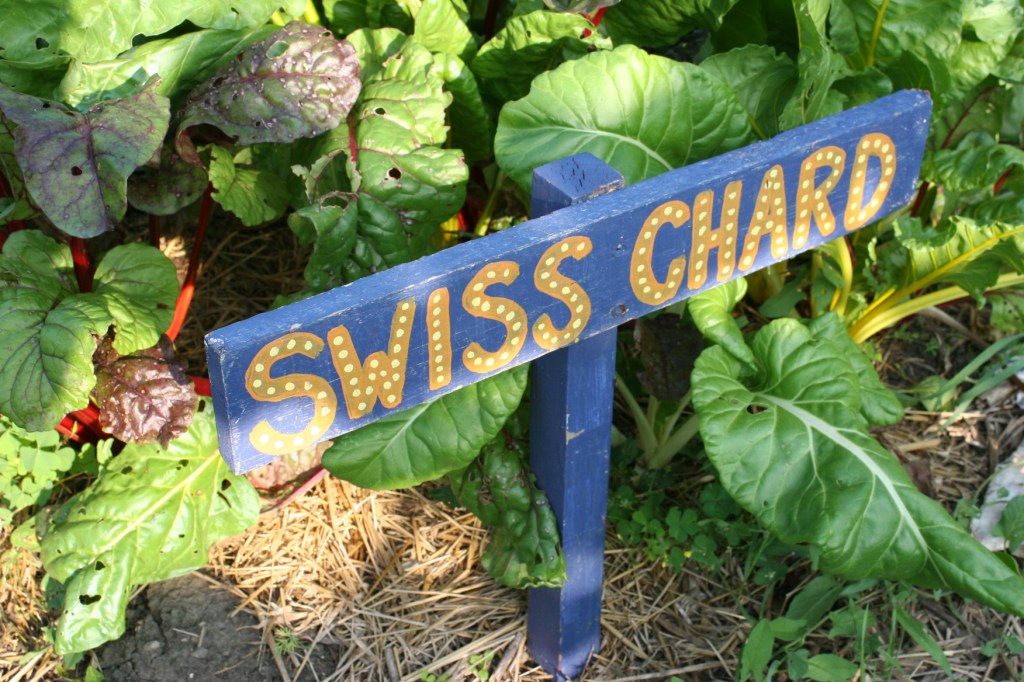
Even in the gardens, you’ll find art in signage.


This fence panel/art graces a corner of a garden plot. The gardens stretch along the bike path.


While they pursued ice cream, I snapped photos in the Atwood Community Gardens next to the trail. There I chatted briefly with a woman harvesting kale. I shared my appreciation for the lovely neighborhood and she told me of the long waiting list to get a garden plot.


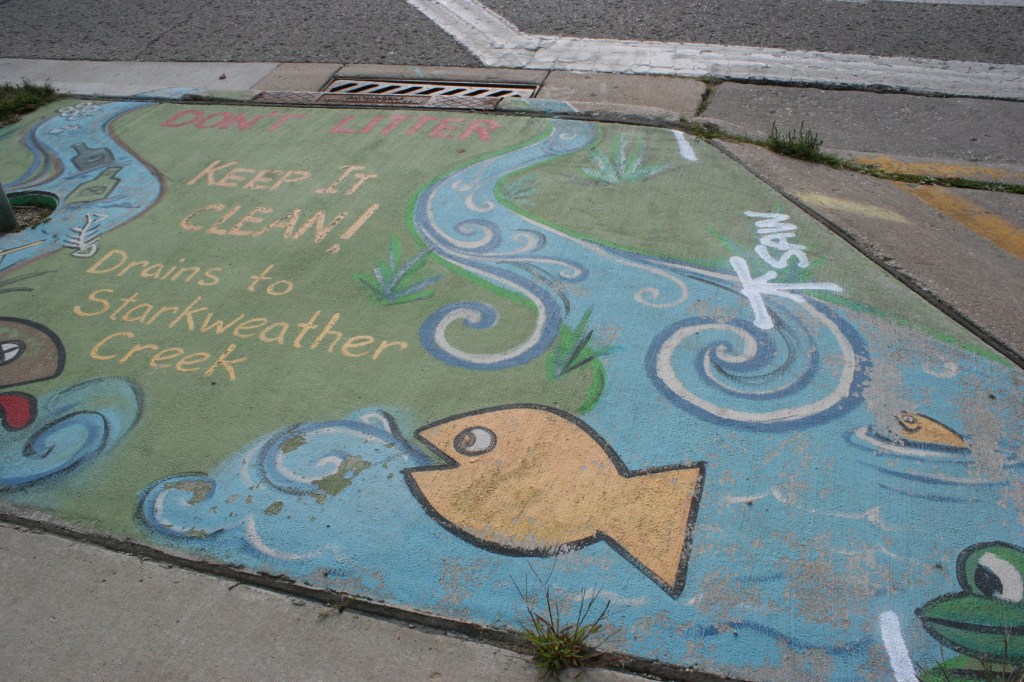
Environmental concerns shared in art painted on a sidewalk by the trail.


She also tipped me off to concerns about groundwater and soil contamination from a resident industry (which I later verified online at the Wisconsin Department of Natural Resources).


Murals stretch along the side of the historic Madison Kipp-Corporation building next to the bike trail. Sail East, Goodman Center Youth, Kipp employees and the Dane Arts Mural Arts worked together on the 2017 project. Please check back for a post focusing on this public art.


It was on that industrial building that I found art. Murals of laborers at work, a fitting discovery on Labor Day weekend. The portraits show the strength of those who work with their hands. I spent many minutes photographing those paintings of blue collar workers.


Wisconsin and brats are synonymous.


A colorful cow sculpture by the Goodman Community Center also drew my attention. It seems fitting given Wisconsin’s “Dairyland State” motto and affinity for cheese curds. In addition to brats and beer.


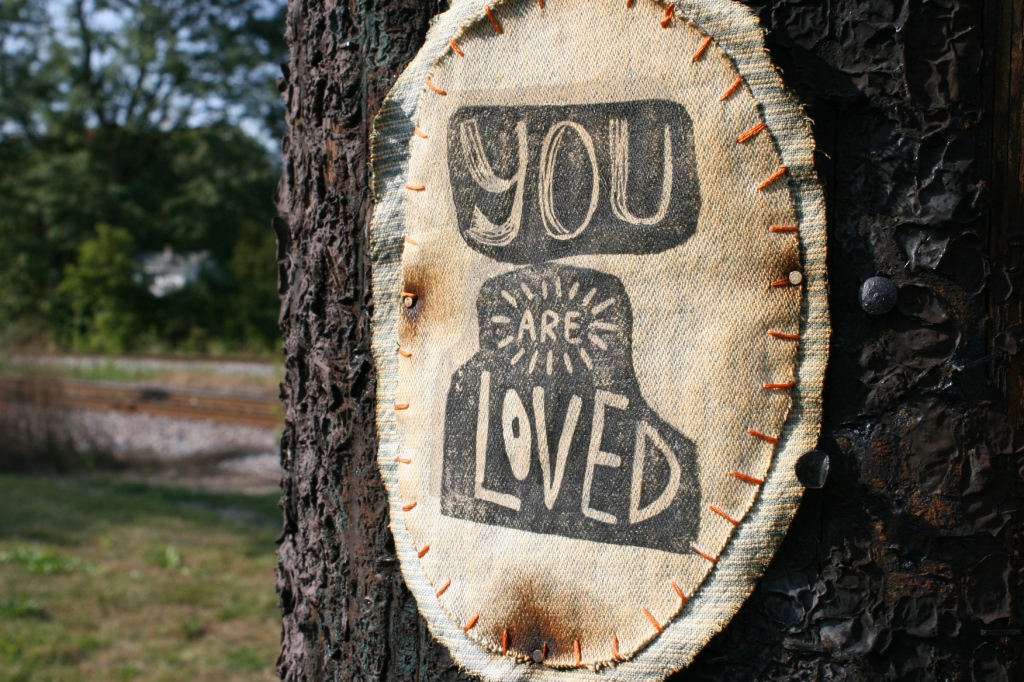
This is the first photo I took as we walked the bike trail. You’ll find reaffirming messages like this throughout the Atwood Neighborhood in Madison, Wisconsin.


In many ways, my walk along the bike trail offered a mini snapshot of Madison in the context of the Atwood Neighborhood. I saw an appreciation for the arts, for the land, for the outdoors. And I felt, too, a strong sense of community grounded in caring for one another. And that, more than anything, makes me feel…hopeful.


Please check back for more posts from my recent visit to Madison, including a second one of images from this same section of the Capitol City Bike Path.

© Copyright 2020 Audrey Kletscher Helbling
 

Immigrants, Escape Artists &, yes, Elvis in the house September 1, 2020

“Ashley,” portrait by Kate Langlais.


“GO BACK TO WHERE YOU CAME FROM. GO BACK TO MEXICO AND NEVER COME BACK!”


A snippet of Ashley’s story, as posted with her portrait.


I intentionally capitalized and boldfaced those angry words spoken to a 5-year-old by a “mean girl.” Can you imagine hearing such awful, horrible words directed at you? Yet, they are all too common. If not spoken, then thought.
 

Kate Langlais, painting at a recent concert in Faribault’s Central Park as part of “Art in the Park.” Minnesota Prairie Roots file photo August 2020.
 

Ashley, the subject in an art exhibit, “I Am Minnesota,” by Faribault portrait artist Kate Langlais, experienced that hatred. She reported the insult to her mom and her principal. I’m thankful she called out the bully, because no one should have to endure such disrespect, especially a kindergartner.


“Faysel” up close by Kate Langlais. He fled war in Somalia.


And I’m thankful to Kate, the artist, for taking on this project which features portraits of first and second-generation immigrants living in Faribault and their stories. Her portraits are currently exhibited at the Paradise Center for the Arts in historic downtown Faribault through September 12.
 

The title of each portrait is simple. The subject’s name.


Kate invites viewers to “recall what they know about their family’s immigration stories.”


Parker, four months, the son of an immigrant who arrived here at about the same age. Portrait by Kate Langlais.


But she pushes beyond that to prompt thought about problems immigrants must overcome—language barriers, cultural differences, acceptance (or not) by neighbors.


An overview of a portion of the Escape Artists exhibit.


After viewing Kate’s thought-provoking portraits and accompanying life summaries, I walked over to a larger gallery featuring art by the Escape Artists. Right away, I connected the two. Not because the art is at all alike. But because of the word “escape.” The subjects in Kate’s portraits escaped oppression, war, poverty and more for life in America. The Escape Artists are a group of artist friends who, 30-plus years ago, began escaping together to create art.


A section of “On the Ragged Edge” by Theresa Harsma.


As I meandered through the gallery, I considered the Escape Artists’ art with the imprint of Kate’s portraits on my mind. For example, Theresa Harsma writes in her artist’s statement for “On the Ragged Edge” of sorting through her collection of found objects and choosing those that seemed to want to be part of the piece. Just like immigrants want to be part of the piece that is America.


“1938 Church Wedding” by Linda Van Lear is based on The Holy Innocents Episcopal Church located at the Rice County Fairgrounds/Historical Society Museum Grounds.


I expect LInda Van Lear’s painting of “1938 Church Wedding” includes immigrants among wedding guests, probably even in the bridal party.


“Lasso the Moon” by Susanne Crane.


And I interpreted Susanne Crane’s “Lasso the Moon” as lassoing dreams. Dreams of a better life for those who came to America, including my forefathers, and probably yours.


This photo shows part of “Streams of Consciousness, Rivers of Green” by Theresa Harsma.


“Maria” by Kate Langlais.


Back to artist Theresa Harsma, another work, “Streams of Consciousness, Rivers of Green,” struck me in its connection to one story in “I Am Minnesota.” Three times Maria attempted to cross the river from Mexico into the U.S. The determination, the exhaustion, the despair—they’re all woven into her story. No matter how you feel about immigration issues, at the very core is a human being, now a Minnesotan, with struggles, hopes and dreams.


An overview of the Cash-Elvis exhibit.


Julie M Fakler created this piece, “You ain’t nothin’ but a hound dog,” inspired by Elvis’ song.


A close-up of Dan Rathburn’s “A Man in Black” (aka Johnny Cash).


Once I finished touring the Escape Artists’ exhibit, I shifted my focus to a Johnny Cash and Elvis pop-up show in a small corner gallery. In some ways, these two musicians were escape artists, too, escaping through their music.


“Tree of Life with Mother Nature’s Daughters” by Susanne Crane.


I love when art, from a divergence of artists, connects. We are all different. Yet alike in our humanity.


The Paradise Center for the Arts marquee.


FYI: The Paradise Center for the Arts, 321 Central Avenue North, Faribault, is open Thursday-Saturday from noon to 5 p.m. The above exhibits close on September 12.

© Copyright 2020 Audrey Kletscher Helbling