Minnesota Prairie Roots

Writing and photography by Audrey Kletscher Helbling

Discovering a Monet painting near St. Charles August 25, 2011

A section of downtown St. Charles, Minnesota, on a recent summer afternoon.

A quilt made by local southeastern Minnesota Amish and sold at the Amish Market Square.

MID-AFTERNOON ON A TUESDAY and we are dining at the Whitewater Café in downtown St. Charles.

We’ve driven to this southeastern Minnesota community of 3,300, sandwiched between Interstate 90 and U.S. Highway 14, because we’re meandering home from a family vacation to Wisconsin.

I’ve specifically placed St. Charles on our route back to Faribault for two reasons: the Amish and the gladiolus.

Before dining at the fishing-themed Whitewater Café in downtown, we stopped at Amish Market Square just off I-90 where you can gas up, eat, buy products handmade by the Amish and pose for a photo in an Amish buggy. While I admired the stunning hand-stitched quilts—priced around $1,500—and the wood cutting boards and more, I didn’t climb into that buggy for a photo. I wanted authentic Amish, not tourist Amish.

That would come later, after lunch downtown, next to “The Table of Knowledge,” aka a group of local guys who gather each morning and afternoon to shoot the breeze, drink coffee and, when asked, give directions to the gladiolus fields and Amish farms.

I didn’t get any of their names, but one of those friendly club members—and I use that term loosely here—found a Winona County map in the restaurant and highlighted a route that would take us southeast of St. Charles past Amish farms and then back north to the glad field just south of Utica. He praised the hardworking Amish, two of whom were working on a fence on his farm at that very moment. He picks them up in the morning, then drives them home at the end of the work day.

These friendly locals at the Whitewater Cafe gave us directions to the glad field and Amish farms.

We left the restaurant, opting to view the flower field first by following Highway 14 east of St. Charles, turning south onto Winona County Road 33 into Utica until we found the rows of gladiolus just outside of town. It should be noted that the flower-growing location changes annually to keep the plants disease-free. Last year the glads were grown next to St. Charles, so the knowledgeable locals told us.

Up until that moment, I’d thought mostly of gladiolus as “funeral flowers,” a moniker that has stuck for decades based on my memories of glads at every funeral I ever attended as a child. Interesting how you associate something with an impressionable event, isn’t it?

As we slowed the car to get an overview of the gladiolus in the field below, I felt as if I was viewing a painting by Claude Monet. Soft pinks and purples and blues—punctuated by splashes of brilliant red, and broken by lines of green, tight-clasped buds and foliage—created a surreal scene against the backdrop of corn, farm places, sky and a distant tree line.

A view of the gladiolus field just south of Utica along Winona County Road 33.

This is as close as I got to the glads, standing along the shoulder of the road photographing them.

I hoped for a close-up look, but found no signage indicating we could stop at a next-door building site to view or purchase flowers.

And so we drove on, further south and then west past several Amish farms—past the horses and wagons, the laundry on clotheslines, the shocks in fields and the Amish men throwing bundles high atop a wagon, their arm muscles bulging from seasons of labor.

An Amish farm site southeast of St. Charles.

We came upon this pastoral scene south of St. Charles, where the Amish were pitching bundles onto wagons.

Heading back into St. Charles, I wished I could spend more time here, in this town promoted on its website as “The Gateway to the Whitewater Valley,” and made world-famous by Carl Fischer, now deceased. He was the world’s leading hybridizer of new and distinctive gladiolus and established Noweta Gardens in 1945.

Each August this Minnesota town celebrates Gladiolus Days, which is happening right now and continues through Sunday, August 28. For a schedule of events, click here.

I fully intend to return some day to experience this festival, to this place where, if you look, you will see southeastern Minnesota’s version of a Monet painting.

The gladiolus field before me could have been a Claude Monet painting.

MORE PHOTOS OF ST. CHARLES:

The main road through downtown St. Charles, the "Gateway to the Whitewater Valley."

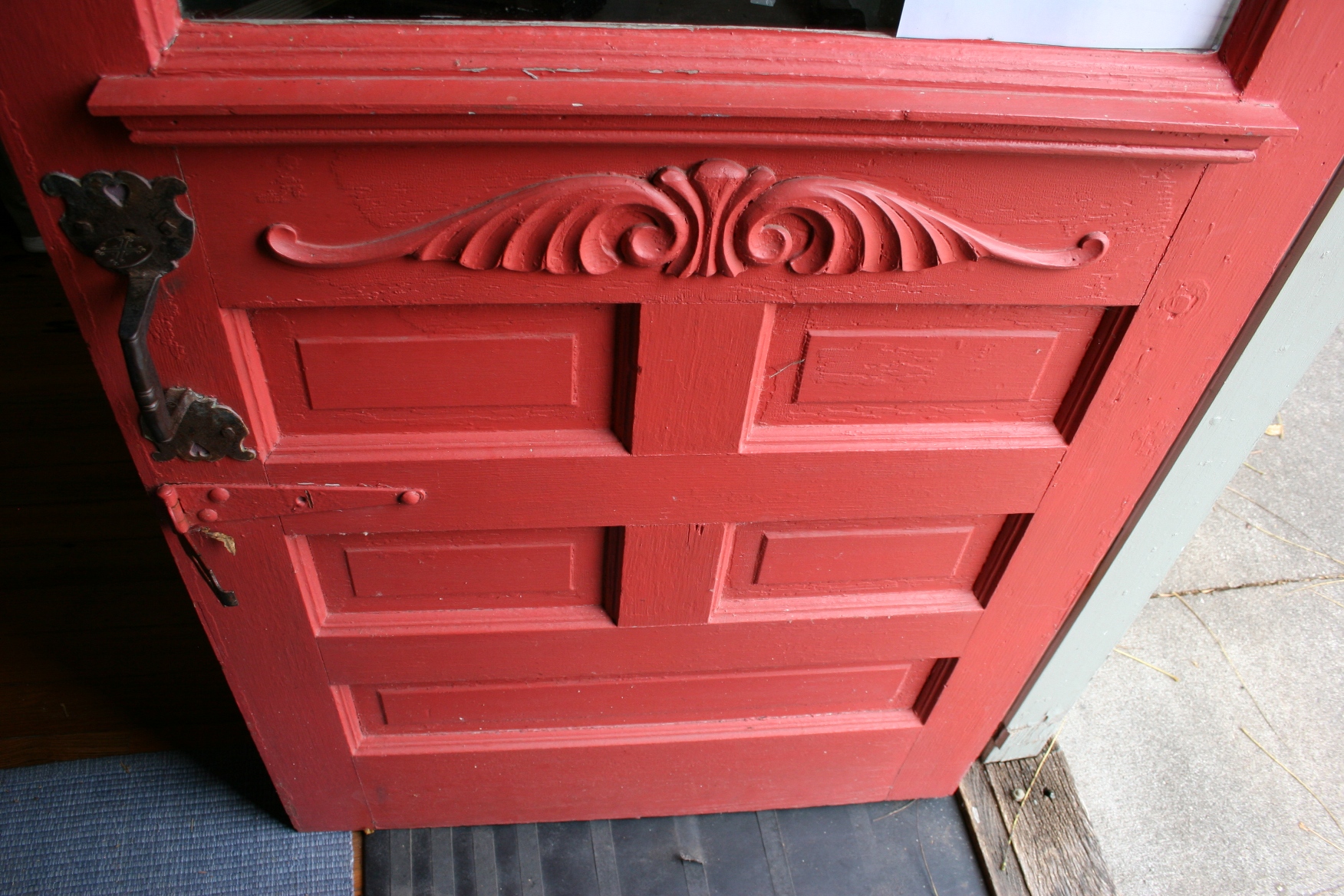
I discovered these weathered doors, found them charming, so photographed them in downtown St. Charles.

More downtown St. Charles businesses.

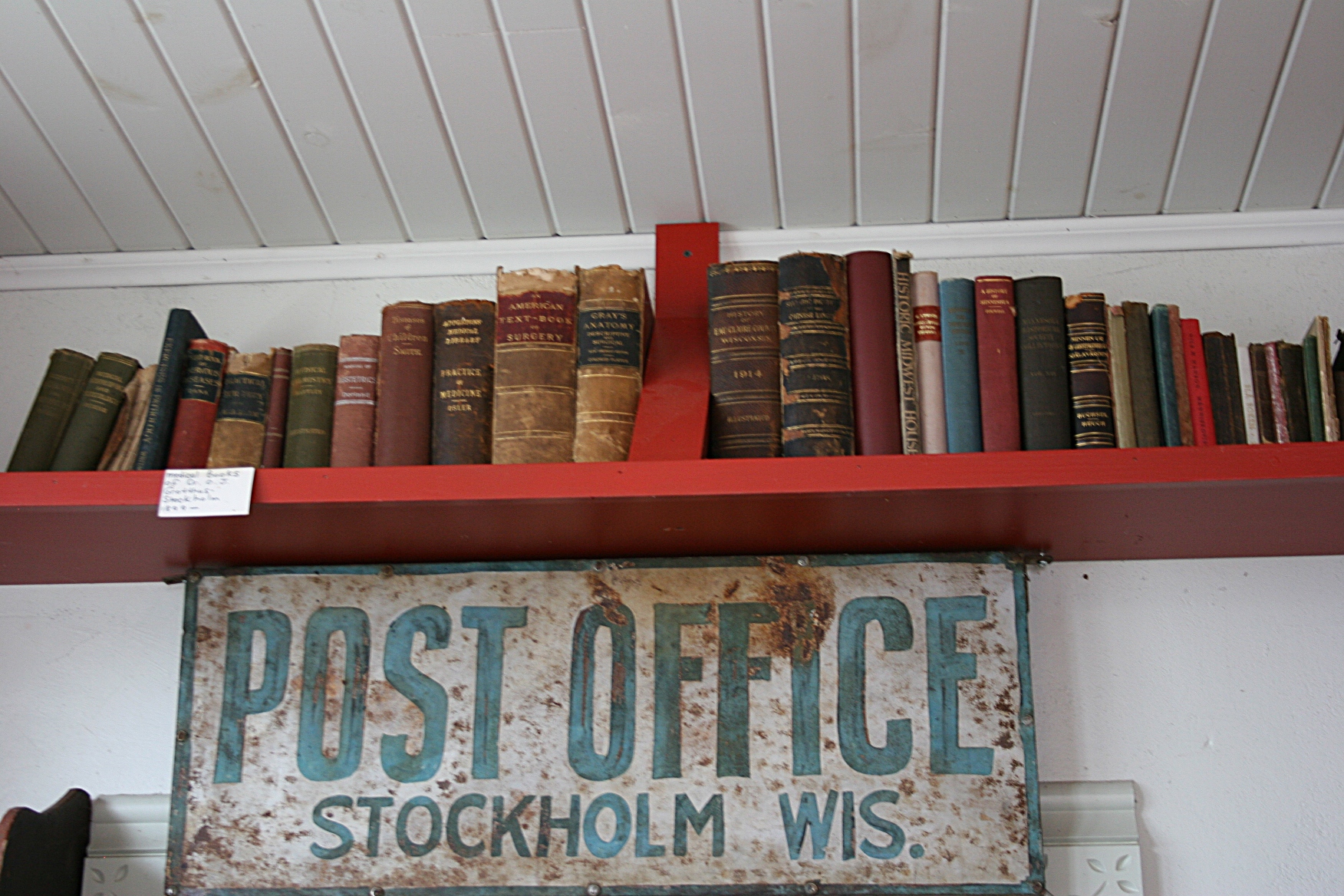
The post office and a pizza place along St. Charles' main drag.

I refused my husband's offer to photograph me in this Amish buggy at the Amish Market Square just off I-90.

© Copyright 2011 Audrey Kletscher Helbling


Art, history and community meld at Faribault car cruise-in August 22, 2011

I CAN’T DIFFERENTIATE a Ford from a Chevy. But I can distinguish a Mustang from a Cadillac.

You needn’t know cars, however, to appreciate a car cruise-in like the one I attended Friday evening in the 400 block of Central Avenue in historic downtown Faribault. The monthly cruises are new to my community and, if I’m correct, Friday’s show marked the first this summer that hasn’t been rained out.

Downtown Faribault Car Cruise Night, looking southeast on Central Avenue.

Just several of the many vintage vehicles, these parked by a Mexican store and bakery.

For me, a car cruise-in is all about art, history, community and having a good time. However, for my automotive machinist husband, the one who got me interested in these shows, it would be mostly about the cars or trucks. He’s my go-to guy whenever I question the make, model or year of any vehicle on display, which is often.

While he’s more interested in what’s under the hood or in the overall design, I appreciate the hood ornaments, wheel covers, taillights, the curve of metal—the details that, to me, represent, mini artscapes.

I switched this photo to black-and-white to show off the hood ornament, a work of art.

A 1948 Dodge sported this artsy license plate.

Call this art, or humor, Ron Lehnen posed this "Halloween Rat" under the hood of his 1970 Chevrolet pick-up truck with the "rat motor."

On Friday, in Faribault, I also appreciated the art of neon lights flashing in storefront windows, the slant of sun against brick during that magical hour around sunset, and clouds that painted the sky on a perfect summer evening of temps in the low to mid 70s.

The setting sun cast a lovely light on the historic Hotel Faribault.

Merchandise and flashing neon lights created a colorful visual at a Mexican store in the car cruise block.

Toss in period tunes and music by the likes of Johnny Cash, my favorite country western singer, played on-site by local radio station Power 96, and the mood was set for hanging out and chatting it up with folks I hadn’t seen in awhile.

Car cruise attendees visited with one another, creating a sense of community.

Aaron shows his 6-year-old daughter, Lexi, the interior of a vintage car.

Ted told me about his new grandson, Jaxson. Kathy told me about the need for rain in the Courtland area, where my maternal roots lie and where her husband had traveled that day to farm with his brother. Lowell told me about the $8.99 steak dinner he’d just enjoyed down the street at the Signature Bar and Grill.

Food was the only item missing from cruise night, although I could have stepped into the Mexican bakery or walked to a restaurant along Central Avenue if I had really wanted something to eat. Maybe, eventually, organizers will encourage places like the bakery or nearby restaurants to set up food stands outside their businesses.

The next Downtown Faribault Car Cruise Night is set for 6 p.m. – 10 p.m. Friday, September 16. However, I’d advise coming well before 10 p.m. as the event pretty much ended around 9 p.m.

The 1970 Chevrolet pick-up with the rat motor. My husband owned an orange truck like his, only a year newer or older, I can't recall which. A steer wandered onto a roadway. He hit it and that was the end of his pick-up truck, many years before I met him. So I've only heard the story...never seen the truck.

Lowell and Deb Melchert leave the cruise in their 1947 Chevrolet as the event winds down.

YOU MIGHT ALSO CHECK out Woody’s Hump Day Cruise In on Wednesday evenings in downtown West Concord. Two remain, including one this Wednesday, August 24, and also on September 7. That cruise-in runs from 5:30 p.m. – 9 p.m., or until dark.

Hastings also hosts the Historic Hastings Saturday Night Cruise-in from 5 p.m. – 9 p.m. with the remaining events set for September 3 and 17 and October 1.

© Copyright 2011 Audrey Kletscher Helbling


Poetry & more in Paul Bunyan land August 18, 2011

The lake side of the Hackensack Lending Library. To the left stands Lucette Diana Kensack..

Lucette Diana Kensack

SEVERAL SUMMERS AGO while vacationing in northern Minnesota, my family stopped in Hackensack, 50 miles north of Brainerd. The initial draw to this town of 285 was the 17-foot tall statue of Paul Bunyan’s sweetheart, Lucette Diana Kensack. I appreciate kitschy roadside art. What can I say?

Two other discoveries, however, trumped seeing Lucette. A stone’s throw from Lucette, along the shores of Birch Lake, sits the cutest log cabin—a Works Progress Administration project and today home of the Hackensack Lending Library.

And just down the street from Lucette and the library, I found the sweetest pink fairy tale cottage.

Those small-town treasures marked my introduction to Hackensack.

Now, fast forward to last summer. I wasn’t back in Hack, not physically anyway. Rather my poetry was among poems displayed at the town’s annual Northwoods Art and Book Festival. During that event, the featured poets are invited to read their poetry. Fest-goers can also vote for their favorites with six poems selected for “Popular Choice” awards. Six poems are also recognized as “Poems of Merit.” All of the original and unpublished poems are posted without author names attached.

I didn’t attend last year, didn’t win and didn’t deserve to win. My poetry wasn’t worthy of an award.

This year my poetry is back at the Northwoods Festival set for this Saturday, August 20, and I’m more confident that I’ve actually written poems that could win an award. Oh, I’d love to tell you which poem is mine (or it could be both poems that I submitted; I haven’t been told). But I won’t unfairly sway the voting. Suffice to say my rural background shines in my writing.

If Hackensack wasn’t such a long drive from Faribault, I’d be there taking in the poetry, the art, the music, the book-signings, the food. However, if you’re in the Brainerd lakes area or parts north on Saturday, check out the Northwoods Art and Book Festival from 9 a.m. – 3 p.m. and then tell me all about it by submitting a comment.

Voting for the “Popular Choice” awards begins at 9 a.m. and closes at 1 p.m.

If you’re already thinking, “Audrey, I don’t like poetry,” rethink your thinking. I promise you that my poetry rates as down-to-earth, understandable and not at all stuffy.

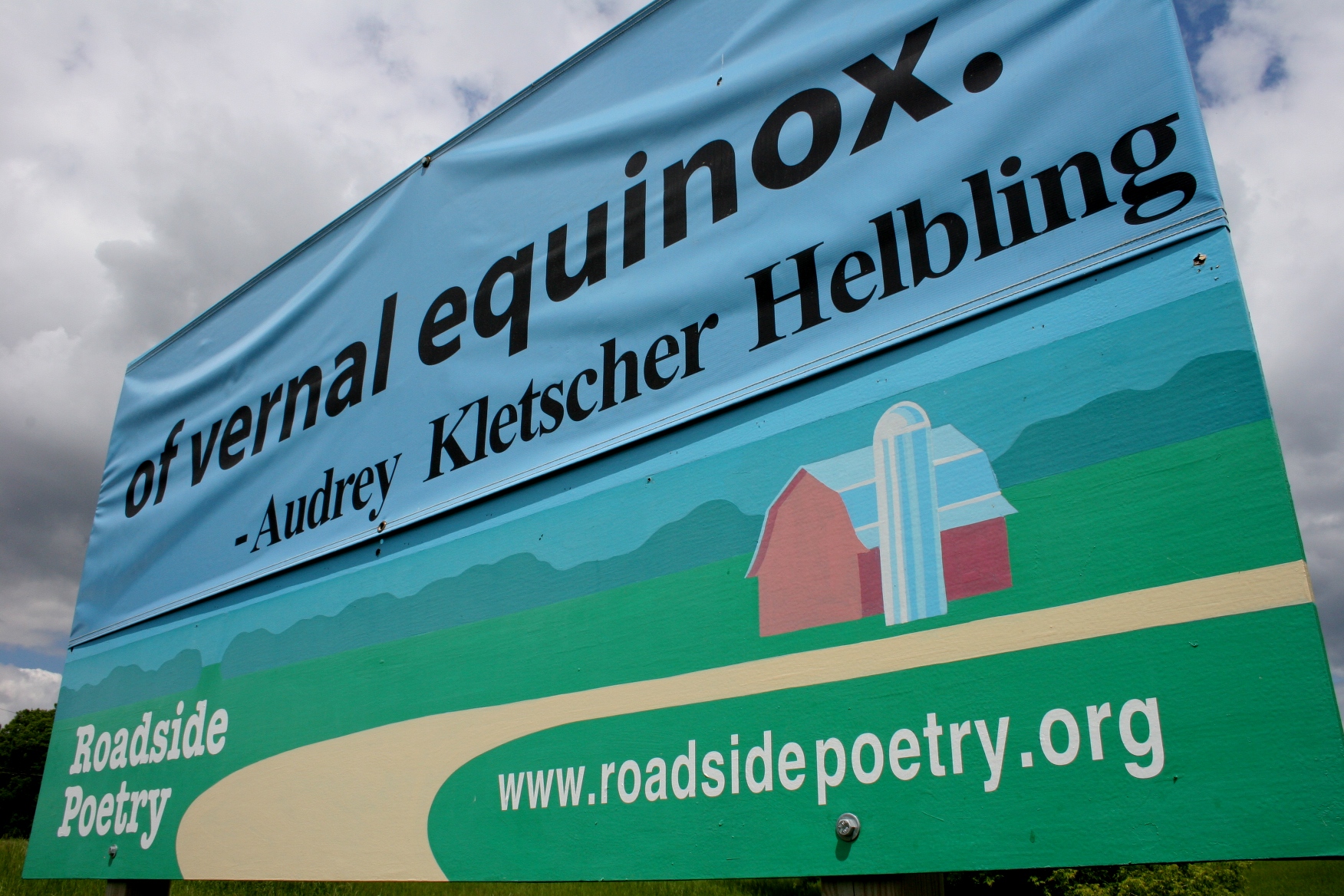
This whole concept of getting poetry out to the public via a display like the one in Hackensack pleases me. Just like the Roadside Poetry billboards in Fergus Falls. I was fortunate enough to win the spring competition and have my four-line poem plastered across four billboards there.

These new poetry venues, and the increasingly popular sidewalk poetry in cities like St. Paul, Mankato and now Northfield, are bringing poetry to the people. That’s a good thing because, in reality, how many of us actually pick up a book of poetry for leisure reading?

Minnesota poet Todd Boss and designer/animator Angella Kassube are also making poetry even more appealing by utilizing visuals in their acclaimed motion poems. Click here to read some of those.

Poetry has certainly evolved through the years, a necessity to keep writers interested in writing it and readers interested in reading it.

Professionally, I’ve only begun to unfold my wings as a poet. Even publicly calling myself a “poet” still sounds foreign to my ears. But with publication in two magazines and four anthologies, soon to be five (The Talking Stick, Volume 20, published by Park Rapids-based Jackpine Writers’ Bloc); winning the spring 2011 Roadside Poetry competition; inclusion at the Hackensack festival; and recent notification that one of my poems will publish in the Lake Region Writers Network’s first literary magazine, I finally feel worthy of the title “poet.”

The last of four billboards featuring my Roadside Poetry spring poem.

The sweet fairy tale house in Hackensack, located near Lucette and the park and photographed in 2009.

"Curve around the corner/You are free/To change directions/Or your mind," reads this poem by Marlys Neufeld of Hanska and imprinted in a Mankato sidewalk.

HOW DO YOU FEEL about poetry? Do you read it? Why or why not?

© Copyright 2011 Audrey Kletscher Helbling


Inside the Hamilton Wood Type Museum & the Target connection August 17, 2011

A picturesque view of Two Rivers, Wisconsin, as seen from the historic Rogers Street Fishing Village.

We treated ourselves to ice cream sundaes after the museum visit.

IF NOT FOR MY SECOND DAUGHTER’S neighbor mentioning a day trip to Two Rivers, Wisconsin, I might never have discovered the Hamilton Wood Type & Printing Museum or its connection to Minnesota-based Target.

The retailing giant collaborated with the museum on a recently-released fall Vintage Varsity collection promoted as “Cool Never Fades.”

With vintage so in vogue right now, Target definitely found the right place for designers to authenticate this new line. Hamilton made wood type from 1880-1985 and boasts a collection of 1.5 million pieces, the largest in the world. Target dipped into that collection to create graphics for the Vintage Varsity line.

The Target connection, however, wasn’t my reason for visiting Two Rivers, a city of 13,000 just south of Door County. Rather, Lake Michigan drew me here on a recent Sunday when my husband, son and I were visiting our daughter Miranda at her Appleton home 50 miles to the west.

My family can assure you that fashion wouldn’t draw me anywhere. But wood type would.

So, when I planned our day trip from Appleton to Two Rivers, Hamilton Wood Type ranked high on my must-see list, right after Lake Michigan. A promise to the teenage son of ice cream afterward at the historic Washington House, just across the street from the museum, kept him from complaining too much about my museum meandering. Interestingly enough, the sundae originated in Two Rivers in 1881.

Had I opted to take the official Hamilton tour, I likely would have learned much more about Hamilton Manufacturing Company and the museum, which also includes a collection of 1930s – 1970s advertising cuts, wood type and Linotype equipment, tools and more. The manufacturing company, which once made medical office furniture, appliances and more, is still in business today producing steel lab equipment.

Hamilton manufactured the first gas-powered clothes dryers.

The museum is a self-supporting, working museum where artists and designers and others get hands-on experience in wood type printing and where custom printing is done, according to a Minneapolis woman who was printing at the museum on the day I visited.

In all honesty, Hamilton’s historical details didn’t interest me. Rather, I was here because of my decades-earlier connection to Linotype and because of my profession. During my first job out of college in 1978, I worked as a reporter at The Gaylord Hub, a small-town weekly newspaper that still used hot metal type to create auction bills and other custom printing. At the time, I failed to appreciate this fading art. Rather, I found the constant clack-clack-clack of the vintage machines bothersome, especially when conducting phone interviews.

Today my attitude has changed. I appreciate printing as an art. I took that perspective to the Hamilton Wood Type & Printing Museum and knew, even before I stepped inside the 1927 building, that my focus would be visual.

The Hamilton complex of buildings covers blocks.

The building exterior features aesthetically appealing letters and punctuation.

My eyes swept across the nothing-fancy, industrial space filled with letters in more fonts and sizes than I could ever imagine. Posters. Colors. Graphics. Drawers upon drawers upon drawers that I wished I could pull open. Machines. Cement floors and brick walls. Jumbled pieces of wood and smeared paint cans, and brushes hung on walls.

I felt almost overwhelmed by the photographic possibilities, the kaleidoscope of colors and shapes that changed as I circled the room.

Everywhere you'll see letters and numbers in differing sizes and fonts, a visual delight.

One of the many vintage prints you'll see in the museum.

Rows upon rows of tempting drawers, presumably filled with wood type.

An oversized vintage photo anchors the wall you first see upon entering the museum.

John Burnet, an early engraver at Hamilton.

Lines of type.

One of the many graphic cuts you'll see in the museum.

Only when I was in a back room, where the Minneapolis artist was printing and the museum manager/tour guide chastised me for taking his photo without asking, did I think about the Target collection. I had passed by a clothing rack earlier, hadn’t even looked. But then the Minnesotan mentioned Target. So on my way out the door I paused, shot a quick photo and then joined the impatient teen for an ice cream sundae across the street.

A t-shirt I pulled from the rack of clothing at the museum. I don't know whether this is from the Target collection, because I didn't check.

Stacks of paint cans clue you in that this is a working museum.

Prints hang on a wall in one of the back rooms.

This photo shows printers' aprons and, to the back, the wall just inside the museum entry.

The entry provides a sweeping view of the museum.

FYI: For more information about the Hamilton Wood Type & Printing Museum, click here. The museum is open from1 p.m. – 5 p.m. on Sunday and from 9 a.m. – 5 p.m. Tuesday – Saturday from May 1 to October 31. Winter hours are from noon – 5 p.m. Tuesday – Friday and Saturday by appointment. Admission is free, but donations are accepted.

© Copyright 2011 Audrey Kletscher Helbling
 

Follow the rainbow to a charming antique store in Belview August 9, 2011

Driving north into Belview, you can't miss Rainbow Antiques, Crafts & Junque.

IF YOU’RE INTO ANTIQUING or architecture or small towns, you’ll want to visit Belview, population 375, four miles off State Highway 19 in southwestern Minnesota.

My husband, Mom and I drove to Belview on a recent Saturday morning to see my Uncle Merlin and Aunt Iylene’s “new” old home along the main drag. We also toured the town, checking out the damage from a July 1 EF-1 tornado. And, lucky us, we happened to be in this Redwood County community on the one day a week that Rainbow Antiques, Crafts & Junque is open.

And let me tell you, Don Gunelson runs one heckuva an antique store with the flair of an artist.

You’ll notice the building right away when you drive or walk Main Street. It’s built of beautiful rainbow brick which, in itself, is worth a stop. I know of at least two other rainbow brick buildings in Redwood County—one in Walnut Grove and the other on a corner in nearby downtown Redwood Falls.

Colorful rainbow bricks comprise the antique shop.

Don directs customers to his store with nicely-done folksy signage. I didn’t ask Don if he created the artwork, but he worked as a graphic designer for a construction magazine before returning to his native Belview from the metro some 10 years ago. He also works part-time at the Belview Post Office.

No matter, the friendly painted farmer in the bib overalls who beckons you inside for a “looksee” will already have you smiling before you stroll through the red doors and plant your feet upon the vintage tongue-and-groove floors in a room the color of butter.

Immediately I noticed the old-style screen door painted a vivid red. It’s a perfect fit for setting the mood of this place. I’ve been in a lot of antique shops in my day, and this one, by far, rates as one of the most inviting with plenty of light streaming in the east-facing windows, merchandise displayed in a way that isn’t cluttered and a down-home atmosphere that makes you feel comfortably at ease.

I poked around for awhile, not as long as I would have liked, though, since my mom was waiting for me back at the aunt and uncle’s house. My husband explored, too, and determined the prices to be reasonable—not too high and not too low.

When I got to the back room, I made the discovery of the day, at least in my opinion. And it wasn’t an antique, collectible or junque. I found Don Gunelson’s “Belview Area Photo Art” displayed on the rear wall. I knew from the signage that I was viewing photos, but they sure didn’t look like photos. So I asked Don to explain.

He takes images of area subjects with an inexpensive camera—the fewer pixels the better—edits the photos on his computer and then prints them on watercolor paper with an ink that is more dye than ink. The result is photo art that resembles watercolor paintings.

I gushed over his creations and told him he needs to get these into a gallery—do an exhibit of his “Belview Area Photo Art.”

Now I’m kicking myself for not buying one of Don’s matted and framed creations because, with prices ranging from $7 to $12.50, they’re a steal.

So there you have it, a charming antique store in downtown Belview with an artist running the place.

FYI: Rainbow Antiques, Crafts & Junque, 103 S. Main, is open from 10 a.m. – 3 p.m. Saturdays. Call (507) 938-4476. Maybe Don will open up the shop if you’re in town on a day other than Saturday.

Ruby red glassware is displayed in a front window. To the right in this photo is the blue Belview water tower.

An example of Don Gunelson's Belview Area Photo Art, an area barn.

Some of the merchandise displayed in the main part of the antique store.

A view across the street through one of the large front windows at Rainbow Antiques.

More Belview Area Photo Art by Don Gunelson.

You'll find plenty of collectibles from the area, including this bird thermometer from Olivia.

This colorful folksy farm family graces the north wall of Rainbow Antiques. This photo was shot looking south on Main Street toward Belview's water tower.

Another view of Rainbow Antiques and Main Street Belview looking south.

Check back for more reasons to visit Belview in a future post.

© Copyright 2011 Audrey Kletscher Helbling


My latest art-at-a-bargain find from the Salvation Army August 7, 2011

My Jose Maria de Servin painting.

WHAT’S YOUR PREFERENCE in art?

Do you shop for mass-produced art at a big box retailer?

Or are you the gallery type, purchasing one-of-a-kind fine art?

Maybe you shop flea markets, rummage sales or thrift stores for hand-crafted or vintage art.

Perhaps you’re artistic enough to create your own art to hang in your home or workplace.

If you know me as well as I expect you may from following Minnesota Prairie Roots, you would rightly guess that I prefer to find one-of-a-kind art at a bargain by shopping second-hand. Notice that I didn’t say bargain art. I said art at a bargain. There’s a difference.

My collection includes original paintings by hobbyist painters, prints by unknown artists, embroidered pieces by someone’s grandma… I’ve purchased most at unbelievably low prices—try 50 cents or $3.

Through the years I’ve even acquired an original Jose Maria de Servin painting and a vintage print of South Dakota artist Harvey Dunn’s  “The Prairie is My Garden” at steal prices. Both times I had no idea what I was purchasing. I simply liked the art.

That’s the thing with me and art. I buy a piece of art not as an investment, but because I like it.

That said, I recently picked up a three-dimensional rendition of  “The Last Supper” at the Salvation Army Store in Faribault. I debated whether I should pay $14 for the made-in-Spain art. In fact, I set the 24 x 17-inch piece down twice before watching another woman pick up and admire it. At that precise moment I decided I really wanted the unique art. I had to restrain my urge to run over and snatch it up after she set it back on the shelf. I waited until she was well out of grabbing range.

The Last Supper three-dimensional art I bought at The Salvation Army Store.

Later, the woman stood behind me in the check-out line and told me how she wished she had “The Last Supper” I clenched in my hands. “Then I saw you pick it up,” she said.

I responded with a seemingly casual remark: “Yeah, if you see something you think you might buy, you shouldn’t set it down…”

HOW ABOUT YOU? Where do you shop for art and what deals have you found?

Close up with Christ and the disciples at The Last Supper.

I hung the three-dimensional The Last Supper in my dining room.

© Copyright 2011 Audrey Kletscher Helbling
 

Guess the pig’s weight and other farm stories from New Richland July 29, 2011

VENTURE INTO RURAL MINNESOTA—and we’re talking the small farming communities here, not what metro folks call “Greater Minnesota” or “outstate Minnesota”—and you’ll connect to our state’s agrarian roots in some interesting ways.

Take New Richland, for example, a town of 1,200 in southeastern Waseca County. Drive into town and you’ll see the usual grain bins and elevator and other farm-related businesses you would expect in an agricultural community.

A cluster of grain bins in the heart of New Richland.

But then explore a little more and you’ll discover just how much this town values its agricultural heritage. Take the post office. Peek around the corner…

A corner of the New Richland Post Office. Note the grain bins a few blocks away.

Around the post office corner you'll find this mural which reflects the connection between city and country.

A snippet of the country portion of the mural. I wonder how the artist decided what type of tractor to feature?

Country connects to city in this detailed mural.

and you’ll find a mural depicting farm and city.

Now I’ve seen many a mural in my day, and I’d rate this as among the best. I wish I knew who to credit for this detailed artwork that draws the eye along the winding country road, down the train tracks to the grain elevator or along city streets to downtown. But I couldn’t find any information about the mural in a quick online search.

However, I did learn more about New Richland and the pride this community takes in its agricultural roots. Just a few weeks ago the town celebrated its 28th annual Farm & City Days. Events included the usual parade, street dance, bingo, antique car show, medallion hunt and such.

But I found a few activities that definitely say country through and through.

Teams of two competed in the  second annual Chore Boy Race. (Just for the record, girls can participate, too; the winners were Molly Flor and Brandon Mullenbach). Anyway, it’s a contest that involves eggs, milk, hay, grain and wheelbarrows. You can learn more about the competition by clicking here and reading this story in the local newspaper, The Star Eagle.

I found a Chore Boy Race contestant application online and one Farm & City Days Facebook page photo and these rules (some in boldface):  “You must wear all your chore clothes at all times. This includes but is not limited to Boots, Hat, Bibs & Gloves.”

OK then, got that?

If you’d rather use your brain than your brawn, Farm & City Days offers a “Guess the weight of the pig” contest at $1 a guess. The person with the closest guess wins the pig and processing at Morgan’s Meat Market. This year two entrants correctly guessed the exact weight of 208 pounds and agreed to split the hog, according to the Farm & City Days Facebook page.

If you didn’t win the pig, you could still eat pork by buying a pork sandwich meal from the Waseca County Pork Producers at the city park.

Two other agricultural-themed activities included a kids’ tractor pull and a Farm vs. City 3-person Scramble at a golf course.

I’m disappointed I missed Farm & City Days because it sounds like one heckuva good time, as small-town celebrations typically are. But I wouldn’t even have known about this annual farm-city event if I hadn’t been poking around New Richland last Sunday, spotted that mural on the side of the post office and then gone online to learn more about it, which I didn’t, but I did.

This John Deere tractor was parked outside the funeral home in New Richland on Sunday afternoon.

My husband and I stopped in New Richland while on a recent Sunday afternoon drive. Check out my July 24 blog post from this community and watch for future stories and photos from New Richland.

© Copyright 2011 Audrey Kletscher Helbling
 

Benson theatre hosts screening of Midwest thriller, Munger Road July 26, 2011

The DeMarce Theater, a long-time business in downtown Benson in western Minnesota.

NEARLY SIX MONTHS after Tim and Susie Kletscher purchased the historic DeMarce Theatre in downtown Benson, they are hosting the screening of a Midwest thriller that just could hit the big-time.

Munger Road, written and directed by Nicholas Smith, debuts to the public at a 7 p.m. showing on Thursday, July 28, with a second show at 9 p.m. and repeat shows on Friday evening.

A promotional poster for Munger Road's screening in Benson.

“I’m extremely excited. This is a once-in-a-lifetime opportunity for us, our theater, and Benson,” Tim Kletscher says. “I feel really honored to have this chance. At this point it’s an independent film done by a ‘rookie’ movie writer and director, but there’s a really good chance that it will be shown in many theaters and DVDs will be sold.”

The PG-13 movie, shot in and around Smith’s native St. Charles, Illinois, is based on an urban legend about a supposedly haunted stretch of rural Munger Road. As versions of the story go, the ghost of a little girl killed on train tracks along the road still haunts the site as does a farmer who lived on a farm near the tracks.

The movie version focuses on four teens that go missing along Munger Road the night before the annual Scarecrow Festival.

St. Charles really does have an annual Scarecrow Festival—this year October 7 – 9—during which Munger Road will premiere. Actor Bruce Davison, with popular film credits like Six Degrees of Separation and X-Men, stars in the movie.

For now, the Kletschers get the honor of the first public screening in their western Minnesota theatre, which was recently updated with a new digital

Another poster promoting the Illinois-based thriller.

projection and surround sound systems and a silver screen.

The couple got their lucky break because Munger Road executive producer Jeff Smith, Nick Smith’s dad, grew up in Benson and graduated from Benson High School in 1973. The Smiths have many close friends and family in Benson and a nearby family lake cabin where they are currently vacationing.

“Originally, Jeff Smith, wanted to do a private showing for his friends and relatives.  I wasn’t supposed to advertise it, discuss it, tell about it, or anything with fear that it would jeopardize their movie company opportunity,” Tim Kletscher says.  “Then, he called back a week later and wanted to screen it to the public. He needed to start generating revenue, so they could start getting it in the hands of ‘mini-major’ film companies. I told him I’d do all I could to get as many people here to see it as possible. So, I’ve been pounding pavement and flapping my jaw about it since…trying my hardest to drum up excitement.”

That promotional groundwork has also included airing the movie trailer before every Harry Potter and the Deathly Hallows: Part 2 showing at the DeMarce Theatre and doing interviews with area media.

Kletscher is hoping for big crowds to fill the 320-seat theatre. He’ll have Munger logo, “I survived the Drive” t-shirts, designed by Nick Smith, for movie-goers to purchase. Before the film starts, Nick Smith will address the audience and ask them to later evaluate the movie on comment cards. “They really want to hear what average people say about it,” says Kletscher, who has been in nearly daily phone contact with the Smiths and recently met them.

He’s impressed with the personable father-son, whom he terms “down-to-earth, Midwest guys.”

“Nick’s been rolling with the Hollywood guys, but he hasn’t lost his roots,” Kletscher says. “He’s unbelievably talented.”

It’s that hometown connection which led the Smiths back to Benson to screen their thriller. “The city of Benson means a great deal to my family,” a promotional poster reads. “We are very proud…”

FOR MORE INFORMATION about Tim and Susie Kletscher’s purchase of the DeMarce Theatre in February, click here to read an earlier blog post. Also, go to the DeMarce Theatre Facebook page by clicking here.  For the record, Tim Kletscher is my cousin and an elementary school teacher in Benson.

Text © Copyright 2011 Audrey Kletscher Helbling
Photo and posters courtesy of Tim Kletscher


St. Mary’s of Melrose, Part II July 17, 2011

STARK CHURCHES appeal to me. The ones with the simple wooden cross, the white clapboard siding, the time-worn pews settled upon plain plank floors.

But the ornate houses of worship likewise snag my soul with crosses of gold, walls of brick and gleaming, carved pews.

One of the many ornate carvings at St. Mary's Catholic Church in Melrose.

I am most comfortable with, most accustomed to, the unadorned churches of the Lutherans, my religious heritage. We keep things simple. No cluster of burning candles. No wafting incense. No pools of holy water. Minimal, if any, gold.

Perhaps for that reason, when I step into an historic Catholic church, I feel like I’ve entered a foreign land. I am often awed by the opulence, by the details that visually overwhelm me.

The side aisle on the left leads to an ornate altar in St. Mary's which is on the National Register of Historic Places.

That’s exactly how I felt upon entering St. Mary’s Catholic Church of Melrose, featured here in an earlier post. Overwhelmed. But good overwhelmed. Because I could not possibly present all of the images I wanted to share with you in a single post, here are the remainder.

No matter your religious affiliation, you simply have to appreciate a place like St. Mary’s. What beauty. What art. What history. What heavenly splendor.

This was the top or bottom of something. Can't recall what. But it sure is stunning.

Look at this gorgeous, carved door, will you?

Golden statues. Beautiful.

Just look at this detailed side altar. I could have spent hours in St. Mary's.

And then I discovered these collection baskets hanging from a rack. We Lutherans don't have wicker baskets with long handles. These contrast so sharply with the the ornateness in the church and that is why I so appreciated this grouping.

St. Mary's Catholic Church stands strong as a fortress in Melrose, next to the turkey plant, its towering steeples visible from nearby Interstate 94 in west central Minnesota.

© Copyright 2011 Audrey Kletscher Helbling
 

A virtual tour of Mankato’s sculpture walk July 9, 2011

Louise Peterson of Guffey, CO. created this $20,000 bronze sculpture of a playful Great Dane titled "Tickled."

DEAR READERS,

I realize that some, maybe even many, of you, do not live anywhere near Mankato, the southeastern Minnesota community where I recently viewed sidewalk sculptures.

Heck, some of you don’t even live in states bordering Minnesota. Your chances of ever seeing these 25 pieces of art in person are about zilch.

So, for those of you who will view the City Art Walking Sculpture Tour only via Minnesota Prairie Roots, I’ve pulled together one last blog post. Please read my previous two posts for more details and photos of this community art project by first clicking here and then here.

This whole concept of bringing art to the streets through a rotating sculpture tour pleases me immensely. What a grand idea. Such art adds to the vibe of a downtown, to its art, history and culture.

Thank you, Mankato, and everyone who supported this cause financially, for bringing these sculptures to southeastern Minnesota, within quick driving distance of my Faribault home.

Yours gratefully,

Audrey Kletscher Helbling at Minnesota Prairie Roots

Sioux Falls artist Darwin Wolf's $13,500 sculpture, "The Fountain of Life," references Jesus washing Peter's feet at the Passover. It emphasizes the healing, life-giving qualities of water.
"Poco a Poco" a $12,000 bronze sculpture by Pokey Park of Tucson, Arizona, highlights the tortoise, representative of wisdom in American Indian culture. The building in the background houses Number 4 American Bar & Kitchen.

"Fowl Ball" celebrates geese, ducks, turkeys and chickens in this $7,600 forged and welded weathered steel sculpture by Lee W. Badger of Hedgesville, West Virginia.

All of the sculptures are marked with informational signage.

Dee Clements of Loveland, Colorado, created the $6,000 bronze "The Farmer's Wife," one of my favorite exhibit pieces.

To fully appreciate these sculptures, you must notice the details, including the Korean woman clenching her walking stick in "The Farmer's Wife."

Details define "Reading Magic," a $8,500 bronze sculpture by Julie Jones of Fort Collins, Colorado.

"Spirit of Energy," a $8,400 bronze by Karen Crain of LIttleton, Colorado, represents three renewable energy resources: sun, wind and water.

© Copyright 2011 Audrey Kletscher Helbling